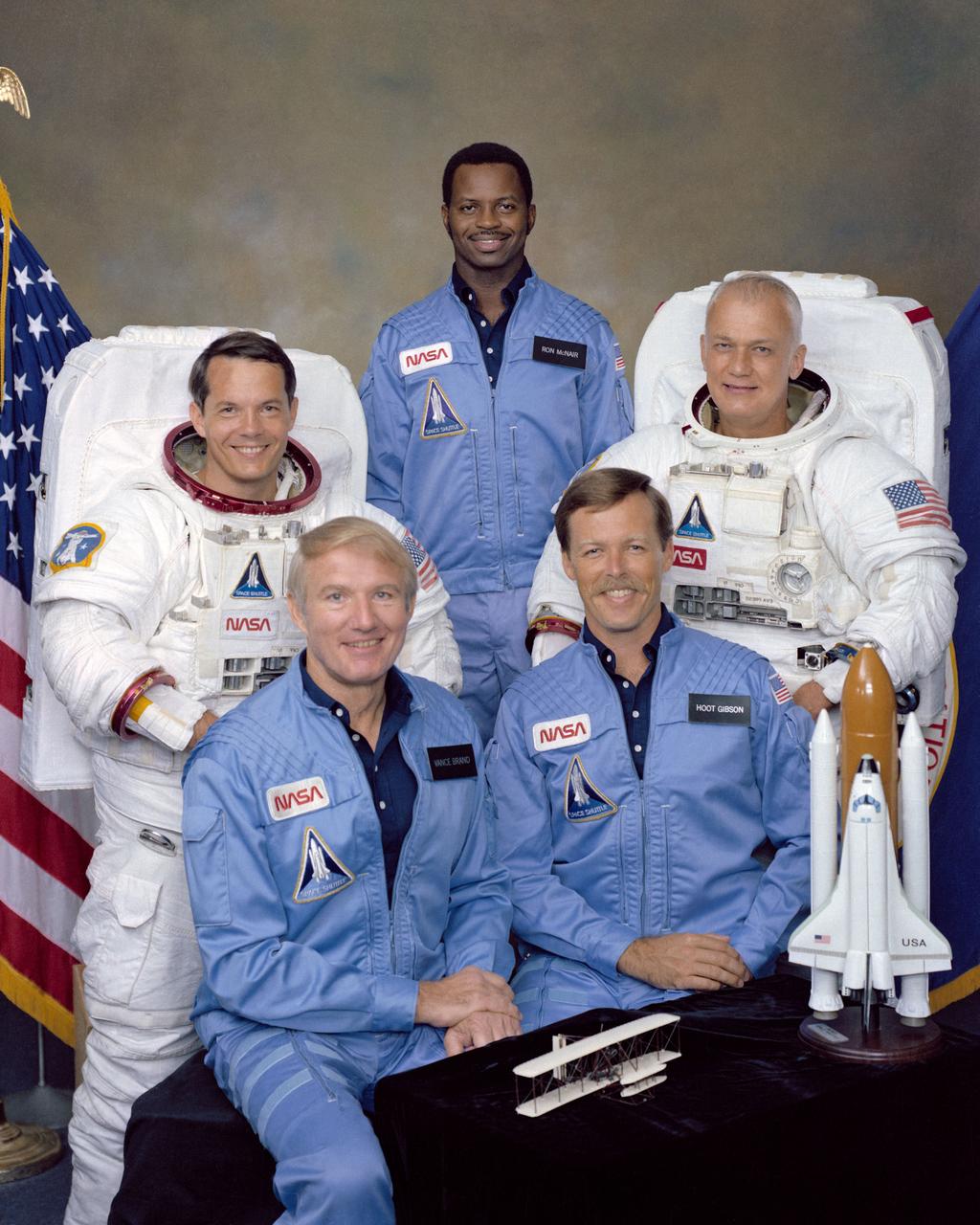
S83-40555 (15 October 1983) --- These five astronauts are in training for the STS-41B mission, scheduled early next year. On the front row are Vance D. Brand, commander; and Robert L. Gibson, pilot. Mission specialists (back row, left to right) are Robert L. Stewart, Dr. Ronald E. McNair and Bruce McCandless II. Stewart and McCandless are wearing Extravehicular Mobility Units (EMU) space suits. The STS program's second extravehicular activity (EVA) is to be performed on this flight, largely as a rehearsal for a scheduled repair visit to the Solar Maximum Satellite (SMS), on a later mission. The Manned Maneuvering Unit (MMU) will make its space debut on STS-41B.

Every day, invisible magnetic explosions are happening around Earth, on the surface of the sun and across the universe. These explosions, known as magnetic reconnection, occur when magnetic field lines cross, releasing stored magnetic energy. Such explosions are a key way that clouds of charged particles — plasmas — are accelerated throughout the universe. In Earth’s magnetosphere — the giant magnetic bubble surrounding our planet — these magnetic reconnections can fling charged particles toward Earth, triggering auroras. Read more: <a href="http://go.nasa.gov/2mnMtDm" rel="nofollow">go.nasa.gov/2mnMtDm</a> Video caption - In this simulation, a reconnection even pushes a blob of plasma toward Earth. The jet blown in the opposite direction wobbles due to the unstable conditions. Credit: NASA’s Goddard Space Flight Center/Yi-Hsin Liu/Joy Ng, producer

41C-3029 (6 April 1984) --- The space shuttle Challenger and its five-member astronaut crew leave the launch pad at the Kennedy Space Center to begin a six-day stay in space. Astronaut John W. Young, a veteran of two shuttle missions and six spaceflights overall, recorded the image with a handheld 70mm camera from the shuttle training aircraft which he was using to monitor environmental conditions around Florida. This is the eighth mission on which Young photographed one of NASA's orbiter vehicles beginning its orbital stay. Photo credit: NASA
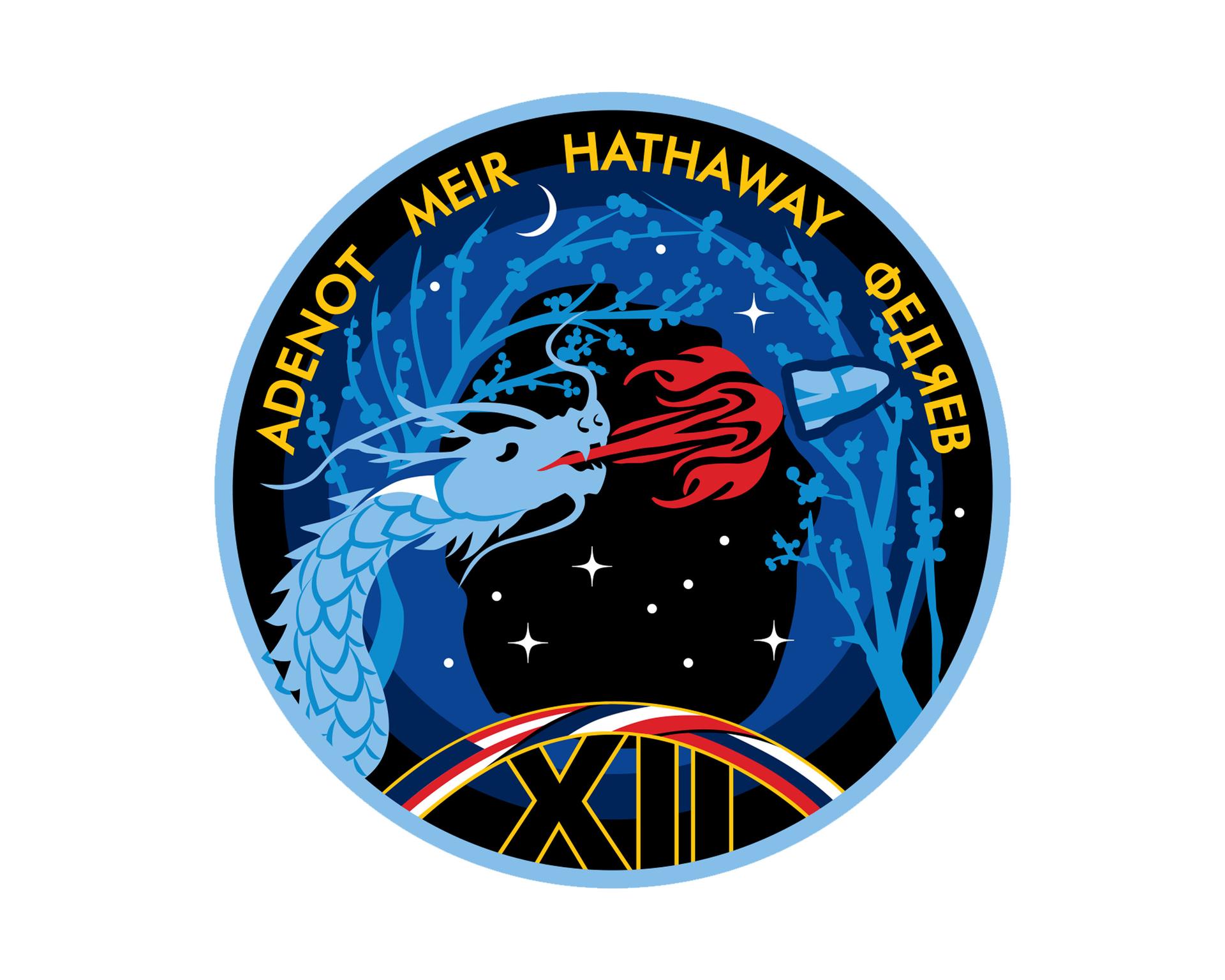
jsc2025e091193 (Dec. 1, 2025) --- The official insignia of NASA's SpaceX Crew-12 mission to the International Space Station.
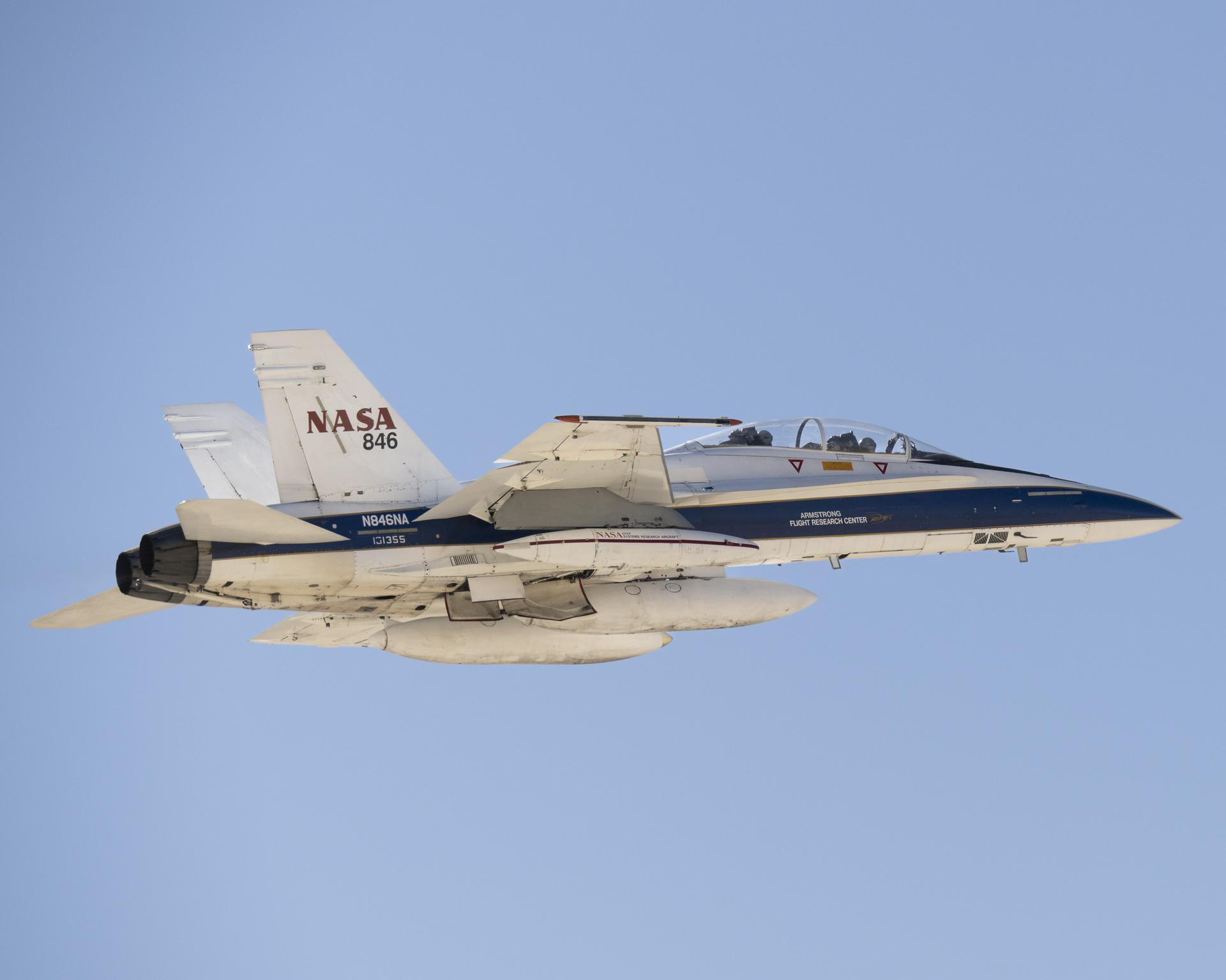
A NASA F/A-18 research aircraft flies near NASA’s Armstrong Flight Research Center in Edwards, California, on Feb. 24, 2025, testing a commercial precision landing technology for future space missions. The Psionic Space Navigation Doppler Lidar (PSNDL) system is installed in a pod located under the right wing of the aircraft.
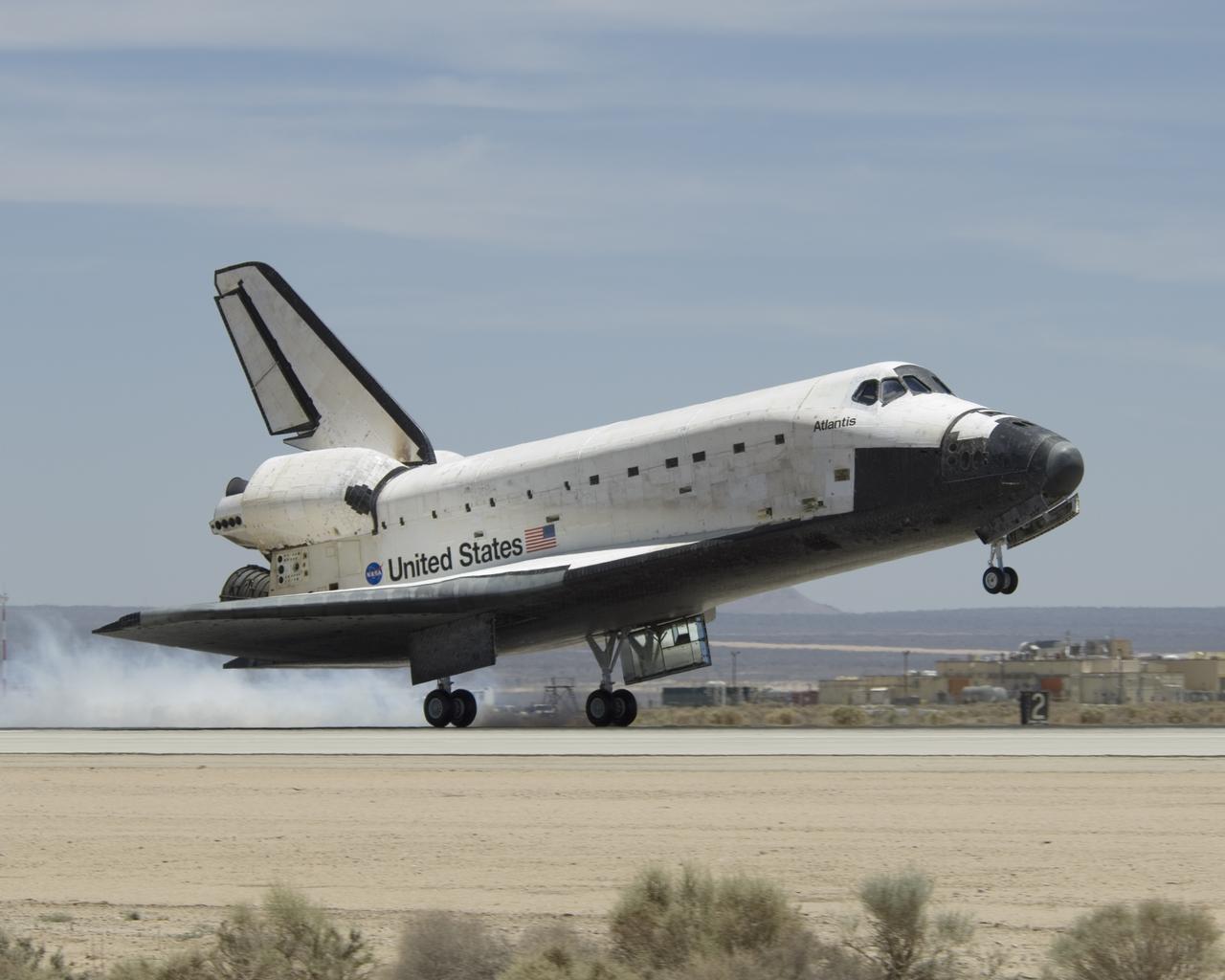
The Space Shuttle Atlantis touches down at Edwards AFB on June 22, 2007, to conclude International Space Station construction and supply mission STS-117.
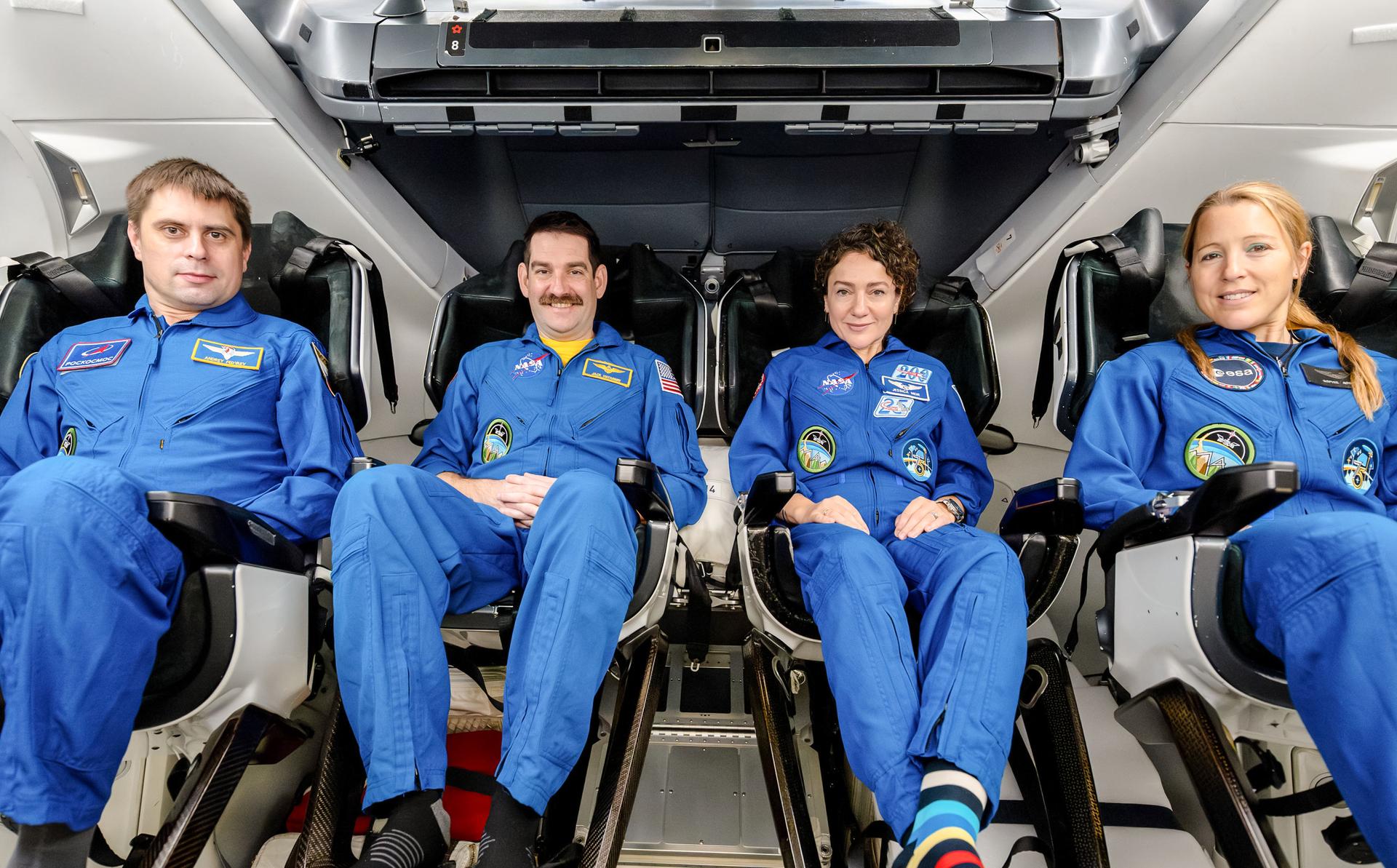
jsc2026e004027 (Jan. 23, 2026) --- The four members of NASA's SpaceX Crew-12 mission to the International Space Station pose together for a crew portrait inside a SpaceX Dragon spacecraft at SpaceX headquarters in Hawthorne, California. From left are, Roscosmos cosmonaut and Mission Specialist Andrey Fedyaev, NASA astronauts Jack Hathaway and Jessica Meir, Pilot and Commander respectively, and ESA (European Space Agency) astronaut and Mission Specialist Sophie Adenot. Credit: SpaceX
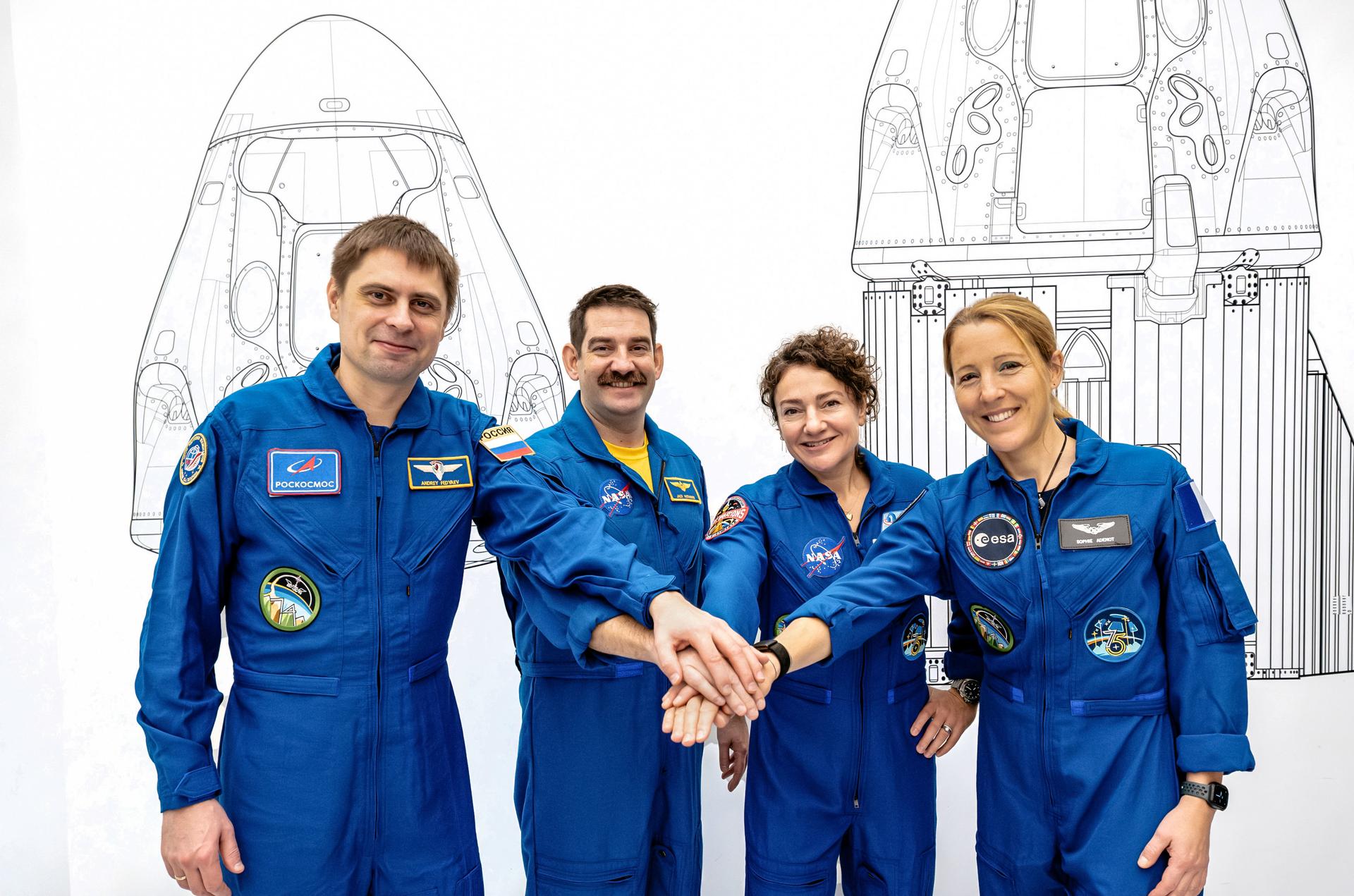
jsc2026e004030 (Jan. 23, 2026) --- The four members of NASA's SpaceX Crew-12 mission to the International Space Station pose together for a crew portrait in their blue flight suits at SpaceX headquarters in Hawthorne, California. From left are, Roscosmos cosmonaut and Mission Specialist Andrey Fedyaev, NASA astronauts Jack Hathaway and Jessica Meir, Pilot and Commander respectively, and ESA (European Space Agency) astronaut and Mission Specialist Sophie Adenot. Credit: SpaceX
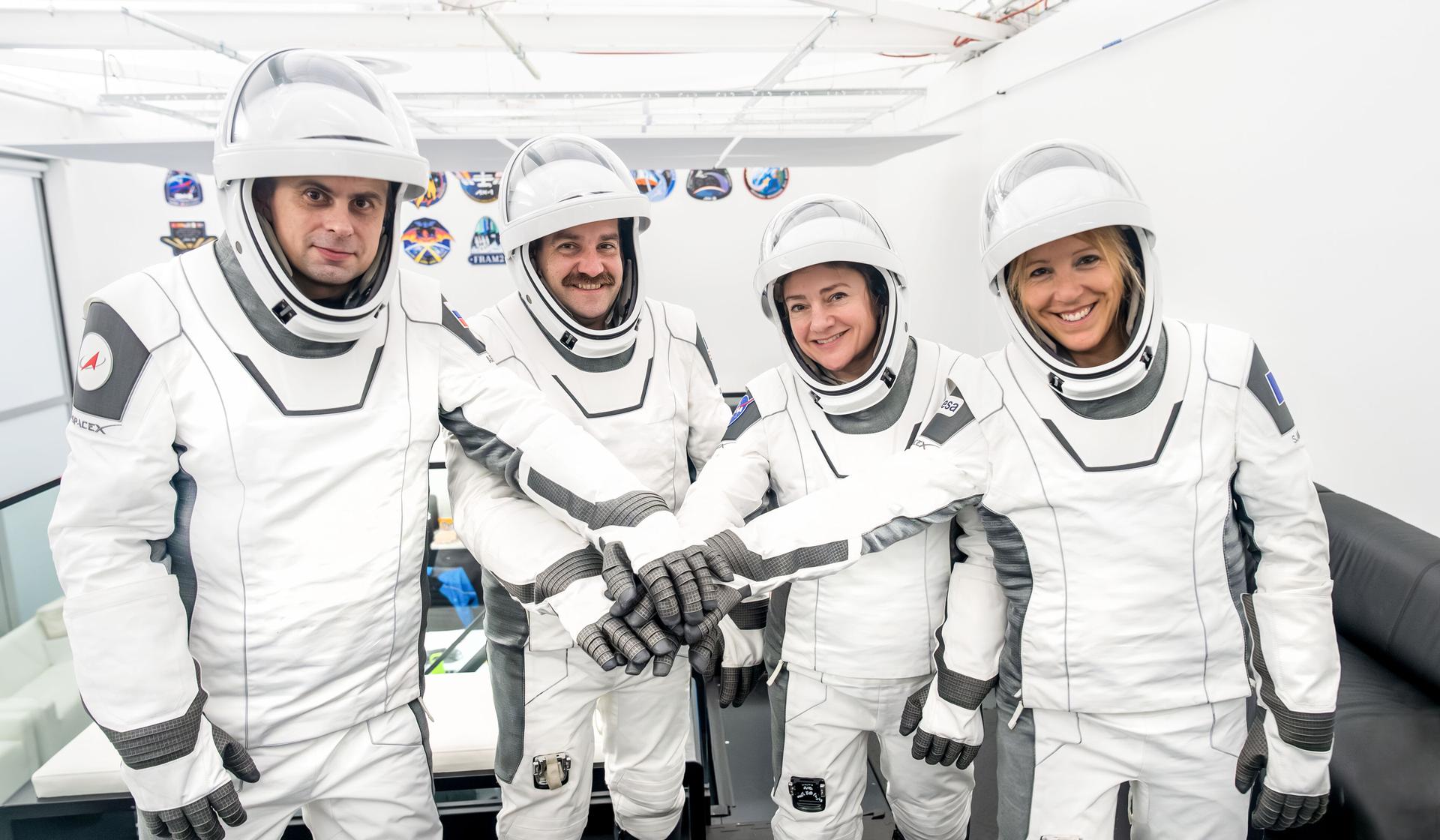
jsc2026e004031 (Jan. 23, 2026) --- The four members of NASA's SpaceX Crew-12 mission to the International Space Station pose together for a crew portrait in their pressure suits at SpaceX headquarters in Hawthorne, California. From left are, Roscosmos cosmonaut and Mission Specialist Andrey Fedyaev, NASA astronauts Jack Hathaway and Jessica Meir, Pilot and Commander respectively, and ESA (European Space Agency) astronaut and Mission Specialist Sophie Adenot. Credit: SpaceX
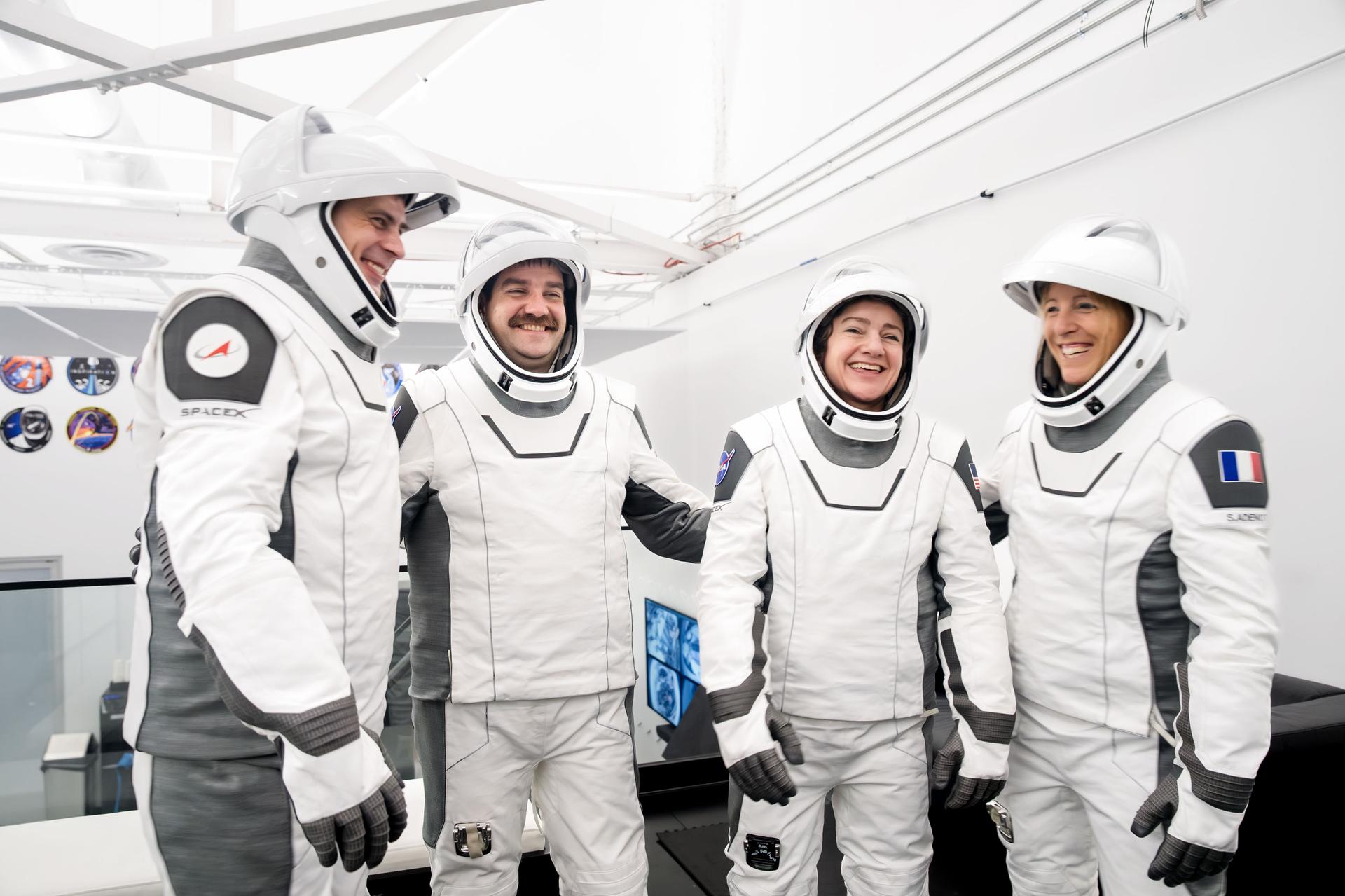
jsc2026e004033 (Jan. 21, 2026) --- The four members of NASA's SpaceX Crew-12 mission to the International Space Station pose together for a crew portrait in their pressure suits at SpaceX headquarters in Hawthorne, California. From left are, Roscosmos cosmonaut and Mission Specialist Andrey Fedyaev, NASA astronauts Jack Hathaway and Jessica Meir, Pilot and Commander respectively, and ESA (European Space Agency) astronaut and Mission Specialist Sophie Adenot. Credit: SpaceX
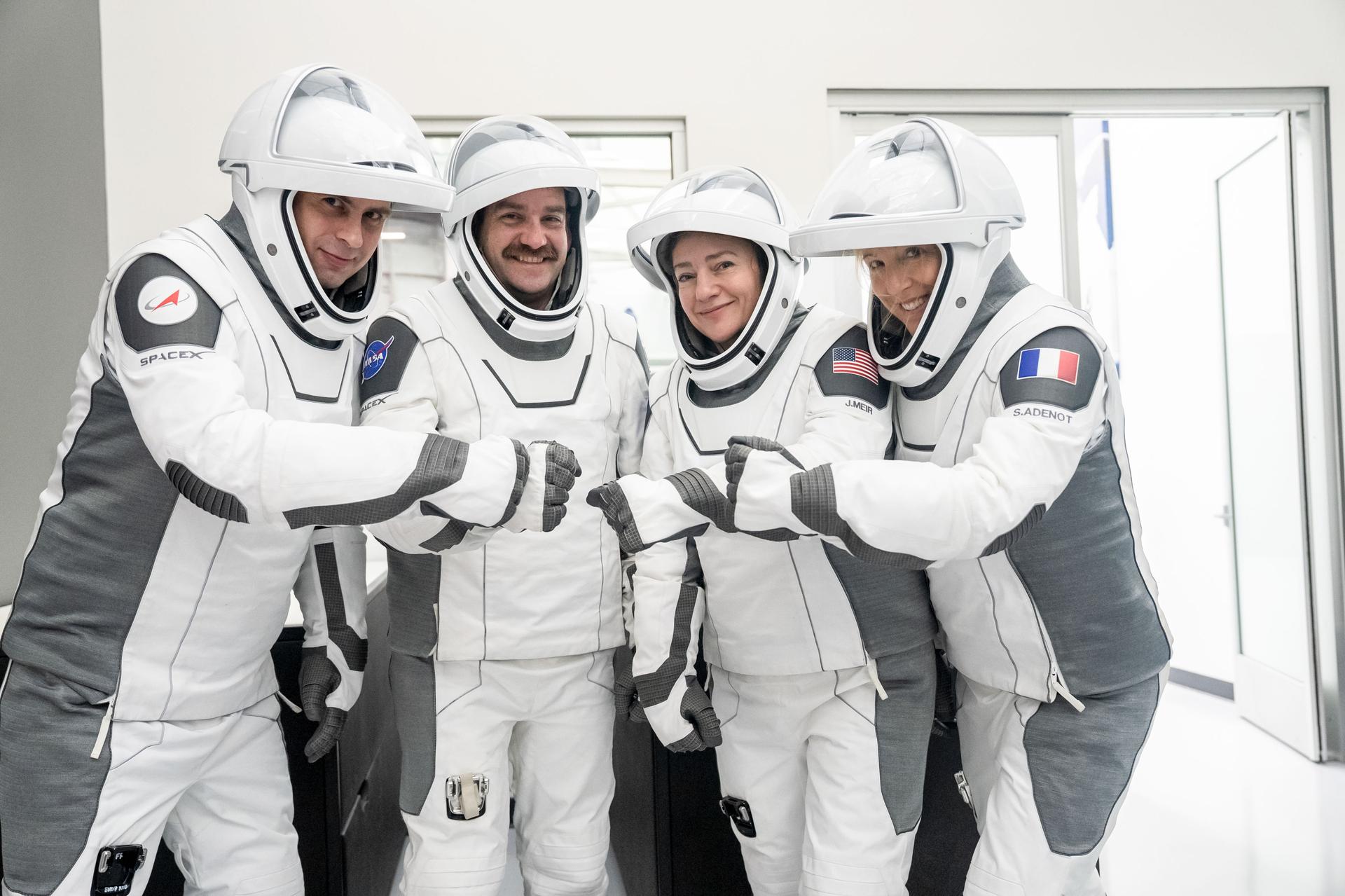
jsc2026e004026 (Jan. 21, 2026) --- The four members of NASA's SpaceX Crew-12 mission to the International Space Station pose together for a crew portrait in their pressure suits at SpaceX headquarters in Hawthorne, California. From left are, Roscosmos cosmonaut and Mission Specialist Andrey Fedyaev, NASA astronauts Jack Hathaway and Jessica Meir, Pilot and Commander respectively, and ESA (European Space Agency) astronaut and Mission Specialist Sophie Adenot. Credit: SpaceX
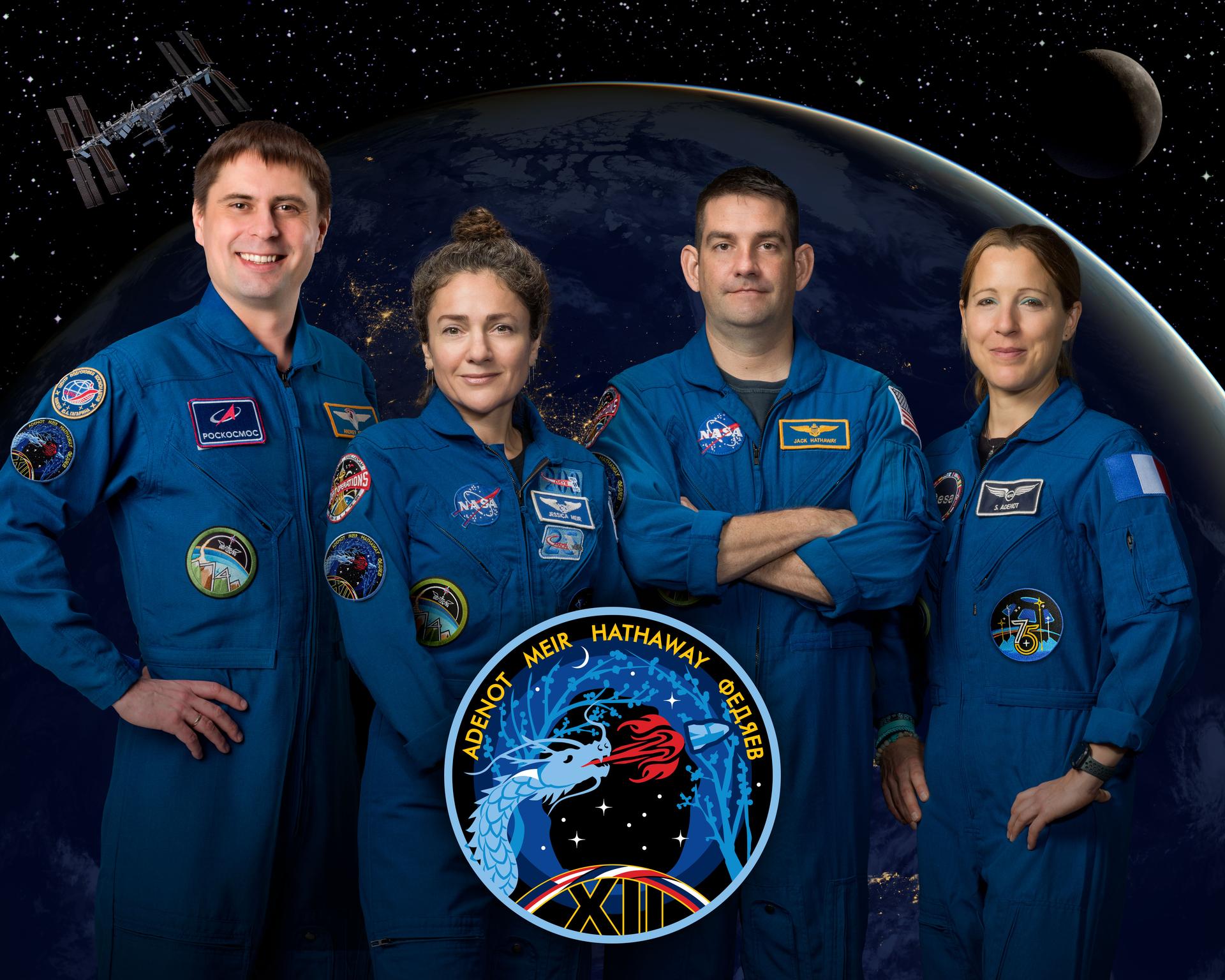
jsc2026e004045 (Oct. 17, 2025) --- The four members of NASA's SpaceX Crew-12 mission to the International Space Station pose together for an official crew portrait. From left are, Roscosmos cosmonaut and Mission Specialist Andrey Fedyaev, NASA astronauts Jessica Meir and Jack Hathaway, Commander and Pilot respectively, and ESA (European Space Agency) astronaut and Mission Specialist Sophie Adenot. Credit: NASA
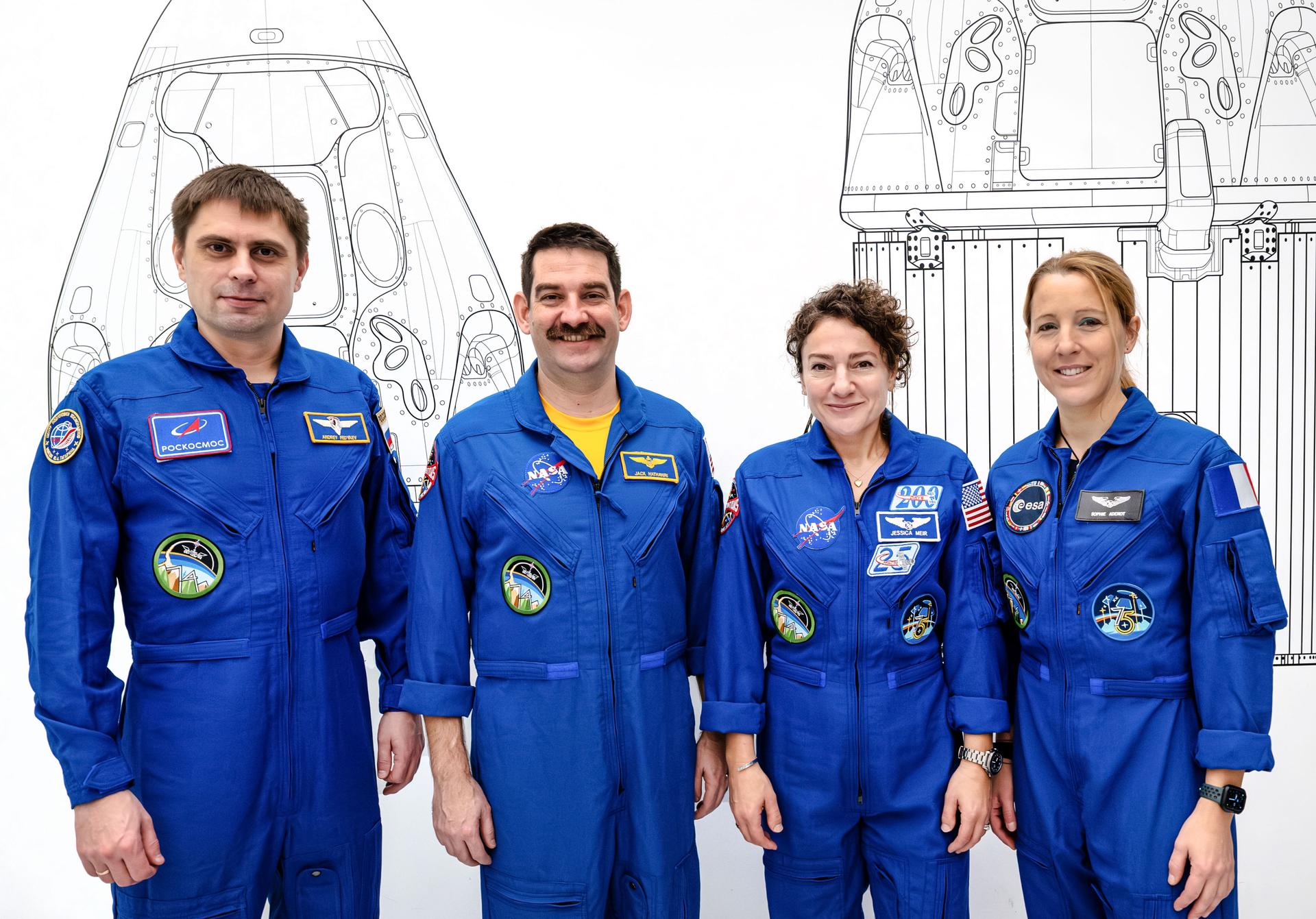
jsc2026e004029 (Jan. 23, 2026) --- The four members of NASA's SpaceX Crew-12 mission to the International Space Station pose together for a crew portrait in their blue flight suits at SpaceX headquarters in Hawthorne, California. From left are, Roscosmos cosmonaut and Mission Specialist Andrey Fedyaev, NASA astronauts Jack Hathaway and Jessica Meir, Pilot and Commander respectively, and ESA (European Space Agency) astronaut and Mission Specialist Sophie Adenot. Credit: SpaceX
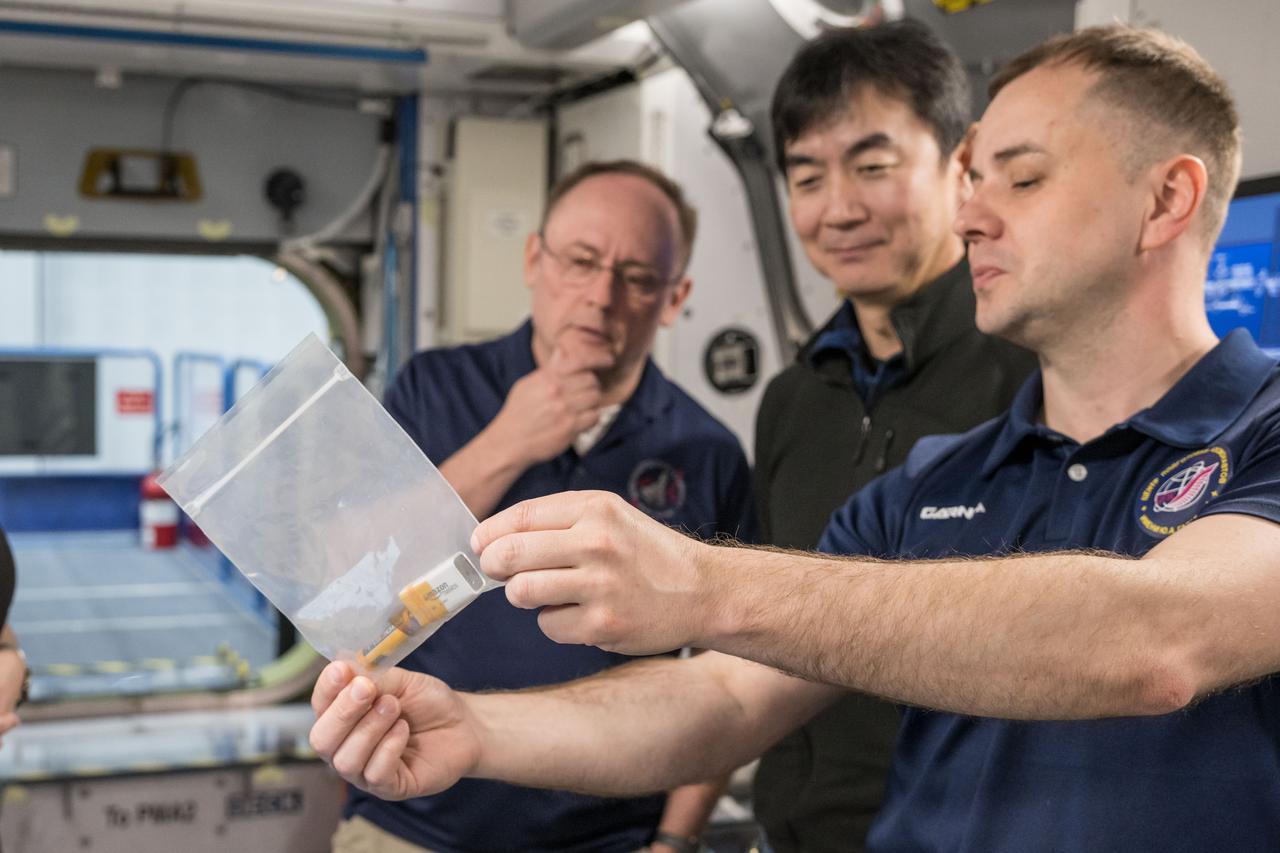
jsc2025e032872 (March 20, 2025) --- From left to right, NASA astronaut Mike Fincke, JAXA astronaut Kimiya Yui, and Roscosmos Cosmonaut Oleg Platonov conduct training scenarios inside a space station mockup at NASA’s Johnson Space Center in Houston, Texas, for their upcoming mission to the International Space Station. Credit: NASA/David DeHoyos
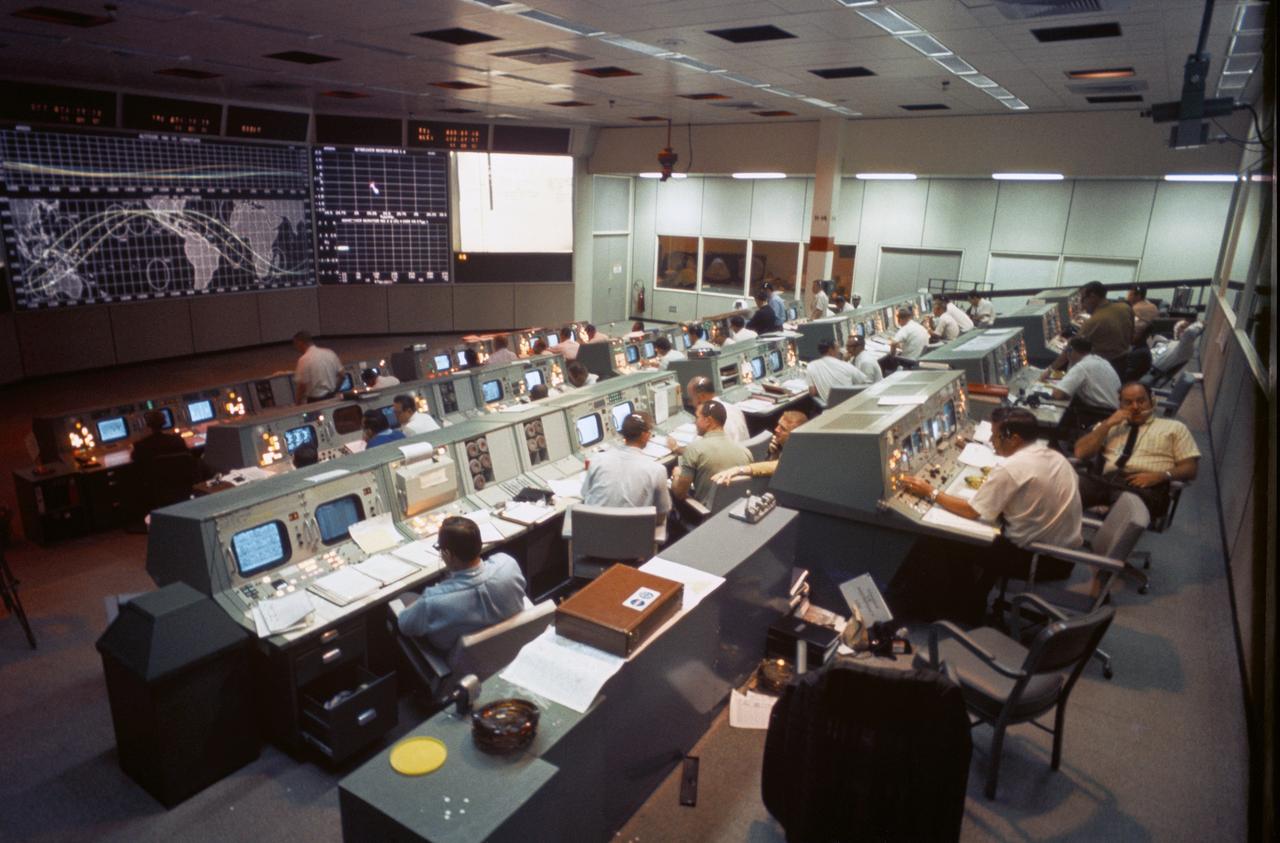
Overall view of activity in the Mission Operations Control Room in the Mission Control Center, Bldg 30, on the first day of the Apollo 7 space mission.
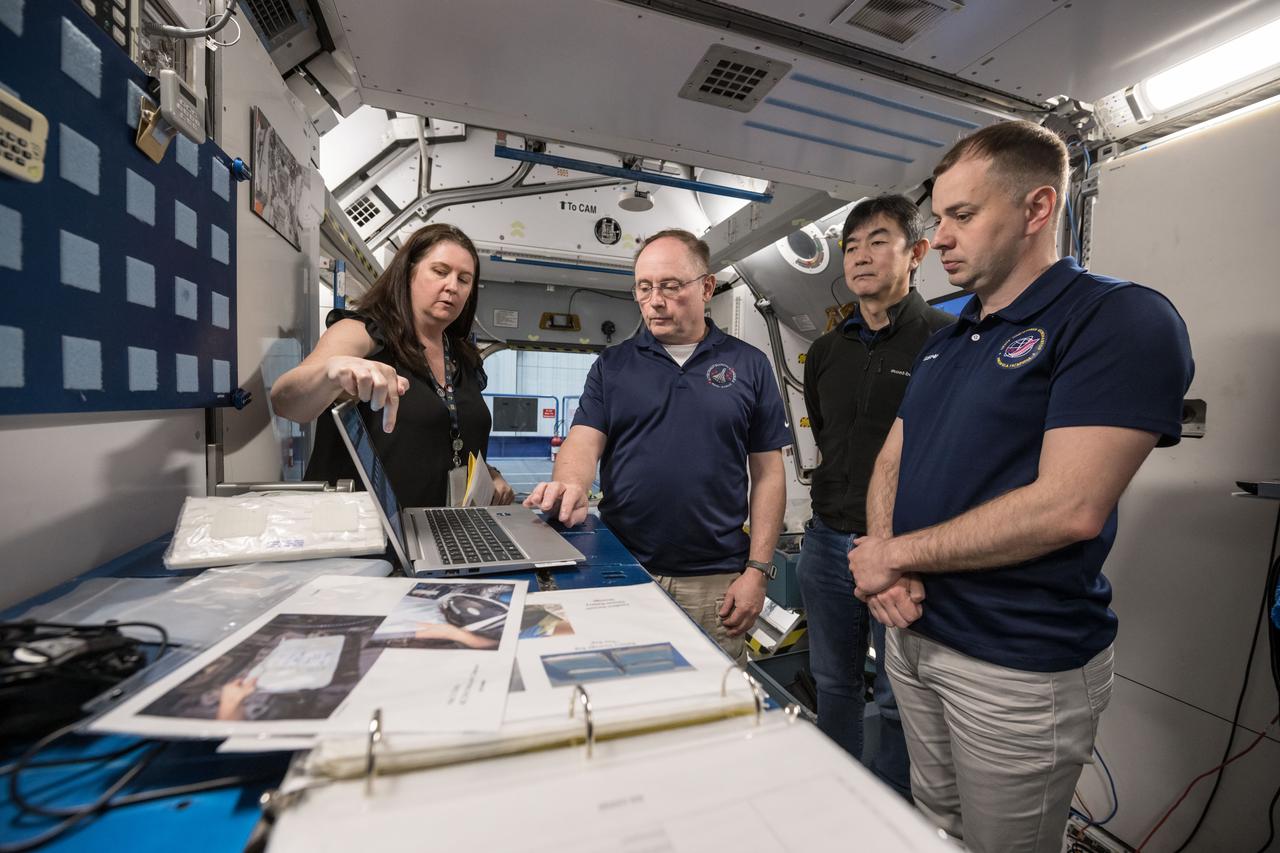
jsc2025e032867 (March 20, 2025) --- From left to right, NASA astronaut Mike Fincke, JAXA astronaut Kimiya Yui, and Roscosmos Cosmonaut Oleg Platonov conduct training scenarios with their instructor (far left) at NASA’s Johnson Space Center in Houston, Texas, for their upcoming mission to the International Space Station. Credit: NASA/David DeHoyos
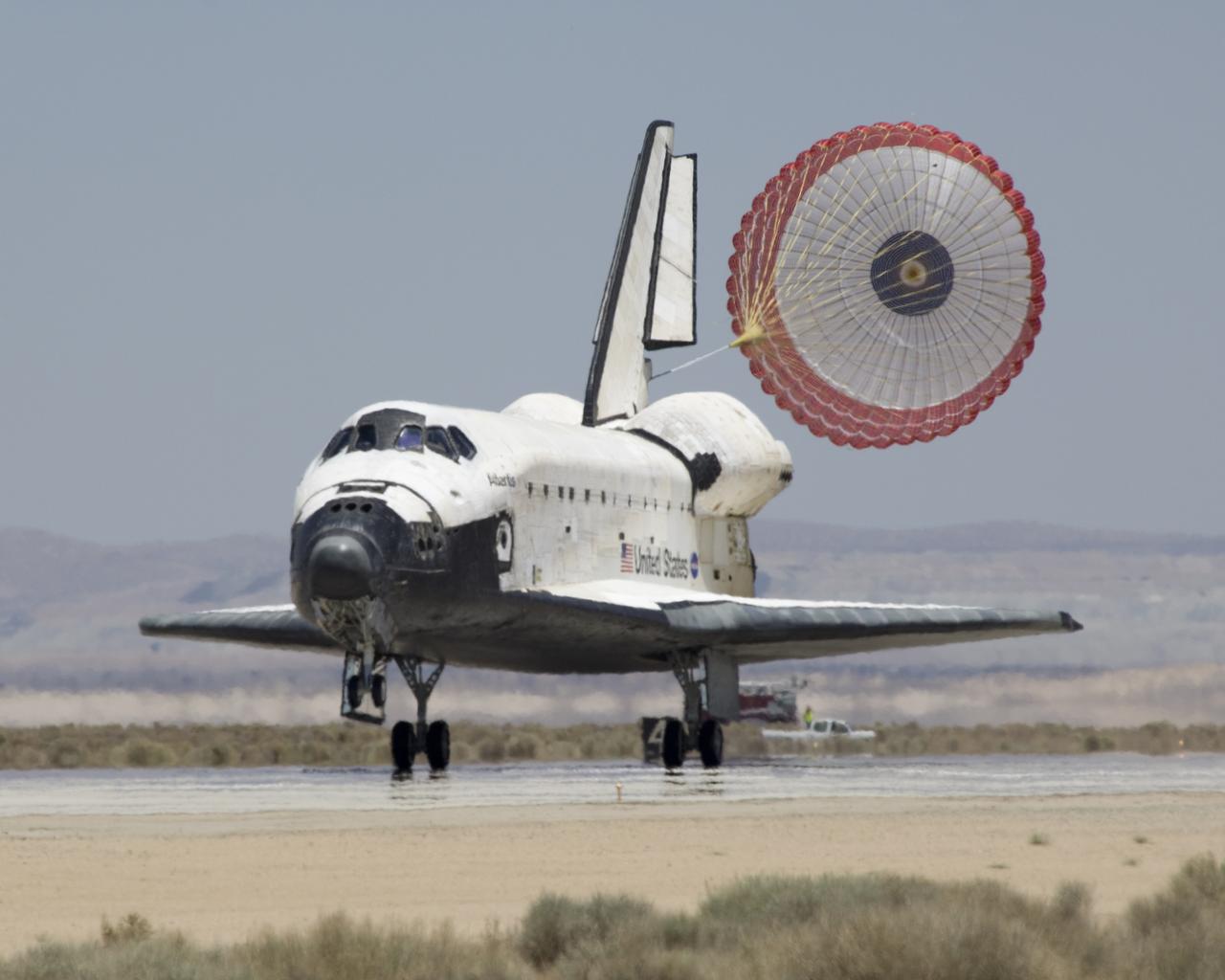
The Space Shuttle Atlantis' drag chute deploys as it rolls out on Runway 22 at Edwards AFB at the conclusion of its 13-day STS-117 mission to the ISS.
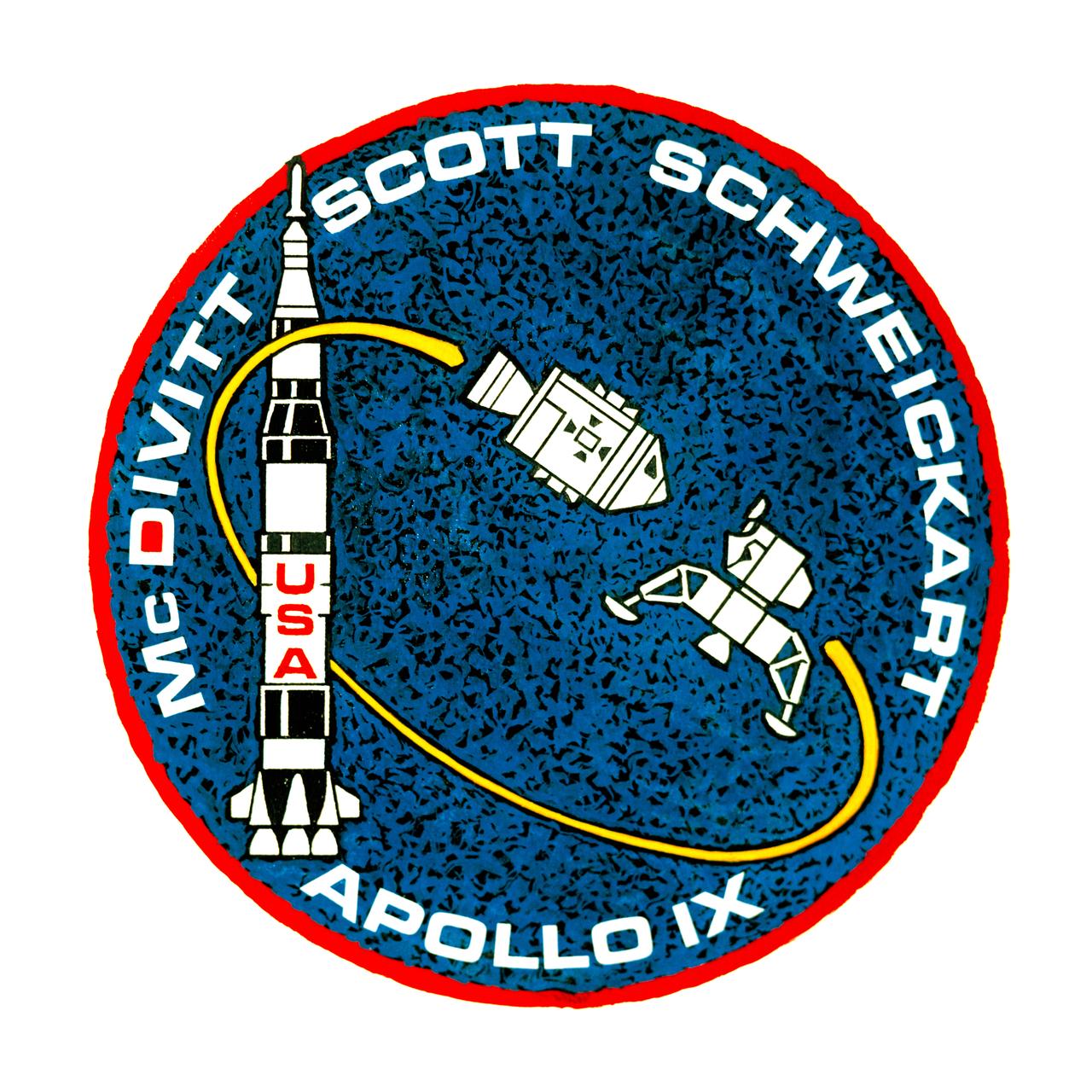
S69-18569 (February 1969) --- The insignia of the Apollo 9 space mission. The crew consist of astronauts James A. McDivitt, commander; David R. Scott, command module pilot; and Russell L. Schweickart, lunar module pilot. The Apollo 9 mission will evaluate spacecraft lunar module systems performance during manned Earth-orbital flight. The NASA insignia design for Apollo flights is reserved for use by the astronauts and for other official use as the NASA Administrator may authorize. Public availability has been approved only in the form of illustrations by the various news media. When and if there is any change in this policy, which we do not anticipate, it will be publicly announced.
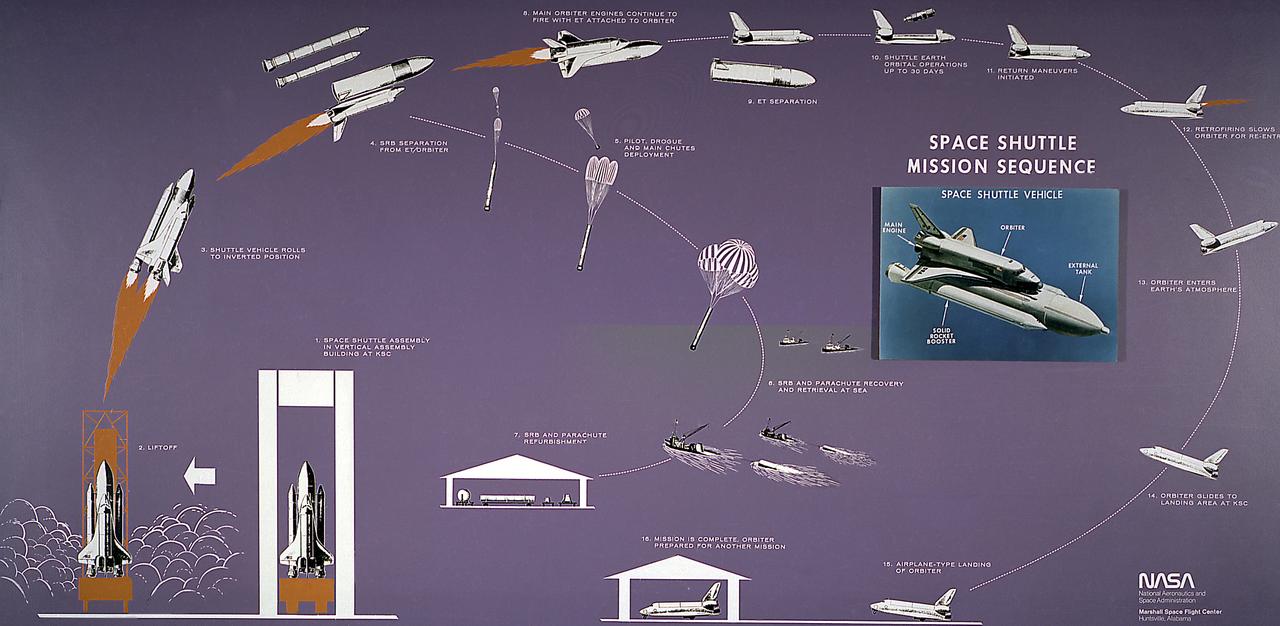
This diagram illustrates the Space Shuttle mission sequence. The Space Shuttle was approved as a national program in 1972 and developed through the 1970s. Part spacecraft and part aircraft, the Space Shuttle orbiter, the brain and the heart of the Space Transportation System (STS), required several technological advances, including thousands of insulating tiles able to stand the heat of reentry over the course of many missions, as well as sophisticated engines that could be used again and again without being thrown away. The airplane-like orbiter has three main engines, that burn liquid hydrogen and oxygen stored in the large external tank, the single largest structure in the Shuttle. Attached to the tank are two solid rocket boosters that provide the vehecile with most of the thrust needed for liftoff. Two minutes into the flight, the spent solids drop into the ocean to be recovered and refurbished for reuse, while the orbiter engines continue burning until approximately 8 minutes into the flight. After the mission is completed, the orbiter lands on a runway like an airplane.
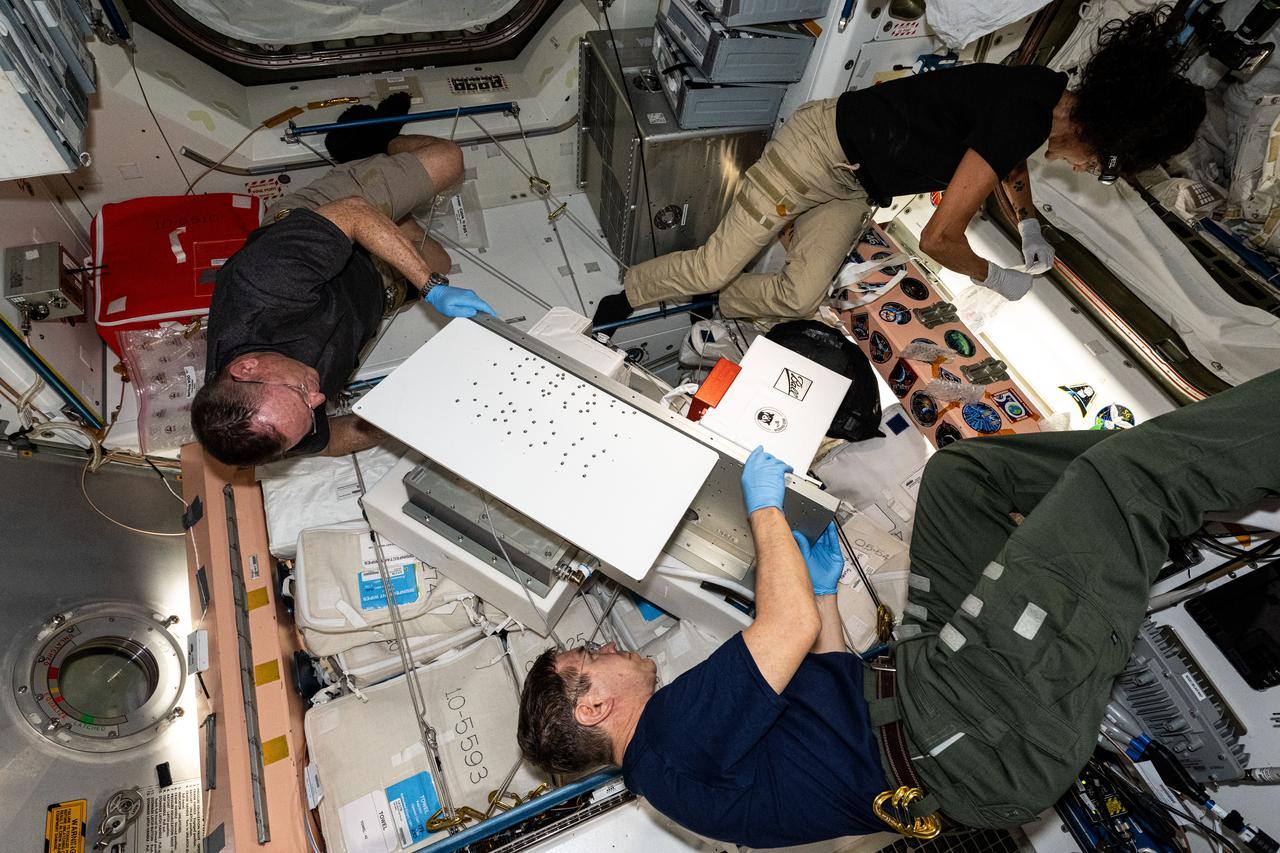
iss071e379489 (July 23, 2024) --- Clockwise from bottom, NASA astronauts Mike Barratt, Butch Wilmore, and Suni Williams are at work inside the International Space Station's Unity module. The trio was configuring the ArgUS Mission 1 technology demonstration hardware to test the external operations of communications, computer processing, and high-definition video gear in the vacuum of space.
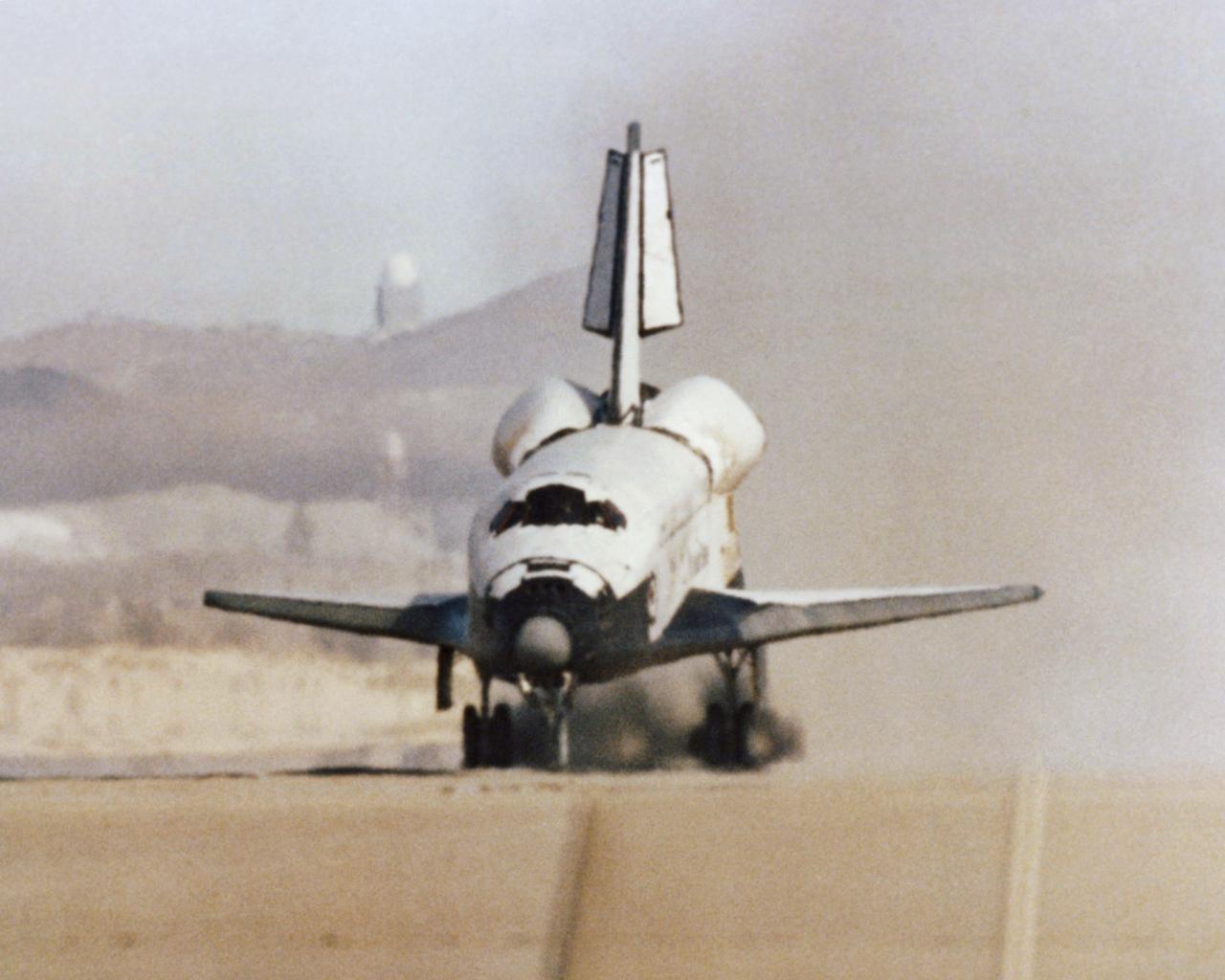
The Space Shuttle Columbia touches down on lakebed runway 23 at Edwards Air Force Base, Calif., to conclude the first orbital shuttle mission.

Large crowds gathered on Rogers Dry Lake at Edwards AFB to see the first landing of the Space Shuttle Columbia, completing its first orbital mission.
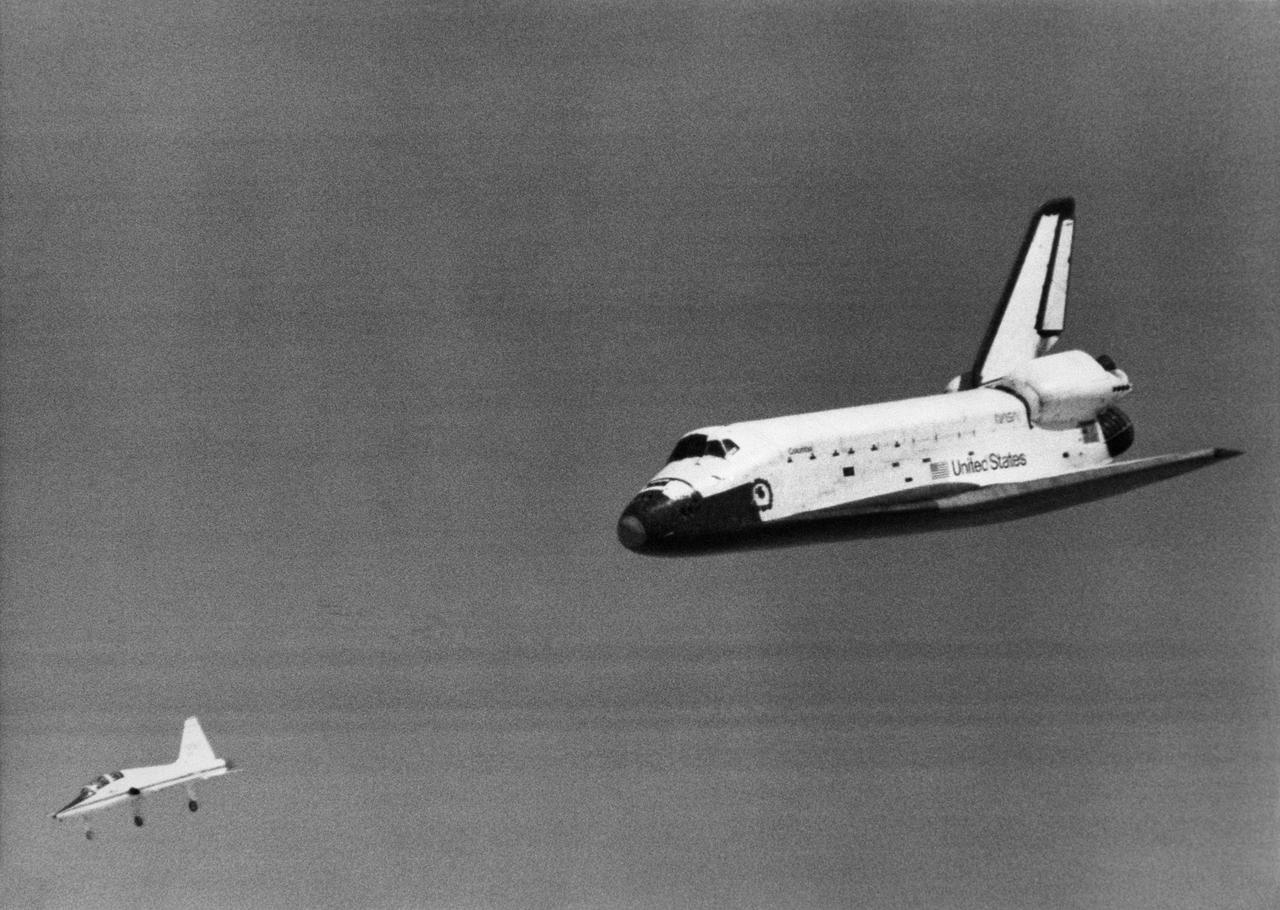
The Space Shuttle Columbia glides down over Rogers Dry Lake as it heads for a landing at Edwards Air Force Base at the conclusion of its first orbital mission on April 14, 1981.
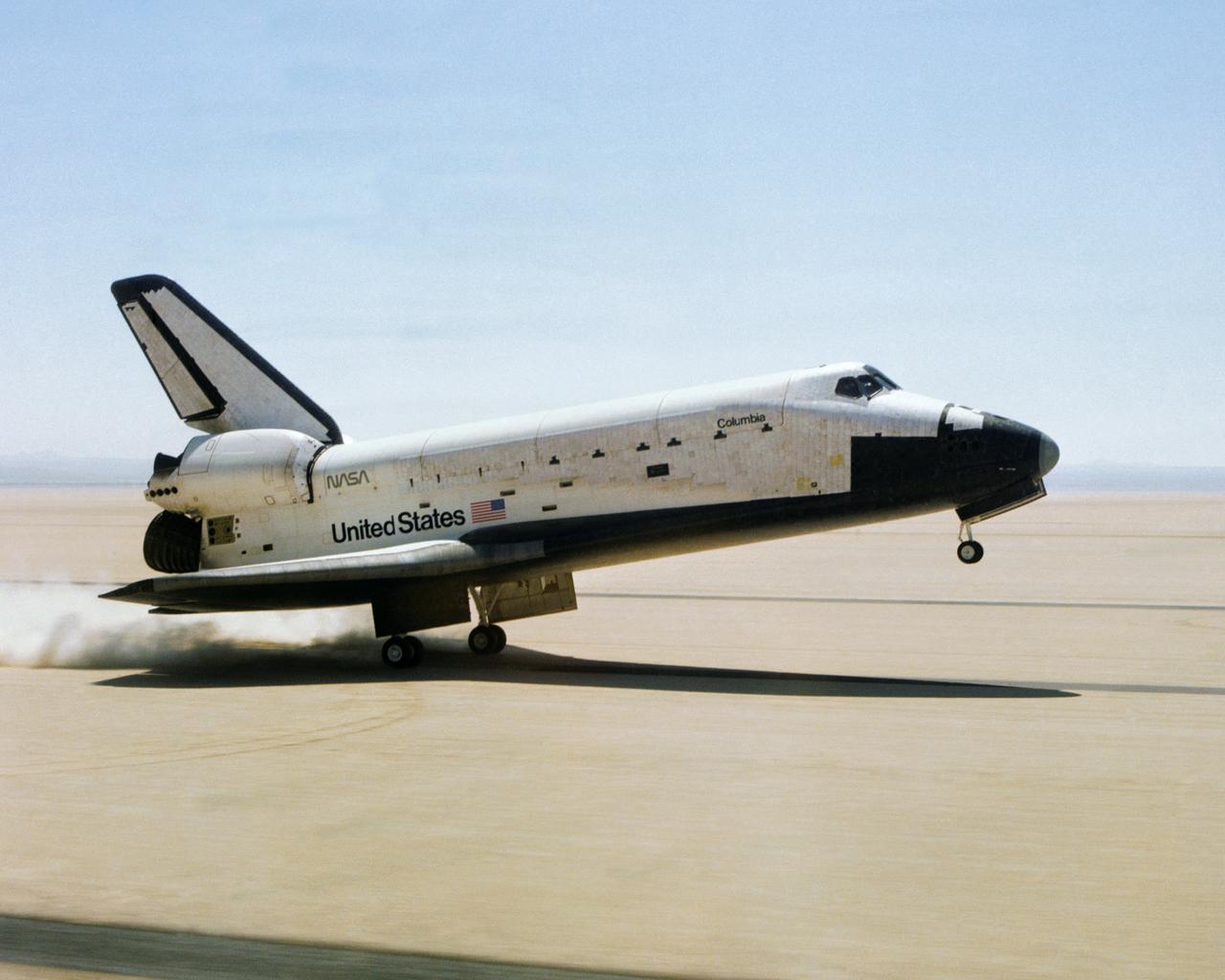
The Space Shuttle Columbia touches down on lakebed runway 23 at Edwards Air Force Base, Calif., to conclude the first orbital shuttle mission. (JSC photo # S81-30734)
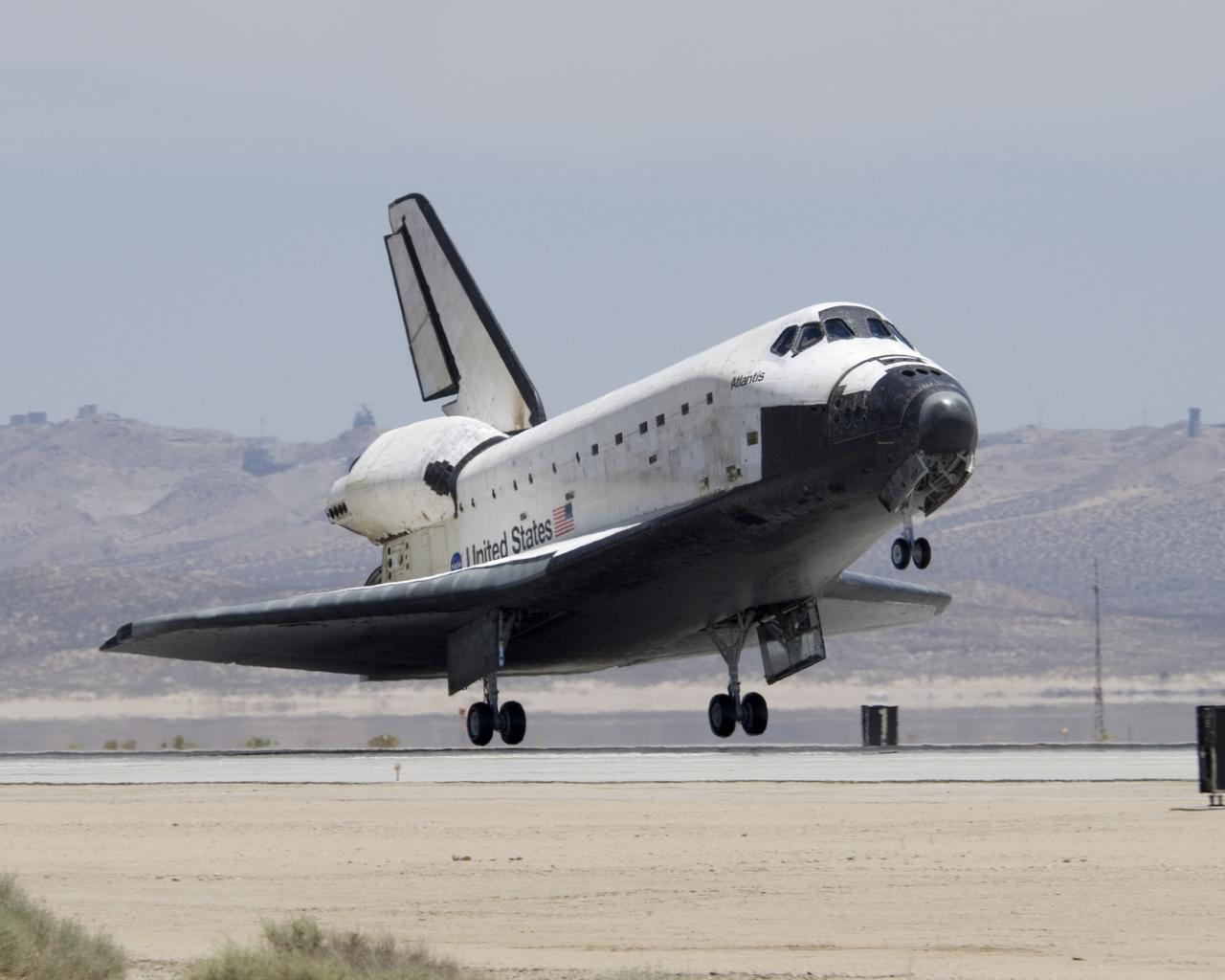
The Space Shuttle Atlantis touches down at Edwards AFB on June 22, 2007, to conclude International Space Station construction and supply mission STS-117.

iss075-s-001 (June 11, 2025) -- The official mission insignia of the Expedition 75 crew aboard the International Space Station. This patch embodies Expedition 75's mission on the orbital ouitpost, a beacon of human aspiration. Radiant golden and white lines surge from Earth, forging a bond between our planet and the cosmos, illustrating the profound impact of the International Space Station's work on humanity. Above, the cupola's windows, depicted as geometric blue forms, serve as a poignant reminder of our home, connecting astronauts to their loved ones and the breathtaking beauty of Earth. Below, majestic mountain ranges underscore the vital role of our planet's landscapes and ecosystems in our quest for knowledge and preservation. The gradient arc, cradling Earth's curvature, symbolizes our fragile atmosphere and the International Space Station's orbital path, a testament to our relentless pursuit of discovery and growth.
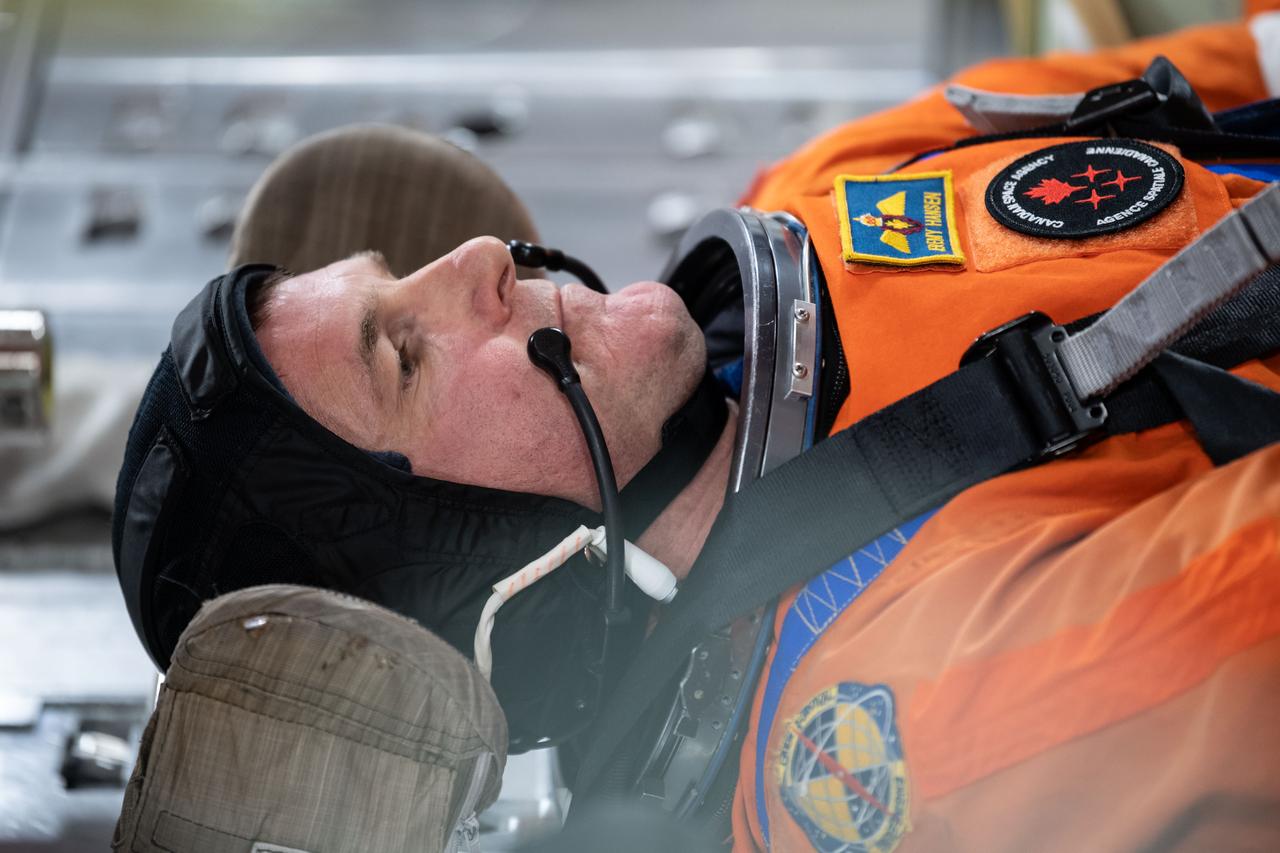
jsc2025e004073 (Jan. 30, 2025) --- Canadian Space Agency astronaut and Artemis II mission specialist Jeremy Hansen inside of the Orion spacecraft mockup during Post Insertion and Deorbit Preparation training at the Space Vehicle Mockup Facility in Houston, Texas. The crew practiced getting the Orion spacecraft configured once in orbit, how to make it habitable, and suited up in their entry pressure suits to prepare for their return from the Moon. Credit: NASA/Mark Sowa
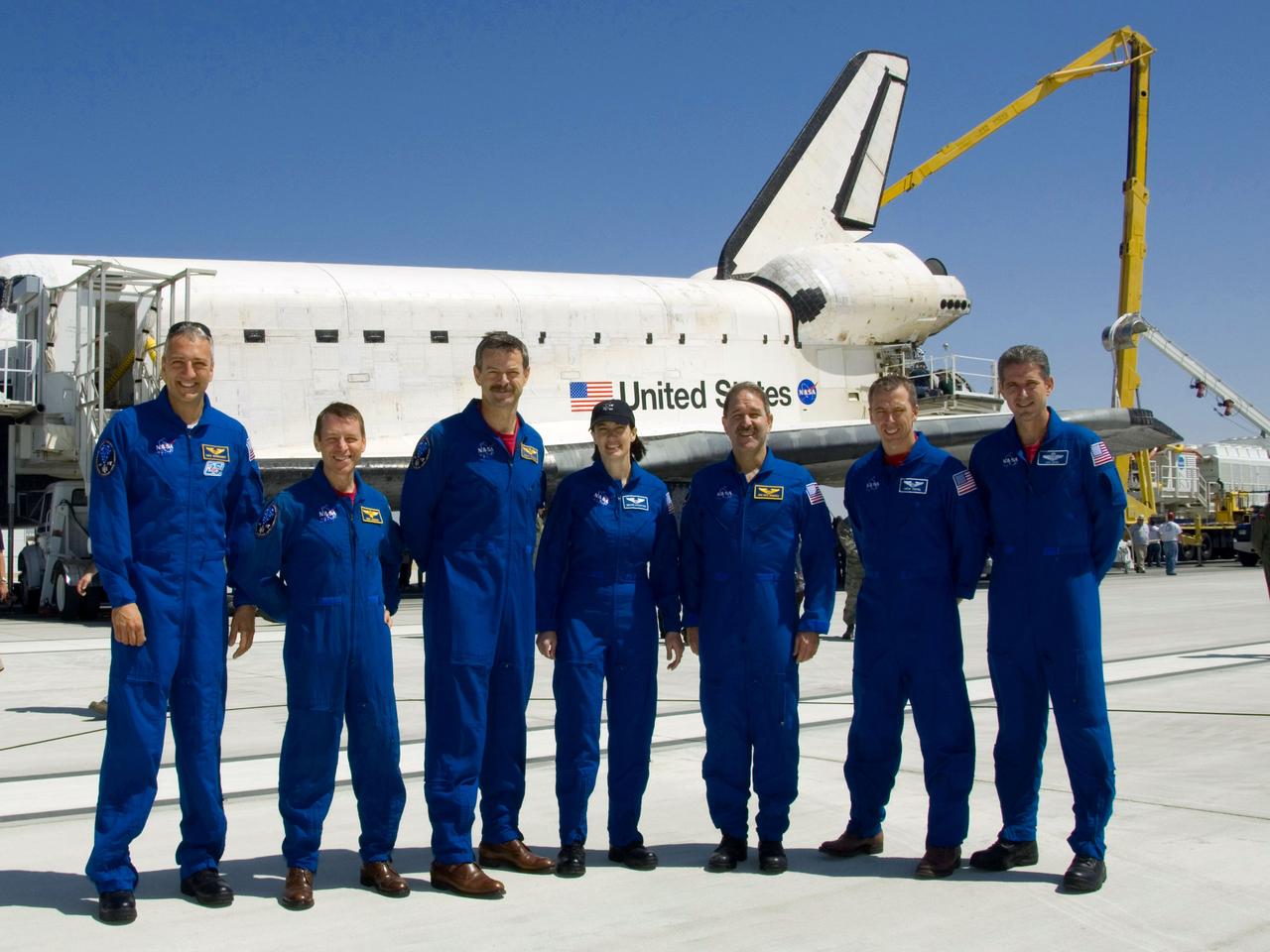
STS125-S-066 (24 May 2009) --- The STS-125 crew pose for a photo near Space Shuttle Atlantis on Runway 22 at Edwards Air Force Base in California following their landing which ended the STS-125 mission to repair and upgrade NASA?s Hubble Space Telescope. From the left are astronauts Mike Massimino, mission specialist; Gregory C. Johnson, pilot; Scott Altman, commander; Megan McArthur, John Grunsfeld, Andrew Feustel and Michael Good, all mission specialists. The main landing gear touched down at 8:39:05 a.m. (PDT) on May 24, 2009. Nose gear touchdown was at 8:39:15 a.m. Wheel-stop was at 8:40:15 a.m., bringing the mission?s elapsed time to 12 days, 21 hours, 37 minutes, 9 seconds. Landing opportunities on May 22, May 23 and May 24 were waved off due to weather concerns at NASA?s Kennedy Space Center in Florida, the shuttle?s primary landing site. Through five spacewalks, Hubble was refurbished and upgraded with state-of-the-art science instruments that will expand Hubble's capabilities and extend its operational lifespan through at least 2014.
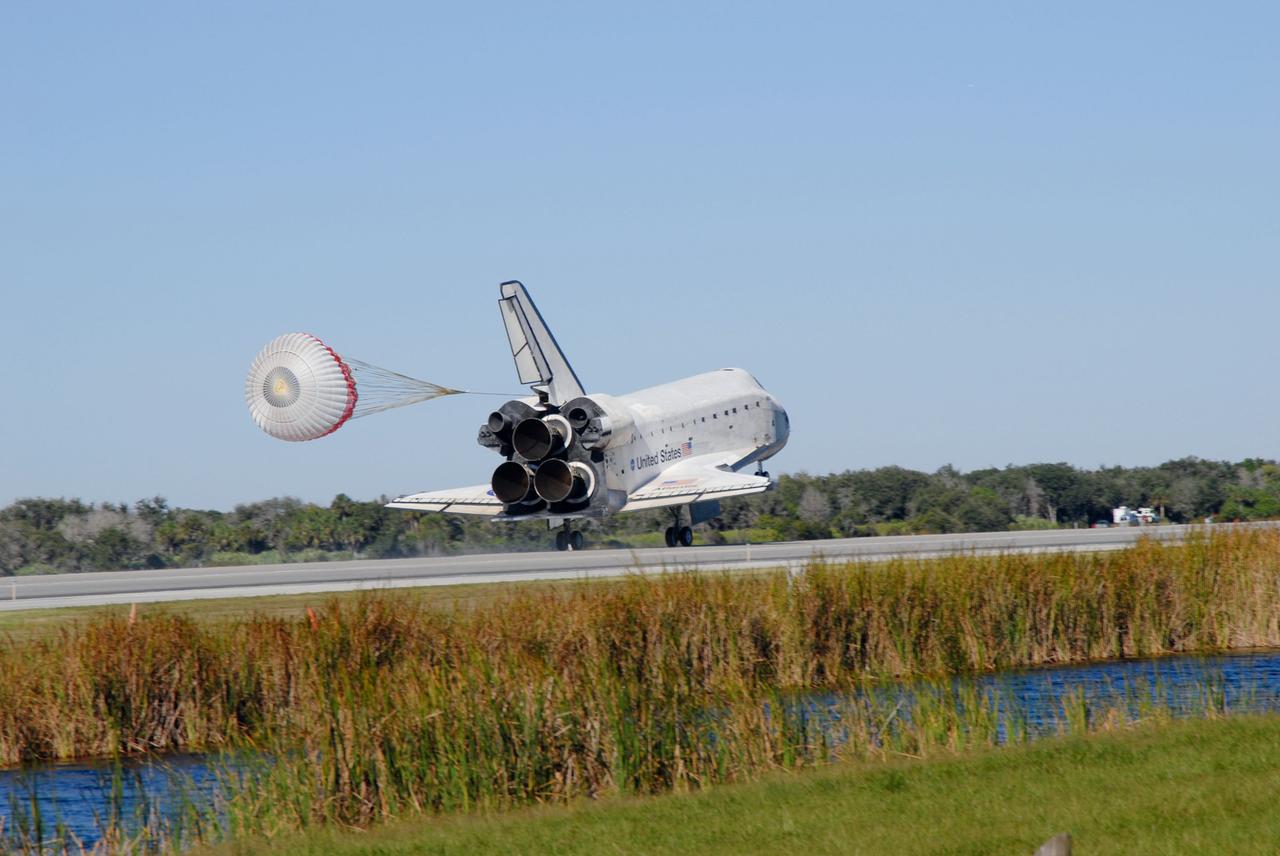
PHOTO CREDIT: NASA or National Aeronautics and Space Administration CAPE CANAVERAL, Fla. - The drag chute unfurls to slow space shuttle Atlantis for landing on Runway 33 at the Shuttle Landing Facility at NASA's Kennedy Space Center in Florida after 11 days in space, completing the 4.5-million mile STS-129 mission on orbit 171. Main gear touchdown was at 9:44:23 a.m. EDT. Nose gear touchdown was at 9:44:36 a.m., and wheels stop was at 9:45:05 a.m. Aboard Atlantis are Commander Charles O. Hobaugh; Pilot Barry E. Wilmore; Mission Specialists Leland Melvin, Randy Bresnik, Mike Foreman and Robert L. Satcher Jr.; and Expedition 20 and 21 Flight Engineer Nicole Stott who spent 87 days aboard the International Space Station. STS-129 is the final space shuttle Expedition crew rotation flight on the manifest. On STS-129, the crew delivered 14 tons of cargo to the orbiting laboratory, including two ExPRESS Logistics Carriers containing spare parts to sustain station operations after the shuttles are retired next year. For information on the STS-129 mission and crew, visit http://www.nasa.gov/mission_pages/shuttle/shuttlemissions/sts129/index.html. Photo credit: NASA/Jim Grossmann
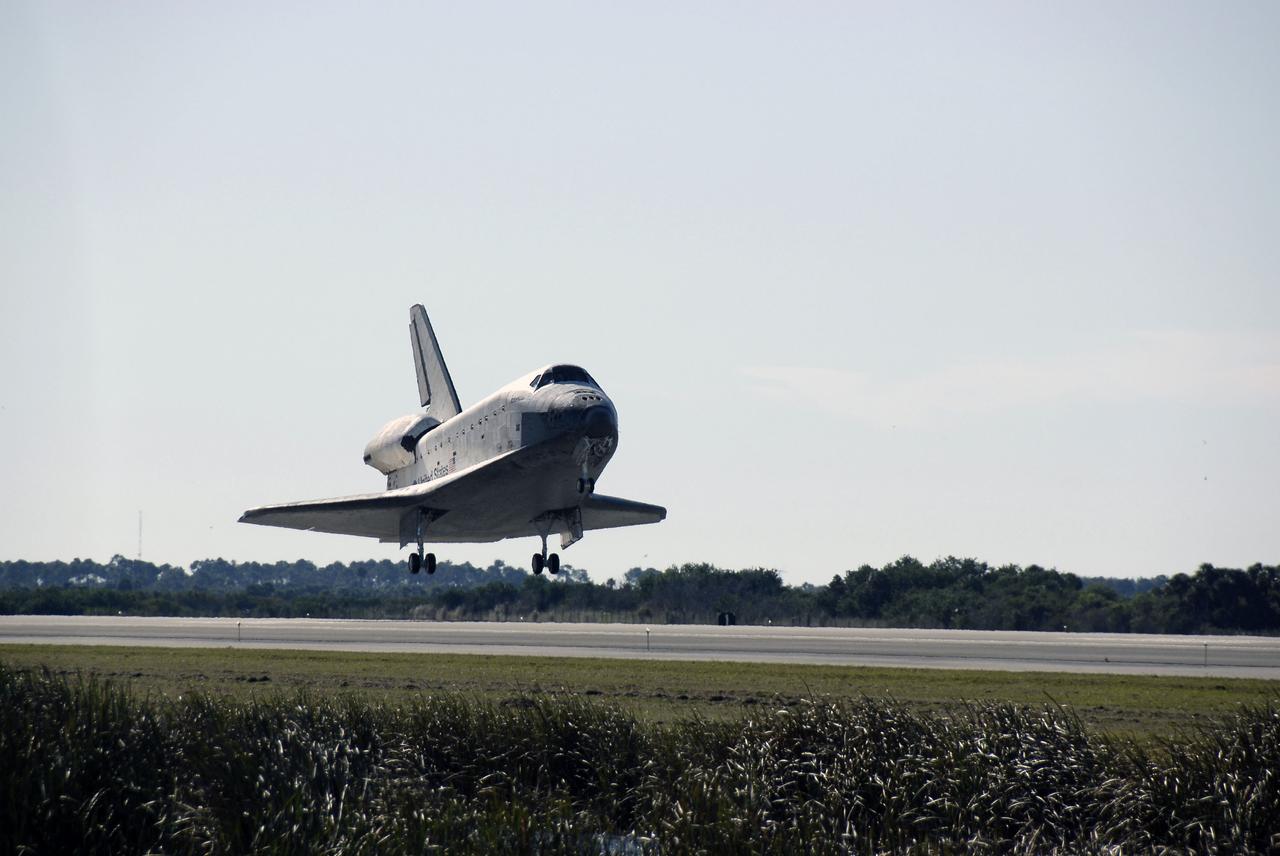
PHOTO CREDIT: NASA or National Aeronautics and Space Administration CAPE CANAVERAL, Fla. - With landing gear down, space shuttle Atlantis approaches landing on Runway 33 at the Shuttle Landing Facility at NASA's Kennedy Space Center in Florida after 11 days in space, completing the 4.5-million mile STS-129 mission on orbit 171. Main gear touchdown was at 9:44:23 a.m. EDT. Nose gear touchdown was at 9:44:36 a.m., and wheels stop was at 9:45:05 a.m. Aboard Atlantis are Commander Charles O. Hobaugh; Pilot Barry E. Wilmore; Mission Specialists Leland Melvin, Randy Bresnik, Mike Foreman and Robert L. Satcher Jr.; and Expedition 20 and 21 Flight Engineer Nicole Stott who spent 87 days aboard the International Space Station. STS-129 is the final space shuttle Expedition crew rotation flight on the manifest. On STS-129, the crew delivered 14 tons of cargo to the orbiting laboratory, including two ExPRESS Logistics Carriers containing spare parts to sustain station operations after the shuttles are retired next year. For information on the STS-129 mission and crew, visit http://www.nasa.gov/mission_pages/shuttle/shuttlemissions/sts129/index.html. Photo credit: NASA/Kim Shiflett
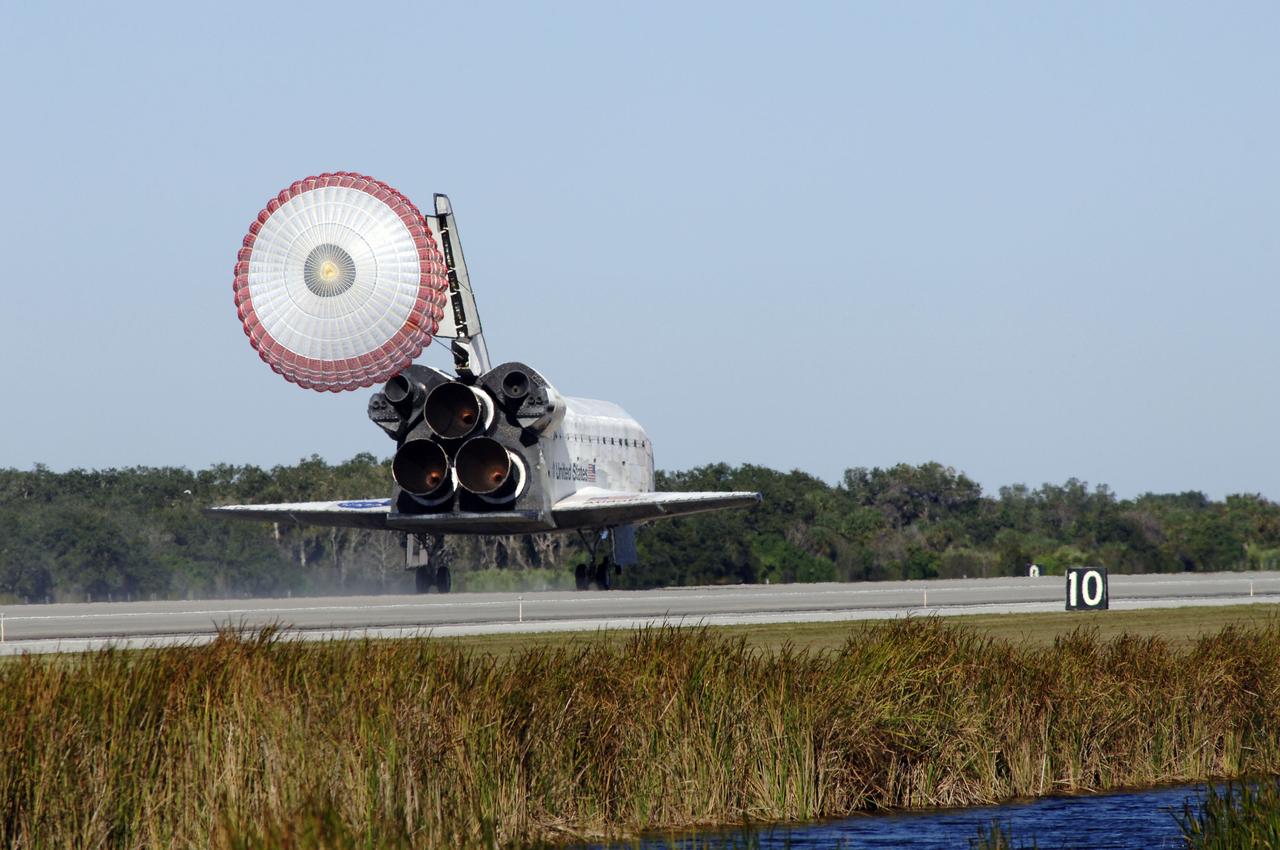
PHOTO CREDIT: NASA or National Aeronautics and Space Administration CAPE CANAVERAL, Fla. - The drag chute unfurls as space shuttle Atlantis lands on Runway 33 at the Shuttle Landing Facility at NASA's Kennedy Space Center in Florida after 11 days in space, completing the 4.5-million mile STS-129 mission on orbit 171. Main gear touchdown was at 9:44:23 a.m. EDT. Nose gear touchdown was at 9:44:36 a.m., and wheels stop was at 9:45:05 a.m. Aboard Atlantis are Commander Charles O. Hobaugh; Pilot Barry E. Wilmore; Mission Specialists Leland Melvin, Randy Bresnik, Mike Foreman and Robert L. Satcher Jr.; and Expedition 20 and 21 Flight Engineer Nicole Stott who spent 87 days aboard the International Space Station. STS-129 is the final space shuttle Expedition crew rotation flight on the manifest. On STS-129, the crew delivered 14 tons of cargo to the orbiting laboratory, including two ExPRESS Logistics Carriers containing spare parts to sustain station operations after the shuttles are retired next year. For information on the STS-129 mission and crew, visit http://www.nasa.gov/mission_pages/shuttle/shuttlemissions/sts129/index.html. Photo credit: NASA/Kim Shiflett
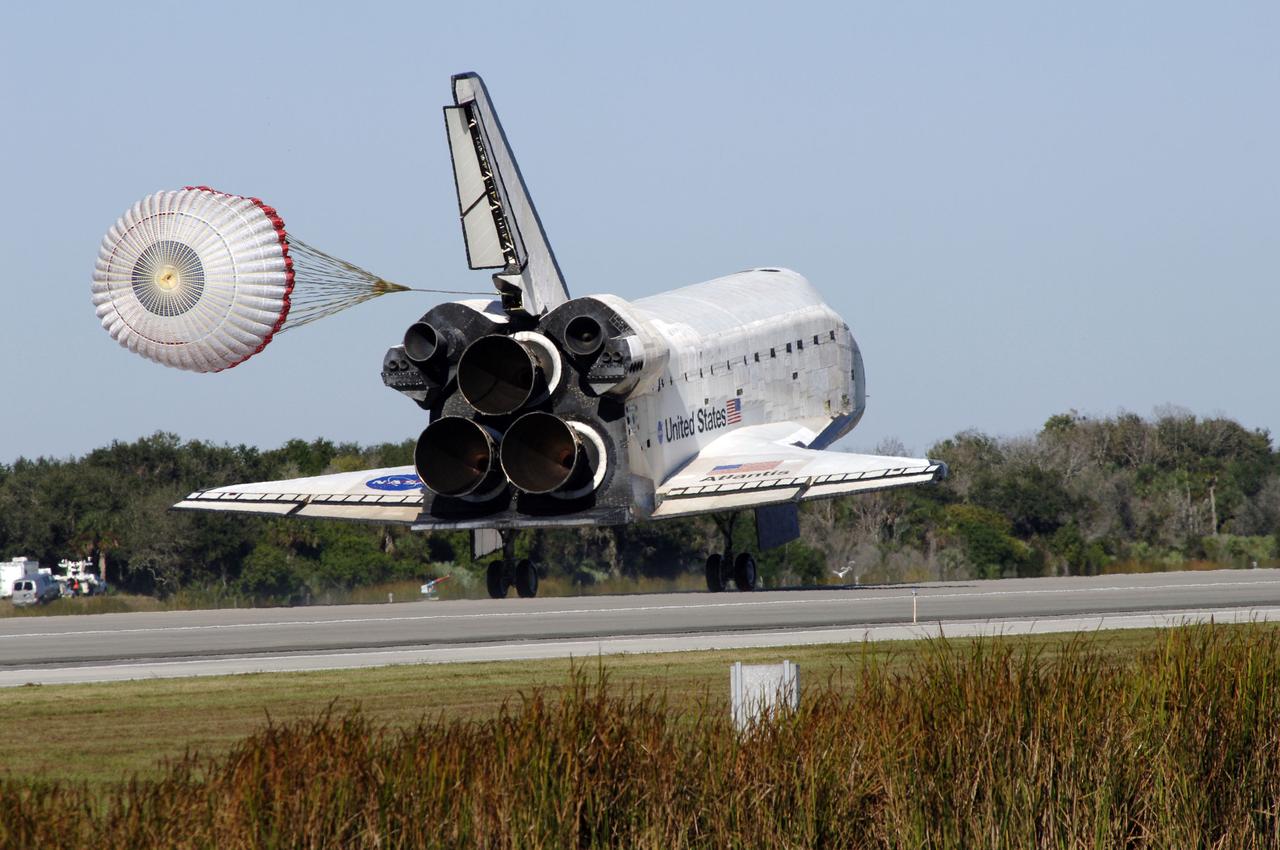
PHOTO CREDIT: NASA or National Aeronautics and Space Administration CAPE CANAVERAL, Fla. - With drag chute unfurled, space shuttle Atlantis lands on Runway 33 at the Shuttle Landing Facility at NASA's Kennedy Space Center in Florida after 11 days in space, completing the 4.5-million mile STS-129 mission on orbit 171. Main gear touchdown was at 9:44:23 a.m. EDT. Nose gear touchdown was at 9:44:36 a.m., and wheels stop was at 9:45:05 a.m. Aboard Atlantis are Commander Charles O. Hobaugh; Pilot Barry E. Wilmore; Mission Specialists Leland Melvin, Randy Bresnik, Mike Foreman and Robert L. Satcher Jr.; and Expedition 20 and 21 Flight Engineer Nicole Stott who spent 87 days aboard the International Space Station. STS-129 is the final space shuttle Expedition crew rotation flight on the manifest. On STS-129, the crew delivered 14 tons of cargo to the orbiting laboratory, including two ExPRESS Logistics Carriers containing spare parts to sustain station operations after the shuttles are retired next year. For information on the STS-129 mission and crew, visit http://www.nasa.gov/mission_pages/shuttle/shuttlemissions/sts129/index.html. Photo credit: NASA/Kim Shiflett
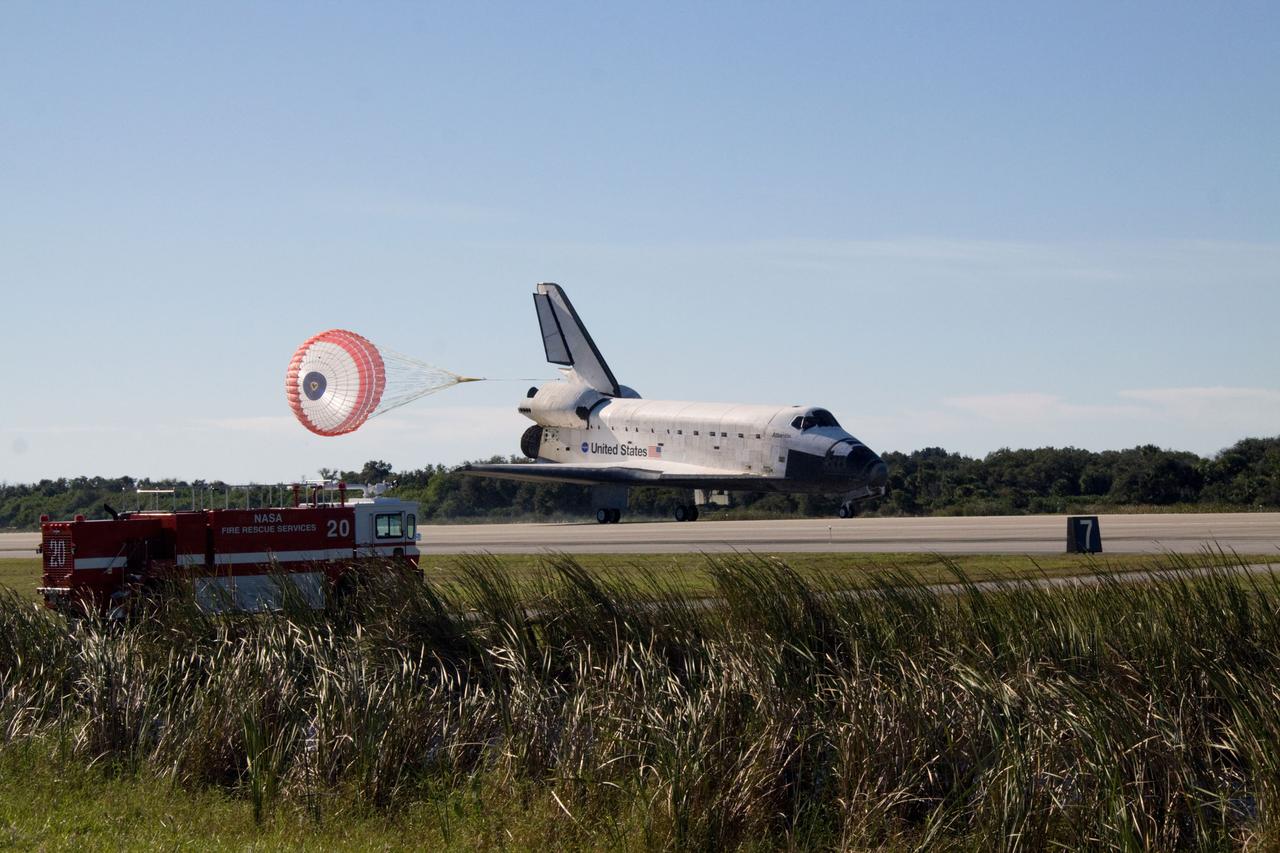
PHOTO CREDIT: NASA or National Aeronautics and Space Administration CAPE CANAVERAL, Fla. - A fire and rescue truck is in place beside Runway 33 if needed to support the landing of space shuttle Atlantis at the Shuttle Landing Facility at NASA's Kennedy Space Center in Florida. After 11 days in space, Atlantis completed the 4.5-million mile STS-129 mission on orbit 171. Main gear touchdown was at 9:44:23 a.m. EDT. Nose gear touchdown was at 9:44:36 a.m., and wheels stop was at 9:45:05 a.m. Aboard Atlantis are Commander Charles O. Hobaugh; Pilot Barry E. Wilmore; Mission Specialists Leland Melvin, Randy Bresnik, Mike Foreman and Robert L. Satcher Jr.; and Expedition 20 and 21 Flight Engineer Nicole Stott who spent 87 days aboard the International Space Station. STS-129 is the final space shuttle Expedition crew rotation flight on the manifest. On STS-129, the crew delivered 14 tons of cargo to the orbiting laboratory, including two ExPRESS Logistics Carriers containing spare parts to sustain station operations after the shuttles are retired next year. For information on the STS-129 mission and crew, visit http://www.nasa.gov/mission_pages/shuttle/shuttlemissions/sts129/index.html. Photo credit: NASA/Jack Pfaller
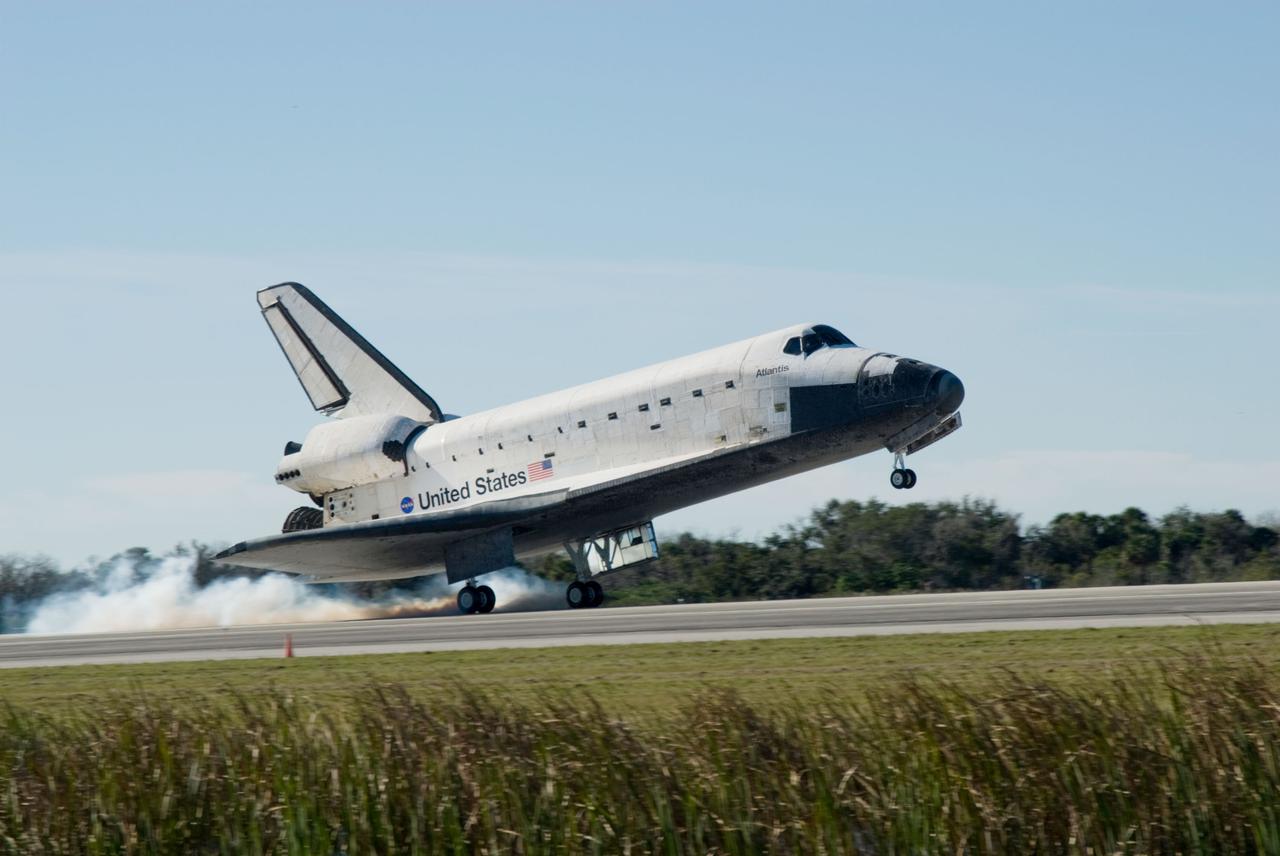
PHOTO CREDIT: NASA or National Aeronautics and Space Administration CAPE CANAVERAL, Fla. - Streams of smoke trail from the main landing gear tires as space shuttle Atlantis touches down on Runway 33 at the Shuttle Landing Facility at NASA's Kennedy Space Center in Florida after 11 days in space, completing the 4.5-million-mile STS-129 mission on orbit 171. Main gear touchdown was at 9:44:23 a.m. EDT. Nose gear touchdown was at 9:44:36 a.m., and wheels stop was at 9:45:05 a.m. Aboard Atlantis are Commander Charles O. Hobaugh; Pilot Barry E. Wilmore; Mission Specialists Leland Melvin, Randy Bresnik, Mike Foreman and Robert L. Satcher Jr.; and Expedition 20 and 21 Flight Engineer Nicole Stott who spent 87 days aboard the International Space Station. STS-129 is the final space shuttle Expedition crew rotation flight on the manifest. On STS-129, the crew delivered 14 tons of cargo to the orbiting laboratory, including two ExPRESS Logistics Carriers containing spare parts to sustain station operations after the shuttles are retired next year. For information on the STS-129 mission and crew, visit http://www.nasa.gov/mission_pages/shuttle/shuttlemissions/sts129/index.html. Photo credit: NASA/Jim Grossmann
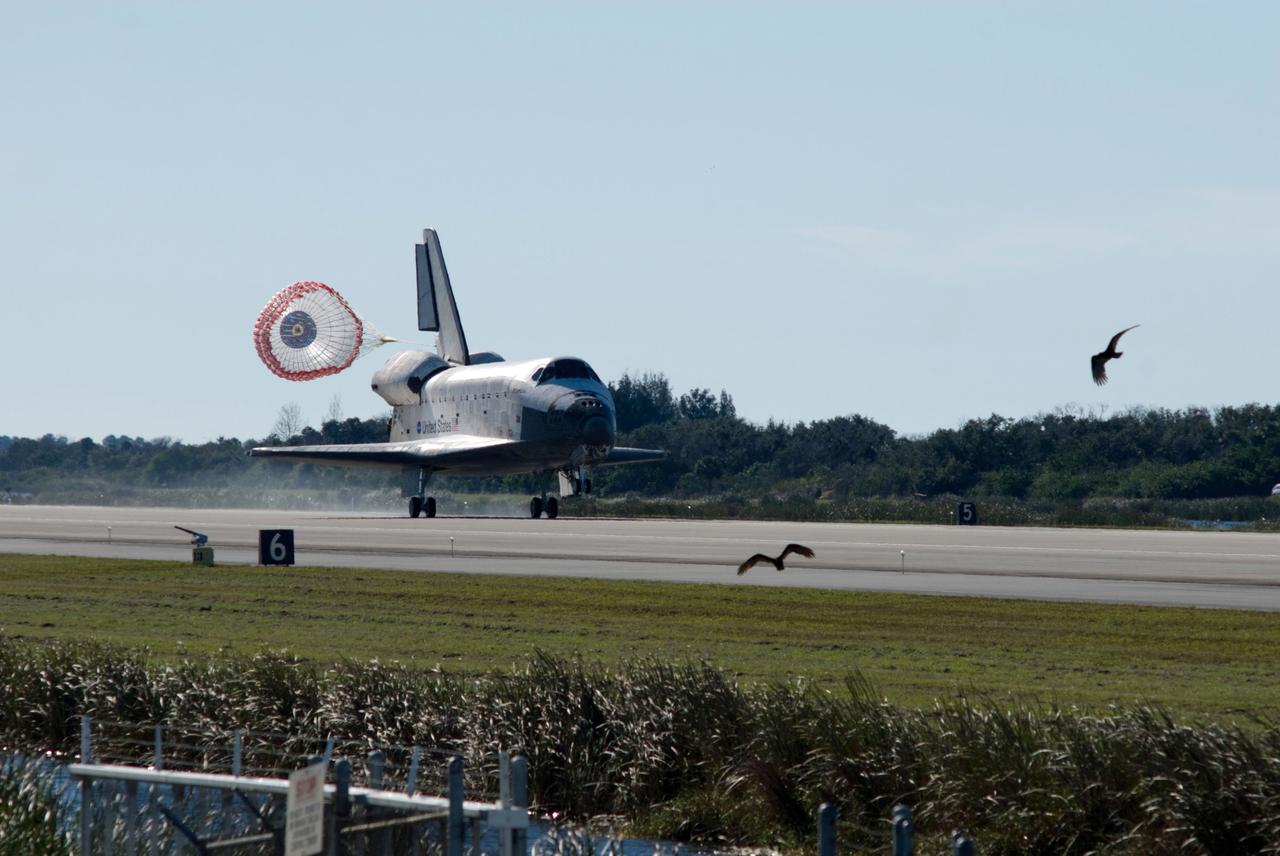
PHOTO CREDIT: NASA or National Aeronautics and Space Administration CAPE CANAVERAL, Fla. - The drag chute unfurls to slow space shuttle Atlantis for landing on Runway 33 at the Shuttle Landing Facility at NASA's Kennedy Space Center in Florida after 11 days in space, completing the 4.5-million mile STS-129 mission on orbit 171. Main gear touchdown was at 9:44:23 a.m. EDT. Nose gear touchdown was at 9:44:36 a.m., and wheels stop was at 9:45:05 a.m. Aboard Atlantis are Commander Charles O. Hobaugh; Pilot Barry E. Wilmore; Mission Specialists Leland Melvin, Randy Bresnik, Mike Foreman and Robert L. Satcher Jr.; and Expedition 20 and 21 Flight Engineer Nicole Stott who spent 87 days aboard the International Space Station. STS-129 is the final space shuttle Expedition crew rotation flight on the manifest. On STS-129, the crew delivered 14 tons of cargo to the orbiting laboratory, including two ExPRESS Logistics Carriers containing spare parts to sustain station operations after the shuttles are retired next year. For information on the STS-129 mission and crew, visit http://www.nasa.gov/mission_pages/shuttle/shuttlemissions/sts129/index.html. Photo credit: NASA/Sandra Joseph
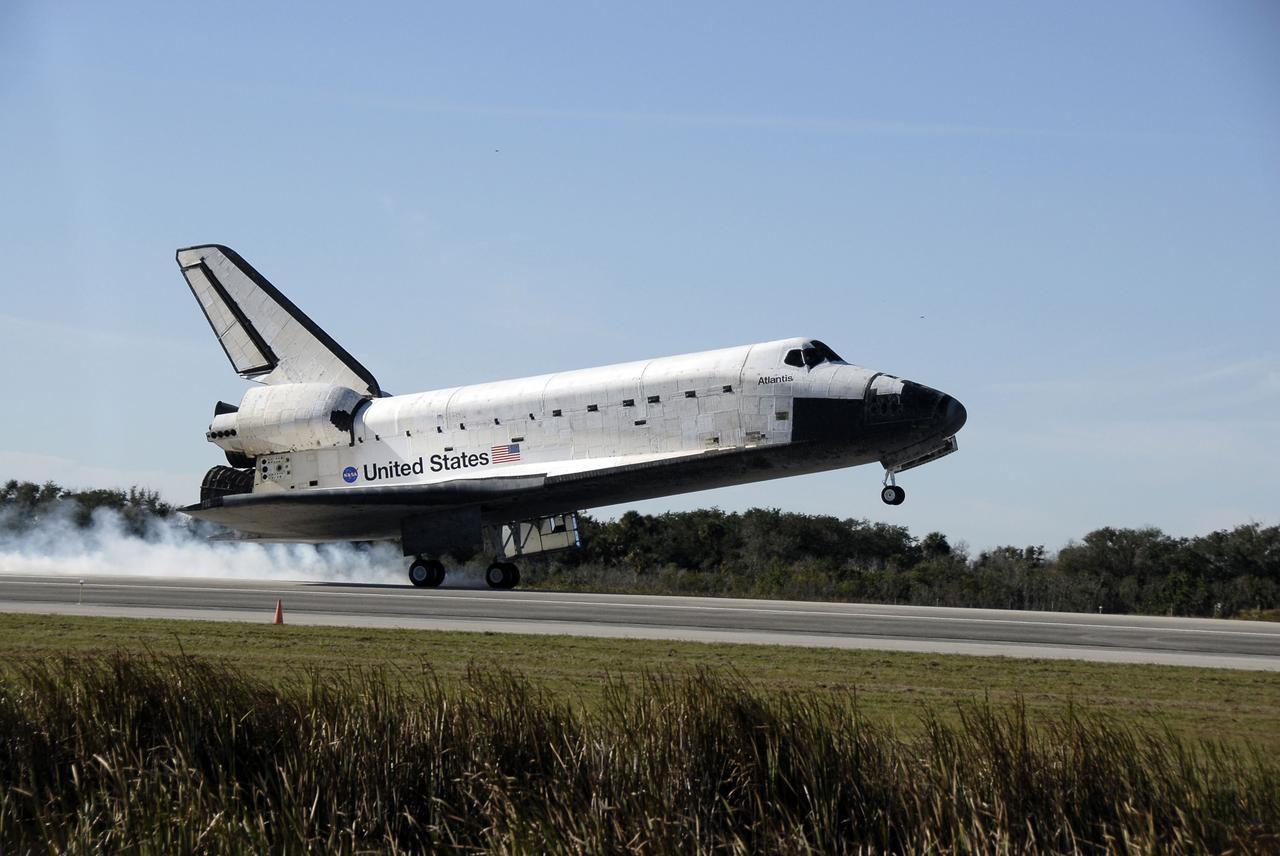
PHOTO CREDIT: NASA or National Aeronautics and Space Administration CAPE CANAVERAL, Fla. - Space shuttle Atlantis kicks up dust as it touches down on Runway 33 at the Shuttle Landing Facility at NASA's Kennedy Space Center in Florida after 11 days in space, completing the 4.5-million mile STS-129 mission on orbit 171. Main gear touchdown was at 9:44:23 a.m. EDT. Nose gear touchdown was at 9:44:36 a.m., and wheels stop was at 9:45:05 a.m. Aboard Atlantis are Commander Charles O. Hobaugh; Pilot Barry E. Wilmore; Mission Specialists Leland Melvin, Randy Bresnik, Mike Foreman and Robert L. Satcher Jr.; and Expedition 20 and 21 Flight Engineer Nicole Stott who spent 87 days aboard the International Space Station. STS-129 is the final space shuttle Expedition crew rotation flight on the manifest. On STS-129, the crew delivered 14 tons of cargo to the orbiting laboratory, including two ExPRESS Logistics Carriers containing spare parts to sustain station operations after the shuttles are retired next year. For information on the STS-129 mission and crew, visit http://www.nasa.gov/mission_pages/shuttle/shuttlemissions/sts129/index.html. Photo credit: NASA/Kim Shiflett
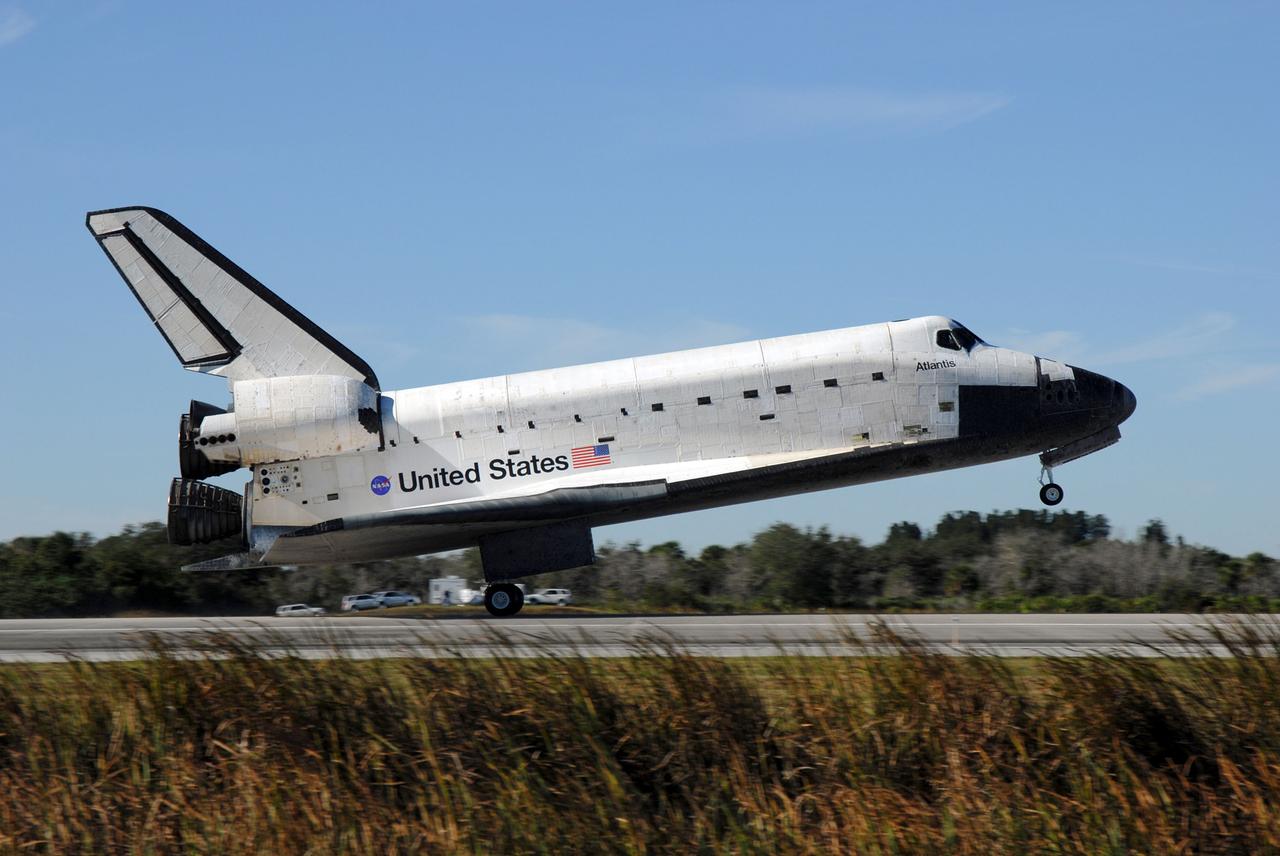
PHOTO CREDIT: NASA or National Aeronautics and Space Administration CAPE CANAVERAL, Fla. - Space shuttle Atlantis touches down on Runway 33 at the Shuttle Landing Facility at NASA's Kennedy Space Center in Florida after 11 days in space, completing the 4.5-million mile STS-129 mission on orbit 171. Main gear touchdown was at 9:44:23 a.m. EDT. Nose gear touchdown was at 9:44:36 a.m., and wheels stop was at 9:45:05 a.m. Aboard Atlantis are Commander Charles O. Hobaugh; Pilot Barry E. Wilmore; Mission Specialists Leland Melvin, Randy Bresnik, Mike Foreman and Robert L. Satcher Jr.; and Expedition 20 and 21 Flight Engineer Nicole Stott who spent 87 days aboard the International Space Station. STS-129 is the final space shuttle Expedition crew rotation flight on the manifest. On STS-129, the crew delivered 14 tons of cargo to the orbiting laboratory, including two ExPRESS Logistics Carriers containing spare parts to sustain station operations after the shuttles are retired next year. For information on the STS-129 mission and crew, visit http://www.nasa.gov/mission_pages/shuttle/shuttlemissions/sts129/index.html. Photo credit: NASA/Jim Grossmann
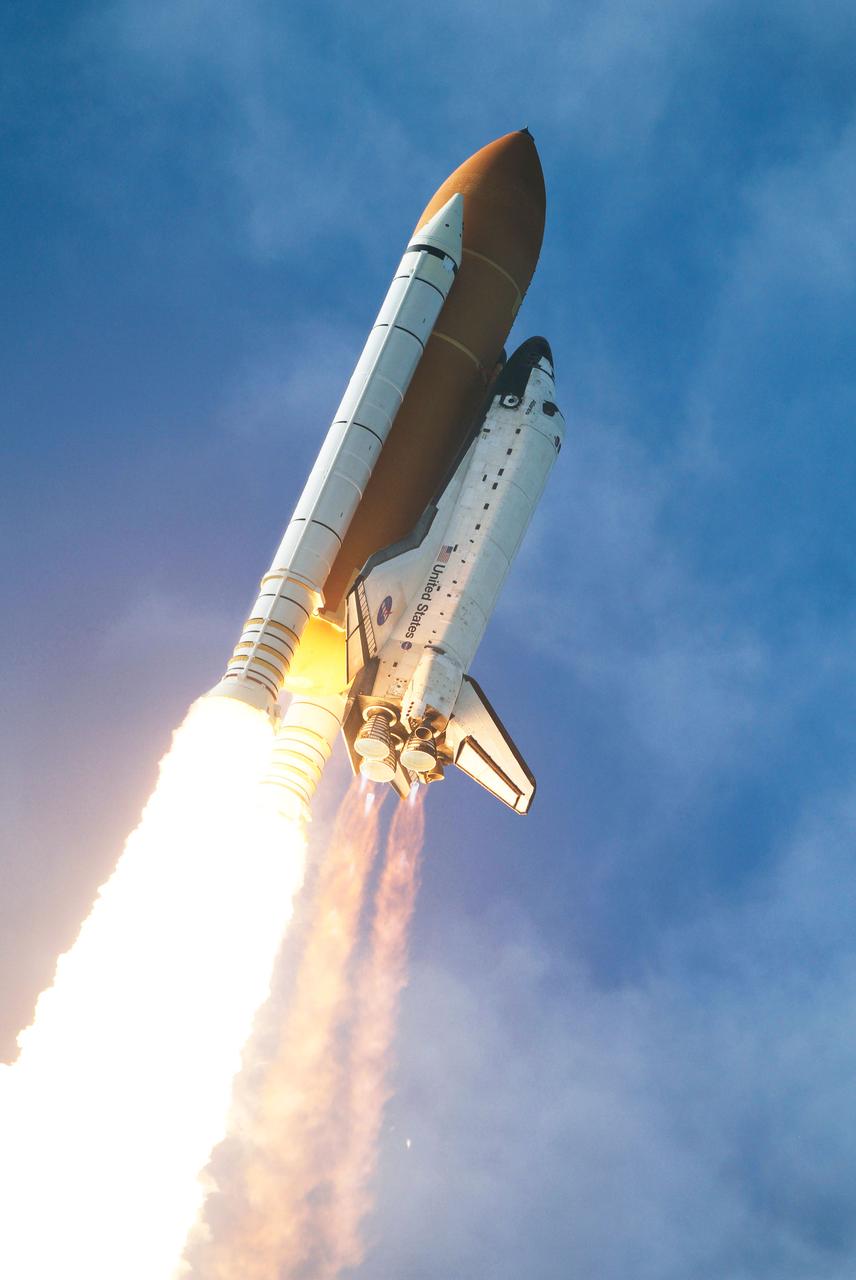
CAPE CANAVERAL, Fla. - With nearly 7 million pounds of thrust generated by twin solid rocket boosters and three main engines, space shuttle Atlantis races to orbit over Launch Pad 39A at NASA's Kennedy Space Center in Florida. Liftoff on its STS-129 mission came at 2:28 p.m. EST Nov. 16. Aboard are crew members Commander Charles O. Hobaugh; Pilot Barry E. Wilmore; and Mission Specialists Leland Melvin, Randy Bresnik, Mike Foreman and Robert L. Satcher Jr. On STS-129, the crew will deliver two ExPRESS Logistics Carriers to the International Space Station, the largest of the shuttle's cargo carriers, containing 15 spare pieces of equipment including two gyroscopes, two nitrogen tank assemblies, two pump modules, an ammonia tank assembly and a spare latching end effector for the station's robotic arm. Atlantis will return to Earth a station crew member, Nicole Stott, who has spent more than two months aboard the orbiting laboratory. STS-129 is slated to be the final space shuttle Expedition crew rotation flight. For information on the STS-129 mission and crew, visit http://www.nasa.gov/mission_pages/shuttle/shuttlemissions/sts129/index.html. Photo credit: NASA/Kenny Allen
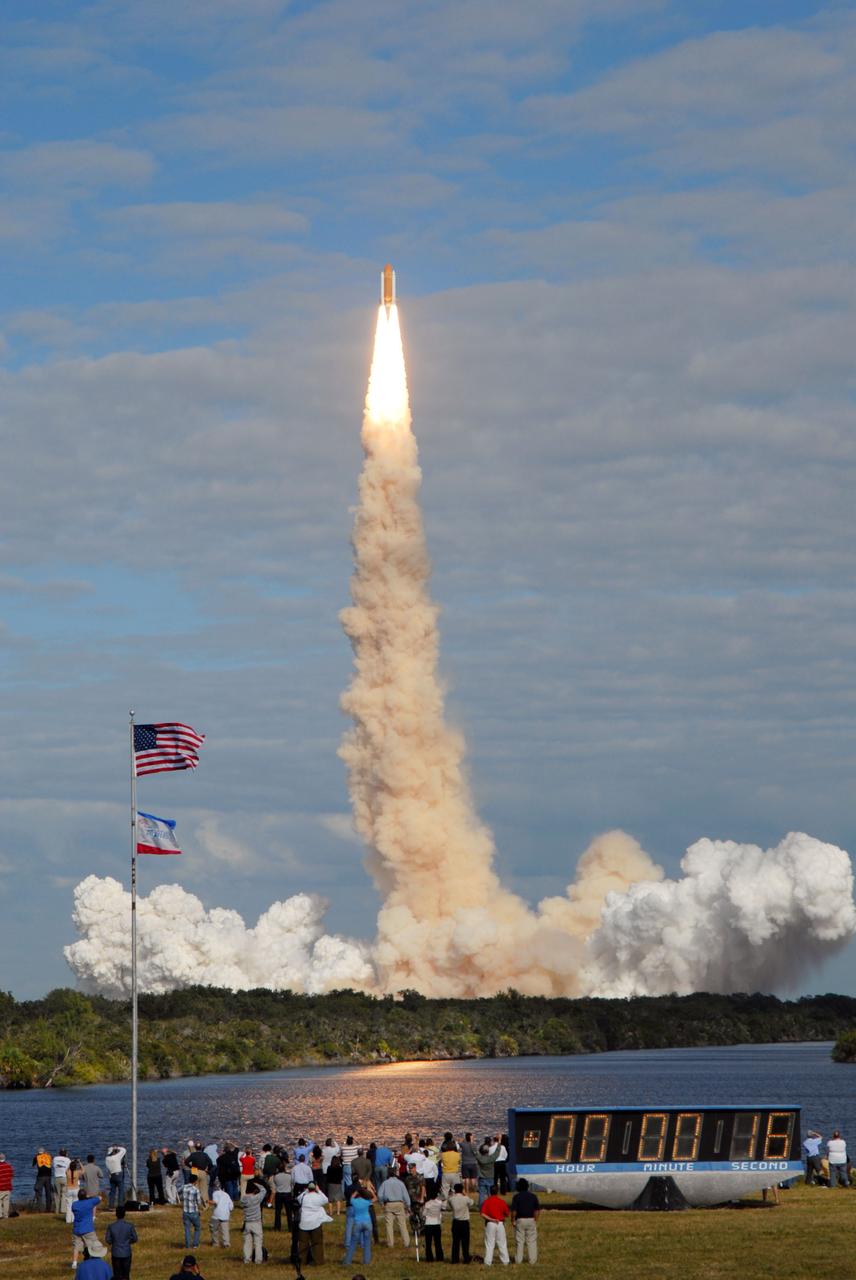
CAPE CANAVERAL, Fla. - Like a phoenix rising from the flames, space shuttle Atlantis takes flight from Launch Pad 39A at NASA's Kennedy Space Center in Florida. Liftoff on its STS-129 mission came at 2:28 p.m. EST Nov. 16. Aboard are crew members Commander Charles O. Hobaugh; Pilot Barry E. Wilmore; and Mission Specialists Leland Melvin, Randy Bresnik, Mike Foreman and Robert L. Satcher Jr. On STS-129, the crew will deliver two Express Logistics Carriers to the International Space Station, the largest of the shuttle's cargo carriers, containing 15 spare pieces of equipment including two gyroscopes, two nitrogen tank assemblies, two pump modules, an ammonia tank assembly and a spare latching end effector for the station's robotic arm. Atlantis will return to Earth a station crew member, Nicole Stott, who has spent more than two months aboard the orbiting laboratory. STS-129 is slated to be the final space shuttle Expedition crew rotation flight. For information on the STS-129 mission and crew, visit http://www.nasa.gov/mission_pages/shuttle/shuttlemissions/sts129/index.html. Photo credit: NASA/Jim Grossmann
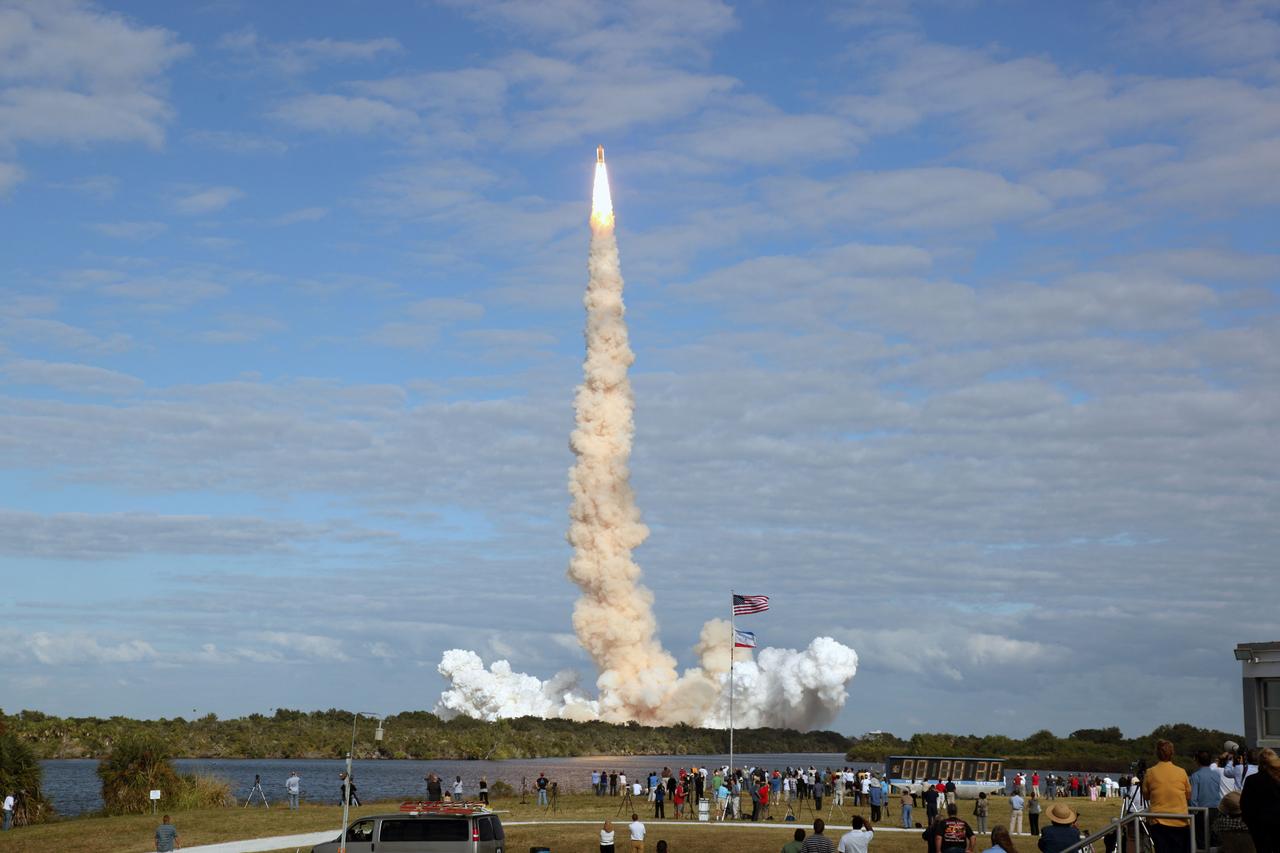
CAPE CANAVERAL, Fla. - Twitter followers and media representatives at the NASA Press Site have front-row seats as space shuttle Atlantis launches through the clouds from Launch Pad 39A on a balmy Florida afternoon at NASA's Kennedy Space Center. Liftoff on its STS-129 mission came at 2:28 p.m. EST Nov. 16. Aboard are crew members Commander Charles O. Hobaugh; Pilot Barry E. Wilmore; and Mission Specialists Leland Melvin, Randy Bresnik, Mike Foreman and Robert L. Satcher Jr. On STS-129, the crew will deliver two Express Logistics Carriers to the International Space Station, the largest of the shuttle's cargo carriers, containing 15 spare pieces of equipment including two gyroscopes, two nitrogen tank assemblies, two pump modules, an ammonia tank assembly and a spare latching end effector for the station's robotic arm. Atlantis will return to Earth a station crew member, Nicole Stott, who has spent more than two months aboard the orbiting laboratory. STS-129 is slated to be the final space shuttle Expedition crew rotation flight. For information on the STS-129 mission and crew, visit http://www.nasa.gov/mission_pages/shuttle/shuttlemissions/sts129/index.html. Photo credit: NASA/Gianni Woods
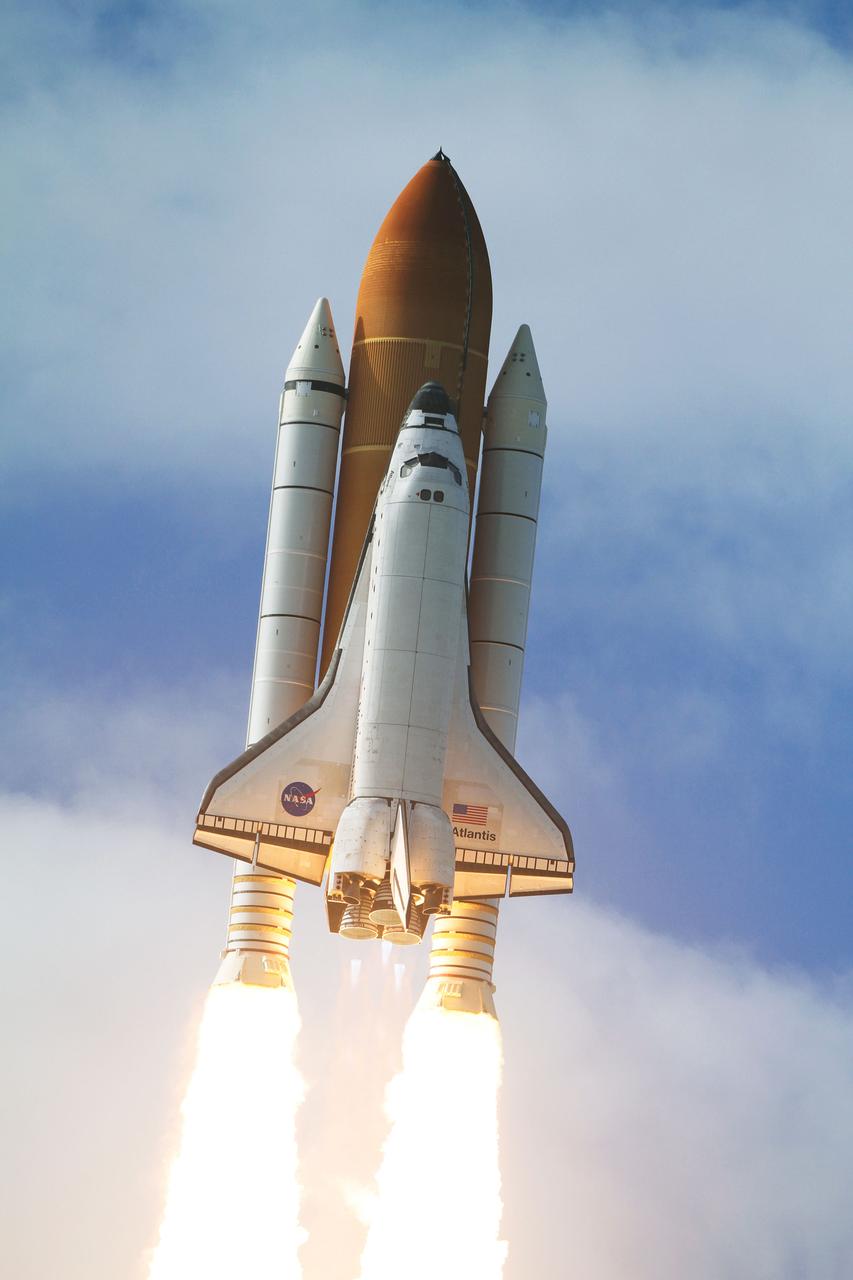
CAPE CANAVERAL, Fla. - With nearly 7 million pounds of thrust generated by twin solid rocket boosters and three main engines, space shuttle Atlantis zooms into the blue skies over Launch Pad 39A at NASA's Kennedy Space Center in Florida. Liftoff on its STS-129 mission came at 2:28 p.m. EST Nov. 16. Aboard are crew members Commander Charles O. Hobaugh; Pilot Barry E. Wilmore; and Mission Specialists Leland Melvin, Randy Bresnik, Mike Foreman and Robert L. Satcher Jr. On STS-129, the crew will deliver two ExPRESS Logistics Carriers to the International Space Station, the largest of the shuttle's cargo carriers, containing 15 spare pieces of equipment including two gyroscopes, two nitrogen tank assemblies, two pump modules, an ammonia tank assembly and a spare latching end effector for the station's robotic arm. Atlantis will return to Earth a station crew member, Nicole Stott, who has spent more than two months aboard the orbiting laboratory. STS-129 is slated to be the final space shuttle Expedition crew rotation flight. For information on the STS-129 mission and crew, visit http://www.nasa.gov/mission_pages/shuttle/shuttlemissions/sts129/index.html. Photo credit: NASA/Kenny Allen
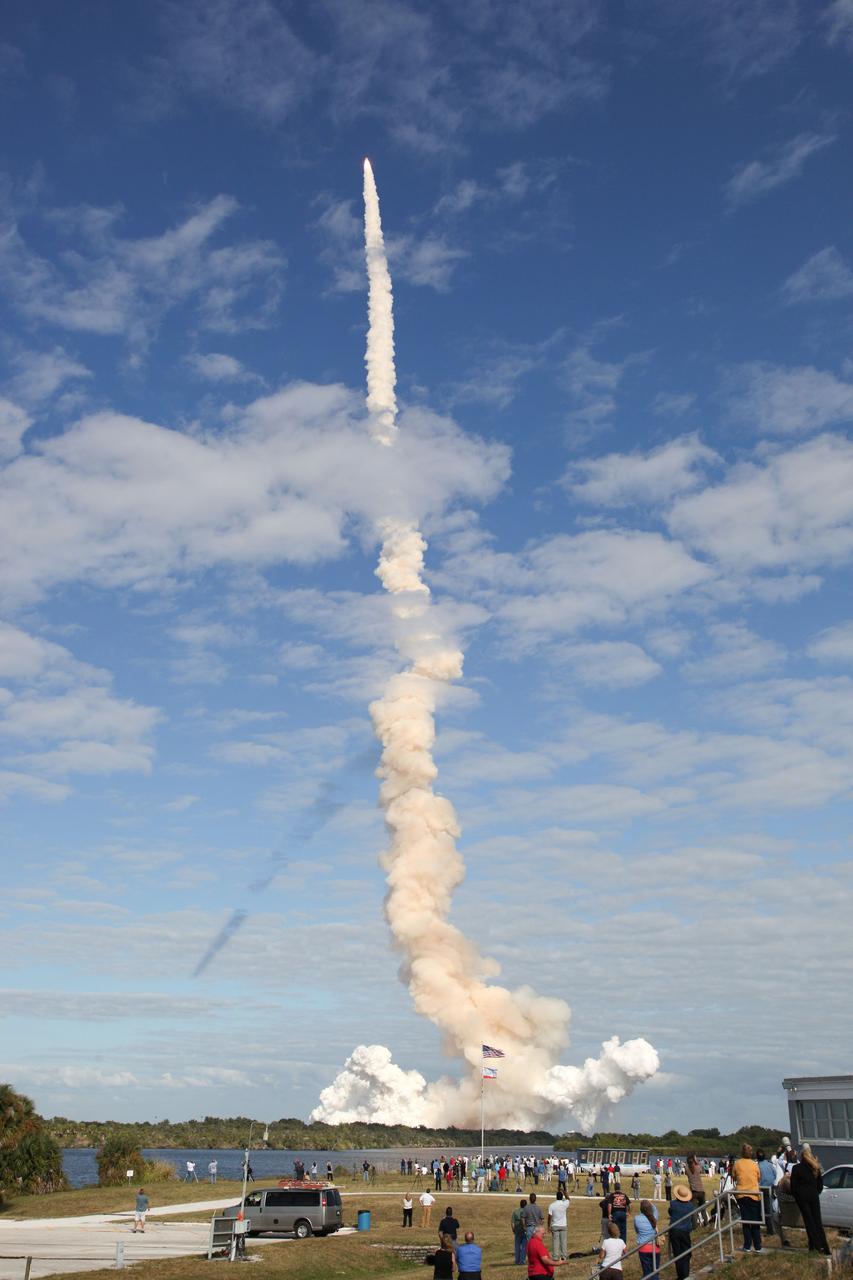
CAPE CANAVERAL, Fla. - Twitter followers and media representatives at the NASA Press Site witness space shuttle Atlantis cut its way through the blue skies over Launch Pad 39A at NASA's Kennedy Space Center in Florida. Liftoff on its STS-129 mission came at 2:28 p.m. EST Nov. 16. Aboard are crew members Commander Charles O. Hobaugh; Pilot Barry E. Wilmore; and Mission Specialists Leland Melvin, Randy Bresnik, Mike Foreman and Robert L. Satcher Jr. On STS-129, the crew will deliver two Express Logistics Carriers to the International Space Station, the largest of the shuttle's cargo carriers, containing 15 spare pieces of equipment including two gyroscopes, two nitrogen tank assemblies, two pump modules, an ammonia tank assembly and a spare latching end effector for the station's robotic arm. Atlantis will return to Earth a station crew member, Nicole Stott, who has spent more than two months aboard the orbiting laboratory. STS-129 is slated to be the final space shuttle Expedition crew rotation flight. For information on the STS-129 mission and crew, visit http://www.nasa.gov/mission_pages/shuttle/shuttlemissions/sts129/index.html. Photo credit: NASA/Gianni Woods
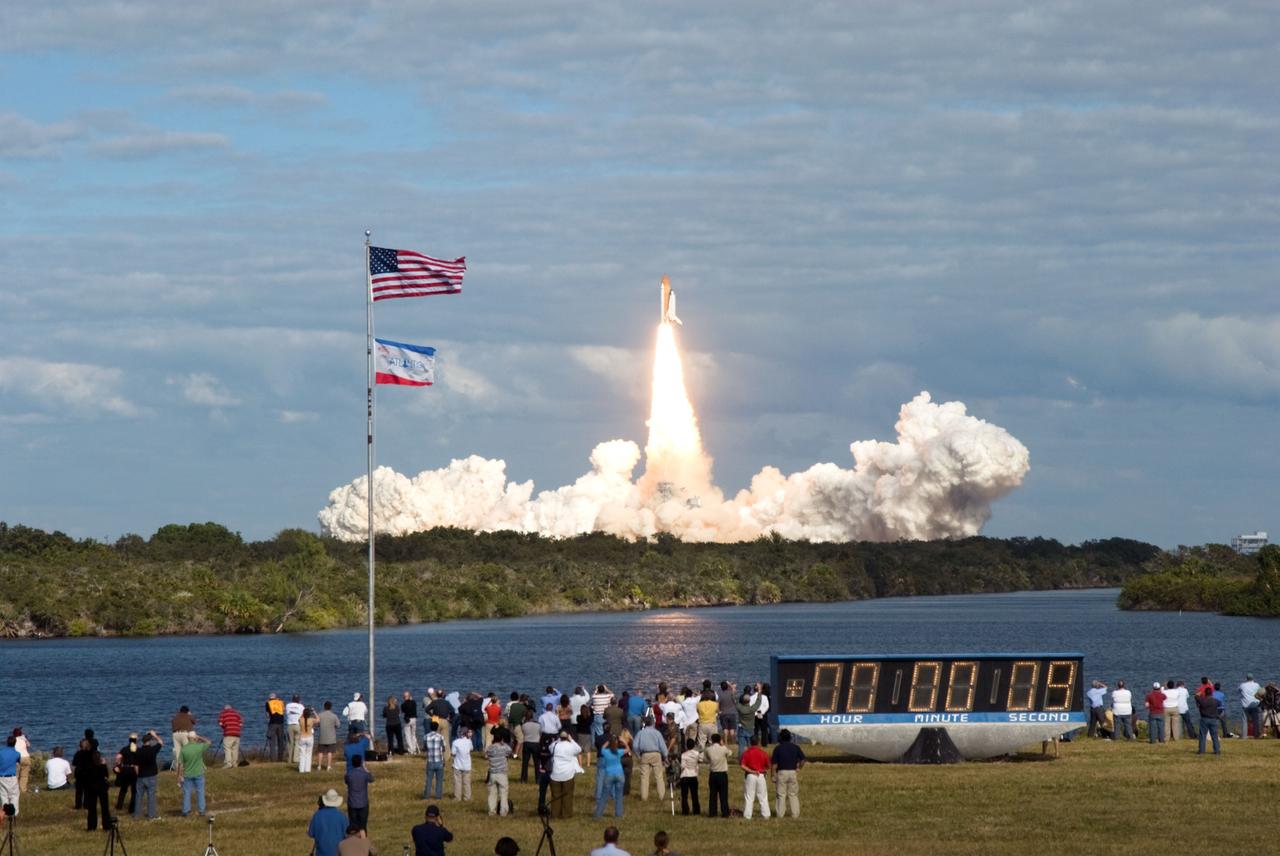
CAPE CANAVERAL, Fla. - An exhaust cloud begins to form around space shuttle Atlantis as it springs into action from Launch Pad 39A at NASA's Kennedy Space Center in Florida. Liftoff on its STS-129 mission came at 2:28 p.m. EST Nov. 16. Aboard are crew members Commander Charles O. Hobaugh; Pilot Barry E. Wilmore; and Mission Specialists Leland Melvin, Randy Bresnik, Mike Foreman and Robert L. Satcher Jr. On STS-129, the crew will deliver two Express Logistics Carriers to the International Space Station, the largest of the shuttle's cargo carriers, containing 15 spare pieces of equipment including two gyroscopes, two nitrogen tank assemblies, two pump modules, an ammonia tank assembly and a spare latching end effector for the station's robotic arm. Atlantis will return to Earth a station crew member, Nicole Stott, who has spent more than two months aboard the orbiting laboratory. STS-129 is slated to be the final space shuttle Expedition crew rotation flight. For information on the STS-129 mission and crew, visit http://www.nasa.gov/mission_pages/shuttle/shuttlemissions/sts129/index.html. Photo credit:Jim Grossmann
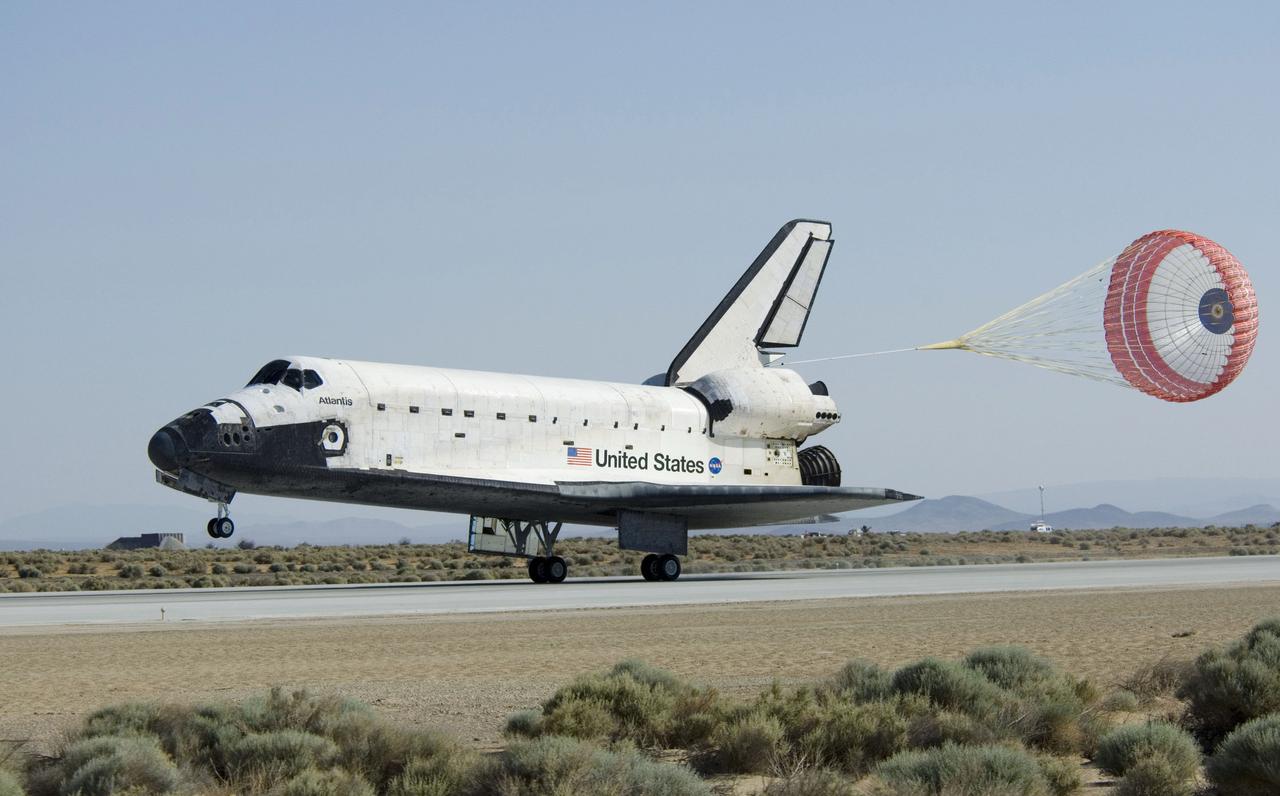
STS125-S-065 (24 May 2009) --- Space Shuttle Atlantis? drag chute is deployed as the spacecraft rolls toward wheels stop on Runway 22 at Edwards Air Force Base in California, ending the STS-125 mission to repair and upgrade NASA?s Hubble Space Telescope. Onboard are astronauts Scott Altman, commander; Gregory C. Johnson, pilot; Michael Good, Megan McArthur, John Grunsfeld, Mike Massimino and Andrew Feustel, all mission specialists. The main landing gear touched down at 8:39:05 a.m. (PDT) on May 24, 2009. Nose gear touchdown was at 8:39:15 a.m. Wheel-stop was at 8:40:15 a.m., bringing the mission?s elapsed time to 12 days, 21 hours, 37 minutes, 9 seconds. Landing opportunities on May 22, May 23 and May 24 were waved off due to weather concerns at NASA?s Kennedy Space Center in Florida, the shuttle?s primary landing site. Through five spacewalks, the Hubble Space Telescope was refurbished and upgraded with state-of-the-art science instruments that will expand Hubble's capabilities and extend its operational lifespan through at least 2014.
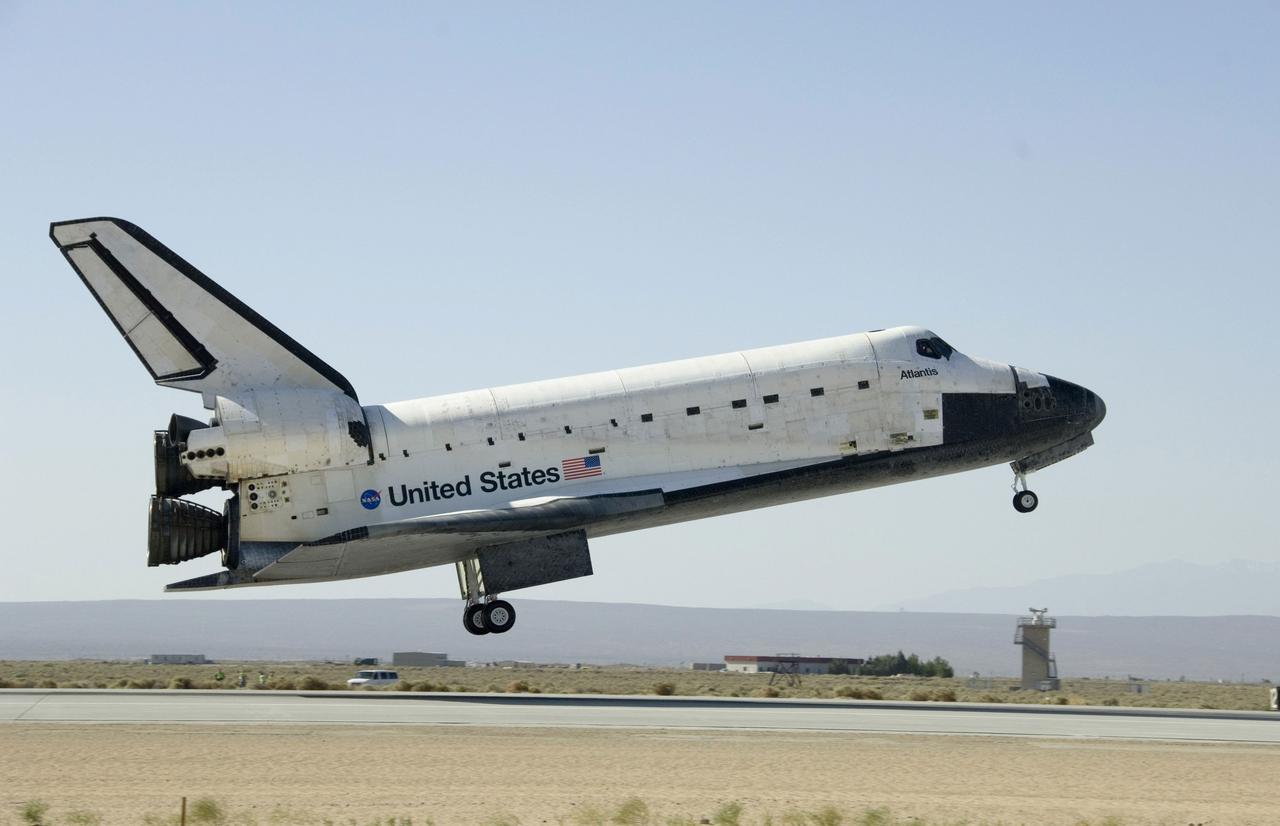
STS125-S-064 (24 May 2009) --- Space Shuttle Atlantis approaches landing on Runway 22 at Edwards Air Force Base in California, ending the STS-125 mission to repair and upgrade NASA?s Hubble Space Telescope. Onboard are astronauts Scott Altman, commander; Gregory C. Johnson, pilot; Michael Good, Megan McArthur, John Grunsfeld, Mike Massimino and Andrew Feustel, all mission specialists. The main landing gear touched down at 8:39:05 a.m. (PDT) on May 24, 2009. Nose gear touchdown was at 8:39:15 a.m. Wheel-stop was at 8:40:15 a.m., bringing the mission?s elapsed time to 12 days, 21 hours, 37 minutes, 9 seconds. Landing opportunities on May 22, May 23 and May 24 were waved off due to weather concerns at NASA?s Kennedy Space Center in Florida, the shuttle?s primary landing site. Through five spacewalks, the Hubble Space Telescope was refurbished and upgraded with state-of-the-art science instruments that will expand Hubble's capabilities and extend its operational lifespan through at least 2014.
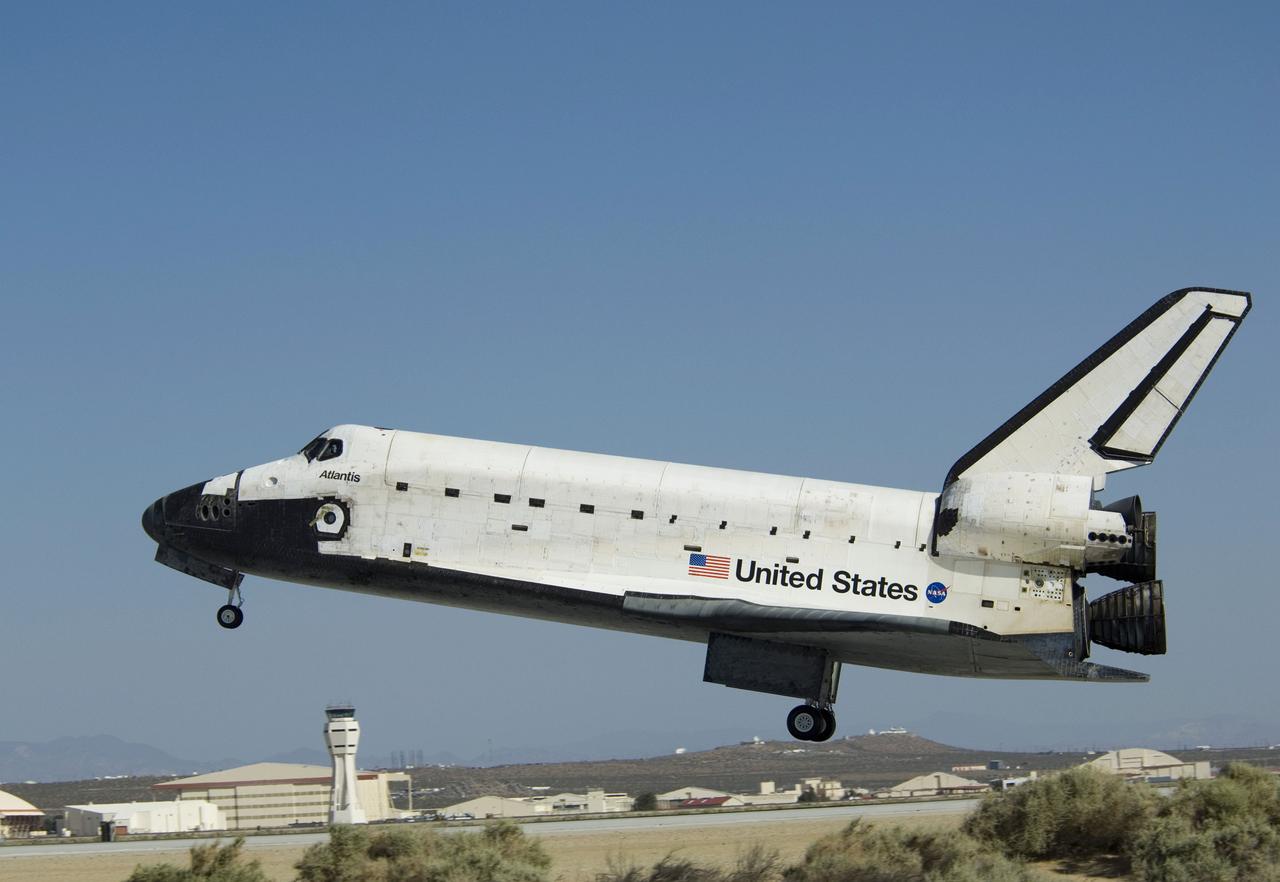
STS125-S-063 (24 May 2009) --- Space Shuttle Atlantis approaches landing on Runway 22 at Edwards Air Force Base in California, ending the STS-125 mission to repair and upgrade NASA?s Hubble Space Telescope. Onboard are astronauts Scott Altman, commander; Gregory C. Johnson, pilot; Michael Good, Megan McArthur, John Grunsfeld, Mike Massimino and Andrew Feustel, all mission specialists. The main landing gear touched down at 8:39:05 a.m. (PDT) on May 24, 2009. Nose gear touchdown was at 8:39:15 a.m. Wheel-stop was at 8:40:15 a.m., bringing the mission?s elapsed time to 12 days, 21 hours, 37 minutes, 9 seconds. Landing opportunities on May 22, May 23 and May 24 were waved off due to weather concerns at NASA?s Kennedy Space Center in Florida, the shuttle?s primary landing site. Through five spacewalks, the Hubble Space Telescope was refurbished and upgraded with state-of-the-art science instruments that will expand Hubble's capabilities and extend its operational lifespan through at least 2014.
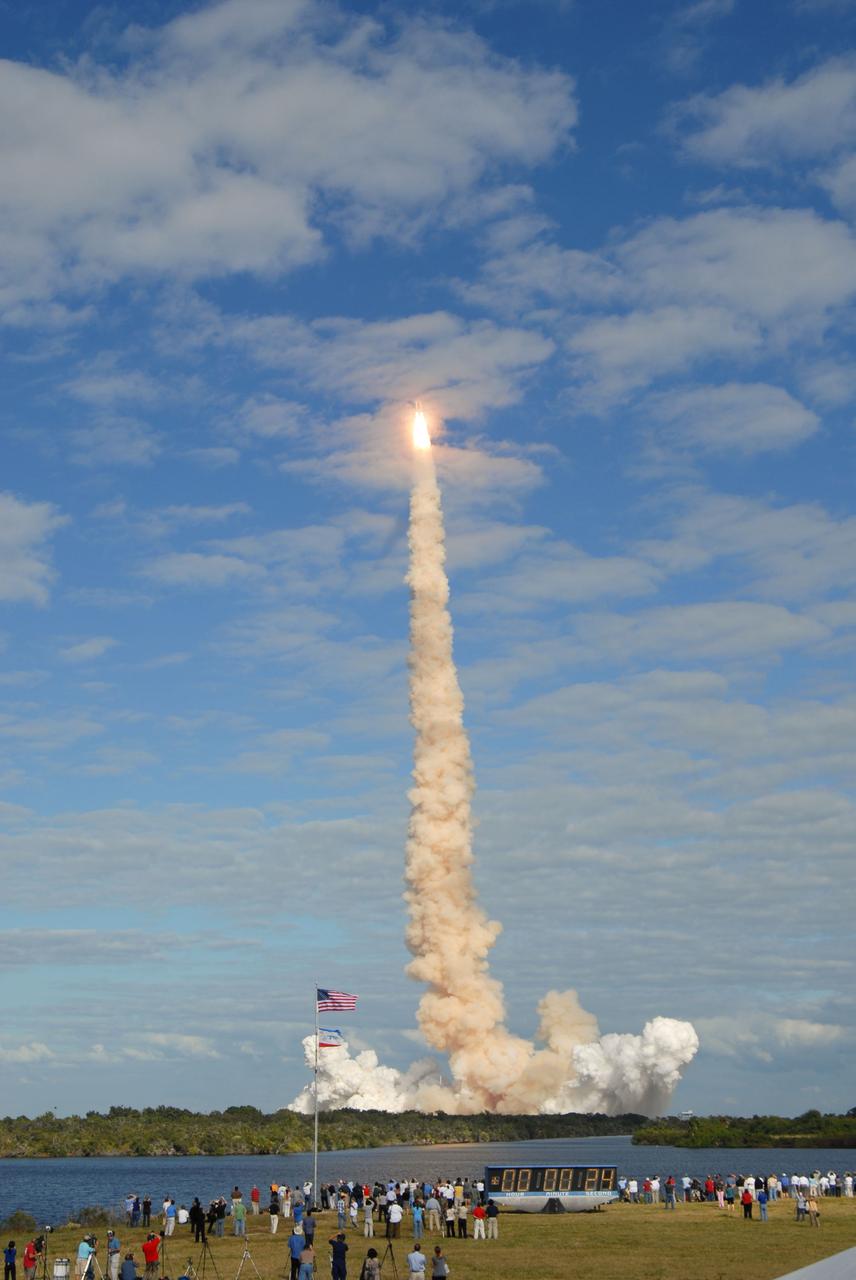
CAPE CANAVERAL, Fla. - Space shuttle Atlantis launches through the clouds from Launch Pad 39A on a balmy Florida afternoon at NASA's Kennedy Space Center. Liftoff on its STS-129 mission came at 2:28 p.m. EST Nov. 16. Aboard are crew members Commander Charles O. Hobaugh; Pilot Barry E. Wilmore; and Mission Specialists Leland Melvin, Randy Bresnik, Mike Foreman and Robert L. Satcher Jr. On STS-129, the crew will deliver two Express Logistics Carriers to the International Space Station, the largest of the shuttle's cargo carriers, containing 15 spare pieces of equipment including two gyroscopes, two nitrogen tank assemblies, two pump modules, an ammonia tank assembly and a spare latching end effector for the station's robotic arm. Atlantis will return to Earth a station crew member, Nicole Stott, who has spent more than two months aboard the orbiting laboratory. STS-129 is slated to be the final space shuttle Expedition crew rotation flight. For information on the STS-129 mission and crew, visit http://www.nasa.gov/mission_pages/shuttle/shuttlemissions/sts129/index.html. Photo credit: NASA/Jim Grossmann
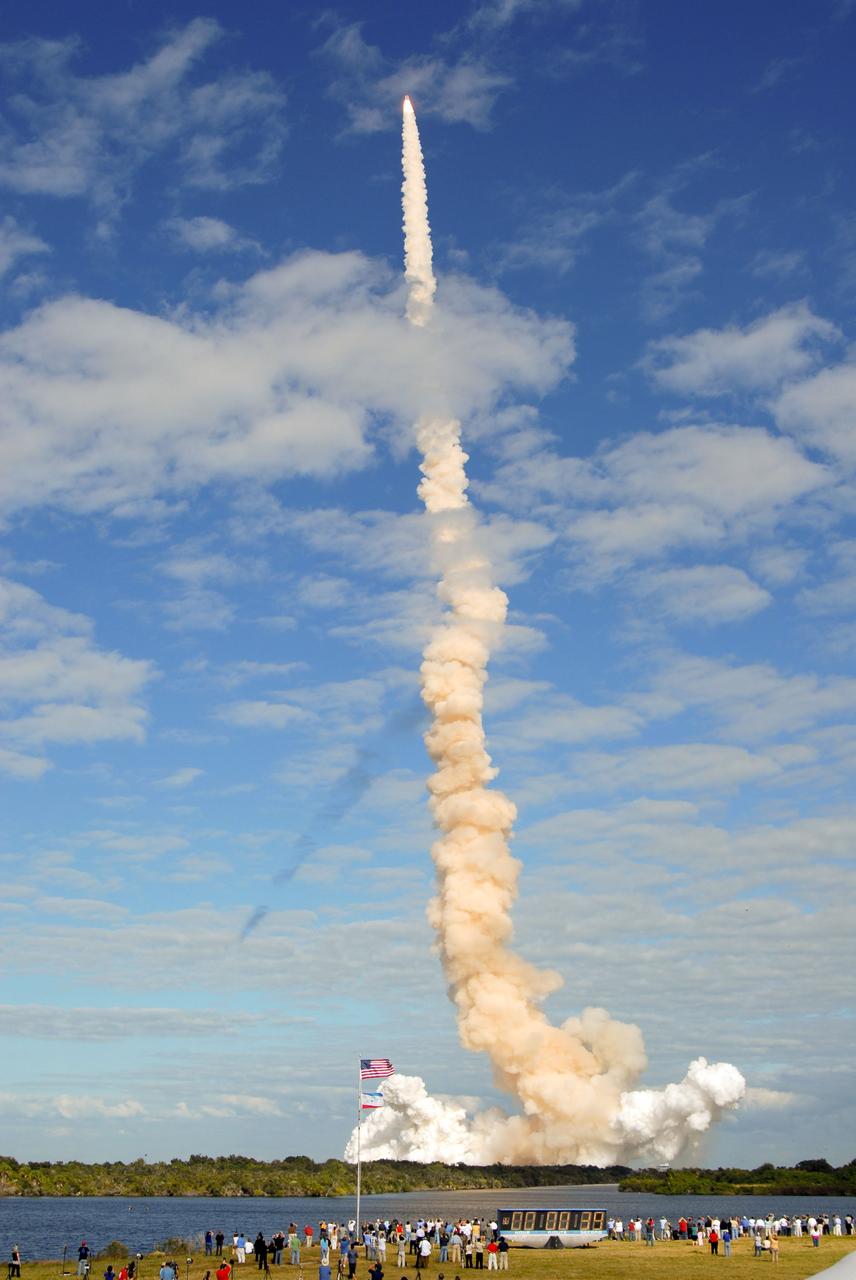
CAPE CANAVERAL, Fla. - Space shuttle Atlantis cuts its way through the blue skies over Launch Pad 39A at NASA's Kennedy Space Center in Florida. Liftoff on its STS-129 mission came at 2:28 p.m. EST Nov. 16. Aboard are crew members Commander Charles O. Hobaugh; Pilot Barry E. Wilmore; and Mission Specialists Leland Melvin, Randy Bresnik, Mike Foreman and Robert L. Satcher Jr. On STS-129, the crew will deliver two Express Logistics Carriers to the International Space Station, the largest of the shuttle's cargo carriers, containing 15 spare pieces of equipment including two gyroscopes, two nitrogen tank assemblies, two pump modules, an ammonia tank assembly and a spare latching end effector for the station's robotic arm. Atlantis will return to Earth a station crew member, Nicole Stott, who has spent more than two months aboard the orbiting laboratory. STS-129 is slated to be the final space shuttle Expedition crew rotation flight. For information on the STS-129 mission and crew, visit http://www.nasa.gov/mission_pages/shuttle/shuttlemissions/sts129/index.html. Photo credit: NASA/Jim Grossmann
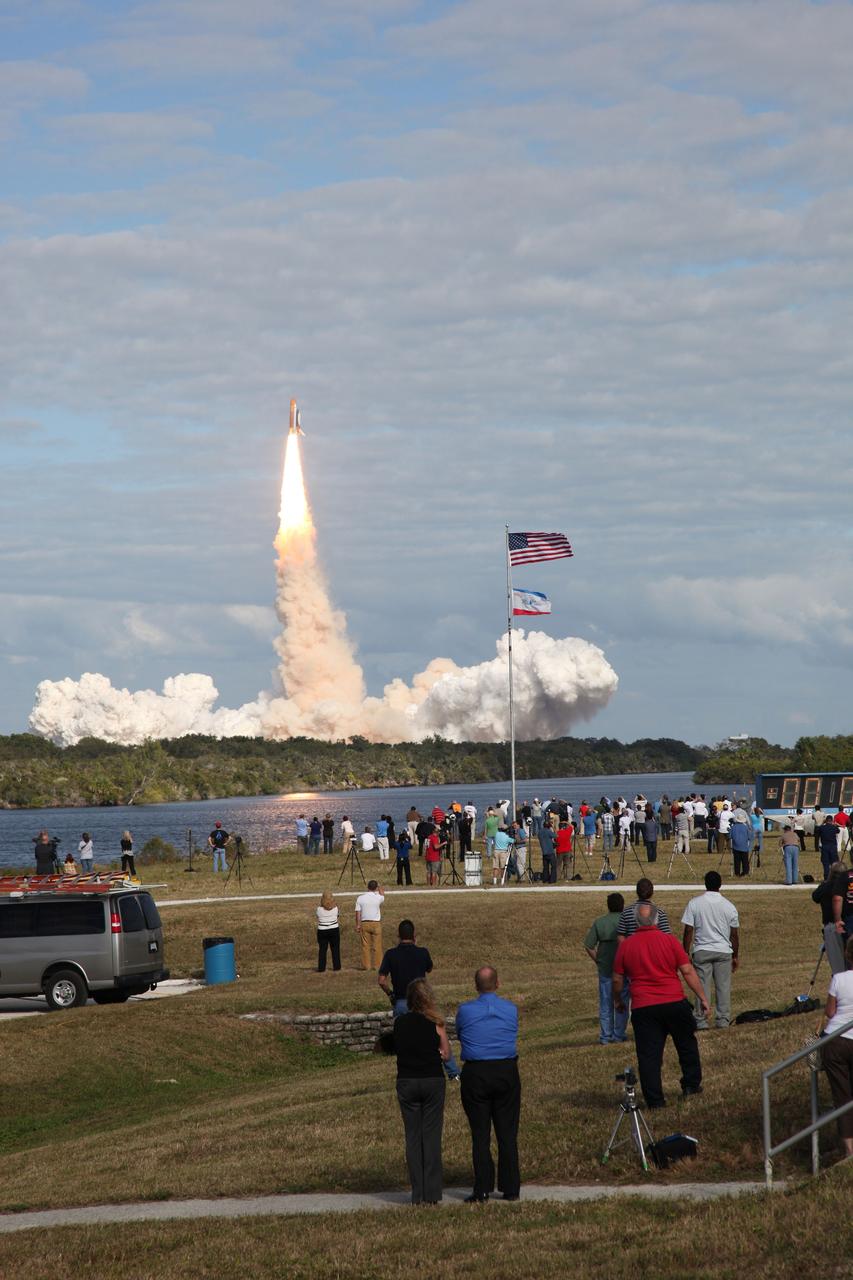
CAPE CANAVERAL, Fla. - Twitter followers and media representatives at the NASA Press Site watch as space shuttle Atlantis springs into action from Launch Pad 39A at NASA's Kennedy Space Center in Florida. Liftoff on its STS-129 mission came at 2:28 p.m. EST Nov. 16. Aboard are crew members Commander Charles O. Hobaugh; Pilot Barry E. Wilmore; and Mission Specialists Leland Melvin, Randy Bresnik, Mike Foreman and Robert L. Satcher Jr. On STS-129, the crew will deliver two Express Logistics Carriers to the International Space Station, the largest of the shuttle's cargo carriers, containing 15 spare pieces of equipment including two gyroscopes, two nitrogen tank assemblies, two pump modules, an ammonia tank assembly and a spare latching end effector for the station's robotic arm. Atlantis will return to Earth a station crew member, Nicole Stott, who has spent more than two months aboard the orbiting laboratory. STS-129 is slated to be the final space shuttle Expedition crew rotation flight. For information on the STS-129 mission and crew, visit http://www.nasa.gov/mission_pages/shuttle/shuttlemissions/sts129/index.html. Photo credit: NASA/Gianni Woods
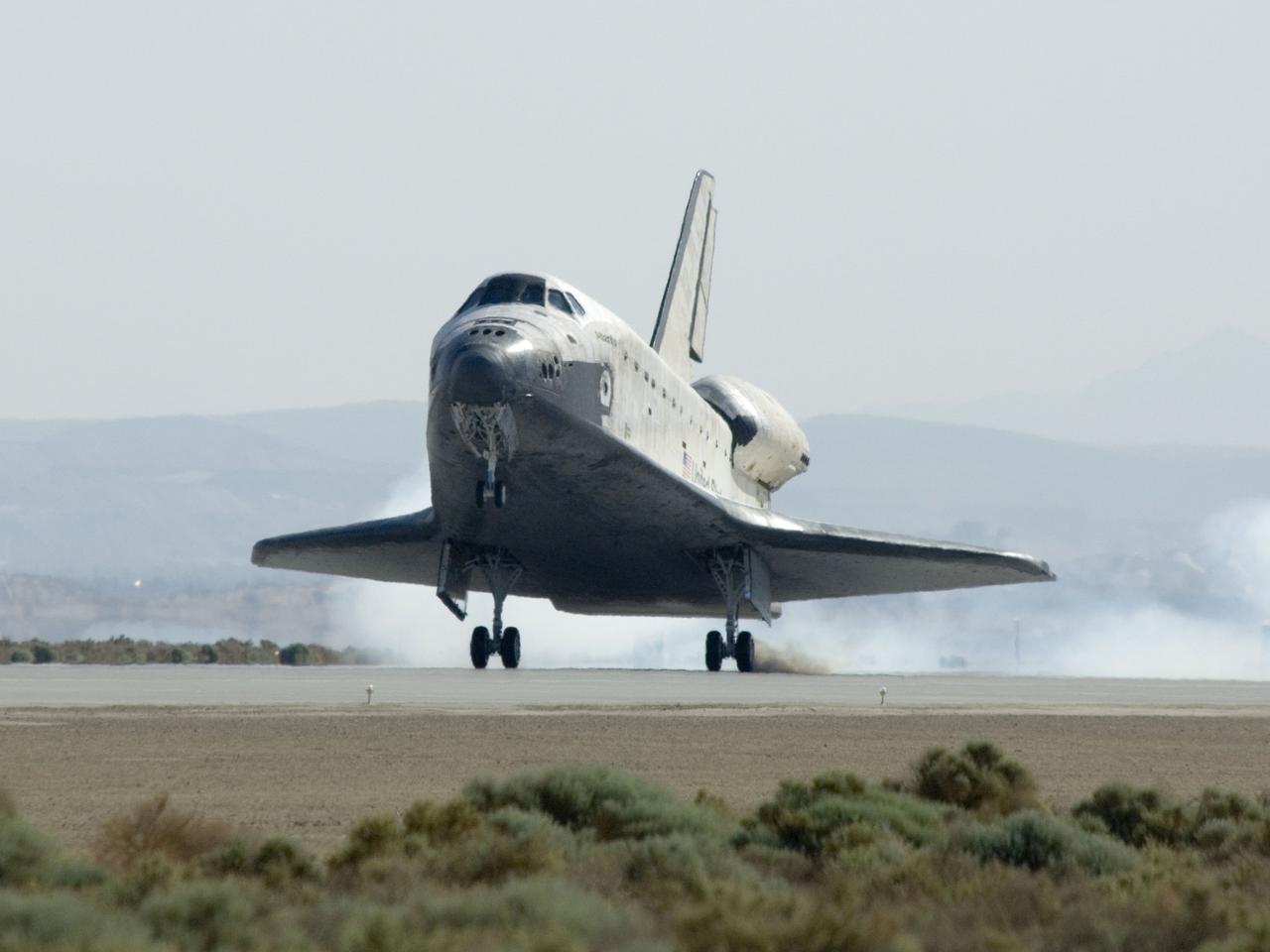
STS125-S-062 (24 May 2009) --- Space Shuttle Atlantis touches down on Runway 22 at Edwards Air Force Base in California, ending the STS-125 mission to repair and upgrade NASA?s Hubble Space Telescope. Onboard are astronauts Scott Altman, commander; Gregory C. Johnson, pilot; Michael Good, Megan McArthur, John Grunsfeld, Mike Massimino and Andrew Feustel, all mission specialists. The main landing gear touched down at 8:39:05 a.m. (PDT) on May 24, 2009. Nose gear touchdown was at 8:39:15 a.m. Wheel-stop was at 8:40:15 a.m., bringing the mission?s elapsed time to 12 days, 21 hours, 37 minutes, 9 seconds. Landing opportunities on May 22, May 23 and May 24 were waved off due to weather concerns at NASA?s Kennedy Space Center in Florida, the shuttle?s primary landing site. Through five spacewalks, the Hubble Space Telescope was refurbished and upgraded with state-of-the-art science instruments that will expand Hubble's capabilities and extend its operational lifespan through at least 2014.
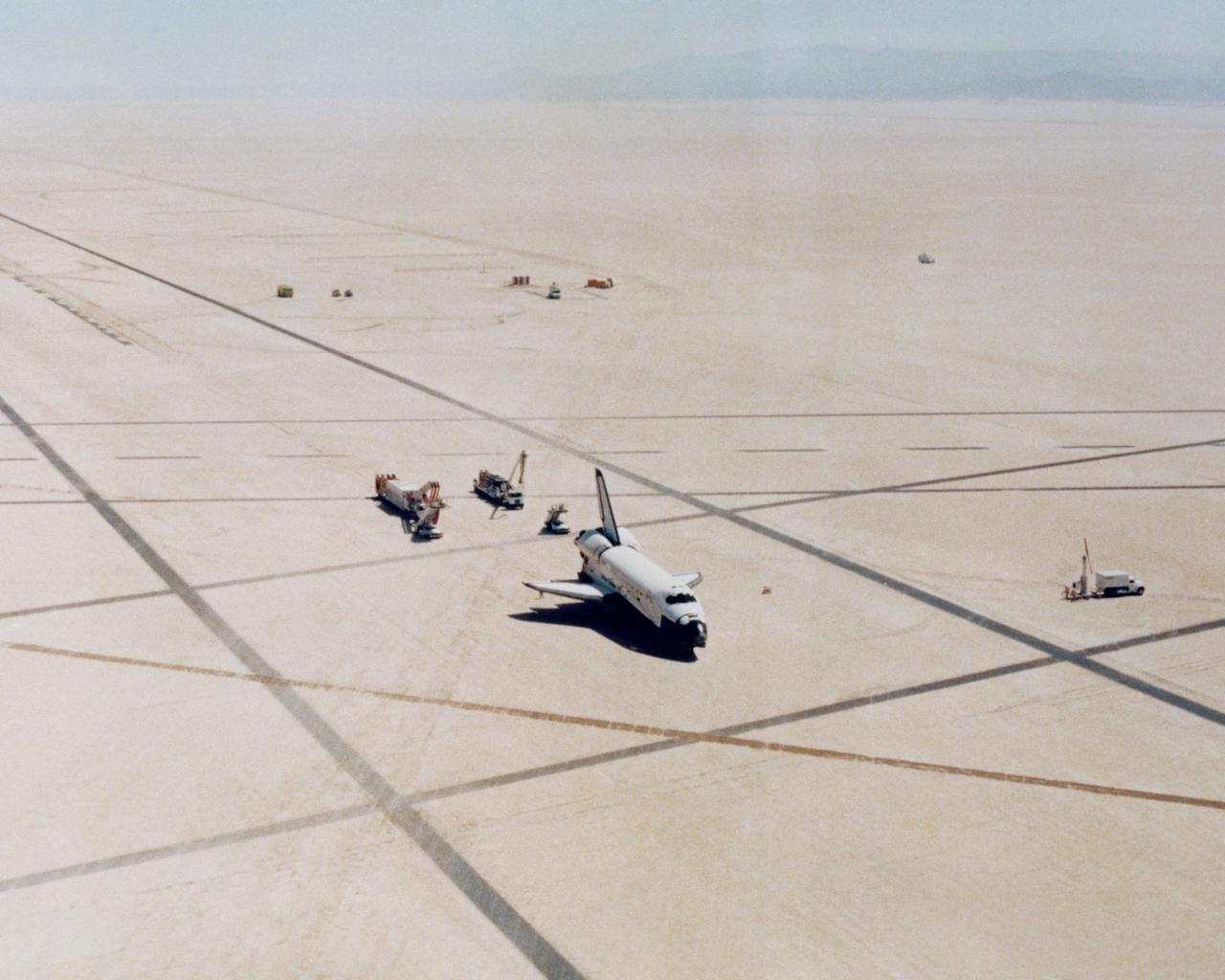
The Space Shuttle Columbia on Rogers Dry lakebed at Edwards AFB after landing to complete its first orbital mission on April 14, 1981. Technicians towed the Shuttle back to the NASA Dryden Flight Research Center for post-flight processing and preparation for a return ferry flight atop a modified 747 to Kennedy Space Center in Florida. (JSC photo # S81-30749)

The Space Shuttle Columbia on Rogers Dry lakebed at Edwards AFB after landing to complete its first orbital mission on April 14, 1981. Technicians towed the Shuttle back to the NASA Dryden Flight Research Center for post-flight processing and preparation for a return ferry flight atop a modified 747 to Kennedy Space Center in Florida. (JSC photo # S81-31163)
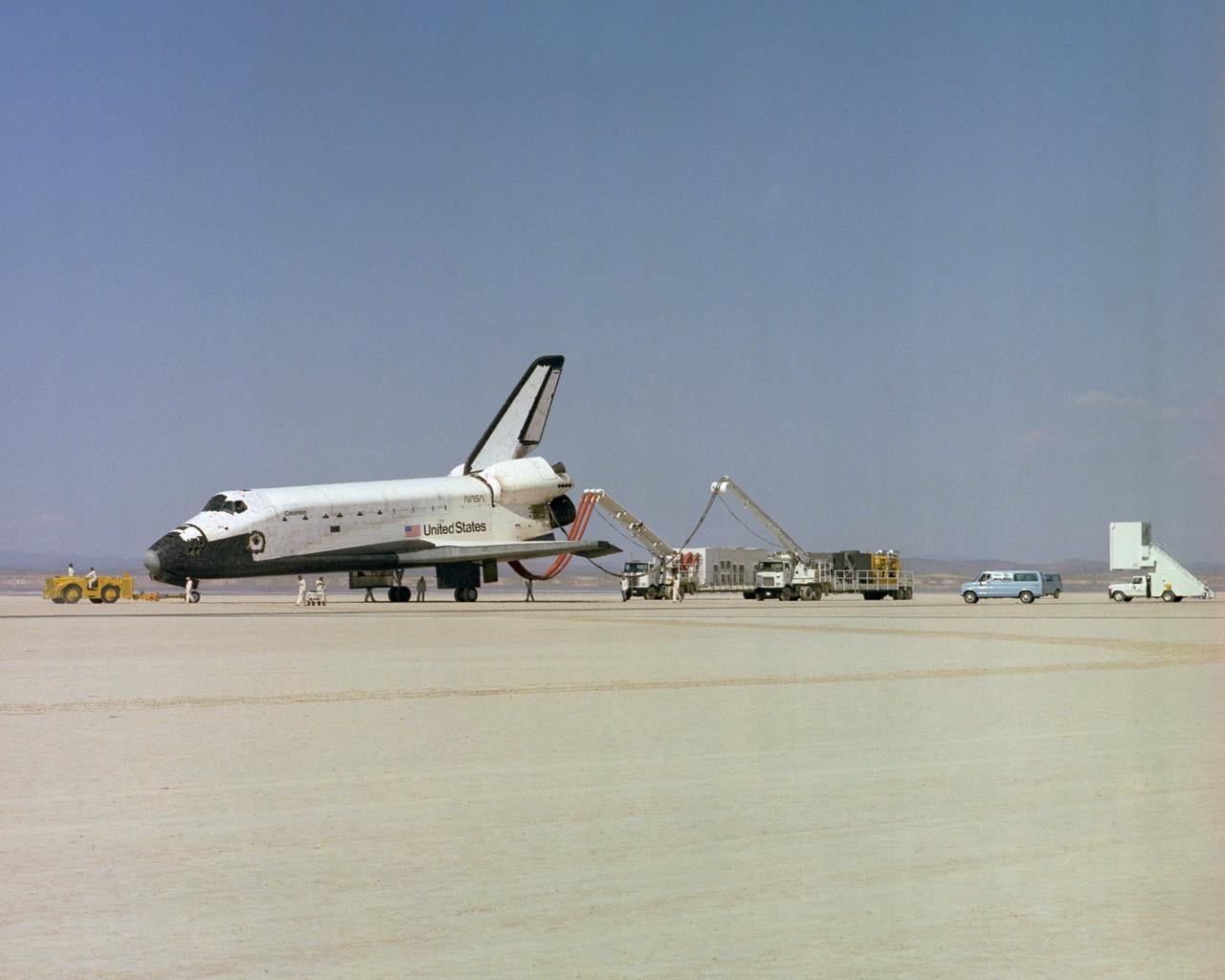
The Space Shuttle Columbia on Rogers Dry lakebed at Edwards AFB after landing to complete its first orbital mission on April 14, 1981. Technicians towed the Shuttle back to the NASA Dryden Flight Research Center for post-flight processing and preparation for a return ferry flight atop a modified 747 to Kennedy Space Center in Florida.
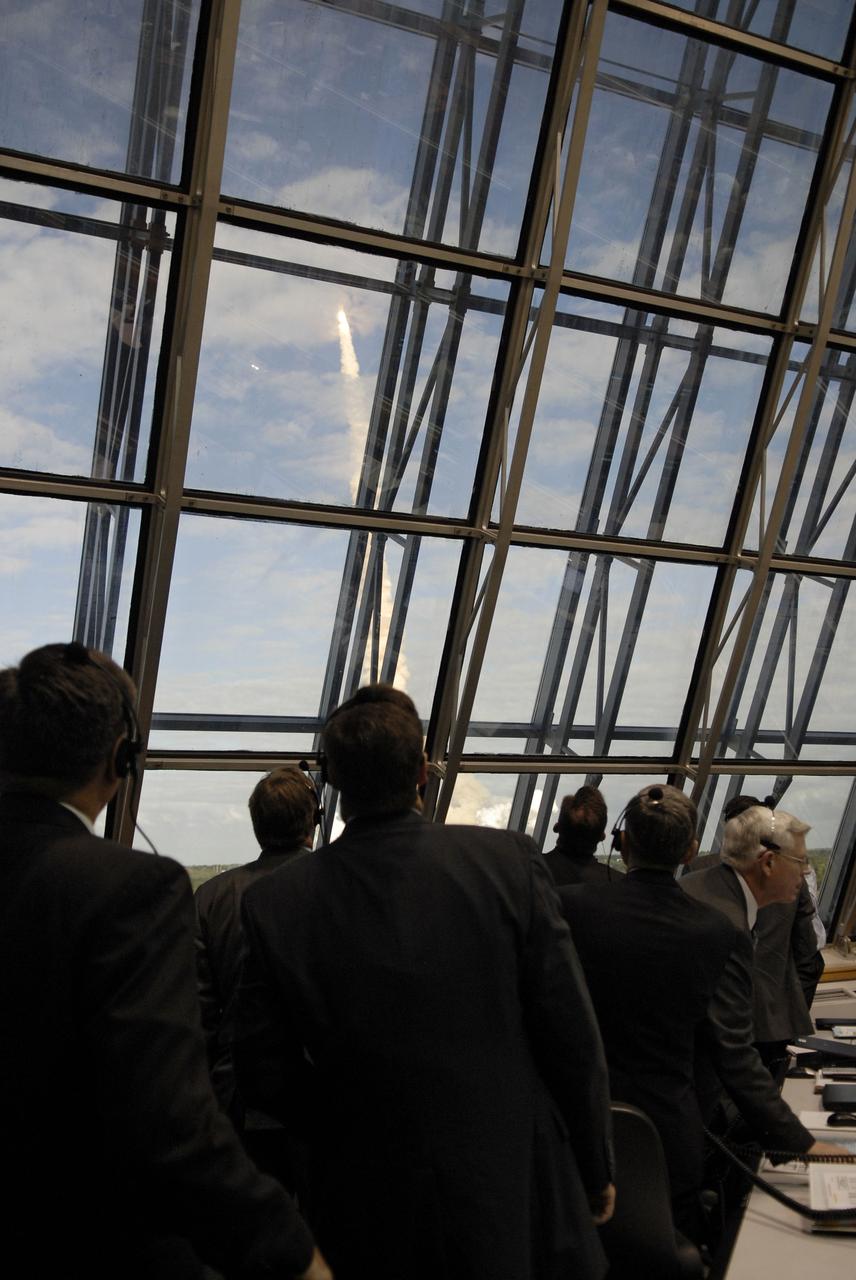
STS129-S-056 (16 Nov. 2009) --- Members of the space shuttle launch team watch Space Shuttle Atlantis' launch through the newly installed windows of Firing Room 4 in the Launch Control Center at NASA's Kennedy Space Center in Florida. Liftoff of Atlantis from Launch Pad 39A on its STS-129 mission to the International Space Station came at 2:28 p.m. (EST) Nov. 16, 2009.
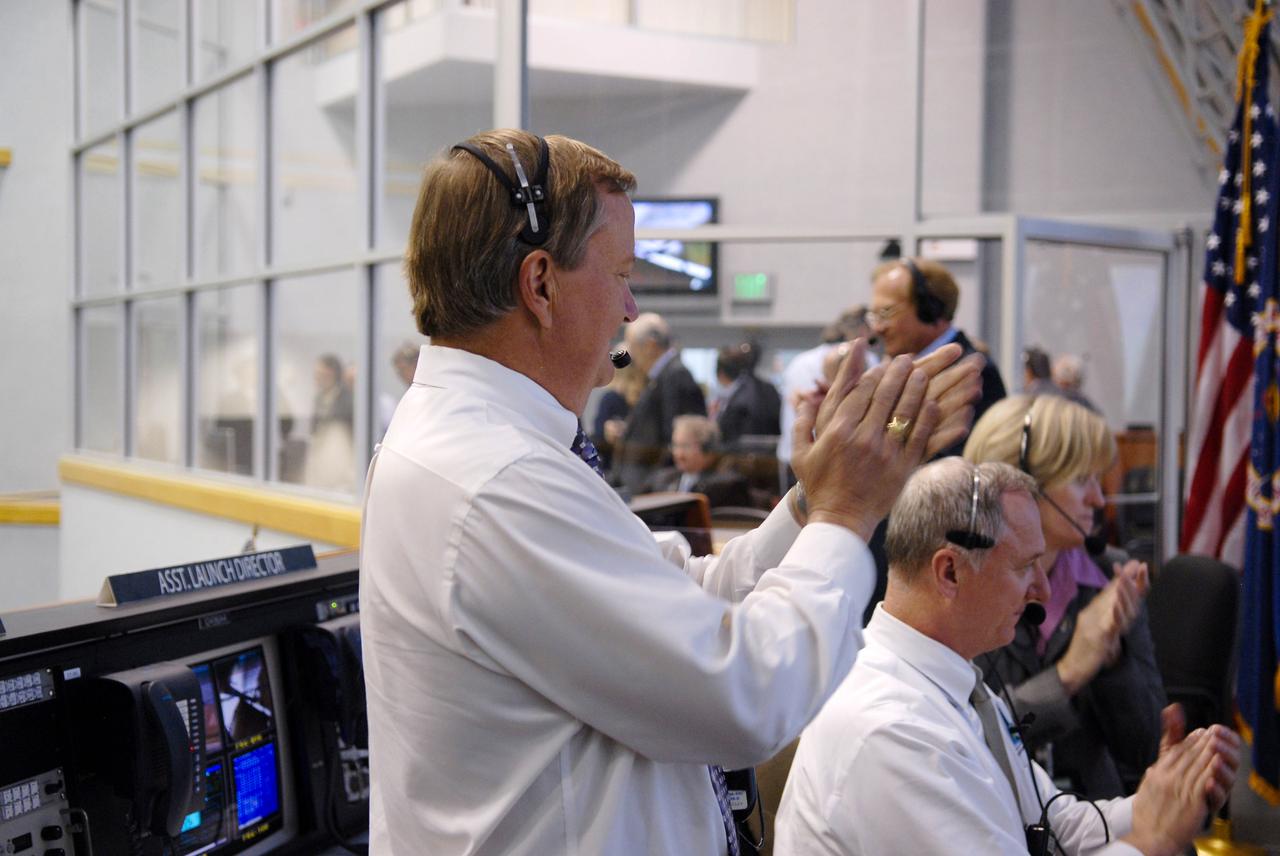
STS129-S-058 (16 Nov. 2009) --- In Firing Room 4 of NASA Kennedy Space Center's Launch Control Center, shuttle launch director Michael Leinbach (standing), assistant launch director Peter Nickolenko and Atlantis flow director Angie Brewer (both seated), applaud the launch team upon the successful launch of Space Shuttle Atlantis. Liftoff of Atlantis from Launch Pad 39A on its STS-129 mission to the International Space Station came at 2:28 p.m. (EST) Nov. 16, 2009.

S68-27364 (4 April 1968) --- The Apollo 6 (Spacecraft 020/Saturn 502) unmanned space mission was launched from Pad A, Launch Complex 39, Kennedy Space Center (KSC), Florida. The liftoff of the huge Apollo/Saturn V space vehicle occurred at 7:00:01.5 a.m. (EST), April 4, 1968.
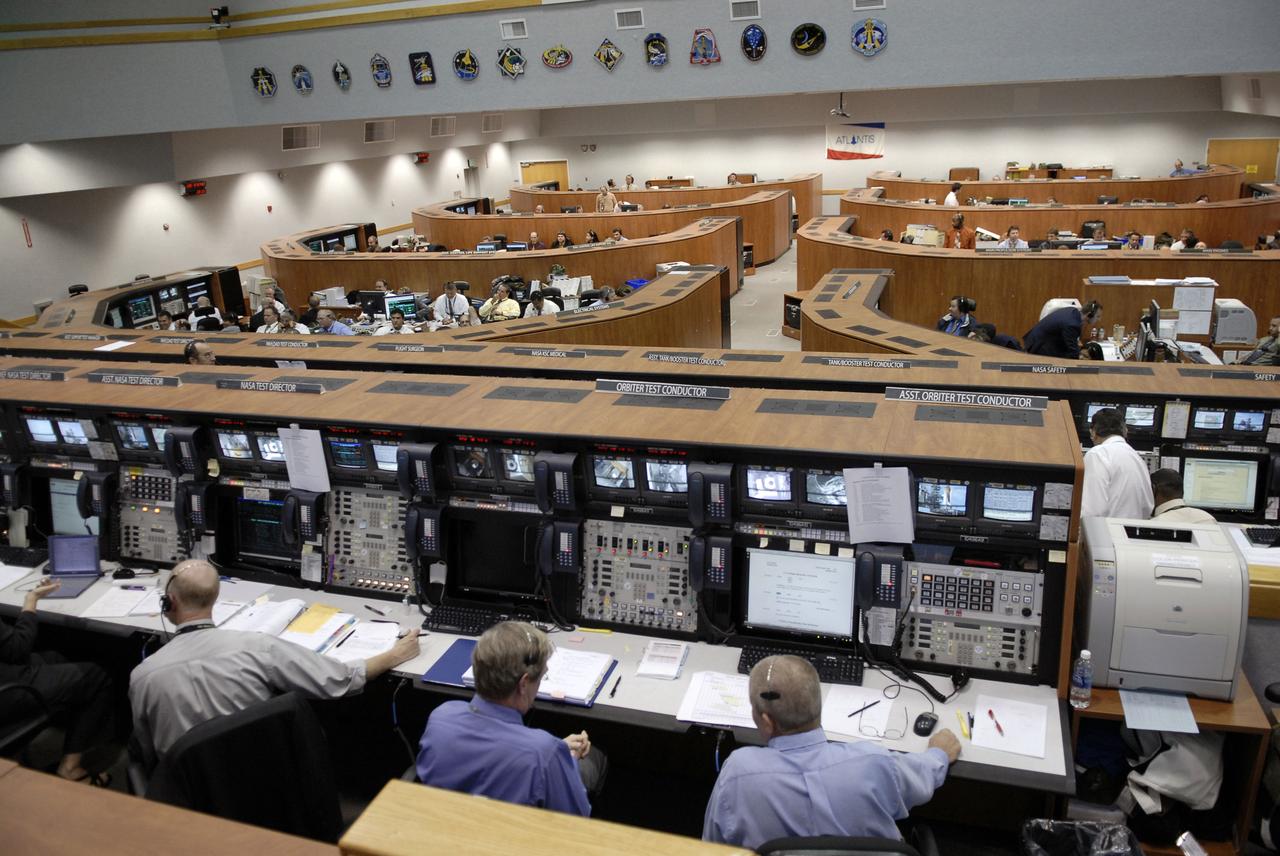
STS129-S-055 (16 Nov. 2009) --- The space shuttle launch team monitors the progress of Space Shuttle Atlantis' countdown from consoles on the main floor of Firing Room 4 in Kennedy's Launch Control Center. Liftoff of Atlantis from Launch Pad 39A on its STS-129 mission to the International Space Station came at 2:28 p.m. (EST) Nov. 16, 2009.
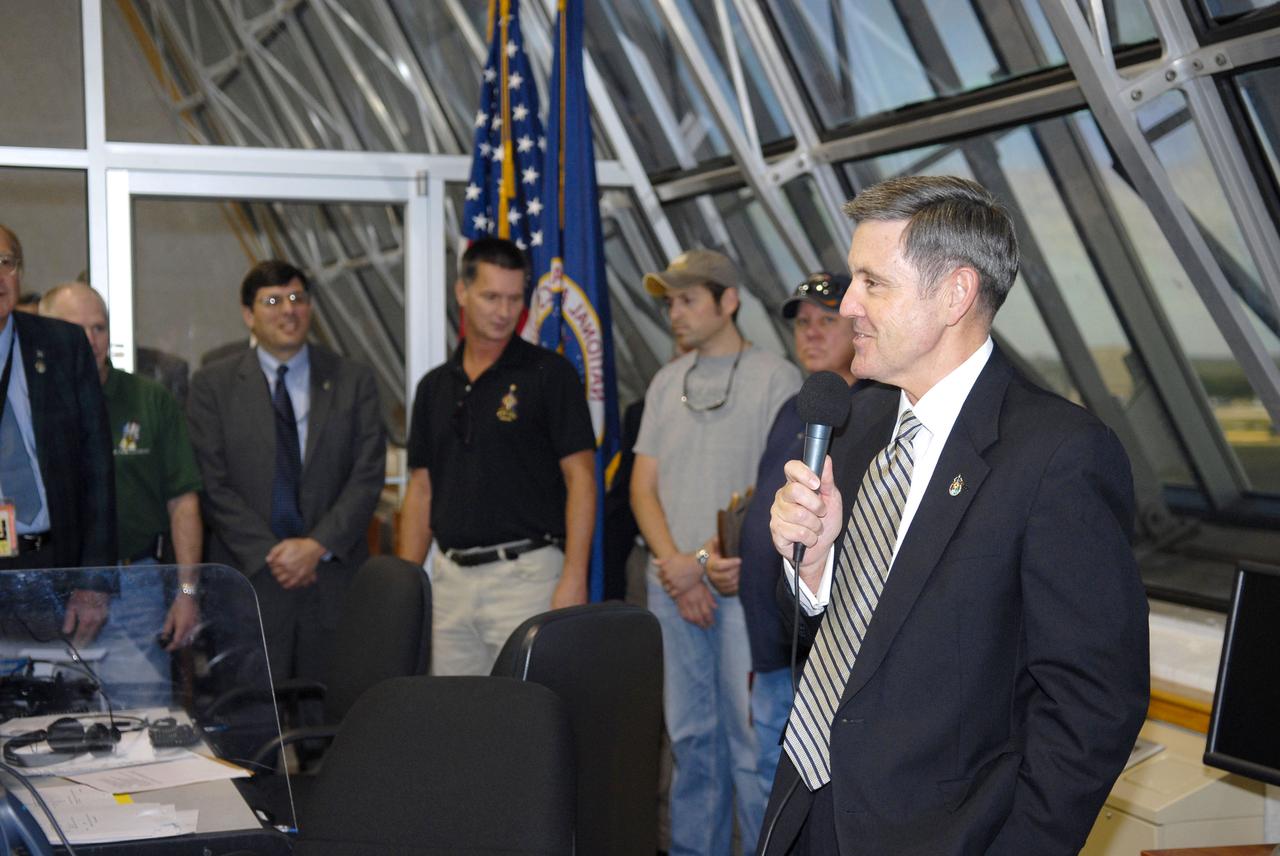
STS129-S-059 (16 Nov. 2009) --- In Firing Room 4 of NASA Kennedy Space Center's Launch Control Center, Kennedy Director Bob Cabana congratulates the launch team upon the successful launch of Space Shuttle Atlantis. Liftoff of Atlantis from Launch Pad 39A on its STS-129 mission to the International Space Station came at 2:28 p.m. (EST) Nov. 16, 2009.
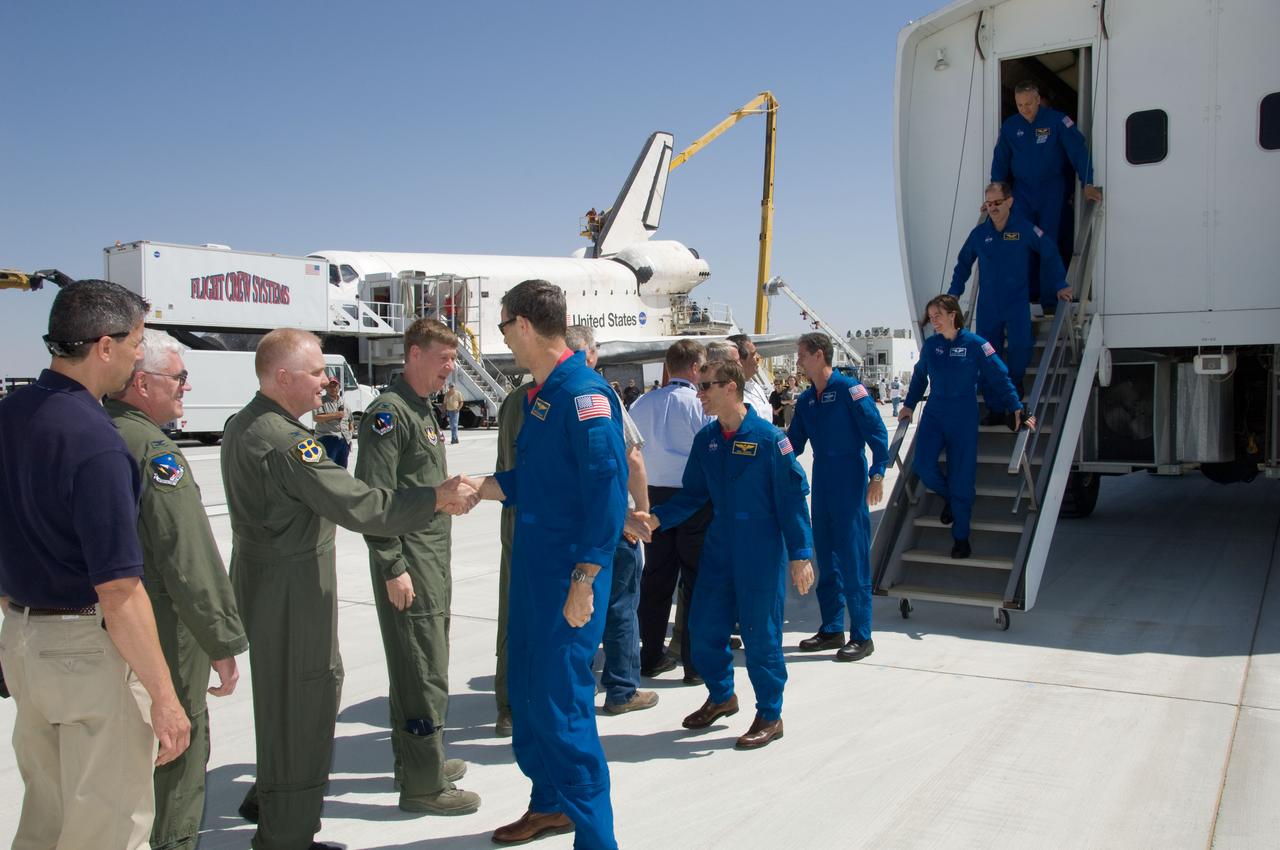
Personnel greet the STS-125 crew near Space Shuttle Atlantis on Runway 22 at Edwards Air Force Base in California following their landing which ended the STS-125 mission. The main landing gear touched down at 8:39:05 a.m. (PDT) on May 24, 2009. Nose gear touchdown was at 8:39:15 a.m. Wheel-stop was at 8:40:15 a.m., bringing the mission's elapsed time to 12 days, 21 hours, 37 minutes, 9 seconds. From the left are Commander (CDR) Scott Altman, Pilot (PLT) Gregory C. Johnson, Mission Specialist 1 (MS1) Michael Good, MS2 Megan McArthur, MS3 John Grunsfeld, and MS4 Mike Massimino.
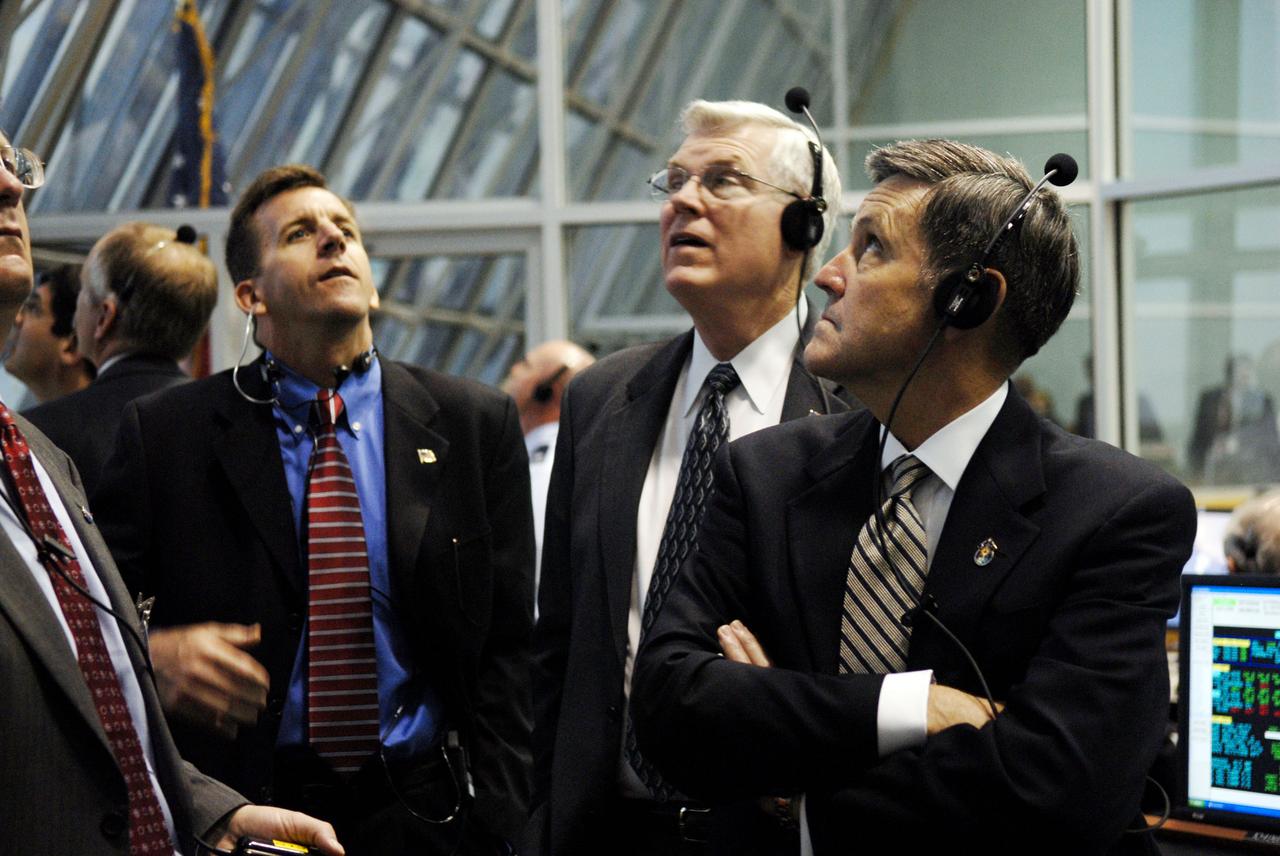
STS129-S-057 (16 Nov. 2009) --- From left, LeRoy Cain, NASA's deputy manager, Space Shuttle Program; Michael Coats, director of NASA's Johnson Space Center; and Bob Cabana, director of NASA's Kennedy Space Center, watch the launch of Space Shuttle Atlantis from the Operations Management Room, a glass partitioned area overlooking the main floor of Firing Room 4, in Kennedy's Launch Control Center. Liftoff of Atlantis from Launch Pad 39A on its STS-129 mission to the International Space Station came at 2:28 p.m. (EST) Nov. 16, 2009.
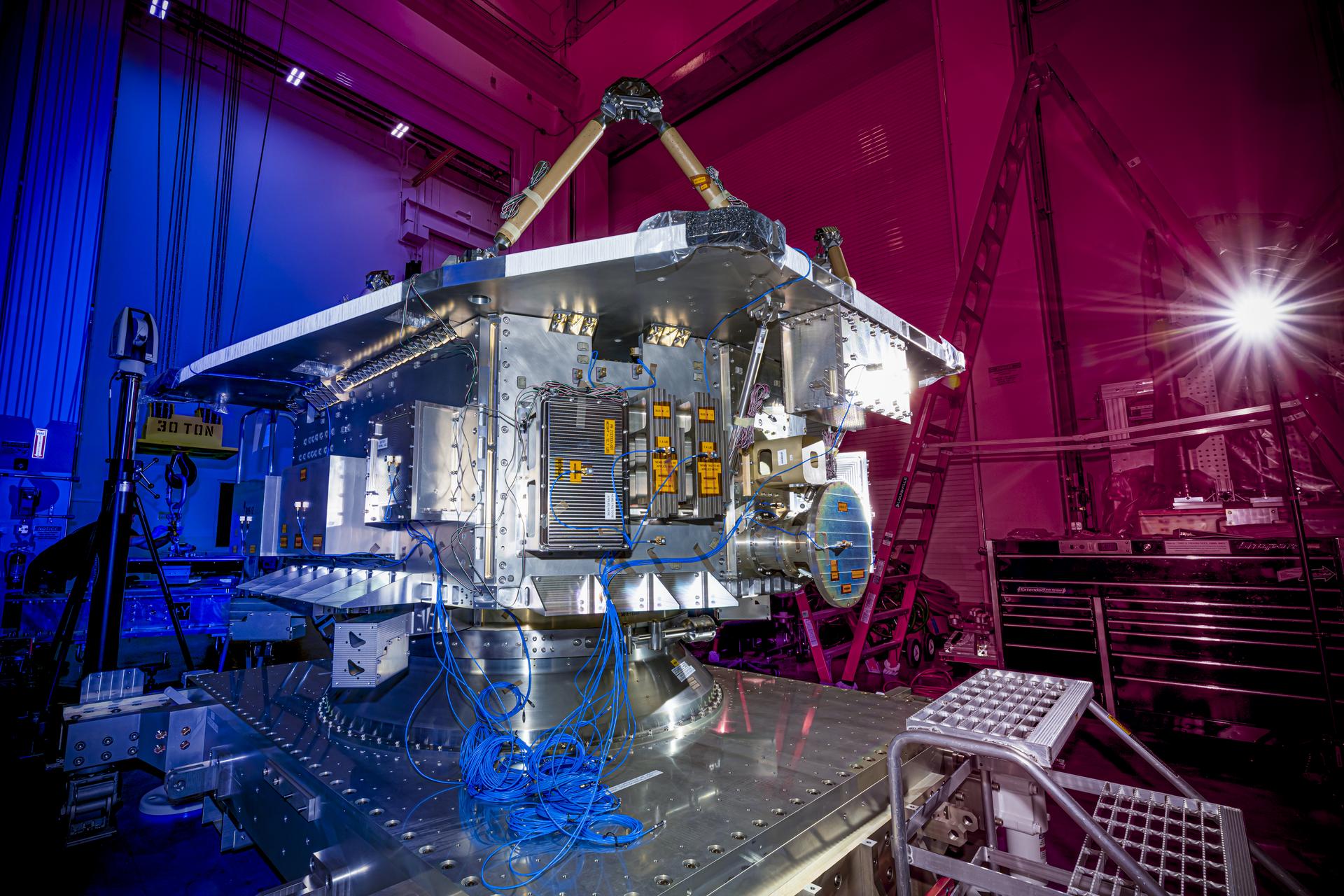
The bus structure of the Near-Earth Object (NEO) Surveyor spacecraft underwent testing at BAE Systems Space & Mission Systems in Boulder, Colorado, in August 2025. NEO Surveyor’s bus houses the power, propulsion, avionics, and communication subsystems, which are isolated from the spacecraft’s telescope and sensitive detectors. When all components are assembled, a large sunshade will be attached to the side of the bus, blocking the Sun’s glare from entering the telescope. With an aperture of nearly 20 inches (50 centimeters), the telescope features detectors sensitive to two infrared wavelengths in which near-Earth objects re-radiate solar heat. The instrument enclosure is designed to ensure heat produced by the spacecraft and instrument during operations doesn’t interfere with its infrared observations. Targeting launch in late 2027, the NEO Surveyor mission is led by Professor Amy Mainzer at the University of California, Los Angeles for NASA’s Planetary Defense Coordination Office and is being managed by the agency’s Jet Propulsion Laboratory in Southern California for the Planetary Missions Program Office at NASA’s Marshall Space Flight Center in Huntsville, Alabama. BAE Systems Space & Mission Systems and the Space Dynamics Laboratory in Logan, Utah, and Teledyne are among the companies that were contracted to build the spacecraft and its instrumentation. The Laboratory for Atmospheric and Space Physics at the University of Colorado Boulder will support operations, and IPAC at Caltech in Pasadena, California, is responsible for producing some of the mission’s data products. Caltech manages JPL for NASA. More information about NEO Surveyor is available at: https://science.nasa.gov/mission/neo-surveyor/
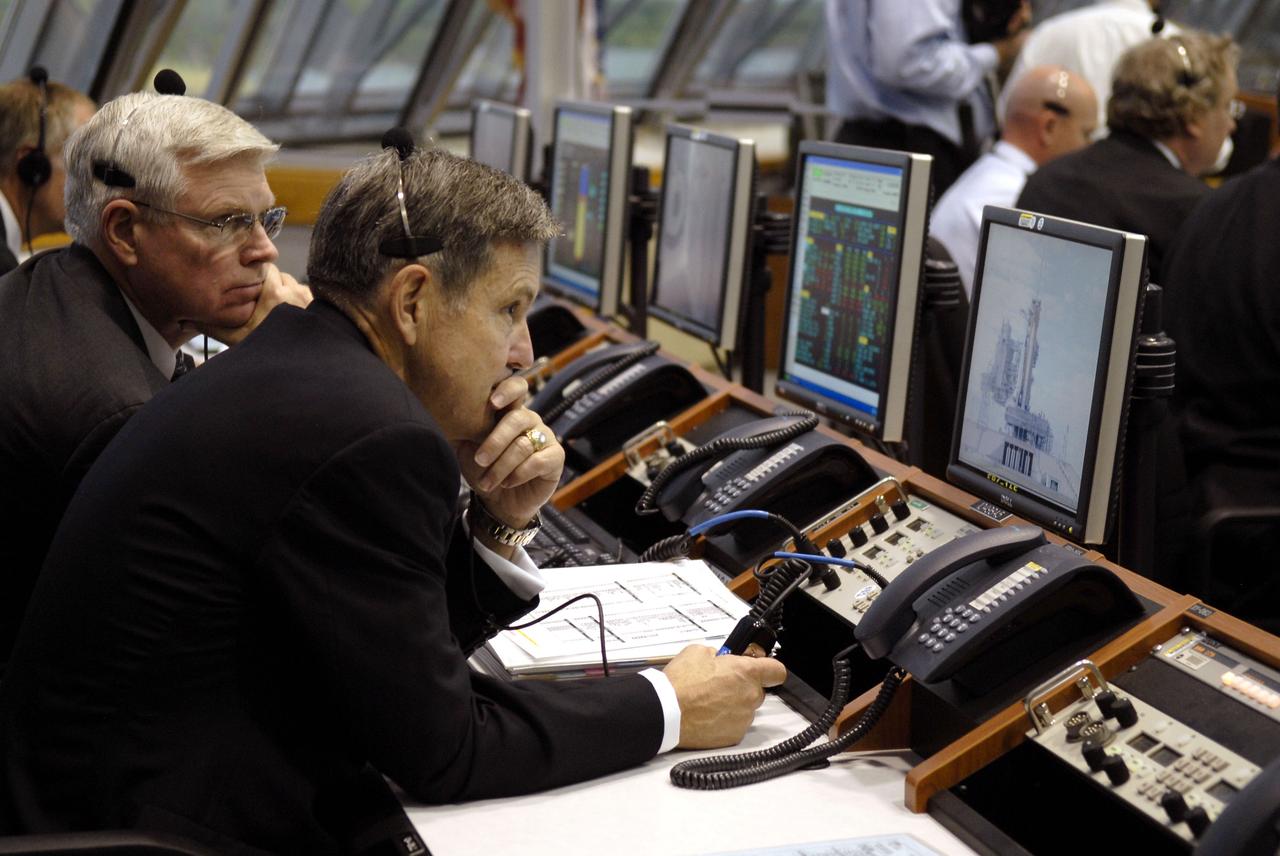
STS129-S-054 (16 Nov. 2009) --- Michael Coats (left), director of NASA's Johnson Space Center in Houston; and Bob Cabana, director of NASA's Kennedy Space Center in Florida, monitor the progress of Space Shuttle Atlantis' countdown from consoles in the Operations Management Room, a glass partitioned area overlooking the main floor of Firing Room 4, in Kennedy's Launch Control Center. Liftoff of Atlantis from Launch Pad 39A on its STS-129 mission to the International Space Station came at 2:28 p.m. (EST) on Nov. 16, 2009.
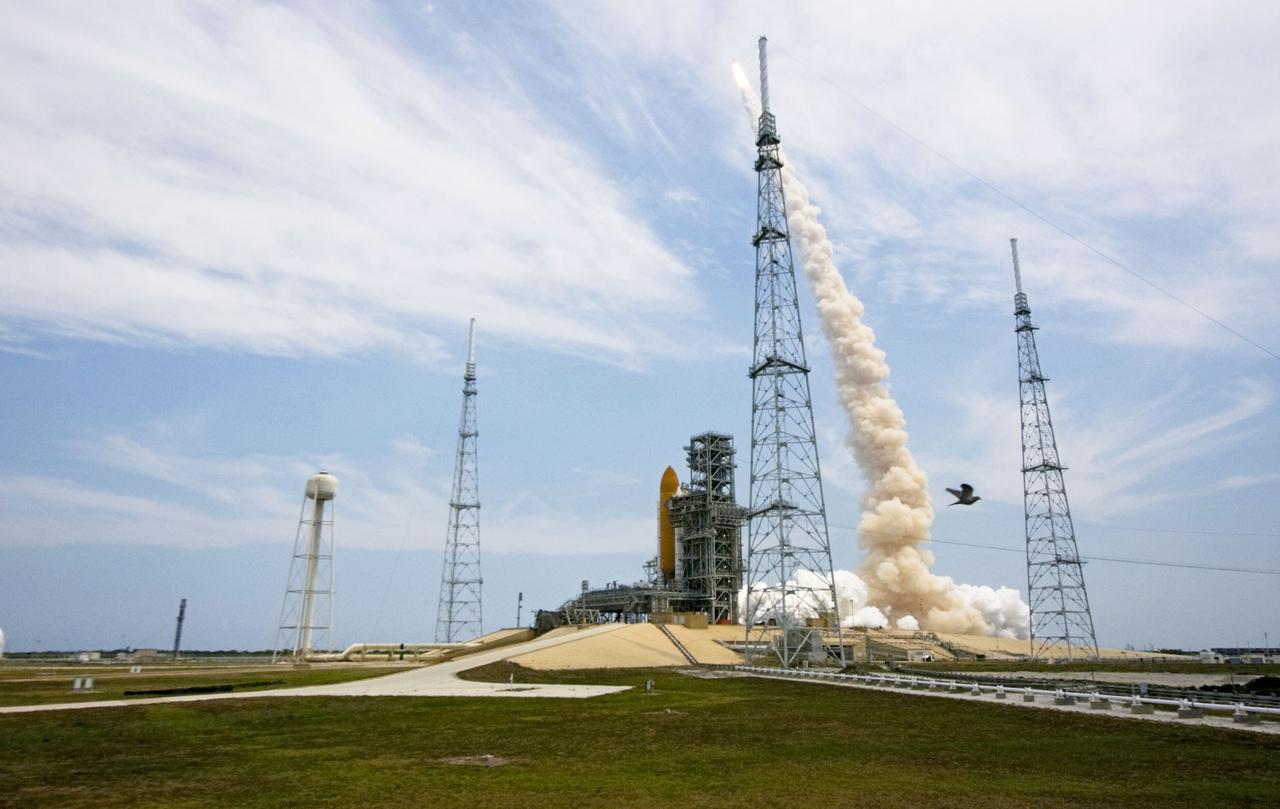
STS125-S-050 (11 May 2009) --- The launch of Space Shuttle Atlantis from launch pad 39A at NASA's Kennedy Space Center in Florida is viewed from behind launch pad 39B. On pad 39B is Space Shuttle Endeavour, which can launch, if needed, for rescue of Atlantis? crew during its STS-125 mission to service NASA?s Hubble Space Telescope. Liftoff of Atlantis was on time at 2:01 p.m. (EDT) on May 11, 2009. Onboard are astronauts Scott Altman, commander; Gregory C. Johnson, pilot; Michael Good, Megan McArthur, John Grunsfeld, Mike Massimino and Andrew Feustel, all mission specialists. Atlantis' 11-day flight will include five spacewalks to refurbish and upgrade the telescope with state-of-the-art science instruments that will expand Hubble's capabilities and extend its operational lifespan through at least 2014. The payload includes a Wide Field Camera 3, Fine Guidance Sensor and the Cosmic Origins Spectrograph.
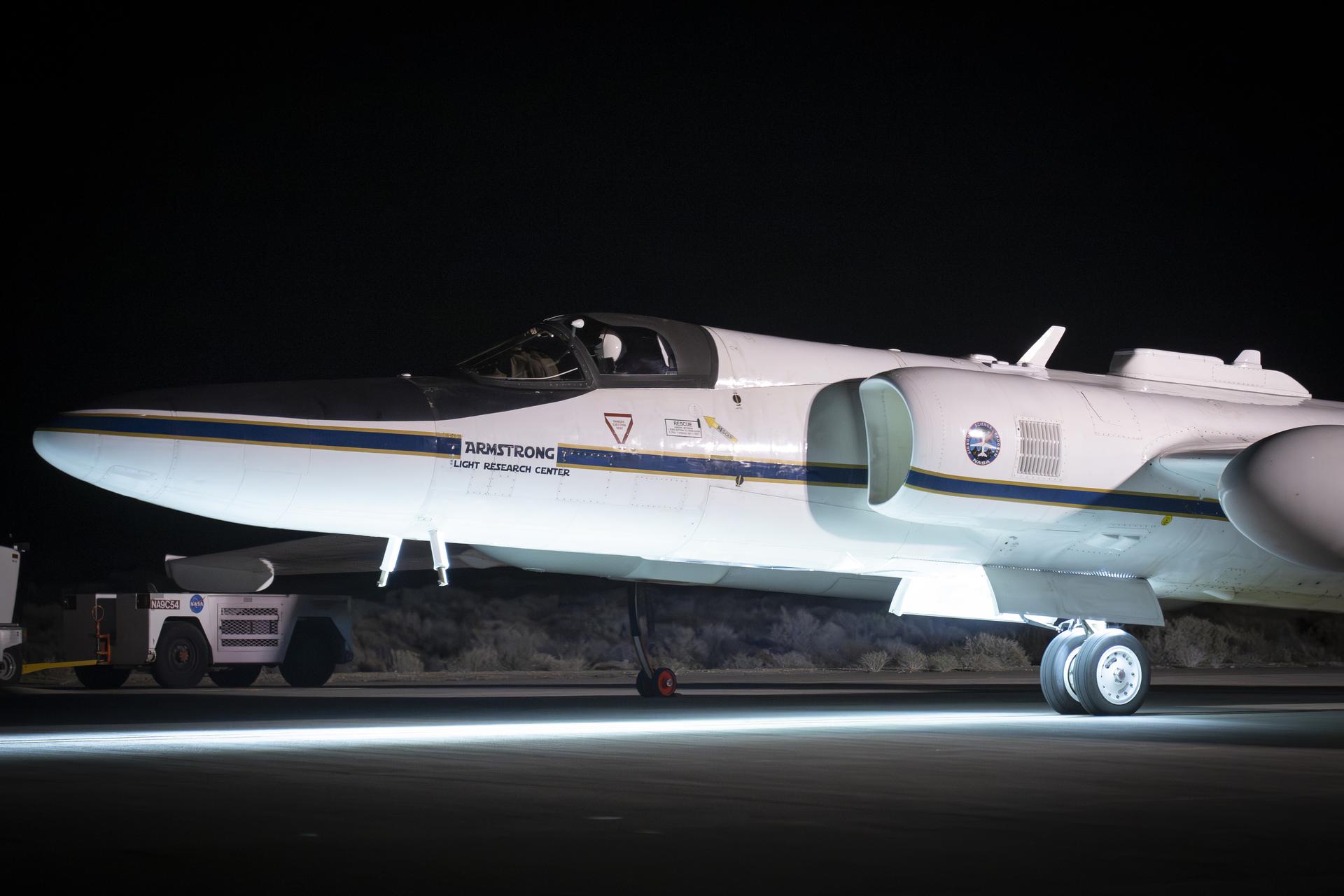
NASA’s ER-2 high-altitude aircraft prepares for a night flight with the Airborne Lunar Spectral Irradiance (air-LUSI) instrument on Monday, Feb. 2, 2026. The instrument measures Moonlight to improve accuracy of space-based sensors that forecast the weather, monitor agriculture, and study Earth’s ecosystem.
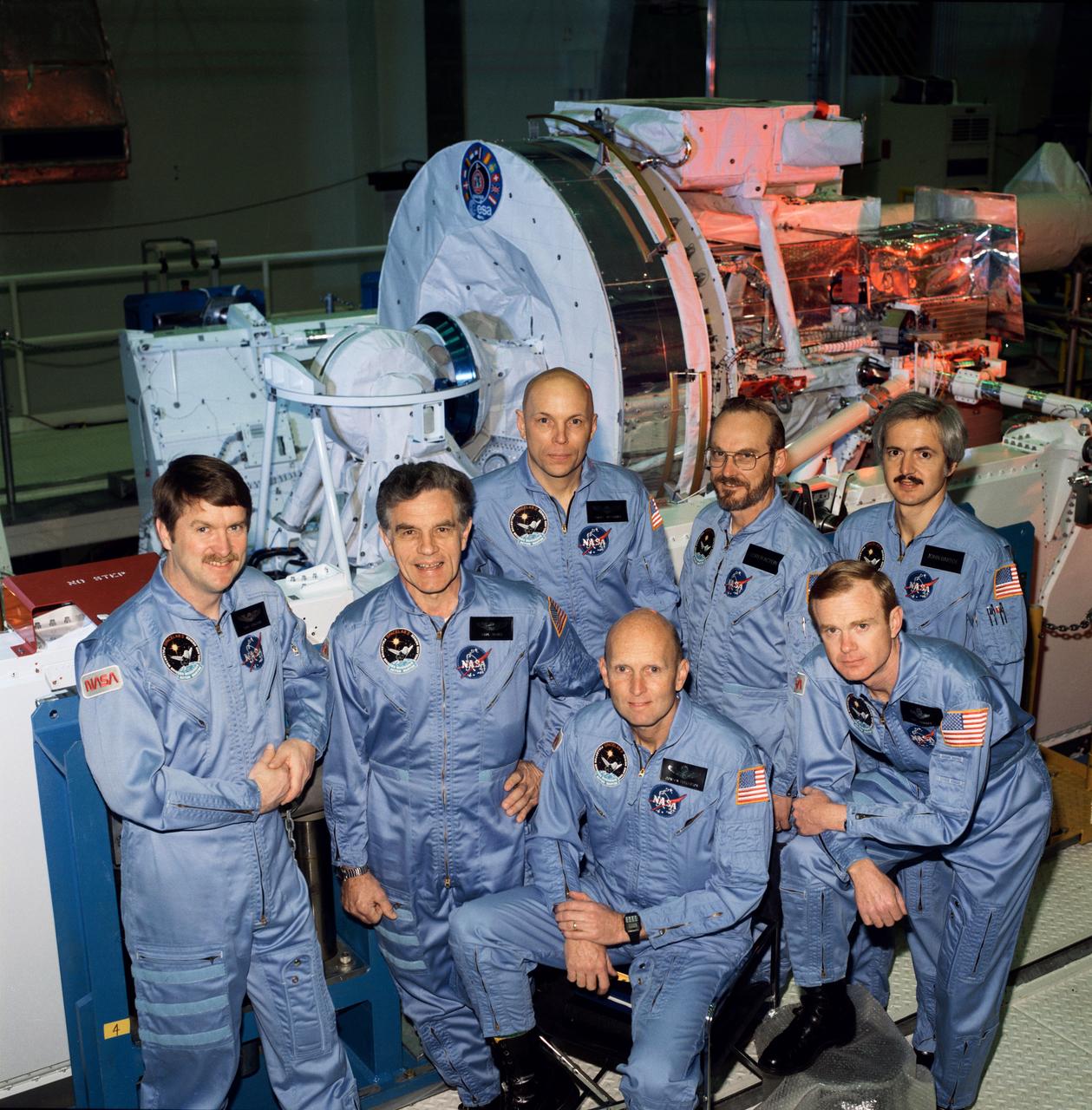
S85-29307 (May 1985) --- The seven crew members for the Space Shuttle STS-51F/Spacelab 2 mission take a pause from a KSC training session to pose for a pre-flight crew portrait. Astronauts C. Gordon Fullerton (kneeling center), mission commander; and Roy D. Bridges (kneeling right), pilot; are flanked by the payload specialists and mission specialists for the mission. Standing (left to right) are astronauts Anthony W. England, Karl J. Henize and Story Musgrave - all mission specialists; and payload specialist Loren Acton and John-David Bartoe.
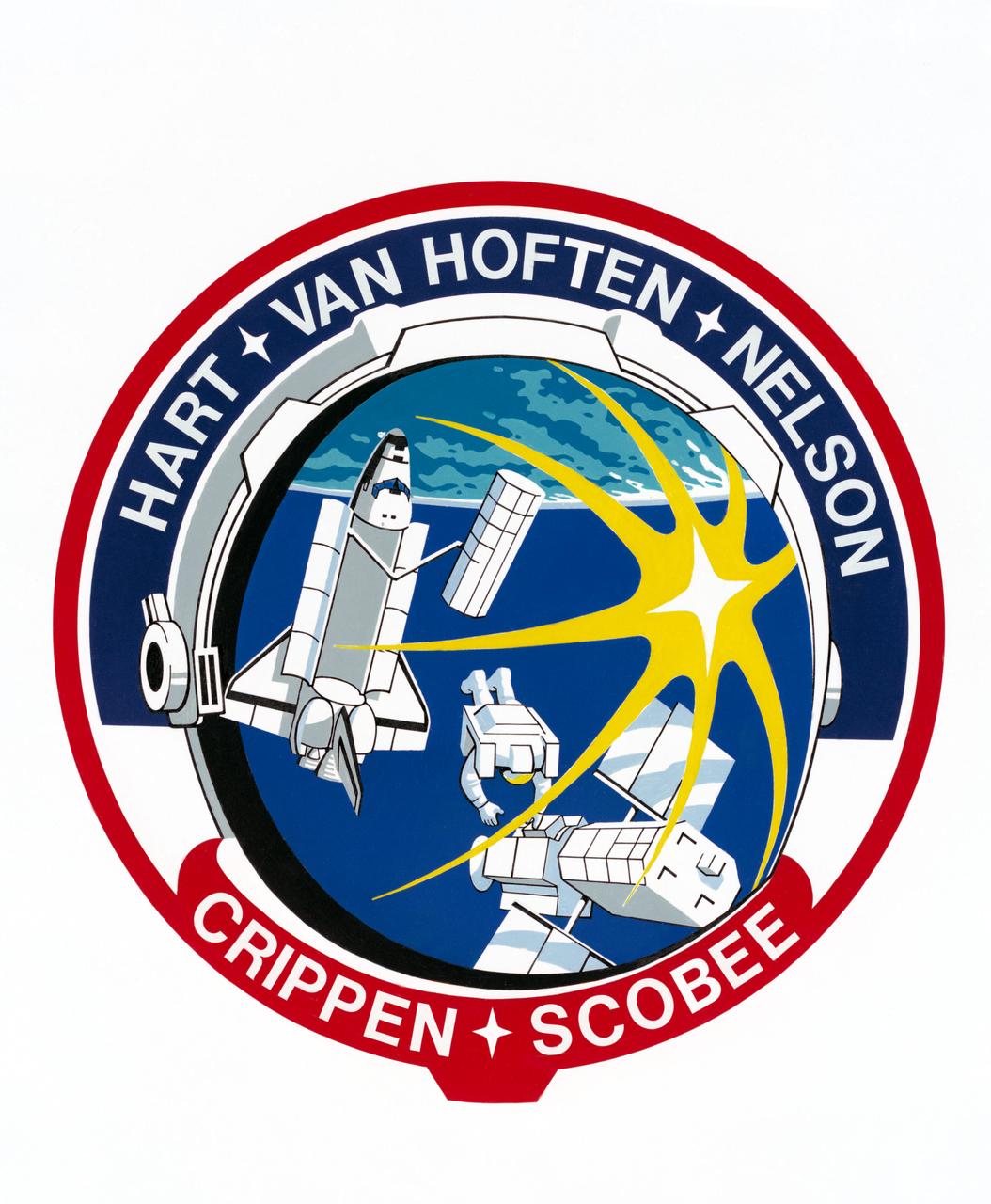
S84-25522 (15 Jan. 1984) --- The patch to be worn by the five members of NASA's STS-41C space mission tells the story of that flight. It features a helmet visor of an astronaut performing an extravehicular activity (EVA). In the visor are reflected the sun's rays, the space shuttle Challenger and its Remote Manipulator System (RMS) deploying the Long Duration Exposure Facility (LDEF), Earth and blue sky, and another astronaut working at the damaged Solar Maximum Satellite (SMS). The scene is encircled by the surnames of the crew members. They are astronauts Robert L. Crippen, commander; Francis R. (Dick) Scobee, pilot; and Terry J. Hart, James D. van Hoften and George D. Nelson, all mission specialists. The NASA insignia design for space shuttle flights is reserved for use by the astronauts and for other official use as the NASA Administrator may authorize. Public availability has been approved only in the forms of illustrations by the various news media. When and if there is any change in this policy, which is not anticipated, the change will be publicly announced. Photo credit: NASA
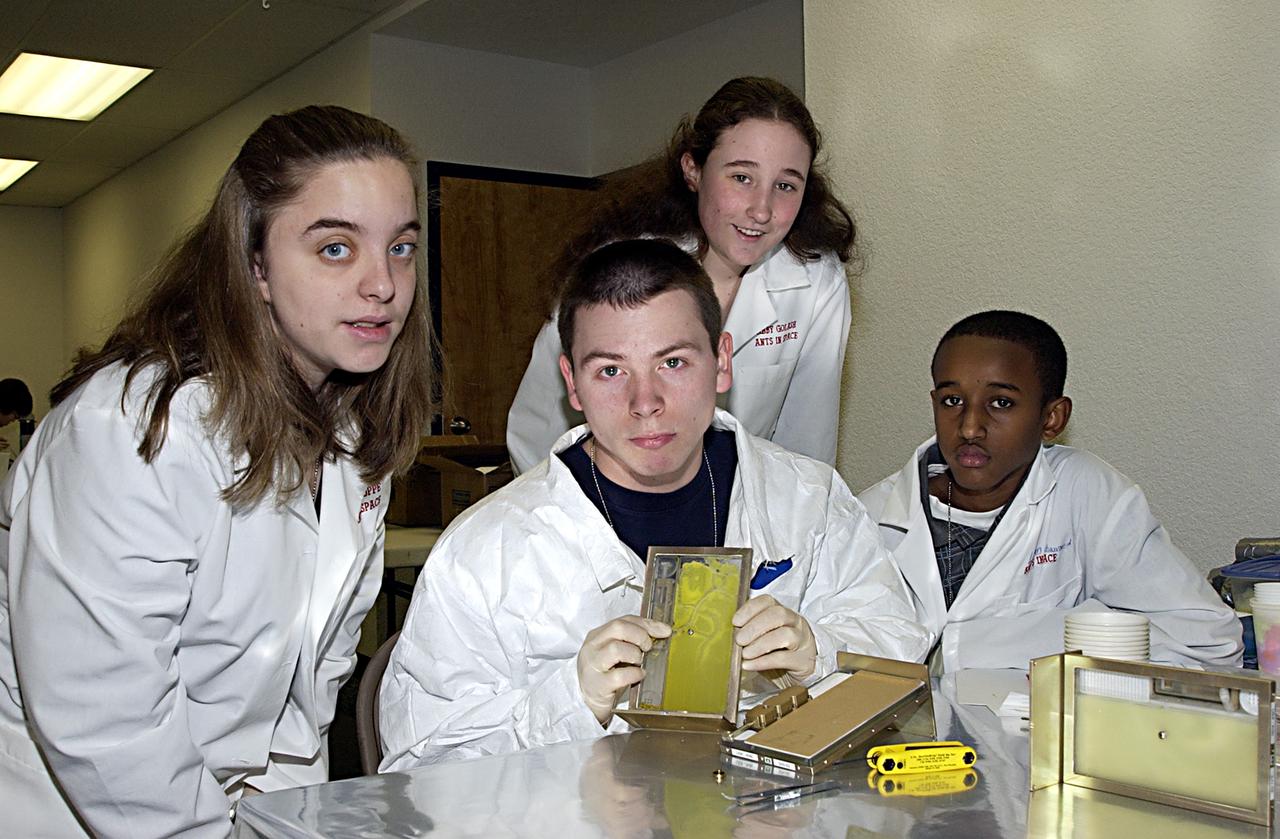
Students display an experiment that will fly in SPACEHAB on Space Shuttle Columbia on mission STS-107. SPACEHAB's complement of commercial experiments includes six educational experiments designed and developed by students in six different countries under the auspices of Space Technology and Research Students (STARS), a global education program managed by SPACEHAB subsidiary Space Media. The countries represented are Australia, China, Israel, Japan, Liechtenstein and the United States. The student investigators who conceived these experiments will monitor their operations in space. The experiments will be housed in BioServe Space Technologies' Isothermal Containment Module (ICM --a small temperature-controlled facility that provides experiment support such as physical containment, lighting, and video imaging) and stowed in a middeck-size locker aboard the SPACEHAB Research Double Module.
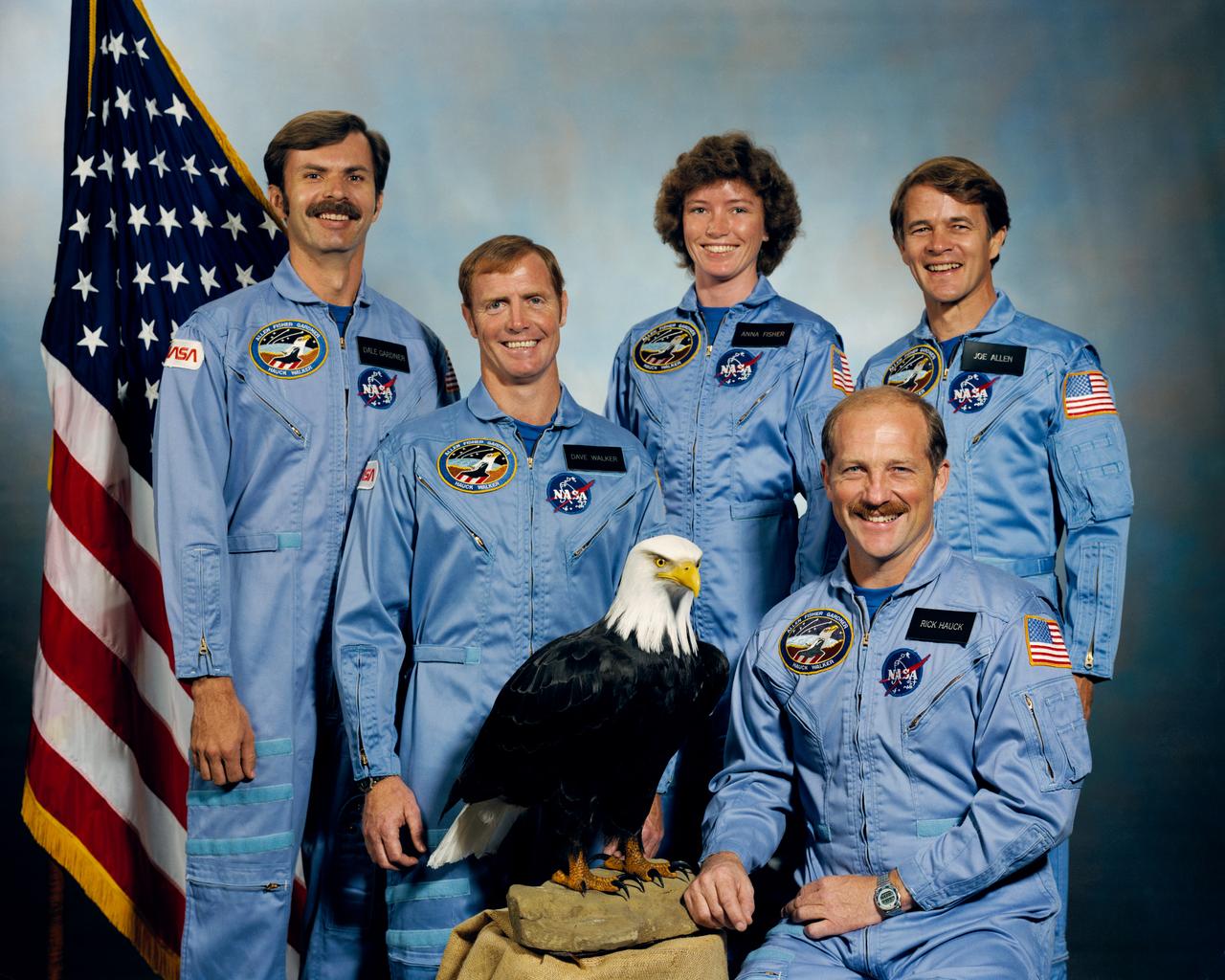
S84-40082 (August 1984) --- These five astronauts are scheduled to fly aboard the Space Shuttle Discovery on Mission STS-51A for NASA. The mission is scheduled for early November 1984. Astronaut Frederick H. (Rick) Hauck, seated, is crew commander. Astronaut David M. Walker, pilot, stands next to the Eagle, 51-A mascot. Others on the back row, left-to-right, are astronauts Dale A. Gardner, Anna L. Fisher and Joseph P. Allen IV, all mission specialists.
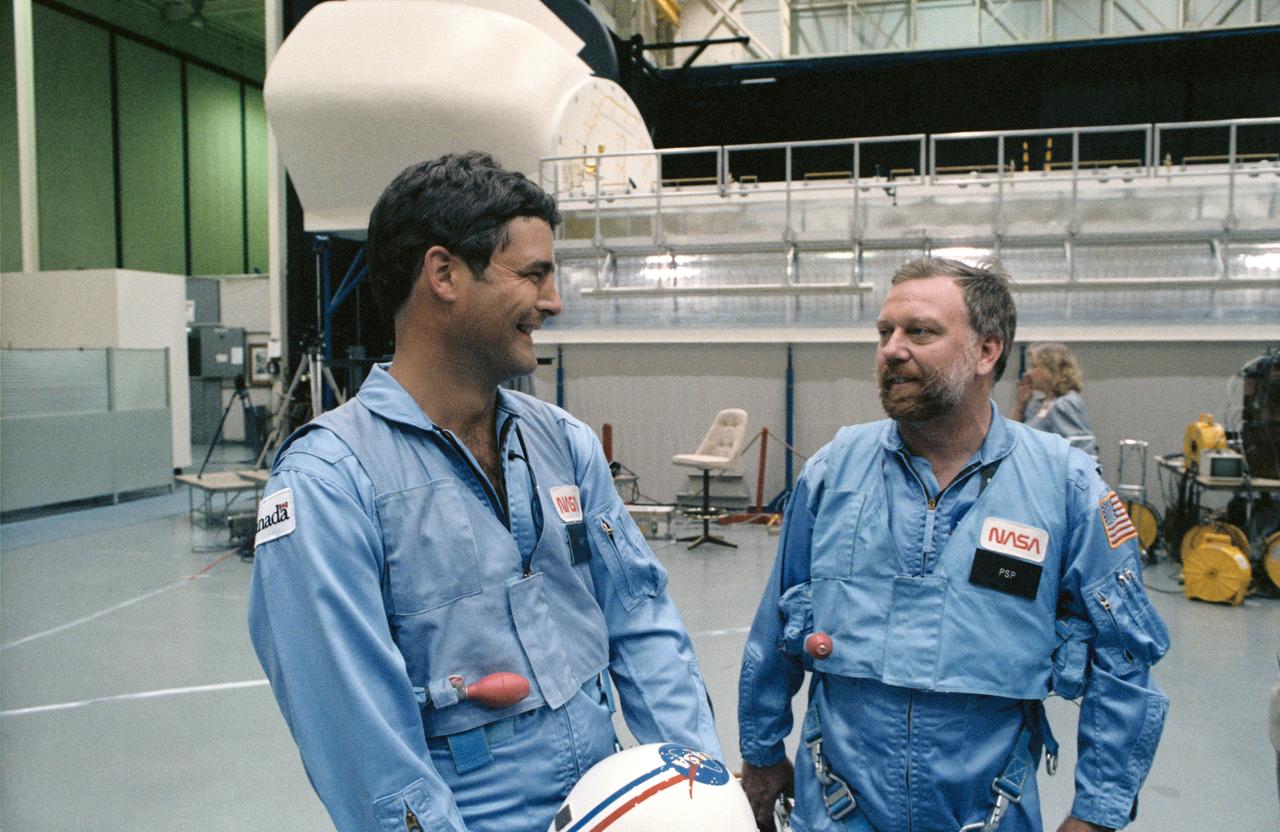
41D-3185 (S14-3185) (4 Sept 1984) --- The two payload specialists for NASA's 41-G mission aboard the Challenger chat prior to a simulation session in the Shuttle mockup and integration laboratory at the Johnson Space Center. They are Marc Garneau, left, representing the Canadian National Research Council, and Paul D. Scully-Power, an oceanographer with the U.S. Navy. They are standing near the manipulator development facility (MDF), pictured in background.
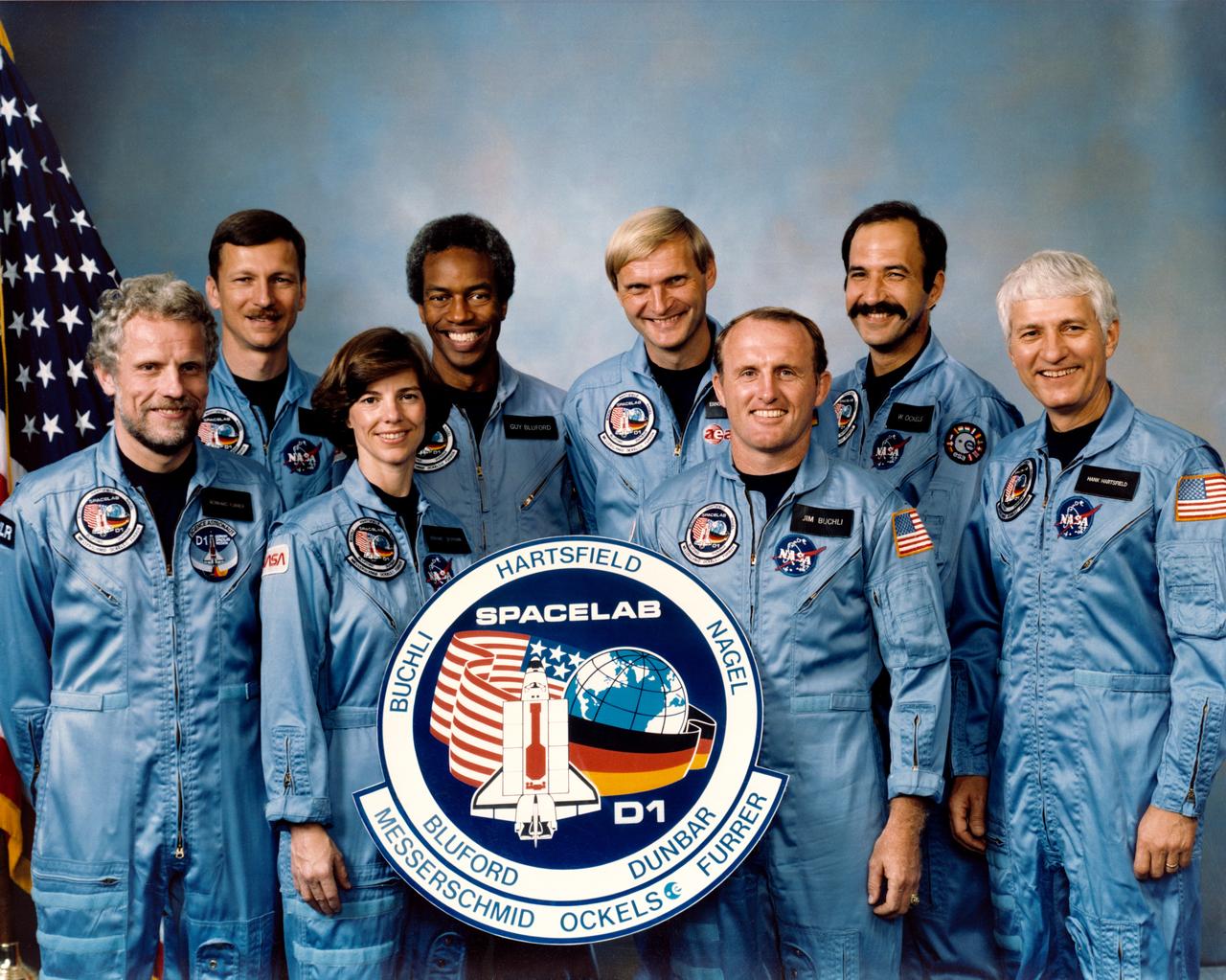
S85-40783 (27 Sept. 1985) --- This international crew expected to fly aboard the space shuttle Challenger when it launches next month represents the largest number (eight) of persons to occupy an orbiting spacecraft at the same time. Posing with the mission insignia are (front row, left to right) Reinhard Furrer, German payload specialist; Bonnie J. Dunbar, mission specialist; James F. Buchli, mission specialist; and Henry W. Hartsfield Jr., commander; and (back row, left to right) Steven R. Nagel, pilot; Guion S. Bluford, mission specialist; Ernst Messerschmid, German payload specialist; and Wubbo J. Ockels, Dutch payload specialist. Photo credit: NASA
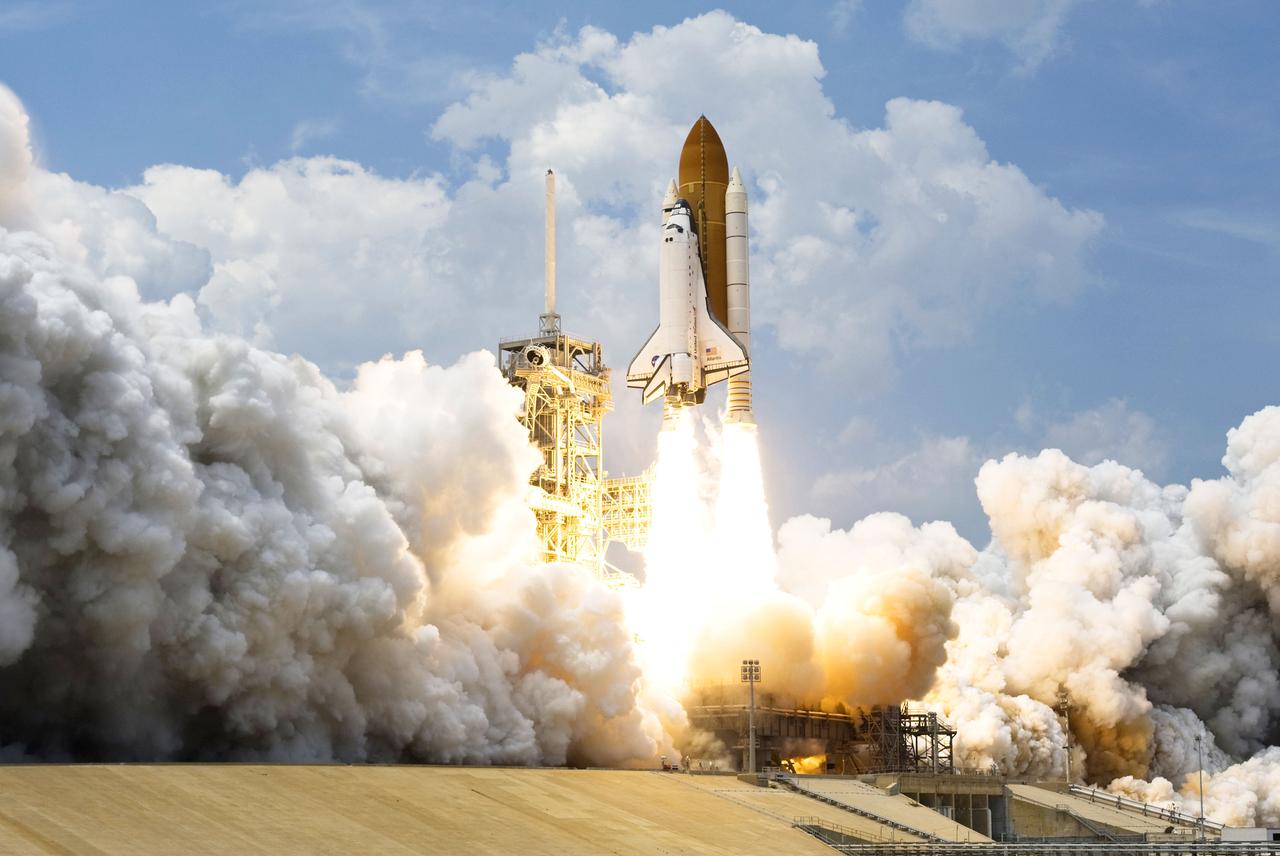
STS125-S-048 (11 May 2009) --- Space Shuttle Atlantis and its seven-member STS-125 crew head toward Earth orbit and rendezvous with NASA?s Hubble Space Telescope. Liftoff was on time at 2:01 p.m. (EDT) on May 11, 2009 from launch pad 39A at NASA's Kennedy Space Center. Onboard are astronauts Scott Altman, commander; Gregory C. Johnson, pilot; Michael Good, Megan McArthur, John Grunsfeld, Mike Massimino and Andrew Feustel, all mission specialists. Atlantis' 11-day flight will include five spacewalks to refurbish and upgrade the telescope with state-of-the-art science instruments that will expand Hubble's capabilities and extend its operational lifespan through at least 2014. The payload includes Wide Field Camera 3, fine guidance sensor and the Cosmic Origins Spectrograph.
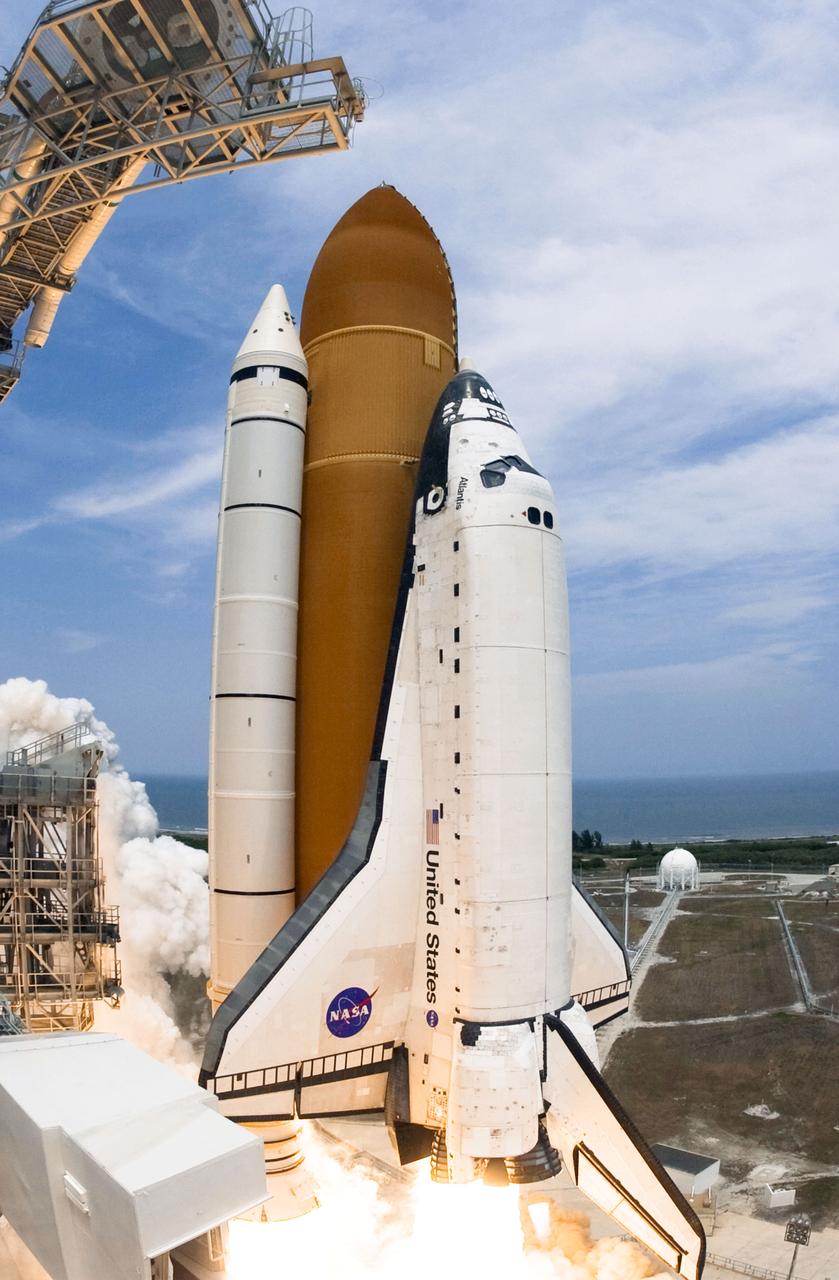
STS125-S-044 (11 May 2009) --- Space Shuttle Atlantis and its seven-member STS-125 crew head toward Earth orbit and rendezvous with NASA?s Hubble Space Telescope. Liftoff was on time at 2:01 p.m. (EDT) on May 11, 2009 from launch pad 39A at NASA's Kennedy Space Center. Onboard are astronauts Scott Altman, commander; Gregory C. Johnson, pilot; Michael Good, Megan McArthur, John Grunsfeld, Mike Massimino and Andrew Feustel, all mission specialists. Atlantis' 11-day flight will include five spacewalks to refurbish and upgrade the telescope with state-of-the-art science instruments that will expand Hubble's capabilities and extend its operational lifespan through at least 2014. The payload includes Wide Field Camera 3, fine guidance sensor and the Cosmic Origins Spectrograph.
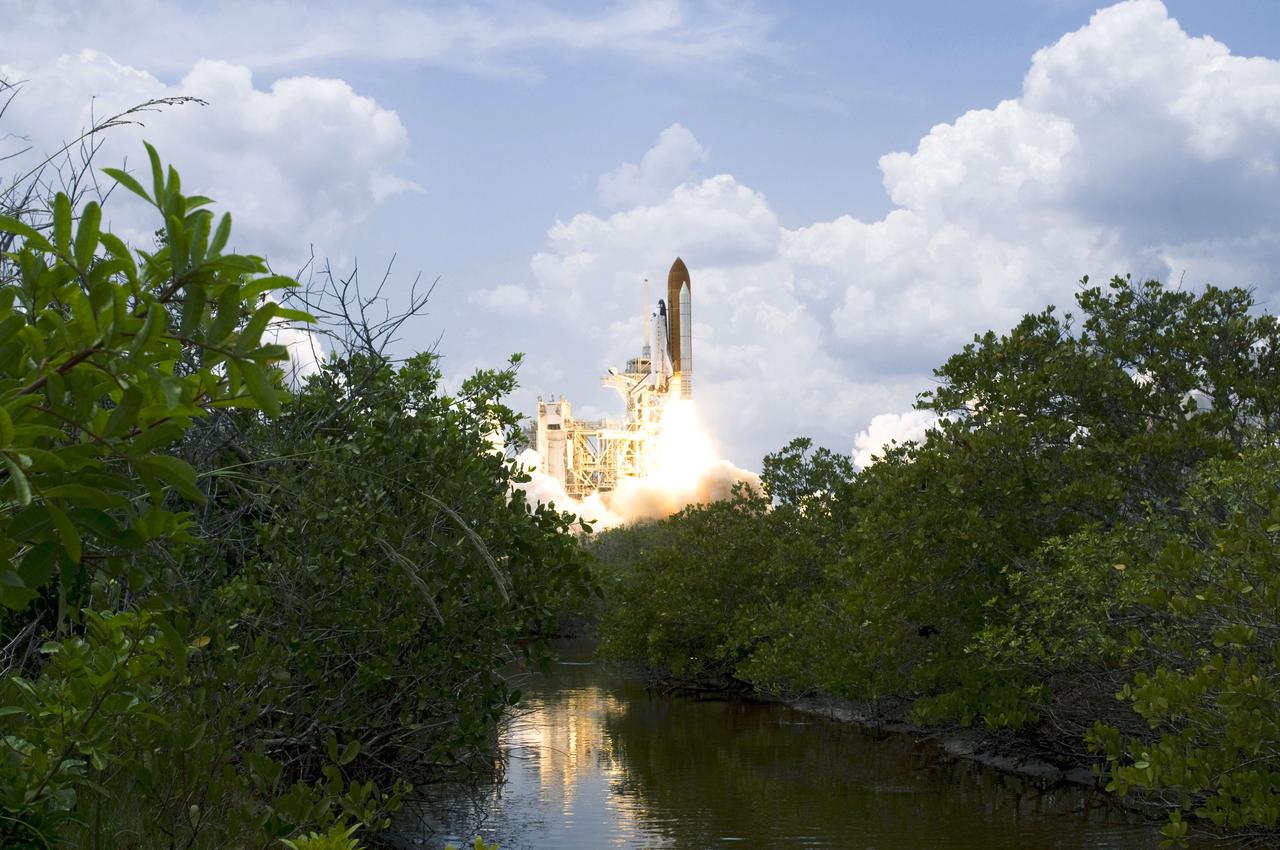
STS125-S-022 (11 May 2009) --- Space Shuttle Atlantis and its seven-member STS-125 crew head toward Earth orbit and rendezvous with NASA?s Hubble Space Telescope. Liftoff was on time at 2:01 p.m. (EDT) on May 11, 2009 from launch pad 39A at NASA's Kennedy Space Center. Onboard are astronauts Scott Altman, commander; Gregory C. Johnson, pilot; Michael Good, Megan McArthur, John Grunsfeld, Mike Massimino and Andrew Feustel, all mission specialists. Atlantis' 11-day flight will include five spacewalks to refurbish and upgrade the telescope with state-of-the-art science instruments that will expand Hubble's capabilities and extend its operational lifespan through at least 2014. The payload includes Wide Field Camera 3, fine guidance sensor and the Cosmic Origins Spectrograph.
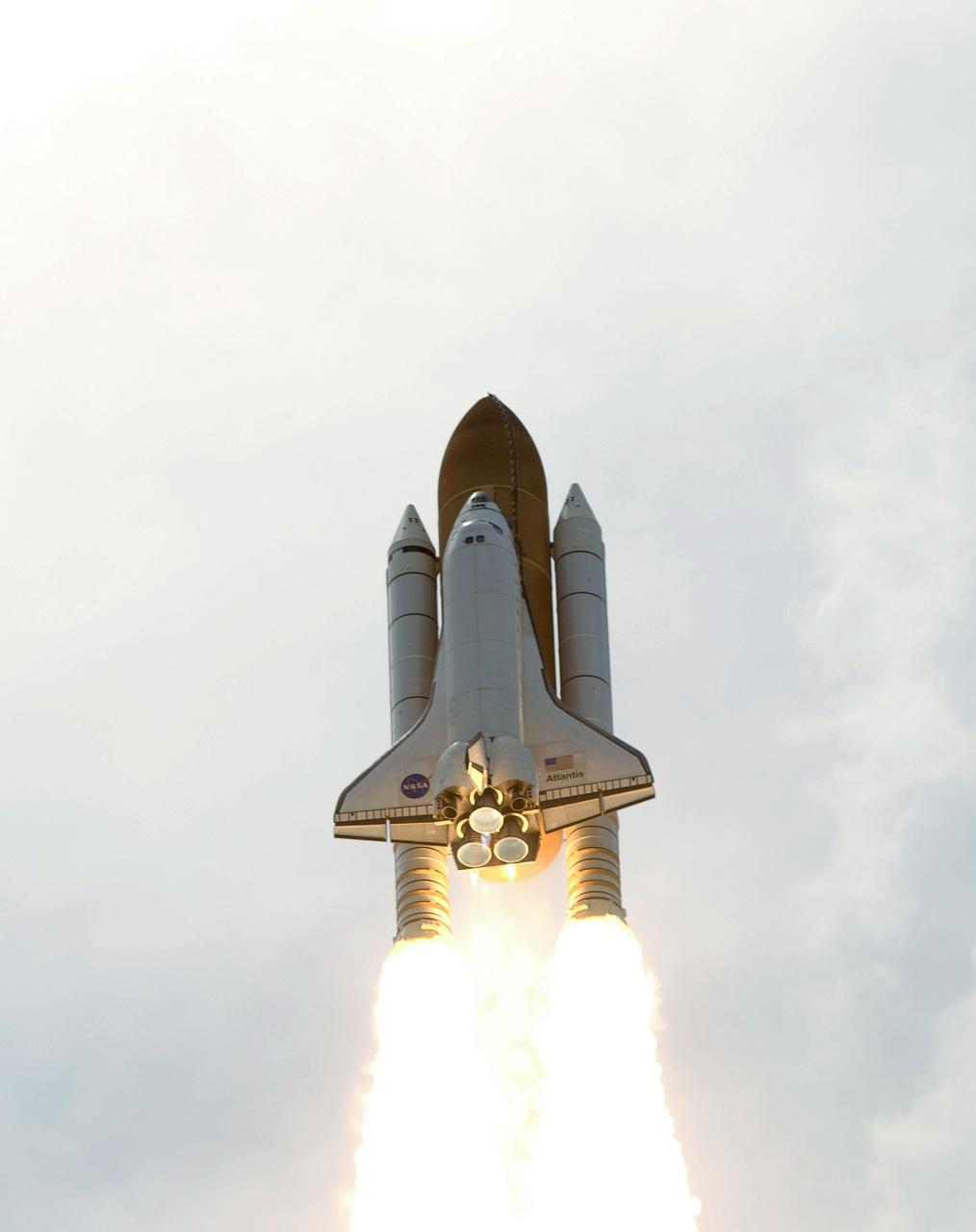
STS125-S-035 (11 May 2009) --- Space Shuttle Atlantis and its seven-member STS-125 crew head toward Earth orbit and rendezvous with NASA?s Hubble Space Telescope. Liftoff was on time at 2:01 p.m. (EDT) on May 11, 2009 from launch pad 39A at NASA's Kennedy Space Center. Onboard are astronauts Scott Altman, commander; Gregory C. Johnson, pilot; Michael Good, Megan McArthur, John Grunsfeld, Mike Massimino and Andrew Feustel, all mission specialists. Atlantis' 11-day flight will include five spacewalks to refurbish and upgrade the telescope with state-of-the-art science instruments that will expand Hubble's capabilities and extend its operational lifespan through at least 2014. The payload includes Wide Field Camera 3, fine guidance sensor and the Cosmic Origins Spectrograph.
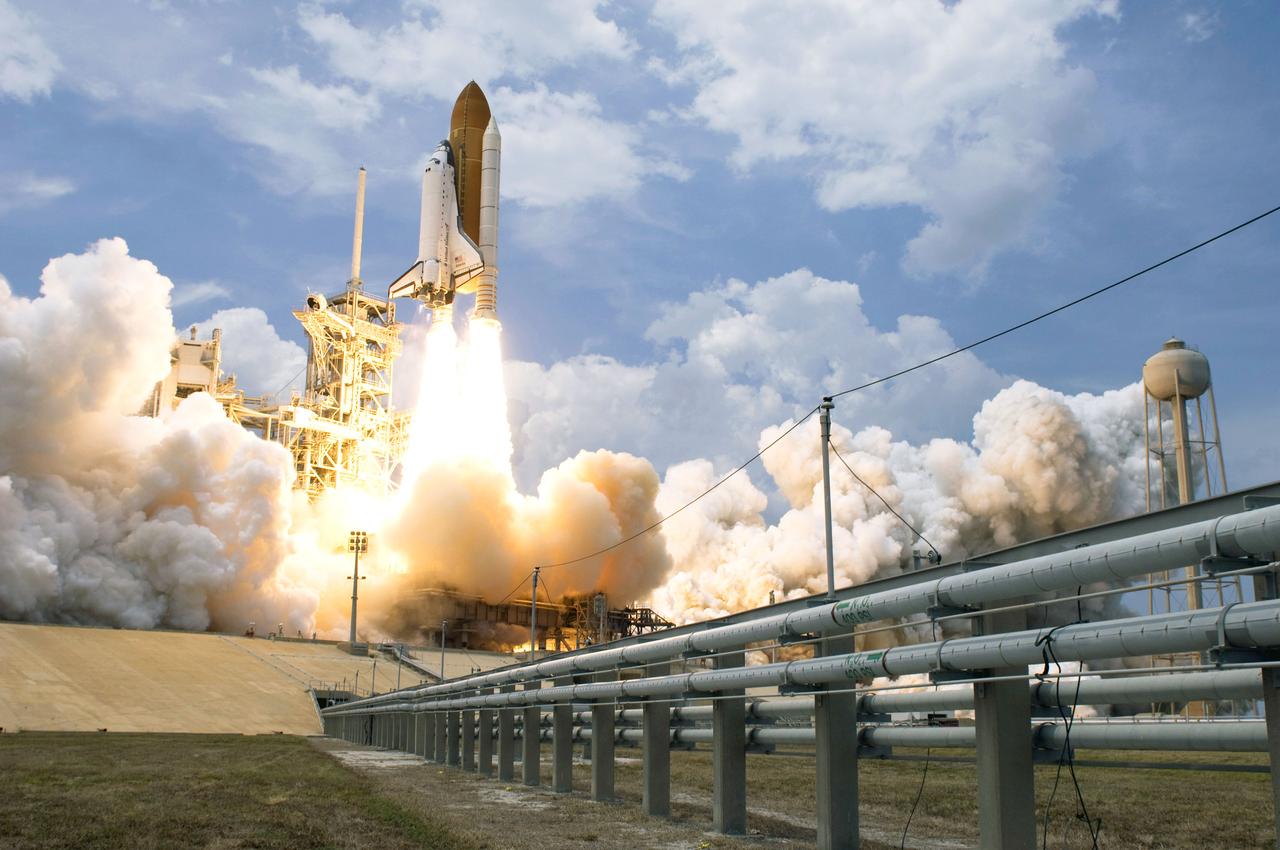
STS125-S-039 (11 May 2009) --- Space Shuttle Atlantis and its seven-member STS-125 crew head toward Earth orbit and rendezvous with NASA?s Hubble Space Telescope. Liftoff was on time at 2:01 p.m. (EDT) on May 11, 2009 from launch pad 39A at NASA's Kennedy Space Center. Onboard are astronauts Scott Altman, commander; Gregory C. Johnson, pilot; Michael Good, Megan McArthur, John Grunsfeld, Mike Massimino and Andrew Feustel, all mission specialists. Atlantis' 11-day flight will include five spacewalks to refurbish and upgrade the telescope with state-of-the-art science instruments that will expand Hubble's capabilities and extend its operational lifespan through at least 2014. The payload includes Wide Field Camera 3, fine guidance sensor and the Cosmic Origins Spectrograph.
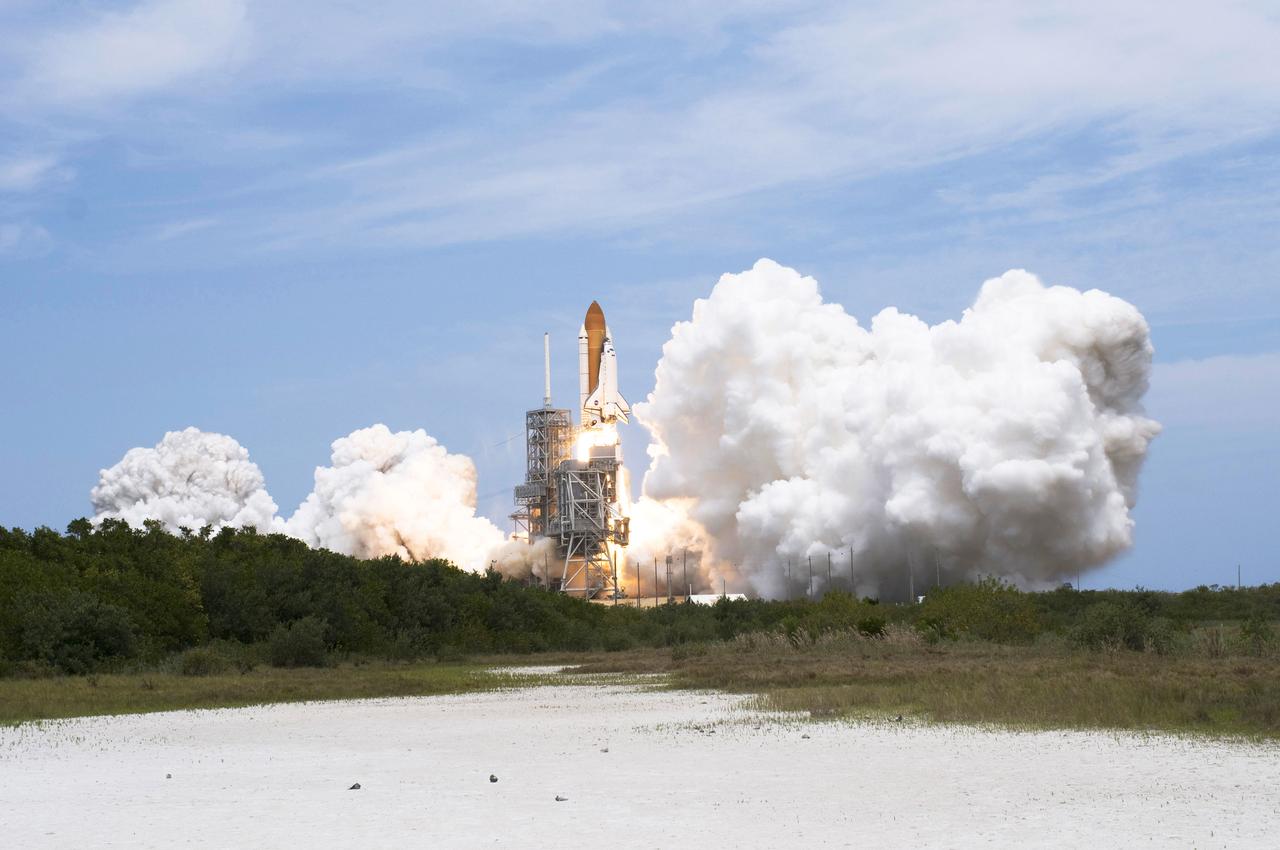
STS125-S-029 (11 May 2009) --- Space Shuttle Atlantis and its seven-member STS-125 crew head toward Earth orbit and rendezvous with NASA?s Hubble Space Telescope. Liftoff was on time at 2:01 p.m. (EDT) on May 11, 2009 from launch pad 39A at NASA's Kennedy Space Center. Onboard are astronauts Scott Altman, commander; Gregory C. Johnson, pilot; Michael Good, Megan McArthur, John Grunsfeld, Mike Massimino and Andrew Feustel, all mission specialists. Atlantis' 11-day flight will include five spacewalks to refurbish and upgrade the telescope with state-of-the-art science instruments that will expand Hubble's capabilities and extend its operational lifespan through at least 2014. The payload includes Wide Field Camera 3, fine guidance sensor and the Cosmic Origins Spectrograph.
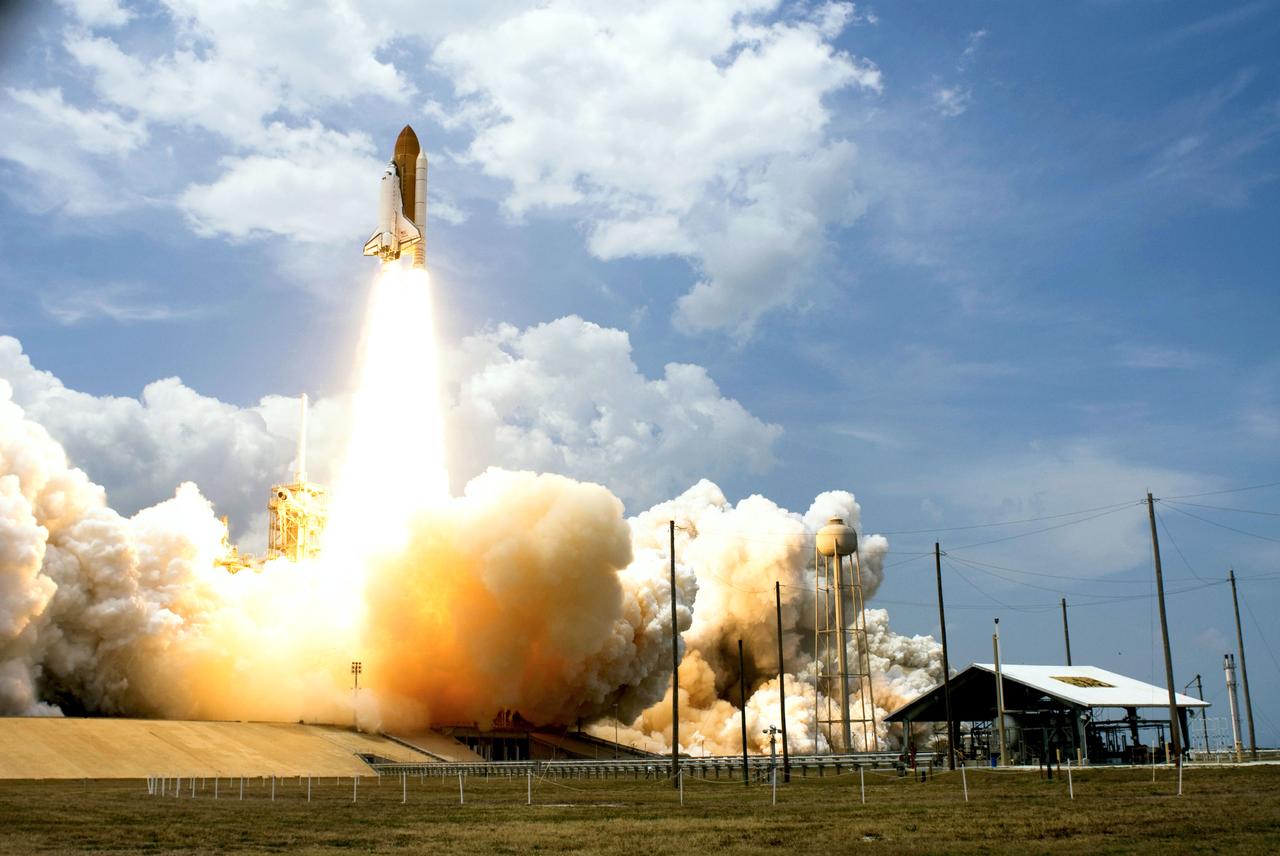
STS125-S-037 (11 May 2009) --- Space Shuttle Atlantis and its seven-member STS-125 crew head toward Earth orbit and rendezvous with NASA?s Hubble Space Telescope. Liftoff was on time at 2:01 p.m. (EDT) on May 11, 2009 from launch pad 39A at NASA's Kennedy Space Center. Onboard are astronauts Scott Altman, commander; Gregory C. Johnson, pilot; Michael Good, Megan McArthur, John Grunsfeld, Mike Massimino and Andrew Feustel, all mission specialists. Atlantis' 11-day flight will include five spacewalks to refurbish and upgrade the telescope with state-of-the-art science instruments that will expand Hubble's capabilities and extend its operational lifespan through at least 2014. The payload includes Wide Field Camera 3, fine guidance sensor and the Cosmic Origins Spectrograph.
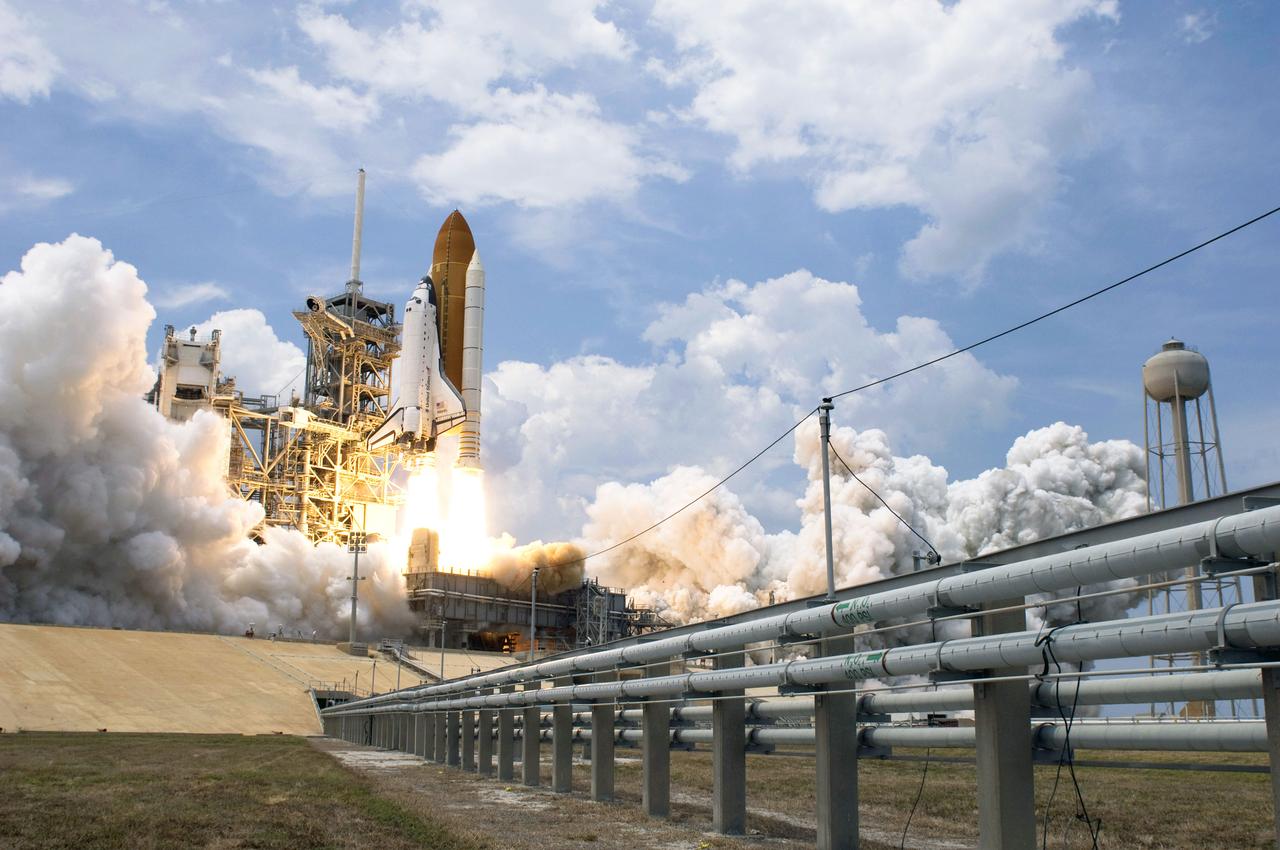
STS125-S-038 (11 May 2009) --- Space Shuttle Atlantis and its seven-member STS-125 crew head toward Earth orbit and rendezvous with NASA?s Hubble Space Telescope. Liftoff was on time at 2:01 p.m. (EDT) on May 11, 2009 from launch pad 39A at NASA's Kennedy Space Center. Onboard are astronauts Scott Altman, commander; Gregory C. Johnson, pilot; Michael Good, Megan McArthur, John Grunsfeld, Mike Massimino and Andrew Feustel, all mission specialists. Atlantis' 11-day flight will include five spacewalks to refurbish and upgrade the telescope with state-of-the-art science instruments that will expand Hubble's capabilities and extend its operational lifespan through at least 2014. The payload includes Wide Field Camera 3, fine guidance sensor and the Cosmic Origins Spectrograph.
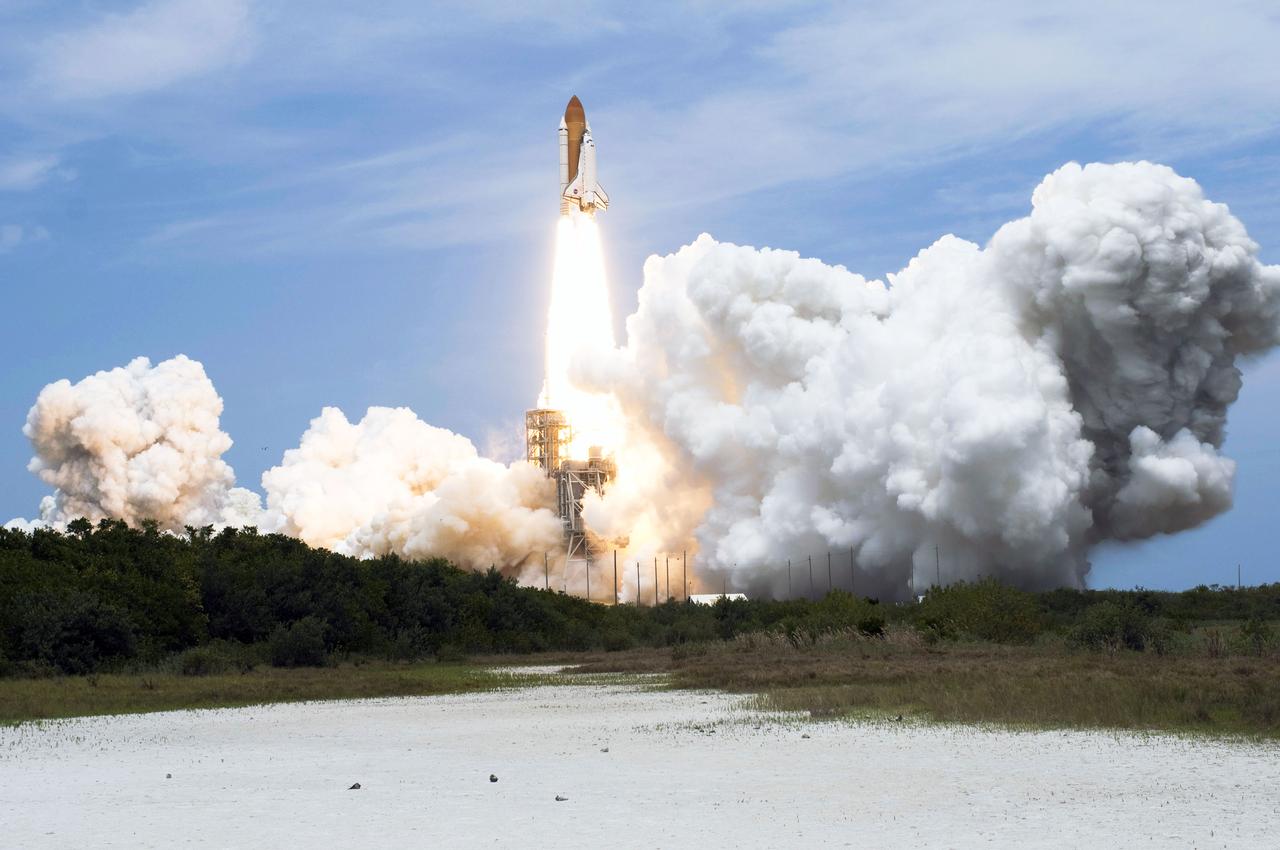
STS125-S-030 (11 May 2009) --- Space Shuttle Atlantis and its seven-member STS-125 crew head toward Earth orbit and rendezvous with NASA?s Hubble Space Telescope. Liftoff was on time at 2:01 p.m. (EDT) on May 11, 2009 from launch pad 39A at NASA's Kennedy Space Center. Onboard are astronauts Scott Altman, commander; Gregory C. Johnson, pilot; Michael Good, Megan McArthur, John Grunsfeld, Mike Massimino and Andrew Feustel, all mission specialists. Atlantis' 11-day flight will include five spacewalks to refurbish and upgrade the telescope with state-of-the-art science instruments that will expand Hubble's capabilities and extend its operational lifespan through at least 2014. The payload includes Wide Field Camera 3, fine guidance sensor and the Cosmic Origins Spectrograph.
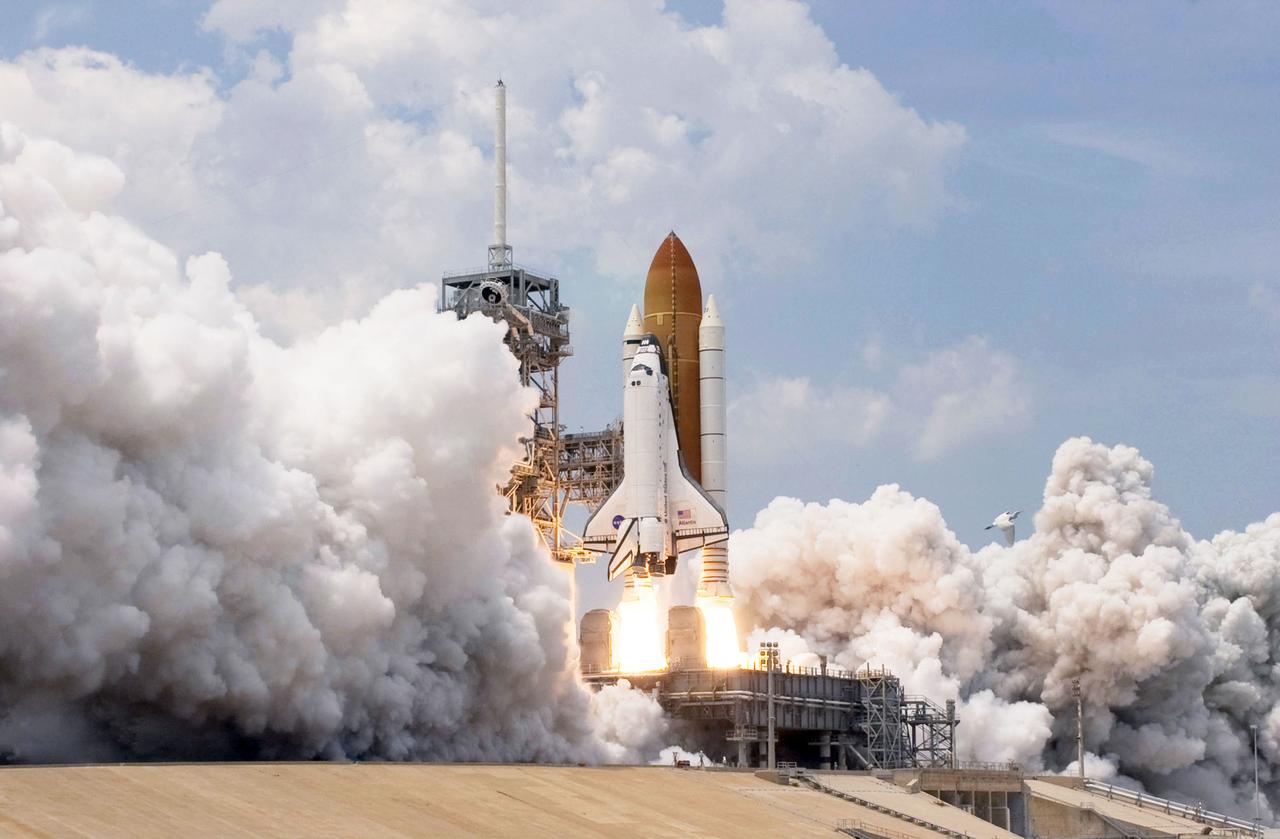
STS125-S-031 (11 May 2009) --- Space Shuttle Atlantis and its seven-member STS-125 crew head toward Earth orbit and rendezvous with NASA?s Hubble Space Telescope. Liftoff was on time at 2:01 p.m. (EDT) on May 11, 2009 from launch pad 39A at NASA's Kennedy Space Center. Onboard are astronauts Scott Altman, commander; Gregory C. Johnson, pilot; Michael Good, Megan McArthur, John Grunsfeld, Mike Massimino and Andrew Feustel, all mission specialists. Atlantis' 11-day flight will include five spacewalks to refurbish and upgrade the telescope with state-of-the-art science instruments that will expand Hubble's capabilities and extend its operational lifespan through at least 2014. The payload includes Wide Field Camera 3, fine guidance sensor and the Cosmic Origins Spectrograph.
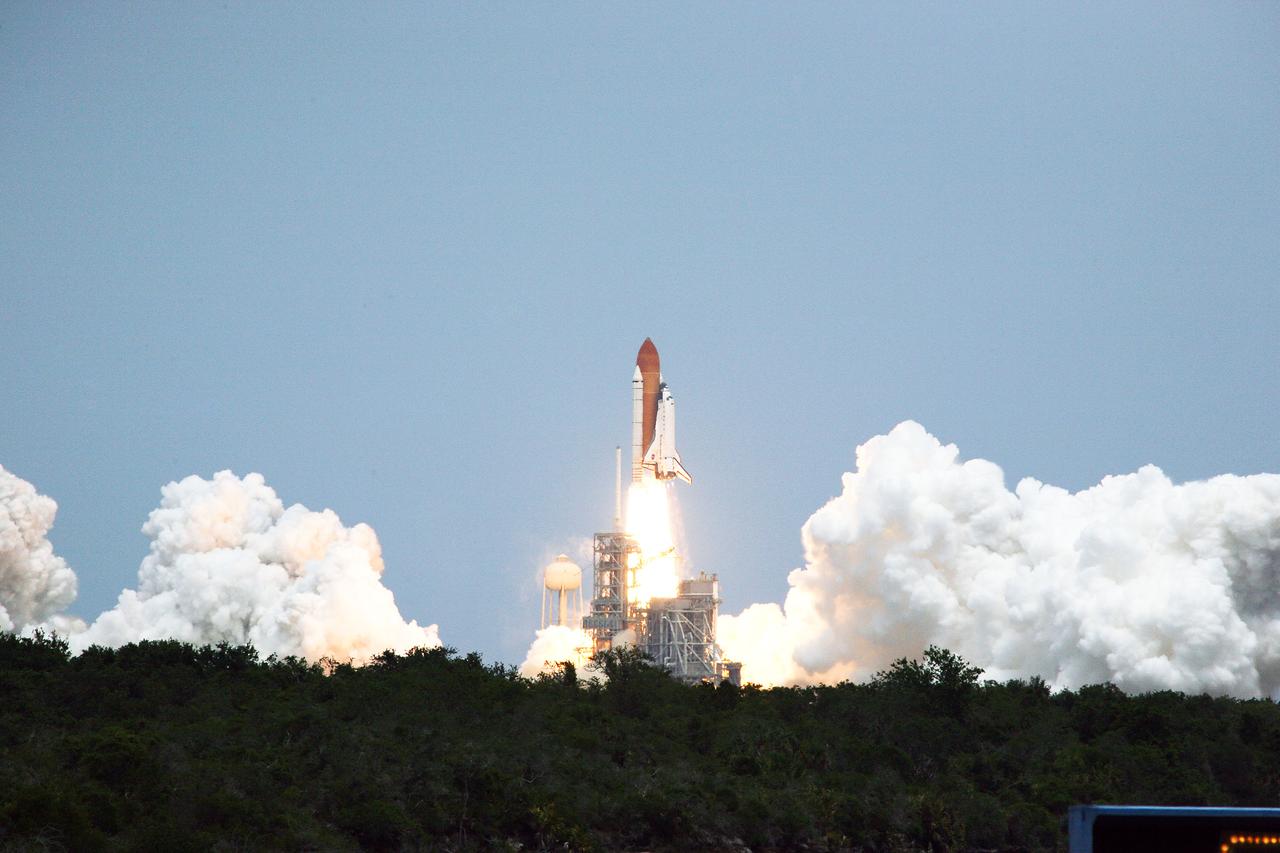
STS125-S-007 (11 May 2009) --- Space Shuttle Atlantis and its seven-member STS-125 crew head toward Earth orbit and rendezvous with NASA?s Hubble Space Telescope. Liftoff was on time at 2:01 p.m. (EDT) on May 11, 2009 from launch pad 39A at NASA's Kennedy Space Center. Onboard are astronauts Scott Altman, commander; Gregory C. Johnson, pilot: Michael Good, Megan McArthur, John Grunsfeld, Mike Massimino and Andrew Feustel, all mission specialists. Atlantis' 11-day flight will include five spacewalks to refurbish and upgrade the telescope with state-of-the-art science instruments that will expand Hubble's capabilities and extend its operational lifespan through at least 2014. The payload includes Wide Field Camera 3, fine guidance sensor and the Cosmic Origins Spectrograph.
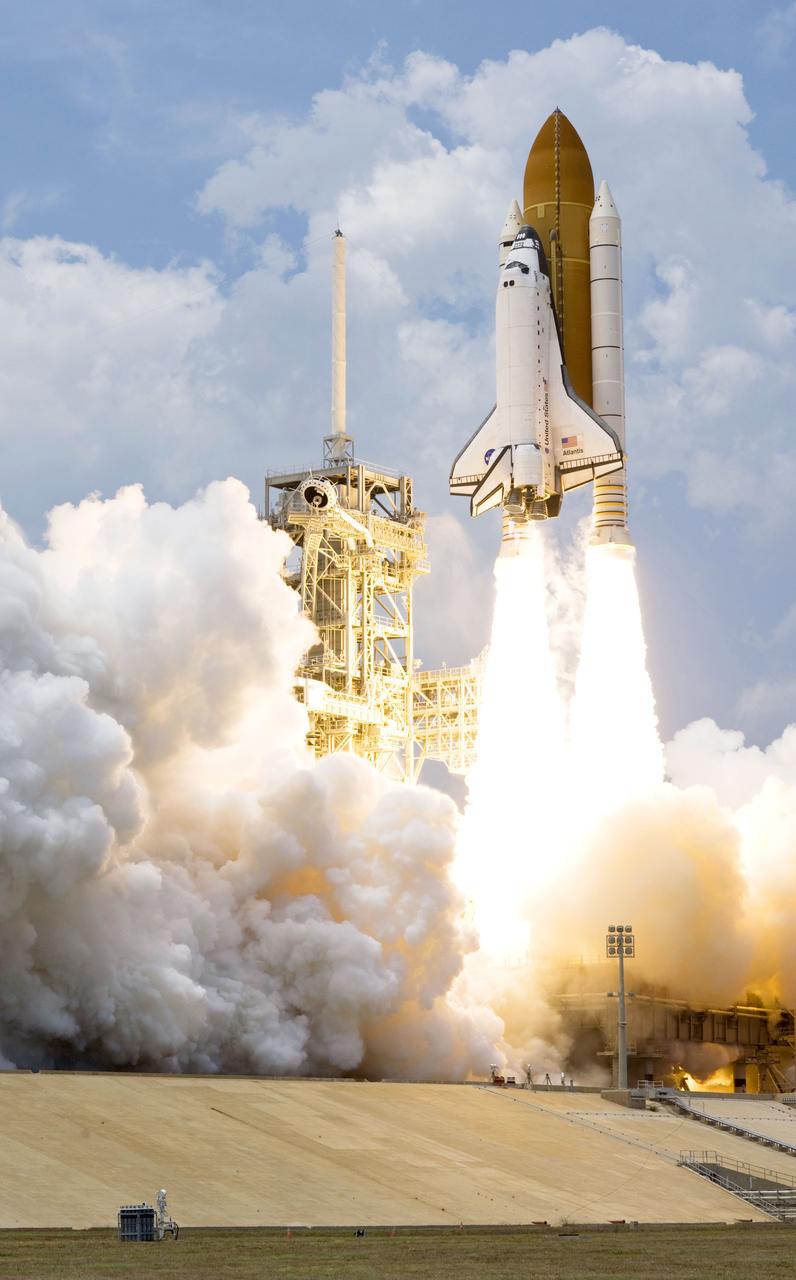
STS125-S-052 (11 May 2009) --- Space Shuttle Atlantis and its seven-member STS-125 crew head toward Earth orbit and rendezvous with NASA?s Hubble Space Telescope. Liftoff was on time at 2:01 p.m. (EDT) on May 11, 2009 from launch pad 39A at NASA's Kennedy Space Center. Onboard are astronauts Scott Altman, commander; Gregory C. Johnson, pilot; Michael Good, Megan McArthur, John Grunsfeld, Mike Massimino and Andrew Feustel, all mission specialists. Atlantis' 11-day flight will include five spacewalks to refurbish and upgrade the telescope with state-of-the-art science instruments that will expand Hubble's capabilities and extend its operational lifespan through at least 2014. The payload includes Wide Field Camera 3, fine guidance sensor and the Cosmic Origins Spectrograph.
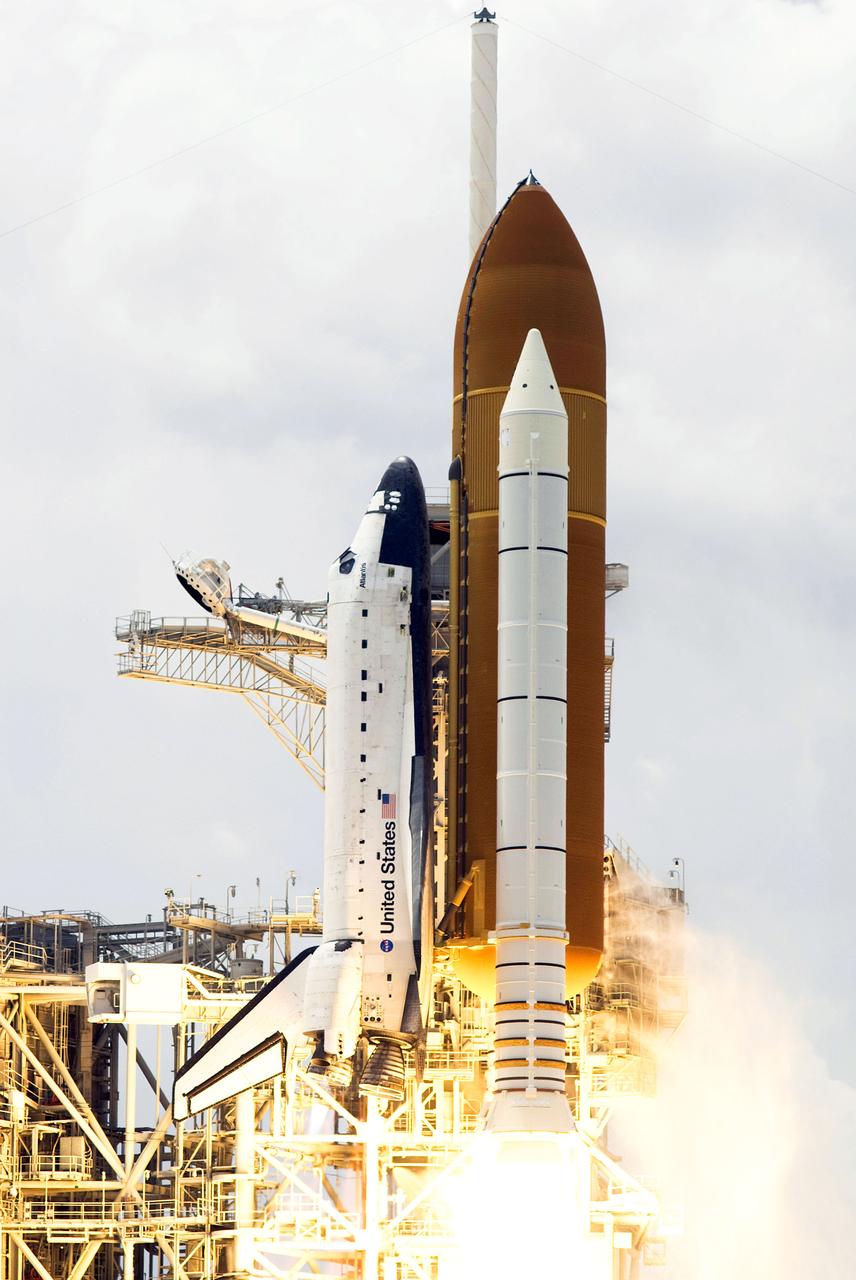
STS125-S-033 (11 May 2009) --- Space Shuttle Atlantis and its seven-member STS-125 crew head toward Earth orbit and rendezvous with NASA?s Hubble Space Telescope. Liftoff was on time at 2:01 p.m. (EDT) on May 11, 2009 from launch pad 39A at NASA's Kennedy Space Center. Onboard are astronauts Scott Altman, commander; Gregory C. Johnson, pilot; Michael Good, Megan McArthur, John Grunsfeld, Mike Massimino and Andrew Feustel, all mission specialists. Atlantis' 11-day flight will include five spacewalks to refurbish and upgrade the telescope with state-of-the-art science instruments that will expand Hubble's capabilities and extend its operational lifespan through at least 2014. The payload includes Wide Field Camera 3, fine guidance sensor and the Cosmic Origins Spectrograph.
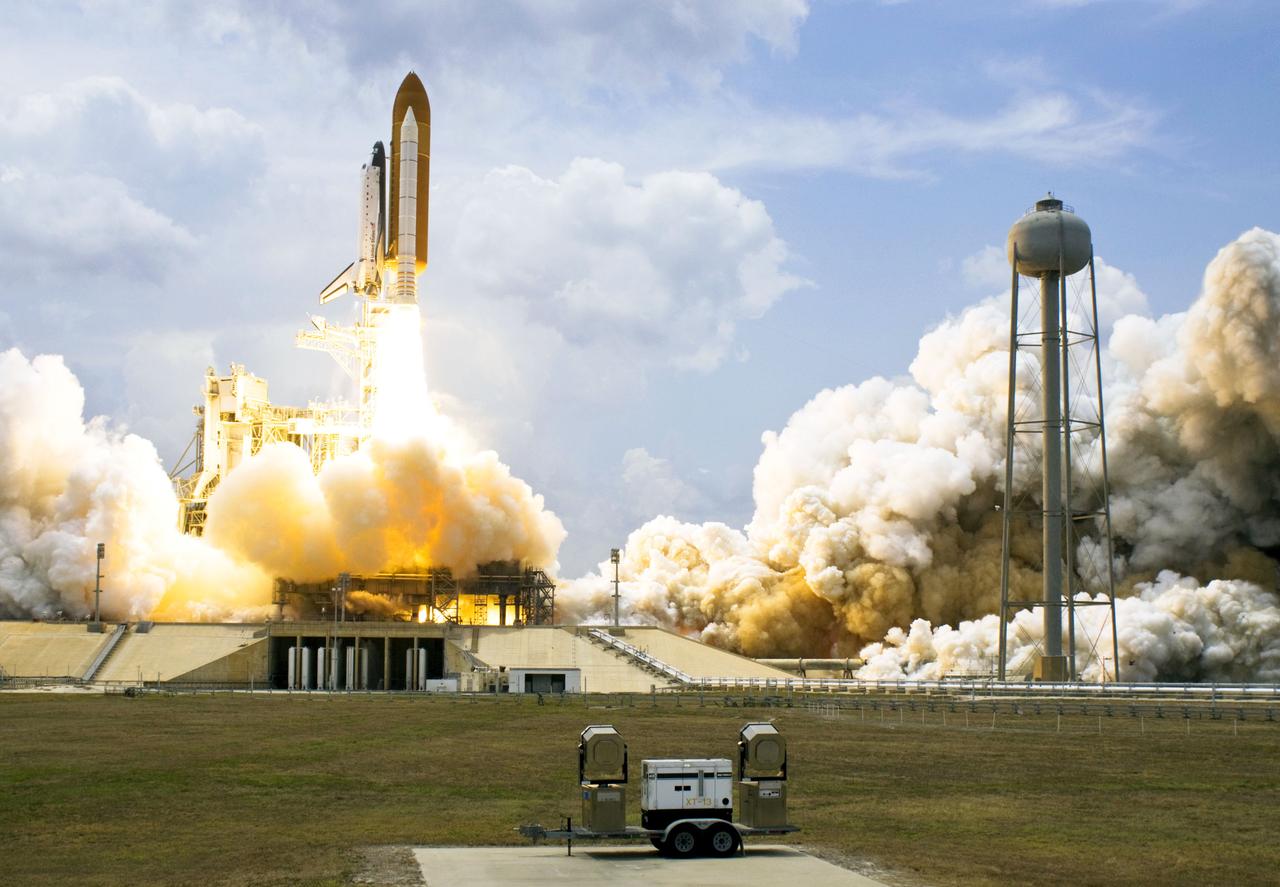
STS125-S-051 (11 May 2009) --- Space Shuttle Atlantis and its seven-member STS-125 crew head toward Earth orbit and rendezvous with NASA?s Hubble Space Telescope. Liftoff was on time at 2:01 p.m. (EDT) on May 11, 2009 from launch pad 39A at NASA's Kennedy Space Center. Onboard are astronauts Scott Altman, commander; Gregory C. Johnson, pilot; Michael Good, Megan McArthur, John Grunsfeld, Mike Massimino and Andrew Feustel, all mission specialists. Atlantis' 11-day flight will include five spacewalks to refurbish and upgrade the telescope with state-of-the-art science instruments that will expand Hubble's capabilities and extend its operational lifespan through at least 2014. The payload includes Wide Field Camera 3, fine guidance sensor and the Cosmic Origins Spectrograph.
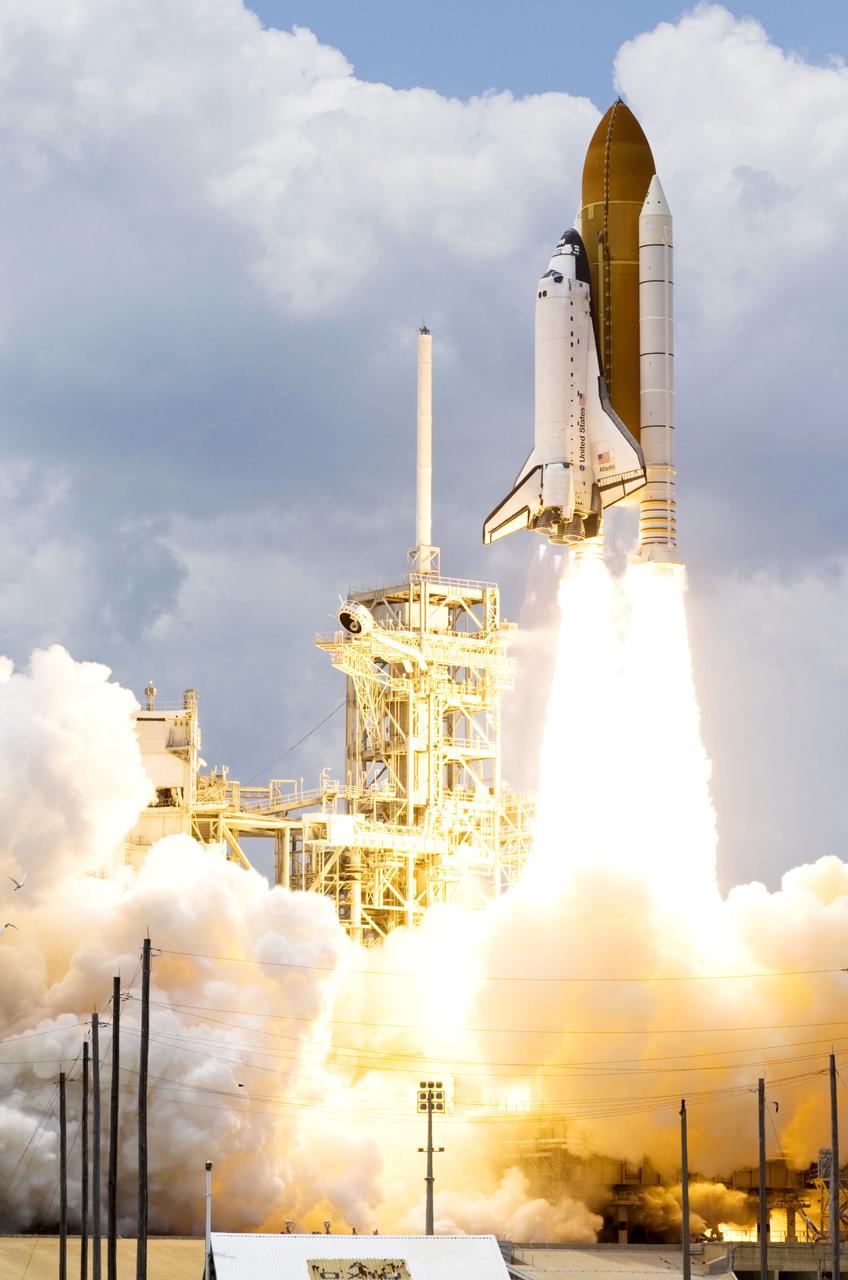
STS125-S-047 (11 May 2009) --- Space Shuttle Atlantis and its seven-member STS-125 crew head toward Earth orbit and rendezvous with NASA?s Hubble Space Telescope. Liftoff was on time at 2:01 p.m. (EDT) on May 11, 2009 from launch pad 39A at NASA's Kennedy Space Center. Onboard are astronauts Scott Altman, commander; Gregory C. Johnson, pilot; Michael Good, Megan McArthur, John Grunsfeld, Mike Massimino and Andrew Feustel, all mission specialists. Atlantis' 11-day flight will include five spacewalks to refurbish and upgrade the telescope with state-of-the-art science instruments that will expand Hubble's capabilities and extend its operational lifespan through at least 2014. The payload includes Wide Field Camera 3, fine guidance sensor and the Cosmic Origins Spectrograph.

STS125-S-008 (11 May 2009) --- Space Shuttle Atlantis and its seven-member STS-125 crew head toward Earth orbit and rendezvous with NASA?s Hubble Space Telescope. Liftoff was on time at 2:01 p.m. (EDT) on May 11, 2009 from launch pad 39A at NASA's Kennedy Space Center. Onboard are astronauts Scott Altman, commander; Gregory C. Johnson, pilot: Michael Good, Megan McArthur, John Grunsfeld, Mike Massimino and Andrew Feustel, all mission specialists. Atlantis' 11-day flight will include five spacewalks to refurbish and upgrade the telescope with state-of-the-art science instruments that will expand Hubble's capabilities and extend its operational lifespan through at least 2014. The payload includes Wide Field Camera 3, fine guidance sensor and the Cosmic Origins Spectrograph.
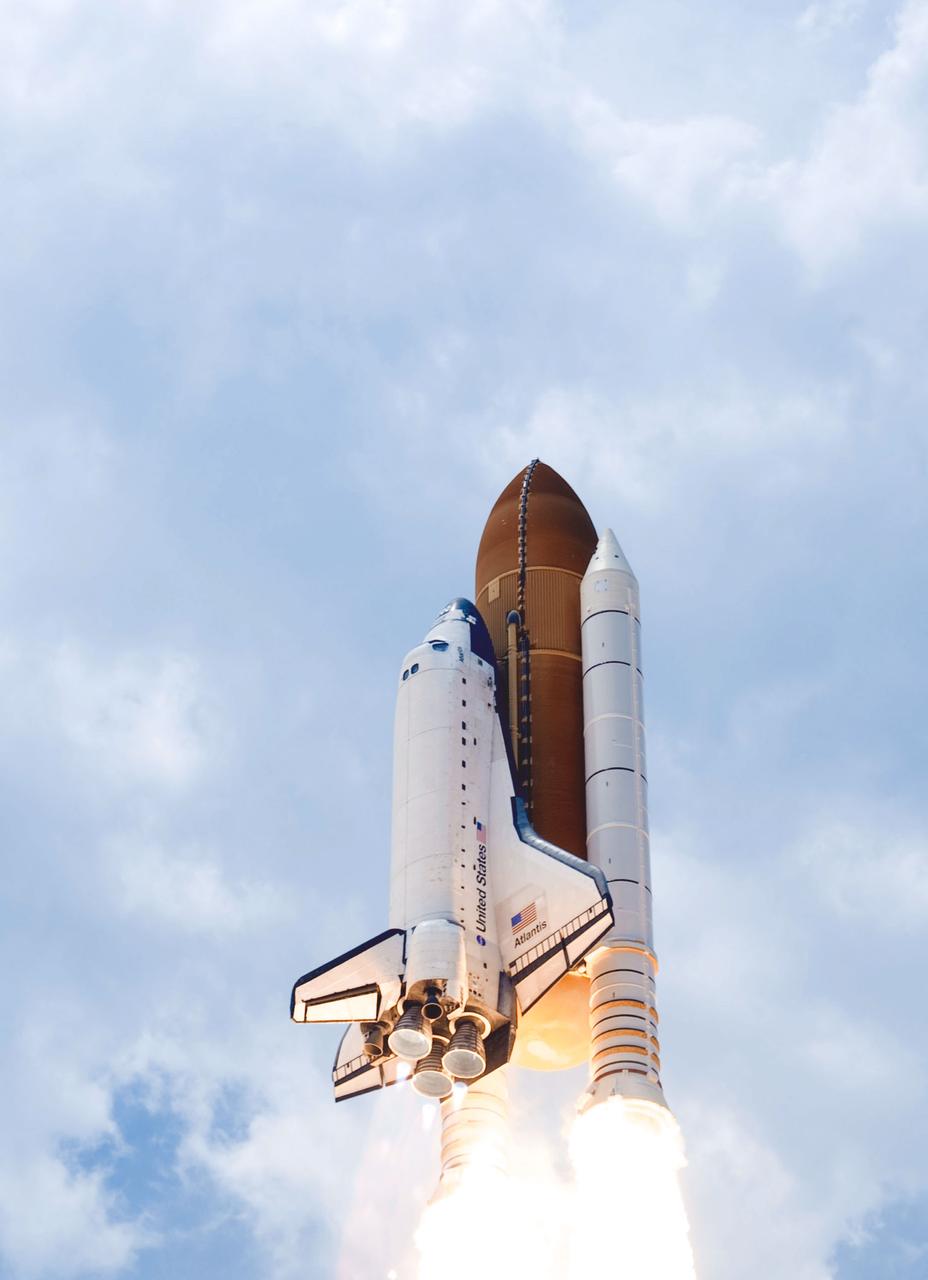
STS125-S-042 (11 May 2009) --- Space Shuttle Atlantis and its seven-member STS-125 crew head toward Earth orbit and rendezvous with NASA?s Hubble Space Telescope. Liftoff was on time at 2:01 p.m. (EDT) on May 11, 2009 from launch pad 39A at NASA's Kennedy Space Center. Onboard are astronauts Scott Altman, commander; Gregory C. Johnson, pilot; Michael Good, Megan McArthur, John Grunsfeld, Mike Massimino and Andrew Feustel, all mission specialists. Atlantis' 11-day flight will include five spacewalks to refurbish and upgrade the telescope with state-of-the-art science instruments that will expand Hubble's capabilities and extend its operational lifespan through at least 2014. The payload includes Wide Field Camera 3, fine guidance sensor and the Cosmic Origins Spectrograph.
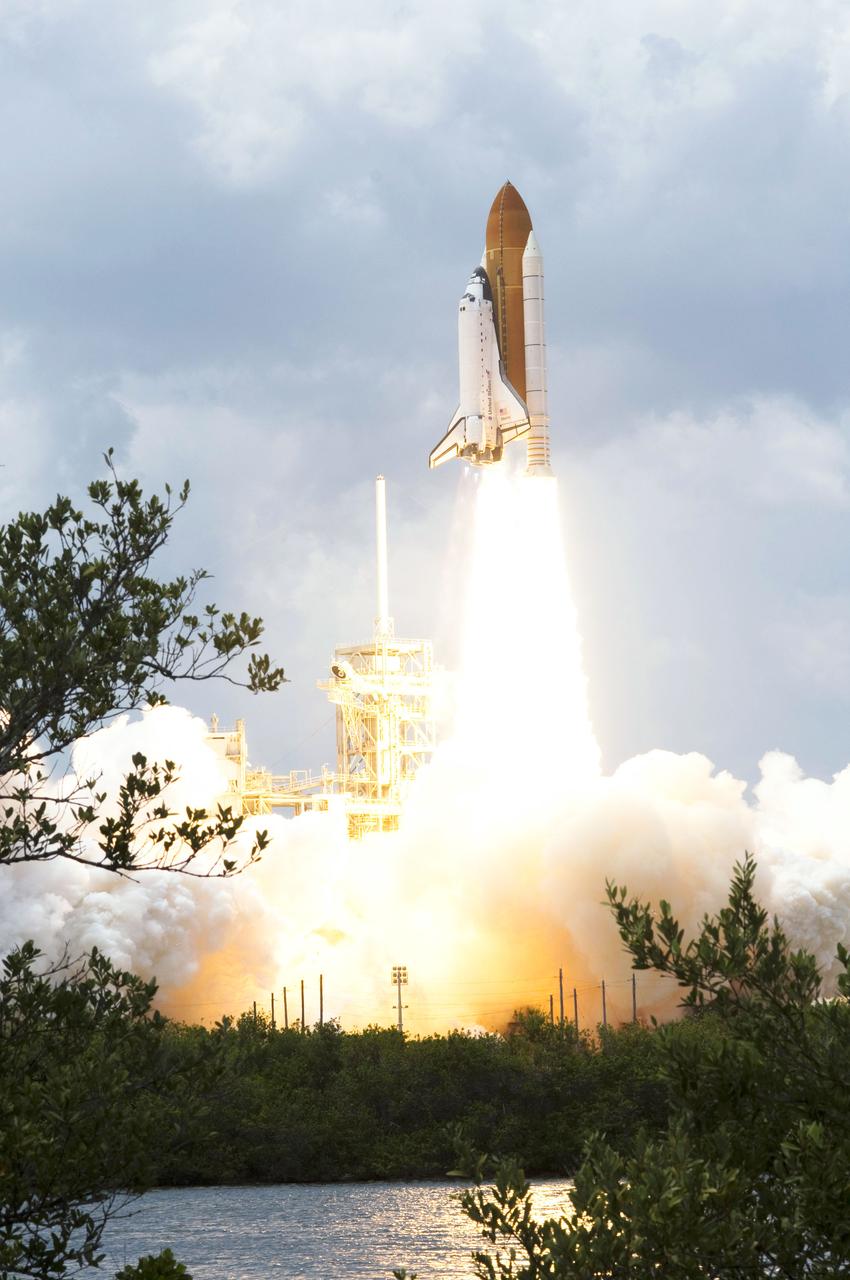
STS125-S-027 (11 May 2009) --- Space Shuttle Atlantis and its seven-member STS-125 crew head toward Earth orbit and rendezvous with NASA?s Hubble Space Telescope. Liftoff was on time at 2:01 p.m. (EDT) on May 11, 2009 from launch pad 39A at NASA's Kennedy Space Center. Onboard are astronauts Scott Altman, commander; Gregory C. Johnson, pilot; Michael Good, Megan McArthur, John Grunsfeld, Mike Massimino and Andrew Feustel, all mission specialists. Atlantis' 11-day flight will include five spacewalks to refurbish and upgrade the telescope with state-of-the-art science instruments that will expand Hubble's capabilities and extend its operational lifespan through at least 2014. The payload includes Wide Field Camera 3, fine guidance sensor and the Cosmic Origins Spectrograph.
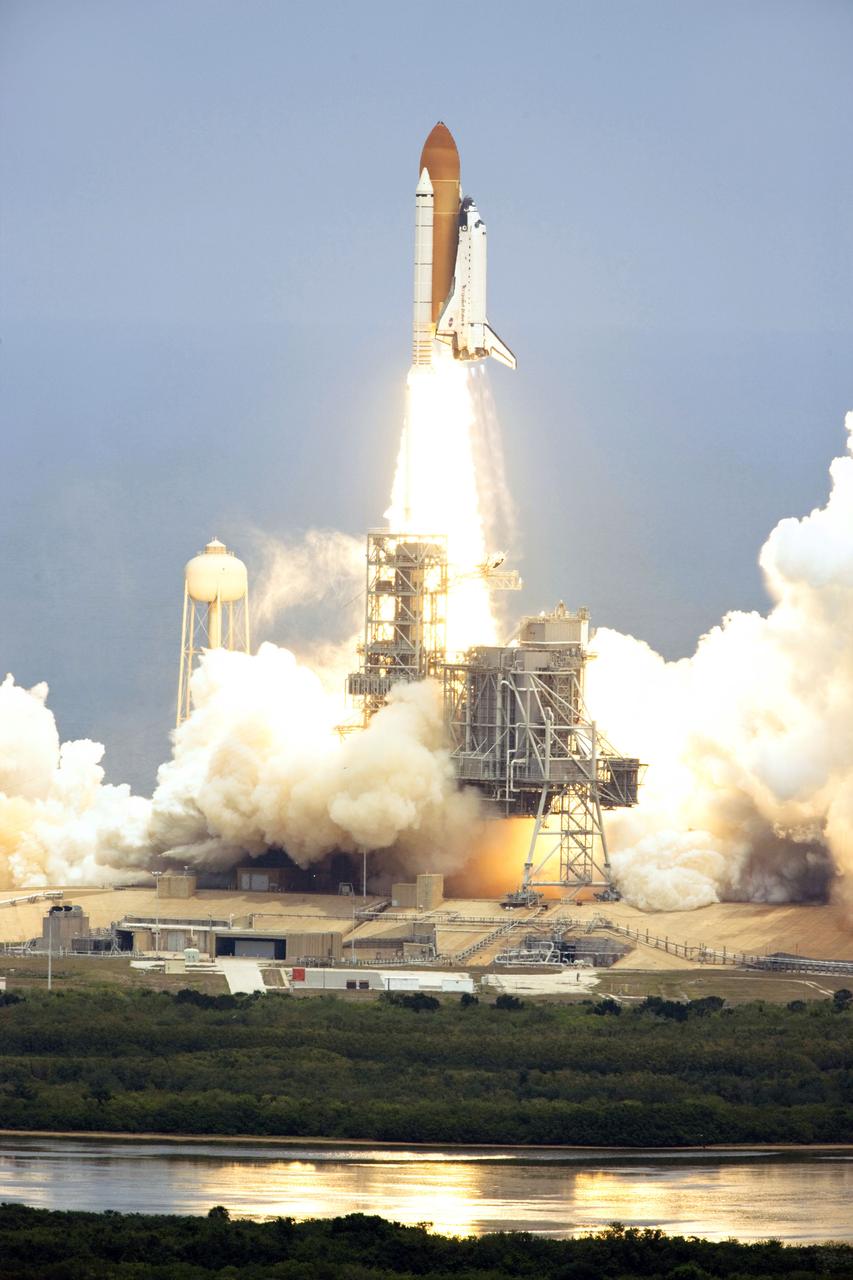
STS125-S-053 (11 May 2009) --- Space Shuttle Atlantis and its seven-member STS-125 crew head toward Earth orbit and rendezvous with NASA?s Hubble Space Telescope. Liftoff was on time at 2:01 p.m. (EDT) on May 11, 2009 from launch pad 39A at NASA's Kennedy Space Center. Onboard are astronauts Scott Altman, commander; Gregory C. Johnson, pilot; Michael Good, Megan McArthur, John Grunsfeld, Mike Massimino and Andrew Feustel, all mission specialists. Atlantis' 11-day flight will include five spacewalks to refurbish and upgrade the telescope with state-of-the-art science instruments that will expand Hubble's capabilities and extend its operational lifespan through at least 2014. The payload includes Wide Field Camera 3, fine guidance sensor and the Cosmic Origins Spectrograph.
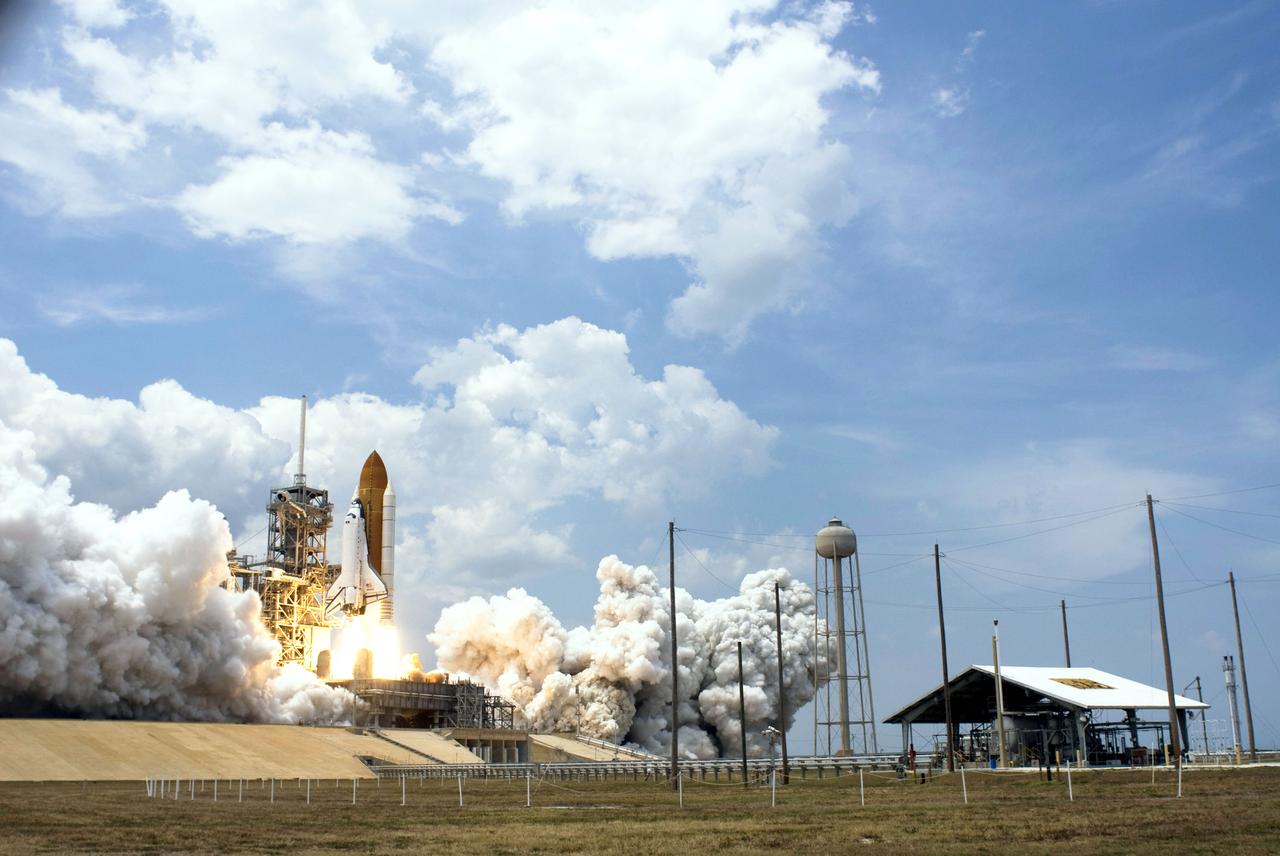
STS125-S-036 (11 May 2009) --- Space Shuttle Atlantis and its seven-member STS-125 crew head toward Earth orbit and rendezvous with NASA?s Hubble Space Telescope. Liftoff was on time at 2:01 p.m. (EDT) on May 11, 2009 from launch pad 39A at NASA's Kennedy Space Center. Onboard are astronauts Scott Altman, commander; Gregory C. Johnson, pilot; Michael Good, Megan McArthur, John Grunsfeld, Mike Massimino and Andrew Feustel, all mission specialists. Atlantis' 11-day flight will include five spacewalks to refurbish and upgrade the telescope with state-of-the-art science instruments that will expand Hubble's capabilities and extend its operational lifespan through at least 2014. The payload includes Wide Field Camera 3, fine guidance sensor and the Cosmic Origins Spectrograph.
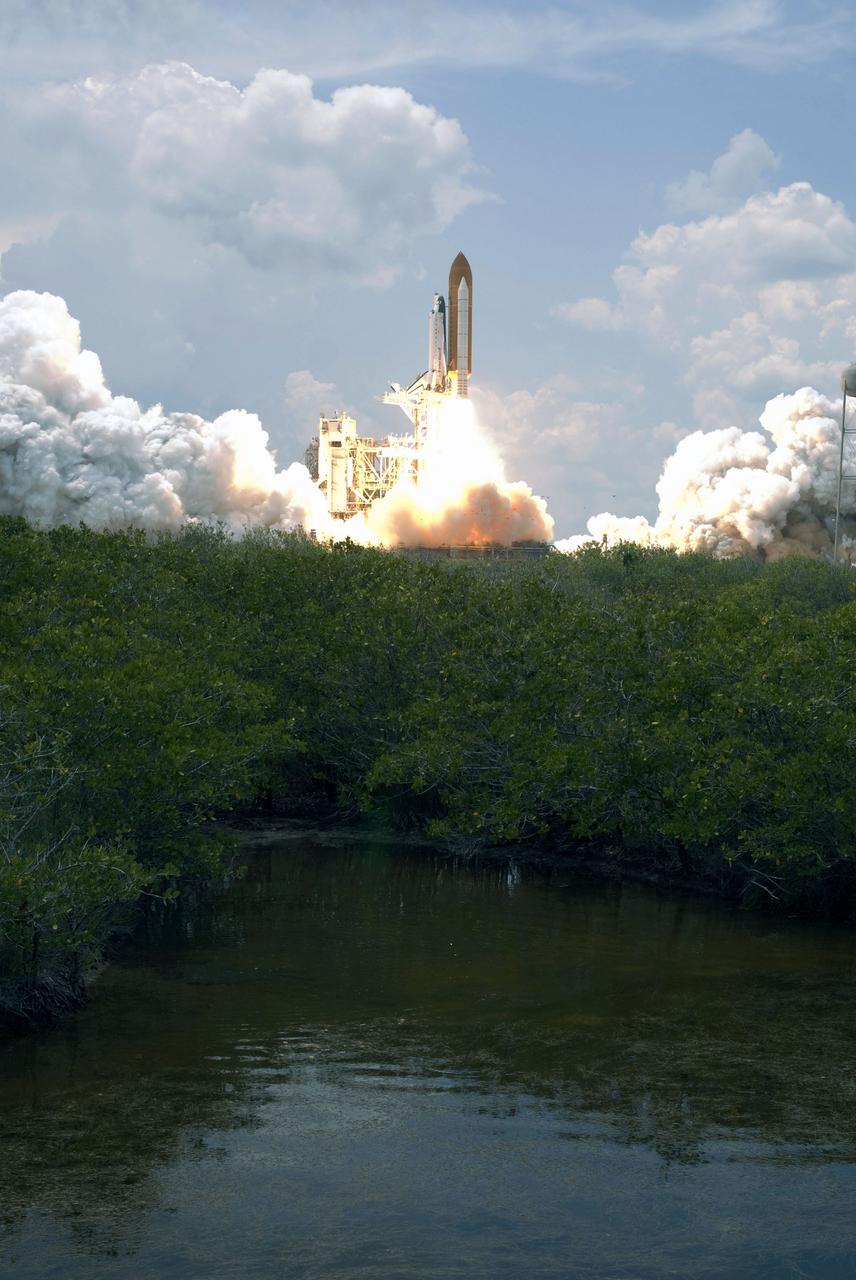
STS125-S-040 (11 May 2009) --- Space Shuttle Atlantis and its seven-member STS-125 crew head toward Earth orbit and rendezvous with NASA?s Hubble Space Telescope. Liftoff was on time at 2:01 p.m. (EDT) on May 11, 2009 from launch pad 39A at NASA's Kennedy Space Center. Onboard are astronauts Scott Altman, commander; Gregory C. Johnson, pilot; Michael Good, Megan McArthur, John Grunsfeld, Mike Massimino and Andrew Feustel, all mission specialists. Atlantis' 11-day flight will include five spacewalks to refurbish and upgrade the telescope with state-of-the-art science instruments that will expand Hubble's capabilities and extend its operational lifespan through at least 2014. The payload includes Wide Field Camera 3, fine guidance sensor and the Cosmic Origins Spectrograph.
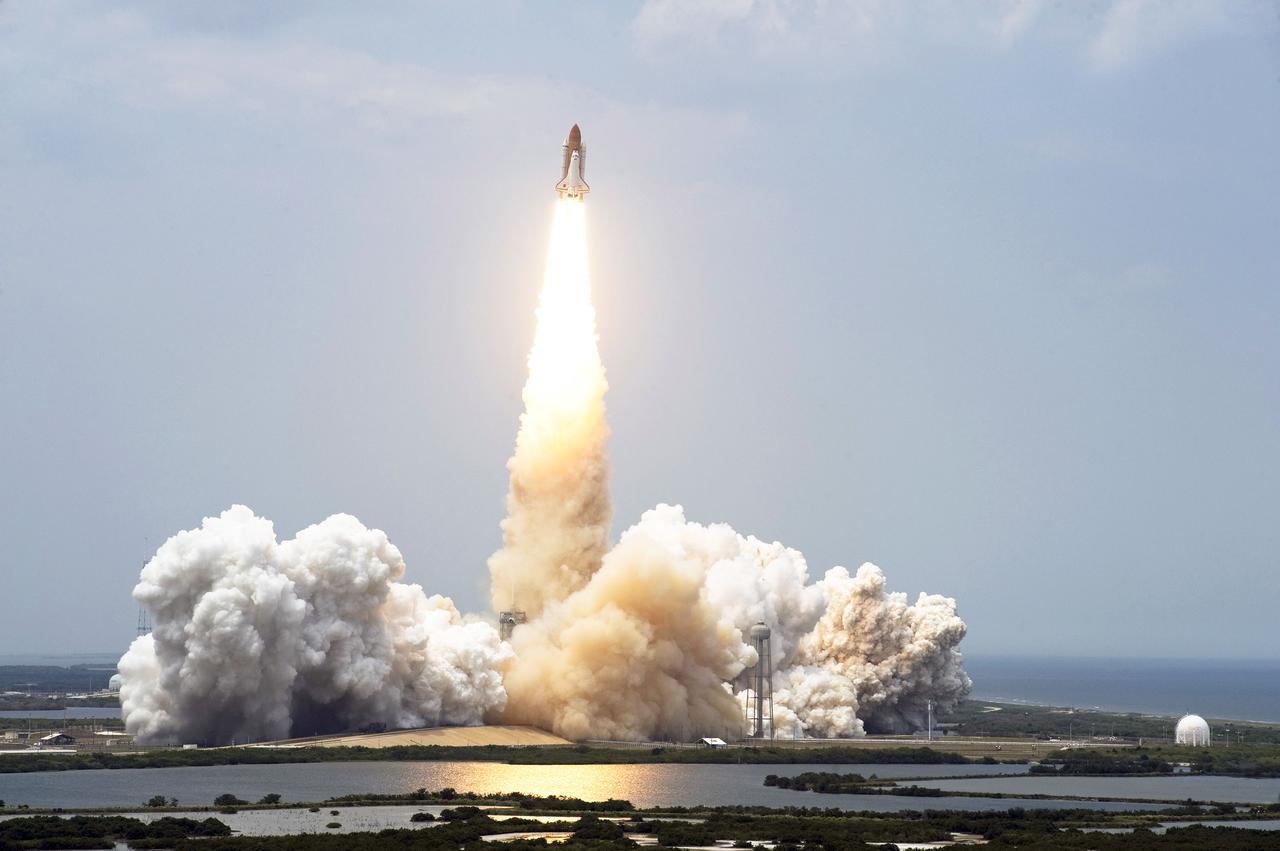
STS125-S-056 (11 May 2009) --- Space Shuttle Atlantis and its seven-member STS-125 crew head toward Earth orbit and rendezvous with NASA?s Hubble Space Telescope. Liftoff was on time at 2:01 p.m. (EDT) on May 11, 2009 from launch pad 39A at NASA's Kennedy Space Center. Onboard are astronauts Scott Altman, commander; Gregory C. Johnson, pilot; Michael Good, Megan McArthur, John Grunsfeld, Mike Massimino and Andrew Feustel, all mission specialists. Atlantis' 11-day flight will include five spacewalks to refurbish and upgrade the telescope with state-of-the-art science instruments that will expand Hubble's capabilities and extend its operational lifespan through at least 2014. The payload includes Wide Field Camera 3, fine guidance sensor and the Cosmic Origins Spectrograph.
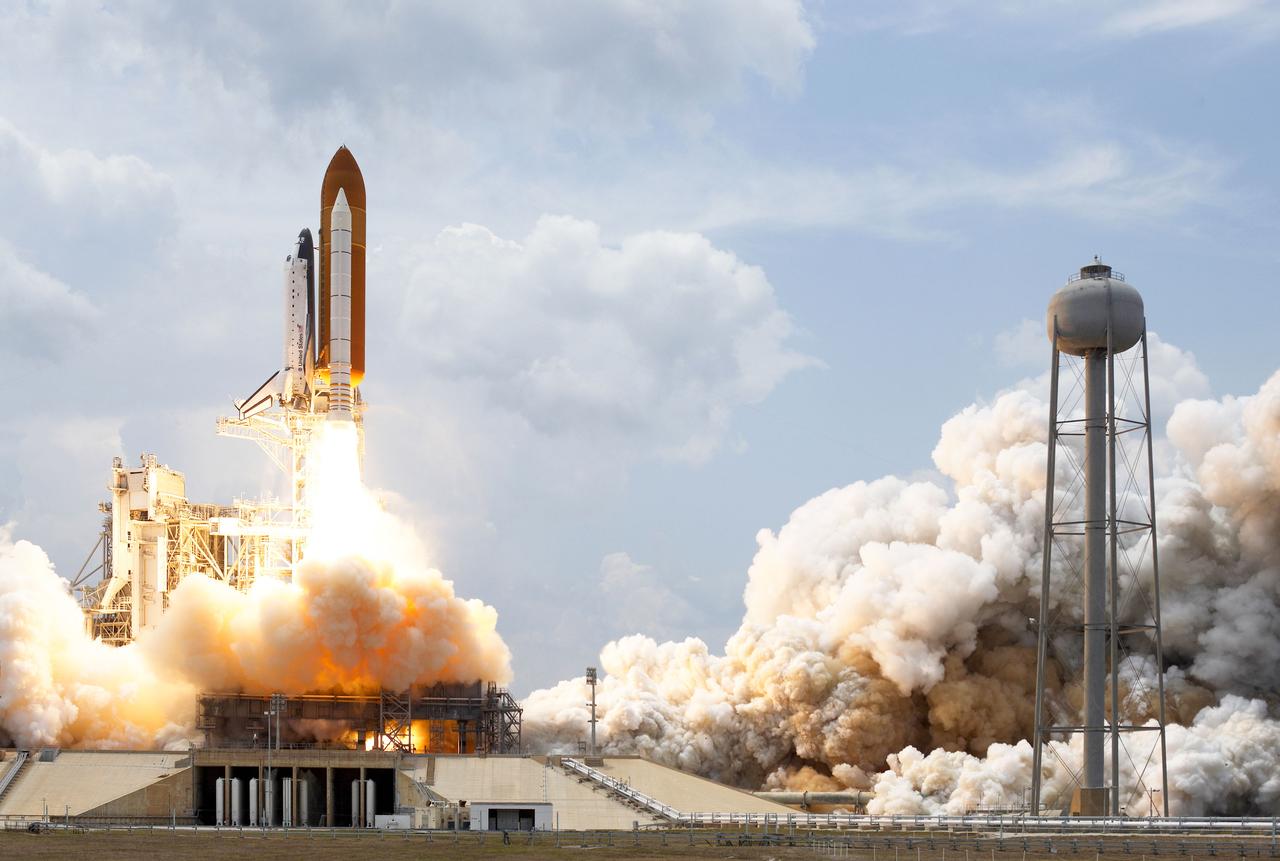
STS125-S-055 (11 May 2009) --- Space Shuttle Atlantis and its seven-member STS-125 crew head toward Earth orbit and rendezvous with NASA?s Hubble Space Telescope. Liftoff was on time at 2:01 p.m. (EDT) on May 11, 2009 from launch pad 39A at NASA's Kennedy Space Center. Onboard are astronauts Scott Altman, commander; Gregory C. Johnson, pilot; Michael Good, Megan McArthur, John Grunsfeld, Mike Massimino and Andrew Feustel, all mission specialists. Atlantis' 11-day flight will include five spacewalks to refurbish and upgrade the telescope with state-of-the-art science instruments that will expand Hubble's capabilities and extend its operational lifespan through at least 2014. The payload includes Wide Field Camera 3, fine guidance sensor and the Cosmic Origins Spectrograph.
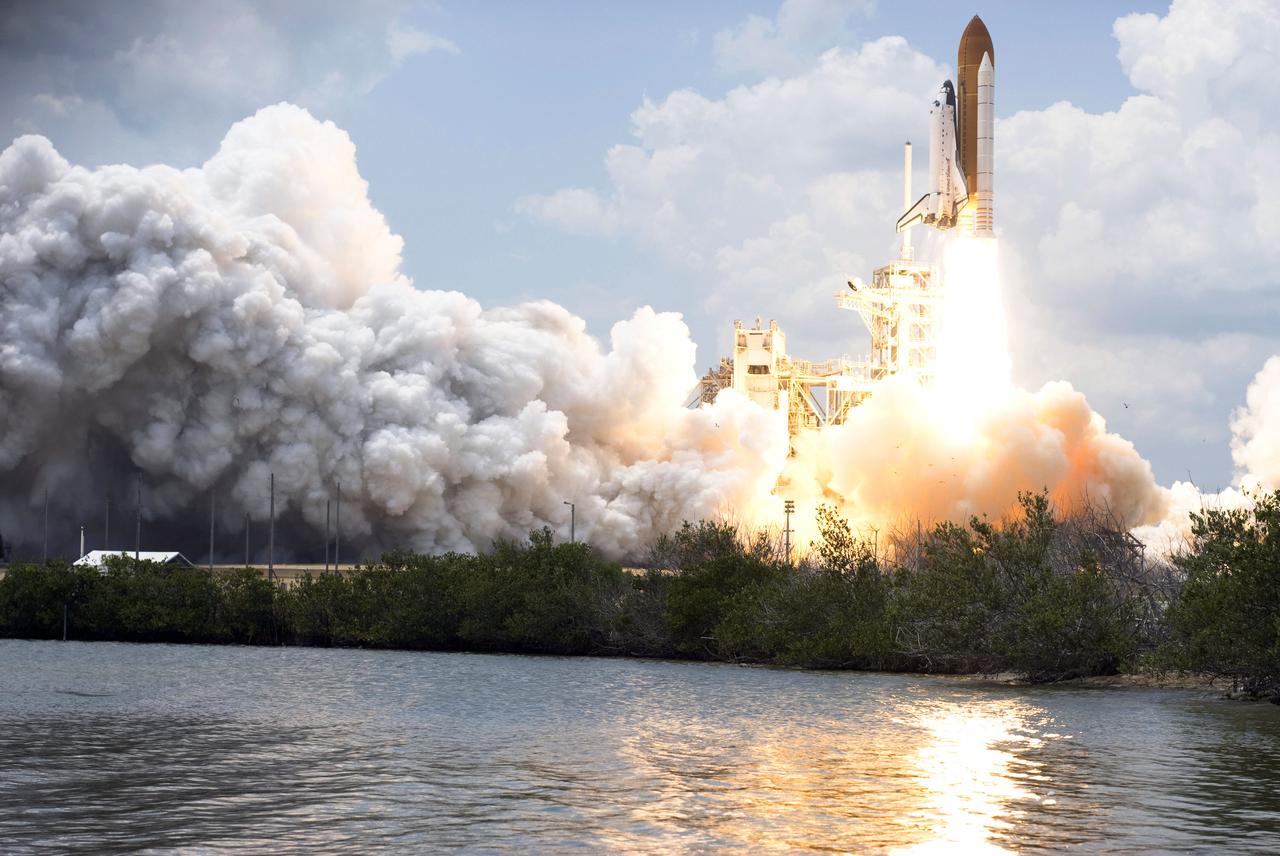
STS125-S-028 (11 May 2009) --- Space Shuttle Atlantis and its seven-member STS-125 crew head toward Earth orbit and rendezvous with NASA?s Hubble Space Telescope. Liftoff was on time at 2:01 p.m. (EDT) on May 11, 2009 from launch pad 39A at NASA's Kennedy Space Center. Onboard are astronauts Scott Altman, commander; Gregory C. Johnson, pilot; Michael Good, Megan McArthur, John Grunsfeld, Mike Massimino and Andrew Feustel, all mission specialists. Atlantis' 11-day flight will include five spacewalks to refurbish and upgrade the telescope with state-of-the-art science instruments that will expand Hubble's capabilities and extend its operational lifespan through at least 2014. The payload includes Wide Field Camera 3, fine guidance sensor and the Cosmic Origins Spectrograph.
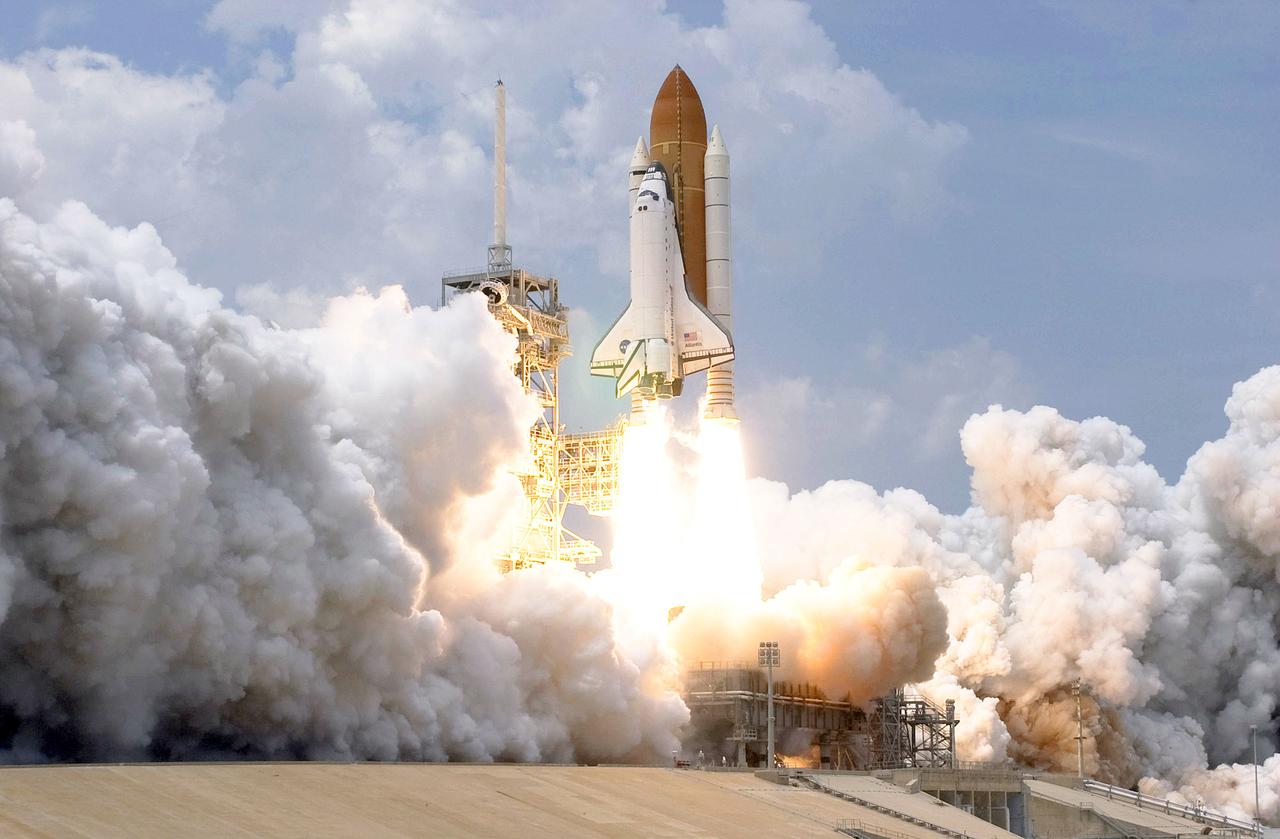
STS125-S-032 (11 May 2009) --- Space Shuttle Atlantis and its seven-member STS-125 crew head toward Earth orbit and rendezvous with NASA?s Hubble Space Telescope. Liftoff was on time at 2:01 p.m. (EDT) on May 11, 2009 from launch pad 39A at NASA's Kennedy Space Center. Onboard are astronauts Scott Altman, commander; Gregory C. Johnson, pilot; Michael Good, Megan McArthur, John Grunsfeld, Mike Massimino and Andrew Feustel, all mission specialists. Atlantis' 11-day flight will include five spacewalks to refurbish and upgrade the telescope with state-of-the-art science instruments that will expand Hubble's capabilities and extend its operational lifespan through at least 2014. The payload includes Wide Field Camera 3, fine guidance sensor and the Cosmic Origins Spectrograph.
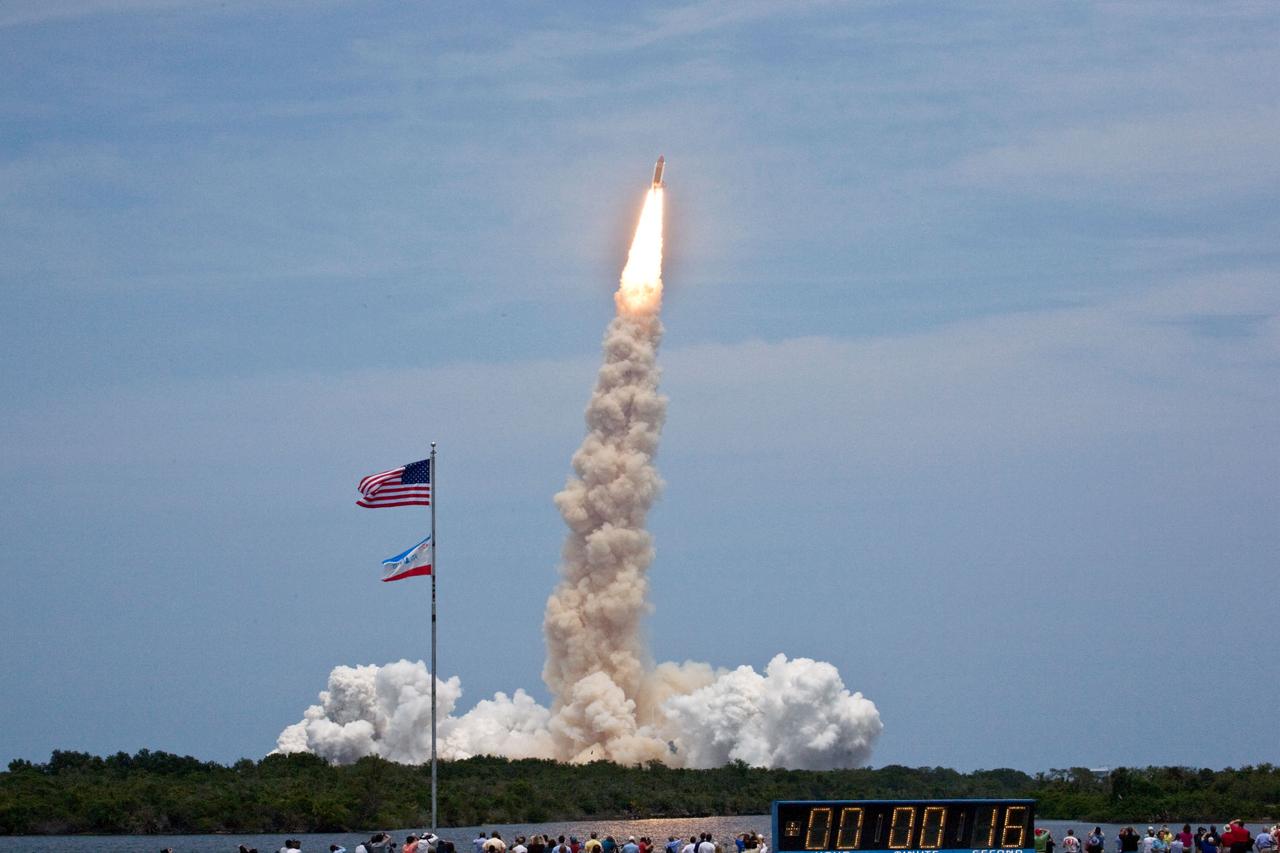
STS125-S-005 (11 May 2009) --- Space Shuttle Atlantis and its seven-member STS-125 crew head toward Earth orbit and rendezvous with NASA?s Hubble Space Telescope. Liftoff was on time at 2:01 p.m. (EDT) on May 11, 2009 from launch pad 39A at NASA's Kennedy Space Center. Onboard are astronauts Scott Altman, commander; Gregory C. Johnson, pilot: Michael Good, Megan McArthur, John Grunsfeld, Mike Massimino and Andrew Feustel, all mission specialists. Atlantis' 11-day flight will include five spacewalks to refurbish and upgrade the telescope with state-of-the-art science instruments that will expand Hubble's capabilities and extend its operational lifespan through at least 2014. The payload includes Wide Field Camera 3, fine guidance sensor and the Cosmic Origins Spectrograph.
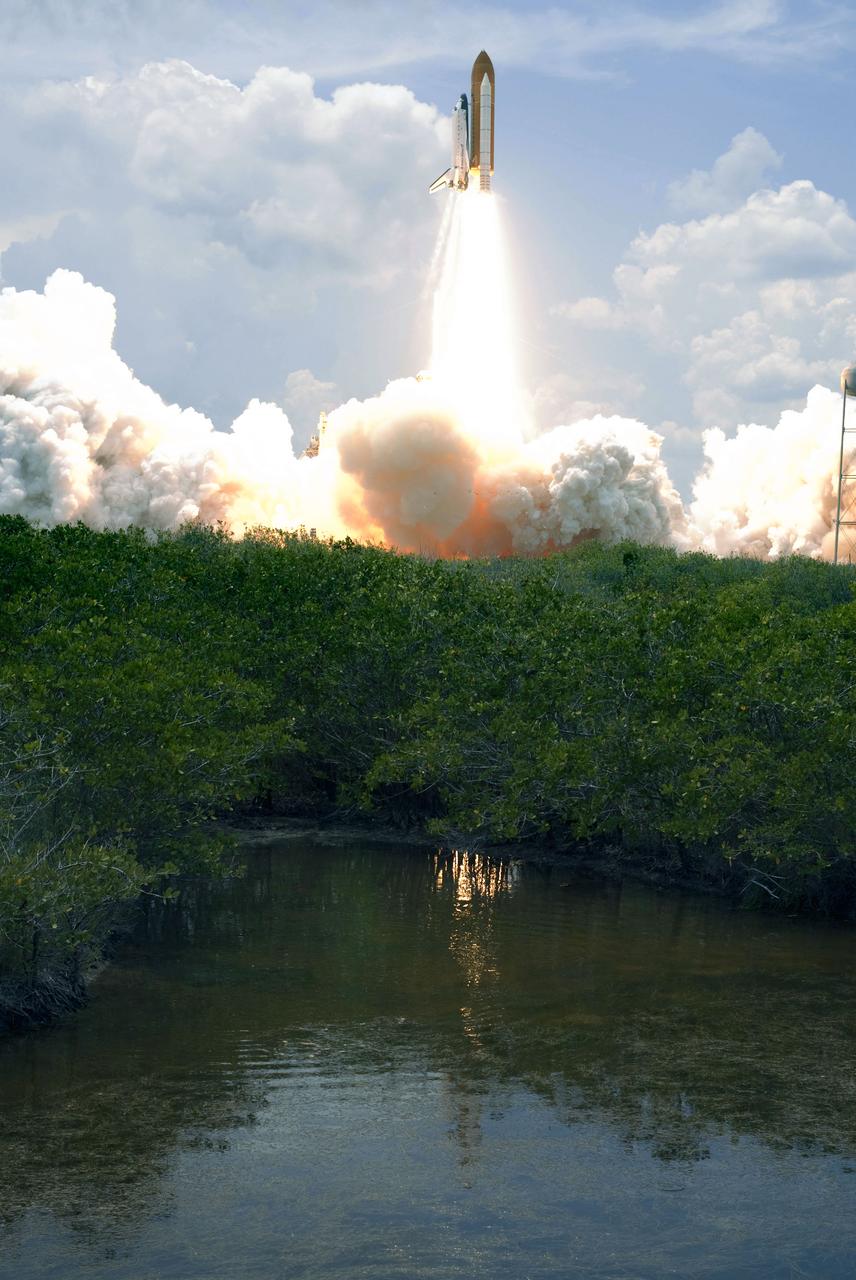
STS125-S-041 (11 May 2009) --- Space Shuttle Atlantis and its seven-member STS-125 crew head toward Earth orbit and rendezvous with NASA?s Hubble Space Telescope. Liftoff was on time at 2:01 p.m. (EDT) on May 11, 2009 from launch pad 39A at NASA's Kennedy Space Center. Onboard are astronauts Scott Altman, commander; Gregory C. Johnson, pilot; Michael Good, Megan McArthur, John Grunsfeld, Mike Massimino and Andrew Feustel, all mission specialists. Atlantis' 11-day flight will include five spacewalks to refurbish and upgrade the telescope with state-of-the-art science instruments that will expand Hubble's capabilities and extend its operational lifespan through at least 2014. The payload includes Wide Field Camera 3, fine guidance sensor and the Cosmic Origins Spectrograph.
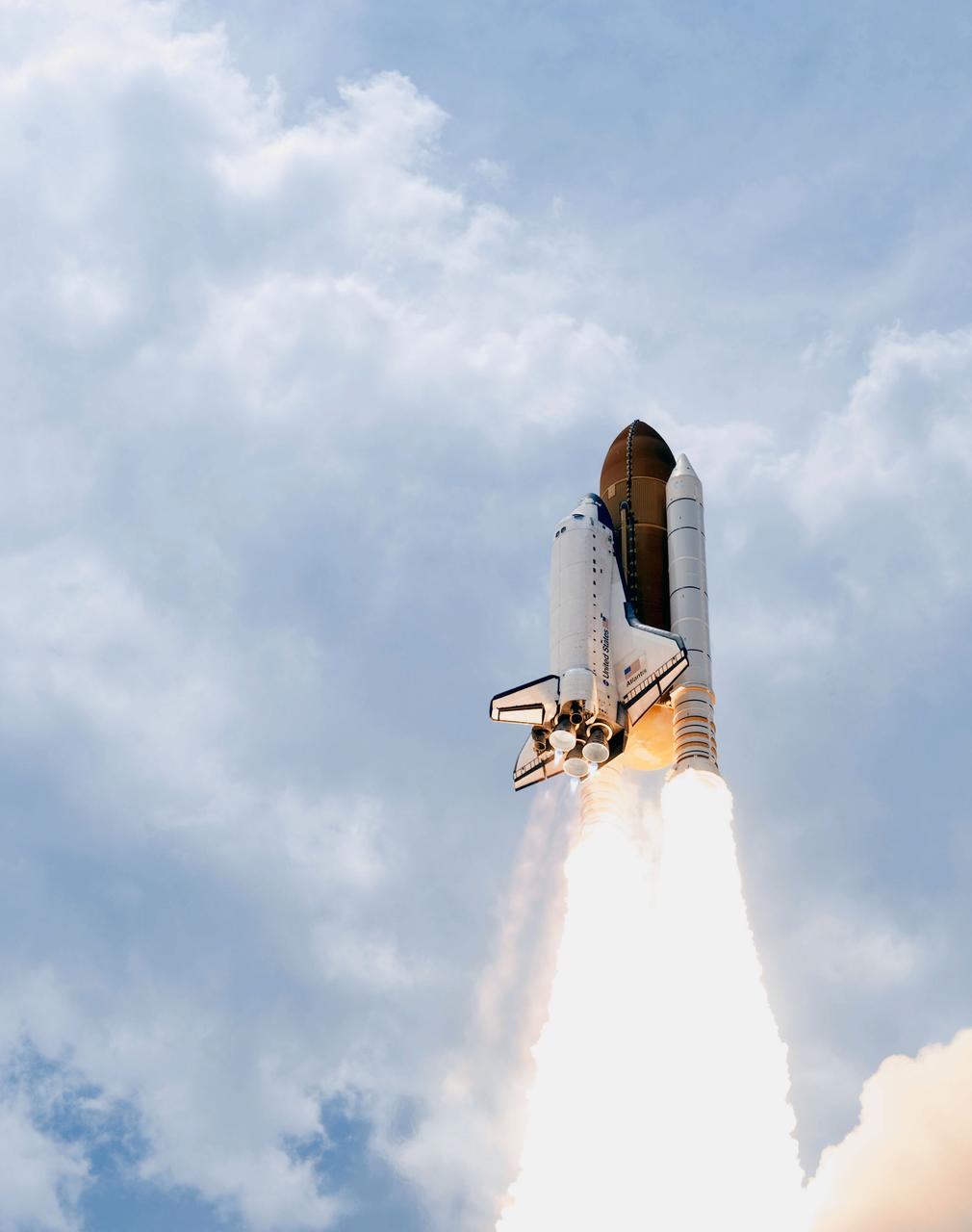
STS125-S-043 (11 May 2009) --- Space Shuttle Atlantis and its seven-member STS-125 crew head toward Earth orbit and rendezvous with NASA?s Hubble Space Telescope. Liftoff was on time at 2:01 p.m. (EDT) on May 11, 2009 from launch pad 39A at NASA's Kennedy Space Center. Onboard are astronauts Scott Altman, commander; Gregory C. Johnson, pilot; Michael Good, Megan McArthur, John Grunsfeld, Mike Massimino and Andrew Feustel, all mission specialists. Atlantis' 11-day flight will include five spacewalks to refurbish and upgrade the telescope with state-of-the-art science instruments that will expand Hubble's capabilities and extend its operational lifespan through at least 2014. The payload includes Wide Field Camera 3, fine guidance sensor and the Cosmic Origins Spectrograph.
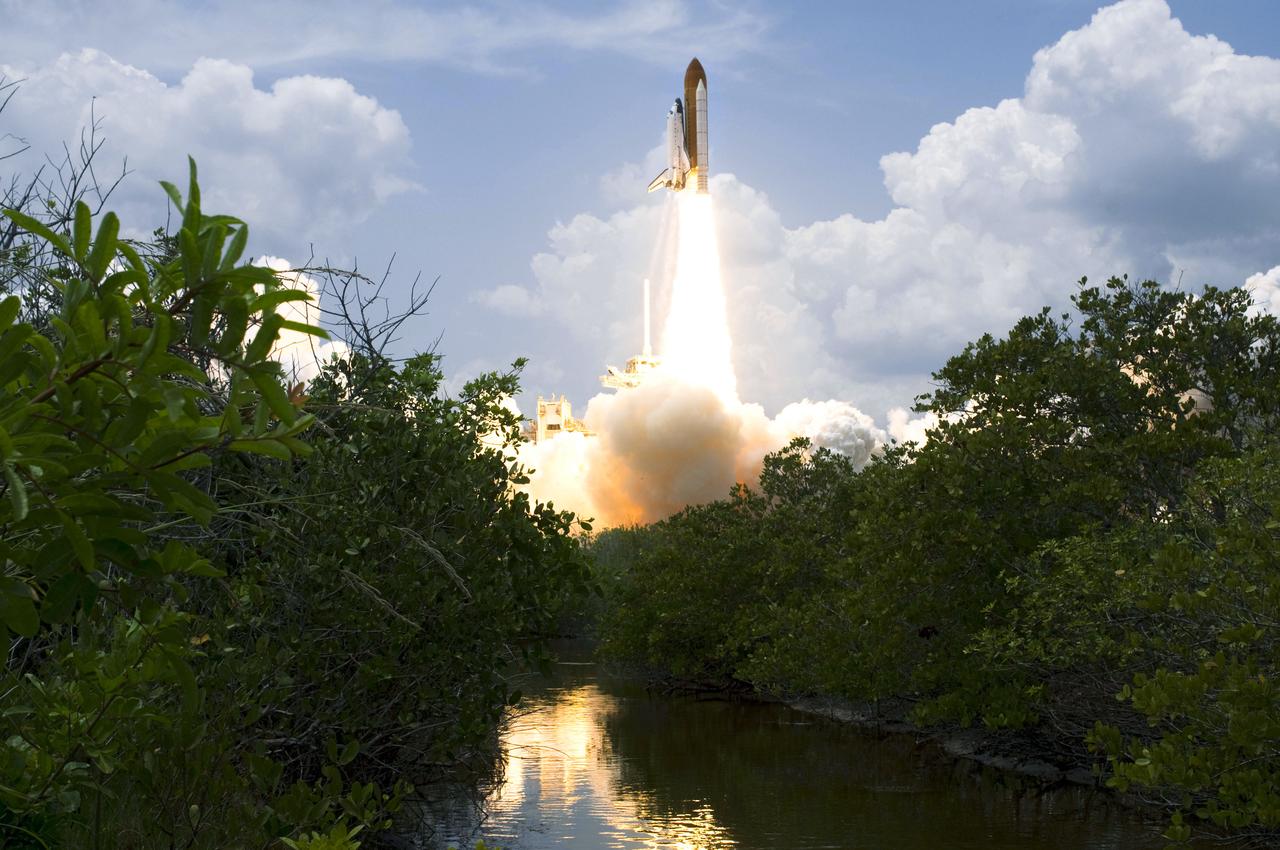
STS125-S-023 (11 May 2009) --- Space Shuttle Atlantis and its seven-member STS-125 crew head toward Earth orbit and rendezvous with NASA?s Hubble Space Telescope. Liftoff was on time at 2:01 p.m. (EDT) on May 11, 2009 from launch pad 39A at NASA's Kennedy Space Center. Onboard are astronauts Scott Altman, commander; Gregory C. Johnson, pilot; Michael Good, Megan McArthur, John Grunsfeld, Mike Massimino and Andrew Feustel, all mission specialists. Atlantis' 11-day flight will include five spacewalks to refurbish and upgrade the telescope with state-of-the-art science instruments that will expand Hubble's capabilities and extend its operational lifespan through at least 2014. The payload includes Wide Field Camera 3, fine guidance sensor and the Cosmic Origins Spectrograph.
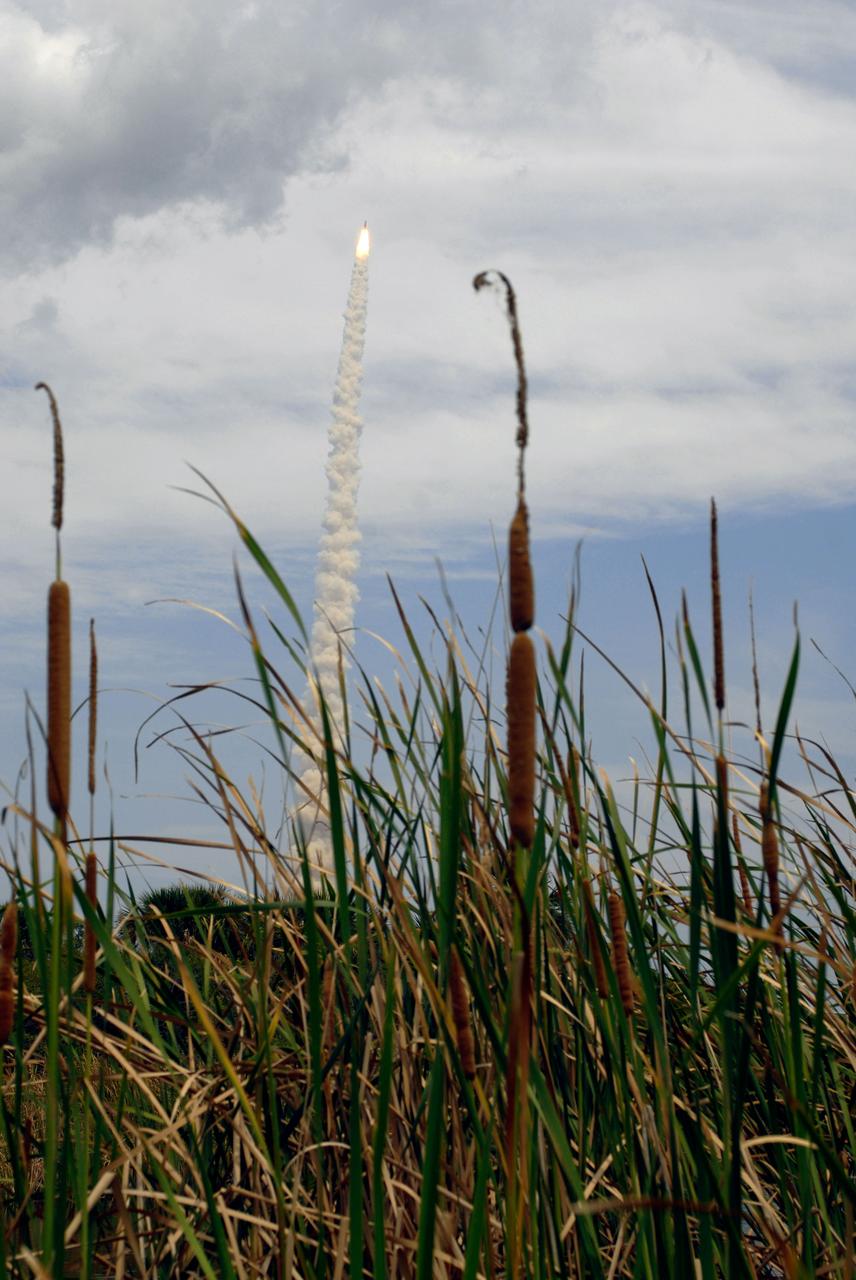
STS125-S-045 (11 May 2009) --- Space Shuttle Atlantis and its seven-member STS-125 crew head toward Earth orbit and rendezvous with NASA?s Hubble Space Telescope. Liftoff was on time at 2:01 p.m. (EDT) on May 11, 2009 from launch pad 39A at NASA's Kennedy Space Center. Onboard are astronauts Scott Altman, commander; Gregory C. Johnson, pilot; Michael Good, Megan McArthur, John Grunsfeld, Mike Massimino and Andrew Feustel, all mission specialists. Atlantis' 11-day flight will include five spacewalks to refurbish and upgrade the telescope with state-of-the-art science instruments that will expand Hubble's capabilities and extend its operational lifespan through at least 2014. The payload includes Wide Field Camera 3, fine guidance sensor and the Cosmic Origins Spectrograph.