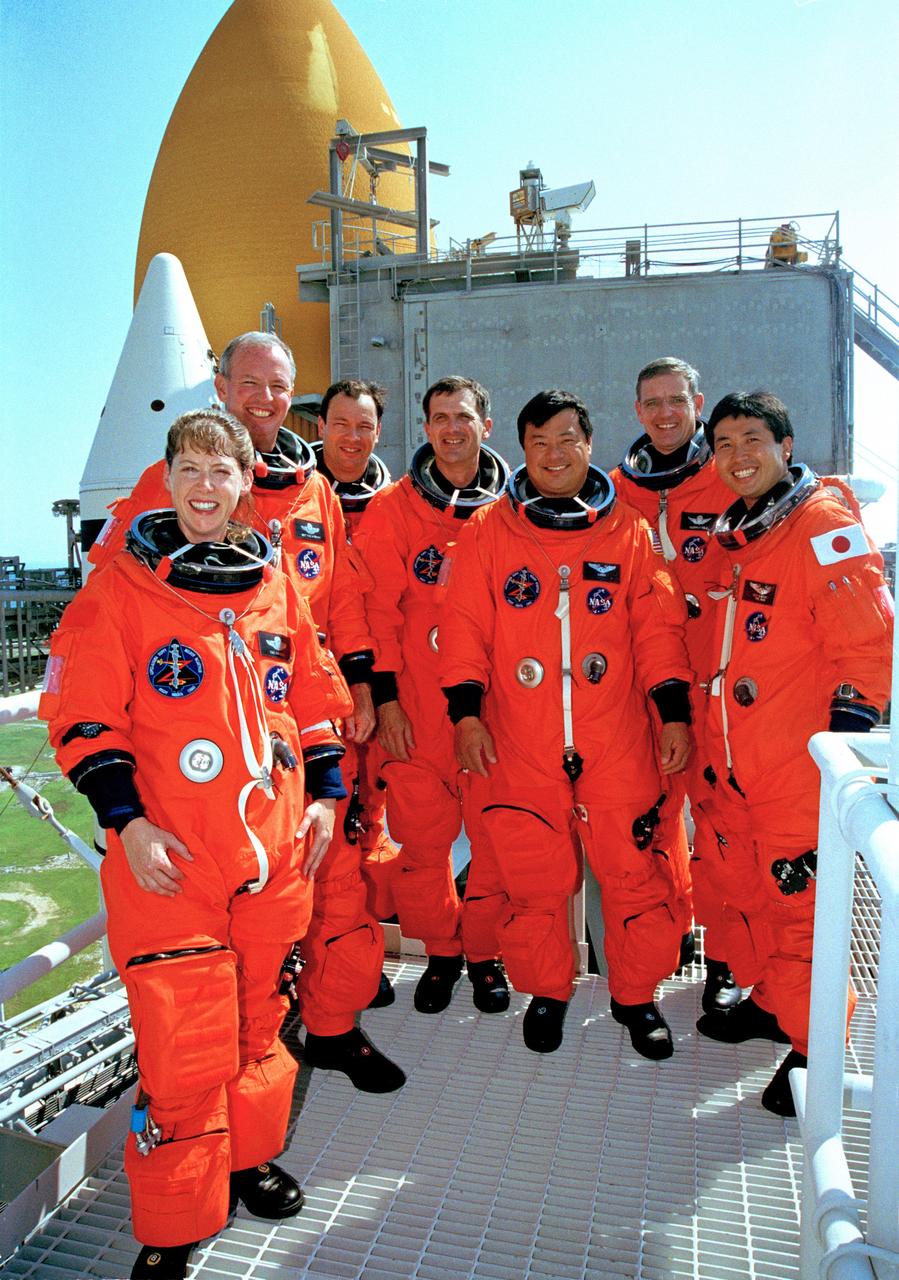
CAPE CANAVERAL, Fla. -- After completing emergency egress training at Launch Pad 39A, the STS-92 crew poses for a photo. Standing, left to right, are Pilot Pamela Ann Melroy, Commander Brian Duffy and Mission Specialists Michael Lopez-Alegria, Peter J.K. “Jeff” Wisoff, Leroy Chiao, William S. McArthur Jr. and Koichi Wakata of Japan. The training is part of Terminal Countdown Demonstration Test activities that also include a simulated countdown. STS-92 is scheduled to launch Oct. 5 at 9:38 p.m. EDT on the fifth flight to the International Space Station. It will carry two elements of the space station, the Integrated Truss Structure Z1 and the third Pressurized Mating Adapter. The mission is also the 100th flight in the Shuttle program. Photo credit: NASA
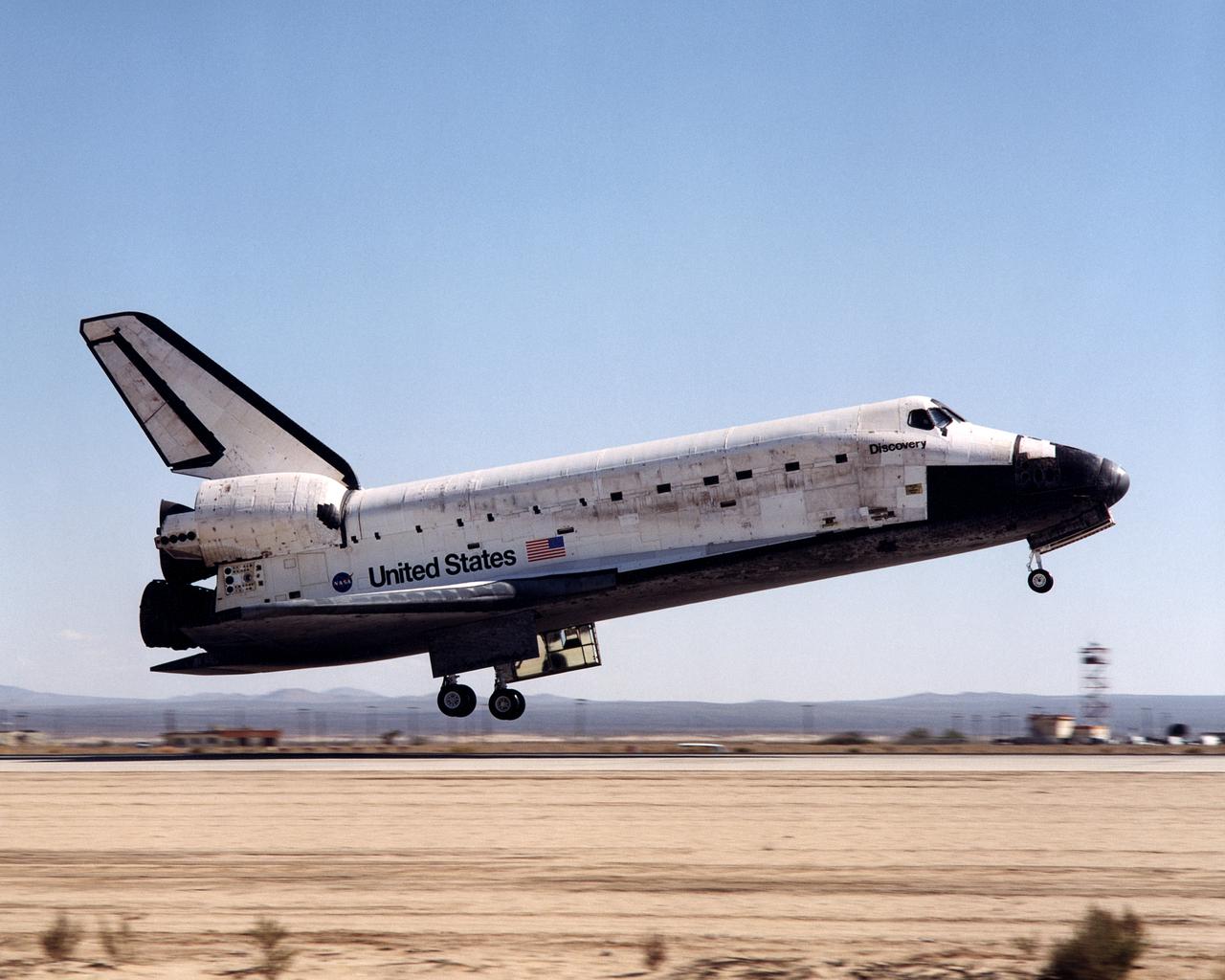
The Space Shuttle Discovery glides in for landing at Edwards Air Force Base in Southern California at the conclusion of mission STS-92 on October 24, 2000.
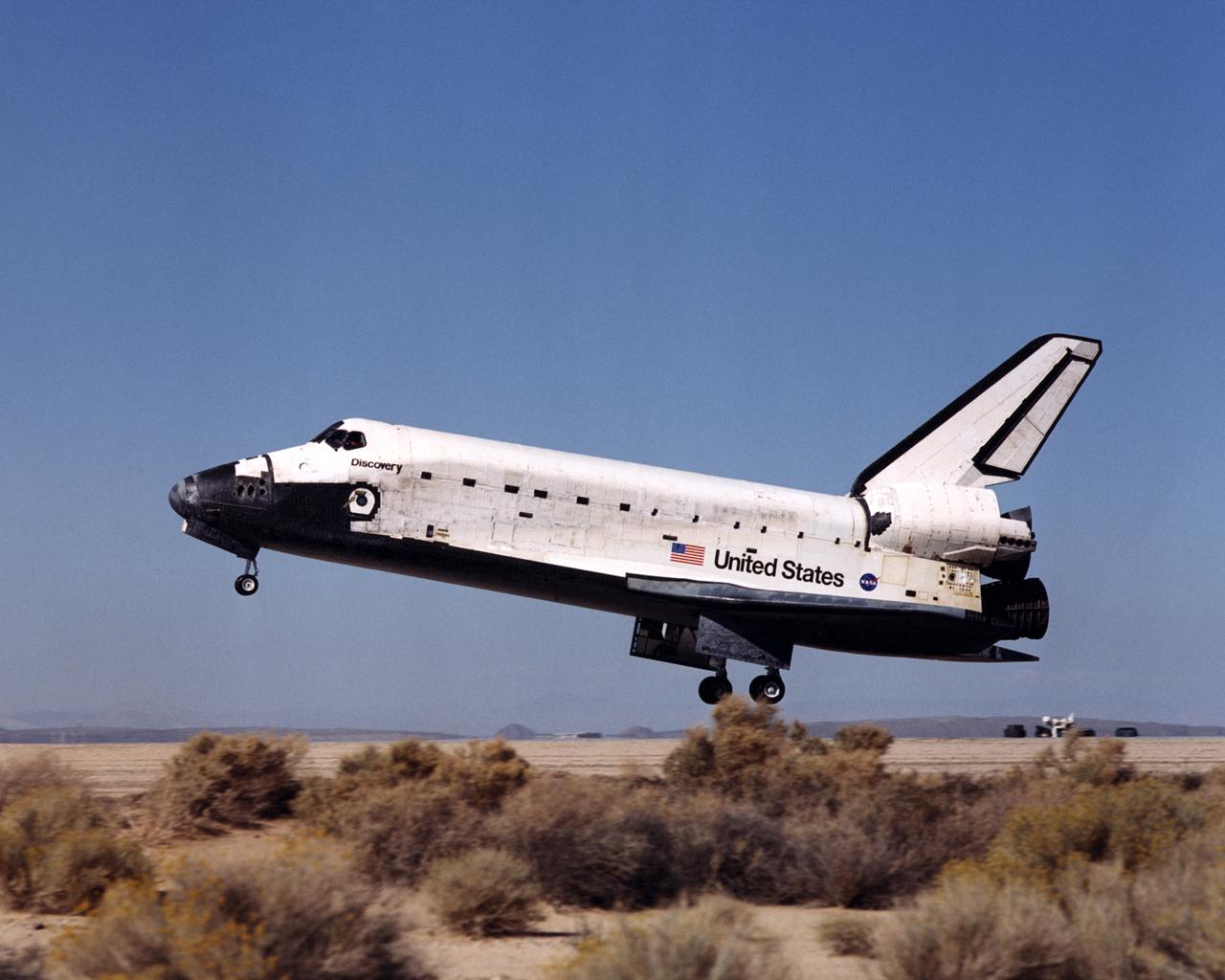
The Space Shuttle Discovery glides in for landing at Edwards Air Force Base in Southern California at the conclusion of mission STS-92 on October 24, 2000.
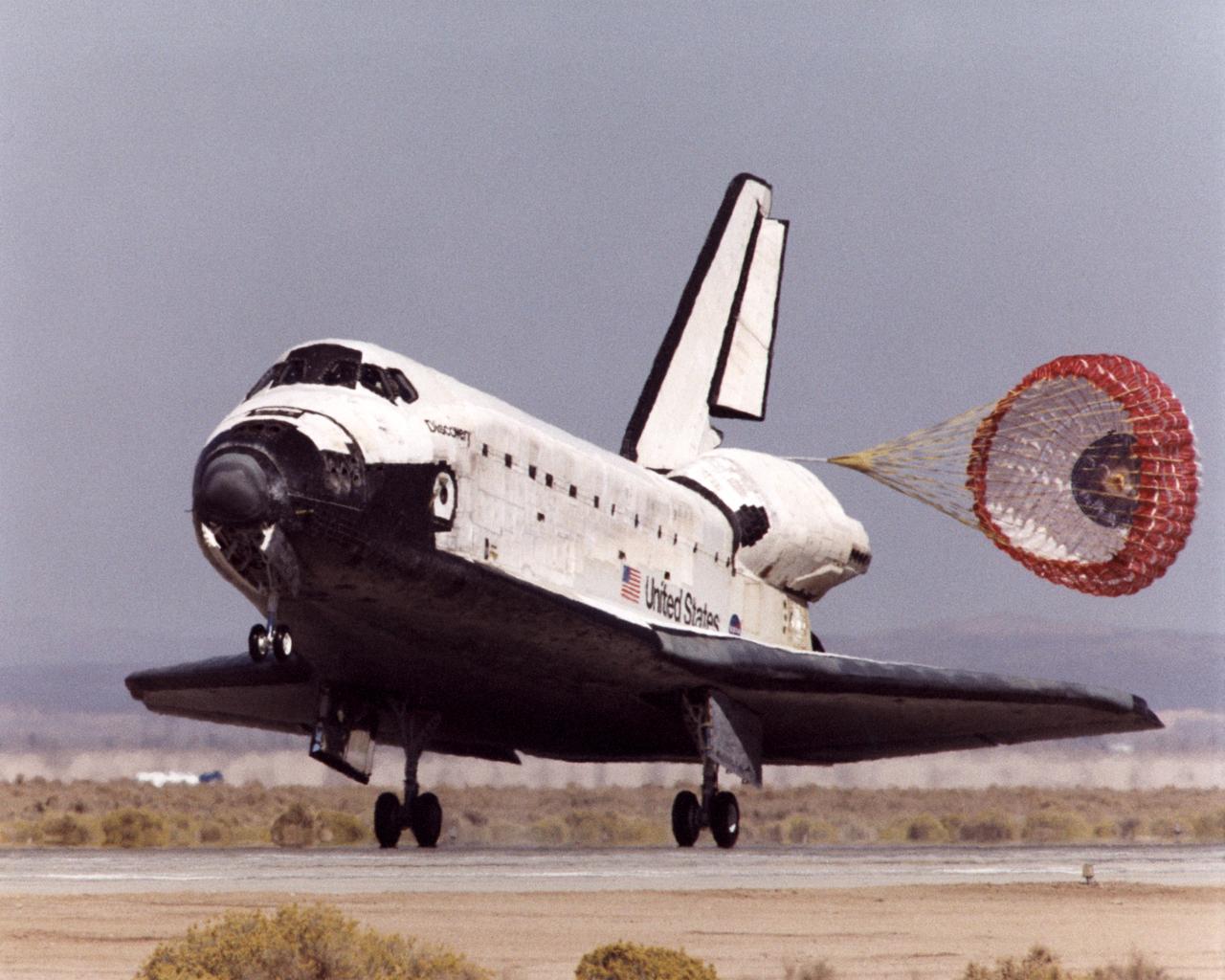
With its drag parachute deployed to help slow it down, the Space Shuttle Discovery rolls down the runway after landing at Edwards Air Force Base in Southern California at the conclusion of mission STS-92 on October 24, 2000.
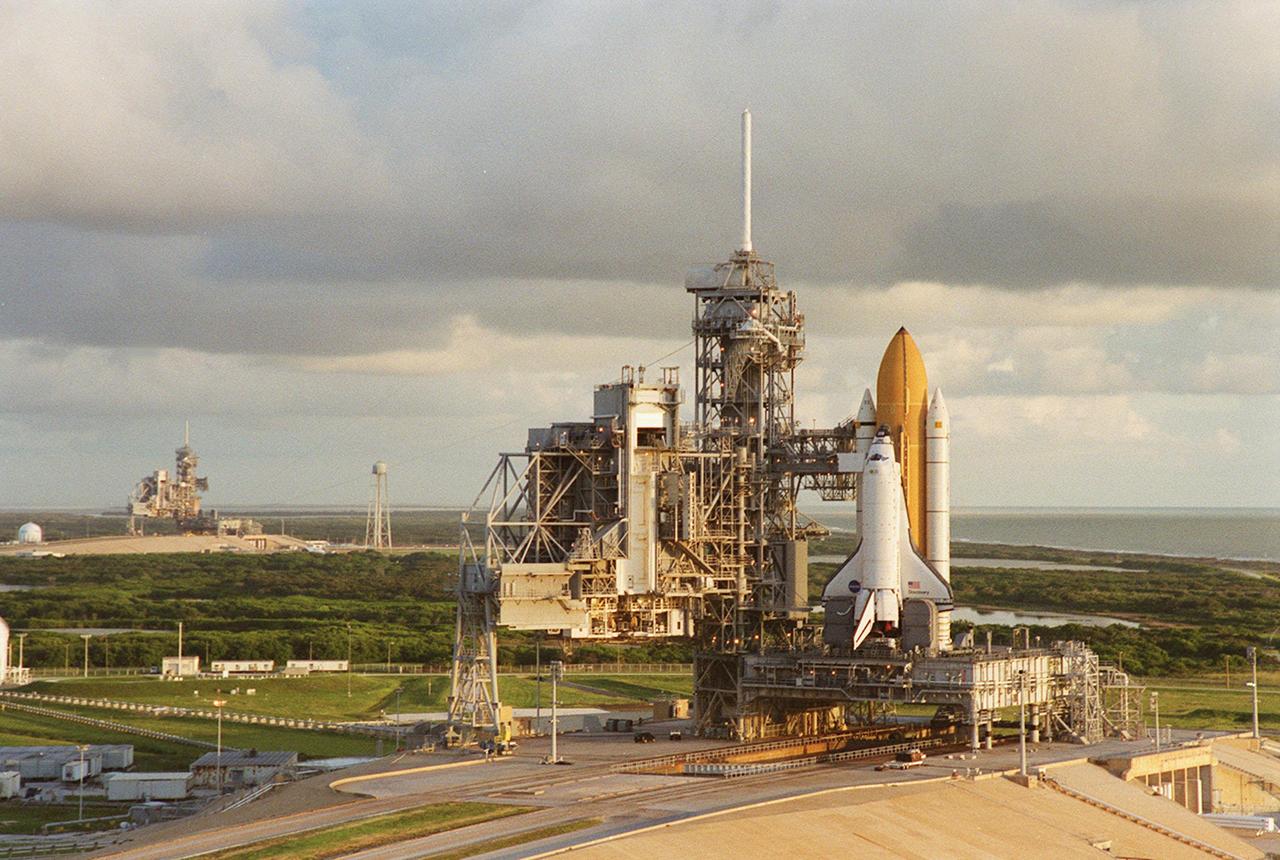
Cloudy skies form a backdrop for Launch Pads 39B (left) and 39A (foreground). Space Shuttle Discovery waits on top of the pad for its launch Oct. 5 to the International Space Station. Between the pads can be seen the 300,000-gallon water tank that provides water for the sound suppression system during launch.
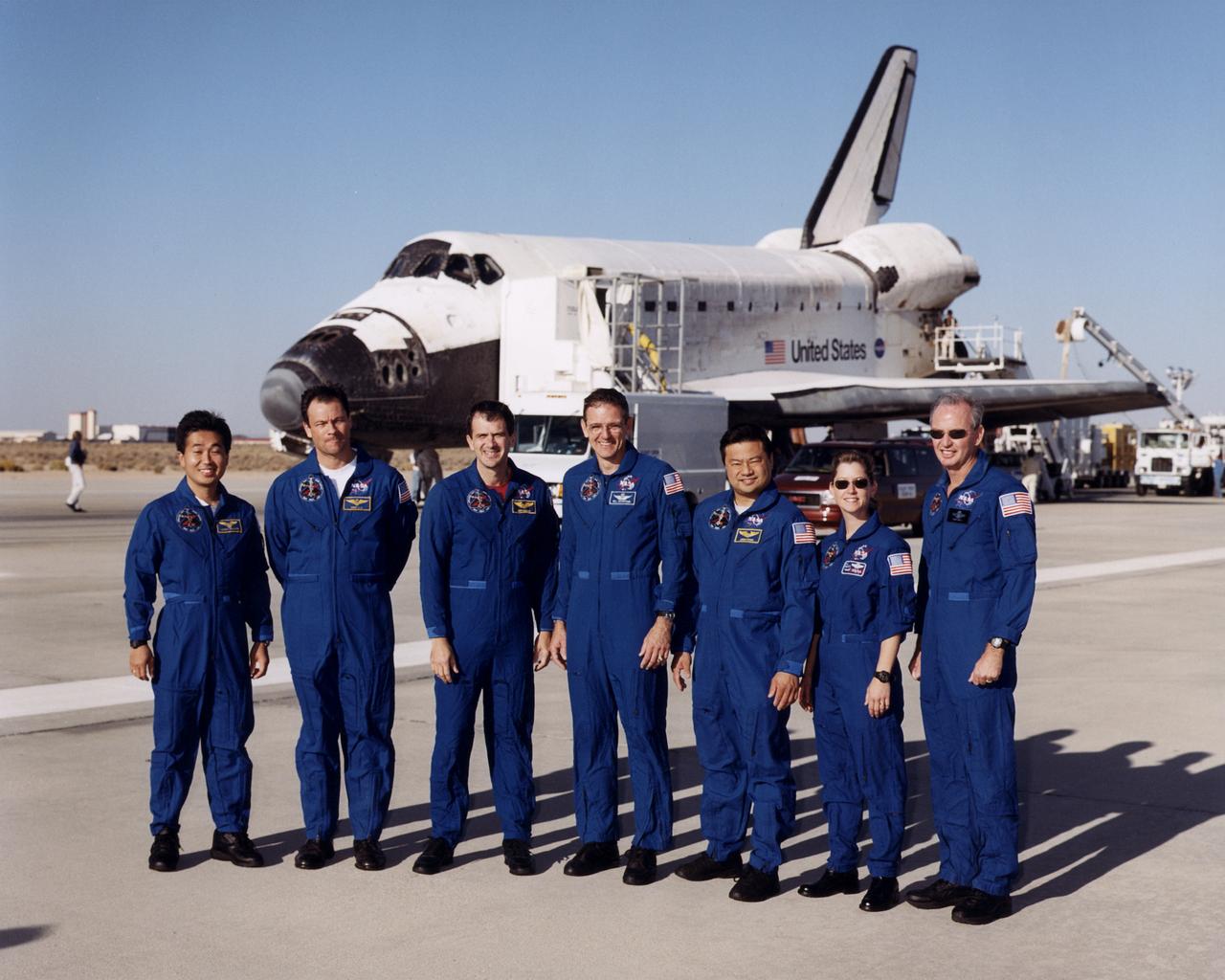
The seven-member crew of the Space Shuttle mission STS-92 gathered in front of the Shuttle Discovery shortly after landing at Edwards Air Force Base in Southern California October 24, 2000. From left are mission specialists Koichi Wakata, Michael Lopez-Alegria, Jeff Wisoff, Bill McArthur and Leroy Chiao, pilot Pam Melroy and mission commander Brian Duffy.
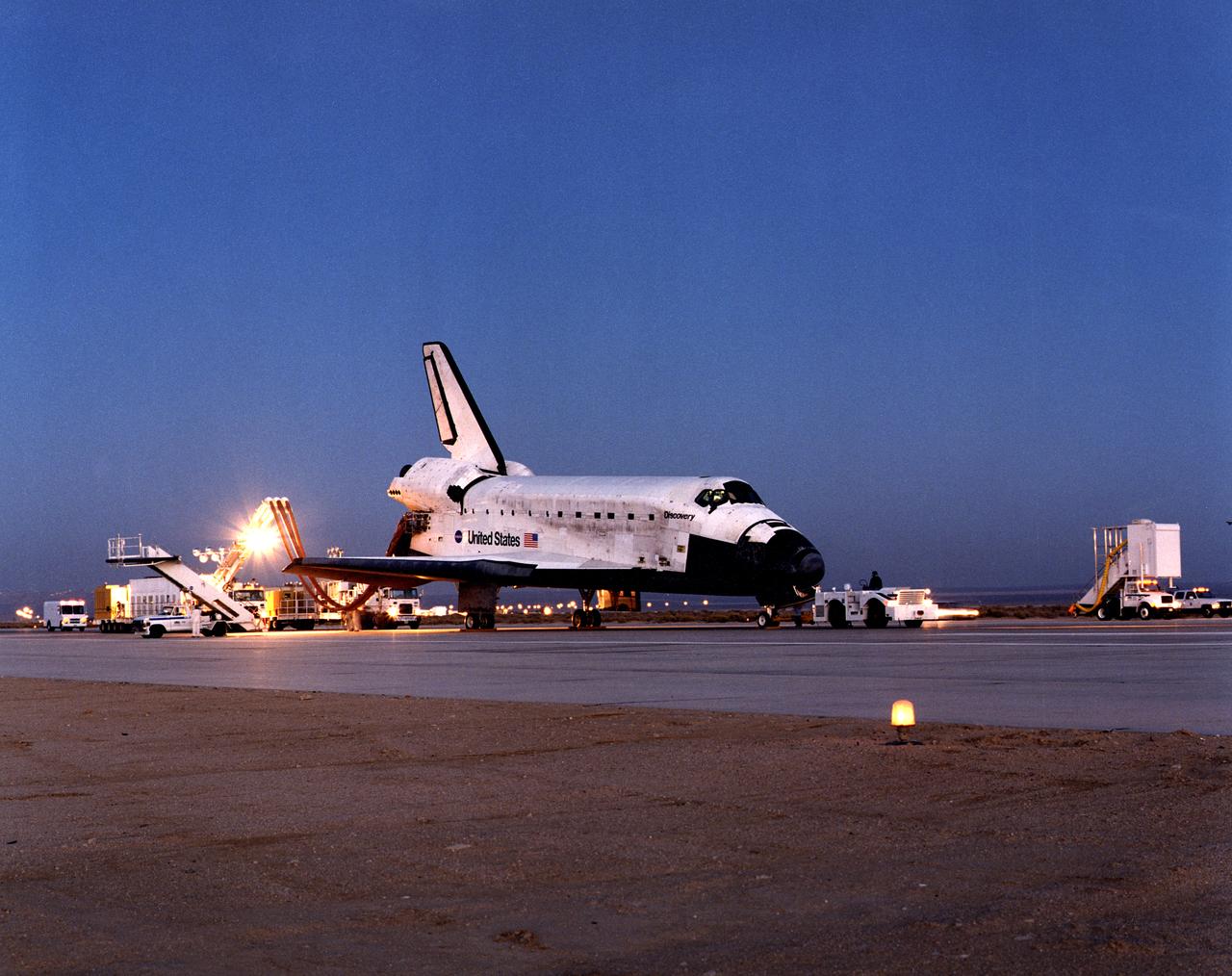
Ground crews worked into the evening to prepare the Space Shuttle Discovery for towing back to NASA’s Dryden Flight Research Center after its landing at Edwards Air Force Base on October 24, 2000. The landing marked the end of the STS-92 mission.
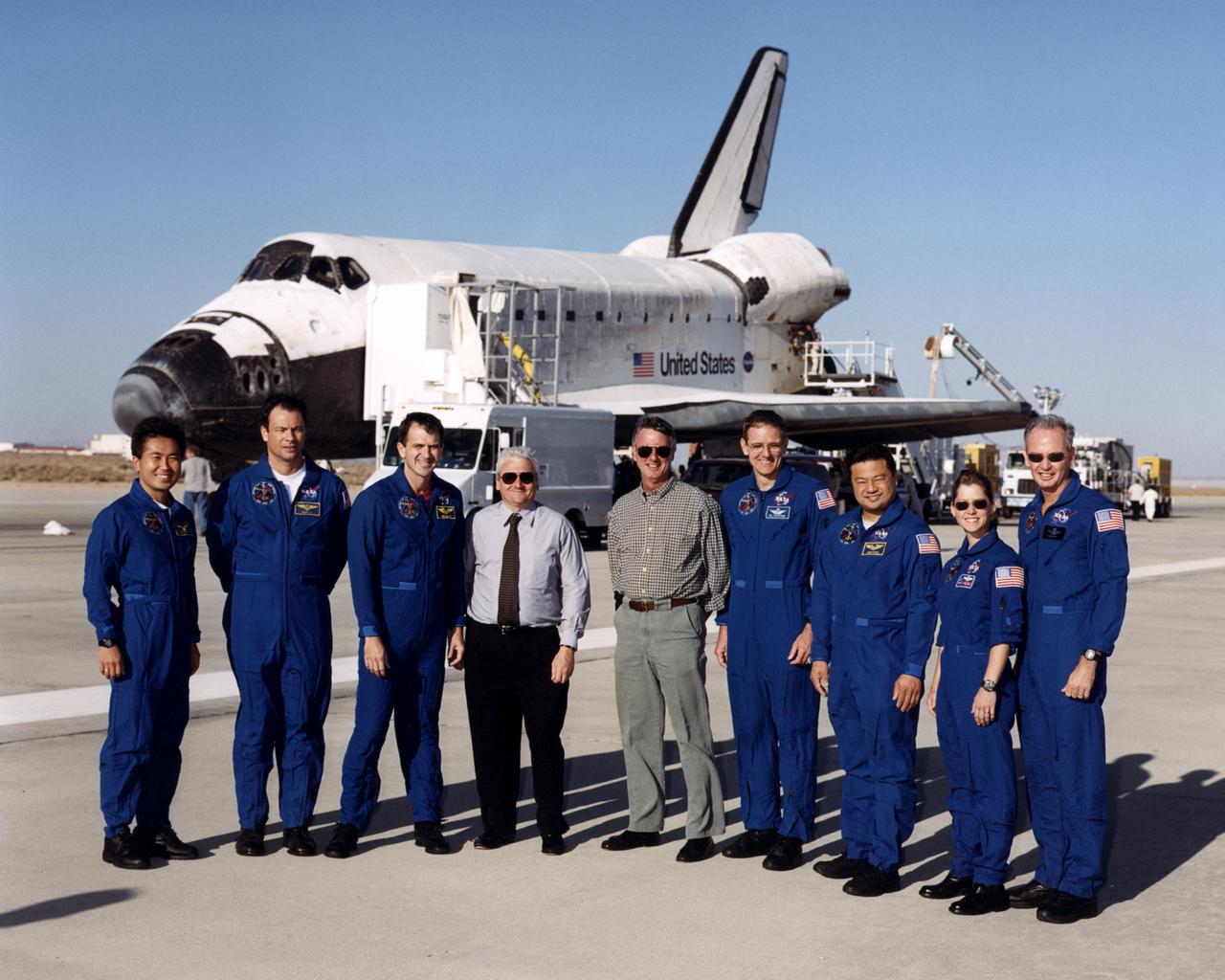
The seven-member crew of the Space Shuttle mission STS-92 gathered in front of the Shuttle Discovery shortly after landing at Edwards Air Force Base in Southern California October 24, 2000. They are seen here with NASA Dryden Fight Research Center Director Kevin Petersen and Deputy Director Wallace Sawyer. From left are mission specialists Koichi Wakata, Michael Lopez-Alegria, Jeff Wisoff, Bill McArthur and Leroy Chiao, pilot Pam Melroy and mission commander Brian Duffy. Between Jeff Wisoff and Brian McArthur are Kevin Petersen and Wally Sawyer, wearing ordinary civilian clothing.
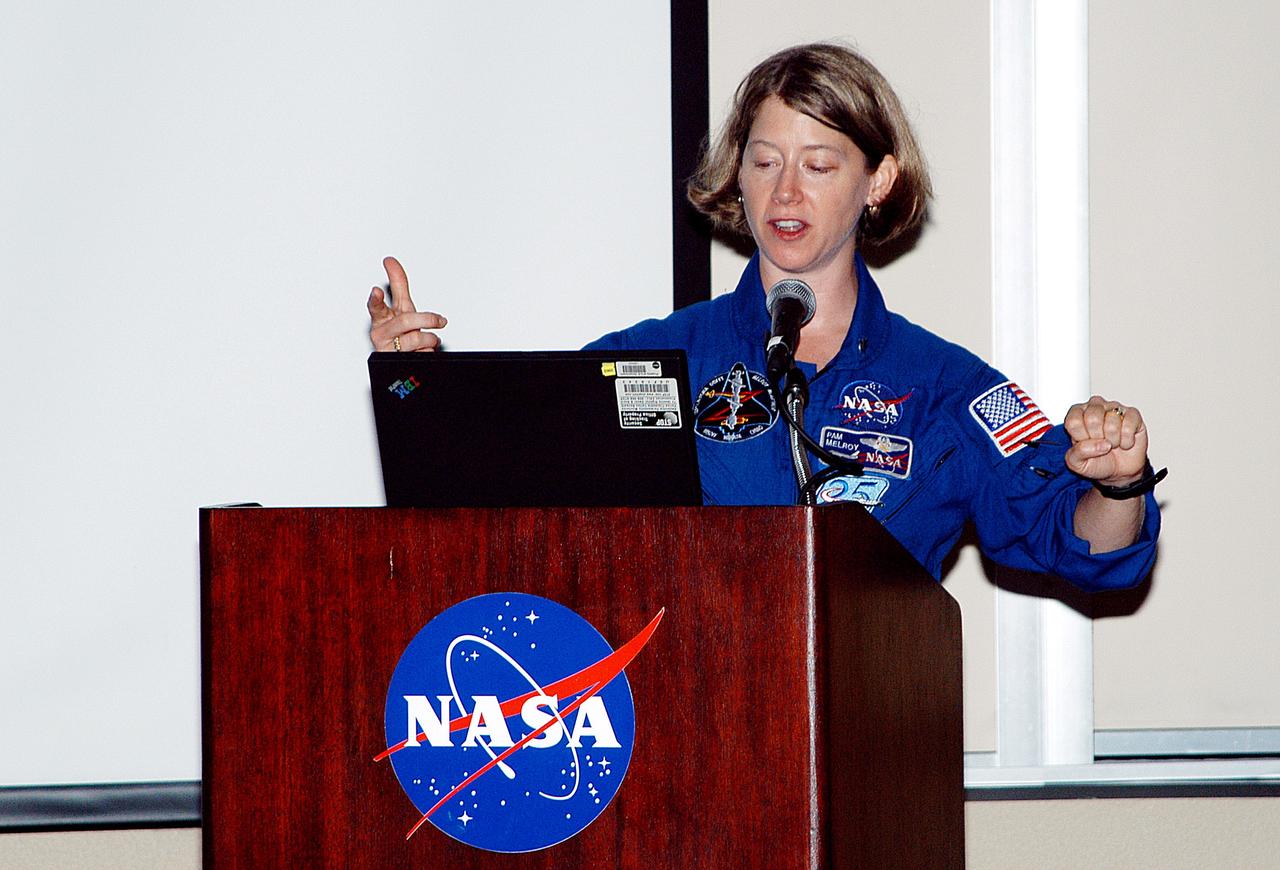
KENNEDY SPACE CENTER, FLA. - At the Florida Commission on the Status of Women held June 7 at the Debus Conference Facility, astronaut Pamela Melroy speaks to attendees. Melroy has served as pilot on two Shuttle flights (STS-92 in 2000 and STS-112 in 2002), and has logged more than 562 hours in space. The commission, through coordinating, researching, communicating, and encouraging legislation, is dedicated to empowering women from all walks of life in achieving their fullest potential, to eliminating barriers to that achievement, and to recognizing women’s accomplishments.
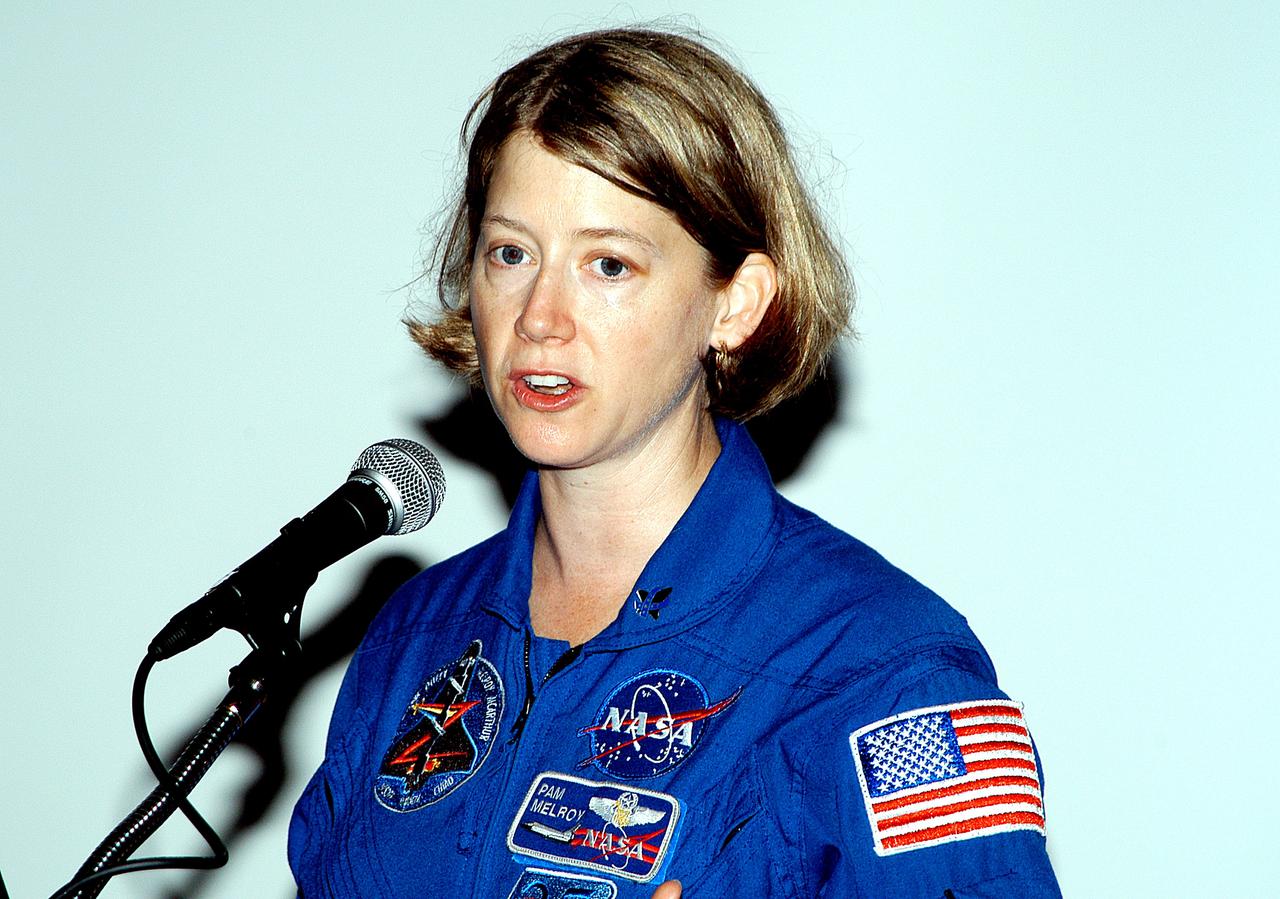
KENNEDY SPACE CENTER, FLA. - At the Florida Commission on the Status of Women held June 7 at the Debus Conference Facility, astronaut Pamela Melroy speaks to attendees. Melroy has served as pilot on two Shuttle flights (STS-92 in 2000 and STS-112 in 2002), and has logged more than 562 hours in space. The commission, through coordinating, researching, communicating, and encouraging legislation, is dedicated to empowering women from all walks of life in achieving their fullest potential, to eliminating barriers to that achievement, and to recognizing women’s accomplishments.
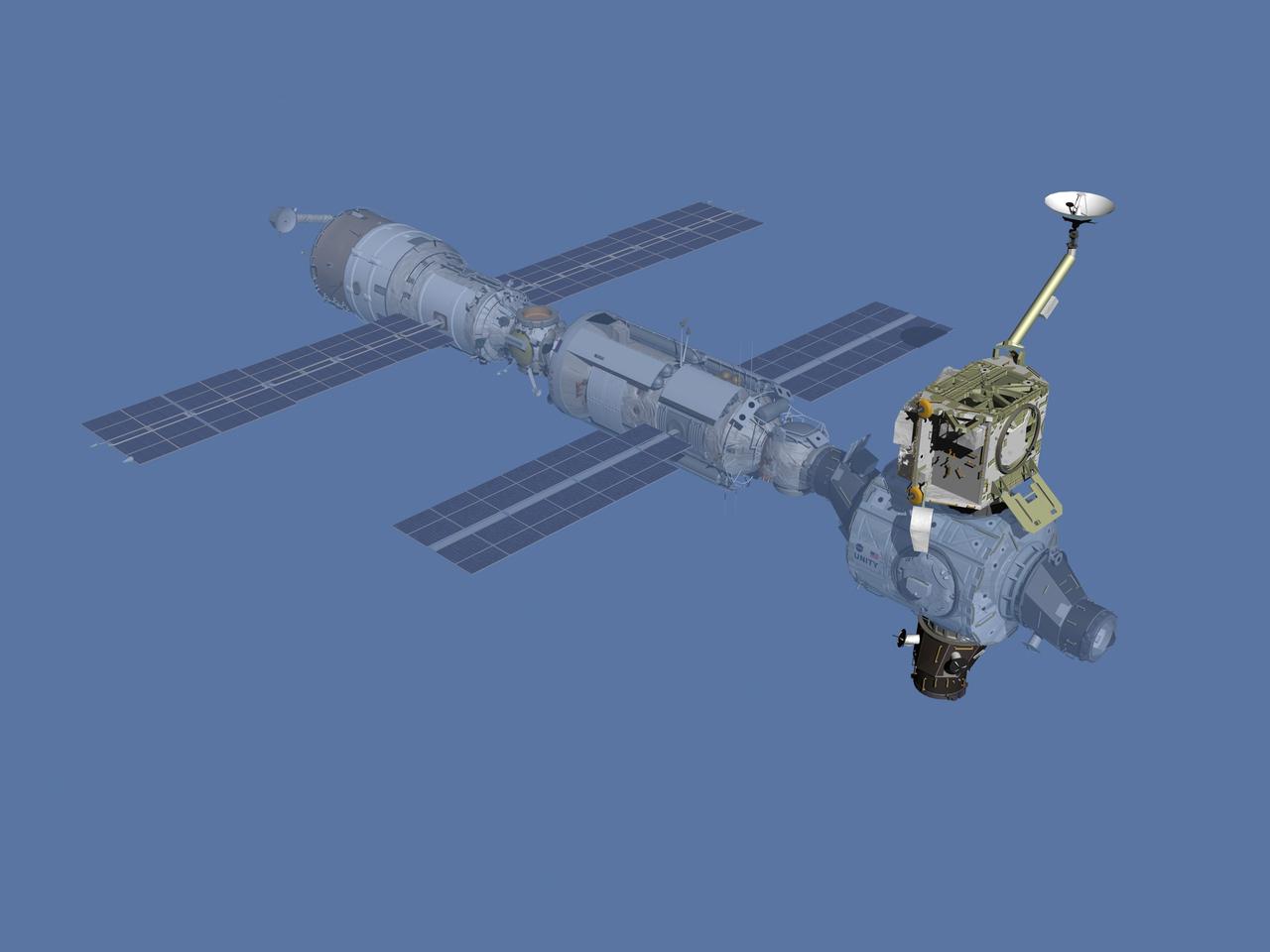
JSC2006-E-43482 (October 2000) --- Computer-generated artist's rendering of the International Space Station after flight STS-92/3A. Arriving aboard Space Shuttle Discovery, the STS-92 crew installed the Z1 truss, a third pressurized mating adapter and a Ku-band antenna.
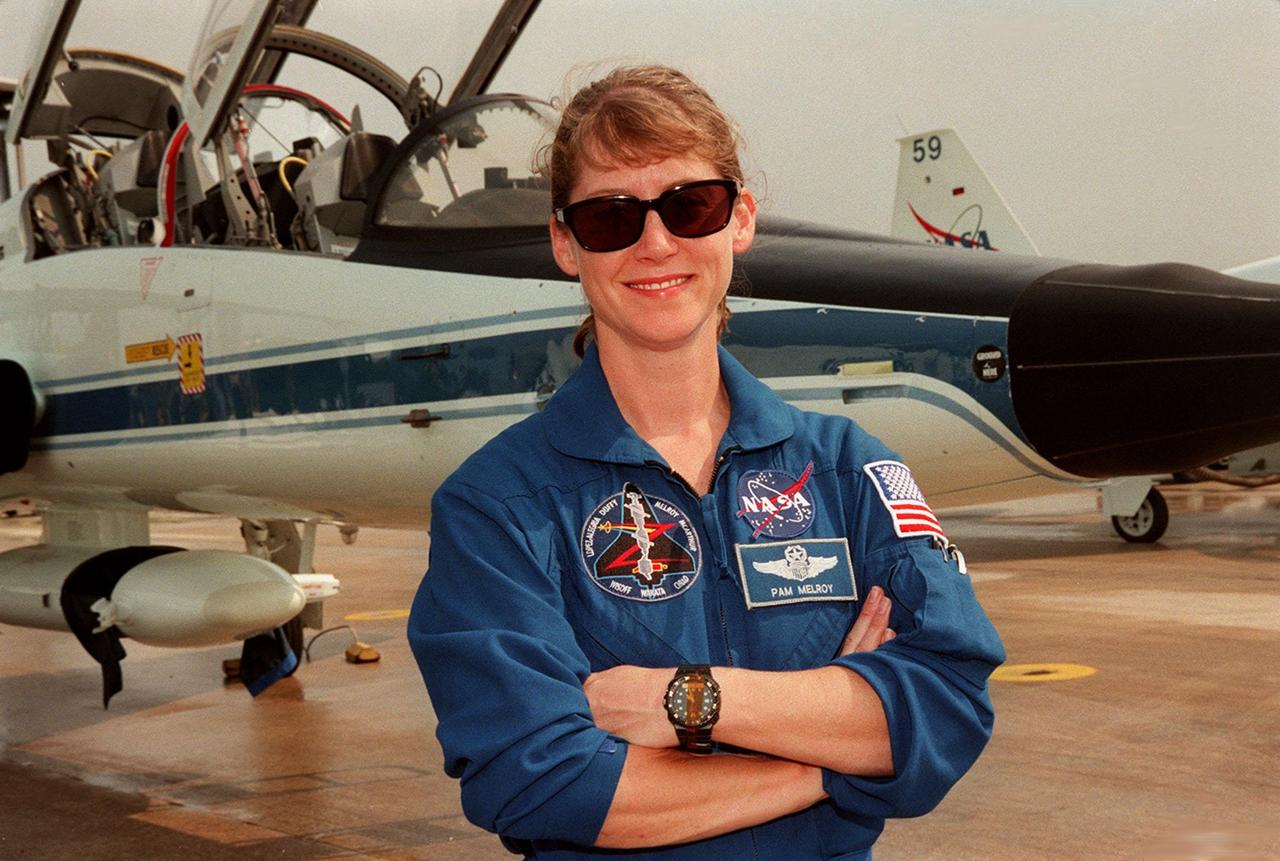
STS-92 Pilot Pam Melroy poses at the Shuttle Landing Facility before flying back to Houston. She and other crew members completed their Crew Equipment Interface Test activities, looking over their mission payload and related equipment. STS-92 is scheduled to launch Oct. 5 on Shuttle Discovery from Launch Pad 39A on the fifth flight to the International Space Station. Discovery will carry the Integrated Truss Structure (ITS) Z1, the PMA-3, Ku-band Communications System, and Control Moment Gyros (CMGs)
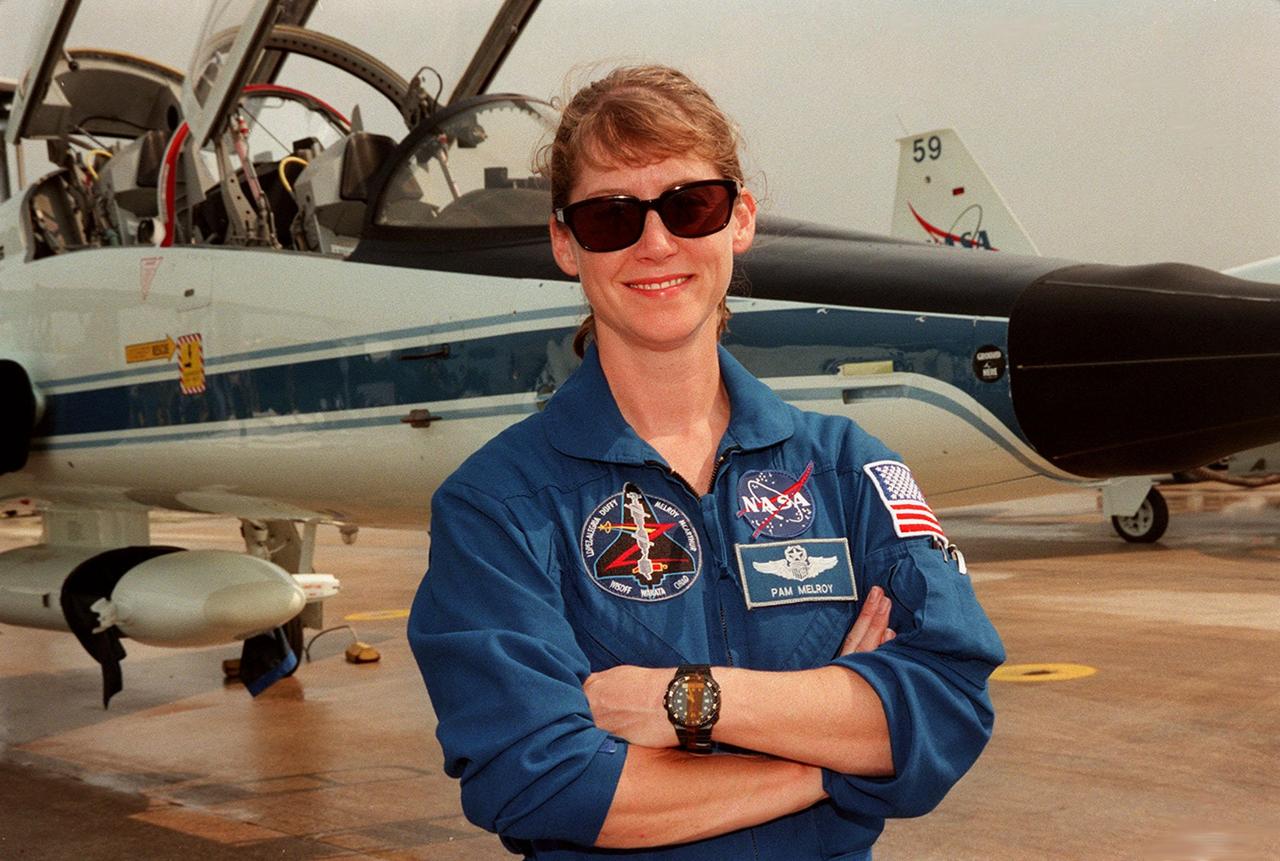
STS-92 Pilot Pam Melroy poses at the Shuttle Landing Facility before flying back to Houston. She and other crew members completed their Crew Equipment Interface Test activities, looking over their mission payload and related equipment. STS-92 is scheduled to launch Oct. 5 on Shuttle Discovery from Launch Pad 39A on the fifth flight to the International Space Station. Discovery will carry the Integrated Truss Structure (ITS) Z1, the PMA-3, Ku-band Communications System, and Control Moment Gyros (CMGs)
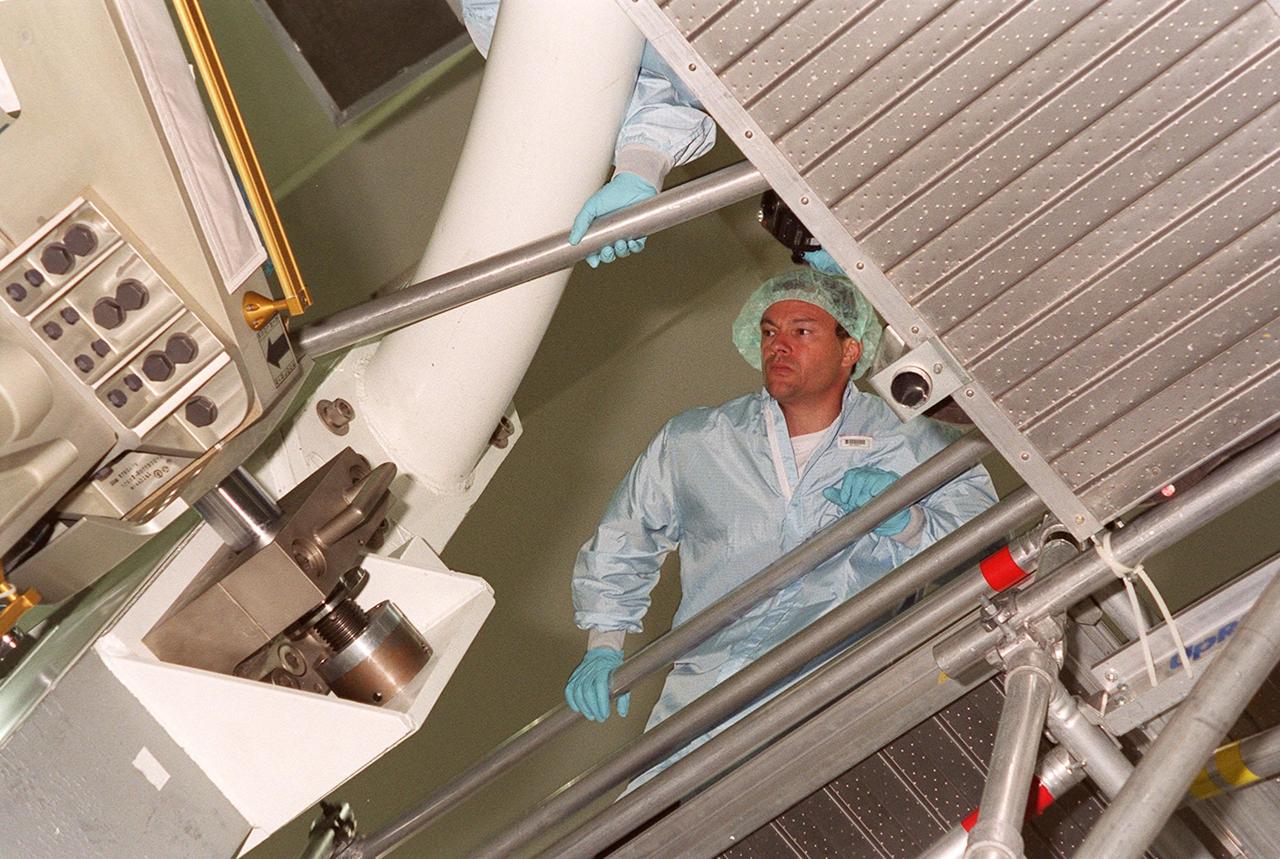
On the scaffolding in the Space Shuttle Processing Facility (SSPF), STS-92 Mission Specialist Michael Lopez-Alegria leans over to get a better look at the Integrated Truss Structure (ITS) Z1 below. The Z1 is a payload scheduled on mission STS-92, the fifth flight to the Space Station, in the fall. The Z1 is an early exterior framework for the International Space Station, and will allow the first U.S. solar arrays, on mission STS-97, flight 4A, to be temporarily installed on Unity for early power
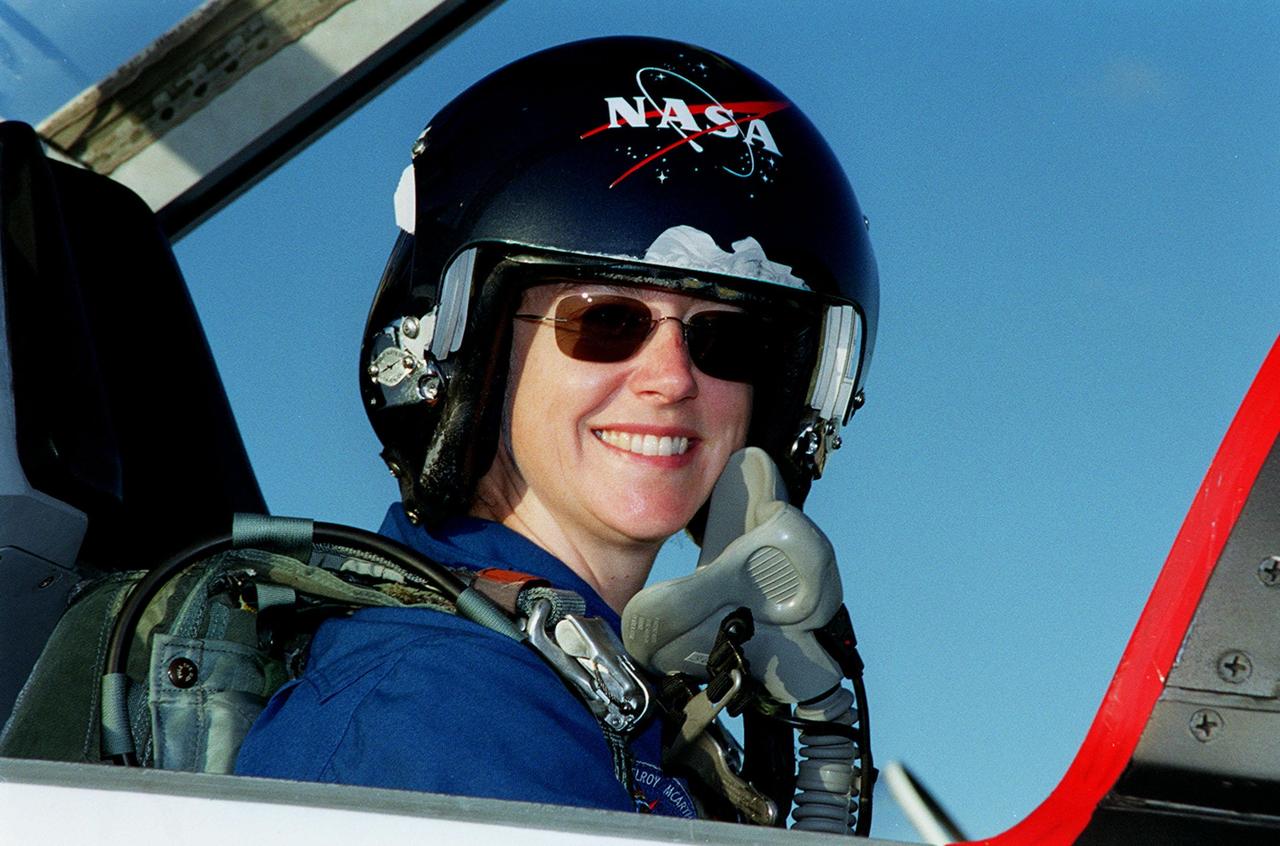
STS-92 Pilot Pamela Ann Melroy is happy to arrive at the KSC Shuttle Landing Facility after a flight from Houston. She and the rest of the crew are at KSC to take part in Terminal Countdown Demonstration Test activities, which include emergency egress training from the orbiter and pad, and a simulated countdown. The fifth mission to the International Space Station, STS-92 will carry the Integrated Truss Structure Z1, the first of the planned 10 trusses on the Space Station, and the third Pressurized Mating Adapter. The Z1 will allow the first U.S. solar arrays on a future flight to be temporarily installed on Unity for early power. PMA-3 will provide a Shuttle docking port for the solar array installation on the sixth ISS flight and Lab installation on the seventh ISS flight. STS-92 is scheduled to launch Oct. 5 from launch Pad 39A. It will be the 100th flight in the Shuttle program
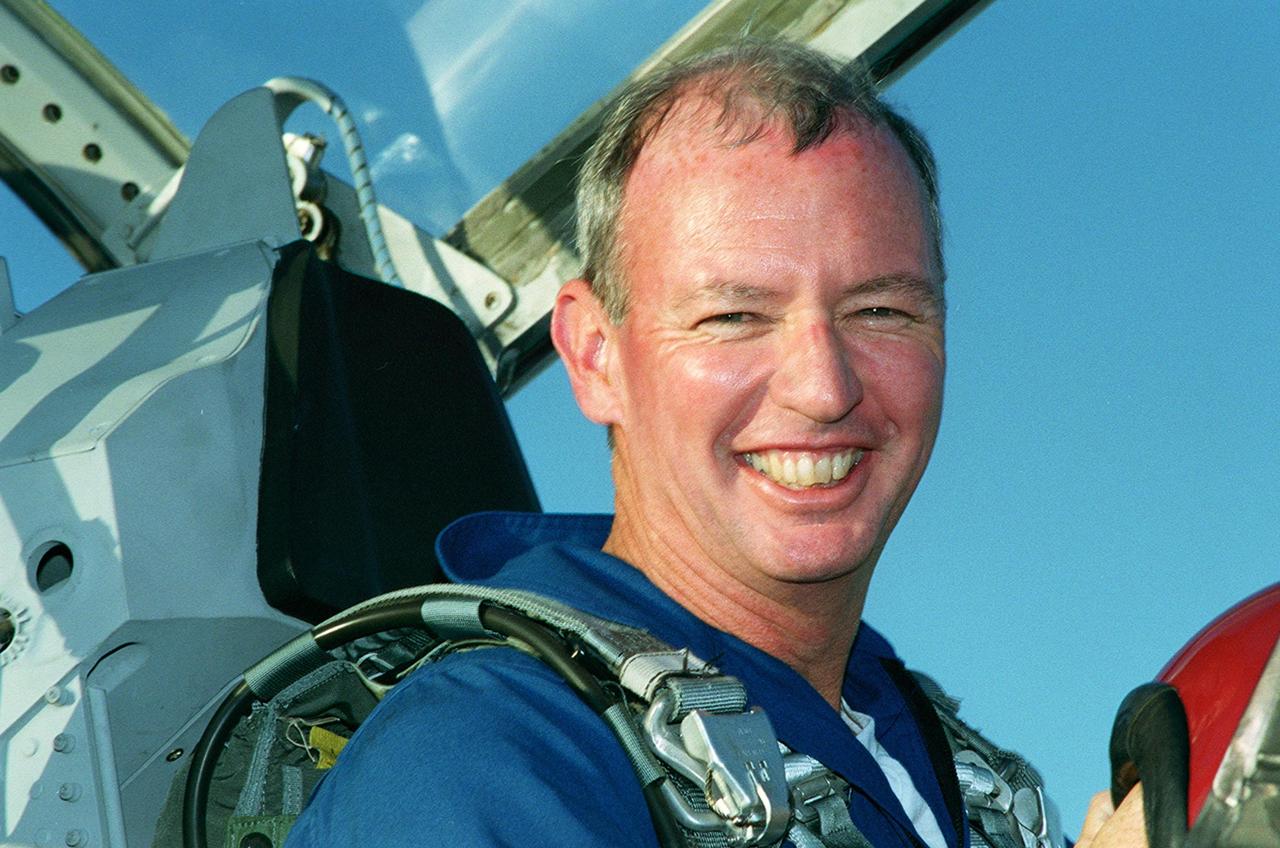
STS-92 Commander Brian Duffy smiles after landing at the KSC Shuttle Landing Facility in a T-38 training jet aircraft. He and the rest of the crew are at KSC to take part in Terminal Countdown Demonstration Test activities, which include emergency egress training from the orbiter and pad, and a simulated countdown. The fifth mission to the International Space Station, STS-92 will carry the Integrated Truss Structure Z1, the first of the planned 10 trusses on the Space Station, and the third Pressurized Mating Adapter. The Z1 will allow the first U.S. solar arrays on a future flight to be temporarily installed on Unity for early power. PMA-3 will provide a Shuttle docking port for the solar array installation on the sixth ISS flight and Lab installation on the seventh ISS flight. STS-92 is scheduled to launch Oct. 5 from launch Pad 39A. It will be the 100th flight in the Shuttle program
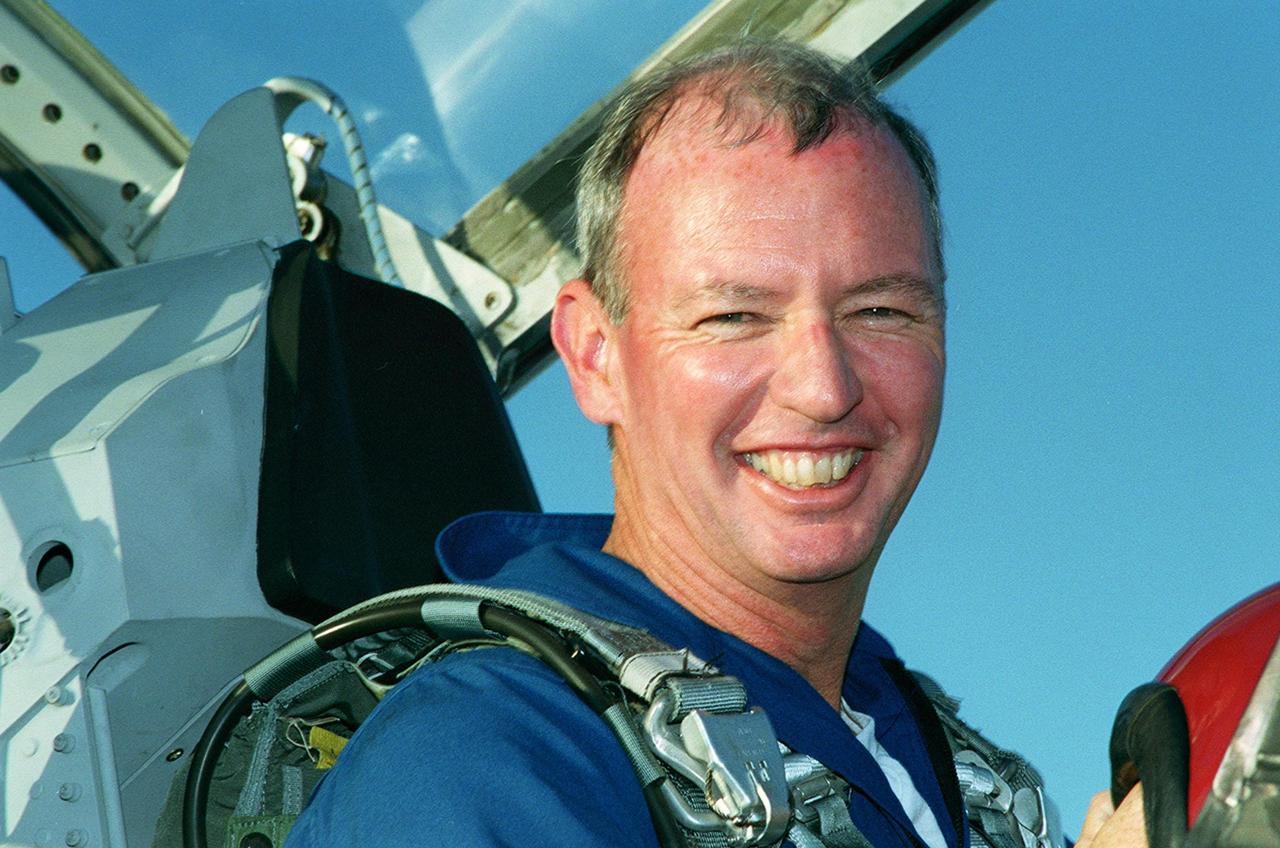
STS-92 Commander Brian Duffy smiles after landing at the KSC Shuttle Landing Facility in a T-38 training jet aircraft. He and the rest of the crew are at KSC to take part in Terminal Countdown Demonstration Test activities, which include emergency egress training from the orbiter and pad, and a simulated countdown. The fifth mission to the International Space Station, STS-92 will carry the Integrated Truss Structure Z1, the first of the planned 10 trusses on the Space Station, and the third Pressurized Mating Adapter. The Z1 will allow the first U.S. solar arrays on a future flight to be temporarily installed on Unity for early power. PMA-3 will provide a Shuttle docking port for the solar array installation on the sixth ISS flight and Lab installation on the seventh ISS flight. STS-92 is scheduled to launch Oct. 5 from launch Pad 39A. It will be the 100th flight in the Shuttle program

STS-92 Pilot Pamela Ann Melroy is happy to arrive at the KSC Shuttle Landing Facility after a flight from Houston. She and the rest of the crew are at KSC to take part in Terminal Countdown Demonstration Test activities, which include emergency egress training from the orbiter and pad, and a simulated countdown. The fifth mission to the International Space Station, STS-92 will carry the Integrated Truss Structure Z1, the first of the planned 10 trusses on the Space Station, and the third Pressurized Mating Adapter. The Z1 will allow the first U.S. solar arrays on a future flight to be temporarily installed on Unity for early power. PMA-3 will provide a Shuttle docking port for the solar array installation on the sixth ISS flight and Lab installation on the seventh ISS flight. STS-92 is scheduled to launch Oct. 5 from launch Pad 39A. It will be the 100th flight in the Shuttle program
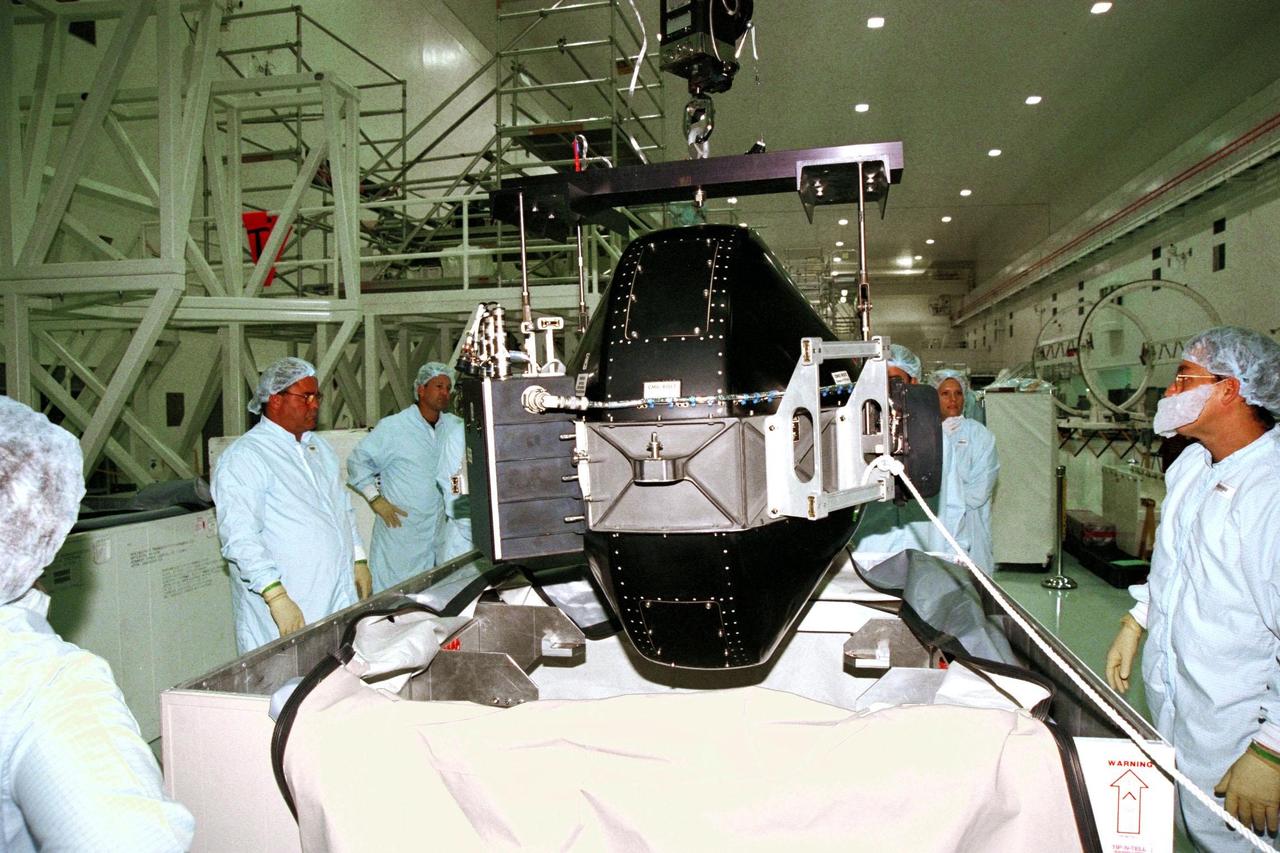
Boeing technicians remove the cover from a Control Moment Gyroscope (CMG) in the Space Station Processing Facility at KSC. The CMG will be attached to the Integrated Truss Structure (ITS) Z1. Gyroscopes are used for stabilization of the International Space Station (ISS). The CMG and Z1, part of the construction of the ISS, will be carried on STS-92, the third U.S. flight planned for on-orbit construction of the ISS. STS-92 is scheduled for liftoff on June 17, 1999, aboard the Space Shuttle Atlantis
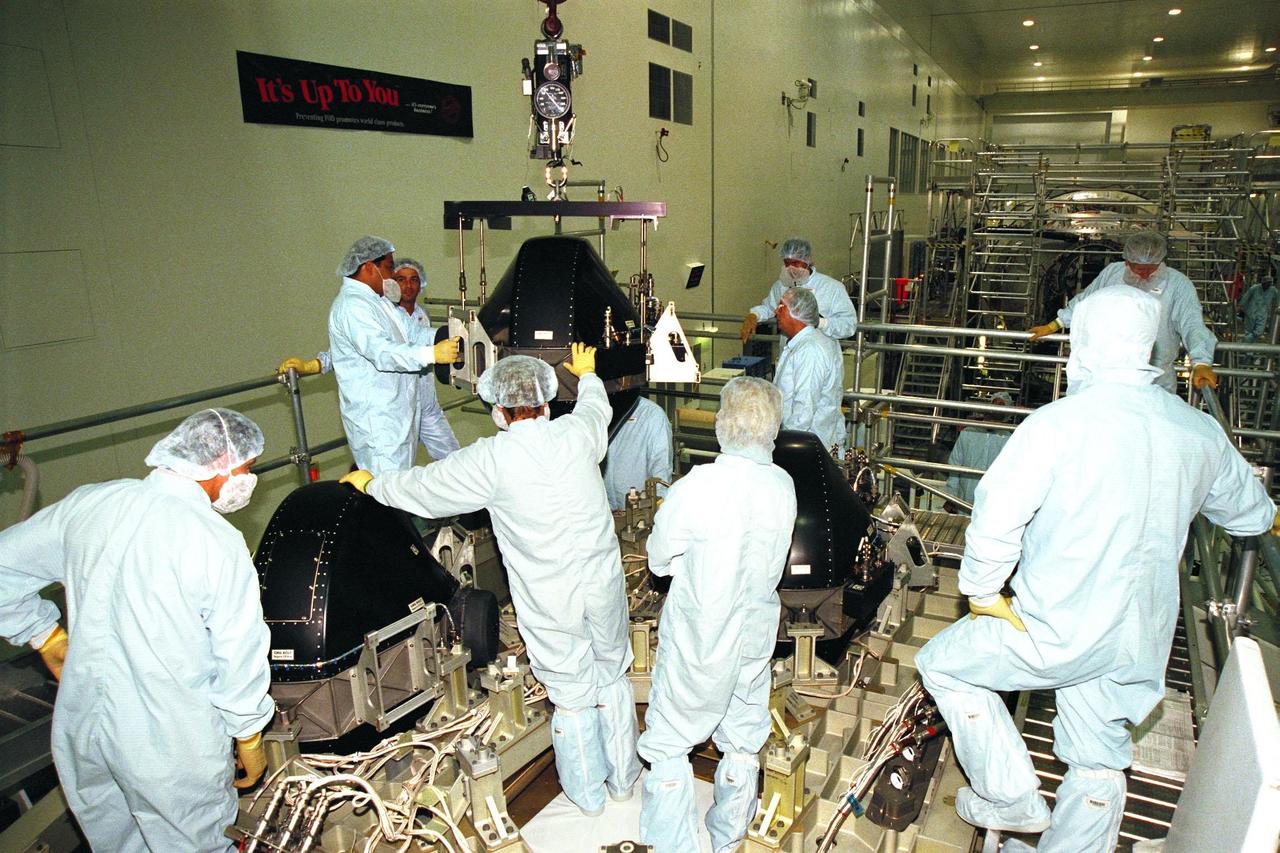
Boeing technicians lower a Control Moment Gyroscope (CMG) into place on the Integrated Truss Structure (ITS) Z1 in the Space Station Processing Facility at KSC. Gyroscopes are used for stabilization of the International Space Station (ISS). The CMG and Z1, part of the construction of the ISS, will be carried on STS-92, the third U.S. flight planned for on-orbit construction of the ISS. STS-92 is scheduled for liftoff on June 17, 1999, aboard the Space Shuttle Atlantis
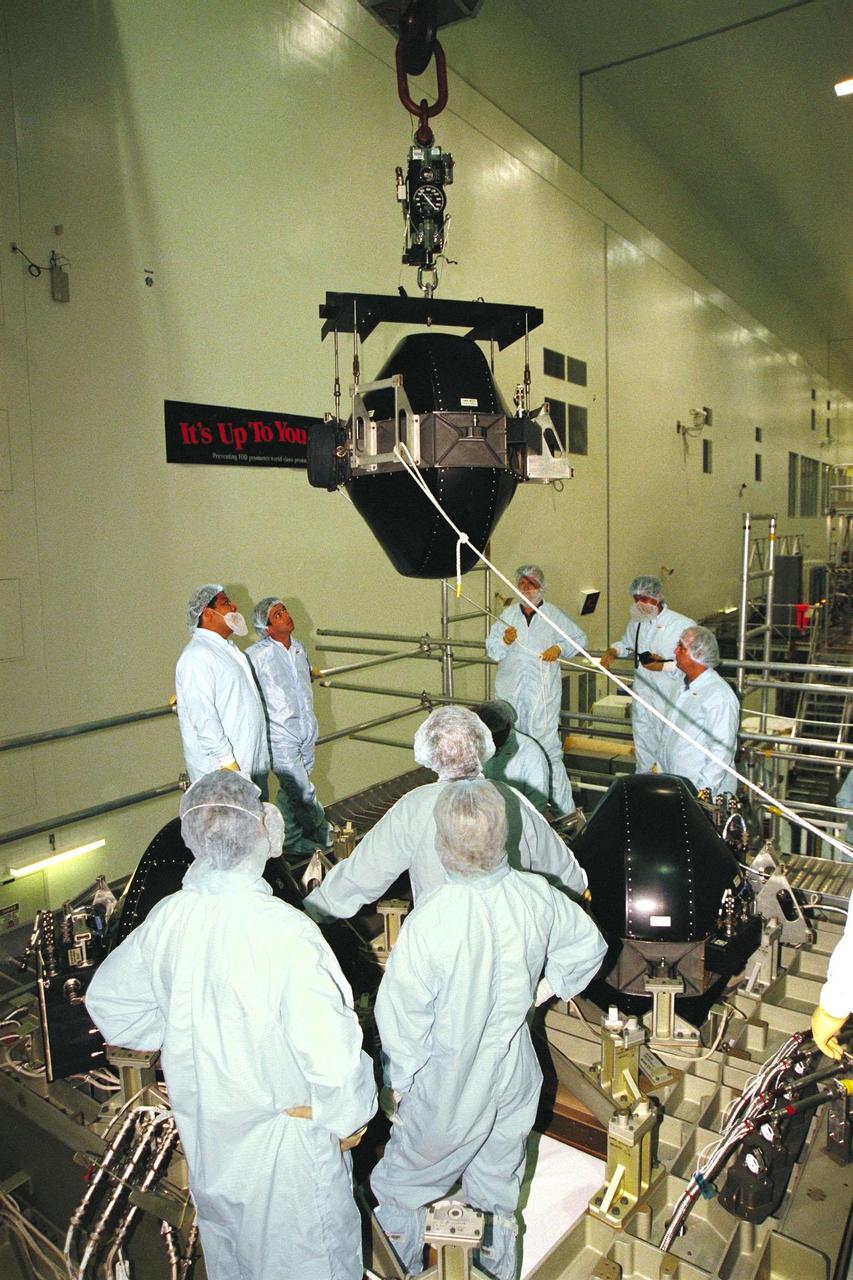
Boeing technicians move a Control Moment Gyroscope (CMG) to the Integrated Truss Structure (ITS) Z1 in the Space Station Processing Facility at KSC. Gyroscopes are used for stabilization of the International Space Station (ISS). The CMG and Z1, part of the construction of the ISS, will be carried on STS-92, the third U.S. flight planned for on-orbit construction of the ISS. STS-92 is scheduled for liftoff on June 17, 1999, aboard the Space Shuttle Atlantis
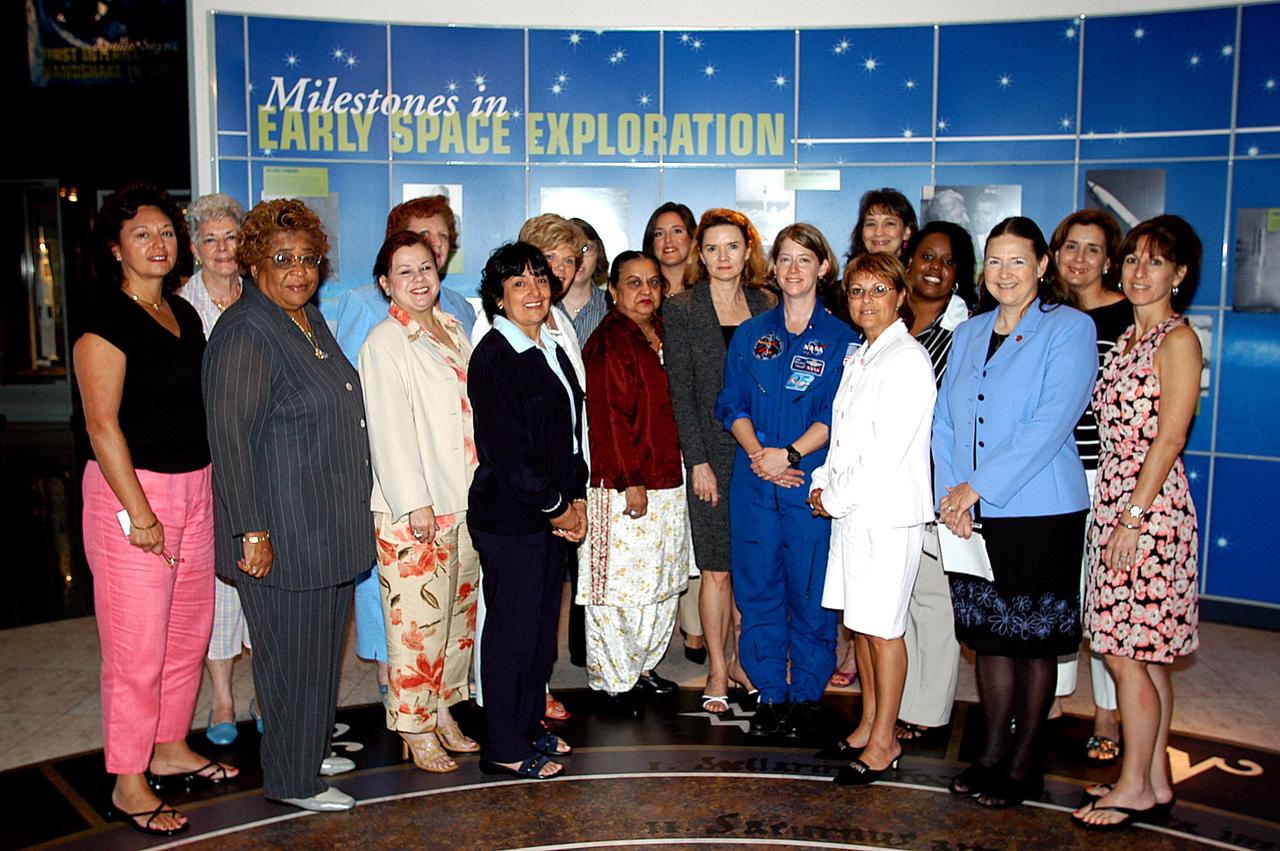
KENNEDY SPACE CENTER, FLA. - Astronaut Pamela Melroy (fourth from right in front) joins other attendees at the Florida Commission on the Status of Women held June 7 at the Debus Conference Facility. Melroy was a speaker. Her accomplishments include serving as pilot on two Shuttle flights (STS-92 in 2000 and STS-112 in 2002), and logging more than 562 hours in space. The commission, through coordinating, researching, communicating, and encouraging legislation, is dedicated to empowering women from all walks of life in achieving their fullest potential, to eliminating barriers to that achievement, and to recognizing women’s accomplishments.
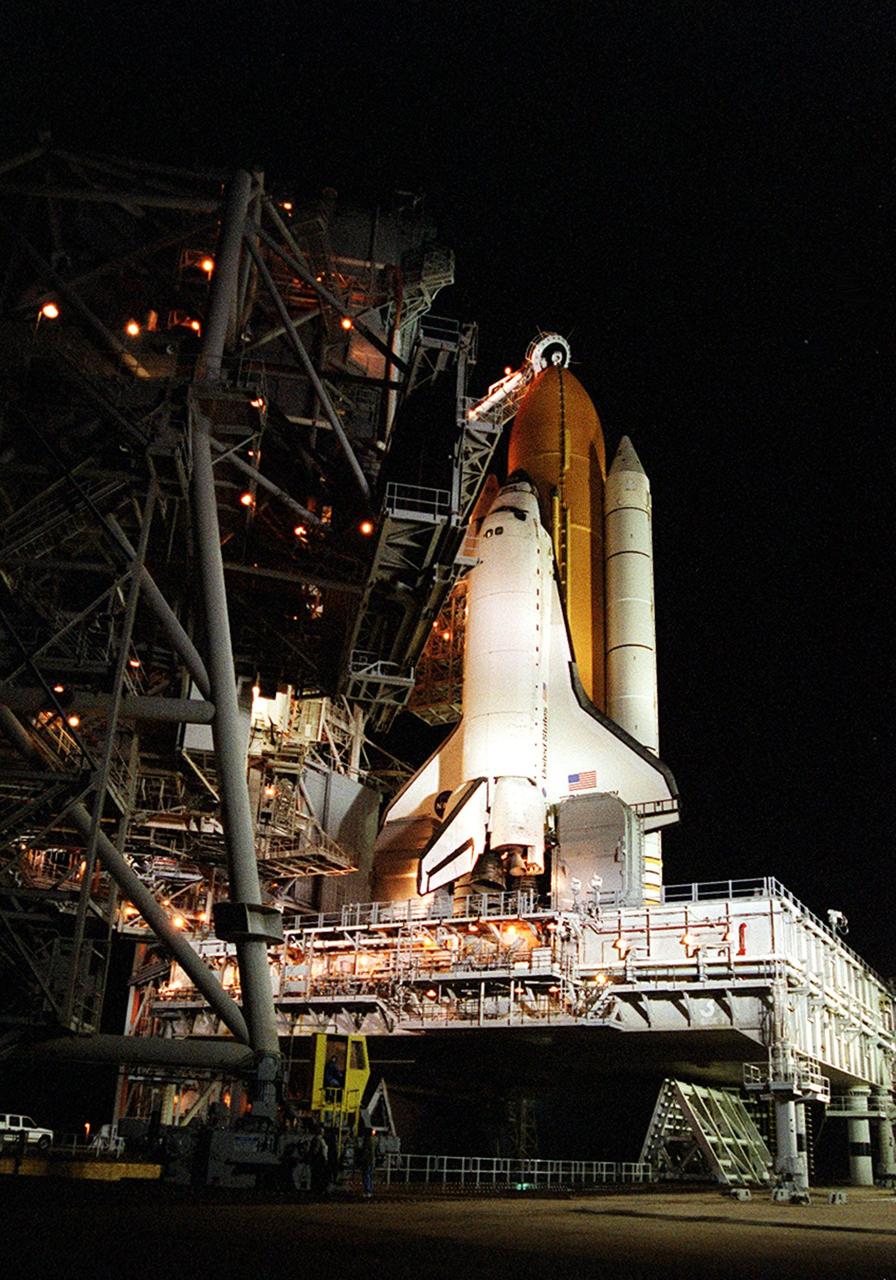
KENNEDY SPACE CENTER, Fla. -- In the early morning hours, the Rotating Service Structure (left) begins rolling back to free Space Shuttle Discovery for launch of mission STS-92 at 8:05 p.m. Oct. 9. Above the external tank can be seen the Gaseous Oxygen Vent Arm with its vent hood, commonly referred to as the “beanie cap.” The system is designed to vent gaseous oxygen vapors away from the Shuttle after cryogenic loading. The scheduled launch is the second attempt after an earlier scrub. STS-92 is making the fifth flight for construction of the International Space Station. The mission is also the 100th in the history of the Shuttle program

KENNEDY SPACE CENTER, Fla. -- After rollback of the Rotating Service Structure in the early morning hours, Space Shuttle Discovery stands ready for launch of mission STS-92. Above the external tank can be seen the Gaseous Oxygen Vent Arm with its vent hood, commonly referred to as the “beanie cap.” The system is designed to vent gaseous oxygen vapors away from the Shuttle after cryogenic loading. The scheduled launch is the second attempt after an earlier scrub. STS-92 is making the fifth flight for construction of the International Space Station. The mission is also the 100th in the history of the Shuttle program

KENNEDY SPACE CENTER, Fla. -- In the early morning hours, the Rotating Service Structure (left) begins rolling back to free Space Shuttle Discovery for launch of mission STS-92 at 8:05 p.m. Oct. 9. Above the external tank can be seen the Gaseous Oxygen Vent Arm with its vent hood, commonly referred to as the “beanie cap.” The system is designed to vent gaseous oxygen vapors away from the Shuttle after cryogenic loading. The scheduled launch is the second attempt after an earlier scrub. STS-92 is making the fifth flight for construction of the International Space Station. The mission is also the 100th in the history of the Shuttle program
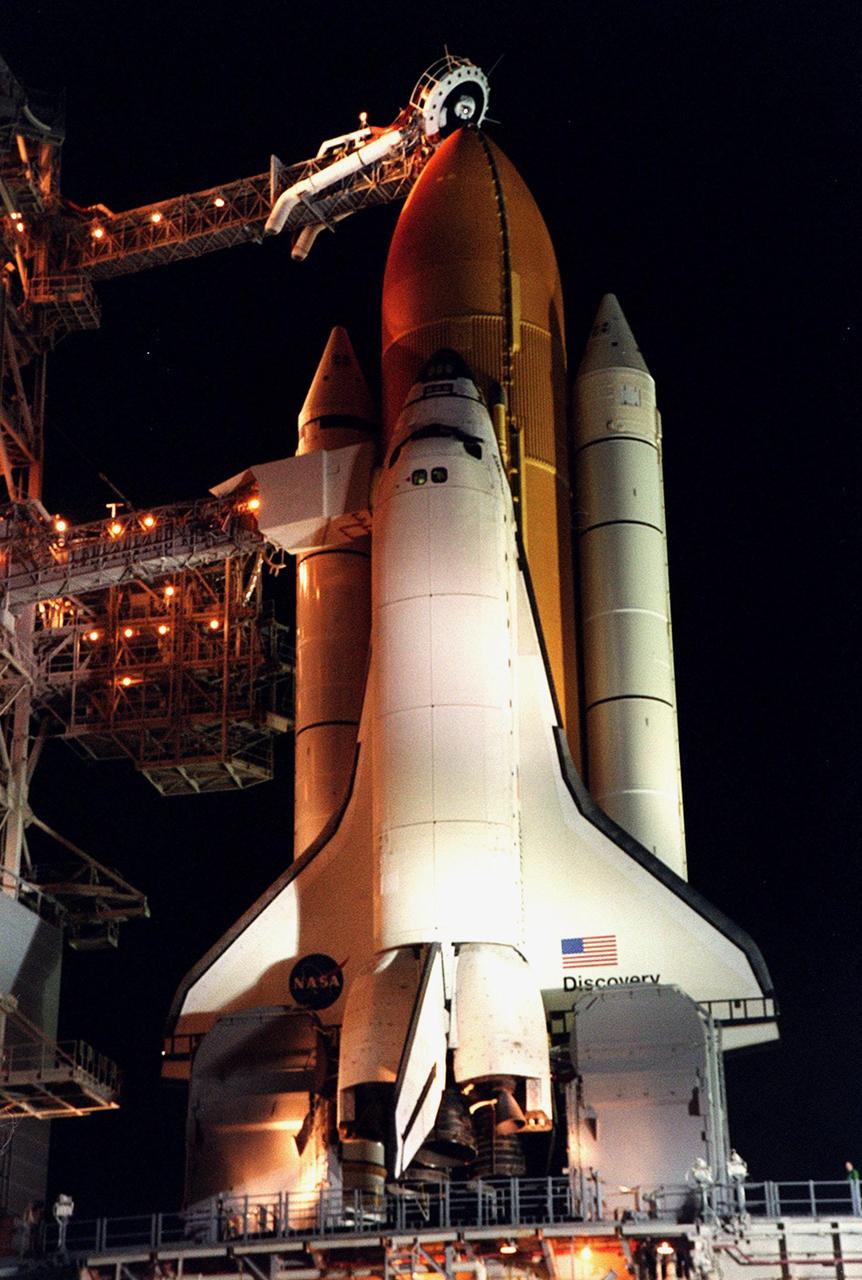
KENNEDY SPACE CENTER, Fla. -- After rollback of the Rotating Service Structure in the early morning hours, Space Shuttle Discovery stands ready for launch of mission STS-92. Above the external tank can be seen the Gaseous Oxygen Vent Arm with its vent hood, commonly referred to as the “beanie cap.” The system is designed to vent gaseous oxygen vapors away from the Shuttle after cryogenic loading. The scheduled launch is the second attempt after an earlier scrub. STS-92 is making the fifth flight for construction of the International Space Station. The mission is also the 100th in the history of the Shuttle program
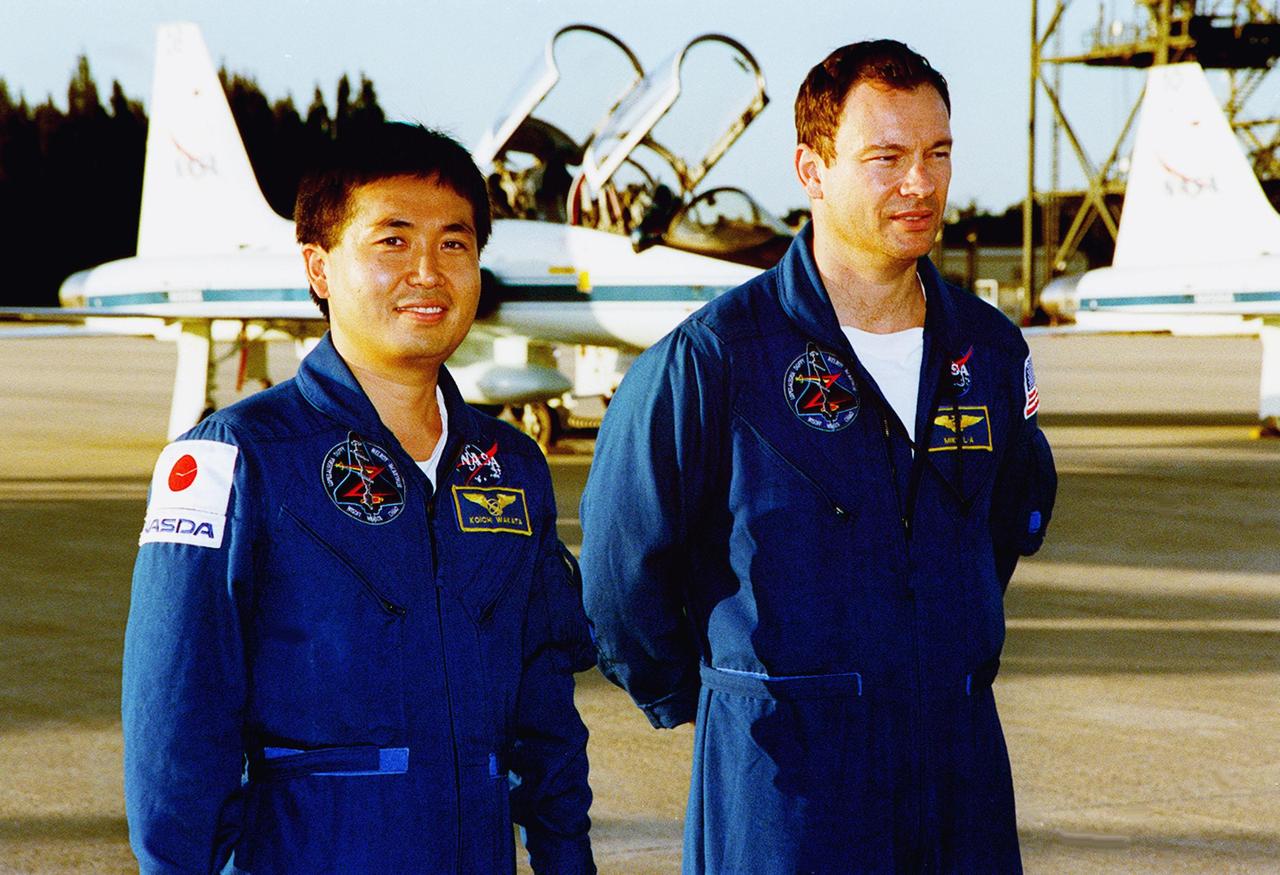
STS-92 Mission Specialists Koichi Wakata and Michael Lopez-Alegria pause on the tarmac after their arrival aboard the T-38 jet aircraft in the background. They and the rest of the crew are at KSC to take part in Terminal Countdown Demonstration Test (TCDT) activities. The TCDT includes emergency egress training from the orbiter and pad, plus a simulated countdown. The fifth mission to the International Space Station, STS-92 will carry the Integrated Truss Structure Z1, the first of the planned 10 trusses on the Space Station, and the third Pressurized Mating Adapter. The Z1 will allow the first U.S. solar arrays on a future flight to be temporarily installed on Unity for early power. PMA-3 will provide a Shuttle docking port for the solar array installation on the sixth ISS flight and Lab installation on the seventh ISS flight. STS-92 is scheduled to launch Oct. 5 from launch Pad 39A. It will be the 100th flight in the Shuttle program
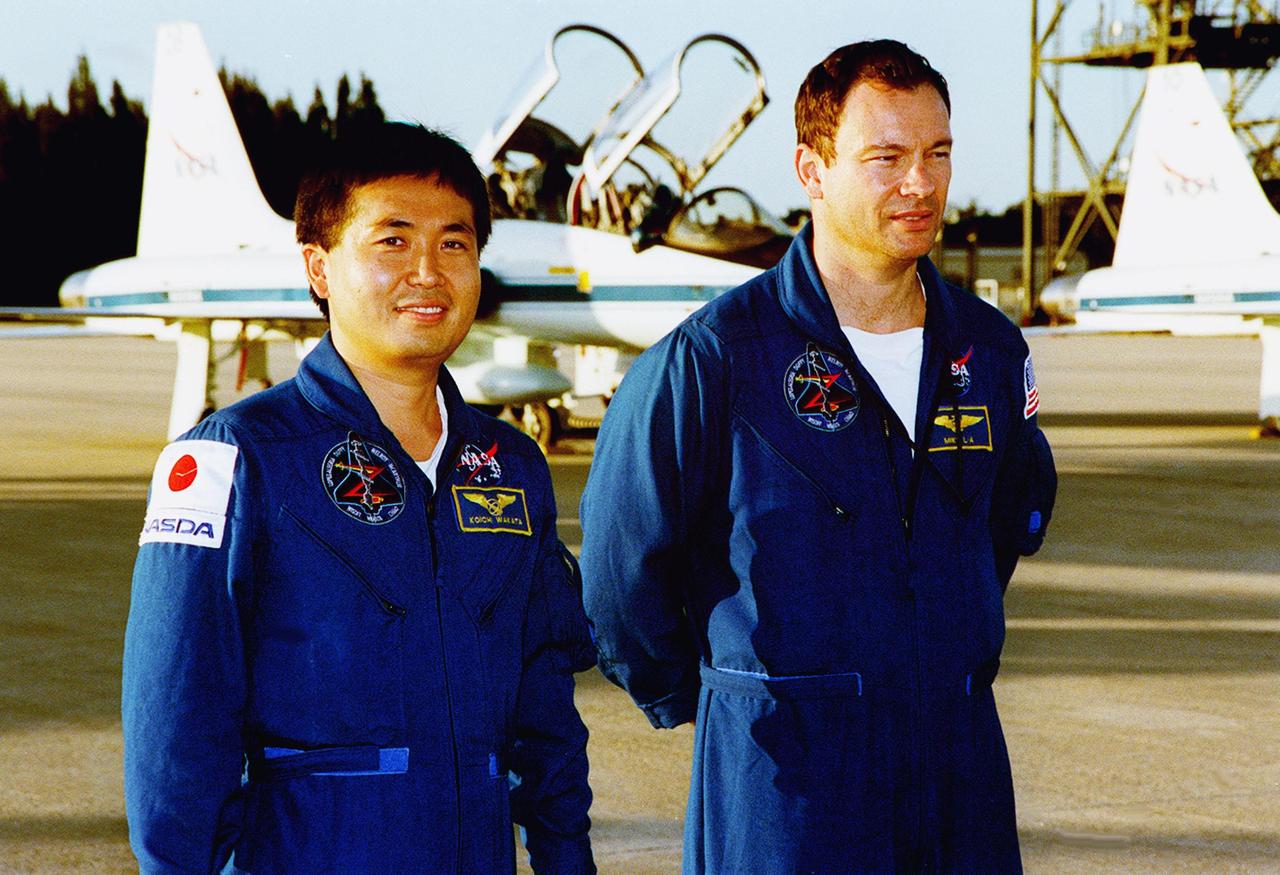
STS-92 Mission Specialists Koichi Wakata and Michael Lopez-Alegria pause on the tarmac after their arrival aboard the T-38 jet aircraft in the background. They and the rest of the crew are at KSC to take part in Terminal Countdown Demonstration Test (TCDT) activities. The TCDT includes emergency egress training from the orbiter and pad, plus a simulated countdown. The fifth mission to the International Space Station, STS-92 will carry the Integrated Truss Structure Z1, the first of the planned 10 trusses on the Space Station, and the third Pressurized Mating Adapter. The Z1 will allow the first U.S. solar arrays on a future flight to be temporarily installed on Unity for early power. PMA-3 will provide a Shuttle docking port for the solar array installation on the sixth ISS flight and Lab installation on the seventh ISS flight. STS-92 is scheduled to launch Oct. 5 from launch Pad 39A. It will be the 100th flight in the Shuttle program
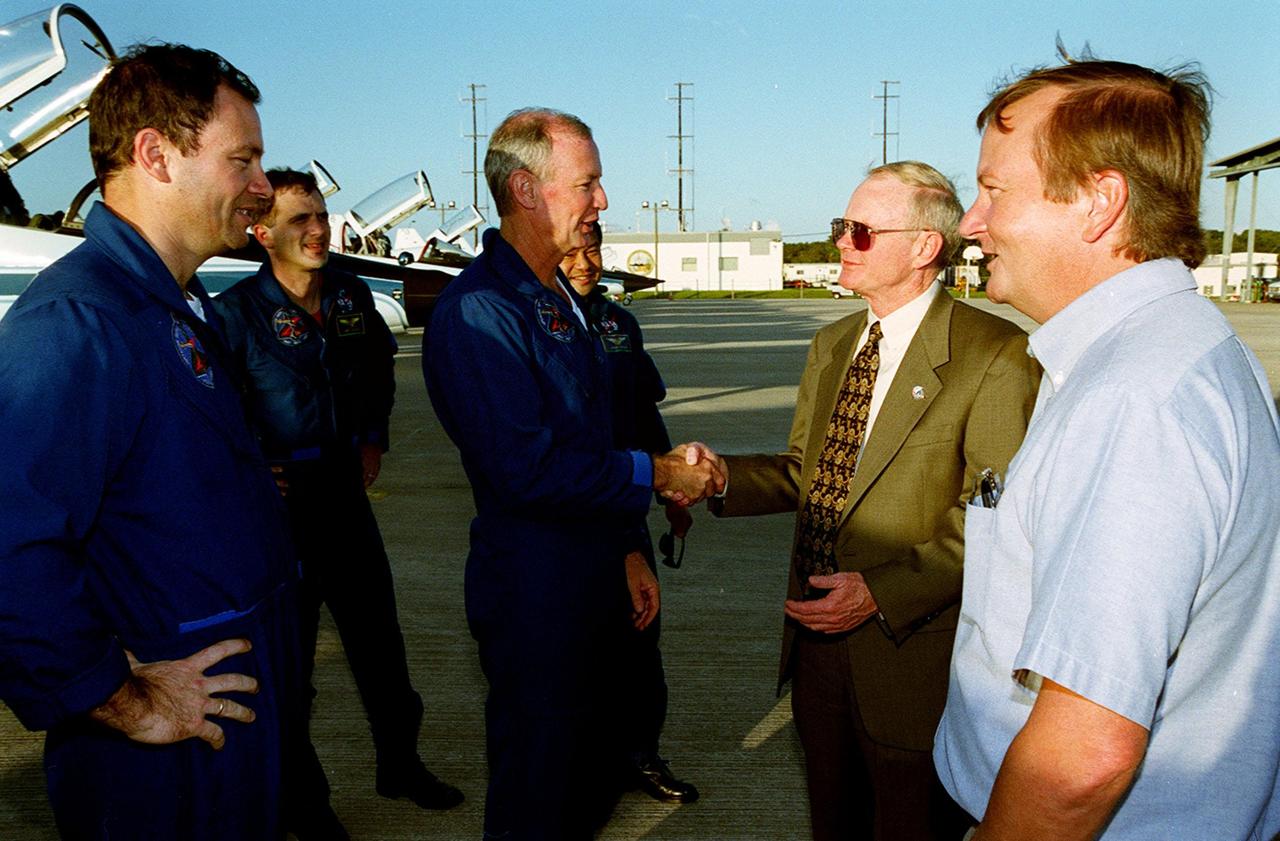
Center Director Roy Bridges greets STS-92 Commander Brian Duffy after the crew’s arrival at the KSC Shuttle Landing Facility. Behind Duffy are Mission Specialists Michael Lopez-Alegria, Jeff Wisoff and Koichi Wakata (NASDA). Next to Bridges is Michael Leinbach, the new KSC launch director. The STS-92 crew is at KSC to take part in Terminal Countdown Demonstration Test (TCDT) activities. The TCDT includes emergency egress training from the orbiter and pad, plus a simulated countdown. The fifth mission to the International Space Station, STS-92 will carry the Integrated Truss Structure Z1, the first of the planned 10 trusses on the Space Station, and the third Pressurized Mating Adapter. The Z1 will allow the first U.S. solar arrays on a future flight to be temporarily installed on Unity for early power. PMA-3 will provide a Shuttle docking port for the solar array installation on the sixth ISS flight and Lab installation on the seventh ISS flight. STS-92 is scheduled to launch Oct. 5 from launch Pad 39A. It will be the 100th flight in the Shuttle program
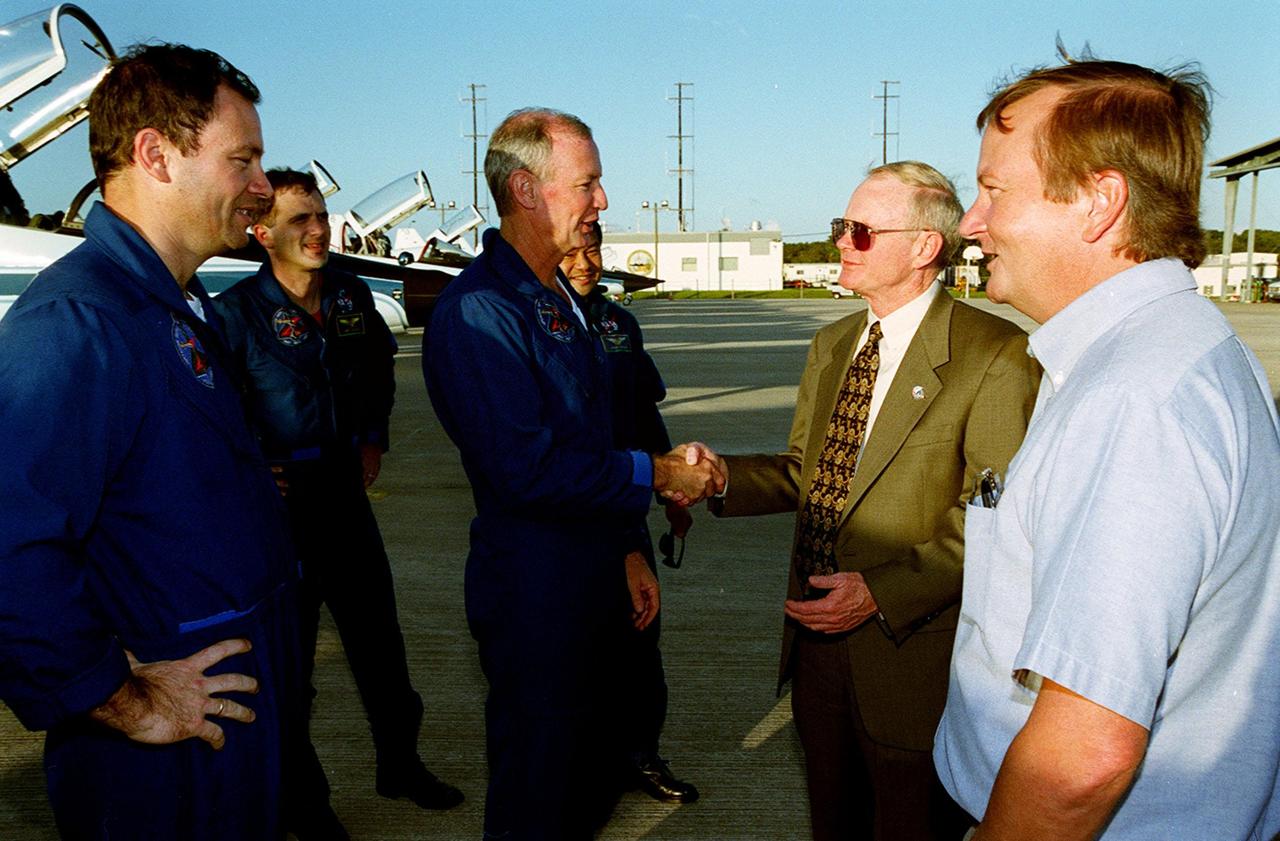
Center Director Roy Bridges greets STS-92 Commander Brian Duffy after the crew’s arrival at the KSC Shuttle Landing Facility. Behind Duffy are Mission Specialists Michael Lopez-Alegria, Jeff Wisoff and Koichi Wakata (NASDA). Next to Bridges is Michael Leinbach, the new KSC launch director. The STS-92 crew is at KSC to take part in Terminal Countdown Demonstration Test (TCDT) activities. The TCDT includes emergency egress training from the orbiter and pad, plus a simulated countdown. The fifth mission to the International Space Station, STS-92 will carry the Integrated Truss Structure Z1, the first of the planned 10 trusses on the Space Station, and the third Pressurized Mating Adapter. The Z1 will allow the first U.S. solar arrays on a future flight to be temporarily installed on Unity for early power. PMA-3 will provide a Shuttle docking port for the solar array installation on the sixth ISS flight and Lab installation on the seventh ISS flight. STS-92 is scheduled to launch Oct. 5 from launch Pad 39A. It will be the 100th flight in the Shuttle program
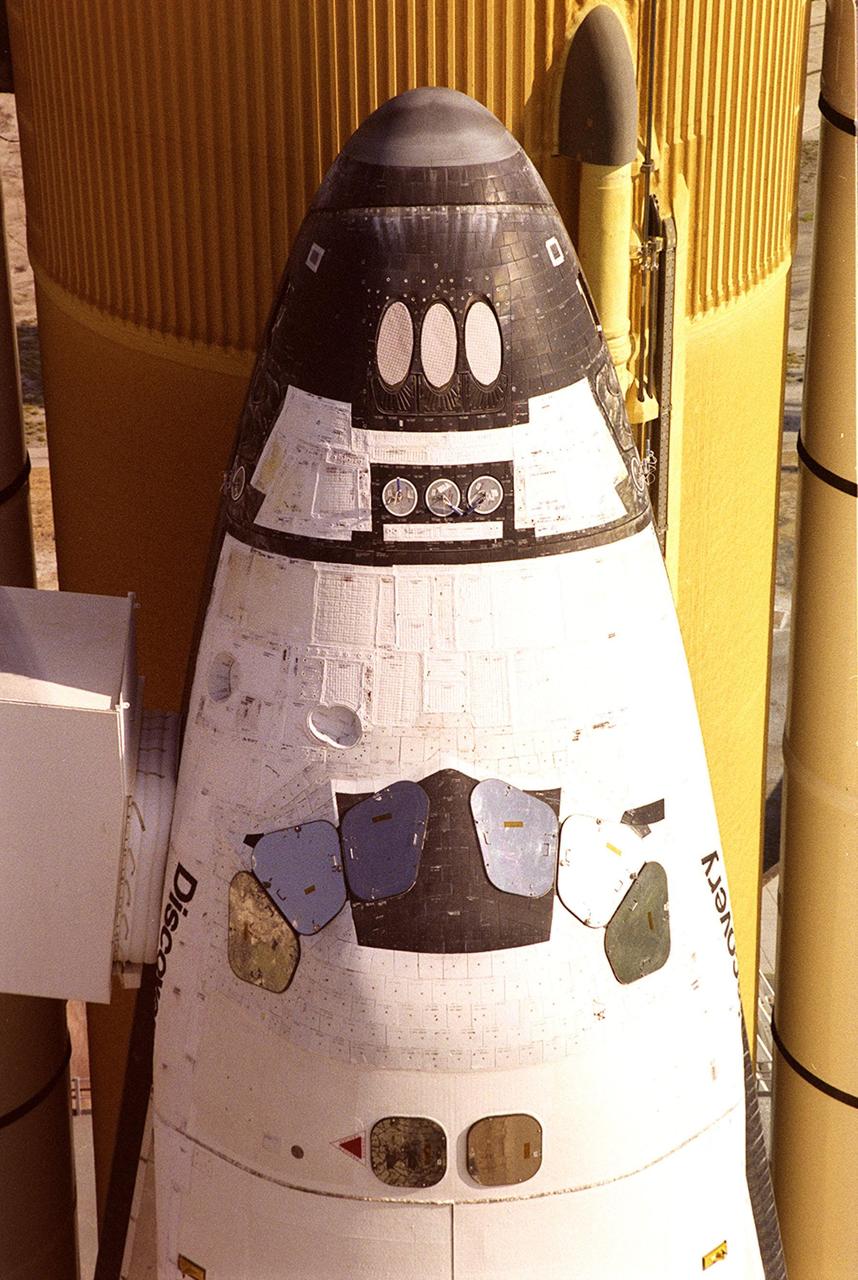
KENNEDY SPACE CENTER, FLA. -- A closeup of Space Shuttle Discovery on Launch Pad 39A shows the White Room (left) extended to the side of the orbiter, at the entrance to the crew compartment. Discovery is undergoing final launch preparations of STS-92. Scheduled to lift off Oct. 5 at 9:38 p.m. EDT, Discovery will be making the 100th Space Shuttle mission launched from Kennedy Space Center. Discovery also will be making its 28th flight into space, more than any of the other orbiters to date. STS-92 is a mission to the International Space Station, carrying the Z1 truss, which is the first of 10 trusses on the Station, and the third Pressurized Mating Adapter
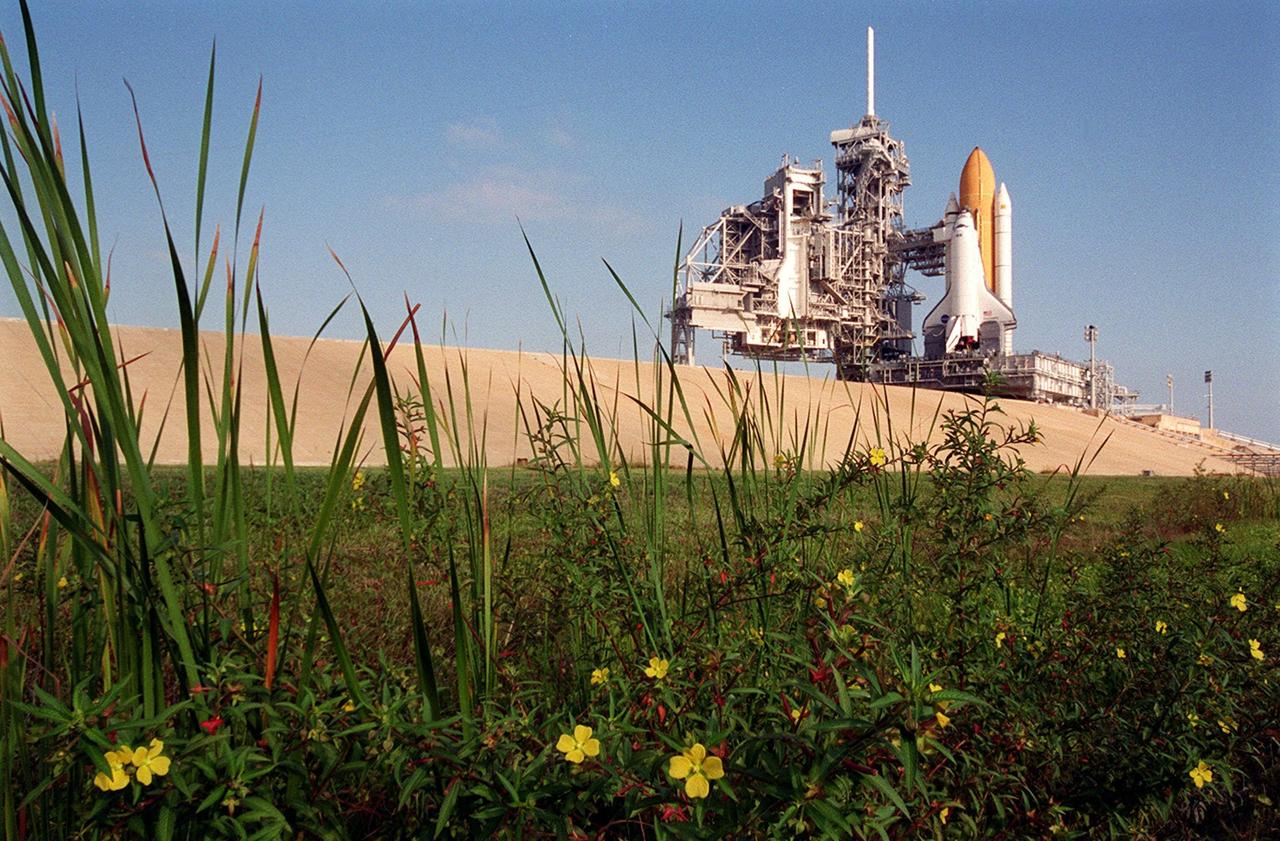
KENNEDY SPACE CENTER, FLA. -- Viewed across a field of wildflowers and other greenery, Space Shuttle Discovery rises above them on Launch Pad 39A. Discovery is undergoing final launch preparations of STS-92. Scheduled to lift off Oct. 5 at 9:38 p.m. EDT, Discovery will be making the 100th Space Shuttle mission launched from Kennedy Space Center. Discovery also will be making its 28th flight into space, more than any of the other orbiters to date. STS-92 is a mission to the International Space Station, carrying the Z1 truss, which is the first of 10 trusses on the Station, and the third Pressurized Mating Adapter
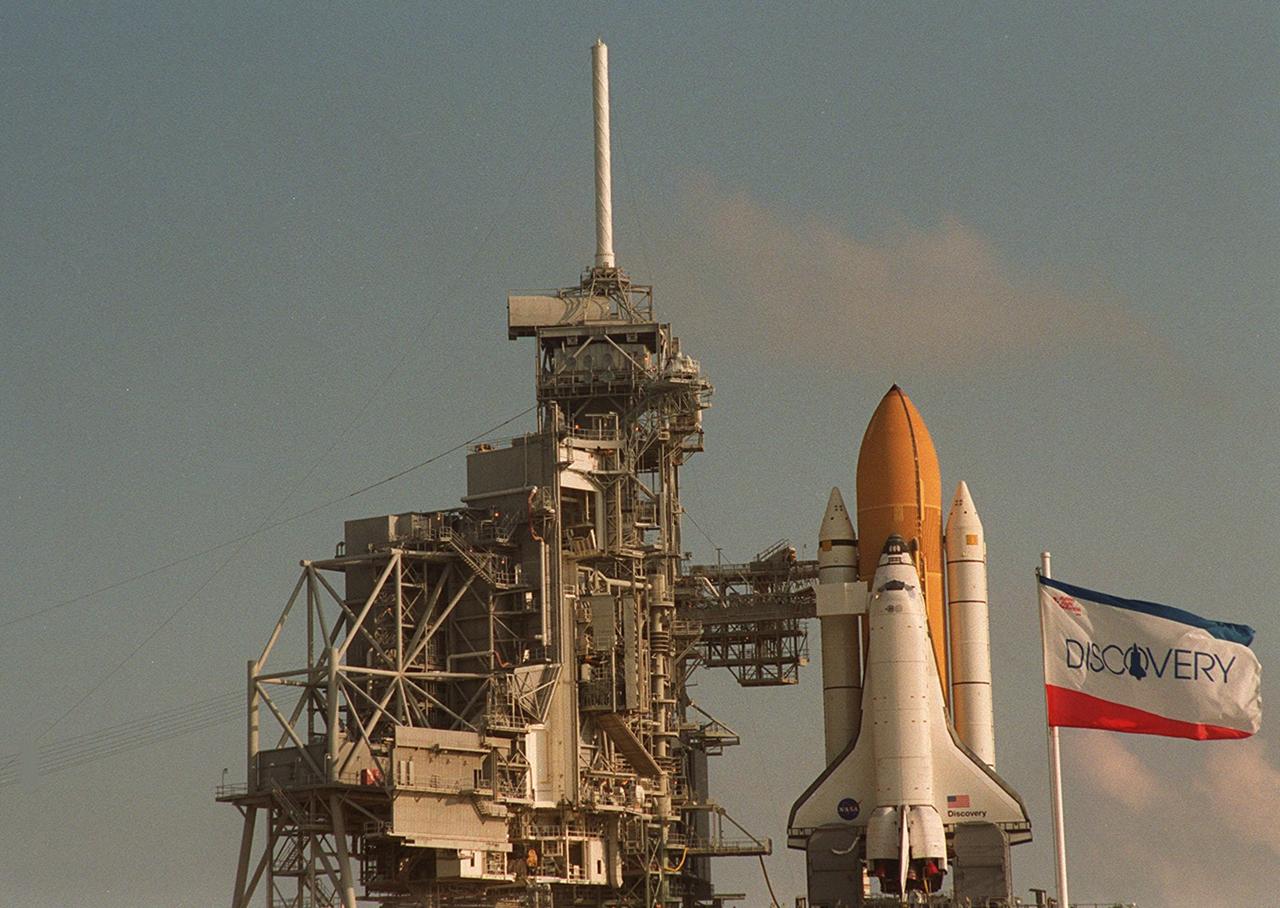
KENNEDY SPACE CENTER, FLA. -- The flag at right identifies Space Shuttle Discovery on Launch Pad 39A after its rollout and before the Rotating Service Structure is moved around it. Scheduled to launch Oct. 5 at 9:38 p.m. EDT on mission STS-92, Discovery will be making the 100th Space Shuttle mission launched from Kennedy Space Center. Discovery also will be making its 28th flight into space, more than any of the other orbiters to date. STS-92 is a mission to the International Space Station, carrying the Z1 truss, which is the first of 10 trusses on the Station, and the third Pressurized Mating Adapter
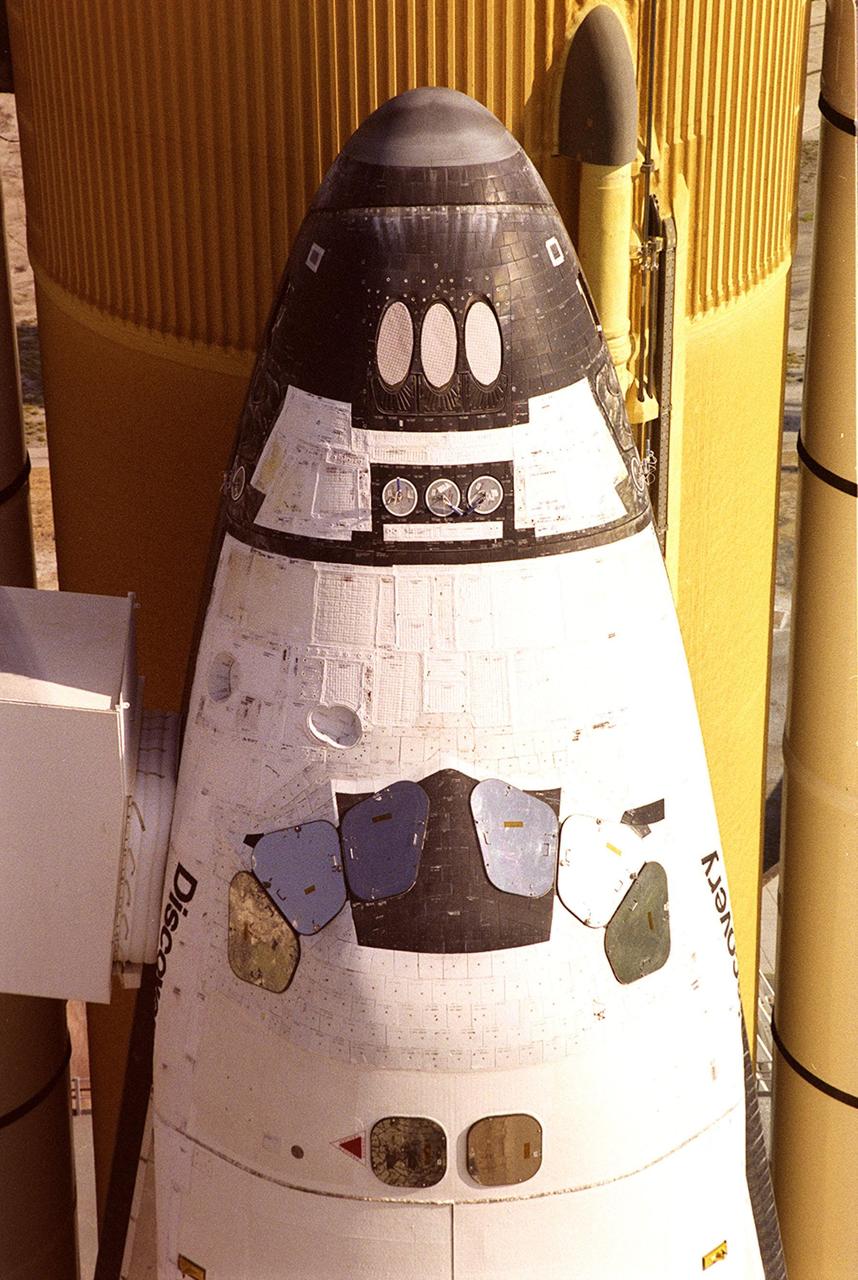
KENNEDY SPACE CENTER, FLA. -- A closeup of Space Shuttle Discovery on Launch Pad 39A shows the White Room (left) extended to the side of the orbiter, at the entrance to the crew compartment. Discovery is undergoing final launch preparations of STS-92. Scheduled to lift off Oct. 5 at 9:38 p.m. EDT, Discovery will be making the 100th Space Shuttle mission launched from Kennedy Space Center. Discovery also will be making its 28th flight into space, more than any of the other orbiters to date. STS-92 is a mission to the International Space Station, carrying the Z1 truss, which is the first of 10 trusses on the Station, and the third Pressurized Mating Adapter
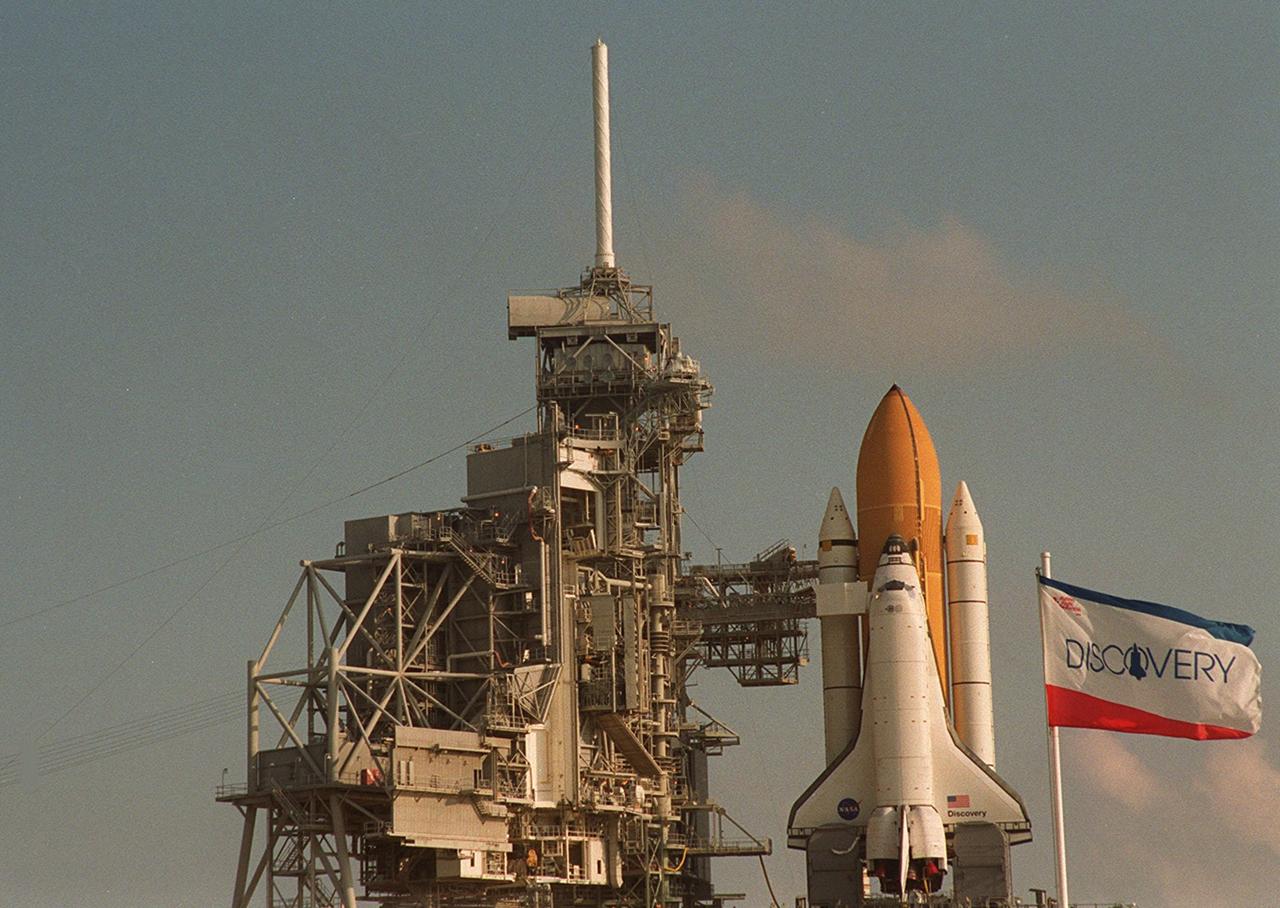
KENNEDY SPACE CENTER, FLA. -- The flag at right identifies Space Shuttle Discovery on Launch Pad 39A after its rollout and before the Rotating Service Structure is moved around it. Scheduled to launch Oct. 5 at 9:38 p.m. EDT on mission STS-92, Discovery will be making the 100th Space Shuttle mission launched from Kennedy Space Center. Discovery also will be making its 28th flight into space, more than any of the other orbiters to date. STS-92 is a mission to the International Space Station, carrying the Z1 truss, which is the first of 10 trusses on the Station, and the third Pressurized Mating Adapter
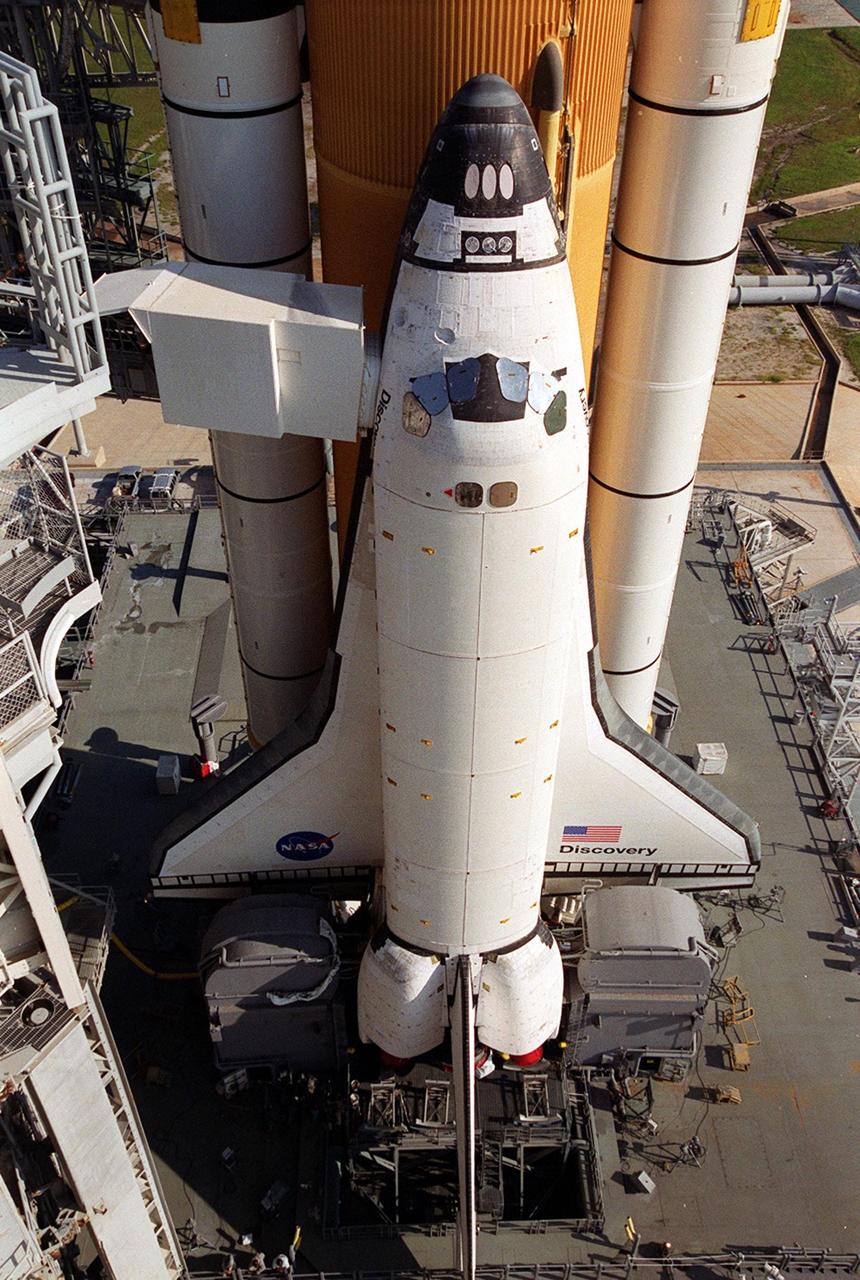
KENNEDY SPACE CENTER, FLA. -- Space Shuttle Discovery is ready on Launch Pad 39A for final launch preparations of STS-92. Scheduled to lift off Oct. 5 at 9:38 p.m. EDT, Discovery will be making the 100th Space Shuttle mission launched from Kennedy Space Center. Discovery also will be making its 28th flight into space, more than any of the other orbiters to date. STS-92 is a mission to the International Space Station, carrying the Z1 truss, which is the first of 10 trusses on the Station, and the third Pressurized Mating Adapter
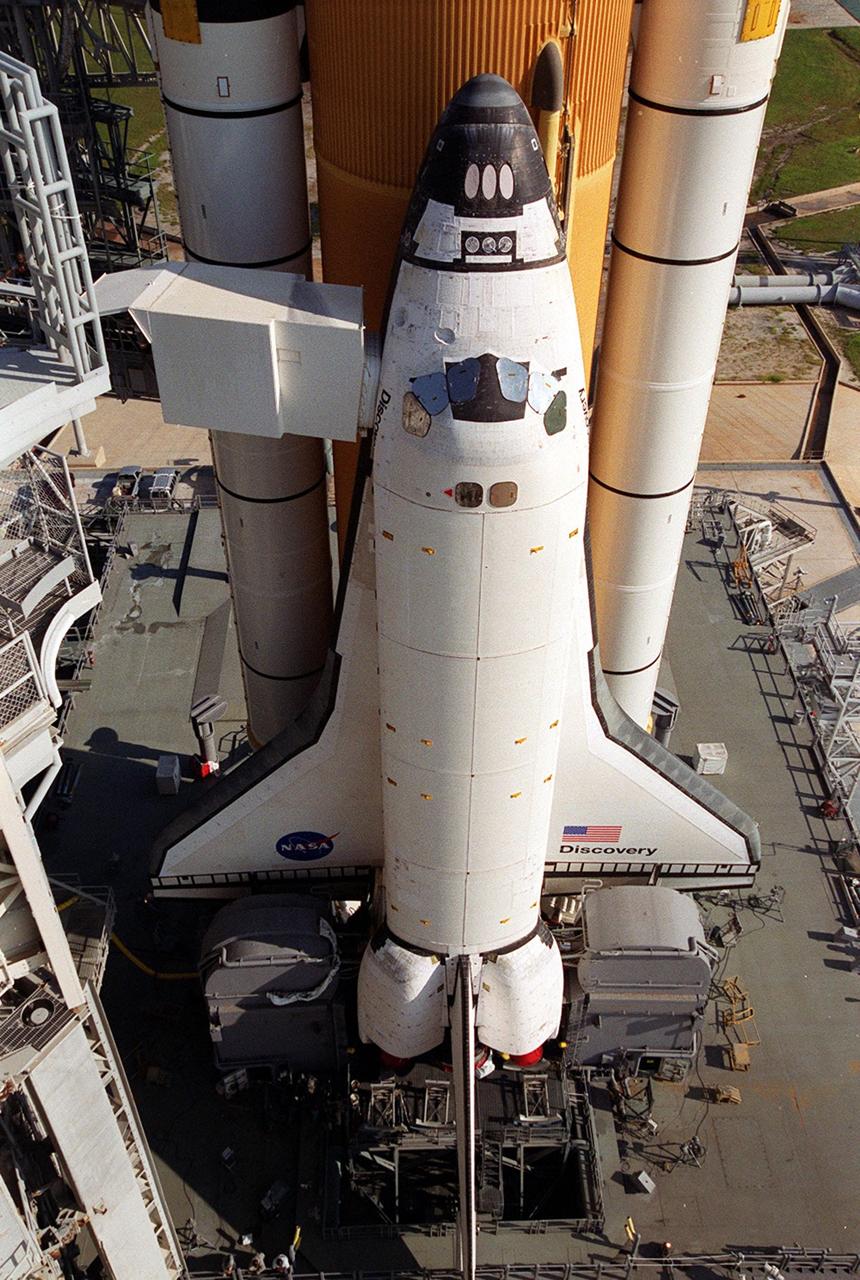
KENNEDY SPACE CENTER, FLA. -- Space Shuttle Discovery is ready on Launch Pad 39A for final launch preparations of STS-92. Scheduled to lift off Oct. 5 at 9:38 p.m. EDT, Discovery will be making the 100th Space Shuttle mission launched from Kennedy Space Center. Discovery also will be making its 28th flight into space, more than any of the other orbiters to date. STS-92 is a mission to the International Space Station, carrying the Z1 truss, which is the first of 10 trusses on the Station, and the third Pressurized Mating Adapter
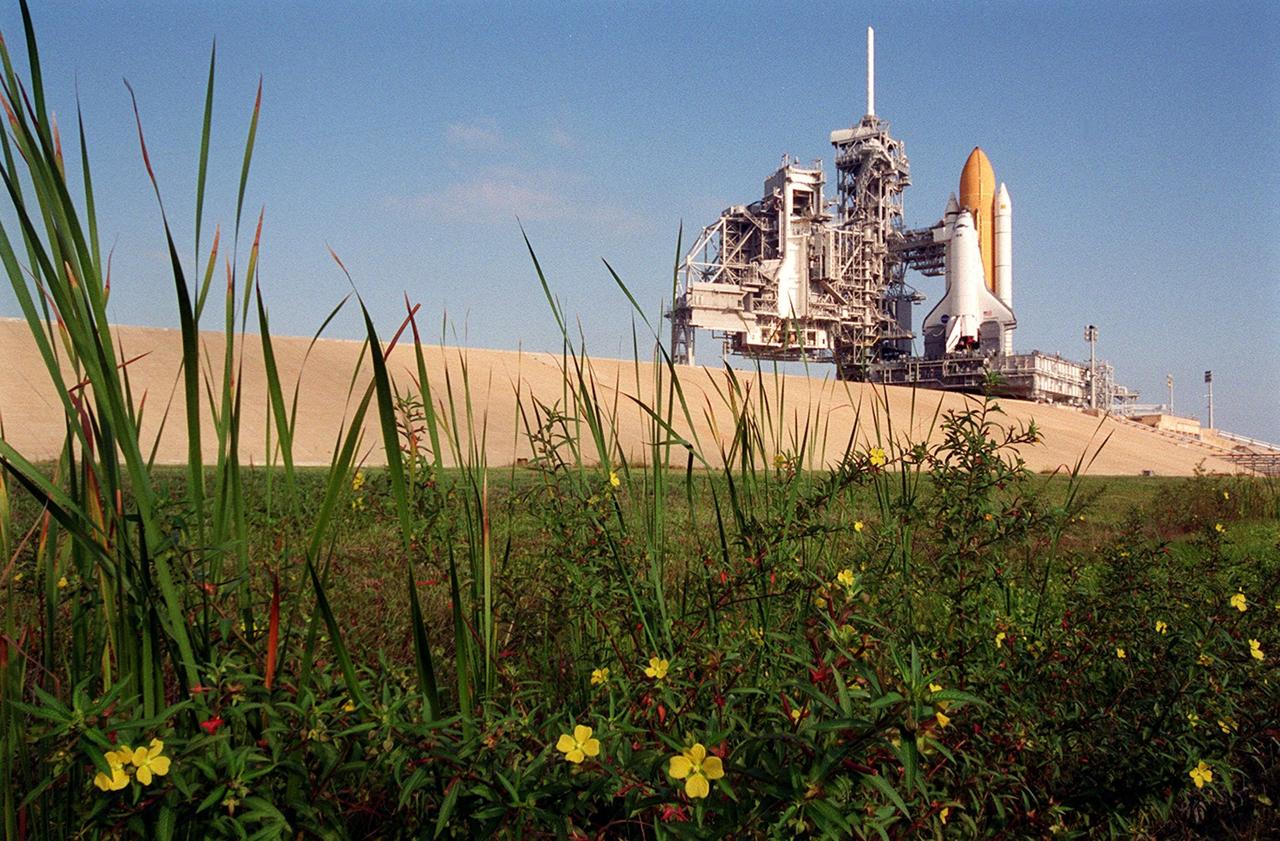
KENNEDY SPACE CENTER, FLA. -- Viewed across a field of wildflowers and other greenery, Space Shuttle Discovery rises above them on Launch Pad 39A. Discovery is undergoing final launch preparations of STS-92. Scheduled to lift off Oct. 5 at 9:38 p.m. EDT, Discovery will be making the 100th Space Shuttle mission launched from Kennedy Space Center. Discovery also will be making its 28th flight into space, more than any of the other orbiters to date. STS-92 is a mission to the International Space Station, carrying the Z1 truss, which is the first of 10 trusses on the Station, and the third Pressurized Mating Adapter
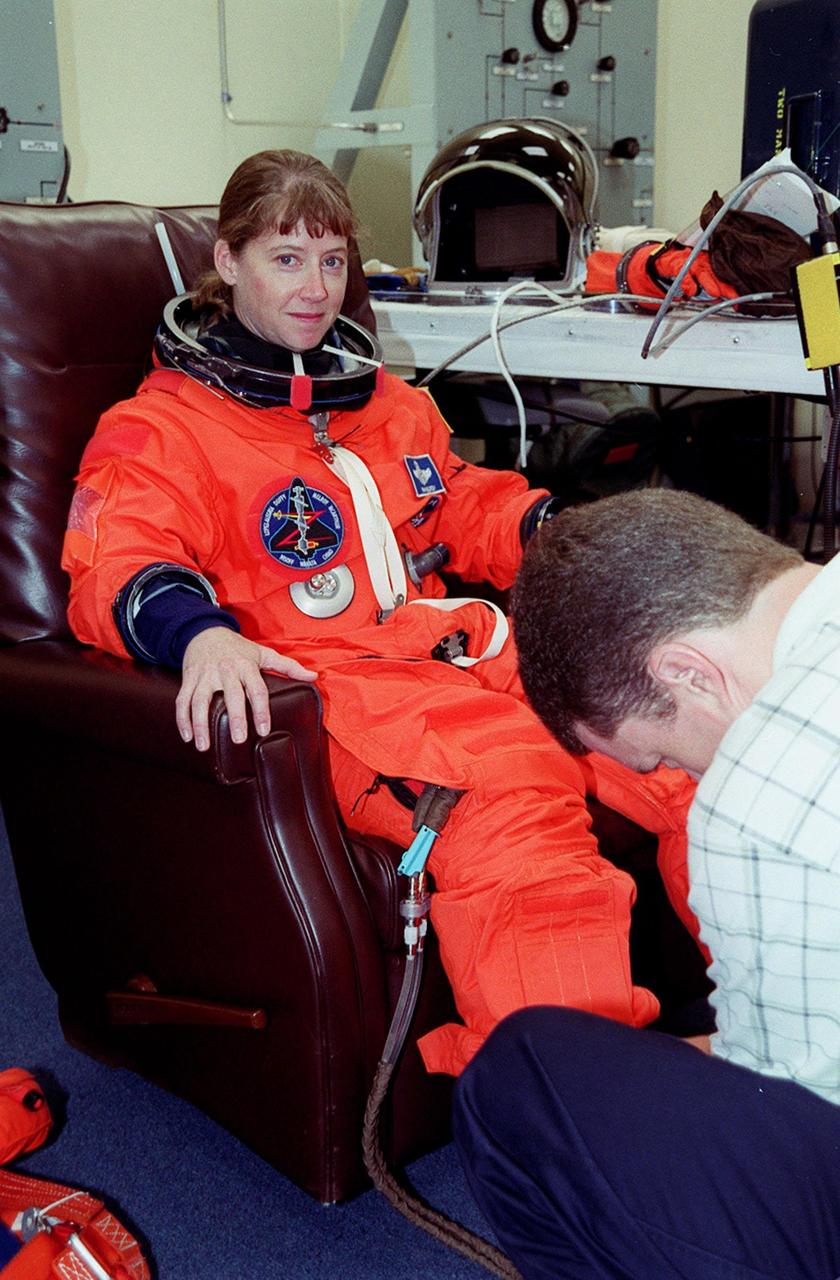
In the Operations and Checkout Building, STS-92 Pilot Pamela Ann Melroy has her new launch and entry suit adjusted during fit check. Melroy and the rest of the crew are at KSC for Terminal Countdown Demonstration Test activities. The TCDT provides emergency egress training, simulated countdown exercises and opportunities to inspect the mission payload. This mission will be Melroy’s first Shuttle flight. STS-92 is scheduled to launch Oct. 5 at 9:38 p.m. EDT from Launch Pad 39A on the fifth flight to the International Space Station. It will carry two elements of the Space Station, the Integrated Truss Structure Z1 and the third Pressurized Mating Adapter. The mission is also the 100th flight in the Shuttle program
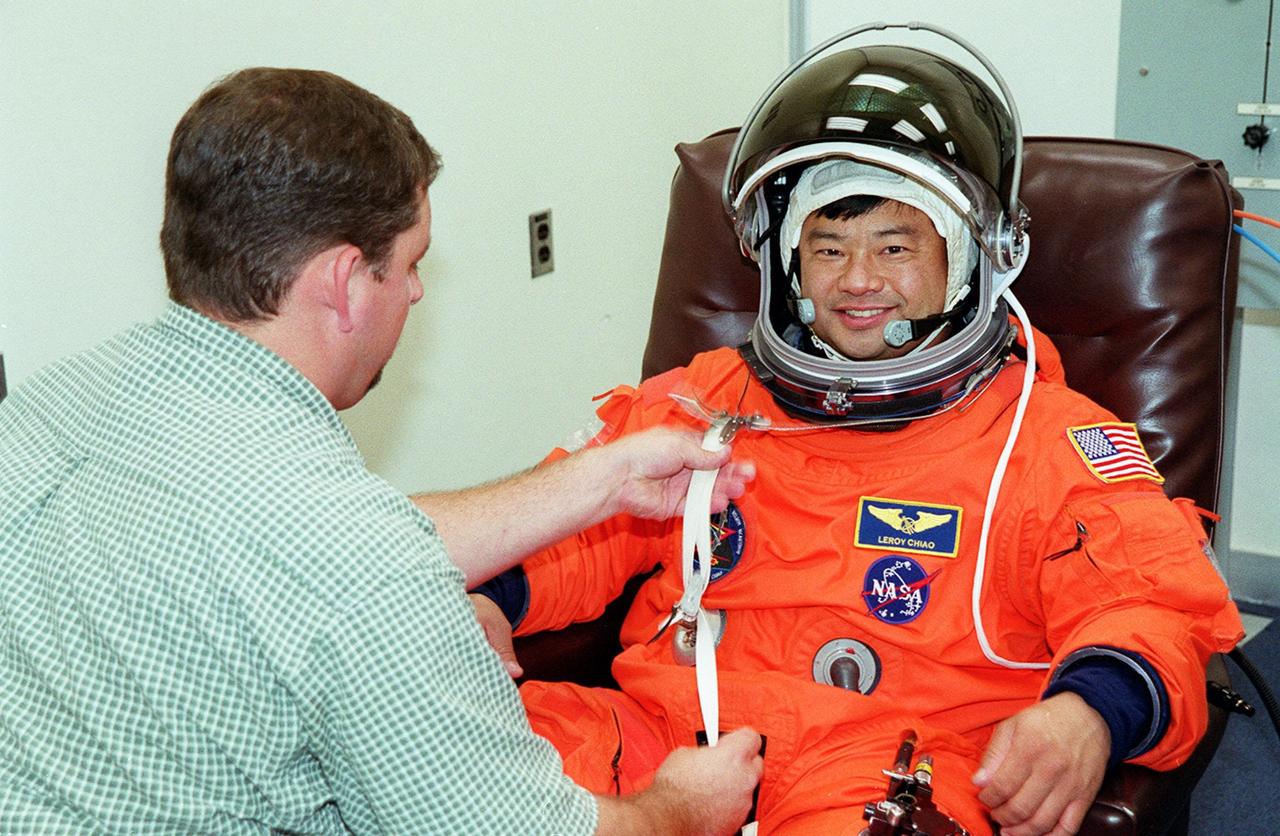
In the Operations and Checkout Building, STS-92 Mission Specialist Leroy Chiao has his launch and entry suit adjusted during fit check. Chiao and the rest of the crew are at KSC for Terminal Countdown Demonstration Test activities. The TCDT provides emergency egress training, simulated countdown exercises and opportunities to inspect the mission payload. This mission will be Chiao’s third Shuttle flight. STS-92 is scheduled to launch Oct. 5 at 9:38 p.m. EDT from Launch Pad 39A on the fifth flight to the International Space Station. It will carry two elements of the Space Station, the Integrated Truss Structure Z1 and the third Pressurized Mating Adapter. The mission is also the 100th flight in the Shuttle program
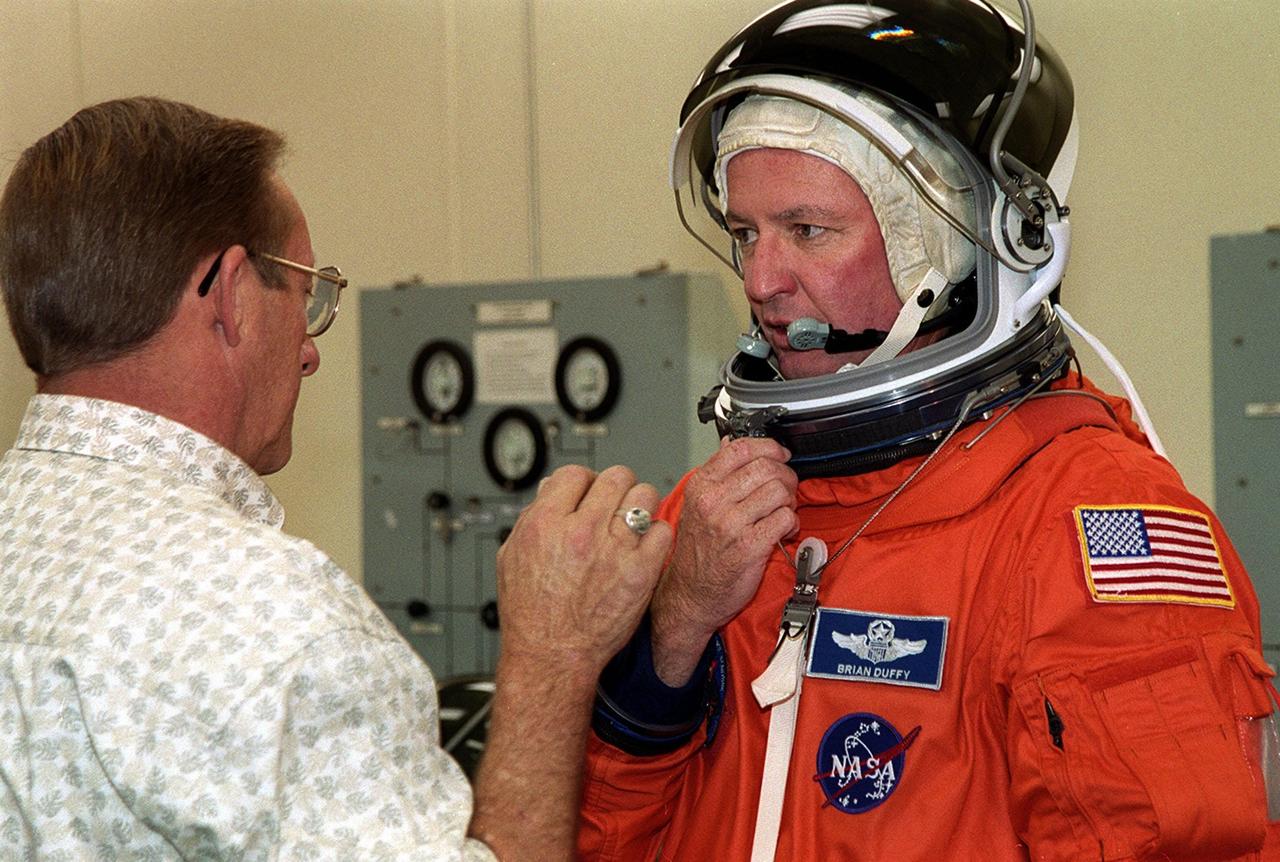
During pre-pack and fit check on his launch and entry suit, STS-92 Commander Brian Duffy adjusts his helmet. Duffy and the rest of the crew are at KSC for Terminal Countdown Demonstration Test activities. The TCDT provides emergency egress training, simulated countdown exercises and opportunities to inspect the mission payload. This mission will be Duffy’s fourth Shuttle flight. STS-92 is scheduled to launch Oct. 5 at 9:38 p.m. EDT from Launch Pad 39A on the fifth flight to the International Space Station. It will carry two elements of the Space Station, the Integrated Truss Structure Z1 and the third Pressurized Mating Adapter. The mission is also the 100th flight in the Shuttle program
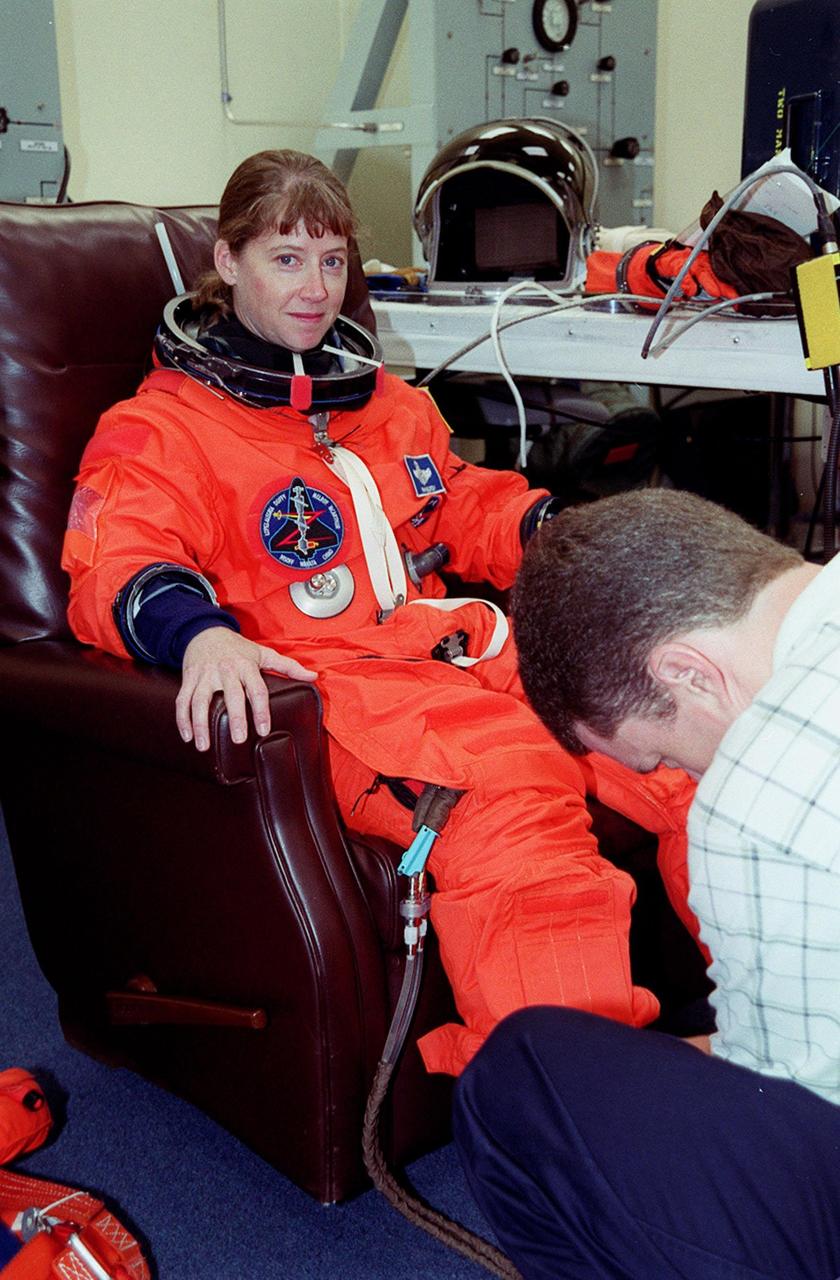
In the Operations and Checkout Building, STS-92 Pilot Pamela Ann Melroy has her new launch and entry suit adjusted during fit check. Melroy and the rest of the crew are at KSC for Terminal Countdown Demonstration Test activities. The TCDT provides emergency egress training, simulated countdown exercises and opportunities to inspect the mission payload. This mission will be Melroy’s first Shuttle flight. STS-92 is scheduled to launch Oct. 5 at 9:38 p.m. EDT from Launch Pad 39A on the fifth flight to the International Space Station. It will carry two elements of the Space Station, the Integrated Truss Structure Z1 and the third Pressurized Mating Adapter. The mission is also the 100th flight in the Shuttle program
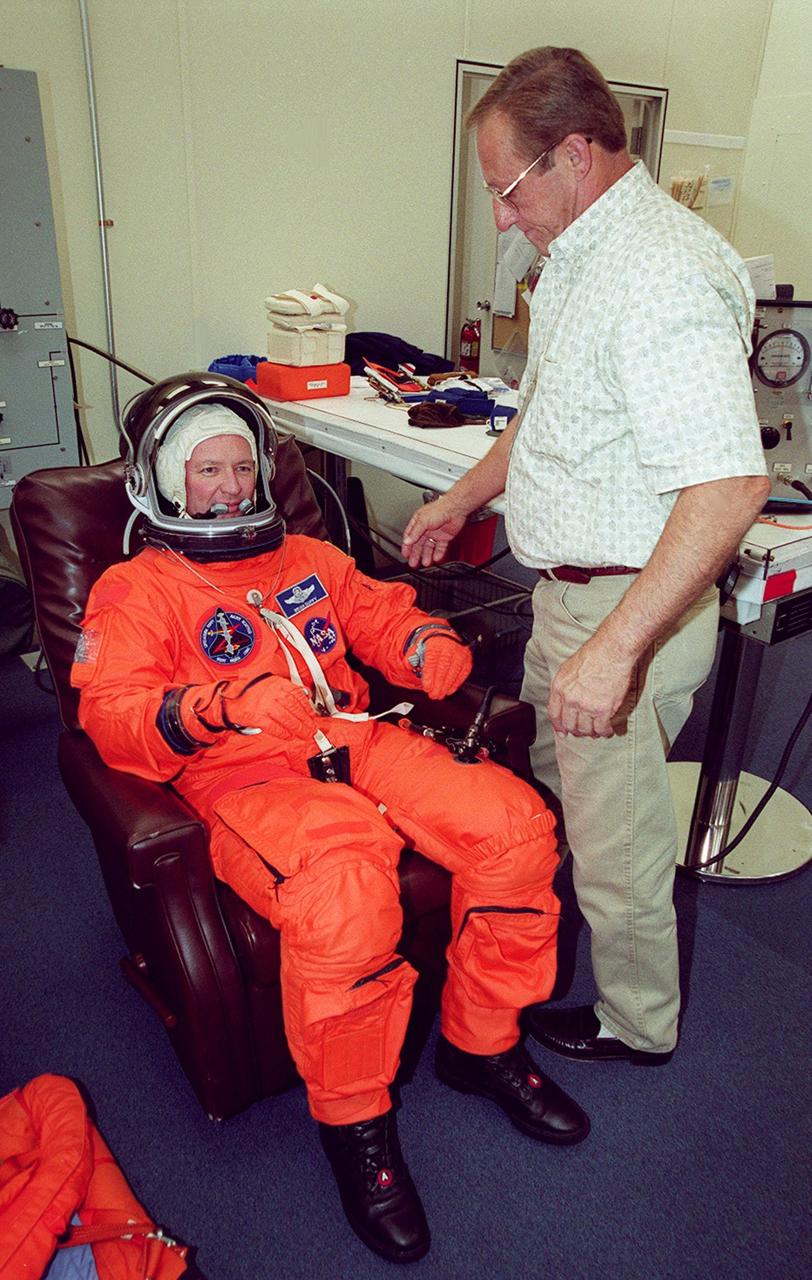
During pre-pack and fit check, STS-92 Commander Brian Duffy tests his launch and entry suit for comfort and ease while sitting. This mission will be Duffy’s fourth Shuttle flight. He and the rest of the crew are at KSC for Terminal Countdown Demonstration Test activities. The TCDT provides emergency egress training, simulated countdown exercises and opportunities to inspect the mission payload. STS-92 is scheduled to launch Oct. 5 at 9:38 p.m. EDT from Launch Pad 39A on the fifth flight to the International Space Station. It will carry two elements of the Space Station, the Integrated Truss Structure Z1 and the third Pressurized Mating Adapter. The mission is also the 100th flight in the Shuttle program

During pre-pack and fit check on his launch and entry suit, STS-92 Commander Brian Duffy adjusts his helmet. Duffy and the rest of the crew are at KSC for Terminal Countdown Demonstration Test activities. The TCDT provides emergency egress training, simulated countdown exercises and opportunities to inspect the mission payload. This mission will be Duffy’s fourth Shuttle flight. STS-92 is scheduled to launch Oct. 5 at 9:38 p.m. EDT from Launch Pad 39A on the fifth flight to the International Space Station. It will carry two elements of the Space Station, the Integrated Truss Structure Z1 and the third Pressurized Mating Adapter. The mission is also the 100th flight in the Shuttle program
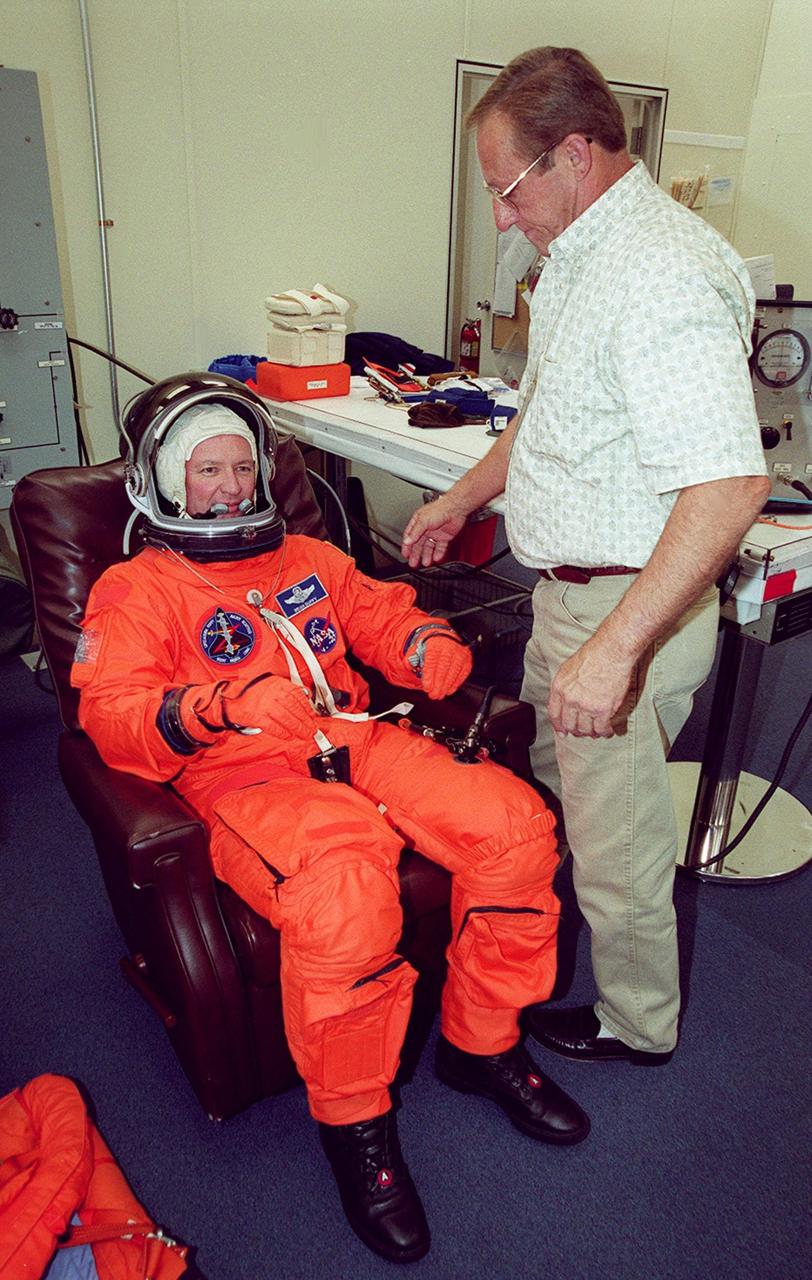
During pre-pack and fit check, STS-92 Commander Brian Duffy tests his launch and entry suit for comfort and ease while sitting. This mission will be Duffy’s fourth Shuttle flight. He and the rest of the crew are at KSC for Terminal Countdown Demonstration Test activities. The TCDT provides emergency egress training, simulated countdown exercises and opportunities to inspect the mission payload. STS-92 is scheduled to launch Oct. 5 at 9:38 p.m. EDT from Launch Pad 39A on the fifth flight to the International Space Station. It will carry two elements of the Space Station, the Integrated Truss Structure Z1 and the third Pressurized Mating Adapter. The mission is also the 100th flight in the Shuttle program
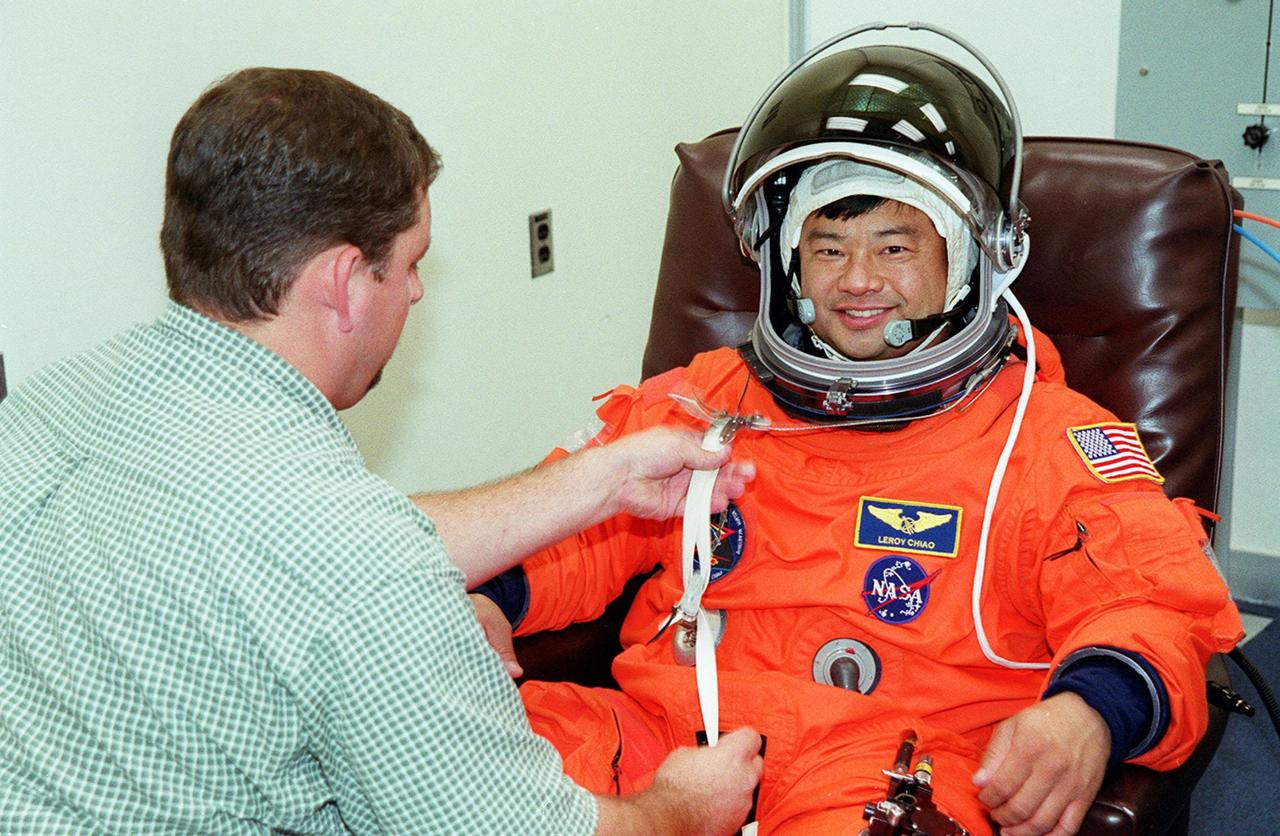
In the Operations and Checkout Building, STS-92 Mission Specialist Leroy Chiao has his launch and entry suit adjusted during fit check. Chiao and the rest of the crew are at KSC for Terminal Countdown Demonstration Test activities. The TCDT provides emergency egress training, simulated countdown exercises and opportunities to inspect the mission payload. This mission will be Chiao’s third Shuttle flight. STS-92 is scheduled to launch Oct. 5 at 9:38 p.m. EDT from Launch Pad 39A on the fifth flight to the International Space Station. It will carry two elements of the Space Station, the Integrated Truss Structure Z1 and the third Pressurized Mating Adapter. The mission is also the 100th flight in the Shuttle program
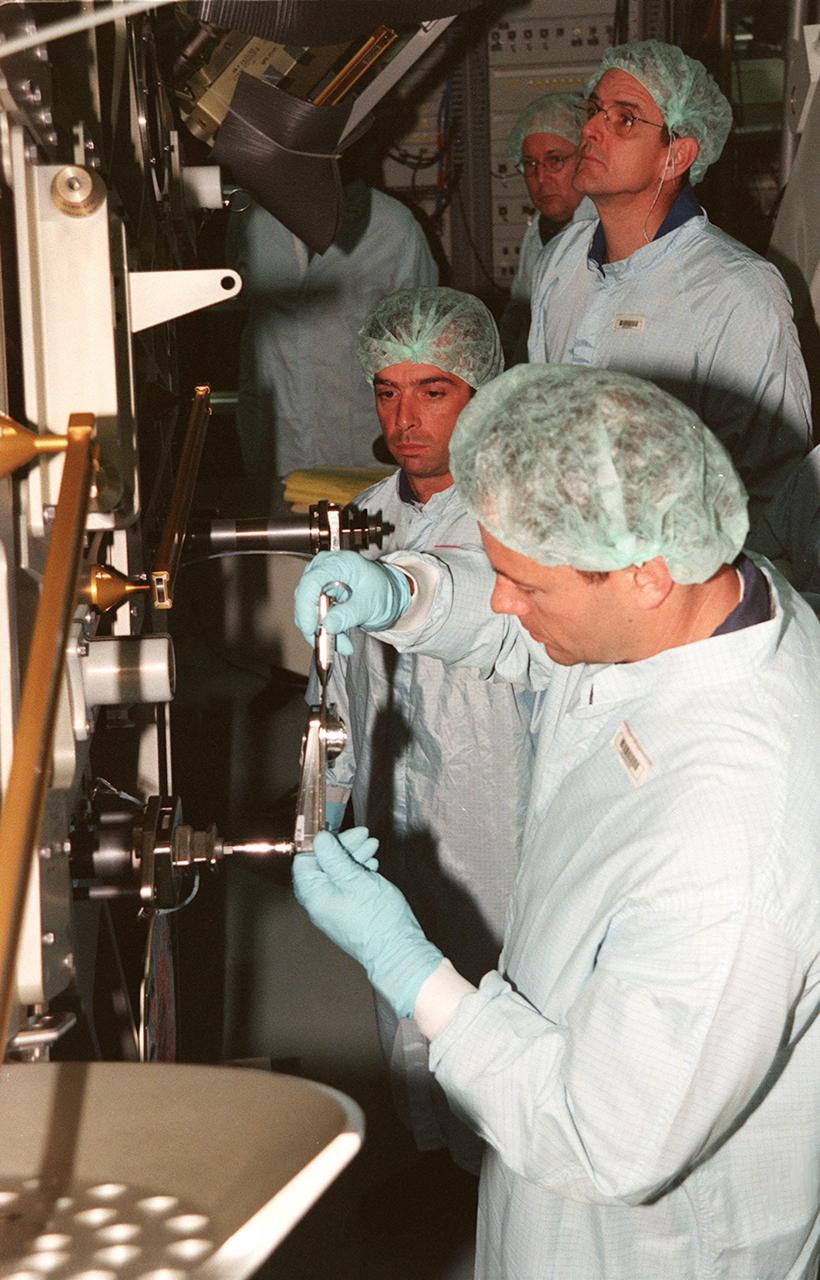
KENNEDY SPACE CENTER, FLA. -- In the Space Station Processing Facility, members of the STS-92 crew get hands-on experience with some of the equipment, such as the Integrated Truss Structure Z1, to fly on their mission. STS-92 is the fifth U.S. flight in the construction of the International Space Station. The Z1 is an early exterior framework to allow the first U.S. solar arrays on a future flight to be temporarily installed on Unity for early power. Another part of the payload is a pressurized mating adapter, PMA-3, to provide a Shuttle docking port for solar array installation on the sixth ISS flight and Lab installation on the seventh ISS flight. The crew comprises Mission Commander Brian Duffy, Pilot Pamela A. Melroy, and Mission Specialists Koichi Wakata, Leroy Chiao, Peter J.K. Wisoff, Michael E. Lopez-Alegria, and William S. McArthur Jr. Wakata is with the National Space Development Agency of Japan. Launch of STS-92 is scheduled for Sept. 21, 2000
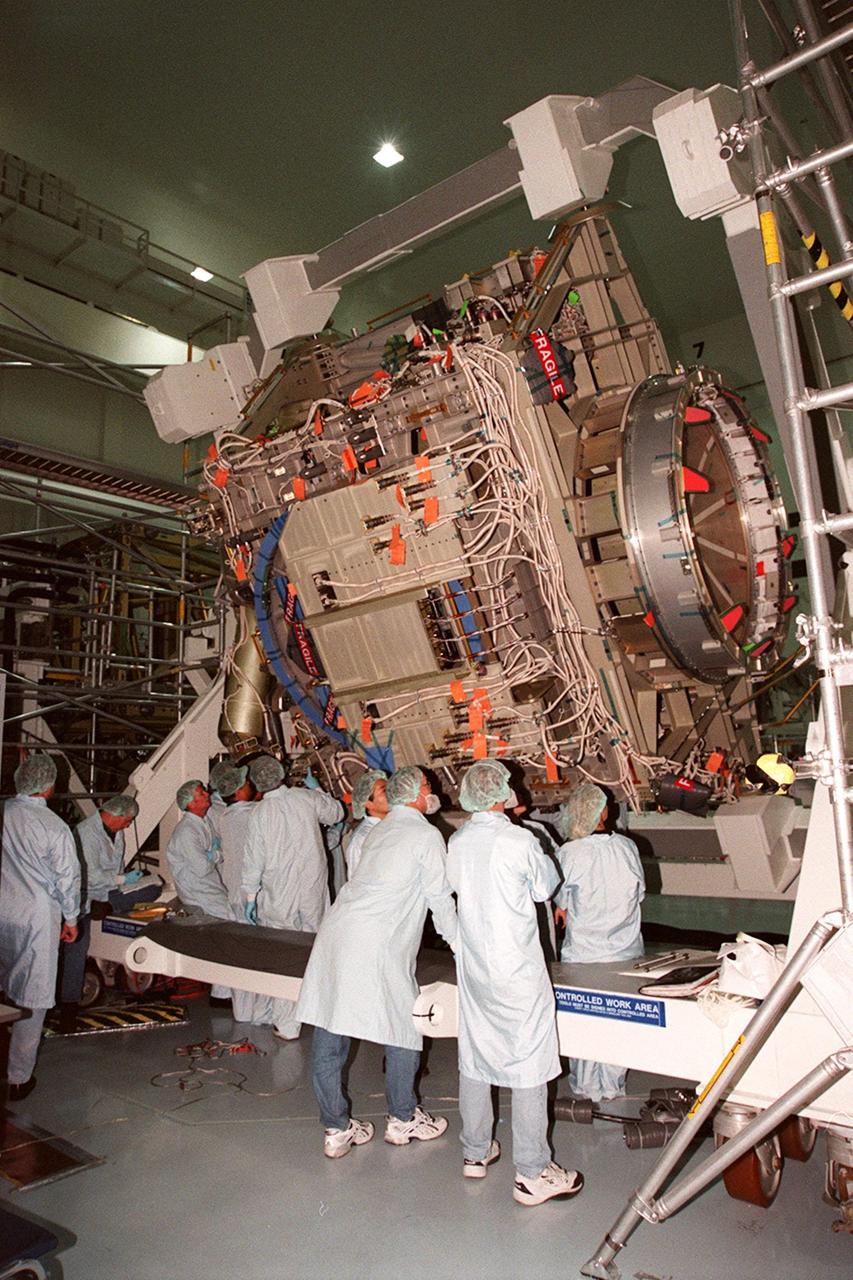
KENNEDY SPACE CENTER, FLA. -- In the Space Station Processing Facility, members of the STS-92 crew get a close look at the Integrated Truss Structure Z1, part of the payload on their mission. STS-92 is the fifth U.S. flight in the construction of the International Space Station. The crew comprises Mission Commander Brian Duffy, Pilot Pamela A. Melroy, and Mission Specialists Koichi Wakata, Leroy Chiao, Peter J.K. Wisoff, Michael E. Lopez-Alegria, and William S. McArthur Jr. Wakata is with the National Space Development Agency of Japan. The Z1 is an early exterior framework to allow the first U.S. solar arrays on a future flight to be temporarily installed on Unity for early power. Another part of the payload is a pressurized mating adapter, PMA-3, to provide a Shuttle docking port for solar array installation on the sixth ISS flight and Lab installation on the seventh ISS flight. Launch of STS-92 is scheduled for Sept. 21, 2000
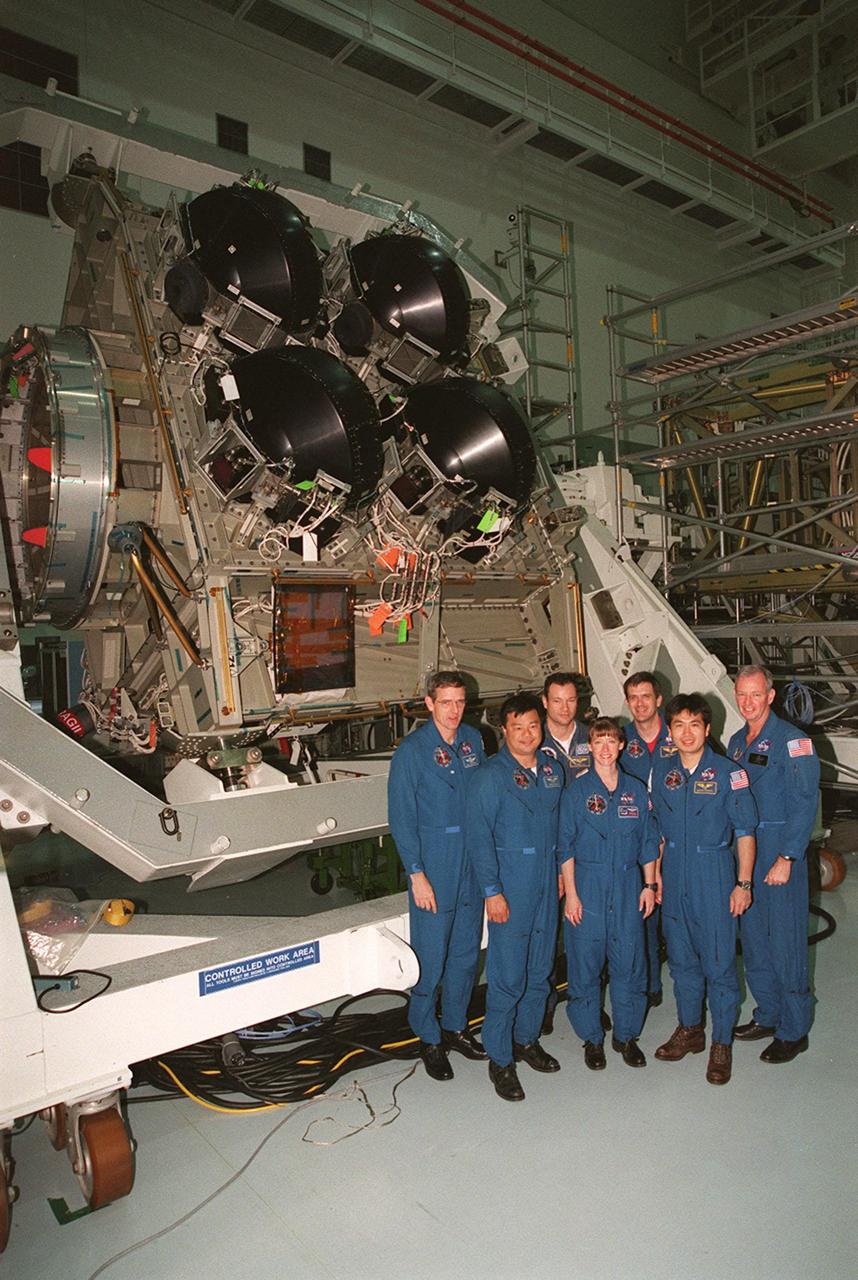
KENNEDY SPACE CENTER, FLA. -- The STS-92 crew pose in front of the Integrated Truss Structure Z1, an element of the International Space Station that will be part of the mission payload. STS-92 is the fifth U.S. flight in the construction of the International Space Station. Standing left to right are Mission Specialists William S. McArthur Jr., Leroy Chiao, and Michael E. Lopez-Alegria; Pilot Pamela A. Melroy; Mission Specialists Peter J.K. Wisoff and Koichi Wakata; and Commander Brian Duffy. Wakata is with the National Space Development Agency of Japan. The Z1 is an early exterior framework to allow the first U.S. solar arrays on a future flight to be temporarily installed on Unity for early power. Another part of the payload is a pressurized mating adapter, PMA-3, to provide a Shuttle docking port for solar array installation on the sixth ISS flight and Lab installation on the seventh ISS flight. Launch of STS-92 is scheduled for Sept. 21, 2000
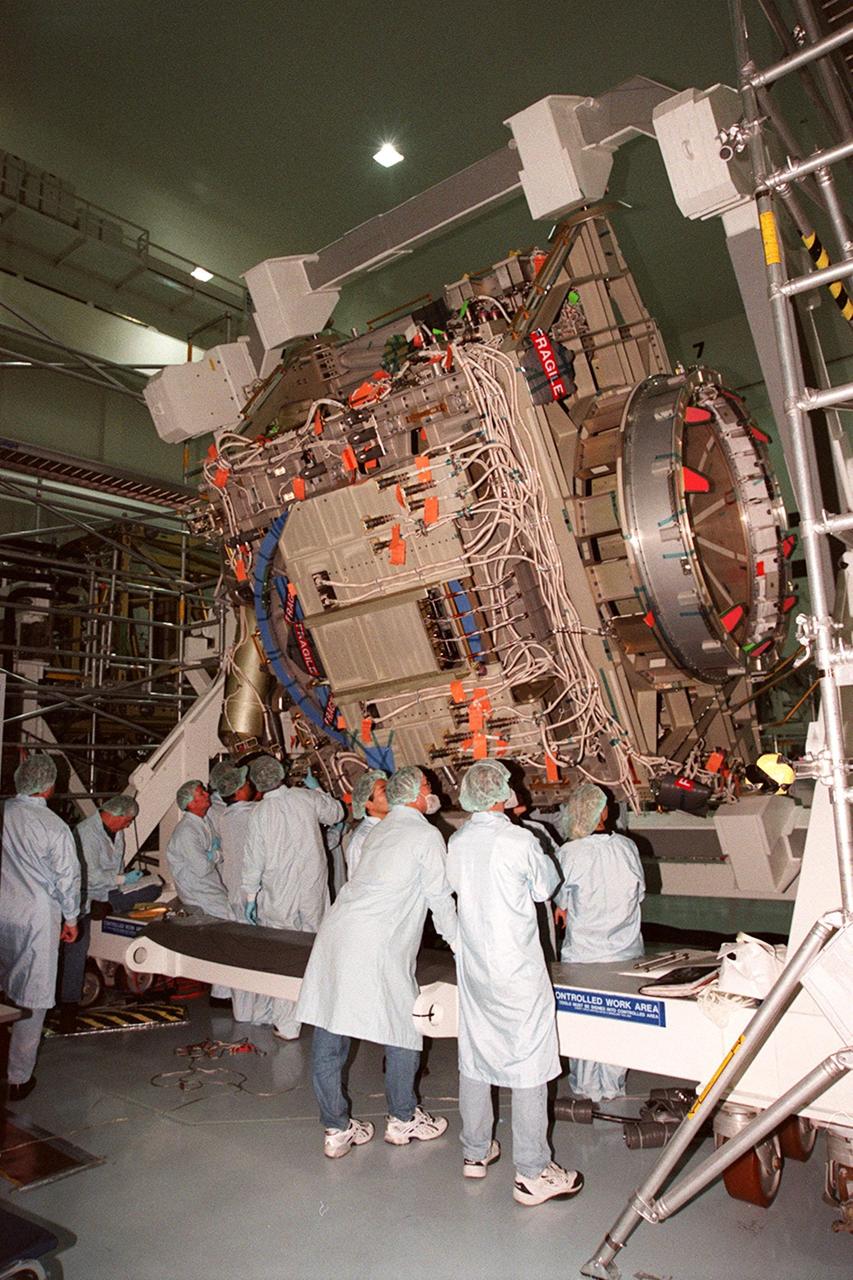
KENNEDY SPACE CENTER, FLA. -- In the Space Station Processing Facility, members of the STS-92 crew get a close look at the Integrated Truss Structure Z1, part of the payload on their mission. STS-92 is the fifth U.S. flight in the construction of the International Space Station. The crew comprises Mission Commander Brian Duffy, Pilot Pamela A. Melroy, and Mission Specialists Koichi Wakata, Leroy Chiao, Peter J.K. Wisoff, Michael E. Lopez-Alegria, and William S. McArthur Jr. Wakata is with the National Space Development Agency of Japan. The Z1 is an early exterior framework to allow the first U.S. solar arrays on a future flight to be temporarily installed on Unity for early power. Another part of the payload is a pressurized mating adapter, PMA-3, to provide a Shuttle docking port for solar array installation on the sixth ISS flight and Lab installation on the seventh ISS flight. Launch of STS-92 is scheduled for Sept. 21, 2000
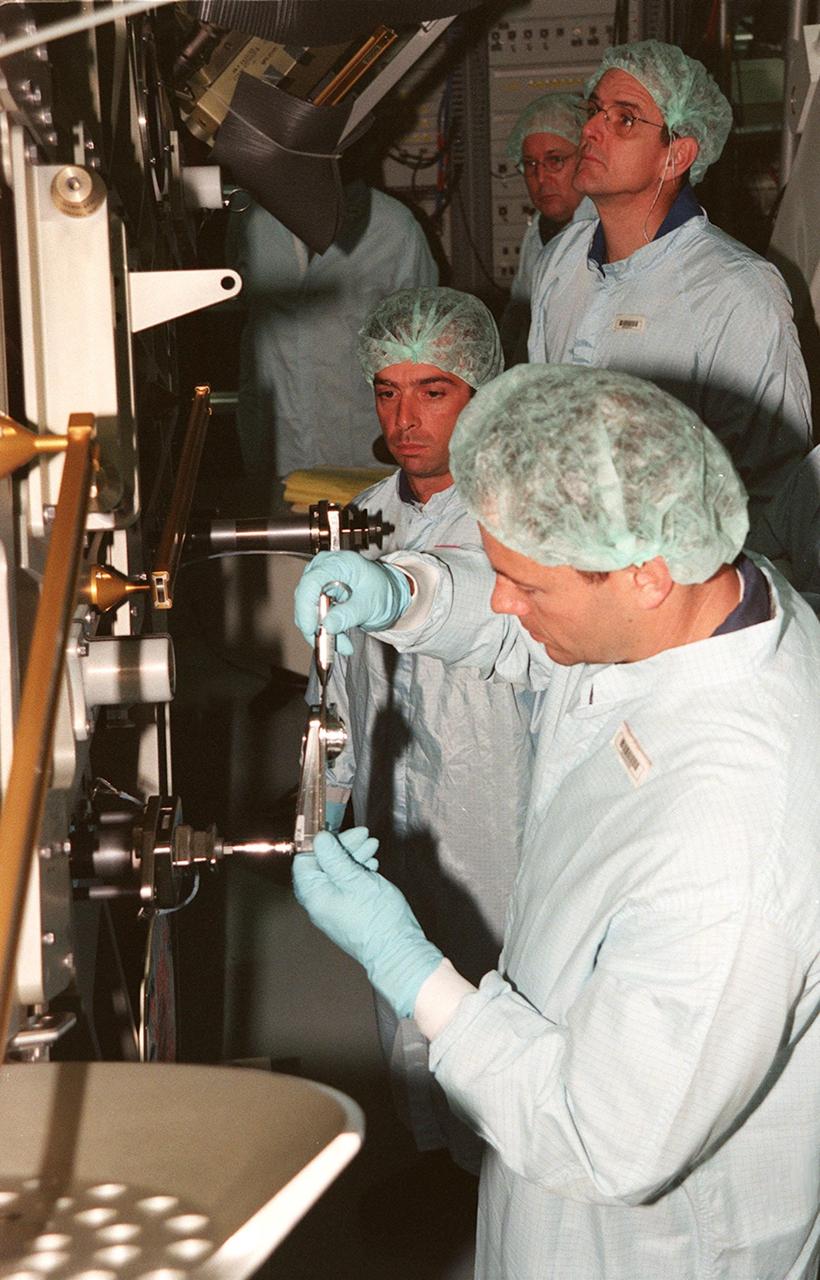
KENNEDY SPACE CENTER, FLA. -- In the Space Station Processing Facility, members of the STS-92 crew get hands-on experience with some of the equipment, such as the Integrated Truss Structure Z1, to fly on their mission. STS-92 is the fifth U.S. flight in the construction of the International Space Station. The Z1 is an early exterior framework to allow the first U.S. solar arrays on a future flight to be temporarily installed on Unity for early power. Another part of the payload is a pressurized mating adapter, PMA-3, to provide a Shuttle docking port for solar array installation on the sixth ISS flight and Lab installation on the seventh ISS flight. The crew comprises Mission Commander Brian Duffy, Pilot Pamela A. Melroy, and Mission Specialists Koichi Wakata, Leroy Chiao, Peter J.K. Wisoff, Michael E. Lopez-Alegria, and William S. McArthur Jr. Wakata is with the National Space Development Agency of Japan. Launch of STS-92 is scheduled for Sept. 21, 2000
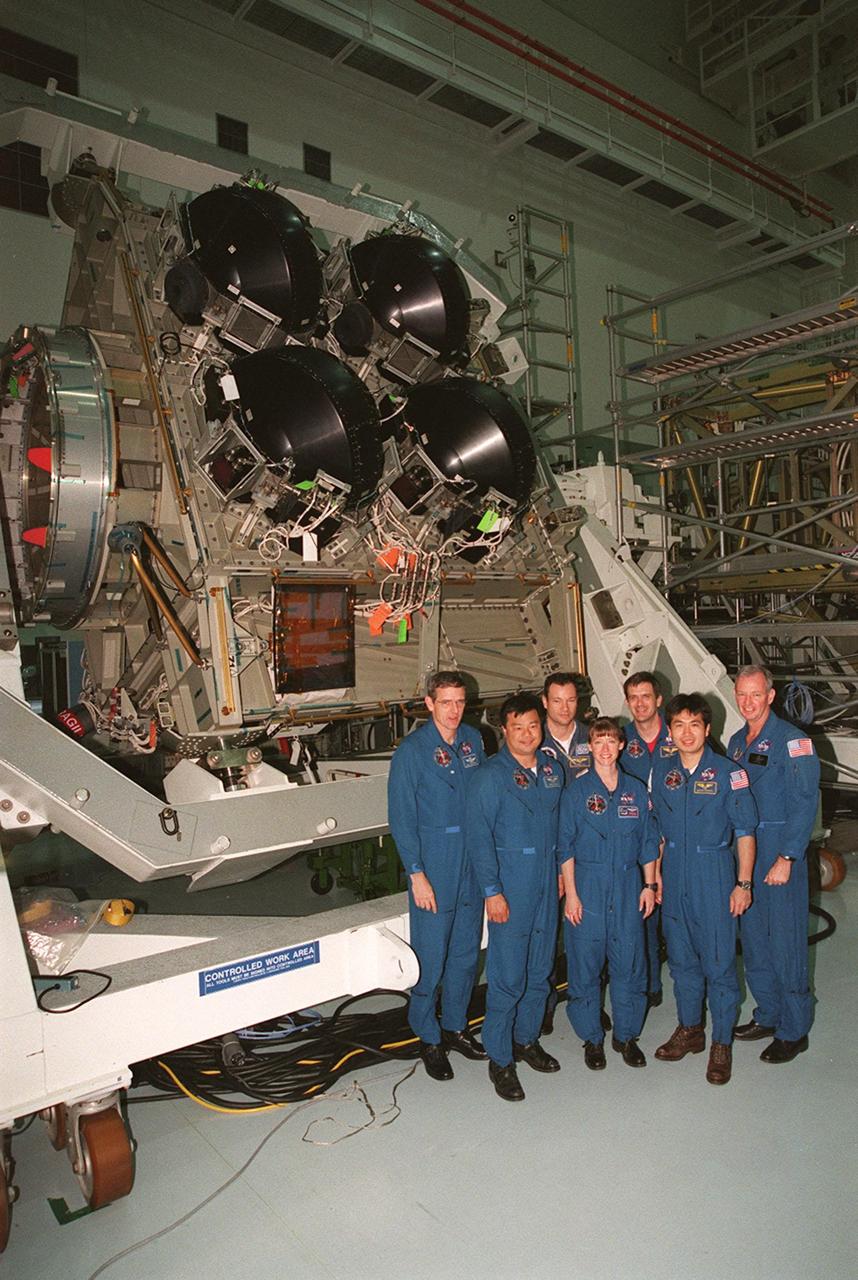
KENNEDY SPACE CENTER, FLA. -- The STS-92 crew pose in front of the Integrated Truss Structure Z1, an element of the International Space Station that will be part of the mission payload. STS-92 is the fifth U.S. flight in the construction of the International Space Station. Standing left to right are Mission Specialists William S. McArthur Jr., Leroy Chiao, and Michael E. Lopez-Alegria; Pilot Pamela A. Melroy; Mission Specialists Peter J.K. Wisoff and Koichi Wakata; and Commander Brian Duffy. Wakata is with the National Space Development Agency of Japan. The Z1 is an early exterior framework to allow the first U.S. solar arrays on a future flight to be temporarily installed on Unity for early power. Another part of the payload is a pressurized mating adapter, PMA-3, to provide a Shuttle docking port for solar array installation on the sixth ISS flight and Lab installation on the seventh ISS flight. Launch of STS-92 is scheduled for Sept. 21, 2000
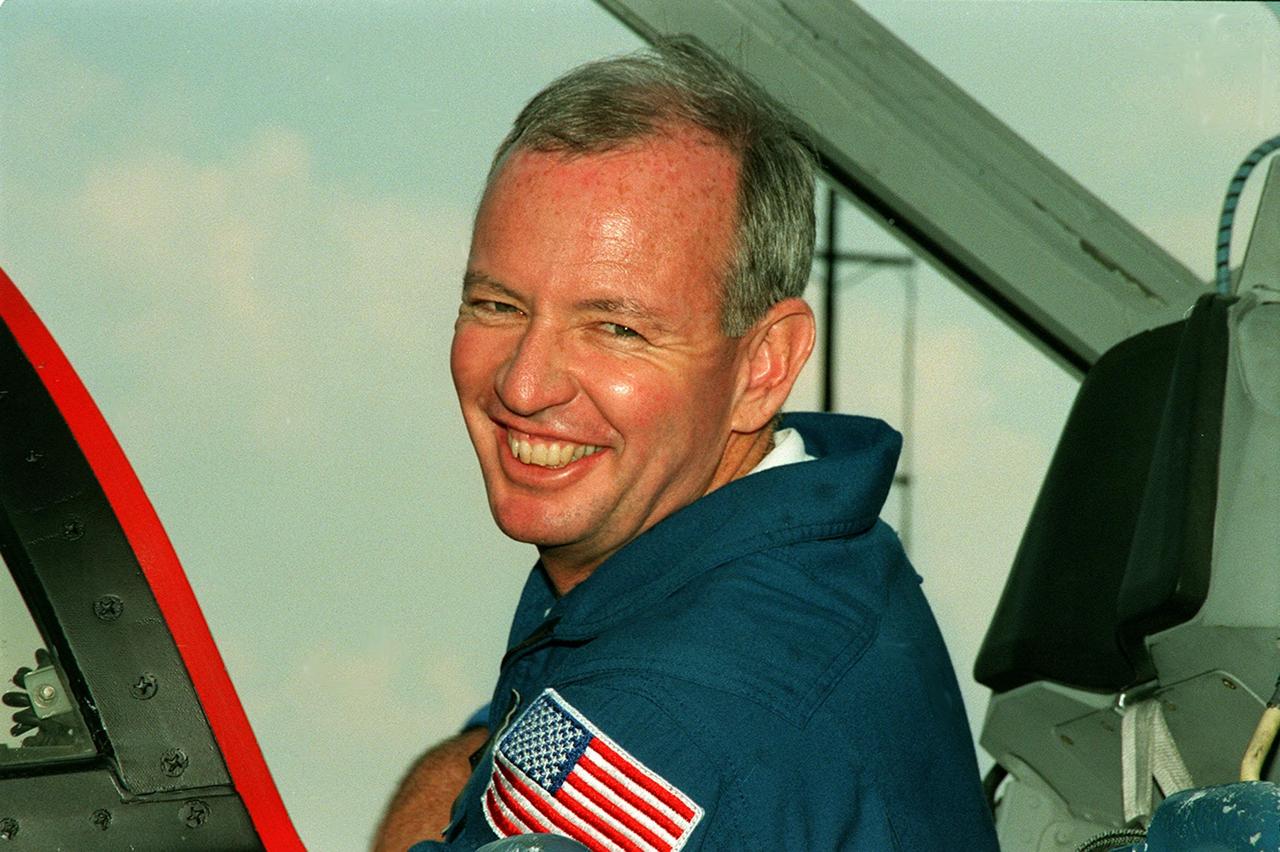
STS-92 Commander Brian Duffy climbs into a T-38 jet aircraft at KSC’s Shuttle Landing Facility for a flight back to Houston. He and other crew members were at KSC for Crew Equipment Interface Test (CEIT) activities, looking over their mission payload and related equipment. STS-92 is scheduled to launch Oct. 5 on Shuttle Discovery from Launch Pad 39A on the fifth flight to the International Space Station. Discovery will carry the Integrated Truss Structure (ITS) Z1, the PMA-3, Ku-band Communications System, and Control Moment Gyros (CMGs)
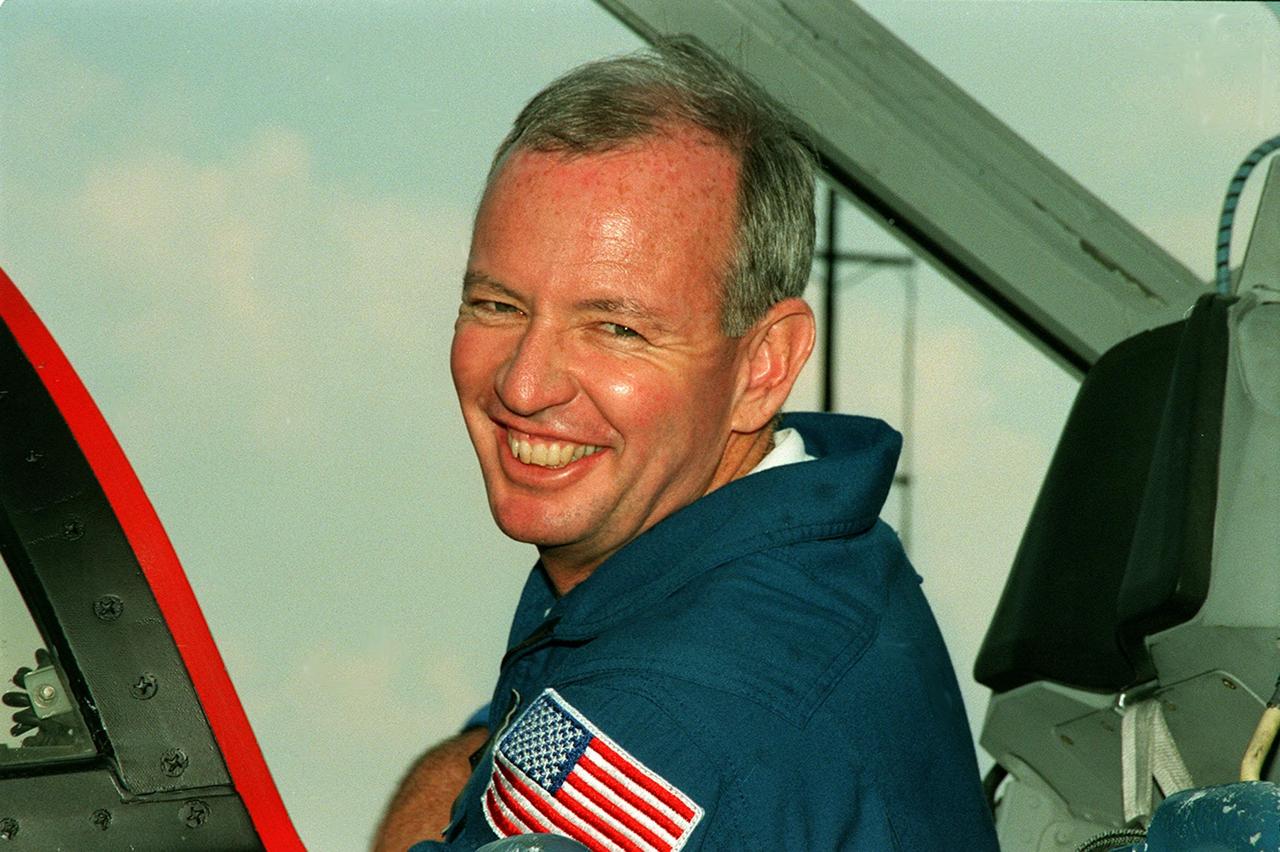
STS-92 Commander Brian Duffy climbs into a T-38 jet aircraft at KSC’s Shuttle Landing Facility for a flight back to Houston. He and other crew members were at KSC for Crew Equipment Interface Test (CEIT) activities, looking over their mission payload and related equipment. STS-92 is scheduled to launch Oct. 5 on Shuttle Discovery from Launch Pad 39A on the fifth flight to the International Space Station. Discovery will carry the Integrated Truss Structure (ITS) Z1, the PMA-3, Ku-band Communications System, and Control Moment Gyros (CMGs)
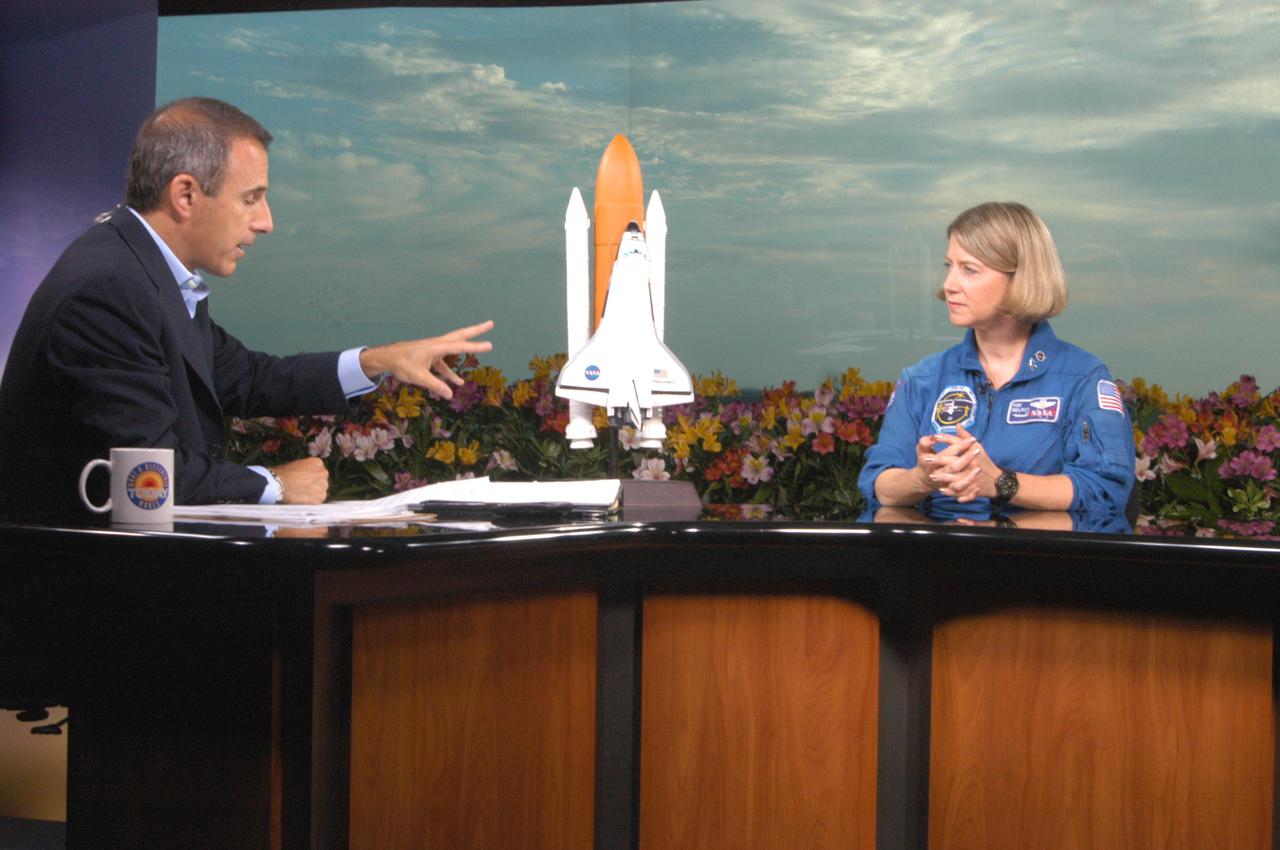
KENNEDY SPACE CENTER, FLA. - Matt Lauer, co-anchor of NBC News’ Today, talks with astronaut Pam Melroy about the pending launch at 3:51 p.m. of Space Shuttle Discovery on the historic Return to Flight mission STS-114. Melroy has flown on two missions, STS-92 and STS-112. STS-114 is the 114th Space Shuttle flight and the 31st for Discovery. The 12-day mission is expected to end with touchdown at the Shuttle Landing Facility at 11:06 a.m. July 25.
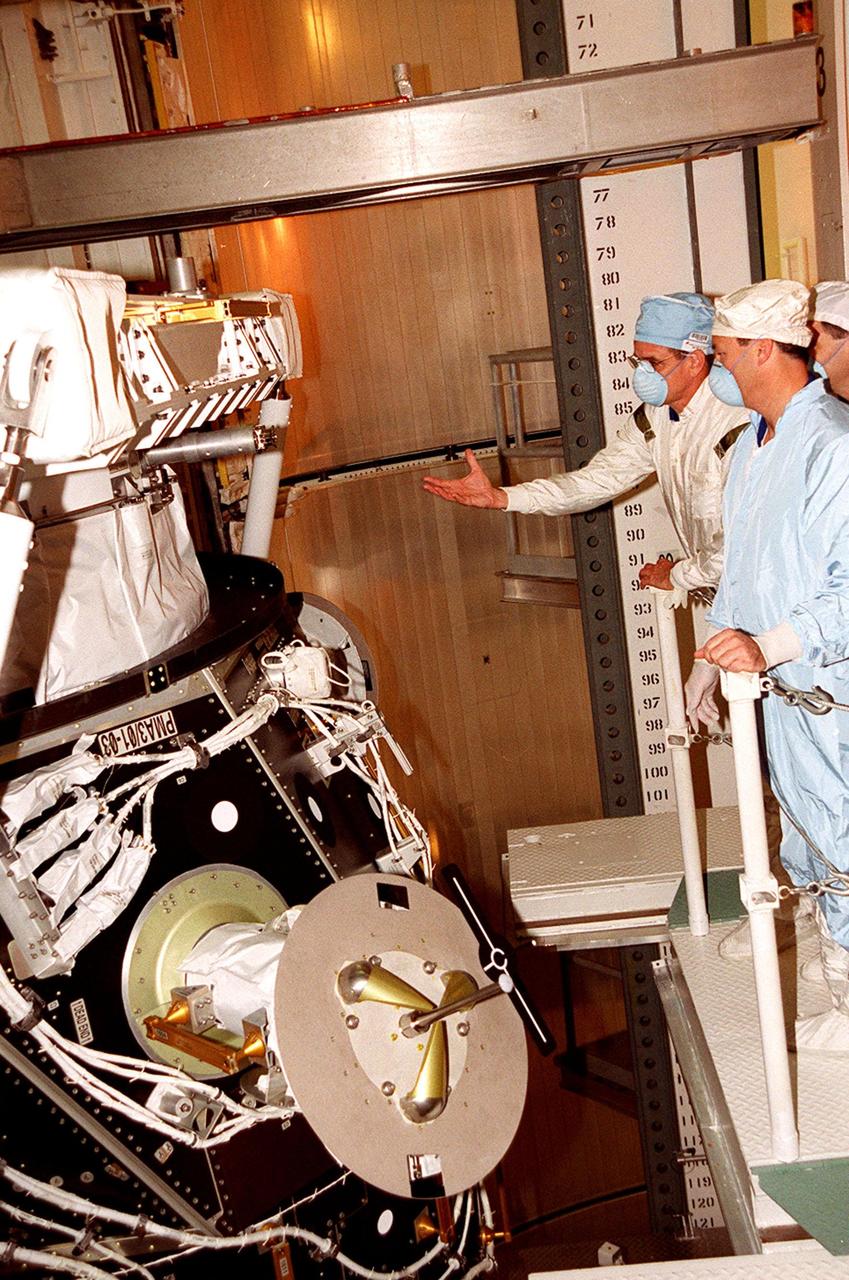
KENNEDY SPACE CENTER, FLA. -- In Space Shuttle Discovery’s payload bay, STS-92 Mission Specialist William S. McArthur Jr. explains something about the Pressurized Mating Adapter in front of him to other Mission Specialists Michael E. Lopez-Alegria and Peter J.K. Wisoff. The STS-92 crew has been inspecting the payload in preparation for launch Oct. 5, 2000. The mission is the fifth flight for the construction of the International Space Station. The payload also includes the Integrated Truss Structure Z-1. During the 11-day mission, four extravehicular activities (EVAs), or space walks, are planned
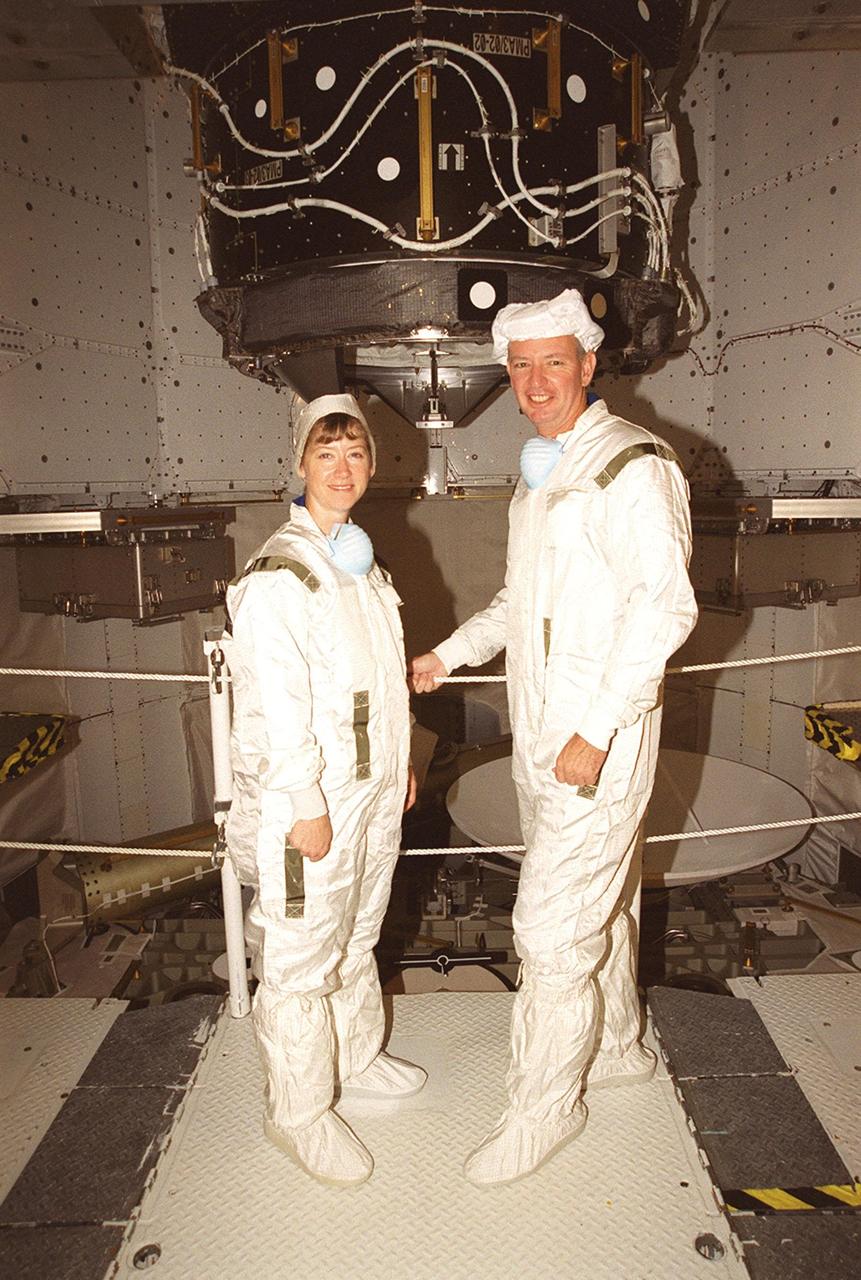
KENNEDY SPACE CENTER, FLA. -- STS-92 Pilot Pamela Ann Melroy (left) and Commander Brian Duffy pose for a photo during payload inspection in Space Shuttle Discovery’s payload bay. Behind them is the Pressurized Mating Adapter. The STS-92 crew has been inspecting the payload in preparation for launch Oct. 5, 2000. The mission is the fifth flight for the construction of the International Space Station. The payload also includes the Integrated Truss Structure Z-1. During the 11-day mission, four extravehicular activities (EVAs), or space walks, are planned
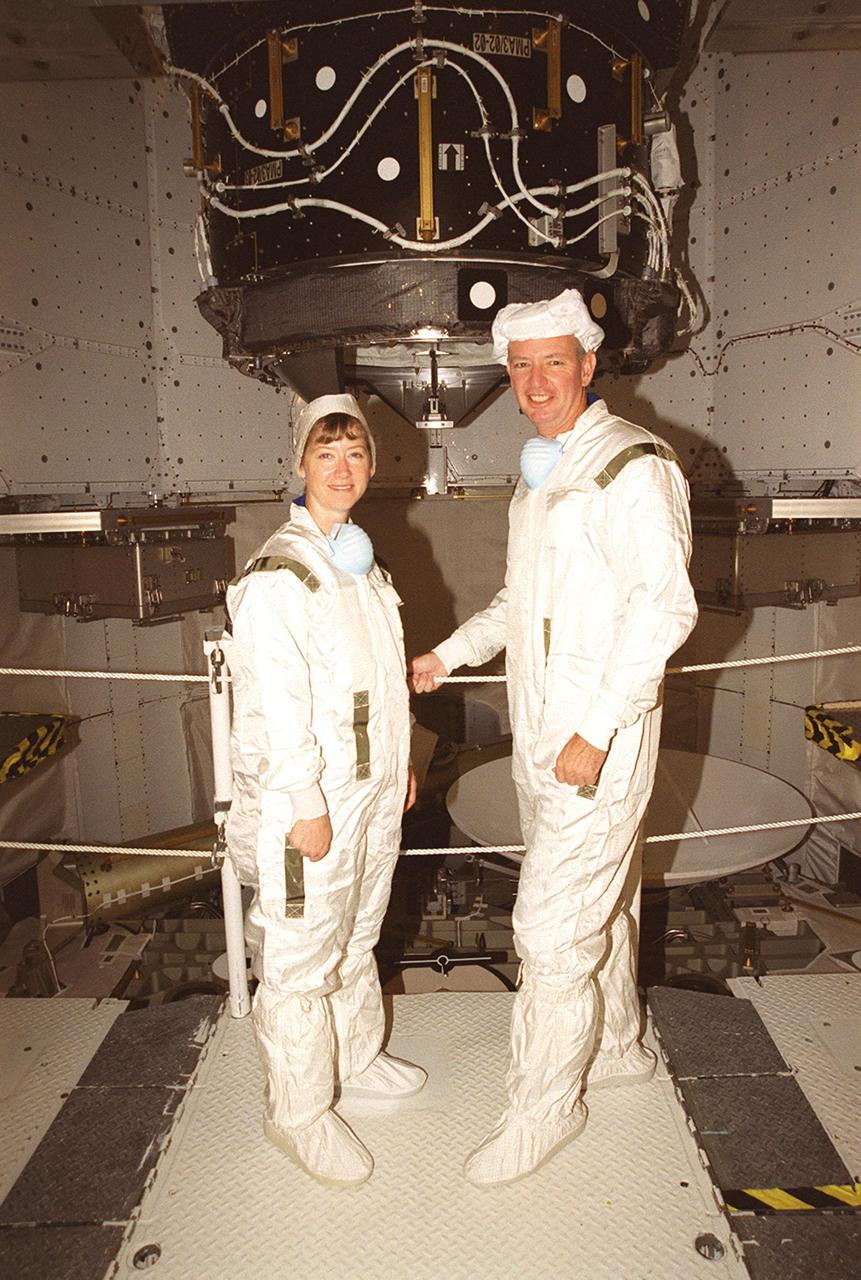
KENNEDY SPACE CENTER, FLA. -- STS-92 Pilot Pamela Ann Melroy (left) and Commander Brian Duffy pose for a photo during payload inspection in Space Shuttle Discovery’s payload bay. Behind them is the Pressurized Mating Adapter. The STS-92 crew has been inspecting the payload in preparation for launch Oct. 5, 2000. The mission is the fifth flight for the construction of the International Space Station. The payload also includes the Integrated Truss Structure Z-1. During the 11-day mission, four extravehicular activities (EVAs), or space walks, are planned
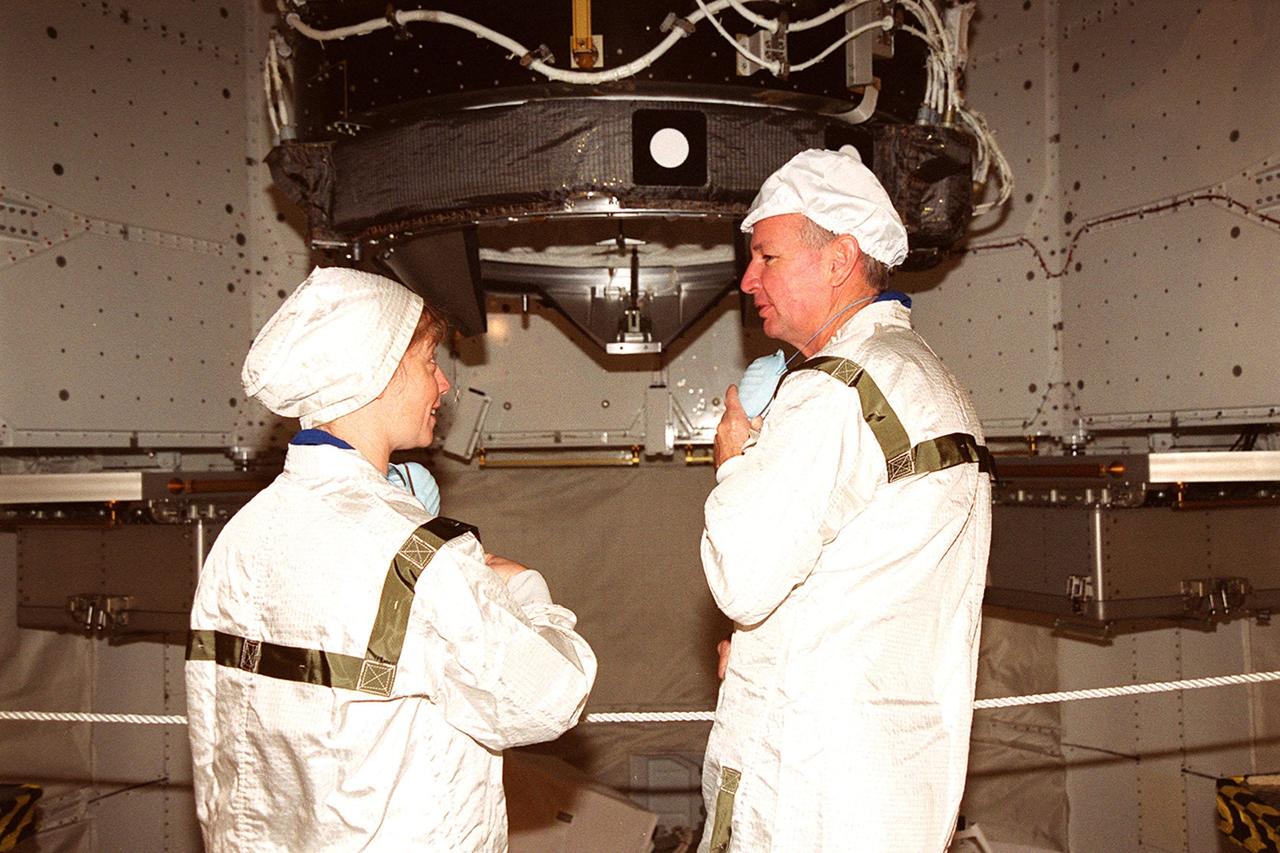
KENNEDY SPACE CENTER, FLA. -- In Space Shuttle Discovery’s payload bay, STS-92 Pilot Pamela Ann Melroy (left) and Commander Brian Duffy share thoughts about the mission as they inspect part of the payload (behind them), the Pressurized Mating Adapter. The STS-92 crew has been inspecting the payload in preparation for launch Oct. 5, 2000. The mission is the fifth flight for the construction of the International Space Station. The payload also includes the Integrated Truss Structure Z-1. During the 11-day mission, four extravehicular activities (EVAs), or space walks, are planned
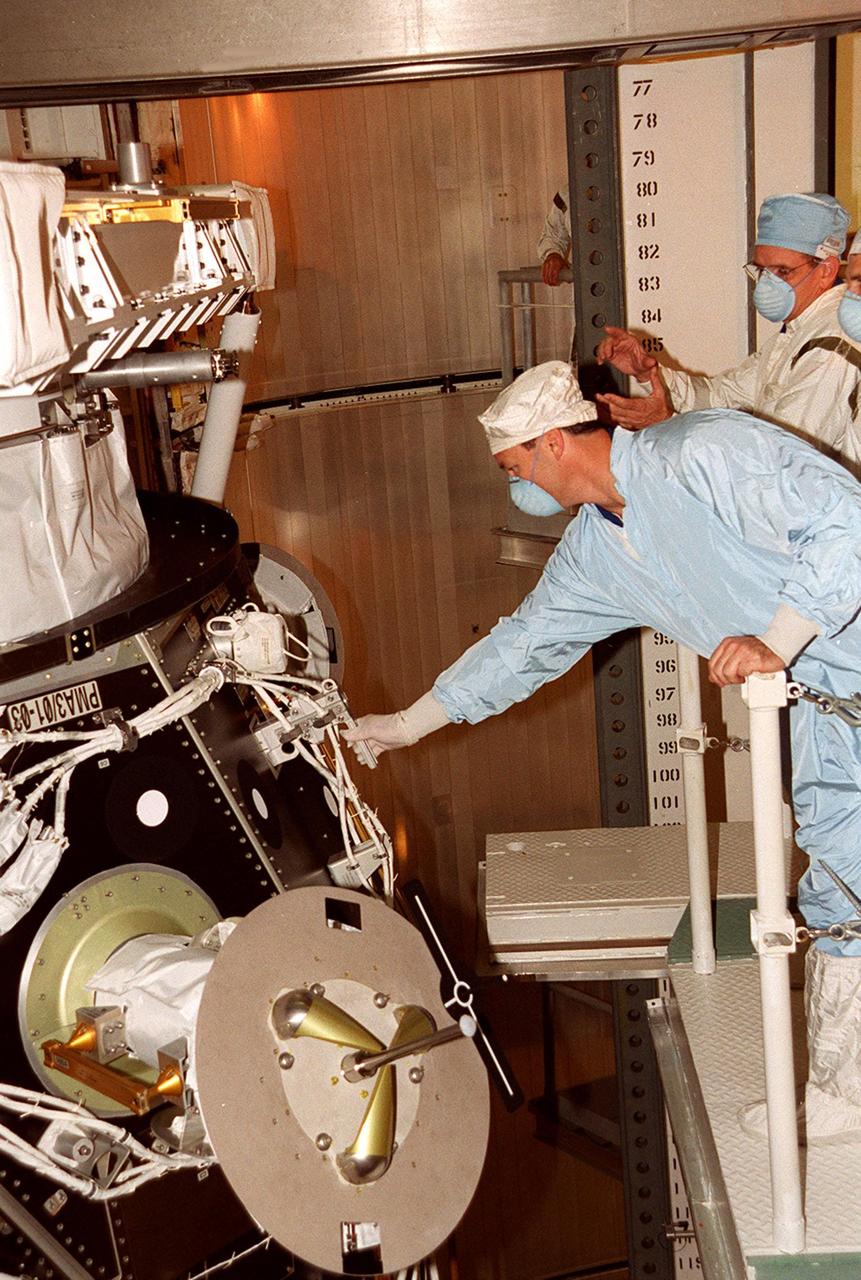
KENNEDY SPACE CENTER, FLA. -- In Space Shuttle Discovery’s payload bay, STS-92 Mission Specialist Michael E. Lopez-Alegria takes hold of a lever on the Pressurized Mating Adapter, part of the payload on the mission. Behind him Mission Specialist William S. McArthur Jr. describes a task while Mission Specialist Peter J.K. Wisoff looks on. The STS-92 crew has been inspecting the payload in preparation for launch Oct. 5, 2000. The mission is the fifth flight for the construction of the International Space Station. The payload also includes the Integrated Truss Structure Z-1. During the 11-day mission, four extravehicular activities (EVAs), or space walks, are planned

KENNEDY SPACE CENTER, FLA. -- In Space Shuttle Discovery’s payload bay, STS-92 Mission Specialist Michael E. Lopez-Alegria takes hold of a lever on the Pressurized Mating Adapter, part of the payload on the mission. Behind him Mission Specialist William S. McArthur Jr. describes a task while Mission Specialist Peter J.K. Wisoff looks on. The STS-92 crew has been inspecting the payload in preparation for launch Oct. 5, 2000. The mission is the fifth flight for the construction of the International Space Station. The payload also includes the Integrated Truss Structure Z-1. During the 11-day mission, four extravehicular activities (EVAs), or space walks, are planned
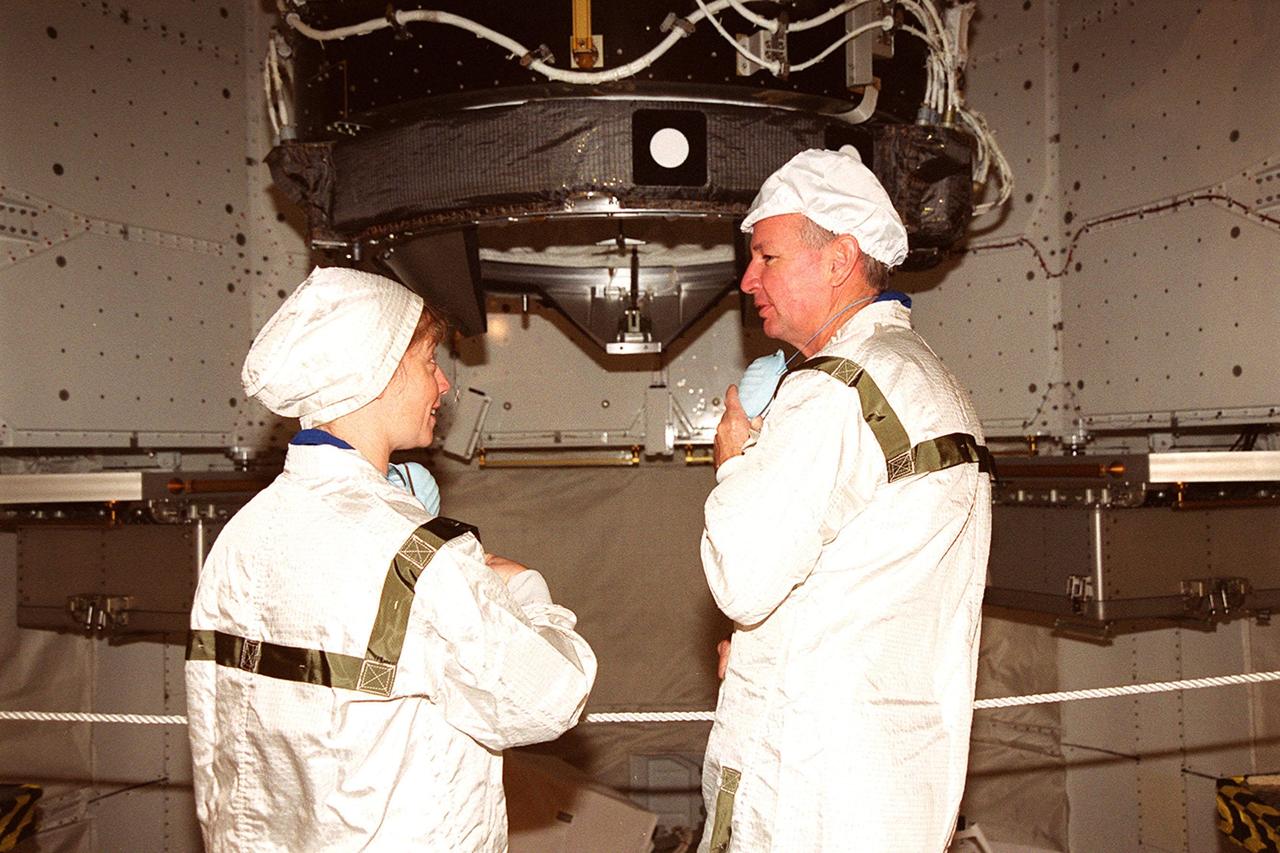
KENNEDY SPACE CENTER, FLA. -- In Space Shuttle Discovery’s payload bay, STS-92 Pilot Pamela Ann Melroy (left) and Commander Brian Duffy share thoughts about the mission as they inspect part of the payload (behind them), the Pressurized Mating Adapter. The STS-92 crew has been inspecting the payload in preparation for launch Oct. 5, 2000. The mission is the fifth flight for the construction of the International Space Station. The payload also includes the Integrated Truss Structure Z-1. During the 11-day mission, four extravehicular activities (EVAs), or space walks, are planned
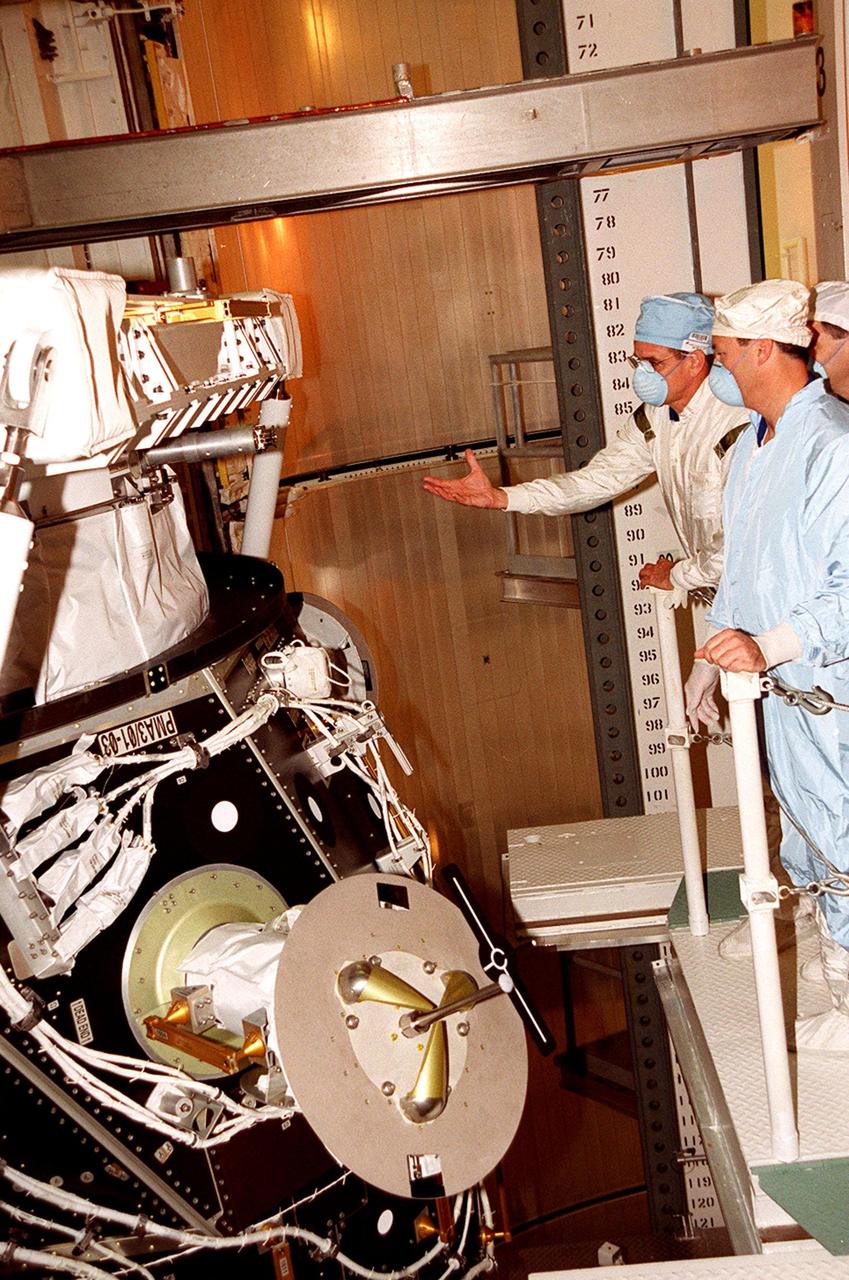
KENNEDY SPACE CENTER, FLA. -- In Space Shuttle Discovery’s payload bay, STS-92 Mission Specialist William S. McArthur Jr. explains something about the Pressurized Mating Adapter in front of him to other Mission Specialists Michael E. Lopez-Alegria and Peter J.K. Wisoff. The STS-92 crew has been inspecting the payload in preparation for launch Oct. 5, 2000. The mission is the fifth flight for the construction of the International Space Station. The payload also includes the Integrated Truss Structure Z-1. During the 11-day mission, four extravehicular activities (EVAs), or space walks, are planned
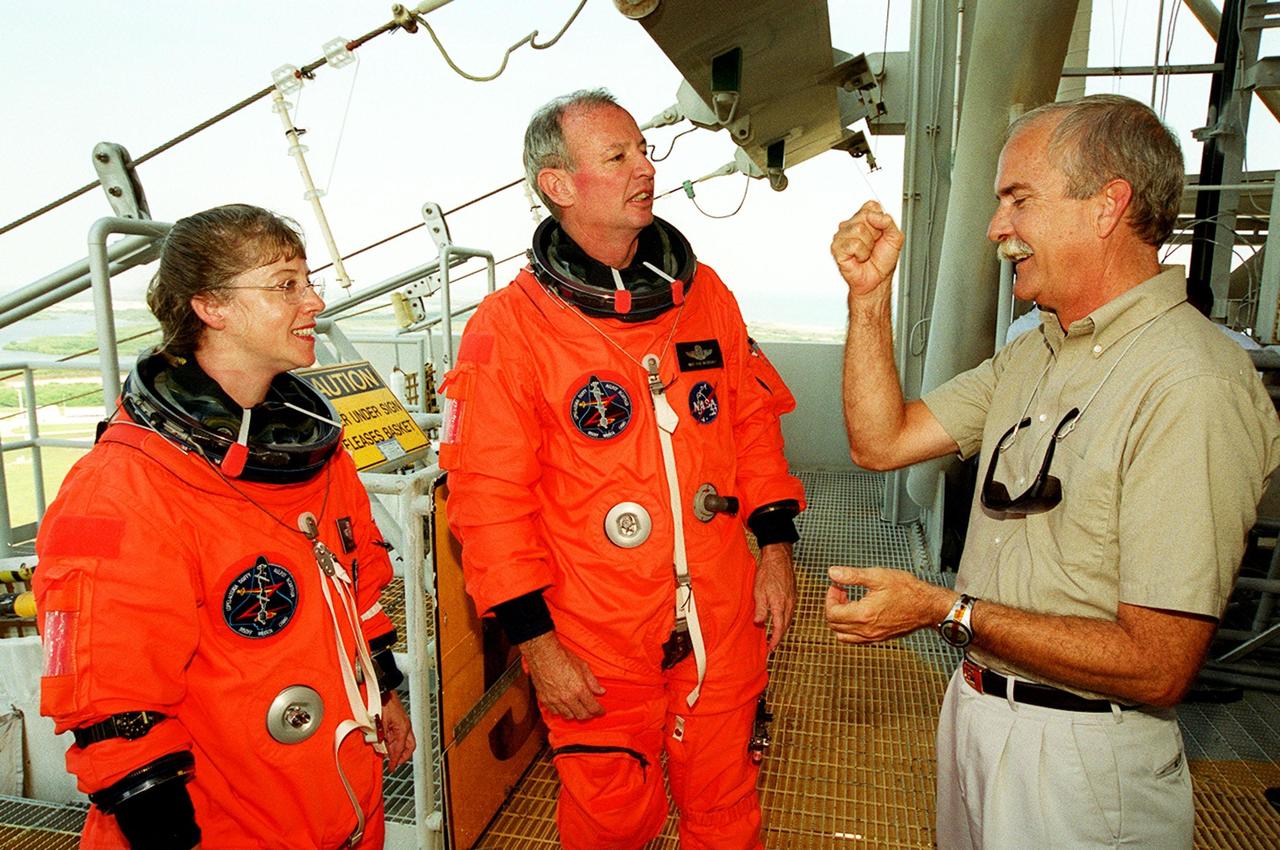
KENNEDY SPACE CENTER, FLA. -- On the 195-foot level of the Fixed Service Structure on Launch Pad 39A, STS-92 Pilot Pamela Ann Melroy and Commander Brian Duffy learn more about the emergency egress training they and the rest of the crew have received. The training is part of Terminal Countdown Demonstration Test activities that also include a simulated countdown. STS-92 is scheduled to launch Oct. 5 at 9:38 p.m. EDT on the fifth flight to the International Space Station. It will carry two elements of the Space Station, the Integrated Truss Structure Z1 and the third Pressurized Mating Adapter. The mission is also the 100th flight in the Shuttle program
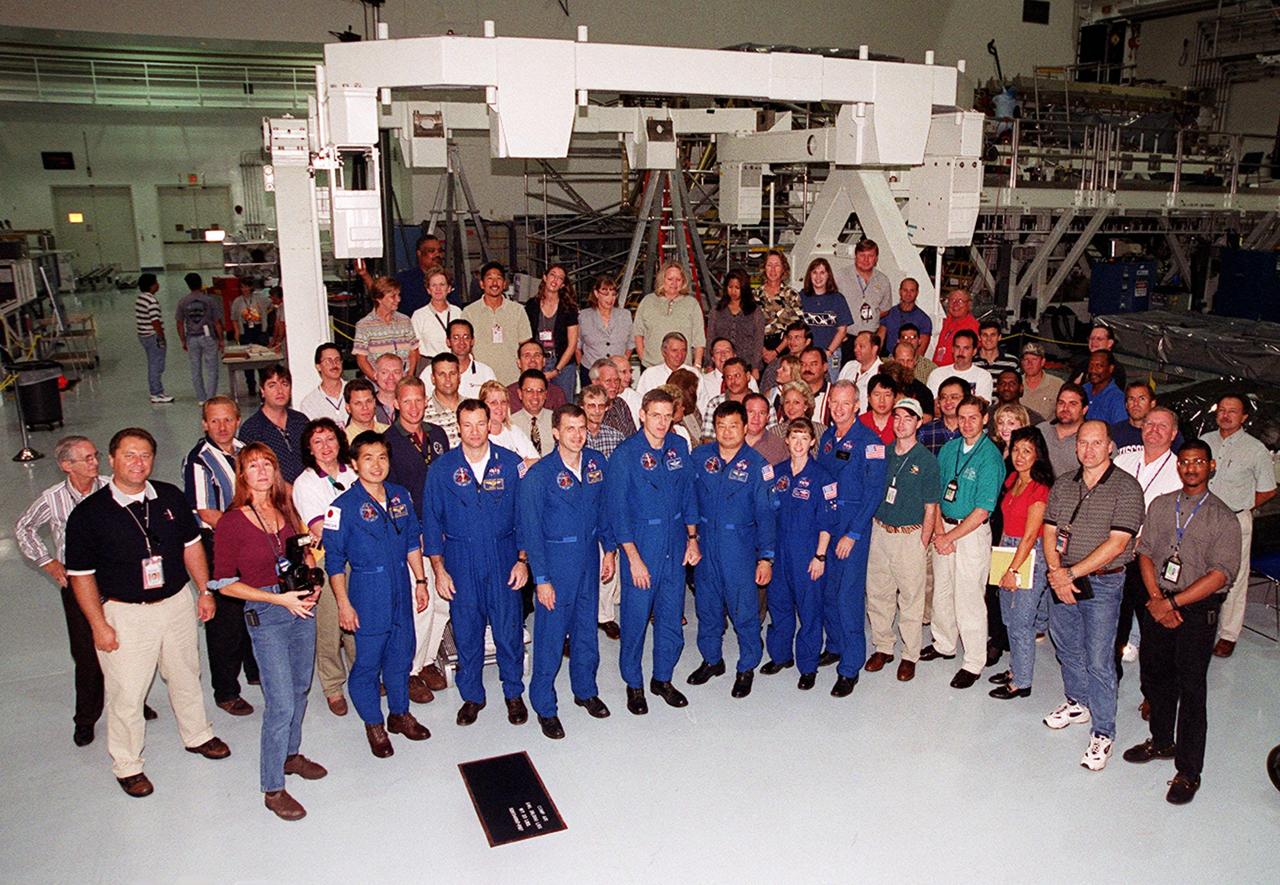
In the Space Station Processing Facility, workers who have supported mission STS-92 gather for a photo with the crew: (left to right) Mission Specialists Koichi Wakata of Japan, Michael Lopez-Alegria, Jeff Wisoff, Bill McArthur and Leroy Chiao; Pilot Pam Melroy; and Commander Brian Duffy. STS-92 is scheduled to launch Oct. 5 at 9:30 p.m. EDT on the fifth flight to the International Space Station. It will carry two elements of the Space Station, the Integrated Truss Structure Z1 and the third Pressurized Mating Adapter. The mission is also the 100th flight in the Shuttle program
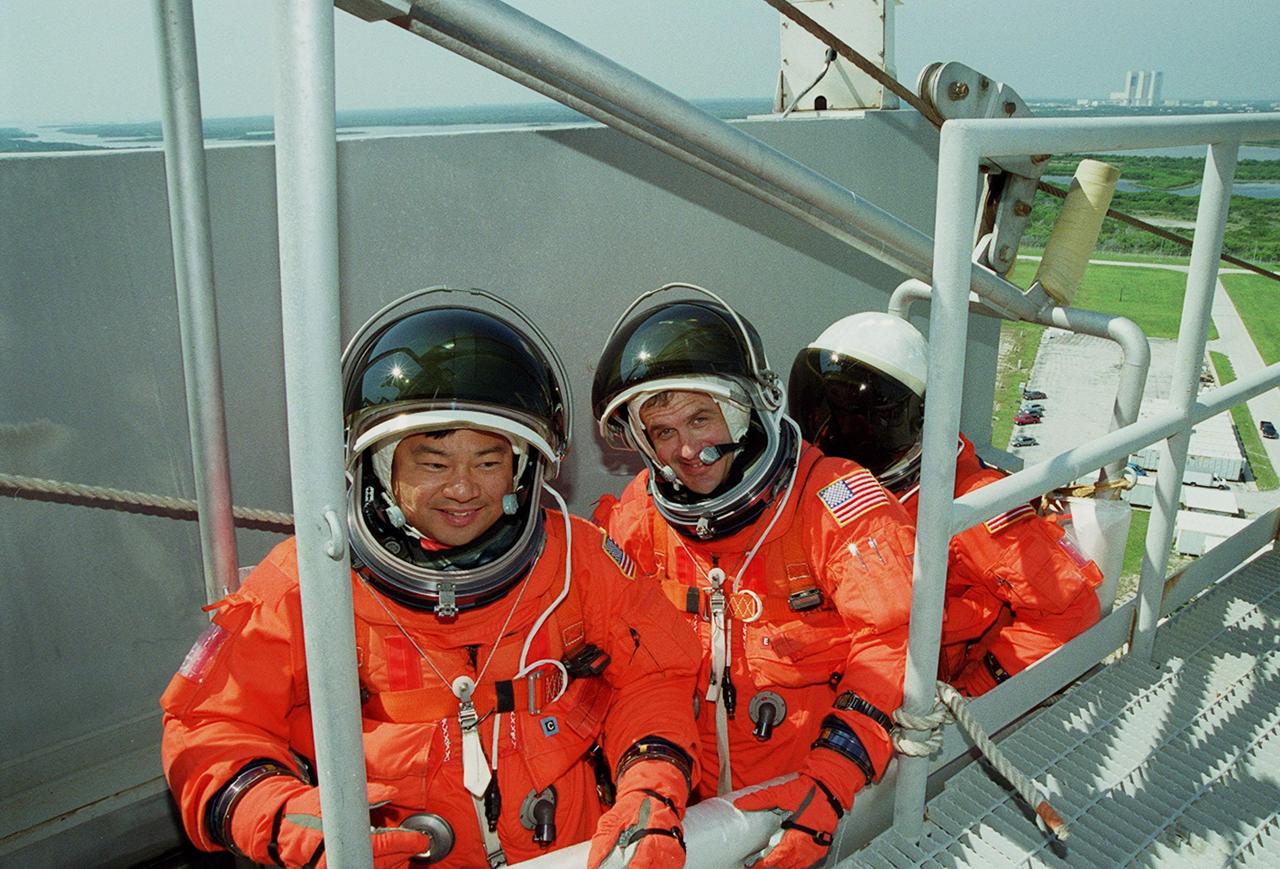
KENNEDY SPACE CENTER, FLA. -- Seated in the slidewire basket at the 195-foot level of the Fixed Service Structure on Launch Pad 39A, STS-92 Mission Specialists Leroy Chaio, Peter J.K. “Jeff” Wisoff and Michael E. Lopez-Alegria take part in emergency egress training, one of the Terminal Countdown Demonstration Test activities that also include a simulated countdown. STS-92 is scheduled to launch Oct. 5 at 9:38 p.m. EDT on the fifth flight to the International Space Station. It will carry two elements of the Space Station, the Integrated Truss Structure Z1 and the third Pressurized Mating Adapter. The mission is also the 100th flight in the Shuttle program

STS-92 Mission Specialist Koichi Wakata of Japan (center) gets help from United Space Alliance Mechanical Technician Vinny Difranzo (left) and NASA Quality Assurance Specialist Danny Wyatt (right) in suiting up in the White Room. Wakata and other crew members are taking part in a simulated countdown KSC for Terminal Countdown Demonstration Test (TCDT) activities. STS-92 is scheduled to launch Oct. 5 at 9:38 p.m. EDT on the fifth flight to the International Space Station. It will carry two elements of the Space Station, the Integrated Truss Structure Z1 and the third Pressurized Mating Adapter. The mission is also the 100th flight in the Shuttle program
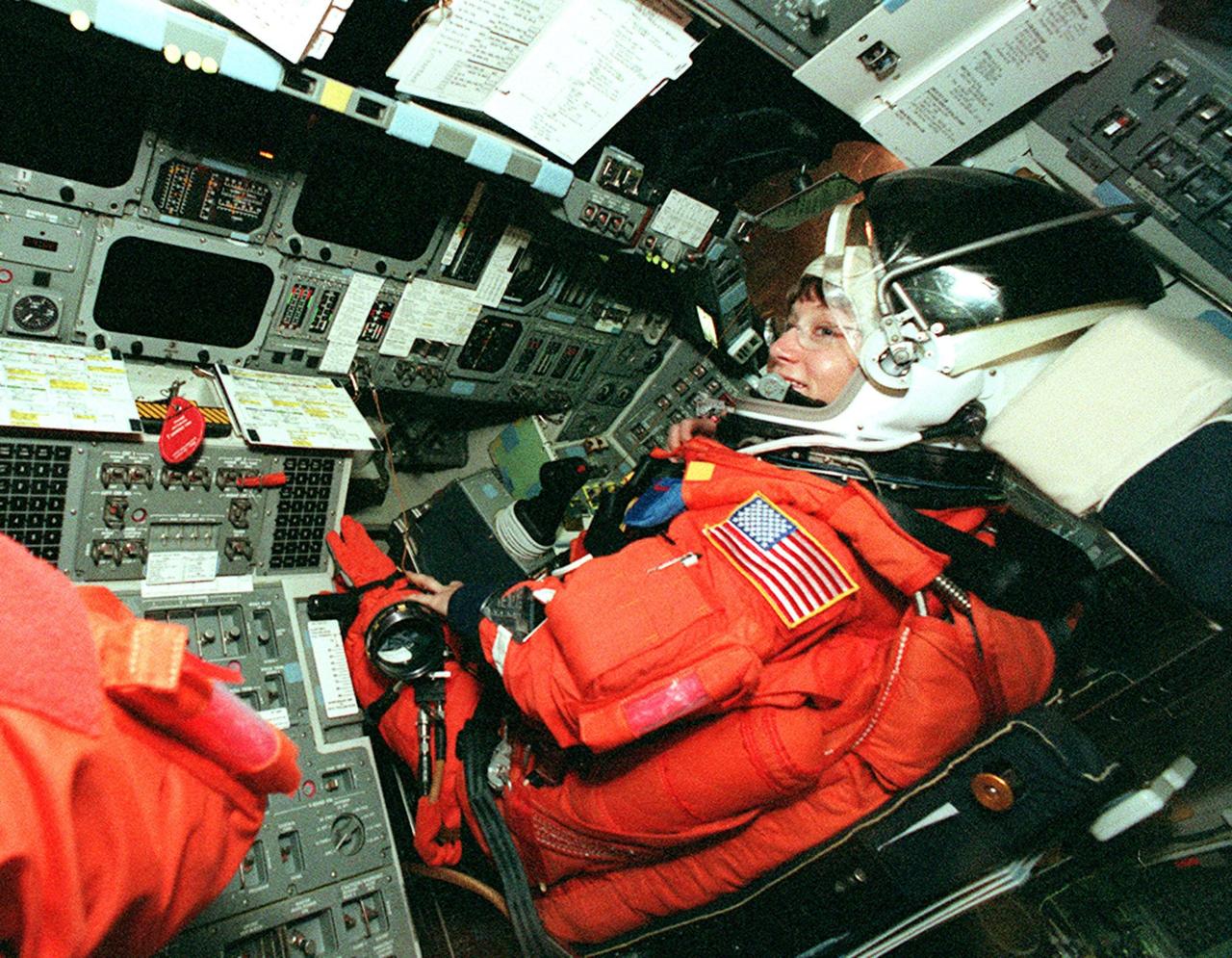
KENNEDY SPACE CENTER, FLA. -- STS-92 Pilot Pamela Ann Melroy gets settled in her seat in Discovery to take part in a simulated countdown. The countdown is part of Terminal Countdown Demonstration Test (TCDT) activities that she and other crew members have been performing. STS-92 is scheduled to launch Oct. 5 at 9:38 p.m. EDT on the fifth flight to the International Space Station. It will carry two elements of the Space Station, the Integrated Truss Structure Z1 and the third Pressurized Mating Adapter. The mission is also the 100th flight in the Shuttle program
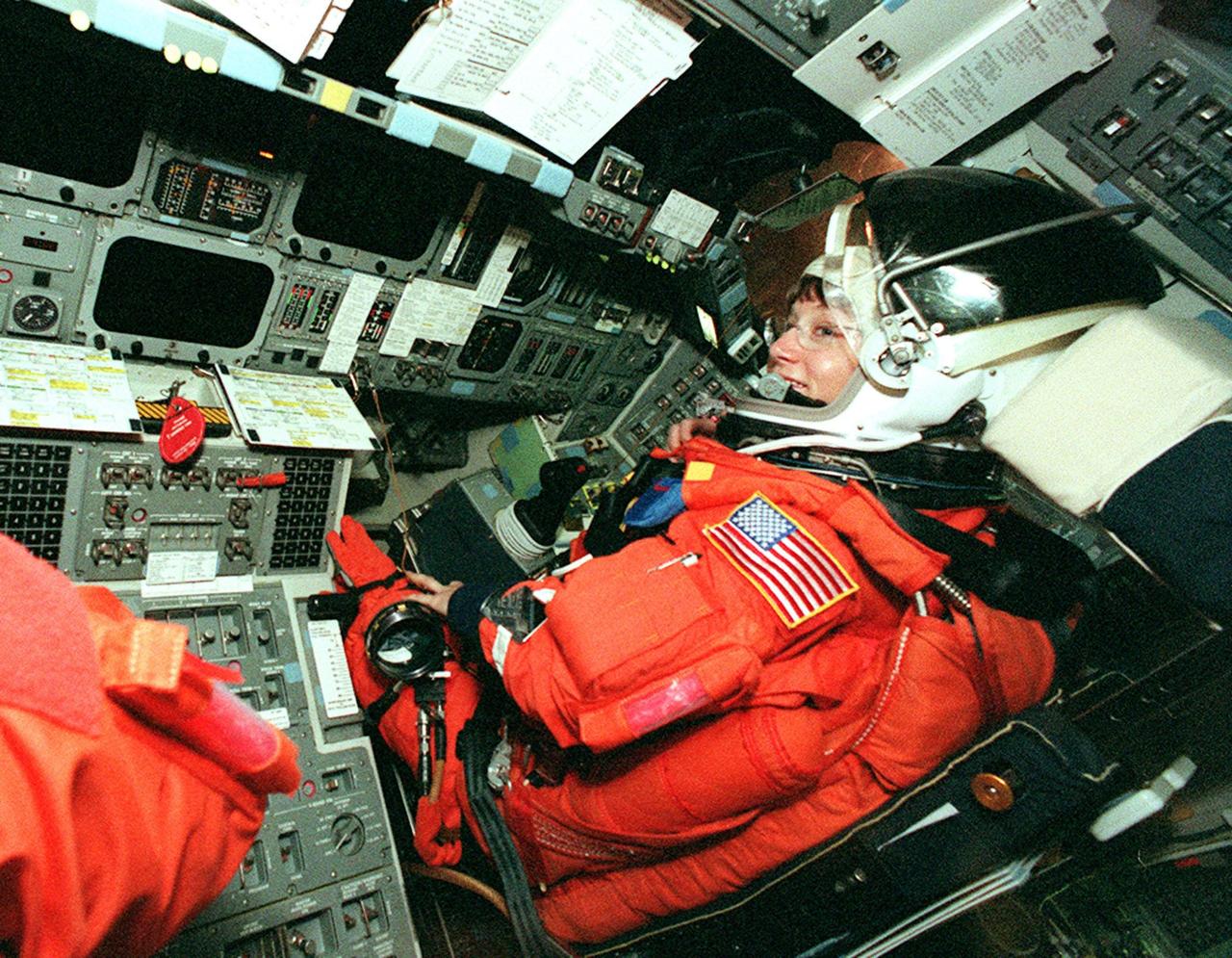
KENNEDY SPACE CENTER, FLA. -- STS-92 Pilot Pamela Ann Melroy gets settled in her seat in Discovery to take part in a simulated countdown. The countdown is part of Terminal Countdown Demonstration Test (TCDT) activities that she and other crew members have been performing. STS-92 is scheduled to launch Oct. 5 at 9:38 p.m. EDT on the fifth flight to the International Space Station. It will carry two elements of the Space Station, the Integrated Truss Structure Z1 and the third Pressurized Mating Adapter. The mission is also the 100th flight in the Shuttle program
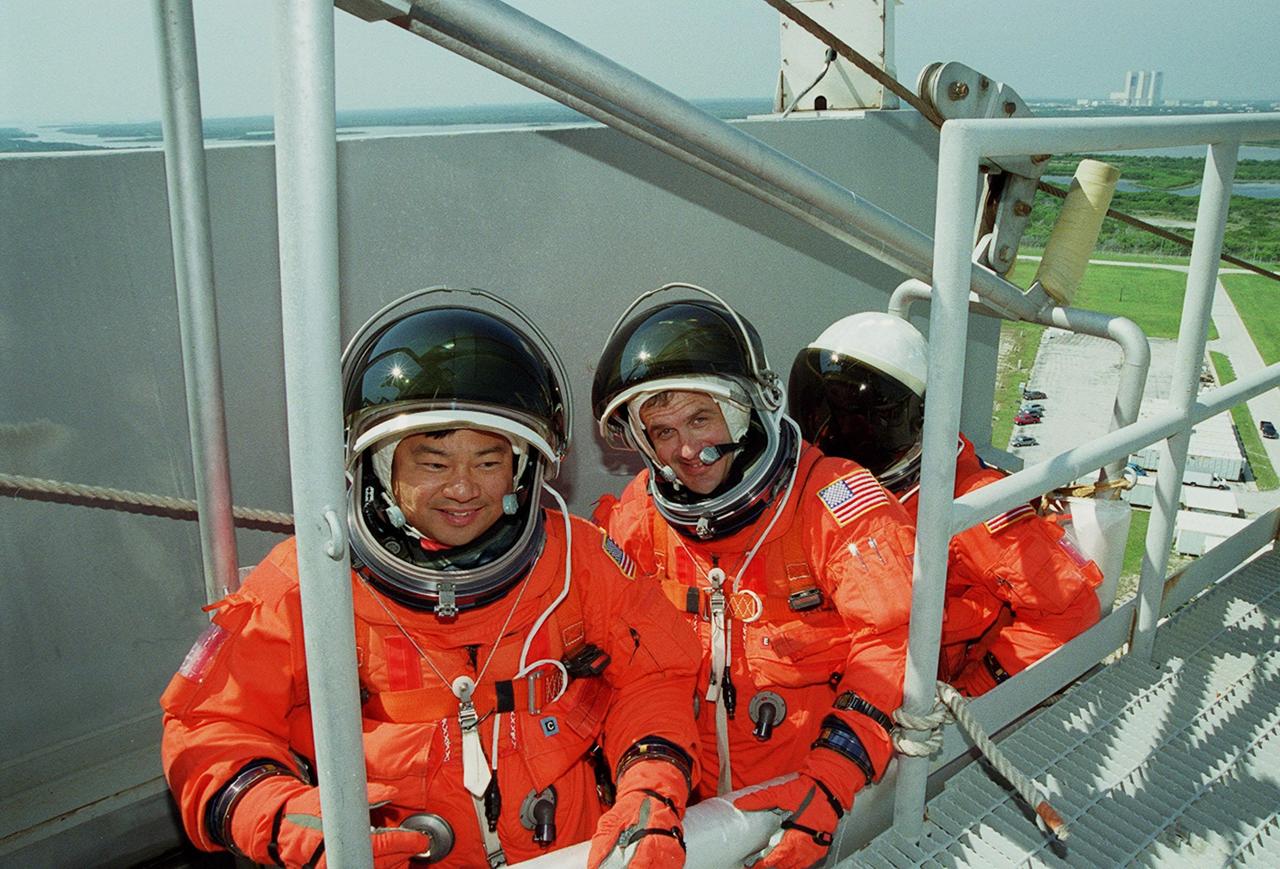
KENNEDY SPACE CENTER, FLA. -- Seated in the slidewire basket at the 195-foot level of the Fixed Service Structure on Launch Pad 39A, STS-92 Mission Specialists Leroy Chaio, Peter J.K. “Jeff” Wisoff and Michael E. Lopez-Alegria take part in emergency egress training, one of the Terminal Countdown Demonstration Test activities that also include a simulated countdown. STS-92 is scheduled to launch Oct. 5 at 9:38 p.m. EDT on the fifth flight to the International Space Station. It will carry two elements of the Space Station, the Integrated Truss Structure Z1 and the third Pressurized Mating Adapter. The mission is also the 100th flight in the Shuttle program
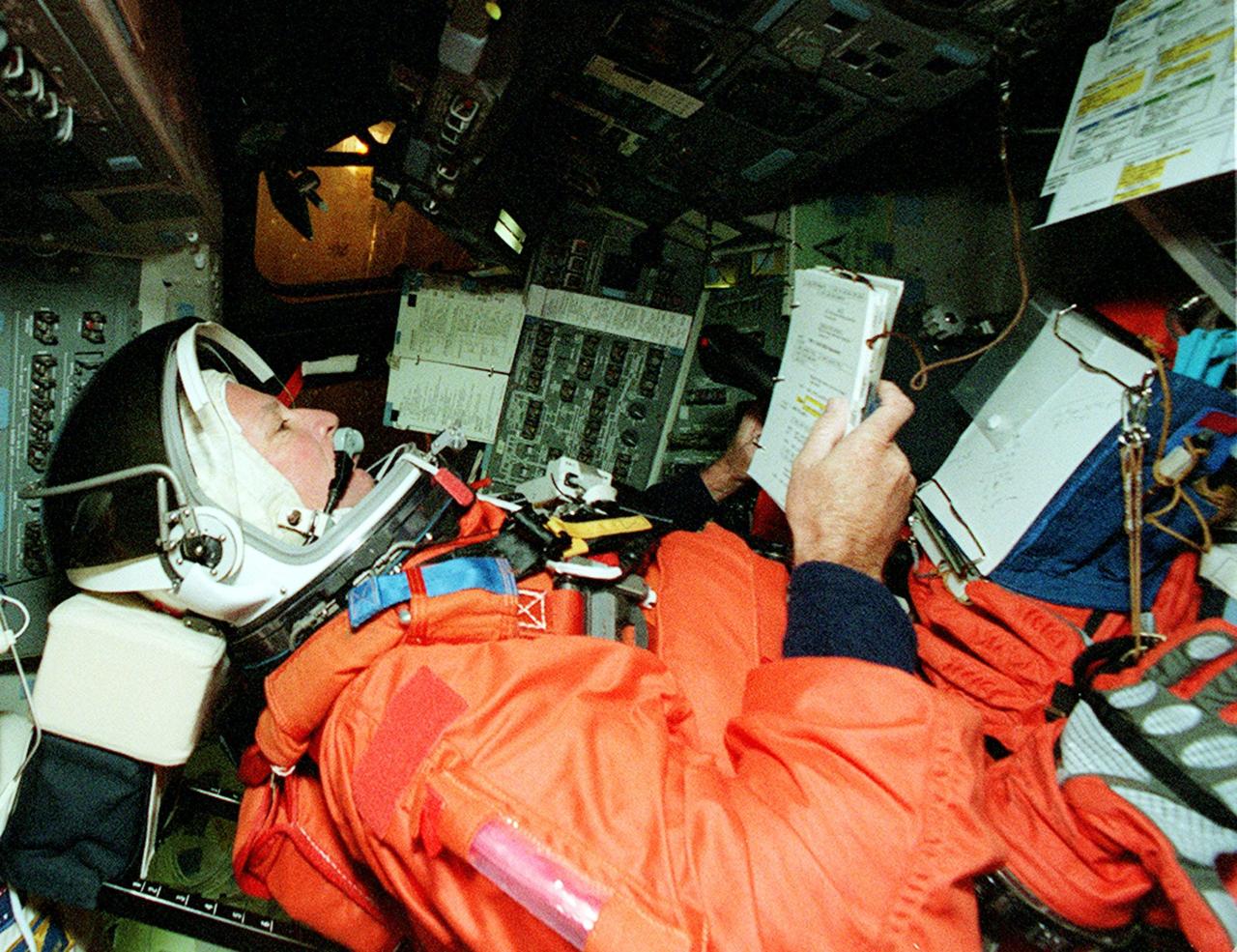
KENNEDY SPACE CENTER, FLA. -- STS-92 Commander Brian Duffy is seated at the controls of Discovery to take part in a simulated countdown. The countdown is part of Terminal Countdown Demonstration Test (TCDT) activities that he and other crew members have been performing. STS-92 is scheduled to launch Oct. 5 at 9:38 p.m. EDT on the fifth flight to the International Space Station. It will carry two elements of the Space Station, the Integrated Truss Structure Z1 and the third Pressurized Mating Adapter. The mission is also the 100th flight in the Shuttle program
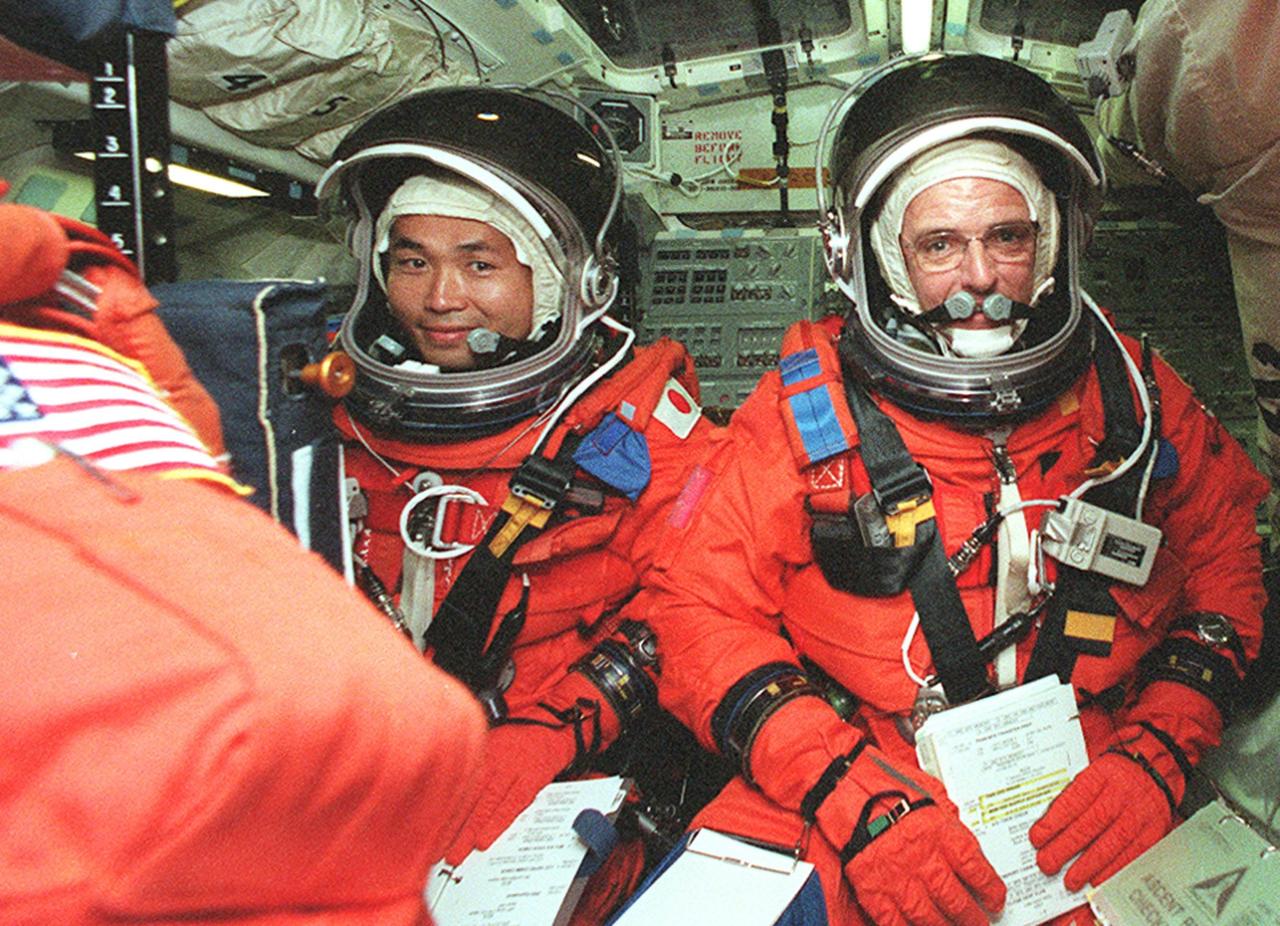
KENNEDY SPACE CENTER, FLA. -- STS-92 Mission Specialists Koichi Wakata of Japan (left) and William S. McArthur Jr. (right) get settled in their seats in Discovery for a simulated countdown. The countdown is part of Terminal Countdown Demonstration Test (TCDT) activities that he and other crew members have been performing. STS-92 is scheduled to launch Oct. 5 at 9:38 p.m. EDT on the fifth flight to the International Space Station. It will carry two elements of the Space Station, the Integrated Truss Structure Z1 and the third Pressurized Mating Adapter. The mission is also the 100th flight in the Shuttle program
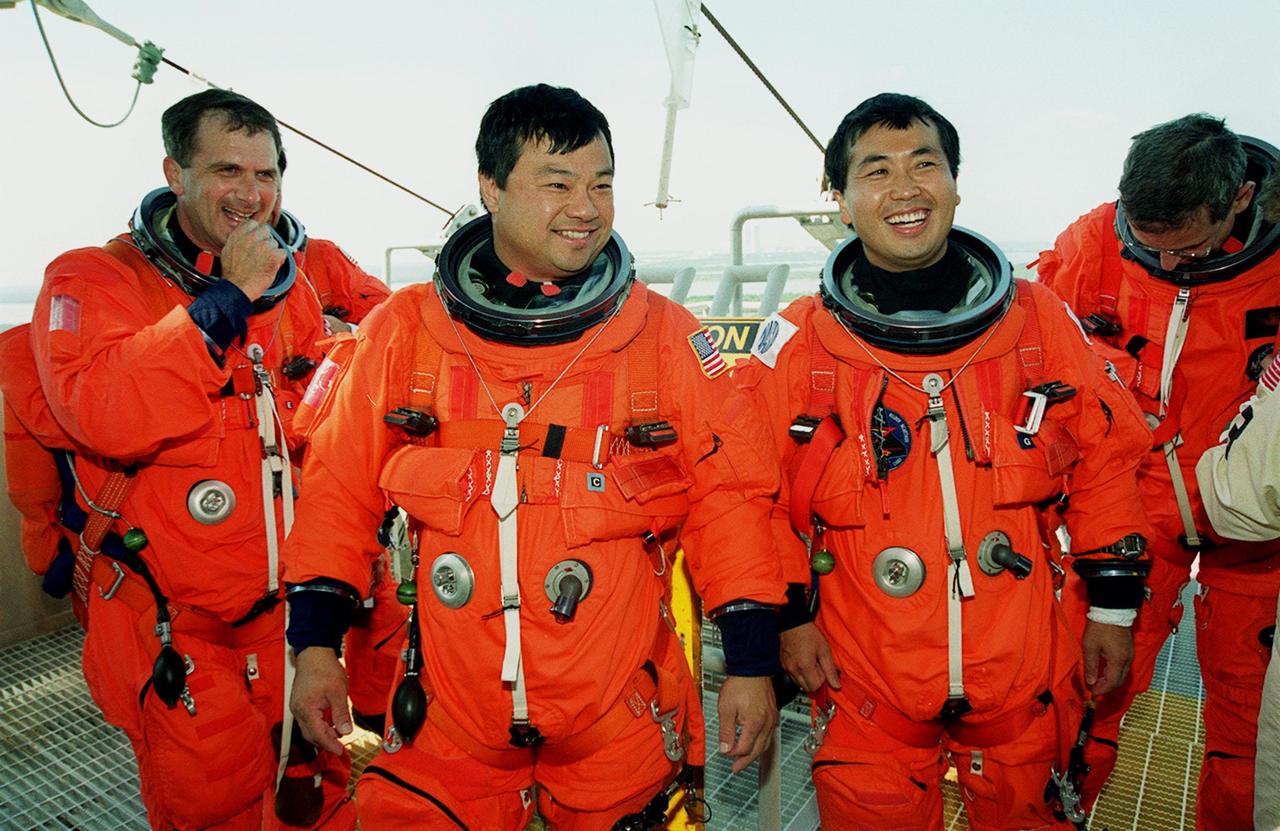
KENNEDY SPACE CENTER, FLA. -- STS-92 Mission Specialists (left to right) Peter J.K. “Jeff” Wisoff, Leroy Chiao, Koichi Wakata of Japan and William S. McArthur Jr. finish emergency egress training in the slidewire baskets behind them. The training is part of Terminal Countdown Demonstration Test activities that also include a simulated countdown. STS-92 is scheduled to launch Oct. 5 at 9:38 p.m. EDT on the fifth flight to the International Space Station. It will carry two elements of the Space Station, the Integrated Truss Structure Z1 and the third Pressurized Mating Adapter. The mission is also the 100th flight in the Shuttle program
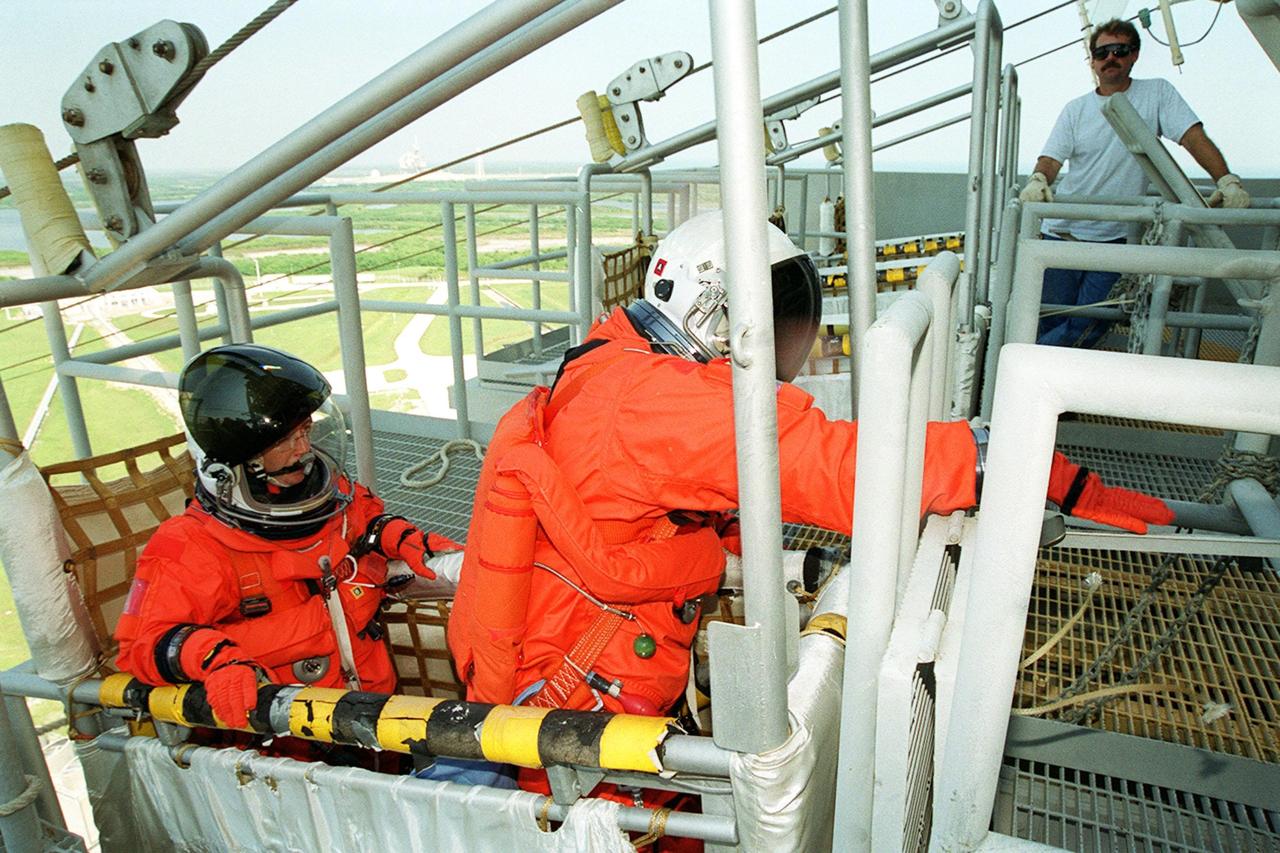
KENNEDY SPACE CENTER, FLA. -- On the 195-foot level of the Fixed Service Structure on Launch Pad 39A, STS-92 Pilot Pamela Ann Melroy (left) sits in the slidewire basket while Commander Brian Duffy reaches for the lever to release the basket. They and other crew members are taking part in emergency egress training, one of the Terminal Countdown Demonstration Test activities that also include a simulated countdown. STS-92 is scheduled to launch Oct. 5 at 9:38 p.m. EDT on the fifth flight to the International Space Station. It will carry two elements of the Space Station, the Integrated Truss Structure Z1 and the third Pressurized Mating Adapter. The mission is also the 100th flight in the Shuttle program
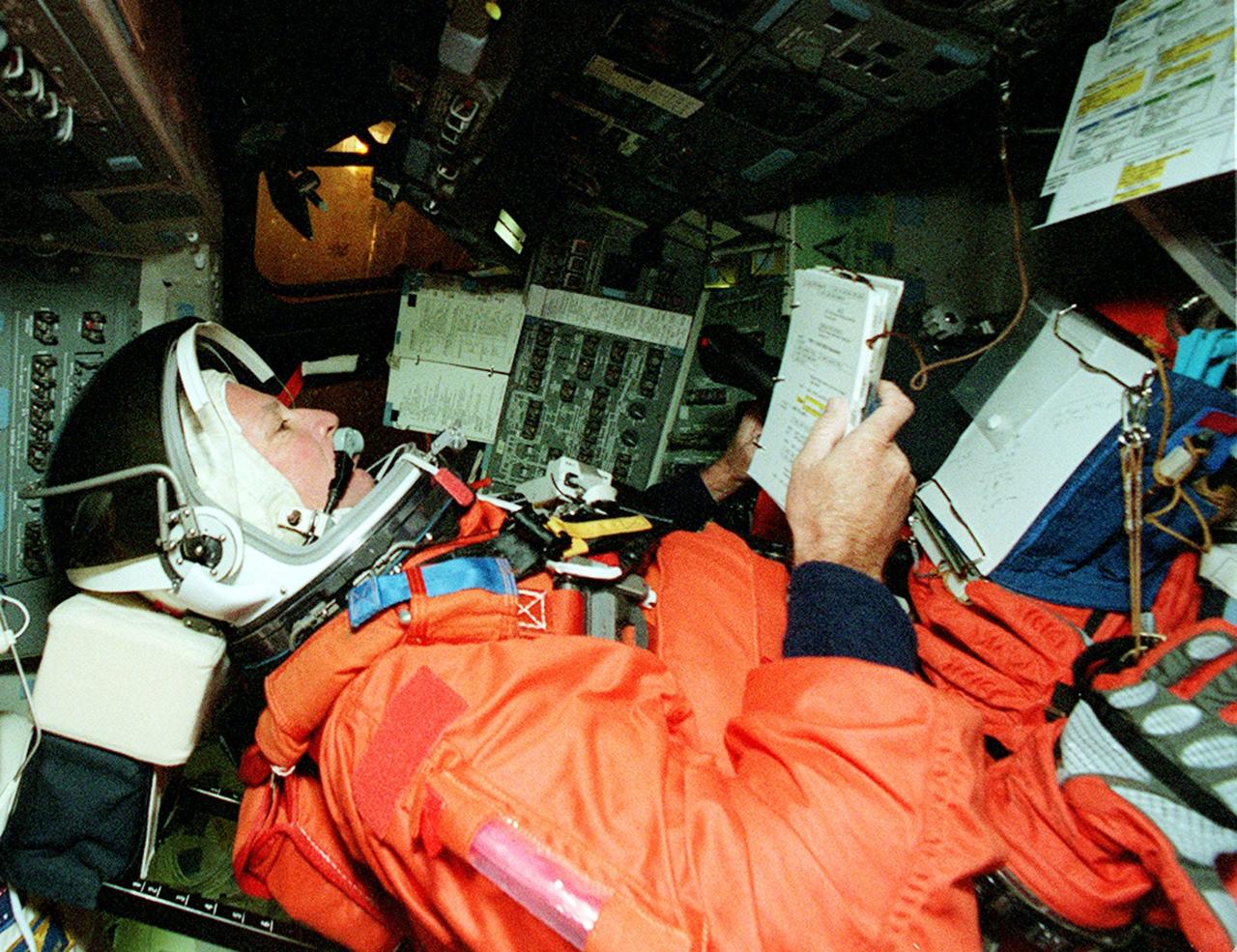
KENNEDY SPACE CENTER, FLA. -- STS-92 Commander Brian Duffy is seated at the controls of Discovery to take part in a simulated countdown. The countdown is part of Terminal Countdown Demonstration Test (TCDT) activities that he and other crew members have been performing. STS-92 is scheduled to launch Oct. 5 at 9:38 p.m. EDT on the fifth flight to the International Space Station. It will carry two elements of the Space Station, the Integrated Truss Structure Z1 and the third Pressurized Mating Adapter. The mission is also the 100th flight in the Shuttle program
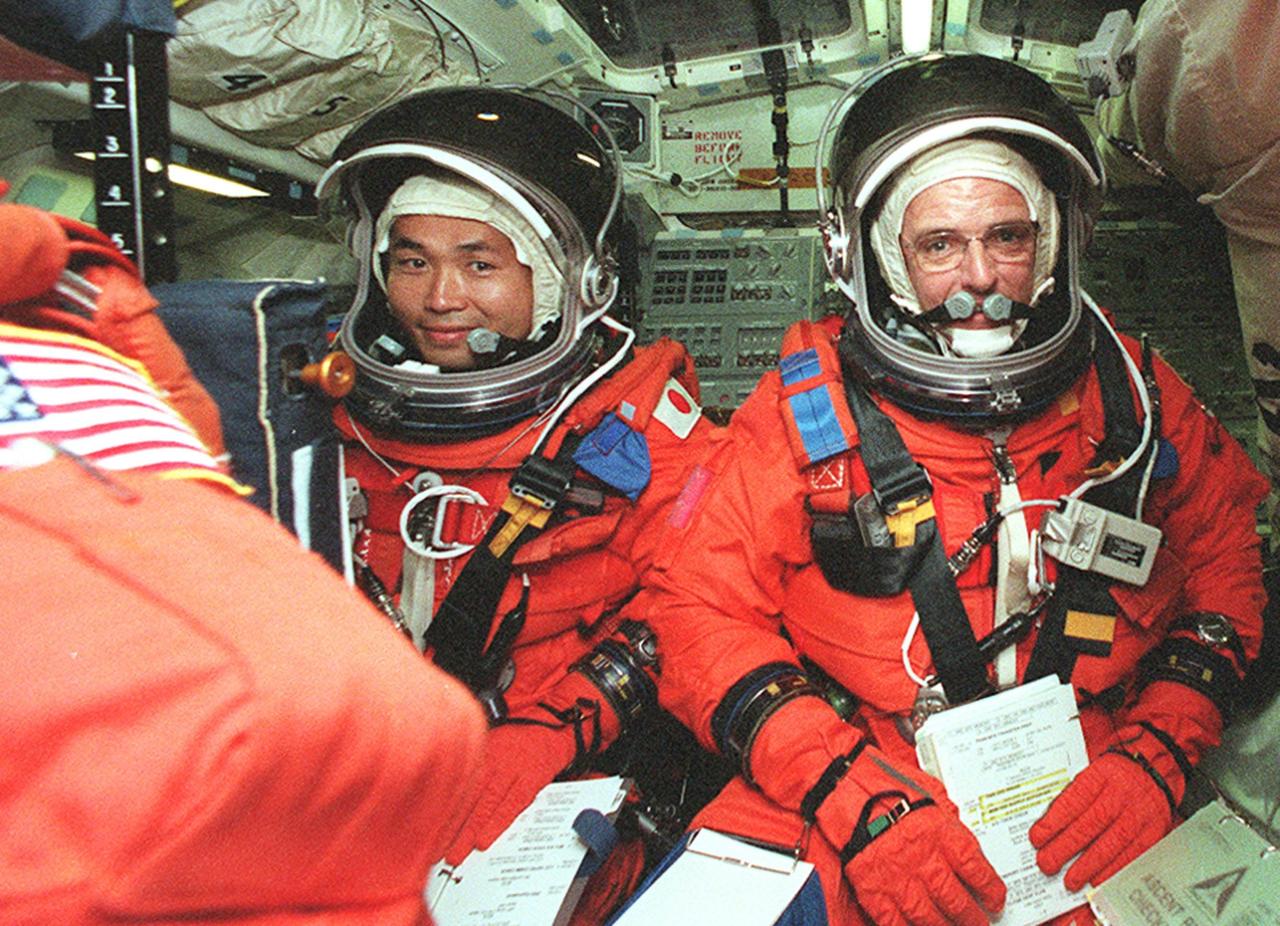
KENNEDY SPACE CENTER, FLA. -- STS-92 Mission Specialists Koichi Wakata of Japan (left) and William S. McArthur Jr. (right) get settled in their seats in Discovery for a simulated countdown. The countdown is part of Terminal Countdown Demonstration Test (TCDT) activities that he and other crew members have been performing. STS-92 is scheduled to launch Oct. 5 at 9:38 p.m. EDT on the fifth flight to the International Space Station. It will carry two elements of the Space Station, the Integrated Truss Structure Z1 and the third Pressurized Mating Adapter. The mission is also the 100th flight in the Shuttle program
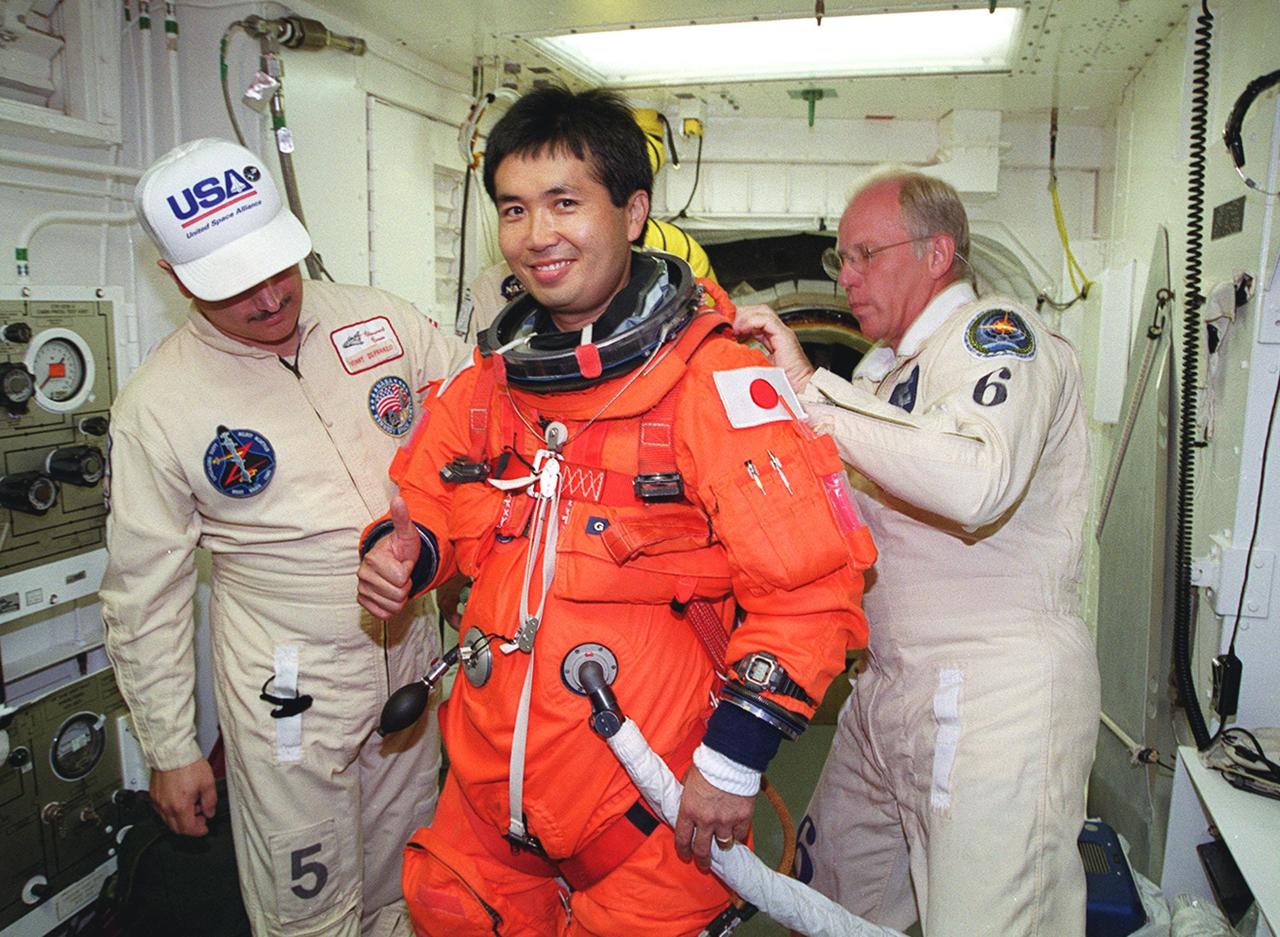
STS-92 Mission Specialist Koichi Wakata of Japan (center) gets help from United Space Alliance Mechanical Technician Vinny Difranzo (left) and NASA Quality Assurance Specialist Danny Wyatt (right) in suiting up in the White Room. Wakata and other crew members are taking part in a simulated countdown KSC for Terminal Countdown Demonstration Test (TCDT) activities. STS-92 is scheduled to launch Oct. 5 at 9:38 p.m. EDT on the fifth flight to the International Space Station. It will carry two elements of the Space Station, the Integrated Truss Structure Z1 and the third Pressurized Mating Adapter. The mission is also the 100th flight in the Shuttle program
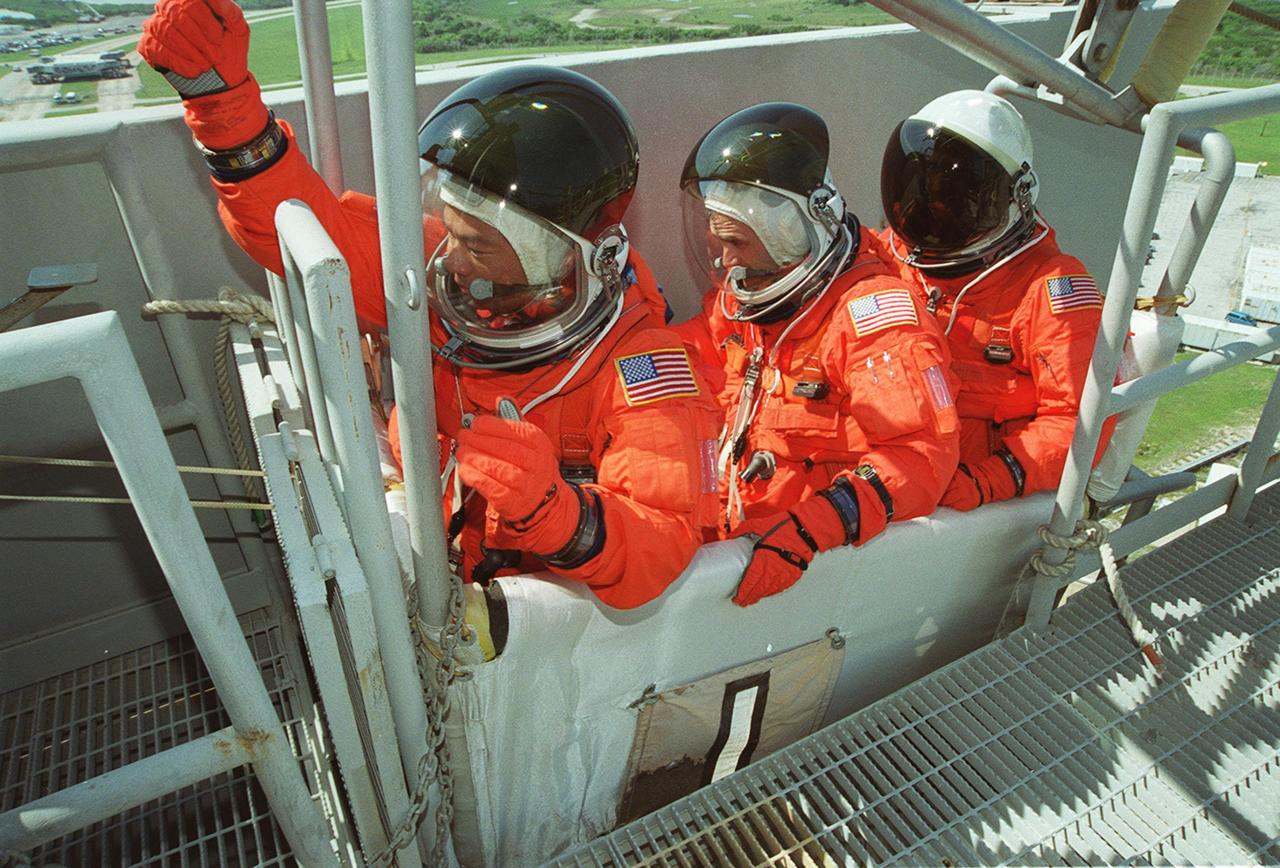
KENNEDY SPACE CENTER, FLA. -- Seated in the slidewire basket at the 195-foot level of the Fixed Service Structure on Launch Pad 39A, STS-92 Mission Specialists Leroy Chiao, Peter J.K. “Jeff” Wisoff and Michael E. Lopez-Alegria practice emergency egress. They and other crew members have been taking part in Terminal Countdown Demonstration Test activities that also include a simulated countdown. STS-92 is scheduled to launch Oct. 5 at 9:38 p.m. EDT on the fifth flight to the International Space Station. It will carry two elements of the Space Station, the Integrated Truss Structure Z1 and the third Pressurized Mating Adapter. The mission is also the 100th flight in the Shuttle program
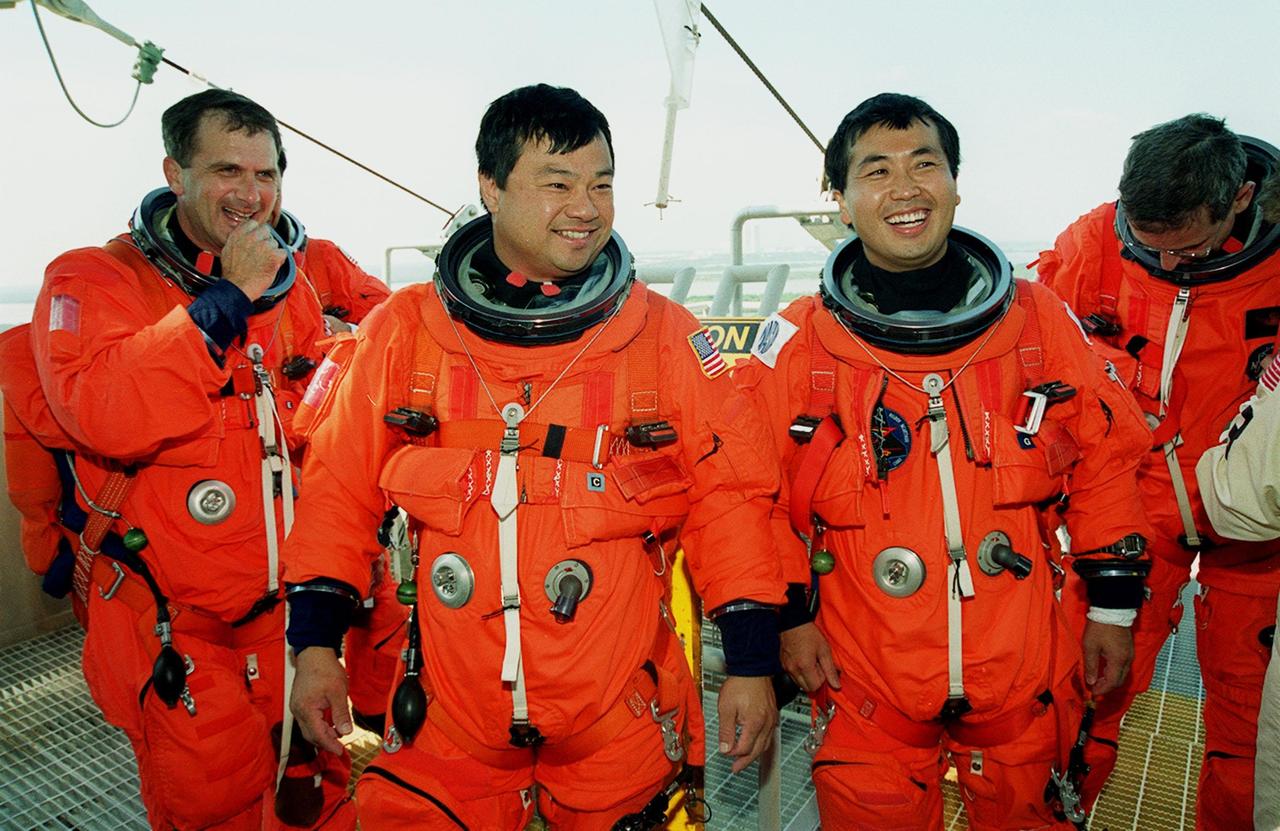
KENNEDY SPACE CENTER, FLA. -- STS-92 Mission Specialists (left to right) Peter J.K. “Jeff” Wisoff, Leroy Chiao, Koichi Wakata of Japan and William S. McArthur Jr. finish emergency egress training in the slidewire baskets behind them. The training is part of Terminal Countdown Demonstration Test activities that also include a simulated countdown. STS-92 is scheduled to launch Oct. 5 at 9:38 p.m. EDT on the fifth flight to the International Space Station. It will carry two elements of the Space Station, the Integrated Truss Structure Z1 and the third Pressurized Mating Adapter. The mission is also the 100th flight in the Shuttle program
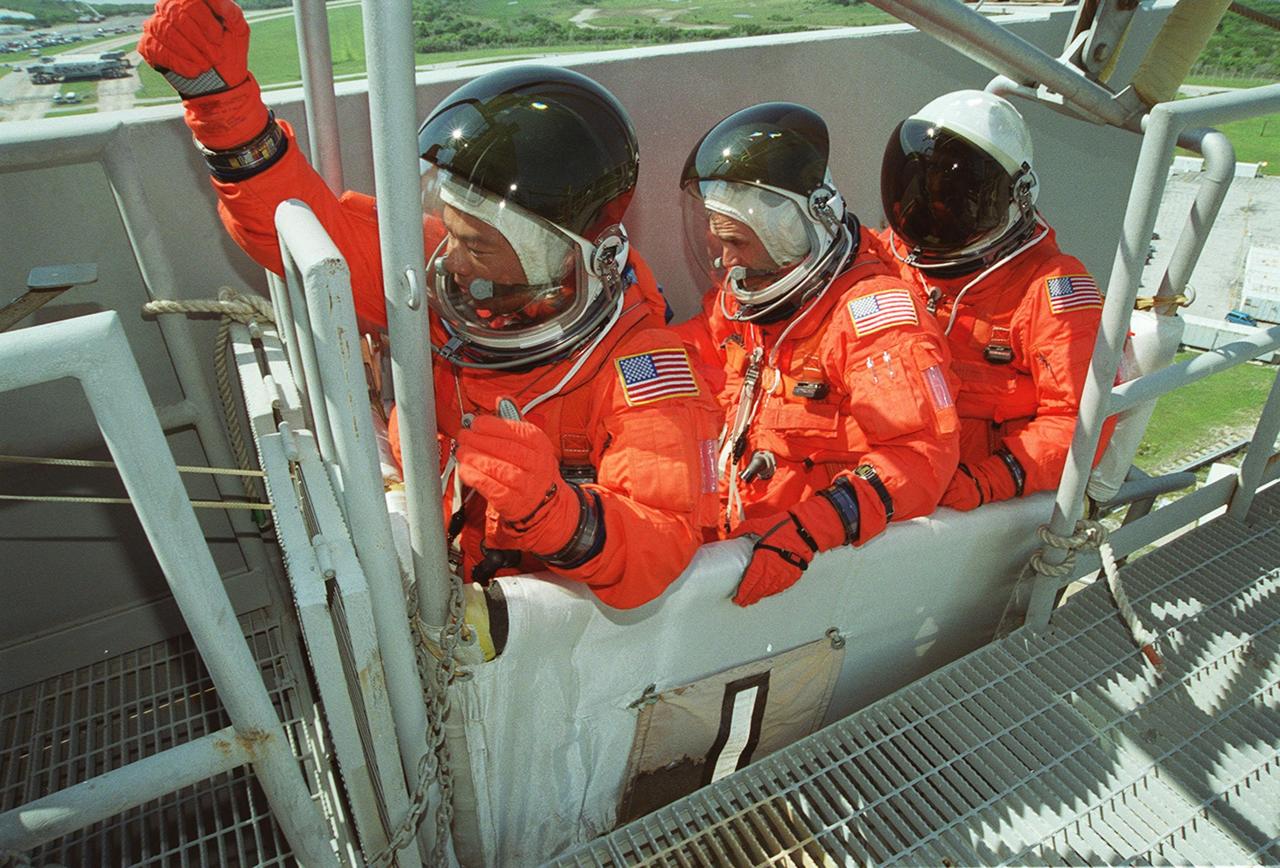
KENNEDY SPACE CENTER, FLA. -- Seated in the slidewire basket at the 195-foot level of the Fixed Service Structure on Launch Pad 39A, STS-92 Mission Specialists Leroy Chiao, Peter J.K. “Jeff” Wisoff and Michael E. Lopez-Alegria practice emergency egress. They and other crew members have been taking part in Terminal Countdown Demonstration Test activities that also include a simulated countdown. STS-92 is scheduled to launch Oct. 5 at 9:38 p.m. EDT on the fifth flight to the International Space Station. It will carry two elements of the Space Station, the Integrated Truss Structure Z1 and the third Pressurized Mating Adapter. The mission is also the 100th flight in the Shuttle program
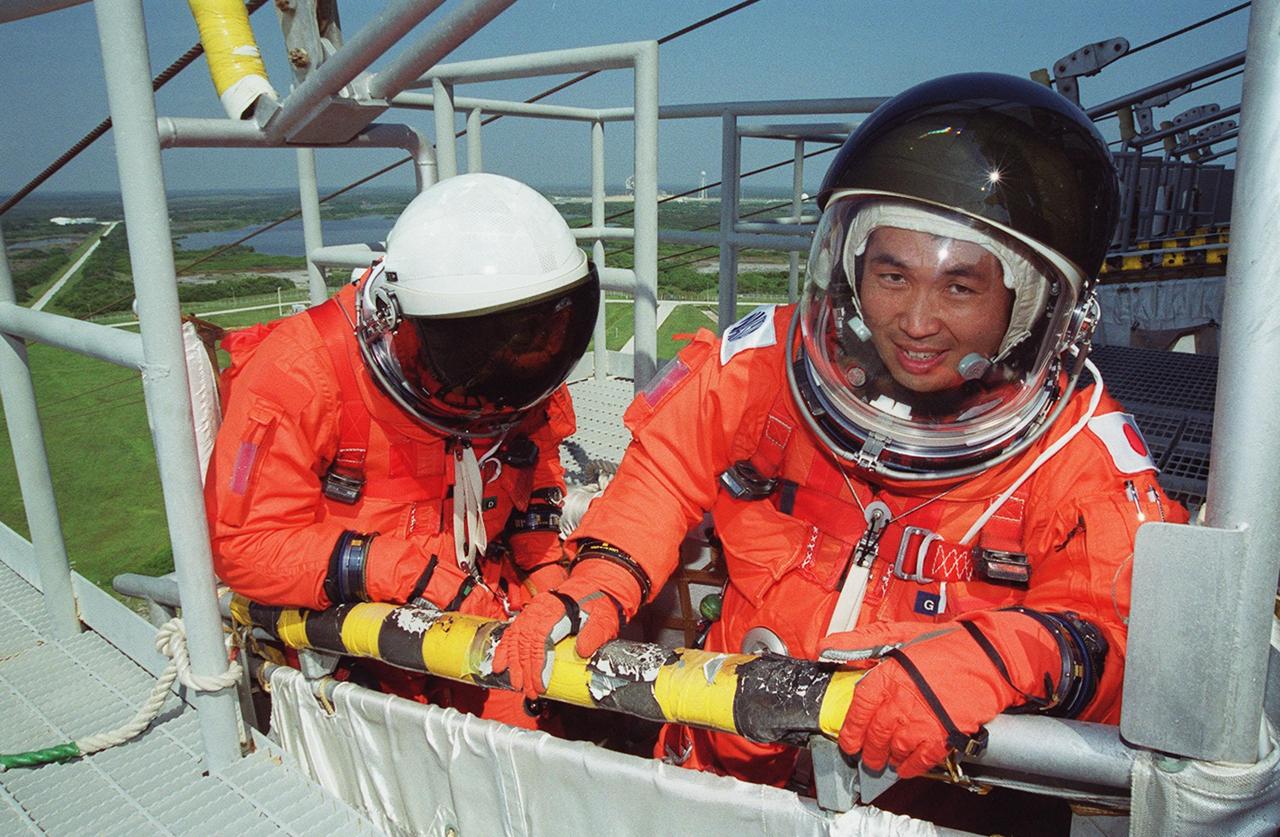
KENNEDY SPACE CENTER, FLA. -- On the 195-foot level of the Fixed Service Structure on Launch Pad 39A, STS-92 Mission Specialists William S. McArthur Jr. (left) and Koichi Wakata of Japan test the slidewire basket that they are in. They and other crew members are taking part in emergency egress training, one of the Terminal Countdown Demonstration Test activities that also include a simulated countdown. STS-92 is scheduled to launch Oct. 5 at 9:38 p.m. EDT on the fifth flight to the International Space Station. It will carry two elements of the Space Station, the Integrated Truss Structure Z1 and the third Pressurized Mating Adapter. The mission is also the 100th flight in the Shuttle program
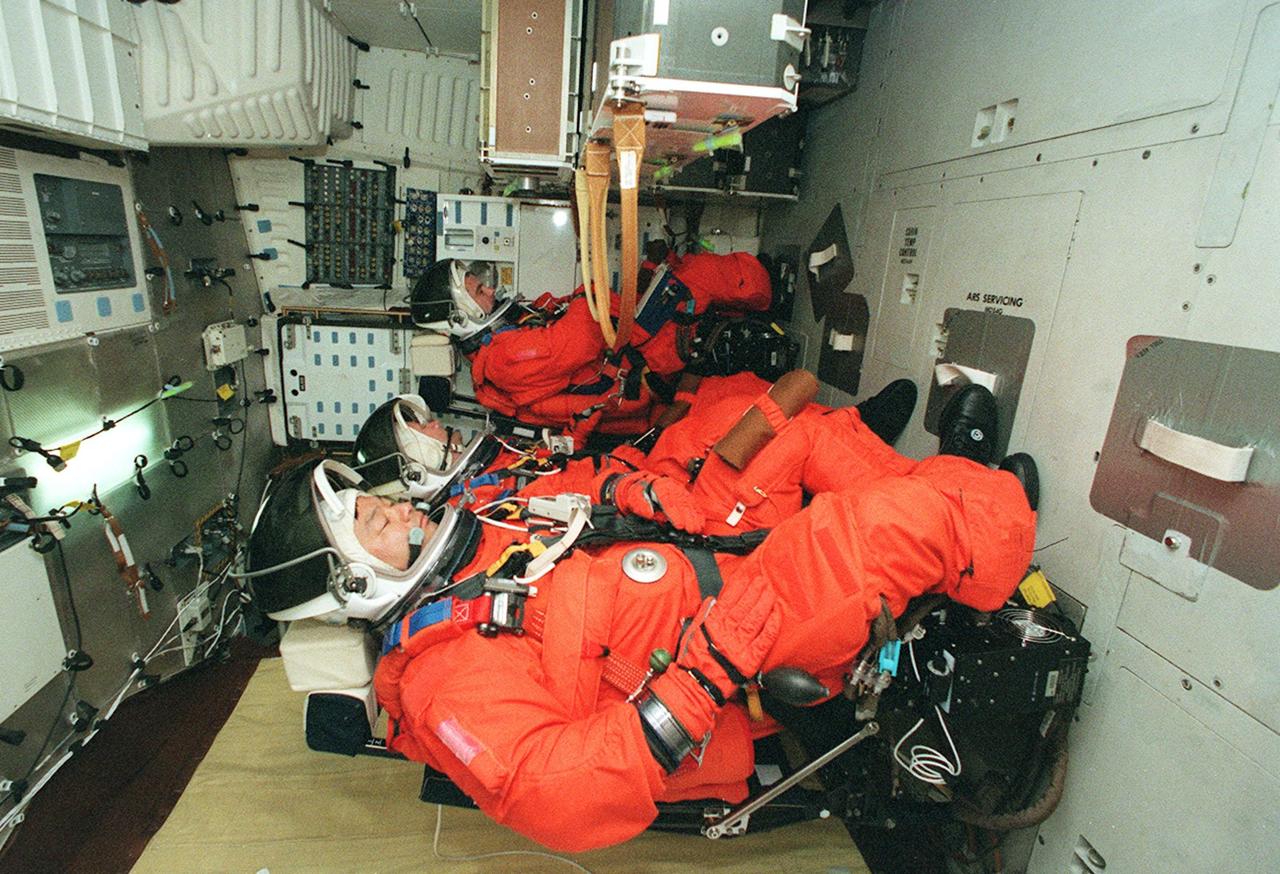
KENNEDY SPACE CENTER, FLA. -- Getting ready for a simulated countdown, STS-92 Mission Specialists Leroy Chiao, Peter J.K. “Jeff” Wisoff and Michael E. Lopez-Alegria wait in their seats in Discovery. They and other crew members are taking part in a simulated countdown KSC for Terminal Countdown Demonstration Test (TCDT) activities. STS-92 is scheduled to launch Oct. 5 at 9:38 p.m. EDT on the fifth flight to the International Space Station. It will carry two elements of the Space Station, the Integrated Truss Structure Z1 and the third Pressurized Mating Adapter. The mission is also the 100th flight in the Shuttle program
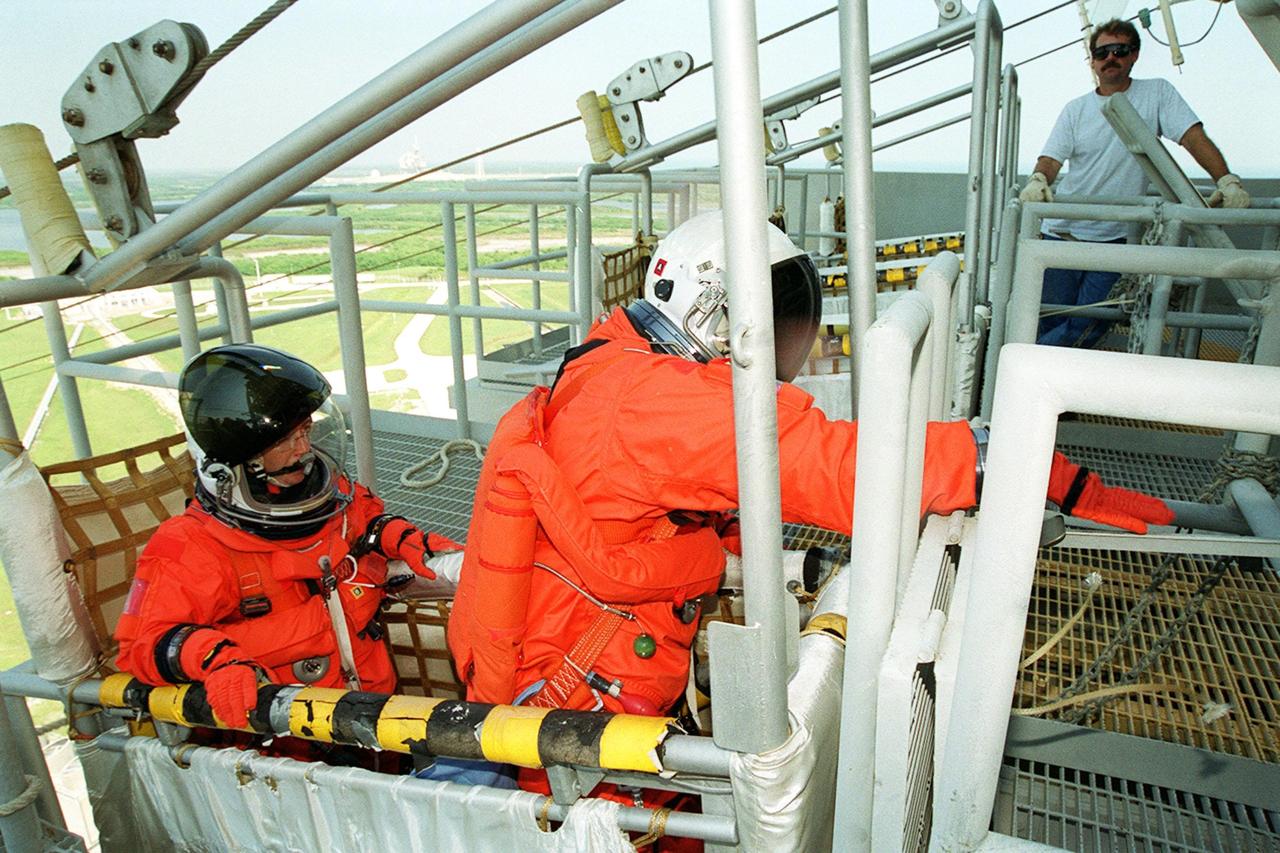
KENNEDY SPACE CENTER, FLA. -- On the 195-foot level of the Fixed Service Structure on Launch Pad 39A, STS-92 Pilot Pamela Ann Melroy (left) sits in the slidewire basket while Commander Brian Duffy reaches for the lever to release the basket. They and other crew members are taking part in emergency egress training, one of the Terminal Countdown Demonstration Test activities that also include a simulated countdown. STS-92 is scheduled to launch Oct. 5 at 9:38 p.m. EDT on the fifth flight to the International Space Station. It will carry two elements of the Space Station, the Integrated Truss Structure Z1 and the third Pressurized Mating Adapter. The mission is also the 100th flight in the Shuttle program

KENNEDY SPACE CENTER, FLA. -- Getting ready for a simulated countdown, STS-92 Mission Specialists Leroy Chiao, Peter J.K. “Jeff” Wisoff and Michael E. Lopez-Alegria wait in their seats in Discovery. They and other crew members are taking part in a simulated countdown KSC for Terminal Countdown Demonstration Test (TCDT) activities. STS-92 is scheduled to launch Oct. 5 at 9:38 p.m. EDT on the fifth flight to the International Space Station. It will carry two elements of the Space Station, the Integrated Truss Structure Z1 and the third Pressurized Mating Adapter. The mission is also the 100th flight in the Shuttle program

KENNEDY SPACE CENTER, FLA. -- On the 195-foot level of the Fixed Service Structure on Launch Pad 39A, STS-92 Mission Specialists William S. McArthur Jr. (left) and Koichi Wakata of Japan test the slidewire basket that they are in. They and other crew members are taking part in emergency egress training, one of the Terminal Countdown Demonstration Test activities that also include a simulated countdown. STS-92 is scheduled to launch Oct. 5 at 9:38 p.m. EDT on the fifth flight to the International Space Station. It will carry two elements of the Space Station, the Integrated Truss Structure Z1 and the third Pressurized Mating Adapter. The mission is also the 100th flight in the Shuttle program
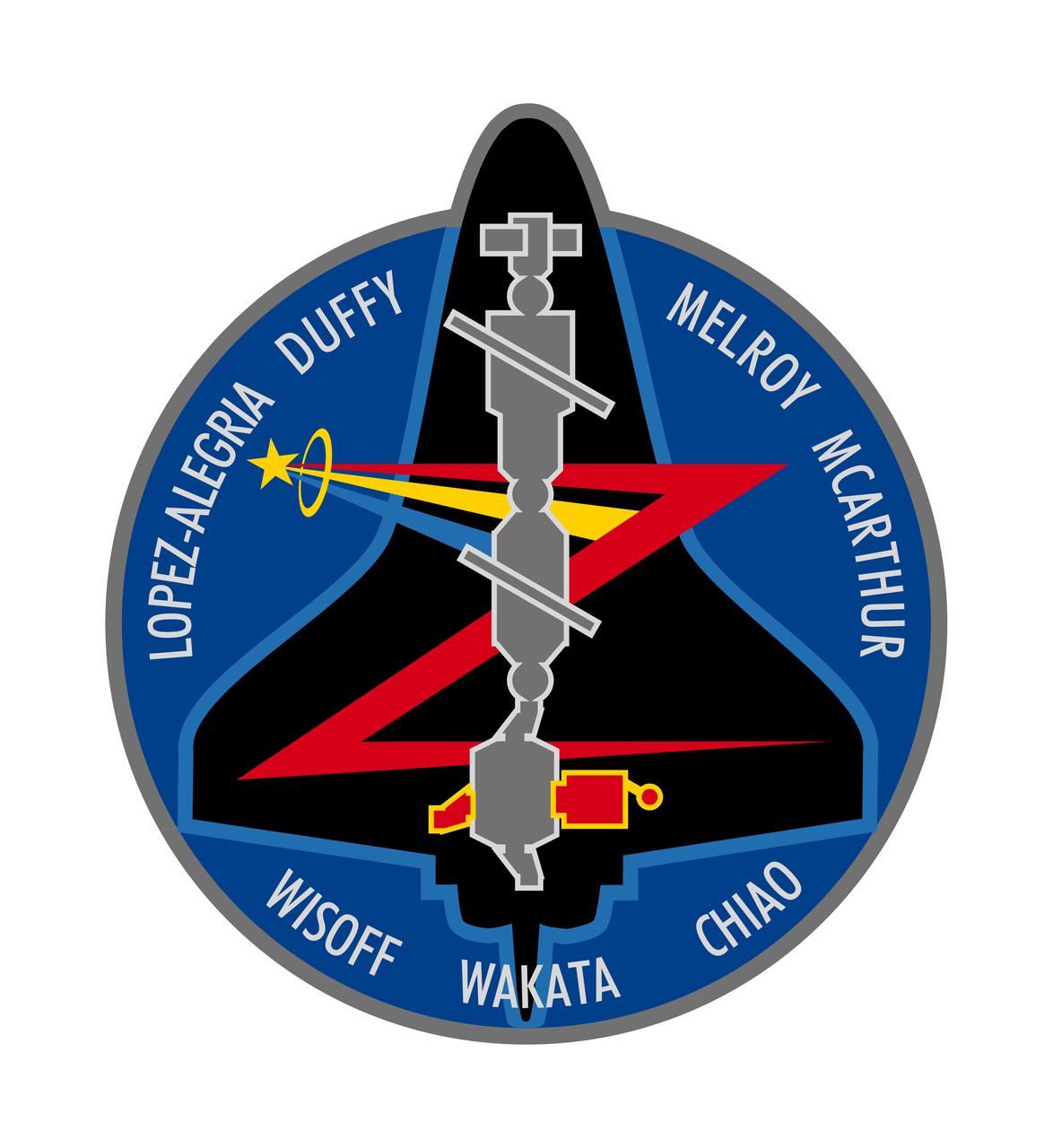
Designed by the crew members, the STS-92 patch symbolizes the second mission to carry U.S. built elements to the International Space Station (ISS) for assembly. The black silhouette of the Space Shuttle Discovery stands out against the deep blue background of space in low Earth orbit. In the foreground, in gray, is a profile view of the ISS as it appears when the shuttle and crew arrive, with the station consisting of the Unity node, its two Pressurized Mating Adapters (PMA), the Zarya functional cargo block, the Zvezda service module, and the Progress cargo vehicle. Following the shuttle's rendezvous and docking, the ISS configuration now augmented by the two elements delivered by Discovery, the Z1 truss and PMA-3. These two elements, depicted in red, were installed using the shuttle's robot arm and connected to ISS during four space walks. The multinational nature of both the STS-92 crew and the ISS are reflected in the multi-colored Astronaut Office symbol.
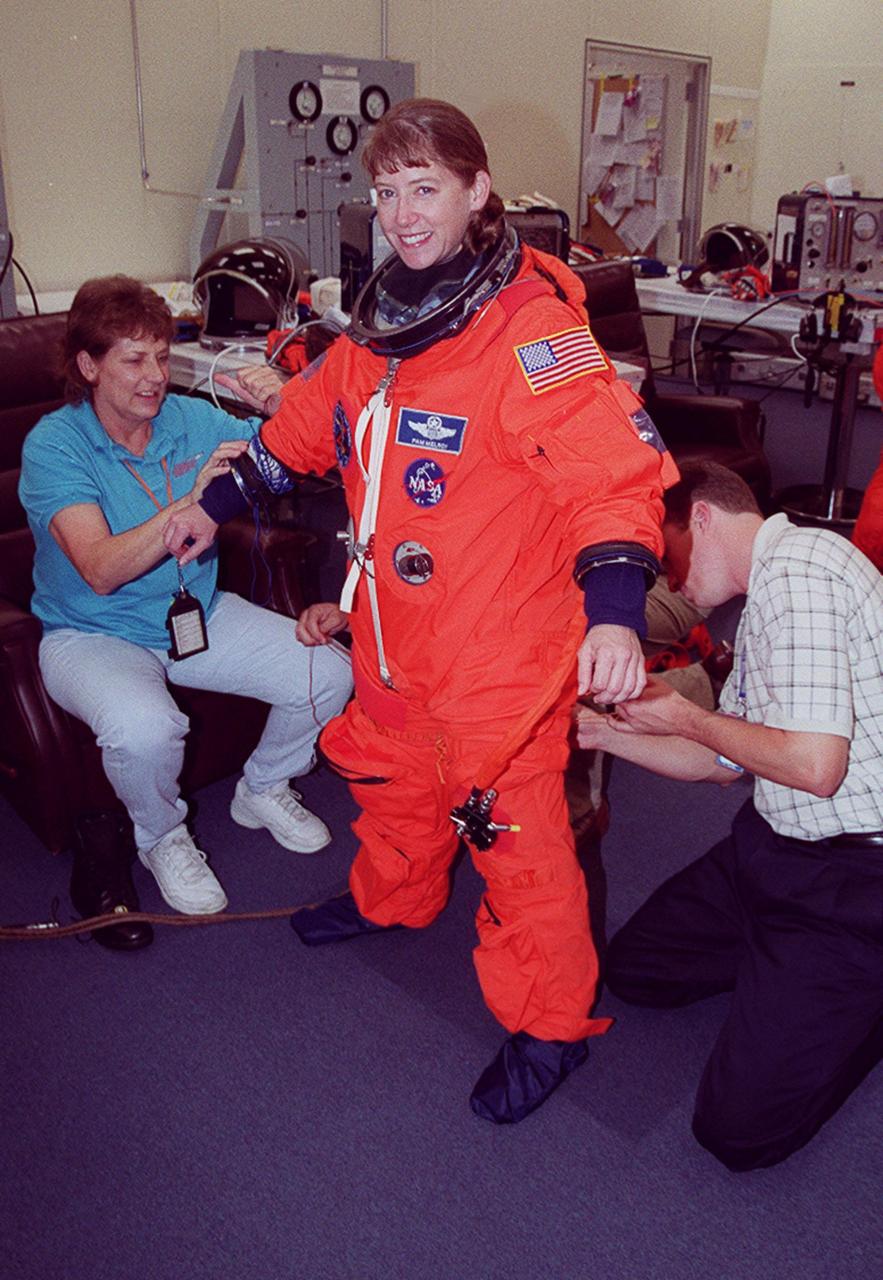
The “rookie” on the STS-92 mission, Pilot Pamela Ann Melroy has her new launch and entry suit adjusted during pre-pack and fit check in the Operations and Checkout Building. Melroy and the rest of the crew are at KSC for Terminal Countdown Demonstration Test activities. The TCDT provides emergency egress training, simulated countdown exercises and opportunities to inspect the mission payload. STS-92 is scheduled to launch Oct. 5 at 9:38 p.m. EDT from Launch Pad 39A on the fifth flight to the International Space Station. It will carry two elements of the Space Station, the Integrated Truss Structure Z1 and the third Pressurized Mating Adapter. The mission is also the 100th flight in the Shuttle program

The “rookie” on the STS-92 mission, Pilot Pamela Ann Melroy has her new launch and entry suit adjusted during pre-pack and fit check in the Operations and Checkout Building. Melroy and the rest of the crew are at KSC for Terminal Countdown Demonstration Test activities. The TCDT provides emergency egress training, simulated countdown exercises and opportunities to inspect the mission payload. STS-92 is scheduled to launch Oct. 5 at 9:38 p.m. EDT from Launch Pad 39A on the fifth flight to the International Space Station. It will carry two elements of the Space Station, the Integrated Truss Structure Z1 and the third Pressurized Mating Adapter. The mission is also the 100th flight in the Shuttle program
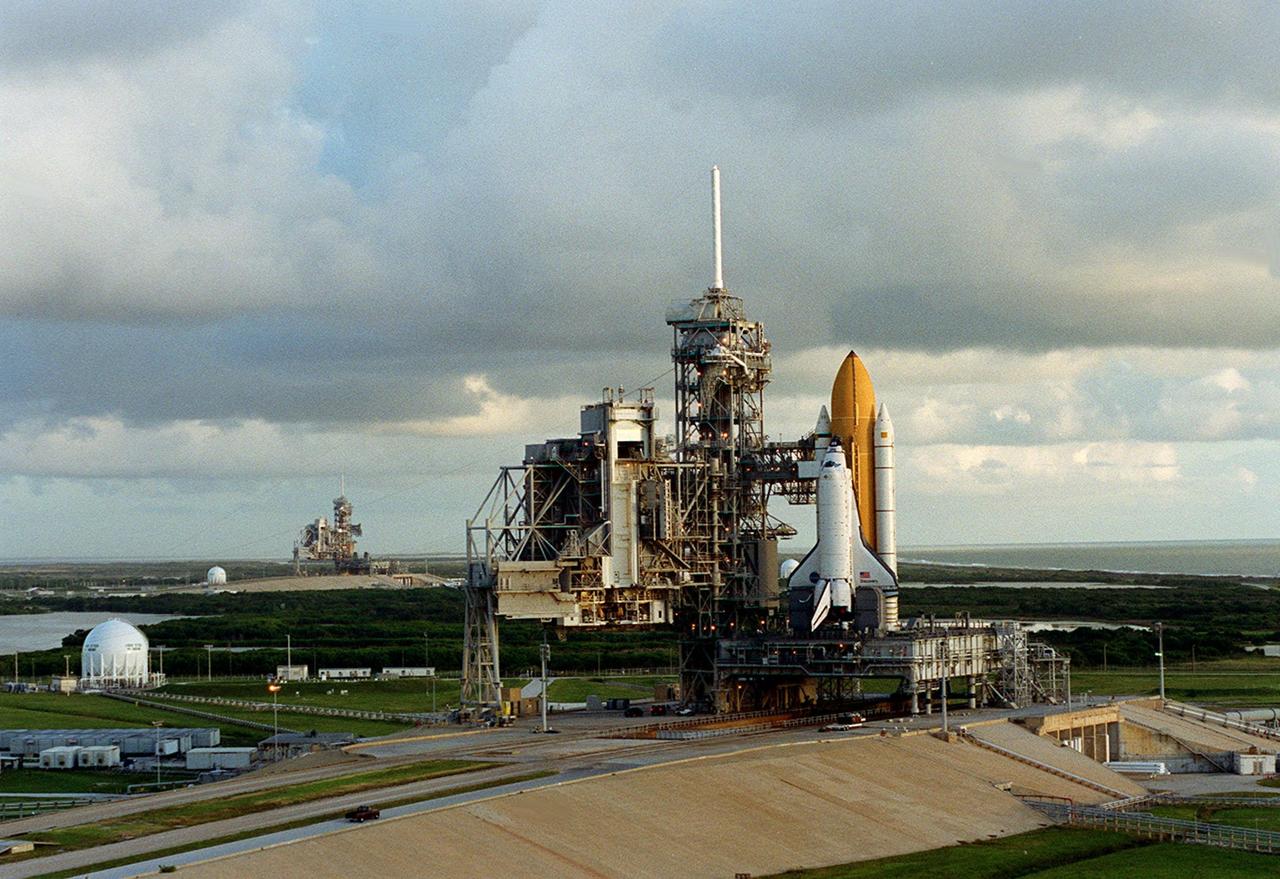
KENNEDY SPACE CENTER, Fla. -- This aerial photo captures Launch Pads 39B (left) and 39A (right). Space Shuttle Discovery waits on pad 39A for launch on mission STS-92 Oct. 5, 2000. The ball-shaped structures at left of the pads are storage tanks of the cryogenic liquid propellants for the orbiter’s main engines

KENNEDY SPACE CENTER, Fla. -- This aerial photo captures Launch Pads 39B (left) and 39A (right). Space Shuttle Discovery waits on pad 39A for launch on mission STS-92 Oct. 5, 2000. The ball-shaped structures at left of the pads are storage tanks of the cryogenic liquid propellants for the orbiter’s main engines
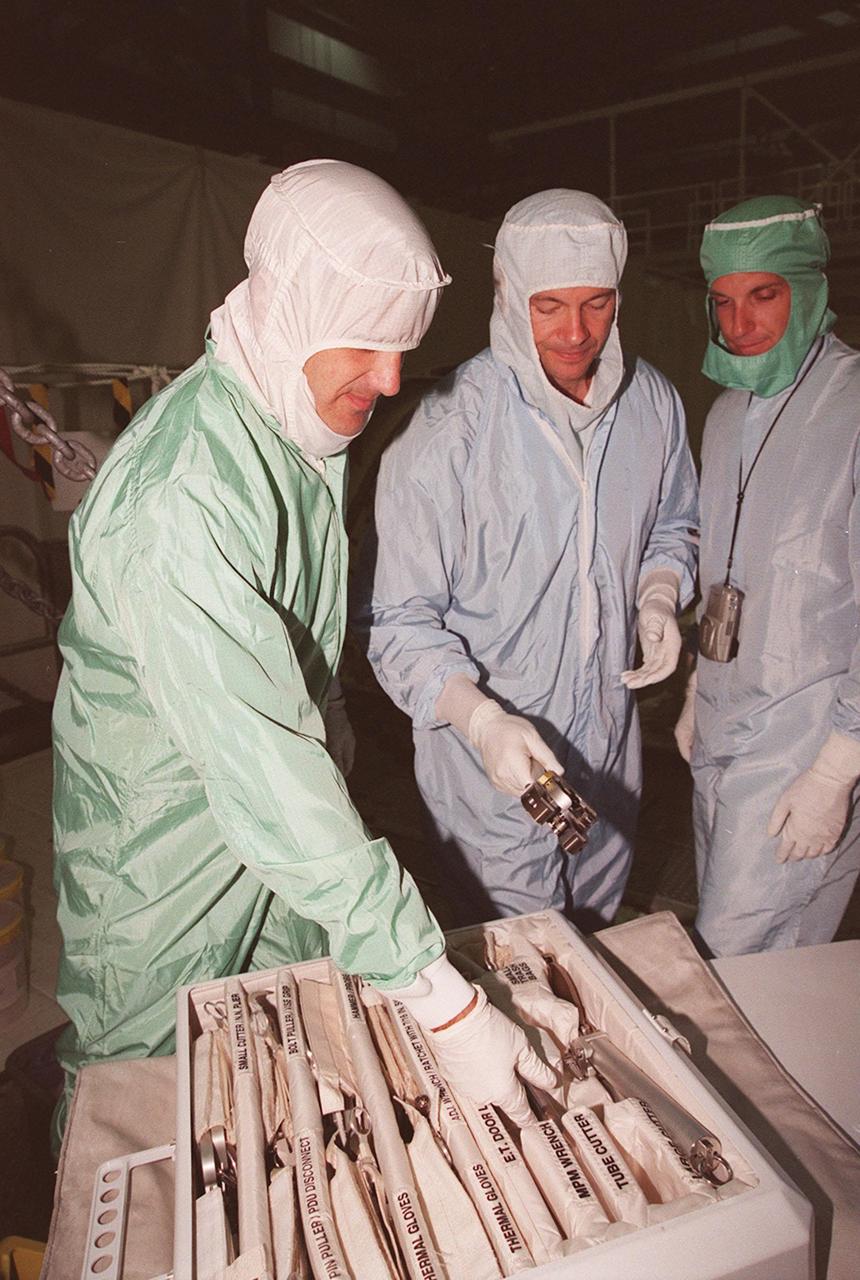
In the Orbiter Processing Facility bay 1, STS-92 crew members, along with Boeing workers, look closely at the tools they will be using on their mission. The crew comprises Commander Brian Duffy, Pilot Pam Melroy and Mission Specialists Koichi Wakata, Leroy Chiao, Jeff Wisoff, Michael Lopez-Alegria and Bill McArthur. STS-92 is scheduled to launch Oct. 5 on Shuttle Discovery from Launch Pad 39A on the fifth flight to the International Space Station. Discovery will carry the Integrated Truss Structure (ITS) Z1, Pressurized Mating Adapter 3, Ku-band Communications System, and Control Moment Gyros (CMGs)

The STS-92 crew spends a few minutes on the tarmac at the KSC Shuttle Landing Facility to address the media. At the microphone, Commander Brian Duffy introduces the crew: (from left) Mission Specialists Koichi Wakata, Michael Lopez-Alegria, Jeff Wisoff, Bill McArthur and Leroy Chiao; and Pilot Pam Melroy. The crew is at KSC to take part in Terminal Countdown Demonstration Test (TCDT) activities. The TCDT includes emergency egress training from the orbiter and pad, plus a simulated countdown. The fifth mission to the International Space Station, STS-92 will carry the Integrated Truss Structure Z1, the first of the planned 10 trusses on the Space Station, and the third Pressurized Mating Adapter. The Z1 will allow the first U.S. solar arrays on a future flight to be temporarily installed on Unity for early power. PMA-3 will provide a Shuttle docking port for the solar array installation on the sixth ISS flight and Lab installation on the seventh ISS flight. STS-92 is scheduled to launch Oct. 5 from launch Pad 39A. It will be the 100th flight in the Shuttle program

The STS-92 crew spends a few minutes on the tarmac at the KSC Shuttle Landing Facility to address the media. At the microphone, Commander Brian Duffy introduces the crew: (from left) Mission Specialists Koichi Wakata, Michael Lopez-Alegria, Jeff Wisoff, Bill McArthur and Leroy Chiao; and Pilot Pam Melroy. The crew is at KSC to take part in Terminal Countdown Demonstration Test (TCDT) activities. The TCDT includes emergency egress training from the orbiter and pad, plus a simulated countdown. The fifth mission to the International Space Station, STS-92 will carry the Integrated Truss Structure Z1, the first of the planned 10 trusses on the Space Station, and the third Pressurized Mating Adapter. The Z1 will allow the first U.S. solar arrays on a future flight to be temporarily installed on Unity for early power. PMA-3 will provide a Shuttle docking port for the solar array installation on the sixth ISS flight and Lab installation on the seventh ISS flight. STS-92 is scheduled to launch Oct. 5 from launch Pad 39A. It will be the 100th flight in the Shuttle program
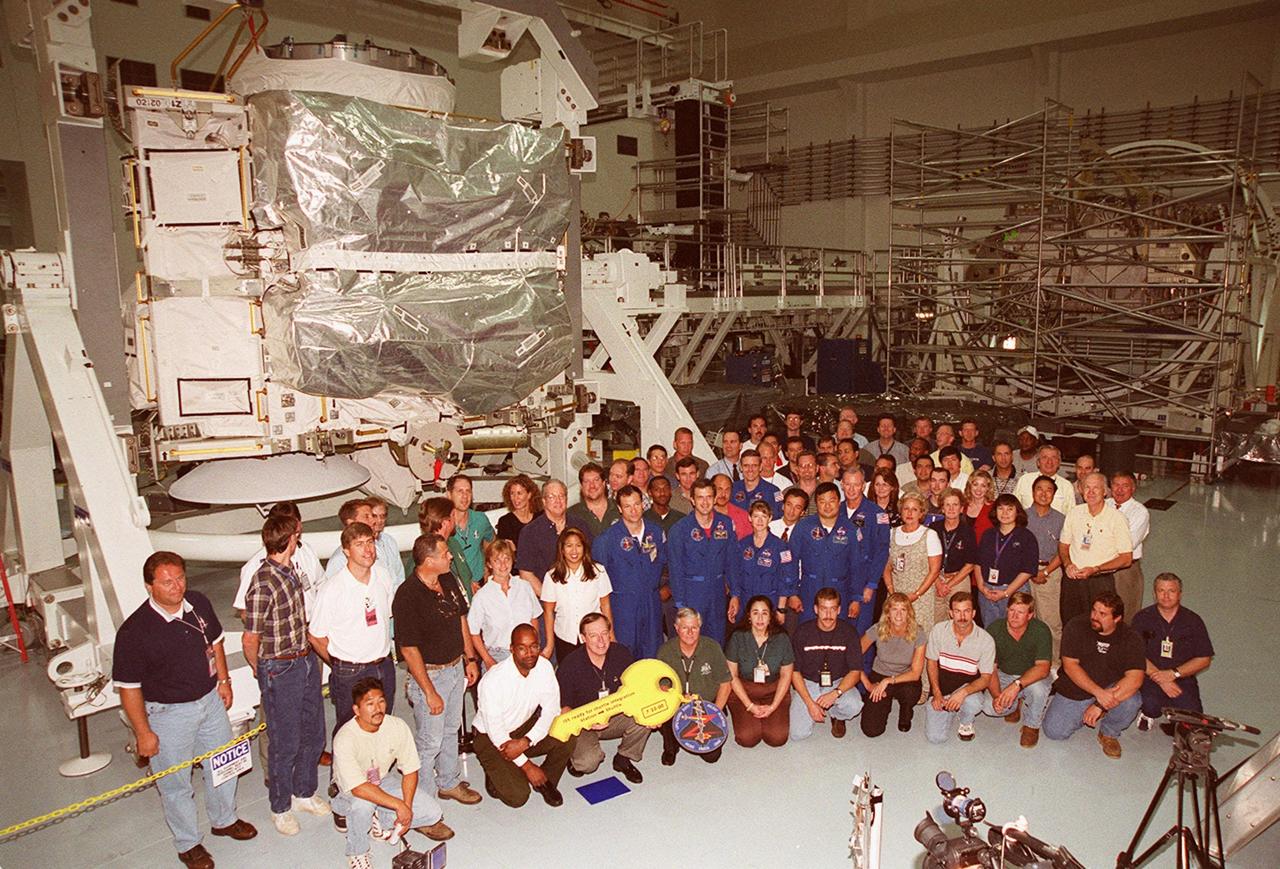
The Zenith-1 (Z-1) Truss is officially presented to NASA by The Boeing Co. on the Space Station Processing Facility floor on July 31. STS-92 Commander Col. Brian Duffy, comments on the presentation. Pictured are The Boeing Co. processing team and STS-92 astronauts. The Z-1 Truss is the cornerstone truss of the International Space Station and is scheduled to fly in Space Shuttle Discovery's payload pay on STS-92 targeted for launch Oct. 5, 2000. The Z-1 is considered a cornerstone truss because it carries critical components of the Station's attitude, communications, thermal and power control systems as well as four control moment gyros, high and low gain antenna systems, and two plasma contactor units used to disperse electrical charge build-ups. The Z-1 truss and a Pressurized Mating Adapter (PMA-3), also flying to the Station on the same mission, will be the first major U.S. elements flown to the ISS aboard the Shuttle since the launch of the Unity element in December 1998
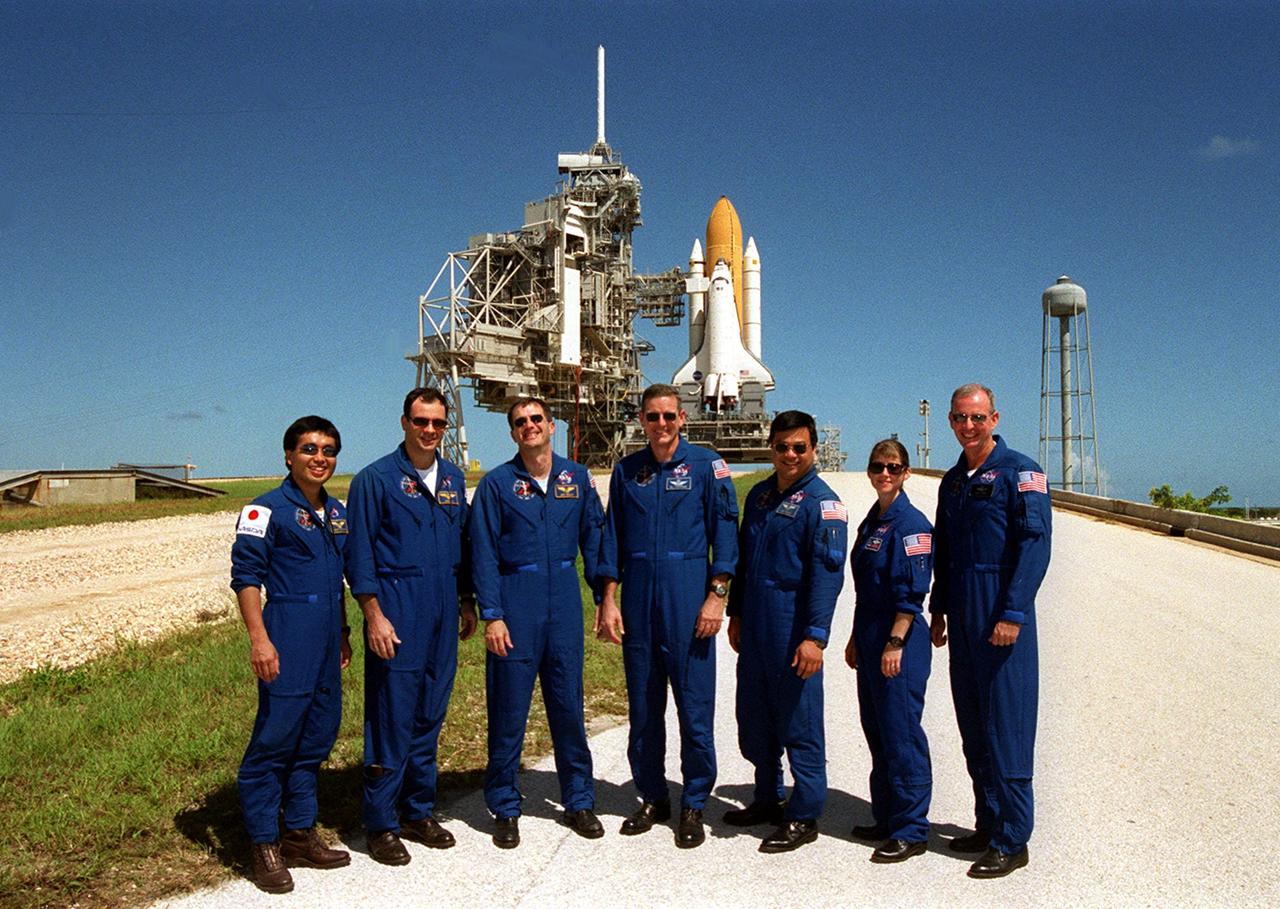
During Terminal Countdown Demonstration Test (TCDT) activities at Launch Pad 39A, the STS-92 crew poses for a group photo. Standing, left to right, on the crawlerway ramp are Mission Specialists Koichi Wakata of Japan, Michael Lopez-Alegria, Jeff Wisoff, Bill McArthur and Leroy Chiao; Pilot Pam Melroy; and Commander Brian Duffy. The TCDT provides emergency egress training, simulated countdown exercises and opportunities to inspect the mission payloads in the orbiter’s payload bay. In the background is Space Shuttle Discovery. STS-92 is scheduled to launch Oct. 5 at 9:30 p.m. EDT on the fifth flight to the International Space Station. It will carry two elements of the Space Station, the Integrated Truss Structure Z1 and the third Pressurized Mating Adapter. The mission is also the 100th flight in the Shuttle program
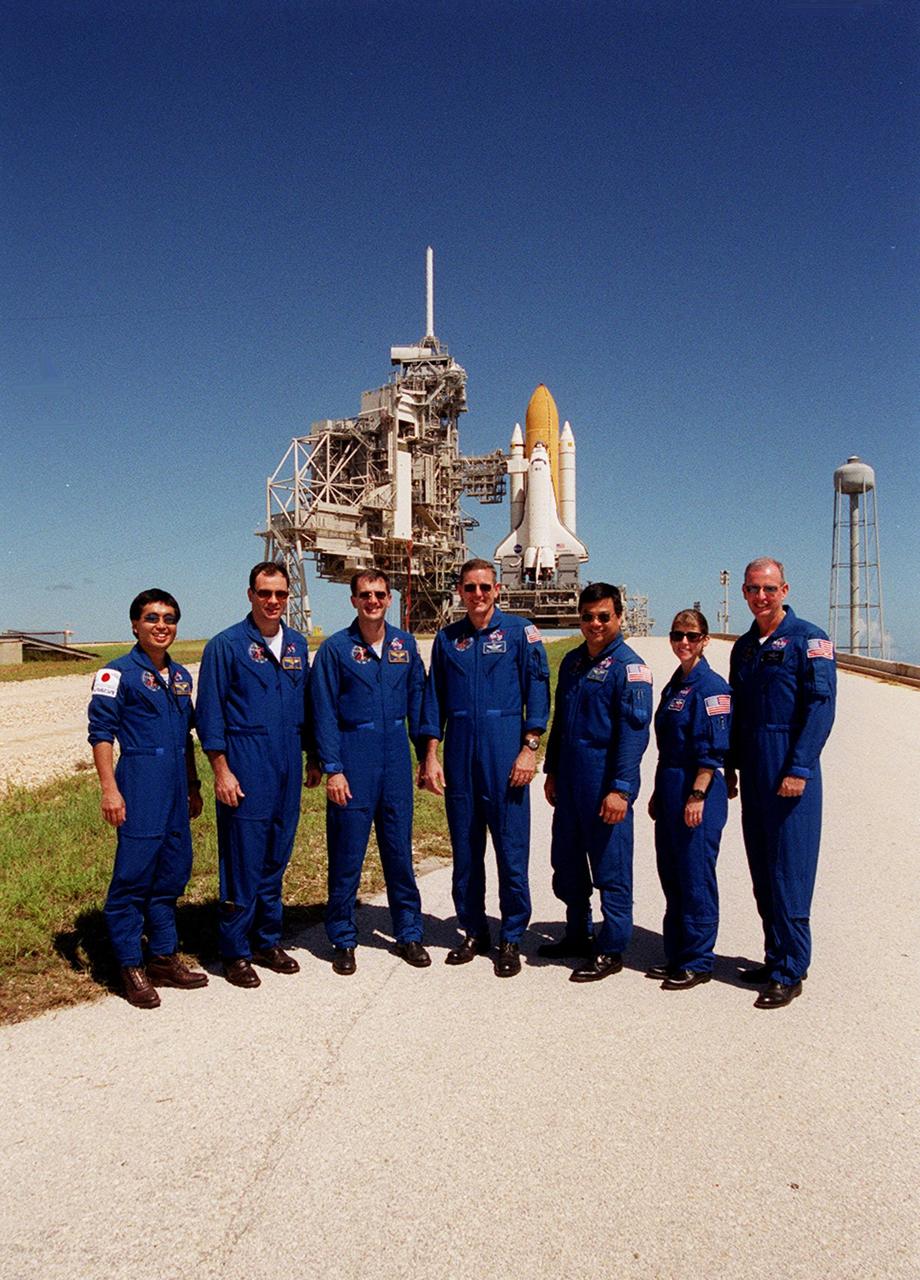
During Terminal Countdown Demonstration Test (TCDT) activities at Launch Pad 39A, the STS-92 crew poses for a group photo. In the background is Space Shuttle Discovery. Standing, left to right, on the crawlerway ramp are Mission Specialists Koichi Wakata of Japan, Michael Lopez-Alegria, Jeff Wisoff, Bill McArthur and Leroy Chiao; Pilot Pam Melroy; and Commander Brian Duffy. The TCDT provides emergency egress training, simulated countdown exercises and opportunities to inspect the mission payloads in the orbiter’s payload bay. STS-92 is scheduled to launch Oct. 5 at 9:30 p.m. EDT on the fifth flight to the International Space Station. It will carry two elements of the Space Station, the Integrated Truss Structure Z1 and the third Pressurized Mating Adapter. The mission is also the 100th flight in the Shuttle program
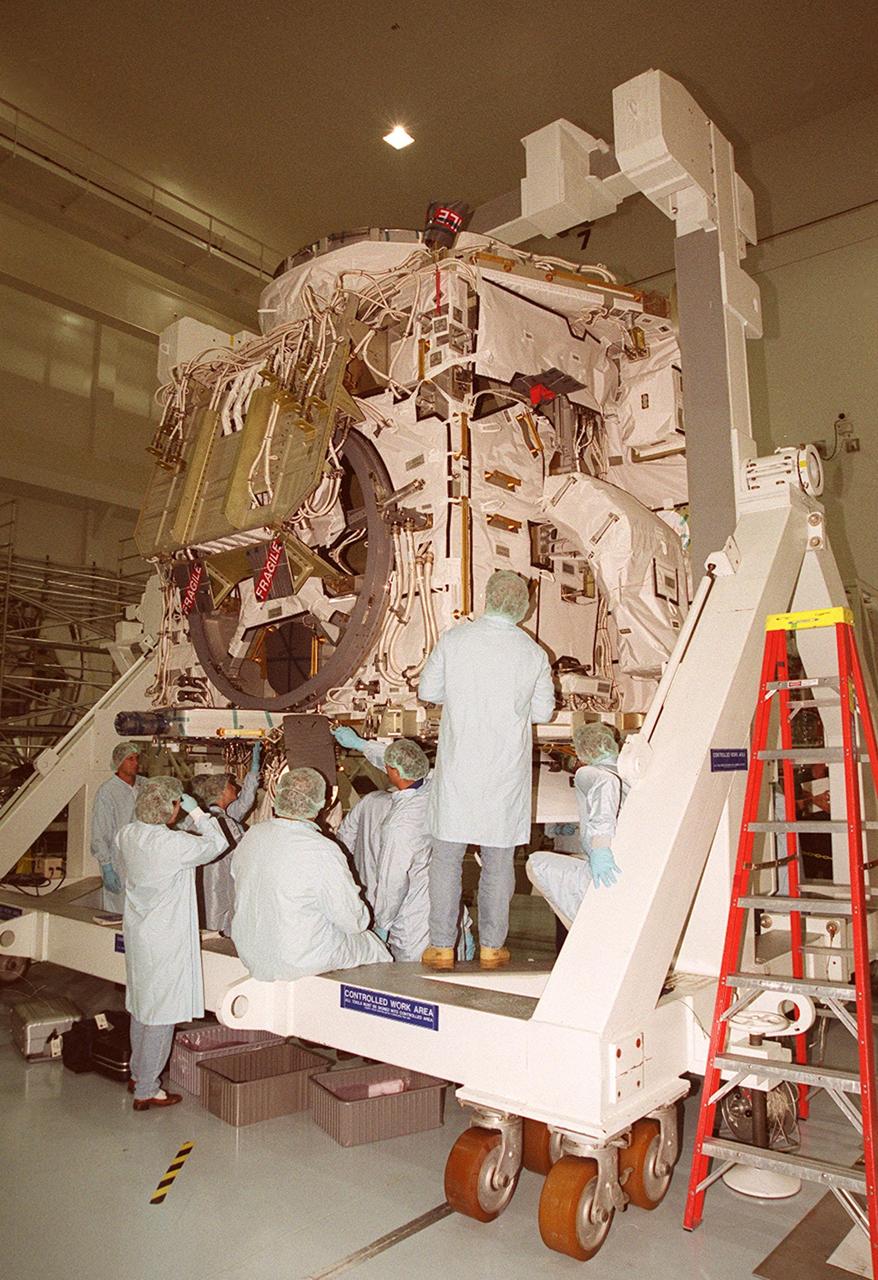
The STS-92 astronaut team study the the Zenith-1 (Z-1) Truss during the Crew Equipment Interface Test. The Z-1 Truss was officially presented to NASA by The Boeing Co. on the Space Station Processing Facility floor on July 31. The truss is the cornerstone truss of the International Space Station and is scheduled to fly in Space Shuttle Discovery's payload pay on STS-92 targeted for launch Oct. 5, 2000. The Z-1 is considered a cornerstone truss because it carries critical components of the Station's attitude, communications, thermal and power control systems as well as four control moment gyros, high and low gain antenna systems, and two plasma contactor units used to disperse electrical charge build-ups. The Z-1 truss and a Pressurized Mating Adapter (PMA-3), also flying to the Station on the same mission, will be the first major U.S. elements flown to the ISS aboard the Shuttle since the launch of the Unity element in December 1998
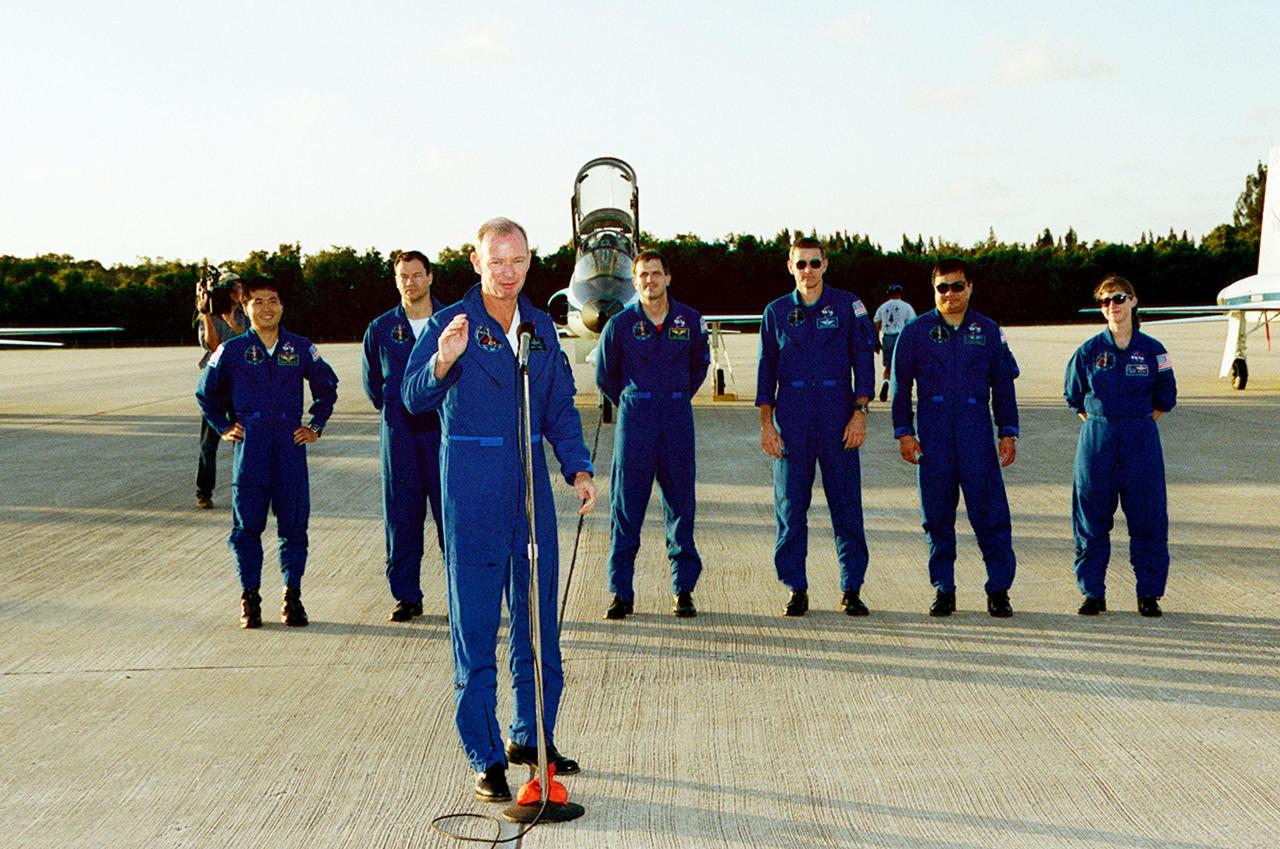
STS-92 Commander Brian Duffy, at the microphone, waves to the media after introducing the crew. Standing behind him are Mission Specialists Koichi Wakata, Michael Lopez-Alegria, Jeff Wisoff, Bill McArthur and Leroy Chiao; and Pilot Pam Melroy. The crew is at KSC to take part in Terminal Countdown Demonstration Test (TCDT) activities. The TCDT includes emergency egress training from the orbiter and pad, plus a simulated countdown. The fifth mission to the International Space Station, STS-92 will carry the Integrated Truss Structure Z1, the first of the planned 10 trusses on the Space Station, and the third Pressurized Mating Adapter. The Z1 will allow the first U.S. solar arrays on a future flight to be temporarily installed on Unity for early power. PMA-3 will provide a Shuttle docking port for the solar array installation on the sixth ISS flight and Lab installation on the seventh ISS flight. STS-92 is scheduled to launch Oct. 5 from launch Pad 39A. It will be the 100th flight in the Shuttle program
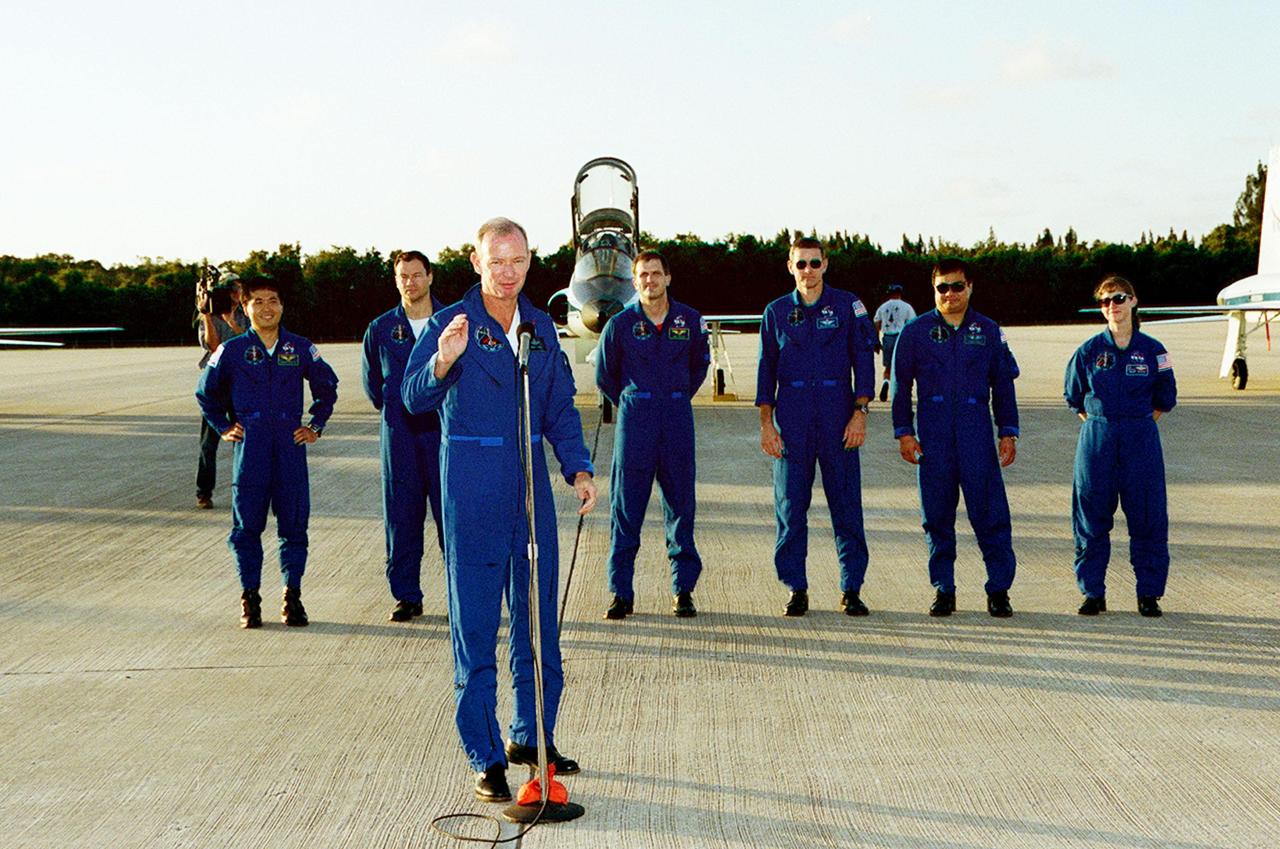
STS-92 Commander Brian Duffy, at the microphone, waves to the media after introducing the crew. Standing behind him are Mission Specialists Koichi Wakata, Michael Lopez-Alegria, Jeff Wisoff, Bill McArthur and Leroy Chiao; and Pilot Pam Melroy. The crew is at KSC to take part in Terminal Countdown Demonstration Test (TCDT) activities. The TCDT includes emergency egress training from the orbiter and pad, plus a simulated countdown. The fifth mission to the International Space Station, STS-92 will carry the Integrated Truss Structure Z1, the first of the planned 10 trusses on the Space Station, and the third Pressurized Mating Adapter. The Z1 will allow the first U.S. solar arrays on a future flight to be temporarily installed on Unity for early power. PMA-3 will provide a Shuttle docking port for the solar array installation on the sixth ISS flight and Lab installation on the seventh ISS flight. STS-92 is scheduled to launch Oct. 5 from launch Pad 39A. It will be the 100th flight in the Shuttle program
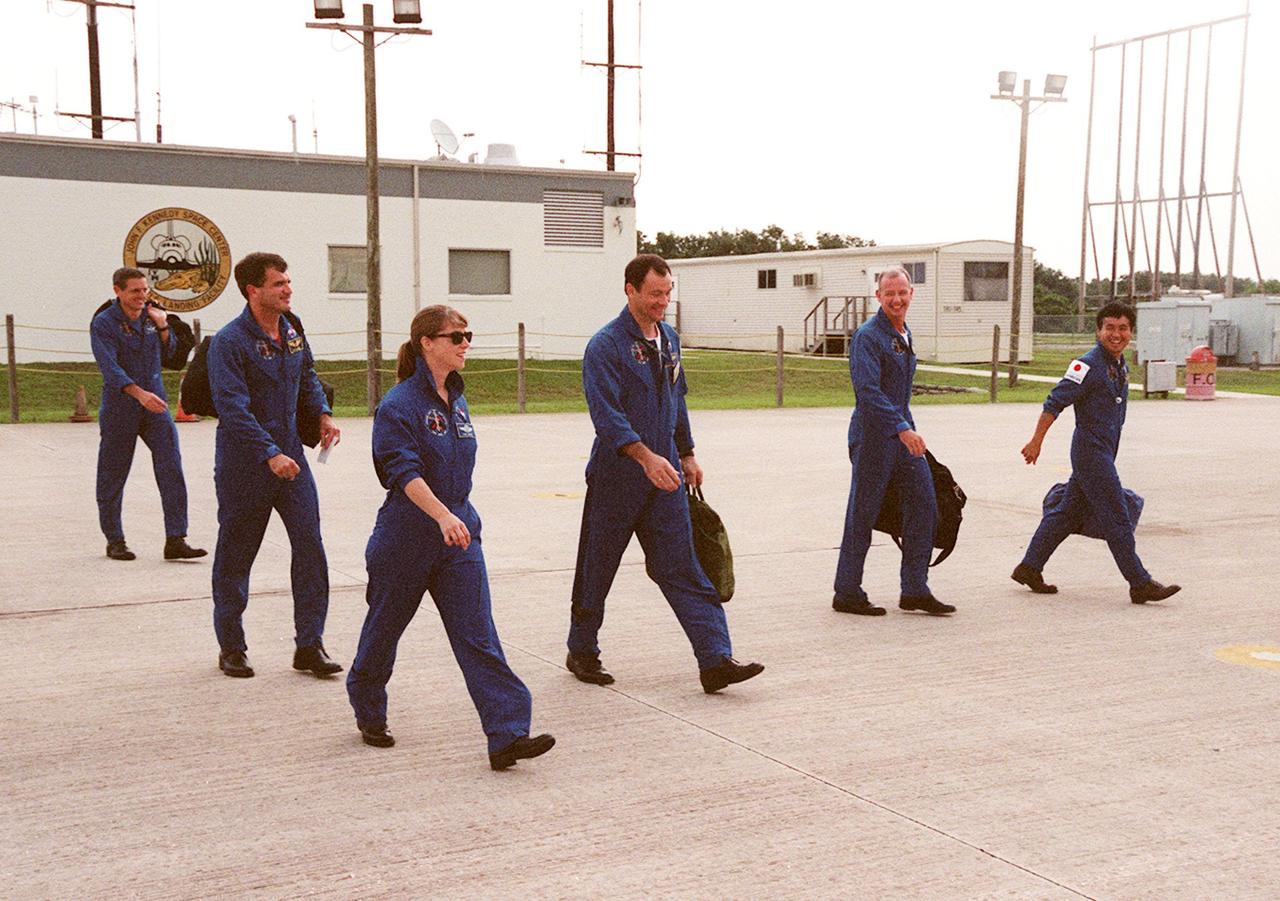
The STS-92 crew strides across the runway at KSC’s Shuttle Landing Facility, heading toward the aircraft that will take them back to Houston. They were at KSC for Crew Equipment Interface Test (CEIT) activities, looking over their mission payload and related equipment. From left are Mission Specialists Bill McArthur and Jeff Wisoff, Pilot Pam Melroy, Mission Specialist Michael Lopez-Alegria, Commander Brian Duffy and Mission Specialist Koichi Wakata, who is with the Japanese space agency. Not seen is Mission Specialist Leroy Chiao, who was also at KSC for the CEIT. STS-92 is scheduled to launch Oct. 5 on Shuttle Discovery from Launch Pad 39A on the fifth flight to the International Space Station. Discovery will carry the Integrated Truss Structure (ITS) Z1, the PMA-3, Ku-band Communications System, and Control Moment Gyros (CMGs)