
Space Shuttle Discovery mounted atop a NASA 747 Shuttle Carrier Aircraft at Washington Dulles Airport the first orbiter retired from NASA's shuttle fleet

Space Shuttle Discovery mounted atop a NASA 747 Shuttle Carrier Aircraft at Washington Dulles Airport the first orbiter retired from NASA's shuttle fleet

Space Shuttle Discovery mounted atop a NASA 747 Shuttle Carrier Aircraft at Washington Dulles Airport the first orbiter retired from NASA's shuttle fleet

Space Shuttle Discovery mounted atop a NASA 747 Shuttle Carrier Aircraft at Washington Dulles Airport the first orbiter retired from NASA's shuttle fleet

Space Shuttle Discovery mounted atop a NASA 747 Shuttle Carrier Aircraft at Washington Dulles Airport the first orbiter retired from NASA's shuttle fleet

Space Shuttle Discovery mounted atop a NASA 747 Shuttle Carrier Aircraft at Washington Dulles Airport the first orbiter retired from NASA's shuttle fleet

Space Shuttle Discovery mounted atop a 747 Shuttle Carrier Aircraft (SCA) approaches the runway for landing at Washington Dulles International Airport, Tuesday April 17, 2012, in Sterling, Va. Discovery, the first orbiter retired from NASA’s shuttle fleet, completed 39 missions, spent 365 days in space, orbited the Earth 5,830 times, and traveled 148,221,675 miles. NASA will transfer Discovery to the National Air and Space Museum to begin its new mission to commemorate past achievements in space and to educate and inspire future generations of explorers. Photo Credit: (NASA/Paul E. Alers)

Space shuttle Discovery, mounted atop a NASA 747 Shuttle Carrier Aircraft (SCA) lands at Washington Dulles International Airport, Tuesday, April 17, 2012, in Sterling, Va. Discovery, the first orbiter retired from NASA’s shuttle fleet, completed 39 missions, spent 365 days in space, orbited the Earth 5,830 times, and traveled 148,221,675 miles. NASA will transfer Discovery to the National Air and Space Museum to begin its new mission to commemorate past achievements in space and to educate and inspire future generations of explorers. Photo Credit: (NASA/Smithsonian Institution/Eric Long)

Space shuttle Discovery, mounted atop a NASA 747 Shuttle Carrier Aircraft (SCA) taxis in front of the main terminal at Washington Dulles International Airport, Tuesday, April 17, 2012, in Sterling, Va. Discovery, the first orbiter retired from NASA’s shuttle fleet, completed 39 missions, spent 365 days in space, orbited the Earth 5,830 times, and traveled 148,221,675 miles. NASA will transfer Discovery to the National Air and Space Museum to begin its new mission to commemorate past achievements in space and to educate and inspire future generations of explorers. Photo Credit: (NASA/Smithsonian Institution/Eric Long)

Space shuttle Discovery, mounted atop a NASA 747 Shuttle Carrier Aircraft (SCA) lands at Washington Dulles International Airport, Tuesday, April 17, 2012, in Sterling, Va. Discovery, the first orbiter retired from NASA’s shuttle fleet, completed 39 missions, spent 365 days in space, orbited the Earth 5,830 times, and traveled 148,221,675 miles. NASA will transfer Discovery to the National Air and Space Museum to begin its new mission to commemorate past achievements in space and to educate and inspire future generations of explorers. Photo Credit: (NASA/Smithsonian Institution/Eric Long)

Space shuttle Discovery, mounted atop a NASA 747 Shuttle Carrier Aircraft (SCA) lands at Washington Dulles International Airport, Tuesday, April 17, 2012, in Sterling, Va. The Steven F. Udvar-Hazy Center is seen in the background. Discovery, the first orbiter retired from NASA’s shuttle fleet, completed 39 missions, spent 365 days in space, orbited the Earth 5,830 times, and traveled 148,221,675 miles. NASA will transfer Discovery to the National Air and Space Museum to begin its new mission to commemorate past achievements in space and to educate and inspire future generations of explorers. Photo Credit: (NASA/Smithsonian Institution/Eric Long)

NASA Deputy Administrator Lori Garver, at podium, speaks to those in attendance at Apron W after the 747 Shuttle Carrier Aircraft (SCA) with space shuttle Discovery mounted on top rolled to a halt at Washington Dulles International Airport, Tuesday, April 17, 2012 in Sterling, Va. Discovery, the first orbiter retired from NASA’s shuttle fleet, completed 39 missions, spent 365 days in space, orbited the Earth 5,830 times, and traveled 148,221,675 miles. NASA will transfer Discovery to the National Air and Space Museum to begin its new mission to commemorate past achievements in space and to educate and inspire future generations of explorers. Photo Credit: (NASA/Smithsonian Institution/Dane Penland)

Space shuttle Discovery, mounted atop a NASA 747 Shuttle Carrier Aircraft (SCA) flies over the Steven F. Udvar-Hazy Center, Tuesday, April 17, 2012, in Washington. Discovery, the first orbiter retired from NASA’s shuttle fleet, completed 39 missions, spent 365 days in space, orbited the Earth 5,830 times, and traveled 148,221,675 miles. NASA will transfer Discovery to the National Air and Space Museum to begin its new mission to commemorate past achievements in space and to educate and inspire future generations of explorers. Photo Credit: (NASA/Smithsonian Institution/Eric Long)
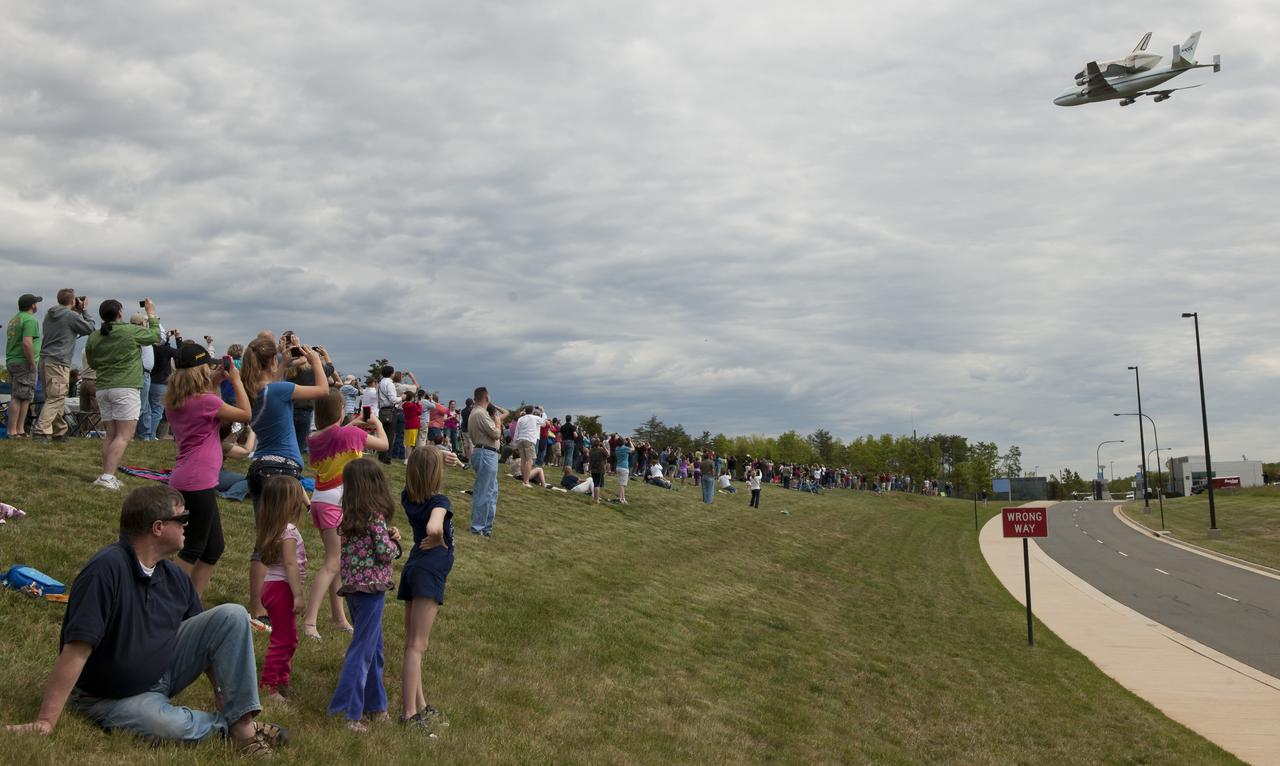
Spectators watch as space shuttle Discovery, mounted atop a NASA 747 Shuttle Carrier Aircraft (SCA) flies over the National Air and Space Museum’s Steven F. Udvar-Hazy Center, Tuesday, April 17, 2012, in Chantilly, Va. Discovery, the first orbiter retired from NASA’s shuttle fleet, completed 39 missions, spent 365 days in space, orbited the Earth 5,830 times, and traveled 148,221,675 miles. NASA will transfer Discovery to the National Air and Space Museum to begin its new mission to commemorate past achievements in space and to educate and inspire future generations of explorers. Photo Credit: (NASA/Carla Cioffi)
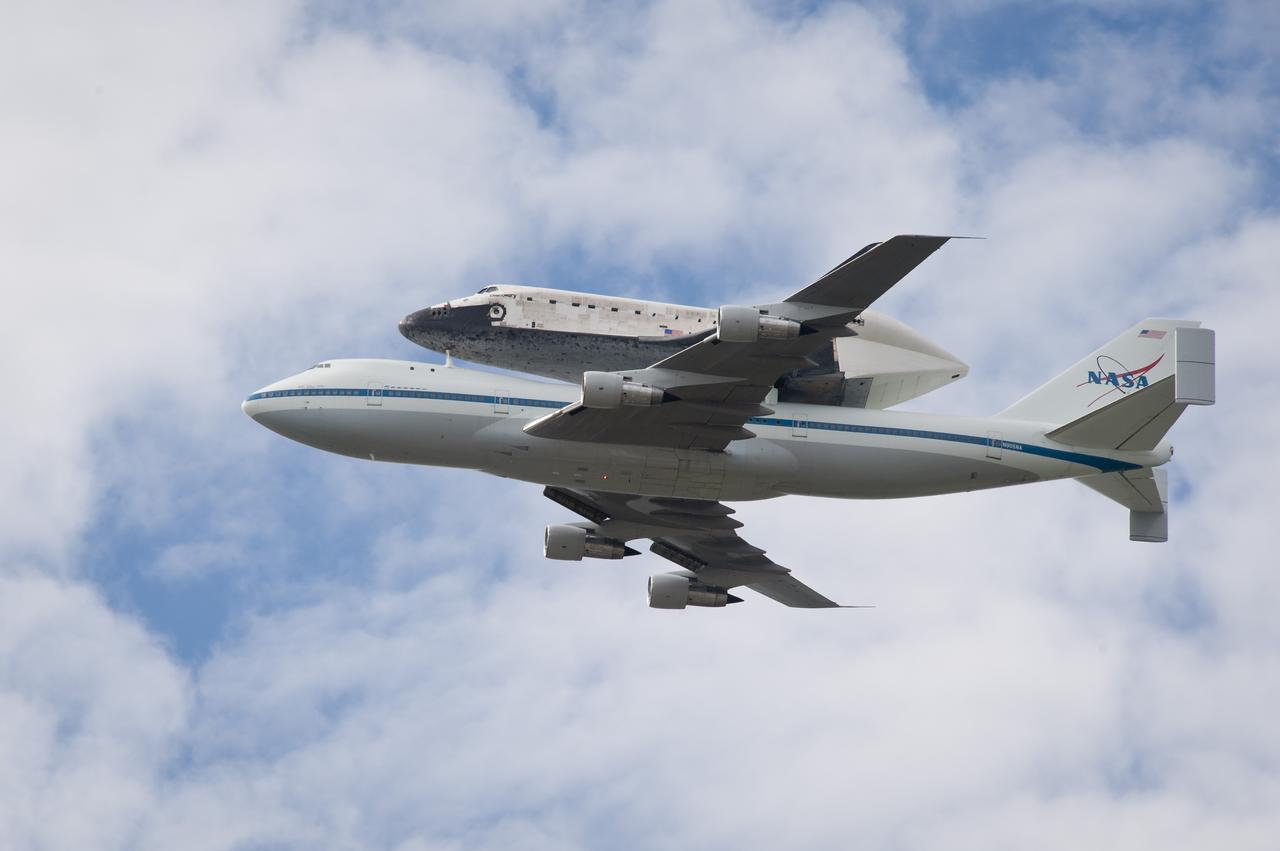
Space shuttle Discovery, mounted atop a NASA 747 Shuttle Carrier Aircraft (SCA) flies near the U.S. Capitol, Tuesday, April 17, 2012, in Washington. Discovery, the first orbiter retired from NASA’s shuttle fleet, completed 39 missions, spent 365 days in space, orbited the Earth 5,830 times, and traveled 148,221,675 miles. NASA will transfer Discovery to the National Air and Space Museum to begin its new mission to commemorate past achievements in space and to educate and inspire future generations of explorers. Photo Credit: (NASA/Michael Porterfield)
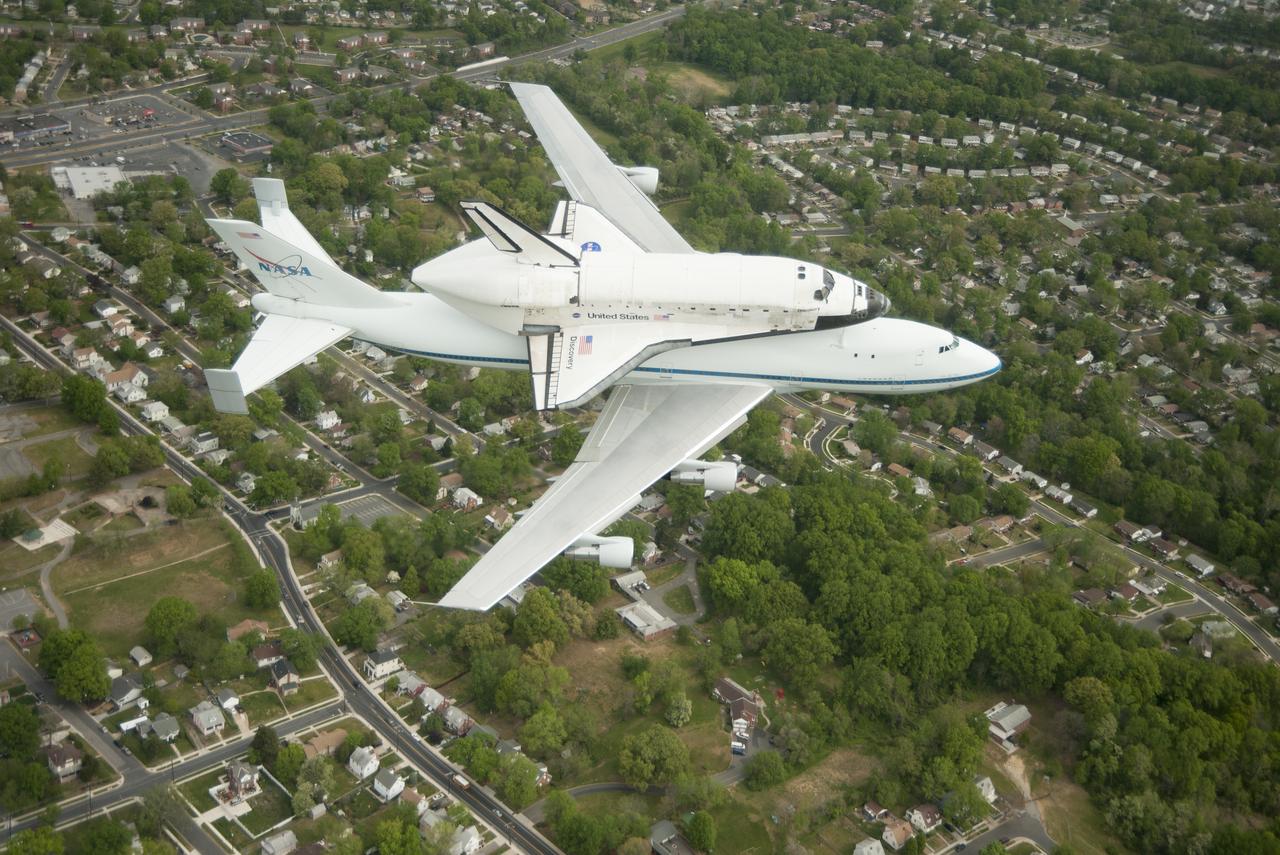
Space shuttle Discovery, mounted atop a NASA 747 Shuttle Carrier Aircraft (SCA), flies over the Washington skyline as seen from a NASA T-38 aircraft, Tuesday, April 17, 2012. Discovery, the first orbiter retired from NASA’s shuttle fleet, completed 39 missions, spent 365 days in space, orbited the Earth 5,830 times, and traveled 148,221,675 miles. NASA will transfer Discovery to the National Air and Space Museum to begin its new mission to commemorate past achievements in space and to educate and inspire future generations of explorers. Photo Credit: (NASA/Robert Markowitz)
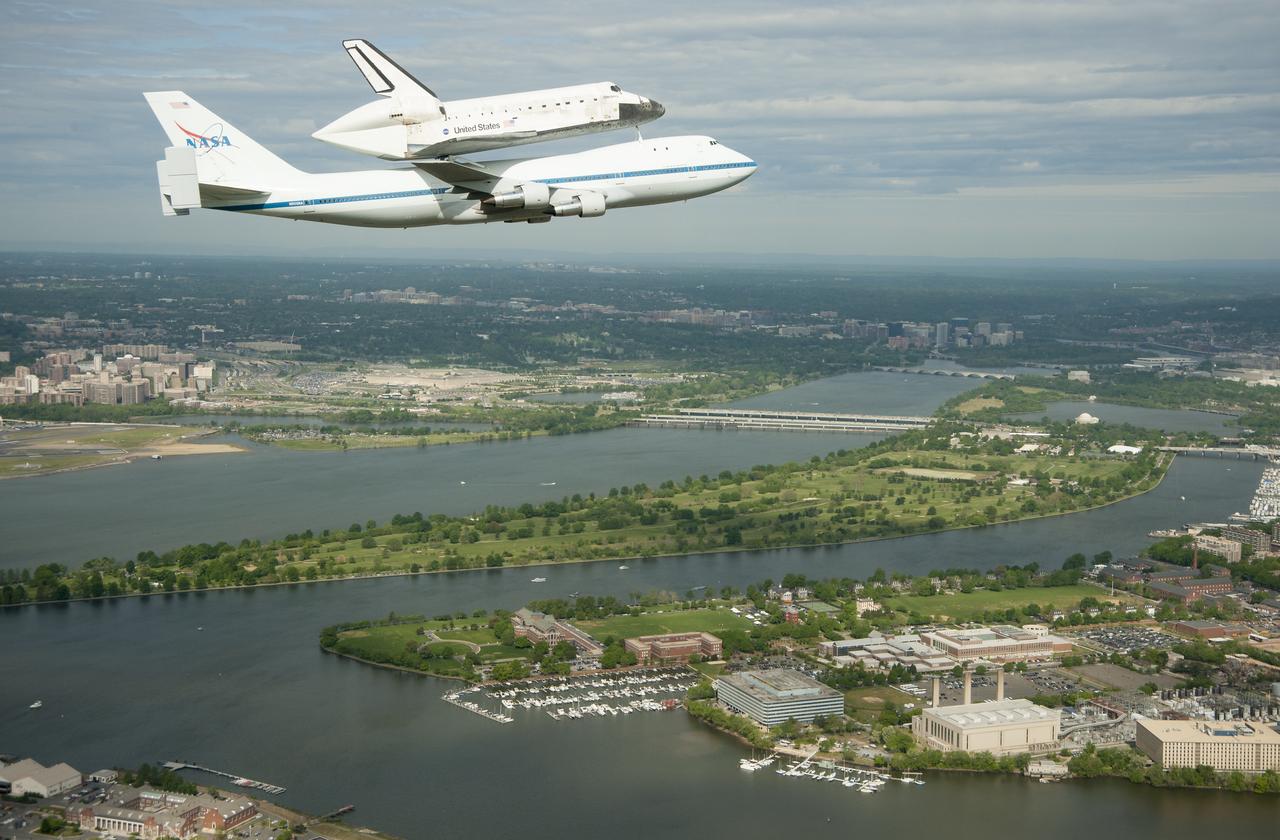
Space shuttle Discovery, mounted atop a NASA 747 Shuttle Carrier Aircraft (SCA), flies over the Washington skyline as seen from a NASA T-38 aircraft, Tuesday, April 17, 2012. Discovery, the first orbiter retired from NASA’s shuttle fleet, completed 39 missions, spent 365 days in space, orbited the Earth 5,830 times, and traveled 148,221,675 miles. NASA will transfer Discovery to the National Air and Space Museum to begin its new mission to commemorate past achievements in space and to educate and inspire future generations of explorers. Photo Credit: (NASA/Robert Markowitz)
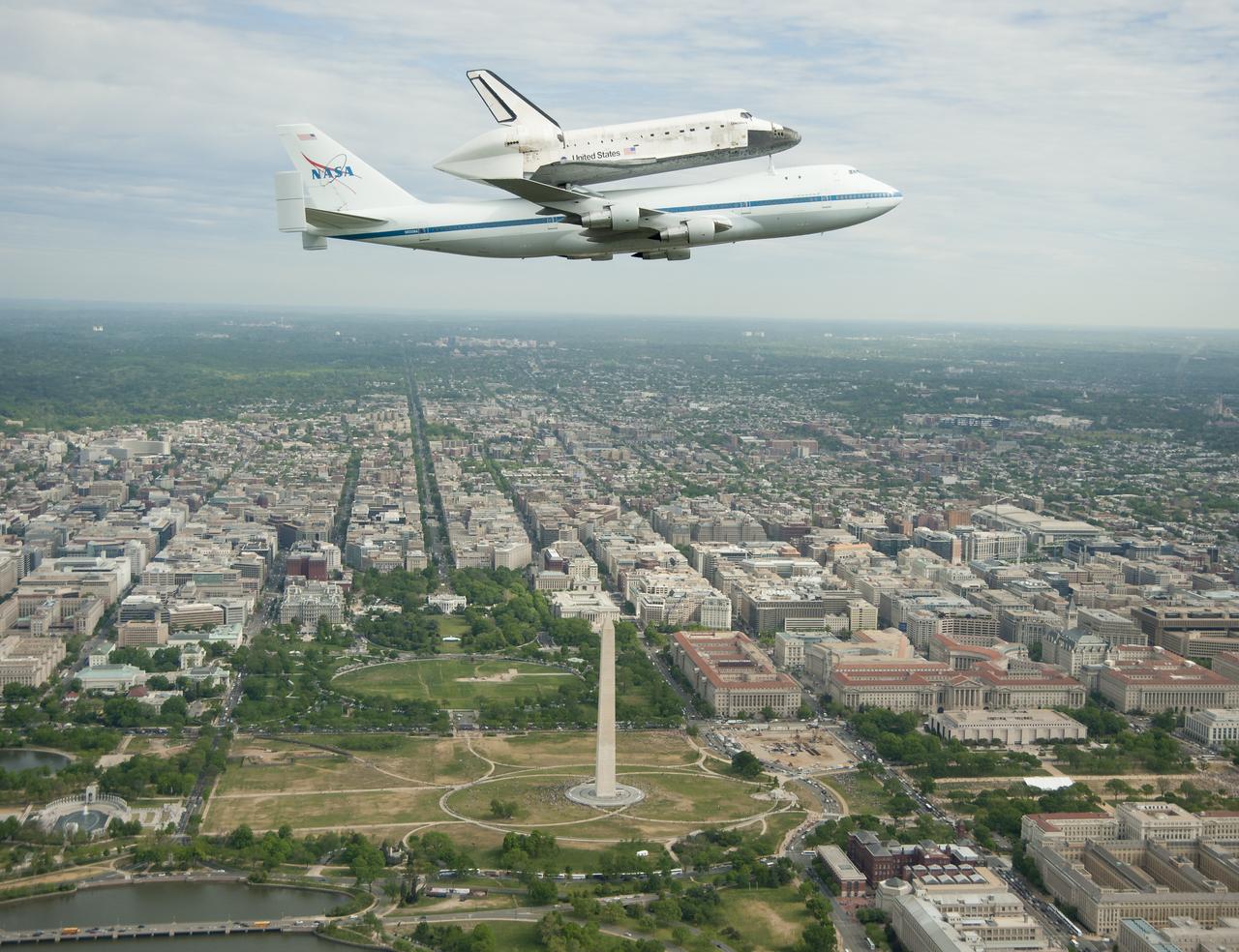
Space shuttle Discovery, mounted atop a NASA 747 Shuttle Carrier Aircraft (SCA), flies over the Washington skyline as seen from a NASA T-38 aircraft, Tuesday, April 17, 2012. Discovery, the first orbiter retired from NASA’s shuttle fleet, completed 39 missions, spent 365 days in space, orbited the Earth 5,830 times, and traveled 148,221,675 miles. NASA will transfer Discovery to the National Air and Space Museum to begin its new mission to commemorate past achievements in space and to educate and inspire future generations of explorers. Photo Credit: (NASA/Robert Markowitz)
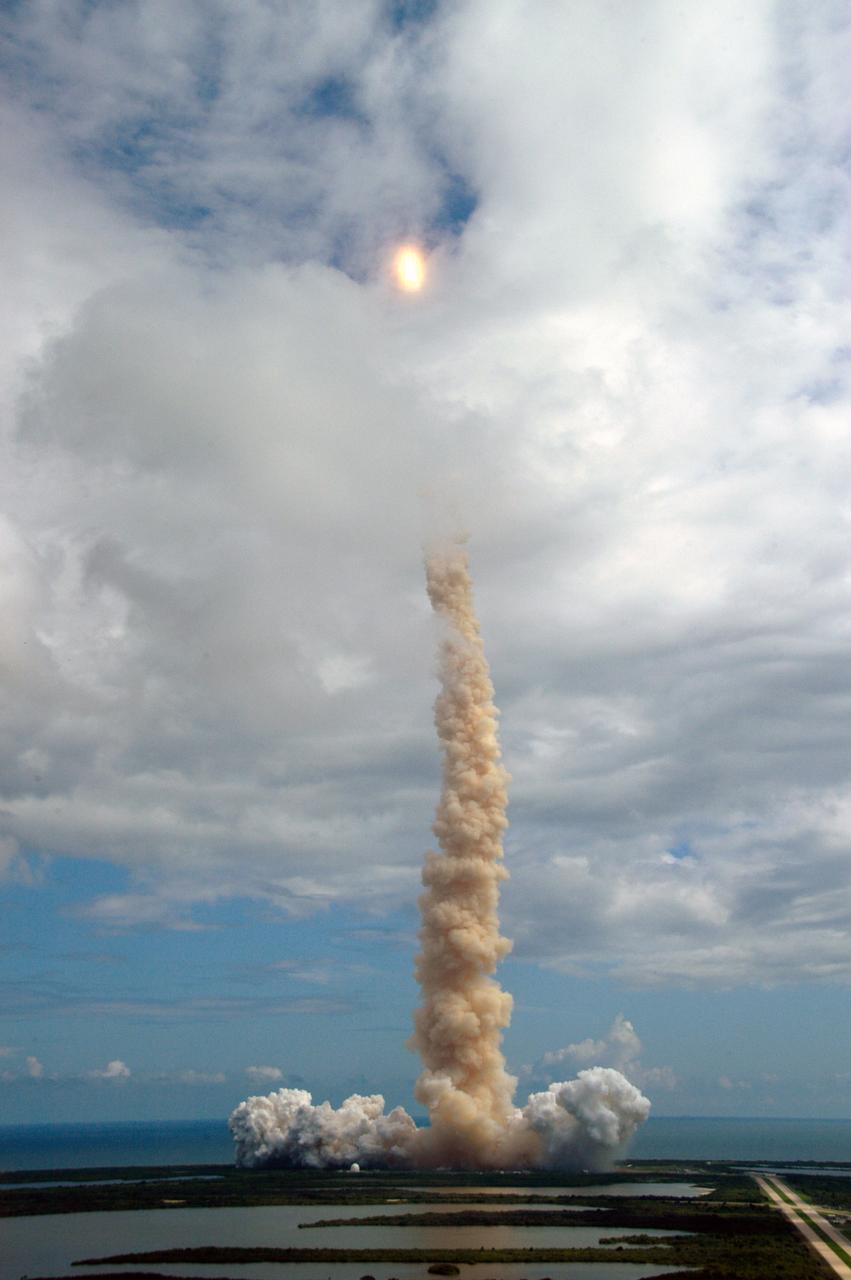
From the roof of the Vehicle Assembly Building at NASA's Kennedy Space Center, space shuttle Discovery rivals the sun as it soars through the clouds toward space. Liftoff was on time at 11:38:19 a.m. EDT. Discovery carries the Italian-built U.S. Node 2, called Harmony. During the 14-day STS-120 mission, the crew will install Harmony and move the P6 solar arrays to their permanent position and deploy them. Discovery is expected to complete its mission and return home at 4:47 a.m. EST on Nov. 6.
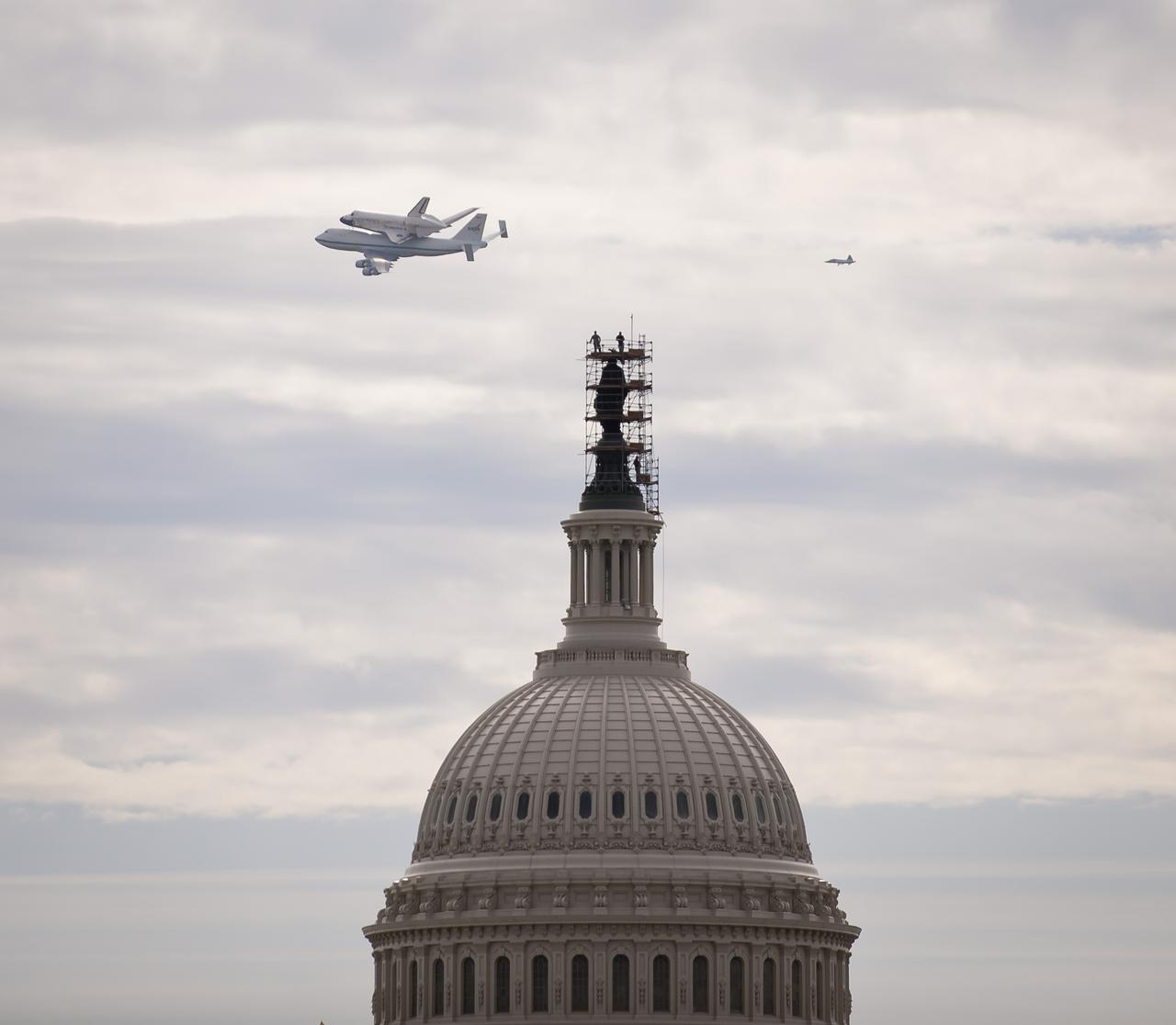
Space shuttle Discovery, mounted atop a NASA 747 Shuttle Carrier Aircraft (SCA) is seen as it flies near the U.S. Capitol, Tuesday, April 17, 2012, in Washington. Discovery, the first orbiter retired from NASA’s shuttle fleet, completed 39 missions, spent 365 days in space, orbited the Earth 5,830 times, and traveled 148,221,675 miles. NASA will transfer Discovery to the National Air and Space Museum to begin its new mission to commemorate past achievements in space and to educate and inspire future generations of explorers. Photo Credit: (NASA/Smithsonian Institution/Harold Dorwin)
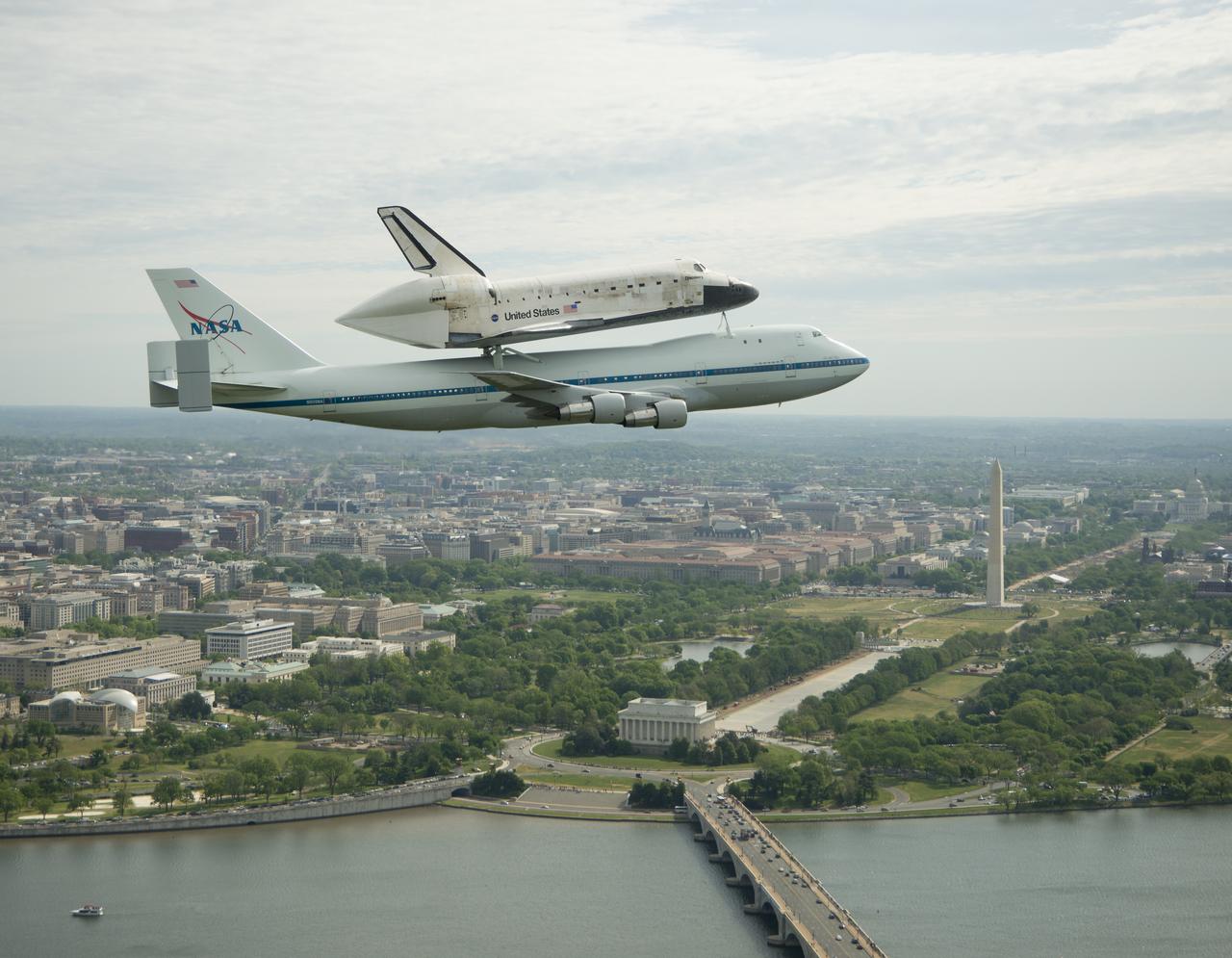
Space shuttle Discovery, mounted atop a NASA 747 Shuttle Carrier Aircraft (SCA), flies over the Washington skyline as seen from a NASA T-38 aircraft, Tuesday, April 17, 2012. Discovery, the first orbiter retired from NASA’s shuttle fleet, completed 39 missions, spent 365 days in space, orbited the Earth 5,830 times, and traveled 148,221,675 miles. NASA will transfer Discovery to the National Air and Space Museum to begin its new mission to commemorate past achievements in space and to educate and inspire future generations of explorers. Photo Credit: (NASA/Robert Markowitz)
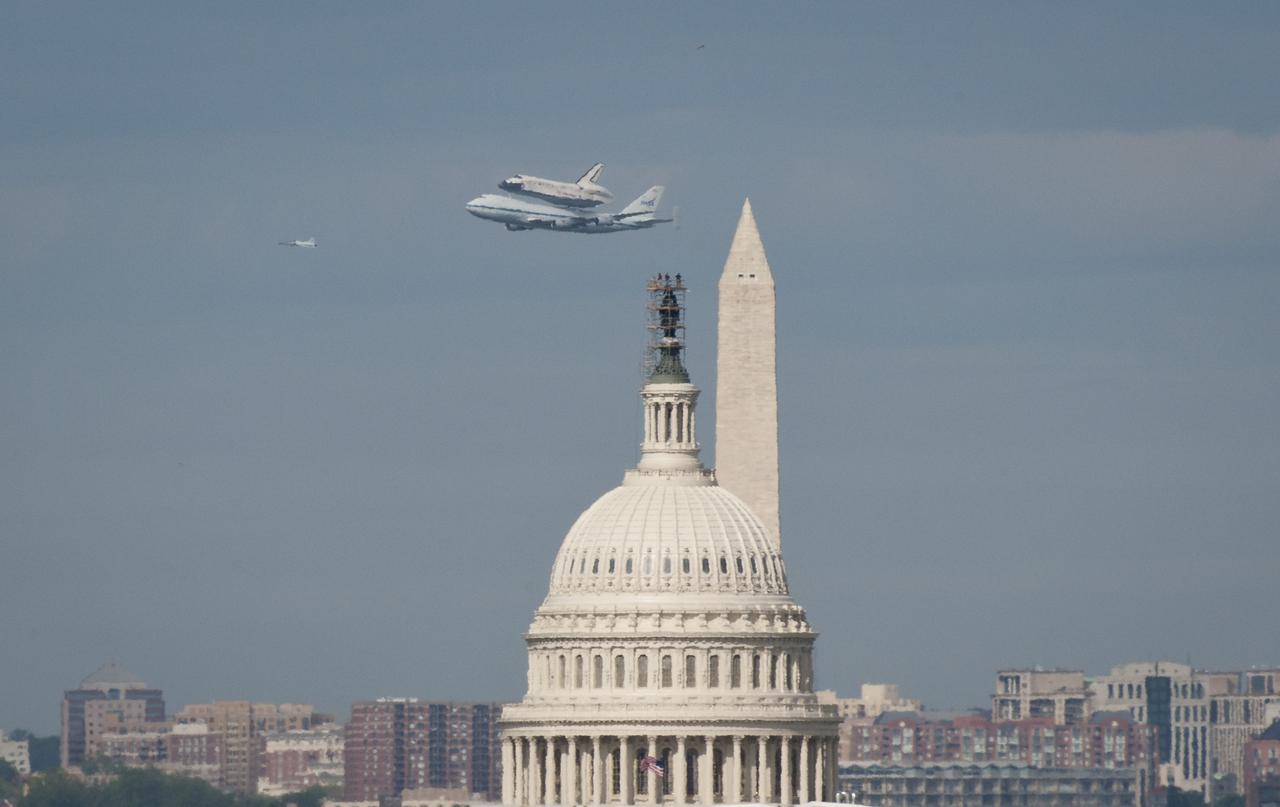
Space shuttle Discovery, mounted atop a NASA 747 Shuttle Carrier Aircraft (SCA) flies near the U.S. Capitol, Tuesday, April 17, 2012, in Washington. Discovery, the first orbiter retired from NASA’s shuttle fleet, completed 39 missions, spent 365 days in space, orbited the Earth 5,830 times, and traveled 148,221,675 miles. NASA will transfer Discovery to the National Air and Space Museum to begin its new mission to commemorate past achievements in space and to educate and inspire future generations of explorers. Photo Credit: (NASA/Rebecca Roth)
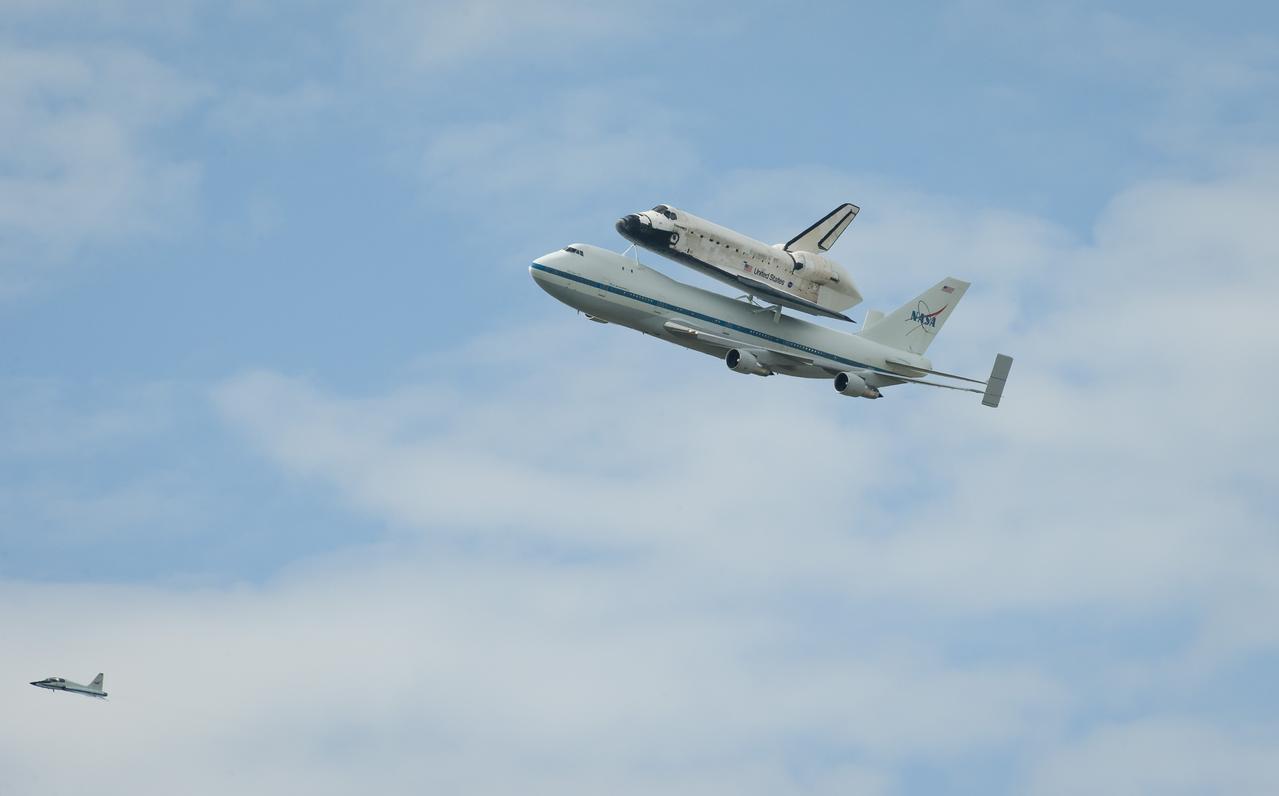
Space shuttle Discovery, mounted atop a NASA 747 Shuttle Carrier Aircraft (SCA) flies near the U.S. Capitol, Tuesday, April 17, 2012, in Washington. Discovery, the first orbiter retired from NASA’s shuttle fleet, completed 39 missions, spent 365 days in space, orbited the Earth 5,830 times, and traveled 148,221,675 miles. NASA will transfer Discovery to the National Air and Space Museum to begin its new mission to commemorate past achievements in space and to educate and inspire future generations of explorers. Photo Credit: (NASA/Rebecca Roth)
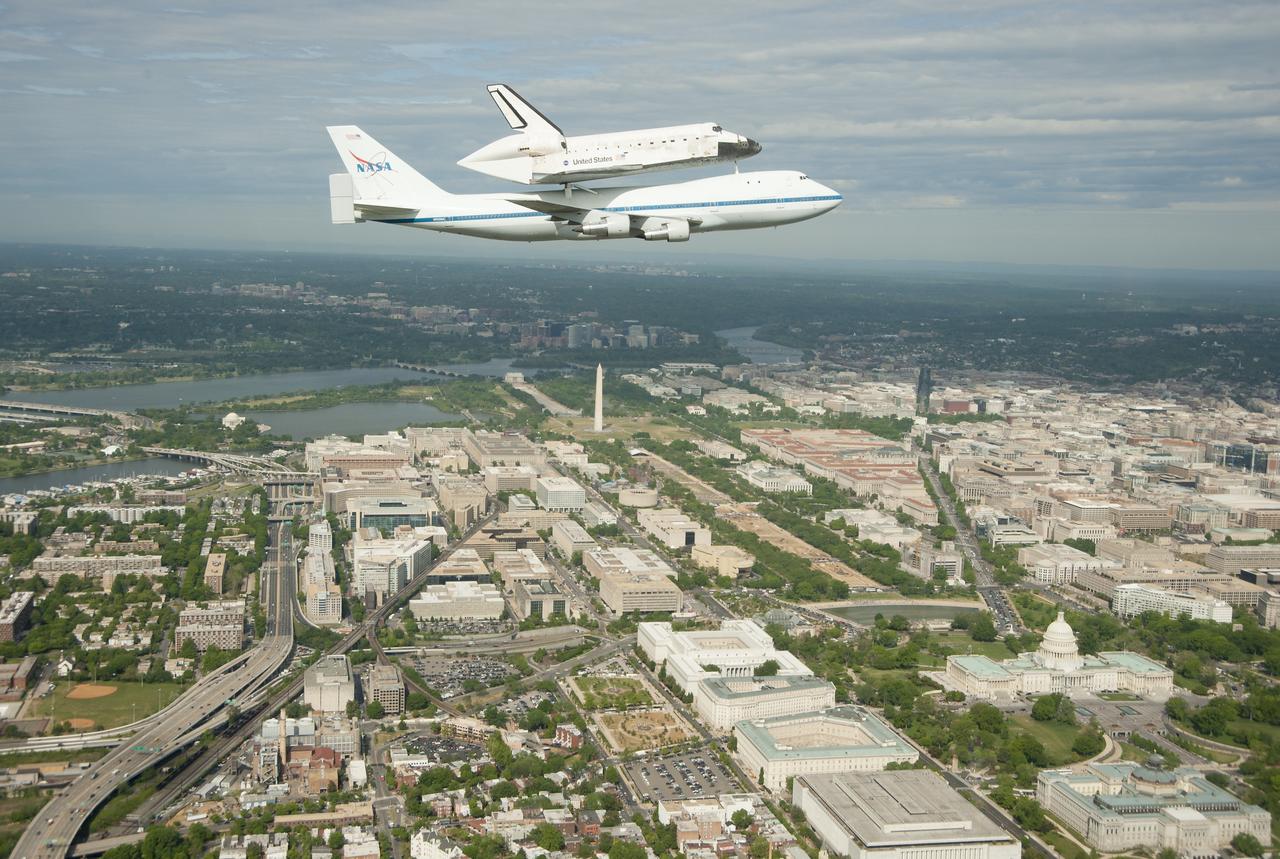
Space shuttle Discovery, mounted atop a NASA 747 Shuttle Carrier Aircraft (SCA), flies over the Washington skyline as seen from a NASA T-38 aircraft, Tuesday, April 17, 2012. Discovery, the first orbiter retired from NASA’s shuttle fleet, completed 39 missions, spent 365 days in space, orbited the Earth 5,830 times, and traveled 148,221,675 miles. NASA will transfer Discovery to the National Air and Space Museum to begin its new mission to commemorate past achievements in space and to educate and inspire future generations of explorers. Photo Credit: (NASA/Robert Markowitz)
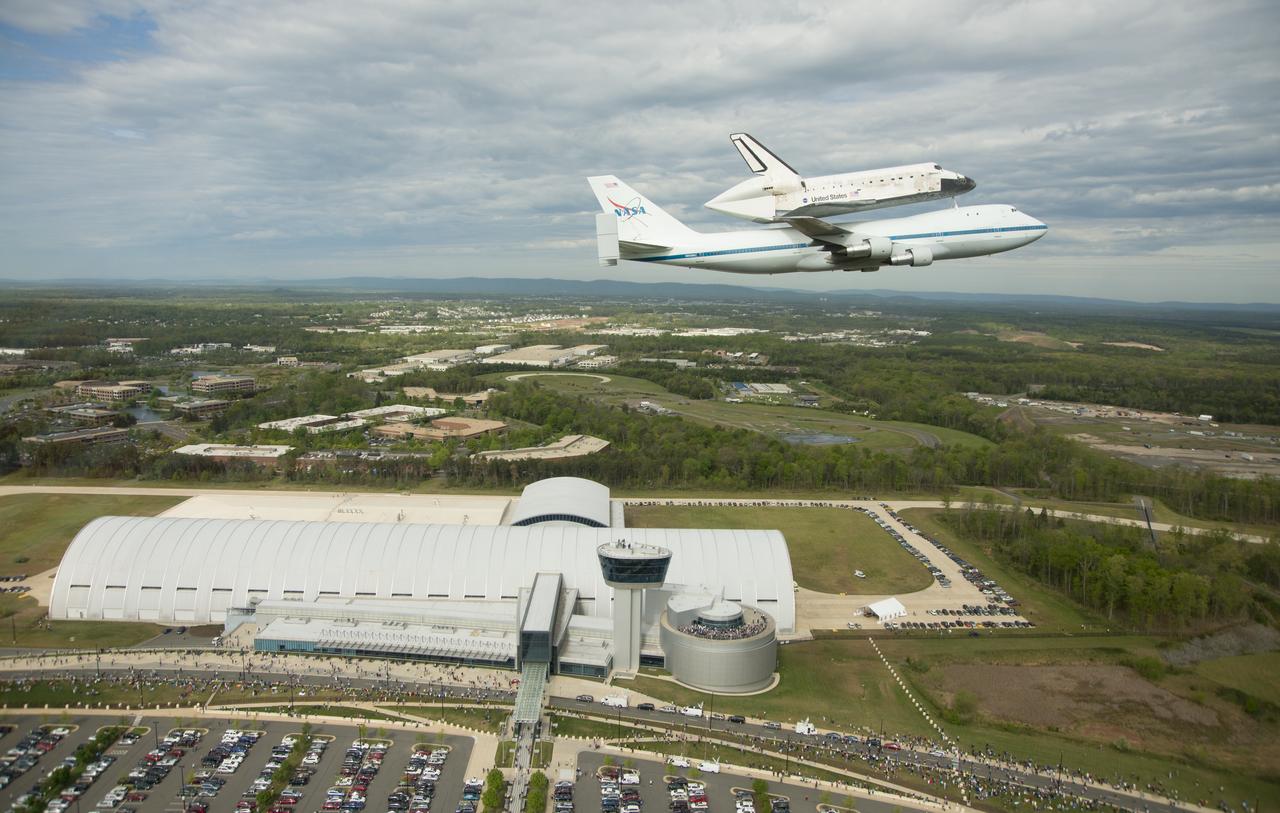
Space shuttle Discovery, mounted atop a NASA 747 Shuttle Carrier Aircraft (SCA) flies over the Steven F. Udvar-Hazy Center, Tuesday, April 17, 2012, in Washington. Discovery, the first orbiter retired from NASA’s shuttle fleet, completed 39 missions, spent 365 days in space, orbited the Earth 5,830 times, and traveled 148,221,675 miles. NASA will transfer Discovery to the National Air and Space Museum to begin its new mission to commemorate past achievements in space and to educate and inspire future generations of explorers. Photo Credit: (NASA/Robert Markowitz)
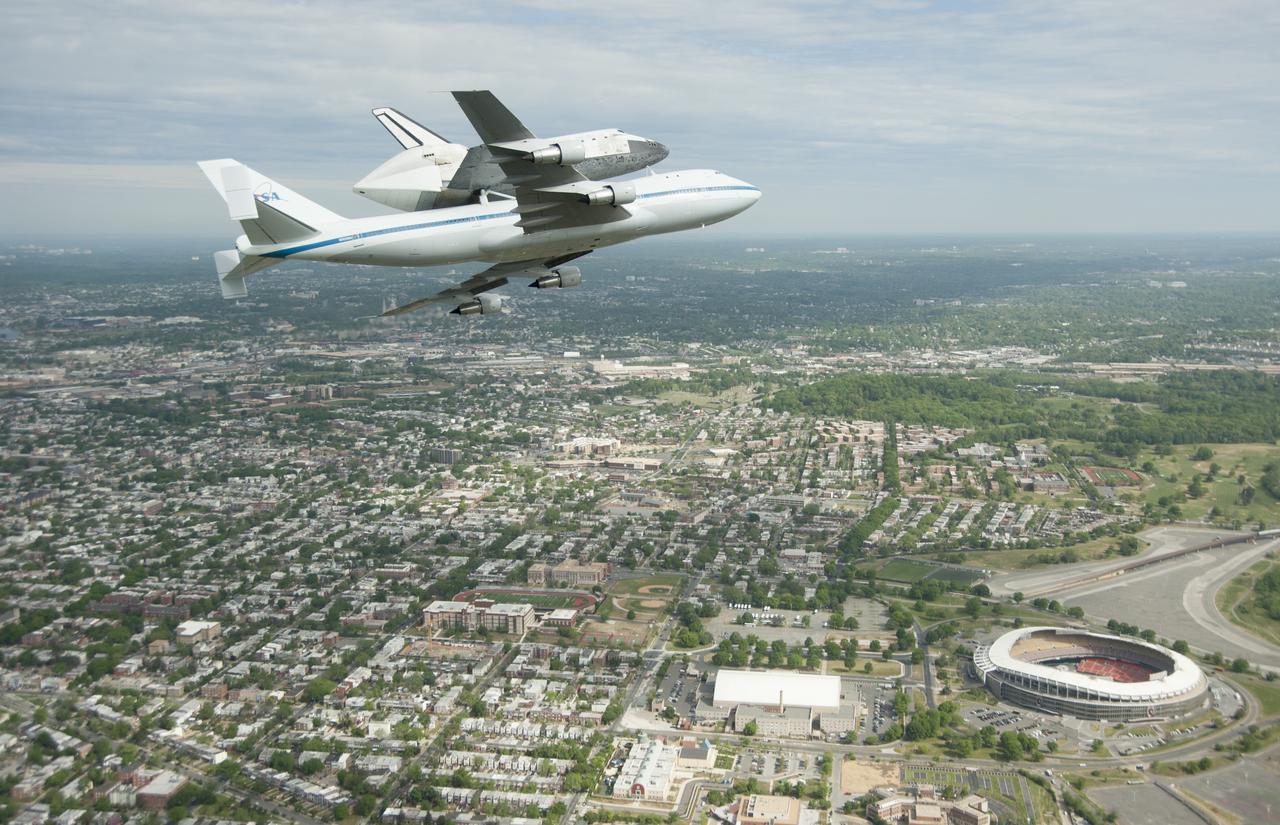
Space shuttle Discovery, mounted atop a NASA 747 Shuttle Carrier Aircraft (SCA), flies over the Washington skyline as seen from a NASA T-38 aircraft, Tuesday, April 17, 2012. Discovery, the first orbiter retired from NASA’s shuttle fleet, completed 39 missions, spent 365 days in space, orbited the Earth 5,830 times, and traveled 148,221,675 miles. NASA will transfer Discovery to the National Air and Space Museum to begin its new mission to commemorate past achievements in space and to educate and inspire future generations of explorers. Photo Credit: (NASA/Robert Markowitz)
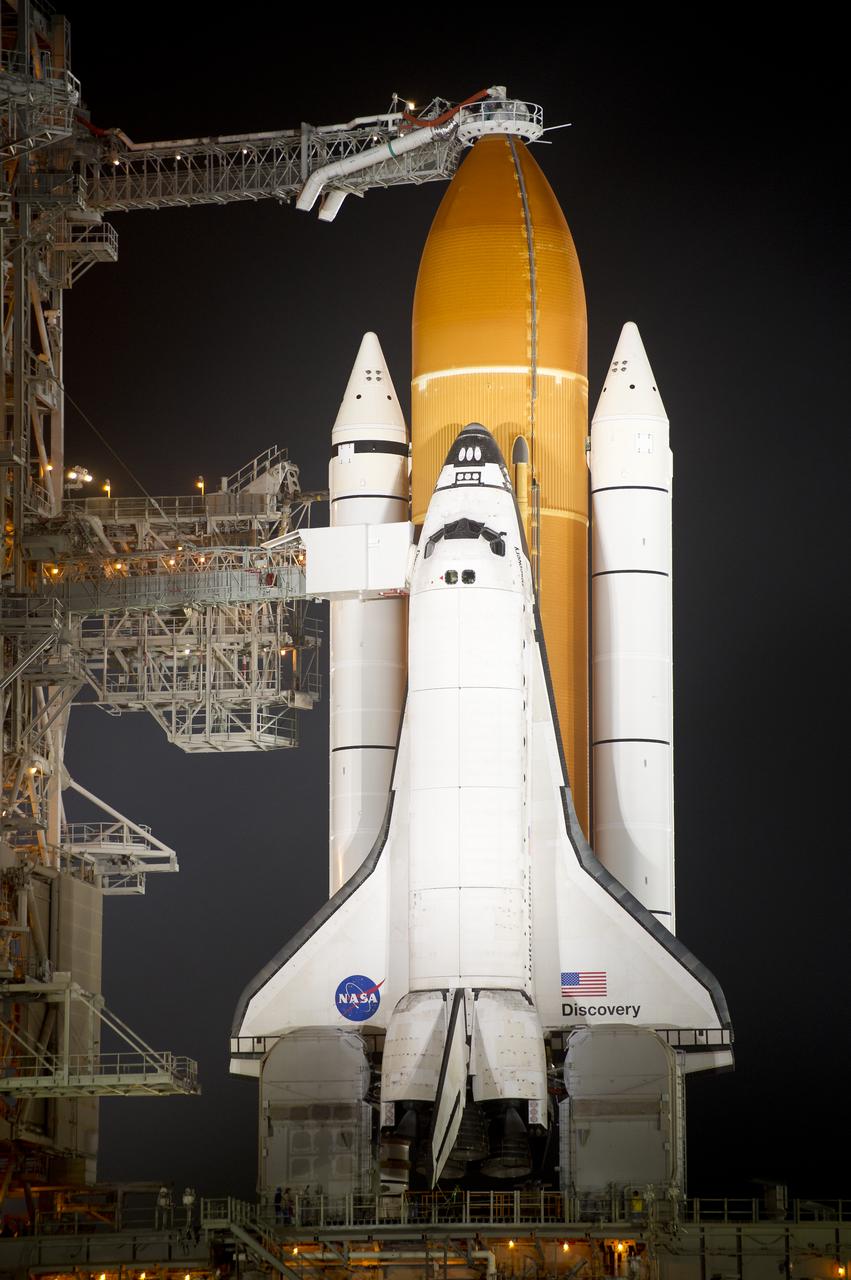
The space shuttle Discovery is seen shortly after the Rotating Service Structure was rolled back at launch pad 39A, at the Kennedy Space Center in Cape Canaveral, Florida, on Wednesday, Feb. 23, 2011. Discovery, on its 39th and final flight, will carry the Italian-built Permanent Multipurpose Module (PMM), Express Logistics Carrier 4 (ELC4) and Robonaut 2, the first humanoid robot in space to the International Space Station. Photo Credit: (NASA/Bill Ingalls)
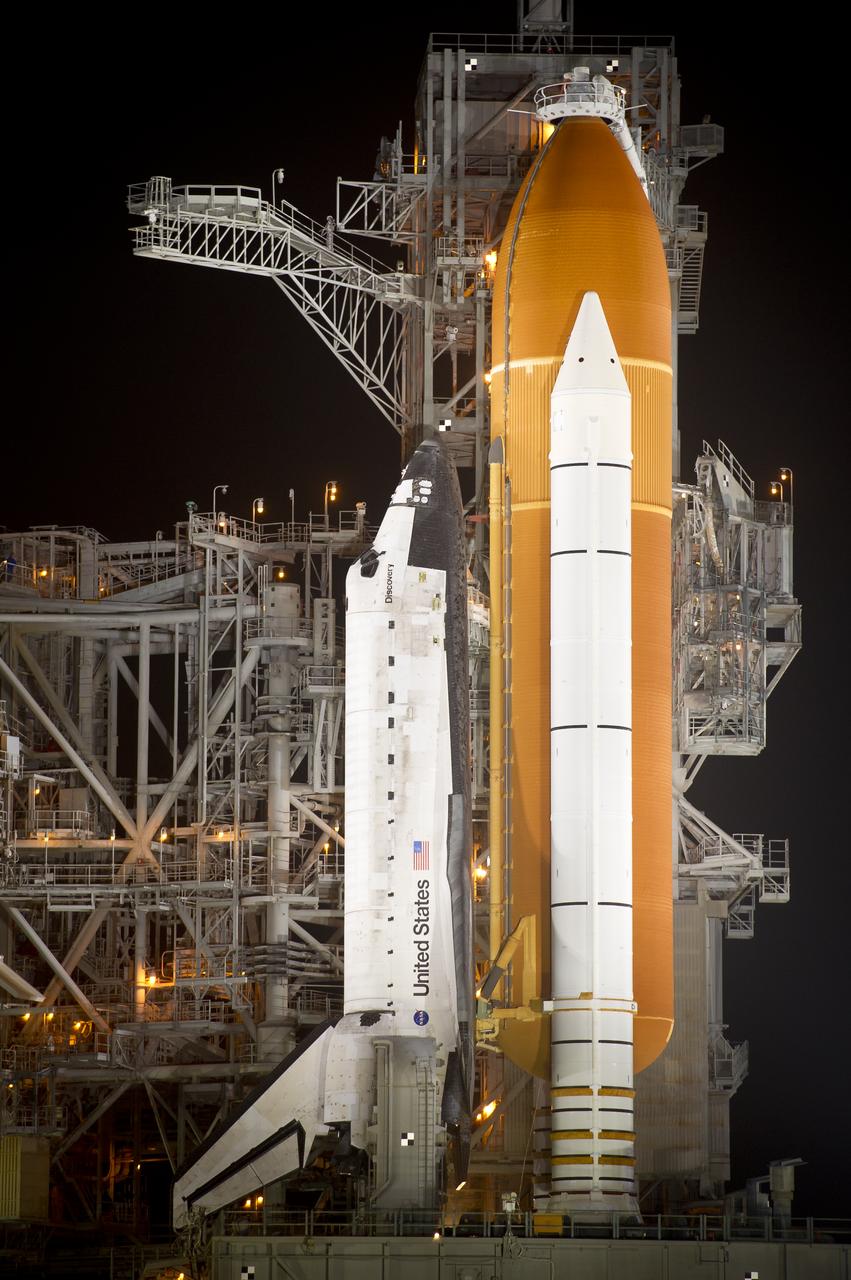
The space shuttle Discovery is seen shortly after the Rotating Service Structure was rolled back at launch pad 39A, at the Kennedy Space Center in Cape Canaveral, Florida, on Wednesday, Feb. 23, 2011. Discovery, on its 39th and final flight, will carry the Italian-built Permanent Multipurpose Module (PMM), Express Logistics Carrier 4 (ELC4) and Robonaut 2, the first humanoid robot in space to the International Space Station. Photo Credit: (NASA/Bill Ingalls)
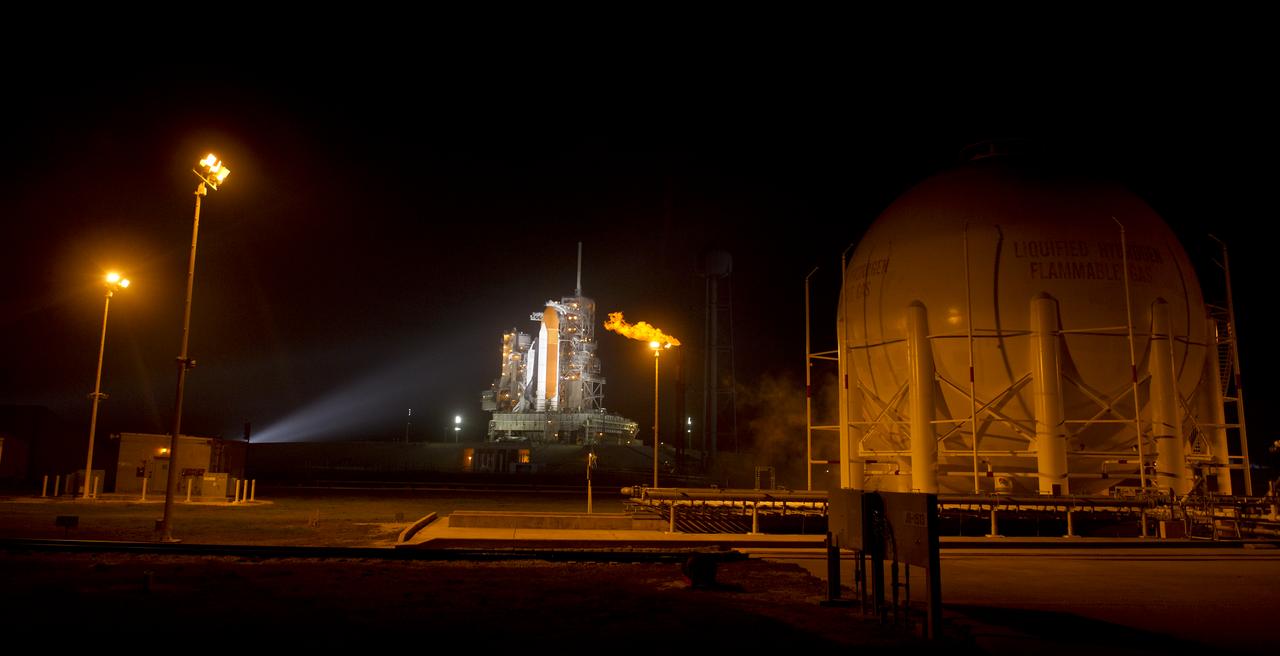
The space shuttle Discovery is seen shortly after the Rotating Service Structure was rolled back at launch pad 39A, at the Kennedy Space Center in Cape Canaveral, Florida, on Wednesday, Feb. 23, 2011. Discovery, on its 39th and final flight, will carry the Italian-built Permanent Multipurpose Module (PMM), Express Logistics Carrier 4 (ELC4) and Robonaut 2, the first humanoid robot in space to the International Space Station. Photo Credit: (NASA/Bill Ingalls)
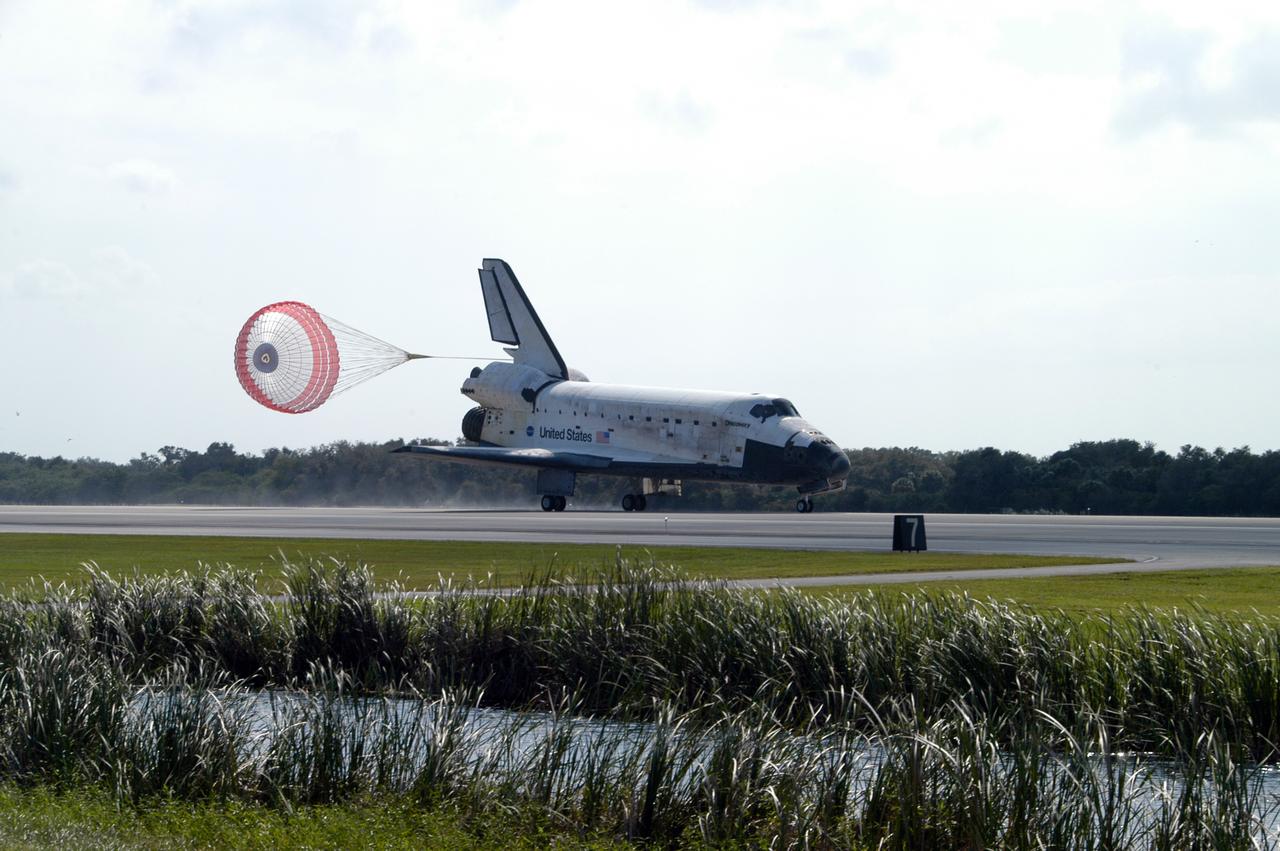
The drag chute deployed behind space shuttle Discovery helps slow its smooth landing on Runway 33 of the Shuttle Landing Facility at NASA's Kennedy Space Center, completing the 15-day mission STS-120. Main gear touchdown was 1:01:16 p.m. Wheel stop was at 1:02:07 p.m. Mission elapsed time was 15 days, 2 hours, 24 minutes and 2 seconds. The STS-120 crew continued the construction of the station with the installation of the Harmony Node 2 module and the relocation of the P6 truss.
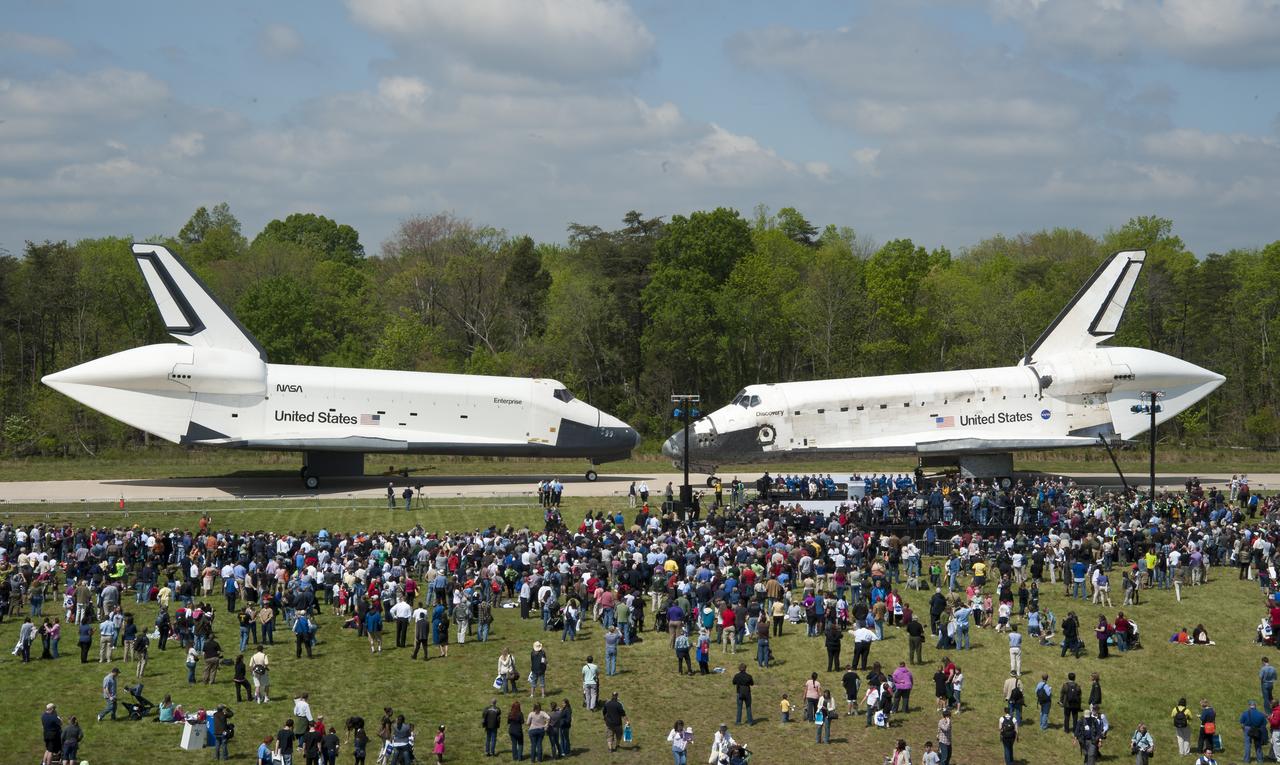
Space Shuttles Enterprise, left, and Discovery meet nose-to-nose at the beginning of a transfer ceremony at the Smithsonian's Steven F. Udvar-Hazy Center, Thursday, April 19, 2012, in Chantilly, Va. Space shuttle Discovery, the first orbiter retired from NASA’s shuttle fleet, completed 39 missions, spent 365 days in space, orbited the Earth 5,830 times, and traveled 148,221,675 miles will take the place of Enterprise at the center to commemorate past achievements in space and to educate and inspire future generations of explorers at the center. Photo Credit: (NASA/Smithsonian Institution/Carolyn Russo)
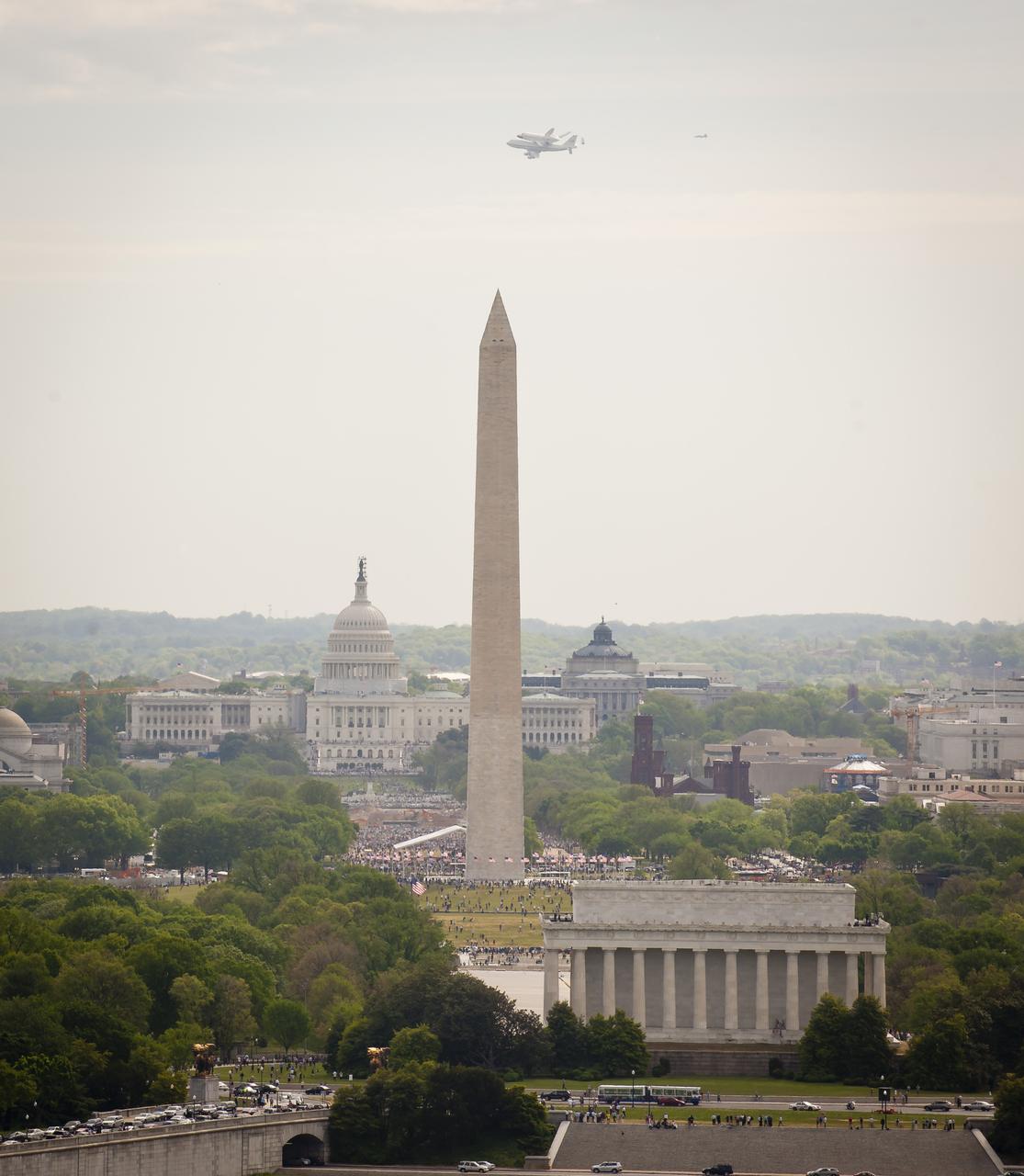
Space shuttle Discovery, mounted atop a NASA 747 Shuttle Carrier Aircraft (SCA) is seen from Top of the Town in Arlington, Virginia as it flies near the U.S. Capitol, Tuesday, April 17, 2012, in Washington. Discovery, the first orbiter retired from NASA’s shuttle fleet, completed 39 missions, spent 365 days in space, orbited the Earth 5,830 times, and traveled 148,221,675 miles. NASA will transfer Discovery to the National Air and Space Museum to begin its new mission to commemorate past achievements in space and to educate and inspire future generations of explorers. Photo Credit: (NASA/Chris Gunn)
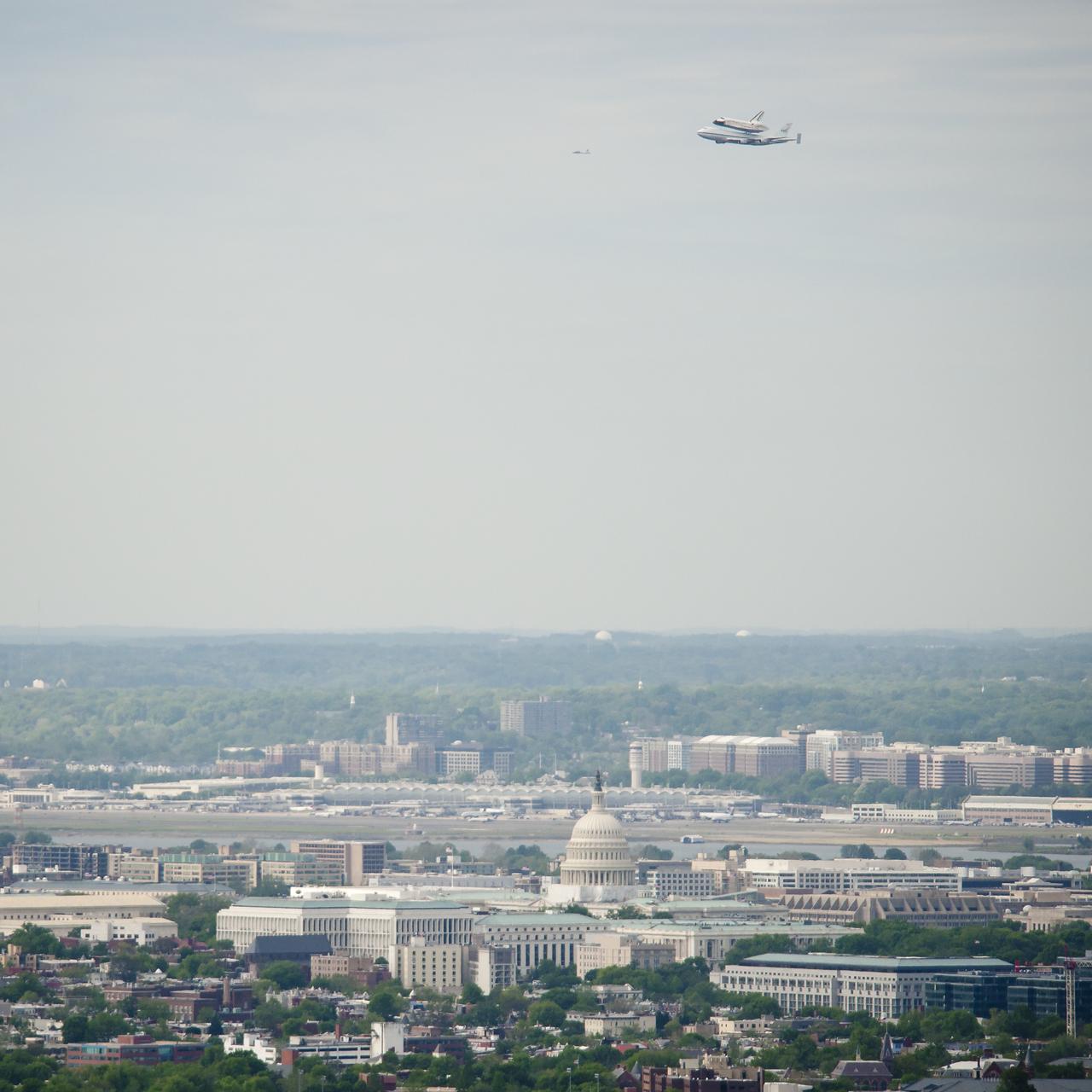
Space shuttle Discovery, mounted atop a NASA 747 Shuttle Carrier Aircraft (SCA) flies near the U.S. Capitol, Tuesday, April 17, 2012, in Washington. Discovery, the first orbiter retired from NASA’s shuttle fleet, completed 39 missions, spent 365 days in space, orbited the Earth 5,830 times, and traveled 148,221,675 miles. NASA will transfer Discovery to the National Air and Space Museum to begin its new mission to commemorate past achievements in space and to educate and inspire future generations of explorers. Photo Credit: (NASA/Bill Ingalls)
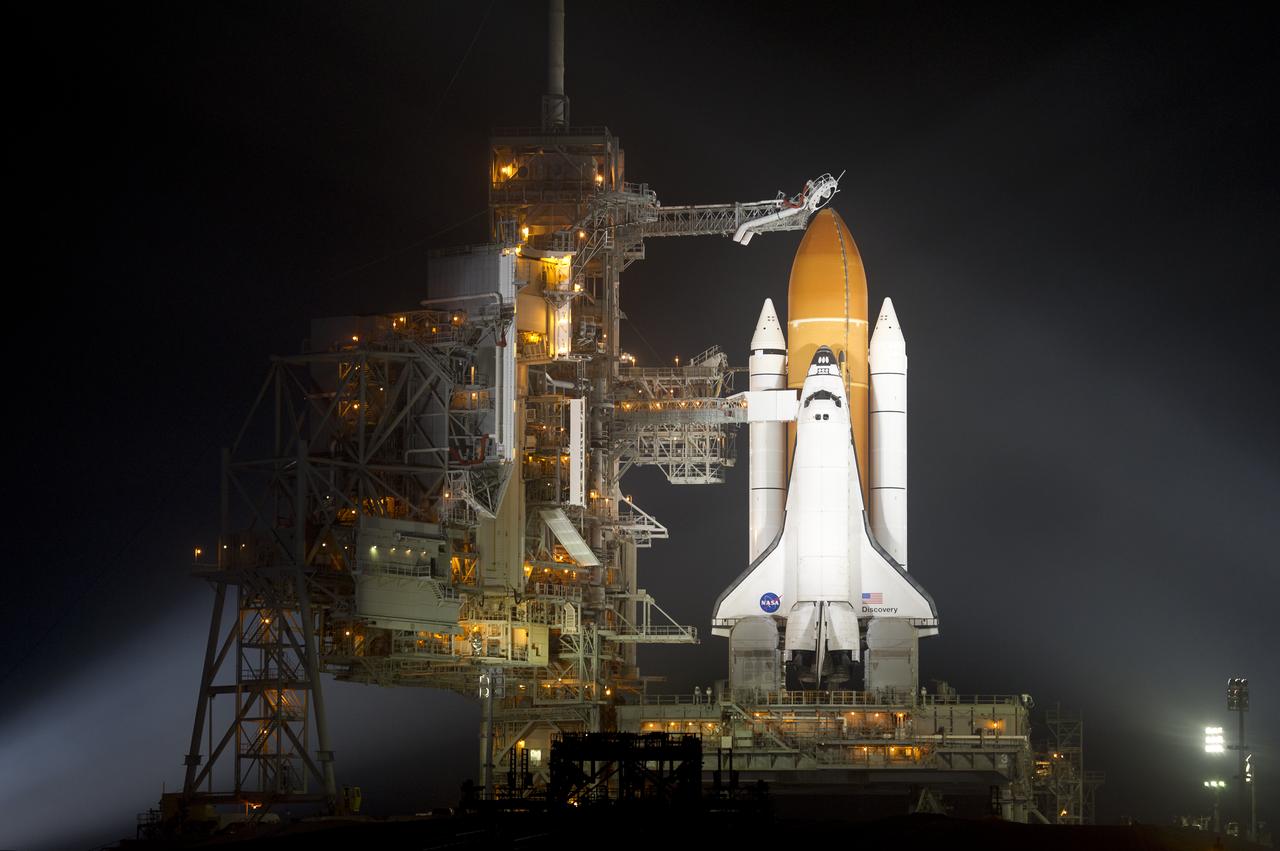
The space shuttle Discovery is seen shortly after the Rotating Service Structure was rolled back at launch pad 39A, at the Kennedy Space Center in Cape Canaveral, Florida, on Wednesday, Feb. 23, 2011. Discovery, on its 39th and final flight, will carry the Italian-built Permanent Multipurpose Module (PMM), Express Logistics Carrier 4 (ELC4) and Robonaut 2, the first humanoid robot in space to the International Space Station. Photo Credit: (NASA/Bill Ingalls)
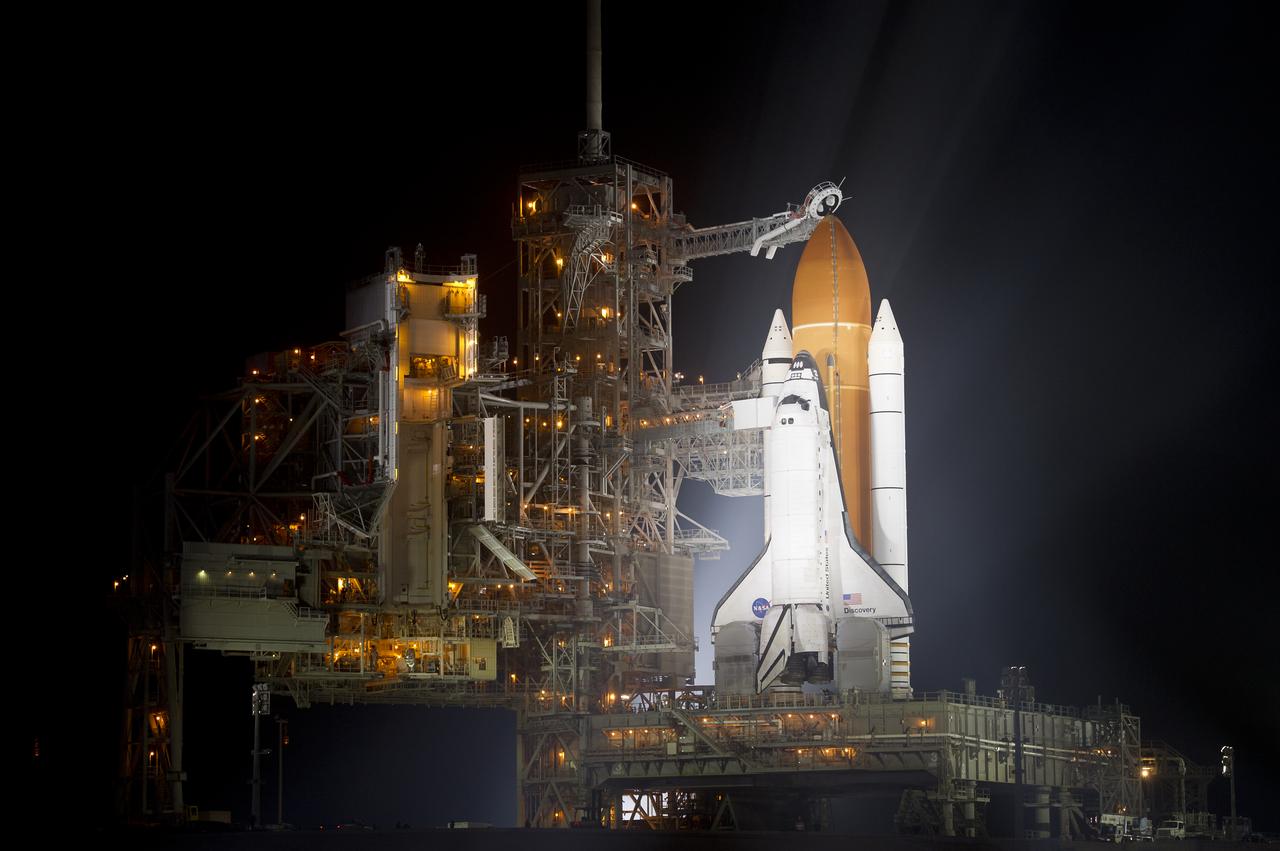
The space shuttle Discovery is seen shortly after the Rotating Service Structure was rolled back at launch pad 39A, at the Kennedy Space Center in Cape Canaveral, Florida, on Wednesday, Feb. 23, 2011. Discovery, on its 39th and final flight, will carry the Italian-built Permanent Multipurpose Module (PMM), Express Logistics Carrier 4 (ELC4) and Robonaut 2, the first humanoid robot in space to the International Space Station. Photo Credit: (NASA/Bill Ingalls)
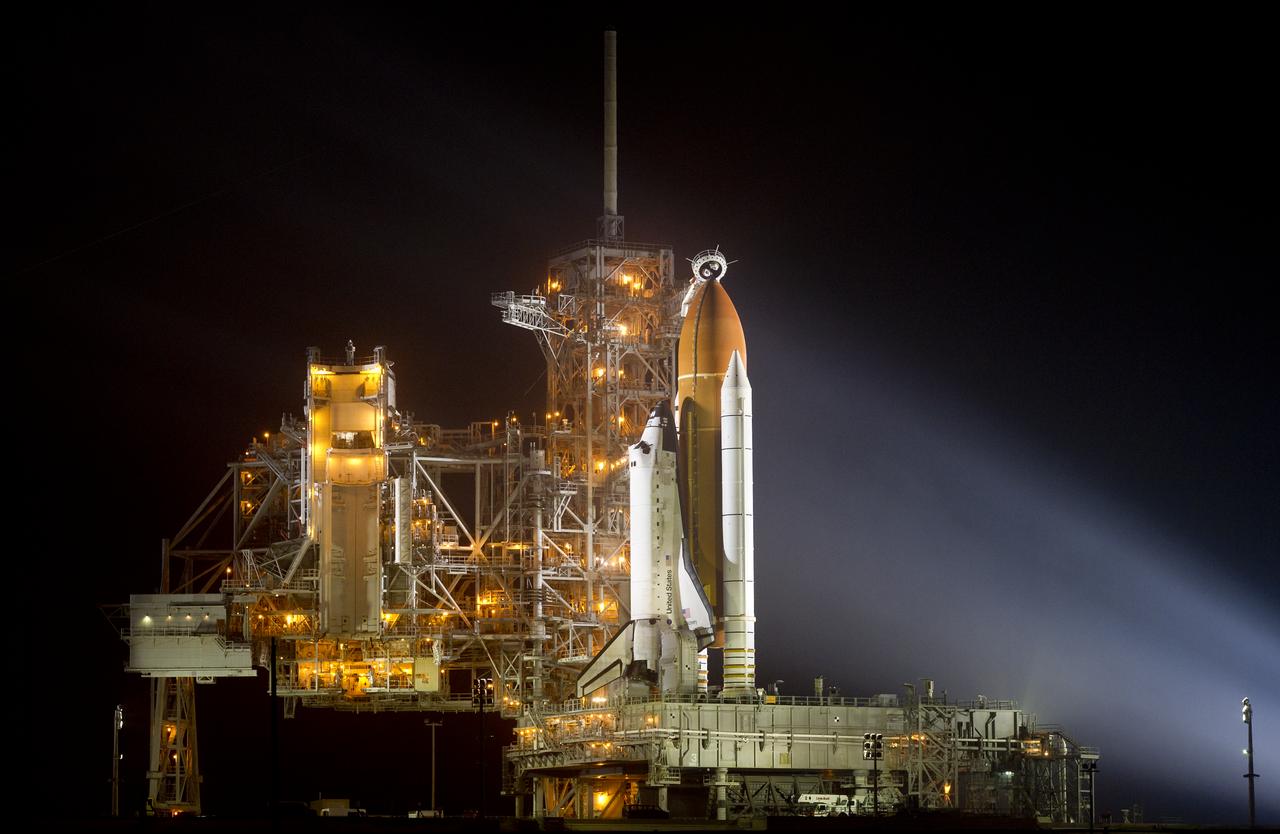
The space shuttle Discovery is seen shortly after the Rotating Service Structure was rolled back at launch pad 39A, at the Kennedy Space Center in Cape Canaveral, Florida, on Wednesday, Feb. 23, 2011. Discovery, on its 39th and final flight, will carry the Italian-built Permanent Multipurpose Module (PMM), Express Logistics Carrier 4 (ELC4) and Robonaut 2, the first humanoid robot in space to the International Space Station. Photo Credit: (NASA/Bill Ingalls)
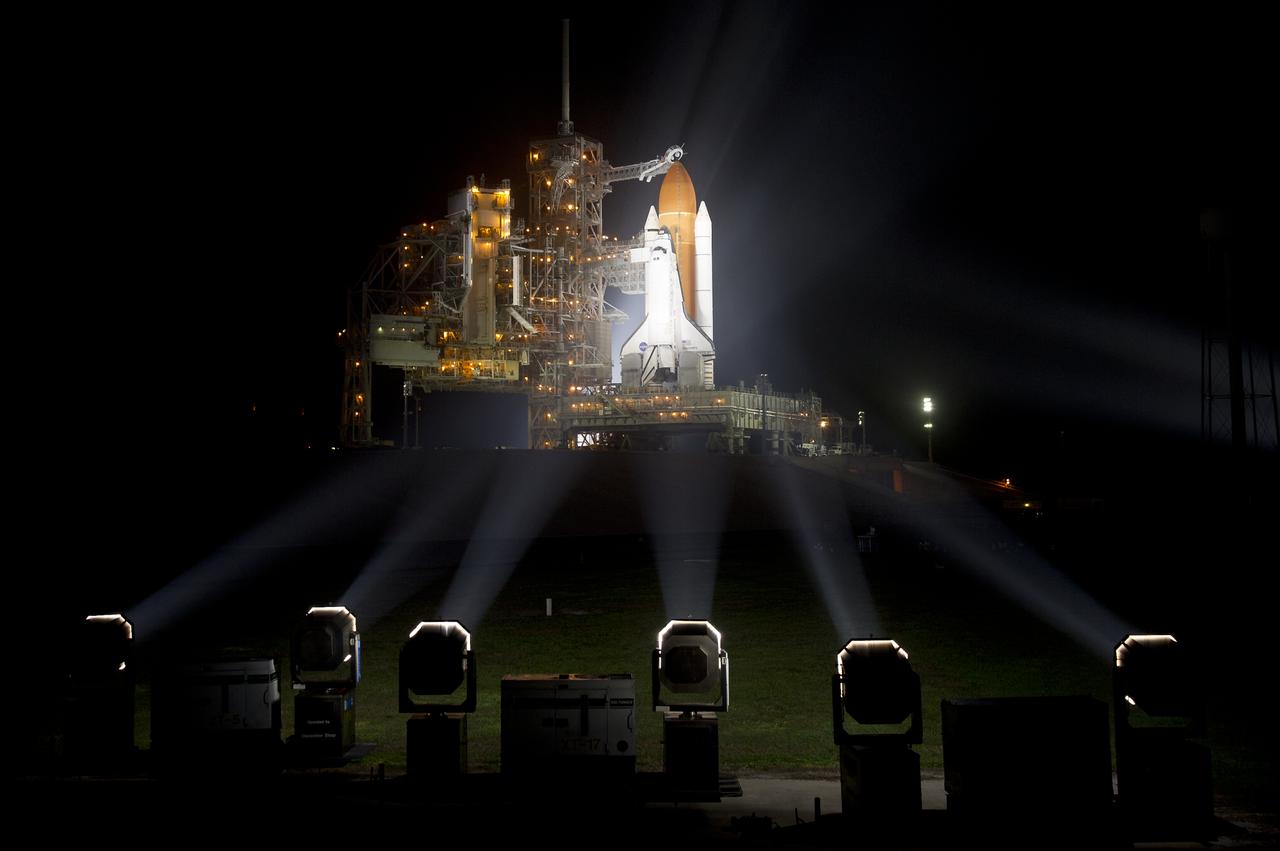
The space shuttle Discovery is seen shortly after the Rotating Service Structure was rolled back at launch pad 39A, at the Kennedy Space Center in Cape Canaveral, Florida, on Wednesday, Feb. 23, 2011. Discovery, on its 39th and final flight, will carry the Italian-built Permanent Multipurpose Module (PMM), Express Logistics Carrier 4 (ELC4) and Robonaut 2, the first humanoid robot in space to the International Space Station. Photo Credit: (NASA/Bill Ingalls)
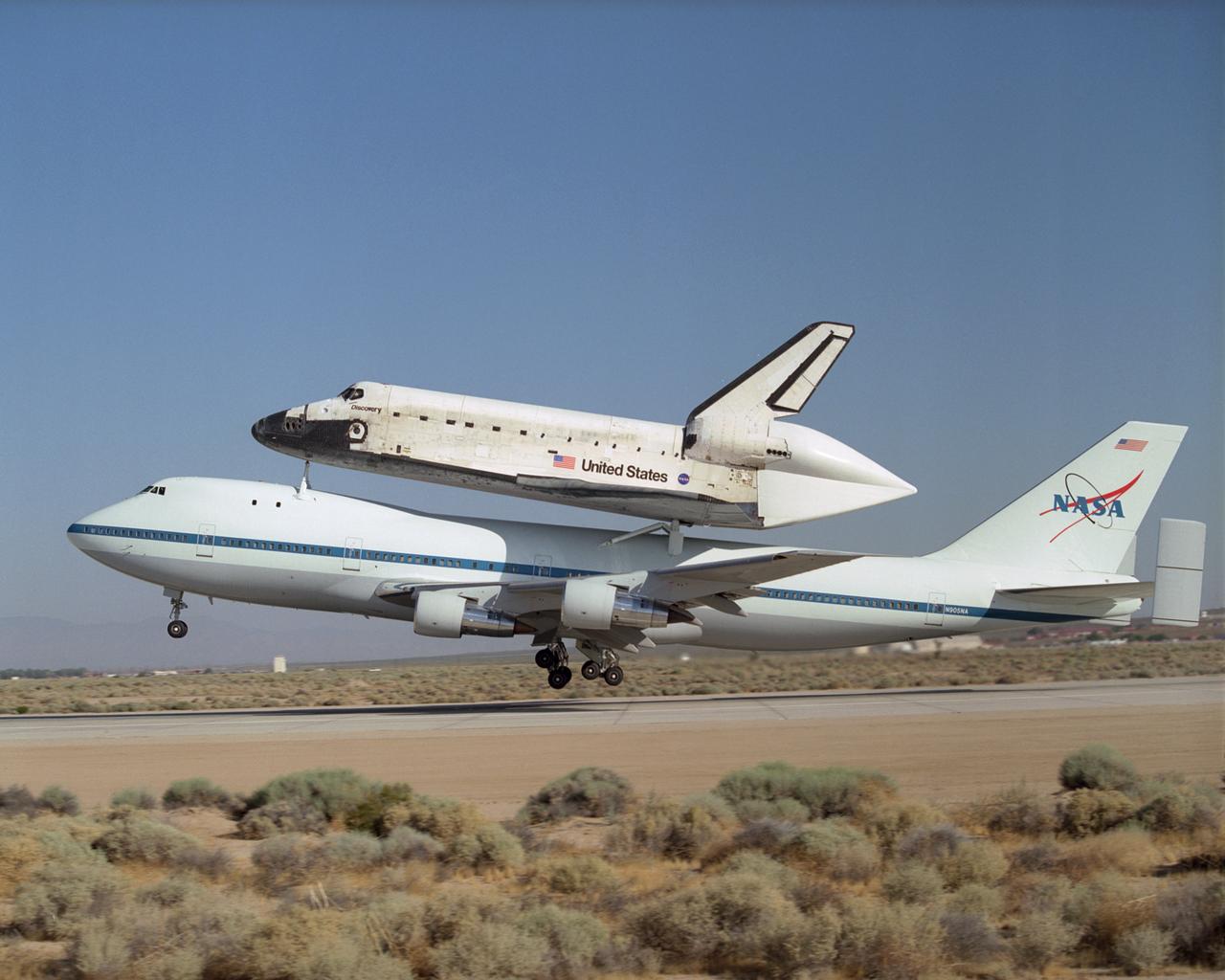
NASA's modified Boeing 747 Shuttle Carrier Aircraft with the Space Shuttle Discovery on top lifts off from Edwards Air Force Base to begin its ferry flight back to the Kennedy Space Center in Florida. The cross-country journey will take two days, with stops at several intermediate points for refueling. Space Shuttle Discovery landed safely at NASA's Dryden Flight Research Center at Edwards Air Force Base in California at 5:11:22 a.m. PDT, August 9, 2005, following the very successful 14-day STS-114 return to flight mission. During their two weeks in space, Commander Eileen Collins and her six crewmates tested out new safety procedures and delivered supplies and equipment the International Space Station. Discovery spent two weeks in space, where the crew demonstrated new methods to inspect and repair the Shuttle in orbit. The crew also delivered supplies, outfitted and performed maintenance on the International Space Station. A number of these tasks were conducted during three spacewalks. In an unprecedented event, spacewalkers were called upon to remove protruding gap fillers from the heat shield on Discovery's underbelly. In other spacewalk activities, astronauts installed an external platform onto the Station's Quest Airlock and replaced one of the orbital outpost's Control Moment Gyroscopes. Inside the Station, the STS-114 crew conducted joint operations with the Expedition 11 crew. They unloaded fresh supplies from the Shuttle and the Raffaello Multi-Purpose Logistics Module. Before Discovery undocked, the crews filled Raffeallo with unneeded items and returned to Shuttle payload bay. Discovery launched on July 26 and spent almost 14 days on orbit.
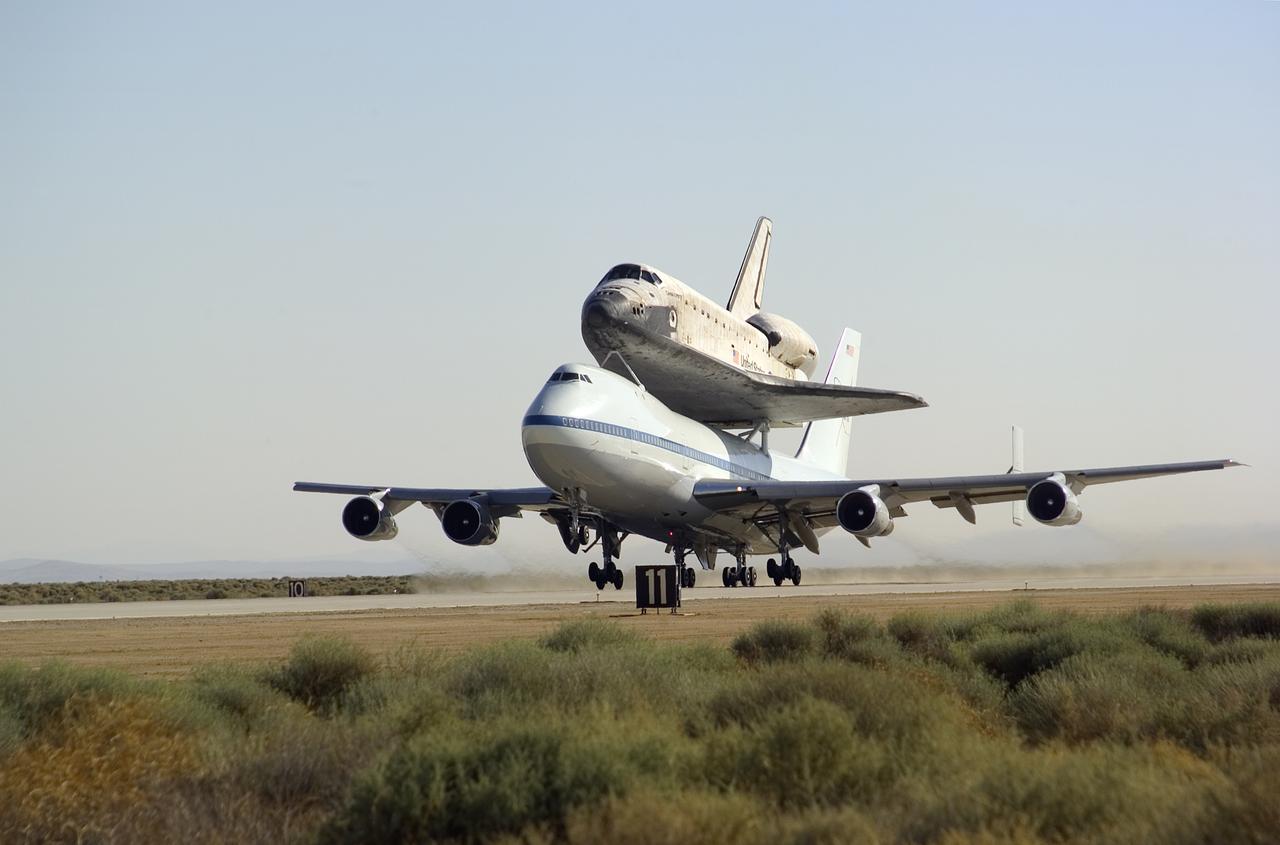
NASA's modified Boeing 747 Shuttle Carrier Aircraft with the Space Shuttle Discovery on top lifts off from Edwards Air Force Base to begin its ferry flight back to the Kennedy Space Center in Florida. The cross-country journey will take two days, with stops at several intermediate points for refueling. Space Shuttle Discovery landed safely at NASA's Dryden Flight Research Center at Edwards Air Force Base in California at 5:11:22 a.m. PDT, August 9, 2005, following the very successful 14-day STS-114 return to flight mission. During their two weeks in space, Commander Eileen Collins and her six crewmates tested out new safety procedures and delivered supplies and equipment the International Space Station. Discovery spent two weeks in space, where the crew demonstrated new methods to inspect and repair the Shuttle in orbit. The crew also delivered supplies, outfitted and performed maintenance on the International Space Station. A number of these tasks were conducted during three spacewalks. In an unprecedented event, spacewalkers were called upon to remove protruding gap fillers from the heat shield on Discovery's underbelly. In other spacewalk activities, astronauts installed an external platform onto the Station's Quest Airlock and replaced one of the orbital outpost's Control Moment Gyroscopes. Inside the Station, the STS-114 crew conducted joint operations with the Expedition 11 crew. They unloaded fresh supplies from the Shuttle and the Raffaello Multi-Purpose Logistics Module. Before Discovery undocked, the crews filled Raffeallo with unneeded items and returned to Shuttle payload bay. Discovery launched on July 26 and spent almost 14 days on orbit.
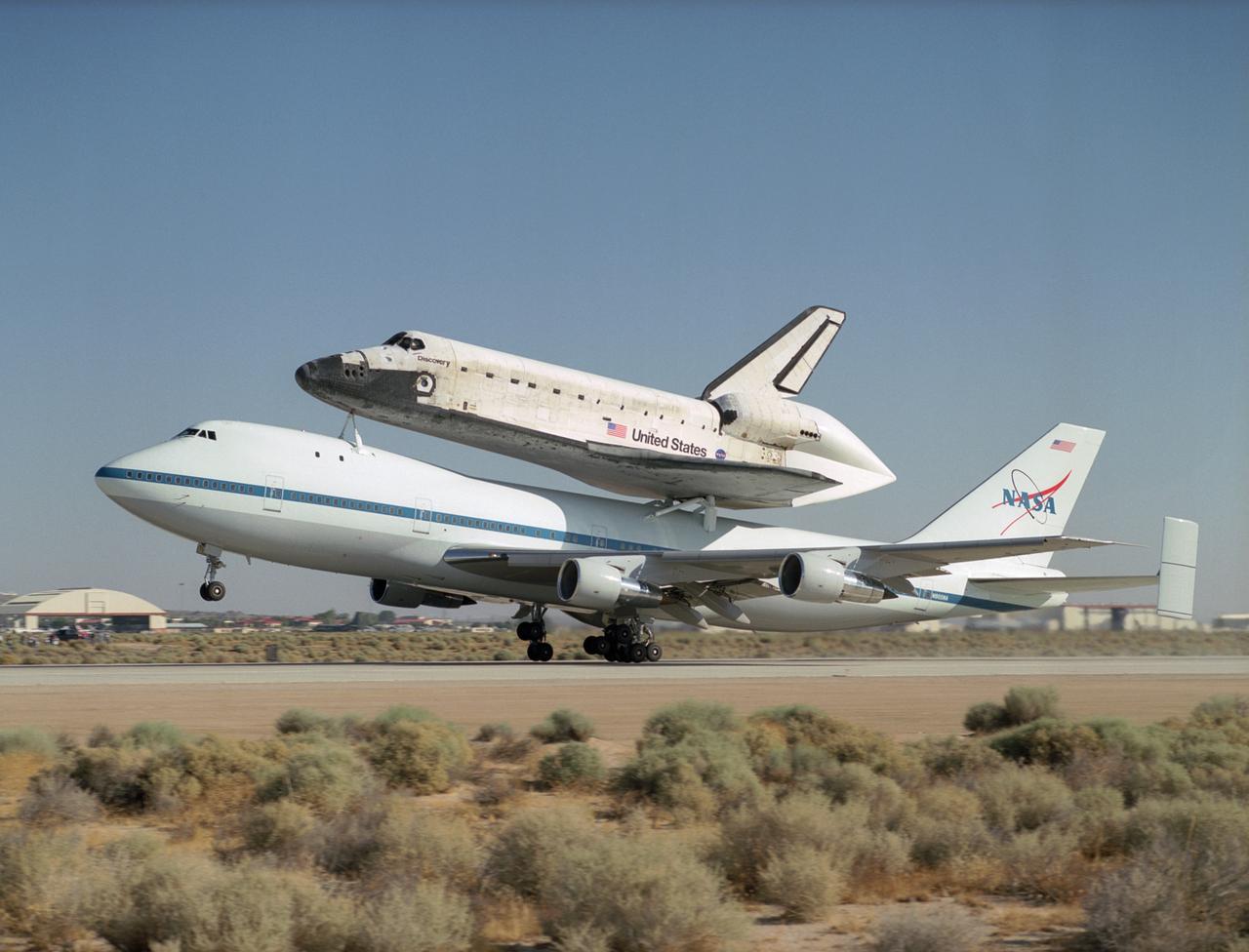
NASA's modified Boeing 747 Shuttle Carrier Aircraft with the Space Shuttle Discovery on top lifts off from Edwards Air Force Base to begin its ferry flight back to the Kennedy Space Center in Florida. The cross-country journey will take two days, with stops at several intermediate points for refueling. Space Shuttle Discovery landed safely at NASA's Dryden Flight Research Center at Edwards Air Force Base in California at 5:11:22 a.m. PDT, August 9, 2005, following the very successful 14-day STS-114 return to flight mission. During their two weeks in space, Commander Eileen Collins and her six crewmates tested out new safety procedures and delivered supplies and equipment the International Space Station. Discovery spent two weeks in space, where the crew demonstrated new methods to inspect and repair the Shuttle in orbit. The crew also delivered supplies, outfitted and performed maintenance on the International Space Station. A number of these tasks were conducted during three spacewalks. In an unprecedented event, spacewalkers were called upon to remove protruding gap fillers from the heat shield on Discovery's underbelly. In other spacewalk activities, astronauts installed an external platform onto the Station's Quest Airlock and replaced one of the orbital outpost's Control Moment Gyroscopes. Inside the Station, the STS-114 crew conducted joint operations with the Expedition 11 crew. They unloaded fresh supplies from the Shuttle and the Raffaello Multi-Purpose Logistics Module. Before Discovery undocked, the crews filled Raffeallo with unneeded items and returned to Shuttle payload bay. Discovery launched on July 26 and spent almost 14 days on orbit.
NASA's specially modified 747 Shuttle Carrier Aircraft, or SCA, is positioned under the Space Shuttle Discovery to be attached for their ferry flight to the Kennedy Space Center in Florida. After its post-flight servicing and preparation at NASA Dryden in California, Discovery's return flight to Kennedy aboard the 747 will take approximately 2 days, with stops at several intermediate points for refueling. Space Shuttle Discovery landed safely at NASA's Dryden Flight Research Center at Edwards Air Force Base at 5:11:22 a.m. PDT, August 9, 2005, following the very successful 14-day STS-114 return to flight mission. During their two weeks in space, Commander Eileen Collins and her six crewmates tested out new safety procedures and delivered supplies and equipment the International Space Station. Discovery spent two weeks in space, where the crew demonstrated new methods to inspect and repair the Shuttle in orbit. The crew also delivered supplies, outfitted and performed maintenance on the International Space Station. A number of these tasks were conducted during three spacewalks. In an unprecedented event, spacewalkers were called upon to remove protruding gap fillers from the heat shield on Discovery's underbelly. In other spacewalk activities, astronauts installed an external platform onto the Station's Quest Airlock and replaced one of the orbital outpost's Control Moment Gyroscopes. Inside the Station, the STS-114 crew conducted joint operations with the Expedition 11 crew. They unloaded fresh supplies from the Shuttle and the Raffaello Multi-Purpose Logistics Module. Before Discovery undocked, the crews filled Raffeallo with unneeded items and returned to Shuttle payload bay. Discovery launched on July 26 and spent almost 14 days on orbit.
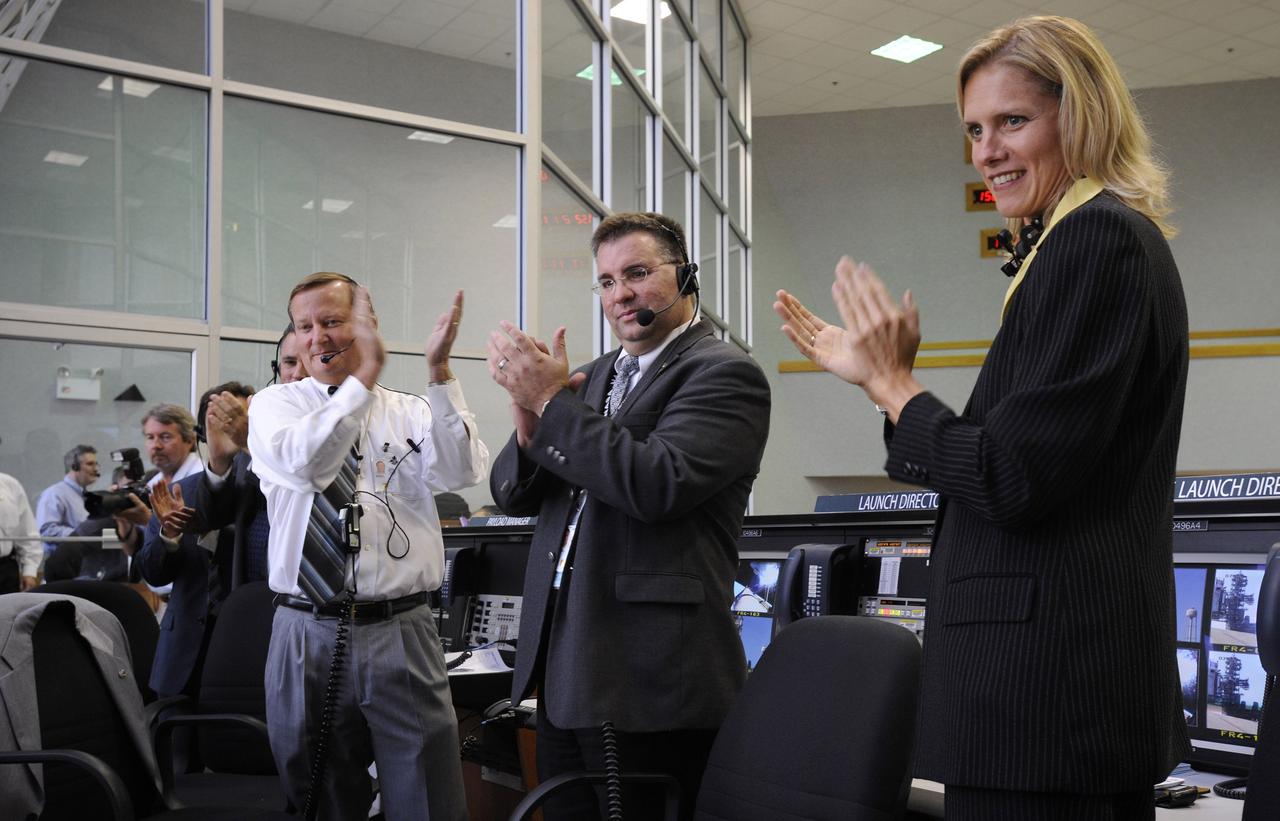
NASA Shuttle Launch Director Michael Leinbach, left, STS-124 Assistant Launch Director Ed Mango, center, and Flow Director for Space Shuttle Discovery Stephanie Stilson clap in the the Launch Control Center after the main engine cut off and successful launch of the Space Shuttle Discovery (STS-124) Saturday, May 31, 2008, at the Kennedy Space Center in Cape Canaveral, Fla. The Shuttle lifted off from launch pad 39A at 5:02 p.m. EDT. Photo Credit: (NASA/Bill Ingalls)
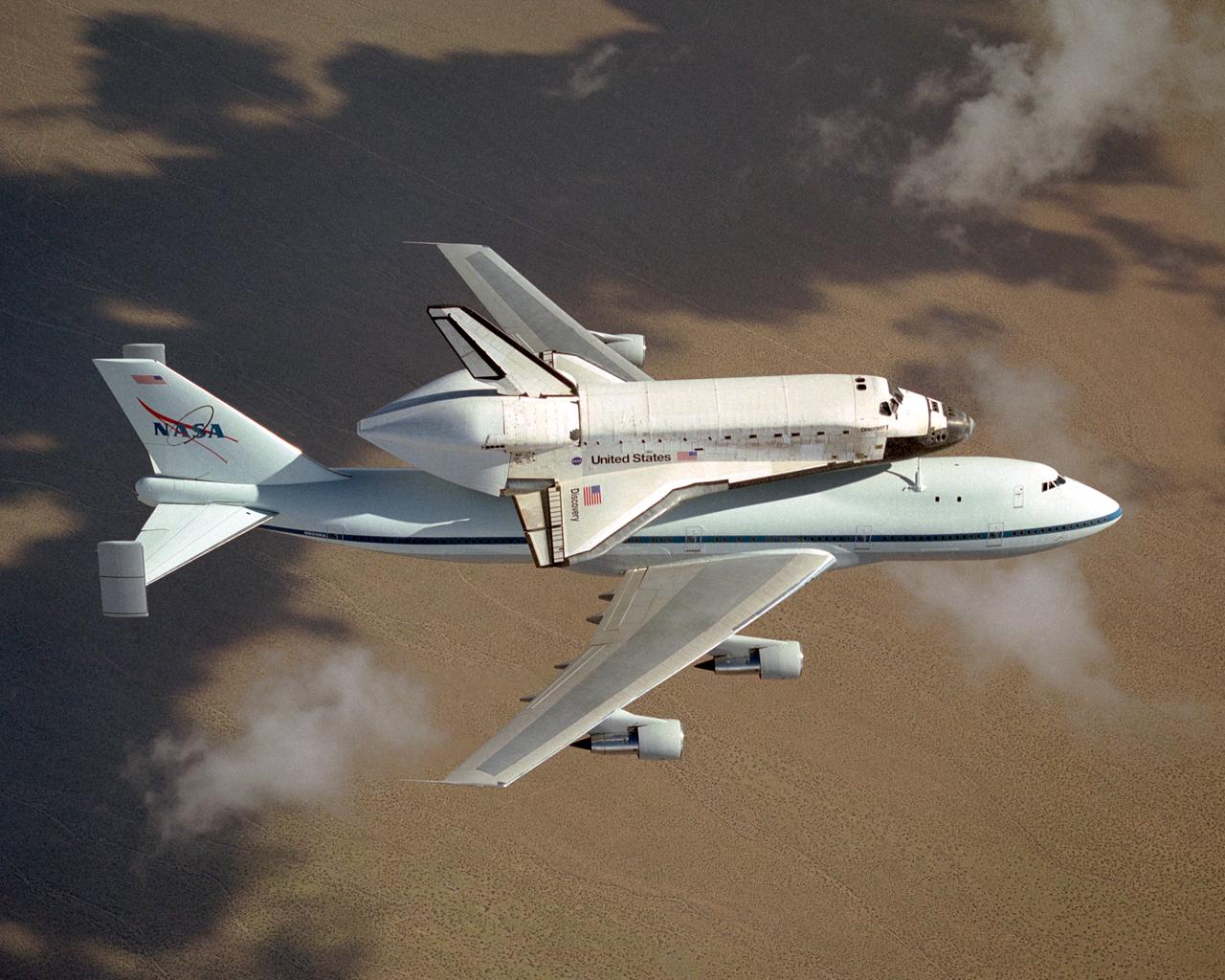
The space shuttle Discovery atop NASA's modified 747 is captured over the Mojave Desert while being ferried from NASA Dryden to the Kennedy Space Center. NASA's modified Boeing 747 Shuttle Carrier Aircraft with the Space Shuttle Discovery on top lifts off from Edwards Air Force Base to begin its ferry flight back to the Kennedy Space Center in Florida. The cross-country journey will take two days, with stops at several intermediate points for refueling. Space shuttle Discovery landed safely at NASA's Dryden Flight Research Center at Edwards Air Force Base in California at 5:11:22 a.m. PDT, August 9, 2005, following the very successful 14-day STS-114 return to flight mission. During their two weeks in space, Commander Eileen Collins and her six crewmates tested out new safety procedures and delivered supplies and equipment the International Space Station. Discovery spent two weeks in space, where the crew demonstrated new methods to inspect and repair the Shuttle in orbit. The crew also delivered supplies, outfitted and performed maintenance on the International Space Station. A number of these tasks were conducted during three spacewalks. In an unprecedented event, spacewalkers were called upon to remove protruding gap fillers from the heat shield on Discovery's underbelly. In other spacewalk activities, astronauts installed an external platform onto the Station's Quest Airlock and replaced one of the orbital outpost's Control Moment Gyroscopes. Inside the Station, the STS-114 crew conducted joint operations with the Expedition 11 crew. They unloaded fresh supplies from the Shuttle and the Raffaello Multi-Purpose Logistics Module. Before Discovery undocked, the crews filled Raffeallo with unneeded items and returned to Shuttle payload bay. Discovery launched on July 26 and spent almost 14 days on orbit.
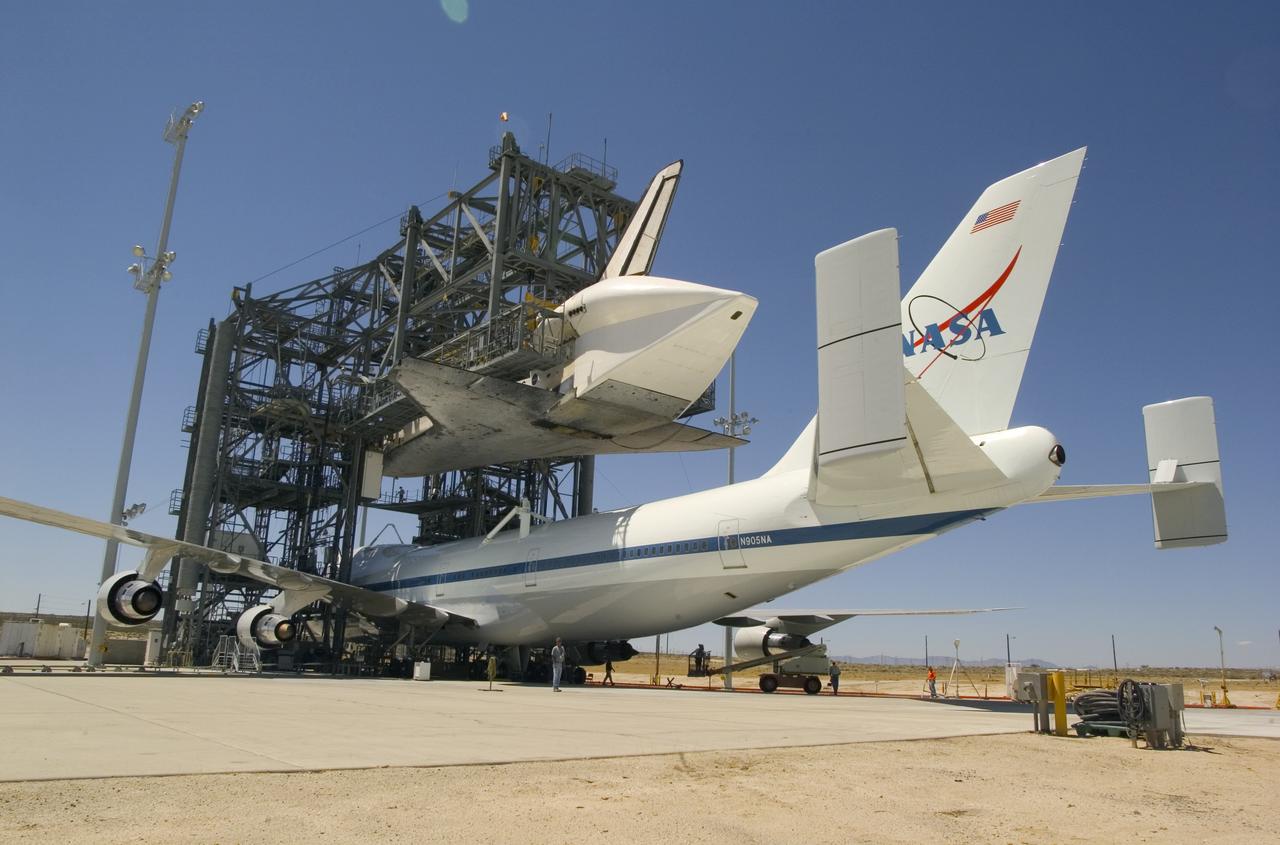
NASA's specially modified 747 Shuttle Carrier Aircraft, or SCA, is positioned under the Space Shuttle Discovery to be attached for their ferry flight to the Kennedy Space Center in Florida. After its post-flight servicing and preparation at NASA Dryden in California, Discovery's return flight to Kennedy aboard the 747 will take approximately 2 days, with stops at several intermediate points for refueling. Space Shuttle Discovery landed safely at NASA's Dryden Flight Research Center at Edwards Air Force Base at 5:11:22 a.m. PDT, August 9, 2005, following the very successful 14-day STS-114 return to flight mission. During their two weeks in space, Commander Eileen Collins and her six crewmates tested out new safety procedures and delivered supplies and equipment the International Space Station. Discovery spent two weeks in space, where the crew demonstrated new methods to inspect and repair the Shuttle in orbit. The crew also delivered supplies, outfitted and performed maintenance on the International Space Station. A number of these tasks were conducted during three spacewalks. In an unprecedented event, spacewalkers were called upon to remove protruding gap fillers from the heat shield on Discovery's underbelly. In other spacewalk activities, astronauts installed an external platform onto the Station's Quest Airlock and replaced one of the orbital outpost's Control Moment Gyroscopes. Inside the Station, the STS-114 crew conducted joint operations with the Expedition 11 crew. They unloaded fresh supplies from the Shuttle and the Raffaello Multi-Purpose Logistics Module. Before Discovery undocked, the crews filled Raffeallo with unneeded items and returned to Shuttle payload bay. Discovery launched on July 26 and spent almost 14 days on orbit.
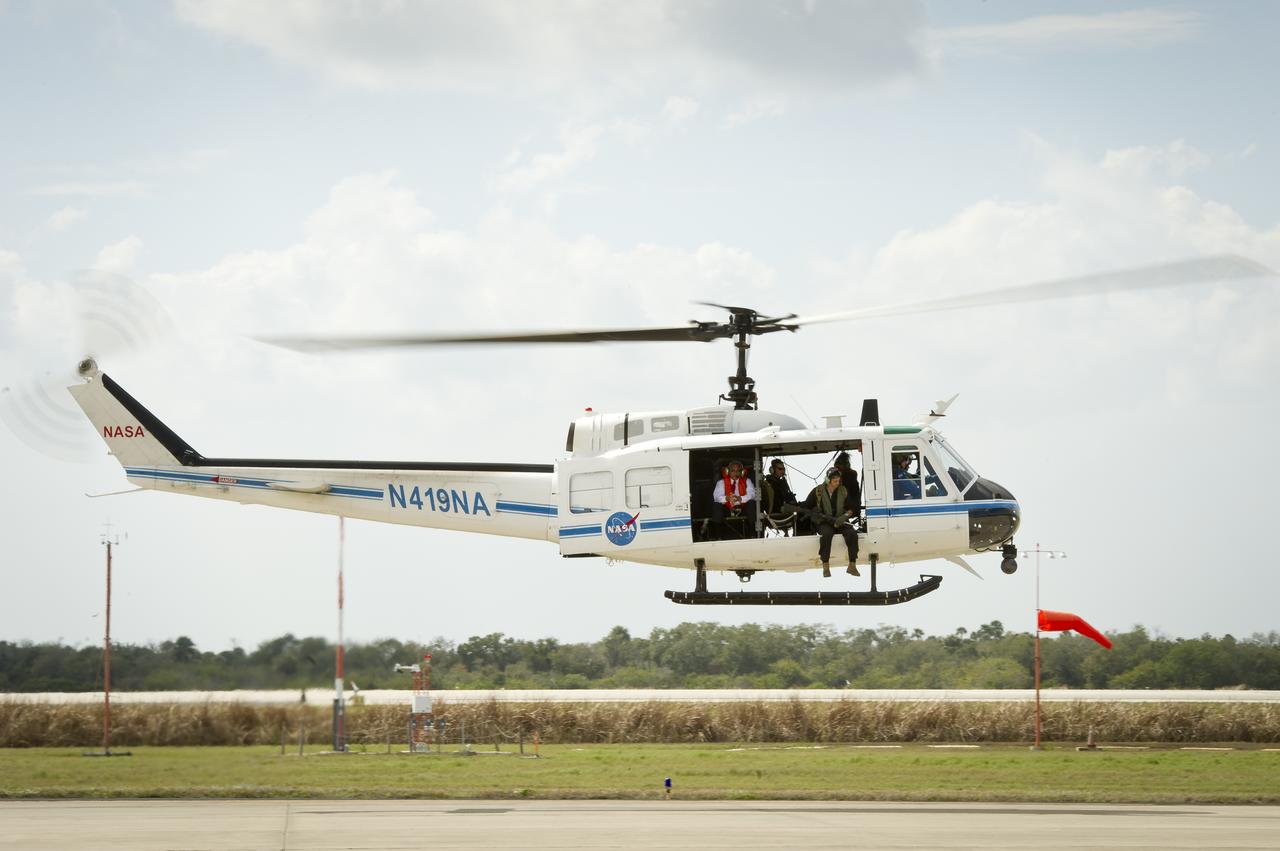
NASA Administrator Charles Bolden, seated left, takes off from the Shuttle Landing Facility (SLF) in a helicopter that will escort the crew of the space shuttle Discovery (STS-133) to launch pad 39a at the Kennedy Space Center, Thursday, Feb. 24, 2011, in Cape Canaveral, Fla. Discovery, on its 39th and final flight, is carrying the Italian-built Permanent Multipurpose Module (PMM), Express Logistics Carrier 4 (ELC4) and Robonaut 2, the first humanoid robot in space to the International Space Station. Photo Credit: (NASA/Bill Ingalls)
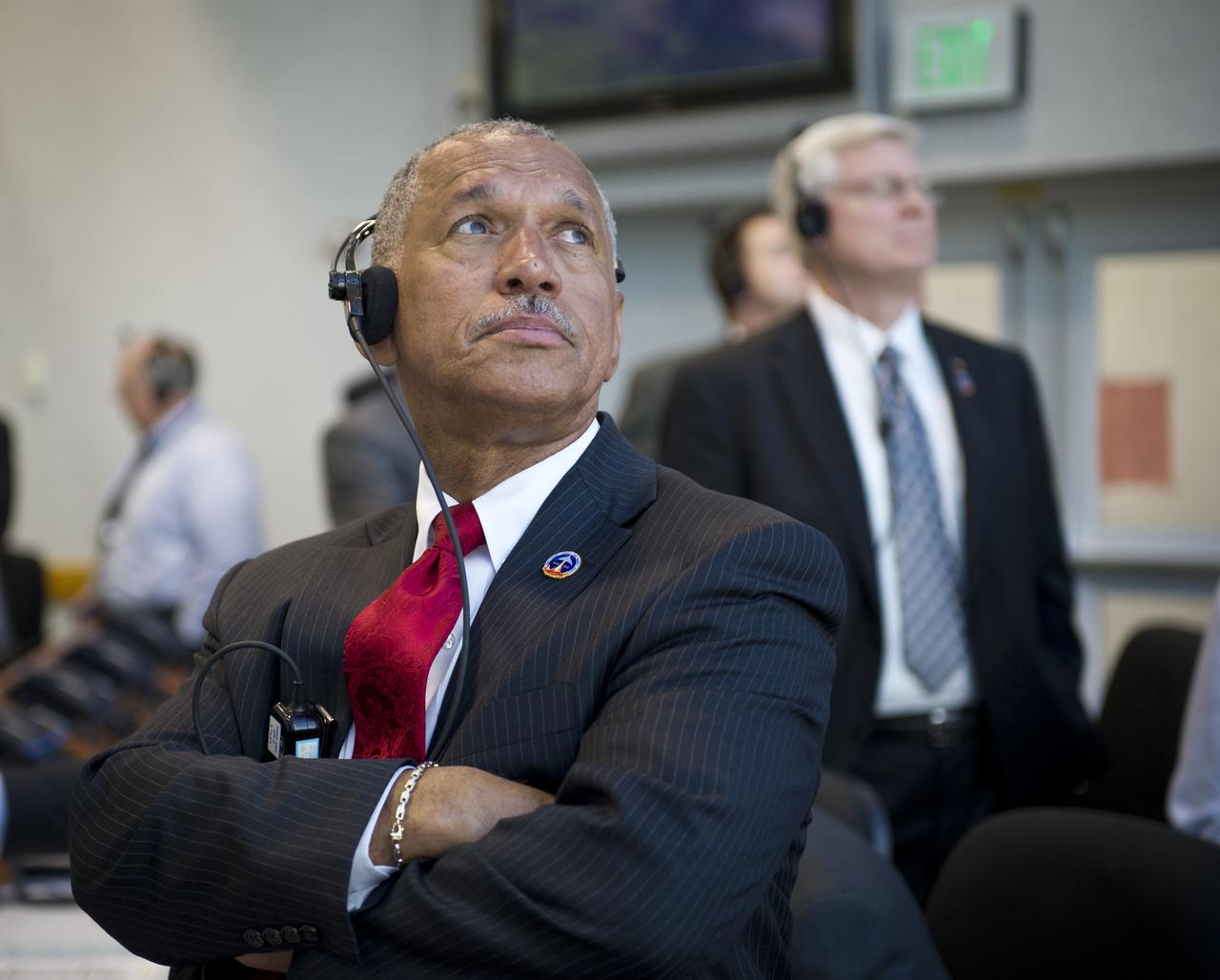
NASA Administrator Charles Bolden and other NASA management watch the launch of space shuttle Discovery (STS-133) from the firing room at Kennedy Space Center, Thursday, Feb. 24, 2011, in Cape Canaveral, Fla. Discovery, on its 39th and final flight, is carrying the Italian-built Permanent Multipurpose Module (PMM), Express Logistics Carrier 4 (ELC4) and Robonaut 2, the first humanoid robot in space to the International Space Station. Photo Credit: (NASA/Bill Ingalls)
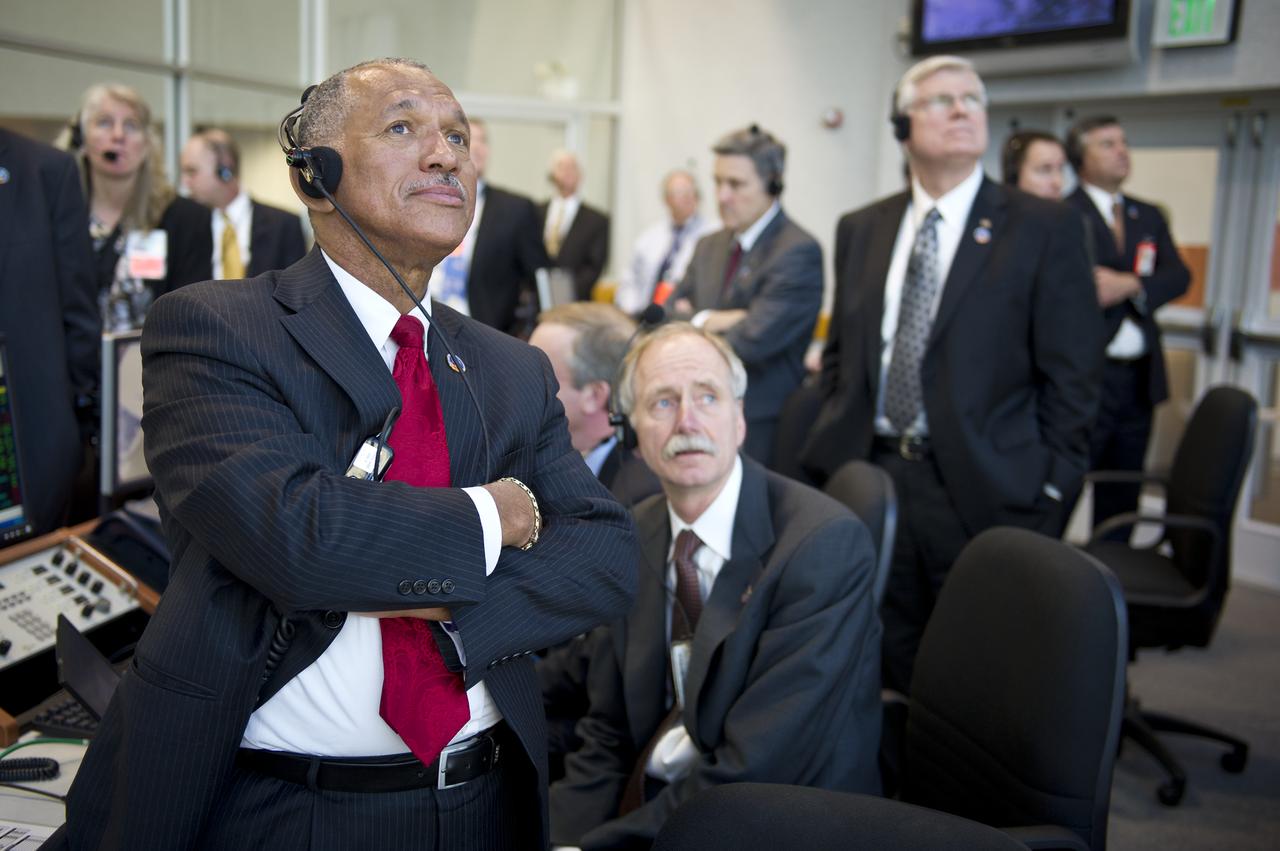
NASA Administrator Charles Bolden and other NASA management watch the launch of space shuttle Discovery (STS-133) from the firing room at Kennedy Space Center, Thursday, Feb. 24, 2011, in Cape Canaveral, Fla. Discovery, on its 39th and final flight, is carrying the Italian-built Permanent Multipurpose Module (PMM), Express Logistics Carrier 4 (ELC4) and Robonaut 2, the first humanoid robot in space to the International Space Station. Photo Credit: (NASA/Bill Ingalls)
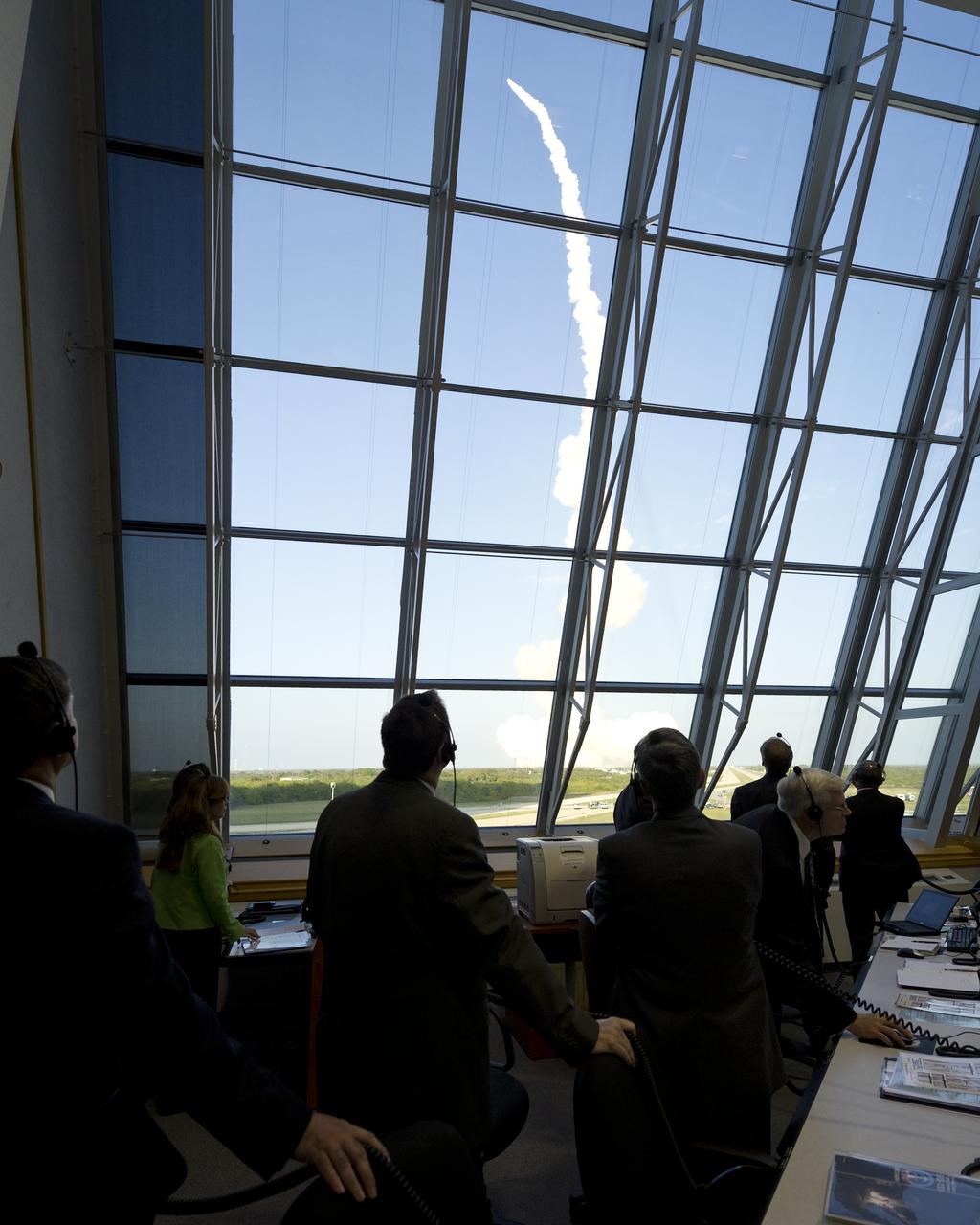
NASA management watch the launch of space shuttle Discovery (STS-133) from the firing room at Kennedy Space Center, Thursday, Feb. 24, 2011, in Cape Canaveral, Fla. Discovery, on its 39th and final flight, is carrying the Italian-built Permanent Multipurpose Module (PMM), Express Logistics Carrier 4 (ELC4) and Robonaut 2, the first humanoid robot in space to the International Space Station. Photo Credit: (NASA/Bill Ingalls)
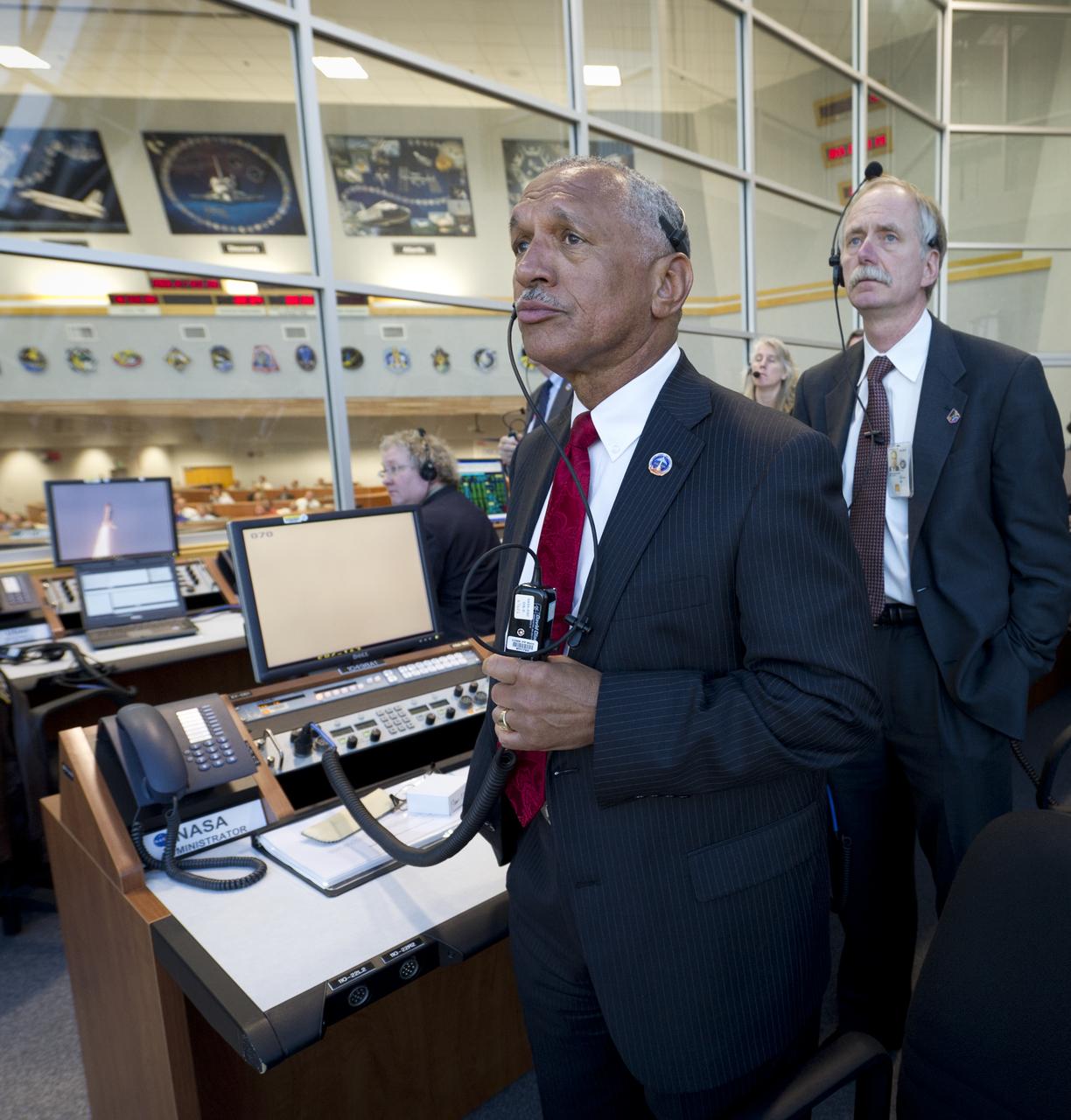
NASA Administrator Charles Bolden and other NASA management watch the launch of space shuttle Discovery (STS-133) from the firing room at Kennedy Space Center, Thursday, Feb. 24, 2011, in Cape Canaveral, Fla. Discovery, on its 39th and final flight, is carrying the Italian-built Permanent Multipurpose Module (PMM), Express Logistics Carrier 4 (ELC4) and Robonaut 2, the first humanoid robot in space to the International Space Station. Photo Credit: (NASA/Bill Ingalls)
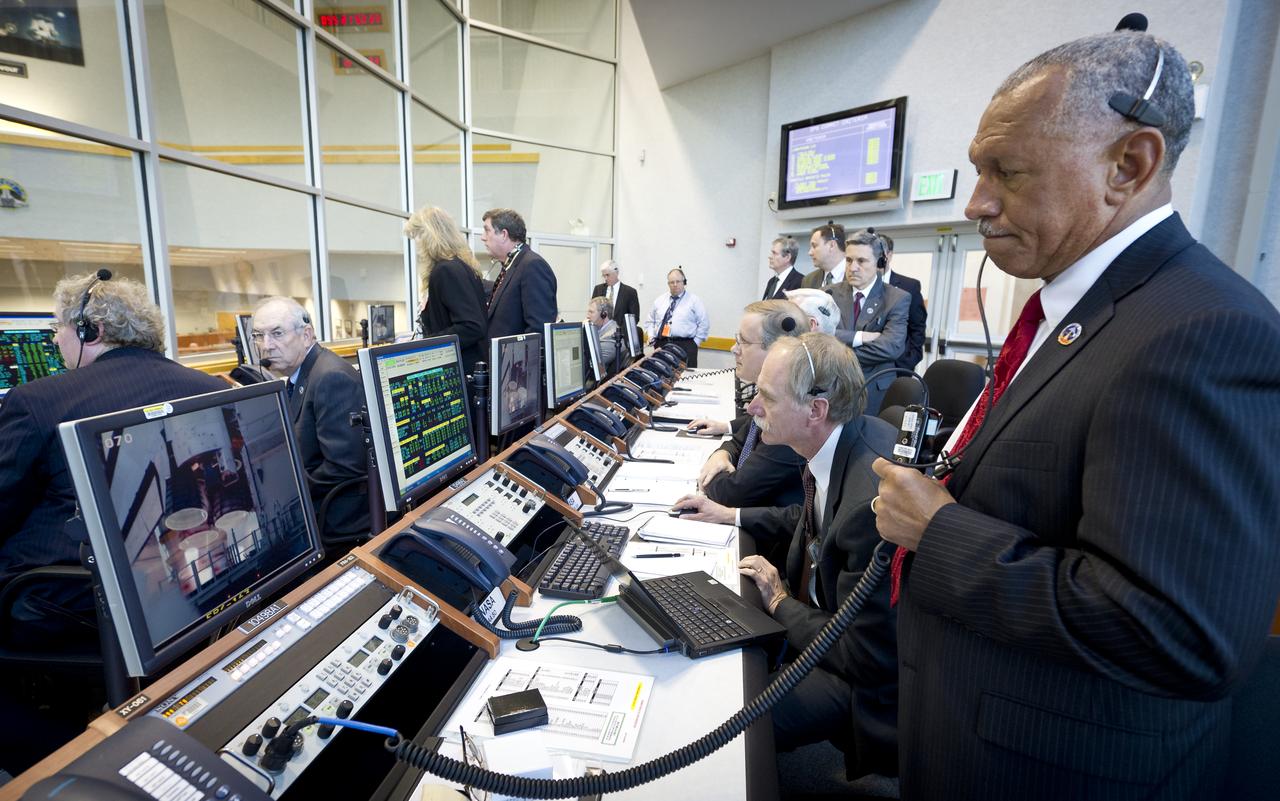
NASA Administrator Charles Bolden and other NASA management watch the launch of space shuttle Discovery (STS-133) from the firing room at Kennedy Space Center, Thursday, Feb. 24, 2011, in Cape Canaveral, Fla. Discovery, on its 39th and final flight, is carrying the Italian-built Permanent Multipurpose Module (PMM), Express Logistics Carrier 4 (ELC4) and Robonaut 2, the first humanoid robot in space to the International Space Station. Photo Credit: (NASA/Bill Ingalls)
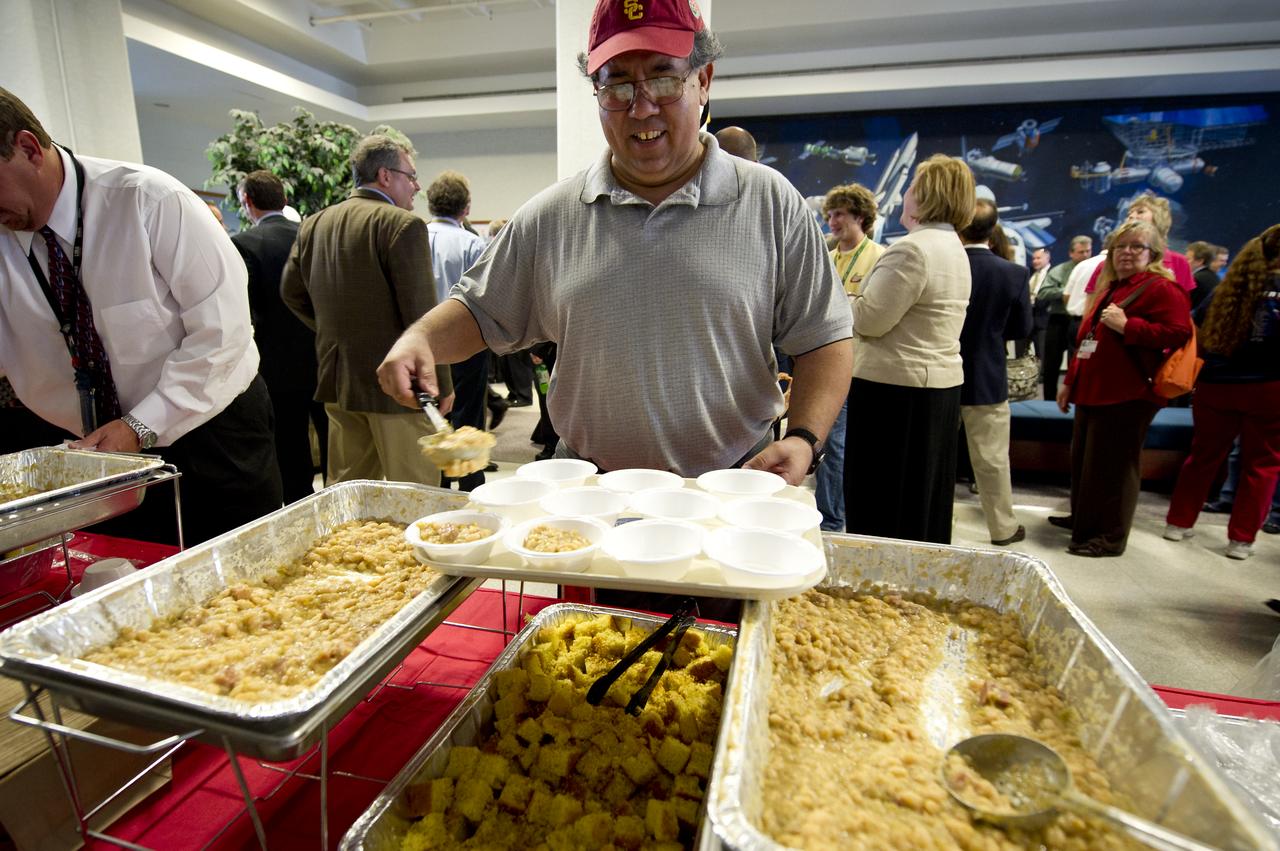
NASA Orbital Processing Facility Inspector Janaro Negrete, fills cups with the post launch traditional beans and cornbread to take share with his colleagues at the Launch Control Center (LCC) after the launch of the space shuttle Discovery (STS-133) at the Kennedy Space Center, Thursday, Feb. 24, 2011, in Cape Canaveral, Fla. Discovery, on its 39th and final flight, is carrying the Italian-built Permanent Multipurpose Module (PMM), Express Logistics Carrier 4 (ELC4) and Robonaut 2, the first humanoid robot in space to the International Space Station. Photo Credit: (NASA/Bill Ingalls)
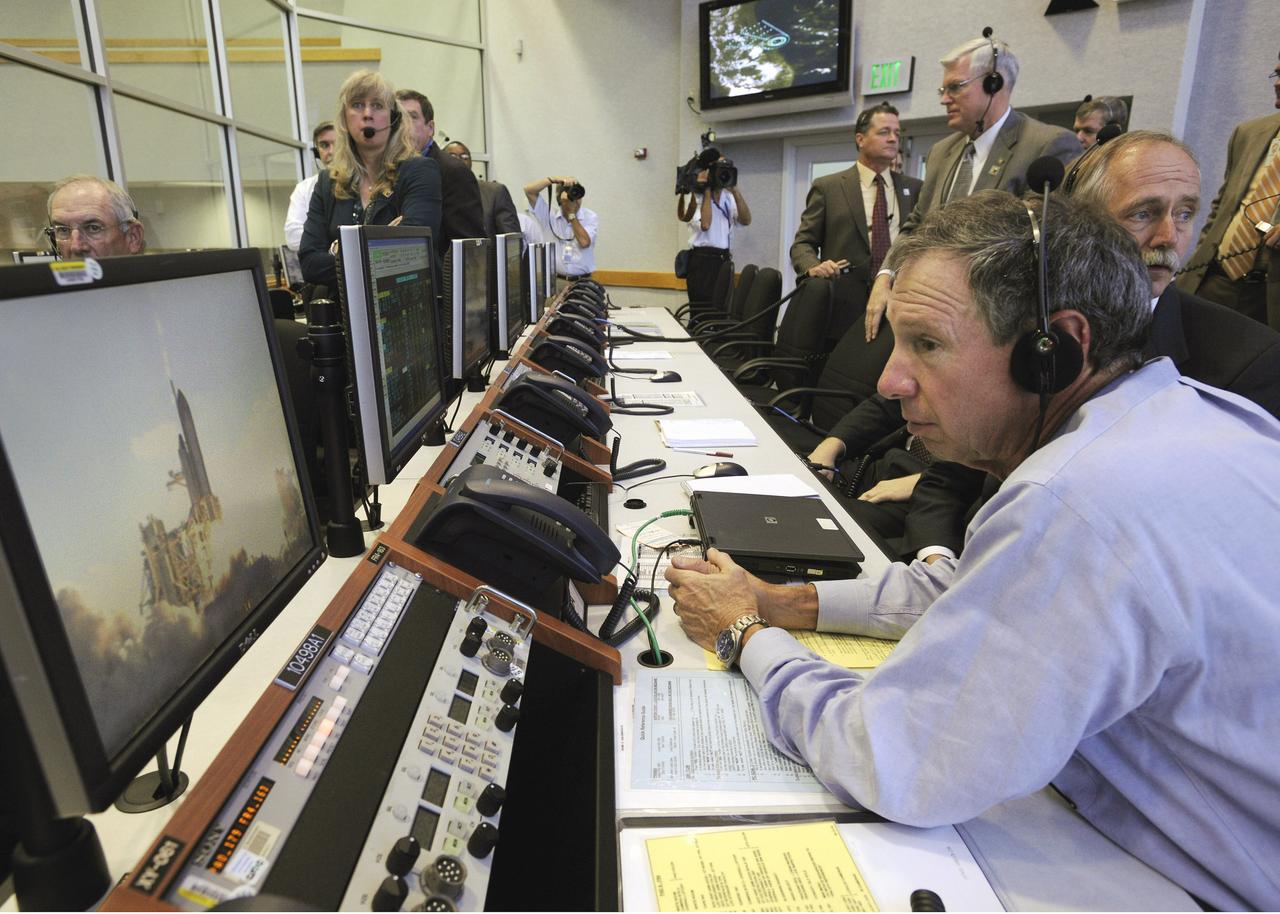
NASA Administrator, Michael Griffin watches the launch of the Space Shuttle Discovery (STS-124) from the Launch Control Center Saturday, May 31, 2008, at the Kennedy Space Center in Cape Canaveral, Fla. The Shuttle lifted off from launch pad 39A at 5:02 p.m. EDT. Photo Credit: (NASA/Bill Ingalls)
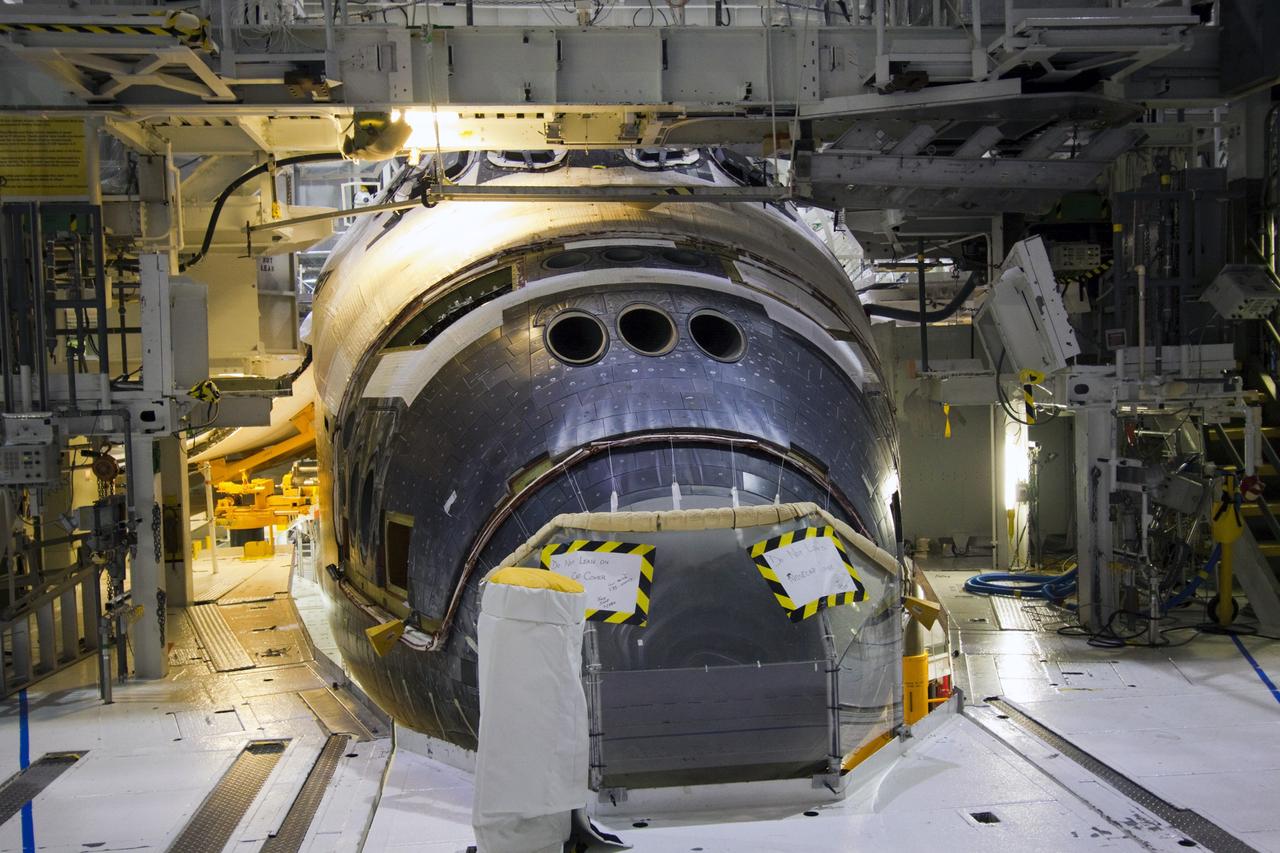
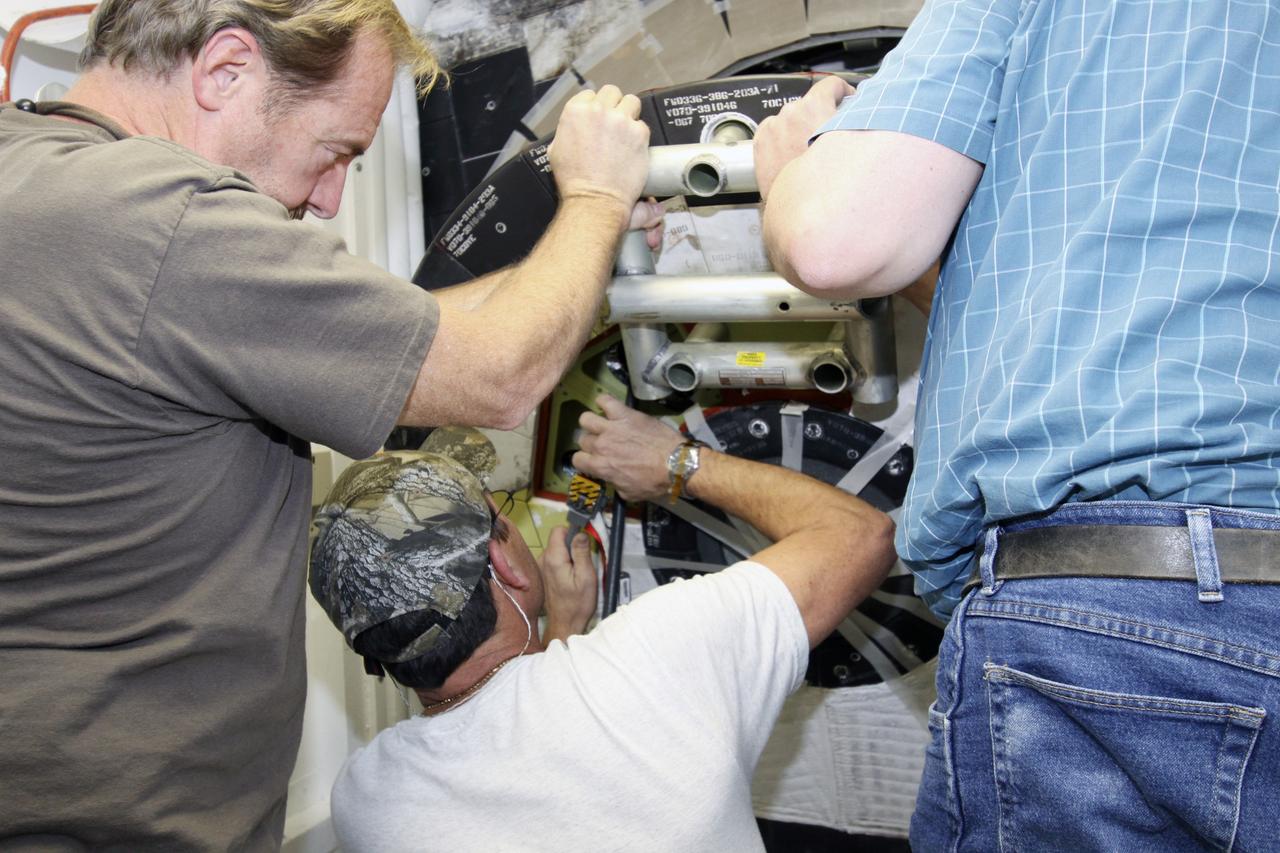
CAPE CANAVERAL, Fla. -- Inside Orbiter Processing Facility-1 at NASA’s Kennedy Space Center in Florida, the forward reaction control system (FRCS) is installed on space shuttle Discovery. The FRCS was returned from White Sands Space Harbor in New Mexico where it underwent a complete deservicing and cleaning. The work is part of the Space Shuttle Program’s transition and retirement processing of shuttle Discovery. Discovery is being prepared for display at Smithsonian’s National Air and Space Museum, Steven F. Udvar-Hazy Center in Chantilly, Va. For more information, visit http://www.nasa.gov/shuttle. Photo credit: NASA/Jim Grossmann
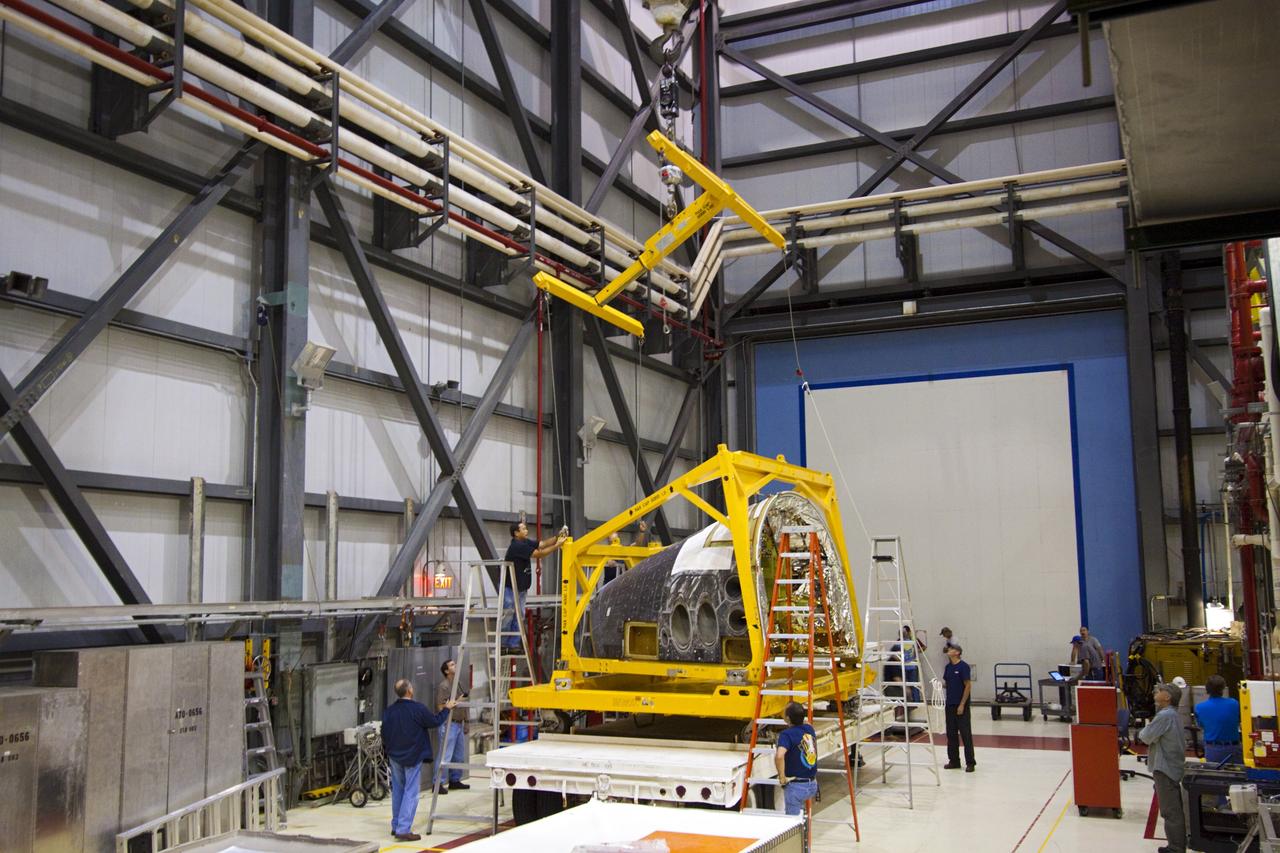
CAPE CANAVERAL, Fla. -- Inside Orbiter Processing Facility-1 at NASA’s Kennedy Space Center in Florida, technicians ready the forward reaction control system (FRCS) for installation on space shuttle Discovery. The FRCS was returned from White Sands Space Harbor in New Mexico where it underwent a complete deservicing and cleaning. The work is part of the Space Shuttle Program’s transition and retirement processing of shuttle Discovery. Discovery is being prepared for display at Smithsonian’s National Air and Space Museum, Steven F. Udvar-Hazy Center in Chantilly, Va. For more information, visit http://www.nasa.gov/shuttle. Photo credit: NASA/Jim Grossmann
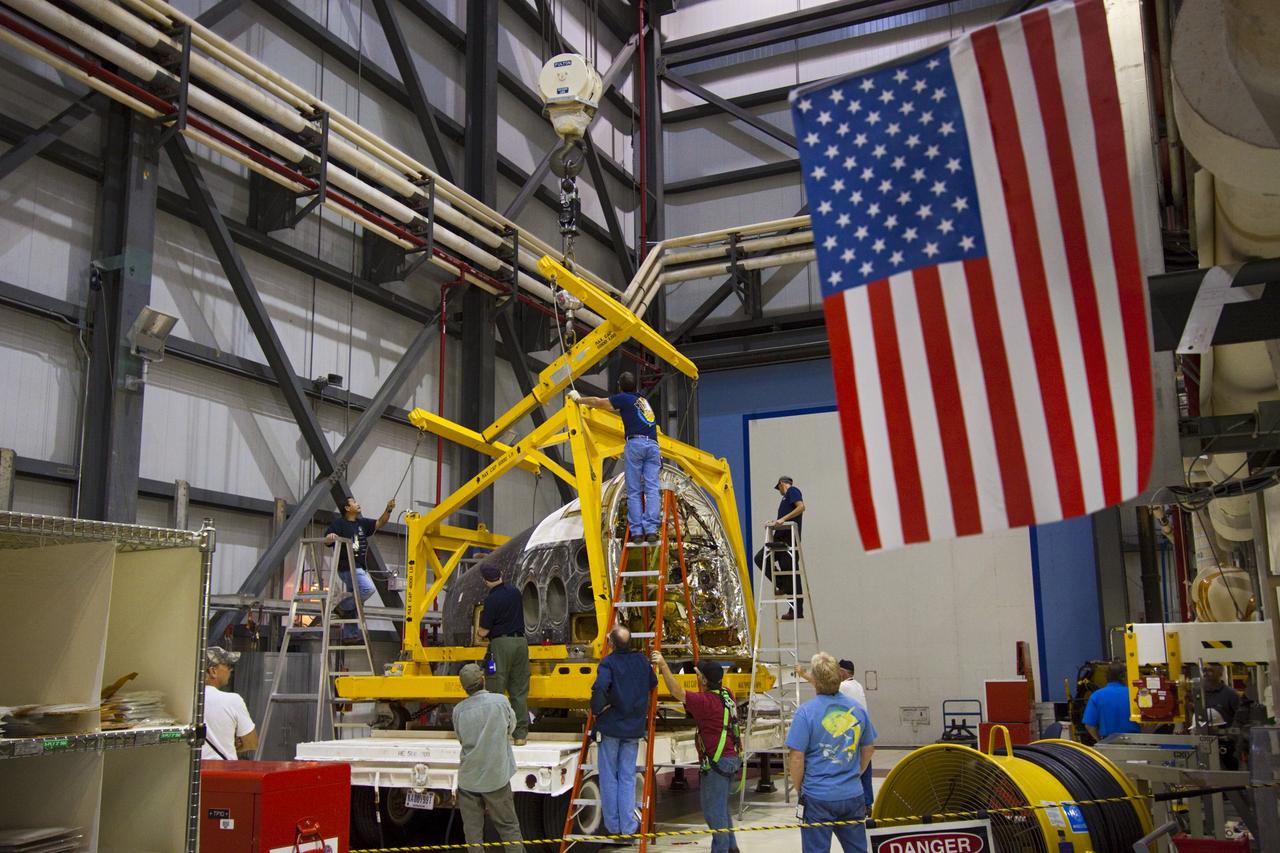
CAPE CANAVERAL, Fla. -- Inside Orbiter Processing Facility-1 at NASA’s Kennedy Space Center in Florida, technicians ready the forward reaction control system (FRCS) for installation on space shuttle Discovery. The FRCS was returned from White Sands Space Harbor in New Mexico where it underwent a complete deservicing and cleaning. The work is part of the Space Shuttle Program’s transition and retirement processing of shuttle Discovery. Discovery is being prepared for display at Smithsonian’s National Air and Space Museum, Steven F. Udvar-Hazy Center in Chantilly, Va. For more information, visit http://www.nasa.gov/shuttle. Photo credit: NASA/Jim Grossmann
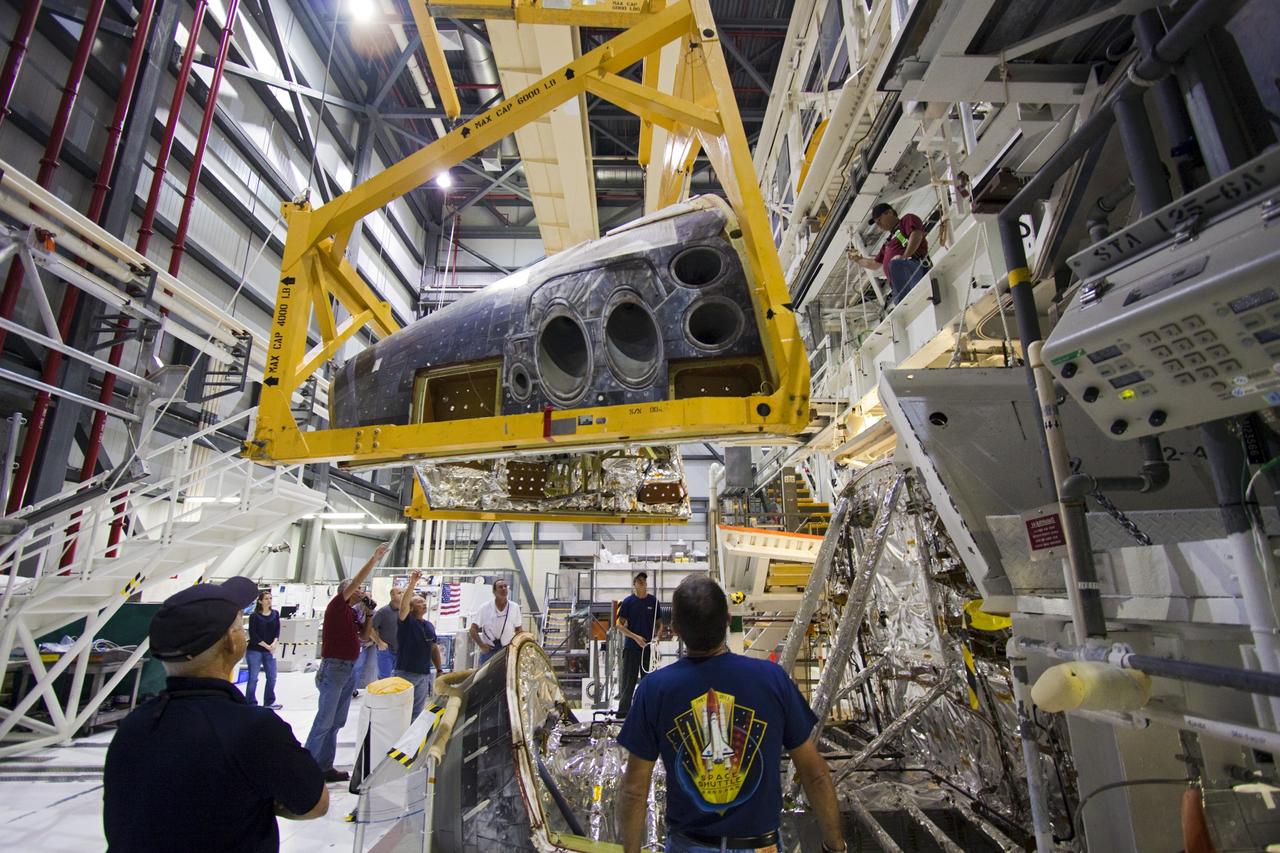
CAPE CANAVERAL, Fla. -- Inside Orbiter Processing Facility-1 at NASA’s Kennedy Space Center in Florida, technicians monitor the progress as a large crane carries the forward reaction control system (FRCS) close for installation on space shuttle Discovery. The FRCS was returned from White Sands Space Harbor in New Mexico where it underwent a complete deservicing and cleaning. The work is part of the Space Shuttle Program’s transition and retirement processing of shuttle Discovery. Discovery is being prepared for display at Smithsonian’s National Air and Space Museum, Steven F. Udvar-Hazy Center in Chantilly, Va. For more information, visit http://www.nasa.gov/shuttle. Photo credit: NASA/Jim Grossmann
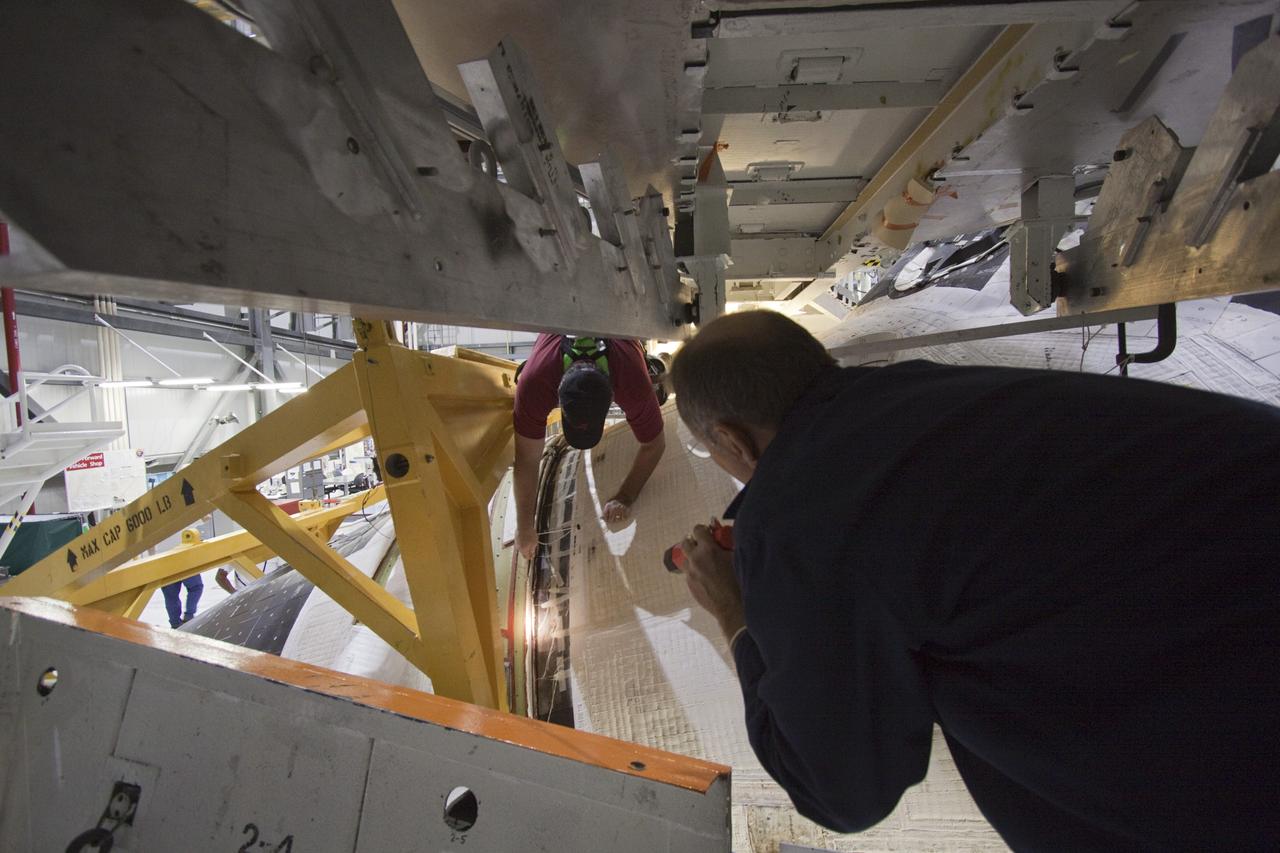
CAPE CANAVERAL, Fla. -- Inside Orbiter Processing Facility-1 at NASA’s Kennedy Space Center in Florida, technicians assist with the installation of the forward reaction control system (FRCS) on space shuttle Discovery. The FRCS was returned from White Sands Space Harbor in New Mexico where it underwent a complete deservicing and cleaning. The work is part of the Space Shuttle Program’s transition and retirement processing of shuttle Discovery. Discovery is being prepared for display at Smithsonian’s National Air and Space Museum, Steven F. Udvar-Hazy Center in Chantilly, Va. For more information, visit http://www.nasa.gov/shuttle. Photo credit: NASA/Jim Grossmann
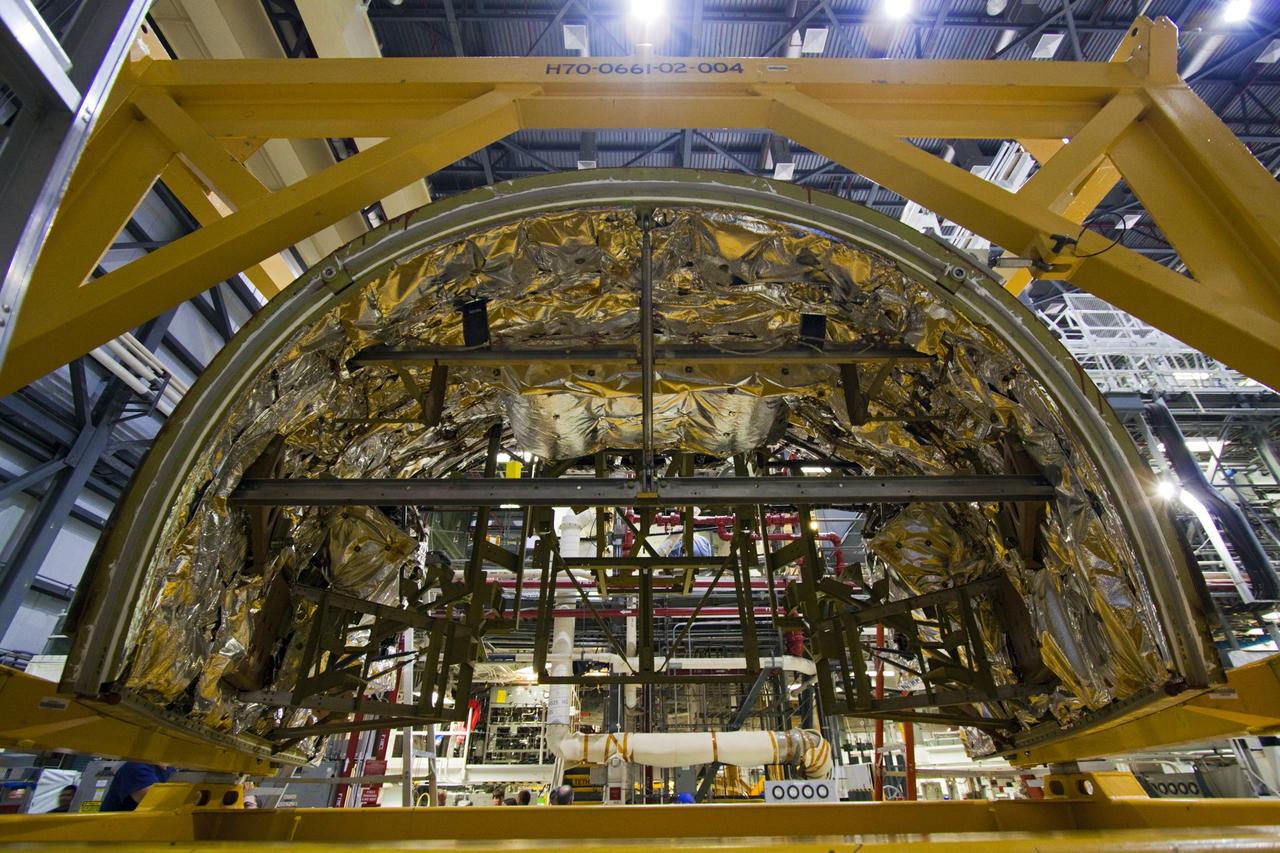
CAPE CANAVERAL, Fla. -- Inside Orbiter Processing Facility-1 at NASA’s Kennedy Space Center in Florida, the forward reaction control system (FRCS) is being moved by crane for installation on space shuttle Discovery. The FRCS was returned from White Sands Space Harbor in New Mexico where it underwent a complete deservicing and cleaning. The work is part of the Space Shuttle Program’s transition and retirement processing of shuttle Discovery. Discovery is being prepared for display at Smithsonian’s National Air and Space Museum, Steven F. Udvar-Hazy Center in Chantilly, Va. For more information, visit http://www.nasa.gov/shuttle. Photo credit: NASA/Jim Grossmann
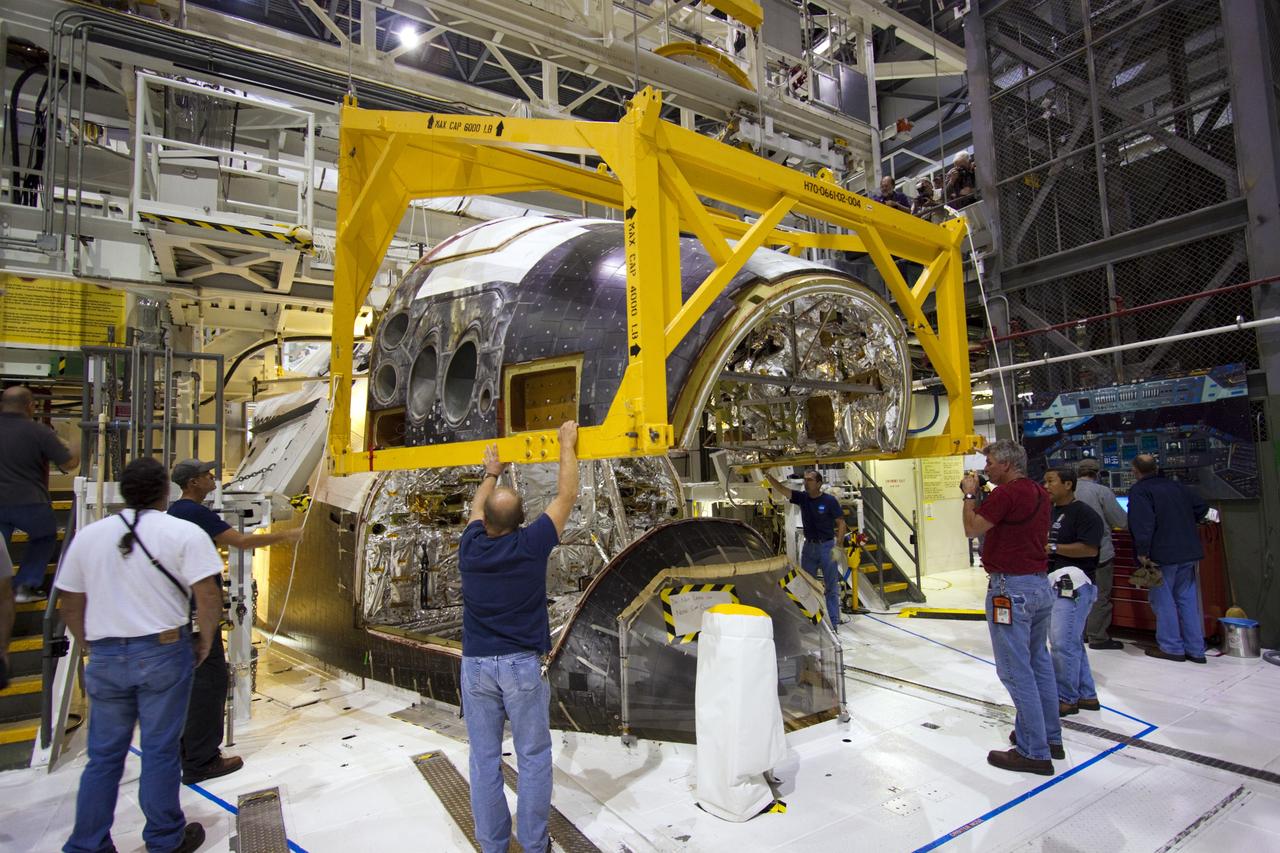
CAPE CANAVERAL, Fla. -- Inside Orbiter Processing Facility-1 at NASA’s Kennedy Space Center in Florida, technicians monitor the progress as a large crane lowers the forward reaction control system (FRCS) for installation on space shuttle Discovery. The FRCS was returned from White Sands Space Harbor in New Mexico where it underwent a complete deservicing and cleaning. The work is part of the Space Shuttle Program’s transition and retirement processing of shuttle Discovery. Discovery is being prepared for display at Smithsonian’s National Air and Space Museum, Steven F. Udvar-Hazy Center in Chantilly, Va. For more information, visit http://www.nasa.gov/shuttle. Photo credit: NASA/Jim Grossmann

CAPE CANAVERAL, Fla. -- Inside Orbiter Processing Facility-1 at NASA’s Kennedy Space Center in Florida, technicians assist with the installation of the forward reaction control system (FRCS) on space shuttle Discovery. The FRCS was returned from White Sands Space Harbor in New Mexico where it underwent a complete deservicing and cleaning. The work is part of the Space Shuttle Program’s transition and retirement processing of shuttle Discovery. Discovery is being prepared for display at Smithsonian’s National Air and Space Museum, Steven F. Udvar-Hazy Center in Chantilly, Va. For more information, visit http://www.nasa.gov/shuttle. Photo credit: NASA/Jim Grossmann
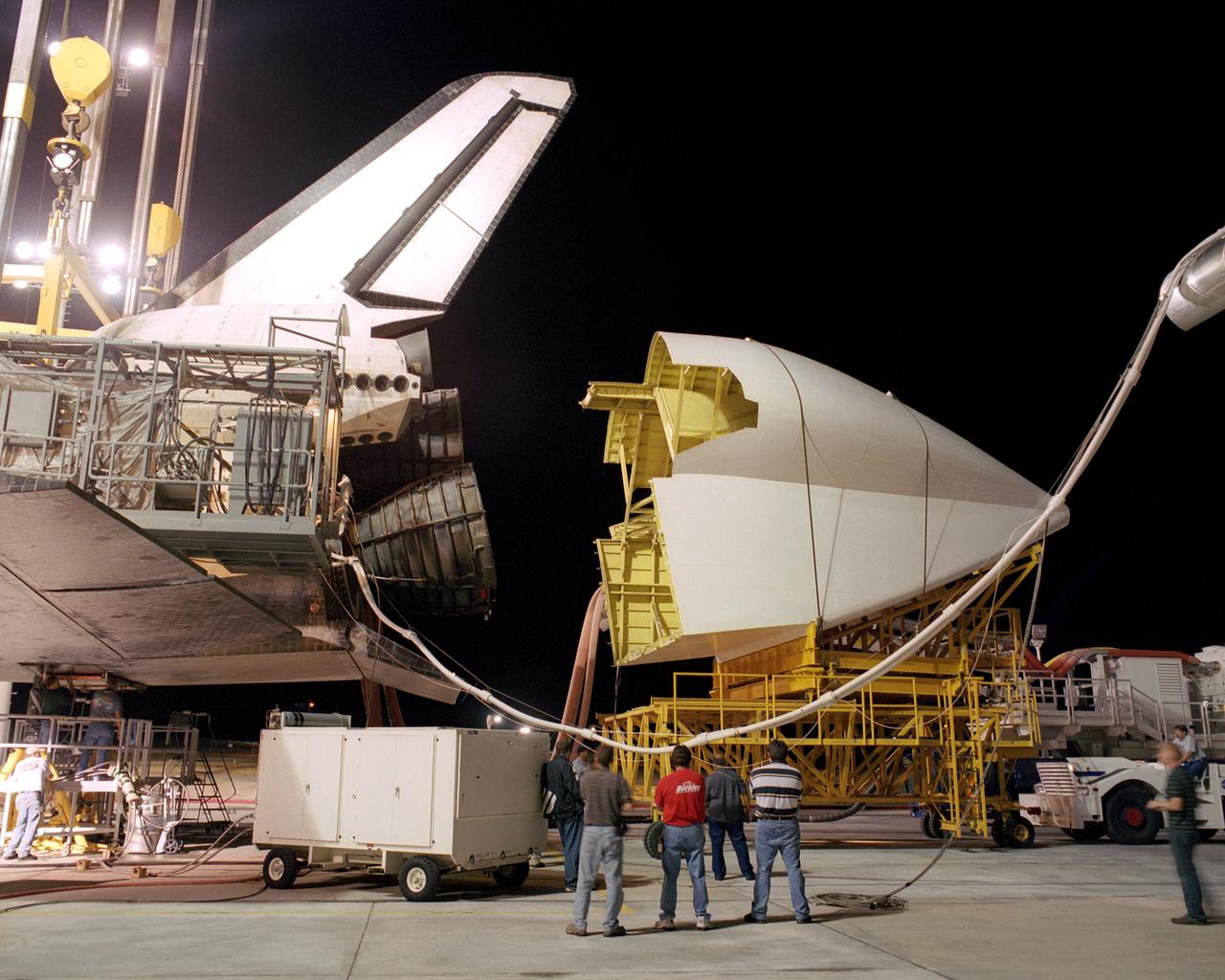
Workers position the tail cone on the Space Shuttle Discovery in preparation for its return to NASA's Kennedy Space Center in Florida. After the tail-cone is installed, Discovery will be mounted on NASA's modified Boeing 747 Shuttle Carrier Aircraft, or SCA, for the return flight. The tail cone is a fitting that helps reduce aerodynamic drag and turbulence during its ferry flight. Space Shuttle Discovery landed safely at NASA's Dryden Flight Research Center at Edwards Air Force Base in California at 5:11:22 a.m. PDT, August 9, 2005, following the very successful 14-day STS-114 return to flight mission. During their two weeks in space, Commander Eileen Collins and her six crewmates tested out new safety procedures and delivered supplies and equipment the International Space Station. Discovery spent two weeks in space, where the crew demonstrated new methods to inspect and repair the Shuttle in orbit. The crew also delivered supplies, outfitted and performed maintenance on the International Space Station. A number of these tasks were conducted during three spacewalks. In an unprecedented event, spacewalkers were called upon to remove protruding gap fillers from the heat shield on Discovery's underbelly. In other spacewalk activities, astronauts installed an external platform onto the Station's Quest Airlock and replaced one of the orbital outpost's Control Moment Gyroscopes. Inside the Station, the STS-114 crew conducted joint operations with the Expedition 11 crew. They unloaded fresh supplies from the Shuttle and the Raffaello Multi-Purpose Logistics Module. Before Discovery undocked, the crews filled Raffeallo with unneeded items and returned to Shuttle payload bay. Discovery launched on July 26 and spent almost 14 days on orbit.
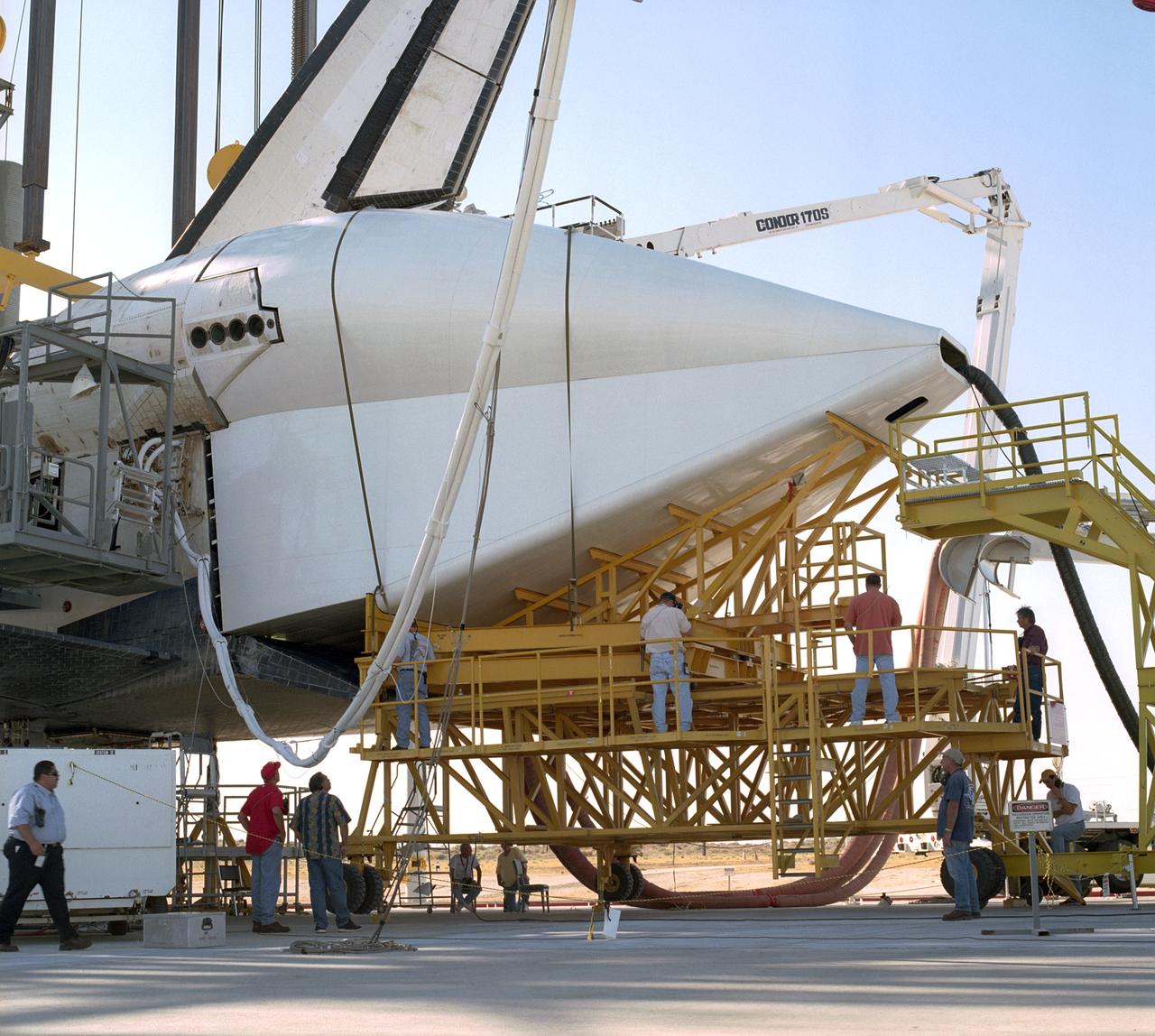
Technicians attach the tail cone, which helps reduce aerodynamic drag and turbulence during its ferry flight, to the Space Shuttle Discovery in preparation for its return to NASA's Kennedy Space Center in Florida. After the tail-cone is installed, Discovery will be mounted on NASA's modified Boeing 747 Shuttle Carrier Aircraft, or SCA, for the return flight. Space Shuttle Discovery landed safely at NASA's Dryden Flight Research Center at Edwards Air Force Base in California at 5:11:22 a.m. PDT, August 9, 2005, following the very successful 14-day STS-114 return to flight mission. During their two weeks in space, Commander Eileen Collins and her six crewmates tested out new safety procedures and delivered supplies and equipment the International Space Station. Discovery spent two weeks in space, where the crew demonstrated new methods to inspect and repair the Shuttle in orbit. The crew also delivered supplies, outfitted and performed maintenance on the International Space Station. A number of these tasks were conducted during three spacewalks. In an unprecedented event, spacewalkers were called upon to remove protruding gap fillers from the heat shield on Discovery's underbelly. In other spacewalk activities, astronauts installed an external platform onto the Station's Quest Airlock and replaced one of the orbital outpost's Control Moment Gyroscopes. Inside the Station, the STS-114 crew conducted joint operations with the Expedition 11 crew. They unloaded fresh supplies from the Shuttle and the Raffaello Multi-Purpose Logistics Module. Before Discovery undocked, the crews filled Raffeallo with unneeded items and returned to Shuttle payload bay. Discovery launched on July 26 and spent almost 14 days on orbit.
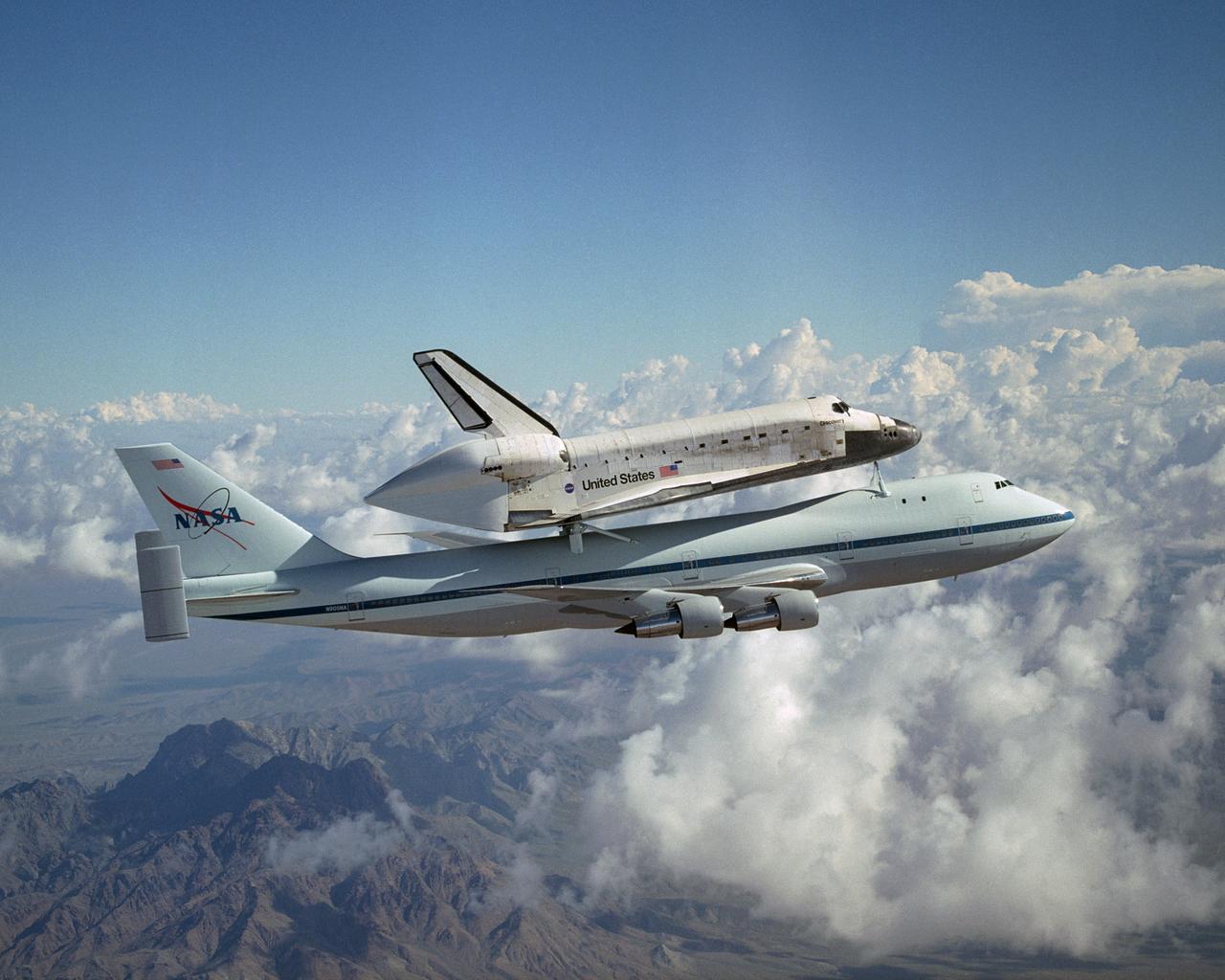
The Space Shuttle Discovery hitched a ride on NASA's modified Boeing 747 Shuttle Carrier Aircraft for the flight from the Dryden Flight Research Center in California, to Kennedy Space Center, Florida, on August 19, 2005. The cross-country ferry flight to return Discovery to Florida after it's landing in California will take two days, with stops at several intermediate points for refueling. Space Shuttle Discovery landed safely at NASA's Dryden Flight Research Center at Edwards Air Force Base in California at 5:11:22 a.m. PDT, August 9, 2005, following the very successful 14-day STS-114 return to flight mission. During their two weeks in space, Commander Eileen Collins and her six crewmates tested out new safety procedures and delivered supplies and equipment the International Space Station. Discovery spent two weeks in space, where the crew demonstrated new methods to inspect and repair the Shuttle in orbit. The crew also delivered supplies, outfitted and performed maintenance on the International Space Station. A number of these tasks were conducted during three spacewalks. In an unprecedented event, spacewalkers were called upon to remove protruding gap fillers from the heat shield on Discovery's underbelly. In other spacewalk activities, astronauts installed an external platform onto the Station's Quest Airlock and replaced one of the orbital outpost's Control Moment Gyroscopes. Inside the Station, the STS-114 crew conducted joint operations with the Expedition 11 crew. They unloaded fresh supplies from the Shuttle and the Raffaello Multi-Purpose Logistics Module. Before Discovery undocked, the crews filled Raffeallo with unneeded items and returned to Shuttle payload bay. Discovery launched on July 26 and spent almost 14 days on orbit.

Jarod Ondas (left), of Virginia, and his brother Austin, watch as space shuttle Discovery approaches the National Air and Space Museum’s Steven F. Udvar-Hazy Center for its fly-over, Tuesday, April 17, 2012, in Chantilly, Va. Discovery, the first orbiter retired from NASA’s shuttle fleet, completed 39 missions, spent 365 days in space, orbited the Earth 5,830 times, and traveled 148,221,675 miles. NASA will transfer Discovery to the National Air and Space Museum to begin its new mission to commemorate past achievements in space and to educate and inspire future generations of explorers. Photo Credit: (NASA/Carla Cioffi)
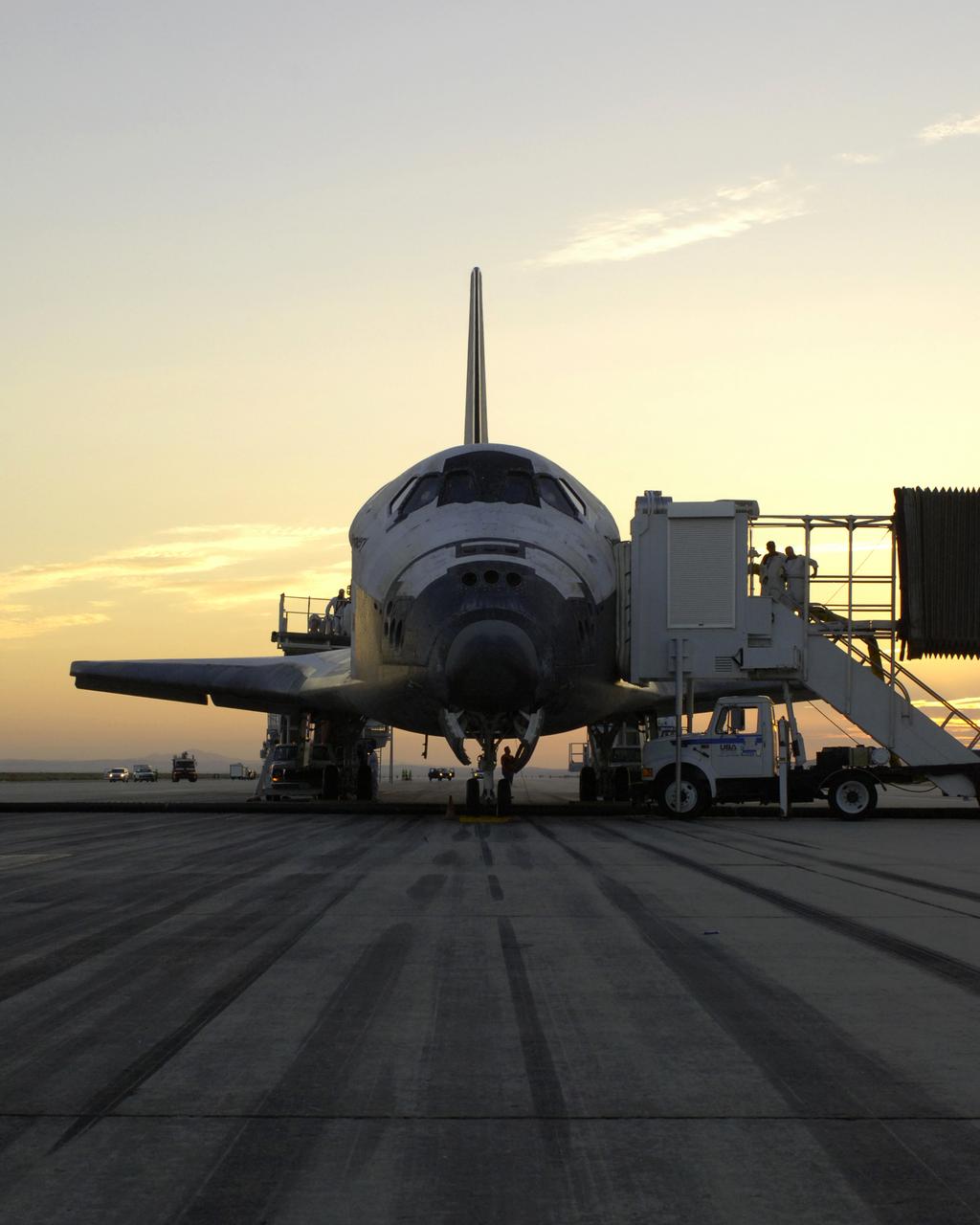
The sun rises on the Space Shuttle Discovery as it rests on the runway at Edwards Air Force Base, California, after a safe landing August 9, 2005 to complete the STS-114 mission. Space Shuttle Discovery landed safely at NASA's Dryden Flight Research Center at Edwards Air Force Base in California at 5:11:22 a.m. PDT this morning, following the very successful 14-day STS-114 return to flight mission. During their two weeks in space, Commander Eileen Collins and her six crewmates tested out new safety procedures and delivered supplies and equipment the International Space Station. Discovery spent two weeks in space, where the crew demonstrated new methods to inspect and repair the Shuttle in orbit. The crew also delivered supplies, outfitted and performed maintenance on the International Space Station. A number of these tasks were conducted during three spacewalks. In an unprecedented event, spacewalkers were called upon to remove protruding gap fillers from the heat shield on Discovery's underbelly. In other spacewalk activities, astronauts installed an external platform onto the Station's Quest Airlock and replaced one of the orbital outpost's Control Moment Gyroscopes. Inside the Station, the STS-114 crew conducted joint operations with the Expedition 11 crew. They unloaded fresh supplies from the Shuttle and the Raffaello Multi-Purpose Logistics Module. Before Discovery undocked, the crews filled Raffeallo with unneeded items and returned to Shuttle payload bay. Discovery launched on July 26 and spent almost 14 days on orbit.
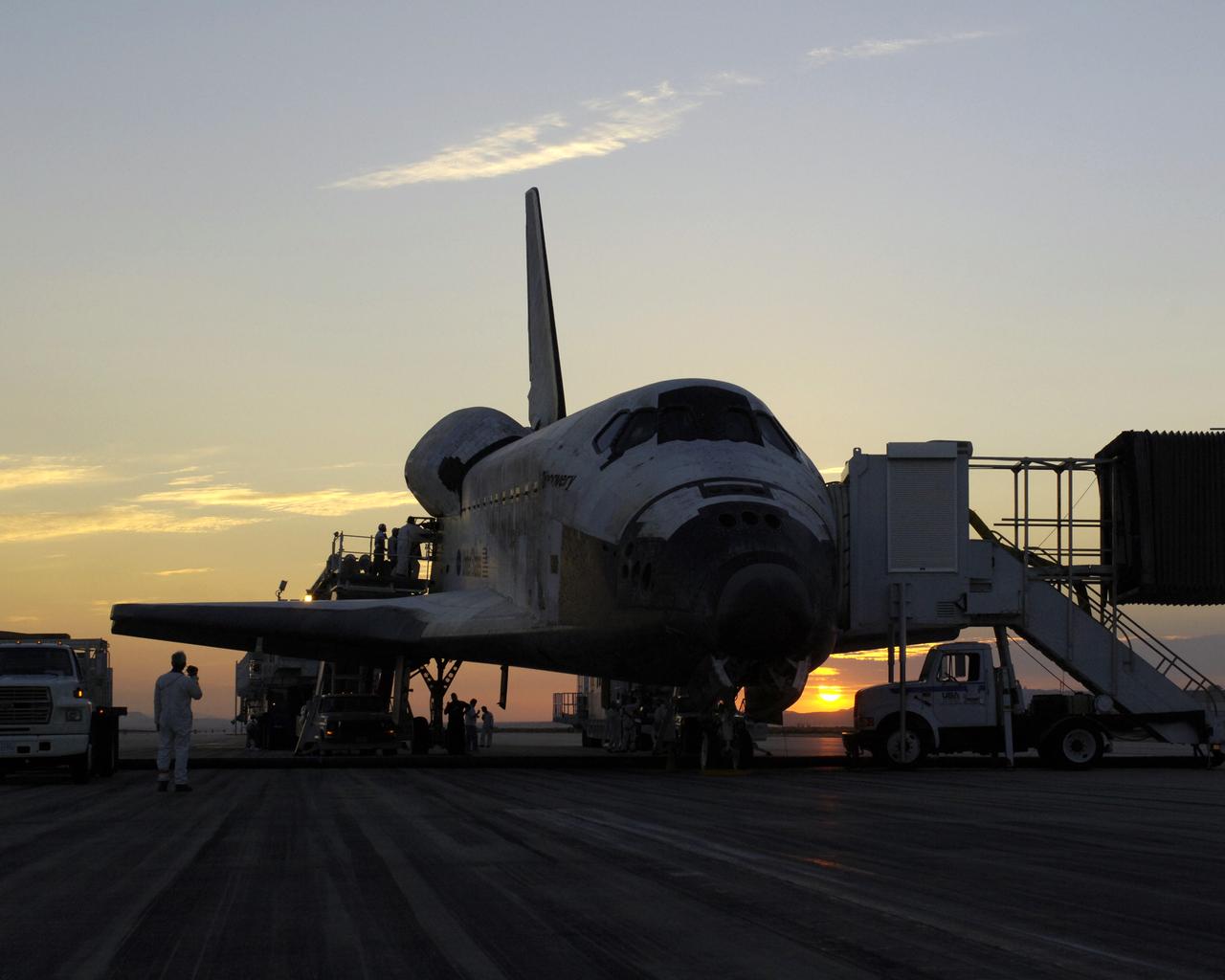
The sun rises on the Space Shuttle Discovery as it rests on the runway at Edwards Air Force Base, California, after a safe landing August 9, 2005 to complete the STS-114 mission. Space Shuttle Discovery landed safely at NASA's Dryden Flight Research Center at Edwards Air Force Base in California at 5:11:22 a.m. PDT this morning, following the very successful 14-day STS-114 return to flight mission. During their two weeks in space, Commander Eileen Collins and her six crewmates tested out new safety procedures and delivered supplies and equipment the International Space Station. Discovery spent two weeks in space, where the crew demonstrated new methods to inspect and repair the Shuttle in orbit. The crew also delivered supplies, outfitted and performed maintenance on the International Space Station. A number of these tasks were conducted during three spacewalks. In an unprecedented event, spacewalkers were called upon to remove protruding gap fillers from the heat shield on Discovery's underbelly. In other spacewalk activities, astronauts installed an external platform onto the Station's Quest Airlock and replaced one of the orbital outpost's Control Moment Gyroscopes. Inside the Station, the STS-114 crew conducted joint operations with the Expedition 11 crew. They unloaded fresh supplies from the Shuttle and the Raffaello Multi-Purpose Logistics Module. Before Discovery undocked, the crews filled Raffeallo with unneeded items and returned to Shuttle payload bay. Discovery launched on July 26 and spent almost 14 days on orbit.
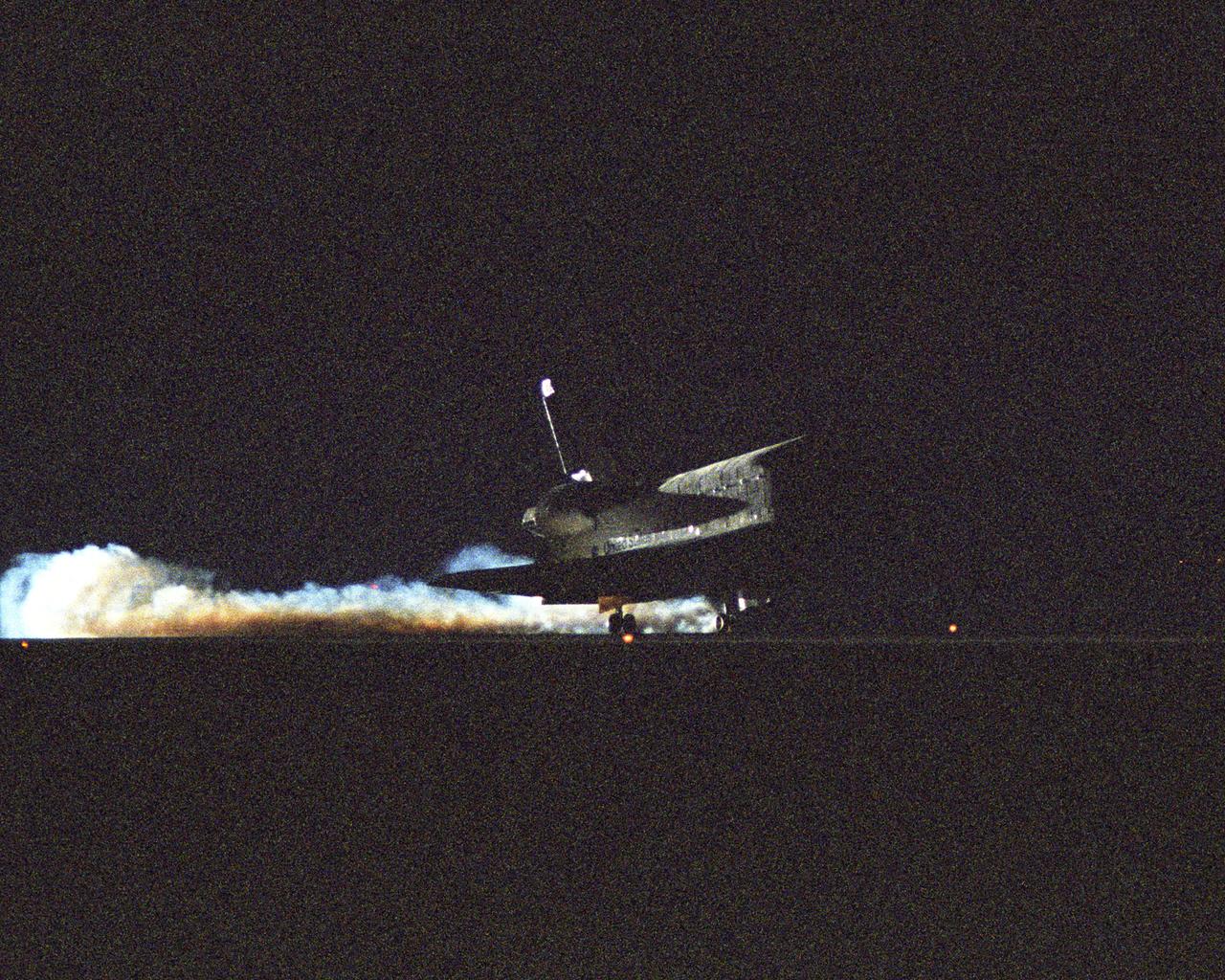
Space Shuttle Discovery landed safely at NASA's Dryden Flight Research Center at Edwards Air Force Base in Calif. at 5:11:22 a.m. PDT this morning, following the very successful 14-day STS-114 return to flight mission. During their two weeks in space, Commander Eileen Collins and her six crewmates tested out new safety procedures and delivered supplies and equipment the International Space Station. Discovery spent two weeks in space, where the crew demonstrated new methods to inspect and repair the Shuttle in orbit. The crew also delivered supplies, outfitted and performed maintenance on the International Space Station. A number of these tasks were conducted during three spacewalks. In an unprecedented event, spacewalkers were called upon to remove protruding gap fillers from the heat shield on Discovery's underbelly. In other spacewalk activities, astronauts installed an external platform onto the Station's Quest Airlock and replaced one of the orbital outpost's Control Moment Gyroscopes. Inside the Station, the STS-114 crew conducted joint operations with the Expedition 11 crew. They unloaded fresh supplies from the Shuttle and the Raffaello Multi-Purpose Logistics Module. Before Discovery undocked, the crews filled Raffeallo with unneeded items and returned to Shuttle payload bay. Discovery launched on July 26 and spent almost 14 days on orbit.

Space Shuttle Discovery landed safely at NASA's Dryden Flight Research Center at Edwards Air Force Base in Calif. at 5:11:22 a.m. PDT this morning, following the very successful 14-day STS-114 return to flight mission. During their two weeks in space, Commander Eileen Collins and her six crewmates tested out new safety procedures and delivered supplies and equipment the International Space Station. Discovery spent two weeks in space, where the crew demonstrated new methods to inspect and repair the Shuttle in orbit. The crew also delivered supplies, outfitted and performed maintenance on the International Space Station. A number of these tasks were conducted during three spacewalks. In an unprecedented event, spacewalkers were called upon to remove protruding gap fillers from the heat shield on Discovery's underbelly. In other spacewalk activities, astronauts installed an external platform onto the Station's Quest Airlock and replaced one of the orbital outpost's Control Moment Gyroscopes. Inside the Station, the STS-114 crew conducted joint operations with the Expedition 11 crew. They unloaded fresh supplies from the Shuttle and the Raffaello Multi-Purpose Logistics Module. Before Discovery undocked, the crews filled Raffeallo with unneeded items and returned to Shuttle payload bay. Discovery launched on July 26 and spent almost 14 days on orbit.
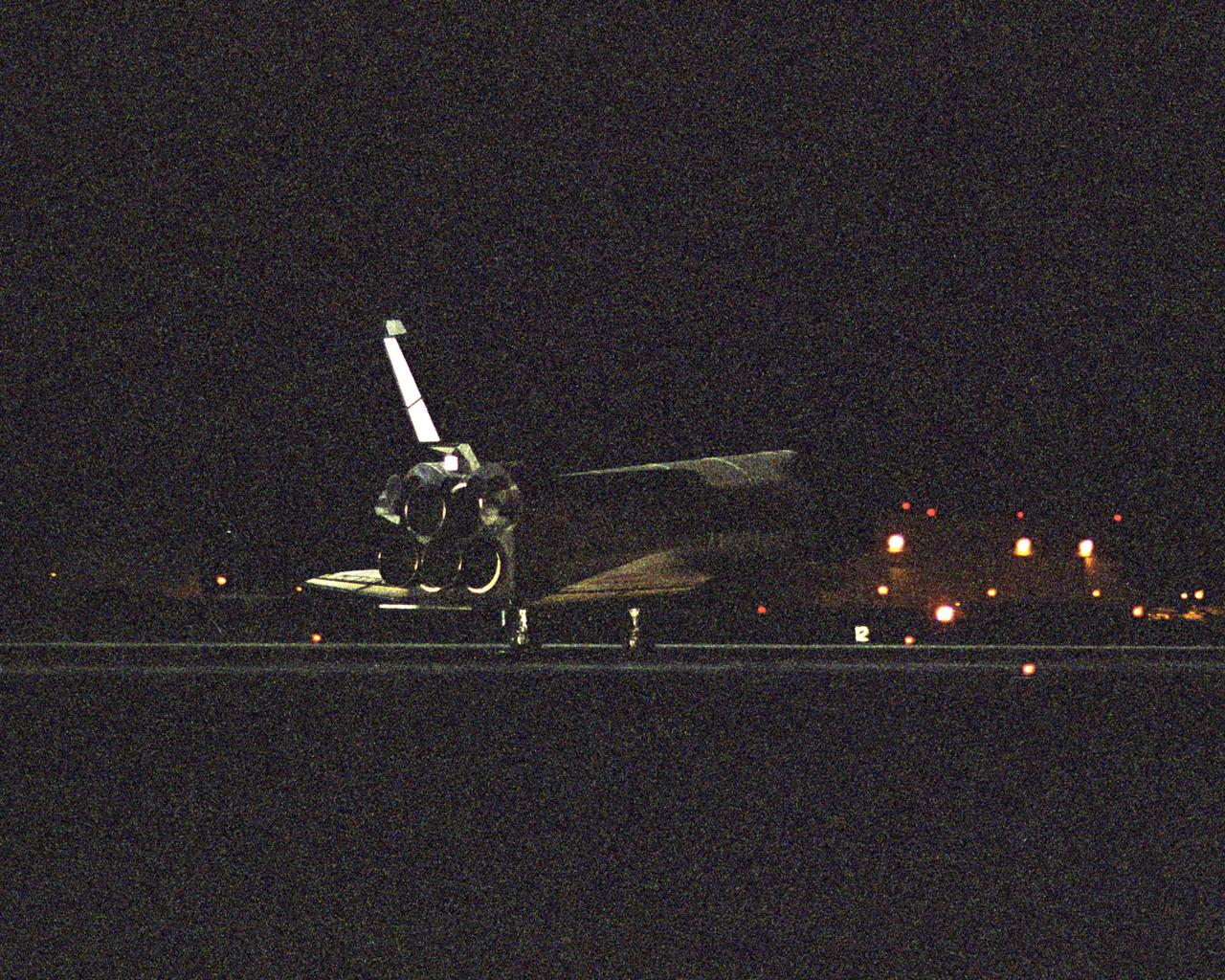
Space Shuttle Discovery landed safely at NASA's Dryden Flight Research Center at Edwards Air Force Base in Calif. at 5:11:22 a.m. PDT this morning, following the very successful 14-day STS-114 return to flight mission. During their two weeks in space, Commander Eileen Collins and her six crewmates tested out new safety procedures and delivered supplies and equipment the International Space Station. Discovery spent two weeks in space, where the crew demonstrated new methods to inspect and repair the Shuttle in orbit. The crew also delivered supplies, outfitted and performed maintenance on the International Space Station. A number of these tasks were conducted during three spacewalks. In an unprecedented event, spacewalkers were called upon to remove protruding gap fillers from the heat shield on Discovery's underbelly. In other spacewalk activities, astronauts installed an external platform onto the Station's Quest Airlock and replaced one of the orbital outpost's Control Moment Gyroscopes. Inside the Station, the STS-114 crew conducted joint operations with the Expedition 11 crew. They unloaded fresh supplies from the Shuttle and the Raffaello Multi-Purpose Logistics Module. Before Discovery undocked, the crews filled Raffeallo with unneeded items and returned to Shuttle payload bay. Discovery launched on July 26 and spent almost 14 days on orbit.
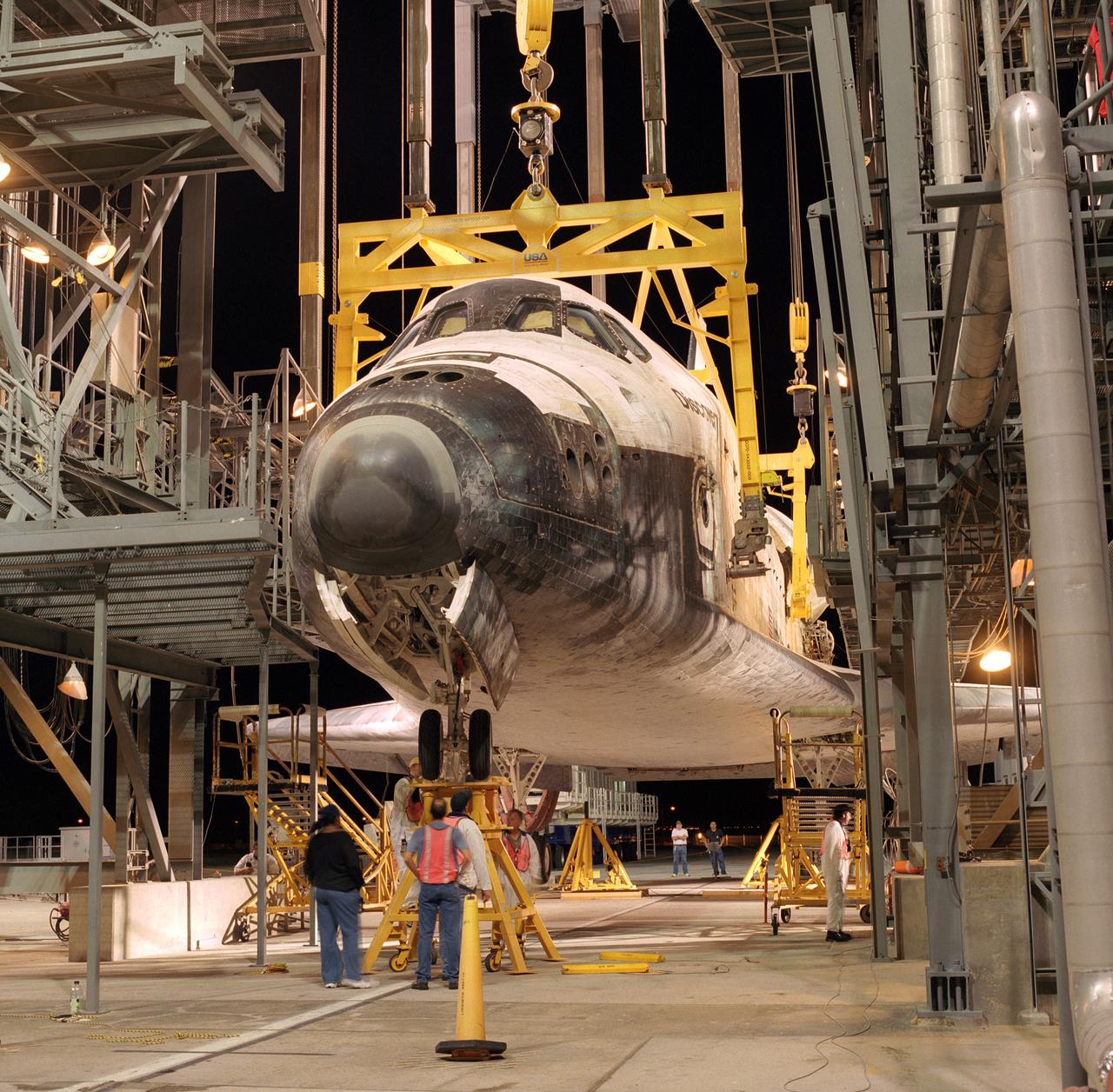
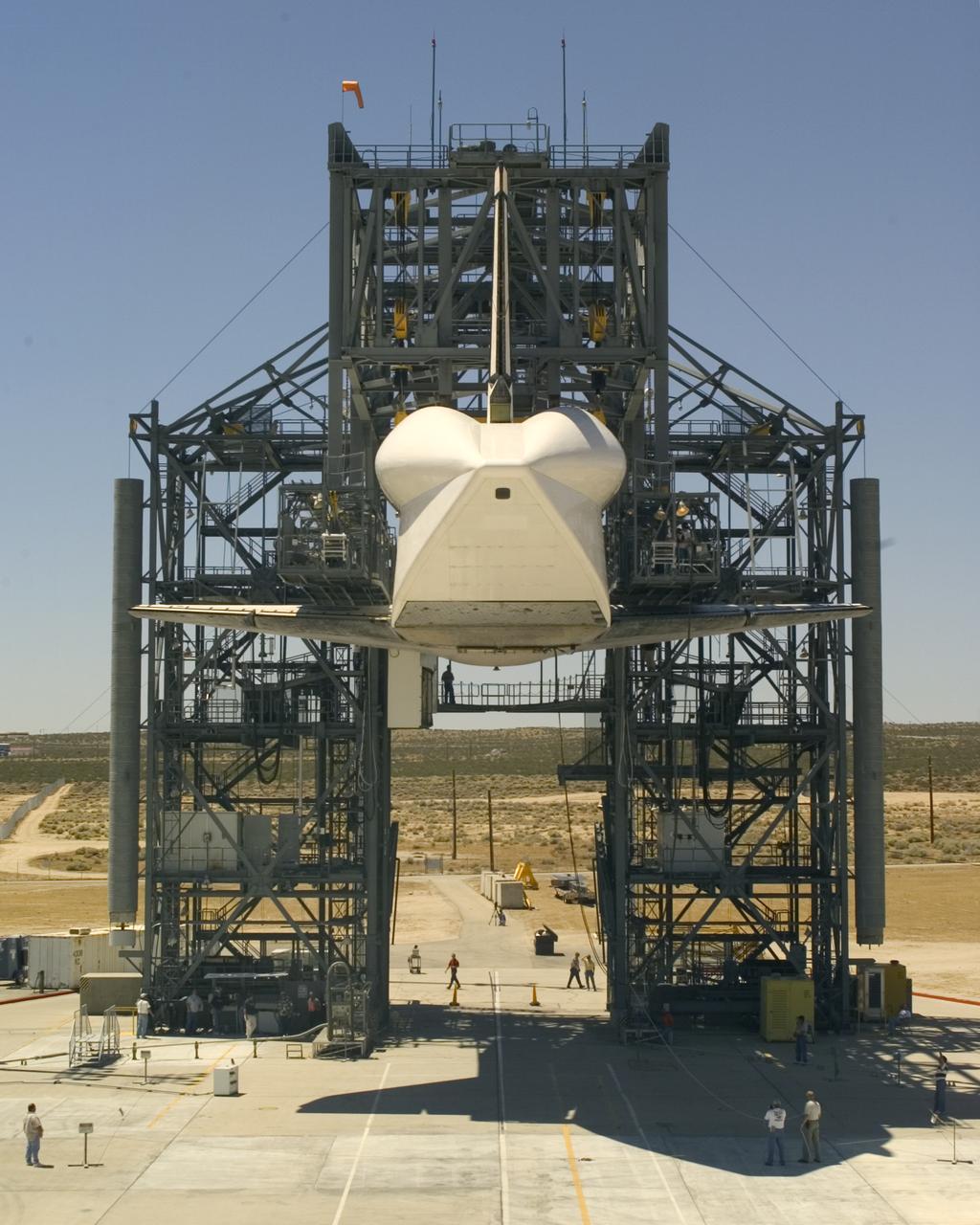
The Space Shuttle Discovery receives post-flight servicing in the Mate-Demate Device (MDD), following its landing at NASA's Dryden Flight Research Center, Edwards, California, August 9, 2005. The gantry-like MDD structure is used for servicing the shuttle orbiters in preparation for their ferry flight back to the Kennedy Space Center in Florida, including mounting the shuttle atop NASA's modified Boeing 747 Shuttle Carrier Aircraft. Space Shuttle Discovery landed safely at NASA's Dryden Flight Research Center at Edwards Air Force Base in California at 5:11:22 a.m. PDT this morning, following the very successful 14-day STS-114 return to flight mission. During their two weeks in space, Commander Eileen Collins and her six crewmates tested out new safety procedures and delivered supplies and equipment the International Space Station. Discovery spent two weeks in space, where the crew demonstrated new methods to inspect and repair the Shuttle in orbit. The crew also delivered supplies, outfitted and performed maintenance on the International Space Station. A number of these tasks were conducted during three spacewalks. In an unprecedented event, spacewalkers were called upon to remove protruding gap fillers from the heat shield on Discovery's underbelly. In other spacewalk activities, astronauts installed an external platform onto the Station's Quest Airlock and replaced one of the orbital outpost's Control Moment Gyroscopes. Inside the Station, the STS-114 crew conducted joint operations with the Expedition 11 crew. They unloaded fresh supplies from the Shuttle and the Raffaello Multi-Purpose Logistics Module. Before Discovery undocked, the crews filled Raffeallo with unneeded items and returned to Shuttle payload bay. Discovery launched on July 26 and spent almost 14 days on orbit.
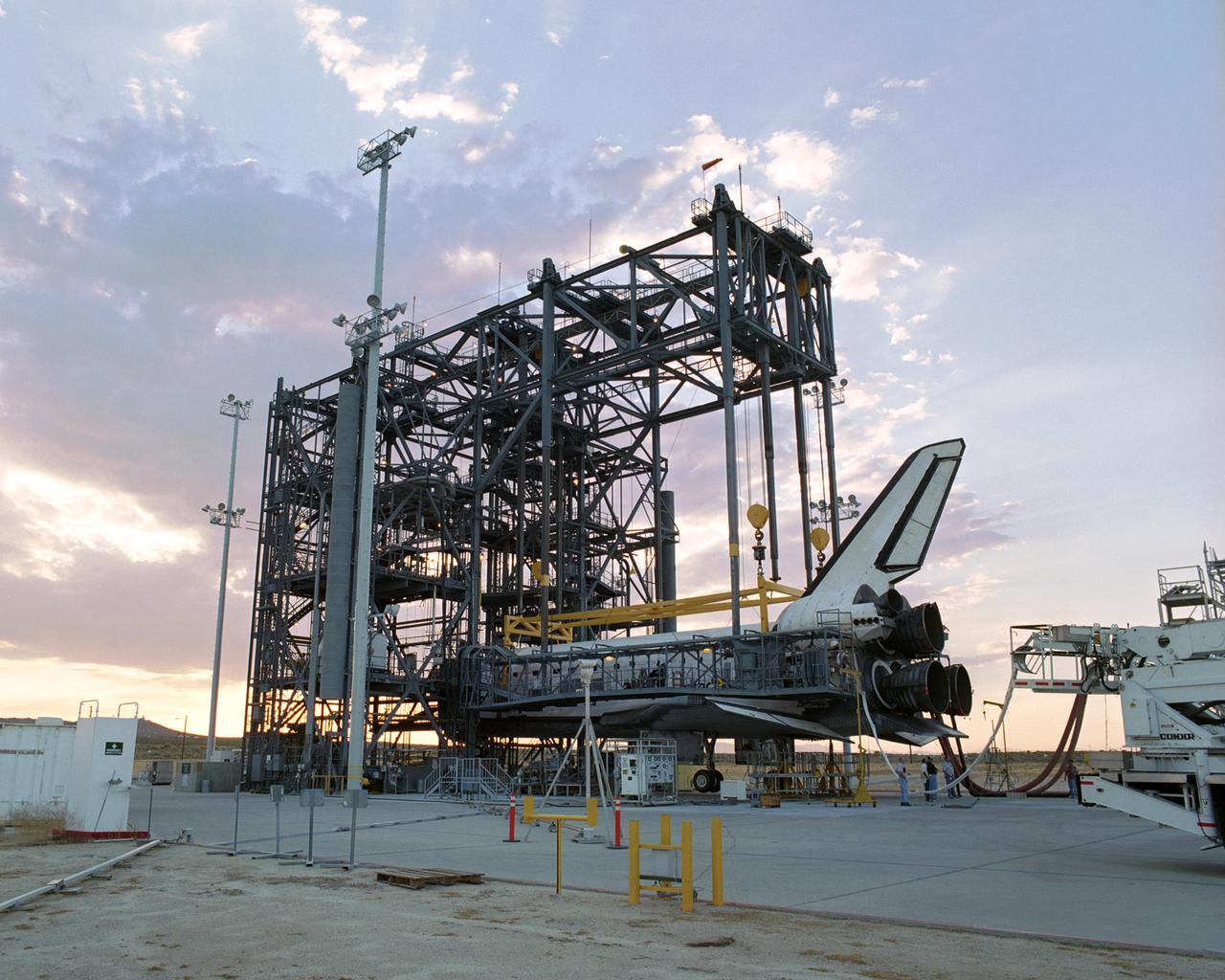
The sun sets on the Space Shuttle Discovery during post-flight processing in the Mate-Demate Device (MDD), following its landing at NASA's Dryden Flight Research Center in California. The gantry-like MDD structure is used for servicing the shuttle orbiters in preparation for their ferry flight back to the Kennedy Space Center in Florida, including mounting the shuttle atop NASA's modified Boeing 747 Shuttle Carrier Aircraft. Space Shuttle Discovery landed safely at NASA's Dryden Flight Research Center at Edwards Air Force Base in California at 5:11:22 a.m. PDT, August 9, 2005, following the very successful 14-day STS-114 return to flight mission. During their two weeks in space, Commander Eileen Collins and her six crewmates tested out new safety procedures and delivered supplies and equipment the International Space Station. Discovery spent two weeks in space, where the crew demonstrated new methods to inspect and repair the Shuttle in orbit. The crew also delivered supplies, outfitted and performed maintenance on the International Space Station. A number of these tasks were conducted during three spacewalks. In an unprecedented event, spacewalkers were called upon to remove protruding gap fillers from the heat shield on Discovery's underbelly. In other spacewalk activities, astronauts installed an external platform onto the Station's Quest Airlock and replaced one of the orbital outpost's Control Moment Gyroscopes. Inside the Station, the STS-114 crew conducted joint operations with the Expedition 11 crew. They unloaded fresh supplies from the Shuttle and the Raffaello Multi-Purpose Logistics Module. Before Discovery undocked, the crews filled Raffeallo with unneeded items and returned to Shuttle payload bay. Discovery launched on July 26 and spent almost 14 days on orbit.
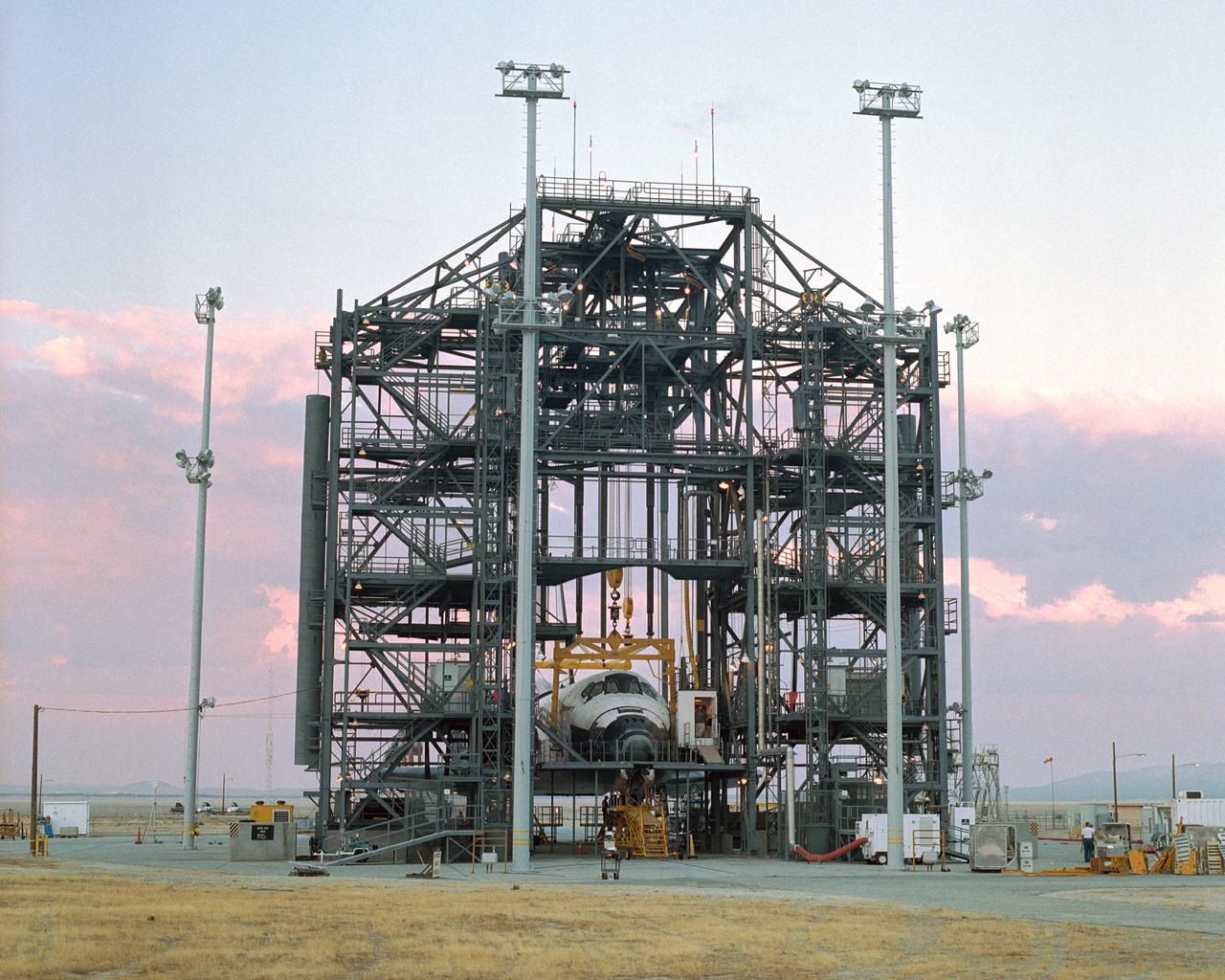
The sun sets on the Space Shuttle Discovery during post-flight processing in the Mate-Demate Device (MDD), following its landing at NASA's Dryden Flight Research Center in California. The gantry-like MDD structure is used for servicing the shuttle orbiters in preparation for their ferry flight back to the Kennedy Space Center in Florida, including mounting the shuttle atop NASA's modified Boeing 747 Shuttle Carrier Aircraft. Space Shuttle Discovery landed safely at NASA's Dryden Flight Research Center at Edwards Air Force Base in California at 5:11:22 a.m. PDT, August 9, 2005, following the very successful 14-day STS-114 return to flight mission. During their two weeks in space, Commander Eileen Collins and her six crewmates tested out new safety procedures and delivered supplies and equipment the International Space Station. Discovery spent two weeks in space, where the crew demonstrated new methods to inspect and repair the Shuttle in orbit. The crew also delivered supplies, outfitted and performed maintenance on the International Space Station. A number of these tasks were conducted during three spacewalks. In an unprecedented event, spacewalkers were called upon to remove protruding gap fillers from the heat shield on Discovery's underbelly. In other spacewalk activities, astronauts installed an external platform onto the Station's Quest Airlock and replaced one of the orbital outpost's Control Moment Gyroscopes. Inside the Station, the STS-114 crew conducted joint operations with the Expedition 11 crew. They unloaded fresh supplies from the Shuttle and the Raffaello Multi-Purpose Logistics Module. Before Discovery undocked, the crews filled Raffeallo with unneeded items and returned to Shuttle payload bay. Discovery launched on July 26 and spent almost 14 days on orbit.
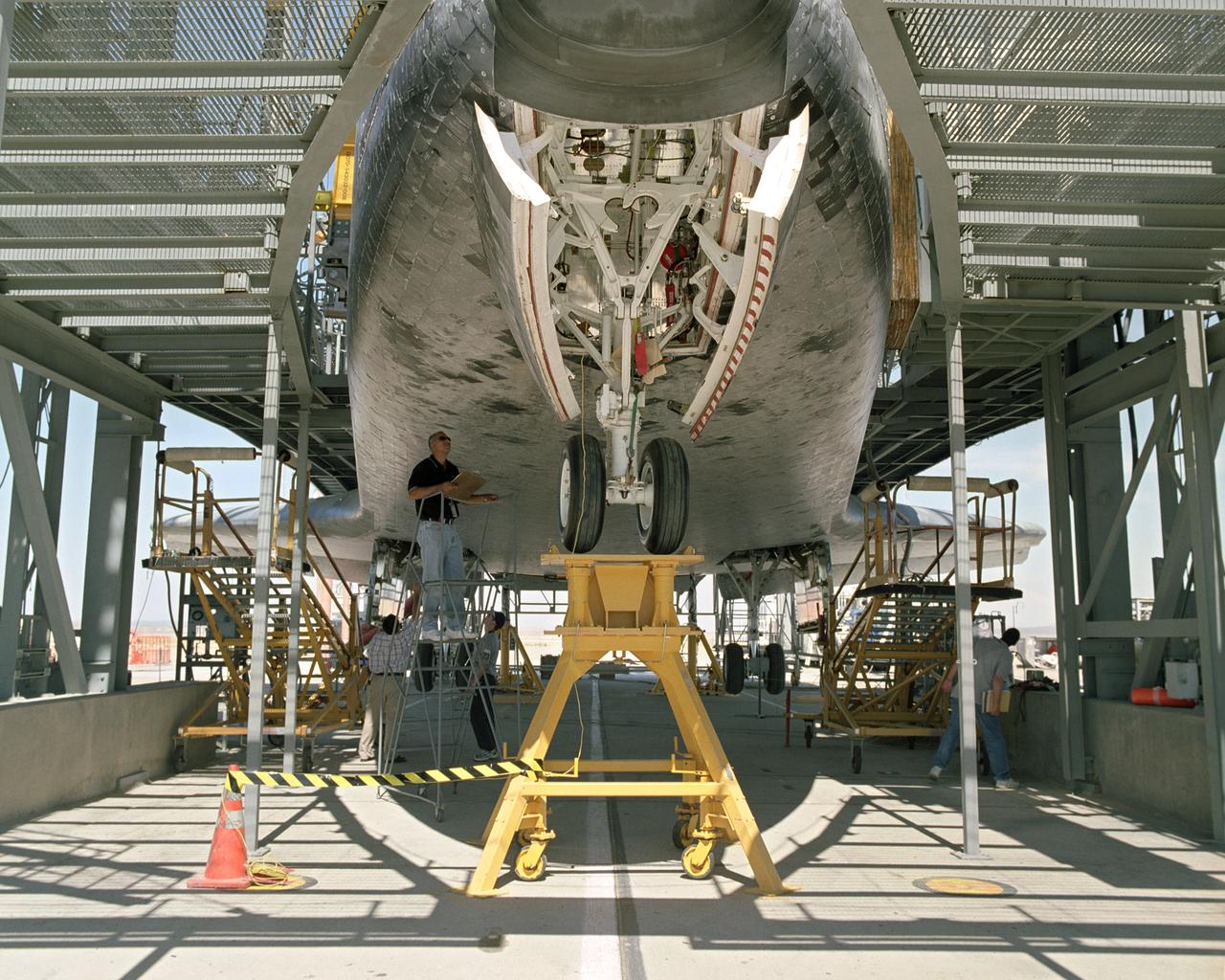
The Space Shuttle Discovery receives post-flight servicing in the Mate-Demate Device (MDD), following its landing at NASA's Dryden Flight Research Center, Edwards, California, August 9, 2005. The gantry-like MDD structure is used for servicing the shuttle orbiters in preparation for their ferry flight back to the Kennedy Space Center in Florida, including mounting the shuttle atop NASA's modified Boeing 747 Shuttle Carrier Aircraft. Space Shuttle Discovery landed safely at NASA's Dryden Flight Research Center at Edwards Air Force Base in California at 5:11:22 a.m. PDT, August 9, 2005, following the very successful 14-day STS-114 return to flight mission. During their two weeks in space, Commander Eileen Collins and her six crewmates tested out new safety procedures and delivered supplies and equipment the International Space Station. Discovery spent two weeks in space, where the crew demonstrated new methods to inspect and repair the Shuttle in orbit. The crew also delivered supplies, outfitted and performed maintenance on the International Space Station. A number of these tasks were conducted during three spacewalks. In an unprecedented event, spacewalkers were called upon to remove protruding gap fillers from the heat shield on Discovery's underbelly. In other spacewalk activities, astronauts installed an external platform onto the Station's Quest Airlock and replaced one of the orbital outpost's Control Moment Gyroscopes. Inside the Station, the STS-114 crew conducted joint operations with the Expedition 11 crew. They unloaded fresh supplies from the Shuttle and the Raffaello Multi-Purpose Logistics Module. Before Discovery undocked, the crews filled Raffeallo with unneeded items and returned to Shuttle payload bay. Discovery launched on July 26 and spent almost 14 days on orbit.
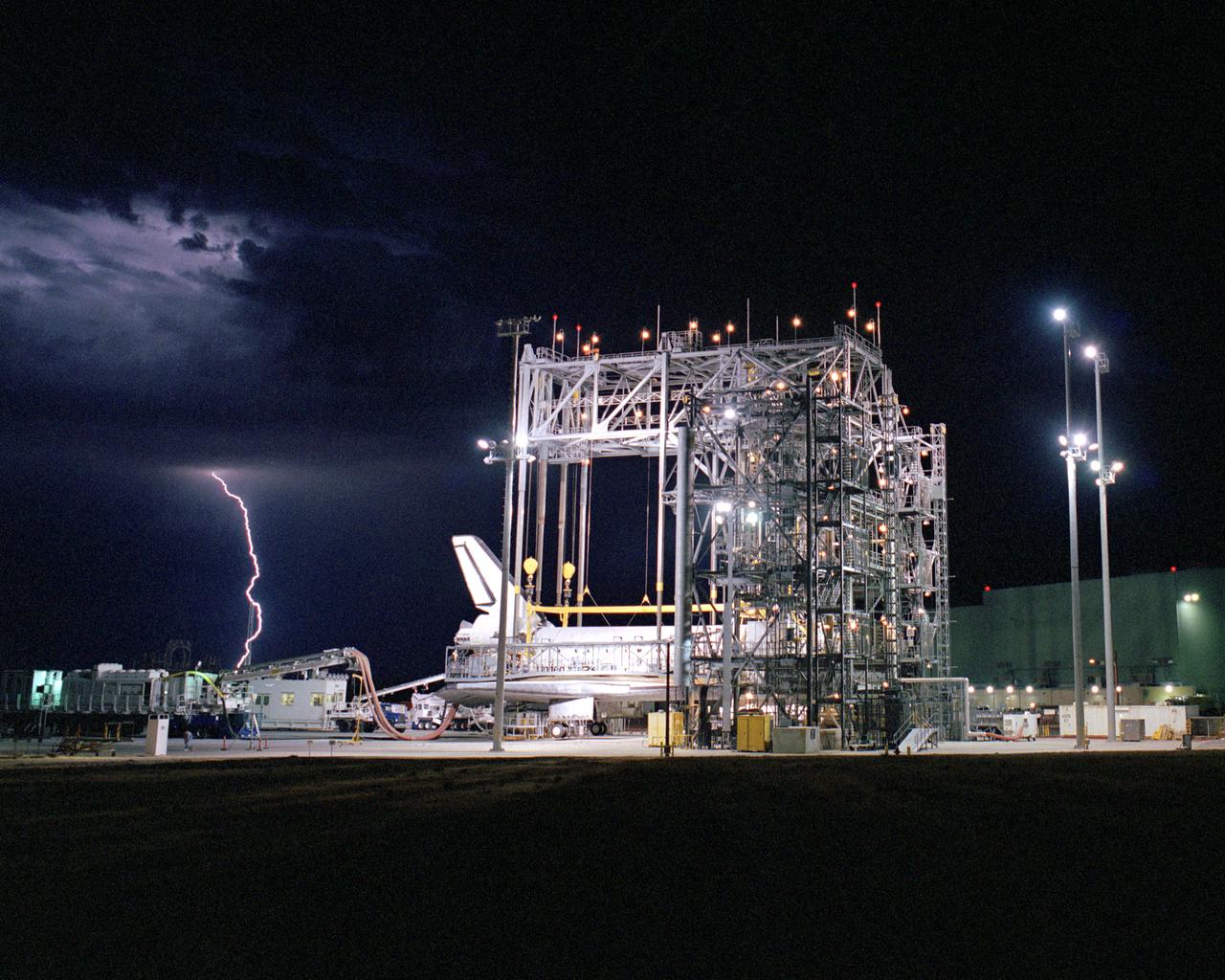
Lightning strikes in the distance as the Space Shuttle Discovery receives post-flight processing in the Mate-Demate Device (MDD), following its landing at NASA's Dryden Flight Research Center in California. The gantry-like MDD structure is used for servicing the shuttle orbiters in preparation for their ferry flight back to the Kennedy Space Center in Florida, including mounting the shuttle atop NASA's modified Boeing 747 Shuttle Carrier Aircraft. Space Shuttle Discovery landed safely at NASA's Dryden Flight Research Center at Edwards Air Force Base in California at 5:11:22 a.m. PDT, August 9, 2005, following the very successful 14-day STS-114 return to flight mission. During their two weeks in space, Commander Eileen Collins and her six crewmates tested out new safety procedures and delivered supplies and equipment the International Space Station. Discovery spent two weeks in space, where the crew demonstrated new methods to inspect and repair the Shuttle in orbit. The crew also delivered supplies, outfitted and performed maintenance on the International Space Station. A number of these tasks were conducted during three spacewalks. In an unprecedented event, spacewalkers were called upon to remove protruding gap fillers from the heat shield on Discovery's underbelly. In other spacewalk activities, astronauts installed an external platform onto the Station's Quest Airlock and replaced one of the orbital outpost's Control Moment Gyroscopes. Inside the Station, the STS-114 crew conducted joint operations with the Expedition 11 crew. They unloaded fresh supplies from the Shuttle and the Raffaello Multi-Purpose Logistics Module. Before Discovery undocked, the crews filled Raffeallo with unneeded items and returned to Shuttle payload bay. Discovery launched on July 26 and spent almost 14 days on orbit.
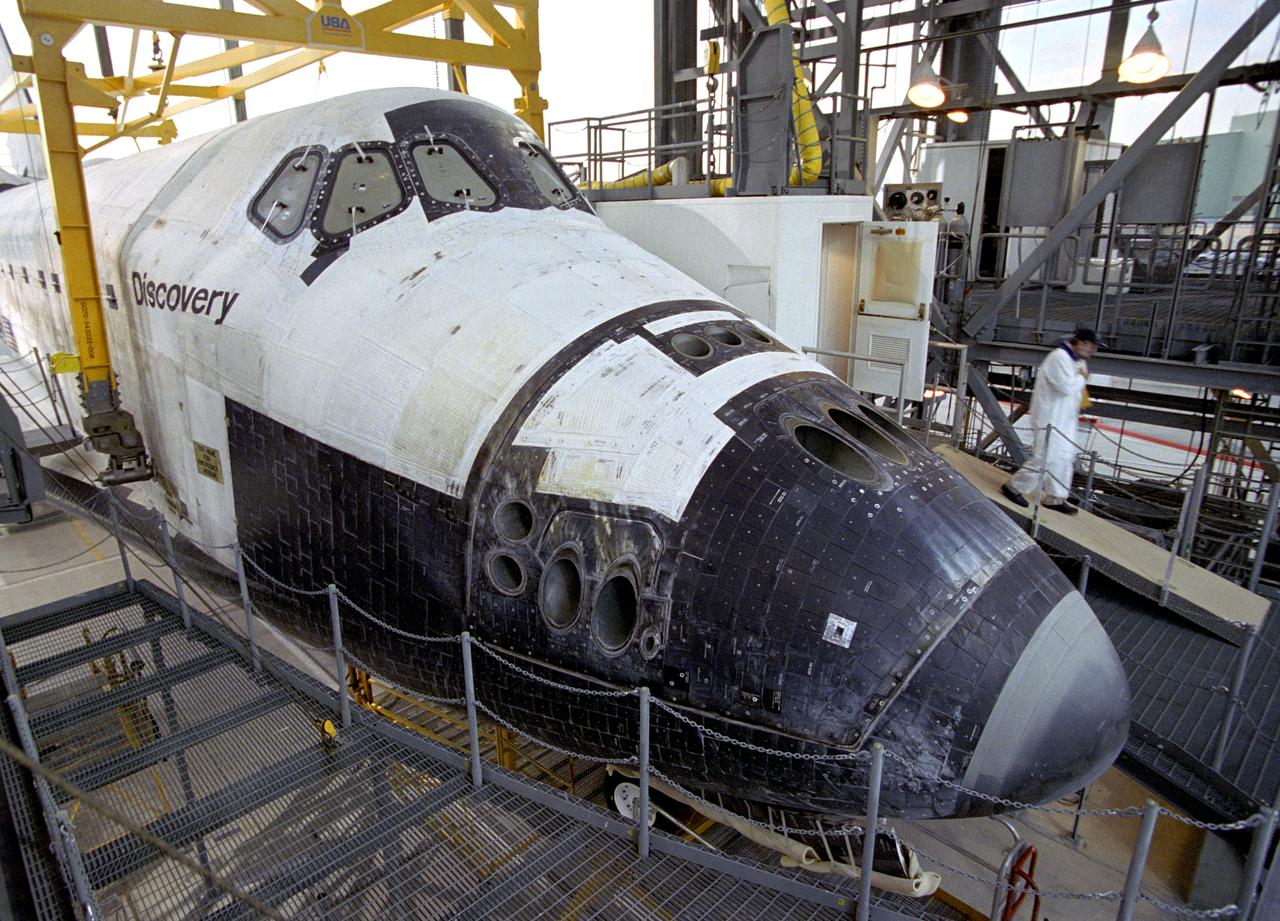
A technician leaves the 'white room', the access point for entering the Space Shuttle Discovery during post-flight processing in the Mate-Demate Device (MDD) at NASA's Dryden Flight Research Center in California. The gantry-like MDD structure is used for servicing the shuttle orbiters in preparation for their ferry flight back to the Kennedy Space Center in Florida, including mounting the shuttle atop NASA's modified Boeing 747 Shuttle Carrier Aircraft. Space Shuttle Discovery landed safely at NASA's Dryden Flight Research Center at Edwards Air Force Base in California at 5:11:22 a.m. PDT, August 9, 2005, following the very successful 14-day STS-114 return to flight mission. During their two weeks in space, Commander Eileen Collins and her six crewmates tested out new safety procedures and delivered supplies and equipment the International Space Station. Discovery spent two weeks in space, where the crew demonstrated new methods to inspect and repair the Shuttle in orbit. The crew also delivered supplies, outfitted and performed maintenance on the International Space Station. A number of these tasks were conducted during three spacewalks. In an unprecedented event, spacewalkers were called upon to remove protruding gap fillers from the heat shield on Discovery's underbelly. In other spacewalk activities, astronauts installed an external platform onto the Station's Quest Airlock and replaced one of the orbital outpost's Control Moment Gyroscopes. Inside the Station, the STS-114 crew conducted joint operations with the Expedition 11 crew. They unloaded fresh supplies from the Shuttle and the Raffaello Multi-Purpose Logistics Module. Before Discovery undocked, the crews filled Raffeallo with unneeded items and returned to Shuttle payload bay. Discovery launched on July 26 and spent almost 14 days on orbit.
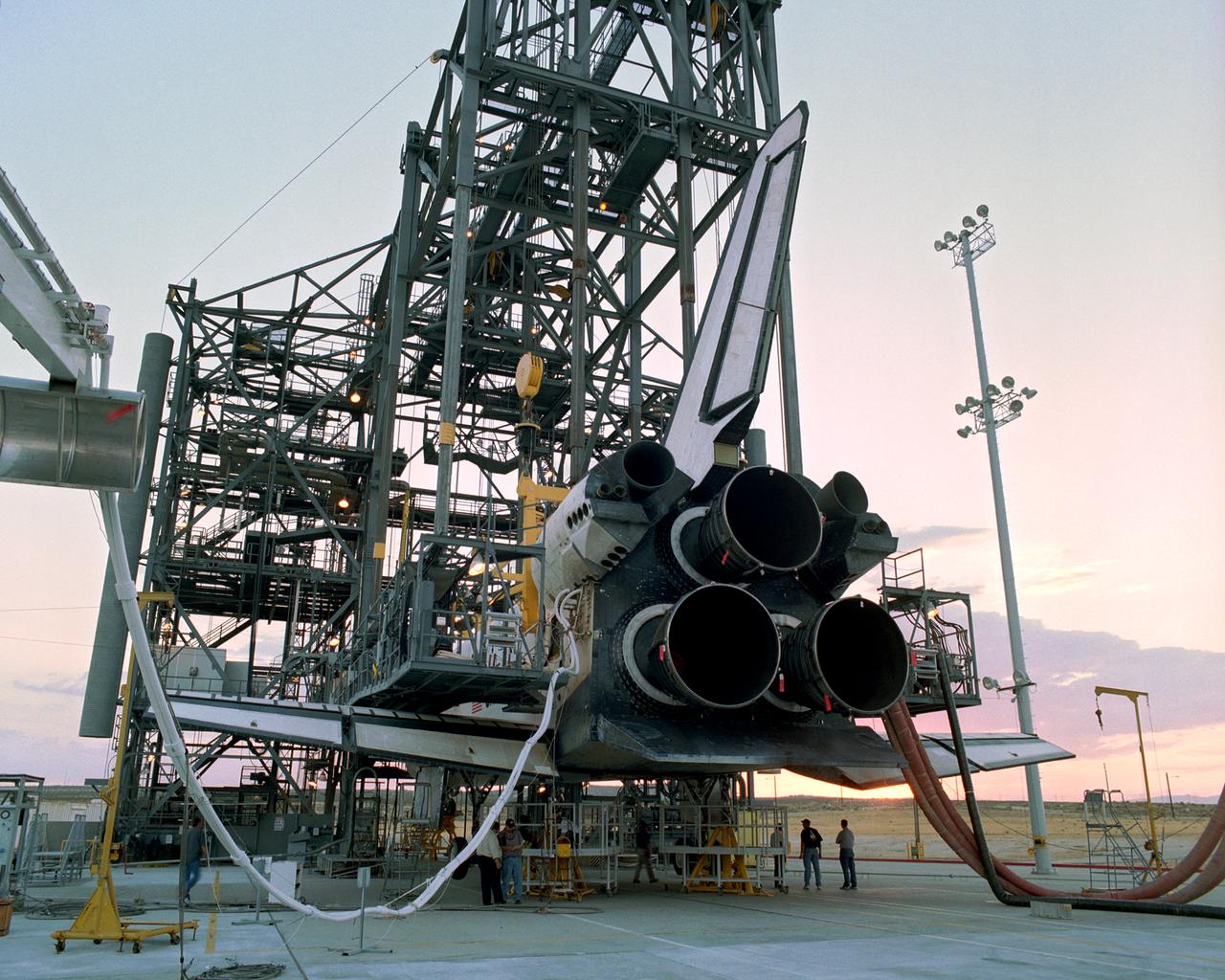
The sun sets on the Space Shuttle Discovery during post-flight processing in the Mate-Demate Device (MDD), following its landing at NASA's Dryden Flight Research Center in California. The gantry-like MDD structure is used for servicing the shuttle orbiters in preparation for their ferry flight back to the Kennedy Space Center in Florida, including mounting the shuttle atop NASA's modified Boeing 747 Shuttle Carrier Aircraft. Space Shuttle Discovery landed safely at NASA's Dryden Flight Research Center at Edwards Air Force Base in California at 5:11:22 a.m. PDT, August 9, 2005, following the very successful 14-day STS-114 return to flight mission. During their two weeks in space, Commander Eileen Collins and her six crewmates tested out new safety procedures and delivered supplies and equipment the International Space Station. Discovery spent two weeks in space, where the crew demonstrated new methods to inspect and repair the Shuttle in orbit. The crew also delivered supplies, outfitted and performed maintenance on the International Space Station. A number of these tasks were conducted during three spacewalks. In an unprecedented event, spacewalkers were called upon to remove protruding gap fillers from the heat shield on Discovery's underbelly. In other spacewalk activities, astronauts installed an external platform onto the Station's Quest Airlock and replaced one of the orbital outpost's Control Moment Gyroscopes. Inside the Station, the STS-114 crew conducted joint operations with the Expedition 11 crew. They unloaded fresh supplies from the Shuttle and the Raffaello Multi-Purpose Logistics Module. Before Discovery undocked, the crews filled Raffeallo with unneeded items and returned to Shuttle payload bay. Discovery launched on July 26 and spent almost 14 days on orbit.
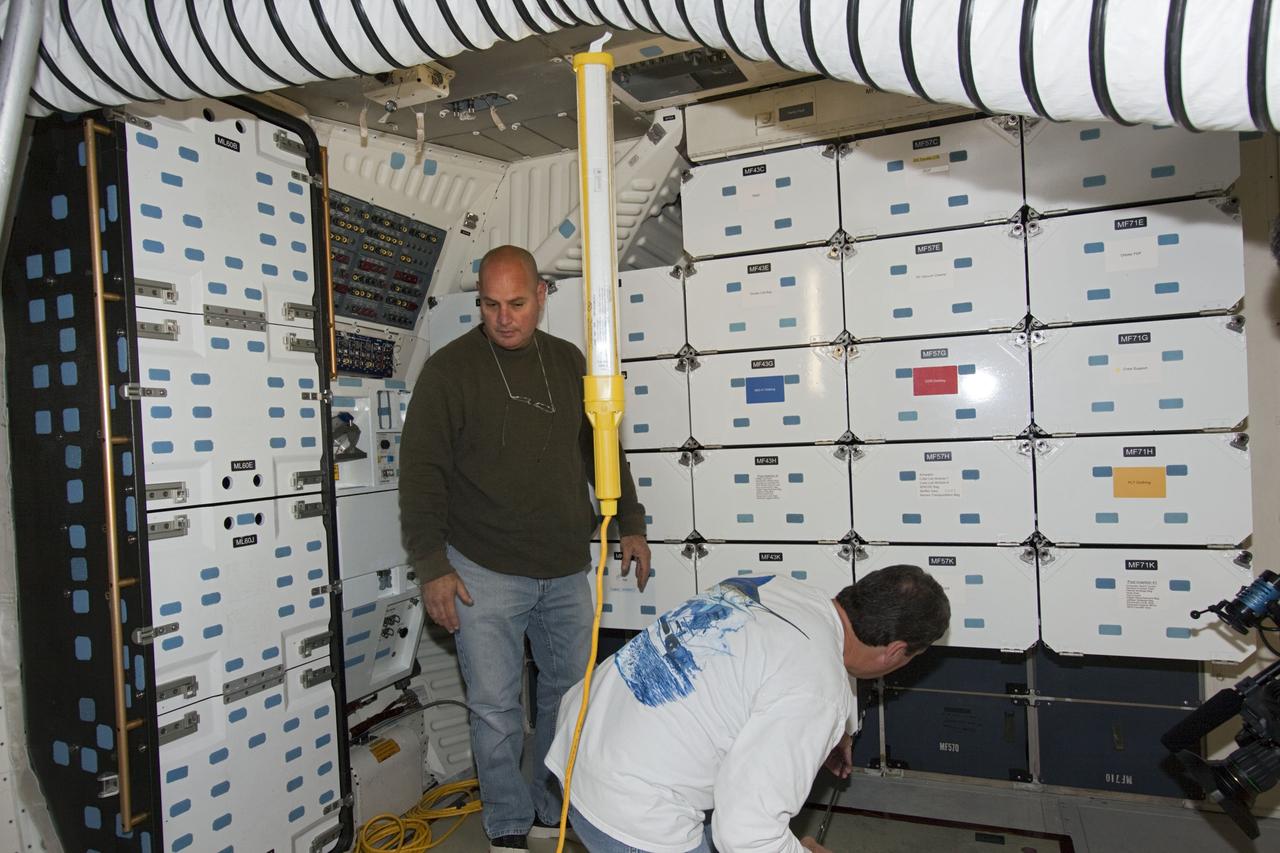
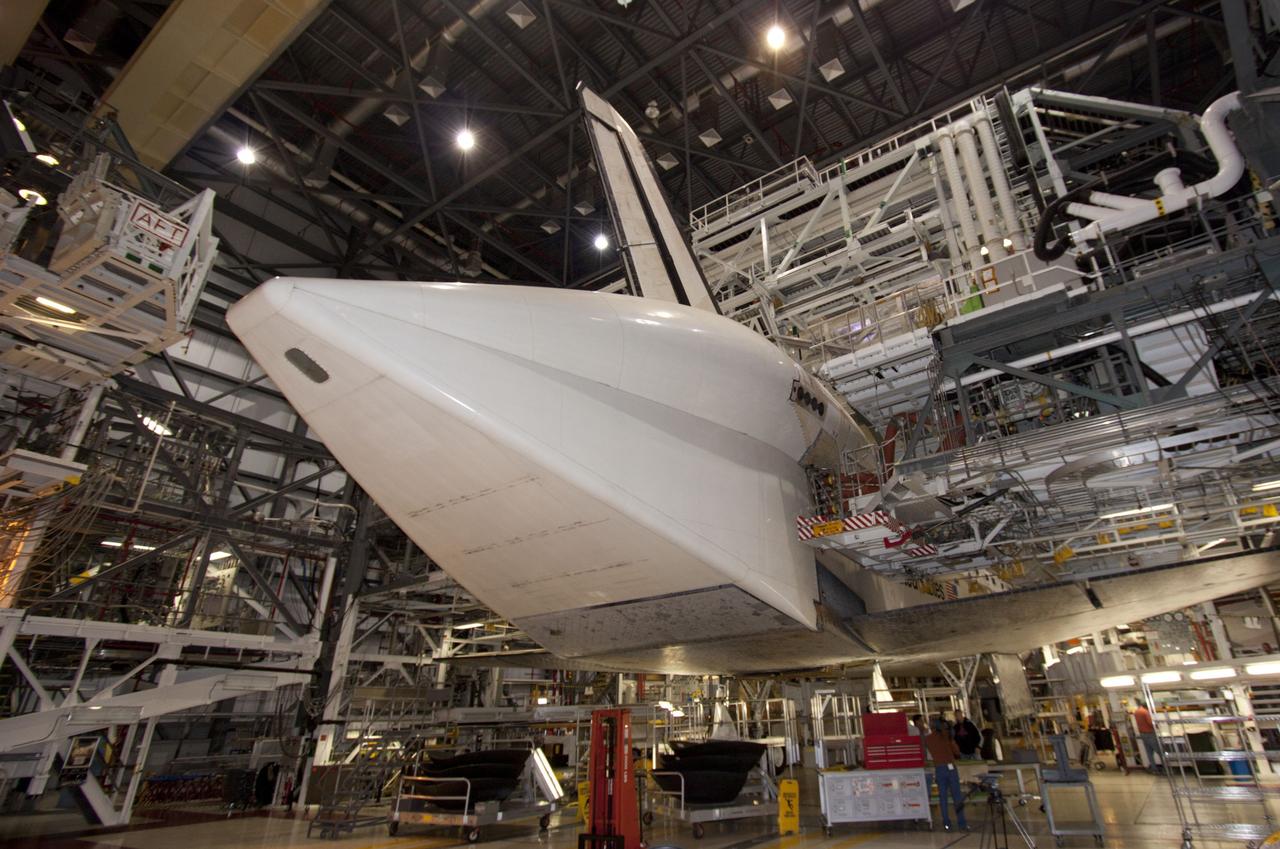
CAPE CANAVERAL, Fla. -- Inside Orbiter Processing Facility-1 at NASA’s Kennedy Space Center in Florida, technicians reinstall the lockers in the middeck of space shuttle Discovery. The work is part of the Space Shuttle Program’s transition and retirement processing of shuttle Discovery, which is being prepared for display at Smithsonian’s National Air and Space Museum, Steven F. Udvar-Hazy Center in Chantilly, Va. Discovery is scheduled to be transported atop a NASA Shuttle Carrier Aircraft modified 747 jet to Dulles International Airport in Virginia on April 17 and then be transported to the Smithsonian on April 19. For more information, visit http://www.nasa.gov/shuttle. Photo credit: NASA/Jim Grossmann
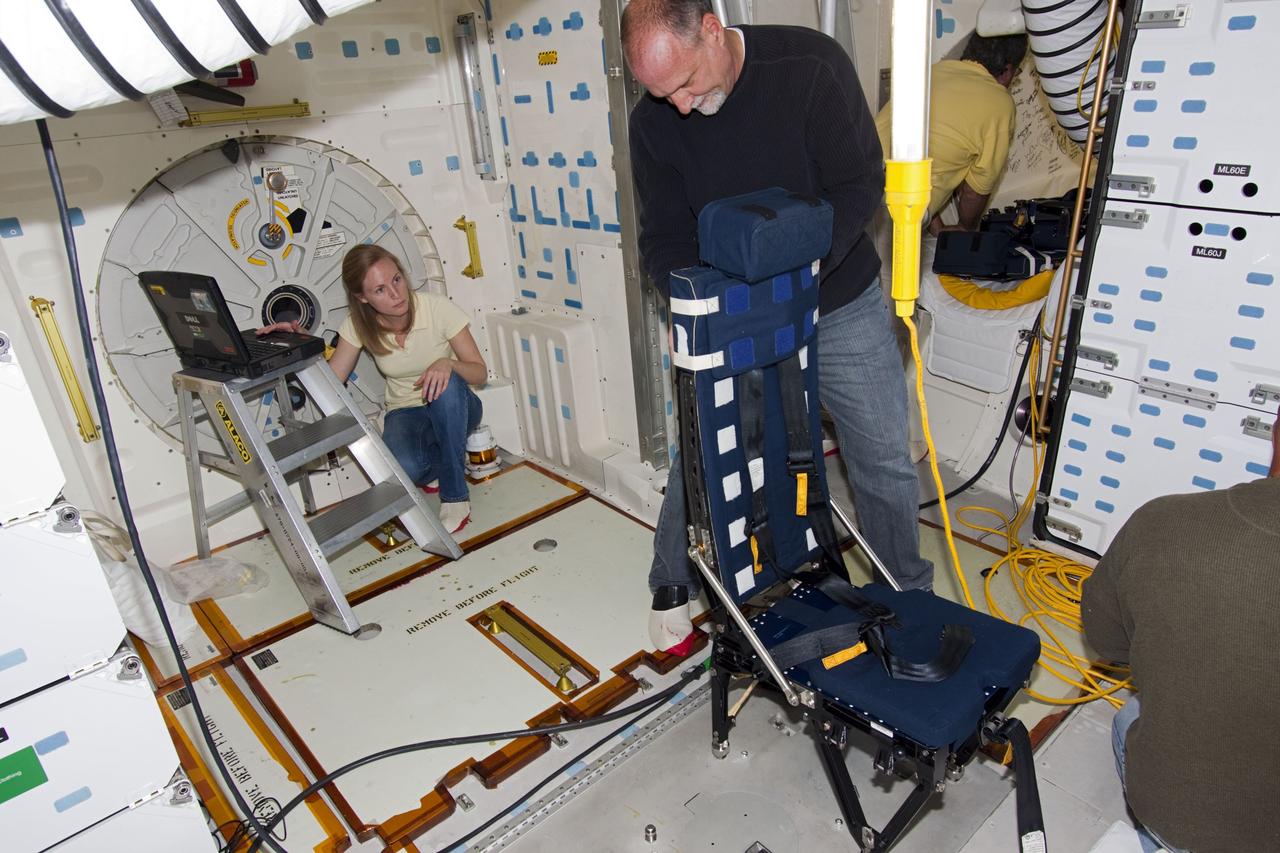
CAPE CANAVERAL, Fla. -- Inside Orbiter Processing Facility-1 at NASA’s Kennedy Space Center in Florida, technicians reinstall a seat in the middeck of space shuttle Discovery. The work is part of the Space Shuttle Program’s transition and retirement processing of shuttle Discovery, which is being prepared for display at Smithsonian’s National Air and Space Museum, Steven F. Udvar-Hazy Center in Chantilly, Va. Discovery is scheduled to be transported atop a NASA Shuttle Carrier Aircraft modified 747 jet to Dulles International Airport in Virginia on April 17 and then be transported to the Smithsonian on April 19. For more information, visit http://www.nasa.gov/shuttle. Photo credit: NASA/Jim Grossmann
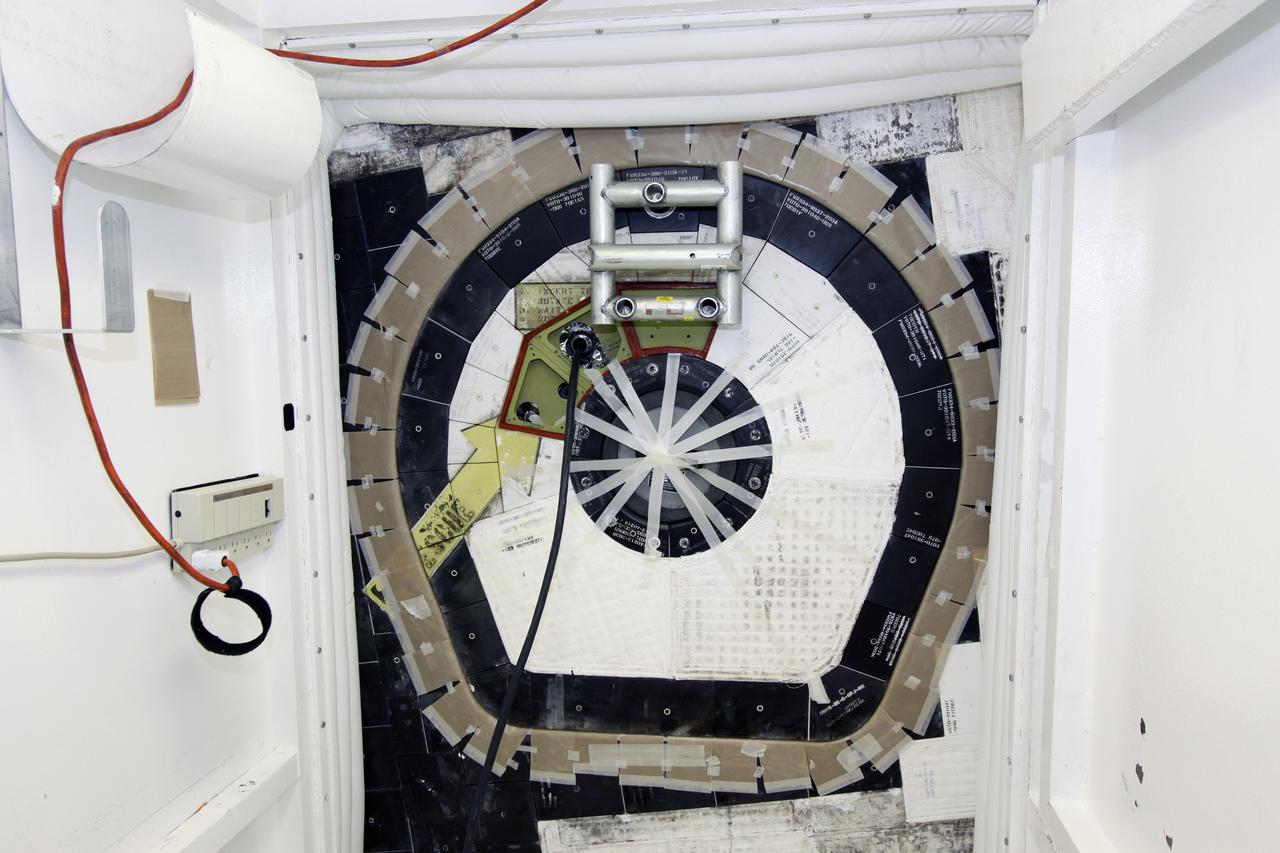
CAPE CANAVERAL, Fla. -- Inside Orbiter Processing Facility-1 at NASA’s Kennedy Space Center in Florida, space shuttle Discovery’s access hatch has been closed and sealed for the final time. The work is part of the Space Shuttle Program’s transition and retirement processing of shuttle Discovery, which is being prepared for display at Smithsonian’s National Air and Space Museum, Steven F. Udvar-Hazy Center in Chantilly, Va. Discovery is scheduled to be transported atop a NASA Shuttle Carrier Aircraft modified 747 jet to Dulles International Airport in Virginia on April 17 and then be transported to the Smithsonian on April 19. For more information, visit http://www.nasa.gov/shuttle. Photo credit: NASA/Jim Grossmann
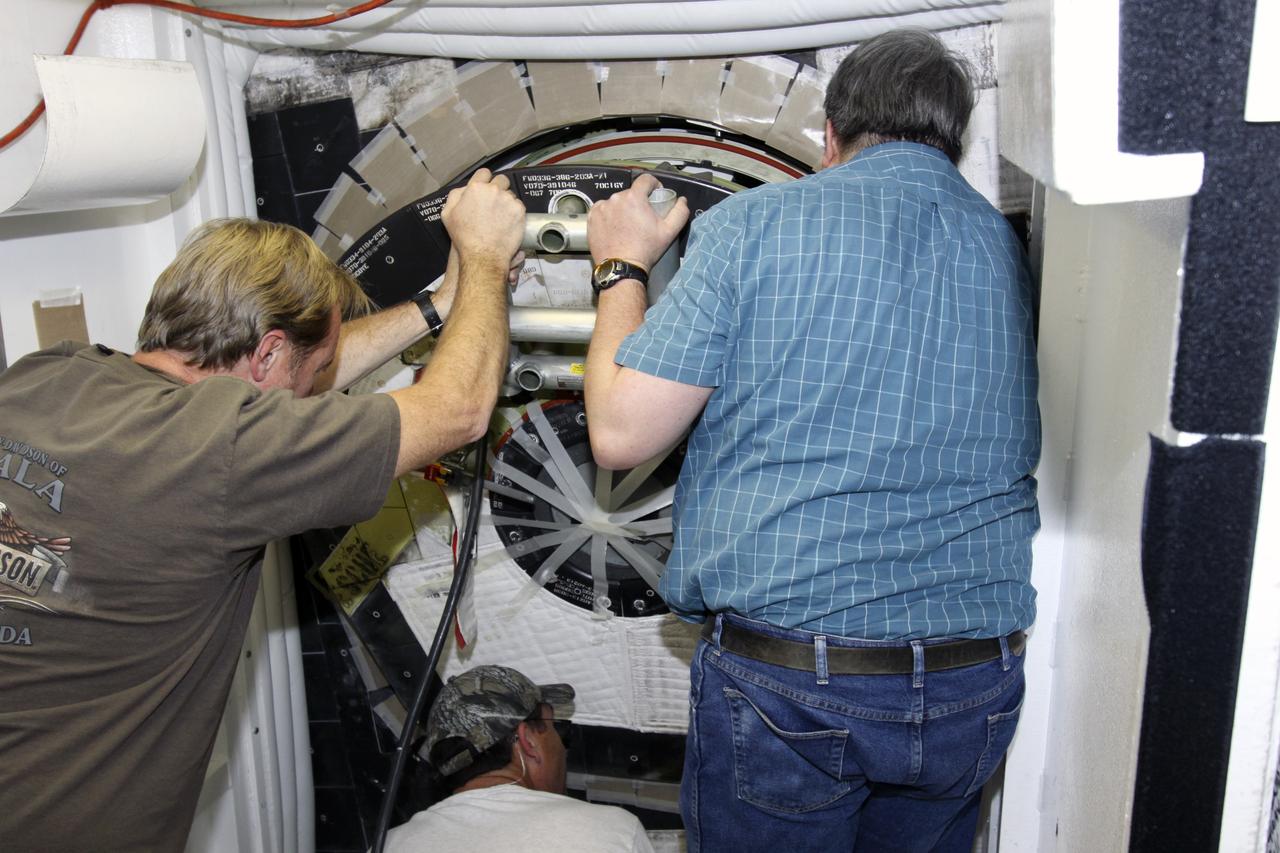
CAPE CANAVERAL, Fla. -- Inside Orbiter Processing Facility-1 at NASA’s Kennedy Space Center in Florida, technicians position space shuttle Discovery’s access hatch for final close out. The work is part of the Space Shuttle Program’s transition and retirement processing of shuttle Discovery, which is being prepared for display at Smithsonian’s National Air and Space Museum, Steven F. Udvar-Hazy Center in Chantilly, Va. Discovery is scheduled to be transported atop a NASA Shuttle Carrier Aircraft modified 747 jet to Dulles International Airport in Virginia on April 17 and then be transported to the Smithsonian on April 19. For more information, visit http://www.nasa.gov/shuttle. Photo credit: NASA/Jim Grossmann
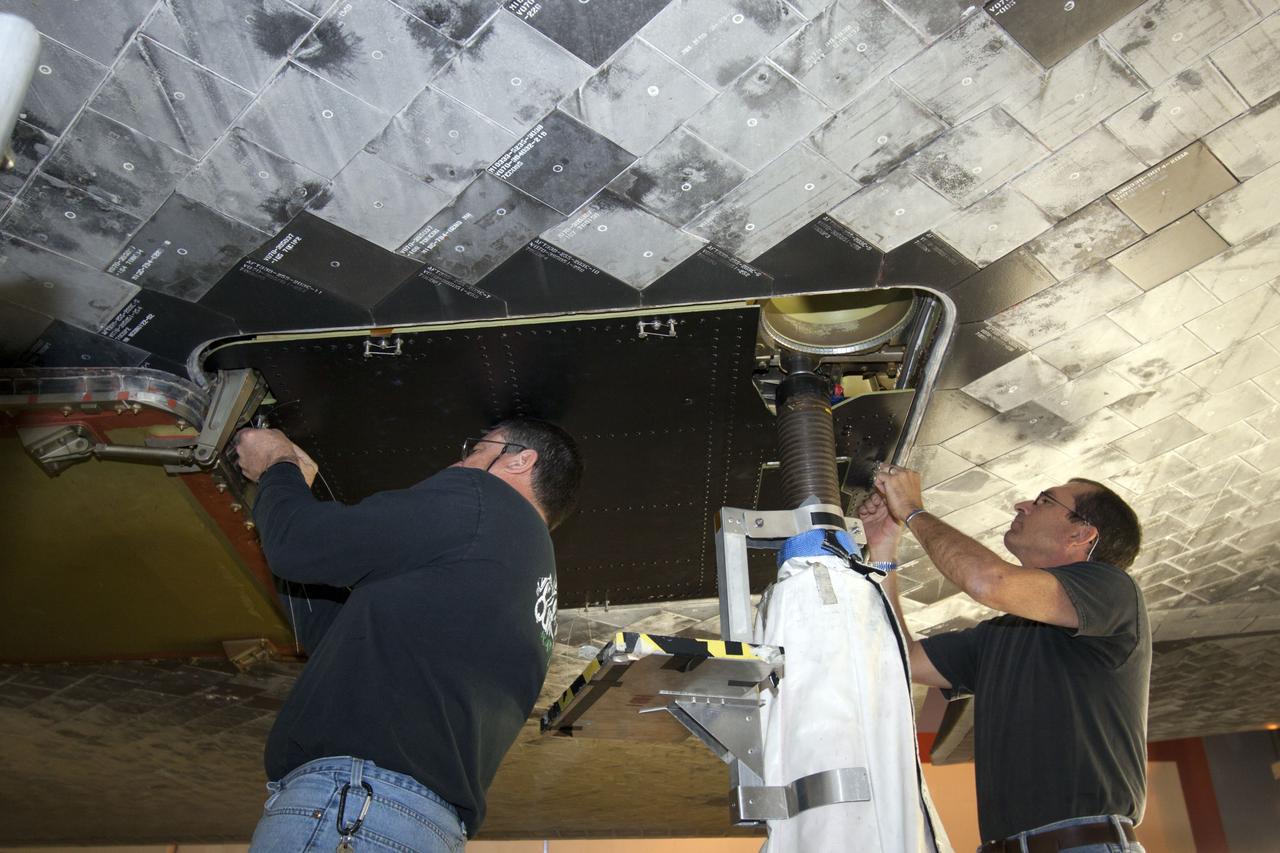
CAPE CANAVERAL, Fla. – Inside Orbiter Processing Facility-1 at NASA’s Kennedy Space Center in Florida, technicians install a ferry flight door on space shuttle Discovery. The work is part of the Space Shuttle Program’s transition and retirement processing of shuttle Discovery, which is being prepared for display at Smithsonian’s National Air and Space Museum, Steven F. Udvar-Hazy Center in Chantilly, Va. Discovery is scheduled to be transported atop a NASA Shuttle Carrier Aircraft modified 747 jet to Dulles International Airport in Virginia on April 17 and then moved to the Smithsonian for permanent public display on April 19. For more information, visit http://www.nasa.gov/shuttle. Photo credit: NASA/Jim Grossmann
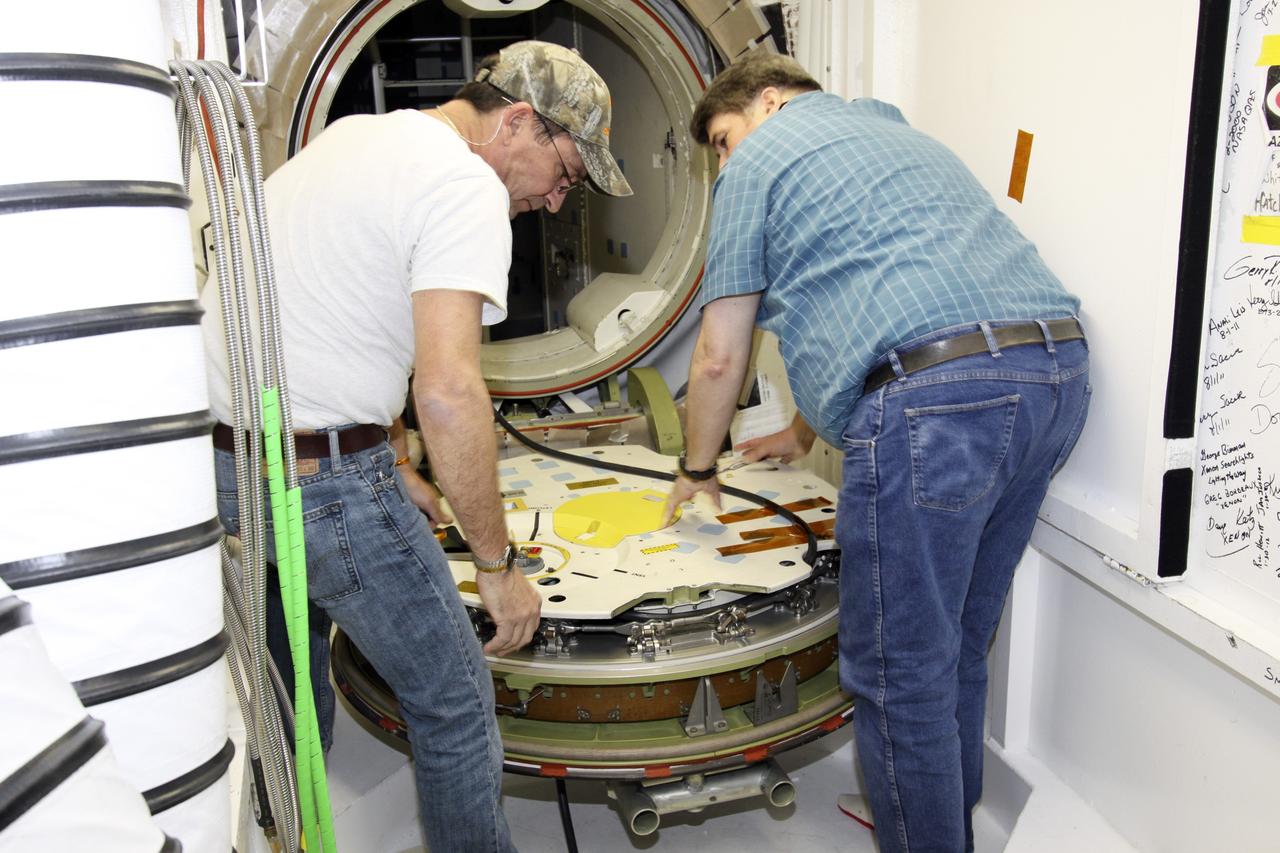
CAPE CANAVERAL, Fla. -- Inside Orbiter Processing Facility-1 at NASA’s Kennedy Space Center in Florida, technicians prepare space shuttle Discovery’s access hatch for final close out. The work is part of the Space Shuttle Program’s transition and retirement processing of shuttle Discovery, which is being prepared for display at Smithsonian’s National Air and Space Museum, Steven F. Udvar-Hazy Center in Chantilly, Va. Discovery is scheduled to be transported atop a NASA Shuttle Carrier Aircraft modified 747 jet to Dulles International Airport in Virginia on April 17 and then be transported to the Smithsonian on April 19. For more information, visit http://www.nasa.gov/shuttle. Photo credit: NASA/Jim Grossmann
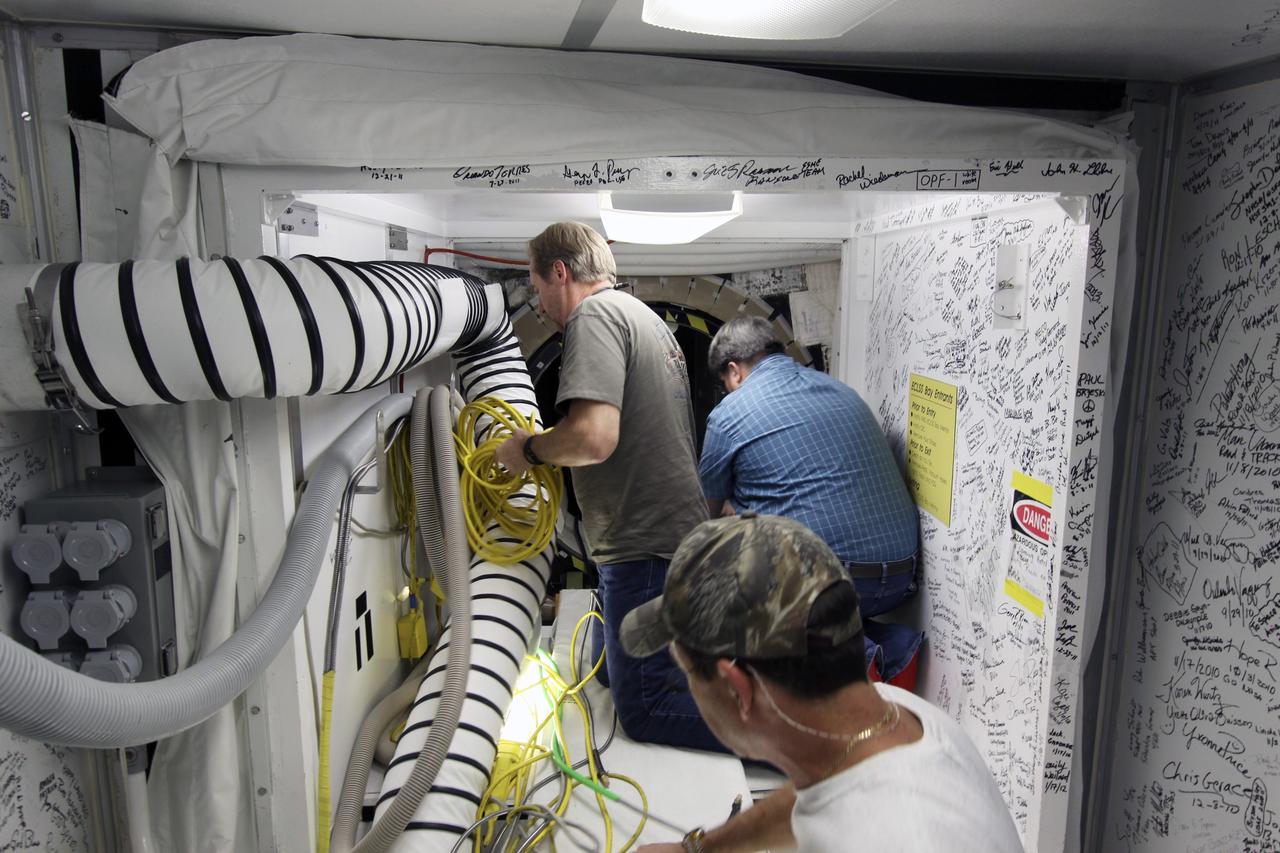
CAPE CANAVERAL, Fla. -- Inside Orbiter Processing Facility-1 at NASA’s Kennedy Space Center in Florida, technicians prepare space shuttle Discovery’s access hatch for final close out. The work is part of the Space Shuttle Program’s transition and retirement processing of shuttle Discovery, which is being prepared for display at Smithsonian’s National Air and Space Museum, Steven F. Udvar-Hazy Center in Chantilly, Va. Discovery is scheduled to be transported atop a NASA Shuttle Carrier Aircraft modified 747 jet to Dulles International Airport in Virginia on April 17 and then be transported to the Smithsonian on April 19. For more information, visit http://www.nasa.gov/shuttle. Photo credit: NASA/Jim Grossmann
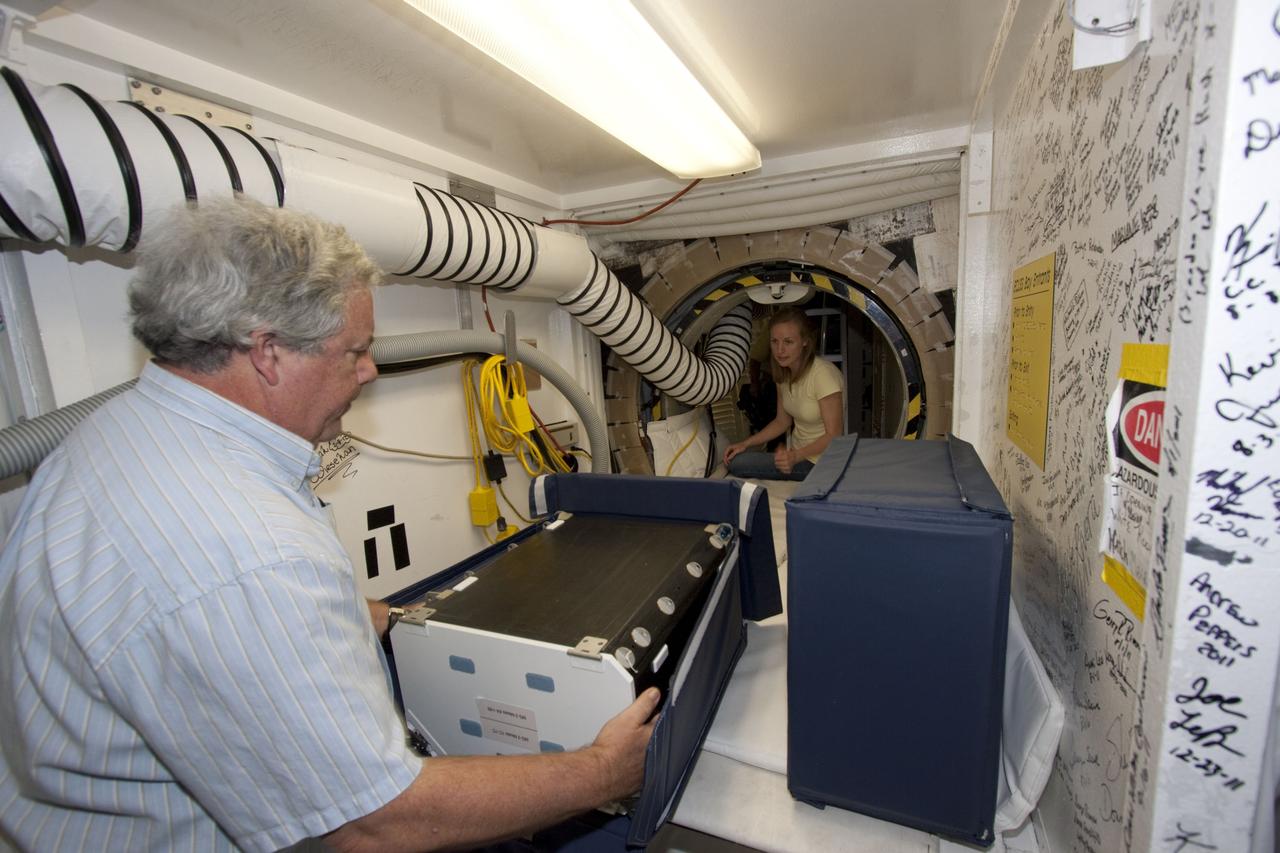
CAPE CANAVERAL, Fla. -- Inside Orbiter Processing Facility-1 at NASA’s Kennedy Space Center in Florida, technicians prepare to reinstall the lockers in the middeck of space shuttle Discovery. The work is part of the Space Shuttle Program’s transition and retirement processing of shuttle Discovery, which is being prepared for display at Smithsonian’s National Air and Space Museum, Steven F. Udvar-Hazy Center in Chantilly, Va. Discovery is scheduled to be transported atop a NASA Shuttle Carrier Aircraft modified 747 jet to Dulles International Airport in Virginia on April 17 and then be transported to the Smithsonian on April 19. For more information, visit http://www.nasa.gov/shuttle. Photo credit: NASA/Jim Grossmann
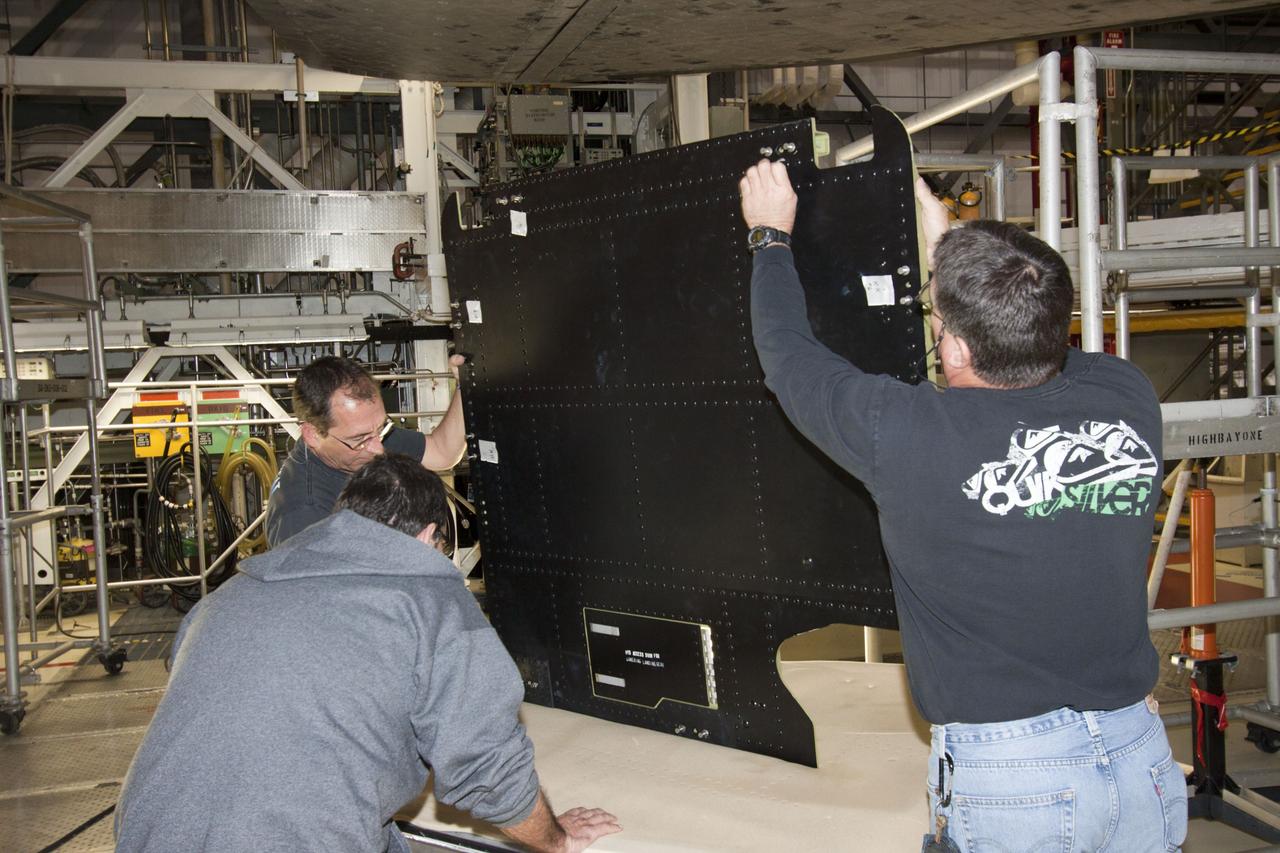
CAPE CANAVERAL, Fla. – Inside Orbiter Processing Facility-1 at NASA’s Kennedy Space Center in Florida, technicians prepare a ferry flight door for installation on space shuttle Discovery. The work is part of the Space Shuttle Program’s transition and retirement processing of shuttle Discovery, which is being prepared for display at Smithsonian’s National Air and Space Museum, Steven F. Udvar-Hazy Center in Chantilly, Va. Discovery is scheduled to be transported atop a NASA Shuttle Carrier Aircraft modified 747 jet to Dulles International Airport in Virginia on April 17 and then moved to the Smithsonian for permanent public display on April 19. For more information, visit http://www.nasa.gov/shuttle. Photo credit: NASA/Jim Grossmann
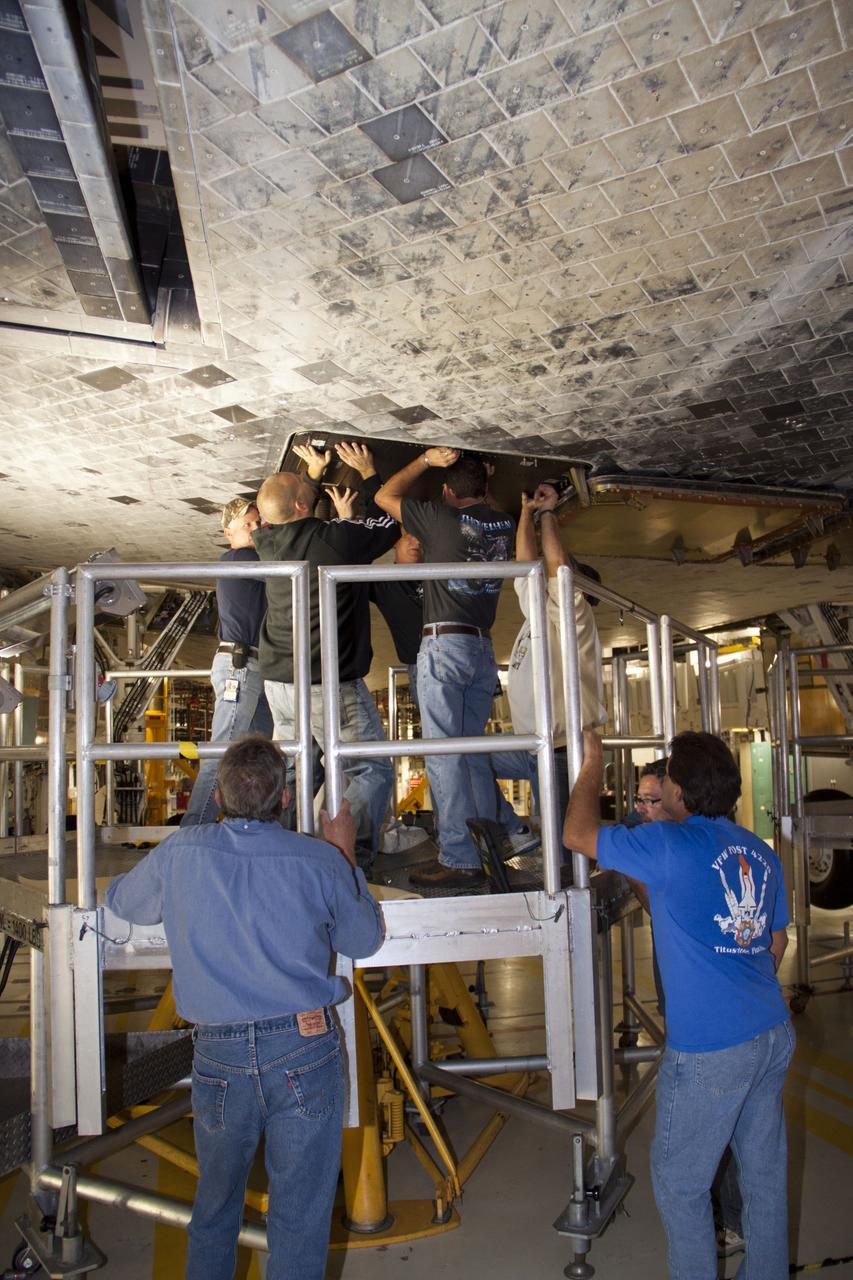
CAPE CANAVERAL, Fla. – Inside Orbiter Processing Facility-1 at NASA’s Kennedy Space Center in Florida, technicians install a ferry flight door on space shuttle Discovery. The work is part of the Space Shuttle Program’s transition and retirement processing of shuttle Discovery, which is being prepared for display at Smithsonian’s National Air and Space Museum, Steven F. Udvar-Hazy Center in Chantilly, Va. Discovery is scheduled to be transported atop a NASA Shuttle Carrier Aircraft modified 747 jet to Dulles International Airport in Virginia on April 17 and then moved to the Smithsonian for permanent public display on April 19. For more information, visit http://www.nasa.gov/shuttle. Photo credit: NASA/Jim Grossmann
CAPE CANAVERAL, Fla. -- Inside Orbiter Processing Facility-1 at NASA’s Kennedy Space Center in Florida, technicians position space shuttle Discovery’s access hatch for final close out. The work is part of the Space Shuttle Program’s transition and retirement processing of shuttle Discovery, which is being prepared for display at Smithsonian’s National Air and Space Museum, Steven F. Udvar-Hazy Center in Chantilly, Va. Discovery is scheduled to be transported atop a NASA Shuttle Carrier Aircraft modified 747 jet to Dulles International Airport in Virginia on April 17 and then be transported to the Smithsonian on April 19. For more information, visit http://www.nasa.gov/shuttle. Photo credit: NASA/Jim Grossmann
CAPE CANAVERAL, Fla. – Inside Orbiter Processing Facility-1 at NASA’s Kennedy Space Center in Florida, technicians prepare to install the ferry flight doors on space shuttle Discovery. The work is part of the Space Shuttle Program’s transition and retirement processing of shuttle Discovery, which is being prepared for display at Smithsonian’s National Air and Space Museum, Steven F. Udvar-Hazy Center in Chantilly, Va. Discovery is scheduled to be transported atop a NASA Shuttle Carrier Aircraft modified 747 jet to Dulles International Airport in Virginia on April 17 and then moved to the Smithsonian for permanent public display on April 19. For more information, visit http://www.nasa.gov/shuttle. Photo credit: NASA/Jim Grossmann
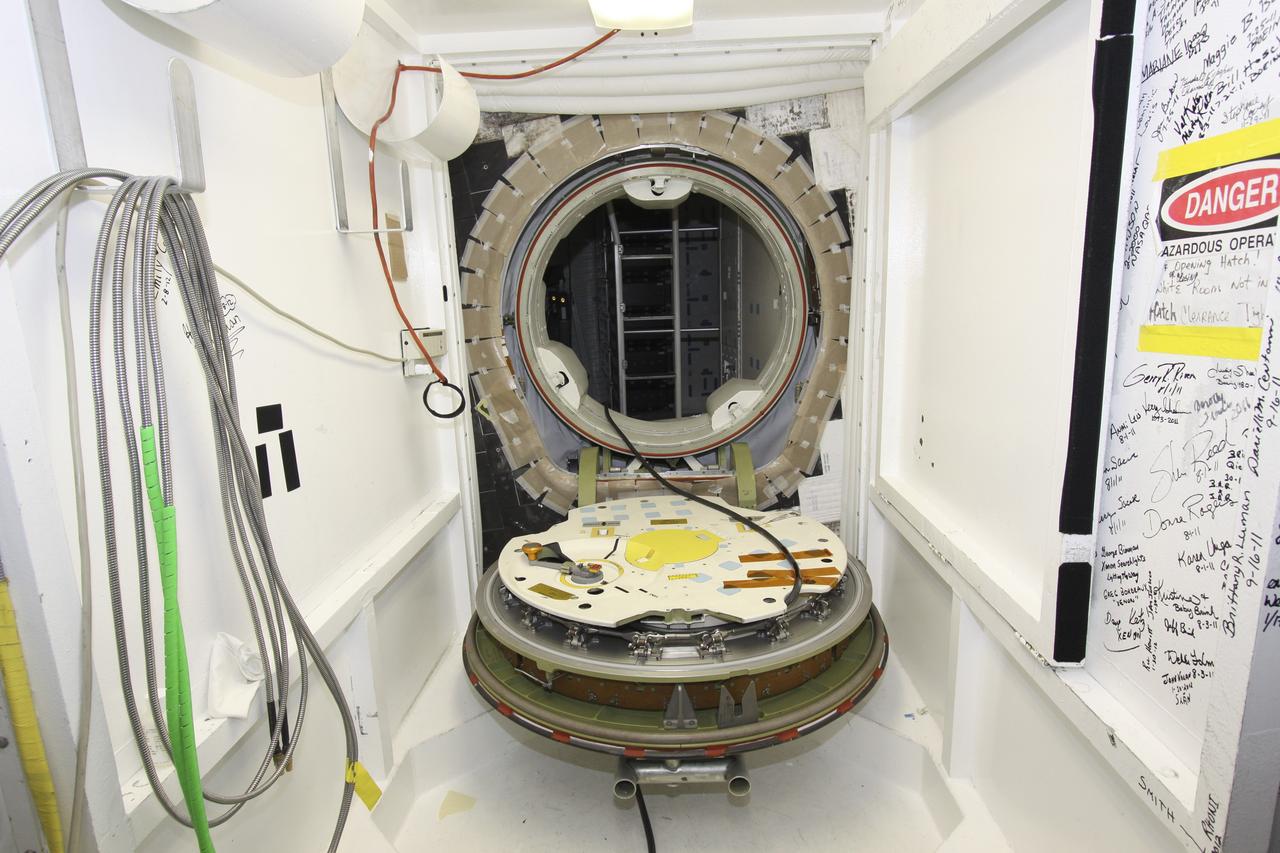
CAPE CANAVERAL, Fla. -- Inside Orbiter Processing Facility-1 at NASA’s Kennedy Space Center in Florida, space shuttle Discovery’s access hatch is being prepared for final close out. The work is part of the Space Shuttle Program’s transition and retirement processing of shuttle Discovery, which is being prepared for display at Smithsonian’s National Air and Space Museum, Steven F. Udvar-Hazy Center in Chantilly, Va. Discovery is scheduled to be transported atop a NASA Shuttle Carrier Aircraft modified 747 jet to Dulles International Airport in Virginia on April 17 and then be transported to the Smithsonian on April 19. For more information, visit http://www.nasa.gov/shuttle. Photo credit: NASA/Jim Grossmann
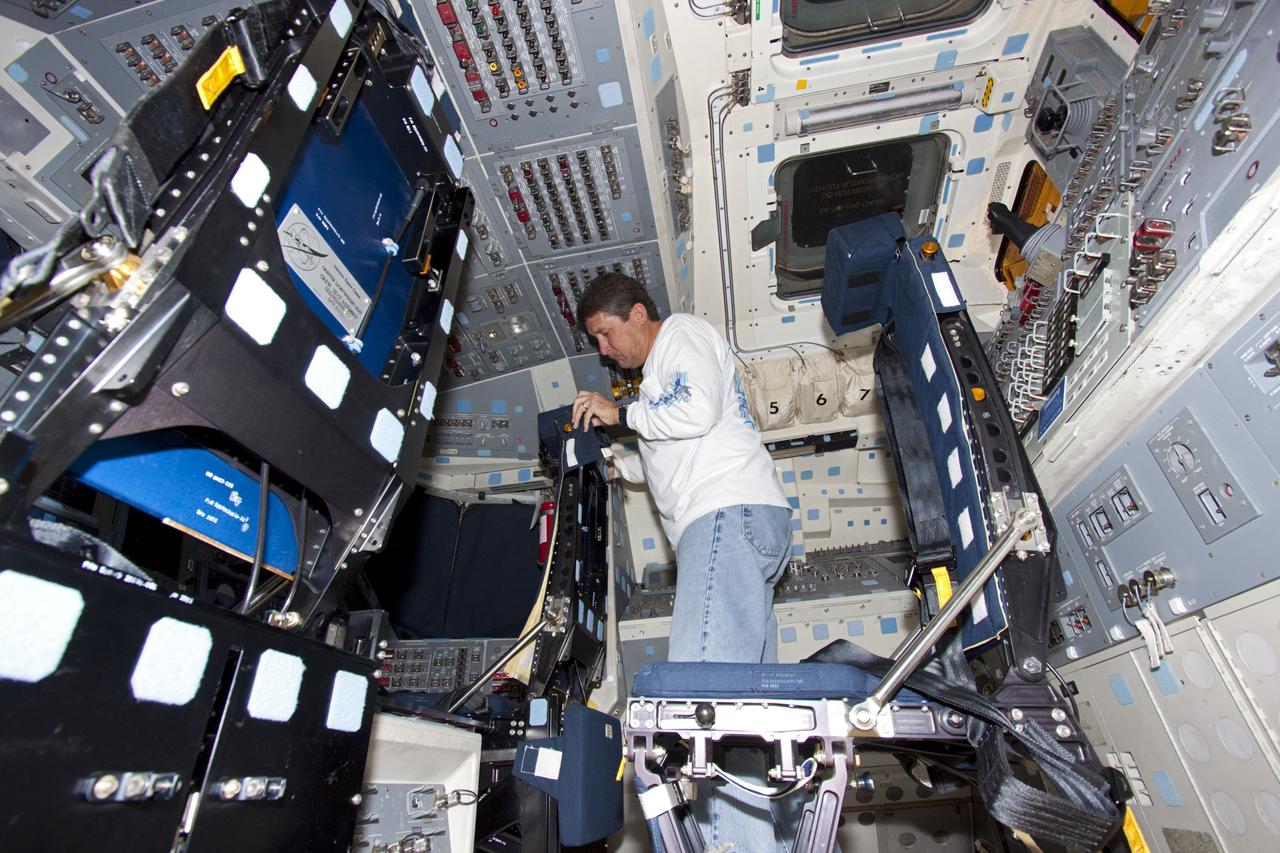
CAPE CANAVERAL, Fla. -- Inside Orbiter Processing Facility-1 at NASA’s Kennedy Space Center in Florida, a technician reinstalls one of the seats in the middeck of space shuttle Discovery. The work is part of the Space Shuttle Program’s transition and retirement processing of shuttle Discovery, which is being prepared for display at Smithsonian’s National Air and Space Museum, Steven F. Udvar-Hazy Center in Chantilly, Va. Discovery is scheduled to be transported atop a NASA Shuttle Carrier Aircraft modified 747 jet to Dulles International Airport in Virginia on April 17 and then be transported to the Smithsonian on April 19. For more information, visit http://www.nasa.gov/shuttle. Photo credit: NASA/Jim Grossmann
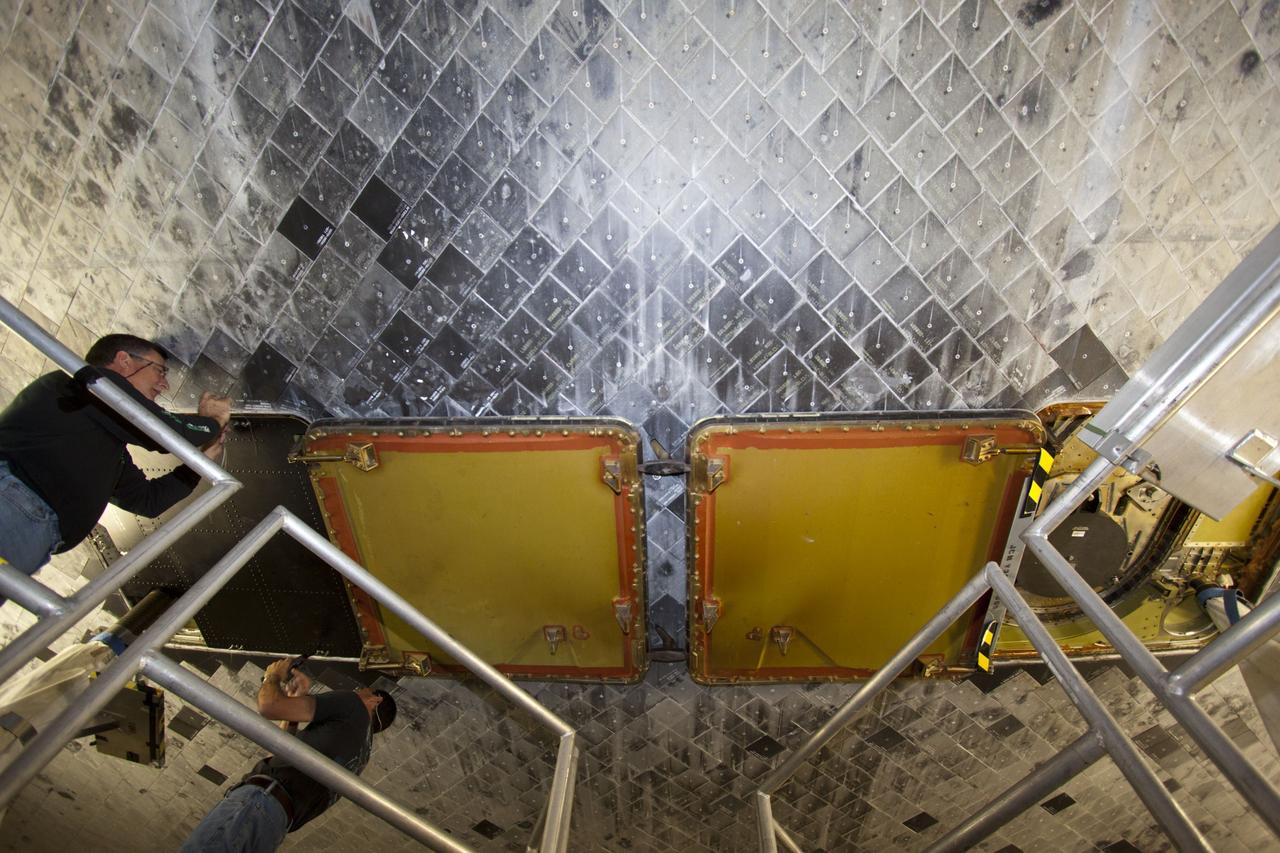
CAPE CANAVERAL, Fla. – Inside Orbiter Processing Facility-1 at NASA’s Kennedy Space Center in Florida, technicians install the ferry flight doors on space shuttle Discovery. The work is part of the Space Shuttle Program’s transition and retirement processing of shuttle Discovery, which is being prepared for display at Smithsonian’s National Air and Space Museum, Steven F. Udvar-Hazy Center in Chantilly, Va. Discovery is scheduled to be transported atop a NASA Shuttle Carrier Aircraft modified 747 jet to Dulles International Airport in Virginia on April 17 and then moved to the Smithsonian for permanent public display on April 19. For more information, visit http://www.nasa.gov/shuttle. Photo credit: NASA/Jim Grossmann

CAPE CANAVERAL, Fla. -- Inside Orbiter Processing Facility-1 at NASA’s Kennedy Space Center in Florida, technicians transfer seats to the middeck of space shuttle Discovery for installation. The work is part of the Space Shuttle Program’s transition and retirement processing of shuttle Discovery, which is being prepared for display at Smithsonian’s National Air and Space Museum, Steven F. Udvar-Hazy Center in Chantilly, Va. Discovery is scheduled to be transported atop a NASA Shuttle Carrier Aircraft modified 747 jet to Dulles International Airport in Virginia on April 17 and then be transported to the Smithsonian on April 19. For more information, visit http://www.nasa.gov/shuttle. Photo credit: NASA/Jim Grossmann
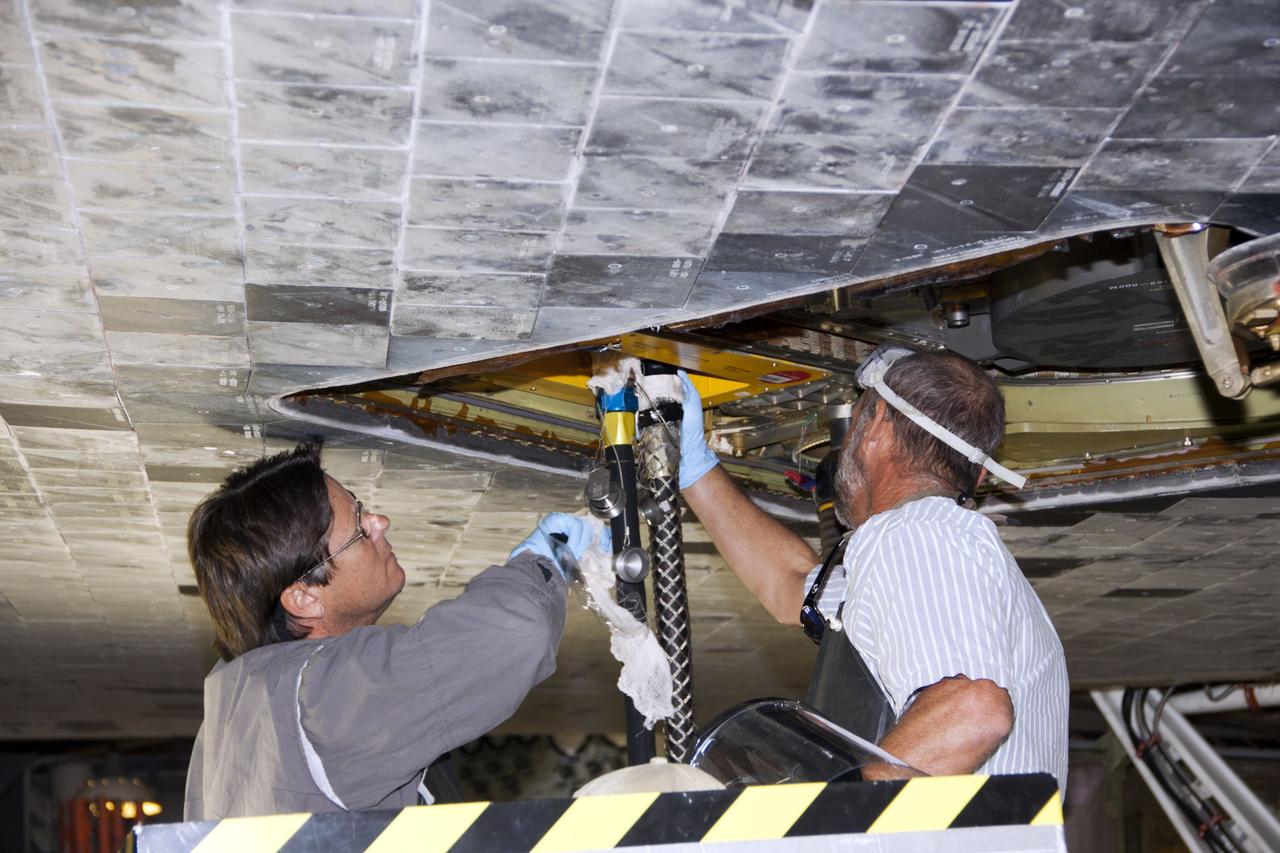
CAPE CANAVERAL, Fla. – Inside Orbiter Processing Facility-1 at NASA’s Kennedy Space Center in Florida, technicians prepare to install the ferry flight doors on space shuttle Discovery. The work is part of the Space Shuttle Program’s transition and retirement processing of shuttle Discovery, which is being prepared for display at Smithsonian’s National Air and Space Museum, Steven F. Udvar-Hazy Center in Chantilly, Va. Discovery is scheduled to be transported atop a NASA Shuttle Carrier Aircraft modified 747 jet to Dulles International Airport in Virginia on April 17 and then moved to the Smithsonian for permanent public display on April 19. For more information, visit http://www.nasa.gov/shuttle. Photo credit: NASA/Jim Grossmann
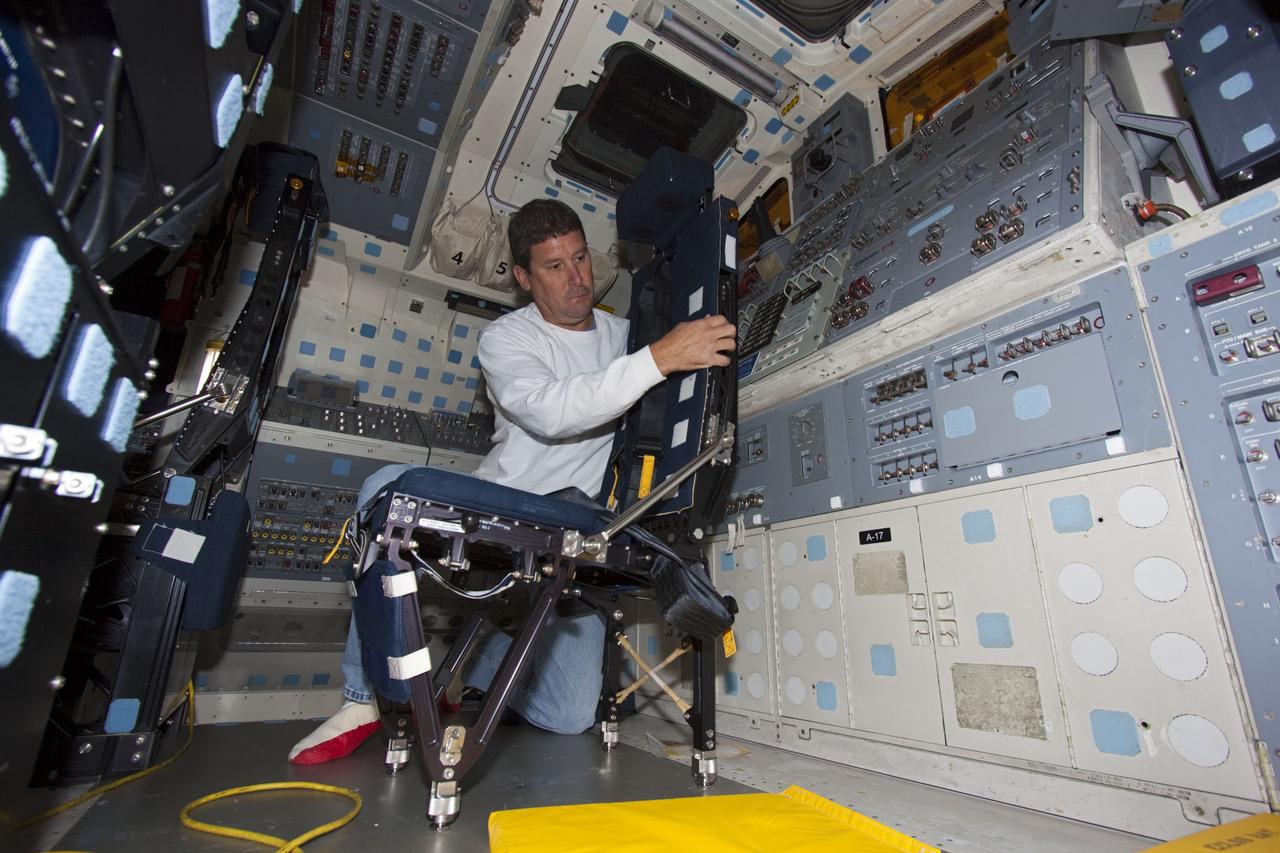
CAPE CANAVERAL, Fla. -- Inside Orbiter Processing Facility-1 at NASA’s Kennedy Space Center in Florida, a technician reinstalls a seat in the middeck of space shuttle Discovery. The work is part of the Space Shuttle Program’s transition and retirement processing of shuttle Discovery, which is being prepared for display at Smithsonian’s National Air and Space Museum, Steven F. Udvar-Hazy Center in Chantilly, Va. Discovery is scheduled to be transported atop a NASA Shuttle Carrier Aircraft modified 747 jet to Dulles International Airport in Virginia on April 17 and then be transported to the Smithsonian on April 19. For more information, visit http://www.nasa.gov/shuttle. Photo credit: NASA/Jim Grossmann
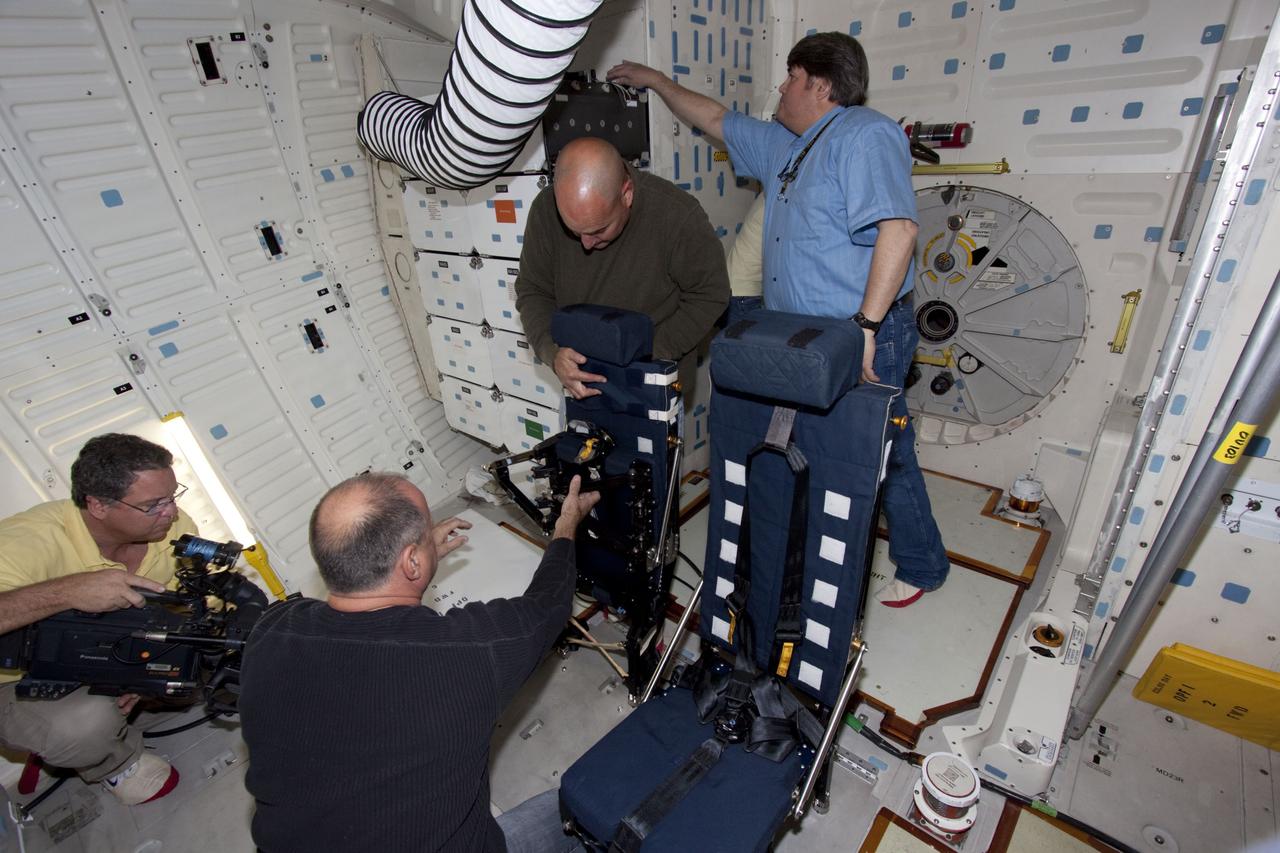
CAPE CANAVERAL, Fla. -- Inside Orbiter Processing Facility-1 at NASA’s Kennedy Space Center in Florida, technicians reinstall the seats in the middeck of space shuttle Discovery. The work is part of the Space Shuttle Program’s transition and retirement processing of shuttle Discovery, which is being prepared for display at Smithsonian’s National Air and Space Museum, Steven F. Udvar-Hazy Center in Chantilly, Va. Discovery is scheduled to be transported atop a NASA Shuttle Carrier Aircraft modified 747 jet to Dulles International Airport in Virginia on April 17 and then be transported to the Smithsonian on April 19. For more information, visit http://www.nasa.gov/shuttle. Photo credit: NASA/Jim Grossmann
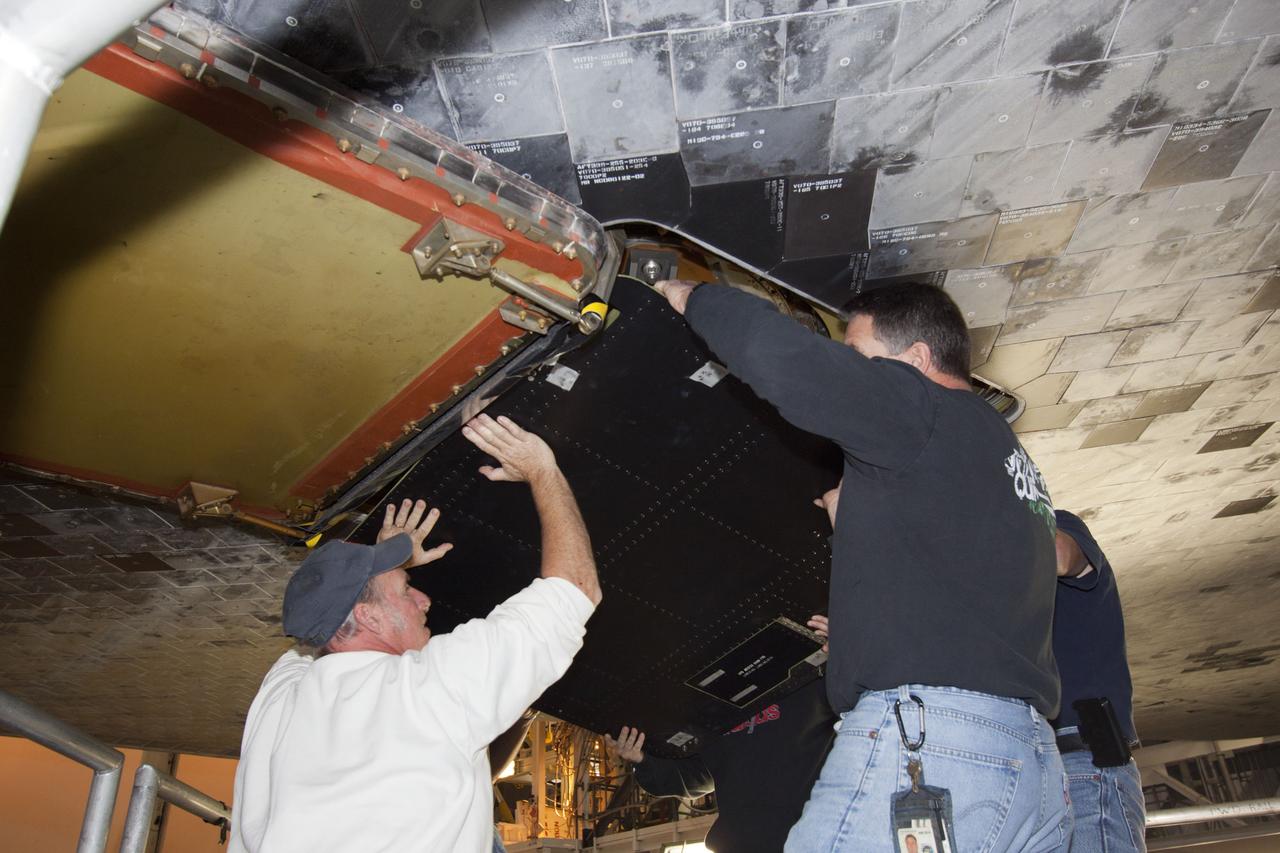
CAPE CANAVERAL, Fla. – Inside Orbiter Processing Facility-1 at NASA’s Kennedy Space Center in Florida, technicians position a ferry flight door for installation on space shuttle Discovery. The work is part of the Space Shuttle Program’s transition and retirement processing of shuttle Discovery, which is being prepared for display at Smithsonian’s National Air and Space Museum, Steven F. Udvar-Hazy Center in Chantilly, Va. Discovery is scheduled to be transported atop a NASA Shuttle Carrier Aircraft modified 747 jet to Dulles International Airport in Virginia on April 17 and then moved to the Smithsonian for permanent public display on April 19. For more information, visit http://www.nasa.gov/shuttle. Photo credit: NASA/Jim Grossmann
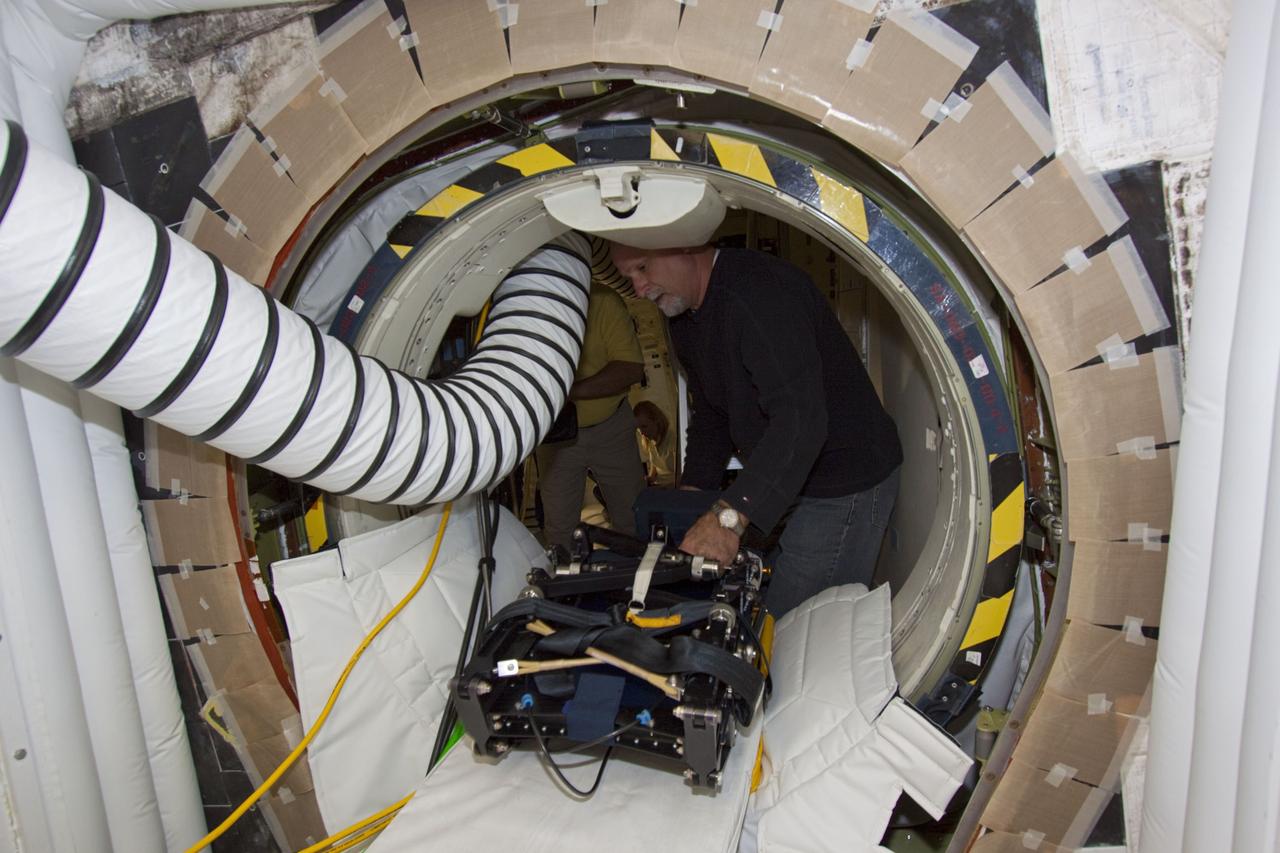
CAPE CANAVERAL, Fla. -- Inside Orbiter Processing Facility-1 at NASA’s Kennedy Space Center in Florida, technicians prepare to reinstall the seats in the middeck of space shuttle Discovery. The work is part of the Space Shuttle Program’s transition and retirement processing of shuttle Discovery, which is being prepared for display at Smithsonian’s National Air and Space Museum, Steven F. Udvar-Hazy Center in Chantilly, Va. Discovery is scheduled to be transported atop a NASA Shuttle Carrier Aircraft modified 747 jet to Dulles International Airport in Virginia on April 17 and then be transported to the Smithsonian on April 19. For more information, visit http://www.nasa.gov/shuttle. Photo credit: NASA/Jim Grossmann
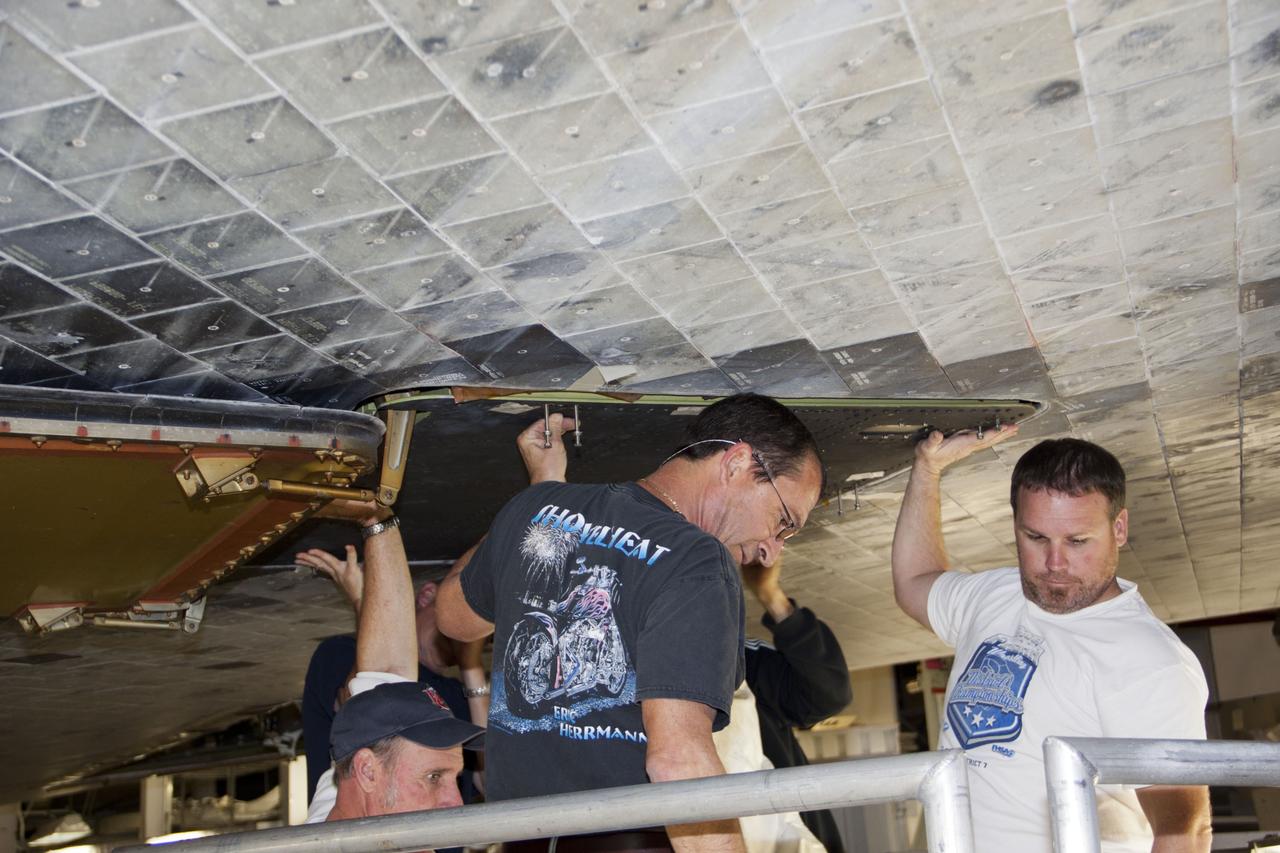
CAPE CANAVERAL, Fla. – Inside Orbiter Processing Facility-1 at NASA’s Kennedy Space Center in Florida, technicians install a ferry flight door on space shuttle Discovery. The work is part of the Space Shuttle Program’s transition and retirement processing of shuttle Discovery, which is being prepared for display at Smithsonian’s National Air and Space Museum, Steven F. Udvar-Hazy Center in Chantilly, Va. Discovery is scheduled to be transported atop a NASA Shuttle Carrier Aircraft modified 747 jet to Dulles International Airport in Virginia on April 17 and then moved to the Smithsonian for permanent public display on April 19. For more information, visit http://www.nasa.gov/shuttle. Photo credit: NASA/Jim Grossmann
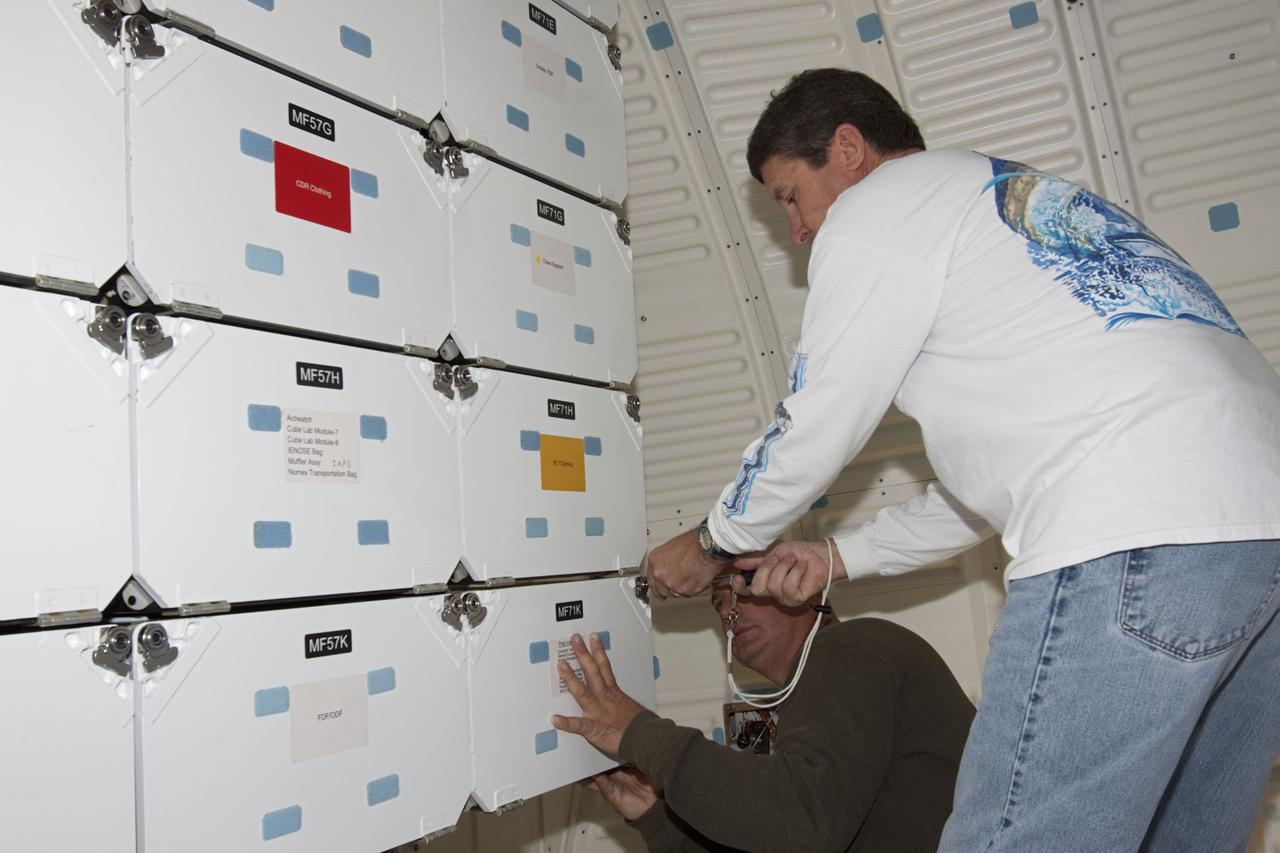
CAPE CANAVERAL, Fla. -- Inside Orbiter Processing Facility-1 at NASA’s Kennedy Space Center in Florida, technicians reinstall the lockers in the middeck of space shuttle Discovery. The work is part of the Space Shuttle Program’s transition and retirement processing of shuttle Discovery, which is being prepared for display at Smithsonian’s National Air and Space Museum, Steven F. Udvar-Hazy Center in Chantilly, Va. Discovery is scheduled to be transported atop a NASA Shuttle Carrier Aircraft modified 747 jet to Dulles International Airport in Virginia on April 17 and then be transported to the Smithsonian on April 19. For more information, visit http://www.nasa.gov/shuttle. Photo credit: NASA/Jim Grossmann
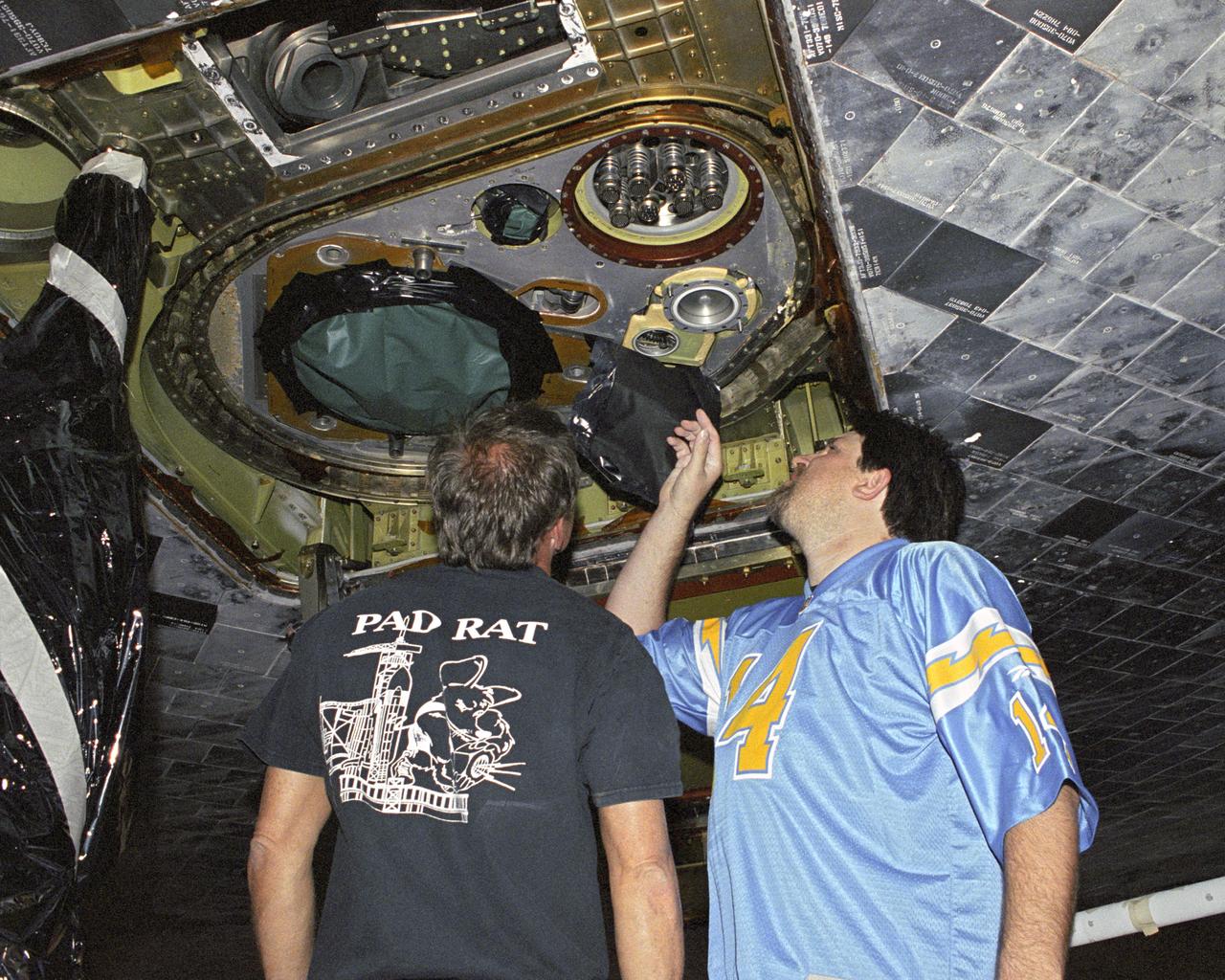
Robert 'Skip' Garrett; main propulsion advanced systems technician, and Chris Jacobs; main propulsion systems engineering technician, inspect external tank attachment fittings on the Space Shuttle Discovery as part of it's post-flight processing at NASA's Dryden Flight Research Center. The Space Shuttles receive post-flight servicing in the Mate-Demate Device (MDD) following landings at NASA's Dryden Flight Research Center, Edwards, California. The gantry-like MDD structure is used for servicing the shuttle orbiters in preparation for their ferry flight back to the Kennedy Space Center in Florida, including mounting the shuttle atop NASA's modified Boeing 747 Shuttle Carrier Aircraft. Space Shuttle Discovery landed safely at NASA's Dryden Flight Research Center at Edwards Air Force Base in California at 5:11:22 a.m. PDT, August 9, 2005, following the very successful 14-day STS-114 return to flight mission. During their two weeks in space, Commander Eileen Collins and her six crewmates tested out new safety procedures and delivered supplies and equipment the International Space Station. Discovery spent two weeks in space, where the crew demonstrated new methods to inspect and repair the Shuttle in orbit. The crew also delivered supplies, outfitted and performed maintenance on the International Space Station. A number of these tasks were conducted during three spacewalks. In an unprecedented event, spacewalkers were called upon to remove protruding gap fillers from the heat shield on Discovery's underbelly. In other spacewalk activities, astronauts installed an external platform onto the Station's Quest Airlock and replaced one of the orbital outpost's Control Moment Gyroscopes. Inside the Station, the STS-114 crew conducted joint operations with the Expedition 11 crew. They unloaded fresh supplies from the Shuttle and the Raffaello Multi-Purpose Logistics Module. Before Discovery undocked, the crews filled Raffeallo with unneeded items and returned to Shuttle pa