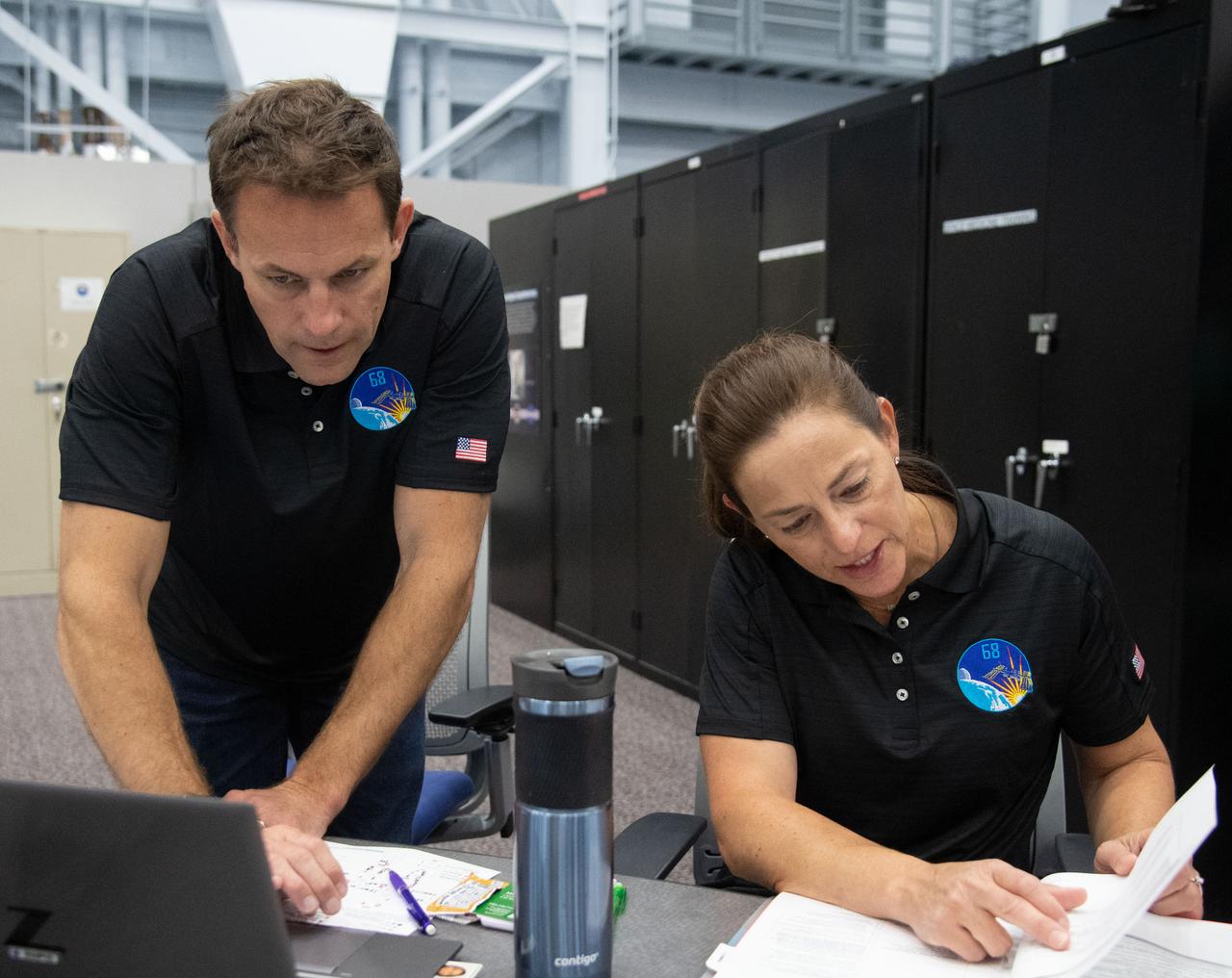
Expedition 68 crewmembers train for the unlikely event of an emergency by training inside a mockup that models the real orbiting lab at NASA's Johnson Space Center in Houston, Texas in preparation for their upcoming International Space Station mission. Credit: NASA/James Blair
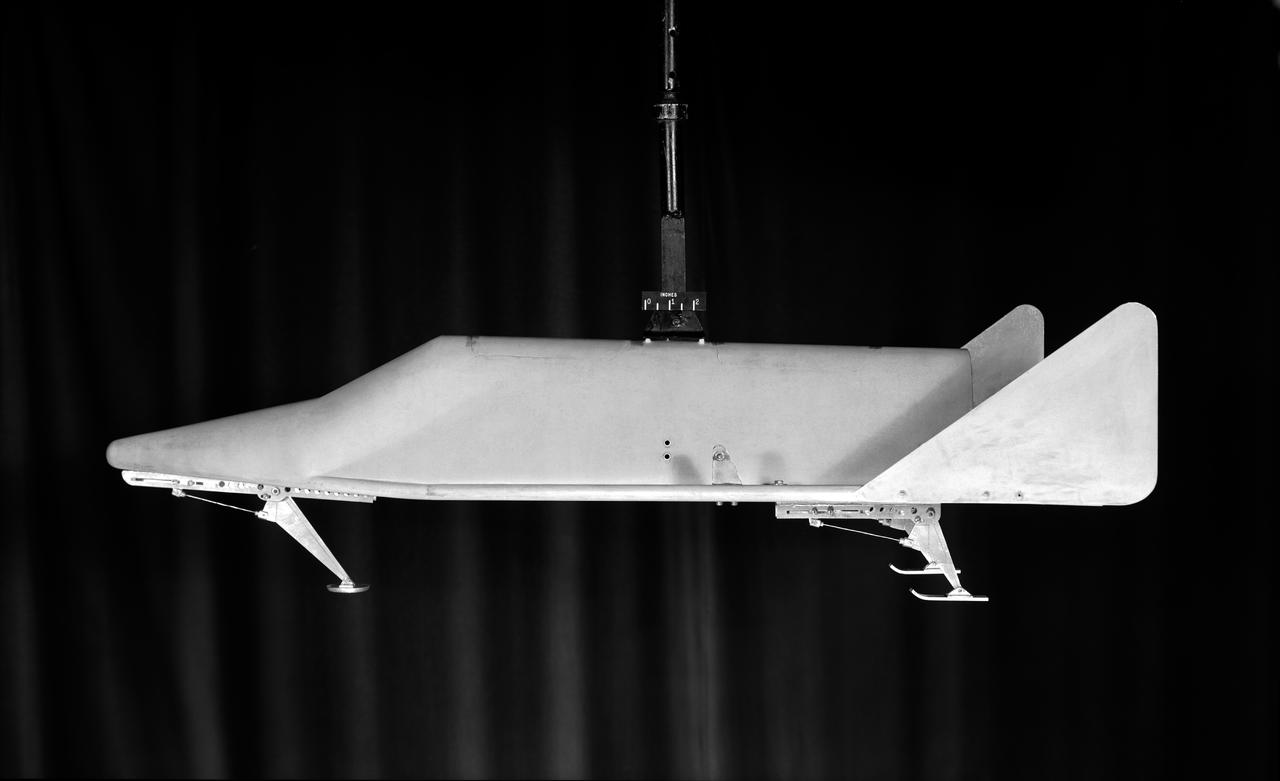
Model of Winged Space Vehicle

Model of Winged Space Vehicle
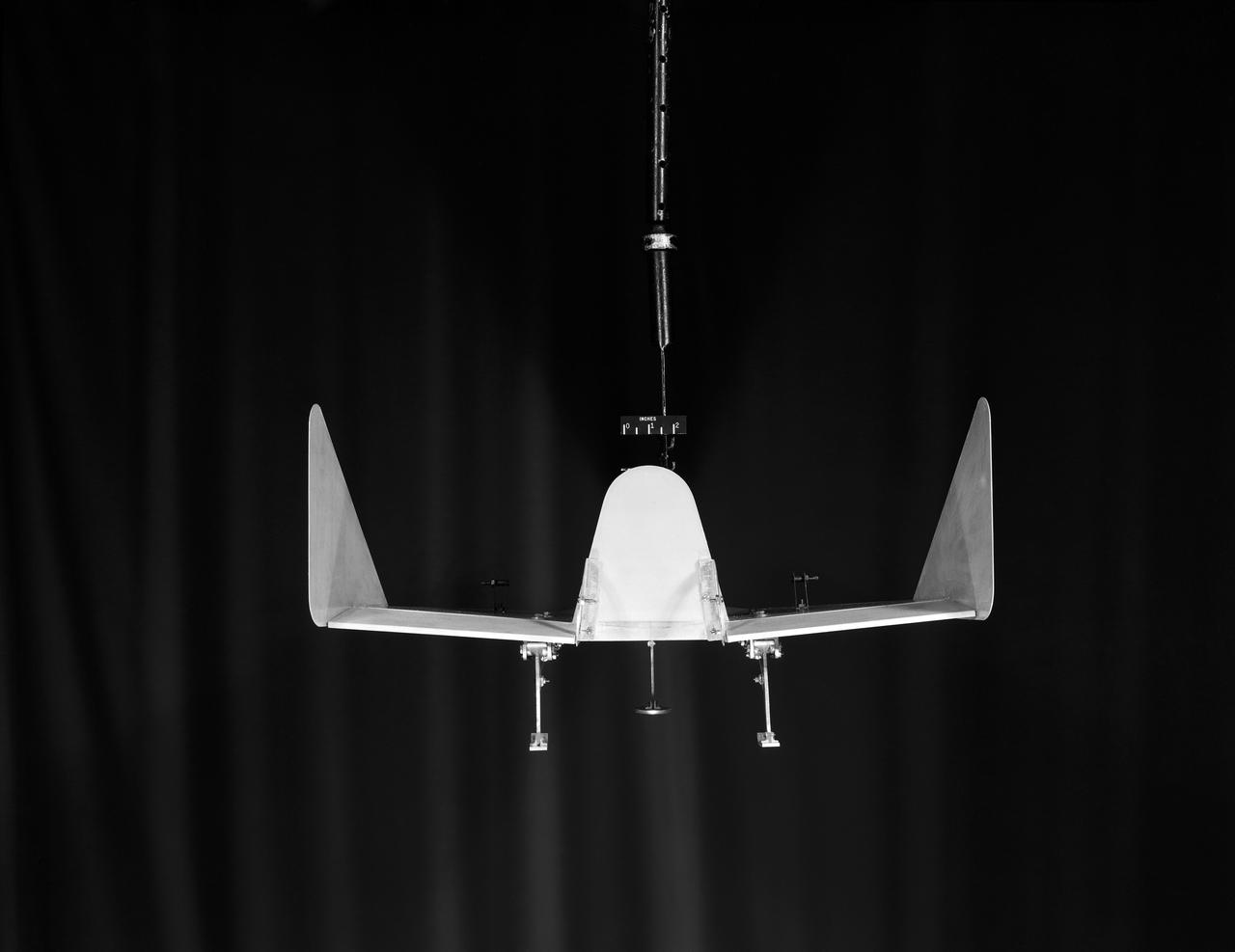
Model of Winged Space Vehicle
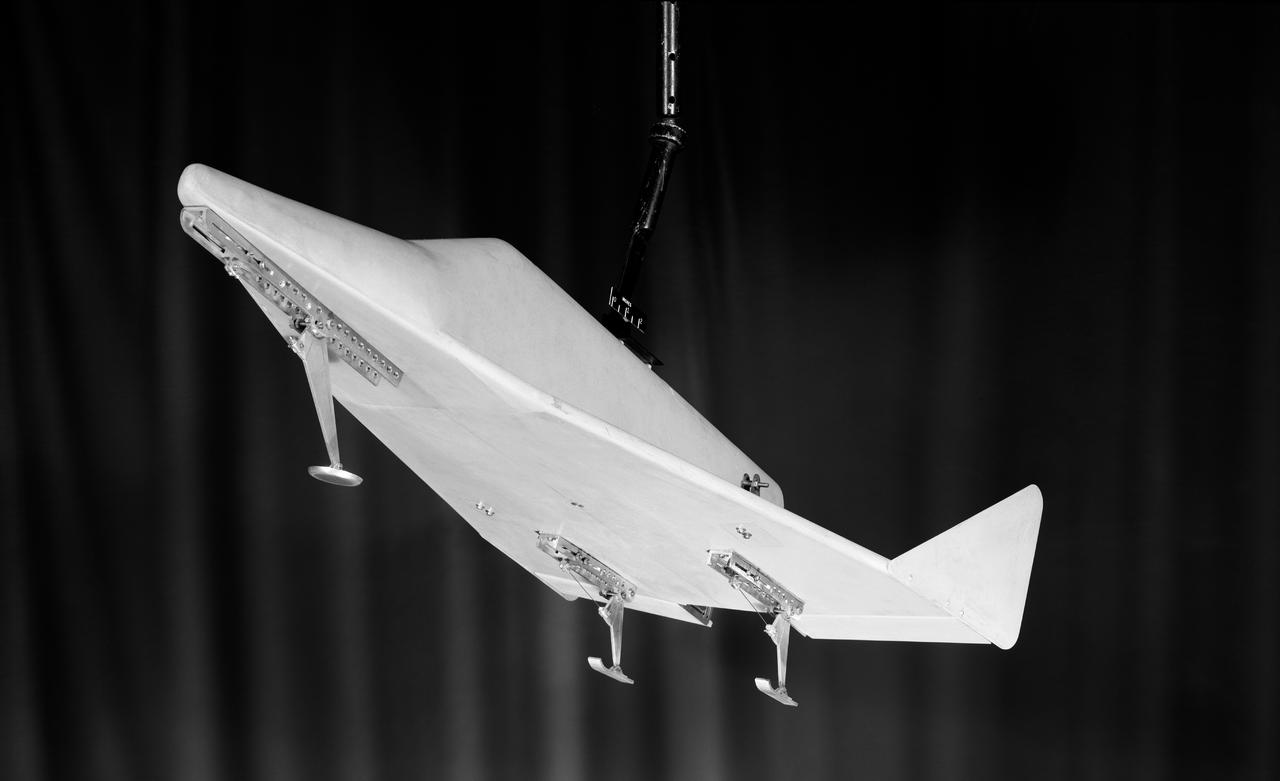
Model of Winged Space Vehicle
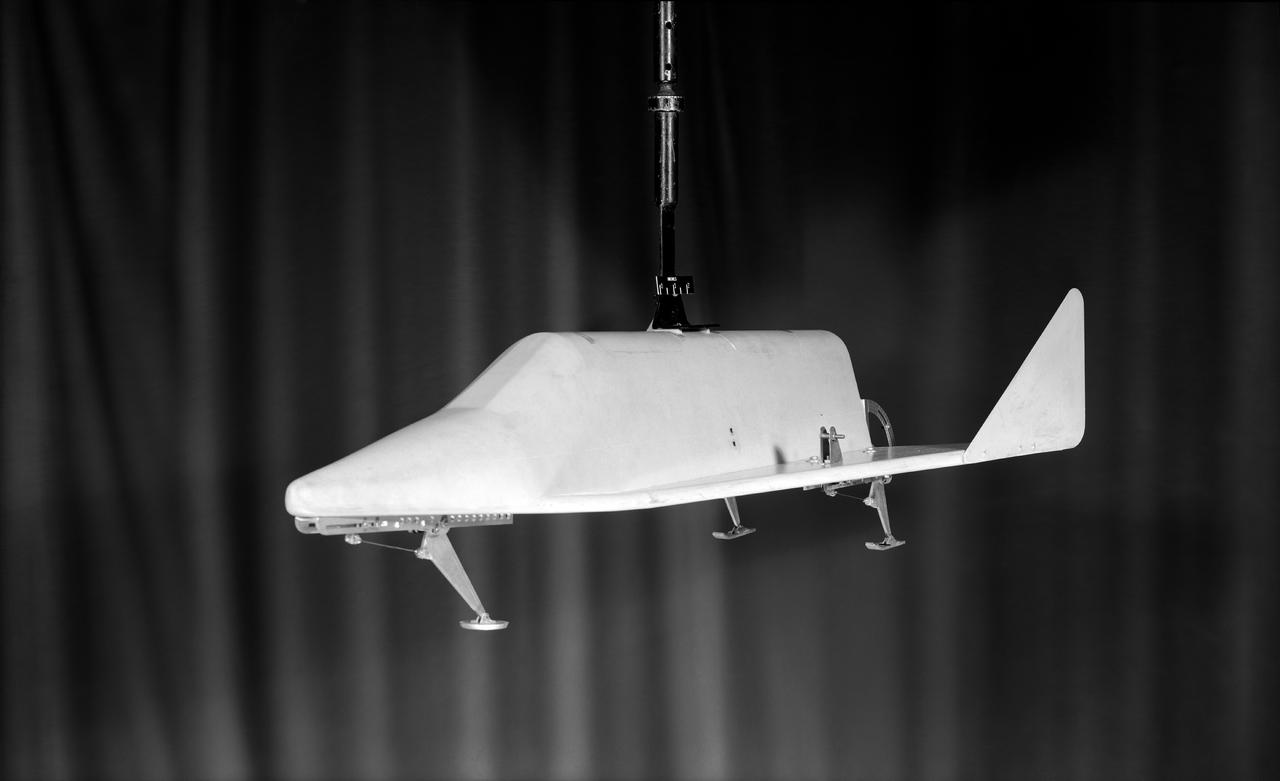
Model of Winged Space Vehicle
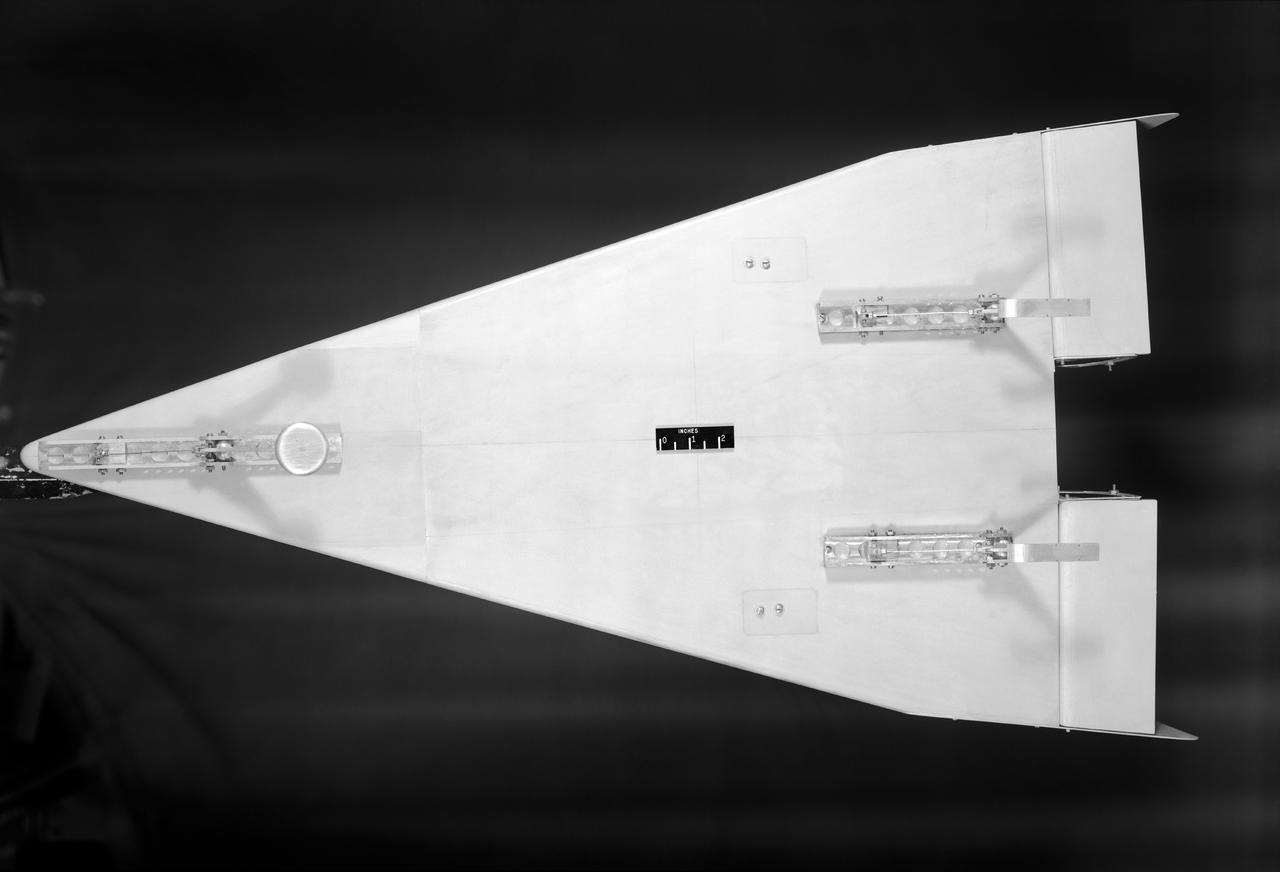
Model of Winged Space Vehicle
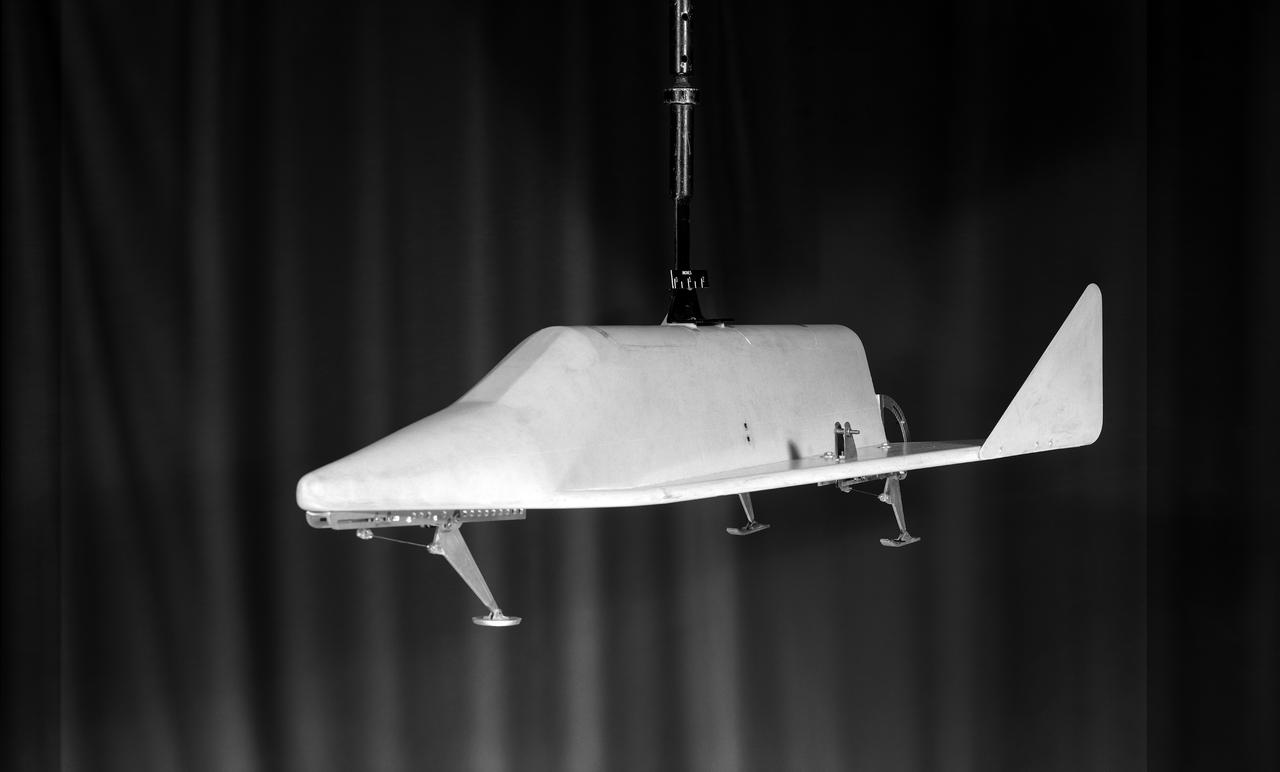
Model of Winged Space Vehicle
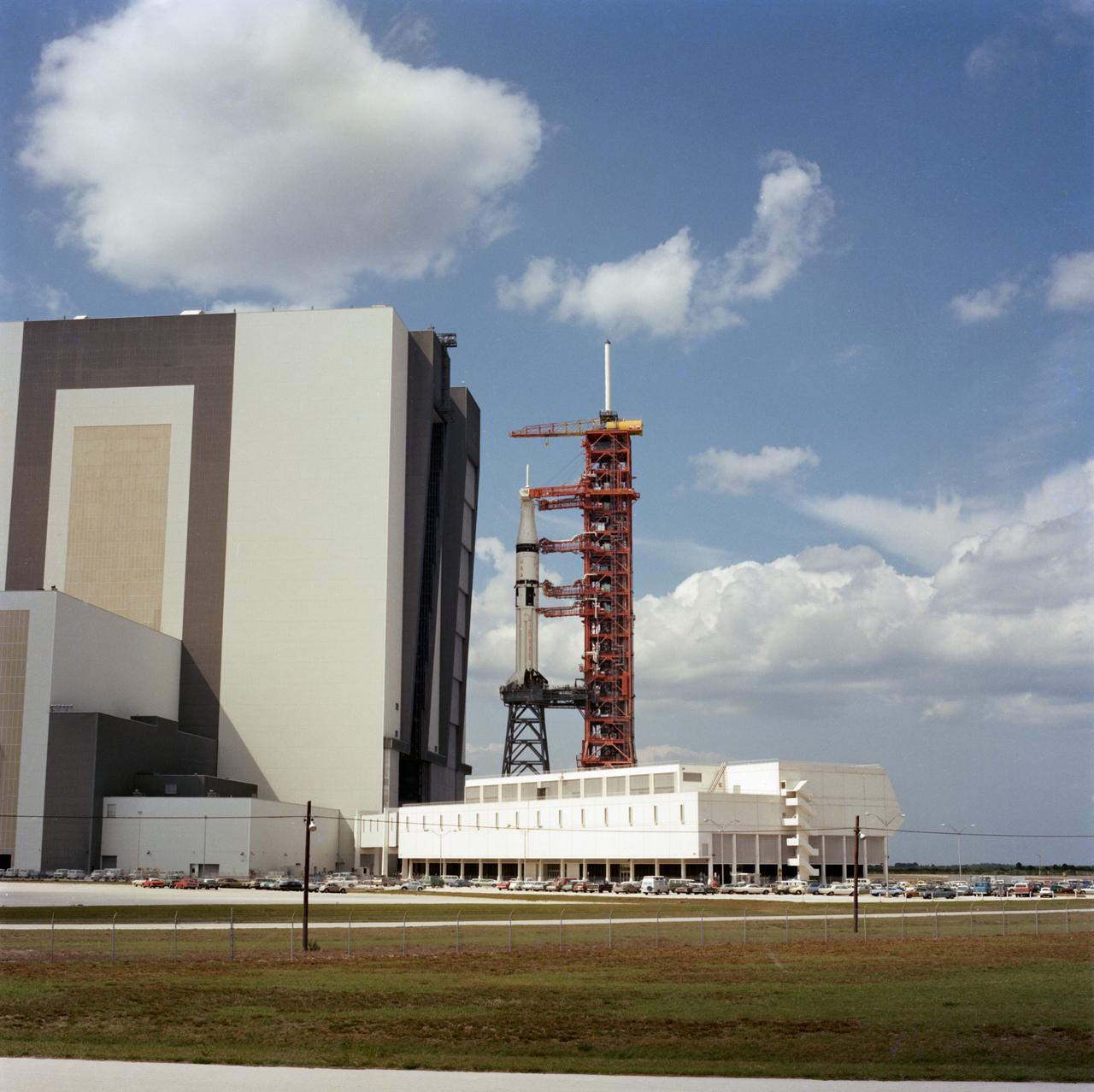
S75-24007 (24 March 1975) --- The Saturn 1B space vehicle for the Apollo-Soyuz Test Project mission, with its launch umbilical tower, rides atop a huge crawler-transporter as it moves slowly away from the Vehicle Assembly Building on its 4.24-mile journey to Pad B, Launch Complex 39, at NASA's Kennedy Space Center. The ASTP vehicle is composed of a Saturn 1B (first) stage, a Saturn IVB (second) stage, and a payload consisting of a Command/Service Module and a Docking Module. The joint U.S.-USSR ASTP docking mission in Earth orbit is scheduled for July 1975.

NASA Astronaut Frank Rubio trains with hardware at the Space Vehicle Mockup Facility at NASA's Johnson Space Center before his flight to the International Space Station.
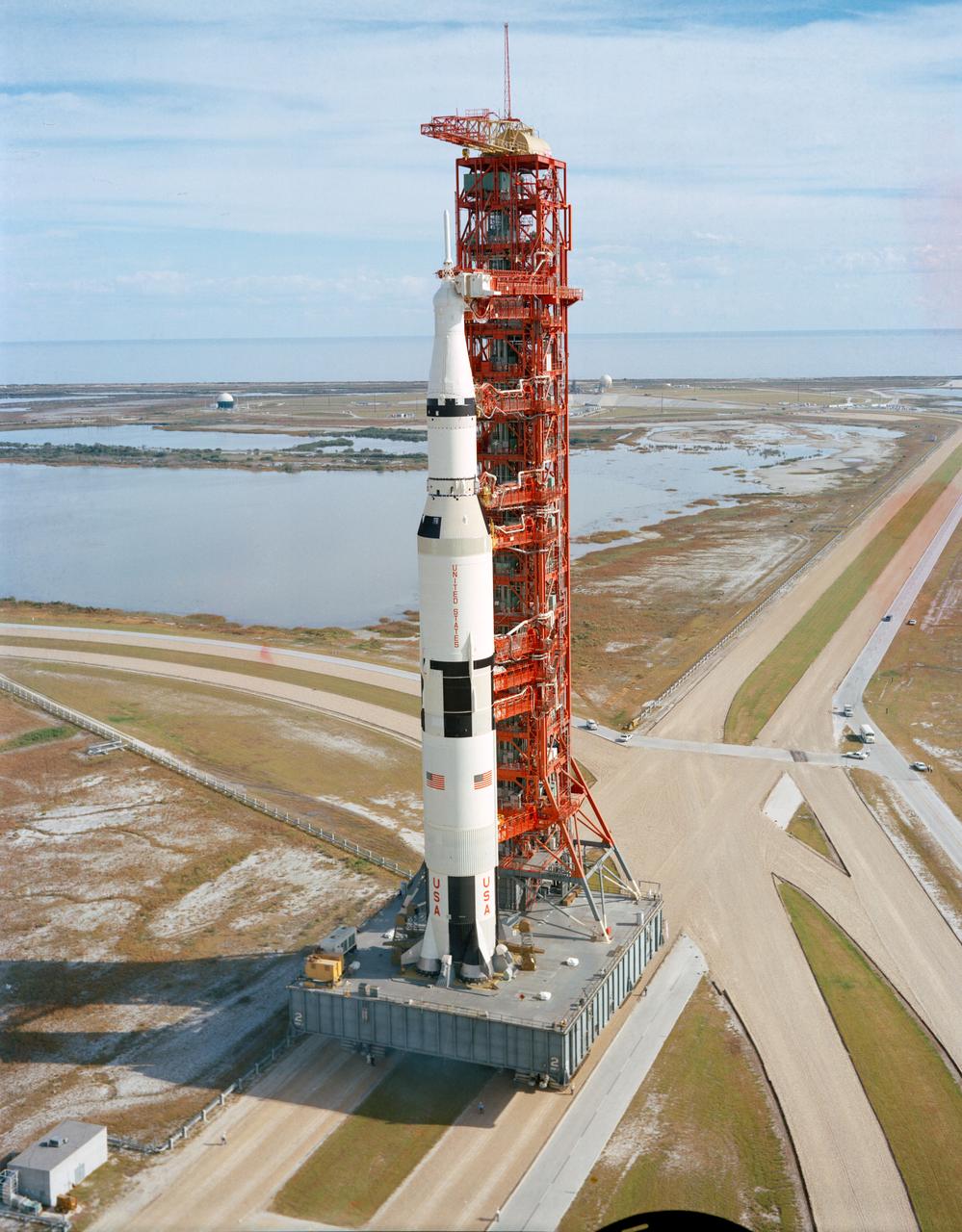
S70-54127 (9 Nov. 1970) --- A high-angle view at Launch Complex 39, Kennedy Space Center (KSC), showing the Apollo 14 (Spacecraft 110/Lunar Module 8/Saturn 509) space vehicle on the way from the Vehicle Assembly Building (VAB) to Pad A. The Saturn V stack and its mobile launch tower sit atop a huge crawler-transporter. The Apollo 14 crewmen will be astronauts Alan B. Shepard Jr., commander; Stuart A. Roosa, command module pilot; and Edgar D. Mitchell, lunar module pilot.
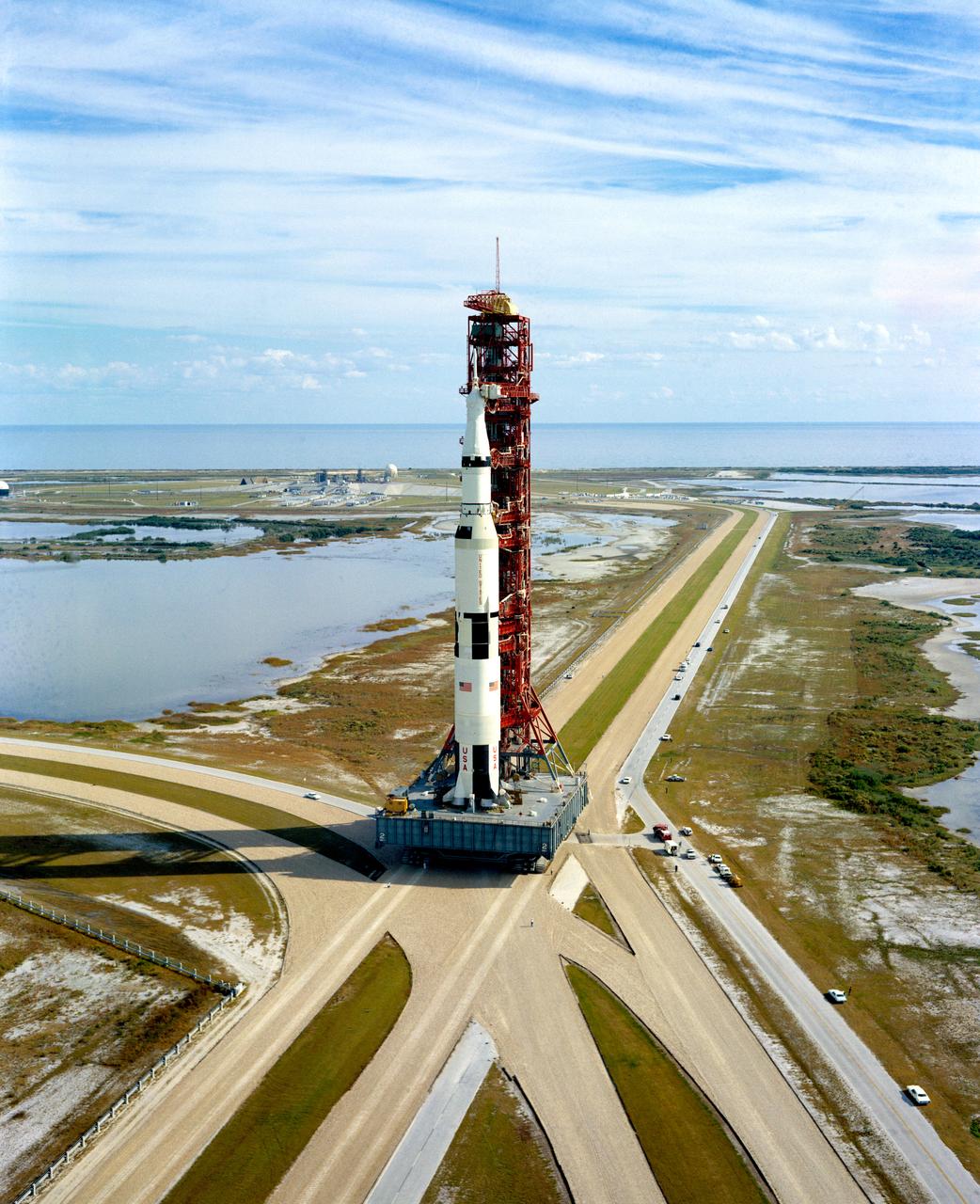
S70-54119 (9 Nov. 1970) --- A high-angle view at Launch Complex 39, Kennedy Space Center (KSC), showing the Apollo 14 (Spacecraft 110/Lunar Module 8/Saturn 509) space vehicle on the way from the Vehicle Assembly Building (VAB) to Pad A. The Saturn V stack and its mobile launch tower sit atop a huge crawler-transporter. The Apollo 14 crewmen will be astronauts Alan B. Shepard Jr., commander; Stuart A. Roosa, command module pilot; and Edgar D. Mitchell, lunar module pilot.
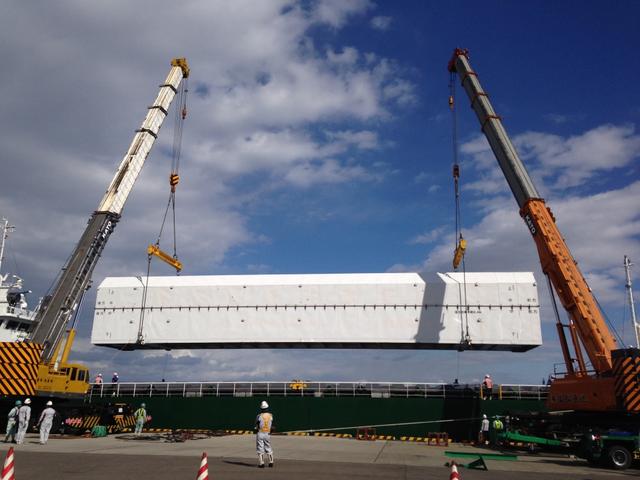
The launch vehicle for the Global Precipitation Measurement, or GPM, mission's Core Observatory arrived at Tanegashima Space Center, Japan, in the pre-dawn hours of Tuesday, Jan. 21, local time. Credits: NASA/Goddard/Warren Schultzaburger GPM is a joint mission between NASA and the Japan Aerospace Exploration Agency (JAXA). The Core Observatory will link data from a constellation of current and planned satellites to produce next-generation global measurements of rainfall and snowfall from space. The GPM mission is the first coordinated international satellite network to provide near real-time observations of rain and snow every three hours anywhere on the globe. The GPM Core Observatory anchors this network by providing observations on all types of precipitation. The observatory's data acts as the measuring stick by which partner observations can be combined into a unified data set. The data will be used by scientists to study climate change, freshwater resources, floods and droughts, and hurricane formation and tracking. Credit: Mitsubishi Heavy Industries <b><a href="http://www.nasa.gov/audience/formedia/features/MP_Photo_Guidelines.html" rel="nofollow">NASA image use policy.</a></b> <b><a href="http://www.nasa.gov/centers/goddard/home/index.html" rel="nofollow">NASA Goddard Space Flight Center</a></b> enables NASA’s mission through four scientific endeavors: Earth Science, Heliophysics, Solar System Exploration, and Astrophysics. Goddard plays a leading role in NASA’s accomplishments by contributing compelling scientific knowledge to advance the Agency’s mission. <b>Follow us on <a href="http://twitter.com/NASAGoddardPix" rel="nofollow">Twitter</a></b> <b>Like us on <a href="http://www.facebook.com/pages/Greenbelt-MD/NASA-Goddard/395013845897?ref=tsd" rel="nofollow">Facebook</a></b> <b>Find us on <a href="http://instagram.com/nasagoddard?vm=grid" rel="nofollow">Instagram</a></b>
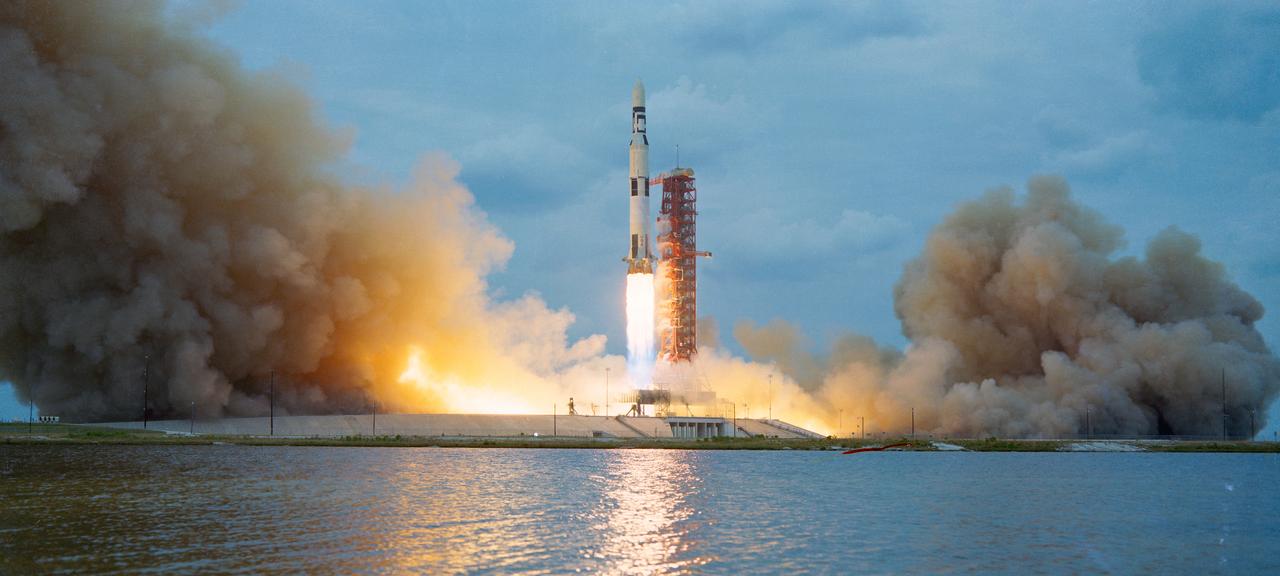
S73-26912 (14 May 1973) --- The unmanned Skylab 1/Saturn V space vehicle is launched from Pad A, Launch Complex 39, Kennedy Space Center, Florida, at 12:00 noon (EDT), May 14, 1973, to place the Skylab space station cluster in Earth orbit. The Skylab 1 payload included four of the five major components of the space station Orbital Workshop, Apollo Telescope Mount, Multiple Docking Adapter, and Airlock Module. In addition to the payload, the Skylab 1/Saturn V second (S-11) stage. The fifth major component of the space station, the Command Service Module with the Skylab 2 crew aboard, was launched at a later date by a Saturn 1B from Pad B. Photo credit: NASA
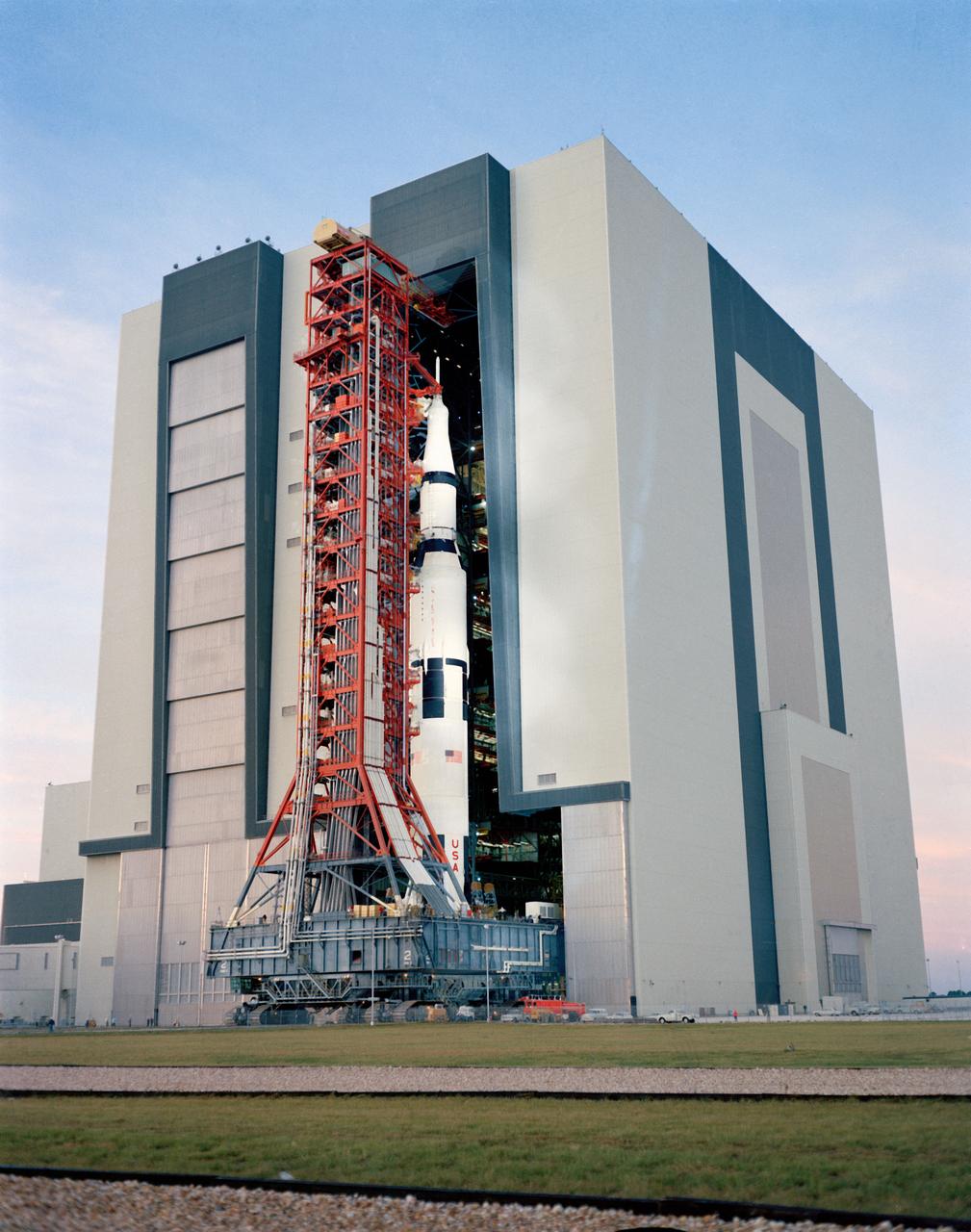
S70-54121 (9 Nov. 1970) --- A ground level view at Launch Complex 39, Kennedy Space Center (KSC), showing the Apollo 14 (Spacecraft 110/Lunar Module 8/Saturn 509) space vehicle leaving the Vehicle Assembly Building (VAB). The Saturn V stack and its mobile launch tower, atop a huge crawler-transporter, were rolled out to Pad A. The Apollo 14 crewmen will be astronauts Alan B. Shepard Jr., commander; Stuart A. Roosa, command module pilot; and Edgar D. Mitchell, lunar module pilot.
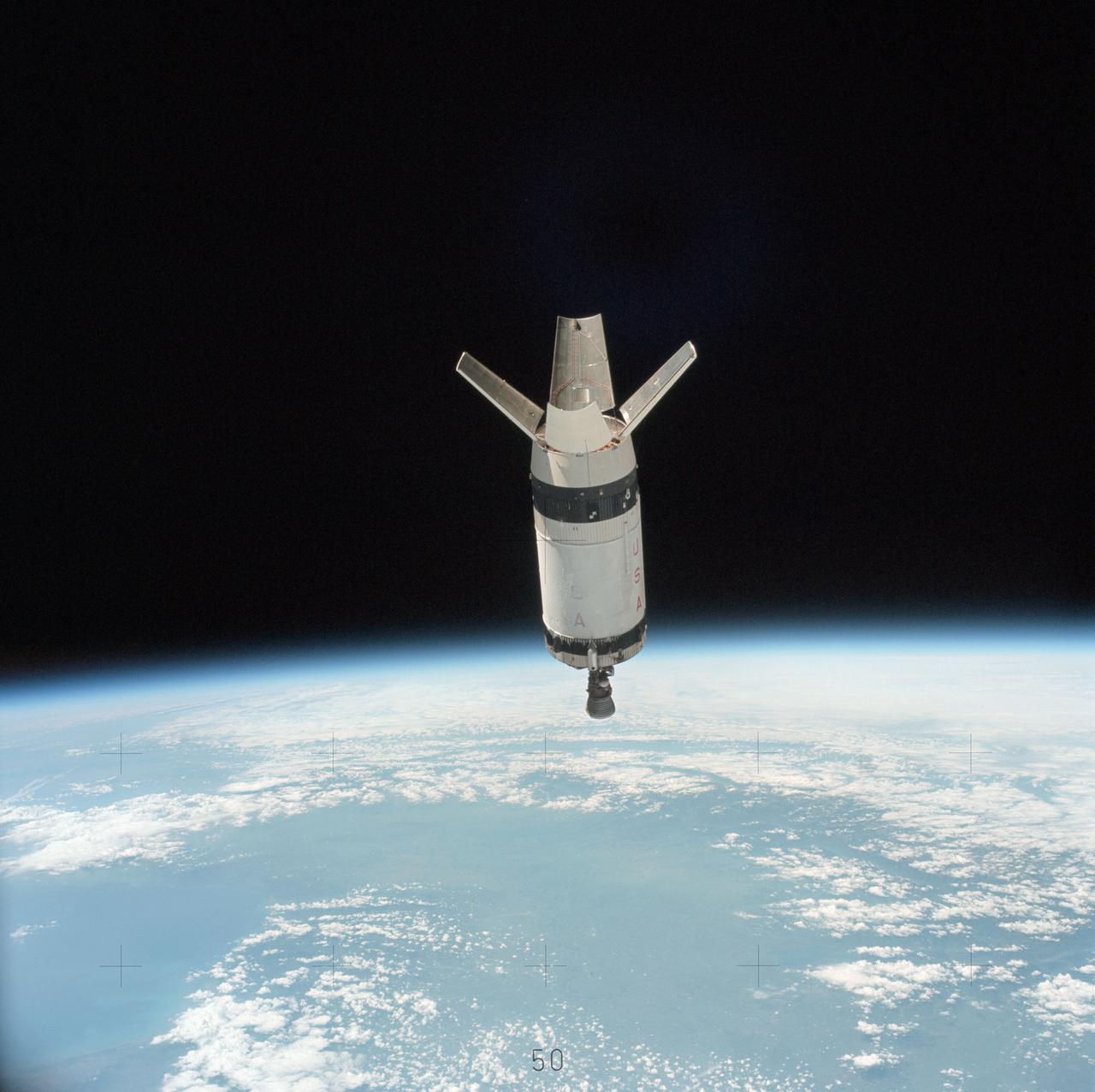
SL3-114-1625 (July-September 1973) --- An excellent view of the expended S-IVB second stage of the Skylab 3/Saturn 1B space vehicle is seen in this photograph taken from the Skylab 3 Command and Service Module (CSM) in Earth orbit. The land mass below is Italy and France, with part of the Mediterranean Sea visible. This photograph was taken with a handheld 70mm Hasselblad camera using a 100mm lens, and medium speed Ektachrome film. Photo credit: NASA
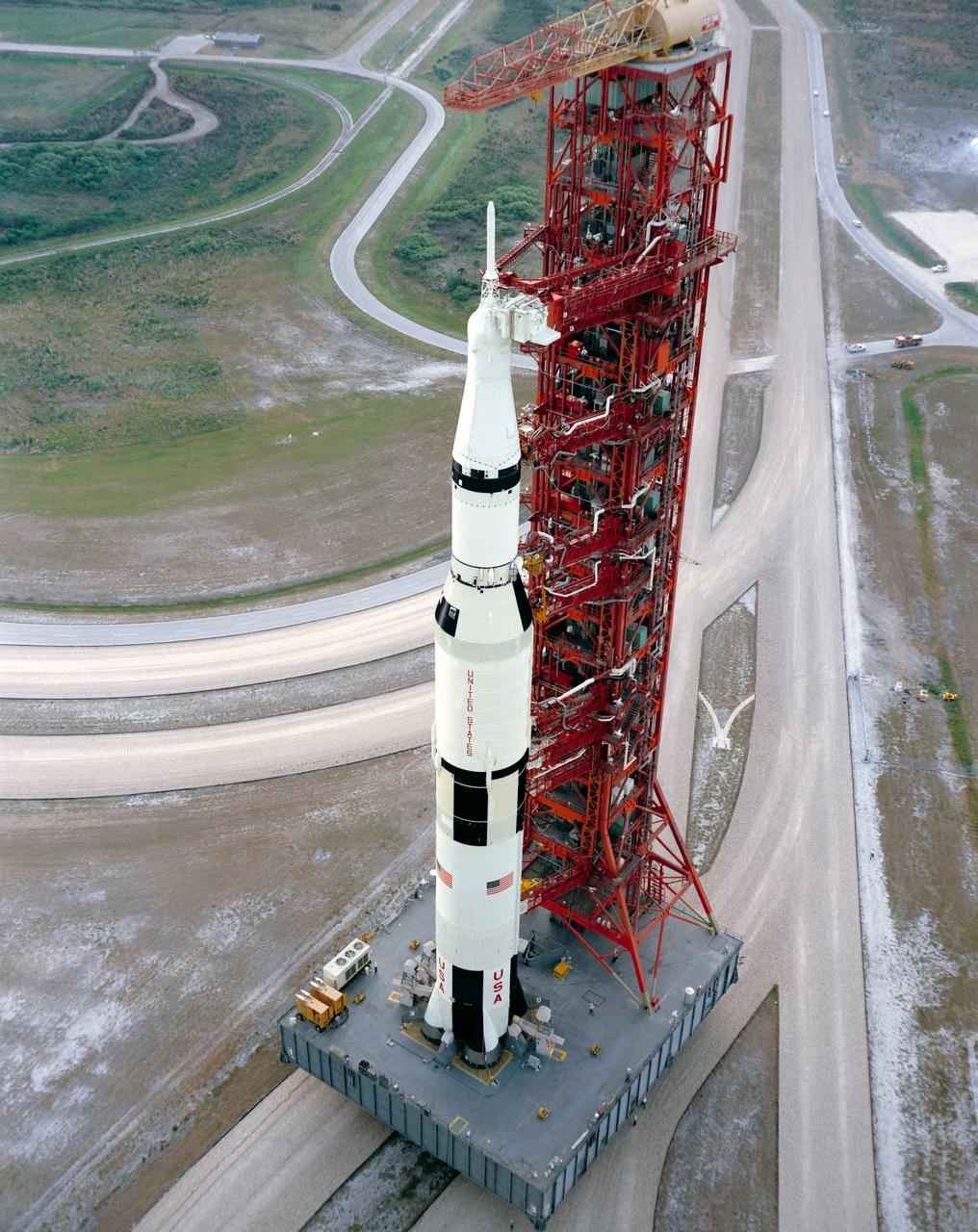
S71-33781 (11 May 1971) --- High angle view showing the Apollo 15 (Spacecraft 112/Lunar Module 10/Saturn 510) space vehicle on the way from the Vehicle Assembly Building (VAB) to Pad A, Launch Complex 39, Kennedy Space Center (KSC). The Saturn V stack and its mobile launch tower are atop a huge crawler-transporter. Apollo 15 is scheduled as the fourth manned lunar landing mission by the National Aeronautics and Space Administration (NASA). The crew men will be astronauts David R. Scott, commander; Alfred M. Worden, command module pilot; and James B. Irwin, lunar module pilot. While astronauts Scott and Irwin descend in the Lunar Module (LM) to explore the moon, astronaut Worden will remain with the Command and Service Modules (CSM) in lunar orbit.
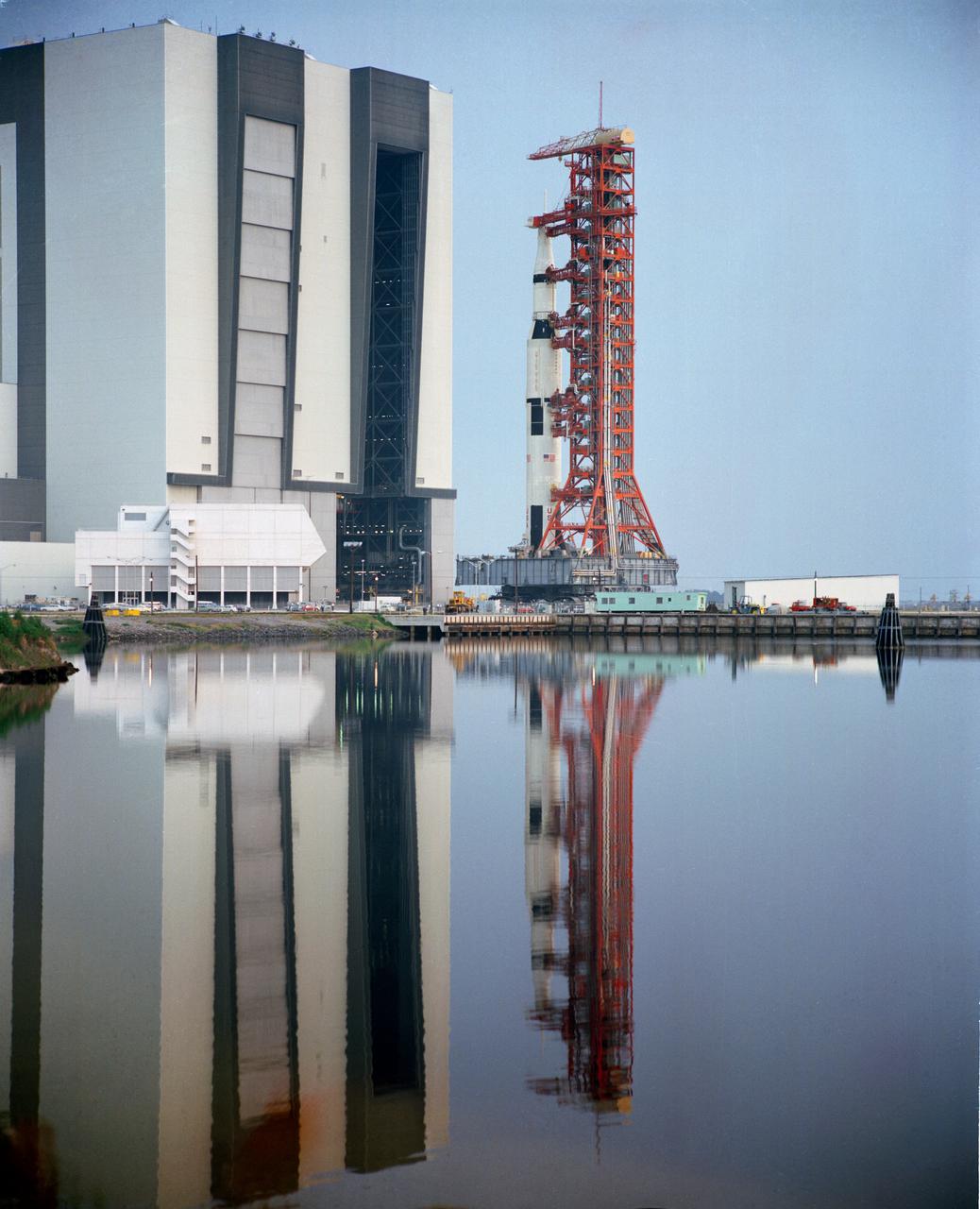
S71-33786 (11 May 1971) --- The 363-feet tall Apollo (Spacecraft 112/Lunar Module 10/Saturn 510) space vehicle which leaves the Vehicle Assembly Building (VAB) to Pad A, Launch Complex 39, Kennedy Space Center (KSC). The Saturn V stack and its mobile launch tower are atop a huge crawler-transporter. Apollo 15 is scheduled as the fourth manned lunar landing mission by the National Aeronautics and Space Administration (NASA) and is scheduled to lift off on July 26, 1971. The crew men will be astronauts David R. Scott, commander; Alfred M. Worden, command module pilot; and James B. Irwin, lunar module pilot. While astronaut Scott and Irwin will descend in the Lunar Module (LM) to explore the moon, astronaut Worden will remain with the Command and Service Modules (CSM) in lunar orbit.
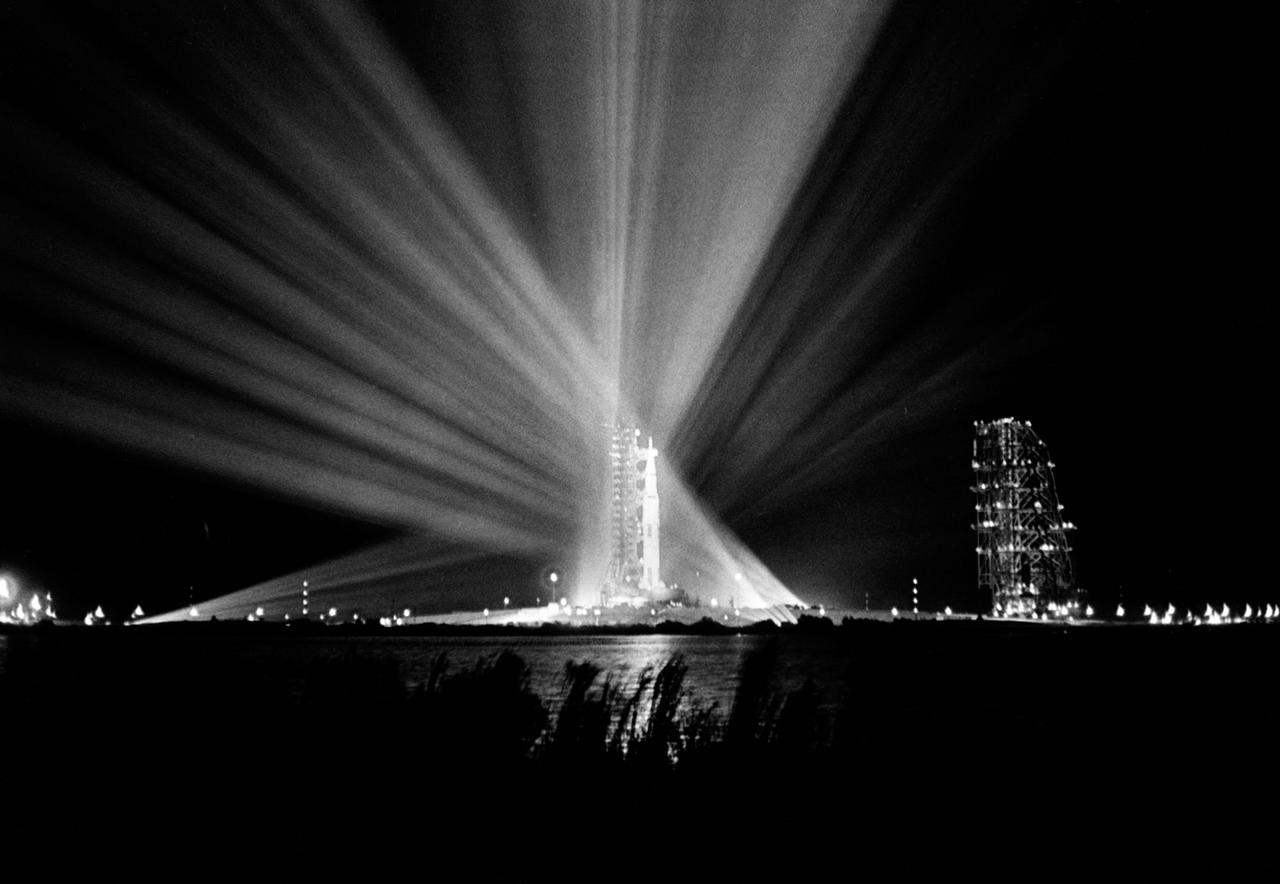
S69-25879 (23 Feb. 1969) --- Nighttime view of the 363-feet-high Apollo 9 space vehicle at Pad A, Launch Complex 39, Kennedy Space Center, during preparations for the scheduled 10-day Earth-orbital space mission. The crew of the Apollo 9 (Spacecraft 104/Lunar Module 3/Saturn 504) space flight will be astronauts James A. McDivitt, David R. Scott, and Russell L. Schweickart.
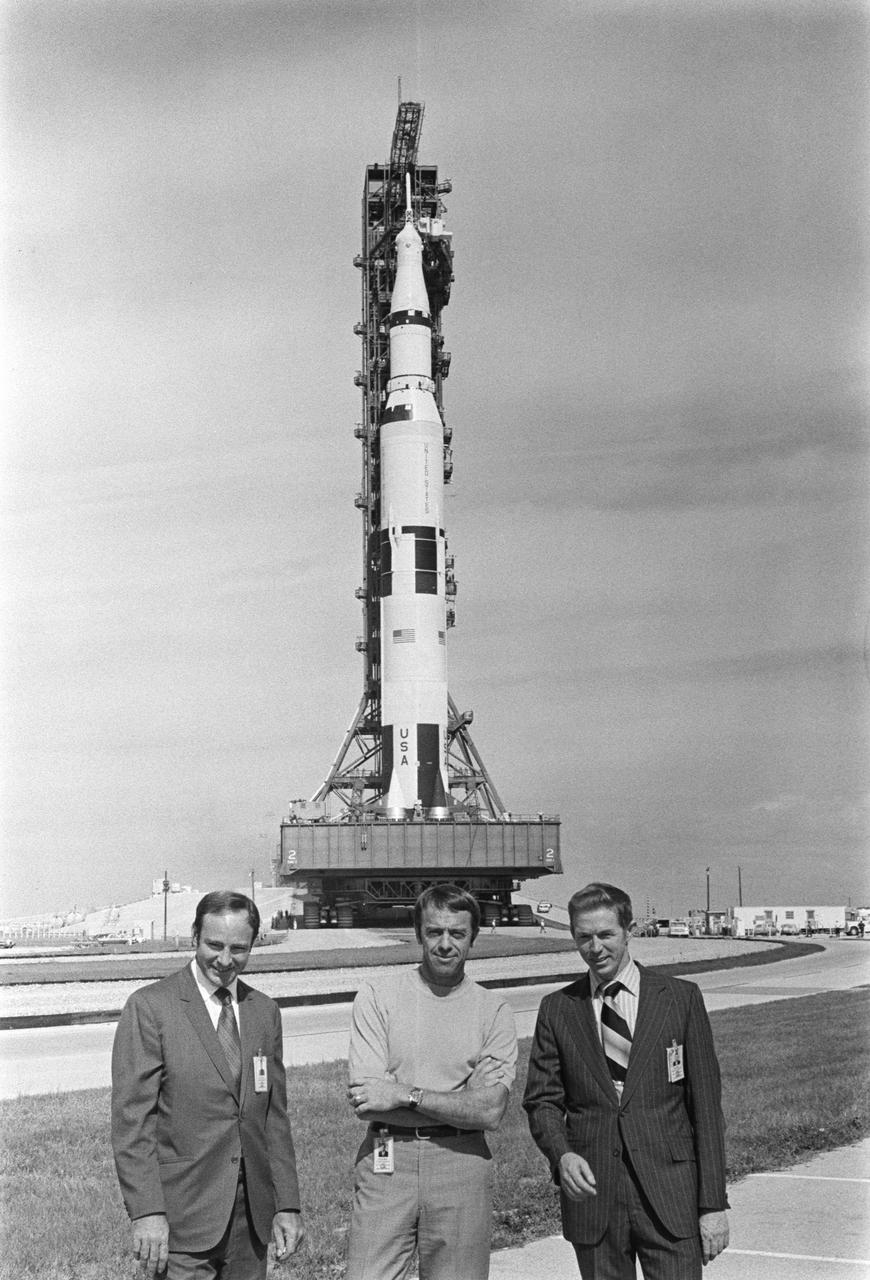
S70-55689 (9 Nov. 1970) --- The Apollo 14 (Spacecraft 110/Lunar Module 8/Saturn 509) space vehicle arrives at Pad A, Launch Complex 39, during the Apollo 14 roll out from the Kennedy Space Center's Vehicle Assembly Building. The Saturn V stack and its mobile launch tower atop a huge crawler-transporter. The three members of the Apollo 14 prime crew are in the foreground. They are (left to right) astronauts Edgar D. Mitchell, lunar module pilot; Alan B. Shepard Jr., commander; and Stuart A. Roosa, command module pilot.
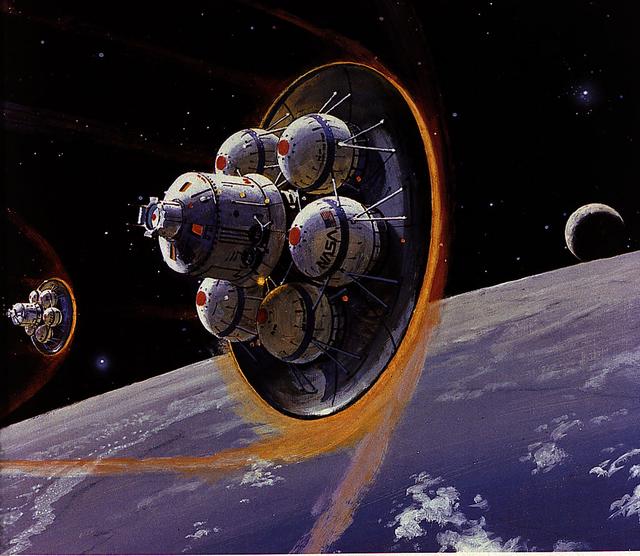
In June 1989 the Marshall Space Flight Center initiated studies of Space Transfer Vehicle (STV) concepts. A successor to the Orbital Transfer Vehicle (OTV) concept, the STV would be a high-performance space vehicle capable of transferring automated payloads from a Space Station to geosynchronous orbits, the Moon, or planets. Illustrated in this artist's concept are two STV's undergoing aerobraking maneuvers as they approach a Space Station.
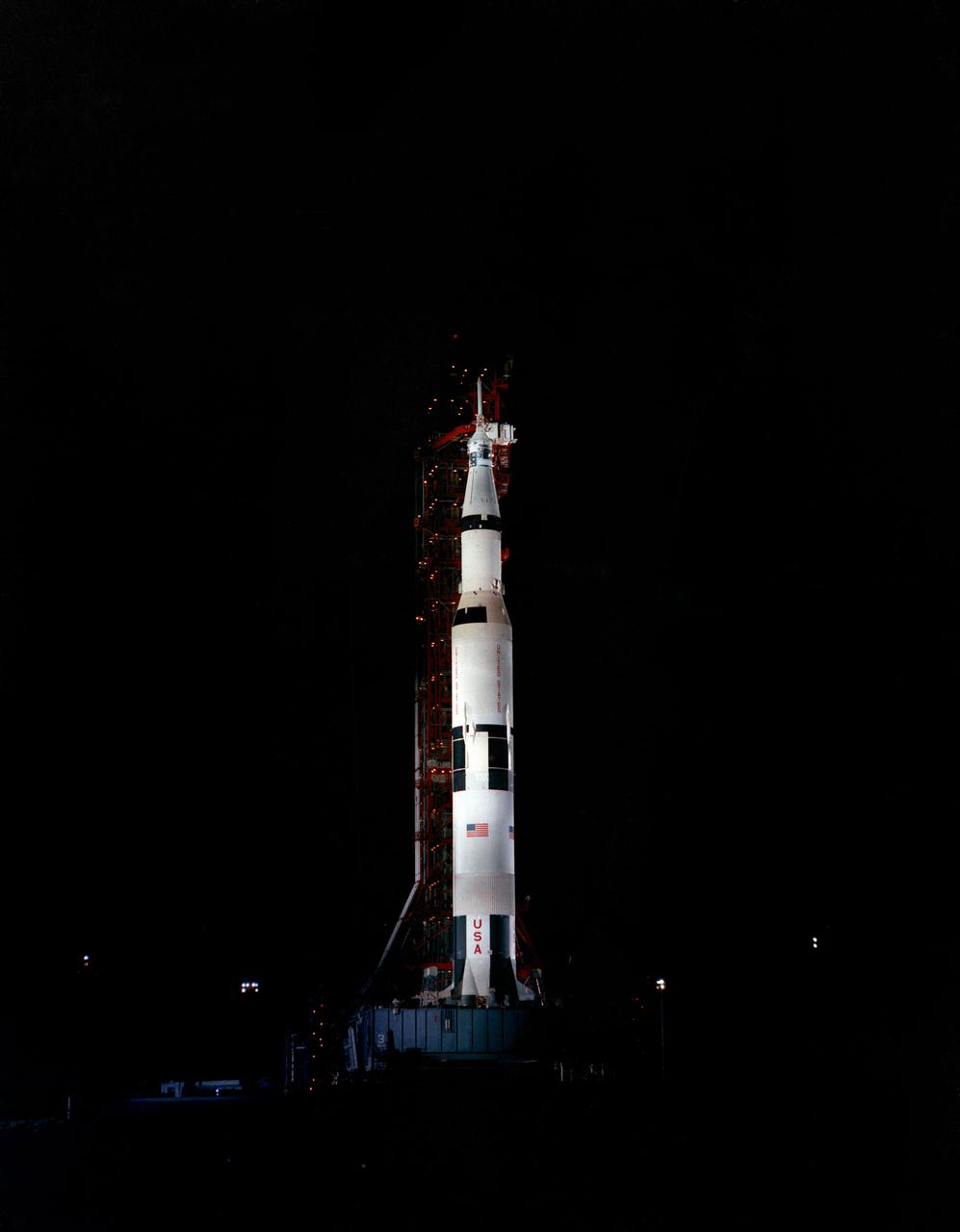
S69-33855 (4 May 1969) --- Nighttime, ground-level view of the Apollo 10 (Spacecraft 106/Lunar Module 4/Saturn 505) space vehicle on Pad B, Launch Complex 39, Kennedy Space Center. This photograph of the 363-feet tall Apollo/Saturn V stack was taken during pull back of the mobile service structure. The Apollo 10 crew will be astronauts Thomas P. Stafford, John W. Young, and Eugene A. Cernan.
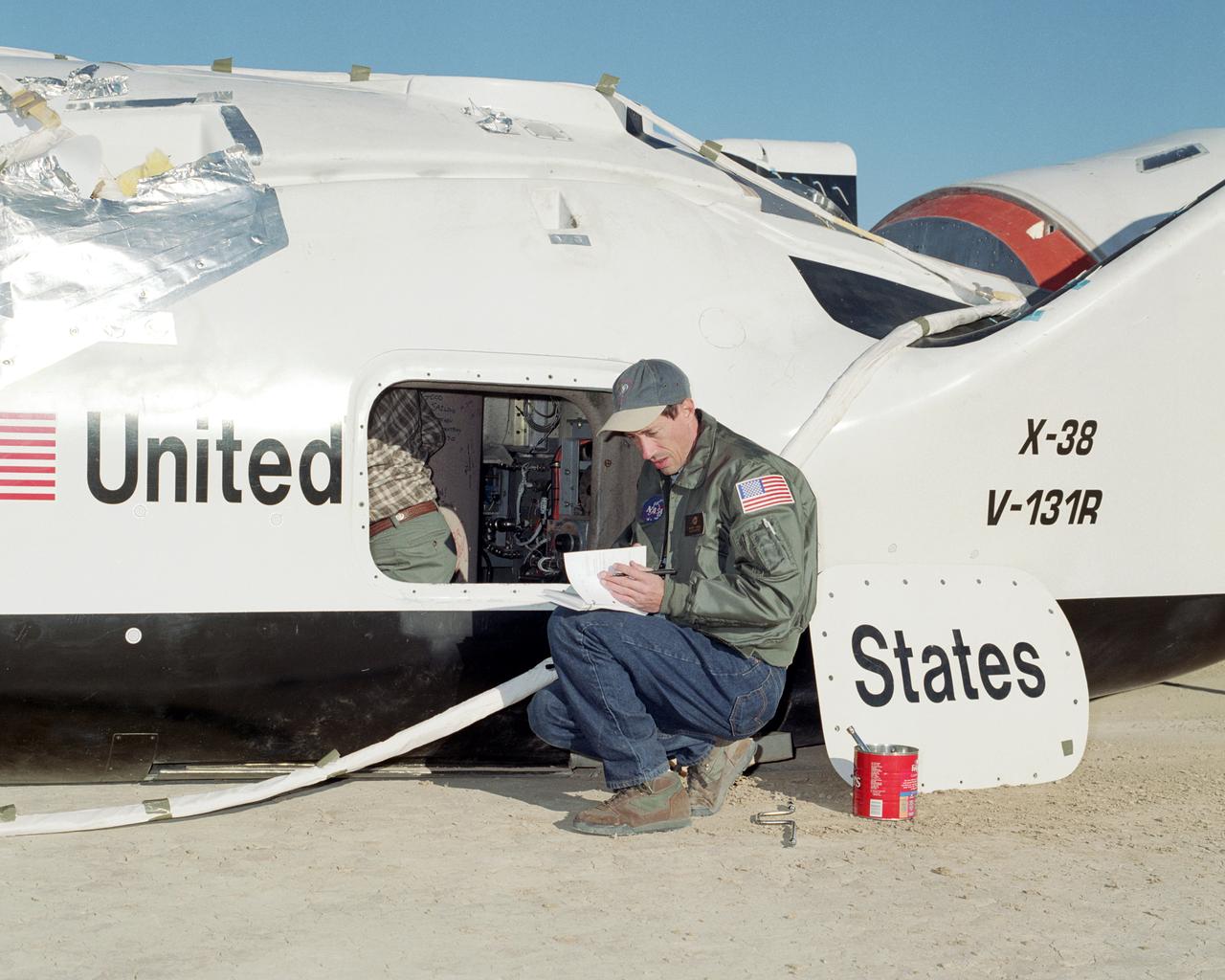
NASA engineer Wayne Peterson from the Johnson Space Center reviews postflight checklists following a spectacular flight of the X-38 prototype for a crew recovery vehicle that may be built for the International Space Station. The X-38 tested atmospheric flight characteristics on December 13, 2001, in a descent from 45,000 feet to Rogers Dry Lake at the NASA Dryden Flight Research Center/Edwards Air Force Base complex in California.
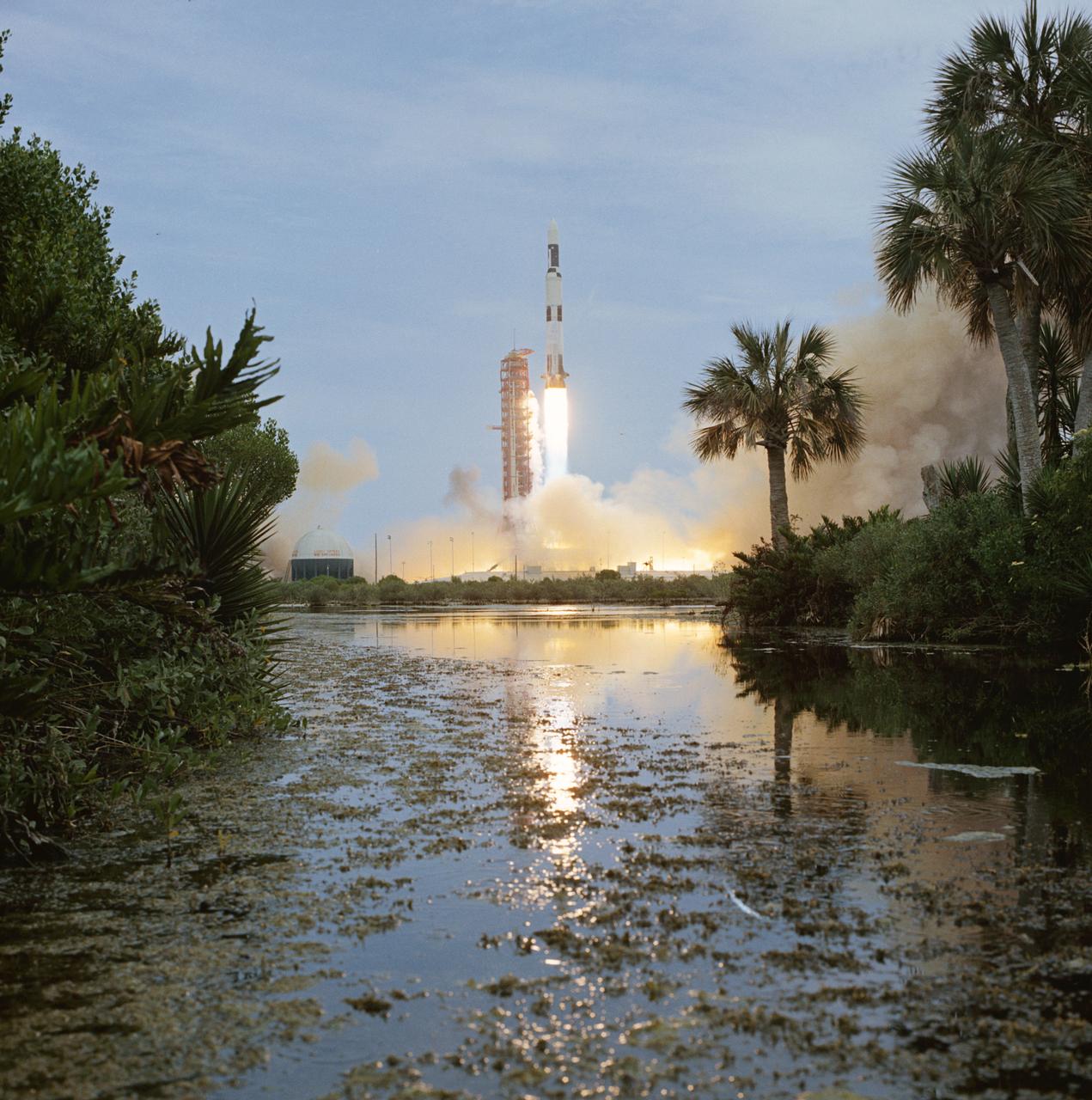
S73-26913 (14 May 1973) --- The unmanned Skylab 1/Saturn V space vehicle is launched from Pad A, Launch Complex 39, Kennedy Space Center, Florida, at 12:00 noon (EDT), May 14, 1973, to place the Skylab space station cluster in Earth orbit. The Skylab 1 payload included four of the five major components of the space station Orbital Workshop, Apollo Telescope Mount, Multiple Docking Adapter, and Airlock Module. In addition to the payload, the Skylab 1/Saturn V second (S-11) stage. The fifth major component of the space station, the Command Service Module with the Skylab 2 crew aboard, was launched at a later date by a Saturn 1B from Pad B. Photo credit: NASA

jsc2024e074731 (Nov. 13, 2024) --- NASA’s SpaceX Crew-11 crew poses for a portrait at the Space Vehicle Mockup Facility at NASA’s Johnson Space Center in Houston, Texas. From left to right: JAXA astronaut Kimiya Yui, NASA astronaut Zena Cardman, Roscosmos Cosmonaut Oleg Platonov, and NASA astronaut Mike Fincke. Credit: NASA/Josh Valcarcel
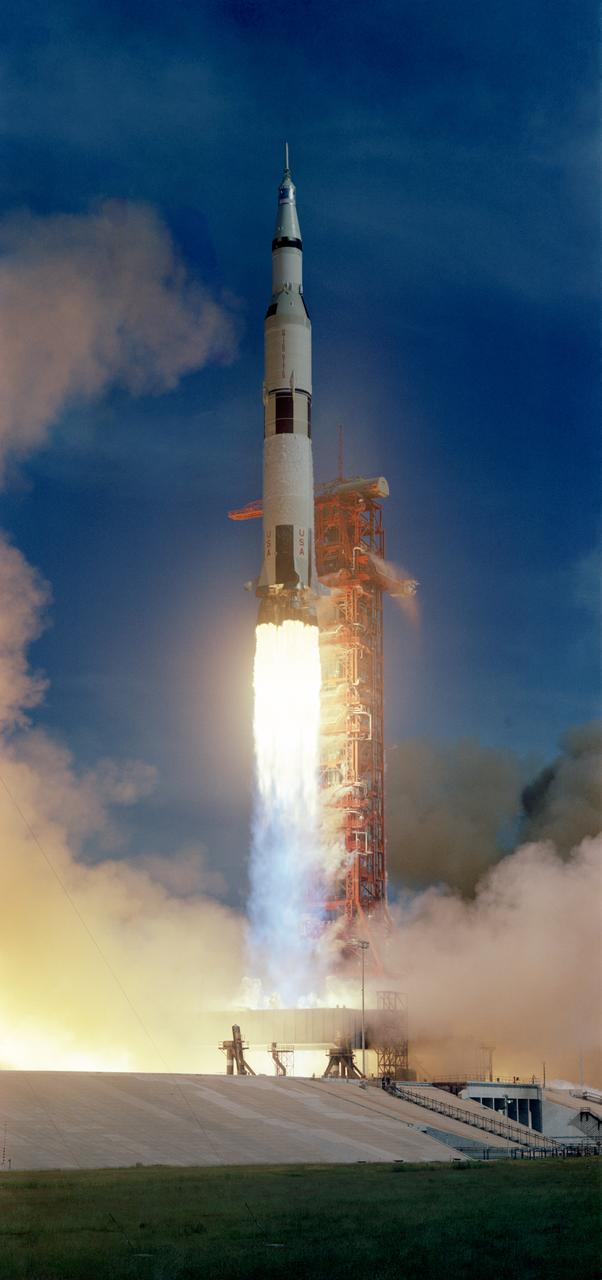
S71-41356 (26 July 1971) --- The huge, 363-feet tall Apollo 15 (Spacecraft 112/Lunar Module 10/Saturn 510) space vehicle is launched from Pad A, Launch Complex 39, Kennedy Space Center (KSC), Florida, at 9:34:00:79 a.m. (EDT), July 26, 1971, on a lunar landing mission. Aboard the Apollo 15 spacecraft were astronauts David R. Scott, commander; Alfred M. Worden, command module pilot; and James B. Irwin, lunar module pilot. Apollo 15 is the National Aeronautics and Space Administration's (NASA) fourth manned lunar landing mission. While astronauts Scott and Irwin will descend in the Lunar Module (LM) to explore the moon, astronaut Worden will remain with the Command and Service Modules (CSM) in lunar orbit.
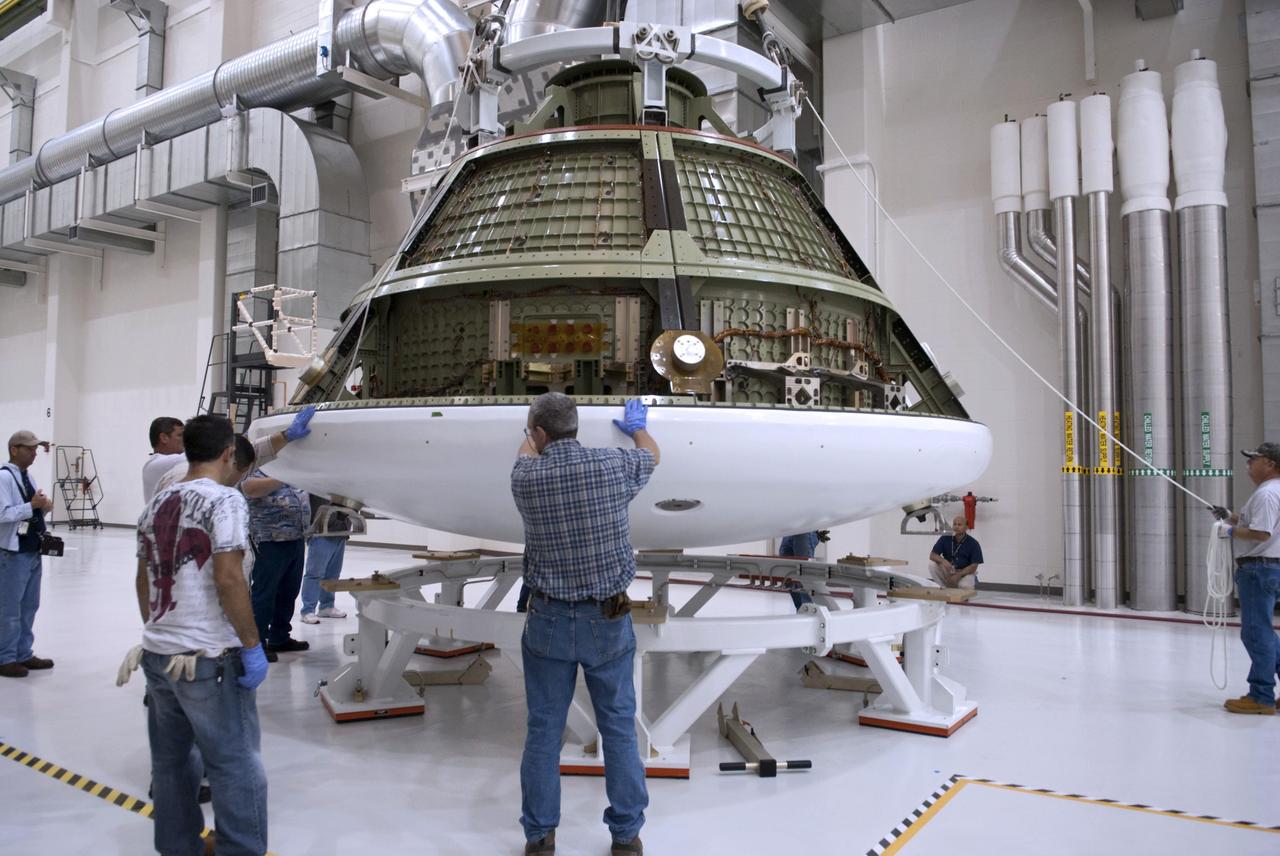
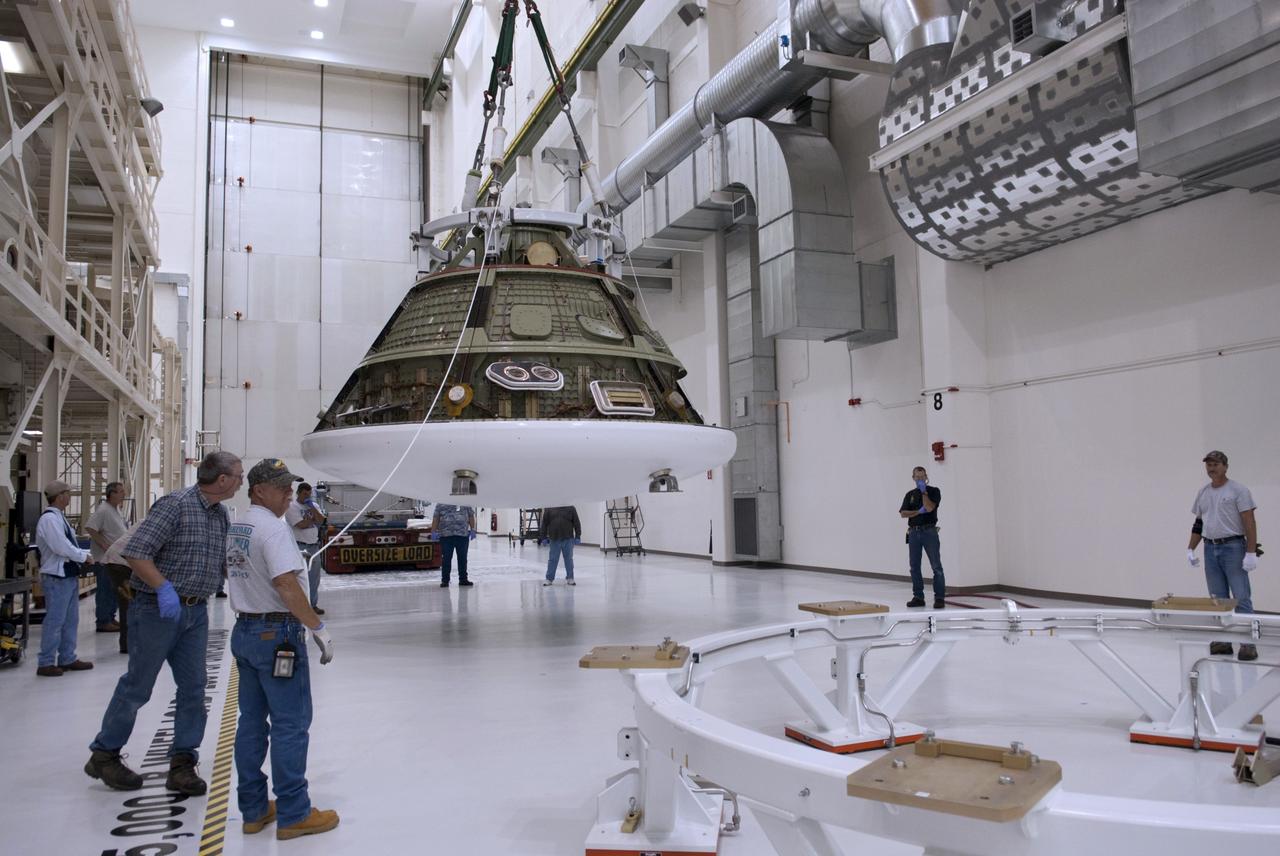
CAPE CANAVERAL, Fla. -- Lockheed Martin crews assist as a crane is used to lower the Orion ground test vehicle on to a work stand in the Operations and Checkout O&C Facility at NASA's Kennedy Space Center in Florida. The vehicle traveled more than 1,800 miles from the company's Waterton Facility near Denver where it successfully completed a series of rigorous tests that simulated launch and spaceflight environments. The ground test vehicle will be used for pathfinding operations in the O&C, including simulated manufacturing and assembly procedures. After those operations are completed, new backshell panels will be installed on the ground test vehicle at the O&C prior to the vehicle’s trek to NASA's Langley Research Center in Virginia for splashdown testing at the agency's Hydro Impact Basin. Launching atop NASA's heavy-lift Space Launch System SLS, which also is under development, the Orion Multi-Purpose Crew Vehicle MPCV will serve as the exploration vehicle that will carry astronaut crews beyond low Earth orbit. It also will provide emergency abort capabilities, sustain the crew during space travel and provide safe re-entry from deep space return velocities. For more information, visit www.nasa.gov/orion. Photo credit: Charisse Nahser
CAPE CANAVERAL, Fla. -- Lockheed Martin crews assist as a crane is used to move the Orion ground test vehicle toward a work stand in the Operations and Checkout O&C Facility at NASA's Kennedy Space Center in Florida. The vehicle traveled more than 1,800 miles from the company's Waterton Facility near Denver where it successfully completed a series of rigorous tests that simulated launch and spaceflight environments. The ground test vehicle will be used for pathfinding operations in the O&C, including simulated manufacturing and assembly procedures. After those operations are completed, new backshell panels will be installed on the ground test vehicle at the O&C prior to the vehicle’s trek to NASA's Langley Research Center in Virginia for splashdown testing at the agency's Hydro Impact Basin. Launching atop NASA's heavy-lift Space Launch System SLS, which also is under development, the Orion Multi-Purpose Crew Vehicle MPCV will serve as the exploration vehicle that will carry astronaut crews beyond low Earth orbit. It also will provide emergency abort capabilities, sustain the crew during space travel and provide safe re-entry from deep space return velocities. For more information, visit www.nasa.gov/orion. Photo credit: Charisse Nahser
CAPE CANAVERAL, Fla. -- Lockheed Martin crews remove the Orion ground test vehicle from its packaging in the Operations and Checkout O&C Facility at NASA's Kennedy Space Center in Florida. The vehicle traveled more than 1,800 miles from the company's Waterton Facility near Denver where it successfully completed a series of rigorous tests that simulated launch and spaceflight environments. The ground test vehicle will be used for pathfinding operations in the O&C, including simulated manufacturing and assembly procedures. After those operations are completed, new backshell panels will be installed on the ground test vehicle at the O&C prior to the vehicle’s trek to NASA's Langley Research Center in Virginia for splashdown testing at the agency's Hydro Impact Basin. Launching atop NASA's heavy-lift Space Launch System SLS, which also is under development, the Orion Multi-Purpose Crew Vehicle MPCV will serve as the exploration vehicle that will carry astronaut crews beyond low Earth orbit. It also will provide emergency abort capabilities, sustain the crew during space travel and provide safe re-entry from deep space return velocities. For more information, visit www.nasa.gov/orion. Photo credit: Charisse Nahser
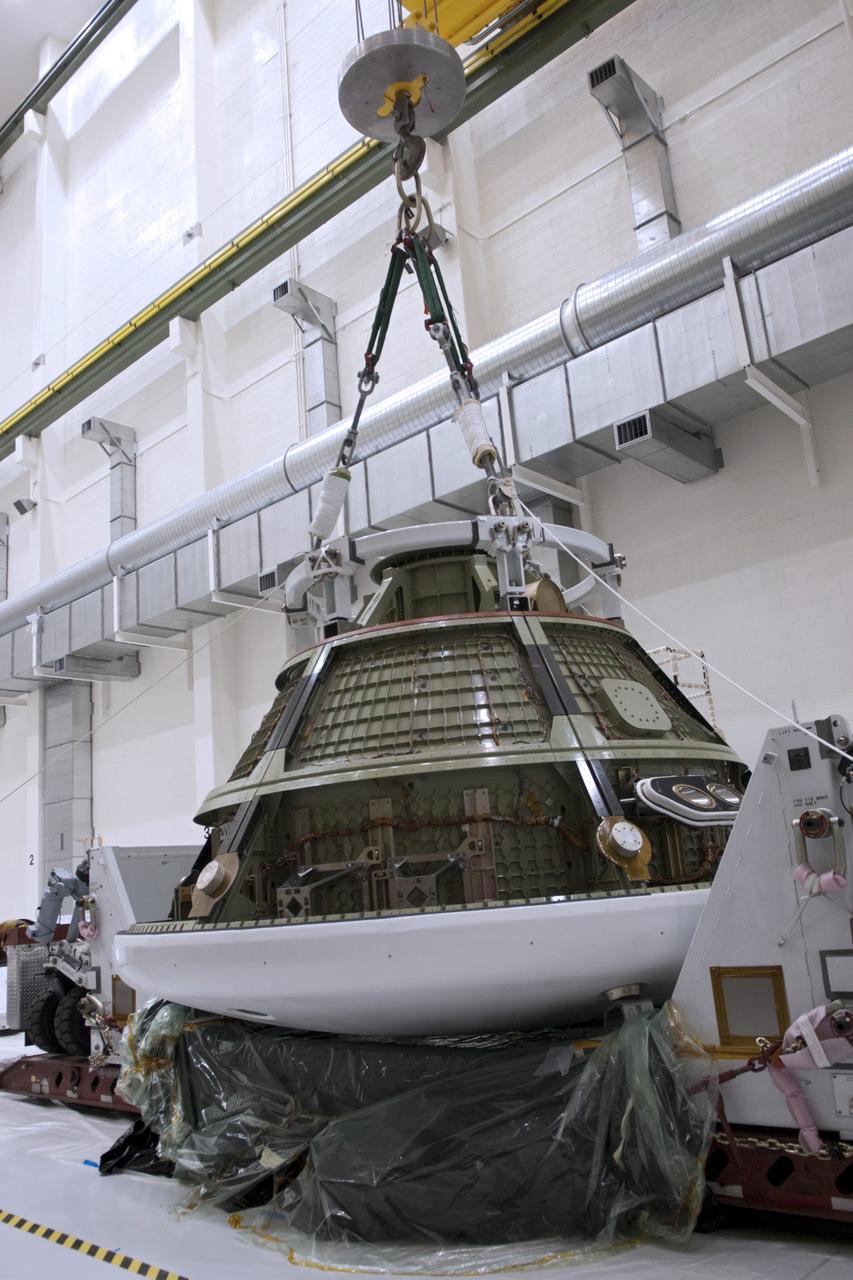
CAPE CANAVERAL, Fla. -- A crane is used to lift the Orion ground test vehicle in the Operations and Checkout O&C Facility at NASA's Kennedy Space Center in Florida. The vehicle traveled more than 1,800 miles from the company's Waterton Facility near Denver where it successfully completed a series of rigorous tests that simulated launch and spaceflight environments. The ground test vehicle will be used for pathfinding operations in the O&C, including simulated manufacturing and assembly procedures. After those operations are completed, new backshell panels will be installed on the ground test vehicle at the O&C prior to the vehicle’s trek to NASA's Langley Research Center in Virginia for splashdown testing at the agency's Hydro Impact Basin. Launching atop NASA's heavy-lift Space Launch System SLS, which also is under development, the Orion Multi-Purpose Crew Vehicle MPCV will serve as the exploration vehicle that will carry astronaut crews beyond low Earth orbit. It also will provide emergency abort capabilities, sustain the crew during space travel and provide safe re-entry from deep space return velocities. For more information, visit www.nasa.gov/orion. Photo credit: Charisse Nahser
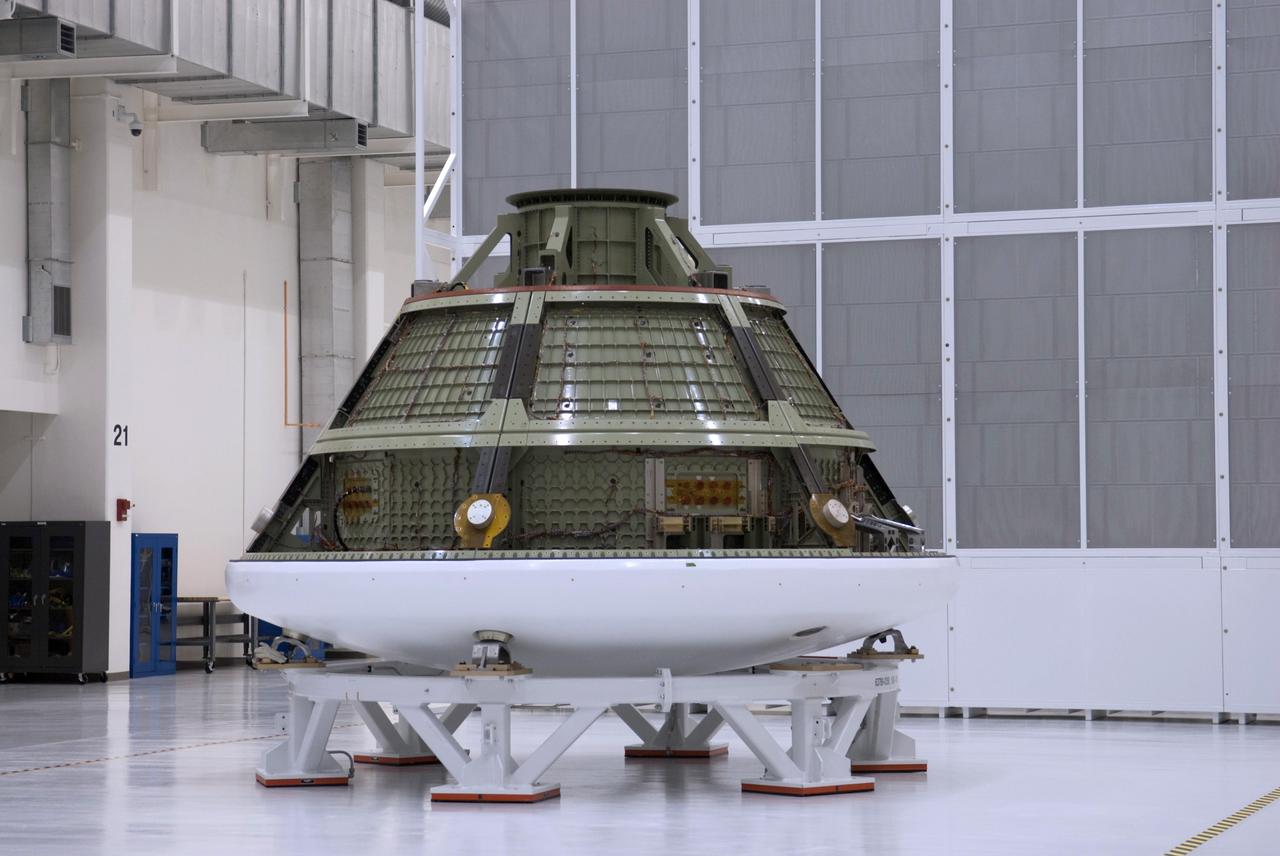
CAPE CANAVERAL, Fla. -- The Orion ground test vehicle in the Operations and Checkout O&C Facility is in NASA's Kennedy Space Center in Florida. The vehicle traveled more than 1,800 miles from Lockheed Martin's Waterton Facility near Denver where it successfully completed a series of rigorous tests that simulated launch and spaceflight environments. The ground test vehicle will be used for pathfinding operations in the O&C, including simulated manufacturing and assembly procedures. After those operations are completed, new backshell panels will be installed on the ground test vehicle at the O&C prior to the vehicle’s trek to NASA's Langley Research Center in Virginia for splashdown testing at the agency's Hydro Impact Basin. Launching atop NASA's heavy-lift Space Launch System SLS, which also is under development, the Orion Multi-Purpose Crew Vehicle MPCV will serve as the exploration vehicle that will carry astronaut crews beyond low Earth orbit. It also will provide emergency abort capabilities, sustain the crew during space travel and provide safe re-entry from deep space return velocities. For more information, visit www.nasa.gov/orion. Photo credit: Charisse Nahser
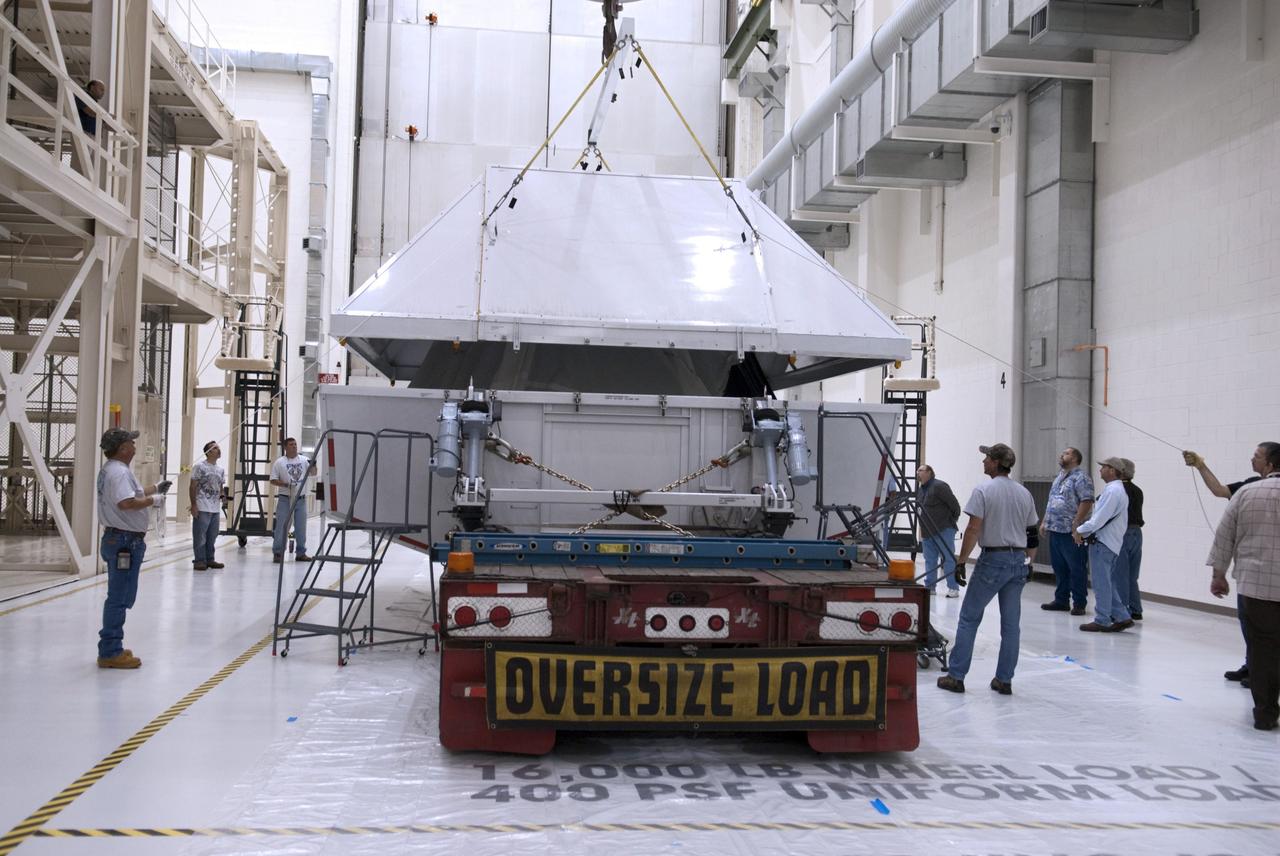
CAPE CANAVERAL, Fla. -- Lockheed Martin crews begin unpacking the Orion ground test vehicle in the Operations and Checkout O&C Facility at NASA's Kennedy Space Center in Florida. The vehicle traveled more than 1,800 miles from the company's Waterton Facility near Denver where it successfully completed a series of rigorous tests that simulated launch and spaceflight environments. The ground test vehicle will be used for pathfinding operations in the O&C, including simulated manufacturing and assembly procedures. After those operations are completed, new backshell panels will be installed on the ground test vehicle at the O&C prior to the vehicle’s trek to NASA's Langley Research Center in Virginia for splashdown testing at the agency's Hydro Impact Basin. Launching atop NASA's heavy-lift Space Launch System SLS, which also is under development, the Orion Multi-Purpose Crew Vehicle MPCV will serve as the exploration vehicle that will carry astronaut crews beyond low Earth orbit. It also will provide emergency abort capabilities, sustain the crew during space travel and provide safe re-entry from deep space return velocities. For more information, visit www.nasa.gov/orion. Photo credit: Charisse Nahser
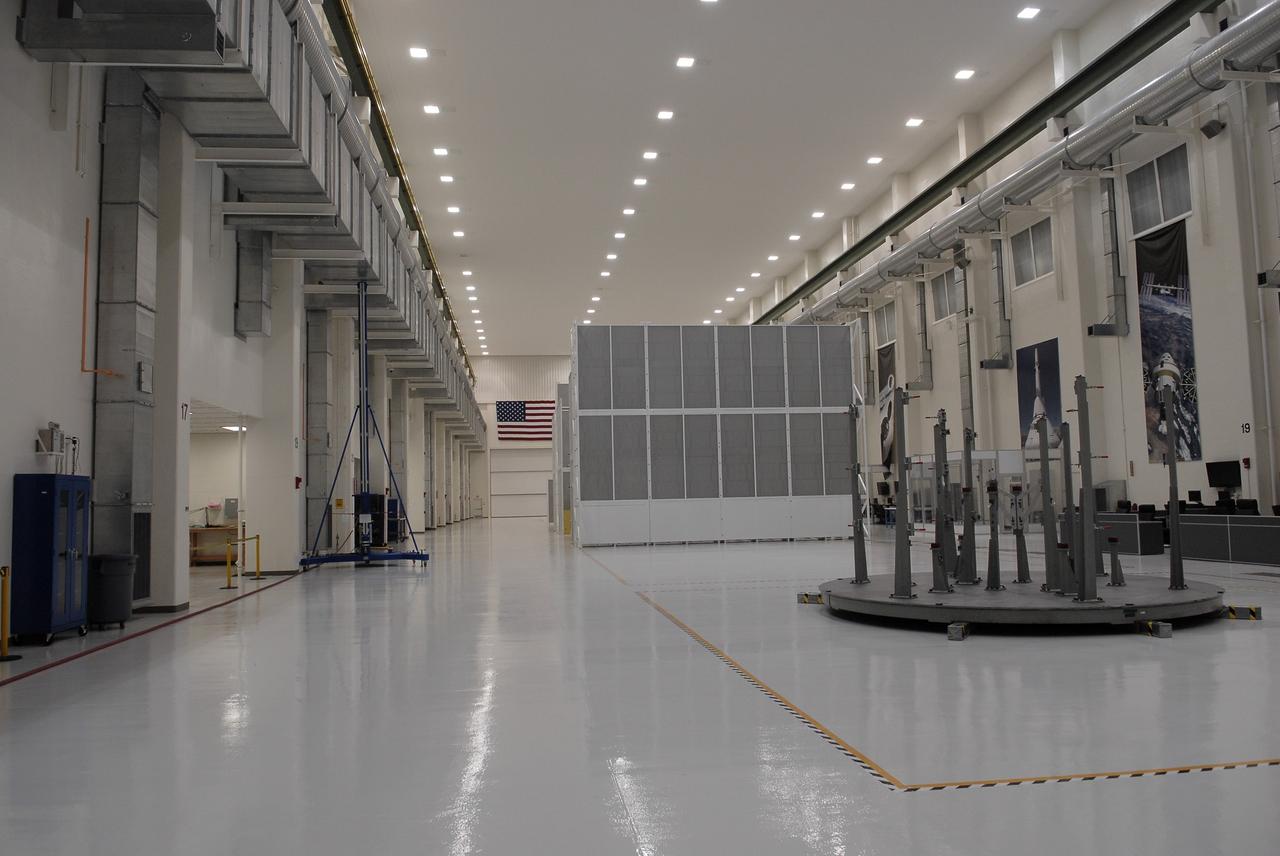
CAPE CANAVERAL, Fla. -- A view of the high bay in the Operations and Checkout O&C Facility at NASA’s Kennedy Space Center in Florida where the Orion ground test vehicle has arrived. The vehicle traveled more than 1,800 miles from the company's Waterton Facility near Denver where it successfully completed a series of rigorous tests that simulated launch and spaceflight environments. The ground test vehicle will be used for pathfinding operations in the O&C, including simulated manufacturing and assembly procedures. After those operations are completed, new backshell panels will be installed on the ground test vehicle at the O&C prior to the vehicle’s trek to NASA's Langley Research Center in Virginia for splashdown testing at the agency's Hydro Impact Basin. Launching atop NASA's heavy-lift Space Launch System SLS, which also is under development, the Orion Multi-Purpose Crew Vehicle MPCV will serve as the exploration vehicle that will carry astronaut crews beyond low Earth orbit. It also will provide emergency abort capabilities, sustain the crew during space travel and provide safe re-entry from deep space return velocities. For more information, visit www.nasa.gov/orion. Photo credit: Charisse Nahser
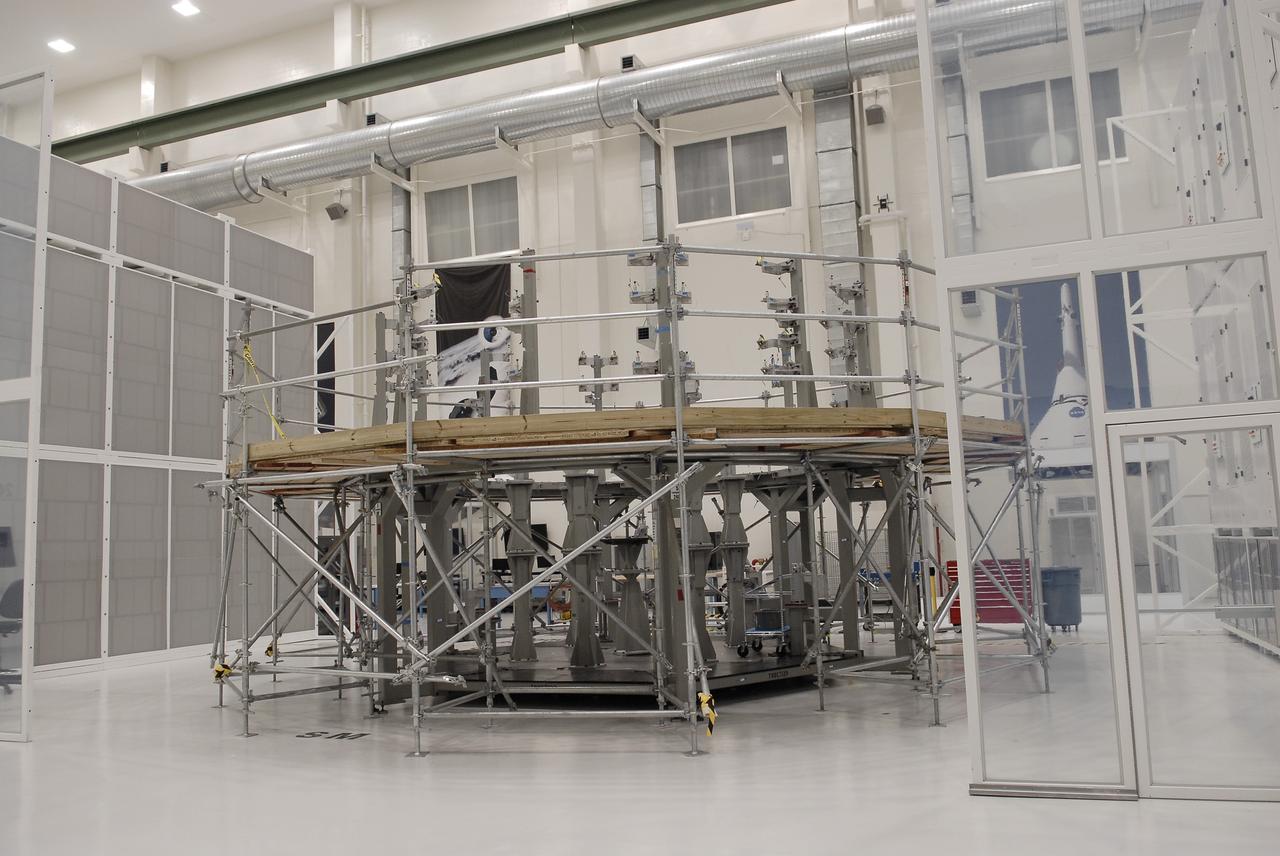
CAPE CANAVERAL, Fla. -- A view of one of the work stands in the Operations and Checkout O&C Facility at NASA's Kennedy Space Center in Florida where the Orion ground test vehicle has arrived. The vehicle traveled more than 1,800 miles from the company's Waterton Facility near Denver where it successfully completed a series of rigorous tests that simulated launch and spaceflight environments. The ground test vehicle will be used for pathfinding operations in the O&C, including simulated manufacturing and assembly procedures. After those operations are completed, new backshell panels will be installed on the ground test vehicle at the O&C prior to the vehicle’s trek to NASA's Langley Research Center in Virginia for splashdown testing at the agency's Hydro Impact Basin. Launching atop NASA's heavy-lift Space Launch System SLS, which also is under development, the Orion Multi-Purpose Crew Vehicle MPCV will serve as the exploration vehicle that will carry astronaut crews beyond low Earth orbit. It also will provide emergency abort capabilities, sustain the crew during space travel and provide safe re-entry from deep space return velocities. For more information, visit www.nasa.gov/orion. Photo credit: Charisse Nahser
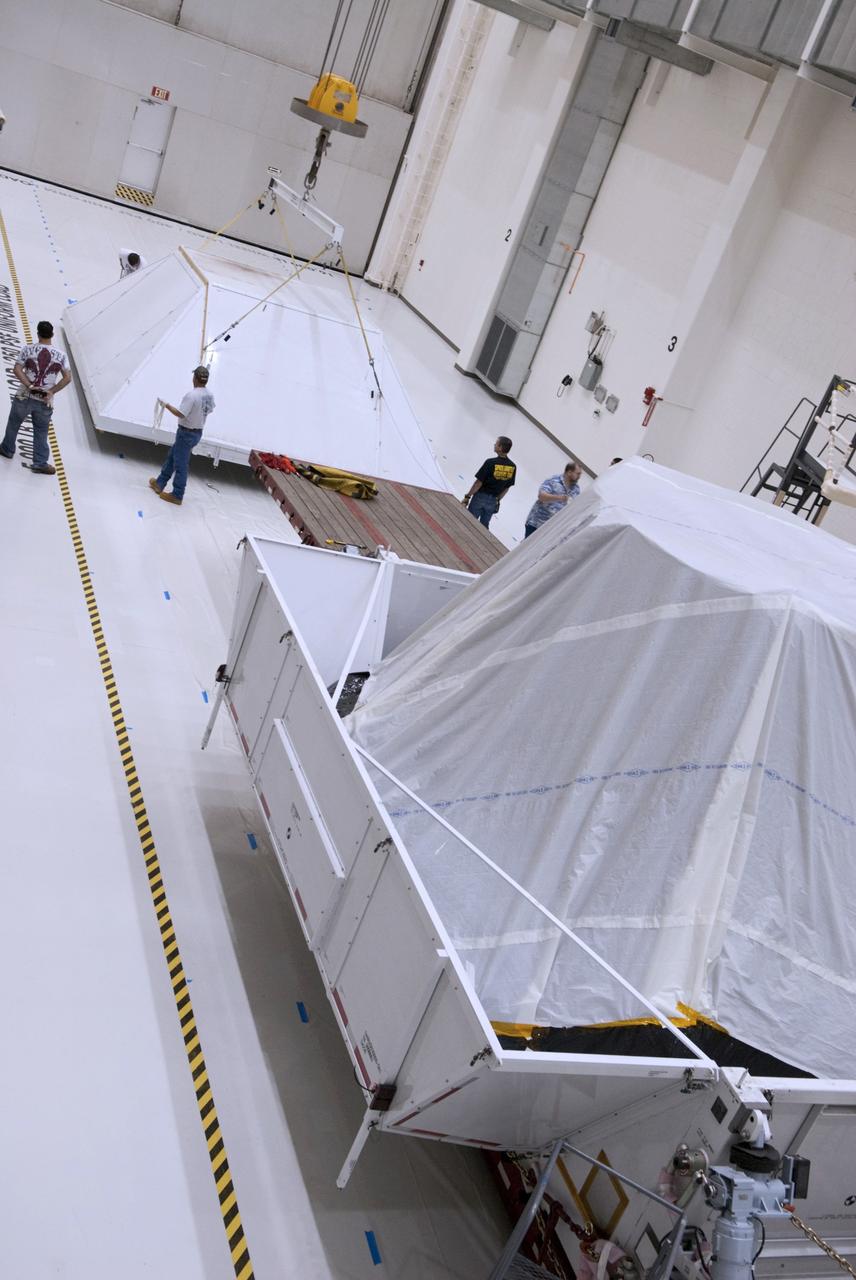
CAPE CANAVERAL, Fla. -- Lockheed Martin crews begin unpacking the Orion ground test vehicle in the Operations and Checkout O&C Facility at NASA's Kennedy Space Center in Florida. The vehicle traveled more than 1,800 miles from the company's Waterton Facility near Denver where it successfully completed a series of rigorous tests that simulated launch and spaceflight environments. The ground test vehicle will be used for pathfinding operations in the O&C, including simulated manufacturing and assembly procedures. After those operations are completed, new backshell panels will be installed on the ground test vehicle at the O&C prior to the vehicle’s trek to NASA's Langley Research Center in Virginia for splashdown testing at the agency's Hydro Impact Basin. Launching atop NASA's heavy-lift Space Launch System SLS, which also is under development, the Orion Multi-Purpose Crew Vehicle MPCV will serve as the exploration vehicle that will carry astronaut crews beyond low Earth orbit. It also will provide emergency abort capabilities, sustain the crew during space travel and provide safe re-entry from deep space return velocities. For more information, visit www.nasa.gov/orion. Photo credit: Charisse Nahser
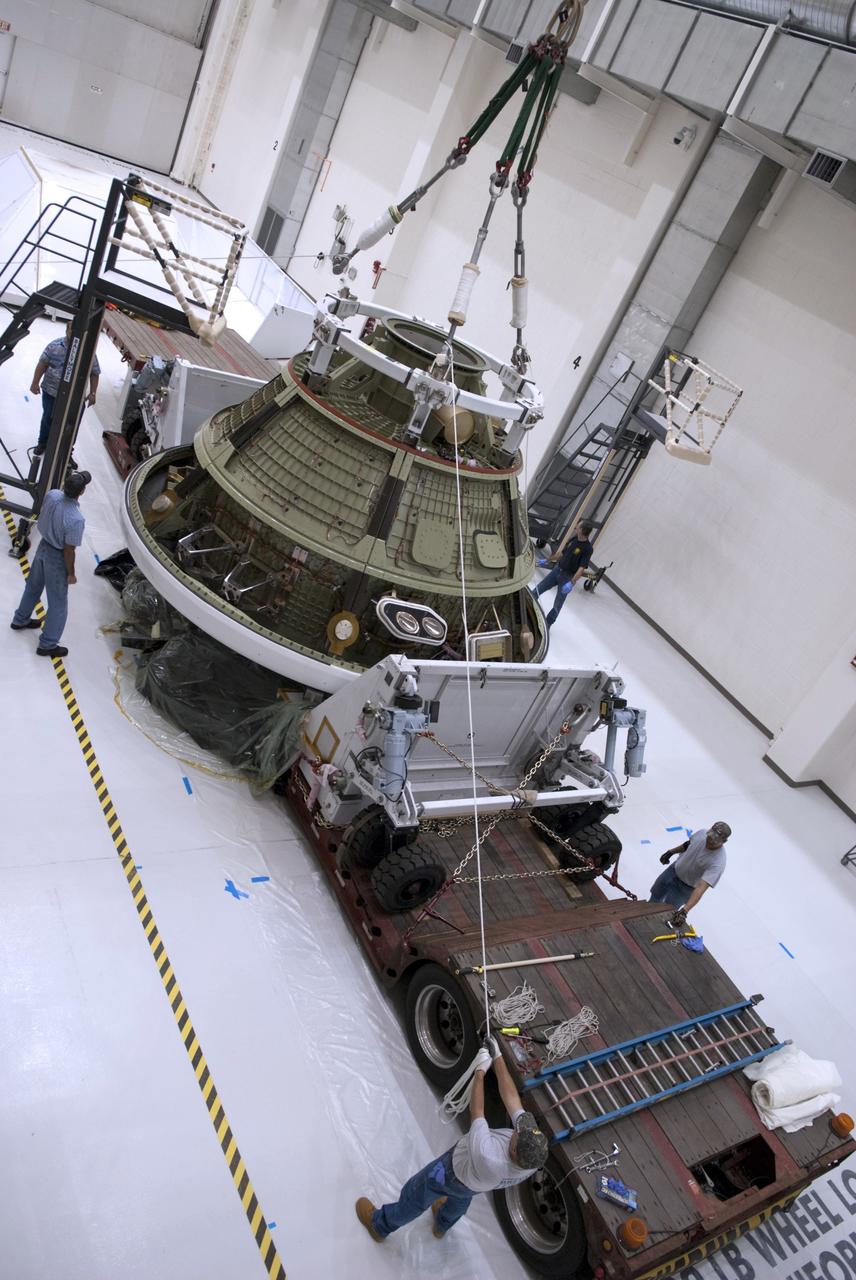
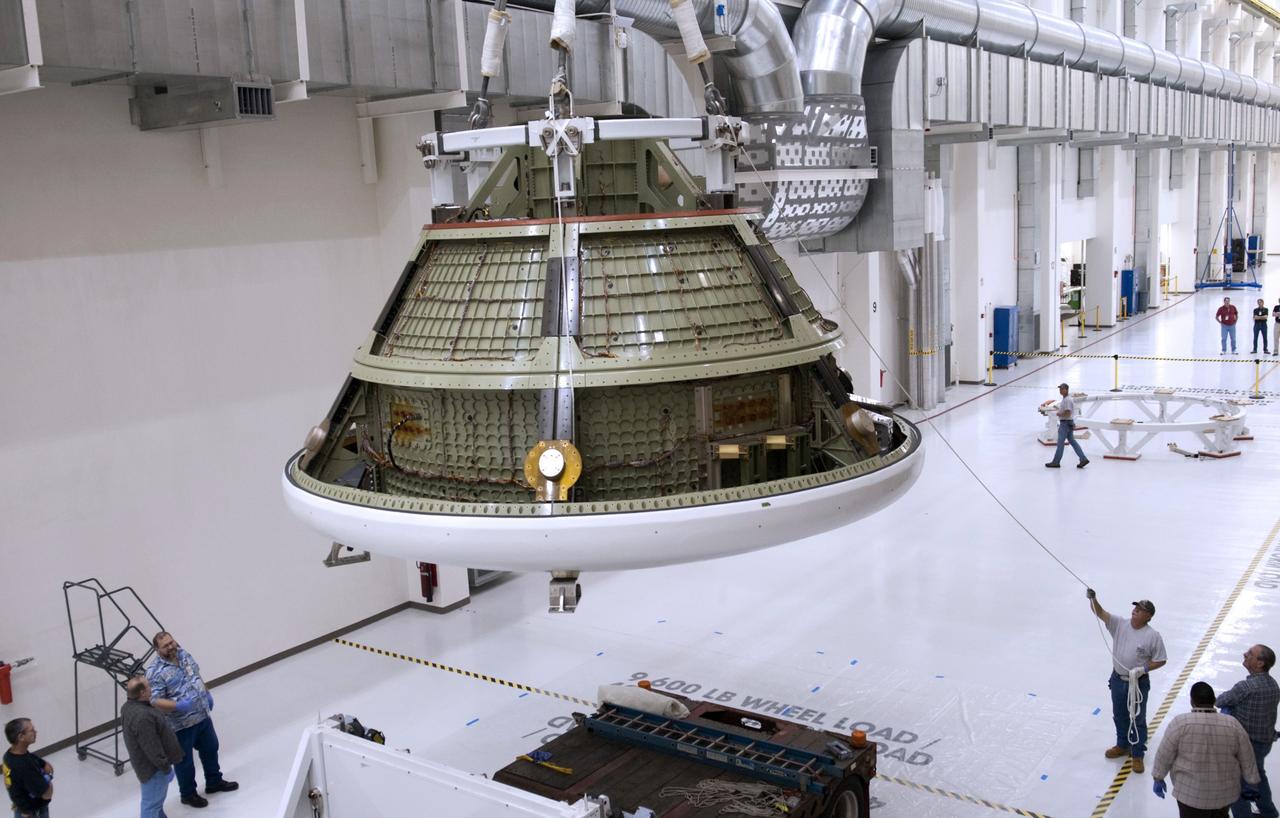
CAPE CANAVERAL, Fla. -- A crane is used to lift the Orion ground test vehicle in the Operations and Checkout O&C Facility at NASA's Kennedy Space Center in Florida. The vehicle traveled more than 1,800 miles from the company's Waterton Facility near Denver where it successfully completed a series of rigorous tests that simulated launch and spaceflight environments. The ground test vehicle will be used for pathfinding operations in the O&C, including simulated manufacturing and assembly procedures. After those operations are completed, new backshell panels will be installed on the ground test vehicle at the O&C prior to the vehicle’s trek to NASA's Langley Research Center in Virginia for splashdown testing at the agency's Hydro Impact Basin. Launching atop NASA's heavy-lift Space Launch System SLS, which also is under development, the Orion Multi-Purpose Crew Vehicle MPCV will serve as the exploration vehicle that will carry astronaut crews beyond low Earth orbit. It also will provide emergency abort capabilities, sustain the crew during space travel and provide safe re-entry from deep space return velocities. For more information, visit www.nasa.gov/orion. Photo credit: Charisse Nahser
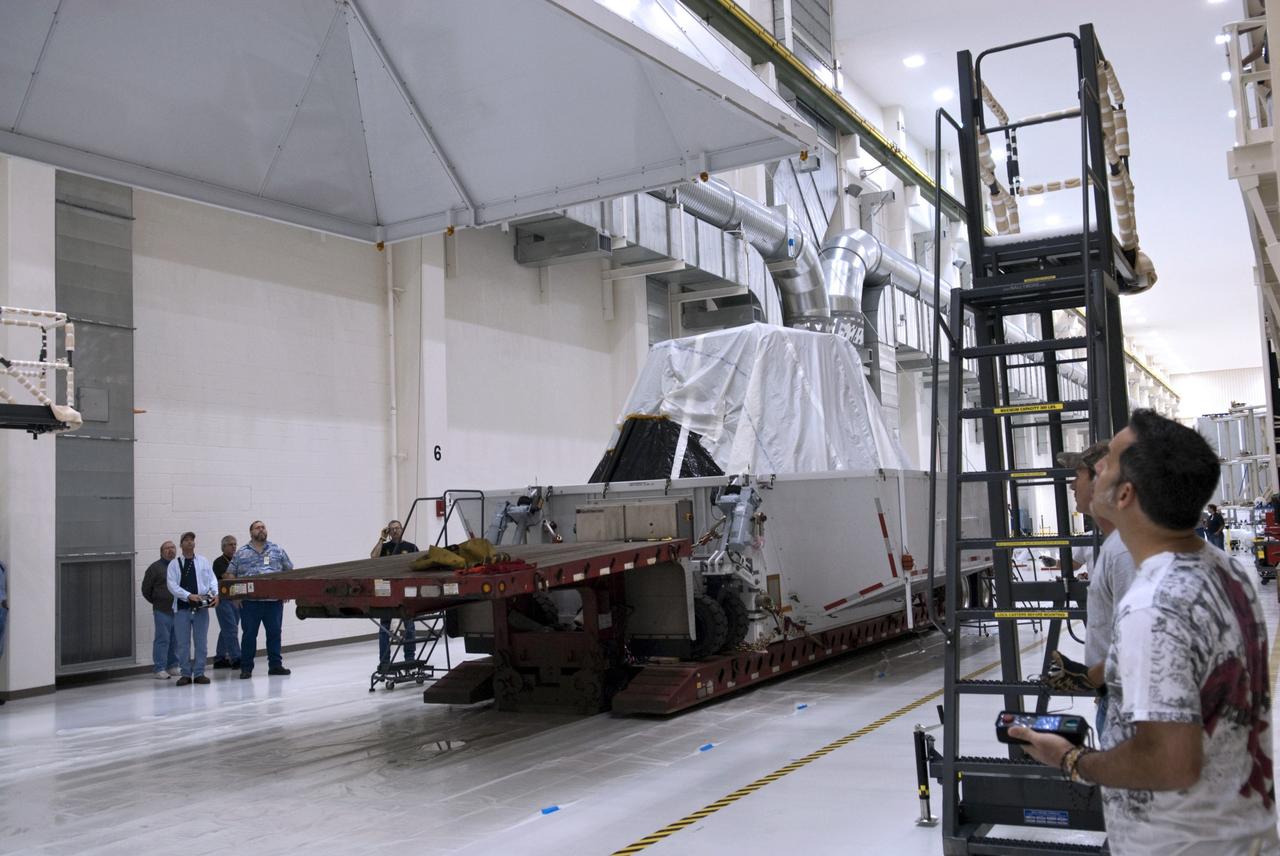
CAPE CANAVERAL, Fla. -- Lockheed Martin crews begin unpacking the Orion ground test vehicle in the Operations and Checkout O&C Facility at NASA's Kennedy Space Center in Florida. The vehicle traveled more than 1,800 miles from the company's Waterton Facility near Denver where it successfully completed a series of rigorous tests that simulated launch and spaceflight environments. The ground test vehicle will be used for pathfinding operations in the O&C, including simulated manufacturing and assembly procedures. After those operations are completed, new backshell panels will be installed on the ground test vehicle at the O&C prior to the vehicle’s trek to NASA's Langley Research Center in Virginia for splashdown testing at the agency's Hydro Impact Basin. Launching atop NASA's heavy-lift Space Launch System SLS, which also is under development, the Orion Multi-Purpose Crew Vehicle MPCV will serve as the exploration vehicle that will carry astronaut crews beyond low Earth orbit. It also will provide emergency abort capabilities, sustain the crew during space travel and provide safe re-entry from deep space return velocities. For more information, visit www.nasa.gov/orion. Photo credit: Charisse Nahser
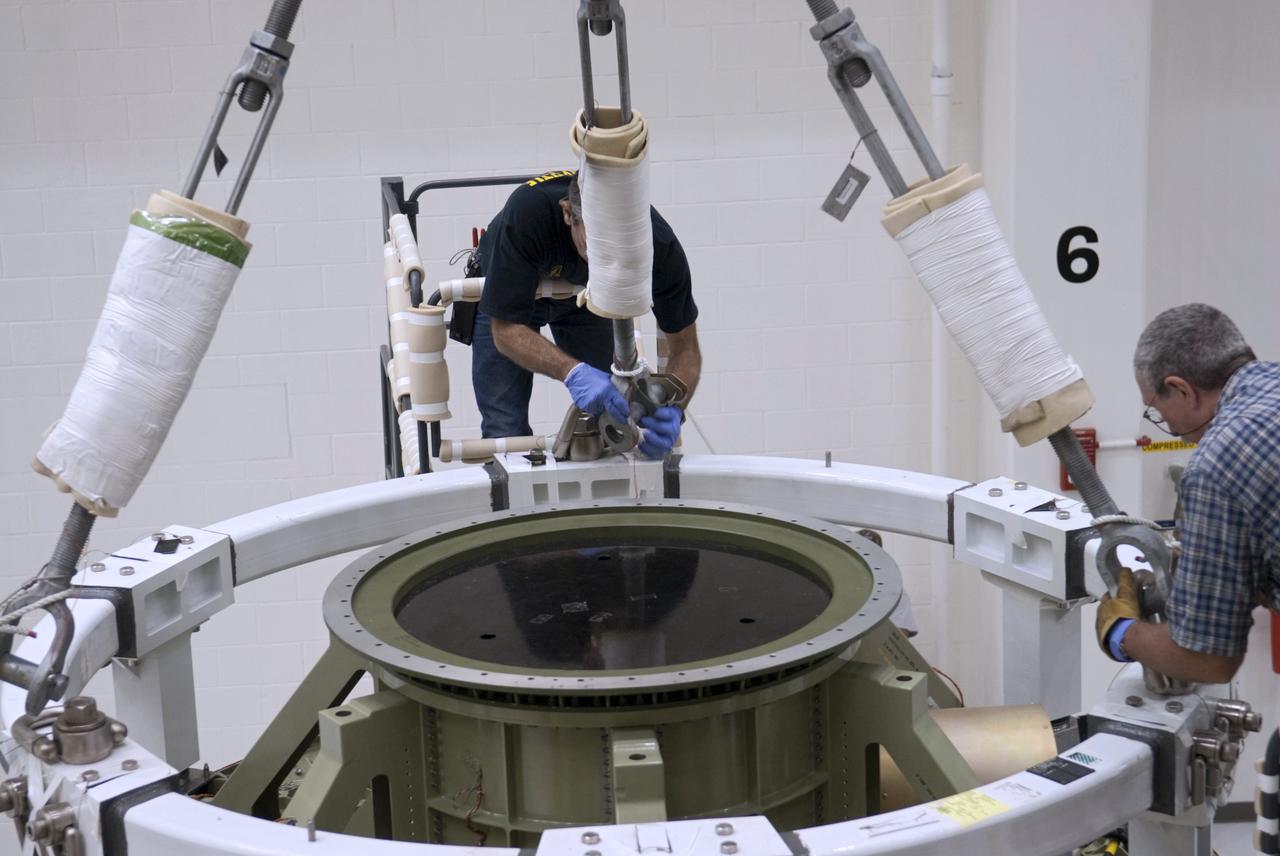
CAPE CANAVERAL, Fla. -- Lockheed Martin crews attach a crane to the Orion ground test vehicle in the Operations and Checkout O&C Facility at NASA's Kennedy Space Center in Florida. The vehicle traveled more than 1,800 miles from the company's Waterton Facility near Denver where it successfully completed a series of rigorous tests that simulated launch and spaceflight environments. The ground test vehicle will be used for pathfinding operations in the O&C, including simulated manufacturing and assembly procedures. After those operations are completed, new backshell panels will be installed on the ground test vehicle at the O&C prior to the vehicle’s trek to NASA's Langley Research Center in Virginia for splashdown testing at the agency's Hydro Impact Basin. Launching atop NASA's heavy-lift Space Launch System SLS, which also is under development, the Orion Multi-Purpose Crew Vehicle MPCV will serve as the exploration vehicle that will carry astronaut crews beyond low Earth orbit. It also will provide emergency abort capabilities, sustain the crew during space travel and provide safe re-entry from deep space return velocities. For more information, visit www.nasa.gov/orion. Photo credit: Charisse Nahser
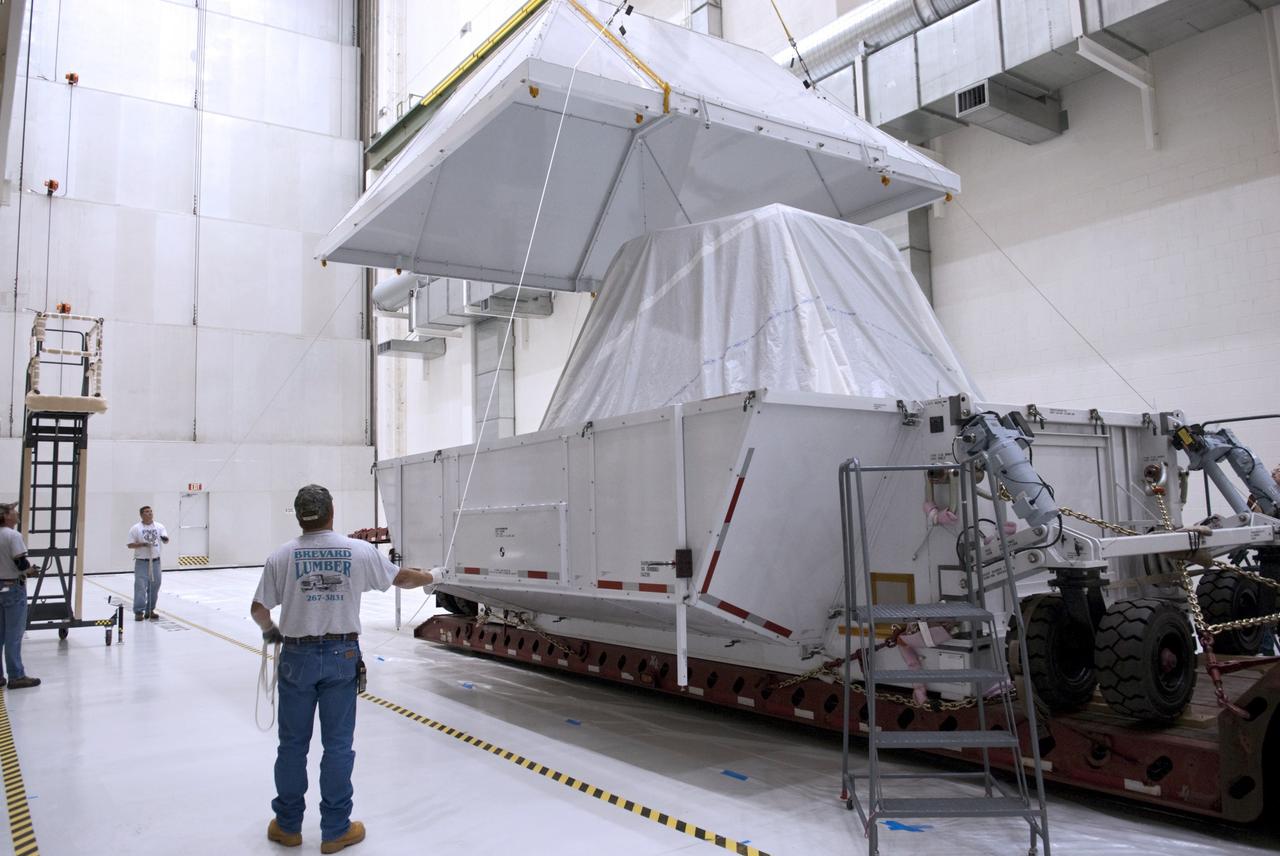
CAPE CANAVERAL, Fla. -- Lockheed Martin crews begin unpacking the Orion ground test vehicle in the Operations and Checkout O&C Facility at NASA's Kennedy Space Center in Florida. The vehicle traveled more than 1,800 miles from the company's Waterton Facility near Denver where it successfully completed a series of rigorous tests that simulated launch and spaceflight environments. The ground test vehicle will be used for pathfinding operations in the O&C, including simulated manufacturing and assembly procedures. After those operations are completed, new backshell panels will be installed on the ground test vehicle at the O&C prior to the vehicle’s trek to NASA's Langley Research Center in Virginia for splashdown testing at the agency's Hydro Impact Basin. Launching atop NASA's heavy-lift Space Launch System SLS, which also is under development, the Orion Multi-Purpose Crew Vehicle MPCV will serve as the exploration vehicle that will carry astronaut crews beyond low Earth orbit. It also will provide emergency abort capabilities, sustain the crew during space travel and provide safe re-entry from deep space return velocities. For more information, visit www.nasa.gov/orion. Photo credit: Charisse Nahser
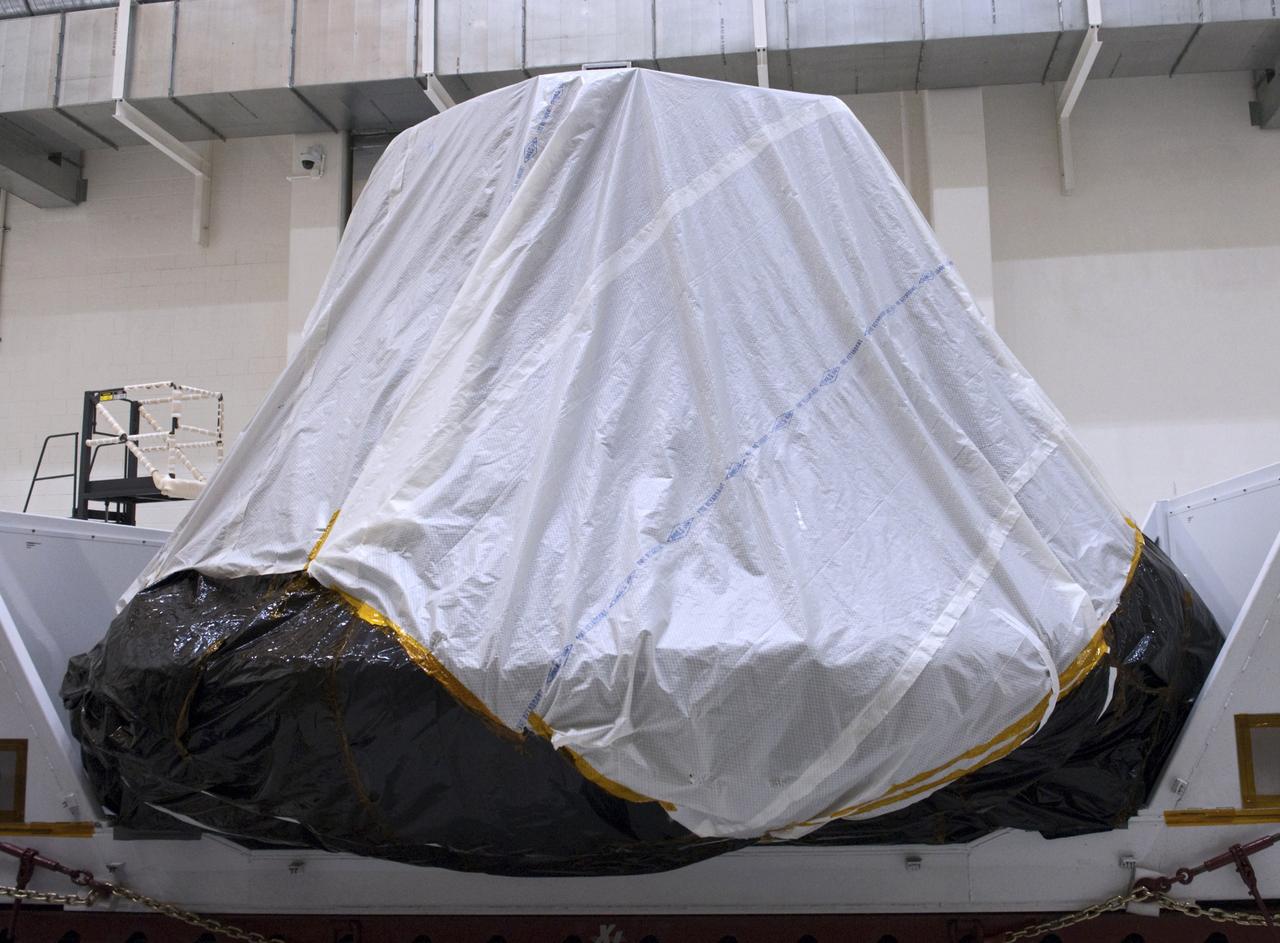
CAPE CANAVERAL, Fla. -- The Orion ground test vehicle awaits unpacking on a stand in the Operations and Checkout O&C Facility at NASA's Kennedy Space Center in Florida. The vehicle traveled more than 1,800 miles from the company's Waterton Facility near Denver where it successfully completed a series of rigorous tests that simulated launch and spaceflight environments. The ground test vehicle will be used for pathfinding operations in the O&C, including simulated manufacturing and assembly procedures. After those operations are completed, new backshell panels will be installed on the ground test vehicle at the O&C prior to the vehicle’s trek to NASA's Langley Research Center in Virginia for splashdown testing at the agency's Hydro Impact Basin. Launching atop NASA's heavy-lift Space Launch System SLS, which also is under development, the Orion Multi-Purpose Crew Vehicle MPCV will serve as the exploration vehicle that will carry astronaut crews beyond low Earth orbit. It also will provide emergency abort capabilities, sustain the crew during space travel and provide safe re-entry from deep space return velocities. For more information, visit www.nasa.gov/orion. Photo credit: Charisse Nahser

CAPE CANAVERAL, Fla. -- Lockheed Martin crews begin unpacking the Orion ground test vehicle in the Operations and Checkout O&C Facility at NASA's Kennedy Space Center in Florida. The vehicle traveled more than 1,800 miles from the company's Waterton Facility near Denver where it successfully completed a series of rigorous tests that simulated launch and spaceflight environments. The ground test vehicle will be used for pathfinding operations in the O&C, including simulated manufacturing and assembly procedures. After those operations are completed, new backshell panels will be installed on the ground test vehicle at the O&C prior to the vehicle’s trek to NASA's Langley Research Center in Virginia for splashdown testing at the agency's Hydro Impact Basin. Launching atop NASA's heavy-lift Space Launch System SLS, which also is under development, the Orion Multi-Purpose Crew Vehicle MPCV will serve as the exploration vehicle that will carry astronaut crews beyond low Earth orbit. It also will provide emergency abort capabilities, sustain the crew during space travel and provide safe re-entry from deep space return velocities. For more information, visit www.nasa.gov/orion. Photo credit: Charisse Nahser
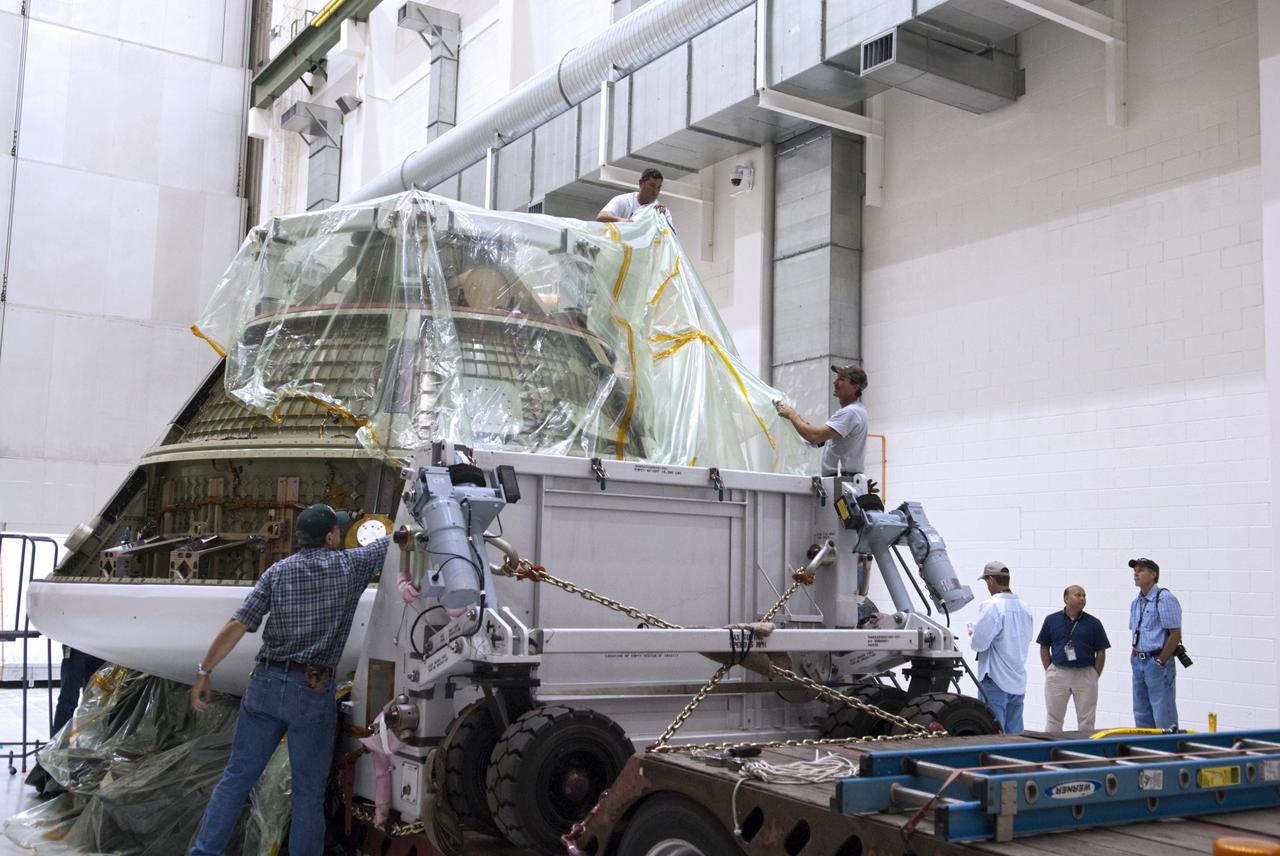
CAPE CANAVERAL, Fla. -- Lockheed Martin crews unpack the Orion ground test vehicle in the Operations and Checkout O&C Facility at NASA's Kennedy Space Center in Florida. The vehicle traveled more than 1,800 miles from the company's Waterton Facility near Denver where it successfully completed a series of rigorous tests that simulated launch and spaceflight environments. The ground test vehicle will be used for pathfinding operations in the O&C, including simulated manufacturing and assembly procedures. After those operations are completed, new backshell panels will be installed on the ground test vehicle at the O&C prior to the vehicle’s trek to NASA's Langley Research Center in Virginia for splashdown testing at the agency's Hydro Impact Basin. Launching atop NASA's heavy-lift Space Launch System SLS, which also is under development, the Orion Multi-Purpose Crew Vehicle MPCV will serve as the exploration vehicle that will carry astronaut crews beyond low Earth orbit. It also will provide emergency abort capabilities, sustain the crew during space travel and provide safe re-entry from deep space return velocities. For more information, visit www.nasa.gov/orion. Photo credit: Charisse Nahser
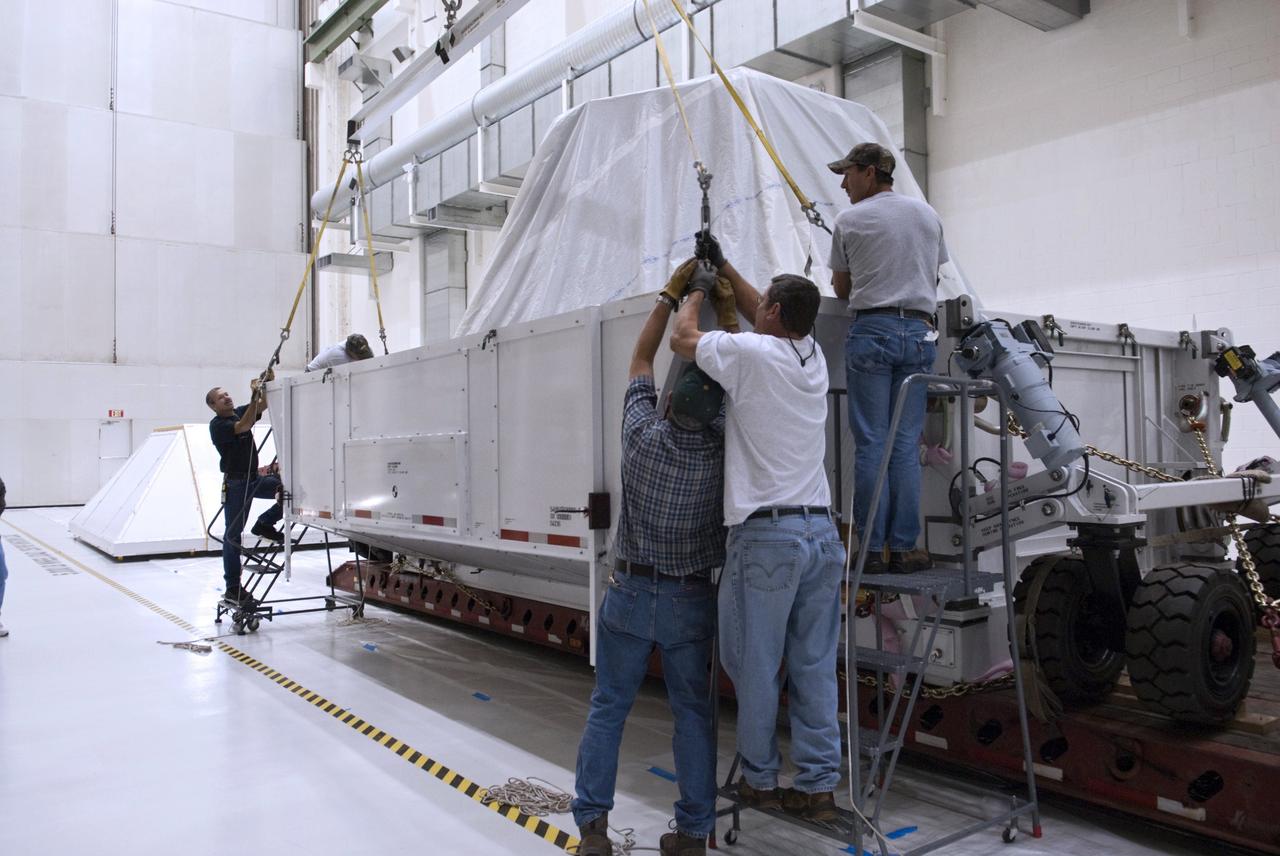
CAPE CANAVERAL, Fla. -- Lockheed Martin crews unpack the Orion ground test vehicle in the Operations and Checkout O&C Facility at NASA's Kennedy Space Center in Florida. The vehicle traveled more than 1,800 miles from the company's Waterton Facility near Denver where it successfully completed a series of rigorous tests that simulated launch and spaceflight environments. The ground test vehicle will be used for pathfinding operations in the O&C, including simulated manufacturing and assembly procedures. After those operations are completed, new backshell panels will be installed on the ground test vehicle at the O&C prior to the vehicle’s trek to NASA's Langley Research Center in Virginia for splashdown testing at the agency's Hydro Impact Basin. Launching atop NASA's heavy-lift Space Launch System SLS, which also is under development, the Orion Multi-Purpose Crew Vehicle MPCV will serve as the exploration vehicle that will carry astronaut crews beyond low Earth orbit. It also will provide emergency abort capabilities, sustain the crew during space travel and provide safe re-entry from deep space return velocities. For more information, visit www.nasa.gov/orion. Photo credit: Charisse Nahser

CAPE CANAVERAL, Fla. -- A view of one of the test stands in the Operations and Checkout O&C Facility at NASA's Kennedy Space Center in Florida where the Orion ground test vehicle has arrived. The vehicle traveled more than 1,800 miles from the company's Waterton Facility near Denver where it successfully completed a series of rigorous tests that simulated launch and spaceflight environments. The ground test vehicle will be used for pathfinding operations in the O&C, including simulated manufacturing and assembly procedures. After those operations are completed, new backshell panels will be installed on the ground test vehicle at the O&C prior to the vehicle’s trek to NASA's Langley Research Center in Virginia for splashdown testing at the agency's Hydro Impact Basin. Launching atop NASA's heavy-lift Space Launch System SLS, which also is under development, the Orion Multi-Purpose Crew Vehicle MPCV will serve as the exploration vehicle that will carry astronaut crews beyond low Earth orbit. It also will provide emergency abort capabilities, sustain the crew during space travel and provide safe re-entry from deep space return velocities. For more information, visit www.nasa.gov/orion. Photo credit: Charisse Nahser
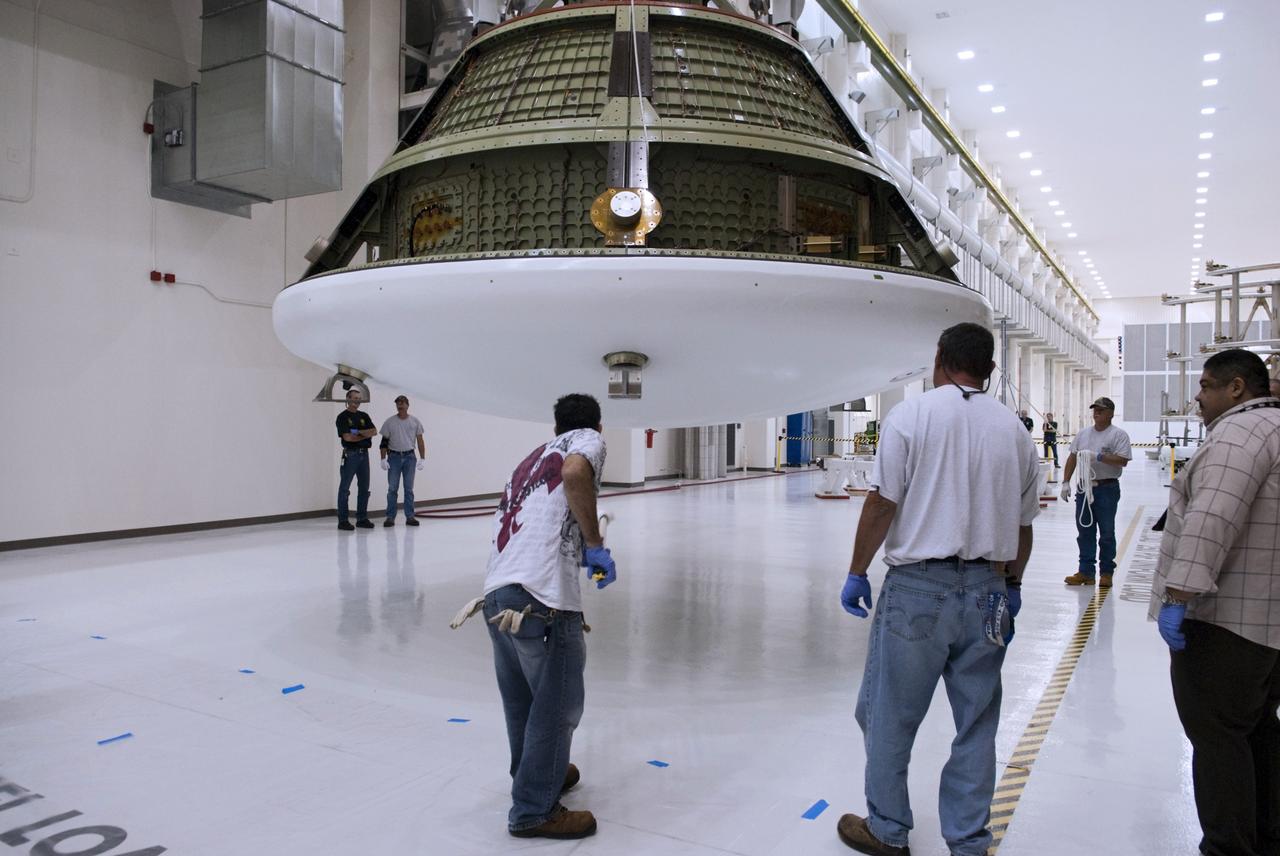
CAPE CANAVERAL, Fla. -- Lockheed Martin crews assist as a crane is used to move the Orion ground test vehicle in the Operations and Checkout O&C Facility at NASA's Kennedy Space Center in Florida. The vehicle traveled more than 1,800 miles from the company's Waterton Facility near Denver where it successfully completed a series of rigorous tests that simulated launch and spaceflight environments. The ground test vehicle will be used for pathfinding operations in the O&C, including simulated manufacturing and assembly procedures. After those operations are completed, new backshell panels will be installed on the ground test vehicle at the O&C prior to the vehicle’s trek to NASA's Langley Research Center in Virginia for splashdown testing at the agency's Hydro Impact Basin. Launching atop NASA's heavy-lift Space Launch System SLS, which also is under development, the Orion Multi-Purpose Crew Vehicle MPCV will serve as the exploration vehicle that will carry astronaut crews beyond low Earth orbit. It also will provide emergency abort capabilities, sustain the crew during space travel and provide safe re-entry from deep space return velocities. For more information, visit www.nasa.gov/orion. Photo credit: Charisse Nahser
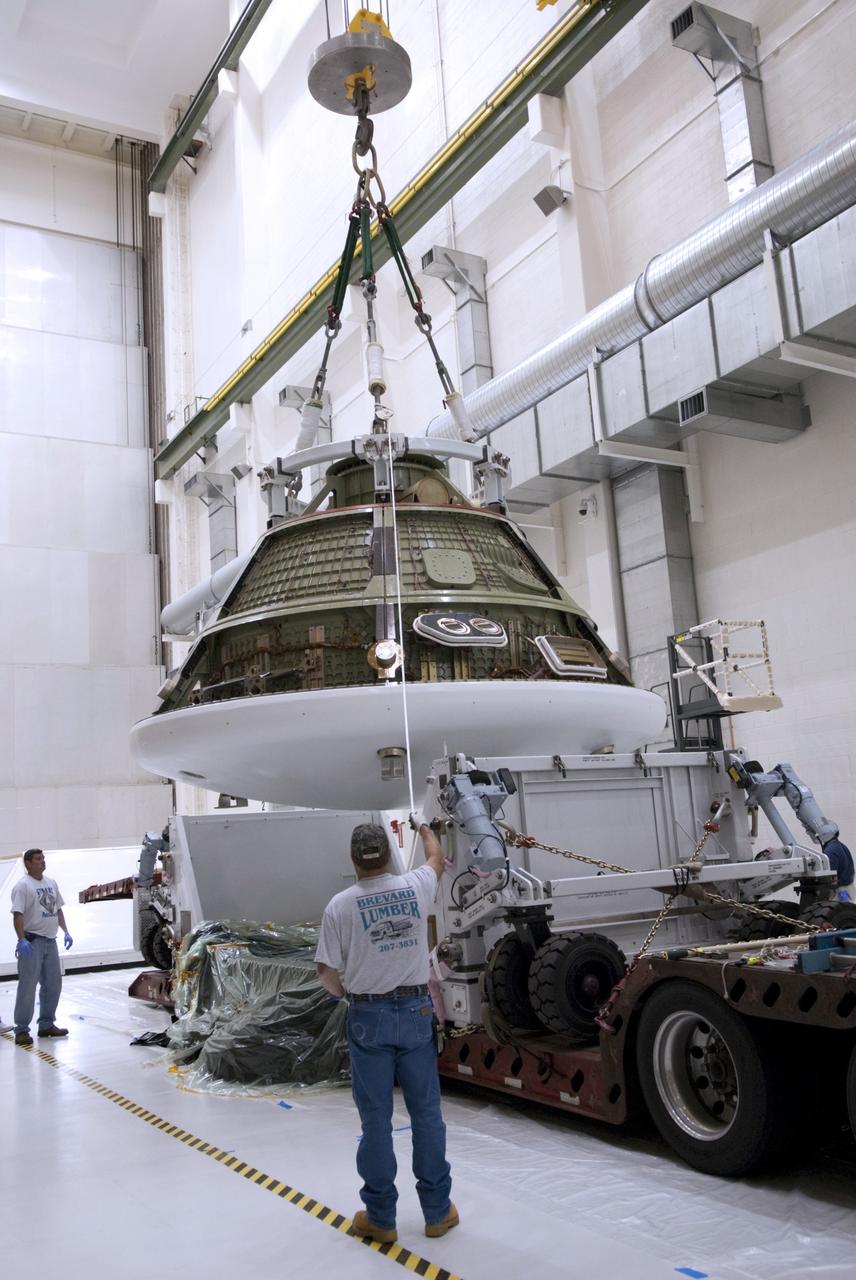
CAPE CANAVERAL, Fla. -- Lockheed Martin crews assist as a crane is used to lift the Orion ground test vehicle away from its packaging in the Operations and Checkout O&C Facility at NASA's Kennedy Space Center in Florida. The vehicle traveled more than 1,800 miles from the company's Waterton Facility near Denver where it successfully completed a series of rigorous tests that simulated launch and spaceflight environments. The ground test vehicle will be used for pathfinding operations in the O&C, including simulated manufacturing and assembly procedures. After those operations are completed, new backshell panels will be installed on the ground test vehicle at the O&C prior to the vehicle’s trek to NASA's Langley Research Center in Virginia for splashdown testing at the agency's Hydro Impact Basin. Launching atop NASA's heavy-lift Space Launch System SLS, which also is under development, the Orion Multi-Purpose Crew Vehicle MPCV will serve as the exploration vehicle that will carry astronaut crews beyond low Earth orbit. It also will provide emergency abort capabilities, sustain the crew during space travel and provide safe re-entry from deep space return velocities. For more information, visit www.nasa.gov/orion. Photo credit: Charisse Nahser

CAPE CANAVERAL, Fla. -- The Orion ground test vehicle sits on a work stand in the Operations and Checkout O&C Facility at NASA's Kennedy Space Center in Florida. The vehicle traveled more than 1,800 miles from the company's Waterton Facility near Denver where it successfully completed a series of rigorous tests that simulated launch and spaceflight environments. The ground test vehicle will be used for pathfinding operations in the O&C, including simulated manufacturing and assembly procedures. After those operations are completed, new backshell panels will be installed on the ground test vehicle at the O&C prior to the vehicle’s trek to NASA's Langley Research Center in Virginia for splashdown testing at the agency's Hydro Impact Basin. Launching atop NASA's heavy-lift Space Launch System SLS, which also is under development, the Orion Multi-Purpose Crew Vehicle MPCV will serve as the exploration vehicle that will carry astronaut crews beyond low Earth orbit. It also will provide emergency abort capabilities, sustain the crew during space travel and provide safe re-entry from deep space return velocities. For more information, visit www.nasa.gov/orion. Photo credit: Charisse Nahser
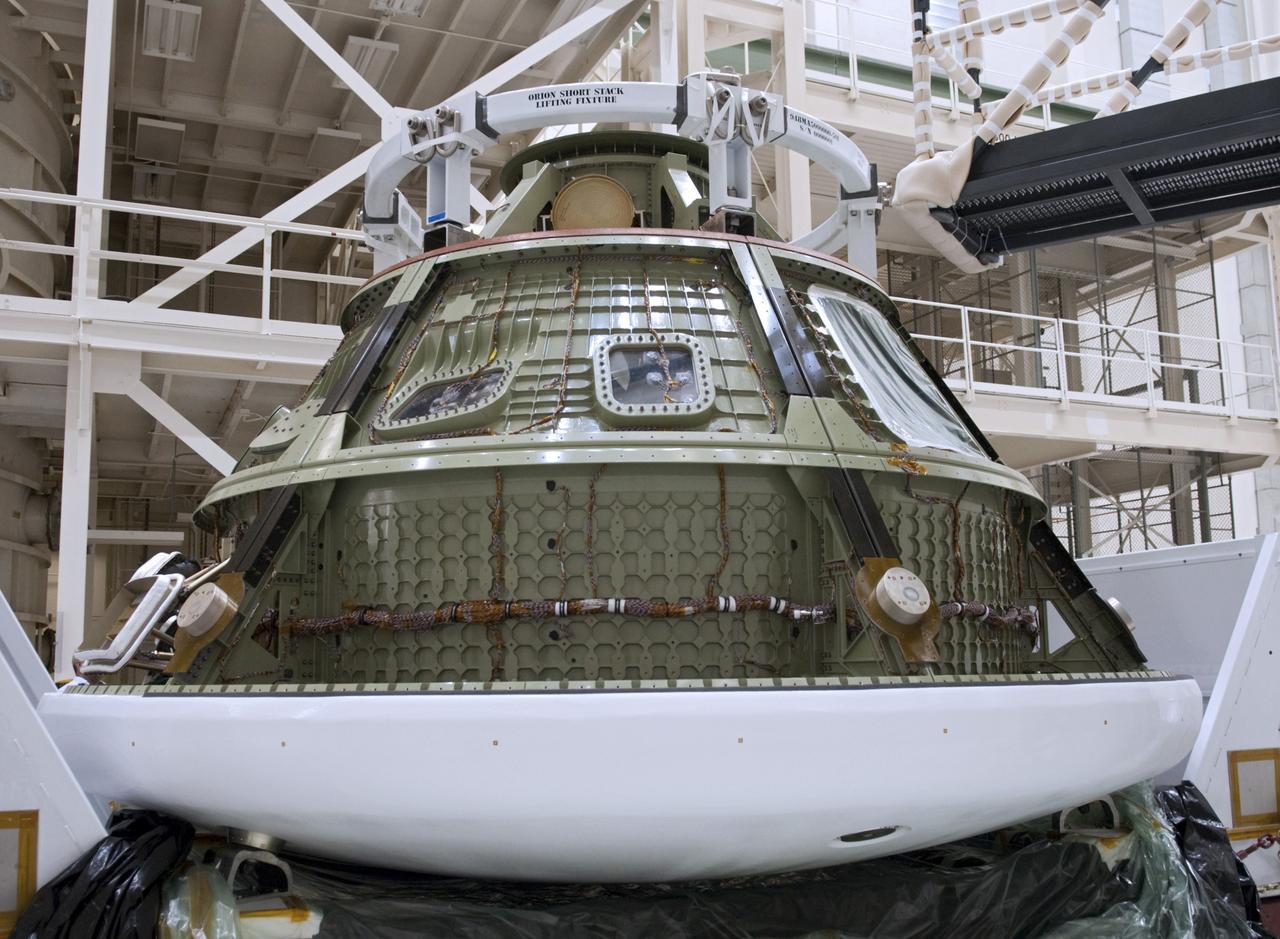
CAPE CANAVERAL, Fla. -- Lockheed Martin crews have unpacked the Orion ground test vehicle in the Operations and Checkout O&C Facility at NASA's Kennedy Space Center in Florida. The vehicle traveled more than 1,800 miles from the company's Waterton Facility near Denver where it successfully completed a series of rigorous tests that simulated launch and spaceflight environments. The ground test vehicle will be used for pathfinding operations in the O&C, including simulated manufacturing and assembly procedures. After those operations are completed, new backshell panels will be installed on the ground test vehicle at the O&C prior to the vehicle’s trek to NASA's Langley Research Center in Virginia for splashdown testing at the agency's Hydro Impact Basin. Launching atop NASA's heavy-lift Space Launch System SLS, which also is under development, the Orion Multi-Purpose Crew Vehicle MPCV will serve as the exploration vehicle that will carry astronaut crews beyond low Earth orbit. It also will provide emergency abort capabilities, sustain the crew during space travel and provide safe re-entry from deep space return velocities. For more information, visit www.nasa.gov/orion. Photo credit: Charisse Nahser
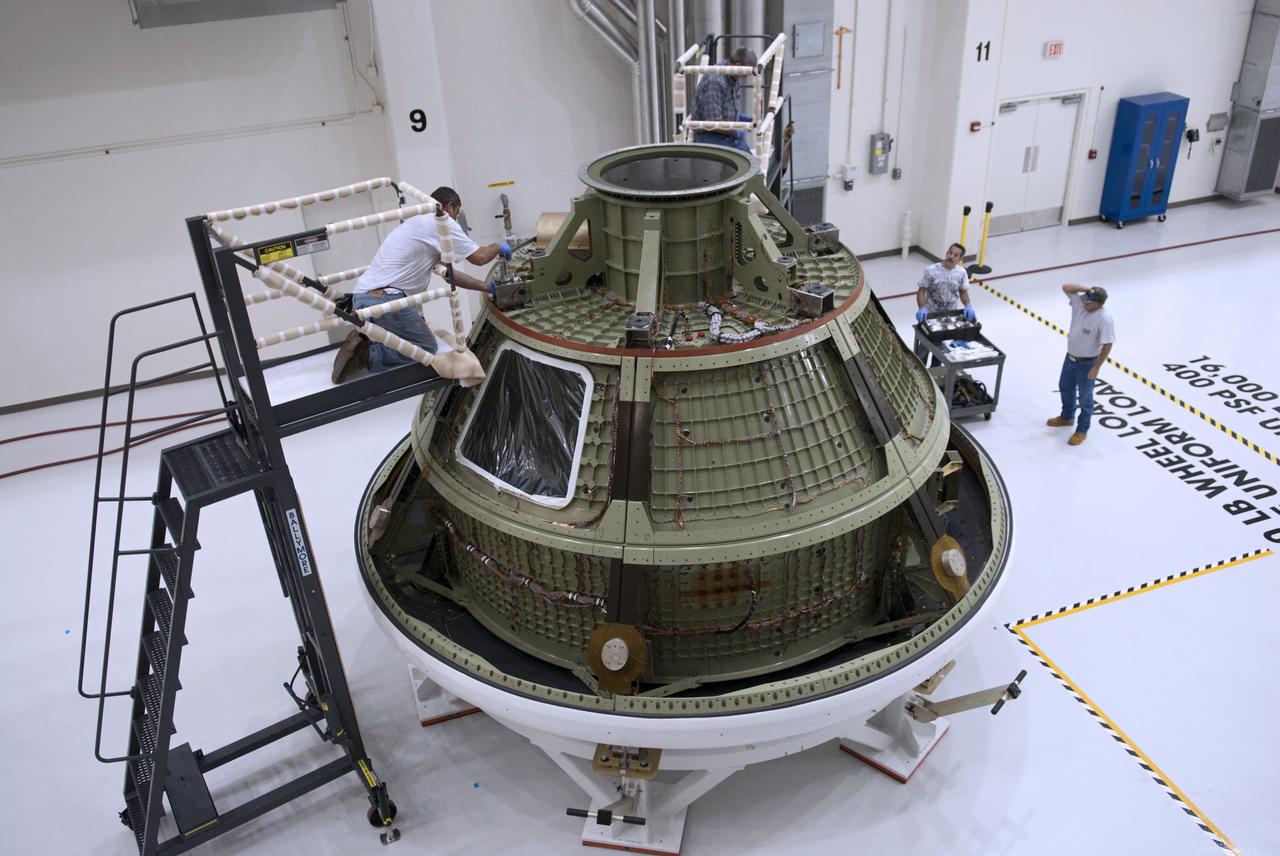
CAPE CANAVERAL, Fla. -- The Orion ground test vehicle sits on a work stand in the Operations and Checkout O&C Facility at NASA's Kennedy Space Center in Florida. The vehicle traveled more than 1,800 miles from the company's Waterton Facility near Denver where it successfully completed a series of rigorous tests that simulated launch and spaceflight environments. The ground test vehicle will be used for pathfinding operations in the O&C, including simulated manufacturing and assembly procedures. After those operations are completed, new backshell panels will be installed on the ground test vehicle at the O&C prior to the vehicle’s trek to NASA's Langley Research Center in Virginia for splashdown testing at the agency's Hydro Impact Basin. Launching atop NASA's heavy-lift Space Launch System SLS, which also is under development, the Orion Multi-Purpose Crew Vehicle MPCV will serve as the exploration vehicle that will carry astronaut crews beyond low Earth orbit. It also will provide emergency abort capabilities, sustain the crew during space travel and provide safe re-entry from deep space return velocities. For more information, visit www.nasa.gov/orion. Photo credit: Charisse Nahser
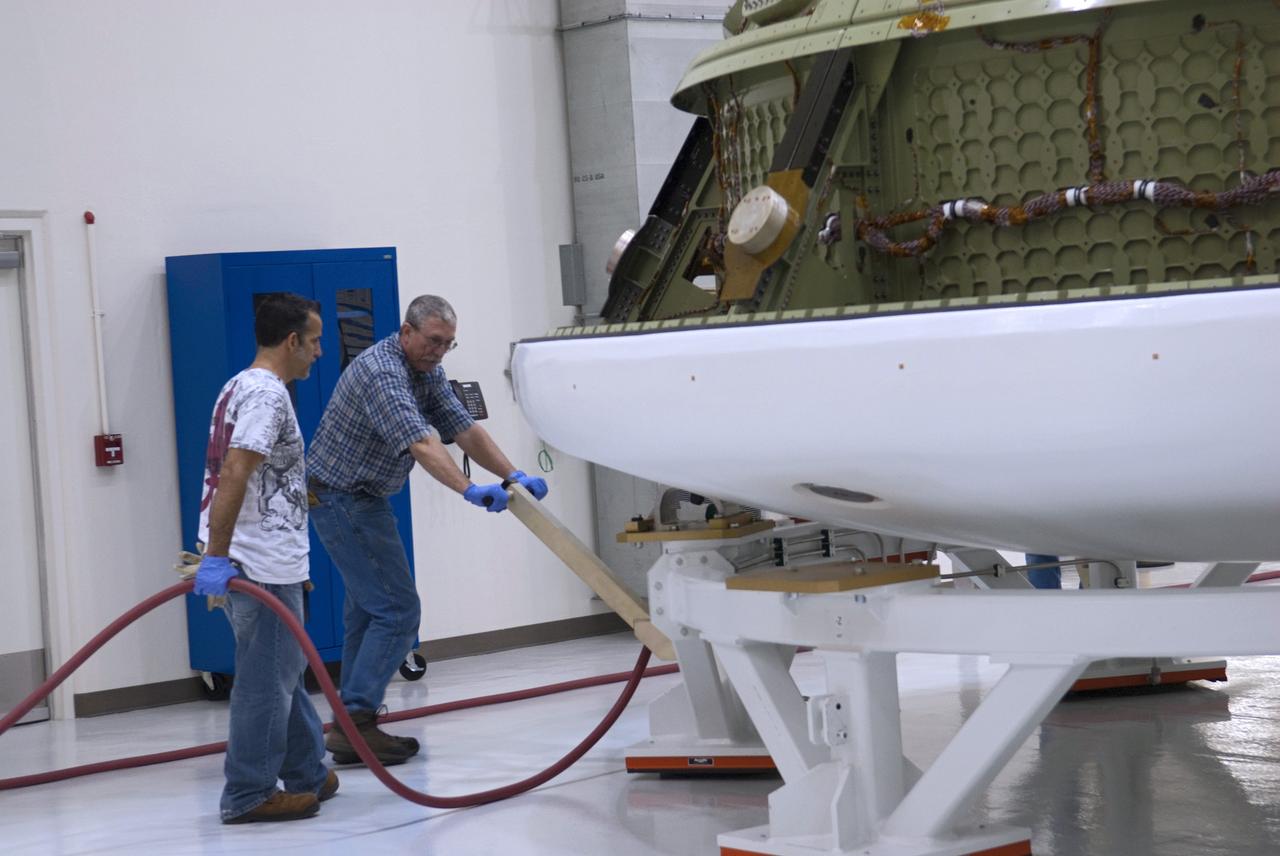
CAPE CANAVERAL, Fla. -- Lockheed Martin crews secure the Orion ground test vehicle on a work stand in the Operations and Checkout O&C Facility at NASA's Kennedy Space Center in Florida. The vehicle traveled more than 1,800 miles from the company's Waterton Facility near Denver where it successfully completed a series of rigorous tests that simulated launch and spaceflight environments. The ground test vehicle will be used for pathfinding operations in the O&C, including simulated manufacturing and assembly procedures. After those operations are completed, new backshell panels will be installed on the ground test vehicle at the O&C prior to the vehicle’s trek to NASA's Langley Research Center in Virginia for splashdown testing at the agency's Hydro Impact Basin. Launching atop NASA's heavy-lift Space Launch System SLS, which also is under development, the Orion Multi-Purpose Crew Vehicle MPCV will serve as the exploration vehicle that will carry astronaut crews beyond low Earth orbit. It also will provide emergency abort capabilities, sustain the crew during space travel and provide safe re-entry from deep space return velocities. For more information, visit www.nasa.gov/orion. Photo credit: Charisse Nahser
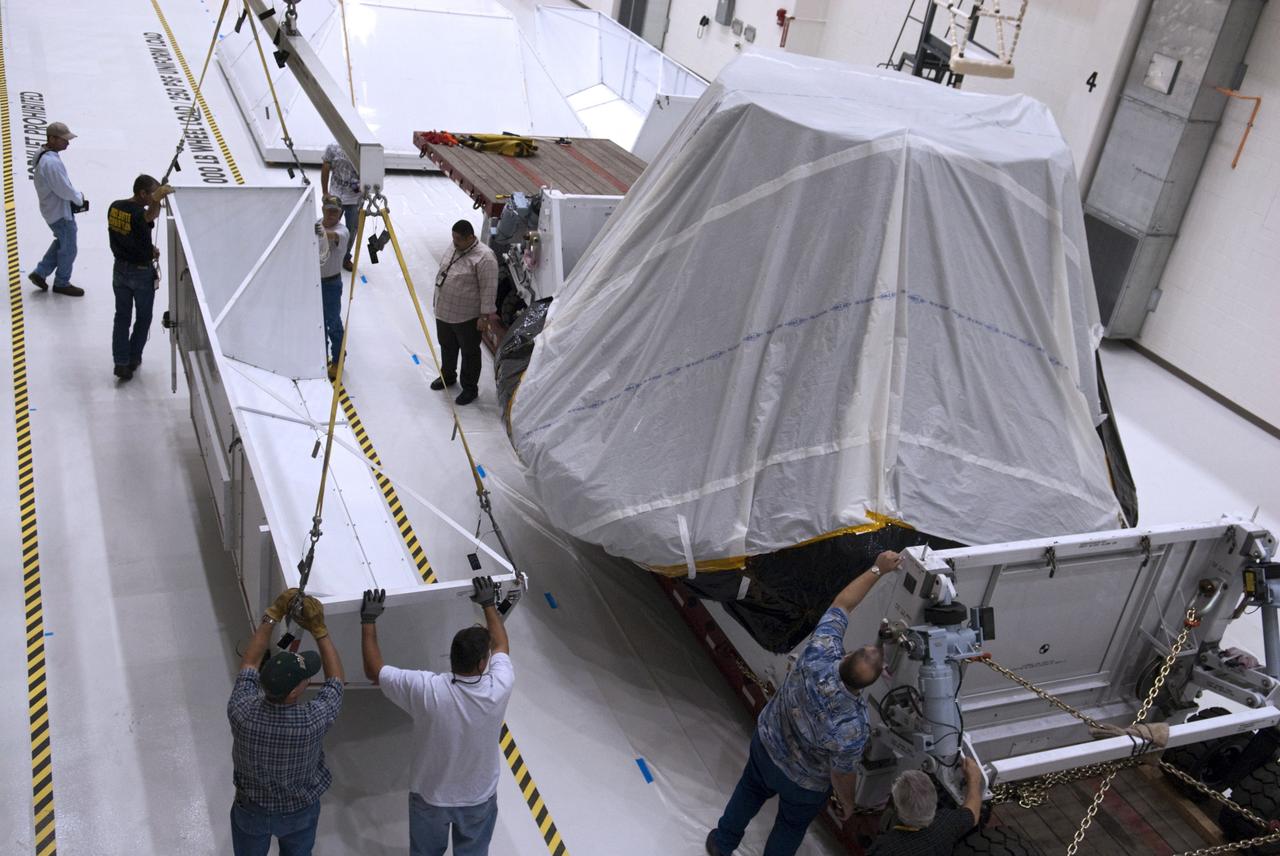
CAPE CANAVERAL, Fla. -- Lockheed Martin crews unpack the Orion ground test vehicle in the Operations and Checkout O&C Facility at NASA's Kennedy Space Center in Florida. The vehicle traveled more than 1,800 miles from the company's Waterton Facility near Denver where it successfully completed a series of rigorous tests that simulated launch and spaceflight environments. The ground test vehicle will be used for pathfinding operations in the O&C, including simulated manufacturing and assembly procedures. After those operations are completed, new backshell panels will be installed on the ground test vehicle at the O&C prior to the vehicle’s trek to NASA's Langley Research Center in Virginia for splashdown testing at the agency's Hydro Impact Basin. Launching atop NASA's heavy-lift Space Launch System SLS, which also is under development, the Orion Multi-Purpose Crew Vehicle MPCV will serve as the exploration vehicle that will carry astronaut crews beyond low Earth orbit. It also will provide emergency abort capabilities, sustain the crew during space travel and provide safe re-entry from deep space return velocities. For more information, visit www.nasa.gov/orion. Photo credit: Charisse Nahser
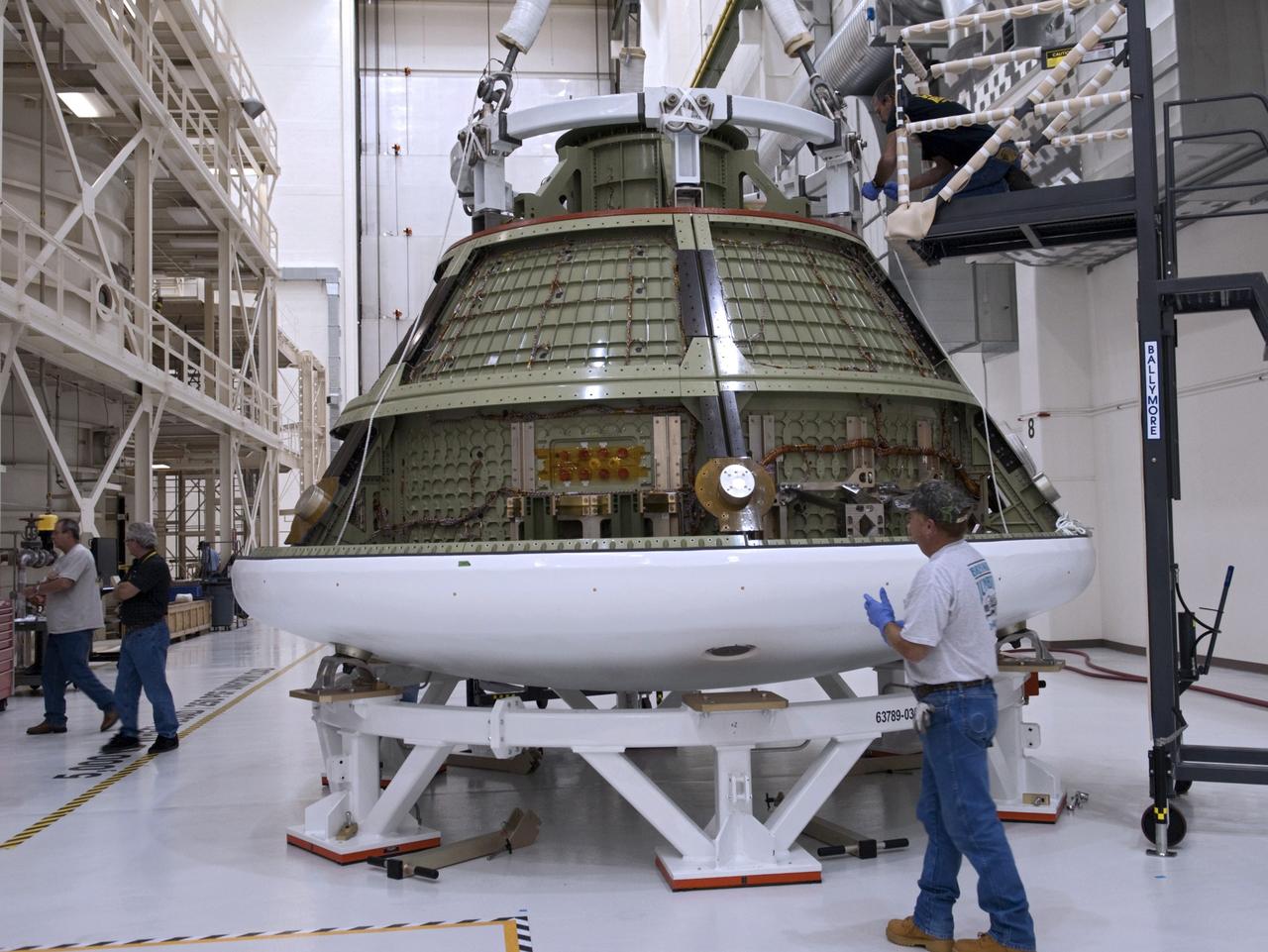
CAPE CANAVERAL, Fla. -- Lockheed Martin crews assist as a crane lowers the Orion ground test vehicle on to a work stand in the Operations and Checkout O&C Facility at NASA's Kennedy Space Center in Florida. The vehicle traveled more than 1,800 miles from the company's Waterton Facility near Denver where it successfully completed a series of rigorous tests that simulated launch and spaceflight environments. The ground test vehicle will be used for pathfinding operations in the O&C, including simulated manufacturing and assembly procedures. After those operations are completed, new backshell panels will be installed on the ground test vehicle at the O&C prior to the vehicle’s trek to NASA's Langley Research Center in Virginia for splashdown testing at the agency's Hydro Impact Basin. Launching atop NASA's heavy-lift Space Launch System SLS, which also is under development, the Orion Multi-Purpose Crew Vehicle MPCV will serve as the exploration vehicle that will carry astronaut crews beyond low Earth orbit. It also will provide emergency abort capabilities, sustain the crew during space travel and provide safe re-entry from deep space return velocities. For more information, visit www.nasa.gov/orion. Photo credit: Charisse Nahser
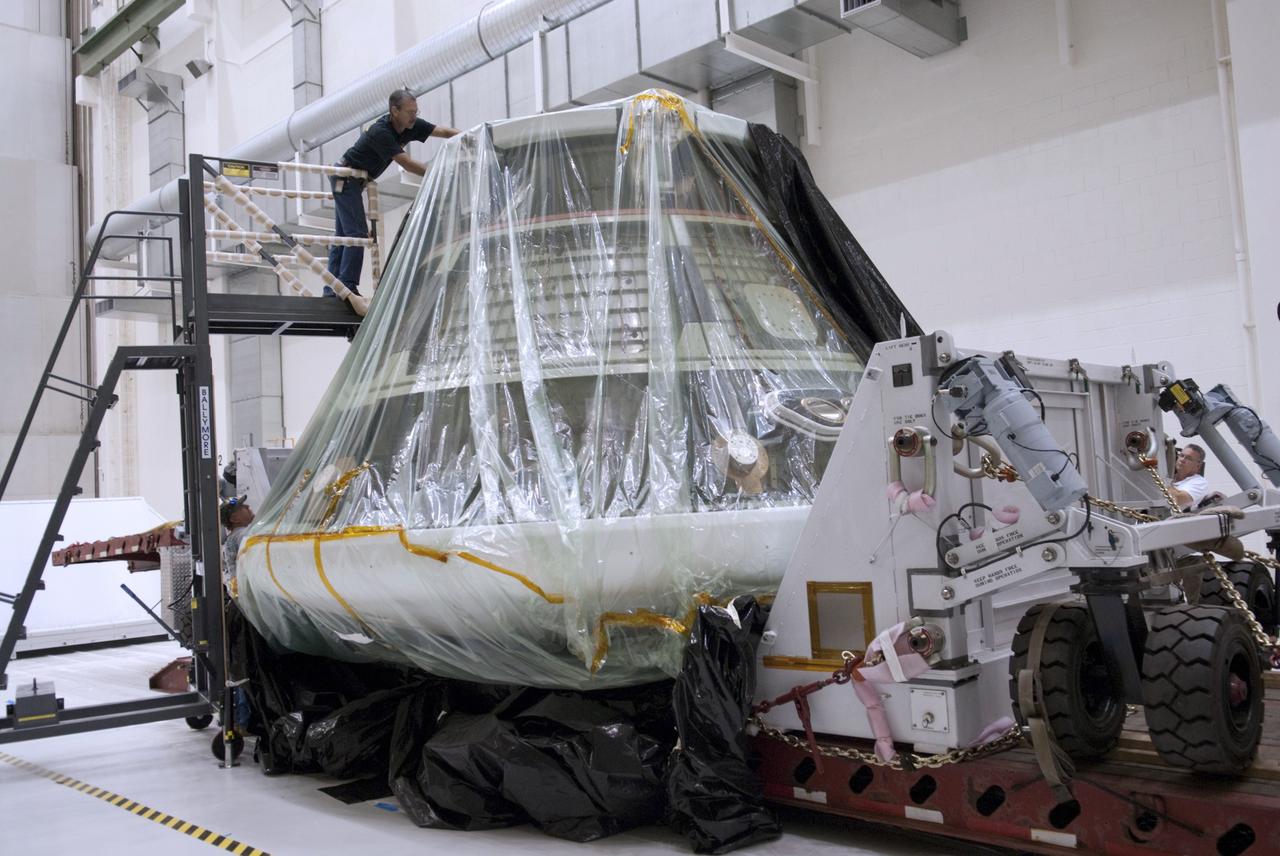
CAPE CANAVERAL, Fla. -- Lockheed Martin crews unpack the Orion ground test vehicle in the Operations and Checkout O&C Facility at NASA's Kennedy Space Center in Florida. The vehicle traveled more than 1,800 miles from the company's Waterton Facility near Denver where it successfully completed a series of rigorous tests that simulated launch and spaceflight environments. The ground test vehicle will be used for pathfinding operations in the O&C, including simulated manufacturing and assembly procedures. After those operations are completed, new backshell panels will be installed on the ground test vehicle at the O&C prior to the vehicle’s trek to NASA's Langley Research Center in Virginia for splashdown testing at the agency's Hydro Impact Basin. Launching atop NASA's heavy-lift Space Launch System SLS, which also is under development, the Orion Multi-Purpose Crew Vehicle MPCV will serve as the exploration vehicle that will carry astronaut crews beyond low Earth orbit. It also will provide emergency abort capabilities, sustain the crew during space travel and provide safe re-entry from deep space return velocities. For more information, visit www.nasa.gov/orion. Photo credit: Charisse Nahser

CAPE CANAVERAL, Fla. -- Lockheed Martin crews begin unpacking the Orion ground test vehicle in the Operations and Checkout O&C Facility at NASA's Kennedy Space Center in Florida. The vehicle traveled more than 1,800 miles from the company's Waterton Facility near Denver where it successfully completed a series of rigorous tests that simulated launch and spaceflight environments. The ground test vehicle will be used for pathfinding operations in the O&C, including simulated manufacturing and assembly procedures. After those operations are completed, new backshell panels will be installed on the ground test vehicle at the O&C prior to the vehicle’s trek to NASA's Langley Research Center in Virginia for splashdown testing at the agency's Hydro Impact Basin. Launching atop NASA's heavy-lift Space Launch System SLS, which also is under development, the Orion Multi-Purpose Crew Vehicle MPCV will serve as the exploration vehicle that will carry astronaut crews beyond low Earth orbit. It also will provide emergency abort capabilities, sustain the crew during space travel and provide safe re-entry from deep space return velocities. For more information, visit www.nasa.gov/orion. Photo credit: Charisse Nahser
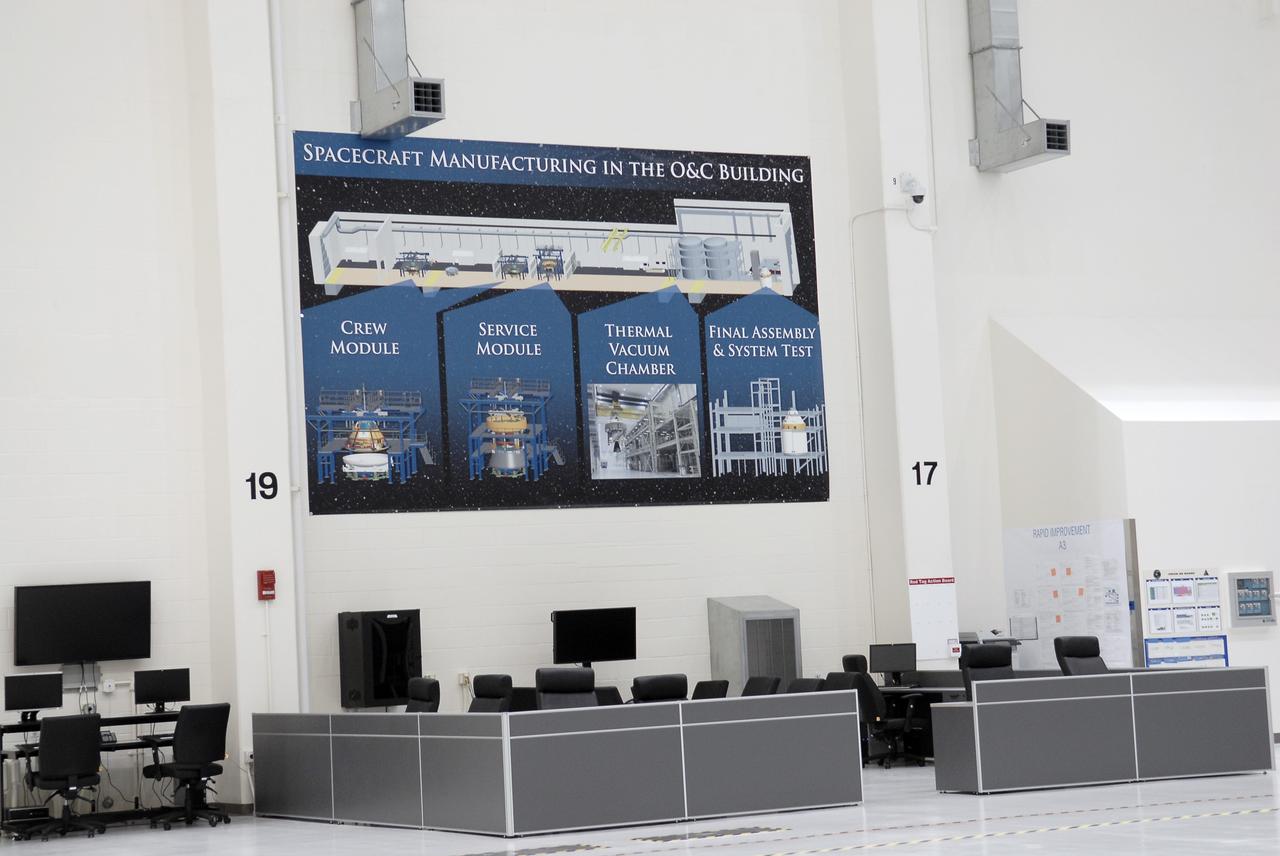
CAPE CANAVERAL, Fla. -- A view of one of the work areas in the Operations and Checkout O&C Facility at NASA's Kennedy Space Center in Florida where the Orion ground test vehicle has arrived. The vehicle traveled more than 1,800 miles from the company's Waterton Facility near Denver where it successfully completed a series of rigorous tests that simulated launch and spaceflight environments. The ground test vehicle will be used for pathfinding operations in the O&C, including simulated manufacturing and assembly procedures. After those operations are completed, new backshell panels will be installed on the ground test vehicle at the O&C prior to the vehicle’s trek to NASA's Langley Research Center in Virginia for splashdown testing at the agency's Hydro Impact Basin. Launching atop NASA's heavy-lift Space Launch System SLS, which also is under development, the Orion Multi-Purpose Crew Vehicle MPCV will serve as the exploration vehicle that will carry astronaut crews beyond low Earth orbit. It also will provide emergency abort capabilities, sustain the crew during space travel and provide safe re-entry from deep space return velocities. For more information, visit www.nasa.gov/orion. Photo credit: Charisse Nahser
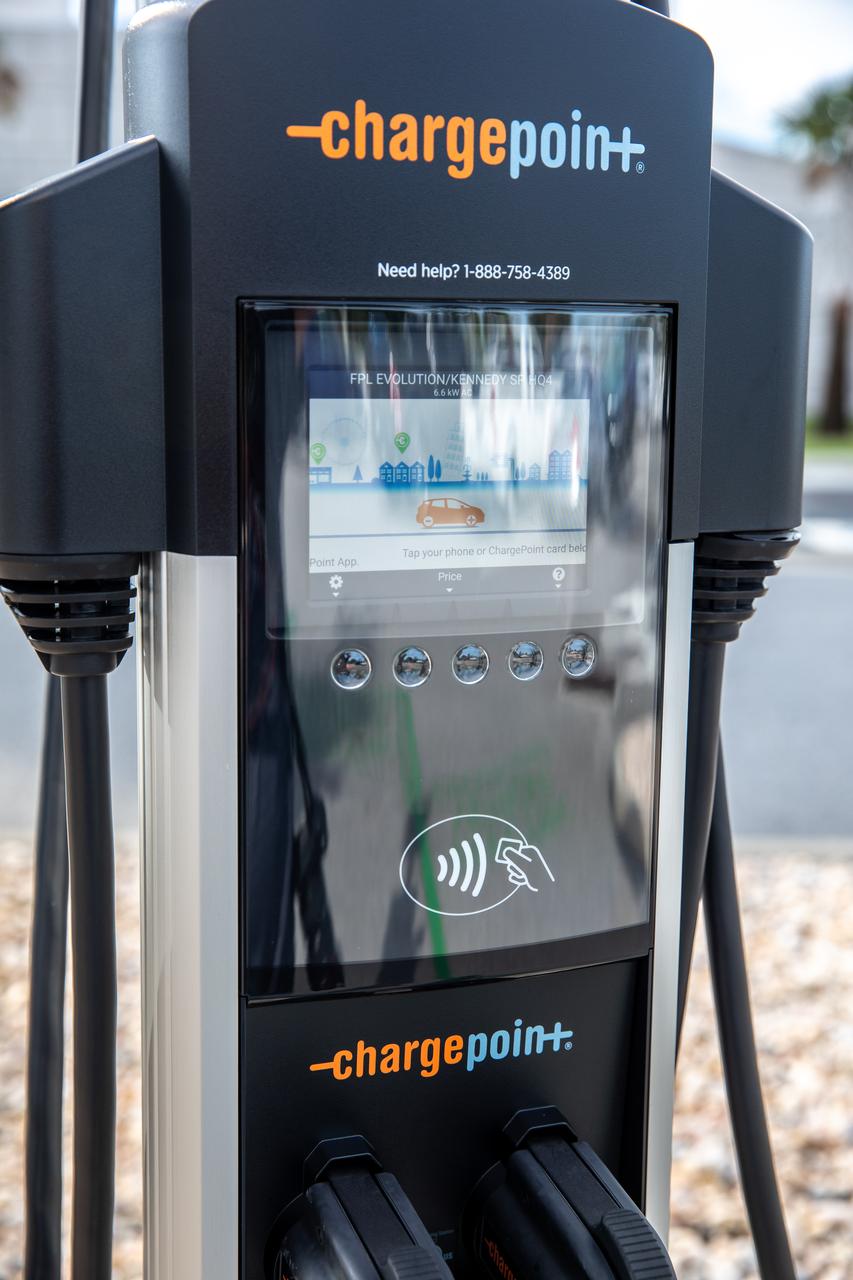
A newly installed electric vehicle (EV) charging station is in view near the Central Campus Headquarters Building at NASA’s Kennedy Space Center in Florida on Sept. 14, 2022. Part of a partnership between Kennedy and Florida Power & Light (FPL) to bring 23 EV charging stations to the spaceport, the ChargePoint CT4000, Level 2 chargers are capable of charging electric vehicles at a rate of 15-30 miles of range per hour. This partnership was set up under FPL’s EV program and provides a charging infrastructure that includes a simple way for businesses and employees to pay for usage.
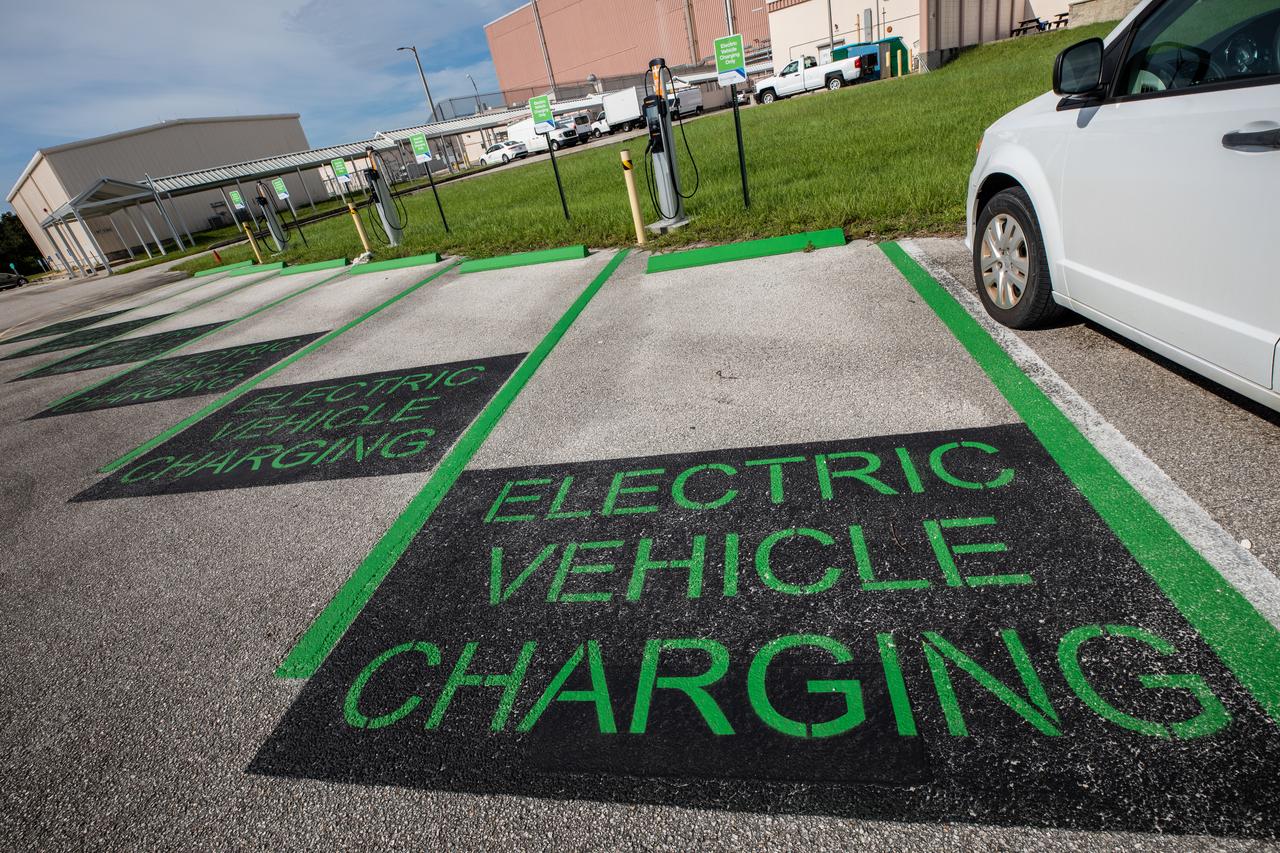
Several newly installed electric vehicle (EV) charging stations are in view near the Neil Armstrong Operations and Checkout Building at NASA’s Kennedy Space Center in Florida on Sept. 14, 2022. Part of a partnership between Kennedy and Florida Power & Light (FPL) to bring 23 EV charging stations to the spaceport, the ChargePoint CT4000, Level 2 chargers are capable of charging electric vehicles at a rate of 15-30 miles of range per hour. This partnership was set up under FPL’s EV program and provides a charging infrastructure that includes a simple way for businesses and employees to pay for usage.
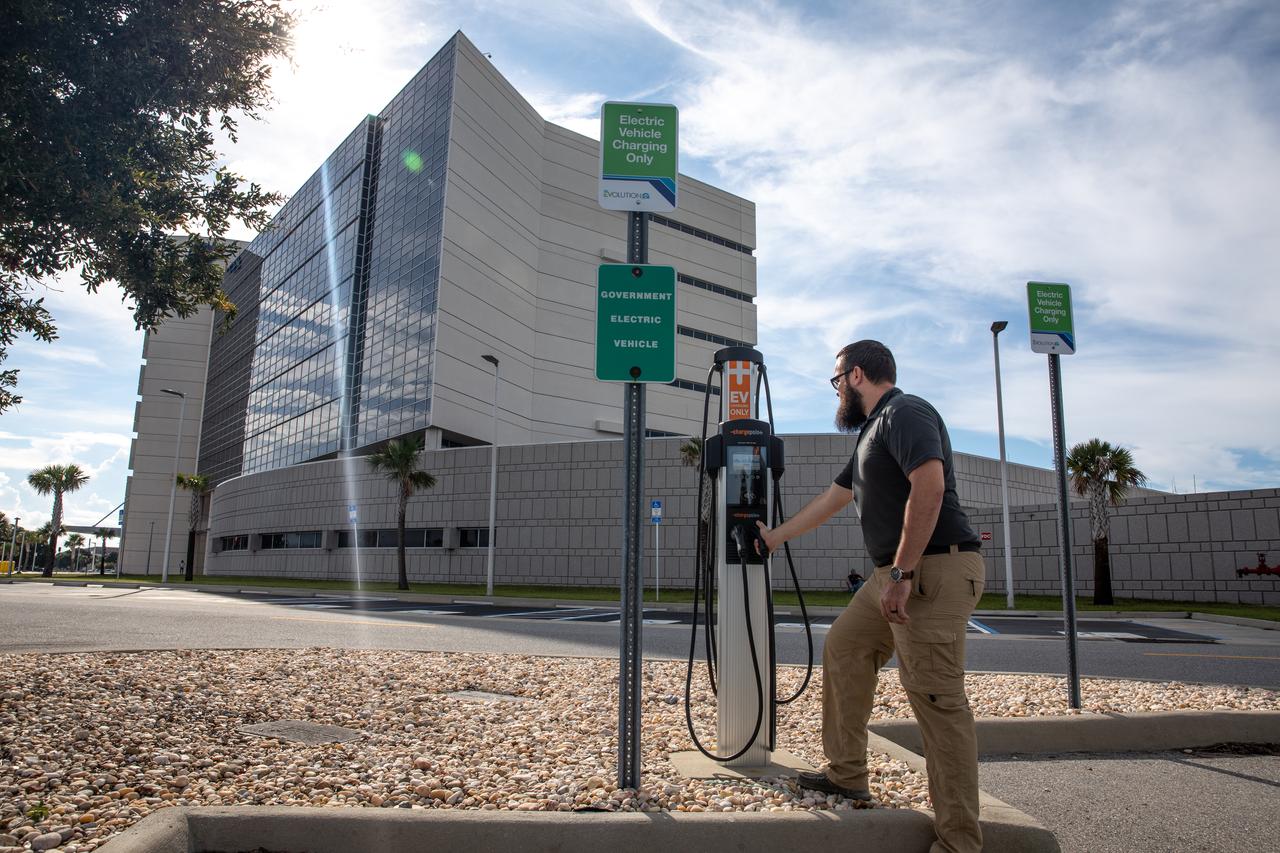
Spencer Davis, a NASA Traffic Management specialist in the Spaceport Integration Directorate at NASA’s Kennedy Space Center in Florida, stands near a newly installed electric vehicle (EV) charging station near the Central Campus Headquarters Building at Kennedy on Sept. 14, 2022. Part of a partnership between Kennedy and Florida Power & Light (FPL) to bring 23 EV charging stations to the spaceport, the ChargePoint CT4000, Level 2 chargers are capable of charging electric vehicles at a rate of 15-30 miles of range per hour. This partnership was set up under FPL’s EV program and provides a charging infrastructure that includes a simple way for businesses and employees to pay for usage.
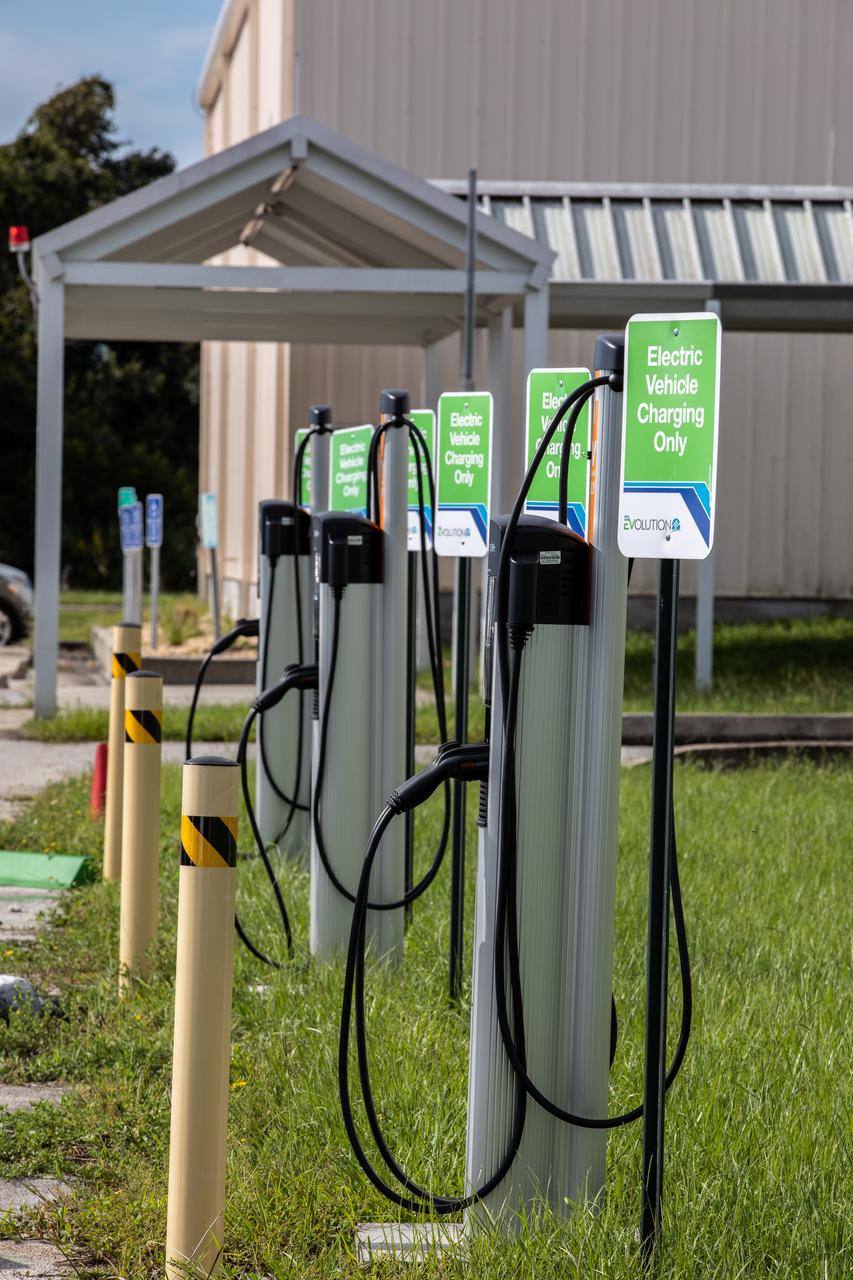
Several newly installed electric vehicle (EV) charging stations are in view near the Neil Armstrong Operations and Checkout Building at NASA’s Kennedy Space Center in Florida on Sept. 14, 2022. Part of a partnership between Kennedy and Florida Power & Light (FPL) to bring 23 EV charging stations to the spaceport, the ChargePoint CT4000, Level 2 chargers are capable of charging electric vehicles at a rate of 15-30 miles of range per hour. This partnership was set up under FPL’s EV program and provides a charging infrastructure that includes a simple way for businesses and employees to pay for usage.
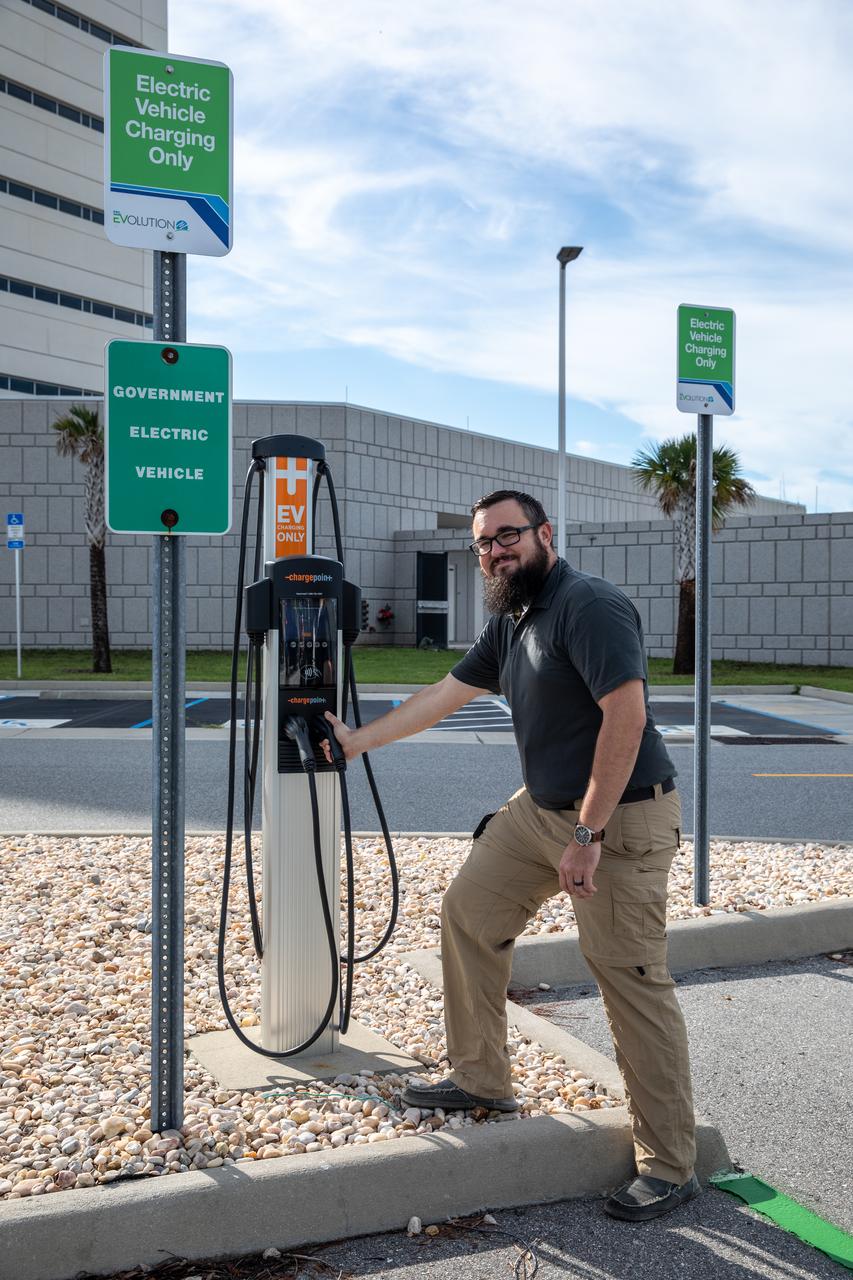
Spencer Davis, a NASA Traffic Management specialist in the Spaceport Integration Directorate at NASA’s Kennedy Space Center in Florida, stands near a newly installed electric vehicle (EV) charging station near the Central Campus Headquarters Building at Kennedy on Sept. 14, 2022. Part of a partnership between Kennedy and Florida Power & Light (FPL) to bring 23 EV charging stations to the spaceport, the ChargePoint CT4000, Level 2 chargers are capable of charging electric vehicles at a rate of 15-30 miles of range per hour. This partnership was set up under FPL’s EV program and provides a charging infrastructure that includes a simple way for businesses and employees to pay for usage.
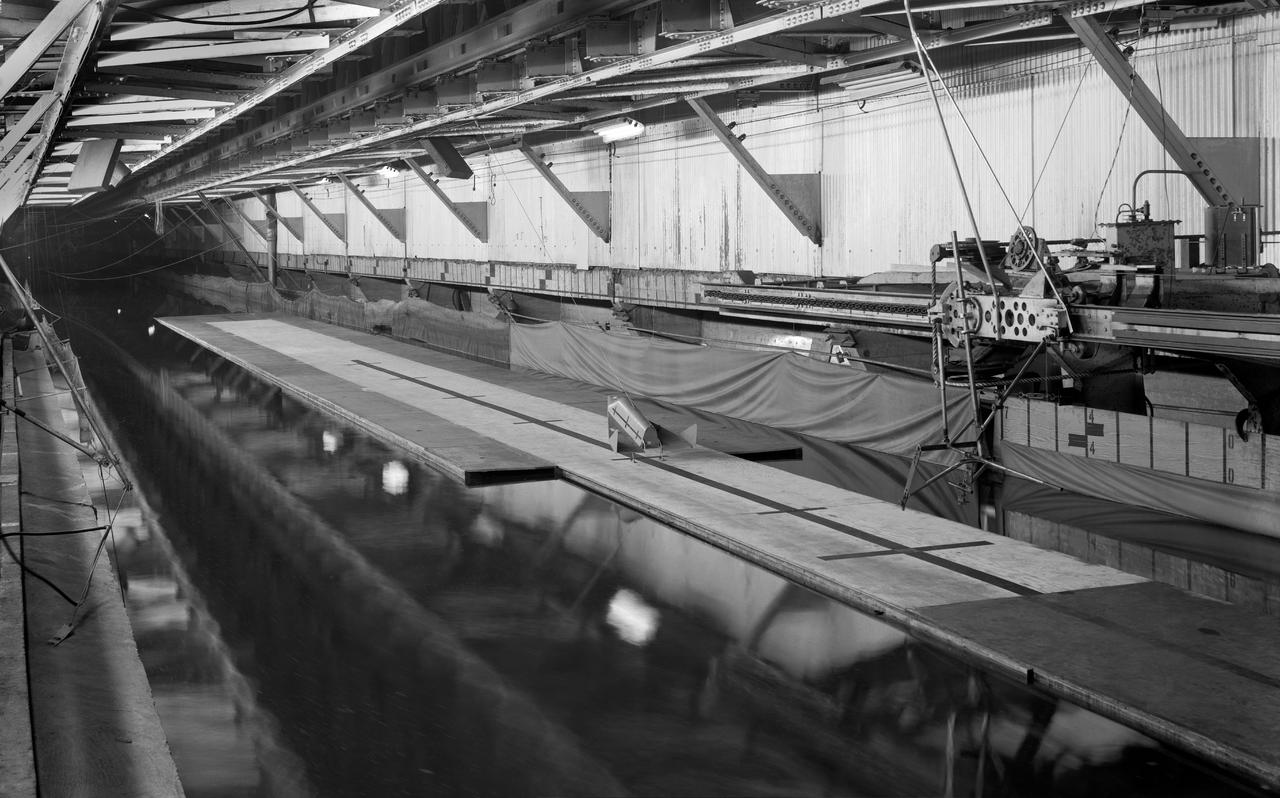
Test Setup For Model Landing Investigation of a Winged Space Vehicle Image used in NASA Document TN-D-1496 1960-L-04633.01 is Figure 9a for NASA Document L-2064 Photograph of model on launcher and landing on runway.
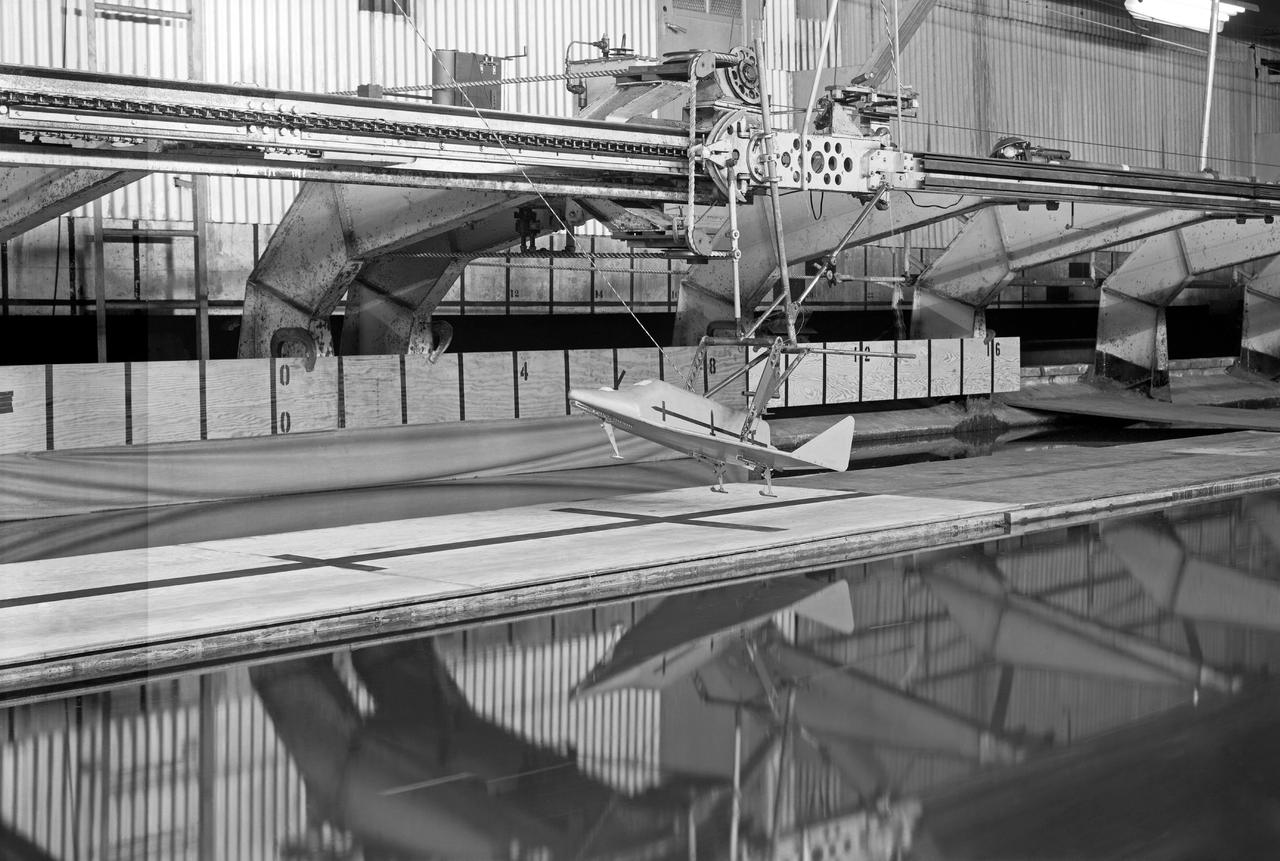
Test Setup For Model Landing Investigation of a Winged Space Vehicle Image used in NASA Document TN-D-1496 1960-L-04633.01 is Figure 9a for NASA Document L-2064 Photograph of model on launcher and landing on runway.
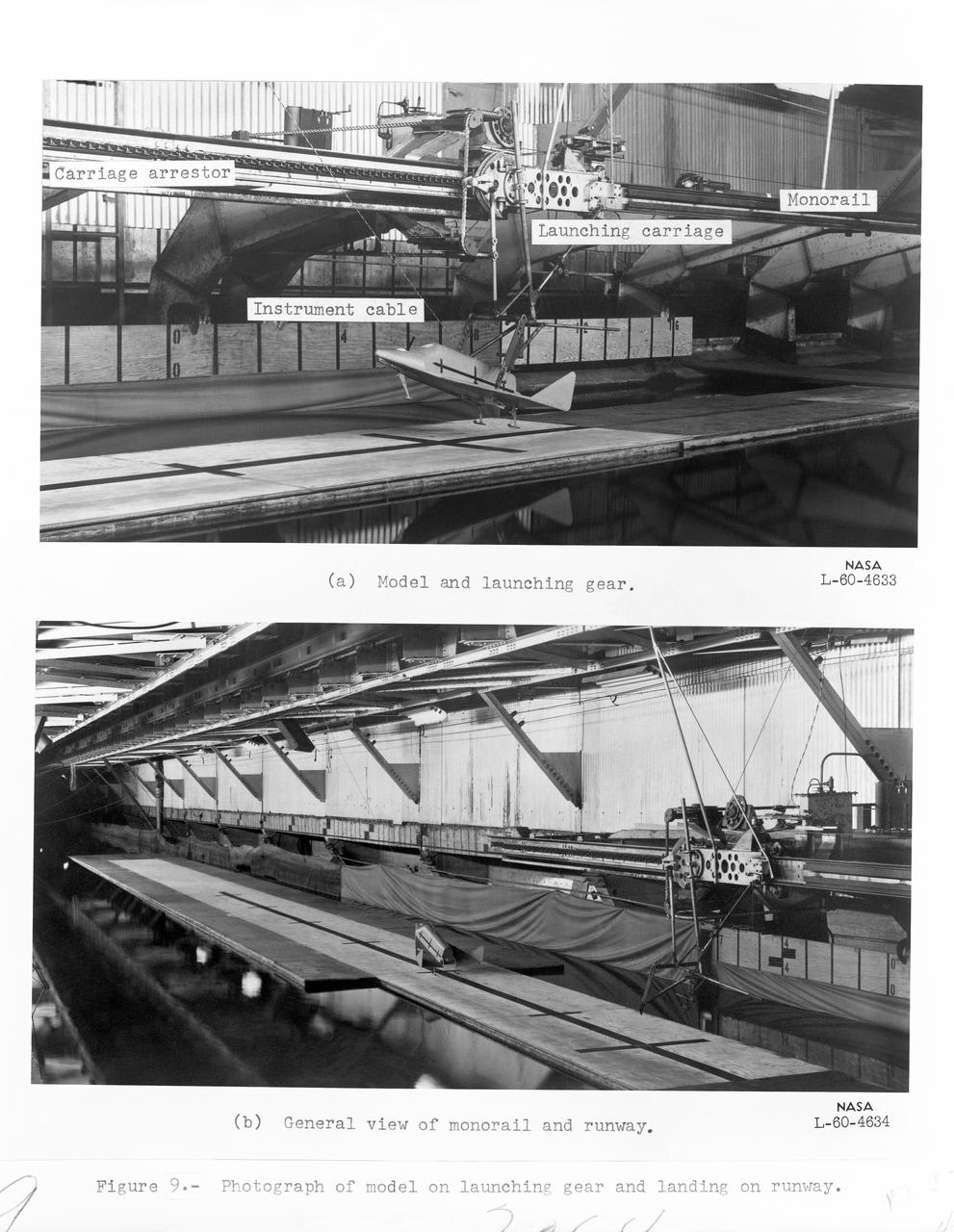
Test Setup For Model Landing Investigation of a Winged Space Vehicle Image used in NASA Document TN-D-1496 1960-L-04633.01 is Figure 9a for NASA Document L-2064 Photograph of model on launcher and landing on runway.
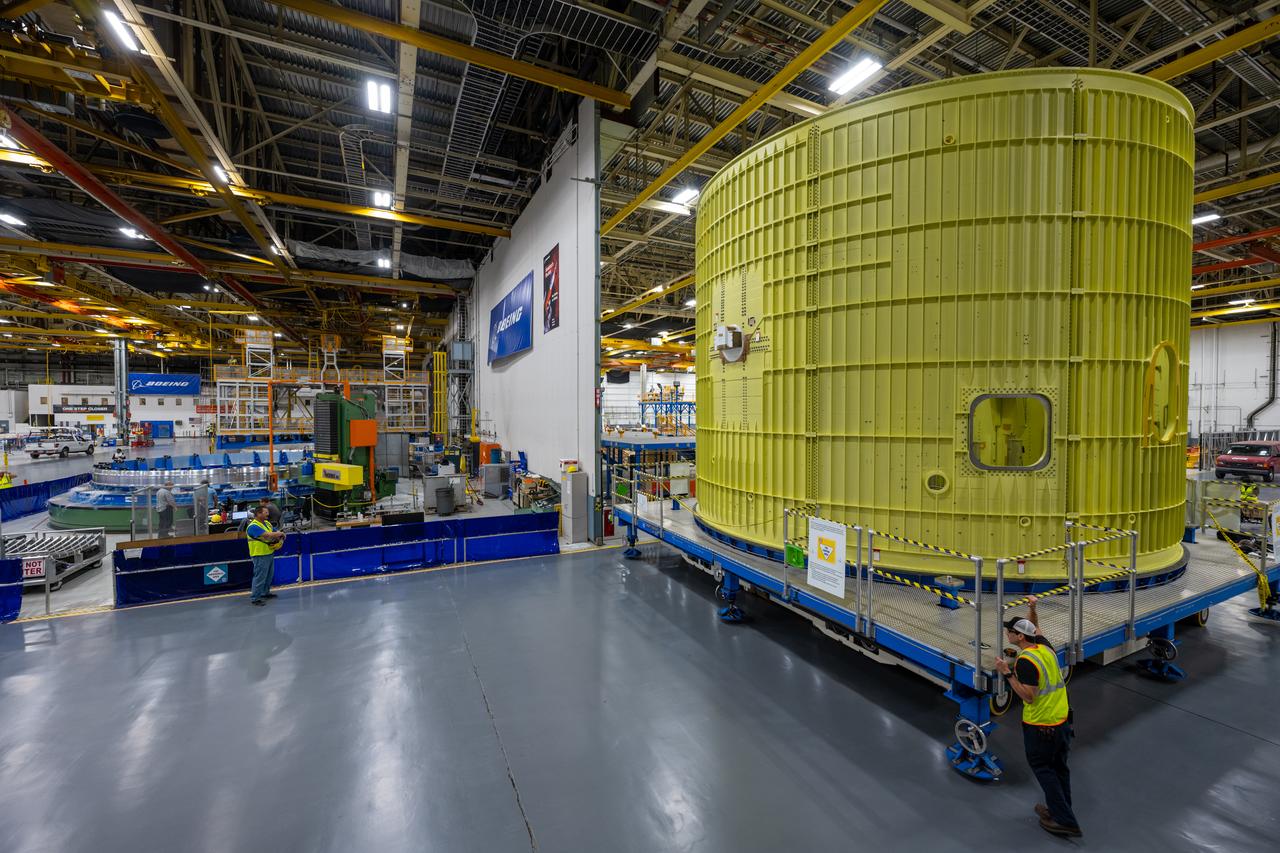
Technicians at NASA’s Michoud Assembly Facility move the intertank of NASA’s Space Launch System rocket for Artemis III to Cell G to await application of the thermal protection system. Thermal protection systems protect space vehicles from aerodynamic heating during entry to planet atmosphere and re-entry to earth atmosphere.
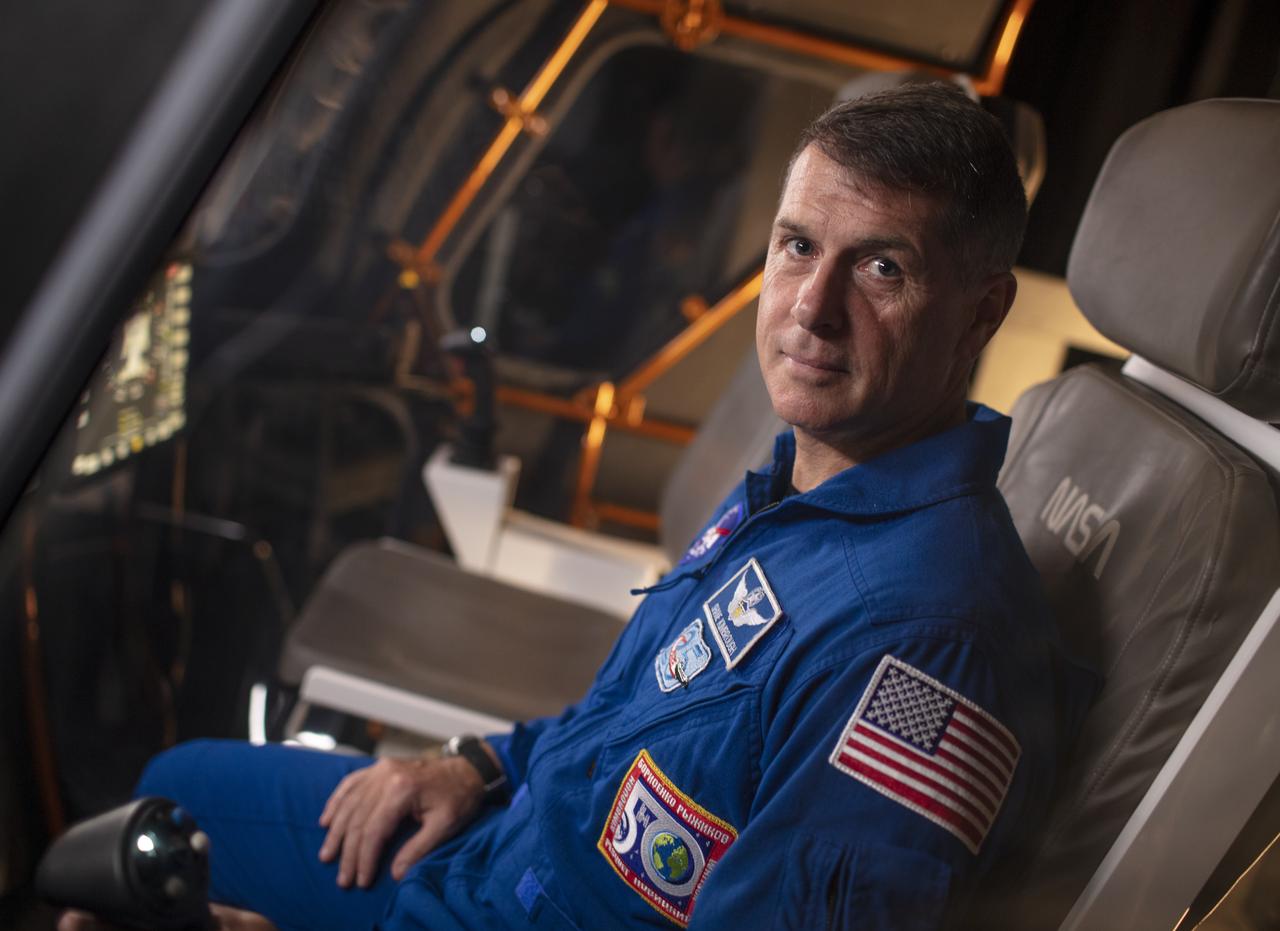
NASA astronaut Shane Kimbrough poses for a portrait in the Space Exploration Vehicle (SEV), an engineering concept used to test new technologies for future surface and deep-space exploration vehicles, Tuesday, July 9, 2019 at NASA's Johnson Space Center in Houston, Texas. Photo Credit: (NASA/Bill Ingalls)
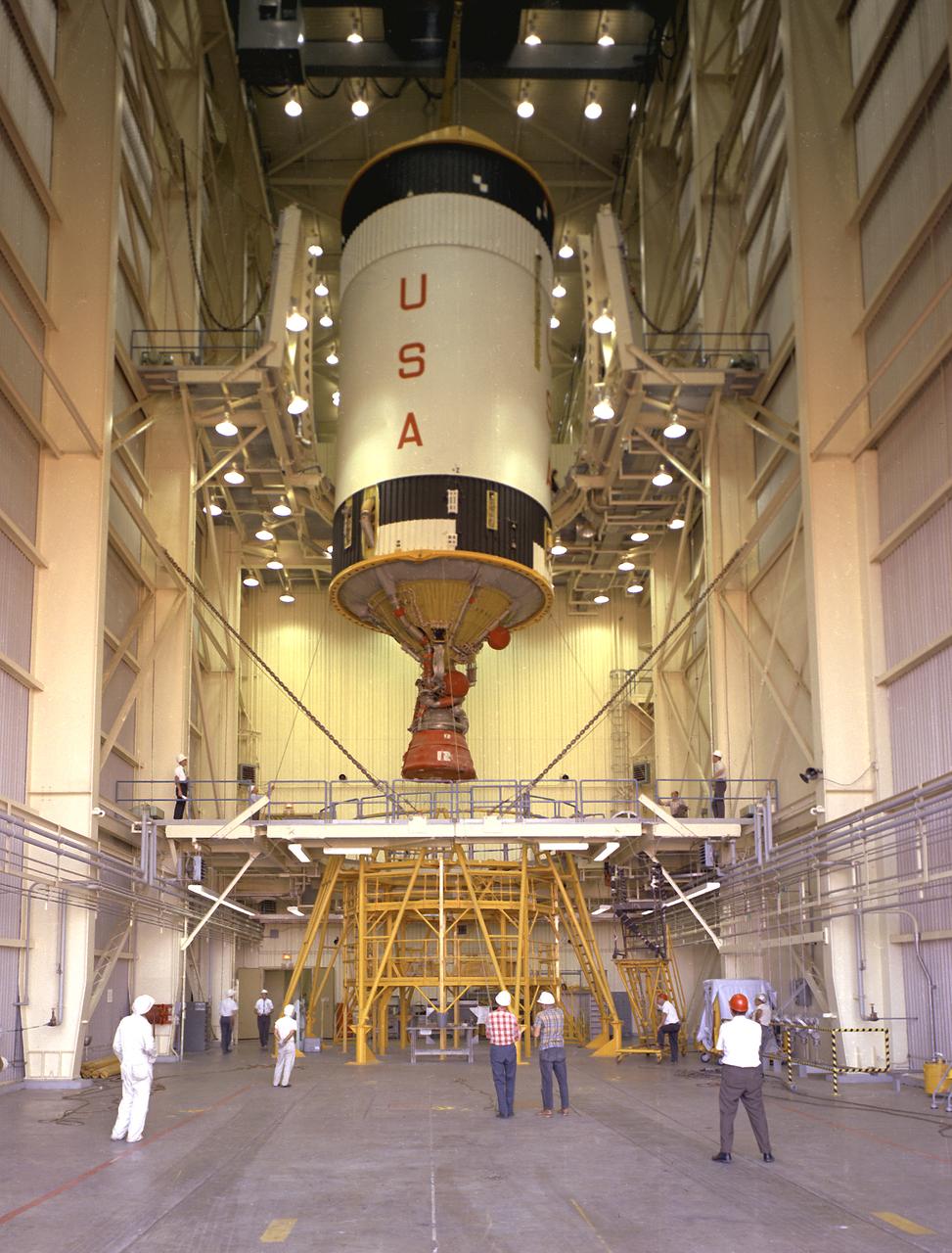
Workmen remove the Saturn IB S-IVB-206, the second flight stage for the Skylab 2 mission, from the vehicle assembly building at the Kennedy Space Center. Designed and developed by the Marshall Space Flight Center and the Douglas Aircraft Company in Sacramento, California, the stage was powered by a single J-2 engine, which produced 200,000 pounds of thrust, later uprated to 230,000 pounds for the Saturn V launch vehicle.
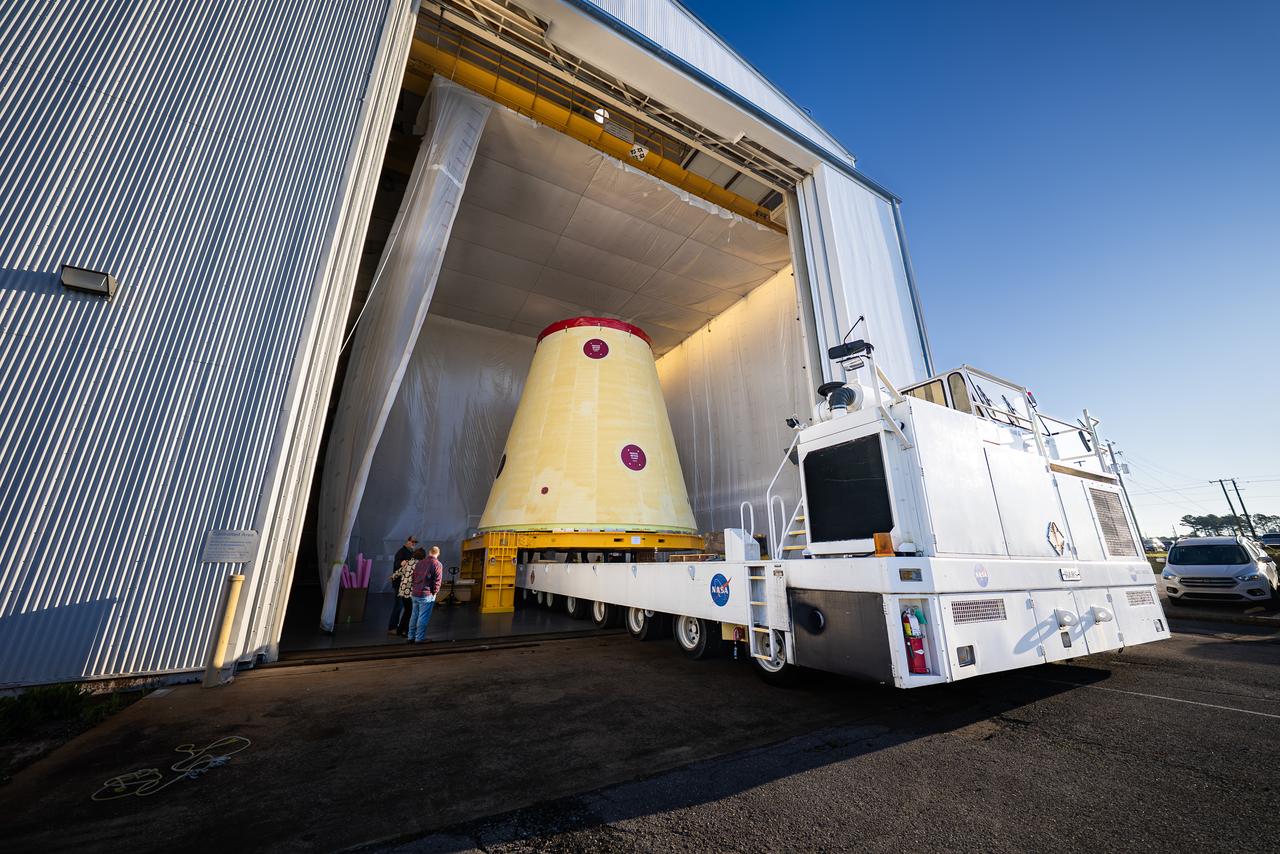
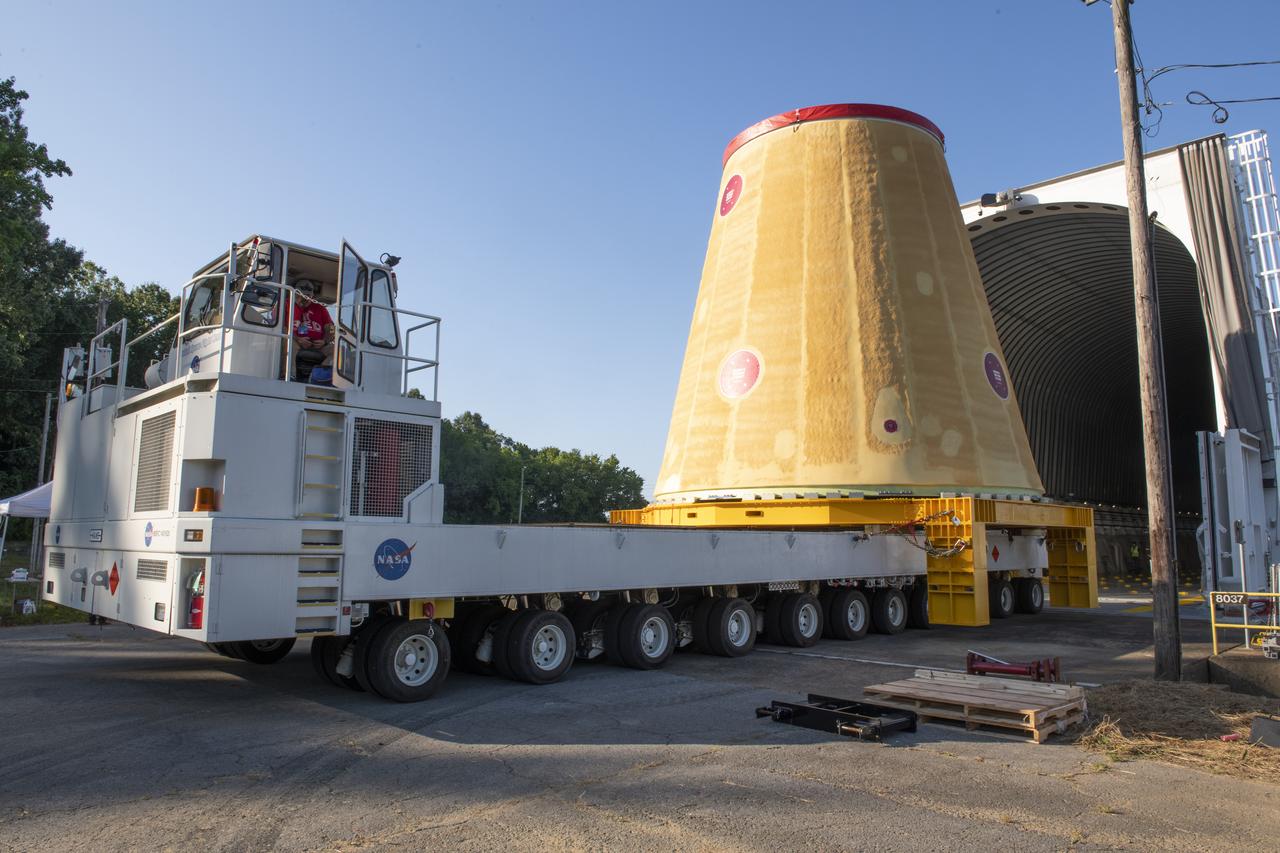
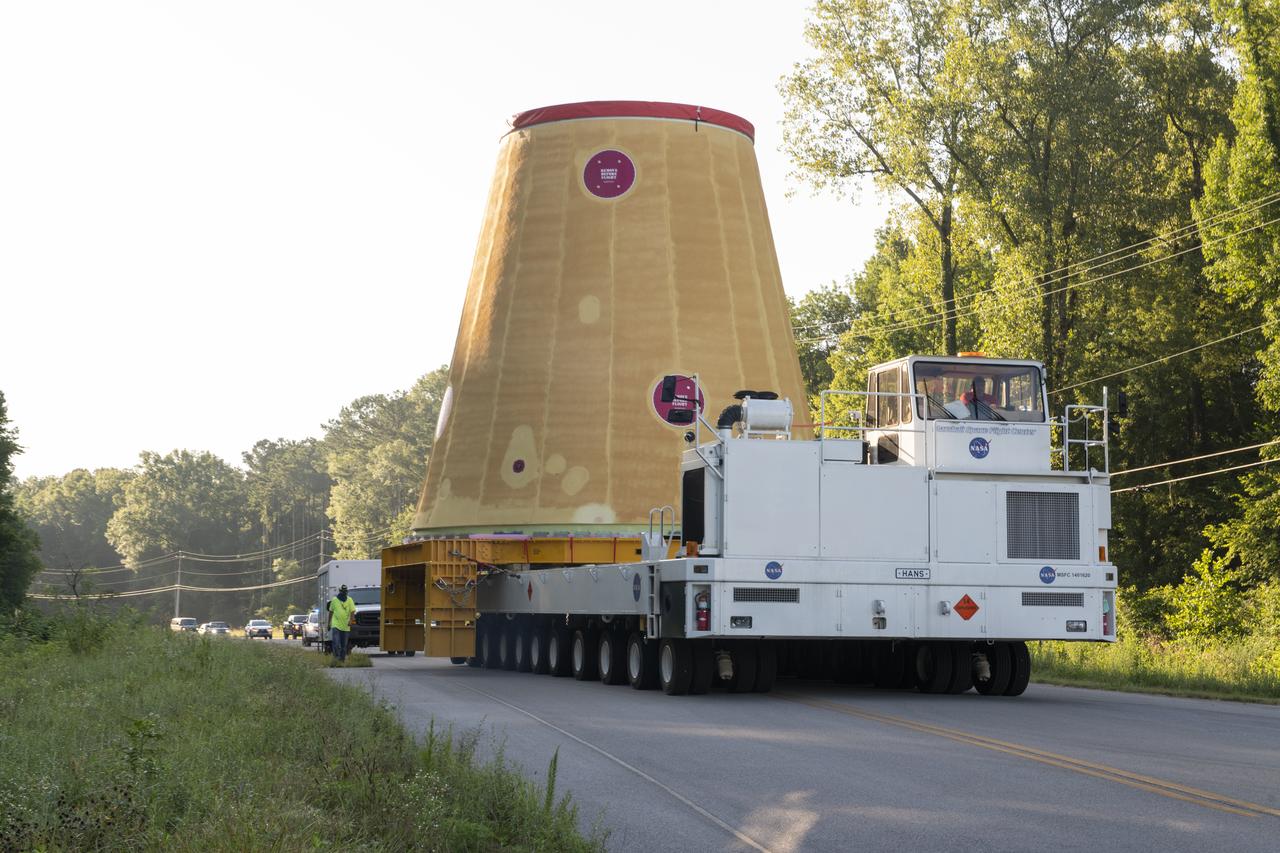
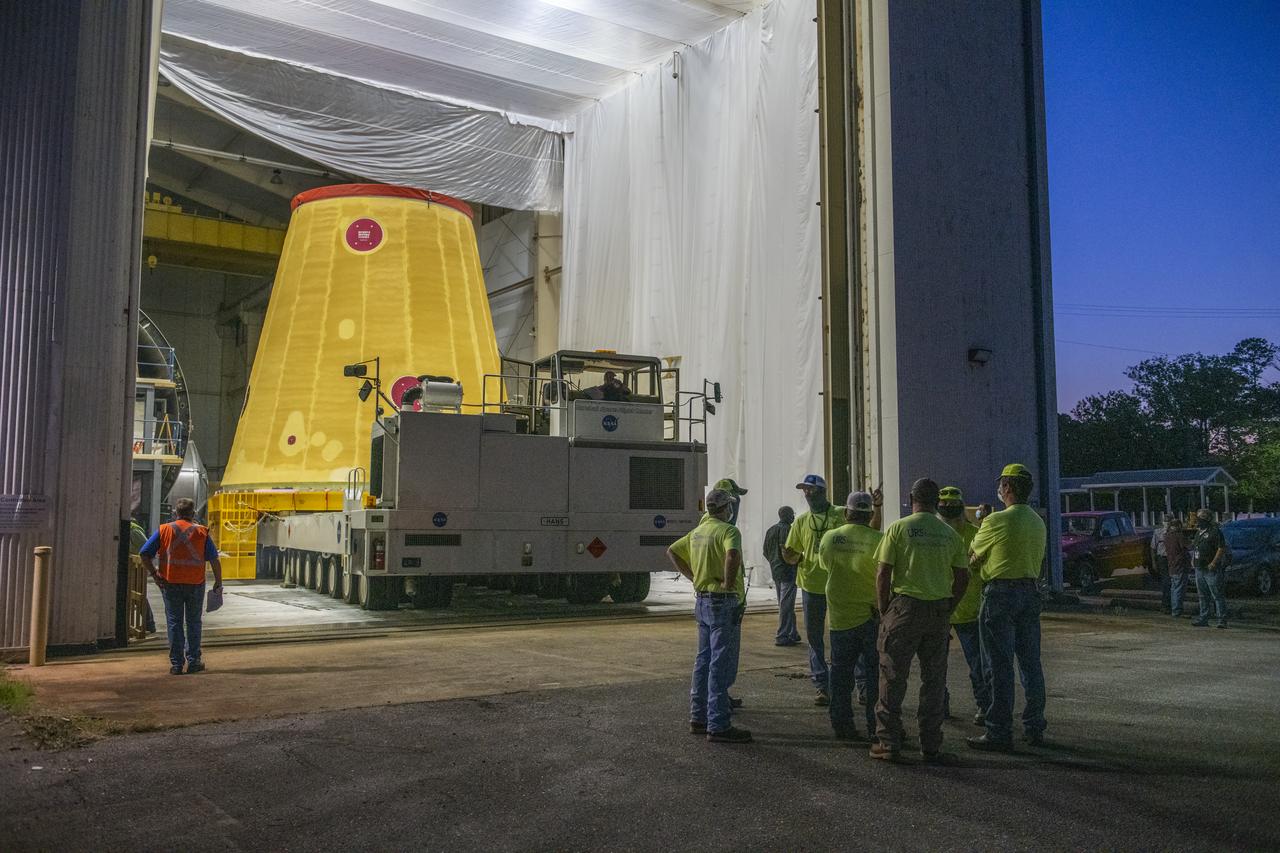
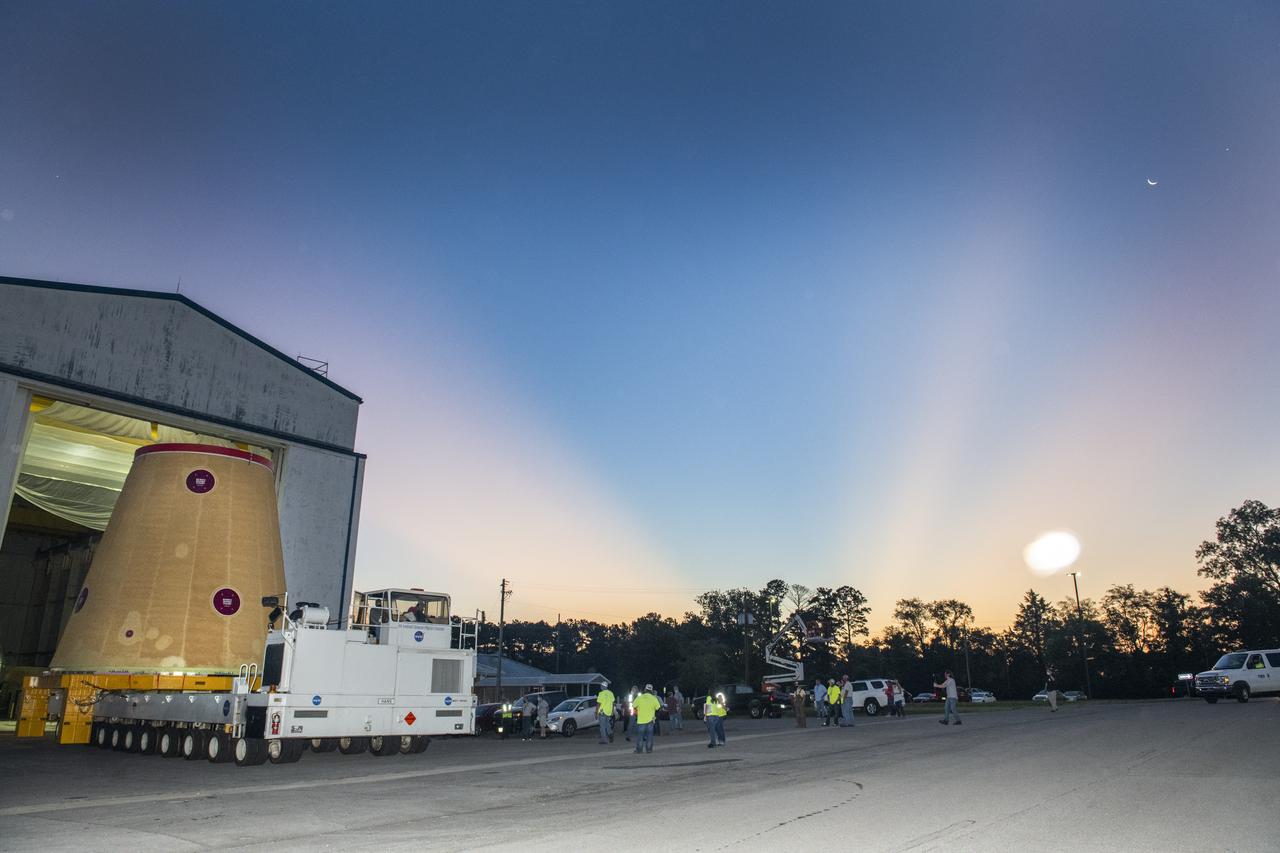
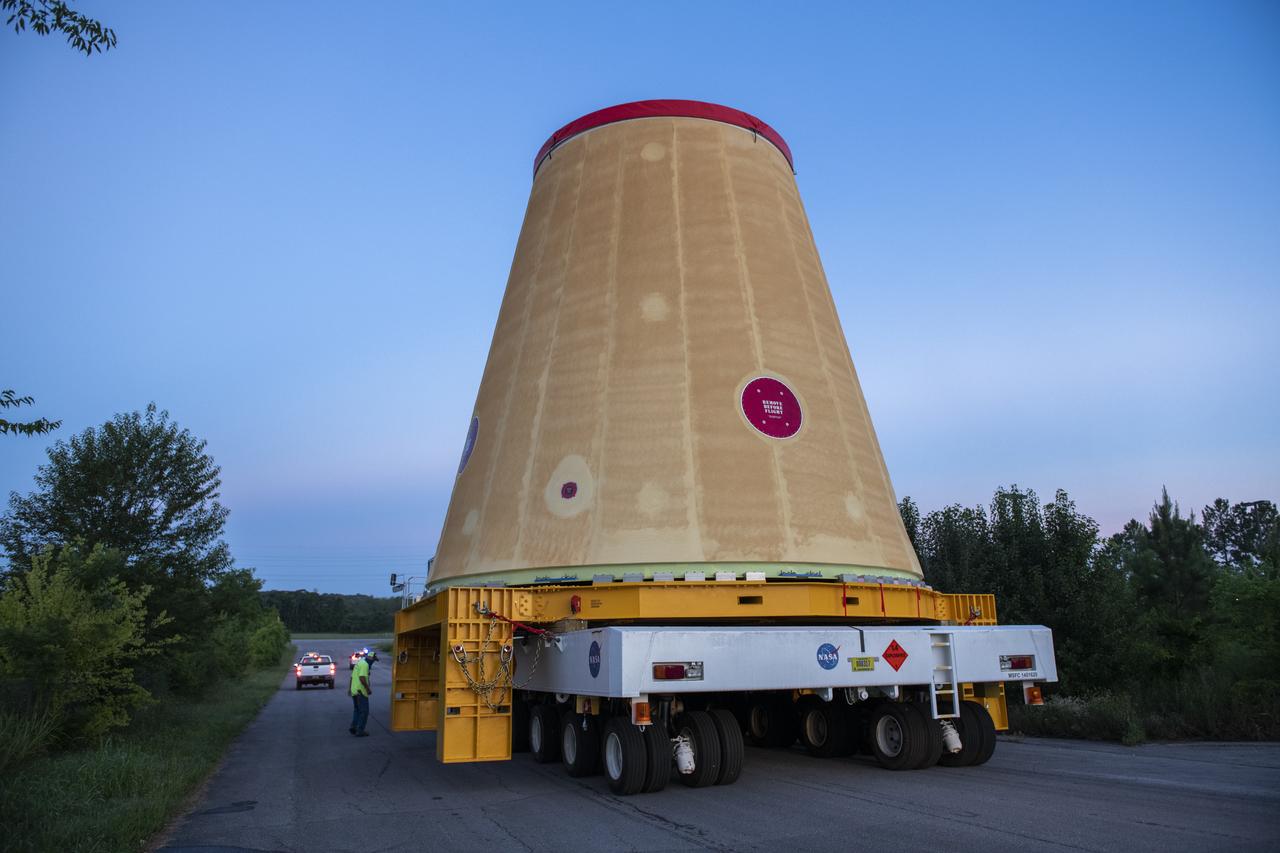
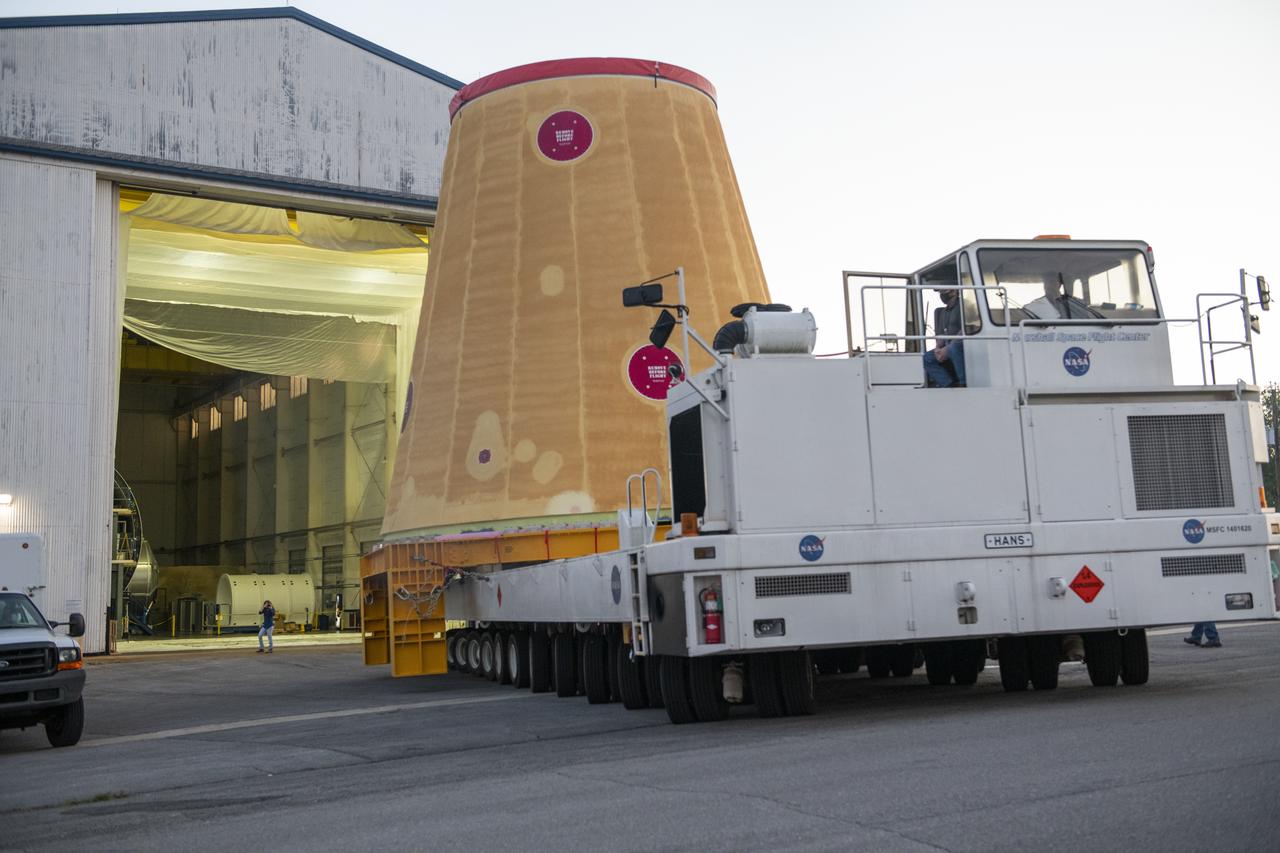
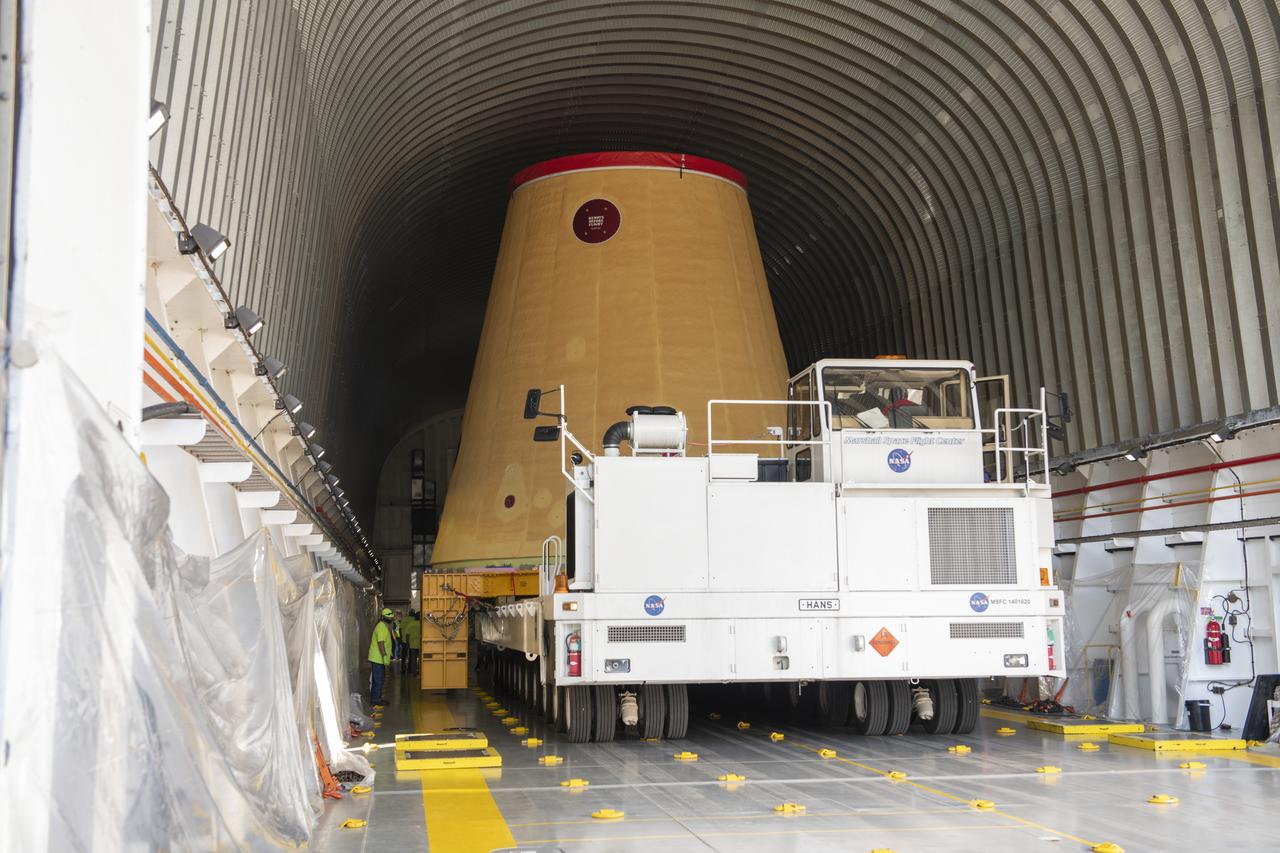
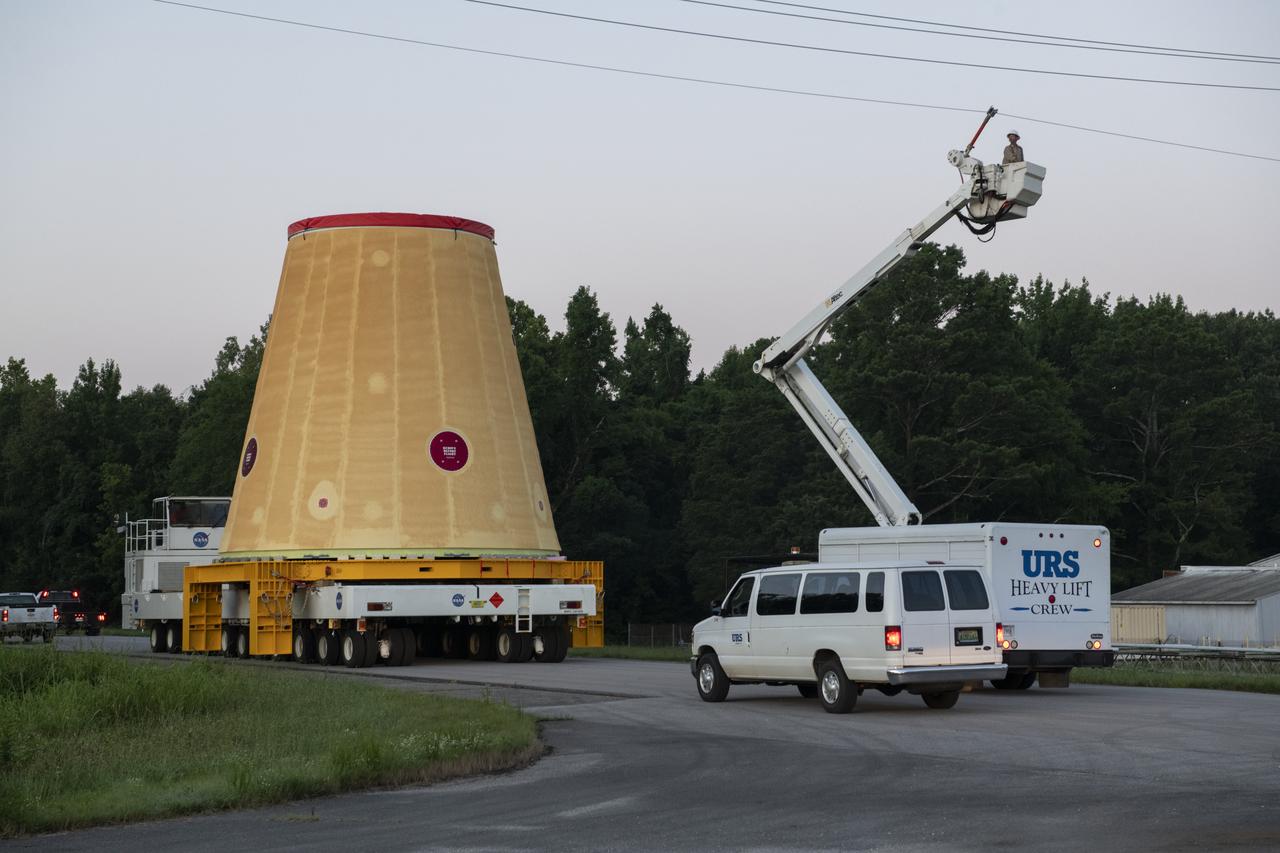
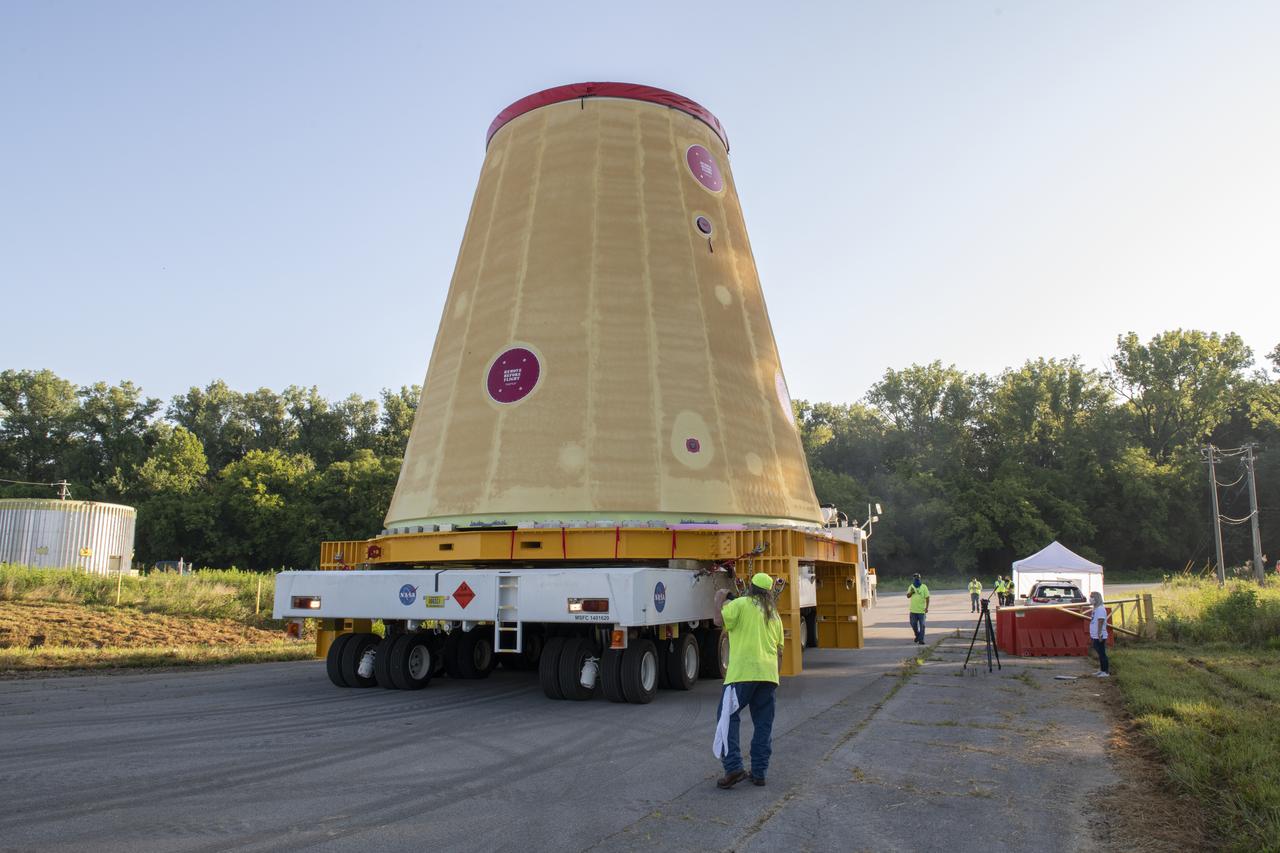
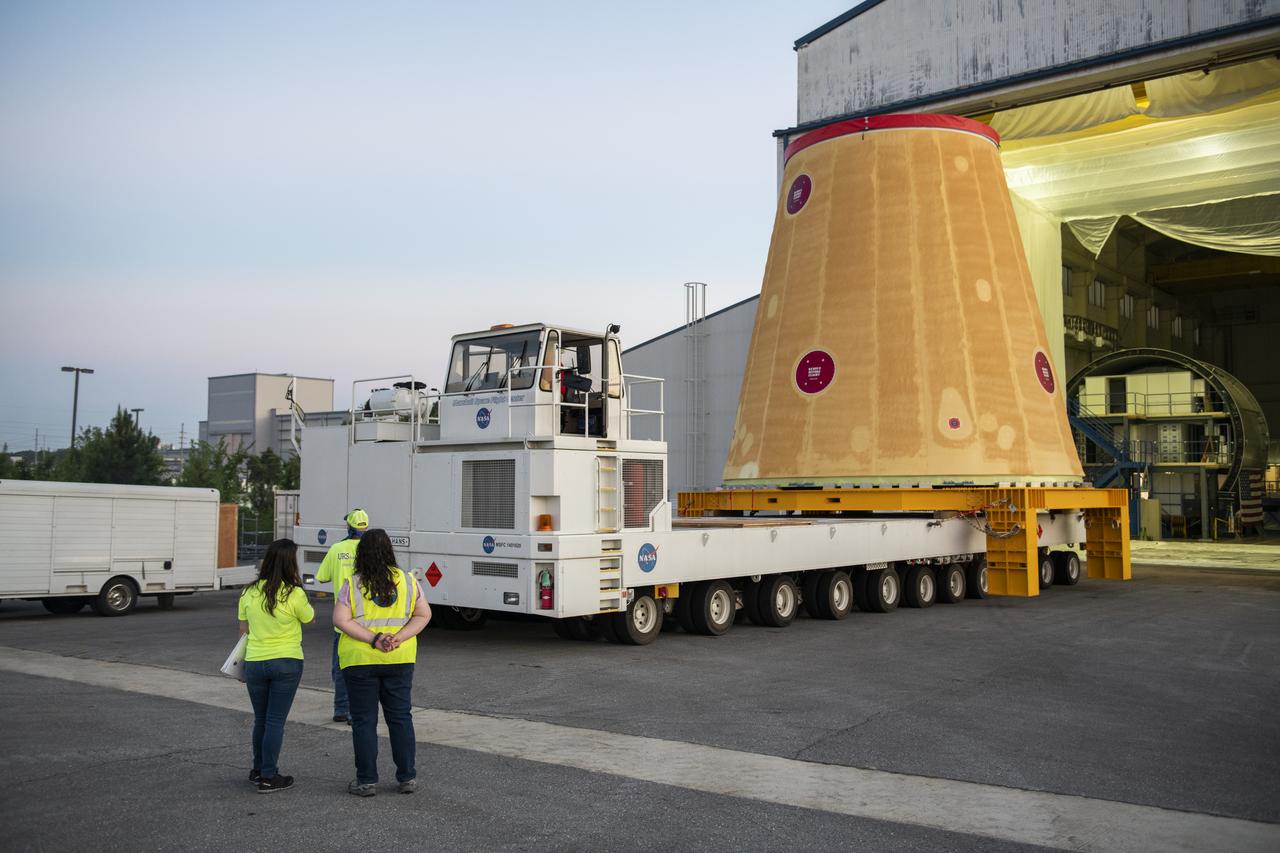
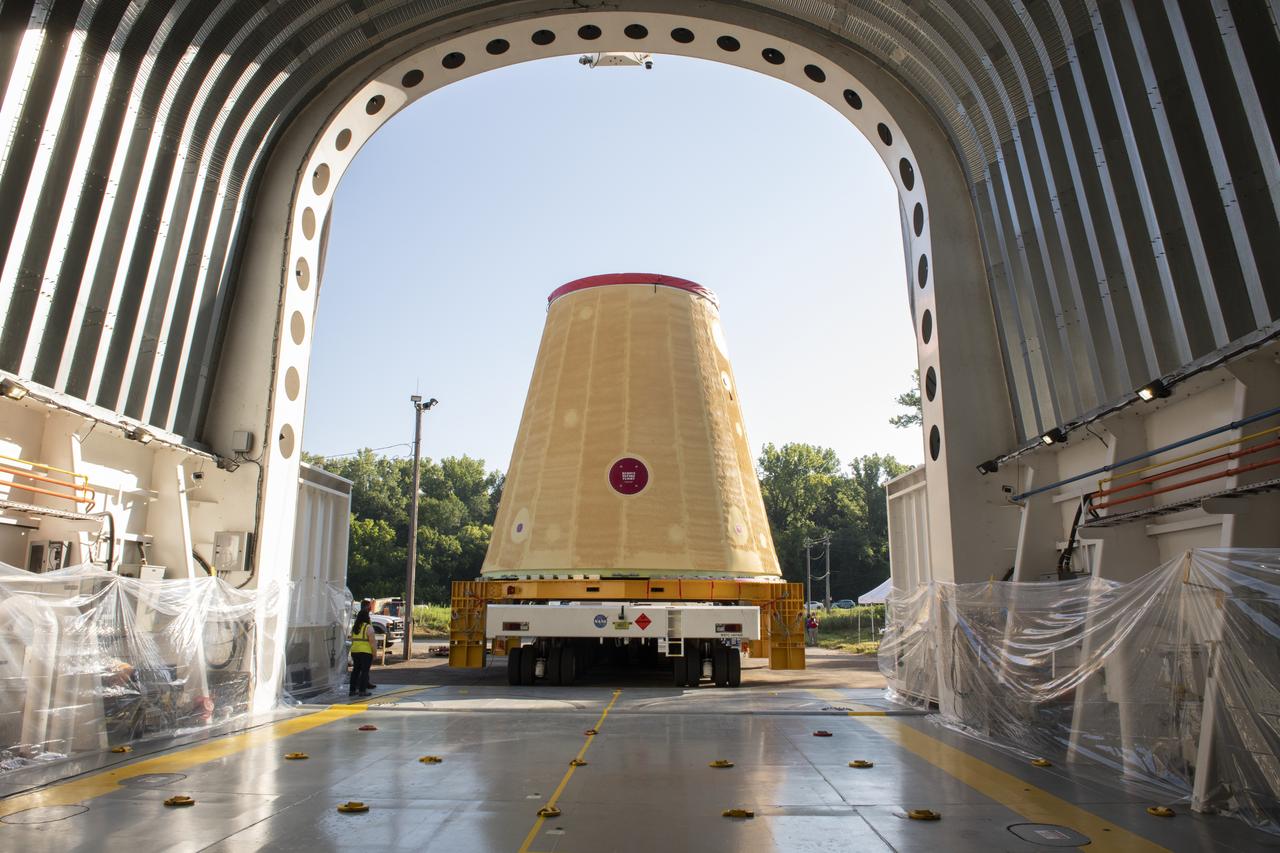
These images and videos show technicians at NASA’s Marshall Space Flight Center in Huntsville, Alabama, March 17, 2025, moving the completed launch vehicle stage adapter for Artemis III from Building 4649 to Building 4708 where it will remain until it is time to ship the hardware to NASA’s Kennedy Space Center in Florida. The cone-shaped hardware connects the SLS (Space Launch System) rocket to the upper stage, the interim cryogenic propulsion stage, and protects the rocket’s flight computers, avionics, and electrical devices during launch and ascent during the Artemis missions.
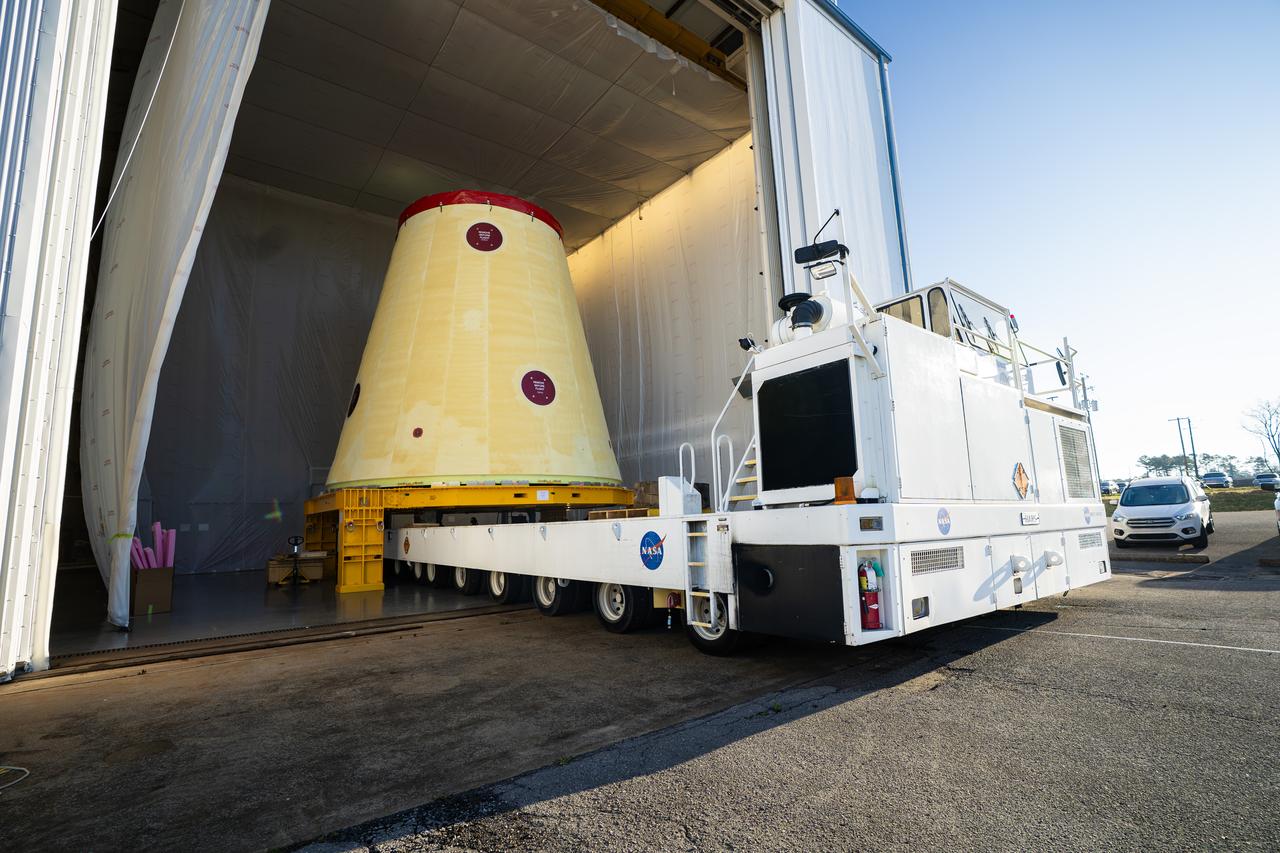
These images and videos show technicians at NASA’s Marshall Space Flight Center in Huntsville, Alabama, March 17, 2025, moving the completed launch vehicle stage adapter for Artemis III from Building 4649 to Building 4708 where it will remain until it is time to ship the hardware to NASA’s Kennedy Space Center in Florida. The cone-shaped hardware connects the SLS (Space Launch System) rocket to the upper stage, the interim cryogenic propulsion stage, and protects the rocket’s flight computers, avionics, and electrical devices during launch and ascent during the Artemis missions.
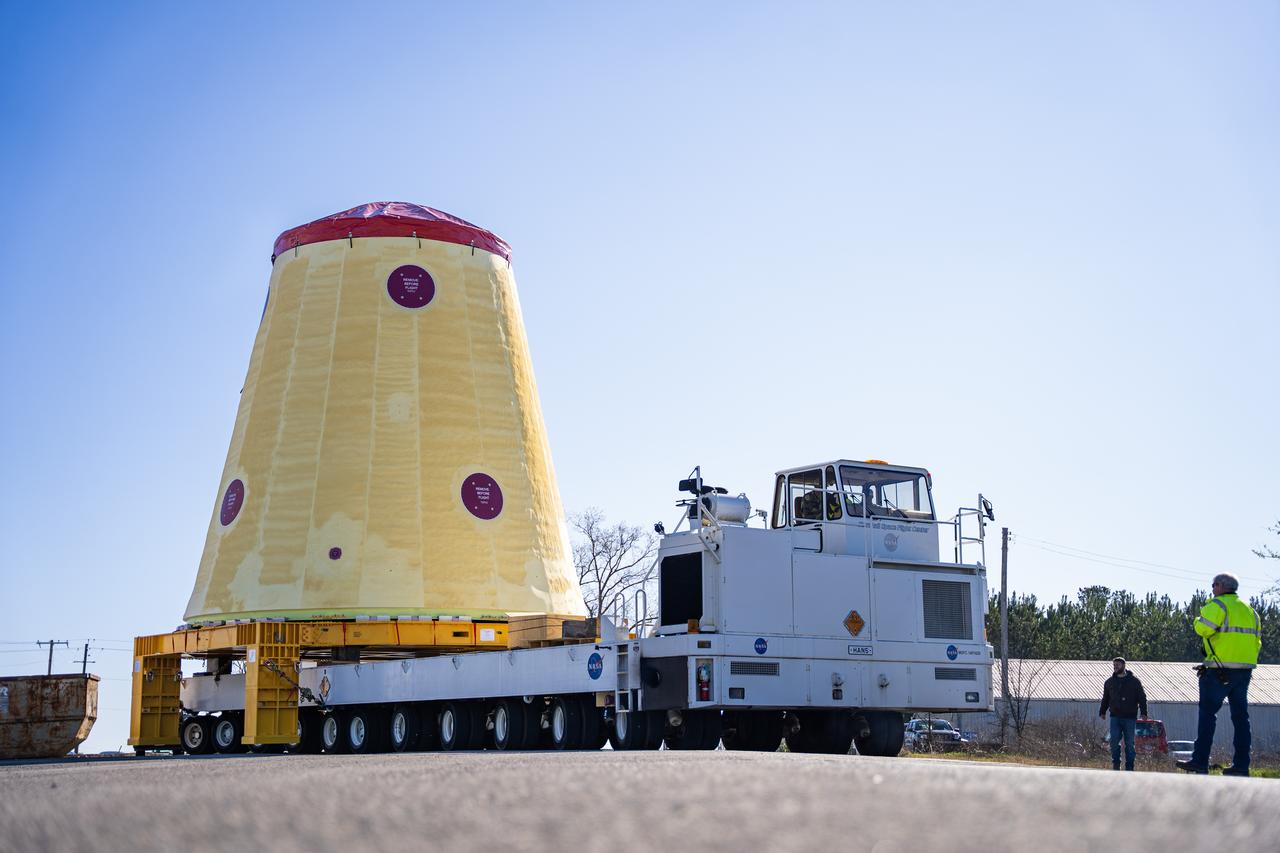
These images and videos show technicians at NASA’s Marshall Space Flight Center in Huntsville, Alabama, March 17, 2025, moving the completed launch vehicle stage adapter for Artemis III from Building 4649 to Building 4708 where it will remain until it is time to ship the hardware to NASA’s Kennedy Space Center in Florida. The cone-shaped hardware connects the SLS (Space Launch System) rocket to the upper stage, the interim cryogenic propulsion stage, and protects the rocket’s flight computers, avionics, and electrical devices during launch and ascent during the Artemis missions.

These images and videos show technicians at NASA’s Marshall Space Flight Center in Huntsville, Alabama, March 17, 2025, moving the completed launch vehicle stage adapter for Artemis III from Building 4649 to Building 4708 where it will remain until it is time to ship the hardware to NASA’s Kennedy Space Center in Florida. The cone-shaped hardware connects the SLS (Space Launch System) rocket to the upper stage, the interim cryogenic propulsion stage, and protects the rocket’s flight computers, avionics, and electrical devices during launch and ascent during the Artemis missions.
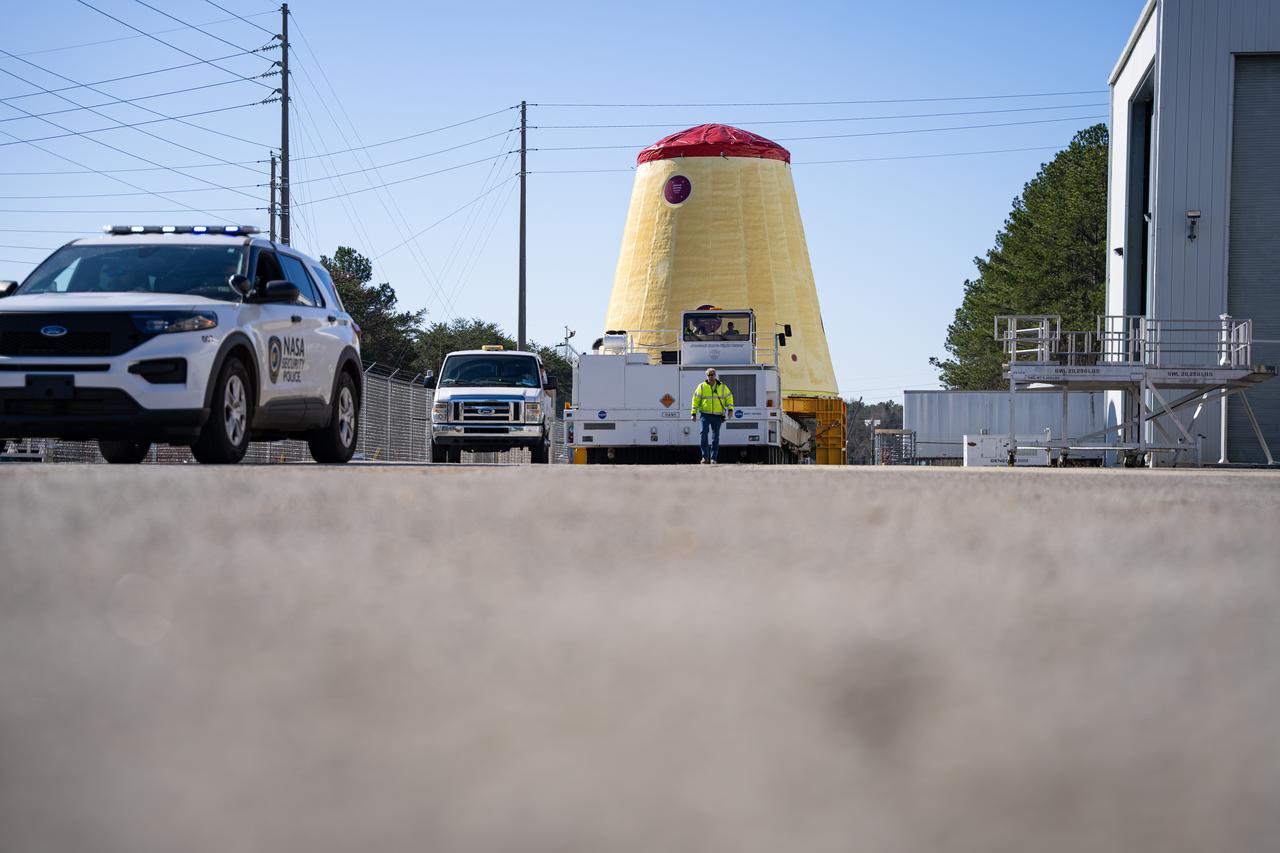
These images and videos show technicians at NASA’s Marshall Space Flight Center in Huntsville, Alabama, March 17, 2025, moving the completed launch vehicle stage adapter for Artemis III from Building 4649 to Building 4708, where it will remain until it is time to ship the hardware to NASA’s Kennedy Space Center in Florida. The cone-shaped hardware connects the SLS (Space Launch System) rocket to the upper stage, the interim cryogenic propulsion stage, and protects the rocket’s flight computers, avionics, and electrical devices during launch and ascent during the Artemis missions.
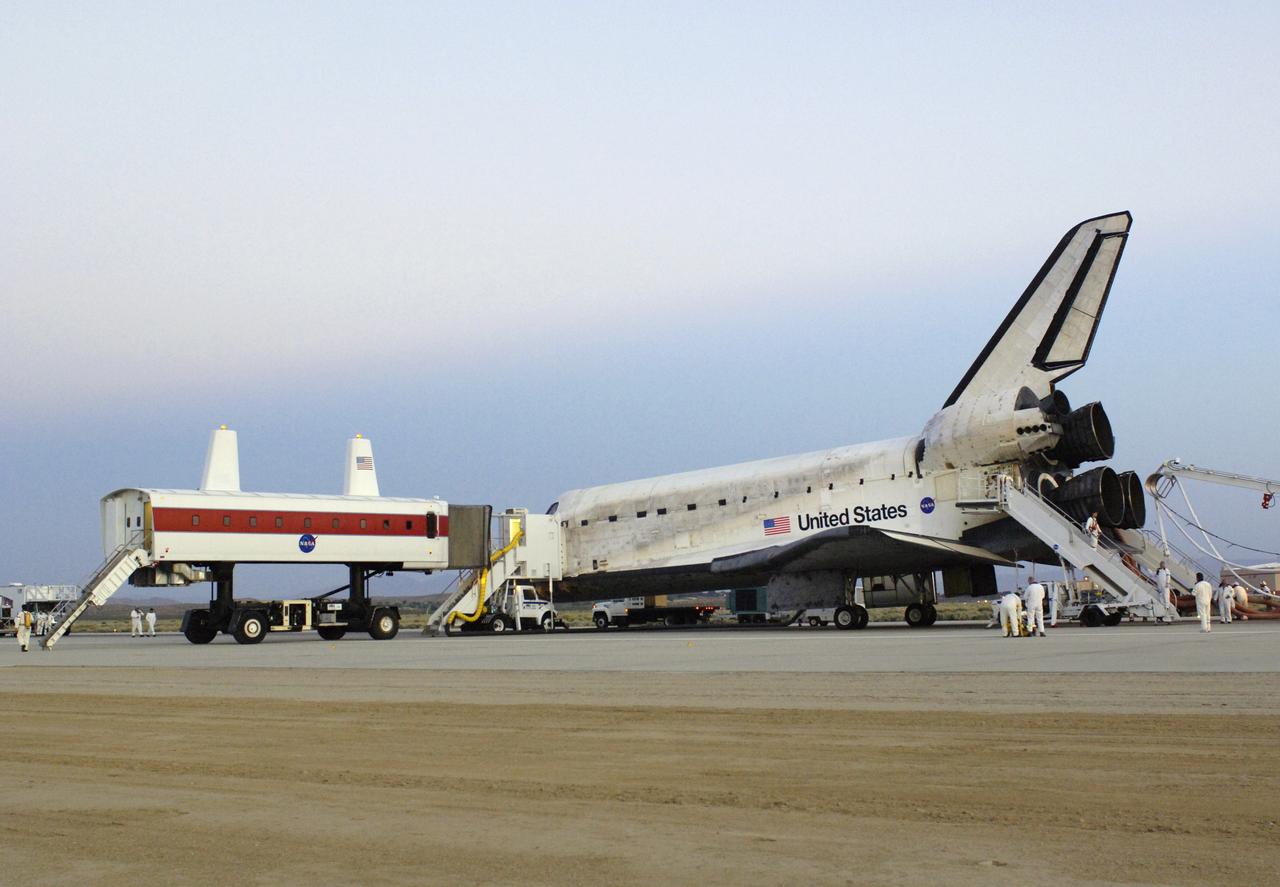
NASA's Crew Transport Vehicle, or CTV, pulls up to the Space Shuttle Discovery to offload the crew after a successful landing August 9, 2005 at Edwards Air Force Base, California. The landing marked the end of the STS-114 mission. Space Shuttle Discovery landed safely at NASA's Dryden Flight Research Center at Edwards Air Force Base in California at 5:11:22 a.m. PDT this morning, following the very successful 14-day STS-114 return to flight mission. During their two weeks in space, Commander Eileen Collins and her six crewmates tested out new safety procedures and delivered supplies and equipment the International Space Station. Discovery spent two weeks in space, where the crew demonstrated new methods to inspect and repair the Shuttle in orbit. The crew also delivered supplies, outfitted and performed maintenance on the International Space Station. A number of these tasks were conducted during three spacewalks. In an unprecedented event, spacewalkers were called upon to remove protruding gap fillers from the heat shield on Discovery's underbelly. In other spacewalk activities, astronauts installed an external platform onto the Station's Quest Airlock and replaced one of the orbital outpost's Control Moment Gyroscopes. Inside the Station, the STS-114 crew conducted joint operations with the Expedition 11 crew. They unloaded fresh supplies from the Shuttle and the Raffaello Multi-Purpose Logistics Module. Before Discovery undocked, the crews filled Raffeallo with unneeded items and returned to Shuttle payload bay. Discovery launched on July 26 and spent almost 14 days on orbit.
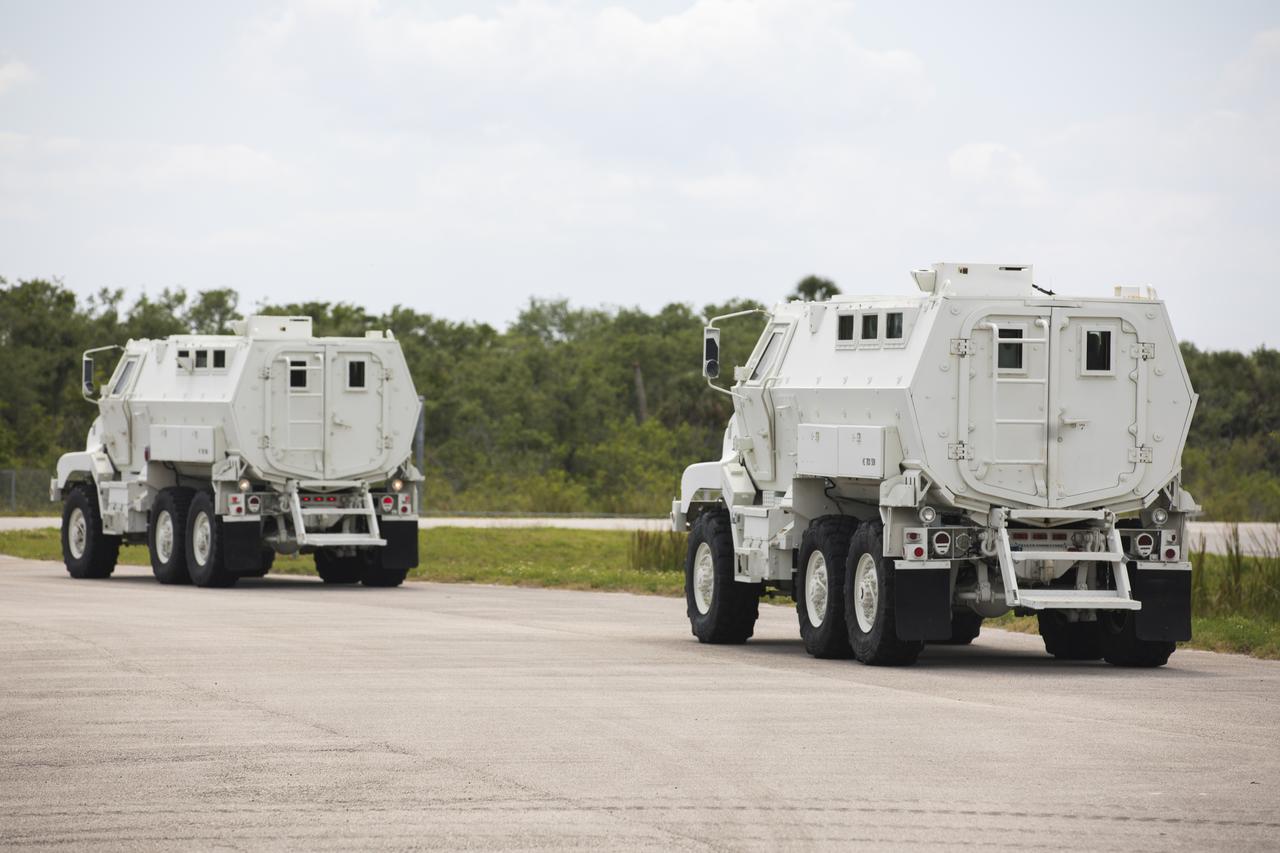
Two MRAP armored vehicles go through a training run on the Shuttle Landing Facility to support NASA's Commercial Crew Program at the agency's Kennedy Space Center in Florida. The 45,000-pound mine-resistant ambush protected vehicle, or MRAPs, were originally designed for military applications. The MRAP offers a mobile bunker for astronauts and ground crews in the unlikely event they have to get away from the launch pad quickly in an emergency.
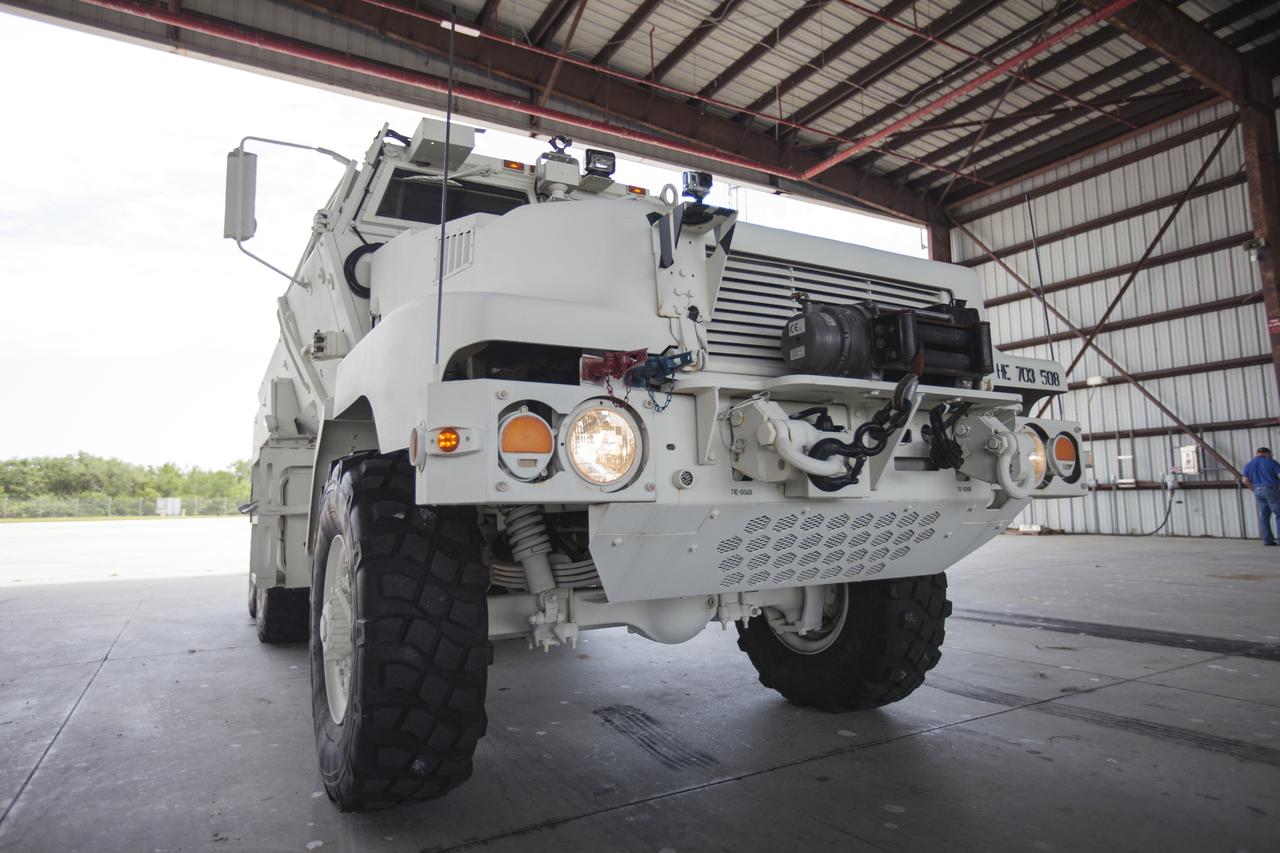
Inside a Shuttle Landing Facility hangar at NASA's Kennedy Space Center in Florida, an MRAP armored vehicle is prepared for a training drive to support the agency's Commercial Crew Program. The 45,000-pound mine-resistant ambush protected vehicle, or MRAP, was originally designed for military applications. The MRAP offers a mobile bunker for astronauts and ground crews in the unlikely event they have to get away from the launch pad quickly in an emergency.
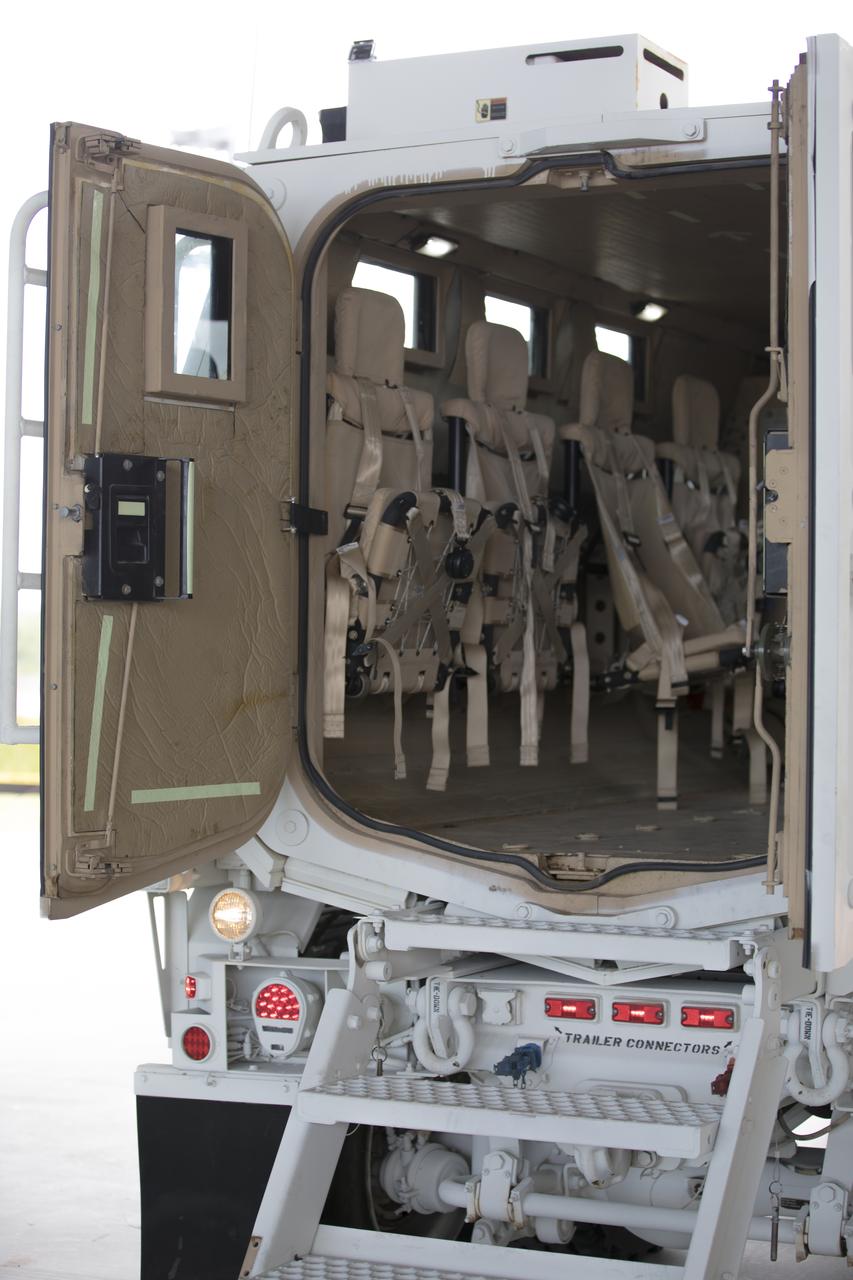
Following a training run on the Shuttle Landing Facility at NASA's Kennedy Space Center in Florida, MRAP back doors are opened showing seating in the armored vehicle. The 45,000-pound mine-resistant ambush protected vehicle, or MRAP, was originally designed for military applications, but will support the agency's Commercial Crew Program at the spaceport. The MRAP offers a mobile bunker for astronauts and ground crews in the unlikely event they have to get away from the launch pad quickly in an emergency.
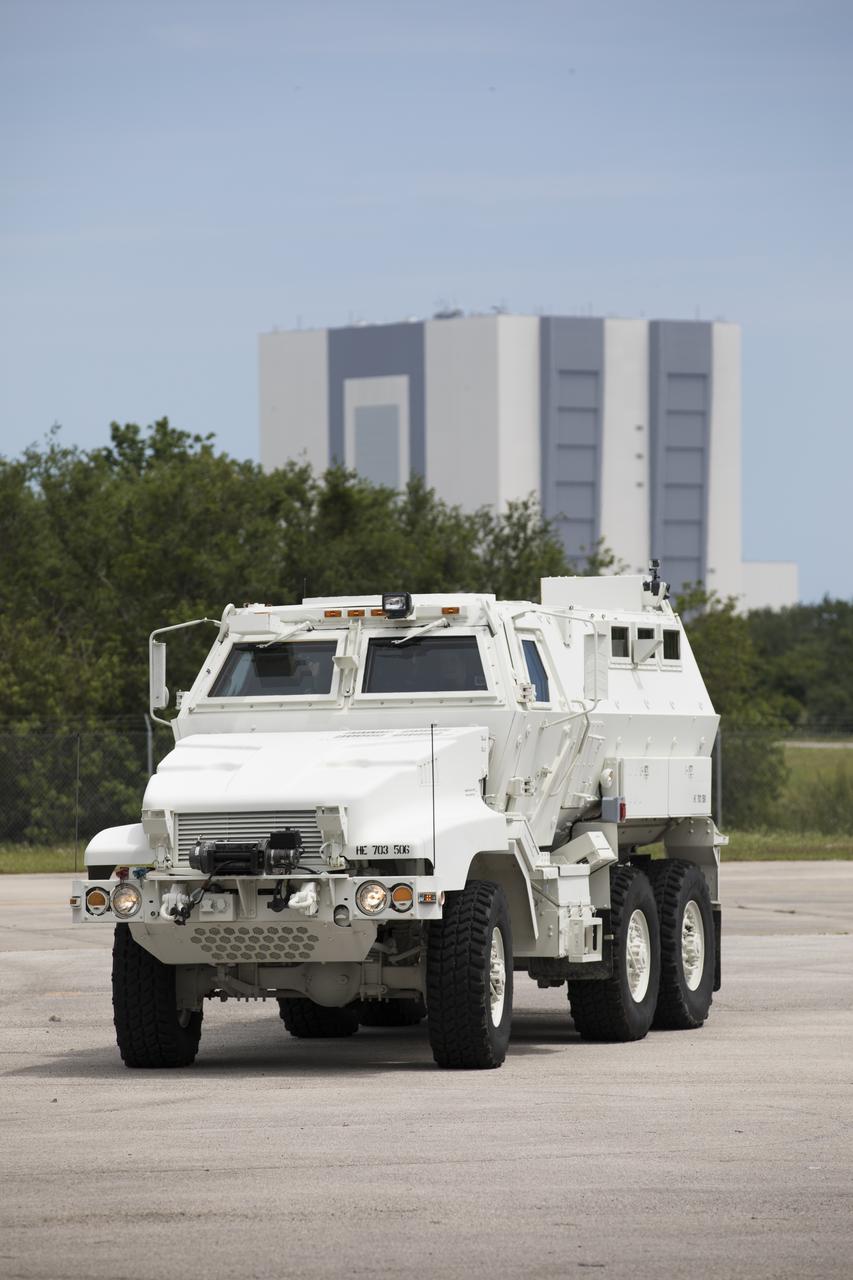
An MRAP armored vehicle goes through a training run on the Shuttle Landing Facility to support NASA's Commercial Crew Program at the agency's Kennedy Space Center in Florida. The 45,000-pound mine-resistant ambush protected vehicle, or MRAP, was originally designed for military applications. The MRAP offers a mobile bunker for astronauts and ground crews in the unlikely event they have to get away from the launch pad quickly in an emergency.
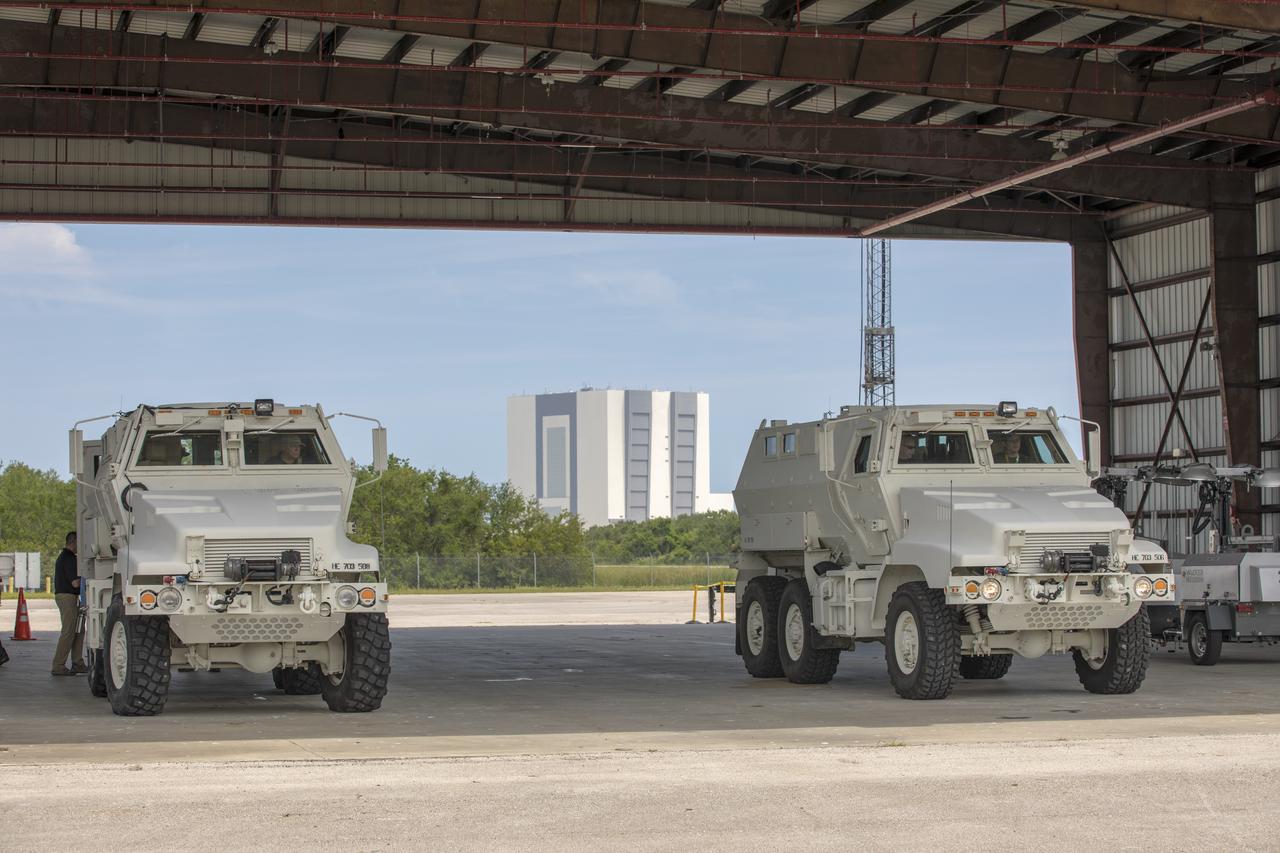
Inside a Shuttle Landing Facility hangar at NASA's Kennedy Space Center in Florida, two MRAP armored vehicles are prepared for a training drive to support the agency's Commercial Crew Program. The 45,000-pound mine-resistant ambush protected vehicle, or MRAP, was originally designed for military applications. The MRAP offers a mobile bunker for astronauts and ground crews in the unlikely event they have to get away from the launch pad quickly in an emergency.
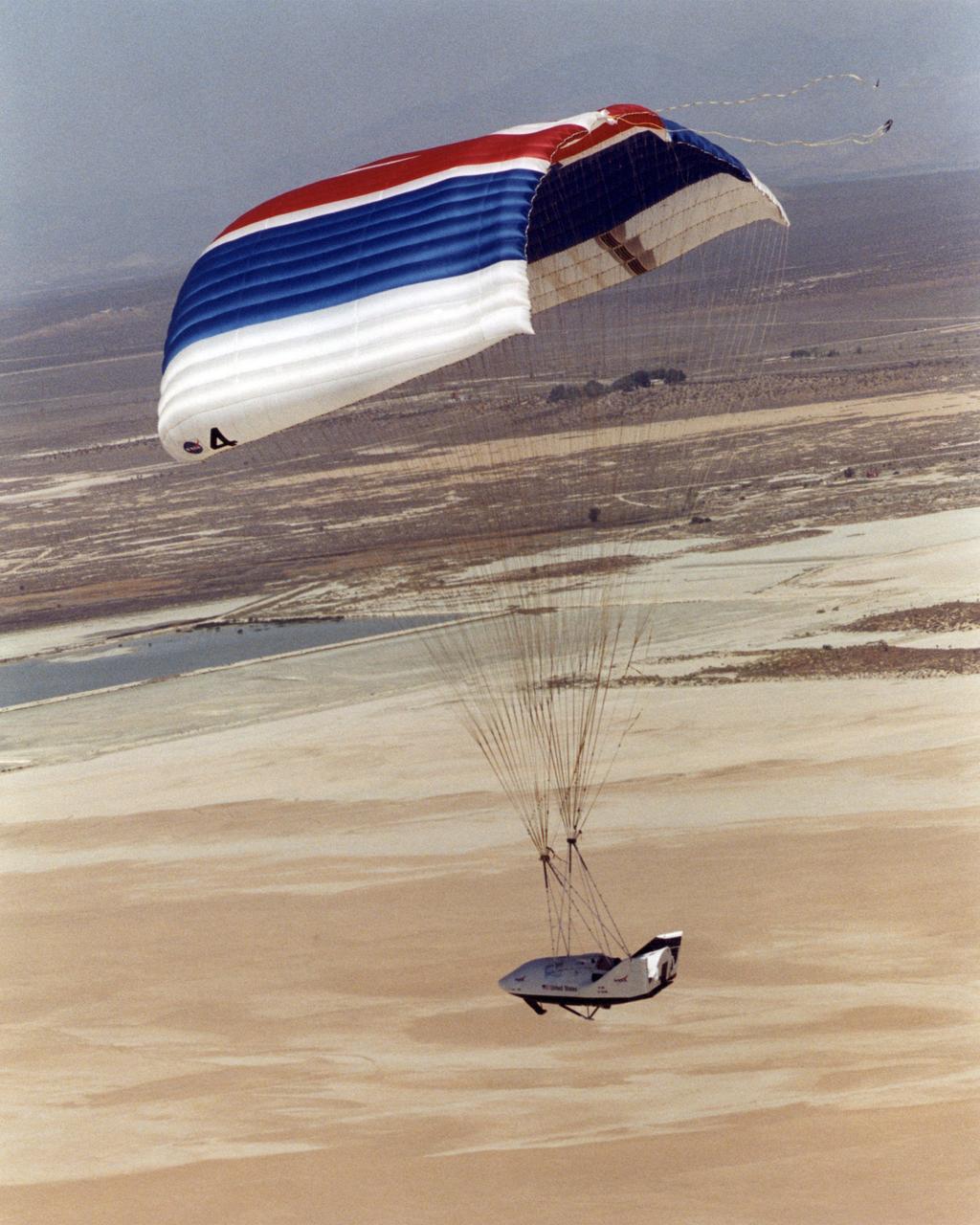
The seventh free flight of an X-38 prototype for an emergency space station crew return vehicle culminated in a graceful glide to landing under the world's largest parafoil. The mission began when the X-38 was released from NASA's B-52 mother ship over Edwards Air Force Base, California, where NASA Dryden Flight Research Center is located. The July 10, 2001 flight helped researchers evaluate software and deployment of the X-38's drogue parachute and subsequent parafoil. NASA intends to create a space-worthy Crew Return Vehicle (CRV) to be docked to the International Space Station as a "lifeboat" to enable a full seven-person station crew to evacuate in an emergency.
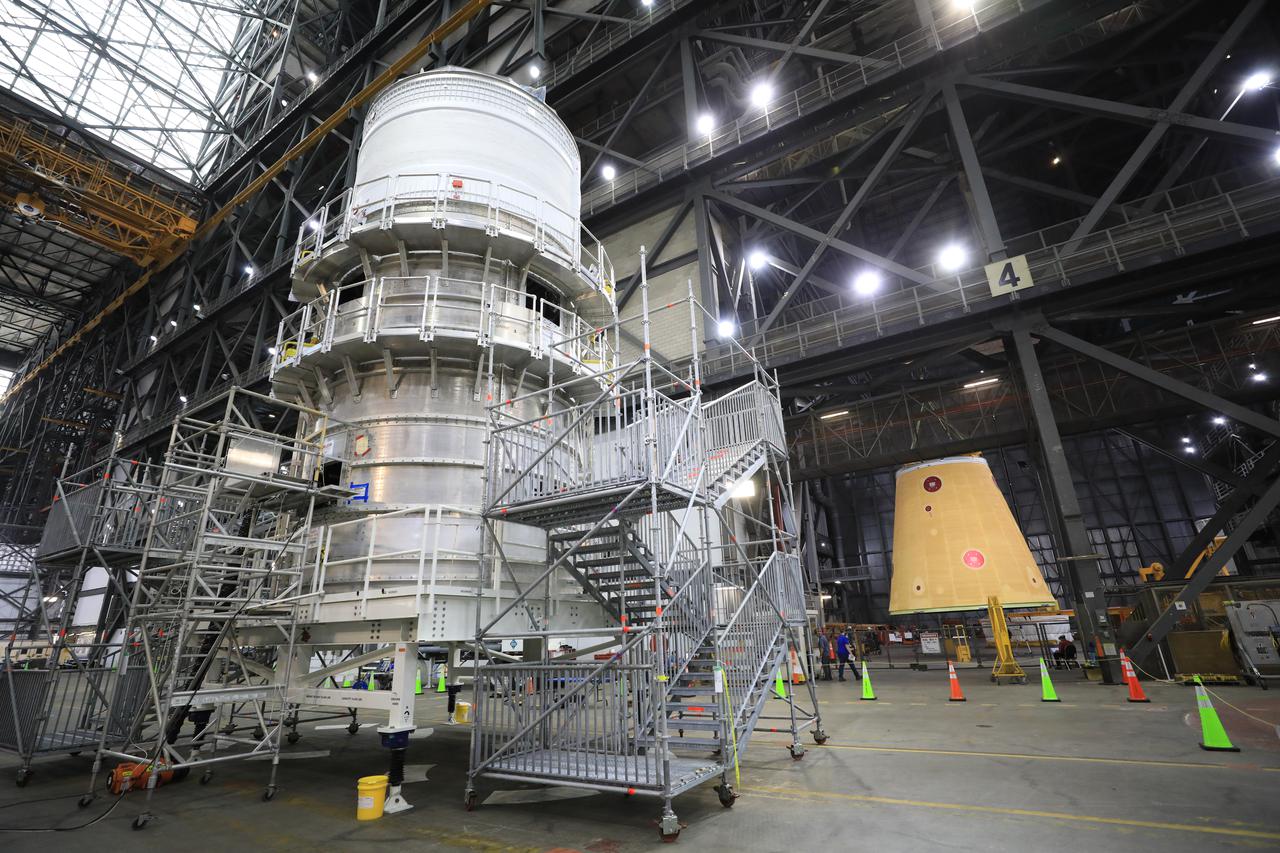
The launch vehicle stage adapter for the Artemis I mission is lifted into place atop the already assembled pieces of the Space Launch System rocket.
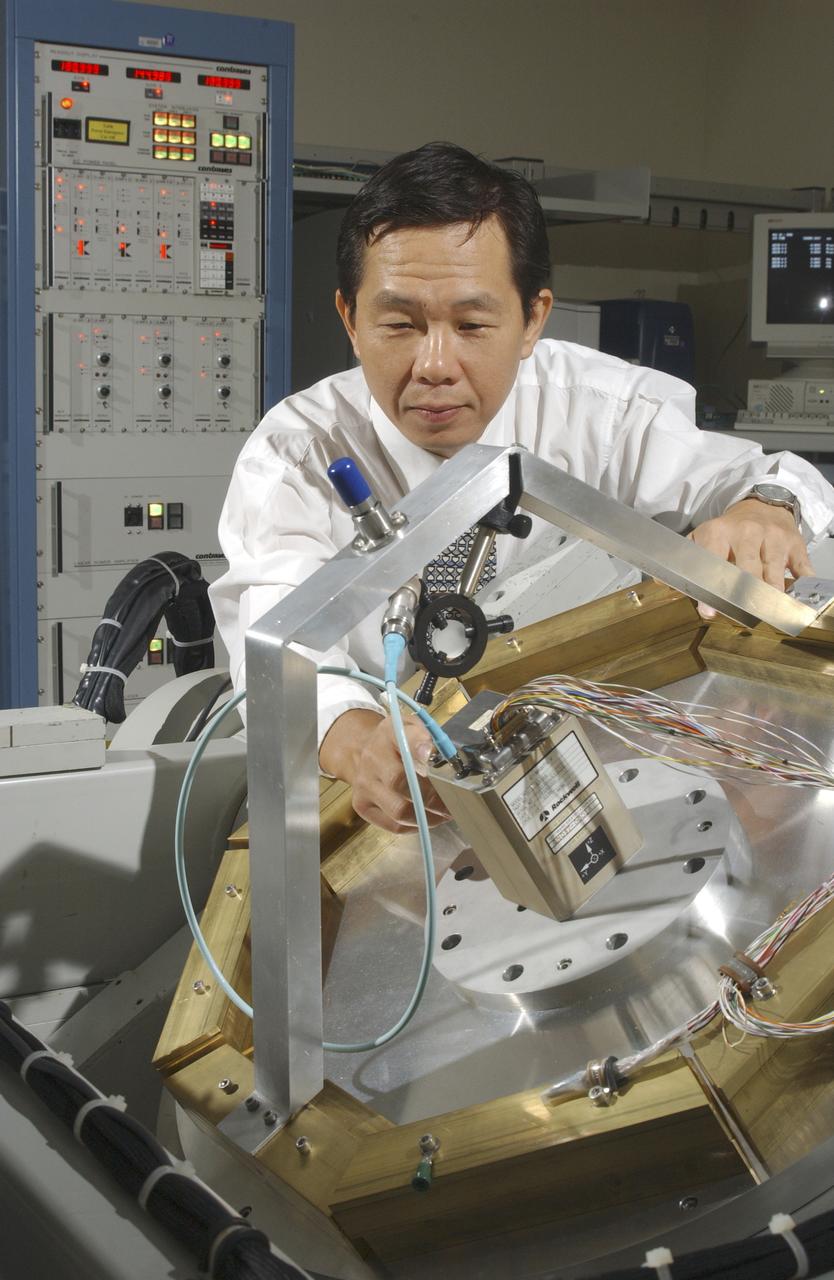
An array of components in a laboratory at NASA's Marshall Space Flight Center (MSFC) is being tested by the Flight Mechanics Office to develop an integrated navigation system for the second generation reusable launch vehicle. The laboratory is testing Global Positioning System (GPS) components, a satellite-based location and navigation system, and Inertial Navigation System (INS) components, sensors on a vehicle that determine angular velocity and linear acceleration at various points. The GPS and INS components work together to provide a space vehicle with guidance and navigation, like the push of the OnStar button in your car assists you with directions to a specific address. The integration will enable the vehicle operating system to track where the vehicle is in space and define its trajectory. The use of INS components for navigation is not new to space technology. The Space Shuttle currently uses them. However, the Space Launch Initiative is expanding the technology to integrate GPS and INS components to allow the vehicle to better define its position and more accurately determine vehicle acceleration and velocity. This advanced technology will lower operational costs and enhance the safety of reusable launch vehicles by providing a more comprehensive navigation system with greater capabilities. In this photograph, Dr. Jason Chuang of MSFC inspects an INS component in the laboratory.
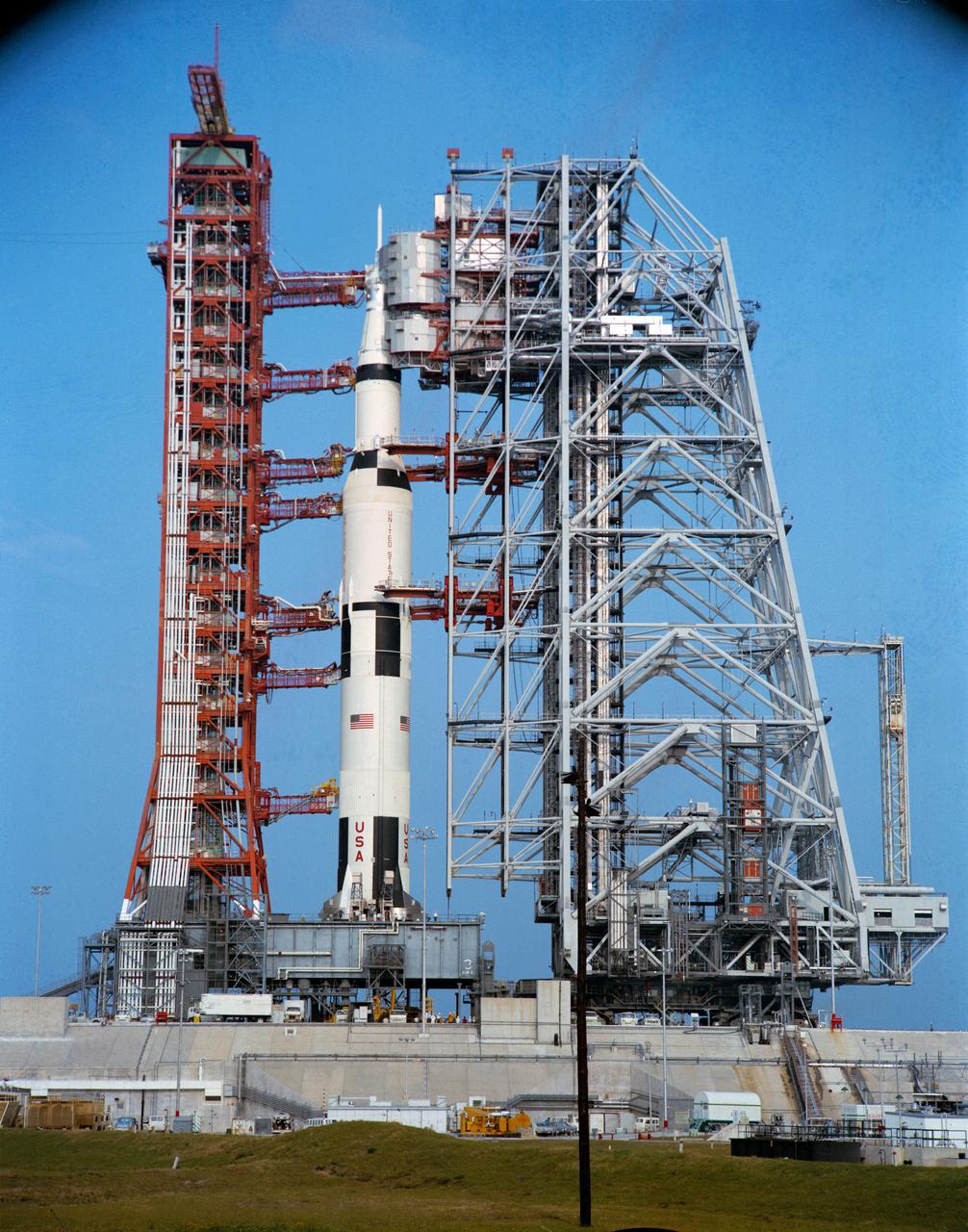
S72-34473 (29 March 1972) --- A ground-level view of Pad A, Launch Complex 39, Kennedy Space Center (KSC), showing the 363-feet tall Apollo 16 (Spacecraft 113/Lunar Module 11/Saturn 511) space vehicle during a Countdown Demonstration Test (CDDT). The CDDT was part of the preflight preparations for the Apollo 16 lunar landing mission. The crew of Apollo 16, scheduled for launch on April 16, 1972, are astronauts John W. Young, commander; Thomas K. (Ken) Mattingly II, command module pilot; and Charles M. Duke Jr., lunar module pilot.
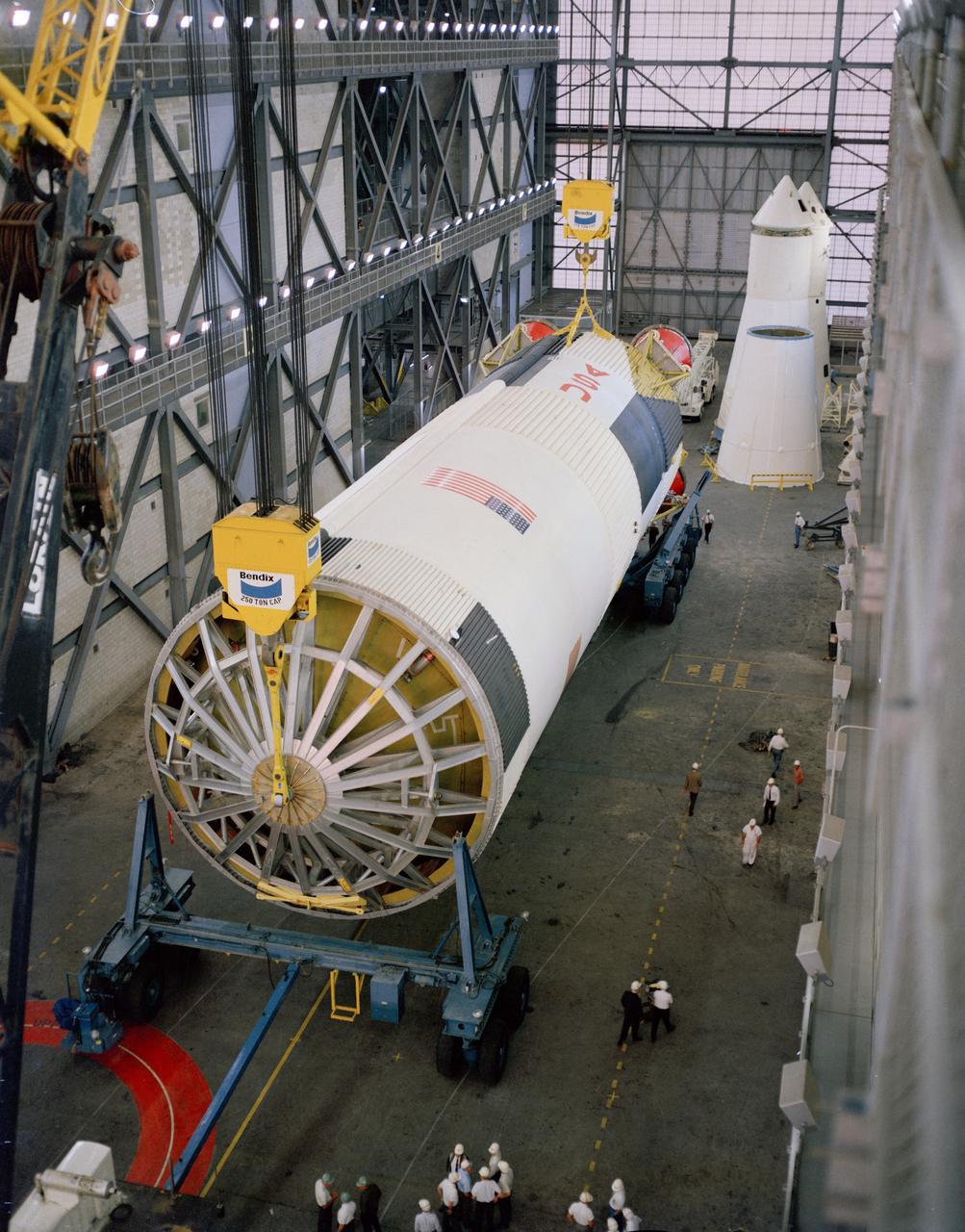
S68-55034 (3 Dec. 1968) --- The first (S-1C) stage of the Saturn 505 launch vehicle being prepared for erection in the high bay area of the Kennedy Space Center's (KSC) Vehicle Assembly Building (VAB). Saturn 505 is the launch vehicle for the Apollo 10 mission.
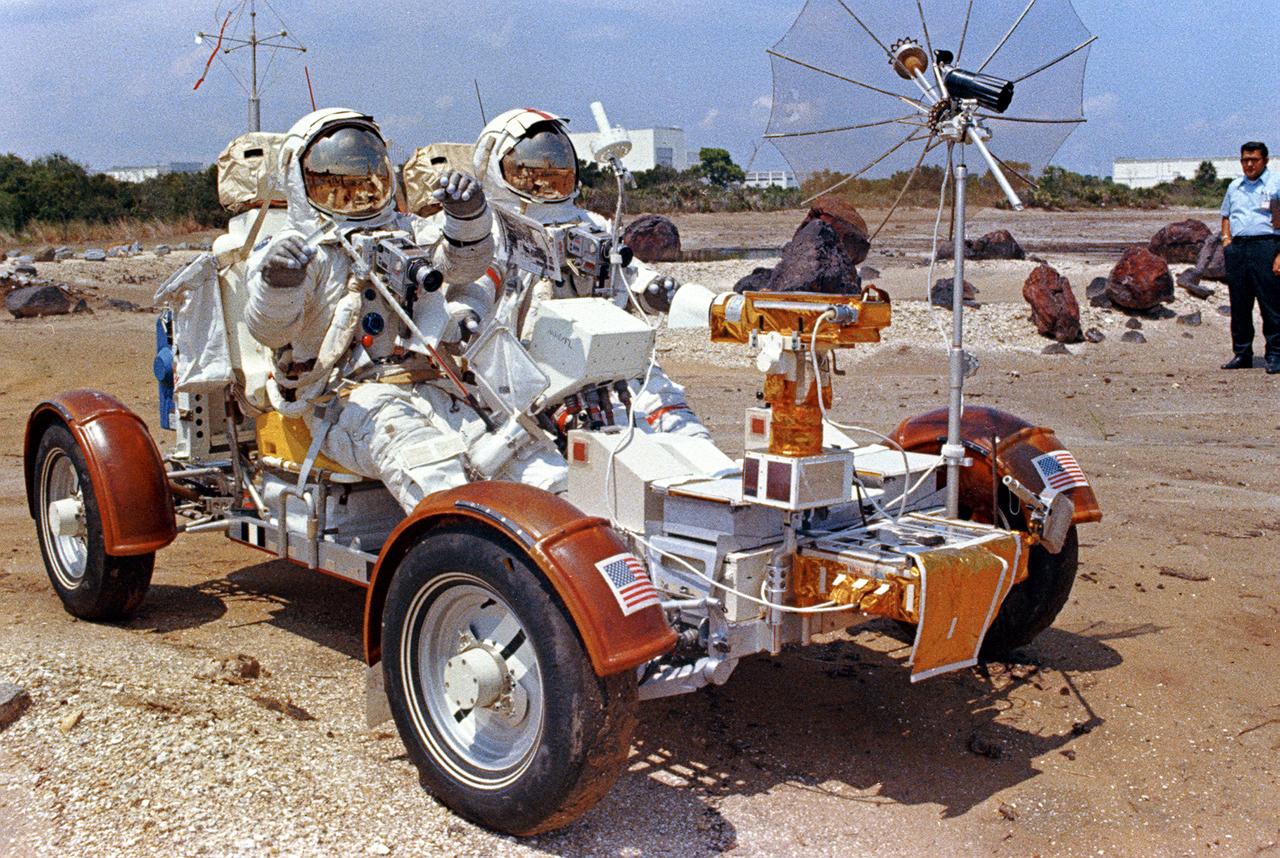
This photograph was taken during the testing of the Lunar Roving Vehicle (LRV) at the Johnson Space Center. Developed by the MSFC, the LRV was the lightweight electric car designed to increase the range of mobility and productivity of astronauts on the lunar surface. It was used on the last three Apollo missions; Apollo 15, Apollo 16, and Apollo 17.
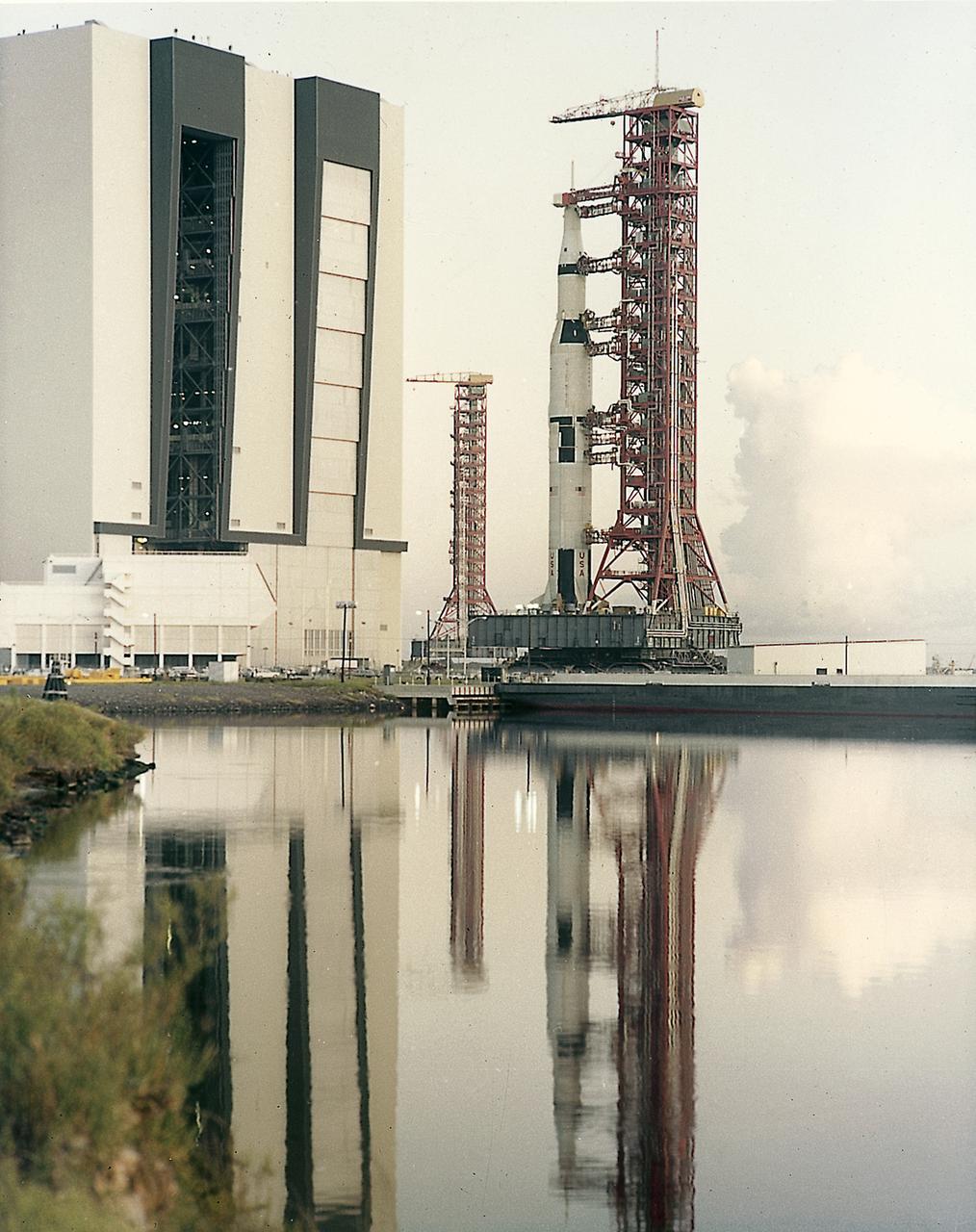
This picture shows the Saturn V vehicle (AS-501), for the Apollo 4 mission on the Crawler Transporter Vehicle. It was rolled out from the Vehicle Assembly Building and slowly (1 mph) moved to the launch pad at the Kennedy Space Center (KSC). The Apollo 4 mission was the first launch of the Saturn V launch vehicle. Objectives of the unmanned Apollo 4 test flight were to obtain flight information on launch vehicle and spacecraft structural integrity and compatibility, flight loads, stage separation, and subsystems operation including testing of restart of the S-IVB stage, and to evaluate the Apollo command module heat shield. The Apollo 4 was launched on November 9, 1967 from KSC.
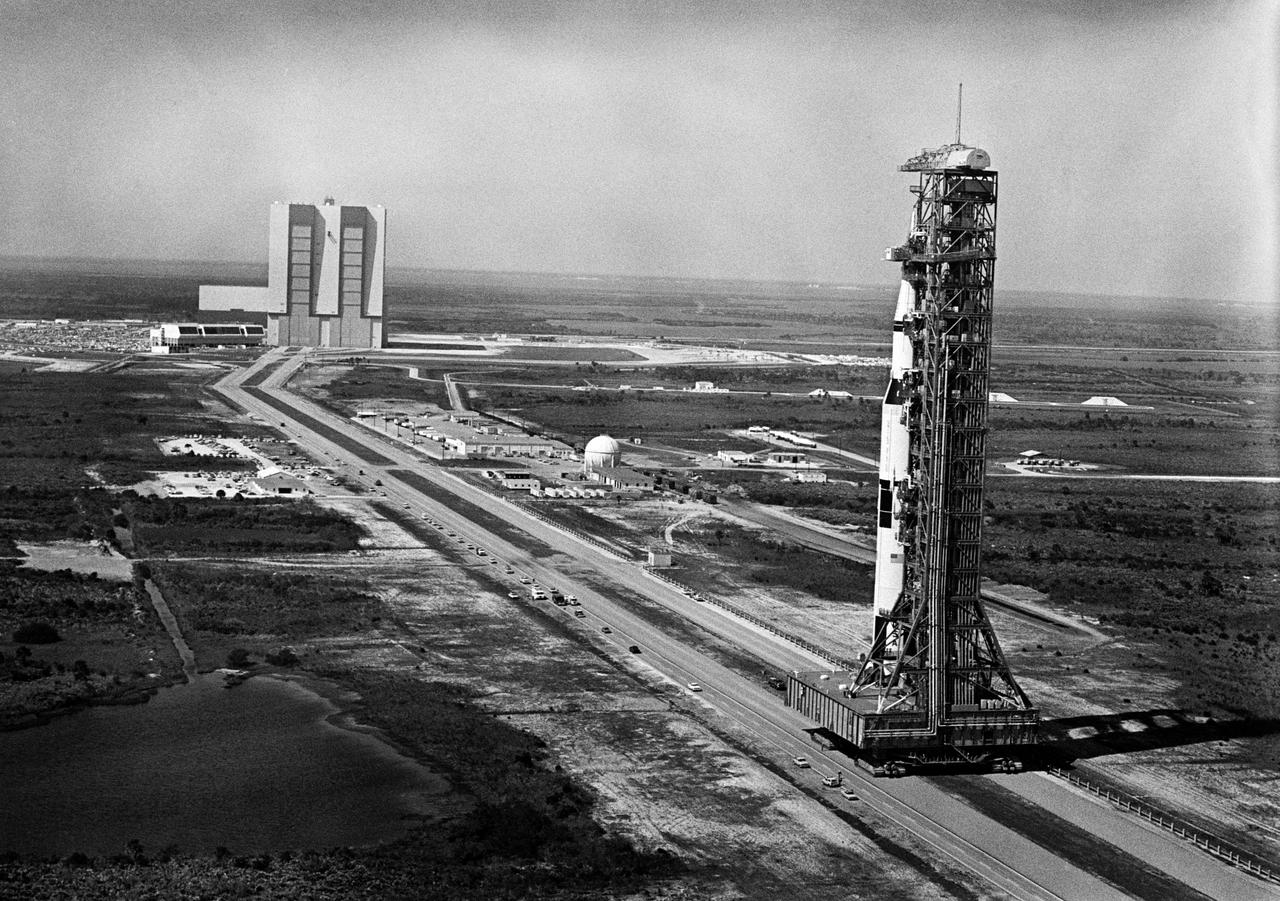
S69-27741 (11 March 1969) --- Aerial view at Launch Complex 39, Kennedy Space Center, showing the 363-feet tall Apollo 10 (Spacecraft 106/Lunar Module-4/Saturn 505) space vehicle on its way to Pad B. The Vehicle Assembly Building is in the background. The Saturn V stack and its mobile launch tower are atop a huge crawler-transporter. The Apollo 10 flight is schedule as a lunar orbit mission. The Apollo 10 crew will be astronauts Thomas P. Stafford, commander; John W. Young, command module pilot; and Eugene A. Cernan, lunar module pilot.
The move team loads the launch vehicle stage adapter, part of the agency’s new Space Launch System (SLS) rocket, on NASA’s Pegasus barge at NASA’s Marshall Space Flight Center in Huntsville, Alabama, July 17. The launch vehicle stage adapter, which connects the rocket’s 212-foot-tall core stage to the rocket’s upper stage, is being shipped to NASA’s Kennedy Space Center in Florida for Artemis I launch preparations. This is the final piece of Artemis I SLS rocket hardware built at Marshall to be delivered to Kennedy. Only the SLS core stage, currently in final testing at Stennis Space Center near Bay St. Louis, Mississippi, remains to be shipped to Kennedy on Pegasus. NASA is working to land the first woman and the next man on the Moon by 2024. SLS, along with Orion, the human landing system, and the Gateway in orbit around the Moon are NASA’s backbone for a new generation of deep space exploration.
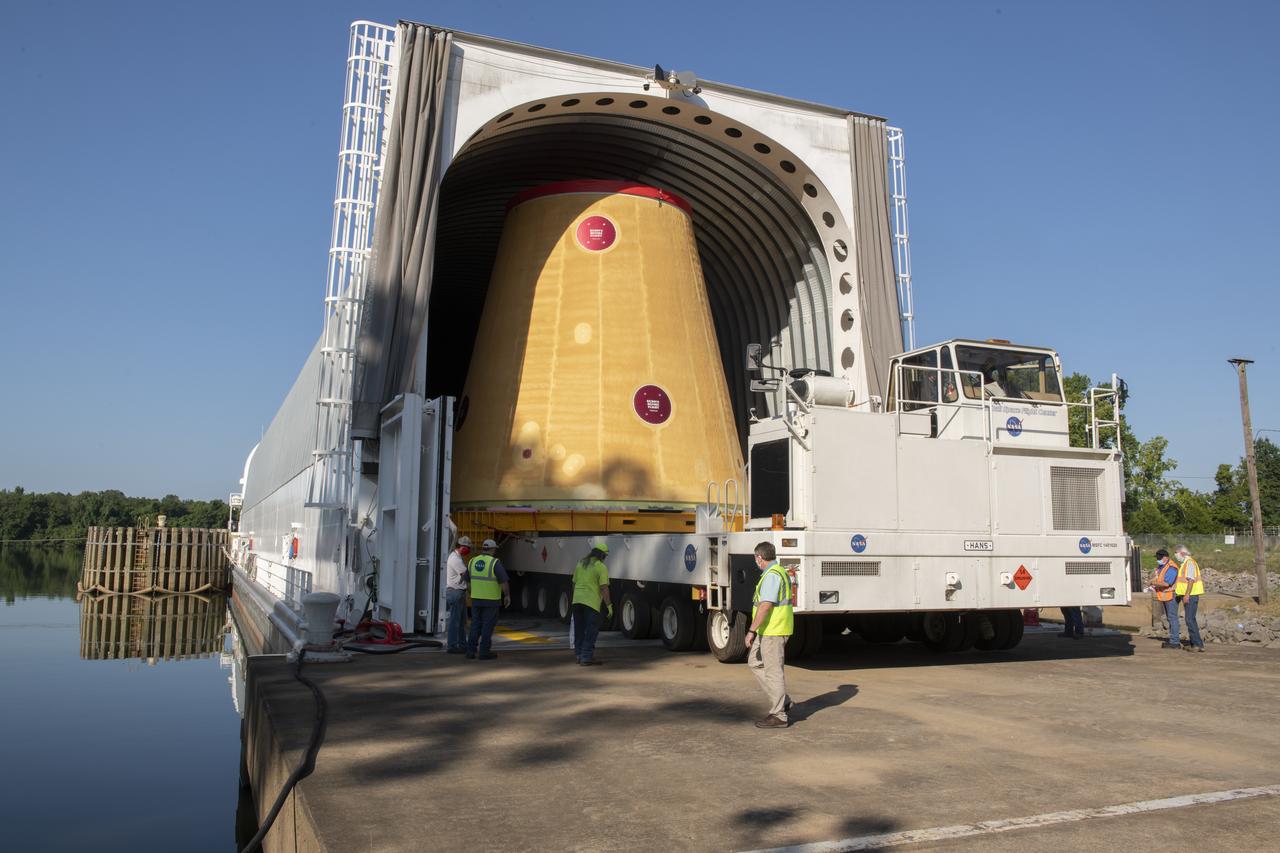
The move team loads the launch vehicle stage adapter, part of the agency’s new Space Launch System (SLS) rocket, on NASA’s Pegasus barge at NASA’s Marshall Space Flight Center in Huntsville, Alabama, July 17. The launch vehicle stage adapter, which connects the rocket’s 212-foot-tall core stage to the rocket’s upper stage, is being shipped to NASA’s Kennedy Space Center in Florida for Artemis I launch preparations. This is the final piece of Artemis I SLS rocket hardware built at Marshall to be delivered to Kennedy. Only the SLS core stage, currently in final testing at Stennis Space Center near Bay St. Louis, Mississippi, remains to be shipped to Kennedy on Pegasus. NASA is working to land the first woman and the next man on the Moon by 2024. SLS, along with Orion, the human landing system, and the Gateway in orbit around the Moon are NASA’s backbone for a new generation of deep space exploration.
The move team loads the launch vehicle stage adapter, part of the agency’s new Space Launch System (SLS) rocket, on NASA’s Pegasus barge at NASA’s Marshall Space Flight Center in Huntsville, Alabama, July 17. The launch vehicle stage adapter, which connects the rocket’s 212-foot-tall core stage to the rocket’s upper stage, is being shipped to NASA’s Kennedy Space Center in Florida for Artemis I launch preparations. This is the final piece of Artemis I SLS rocket hardware built at Marshall to be delivered to Kennedy. Only the SLS core stage, currently in final testing at Stennis Space Center near Bay St. Louis, Mississippi, remains to be shipped to Kennedy on Pegasus. NASA is working to land the first woman and the next man on the Moon by 2024. SLS, along with Orion, the human landing system, and the Gateway in orbit around the Moon are NASA’s backbone for a new generation of deep space exploration.
The move team loads the launch vehicle stage adapter, part of the agency’s new Space Launch System (SLS) rocket, on NASA’s Pegasus barge at NASA’s Marshall Space Flight Center in Huntsville, Alabama, July 17. The launch vehicle stage adapter, which connects the rocket’s 212-foot-tall core stage to the rocket’s upper stage, is being shipped to NASA’s Kennedy Space Center in Florida for Artemis I launch preparations. This is the final piece of Artemis I SLS rocket hardware built at Marshall to be delivered to Kennedy. Only the SLS core stage, currently in final testing at Stennis Space Center near Bay St. Louis, Mississippi, remains to be shipped to Kennedy on Pegasus. NASA is working to land the first woman and the next man on the Moon by 2024. SLS, along with Orion, the human landing system, and the Gateway in orbit around the Moon are NASA’s backbone for a new generation of deep space exploration.
The move team loads the launch vehicle stage adapter, part of the agency’s new Space Launch System (SLS) rocket, on NASA’s Pegasus barge at NASA’s Marshall Space Flight Center in Huntsville, Alabama, July 17. The launch vehicle stage adapter, which connects the rocket’s 212-foot-tall core stage to the rocket’s upper stage, is being shipped to NASA’s Kennedy Space Center in Florida for Artemis I launch preparations. This is the final piece of Artemis I SLS rocket hardware built at Marshall to be delivered to Kennedy. Only the SLS core stage, currently in final testing at Stennis Space Center near Bay St. Louis, Mississippi, remains to be shipped to Kennedy on Pegasus. NASA is working to land the first woman and the next man on the Moon by 2024. SLS, along with Orion, the human landing system, and the Gateway in orbit around the Moon are NASA’s backbone for a new generation of deep space exploration.
The move team loads the launch vehicle stage adapter, part of the agency’s new Space Launch System (SLS) rocket, on NASA’s Pegasus barge at NASA’s Marshall Space Flight Center in Huntsville, Alabama, July 17. The launch vehicle stage adapter, which connects the rocket’s 212-foot-tall core stage to the rocket’s upper stage, is being shipped to NASA’s Kennedy Space Center in Florida for Artemis I launch preparations. This is the final piece of Artemis I SLS rocket hardware built at Marshall to be delivered to Kennedy. Only the SLS core stage, currently in final testing at Stennis Space Center near Bay St. Louis, Mississippi, remains to be shipped to Kennedy on Pegasus. NASA is working to land the first woman and the next man on the Moon by 2024. SLS, along with Orion, the human landing system, and the Gateway in orbit around the Moon are NASA’s backbone for a new generation of deep space exploration.
The move team loads the launch vehicle stage adapter, part of the agency’s new Space Launch System (SLS) rocket, on NASA’s Pegasus barge at NASA’s Marshall Space Flight Center in Huntsville, Alabama, July 17. The launch vehicle stage adapter, which connects the rocket’s 212-foot-tall core stage to the rocket’s upper stage, is being shipped to NASA’s Kennedy Space Center in Florida for Artemis I launch preparations. This is the final piece of Artemis I SLS rocket hardware built at Marshall to be delivered to Kennedy. Only the SLS core stage, currently in final testing at Stennis Space Center near Bay St. Louis, Mississippi, remains to be shipped to Kennedy on Pegasus. NASA is working to land the first woman and the next man on the Moon by 2024. SLS, along with Orion, the human landing system, and the Gateway in orbit around the Moon are NASA’s backbone for a new generation of deep space exploration.
The move team loads the launch vehicle stage adapter, part of the agency’s new Space Launch System (SLS) rocket, on NASA’s Pegasus barge at NASA’s Marshall Space Flight Center in Huntsville, Alabama, July 17. The launch vehicle stage adapter, which connects the rocket’s 212-foot-tall core stage to the rocket’s upper stage, is being shipped to NASA’s Kennedy Space Center in Florida for Artemis I launch preparations. This is the final piece of Artemis I SLS rocket hardware built at Marshall to be delivered to Kennedy. Only the SLS core stage, currently in final testing at Stennis Space Center near Bay St. Louis, Mississippi, remains to be shipped to Kennedy on Pegasus. NASA is working to land the first woman and the next man on the Moon by 2024. SLS, along with Orion, the human landing system, and the Gateway in orbit around the Moon are NASA’s backbone for a new generation of deep space exploration.
The move team loads the launch vehicle stage adapter, part of the agency’s new Space Launch System (SLS) rocket, on NASA’s Pegasus barge at NASA’s Marshall Space Flight Center in Huntsville, Alabama, July 17. The launch vehicle stage adapter, which connects the rocket’s 212-foot-tall core stage to the rocket’s upper stage, is being shipped to NASA’s Kennedy Space Center in Florida for Artemis I launch preparations. This is the final piece of Artemis I SLS rocket hardware built at Marshall to be delivered to Kennedy. Only the SLS core stage, currently in final testing at Stennis Space Center near Bay St. Louis, Mississippi, remains to be shipped to Kennedy on Pegasus. NASA is working to land the first woman and the next man on the Moon by 2024. SLS, along with Orion, the human landing system, and the Gateway in orbit around the Moon are NASA’s backbone for a new generation of deep space exploration.
The move team loads the launch vehicle stage adapter, part of the agency’s new Space Launch System (SLS) rocket, on NASA’s Pegasus barge at NASA’s Marshall Space Flight Center in Huntsville, Alabama, July 17. The launch vehicle stage adapter, which connects the rocket’s 212-foot-tall core stage to the rocket’s upper stage, is being shipped to NASA’s Kennedy Space Center in Florida for Artemis I launch preparations. This is the final piece of Artemis I SLS rocket hardware built at Marshall to be delivered to Kennedy. Only the SLS core stage, currently in final testing at Stennis Space Center near Bay St. Louis, Mississippi, remains to be shipped to Kennedy on Pegasus. NASA is working to land the first woman and the next man on the Moon by 2024. SLS, along with Orion, the human landing system, and the Gateway in orbit around the Moon are NASA’s backbone for a new generation of deep space exploration.
The move team loads the launch vehicle stage adapter, part of the agency’s new Space Launch System (SLS) rocket, on NASA’s Pegasus barge at NASA’s Marshall Space Flight Center in Huntsville, Alabama, July 17. The launch vehicle stage adapter, which connects the rocket’s 212-foot-tall core stage to the rocket’s upper stage, is being shipped to NASA’s Kennedy Space Center in Florida for Artemis I launch preparations. This is the final piece of Artemis I SLS rocket hardware built at Marshall to be delivered to Kennedy. Only the SLS core stage, currently in final testing at Stennis Space Center near Bay St. Louis, Mississippi, remains to be shipped to Kennedy on Pegasus. NASA is working to land the first woman and the next man on the Moon by 2024. SLS, along with Orion, the human landing system, and the Gateway in orbit around the Moon are NASA’s backbone for a new generation of deep space exploration.
The move team loads the launch vehicle stage adapter, part of the agency’s new Space Launch System (SLS) rocket, on NASA’s Pegasus barge at NASA’s Marshall Space Flight Center in Huntsville, Alabama, July 17. The launch vehicle stage adapter, which connects the rocket’s 212-foot-tall core stage to the rocket’s upper stage, is being shipped to NASA’s Kennedy Space Center in Florida for Artemis I launch preparations. This is the final piece of Artemis I SLS rocket hardware built at Marshall to be delivered to Kennedy. Only the SLS core stage, currently in final testing at Stennis Space Center near Bay St. Louis, Mississippi, remains to be shipped to Kennedy on Pegasus. NASA is working to land the first woman and the next man on the Moon by 2024. SLS, along with Orion, the human landing system, and the Gateway in orbit around the Moon are NASA’s backbone for a new generation of deep space exploration.
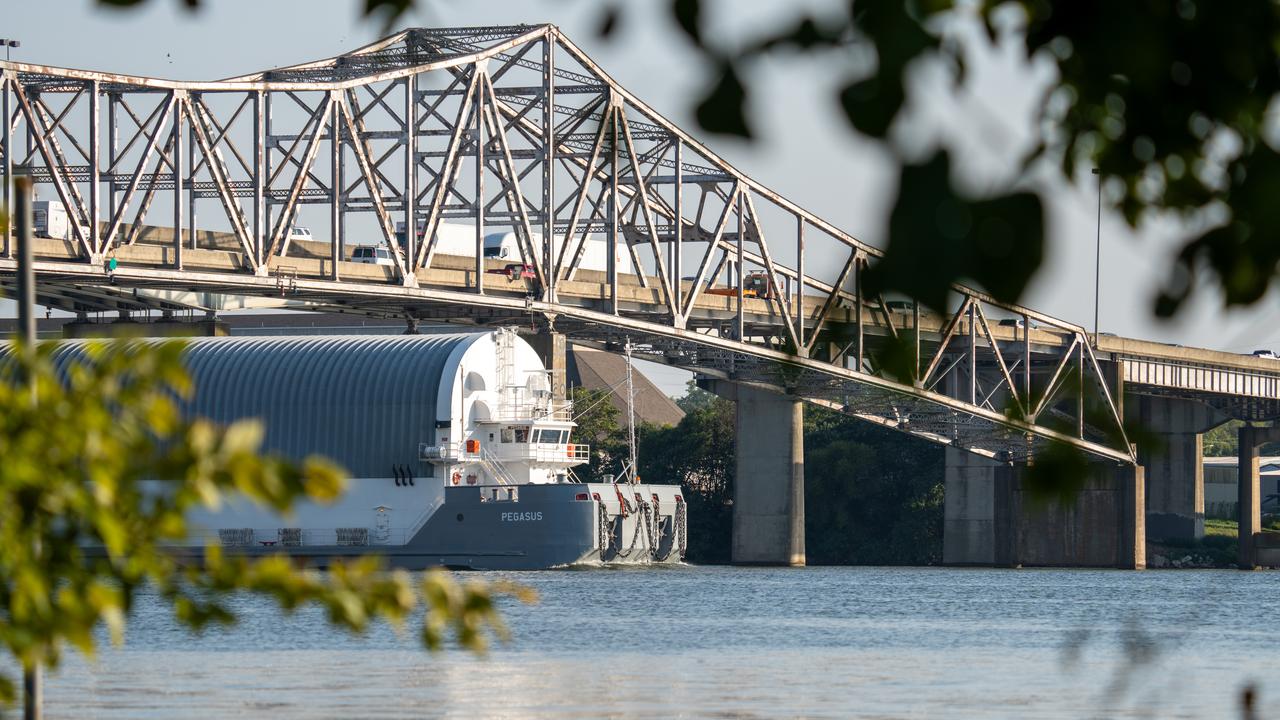
NASA’s Pegasus barge, ferrying the launch vehicle stage adapter for NASA’s SLS (Space Launch System) rocket, departed the agency’s Marshall Space Flight Center in Huntsville, Alabama, Aug. 21, passing through nearby Decatur. The cone-shaped adapter is part of the SLS rocket that will power Artemis II mission, the first crewed flight of the agency’s Artemis campaign. The barge will stop briefly at NASA’s Michoud Assembly Facility in New Orleans to pick up additional hardware elements for Artemis III and Artemis IV before heading to the agency’s Kennedy Space Center in Florida, where the adapter will be readied for stacking and launch preparations.
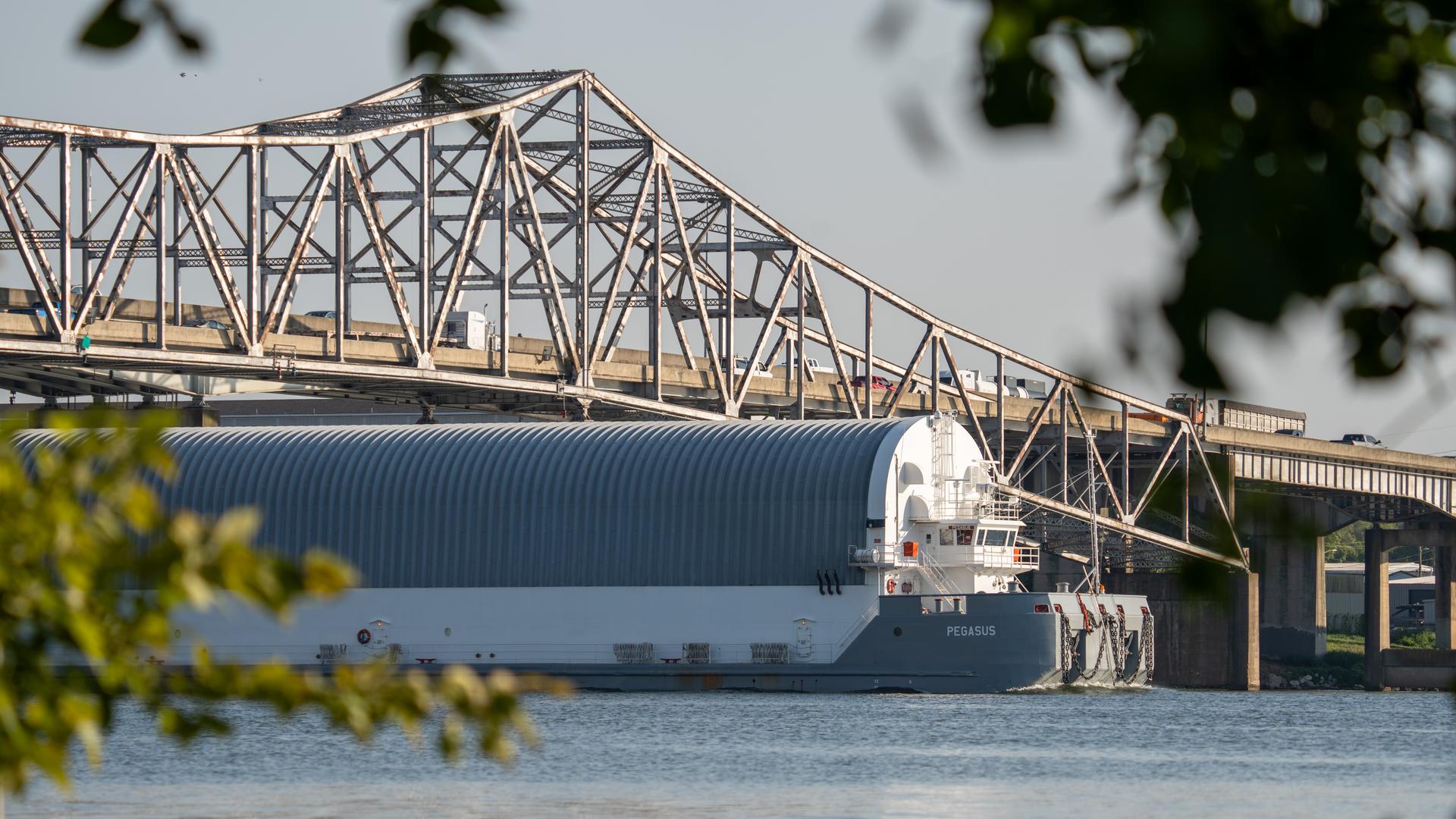
NASA’s Pegasus barge, ferrying the launch vehicle stage adapter for NASA’s SLS (Space Launch System) rocket, departed the agency’s Marshall Space Flight Center in Huntsville, Alabama, Aug. 21, passing through nearby Decatur. The cone-shaped adapter is part of the SLS rocket that will power Artemis II mission, the first crewed flight of the agency’s Artemis campaign. The barge will stop briefly at NASA’s Michoud Assembly Facility in New Orleans to pick up additional hardware elements for Artemis III and Artemis IV before heading to the agency’s Kennedy Space Center in Florida, where the adapter will be readied for stacking and launch preparations.
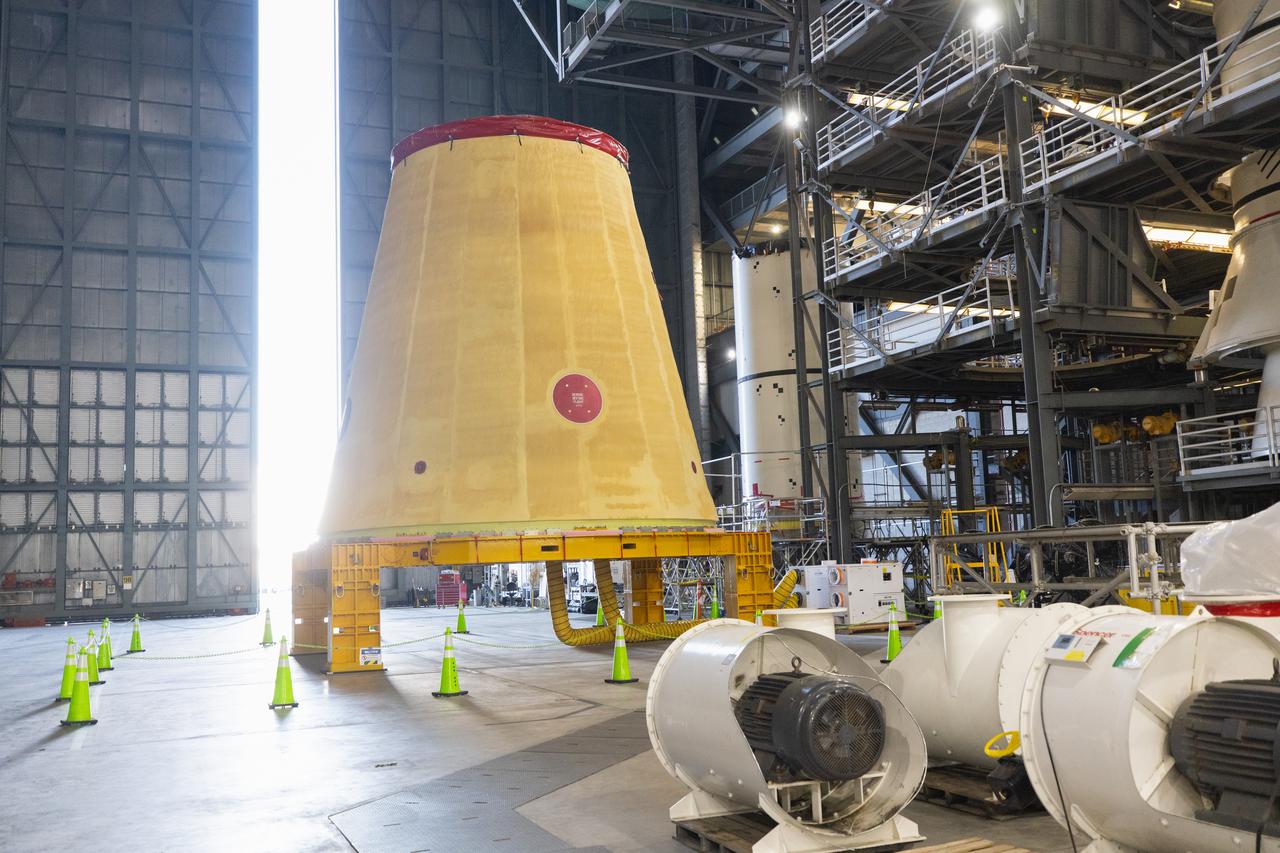
NASA’s Artemis II hardware, the launch vehicle stage adapter, is inside High Bay 4 on Thursday, March 20, 2025, at the Vehicle Assembly Building at NASA’s Kennedy Space Center in Florida ahead of rocket stacking operations. The cone shaped launch vehicle stage adapter connects the SLS (Space Launch System) Moon rocket to the upper stage, the interim cryogenic propulsion stage, and protects the rocket’s flight computers, avionics, and electrical devices during launch and ascent during the Artemis missions.