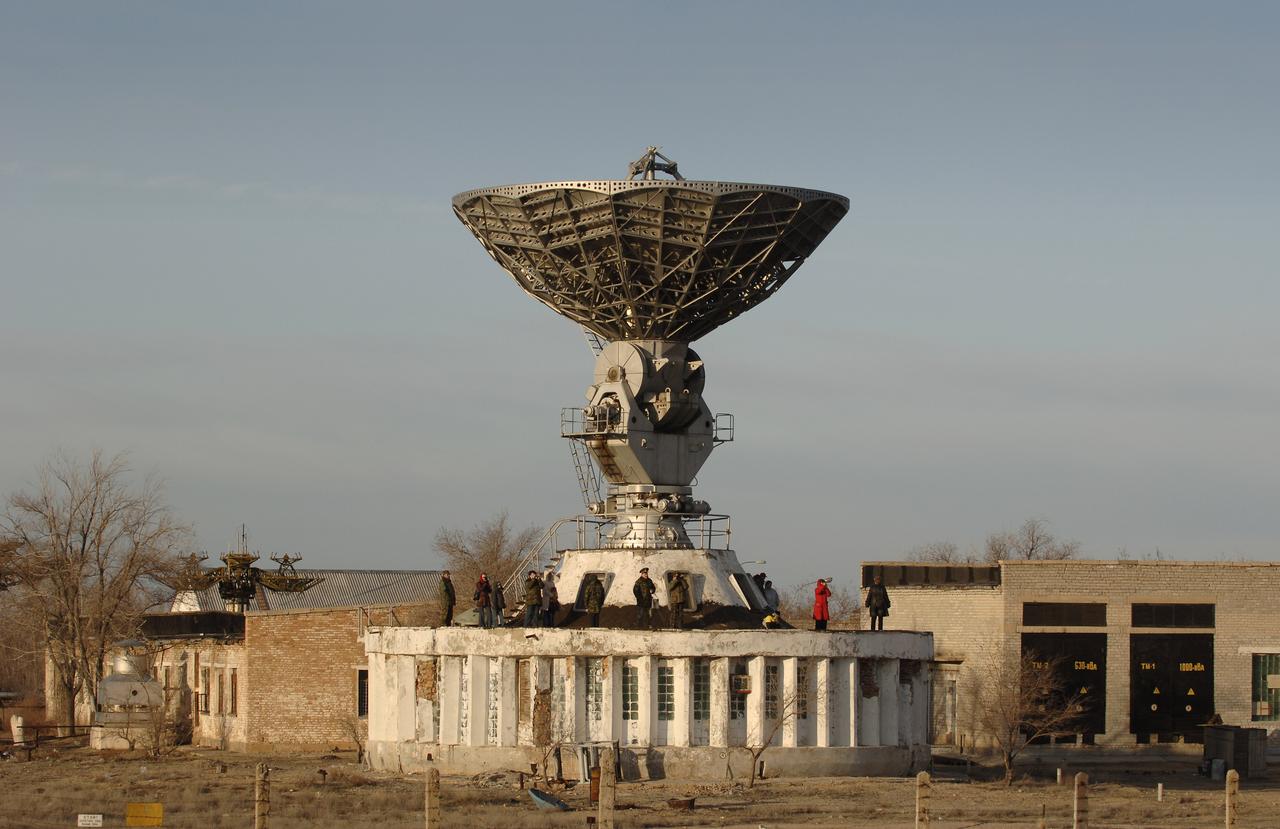
Spectators try to grab the highest viewing point to watch the launch of the Soyuz spacecraft. The Soyuz TMA-8 spacecraft launched with Expedition 13 crew members Pavel V. Vinogradov, Commander; Jeffrey N. Williams, Science Officer and Flight Engineer; and Marcos Pontes, Brazilian Space Agency Soyuz crew member. They began their mission Wednesday evening launching from Baikonur, Kazakhstan at 8:30 a.m. (Kazakhstan time). Pontes will return home with Expedition 12 on April 8, 2006. Photo Credit: (NASA/Bill Ingalls)
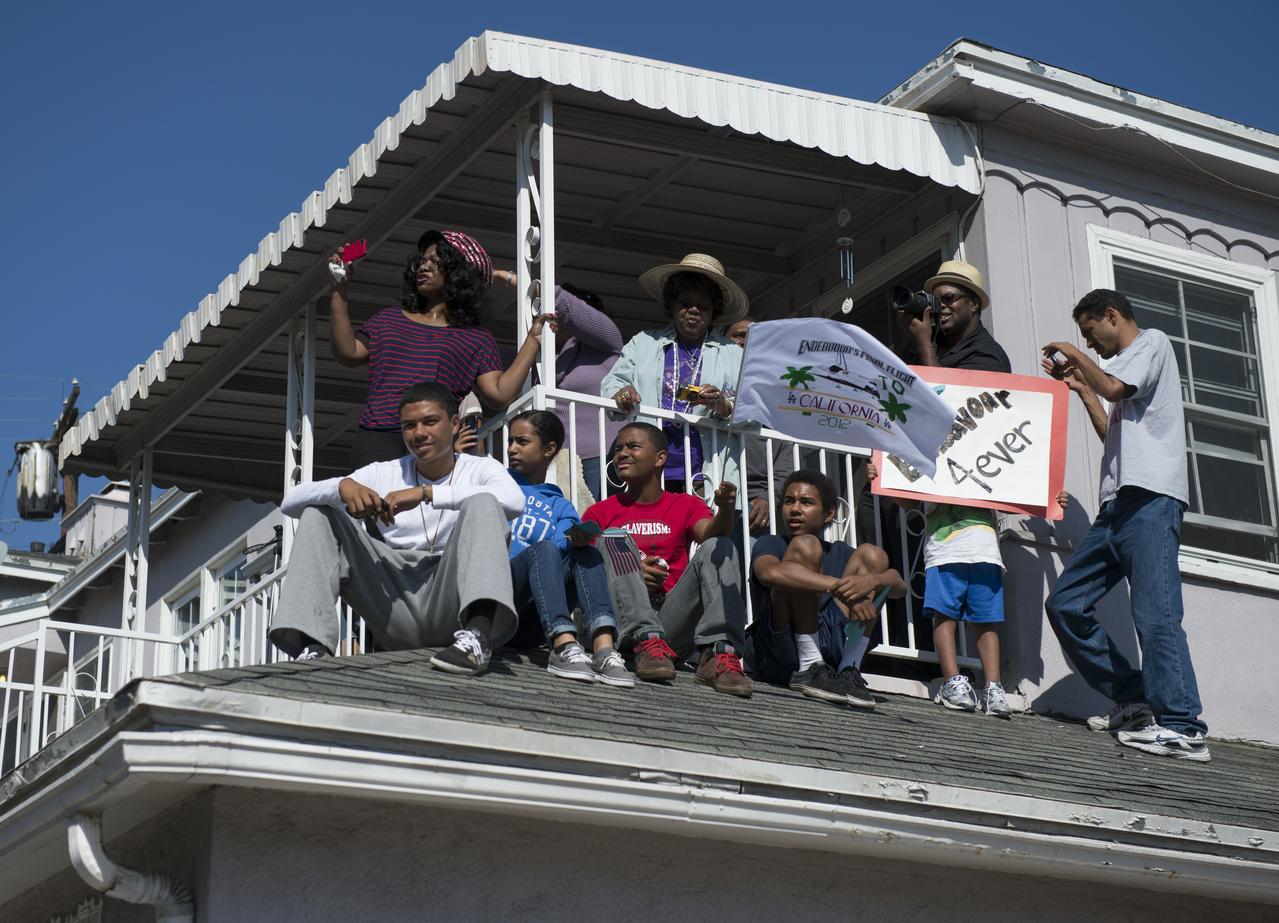
Spectators sit on the roof of an apartment building in Inglewood to get a view of the space shuttle Endeavour as it is carried through to its new home at the California Science Center, Saturday, Oct. 13, 2012. Endeavour, built as a replacement for space shuttle Challenger, completed 25 missions, spent 299 days in orbit, and orbited Earth 4,671 times while traveling 122,883,151 miles. Beginning Oct. 30, the shuttle will be on display in the CSC’s Samuel Oschin Space Shuttle Endeavour Display Pavilion, embarking on its new mission to commemorate past achievements in space and educate and inspire future generations of explorers. Photo Credit: (NASA/Carla Cioffi)
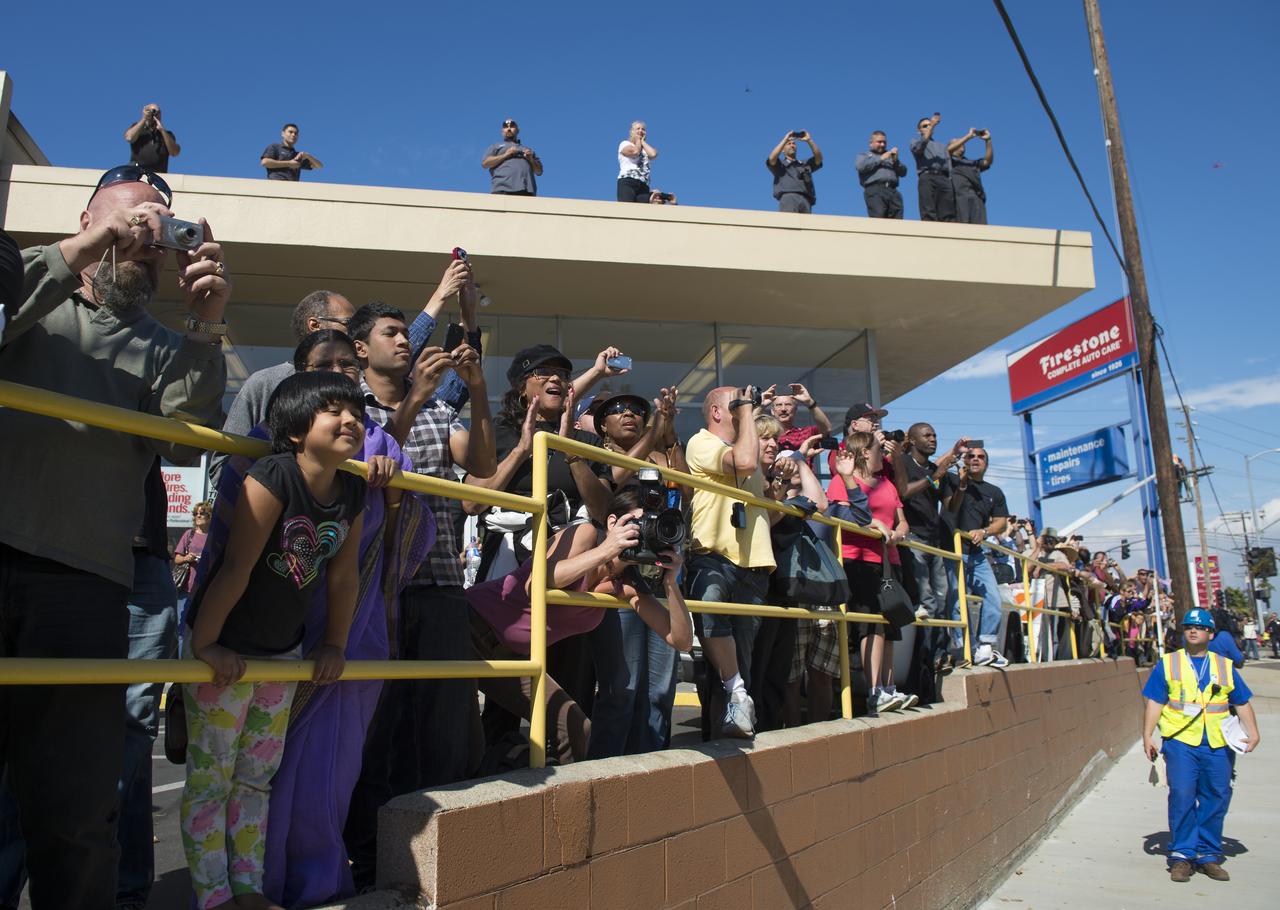
Spectators are seen as they watch space shuttle Endeavour as it passes by on its way to its new home at the California Science Center in Los Angeles, Friday, Oct. 12, 2012. Endeavour, built as a replacement for space shuttle Challenger, completed 25 missions, spent 299 days in orbit, and orbited Earth 4,671 times while traveling 122,883,151 miles. Beginning Oct. 30, the shuttle will be on display in the CSC's Samuel Oschin Space Shuttle Endeavour Display Pavilion, embarking on its new mission to commemorate past achievements in space and educate and inspire future generations of explorers. Photo Credit: (NASA/Carla Cioffi)
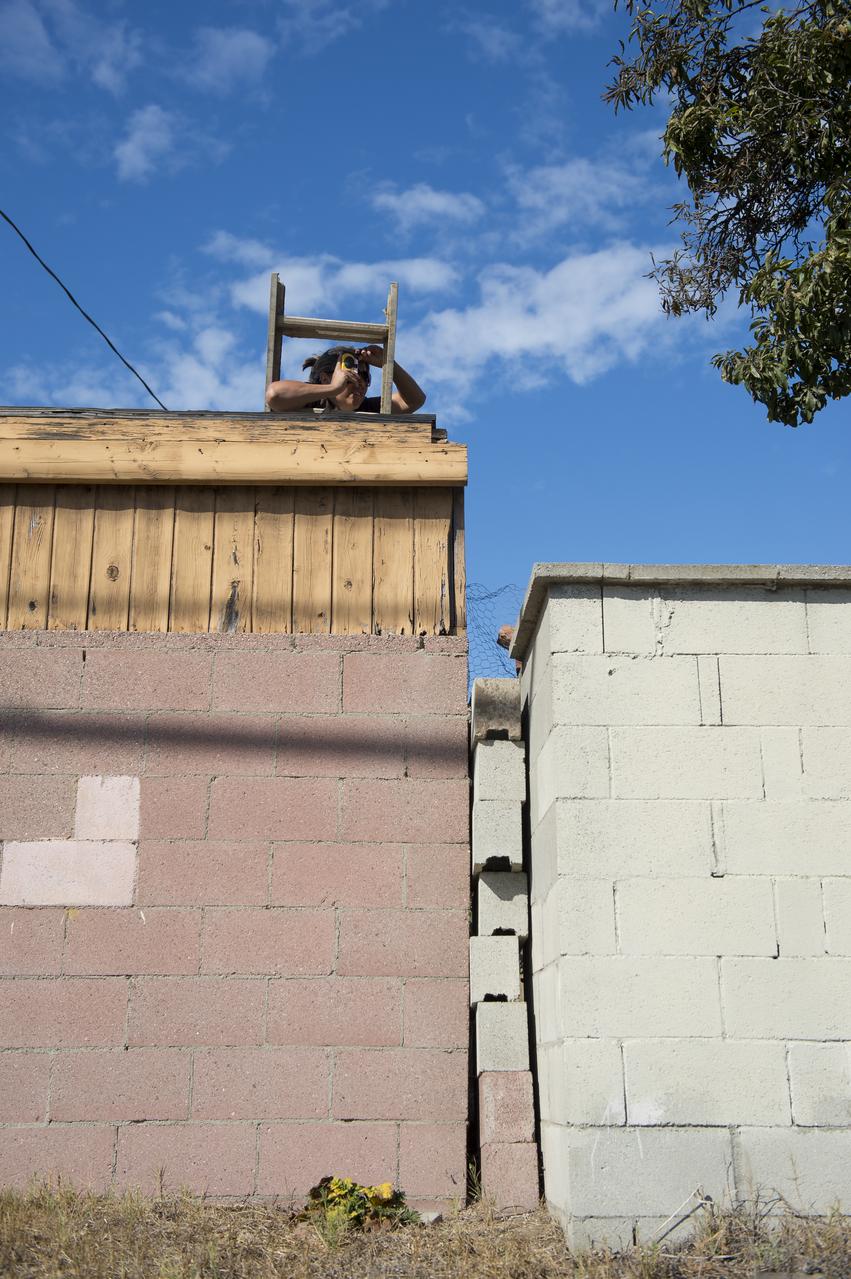
A spectator photographs the space shuttle Endeavour as it passes by on its way to its new home at the California Science Center in Los Angeles, Friday, Oct. 12, 2012. Endeavour, built as a replacement for space shuttle Challenger, completed 25 missions, spent 299 days in orbit, and orbited Earth 4,671 times while traveling 122,883,151 miles. Beginning Oct. 30, the shuttle will be on display in the CSC's Samuel Oschin Space Shuttle Endeavour Display Pavilion, embarking on its new mission to commemorate past achievements in space and educate and inspire future generations of explorers. Photo Credit: (NASA/Carla Cioffi)
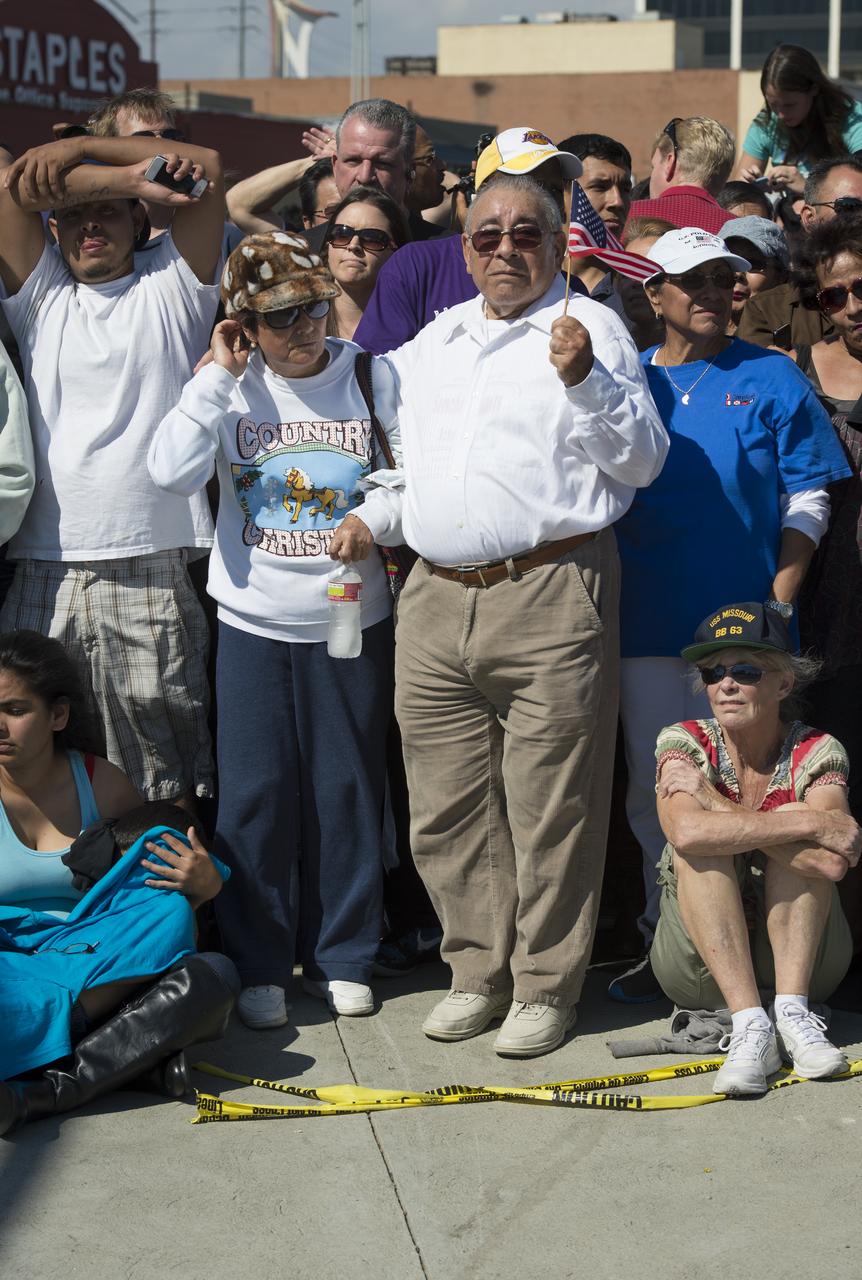
Spectators are seen as they watch space shuttle Endeavour as it passes by on its way to its new home at the California Science Center in Los Angeles, Friday, Oct. 12, 2012. Endeavour, built as a replacement for space shuttle Challenger, completed 25 missions, spent 299 days in orbit, and orbited Earth 4,671 times while traveling 122,883,151 miles. Beginning Oct. 30, the shuttle will be on display in the CSC's Samuel Oschin Space Shuttle Endeavour Display Pavilion, embarking on its new mission to commemorate past achievements in space and educate and inspire future generations of explorers. Photo Credit: (NASA/Carla Cioffi)
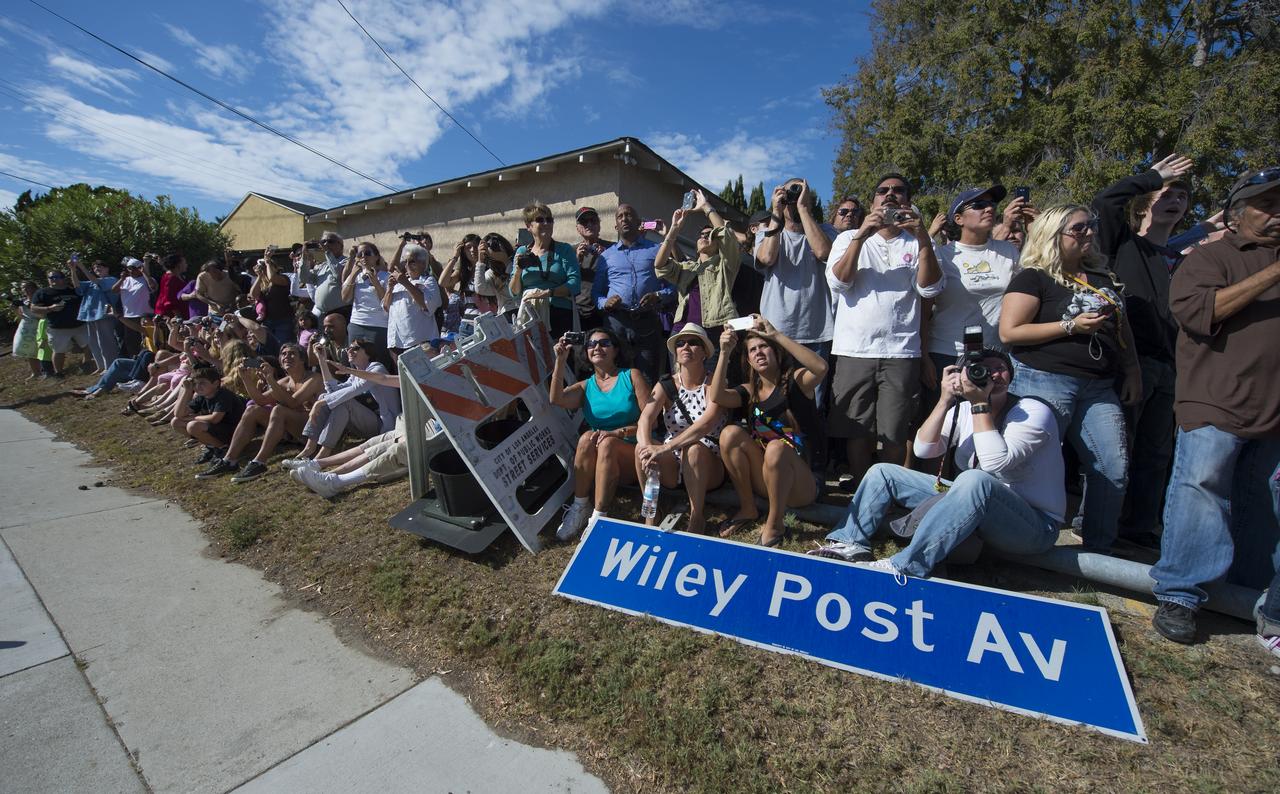
Spectators are seen as they watch space shuttle Endeavour as it passes by on its way to its new home at the California Science Center in Los Angeles, Friday, Oct. 12, 2012. Endeavour, built as a replacement for space shuttle Challenger, completed 25 missions, spent 299 days in orbit, and orbited Earth 4,671 times while traveling 122,883,151 miles. Beginning Oct. 30, the shuttle will be on display in the CSC’s Samuel Oschin Space Shuttle Endeavour Display Pavilion, embarking on its new mission to commemorate past achievements in space and educate and inspire future generations of explorers. Photo Credit: (NASA/Carla Cioffi)
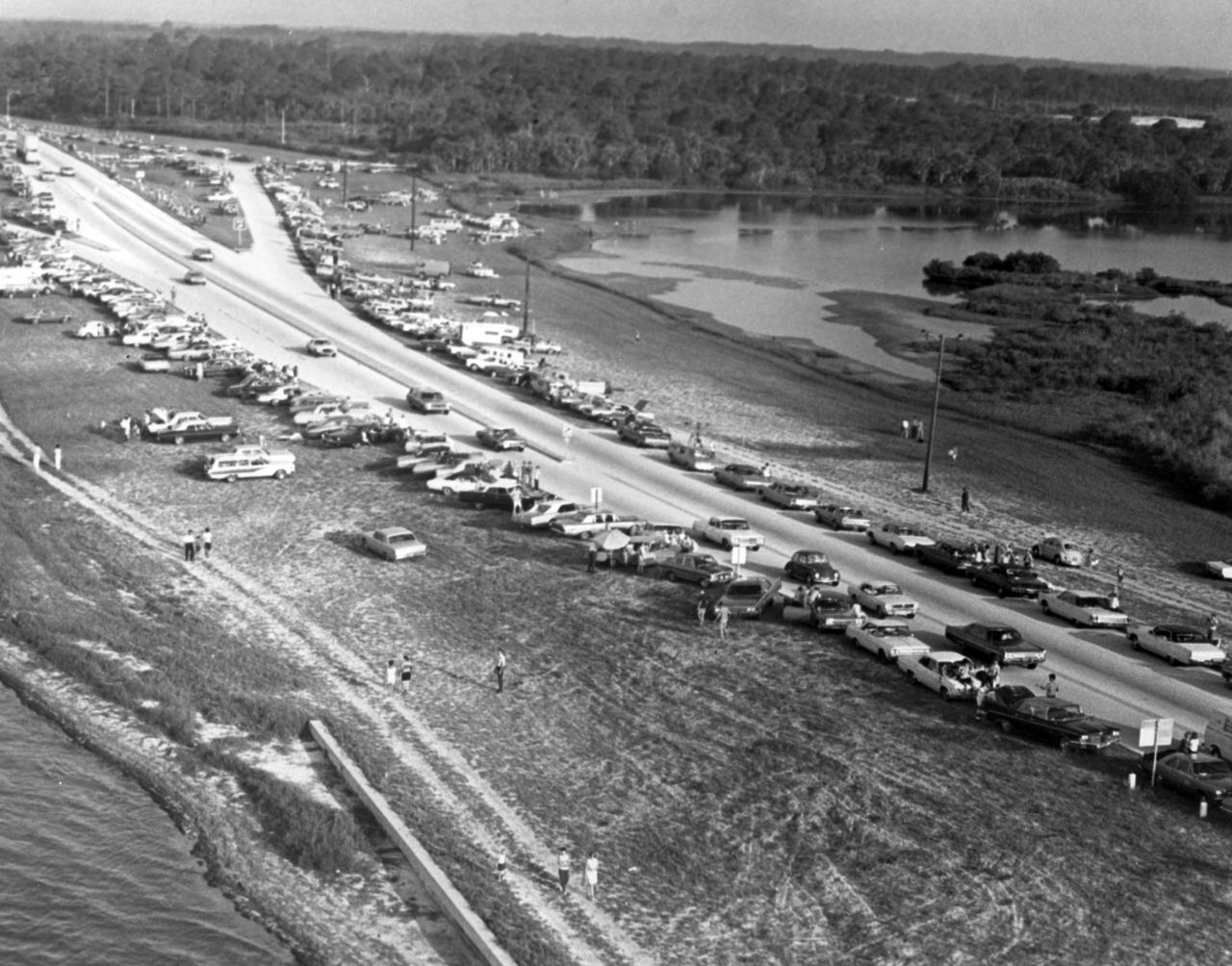
This is a view of a roadway near the NASA Kennedy Space Center (KSC), shortly before dawn, where spectators from all over the world jammed into KSC to watch the liftoff of Apollo 11, the first manned lunar landing mission. Apollo 11 launched from KSC via the Marshall Space Flight Center (MSFC) developed Saturn V launch vehicle on July 16, 1969 and safely returned to Earth on July 24, 1969. Aboard the space craft were astronauts Neil A. Armstrong, commander; Michael Collins, Command Module (CM) pilot; and Edwin E. (Buzz) Aldrin Jr., Lunar Module (LM) pilot. The CM, “Columbia”, piloted by Collins, remained in a parking orbit around the Moon while the LM, “Eagle’’, carrying astronauts Armstrong and Aldrin, landed on the Moon. On July 20, 1969, Armstrong was the first human to ever stand on the lunar surface, followed by Aldrin. During 2½ hours of surface exploration, the crew collected 47 pounds of lunar surface material for analysis back on Earth. With the success of Apollo 11, the national objective to land men on the Moon and return them safely to Earth had been accomplished.
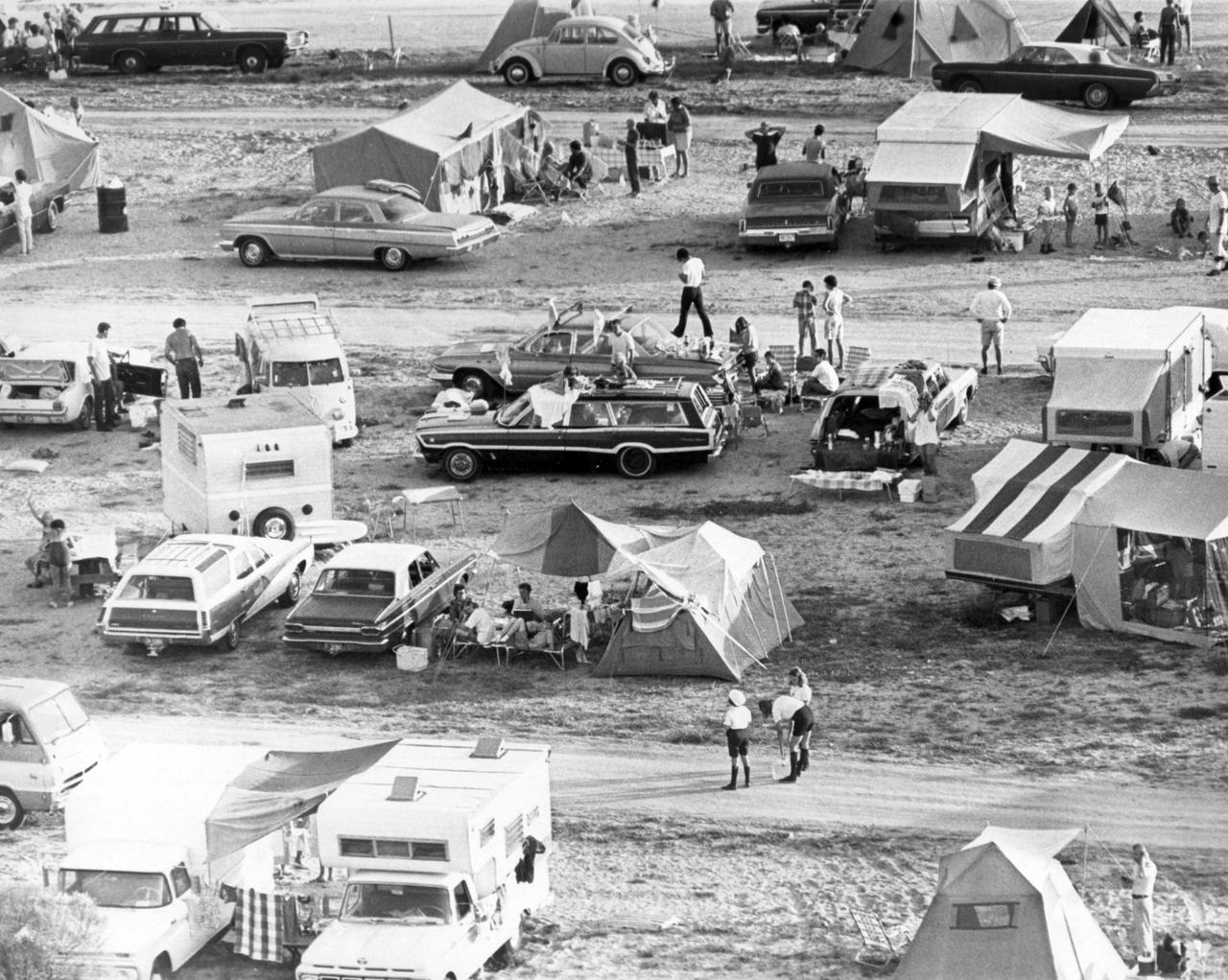
The early morning sun found hundreds of spectators on the beaches and roadways near the NASA Kennedy Space Center (KSC) where they had camped the night before to witness history by watching the epic beginning of the journey of Apollo 11. The first manned lunar landing mission launched from KSC via the Marshall Space Flight Center (MSFC) developed Saturn V launch vehicle on July 16, 1969 and safely returned to Earth on July 24, 1969. Aboard the space craft were astronauts Neil A. Armstrong, commander; Michael Collins, Command Module (CM) pilot; and Edwin E. (Buzz) Aldrin Jr., Lunar Module (LM) pilot. The CM, “Columbia”, piloted by Collins, remained in a parking orbit around the Moon while the LM, “Eagle’’, carrying astronauts Armstrong and Aldrin, landed on the Moon. On July 20, 1969, Armstrong was the first human to ever stand on the lunar surface, followed by Aldrin. During 2½ hours of surface exploration, the crew collected 47 pounds of lunar surface material for analysis back on Earth. With the success of Apollo 11, the national objective to land men on the Moon and return them safely to Earth had been accomplished.
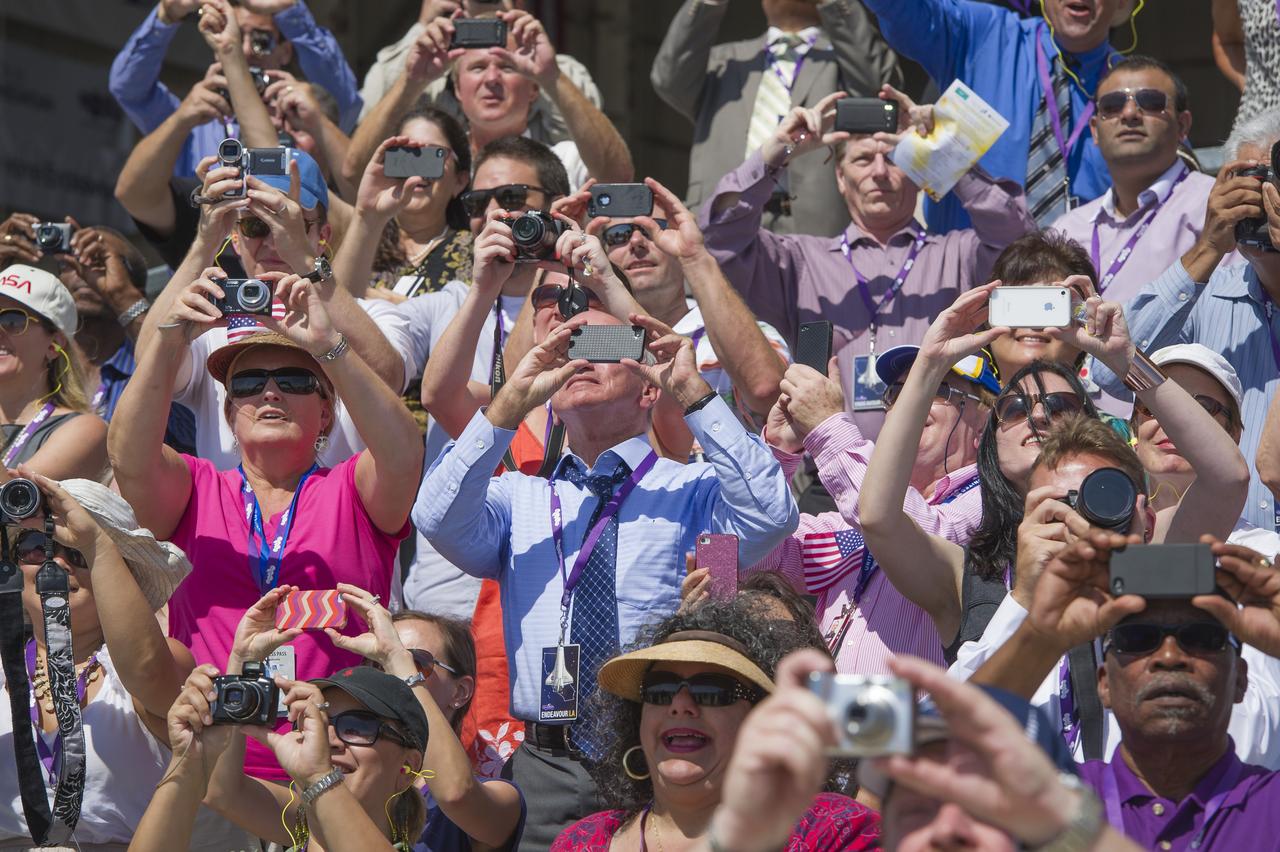
Spectators look to the sky with cameras and other devices as the space shuttle Endeavour flies over prior to landing Friday, Sept. 21, 2012, at Los Angeles International Airport. Endeavour, built as a replacement for space shuttle Challenger, completed 25 missions, spent 299 days in orbit, and orbited Earth 4,671 times while traveling 122,883,151 miles. Beginning Oct. 30, the shuttle will be on display in the California Science center's Samuel Oschin Space Shuttle Endeavour Display Pavilion, embarking on its new mission to commemorate past achievements in space and educate and inspire future generations of explorers.Photo Credit: (NASA/Paul E. Alers)

Spectators are seen as they watch space shuttle Endeavour as it passes by on its way to its new home at the California Science Center in Los Angeles, Saturday, Oct. 13, 2012. Endeavour, built as a replacement for space shuttle Challenger, completed 25 missions, spent 299 days in orbit, and orbited Earth 4,671 times while traveling 122,883,151 miles. Beginning Oct. 30, the shuttle will be on display in the CSC’s Samuel Oschin Space Shuttle Endeavour Display Pavilion, embarking on its new mission to commemorate past achievements in space and educate and inspire future generations of explorers. Photo Credit: (NASA/Carla Cioffi)

Spectators watch space shuttle Endeavour as it passes by on its way to its new home at the California Science Center in Los Angeles, Friday, Oct. 12, 2012. Endeavour, built as a replacement for space shuttle Challenger, completed 25 missions, spent 299 days in orbit, and orbited Earth 4,671 times while traveling 122,883,151 miles. Beginning Oct. 30, the shuttle will be on display in the CSC's Samuel Oschin Space Shuttle Endeavour Display Pavilion, embarking on its new mission to commemorate past achievements in space and educate and inspire future generations of explorers. Photo Credit: (NASA/Carla Cioffi)
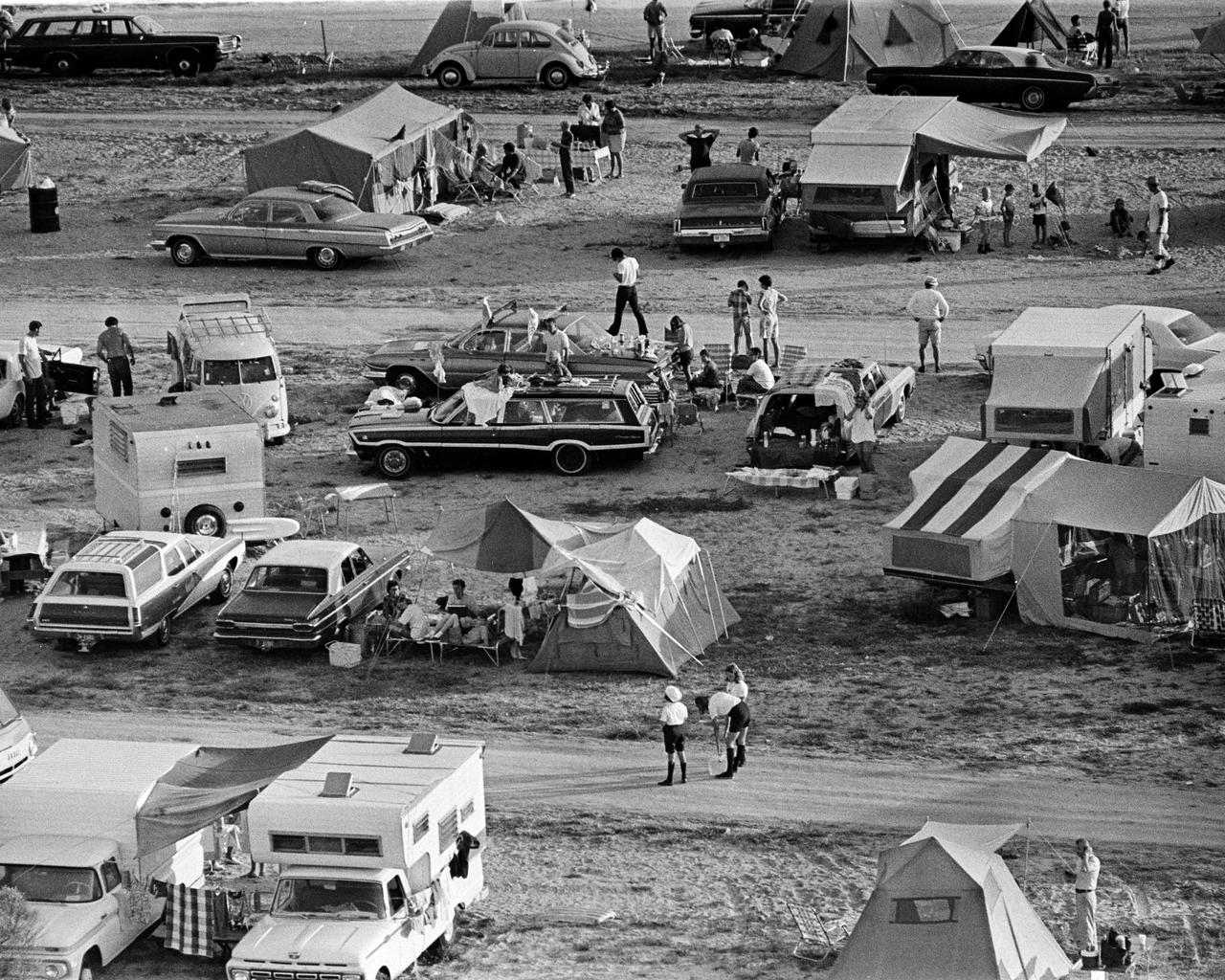
CAPE CANAVERAL, Fla. -- Here are some of the thousands of persons who camped out on beaches and roads adjacent to the Kennedy Space Center to watch the Apollo 11 launch. Local Brevard County officials estimate that one million persons visited the area for the historic liftoff. Photo credit: NASA
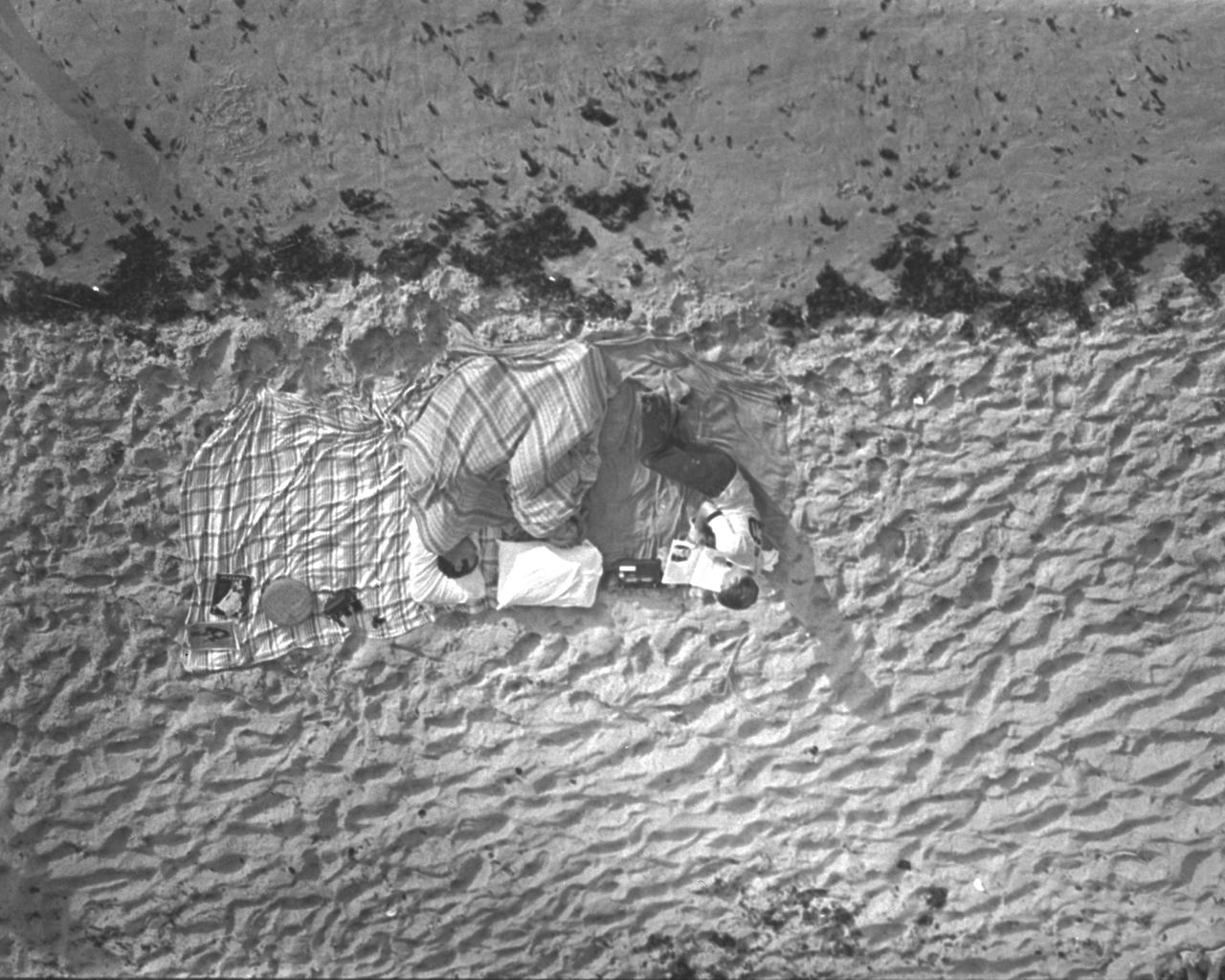
CAPE CANAVERAL, Fla. -- These three were among the thousands of persons who camped on beaches and roads adjacent to the Kennedy Space Center to watch the Apollo 11 launch. An estimated one million persons visited the Spaceport area to see the historic flight, the nation's first attempt to land Americans on the lunar surface. Photo credit: NASA
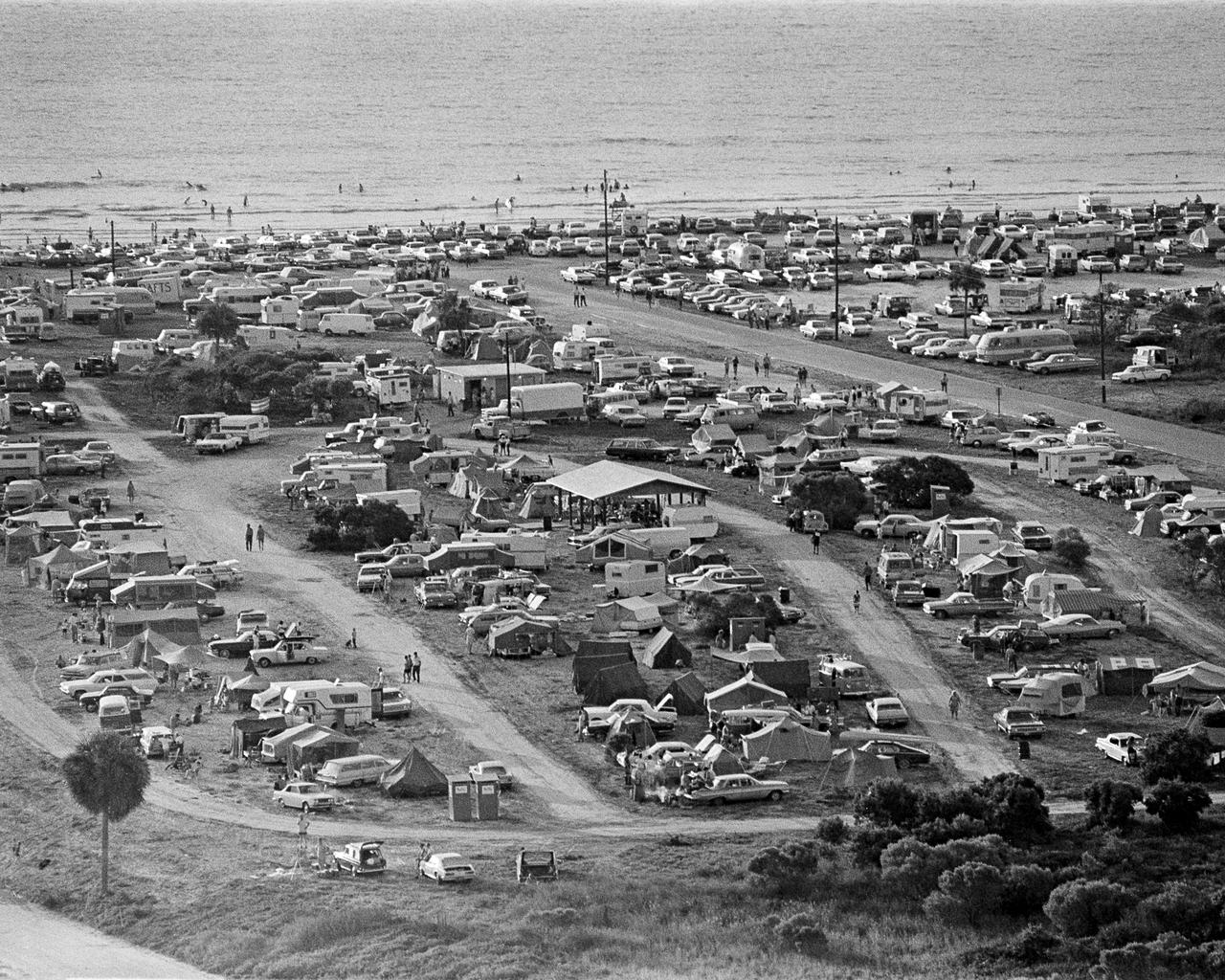
CAPE CANAVERAL, Fla. -- Thousands of persons spent the night before the Apollo 11 launch in tents, campers, automobiles, and on beaches and roads adjacent to the Kennedy Space Center. In all, an estimated 1,000,000 persons visited the Spaceport area to view the historic launch. Photo credit: NASA
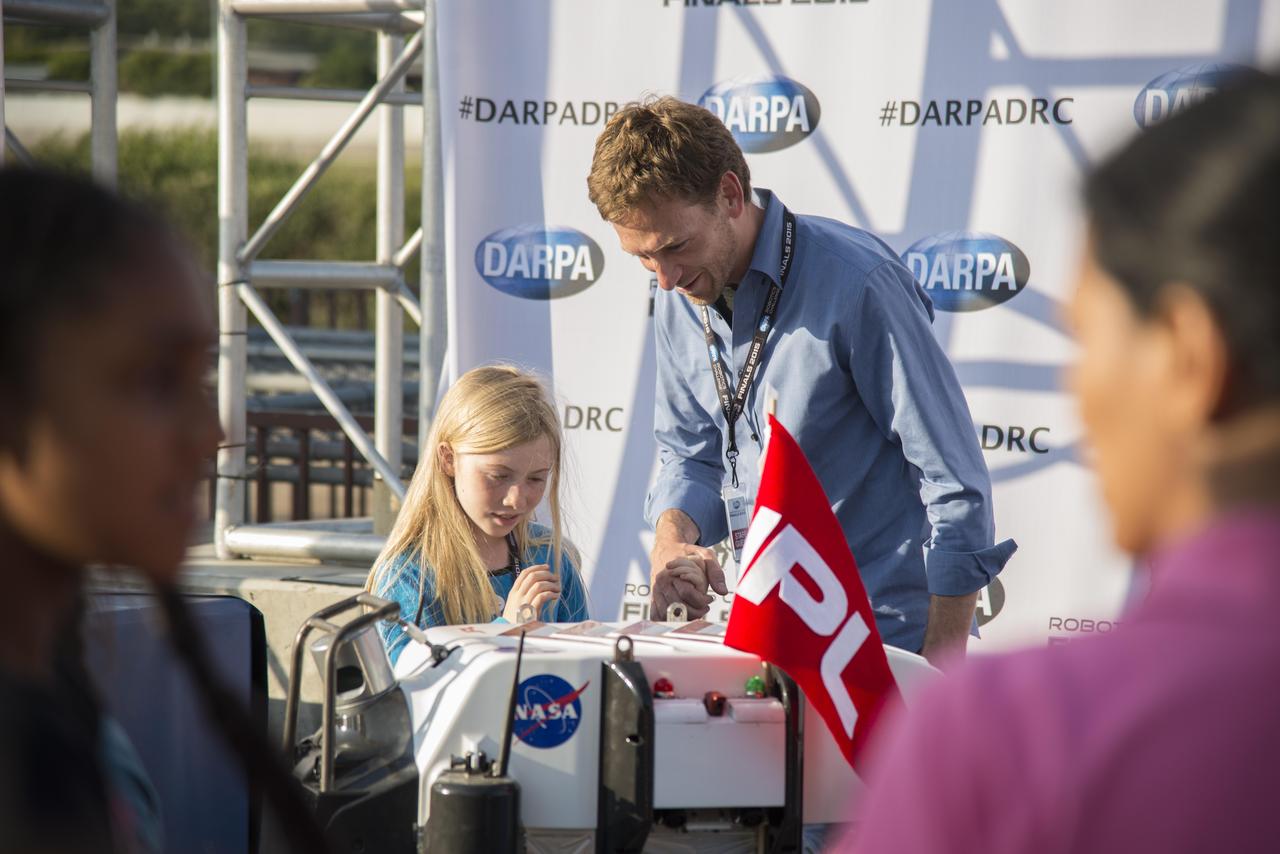
This image was taken on June 6, 2015 at the DARPA Robotics Challenge in Pomona, California. Following each competition run, spectators at the event were able to get a close-up look at the robot competitors and meet the teams who built them. http://photojournal.jpl.nasa.gov/catalog/PIA19327
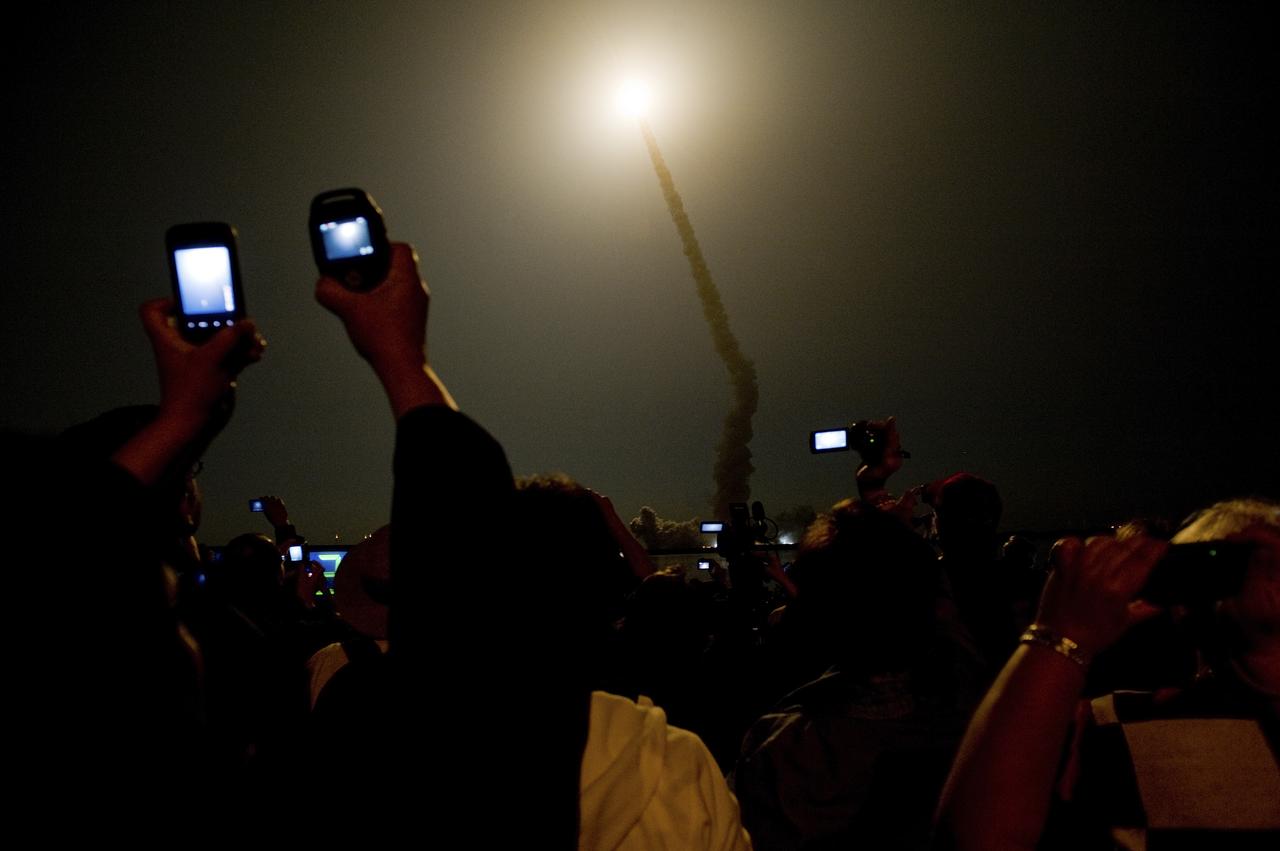
SPECTATORS AT THE BANANA CREEK VIEWING AREA AT KENNEDYY SPACE CENTER USE THEIR PHONES AND CAMERAS TO DOCUMENT THE LAUNCH OF STS-131
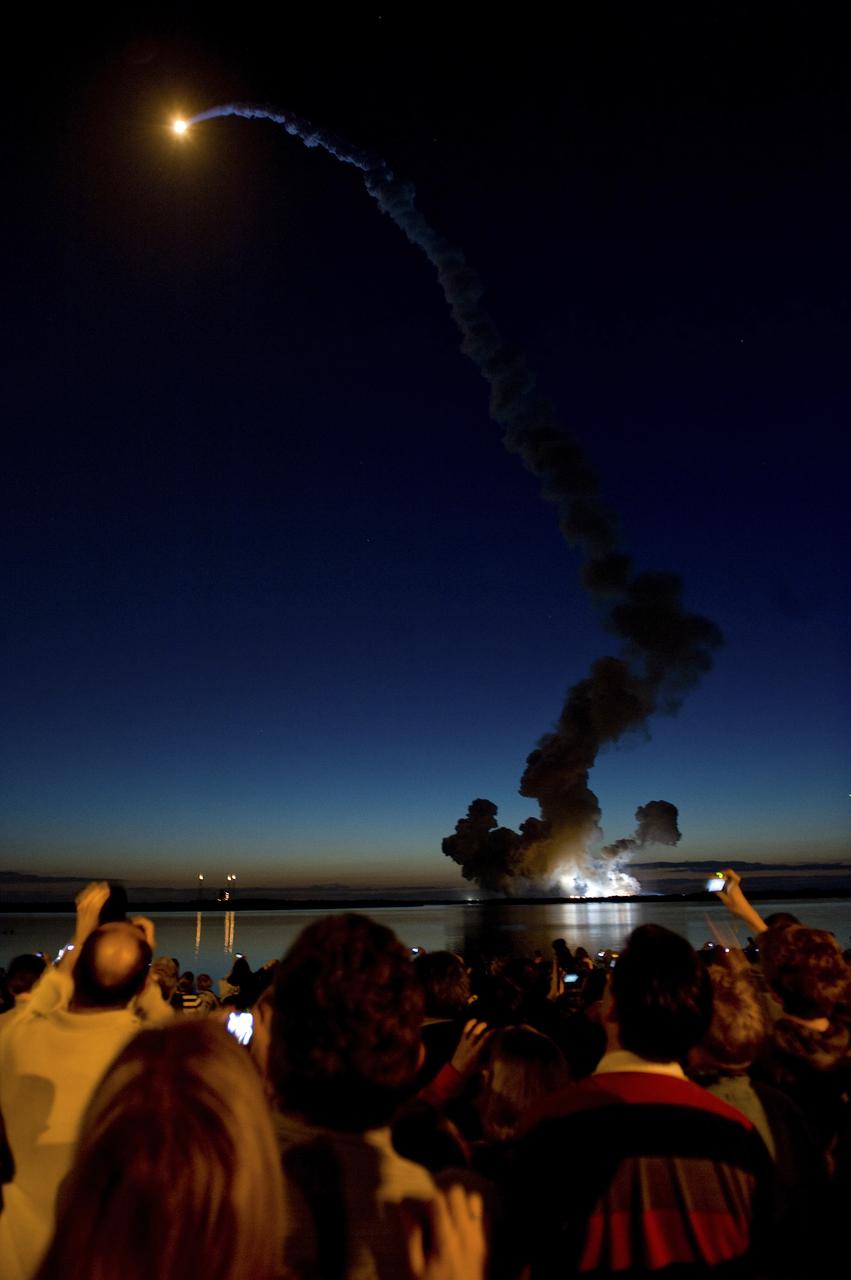
STS-131 LIFTS OFF INTO THE EARLY MORNING SKY AS SPECTATORS AT THE BANANA CREEK VIEWING AREA OBSERVE
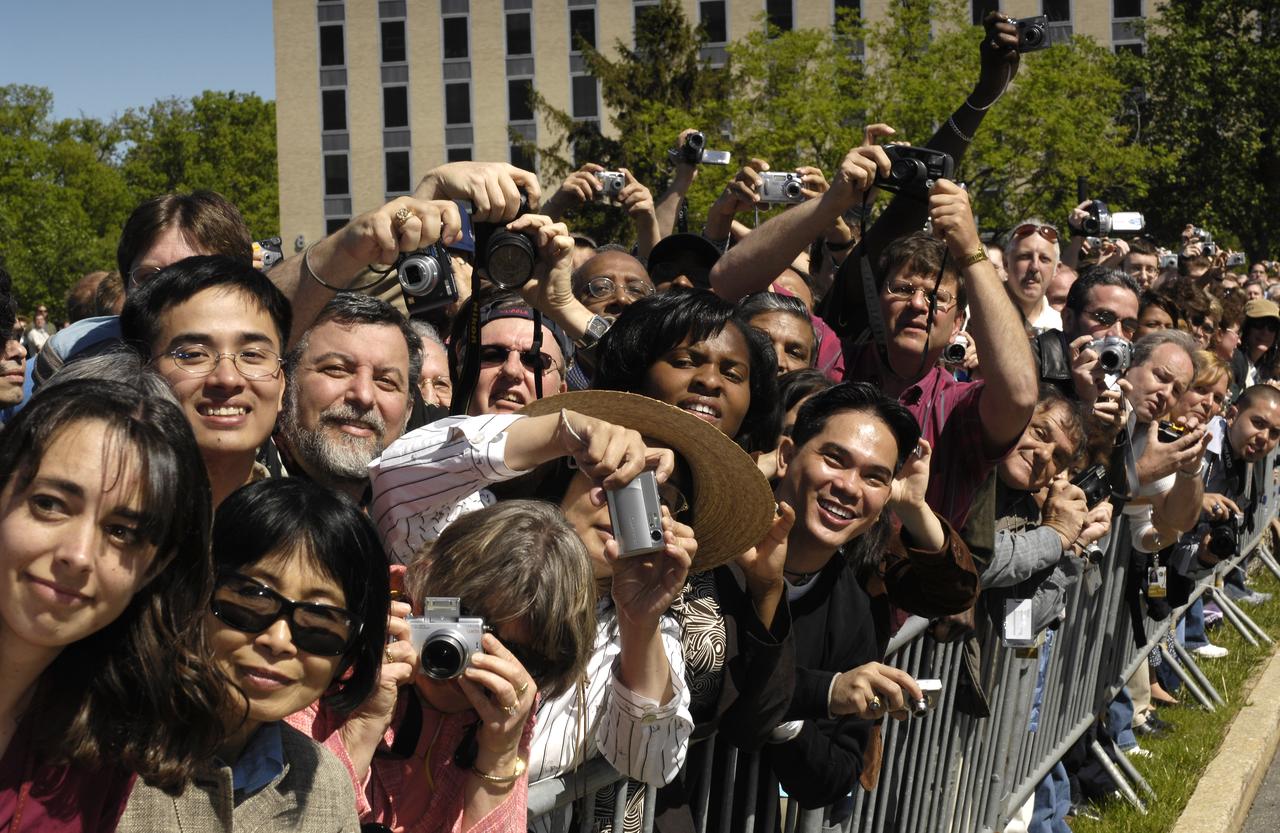
Employees at NASA's Goddard Space Flight Center wait to greet Queen Elizabeth II, Tuesday, May 8, 2007, in Greenbelt, Md. Queen Elizabeth II and her husband, Prince Philip, Duke of Edinburgh, visited the NASA Goddard Space Flight Center as one of the last stops on their six-day United States visit. Photo Credit: (NASA/Bill Ingalls)
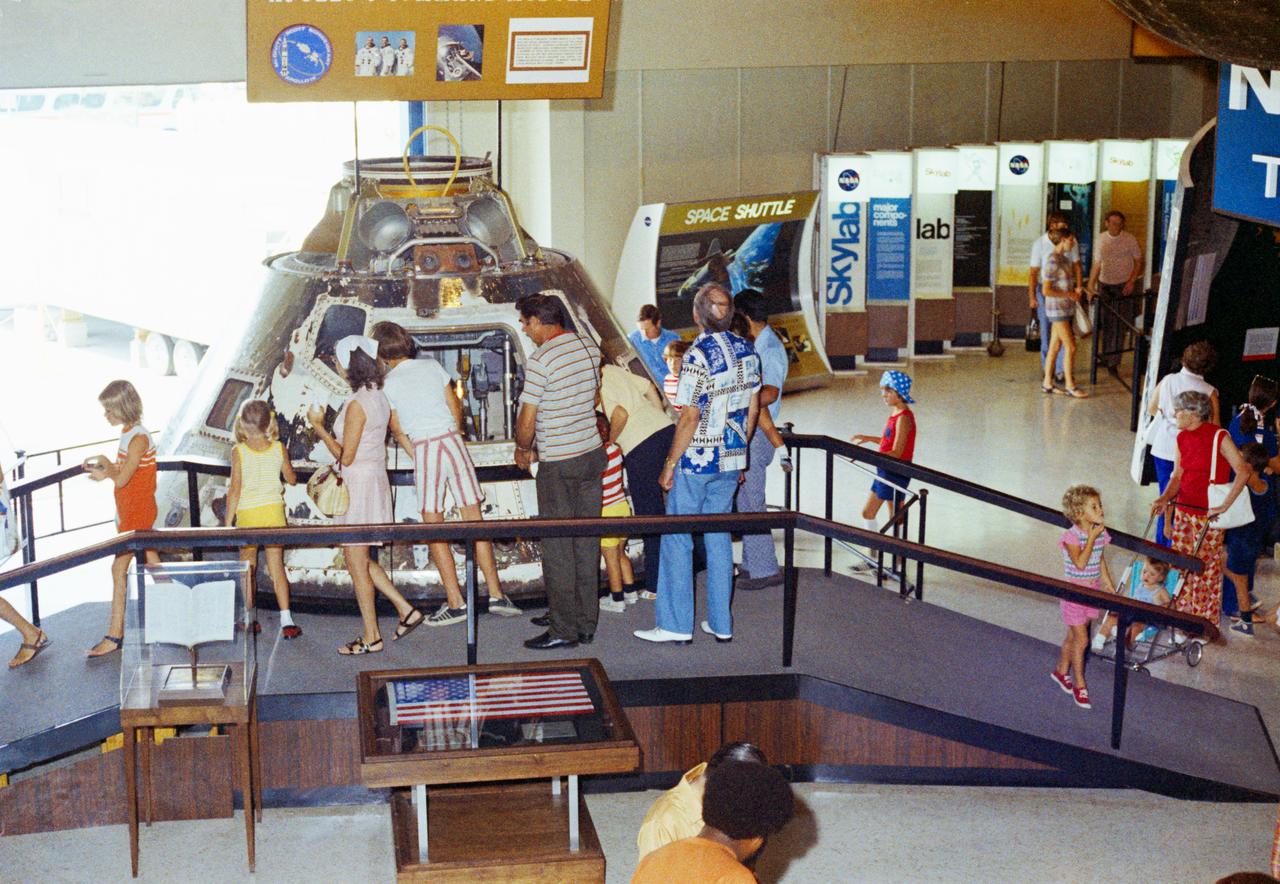
Series show exhibits displayed in the lobby and museum of Bldg. 1 Auditorium for public viewing. Views include spectators looking at the exhibits. JSC, HOUSTON, TX
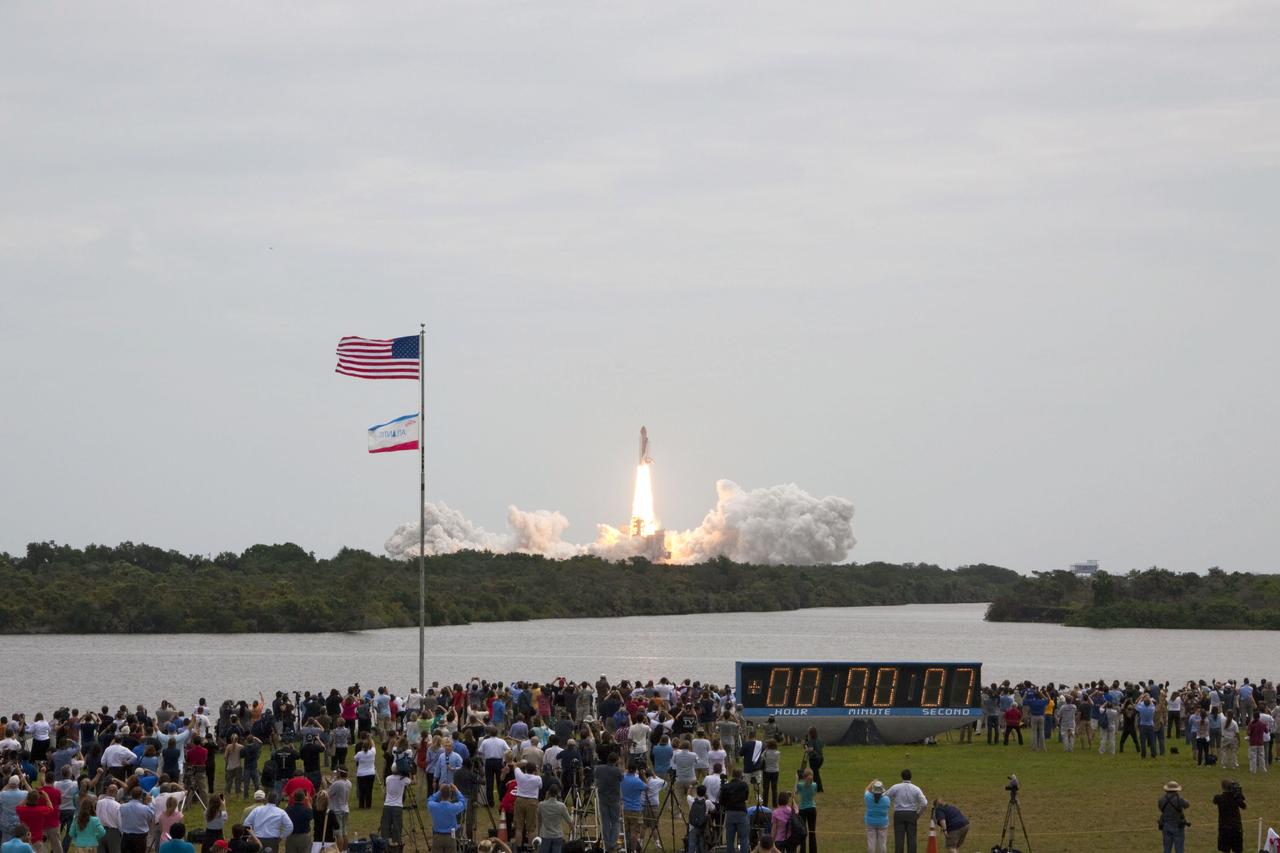
STS135-S-036 (8 July 2011) --- Members of the media and employees gather near the countdown clock to see the launch of space shuttle Atlantis as it lifts off Launch Pad 39A at NASA's Kennedy Space Center in Florida at 11:29 a.m. (EDT) on July 8, 2011. Onboard are NASA astronauts Chris Ferguson, STS-135 commander; Doug Hurley, pilot; Sandy Magnus and Rex Walheim, both mission specialists. STS-135 will deliver the Raffaello multi-purpose logistics module packed with supplies and spare parts for the International Space Station. Atlantis also will fly the Robotic Refueling Mission experiment that will investigate the potential for robotically refueling existing satellites in orbit. In addition, Atlantis will return with a failed ammonia pump module to help NASA better understand the failure mechanism and improve pump designs for future systems. STS-135 will be the 33rd flight of Atlantis, the 37th shuttle mission to the space station, and the 135th and final mission of NASA's Space Shuttle Program. Photo credit: NASA
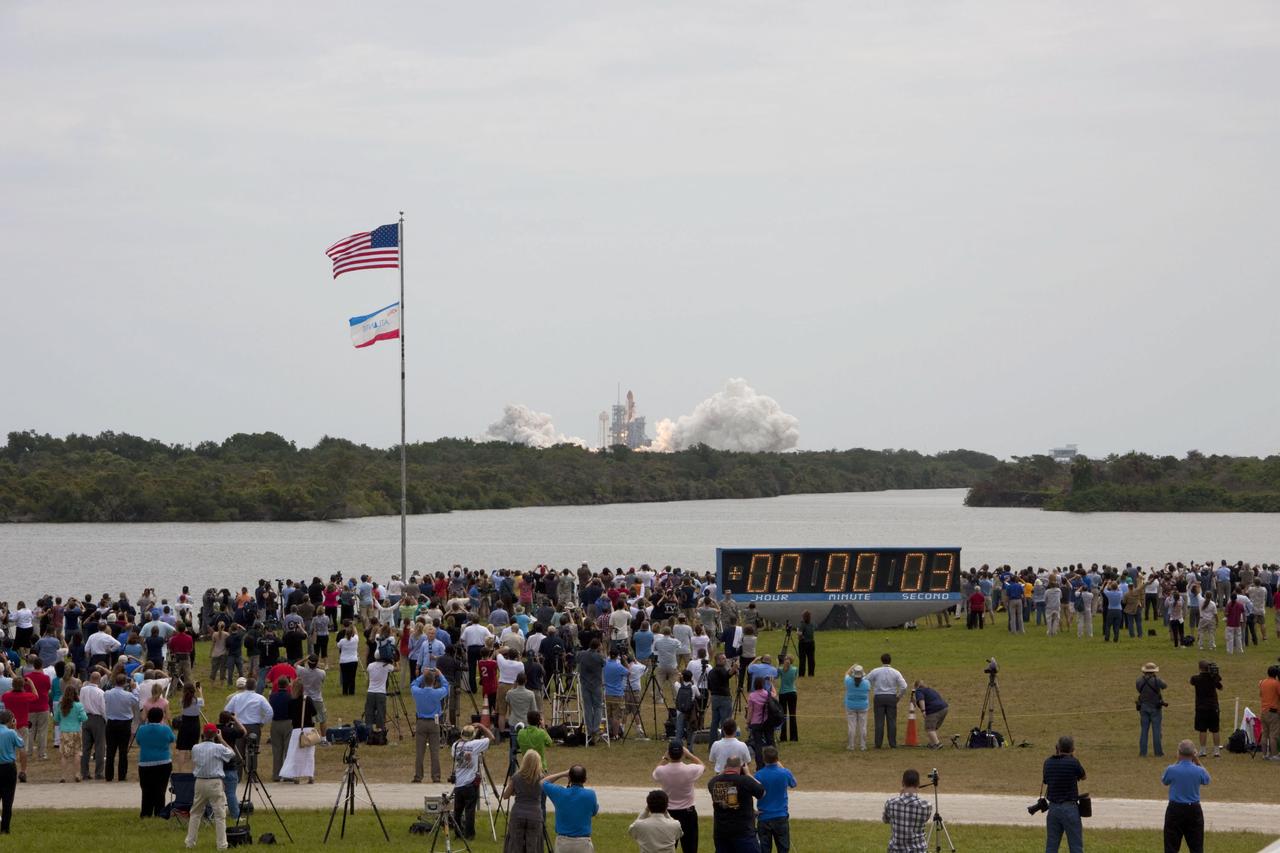
STS135-S-035 (8 July 2011) --- Members of the media and employees gather near the countdown clock to see the launch of space shuttle Atlantis as it lifts off Launch Pad 39A at NASA's Kennedy Space Center in Florida at 11:29 a.m. (EDT) on July 8, 2011. Onboard are NASA astronauts Chris Ferguson, STS-135 commander; Doug Hurley, pilot; Sandy Magnus and Rex Walheim, both mission specialists. STS-135 will deliver the Raffaello multi-purpose logistics module packed with supplies and spare parts for the International Space Station. Atlantis also will fly the Robotic Refueling Mission experiment that will investigate the potential for robotically refueling existing satellites in orbit. In addition, Atlantis will return with a failed ammonia pump module to help NASA better understand the failure mechanism and improve pump designs for future systems. STS-135 will be the 33rd flight of Atlantis, the 37th shuttle mission to the space station, and the 135th and final mission of NASA's Space Shuttle Program. Photo credit: NASA
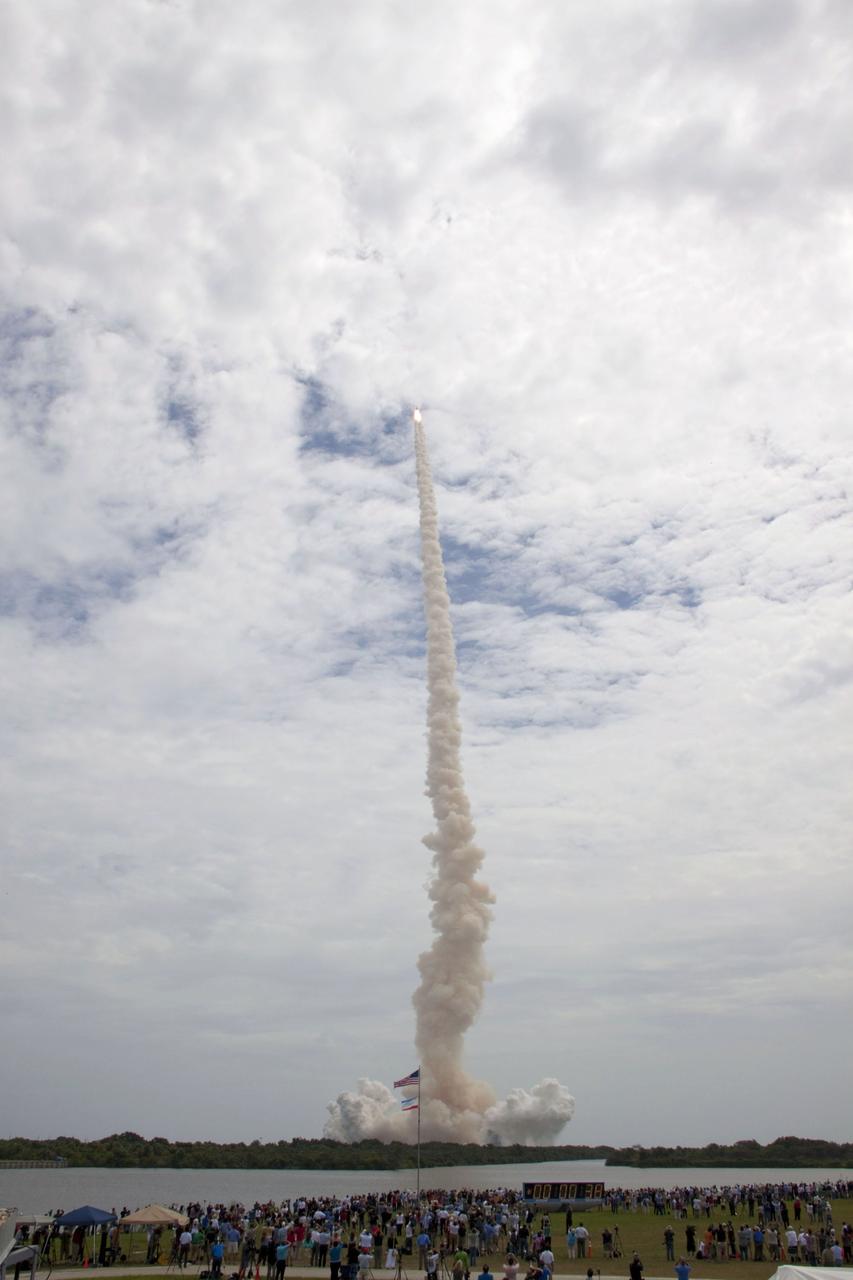
STS135-S-039 (8 July 2011) --- Members of the media and employees gather near the countdown clock to see the launch of space shuttle Atlantis as it lifts off Launch Pad 39A at NASA's Kennedy Space Center in Florida at 11:29 a.m. (EDT) on July 8, 2011. Onboard are NASA astronauts Chris Ferguson, STS-135 commander; Doug Hurley, pilot; Sandy Magnus and Rex Walheim, both mission specialists. STS-135 will deliver the Raffaello multi-purpose logistics module packed with supplies and spare parts for the International Space Station. Atlantis also will fly the Robotic Refueling Mission experiment that will investigate the potential for robotically refueling existing satellites in orbit. In addition, Atlantis will return with a failed ammonia pump module to help NASA better understand the failure mechanism and improve pump designs for future systems. STS-135 will be the 33rd flight of Atlantis, the 37th shuttle mission to the space station, and the 135th and final mission of NASA's Space Shuttle Program. Photo credit: NASA
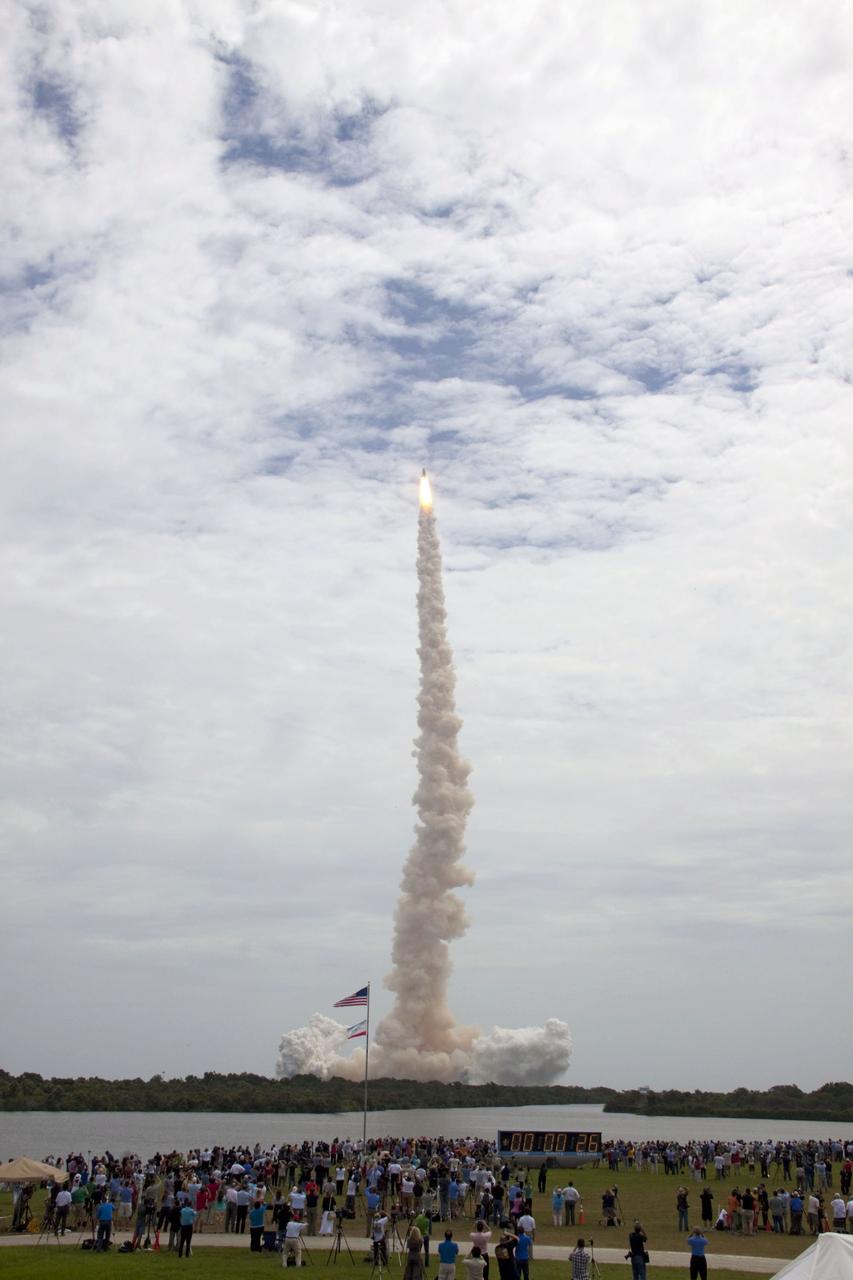
STS135-S-038 (8 July 2011) --- Members of the media and employees gather near the countdown clock to see the launch of space shuttle Atlantis as it lifts off Launch Pad 39A at NASA's Kennedy Space Center in Florida at 11:29 a.m. (EDT) on July 8, 2011. Onboard are NASA astronauts Chris Ferguson, STS-135 commander; Doug Hurley, pilot; Sandy Magnus and Rex Walheim, both mission specialists. STS-135 will deliver the Raffaello multi-purpose logistics module packed with supplies and spare parts for the International Space Station. Atlantis also will fly the Robotic Refueling Mission experiment that will investigate the potential for robotically refueling existing satellites in orbit. In addition, Atlantis will return with a failed ammonia pump module to help NASA better understand the failure mechanism and improve pump designs for future systems. STS-135 will be the 33rd flight of Atlantis, the 37th shuttle mission to the space station, and the 135th and final mission of NASA's Space Shuttle Program. Photo credit: NASA
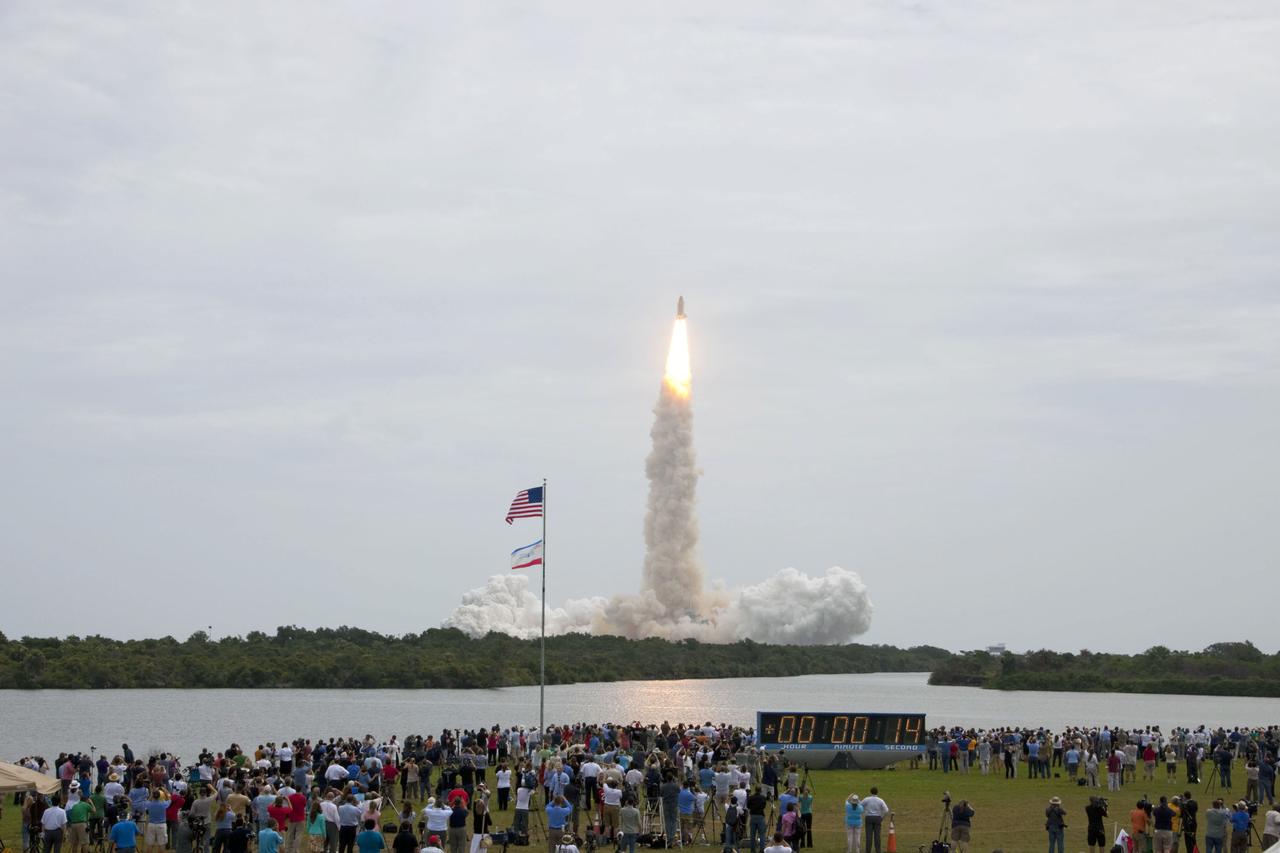
STS135-S-037 (8 July 2011) --- Members of the media and employees gather near the countdown clock to see the launch of space shuttle Atlantis as it lifts off Launch Pad 39A at NASA's Kennedy Space Center in Florida at 11:29 a.m. (EDT) on July 8, 2011. Onboard are NASA astronauts Chris Ferguson, STS-135 commander; Doug Hurley, pilot; Sandy Magnus and Rex Walheim, both mission specialists. STS-135 will deliver the Raffaello multi-purpose logistics module packed with supplies and spare parts for the International Space Station. Atlantis also will fly the Robotic Refueling Mission experiment that will investigate the potential for robotically refueling existing satellites in orbit. In addition, Atlantis will return with a failed ammonia pump module to help NASA better understand the failure mechanism and improve pump designs for future systems. STS-135 will be the 33rd flight of Atlantis, the 37th shuttle mission to the space station, and the 135th and final mission of NASA's Space Shuttle Program. Photo credit: NASA

Onlookers watch as space shuttle Atlantis rolls to its new home at the Kennedy Space Center Visitor Complex, early Friday, Nov. 2, 2012, in Cape Canaveral, Fla. The spacecraft traveled 125,935,769 miles during 33 spaceflights, including 12 missions to the International Space Station. Its final flight, STS-135, closed out the Space Shuttle Program era with a landing on July 21, 2011. Photo Credit: (NASA/Bill Ingalls)

Large groups of spectators waited all day with their cameras in order to see the space shuttle Enterprise arrival on a barge and lift onto the Intrepid Sea, Air and Space Museum where it will be permanently displayed, Wednesday, June 6, 2012 in New York. Photo Credit: (NASA/Bill Ingalls)
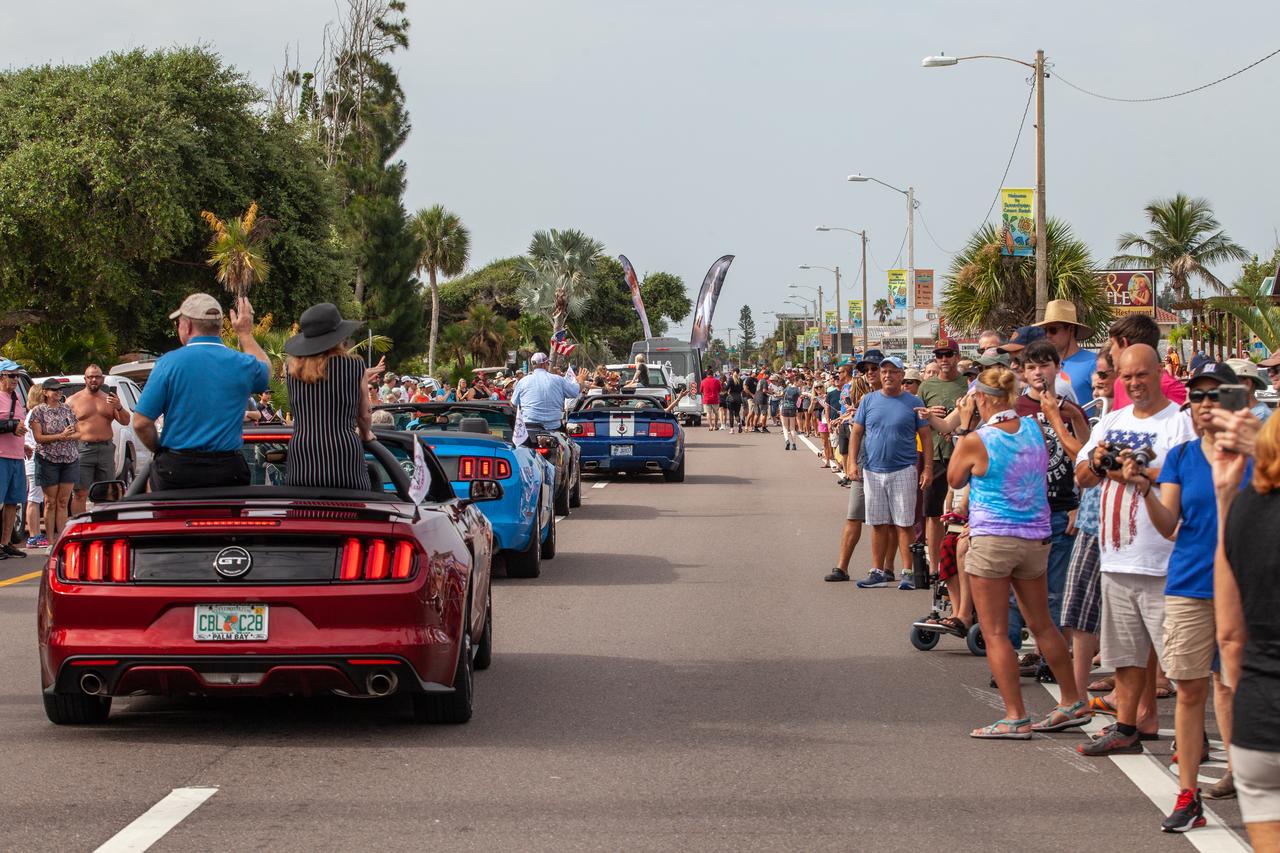
Spectators watch as a lineup of Ford Mustangs carry retired shuttle astronauts and family members of Apollo astronauts during the "Man on the Moon" astronaut parade in Cocoa Beach, Floirida, on July 13, 2019. The parade was held to honor the 50th anniversary of NASA’s Saturn V/Apollo 11 launch and landing on the Moon.
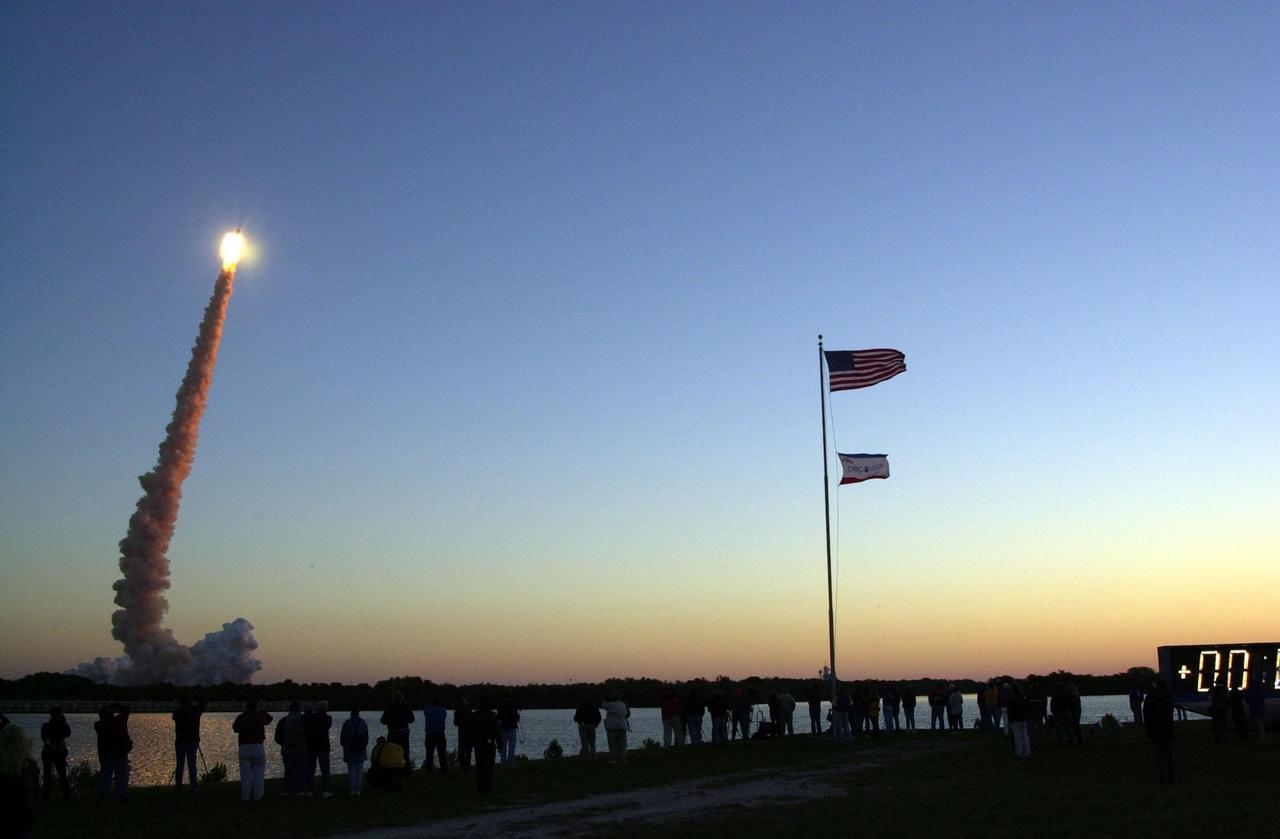
KENNEDY SPACE CENTER, Fla. -- Dozens of spectators line up by the turn basin to watch Space Shuttle Discovery blast off on mission STS-102, the eighth construction flight to the International Space Station. The lower smoke plumes appear red from the dawn’s rays. Liftoff occurred on time at 6:42:09 EST
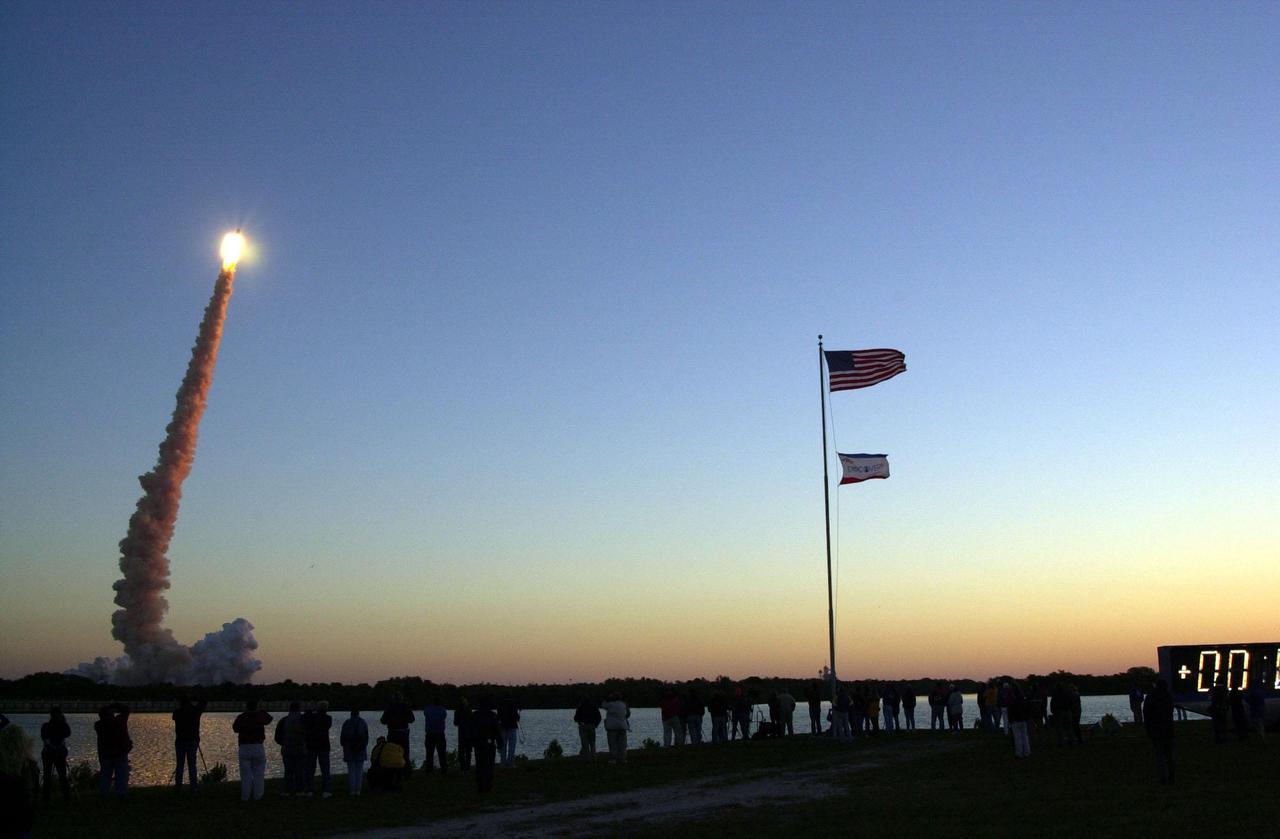
KENNEDY SPACE CENTER, Fla. -- Dozens of spectators line up by the turn basin to watch Space Shuttle Discovery blast off on mission STS-102, the eighth construction flight to the International Space Station. The lower smoke plumes appear red from the dawn’s rays. Liftoff occurred on time at 6:42:09 EST
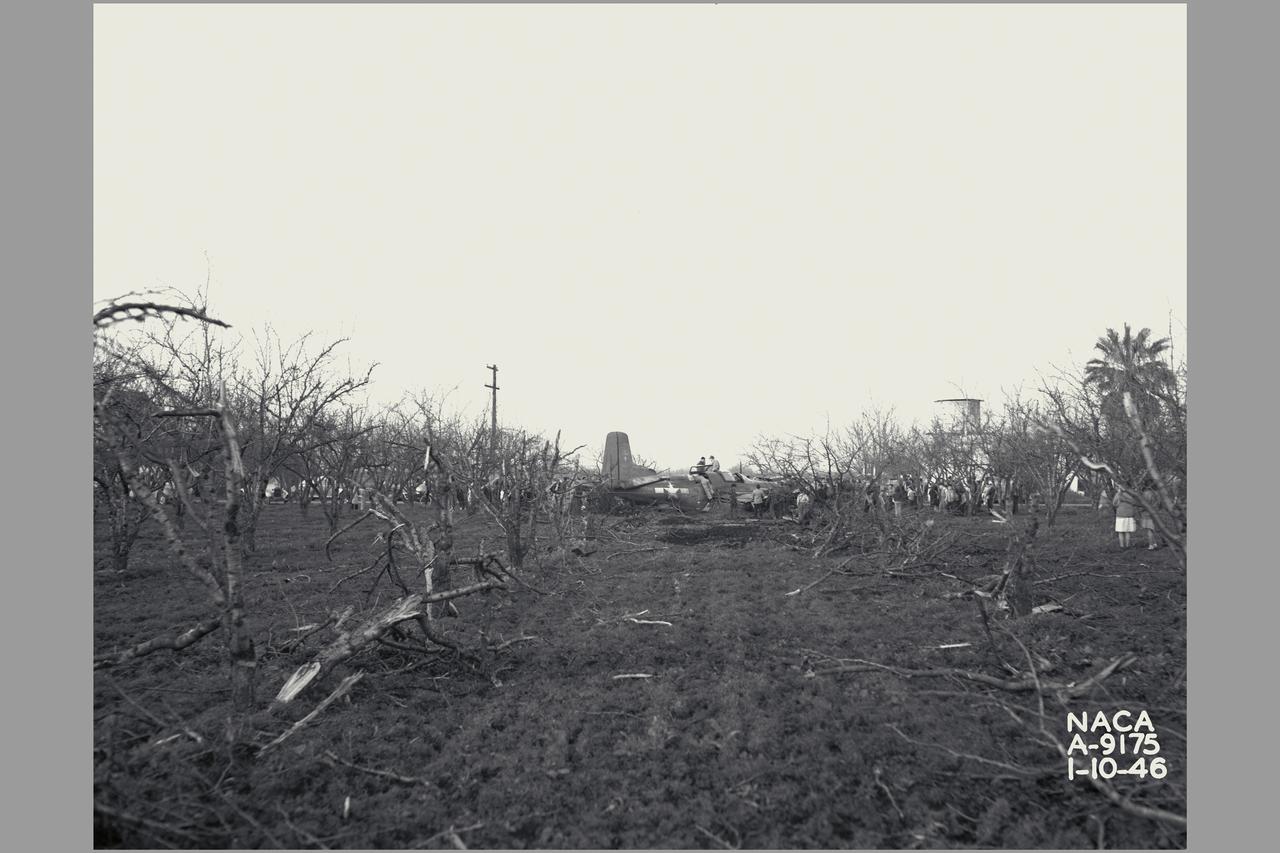
Crash of Douglas XSB2D-1 (Bu. No. 03552) airplane in a Sunnyvale , CA prune orchard caused by engine failure. Note the spectator crawling into the rear cockpit to remove the clock . Note: Used in publication Flight Research at Ames; 57 Years of Development and Validation of Aeronautical Technology NASA SP-1998-3300 fig.19
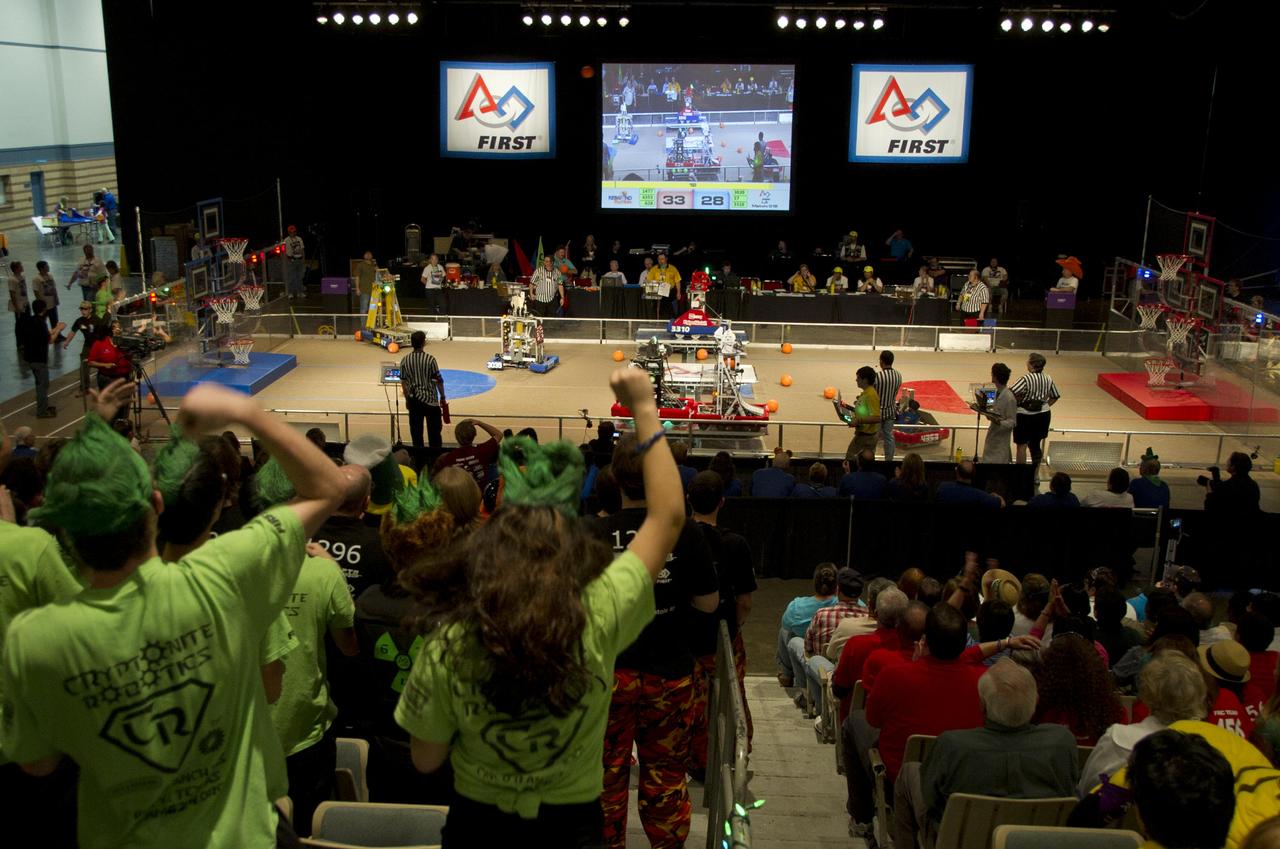
Spectators crew on teams during the 2012 FIRST (For Inspiration and Recognition of Science and Technology) Robotics Bayou Regional Competition March 15-17, 2012, in Kenner, La. Students from 49 high school teams in six states participated in the annual robotics tournament.
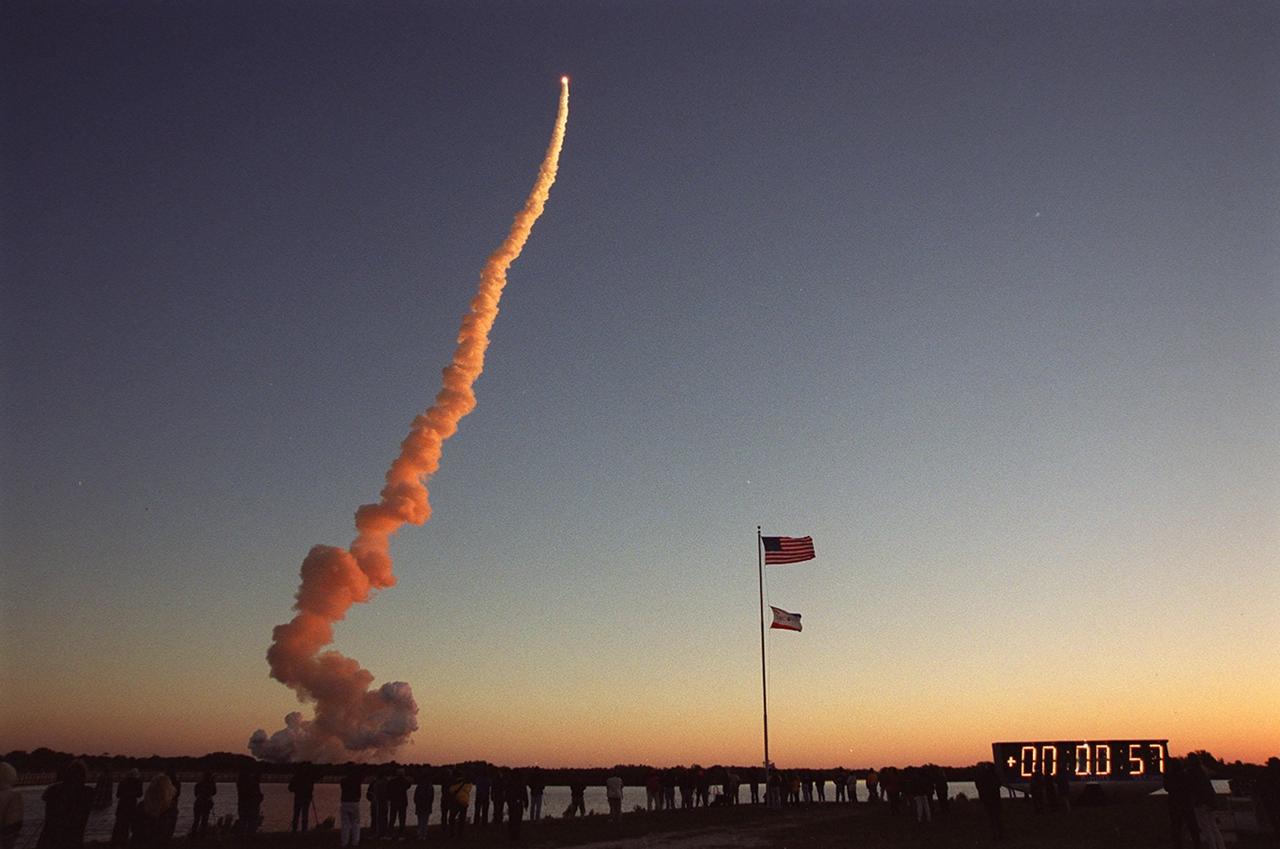
KENNEDY SPACE CENTER, Fla. -- Spectators line the banks of the turn basin to watch the dawn launch of Space Shuttle Discovery on mission STS-102. The rosy sky pales in comparison to the deep rose of the orbiter’s exhaust trail that captures the rising sun’s rays. Liftoff occurred at 6:42:09 EST for the eighth flight to the International Space Station
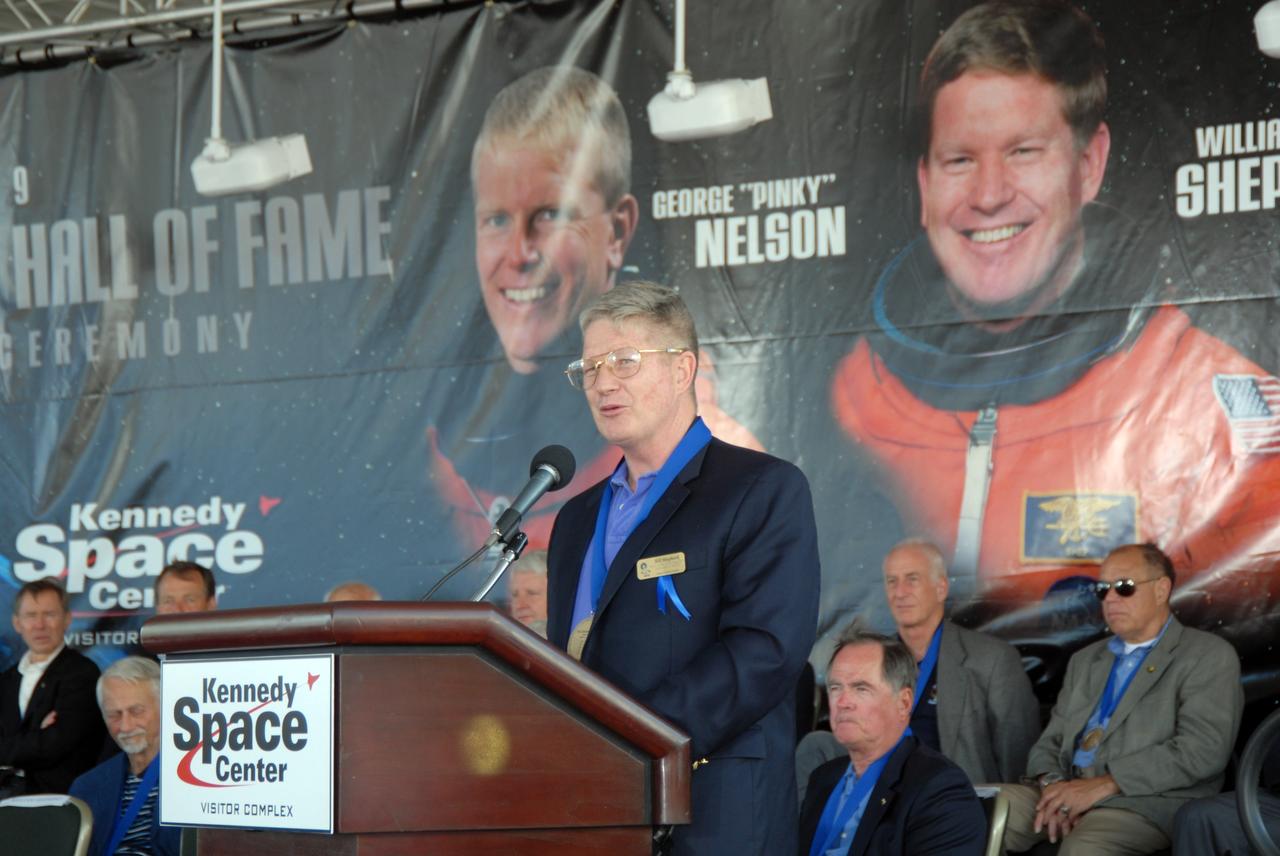
CAPE CANAVERAL, Fla. –– Astronaut William Shepherd addresses the spectators at the U.S. Astronaut Hall of Fame after his induction in the ceremony held at NASA's Kennedy Space Center Visitor Complex in Florida. Shepherd was commander of the first crew to live aboard the International Space Station. The ceremony took place May 2. More than 20 hall of fame astronauts attended, including Scott Carpenter, Walt Cunningham, Jim Lovell and Bob Crippen. Photo credit: NASA/Jim Grossmann
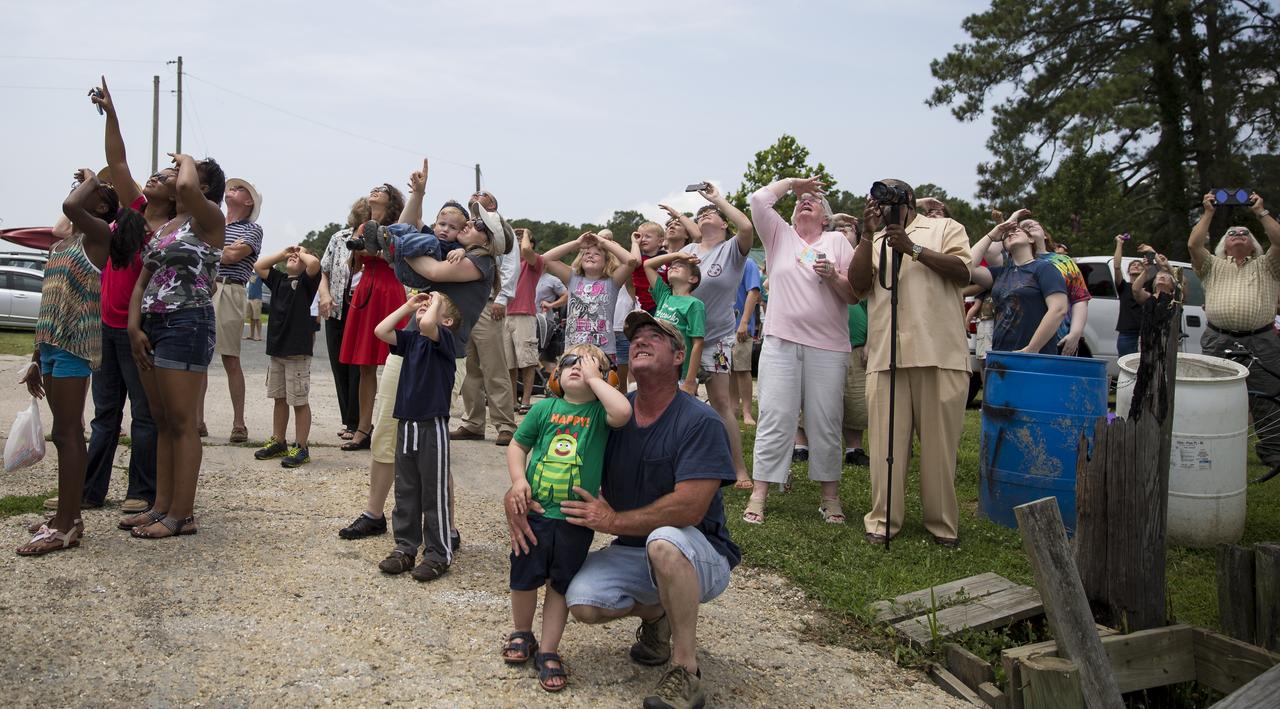
Spectators watch as the Orbital Sciences Corporation Antares rocket launches with the Cygnus spacecraft onboard from NASA's Wallops Flight Facility, Sunday, July 13, 2014, Atlantic, VA. The Cygnus spacecraft is filled with over 3,000 pounds of supplies for the International Space Station, including science experiments, experiment hardware, spare parts, and crew provisions. The Orbital-2 mission is Orbital Sciences' second contracted cargo delivery flight to the space station for NASA. Photo Credit: (NASA/Joel Kowsky)
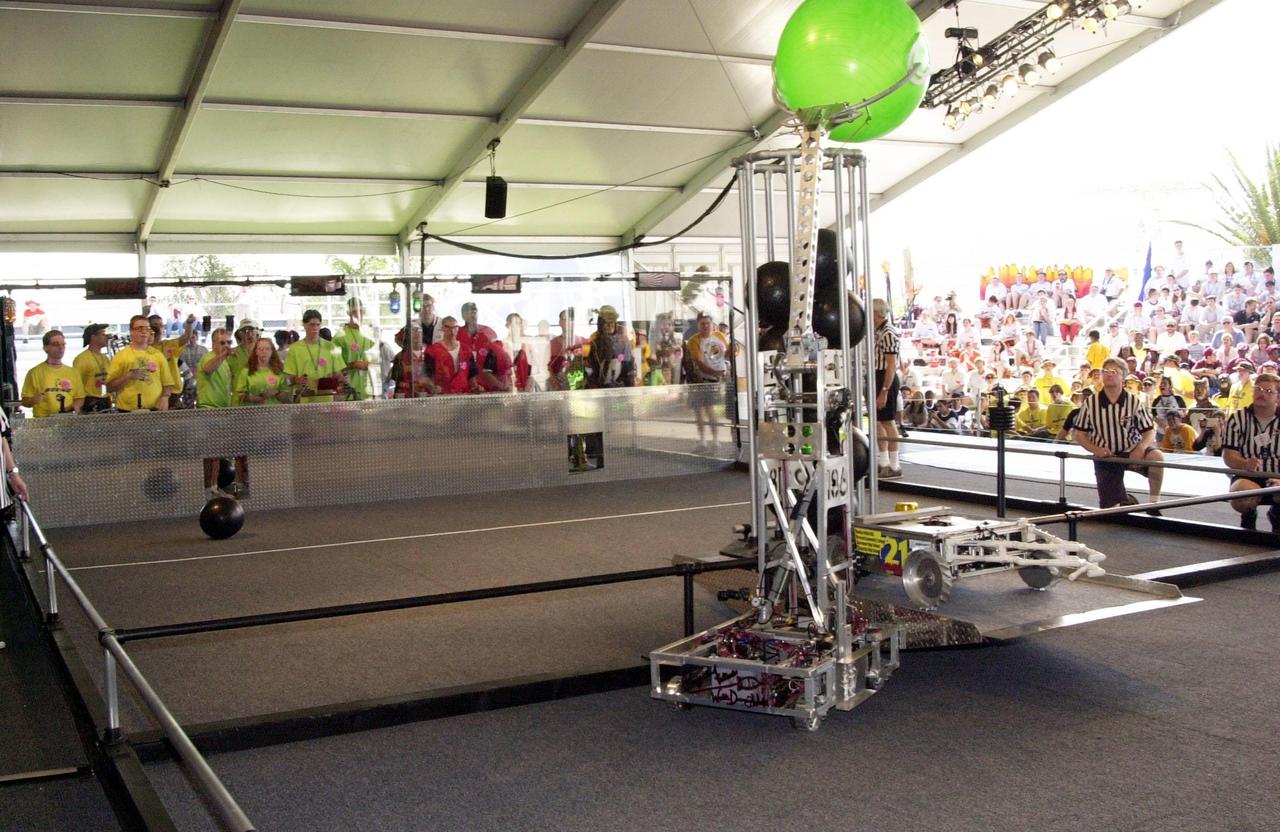
Student teams and spectators look over the playing field and listen to instructions about the competition at the NASA/KSC FIRST Southeastern Regional event held March 1-3, 2001. FIRST (For Inspiration and Recognition of Science and Technology) events are held nationwide, pitting robots against each other and the clock on a playing field. Many teams are sponsored by corporations and academic institutions. There are 27 teams throughout the State of Florida who are competing. KSC, which sponsors nine teams, has held the regional event for two years
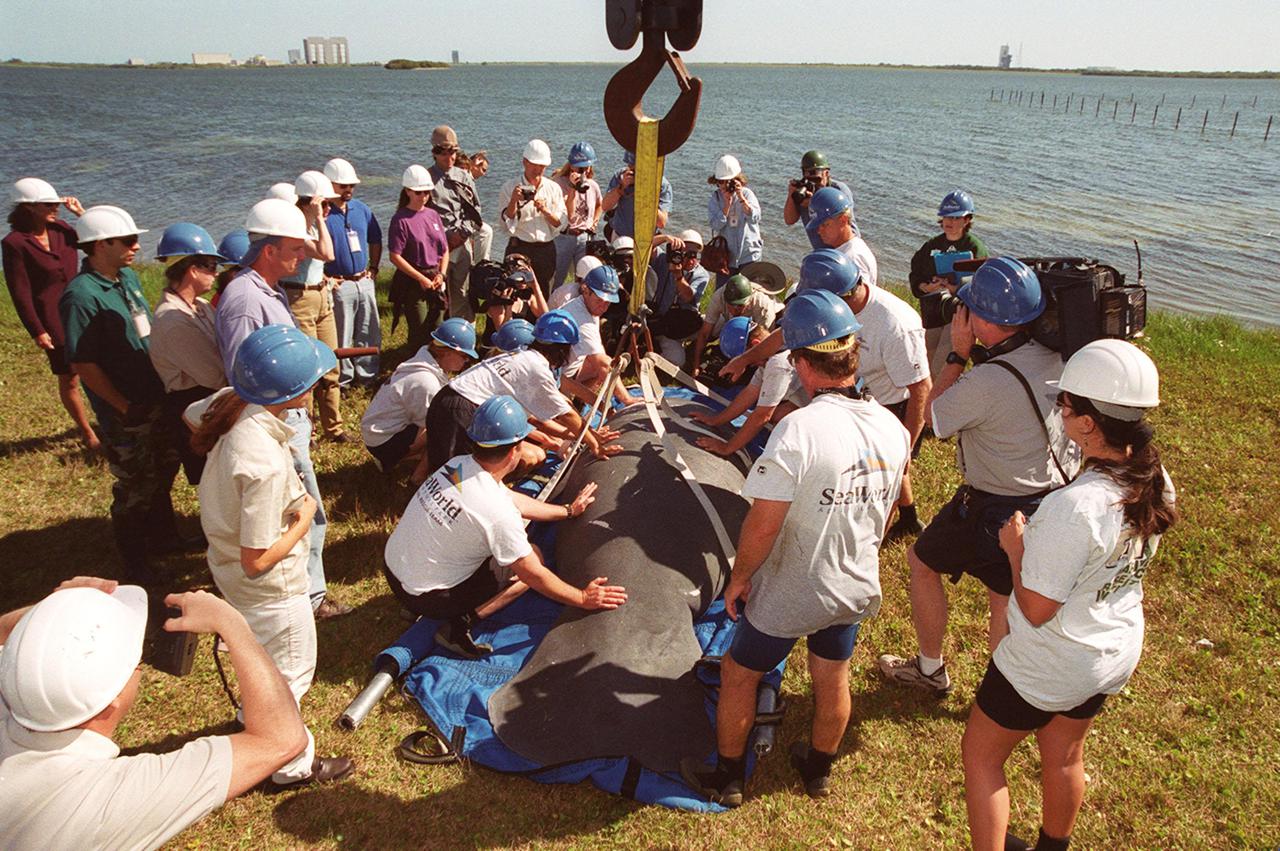
KENNEDY SPACE CENTER, FLA. -- Spectators and photographers gather around the adult manatee Sea World workers are releasing into the Banana River in the background. The site is on the north side of the NASA Causeway, near Kennedy Space Center. On the horizon at left can be seen the Vehicle Assembly Building. The weight of the manatee requires a hoist to lift it. Earlier, workers released a calf. The two manatees recovered from injuries at Sea World. Manatees are frequently seen in the waters around Kennedy Space Center, which is surrounded by the Merritt Island National Wildlife Refuge

Spectators on the National Mall during a partial solar eclipse in Washington, DC, Monday, April 8, 2024. A total solar eclipse swept across a narrow portion of the North American continent from Mexico’s Pacific coast to the Atlantic coast of Newfoundland, Canada. A partial solar eclipse was visible across the entire North American continent along with parts of Central America and Europe. Photo Credit: (NASA/Denny Henry)
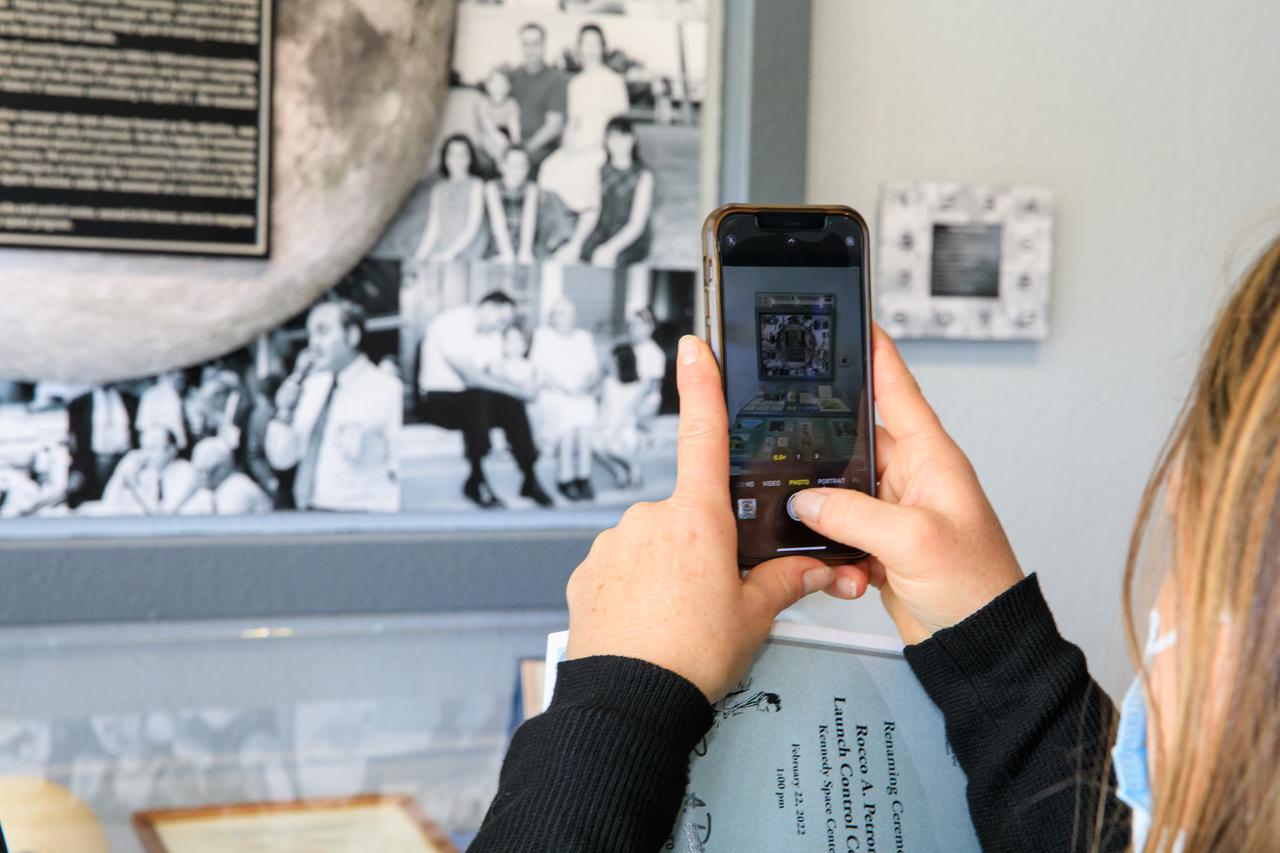
A spectator takes a photo of a display dedicated to former Kennedy Space Center director Rocco Petrone on Feb. 22, 2022. During a ceremony held at the Florida spaceport, Kennedy’s launch control center was officially renamed to the Rocco A. Petrone Launch Control Center. Petrone was instrumental in America’s first voyages to the Moon and headed the Apollo program. He died in 2006 at the age of 80.
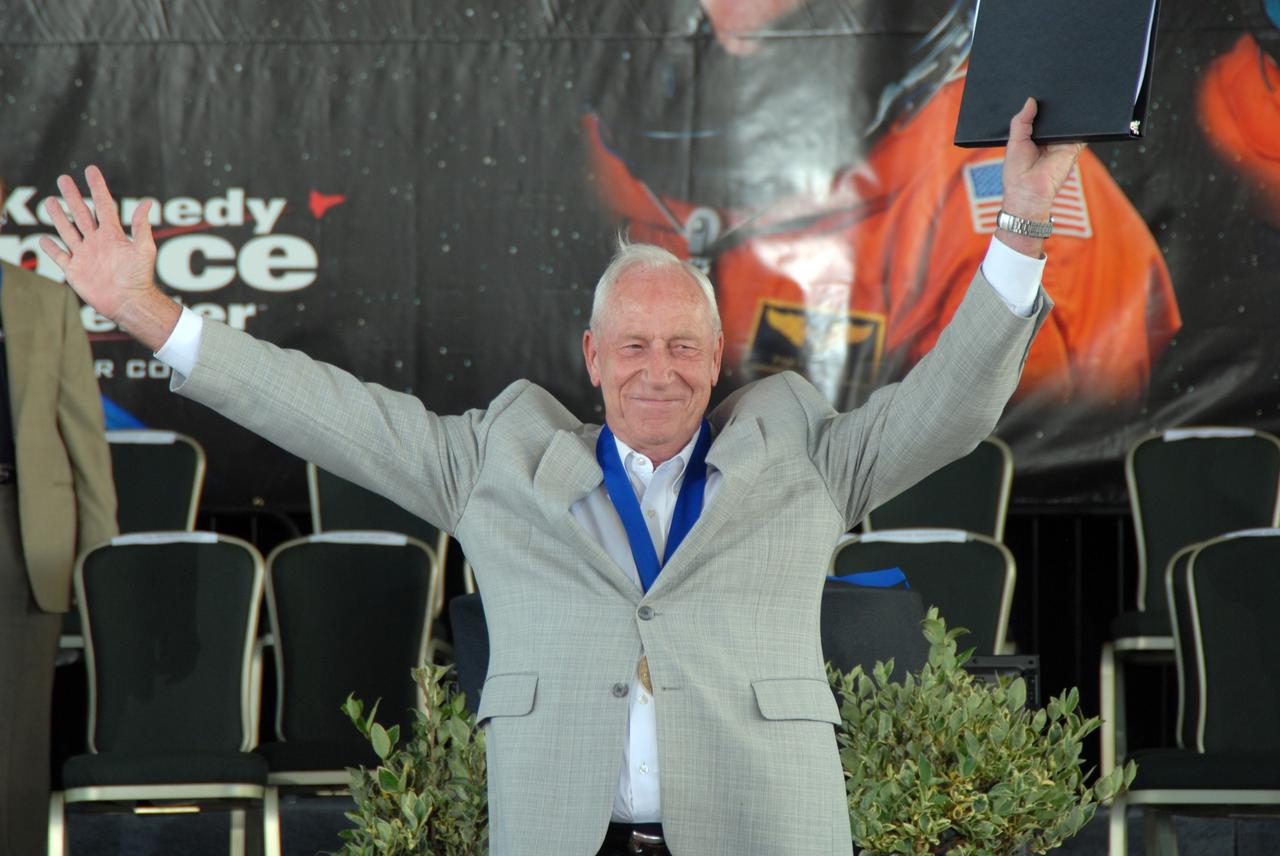
CAPE CANAVERAL, Fla. –– Hall of Fame astronaut Al Worden acknowledges warm applause from spectators at the 2009 U.S. Astronaut Hall of Fame induction ceremony at NASA's Kennedy Space Center Visitor Complex in Florida. The ceremony took place May 2. More than 20 hall of fame astronauts attended, including Scott Carpenter, Walt Cunningham, Jim Lovell and Bob Crippen. Photo credit: NASA/Jim Grossmann
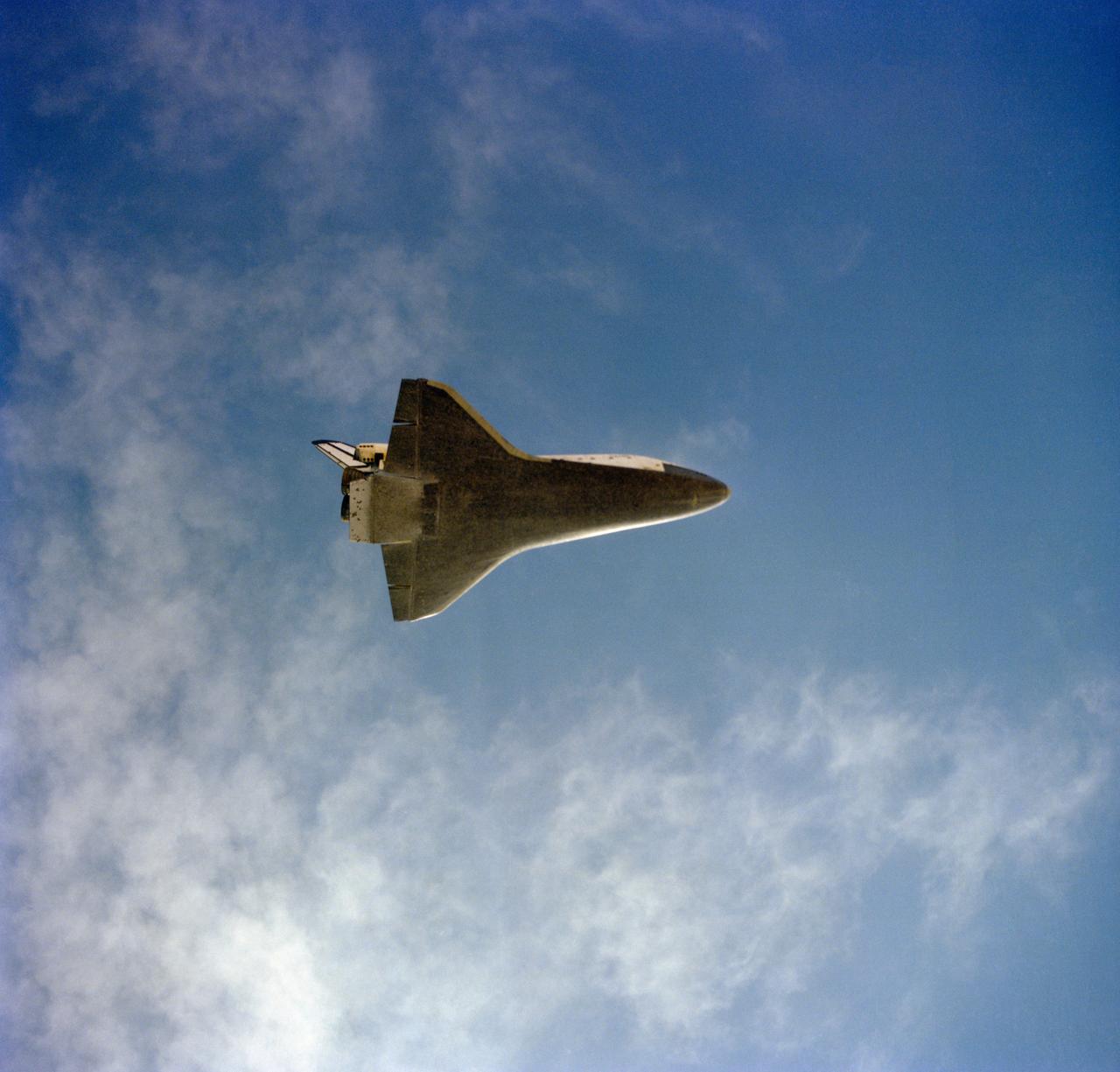
S82-28835 (30 March 1982) --- This unique view of the underside of the space shuttle orbiter Columbia was taken with a handheld camera aboard a T-38 chase plane over the White Sands Missile Range in New Mexico. Bad weather here yesterday vanished and the STS-3 crew of astronaut Jack R. Lousma and C. Gordon Fullerton greeted a pleasant climate along with a large crowd of spectators upon their landing. The successful landing was the first attempted in the actual orbiter on New Mexico soil. Photo credit: NASA

CAPE CANAVERAL, Fla. – At the Apollo/Saturn V Center at NASA's Kennedy Space Center in Florida, Apollo astronaut Bruce McCandless shares his experiences with spectators crowd gathered for NASA's 40th Anniversary of Apollo Celebration of the July 1969 launch and landing on the moon. Other Apollo astronauts on the dais are (from left) Buzz Aldrin, Edgar Mitchell, Al Worden, Charlie Duke, Gerald Carr and Vance Brand. Astronaut Walt Cunningham is hidden behind Mitchell. Photo credit: NASA/Kim Shiflett
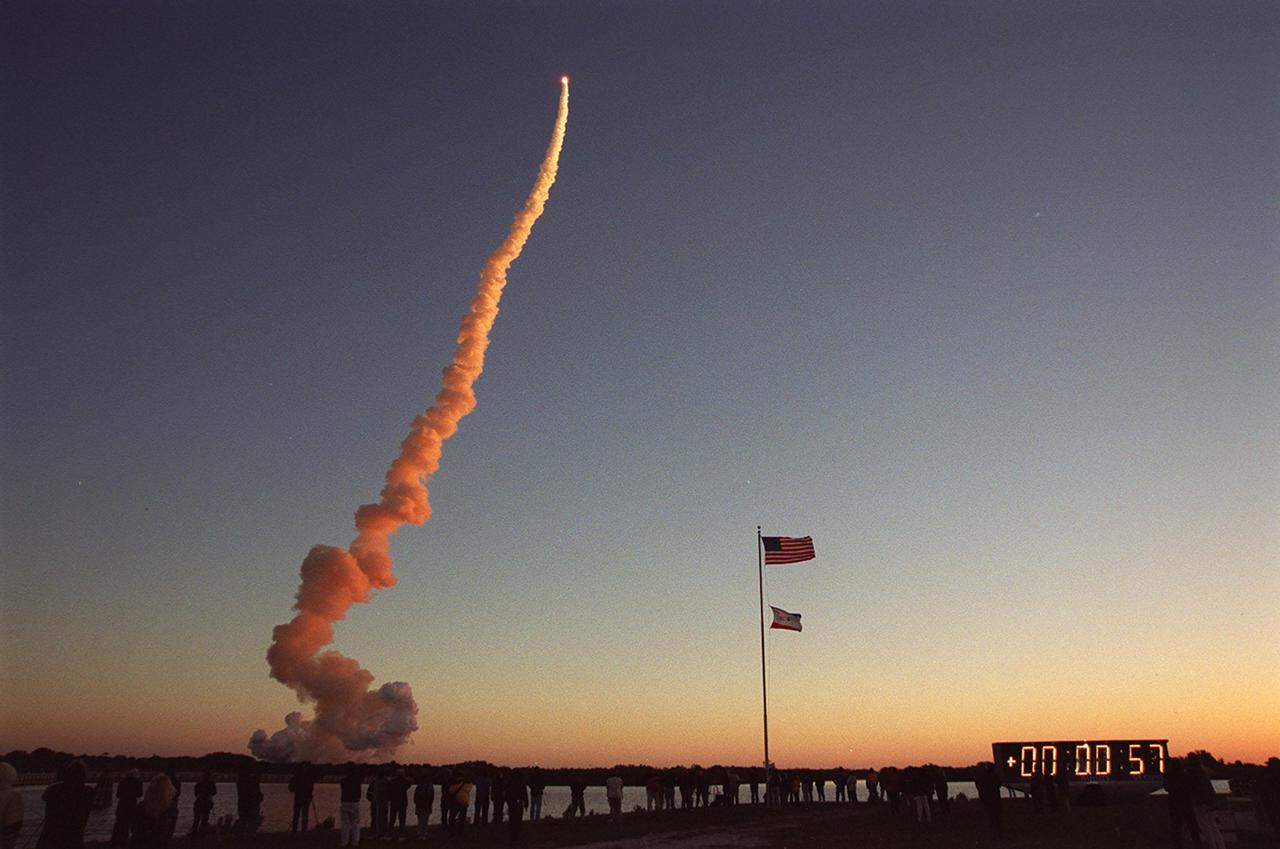
KENNEDY SPACE CENTER, Fla. -- Spectators line the banks of the turn basin to watch the dawn launch of Space Shuttle Discovery on mission STS-102. The rosy sky pales in comparison to the deep rose of the orbiter’s exhaust trail that captures the rising sun’s rays. Liftoff occurred at 6:42:09 EST for the eighth flight to the International Space Station

Spectators on the National Mall during a partial solar eclipse in Washington, DC, Monday, April 8, 2024. A total solar eclipse swept across a narrow portion of the North American continent from Mexico’s Pacific coast to the Atlantic coast of Newfoundland, Canada. A partial solar eclipse was visible across the entire North American continent along with parts of Central America and Europe. Photo Credit: (NASA/Denny Henry)
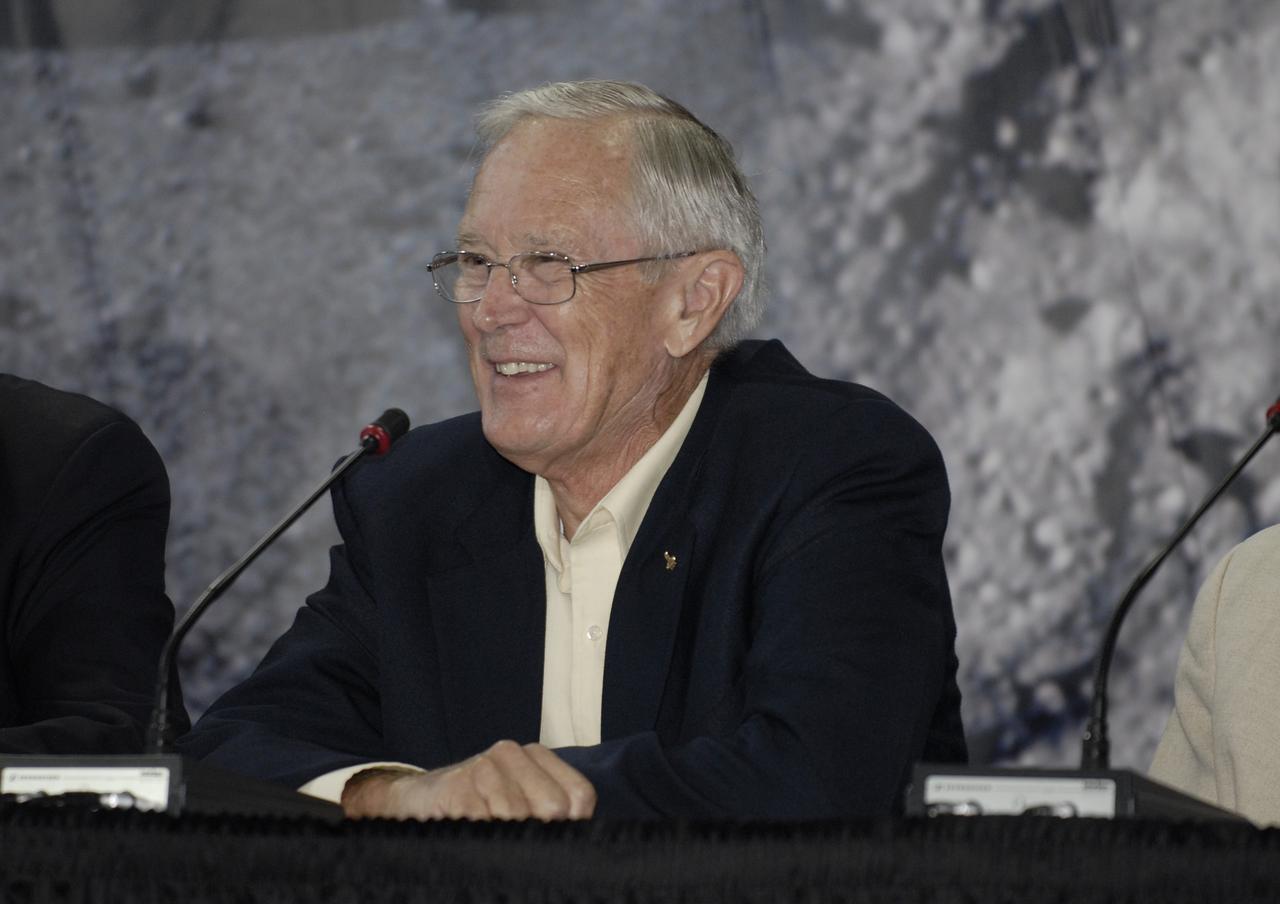
CAPE CANAVERAL, Fla. – At the Apollo/Saturn V Center at NASA's Kennedy Space Center in Florida, Apollo astronaut Charlie Duke shares his experiences with spectators crowd gathered for NASA's 40th Anniversary of Apollo Celebration of the July 1969 launch and landing on the moon. Duke served as lunar module pilot on Apollo 16 in 1972. He and astronaut John Young set a record of 72 hours and 14 minutes on the lunar surface. Photo credit: NASA/Kim Shiflett
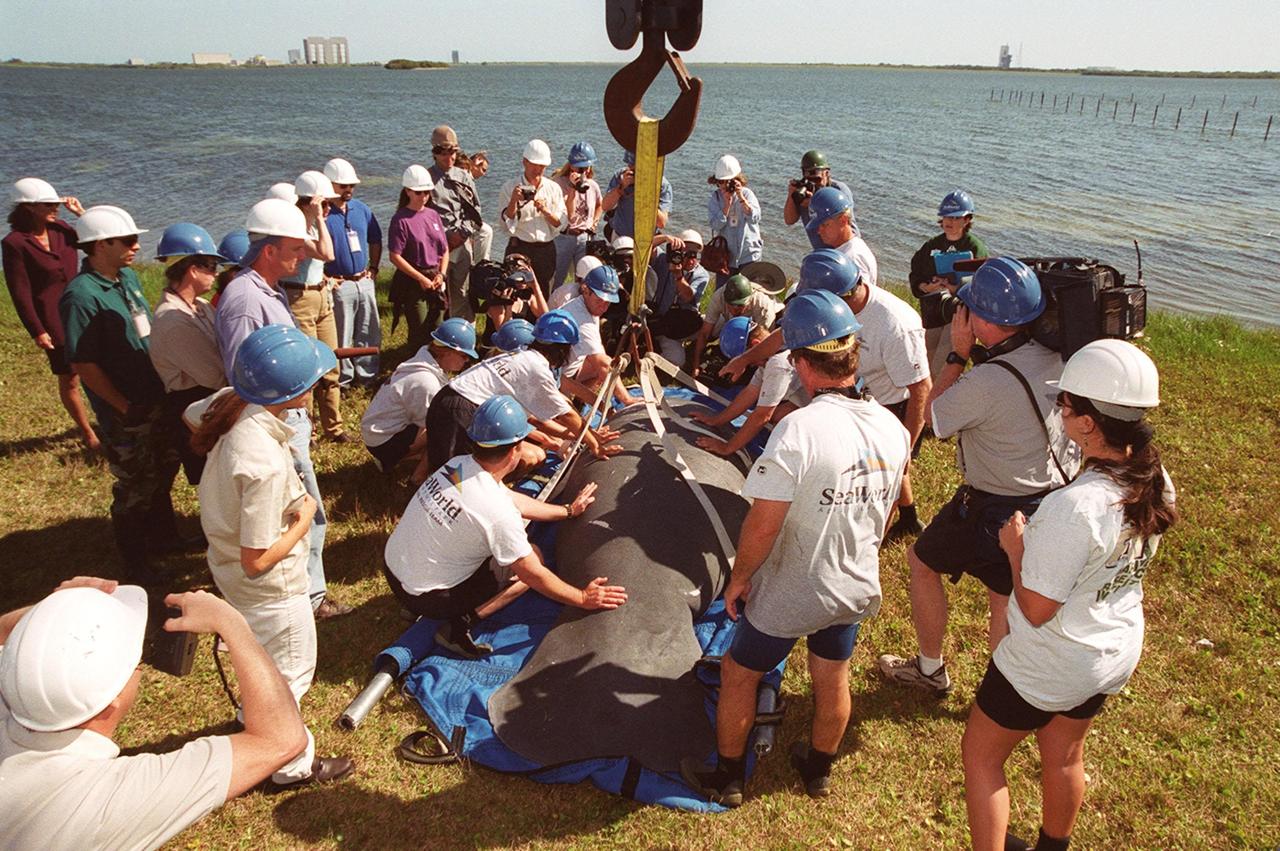
KENNEDY SPACE CENTER, FLA. -- Spectators and photographers gather around the adult manatee Sea World workers are releasing into the Banana River in the background. The site is on the north side of the NASA Causeway, near Kennedy Space Center. On the horizon at left can be seen the Vehicle Assembly Building. The weight of the manatee requires a hoist to lift it. Earlier, workers released a calf. The two manatees recovered from injuries at Sea World. Manatees are frequently seen in the waters around Kennedy Space Center, which is surrounded by the Merritt Island National Wildlife Refuge
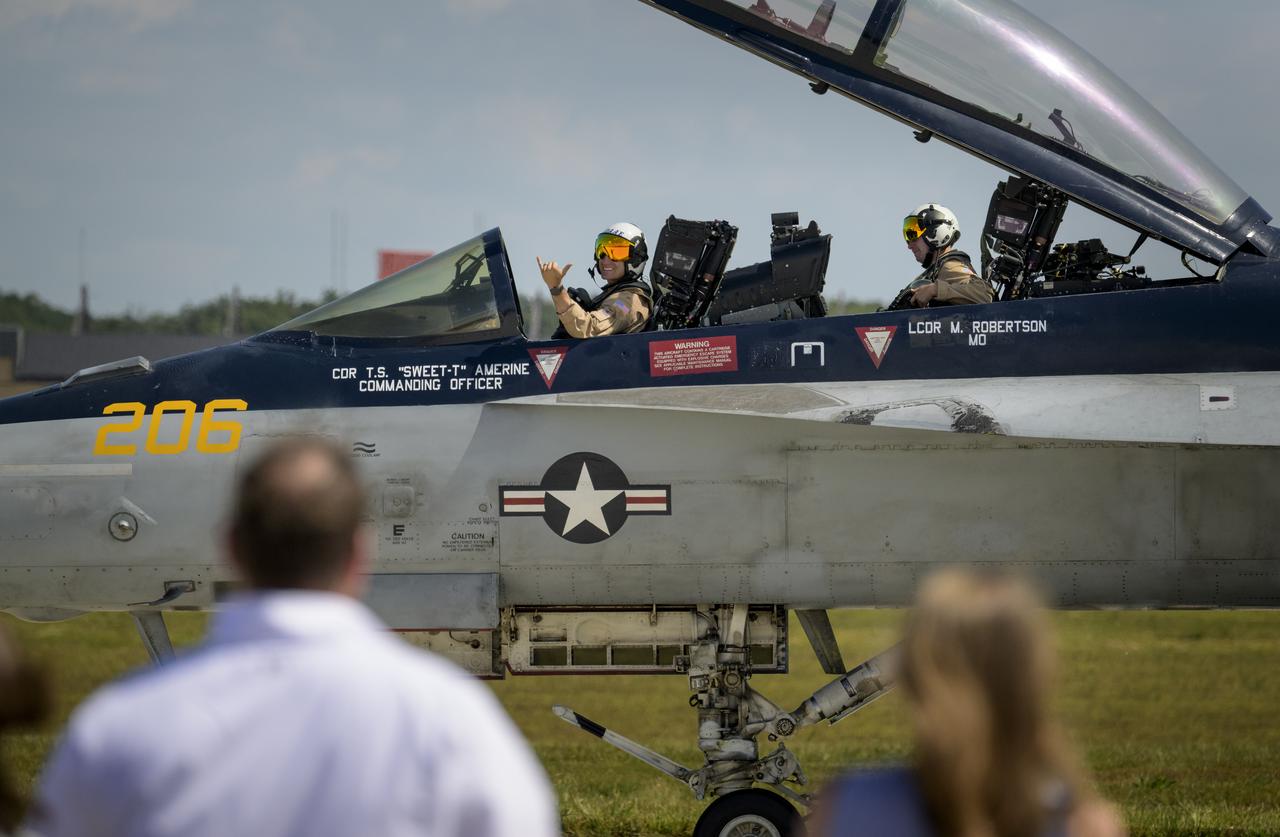
Pilots taxi past spectators in their U.S. Navy F/A-15F Super Hornet jet, Friday, Sept. 12, 2025, during the Joint Base Andrews Air Show at Joint Base Andrews in Prince George's County, Maryland. NASA astronaut Nick Hague was on hand to provide remarks and meet with guests. Hague spent 171 days onboard the International Space Station as part of Expedition 72. Photo Credit: (NASA/Bill Ingalls)
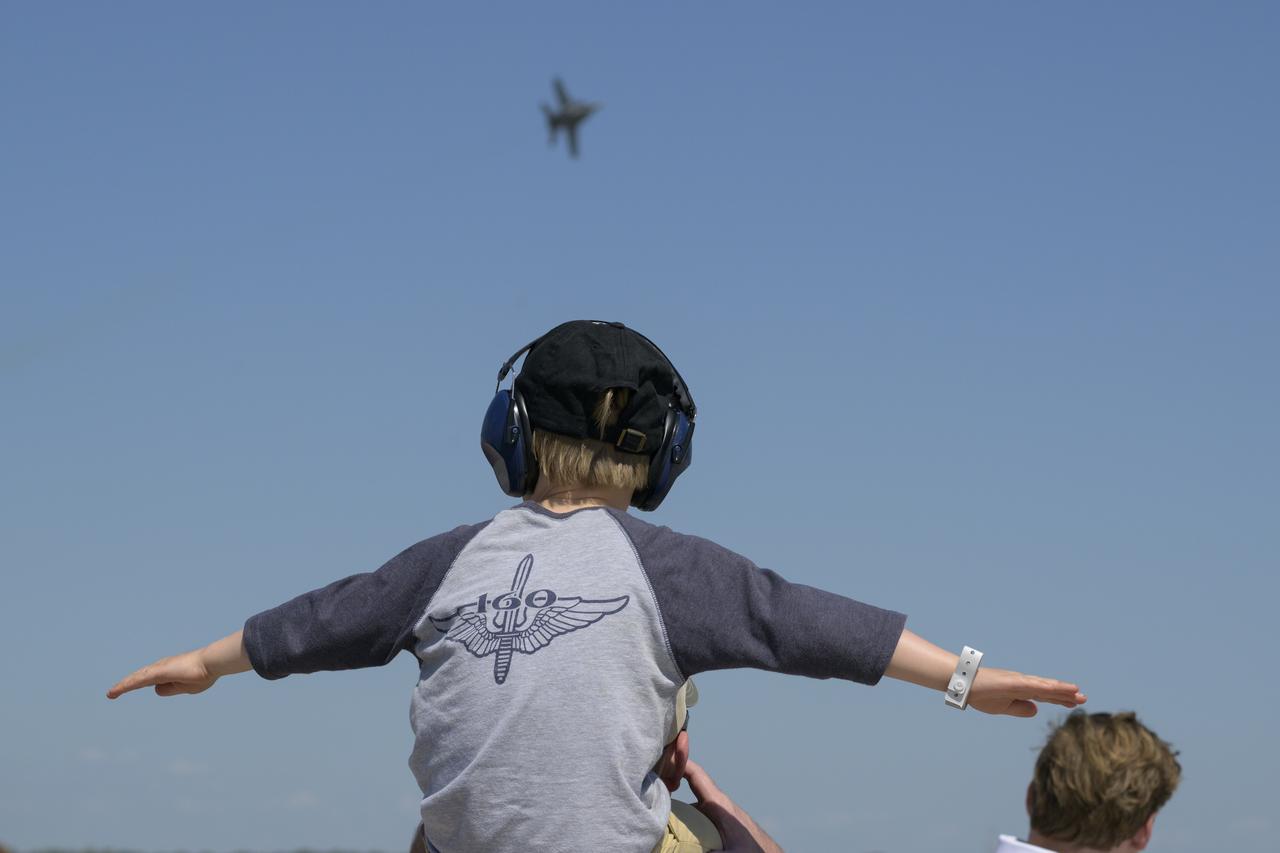
A young spectator watches a U.S. Navy F/A-15F Super Hornet jet fly, Friday, Sept. 12, 2025, during the Joint Base Andrews Air Show at Joint Base Andrews in Prince George's County, Maryland. NASA astronaut Nick Hague was on hand to provide remarks and meet with guests. Hague spent 171 days onboard the International Space Station as part of Expedition 72. Photo Credit: (NASA/Bill Ingalls)
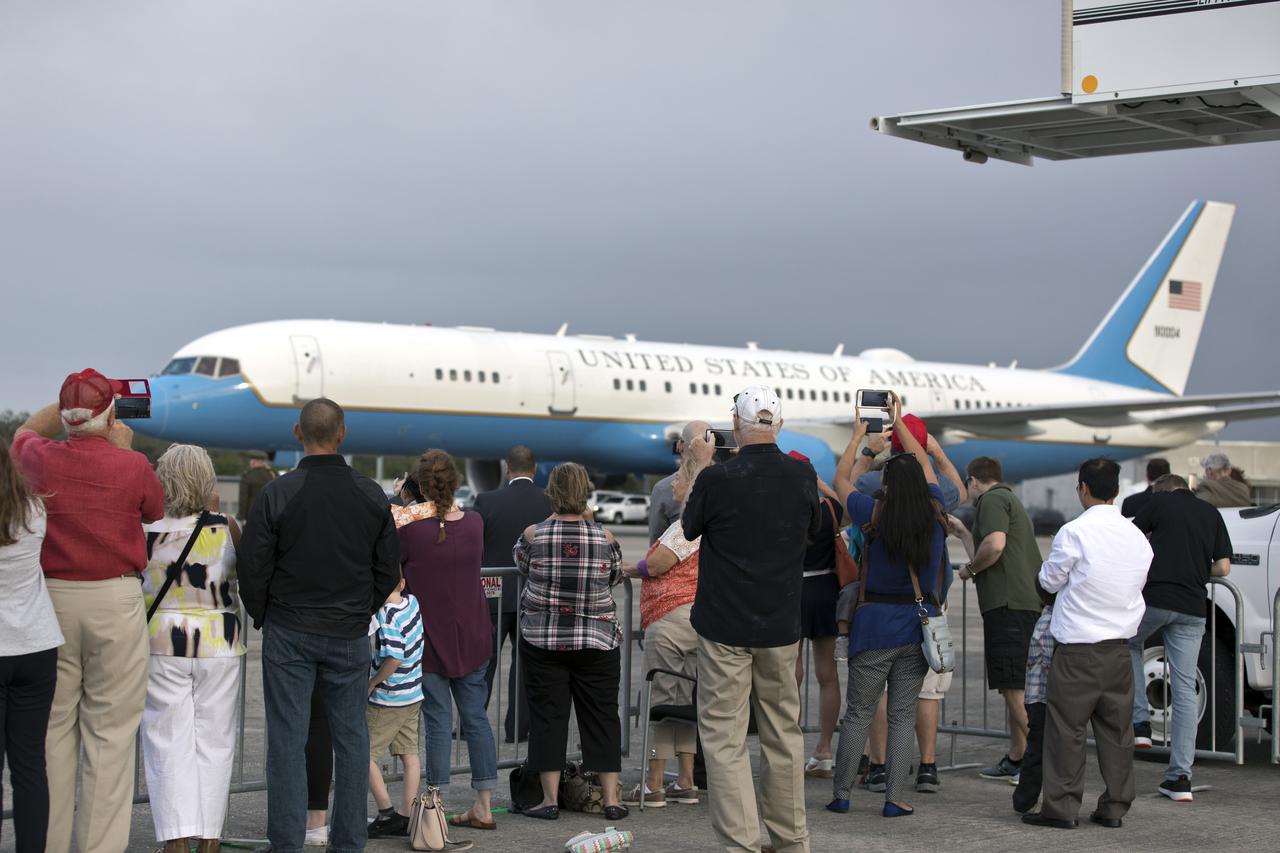
Spectators watch as Air Force Two, carrying Vice President Mike Pence, taxis on the Shuttle Landing Facility at NASA's Kennedy Space Center in Florida, on Feb. 20, 2018. During his visit, Pence will chair a meeting of the National Space Council in the high bay of the center's Space Station Processing Facility. The council's role is to advise the president regarding national space policy and strategy, and review the nation's long-range goals for space activities.
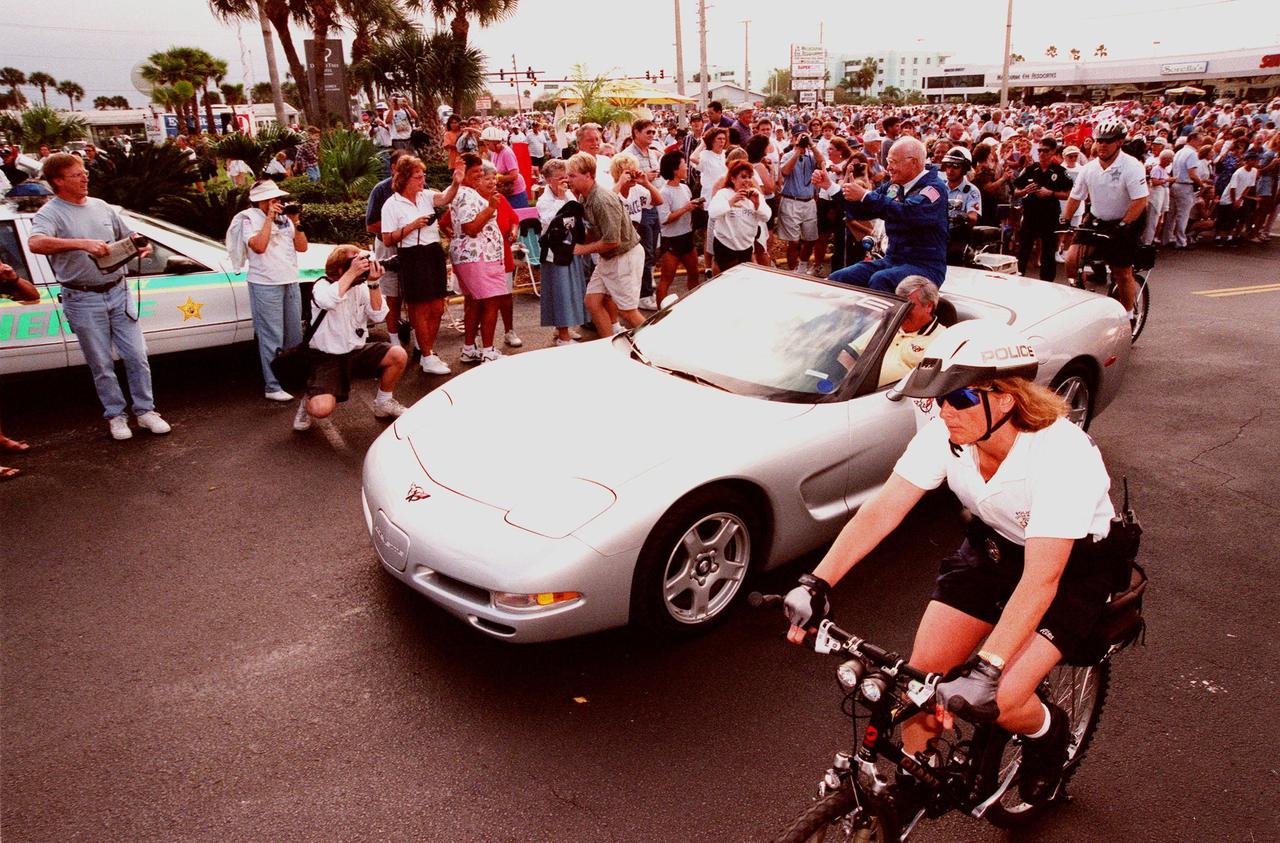
STS-95 Payload Specialist John H. Glenn Jr. waves to spectators from the back of a silver 1999 C-5 Corvette convertible during a parade down State Road A1A in nearby Cocoa Beach. Organizers of the parade include the Cocoa Beach Area Chamber of Commerce, the Brevard County Tourist Development Council, and the cities of Cape Canaveral and Cocoa Beach. The parade is reminiscent of those held after missions during the Mercury Program
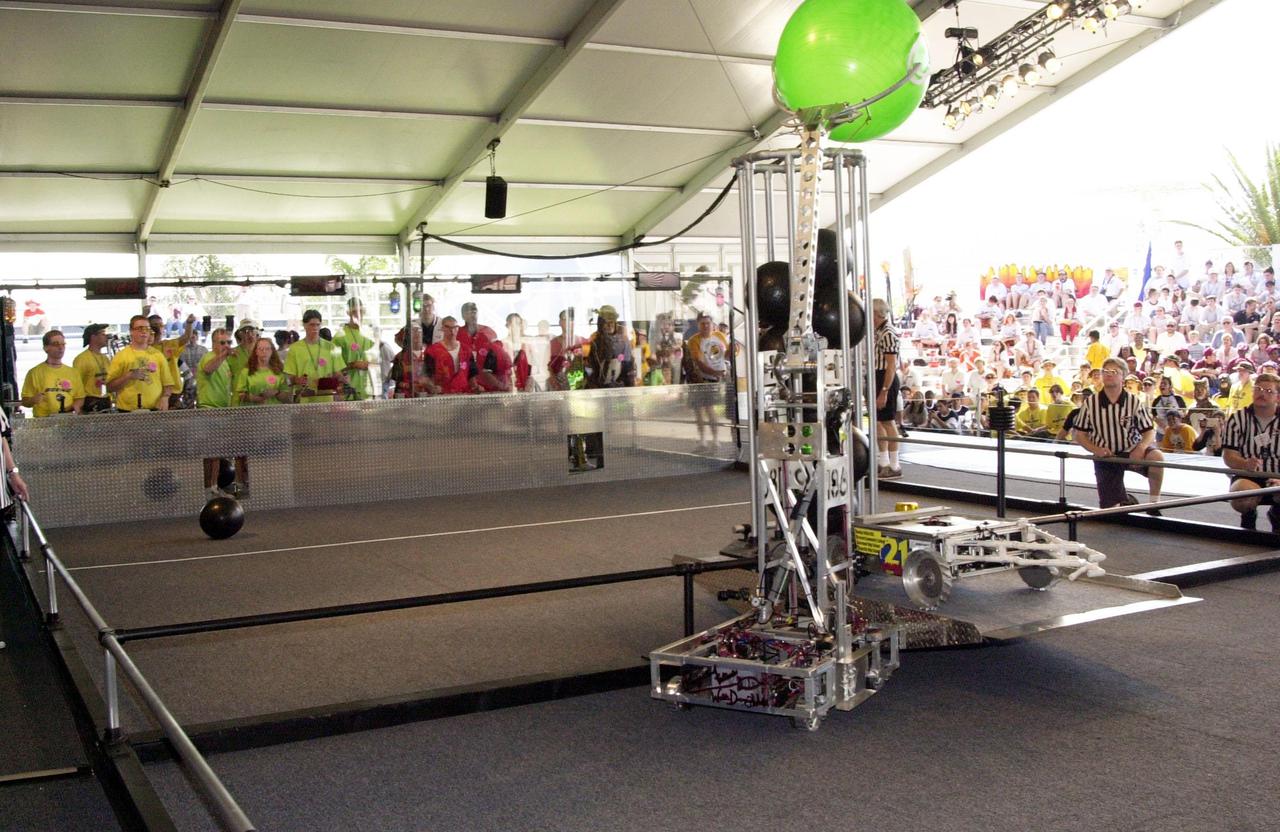
Student teams and spectators look over the playing field and listen to instructions about the competition at the NASA_KSC FIRST Southeastern Regional event held March 1-3, 2001. FIRST (For Inspiration and Recognition of Science and Technology) events are held nationwide, pitting robots against each other and the clock on a playing field. Many teams are sponsored by corporations and academic institutions. There are 27 teams throughout the State of Florida who are competing. KSC, which sponsors nine teams, has held the regional event for two years
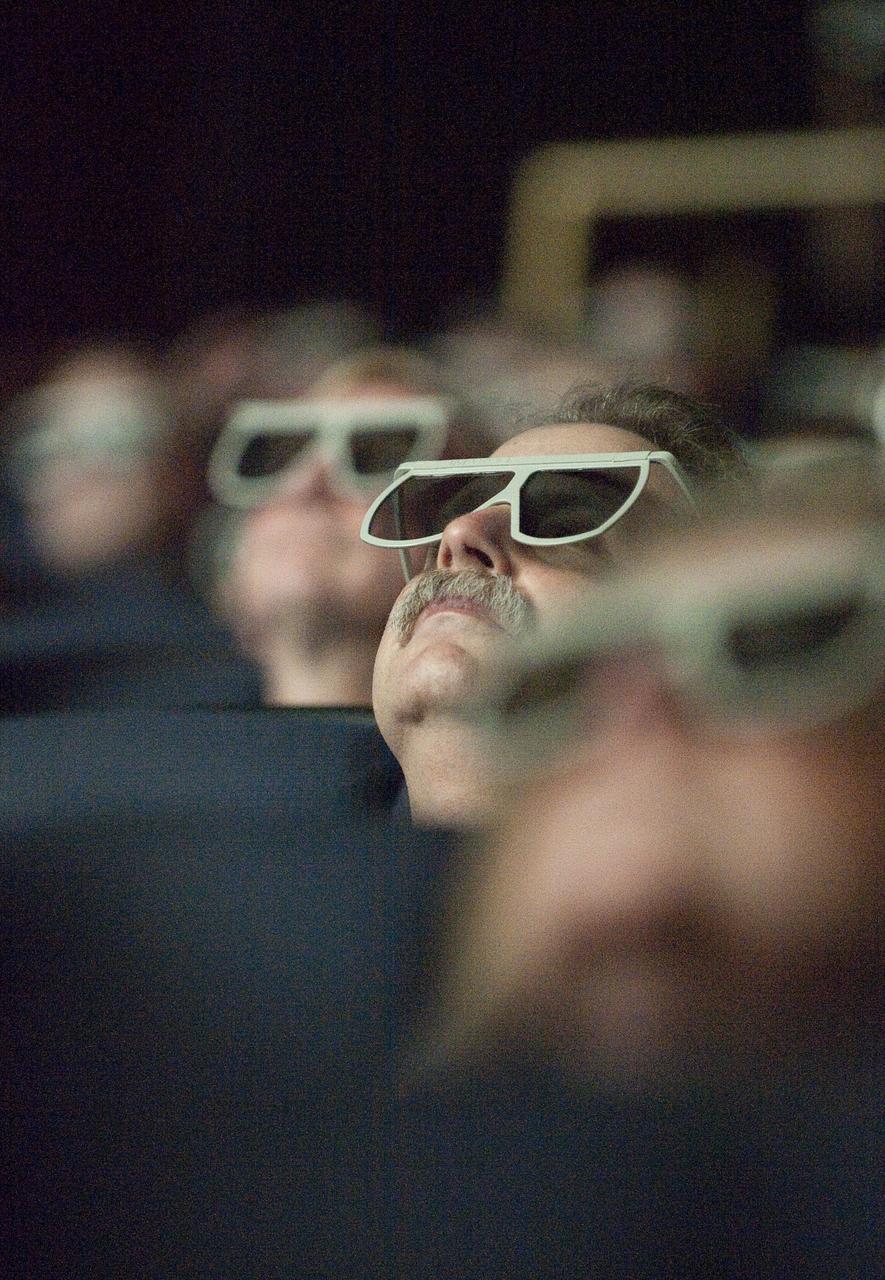
Unidentified people observe newly released images from the Hubble Space Telescope through special glasses, Wednesday evening, Sept. 9, 2009, during a celebration of the Hubble Legacy at the National Air and Space Museum in Washington. Astronomers declared the telescope a fully rejuvenated observatory with the release Wednesday of observations from four of its six operating science instruments. Photo Credit: (NASA/Bill Ingalls)

Unidentified people observe newly released images from the Hubble Space Telescope through special glasses Wednesday evening, Sept. 9, 2009, during a celebration of the Hubble Legacy at the National Air and Space Museum in Washington. Astronomers declared the telescope a fully rejuvenated observatory with the release Wednesday of observations from four of its six operating science instruments. Photo Credit: (NASA/Bill Ingalls)

Images from the Hubble Space Telescope are reflected on special glasses as people observe the newly released pictures Wednesday evening, Sept. 9, 2009, during a celebration of the Hubble Legacy at the National Air and Space Museum in Washington. Astronomers declared the telescope a fully rejuvenated observatory with the release Wednesday of observations from four of its six operating science instruments. Photo Credit: (NASA/Bill Ingalls)
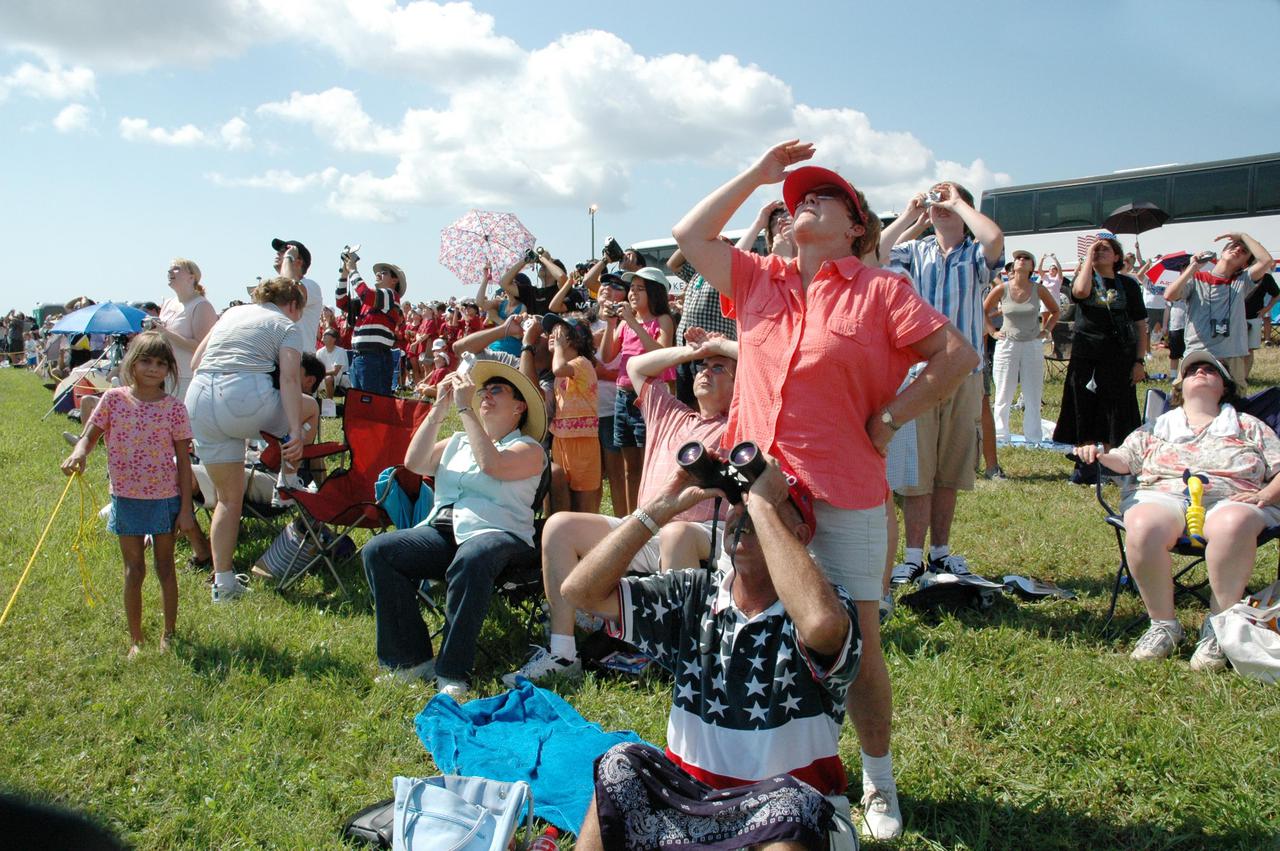
KENNEDY SPACE CENTER, FLA. - Spectators fill the grounds near NASA Kennedy Space Center to witness the launch of Space Shuttle Discovery on Return to Flight mission STS-114. They were among thousands of spectators attending the historic return of the Space Shuttle to space. It is the 114th Space Shuttle flight and the 31st for Discovery. The 12-day mission is expected to end with touchdown at the Shuttle Landing Facility on Aug. 7. On this mission to the International Space Station the crew will perform inspections on-orbit for the first time of all of the Reinforced Carbon-Carbon (RCC) panels on the leading edge of the wings and the Thermal Protection System tiles using the new Canadian-built Orbiter Boom Sensor System and the data from 176 impact and temperature sensors. Mission Specialists will also practice repair techniques on RCC and tile samples during a spacewalk in the payload bay. During two additional spacewalks, the crew will install the External Stowage Platform-2, equipped with spare part assemblies, and a replacement Control Moment Gyroscope contained in the Lightweight Multi-Purpose Experiment Support Structure.

KENNEDY SPACE CENTER, FLA. -- NASA Administrator Dan Goldin (right) joins other spectators at the Banana Creek viewing site in cheering the successful launch of Space Shuttle Endeavour on mission STS-99. The perfect liftoff occurred at 12:43:40 p.m. EST. Known as the Shuttle Radar Topography Mission (SRTM), STS-99 will chart a new course to produce unrivaled 3-D images of the Earth's surface. The result of the SRTM could be close to 1 trillion measurements of the Earth's topography. The mission is expected to last 11days, with Endeavour landing at KSC Tuesday, Feb. 22, at 4:36 p.m. EST. This is the 97th Shuttle flight and 14th for Shuttle Endeavour
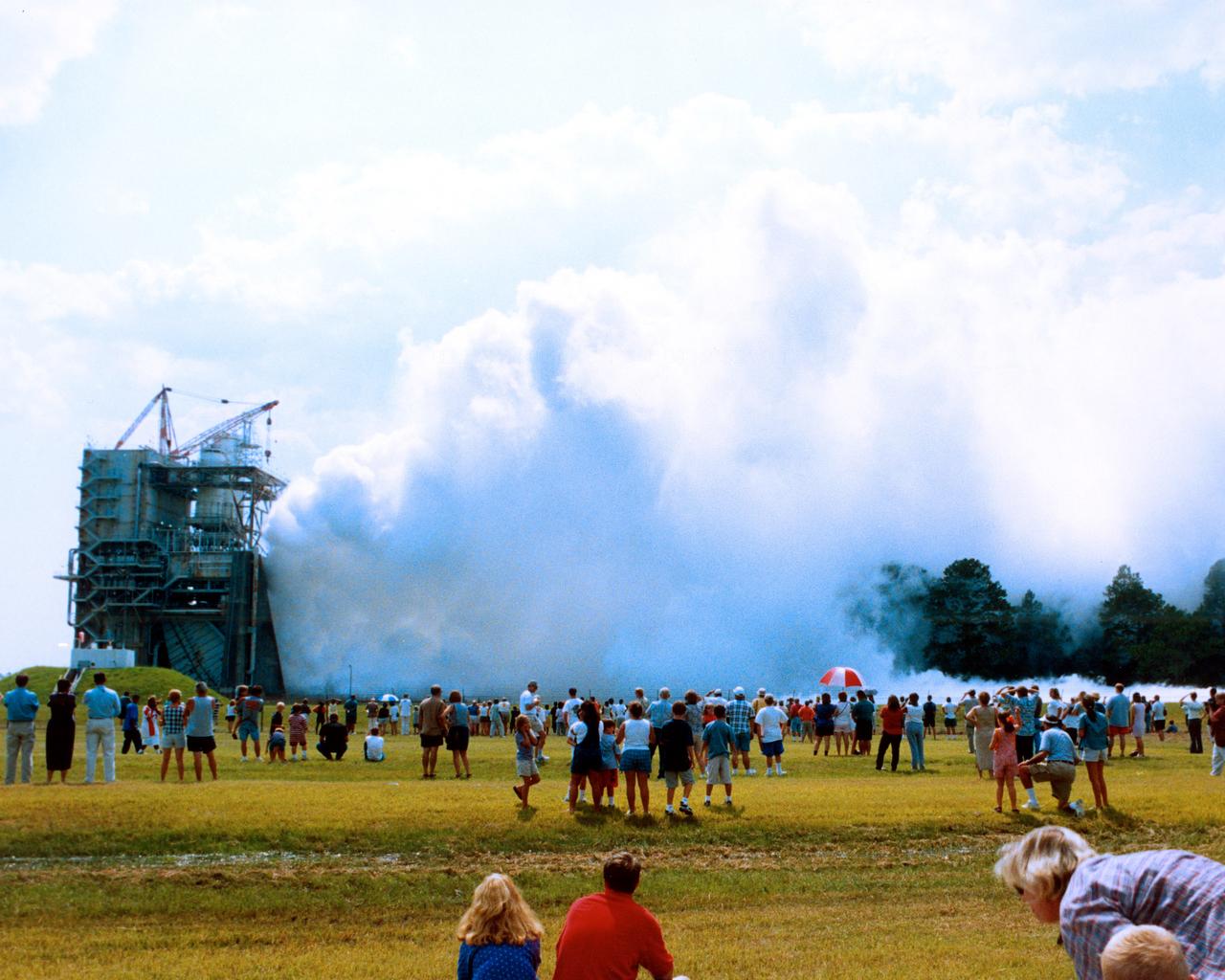
A new NASA Space Shuttle Main Engine (SSME) roars to the approval of more than 2,000 people who came to John C. Stennis Space Center in Hancock County, Miss., on July 25 for a flight-certification test of the SSME Block II configuration. The engine, a new and significantly upgraded shuttle engine, was delivered to NASA's Kennedy Space Center in Florida for use on future shuttle missions. Spectators were able to experience the 'shake, rattle and roar' of the engine, which ran for 520 seconds - the length of time it takes a shuttle to reach orbit.
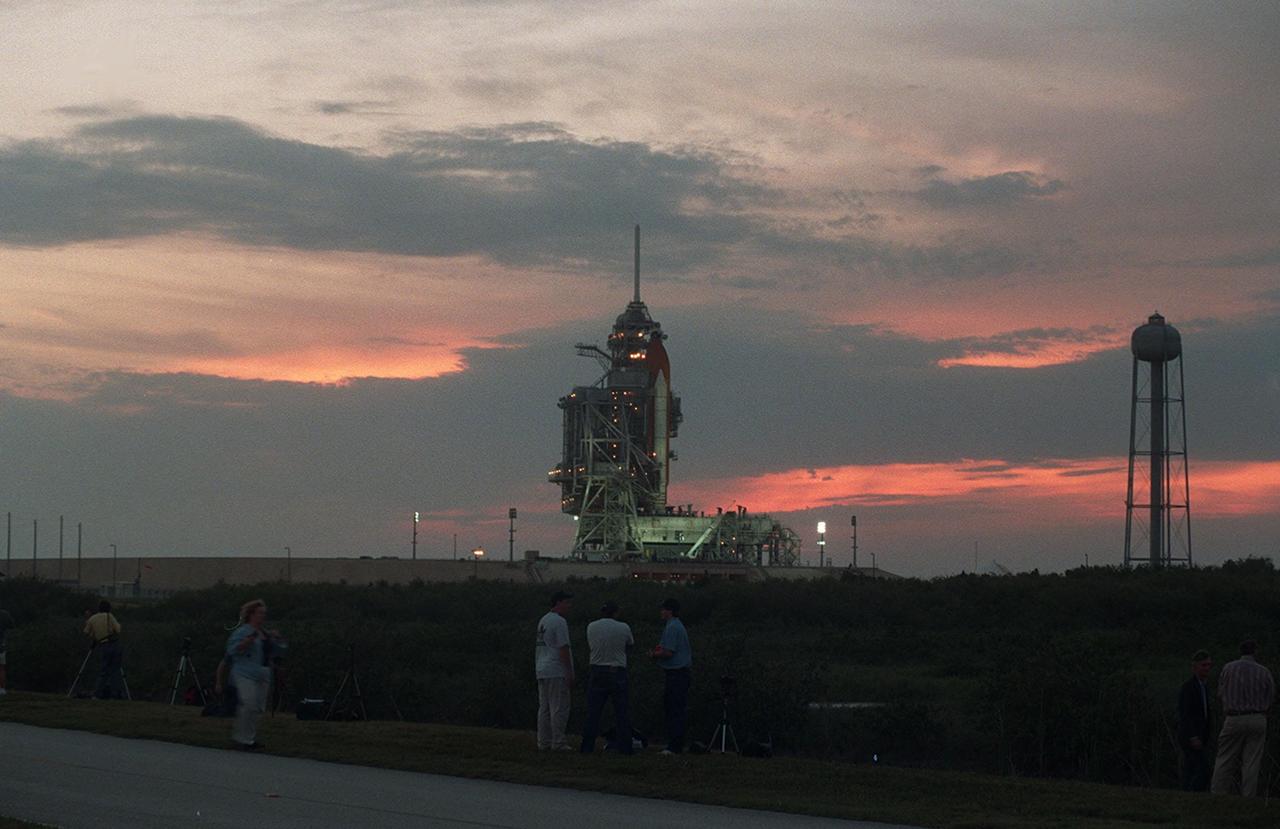
KENNEDY SPACE CENTER, Fla. -- The darkening sky at sunset provides a dramatic backdrop for Space Shuttle Atlantis on Launch Pad 39A. Spectators (bottom) wait for the rollback of the Rotating Service Structure to reveal the orbiter. In the photo only the orange external tank and white solid rocket booster are visible. Atlantis is targeted for liftoff at 4:15 p.m. EDT April 24 on mission STS-101. The mission will take the crew to the International Space Station to deliver logistics and supplies and prepare the Station for the arrival of the Zvezda Service Module, expected to be launched by Russia in July 2000. Also, the crew will conduct one space walk. This will be the third assembly flight to the Space Station
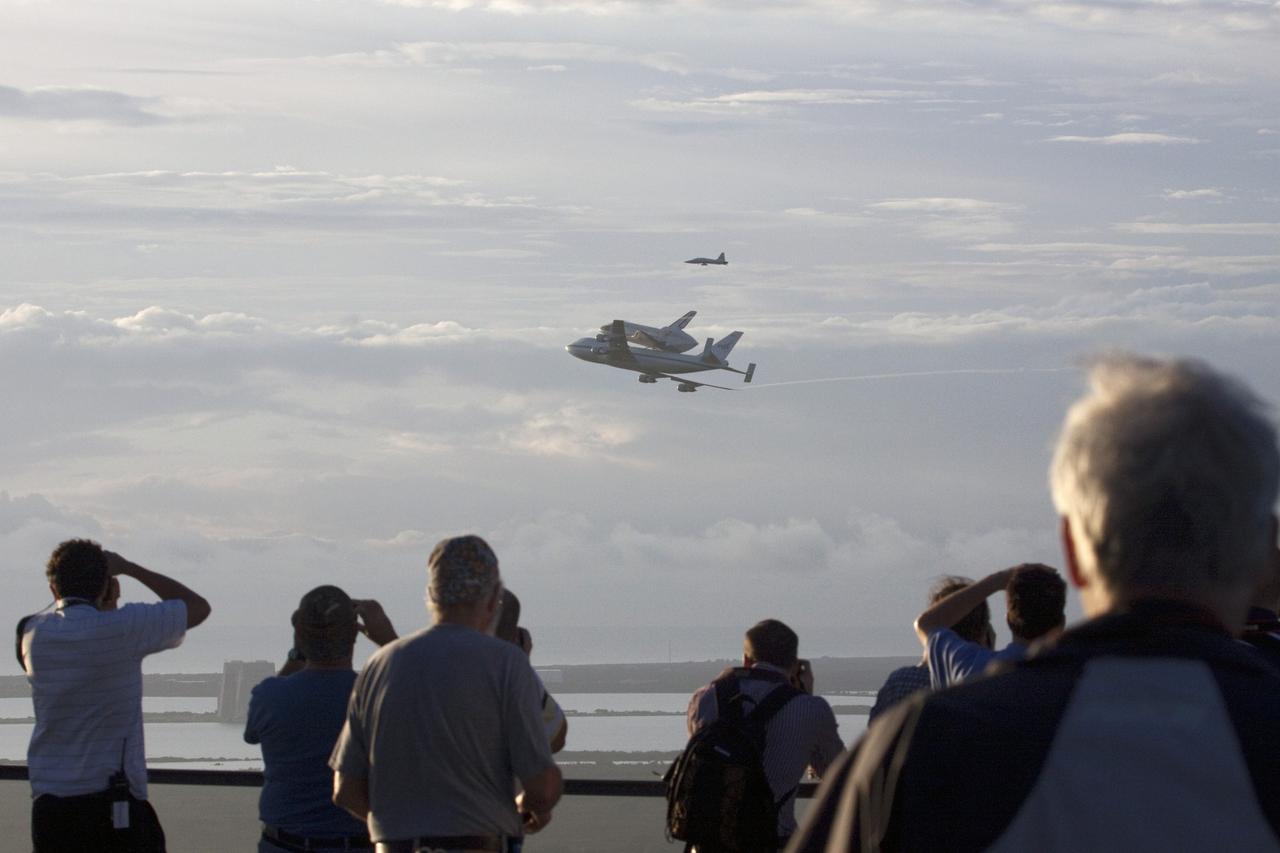
CAPE CANAVERAL, Fla. – At NASA's Kennedy Space Center in Florida, spectators get a close-up view as NASA's Shuttle Carrier Aircraft, or SCA, with the space shuttle Endeavour mounted atop, makes a low-level pass before heading west for its ferry flight to California. The SCA, a modified 747 jetliner, will fly Endeavour to Los Angeles where it will be placed on public display at the California Science Center. This is the final ferry flight scheduled in the Space Shuttle Program era. For more information on the shuttles' transition and retirement, visit http://www.nasa.gov/transition. Photo credit: NASA/Jim Grossmann
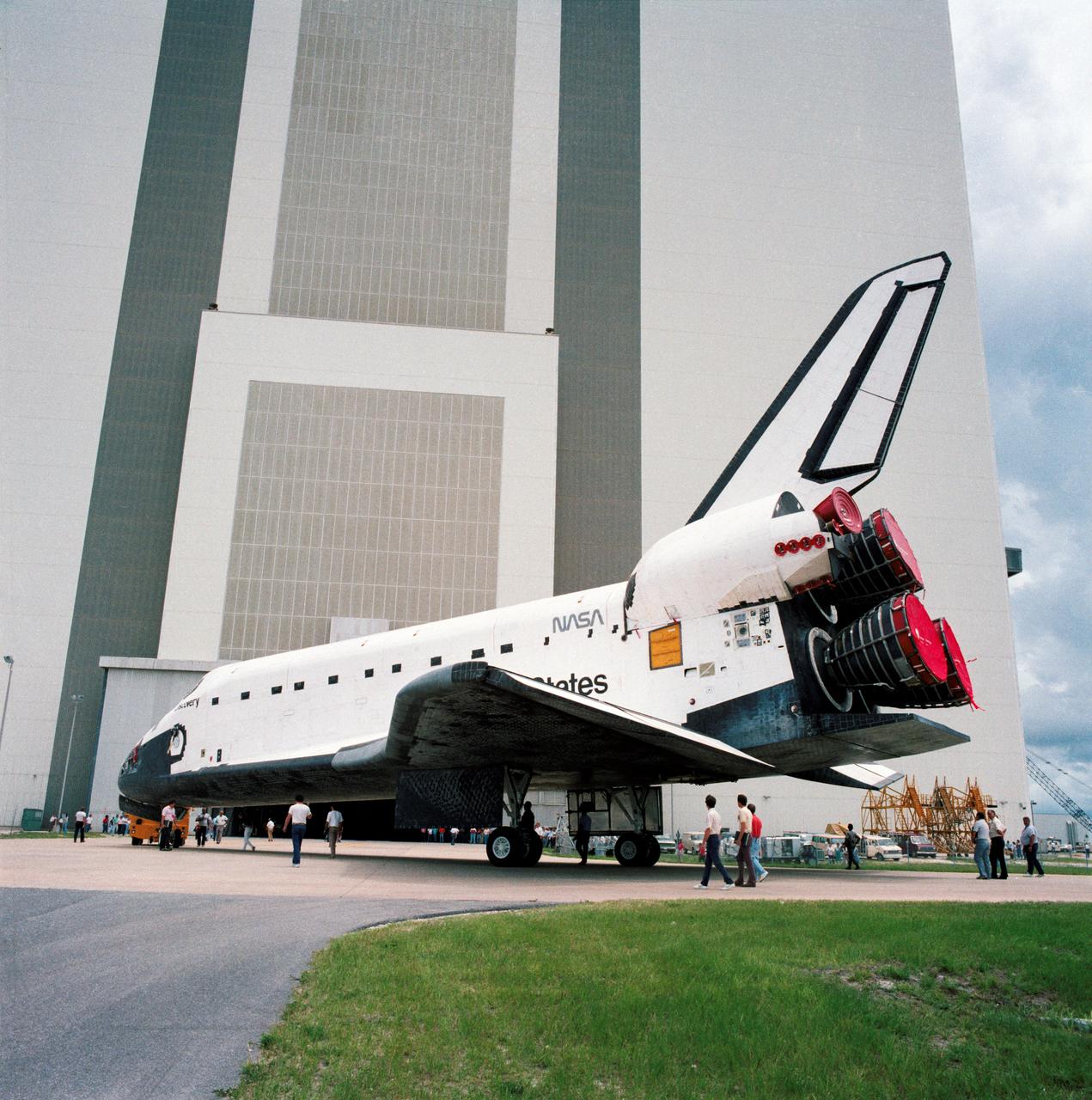
S88-42092 (15 July 1988) --- STS-26 Discovery, Orbiter Vehicle (OV) 103, rollover at Kennedy Space Center (KSC) is closely monitored by engineers and technicians in the late stages of the move from the orbiter processing facility (OPF) to the vehicle assembly building (VAB) as preflight preparations continue. A large crowd of KSC employees and other spectators watches in the background as OV-103, supported by its landing gear, is pulled toward VAB (background). While in the VAB, OV-103 will be mated to two solid rocket boosters (SRBs) and an external fuel tank.
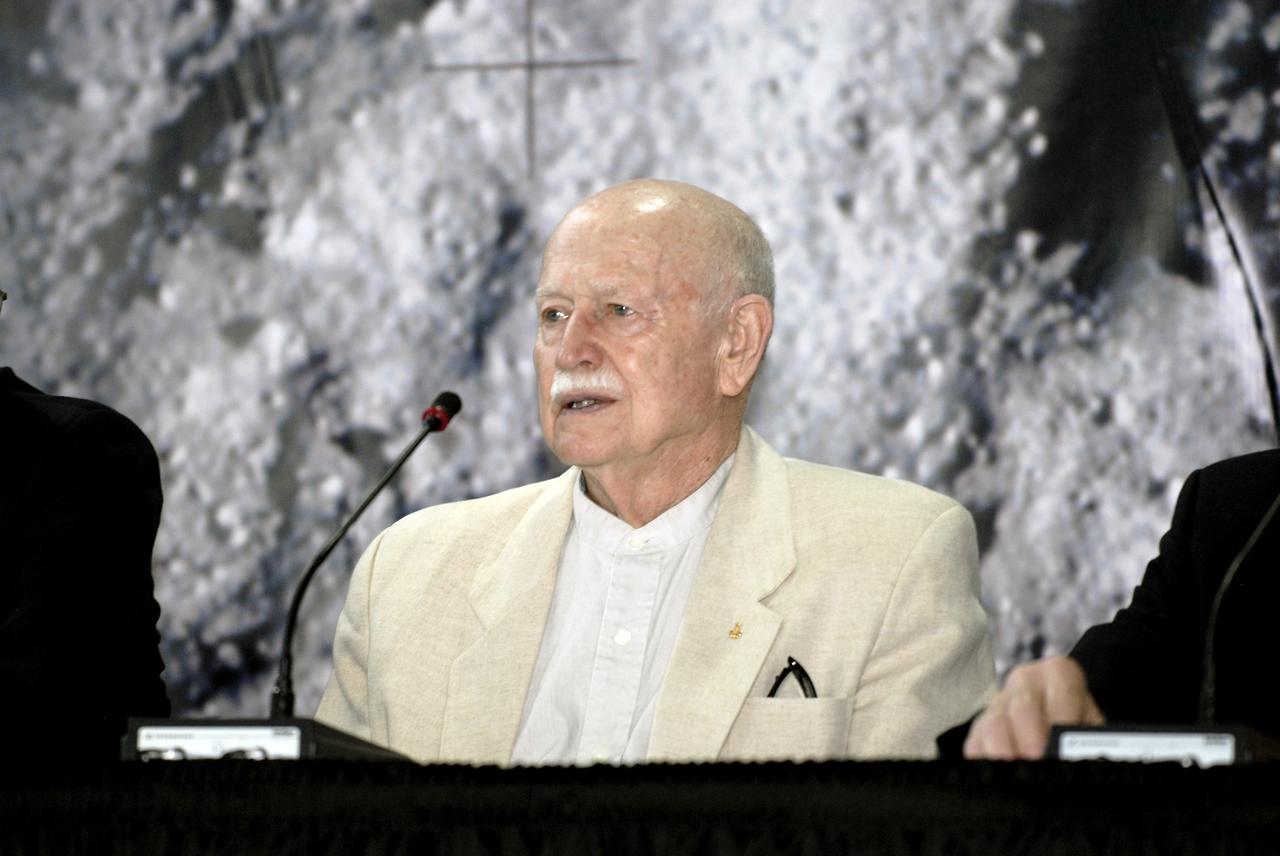
CAPE CANAVERAL, Fla. – At the Apollo/Saturn V Center at NASA's Kennedy Space Center in Florida, Apollo astronaut Gerald Carr shares his experiences with spectators crowd gathered for NASA's 40th Anniversary of Apollo Celebration of the July 1969 launch and landing on the moon. Carr served as CAPCOM for the Apollo 8 and 12 flights, and was involved in the development and testing of the lunar roving vehicle which was used on the lunar surface by Apollo flight crews. He also was commander of Skylab 4 launched in 1973 on the third and final manned visit to the Skylab Orbital Workshop. Photo credit: NASA/Kim Shiflett
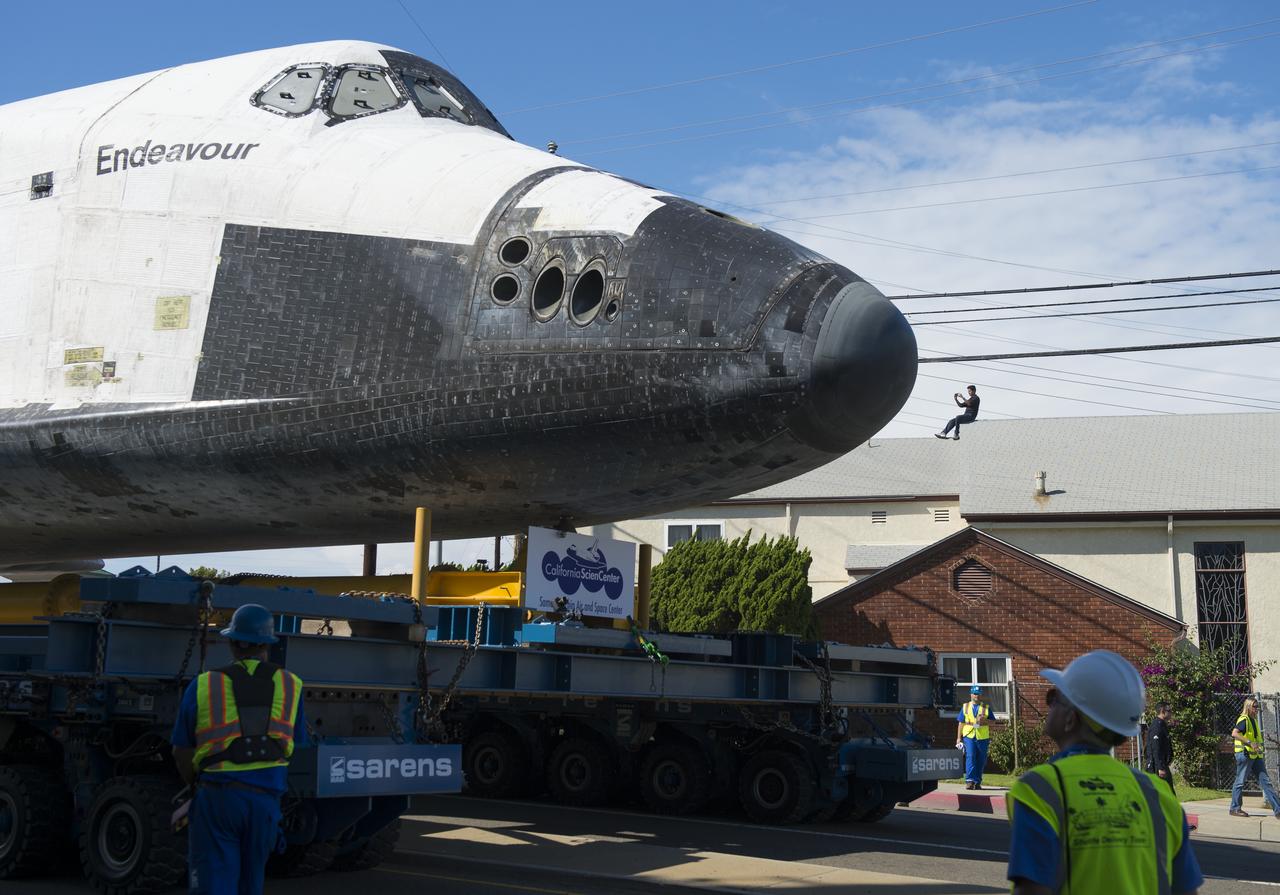
A spectator on the roof of a building photographs space shuttle Endeavour as it passes by on its way to its new home at the California Science Center in Los Angeles, Friday, Oct. 12, 2012. Endeavour, built as a replacement for space shuttle Challenger, completed 25 missions, spent 299 days in orbit, and orbited Earth 4,671 times while traveling 122,883,151 miles. Beginning Oct. 30, the shuttle will be on display in the CSC’s Samuel Oschin Space Shuttle Endeavour Display Pavilion, embarking on its new mission to commemorate past achievements in space and educate and inspire future generations of explorers. Photo Credit: (NASA/Carla Cioffi)
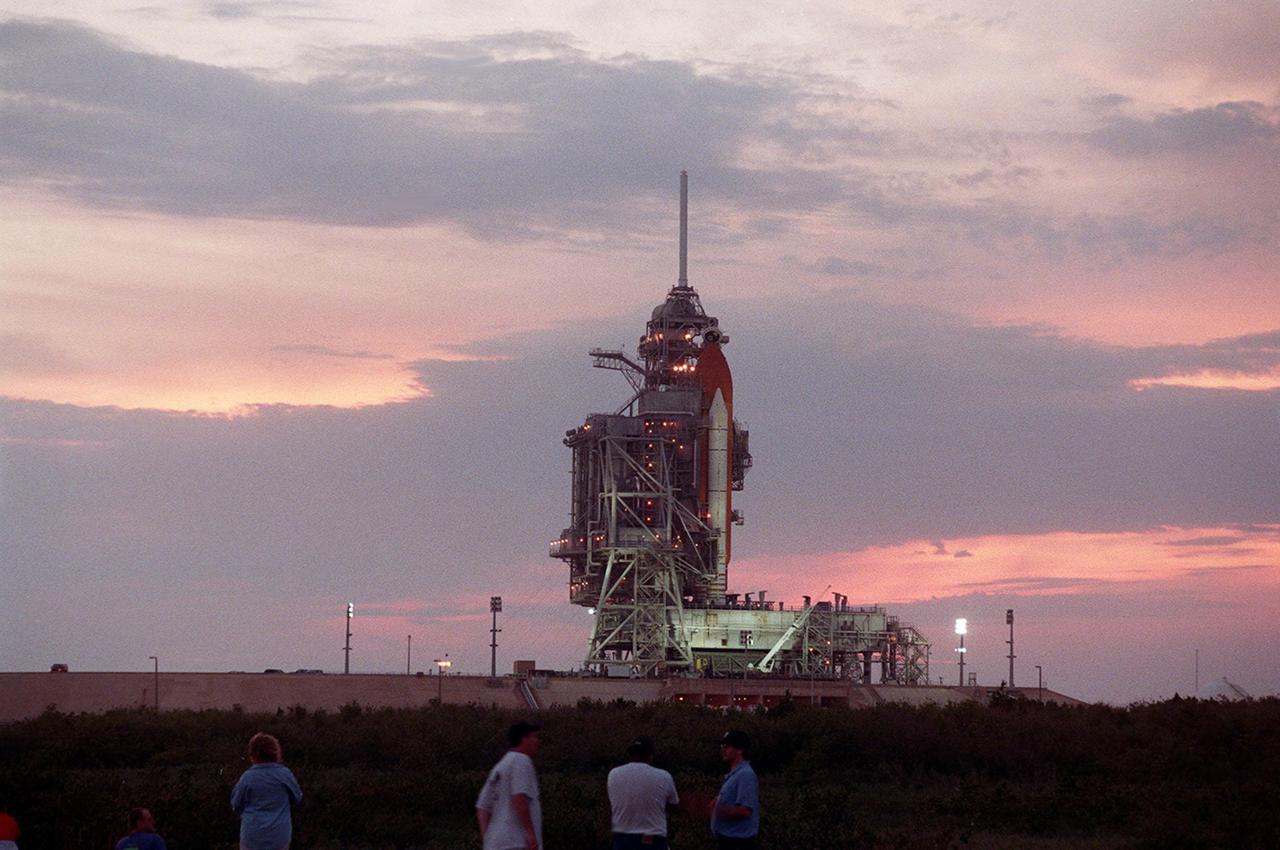
KENNEDY SPACE CENTER, Fla. -- The rosy-streaked clouds from a setting sun provide a dramatic backdrop for Space Shuttle Atlantis on Launch Pad 39A. Spectators (bottom) wait for the rollback of the Rotating Service Structure that covers the orbiter. In the photo only the orange external tank and white solid rocket booster are visible. Atlantis is targeted for liftoff at 4:15 p.m. EDT April 24 on mission STS-101. The mission will take the crew to the International Space Station to deliver logistics and supplies and prepare the Station for the arrival of the Zvezda Service Module, expected to be launched by Russia in July 2000. Also, the crew will conduct one space walk. This will be the third assembly flight to the Space Station
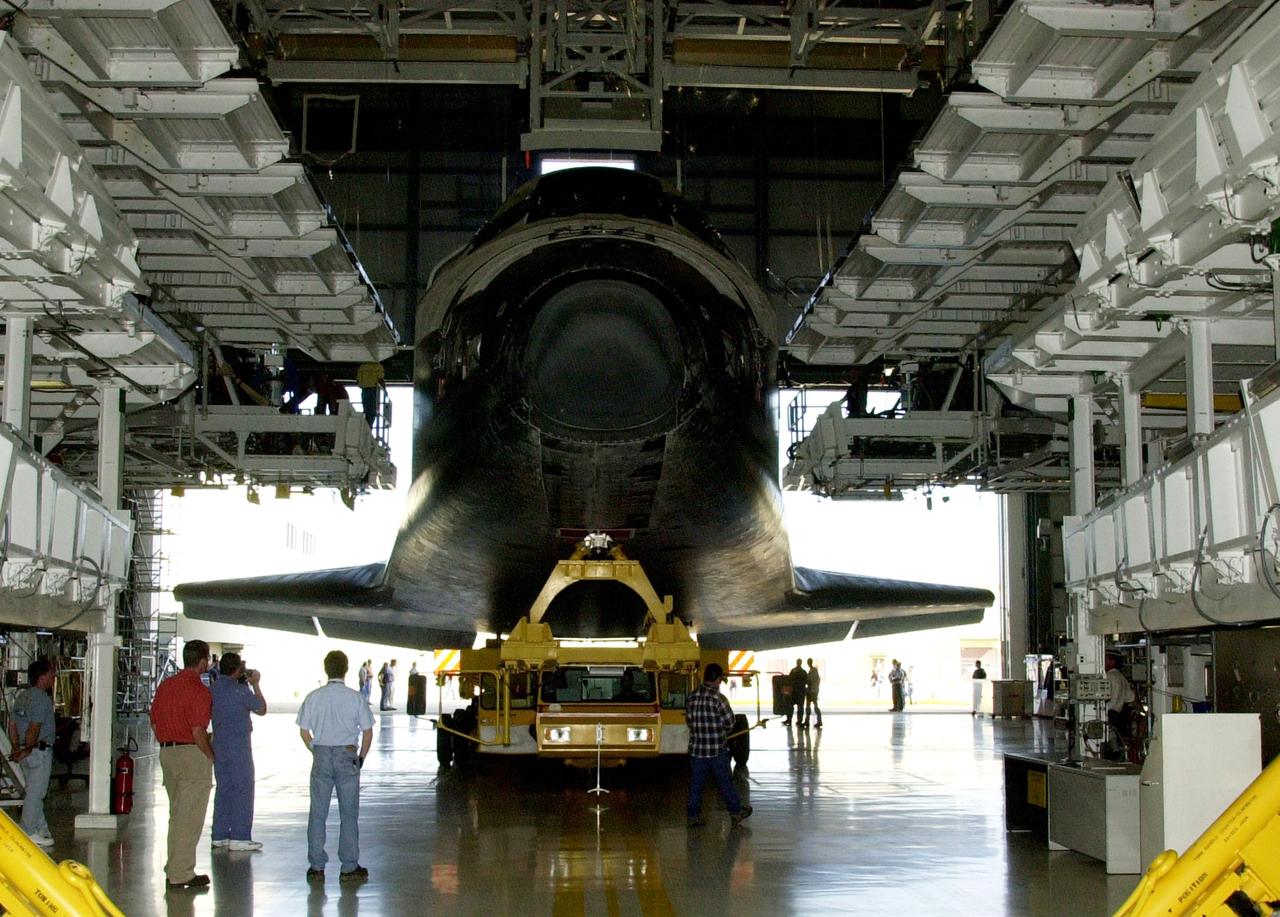
KENNEDY SPACE CENTER, FLA. -- Inside the Orbiter Processing Facility, spectators watch as Endeavour is rolled out of the bay on top of a transporter. The orbiter is being moved to the Vehicle Assembly Building for mating to the External Tank/Solid Rocket Boosters atop the Mobile Launcher Platform. Endeavour is targeted to launch May 30, 2002, on mission STS-111 to the International Space Station. Mission goals include delivering and installing the Mobile Base System to complete the Canadian Mobile Service System and carrying the Expedition 5 crew to the Station for rotation with Expedition 4.
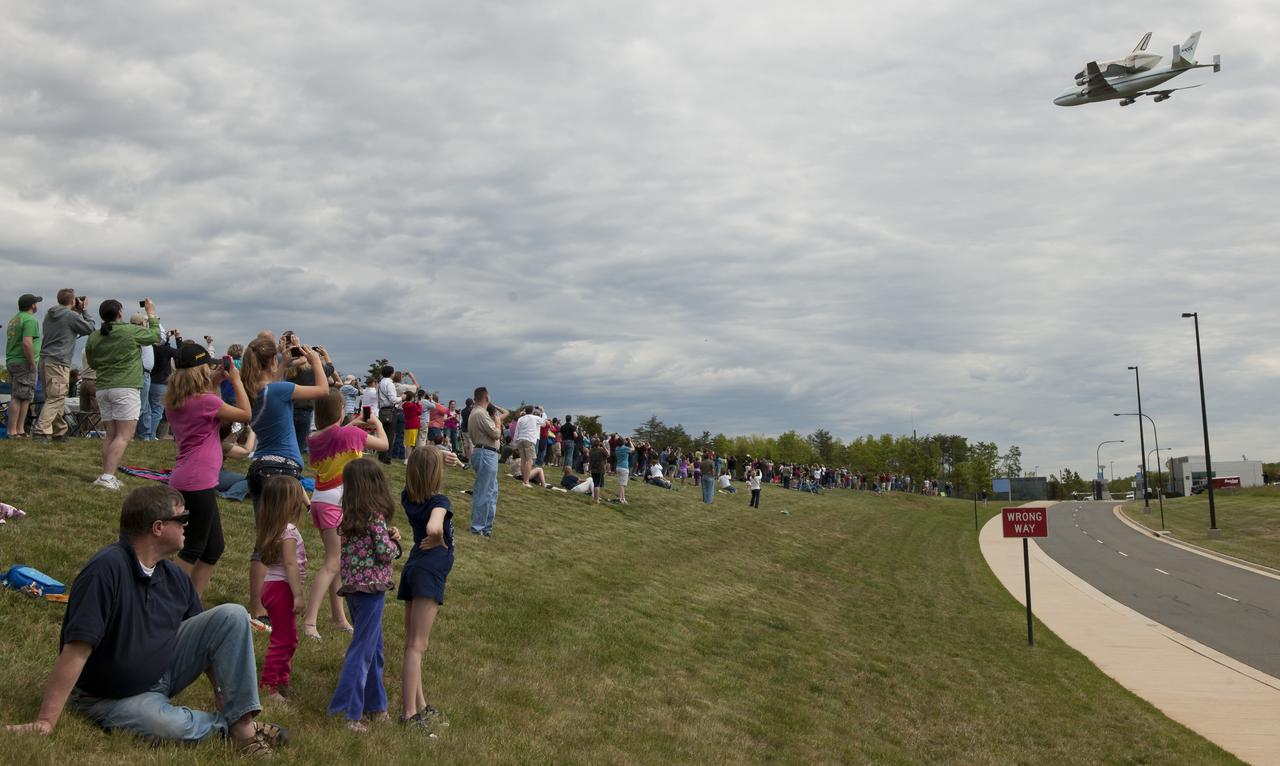
Spectators watch as space shuttle Discovery, mounted atop a NASA 747 Shuttle Carrier Aircraft (SCA) flies over the National Air and Space Museum’s Steven F. Udvar-Hazy Center, Tuesday, April 17, 2012, in Chantilly, Va. Discovery, the first orbiter retired from NASA’s shuttle fleet, completed 39 missions, spent 365 days in space, orbited the Earth 5,830 times, and traveled 148,221,675 miles. NASA will transfer Discovery to the National Air and Space Museum to begin its new mission to commemorate past achievements in space and to educate and inspire future generations of explorers. Photo Credit: (NASA/Carla Cioffi)
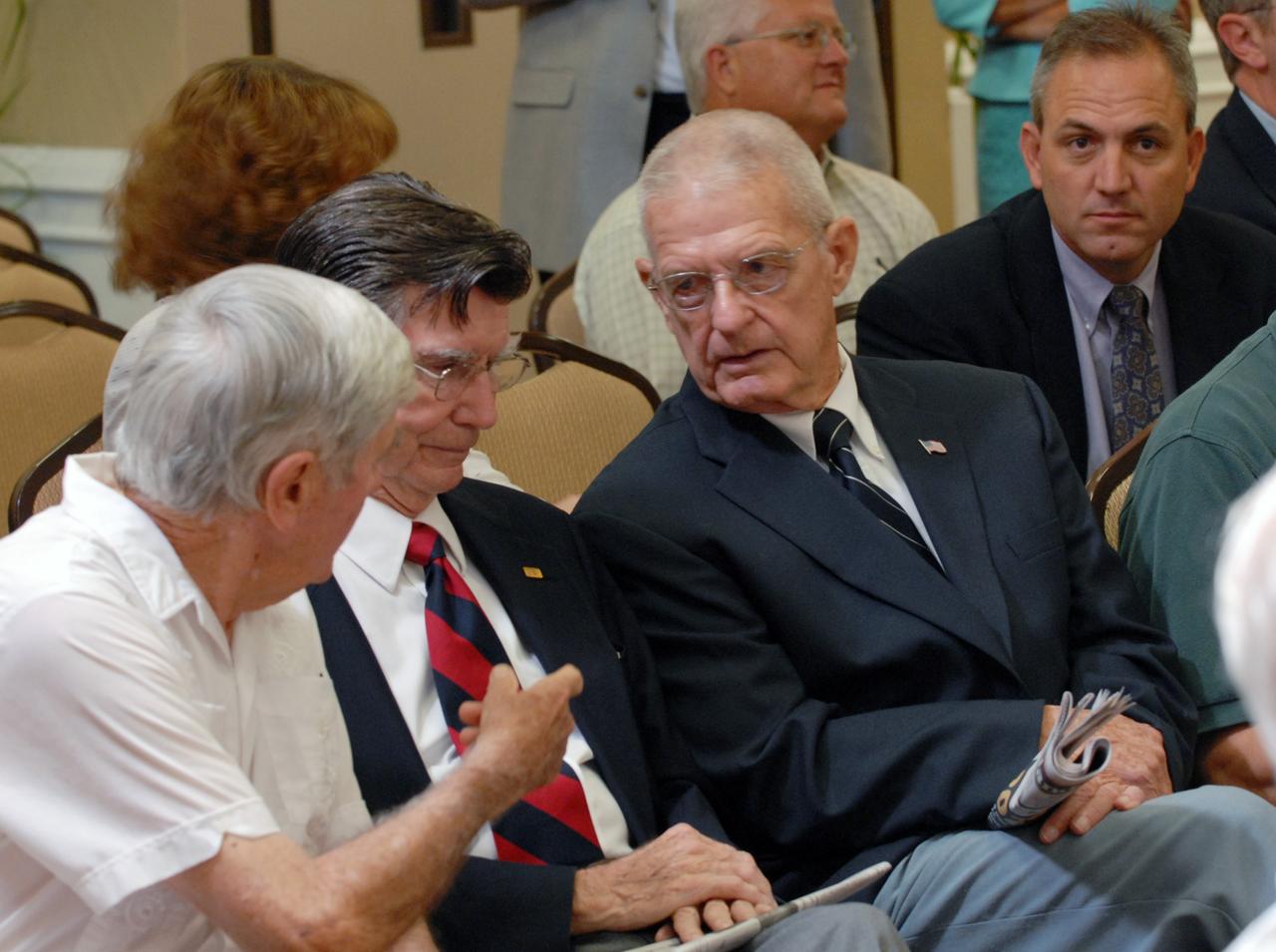
CAPE CANAVERAL, Fla. – Spectators interested in the future of the Space Program discuss statements made during the public meeting of the Augustine Commission in Cocoa Beach, Fla. At the request of the Office of Science and Technology Policy, NASA established the Review of U.S. Human Space Flight Plans Committee, known as the Augustine Commission. Chaired by Norman R. Augustine, retired chairman and CEO of Lockheed Martin Corp., the committee is conducting an independent review of ongoing U.S. human spaceflight plans and programs, as well as alternatives, to ensure the nation is pursuing the best trajectory for the future of human space flight - one that is safe, innovative, affordable, and sustainable. Photo credit: NASA/Jim Grossmann
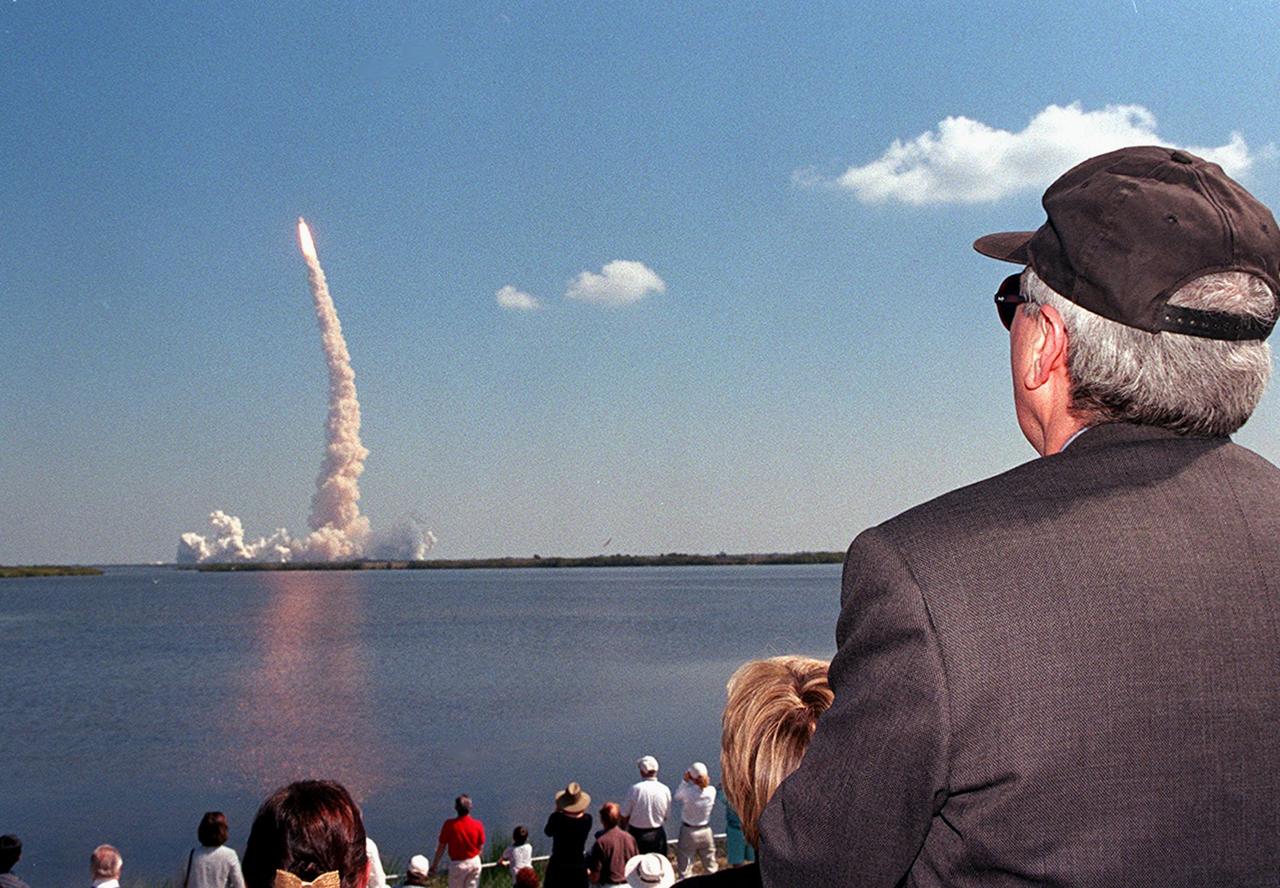
KENNEDY SPACE CENTER, FLA. -- NASA Administrator Dan Goldin (right) joins other spectators at the Banana Creek viewing site in cheering the successful launch of Space Shuttle Endeavour on mission STS-99. The perfect liftoff occurred at 12:43:40 p.m. EST. Known as the Shuttle Radar Topography Mission (SRTM), STS-99 will chart a new course to produce unrivaled 3-D images of the Earth's surface. The result of the SRTM could be close to 1 trillion measurements of the Earth's topography. The mission is expected to last 11days, with Endeavour landing at KSC Tuesday, Feb. 22, at 4:36 p.m. EST. This is the 97th Shuttle flight and 14th for Shuttle Endeavour
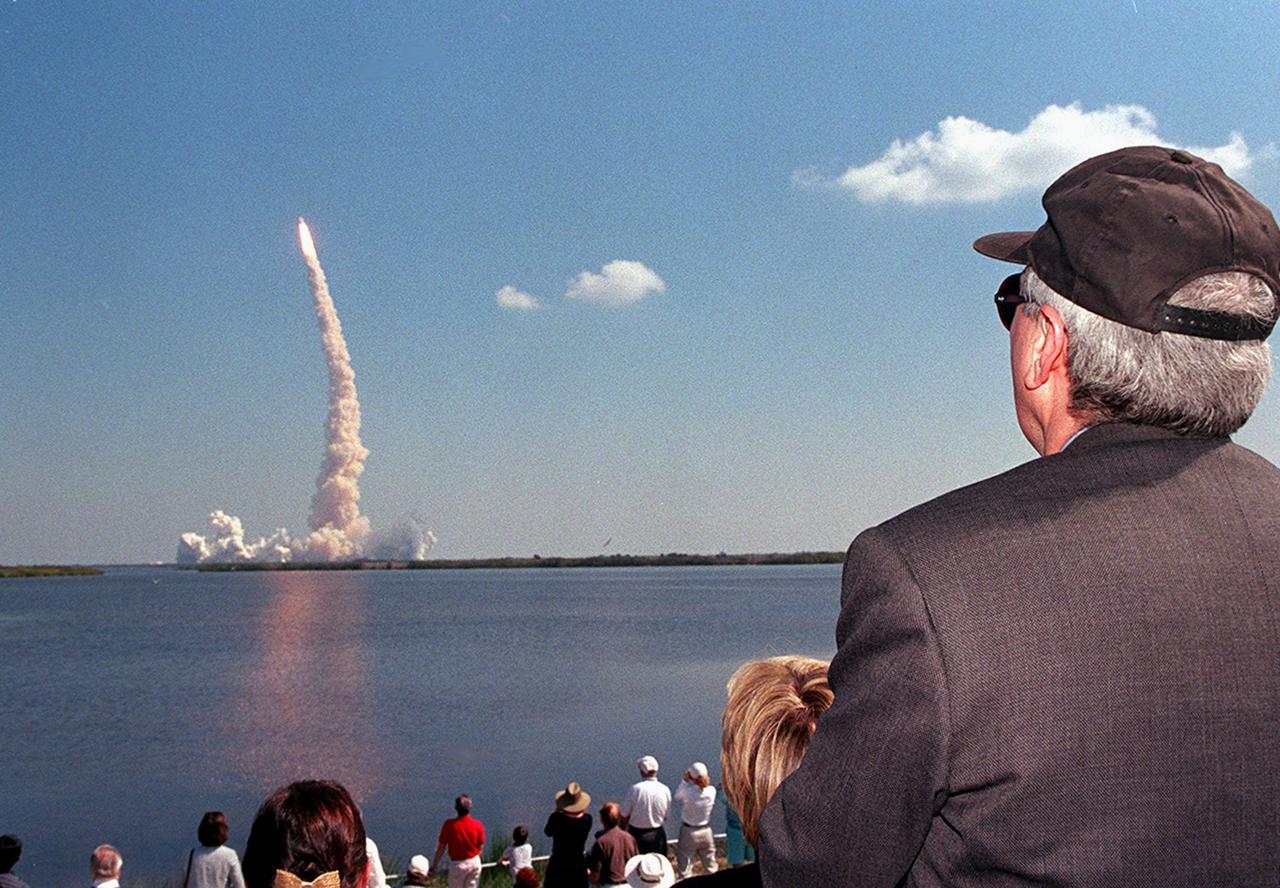
KENNEDY SPACE CENTER, FLA. -- NASA Administrator Dan Goldin (right) joins other spectators at the Banana Creek viewing site in cheering the successful launch of Space Shuttle Endeavour on mission STS-99. The perfect liftoff occurred at 12:43:40 p.m. EST. Known as the Shuttle Radar Topography Mission (SRTM), STS-99 will chart a new course to produce unrivaled 3-D images of the Earth's surface. The result of the SRTM could be close to 1 trillion measurements of the Earth's topography. The mission is expected to last 11days, with Endeavour landing at KSC Tuesday, Feb. 22, at 4:36 p.m. EST. This is the 97th Shuttle flight and 14th for Shuttle Endeavour
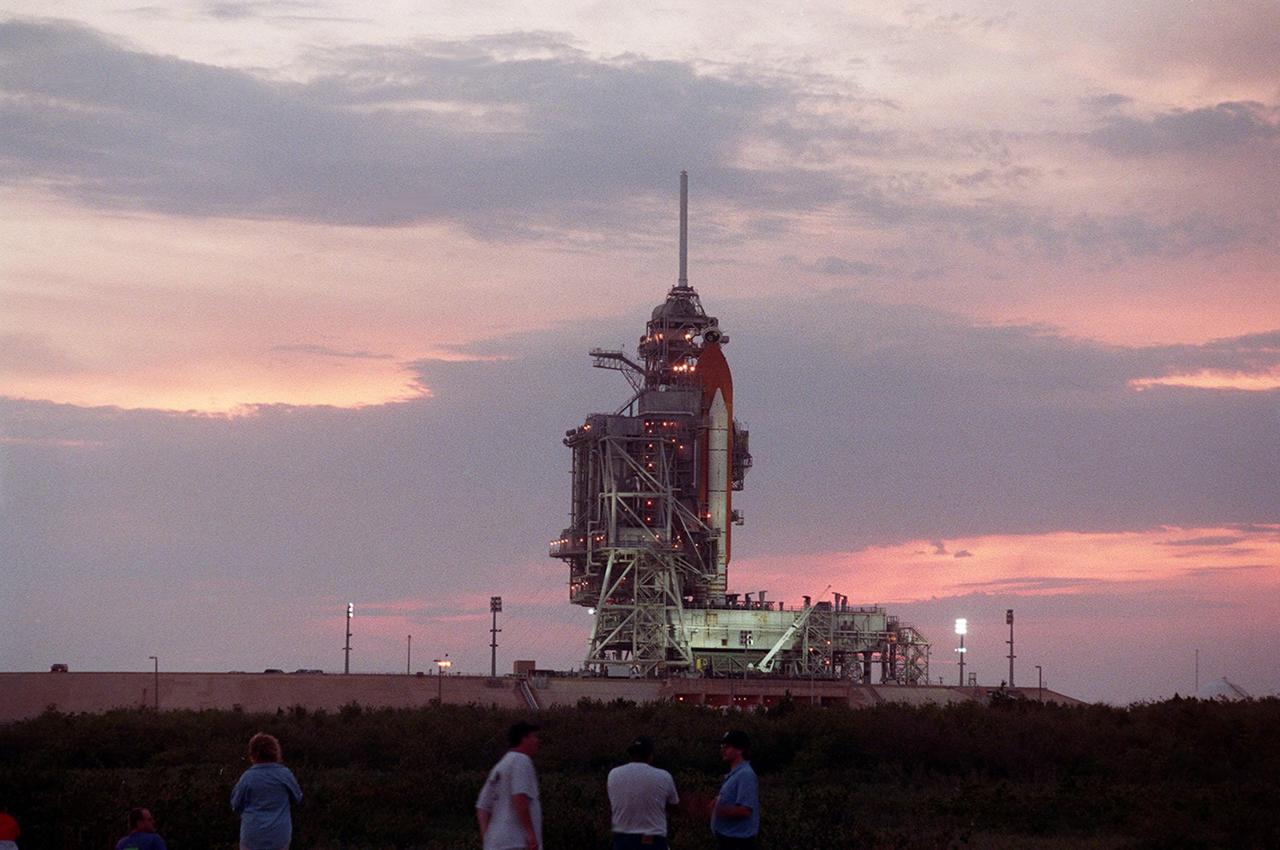
KENNEDY SPACE CENTER, Fla. -- The rosy-streaked clouds from a setting sun provide a dramatic backdrop for Space Shuttle Atlantis on Launch Pad 39A. Spectators (bottom) wait for the rollback of the Rotating Service Structure that covers the orbiter. In the photo only the orange external tank and white solid rocket booster are visible. Atlantis is targeted for liftoff at 4:15 p.m. EDT April 24 on mission STS-101. The mission will take the crew to the International Space Station to deliver logistics and supplies and prepare the Station for the arrival of the Zvezda Service Module, expected to be launched by Russia in July 2000. Also, the crew will conduct one space walk. This will be the third assembly flight to the Space Station
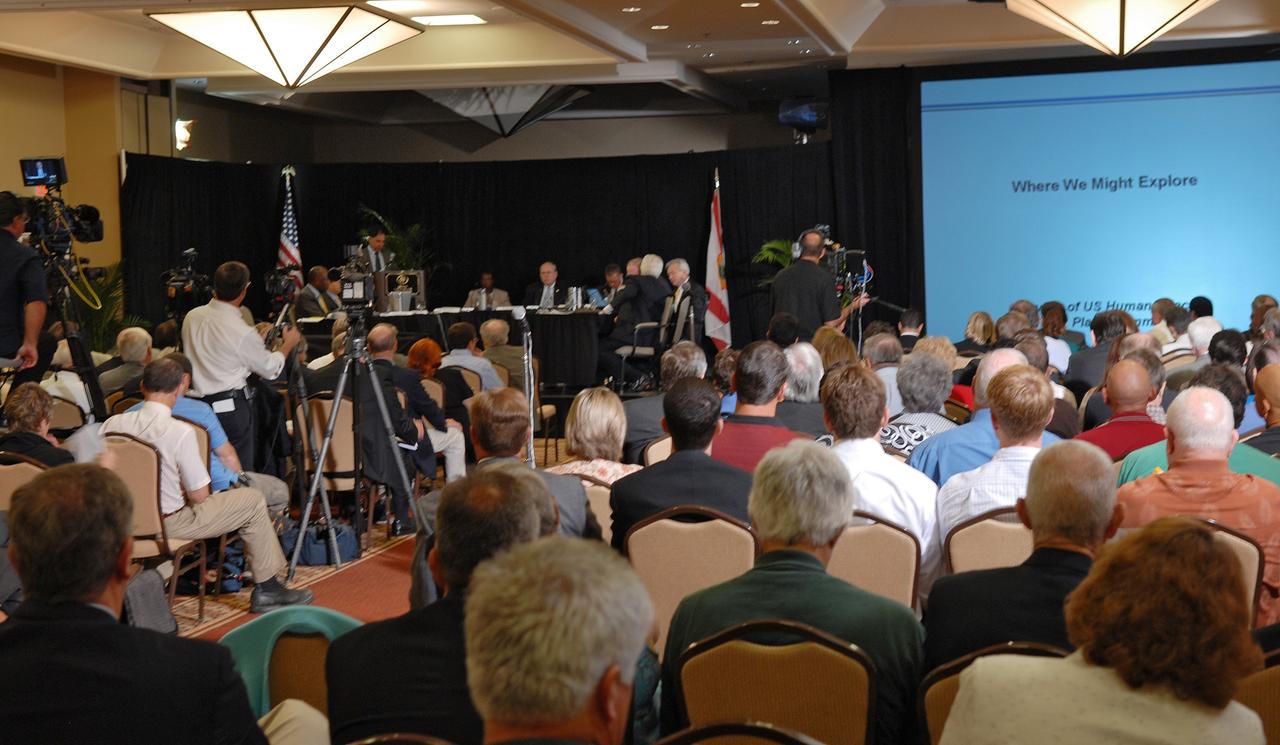
CAPE CANAVERAL, Fla. – – Photographers and spectators show their interest in the Augustine Commission, meeting in Cocoa Beach, Fla. At the request of the Office of Science and Technology Policy, NASA established the Review of U.S. Human Space Flight Plans Committee, known as the Augustine Commission. Chaired by Norman R. Augustine, retired chairman and CEO of Lockheed Martin Corp., the committee is conducting an independent review of ongoing U.S. human spaceflight plans and programs, as well as alternatives, to ensure the nation is pursuing the best trajectory for the future of human space flight - one that is safe, innovative, affordable, and sustainable. Photo credit: NASA/Jim Grossmann

Spectators are seen photographing space shuttle Endeavour as it passes by on its way to its new home at the California Science Center, Friday, Oct. 12, 2012, in Inglewood. Endeavour, built as a replacement for space shuttle Challenger, completed 25 missions, spent 299 days in orbit, and orbited Earth 4,671 times while traveling 122,883,151 miles. Beginning Oct. 30, the shuttle will be on display in the CSC’s Samuel Oschin Space Shuttle Endeavour Display Pavilion, embarking on its new mission to commemorate past achievements in space and educate and inspire future generations of explorers. Photo Credit: (NASA/Carla Cioffi)
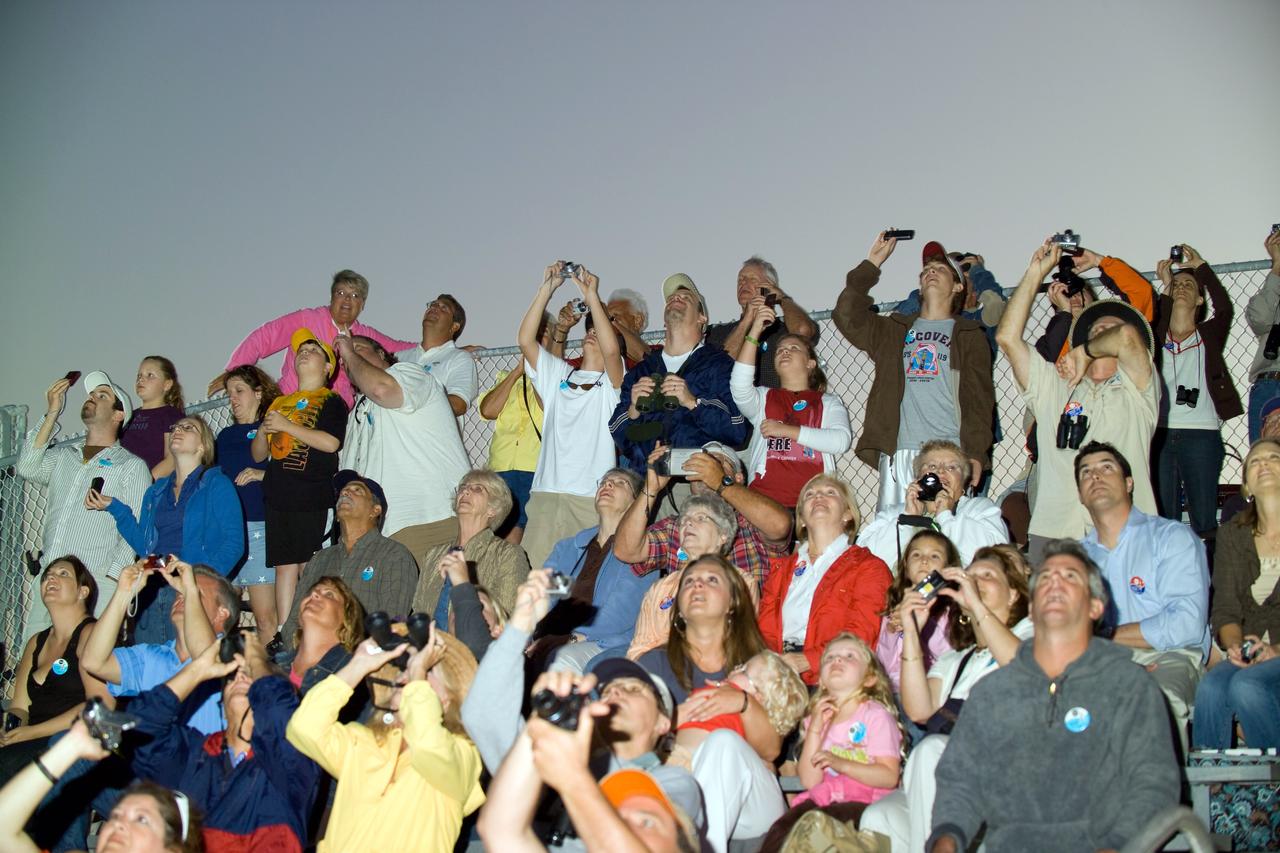
CAPE CANAVERAL, Fla. – Spectators at the Banana River Viewing Site at NASA's Kennedy Space Center in Florida focus on the brilliant launch of space shuttle Discovery across the water. Liftoff from Launch Pad 39A was on time at 7:43 p.m. EDT. The STS-119 mission is the 28th to the space station and Discovery's 36th flight. Discovery will deliver the final pair of power-generating solar array wings and the S6 truss segment. Installation of S6 will signal the station's readiness to house a six-member crew for conducting increased science. Photo credit: NASA/Chris Lynch
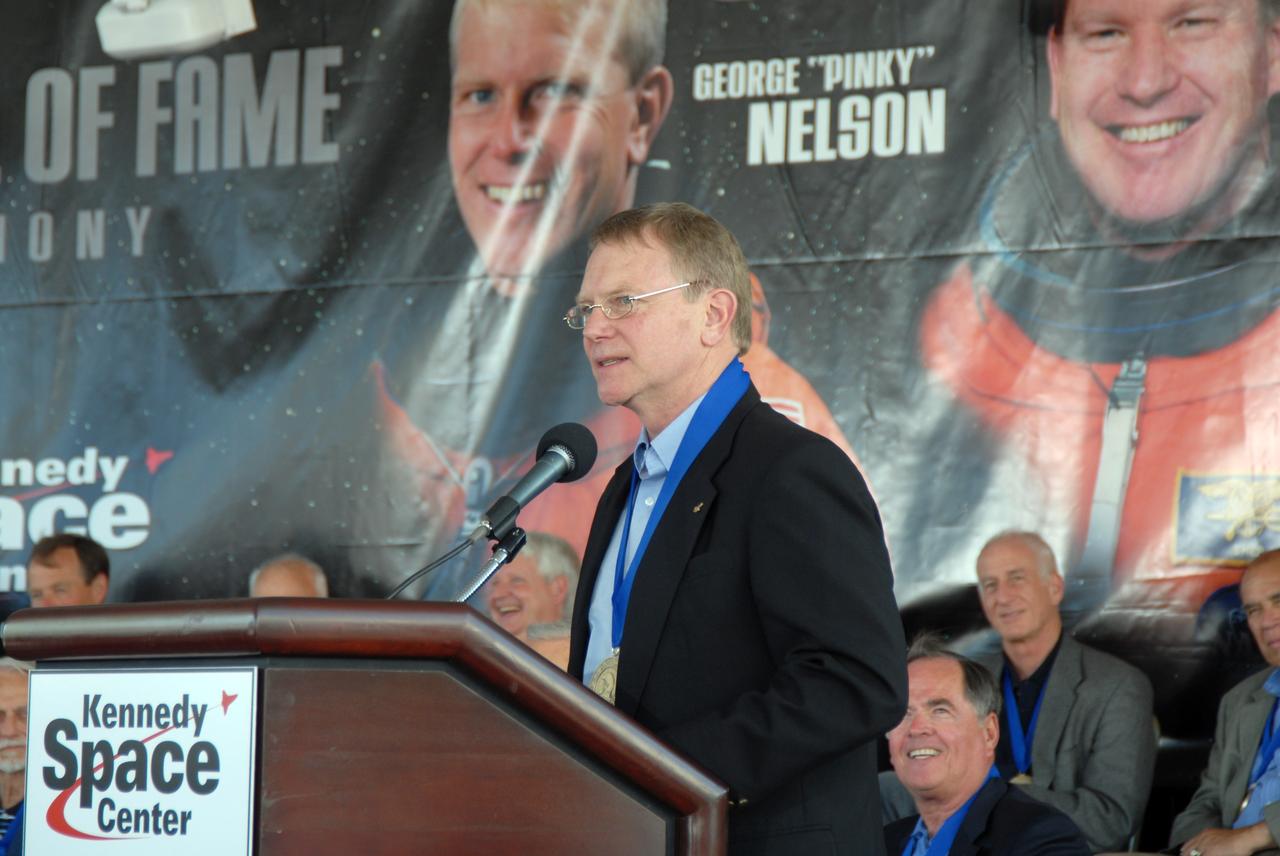
CAPE CANAVERAL, Fla. –– New inductee astronaut George "Pinky" Nelson addresses the spectators at the U.S. Astronaut Hall of Fame ceremony held at NASA's Kennedy Space Center Visitor Complex in Florida. Nelson was one of only six space shuttle astronauts to fly untethered in space using NASA's Manned Maneuvering Unit. The ceremony took place May 2. More than 20 hall of fame astronauts attended, including Scott Carpenter, Walt Cunningham, Jim Lovell and Bob Crippen. Photo credit: NASA/Jim Grossmann
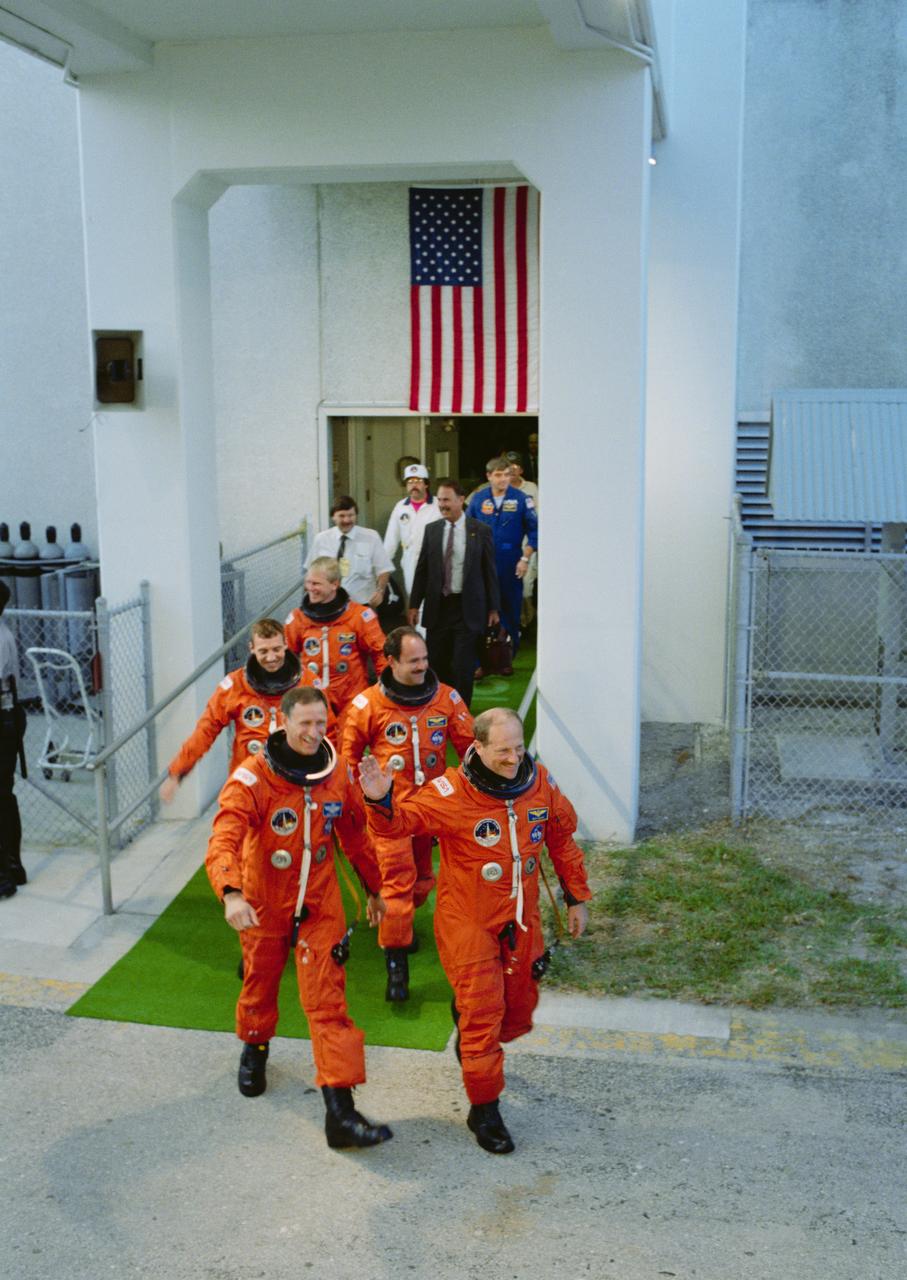
STS-26 crewmembers, suited in launch and entry suits (LESs), leave the Kennedy Space Center (KSC) Operations and Checkout (O&C) Building on their way to the launch complex (LC) pad 39B where they will board Discovery, Orbiter Vehicle (OV) 103. Commander Frederick H. Hauck, waving to spectators, is followed by Pilot Richard O. Covey, Mission Specialist (MS) John M. Lounge, MS David C. Hilmers, and MS George D. Nelson. Others accompanying the crew are JSC Flight Crew Operations Directorate (FCOD) Director Donald R. Puddy, Astronaut Office Chief Daniel C. Brandenstein, and a Crew Training Officer Richard W. Nygren.
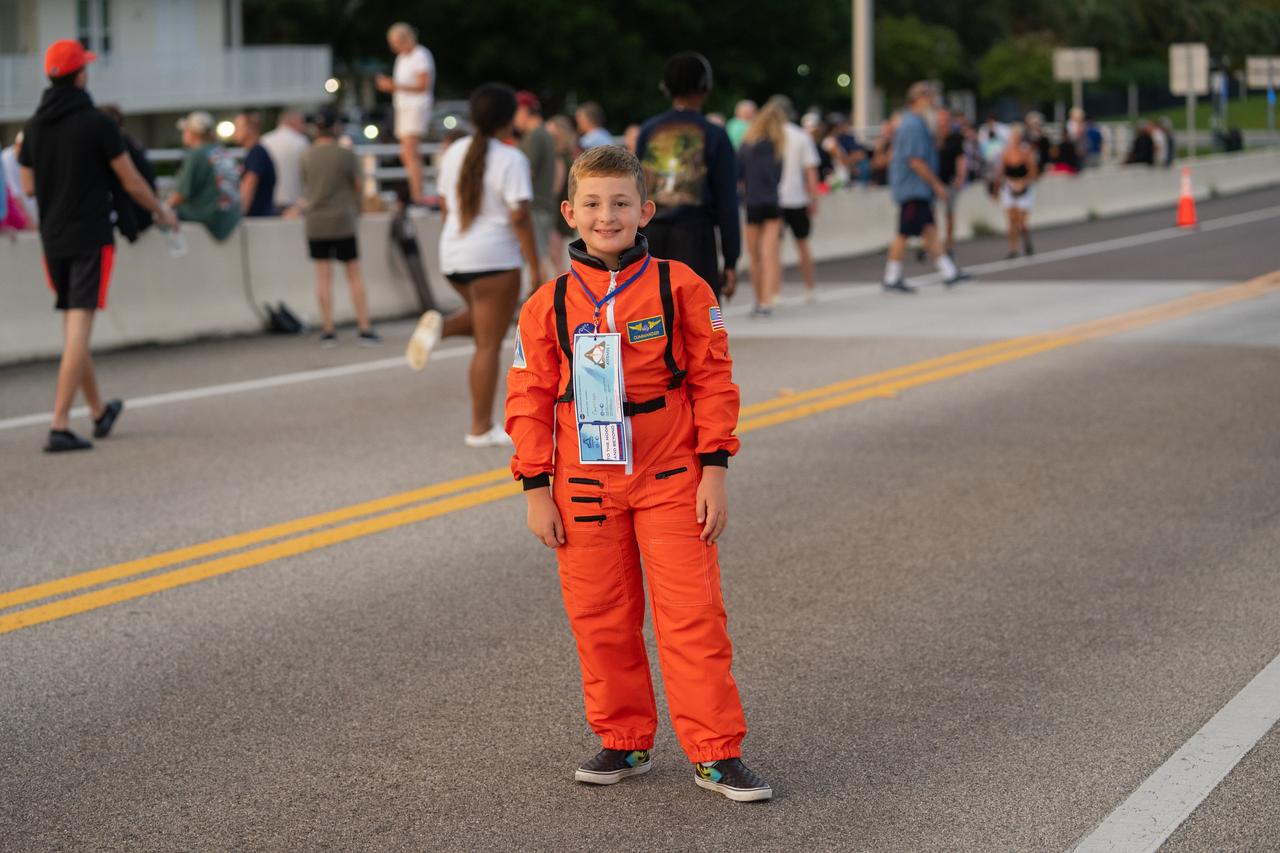
A young child dressed in an astronaut spacesuit is one of the spectators gathering on the Max Brewer Bridge in Titusville, Florida, to witness NASA’s Artemis I launch on Aug. 29, 2022. The launch was waved off for the day at the agency’s Kennedy Space Center. The first in a series of increasingly complex missions, Artemis I will provide a foundation for human deep space exploration and demonstrate our commitment and capability to extend human presence to the Moon and beyond. The primary goal of Artemis I is to thoroughly test the integrated systems before crewed missions by operating the spacecraft in a deep space environment, testing Orion’s heat shield, and recovering the crew module after reentry, descent, and splashdown.
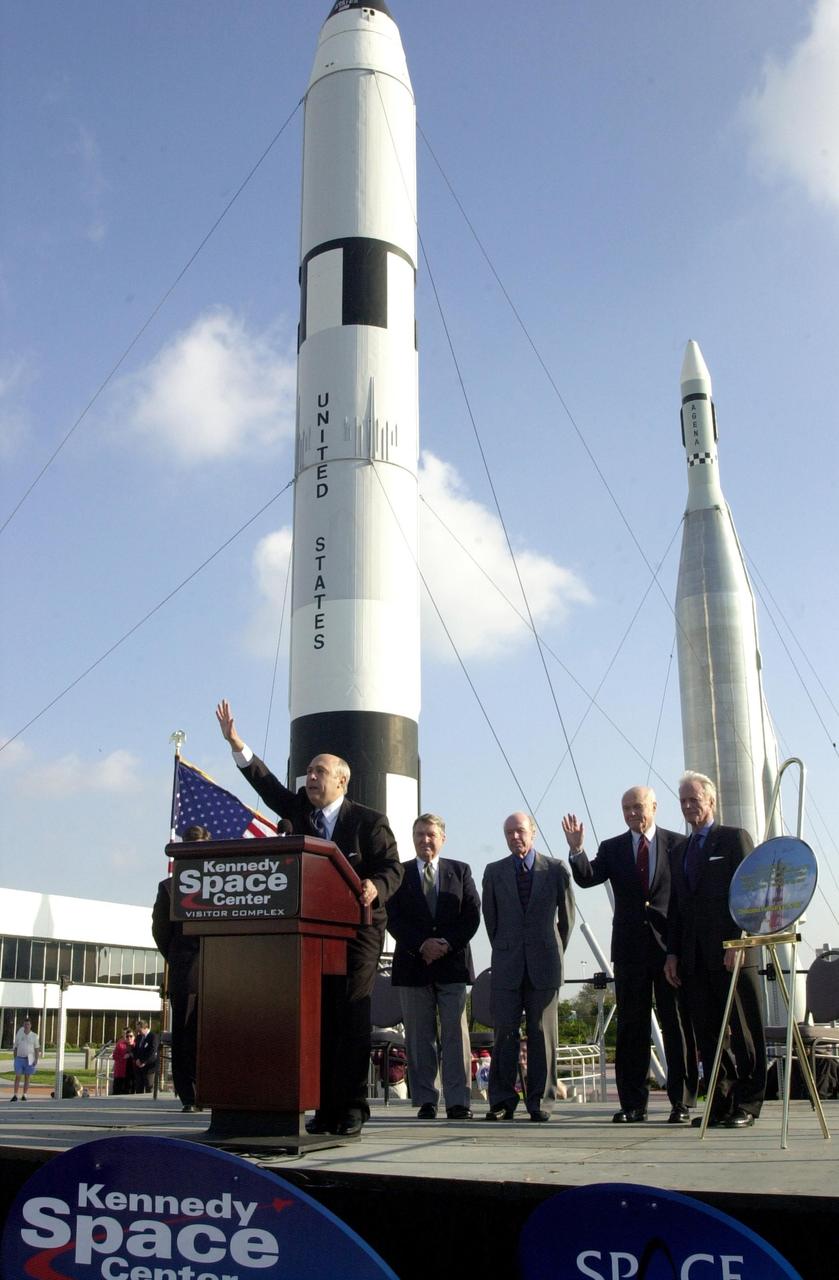
KENNEDY SPACE CENTER, FLA. -- During opening ceremonies for the 40th anniversary celebration of American spaceflight, Rick Abramson, president of Delaware North Parks Services of Spaceport, Inc., waves to the spectators. Behind him are four of the space pioneers being honored: (from left) Wally Schirra, Gordon Cooper, John Glenn Jr. and Scott Carpenter. Next to Carpenter stands a commemorative painting of a Mercury rocket launch that the four signed. The ceremonies were held in the KSC Visitor Complex Rocket Garden. The event was capped with a dinner held at the KSC Apollo/Saturn V Center
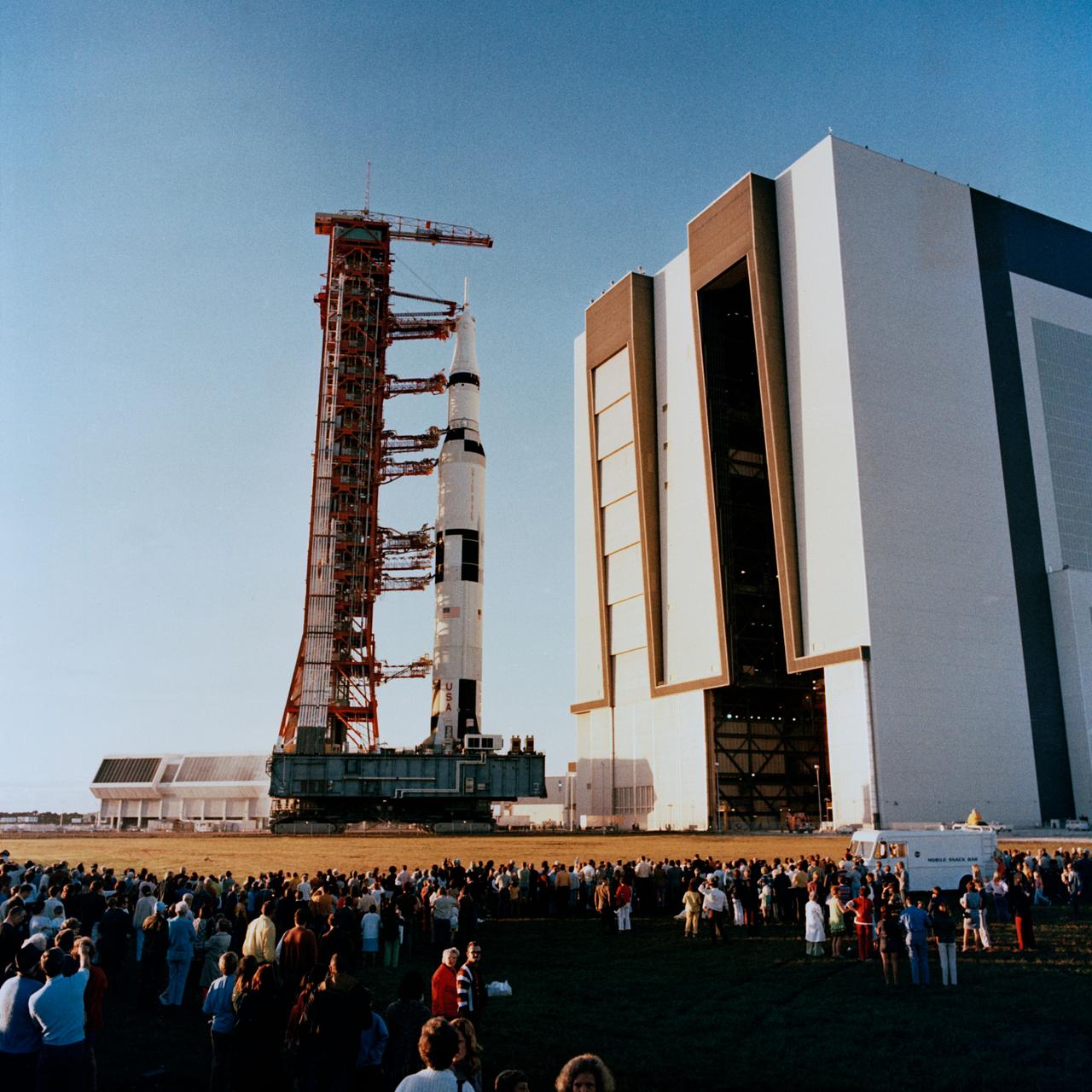
S72-19795 (13 Dec. 1971) --- A large crowd of spectators look on as the 363-feet tall Apollo 16 (Spacecraft 113/Lunar Module 11/Saturn 511) space vehicle moves out of the Vehicle Assembly Building (VAB) at the Kennedy Space Center's (KSC) Launch Complex 39 toward Pad A. The Saturn V stack and its mobile launch tower are atop a huge crawler-transporter. The prime crew men of the scheduled Apollo 16 lunar landing mission are astronauts John W. Young, commander; Thomas K. Mattingly, command module pilot; and Charles M. Duke Jr., lunar module pilot.

A spectator is seen photographing the space shuttle Endeavour as it is moved to its new home at the California Science Center in Los Angeles, Friday, Oct. 12, 2012. Endeavour, built as a replacement for space shuttle Challenger, completed 25 missions, spent 299 days in orbit, and orbited Earth 4,671 times while traveling 122,883,151 miles. Beginning Oct. 30, the shuttle will be on display in the CSC’s Samuel Oschin Space Shuttle Endeavour Display Pavilion, embarking on its new mission to commemorate past achievements in space and educate and inspire future generations of explorers. Photo Credit: (NASA/Bill Ingalls)
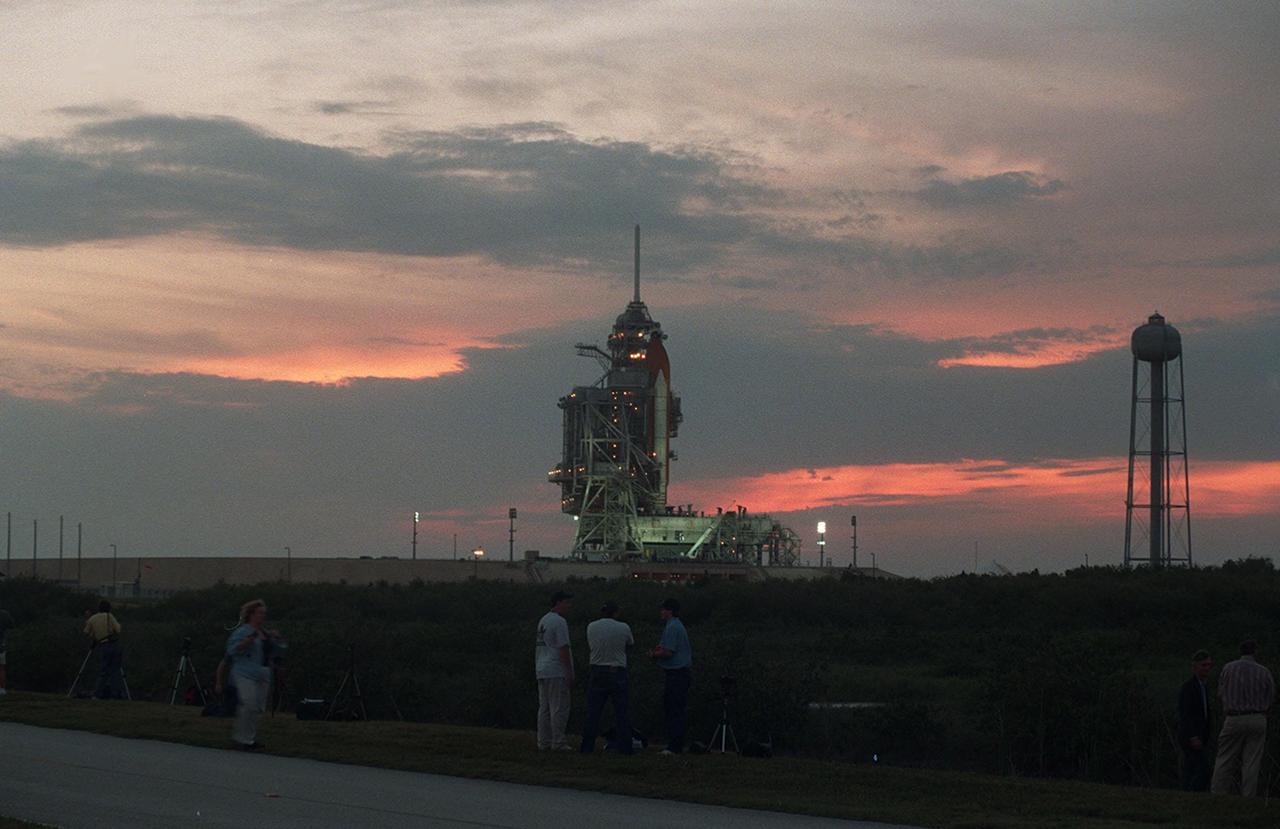
KENNEDY SPACE CENTER, Fla. -- The darkening sky at sunset provides a dramatic backdrop for Space Shuttle Atlantis on Launch Pad 39A. Spectators (bottom) wait for the rollback of the Rotating Service Structure to reveal the orbiter. In the photo only the orange external tank and white solid rocket booster are visible. Atlantis is targeted for liftoff at 4:15 p.m. EDT April 24 on mission STS-101. The mission will take the crew to the International Space Station to deliver logistics and supplies and prepare the Station for the arrival of the Zvezda Service Module, expected to be launched by Russia in July 2000. Also, the crew will conduct one space walk. This will be the third assembly flight to the Space Station

Spectators are seen photographing space shuttle Endeavour as it passes by on its way to its new home at the California Science Center, Friday, Oct. 12, 2012, in Inglewood. Endeavour, built as a replacement for space shuttle Challenger, completed 25 missions, spent 299 days in orbit, and orbited Earth 4,671 times while traveling 122,883,151 miles. Beginning Oct. 30, the shuttle will be on display in the CSC’s Samuel Oschin Space Shuttle Endeavour Display Pavilion, embarking on its new mission to commemorate past achievements in space and educate and inspire future generations of explorers. Photo Credit: (NASA/Carla Cioffi)
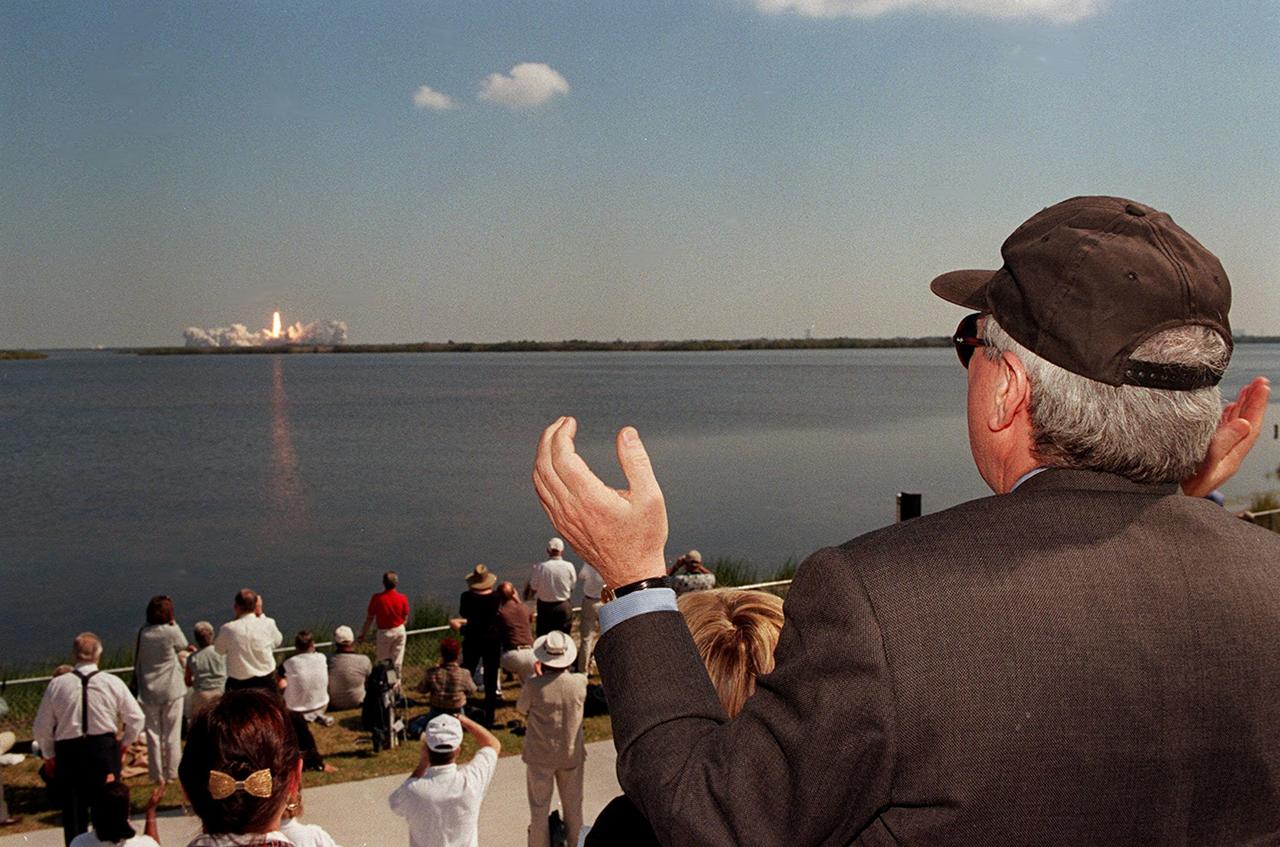
KENNEDY SPACE CENTER, FLA. -- NASA Administrator Dan Goldin (right) joins other spectators at the Banana Creek viewing site in cheering the successful launch of Space Shuttle Endeavour on mission STS-99. The perfect liftoff occurred at 12:43:40 p.m. EST. Known as the Shuttle Radar Topography Mission (SRTM), STS-99 will chart a new course to produce unrivaled 3-D images of the Earth's surface. The result of the SRTM could be close to 1 trillion measurements of the Earth's topography. The mission is expected to last 11days, with Endeavour landing at KSC Tuesday, Feb. 22, at 4:36 p.m. EST. This is the 97th Shuttle flight and 14th for Shuttle Endeavour
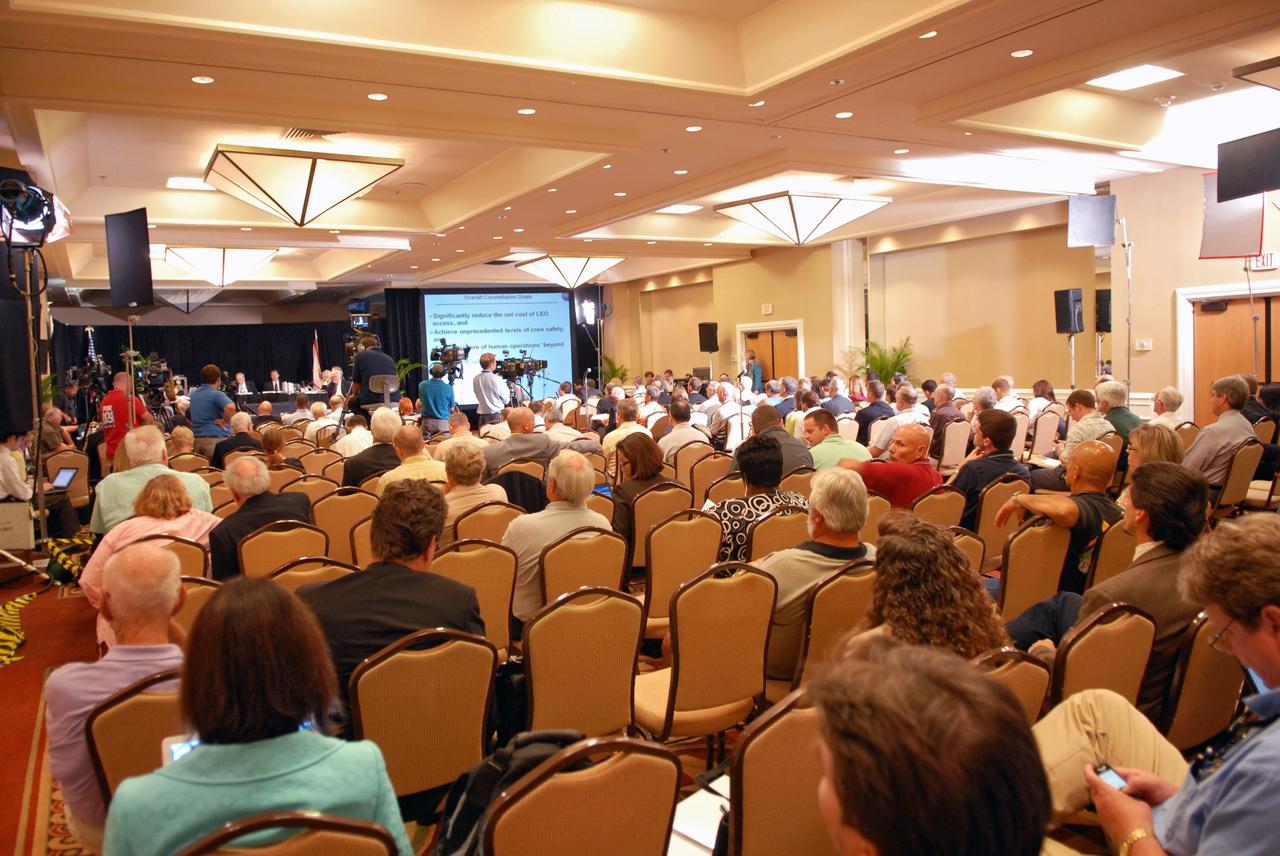
CAPE CANAVERAL, Fla. – Photographers and spectators show their interest in the Augustine Commission, meeting in Cocoa Beach, Fla. At the request of the Office of Science and Technology Policy, NASA established the Review of U.S. Human Space Flight Plans Committee, known as the Augustine Commission. Chaired by Norman R. Augustine, retired chairman and CEO of Lockheed Martin Corp., the committee is conducting an independent review of ongoing U.S. human spaceflight plans and programs, as well as alternatives, to ensure the nation is pursuing the best trajectory for the future of human space flight - one that is safe, innovative, affordable, and sustainable. Photo credit: NASA/Jim Grossmann
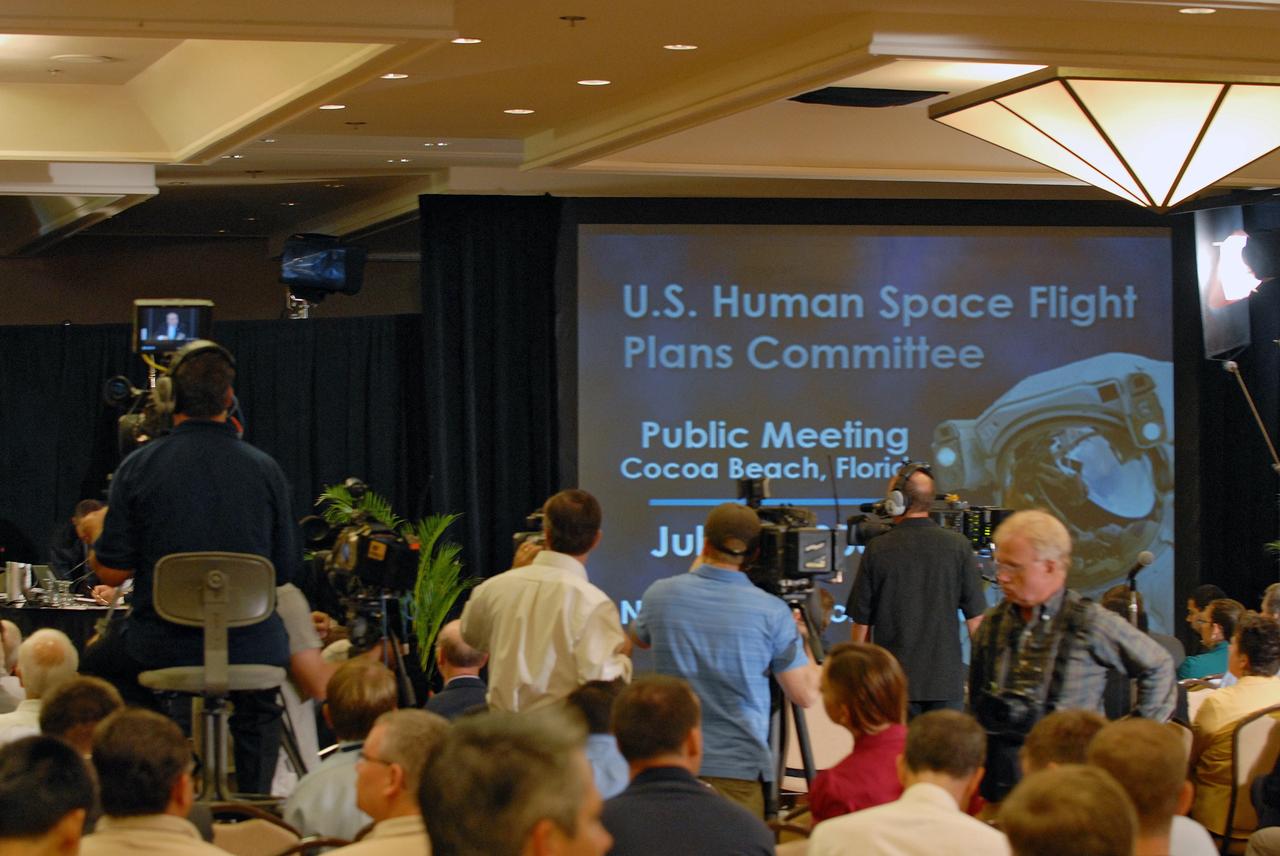
CAPE CANAVERAL, Fla. – Photographers and spectators show their interest in the Augustine Commission, meeting in Cocoa Beach, Fla. At the request of the Office of Science and Technology Policy, NASA established the Review of U.S. Human Space Flight Plans Committee, known as the Augustine Commission. Chaired by Norman R. Augustine, retired chairman and CEO of Lockheed Martin Corp., the committee is conducting an independent review of ongoing U.S. human spaceflight plans and programs, as well as alternatives, to ensure the nation is pursuing the best trajectory for the future of human space flight - one that is safe, innovative, affordable, and sustainable. Photo credit: NASA/Jim Grossmann
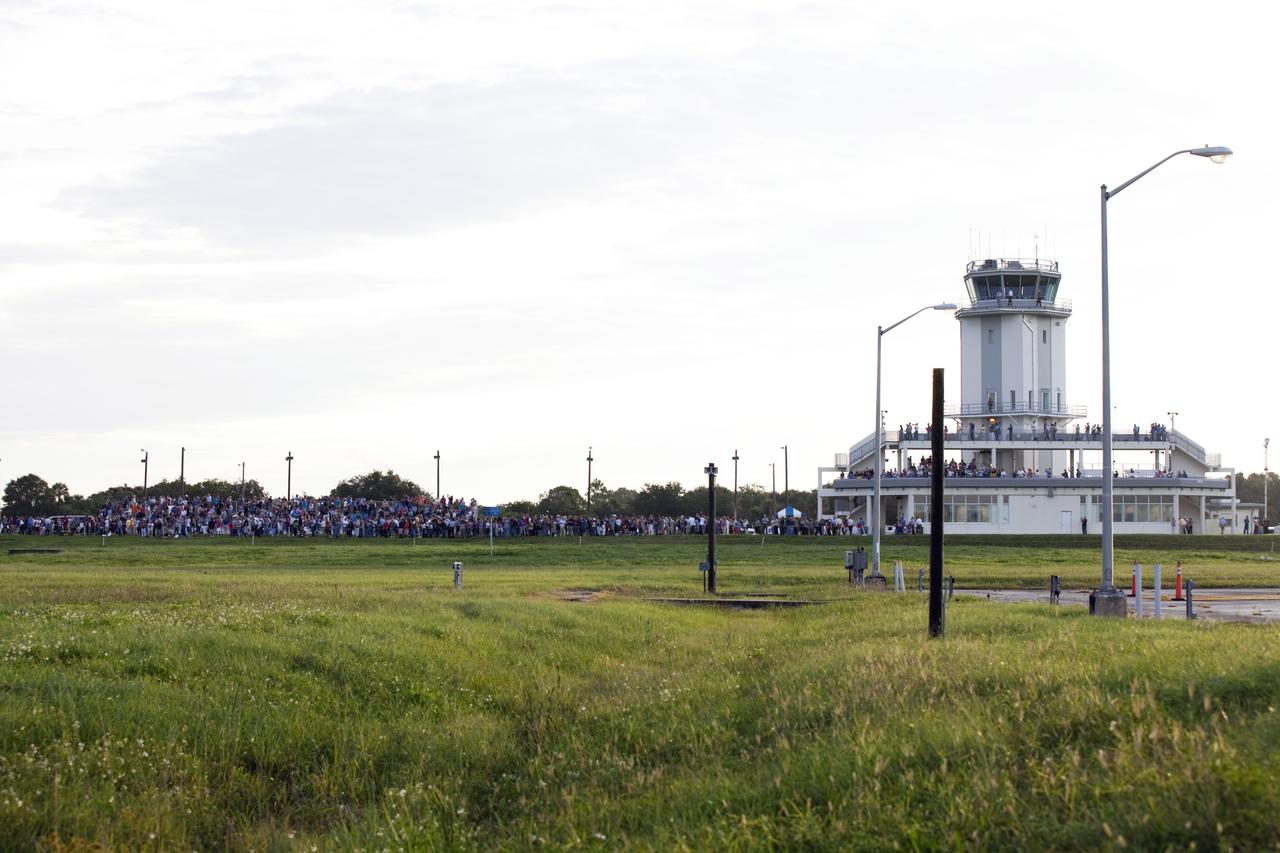
CAPE CANAVERAL, Fla. – A large crowd of news media and spectators were on hand near the control tower viewing area at the Shuttle Landing Facility at NASA's Kennedy Space Center in Florida to watch NASA's Shuttle Carrier Aircraft, or SCA, with the space shuttle Endeavour mounted atop, begin its ferry flight to California. The SCA, a modified 747 jetliner, will fly Endeavour to Los Angeles where it will be placed on public display at the California Science Center. This is the final ferry flight scheduled in the Space Shuttle Program era. For more information on the shuttles' transition and retirement, visit http://www.nasa.gov/transition. Photo credit: NASA/Frankie Martin

Spectators in Times Square watch the video board of the Nasdaq MarketSite showing the live NASA TV broadcast as NASA InSight team members celebrate inside the Mission Support Area of NASA's Jet Propulsion Laboratory after receiving confirmation the lander successfully touched down on the surface of Mars, Monday, Nov. 26, 2018 in Times Square in New York City. The lander sent a signal affirming a completed landing sequence at approximately 3 p.m. EST (noon PST) after touching down on the western side of a flat, smooth expanse of lava called Elysium Planitila. InSight, short for Interior Exploration using Seismic Investigations, Geodesy and Heat Transport, is a Mars lander designed to study the "inner space" of Mars: its crust, mantle, and core. Photo Credit: (NASA/Joel Kowsky)
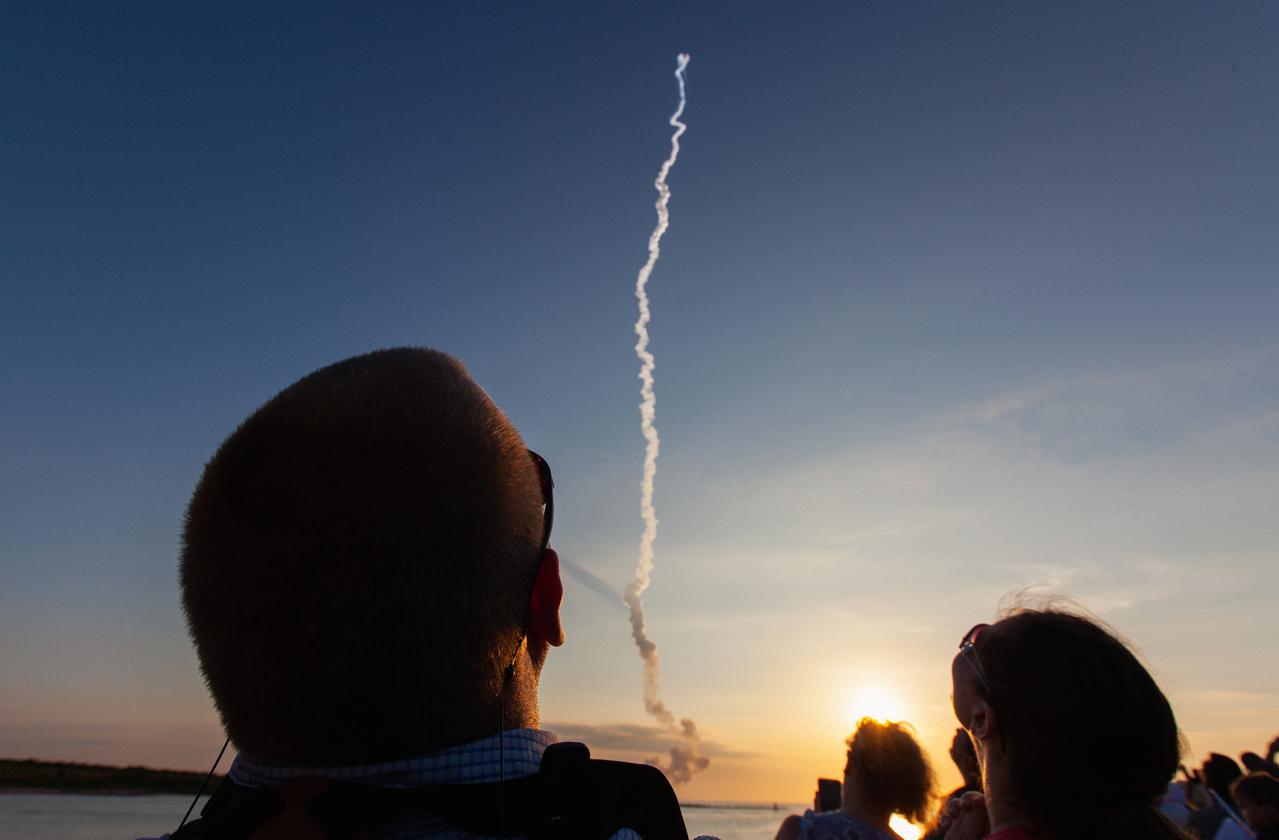
Crowds of spectators watch from Jetty Park in Cape Canaveral, Florida, on July 2, 2019, as a Northrop Grumman provided booster launches from Launch Pad 46 carrying, a fully functional Launch Abort System with a test version of Orion attached for NASA’s Ascent Abort-2 (AA-2). Launch time was 7 a.m. EDT. During AA-2, the booster will send the LAS and Orion to an altitude of 31,000 feet, traveling at Mach 1.15 (more than 1,000 mph). The LAS’ three motors will work together to pull the crew module away from the booster and prepare it for splashdown in the Atlantic Ocean. The flight test will prove that the abort system can pull crew to safety in the unlikely event of an emergency during ascent.
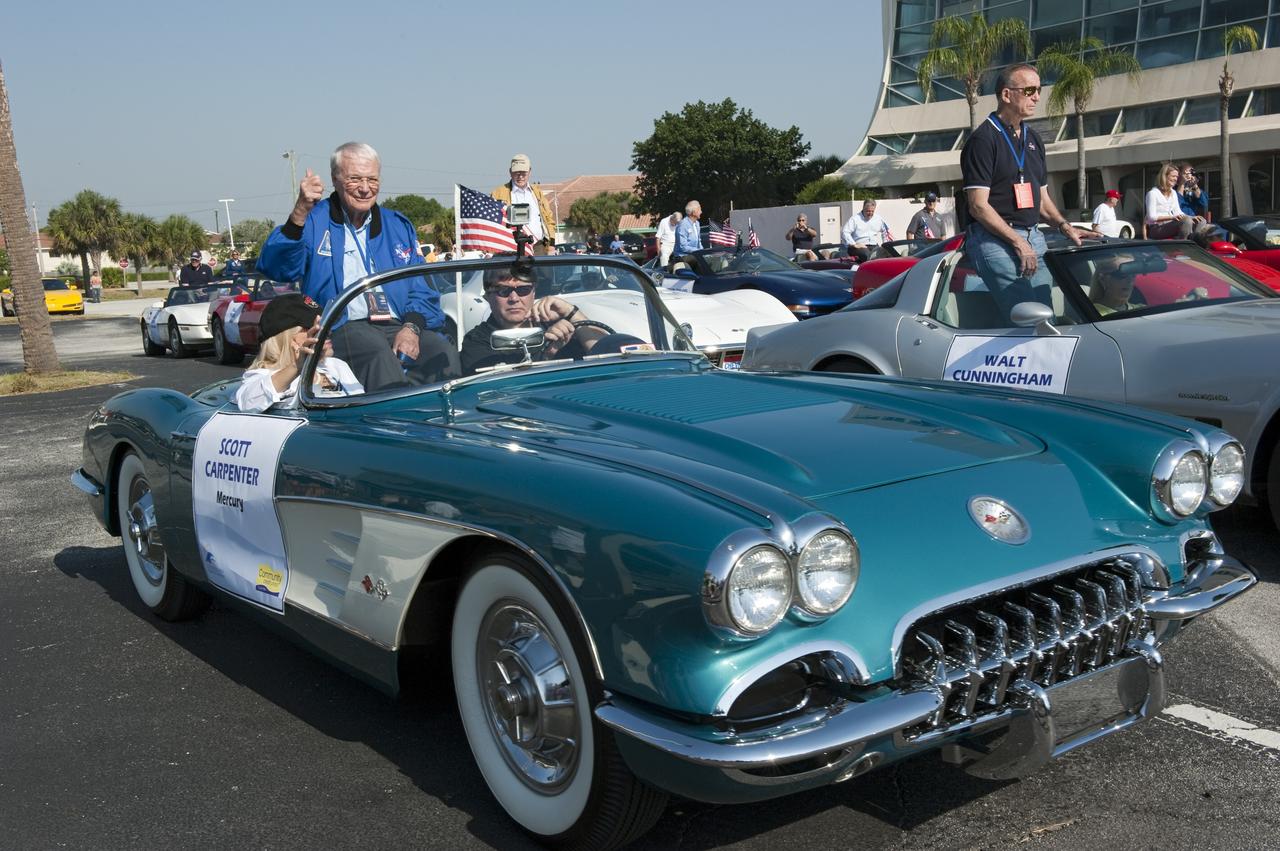
Cape Canaveral, Fla. -- Retired Mercury 7 astronaut Scott Carpenter gives a thumbs-up to spectators from a Chevrolet Corvette after a commemorative parade in Cocoa Beach, Florida. A group of current and retired NASA astronauts gathered in Cocoa Beach to commemorate NASA’s 50 years of accomplishments and to honor astronaut Alan Shepard’s Mercury/Freedom 7 suborbital flight May 5, 1961.The event was marked by a parade, with the astronauts riding in a fleet of Chevrolet Corvettes that corresponded with the time period of their space missions. Members of the Cape Kennedy Corvette Club, a group established in 1967, escorted almost two dozen astronauts or their family representatives in club members' cars. The Corvette parade started at the glass bank building, at 9:34 a.m. EDT, the same time Shepard launched into space. Photo credit: NASA/Kim Shiflett
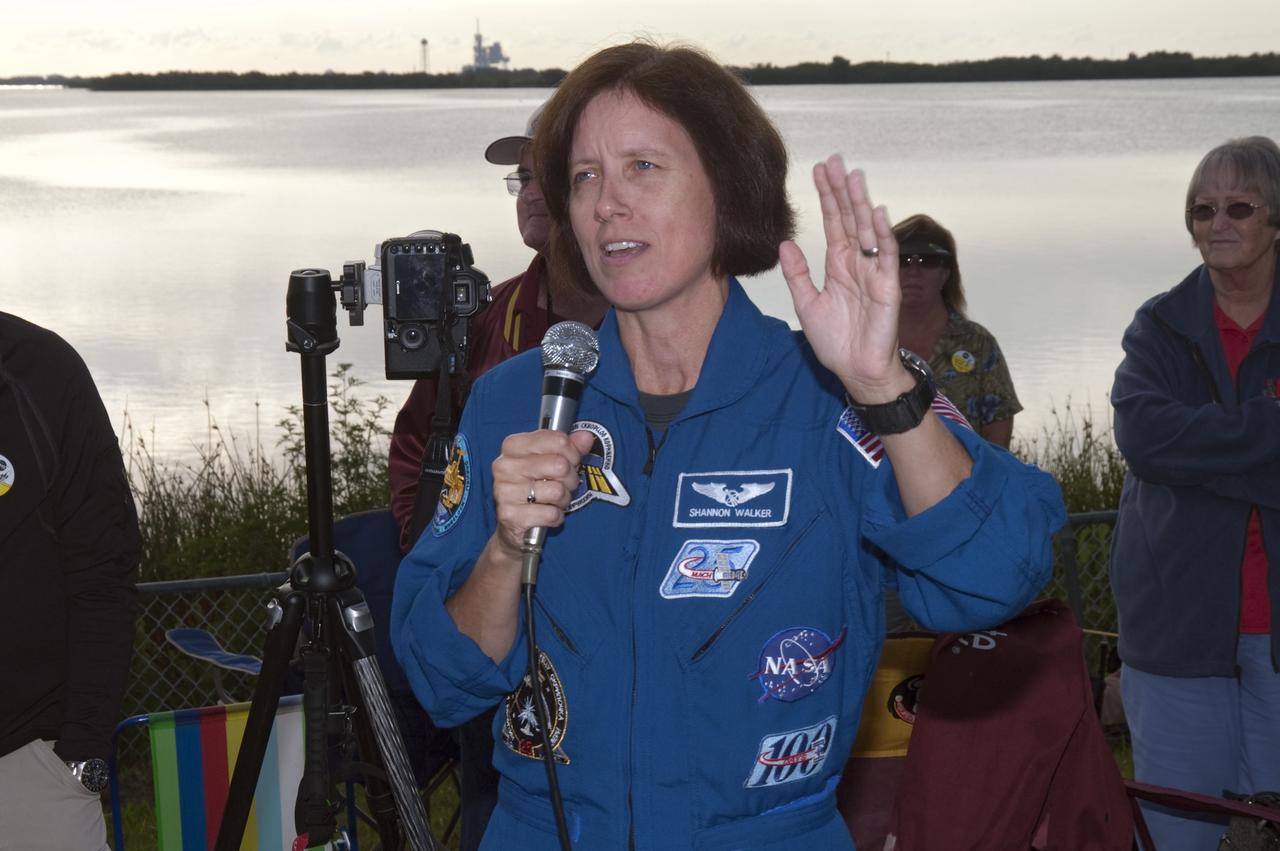
CAPE CANAVERAL, Fla. - NASA astronaut Shannon Walker talks to a crowd of spectators gathered at the Banana Creek Viewing Site near the Saturn V Center at NASA's Kennedy Space Center in Florida to watch the launch of space shuttle Endeavour. The shuttle lifted off on its STS-134 mission to the International Space Station on time at 8:56 a.m. EDT on May 16. The shuttle and its six-member crew are embarking on a mission to deliver the Alpha Magnetic Spectrometer-2 (AMS), Express Logistics Carrier-3, a high-pressure gas tank and additional spare parts for the Dextre robotic helper to the space station. Endeavour's first launch attempt on April 29 was scrubbed because of an issue associated with a faulty power distribution box called the aft load control assembly-2 (ALCA-2). For more information, visit www.nasa.gov/mission_pages/shuttle/shuttlemissions/sts134/index.html. Photo credit: NASA/Kurtis Korwan
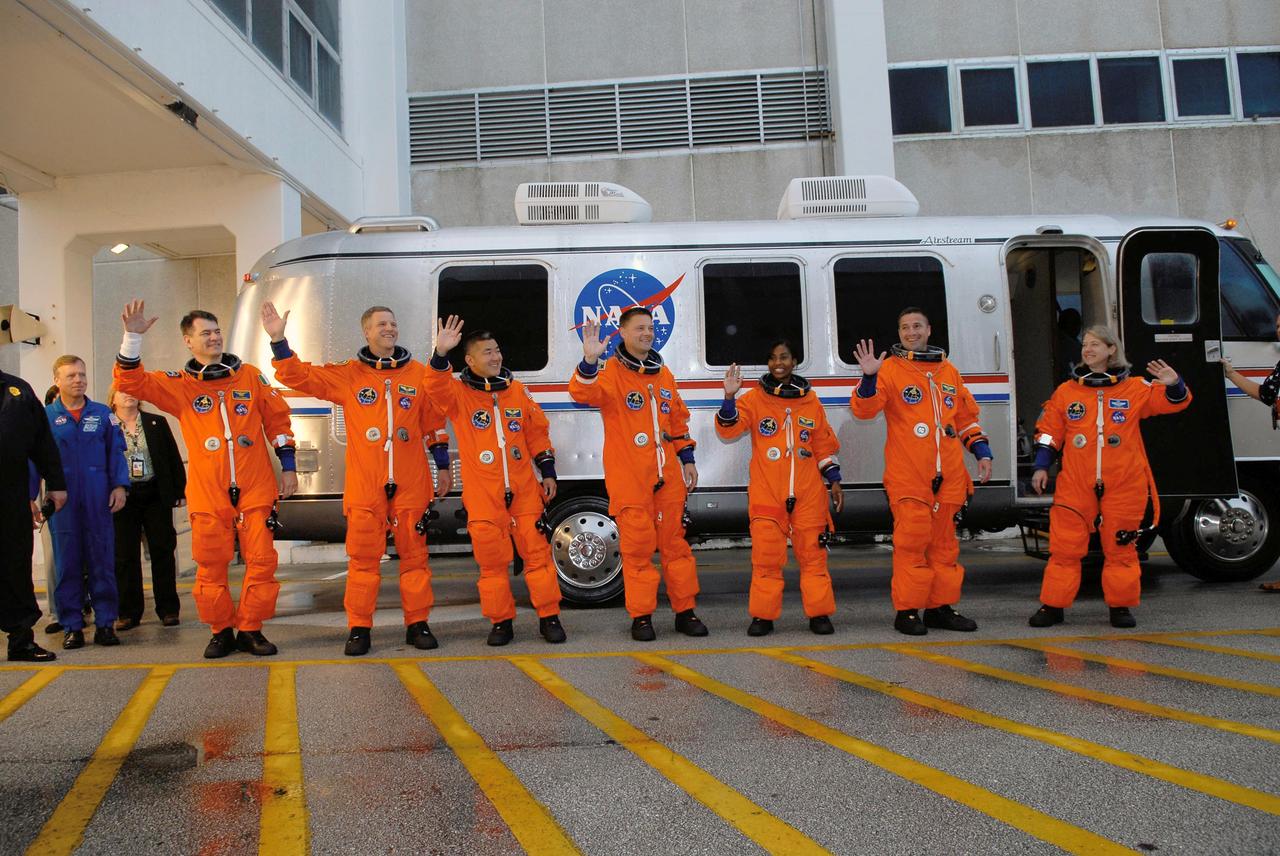
STS120-S-007 (23 Oct. 2007) --- After suiting up, the STS-120 crewmembers take a moment to wave to spectators prior to boarding the Astrovan, which will take them to launch pad 39A at Kennedy Space Center. From the right are astronauts Pam Melroy, commander; George Zamka, pilot; Stephanie Wilson, Doug Wheelock, Daniel Tani, Scott Parazynski and European Space Agency's (ESA) Paolo Nespoli, all mission specialists. Discovery will link up with the International Space Station on Thursday, Oct. 25, to begin a joint mission to continue construction by delivering the Italian-built U.S. Node 2, called Harmony. During the 14-day mission, the crew will install Harmony and move the P6 solar arrays to their permanent position and deploy them.
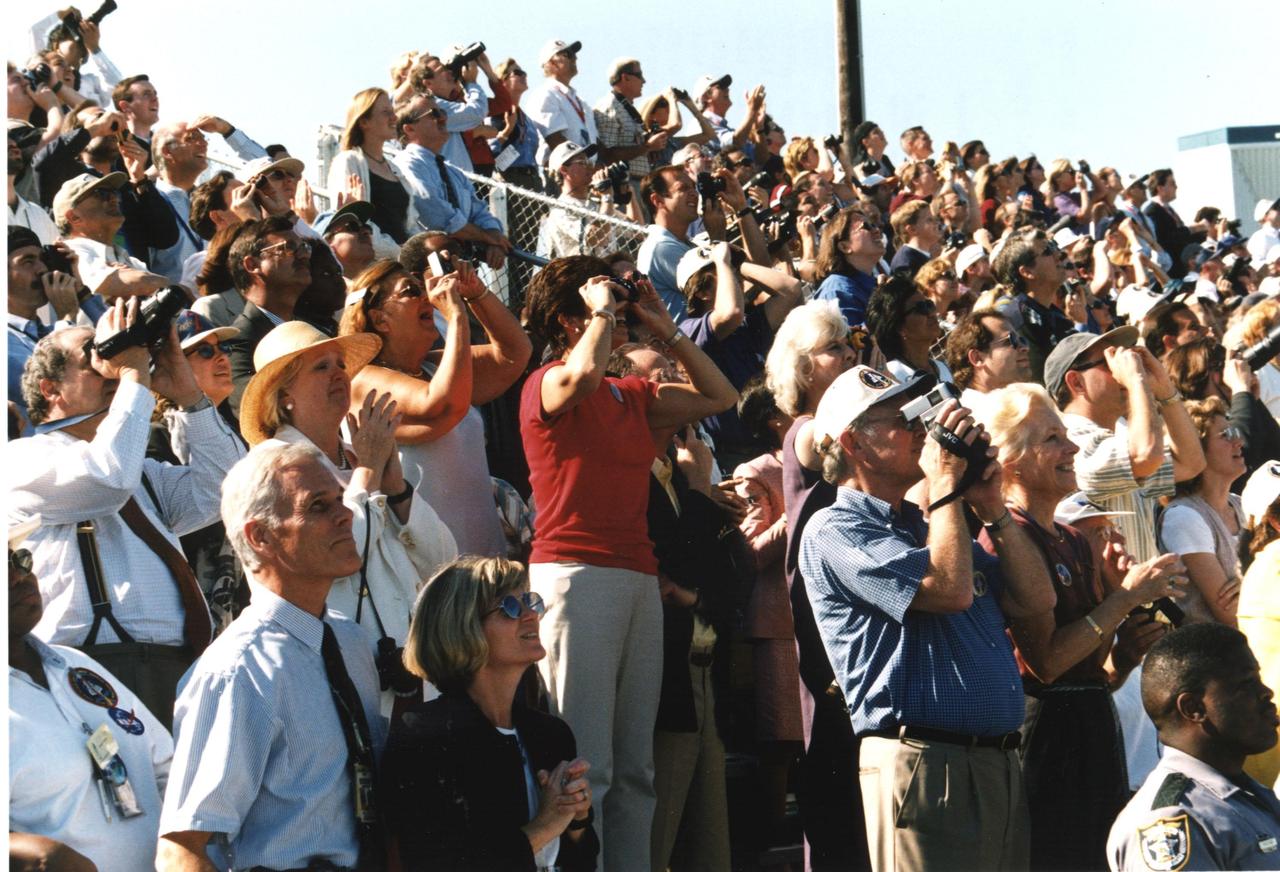
These stands are filled with spectators watching and photographing the launch of STS-95. The viewing sites and roadways at Kennedy Space Center bulge with people and vehicles wanting to see Space Shuttle Discovery lift off. Extra attention has been drawn to the mission due to the addition to the crew of John H. Glenn Jr., a senator from Ohio. STS-95 is Glenn's second flight into space after 36 years; he was one of the original Project Mercury astronauts and flew his first mission in February 1962. The STS-95 mission includes research payloads such as the Spartan solar-observing deployable spacecraft, the Hubble Space Telescope Orbital Systems Test Platform, the International Extreme Ultraviolet Hitchhiker, as well as a SPACEHAB single module with experiments on space flight and the aging process
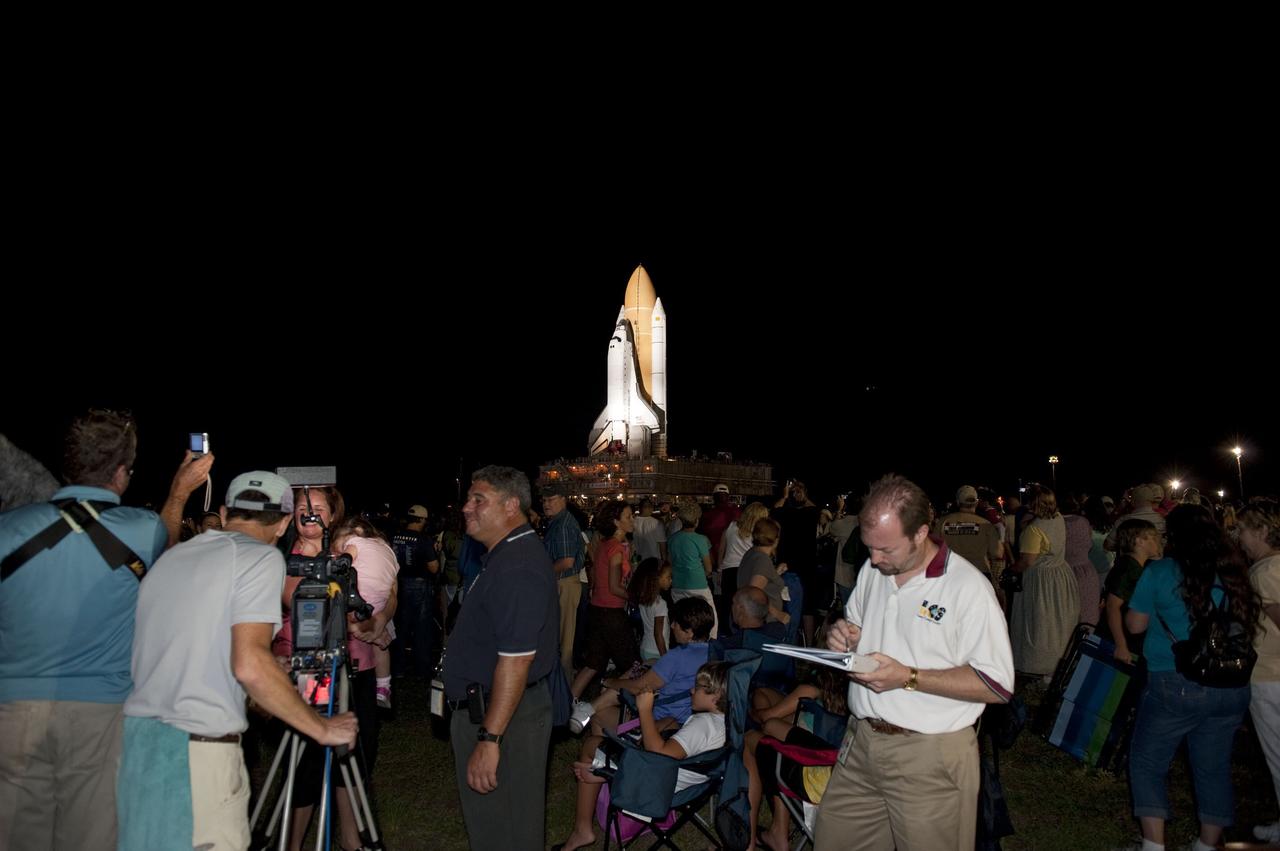
CAPE CANAVERAL, Fla. -- Thousands of spectators came out to watch space shuttle Atlantis' historic final journey from the Vehicle Assembly Building to Launch Pad 39A at NASA's Kennedy Space Center in Florida. First motion was at 8:42 p.m. EDT. It will take the crawler-transporter about six hours to carry the shuttle, attached to its external fuel tank and solid rocket boosters, to the seaside launch pad. The milestone move paves the way for the launch of the STS-135 mission to the International Space Station, targeted for July 8. STS-135 will be the 33rd flight of Atlantis, the 37th shuttle mission to the space station, and the 135th and final mission of NASA's Space Shuttle Program. For more information visit, www.nasa.gov/mission_pages/shuttle/shuttlemissions/sts135/index.html. Photo credit: NASA/Kim Shiflett

CAPE CANAVERAL, Fla. – Crew members for space shuttle Endeavour's STS-126 mission pause by the Astrovan to wave to spectators before their ride to Launch Pad 39A at NASA's Kennedy Space Center. From left are Mission Specialists Sandra Magnus, Shane Kimbrough, Heidemarie Stefanyshyn-Piper, Steve Bowen and Donald Pettit, Pilot Eric Boe and Commander Chris Ferguson. STS-126 is the 124th space shuttle flight and the 27th flight to the International Space Station. The mission will feature four spacewalks and work that will prepare the space station to house six crew members for long- duration missions. Liftoff is scheduled for 7:55 p.m. EST Nov. 14. Photo credit: NASA/Kim Shiflett
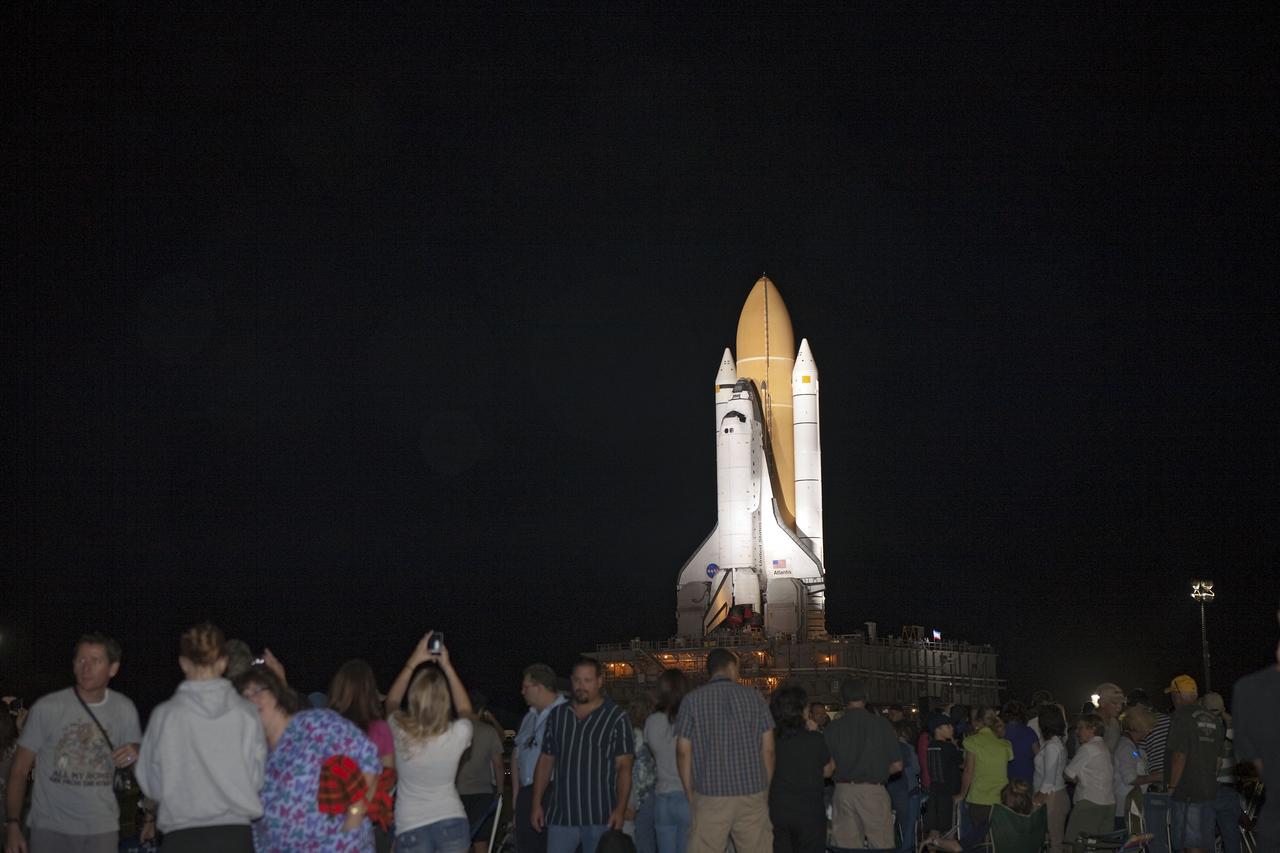
CAPE CANAVERAL, Fla. -- Thousands of spectators gather to watch space shuttle Atlantis' historic final journey from the Vehicle Assembly Building to Launch Pad 39A at NASA's Kennedy Space Center in Florida. First motion was at 8:42 p.m. EDT. It will take the crawler-transporter about six hours to carry the shuttle, attached to its external fuel tank and solid rocket boosters, to the seaside launch pad. The milestone move paves the way for the launch of the STS-135 mission to the International Space Station, targeted for July 8. STS-135 will be the 33rd flight of Atlantis, the 37th shuttle mission to the space station, and the 135th and final mission of NASA's Space Shuttle Program. For more information visit, www.nasa.gov/mission_pages/shuttle/shuttlemissions/sts135/index.html. Photo credit: NASA/Gianni Woods
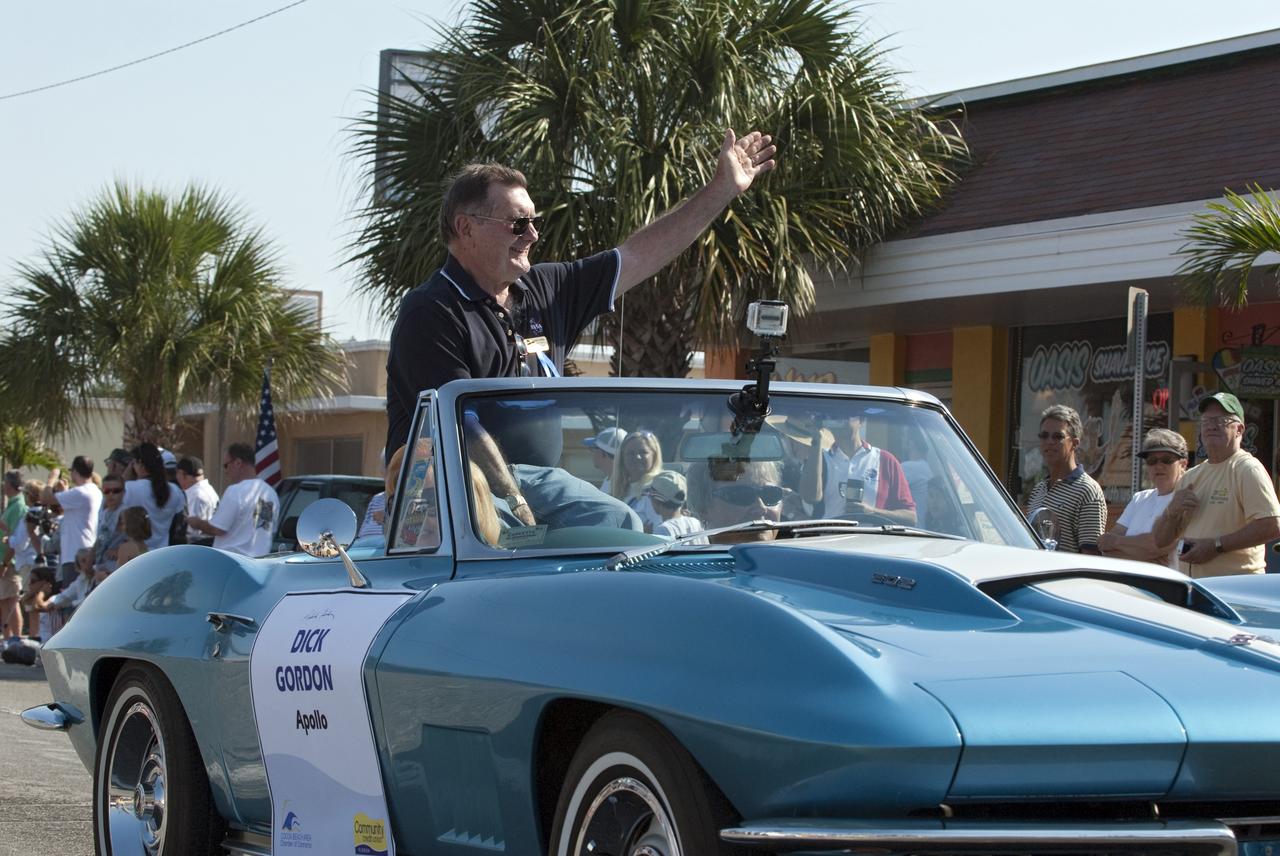
Cape Canaveral, Fla. -- Retired Gemini and Apollo astronaut Dick Gordon waves to spectators from a vintage Chevrolet Corvette during a commemorative parade in Cocoa Beach, Fla. A group of current and retired NASA astronauts gathered in Cocoa Beach to commemorate NASA’s 50 years of accomplishments and to honor astronaut Alan Shepard’s Mercury/Freedom 7 suborbital flight May 5, 1961.The event was marked by a parade, with the astronauts riding in a fleet of Chevrolet Corvettes that corresponded with the time period of their space missions. Members of the Cape Kennedy Corvette Club, a group established in 1967, escorted almost two dozen astronauts or their family representatives in club members' cars. The Corvette parade started at the glass bank building, at 9:34 a.m. EDT, the same time Shepard launched into space. Photo credit: NASA/Kim Shiflett
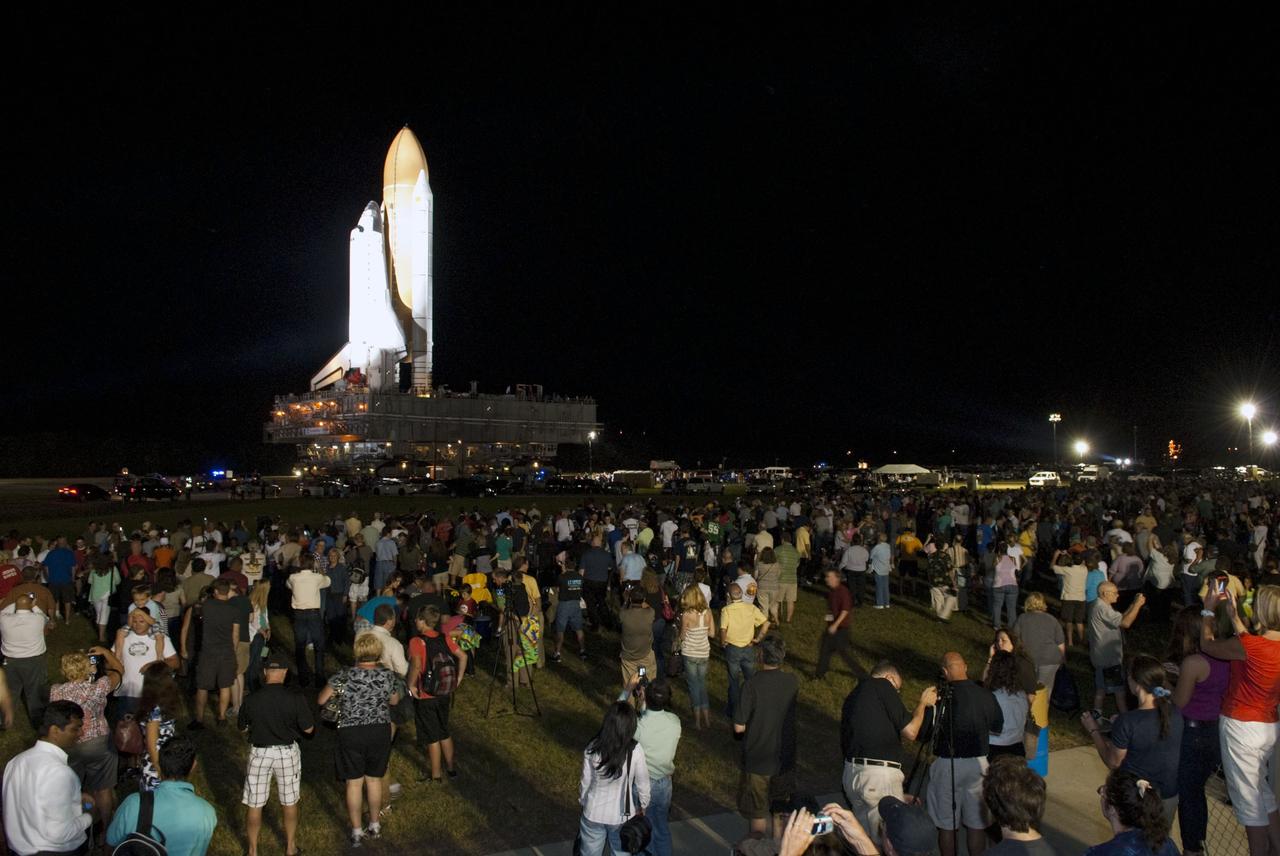
CAPE CANAVERAL, Fla. -- Thousands of spectators came out to watch space shuttle Atlantis' historic final journey from the Vehicle Assembly Building to Launch Pad 39A at NASA's Kennedy Space Center in Florida. First motion was at 8:42 p.m. EDT. It will take the crawler-transporter about six hours to carry the shuttle, attached to its external fuel tank and solid rocket boosters, to the seaside launch pad. The milestone move paves the way for the launch of the STS-135 mission to the International Space Station, targeted for July 8. STS-135 will be the 33rd flight of Atlantis, the 37th shuttle mission to the space station, and the 135th and final mission of NASA's Space Shuttle Program. For more information visit, www.nasa.gov/mission_pages/shuttle/shuttlemissions/sts135/index.html. Photo credit: NASA/Jim Grossmann
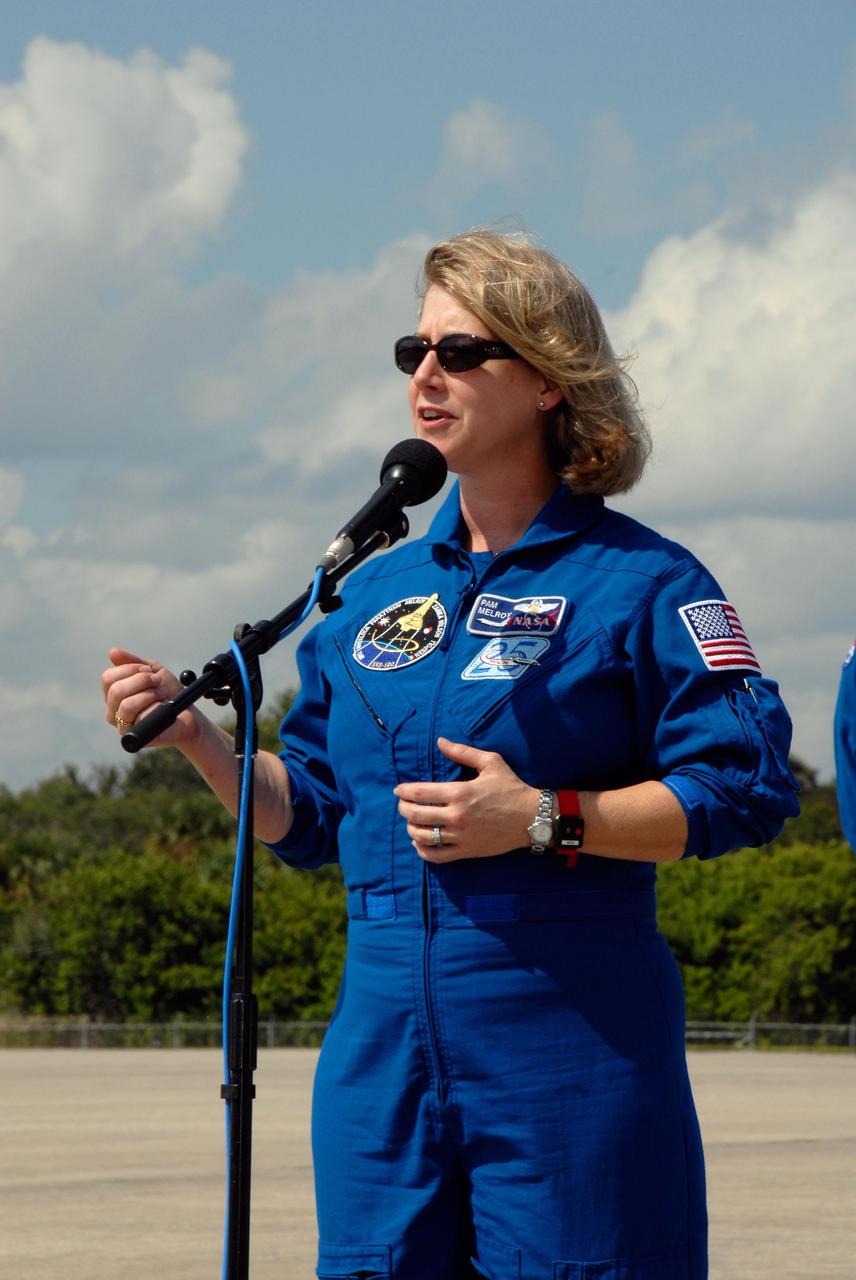
KENNEDY SPACE CENTER, FLA. -- At the Shuttle Landing Facility of NASA's Kennedy Space Center, STS-120 Commander Pamela Melroy addresses the spectators who welcomed the crew's arrival. Melroy will be making her third shuttle flight, the second woman to command a shuttle mission. The crew has returned to Kennedy to prepare for launch aboard space shuttle Discovery at 11:38 a.m. EDT on Oct. 23. The mission will be the 23rd shuttle flight to the International Space Station, delivering the Italian-built U.S. Node 2, called Harmony. The 14-day mission includes five spacewalks -- four by shuttle crew members and one by the station’s Expedition 16 crew -- to install Harmony and move the P6 solar arrays to their permanent position and deploy them. Discovery is expected to complete its mission and return home at 4:47 a.m. EST on Nov. 6. Photo credit: NASA/Kim Shiflett
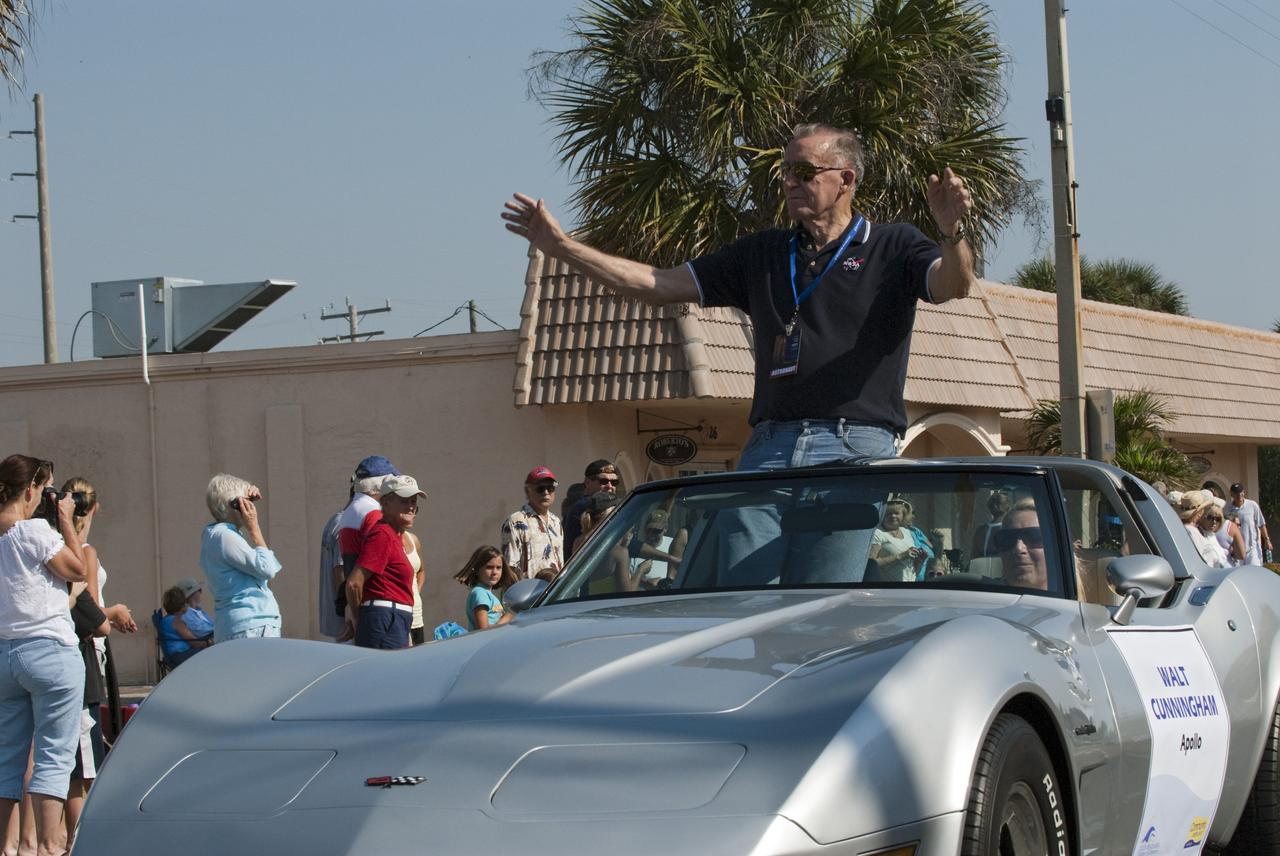
Cape Canaveral, Fla. -- Retired Apollo astronaut Walt Cunningham greets spectators from a vintage Chevrolet Corvette during a commemorative parade in Cocoa Beach, Fla. A group of current and retired NASA astronauts gathered in Cocoa Beach to commemorate NASA’s 50 years of accomplishments and to honor astronaut Alan Shepard’s Mercury/Freedom 7 suborbital flight May 5, 1961.The event was marked by a parade, with the astronauts riding in a fleet of Chevrolet Corvettes that corresponded with the time period of their space missions. Members of the Cape Kennedy Corvette Club, a group established in 1967, escorted almost two dozen astronauts or their family representatives in club members' cars. The Corvette parade started at the glass bank building, at 9:34 a.m. EDT, the same time Shepard launched into space. Photo credit: NASA/Kim Shiflett
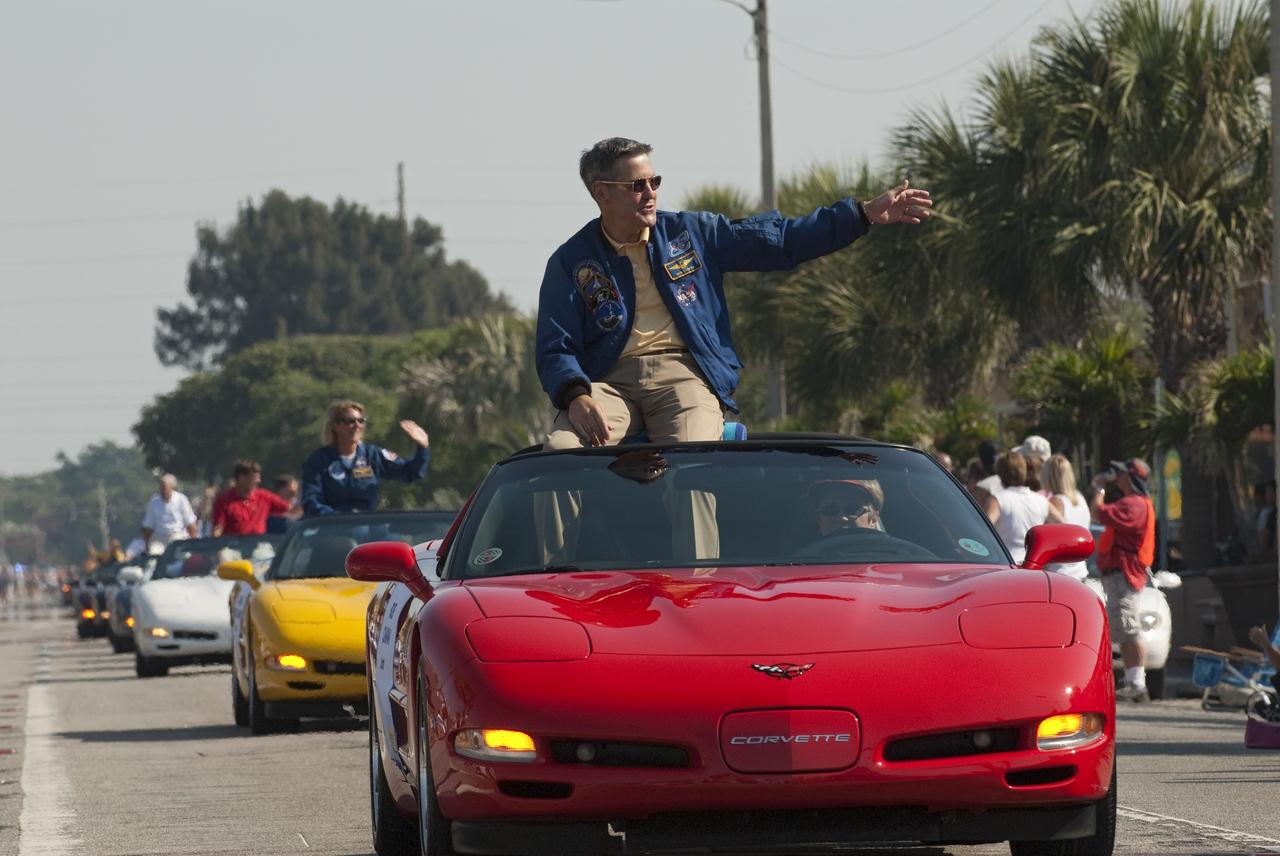
Cape Canaveral, Fla. -- Kennedy Space Center Director and former space shuttle astronaut Bob Cabana waves to spectators from a Chevrolet Corvette during a commemorative parade in Cocoa Beach, Fla. A group of current and retired NASA astronauts gathered in Cocoa Beach to commemorate NASA’s 50 years of accomplishments and to honor astronaut Alan Shepard’s Mercury/Freedom 7 suborbital flight May 5, 1961.The event was marked by a parade, with the astronauts riding in a fleet of Chevrolet Corvettes that corresponded with the time period of their space missions. Members of the Cape Kennedy Corvette Club, a group established in 1967, escorted almost two dozen astronauts or their family representatives in club members' cars. The Corvette parade started at the glass bank building, at 9:34 a.m. EDT, the same time Shepard launched into space. Photo credit: NASA/Kim Shiflett
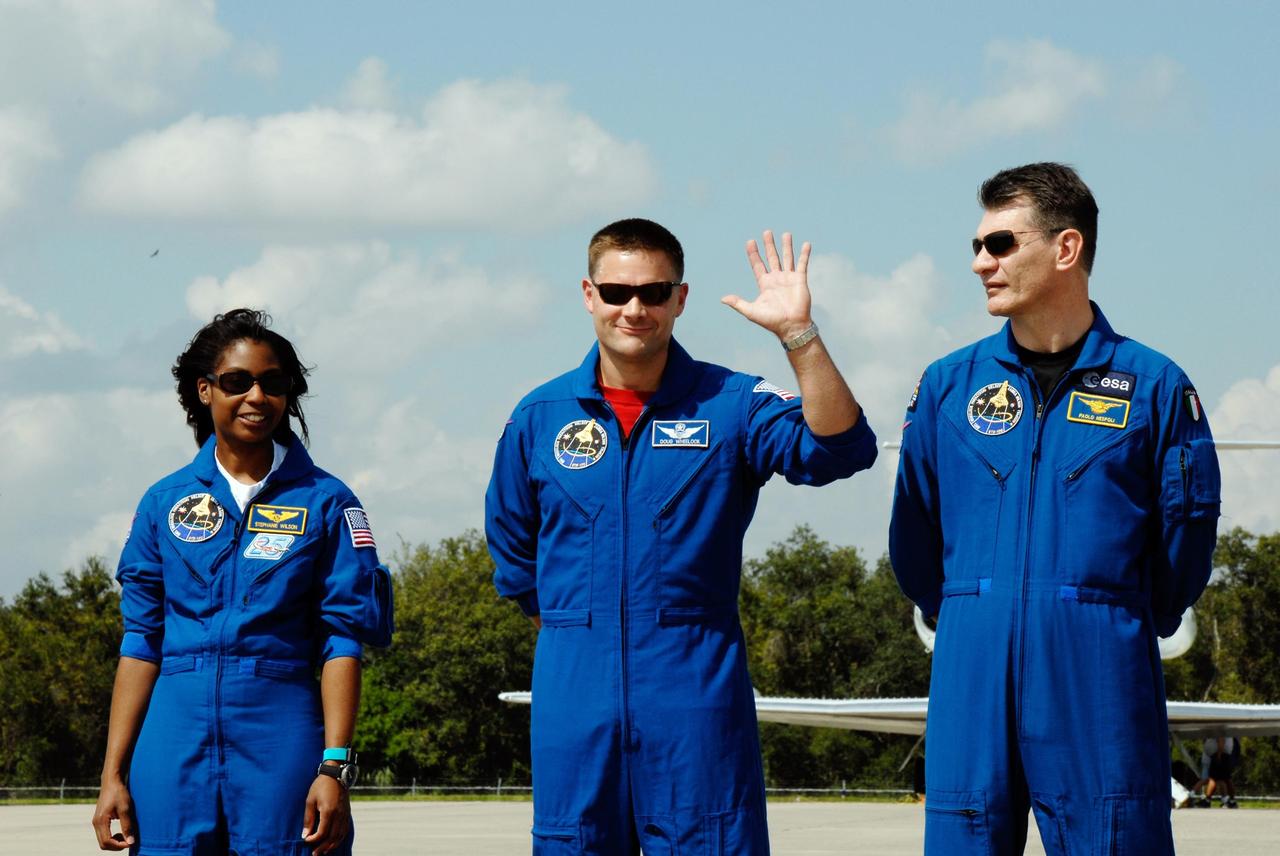
KENNEDY SPACE CENTER, FLA. -- At the Shuttle Landing Facility of NASA's Kennedy Space Center, STS-120 crew members acknowledge the spectators who welcomed the crew's arrival. From left are Mission Specialists Stephanie Wilson, Doug Wheelock and Paolo Nespoli, who represents the European Space Agency. The crew has returned to Kennedy to prepare for launch aboard space shuttle Discovery at 11:38 a.m. EDT on Oct. 23. The mission will be the 23rd shuttle flight to the International Space Station, delivering the Italian-built U.S. Node 2, called Harmony. The 14-day mission includes five spacewalks -- four by shuttle crew members and one by the station’s Expedition 16 crew -- to install Harmony and move the P6 solar arrays to their permanent position and deploy them. Discovery is expected to complete its mission and return home at 4:47 a.m. EST on Nov. 6. Photo credit: NASA/Kim Shiflett
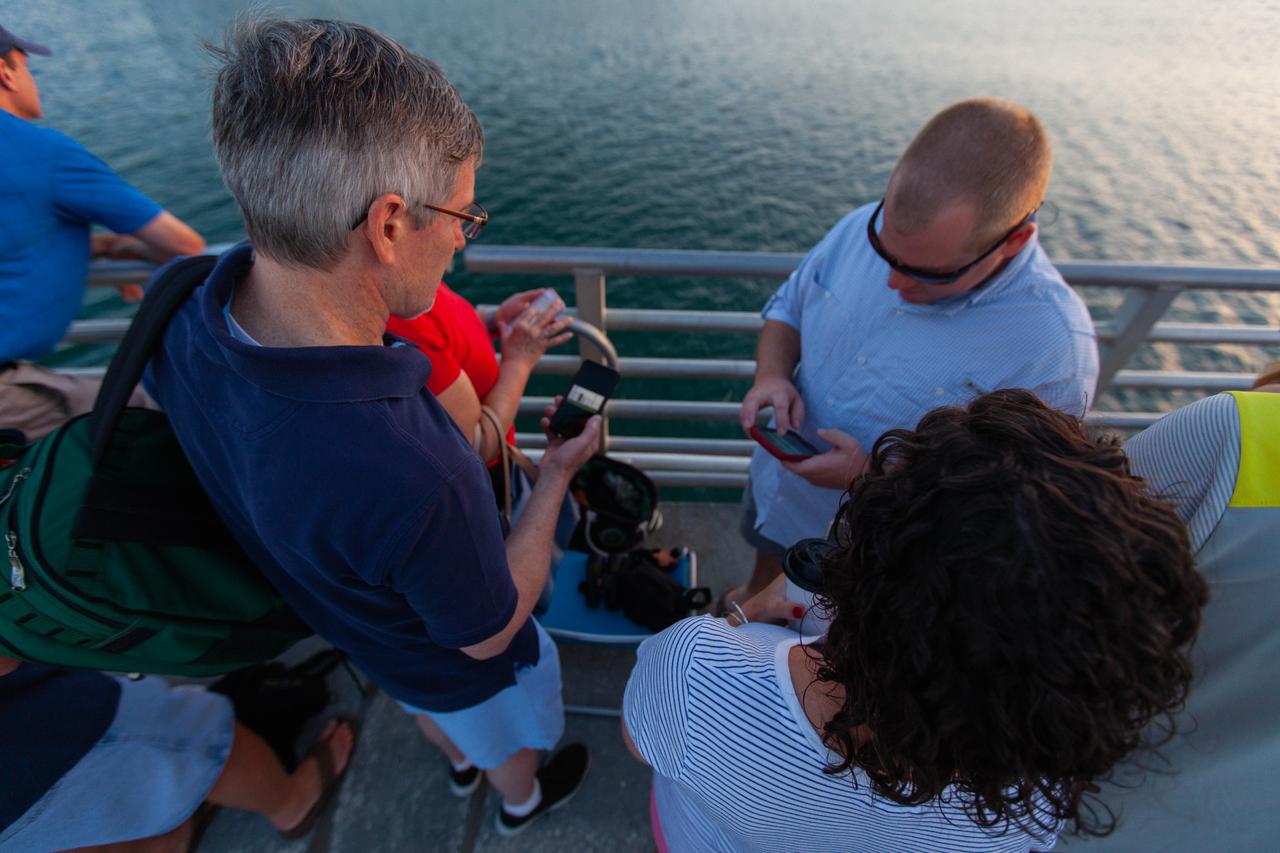
Crowds of spectators watch from Jetty Park in Cape Canaveral, Florida, on July 2, 2019, as a Northrop Grumman provided booster launches from Launch Pad 46 carrying, a fully functional Launch Abort System with a test version of Orion attached for NASA’s Ascent Abort-2 (AA-2). Launch time was 7 a.m. EDT. During AA-2, the booster will send the LAS and Orion to an altitude of 31,000 feet, traveling at Mach 1.15 (more than 1,000 mph). The LAS’ three motors will work together to pull the crew module away from the booster and prepare it for splashdown in the Atlantic Ocean. The flight test will prove that the abort system can pull crew to safety in the unlikely event of an emergency during ascent.

KENNEDY SPACE CENTER, Fla. -- In a burst of light, Space Shuttle Atlantis hurtles into the pre-dawn sky on mission STS-101 at 6:11:10 a.m. EDT. Silhouetted on the left are two American flags, hung from a flagpole near the Press Site bleachers. Media and spectators below have an unobstructed view across the turn basin, which reflects the fiery liftoff. The mission is taking the crew of seven to the International Space Station to deliver logistics and supplies as well as to prepare the Station for the arrival of the Zvezda Service Module, expected to be launched by Russia in July 2000. Also, the crew will conduct one space walk and will reboost the space station from 230 statute miles to 250 statute miles. This will be the third assembly flight to the Space Station. After a 10-day mission, landing is targeted for May 29 at 2:19 a.m. EDT. This is the 98th Shuttle flight and the 21st flight for Shuttle Atlantis