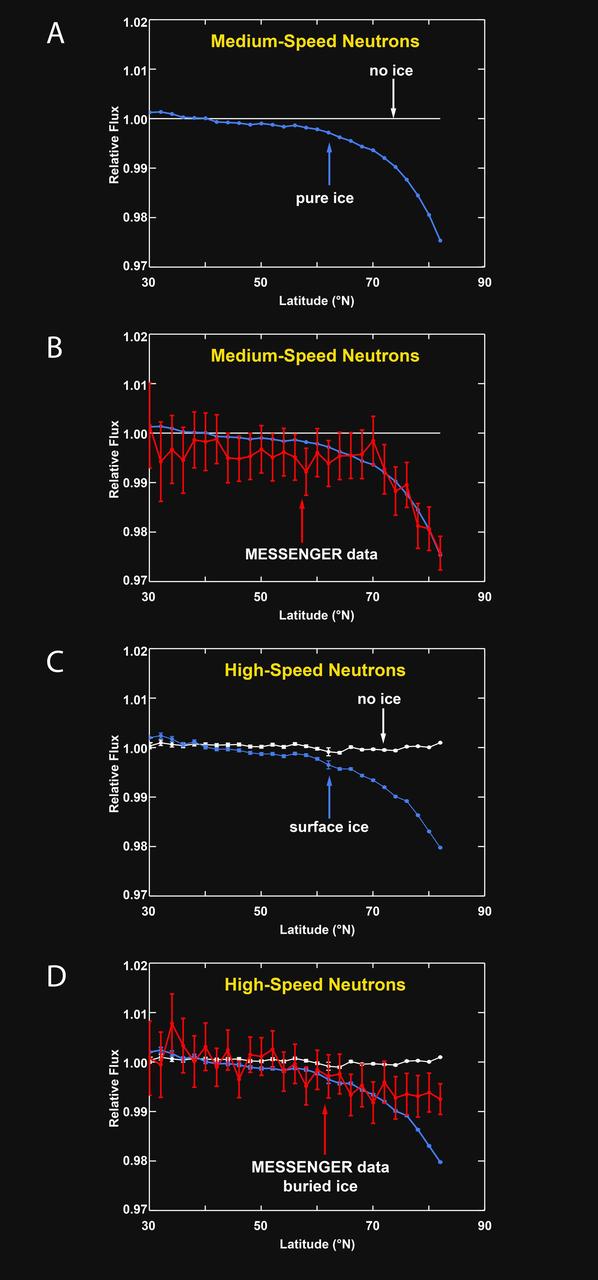
Neutron Spectrometer Measurements
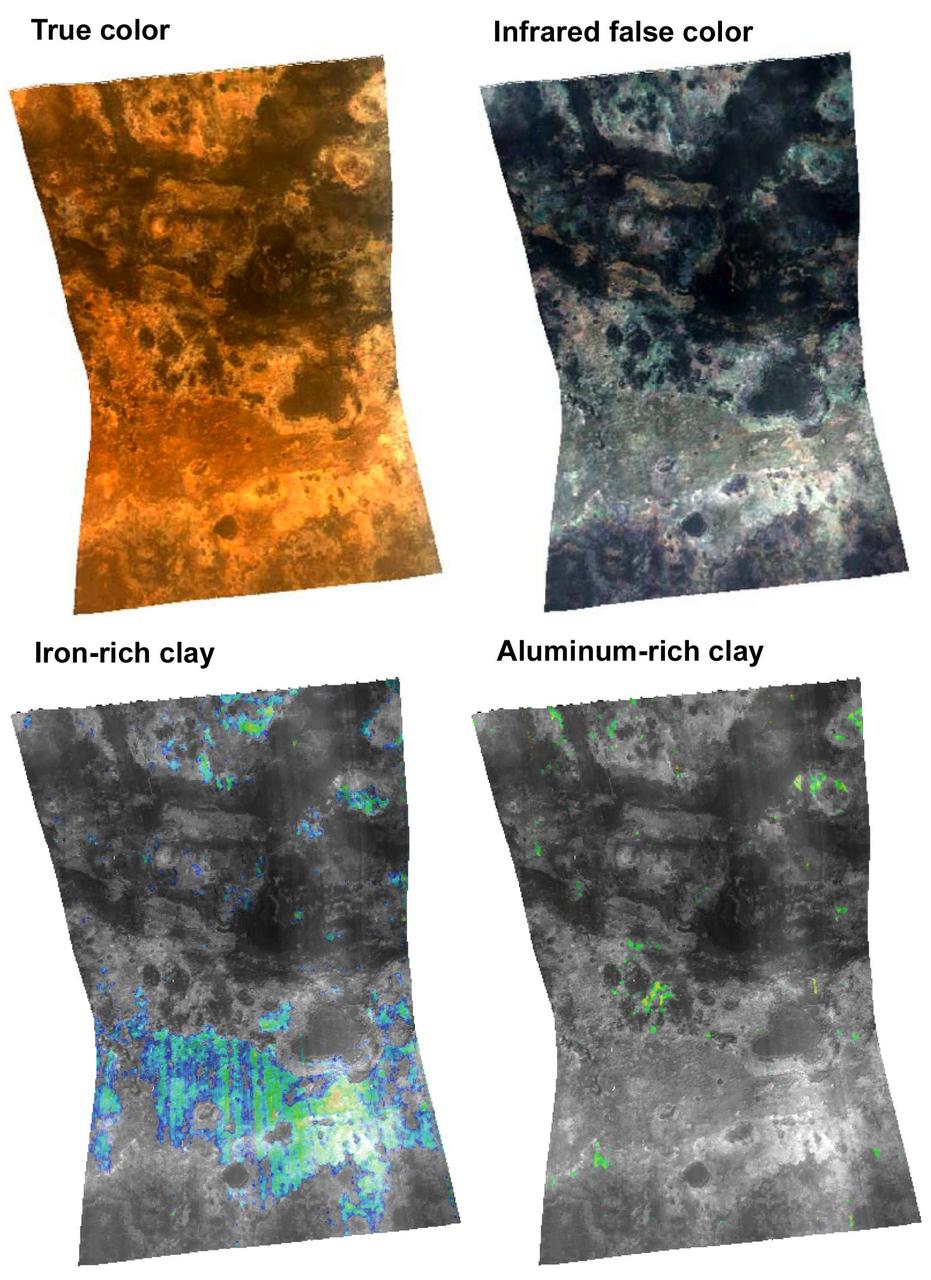
Spectrometer Observations Near Mawrth Vallis

Growing Library of Mars Spectrometer Images
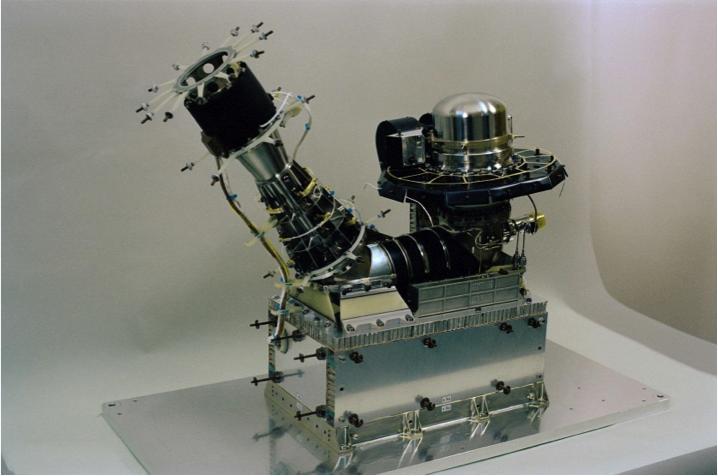
NASA has provided part of the electronics package for an instrument called the Double Focusing Mass Spectrometer, which is part of the Swiss-built Rosetta Orbiter Spectrometer for Ion and Neutral Analysis ROSINA instrument.
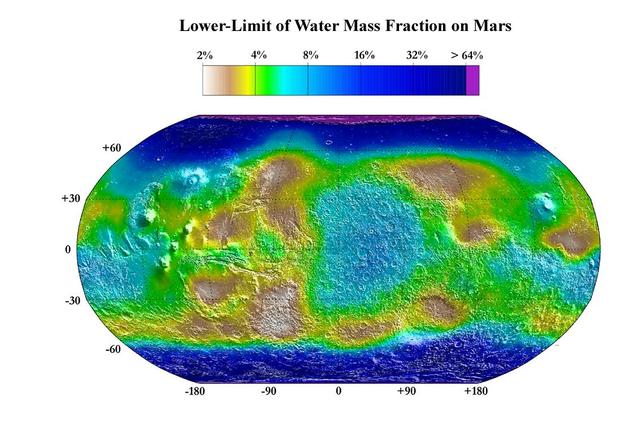
Water Mass Map from Neutron Spectrometer
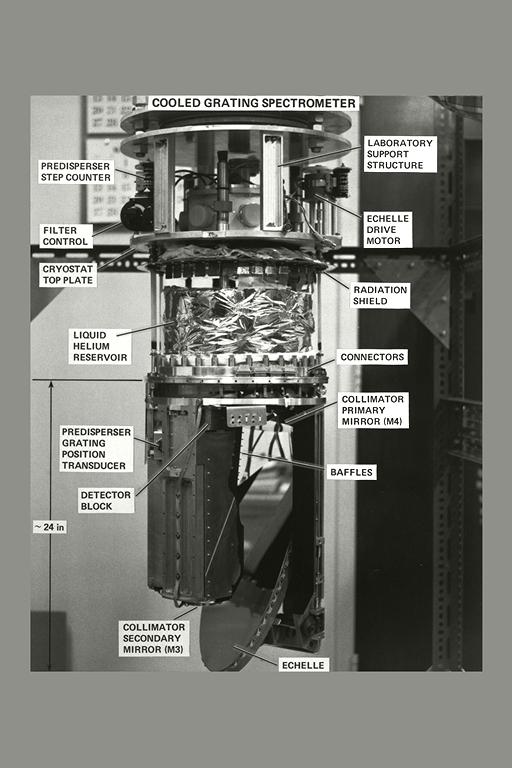
COOLING GRADE SPECTROMETER
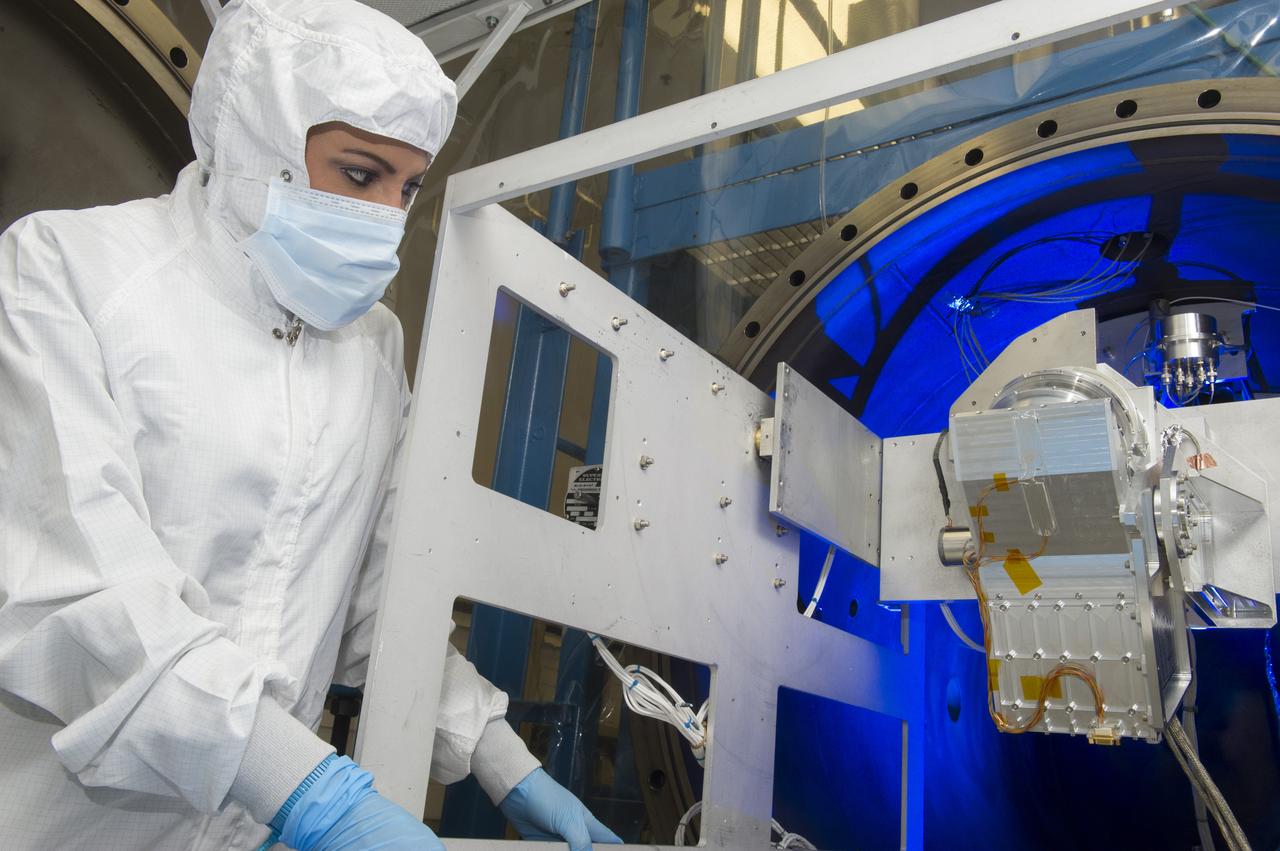
DUAL ION SPECTROMETER (DIS) ENGINEERING TEST UNIT (ETU) AT THE LOW ENERGY ELECTRON AND ION FACILITY (LEEIF), NSSTC
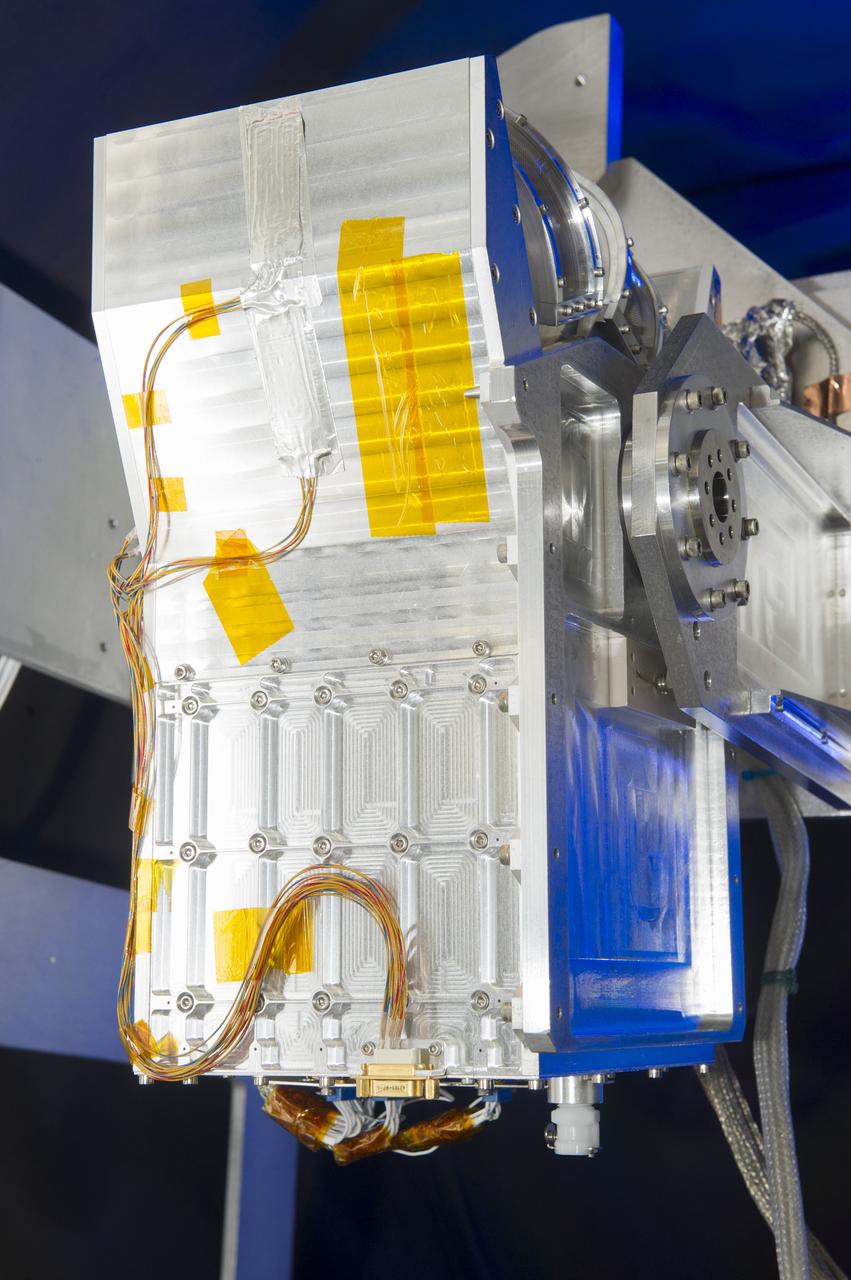
DUAL ION SPECTROMETER (DIS) ENGINEERING TEST UNIT (ETU) AT THE LOW ENERGY ELECTRON AND ION FACILITY (LEEIF), NSSTC
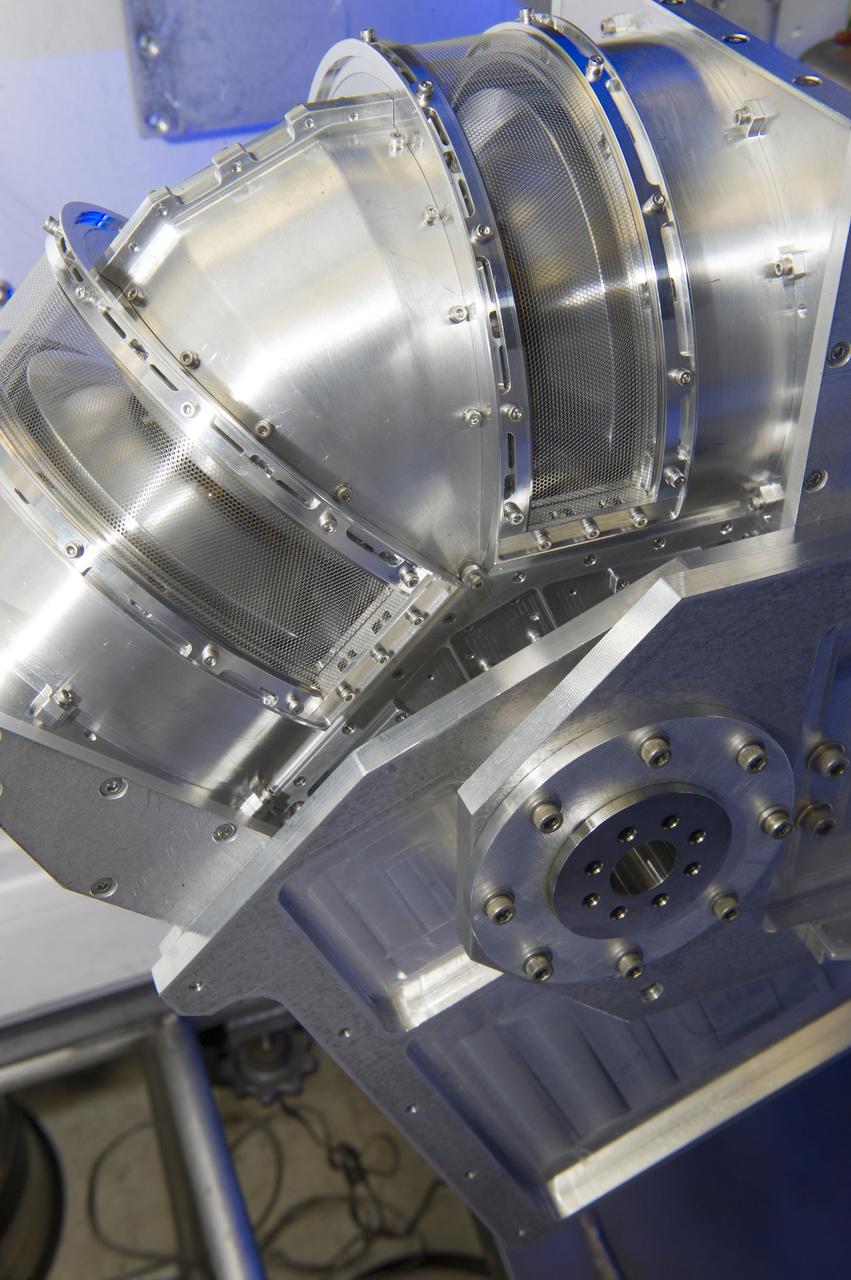
DUAL ION SPECTROMETER (DIS) ENGINEERING TEST UNIT (ETU) AT THE LOW ENERGY ELECTRON AND ION FACILITY (LEEIF), NSSTC
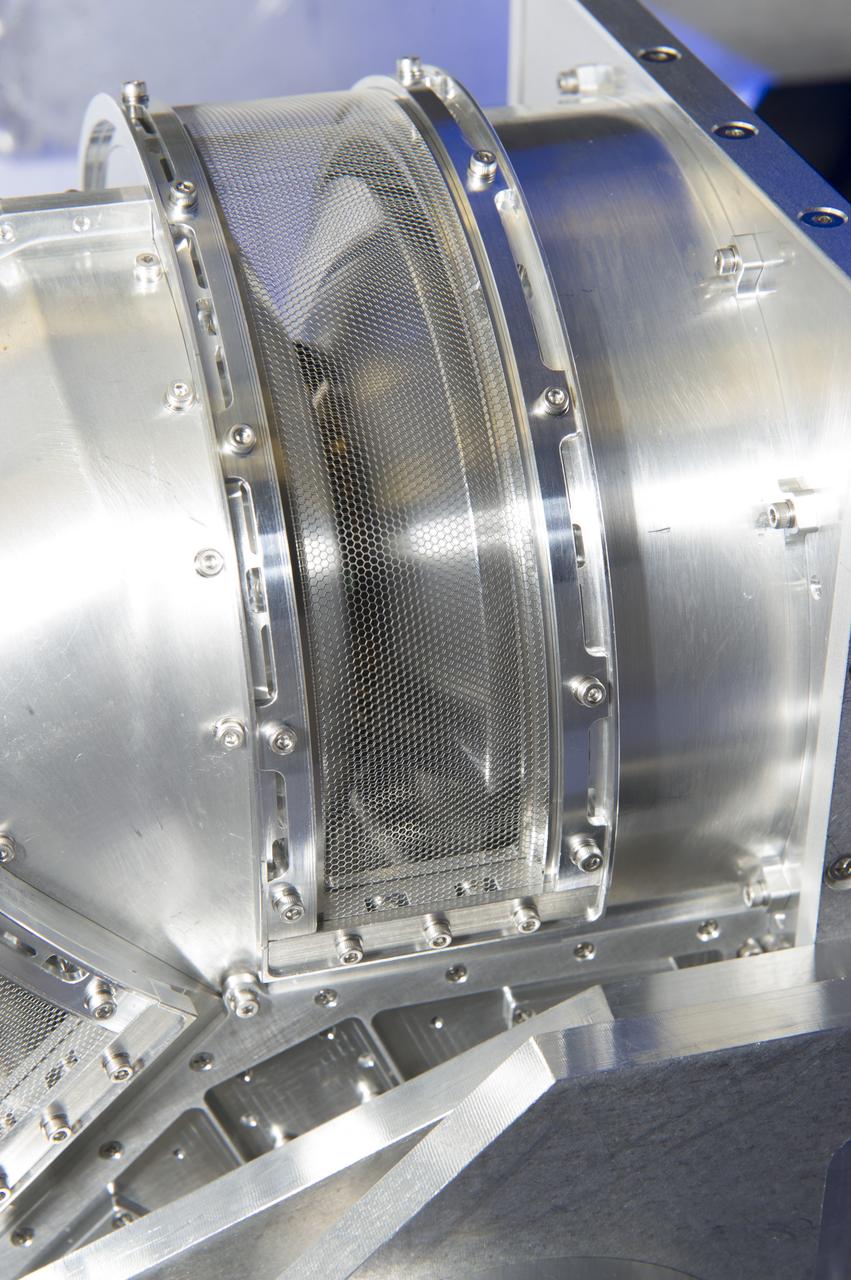
DUAL ION SPECTROMETER (DIS) ENGINEERING TEST UNIT (ETU) AT THE LOW ENERGY ELECTRON AND ION FACILITY (LEEIF), NSSTC
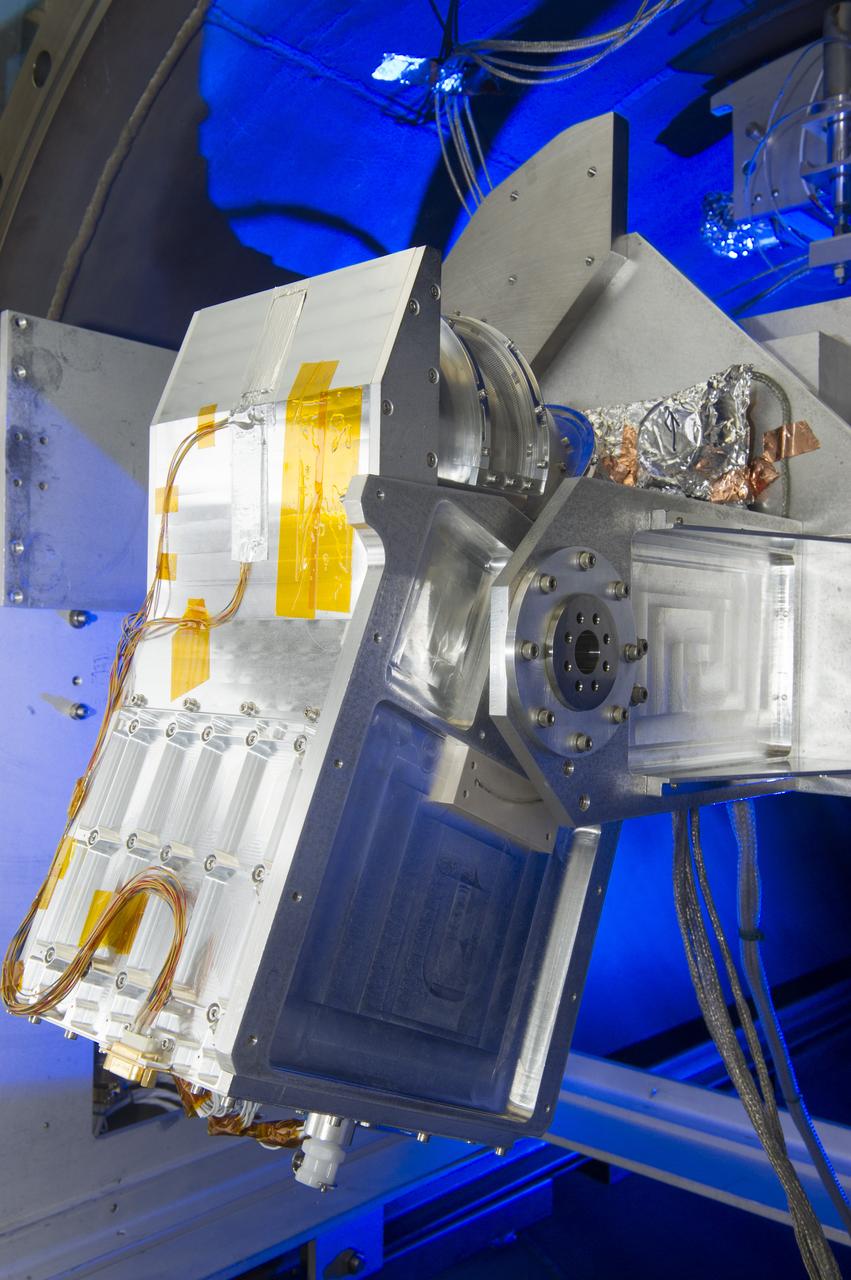
DUAL ION SPECTROMETER (DIS) ENGINEERING TEST UNIT (ETU) AT THE LOW ENERGY ELECTRON AND ION FACILITY (LEEIF), NSSTC
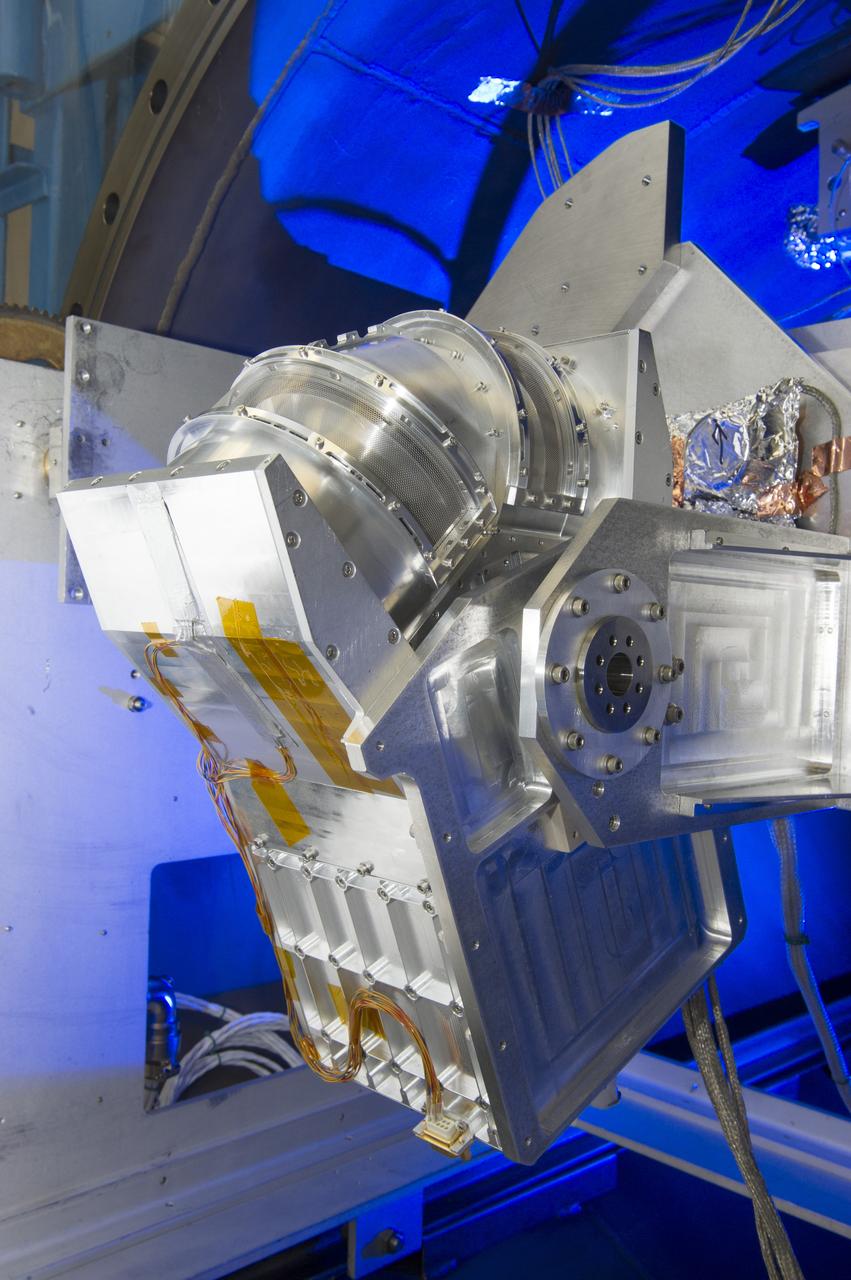
DUAL ION SPECTROMETER (DIS) ENGINEERING TEST UNIT (ETU) AT THE LOW ENERGY ELECTRON AND ION FACILITY (LEEIF), NSSTC
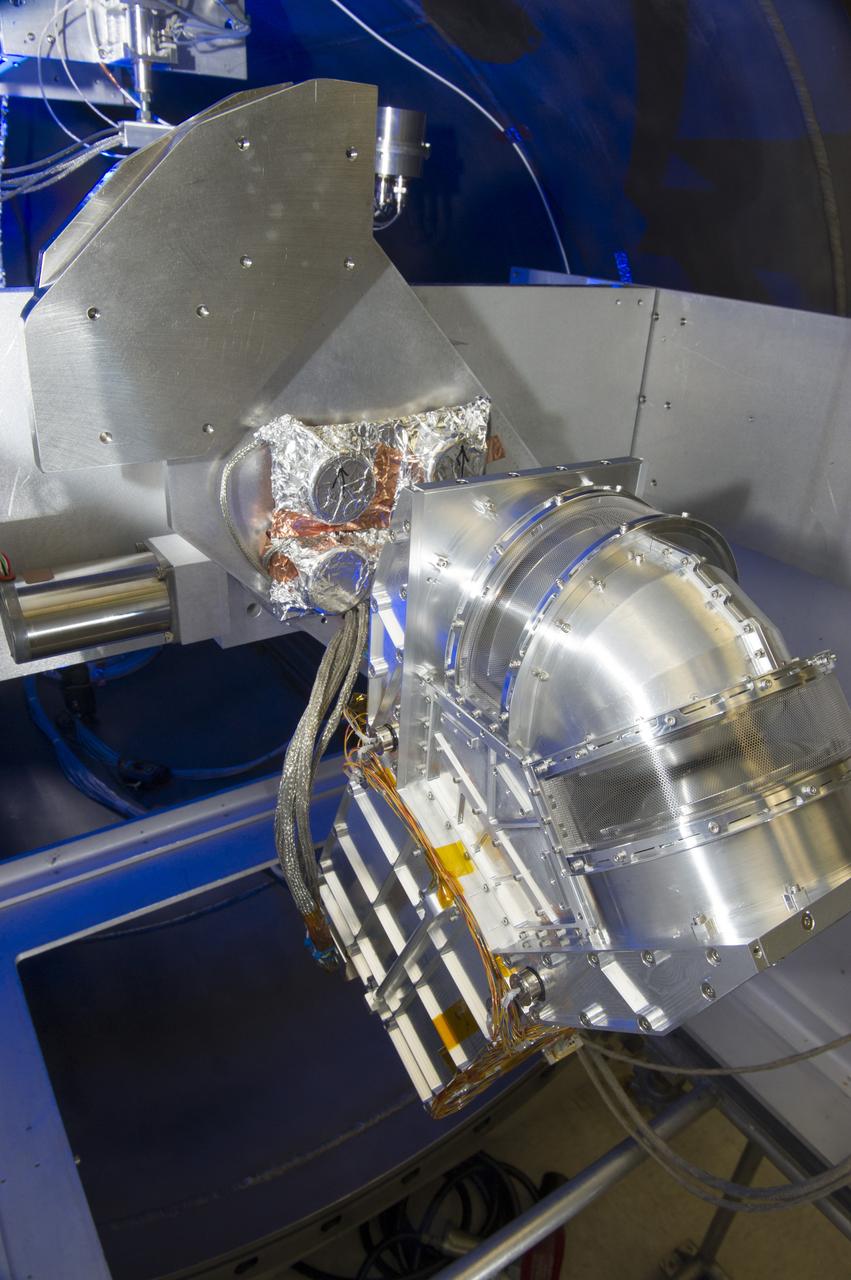
DUAL ION SPECTROMETER (DIS) ENGINEERING TEST UNIT (ETU) AT THE LOW ENERGY ELECTRON AND ION FACILITY (LEEIF), NSSTC
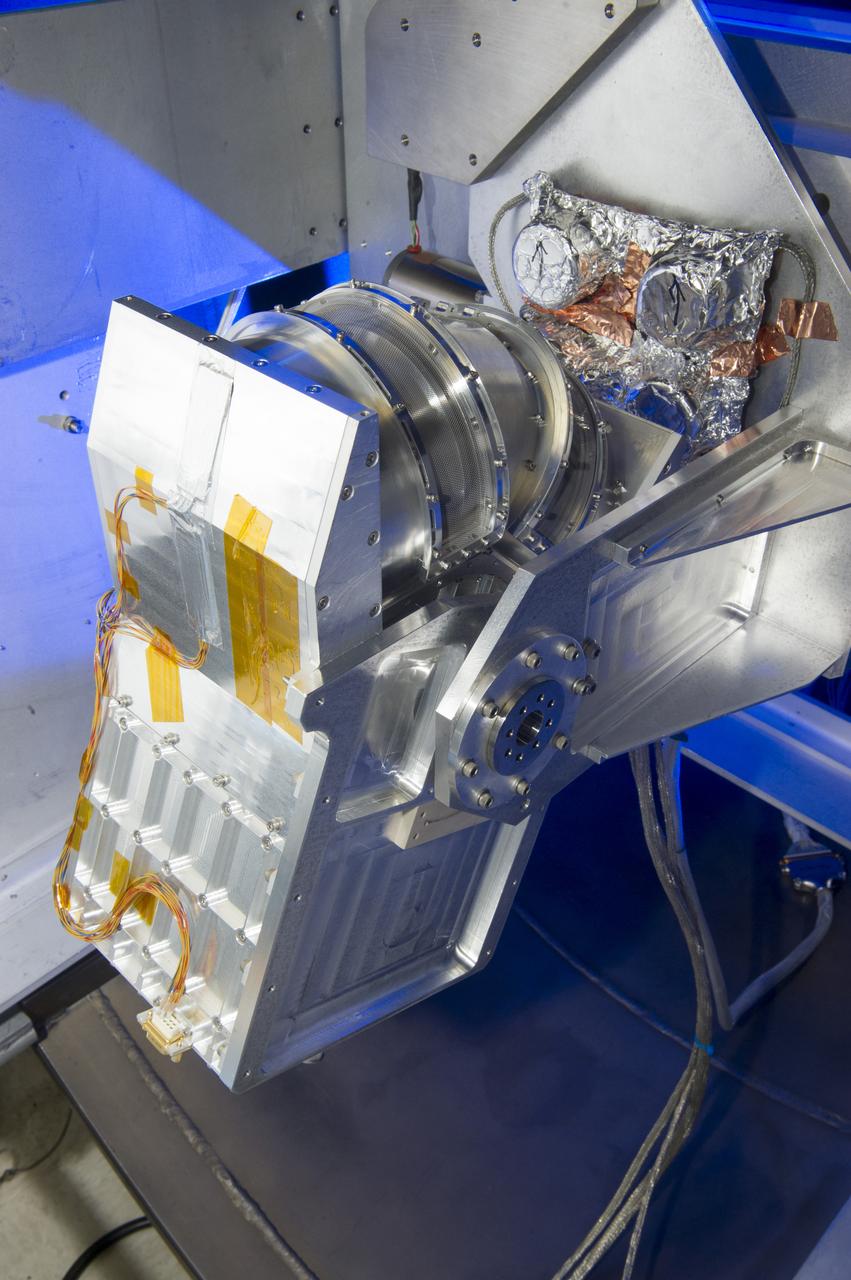
DUAL ION SPECTROMETER (DIS) ENGINEERING TEST UNIT (ETU) AT THE LOW ENERGY ELECTRON AND ION FACILITY (LEEIF), NSSTC
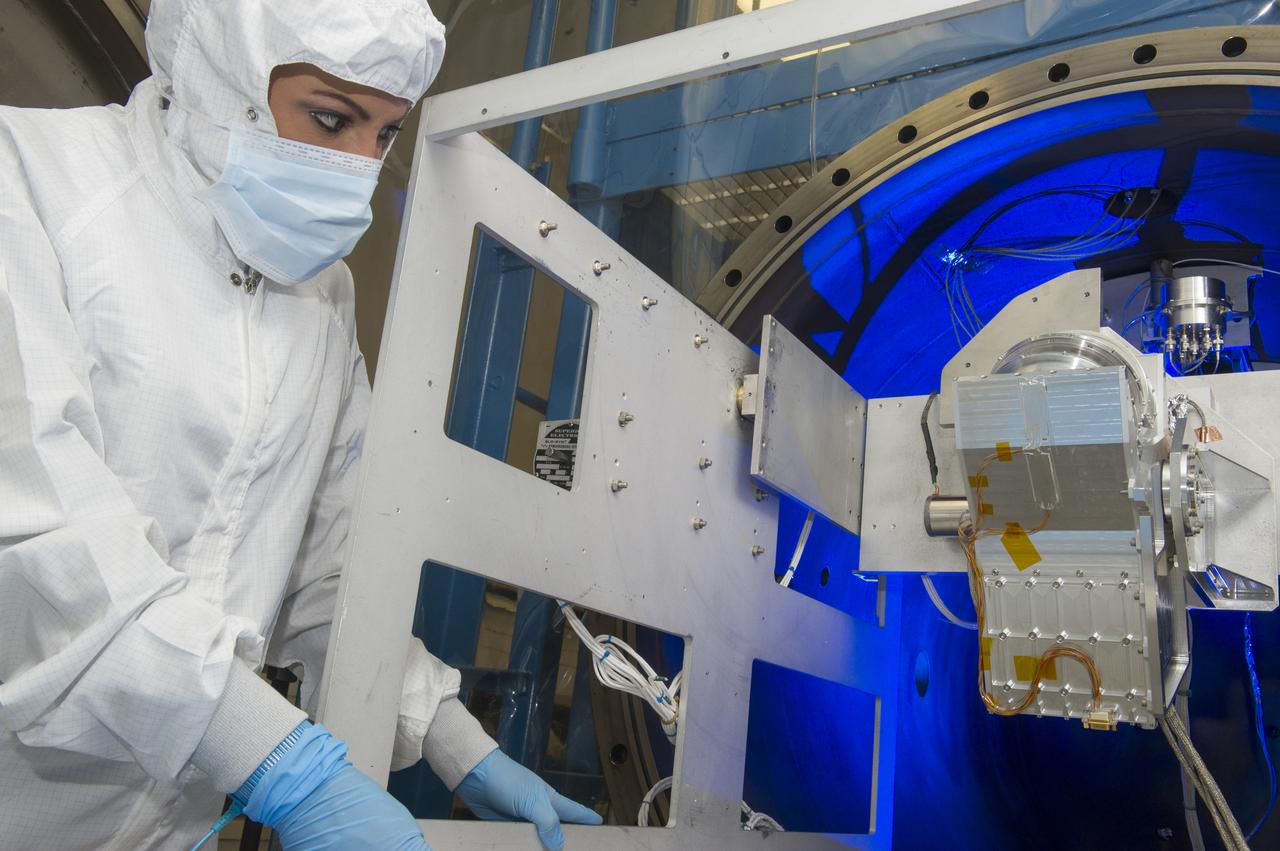
DUAL ION SPECTROMETER (DIS) ENGINEERING TEST UNIT (ETU) AT THE LOW ENERGY ELECTRON AND ION FACILITY (LEEIF), NSSTC
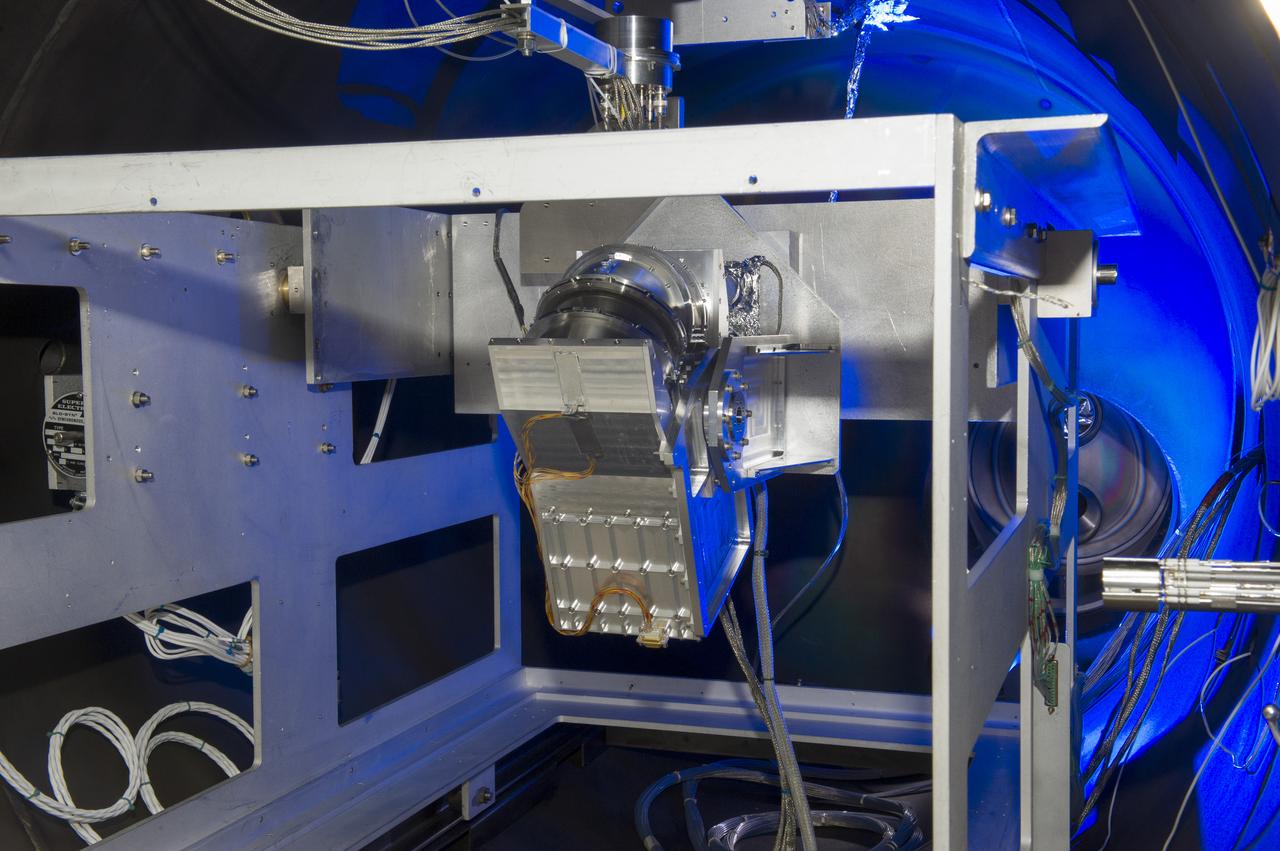
DUAL ION SPECTROMETER (DIS) ENGINEERING TEST UNIT (ETU) AT THE LOW ENERGY ELECTRON AND ION FACILITY (LEEIF), NSSTC
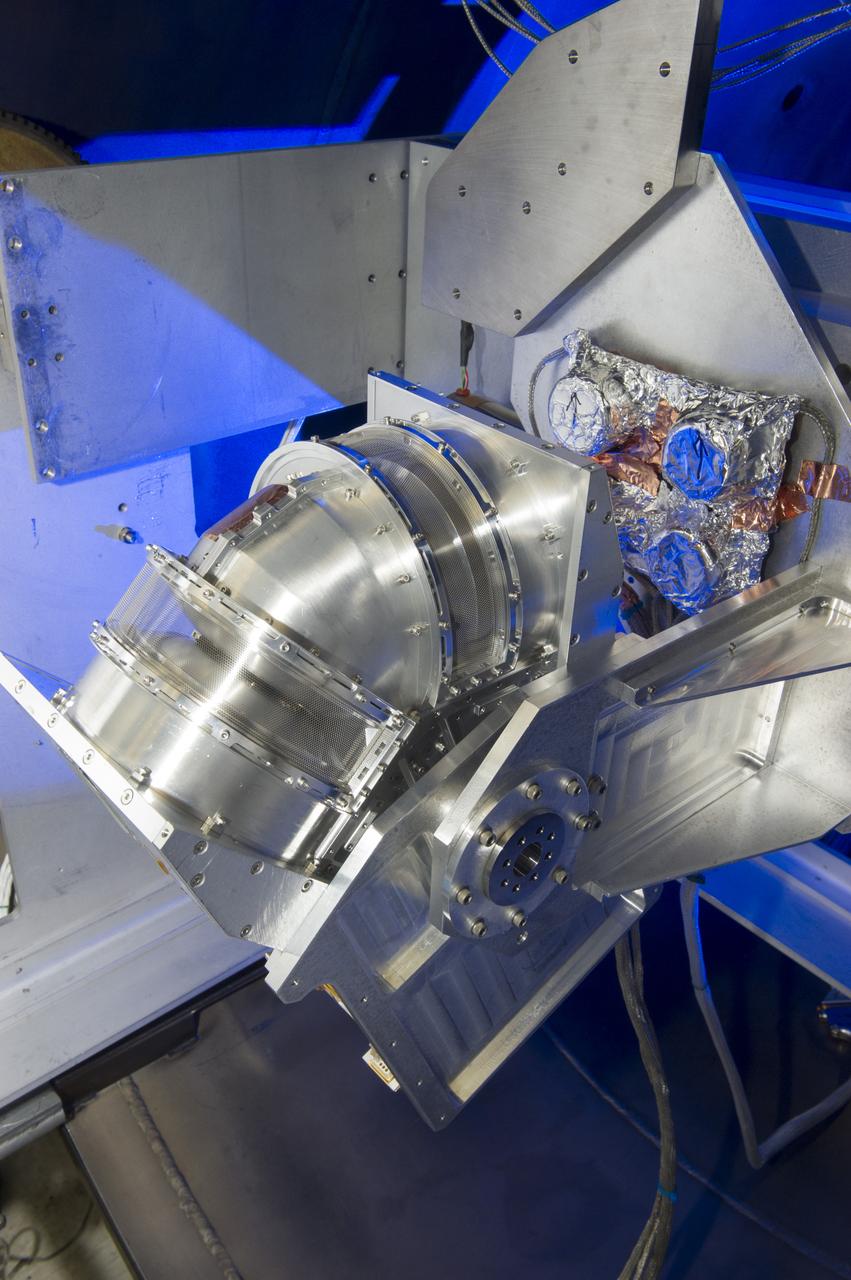
DUAL ION SPECTROMETER (DIS) ENGINEERING TEST UNIT (ETU) AT THE LOW ENERGY ELECTRON AND ION FACILITY (LEEIF), NSSTC
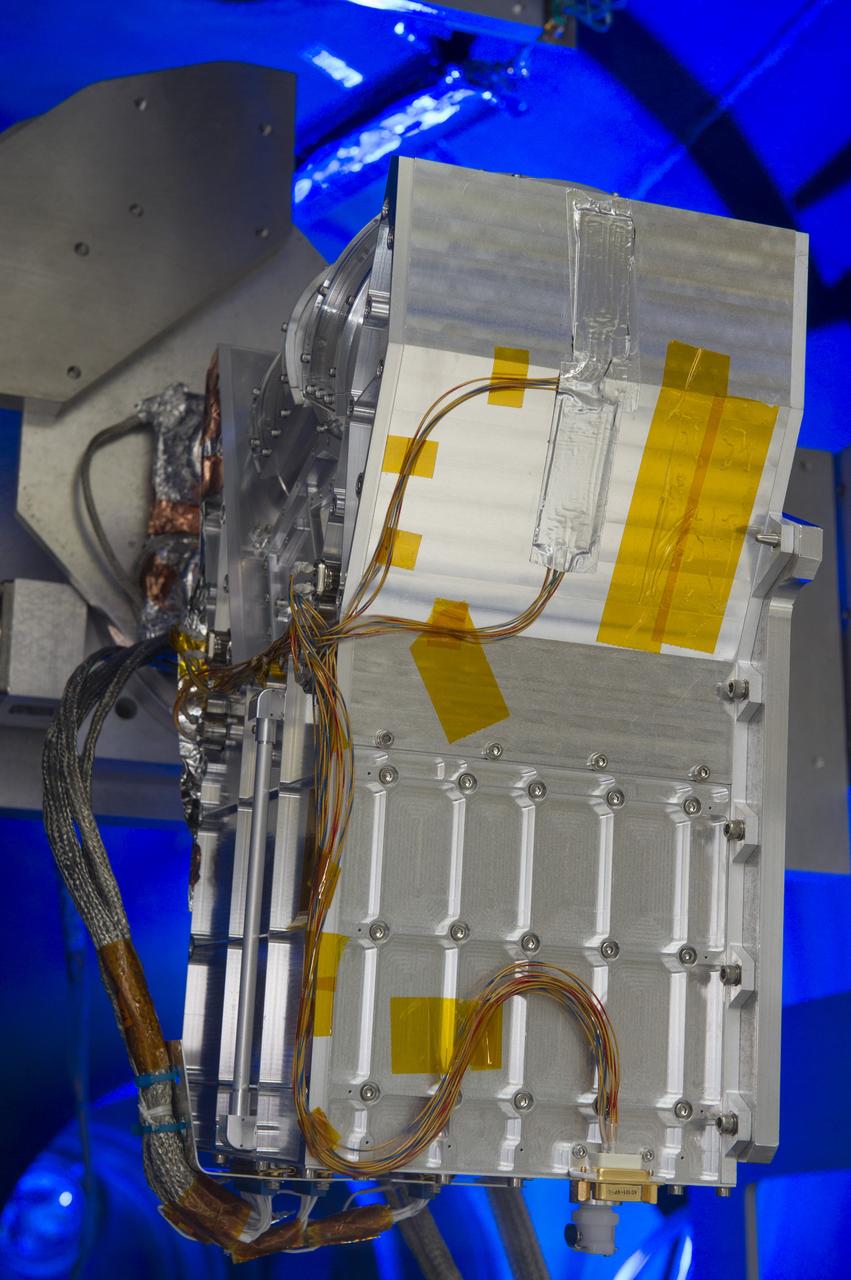
DUAL ION SPECTROMETER (DIS) ENGINEERING TEST UNIT (ETU) AT THE LOW ENERGY ELECTRON AND ION FACILITY (LEEIF), NSSTC
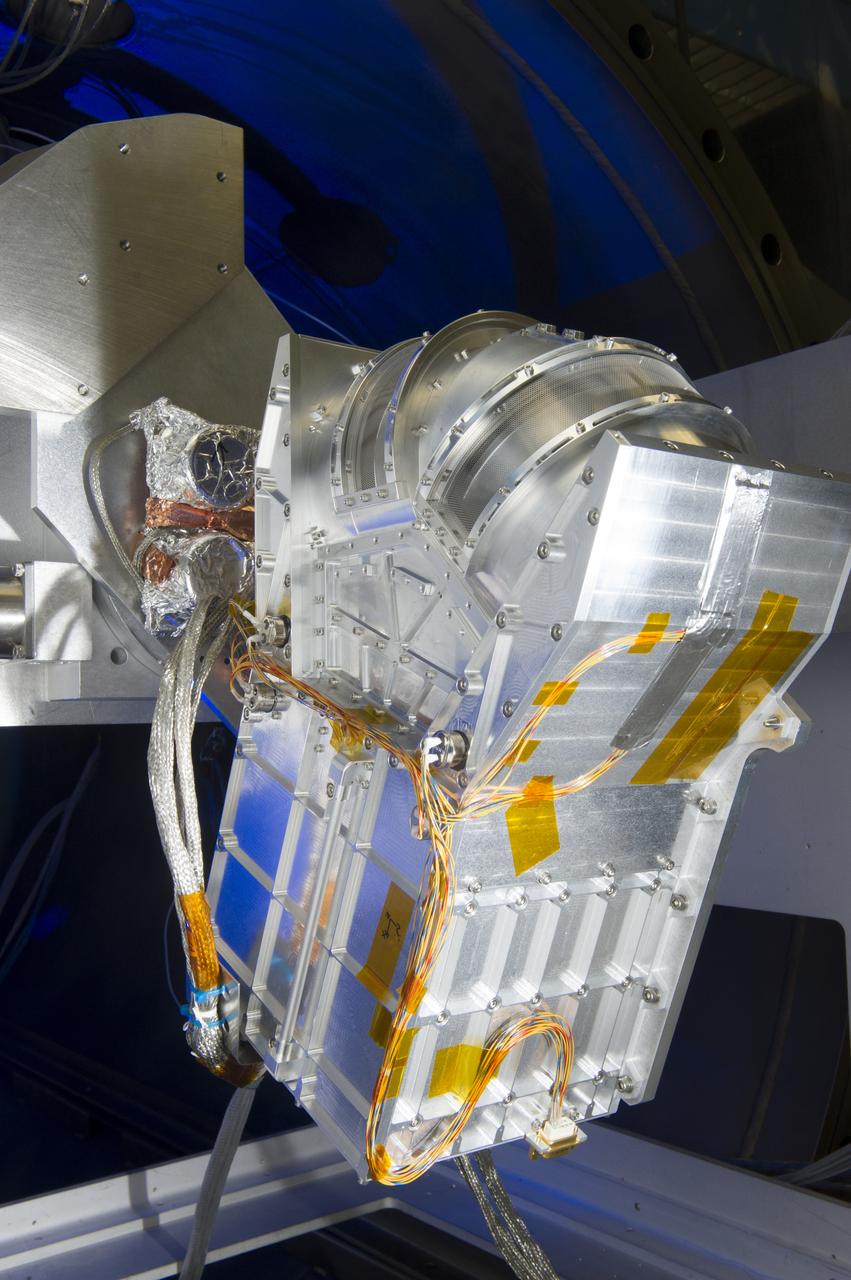
DUAL ION SPECTROMETER (DIS) ENGINEERING TEST UNIT (ETU) AT THE LOW ENERGY ELECTRON AND ION FACILITY (LEEIF), NSSTC
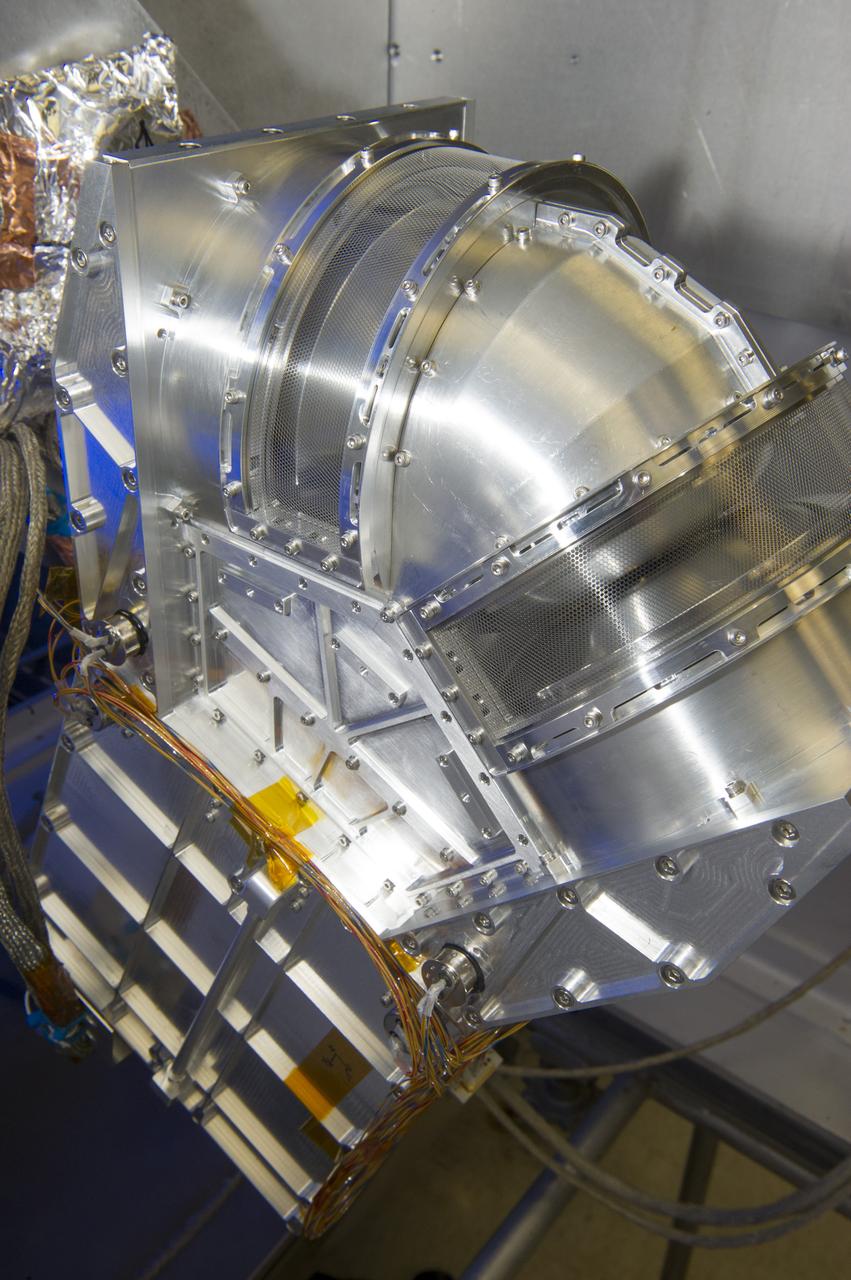
DUAL ION SPECTROMETER (DIS) ENGINEERING TEST UNIT (ETU) AT THE LOW ENERGY ELECTRON AND ION FACILITY (LEEIF), NSSTC
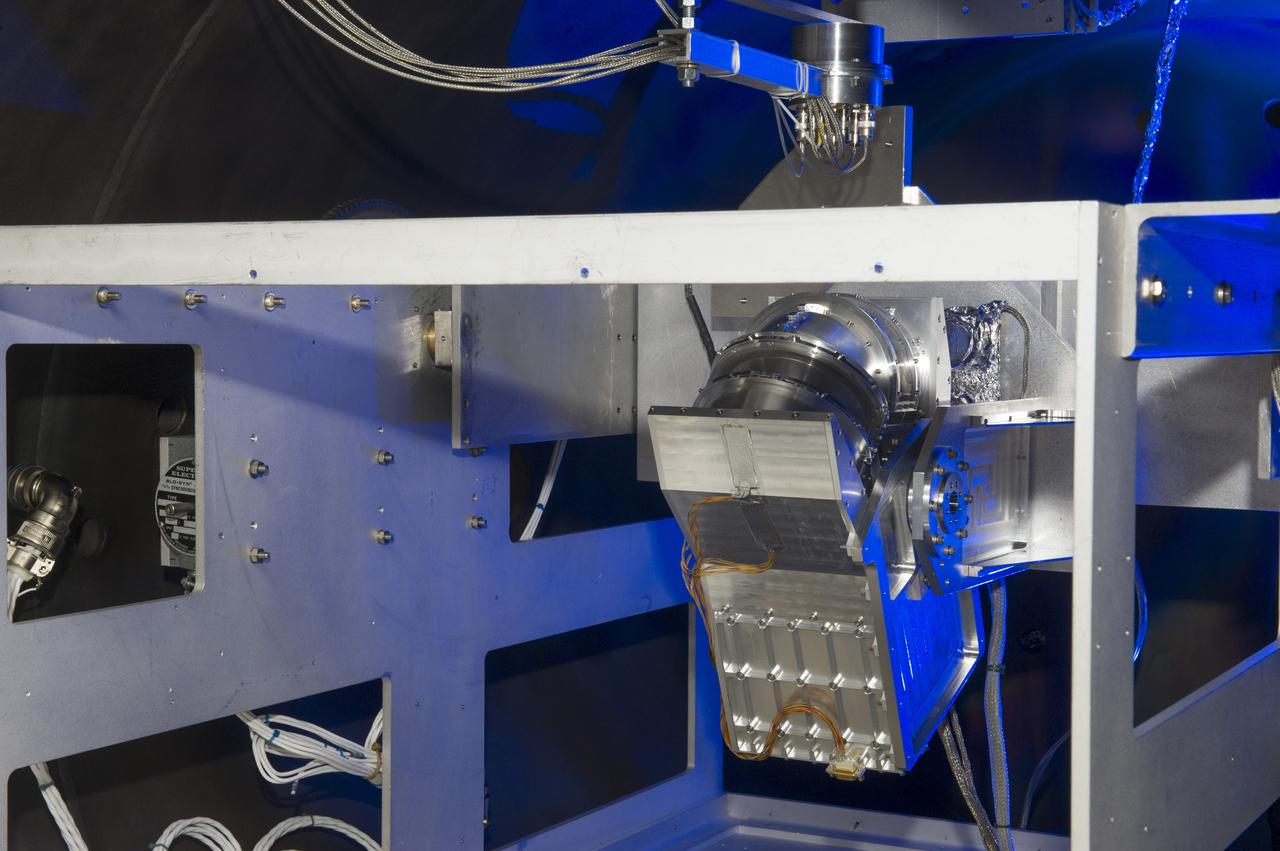
DUAL ION SPECTROMETER (DIS) ENGINEERING TEST UNIT (ETU) AT THE LOW ENERGY ELECTRON AND ION FACILITY (LEEIF), NSSTC
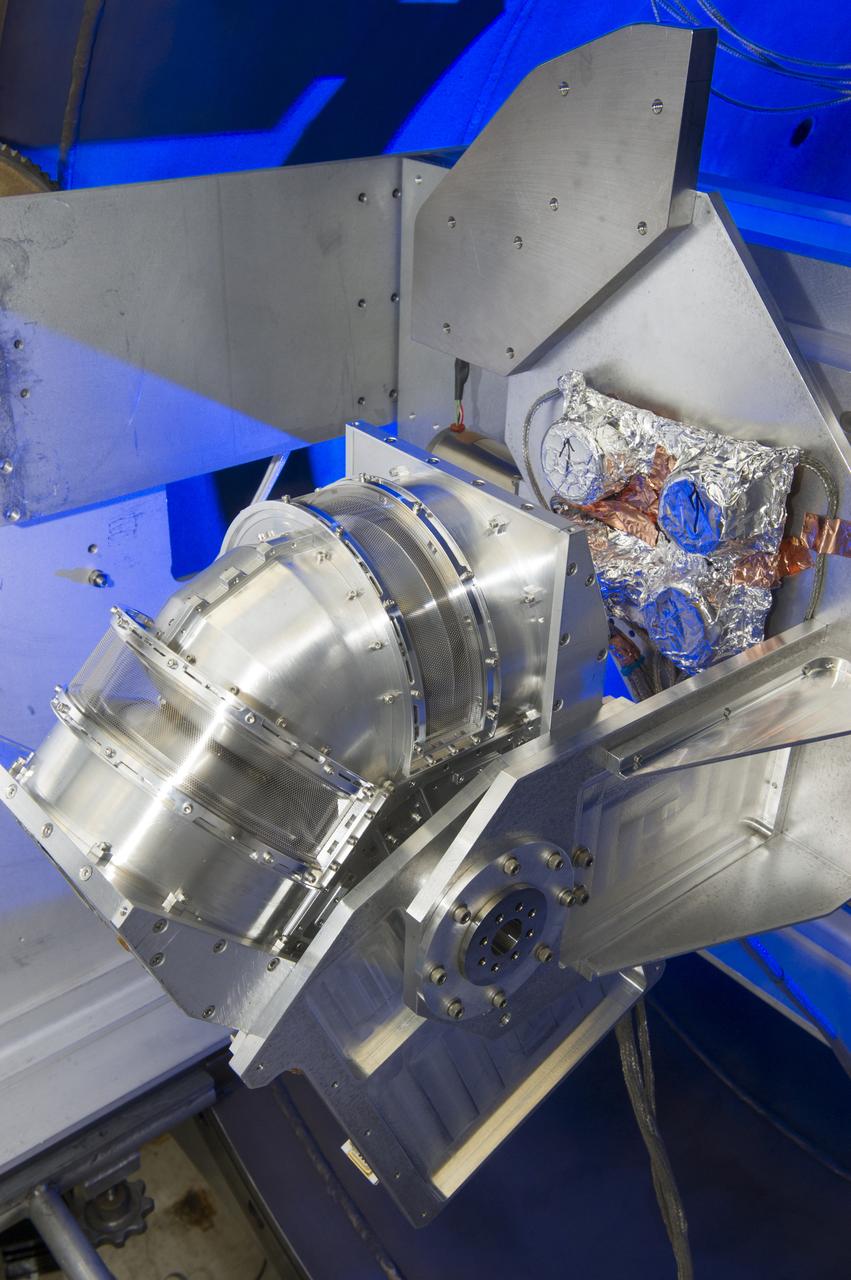
DUAL ION SPECTROMETER (DIS) ENGINEERING TEST UNIT (ETU) AT THE LOW ENERGY ELECTRON AND ION FACILITY (LEEIF), NSSTC
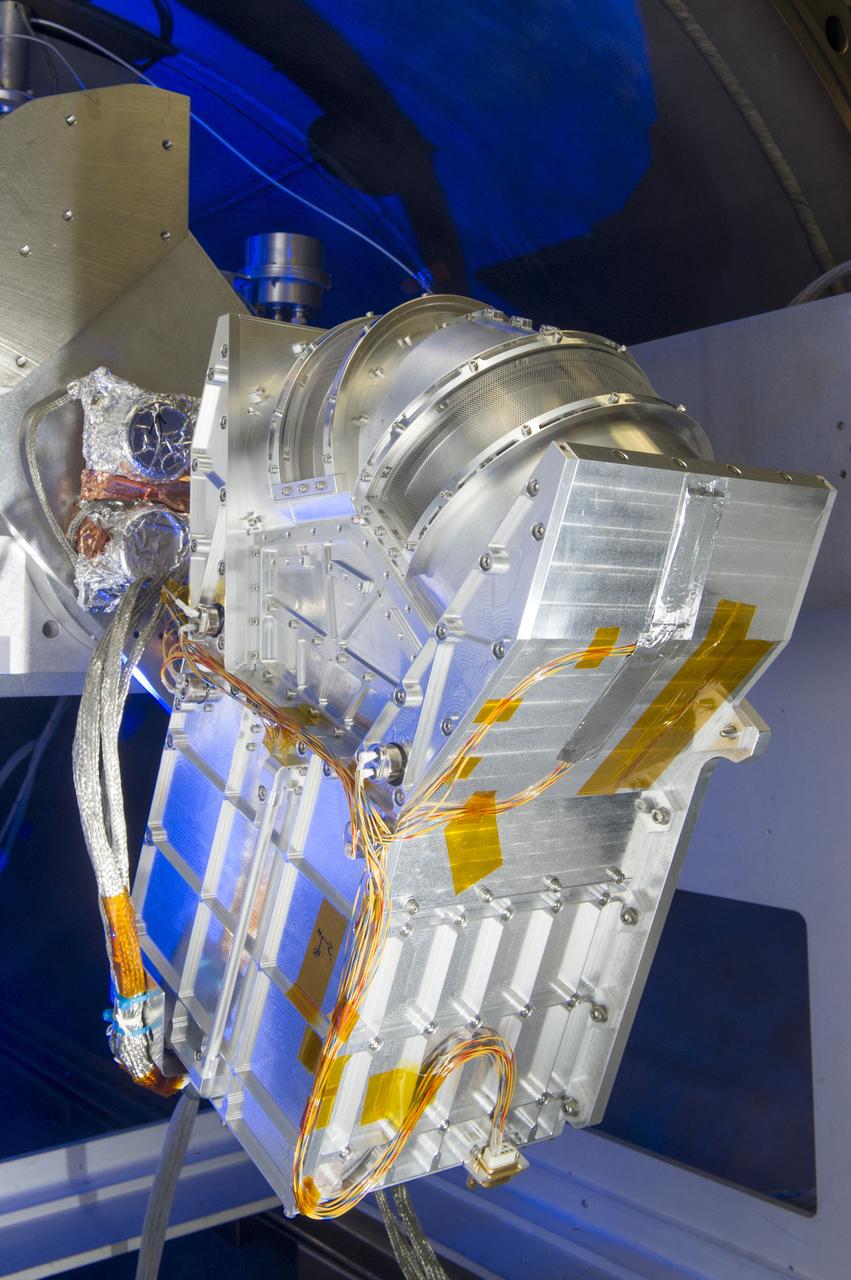
DUAL ION SPECTROMETER (DIS) ENGINEERING TEST UNIT (ETU) AT THE LOW ENERGY ELECTRON AND ION FACILITY (LEEIF), NSSTC

DUAL ION SPECTROMETER (DIS) ENGINEERING TEST UNIT (ETU) AT THE LOW ENERGY ELECTRON AND ION FACILITY (LEEIF), NSSTC
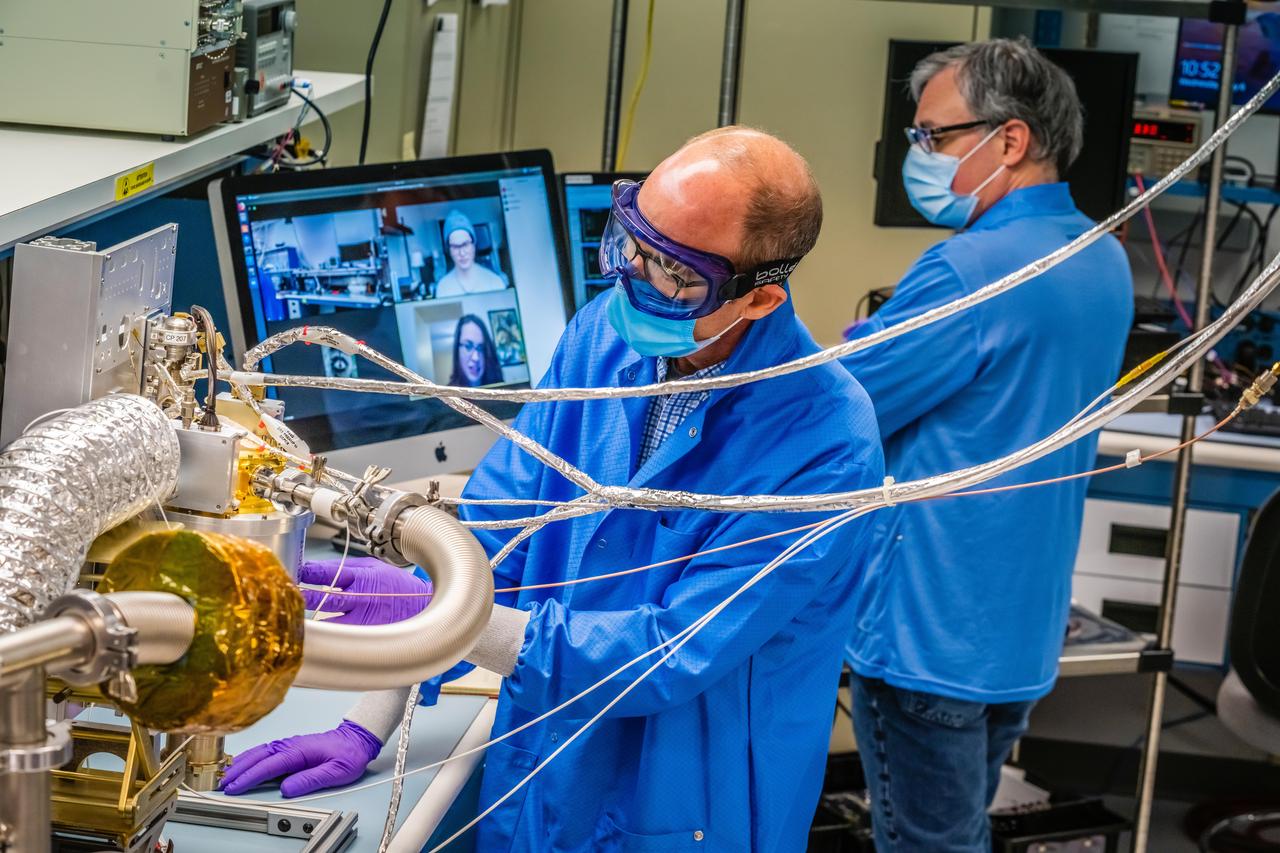
Engineers at the Johns Hopkins Applied Physics Laboratory (APL) in Laurel, Maryland, continue to make progress on Psyche's spectrometer while observing COVID-19 safety procedures. Engineers John Goldsten (left) and Sam Fix work on the Gamma Ray/Neutron Spectrometer (GRNS) instrument that will launch aboard the Psyche spacecraft in 2022 to detect, measure and map the asteroid Psyche's elemental composition. The instrument's team at APL moved the majority of its work to video conferencing, which has enabled the team to whittle operations down to requiring just one or two staff members on campus once or twice a week. https://photojournal.jpl.nasa.gov/catalog/PIA23880
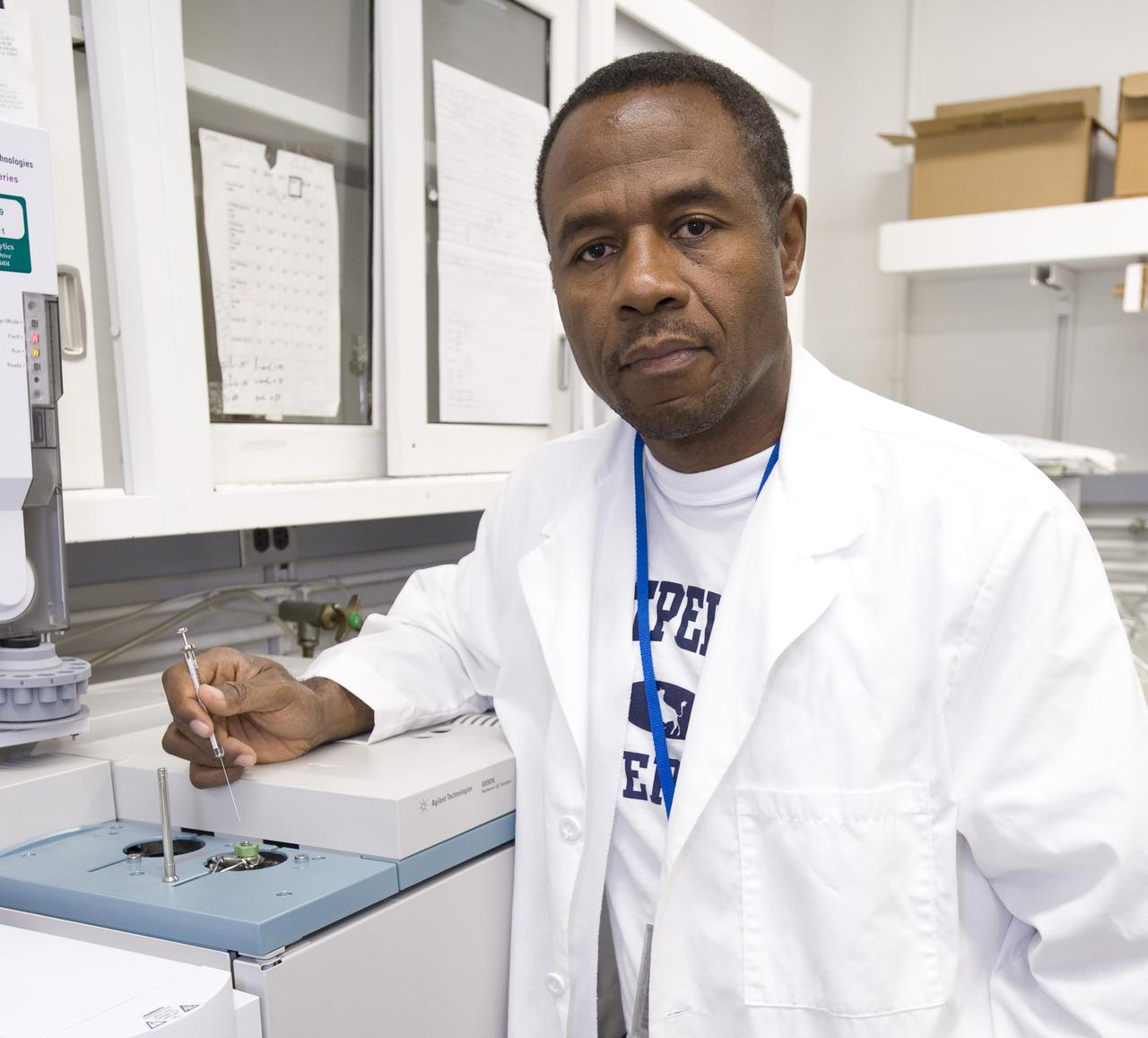
Dr George Cooper analyzes metoritic material by injecting samples into gas chromatograph-mass spectrometer. This instrument separates very complicated molecular mixtures into individual componds that are more easily identified.
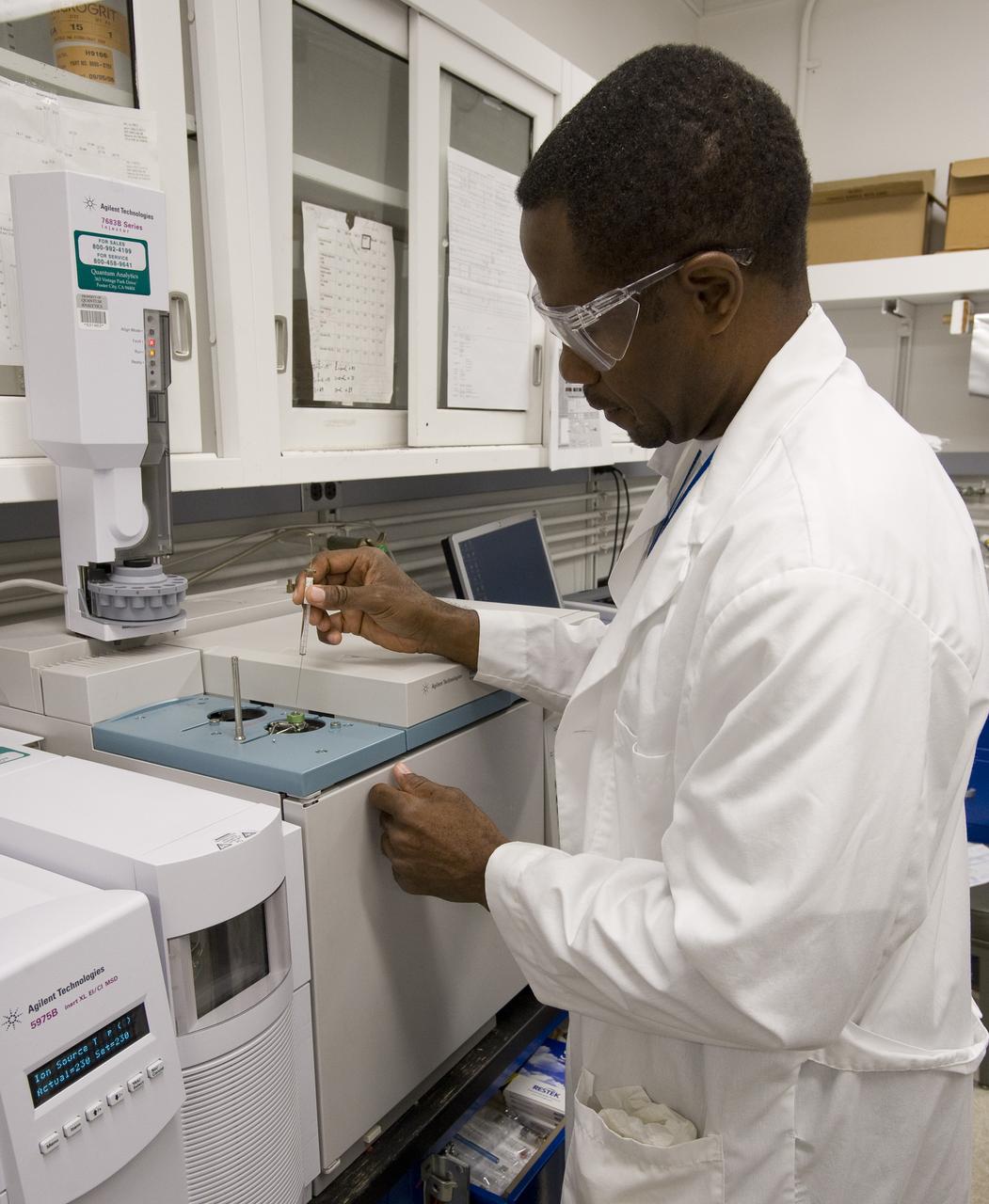
Dr George Cooper analyzes metoritic material by injecting samples into gas chromatograph-mass spectrometer. This instrument separates very complicated molecular mixtures into individual componds that are more easily identified.

Engineers and technicians prepare the Carbon Mapper imaging spectrometer, which will measure the greenhouse gases methane and carbon dioxide from space, for vibration testing at NASA's Jet Propulsion Laboratory in Southern California in August 2023. This test is one of a series meant to ensure that the instrument can withstand the rigors of launch and the harsh conditions of space. Engineers subjected the spectrometer to intense vibrations similar to what it will endure atop a rocket blasting into orbit. The instrument was shipped from JPL to Planet Labs PBC in San Francisco on Sept. 12, 2023, where it will be integrated into a Tanager satellite. Designed and built by JPL, imaging spectrometer will be part of an effort led by the nonprofit Carbon Mapper organization to collect data on greenhouse gas point-source emissions. The information will help locate and quantify "super-emitters" – the small percentage of individual sources responsible for a significant fraction of methane and carbon dioxide emissions around the world. https://photojournal.jpl.nasa.gov/catalog/PIA26093
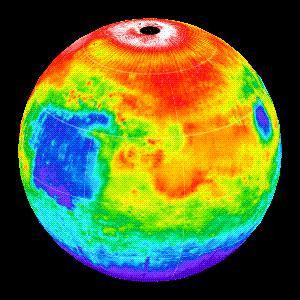
Martian Temperatures Measured by the Thermal Emission Spectrometer TES. Isidis Planitia View
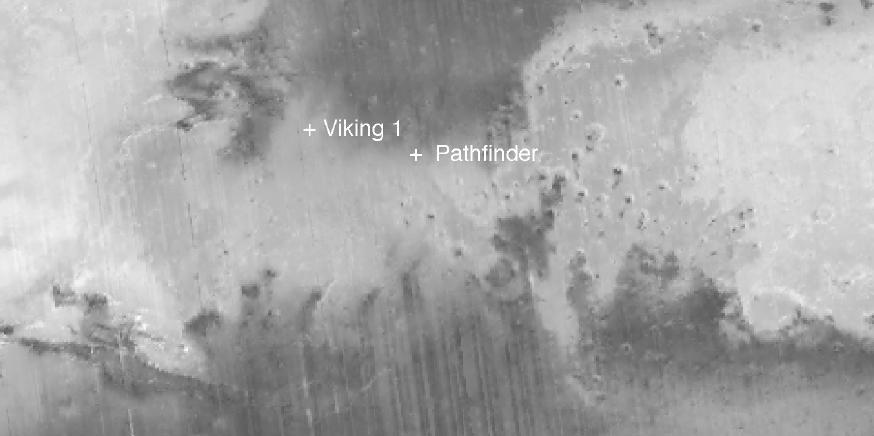
New Views of Mars from the Thermal Emission Spectrometer Instrument
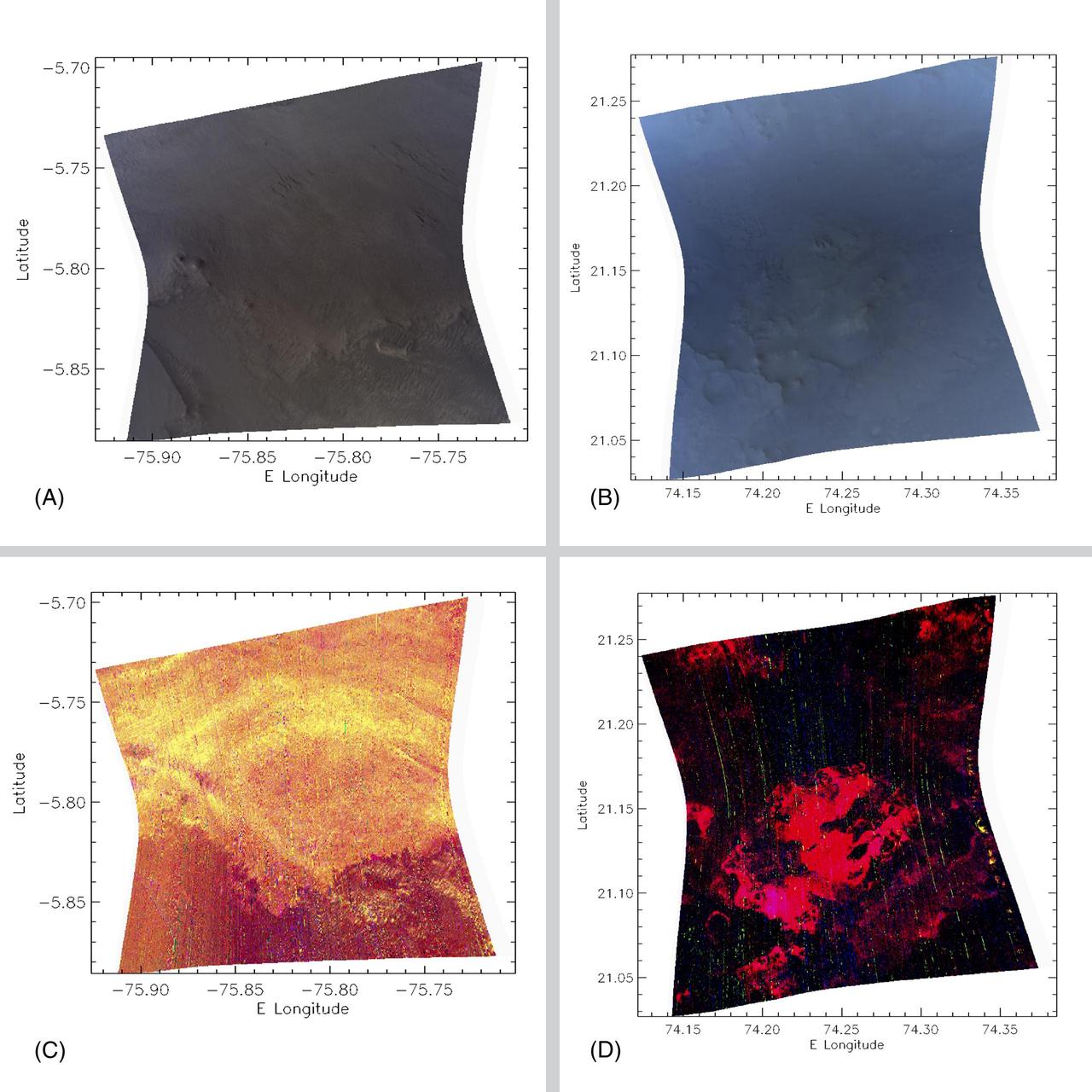
Spectrometer Images of Candidate Landing Sites for Next Mars Rover
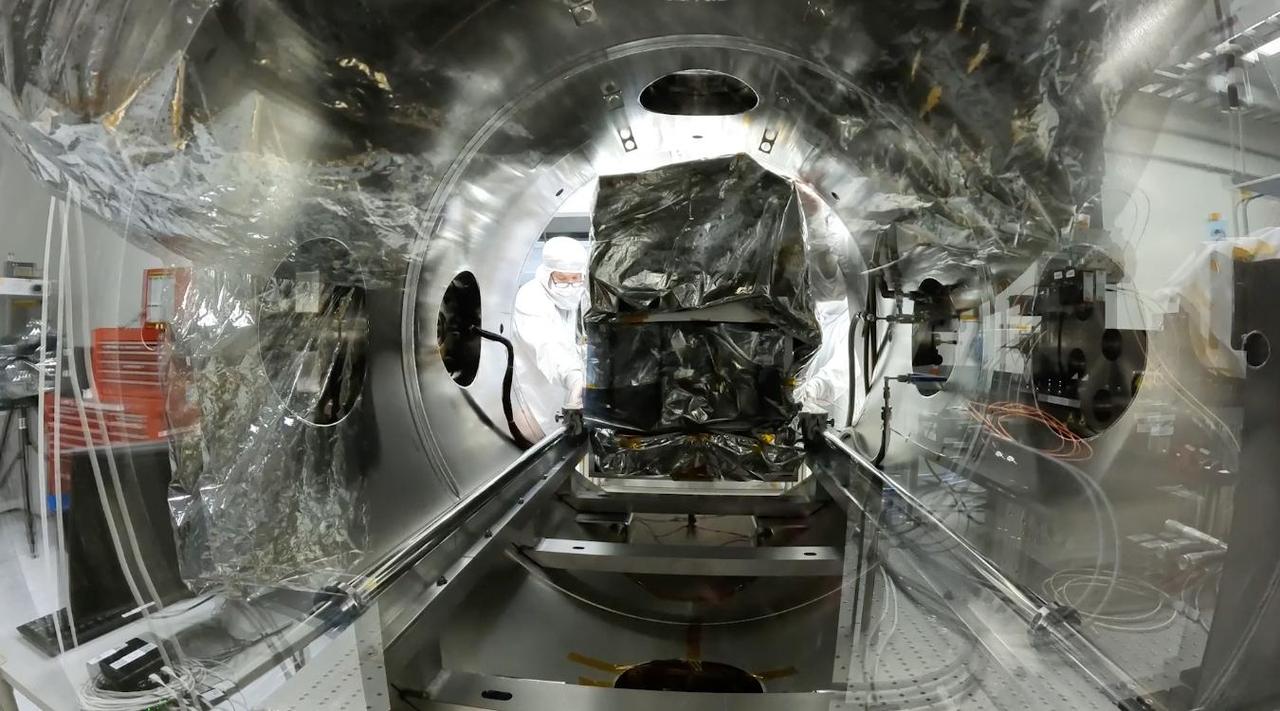
A technician slides an imaging spectrometer instrument, which will measure the greenhouse gases methane and carbon dioxide from space, into a thermal vacuum test chamber at NASA's Jet Propulsion Laboratory in Southern California in July 2023. The thermal vacuum chamber test is one of a series meant to ensure that the instrument can withstand the rigors of launch and the harsh conditions of space. Engineers use the chamber to subject the spectrometer to the extreme temperatures it will encounter in the vacuum of space. The instrument shipped Sept. 12, 2023, from JPL to Planet Labs PBC in San Francisco, where it will be integrated into a Tanager satellite. Designed and built by JPL, imaging spectrometer will be part of an effort led by the nonprofit Carbon Mapper organization to collect data on greenhouse gas point-source emissions. The information will help locate and quantify "super-emitters" – the small percentage of individual sources responsible for a significant fraction of methane and carbon dioxide emissions around the world. Movie available at https://photojournal.jpl.nasa.gov/catalog/PIA26098
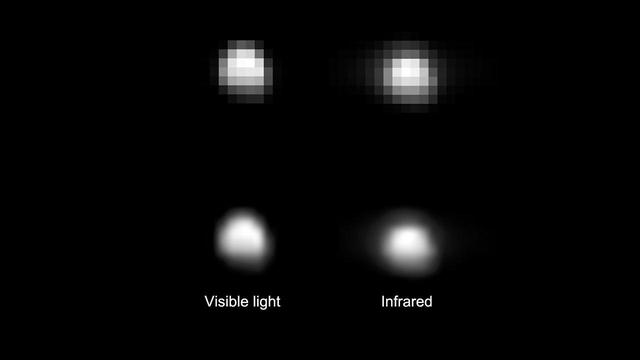
On June 8, 2011, the visible and infrared mapping spectrometer aboard NASA Dawn spacecraft captured the instrument first images of Vesta that are larger than a few pixels, from a distance of about 218,000 miles 351,000 kilometers.

The Carbon Mapper imaging spectrometer, which will measure the greenhouse gases methane and carbon dioxide from space, sits at NASA's Jet Propulsion Laboratory in Southern California in August 2023, before its September shipment to Planet Labs PBC in San Francisco. The instrument will be integrated into a Tanager satellite. Designed and built by JPL, imaging spectrometer will be part of an effort led by the nonprofit Carbon Mapper organization to collect data on greenhouse gas point-source emissions. The information will help locate and quantify "super-emitters" – the small percentage of individual sources responsible for a significant fraction of methane and carbon dioxide emissions around the world. https://photojournal.jpl.nasa.gov/catalog/PIA26092
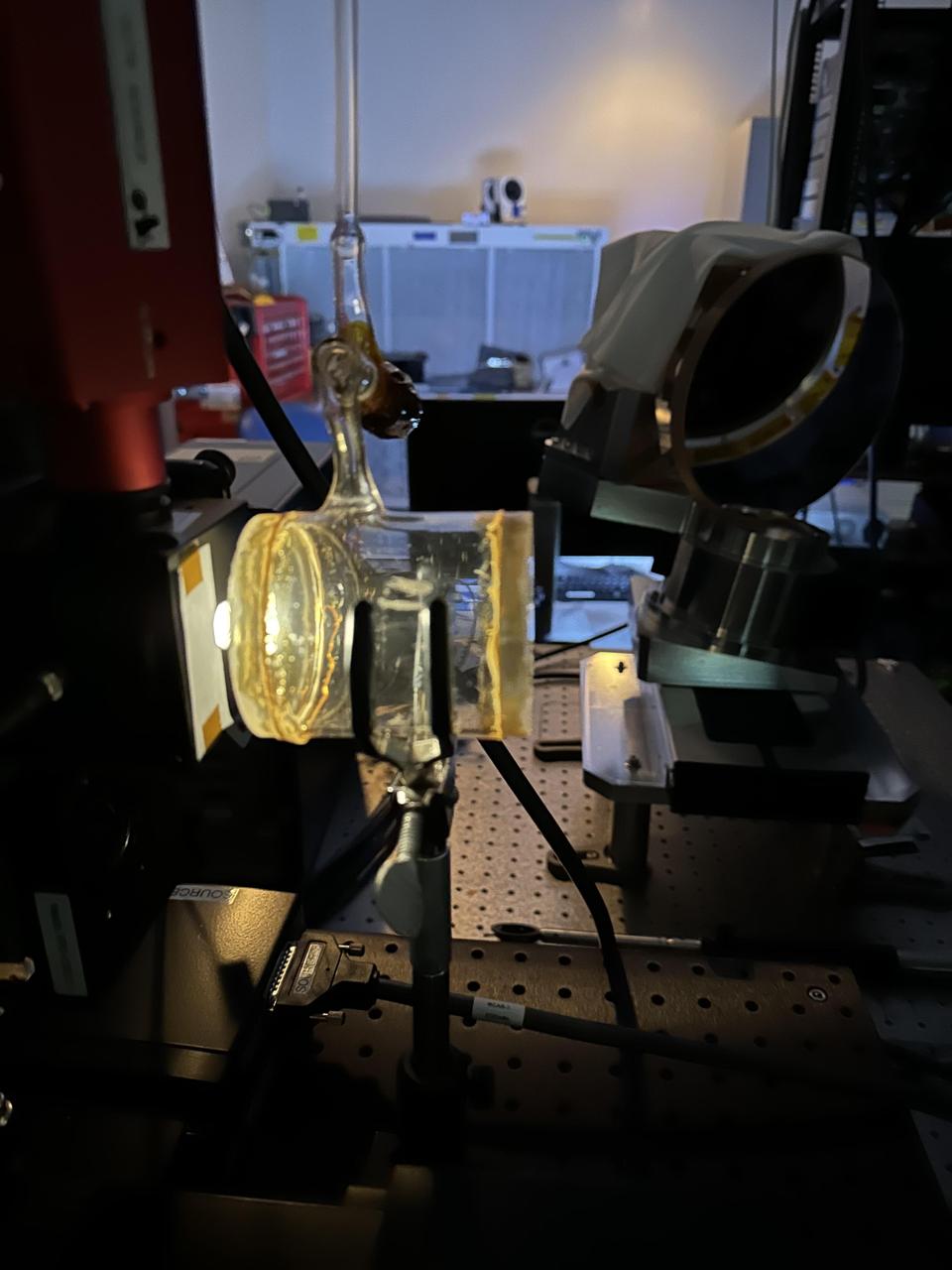
Methane, a potent greenhouse gas, is contained in a glowing cylinder during a September 2023 test conducted by engineers at NASA's Jet Propulsion Laboratory in Southern California of a state-of-the-art imaging spectrometer. The instrument will measure methane and carbon dioxide from space. Designed and built by JPL, imaging spectrometer will be part of an effort led by the nonprofit Carbon Mapper organization to collect data on greenhouse gas point-source emissions. The information will help locate and quantify "super-emitters" – the small percentage of individual sources responsible for a significant fraction of methane and carbon dioxide emissions around the world. https://photojournal.jpl.nasa.gov/catalog/PIA26097

An engineer prepares the Carbon Mapper imaging spectrometer, which will measure the greenhouse gases methane and carbon dioxide from space, for testing in a thermal vacuum chamber at NASA's Jet Propulsion Laboratory in Southern California in July 2023. This test is one of a series meant to ensure that the instrument can withstand the rigors of launch and the harsh conditions of space. Engineers used the chamber to subject the spectrometer to the extreme temperatures it will encounter in the vacuum of space. The instrument was shipped from JPL to Planet Labs PBC in San Francisco on Sept. 12, 2023, where it will be integrated into a Tanager satellite. Designed and built by JPL, imaging spectrometer will be part of an effort led by the nonprofit Carbon Mapper organization to collect data on greenhouse gas point-source emissions. The information will help locate and quantify "super-emitters" – the small percentage of individual sources responsible for a significant fraction of methane and carbon dioxide emissions around the world. https://photojournal.jpl.nasa.gov/catalog/PIA26094
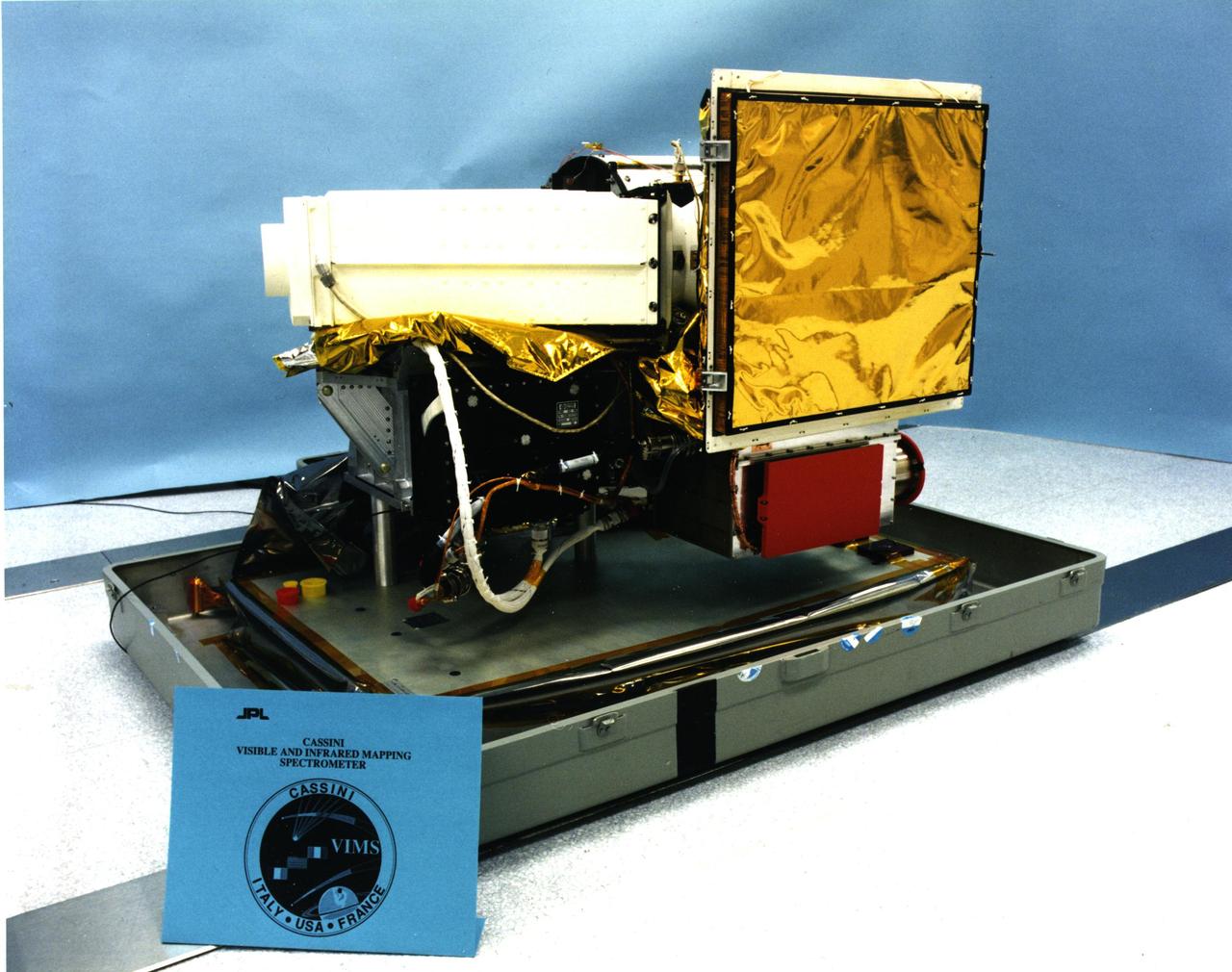
This image shows the visual and infrared mapping spectrometer instrument just before it was attached to NASA Cassini spacecraft. Cassini launched in 1997 and has been exploring the Saturn system since 2004.
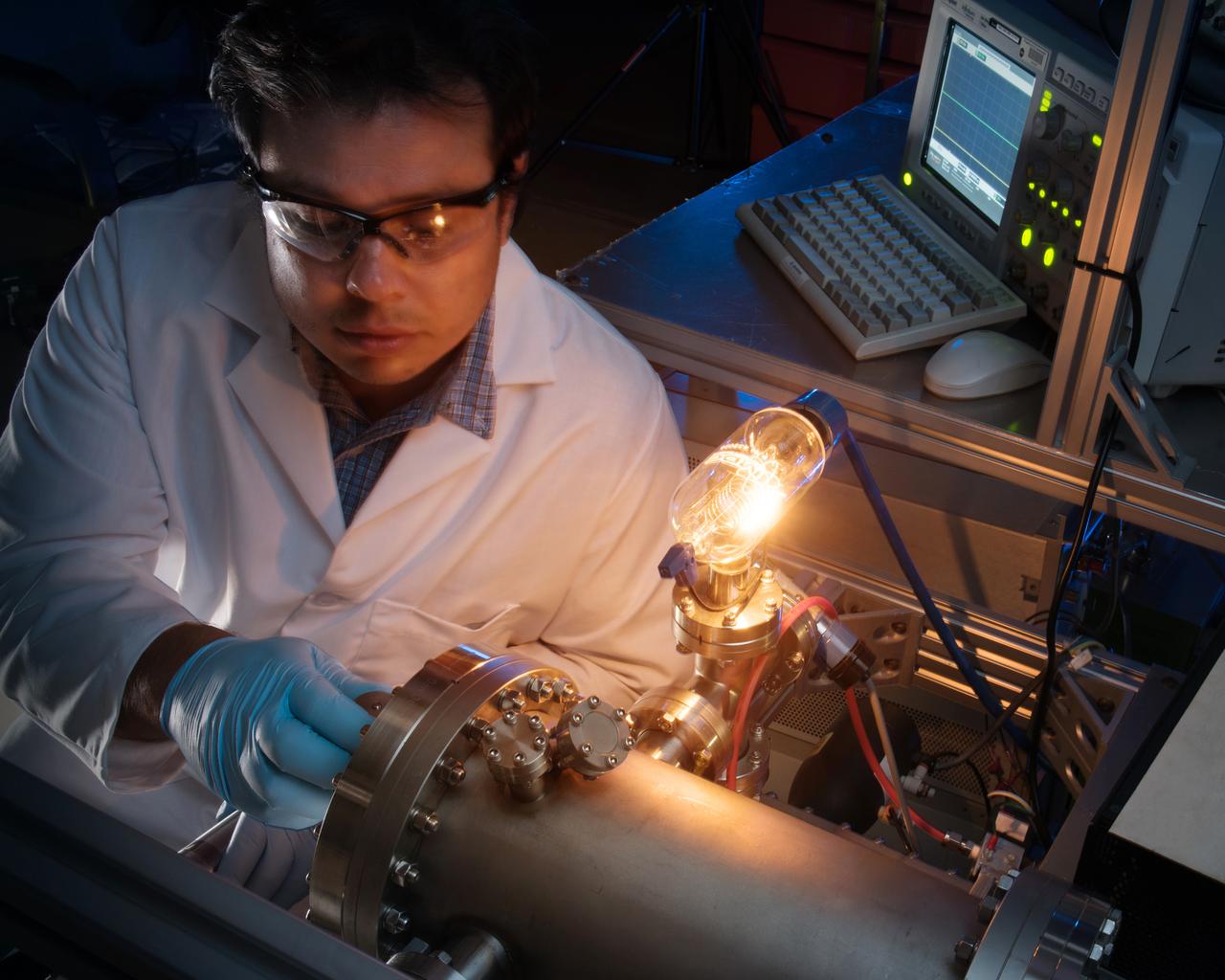
Glenn's Extreme Environment Rig, GEER Mass Spectrometer
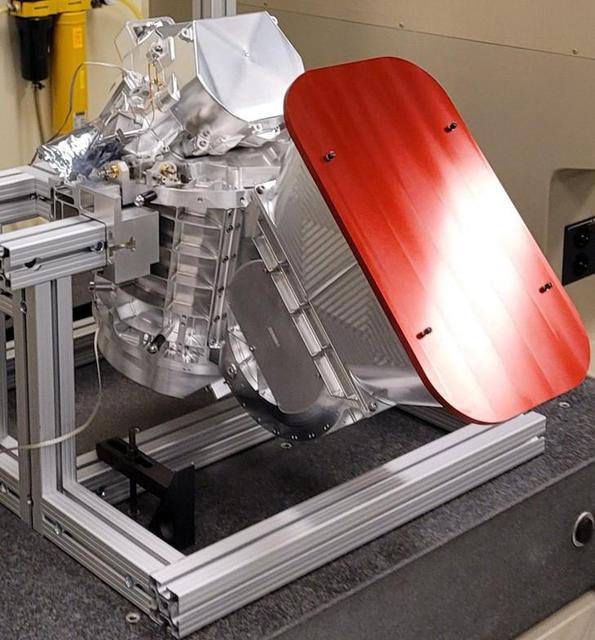
NASA's Jet Propulsion Laboratory in Southern California is building the spectrometer for the agency's Europa Clipper mission. Called the Mapping Imaging Spectrometer for Europa (MISE), it is seen in the midst of assembly in a clean room at JPL. Pronounced "mize," the instrument will analyze infrared light reflected from Jupiter's moon Europa and will map the distribution of organics and salts on the surface to help scientists understand if the moon's global ocean – which lies beneath a thick layer of ice – is habitable. Because of its internal ocean, scientists believe Jupiter's moon Europa may have the potential to harbor existing life. Europa Clipper will swoop around Jupiter on an elliptical path, dipping close to the moon on each flyby. Understanding Europa's habitability will help scientists better understand how life developed on Earth and the potential for finding life beyond our planet. Europa Clipper is set to launch in 2024. https://photojournal.jpl.nasa.gov/catalog/PIA24781
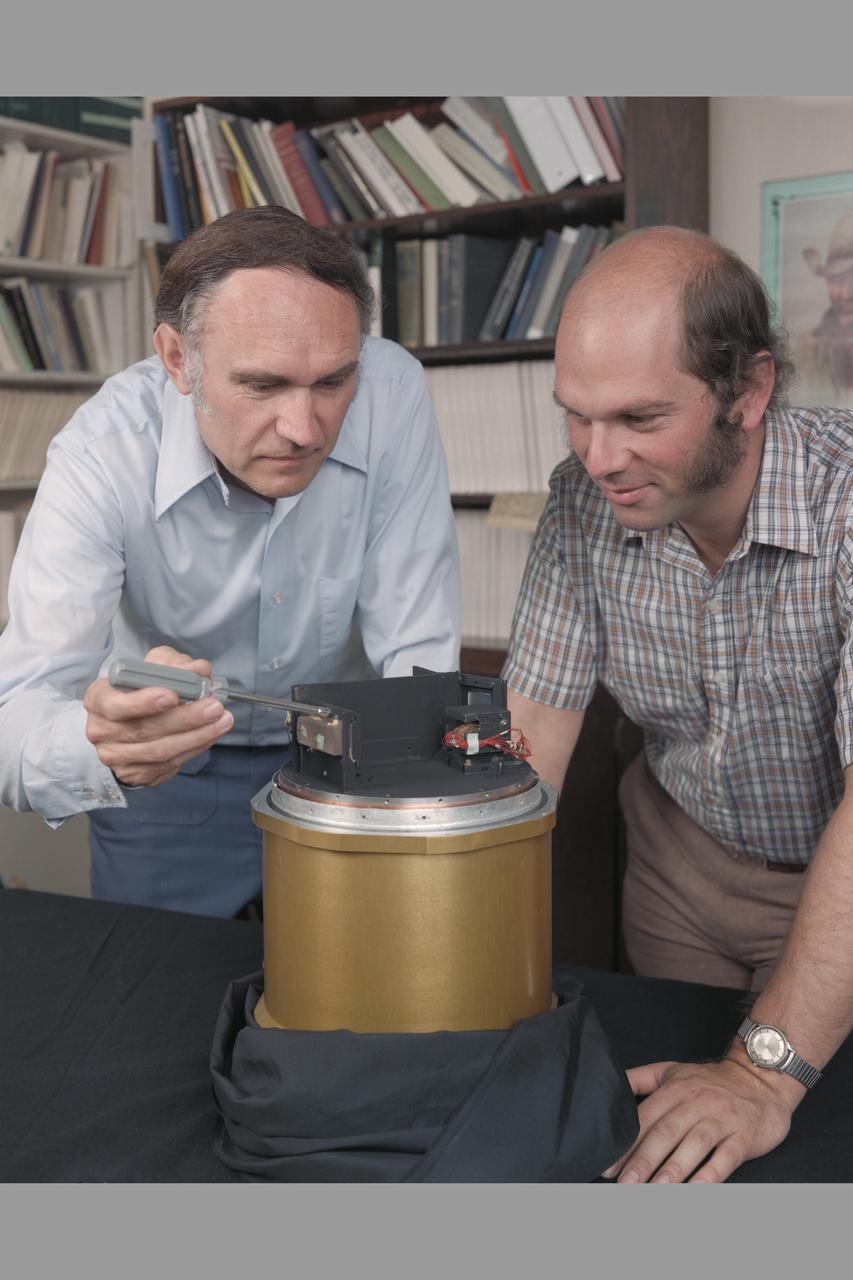
Laser Faint Object Grating Spectrometer (Frogs) with F. Witteborn and Jesse Bregman.
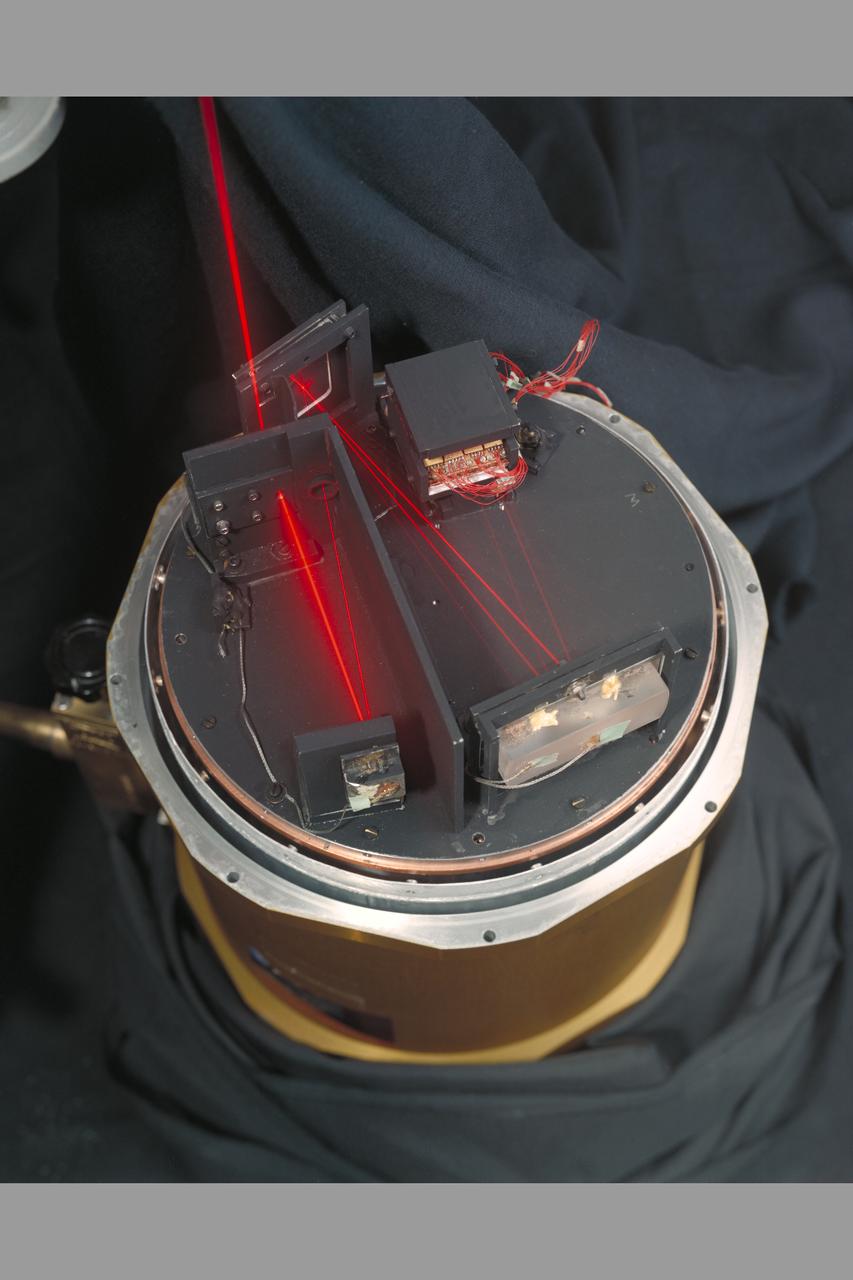
Laser Faint Object Grating Spectrometer (Frogs) with F. Witteborn and Jesse Bregman.
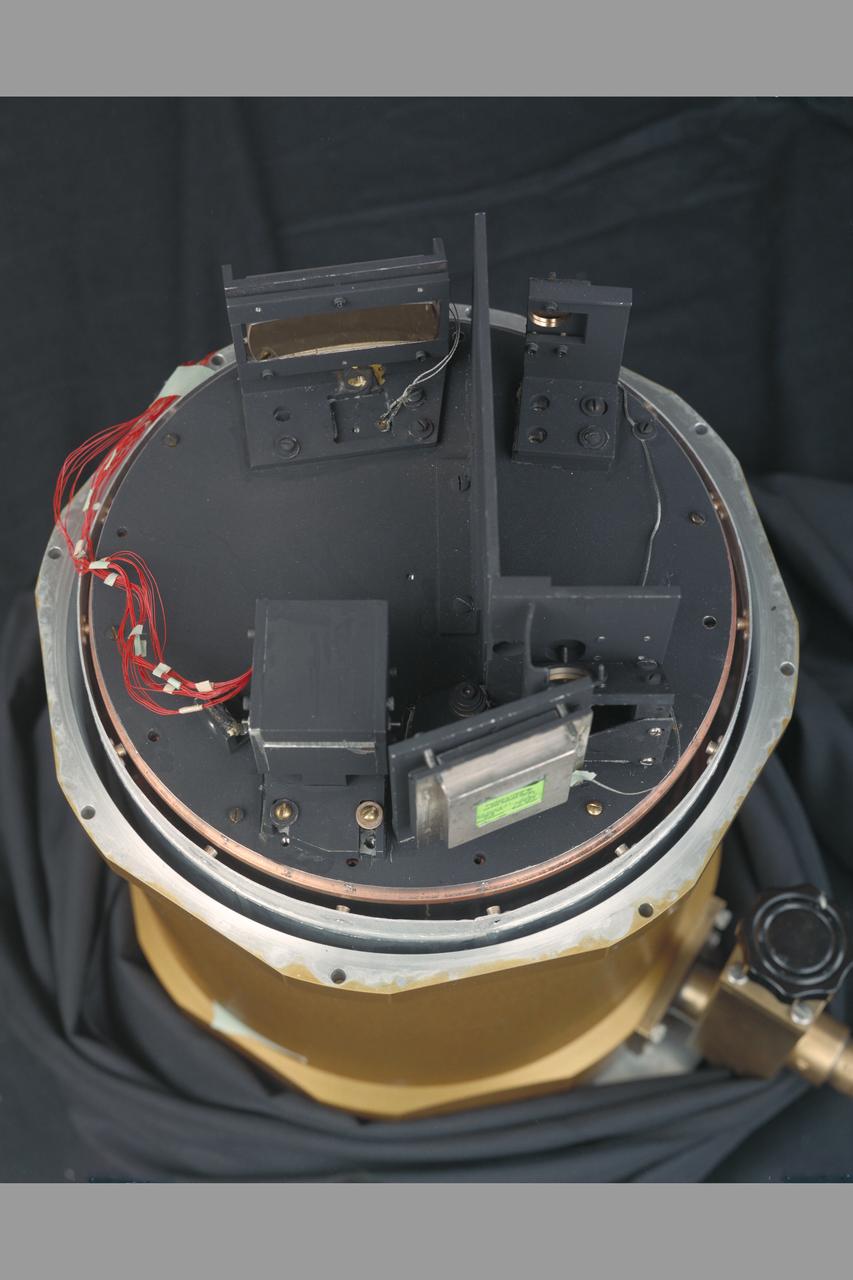
Laser Faint Object Grating Spectrometer (Frogs) with F. Witteborn and Jesse Bregman.
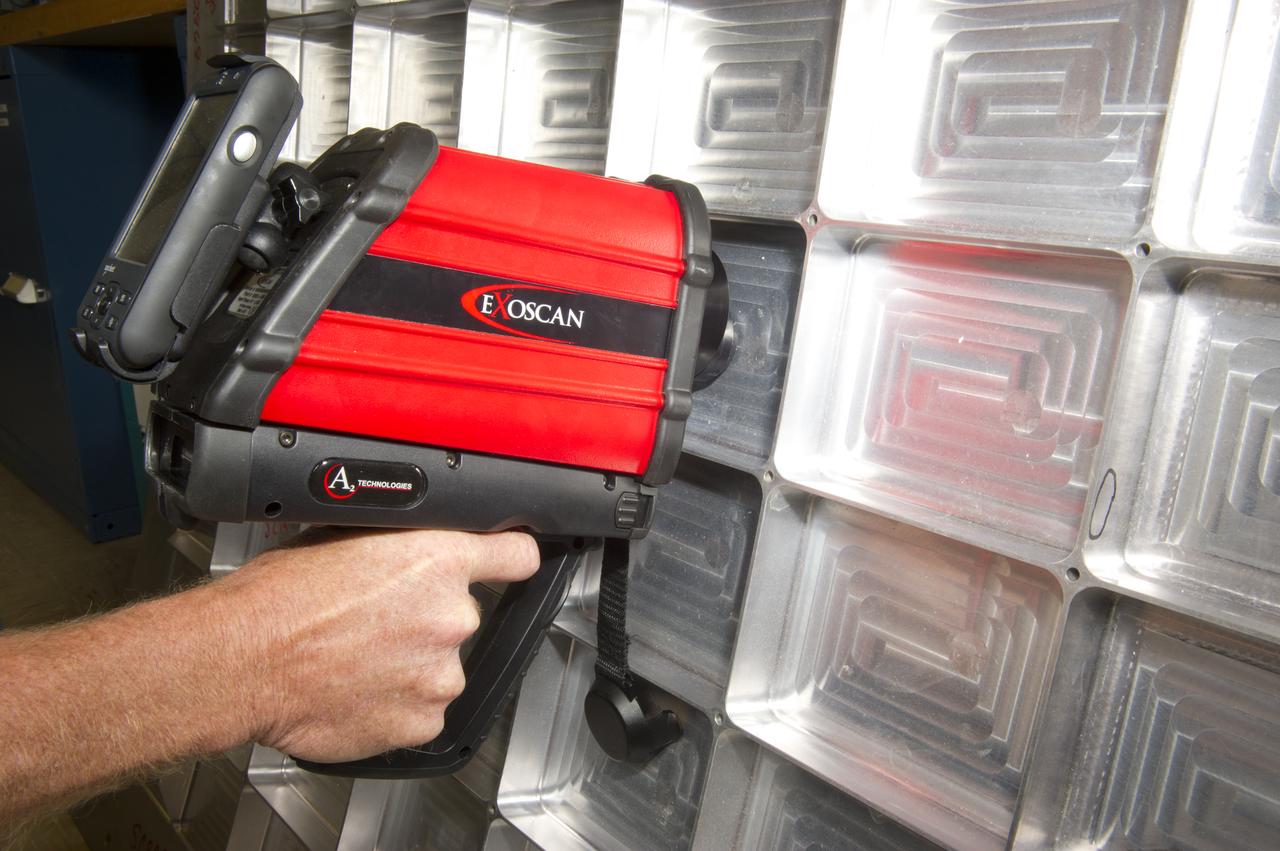
PORTABLE FOURIER TRANSFORM INFRARED (FTIR) SPECTROMETER FOR IN-PROCESS SURFACE INSPECTION.
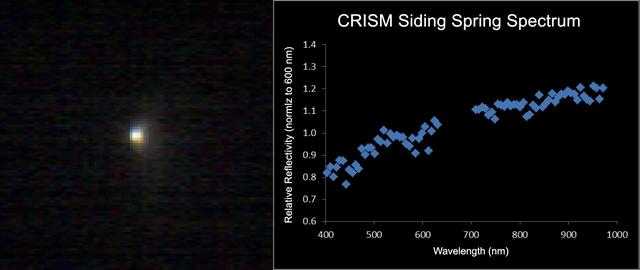
The Compact Reconnaissance Imaging Spectrometer for Mars CRISM aboard NASA Mars Reconnaissance Orbiter obtained this spectrum for comet C/2013 A1 Siding Spring during the comet close approach to Mars.
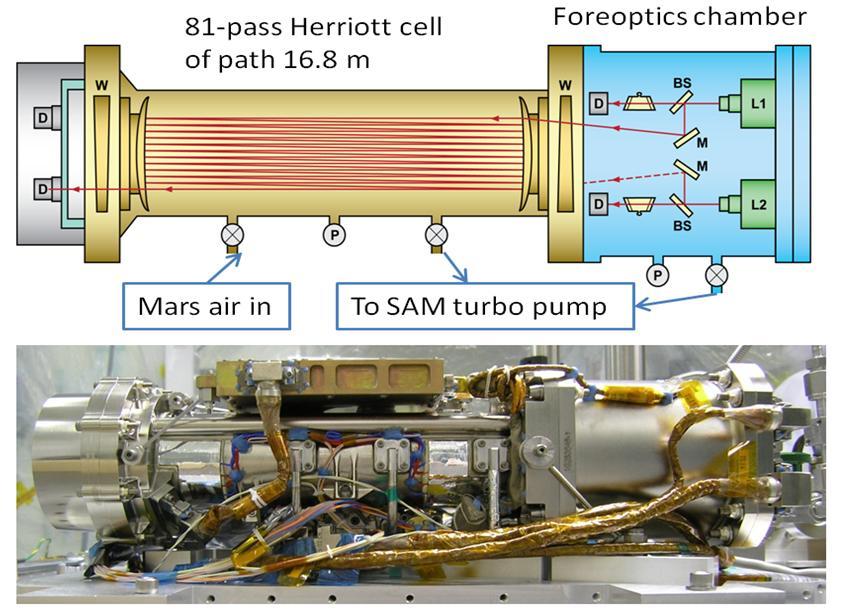
By measuring absorption of light at specific wavelengths, Tunable Laser Spectrometer TLS onboard NASA Curiosity measures concentrations of methane, carbon dioxide and water vapor in Mars atmosphere.

This image from NASA Dawn spacecraft shows Dawn visible and infrared spectrometer image, overlain on top of a framing camera image of the same region on asteroid Vesta.
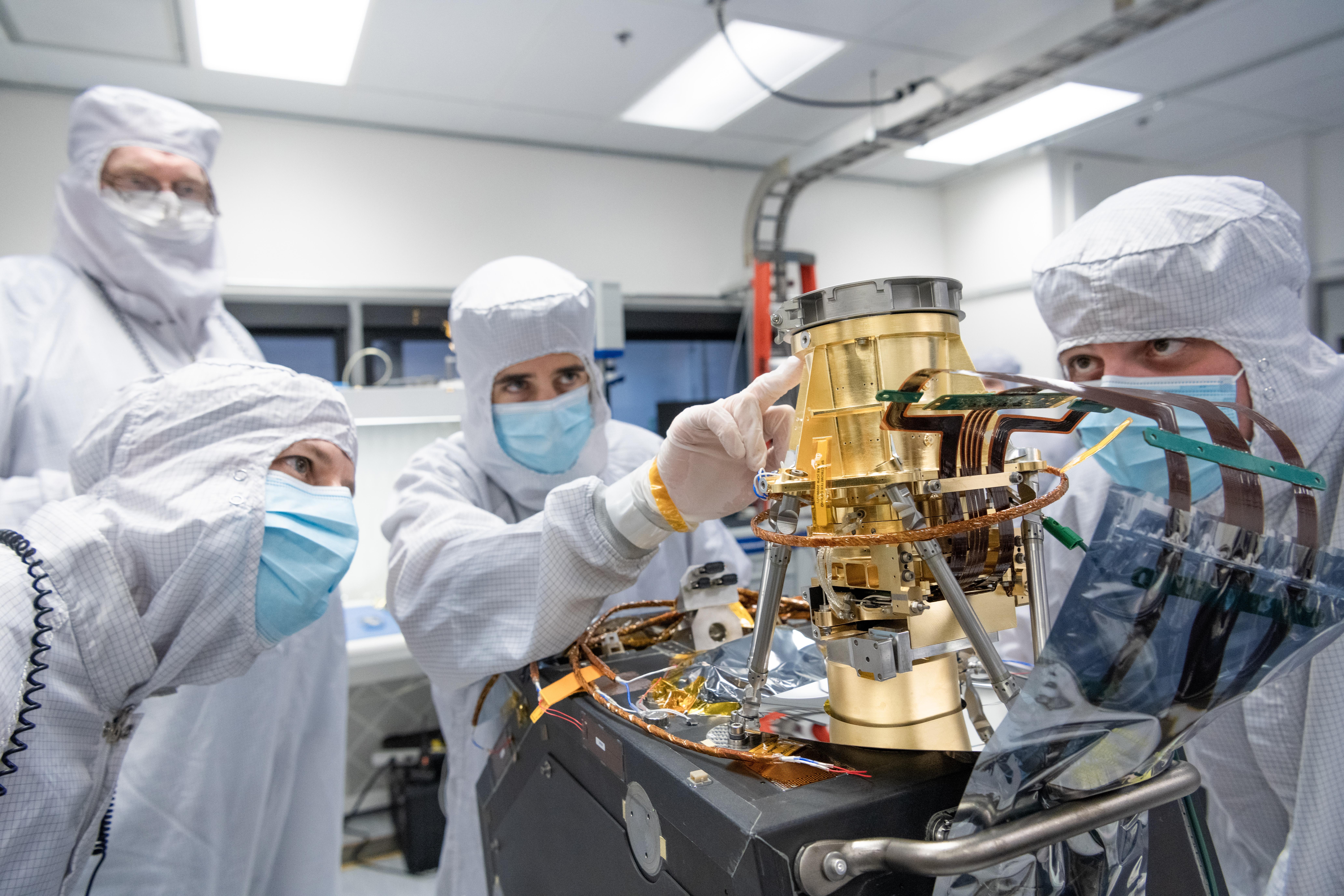
Engineers in a clean room at NASA's Jet Propulsion Laboratory in Southern California in April 2023 examine the imaging spectrometer that will ride aboard the first of two satellites to be launched by the Carbon Mapper Coalition. The instrument will help researchers detect emissions of carbon dioxide and methane from sources on Earth's surface from space. The gold-colored component is the spectrometer, which was developed at JPL. It's designed to receive sunlight reflected from Earth and divide that light into hundreds of distinct colors in the near-infrared and visible portion of the electromagnetic spectrum. By analyzing the light's spectroscopic signature – the wavelengths that show up in the signal as well as those that do not – researchers can determine whether the instrument is observing greenhouse gas emissions and, if so, estimate their concentrations. The black portion at the base of the instrument is a telescope that captures light from Earth's surface and reflects it into the spectrometer. When released into the atmosphere, carbon dioxide and methane are the greenhouse gases most responsible for human-caused global warming. Both have unique spectral signatures that make them detectable from space via spectroscopy. The imaging spectrometer is JPL's contribution to the Carbon Mapper Coalition, a joint effort led by the nonprofit Carbon Mapper that also includes Planet Labs PBC, the California Air Resources Board, Arizona State University, and the University of Arizona. Once the instrument is in orbit, researchers will use its measurements to identify the sources of carbon dioxide and methane plumes it detects. Identification of the origins of emissions is considered the first step towards mitigation. https://photojournal.jpl.nasa.gov/catalog/PIA25869
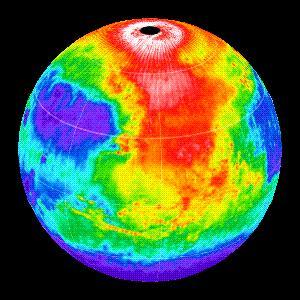
Martian Temperatures Measured by the Thermal Emission Spectrometer TES. Pathfinder Landing Aite View
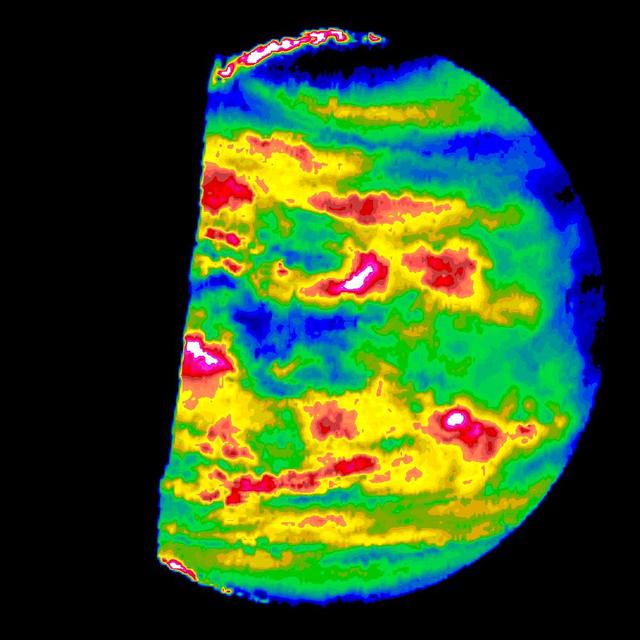
This image is a false color version of a near infrared map of lower level clouds on the night side of Venus, obtained by the Near Infrared Mapping Spectrometer aboard NASA's Galileo spacecraft as it approached the planet Feb. 10, 1990. http://photojournal.jpl.nasa.gov/catalog/PIA00112
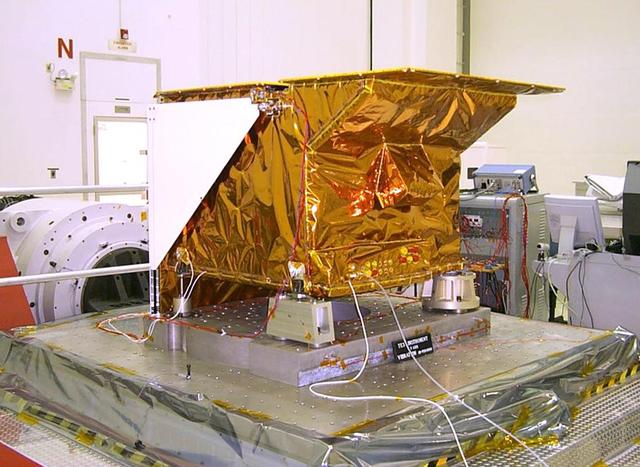
Technicians install NASA's Tropospheric Emission Spectrometer (TES) instrument on NASA's Aura spacecraft prior to launch. Launched in July 2004 and designed to fly for two years, the TES mission is currently in an extended operations phase. Mission managers at NASA's Jet Propulsion Laboratory, Pasadena, California, are evaluating an alternate way to collect and process science data from the Tropospheric Emission Spectrometer (TES) instrument on NASA's Aura spacecraft following the age-related failure of a critical instrument component. TES is an infrared sensor designed to study Earth's troposphere, the lowermost layer of Earth's atmosphere, which is where we live. The remainder of the TES instrument, and the Aura spacecraft itself, are operating as expected, and TES continues to collect science data. TES is one of four instruments on Aura, three of which are still operating. http://photojournal.jpl.nasa.gov/catalog/PIA15608

The data captured here is one of the outputs of a September 2023 test conducted at NASA's Jet Propulsion Laboratory of a state-of-the-art imaging spectrometer instrument, which will measure the greenhouse gases methane and carbon dioxide from space. The instrument successfully detected the presence of methane (dark blue line near the top of the rainbow band), a greenhouse gas, in a sample cylinder. The rainbow band shown on a screen here is a measure of the intensity of a spectrum of light. Blue is low intensity and red is high intensity. Designed and built by JPL, imaging spectrometer will be part of an effort led by the nonprofit Carbon Mapper organization to collect data on greenhouse gas point-source emissions. The information will help locate and quantify "super-emitters" – the small percentage of individual sources responsible for a significant fraction of methane and carbon dioxide emissions around the world. https://photojournal.jpl.nasa.gov/catalog/PIA26096
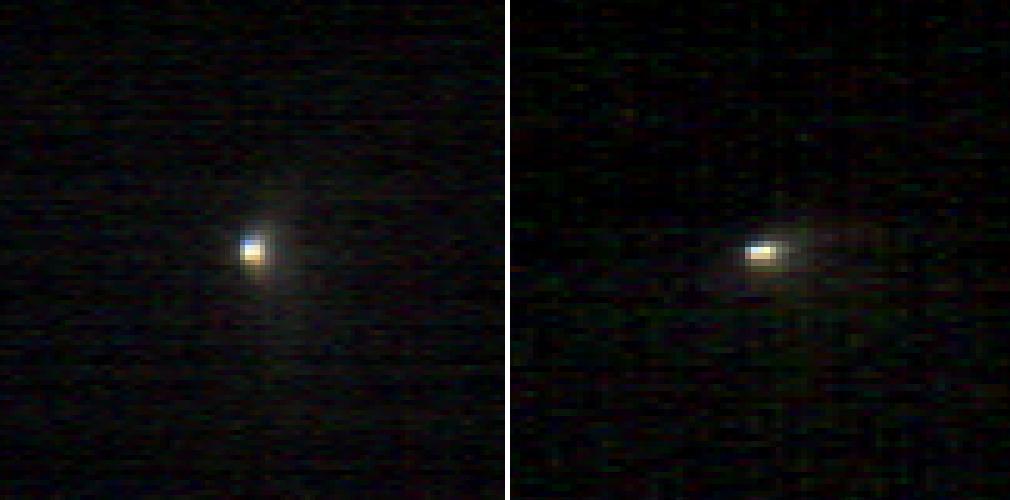
These two infrared images of comet C/2013 A1 Siding Spring were taken by the Compact Reconnaissance Imaging Spectrometer for Mars CRISM aboard NASA Mars Reconnaissance Orbiter on Oct. 19, 2014.
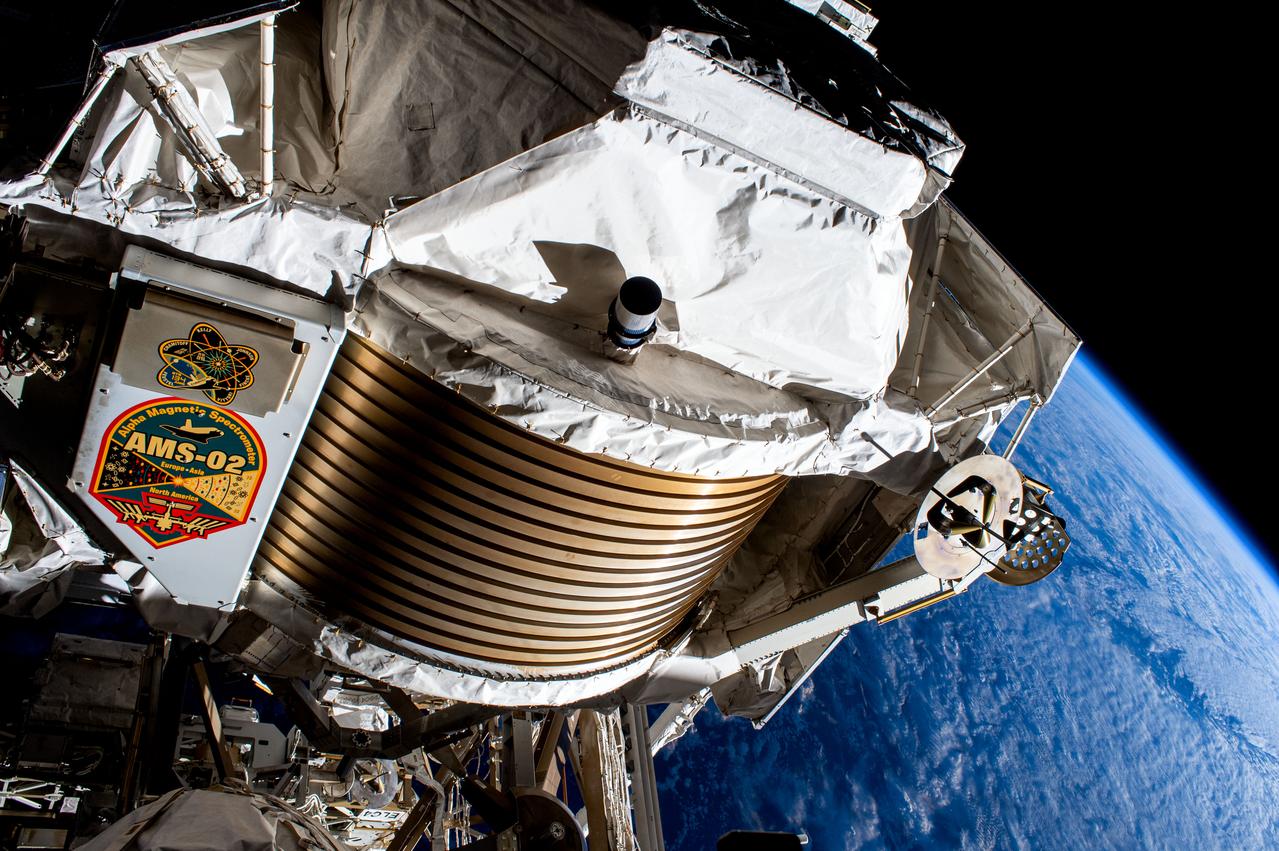
The Alpha Magnetic Spectrometer was photographed during a spacewalk in January 2017. NASA astronauts Shane Kimbrough and Peggy Whitson successfully installed three new adapter plates and hooked up electrical connections for three of the six new lithium-ion batteries on the International Space Station. They also accomplished several get-ahead tasks, including a photo survey of the Alpha Magnetic Spectrometer.
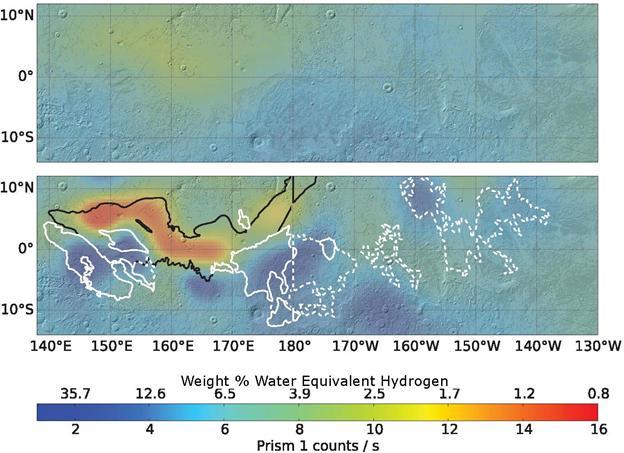
Re-analysis of 2002-2009 data from a hydrogen-finding instrument on NASA's Mars Odyssey orbiter increased the resolution of maps of hydrogen abundance. The reprocessed data (lower map) shows more "water-equivalent hydrogen" (darker blue) in some parts of this equatorial region of Mars. Puzzingly, this suggests the possible presence of water ice just beneath the surface near the equator, though it would not be thermodynamically stable there. The upper map uses raw data from Odyssey's neutron spectrometer instrument, which senses the energy state of neutrons coming from Mars, providing an indication of how much hydrogen is present in the top 3 feet (1 meter) of the surface. Hydrogen detected by Odyssey at high latitudes of Mars in 2002 was confirmed to be in the form of water ice by the follow-up NASA Phoenix Mars Lander mission in 2008. A 2017 reprocessing of the older data applied image-reconstruction techniques often used to reduce blurring from medical imaging data. The results are shown here for an area straddling the equator for about one-fourth the circumference of the planet, centered at 175 degrees west longitude. The white contours outline lobes of a formation called Medusae Fossae, coinciding with some areas of higher hydrogen abundance in the enhanced-resolution analysis. The black line indicates the limit of a relatively young lava plain, coinciding with areas of lower hydrogen abundance in the enhanced-resolution analysis. The color-coding key for hydrogen abundance in both maps is indicated by the horizontal bar, in units expressed as how much water would be present in the ground if the hydrogen is all in the form of water. Units of the equivalent water weight, as a percentage of the material in the ground, are correlated with counts recorded by the spectrometer, ranging from less than 1 weight-percent water equivalent (red) to more than 30 percent (dark blue). https://photojournal.jpl.nasa.gov/catalog/PIA21848
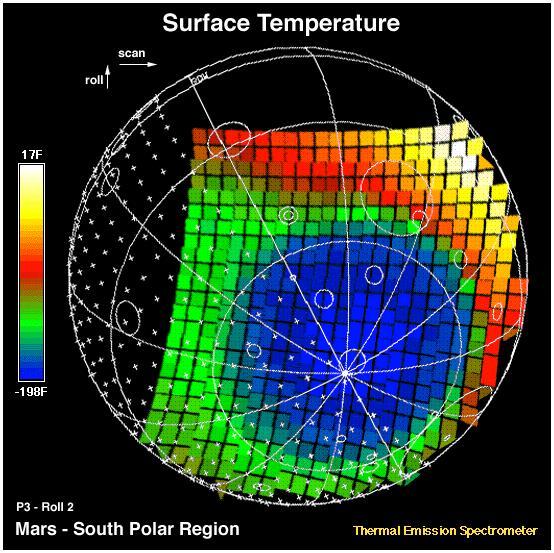
This image shows the temperature of the martian surface measured by the Mars Global Surveyor Thermal Emission Spectrometer (TES) instrument. On September 15, 3 hours and 48 minutes after the spacecrafts third close approach to the planet, the TES instrument was commanded to point at Mars and measure the temperature of the surface during a four minute scan. At this time MGS was approximately 15,000 miles (~24,000 km) from the planet, with a view looking up from beneath the planet at the south polar region. The circular blue region (- 198 F) is the south polar cap of Mars that is composed of CO2 ice. The night side of the planet, shown with crosses, is generally cool (green). The sunlit side of the planet reaches temperatures near 15 F (yellow). Each square represents an individual observation acquired in 2 seconds with a ground resolution of ~125 miles (~200 km). The TES instrument will remain on and collect similar images every 100 minutes to monitor the temperature of the surface and atmosphere throughout the aerobraking phase of the MGS mission. http://photojournal.jpl.nasa.gov/catalog/PIA00937
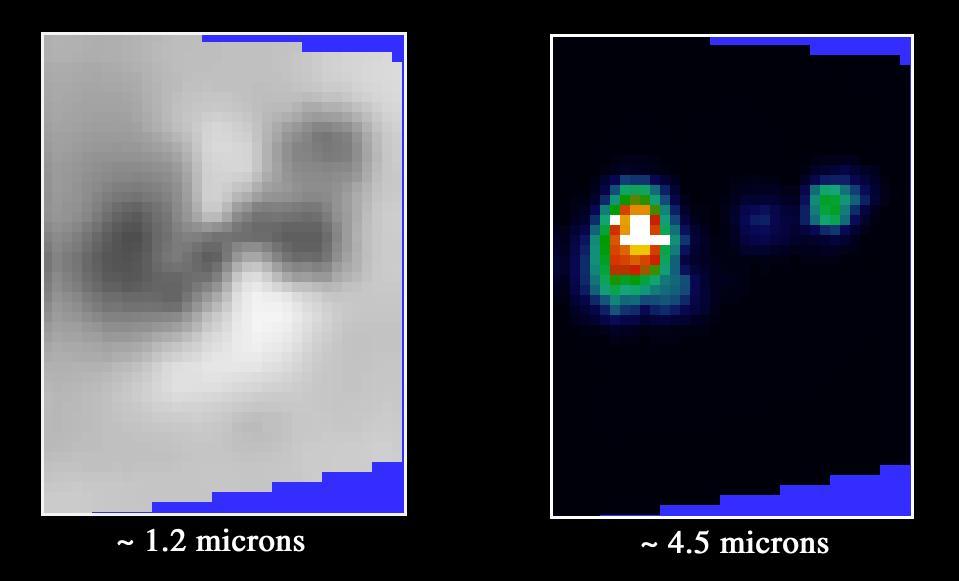
The active volcano Prometheus on Jupiter moon Io was imaged by NASA Galileo spacecraft during the close flyby of Io on Oct.10, 1999. The spectrometer can detect active volcanoes on Io by measuring their heat in the near-infrared wavelengths.

This chart describes the Skylab student experiment Ultraviolet (UV) From Pulsars, proposed by Neal W. Sharnon of Atlanta, Georgia. This experiment was to observe several pulsars with Skylab's UV spectrometer to determine their intensities in that portion of their spectra. A more detailed description of a pulsar's electromagnetic emission profile would be expected to further define means by which its energy is released. Unfortunately, upon examination of the photographic plates containing the data from the experiment, it was found that an alignment error of the spectrometer prevented detection of any of the pulsars. In March 1972, NASA and the National Science Teachers Association selected 25 experiment proposals for flight on Skylab. Science advisors from the Marshall Space Flight Center aided and assisted the students in developing the proposals for flight on Skylab.

CAPE CANAVERAL, Fla. -- At the Shuttle Landing Facility at NASA's Kennedy Space Center in Florida, STS-134 Mission Specialist Michael Fincke pauses for a photo before the arrival of the Alpha Magnetic Spectrometer, or AMS. AMS, a state-of-the-art particle physics detector, is designed to operate as an external module on the International Space Station. It will use the unique environment of space to study the universe and its origin by searching for dark matter. AMS will fly to the International Space Station aboard space shuttle Endeavour's STS-134 mission targeted to launch Feb. 26, 2011. Photo credit: NASA/Kim Shiflett
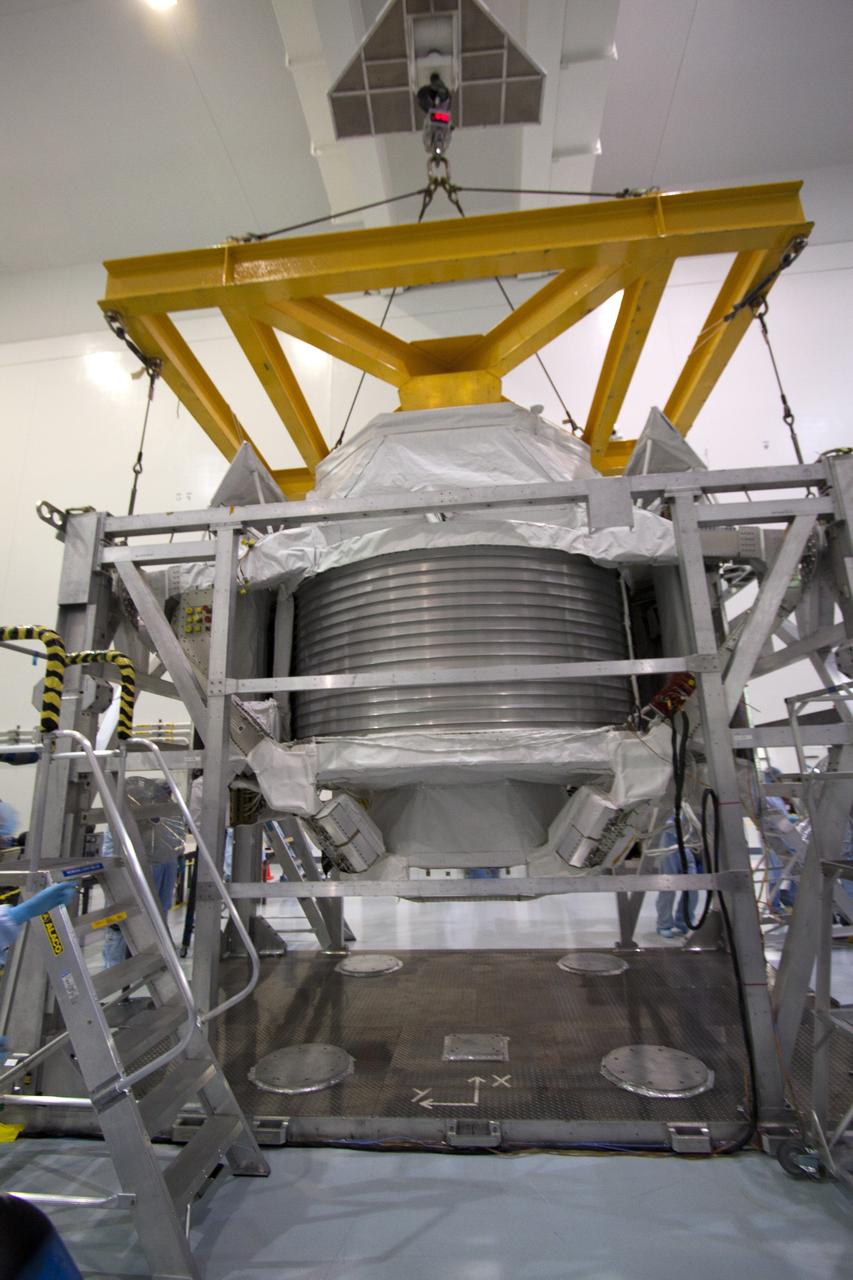
CAPE CANAVERAL, Fla. -- In the Space Station Processing Facility at NASA's Kennedy Space Center in Florida, an overhead crane lifts the Alpha Magnetic Spectrometer, or AMS, so it can be placed onto a work stand and processed for launch. AMS, a state-of-the-art particle physics detector, is designed to operate as an external module on the International Space Station. It will use the unique environment of space to study the universe and its origin by searching for dark matter. AMS will fly to the International Space Station aboard space shuttle Endeavour's STS-134 mission targeted to launch Feb. 26, 2011. Photo credit: NASA/Jack Pfaller
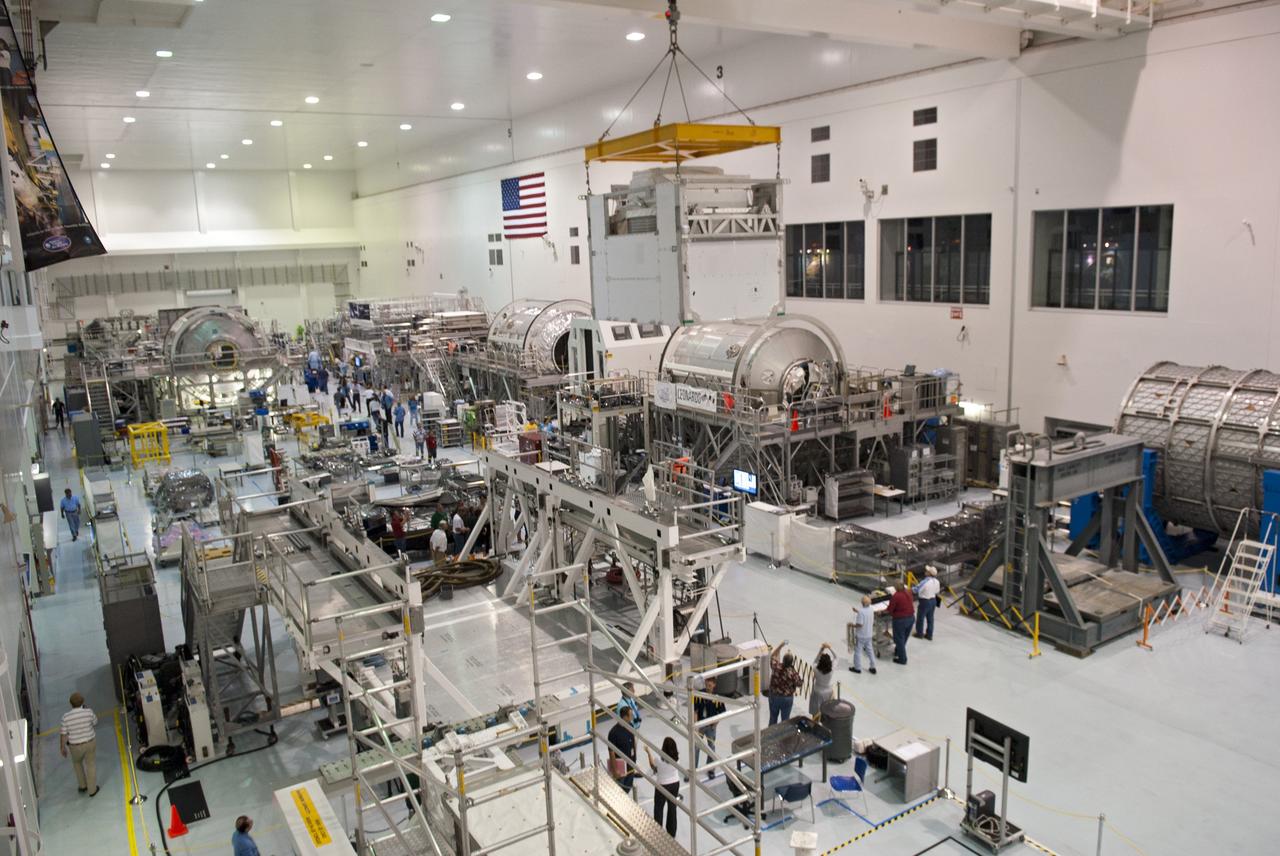
CAPE CANAVERAL, Fla. -- In the Space Station Processing Facility at NASA's Kennedy Space Center in Florida an overhead crane moves the Alpha Magnetic Spectrometer, or AMS, to an area for technicians to prepare it for launch. AMS, a state-of-the-art particle physics detector, is designed to operate as an external module on the International Space Station. It will use the unique environment of space to study the universe and its origin by searching for dark matter. The STS-134 crew will fly AMS to the International Space Station aboard space shuttle Endeavour, targeted to launch Feb. 26, 2011. Photo credit: NASA/Frankie Martin

CAPE CANAVERAL, Fla. -- Technicians in the Space Station Processing Facility at NASA's Kennedy Space Center in Florida, begin processing the Alpha Magnetic Spectrometer, or AMS, to prepare it for launch. AMS, a state-of-the-art particle physics detector, is designed to operate as an external module on the International Space Station. It will use the unique environment of space to study the universe and its origin by searching for dark matter. AMS will fly to the International Space Station aboard space shuttle Endeavour's STS-134 mission targeted to launch Feb. 26, 2011. Photo credit: NASA/Jack Pfaller
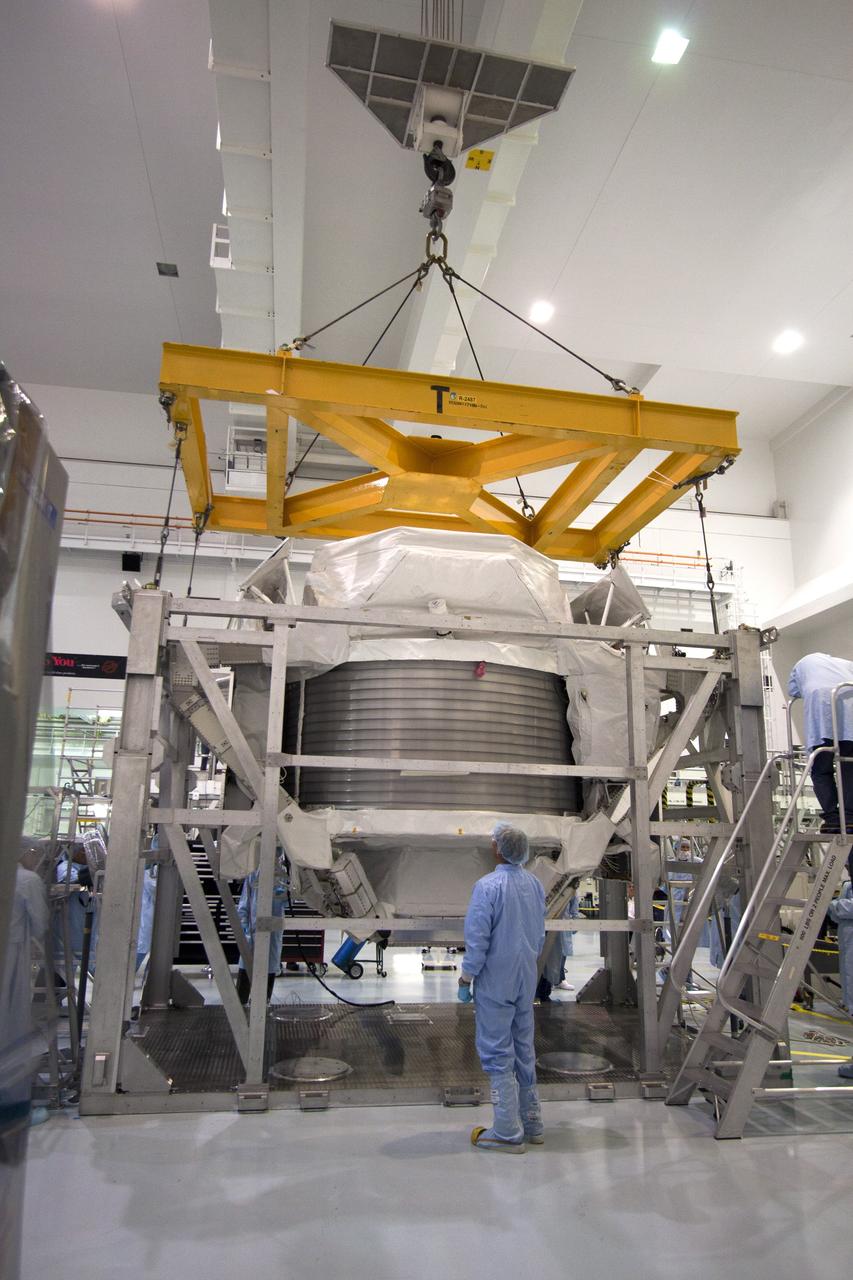
CAPE CANAVERAL, Fla. -- In the Space Station Processing Facility at NASA's Kennedy Space Center in Florida, a technician monitors an overhead crane as it lifts the Alpha Magnetic Spectrometer, or AMS, so it can be placed onto a work stand and processed for launch. AMS, a state-of-the-art particle physics detector, is designed to operate as an external module on the International Space Station. It will use the unique environment of space to study the universe and its origin by searching for dark matter. AMS will fly to the International Space Station aboard space shuttle Endeavour's STS-134 mission targeted to launch Feb. 26, 2011. Photo credit: NASA/Jack Pfaller
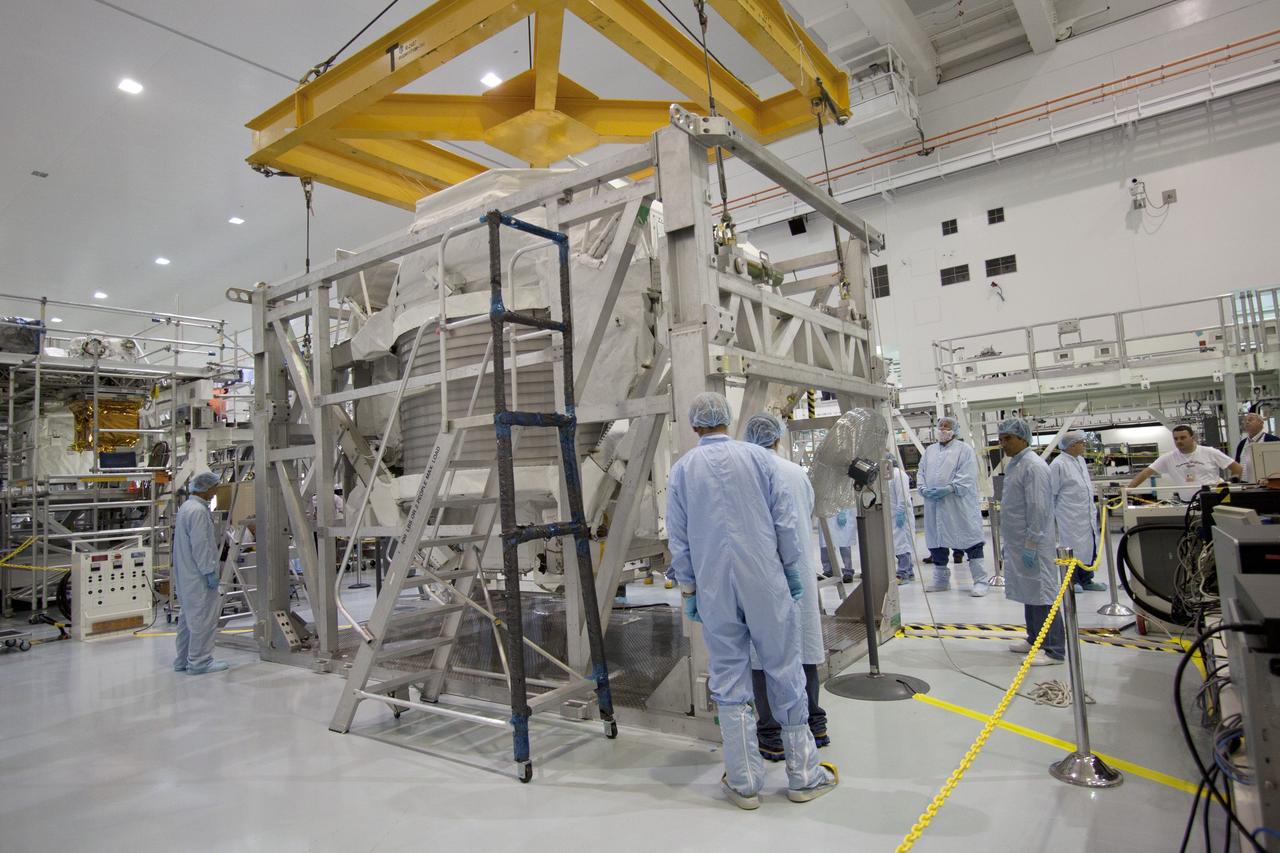
CAPE CANAVERAL, Fla. -- In the Space Station Processing Facility at NASA's Kennedy Space Center in Florida, an overhead crane lifts the Alpha Magnetic Spectrometer, or AMS, so it can be lifted onto a work stand and processed for launch. AMS, a state-of-the-art particle physics detector, is designed to operate as an external module on the International Space Station. It will use the unique environment of space to study the universe and its origin by searching for dark matter. AMS will fly to the International Space Station aboard space shuttle Endeavour's STS-134 mission targeted to launch Feb. 26, 2011. Photo credit: NASA/Jack Pfaller

CAPE CANAVERAL, Fla. -- Technicians in the Space Station Processing Facility at NASA's Kennedy Space Center in Florida, attach an overhead crane to the Alpha Magnetic Spectrometer, or AMS, so it can be lifted onto a work stand and processed for launch. AMS, a state-of-the-art particle physics detector, is designed to operate as an external module on the International Space Station. It will use the unique environment of space to study the universe and its origin by searching for dark matter. AMS will fly to the International Space Station aboard space shuttle Endeavour's STS-134 mission targeted to launch Feb. 26, 2011. Photo credit: NASA/Jack Pfaller
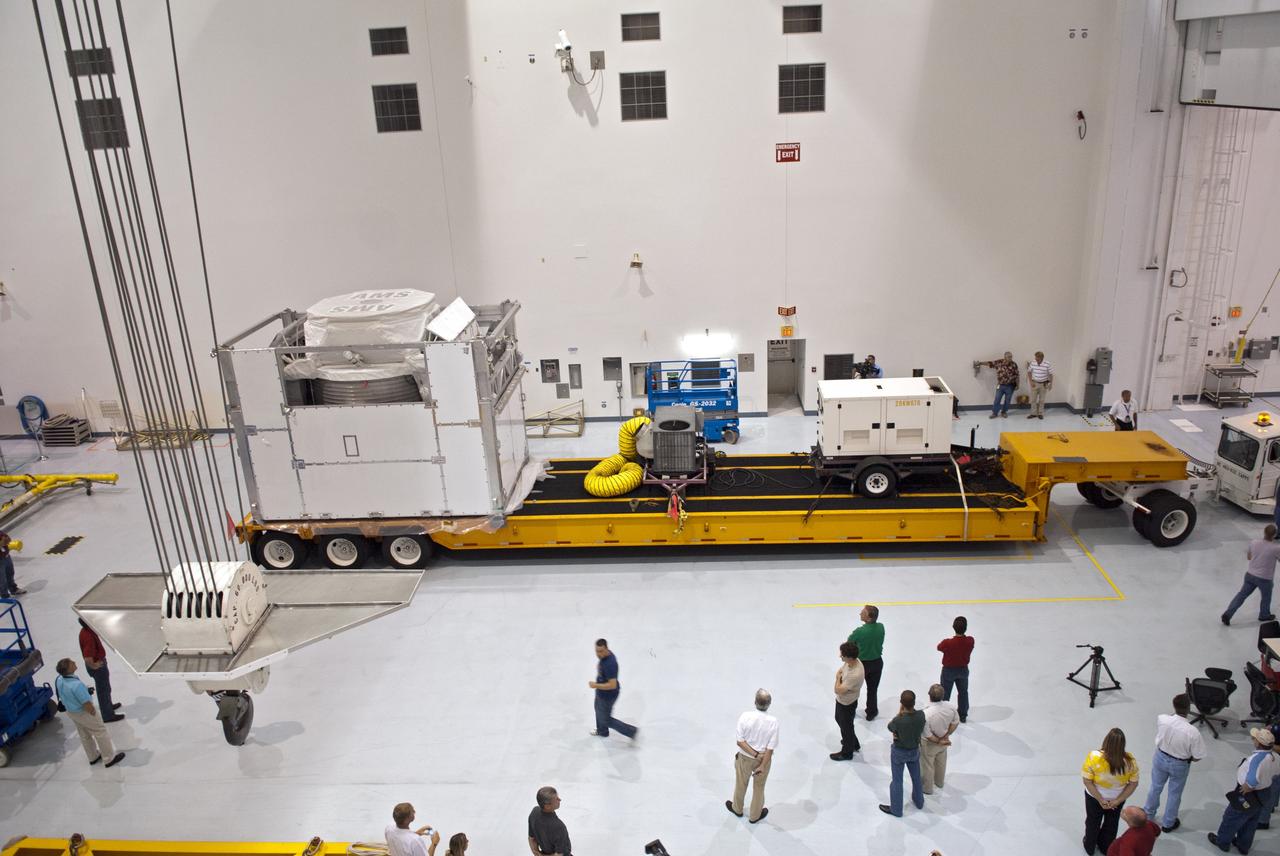
CAPE CANAVERAL, Fla. -- Workers and media at NASA's Kennedy Space Center in Florida, monitor the arrival of a tractor-trailer carrying the Alpha Magnetic Spectrometer, or AMS, to the Space Station Processing Facility, where it will be prepared for launch. AMS, a state-of-the-art particle physics detector, is designed to operate as an external module on the International Space Station. It will use the unique environment of space to study the universe and its origin by searching for dark matter. The STS-134 crew will fly AMS to the International Space Station aboard space shuttle Endeavour, targeted to launch Feb. 26, 2011. Photo credit: NASA/Frankie Martin
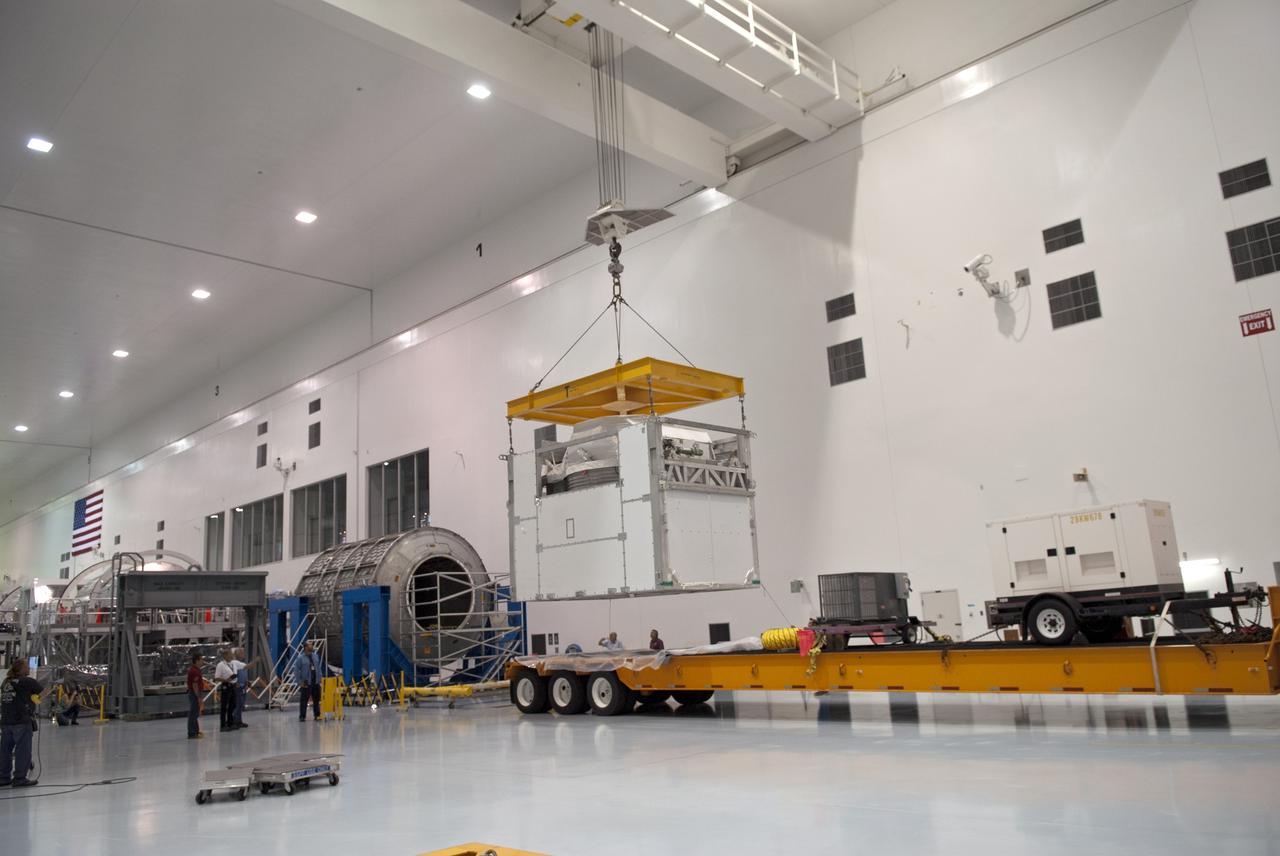
CAPE CANAVERAL, Fla. -- In the Space Station Processing Facility at NASA's Kennedy Space Center in Florida an overhead crane lifts the Alpha Magnetic Spectrometer, or AMS, off of the tractor-trailer that delivered it. AMS, a state-of-the-art particle physics detector, is designed to operate as an external module on the International Space Station. It will use the unique environment of space to study the universe and its origin by searching for dark matter. The STS-134 crew will fly AMS to the International Space Station aboard space shuttle Endeavour, targeted to launch Feb. 26, 2011. Photo credit: NASA/Frankie Martin
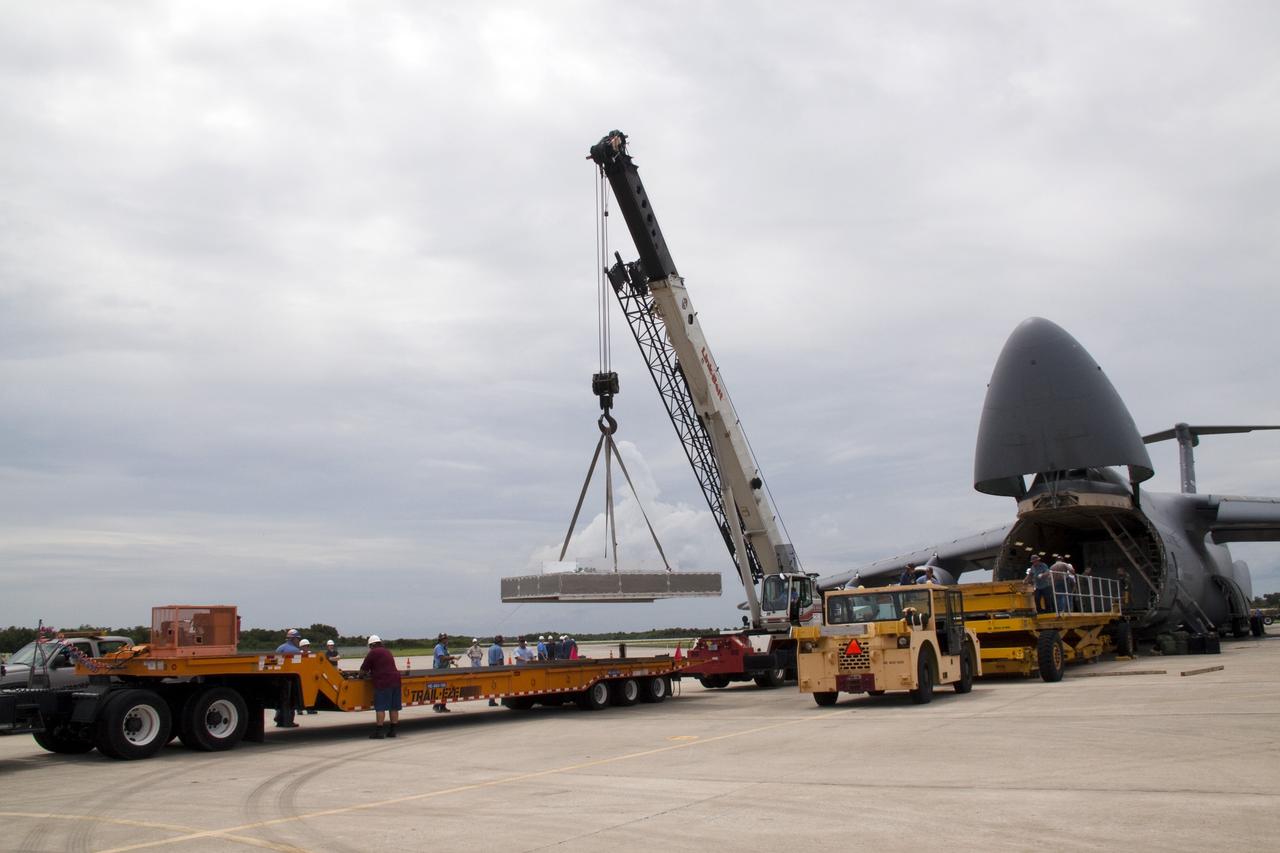
CAPE CANAVERAL, Fla. -- At NASA's Kennedy Space Center in Florida, a crane lowers a section of the Alpha Magnetic Spectrometer, or AMS, onto a tractor-trailer which will transport the AMS from the Shuttle Landing Facility runway to the Space Station Processing Facility, where it will be processed for launch. AMS, a state-of-the-art particle physics detector, is designed to operate as an external module on the International Space Station. It will use the unique environment of space to study the universe and its origin by searching for dark matter. AMS will fly to the International Space Station aboard space shuttle Endeavour's STS-134 mission, targeted to launch Feb. 26, 2011. Photo credit: NASA/Jack Pfaller

CAPE CANAVERAL, Fla. -- Prior to the arrival of the Alpha Magnetic Spectrometer, or AMS, to the Shuttle Landing Facility at NASA's Kennedy Space Center in Florida, Professor Sam Ting, AMS Principal Investigator from the Massachusetts Institute of Technology speaks to the media. AMS,a state-of-the-art particle physics detector, is designed to operate as an external module on the International Space Station. It will use the unique environment of space to study the universe and its origin by searching for dark matter. AMS will fly to the International Space Station aboard space shuttle Endeavour's STS-134 mission targeted to launch Feb. 26, 2011. Photo credit: NASA/Kim Shiflett
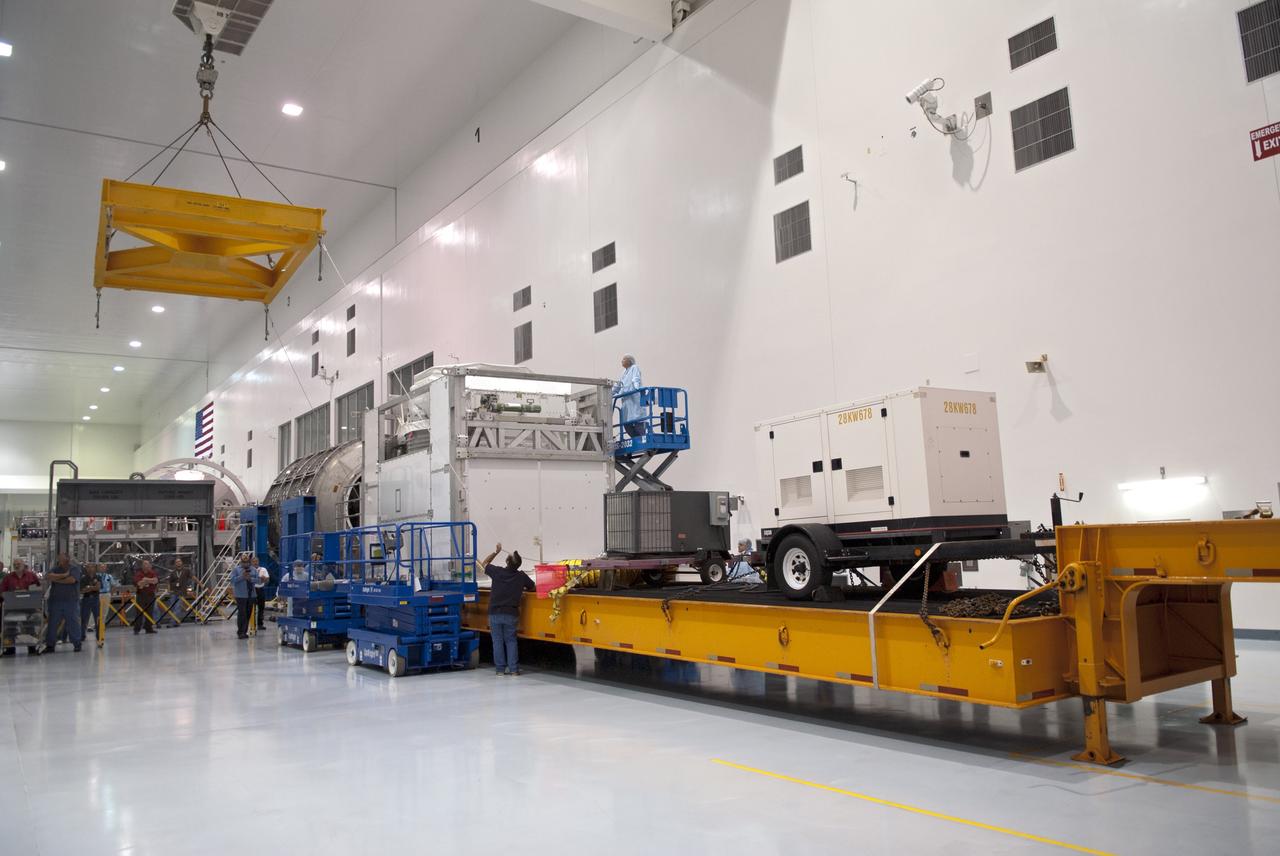
CAPE CANAVERAL, Fla. -- At NASA's Kennedy Space Center in Florida an overhead crane is poised above the floor of the Space Station Processing Facility to lift the Alpha Magnetic Spectrometer, or AMS, from the tractor-trailer that delivered it. AMS, a state-of-the-art particle physics detector, is designed to operate as an external module on the International Space Station. It will use the unique environment of space to study the universe and its origin by searching for dark matter. The STS-134 crew will fly AMS to the International Space Station aboard space shuttle Endeavour, targeted to launch Feb. 26, 2011. Photo credit: NASA/Frankie Martin
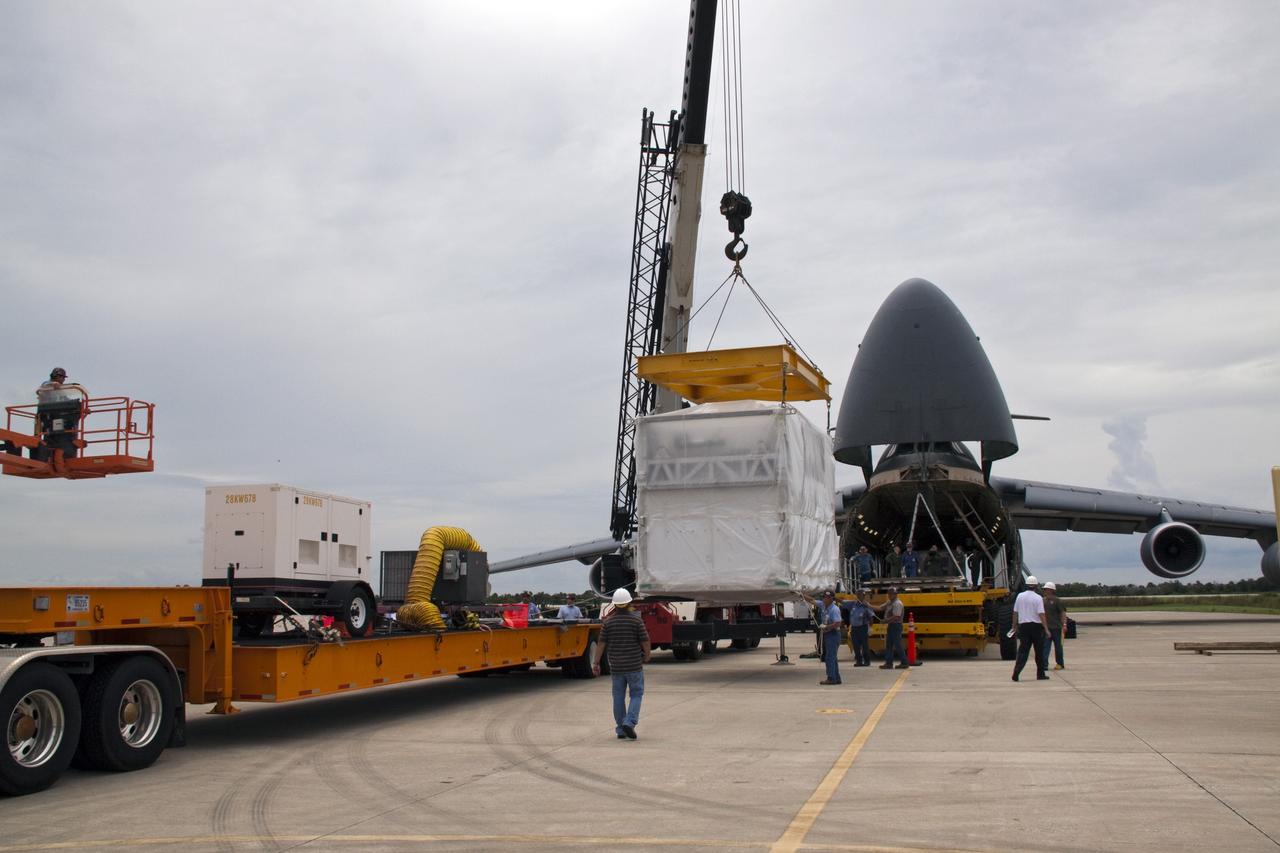
CAPE CANAVERAL, Fla. -- At NASA's Kennedy Space Center in Florida, a crane moves the next section of the Alpha Magnetic Spectrometer, or AMS, toward a tractor-trailer which will transport the AMS from the Shuttle Landing Facility runway to the Space Station Processing Facility, where it will be processed for launch. AMS, a state-of-the-art particle physics detector, is designed to operate as an external module on the International Space Station. It will use the unique environment of space to study the universe and its origin by searching for dark matter. AMS will fly to the International Space Station aboard space shuttle Endeavour's STS-134 mission, targeted to launch Feb. 26, 2011. Photo credit: NASA/Jack Pfaller
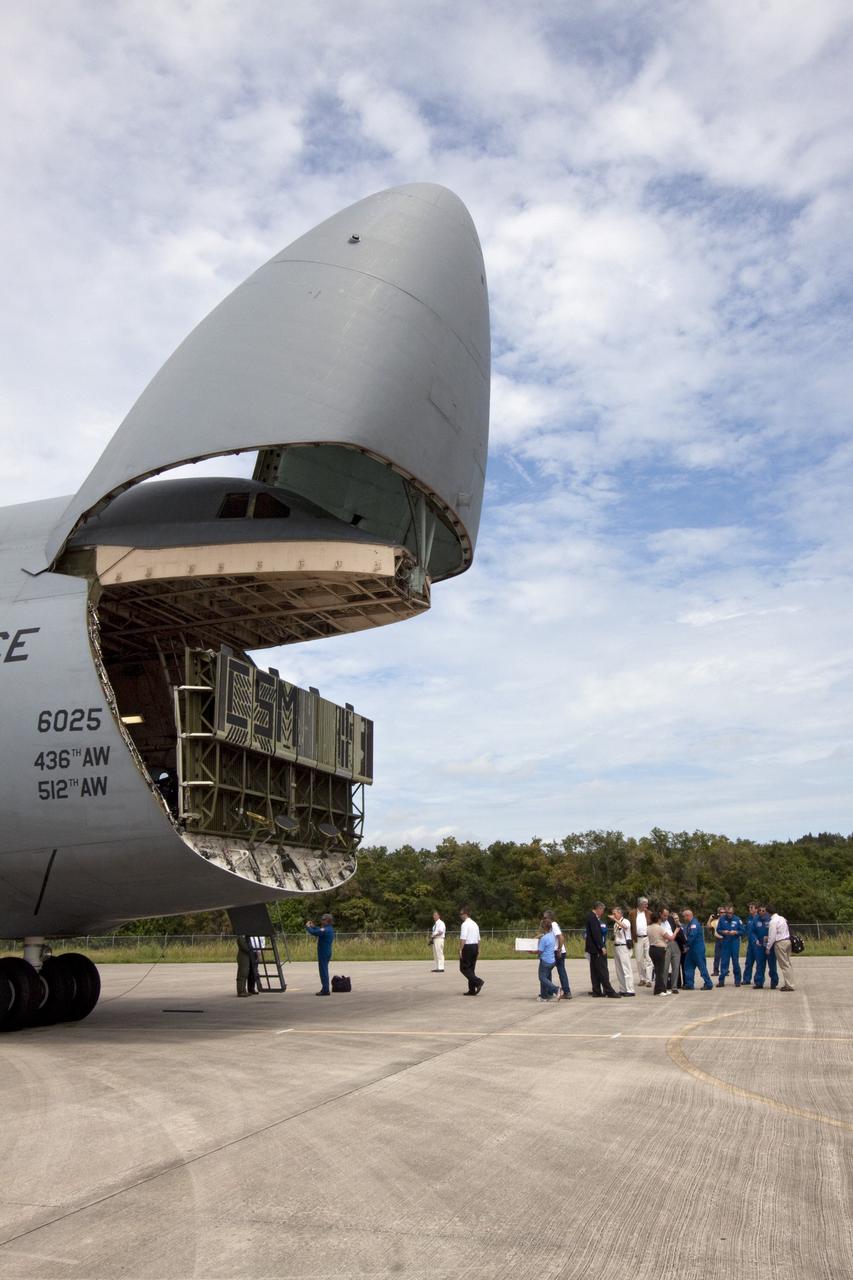
CAPE CANAVERAL, Fla. -- At NASA's Kennedy Space Center in Florida, media and the crew of space shuttle Endeavour's STS-134 mission gather on the Shuttle Landing Facility runway to check out the Alpha Magnetic Spectrometer, or AMS, which arrived aboard an Air Force C-5M aircraft from Europe. AMS, a state-of-the-art particle physics detector, is designed to operate as an external module on the International Space Station. It will use the unique environment of space to study the universe and its origin by searching for dark matter. AMS will fly to the International Space Station aboard space shuttle Endeavour's STS-134 mission, targeted to launch Feb. 26, 2011. Photo credit: NASA/Jack Pfaller
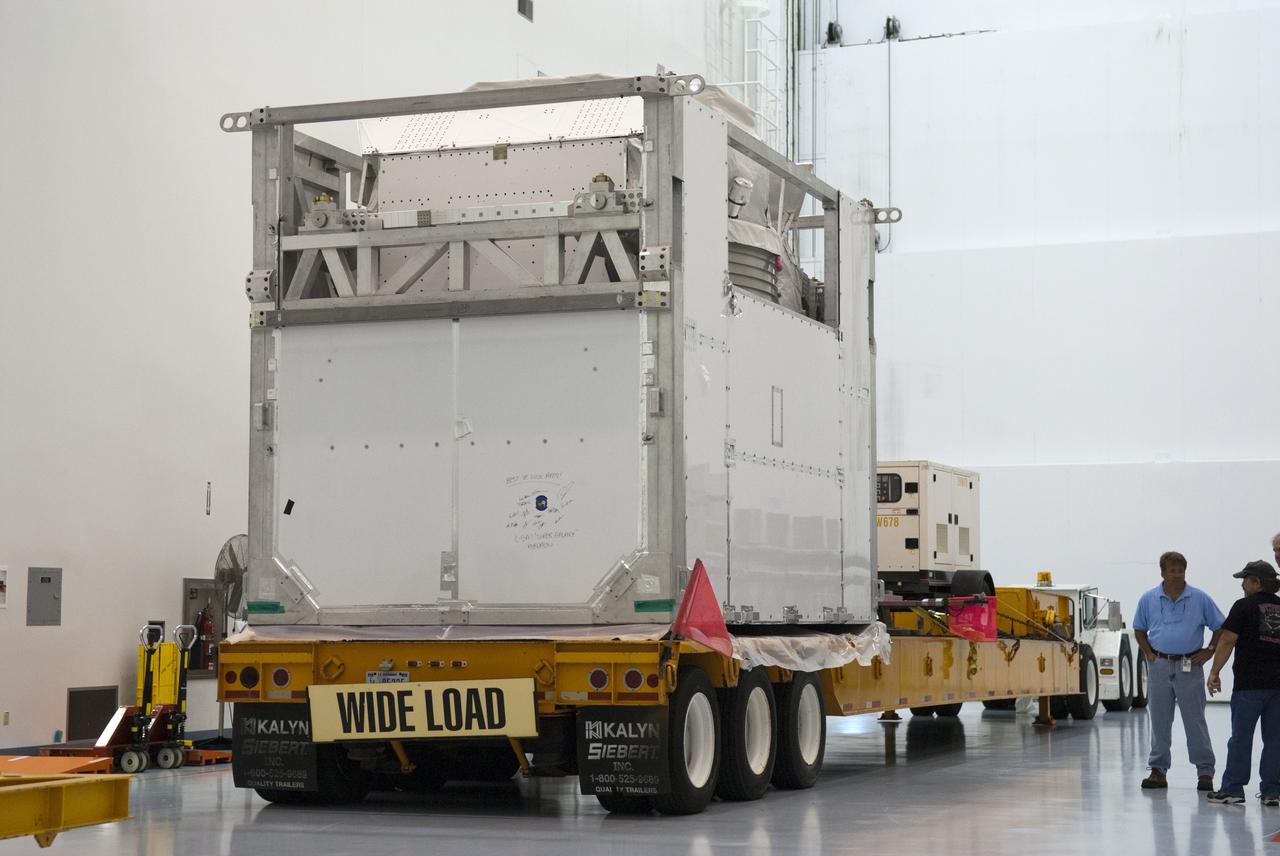
CAPE CANAVERAL, Fla. -- At NASA's Kennedy Space Center in Florida, a tractor-trailer carrying the Alpha Magnetic Spectrometer, or AMS, arrives at the Space Station Processing Facility, where it will be prepared for launch. AMS, a state-of-the-art particle physics detector, is designed to operate as an external module on the International Space Station. It will use the unique environment of space to study the universe and its origin by searching for dark matter. The STS-134 crew will fly AMS to the International Space Station aboard space shuttle Endeavour, targeted to launch Feb. 26, 2011. Photo credit: NASA/Frankie Martin
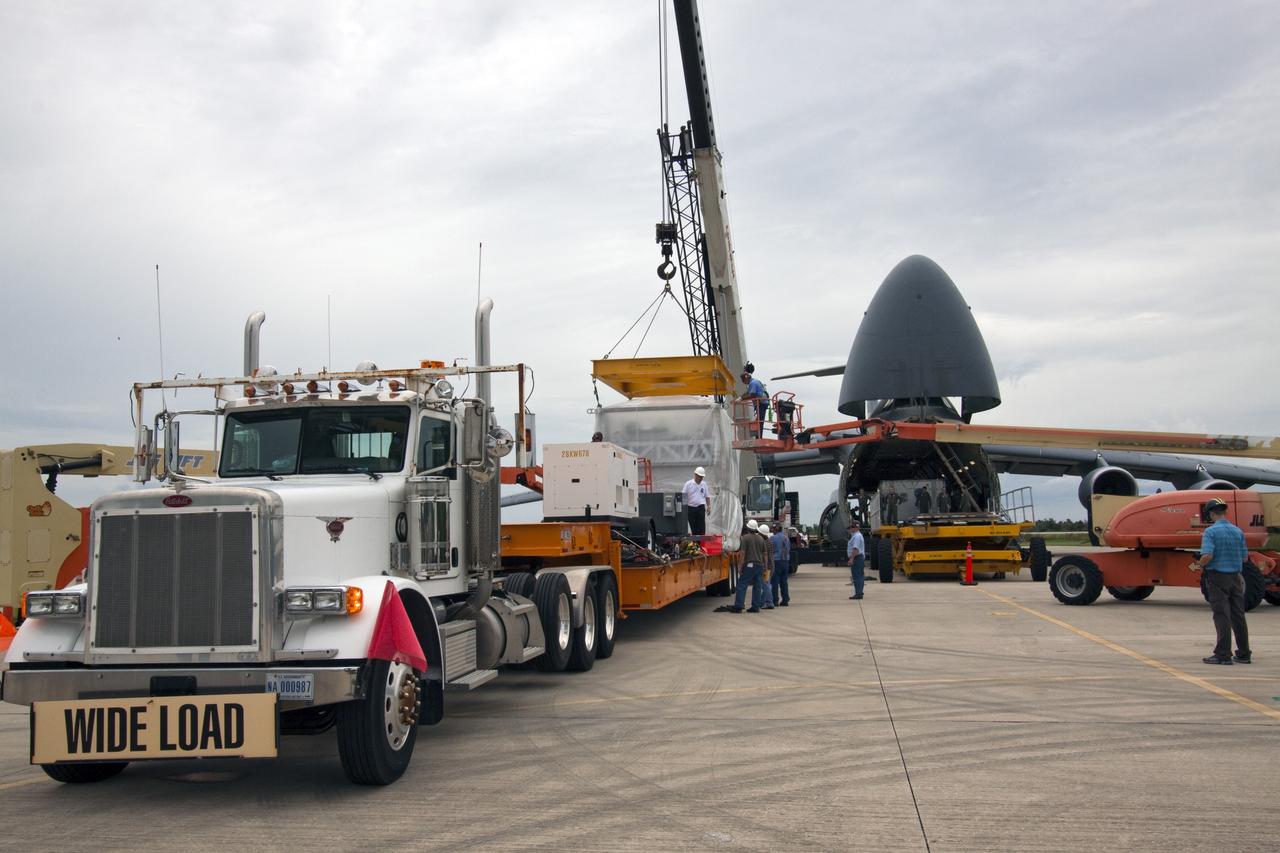
CAPE CANAVERAL, Fla. -- At NASA's Kennedy Space Center in Florida, a crane lowers the next section of the Alpha Magnetic Spectrometer, or AMS, onto a tractor-trailer which will transport the AMS from the Shuttle Landing Facility runway to the Space Station Processing Facility, where it will be processed for launch. AMS, a state-of-the-art particle physics detector, is designed to operate as an external module on the International Space Station. It will use the unique environment of space to study the universe and its origin by searching for dark matter. AMS will fly to the International Space Station aboard space shuttle Endeavour's STS-134 mission, targeted to launch Feb. 26, 2011. Photo credit: NASA/Jack Pfaller
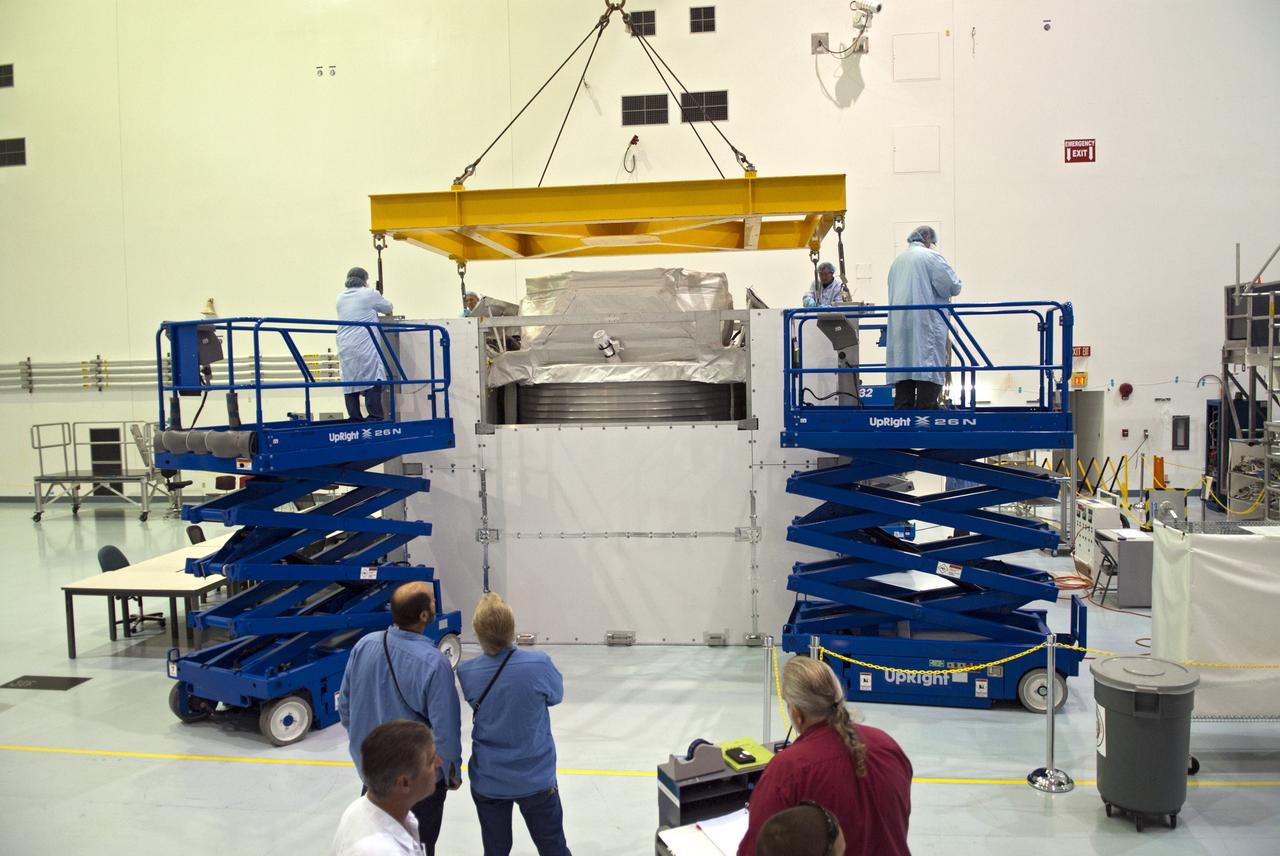
CAPE CANAVERAL, Fla. -- In the Space Station Processing Facility at NASA's Kennedy Space Center in Florida an overhead crane lowers the Alpha Magnetic Spectrometer, or AMS, onto to floor for technicians to prepare it for launch. AMS, a state-of-the-art particle physics detector, is designed to operate as an external module on the International Space Station. It will use the unique environment of space to study the universe and its origin by searching for dark matter. The STS-134 crew will fly AMS to the International Space Station aboard space shuttle Endeavour, targeted to launch Feb. 26, 2011. Photo credit: NASA/Frankie Martin
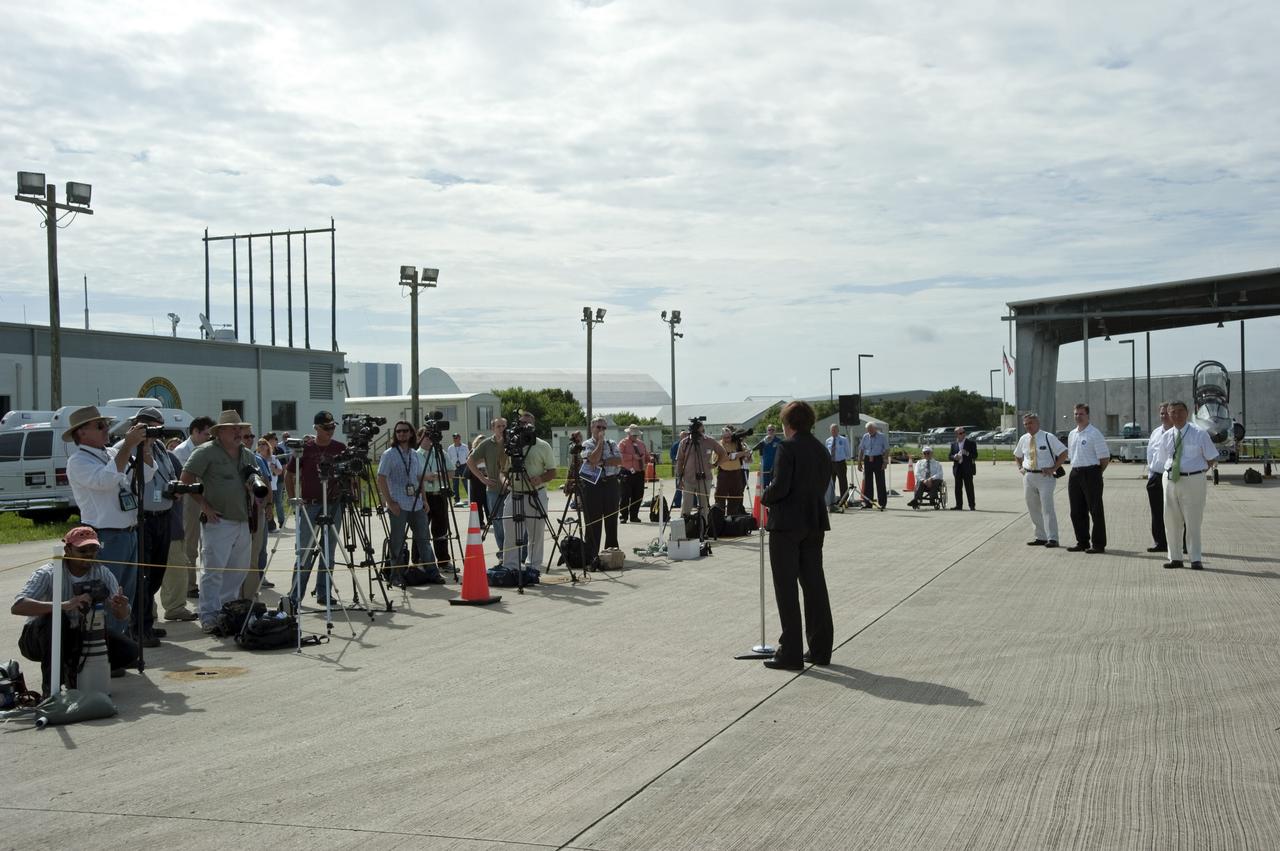
CAPE CANAVERAL, Fla. -- Before the arrival of the Alpha Magnetic Spectrometer, or AMS, to the Shuttle Landing Facility at NASA's Kennedy Space Center in Florida, European Space Agency Director of Human Spaceflight, Simonetta Di Pippo addresses the media. AMS,a state-of-the-art particle physics detector, is designed to operate as an external module on the International Space Station. It will use the unique environment of space to study the universe and its origin by searching for dark matter. AMS will fly to the International Space Station aboard space shuttle Endeavour's STS-134 mission targeted to launch Feb. 26, 2011. Photo credit: NASA/Kim Shiflett
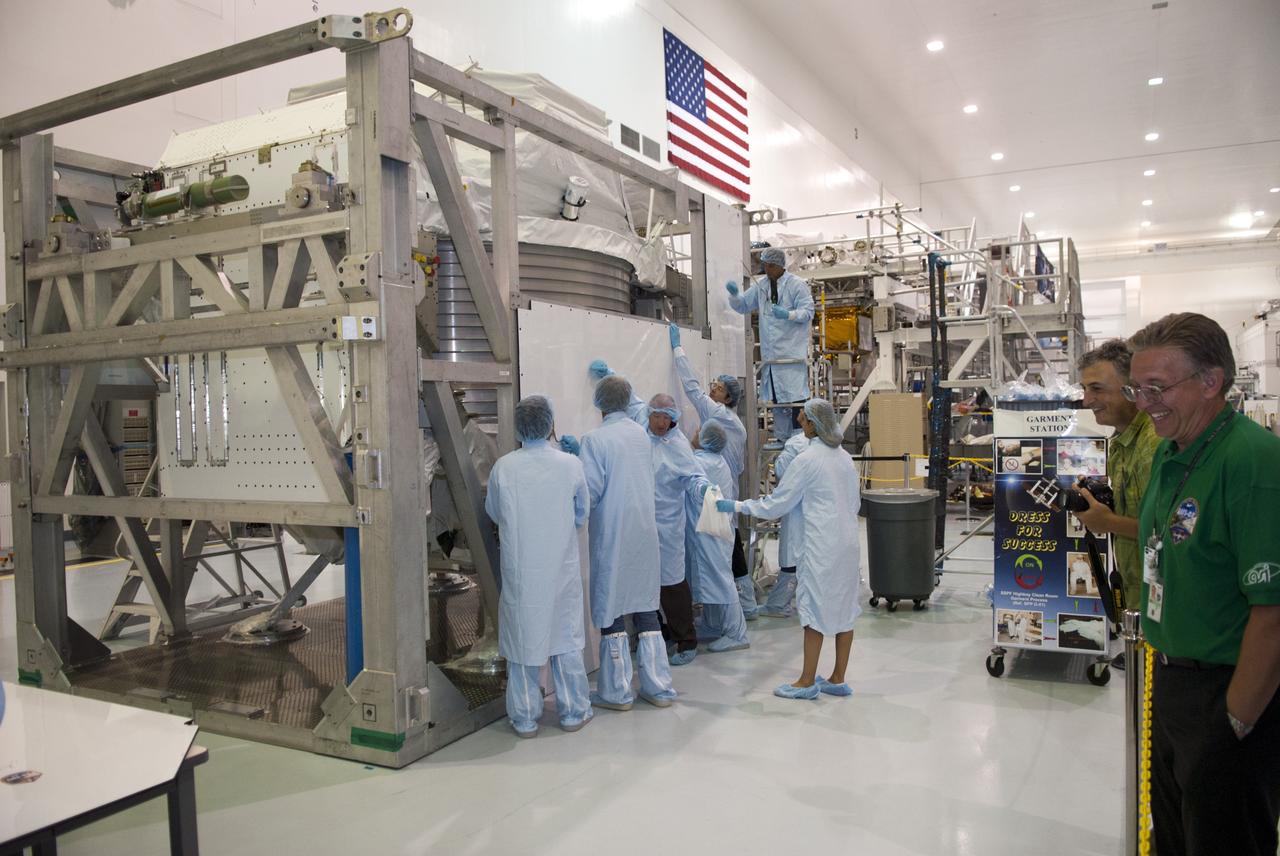
CAPE CANAVERAL, Fla. -- In the Space Station Processing Facility at NASA's Kennedy Space Center in Florida, technicians remove a side panel that protected the Alpha Magnetic Spectrometer, or AMS, during shipment. AMS, a state-of-the-art particle physics detector, is designed to operate as an external module on the International Space Station. It will use the unique environment of space to study the universe and its origin by searching for dark matter. The STS-134 crew will fly AMS to the International Space Station aboard space shuttle Endeavour, targeted to launch Feb. 26, 2011. Photo credit: NASA/Frankie Martin
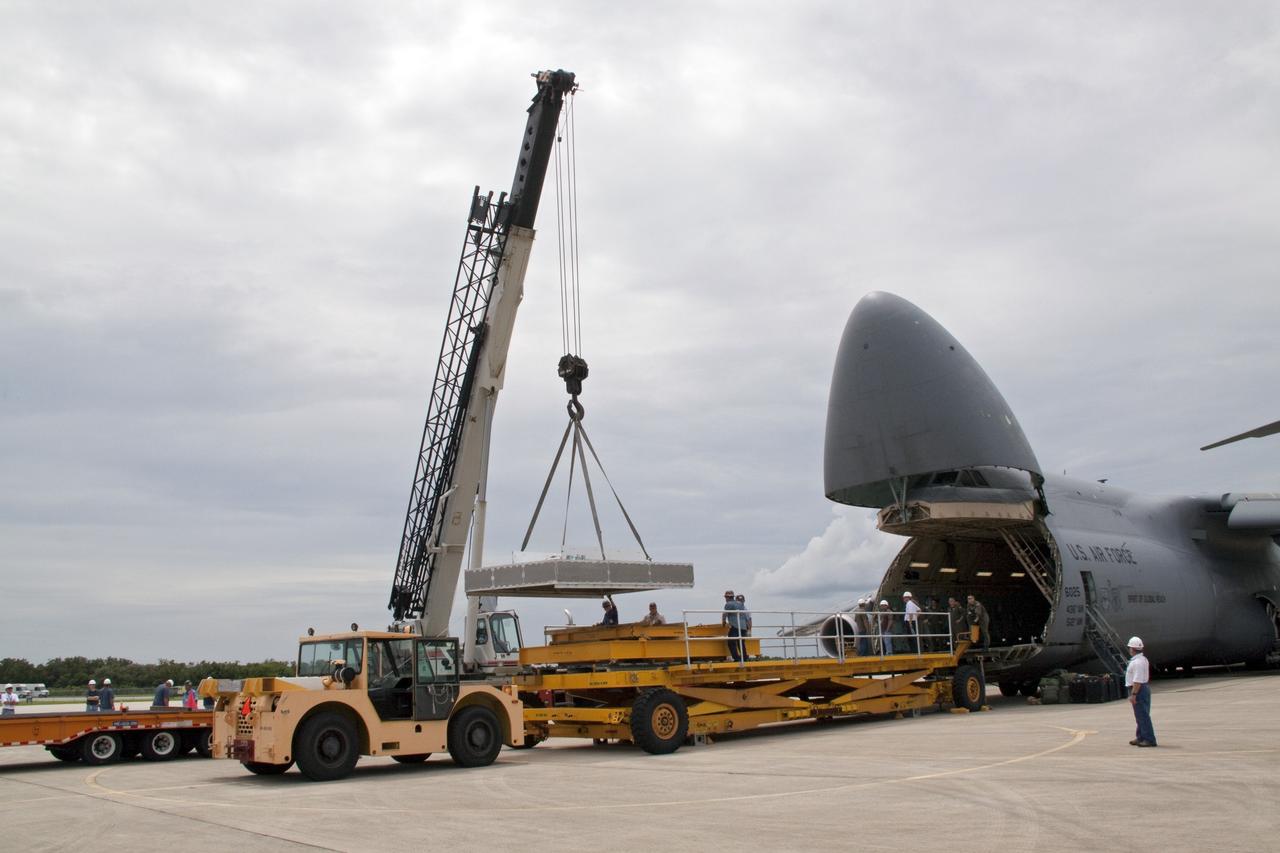
CAPE CANAVERAL, Fla. -- At NASA's Kennedy Space Center in Florida, a crane lifts a section of the Alpha Magnetic Spectrometer, or AMS, toward a tractor-trailer which will transport the AMS from the Shuttle Landing Facility runway to the Space Station Processing Facility, where it will be processed for launch. AMS, a state-of-the-art particle physics detector, is designed to operate as an external module on the International Space Station. It will use the unique environment of space to study the universe and its origin by searching for dark matter. AMS will fly to the International Space Station aboard space shuttle Endeavour's STS-134 mission, targeted to launch Feb. 26, 2011. Photo credit: NASA/Jack Pfaller
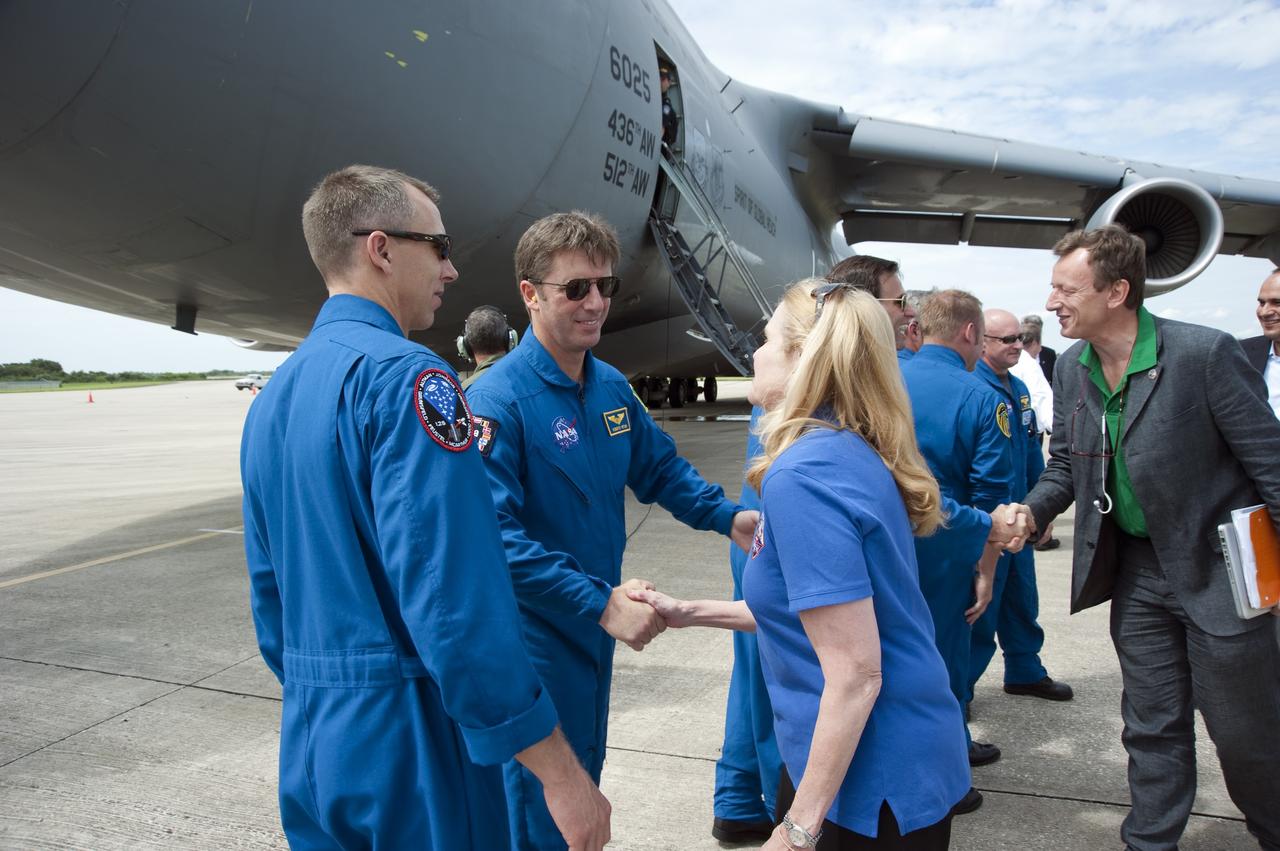
CAPE CANAVERAL, Fla. -- At the Shuttle Landing Facility at NASA's Kennedy Space Center in Florida, STS-134 Mission Specialist Andrew Feustel looks on as European Space Agency astronaut Roberto Vittori greets the media after the arrival of the Alpha Magnetic Spectrometer, or AMS. AMS, a state-of-the-art particle physics detector, is designed to operate as an external module on the International Space Station. It will use the unique environment of space to study the universe and its origin by searching for dark matter. AMS will fly to the International Space Station aboard space shuttle Endeavour's STS-134 mission targeted to launch Feb. 26, 2011. Photo credit: NASA/Kim Shiflett
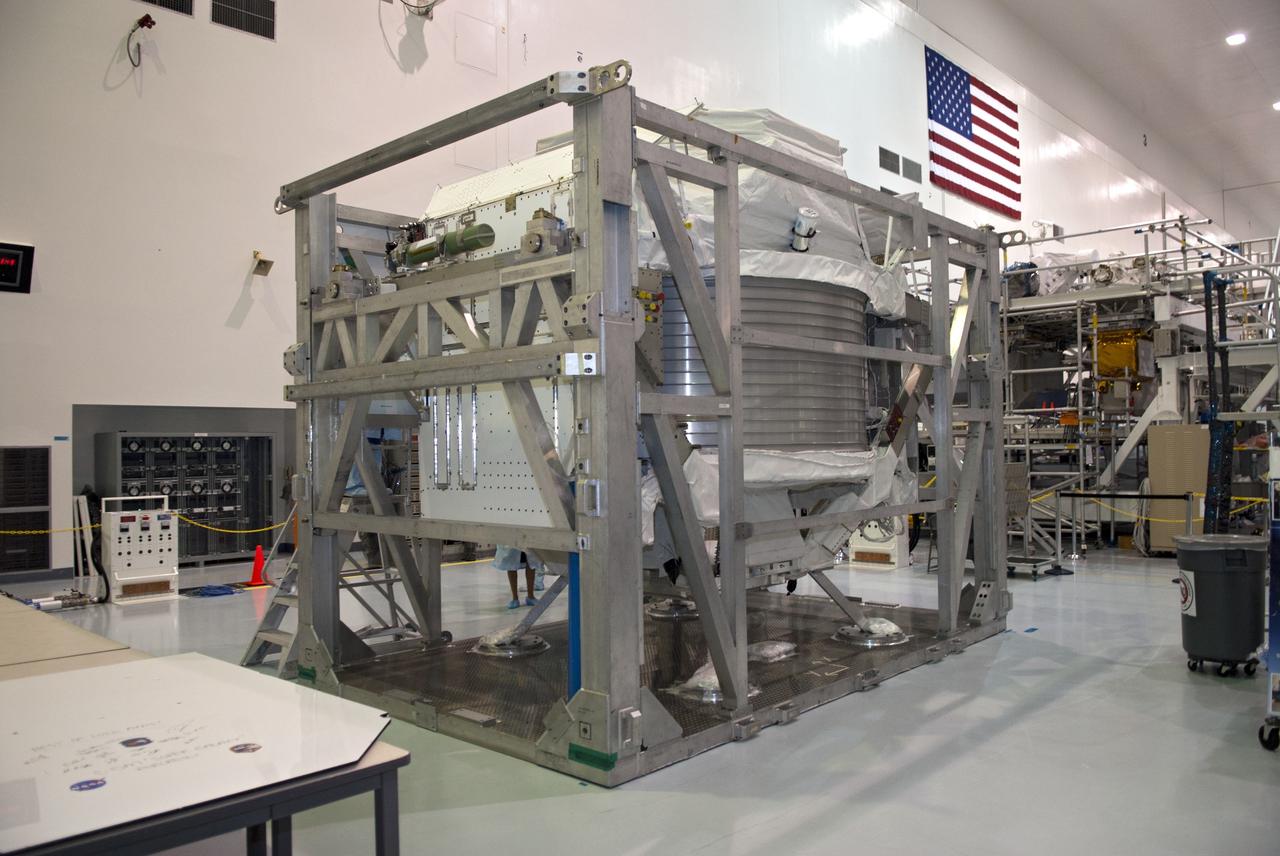
CAPE CANAVERAL, Fla. -- In the Space Station Processing Facility at NASA's Kennedy Space Center in Florida, the protective panels that covered the Alpha Magnetic Spectrometer, or AMS, have been removed so that the technicians can begin preparing it for launch. AMS, a state-of-the-art particle physics detector, is designed to operate as an external module on the International Space Station. It will use the unique environment of space to study the universe and its origin by searching for dark matter. The STS-134 crew will fly AMS to the International Space Station aboard space shuttle Endeavour, targeted to launch Feb. 26, 2011. Photo credit: NASA/Frankie Martin

CAPE CANAVERAL, Fla. -- Prior to the arrival of the Alpha Magnetic Spectrometer, or AMS, to the Shuttle Landing Facility at NASA's Kennedy Space Center in Florida, Prof. S.C. Lee, AMS Taiwanese Coordinator, speaks to the media. AMS, a state-of-the-art particle physics detector, is designed to operate as an external module on the International Space Station. It will use the unique environment of space to study the universe and its origin by searching for dark matter. The STS-134 crew will fly AMS to the International Space Station aboard space shuttle Endeavour, targeted to launch Feb. 26, 2011. Photo credit: NASA/Kim Shiflett

CAPE CANAVERAL, Fla. -- At the Shuttle Landing Facility at NASA's Kennedy Space Center in Florida, Professor Sam Ting, AMS Principal Investigator from the Massachusetts Institute of Technology listens intently as Professor Manuel Aguilar, AMS Spanish Coordinator, speaks to the media before the arrival of the Alpha Magnetic Spectrometer, or AMS. AMS, a state-of-the-art particle physics detector, is designed to operate as an external module on the International Space Station. It will use the unique environment of space to study the universe and its origin by searching for dark matter. The STS-134 crew will fly AMS to the International Space Station aboard space shuttle Endeavour, targeted to launch Feb. 26, 2011. Photo credit: NASA/Kim Shiflett
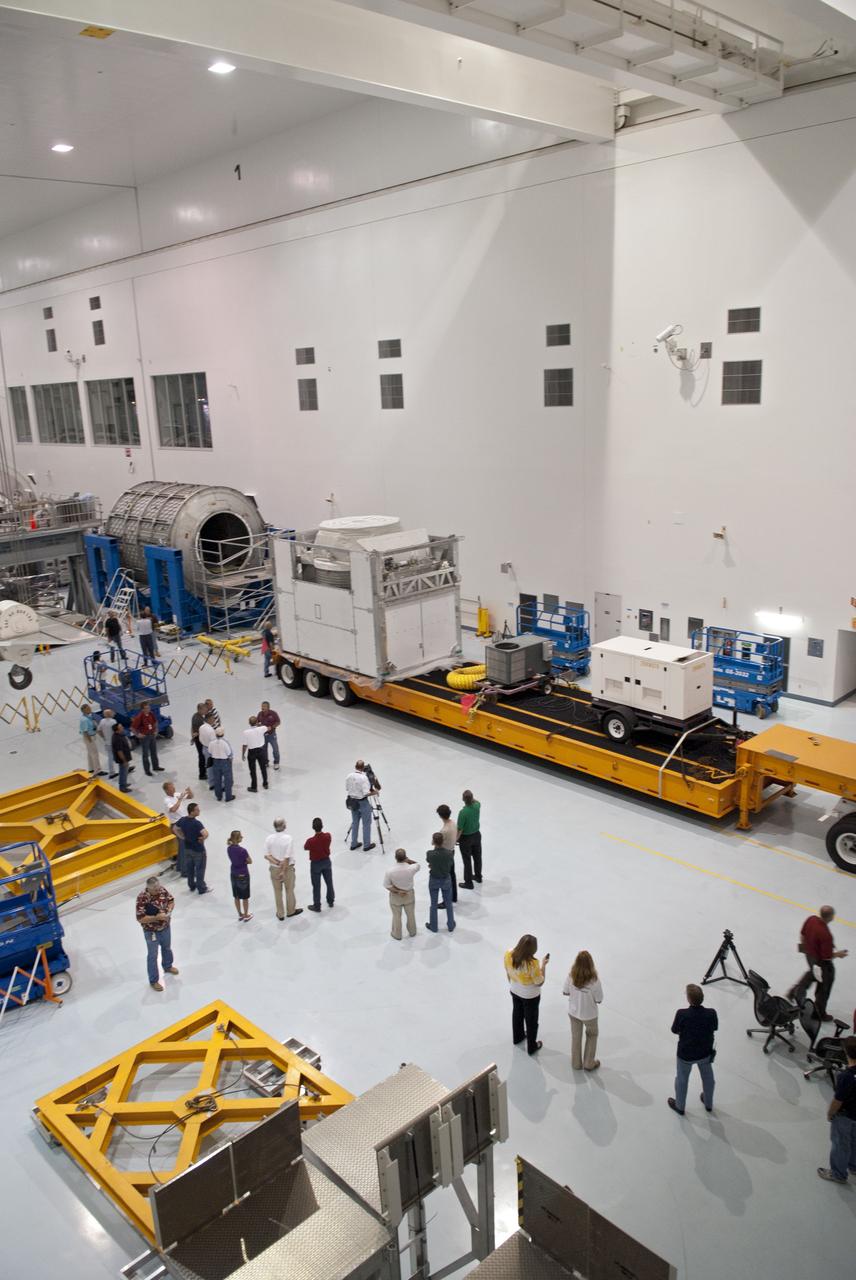
CAPE CANAVERAL, Fla. -- At NASA's Kennedy Space Center in Florida, media are on hand as the Alpha Magnetic Spectrometer, or AMS, is delivered to the Space Station Processing Facility, where it will be prepared for launch. AMS, a state-of-the-art particle physics detector, is designed to operate as an external module on the International Space Station. It will use the unique environment of space to study the universe and its origin by searching for dark matter. The STS-134 crew will fly AMS to the International Space Station aboard space shuttle Endeavour, targeted to launch Feb. 26, 2011. Photo credit: NASA/Frankie Martin
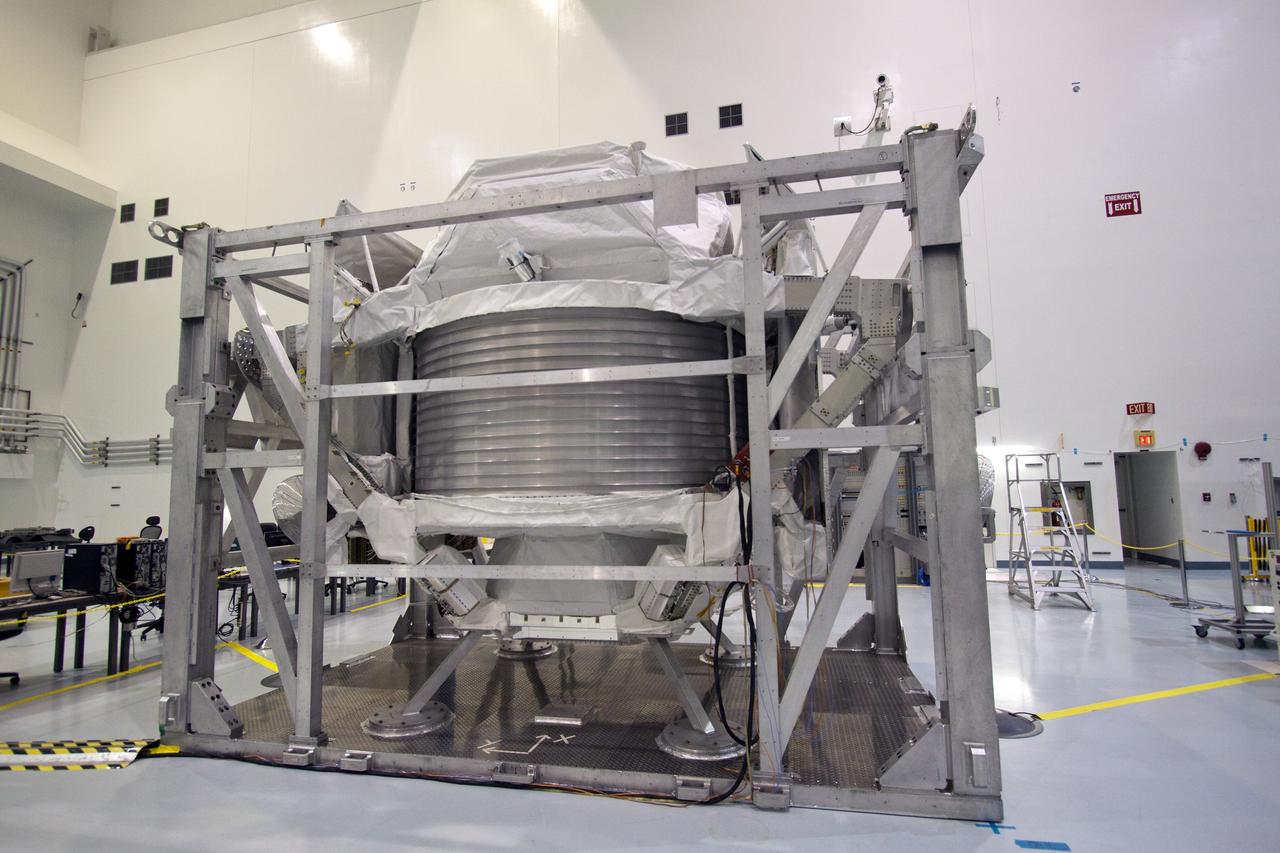
CAPE CANAVERAL, Fla. -- In the Space Station Processing Facility at NASA's Kennedy Space Center in Florida, the Alpha Magnetic Spectrometer, or AMS, awaits processing for launch. AMS, a state-of-the-art particle physics detector, is designed to operate as an external module on the International Space Station. It will use the unique environment of space to study the universe and its origin by searching for dark matter. AMS will fly to the International Space Station aboard space shuttle Endeavour's STS-134 mission targeted to launch Feb. 26, 2011. Photo credit: NASA/Jack Pfaller
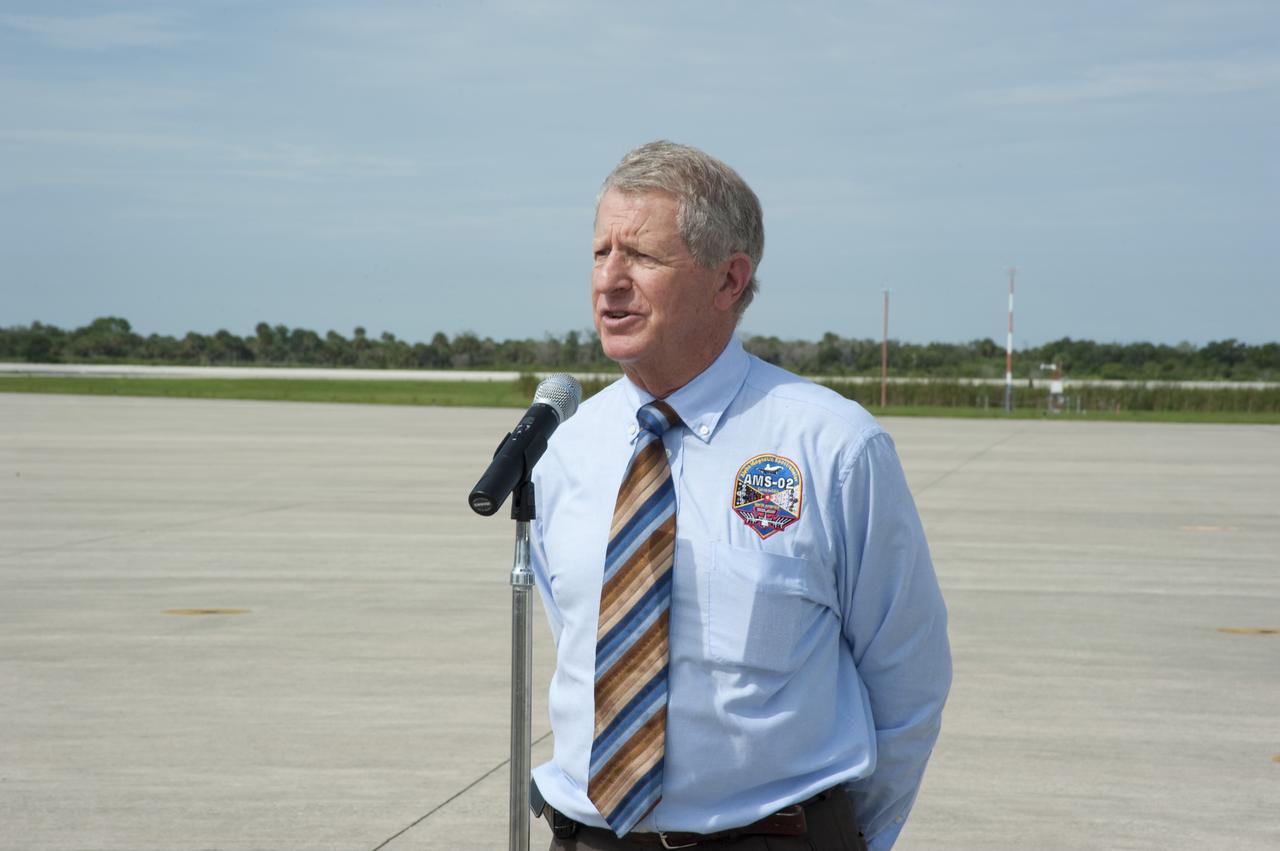
CAPE CANAVERAL, Fla. -- Before the arrival of the Alpha Magnetic Spectrometer, or AMS, to the Shuttle Landing Facility at NASA's Kennedy Space Center in Florida, Professor Maurice Bourquin, AMS Swiss Coordinator, speaks to the media. AMS, a state-of-the-art particle physics detector, is designed to operate as an external module on the International Space Station. It will use the unique environment of space to study the universe and its origin by searching for dark matter. AMS will fly to the International Space Station aboard space shuttle Endeavour's STS-134 mission targeted to launch Feb. 26, 2011. Photo credit: NASA/Kim Shiflett

CAPE CANAVERAL, Fla. -- At the Shuttle Landing Facility at NASA's Kennedy Space Center in Florida, Prof. Jean Pierre Vialle, AMS French Coordinator, addresses the media before the arrival of the Alpha Magnetic Spectrometer, or AMS. AMS, a state-of-the-art particle physics detector, is designed to operate as an external module on the International Space Station. It will use the unique environment of space to study the universe and its origin by searching for dark matter. The STS-134 crew will fly AMS to the International Space Station aboard space shuttle Endeavour, targeted to launch Feb. 26, 2011. Photo credit: NASA/Kim Shiflett
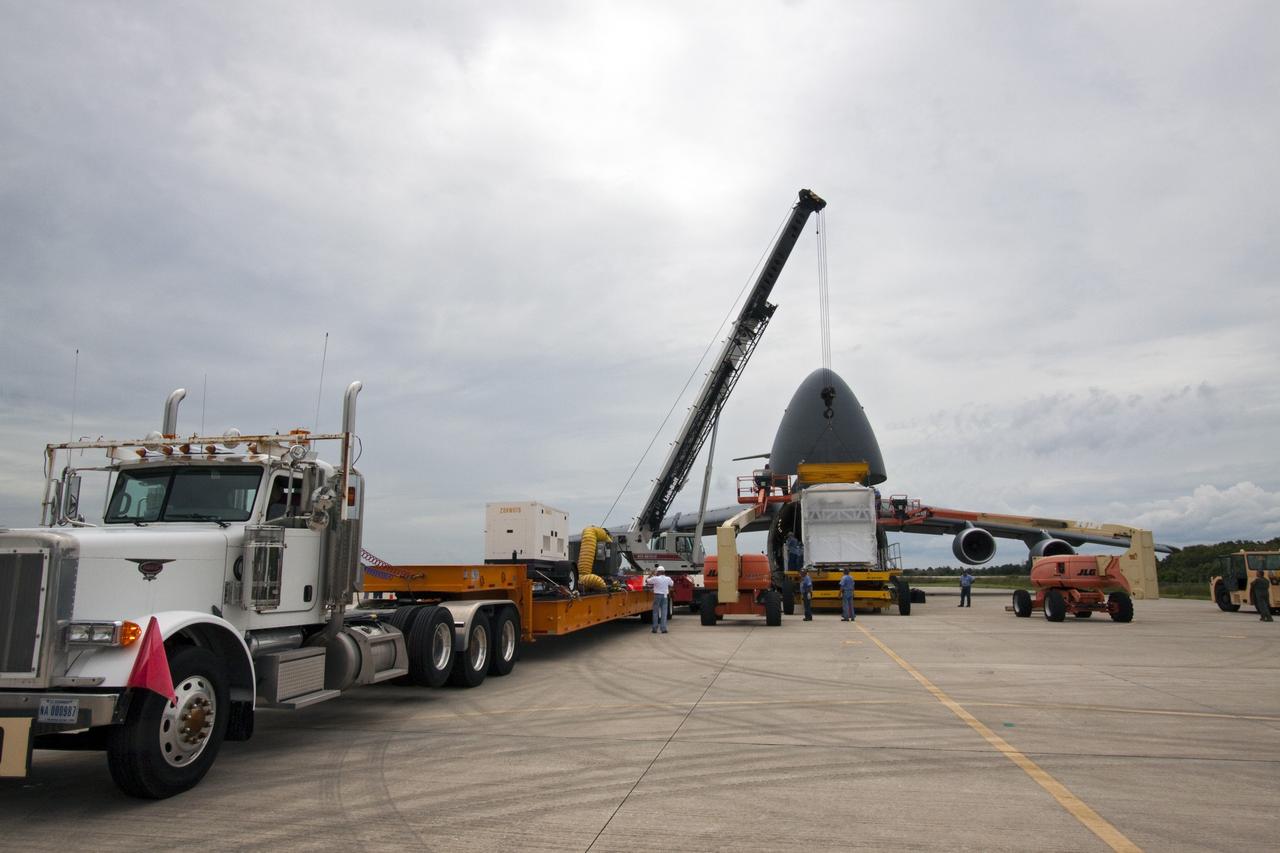
CAPE CANAVERAL, Fla. -- At NASA's Kennedy Space Center in Florida, a crane lifts the next section of the Alpha Magnetic Spectrometer, or AMS, toward a tractor-trailer which will transport the AMS from the Shuttle Landing Facility runway to the Space Station Processing Facility, where it will be processed for launch. AMS, a state-of-the-art particle physics detector, is designed to operate as an external module on the International Space Station. It will use the unique environment of space to study the universe and its origin by searching for dark matter. AMS will fly to the International Space Station aboard space shuttle Endeavour's STS-134 mission, targeted to launch Feb. 26, 2011. Photo credit: NASA/Jack Pfaller
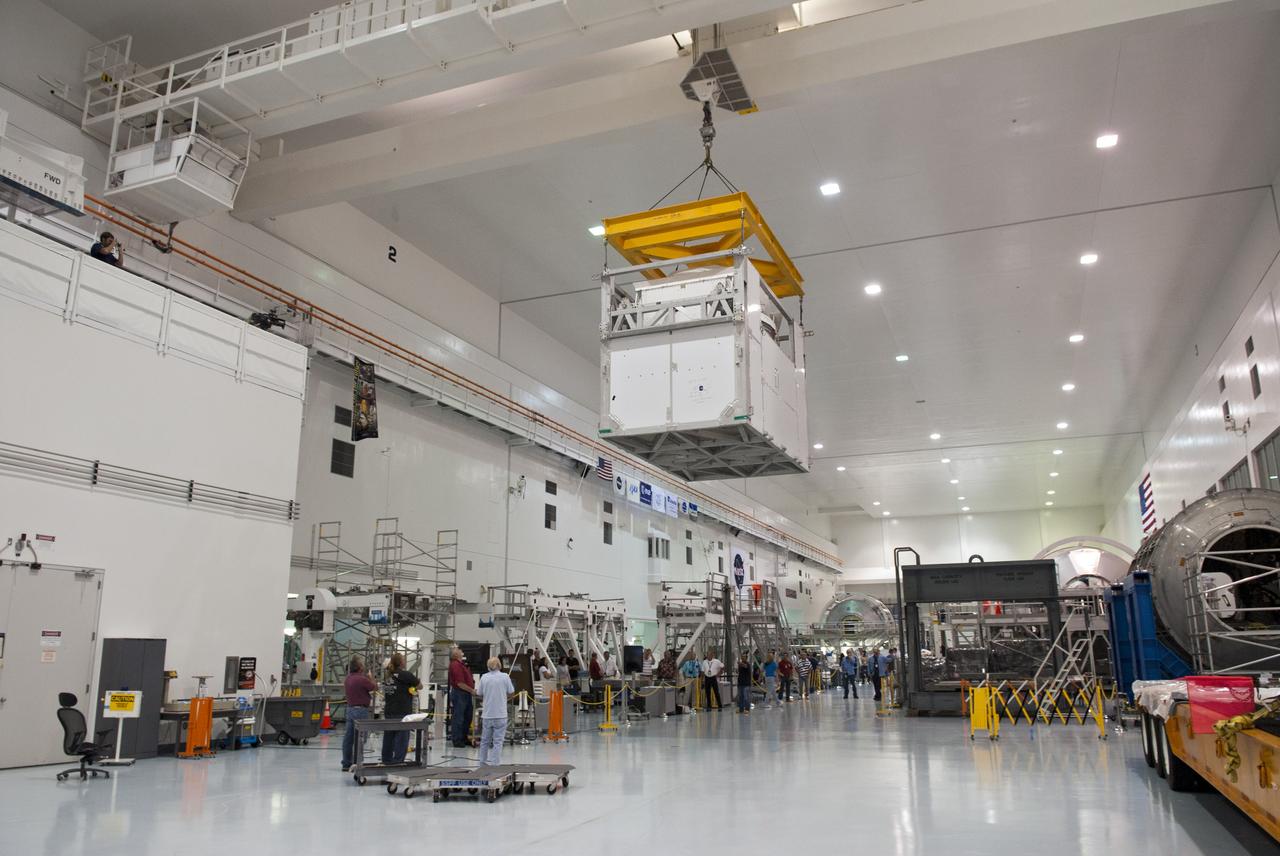
CAPE CANAVERAL, Fla. -- Workers in the Space Station Processing Facility at NASA's Kennedy Space Center in Florida, monitor the progress of an overhead crane as it moves the Alpha Magnetic Spectrometer, or AMS, to an area for technicians to prepare it for launch. AMS, a state-of-the-art particle physics detector, is designed to operate as an external module on the International Space Station. It will use the unique environment of space to study the universe and its origin by searching for dark matter. The STS-134 crew will fly AMS to the International Space Station aboard space shuttle Endeavour, targeted to launch Feb. 26, 2011. Photo credit: NASA/Frankie Martin

CAPE CANAVERAL, Fla. -- Prior to the arrival of the Alpha Magnetic Spectrometer, or AMS, to the Shuttle Landing Facility at NASA's Kennedy Space Center in Florida, European Space Agency Director of Human Spaceflight, Simonetta Di Pippo addresses the media. AMS,a state-of-the-art particle physics detector, is designed to operate as an external module on the International Space Station. It will use the unique environment of space to study the universe and its origin by searching for dark matter. AMS will fly to the International Space Station aboard space shuttle Endeavour's STS-134 mission targeted to launch Feb. 26, 2011. Photo credit: NASA/Kim Shiflett

CAPE CANAVERAL, Fla. -- At NASA's Kennedy Space Center in Florida, a tractor-trailer carrying the Alpha Magnetic Spectrometer, or AMS, at the Space Station Processing Facility, where it will be processed for launch. AMS arrived on Kennedy's Shuttle Landing Facility aboard an Air Force C-5M aircraft from Europe. AMS, a state-of-the-art particle physics detector, is designed to operate as an external module on the International Space Station. It will use the unique environment of space to study the universe and its origin by searching for dark matter. The STS-134 crew will fly AMS to the International Space Station aboard space shuttle Endeavour, targeted to launch Feb. 26, 2011. Photo credit: NASA/Frankie Martin
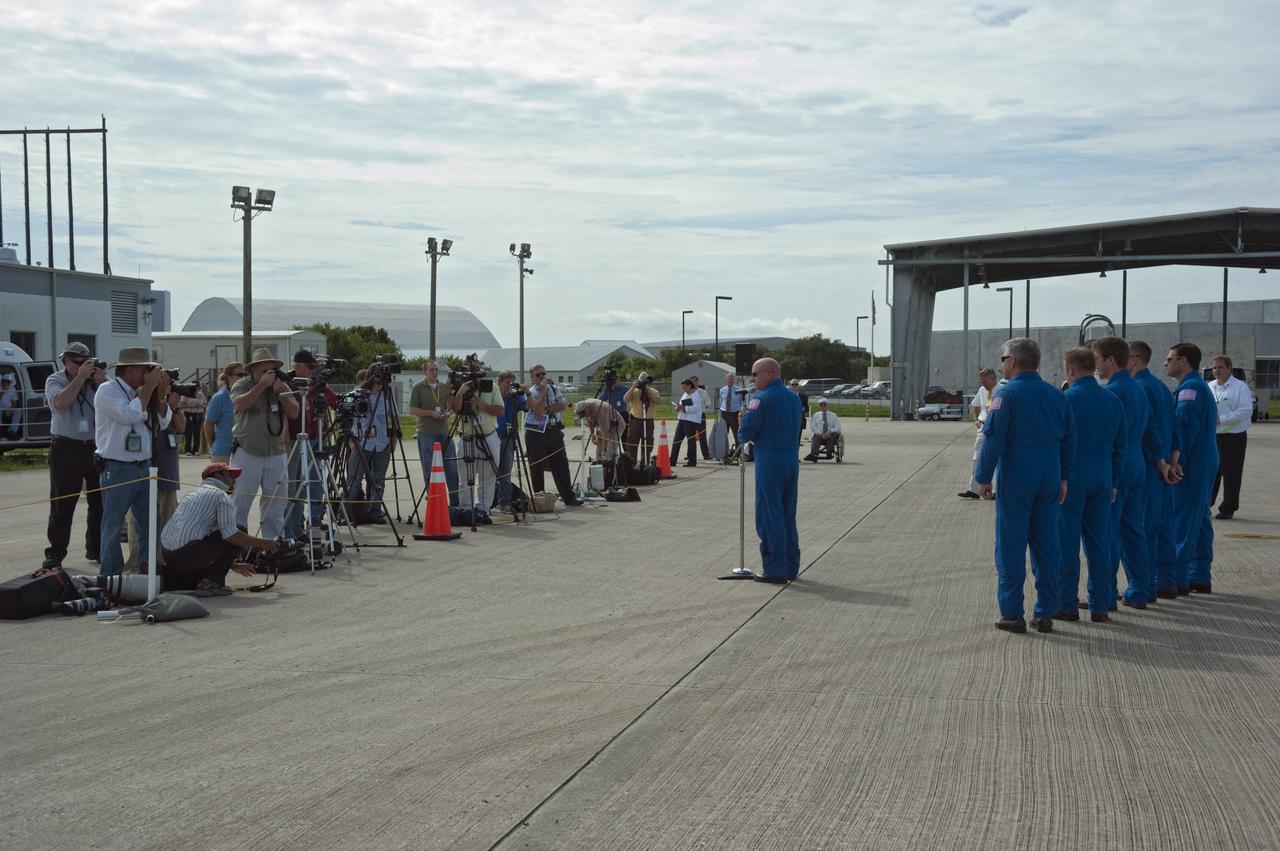
CAPE CANAVERAL, Fla. -- At the Shuttle Landing Facility at NASA's Kennedy Space Center in Florida, space shuttle Endeavour's STS-134 Commander Mark Kelly speaks to the media before the arrival of the Alpha Magnetic Spectrometer, or AMS. AMS, a state-of-the-art particle physics detector, is designed to operate as an external module on the International Space Station. It will use the unique environment of space to study the universe and its origin by searching for dark matter. AMS will fly to the International Space Station aboard space shuttle Endeavour's STS-134 mission targeted to launch Feb. 26, 2011. Photo credit: NASA/Kim Shiflett
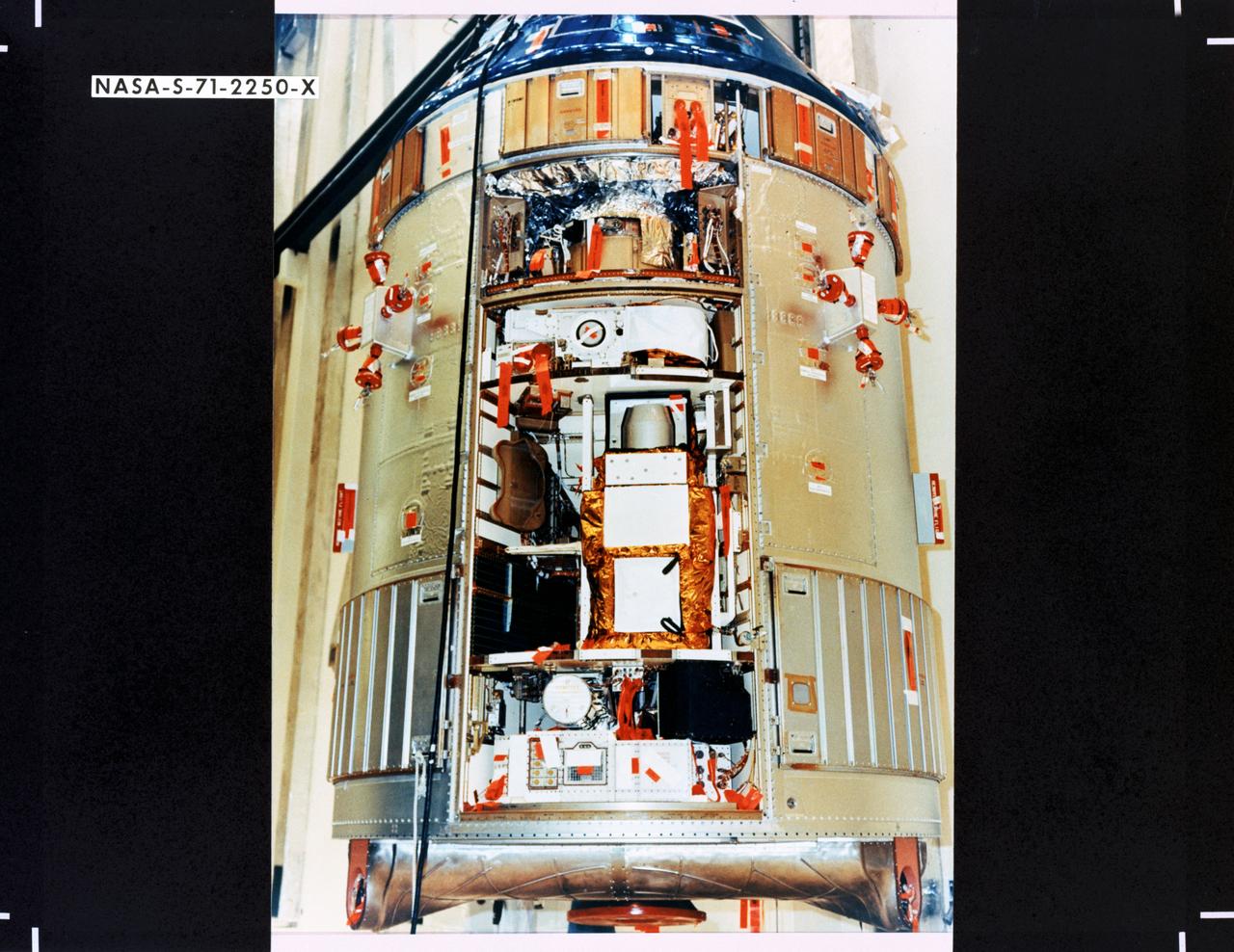
S71-2250X (June 1971) --- A close-up view of the Scientific Instrument Module (SIM) to be flown for the first time on the Apollo 15 lunar landing mission. Mounted in a previously vacant sector of the Apollo Service Module (SM), the SIM carries specialized cameras and instrumentation for gathering lunar orbit scientific data. SIM equipment includes a laser altimeter for accurate measurement of height above the lunar surface; a large-format panoramic camera for mapping, correlated with a metric camera and the laser altimeter for surface mapping; a gamma ray spectrometer on a 25-feet extendible boom; a mass spectrometer on a 21-feet extendible boom; X-ray and alpha particle spectrometers; and a subsatellite which will be injected into lunar orbit carrying a particle and magnetometer, and the S-Band transponder.
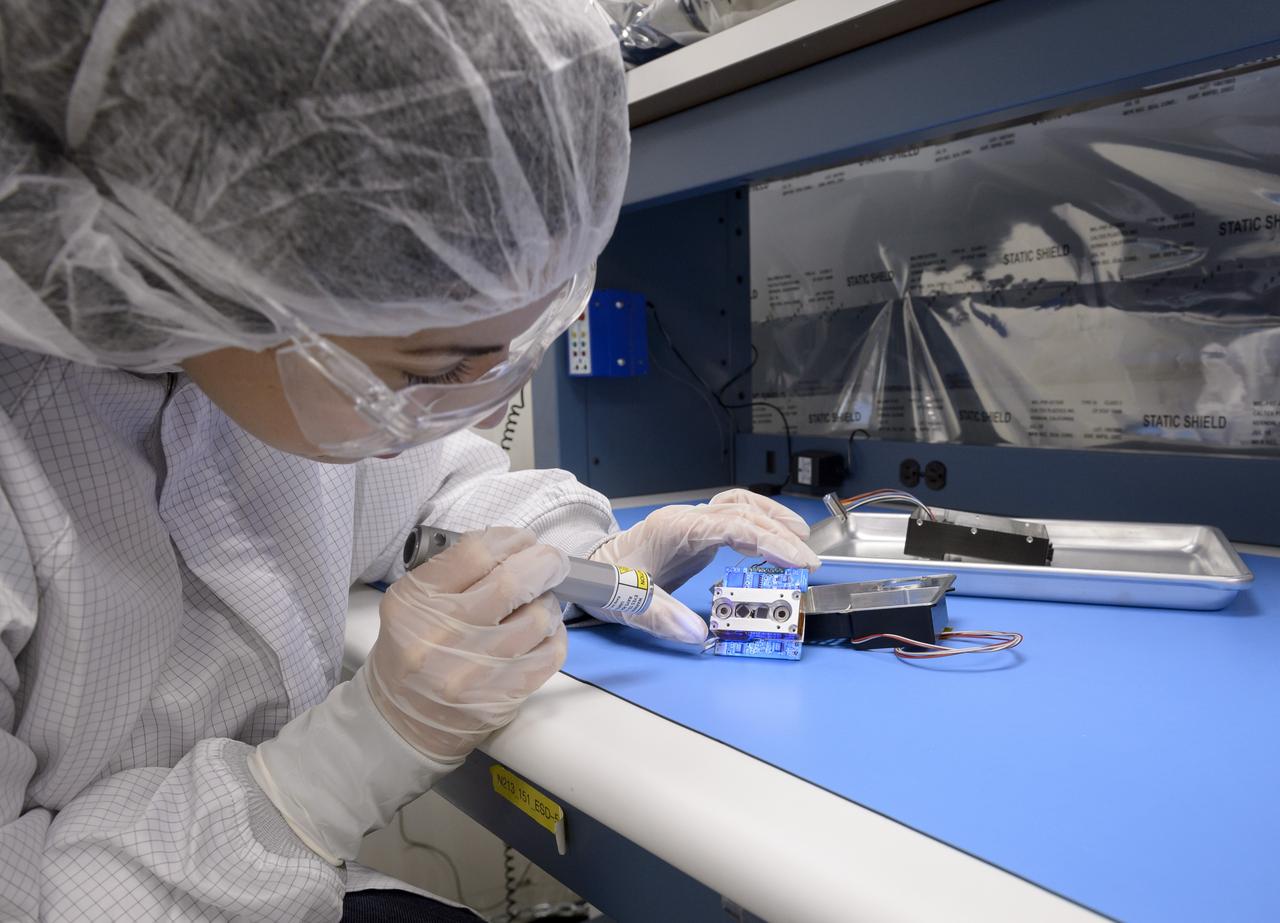
Near InfraRed Volatiles Spectrometer System (NIRVSS) engineering build in Ames N-213 Laboratory with Amanda Cook. The NIRVSS will fly on the Volatiles Investigating Polar Exploration Rover, or VIPER in its search for water on the south pole of the moon.

Sitting on the lunar surface, this Solar Wind Spectrometer is measuring the energies of the particles that make up the solar wind. This was one of the instruments used during the Apollo 12 mission. The second manned lunar landing mission, Apollo 12 launched from launch pad 39-A at Kennedy Space Center in Florida on November 14, 1969 via a Saturn V launch vehicle. The Saturn V vehicle was developed by the Marshall Space Flight Center (MSFC) under the direction of Dr. Wernher von Braun. Aboard Apollo 12 was a crew of three astronauts: Alan L. Bean, pilot of the Lunar Module (LM), Intrepid; Richard Gordon, pilot of the Command Module (CM), Yankee Clipper; and Spacecraft Commander Charles Conrad. The LM, Intrepid, landed astronauts Conrad and Bean on the lunar surface in what’s known as the Ocean of Storms while astronaut Richard Gordon piloted the CM, Yankee Clipper, in a parking orbit around the Moon. Lunar soil activities included the deployment of the Apollo Lunar Surface Experiments Package (ALSEP), finding the unmanned Surveyor 3 that landed on the Moon on April 19, 1967, and collecting 75 pounds (34 kilograms) of rock samples. Apollo 12 safely returned to Earth on November 24, 1969.
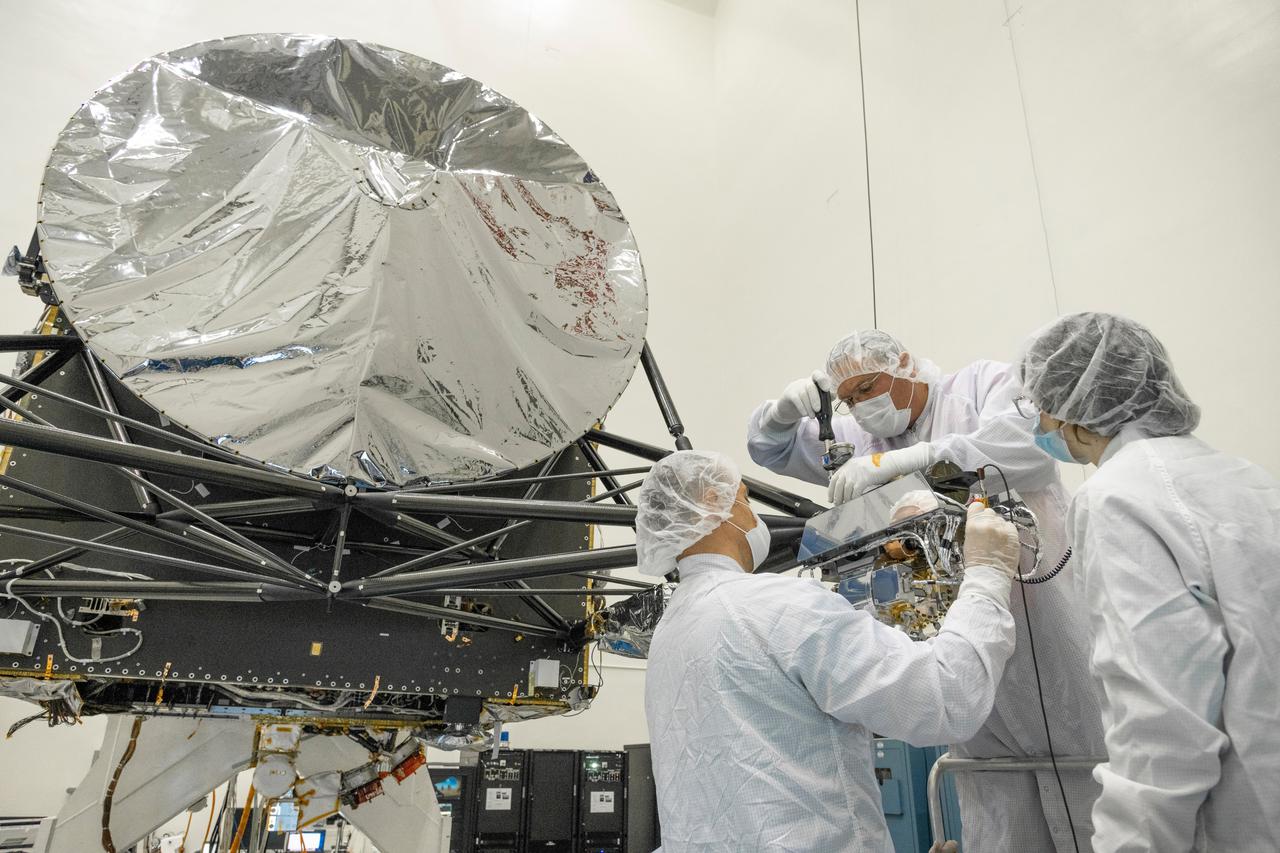
Engineers at NASA's Jet Propulsion Laboratory in Southern California integrate the gamma ray and neutron spectrometer instrument into the agency's Psyche spacecraft on Aug. 23, 2021. Psyche, set to launch in August 2022, will investigate a metal-rich asteroid of the same name, which lies in the main asteroid belt between Mars and Jupiter. Scientists believe the asteroid could be part or all of the iron-rich interior of an early planetary building block that was stripped of its outer rocky shell as it repeatedly collided with other large bodies during the early formation of the solar system. The spacecraft will use the GRNS to study the neutrons and gamma rays coming from the asteroid's surface to help determine its elemental composition. As cosmic rays and high energy particles impact the surface of Psyche, the elements that make up the surface material absorb the energy and in response emit neutrons and gamma rays of varying energy levels. These emitted neutrons and gamma rays can be detected by the GRNS and analyzed by scientists, who can match their properties to those emitted by known elements to determine what Psyche is made of. https://photojournal.jpl.nasa.gov/catalog/PIA24891
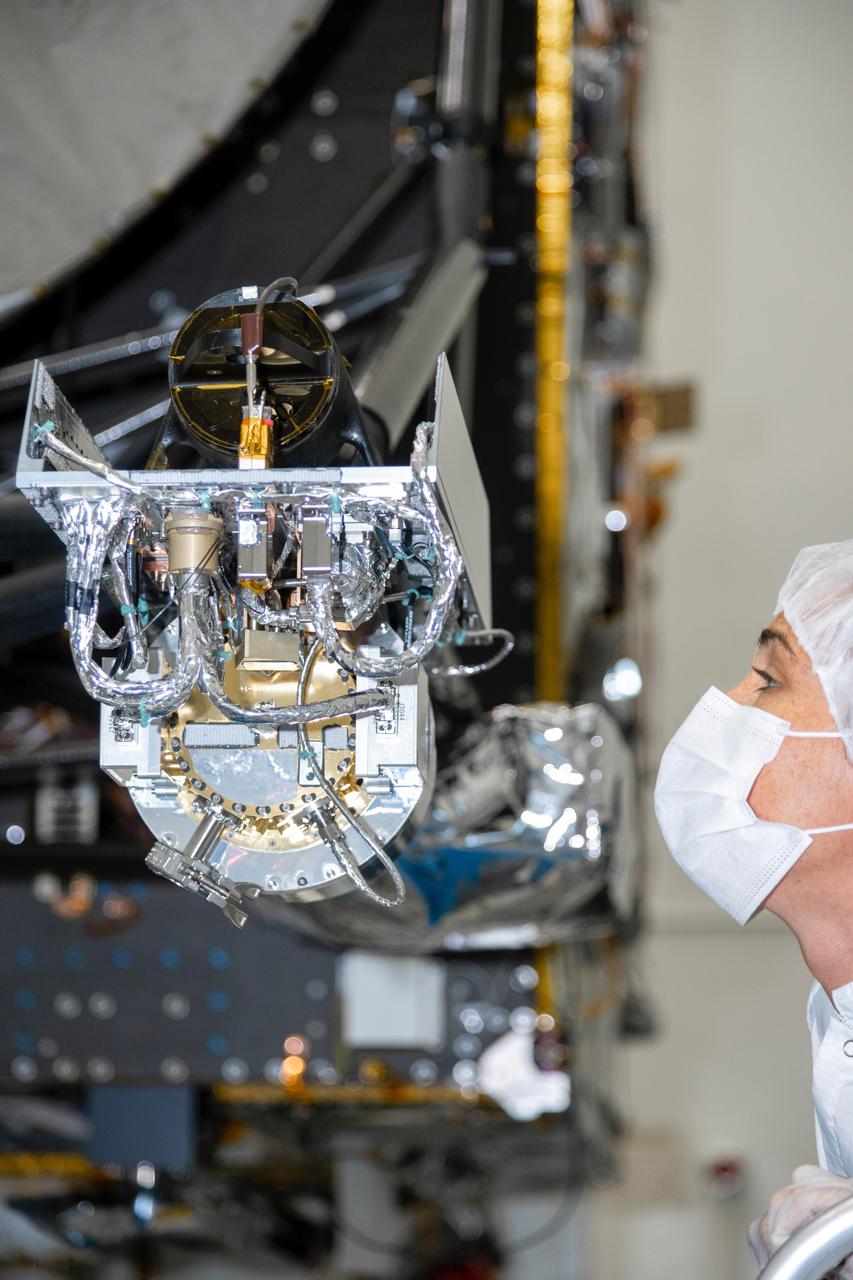
An engineer at NASA's Jet Propulsion Laboratory in Southern California inspects the gamma ray and neutron spectrometer instrument as it is integrated into the agency's Psyche spacecraft on Aug. 23, 2021. Psyche, set to launch in August 2022, will investigate a metal-rich asteroid of the same name, which lies in the main asteroid belt between Mars and Jupiter. Scientists believe the asteroid could be part or all of the iron-rich interior of an early planetary building block that was stripped of its outer rocky shell as it repeatedly collided with other large bodies during the early formation of the solar system. The spacecraft will use the GRNS to study the neutrons and gamma rays coming from the asteroid's surface to help determine its elemental composition. As cosmic rays and high energy particles impact the surface of Psyche, the elements that make up the surface material absorb the energy and in response emit neutrons and gamma rays of varying energy levels. These emitted neutrons and gamma rays can be detected by the GRNS and analyzed by scientists, who can match their properties to those emitted by known elements to determine what Psyche is made of. https://photojournal.jpl.nasa.gov/catalog/PIA24892
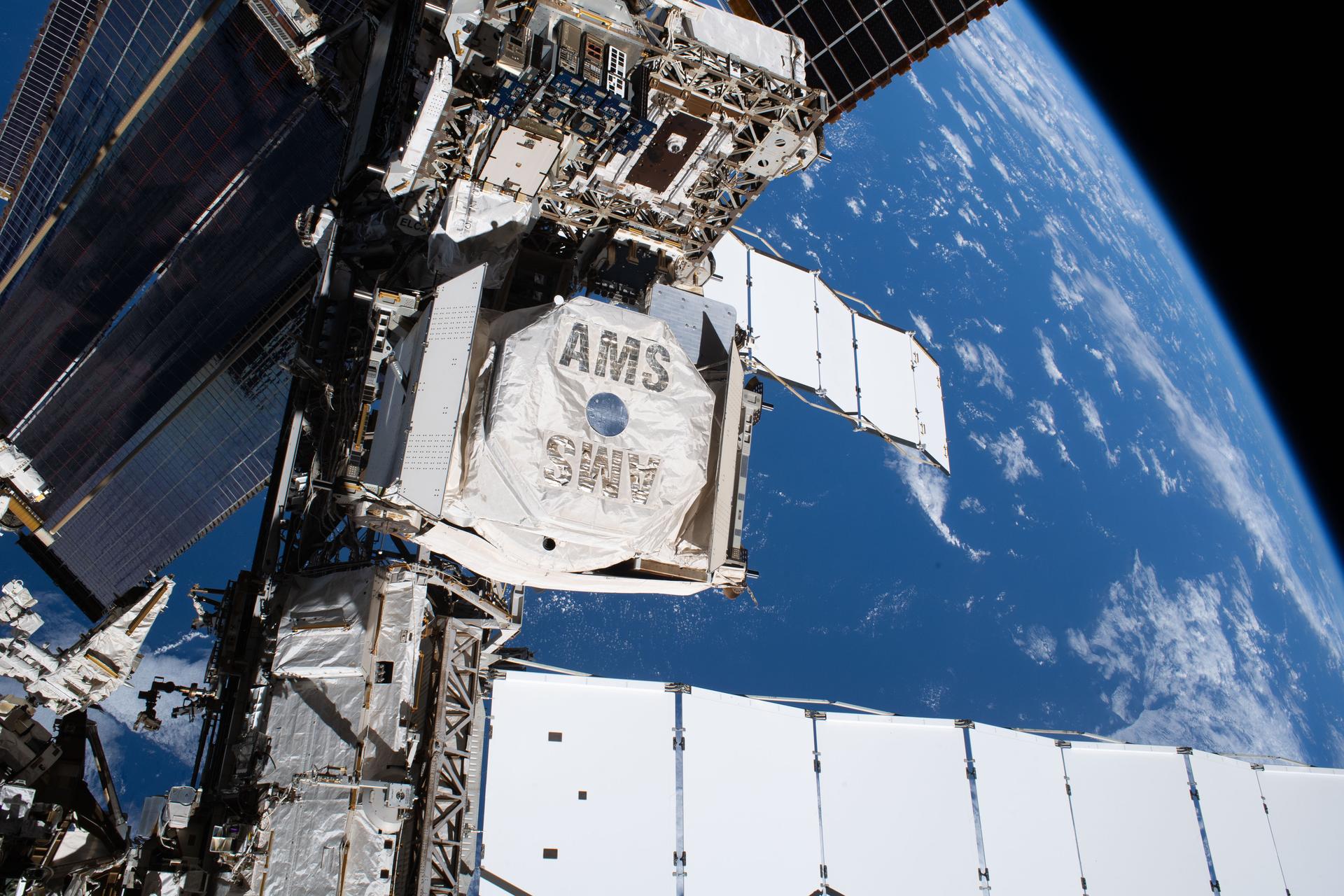
iss075e0086247 (Sept. 1, 2026) --- The Alpha Magnetic Spectrometer (AMS), a cosmic particle detector, is pictured on the International Space Station’s starboard truss structure. The AMS uses the microgravity environment to advance knowledge of the universe, potentially leading to a better understanding of its origin by searching for antimatter, dark matter, and measuring cosmic rays. Credit: NASA/Jessica Meir
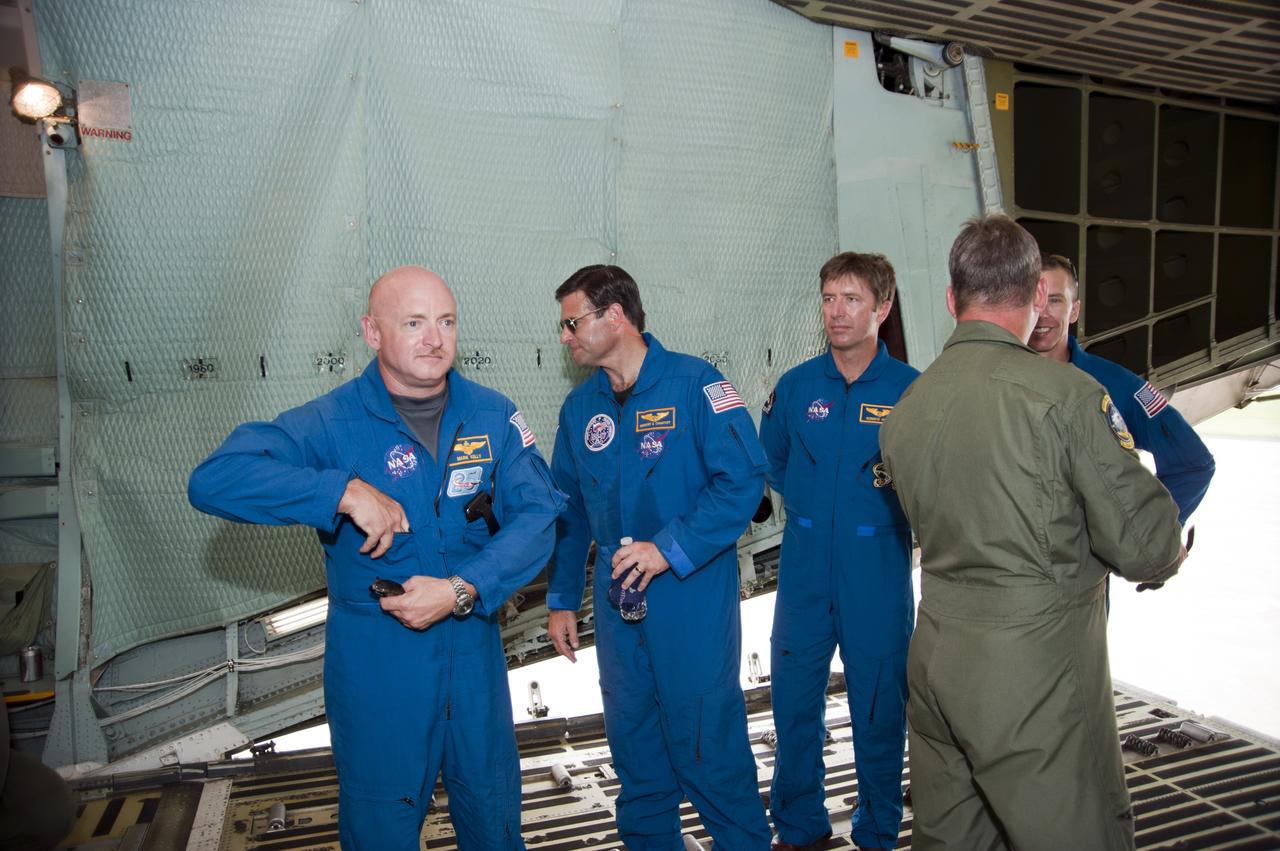
CAPE CANAVERAL, Fla. -- Inside the C-5M aircraft that delivered the Alpha Magnetic Spectrometer, or AMS, to the Shuttle Landing Facility at NASA's Kennedy Space Center in Florida, STS-134 Commander Mark Kelly, Mission Specialist Greg Chamitoff, European Space Agency astronaut Roberto Vittori and Mission Specialist Andrew Feustel speak with a member of the C-5M flight crew. AMS, a state-of-the-art particle physics detector, is designed to operate as an external module on the International Space Station. It will use the unique environment of space to study the universe and its origin by searching for dark matter. AMS will fly to the International Space Station aboard space shuttle Endeavour's STS-134 mission targeted to launch Feb. 26, 2011. Photo credit: NASA/Kim Shiflett
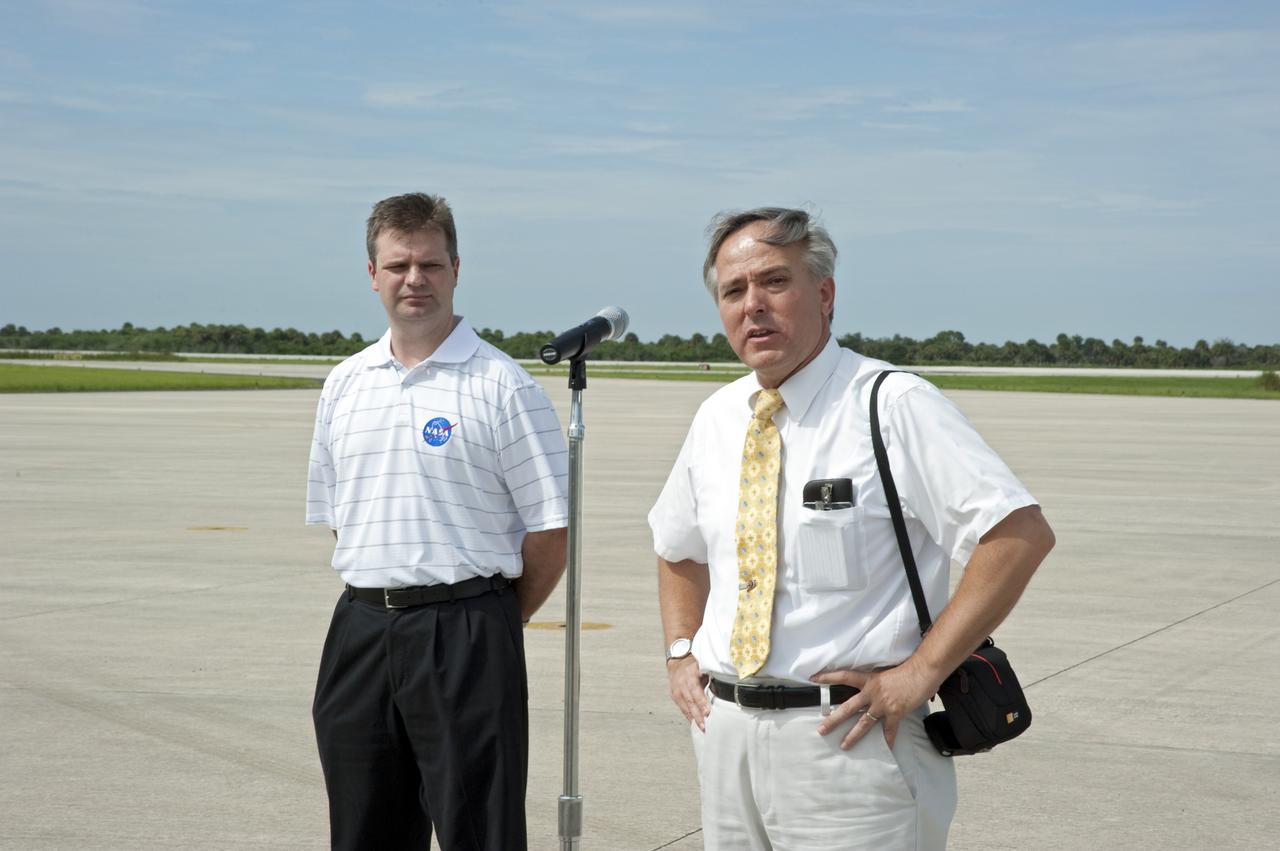
CAPE CANAVERAL, Fla. -- Mark Sistilli, AMS Program Manager from NASA Headquarters speaks to the media before the arrival of the Alpha Magnetic Spectrometer, or AMS, to the Shuttle Landing Facility at NASA's Kennedy Space Center in Florida, while Trent Martin, AMS Project Manager from NASA's Johnson Space Center in Houston looks on. AMS, a state-of-the-art particle physics detector, is designed to operate as an external module on the International Space Station. It will use the unique environment of space to study the universe and its origin by searching for dark matter. The STS-134 crew will fly AMS to the International Space Station aboard space shuttle Endeavour, targeted to launch Feb. 26, 2011. Photo credit: NASA/Kim Shiflett
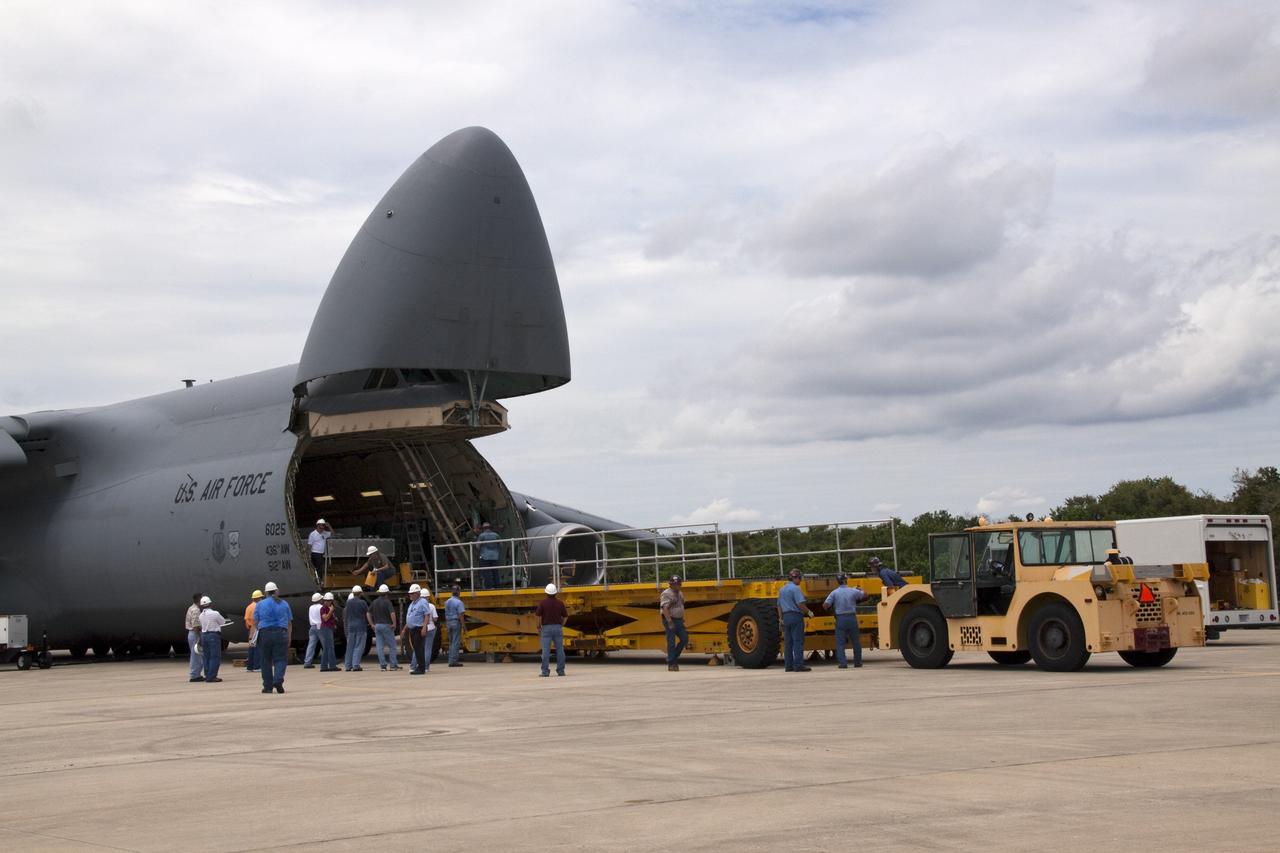
CAPE CANAVERAL, Fla. -- At NASA's Kennedy Space Center in Florida, workers begin to offload an Alpha Magnetic Spectrometer, or AMS, section from an Air Force C-5M aircraft. A tractor-trailer will transport the AMS from the Shuttle Landing Facility runway to the Space Station Processing Facility, where it will be processed for launch. AMS, a state-of-the-art particle physics detector, is designed to operate as an external module on the International Space Station. It will use the unique environment of space to study the universe and its origin by searching for dark matter. AMS will fly to the International Space Station aboard space shuttle Endeavour's STS-134 mission, targeted to launch Feb. 26, 2011. Photo credit: NASA/Jack Pfaller
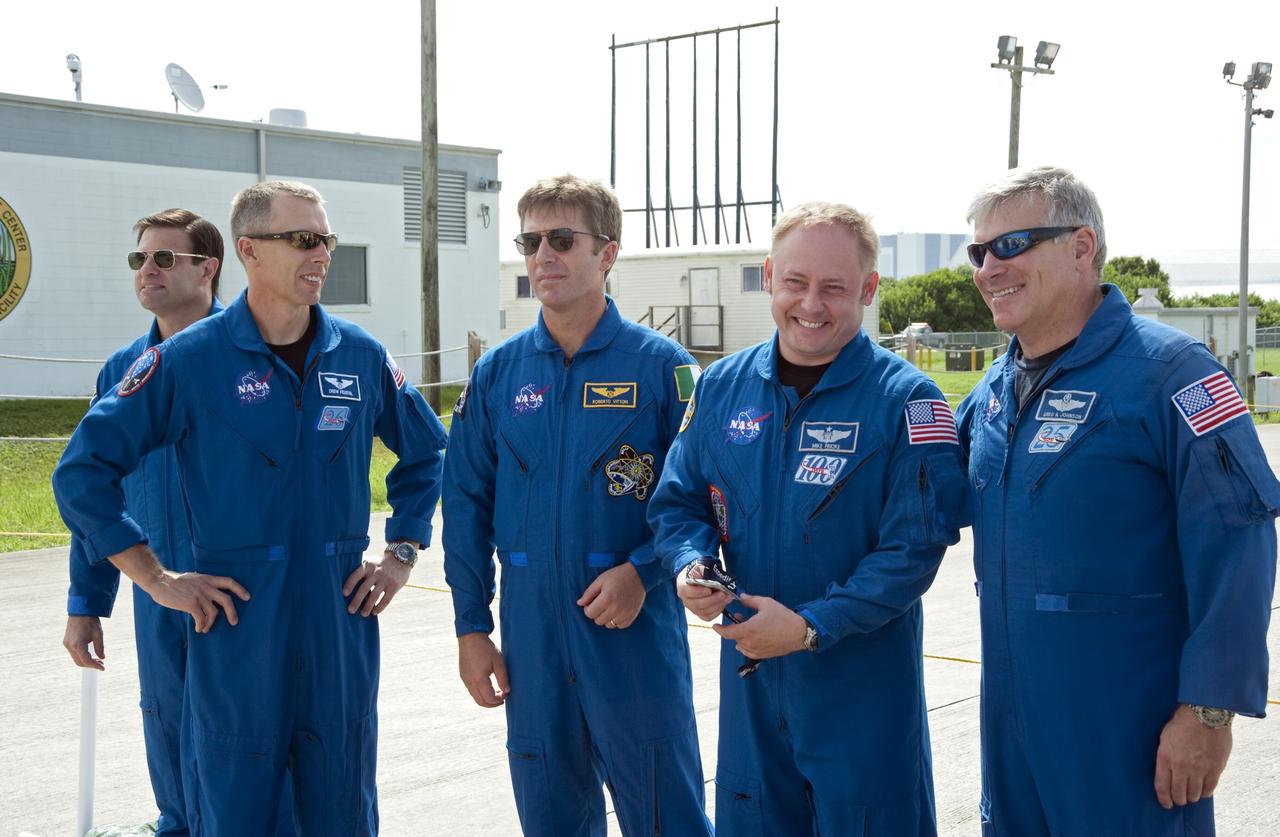
CAPE CANAVERAL, Fla. -- At the Shuttle Landing Facility at NASA's Kennedy Space Center in Florida, space shuttle Endeavour's STS-134 crew is on hand for the arrival of the Alpha Magnetic Spectrometer, or AMS. From left to right are Mission Specialists Greg Chamitoff, Andrew Feustel, European Space Agency astronaut Roberto Vittori, Mission Specialist Michael Fincke and Pilot Gregory H. Johnson. AMS, a state-of-the-art particle physics detector, is designed to operate as an external module on the International Space Station. It will use the unique environment of space to study the universe and its origin by searching for dark matter. AMS will fly to the International Space Station aboard space shuttle Endeavour's STS-134 mission targeted to launch Feb. 26, 2011. Photo credit: NASA/Kim Shiflett