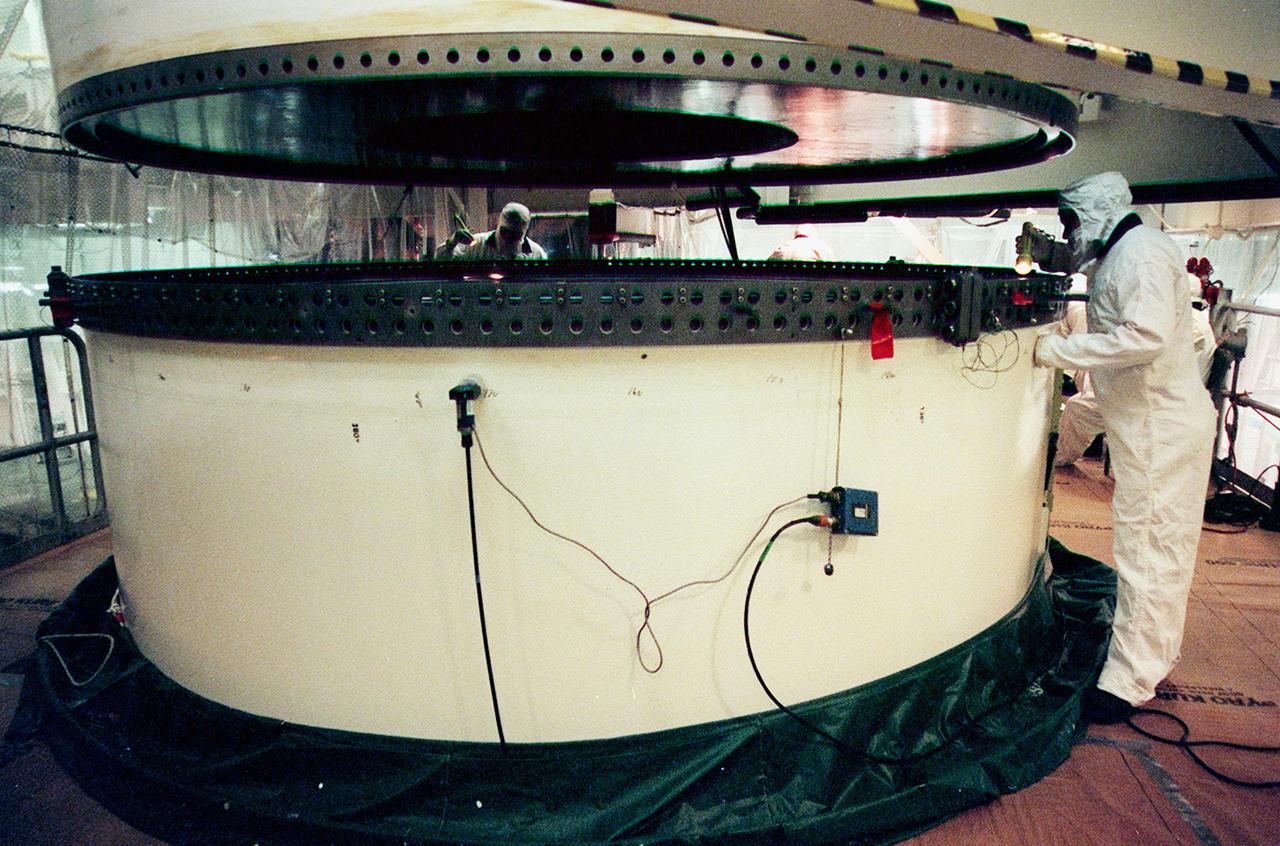
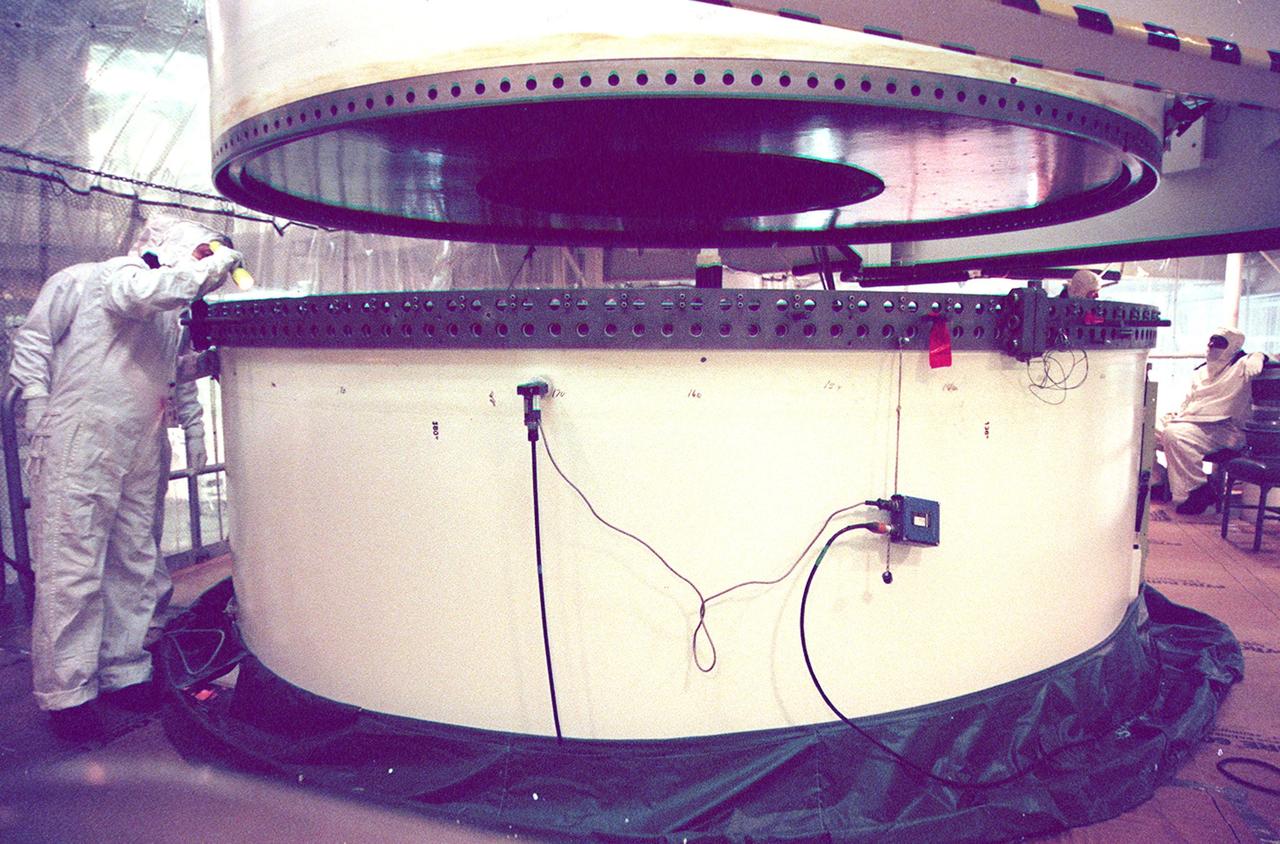
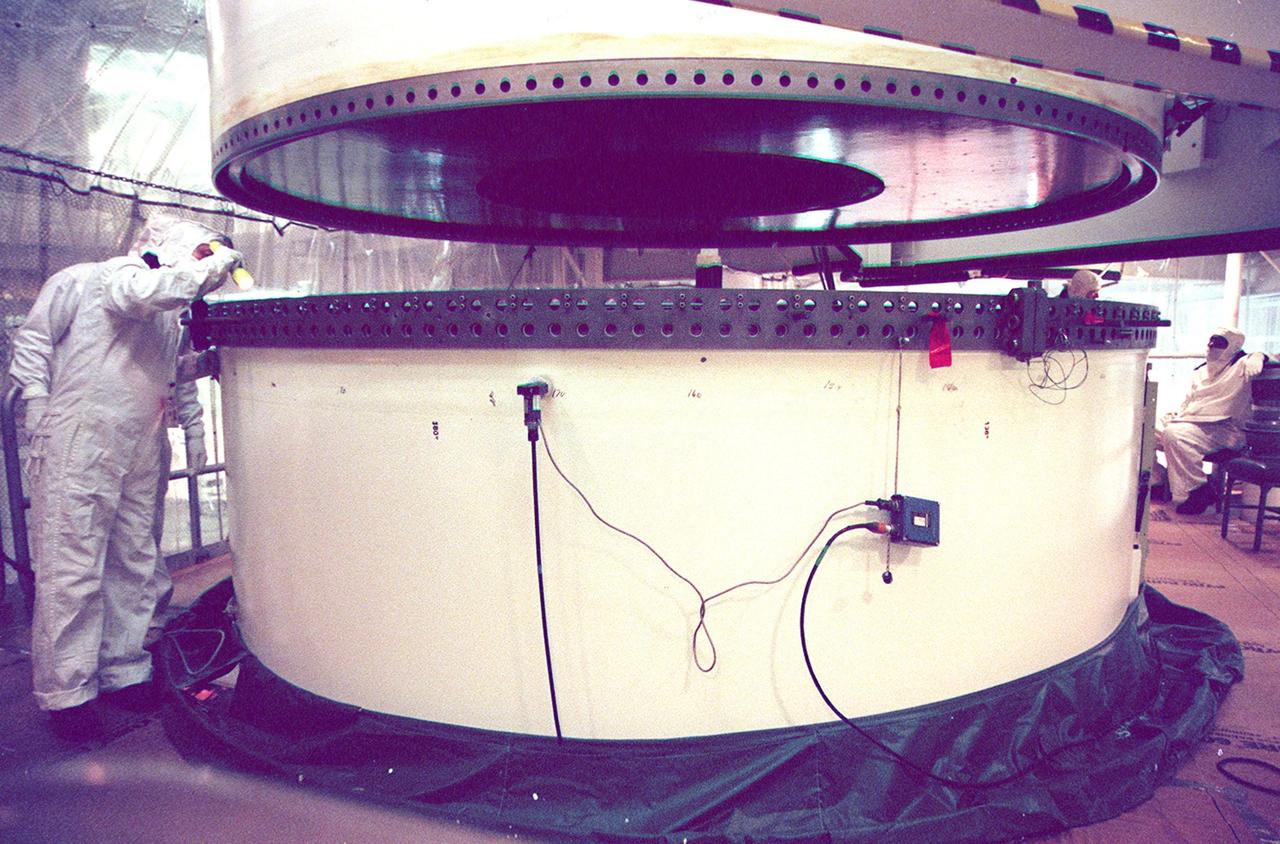
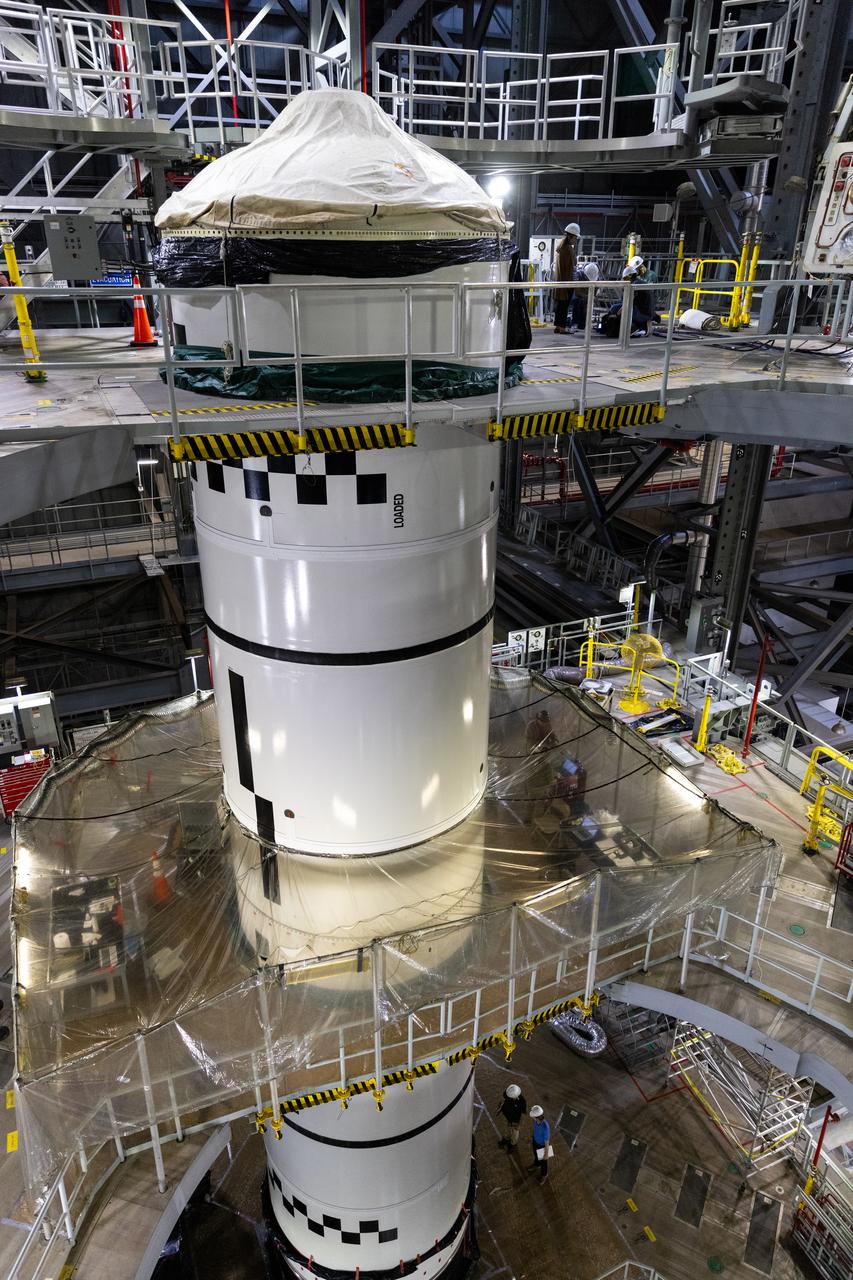
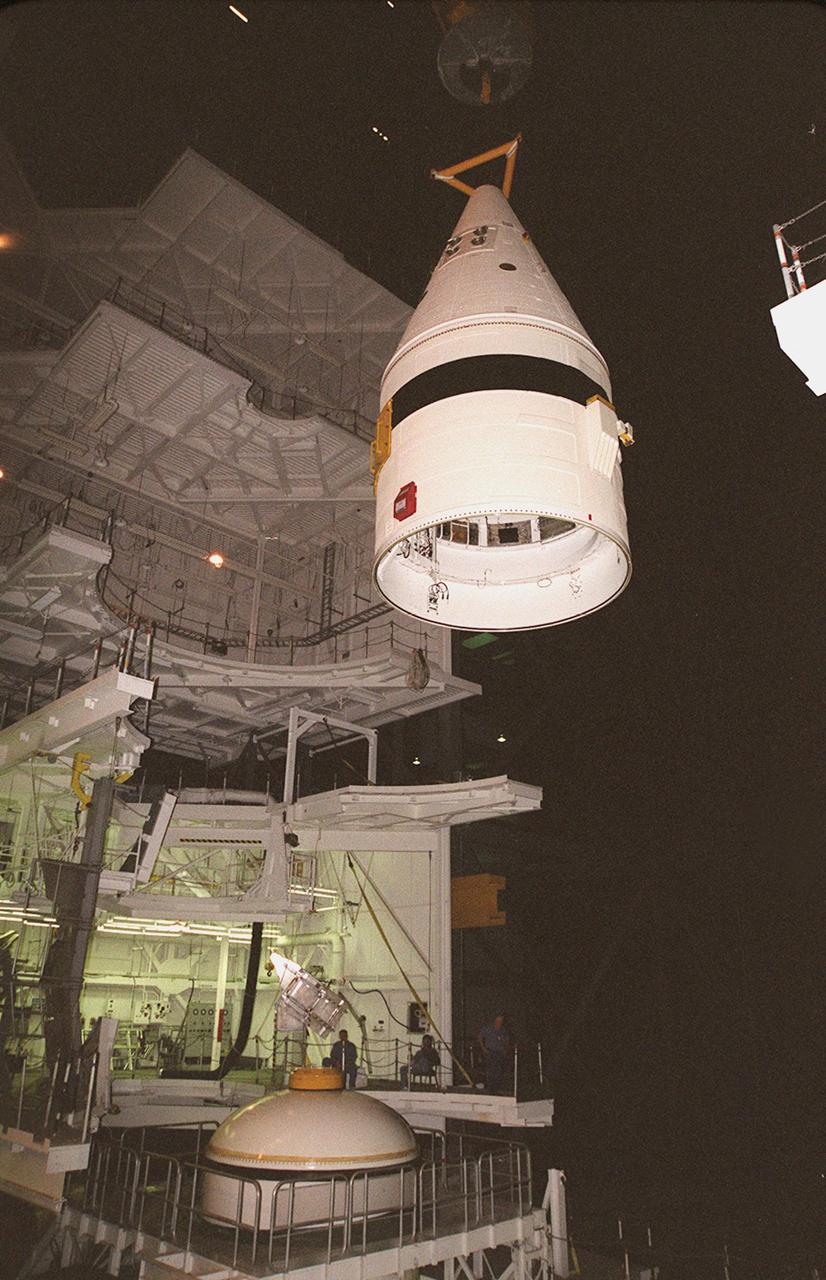
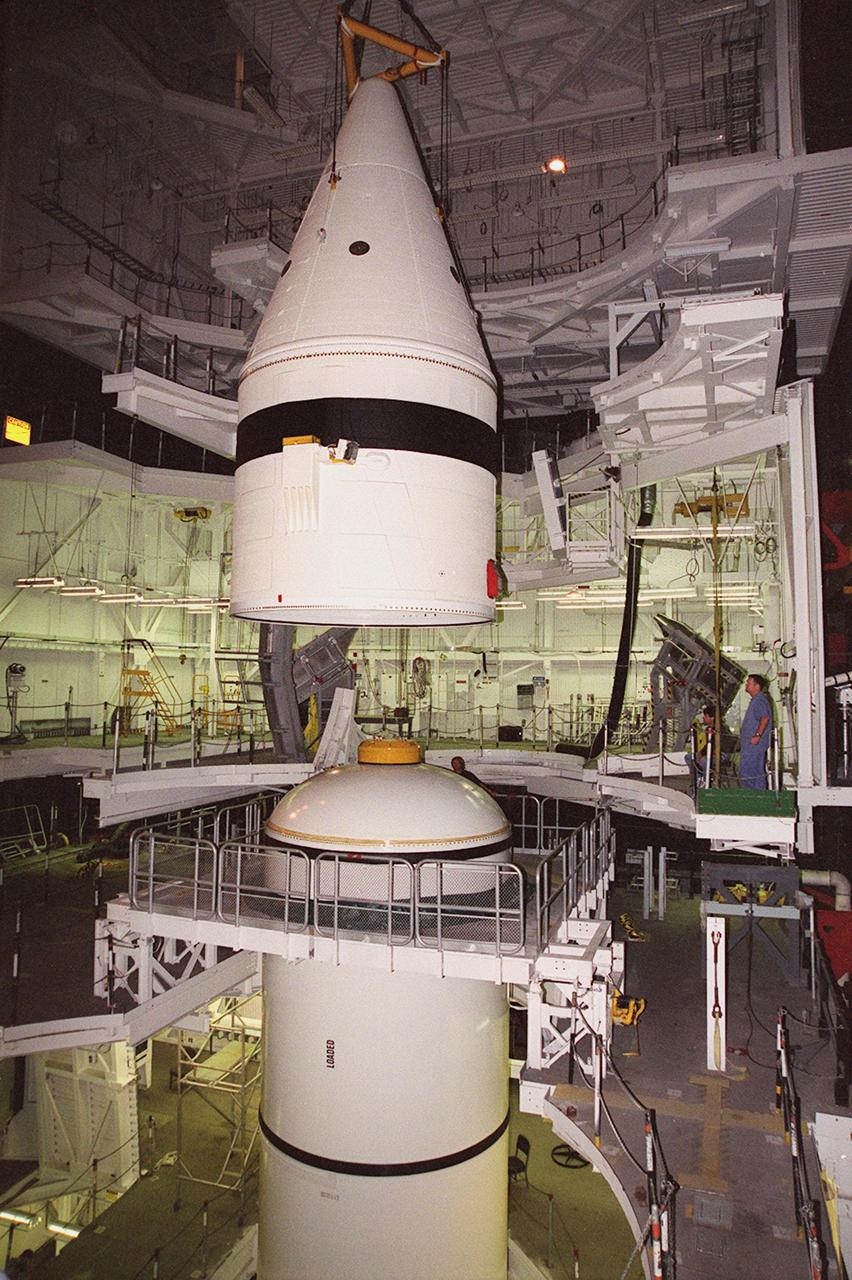
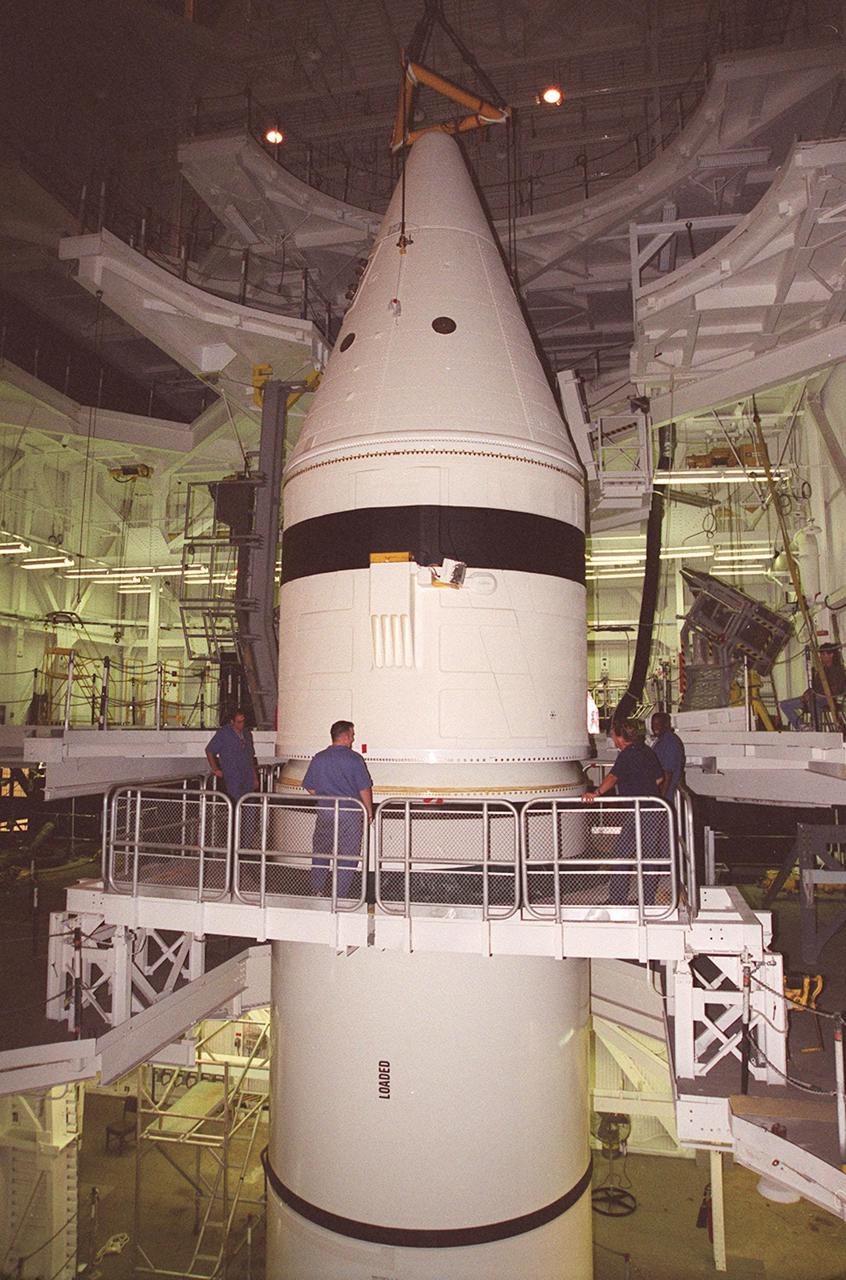
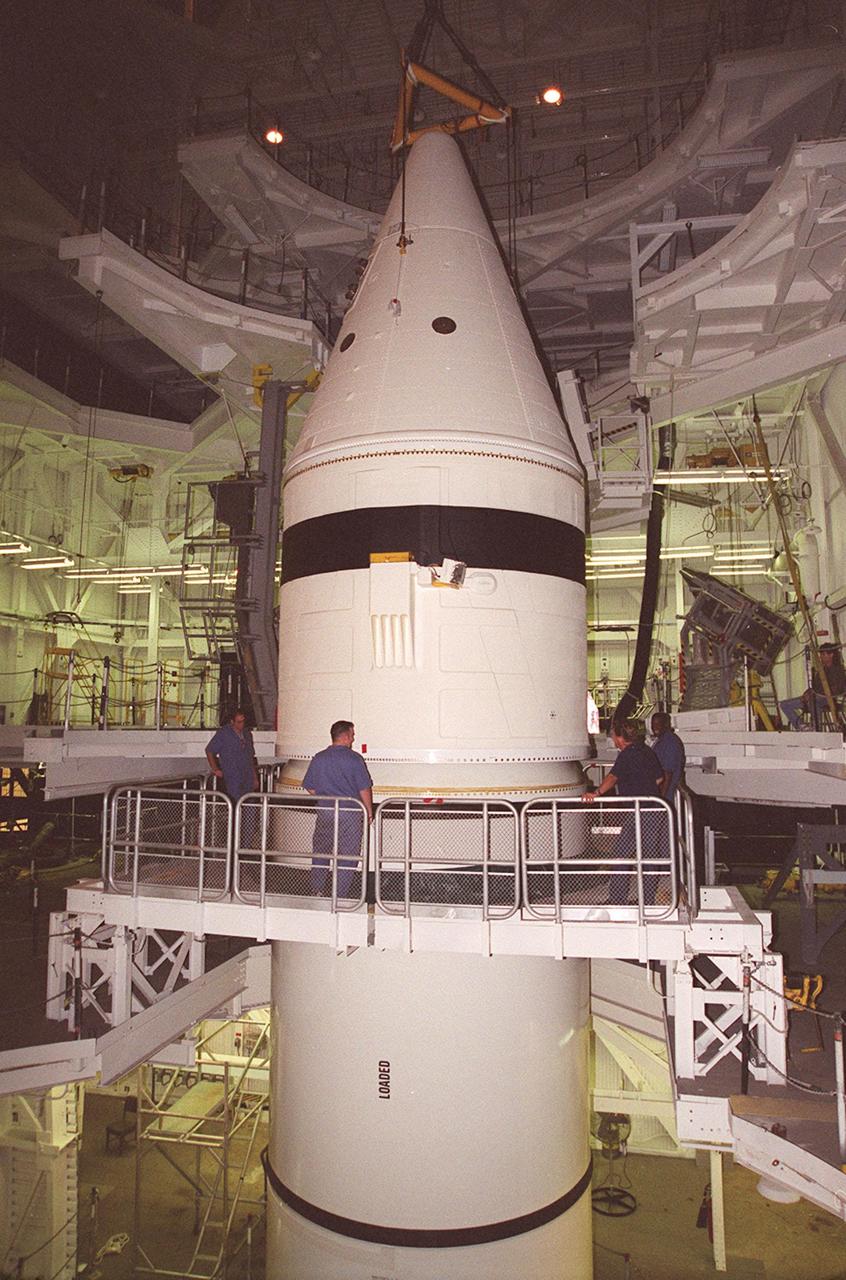
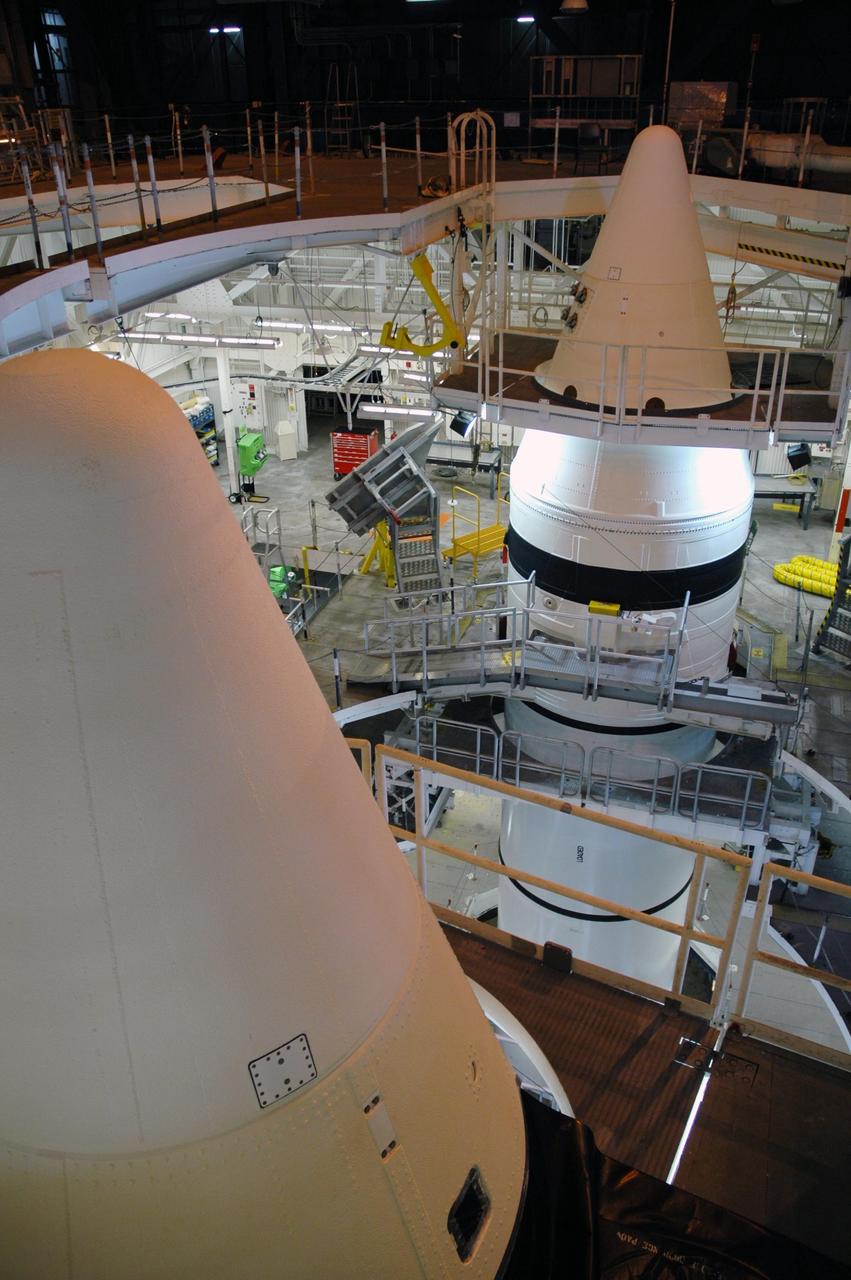
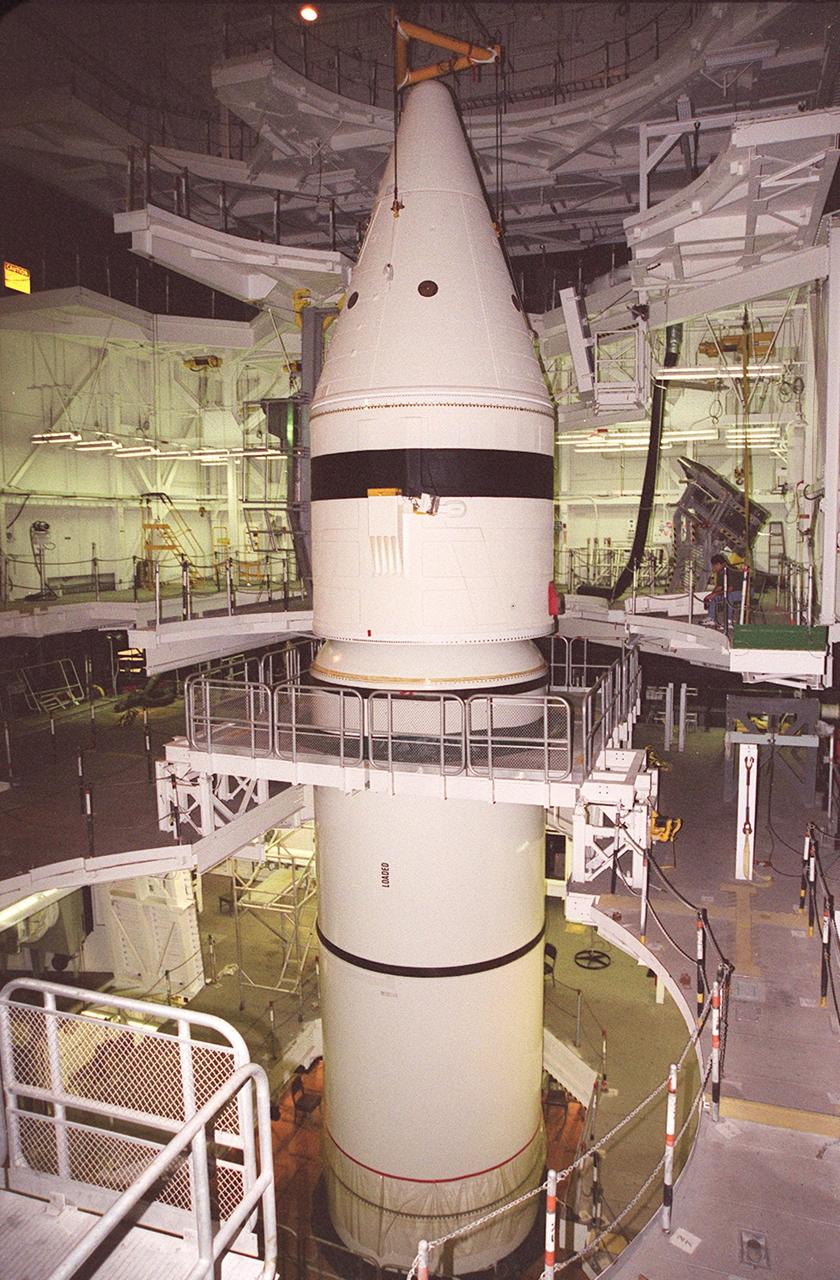
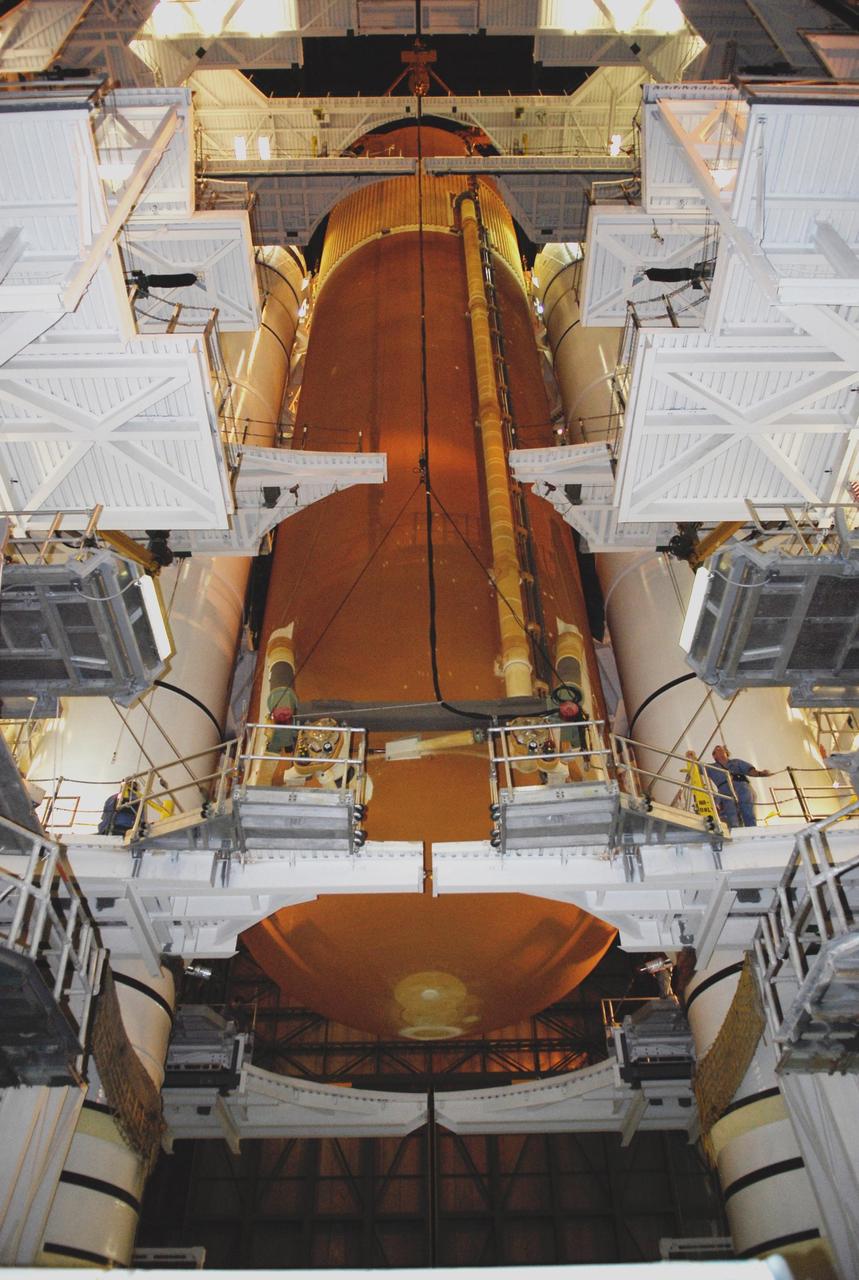
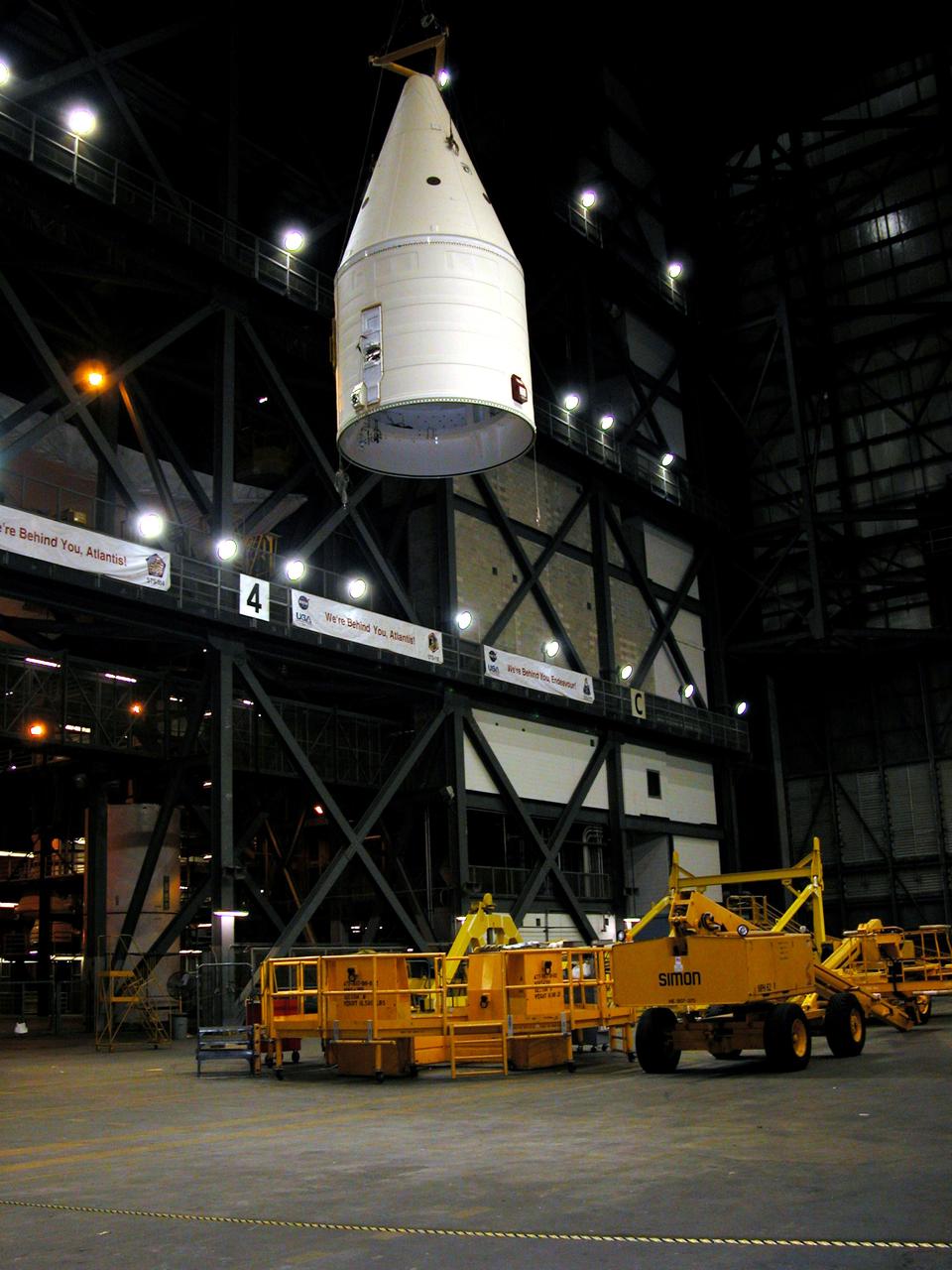
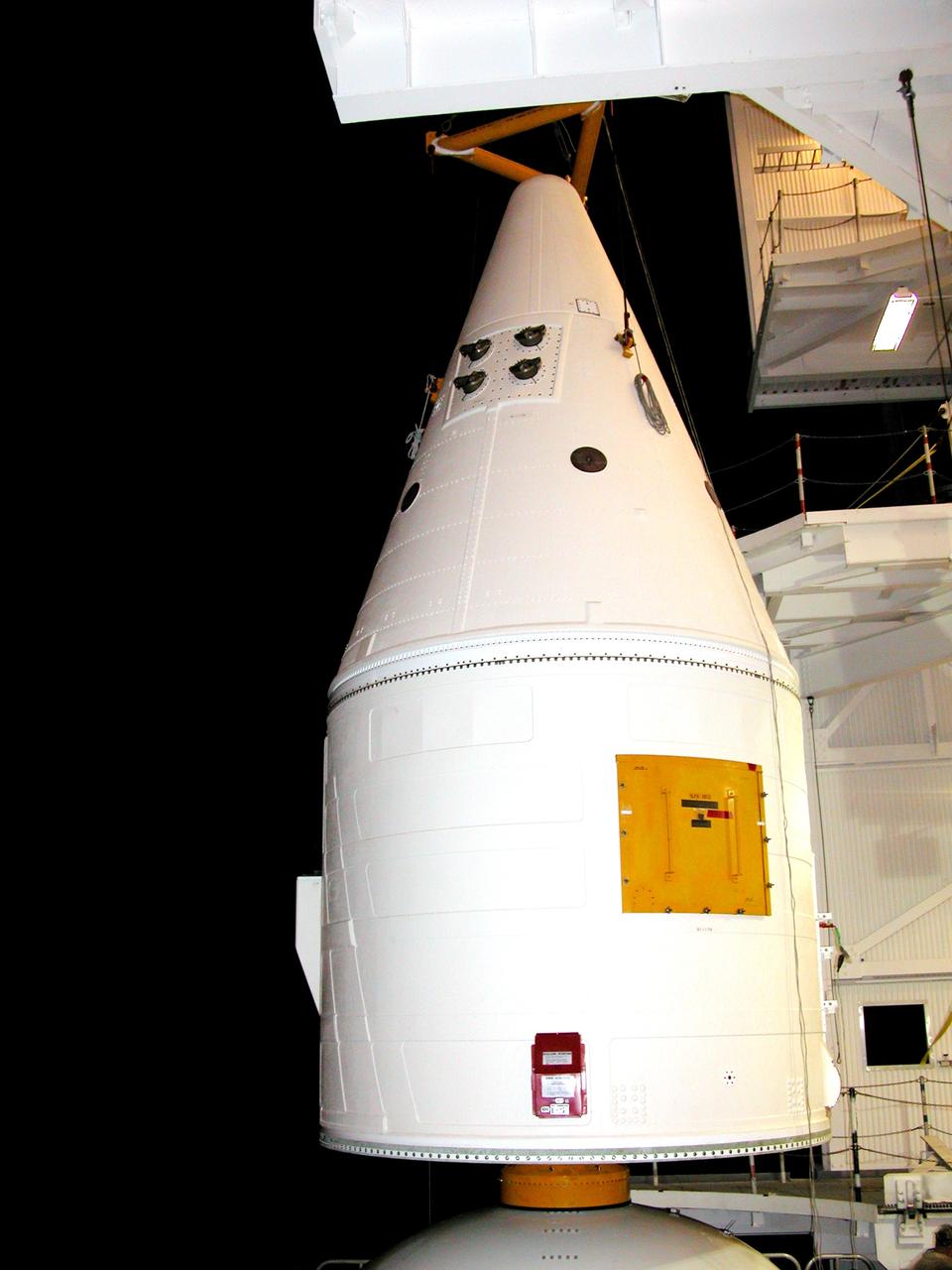
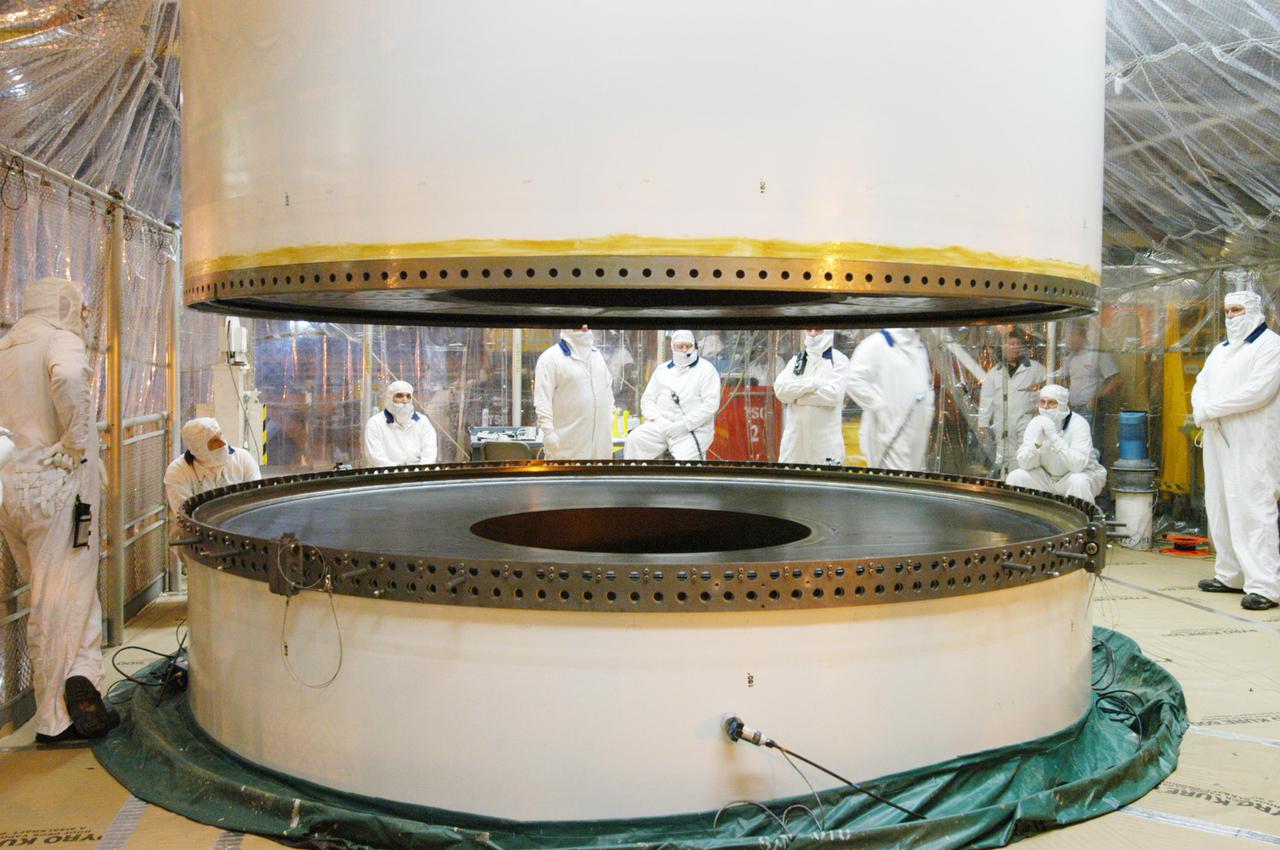
KENNEDY SPACE CENTER, FLA. -  In the Vehicle Assembly Building, the forward assembly (nose cap and frustum) is moved away from the solid rocket booster (SRB).  The destacking is part of time and cycle activities.  The SRB was part of the stack on Atlantis originally scheduled for a March 1, 2003, launch on mission STS-114.  The SRBs and external tank were demated in February 2003.   The mission is now scheduled to occur no earlier than Sept. 12, 2004, on Atlantis.
KENNEDY SPACE CENTER, FLA. - In the Vehicle Assembly Building, the forward assembly (nose cap and frustum) is moved away from the solid rocket booster (SRB). The destacking is part of time and cycle activities. The SRB was part of the stack on Atlantis originally scheduled for a March 1, 2003, launch on mission STS-114. The SRBs and external tank were demated in February 2003. The mission is now scheduled to occur no earlier than Sept. 12, 2004, on Atlantis.
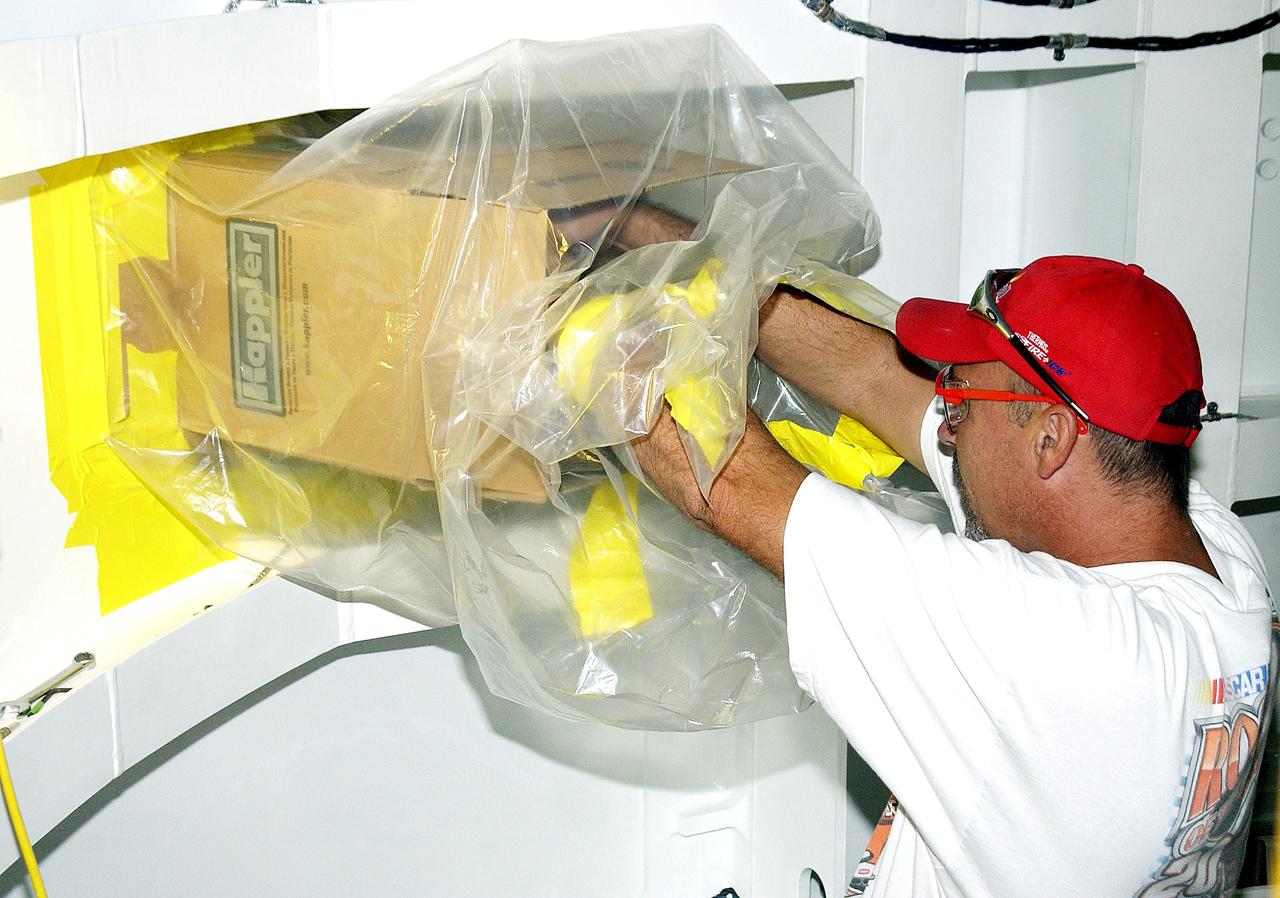
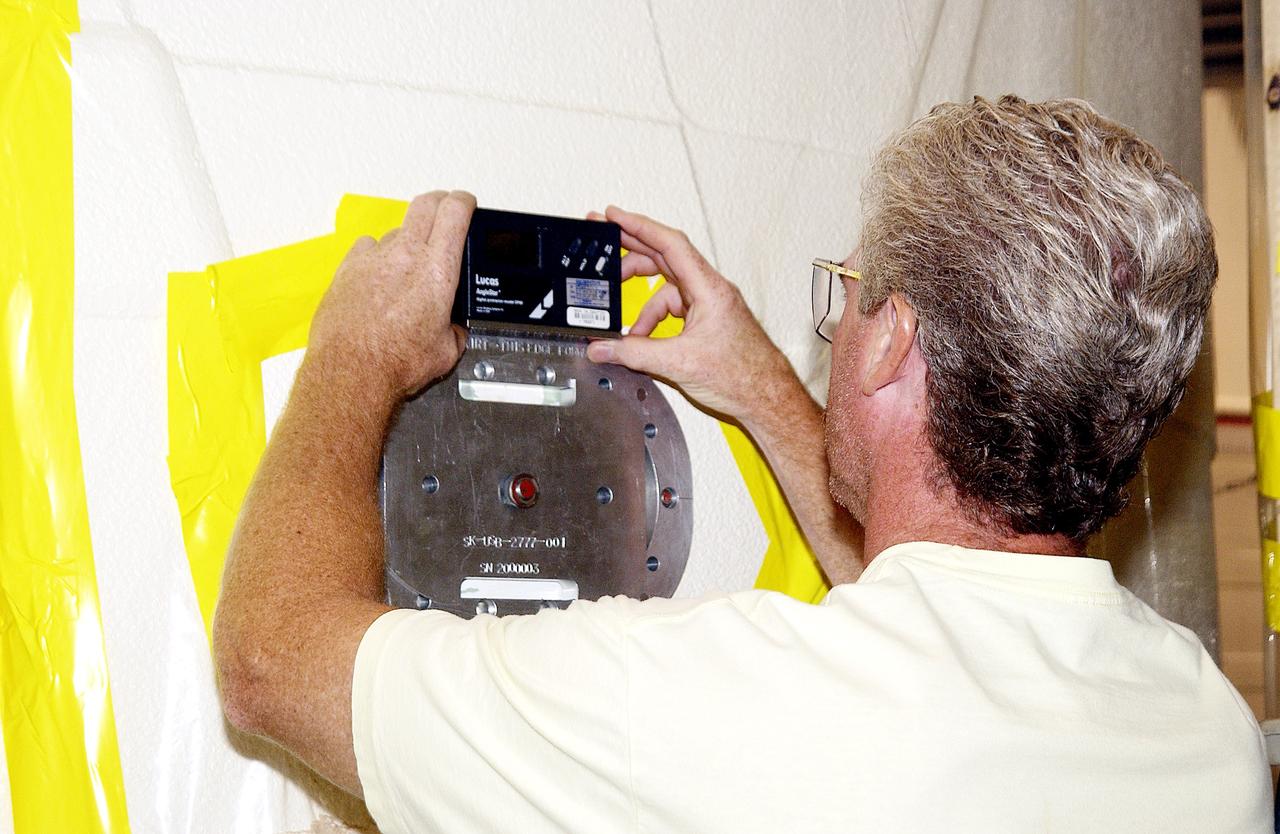
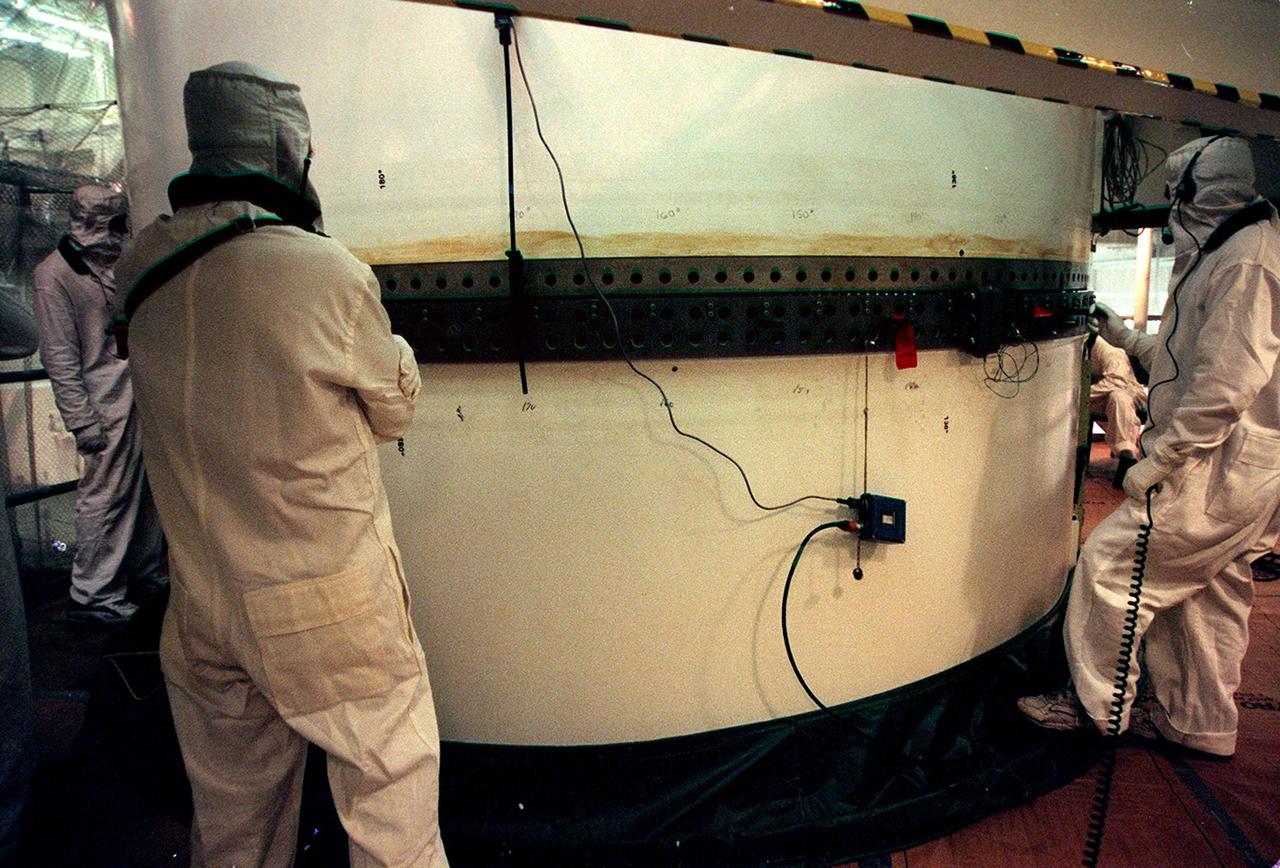
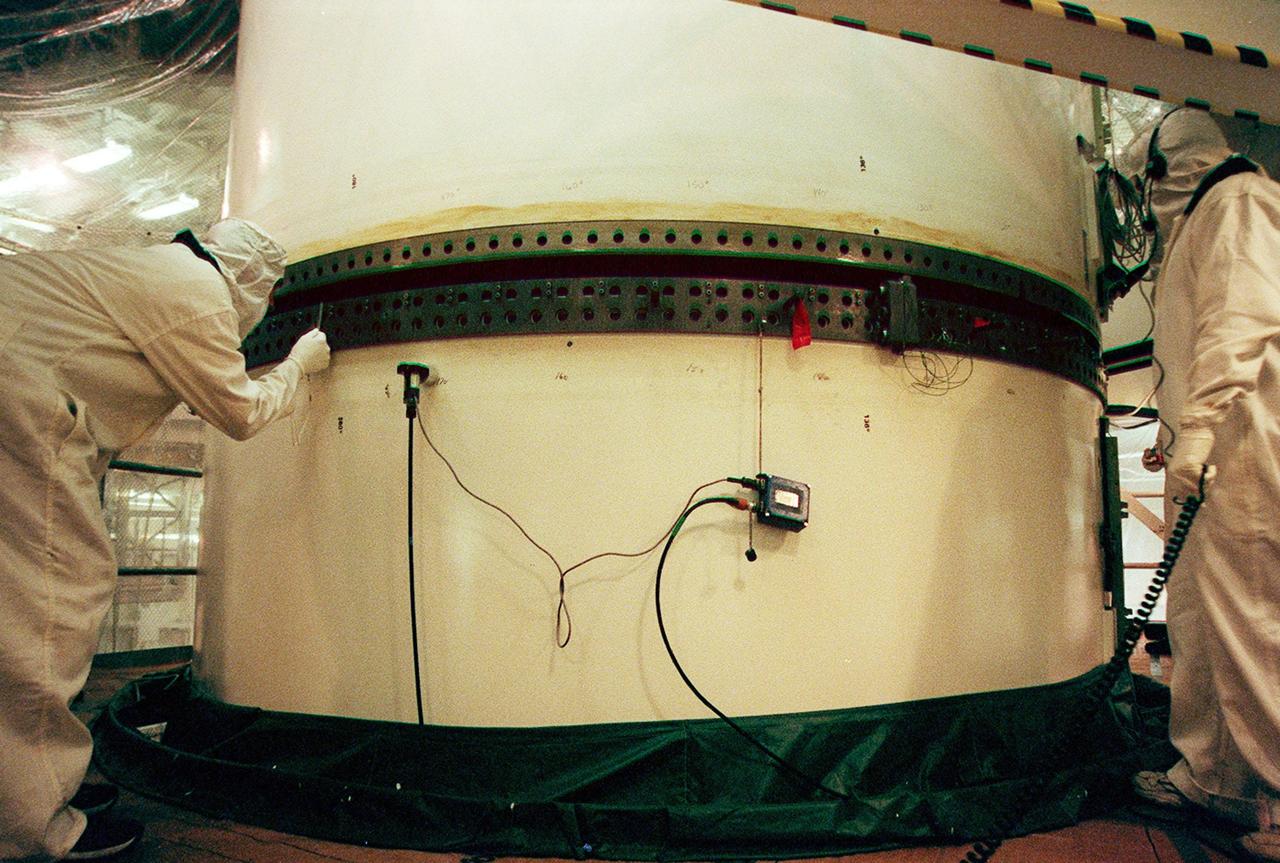
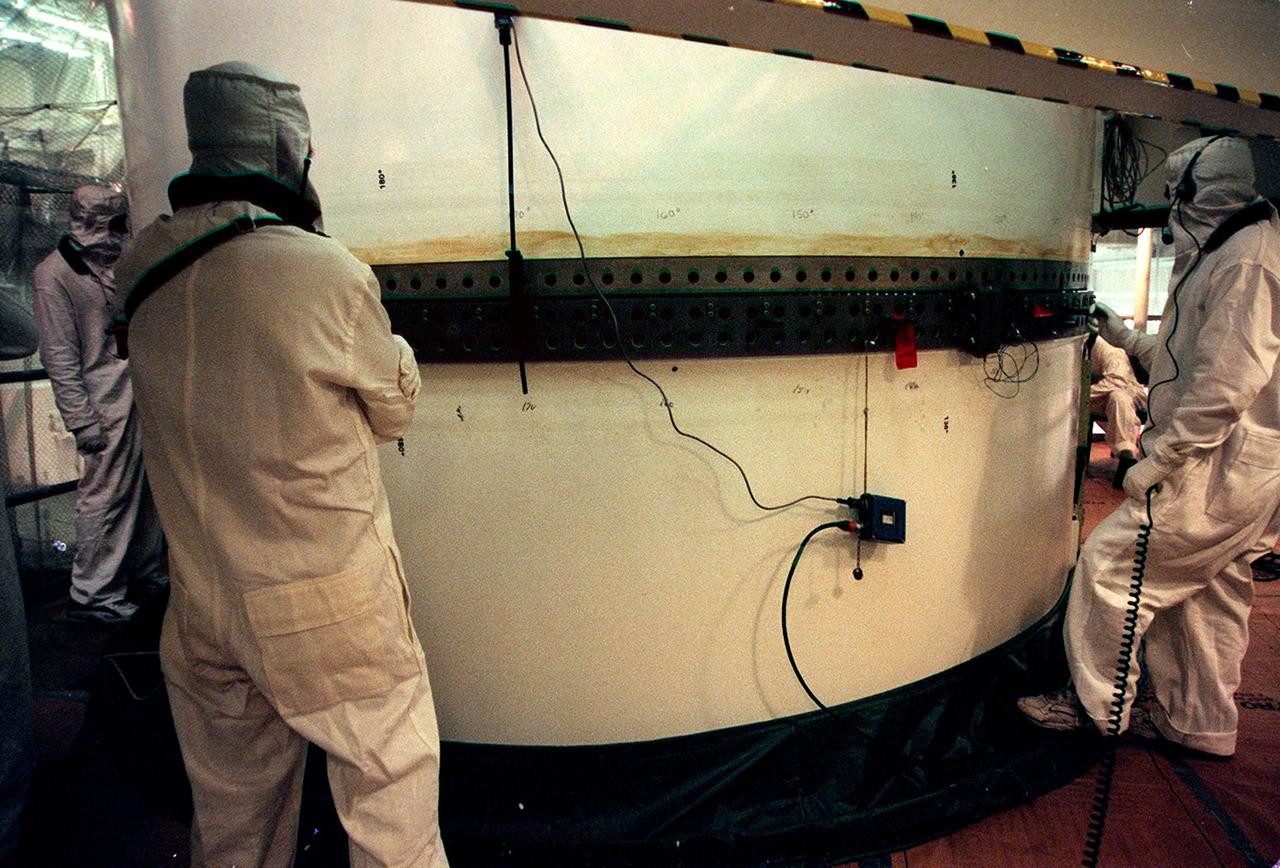
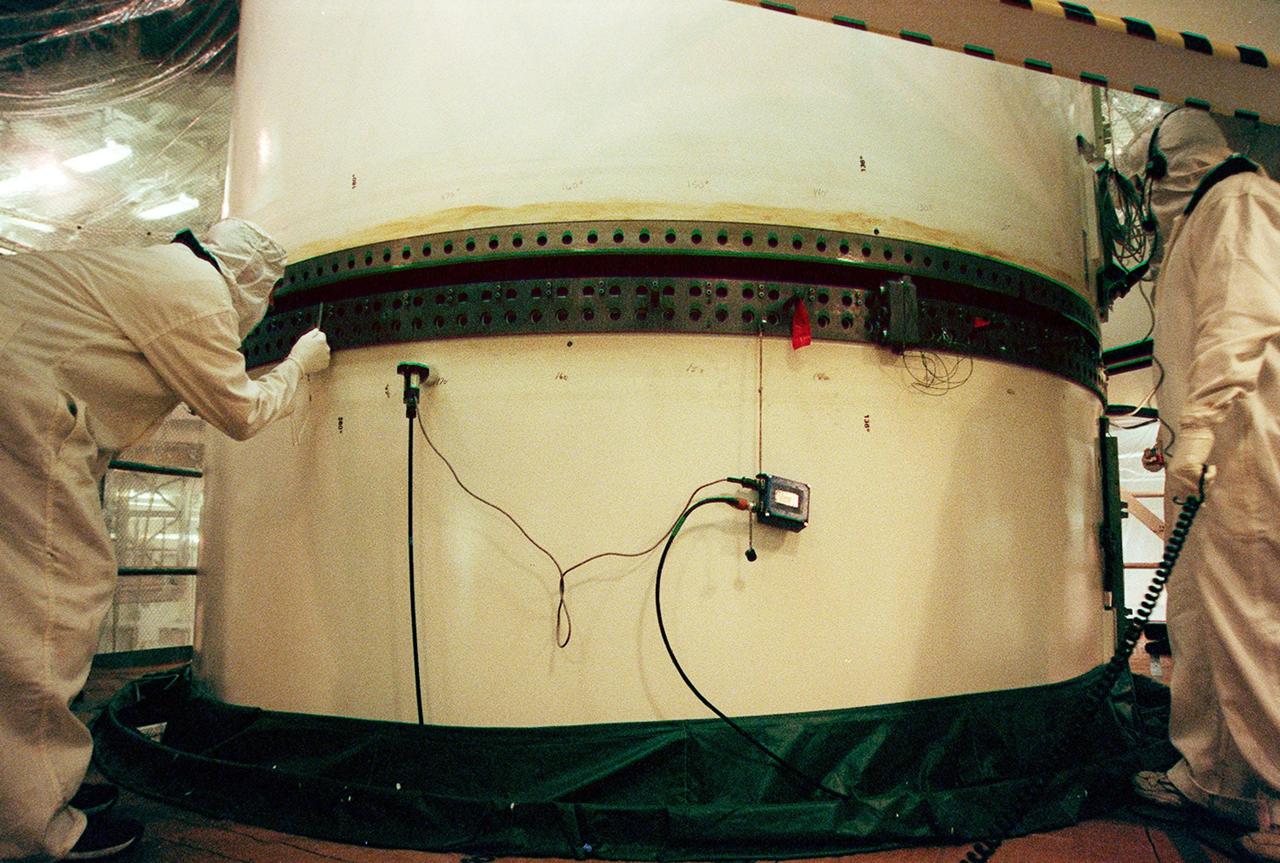
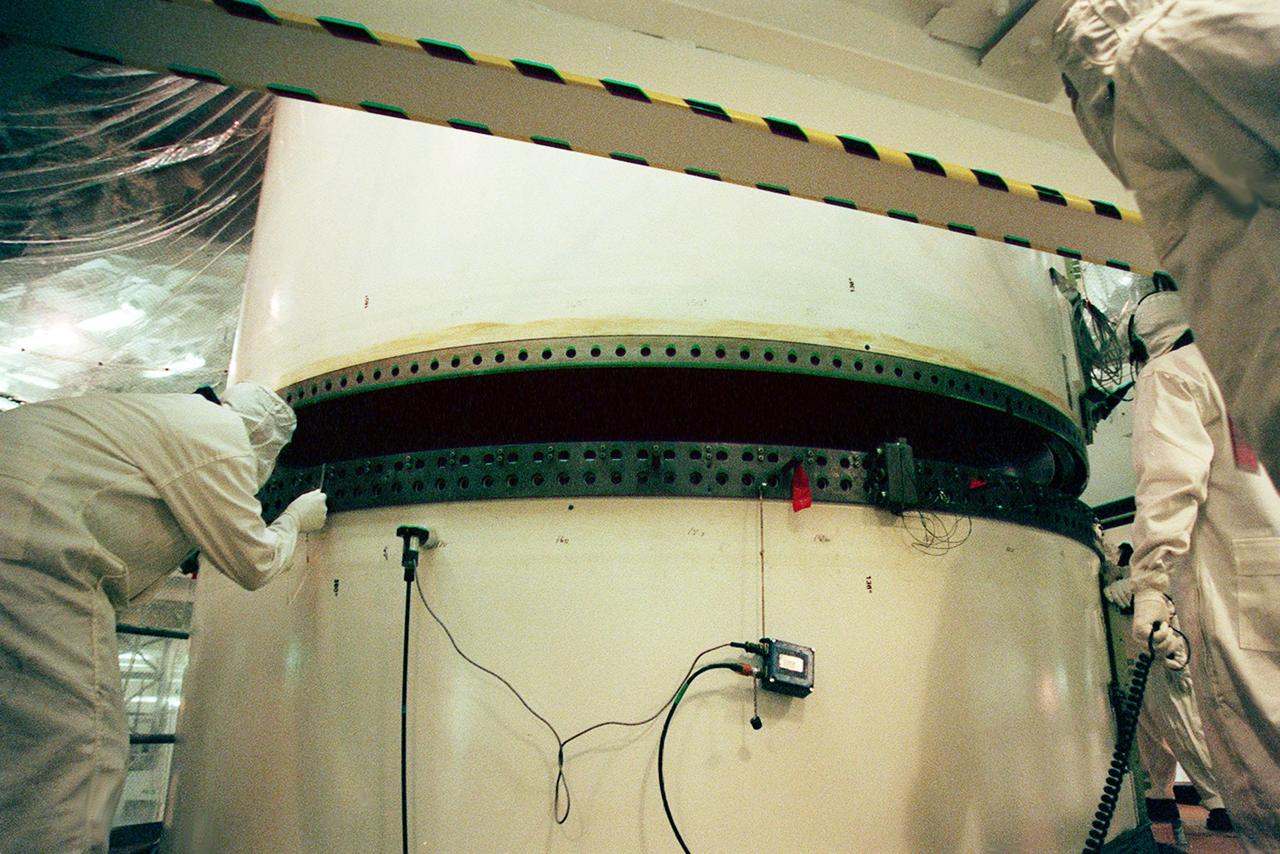
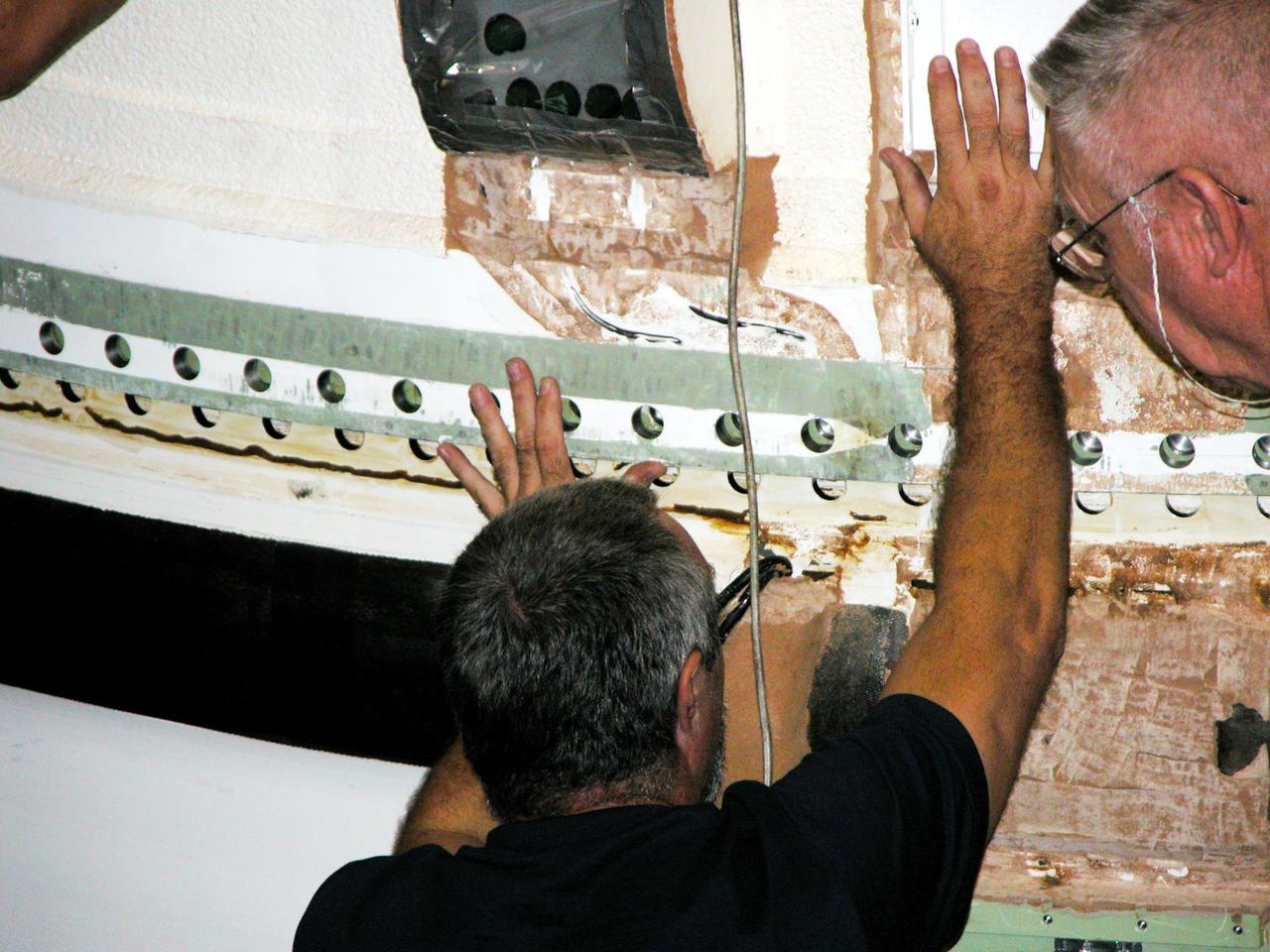
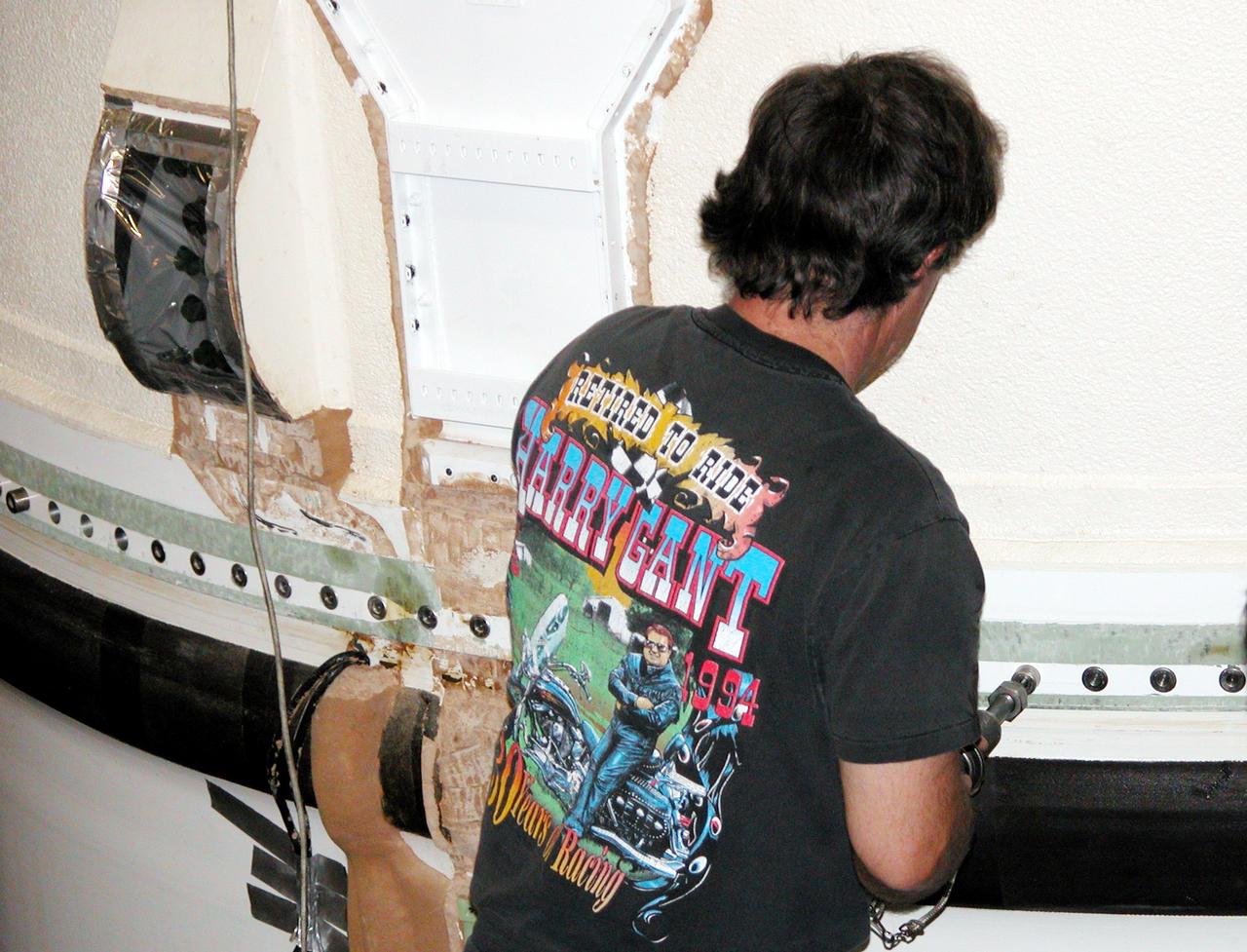
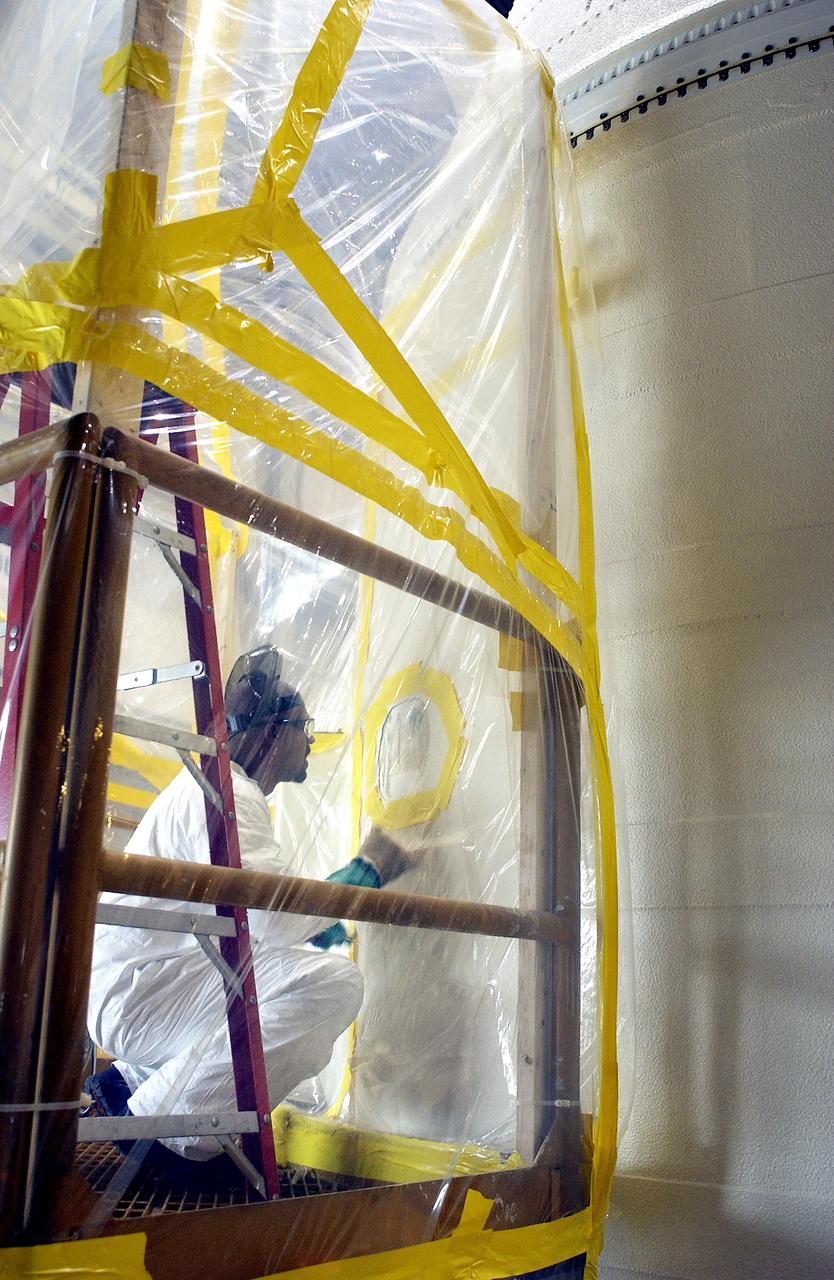
KENNEDY SPACE CENTER, FLA. -  In the Vehicle Assembly Building, a KSC employee loosens a bolt on part of the forward assembly of a solid rocket booster (SRB) before destacking.  The SRB was part of the stack on Atlantis originally scheduled for a March 1, 2003, launch on mission STS-114.  The SRBs and external tank were demated in February 2003.   The destacking is part of time and cycle activities.  STS-114 is now scheduled to occur no earlier than Sept. 12, 2004, on Atlantis.
KENNEDY SPACE CENTER, FLA. - In the Vehicle Assembly Building, a KSC employee loosens a bolt on part of the forward assembly of a solid rocket booster (SRB) before destacking. The SRB was part of the stack on Atlantis originally scheduled for a March 1, 2003, launch on mission STS-114. The SRBs and external tank were demated in February 2003. The destacking is part of time and cycle activities. STS-114 is now scheduled to occur no earlier than Sept. 12, 2004, on Atlantis.
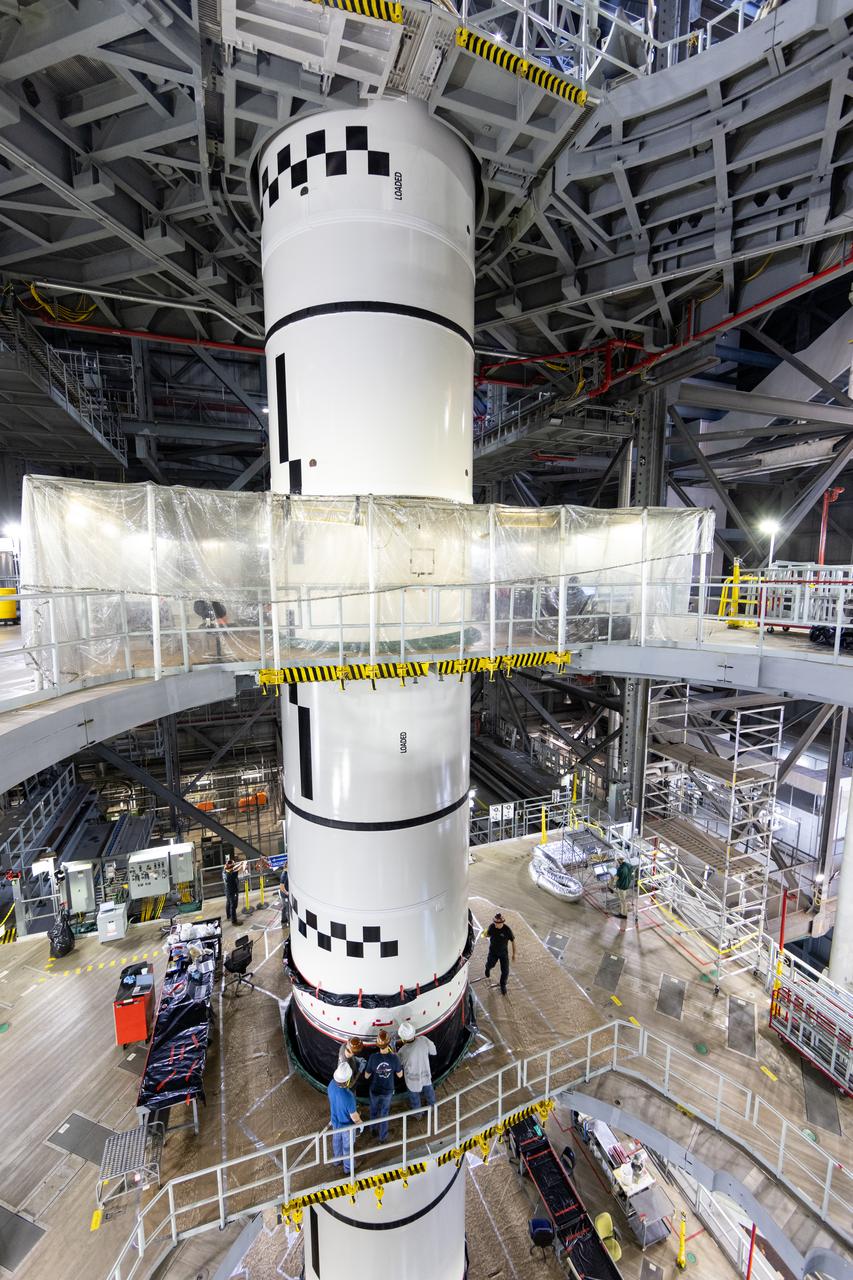
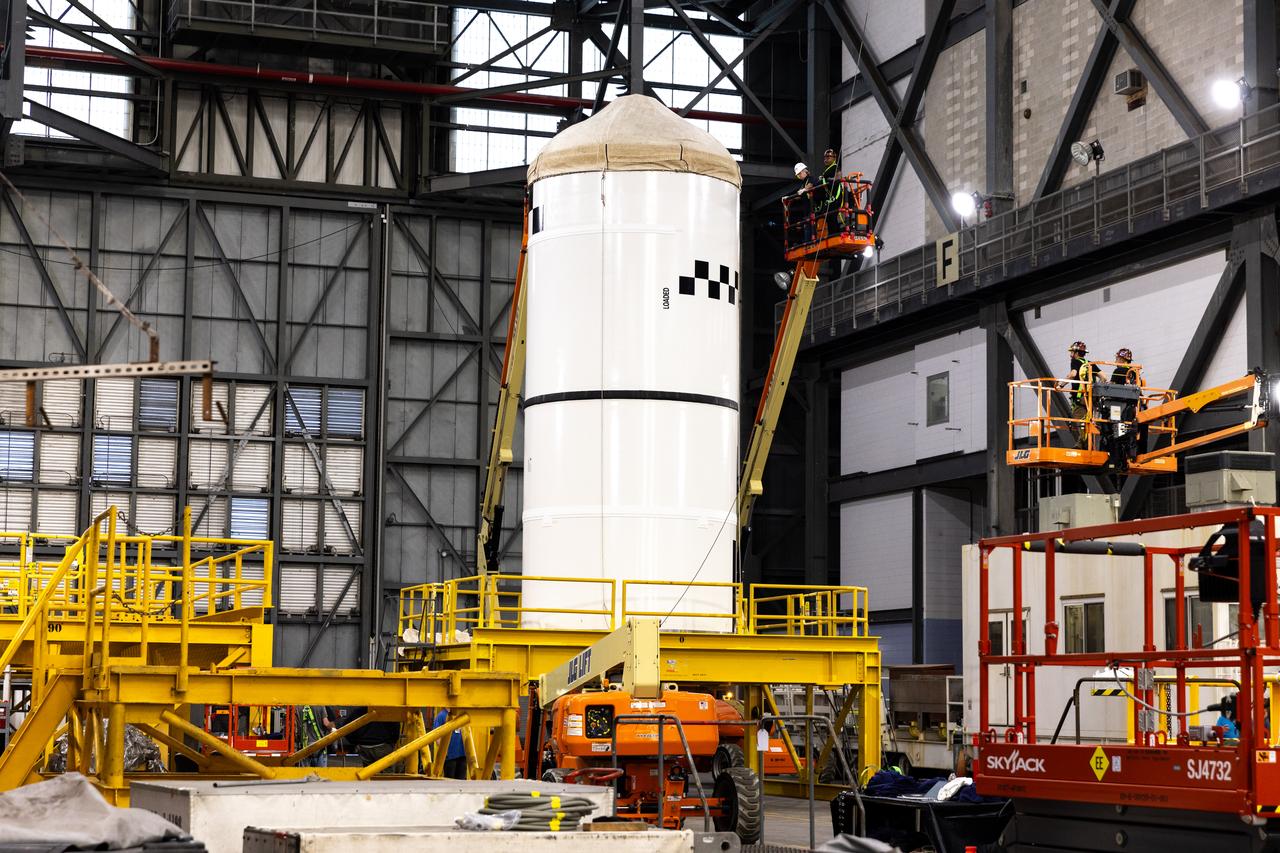
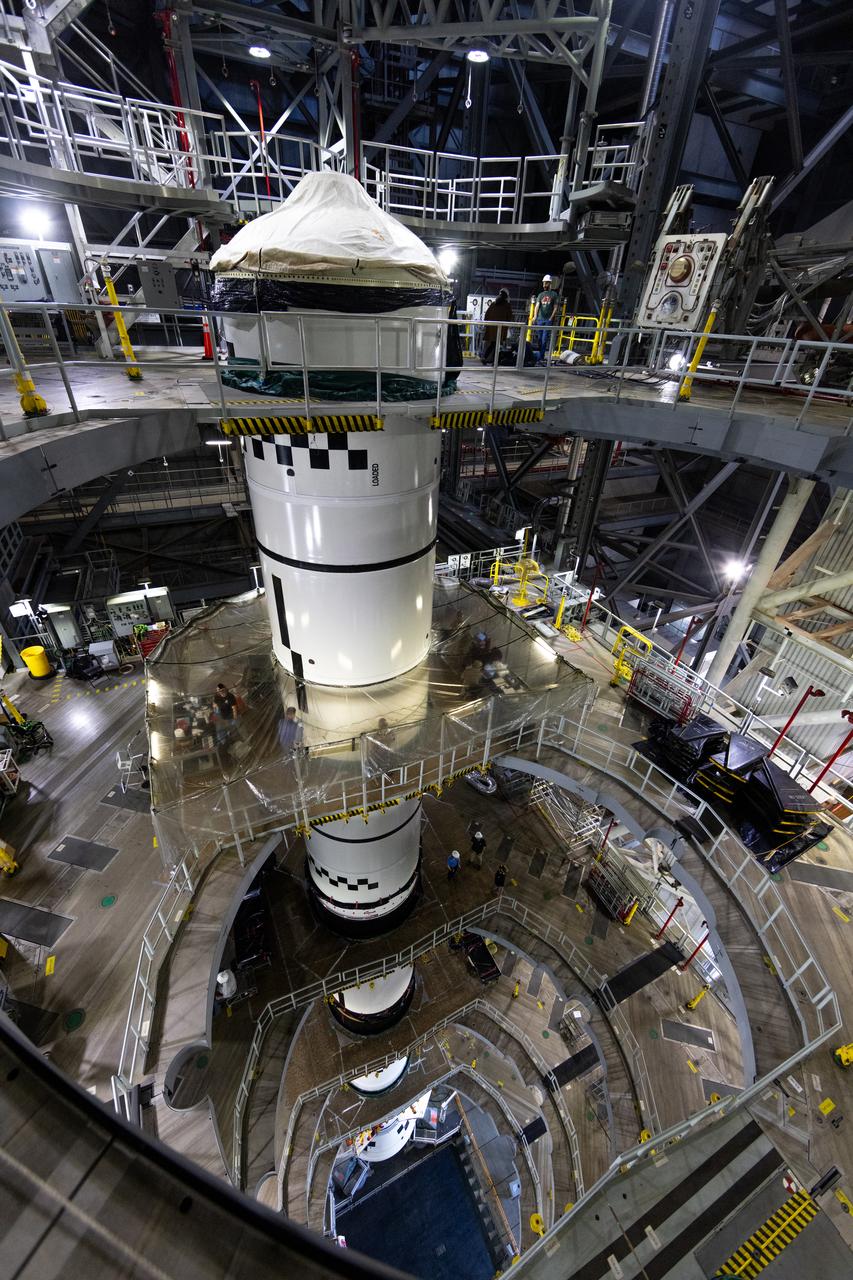
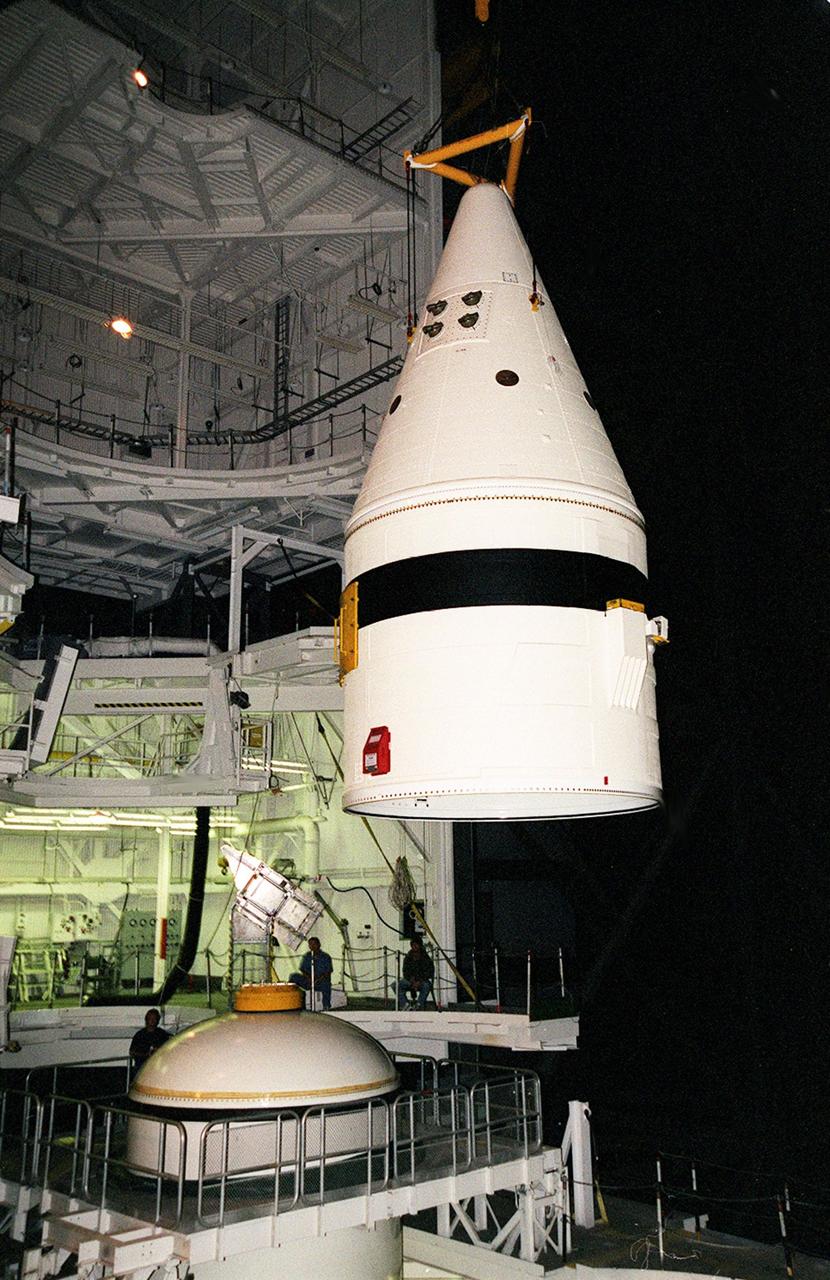
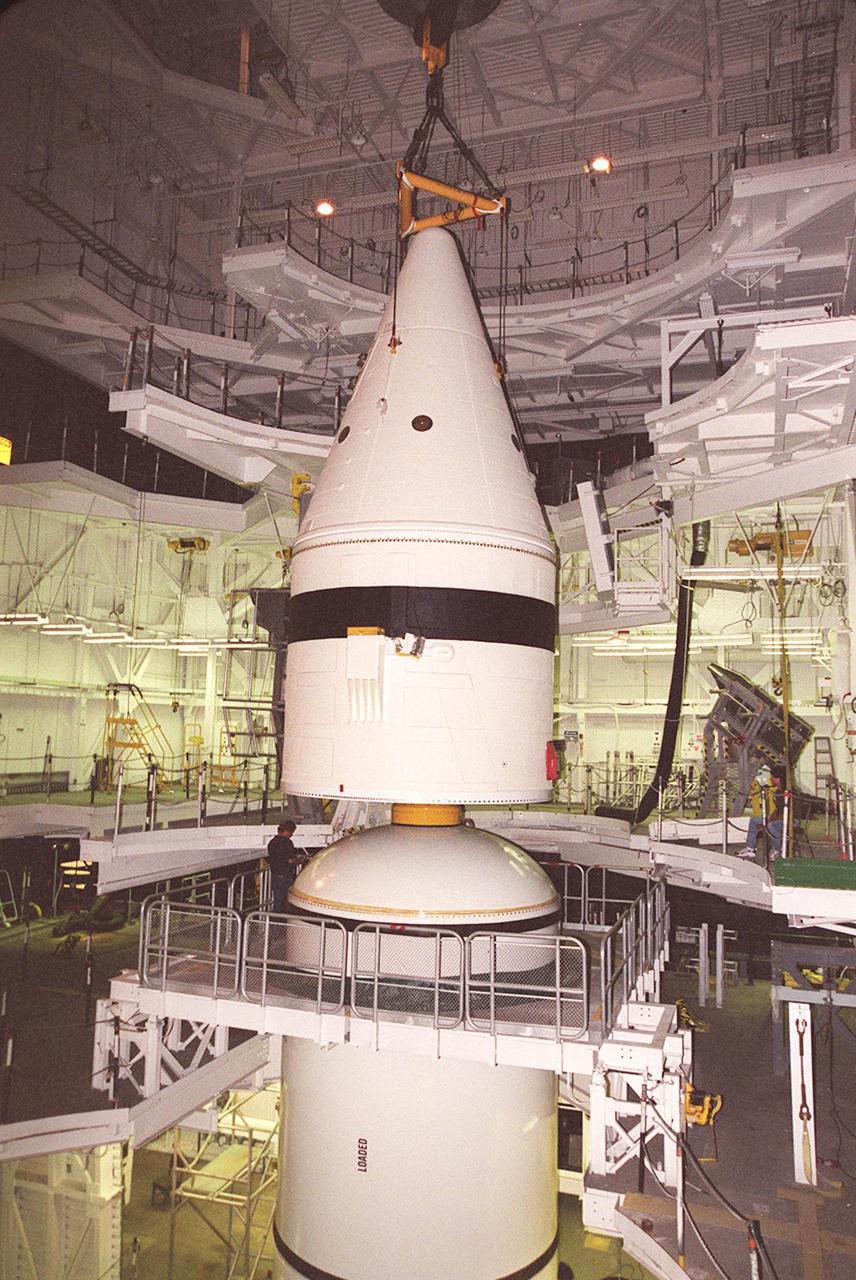
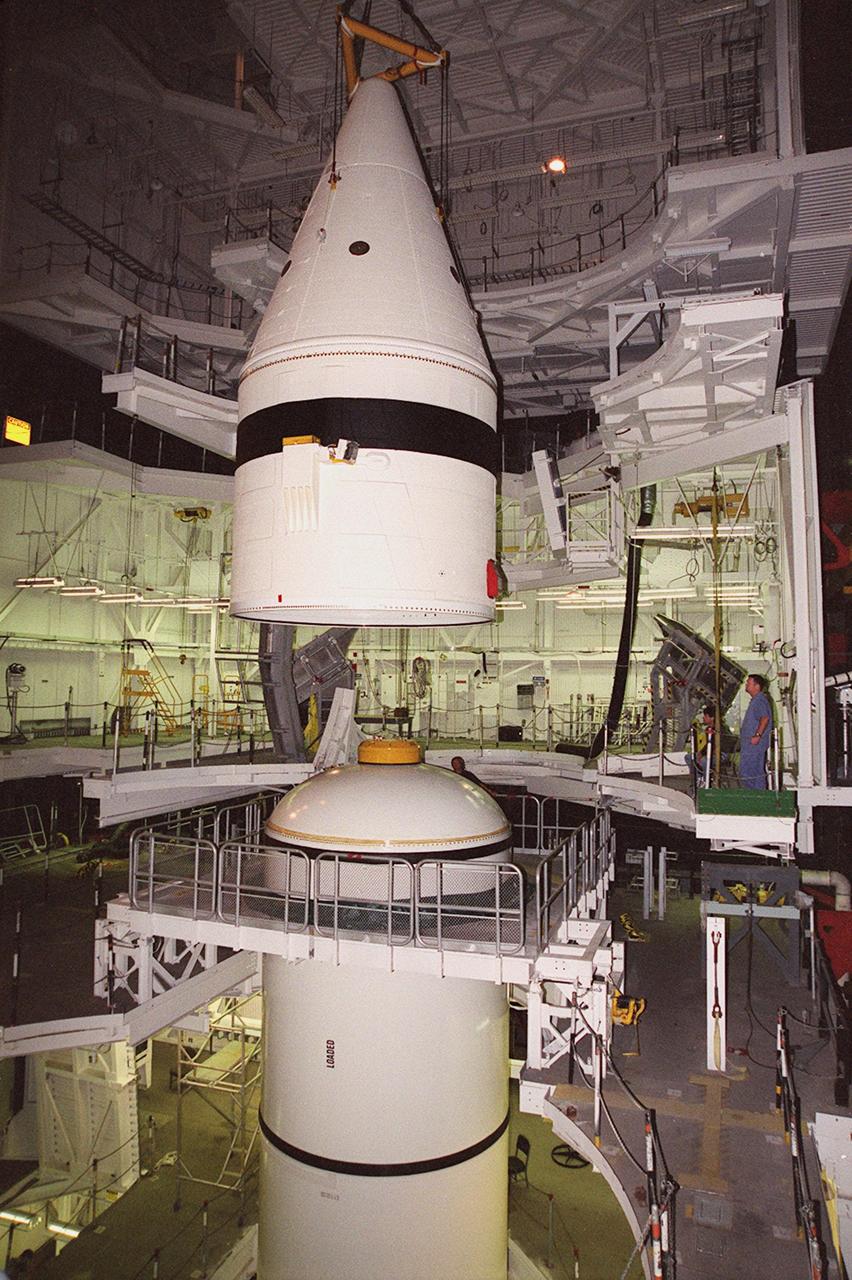
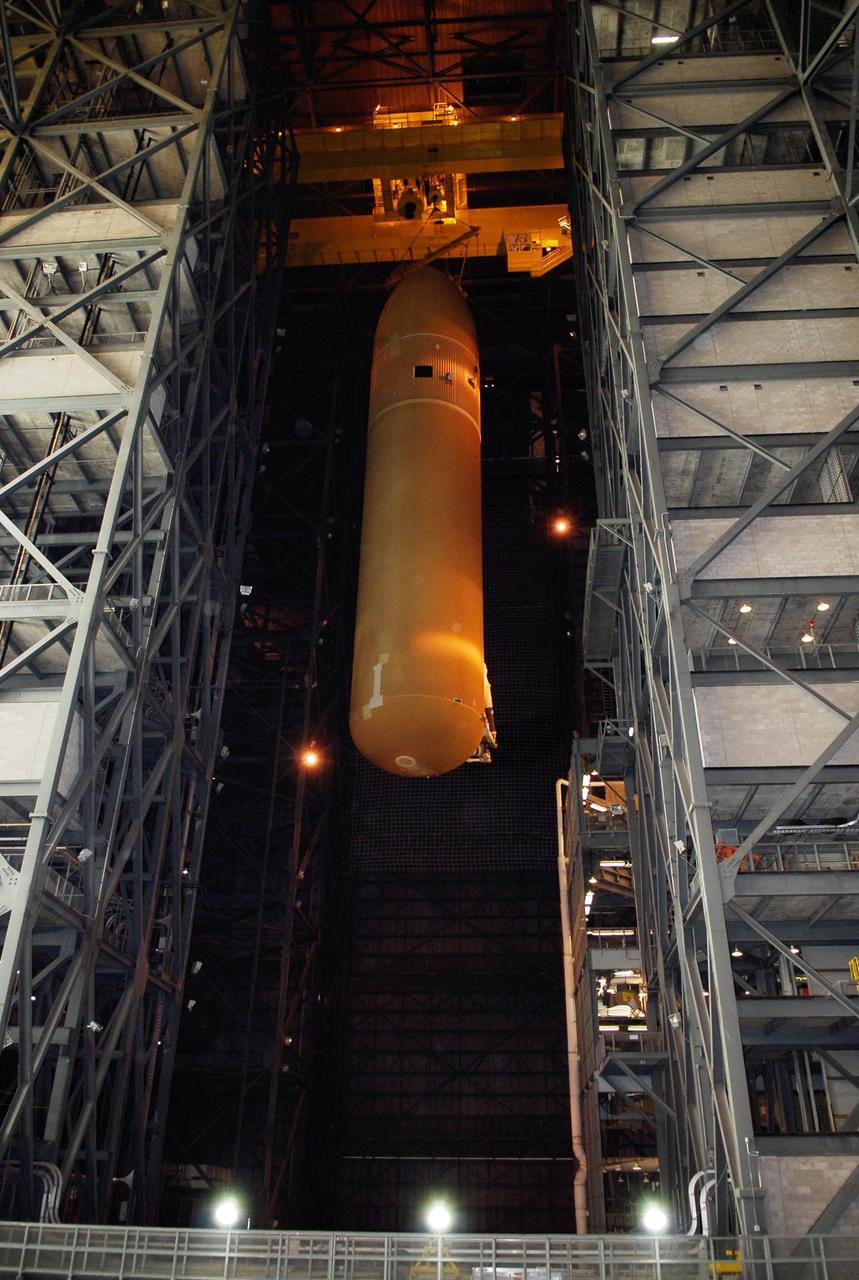
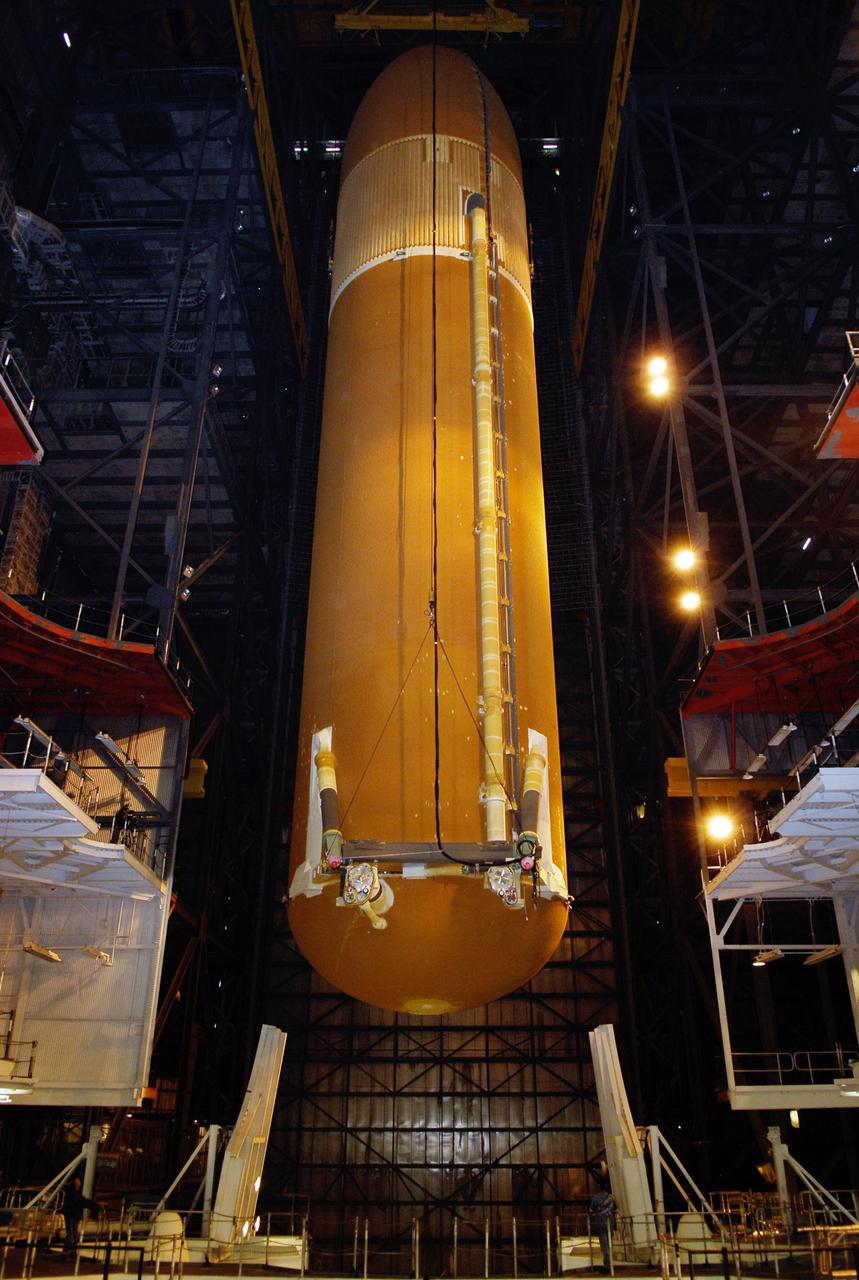
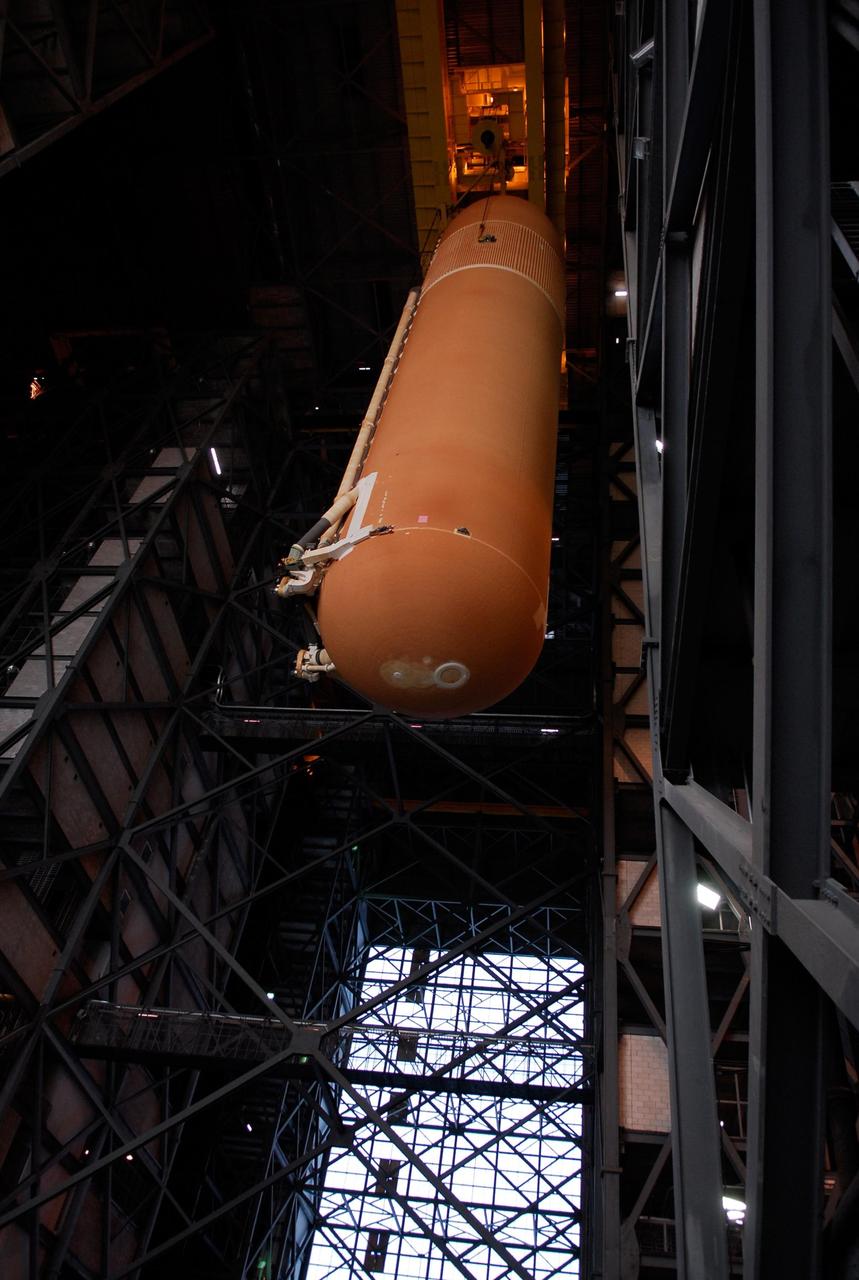
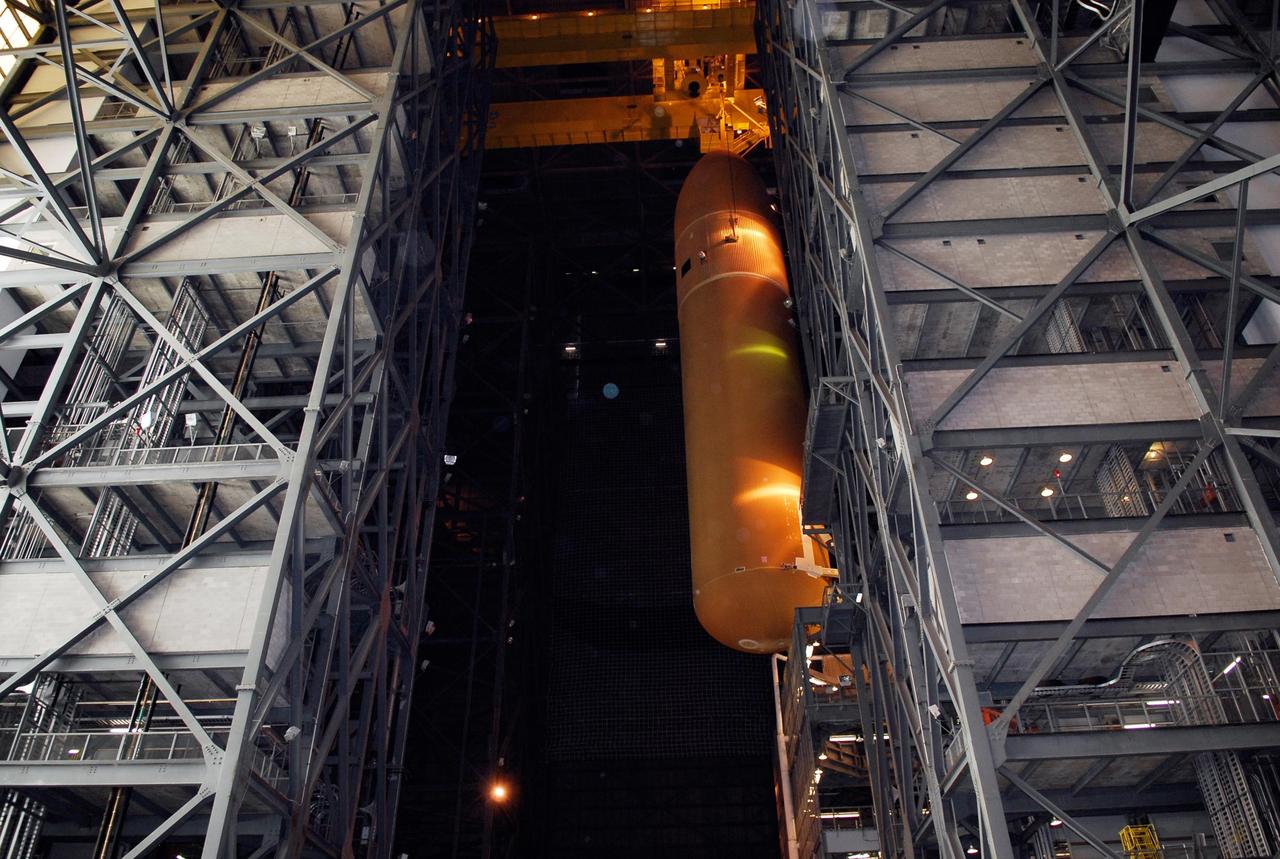
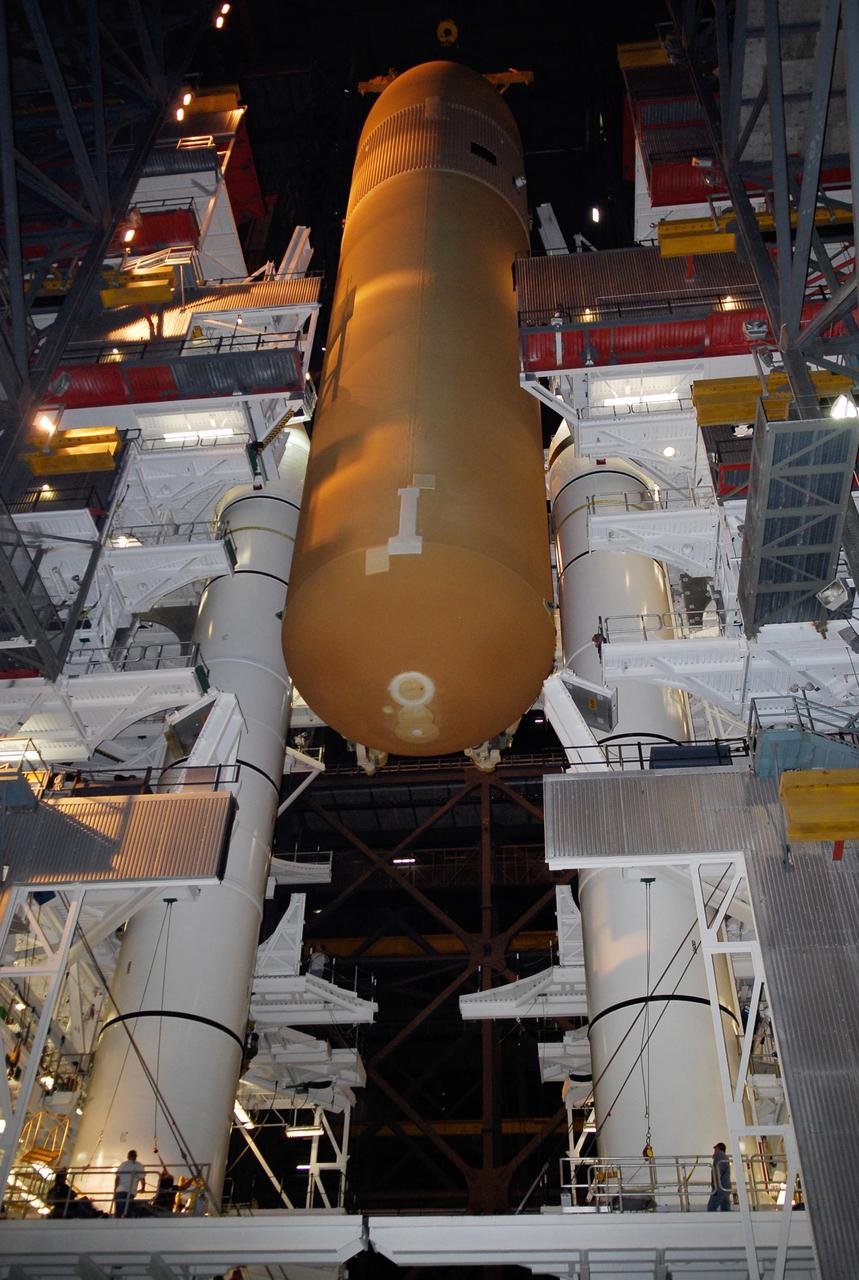
KENNEDY SPACE CENTER, FLA. -  In the Vehicle Assembly Building, after being removed from the solid rocket booster (SRB), the forward assembly is lowered from high above the transfer aisle.  The destacking is part of time and cycle activities.  The SRB was part of the stack on Atlantis originally scheduled for a March 1, 2003, launch on mission STS-114.  The SRBs and external tank were demated in February 2003.   The mission is now scheduled to occur no earlier than Sept. 12, 2004, on Atlantis.
KENNEDY SPACE CENTER, FLA. - In the Vehicle Assembly Building, after being removed from the solid rocket booster (SRB), the forward assembly is lowered from high above the transfer aisle. The destacking is part of time and cycle activities. The SRB was part of the stack on Atlantis originally scheduled for a March 1, 2003, launch on mission STS-114. The SRBs and external tank were demated in February 2003. The mission is now scheduled to occur no earlier than Sept. 12, 2004, on Atlantis.
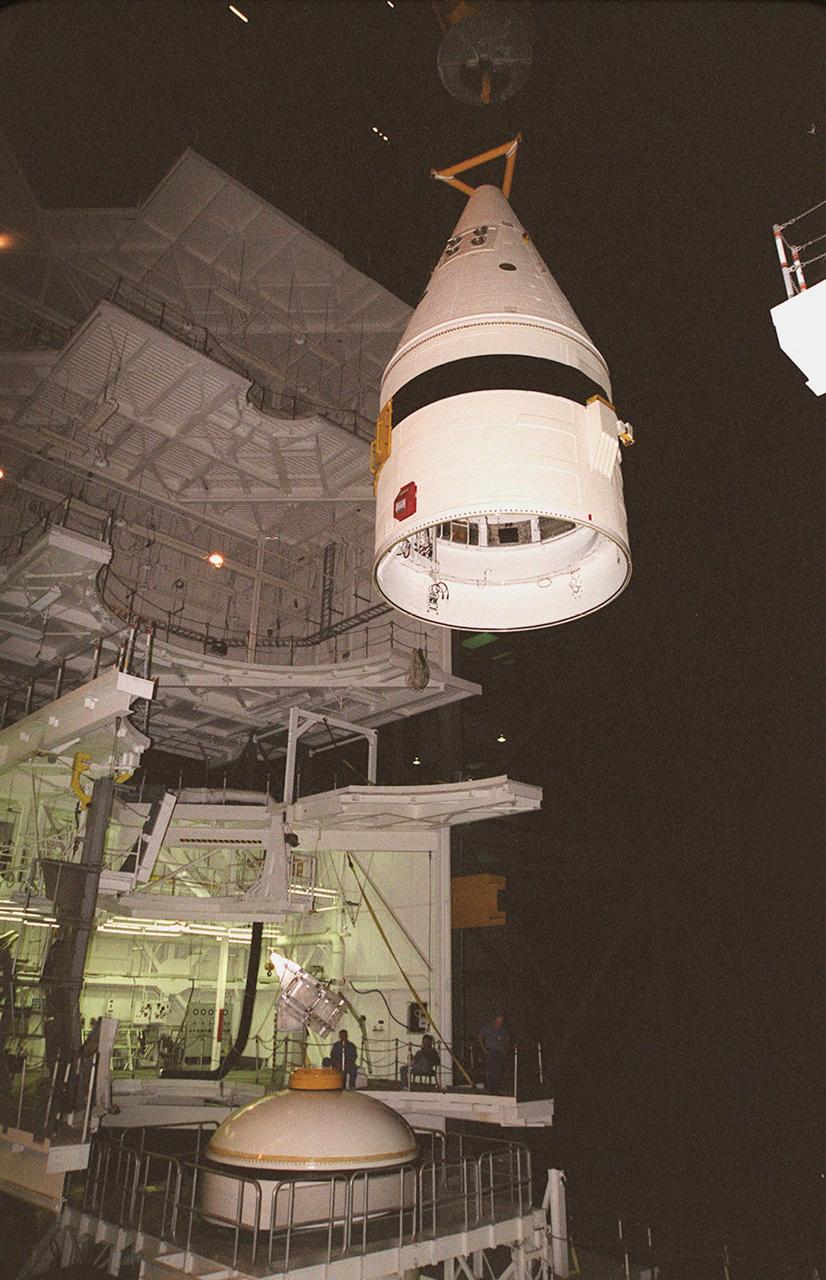
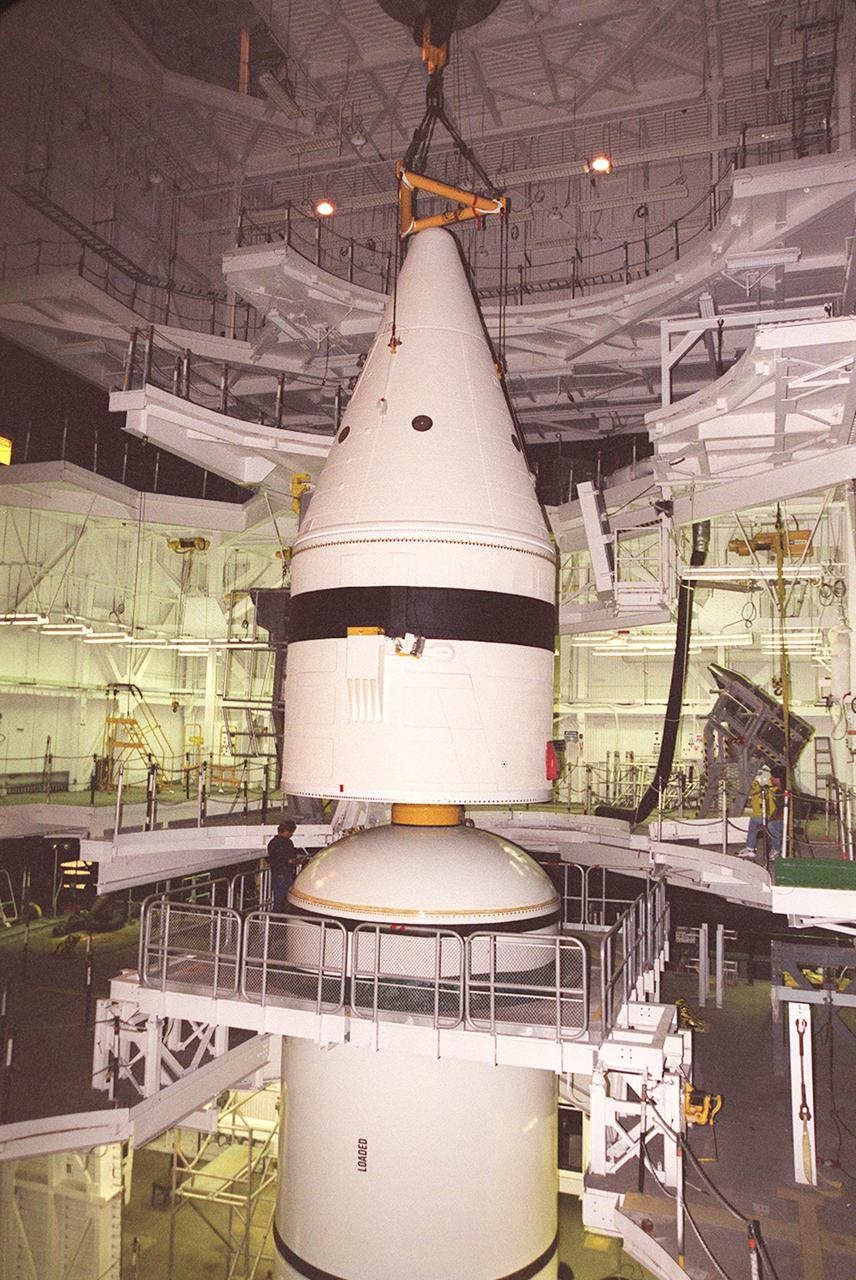
KENNEDY SPACE CENTER, FLA. -  In the Vehicle Assembly Building, after being removed from the solid rocket booster (SRB), the forward assembly is lowered toward a transporter below in the transfer aisle.  The destacking is part of time and cycle activities.  The SRB was part of the stack on Atlantis originally scheduled for a March 1, 2003, launch on mission STS-114.  The SRBs and external tank were demated in February 2003.   The mission is now scheduled to occur no earlier than Sept. 12, 2004, on Atlantis.
KENNEDY SPACE CENTER, FLA. - In the Vehicle Assembly Building, after being removed from the solid rocket booster (SRB), the forward assembly is lowered toward a transporter below in the transfer aisle. The destacking is part of time and cycle activities. The SRB was part of the stack on Atlantis originally scheduled for a March 1, 2003, launch on mission STS-114. The SRBs and external tank were demated in February 2003. The mission is now scheduled to occur no earlier than Sept. 12, 2004, on Atlantis.
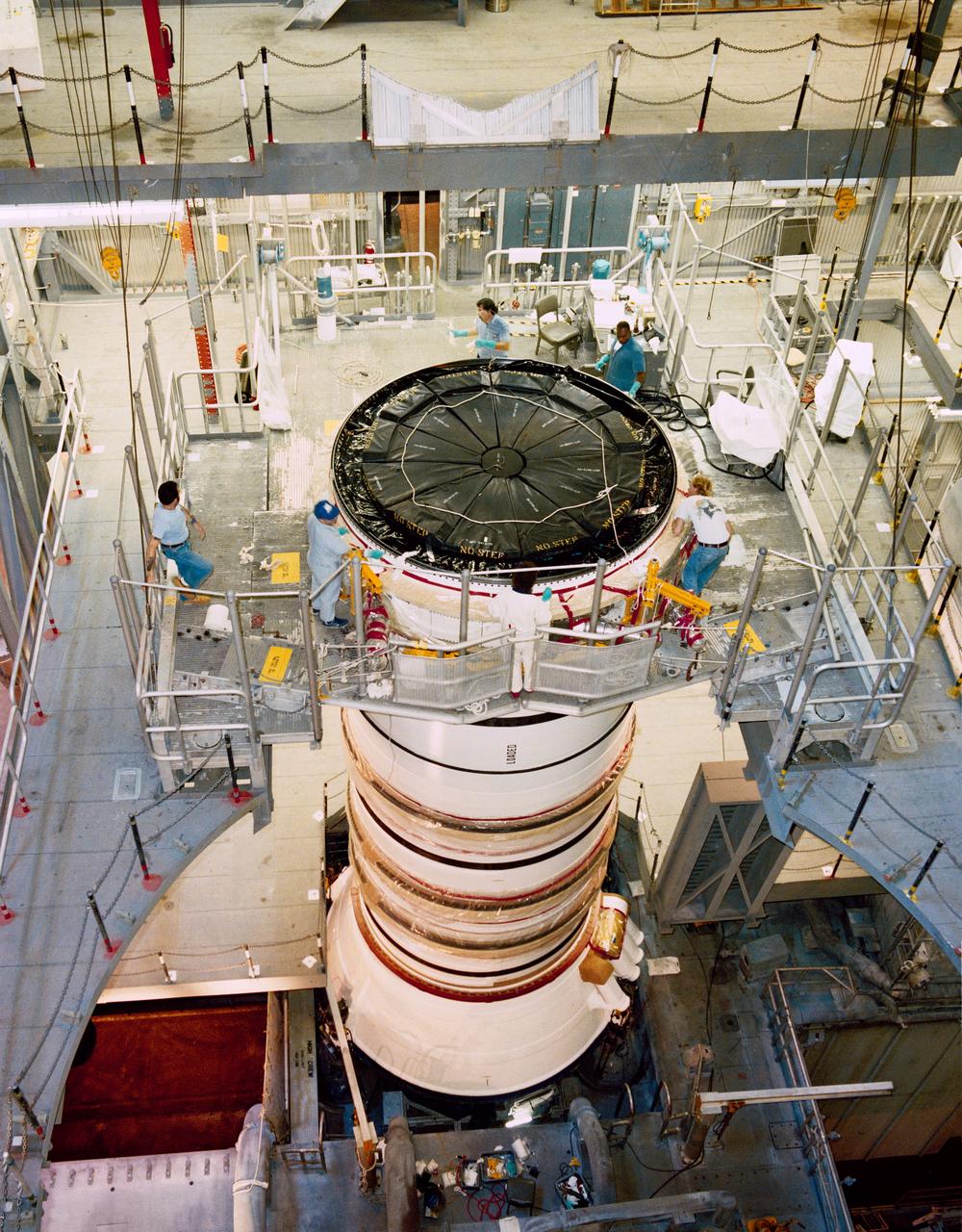
KENNEDY SPACE CENTER, FLA. -  In the Vehicle Assembly Building, KSC employees help guide the destacking of the forward assembly (nose cap and frustum) from a solid rocket booster (SRB) after the bolts were removedThe destacking is part of time and cycle activities.  The SRB was part of the stack on Atlantis originally scheduled for a March 1, 2003, launch on mission STS-114.  The SRBs and external tank were demated in February 2003.   The mission is now scheduled to occur no earlier than Sept. 12, 2004, on Atlantis.
KENNEDY SPACE CENTER, FLA. - In the Vehicle Assembly Building, KSC employees help guide the destacking of the forward assembly (nose cap and frustum) from a solid rocket booster (SRB) after the bolts were removedThe destacking is part of time and cycle activities. The SRB was part of the stack on Atlantis originally scheduled for a March 1, 2003, launch on mission STS-114. The SRBs and external tank were demated in February 2003. The mission is now scheduled to occur no earlier than Sept. 12, 2004, on Atlantis.
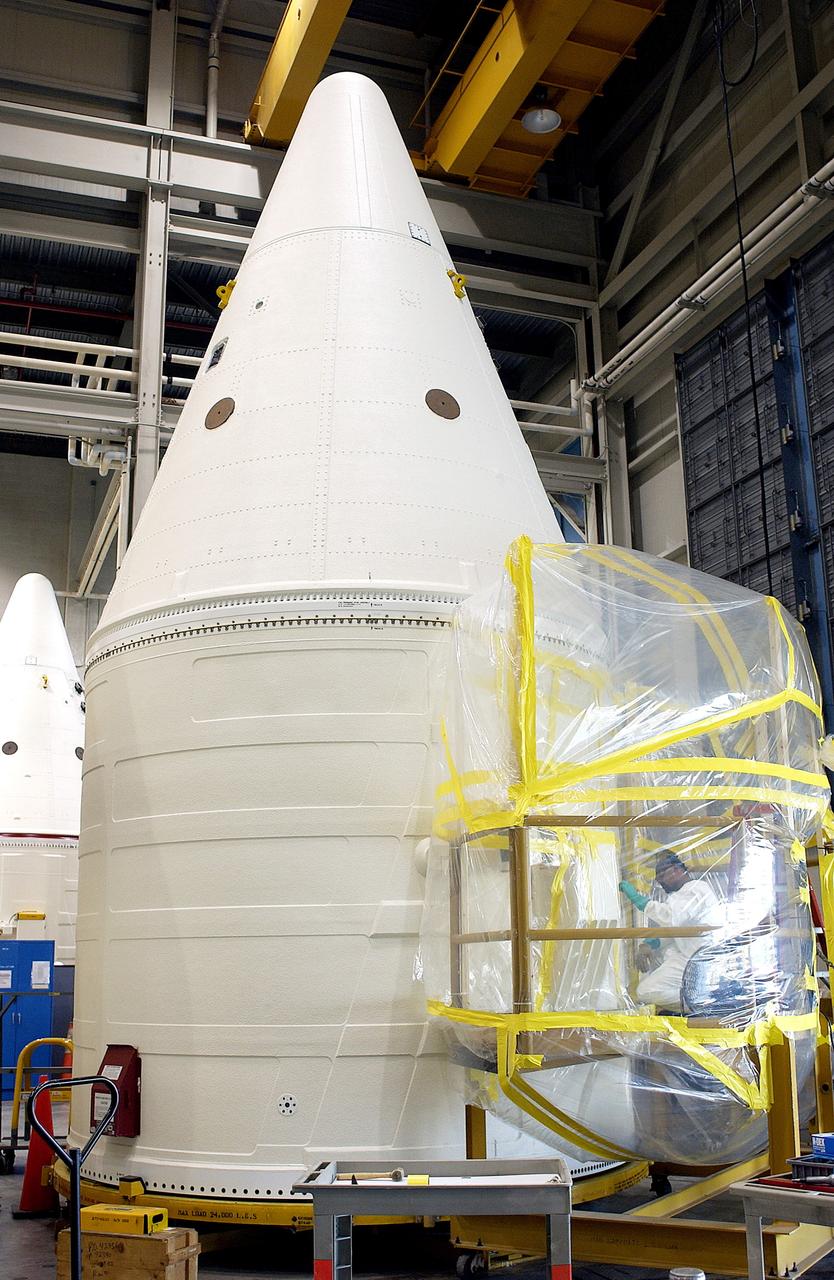
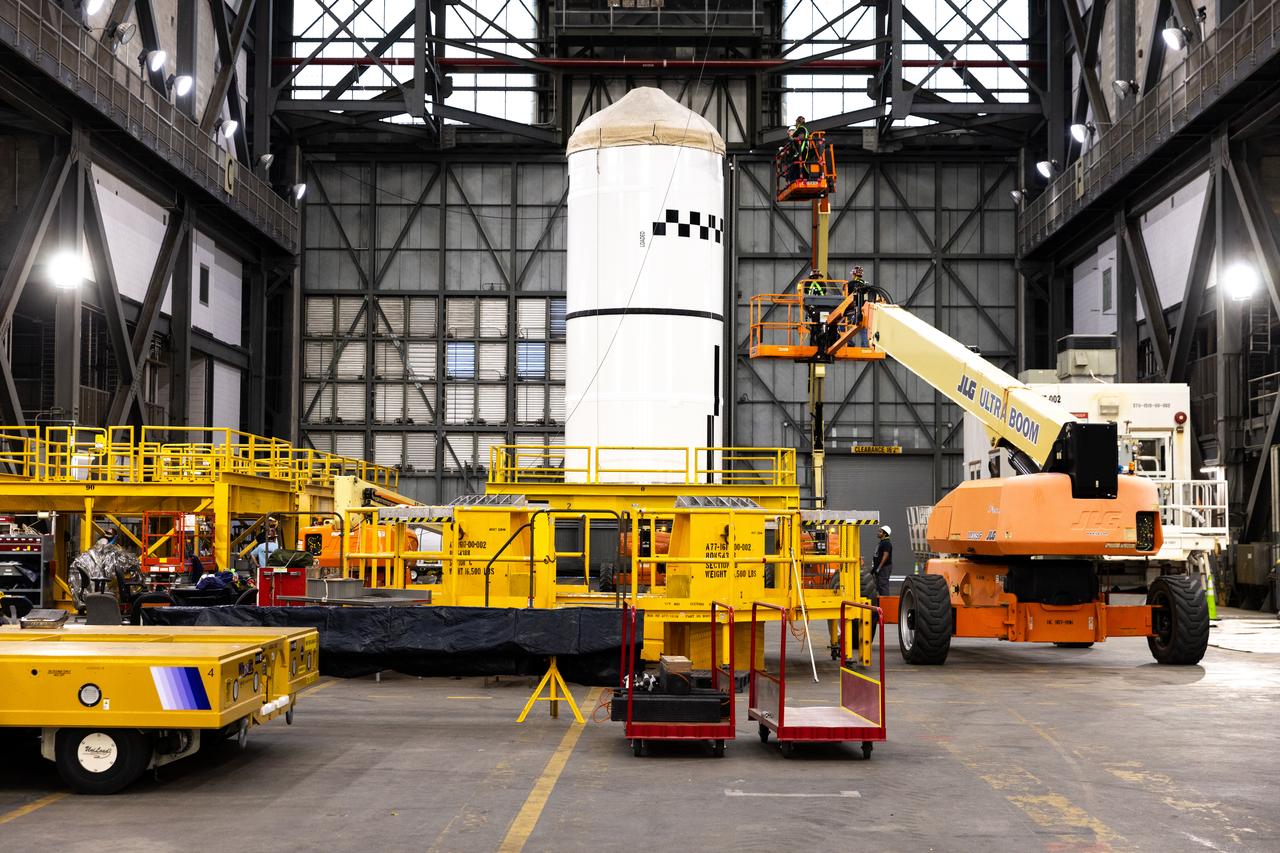
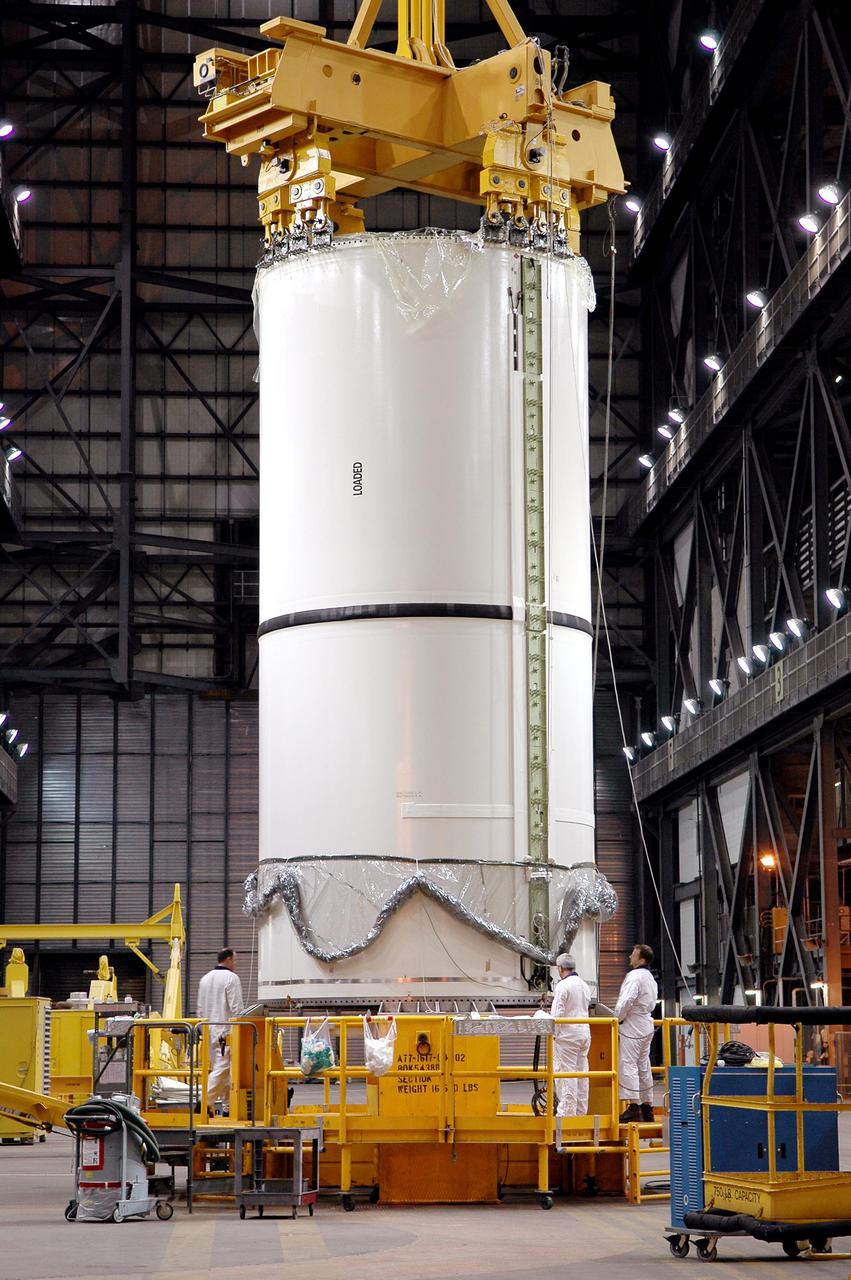
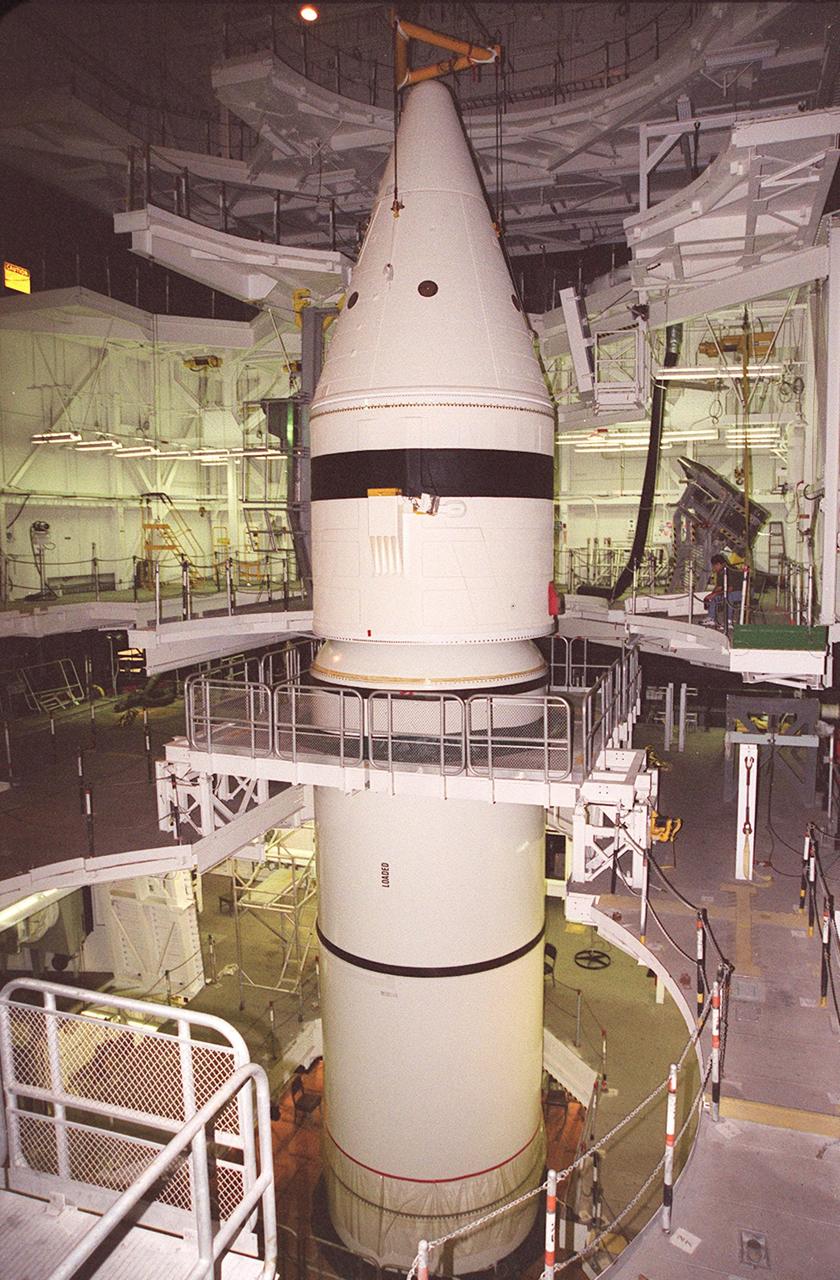
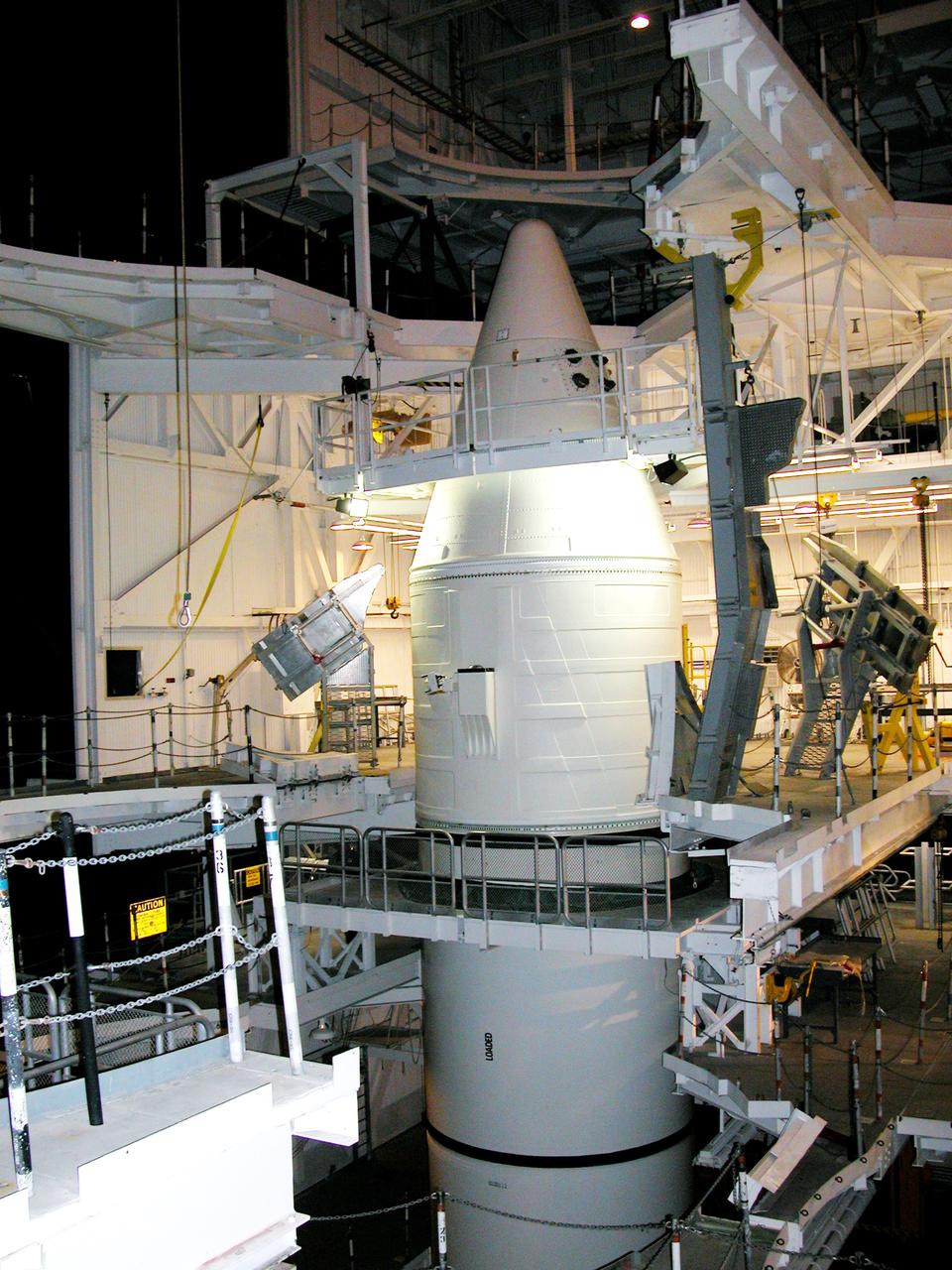
KENNEDY SPACE CENTER, FLA. -  In the Vehicle Assembly Building, the forward assembly of this solid rocket booster (SRB) is ready for destacking, part of time and cycle activities. The SRB was part of the stack on Atlantis originally scheduled for a March 1, 2003, launch on mission STS-114.  The SRBs and external tank were demated in February 2003.  STS-114 is now scheduled to occur no earlier than Sept. 12, 2004, on Atlantis.
KENNEDY SPACE CENTER, FLA. - In the Vehicle Assembly Building, the forward assembly of this solid rocket booster (SRB) is ready for destacking, part of time and cycle activities. The SRB was part of the stack on Atlantis originally scheduled for a March 1, 2003, launch on mission STS-114. The SRBs and external tank were demated in February 2003. STS-114 is now scheduled to occur no earlier than Sept. 12, 2004, on Atlantis.
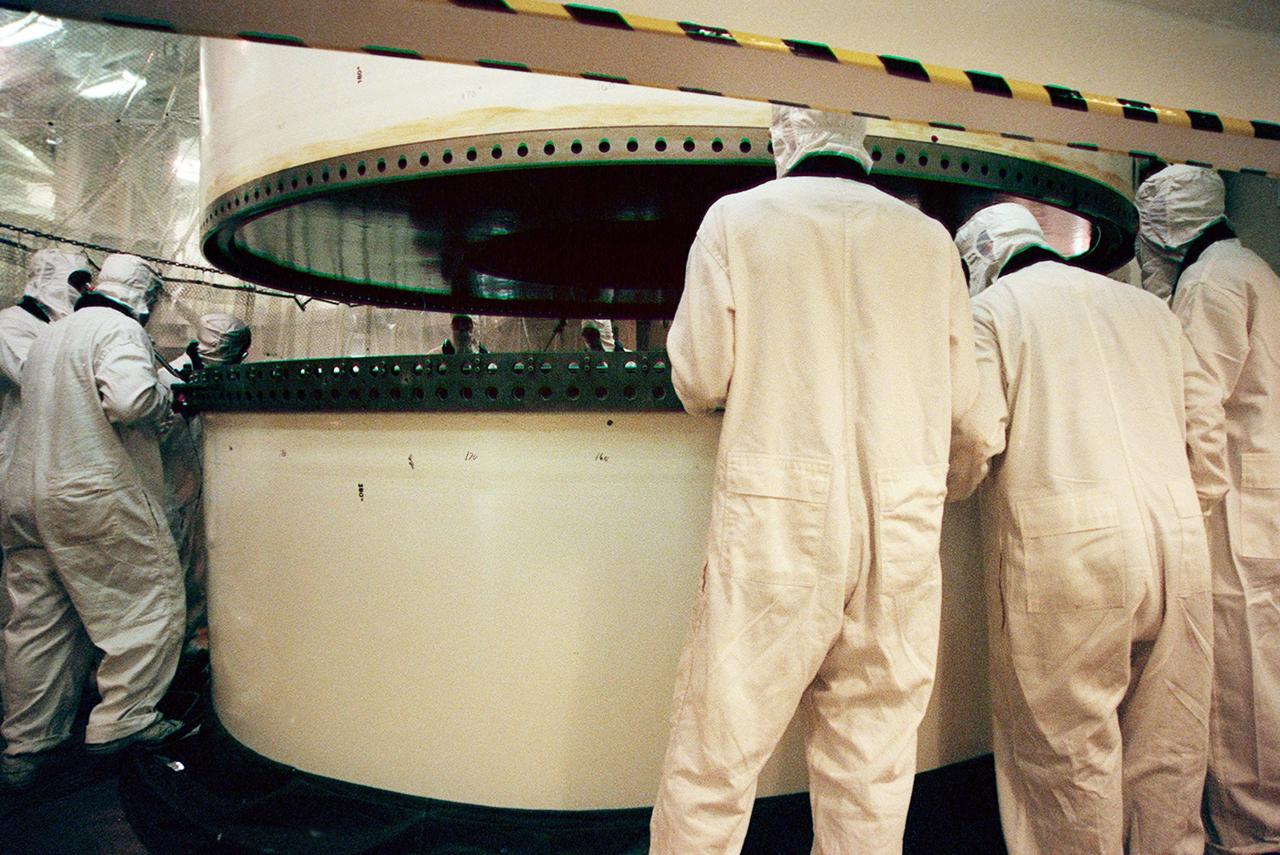
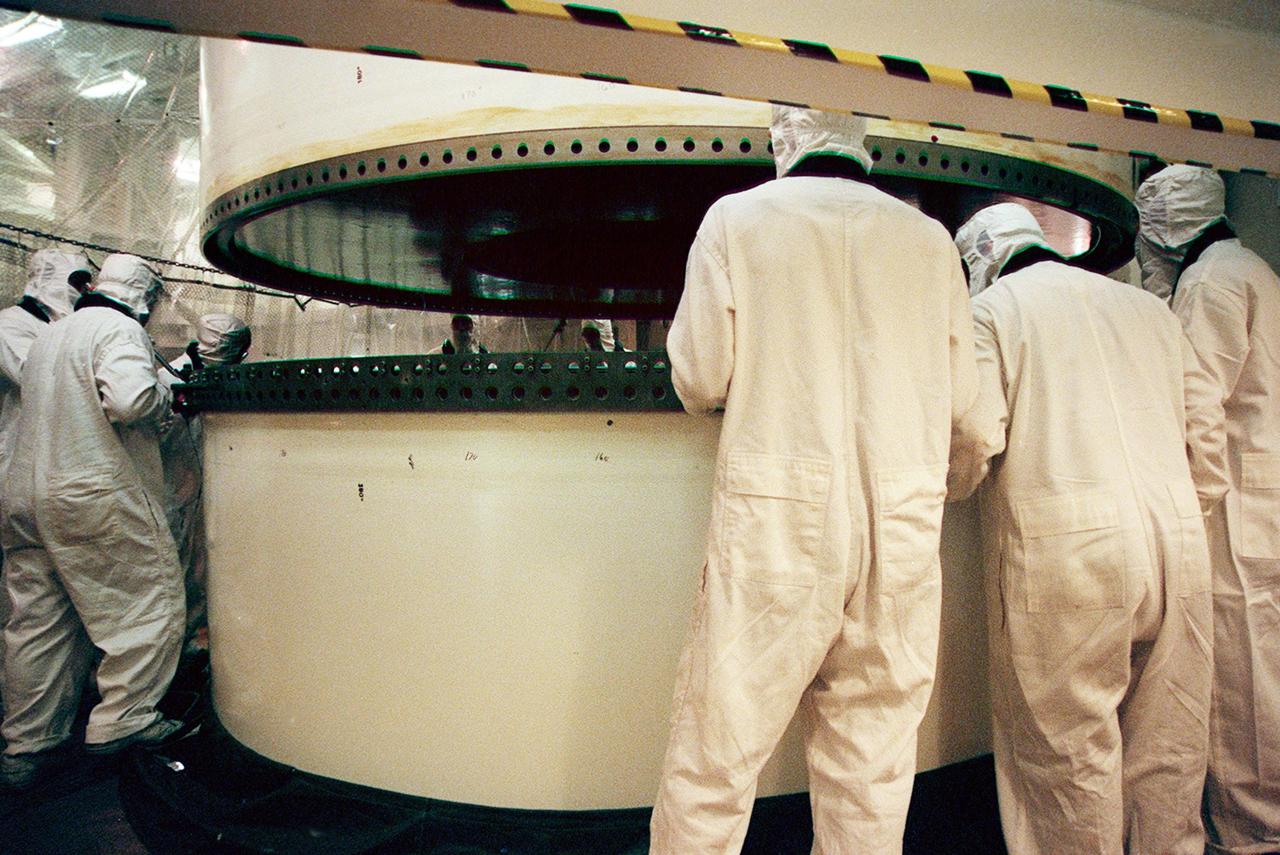
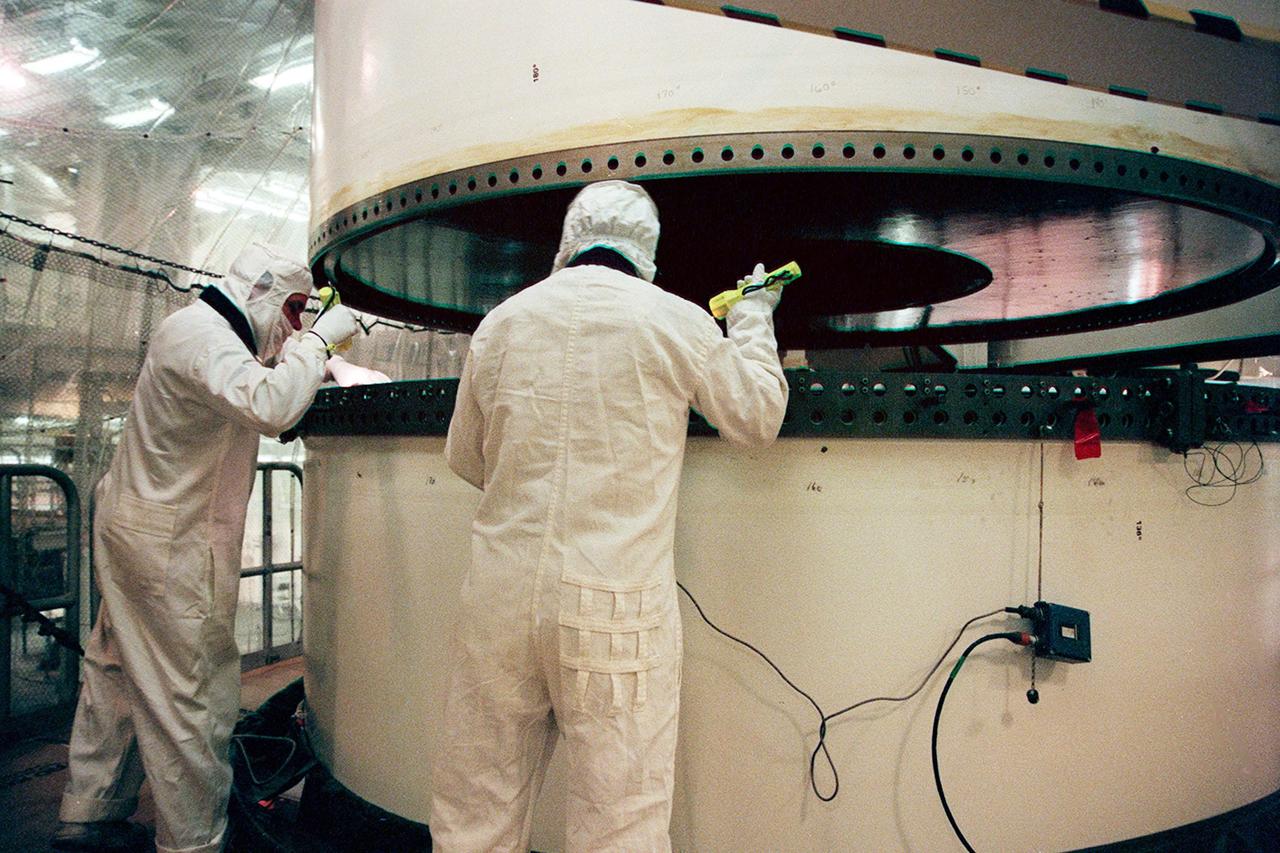
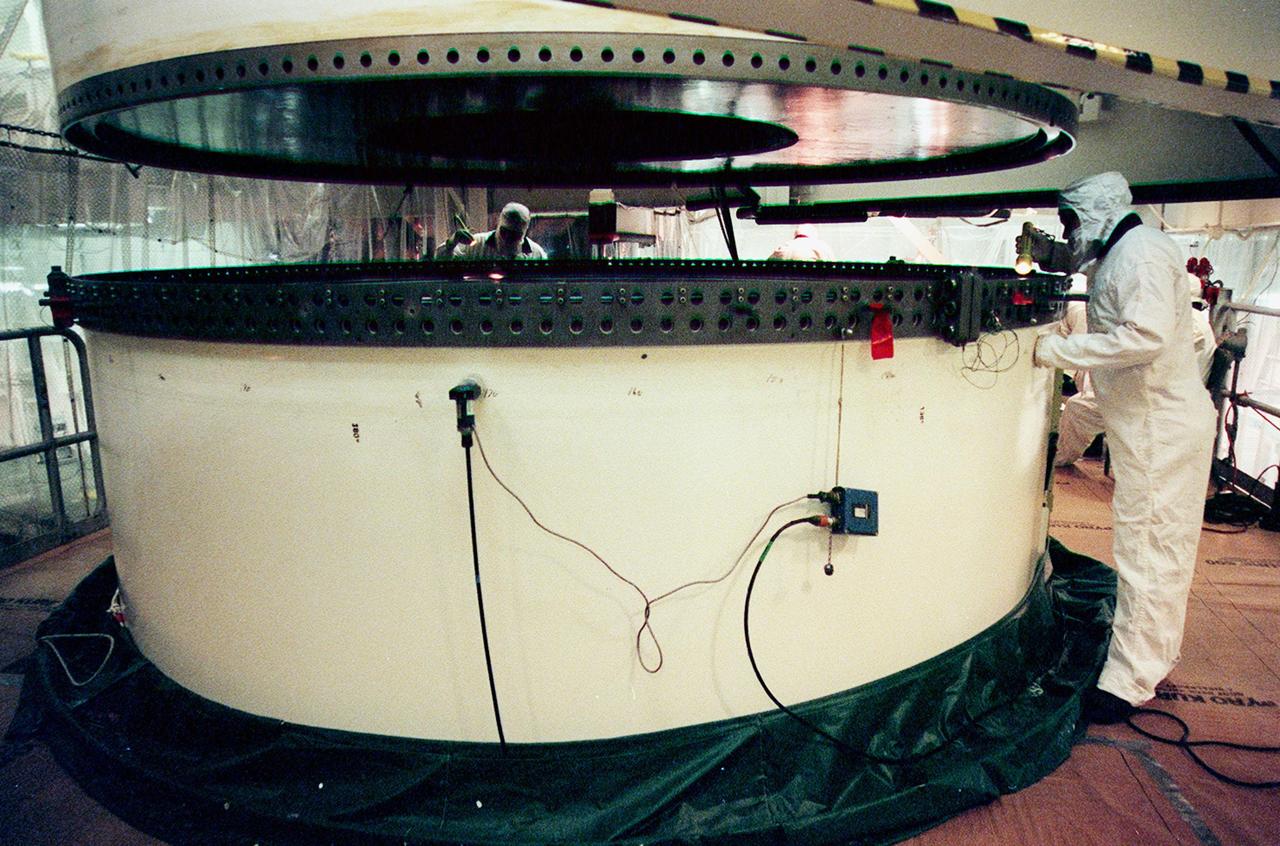
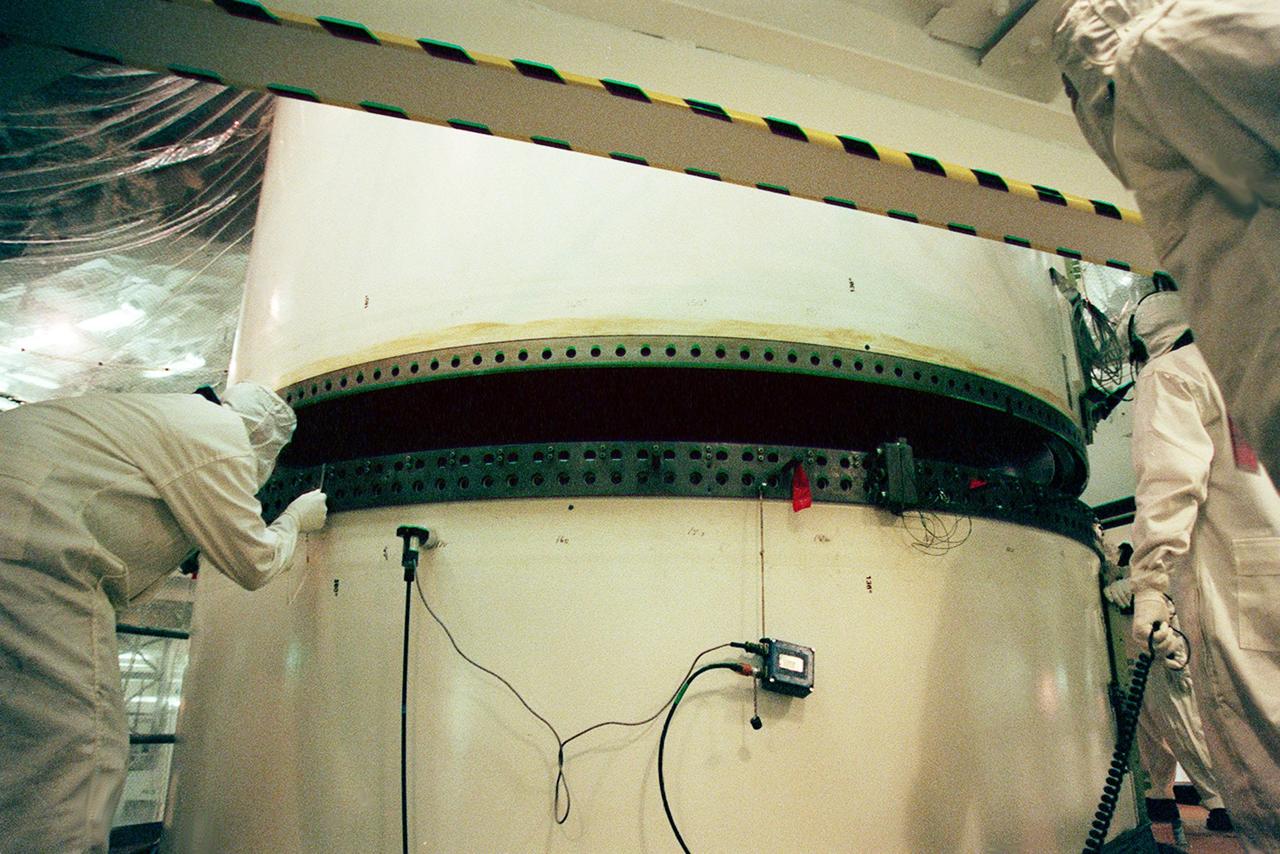
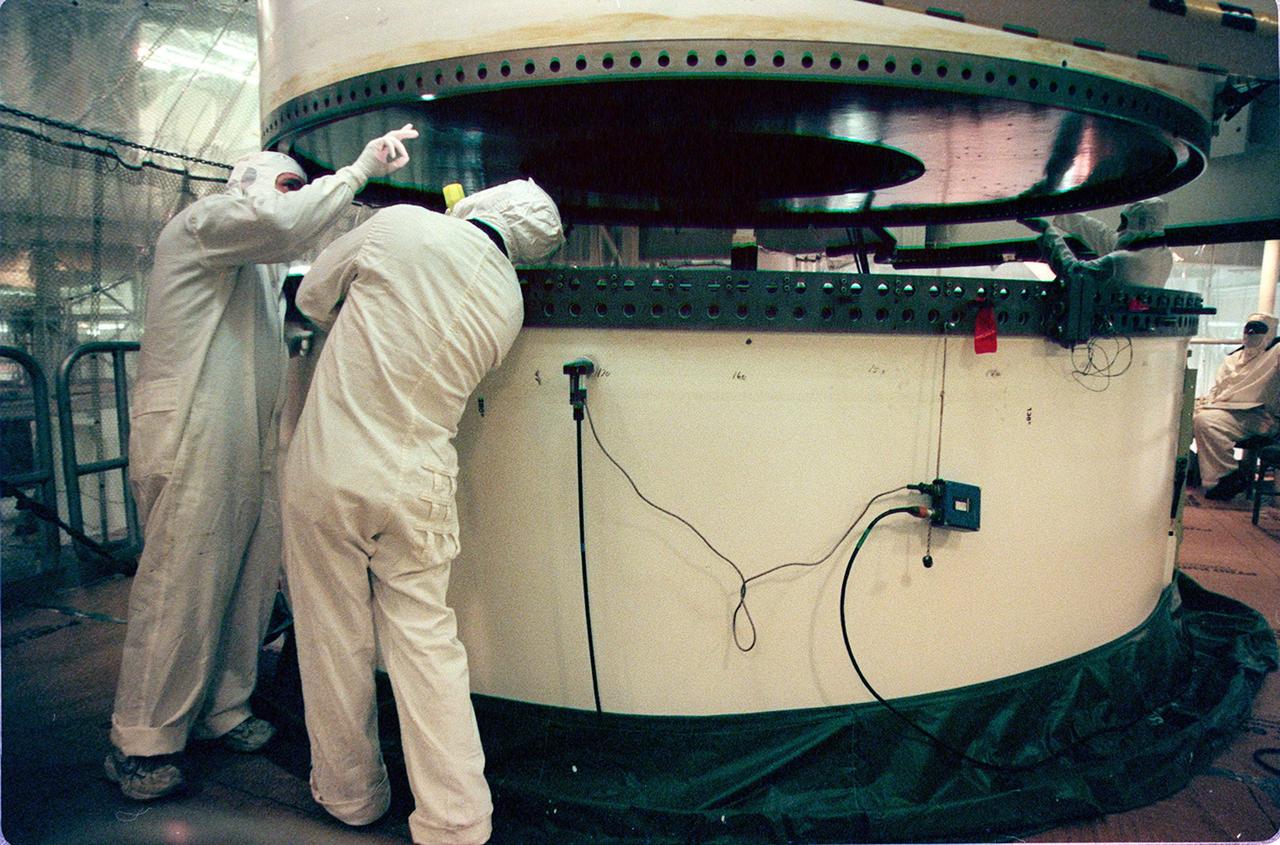
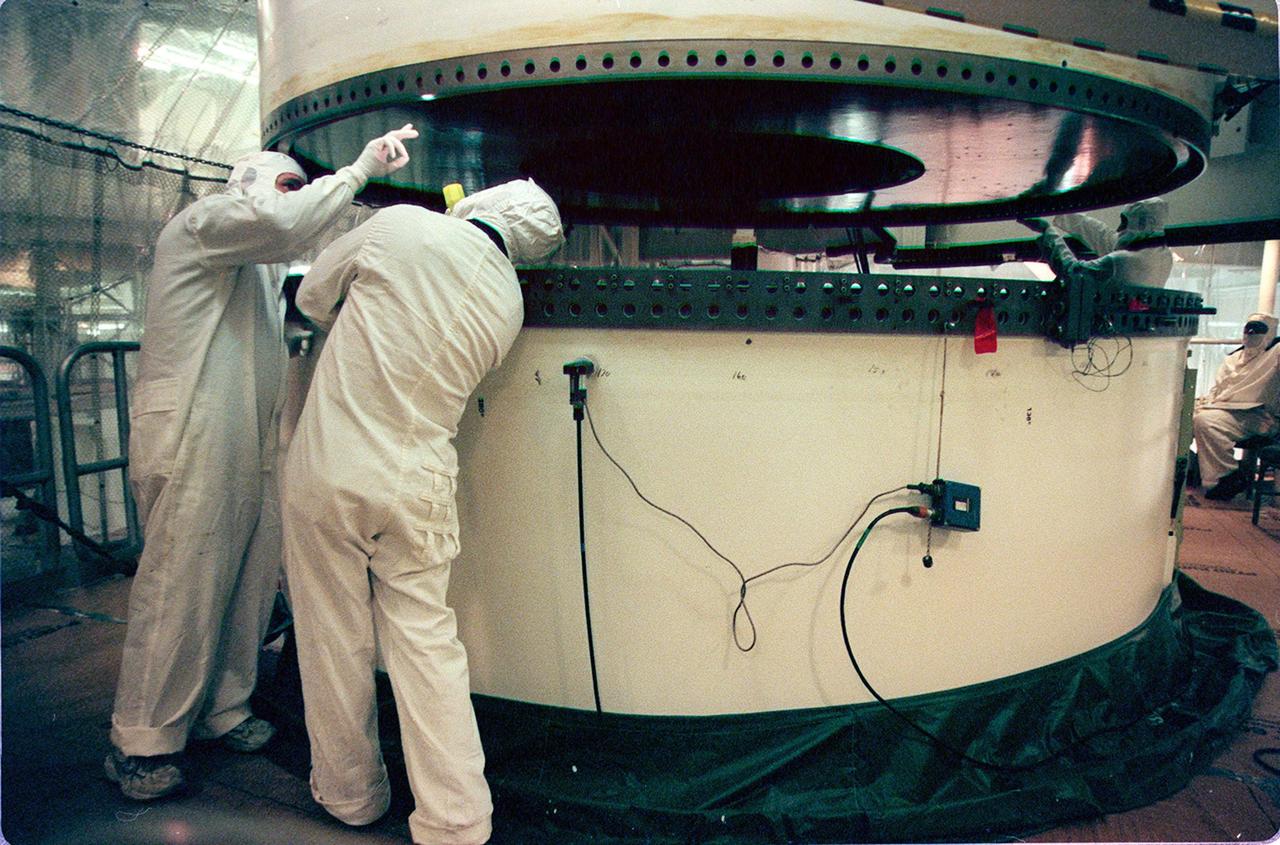
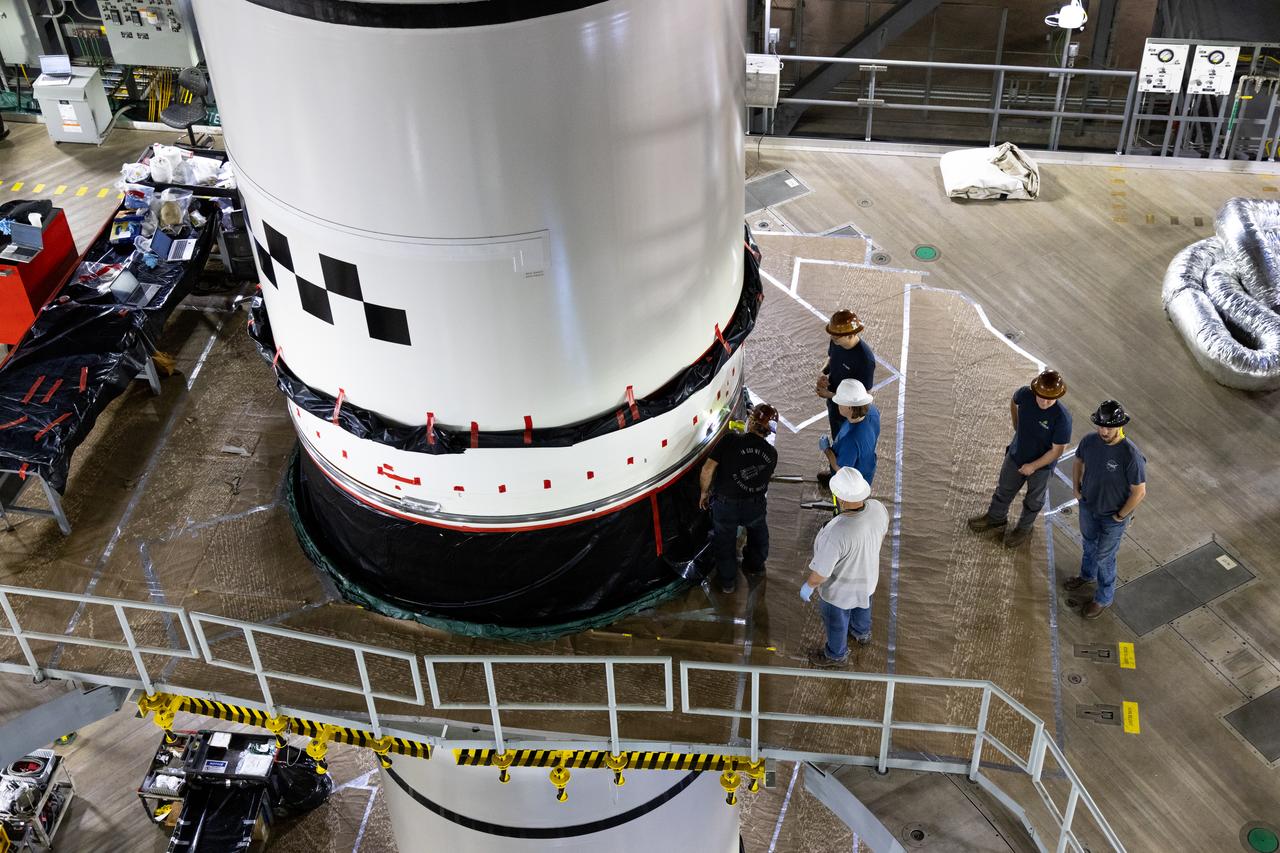
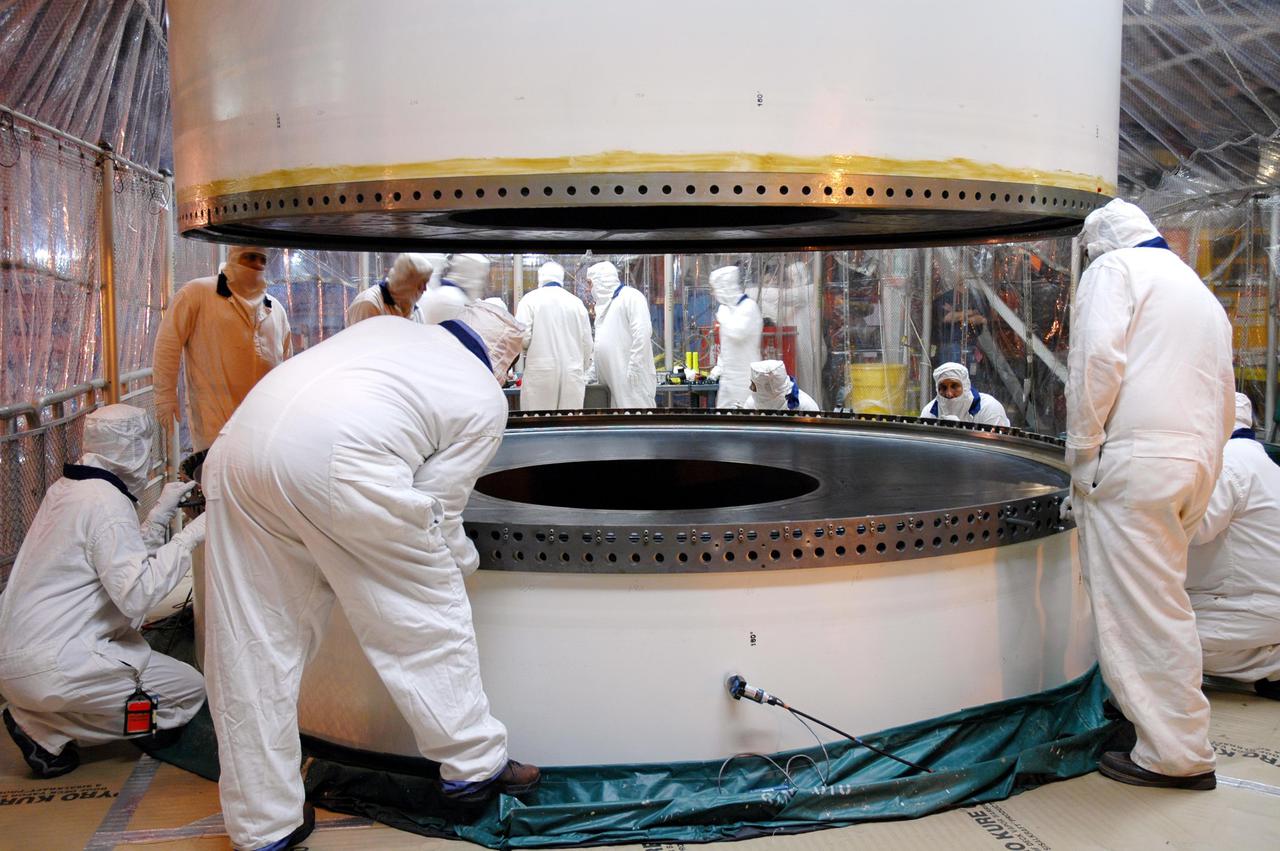
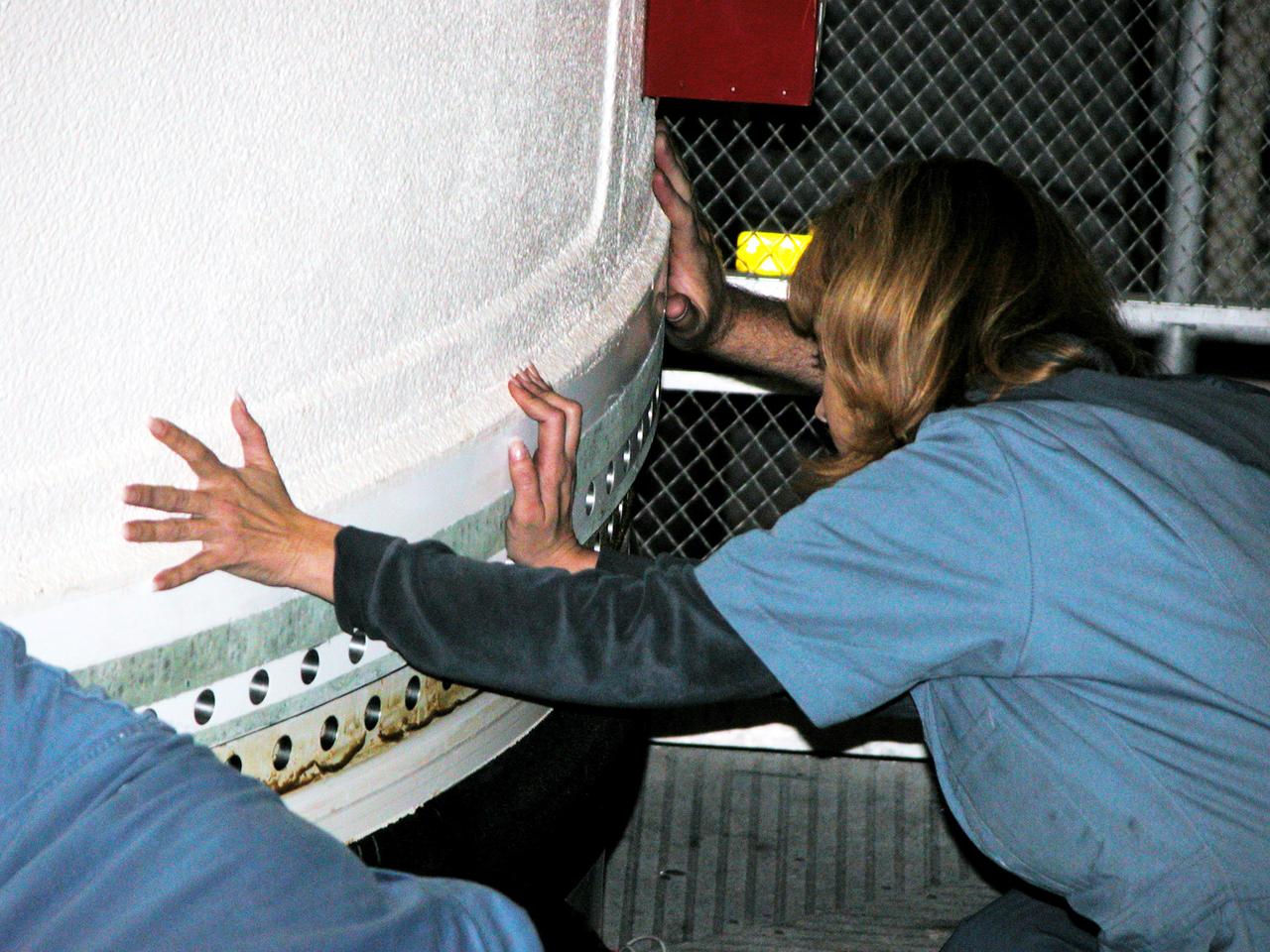
KENNEDY SPACE CENTER, FLA. -  In the Vehicle Assembly Building, a KSC employee separates the forward assembly (nose cap and frustum) from a solid rocket booster (SRB) after removing the bolts.  The destacking is part of time and cycle activities.  The SRB was part of the stack on Atlantis originally scheduled for a March 1, 2003, launch on mission STS-114.  The SRBs and external tank were demated in February 2003.   The mission is now scheduled to occur no earlier than Sept. 12, 2004, on Atlantis.
KENNEDY SPACE CENTER, FLA. - In the Vehicle Assembly Building, a KSC employee separates the forward assembly (nose cap and frustum) from a solid rocket booster (SRB) after removing the bolts. The destacking is part of time and cycle activities. The SRB was part of the stack on Atlantis originally scheduled for a March 1, 2003, launch on mission STS-114. The SRBs and external tank were demated in February 2003. The mission is now scheduled to occur no earlier than Sept. 12, 2004, on Atlantis.
KENNEDY SPACE CENTER, FLA. -  In the Vehicle Assembly Building, a KSC employee separates the forward assembly (nose cap and frustum) from a solid rocket booster (SRB) after the bolts were removed.  The destacking is part of time and cycle activities.  The SRB was part of the stack on Atlantis originally scheduled for a March 1, 2003, launch on mission STS-114.  The SRBs and external tank were demated in February 2003.   The mission is now scheduled to occur no earlier than Sept. 12, 2004, on Atlantis.
KENNEDY SPACE CENTER, FLA. - In the Vehicle Assembly Building, a KSC employee separates the forward assembly (nose cap and frustum) from a solid rocket booster (SRB) after the bolts were removed. The destacking is part of time and cycle activities. The SRB was part of the stack on Atlantis originally scheduled for a March 1, 2003, launch on mission STS-114. The SRBs and external tank were demated in February 2003. The mission is now scheduled to occur no earlier than Sept. 12, 2004, on Atlantis.
KENNEDY SPACE CENTER, FLA. - On a drawing of a solid rocket booster (SRB), Mark Northcraft, with United Space Alliance, points to the spot where a parachute camera will be installed, on the forward skirt of the SRB.  The work is being done in the Solid Rocket Booster Assembly and Refurbishment Facility, which routinely carries out refurbishment and subassembly of Shuttle SRB hardware.
KENNEDY SPACE CENTER, FLA. - On a drawing of a solid rocket booster (SRB), Mark Northcraft, with United Space Alliance, points to the spot where a parachute camera will be installed, on the forward skirt of the SRB. The work is being done in the Solid Rocket Booster Assembly and Refurbishment Facility, which routinely carries out refurbishment and subassembly of Shuttle SRB hardware.
KENNEDY SPACE CENTER, FLA. -  In the Vehicle Assembly Building, the forward assembly (nose cap and frustum) is lifted away from the solid rocket booster (SRBThe destacking is part of time and cycle activities.  The SRB was part of the stack on Atlantis originally scheduled for a March 1, 2003, launch on mission STS-114.  The SRBs and external tank were demated in February 2003.   The mission is now scheduled to occur no earlier than Sept. 12, 2004, on Atlantis.
KENNEDY SPACE CENTER, FLA. - In the Vehicle Assembly Building, the forward assembly (nose cap and frustum) is lifted away from the solid rocket booster (SRBThe destacking is part of time and cycle activities. The SRB was part of the stack on Atlantis originally scheduled for a March 1, 2003, launch on mission STS-114. The SRBs and external tank were demated in February 2003. The mission is now scheduled to occur no earlier than Sept. 12, 2004, on Atlantis.
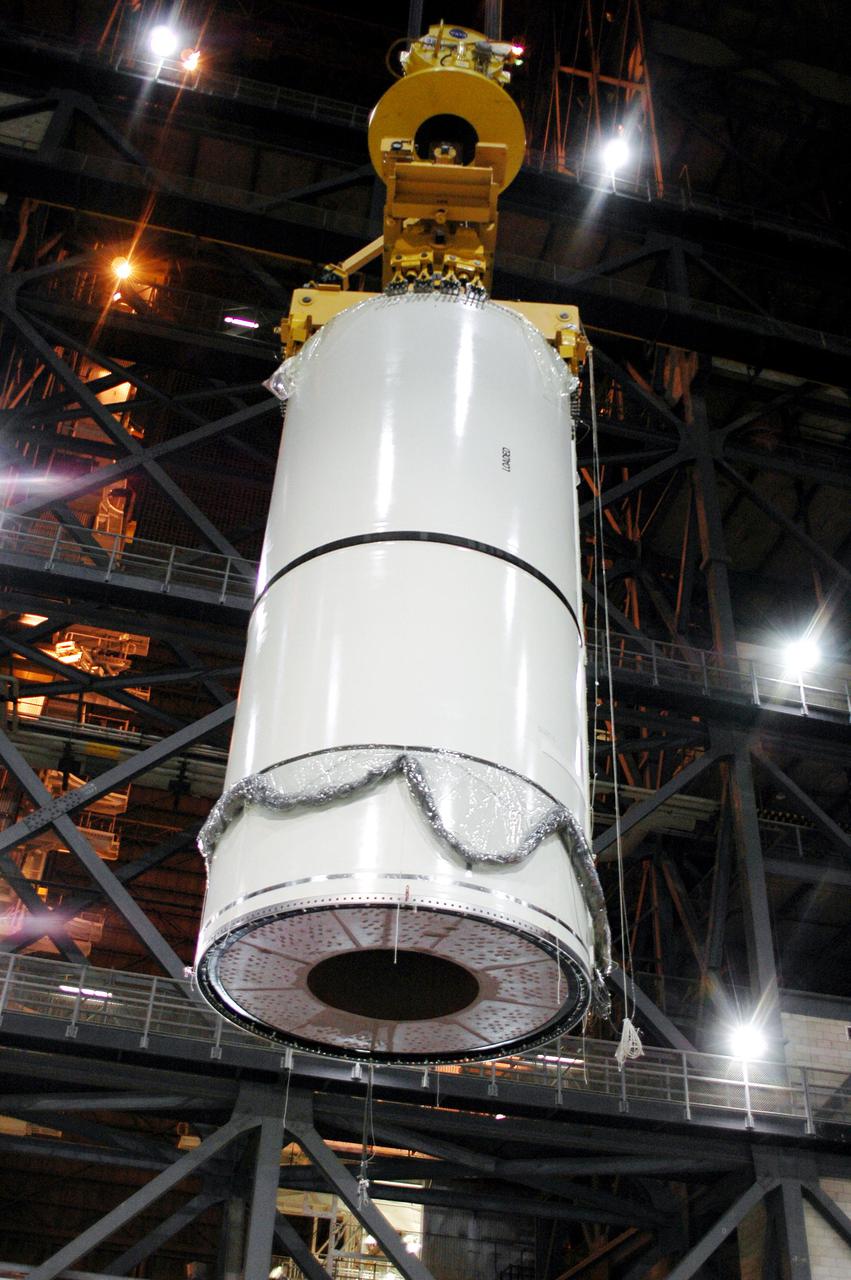
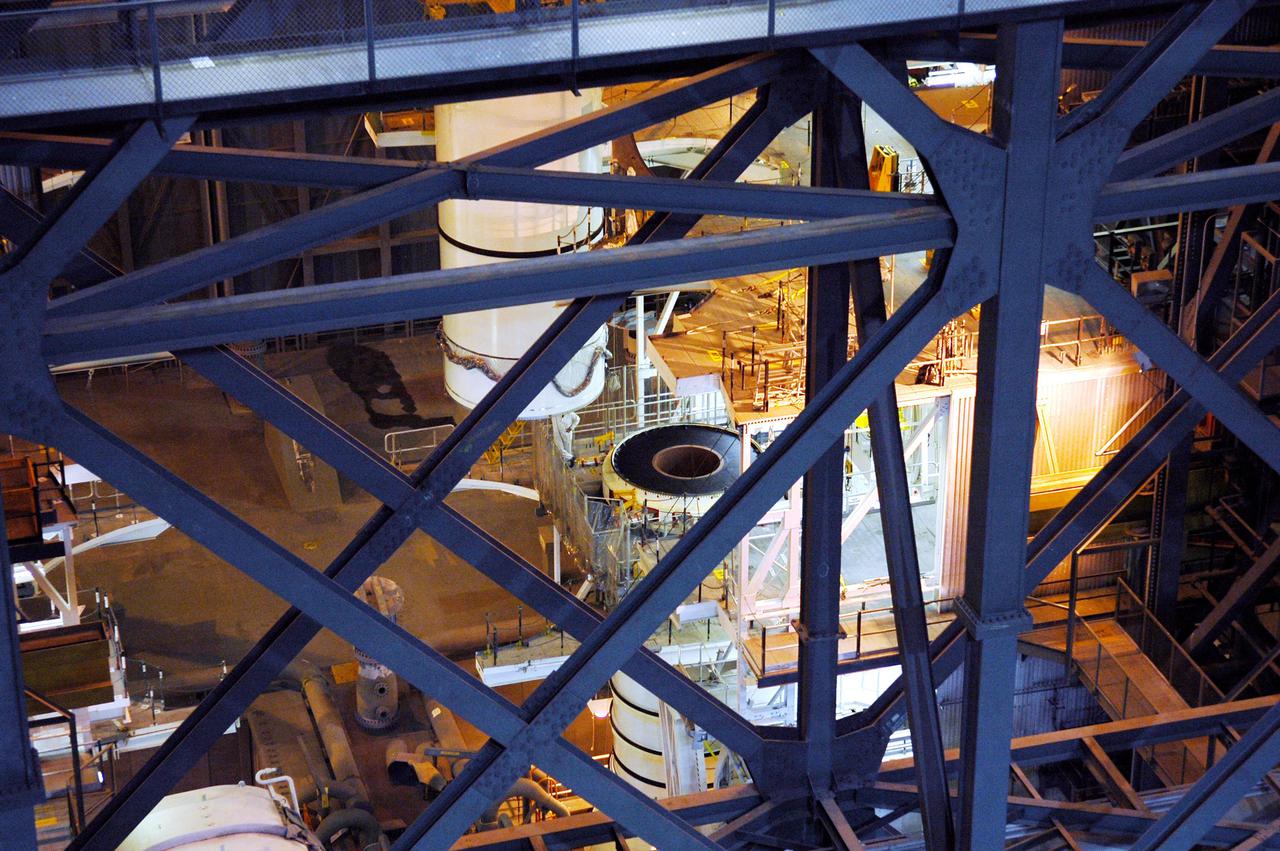
KENNEDY SPACE CENTER, FLA. -  The external tank in the Vehicle Assembly Building (VAB) is destacked from the solid rocket boosters.  The tank and SRBs were configured for Atlantis and mission STS-114.  The tank will remain in the VAB.
KENNEDY SPACE CENTER, FLA. - The external tank in the Vehicle Assembly Building (VAB) is destacked from the solid rocket boosters. The tank and SRBs were configured for Atlantis and mission STS-114. The tank will remain in the VAB.
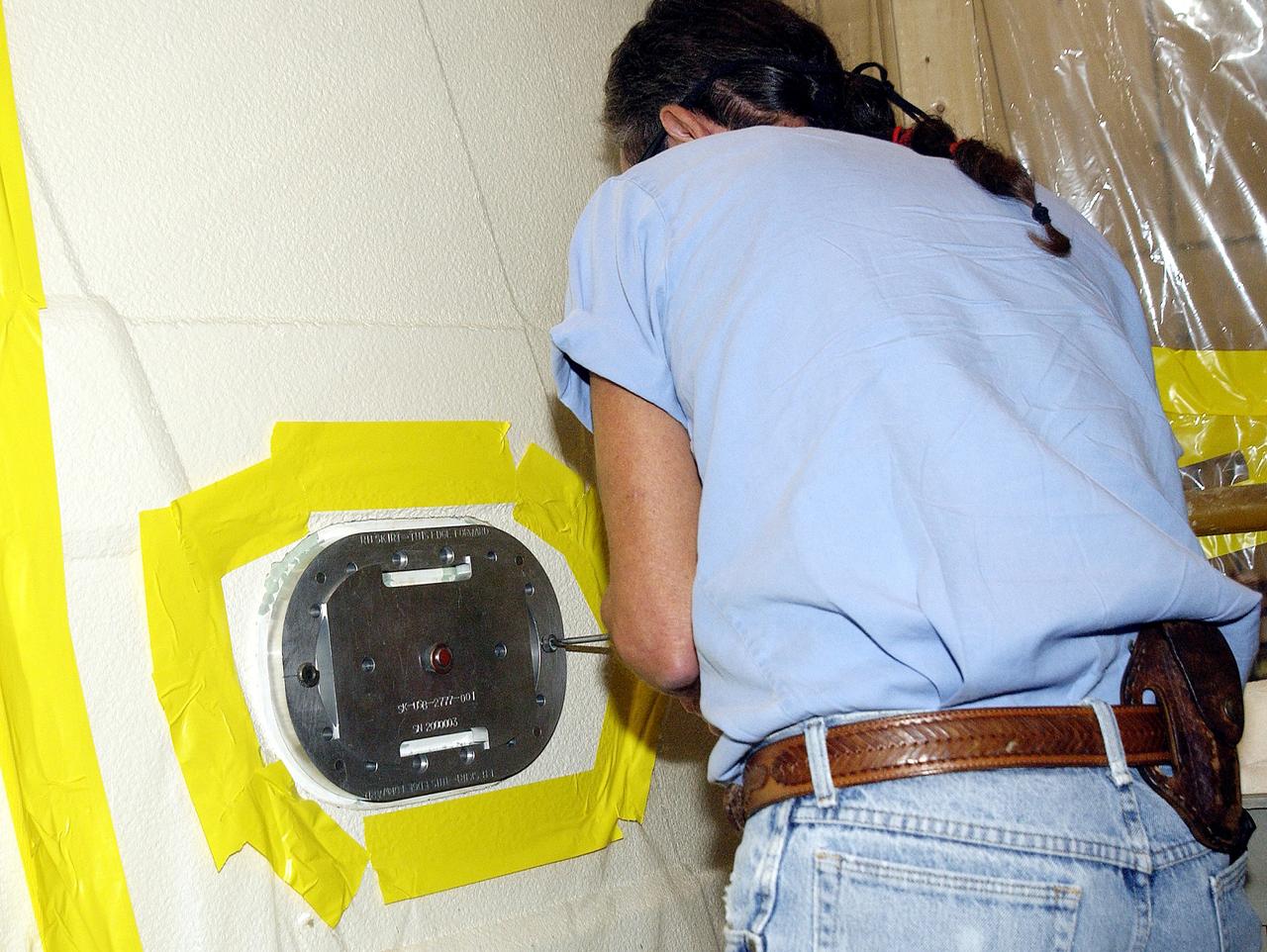
KENNEDY SPACE CENTER, FLA. -  In the Solid Rocket Booster Assembly and Refurbishment Facility (ARF), Donnie Cardigan, with United Space Alliance,  installs the parachute camera on the solid rocket booster forward skirt.  Refurbishment and subassembly of Shuttle SRB hardware - primarily the forward and aft assemblies - is carried out in the ARF.
KENNEDY SPACE CENTER, FLA. - In the Solid Rocket Booster Assembly and Refurbishment Facility (ARF), Donnie Cardigan, with United Space Alliance, installs the parachute camera on the solid rocket booster forward skirt. Refurbishment and subassembly of Shuttle SRB hardware - primarily the forward and aft assemblies - is carried out in the ARF.
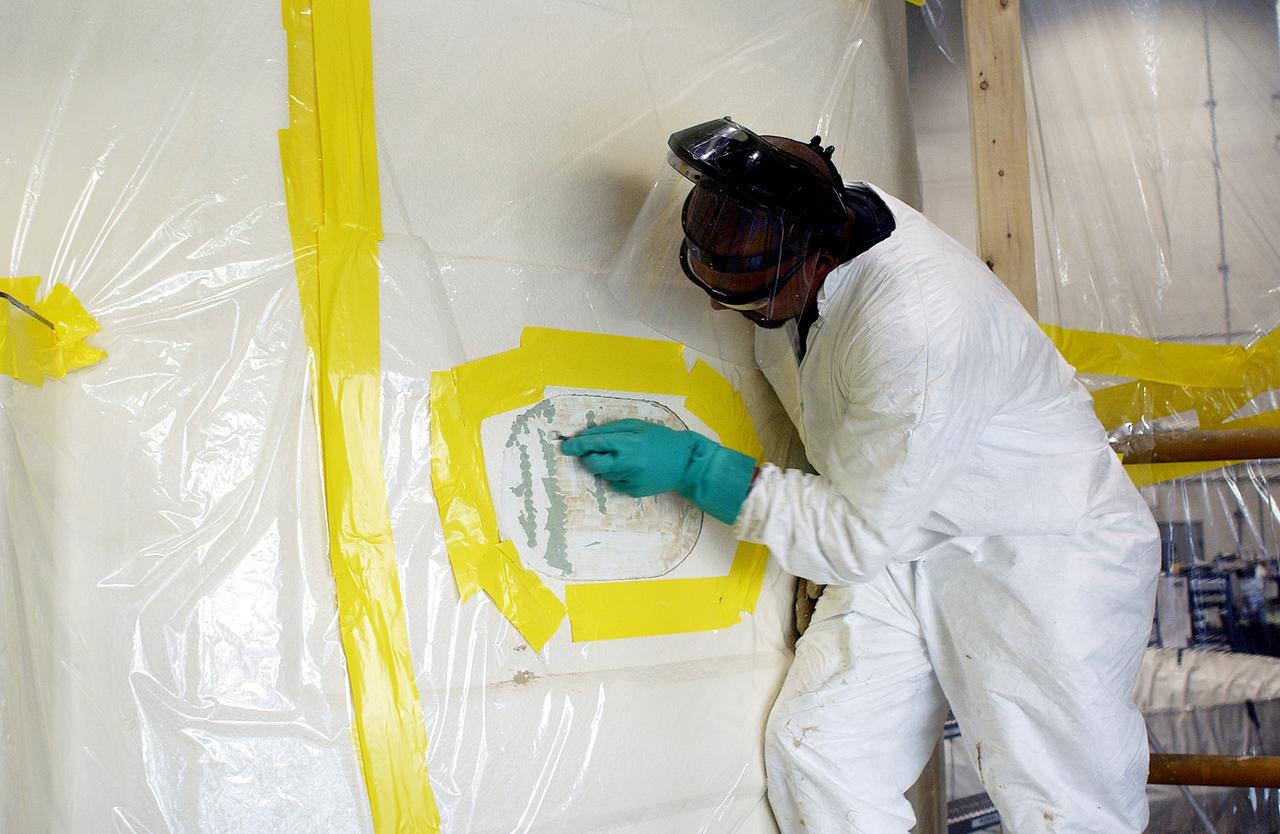
KENNEDY SPACE CENTER, FLA. - In the Solid Rocket Booster Assembly and Refurbishment Facility (ARF), Vernon Gibbs, with United Space Alliance, prepares the forward skirt of a solid rocket booster for installation of the parachute camera.  Refurbishment and subassembly of Shuttle SRB hardware - primarily the forward and aft assemblies - is carried out in the ARF.
KENNEDY SPACE CENTER, FLA. - In the Solid Rocket Booster Assembly and Refurbishment Facility (ARF), Vernon Gibbs, with United Space Alliance, prepares the forward skirt of a solid rocket booster for installation of the parachute camera. Refurbishment and subassembly of Shuttle SRB hardware - primarily the forward and aft assemblies - is carried out in the ARF.
KENNEDY SPACE CENTER, FLA. - In the Solid Rocket Booster Assembly and Refurbishment Facility (ARF), Vernon Gibbs, with United Space Alliance, prepares the forward skirt of a solid rocket booster for installation of the parachute camera.  Refurbishment and subassembly of Shuttle SRB hardware - primarily the forward and aft assemblies - is carried out in the ARF.
KENNEDY SPACE CENTER, FLA. - In the Solid Rocket Booster Assembly and Refurbishment Facility (ARF), Vernon Gibbs, with United Space Alliance, prepares the forward skirt of a solid rocket booster for installation of the parachute camera. Refurbishment and subassembly of Shuttle SRB hardware - primarily the forward and aft assemblies - is carried out in the ARF.
KENNEDY SPACE CENTER, FLA. - In the Solid Rocket Booster Assembly and Refurbishment Facility (ARF), Troy Krout, with United Space Alliance, works on positioning the parachute camera after installation on the solid rocket booster forward skirt.  Refurbishment and subassembly of Shuttle SRB hardware - primarily the forward and aft assemblies - is carried out in the ARF.
KENNEDY SPACE CENTER, FLA. - In the Solid Rocket Booster Assembly and Refurbishment Facility (ARF), Troy Krout, with United Space Alliance, works on positioning the parachute camera after installation on the solid rocket booster forward skirt. Refurbishment and subassembly of Shuttle SRB hardware - primarily the forward and aft assemblies - is carried out in the ARF.
KENNEDY SPACE CENTER, FLA. -  In the Solid Rocket Booster Assembly and Refurbishment Facility (ARF), Vernon Gibbs, with United Space Alliance, prepares the forward skirt of a solid rocket booster for installation of the parachute camera.  Refurbishment and subassembly of Shuttle SRB hardware - primarily the forward and aft assemblies - is carried out in the ARF.
KENNEDY SPACE CENTER, FLA. - In the Solid Rocket Booster Assembly and Refurbishment Facility (ARF), Vernon Gibbs, with United Space Alliance, prepares the forward skirt of a solid rocket booster for installation of the parachute camera. Refurbishment and subassembly of Shuttle SRB hardware - primarily the forward and aft assemblies - is carried out in the ARF.
KENNEDY SPACE CENTER, FLA. -  Mark Northcraft adjusts the position of the parachute camera just installed on the solid rocket booster forward skirt in the Solid Rocket Booster Assembly and Refurbishment Facility (ARF).  Refurbishment and subassembly of Shuttle SRB hardware - primarily the forward and aft assemblies - is carried out in the ARF.
KENNEDY SPACE CENTER, FLA. - Mark Northcraft adjusts the position of the parachute camera just installed on the solid rocket booster forward skirt in the Solid Rocket Booster Assembly and Refurbishment Facility (ARF). Refurbishment and subassembly of Shuttle SRB hardware - primarily the forward and aft assemblies - is carried out in the ARF.
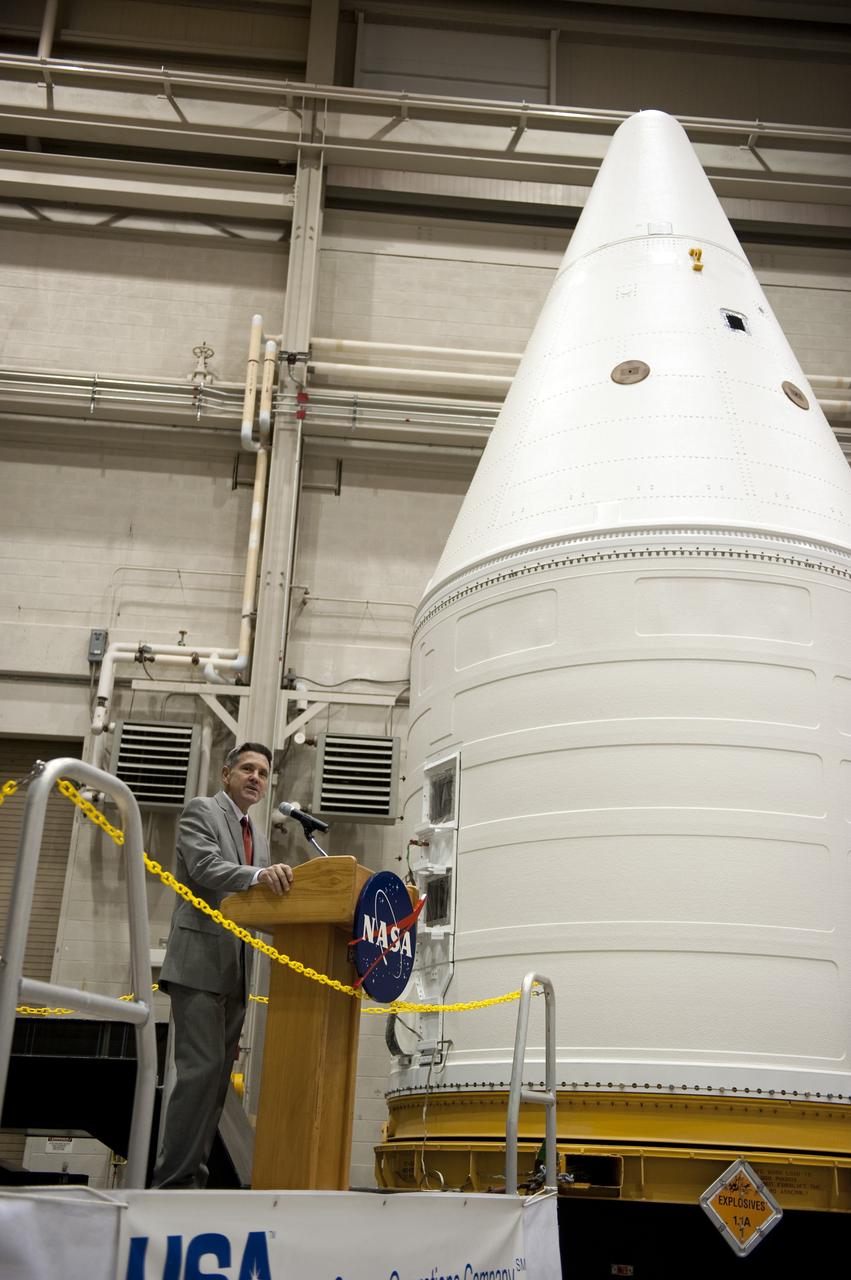
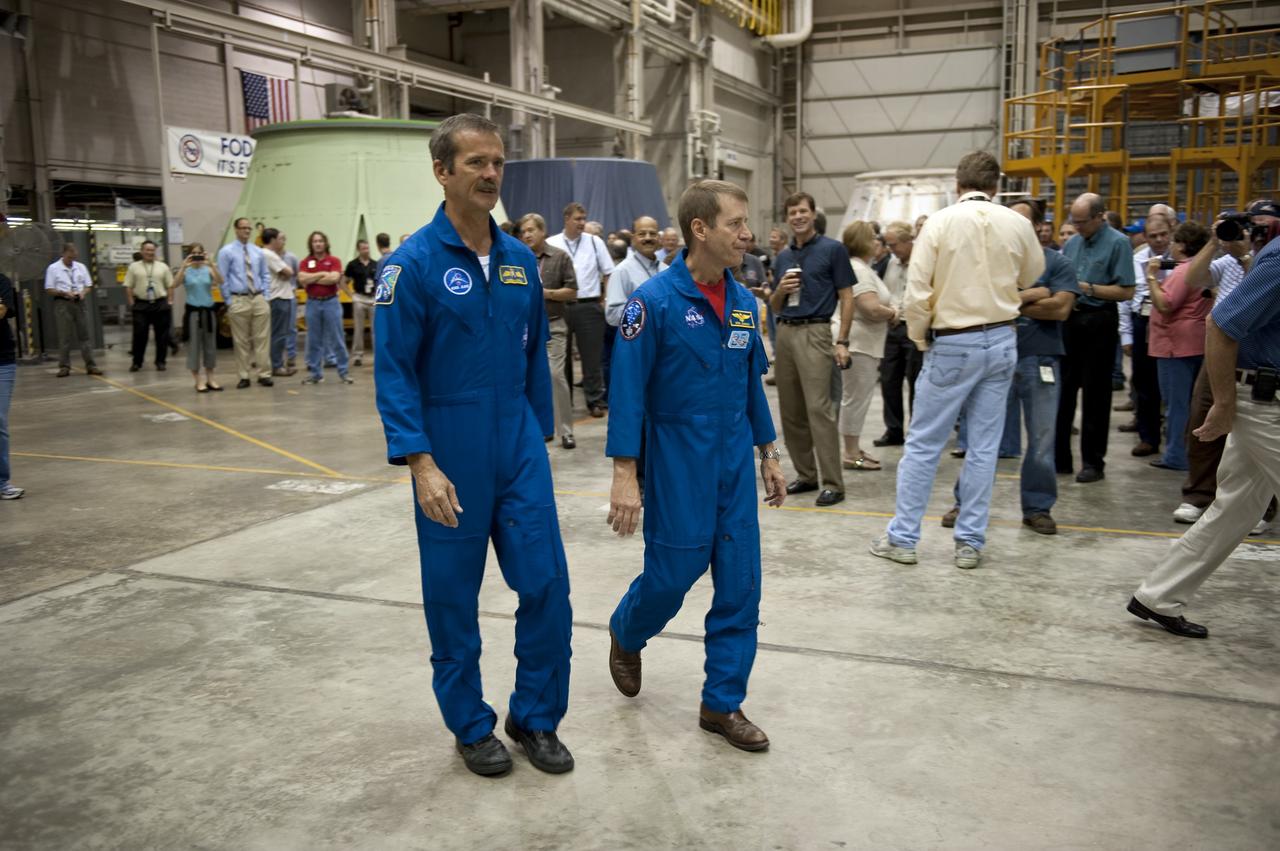
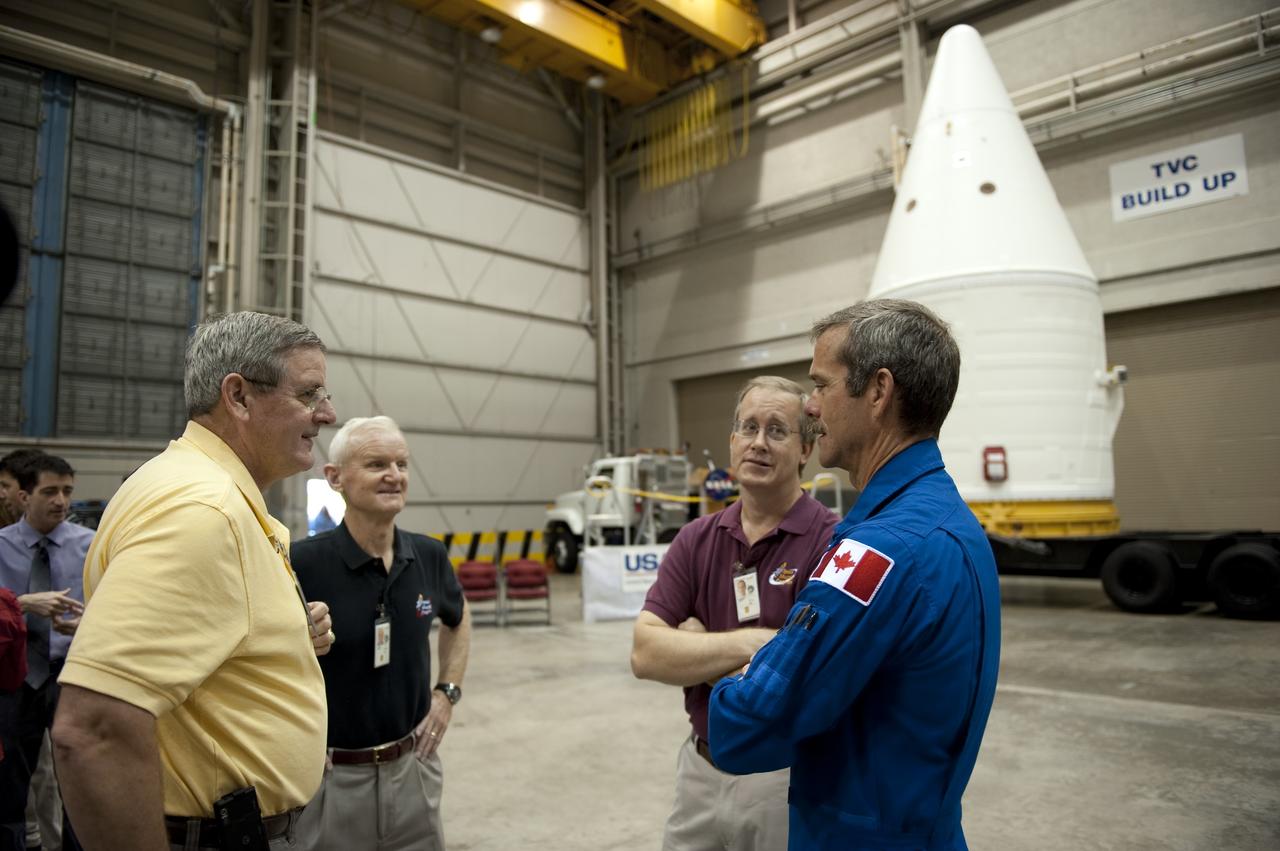
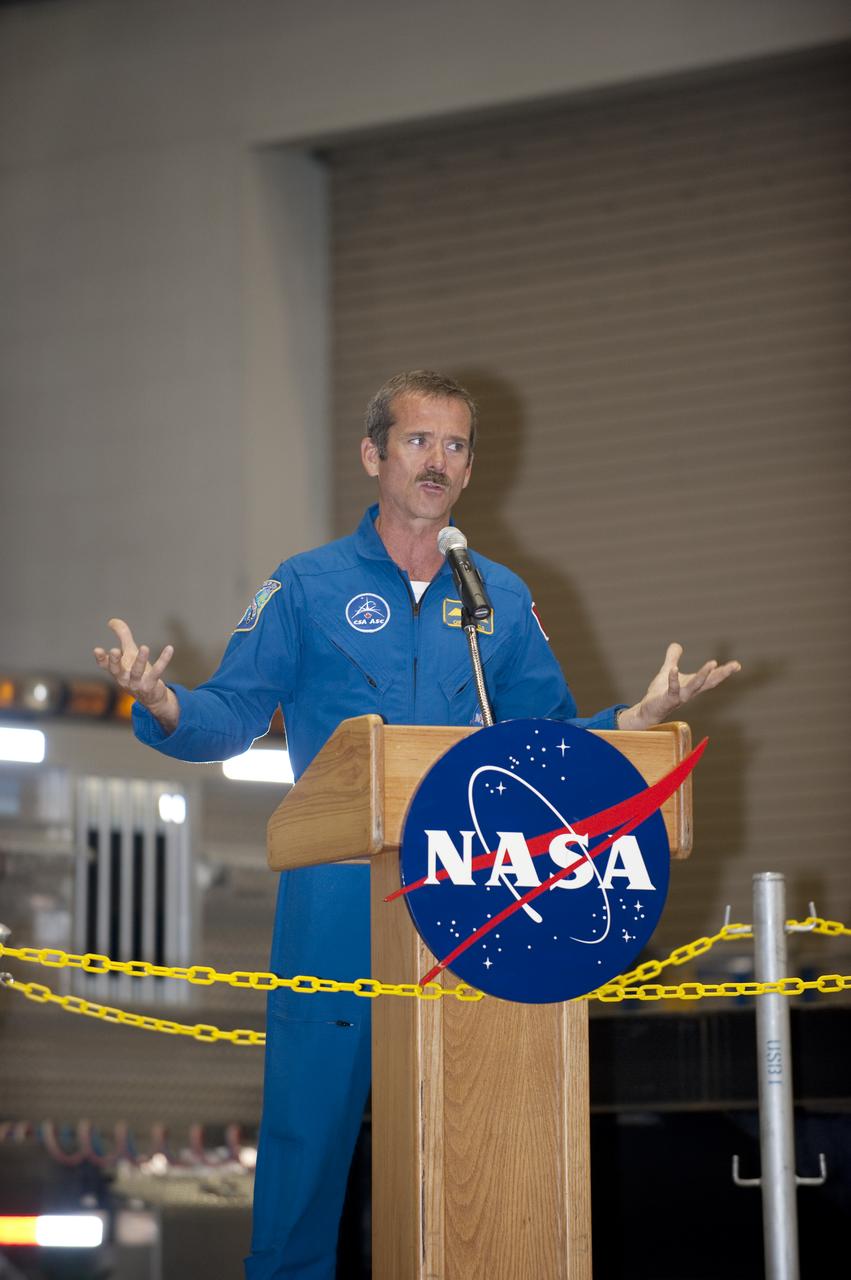
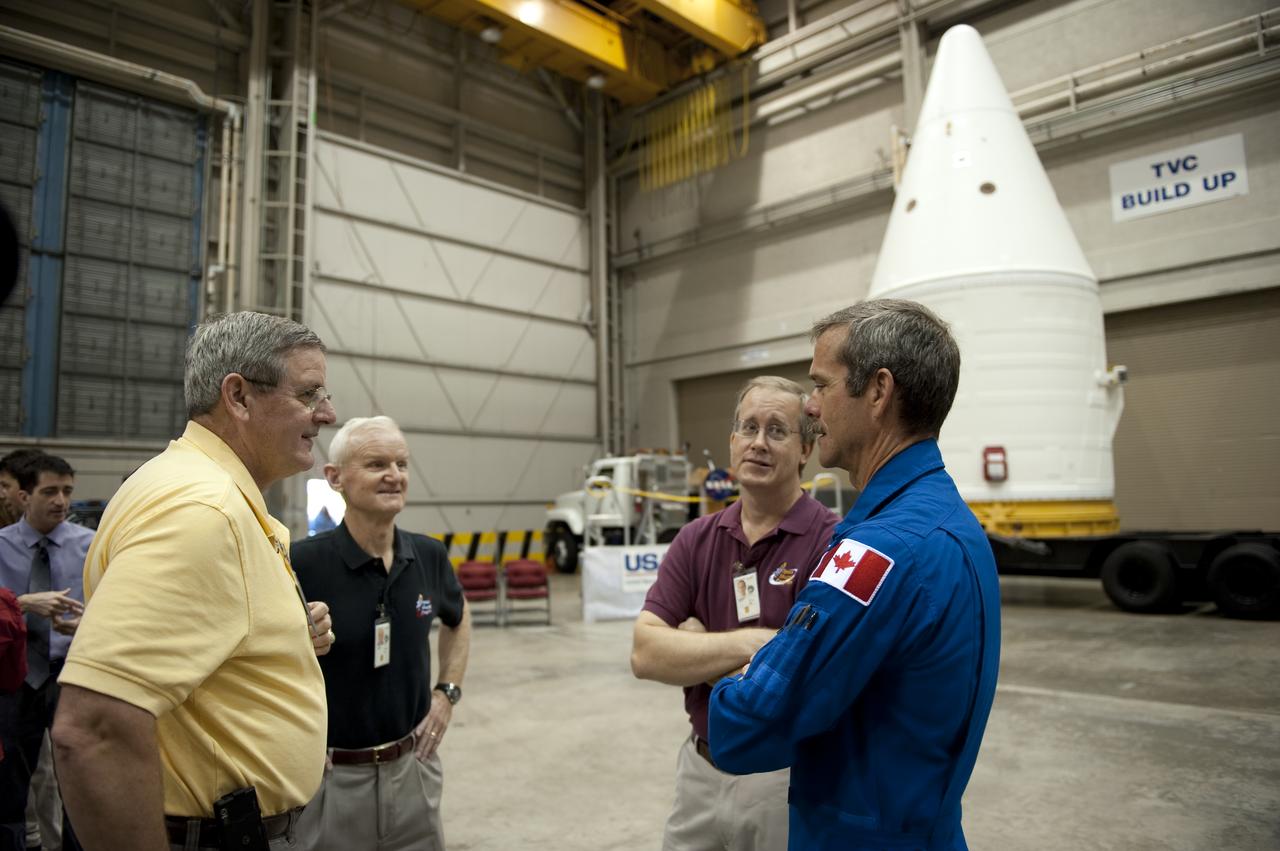
CAPE CANAVERAL, Fla. -- At NASA's Kennedy Space Center in Florida, Bill McArthur, (left) Space Shuttle Program Orbiter Projects manager; John Casper, Assistant Space Shuttle Program manager; John Shannon, Space Shuttle Program manager and Canadian Space Agency astronaut Chris Hadfield attend a ceremony being held to commemorate the move from Kennedy's Assembly Refurbishment Facility (ARF) to the Vehicle Assembly Building (VAB) of the Space Shuttle Program's final solid rocket booster structural assembly -- the right-hand forward. The move was postponed because of inclement weather. Photo credit: NASA/Kim Shiflett
KSC-2010-4885
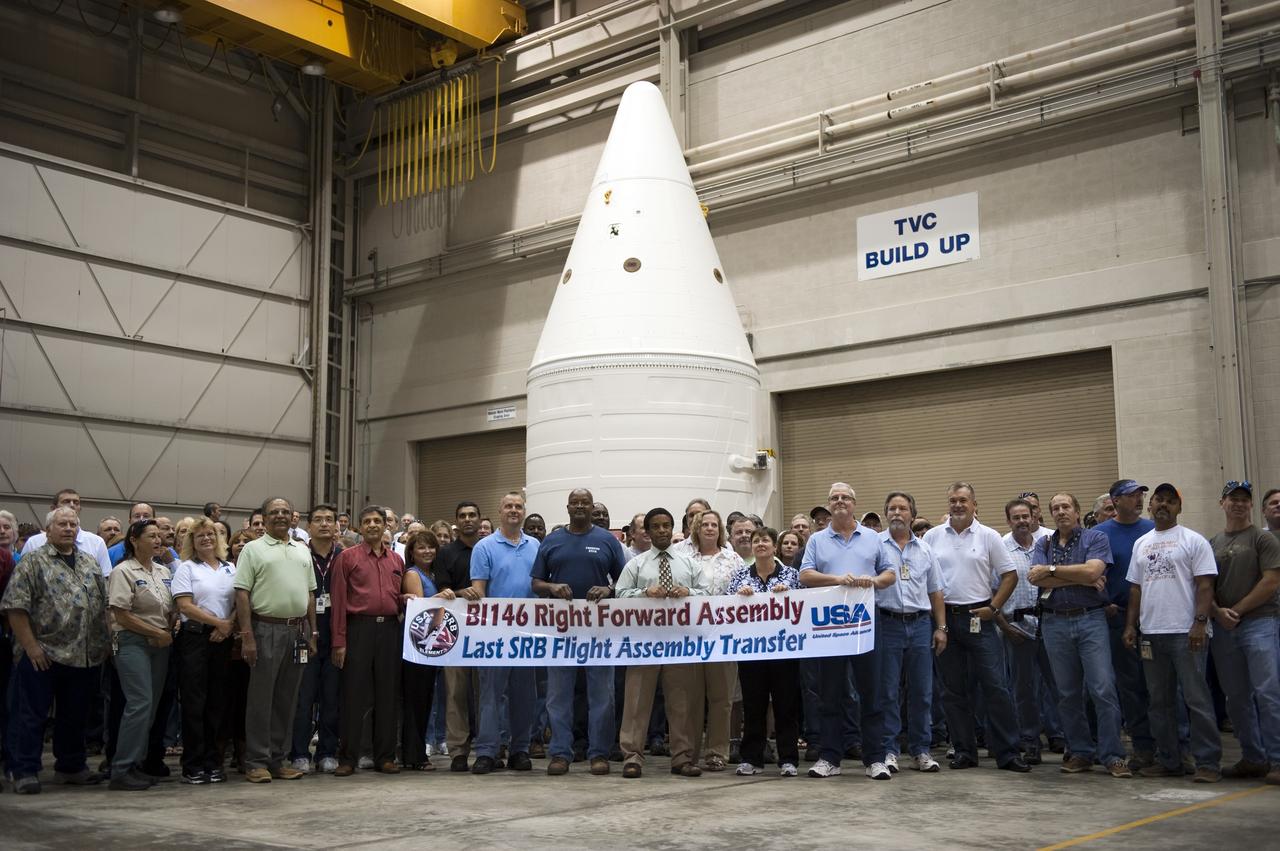
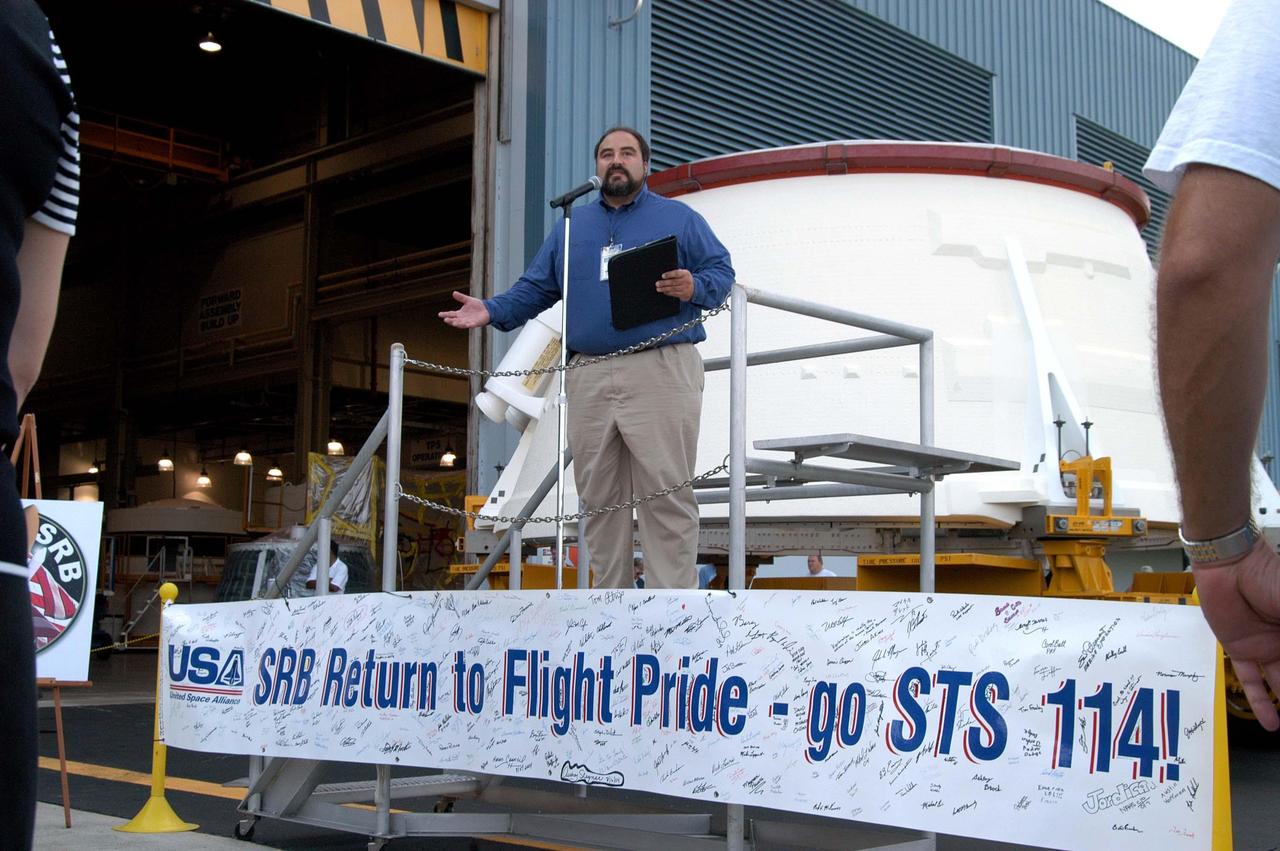
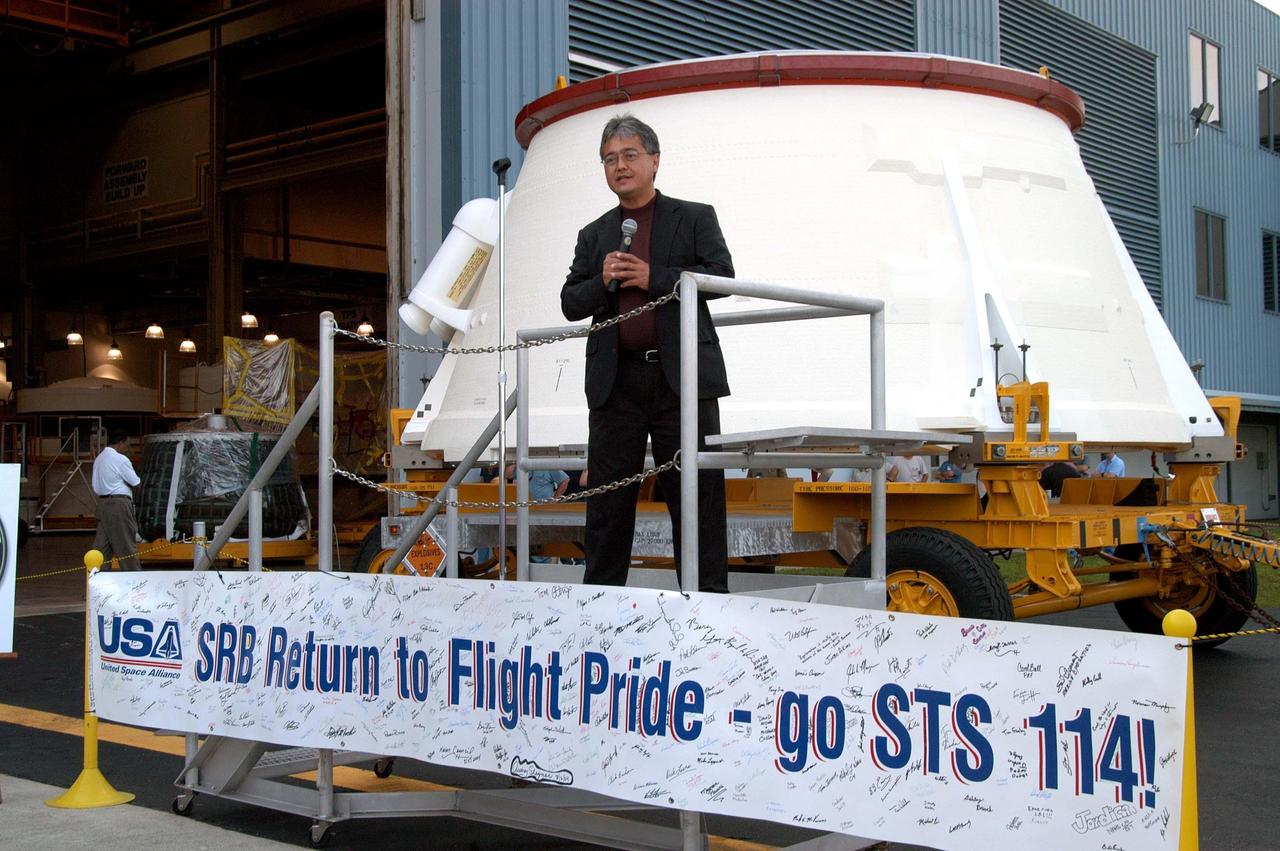
CAPE CANAVERAL, Fla. -- At NASA's Kennedy Space Center in Florida, United Space Alliance employees gather and hold up a banner at a ceremony being held to commemorate the move from Kennedy's Assembly Refurbishment Facility (ARF) to the Vehicle Assembly Building (VAB) of the Space Shuttle Program's final solid rocket booster structural assembly -- the right-hand forward. The move was postponed because of inclement weather. Photo credit: NASA/Kim Shiflett
KSC-2010-4889
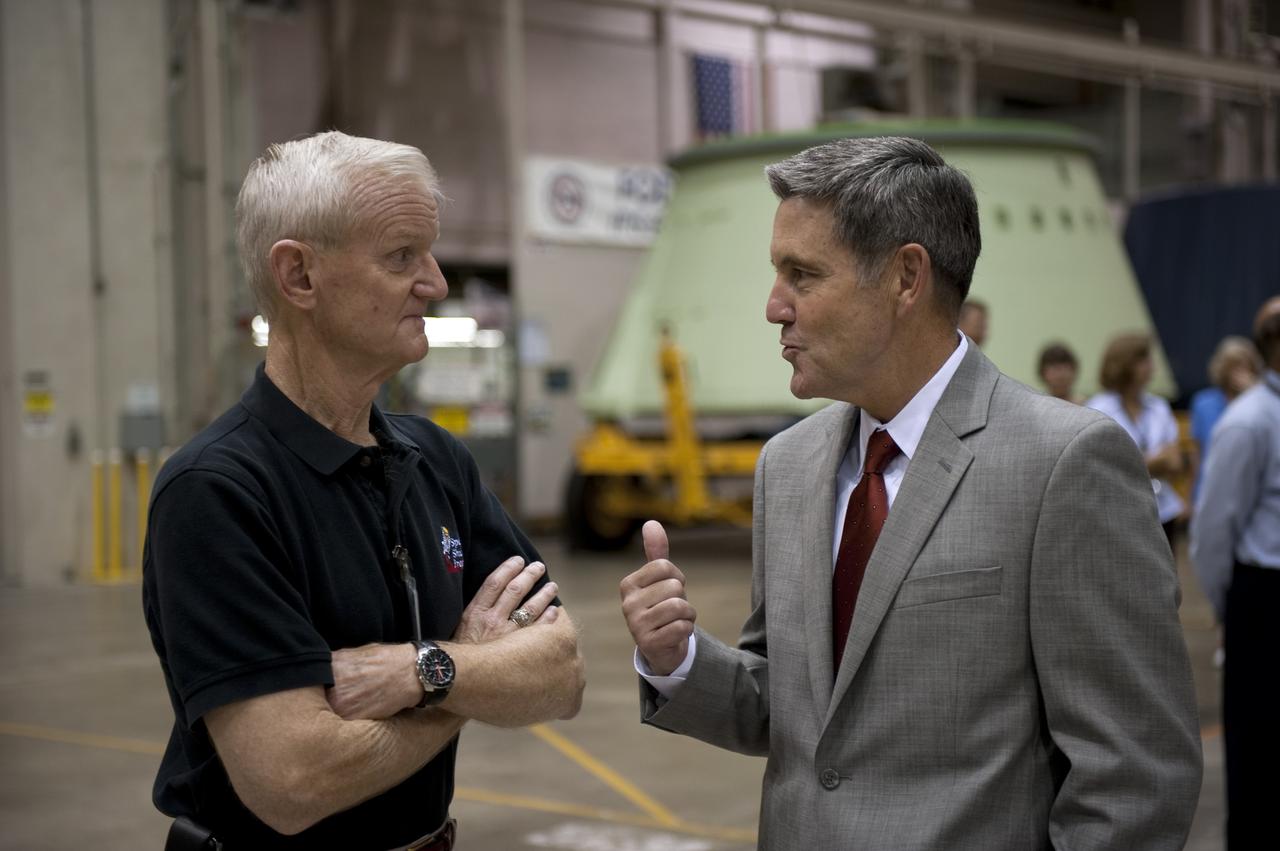
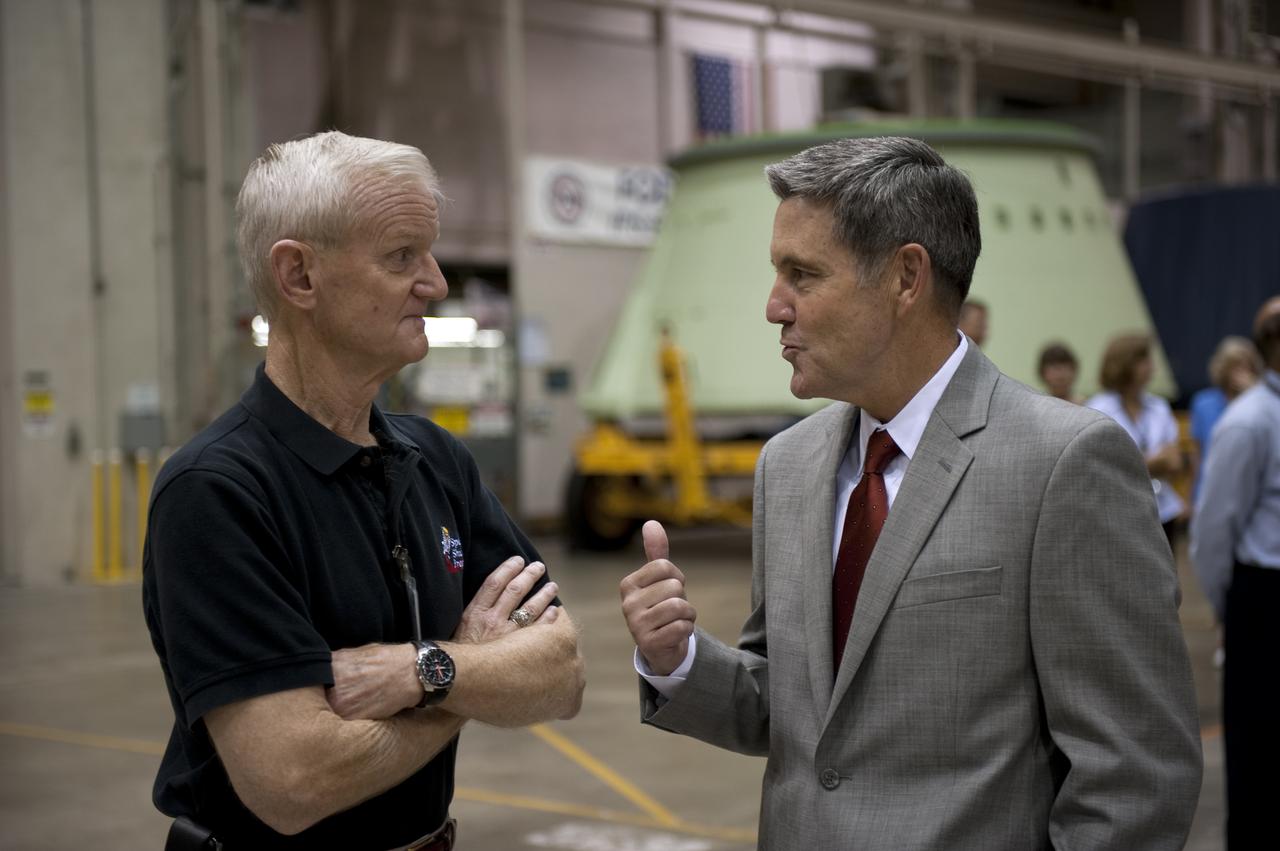
CAPE CANAVERAL, Fla. -- At NASA's Kennedy Space Center in Florida, John Casper, Assistant Space Shuttle Program manager and Kennedy Center Director Bob Cabana talk with each other during a ceremony being held to commemorate the move from Kennedy's Assembly Refurbishment Facility (ARF) to the Vehicle Assembly Building (VAB) of the Space Shuttle Program's final solid rocket booster structural assembly -- the right-hand forward. The move was postponed because of inclement weather. Photo credit: NASA/Kim Shiflett
KSC-2010-4883
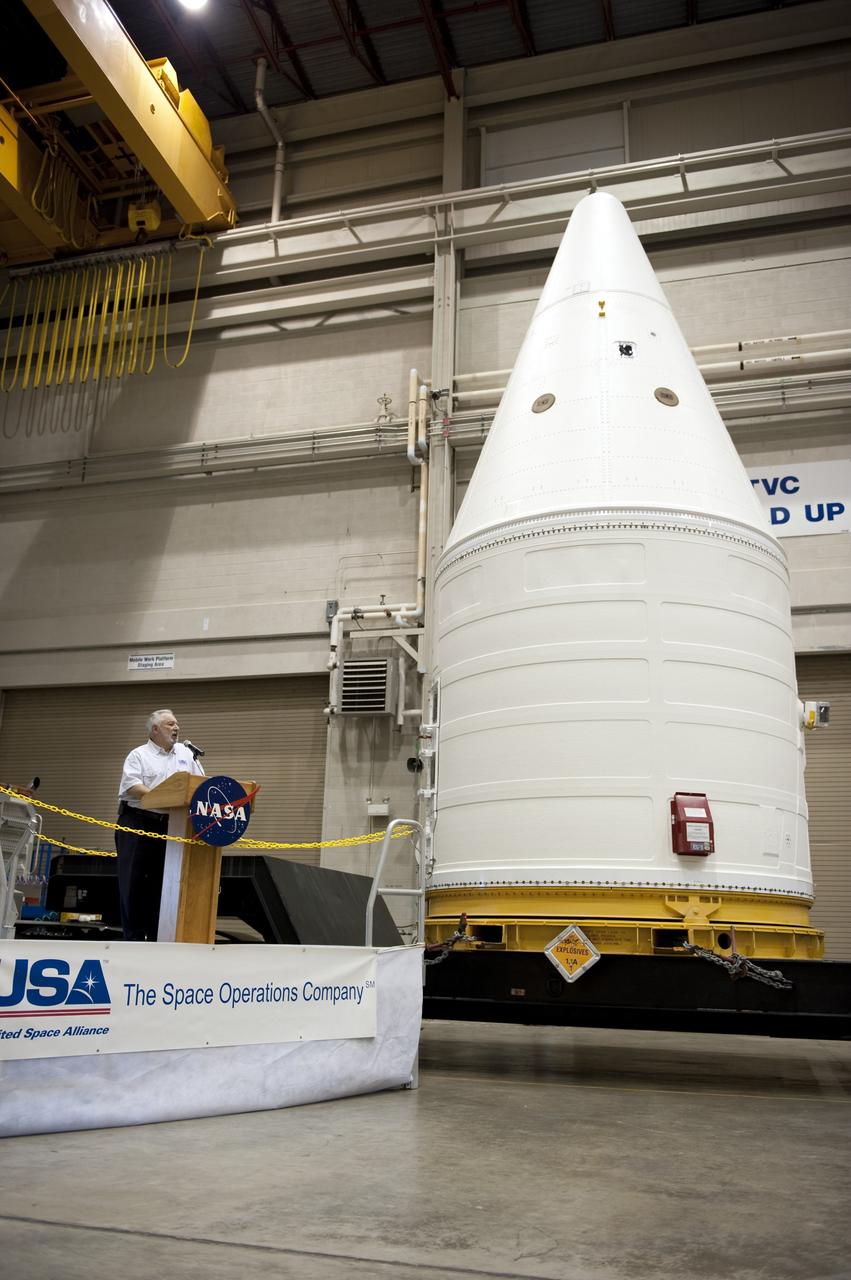
CAPE CANAVERAL, Fla. -- At NASA's Kennedy Space Center in Florida, Center Director Bob Cabana speaks to the attendees at a ceremony being held to commemorate the move from Kennedy's Assembly Refurbishment Facility (ARF) to the Vehicle Assembly Building (VAB) of the Space Shuttle Program's final solid rocket booster structural assembly -- the right-hand forward. The move was postponed because of inclement weather. Photo credit: NASA/Kim Shiflett
KSC-2010-4887
CAPE CANAVERAL, Fla. -- At NASA's Kennedy Space Center in Florida, Roger Elliot with United Space Alliance addresses the attendees at a ceremony being held to commemorate the move from Kennedy's Assembly Refurbishment Facility (ARF) to the Vehicle Assembly Building (VAB) of the Space Shuttle Program's final solid rocket booster structural assembly -- the right-hand forward. The move was postponed because of inclement weather. Photo credit: NASA/Kim Shiflett
KSC-2010-4886
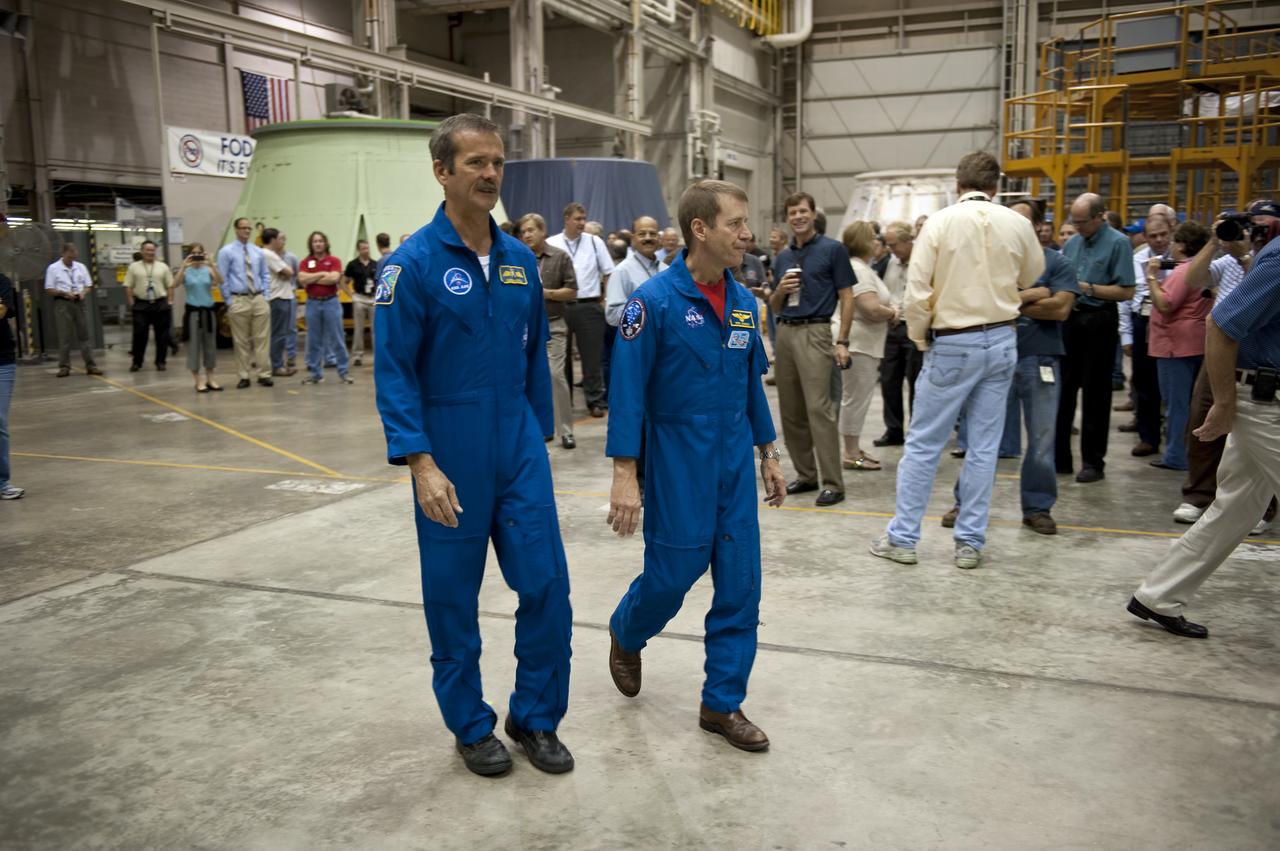
CAPE CANAVERAL, Fla. -- At NASA's Kennedy Space Center in Florida, Canadian Space Agency astronaut Chris Hadfield (left) and NASA astronaut Gregory C. Johnson attend a ceremony being held to commemorate the move from Kennedy's Assembly Refurbishment Facility (ARF) to the Vehicle Assembly Building (VAB) of the Space Shuttle Program's final solid rocket booster structural assembly -- the right-hand forward. The move was postponed because of inclement weather. Photo credit: NASA/Kim Shiflett
KSC-2010-4884
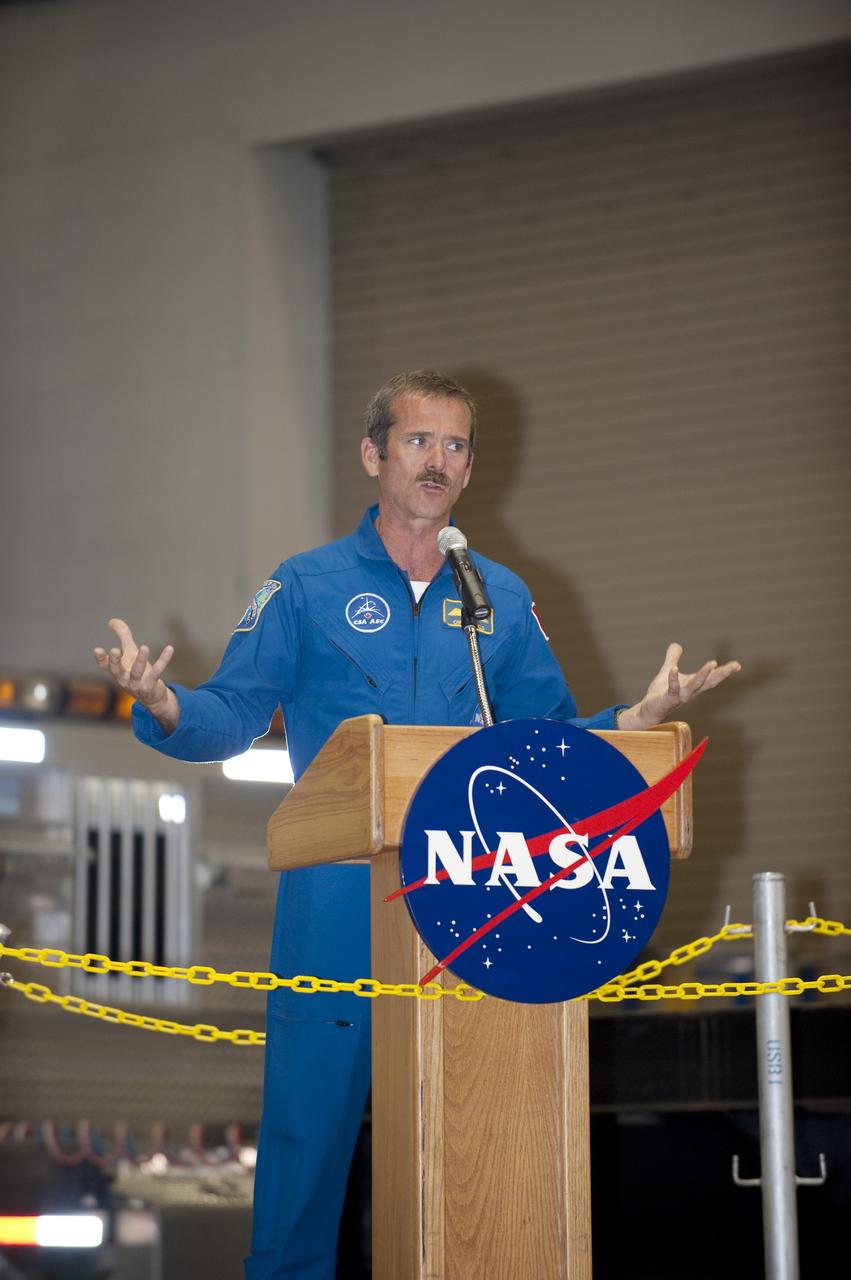
CAPE CANAVERAL, Fla. -- At NASA's Kennedy Space Center in Florida, Canadian Space Agency astronaut Chris Hadfield address the attendees at a ceremony being held to commemorate the move from Kennedy's Assembly Refurbishment Facility (ARF) to the Vehicle Assembly Building (VAB) of the Space Shuttle Program's final solid rocket booster structural assembly -- the right-hand forward. The move was postponed because of inclement weather. Photo credit: NASA/Kim Shiflett
KSC-2010-4888
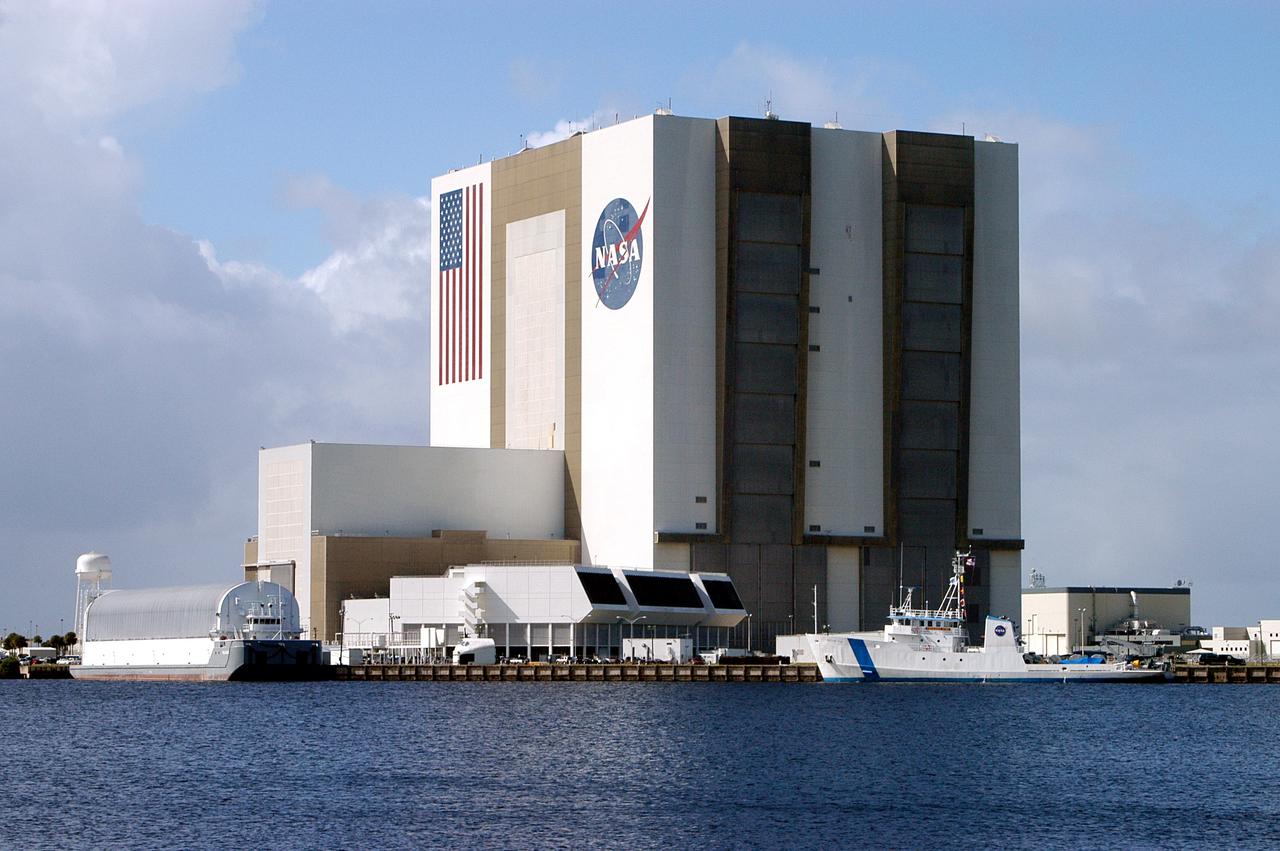
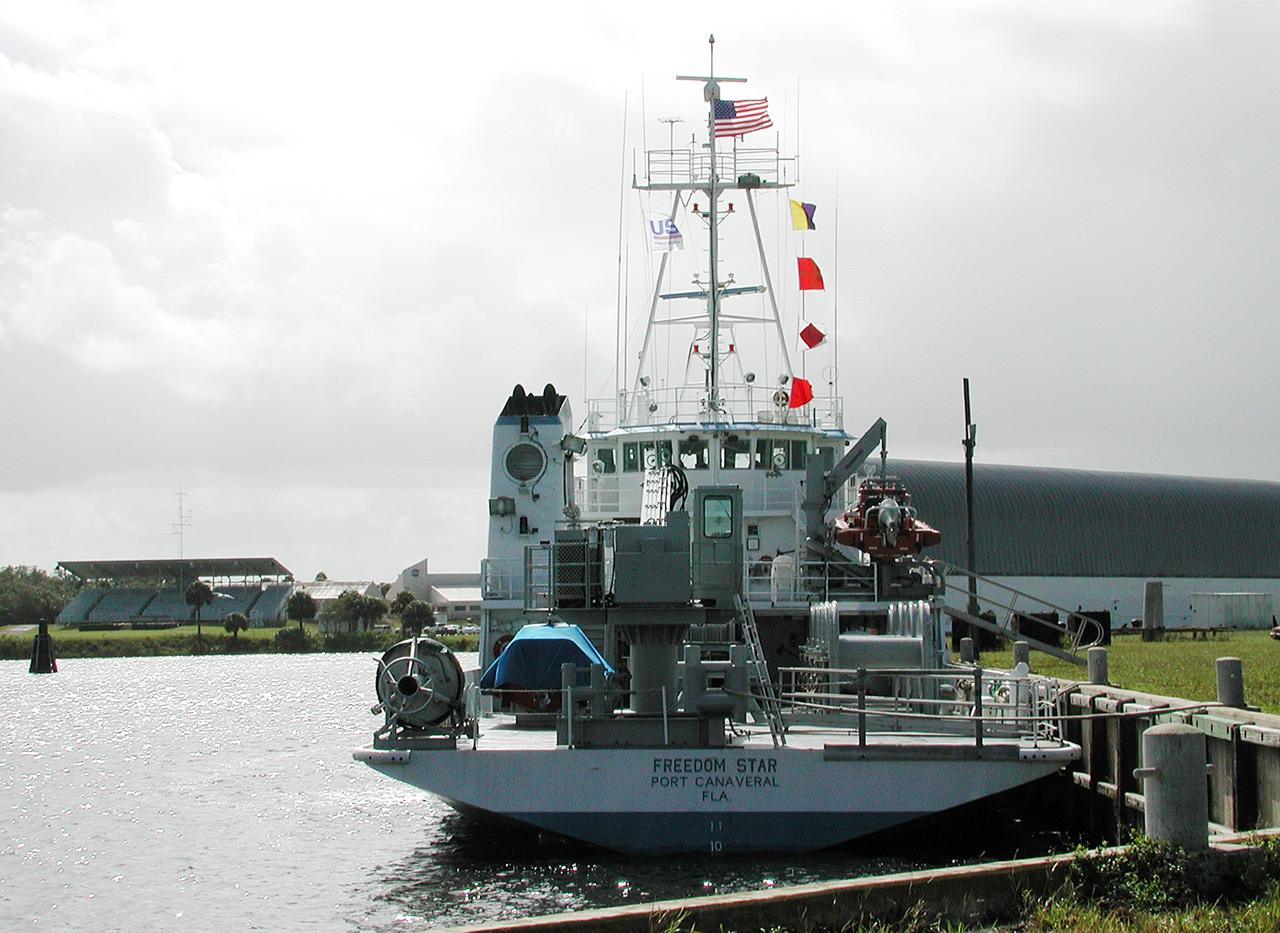
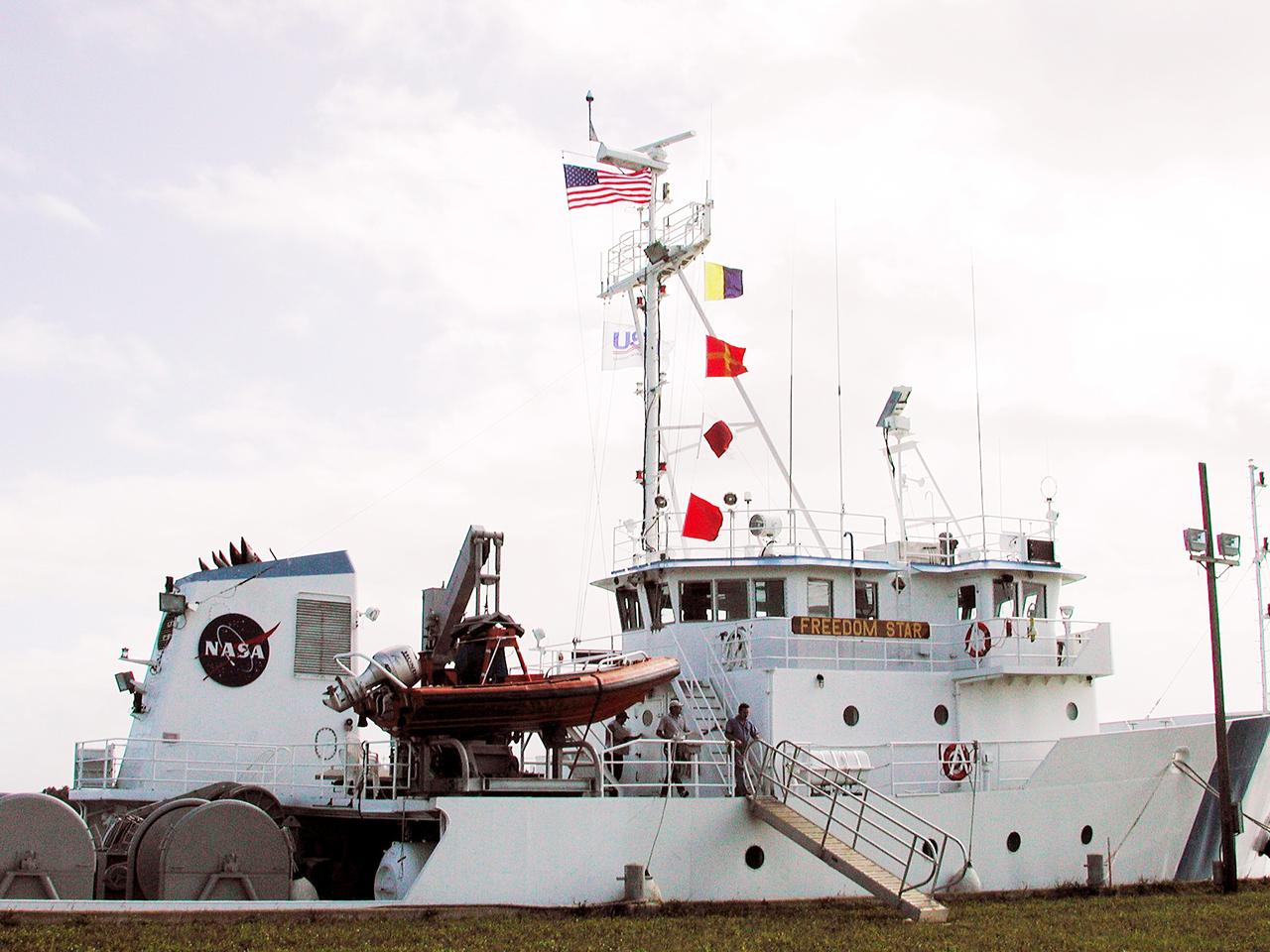
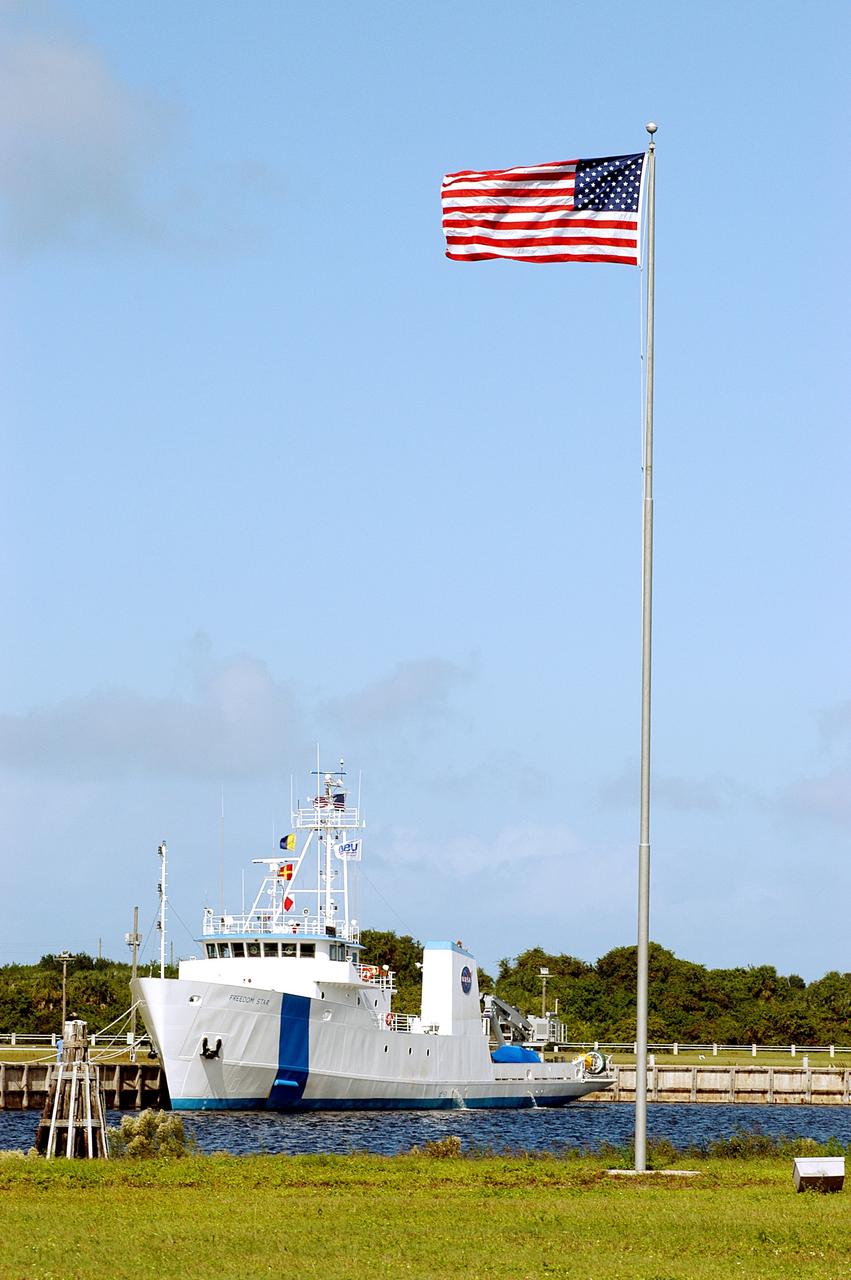
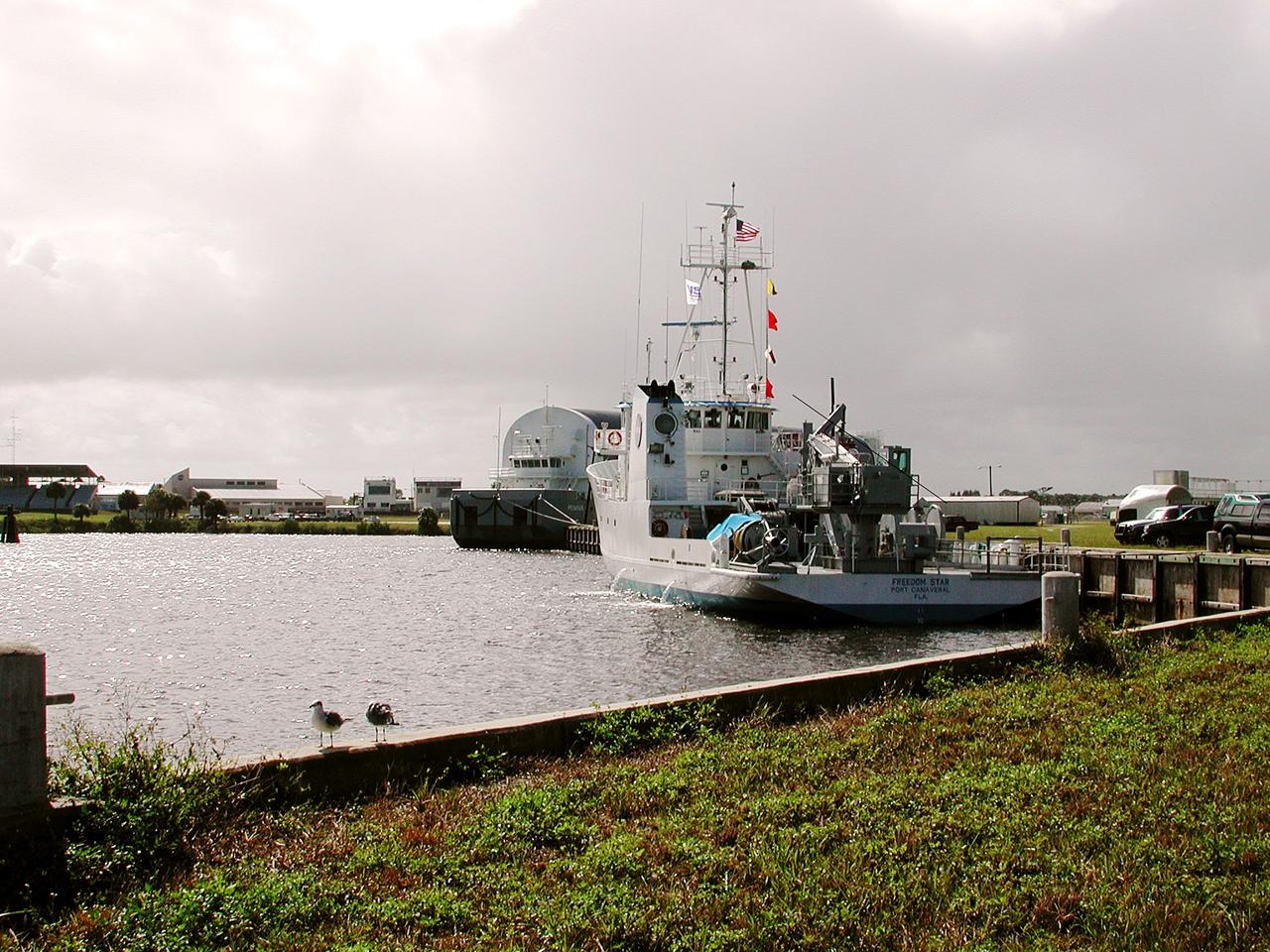
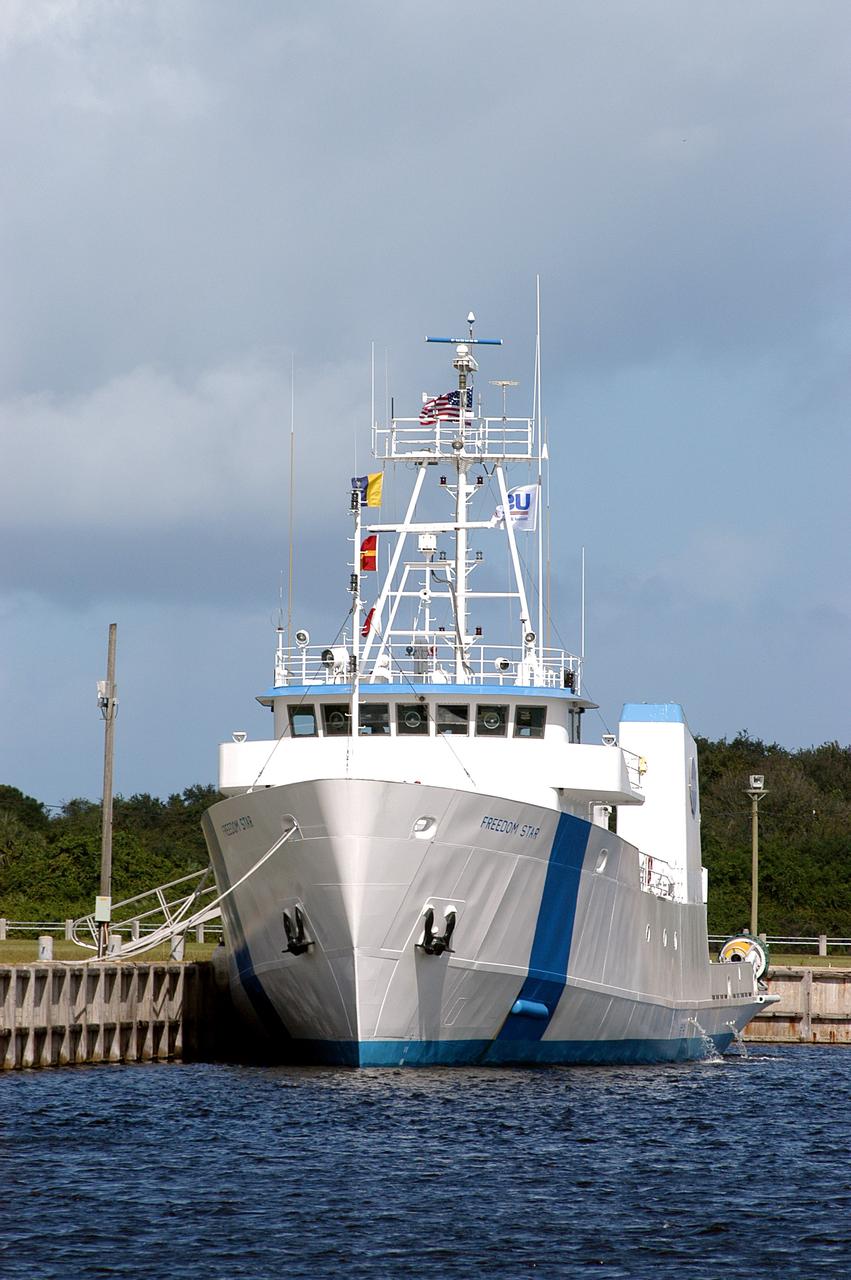
KENNEDY SPACE CENTER, FLA. - The Freedom Star is berthed at the Turn Basin near the Vehicle Assembly Building.  The ship has recently returned to KSC after refurbishment at Fort George Island, Fla., including new paint.  Freedom Star is one of the solid rocket booster (SRB) retrieval ships built to recover the SRB casings released over the Atlantic Ocean after launch of a Space Shuttle.  In addition to the SRBs, the ship recovers the drogue and main parachutes that slow the boosters’ speed before splashdown.  Some of the retrieval equipment can be seen on the rear deck.  The ships also tow the external tanks built at the Michoud Space Systems Assembly Facility near New Orleans to Port Canaveral, Fla.  Freedom Star was brought to KSC today for a visit by NATO Parliamentarians.
KENNEDY SPACE CENTER, FLA. - The Freedom Star is berthed at the Turn Basin near the Vehicle Assembly Building. The ship has recently returned to KSC after refurbishment at Fort George Island, Fla., including new paint. Freedom Star is one of the solid rocket booster (SRB) retrieval ships built to recover the SRB casings released over the Atlantic Ocean after launch of a Space Shuttle. In addition to the SRBs, the ship recovers the drogue and main parachutes that slow the boosters’ speed before splashdown. Some of the retrieval equipment can be seen on the rear deck. The ships also tow the external tanks built at the Michoud Space Systems Assembly Facility near New Orleans to Port Canaveral, Fla. Freedom Star was brought to KSC today for a visit by NATO Parliamentarians.
KENNEDY SPACE CENTER, FLA. - The Freedom Star is berthed at the Turn Basin near the Vehicle Assembly Building.  The ship has recently returned to KSC after refurbishment at Fort George Island, Fla., including new paint.  Freedom Star is one of the solid rocket booster (SRB) retrieval ships built to recover the SRB casings released over the Atlantic Ocean after launch of a Space Shuttle.  In addition to the SRBs, the ship recovers the drogue and main parachutes that slow the boosters’ speed before splashdown.  Some of the retrieval equipment can be seen on the rear deck.  The ships also tow the external tanks built at the Michoud Space Systems Assembly Facility near New Orleans to Port Canaveral, Fla.  Freedom Star was brought to KSC today for a visit by NATO Parliamentarians.
KENNEDY SPACE CENTER, FLA. - The Freedom Star is berthed at the Turn Basin near the Vehicle Assembly Building. The ship has recently returned to KSC after refurbishment at Fort George Island, Fla., including new paint. Freedom Star is one of the solid rocket booster (SRB) retrieval ships built to recover the SRB casings released over the Atlantic Ocean after launch of a Space Shuttle. In addition to the SRBs, the ship recovers the drogue and main parachutes that slow the boosters’ speed before splashdown. Some of the retrieval equipment can be seen on the rear deck. The ships also tow the external tanks built at the Michoud Space Systems Assembly Facility near New Orleans to Port Canaveral, Fla. Freedom Star was brought to KSC today for a visit by NATO Parliamentarians.
KENNEDY SPACE CENTER, FLA. - The Freedom Star is berthed at the Turn Basin near the Vehicle Assembly Building.  The ship has recently returned to KSC after refurbishment at Fort George Island, Fla., including new paint.  Freedom Star is one of the solid rocket booster (SRB) retrieval ships built to recover the SRB casings released over the Atlantic Ocean after launch of a Space Shuttle.  In addition to the SRBs, the ship recovers the drogue and main parachutes that slow the boosters’ speed before splashdown.  Some of the retrieval equipment can be seen on the rear deck.  The ships also tow the external tanks built at the Michoud Space Systems Assembly Facility near New Orleans to Port Canaveral, Fla.  Freedom Star was brought to KSC today for a visit by NATO Parliamentarians.
KENNEDY SPACE CENTER, FLA. - The Freedom Star is berthed at the Turn Basin near the Vehicle Assembly Building. The ship has recently returned to KSC after refurbishment at Fort George Island, Fla., including new paint. Freedom Star is one of the solid rocket booster (SRB) retrieval ships built to recover the SRB casings released over the Atlantic Ocean after launch of a Space Shuttle. In addition to the SRBs, the ship recovers the drogue and main parachutes that slow the boosters’ speed before splashdown. Some of the retrieval equipment can be seen on the rear deck. The ships also tow the external tanks built at the Michoud Space Systems Assembly Facility near New Orleans to Port Canaveral, Fla. Freedom Star was brought to KSC today for a visit by NATO Parliamentarians.
KENNEDY SPACE CENTER, FLA. -  The Freedom Star is berthed at the Turn Basin near the Vehicle Assembly Building.  The ship has recently returned to KSC after refurbishment at Fort George Island, Fla., including new paint.  Freedom Star is one of the solid rocket booster (SRB) retrieval ships built to recover the SRB casings released over the Atlantic Ocean after launch of a Space Shuttle.  In addition to the SRBs, the ship recovers the drogue and main parachutes that slow the boosters’ speed before splashdown.  Some of the retrieval equipment can be seen on the rear deck.  The ships also tow the external tanks built at the Michoud Space Systems Assembly Facility near New Orleans to Port Canaveral, Fla.  Freedom Star was brought to KSC today for a visit by NATO Parliamentarians.
KENNEDY SPACE CENTER, FLA. - The Freedom Star is berthed at the Turn Basin near the Vehicle Assembly Building. The ship has recently returned to KSC after refurbishment at Fort George Island, Fla., including new paint. Freedom Star is one of the solid rocket booster (SRB) retrieval ships built to recover the SRB casings released over the Atlantic Ocean after launch of a Space Shuttle. In addition to the SRBs, the ship recovers the drogue and main parachutes that slow the boosters’ speed before splashdown. Some of the retrieval equipment can be seen on the rear deck. The ships also tow the external tanks built at the Michoud Space Systems Assembly Facility near New Orleans to Port Canaveral, Fla. Freedom Star was brought to KSC today for a visit by NATO Parliamentarians.
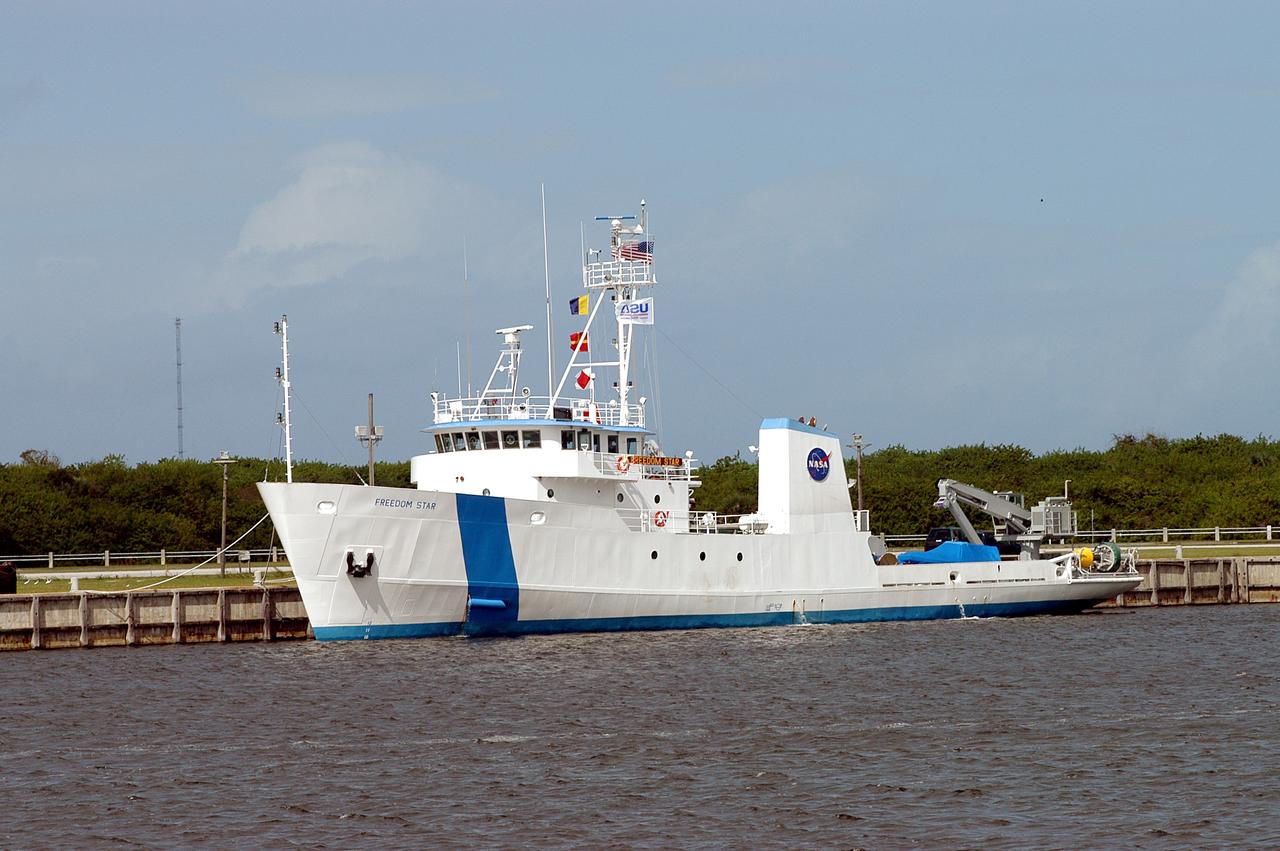
KENNEDY SPACE CENTER, FLA. - The Freedom Star is berthed at the Turn Basin near the Vehicle Assembly Building.  The ship has recently returned to KSC after refurbishment at Fort George Island, Fla., including new paint.  Freedom Star is one of the solid rocket booster (SRB) retrieval ships built to recover the SRB casings released over the Atlantic Ocean after launch of a Space Shuttle.  In addition to the SRBs, the ship recovers the drogue and main parachutes that slow the boosters’ speed before splashdown.  The ships also tow the external tanks built at the Michoud Space Systems Assembly Facility near New Orleans to Port Canaveral, Fla.  Freedom Star was brought to KSC today for a visit by NATO Parliamentarians.
KENNEDY SPACE CENTER, FLA. - The Freedom Star is berthed at the Turn Basin near the Vehicle Assembly Building. The ship has recently returned to KSC after refurbishment at Fort George Island, Fla., including new paint. Freedom Star is one of the solid rocket booster (SRB) retrieval ships built to recover the SRB casings released over the Atlantic Ocean after launch of a Space Shuttle. In addition to the SRBs, the ship recovers the drogue and main parachutes that slow the boosters’ speed before splashdown. The ships also tow the external tanks built at the Michoud Space Systems Assembly Facility near New Orleans to Port Canaveral, Fla. Freedom Star was brought to KSC today for a visit by NATO Parliamentarians.
KENNEDY SPACE CENTER, FLA. -  The Freedom Star is berthed at the Turn Basin near the Vehicle Assembly Building and NASA-KSC News Center.  The flag is near the News Center.   The ship has recently returned to KSC after refurbishment at Fort George Island, Fla., including new paint.  Freedom Star is one of the solid rocket booster (SRB) retrieval ships built to recover the SRB casings released over the Atlantic Ocean after launch of a Space Shuttle.  In addition to the SRBs, the ship recovers the drogue and main parachutes that slow the boosters’ speed before splashdown.   The ships also tow the external tanks built at the Michoud Space Systems Assembly Facility near New Orleans to Port Canaveral, Fla.  Freedom Star was brought to KSC today for a visit by NATO Parliamentarians.
KENNEDY SPACE CENTER, FLA. - The Freedom Star is berthed at the Turn Basin near the Vehicle Assembly Building and NASA-KSC News Center. The flag is near the News Center. The ship has recently returned to KSC after refurbishment at Fort George Island, Fla., including new paint. Freedom Star is one of the solid rocket booster (SRB) retrieval ships built to recover the SRB casings released over the Atlantic Ocean after launch of a Space Shuttle. In addition to the SRBs, the ship recovers the drogue and main parachutes that slow the boosters’ speed before splashdown. The ships also tow the external tanks built at the Michoud Space Systems Assembly Facility near New Orleans to Port Canaveral, Fla. Freedom Star was brought to KSC today for a visit by NATO Parliamentarians.
KENNEDY SPACE CENTER, FLA. -  The Freedom Star is berthed at the Turn Basin near the Vehicle Assembly Building.  The ship has recently returned to KSC after refurbishment at Fort George Island, Fla., including new paint.  Freedom Star is one of the solid rocket booster (SRB) retrieval ships built to recover the SRB casings released over the Atlantic Ocean after launch of a Space Shuttle.  In addition to the SRBs, the ship recovers the drogue and main parachutes that slow the boosters’ speed before splashdown.   The ships also tow the external tanks built at the Michoud Space Systems Assembly Facility near New Orleans to Port Canaveral, Fla.  Freedom Star was brought to KSC today for a visit by NATO Parliamentarians.
KENNEDY SPACE CENTER, FLA. - The Freedom Star is berthed at the Turn Basin near the Vehicle Assembly Building. The ship has recently returned to KSC after refurbishment at Fort George Island, Fla., including new paint. Freedom Star is one of the solid rocket booster (SRB) retrieval ships built to recover the SRB casings released over the Atlantic Ocean after launch of a Space Shuttle. In addition to the SRBs, the ship recovers the drogue and main parachutes that slow the boosters’ speed before splashdown. The ships also tow the external tanks built at the Michoud Space Systems Assembly Facility near New Orleans to Port Canaveral, Fla. Freedom Star was brought to KSC today for a visit by NATO Parliamentarians.
STS-335 LON FINAL SRB STRUCTURAL ASSEMBLY
2010-4884
STS-335 LON FINAL SRB STRUCTURAL ASSEMBLY
2010-4885
STS-335 LON FINAL SRB STRUCTURAL ASSEMBLY
2010-4888
STS-335 LON FINAL SRB STRUCTURAL ASSEMBLY
2010-4883
STS-335 LON FINAL SRB STRUCTURAL ASSEMBLY
2010-4886
STS-335 LON FINAL SRB STRUCTURAL ASSEMBLY
2010-4889
KENNEDY SPACE CENTER, FLA. -  A camera is installed on the aft skirt of a solid rocket booster in preparation for a vibration test of the Mobile Launcher Platform with SRBs and external tank mounted.  The MLP will roll from one bay to another in the Vehicle Assembly Building.
KENNEDY SPACE CENTER, FLA. - A camera is installed on the aft skirt of a solid rocket booster in preparation for a vibration test of the Mobile Launcher Platform with SRBs and external tank mounted. The MLP will roll from one bay to another in the Vehicle Assembly Building.
KENNEDY SPACE CENTER, FLA. -  The camera installed on the aft skirt of a solid rocket booster is seen here, framed by the railing.  The installation is in preparation for a vibration test of the Mobile Launcher Platform with SRBs and external tank mounted.  The MLP will roll from one bay to another in the Vehicle Assembly Building.
KENNEDY SPACE CENTER, FLA. - The camera installed on the aft skirt of a solid rocket booster is seen here, framed by the railing. The installation is in preparation for a vibration test of the Mobile Launcher Platform with SRBs and external tank mounted. The MLP will roll from one bay to another in the Vehicle Assembly Building.
In the Vehicle Assembly Building, workers check the lower segment of a solid rocket booster (SRB) to be mated to the one above. The SRB is part of the stack for the STS-92 mission, scheduled for launch Oct. 5 from Launch Pad 39A
KSC-00pp0813
In the Vehicle Assembly Building, workers check two segments of a solid rocket booster (SRB) to be mated. The SRB is part of the stack for the STS-92 mission, scheduled for launch Oct. 5 from Launch Pad 39A
KSC-00pp0812
In the Vehicle Assembly Building, workers check the rings on the segments of a solid rocket booster (SRB) after mating them. The SRB is part of the stack for the STS-92 mission, scheduled for launch Oct. 5 from Launch Pad 39A
KSC-00pp0818
In the Vehicle Assembly Building, workers check the rings on the segments of a solid rocket booster (SRB) after mating them. The SRB is part of the stack for the STS-92 mission, scheduled for launch Oct. 5 from Launch Pad 39A
KSC00pp0818
In the Vehicle Assembly Building, workers prepare to mate two segments of a solid rocket booster (SRB). The SRB is part of the stack for the STS-92 mission, scheduled for launch Oct. 5 from Launch Pad 39A
KSC-00pp0811
In the Vehicle Assembly Building, workers check two segments of a solid rocket booster (SRB) to be mated. The SRB is part of the stack for the STS-92 mission, scheduled for launch Oct. 5 from Launch Pad 39A
KSC00pp0812
In the Vehicle Assembly Building, workers prepare to mate two segments of a solid rocket booster (SRB). The SRB is part of the stack for the STS-92 mission, scheduled for launch Oct. 5 from Launch Pad 39A
KSC00pp0811
In the Vehicle Assembly Building, workers check the lower segment of a solid rocket booster (SRB) to be mated to the one above. The SRB is part of the stack for the STS-92 mission, scheduled for launch Oct. 5 from Launch Pad 39A
KSC00pp0813
In the Vehicle Assembly Building, workers check the rings on the segments of a solid rocket booster (SRB) before mating them.; The SRB is part of the stack for the STS-92 mission, scheduled for launch Oct. 5 from Launch Pad 39A
KSC-00pp0817
In the Vehicle Assembly Building, workers check the rings on the segments of a solid rocket booster (SRB) before mating them.; The SRB is part of the stack for the STS-92 mission, scheduled for launch Oct. 5 from Launch Pad 39A
KSC00pp0817
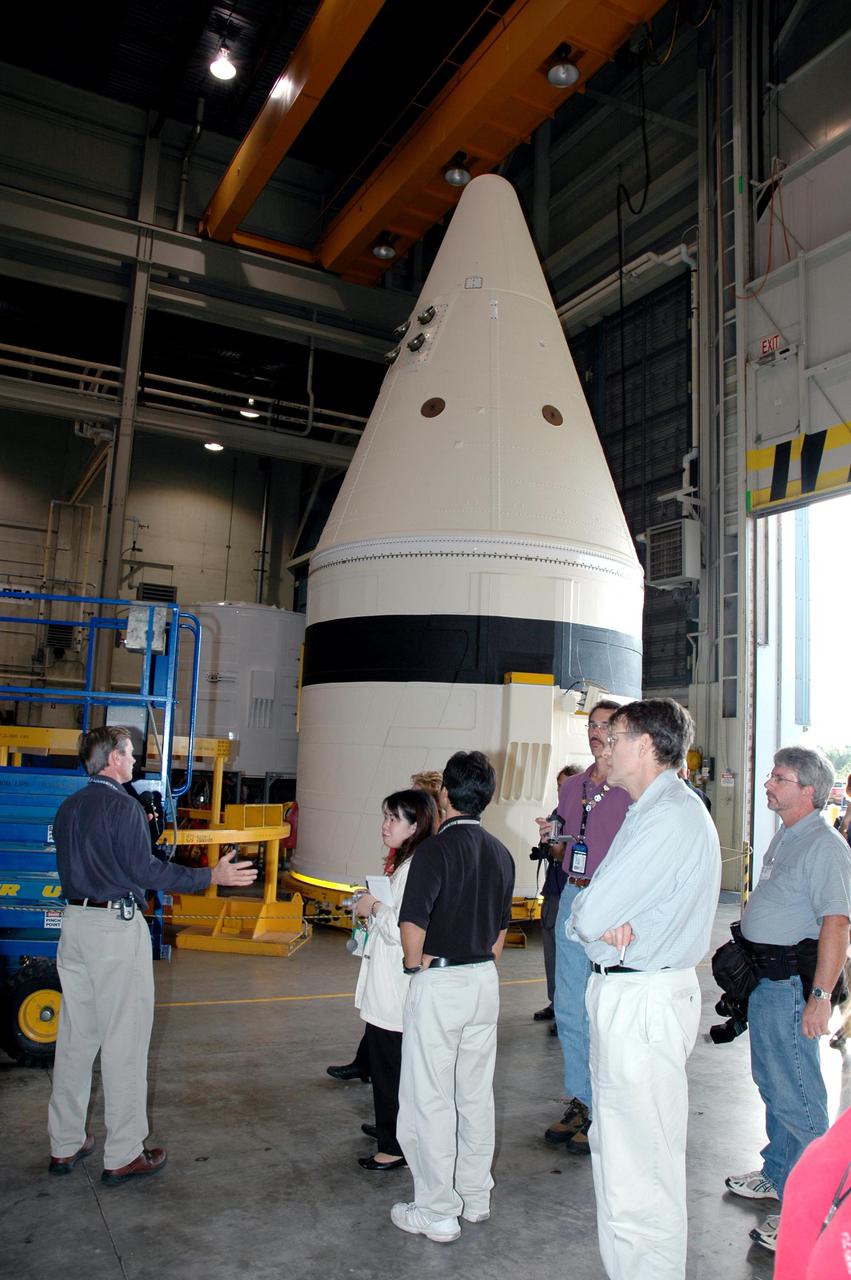
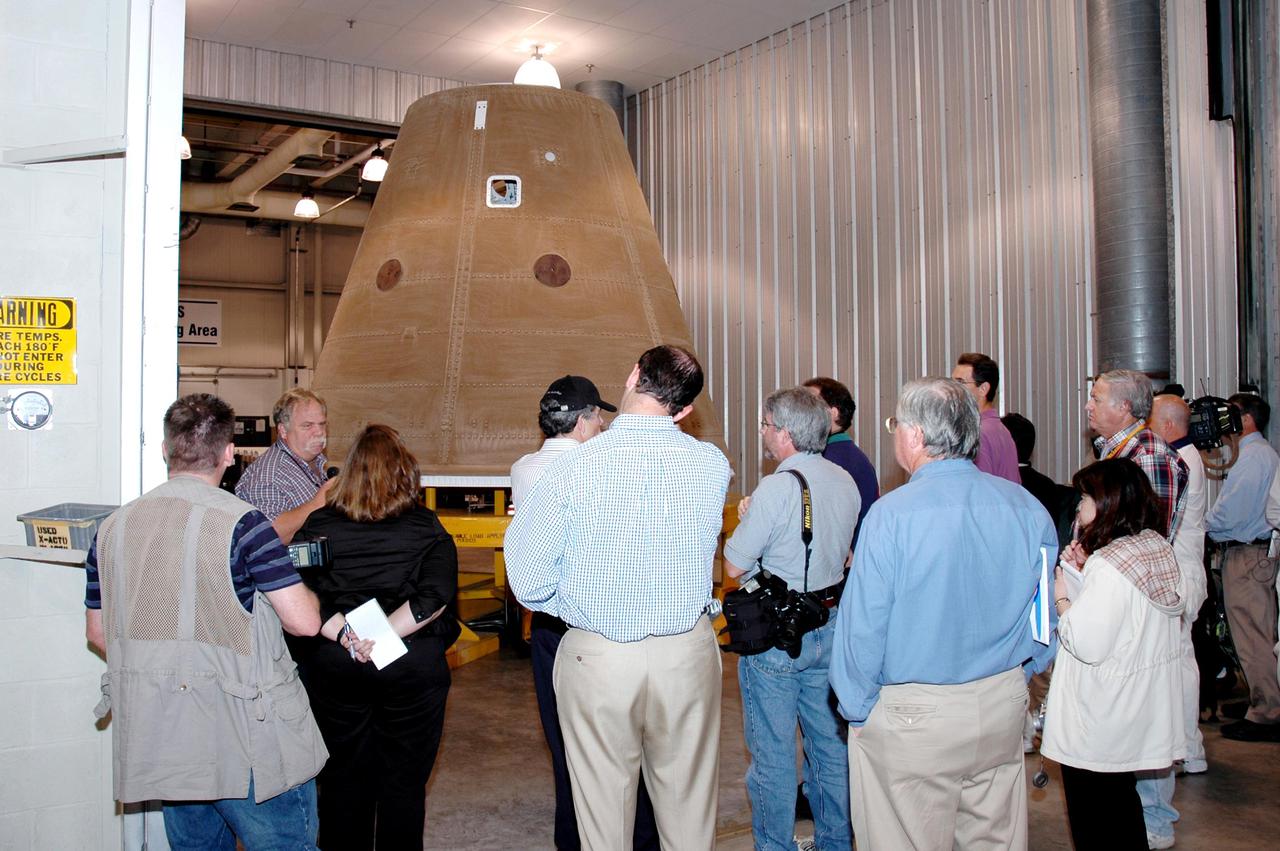
KENNEDY SPACE CENTER, FLA. -   The media tour the Solid Rocket Booster (SRB) Assembly and Refurbishment Facility where SRB segments are refurbished.  In the background can be seen the frustum and nose cap of an SRB.  The media event featured the movement of the first SRB segments to the Vehicle Assembly Building for stacking for Return to Flight mission STS-114. Two SRBs support the liftoff of the Space Shuttle on a launch.  The twin 149-foot tall, 12-foot diameter SRBs provide the main propulsion system during launch to place the orbiters in the proper orbit around the Earth.  They operate parallel with the Space Shuttle main engines for the first two minutes of flight and jettison away from the orbiter, with help from the Booster Separation Motors, about 26.3 nautical miles above the Earth’s surface.
KSC-04pd-2387
KENNEDY SPACE CENTER, FLA. -   The media tour Solid Rocket Booster (SRB) Assembly and Refurbishment Facility where Solid Rocket Booster (SRB) segments are refurbished.  In the background can be seen the frustum and nose cap of an SRB.  The media event featured the movement of the first SRB segments to the Vehicle Assembly Building for stacking for Return to Flight mission STS-114. Two SRBs support the liftoff of the Space Shuttle on a launch.  The twin 149-foot tall, 12-foot diameter SRBs provide the main propulsion system during launch to place the orbiters in the proper orbit around the Earth.  They operate parallel with the Space Shuttle main engines for the first two minutes of flight and jettison away from the orbiter, with help from the Booster Separation Motors, about 26.3 nautical miles above the Earth’s surface.
KSC-04pd-2389
KENNEDY SPACE CENTER, FLA. -   The media tour Solid Rocket Booster (SRB) Assembly and Refurbishment Facility where Solid Rocket Booster (SRB) segments are refurbished.  In the background can be seen the frustum and nose cap of an SRB.  The media event featured the movement of the first SRB segments to the Vehicle Assembly Building for stacking for Return to Flight mission STS-114. Two SRBs support the liftoff of the Space Shuttle on a launch.  The twin 149-foot tall, 12-foot diameter SRBs provide the main propulsion system during launch to place the orbiters in the proper orbit around the Earth.  They operate parallel with the Space Shuttle main engines for the first two minutes of flight and jettison away from the orbiter, with help from the Booster Separation Motors, about 26.3 nautical miles above the Earth’s surface.
KSC-04pd-2388
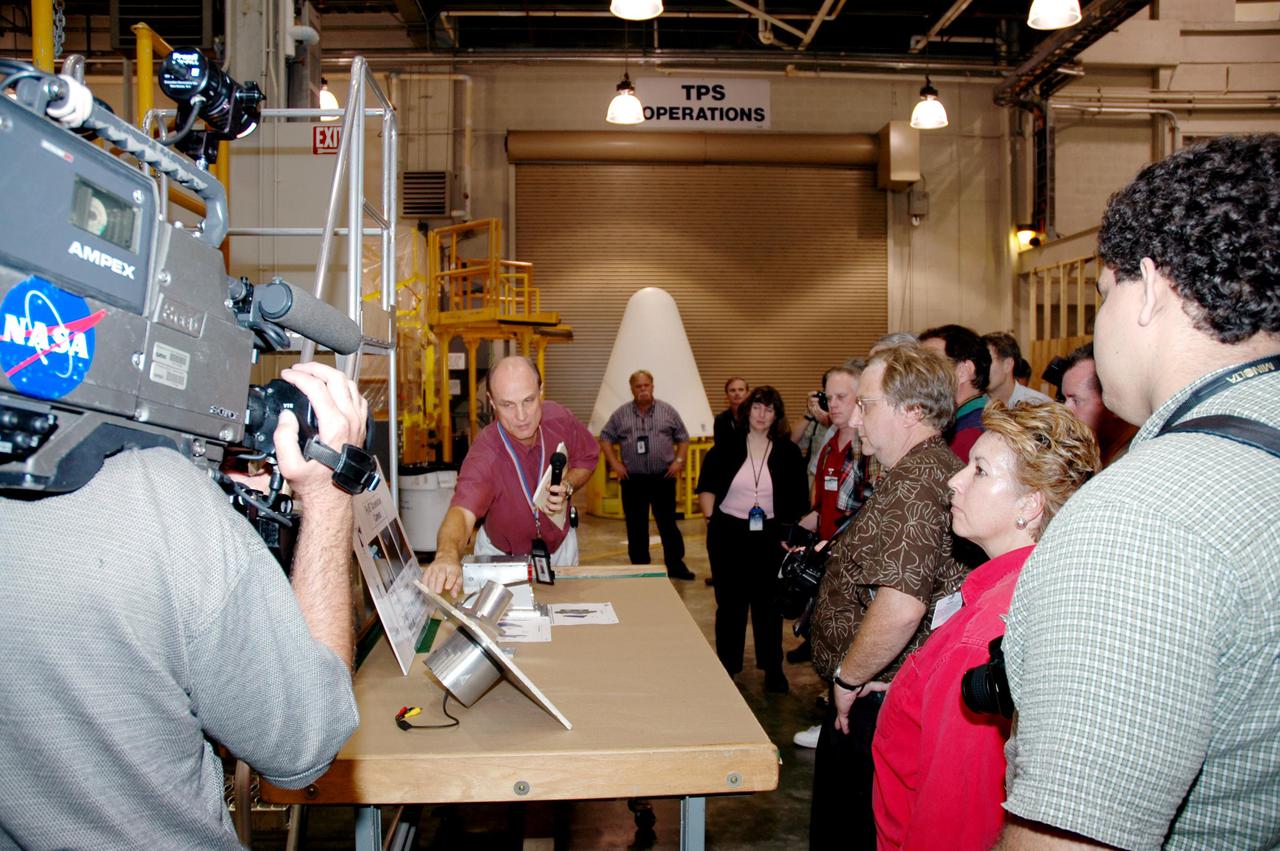
KENNEDY SPACE CENTER, FLA. -   The media are shown parts of Solid Rocket Booster (SRB) segments in the SRB Assembly and Refurbishment Facility.  The tour was part of a day-long event that featured the movement of the first SRB segments to the Vehicle Assembly Building for stacking for Return to Flight mission STS-114. Two SRBs support the liftoff of the Space Shuttle on a launch.  The twin 149-foot tall, 12-foot diameter SRBs provide the main propulsion system during launch to place the orbiters in the proper orbit around the Earth.  They operate parallel with the Space Shuttle main engines for the first two minutes of flight and jettison away from the orbiter, with help from the Booster Separation Motors, about 26.3 nautical miles above the Earth’s surface.
KSC-04pd-2390
In the Vehicle Assembly Building, workers check the ring on the upper segment of a solid rocket booster (SRB) before mating it to the one below. The SRB is part of the stack for the STS-92 mission, scheduled for launch Oct. 5 from Launch Pad 39A
KSC-00pp0815
In the Vehicle Assembly Building, workers check the ring on the upper segment of a solid rocket booster (SRB) before mating it to the one below. The SRB is part of the stack for the STS-92 mission, scheduled for launch Oct. 5 from Launch Pad 39A
KSC00pp0815
In the Vehicle Assembly Building, workers check the lower segment of a solid rocket booster (SRB) before mating it to the one above. The SRB is part of the stack for the STS-92 mission, scheduled for launch Oct. 5 from Launch Pad 39A
KSC-00pp0814
In the Vehicle Assembly Building, workers check the lower segment of a solid rocket booster (SRB) before mating it to the one above. The SRB is part of the stack for the STS-92 mission, scheduled for launch Oct. 5 from Launch Pad 39A
KSC00pp0814
In the Vehicle Assembly Building, workers check the rings on the upper and lower segments of a solid rocket booster (SRB) before mating them. The SRB is part of the stack for the STS-92 mission, scheduled for launch Oct. 5 from Launch Pad 39A
KSC-00pp0816
In the Vehicle Assembly Building, workers check the rings on the upper and lower segments of a solid rocket booster (SRB) before mating them. The SRB is part of the stack for the STS-92 mission, scheduled for launch Oct. 5 from Launch Pad 39A
KSC00pp0816
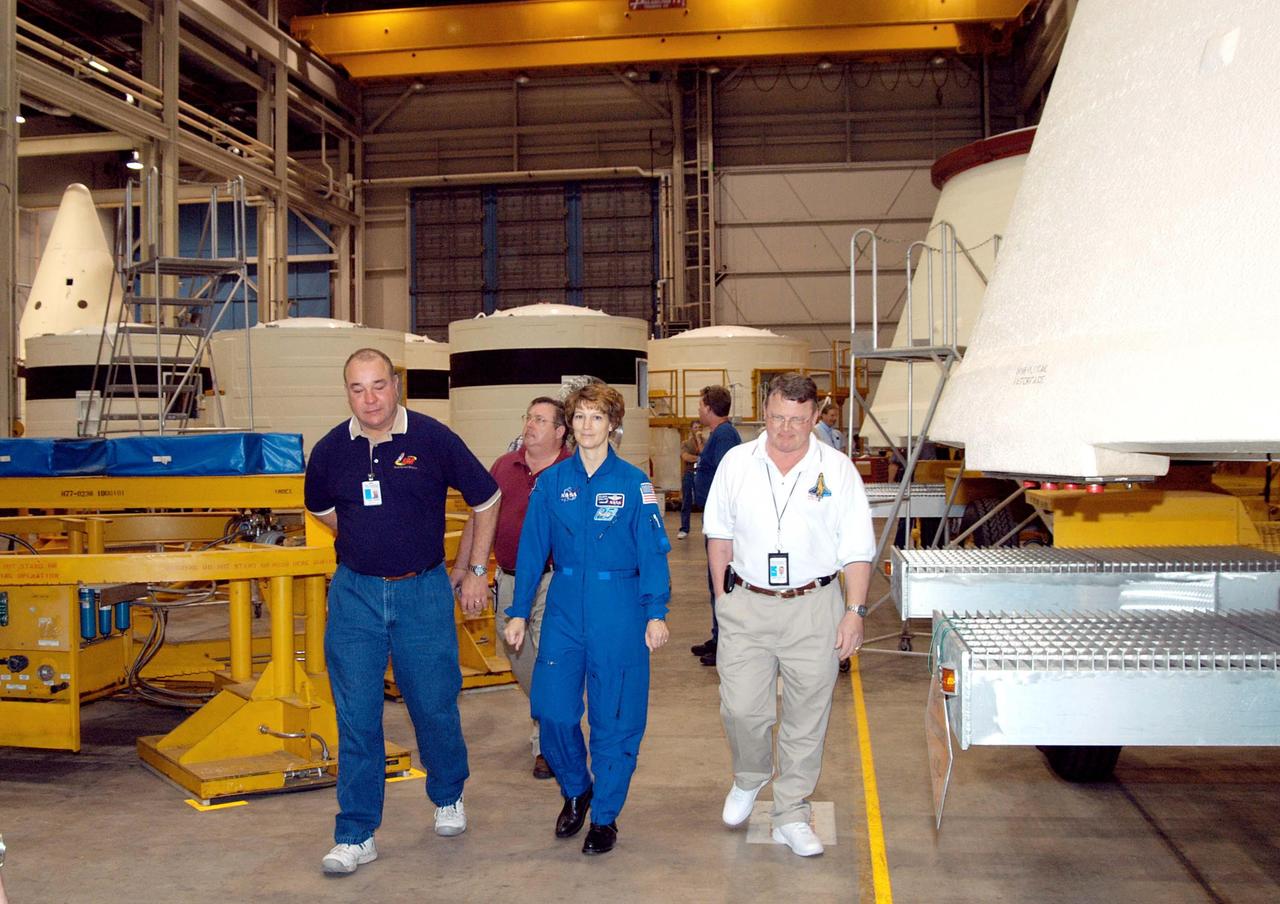
KENNEDY SPACE CENTER, FLA. -  At the SRB Assembly and Refurbishment Facility, STS-114 Commander Eileen Collins (center) is flanked by Bob Herman (left), SRB deputy associate program manager with United Space Alliance, and Jim Carleton (right), director, SRB Program Management, as they walk past solid rocket booster aft skirts. The crew is at KSC for familiarization with Shuttle and mission equipment. The STS-114 mission is Logistics Flight 1, which is scheduled to deliver supplies and equipment, plus the external stowage platform, to the International Space Station.
KSC-04pd0392
STS-29 Discovery, Orbiter Vehicle (OV) 103, solid rocket booster (SRB) right aft segment is being prepared for stacking in the Kennedy Space Center (KSC) Vehicle Assembly Building (VAB). Technicians examine and work with SRB seal from scaffolding platform. The twin sets of boosters provide 80 percent of the space shuttle launch thrust. Each SRB is made up of four "loaded" or fueled segments. The SRBs operate in parallel with the space shuttle main engines (SSMEs) for the first two minutes of flight providing additional thrust needed to escape the gravitational pull of the Earth. At an altitude of approximately 24 nautical miles, the SRBs separate, descend on parachutes, and land in the Atlantic Ocean where they are recovered and reused on future flights. View provided by KSC with alternate number KSC-88PC-1323.
STS-29 Discovery, OV-103, solid rocket booster (SRB) preparation at KSC
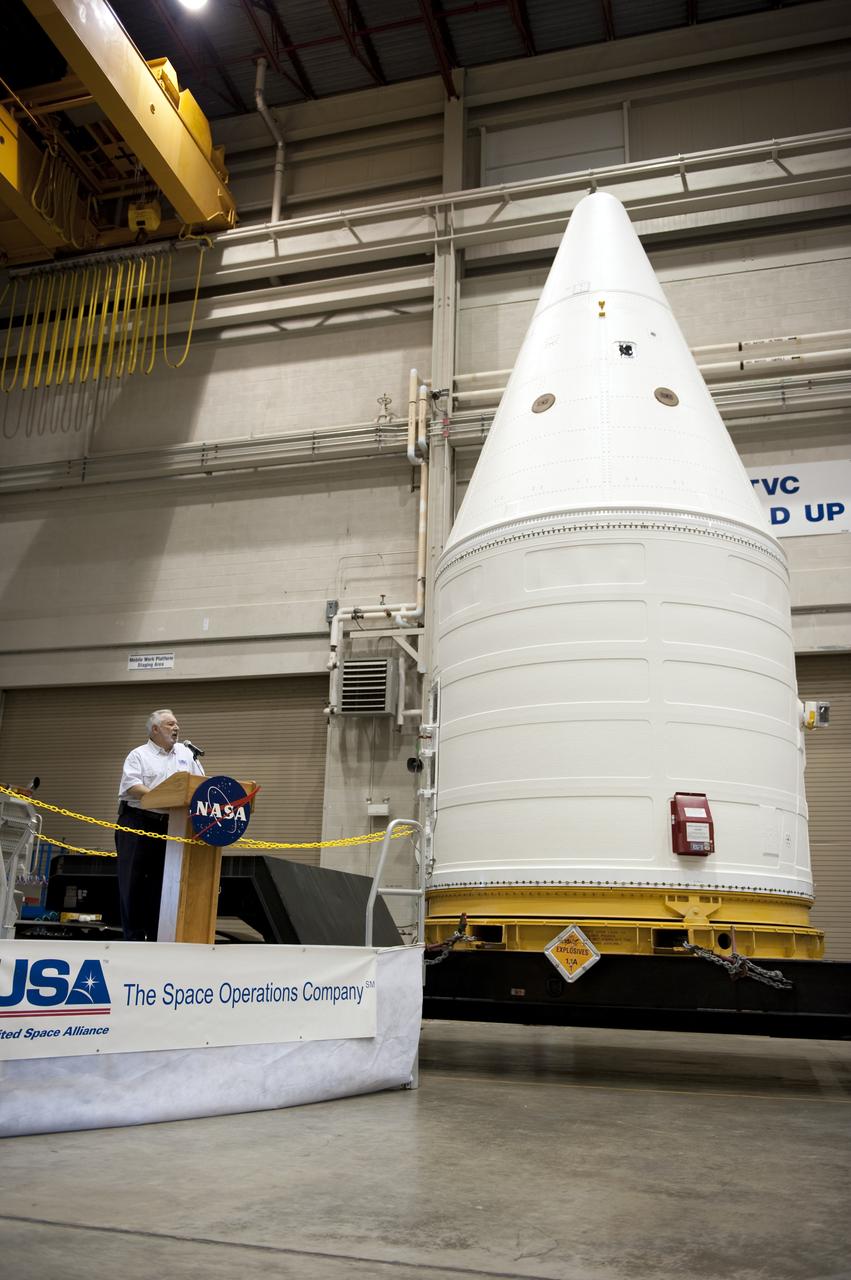
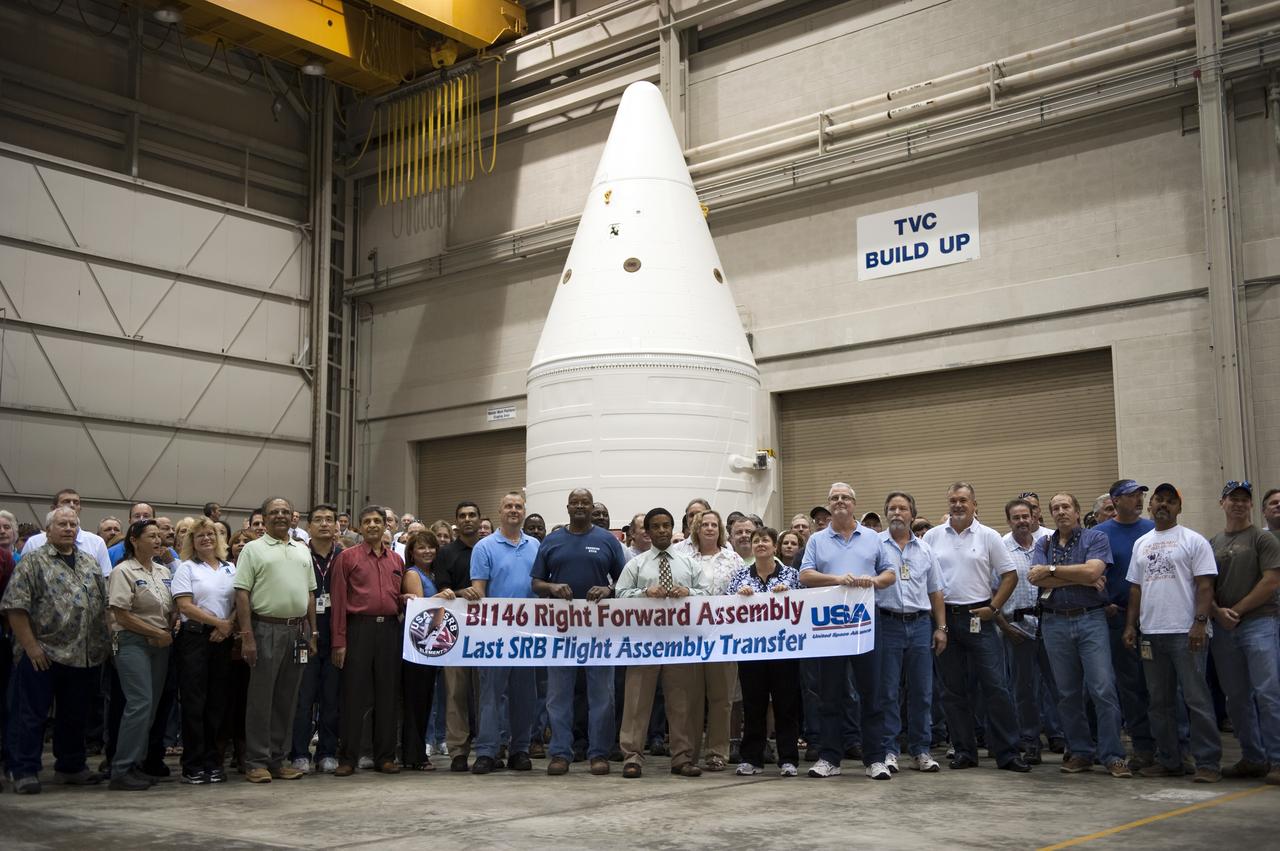
Technicians transport the right forward segment for NASA’s SLS (Space Launch System) Moon rocket boosters from the Rotation Processing and Surge Facility to NASA’s Vehicle Assembly Building in Florida on Monday, Feb. 15, 2025. The right forward segment will be transferred into High Bay 3 where it will be attached to the center forward segment on mobile launcher 1. The twin solid boosters, five segments on each side, will help support the remaining rocket components and the Orion spacecraft during final assembly of the Artemis II Moon rocket and provide more than 75 percent of the total SLS thrust during liftoff from NASA Kennedy’s Launch Pad 39B.
Artemis II Stacking, Right Forward Assembly SRB
Technicians transport the right forward segment for NASA’s SLS (Space Launch System) Moon rocket boosters from the Rotation Processing and Surge Facility to NASA’s Vehicle Assembly Building in Florida on Monday, Feb. 15, 2025. The right forward segment will be transferred into High Bay 3 where it will be attached to the center forward segment on mobile launcher 1. The twin solid boosters, five segments on each side, will help support the remaining rocket components and the Orion spacecraft during final assembly of the Artemis II Moon rocket and provide more than 75 percent of the total SLS thrust during liftoff from NASA Kennedy’s Launch Pad 39B.
Artemis II Stacking, Right Forward Assembly SRB
Technicians with NASA’s Exploration Ground Systems complete the integration of the left forward segment to the center forward segment on mobile launcher 1 inside the Vehicle Assembly Building at the agency’s Kennedy Space Center in Florida on Friday, Feb. 7, 2025. The twin solid boosters, five segments on each side, will help support the remaining rocket components and the Orion spacecraft during final assembly of the Artemis II Moon rocket and provide more than 75 percent of the total SLS thrust during liftoff from NASA Kennedy’s Launch Pad 39B.
Artemis II Stacking - Left Forward Assembly SRB
Technicians with NASA’s Exploration Ground Systems complete the integration of the left forward segment to the center forward segment on mobile launcher 1 inside the Vehicle Assembly Building at the agency’s Kennedy Space Center in Florida on Friday, Feb. 7, 2025. The twin solid boosters, five segments on each side, will help support the remaining rocket components and the Orion spacecraft during final assembly of the Artemis II Moon rocket and provide more than 75 percent of the total SLS thrust during liftoff from NASA Kennedy’s Launch Pad 39B.
Artemis II Stacking - Left Forward Assembly SRB
Technicians with NASA’s Exploration Ground Systems complete the integration of the left forward segment to the center forward segment on mobile launcher 1 inside the Vehicle Assembly Building at the agency’s Kennedy Space Center in Florida on Friday, Feb. 7, 2025. The twin solid boosters, five segments on each side, will help support the remaining rocket components and the Orion spacecraft during final assembly of the Artemis II Moon rocket and provide more than 75 percent of the total SLS thrust during liftoff from NASA Kennedy’s Launch Pad 39B.
Artemis II Stacking - Left Forward Assembly SRB
Technicians transport the right forward segment for NASA’s SLS (Space Launch System) Moon rocket boosters from the Rotation Processing and Surge Facility to NASA’s Vehicle Assembly Building in Florida on Monday, Feb. 15, 2025. The right forward segment will be transferred into High Bay 3 where it will be attached to the center forward segment on mobile launcher 1. The twin solid boosters, five segments on each side, will help support the remaining rocket components and the Orion spacecraft during final assembly of the Artemis II Moon rocket and provide more than 75 percent of the total SLS thrust during liftoff from NASA Kennedy’s Launch Pad 39B.
Artemis II Stacking, Right Forward Assembly SRB
Technicians with NASA’s Exploration Ground Systems complete the integration of the left forward segment to the center forward segment on mobile launcher 1 inside the Vehicle Assembly Building at the agency’s Kennedy Space Center in Florida on Friday, Feb. 7, 2025. The twin solid boosters, five segments on each side, will help support the remaining rocket components and the Orion spacecraft during final assembly of the Artemis II Moon rocket and provide more than 75 percent of the total SLS thrust during liftoff from NASA Kennedy’s Launch Pad 39B.
Artemis II Stacking - Left Forward Assembly SRB
Technicians with NASA’s Exploration Ground Systems complete the integration of the left forward segment to the center forward segment on mobile launcher 1 inside the Vehicle Assembly Building at the agency’s Kennedy Space Center in Florida on Friday, Feb. 7, 2025. The twin solid boosters, five segments on each side, will help support the remaining rocket components and the Orion spacecraft during final assembly of the Artemis II Moon rocket and provide more than 75 percent of the total SLS thrust during liftoff from NASA Kennedy’s Launch Pad 39B.
Artemis II Stacking - Left Forward Assembly SRB
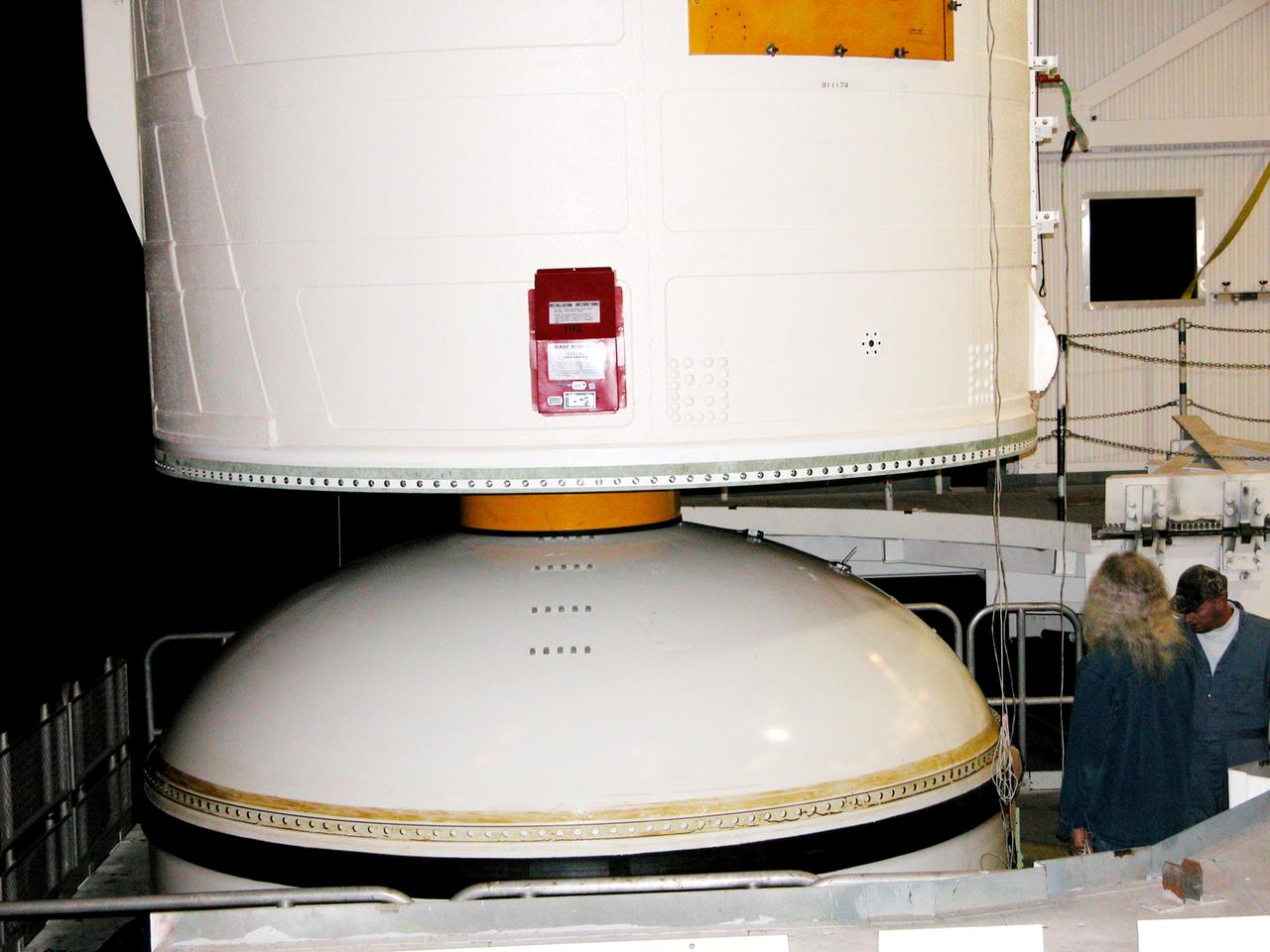
Inside the Vehicle Assembly Building, the forward section of a solid rocket booster (SRB) is lowered onto the rest of the stack for mating. The forward section of each booster, from nose cap to forward skirt contains avionics, a sequencer, forward separation motors, a nose cone separation system, drogue and main parachutes, a recovery beacon, a recovery light, a parachute camera on selected flights and a range safety system. Each SRB weighs approximately 1.3 million pounds at launch. The SRB is part of the stack for Space Shuttle Discovery and the STS-92 mission, scheduled for launch Oct. 5, from Launch Pad 39A, on the fifth flight to the International Space Station
KSC00pp0857
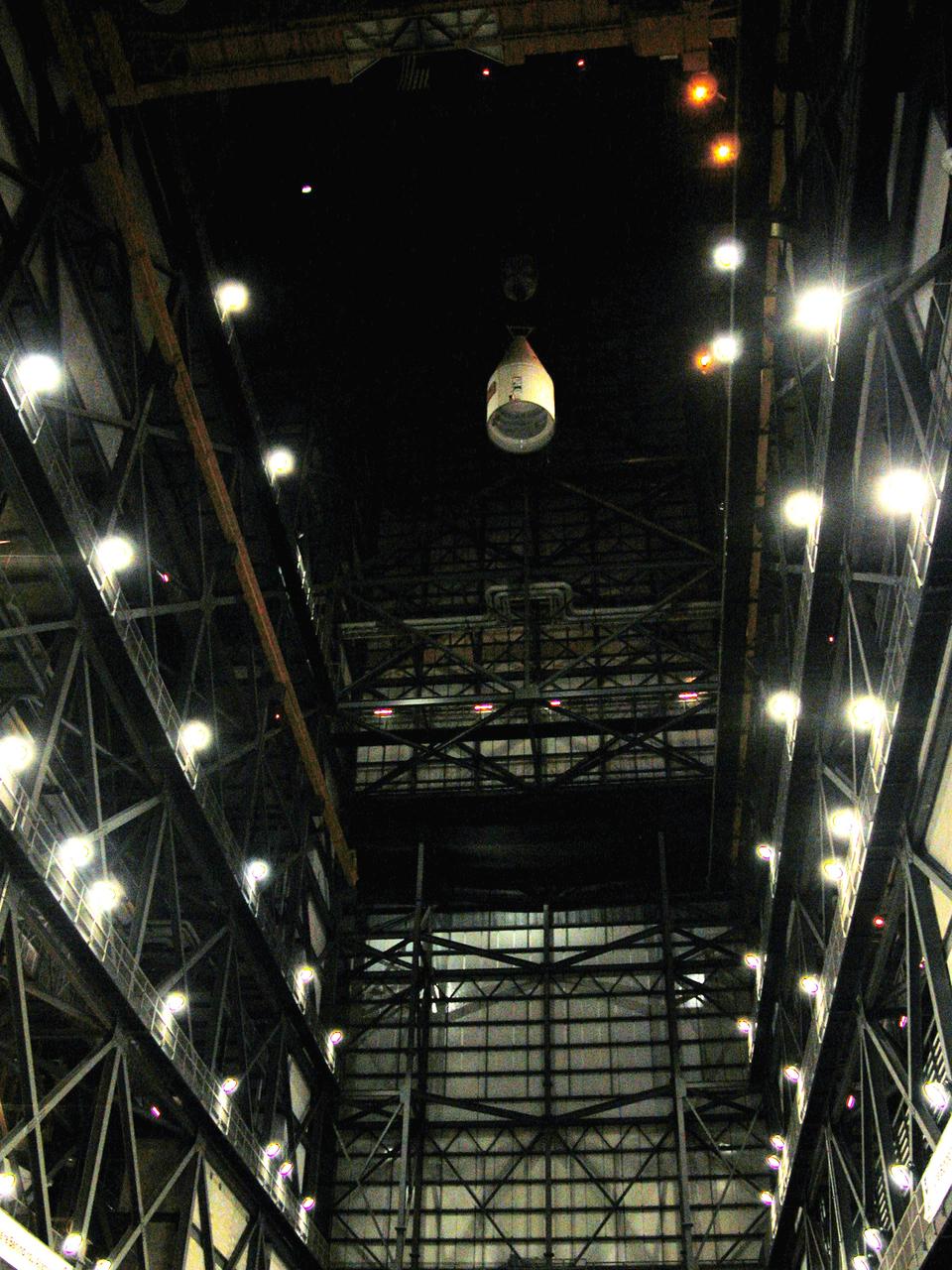
Inside the Vehicle Assembly Building, an overhead crane lifts the forward section of a solid rocket booster (SRB) to mate it with the components seen at lower left in the photo. The forward section of each booster, from nose cap to forward skirt contains avionics, a sequencer, forward separation motors, a nose cone separation system, drogue and main parachutes, a recovery beacon, a recovery light, a parachute camera on selected flights and a range safety system. Each SRB weighs approximately 1.3 million pounds at launch. The SRB is part of the stack for Space Shuttle Discovery and the STS-92 mission, scheduled for launch Oct. 5, from Launch Pad 39A, on the fifth flight to the International Space Station
KSC-00pp0853
KENNEDY SPACE CENTER, FLA. -  Inside the Vehicle Assembly Building (VAB), a segment of a Solid Rocket Booster (SRB) is prepared for lifting.  This right aft center segment will be stacked with the aft booster that arrived in the VAB Nov. 22 for the Return to Flight mission STS-114.  Two SRBs are stacked on the Mobile Launch Platform and later joined by the External Tank.. The twin 149-foot tall, 12-foot diameter SRBs provide the main propulsion system during launch. They operate parallel with the Space Shuttle main engines for the first two minutes of flight and jettison away from the orbiter with help from the Booster Separation Motors, about 26.3 nautical miles above the Earth’s surface.
KSC-04pd-2416
Inside the Vehicle Assembly Building, an overhead crane moves the forward section of a solid rocket booster (SRB) toward the previously stacked elements at lower left in the photo. The forward section of each booster, from nose cap to forward skirt contains avionics, a sequencer, forward separation motors, a nose cone separation system, drogue and main parachutes, a recovery beacon, a recovery light, a parachute camera on selected flights and a range safety system. Each SRB weighs approximately 1.3 million pounds at launch. The SRB is part of the stack for Space Shuttle Discovery and the STS-92 mission, scheduled for launch Oct. 5, from Launch Pad 39A, on the fifth flight to the International Space Station
KSC00pp0854
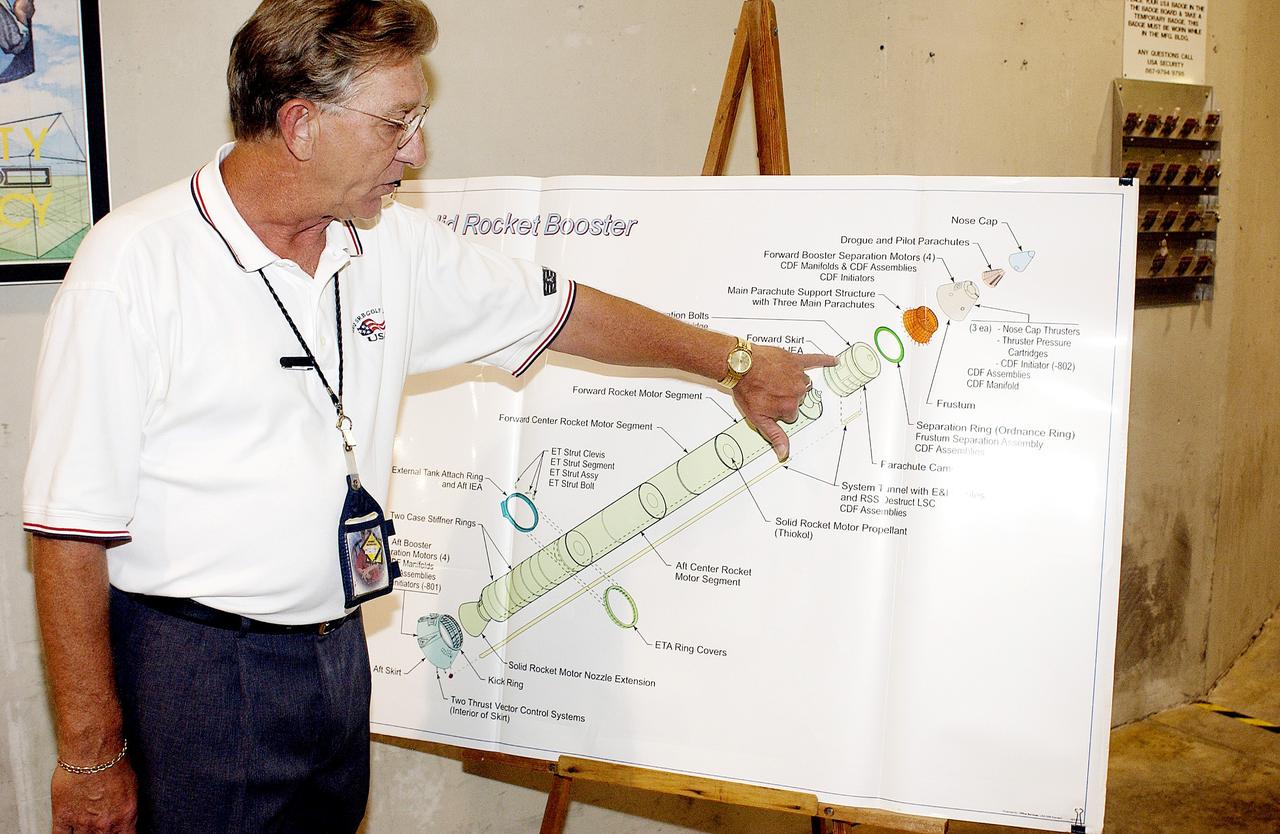
Inside the Vehicle Assembly Building, an overhead crane lowers the forward section of a solid rocket booster (SRB) toward the rest of the stack for mating. The forward section of each booster, from nose cap to forward skirt contains avionics, a sequencer, forward separation motors, a nose cone separation system, drogue and main parachutes, a recovery beacon, a recovery light, a parachute camera on selected flights and a range safety system. Each SRB weighs approximately 1.3 million pounds at launch. The SRB is part of the stack for Space Shuttle Discovery and the STS-92 mission, scheduled for launch Oct. 5, from Launch Pad 39A, on the fifth flight to the International Space Station
KSC00pp0856
KENNEDY SPACE CENTER, FLA. -  In the Vehicle Assembly Building, the solid rocket boosters (SRBs) are being stacked for the orbiter Discovery and mission STS-116. Seen here are the nose cones on top of the SRBs.   Discovery will be rolling over to the VAB in early November to be stacked with the SRBs and external tank for launch. STS-116 will be mission number 20 to the International Space Station and construction flight 12A.1.  The mission payload is the SPACEHAB module, the P5 integrated truss structure and other key components.   Launch is scheduled for no earlier than Dec. 7.   Photo credit: NASA/Jack Pfaller
KSC-06pd2259
Inside the Vehicle Assembly Building, an overhead crane centers the forward section of a solid rocket booster (SRB) above the rest of the stack it will be mated to. The forward section of each booster, from nose cap to forward skirt contains avionics, a sequencer, forward separation motors, a nose cone separation system, drogue and main parachutes, a recovery beacon, a recovery light, a parachute camera on selected flights and a range safety system. Each SRB weighs approximately 1.3 million pounds at launch. The SRB is part of the stack for Space Shuttle Discovery and the STS-92 mission, scheduled for launch Oct. 5, from Launch Pad 39A, on the fifth flight to the International Space Station
KSC00pp0855
Inside the Vehicle Assembly Building, an overhead crane lifts the forward section of a solid rocket booster (SRB) to mate it with the components seen at lower left in the photo. The forward section of each booster, from nose cap to forward skirt contains avionics, a sequencer, forward separation motors, a nose cone separation system, drogue and main parachutes, a recovery beacon, a recovery light, a parachute camera on selected flights and a range safety system. Each SRB weighs approximately 1.3 million pounds at launch. The SRB is part of the stack for Space Shuttle Discovery and the STS-92 mission, scheduled for launch Oct. 5, from Launch Pad 39A, on the fifth flight to the International Space Station
KSC00pp0853
Inside the Vehicle Assembly Building, the forward section of a solid rocket booster (SRB) is lowered onto the rest of the stack for mating. The forward section of each booster, from nose cap to forward skirt contains avionics, a sequencer, forward separation motors, a nose cone separation system, drogue and main parachutes, a recovery beacon, a recovery light, a parachute camera on selected flights and a range safety system. Each SRB weighs approximately 1.3 million pounds at launch. The SRB is part of the stack for Space Shuttle Discovery and the STS-92 mission, scheduled for launch Oct. 5, from Launch Pad 39A, on the fifth flight to the International Space Station
KSC-00pp0857
KENNEDY SPACE CENTER, FLA. -  In the Vehicle Assembly Building (VAB), a segment of a Solid Rocket Booster (SRB) is lifted to the 16th level.  This right aft center segment will be stacked with the aft booster that arrived in the VAB Nov. 22 for the Return to Flight mission STS-114. Two SRBs are stacked on the Mobile Launch Platform and later joined by the External Tank. The twin 149-foot tall, 12-foot diameter SRBs provide the main propulsion system during launch. They operate parallel with the Space Shuttle main engines for the first two minutes of flight and jettison away from the orbiter with help from the Booster Separation Motors, about 26.3 nautical miles above the Earth’s surface.
KSC-04pd-2419
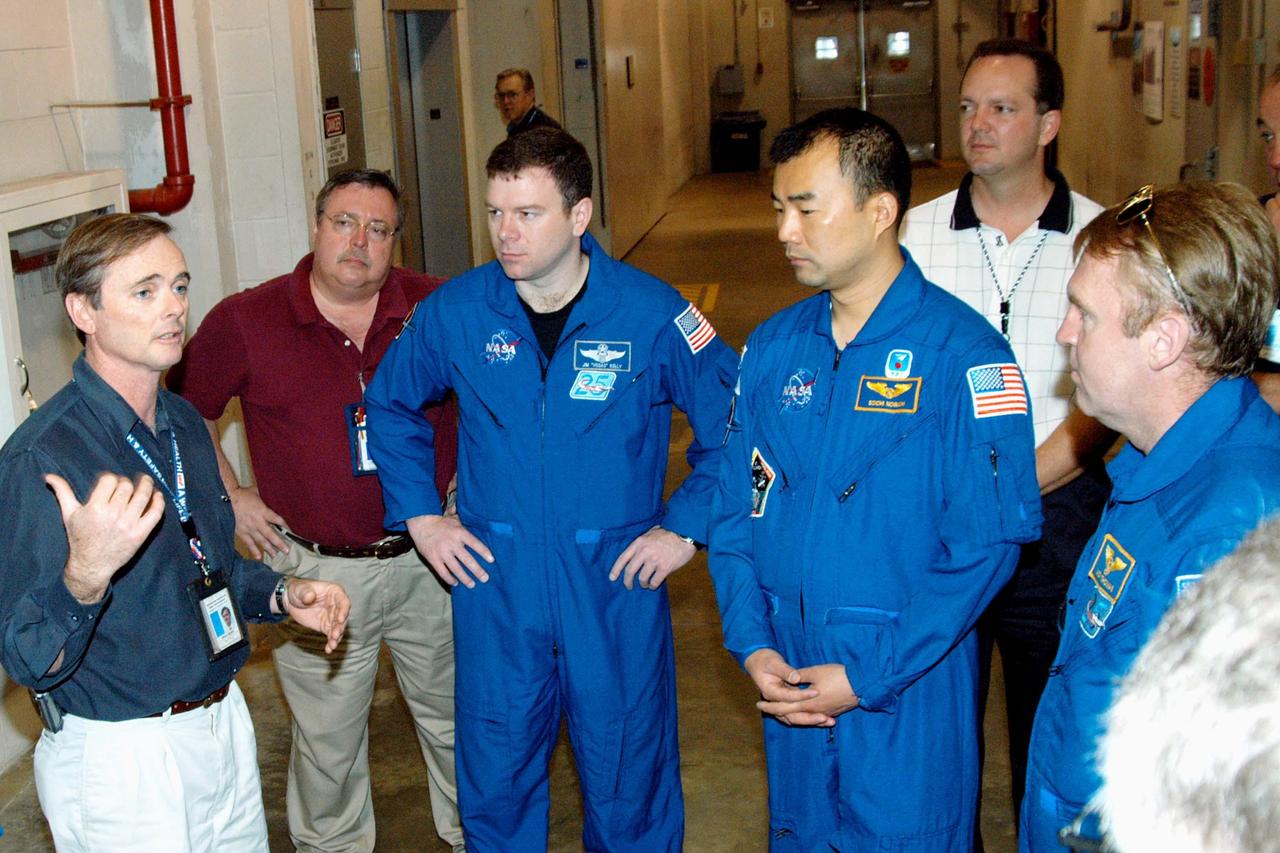
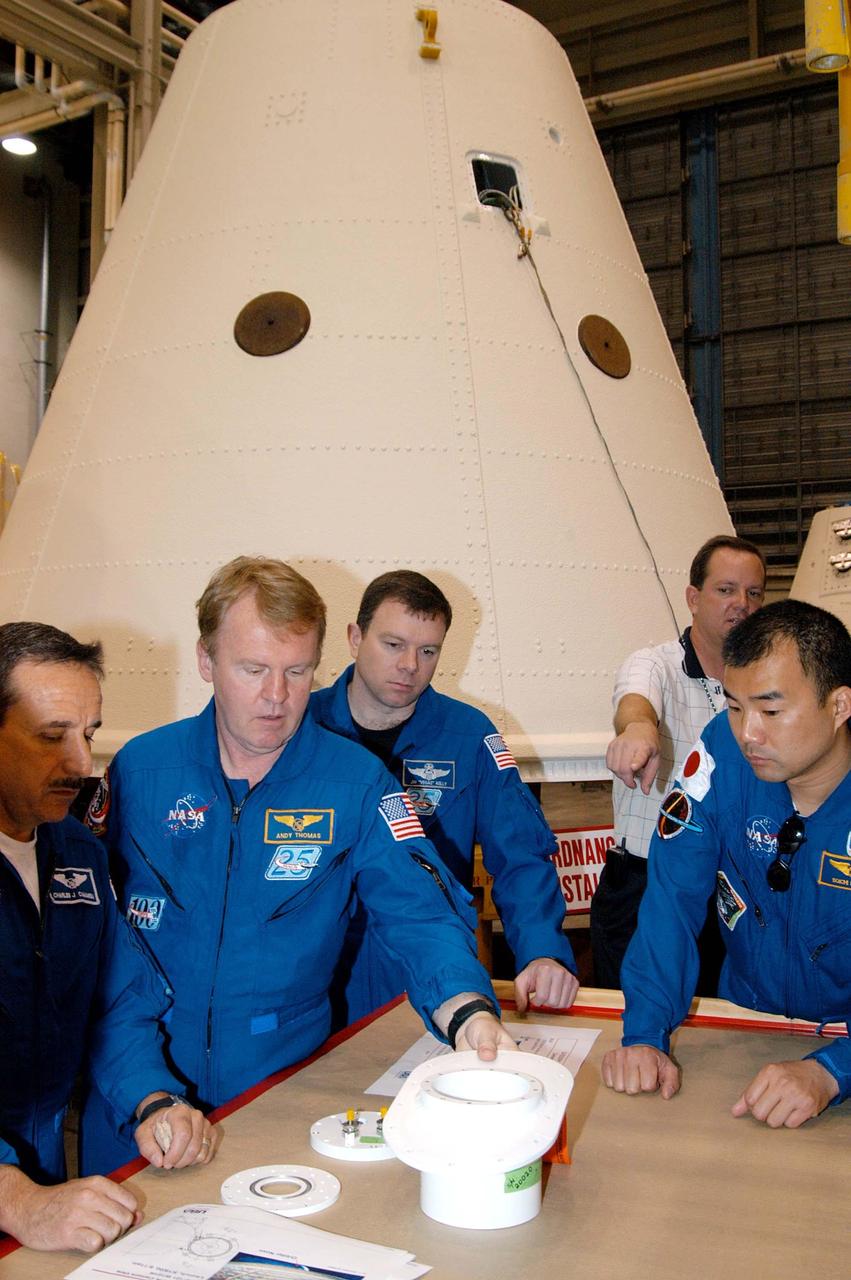
KENNEDY SPACE CENTER, FLA. -  -  In the SRB Assembly and Refurbishment Facility, some of the STS-114 crew listen to Greg Henry, SRB Element director of Manufacturing Operations with United Space Alliance.  Crew members, from center to right, are Pilot James Kelly and Mission Specialists Soichi Noguchi and Andrew Thomas.  Noguchi represents the Japanese Aerospace and Exploration Agency. In the background, at right, is Tom Engler, Marshall Space Flight Center SRB Resident Office lead. The crew is at KSC for familiarization with Shuttle and mission equipment. The STS-114 mission is Logistics Flight 1, which is scheduled to deliver supplies and equipment, plus the external stowage platform, to the International Space Station.
KSC-04pd0381
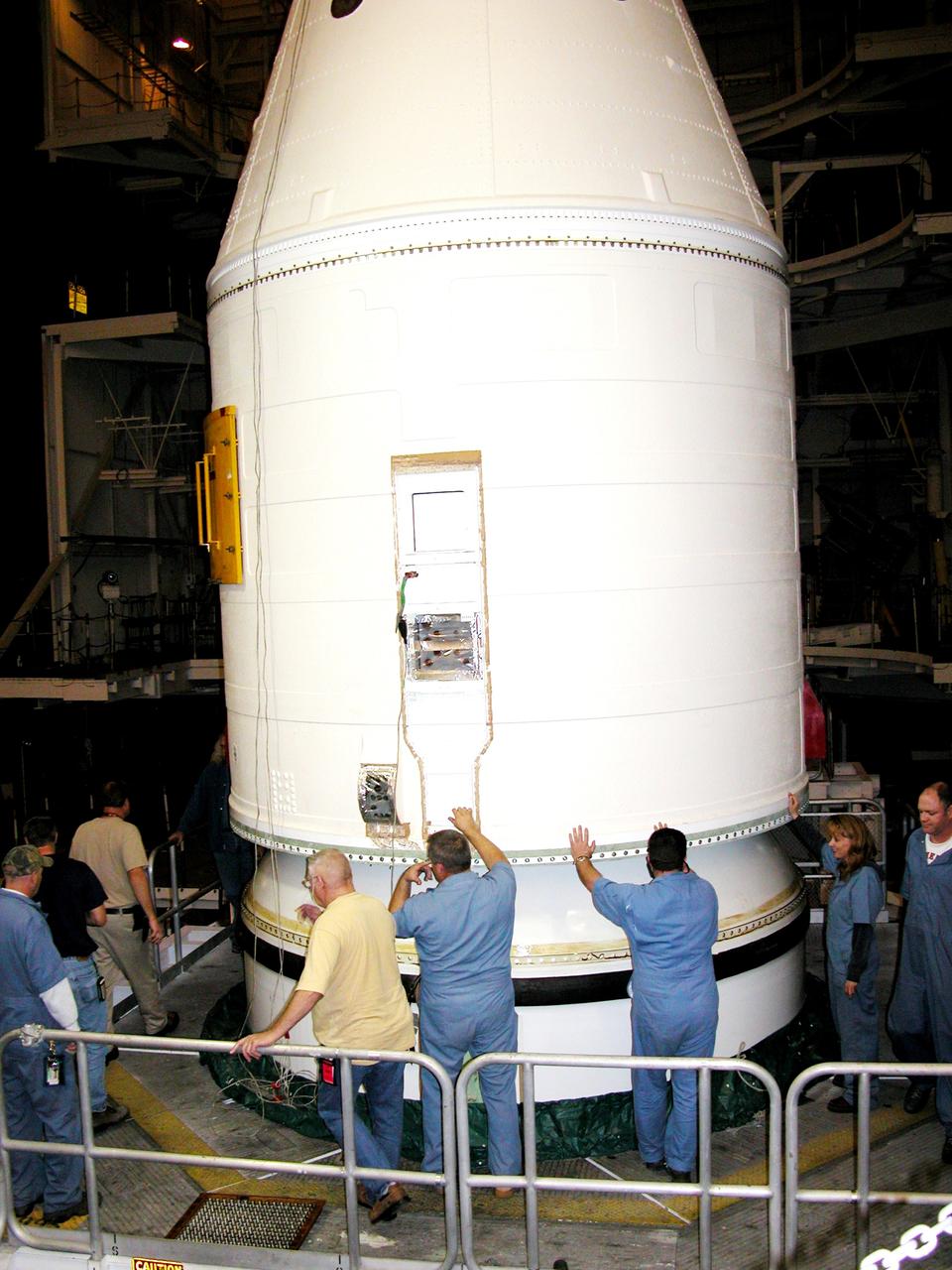
Inside the Vehicle Assembly Building, the forward section of a solid rocket booster (SRB) sits on top of the rest of the stack for mating. The forward section of each booster, from nose cap to forward skirt contains avionics, a sequencer, forward separation motors, a nose cone separation system, drogue and main parachutes, a recovery beacon, a recovery light, a parachute camera on selected flights and a range safety system. Each SRB weighs approximately 1.3 million pounds at launch. The SRB is part of the stack for Space Shuttle Discovery and the STS-92 mission, scheduled for launch Oct. 5, from Launch Pad 39A, on the fifth flight to the International Space Station
KSC00pp0858
Inside the Vehicle Assembly Building, an overhead crane lowers the forward section of a solid rocket booster (SRB) toward the rest of the stack for mating. The forward section of each booster, from nose cap to forward skirt contains avionics, a sequencer, forward separation motors, a nose cone separation system, drogue and main parachutes, a recovery beacon, a recovery light, a parachute camera on selected flights and a range safety system. Each SRB weighs approximately 1.3 million pounds at launch. The SRB is part of the stack for Space Shuttle Discovery and the STS-92 mission, scheduled for launch Oct. 5, from Launch Pad 39A, on the fifth flight to the International Space Station
KSC-00pp0856
Inside the Vehicle Assembly Building, an overhead crane moves the forward section of a solid rocket booster (SRB) toward the previously stacked elements at lower left in the photo. The forward section of each booster, from nose cap to forward skirt contains avionics, a sequencer, forward separation motors, a nose cone separation system, drogue and main parachutes, a recovery beacon, a recovery light, a parachute camera on selected flights and a range safety system. Each SRB weighs approximately 1.3 million pounds at launch. The SRB is part of the stack for Space Shuttle Discovery and the STS-92 mission, scheduled for launch Oct. 5, from Launch Pad 39A, on the fifth flight to the International Space Station
KSC-00pp0854
Inside the Vehicle Assembly Building, the forward section of a solid rocket booster (SRB) sits on top of the rest of the stack for mating. The forward section of each booster, from nose cap to forward skirt contains avionics, a sequencer, forward separation motors, a nose cone separation system, drogue and main parachutes, a recovery beacon, a recovery light, a parachute camera on selected flights and a range safety system. Each SRB weighs approximately 1.3 million pounds at launch. The SRB is part of the stack for Space Shuttle Discovery and the STS-92 mission, scheduled for launch Oct. 5, from Launch Pad 39A, on the fifth flight to the International Space Station
KSC-00pp0858
Inside the Vehicle Assembly Building, an overhead crane centers the forward section of a solid rocket booster (SRB) above the rest of the stack it will be mated to. The forward section of each booster, from nose cap to forward skirt contains avionics, a sequencer, forward separation motors, a nose cone separation system, drogue and main parachutes, a recovery beacon, a recovery light, a parachute camera on selected flights and a range safety system. Each SRB weighs approximately 1.3 million pounds at launch. The SRB is part of the stack for Space Shuttle Discovery and the STS-92 mission, scheduled for launch Oct. 5, from Launch Pad 39A, on the fifth flight to the International Space Station
KSC-00pp0855
KENNEDY SPACE CENTER, FLA. -  In the Vehicle Assembly Building (VAB), the right aft center segment of a Solid Rocket Booster (SRB) is lowered toward the aft booster for mating. The aft booster arrived in the VAB Nov. 22 for the Return to Flight mission STS-114. Two SRBs are stacked on the Mobile Launch Platform and later joined by the External Tank.. The twin 149-foot tall, 12-foot diameter SRBs provide the main propulsion system during launch. They operate parallel with the Space Shuttle main engines for the first two minutes of flight and jettison away from the orbiter with help from the Booster Separation Motors, about 26.3 nautical miles above the Earth’s surface.
KSC-04pd-2422
KENNEDY SPACE CENTER, FLA. -  In the SRB Assembly and Refurbishment Facility, STS-114 crew members look at external tank-solid rocket booster camera components.  From left are Mission Specialists Charles Camarda and Andrew Thomas, Pilot James Kelly, and Mission Specialist Soichi Noguchi, who represents the Japanese Aerospace and Exploration Agency. Behind Noguchi is Tom Engler, SRB Resident Office lead at Marshall Space Flight Center.  They are standing in front of an SRB frustum. The crew is at KSC for familiarization with Shuttle and mission equipment. The STS-114 mission is Logistics Flight 1, which is scheduled to deliver supplies and equipment, plus the external stowage platform, to the International Space Station.
KSC-04pd0400
KENNEDY SPACE CENTER, FLA. --  In high bay 1 of the Vehicle Assembly Building at NASA's Kennedy Space Center, the suspended external tank is lowered between the solid rocket boosters, or SRBs, installed on the mobile launcher platform.  The tank will be mated with the boosters for launch.  Work to remove and replace the feed-through connector on the external tank will be done in parallel with integrated ET/SRB testing in preparation for space shuttle Endeavour to join the stack later in January.  The STS-123 mission is targeted for launch on Endeavour in mid-March.  The 25th assembly flight to the International Space Station, Endeavour's payload includes the Japanese Experiment Logistics Module Pressurized Section.  Photo credit: NASA/Kim Shiflett
KSC-08pd0032
KENNEDY SPACE CENTER, FLA. - David Martin, NASA SRB project manager,  congratulates employees in the Assembly and Refurbishment Facility for preparing the first (left) solid rocket booster aft skirt for mission STS-114 on schedule.  The segment, seen behind Martin, will be transferred to the Rotation Processing and Surge Facility (RPSF) for stacking.  At the RPSF an aft motor segment and an external tank attach ring will be installed.  The stack will then be moved to the Vehicle Assembly Building for further build-up.  This is the first transfer of a large piece of hardware from SRB to Ground Operations.  It is a significant milestone in the march to Return to Flight.
KSC-04pd1661
KENNEDY SPACE CENTER, FLA. -- In the Vehicle Assembly Building at NASA's Kennedy Space Center, the suspended external tank is lowered into high bay 1 toward the mobile launcher platform.  The tank will be mated with the solid rocket boosters, or SRBs, already installed on the platform.  Work to remove and replace the feed-through connector on the external tank will be done in parallel with integrated ET/SRB testing in preparation for space shuttle Endeavour to join the stack later in January.  The STS-123 mission is targeted for launch on Endeavour in mid-March.  The 25th assembly flight to the International Space Station, Endeavour's payload includes the Japanese Experiment Logistics Module Pressurized Section.  Photo credit: NASA/Kim Shiflett
KSC-08pd0027
KENNEDY SPACE CENTER, FLA. -- In the Vehicle Assembly Building at NASA's Kennedy Space Center, the suspended external tank is lowered into high bay 1 toward the mobile launcher platform.  The tank will be mated with the solid rocket boosters, or SRBs, already installed on the platform.  Work to remove and replace the feed-through connector on the external tank will be done in parallel with integrated ET/SRB testing in preparation for space shuttle Endeavour to join the stack later in January.  The STS-123 mission is targeted for launch on Endeavour in mid-March.  The 25th assembly flight to the International Space Station, Endeavour's payload includes the Japanese Experiment Logistics Module Pressurized Section.  Photo credit: NASA/Kim Shiflett
KSC-08pd0029
KENNEDY SPACE CENTER, FLA. --  In high bay 1 of the Vehicle Assembly Building at NASA's Kennedy Space Center, the suspended external tank is lowered between the solid rocket boosters, or SRBs, installed on the mobile launcher platform.  The tank will be mated with the boosters for launch.   Work to remove and replace the feed-through connector on the external tank will be done in parallel with integrated ET/SRB testing in preparation for space shuttle Endeavour to join the stack later in January.  The STS-123 mission is targeted for launch on Endeavour in mid-March.  The 25th assembly flight to the International Space Station, Endeavour's payload includes the Japanese Experiment Logistics Module Pressurized Section.  Photo credit: NASA/Kim Shiflett
KSC-08pd0031
KENNEDY SPACE CENTER, FLA. -- In the Vehicle Assembly Building at NASA's Kennedy Space Center, the suspended external tank is lowered into high bay 1 toward the mobile launcher platform.  The tank will be mated with the solid rocket boosters, or SRBs, already installed on the platform.  Work to remove and replace the feed-through connector on the external tank will be done in parallel with integrated ET/SRB testing in preparation for space shuttle Endeavour to join the stack later in January.  The STS-123 mission is targeted for launch on Endeavour in mid-March.  The 25th assembly flight to the International Space Station, Endeavour's payload includes the Japanese Experiment Logistics Module Pressurized Section.  Photo credit: NASA/Kim Shiflett
KSC-08pd0028
KENNEDY SPACE CENTER, FLA. - Paul Gutierrez, United Space Alliance associate program manager for the Solid Rocket Booster Element, congratulates employees in the Assembly and Refurbishment Facility for preparing the first (left) solid rocket booster (SRB) aft skirt for mission STS-114 on schedule.  The segment, seen behind Gutierrez, will be transferred to the Rotation Processing and Surge Facility (RPSF) for stacking.  At the RPSF an aft motor segment and an external tank attach ring will be installed.  The stack will then be moved to the Vehicle Assembly Building for further build-up.  This is the first transfer of a large piece of hardware from SRB to Ground Operations.  It is a significant milestone in the march to Return to Flight.
KSC-04pd1659
KENNEDY SPACE CENTER, FLA. --  In the Vehicle Assembly Building at NASA's Kennedy Space Center, the suspended external tank is moved into high bay 1.  The tank will be lowered toward the mobile launcher platform for mating with the solid rocket boosters, or SRBs, already installed on the platform.  Work to remove and replace the feed-through connector on the external tank will be done in parallel with integrated ET/SRB testing in preparation for space shuttle Endeavour to join the stack later in January.  The STS-123 mission is targeted for launch on Endeavour in mid-March.  The 25th assembly flight to the International Space Station, Endeavour's payload includes the Japanese Experiment Logistics Module Pressurized Section.  Photo credit: NASA/Kim Shiflett
KSC-08pd0026
KENNEDY SPACE CENTER, FLA. -- In the Vehicle Assembly Building, near the top of the solid rocket booster, Henry Jones and Richard Bruns begin to detach the SRB system tunnel cover on the 36 cables inside. Jones and Bruns are United Space Alliance SRB technicians. The SRB is part of Space Shuttle Atlantis, rolled back from Launch Pad 39A in order to conduct tests on the cables. A prior extensive evaluation of NASA’s SRB cable inventory on the shelf revealed conductor damage in four (of about 200) cables. Shuttle managers decided to prove the integrity of the system tunnel cables already on Atlantis before launching. Workers are conducting inspections, making continuity checks and conducting X-ray analysis on the cables. The launch has been rescheduled no earlier than Feb. 6.<br
KSC01pp0145
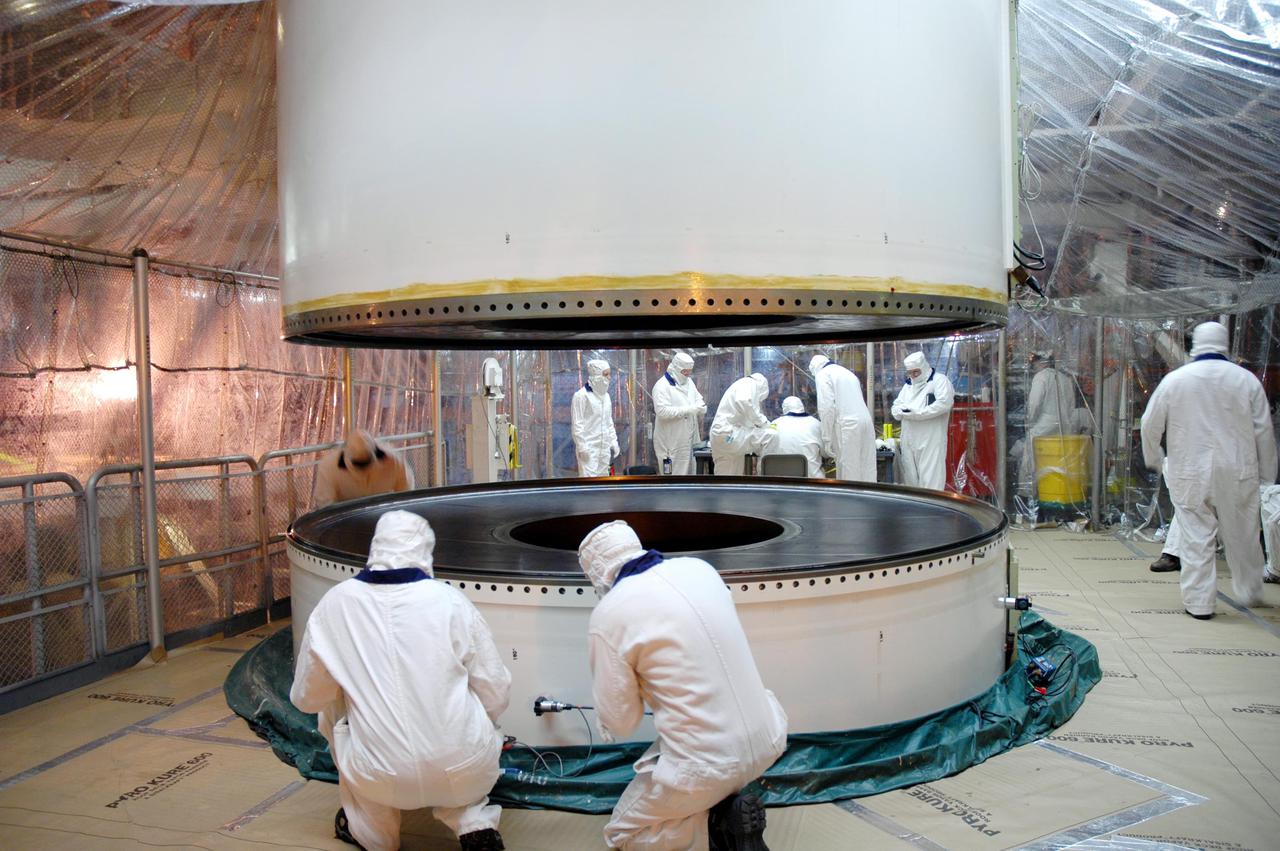
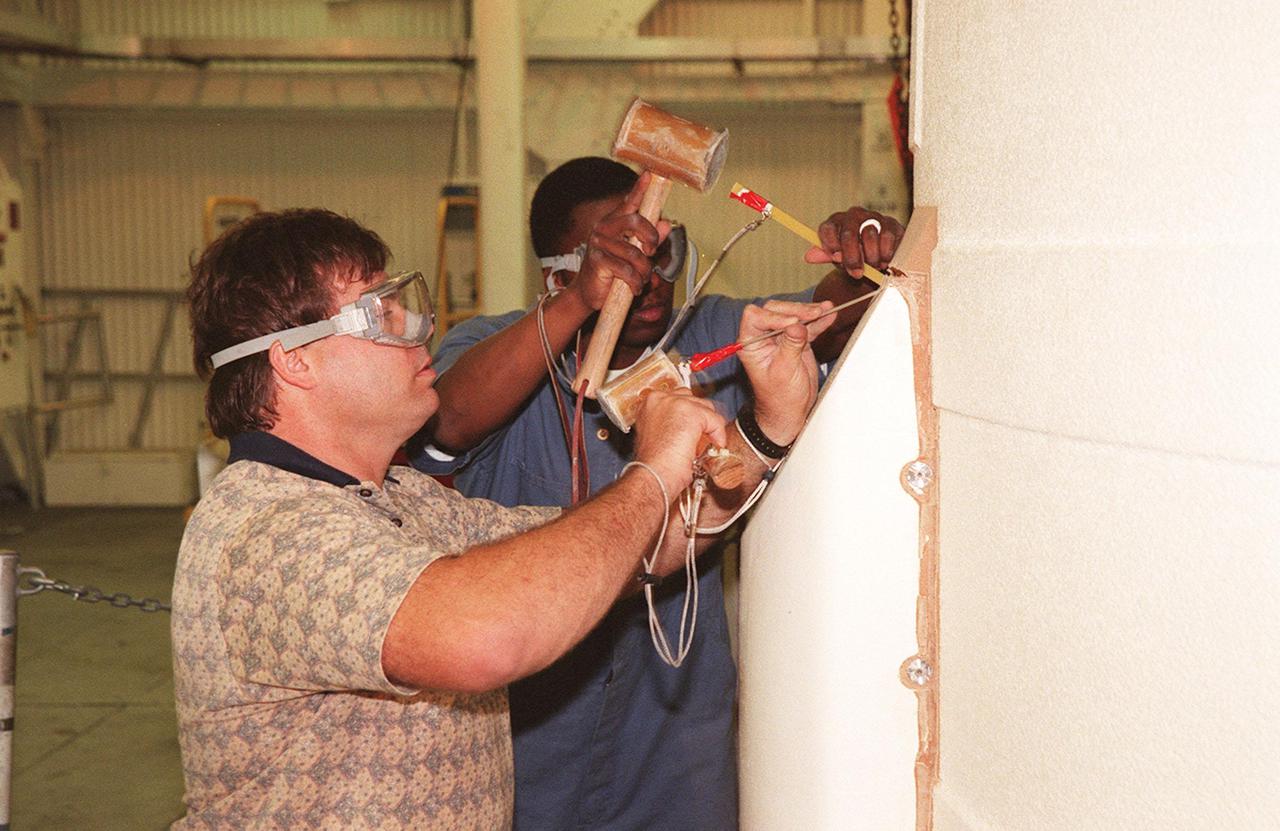
KENNEDY SPACE CENTER, FLA. -  In a Vehicle Assembly Building (VAB) high bay, workers check the alignment of a Solid Rocket Booster (SRB) aft center segment as it is lowered toward an aft segment already secured to a Mobile Launch Platform. These segments are part of the right SRB for the Space Shuttle Return to Flight mission, STS-114. Two SRBs are stacked on a Mobile Launch Platform for each Shuttle flight and later joined by an External Tank. The twin 149-foot tall, 12-foot diameter SRBs provide the main propulsion system during launch. They operate in parallel with the Space Shuttle main engines for the first two minutes of flight and jettison away from the orbiter with help from the Booster Separation Motors, about 26.3 nautical miles above the Earth’s surface.
KSC-04pd-2562
KENNEDY SPACE CENTER, FLA. -  The media visit the operations center on board the Freedom Star, one of the Solid Rocket Booster (SRB) retrieval ships.  The stop was part of a day-long event that featured the movement of the first SRB segments to the Vehicle Assembly Building for stacking for Return to Flight mission STS-114. Two SRBs support the liftoff of the Space Shuttle on a launch.  The twin 149-foot tall, 12-foot diameter SRBs provide the main propulsion system during launch to place the orbiters in the proper orbit around the Earth.  They operate parallel with the Space Shuttle main engines for the first two minutes of flight and jettison away from the orbiter, with help from the Booster Separation Motors, about 26.3 nautical miles above the Earth’s surface.
KSC-04pd-2393
KENNEDY SPACE CENTER, FLA. -  The media tour the Parachute Refurbishment Facility, which cleans and repairs the Solid Rocket Booster (SRB) parachutes after a Space Shuttle launch.   The stop was part of a day-long event that featured the movement of the first SRB segments to the Vehicle Assembly Building for stacking for Return to Flight mission STS-114. Two SRBs support the liftoff of the Space Shuttle on a launch.  The twin 149-foot tall, 12-foot diameter SRBs provide the main propulsion system during launch to place the orbiters in the proper orbit around the Earth.  They operate parallel with the Space Shuttle main engines for the first two minutes of flight and jettison away from the orbiter, with help from the Booster Separation Motors, about 26.3 nautical miles above the Earth’s surface.
KSC-04pd-2396
KENNEDY SPACE CENTER, FLA. -- In the Vehicle Assembly Building, Richard Bruns, a United Space Alliance SRB technician, begins to detach the SRB system tunnel cover on the 36 cables inside. The SRB is part of Space Shuttle Atlantis, rolled back from Launch Pad 39A in order to conduct tests on the cables. A prior extensive evaluation of NASA’s SRB cable inventory on the shelf revealed conductor damage in four (of about 200) cables. Shuttle managers decided to prove the integrity of the system tunnel cables already on Atlantis before launching. Workers are conducting inspections, making continuity checks and conducting X-ray analysis on the cables. The launch has been rescheduled no earlier than Feb. 6. <br
KSC01pp0143