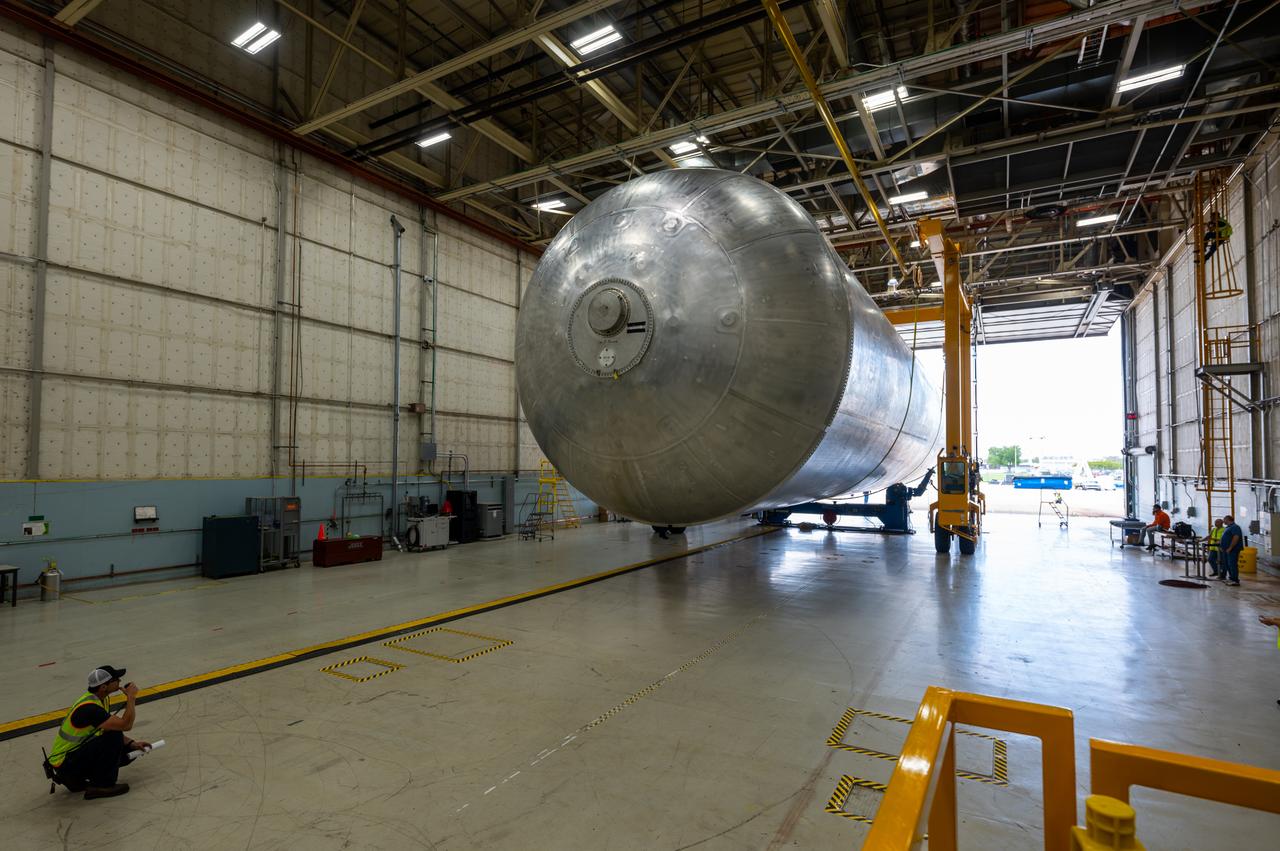
The core stage liquid hydrogen tank for the Artemis III mission completed proof testing, and technicians returned it to the main factory building at NASA’s Michoud Assembly Facility in New Orleans where it will undergo more outfitting. As part of proof testing, technicians apply a simple soap solution and check for leaks by observing any bubble formation on the welds. The technician removed the bubble solution with distilled water and then dried the area of application to prevent corrosion. To build the Space Launch System (SLS) rocket’s 130-foot core stage liquid hydrogen tank, engineers use robotic tools to weld five-barrel segments. This process results in a tank with around 1,900 feet, or more than six football fields, of welds that must be tested by hand. After the leak tests, the core stage lead, Boeing, pressurized the SLS tank to further ensure there were no leaks. After it passed proof testing, technicians moved the Artemis III liquid hydrogen tank to Michoud’s main factory. Soon, the technicians will prime and apply a foam-based thermal protection system that protects the tank during launch. Later, the tank will be joined with other parts of the core stage to form the entire 212-foot rocket stage with its four RS-25 engines that produce 2 million pounds of thrust to help launch the rocket. Artemis III will land the first astronauts on the lunar surface.
This photo shows NASA and Boeing, the SLS core stage lead contractor, preparing the SLS (Space Launch System) rocket core stage for shipment at NASA’s Michoud Assembly Facility in New Orleans. On July 6, NASA and Boeing moved the Artemis II rocket stage to Building 110. The move comes as teams prepare to roll the massive rocket stage with its four RS-25 engines to the agency’s Pegasus barge for delivery to NASA’s Kennedy Space Center in Florida in mid-July. Prior to the move, technicians began removing external access stands, or scaffolding, surrounding the core stage to assess the interior elements, including its complex avionics and flight propulsion systems. The stage is fully manufactured at NASA Michoud. NASA is working to land the first woman, first person of color, and its first international partner astronaut on the Moon under Artemis. SLS is part of NASA’s backbone for deep space exploration, along with the Orion spacecraft, supporting ground systems, advanced spacesuits and rovers, the Gateway in orbit around the Moon, and commercial human landing systems. SLS is the only rocket that can send Orion, astronauts, and supplies to the Moon in a single launch. Image credit: NASA/Michael DeMocker
This photo shows NASA and Boeing, the SLS core stage lead contractor, preparing the SLS (Space Launch System) rocket core stage for shipment at NASA’s Michoud Assembly Facility in New Orleans. On July 6, NASA and Boeing moved the Artemis II rocket stage to Building 110. The move comes as teams prepare to roll the massive rocket stage with its four RS-25 engines to the agency’s Pegasus barge for delivery to NASA’s Kennedy Space Center in Florida in mid-July. Prior to the move, technicians began removing external access stands, or scaffolding, surrounding the core stage to assess the interior elements, including its complex avionics and flight propulsion systems. The stage is fully manufactured at NASA Michoud. NASA is working to land the first woman, first person of color, and its first international partner astronaut on the Moon under Artemis. SLS is part of NASA’s backbone for deep space exploration, along with the Orion spacecraft, supporting ground systems, advanced spacesuits and rovers, the Gateway in orbit around the Moon, and commercial human landing systems. SLS is the only rocket that can send Orion, astronauts, and supplies to the Moon in a single launch. Image credit: NASA/Michael DeMocker
This photo shows NASA and Boeing, the SLS core stage lead contractor, preparing the SLS (Space Launch System) rocket core stage for shipment at NASA’s Michoud Assembly Facility in New Orleans. On July 6, NASA and Boeing moved the Artemis II rocket stage to Building 110. The move comes as teams prepare to roll the massive rocket stage with its four RS-25 engines to the agency’s Pegasus barge for delivery to NASA’s Kennedy Space Center in Florida in mid-July. Prior to the move, technicians began removing external access stands, or scaffolding, surrounding the core stage to assess the interior elements, including its complex avionics and flight propulsion systems. The stage is fully manufactured at NASA Michoud. NASA is working to land the first woman, first person of color, and its first international partner astronaut on the Moon under Artemis. SLS is part of NASA’s backbone for deep space exploration, along with the Orion spacecraft, supporting ground systems, advanced spacesuits and rovers, the Gateway in orbit around the Moon, and commercial human landing systems. SLS is the only rocket that can send Orion, astronauts, and supplies to the Moon in a single launch. Image credit: NASA/Michael DeMocker
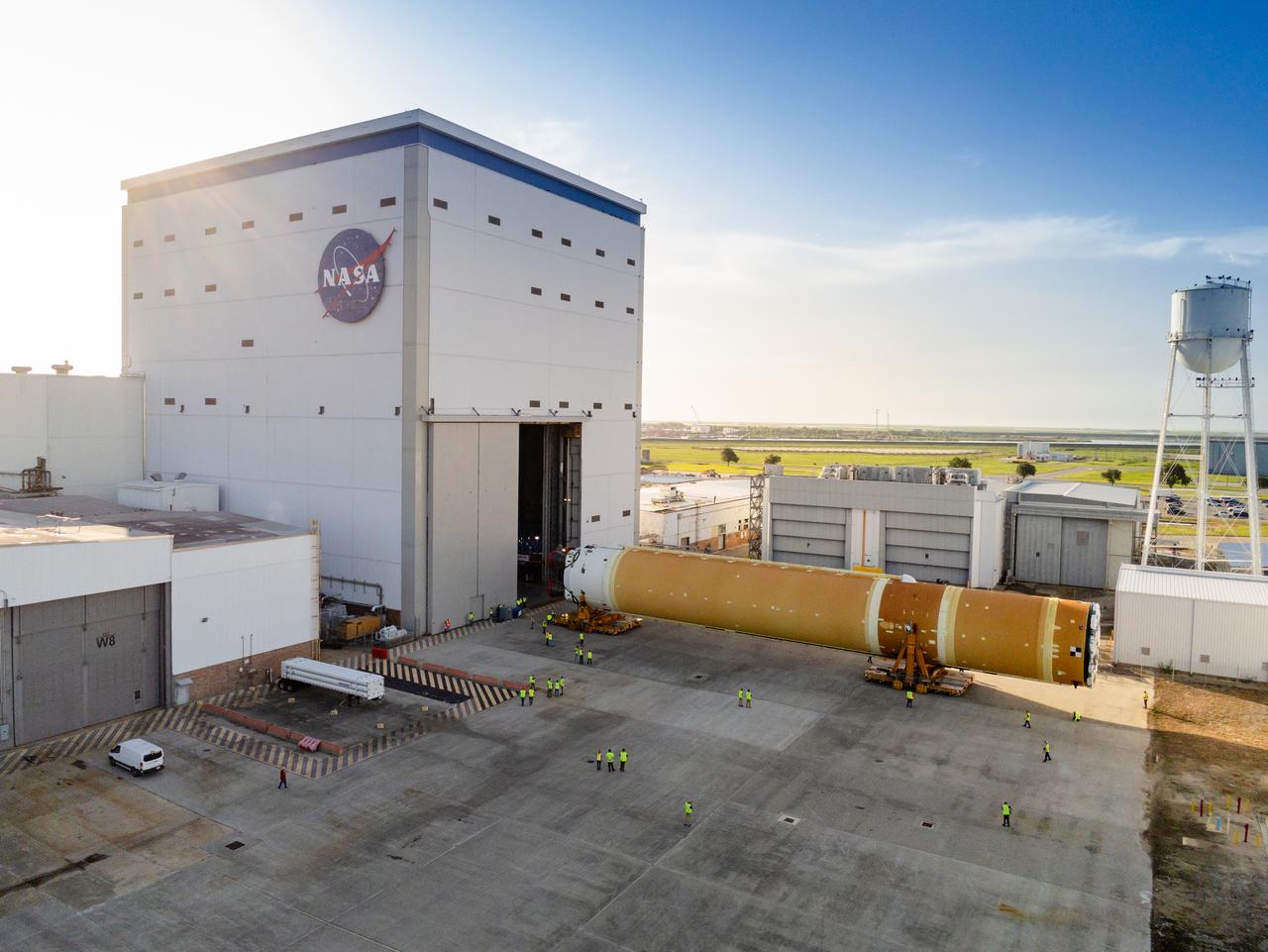
This photo shows NASA and Boeing, the SLS core stage lead contractor, preparing the SLS (Space Launch System) rocket core stage for shipment at NASA’s Michoud Assembly Facility in New Orleans. On July 6, NASA and Boeing moved the Artemis II rocket stage to Building 110. The move comes as teams prepare to roll the massive rocket stage with its four RS-25 engines to the agency’s Pegasus barge for delivery to NASA’s Kennedy Space Center in Florida in mid-July. Prior to the move, technicians began removing external access stands, or scaffolding, surrounding the core stage to assess the interior elements, including its complex avionics and flight propulsion systems. The stage is fully manufactured at NASA Michoud.
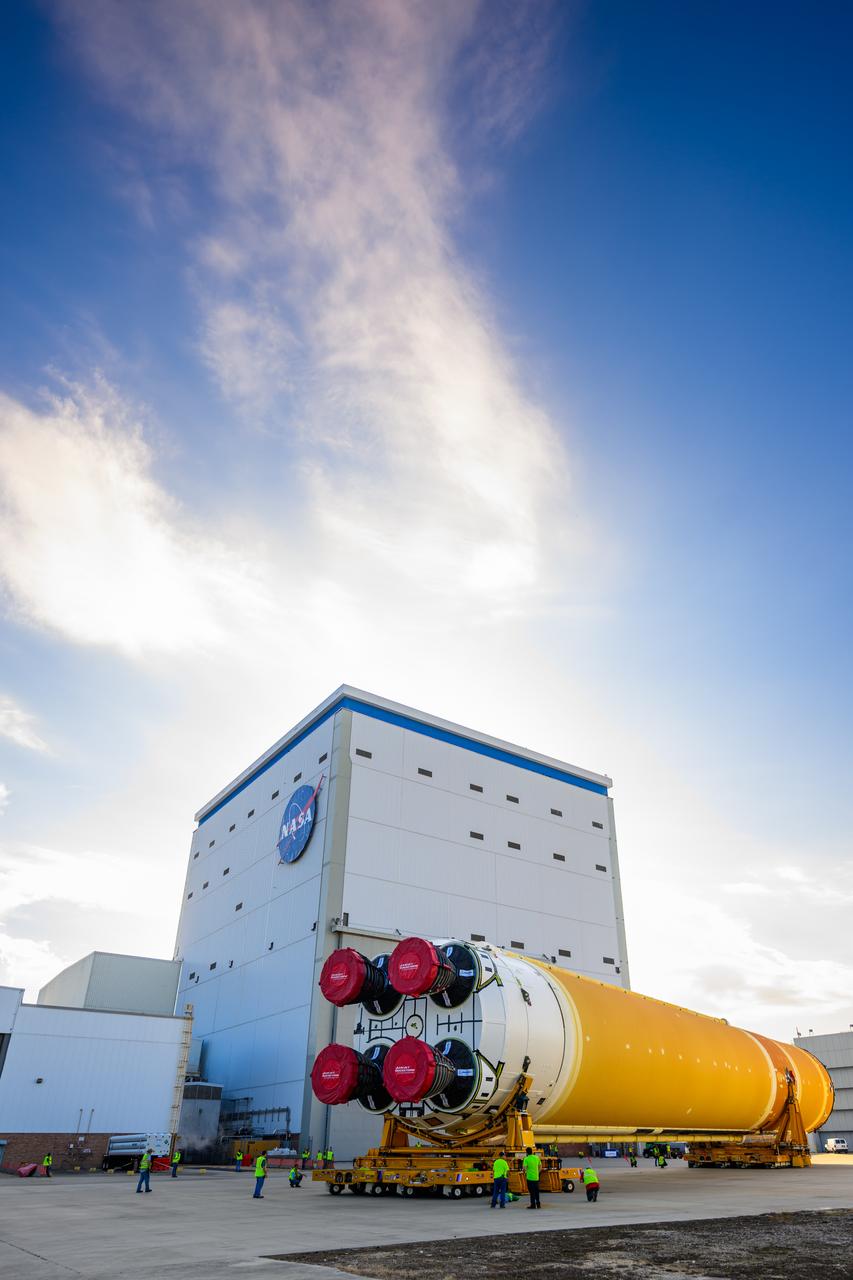
This photo shows NASA and Boeing, the SLS core stage lead contractor, preparing the SLS (Space Launch System) rocket core stage for shipment at NASA’s Michoud Assembly Facility in New Orleans. On July 6, NASA and Boeing moved the Artemis II rocket stage to Building 110. The move comes as teams prepare to roll the massive rocket stage with its four RS-25 engines to the agency’s Pegasus barge for delivery to NASA’s Kennedy Space Center in Florida in mid-July. Prior to the move, technicians began removing external access stands, or scaffolding, surrounding the core stage to assess the interior elements, including its complex avionics and flight propulsion systems. The stage is fully manufactured at NASA Michoud.
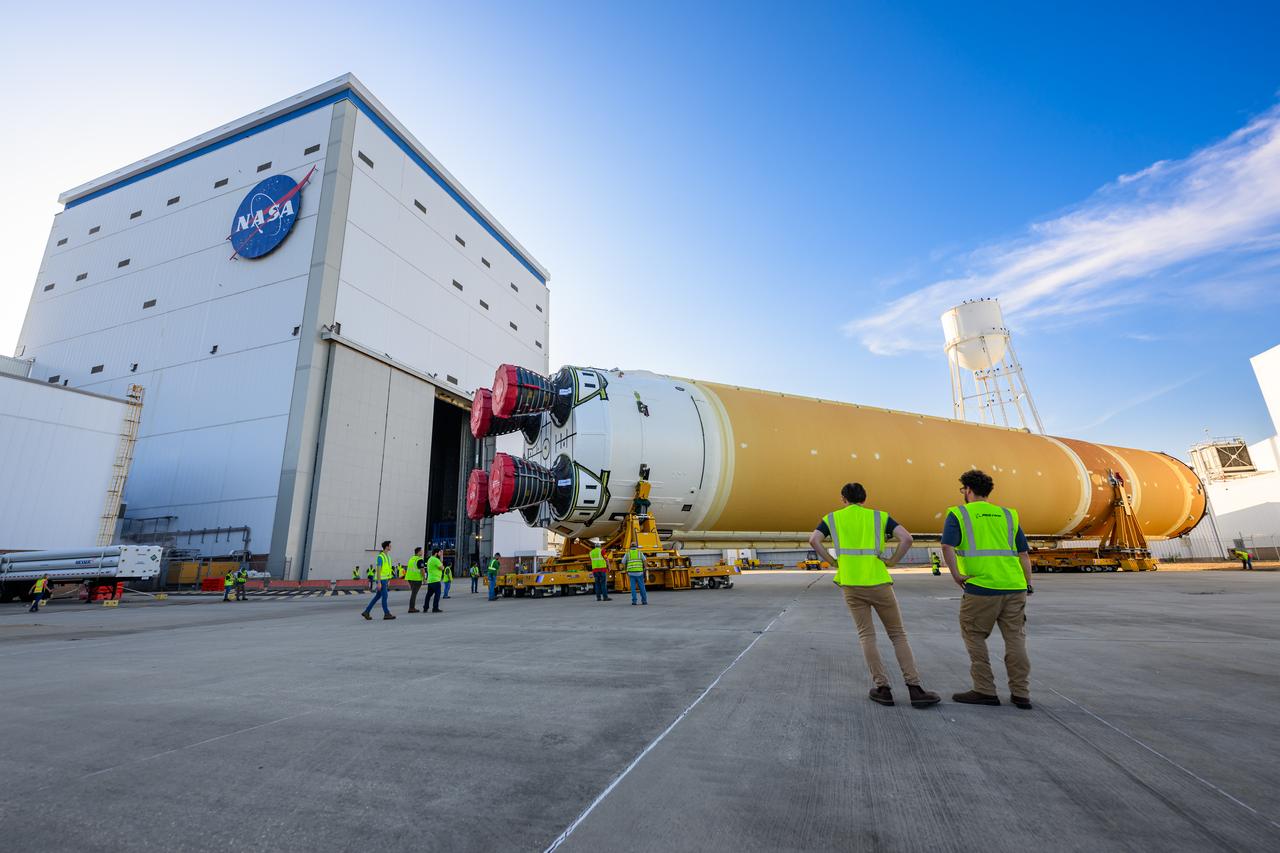
This photo shows NASA and Boeing, the SLS core stage lead contractor, preparing the SLS (Space Launch System) rocket core stage for shipment at NASA’s Michoud Assembly Facility in New Orleans. On July 6, NASA and Boeing moved the Artemis II rocket stage to Building 110. The move comes as teams prepare to roll the massive rocket stage with its four RS-25 engines to the agency’s Pegasus barge for delivery to NASA’s Kennedy Space Center in Florida in mid-July. Prior to the move, technicians began removing external access stands, or scaffolding, surrounding the core stage to assess the interior elements, including its complex avionics and flight propulsion systems. The stage is fully manufactured at NASA Michoud.
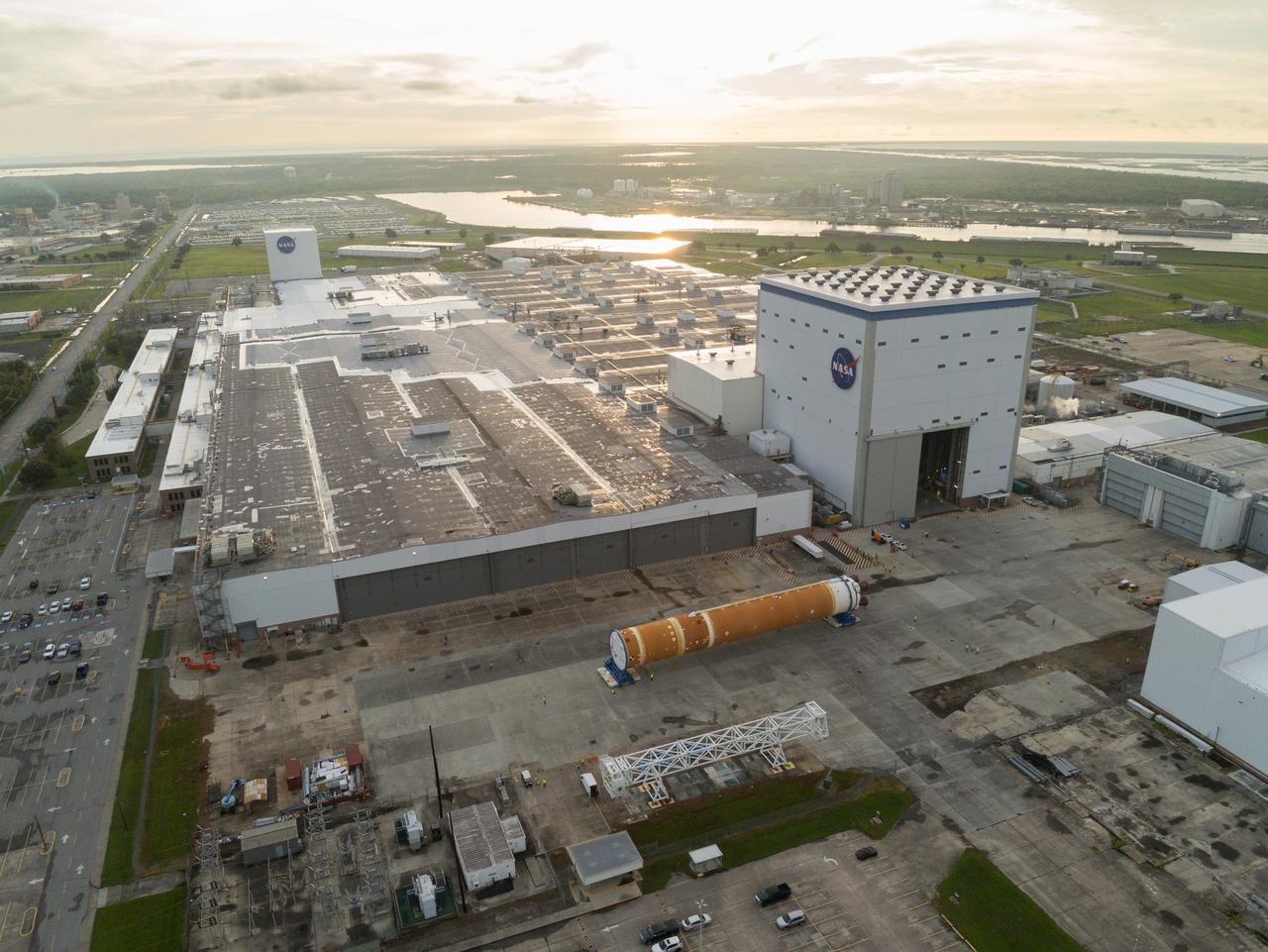
This photo shows NASA and Boeing, the SLS core stage lead contractor, preparing the SLS (Space Launch System) rocket core stage for shipment at NASA’s Michoud Assembly Facility in New Orleans. On July 6, NASA and Boeing moved the Artemis II rocket stage to Building 110. The move comes as teams prepare to roll the massive rocket stage with its four RS-25 engines to the agency’s Pegasus barge for delivery to NASA’s Kennedy Space Center in Florida in mid-July. Prior to the move, technicians began removing external access stands, or scaffolding, surrounding the core stage to assess the interior elements, including its complex avionics and flight propulsion systems. The stage is fully manufactured at NASA Michoud. NASA is working to land the first woman, first person of color, and its first international partner astronaut on the Moon under Artemis. SLS is part of NASA’s backbone for deep space exploration, along with the Orion spacecraft, supporting ground systems, advanced spacesuits and rovers, the Gateway in orbit around the Moon, and commercial human landing systems. SLS is the only rocket that can send Orion, astronauts, and supplies to the Moon in a single launch.
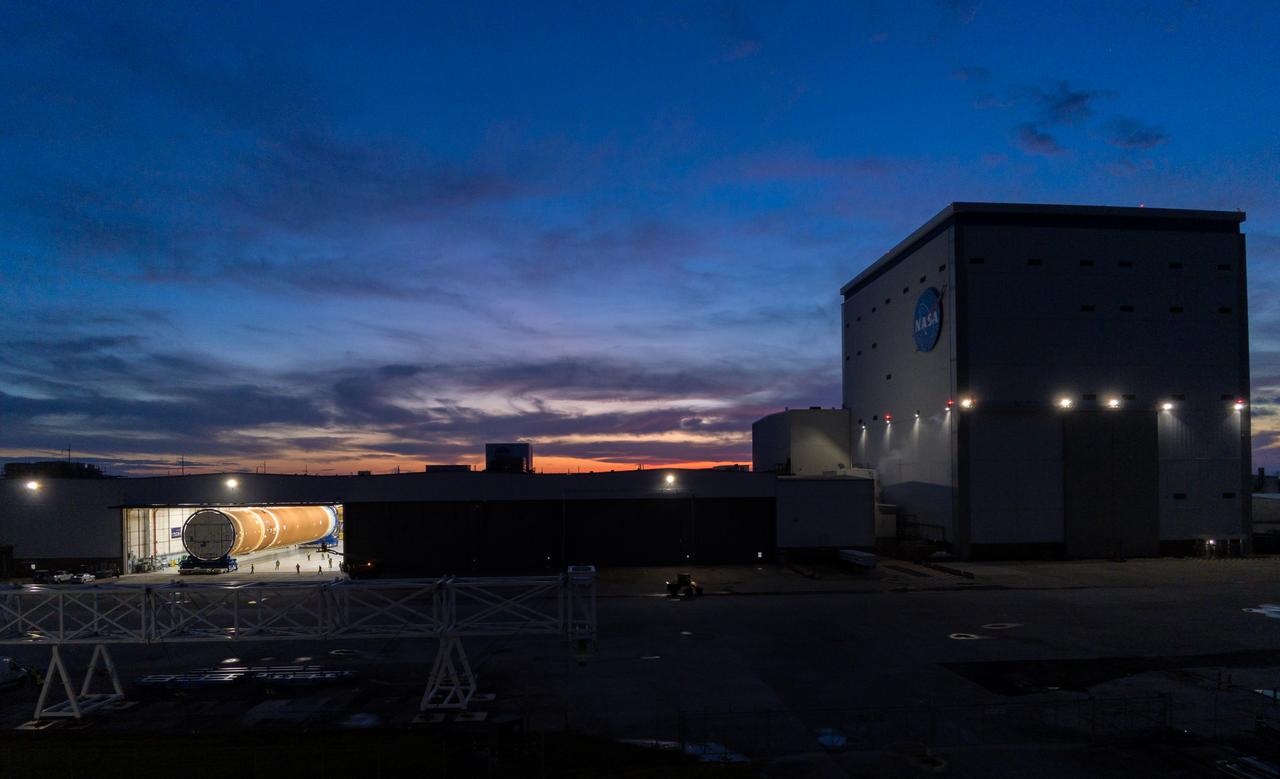
This photo shows NASA and Boeing, the SLS core stage lead contractor, preparing the SLS (Space Launch System) rocket core stage for shipment at NASA’s Michoud Assembly Facility in New Orleans. On July 6, NASA and Boeing moved the Artemis II rocket stage to Building 110. The move comes as teams prepare to roll the massive rocket stage with its four RS-25 engines to the agency’s Pegasus barge for delivery to NASA’s Kennedy Space Center in Florida in mid-July. Prior to the move, technicians began removing external access stands, or scaffolding, surrounding the core stage to assess the interior elements, including its complex avionics and flight propulsion systems. The stage is fully manufactured at NASA Michoud. NASA is working to land the first woman, first person of color, and its first international partner astronaut on the Moon under Artemis. SLS is part of NASA’s backbone for deep space exploration, along with the Orion spacecraft, supporting ground systems, advanced spacesuits and rovers, the Gateway in orbit around the Moon, and commercial human landing systems. SLS is the only rocket that can send Orion, astronauts, and supplies to the Moon in a single launch.
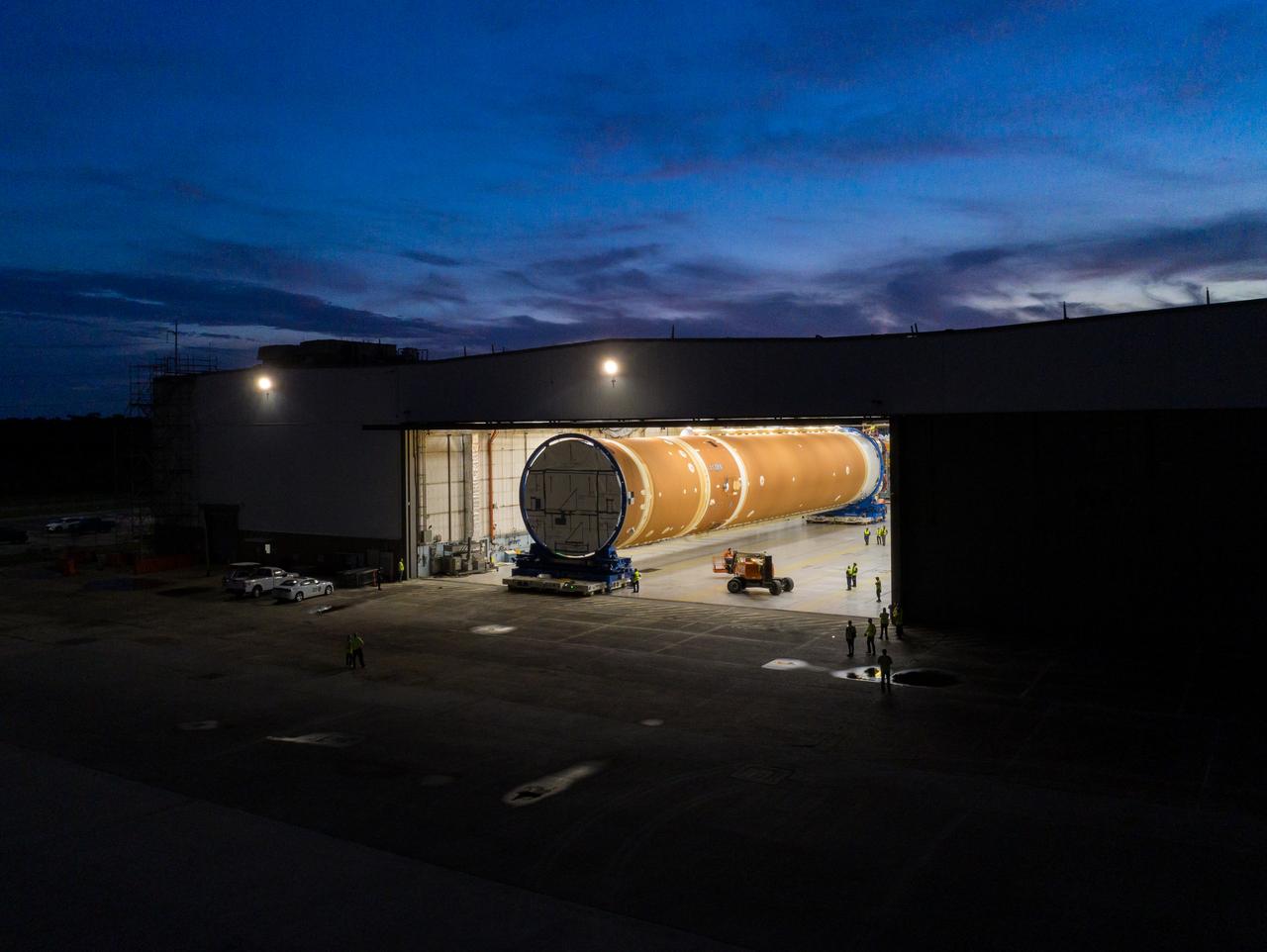
This photo shows NASA and Boeing, the SLS core stage lead contractor, preparing the SLS (Space Launch System) rocket core stage for shipment at NASA’s Michoud Assembly Facility in New Orleans. On July 6, NASA and Boeing moved the Artemis II rocket stage to Building 110. The move comes as teams prepare to roll the massive rocket stage with its four RS-25 engines to the agency’s Pegasus barge for delivery to NASA’s Kennedy Space Center in Florida in mid-July. Prior to the move, technicians began removing external access stands, or scaffolding, surrounding the core stage to assess the interior elements, including its complex avionics and flight propulsion systems. The stage is fully manufactured at NASA Michoud. NASA is working to land the first woman, first person of color, and its first international partner astronaut on the Moon under Artemis. SLS is part of NASA’s backbone for deep space exploration, along with the Orion spacecraft, supporting ground systems, advanced spacesuits and rovers, the Gateway in orbit around the Moon, and commercial human landing systems. SLS is the only rocket that can send Orion, astronauts, and supplies to the Moon in a single launch.
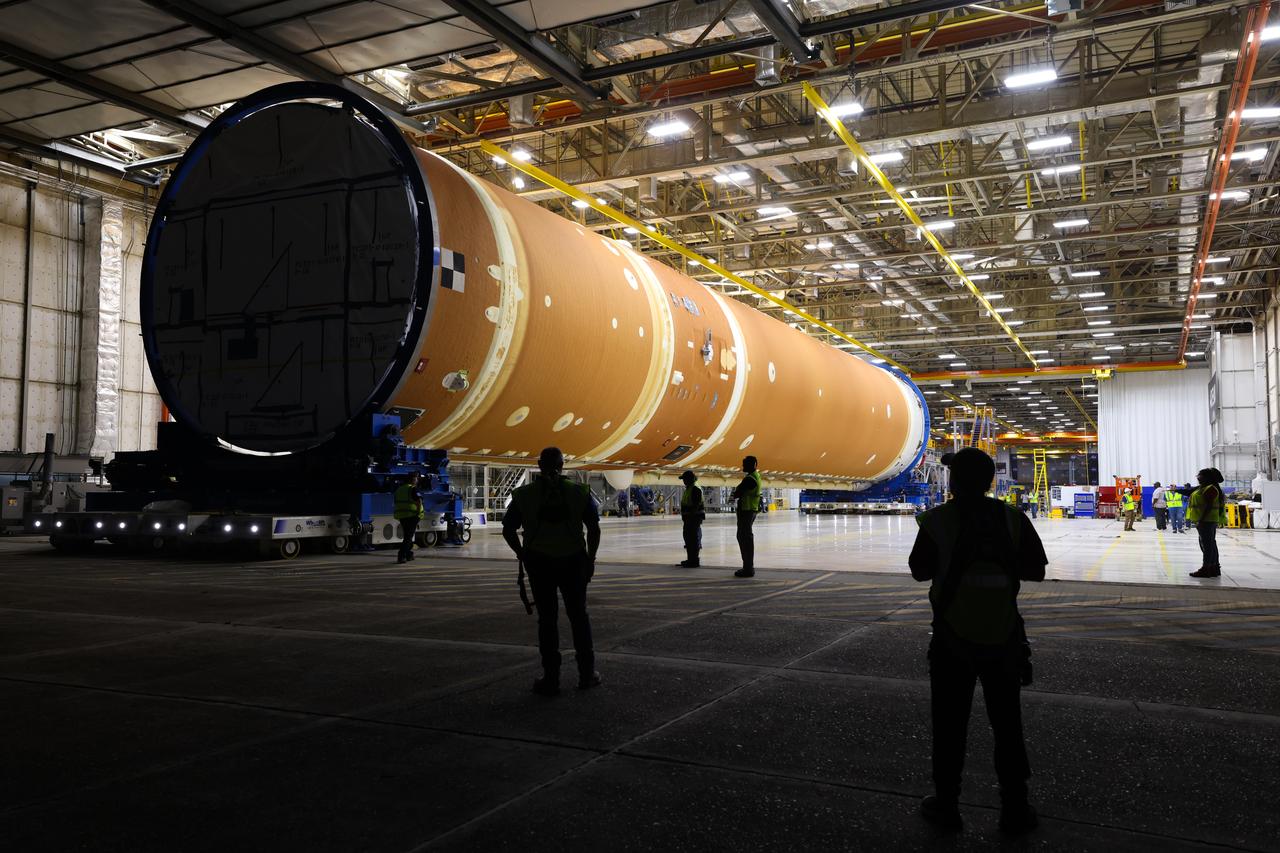
This photo shows NASA and Boeing, the SLS core stage lead contractor, preparing the SLS (Space Launch System) rocket core stage for shipment at NASA’s Michoud Assembly Facility in New Orleans. On July 6, NASA and Boeing moved the Artemis II rocket stage to Building 110. The move comes as teams prepare to roll the massive rocket stage with its four RS-25 engines to the agency’s Pegasus barge for delivery to NASA’s Kennedy Space Center in Florida in mid-July. Prior to the move, technicians began removing external access stands, or scaffolding, surrounding the core stage to assess the interior elements, including its complex avionics and flight propulsion systems. The stage is fully manufactured at NASA Michoud. NASA is working to land the first woman, first person of color, and its first international partner astronaut on the Moon under Artemis. SLS is part of NASA’s backbone for deep space exploration, along with the Orion spacecraft, supporting ground systems, advanced spacesuits and rovers, the Gateway in orbit around the Moon, and commercial human landing systems. SLS is the only rocket that can send Orion, astronauts, and supplies to the Moon in a single launch.
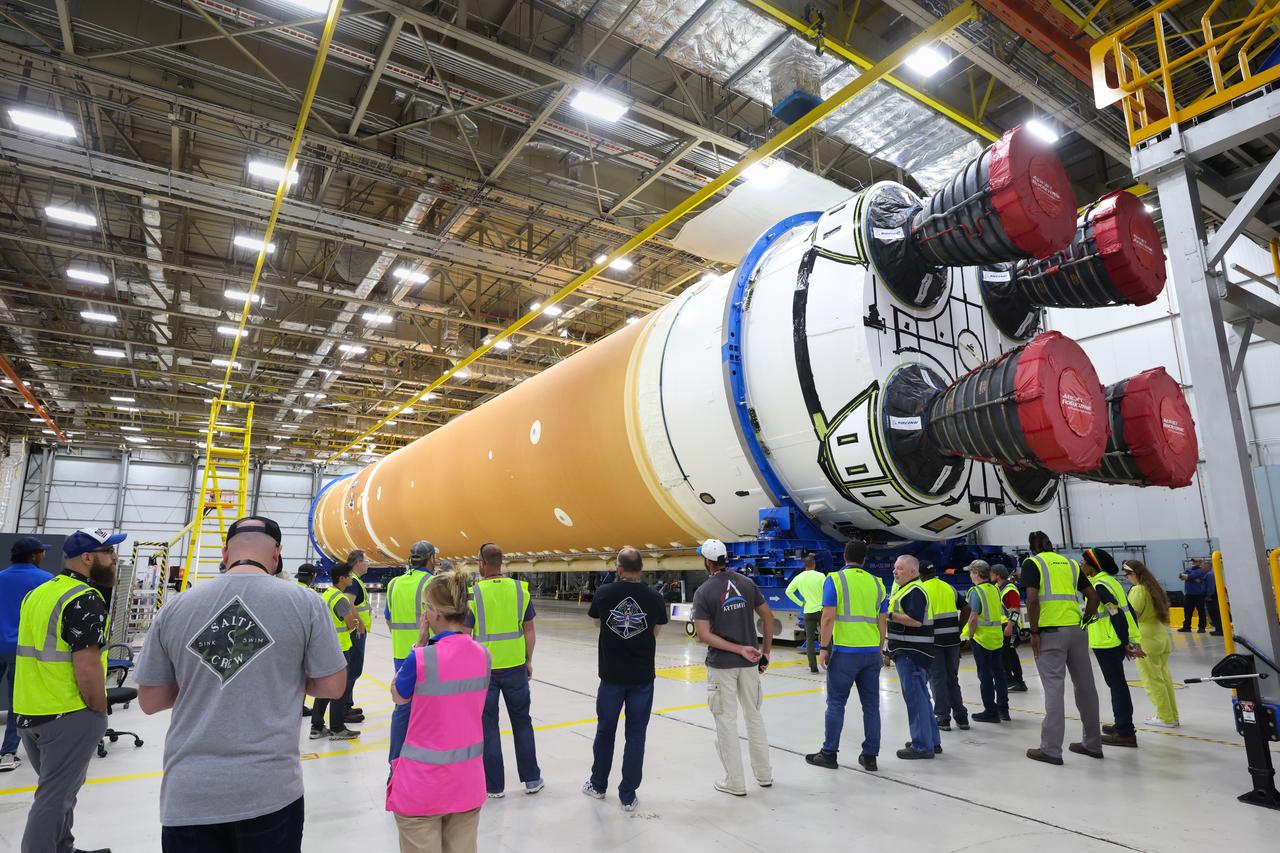
This photo shows NASA and Boeing, the SLS core stage lead contractor, preparing the SLS (Space Launch System) rocket core stage for shipment at NASA’s Michoud Assembly Facility in New Orleans. On July 6, NASA and Boeing moved the Artemis II rocket stage to Building 110. The move comes as teams prepare to roll the massive rocket stage with its four RS-25 engines to the agency’s Pegasus barge for delivery to NASA’s Kennedy Space Center in Florida in mid-July. Prior to the move, technicians began removing external access stands, or scaffolding, surrounding the core stage to assess the interior elements, including its complex avionics and flight propulsion systems. The stage is fully manufactured at NASA Michoud. NASA is working to land the first woman, first person of color, and its first international partner astronaut on the Moon under Artemis. SLS is part of NASA’s backbone for deep space exploration, along with the Orion spacecraft, supporting ground systems, advanced spacesuits and rovers, the Gateway in orbit around the Moon, and commercial human landing systems. SLS is the only rocket that can send Orion, astronauts, and supplies to the Moon in a single launch.
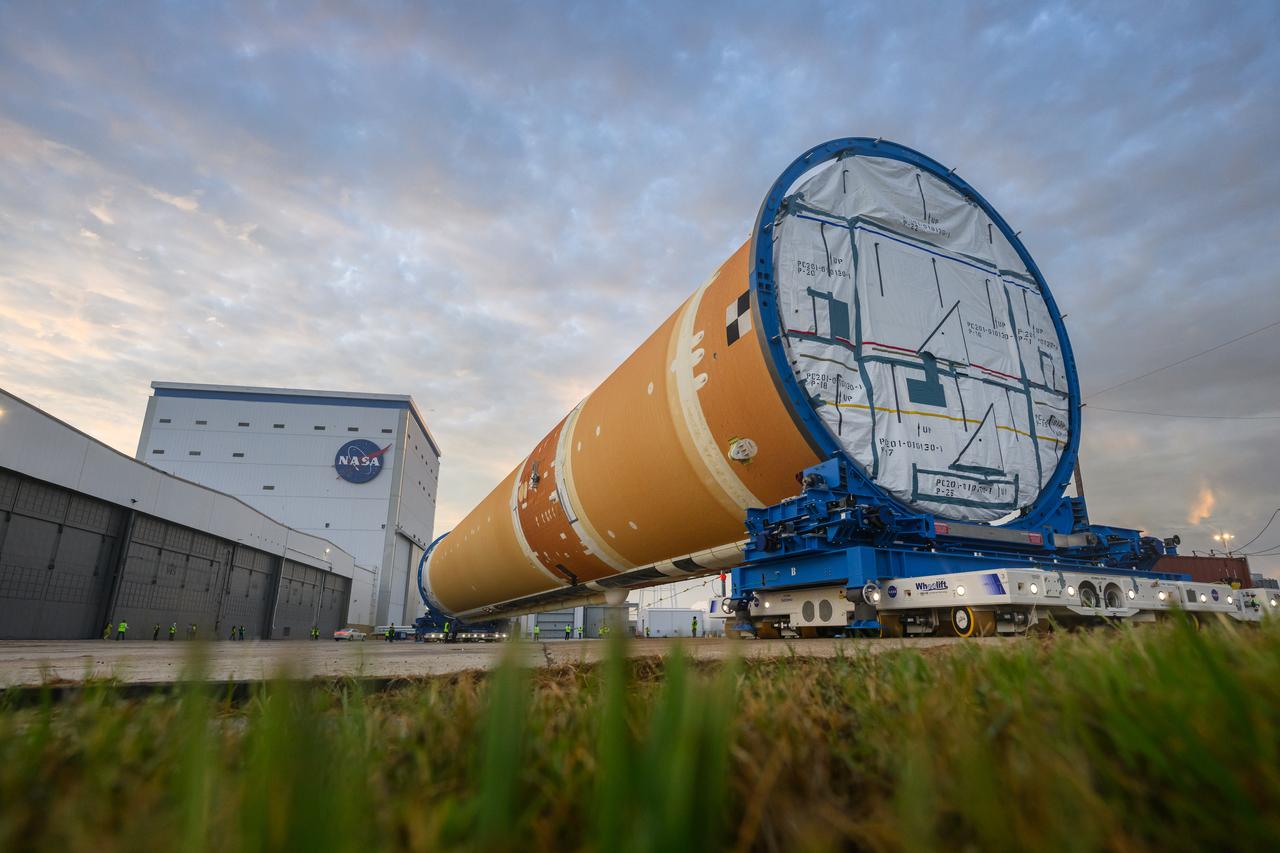
This photo shows NASA and Boeing, the SLS core stage lead contractor, preparing the SLS (Space Launch System) rocket core stage for shipment at NASA’s Michoud Assembly Facility in New Orleans. On July 6, NASA and Boeing moved the Artemis II rocket stage to Building 110. The move comes as teams prepare to roll the massive rocket stage with its four RS-25 engines to the agency’s Pegasus barge for delivery to NASA’s Kennedy Space Center in Florida in mid-July. Prior to the move, technicians began removing external access stands, or scaffolding, surrounding the core stage to assess the interior elements, including its complex avionics and flight propulsion systems. The stage is fully manufactured at NASA Michoud. NASA is working to land the first woman, first person of color, and its first international partner astronaut on the Moon under Artemis. SLS is part of NASA’s backbone for deep space exploration, along with the Orion spacecraft, supporting ground systems, advanced spacesuits and rovers, the Gateway in orbit around the Moon, and commercial human landing systems. SLS is the only rocket that can send Orion, astronauts, and supplies to the Moon in a single launch.
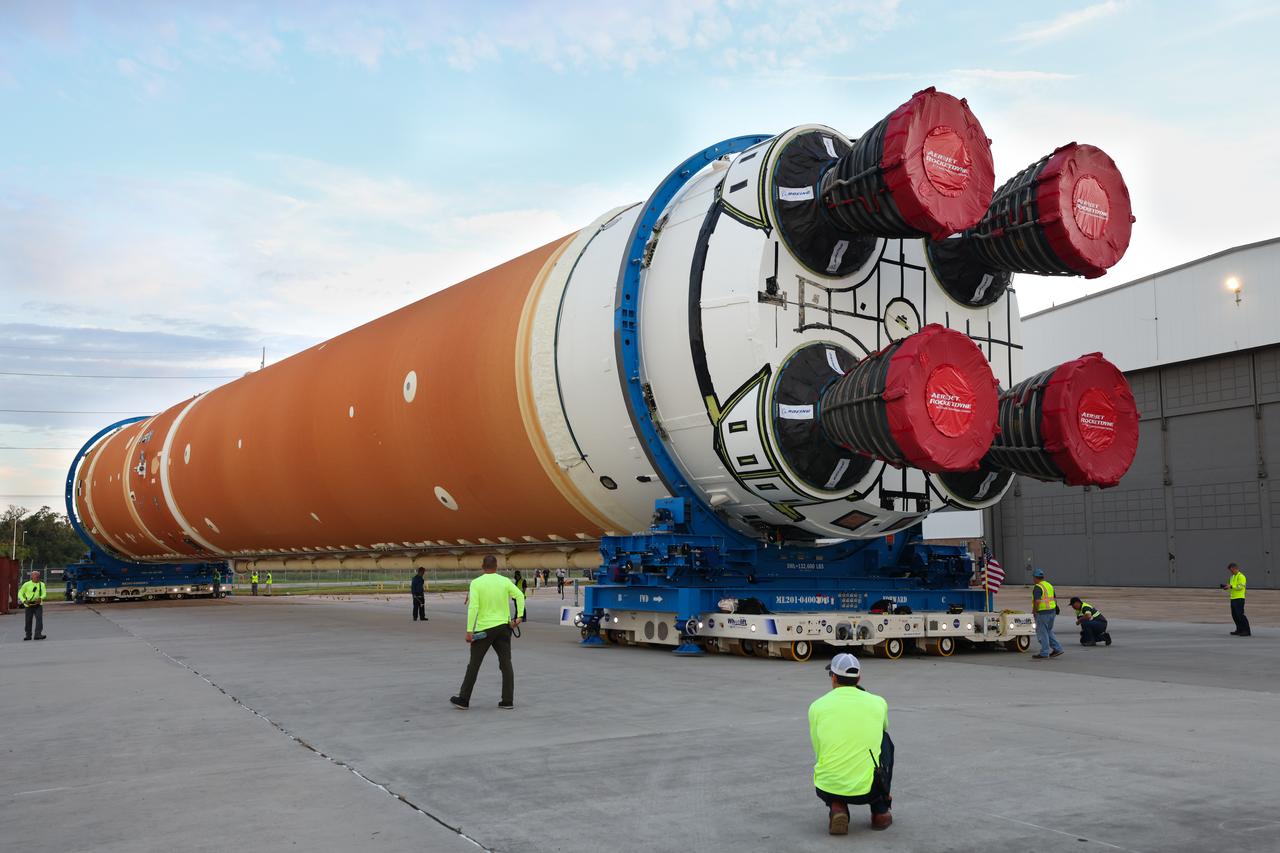
This photo shows NASA and Boeing, the SLS core stage lead contractor, preparing the SLS (Space Launch System) rocket core stage for shipment at NASA’s Michoud Assembly Facility in New Orleans. On July 6, NASA and Boeing moved the Artemis II rocket stage to Building 110. The move comes as teams prepare to roll the massive rocket stage with its four RS-25 engines to the agency’s Pegasus barge for delivery to NASA’s Kennedy Space Center in Florida in mid-July. Prior to the move, technicians began removing external access stands, or scaffolding, surrounding the core stage to assess the interior elements, including its complex avionics and flight propulsion systems. The stage is fully manufactured at NASA Michoud. NASA is working to land the first woman, first person of color, and its first international partner astronaut on the Moon under Artemis. SLS is part of NASA’s backbone for deep space exploration, along with the Orion spacecraft, supporting ground systems, advanced spacesuits and rovers, the Gateway in orbit around the Moon, and commercial human landing systems. SLS is the only rocket that can send Orion, astronauts, and supplies to the Moon in a single launch.

This photo shows NASA and Boeing, the SLS core stage lead contractor, preparing the SLS (Space Launch System) rocket core stage for shipment at NASA’s Michoud Assembly Facility in New Orleans. On July 6, NASA and Boeing moved the Artemis II rocket stage to Building 110. The move comes as teams prepare to roll the massive rocket stage with its four RS-25 engines to the agency’s Pegasus barge for delivery to NASA’s Kennedy Space Center in Florida in mid-July. Prior to the move, technicians began removing external access stands, or scaffolding, surrounding the core stage to assess the interior elements, including its complex avionics and flight propulsion systems. The stage is fully manufactured at NASA Michoud. NASA is working to land the first woman, first person of color, and its first international partner astronaut on the Moon under Artemis. SLS is part of NASA’s backbone for deep space exploration, along with the Orion spacecraft, supporting ground systems, advanced spacesuits and rovers, the Gateway in orbit around the Moon, and commercial human landing systems. SLS is the only rocket that can send Orion, astronauts, and supplies to the Moon in a single launch.
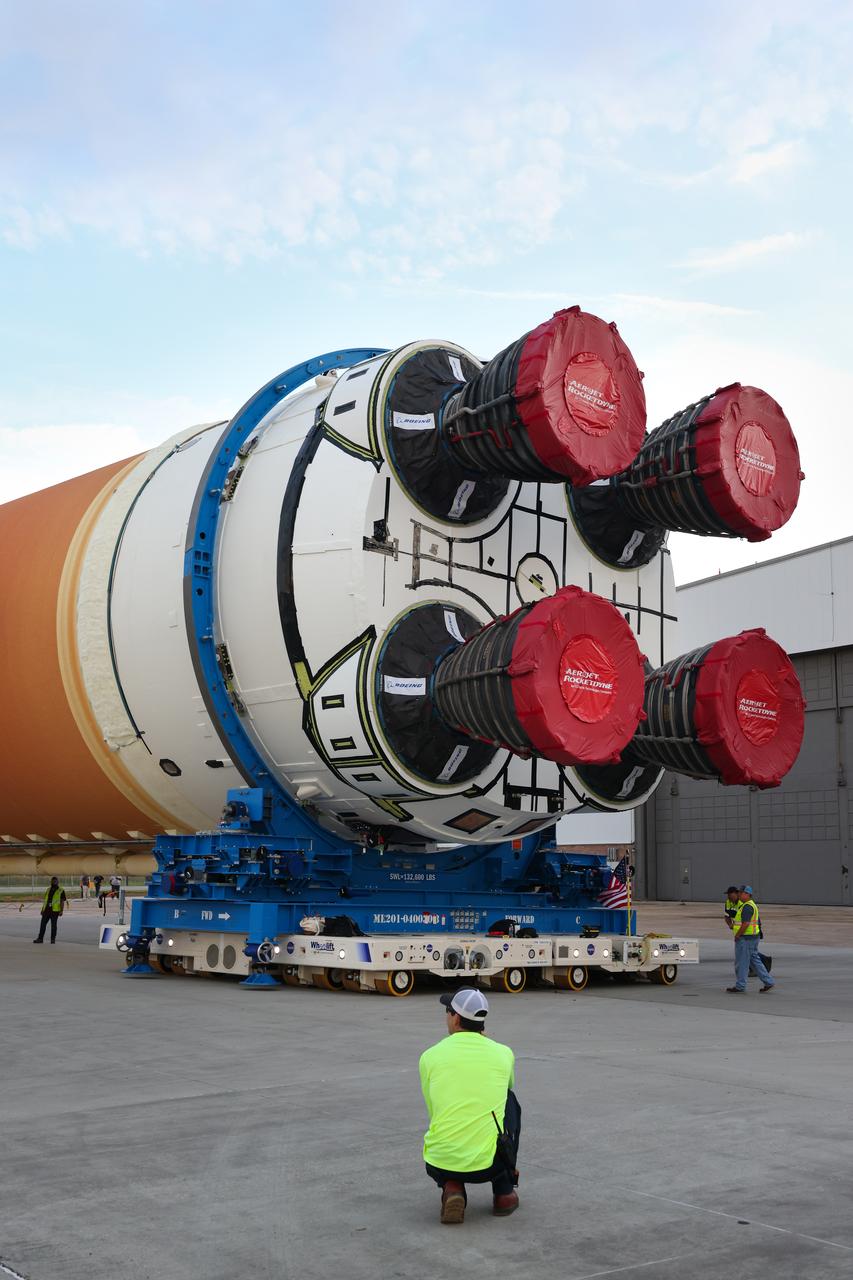
This photo shows NASA and Boeing, the SLS core stage lead contractor, preparing the SLS (Space Launch System) rocket core stage for shipment at NASA’s Michoud Assembly Facility in New Orleans. On July 6, NASA and Boeing moved the Artemis II rocket stage to Building 110. The move comes as teams prepare to roll the massive rocket stage with its four RS-25 engines to the agency’s Pegasus barge for delivery to NASA’s Kennedy Space Center in Florida in mid-July. Prior to the move, technicians began removing external access stands, or scaffolding, surrounding the core stage to assess the interior elements, including its complex avionics and flight propulsion systems. The stage is fully manufactured at NASA Michoud. NASA is working to land the first woman, first person of color, and its first international partner astronaut on the Moon under Artemis. SLS is part of NASA’s backbone for deep space exploration, along with the Orion spacecraft, supporting ground systems, advanced spacesuits and rovers, the Gateway in orbit around the Moon, and commercial human landing systems. SLS is the only rocket that can send Orion, astronauts, and supplies to the Moon in a single launch.
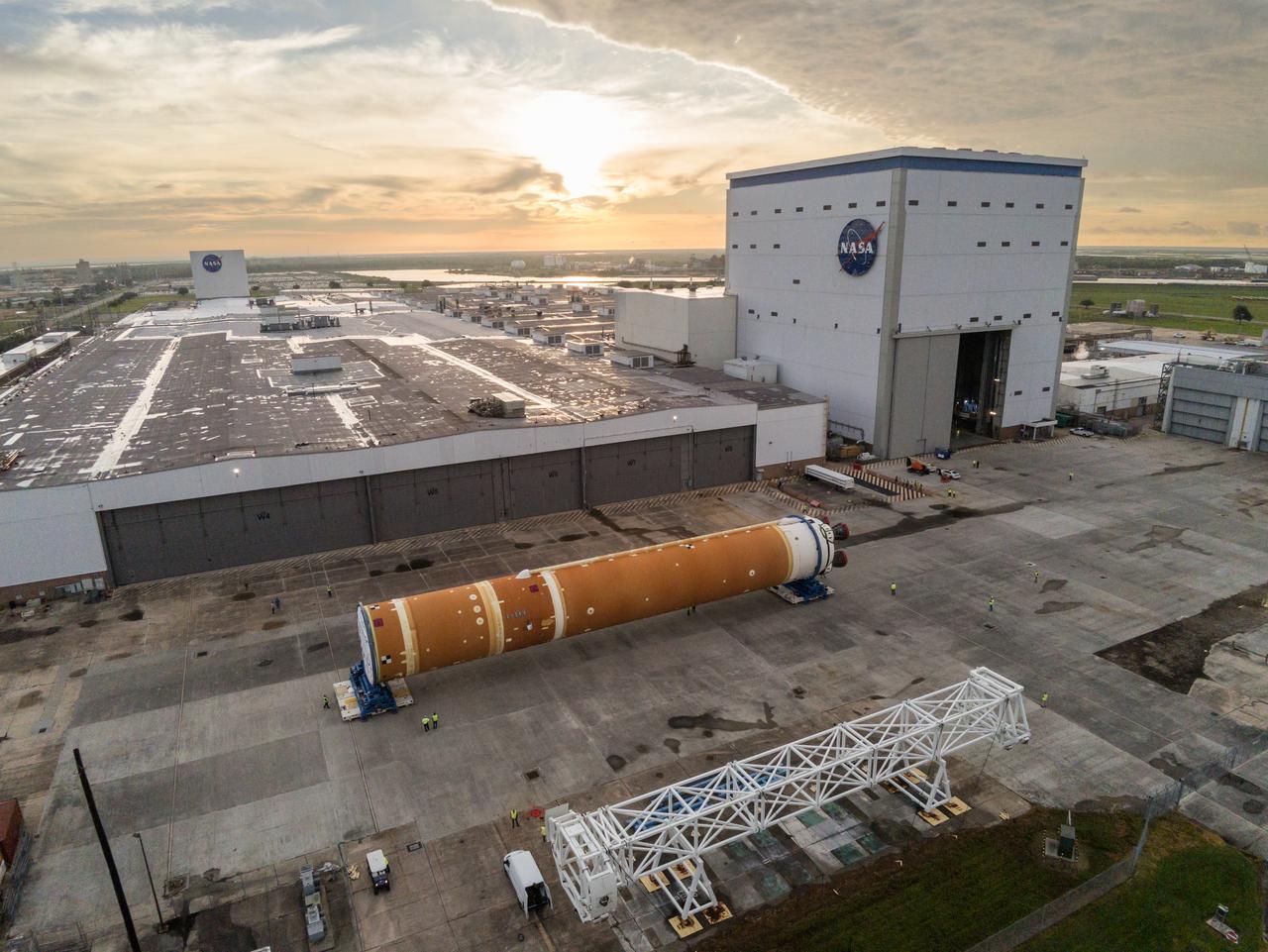
This photo shows NASA and Boeing, the SLS core stage lead contractor, preparing the SLS (Space Launch System) rocket core stage for shipment at NASA’s Michoud Assembly Facility in New Orleans. On July 6, NASA and Boeing moved the Artemis II rocket stage to Building 110. The move comes as teams prepare to roll the massive rocket stage with its four RS-25 engines to the agency’s Pegasus barge for delivery to NASA’s Kennedy Space Center in Florida in mid-July. Prior to the move, technicians began removing external access stands, or scaffolding, surrounding the core stage to assess the interior elements, including its complex avionics and flight propulsion systems. The stage is fully manufactured at NASA Michoud. NASA is working to land the first woman, first person of color, and its first international partner astronaut on the Moon under Artemis. SLS is part of NASA’s backbone for deep space exploration, along with the Orion spacecraft, supporting ground systems, advanced spacesuits and rovers, the Gateway in orbit around the Moon, and commercial human landing systems. SLS is the only rocket that can send Orion, astronauts, and supplies to the Moon in a single launch.
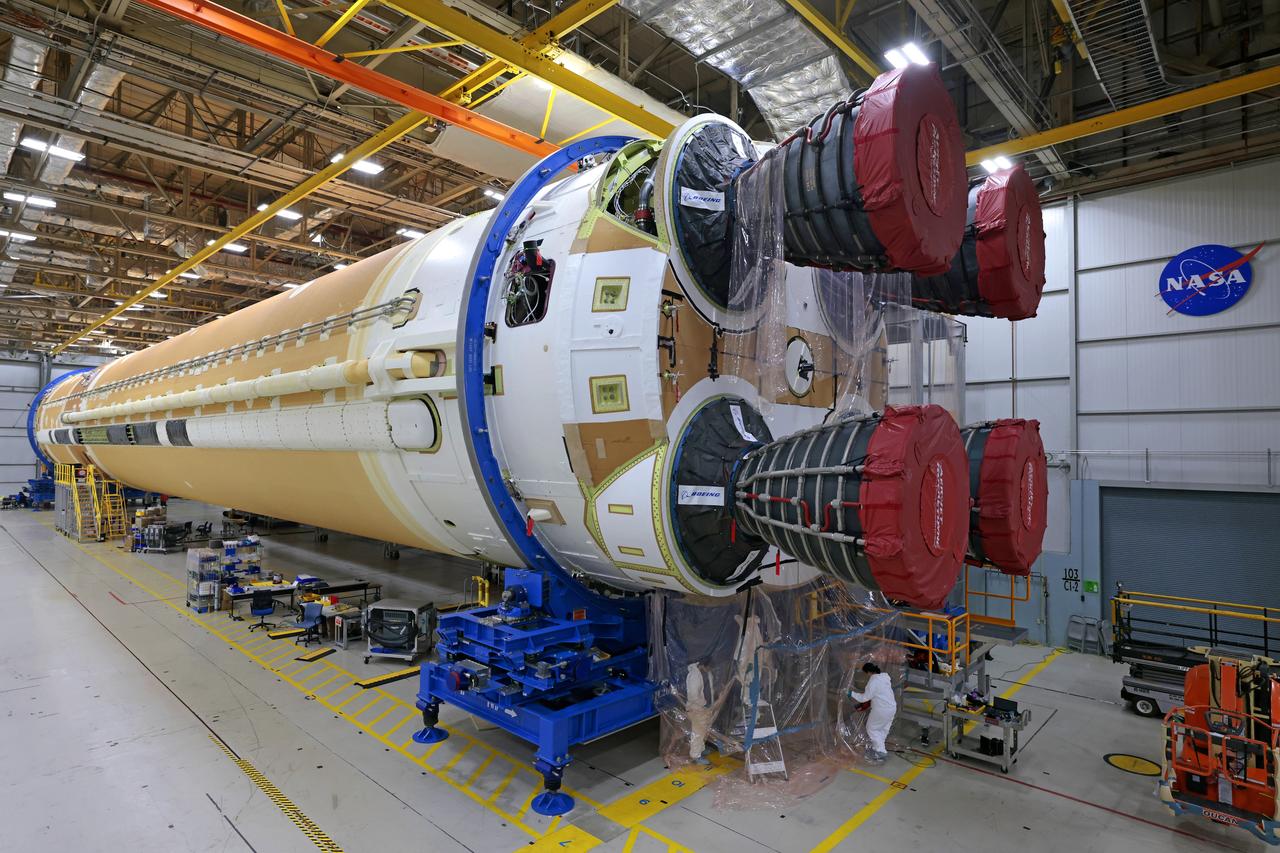
Teams at NASA’s Michoud Assembly Facility in New Orleans are preparing the core stage of the agency’s SLS (Space Launch System) for shipment to the agency’s Kennedy Space Center in Florida. The 212-foot-tall core stage and its four RS-25 engines will help power Artemis II, the first crewed mission of NASA’s Artemis campaign. Crews removed the external access stands, or scaffolding, in preparation for moving the rocket hardware to another area of the facility. Image credit: NASA/Michael DeMocker
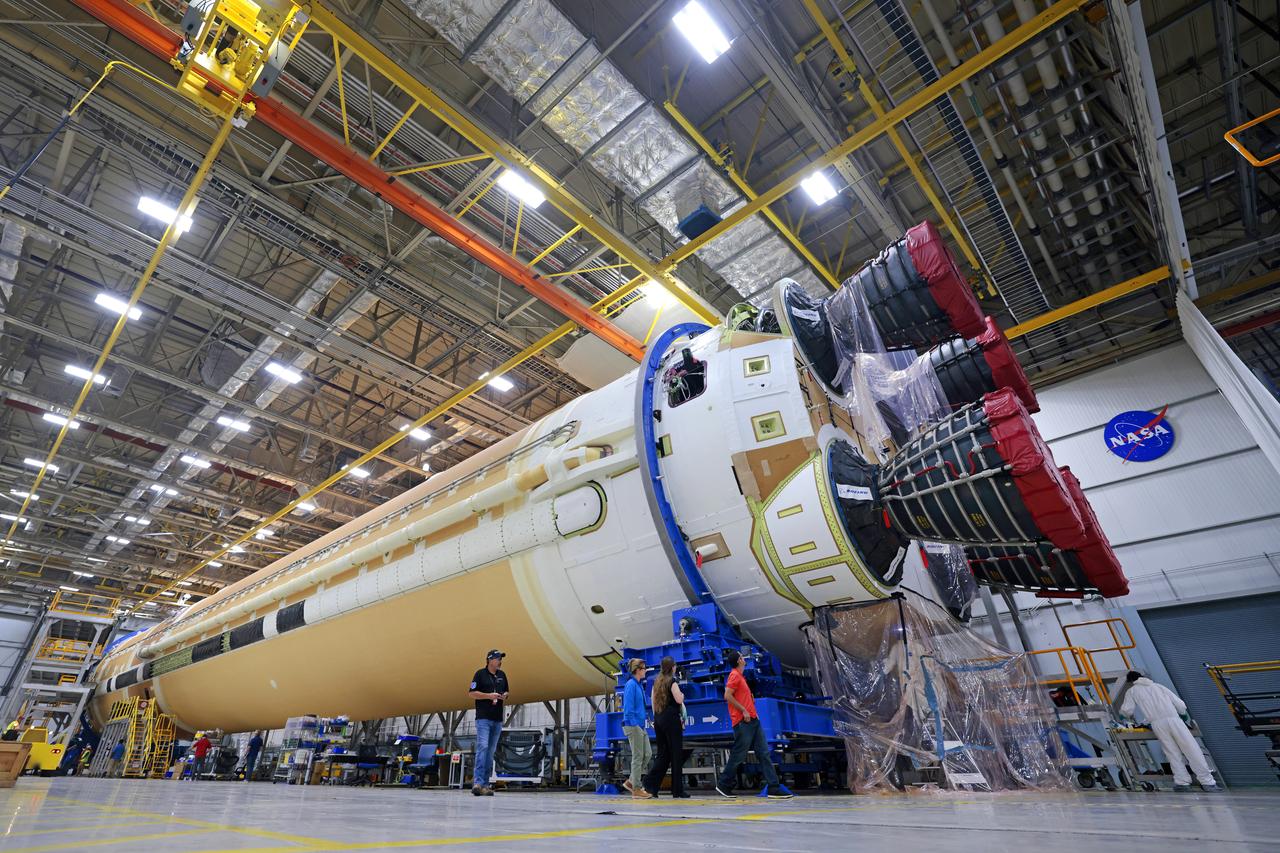
Teams at NASA’s Michoud Assembly Facility in New Orleans are preparing the core stage of the agency’s SLS (Space Launch System) for shipment to the agency’s Kennedy Space Center in Florida. The 212-foot-tall core stage and its four RS-25 engines will help power Artemis II, the first crewed mission of NASA’s Artemis campaign. Crews removed the external access stands, or scaffolding, in preparation for moving the rocket hardware to another area of the facility. Image credit: NASA/Michael DeMocker
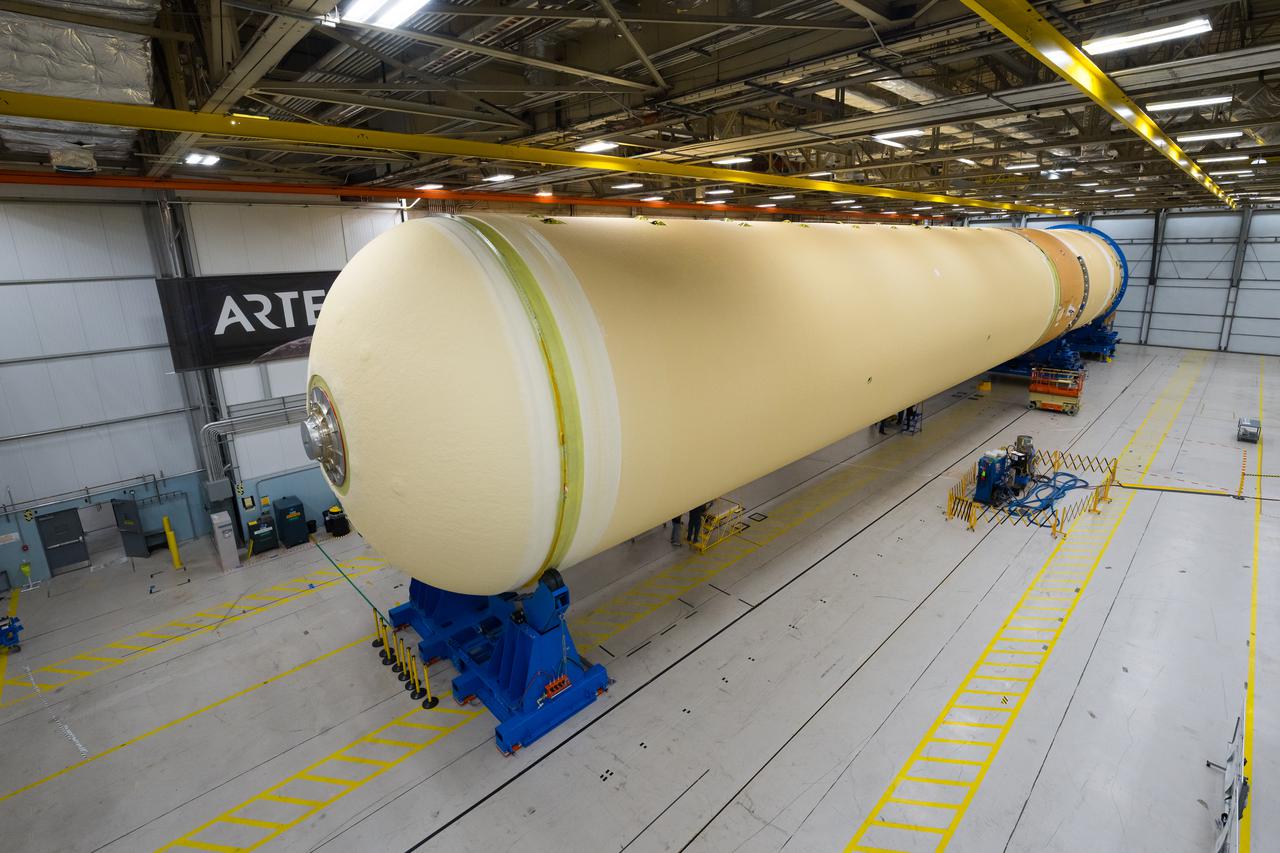
NASA joined the Space Launch System rocket’s core stage forward assembly with the 130-foot liquid hydrogen tank for the Artemis II mission on March 18. This completes assembly of four of the five large structures that make up the core stage that will help send the first astronauts to lunar orbit on Artemis II. The 66-foot forward assembly consists of the forward skirt, liquid oxygen tank and the intertank, which were mated earlier. Engineers inserted 360 bolts to connect the forward assembly to the liquid hydrogen tank to make up the bulk of the stage. Only the engine section, which is currently being outfitted and includes the main propulsion systems that connect to the four RS-25 engines, remains to be added to form the final core stage. All parts of the core stage are manufactured by NASA and Boeing, the core stage lead contractor at the agency’s Michoud Assembly Facility in New Orleans. Currently, the team is building core stages for three Artemis missions. The first core stage is stacked with the rest of the SLS rocket, which will launch the Artemis I mission to the Moon this year. Together with its twin solid rocket boosters, the core stage will produce 8.8 million pounds of thrust to send NASA’s Orion spacecraft, astronauts, and supplies beyond Earth’s orbit to the Moon. The SLS rocket and the Orion spacecraft form the foundation for Artemis missions and future deep space exploration.
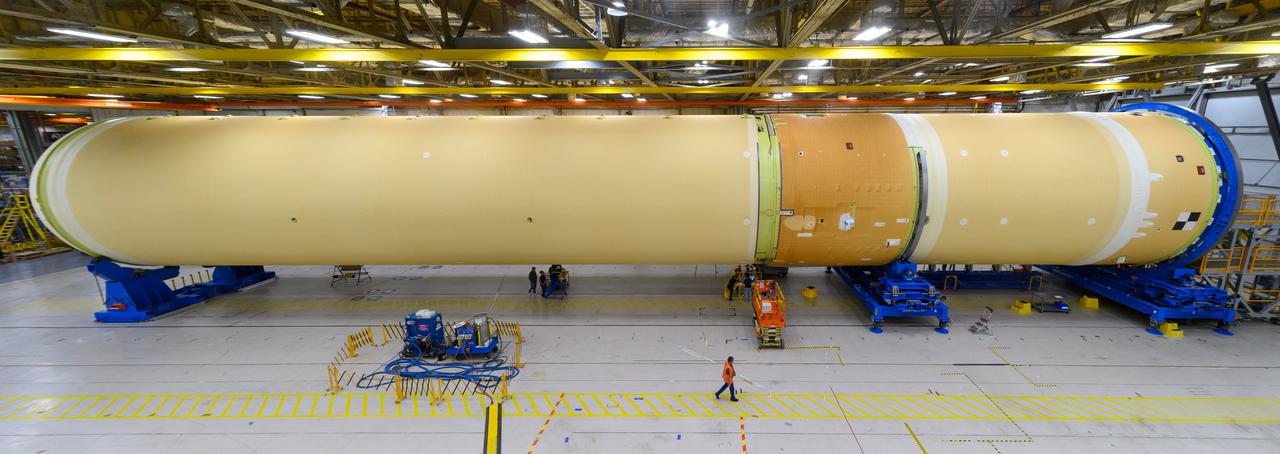
NASA joined the Space Launch System rocket’s core stage forward assembly with the 130-foot liquid hydrogen tank for the Artemis II mission on March 18. This completes assembly of four of the five large structures that make up the core stage that will help send the first astronauts to lunar orbit on Artemis II. The 66-foot forward assembly consists of the forward skirt, liquid oxygen tank and the intertank, which were mated earlier. Engineers inserted 360 bolts to connect the forward assembly to the liquid hydrogen tank to make up the bulk of the stage. Only the engine section, which is currently being outfitted and includes the main propulsion systems that connect to the four RS-25 engines, remains to be added to form the final core stage. All parts of the core stage are manufactured by NASA and Boeing, the core stage lead contractor at the agency’s Michoud Assembly Facility in New Orleans. Currently, the team is building core stages for three Artemis missions. The first core stage is stacked with the rest of the SLS rocket, which will launch the Artemis I mission to the Moon this year. Together with its twin solid rocket boosters, the core stage will produce 8.8 million pounds of thrust to send NASA’s Orion spacecraft, astronauts, and supplies beyond Earth’s orbit to the Moon. The SLS rocket and the Orion spacecraft form the foundation for Artemis missions and future deep space exploration.

NASA joined the Space Launch System rocket’s core stage forward assembly with the 130-foot liquid hydrogen tank for the Artemis II mission on March 18. This completes assembly of four of the five large structures that make up the core stage that will help send the first astronauts to lunar orbit on Artemis II. The 66-foot forward assembly consists of the forward skirt, liquid oxygen tank and the intertank, which were mated earlier. Engineers inserted 360 bolts to connect the forward assembly to the liquid hydrogen tank to make up the bulk of the stage. Only the engine section, which is currently being outfitted and includes the main propulsion systems that connect to the four RS-25 engines, remains to be added to form the final core stage. All parts of the core stage are manufactured by NASA and Boeing, the core stage lead contractor at the agency’s Michoud Assembly Facility in New Orleans. Currently, the team is building core stages for three Artemis missions. The first core stage is stacked with the rest of the SLS rocket, which will launch the Artemis I mission to the Moon this year. Together with its twin solid rocket boosters, the core stage will produce 8.8 million pounds of thrust to send NASA’s Orion spacecraft, astronauts, and supplies beyond Earth’s orbit to the Moon. The SLS rocket and the Orion spacecraft form the foundation for Artemis missions and future deep space exploration.
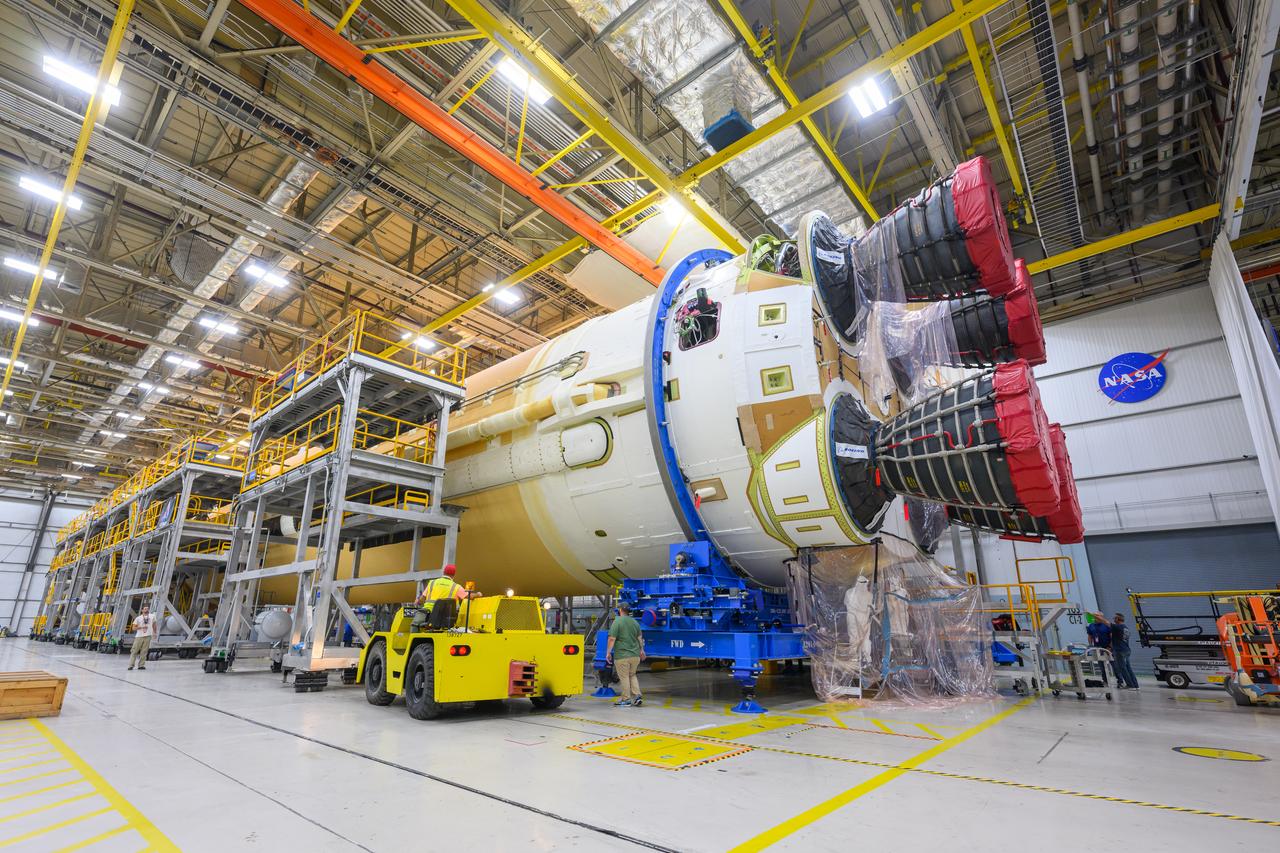
Teams at NASA’s Michoud Assembly Facility in New Orleans are preparing the core stage of the agency’s SLS (Space Launch System) for shipment to the agency’s Kennedy Space Center in Florida. The 212-foot-tall core stage and its four RS-25 engines will help power Artemis II, the first crewed mission of NASA’s Artemis campaign. Crews removed the external access stands, or scaffolding, in preparation for moving the rocket hardware to another area of the facility.
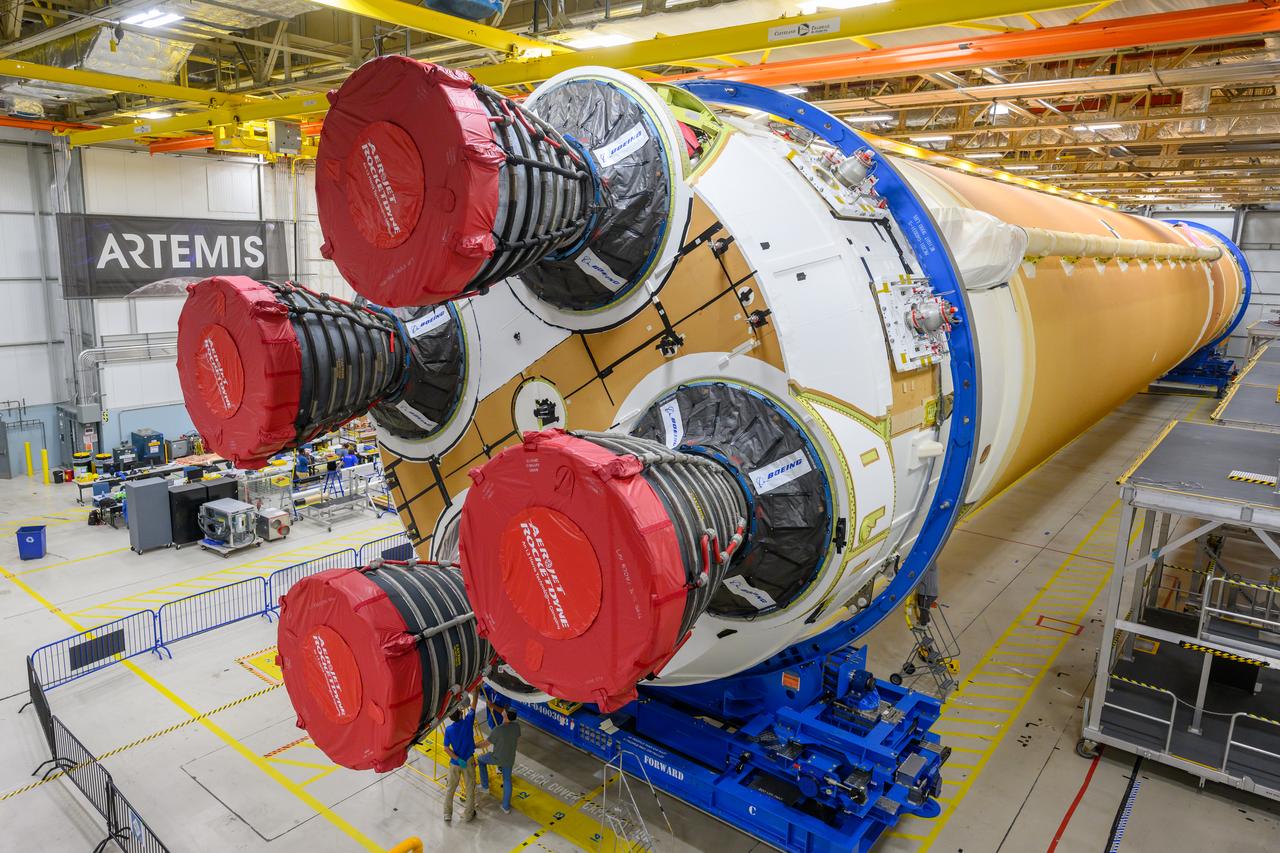
Teams at NASA’s Michoud Assembly Facility in New Orleans are preparing the core stage of the agency’s SLS (Space Launch System) for shipment to the agency’s Kennedy Space Center in Florida. The 212-foot-tall core stage and its four RS-25 engines will help power Artemis II, the first crewed mission of NASA’s Artemis campaign. Crews removed the external access stands, or scaffolding, in preparation for moving the rocket hardware to another area of the facility.
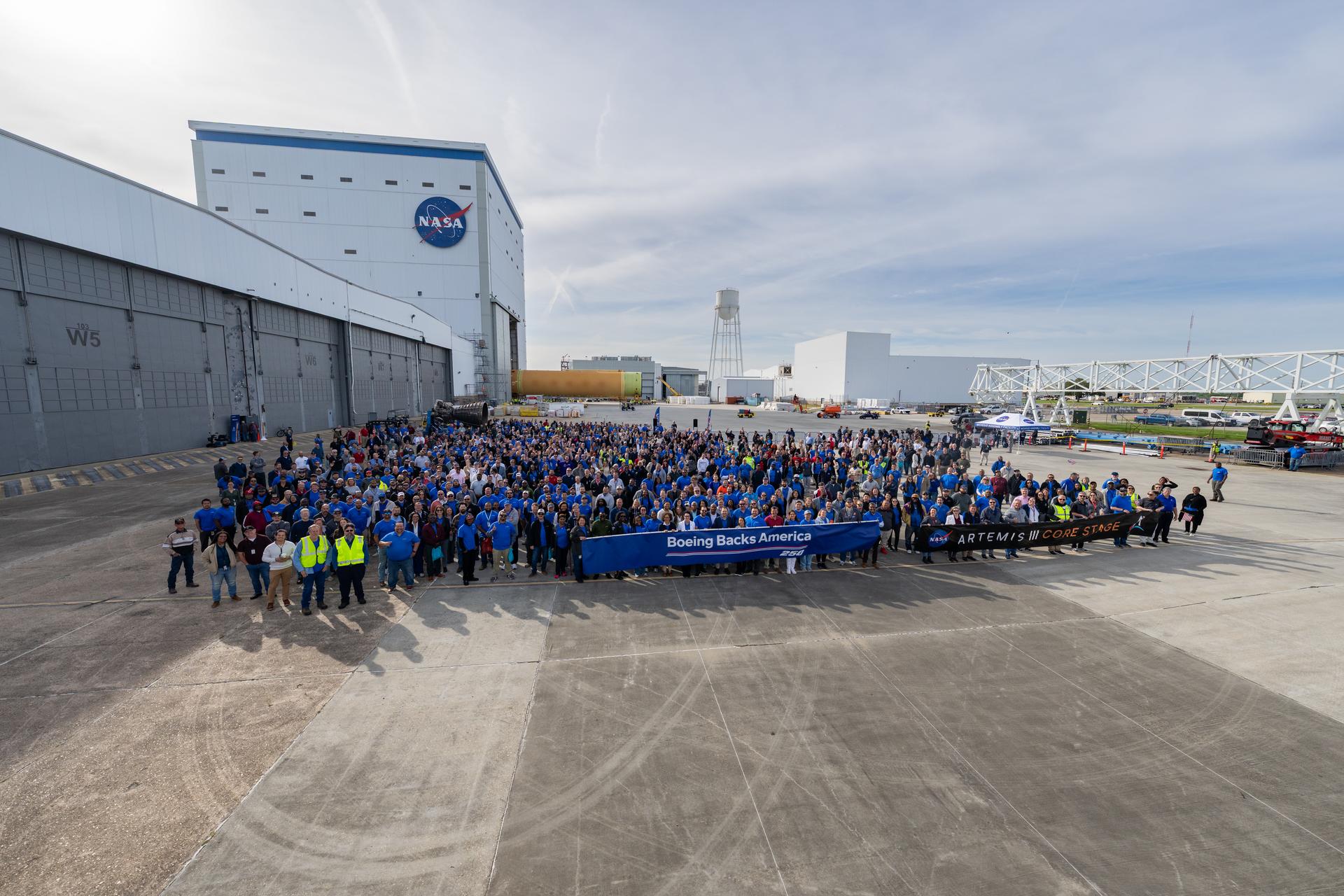
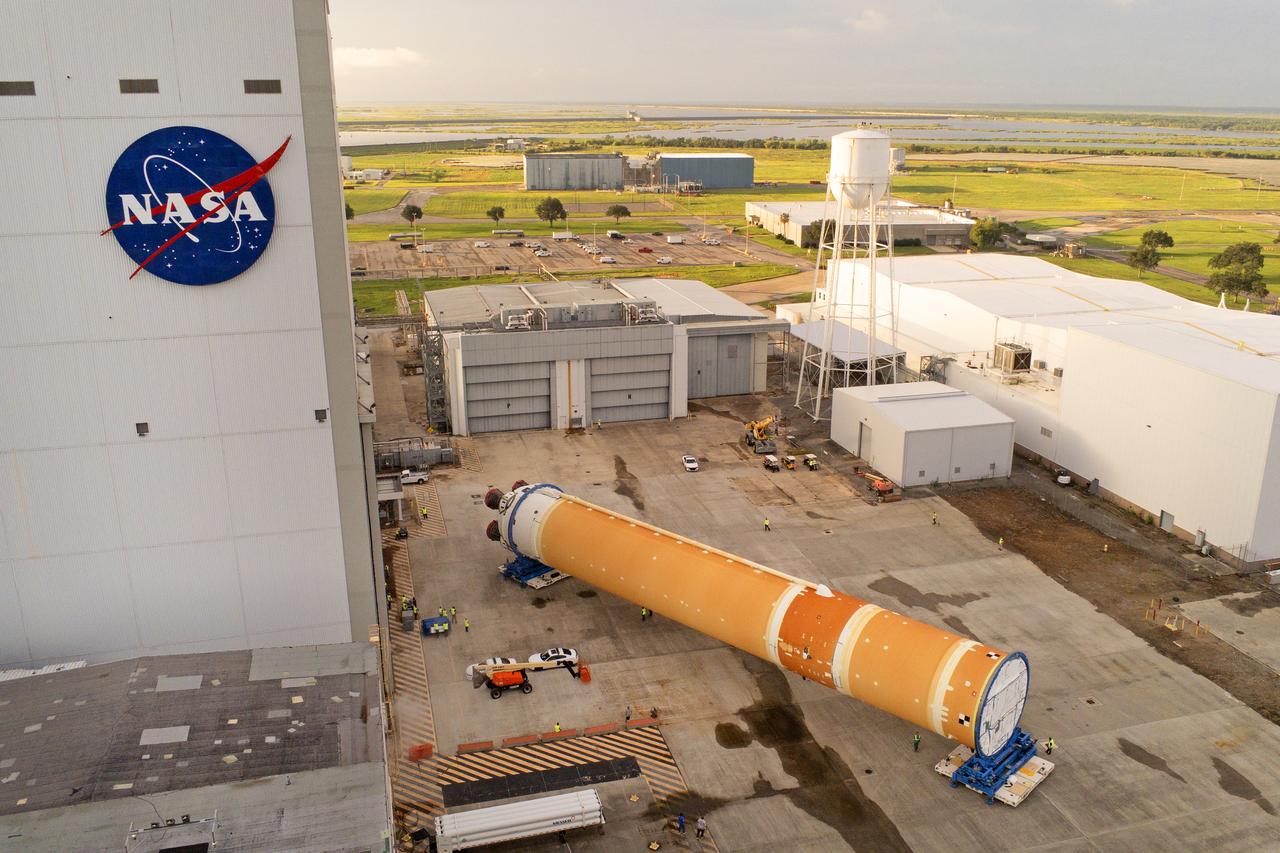
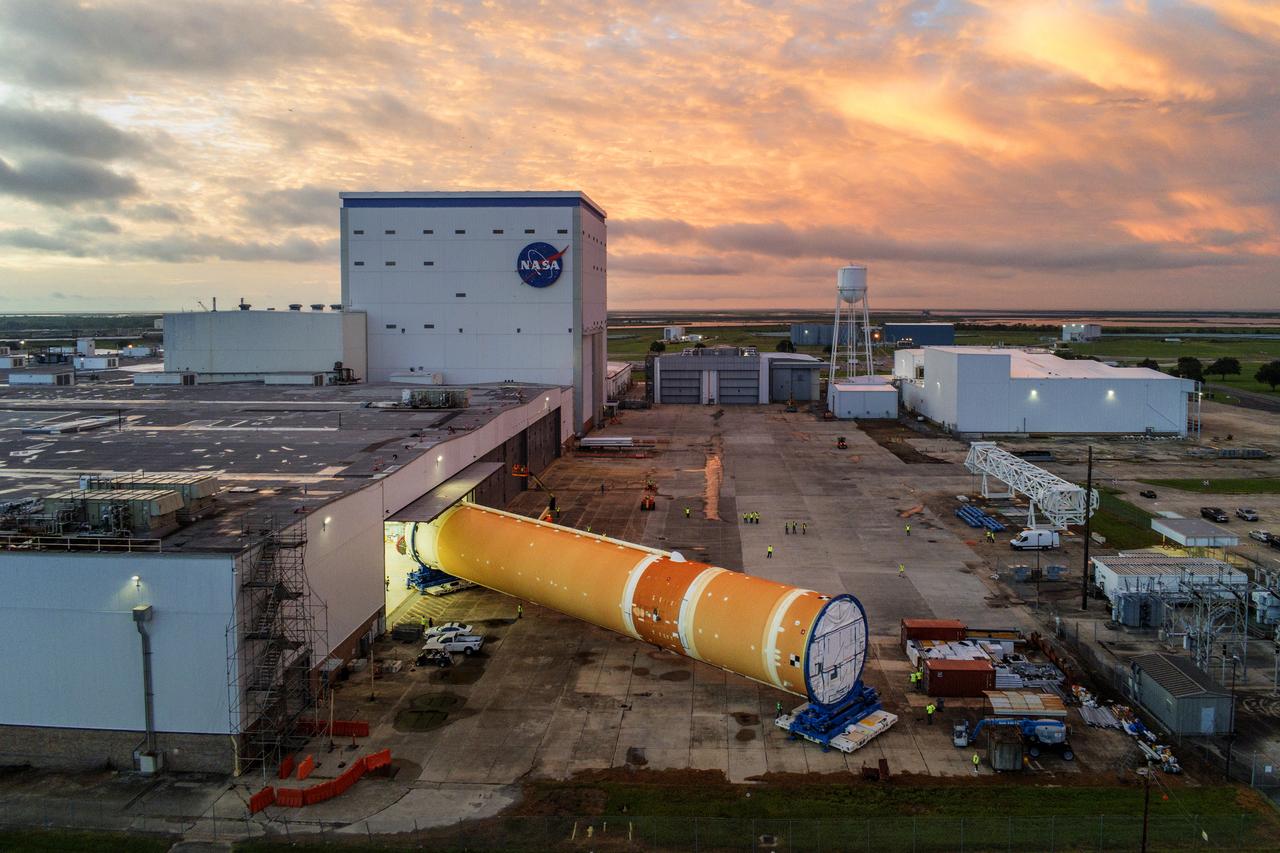
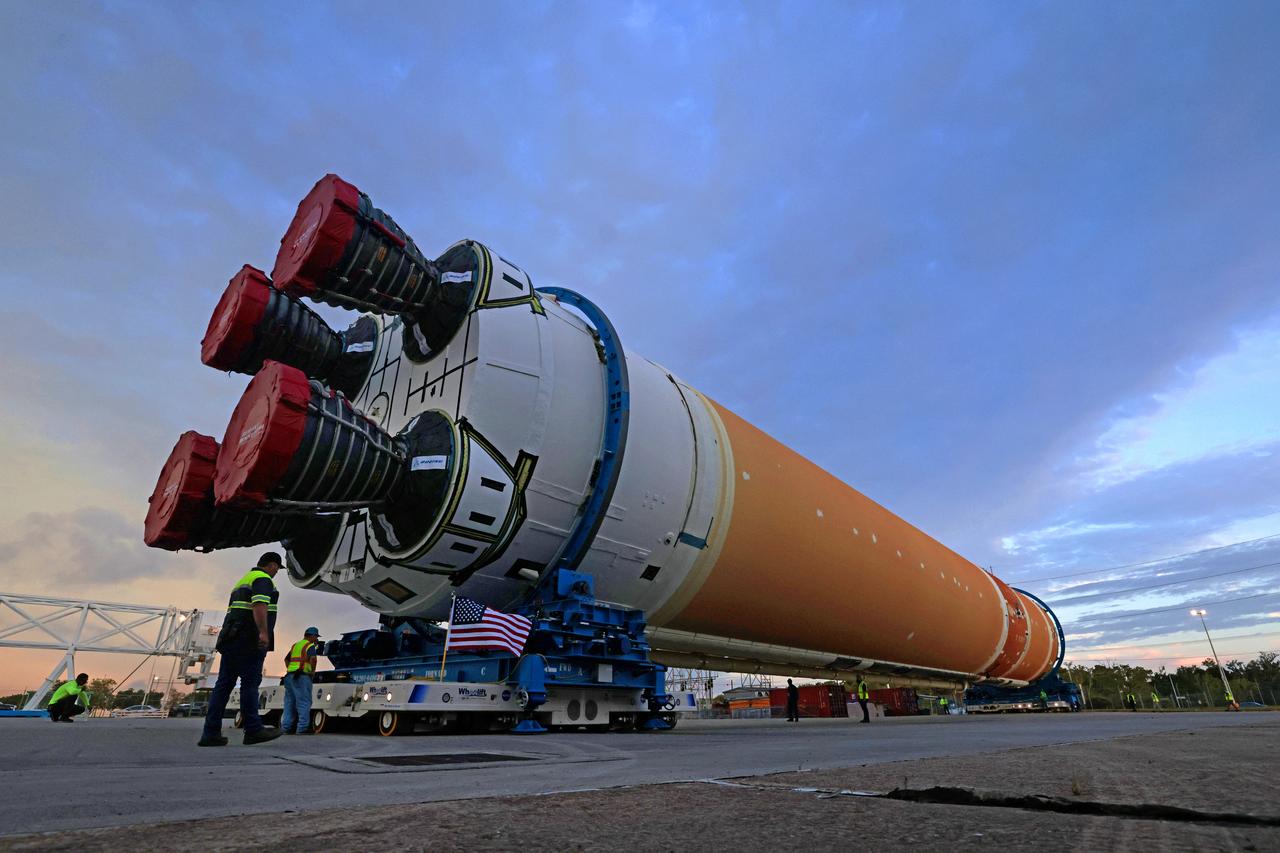
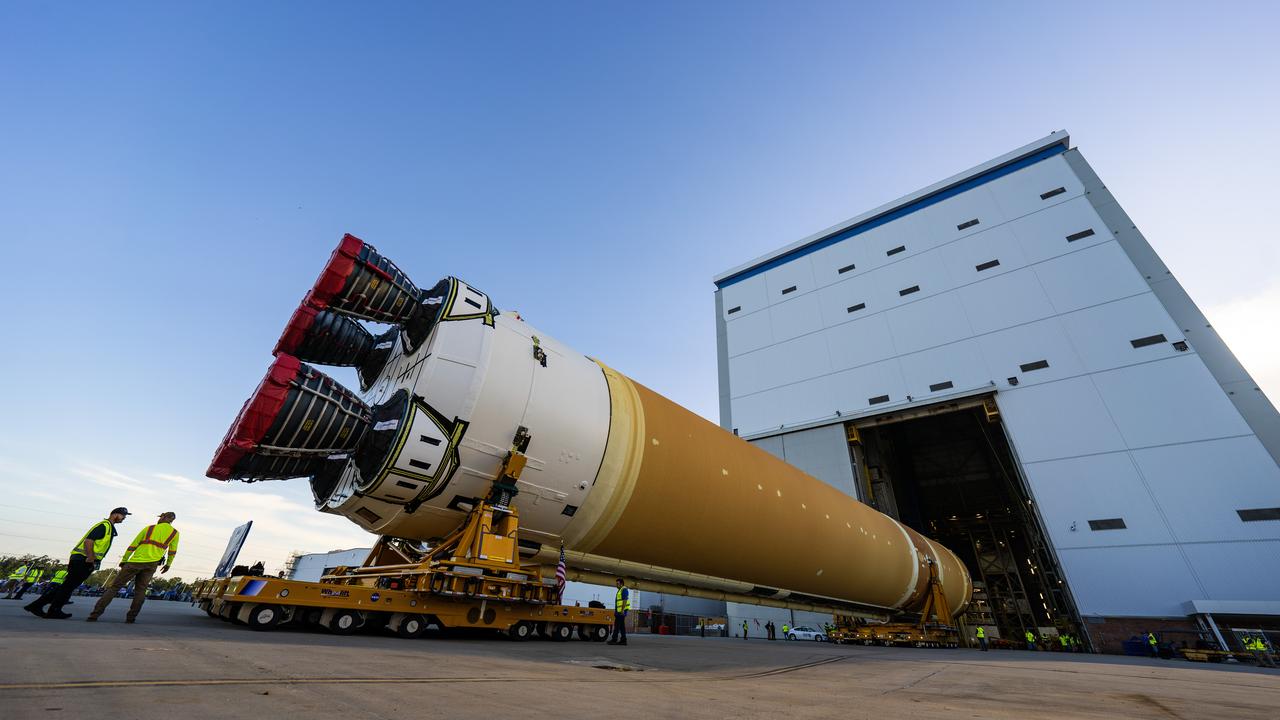
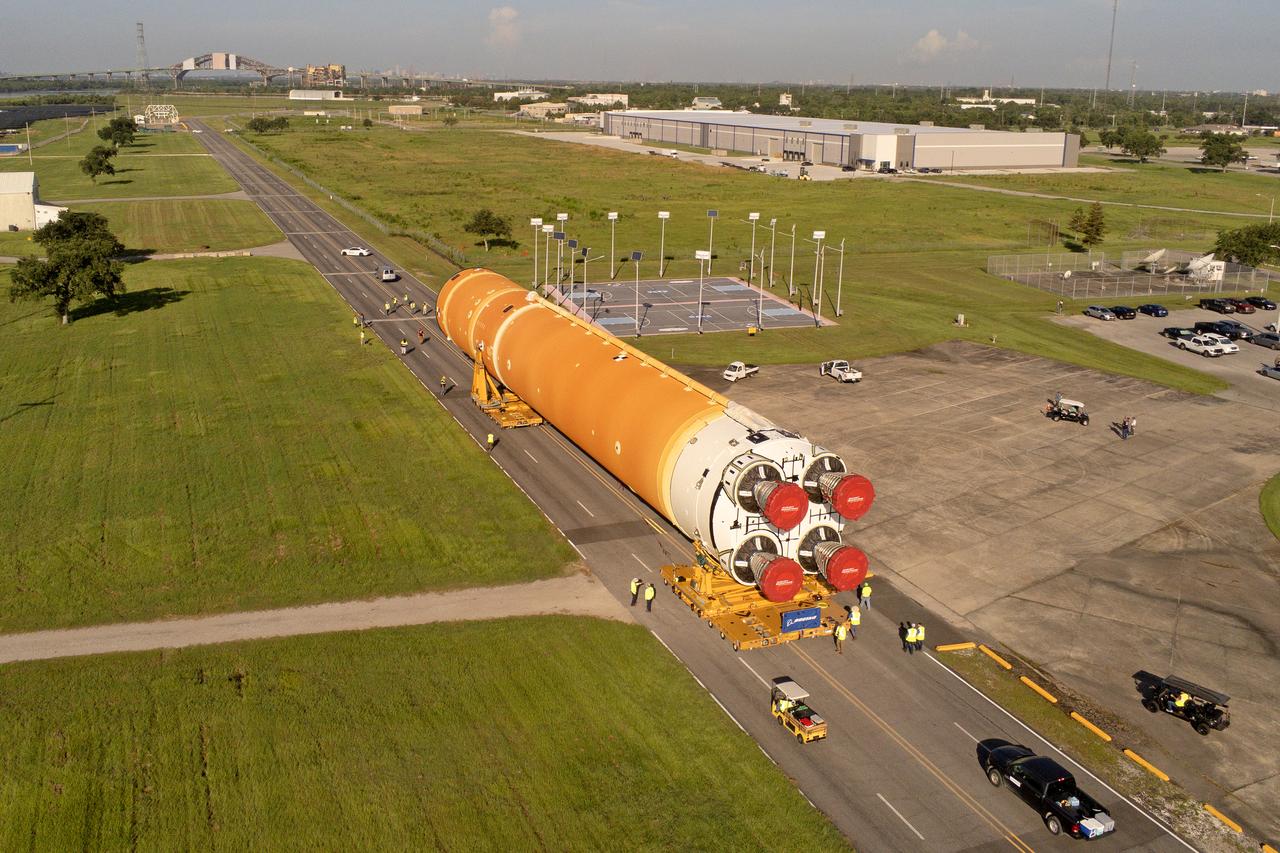
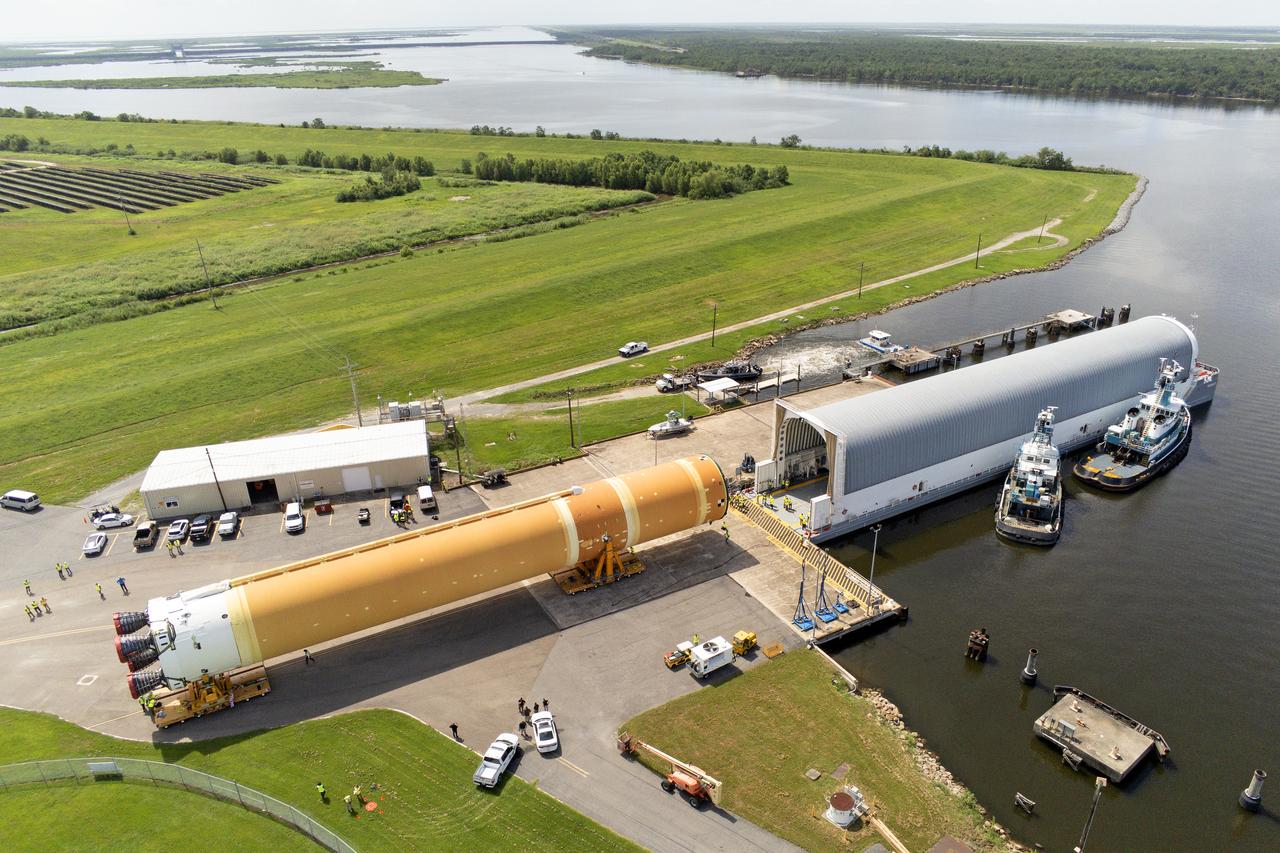
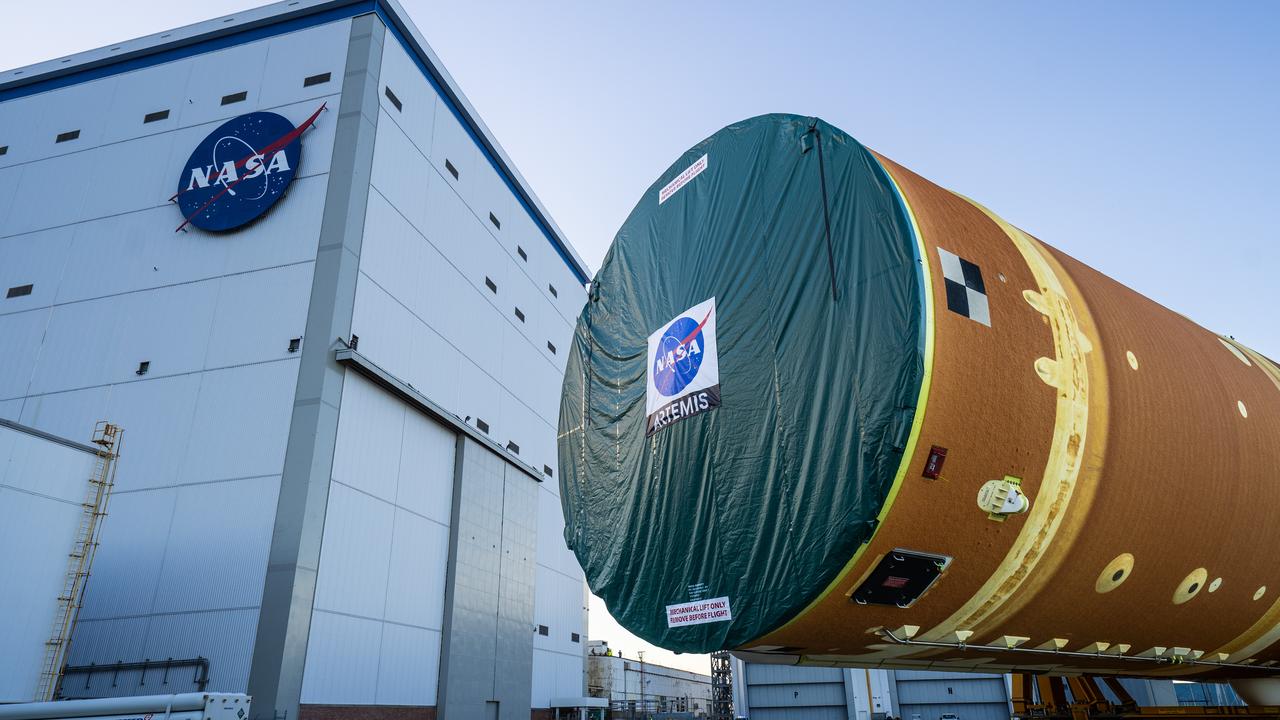
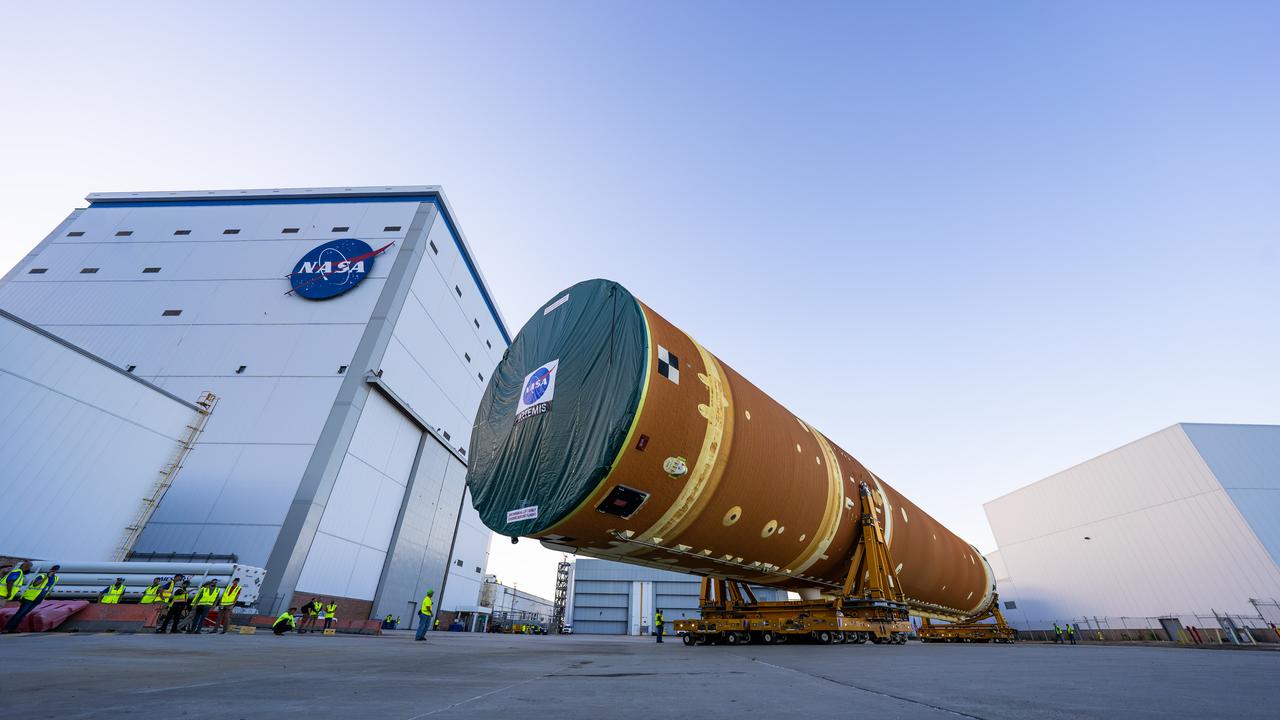
NASA moved the core stage, or the largest section, of the SLS (Space Launch System) rocket that will launch the crewed Artemis III mission in 2027 from the agency’s Michoud Assembly Facility to the agency’s Pegasus barge in New Orleans on April 20. The barge will ferry the top four-fifths – the section containing the liquid hydrogen tank, liquid oxygen tank, intertank, and forward skirt – of the SLS core stage to NASA’s Kennedy Space Center in Florida to complete outfitting and vertical integration. Teams with NASA and Boeing, the SLS core stage lead contractor, used specialized transporters to guide the top four-fifths from the NASA rocket factory to Pegasus. Prior to the move, technicians added an engine section transportation simulator to the rocket stage for shipment to the Space Coast. Next year’s Artemis III mission will launch astronauts to Earth’s orbit aboard the Orion spacecraft on top of SLS to test rendezvous and docking capabilities between Orion and commercial spacecraft needed to land Artemis IV astronauts on the Moon in 2028. NASA’s SLS is the only rocket capable of sending Orion, astronauts, and supplies to the Moon in a single launch.
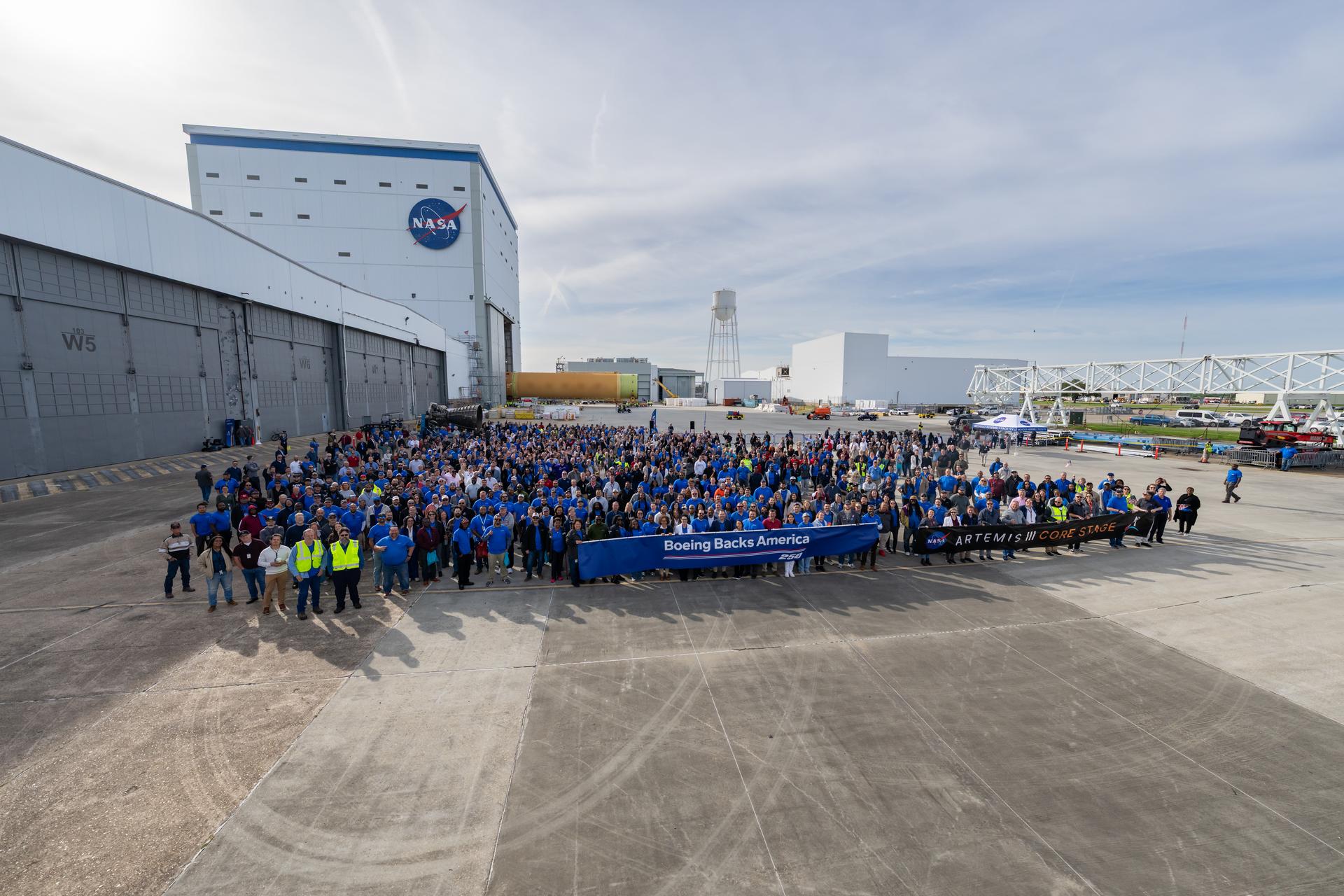
NASA moved the core stage, or the largest section, of the SLS (Space Launch System) rocket that will launch the crewed Artemis III mission in 2027 from the agency’s Michoud Assembly Facility to the agency’s Pegasus barge in New Orleans on April 20. The barge will ferry the top four-fifths – the section containing the liquid hydrogen tank, liquid oxygen tank, intertank, and forward skirt – of the SLS core stage to NASA’s Kennedy Space Center in Florida to complete outfitting and vertical integration. Teams with NASA and Boeing, the SLS core stage lead contractor, used specialized transporters to guide the top four-fifths from the NASA rocket factory to Pegasus. Prior to the move, technicians added an engine section transportation simulator to the rocket stage for shipment to the Space Coast. Next year’s Artemis III mission will launch astronauts to Earth’s orbit aboard the Orion spacecraft on top of SLS to test rendezvous and docking capabilities between Orion and commercial spacecraft needed to land Artemis IV astronauts on the Moon in 2028. NASA’s SLS is the only rocket capable of sending Orion, astronauts, and supplies to the Moon in a single launch.
NASA astronaut Victor Glover views the core stage of the SLS (Space Launch System) rocket that will help power Artemis II at NASA’s Michoud Assembly Facility in New Orleans July 15. Glover will pilot Artemis II, the first crewed mission of NASA’s Artemis campaign. Crews moved the 212-foot-tall core stage with its four RS-25 engines to Building 110 at NASA Michoud prior to rolling it out to NASA’s Pegasus barge July 16 for delivery to NASA’s Kennedy Space Center in Florida. The core stage has two giant propellant tanks that collectively hold more than 733,000 gallons of super cold liquid propellant to feed the stage’s four RS-25 engines. Together, the engines produce more than 2 million pounds of thrust to help send astronauts inside NASA’s Orion spacecraft to venture around the Moon for Artemis II. NASA is working to land the first woman, first person of color, and its first international partner astronaut on the Moon under Artemis. SLS is part of NASA’s backbone for deep space exploration, along with the Orion spacecraft, supporting ground systems, advanced spacesuits and rovers, the Gateway in orbit around the Moon, and commercial human landing systems. SLS is the only rocket that can send Orion, astronauts, and supplies to the Moon in a single launch.
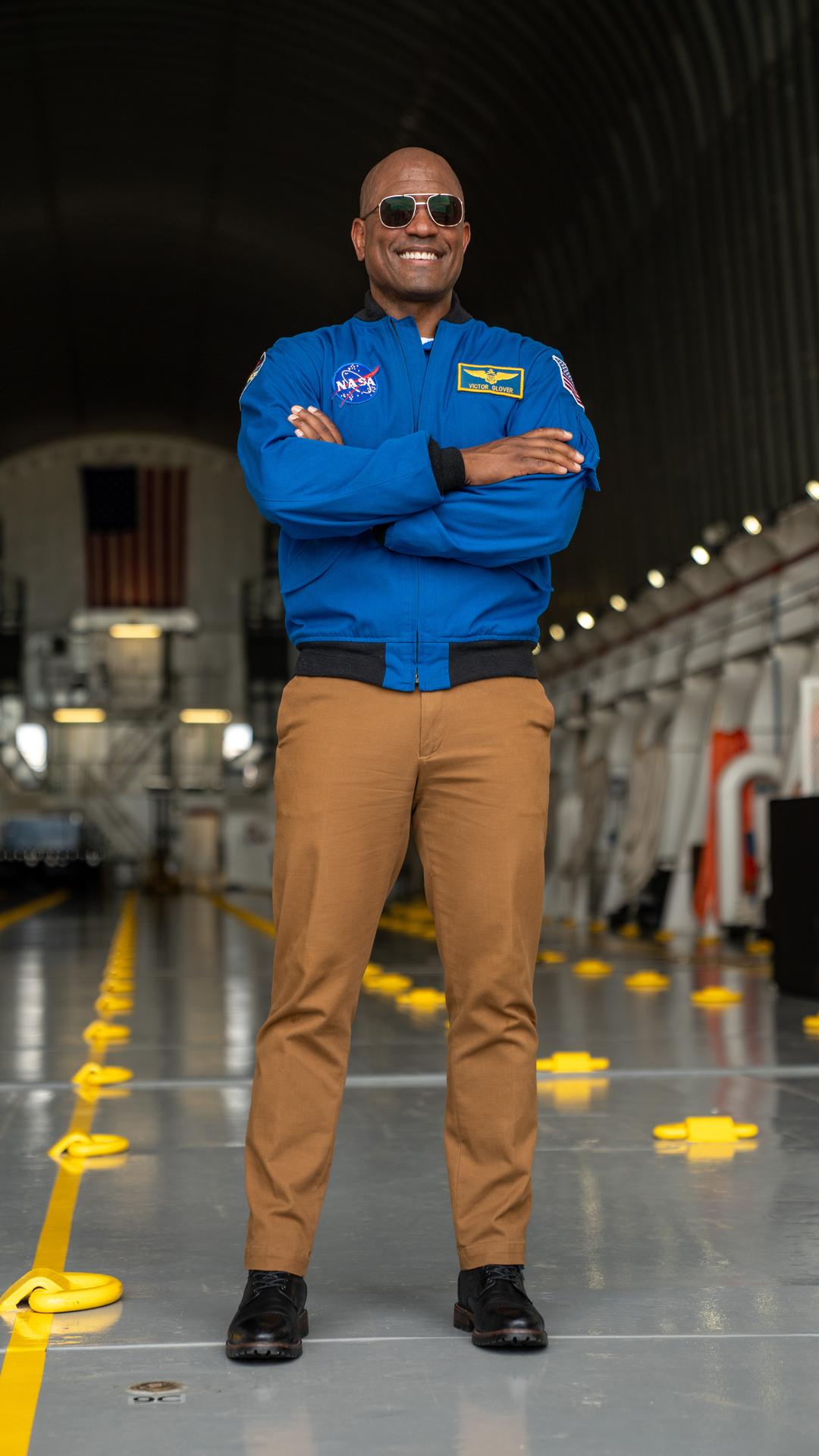
NASA astronaut Victor Glover views the core stage of the SLS (Space Launch System) rocket that will help power Artemis II at NASA’s Michoud Assembly Facility in New Orleans July 15. Glover will pilot Artemis II, the first crewed mission of NASA’s Artemis campaign. Crews moved the 212-foot-tall core stage with its four RS-25 engines to Building 110 at NASA Michoud prior to rolling it out to NASA’s Pegasus barge July 16 for delivery to NASA’s Kennedy Space Center in Florida. The core stage has two giant propellant tanks that collectively hold more than 733,000 gallons of super cold liquid propellant to feed the stage’s four RS-25 engines. Together, the engines produce more than 2 million pounds of thrust to help send astronauts inside NASA’s Orion spacecraft to venture around the Moon for Artemis II. NASA is working to land the first woman, first person of color, and its first international partner astronaut on the Moon under Artemis. SLS is part of NASA’s backbone for deep space exploration, along with the Orion spacecraft, supporting ground systems, advanced spacesuits and rovers, the Gateway in orbit around the Moon, and commercial human landing systems. SLS is the only rocket that can send Orion, astronauts, and supplies to the Moon in a single launch.
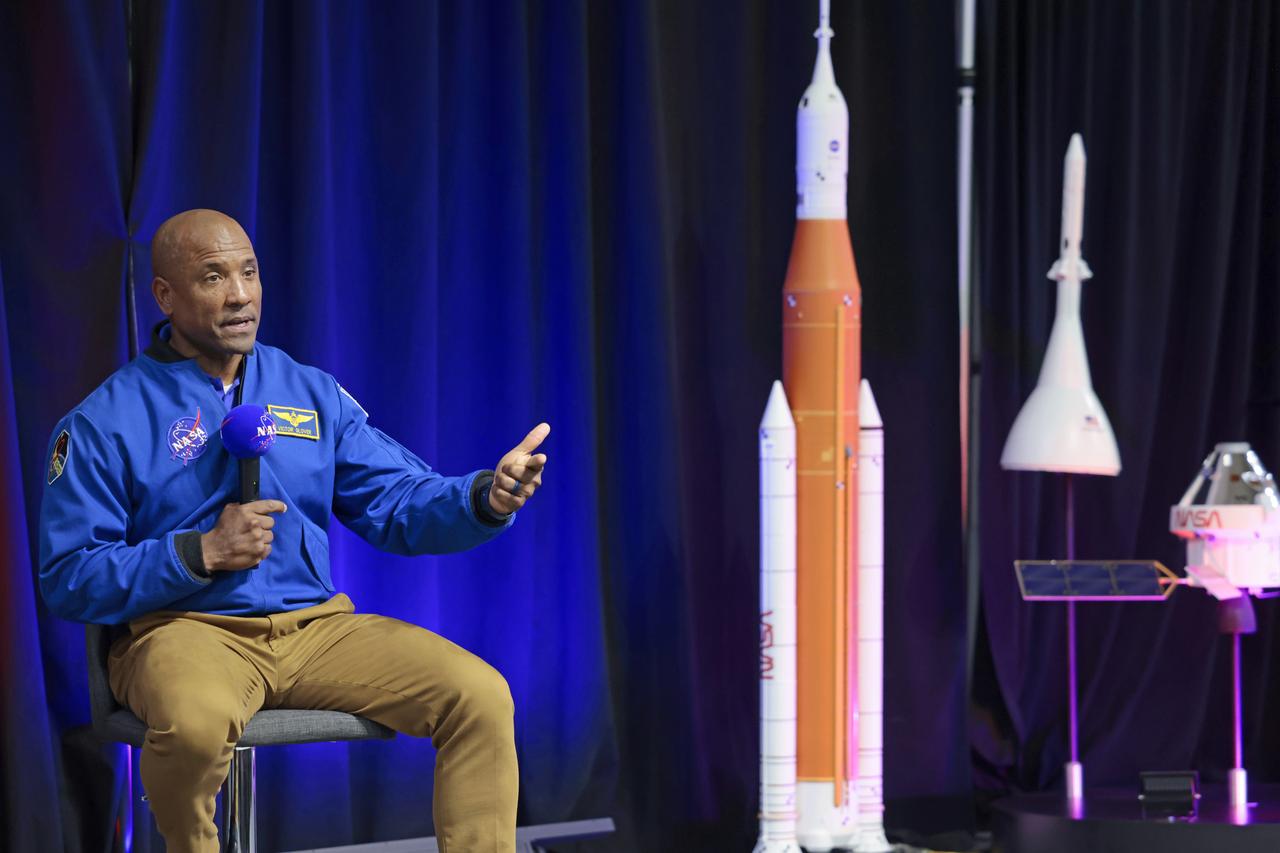
NASA astronaut Victor Glover views the core stage of the SLS (Space Launch System) rocket that will help power Artemis II at NASA’s Michoud Assembly Facility in New Orleans July 15. Glover will pilot Artemis II, the first crewed mission of NASA’s Artemis campaign. Crews moved the 212-foot-tall core stage with its four RS-25 engines to Building 110 at NASA Michoud prior to rolling it out to NASA’s Pegasus barge July 16 for delivery to NASA’s Kennedy Space Center in Florida. The core stage has two giant propellant tanks that collectively hold more than 733,000 gallons of super cold liquid propellant to feed the stage’s four RS-25 engines. Together, the engines produce more than 2 million pounds of thrust to help send astronauts inside NASA’s Orion spacecraft to venture around the Moon for Artemis II. NASA is working to land the first woman, first person of color, and its first international partner astronaut on the Moon under Artemis. SLS is part of NASA’s backbone for deep space exploration, along with the Orion spacecraft, supporting ground systems, advanced spacesuits and rovers, the Gateway in orbit around the Moon, and commercial human landing systems. SLS is the only rocket that can send Orion, astronauts, and supplies to the Moon in a single launch.
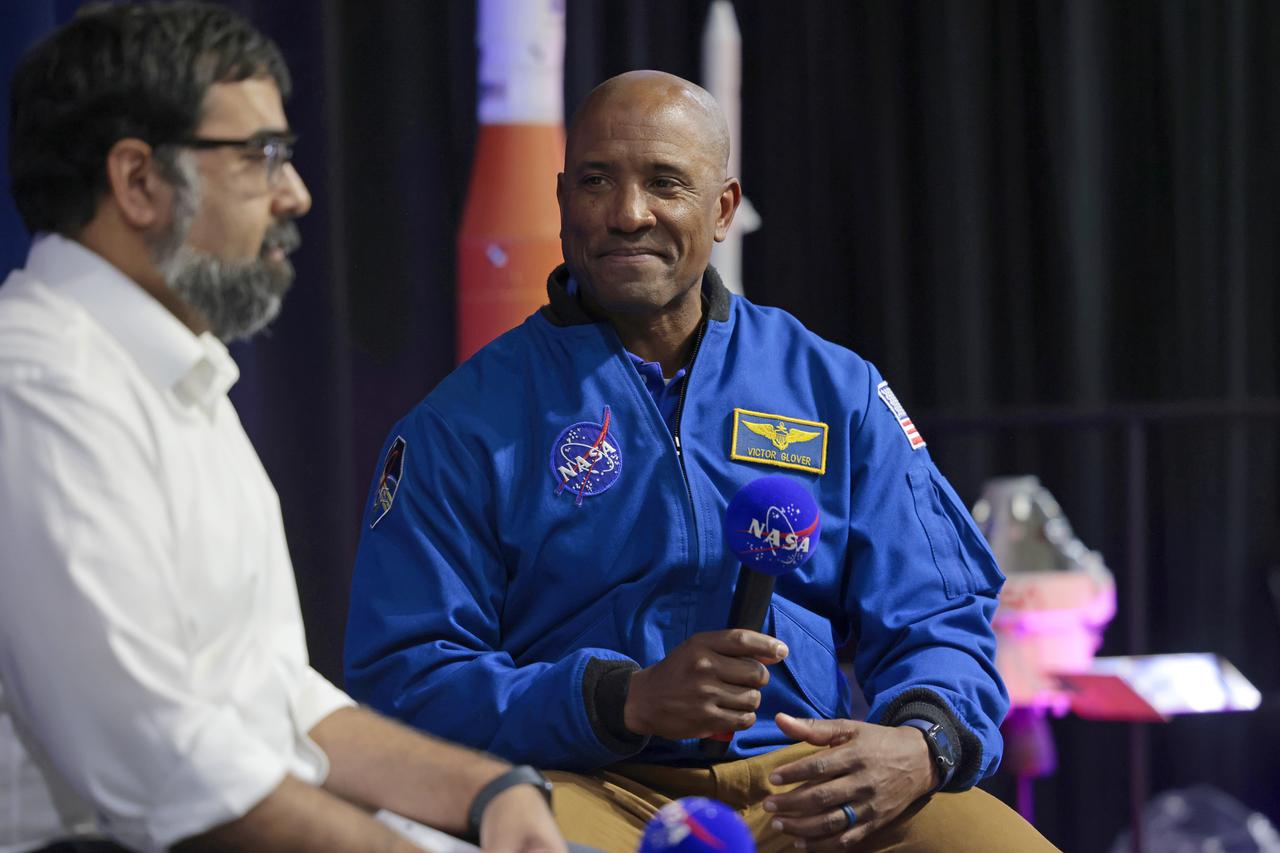
NASA astronaut Victor Glover views the core stage of the SLS (Space Launch System) rocket that will help power Artemis II at NASA’s Michoud Assembly Facility in New Orleans July 15. Glover will pilot Artemis II, the first crewed mission of NASA’s Artemis campaign. Crews moved the 212-foot-tall core stage with its four RS-25 engines to Building 110 at NASA Michoud prior to rolling it out to NASA’s Pegasus barge July 16 for delivery to NASA’s Kennedy Space Center in Florida. The core stage has two giant propellant tanks that collectively hold more than 733,000 gallons of super cold liquid propellant to feed the stage’s four RS-25 engines. Together, the engines produce more than 2 million pounds of thrust to help send astronauts inside NASA’s Orion spacecraft to venture around the Moon for Artemis II. NASA is working to land the first woman, first person of color, and its first international partner astronaut on the Moon under Artemis. SLS is part of NASA’s backbone for deep space exploration, along with the Orion spacecraft, supporting ground systems, advanced spacesuits and rovers, the Gateway in orbit around the Moon, and commercial human landing systems. SLS is the only rocket that can send Orion, astronauts, and supplies to the Moon in a single launch.
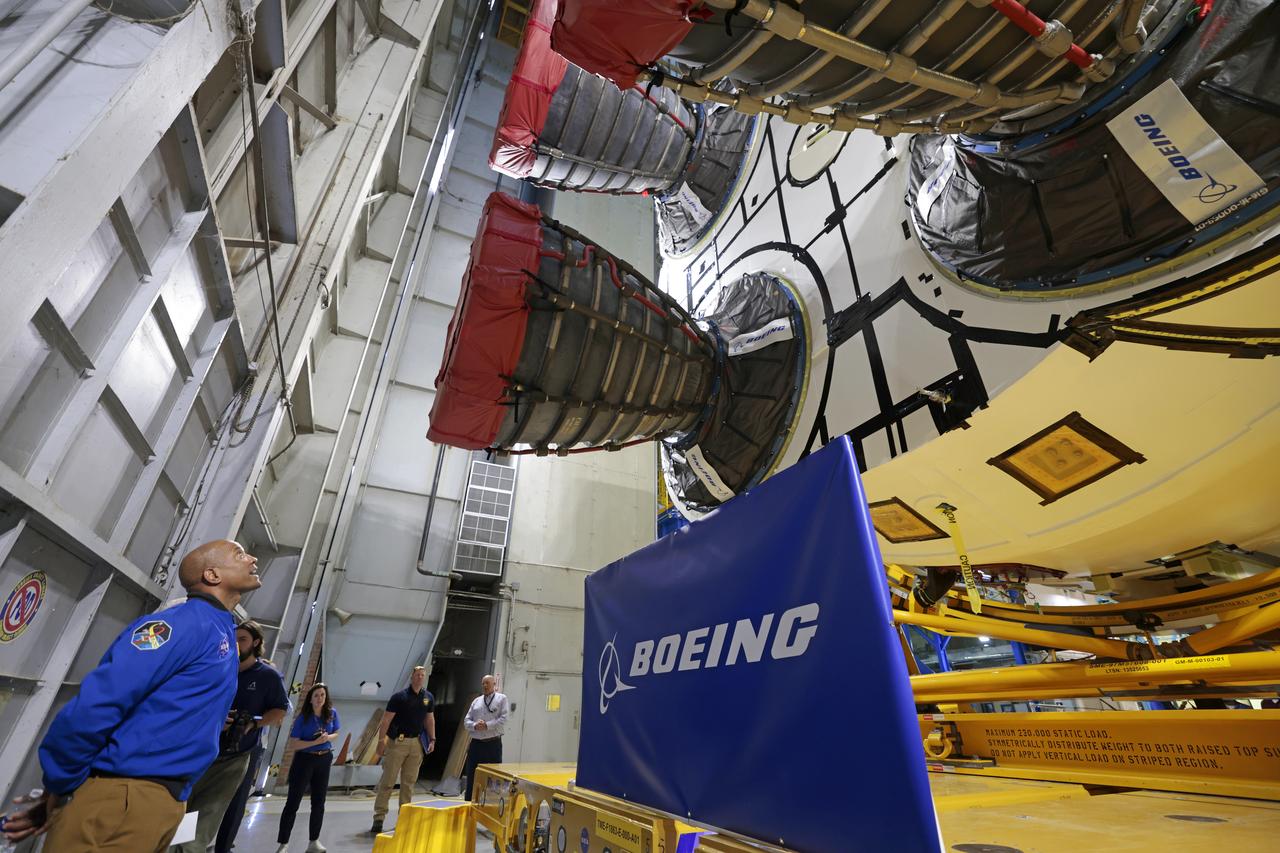
NASA astronaut Victor Glover views the core stage of the SLS (Space Launch System) rocket that will help power Artemis II at NASA’s Michoud Assembly Facility in New Orleans July 15. Glover will pilot Artemis II, the first crewed mission of NASA’s Artemis campaign. Crews moved the 212-foot-tall core stage with its four RS-25 engines to Building 110 at NASA Michoud prior to rolling it out to NASA’s Pegasus barge July 16 for delivery to NASA’s Kennedy Space Center in Florida. The core stage has two giant propellant tanks that collectively hold more than 733,000 gallons of super cold liquid propellant to feed the stage’s four RS-25 engines. Together, the engines produce more than 2 million pounds of thrust to help send astronauts inside NASA’s Orion spacecraft to venture around the Moon for Artemis II. NASA is working to land the first woman, first person of color, and its first international partner astronaut on the Moon under Artemis. SLS is part of NASA’s backbone for deep space exploration, along with the Orion spacecraft, supporting ground systems, advanced spacesuits and rovers, the Gateway in orbit around the Moon, and commercial human landing systems. SLS is the only rocket that can send Orion, astronauts, and supplies to the Moon in a single launch.
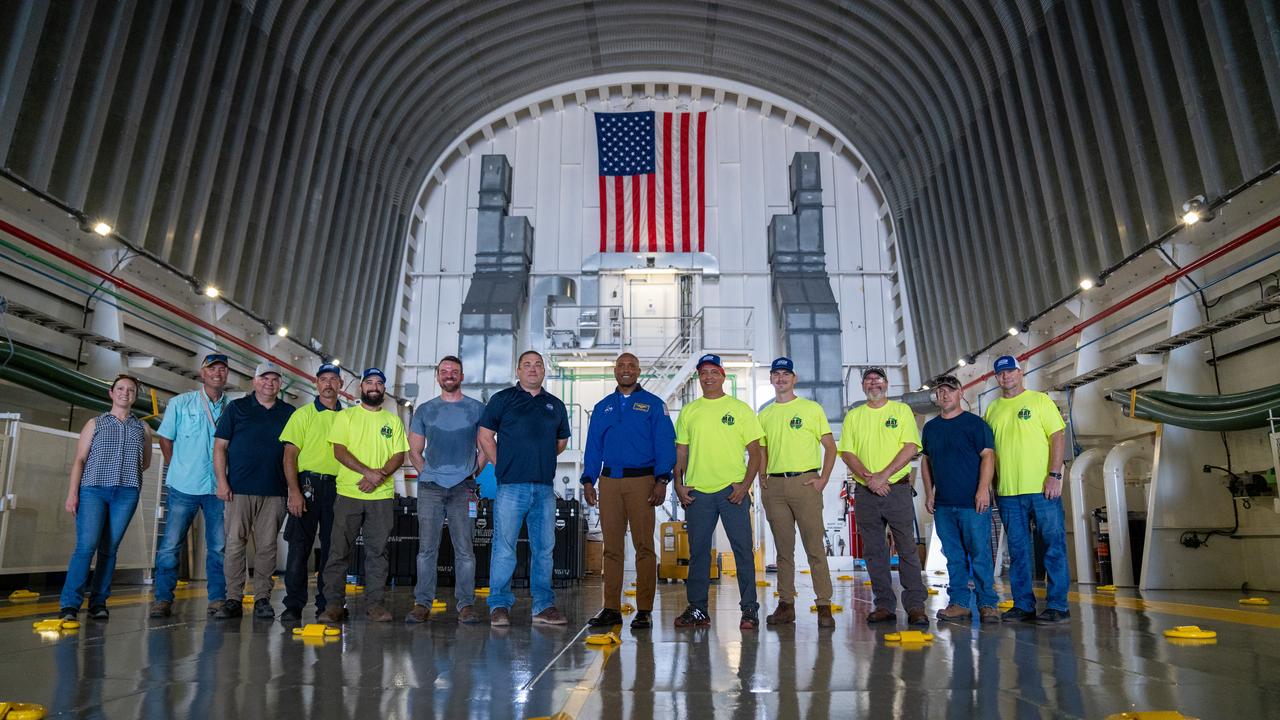
NASA astronaut Victor Glover views the core stage of the SLS (Space Launch System) rocket that will help power Artemis II at NASA’s Michoud Assembly Facility in New Orleans July 15. Glover will pilot Artemis II, the first crewed mission of NASA’s Artemis campaign. Crews moved the 212-foot-tall core stage with its four RS-25 engines to Building 110 at NASA Michoud prior to rolling it out to NASA’s Pegasus barge July 16 for delivery to NASA’s Kennedy Space Center in Florida. The core stage has two giant propellant tanks that collectively hold more than 733,000 gallons of super cold liquid propellant to feed the stage’s four RS-25 engines. Together, the engines produce more than 2 million pounds of thrust to help send astronauts inside NASA’s Orion spacecraft to venture around the Moon for Artemis II. NASA is working to land the first woman, first person of color, and its first international partner astronaut on the Moon under Artemis. SLS is part of NASA’s backbone for deep space exploration, along with the Orion spacecraft, supporting ground systems, advanced spacesuits and rovers, the Gateway in orbit around the Moon, and commercial human landing systems. SLS is the only rocket that can send Orion, astronauts, and supplies to the Moon in a single launch.

NASA astronaut Victor Glover views the core stage of the SLS (Space Launch System) rocket that will help power Artemis II at NASA’s Michoud Assembly Facility in New Orleans July 15. Glover will pilot Artemis II, the first crewed mission of NASA’s Artemis campaign. Crews moved the 212-foot-tall core stage with its four RS-25 engines to Building 110 at NASA Michoud prior to rolling it out to NASA’s Pegasus barge July 16 for delivery to NASA’s Kennedy Space Center in Florida. The core stage has two giant propellant tanks that collectively hold more than 733,000 gallons of super cold liquid propellant to feed the stage’s four RS-25 engines. Together, the engines produce more than 2 million pounds of thrust to help send astronauts inside NASA’s Orion spacecraft to venture around the Moon for Artemis II. NASA is working to land the first woman, first person of color, and its first international partner astronaut on the Moon under Artemis. SLS is part of NASA’s backbone for deep space exploration, along with the Orion spacecraft, supporting ground systems, advanced spacesuits and rovers, the Gateway in orbit around the Moon, and commercial human landing systems. SLS is the only rocket that can send Orion, astronauts, and supplies to the Moon in a single launch.
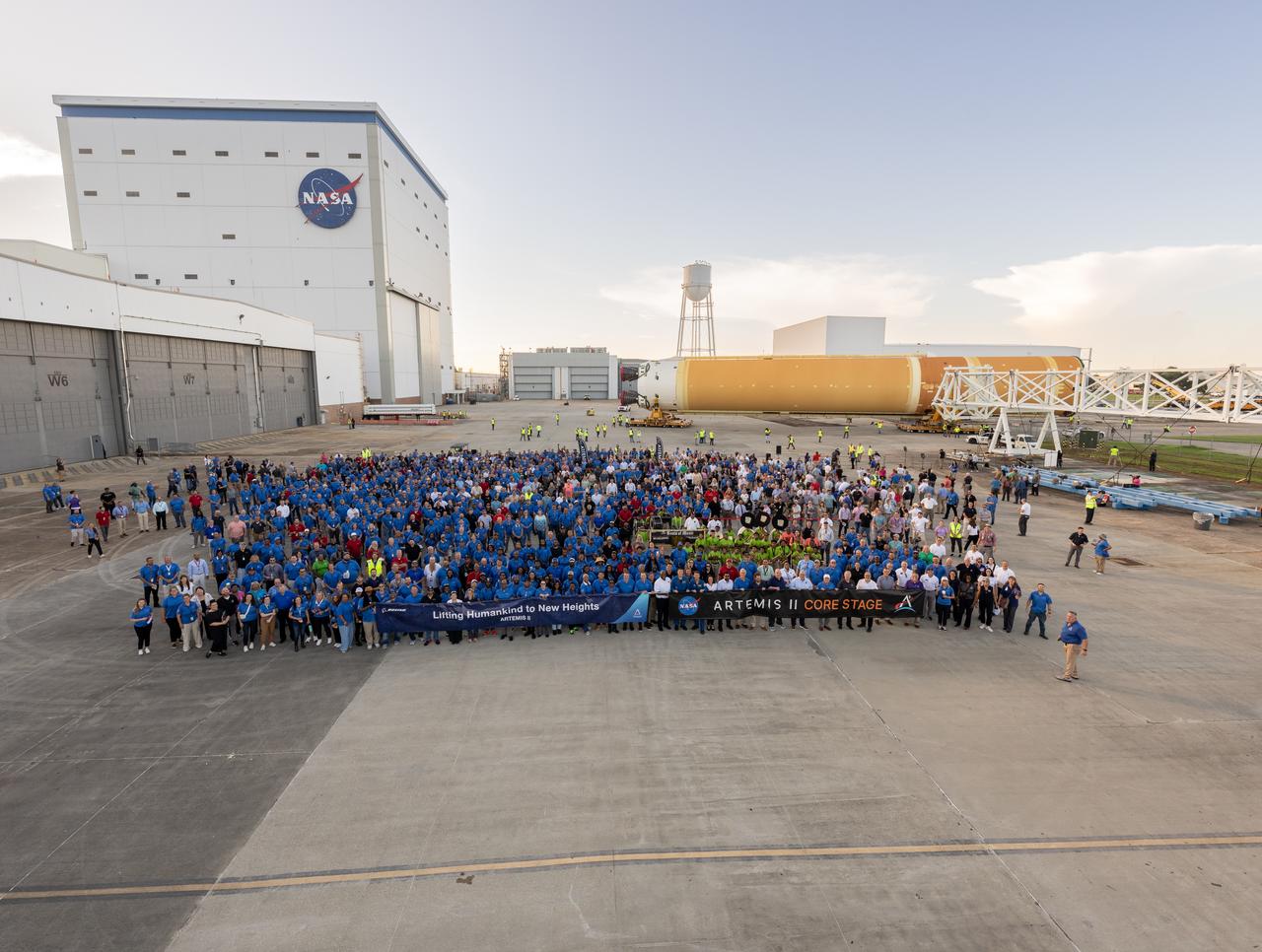
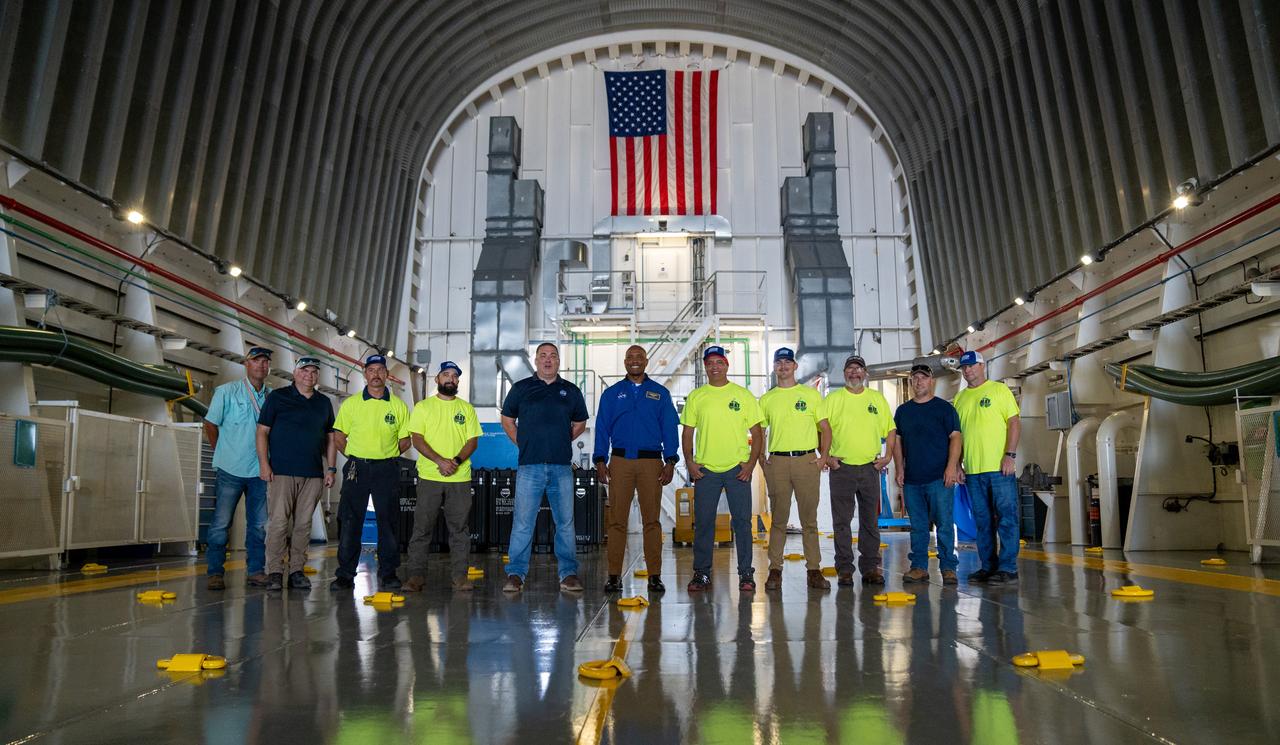
The NASA Michoud Assembly Facility workforce and with other agency team members take a “family photo” with the SLS (Space Launch System) core stage for Artemis II in the background. The core stage will help launch the first crewed flight of NASA’s SLS rocket for the agency’s Artemis II mission. The move marked the first time a fully assembled Moon rocket stage for a crewed mission has rolled out from NASA’s Michoud Assembly Facility in New Orleans since the Apollo Program, The core stage was moved onto the agency’s Pegasus barge, where it will be ferried to NASA’s Kennedy Space Center in Florida. The core stage for the SLS mega rocket is the largest stage NASA has ever produced. At 212 feet tall, the stage consists of five major elements, including two huge propellant tanks that collectively hold more than 733,000 gallons of super chilled liquid propellant to feed four RS-25 engines at its base. During launch and flight, the stage will operate for just over eight minutes, producing more than 2 million pounds of thrust to help send a crew of four astronauts inside NASA’s Orion spacecraft onward to the Moon. NASA is working to land the first woman, first person of color, and its first international partner astronaut on the Moon under Artemis. SLS is part of NASA’s backbone for deep space exploration, along with the Orion spacecraft and Gateway in orbit around the Moon and commercial human landing systems, next-generation space, next-generational spacesuits, and rovers on the lunar surface. SLS is the only rocket that can send Orion, astronauts, and supplies to the Moon in a single launch.
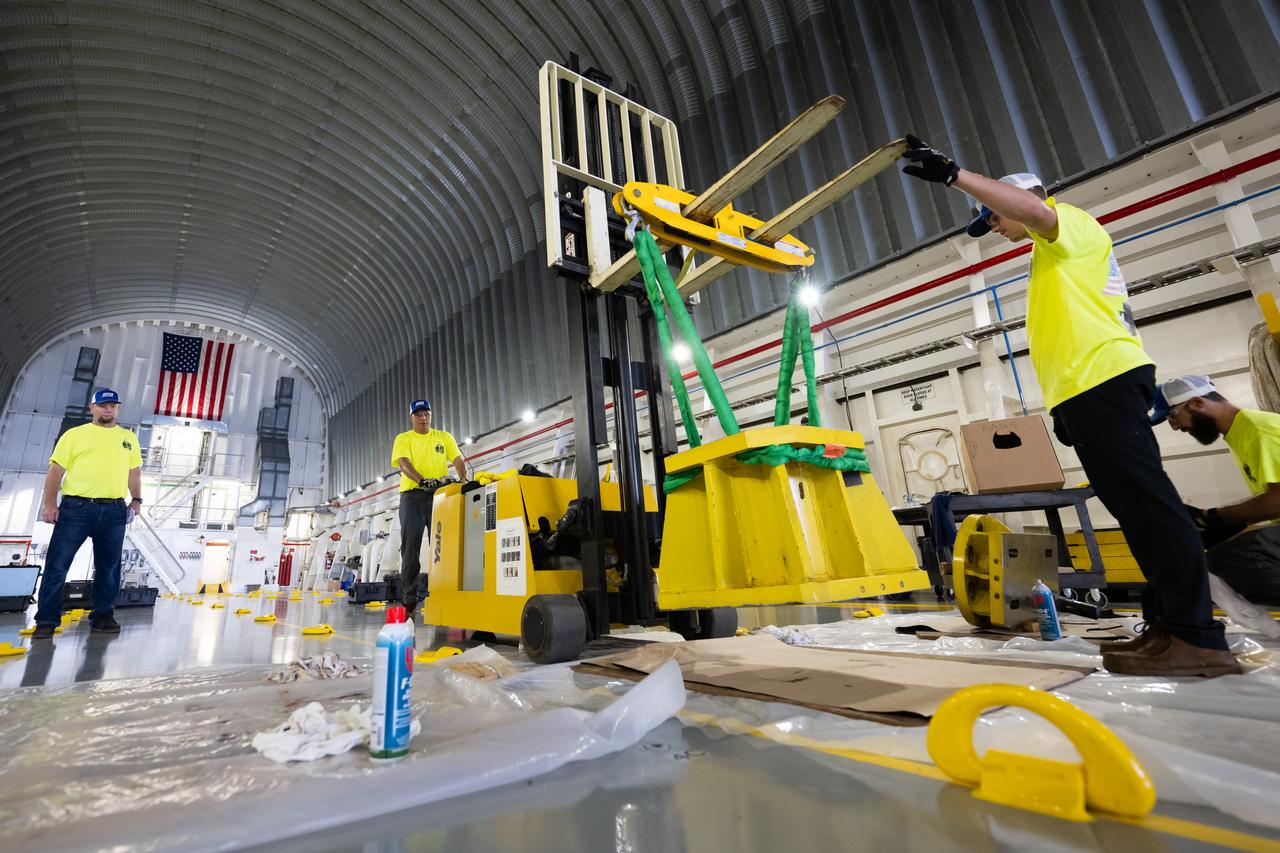
These photos show how team members installed pedestals aboard NASA’s Pegasus barge to hold and secure the massive core stage of NASA’s SLS (Space Launch System) rocket, indicating the barge and its crew are nearly ready for the barge’s first delivery to support the Artemis II test flight around the Moon. The barge will ferry the fully assembled core stage on a 900-mile journey from the agency’s Michoud Assembly Facility in New Orleans to its Kennedy Space Center in Florida. The Pegasus crew began installing the pedestals July 10. Pegasus is maintained at NASA Michoud. The SLS core stage is fully manufactured at Michoud. NASA is working to land the first woman, first person of color, and its first international partner astronaut on the Moon under Artemis. SLS is part of NASA’s backbone for deep space exploration, along with the Orion spacecraft, supporting ground systems, advanced spacesuits and rovers, the Gateway in orbit around the Moon, and commercial human landing systems. SLS is the only rocket that can send Orion, astronauts, and supplies to the Moon in a single launch.
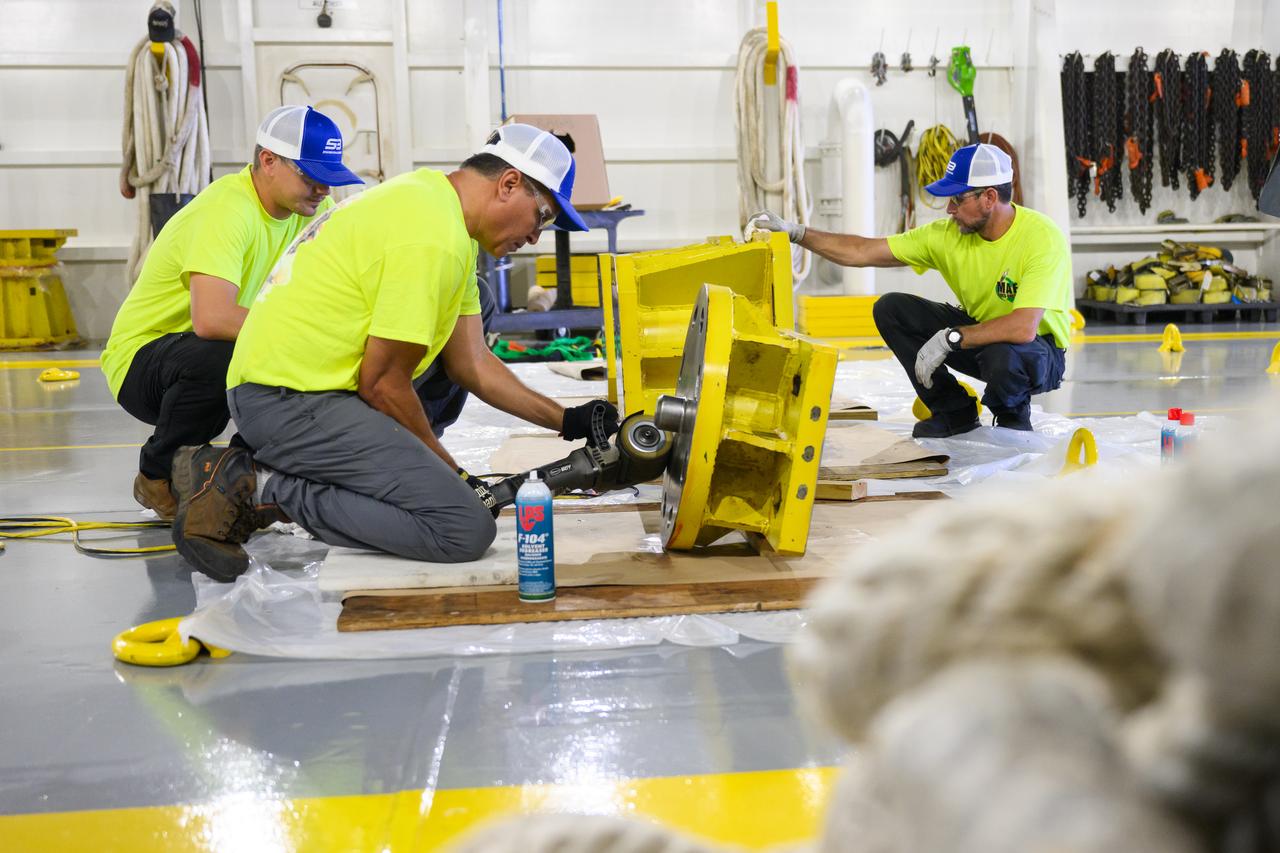
These photos show how team members installed pedestals aboard NASA’s Pegasus barge to hold and secure the massive core stage of NASA’s SLS (Space Launch System) rocket, indicating the barge and its crew are nearly ready for the barge’s first delivery to support the Artemis II test flight around the Moon. The barge will ferry the fully assembled core stage on a 900-mile journey from the agency’s Michoud Assembly Facility in New Orleans to its Kennedy Space Center in Florida. The Pegasus crew began installing the pedestals July 10. Pegasus is maintained at NASA Michoud. The SLS core stage is fully manufactured at Michoud. NASA is working to land the first woman, first person of color, and its first international partner astronaut on the Moon under Artemis. SLS is part of NASA’s backbone for deep space exploration, along with the Orion spacecraft, supporting ground systems, advanced spacesuits and rovers, the Gateway in orbit around the Moon, and commercial human landing systems. SLS is the only rocket that can send Orion, astronauts, and supplies to the Moon in a single launch.
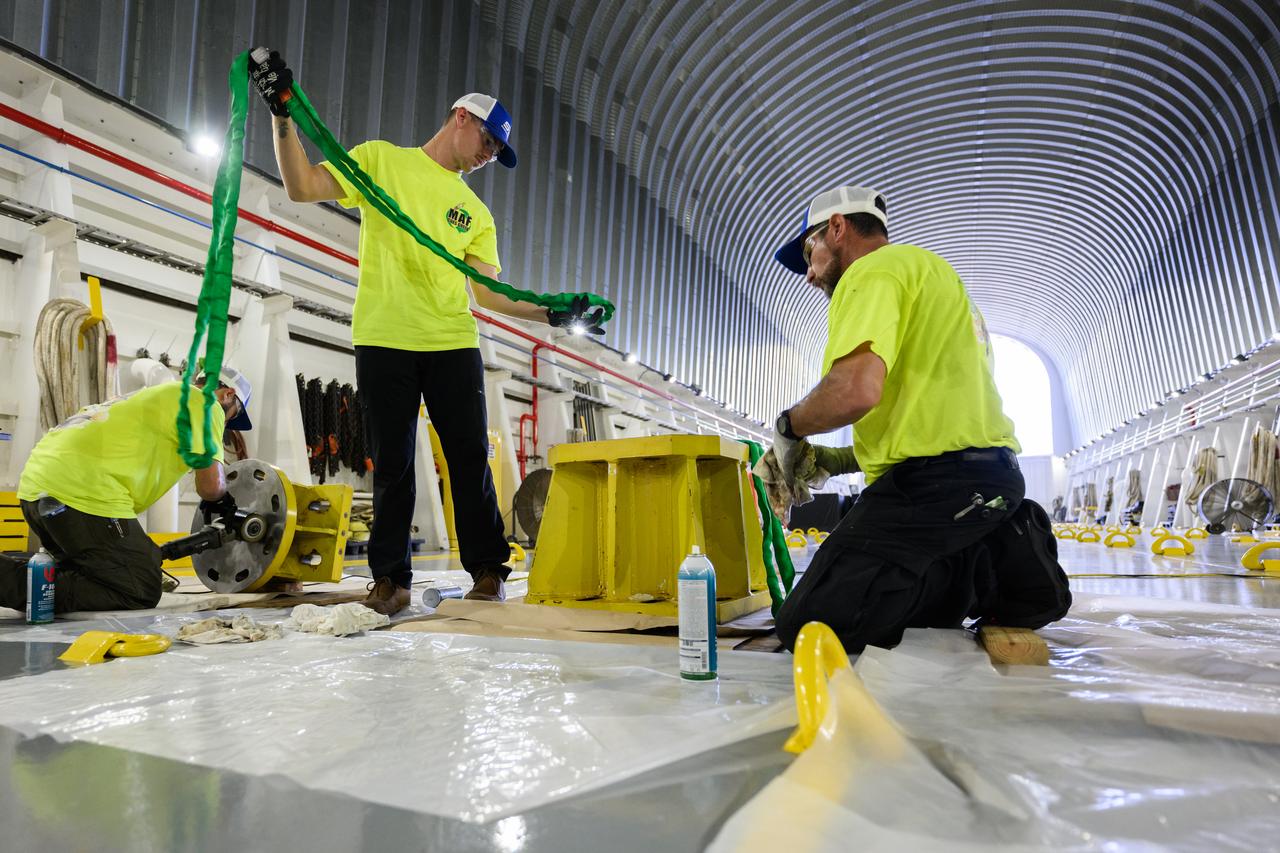
These photos show how team members installed pedestals aboard NASA’s Pegasus barge to hold and secure the massive core stage of NASA’s SLS (Space Launch System) rocket, indicating the barge and its crew are nearly ready for the barge’s first delivery to support the Artemis II test flight around the Moon. The barge will ferry the fully assembled core stage on a 900-mile journey from the agency’s Michoud Assembly Facility in New Orleans to its Kennedy Space Center in Florida. The Pegasus crew began installing the pedestals July 10. Pegasus is maintained at NASA Michoud. The SLS core stage is fully manufactured at Michoud. NASA is working to land the first woman, first person of color, and its first international partner astronaut on the Moon under Artemis. SLS is part of NASA’s backbone for deep space exploration, along with the Orion spacecraft, supporting ground systems, advanced spacesuits and rovers, the Gateway in orbit around the Moon, and commercial human landing systems. SLS is the only rocket that can send Orion, astronauts, and supplies to the Moon in a single launch.
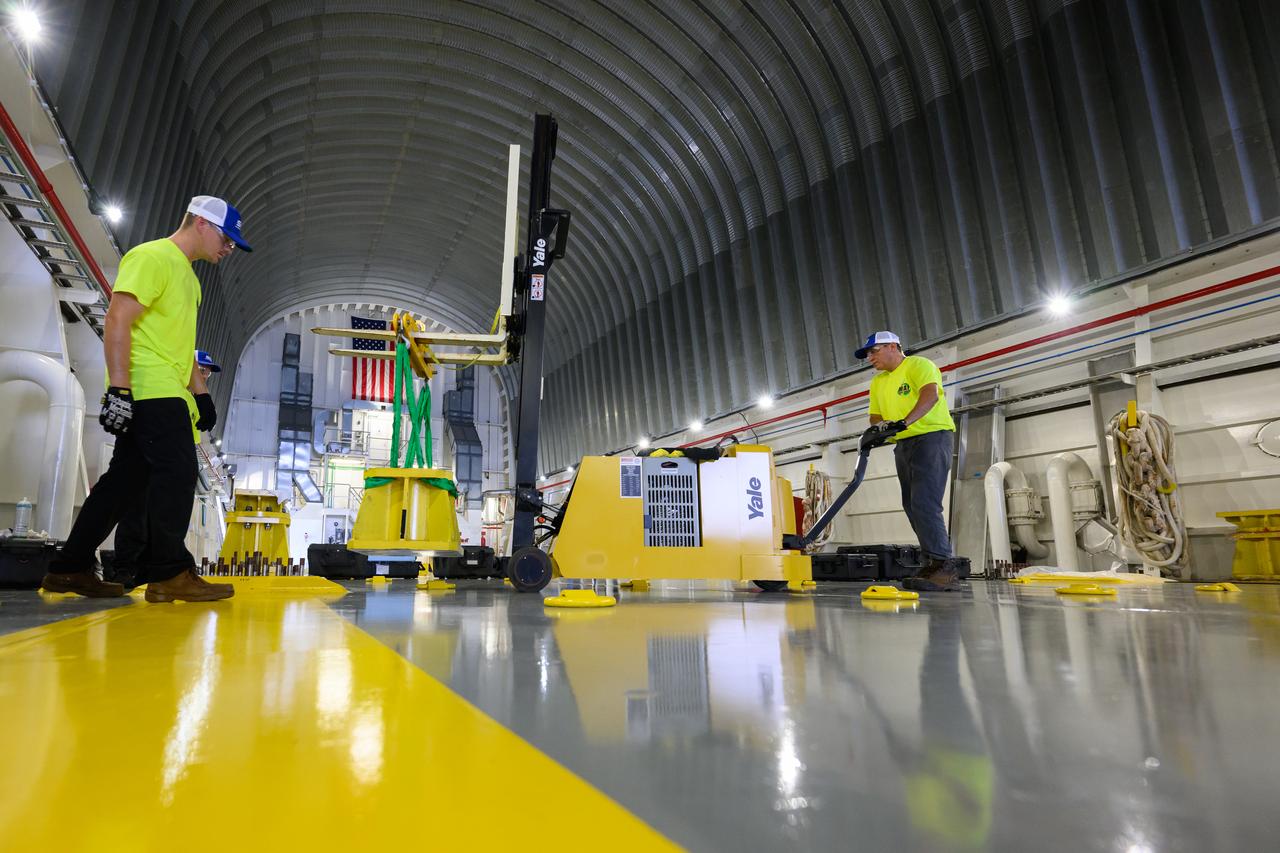
These photos show how team members installed pedestals aboard NASA’s Pegasus barge to hold and secure the massive core stage of NASA’s SLS (Space Launch System) rocket, indicating the barge and its crew are nearly ready for the barge’s first delivery to support the Artemis II test flight around the Moon. The barge will ferry the fully assembled core stage on a 900-mile journey from the agency’s Michoud Assembly Facility in New Orleans to its Kennedy Space Center in Florida. The Pegasus crew began installing the pedestals July 10. Pegasus is maintained at NASA Michoud. The SLS core stage is fully manufactured at Michoud. NASA is working to land the first woman, first person of color, and its first international partner astronaut on the Moon under Artemis. SLS is part of NASA’s backbone for deep space exploration, along with the Orion spacecraft, supporting ground systems, advanced spacesuits and rovers, the Gateway in orbit around the Moon, and commercial human landing systems. SLS is the only rocket that can send Orion, astronauts, and supplies to the Moon in a single launch.
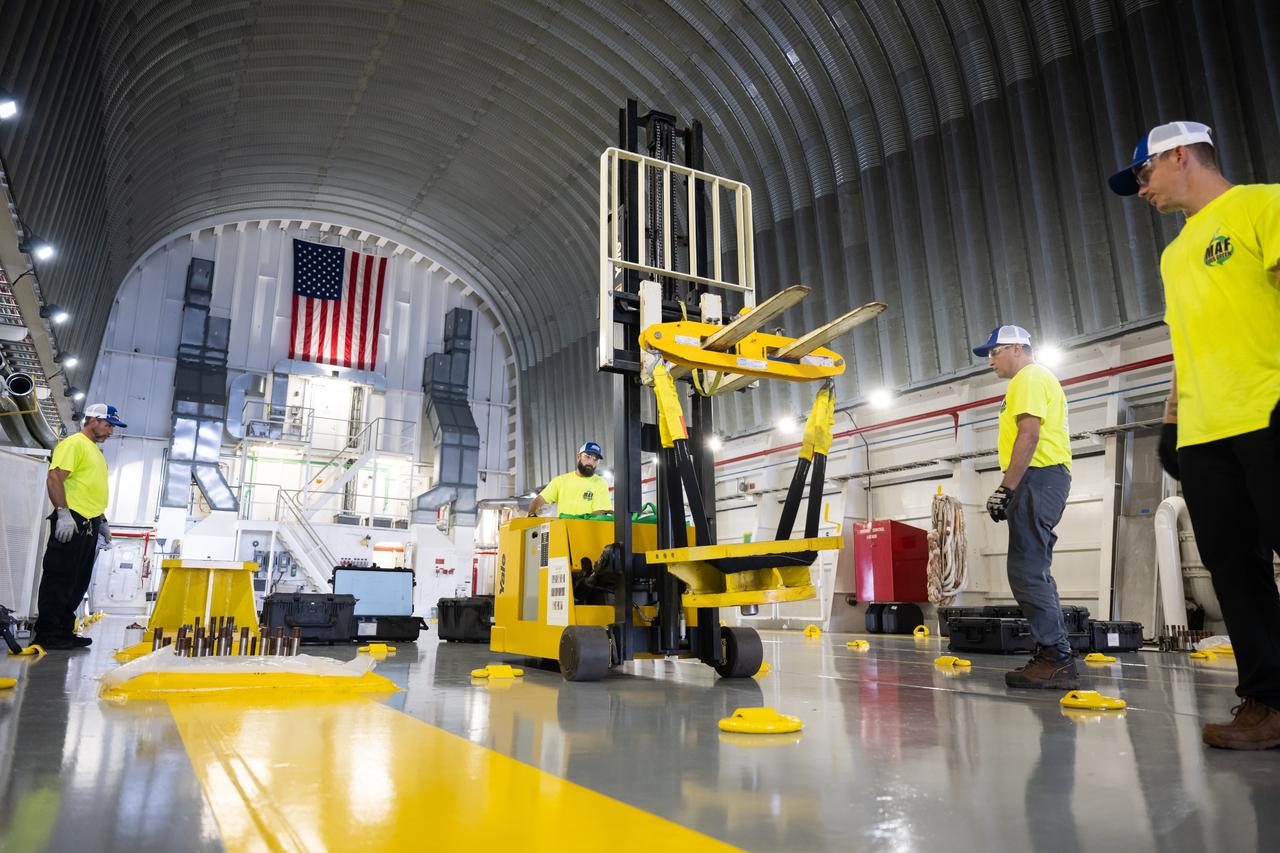
These photos show how team members installed pedestals aboard NASA’s Pegasus barge to hold and secure the massive core stage of NASA’s SLS (Space Launch System) rocket, indicating the barge and its crew are nearly ready for the barge’s first delivery to support the Artemis II test flight around the Moon. The barge will ferry the fully assembled core stage on a 900-mile journey from the agency’s Michoud Assembly Facility in New Orleans to its Kennedy Space Center in Florida. The Pegasus crew began installing the pedestals July 10. Pegasus is maintained at NASA Michoud. The SLS core stage is fully manufactured at Michoud. NASA is working to land the first woman, first person of color, and its first international partner astronaut on the Moon under Artemis. SLS is part of NASA’s backbone for deep space exploration, along with the Orion spacecraft, supporting ground systems, advanced spacesuits and rovers, the Gateway in orbit around the Moon, and commercial human landing systems. SLS is the only rocket that can send Orion, astronauts, and supplies to the Moon in a single launch.
These images and videos show team members moving the first core stage that will help launch the first crewed flight of NASA’s SLS (Space Launch System) rocket for the agency’s Artemis II mission. The move marked the first time a fully assembled Moon rocket stage for a crewed mission has rolled out from NASA’s Michoud Assembly Facility in New Orleans since the Apollo Program, The core stage was moved onto the agency’s Pegasus barge, where it will be ferried to NASA’s Kennedy Space Center in Florida. The core stage for the SLS mega rocket is the largest stage NASA has ever produced. At 212 feet tall, the stage consists of five major elements, including two huge propellant tanks that collectively hold more than 733,000 gallons of super chilled liquid propellant to feed four RS-25 engines at its base. During launch and flight, the stage will operate for just over eight minutes, producing more than 2 million pounds of thrust to help send a crew of four astronauts inside NASA’s Orion spacecraft onward to the Moon. NASA is working to land the first woman, first person of color, and its first international partner astronaut on the Moon under Artemis. SLS is part of NASA’s backbone for deep space exploration, along with the Orion spacecraft and Gateway in orbit around the Moon and commercial human landing systems, next-generation space, next-generational spacesuits, and rovers on the lunar surface. SLS is the only rocket that can send Orion, astronauts, and supplies to the Moon in a single launch.
These images and videos show team members moving the first core stage that will help launch the first crewed flight of NASA’s SLS (Space Launch System) rocket for the agency’s Artemis II mission. The move marked the first time a fully assembled Moon rocket stage for a crewed mission has rolled out from NASA’s Michoud Assembly Facility in New Orleans since the Apollo Program, The core stage was moved onto the agency’s Pegasus barge, where it will be ferried to NASA’s Kennedy Space Center in Florida. The core stage for the SLS mega rocket is the largest stage NASA has ever produced. At 212 feet tall, the stage consists of five major elements, including two huge propellant tanks that collectively hold more than 733,000 gallons of super chilled liquid propellant to feed four RS-25 engines at its base. During launch and flight, the stage will operate for just over eight minutes, producing more than 2 million pounds of thrust to help send a crew of four astronauts inside NASA’s Orion spacecraft onward to the Moon. NASA is working to land the first woman, first person of color, and its first international partner astronaut on the Moon under Artemis. SLS is part of NASA’s backbone for deep space exploration, along with the Orion spacecraft and Gateway in orbit around the Moon and commercial human landing systems, next-generation space, next-generational spacesuits, and rovers on the lunar surface. SLS is the only rocket that can send Orion, astronauts, and supplies to the Moon in a single launch.
These images and videos show team members moving the first core stage that will help launch the first crewed flight of NASA’s SLS (Space Launch System) rocket for the agency’s Artemis II mission. The move marked the first time a fully assembled Moon rocket stage for a crewed mission has rolled out from NASA’s Michoud Assembly Facility in New Orleans since the Apollo Program, The core stage was moved onto the agency’s Pegasus barge, where it will be ferried to NASA’s Kennedy Space Center in Florida. The core stage for the SLS mega rocket is the largest stage NASA has ever produced. At 212 feet tall, the stage consists of five major elements, including two huge propellant tanks that collectively hold more than 733,000 gallons of super chilled liquid propellant to feed four RS-25 engines at its base. During launch and flight, the stage will operate for just over eight minutes, producing more than 2 million pounds of thrust to help send a crew of four astronauts inside NASA’s Orion spacecraft onward to the Moon. NASA is working to land the first woman, first person of color, and its first international partner astronaut on the Moon under Artemis. SLS is part of NASA’s backbone for deep space exploration, along with the Orion spacecraft and Gateway in orbit around the Moon and commercial human landing systems, next-generation space, next-generational spacesuits, and rovers on the lunar surface. SLS is the only rocket that can send Orion, astronauts, and supplies to the Moon in a single launch.
These images and videos show team members moving the first core stage that will help launch the first crewed flight of NASA’s SLS (Space Launch System) rocket for the agency’s Artemis II mission. The move marked the first time a fully assembled Moon rocket stage for a crewed mission has rolled out from NASA’s Michoud Assembly Facility in New Orleans since the Apollo Program, The core stage was moved onto the agency’s Pegasus barge, where it will be ferried to NASA’s Kennedy Space Center in Florida. The core stage for the SLS mega rocket is the largest stage NASA has ever produced. At 212 feet tall, the stage consists of five major elements, including two huge propellant tanks that collectively hold more than 733,000 gallons of super chilled liquid propellant to feed four RS-25 engines at its base. During launch and flight, the stage will operate for just over eight minutes, producing more than 2 million pounds of thrust to help send a crew of four astronauts inside NASA’s Orion spacecraft onward to the Moon. NASA is working to land the first woman, first person of color, and its first international partner astronaut on the Moon under Artemis. SLS is part of NASA’s backbone for deep space exploration, along with the Orion spacecraft and Gateway in orbit around the Moon and commercial human landing systems, next-generation space, next-generational spacesuits, and rovers on the lunar surface. SLS is the only rocket that can send Orion, astronauts, and supplies to the Moon in a single launch.
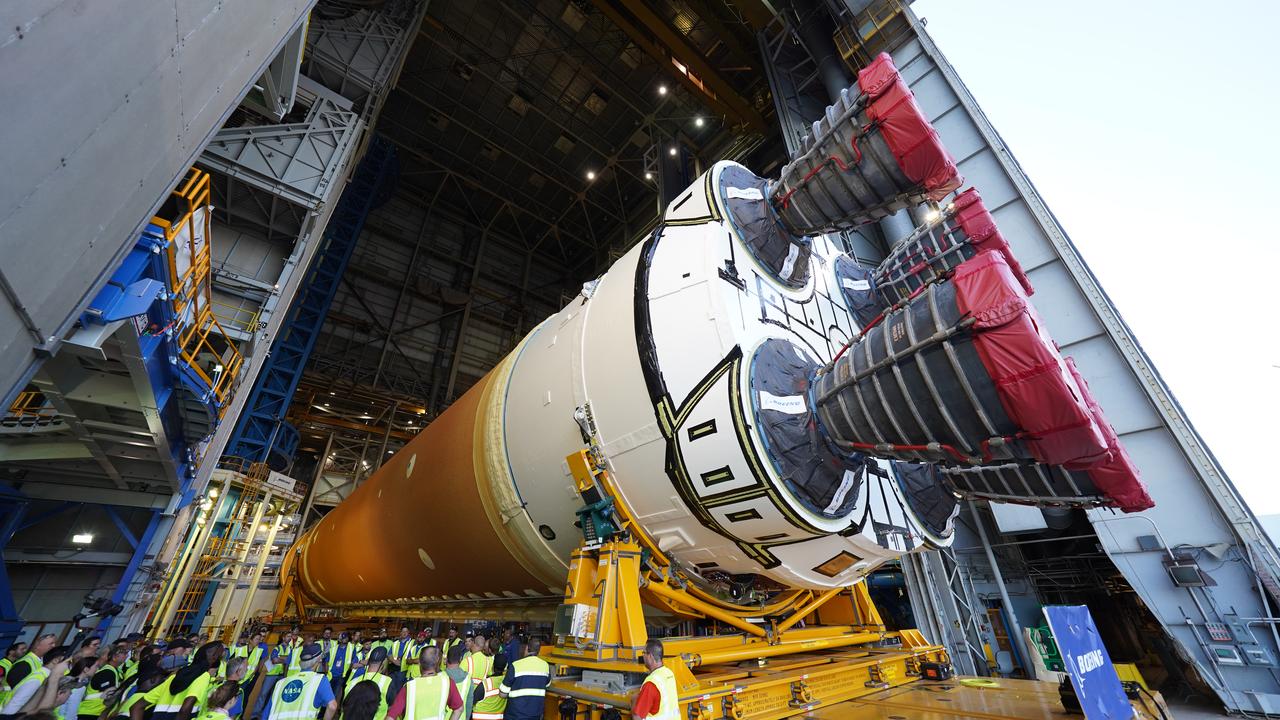
These images and videos show team members moving the first core stage that will help launch the first crewed flight of NASA’s SLS (Space Launch System) rocket for the agency’s Artemis II mission. The move marked the first time a fully assembled Moon rocket stage for a crewed mission has rolled out from NASA’s Michoud Assembly Facility in New Orleans since the Apollo Program, The core stage was moved onto the agency’s Pegasus barge, where it will be ferried to NASA’s Kennedy Space Center in Florida. The core stage for the SLS mega rocket is the largest stage NASA has ever produced. At 212 feet tall, the stage consists of five major elements, including two huge propellant tanks that collectively hold more than 733,000 gallons of super chilled liquid propellant to feed four RS-25 engines at its base. During launch and flight, the stage will operate for just over eight minutes, producing more than 2 million pounds of thrust to help send a crew of four astronauts inside NASA’s Orion spacecraft onward to the Moon. NASA is working to land the first woman, first person of color, and its first international partner astronaut on the Moon under Artemis. SLS is part of NASA’s backbone for deep space exploration, along with the Orion spacecraft and Gateway in orbit around the Moon and commercial human landing systems, next-generation space, next-generational spacesuits, and rovers on the lunar surface. SLS is the only rocket that can send Orion, astronauts, and supplies to the Moon in a single launch.
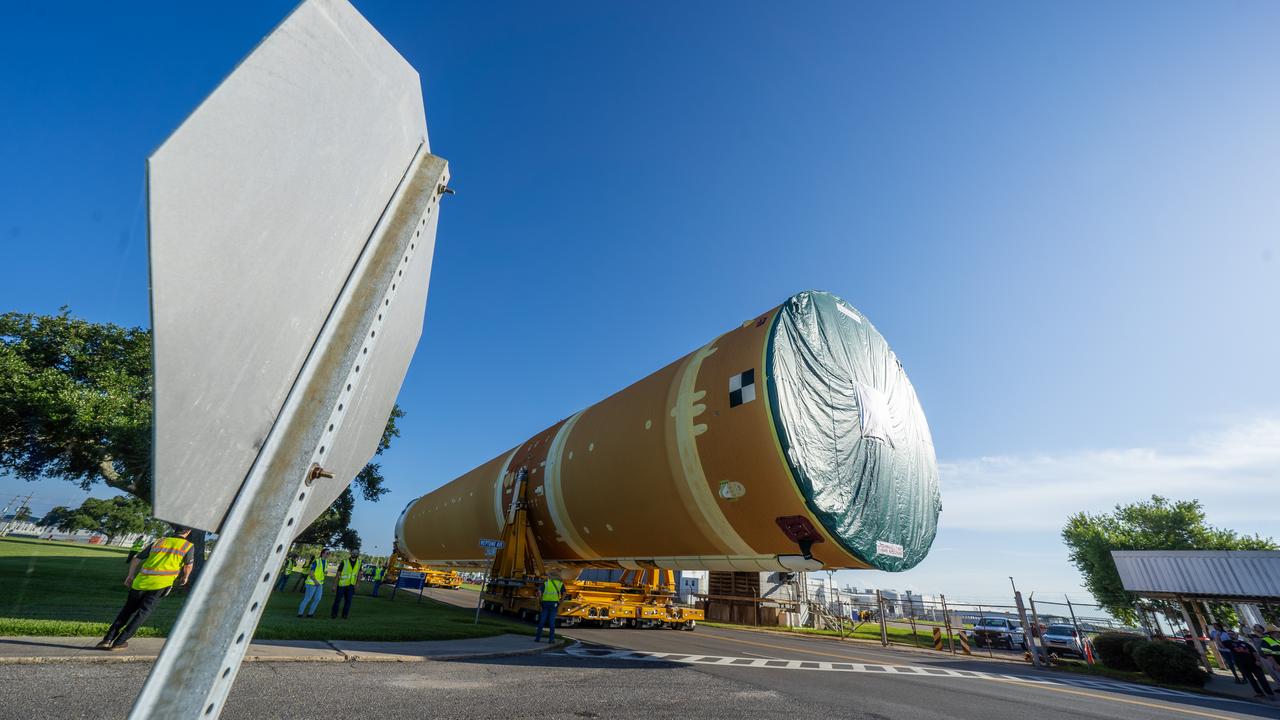
These images and videos show team members moving the first core stage that will help launch the first crewed flight of NASA’s SLS (Space Launch System) rocket for the agency’s Artemis II mission. The move marked the first time a fully assembled Moon rocket stage for a crewed mission has rolled out from NASA’s Michoud Assembly Facility in New Orleans since the Apollo Program, The core stage was moved onto the agency’s Pegasus barge, where it will be ferried to NASA’s Kennedy Space Center in Florida. The core stage for the SLS mega rocket is the largest stage NASA has ever produced. At 212 feet tall, the stage consists of five major elements, including two huge propellant tanks that collectively hold more than 733,000 gallons of super chilled liquid propellant to feed four RS-25 engines at its base. During launch and flight, the stage will operate for just over eight minutes, producing more than 2 million pounds of thrust to help send a crew of four astronauts inside NASA’s Orion spacecraft onward to the Moon. NASA is working to land the first woman, first person of color, and its first international partner astronaut on the Moon under Artemis. SLS is part of NASA’s backbone for deep space exploration, along with the Orion spacecraft and Gateway in orbit around the Moon and commercial human landing systems, next-generation space, next-generational spacesuits, and rovers on the lunar surface. SLS is the only rocket that can send Orion, astronauts, and supplies to the Moon in a single launch.
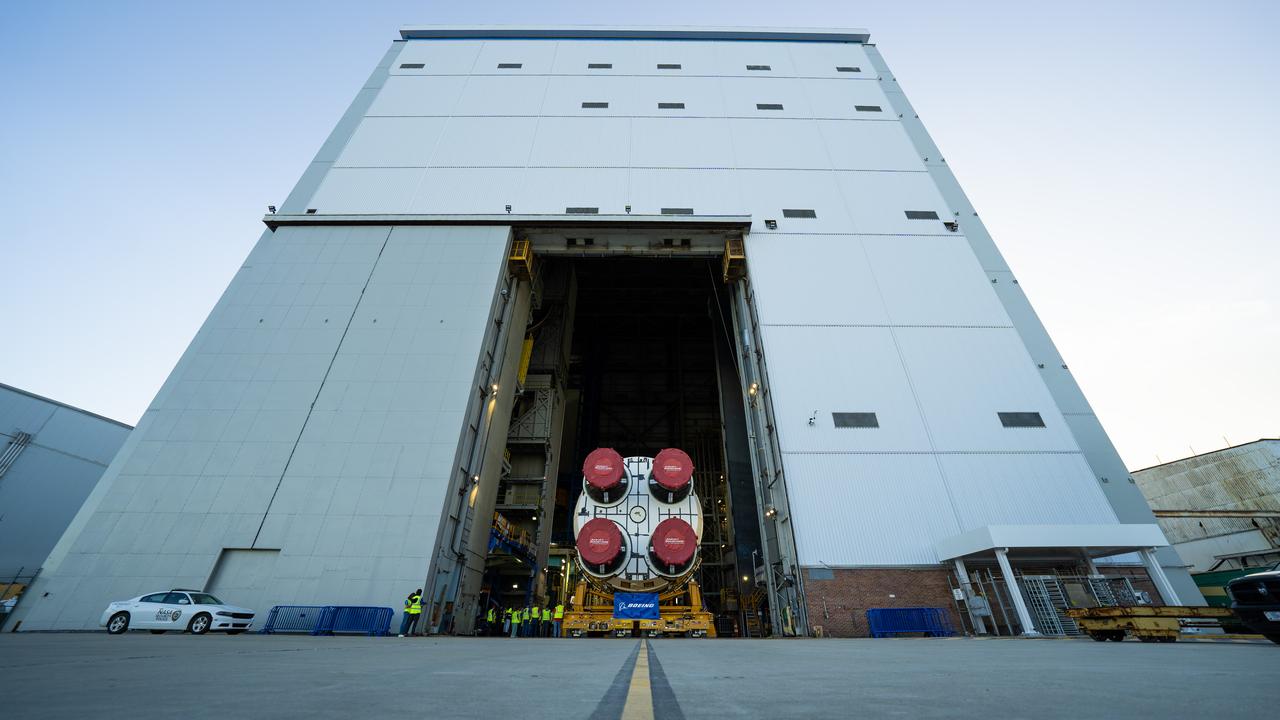
These images and videos show team members moving the first core stage that will help launch the first crewed flight of NASA’s SLS (Space Launch System) rocket for the agency’s Artemis II mission. The move marked the first time a fully assembled Moon rocket stage for a crewed mission has rolled out from NASA’s Michoud Assembly Facility in New Orleans since the Apollo Program, The core stage was moved onto the agency’s Pegasus barge, where it will be ferried to NASA’s Kennedy Space Center in Florida. The core stage for the SLS mega rocket is the largest stage NASA has ever produced. At 212 feet tall, the stage consists of five major elements, including two huge propellant tanks that collectively hold more than 733,000 gallons of super chilled liquid propellant to feed four RS-25 engines at its base. During launch and flight, the stage will operate for just over eight minutes, producing more than 2 million pounds of thrust to help send a crew of four astronauts inside NASA’s Orion spacecraft onward to the Moon. NASA is working to land the first woman, first person of color, and its first international partner astronaut on the Moon under Artemis. SLS is part of NASA’s backbone for deep space exploration, along with the Orion spacecraft and Gateway in orbit around the Moon and commercial human landing systems, next-generation space, next-generational spacesuits, and rovers on the lunar surface. SLS is the only rocket that can send Orion, astronauts, and supplies to the Moon in a single launch.
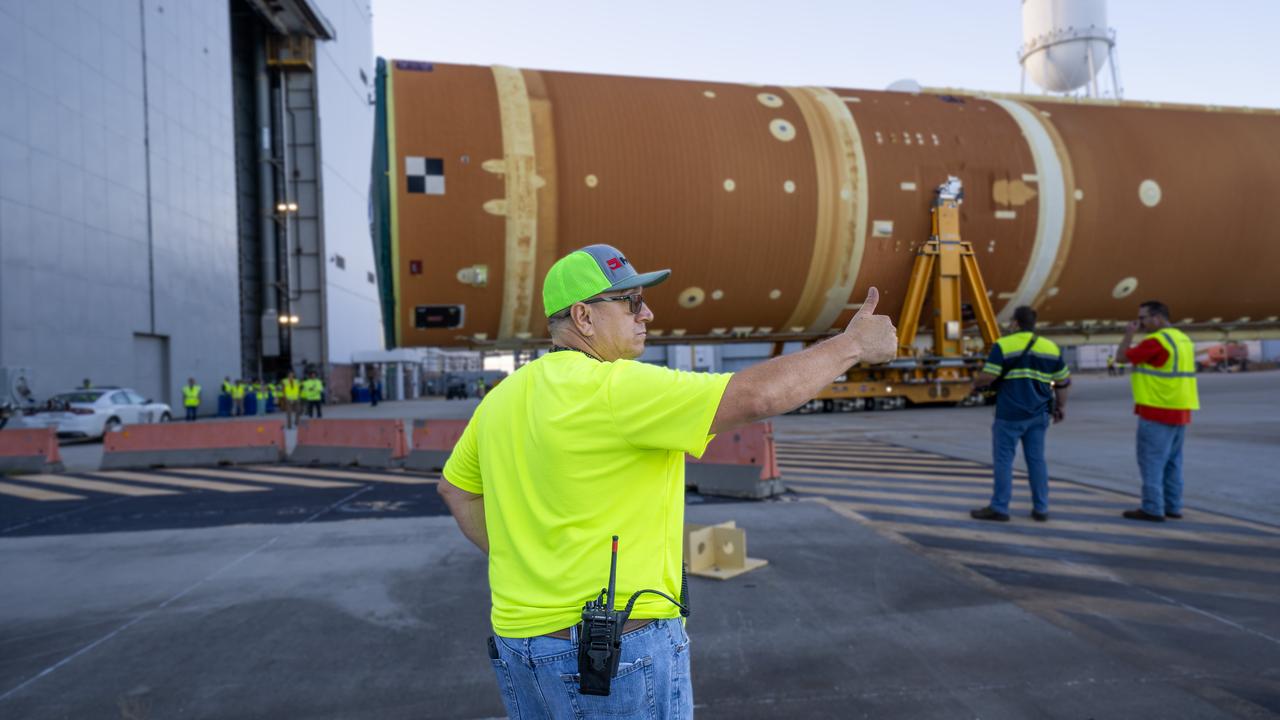
These images and videos show team members moving the first core stage that will help launch the first crewed flight of NASA’s SLS (Space Launch System) rocket for the agency’s Artemis II mission. The move marked the first time a fully assembled Moon rocket stage for a crewed mission has rolled out from NASA’s Michoud Assembly Facility in New Orleans since the Apollo Program, The core stage was moved onto the agency’s Pegasus barge, where it will be ferried to NASA’s Kennedy Space Center in Florida. The core stage for the SLS mega rocket is the largest stage NASA has ever produced. At 212 feet tall, the stage consists of five major elements, including two huge propellant tanks that collectively hold more than 733,000 gallons of super chilled liquid propellant to feed four RS-25 engines at its base. During launch and flight, the stage will operate for just over eight minutes, producing more than 2 million pounds of thrust to help send a crew of four astronauts inside NASA’s Orion spacecraft onward to the Moon. NASA is working to land the first woman, first person of color, and its first international partner astronaut on the Moon under Artemis. SLS is part of NASA’s backbone for deep space exploration, along with the Orion spacecraft and Gateway in orbit around the Moon and commercial human landing systems, next-generation space, next-generational spacesuits, and rovers on the lunar surface. SLS is the only rocket that can send Orion, astronauts, and supplies to the Moon in a single launch.
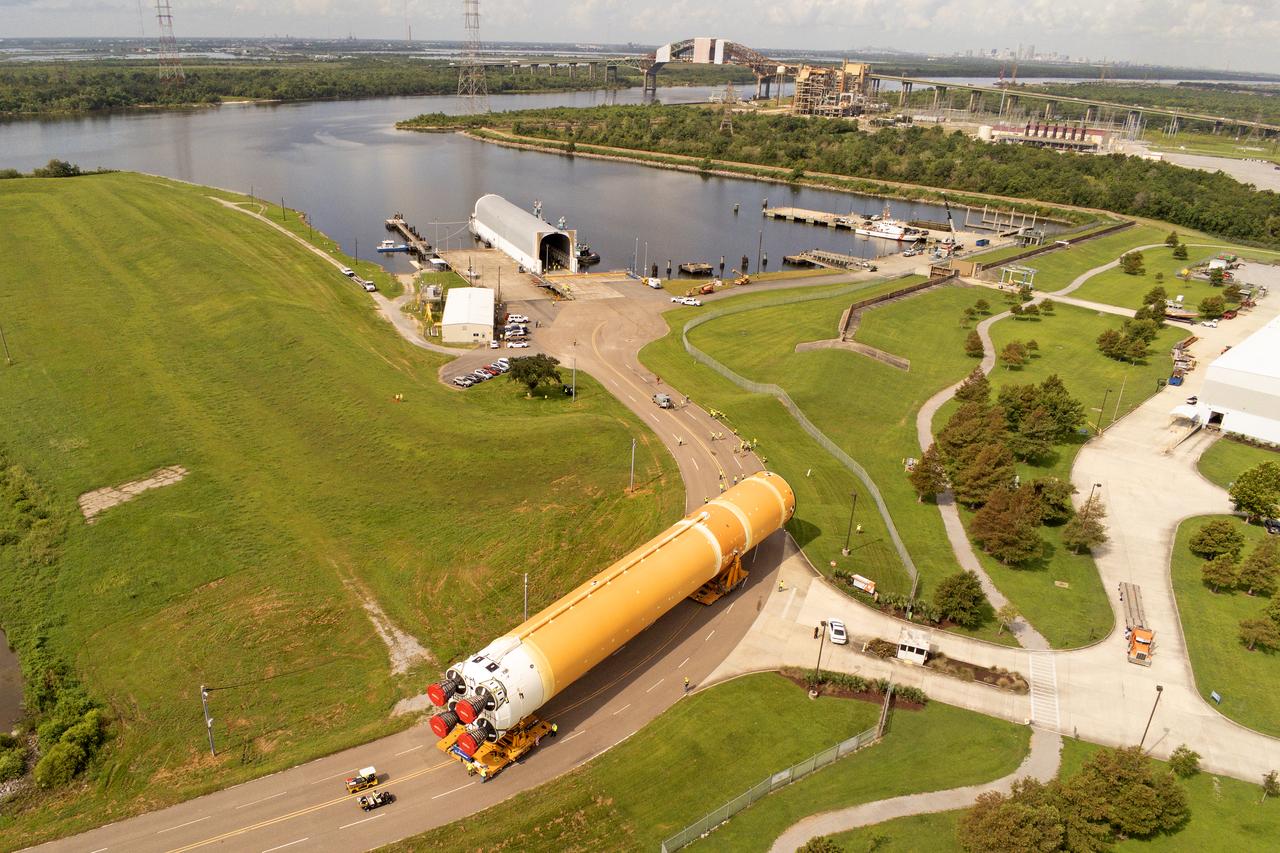
These images and videos show team members moving the first core stage that will help launch the first crewed flight of NASA’s SLS (Space Launch System) rocket for the agency’s Artemis II mission. The move marked the first time a fully assembled Moon rocket stage for a crewed mission has rolled out from NASA’s Michoud Assembly Facility in New Orleans since the Apollo Program, The core stage was moved onto the agency’s Pegasus barge, where it will be ferried to NASA’s Kennedy Space Center in Florida. The core stage for the SLS mega rocket is the largest stage NASA has ever produced. At 212 feet tall, the stage consists of five major elements, including two huge propellant tanks that collectively hold more than 733,000 gallons of super chilled liquid propellant to feed four RS-25 engines at its base. During launch and flight, the stage will operate for just over eight minutes, producing more than 2 million pounds of thrust to help send a crew of four astronauts inside NASA’s Orion spacecraft onward to the Moon. NASA is working to land the first woman, first person of color, and its first international partner astronaut on the Moon under Artemis. SLS is part of NASA’s backbone for deep space exploration, along with the Orion spacecraft and Gateway in orbit around the Moon and commercial human landing systems, next-generation space, next-generational spacesuits, and rovers on the lunar surface. SLS is the only rocket that can send Orion, astronauts, and supplies to the Moon in a single launch.
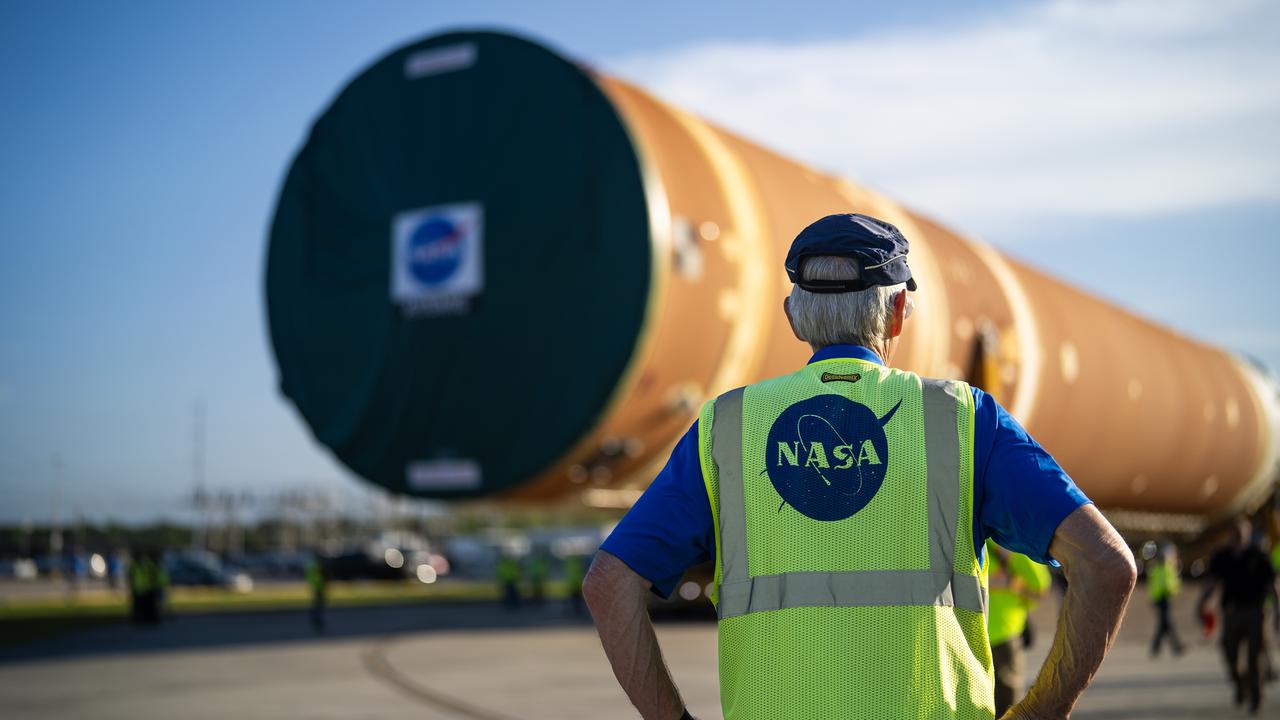
These images and videos show team members moving the first core stage that will help launch the first crewed flight of NASA’s SLS (Space Launch System) rocket for the agency’s Artemis II mission. The move marked the first time a fully assembled Moon rocket stage for a crewed mission has rolled out from NASA’s Michoud Assembly Facility in New Orleans since the Apollo Program, The core stage was moved onto the agency’s Pegasus barge, where it will be ferried to NASA’s Kennedy Space Center in Florida. The core stage for the SLS mega rocket is the largest stage NASA has ever produced. At 212 feet tall, the stage consists of five major elements, including two huge propellant tanks that collectively hold more than 733,000 gallons of super chilled liquid propellant to feed four RS-25 engines at its base. During launch and flight, the stage will operate for just over eight minutes, producing more than 2 million pounds of thrust to help send a crew of four astronauts inside NASA’s Orion spacecraft onward to the Moon. NASA is working to land the first woman, first person of color, and its first international partner astronaut on the Moon under Artemis. SLS is part of NASA’s backbone for deep space exploration, along with the Orion spacecraft and Gateway in orbit around the Moon and commercial human landing systems, next-generation space, next-generational spacesuits, and rovers on the lunar surface. SLS is the only rocket that can send Orion, astronauts, and supplies to the Moon in a single launch.
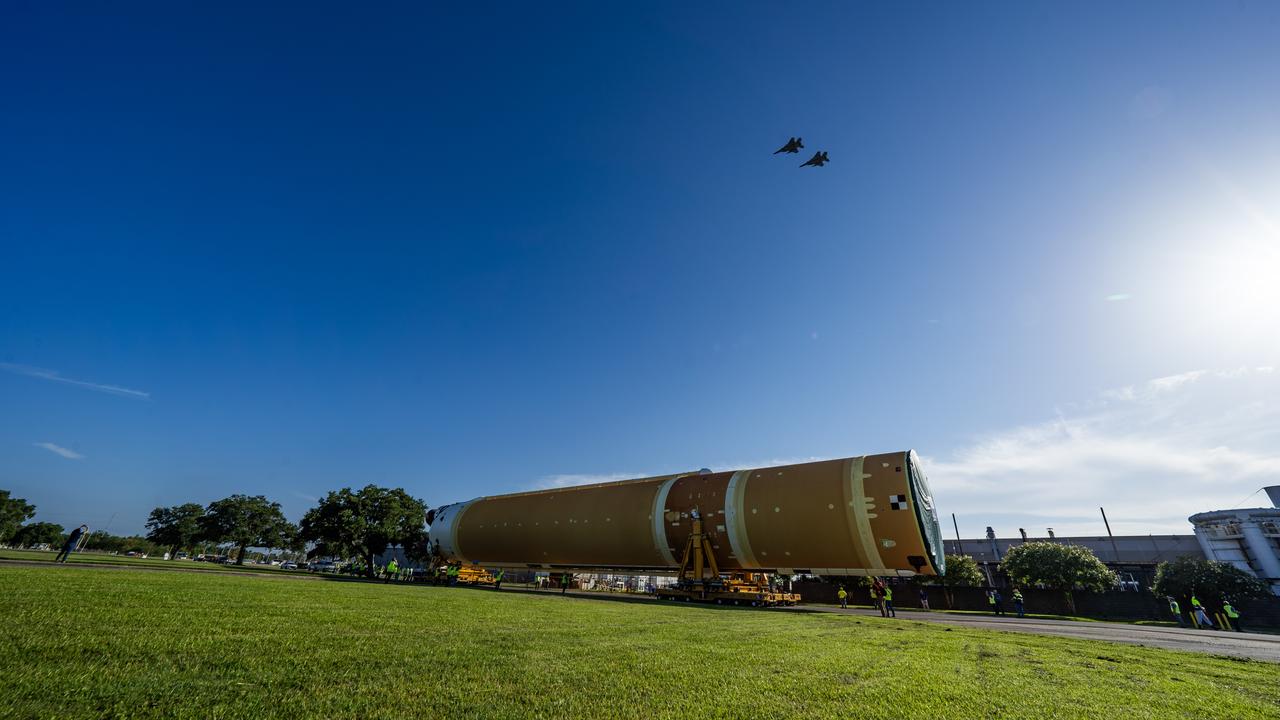
These images and videos show team members moving the first core stage that will help launch the first crewed flight of NASA’s SLS (Space Launch System) rocket for the agency’s Artemis II mission. The move marked the first time a fully assembled Moon rocket stage for a crewed mission has rolled out from NASA’s Michoud Assembly Facility in New Orleans since the Apollo Program, The core stage was moved onto the agency’s Pegasus barge, where it will be ferried to NASA’s Kennedy Space Center in Florida. The core stage for the SLS mega rocket is the largest stage NASA has ever produced. At 212 feet tall, the stage consists of five major elements, including two huge propellant tanks that collectively hold more than 733,000 gallons of super chilled liquid propellant to feed four RS-25 engines at its base. During launch and flight, the stage will operate for just over eight minutes, producing more than 2 million pounds of thrust to help send a crew of four astronauts inside NASA’s Orion spacecraft onward to the Moon. NASA is working to land the first woman, first person of color, and its first international partner astronaut on the Moon under Artemis. SLS is part of NASA’s backbone for deep space exploration, along with the Orion spacecraft and Gateway in orbit around the Moon and commercial human landing systems, next-generation space, next-generational spacesuits, and rovers on the lunar surface. SLS is the only rocket that can send Orion, astronauts, and supplies to the Moon in a single launch.
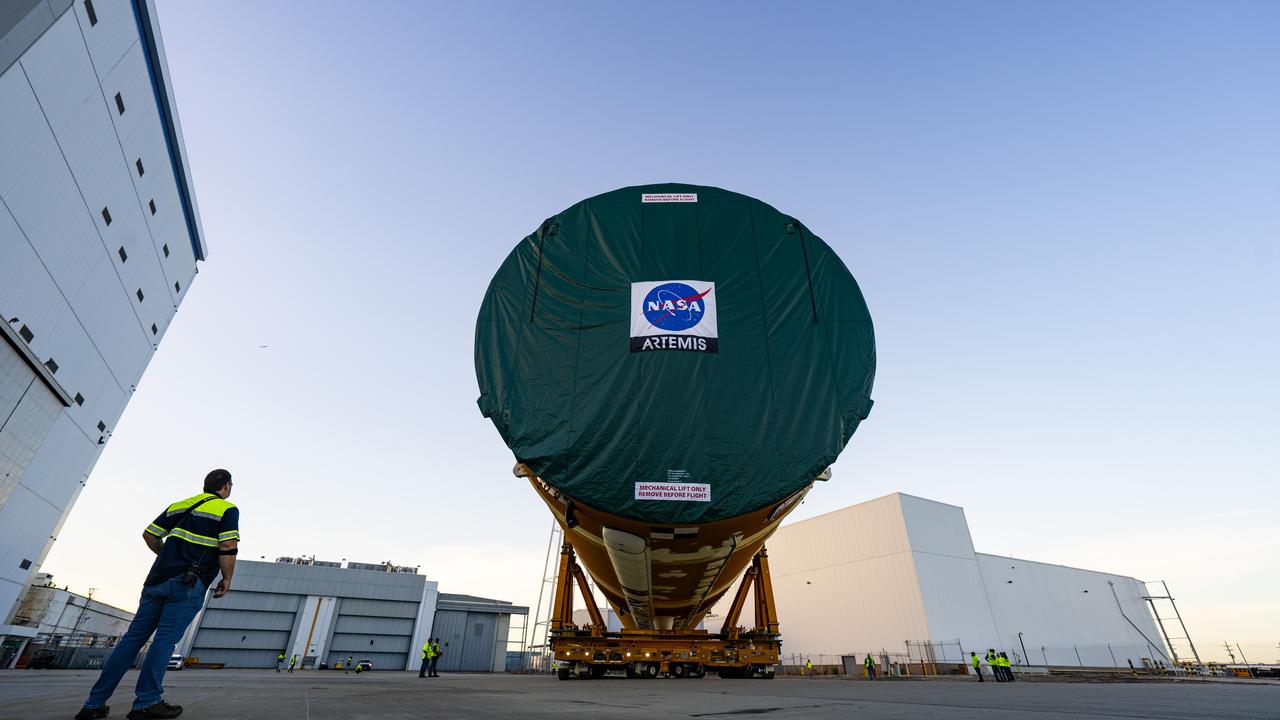
These images and videos show team members moving the first core stage that will help launch the first crewed flight of NASA’s SLS (Space Launch System) rocket for the agency’s Artemis II mission. The move marked the first time a fully assembled Moon rocket stage for a crewed mission has rolled out from NASA’s Michoud Assembly Facility in New Orleans since the Apollo Program, The core stage was moved onto the agency’s Pegasus barge, where it will be ferried to NASA’s Kennedy Space Center in Florida. The core stage for the SLS mega rocket is the largest stage NASA has ever produced. At 212 feet tall, the stage consists of five major elements, including two huge propellant tanks that collectively hold more than 733,000 gallons of super chilled liquid propellant to feed four RS-25 engines at its base. During launch and flight, the stage will operate for just over eight minutes, producing more than 2 million pounds of thrust to help send a crew of four astronauts inside NASA’s Orion spacecraft onward to the Moon. NASA is working to land the first woman, first person of color, and its first international partner astronaut on the Moon under Artemis. SLS is part of NASA’s backbone for deep space exploration, along with the Orion spacecraft and Gateway in orbit around the Moon and commercial human landing systems, next-generation space, next-generational spacesuits, and rovers on the lunar surface. SLS is the only rocket that can send Orion, astronauts, and supplies to the Moon in a single launch.
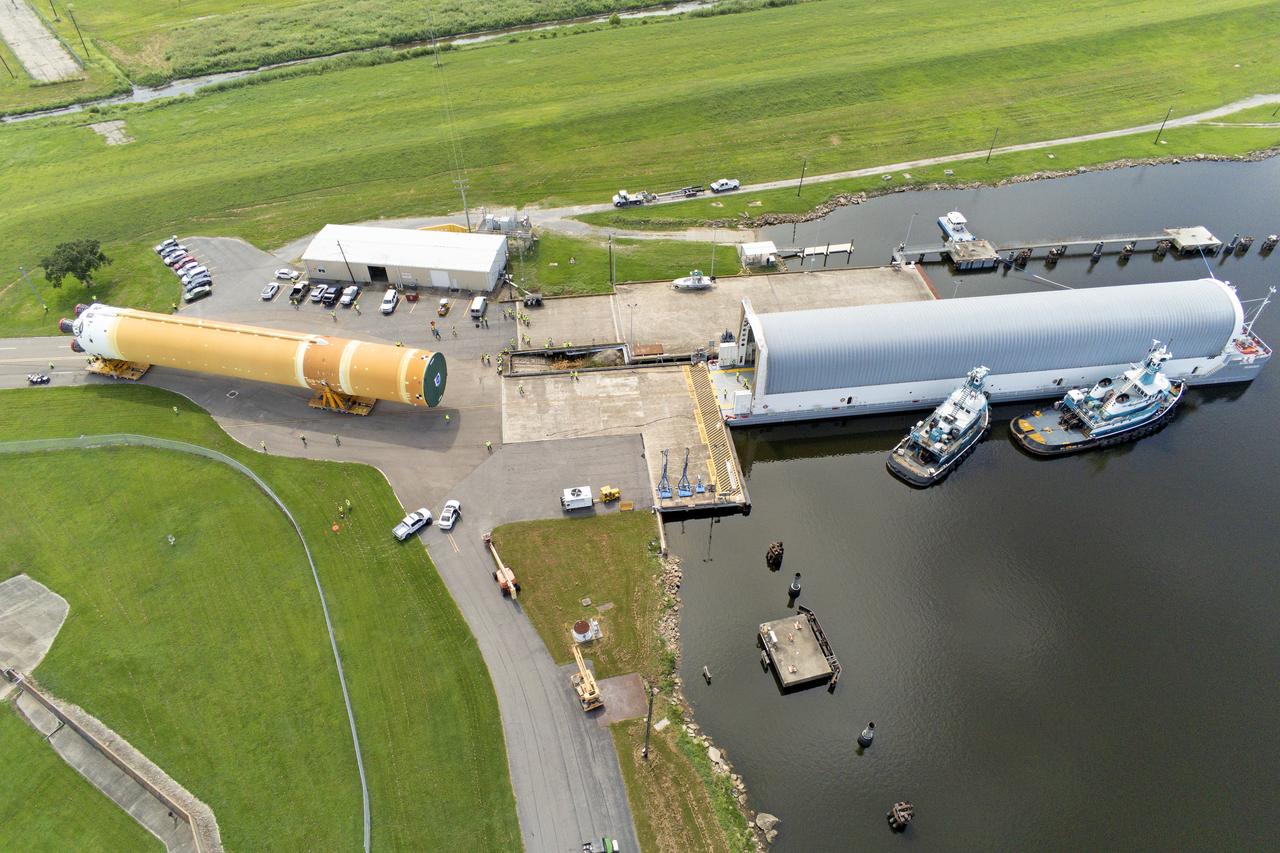
These images and videos show team members moving the first core stage that will help launch the first crewed flight of NASA’s SLS (Space Launch System) rocket for the agency’s Artemis II mission. The move marked the first time a fully assembled Moon rocket stage for a crewed mission has rolled out from NASA’s Michoud Assembly Facility in New Orleans since the Apollo Program, The core stage was moved onto the agency’s Pegasus barge, where it will be ferried to NASA’s Kennedy Space Center in Florida. The core stage for the SLS mega rocket is the largest stage NASA has ever produced. At 212 feet tall, the stage consists of five major elements, including two huge propellant tanks that collectively hold more than 733,000 gallons of super chilled liquid propellant to feed four RS-25 engines at its base. During launch and flight, the stage will operate for just over eight minutes, producing more than 2 million pounds of thrust to help send a crew of four astronauts inside NASA’s Orion spacecraft onward to the Moon. NASA is working to land the first woman, first person of color, and its first international partner astronaut on the Moon under Artemis. SLS is part of NASA’s backbone for deep space exploration, along with the Orion spacecraft and Gateway in orbit around the Moon and commercial human landing systems, next-generation space, next-generational spacesuits, and rovers on the lunar surface. SLS is the only rocket that can send Orion, astronauts, and supplies to the Moon in a single launch.
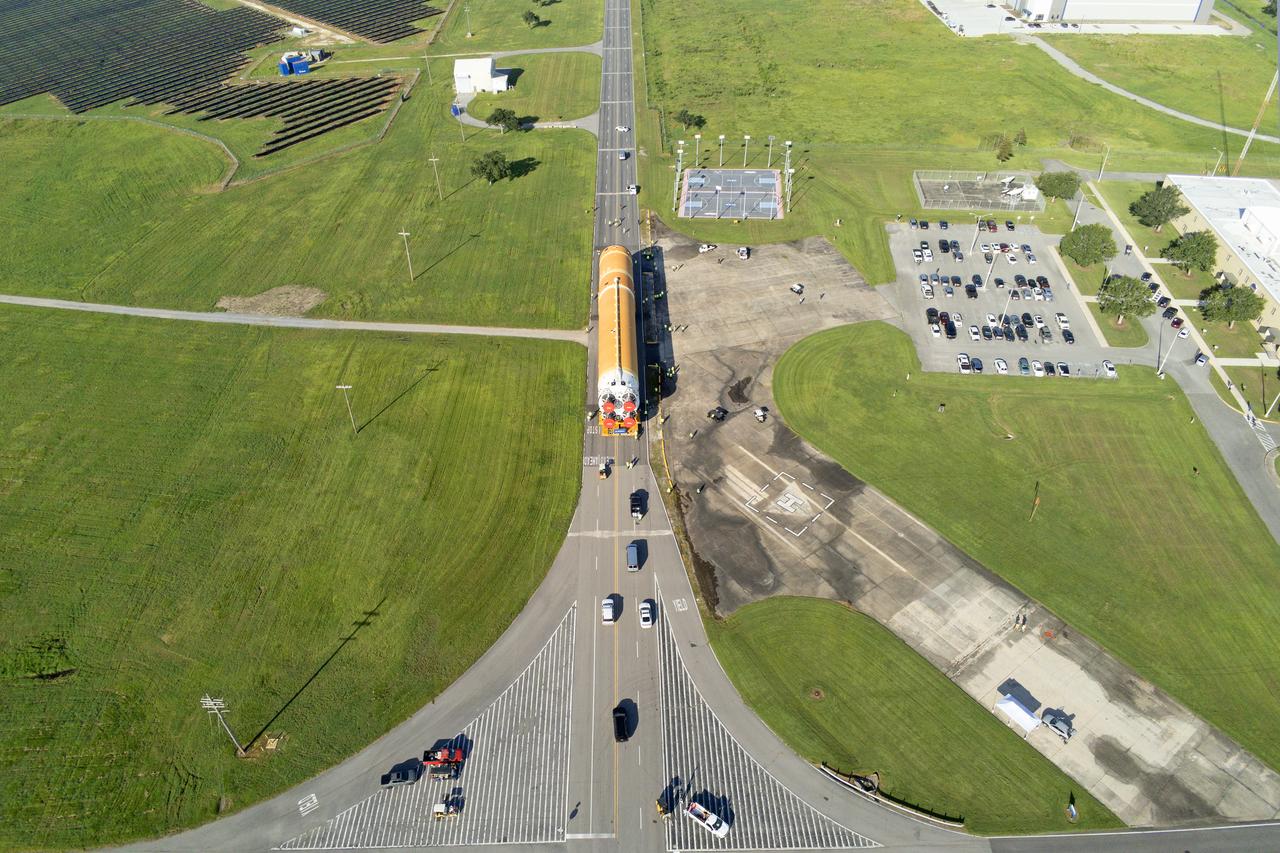
These images and videos show team members moving the first core stage that will help launch the first crewed flight of NASA’s SLS (Space Launch System) rocket for the agency’s Artemis II mission. The move marked the first time a fully assembled Moon rocket stage for a crewed mission has rolled out from NASA’s Michoud Assembly Facility in New Orleans since the Apollo Program, The core stage was moved onto the agency’s Pegasus barge, where it will be ferried to NASA’s Kennedy Space Center in Florida. The core stage for the SLS mega rocket is the largest stage NASA has ever produced. At 212 feet tall, the stage consists of five major elements, including two huge propellant tanks that collectively hold more than 733,000 gallons of super chilled liquid propellant to feed four RS-25 engines at its base. During launch and flight, the stage will operate for just over eight minutes, producing more than 2 million pounds of thrust to help send a crew of four astronauts inside NASA’s Orion spacecraft onward to the Moon. NASA is working to land the first woman, first person of color, and its first international partner astronaut on the Moon under Artemis. SLS is part of NASA’s backbone for deep space exploration, along with the Orion spacecraft and Gateway in orbit around the Moon and commercial human landing systems, next-generation space, next-generational spacesuits, and rovers on the lunar surface. SLS is the only rocket that can send Orion, astronauts, and supplies to the Moon in a single launch.
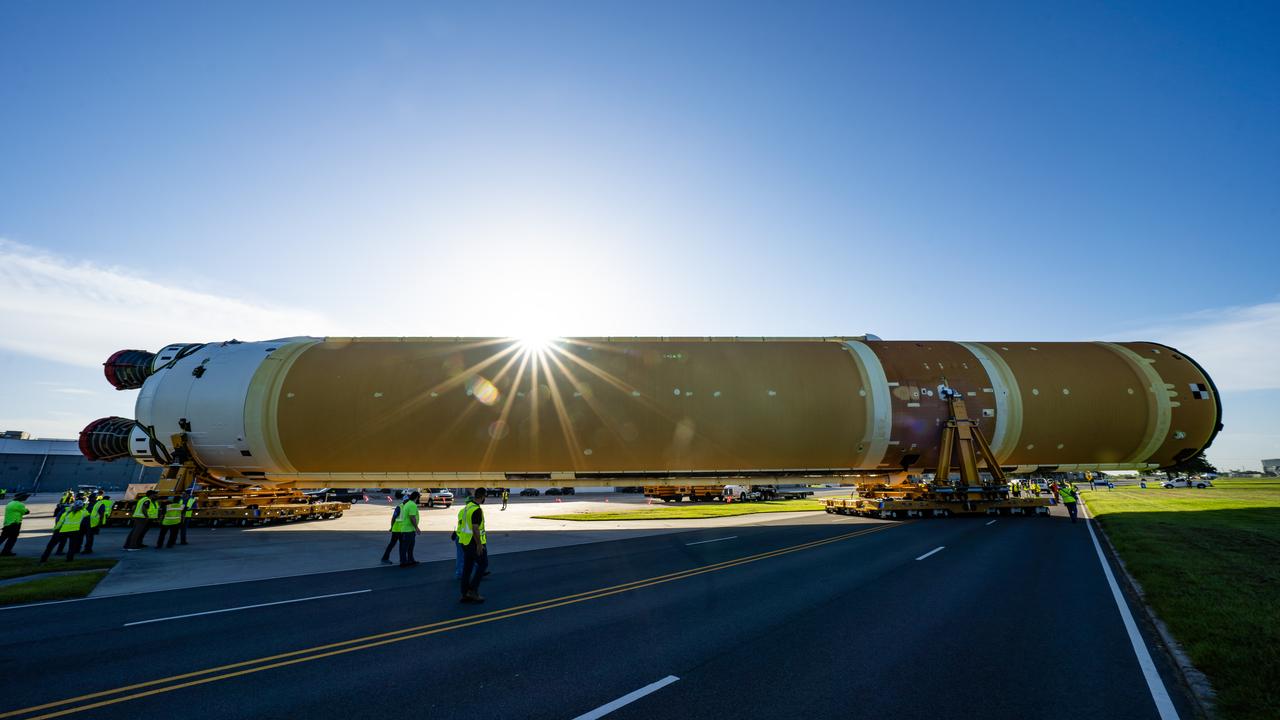
These images and videos show team members moving the first core stage that will help launch the first crewed flight of NASA’s SLS (Space Launch System) rocket for the agency’s Artemis II mission. The move marked the first time a fully assembled Moon rocket stage for a crewed mission has rolled out from NASA’s Michoud Assembly Facility in New Orleans since the Apollo Program, The core stage was moved onto the agency’s Pegasus barge, where it will be ferried to NASA’s Kennedy Space Center in Florida. The core stage for the SLS mega rocket is the largest stage NASA has ever produced. At 212 feet tall, the stage consists of five major elements, including two huge propellant tanks that collectively hold more than 733,000 gallons of super chilled liquid propellant to feed four RS-25 engines at its base. During launch and flight, the stage will operate for just over eight minutes, producing more than 2 million pounds of thrust to help send a crew of four astronauts inside NASA’s Orion spacecraft onward to the Moon. NASA is working to land the first woman, first person of color, and its first international partner astronaut on the Moon under Artemis. SLS is part of NASA’s backbone for deep space exploration, along with the Orion spacecraft and Gateway in orbit around the Moon and commercial human landing systems, next-generation space, next-generational spacesuits, and rovers on the lunar surface. SLS is the only rocket that can send Orion, astronauts, and supplies to the Moon in a single launch.
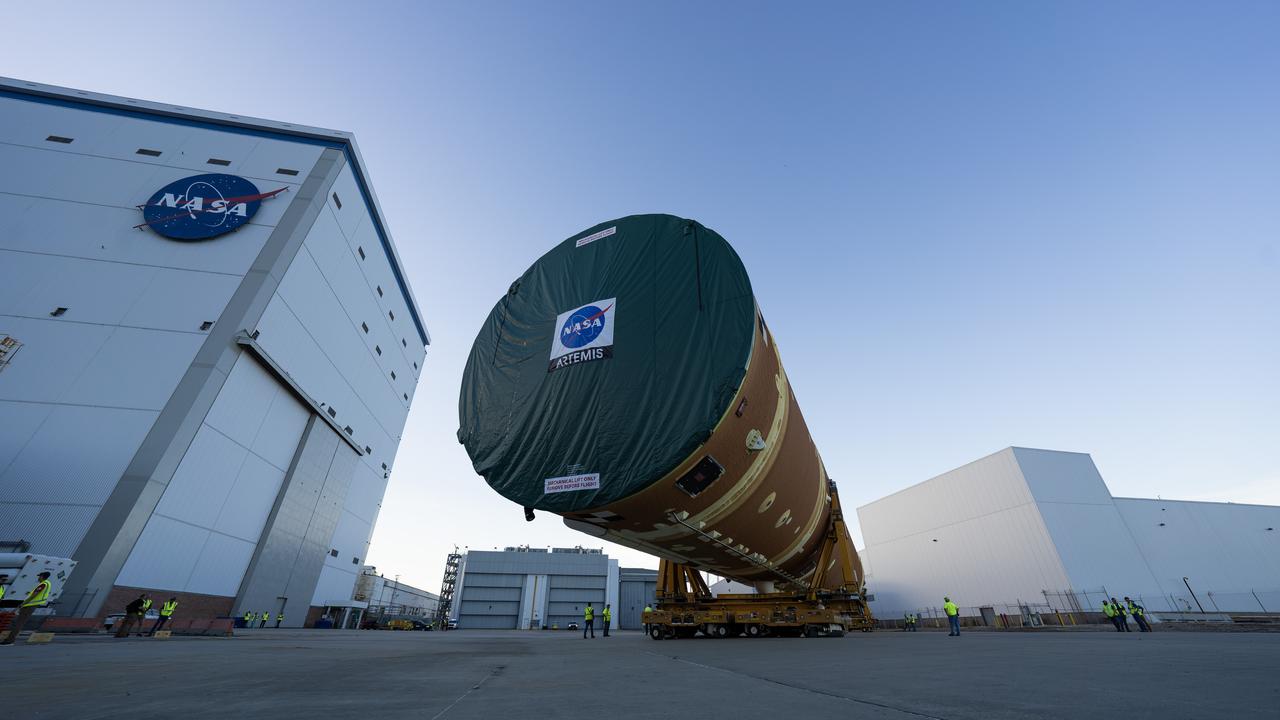
These images and videos show team members moving the first core stage that will help launch the first crewed flight of NASA’s SLS (Space Launch System) rocket for the agency’s Artemis II mission. The move marked the first time a fully assembled Moon rocket stage for a crewed mission has rolled out from NASA’s Michoud Assembly Facility in New Orleans since the Apollo Program, The core stage was moved onto the agency’s Pegasus barge, where it will be ferried to NASA’s Kennedy Space Center in Florida. The core stage for the SLS mega rocket is the largest stage NASA has ever produced. At 212 feet tall, the stage consists of five major elements, including two huge propellant tanks that collectively hold more than 733,000 gallons of super chilled liquid propellant to feed four RS-25 engines at its base. During launch and flight, the stage will operate for just over eight minutes, producing more than 2 million pounds of thrust to help send a crew of four astronauts inside NASA’s Orion spacecraft onward to the Moon. NASA is working to land the first woman, first person of color, and its first international partner astronaut on the Moon under Artemis. SLS is part of NASA’s backbone for deep space exploration, along with the Orion spacecraft and Gateway in orbit around the Moon and commercial human landing systems, next-generation space, next-generational spacesuits, and rovers on the lunar surface. SLS is the only rocket that can send Orion, astronauts, and supplies to the Moon in a single launch.
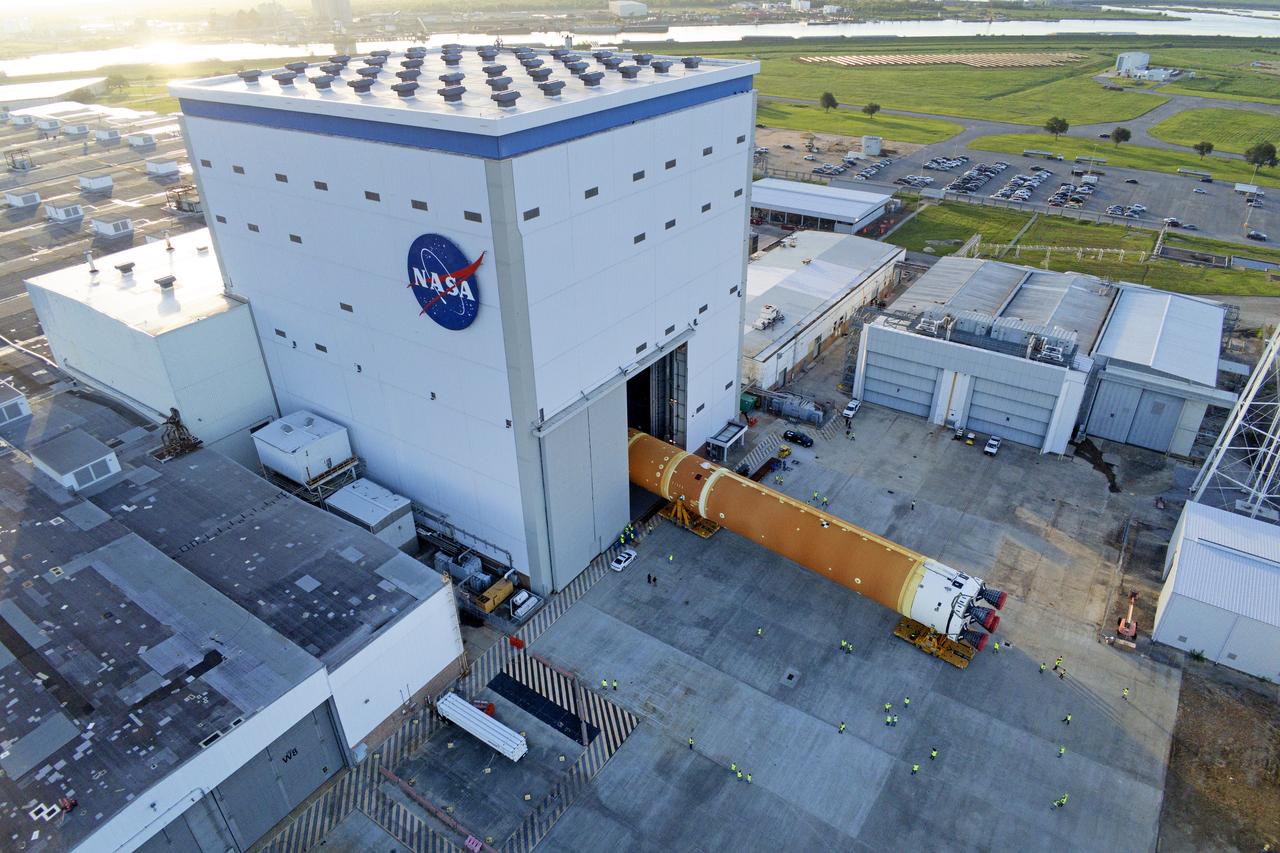
These images and videos show team members moving the first core stage that will help launch the first crewed flight of NASA’s SLS (Space Launch System) rocket for the agency’s Artemis II mission. The move marked the first time a fully assembled Moon rocket stage for a crewed mission has rolled out from NASA’s Michoud Assembly Facility in New Orleans since the Apollo Program, The core stage was moved onto the agency’s Pegasus barge, where it will be ferried to NASA’s Kennedy Space Center in Florida. The core stage for the SLS mega rocket is the largest stage NASA has ever produced. At 212 feet tall, the stage consists of five major elements, including two huge propellant tanks that collectively hold more than 733,000 gallons of super chilled liquid propellant to feed four RS-25 engines at its base. During launch and flight, the stage will operate for just over eight minutes, producing more than 2 million pounds of thrust to help send a crew of four astronauts inside NASA’s Orion spacecraft onward to the Moon. NASA is working to land the first woman, first person of color, and its first international partner astronaut on the Moon under Artemis. SLS is part of NASA’s backbone for deep space exploration, along with the Orion spacecraft and Gateway in orbit around the Moon and commercial human landing systems, next-generation space, next-generational spacesuits, and rovers on the lunar surface. SLS is the only rocket that can send Orion, astronauts, and supplies to the Moon in a single launch.
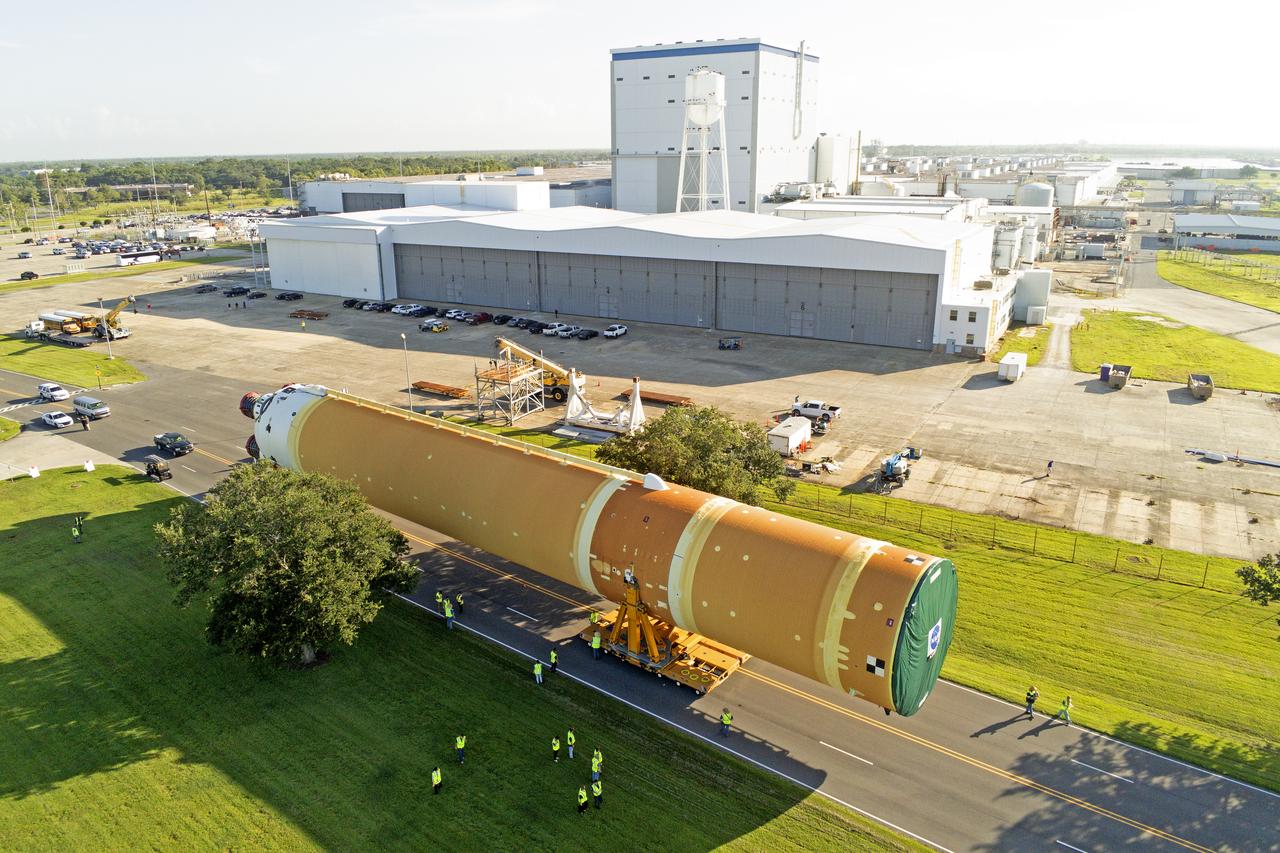
These images and videos show team members moving the first core stage that will help launch the first crewed flight of NASA’s SLS (Space Launch System) rocket for the agency’s Artemis II mission. The move marked the first time a fully assembled Moon rocket stage for a crewed mission has rolled out from NASA’s Michoud Assembly Facility in New Orleans since the Apollo Program, The core stage was moved onto the agency’s Pegasus barge, where it will be ferried to NASA’s Kennedy Space Center in Florida. The core stage for the SLS mega rocket is the largest stage NASA has ever produced. At 212 feet tall, the stage consists of five major elements, including two huge propellant tanks that collectively hold more than 733,000 gallons of super chilled liquid propellant to feed four RS-25 engines at its base. During launch and flight, the stage will operate for just over eight minutes, producing more than 2 million pounds of thrust to help send a crew of four astronauts inside NASA’s Orion spacecraft onward to the Moon. NASA is working to land the first woman, first person of color, and its first international partner astronaut on the Moon under Artemis. SLS is part of NASA’s backbone for deep space exploration, along with the Orion spacecraft and Gateway in orbit around the Moon and commercial human landing systems, next-generation space, next-generational spacesuits, and rovers on the lunar surface. SLS is the only rocket that can send Orion, astronauts, and supplies to the Moon in a single launch.
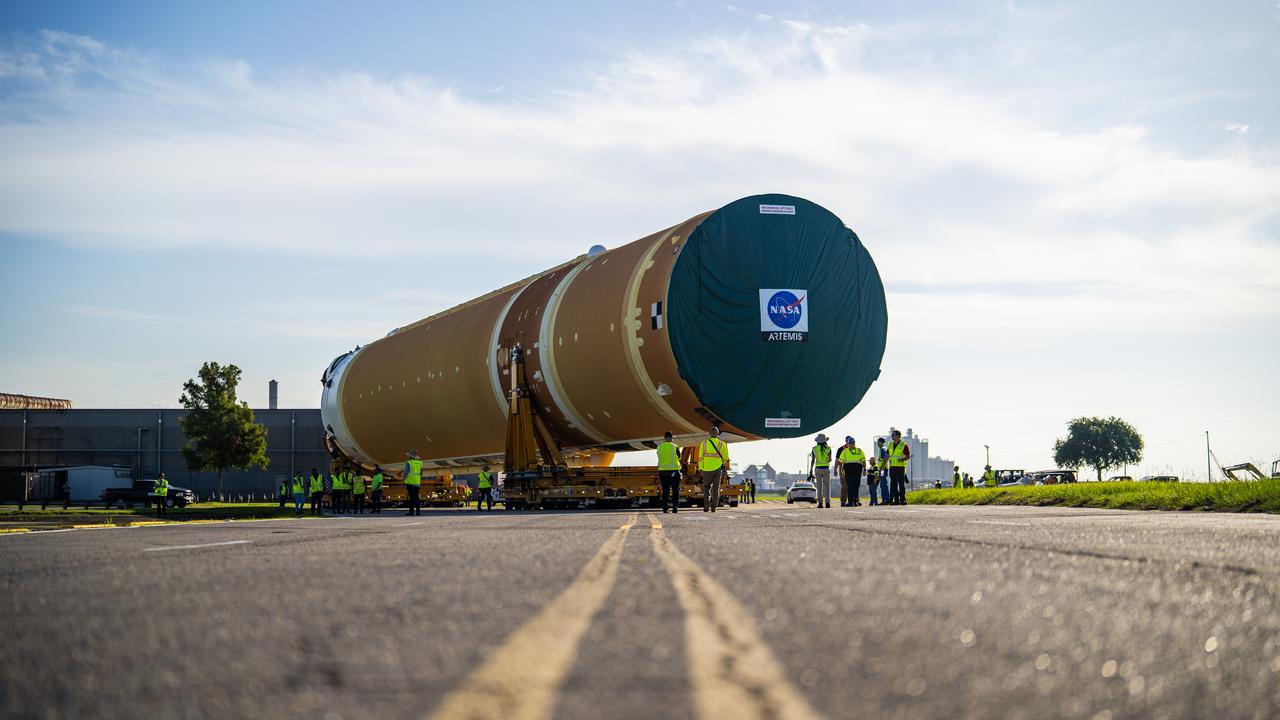
These images and videos show team members moving the first core stage that will help launch the first crewed flight of NASA’s SLS (Space Launch System) rocket for the agency’s Artemis II mission. The move marked the first time a fully assembled Moon rocket stage for a crewed mission has rolled out from NASA’s Michoud Assembly Facility in New Orleans since the Apollo Program, The core stage was moved onto the agency’s Pegasus barge, where it will be ferried to NASA’s Kennedy Space Center in Florida. The core stage for the SLS mega rocket is the largest stage NASA has ever produced. At 212 feet tall, the stage consists of five major elements, including two huge propellant tanks that collectively hold more than 733,000 gallons of super chilled liquid propellant to feed four RS-25 engines at its base. During launch and flight, the stage will operate for just over eight minutes, producing more than 2 million pounds of thrust to help send a crew of four astronauts inside NASA’s Orion spacecraft onward to the Moon. NASA is working to land the first woman, first person of color, and its first international partner astronaut on the Moon under Artemis. SLS is part of NASA’s backbone for deep space exploration, along with the Orion spacecraft and Gateway in orbit around the Moon and commercial human landing systems, next-generation space, next-generational spacesuits, and rovers on the lunar surface. SLS is the only rocket that can send Orion, astronauts, and supplies to the Moon in a single launch.
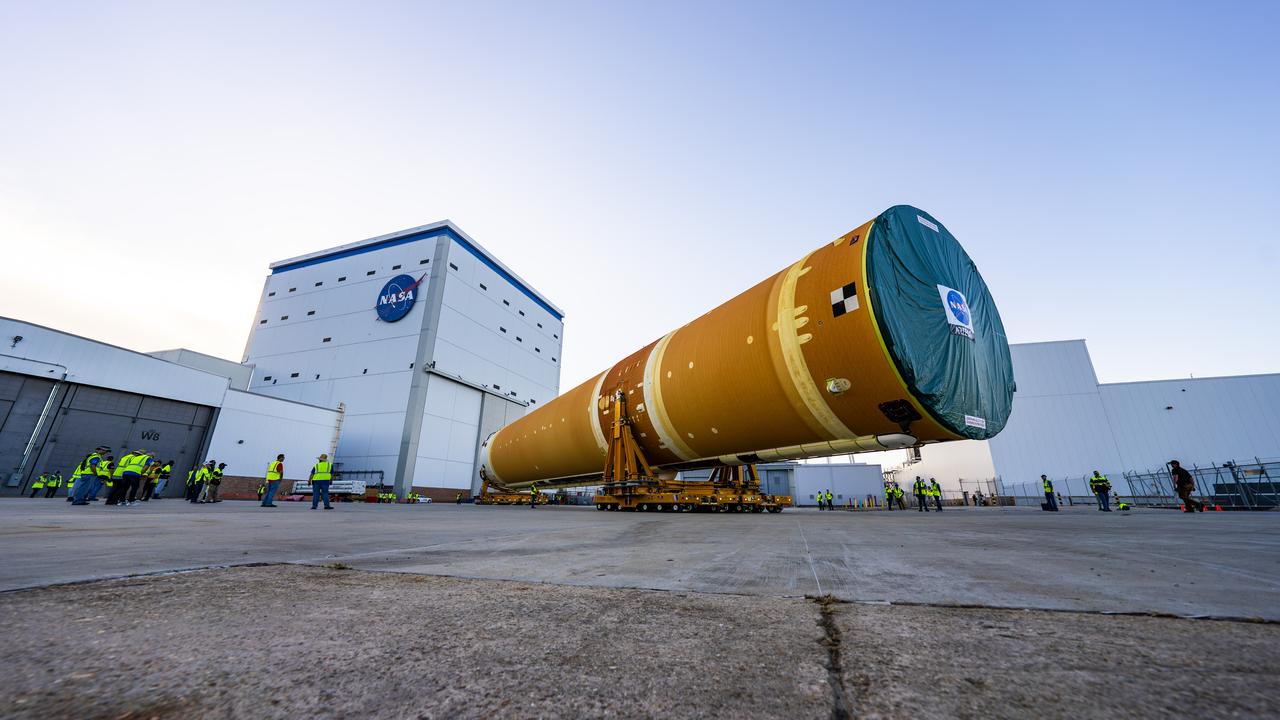
These images and videos show team members moving the first core stage that will help launch the first crewed flight of NASA’s SLS (Space Launch System) rocket for the agency’s Artemis II mission. The move marked the first time a fully assembled Moon rocket stage for a crewed mission has rolled out from NASA’s Michoud Assembly Facility in New Orleans since the Apollo Program, The core stage was moved onto the agency’s Pegasus barge, where it will be ferried to NASA’s Kennedy Space Center in Florida. The core stage for the SLS mega rocket is the largest stage NASA has ever produced. At 212 feet tall, the stage consists of five major elements, including two huge propellant tanks that collectively hold more than 733,000 gallons of super chilled liquid propellant to feed four RS-25 engines at its base. During launch and flight, the stage will operate for just over eight minutes, producing more than 2 million pounds of thrust to help send a crew of four astronauts inside NASA’s Orion spacecraft onward to the Moon. NASA is working to land the first woman, first person of color, and its first international partner astronaut on the Moon under Artemis. SLS is part of NASA’s backbone for deep space exploration, along with the Orion spacecraft and Gateway in orbit around the Moon and commercial human landing systems, next-generation space, next-generational spacesuits, and rovers on the lunar surface. SLS is the only rocket that can send Orion, astronauts, and supplies to the Moon in a single launch.
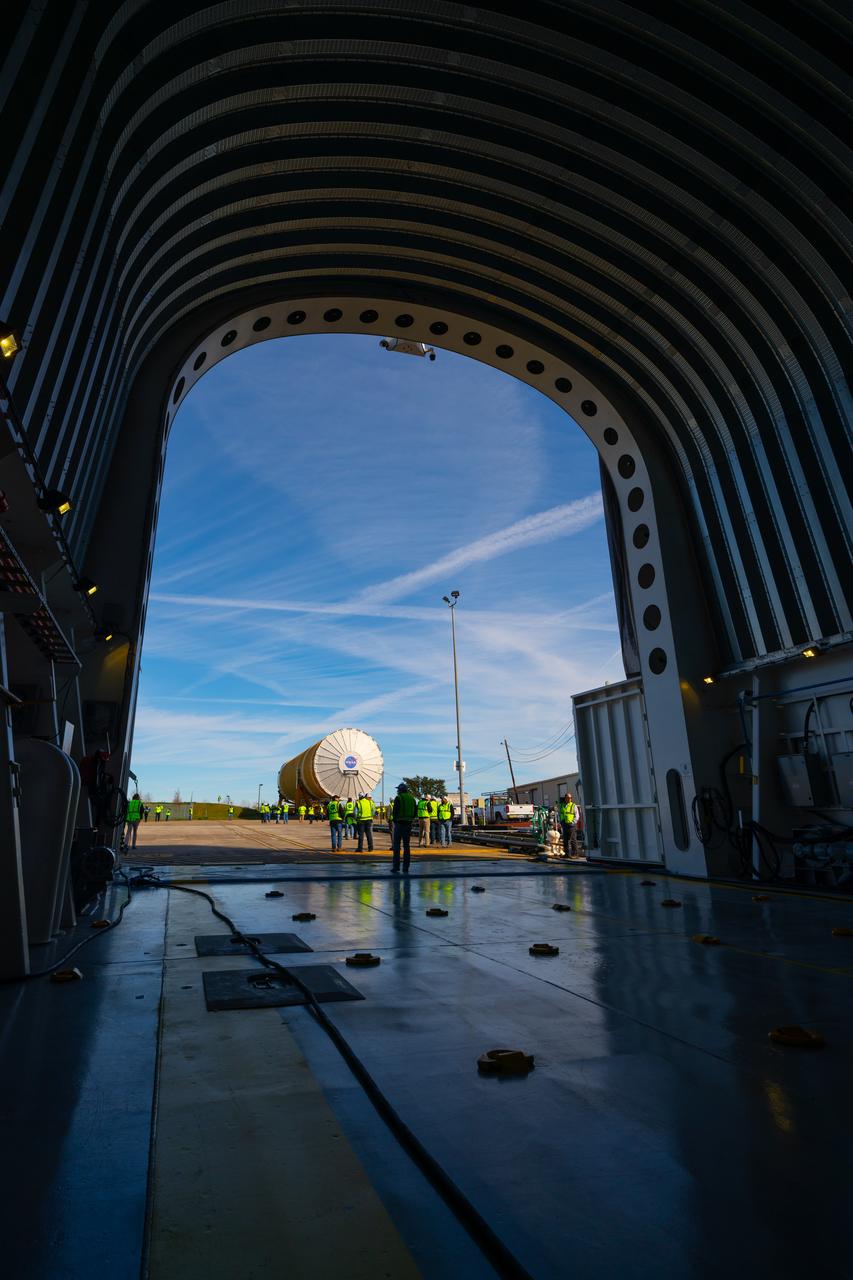
These images and videos show team members moving the first core stage that will help launch the first crewed flight of NASA’s SLS (Space Launch System) rocket for the agency’s Artemis II mission. The move marked the first time a fully assembled Moon rocket stage for a crewed mission has rolled out from NASA’s Michoud Assembly Facility in New Orleans since the Apollo Program, The core stage was moved onto the agency’s Pegasus barge, where it will be ferried to NASA’s Kennedy Space Center in Florida. The core stage for the SLS mega rocket is the largest stage NASA has ever produced. At 212 feet tall, the stage consists of five major elements, including two huge propellant tanks that collectively hold more than 733,000 gallons of super chilled liquid propellant to feed four RS-25 engines at its base. During launch and flight, the stage will operate for just over eight minutes, producing more than 2 million pounds of thrust to help send a crew of four astronauts inside NASA’s Orion spacecraft onward to the Moon. NASA is working to land the first woman, first person of color, and its first international partner astronaut on the Moon under Artemis. SLS is part of NASA’s backbone for deep space exploration, along with the Orion spacecraft and Gateway in orbit around the Moon and commercial human landing systems, next-generation space, next-generational spacesuits, and rovers on the lunar surface. SLS is the only rocket that can send Orion, astronauts, and supplies to the Moon in a single launch.
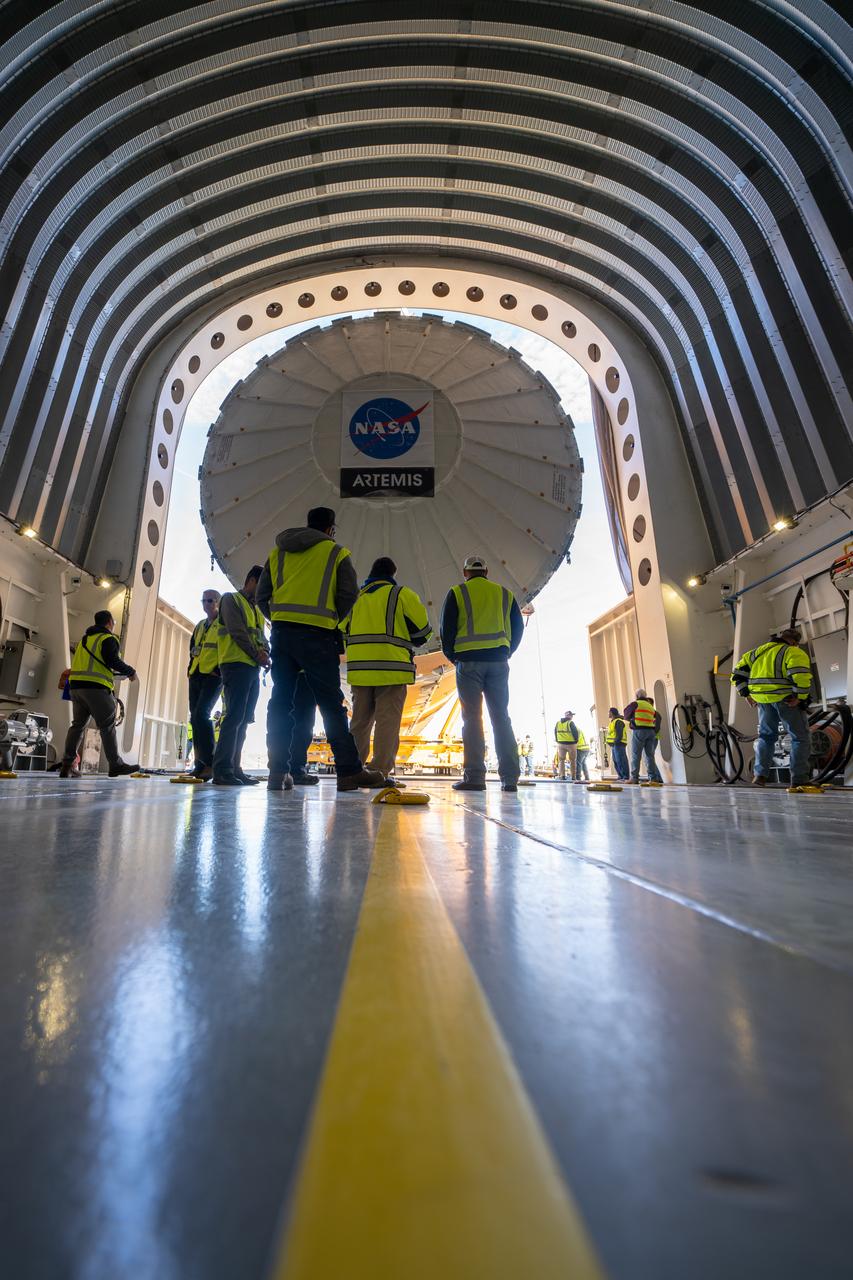
These images show how teams rolled out, or moved, the completed core stage for NASA’s Space Launch System rocket from NASA’s Michoud Assembly Facility in New Orleans. Crews moved the flight hardware for the first Artemis mission to NASA’s Pegasus barge on Jan. 8 in preparation for the core stage Green Run test series at NASA’s Stennis Space Center near Bay St. Louis, Mississippi. Pegasus, which was modified to ferry SLS rocket hardware, will transport the core stage from Michoud to Stennis for the comprehensive core stage Green Run test series. Once at Stennis, the Artemis rocket stage will be loaded into the B-2 Test Stand for the core stage Green Run test series. The comprehensive test campaign will progressively bring the entire core stage, including its avionics and engines, to life for the first time to verify the stage is fit for flight ahead of the launch of Artemis I. Assembly and integration of the core stage and its four RS-25 engines has been a collaborative, multistep process for NASA and its partners Boeing, the core stage lead contractor, and Aerojet Rocketdyne, the RS-25 engines lead contractor. Together with four RS-25 engines, the rocket’s massive 212-foot-tall core stage — the largest stage NASA has ever built — and its twin solid rocket boosters will produce 8.8 million pounds of thrust to send NASA’s Orion spacecraft, astronauts and supplies beyond Earth’s orbit to the Moon and, ultimately, Mars. Offering more payload mass, volume capability and energy to speed missions through space, the SLS rocket, along with NASA’s Gateway in lunar orbit and Orion, is part of NASA’s backbone for deep space exploration and the Artemis lunar program.
These images show how teams rolled out, or moved, the completed core stage for NASA’s Space Launch System rocket from NASA’s Michoud Assembly Facility in New Orleans. Crews moved the flight hardware for the first Artemis mission to NASA’s Pegasus barge on Jan. 8 in preparation for the core stage Green Run test series at NASA’s Stennis Space Center near Bay St. Louis, Mississippi. Pegasus, which was modified to ferry SLS rocket hardware, will transport the core stage from Michoud to Stennis for the comprehensive core stage Green Run test series. Once at Stennis, the Artemis rocket stage will be loaded into the B-2 Test Stand for the core stage Green Run test series. The comprehensive test campaign will progressively bring the entire core stage, including its avionics and engines, to life for the first time to verify the stage is fit for flight ahead of the launch of Artemis I. Assembly and integration of the core stage and its four RS-25 engines has been a collaborative, multistep process for NASA and its partners Boeing, the core stage lead contractor, and Aerojet Rocketdyne, the RS-25 engines lead contractor. Together with four RS-25 engines, the rocket’s massive 212-foot-tall core stage — the largest stage NASA has ever built — and its twin solid rocket boosters will produce 8.8 million pounds of thrust to send NASA’s Orion spacecraft, astronauts and supplies beyond Earth’s orbit to the Moon and, ultimately, Mars. Offering more payload mass, volume capability and energy to speed missions through space, the SLS rocket, along with NASA’s Gateway in lunar orbit and Orion, is part of NASA’s backbone for deep space exploration and the Artemis lunar program.
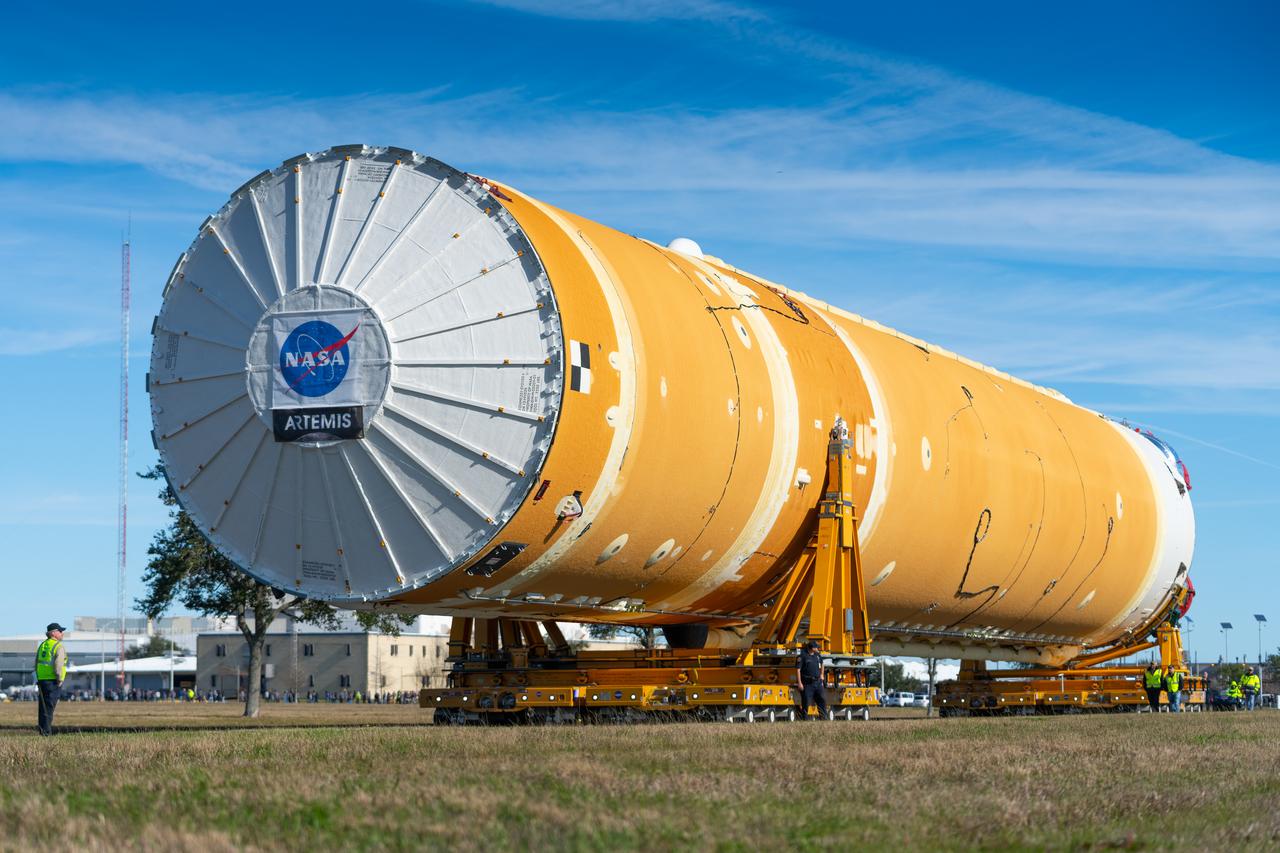
These images show how teams rolled out, or moved, the completed core stage for NASA’s Space Launch System rocket from NASA’s Michoud Assembly Facility in New Orleans. Crews moved the flight hardware for the first Artemis mission to NASA’s Pegasus barge on Jan. 8 in preparation for the core stage Green Run test series at NASA’s Stennis Space Center near Bay St. Louis, Mississippi. Pegasus, which was modified to ferry SLS rocket hardware, will transport the core stage from Michoud to Stennis for the comprehensive core stage Green Run test series. Once at Stennis, the Artemis rocket stage will be loaded into the B-2 Test Stand for the core stage Green Run test series. The comprehensive test campaign will progressively bring the entire core stage, including its avionics and engines, to life for the first time to verify the stage is fit for flight ahead of the launch of Artemis I. Assembly and integration of the core stage and its four RS-25 engines has been a collaborative, multistep process for NASA and its partners Boeing, the core stage lead contractor, and Aerojet Rocketdyne, the RS-25 engines lead contractor. Together with four RS-25 engines, the rocket’s massive 212-foot-tall core stage — the largest stage NASA has ever built — and its twin solid rocket boosters will produce 8.8 million pounds of thrust to send NASA’s Orion spacecraft, astronauts and supplies beyond Earth’s orbit to the Moon and, ultimately, Mars. Offering more payload mass, volume capability and energy to speed missions through space, the SLS rocket, along with NASA’s Gateway in lunar orbit and Orion, is part of NASA’s backbone for deep space exploration and the Artemis lunar program.
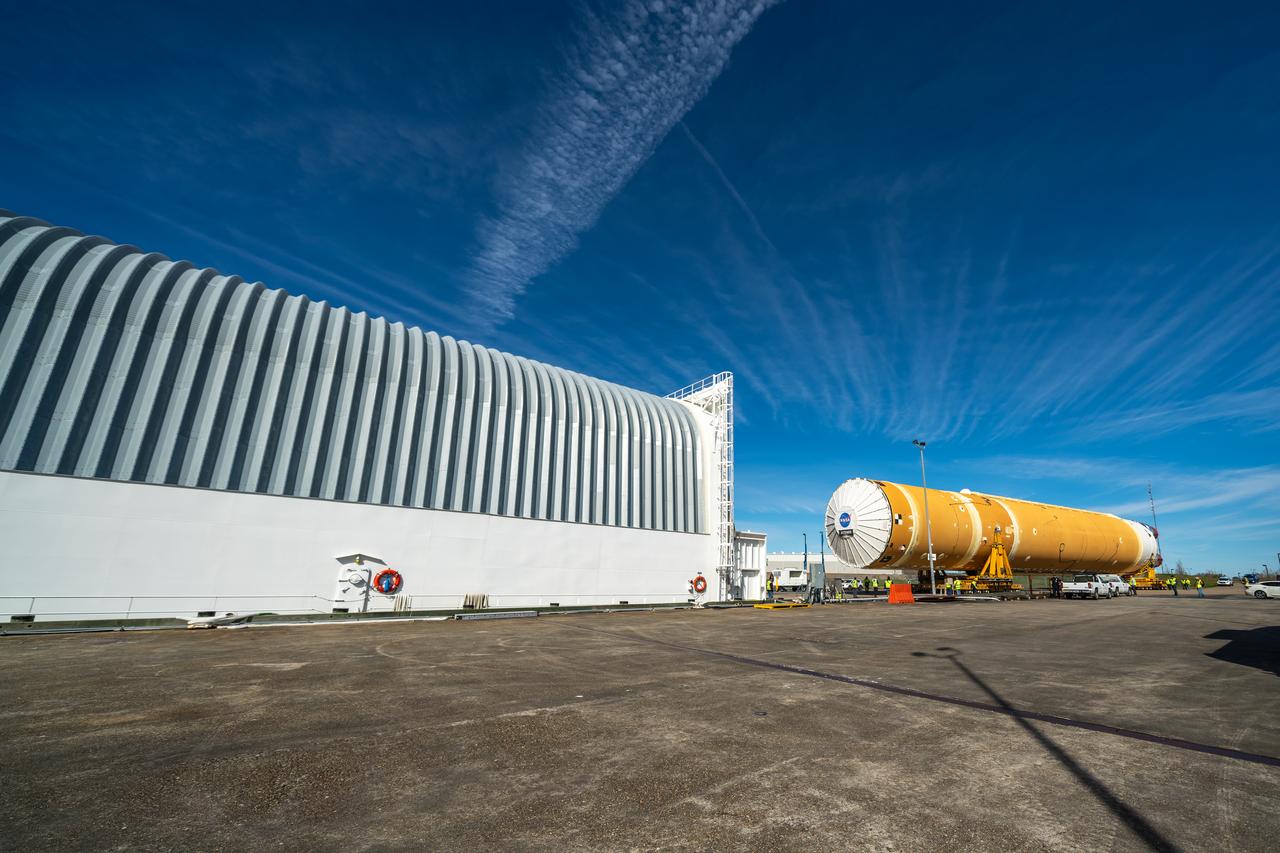
These images show how teams rolled out, or moved, the completed core stage for NASA’s Space Launch System rocket from NASA’s Michoud Assembly Facility in New Orleans. Crews moved the flight hardware for the first Artemis mission to NASA’s Pegasus barge on Jan. 8 in preparation for the core stage Green Run test series at NASA’s Stennis Space Center near Bay St. Louis, Mississippi. Pegasus, which was modified to ferry SLS rocket hardware, will transport the core stage from Michoud to Stennis for the comprehensive core stage Green Run test series. Once at Stennis, the Artemis rocket stage will be loaded into the B-2 Test Stand for the core stage Green Run test series. The comprehensive test campaign will progressively bring the entire core stage, including its avionics and engines, to life for the first time to verify the stage is fit for flight ahead of the launch of Artemis I. Assembly and integration of the core stage and its four RS-25 engines has been a collaborative, multistep process for NASA and its partners Boeing, the core stage lead contractor, and Aerojet Rocketdyne, the RS-25 engines lead contractor. Together with four RS-25 engines, the rocket’s massive 212-foot-tall core stage — the largest stage NASA has ever built — and its twin solid rocket boosters will produce 8.8 million pounds of thrust to send NASA’s Orion spacecraft, astronauts and supplies beyond Earth’s orbit to the Moon and, ultimately, Mars. Offering more payload mass, volume capability and energy to speed missions through space, the SLS rocket, along with NASA’s Gateway in lunar orbit and Orion, is part of NASA’s backbone for deep space exploration and the Artemis lunar program.
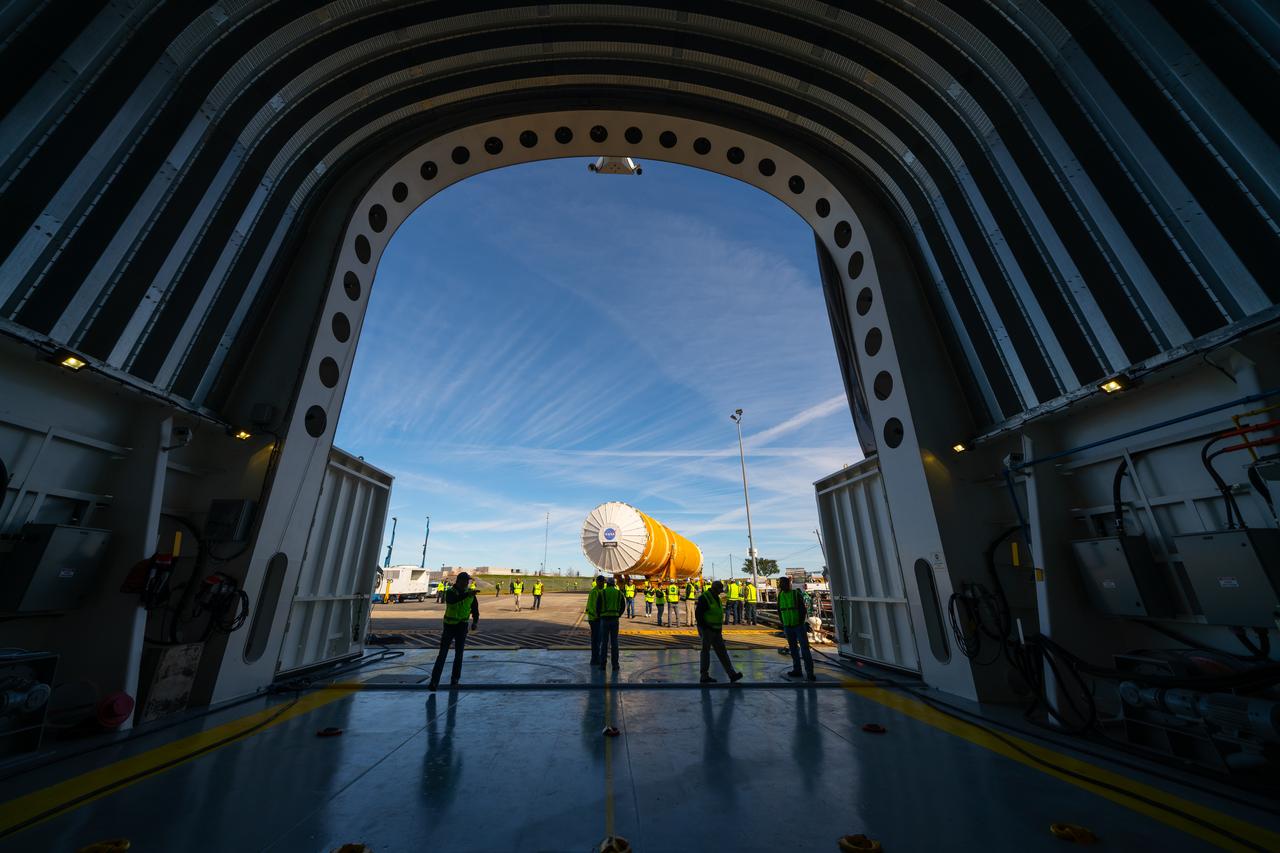
These images show how teams rolled out, or moved, the completed core stage for NASA’s Space Launch System rocket from NASA’s Michoud Assembly Facility in New Orleans. Crews moved the flight hardware for the first Artemis mission to NASA’s Pegasus barge on Jan. 8 in preparation for the core stage Green Run test series at NASA’s Stennis Space Center near Bay St. Louis, Mississippi. Pegasus, which was modified to ferry SLS rocket hardware, will transport the core stage from Michoud to Stennis for the comprehensive core stage Green Run test series. Once at Stennis, the Artemis rocket stage will be loaded into the B-2 Test Stand for the core stage Green Run test series. The comprehensive test campaign will progressively bring the entire core stage, including its avionics and engines, to life for the first time to verify the stage is fit for flight ahead of the launch of Artemis I. Assembly and integration of the core stage and its four RS-25 engines has been a collaborative, multistep process for NASA and its partners Boeing, the core stage lead contractor, and Aerojet Rocketdyne, the RS-25 engines lead contractor. Together with four RS-25 engines, the rocket’s massive 212-foot-tall core stage — the largest stage NASA has ever built — and its twin solid rocket boosters will produce 8.8 million pounds of thrust to send NASA’s Orion spacecraft, astronauts and supplies beyond Earth’s orbit to the Moon and, ultimately, Mars. Offering more payload mass, volume capability and energy to speed missions through space, the SLS rocket, along with NASA’s Gateway in lunar orbit and Orion, is part of NASA’s backbone for deep space exploration and the Artemis lunar program.
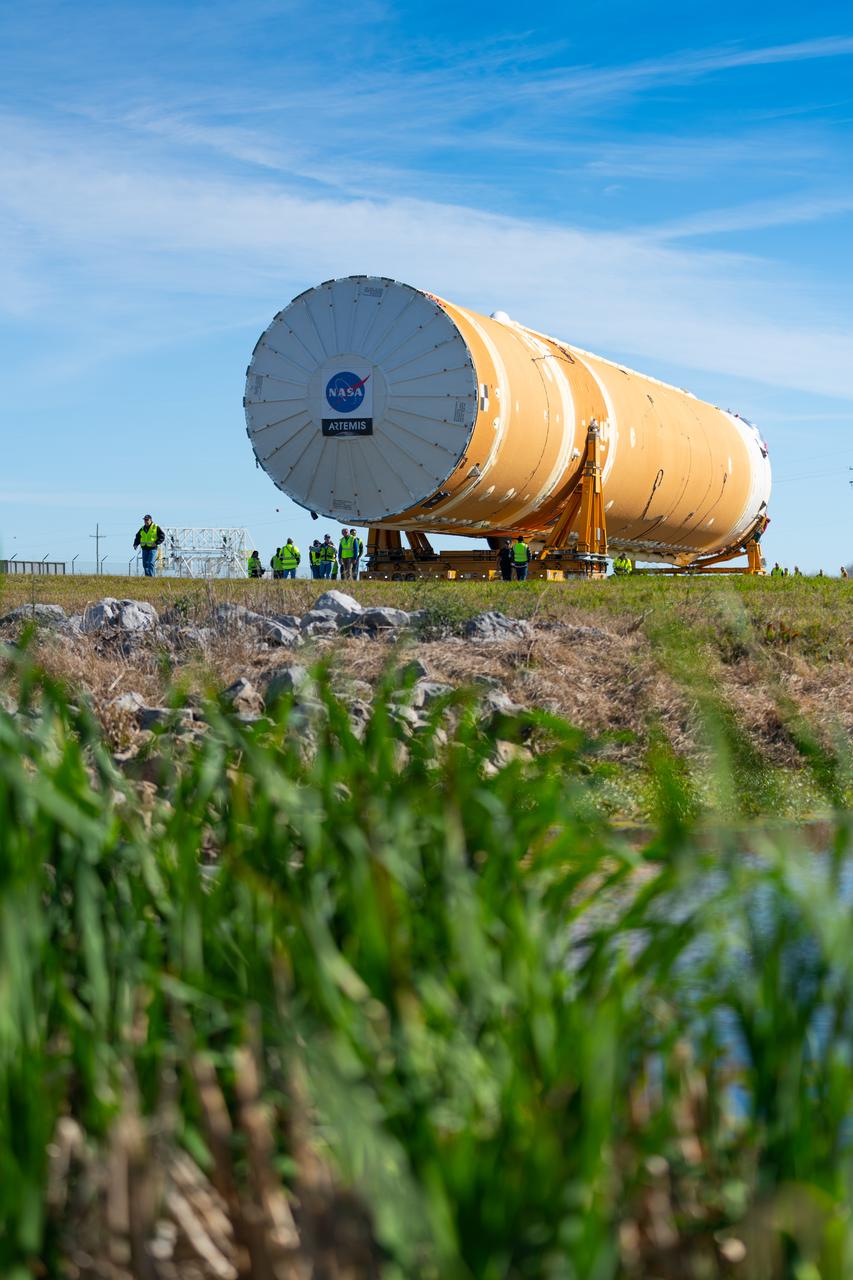
These images show how teams rolled out, or moved, the completed core stage for NASA’s Space Launch System rocket from NASA’s Michoud Assembly Facility in New Orleans. Crews moved the flight hardware for the first Artemis mission to NASA’s Pegasus barge on Jan. 8 in preparation for the core stage Green Run test series at NASA’s Stennis Space Center near Bay St. Louis, Mississippi. Pegasus, which was modified to ferry SLS rocket hardware, will transport the core stage from Michoud to Stennis for the comprehensive core stage Green Run test series. Once at Stennis, the Artemis rocket stage will be loaded into the B-2 Test Stand for the core stage Green Run test series. The comprehensive test campaign will progressively bring the entire core stage, including its avionics and engines, to life for the first time to verify the stage is fit for flight ahead of the launch of Artemis I. Assembly and integration of the core stage and its four RS-25 engines has been a collaborative, multistep process for NASA and its partners Boeing, the core stage lead contractor, and Aerojet Rocketdyne, the RS-25 engines lead contractor. Together with four RS-25 engines, the rocket’s massive 212-foot-tall core stage — the largest stage NASA has ever built — and its twin solid rocket boosters will produce 8.8 million pounds of thrust to send NASA’s Orion spacecraft, astronauts and supplies beyond Earth’s orbit to the Moon and, ultimately, Mars. Offering more payload mass, volume capability and energy to speed missions through space, the SLS rocket, along with NASA’s Gateway in lunar orbit and Orion, is part of NASA’s backbone for deep space exploration and the Artemis lunar program.
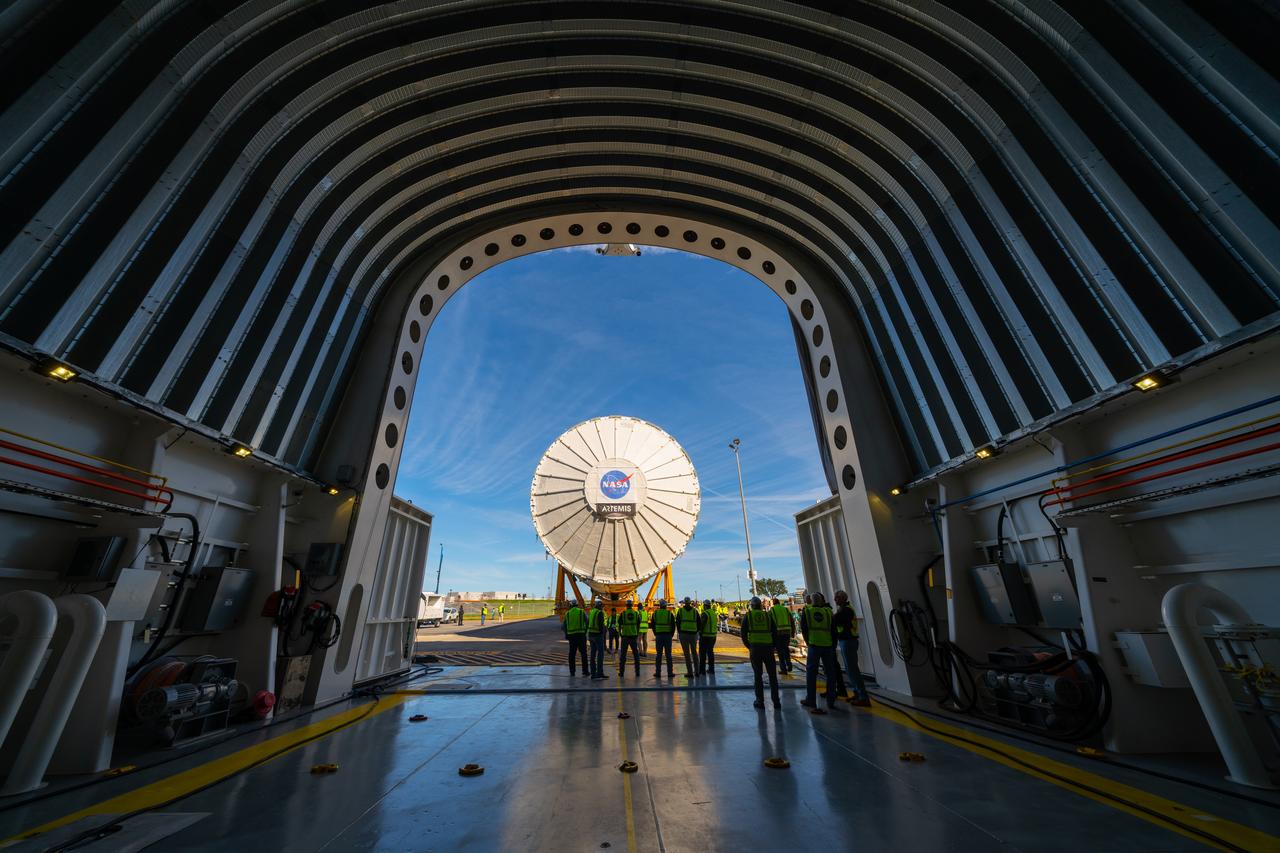
These images show how teams rolled out, or moved, the completed core stage for NASA’s Space Launch System rocket from NASA’s Michoud Assembly Facility in New Orleans. Crews moved the flight hardware for the first Artemis mission to NASA’s Pegasus barge on Jan. 8 in preparation for the core stage Green Run test series at NASA’s Stennis Space Center near Bay St. Louis, Mississippi. Pegasus, which was modified to ferry SLS rocket hardware, will transport the core stage from Michoud to Stennis for the comprehensive core stage Green Run test series. Once at Stennis, the Artemis rocket stage will be loaded into the B-2 Test Stand for the core stage Green Run test series. The comprehensive test campaign will progressively bring the entire core stage, including its avionics and engines, to life for the first time to verify the stage is fit for flight ahead of the launch of Artemis I. Assembly and integration of the core stage and its four RS-25 engines has been a collaborative, multistep process for NASA and its partners Boeing, the core stage lead contractor, and Aerojet Rocketdyne, the RS-25 engines lead contractor. Together with four RS-25 engines, the rocket’s massive 212-foot-tall core stage — the largest stage NASA has ever built — and its twin solid rocket boosters will produce 8.8 million pounds of thrust to send NASA’s Orion spacecraft, astronauts and supplies beyond Earth’s orbit to the Moon and, ultimately, Mars. Offering more payload mass, volume capability and energy to speed missions through space, the SLS rocket, along with NASA’s Gateway in lunar orbit and Orion, is part of NASA’s backbone for deep space exploration and the Artemis lunar program.
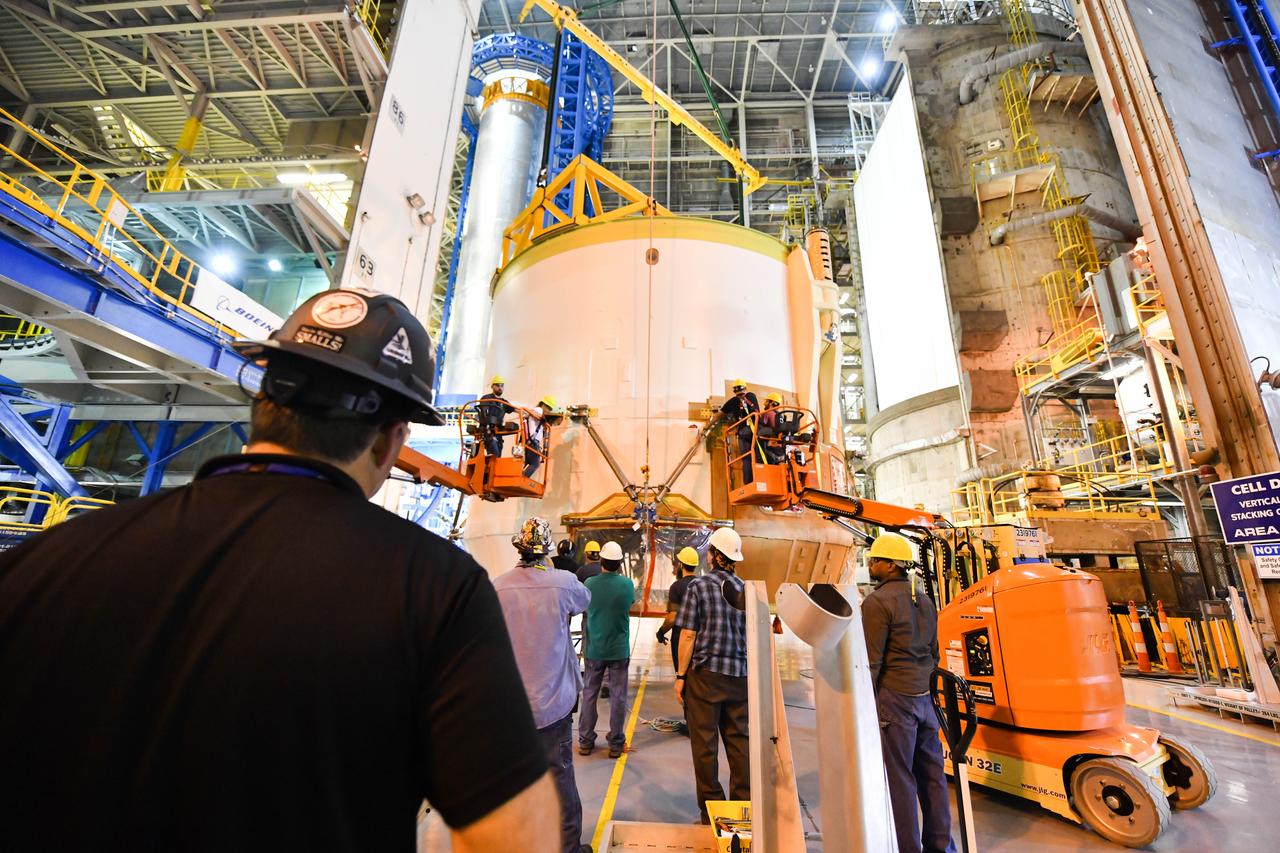
Technicians at NASA’s Michoud Assembly Facility in New Orleans rotated the engine section for NASA’s Space Launch System rocket from a vertical to horizontal position to prepare it for joining to the rest of the rocket’s core stage on Sept. 13. The engine section, which comprises the lowest portion of the 212-foot-tall stage, is the last major component to be horizontally integrated to the core stage. Michoud crews completed assembly on the flight hardware that will be used for Artemis I, the first lunar mission of SLS and NASA’s Orion spacecraft, on Aug. 29. The core stage’s two liquid propellant tanks and four RS-25 engines will produce more than 2 million pounds of thrust to send the SLS rocket and Orion on the Artemis lunar missions. The engine section houses the four RS-25 engines and includes vital systems for mounting, controlling and delivering fuel form the propellant tanks to the rocket’s engines.
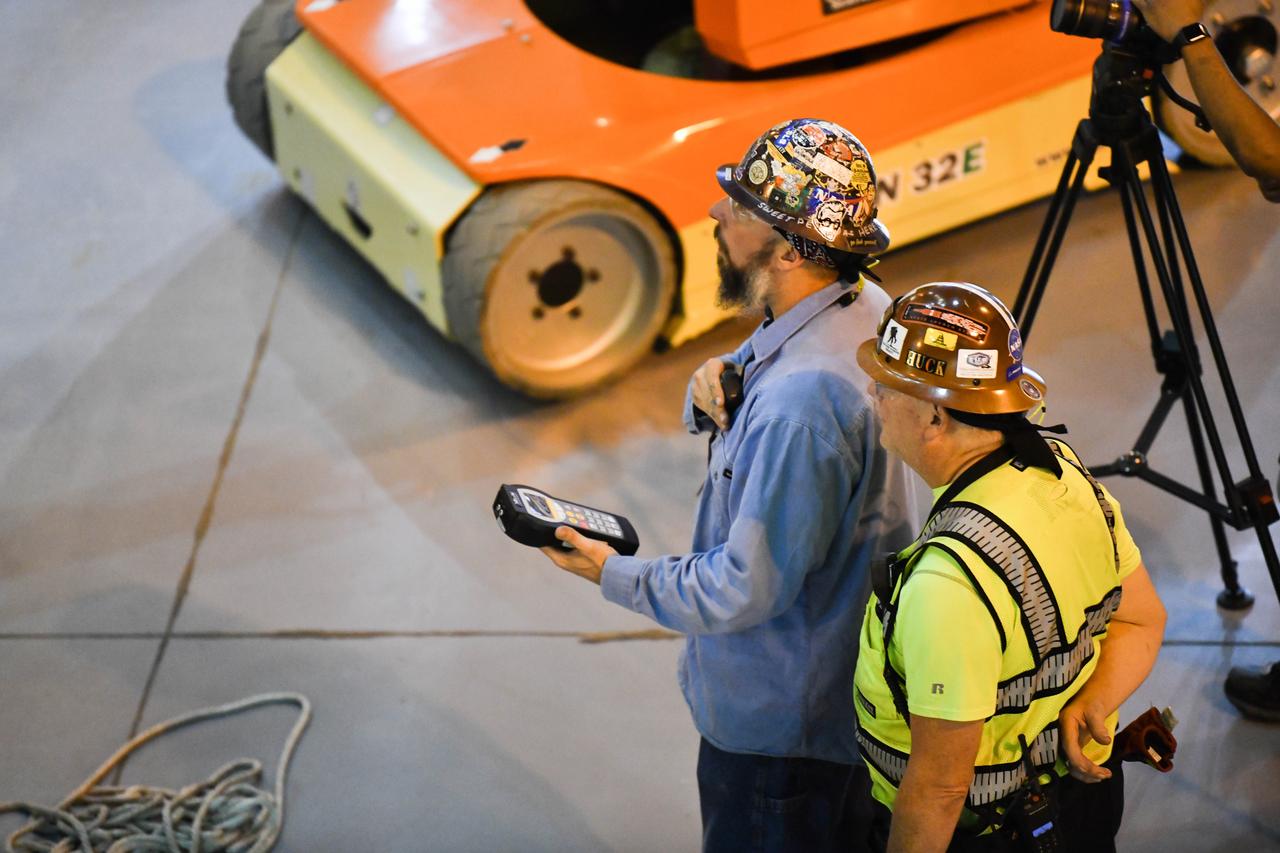
Technicians at NASA’s Michoud Assembly Facility in New Orleans rotated the engine section for NASA’s Space Launch System rocket from a vertical to horizontal position to prepare it for joining to the rest of the rocket’s core stage on Sept. 13. The engine section, which comprises the lowest portion of the 212-foot-tall stage, is the last major component to be horizontally integrated to the core stage. Michoud crews completed assembly on the flight hardware that will be used for Artemis I, the first lunar mission of SLS and NASA’s Orion spacecraft, on Aug. 29. The core stage’s two liquid propellant tanks and four RS-25 engines will produce more than 2 million pounds of thrust to send the SLS rocket and Orion on the Artemis lunar missions. The engine section houses the four RS-25 engines and includes vital systems for mounting, controlling and delivering fuel form the propellant tanks to the rocket’s engines.
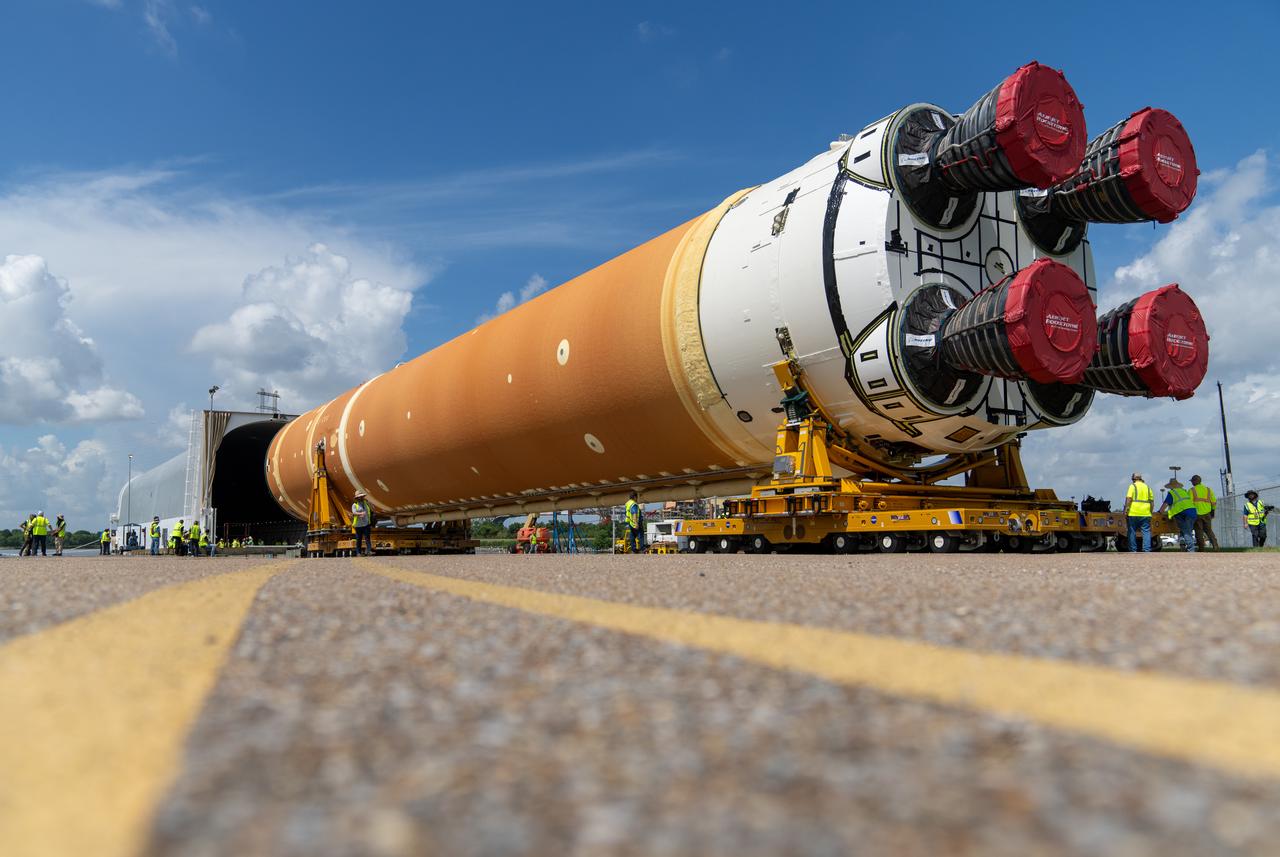
These images and videos show team members at Michoud Assembly Facility loading the first core stage that will help launch the first crewed flight of NASA’s SLS (Space Launch System) rocket for the agency’s Artemis II mission onto the Pegasus barge on Tuesday, July 16, 2024. The barge will ferry the core stage on a 900-mile journey from the agency’s Michoud Assembly Facility in New Orleans to its Kennedy Space Center in Florida. The core stage for the SLS mega rocket is the largest stage NASA has ever produced. At 212 feet tall, the stage consists of five major elements, including two huge propellant tanks that collectively hold more than 733,000 gallons of super chilled liquid propellant to feed four RS-25 engines at its base. During launch and flight, the stage will operate for just over eight minutes, producing more than 2 million pounds of thrust to help send a crew of four astronauts inside NASA’s Orion spacecraft onward to the Moon. All the major structures for every SLS core stage are fully manufactured at NASA Michoud. NASA is working to land the first woman, first person of color, and its first international partner astronaut on the Moon under Artemis. SLS is part of NASA’s backbone for deep space exploration, along with the Orion spacecraft and Gateway in orbit around the Moon and commercial human landing systems, next-generation space, next-generational spacesuits, and rovers on the lunar surface. SLS is the only rocket that can send Orion, astronauts, and supplies to the Moon in a single launch.
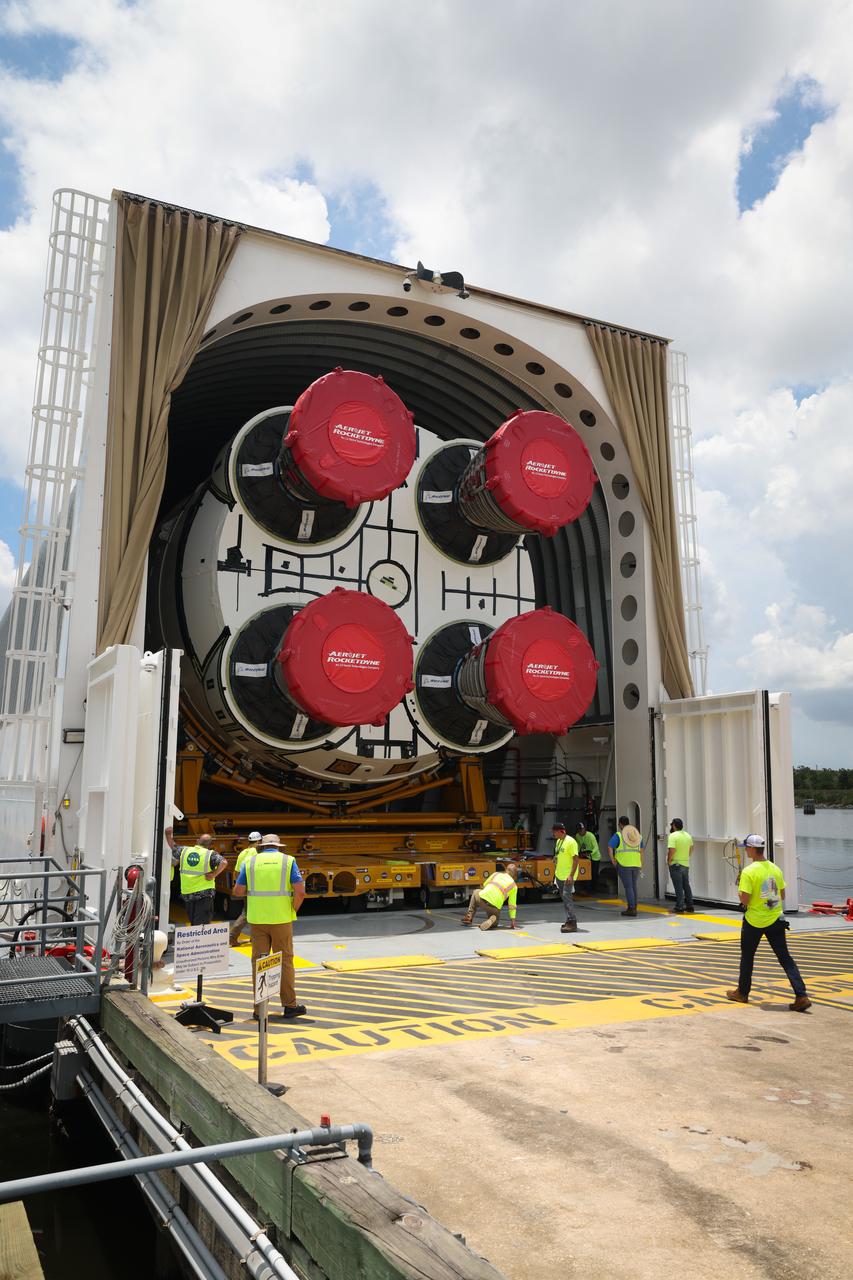
These images and videos show team members at Michoud Assembly Facility loading the first core stage that will help launch the first crewed flight of NASA’s SLS (Space Launch System) rocket for the agency’s Artemis II mission onto the Pegasus barge on Tuesday, July 16, 2024. The barge will ferry the core stage on a 900-mile journey from the agency’s Michoud Assembly Facility in New Orleans to its Kennedy Space Center in Florida. The core stage for the SLS mega rocket is the largest stage NASA has ever produced. At 212 feet tall, the stage consists of five major elements, including two huge propellant tanks that collectively hold more than 733,000 gallons of super chilled liquid propellant to feed four RS-25 engines at its base. During launch and flight, the stage will operate for just over eight minutes, producing more than 2 million pounds of thrust to help send a crew of four astronauts inside NASA’s Orion spacecraft onward to the Moon. All the major structures for every SLS core stage are fully manufactured at NASA Michoud. NASA is working to land the first woman, first person of color, and its first international partner astronaut on the Moon under Artemis. SLS is part of NASA’s backbone for deep space exploration, along with the Orion spacecraft and Gateway in orbit around the Moon and commercial human landing systems, next-generation space, next-generational spacesuits, and rovers on the lunar surface. SLS is the only rocket that can send Orion, astronauts, and supplies to the Moon in a single launch.
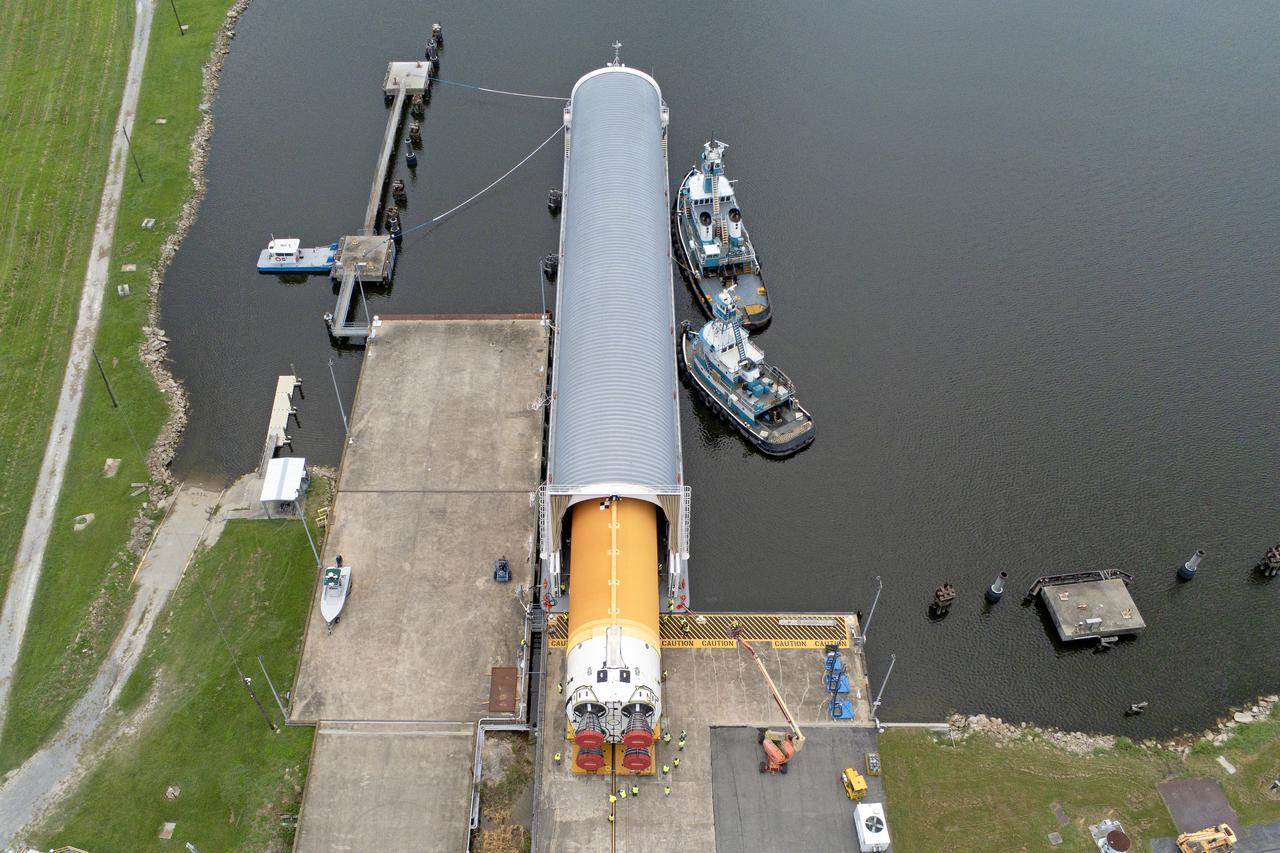
These images and videos show team members at Michoud Assembly Facility loading the first core stage that will help launch the first crewed flight of NASA’s SLS (Space Launch System) rocket for the agency’s Artemis II mission onto the Pegasus barge on Tuesday, July 16, 2024. The barge will ferry the core stage on a 900-mile journey from the agency’s Michoud Assembly Facility in New Orleans to its Kennedy Space Center in Florida. The core stage for the SLS mega rocket is the largest stage NASA has ever produced. At 212 feet tall, the stage consists of five major elements, including two huge propellant tanks that collectively hold more than 733,000 gallons of super chilled liquid propellant to feed four RS-25 engines at its base. During launch and flight, the stage will operate for just over eight minutes, producing more than 2 million pounds of thrust to help send a crew of four astronauts inside NASA’s Orion spacecraft onward to the Moon. All the major structures for every SLS core stage are fully manufactured at NASA Michoud. NASA is working to land the first woman, first person of color, and its first international partner astronaut on the Moon under Artemis. SLS is part of NASA’s backbone for deep space exploration, along with the Orion spacecraft and Gateway in orbit around the Moon and commercial human landing systems, next-generation space, next-generational spacesuits, and rovers on the lunar surface. SLS is the only rocket that can send Orion, astronauts, and supplies to the Moon in a single launch.

These images and videos show team members at Michoud Assembly Facility loading the first core stage that will help launch the first crewed flight of NASA’s SLS (Space Launch System) rocket for the agency’s Artemis II mission onto the Pegasus barge on Tuesday, July 16, 2024. The barge will ferry the core stage on a 900-mile journey from the agency’s Michoud Assembly Facility in New Orleans to its Kennedy Space Center in Florida. The core stage for the SLS mega rocket is the largest stage NASA has ever produced. At 212 feet tall, the stage consists of five major elements, including two huge propellant tanks that collectively hold more than 733,000 gallons of super chilled liquid propellant to feed four RS-25 engines at its base. During launch and flight, the stage will operate for just over eight minutes, producing more than 2 million pounds of thrust to help send a crew of four astronauts inside NASA’s Orion spacecraft onward to the Moon. All the major structures for every SLS core stage are fully manufactured at NASA Michoud. NASA is working to land the first woman, first person of color, and its first international partner astronaut on the Moon under Artemis. SLS is part of NASA’s backbone for deep space exploration, along with the Orion spacecraft and Gateway in orbit around the Moon and commercial human landing systems, next-generation space, next-generational spacesuits, and rovers on the lunar surface. SLS is the only rocket that can send Orion, astronauts, and supplies to the Moon in a single launch.
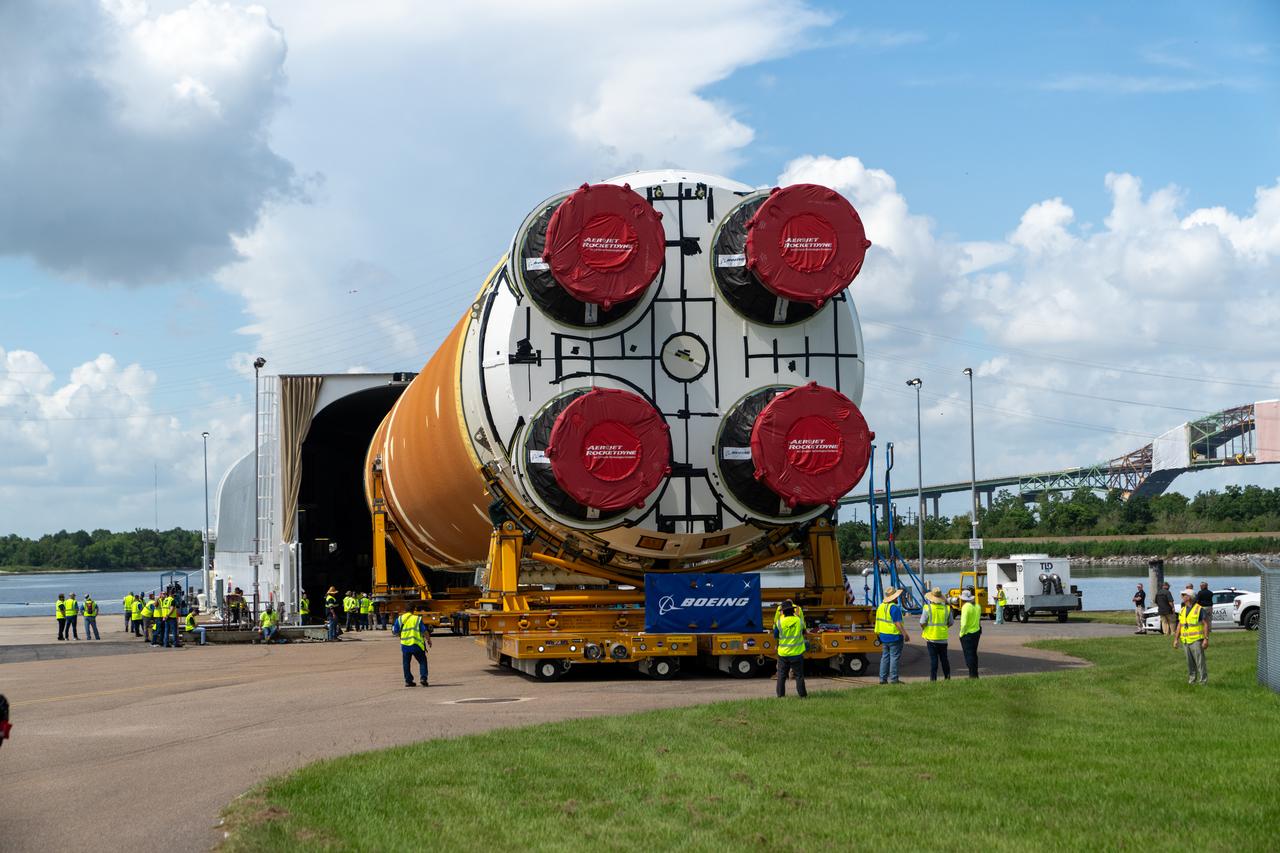
These images and videos show team members at Michoud Assembly Facility loading the first core stage that will help launch the first crewed flight of NASA’s SLS (Space Launch System) rocket for the agency’s Artemis II mission onto the Pegasus barge on Tuesday, July 16, 2024. The barge will ferry the core stage on a 900-mile journey from the agency’s Michoud Assembly Facility in New Orleans to its Kennedy Space Center in Florida. The core stage for the SLS mega rocket is the largest stage NASA has ever produced. At 212 feet tall, the stage consists of five major elements, including two huge propellant tanks that collectively hold more than 733,000 gallons of super chilled liquid propellant to feed four RS-25 engines at its base. During launch and flight, the stage will operate for just over eight minutes, producing more than 2 million pounds of thrust to help send a crew of four astronauts inside NASA’s Orion spacecraft onward to the Moon. All the major structures for every SLS core stage are fully manufactured at NASA Michoud. NASA is working to land the first woman, first person of color, and its first international partner astronaut on the Moon under Artemis. SLS is part of NASA’s backbone for deep space exploration, along with the Orion spacecraft and Gateway in orbit around the Moon and commercial human landing systems, next-generation space, next-generational spacesuits, and rovers on the lunar surface. SLS is the only rocket that can send Orion, astronauts, and supplies to the Moon in a single launch.
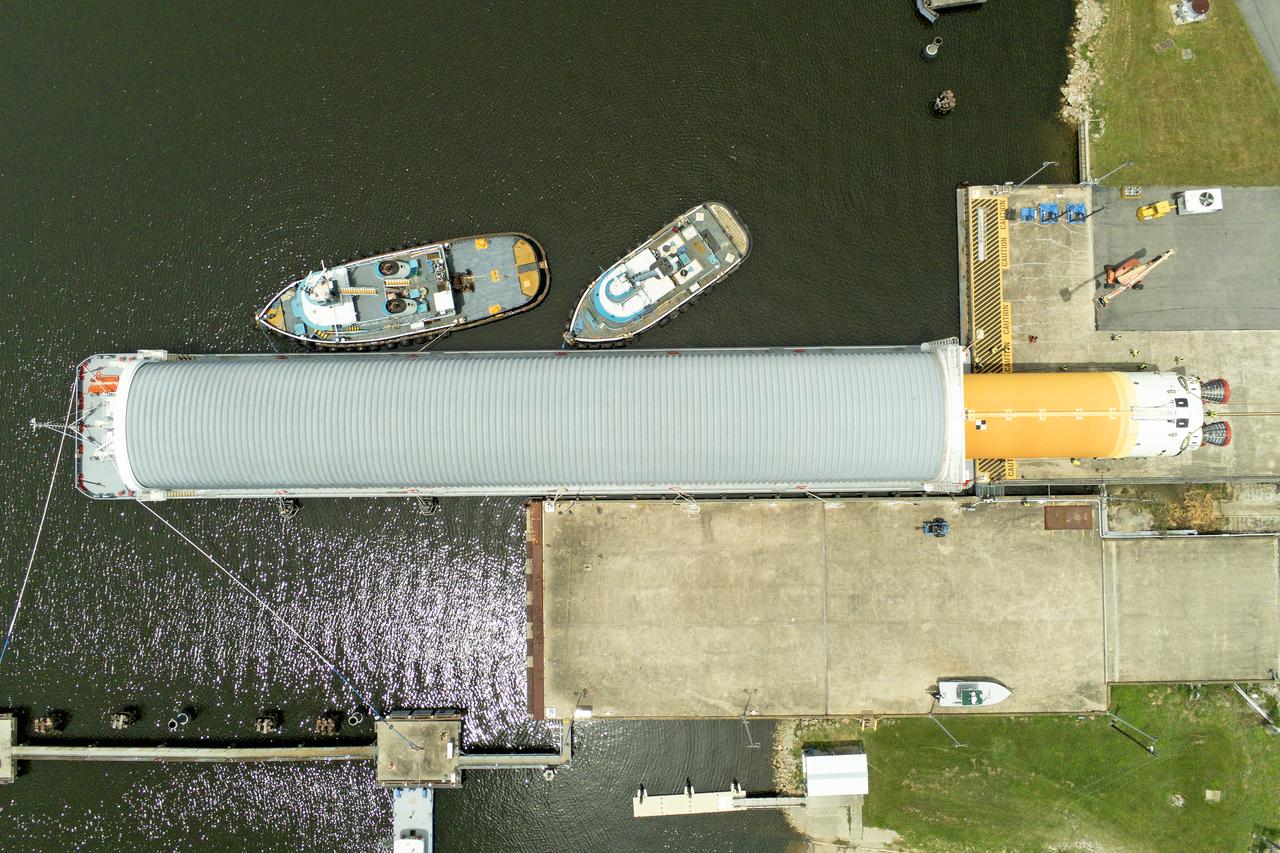
These images and videos show team members at Michoud Assembly Facility loading the first core stage that will help launch the first crewed flight of NASA’s SLS (Space Launch System) rocket for the agency’s Artemis II mission onto the Pegasus barge on Tuesday, July 16, 2024. The barge will ferry the core stage on a 900-mile journey from the agency’s Michoud Assembly Facility in New Orleans to its Kennedy Space Center in Florida. The core stage for the SLS mega rocket is the largest stage NASA has ever produced. At 212 feet tall, the stage consists of five major elements, including two huge propellant tanks that collectively hold more than 733,000 gallons of super chilled liquid propellant to feed four RS-25 engines at its base. During launch and flight, the stage will operate for just over eight minutes, producing more than 2 million pounds of thrust to help send a crew of four astronauts inside NASA’s Orion spacecraft onward to the Moon. All the major structures for every SLS core stage are fully manufactured at NASA Michoud. NASA is working to land the first woman, first person of color, and its first international partner astronaut on the Moon under Artemis. SLS is part of NASA’s backbone for deep space exploration, along with the Orion spacecraft and Gateway in orbit around the Moon and commercial human landing systems, next-generation space, next-generational spacesuits, and rovers on the lunar surface. SLS is the only rocket that can send Orion, astronauts, and supplies to the Moon in a single launch.

These images and videos show team members at Michoud Assembly Facility loading the first core stage that will help launch the first crewed flight of NASA’s SLS (Space Launch System) rocket for the agency’s Artemis II mission onto the Pegasus barge on Tuesday, July 16, 2024. The barge will ferry the core stage on a 900-mile journey from the agency’s Michoud Assembly Facility in New Orleans to its Kennedy Space Center in Florida. The core stage for the SLS mega rocket is the largest stage NASA has ever produced. At 212 feet tall, the stage consists of five major elements, including two huge propellant tanks that collectively hold more than 733,000 gallons of super chilled liquid propellant to feed four RS-25 engines at its base. During launch and flight, the stage will operate for just over eight minutes, producing more than 2 million pounds of thrust to help send a crew of four astronauts inside NASA’s Orion spacecraft onward to the Moon. All the major structures for every SLS core stage are fully manufactured at NASA Michoud. NASA is working to land the first woman, first person of color, and its first international partner astronaut on the Moon under Artemis. SLS is part of NASA’s backbone for deep space exploration, along with the Orion spacecraft and Gateway in orbit around the Moon and commercial human landing systems, next-generation space, next-generational spacesuits, and rovers on the lunar surface. SLS is the only rocket that can send Orion, astronauts, and supplies to the Moon in a single launch.
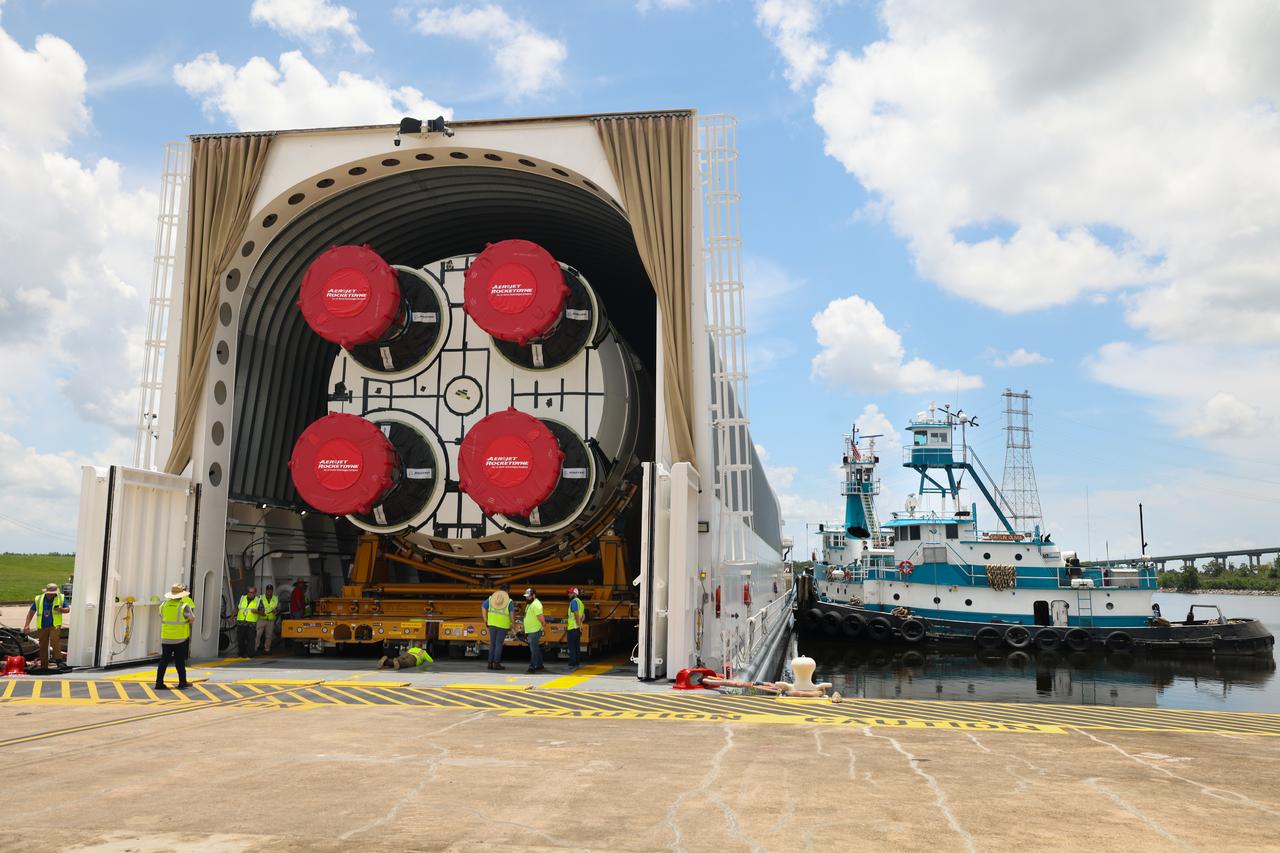
These images and videos show team members at Michoud Assembly Facility loading the first core stage that will help launch the first crewed flight of NASA’s SLS (Space Launch System) rocket for the agency’s Artemis II mission onto the Pegasus barge on Tuesday, July 16, 2024. The barge will ferry the core stage on a 900-mile journey from the agency’s Michoud Assembly Facility in New Orleans to its Kennedy Space Center in Florida. The core stage for the SLS mega rocket is the largest stage NASA has ever produced. At 212 feet tall, the stage consists of five major elements, including two huge propellant tanks that collectively hold more than 733,000 gallons of super chilled liquid propellant to feed four RS-25 engines at its base. During launch and flight, the stage will operate for just over eight minutes, producing more than 2 million pounds of thrust to help send a crew of four astronauts inside NASA’s Orion spacecraft onward to the Moon. All the major structures for every SLS core stage are fully manufactured at NASA Michoud. NASA is working to land the first woman, first person of color, and its first international partner astronaut on the Moon under Artemis. SLS is part of NASA’s backbone for deep space exploration, along with the Orion spacecraft and Gateway in orbit around the Moon and commercial human landing systems, next-generation space, next-generational spacesuits, and rovers on the lunar surface. SLS is the only rocket that can send Orion, astronauts, and supplies to the Moon in a single launch.
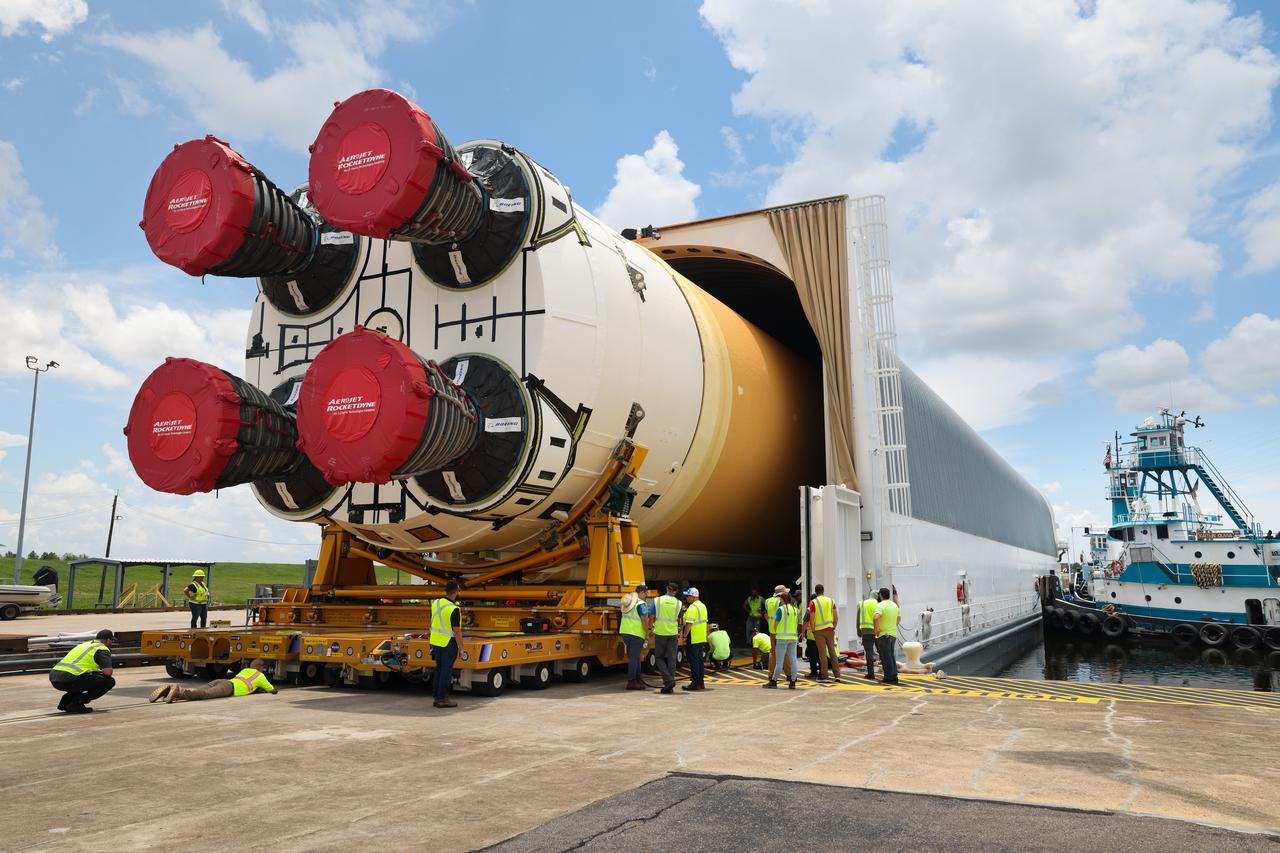
These images and videos show team members at Michoud Assembly Facility loading the first core stage that will help launch the first crewed flight of NASA’s SLS (Space Launch System) rocket for the agency’s Artemis II mission onto the Pegasus barge on Tuesday, July 16, 2024. The barge will ferry the core stage on a 900-mile journey from the agency’s Michoud Assembly Facility in New Orleans to its Kennedy Space Center in Florida. The core stage for the SLS mega rocket is the largest stage NASA has ever produced. At 212 feet tall, the stage consists of five major elements, including two huge propellant tanks that collectively hold more than 733,000 gallons of super chilled liquid propellant to feed four RS-25 engines at its base. During launch and flight, the stage will operate for just over eight minutes, producing more than 2 million pounds of thrust to help send a crew of four astronauts inside NASA’s Orion spacecraft onward to the Moon. All the major structures for every SLS core stage are fully manufactured at NASA Michoud. NASA is working to land the first woman, first person of color, and its first international partner astronaut on the Moon under Artemis. SLS is part of NASA’s backbone for deep space exploration, along with the Orion spacecraft and Gateway in orbit around the Moon and commercial human landing systems, next-generation space, next-generational spacesuits, and rovers on the lunar surface. SLS is the only rocket that can send Orion, astronauts, and supplies to the Moon in a single launch.
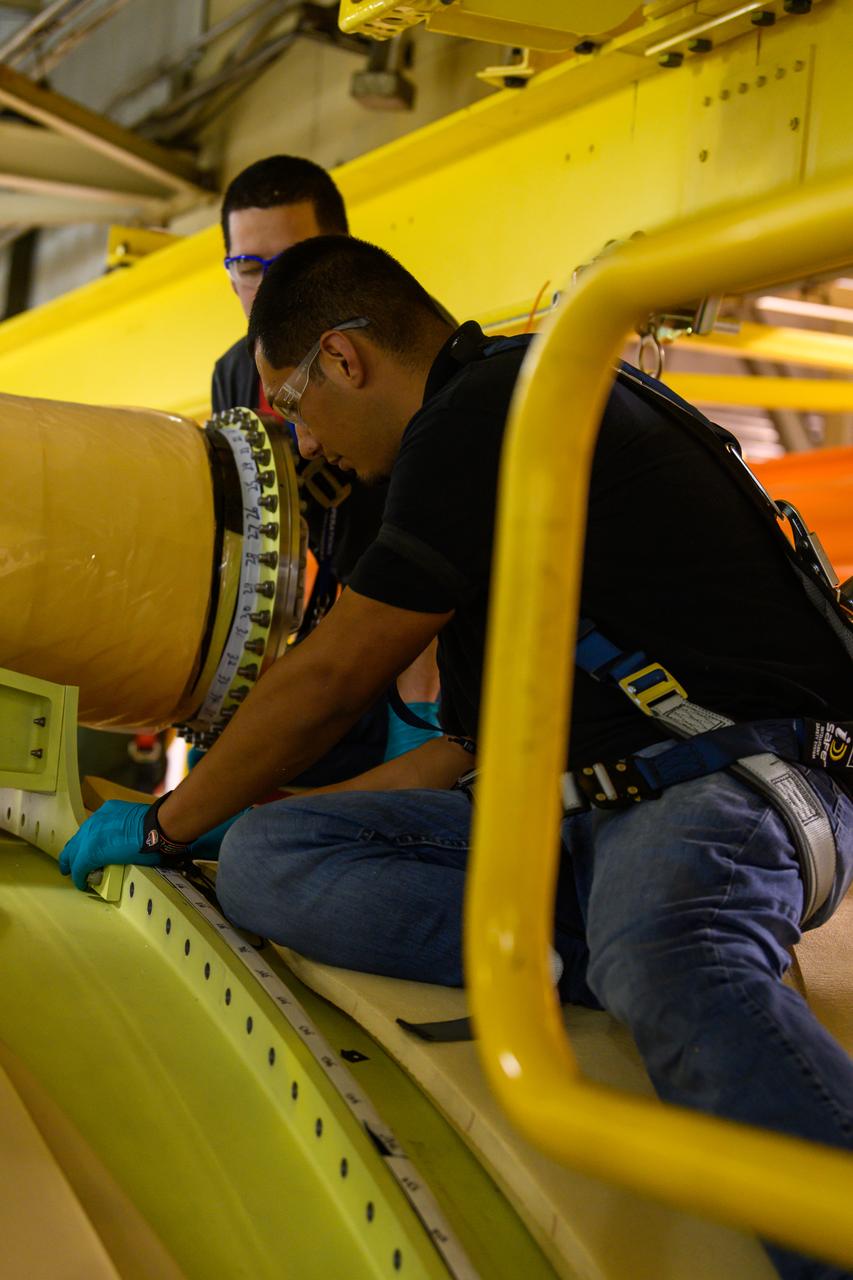
NASA finished assembling and joining the main structural components for the largest rocket stage the agency has built since the Saturn V that sent Apollo astronauts to the Moon. Engineers at the agency’s Michoud Assembly Facility in New Orleans connected the last of the five sections of the Space Launch System (SLS) rocket core stage Sept. 19. The stage will produce 2 million pounds of thrust to send Artemis I, the first flight SLS and NASA’s Orion spacecraft to the Moon. The engine section is located at the bottom of the 212-foot-tall stage and houses the four RS-25 engines. The core stage’s two liquid propellant tanks and four RS-25 engines will produce more than 2 million pounds of thrust to send the SLS rocket and Orion on the Artemis lunar missions. The engine section houses the four RS-25 engines and includes vital systems for mounting, controlling and delivering fuel form the propellant tanks to the rocket’s engines. Offering more payload mass, volume capability and energy to speed missions through space, the SLS rocket, along with NASA’s Gateway in lunar orbit and Orion, is part of NASA’s backbone for deep space exploration and the Artemis lunar program. No other rocket is capable of carrying astronauts in Orion around the Moon in a single mission.
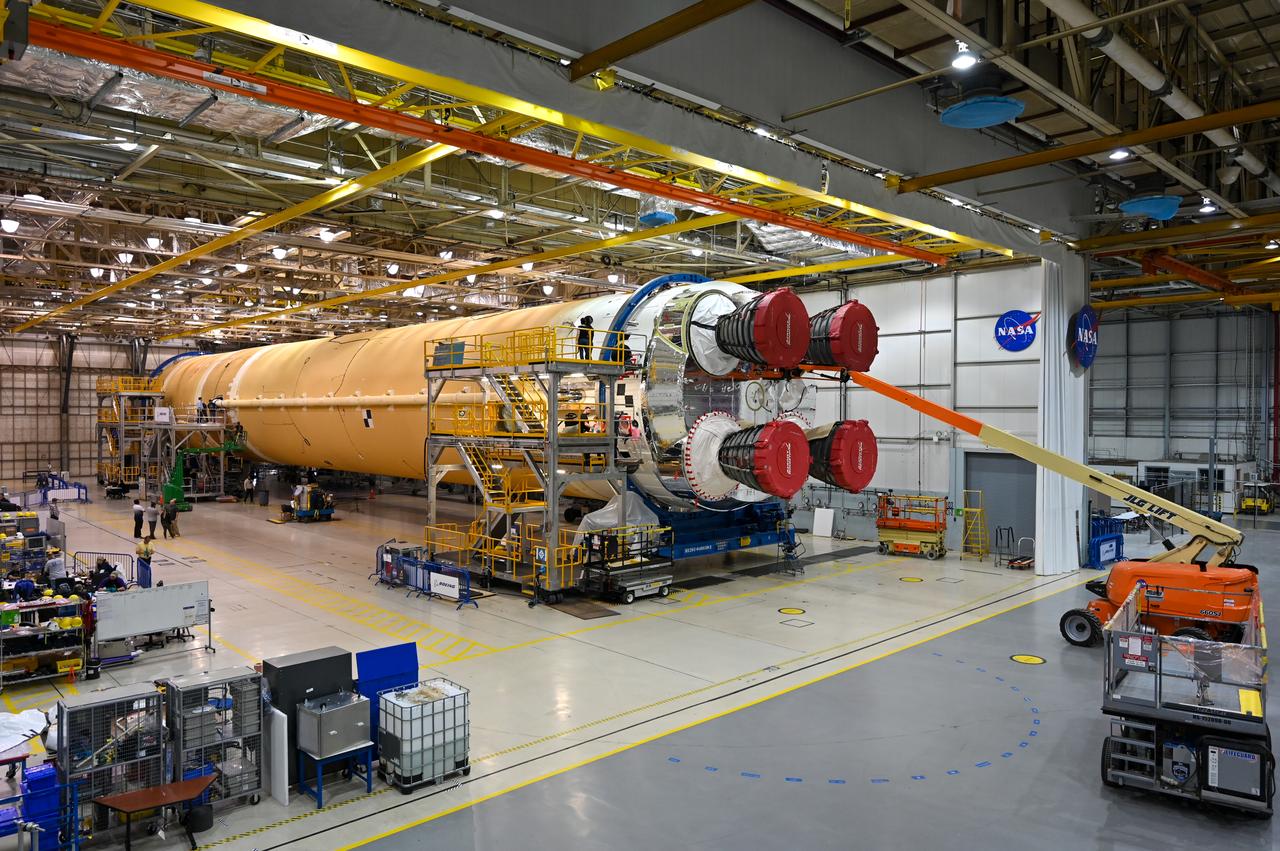
This image shows the core stage for NASA’s Space Launch System (SLS) rocket without scaffolding at NASA’s Michoud Assembly Facility in New Orleans. Assembly and integration of the core stage and its four RS-25 engines has been a collaborative, multistep process for NASA and its partners Boeing, the core stage lead contractor, and Aerojet Rocketdyne, the RS-25 engines lead contractor. NASA and the contractor team used the scaffolding previously positioned around the 212-foot core stage to assess the stage’s inside and check out the electronic systems distributed throughout the stage, including avionics and propulsion systems, that will enable the stage to operate during launch and flight. The team will continue to check out these systems at NASA’s Stennis Space Center near Bay St. Louis, Mississippi, where it will undergo the core stage Green Run testing.
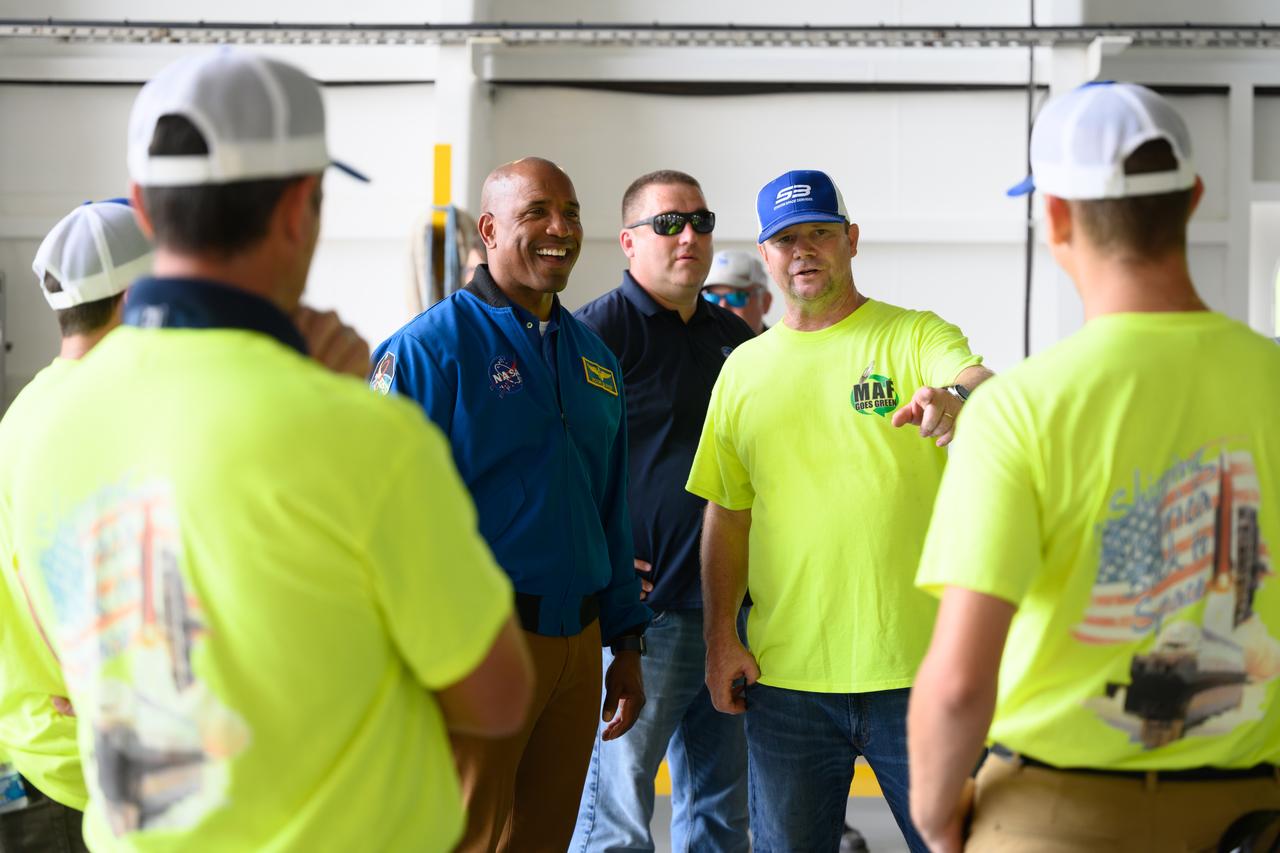
NASA astronaut Victor Glover views the core stage of the SLS (Space Launch System) rocket that will help power Artemis II at NASA’s Michoud Assembly Facility in New Orleans July 15. Glover will pilot Artemis II, the first crewed mission of NASA’s Artemis campaign. Crews moved the 212-foot-tall core stage with its four RS-25 engines to Building 110 at NASA Michoud prior to rolling it out to NASA’s Pegasus barge July 16 for delivery to NASA’s Kennedy Space Center in Florida. The core stage has two giant propellant tanks that collectively hold more than 733,000 gallons of super cold liquid propellant to feed the stage’s four RS-25 engines. Together, the engines produce more than 2 million pounds of thrust to help send astronauts inside NASA’s Orion spacecraft to venture around the Moon for Artemis II. NASA is working to land the first woman, first person of color, and its first international partner astronaut on the Moon under Artemis. SLS is part of NASA’s backbone for deep space exploration, along with the Orion spacecraft, supporting ground systems, advanced spacesuits and rovers, the Gateway in orbit around the Moon, and commercial human landing systems. SLS is the only rocket that can send Orion, astronauts, and supplies to the Moon in a single launch.
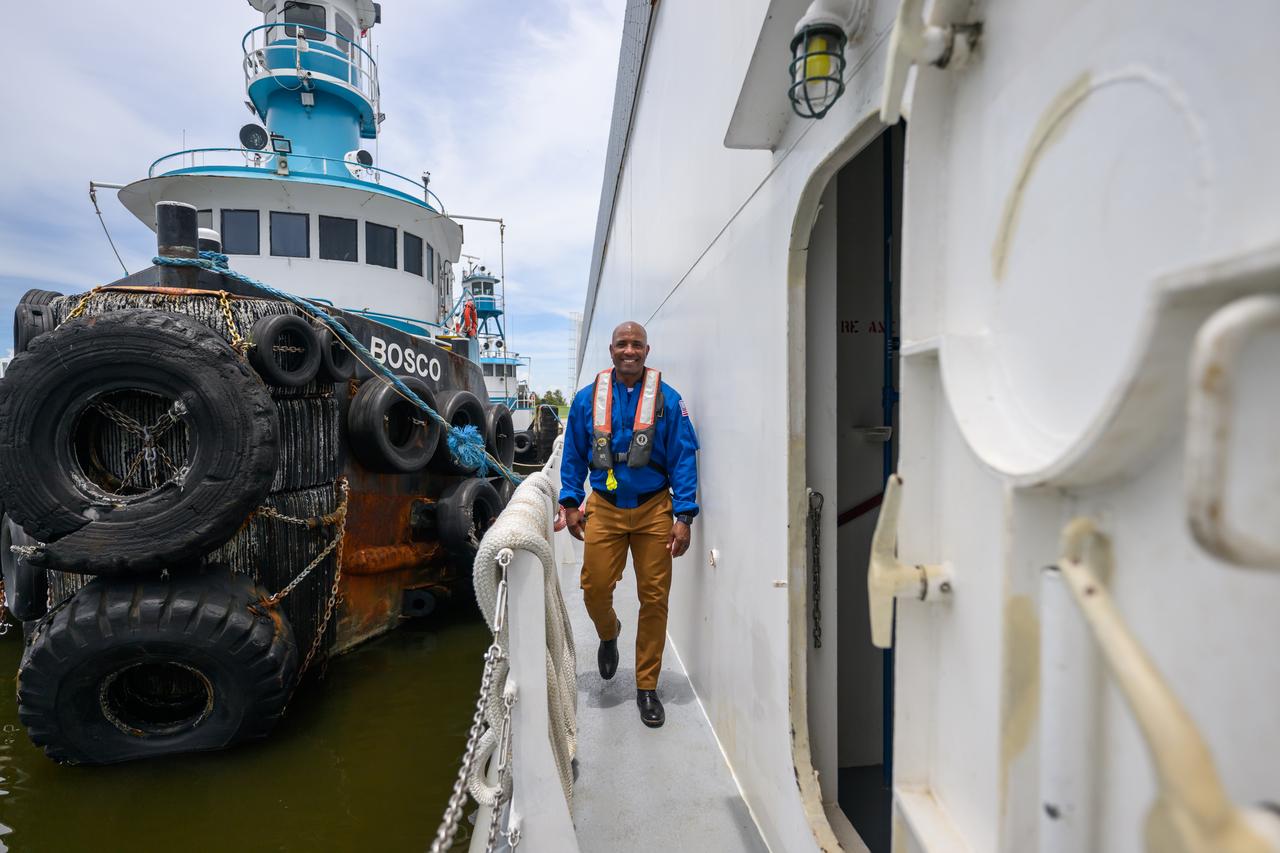
NASA astronaut Victor Glover views the core stage of the SLS (Space Launch System) rocket that will help power Artemis II at NASA’s Michoud Assembly Facility in New Orleans July 15. Glover will pilot Artemis II, the first crewed mission of NASA’s Artemis campaign. Crews moved the 212-foot-tall core stage with its four RS-25 engines to Building 110 at NASA Michoud prior to rolling it out to NASA’s Pegasus barge July 16 for delivery to NASA’s Kennedy Space Center in Florida. The core stage has two giant propellant tanks that collectively hold more than 733,000 gallons of super cold liquid propellant to feed the stage’s four RS-25 engines. Together, the engines produce more than 2 million pounds of thrust to help send astronauts inside NASA’s Orion spacecraft to venture around the Moon for Artemis II. NASA is working to land the first woman, first person of color, and its first international partner astronaut on the Moon under Artemis. SLS is part of NASA’s backbone for deep space exploration, along with the Orion spacecraft, supporting ground systems, advanced spacesuits and rovers, the Gateway in orbit around the Moon, and commercial human landing systems. SLS is the only rocket that can send Orion, astronauts, and supplies to the Moon in a single launch.
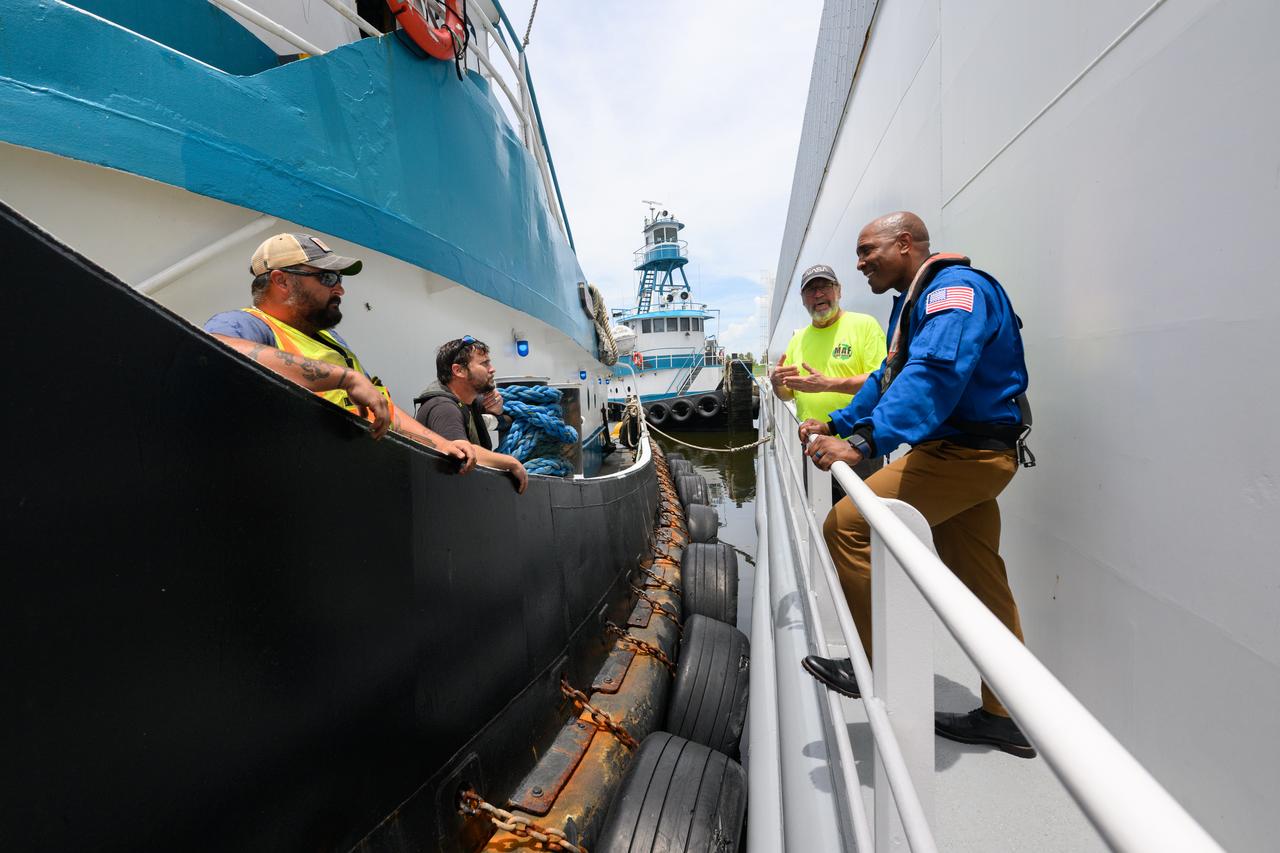
NASA astronaut Victor Glover views the core stage of the SLS (Space Launch System) rocket that will help power Artemis II at NASA’s Michoud Assembly Facility in New Orleans July 15. Glover will pilot Artemis II, the first crewed mission of NASA’s Artemis campaign. Crews moved the 212-foot-tall core stage with its four RS-25 engines to Building 110 at NASA Michoud prior to rolling it out to NASA’s Pegasus barge July 16 for delivery to NASA’s Kennedy Space Center in Florida. The core stage has two giant propellant tanks that collectively hold more than 733,000 gallons of super cold liquid propellant to feed the stage’s four RS-25 engines. Together, the engines produce more than 2 million pounds of thrust to help send astronauts inside NASA’s Orion spacecraft to venture around the Moon for Artemis II. NASA is working to land the first woman, first person of color, and its first international partner astronaut on the Moon under Artemis. SLS is part of NASA’s backbone for deep space exploration, along with the Orion spacecraft, supporting ground systems, advanced spacesuits and rovers, the Gateway in orbit around the Moon, and commercial human landing systems. SLS is the only rocket that can send Orion, astronauts, and supplies to the Moon in a single launch.

NASA astronaut Victor Glover views the core stage of the SLS (Space Launch System) rocket that will help power Artemis II at NASA’s Michoud Assembly Facility in New Orleans July 15. Glover will pilot Artemis II, the first crewed mission of NASA’s Artemis campaign. Crews moved the 212-foot-tall core stage with its four RS-25 engines to Building 110 at NASA Michoud prior to rolling it out to NASA’s Pegasus barge July 16 for delivery to NASA’s Kennedy Space Center in Florida. The core stage has two giant propellant tanks that collectively hold more than 733,000 gallons of super cold liquid propellant to feed the stage’s four RS-25 engines. Together, the engines produce more than 2 million pounds of thrust to help send astronauts inside NASA’s Orion spacecraft to venture around the Moon for Artemis II. NASA is working to land the first woman, first person of color, and its first international partner astronaut on the Moon under Artemis. SLS is part of NASA’s backbone for deep space exploration, along with the Orion spacecraft, supporting ground systems, advanced spacesuits and rovers, the Gateway in orbit around the Moon, and commercial human landing systems. SLS is the only rocket that can send Orion, astronauts, and supplies to the Moon in a single launch.
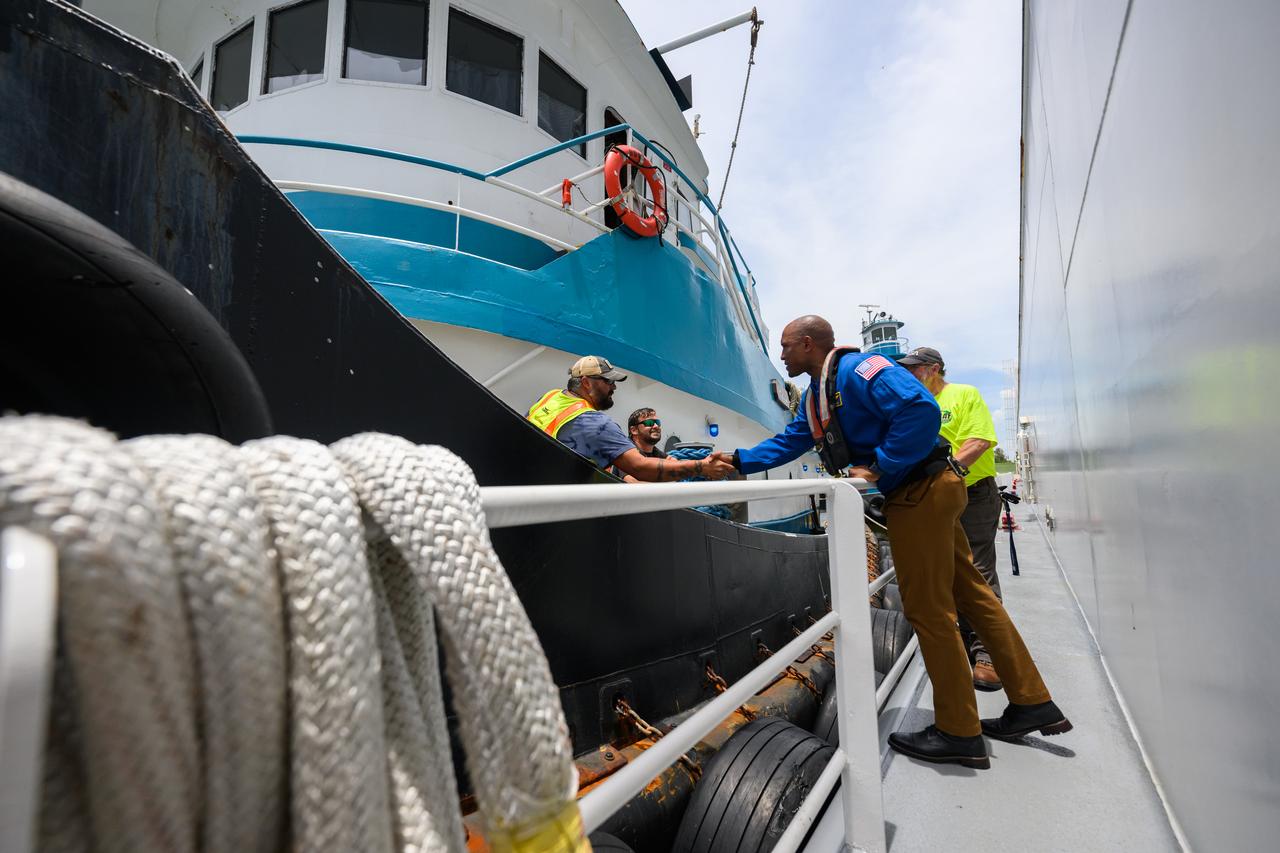
NASA astronaut Victor Glover views the core stage of the SLS (Space Launch System) rocket that will help power Artemis II at NASA’s Michoud Assembly Facility in New Orleans July 15. Glover will pilot Artemis II, the first crewed mission of NASA’s Artemis campaign. Crews moved the 212-foot-tall core stage with its four RS-25 engines to Building 110 at NASA Michoud prior to rolling it out to NASA’s Pegasus barge July 16 for delivery to NASA’s Kennedy Space Center in Florida. The core stage has two giant propellant tanks that collectively hold more than 733,000 gallons of super cold liquid propellant to feed the stage’s four RS-25 engines. Together, the engines produce more than 2 million pounds of thrust to help send astronauts inside NASA’s Orion spacecraft to venture around the Moon for Artemis II. NASA is working to land the first woman, first person of color, and its first international partner astronaut on the Moon under Artemis. SLS is part of NASA’s backbone for deep space exploration, along with the Orion spacecraft, supporting ground systems, advanced spacesuits and rovers, the Gateway in orbit around the Moon, and commercial human landing systems. SLS is the only rocket that can send Orion, astronauts, and supplies to the Moon in a single launch.
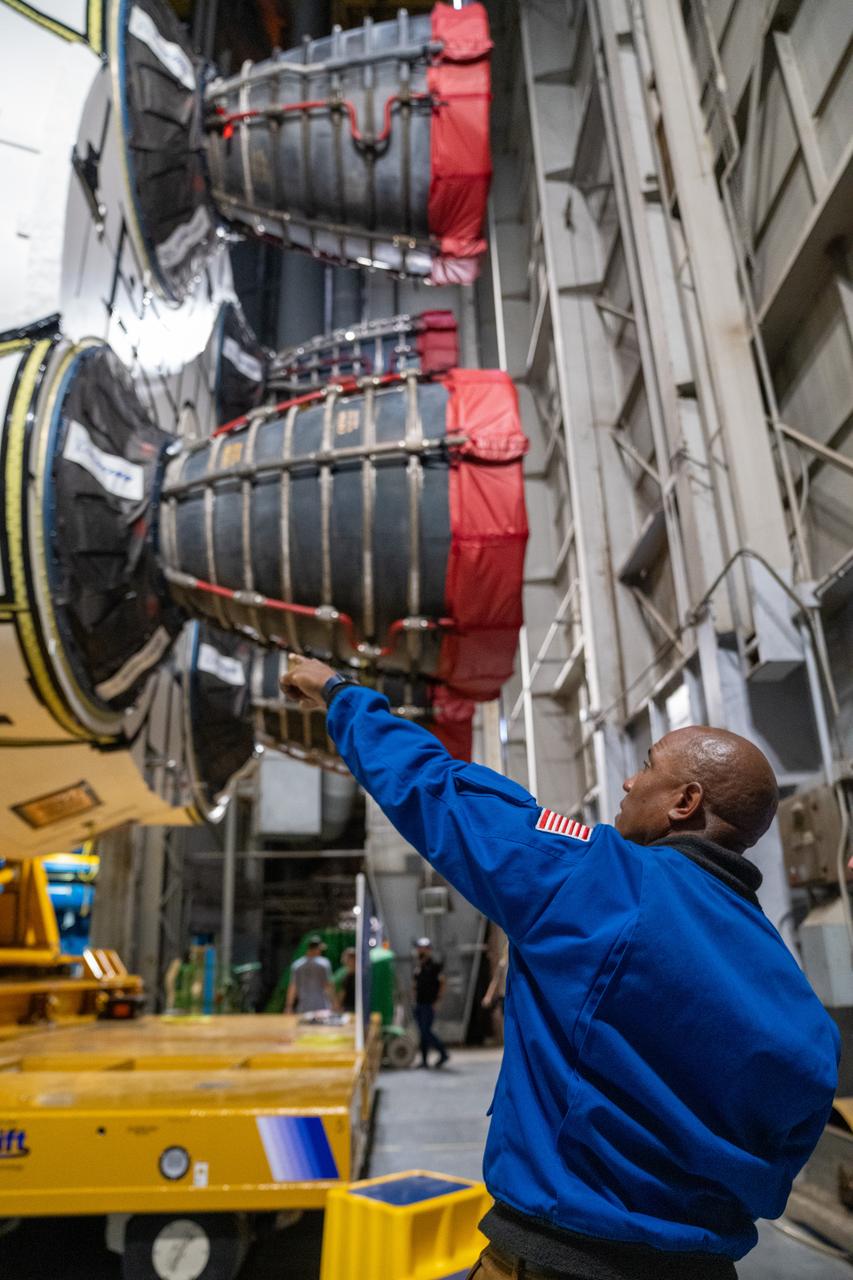
NASA astronaut Victor Glover views the core stage of the SLS (Space Launch System) rocket that will help power Artemis II at NASA’s Michoud Assembly Facility in New Orleans July 15. Glover will pilot Artemis II, the first crewed mission of NASA’s Artemis campaign. Crews moved the 212-foot-tall core stage with its four RS-25 engines to Building 110 at NASA Michoud prior to rolling it out to NASA’s Pegasus barge July 16 for delivery to NASA’s Kennedy Space Center in Florida. The core stage has two giant propellant tanks that collectively hold more than 733,000 gallons of super cold liquid propellant to feed the stage’s four RS-25 engines. Together, the engines produce more than 2 million pounds of thrust to help send astronauts inside NASA’s Orion spacecraft to venture around the Moon for Artemis II. NASA is working to land the first woman, first person of color, and its first international partner astronaut on the Moon under Artemis. SLS is part of NASA’s backbone for deep space exploration, along with the Orion spacecraft, supporting ground systems, advanced spacesuits and rovers, the Gateway in orbit around the Moon, and commercial human landing systems. SLS is the only rocket that can send Orion, astronauts, and supplies to the Moon in a single launch.
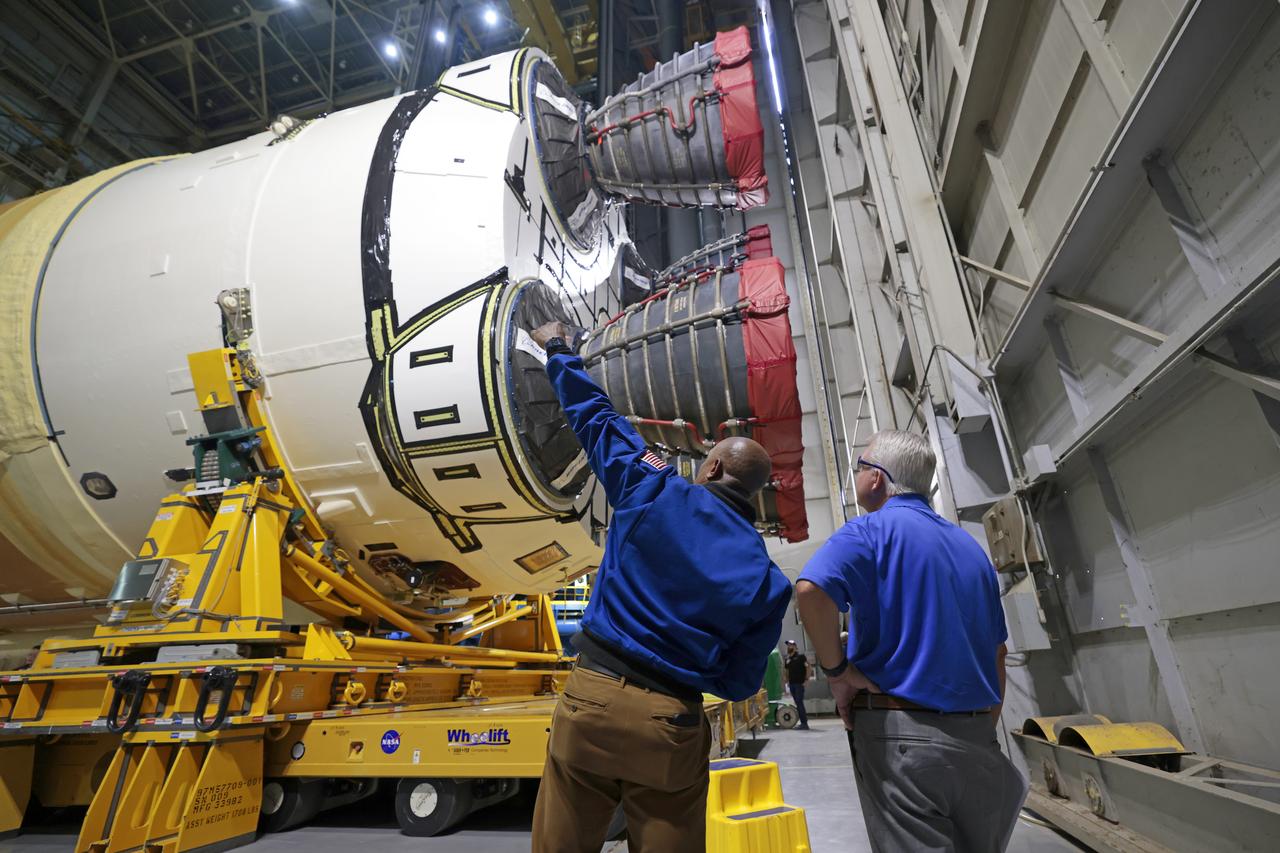
NASA astronaut Victor Glover views the core stage of the SLS (Space Launch System) rocket that will help power Artemis II at NASA’s Michoud Assembly Facility in New Orleans July 15. Glover will pilot Artemis II, the first crewed mission of NASA’s Artemis campaign. Crews moved the 212-foot-tall core stage with its four RS-25 engines to Building 110 at NASA Michoud prior to rolling it out to NASA’s Pegasus barge July 16 for delivery to NASA’s Kennedy Space Center in Florida. The core stage has two giant propellant tanks that collectively hold more than 733,000 gallons of super cold liquid propellant to feed the stage’s four RS-25 engines. Together, the engines produce more than 2 million pounds of thrust to help send astronauts inside NASA’s Orion spacecraft to venture around the Moon for Artemis II. NASA is working to land the first woman, first person of color, and its first international partner astronaut on the Moon under Artemis. SLS is part of NASA’s backbone for deep space exploration, along with the Orion spacecraft, supporting ground systems, advanced spacesuits and rovers, the Gateway in orbit around the Moon, and commercial human landing systems. SLS is the only rocket that can send Orion, astronauts, and supplies to the Moon in a single launch.
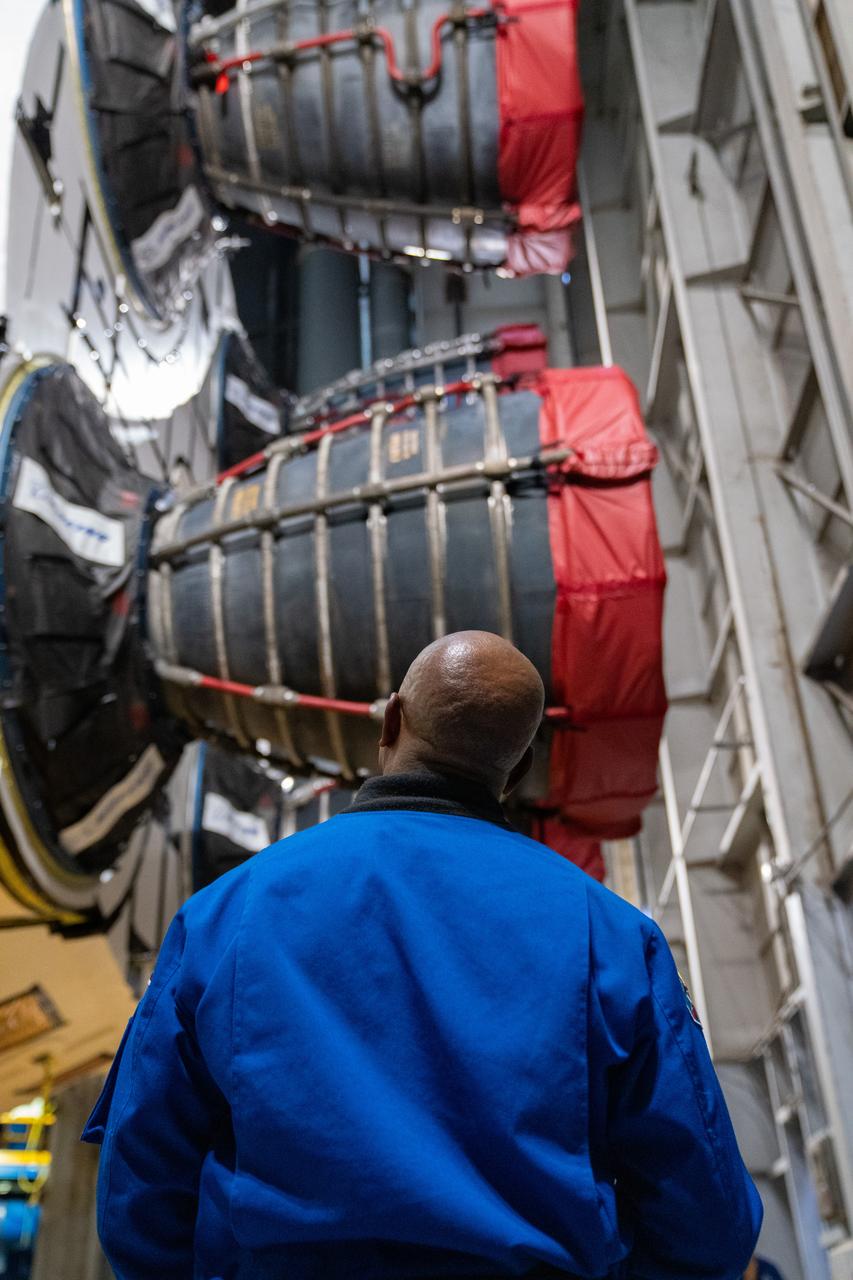
NASA astronaut Victor Glover views the core stage of the SLS (Space Launch System) rocket that will help power Artemis II at NASA’s Michoud Assembly Facility in New Orleans July 15. Glover will pilot Artemis II, the first crewed mission of NASA’s Artemis campaign. Crews moved the 212-foot-tall core stage with its four RS-25 engines to Building 110 at NASA Michoud prior to rolling it out to NASA’s Pegasus barge July 16 for delivery to NASA’s Kennedy Space Center in Florida. The core stage has two giant propellant tanks that collectively hold more than 733,000 gallons of super cold liquid propellant to feed the stage’s four RS-25 engines. Together, the engines produce more than 2 million pounds of thrust to help send astronauts inside NASA’s Orion spacecraft to venture around the Moon for Artemis II. NASA is working to land the first woman, first person of color, and its first international partner astronaut on the Moon under Artemis. SLS is part of NASA’s backbone for deep space exploration, along with the Orion spacecraft, supporting ground systems, advanced spacesuits and rovers, the Gateway in orbit around the Moon, and commercial human landing systems. SLS is the only rocket that can send Orion, astronauts, and supplies to the Moon in a single launch.
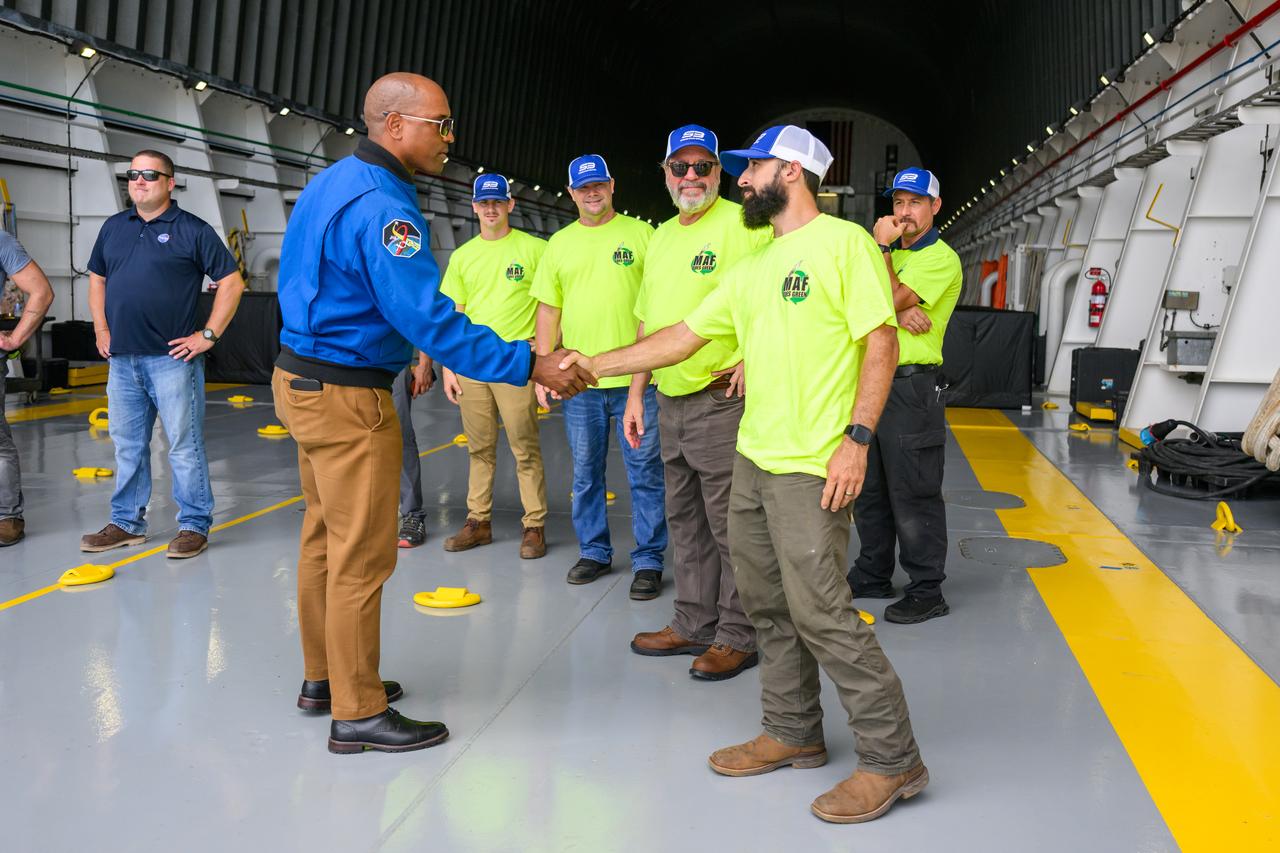
NASA astronaut Victor Glover views the core stage of the SLS (Space Launch System) rocket that will help power Artemis II at NASA’s Michoud Assembly Facility in New Orleans July 15. Glover will pilot Artemis II, the first crewed mission of NASA’s Artemis campaign. Crews moved the 212-foot-tall core stage with its four RS-25 engines to Building 110 at NASA Michoud prior to rolling it out to NASA’s Pegasus barge July 16 for delivery to NASA’s Kennedy Space Center in Florida. The core stage has two giant propellant tanks that collectively hold more than 733,000 gallons of super cold liquid propellant to feed the stage’s four RS-25 engines. Together, the engines produce more than 2 million pounds of thrust to help send astronauts inside NASA’s Orion spacecraft to venture around the Moon for Artemis II. NASA is working to land the first woman, first person of color, and its first international partner astronaut on the Moon under Artemis. SLS is part of NASA’s backbone for deep space exploration, along with the Orion spacecraft, supporting ground systems, advanced spacesuits and rovers, the Gateway in orbit around the Moon, and commercial human landing systems. SLS is the only rocket that can send Orion, astronauts, and supplies to the Moon in a single launch.
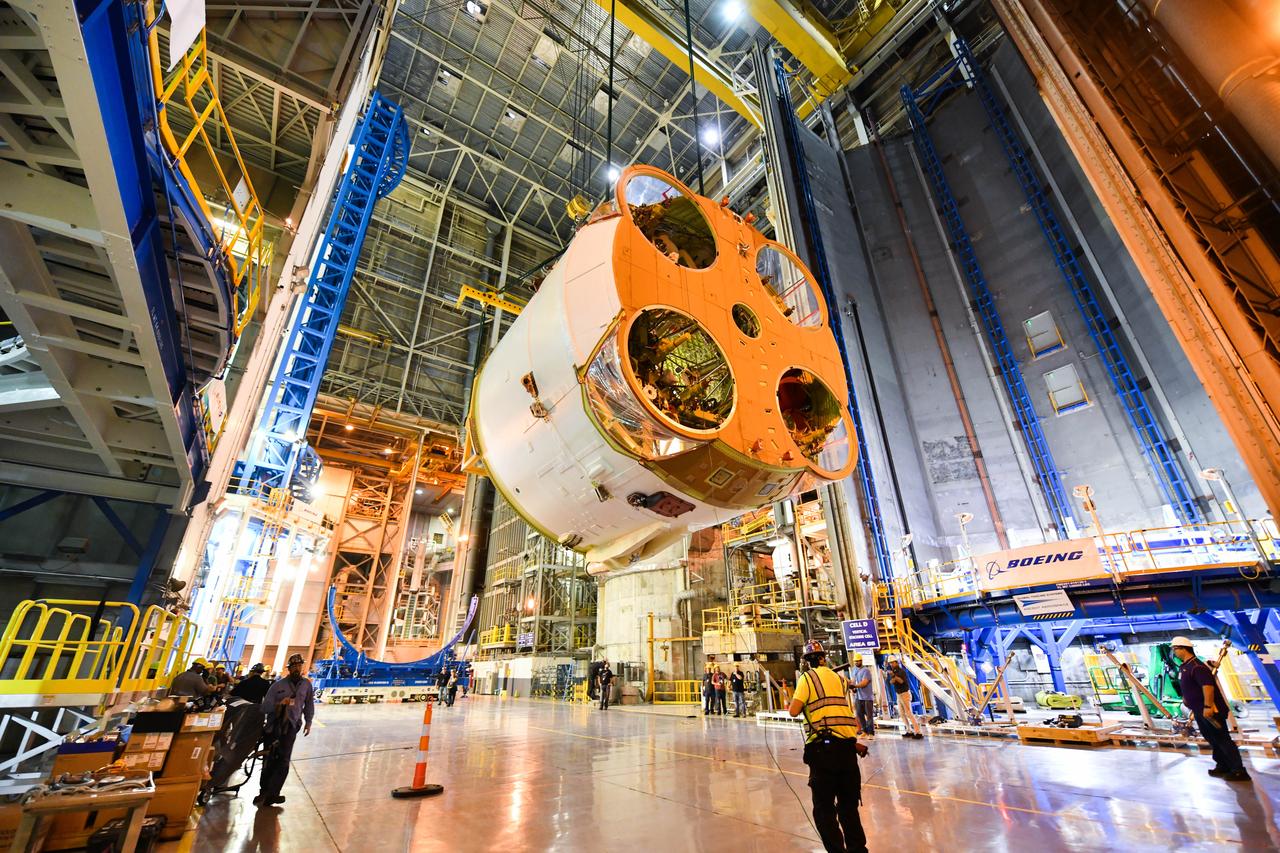
Technicians at NASA’s Michoud Assembly Facility in New Orleans rotated the engine section for NASA’s Space Launch System rocket from a vertical to horizontal position to prepare it for joining to the rest of the rocket’s core stage on Sept. 13. The engine section, which comprises the lowest portion of the 212-foot-tall stage, is the last major component to be horizontally integrated to the core stage. Michoud crews completed assembly on the flight hardware that will be used for Artemis I, the first lunar mission of SLS and NASA’s Orion spacecraft, on Aug. 29. The core stage’s two liquid propellant tanks and four RS-25 engines will produce more than 2 million pounds of thrust to send the SLS rocket and Orion on the Artemis lunar missions. The engine section houses the four RS-25 engines and includes vital systems for mounting, controlling and delivering fuel form the propellant tanks to the rocket’s engines. Offering more payload mass, volume capability and energy to speed missions through space, the SLS rocket, along with NASA’s Gateway in lunar orbit and Orion, is part of NASA’s backbone for deep space exploration and the Artemis lunar program. No other rocket is capable of carrying astronauts in Orion around the Moon in a single mission.
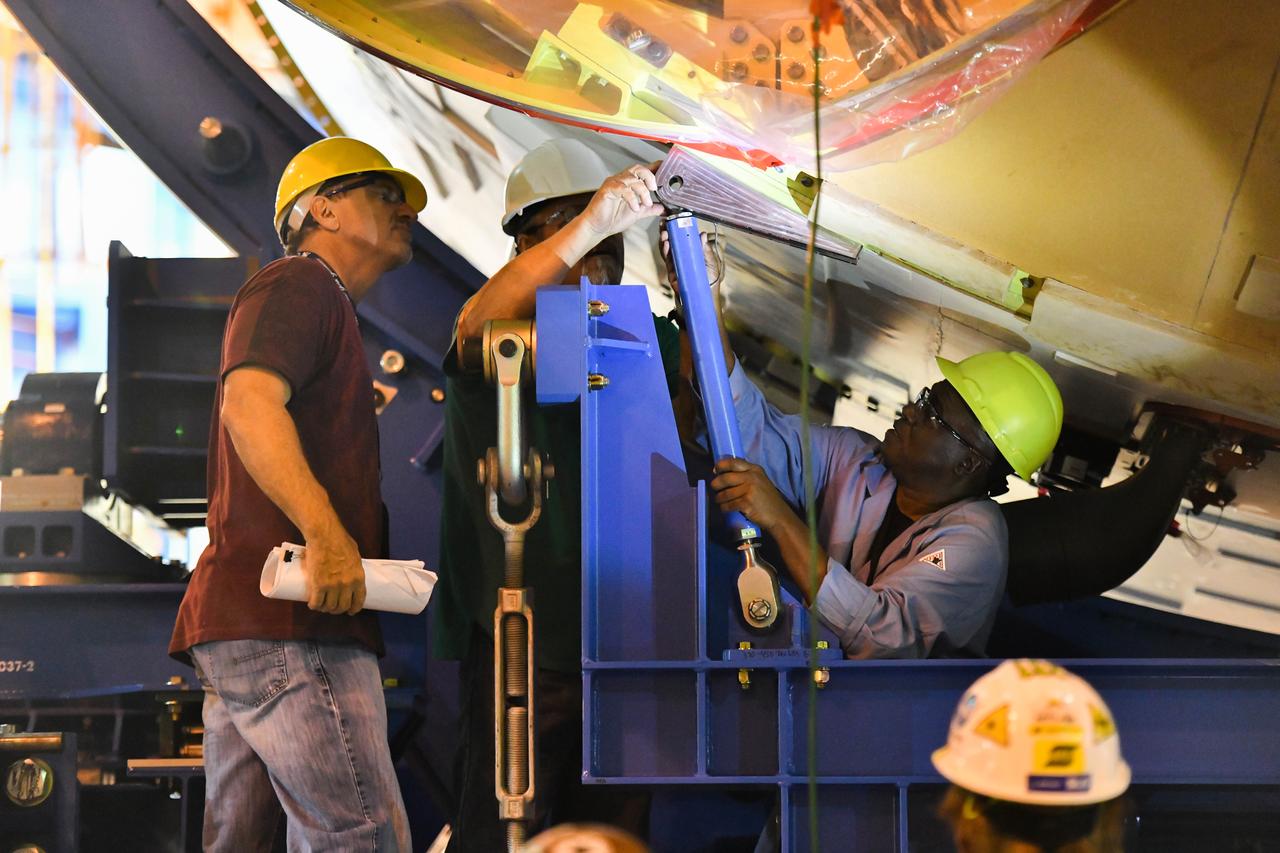
Technicians at NASA’s Michoud Assembly Facility in New Orleans rotated the engine section for NASA’s Space Launch System rocket from a vertical to horizontal position to prepare it for joining to the rest of the rocket’s core stage on Sept. 13. The engine section, which comprises the lowest portion of the 212-foot-tall stage, is the last major component to be horizontally integrated to the core stage. Michoud crews completed assembly on the flight hardware that will be used for Artemis I, the first lunar mission of SLS and NASA’s Orion spacecraft, on Aug. 29. The core stage’s two liquid propellant tanks and four RS-25 engines will produce more than 2 million pounds of thrust to send the SLS rocket and Orion on the Artemis lunar missions. The engine section houses the four RS-25 engines and includes vital systems for mounting, controlling and delivering fuel form the propellant tanks to the rocket’s engines. Offering more payload mass, volume capability and energy to speed missions through space, the SLS rocket, along with NASA’s Gateway in lunar orbit and Orion, is part of NASA’s backbone for deep space exploration and the Artemis lunar program. No other rocket is capable of carrying astronauts in Orion around the Moon in a single mission.
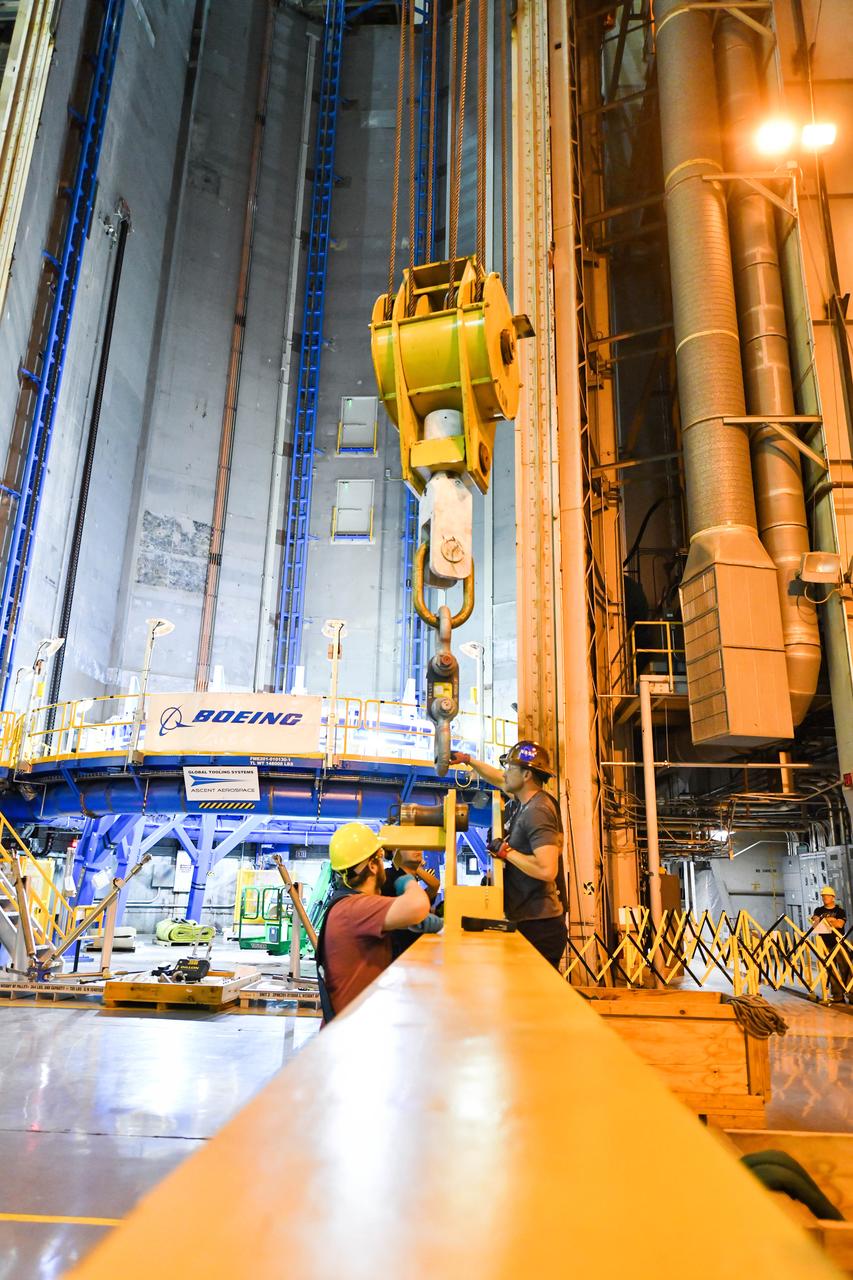
Technicians at NASA’s Michoud Assembly Facility in New Orleans rotated the engine section for NASA’s Space Launch System rocket from a vertical to horizontal position to prepare it for joining to the rest of the rocket’s core stage on Sept. 13. The engine section, which comprises the lowest portion of the 212-foot-tall stage, is the last major component to be horizontally integrated to the core stage. Michoud crews completed assembly on the flight hardware that will be used for Artemis I, the first lunar mission of SLS and NASA’s Orion spacecraft, on Aug. 29. The core stage’s two liquid propellant tanks and four RS-25 engines will produce more than 2 million pounds of thrust to send the SLS rocket and Orion on the Artemis lunar missions. The engine section houses the four RS-25 engines and includes vital systems for mounting, controlling and delivering fuel form the propellant tanks to the rocket’s engines. Offering more payload mass, volume capability and energy to speed missions through space, the SLS rocket, along with NASA’s Gateway in lunar orbit and Orion, is part of NASA’s backbone for deep space exploration and the Artemis lunar program. No other rocket is capable of carrying astronauts in Orion around the Moon in a single mission.
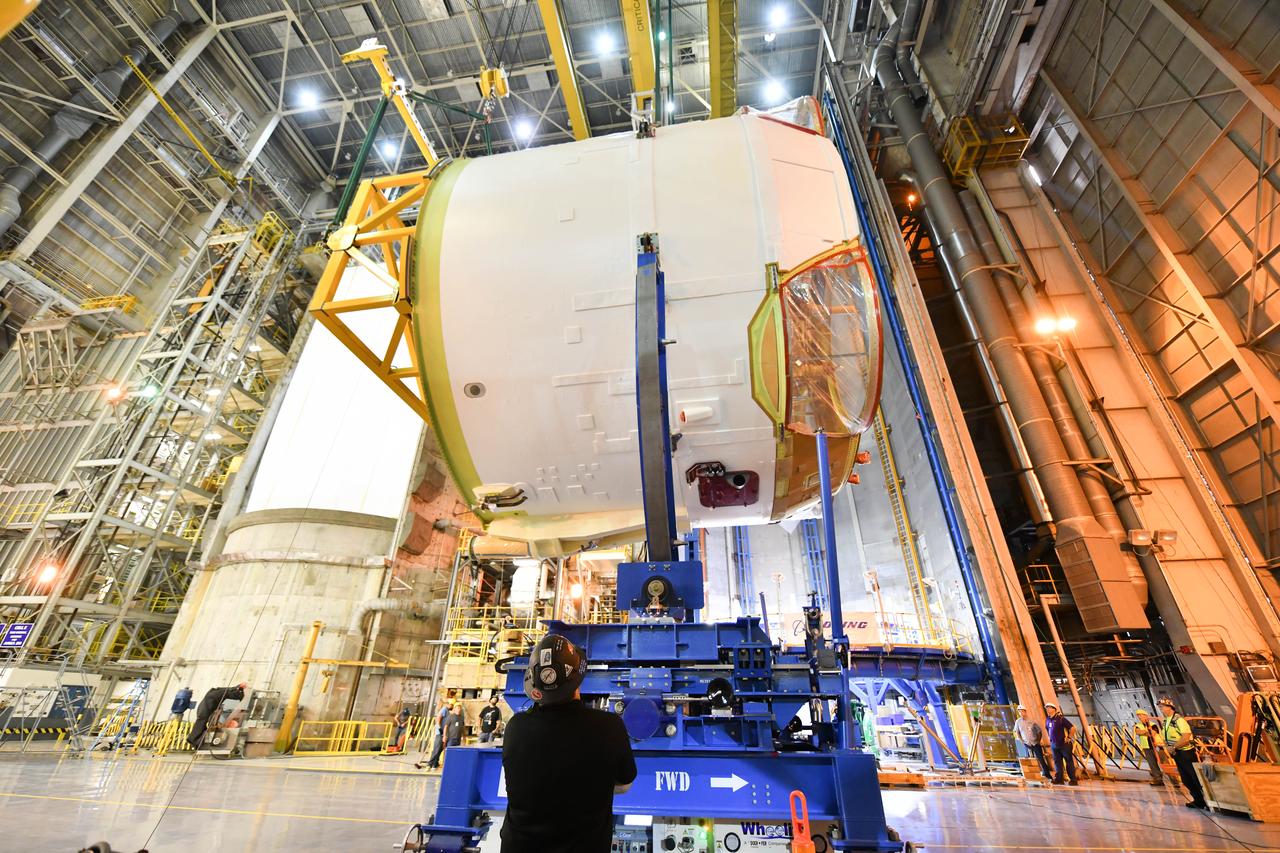
Technicians at NASA’s Michoud Assembly Facility in New Orleans rotated the engine section for NASA’s Space Launch System rocket from a vertical to horizontal position to prepare it for joining to the rest of the rocket’s core stage on Sept. 13. The engine section, which comprises the lowest portion of the 212-foot-tall stage, is the last major component to be horizontally integrated to the core stage. Michoud crews completed assembly on the flight hardware that will be used for Artemis I, the first lunar mission of SLS and NASA’s Orion spacecraft, on Aug. 29. The core stage’s two liquid propellant tanks and four RS-25 engines will produce more than 2 million pounds of thrust to send the SLS rocket and Orion on the Artemis lunar missions. The engine section houses the four RS-25 engines and includes vital systems for mounting, controlling and delivering fuel form the propellant tanks to the rocket’s engines. Offering more payload mass, volume capability and energy to speed missions through space, the SLS rocket, along with NASA’s Gateway in lunar orbit and Orion, is part of NASA’s backbone for deep space exploration and the Artemis lunar program. No other rocket is capable of carrying astronauts in Orion around the Moon in a single mission.
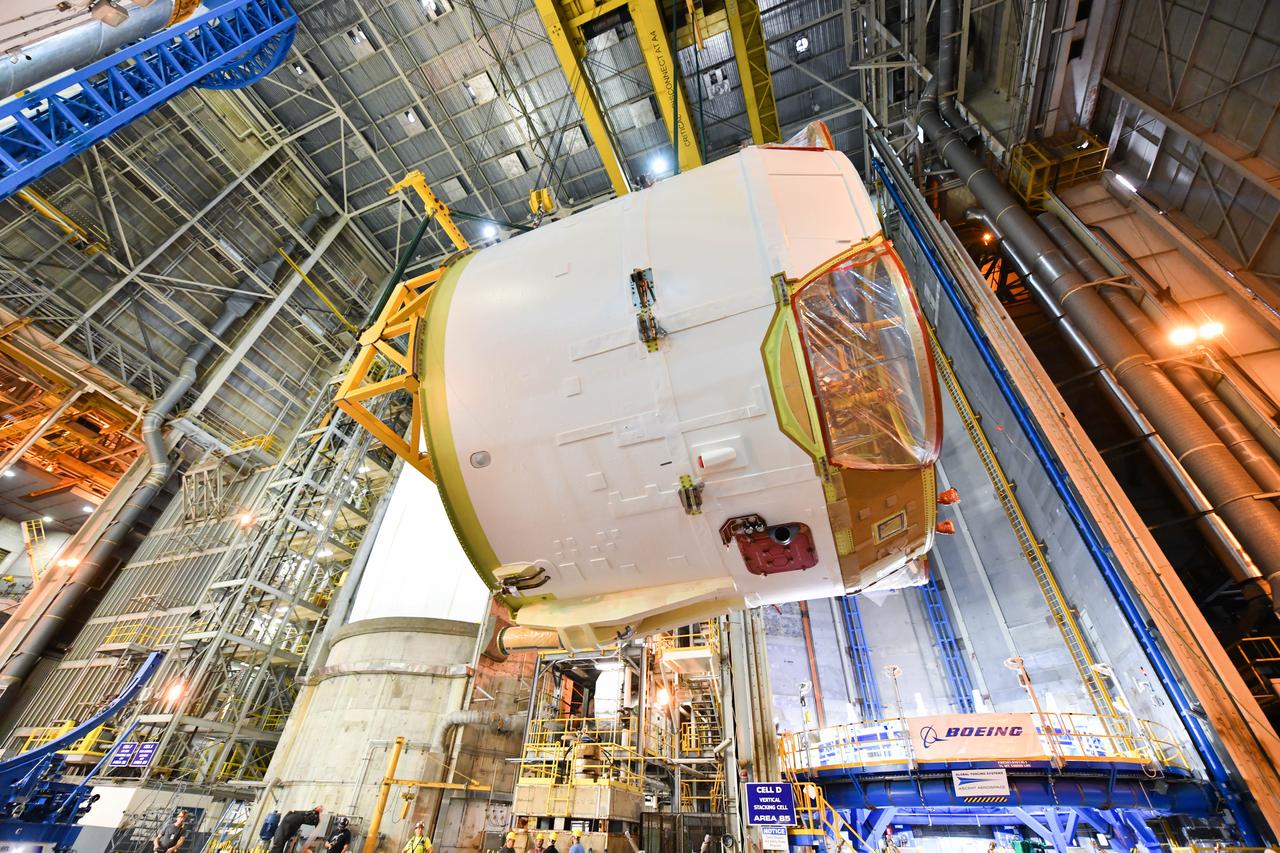
Technicians at NASA’s Michoud Assembly Facility in New Orleans rotated the engine section for NASA’s Space Launch System rocket from a vertical to horizontal position to prepare it for joining to the rest of the rocket’s core stage on Sept. 13. The engine section, which comprises the lowest portion of the 212-foot-tall stage, is the last major component to be horizontally integrated to the core stage. Michoud crews completed assembly on the flight hardware that will be used for Artemis I, the first lunar mission of SLS and NASA’s Orion spacecraft, on Aug. 29. The core stage’s two liquid propellant tanks and four RS-25 engines will produce more than 2 million pounds of thrust to send the SLS rocket and Orion on the Artemis lunar missions. The engine section houses the four RS-25 engines and includes vital systems for mounting, controlling and delivering fuel form the propellant tanks to the rocket’s engines. Offering more payload mass, volume capability and energy to speed missions through space, the SLS rocket, along with NASA’s Gateway in lunar orbit and Orion, is part of NASA’s backbone for deep space exploration and the Artemis lunar program. No other rocket is capable of carrying astronauts in Orion around the Moon in a single mission.
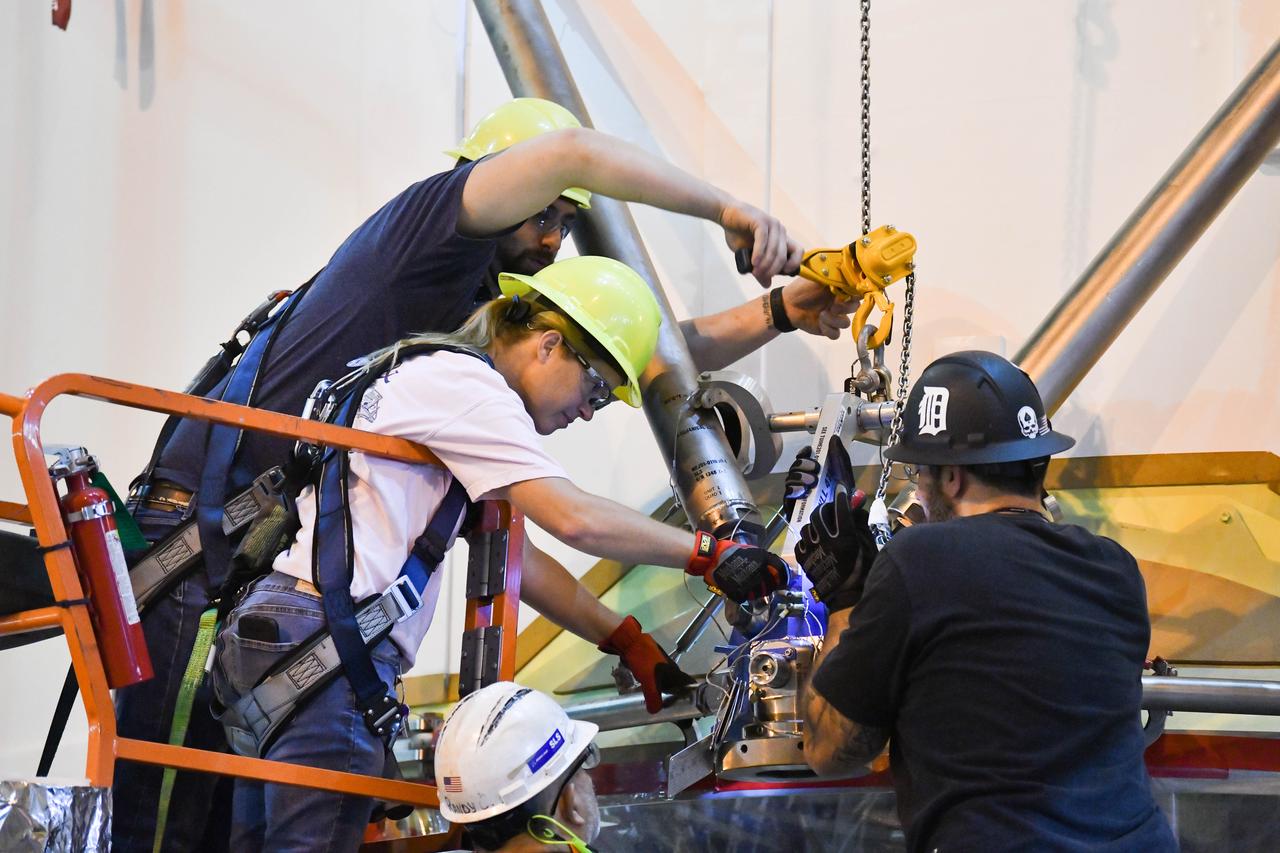
Technicians at NASA’s Michoud Assembly Facility in New Orleans rotated the engine section for NASA’s Space Launch System rocket from a vertical to horizontal position to prepare it for joining to the rest of the rocket’s core stage on Sept. 13. The engine section, which comprises the lowest portion of the 212-foot-tall stage, is the last major component to be horizontally integrated to the core stage. Michoud crews completed assembly on the flight hardware that will be used for Artemis I, the first lunar mission of SLS and NASA’s Orion spacecraft, on Aug. 29. The core stage’s two liquid propellant tanks and four RS-25 engines will produce more than 2 million pounds of thrust to send the SLS rocket and Orion on the Artemis lunar missions. The engine section houses the four RS-25 engines and includes vital systems for mounting, controlling and delivering fuel form the propellant tanks to the rocket’s engines. Offering more payload mass, volume capability and energy to speed missions through space, the SLS rocket, along with NASA’s Gateway in lunar orbit and Orion, is part of NASA’s backbone for deep space exploration and the Artemis lunar program. No other rocket is capable of carrying astronauts in Orion around the Moon in a single mission.
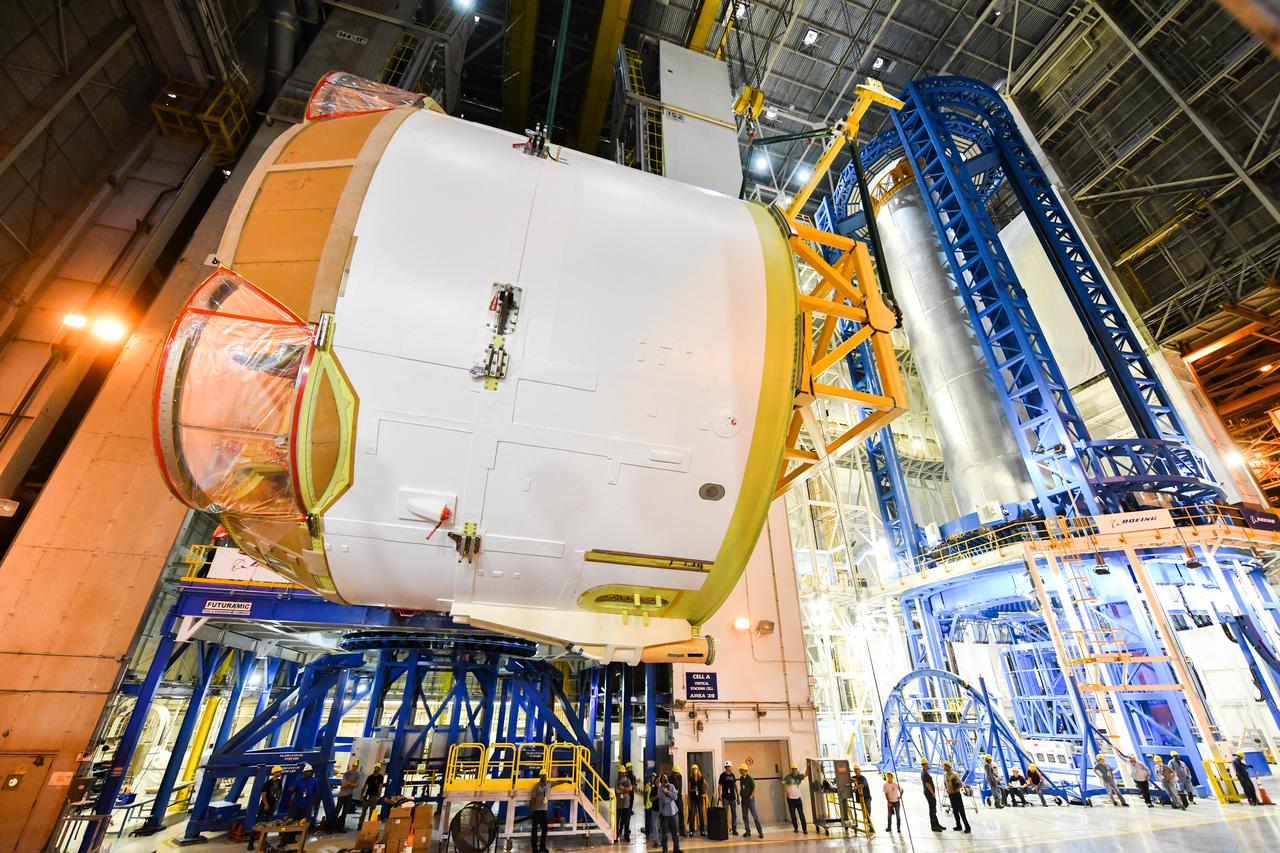
Technicians at NASA’s Michoud Assembly Facility in New Orleans rotated the engine section for NASA’s Space Launch System rocket from a vertical to horizontal position to prepare it for joining to the rest of the rocket’s core stage on Sept. 13. The engine section, which comprises the lowest portion of the 212-foot-tall stage, is the last major component to be horizontally integrated to the core stage. Michoud crews completed assembly on the flight hardware that will be used for Artemis I, the first lunar mission of SLS and NASA’s Orion spacecraft, on Aug. 29. The core stage’s two liquid propellant tanks and four RS-25 engines will produce more than 2 million pounds of thrust to send the SLS rocket and Orion on the Artemis lunar missions. The engine section houses the four RS-25 engines and includes vital systems for mounting, controlling and delivering fuel form the propellant tanks to the rocket’s engines. Offering more payload mass, volume capability and energy to speed missions through space, the SLS rocket, along with NASA’s Gateway in lunar orbit and Orion, is part of NASA’s backbone for deep space exploration and the Artemis lunar program. No other rocket is capable of carrying astronauts in Orion around the Moon in a single mission.
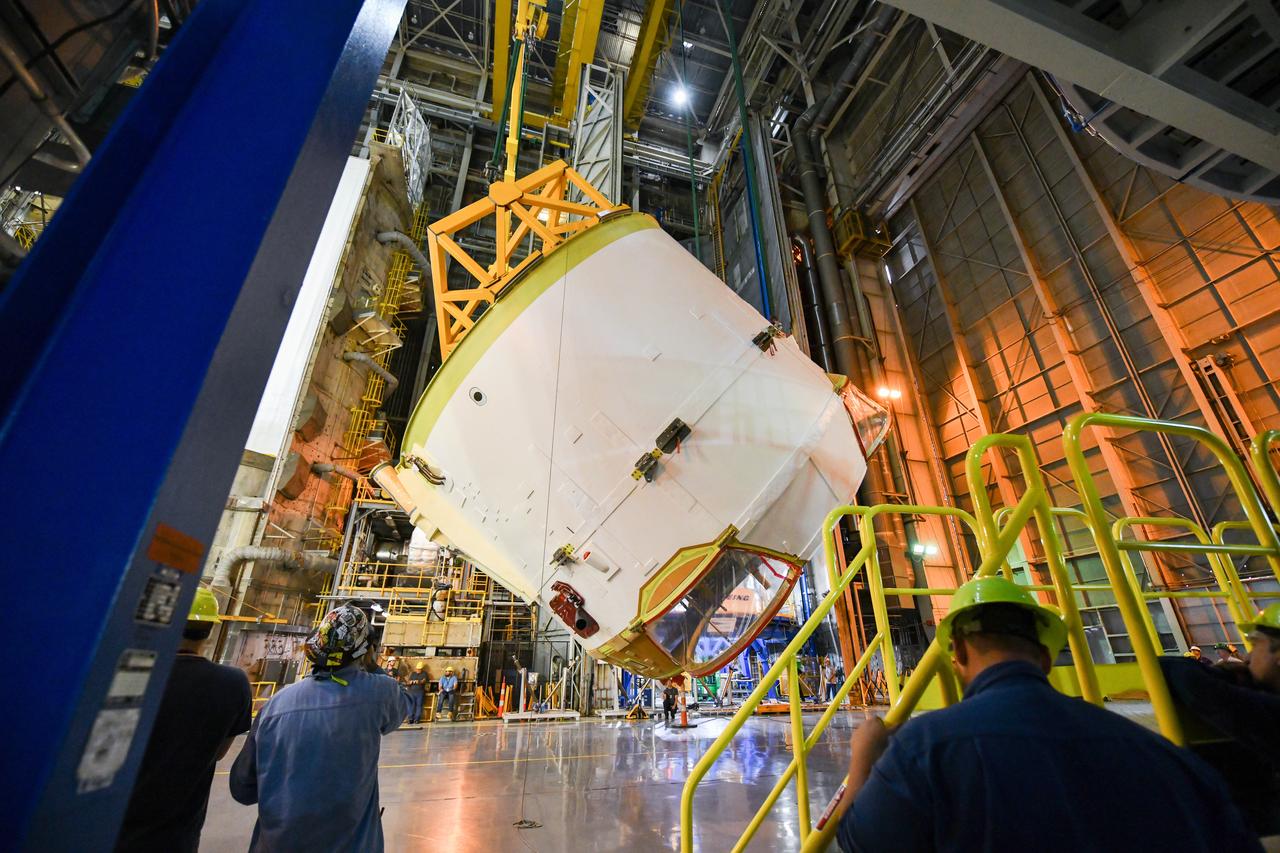
Technicians at NASA’s Michoud Assembly Facility in New Orleans rotated the engine section for NASA’s Space Launch System rocket from a vertical to horizontal position to prepare it for joining to the rest of the rocket’s core stage on Sept. 13. The engine section, which comprises the lowest portion of the 212-foot-tall stage, is the last major component to be horizontally integrated to the core stage. Michoud crews completed assembly on the flight hardware that will be used for Artemis I, the first lunar mission of SLS and NASA’s Orion spacecraft, on Aug. 29. The core stage’s two liquid propellant tanks and four RS-25 engines will produce more than 2 million pounds of thrust to send the SLS rocket and Orion on the Artemis lunar missions. The engine section houses the four RS-25 engines and includes vital systems for mounting, controlling and delivering fuel form the propellant tanks to the rocket’s engines. Offering more payload mass, volume capability and energy to speed missions through space, the SLS rocket, along with NASA’s Gateway in lunar orbit and Orion, is part of NASA’s backbone for deep space exploration and the Artemis lunar program. No other rocket is capable of carrying astronauts in Orion around the Moon in a single mission.
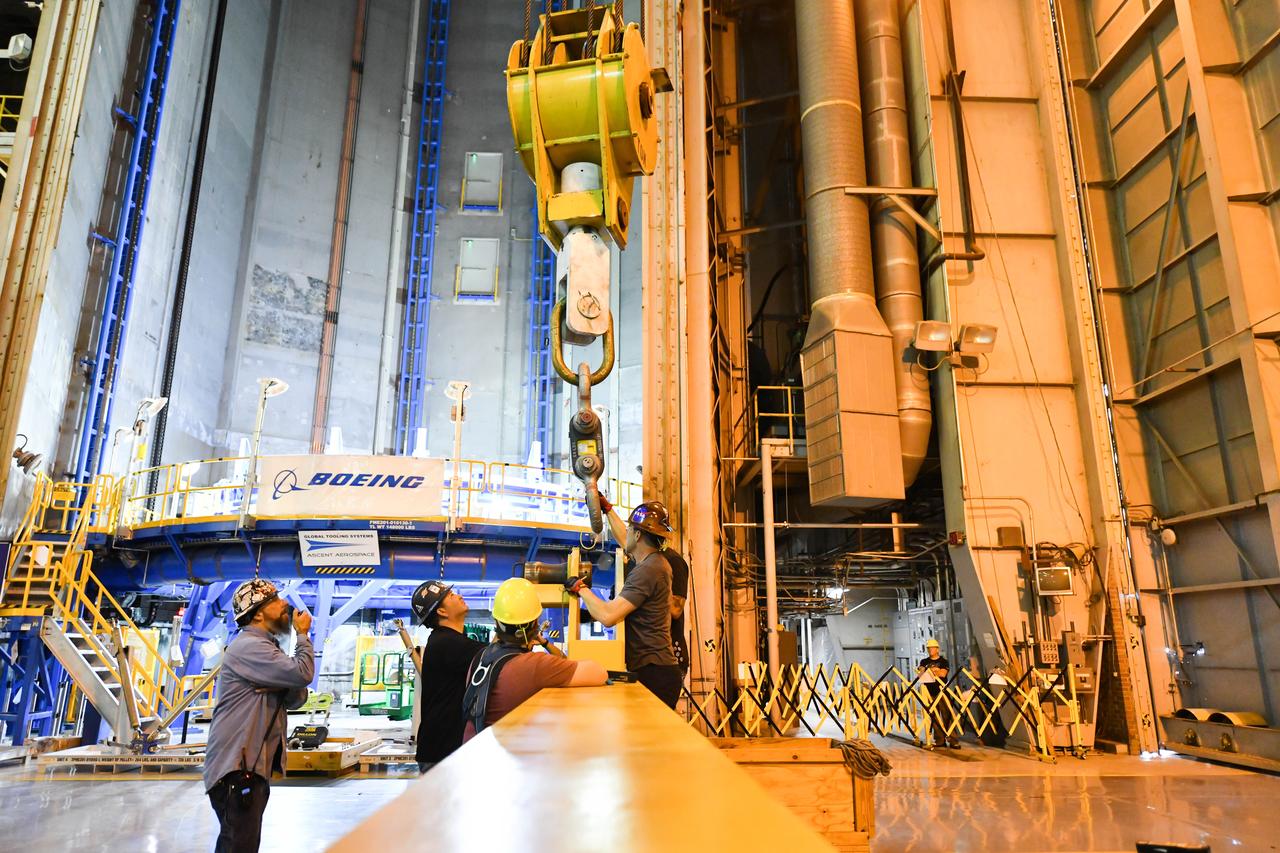
Technicians at NASA’s Michoud Assembly Facility in New Orleans rotated the engine section for NASA’s Space Launch System rocket from a vertical to horizontal position to prepare it for joining to the rest of the rocket’s core stage on Sept. 13. The engine section, which comprises the lowest portion of the 212-foot-tall stage, is the last major component to be horizontally integrated to the core stage. Michoud crews completed assembly on the flight hardware that will be used for Artemis I, the first lunar mission of SLS and NASA’s Orion spacecraft, on Aug. 29. The core stage’s two liquid propellant tanks and four RS-25 engines will produce more than 2 million pounds of thrust to send the SLS rocket and Orion on the Artemis lunar missions. The engine section houses the four RS-25 engines and includes vital systems for mounting, controlling and delivering fuel form the propellant tanks to the rocket’s engines. Offering more payload mass, volume capability and energy to speed missions through space, the SLS rocket, along with NASA’s Gateway in lunar orbit and Orion, is part of NASA’s backbone for deep space exploration and the Artemis lunar program. No other rocket is capable of carrying astronauts in Orion around the Moon in a single mission.
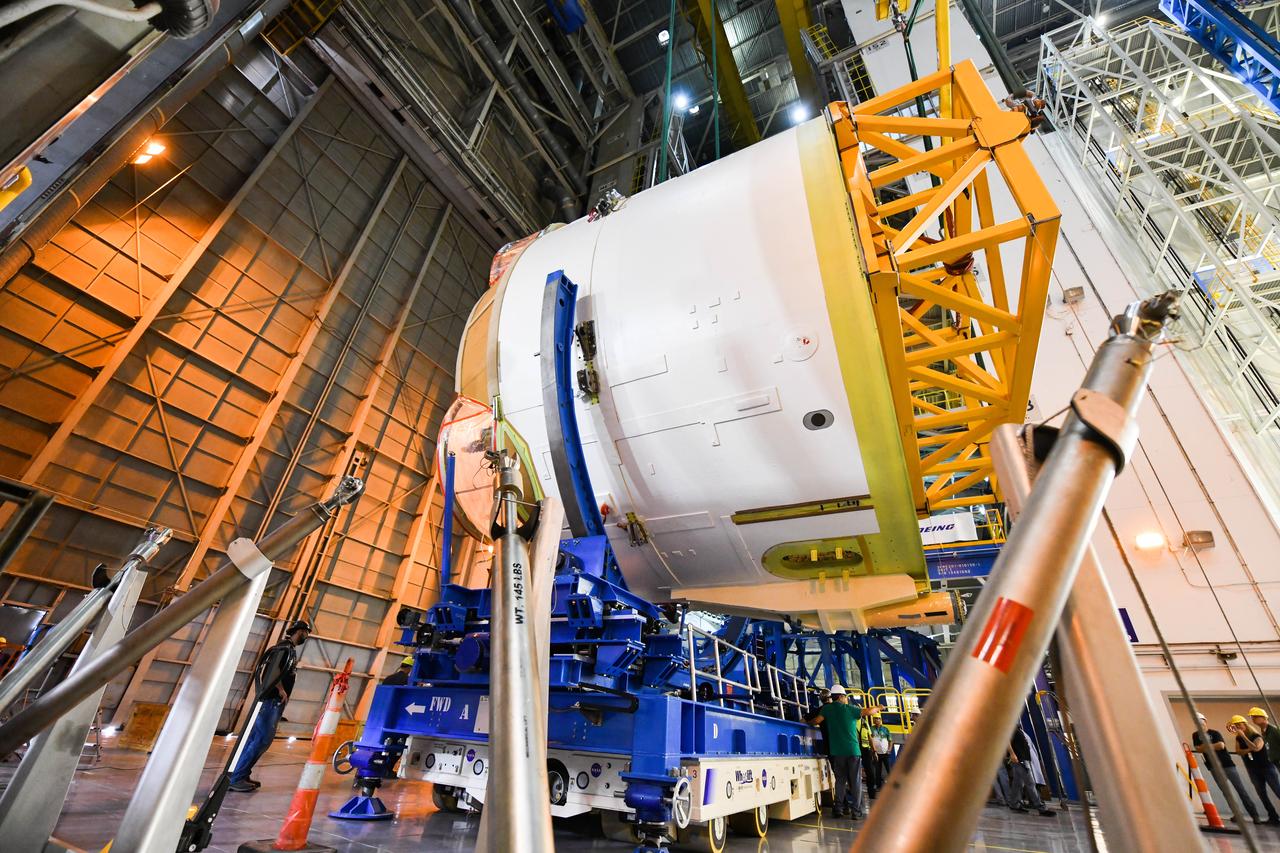
Technicians at NASA’s Michoud Assembly Facility in New Orleans rotated the engine section for NASA’s Space Launch System rocket from a vertical to horizontal position to prepare it for joining to the rest of the rocket’s core stage on Sept. 13. The engine section, which comprises the lowest portion of the 212-foot-tall stage, is the last major component to be horizontally integrated to the core stage. Michoud crews completed assembly on the flight hardware that will be used for Artemis I, the first lunar mission of SLS and NASA’s Orion spacecraft, on Aug. 29. The core stage’s two liquid propellant tanks and four RS-25 engines will produce more than 2 million pounds of thrust to send the SLS rocket and Orion on the Artemis lunar missions. The engine section houses the four RS-25 engines and includes vital systems for mounting, controlling and delivering fuel form the propellant tanks to the rocket’s engines. Offering more payload mass, volume capability and energy to speed missions through space, the SLS rocket, along with NASA’s Gateway in lunar orbit and Orion, is part of NASA’s backbone for deep space exploration and the Artemis lunar program. No other rocket is capable of carrying astronauts in Orion around the Moon in a single mission.
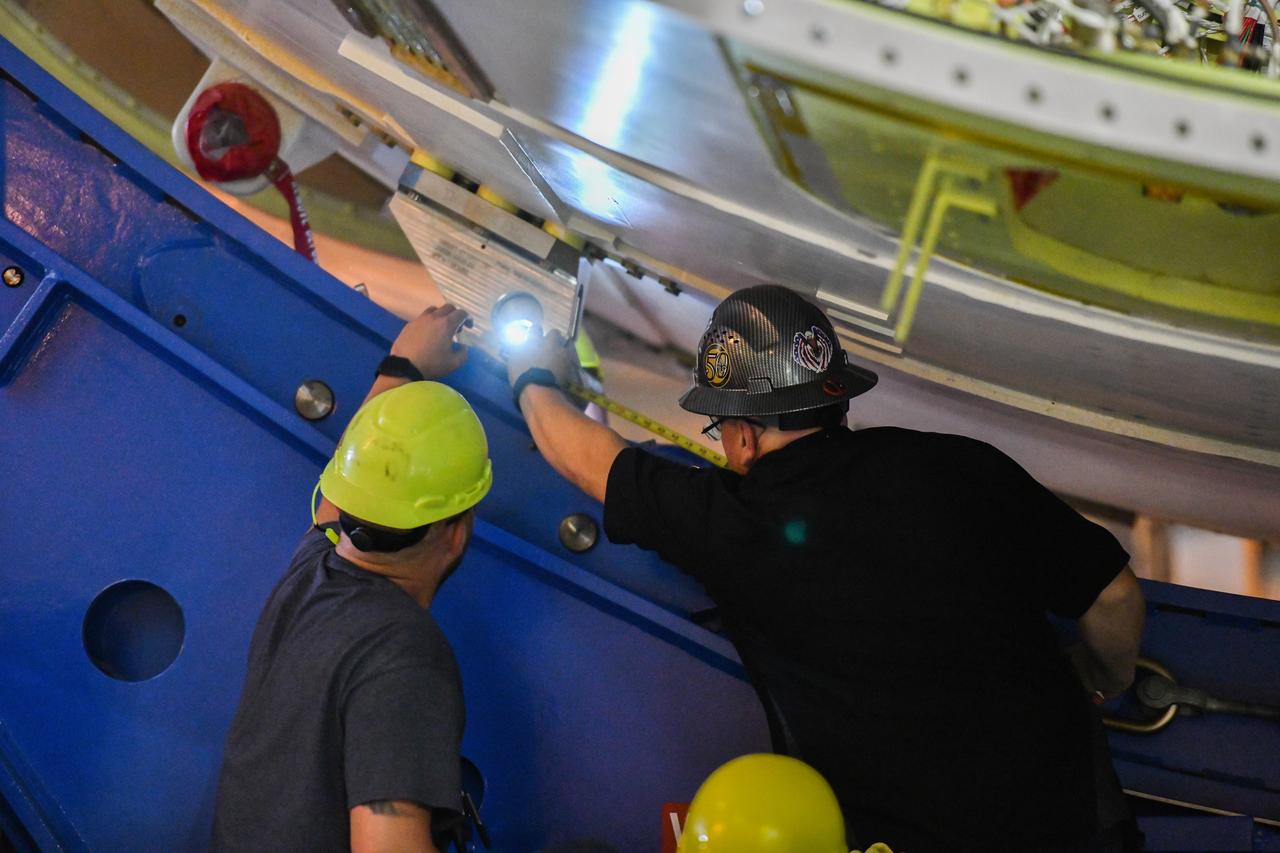
Technicians at NASA’s Michoud Assembly Facility in New Orleans rotated the engine section for NASA’s Space Launch System rocket from a vertical to horizontal position to prepare it for joining to the rest of the rocket’s core stage on Sept. 13. The engine section, which comprises the lowest portion of the 212-foot-tall stage, is the last major component to be horizontally integrated to the core stage. Michoud crews completed assembly on the flight hardware that will be used for Artemis I, the first lunar mission of SLS and NASA’s Orion spacecraft, on Aug. 29. The core stage’s two liquid propellant tanks and four RS-25 engines will produce more than 2 million pounds of thrust to send the SLS rocket and Orion on the Artemis lunar missions. The engine section houses the four RS-25 engines and includes vital systems for mounting, controlling and delivering fuel form the propellant tanks to the rocket’s engines. Offering more payload mass, volume capability and energy to speed missions through space, the SLS rocket, along with NASA’s Gateway in lunar orbit and Orion, is part of NASA’s backbone for deep space exploration and the Artemis lunar program. No other rocket is capable of carrying astronauts in Orion around the Moon in a single mission.