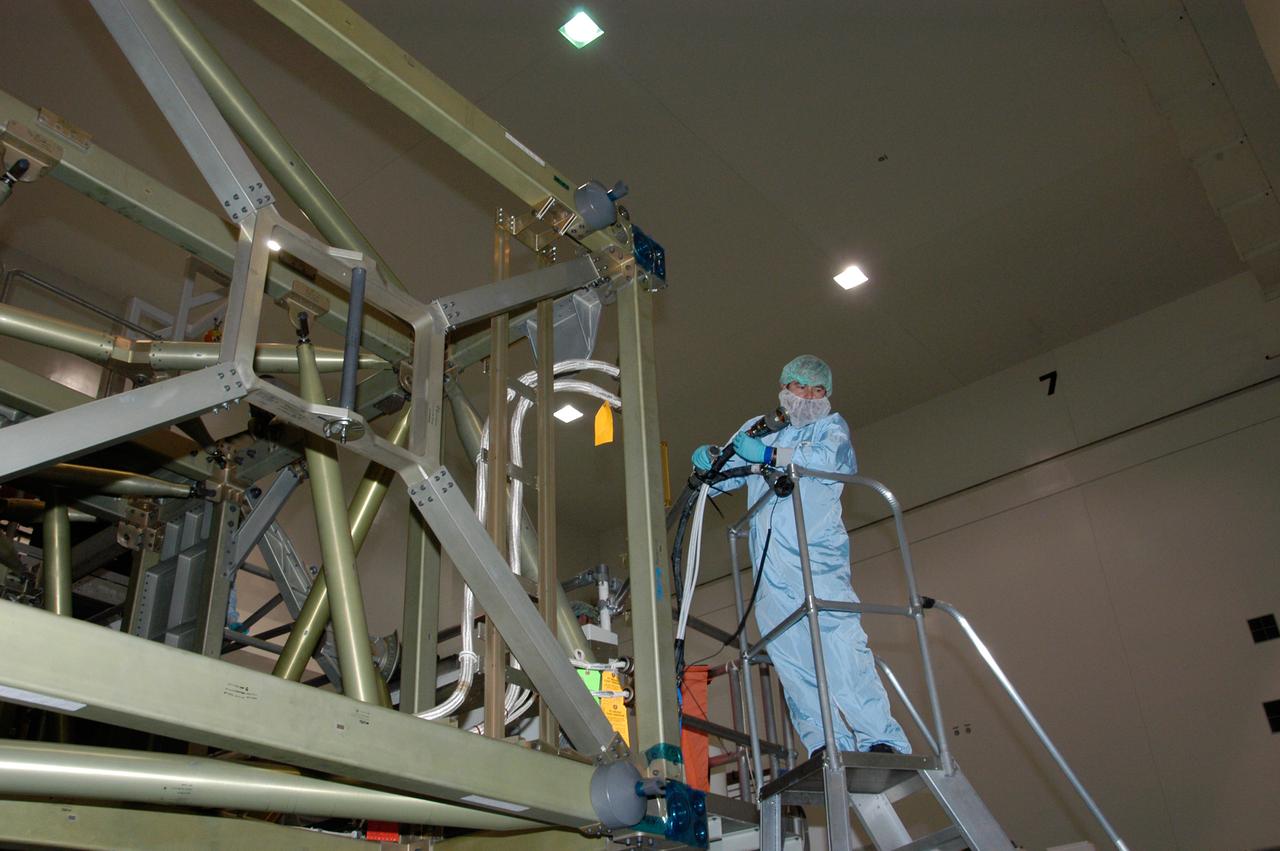
In the Space Station Processing Facility at NASA's Kennedy Space Center, a worker holds a cable that will help recharge the battery for the S6 integrated truss. The final starboard truss in the assembly of the International Space Station, the S6 is scheduled to fly on space shuttle mission STS-119, whose launch date is not yet determined.
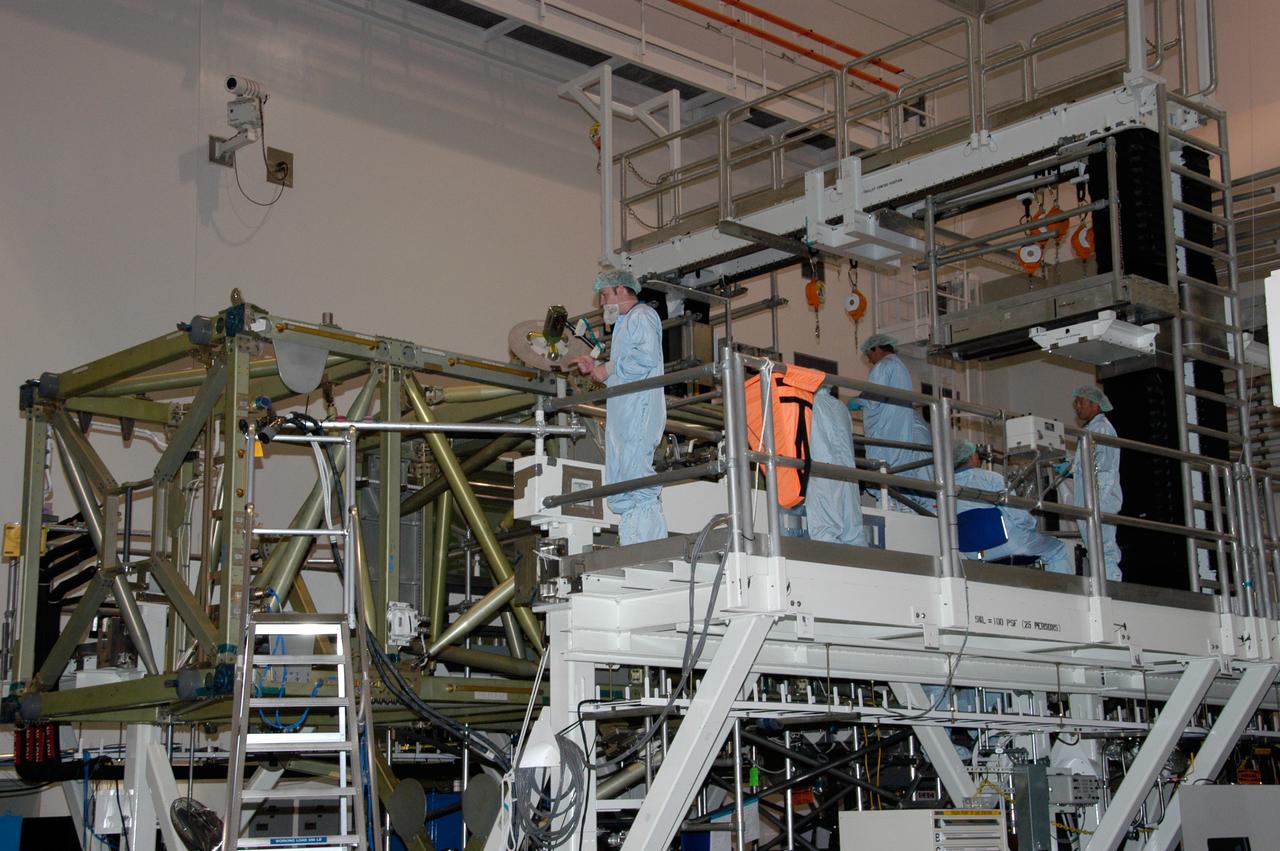
In the Space Station Processing Facility at NASA's Kennedy Space Center, workers prepare to connect cables that will recharge the battery for the S6 integrated truss. The final starboard truss in the assembly of the International Space Station, the S6 is scheduled to fly on space shuttle mission STS-119, whose launch date is not yet determined.
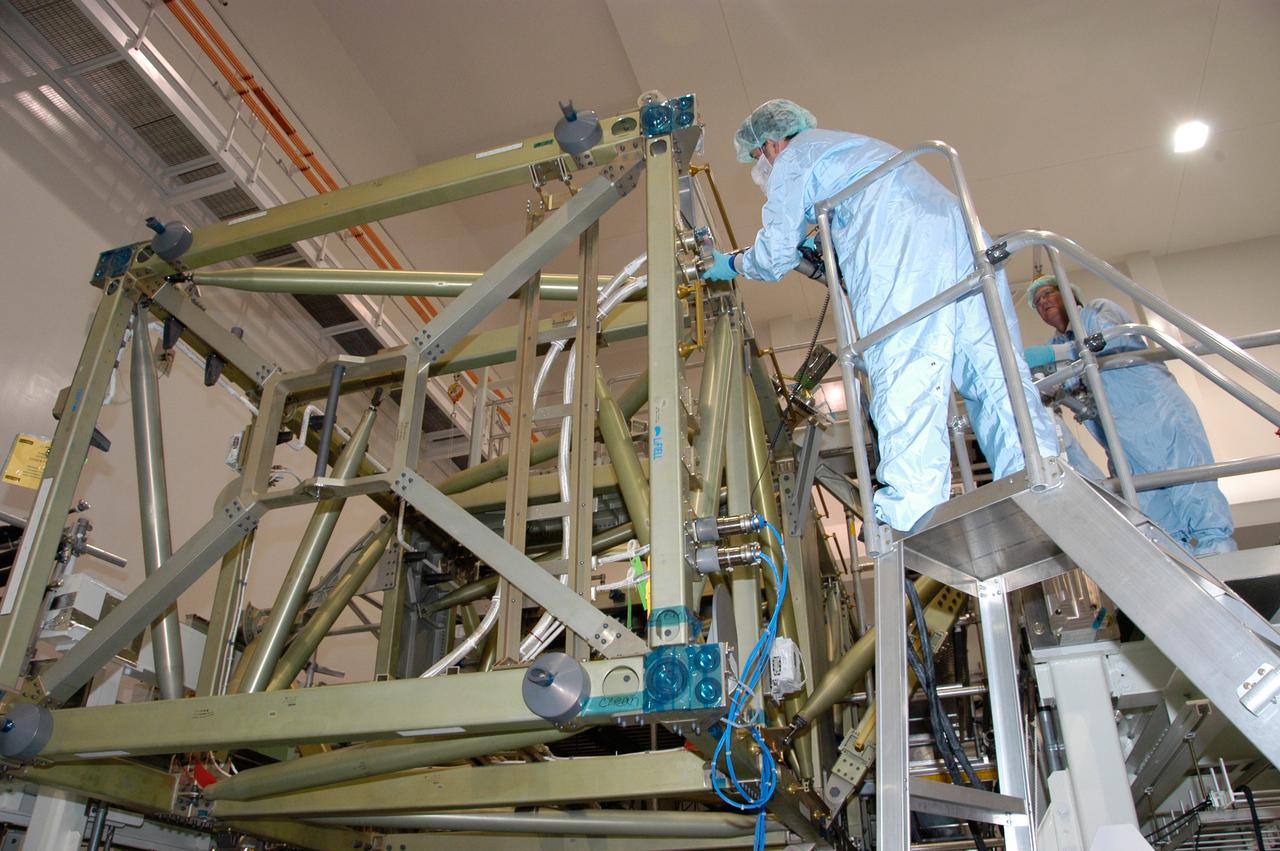
In the Space Station Processing Facility at NASA's Kennedy Space Center, a worker connects a cable to recharge the battery for the S6 integrated truss. The final starboard truss in the assembly of the International Space Station, the S6 is scheduled to fly on space shuttle mission STS-119, whose launch date is not yet determined.

S119-E-006669 (19 March 2009) --- Backdropped by the blackness of space and Earth’s horizon, the Columbus laboratory, starboard truss and solar array panels are featured in this image photographed by a STS-119 crewmember while Space Shuttle Discovery is docked with the International Space Station.

S119-E-006672 (19 March 2009) --- Backdropped by the blackness of space and Earth’s horizon, a portion of the Columbus laboratory, starboard truss and solar array panels are featured in this image photographed by a STS-119 crewmember while Space Shuttle Discovery is docked with the International Space Station.
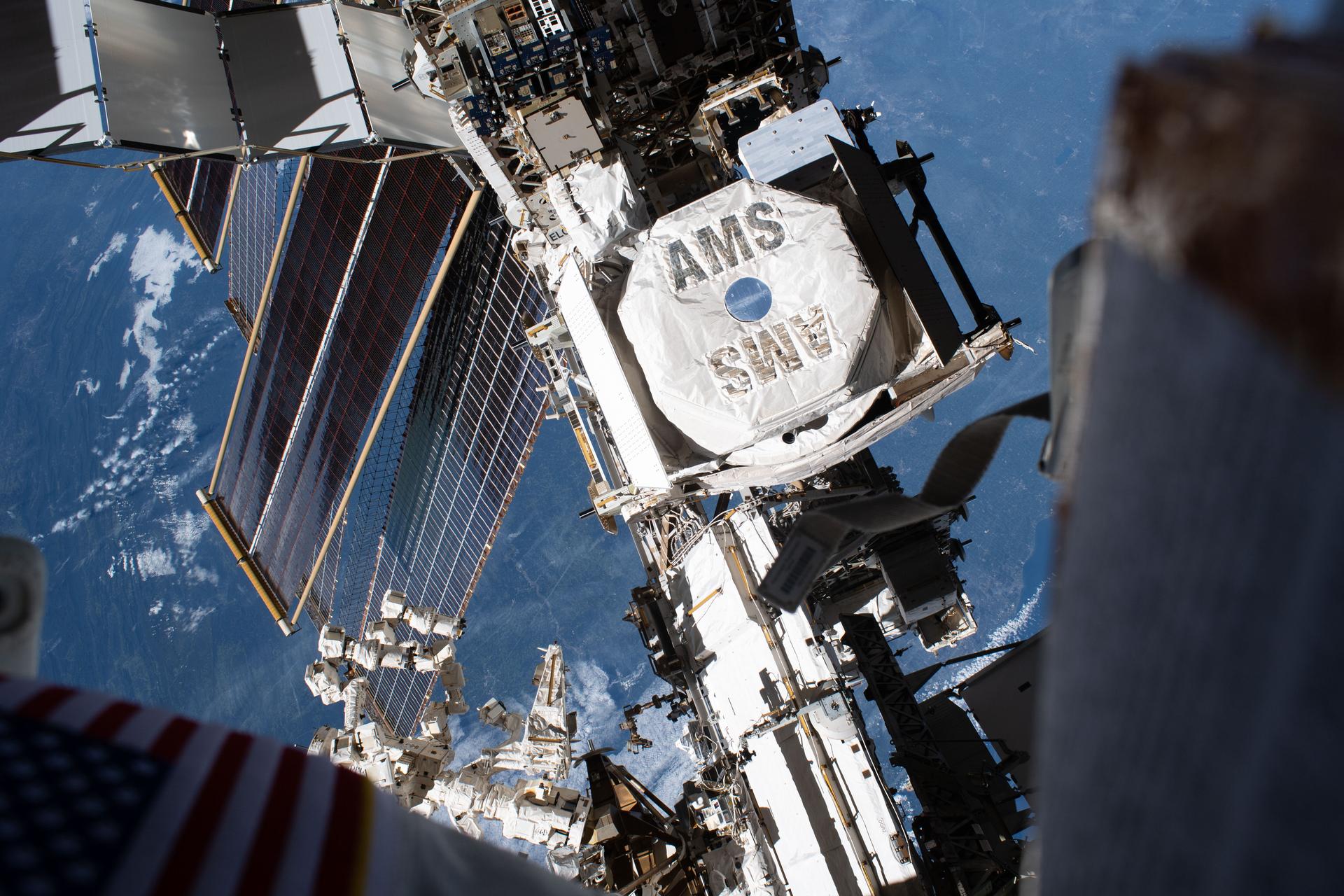
iss075e0068625 (Aug. 25, 2026) --- The Alpha Magnetic Spectrometer (AMS), a cosmic particle detector, is pictured on the International Space Station’s starboard truss structure. The AMS uses the microgravity environment to advance knowledge of the universe, potentially leading to a better understanding of its origin by searching for antimatter, dark matter, and measuring cosmic rays. Credit: NASA/Anil Menon

KENNEDY SPACE CENTER, FLA. - In a brief ceremony in the Space Station Processing Facility, Chuck Hardison (left), Boeing senior truss manager, turns over the “key” for the starboard truss segment S3/S4 to Scott Gahring, ISS Vehicle Office manager (acting), Johnson Space Center. The trusses are scheduled to be delivered to the International Space Station on mission STS-117.
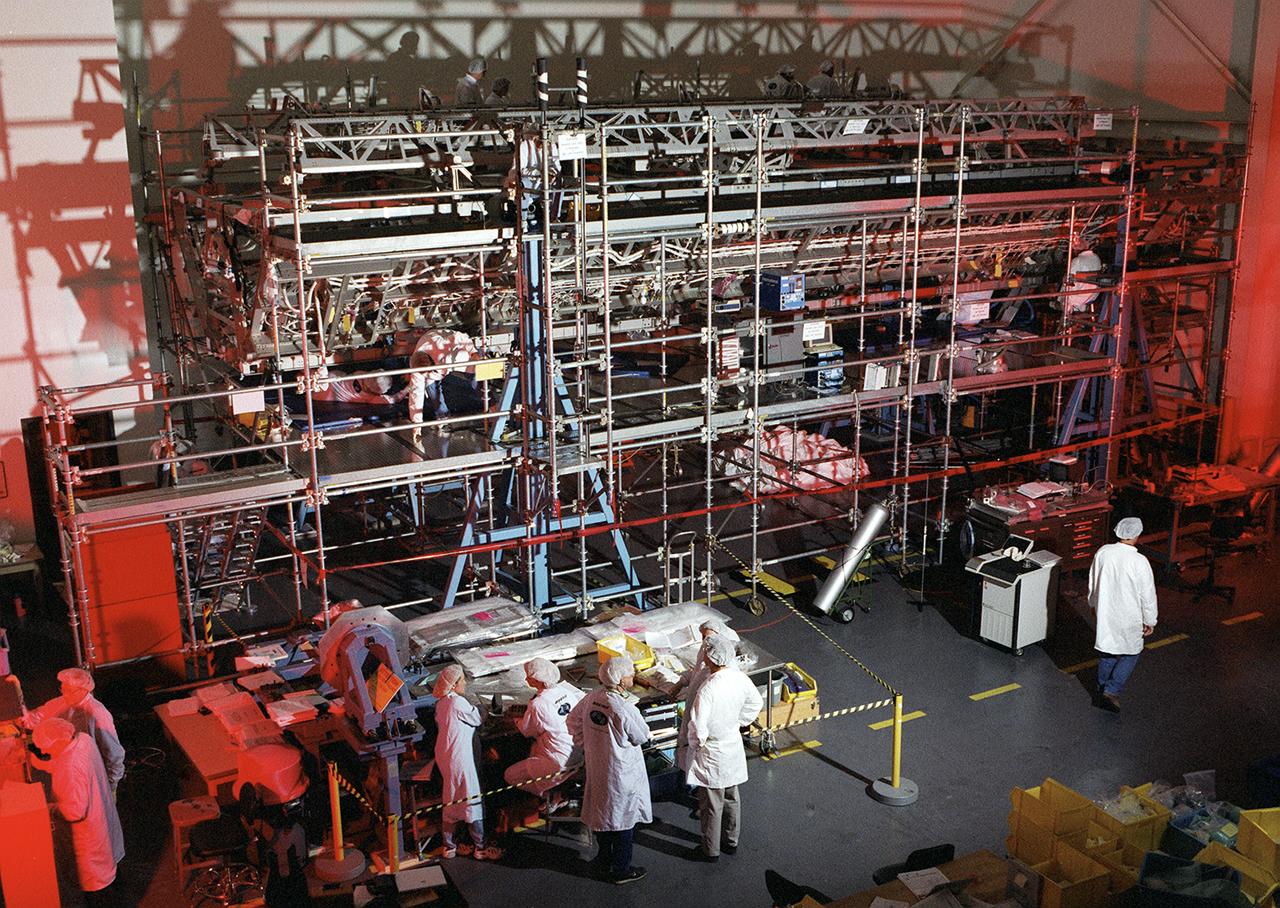
Boeing Company technicians assemble the S-1 truss (starboard side truss) for the International Space Station at the Marshall Space Flight Center.
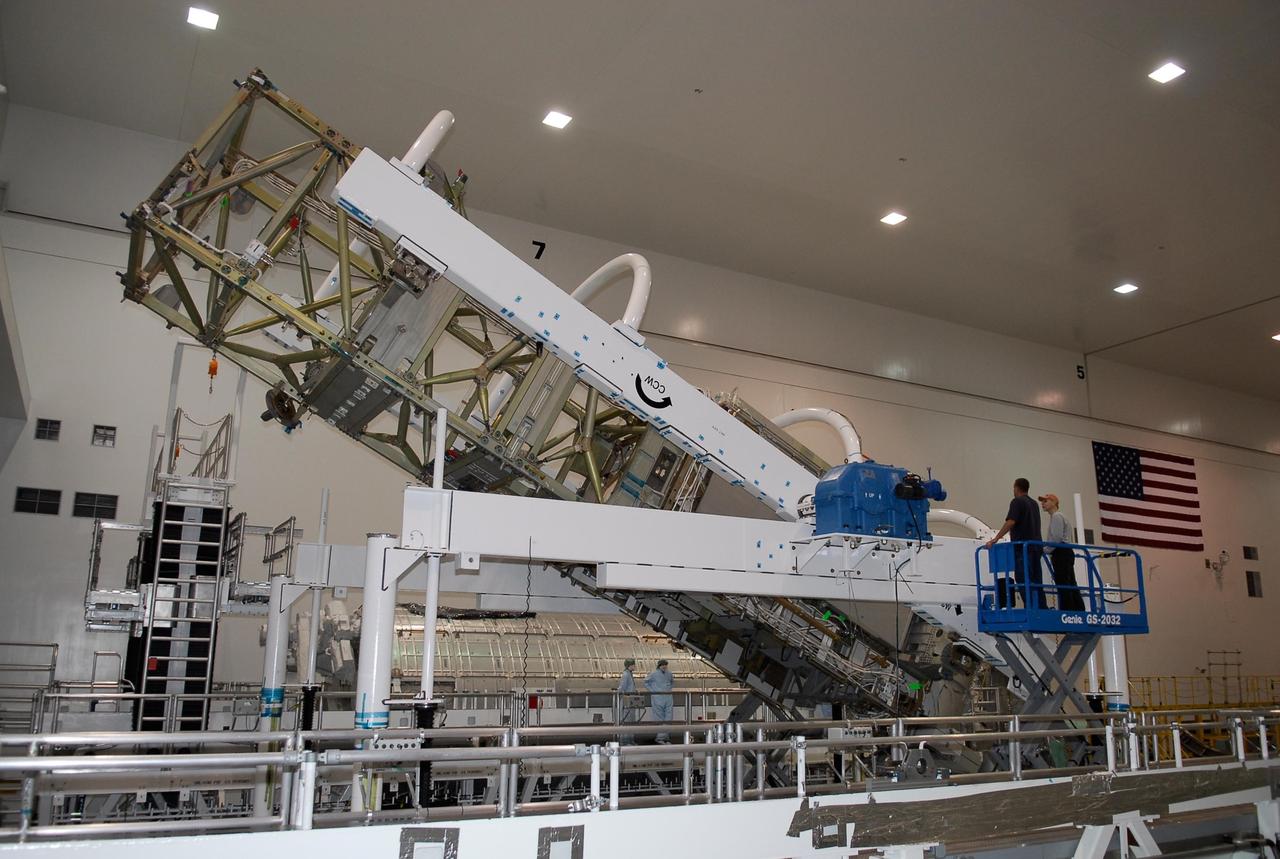
KENNEDY SPACE CENTER, FLA. -- In the Space Station Processing Facility at NASA's Kennedy Space Center, workers stand ready as the starboard integrated truss, known as S6, is three-fourths of the way through its rotation. The truss is being rotated in order to remove and replace lower deck batteries. The final starboard truss in the assembly of the International Space Station, the S6 is scheduled to fly on the STS-119 space shuttle mission, whose launch date is not yet determined. Photo credit: NASA/Kim Shiflett

KENNEDY SPACE CENTER, FLA. -- In the Space Station Processing Facility at NASA's Kennedy Space Center, workers get ready to rotate the starboard integrated truss, known as S6. The truss is being rotated in order to remove and replace lower deck batteries. The final starboard truss in the assembly of the International Space Station, the S6 is scheduled to fly on the STS-119 space shuttle mission, whose launch date is not yet determined. Photo credit: NASA/Kim Shiflett
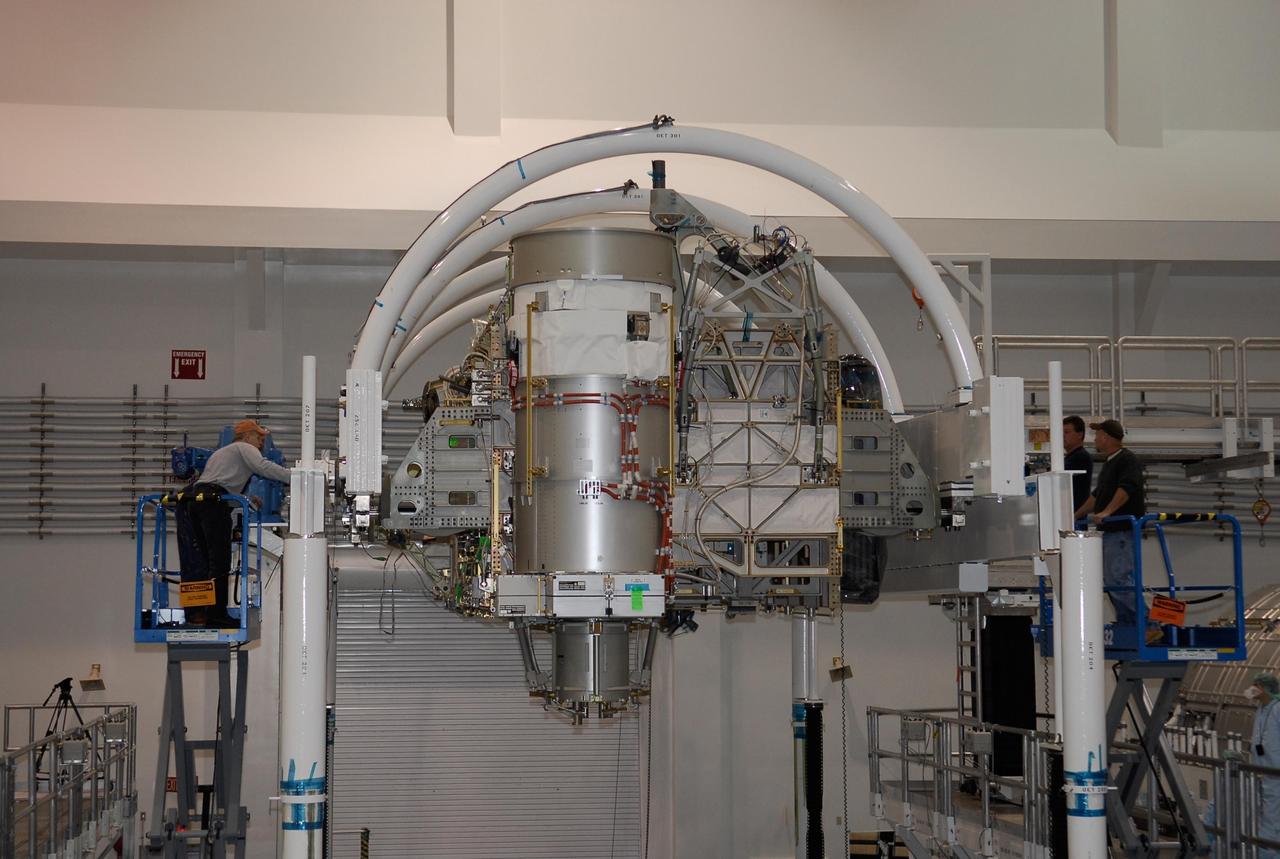
KENNEDY SPACE CENTER, FLA. -- In the Space Station Processing Facility at NASA's Kennedy Space Center, workers check the starboard integrated truss, known as S6, after its full rotation. The truss was rotated in order to remove and replace lower deck batteries. The final starboard truss in the assembly of the International Space Station, the S6 is scheduled to fly on the STS-119 space shuttle mission, whose launch date is not yet determined. Photo credit: NASA/Kim Shiflett
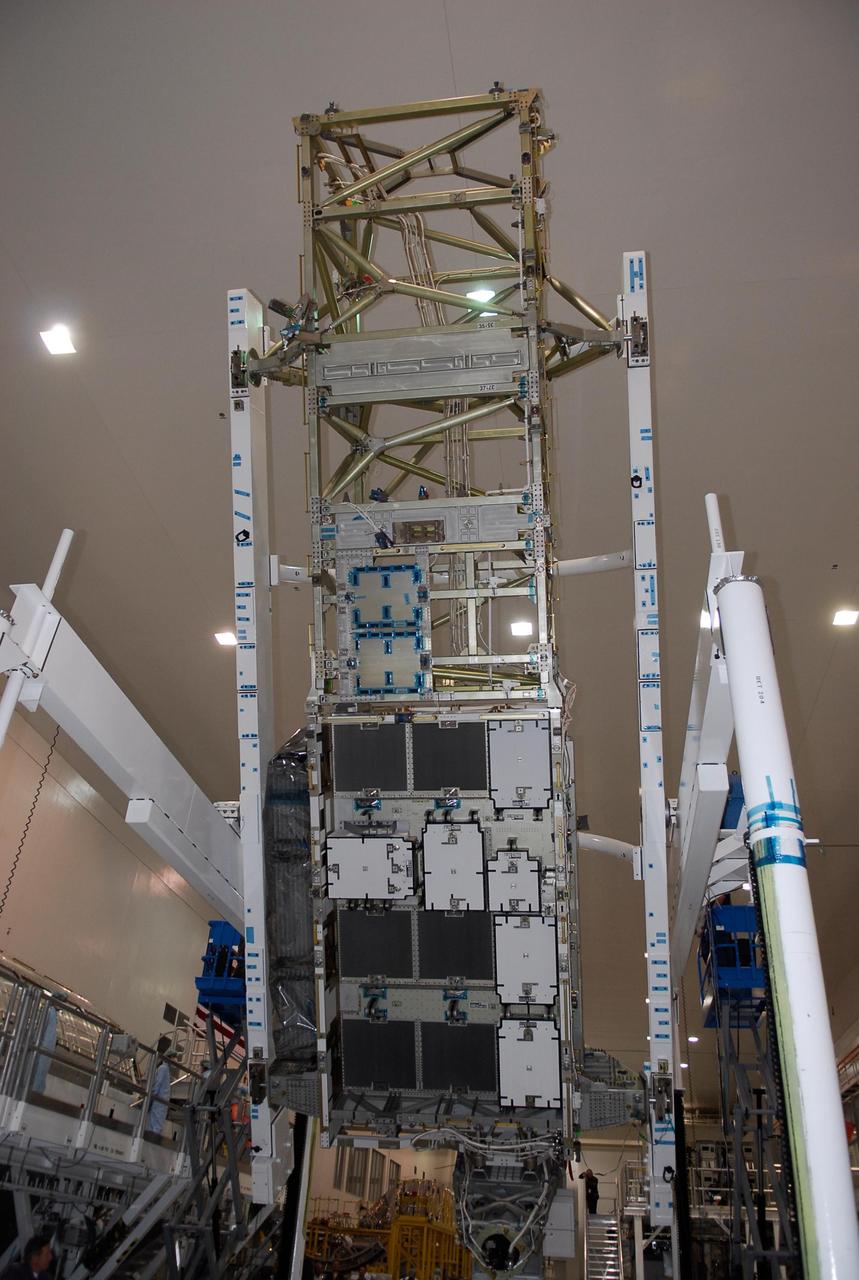
KENNEDY SPACE CENTER, FLA. -- In the Space Station Processing Facility at NASA's Kennedy Space Center, the starboard integrated truss, known as S6, is half way through its rotation. The truss is being rotated in order to remove and replace lower deck batteries. The final starboard truss in the assembly of the International Space Station, the S6 is scheduled to fly on the STS-119 space shuttle mission, whose launch date is not yet determined. Photo credit: NASA/Kim Shiflett
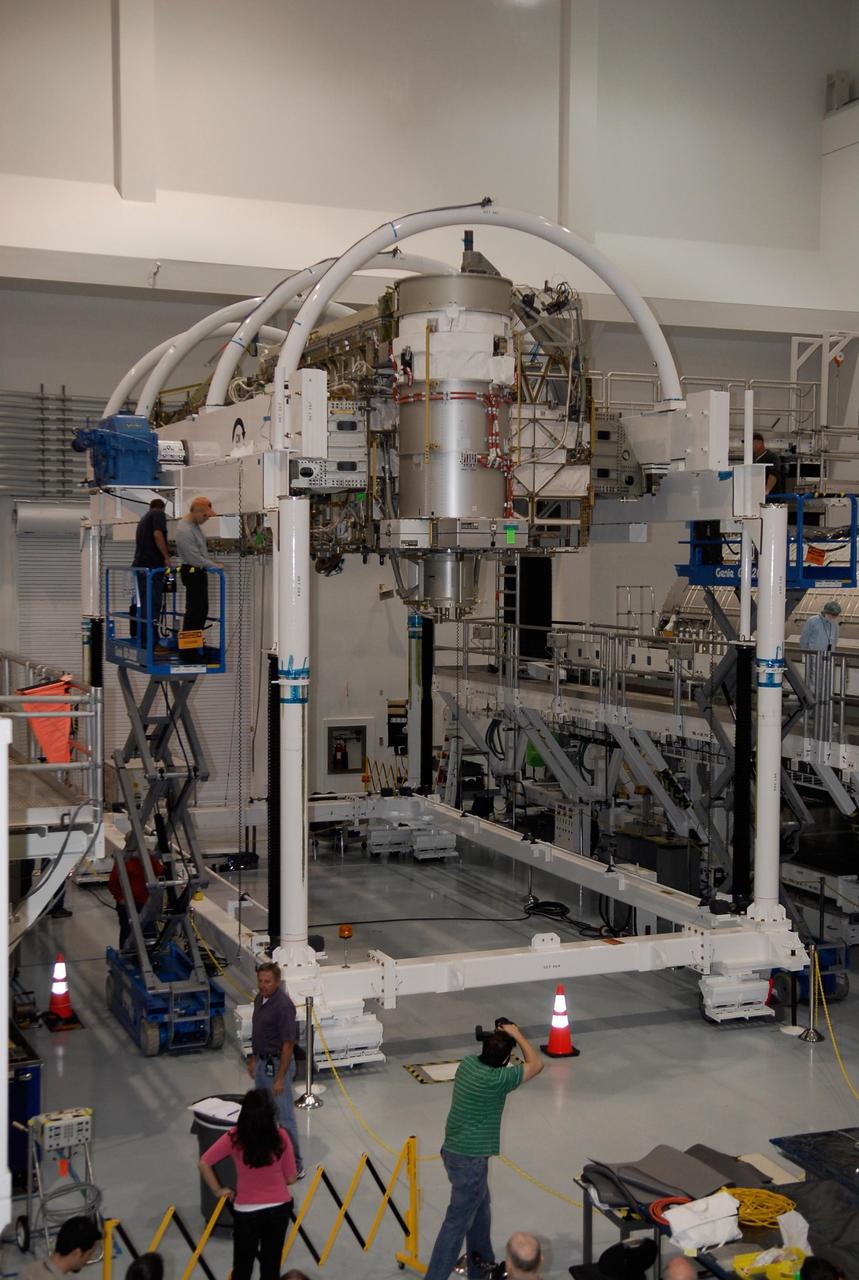
KENNEDY SPACE CENTER, FLA. -- In the Space Station Processing Facility at NASA's Kennedy Space Center, workers check the starboard integrated truss, known as S6, after its full rotation. The truss was rotated in order to remove and replace lower deck batteries. The final starboard truss in the assembly of the International Space Station, the S6 is scheduled to fly on the STS-119 space shuttle mission, whose launch date is not yet determined. Photo credit: NASA/Kim Shiflett
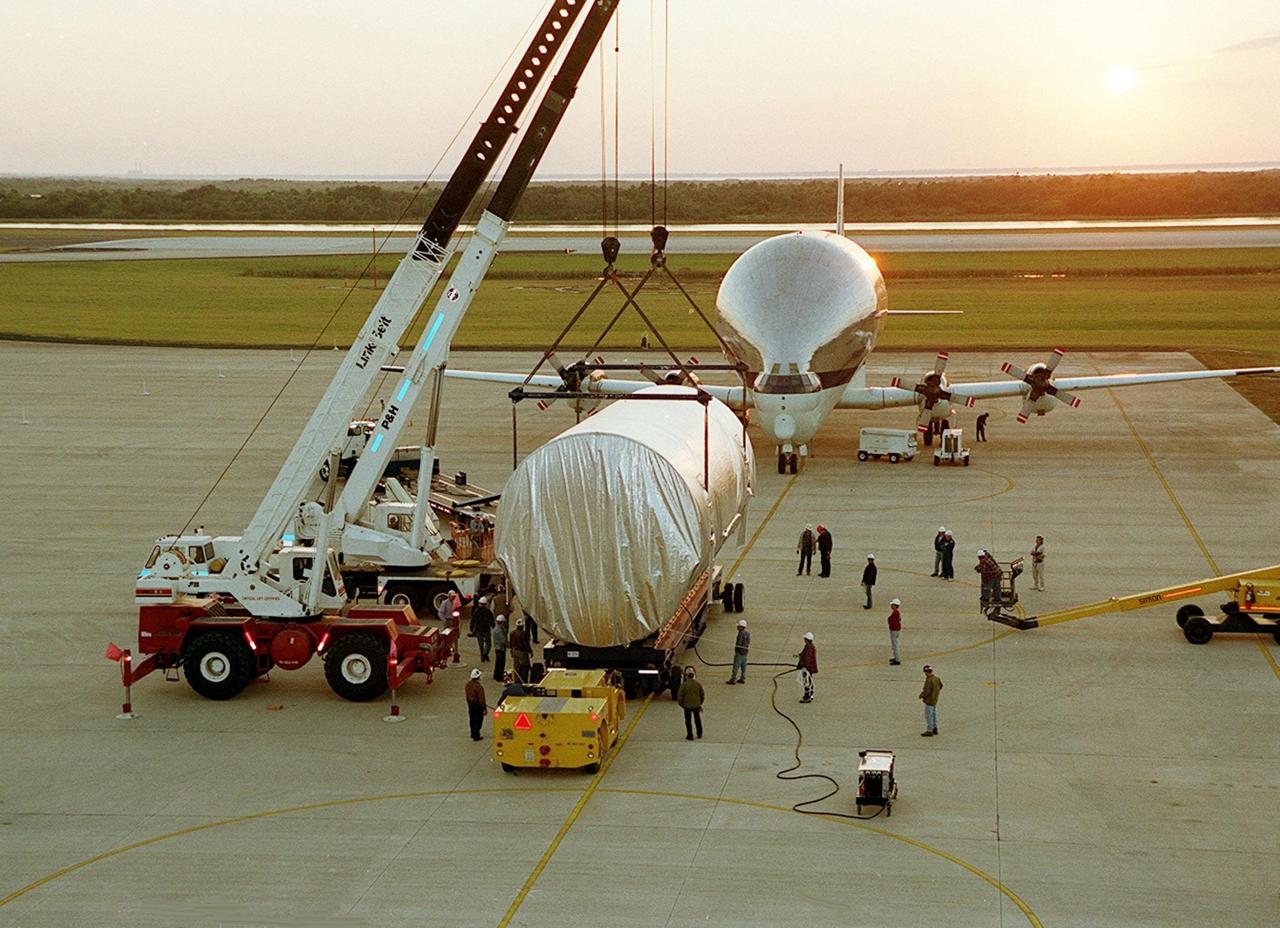
On the parking apron of the Shuttle Landing Facility, workers check the overhead cranes that will move the Integrated Truss Structure S3 to a transporter. The truss will be taken to the Operations and Checkout Building. The second starboard truss segment of the International Space Station, the S3 truss is scheduled to be added to the Station in April 2003
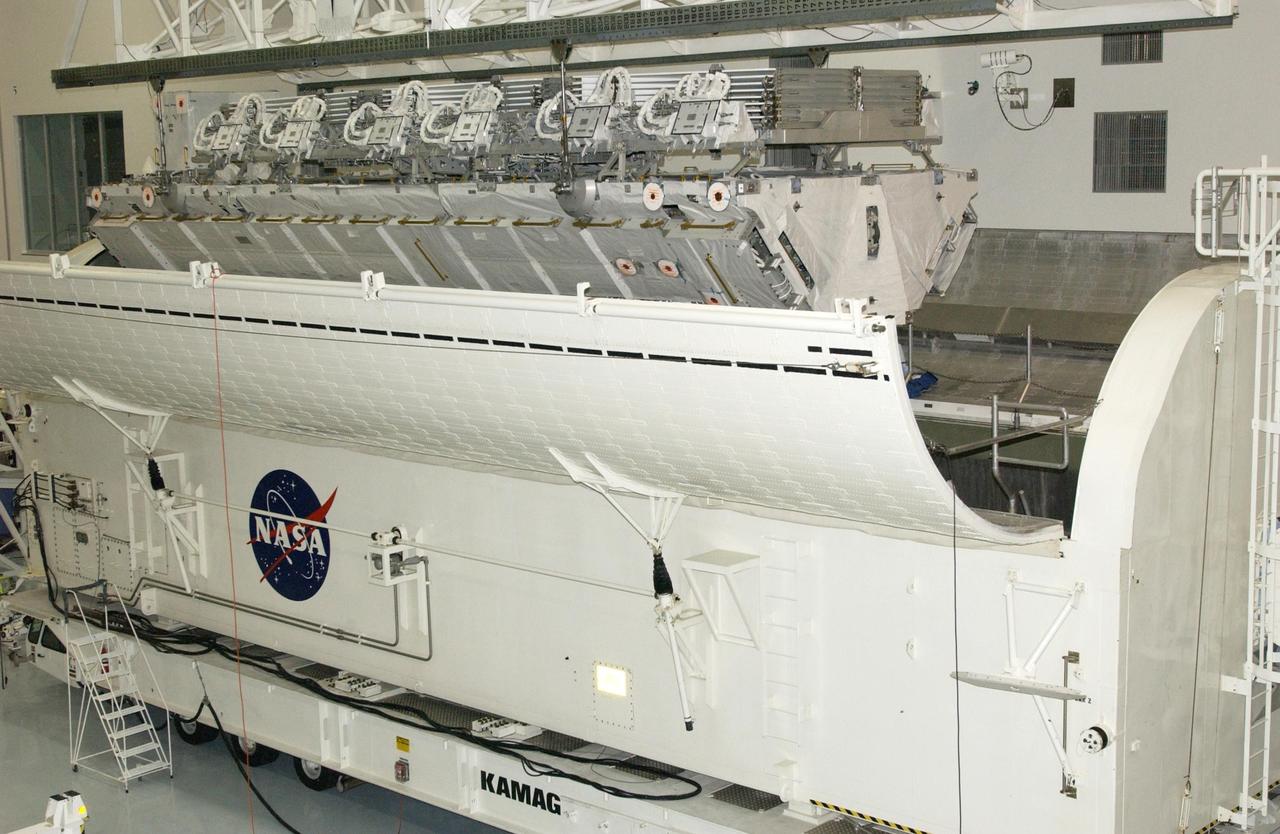
KENNEDY SPACE CENTER, FLA. -- The S1 Integrated Truss Structure is lowered into the payload canister for transport to Atlantis. The first starboard truss segment, the S1 will be attached to the Central truss segment, the S0 Truss, on the International Space Station during mission STS-112. Atlantis is scheduled to launch no earlier than Oct. 2.
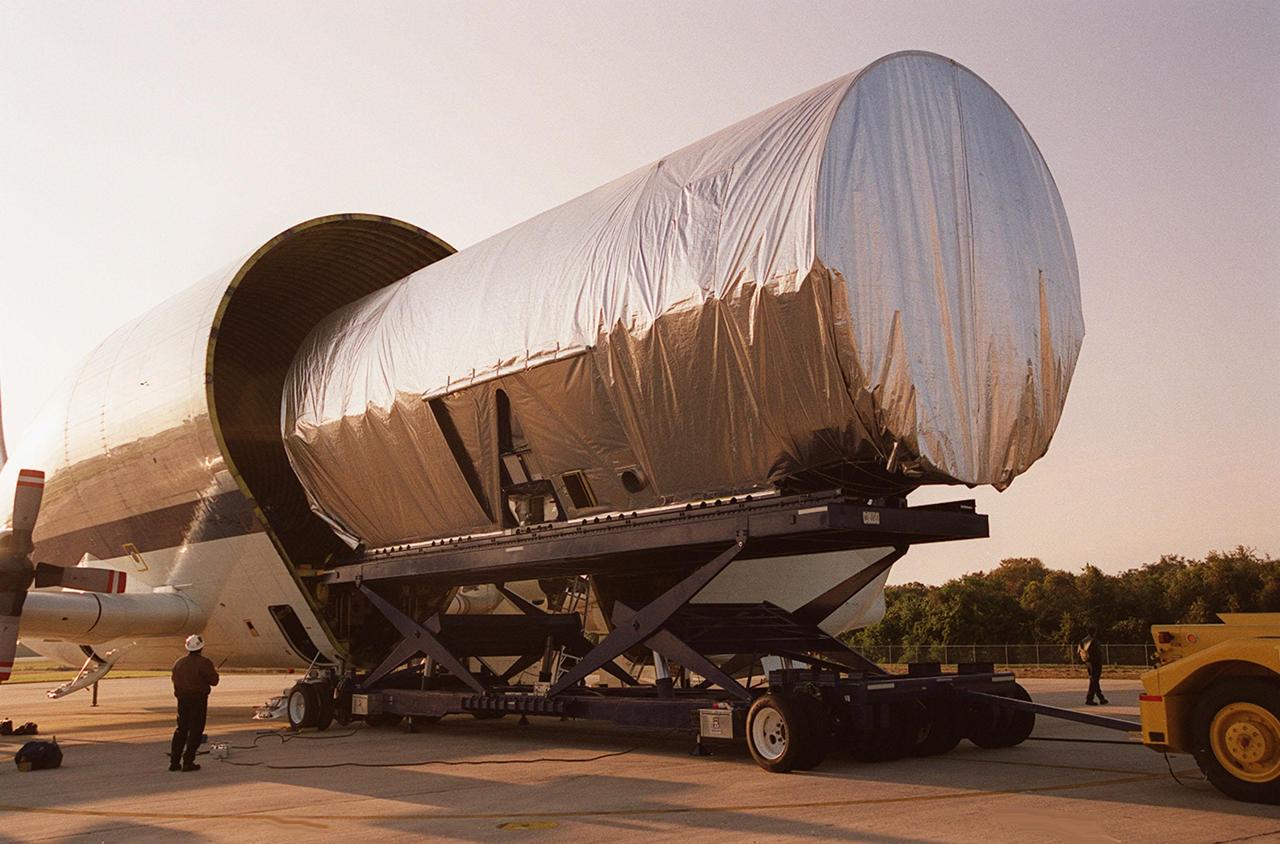
The Integrated Truss Structure S3 is offloaded from the Super Guppy aircraft that brought it to KSC from Tulsa, Okla. The S3 is built by The Boeing Co. The truss will be transported to the Operations and Checkout Building. The second starboard truss segment of the International Space Station, the S3 truss is scheduled to be added to the Station in April 2003
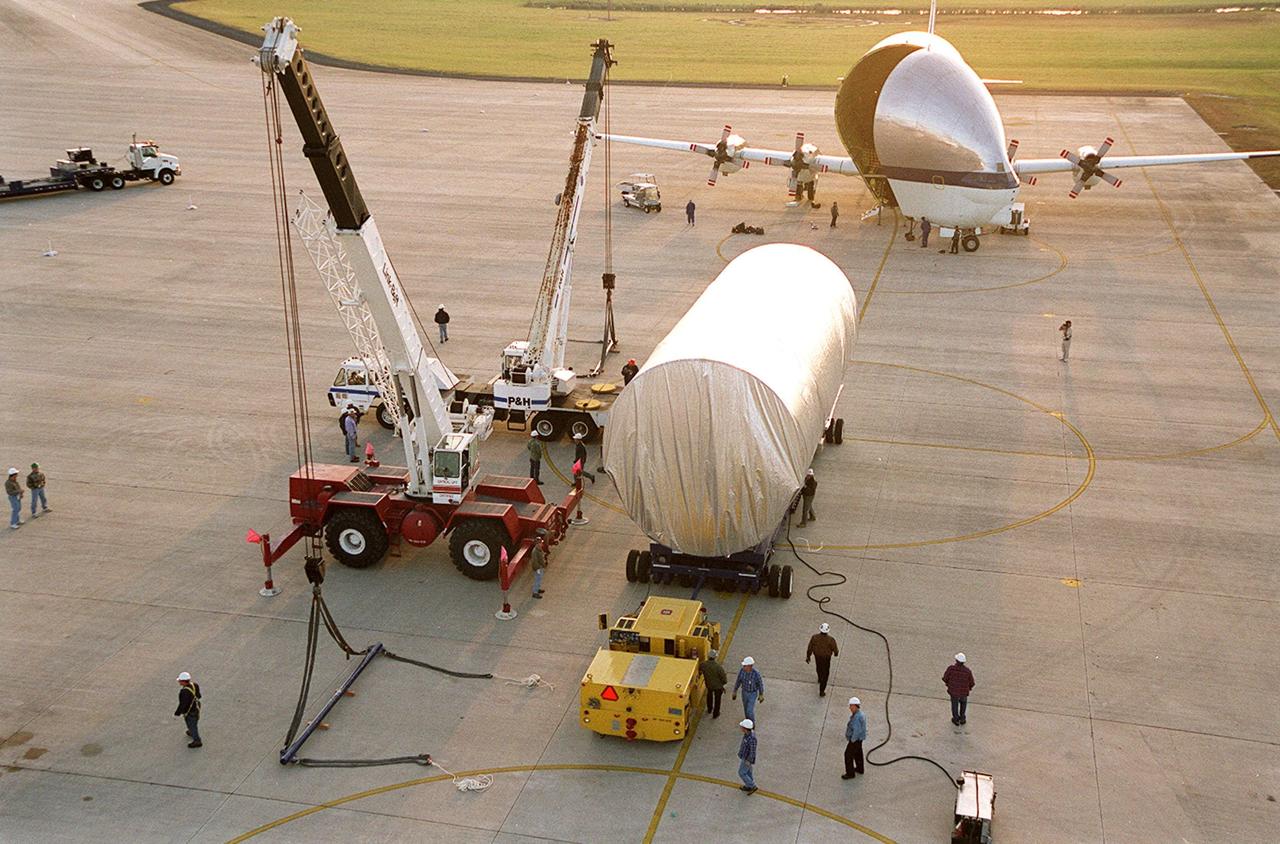
The Integrated Truss Structure S3 waits on the parking apron of the Shuttle Landing Facility after being offloaded from the Super Guppy aircraft in the background. The truss will be moved to a transporter and taken to the Operations and Checkout Building. The second starboard truss segment of the International Space Station, the S3 truss is scheduled to be added to the Station in April 2003
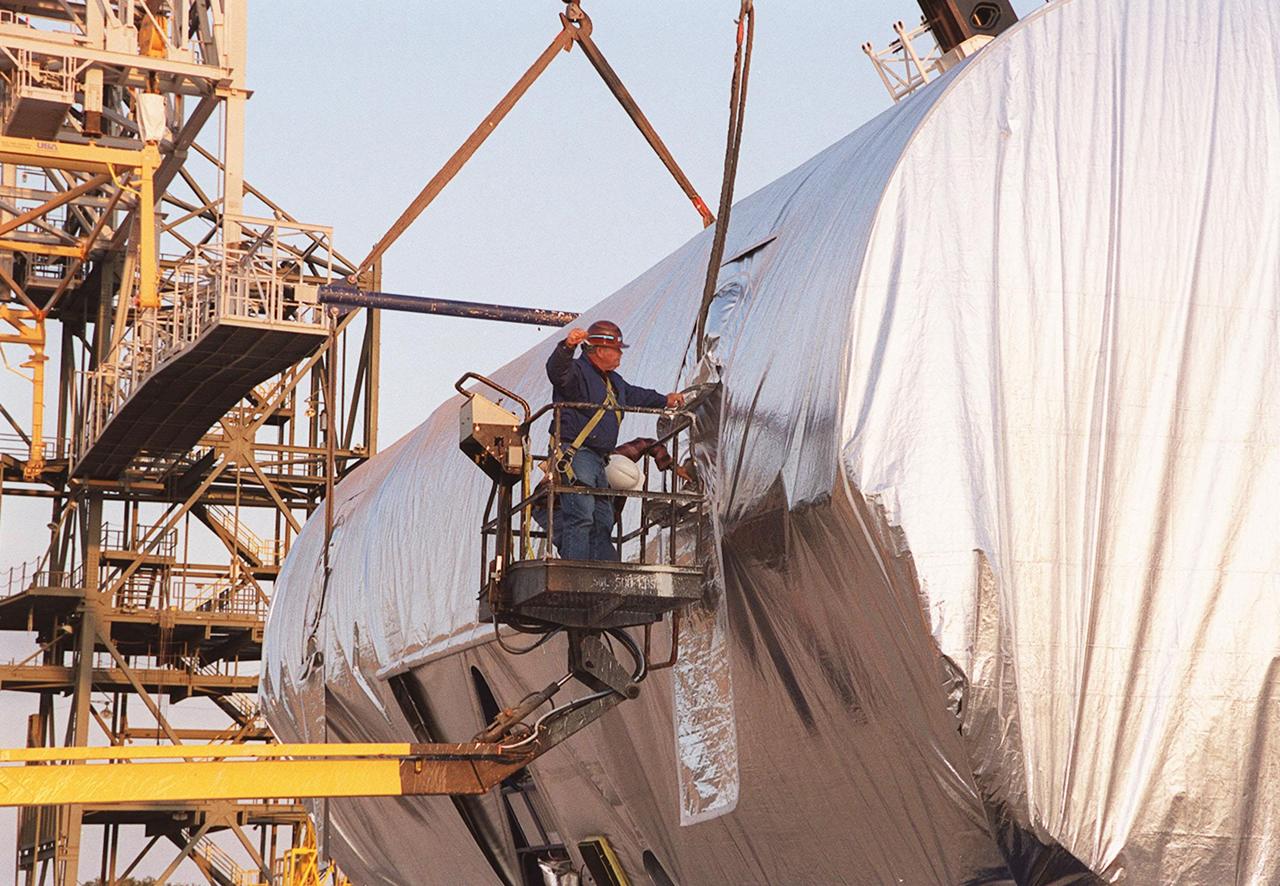
At the Shuttle Landing Facility, a worker attaches one of the cranes to the Integrated Truss Structure S3. Cranes will lift and move the truss to a transporter and take it to the Operations and Checkout Building. The second starboard truss segment of the International Space Station, the S3 truss is scheduled to be added to the Station in April 2003
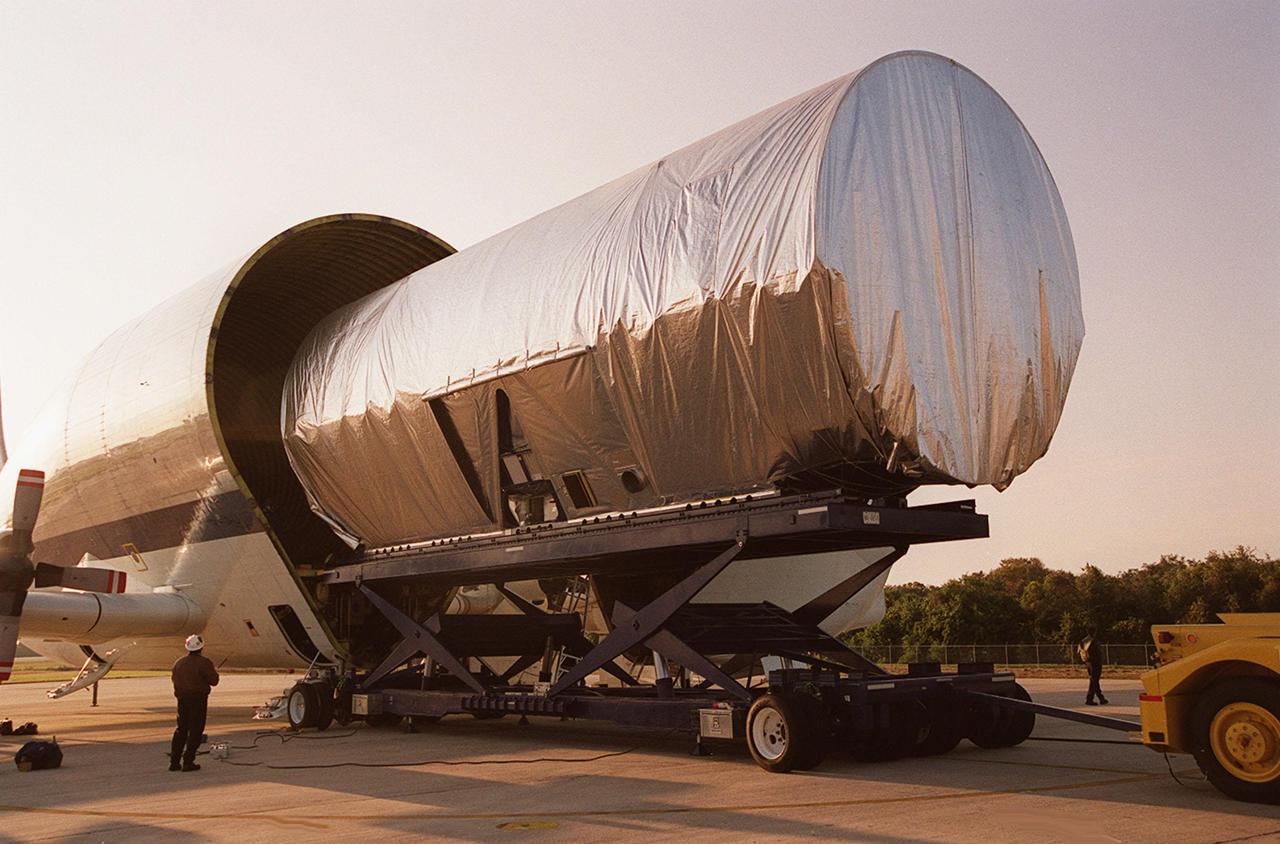
The Integrated Truss Structure S3 is offloaded from the Super Guppy aircraft that brought it to KSC from Tulsa, Okla. The S3 is built by The Boeing Co. The truss will be transported to the Operations and Checkout Building. The second starboard truss segment of the International Space Station, the S3 truss is scheduled to be added to the Station in April 2003
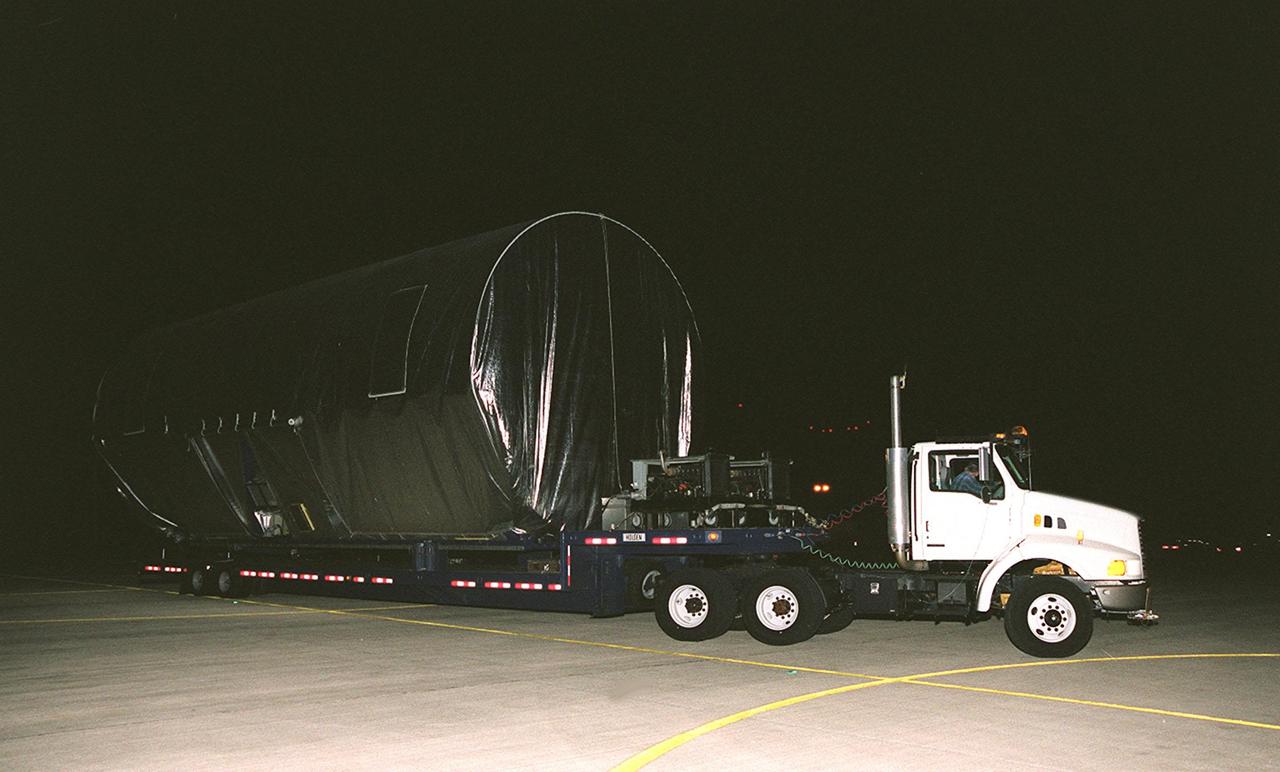
A flatbed trailer begins moving the Integrated Truss Structure S3 from the Shuttle Landing Facility to the Operations and Checkout Building. The S3 arrived aboard a Super Guppy aircraft. The second starboard truss segment of the International Space Station, the S3 truss is scheduled to be added to the Station in April 2003
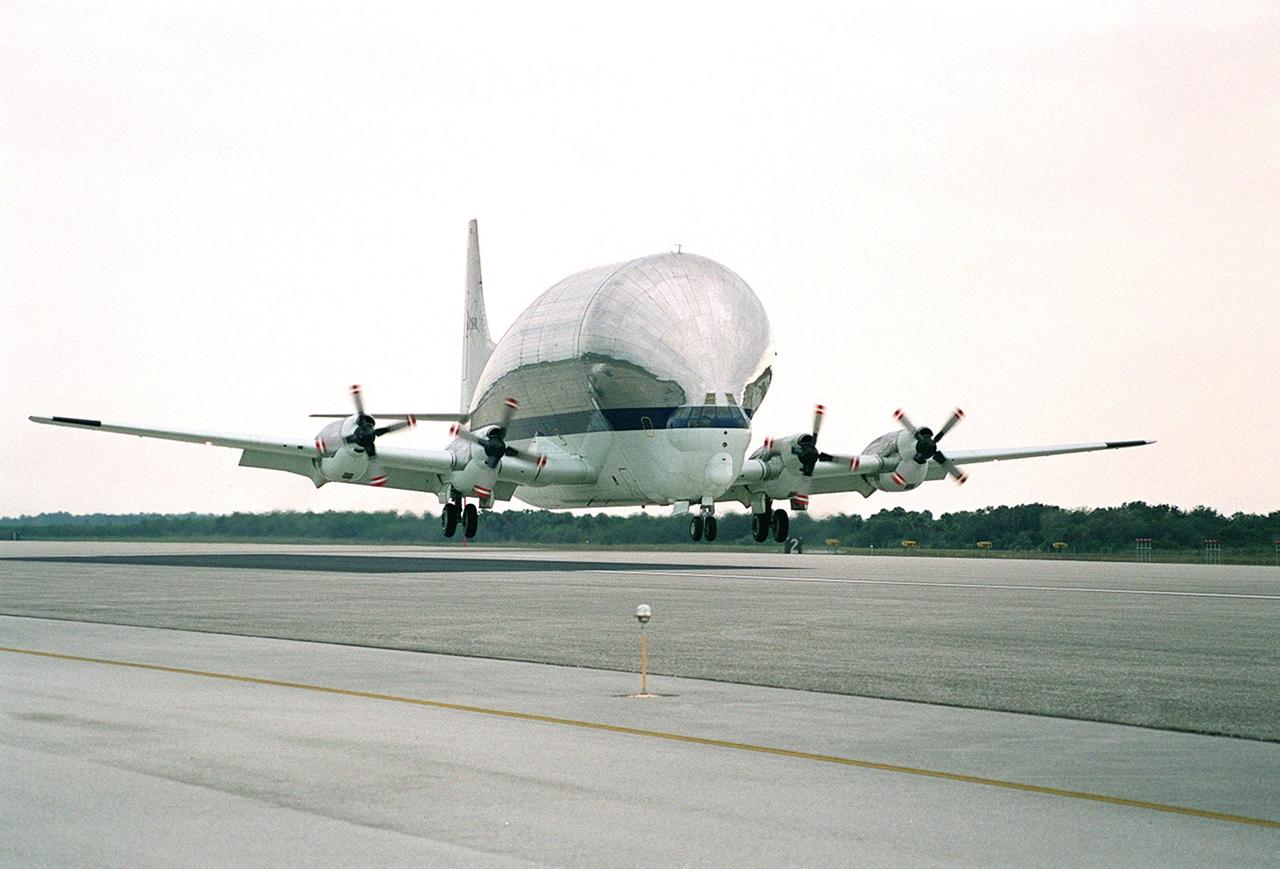
A Super Guppy aircraft arrives at the KSC Shuttle Landing Facility with its cargo of Integrated Truss Structure S3, built by The Boeing Co. After offloading, the S3 will be transported to the Operations and Checkout Building. The second starboard truss segment of the International Space Station, the S3 truss is scheduled to be added to the Station in April 2003
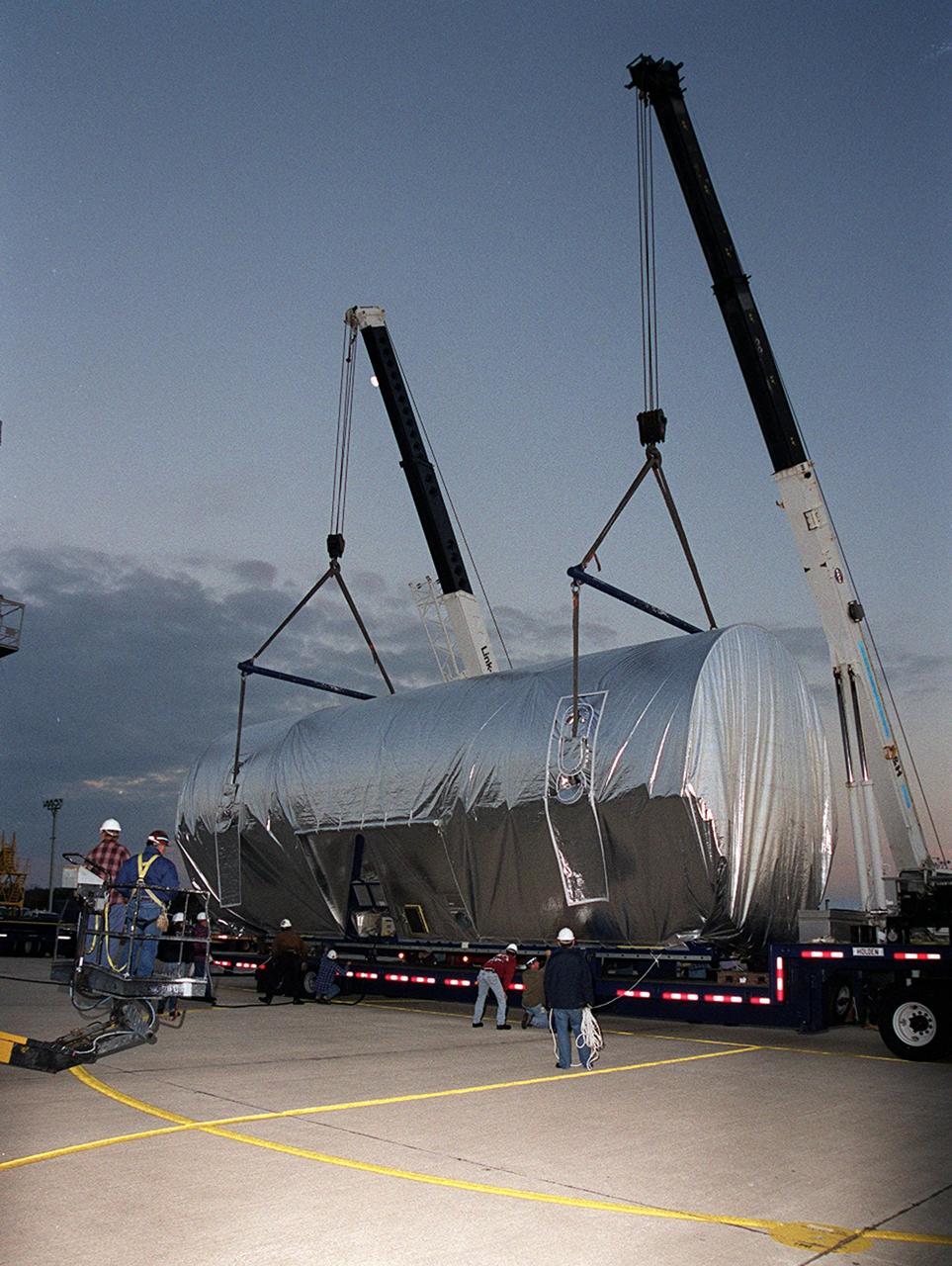
At the Shuttle Landing Facility, cranes position the Integrated Truss Structure S3 onto a flatbed trailer for transport to the Operations and Checkout Building. The S3 arrived aboard a Super Guppy aircraft. The second starboard truss segment of the International Space Station, the S3 truss is scheduled to be added to the Station in April 2003
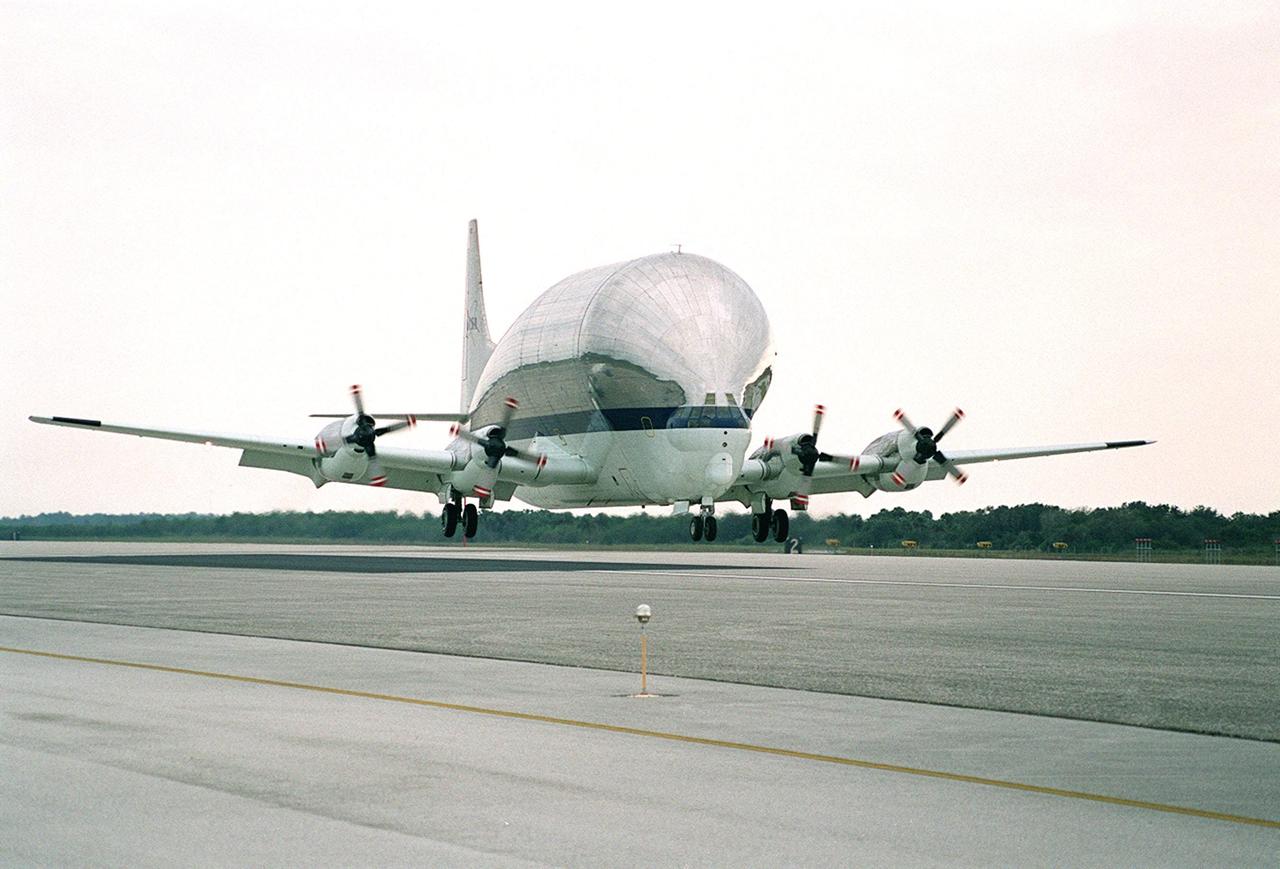
A Super Guppy aircraft arrives at the KSC Shuttle Landing Facility with its cargo of Integrated Truss Structure S3, built by The Boeing Co. After offloading, the S3 will be transported to the Operations and Checkout Building. The second starboard truss segment of the International Space Station, the S3 truss is scheduled to be added to the Station in April 2003
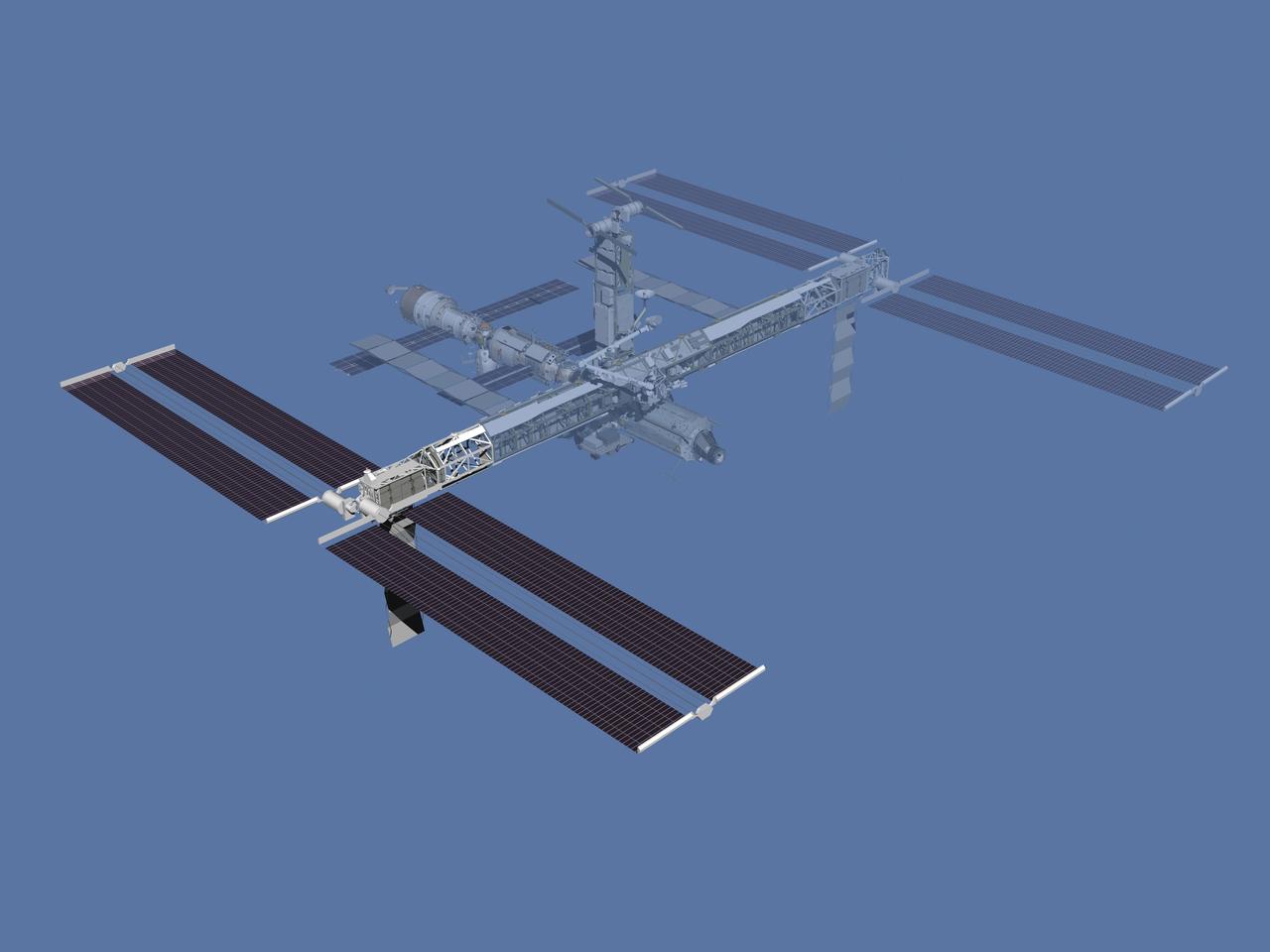
JSC2006-E-43500 (October 2006) --- Computer-generated artist's rendering of the International Space Station after flight STS-117/13A. Second starboard truss segment (S3/S4) is delivered and installed. The third set of solar arrays is deployed. P6 starboard solar array wing and one radiator are retracted.
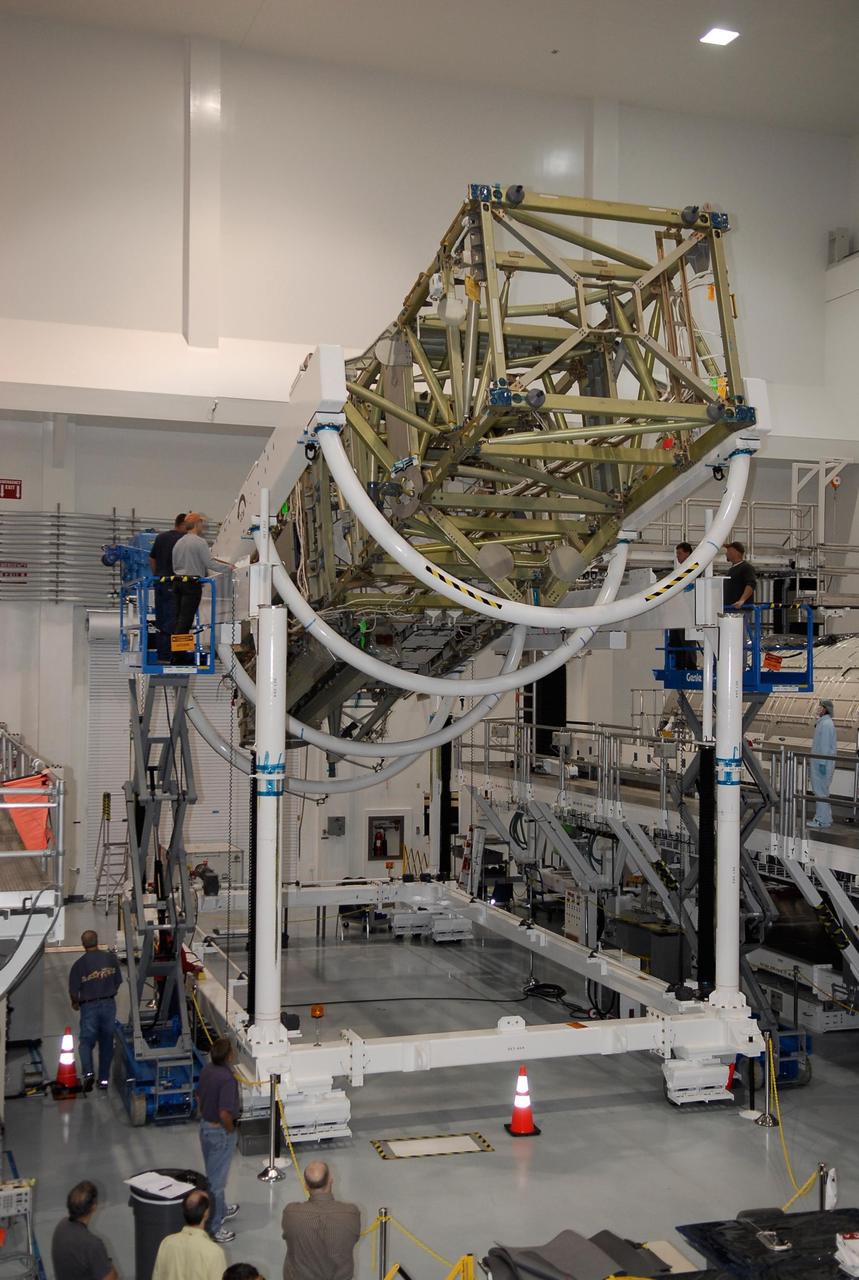
KENNEDY SPACE CENTER, FLA. -- In the Space Station Processing Facility at NASA's Kennedy Space Center, workers stand ready as the starboard integrated truss, known as S6, is rotated in order to remove and replace lower deck batteries. The final starboard truss in the assembly of the International Space Station, the S6 is scheduled to fly on the STS-119 space shuttle mission, whose launch date is not yet determined. Photo credit: NASA/Kim Shiflett
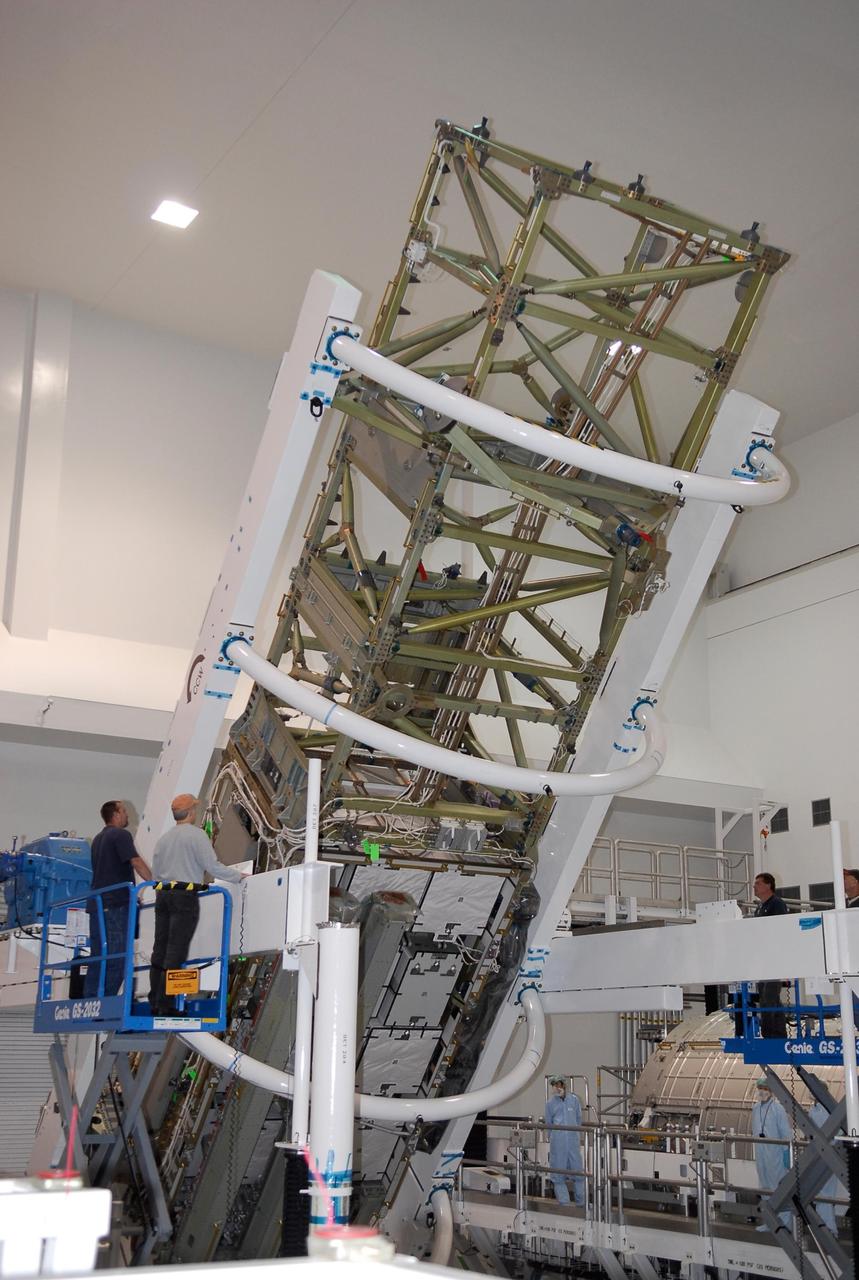
KENNEDY SPACE CENTER, FLA. -- In the Space Station Processing Facility at NASA's Kennedy Space Center, workers stand ready as the starboard integrated truss, known as S6, is rotated in order to remove and replace lower deck batteries. The final starboard truss in the assembly of the International Space Station, the S6 is scheduled to fly on the STS-119 space shuttle mission, whose launch date is not yet determined. Photo credit: NASA/Kim Shiflett
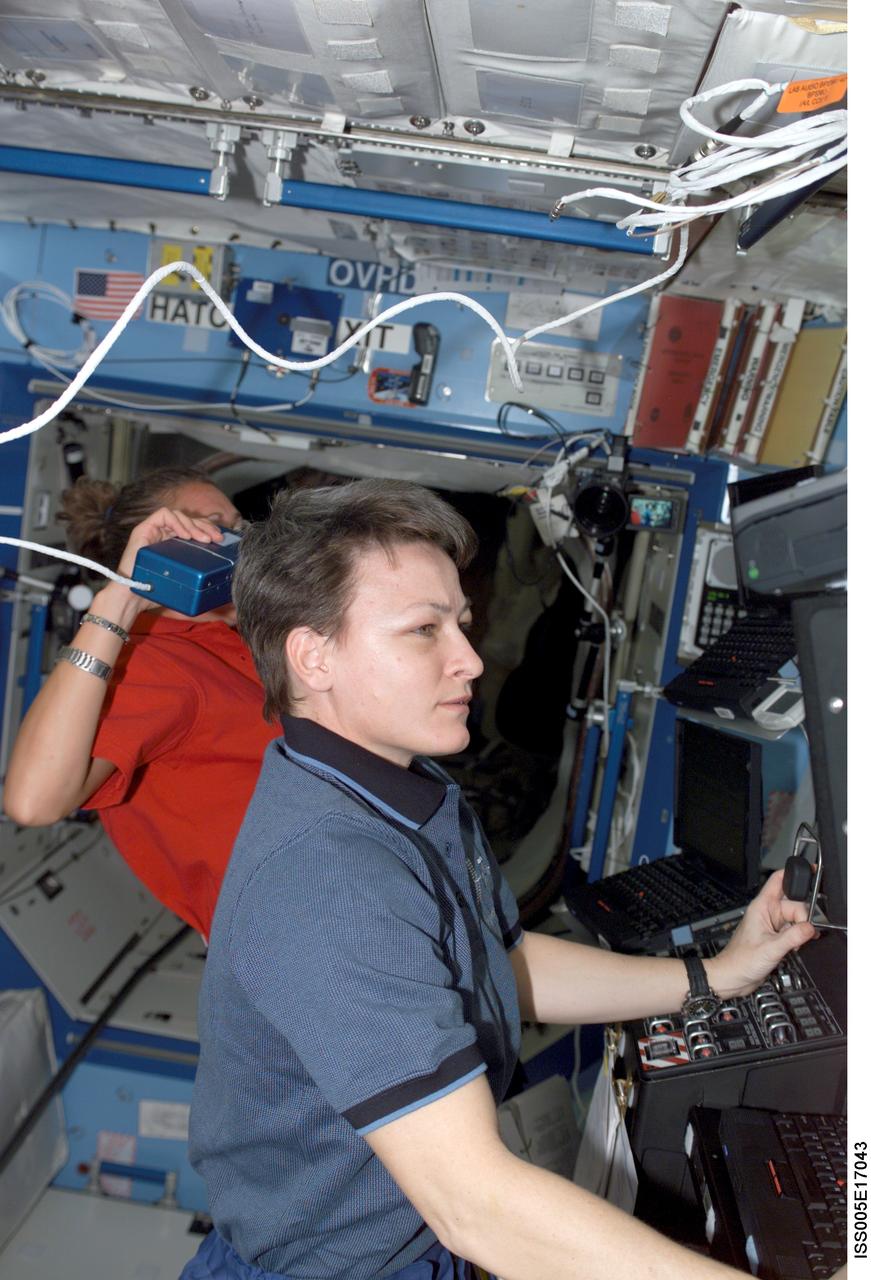
ISS005-E-17043 (10 October 2002) --- Astronauts Peggy A. Whitson (foreground), Expedition Five flight engineer, and Sandra H. Magnus, STS-112 mission specialist, work the controls of the Canadarm2 from inside the Destiny laboratory on the International Space Station (ISS). Whitson and Magnus used the station’s robotic arm to lift the Starboard One (S1) Truss out of the Atlantis’ payload bay and move it into position on the starboard end of the S0 (S-Zero) Truss.
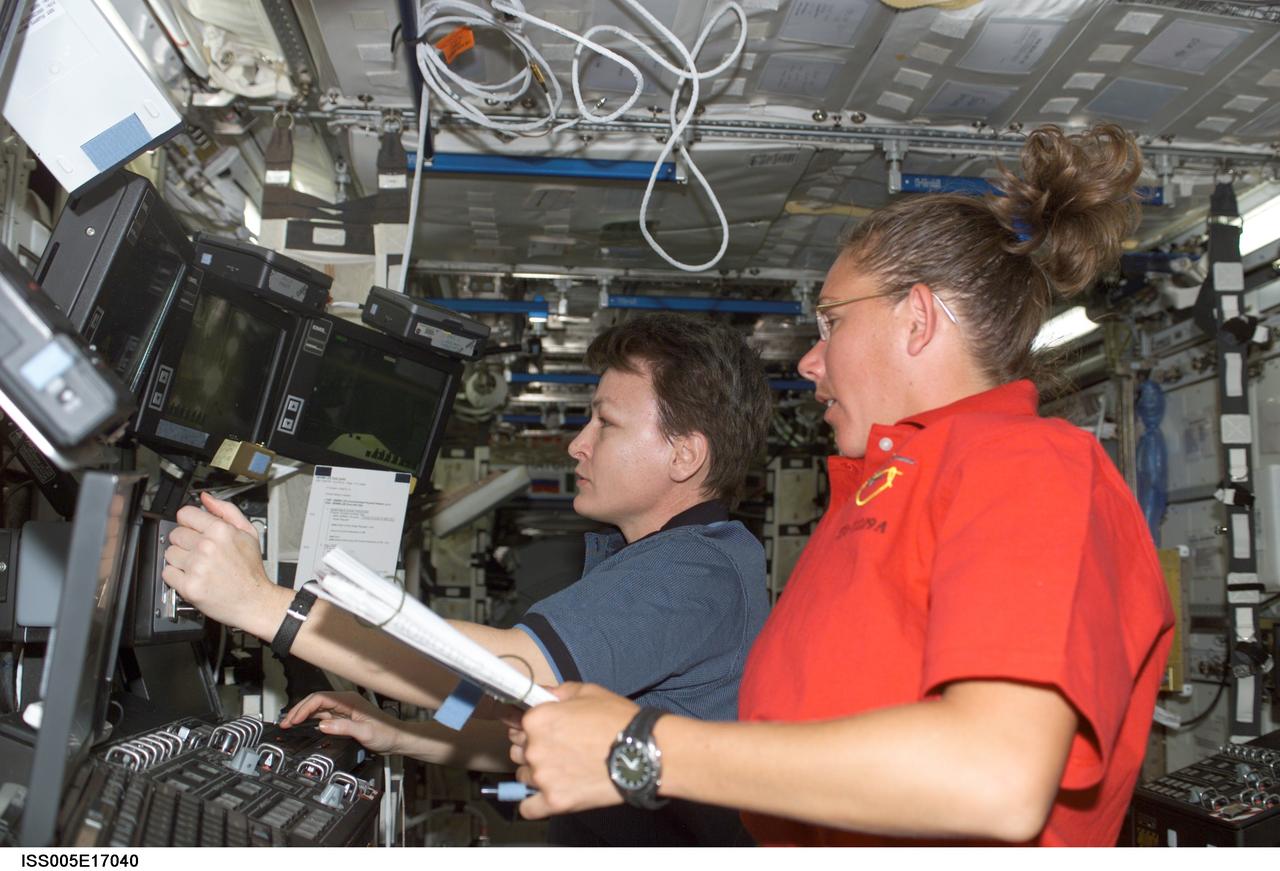
ISS005-E-17040 (10 October 2002) --- Astronauts Peggy A. Whitson (background), Expedition Five flight engineer, and Sandra H. Magnus, STS-112 mission specialist, work the controls of the Canadarm2 from inside the Destiny laboratory on the International Space Station (ISS). Whitson and Magnus used the station’s robotic arm to lift the Starboard One (S1) Truss out of the Atlantis’ payload bay and move it into position on the starboard end of the S0 (S-Zero) Truss.
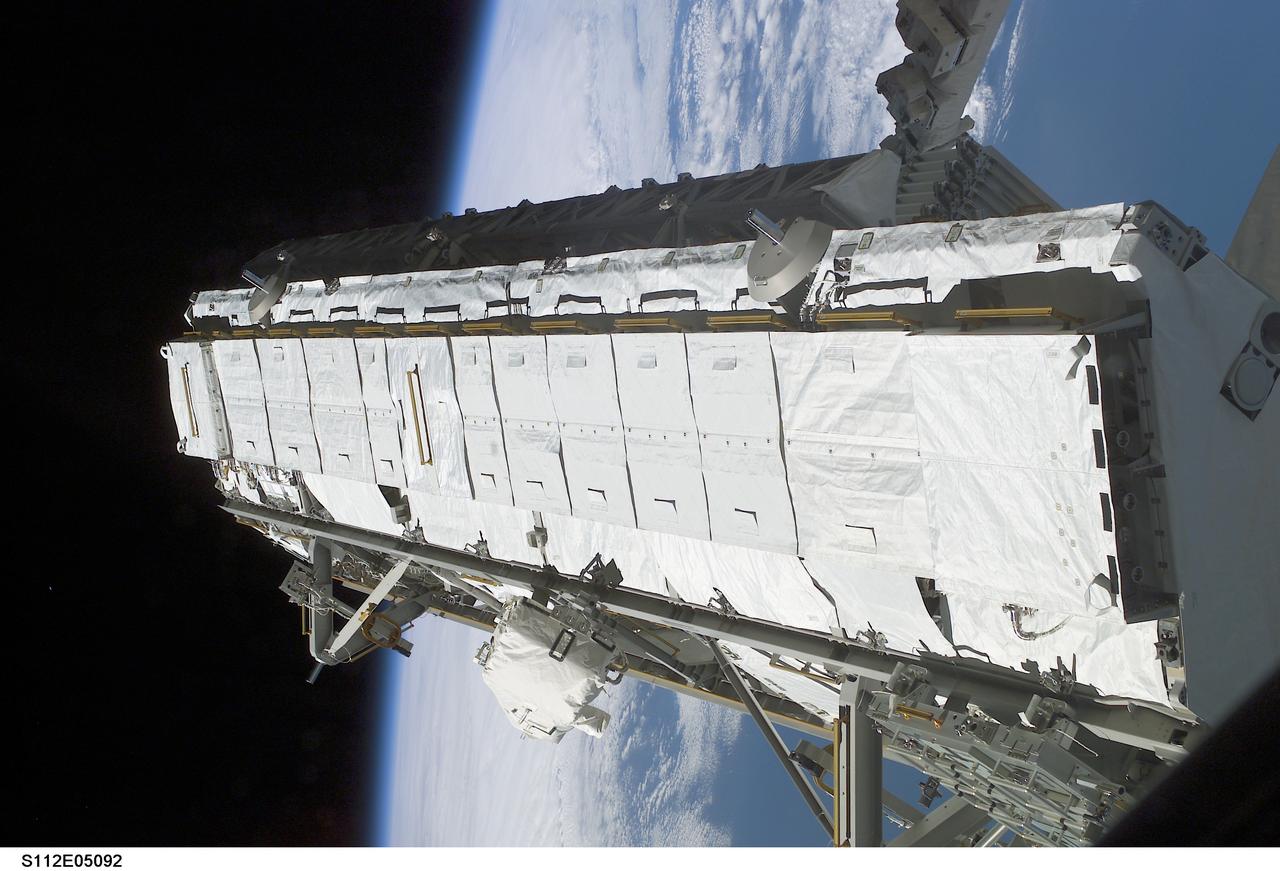
STS112-E-05092 (10 October 2002) --- Backdropped by the blackness of space and Earth’s horizon, the Starboard One (S1) Truss is moved from the Space Shuttle Atlantis’ cargo bay. Astronauts Sandra H. Magnus, STS-112 mission specialist, and Peggy A. Whitson, Expedition Five flight engineer, used the Canadarm2 from inside Destiny laboratory on the International Space Station (ISS) to lift the S1 Truss out of the orbiter’s payload bay and move it into position at the starboard end of the S0 (S-Zero) Truss.
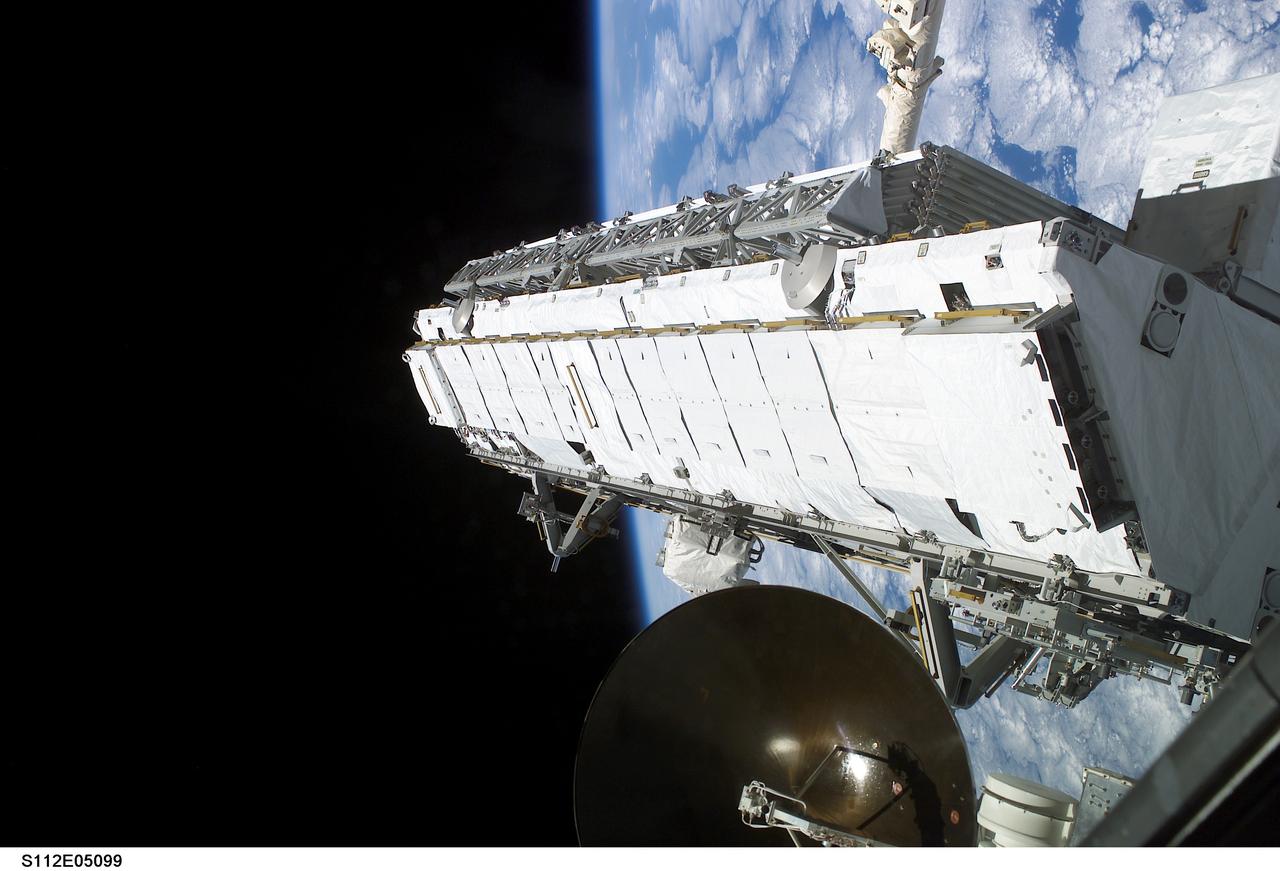
STS112-E-05099 (10 October 2002) --- Backdropped by the blackness of space and Earth’s horizon, the Starboard One (S1) Truss is moved from the Space Shuttle Atlantis’ cargo bay. Astronauts Sandra H. Magnus, STS-112 mission specialist, and Peggy A. Whitson, Expedition Five flight engineer, used the Canadarm2 from inside Destiny laboratory on the International Space Station (ISS) to lift the S1 Truss out of the orbiter’s payload bay and move it into position at the starboard end of the S0 (S-Zero) Truss.
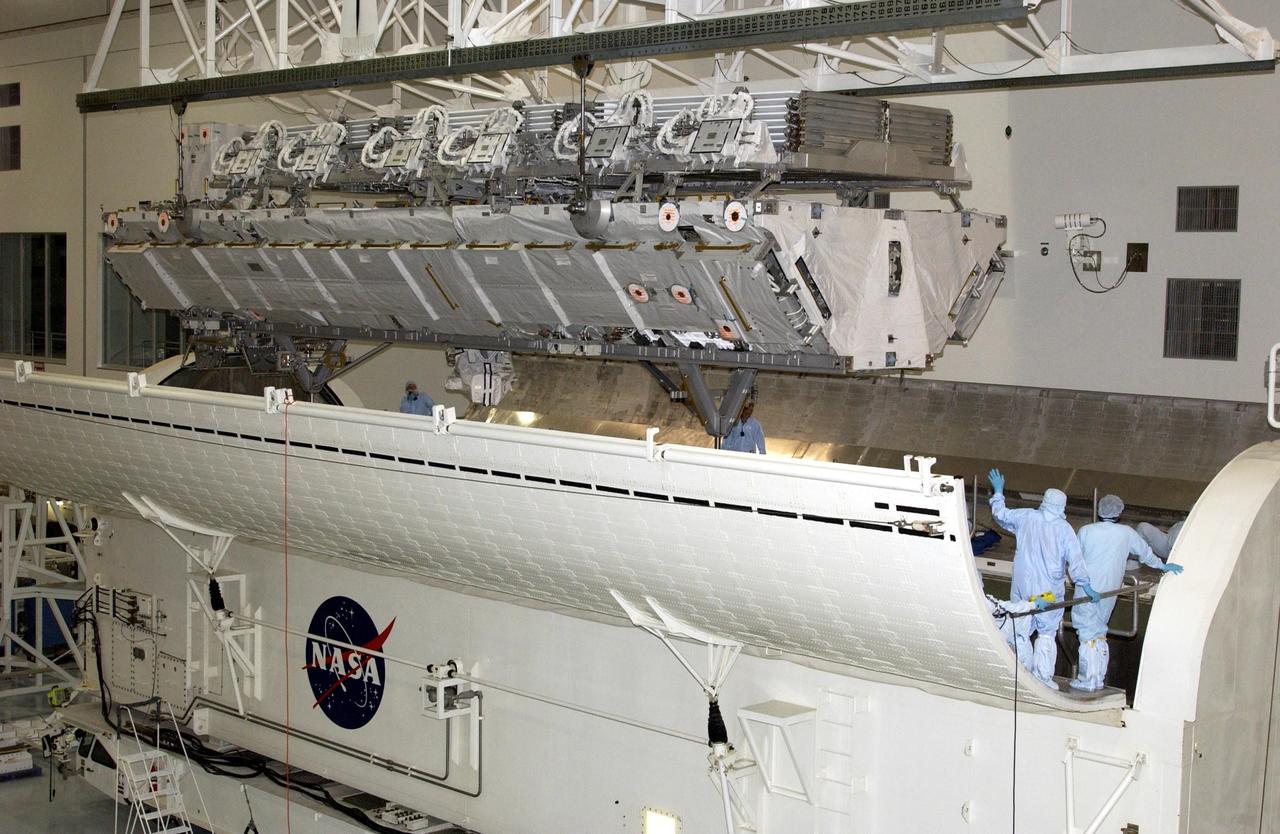
KENNEDY SPACE CENTER, FLA. - Workers inside the payload canister watch the S1 Integrated Truss Structure as it is lowered toward them. The canister will transport the truss to Atlantis. The first starboard truss segment, the S1 will be attached to the Central truss segment, the S0 Truss, on the International Space Station during mission STS-112. Atlantis is scheduled to launch no earlier than Oct. 2.
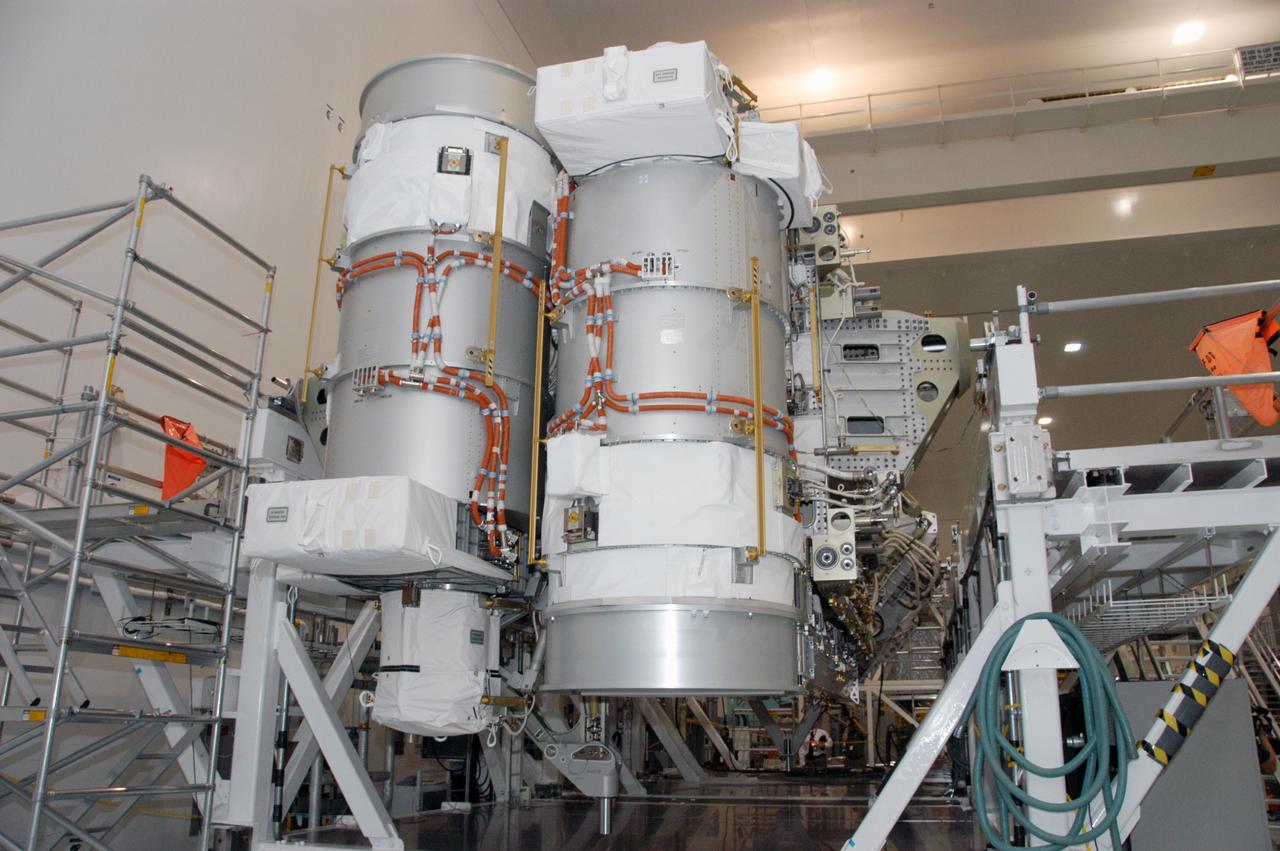
In the Space Station Processing Facility, the S3/S4 integrated truss segment is on display for the media. The starboard 3/4 truss segment will launch aboard Space Shuttle Atlantis on mission STS-117, targeted for March 15. The element will be added to the 11-segment integrated truss structure, the station's backbone. The integrated truss structure eventually will span more than 300 feet. The S3/S4 truss has two large solar arrays and will provide one-fourth of the total power generation for the completed station.
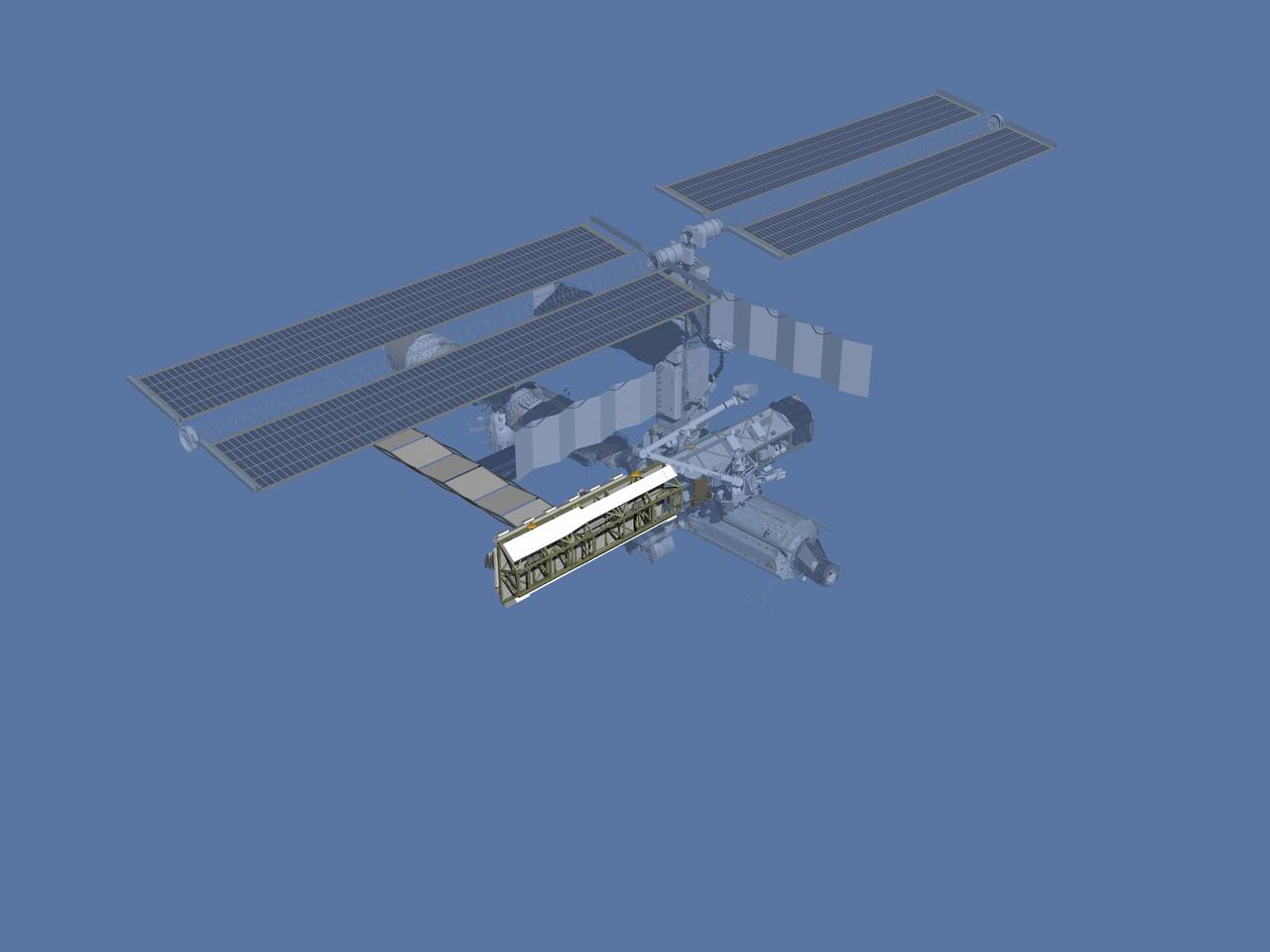
JSC2006-E-43494 (October 2002) --- Computer-generated artist's rendering of the International Space Station after flight STS-112/9A. Space Shuttle Atlantis delivered the S1 truss; the first starboard truss segment; installed by the STS-112 crew.
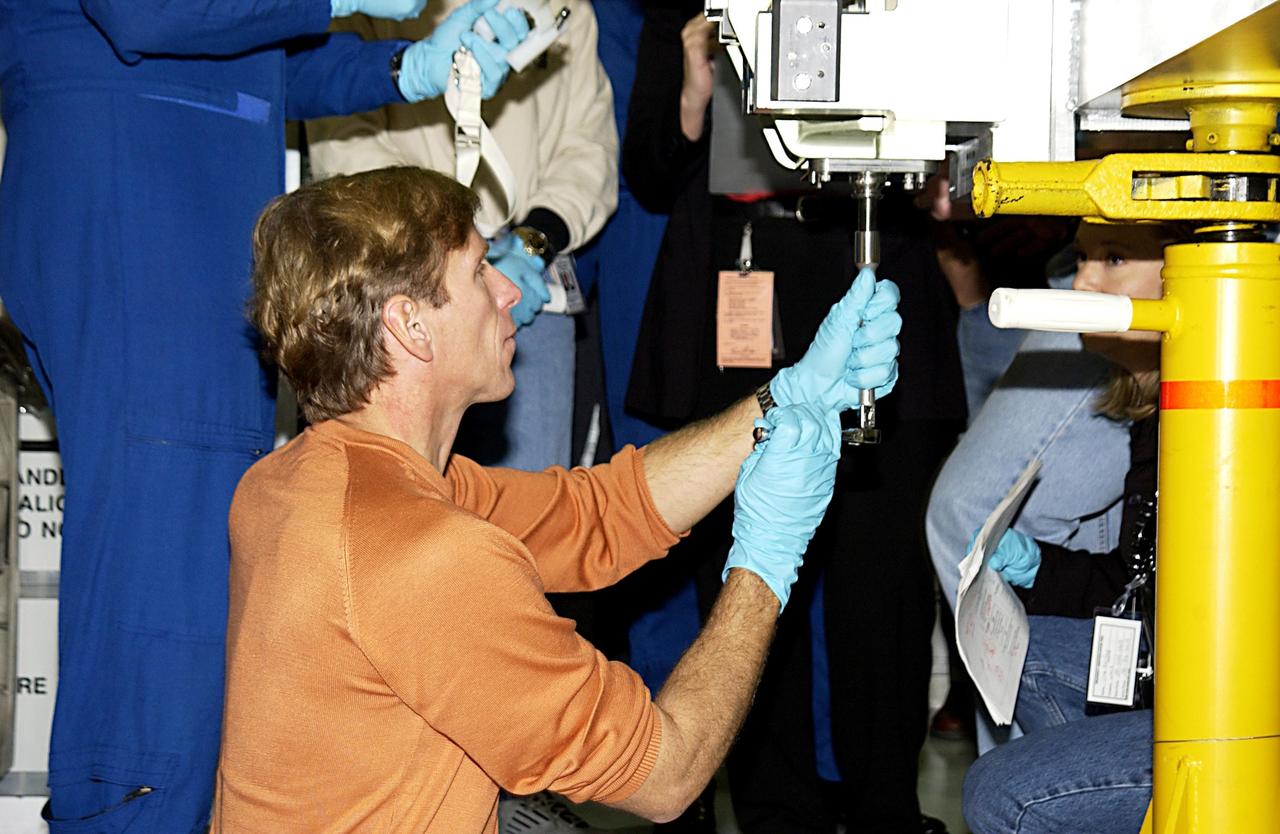
KENNEDY SPACE CENTER, FLA. - During a Crew Equipment Interface Test activity, STS-119 Mission Specialist Michael Gernhardt works on equipment that will be part of the mission. Scheduled to launch in January 2004, the mission will deliver the fourth and final set of U.S. solar arrays along with the fourth starboard truss segment, the S6 truss.
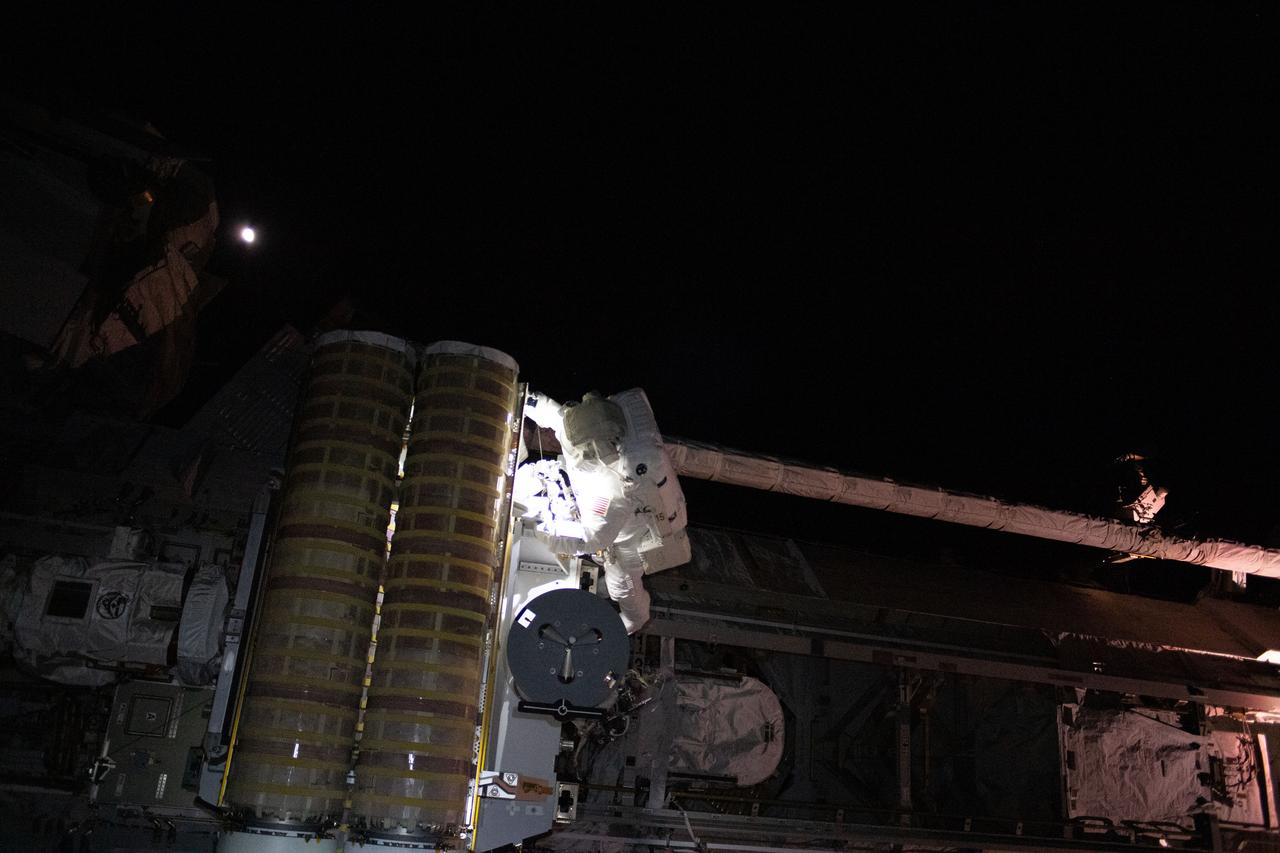
iss068e026356 (Dec. 3, 2022) --- NASA astronaut and Expedition 68 Flight Engineer Frank Rubio is pictured during a spacewalk to install a roll-out solar array on the International Space Station's Starboard-4 truss segment.
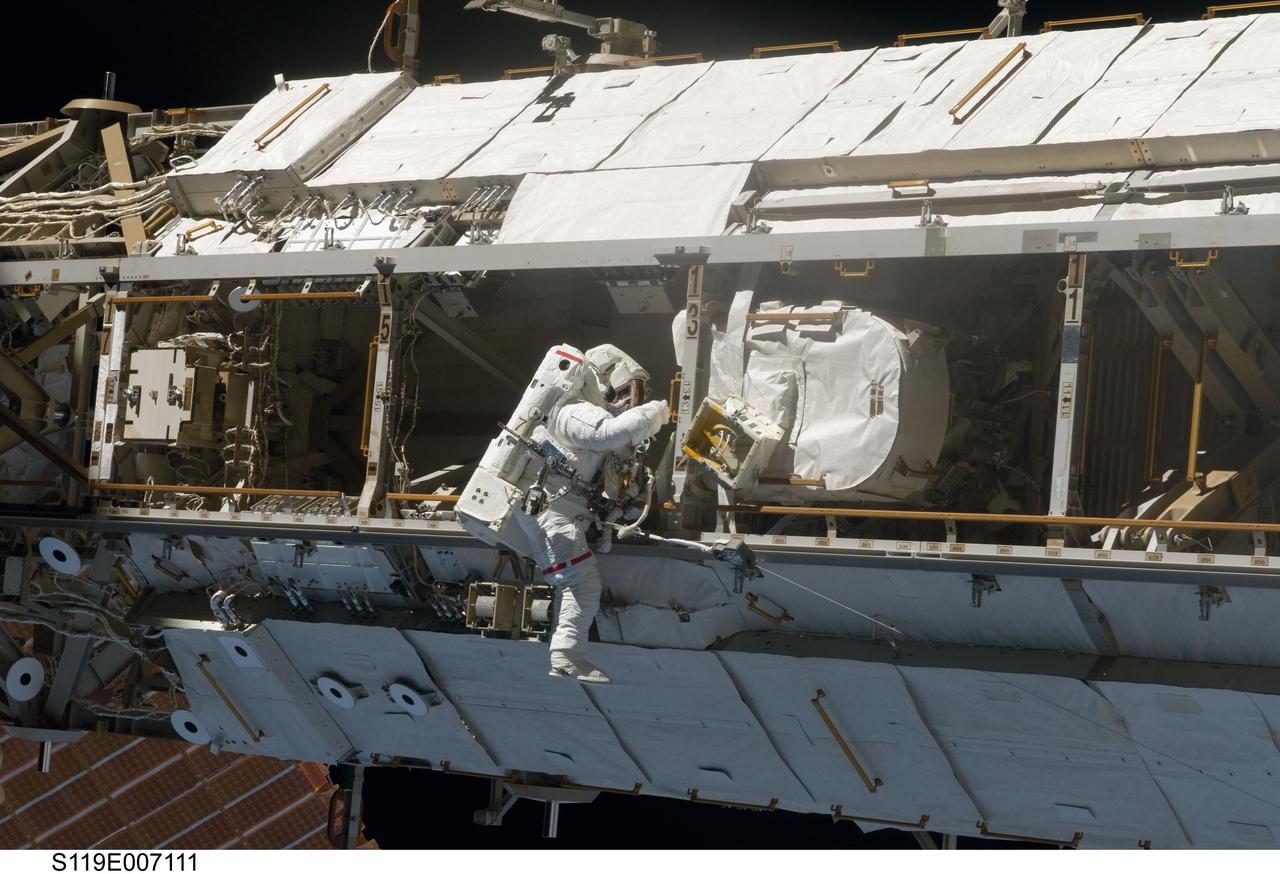
s119e007111 (March 23, 2009) --- NASA astronaut Joe Acaba is seen during a spacewalk in March 2009. He was working on the Starboard-1 truss structure while space shuttle Discovery was docked to the station during STS-119.
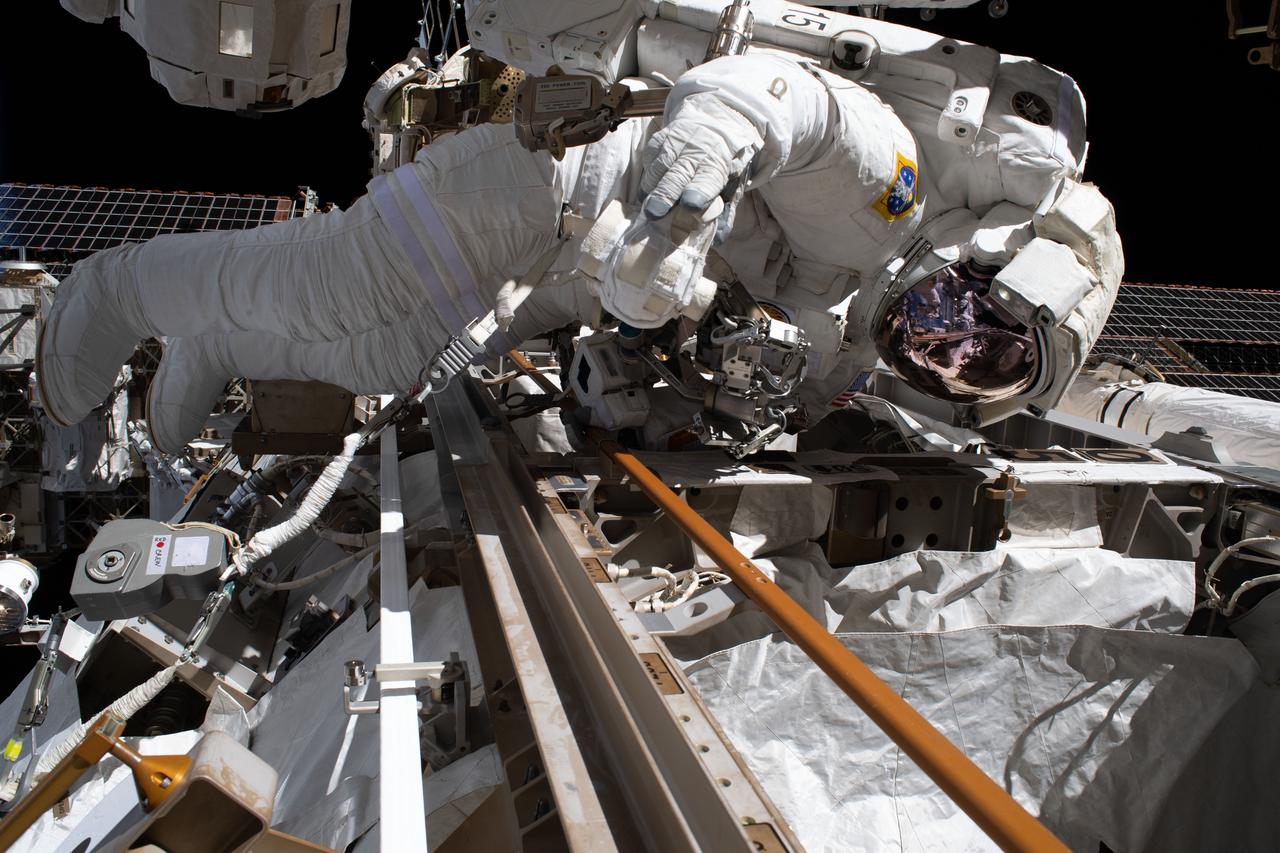
iss061e058236 (Nov. 22, 2019) --- Astronaut Andrew Morgan of NASA is tethered to the Starboard-3 truss segment work site during the second spacewalk to repair the International Space Station's cosmic particle detector, the Alpha Magnetic Spectrometer.
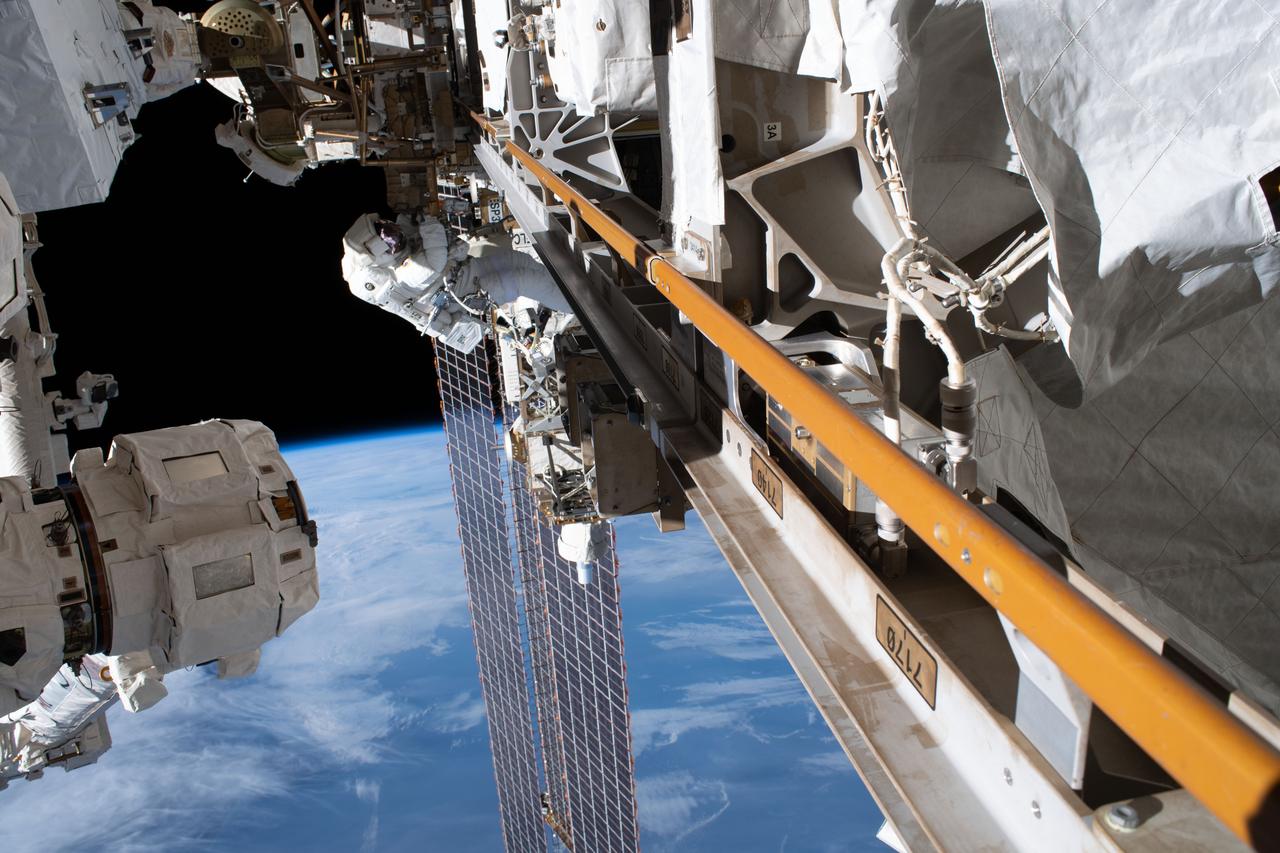
iss061e058144 (Nov. 22, 2019) --- Astronaut Andrew Morgan of NASA is tethered to the Starboard-3 truss segment work site during the second spacewalk to repair the International Space Station's cosmic particle detector, the Alpha Magnetic Spectrometer.
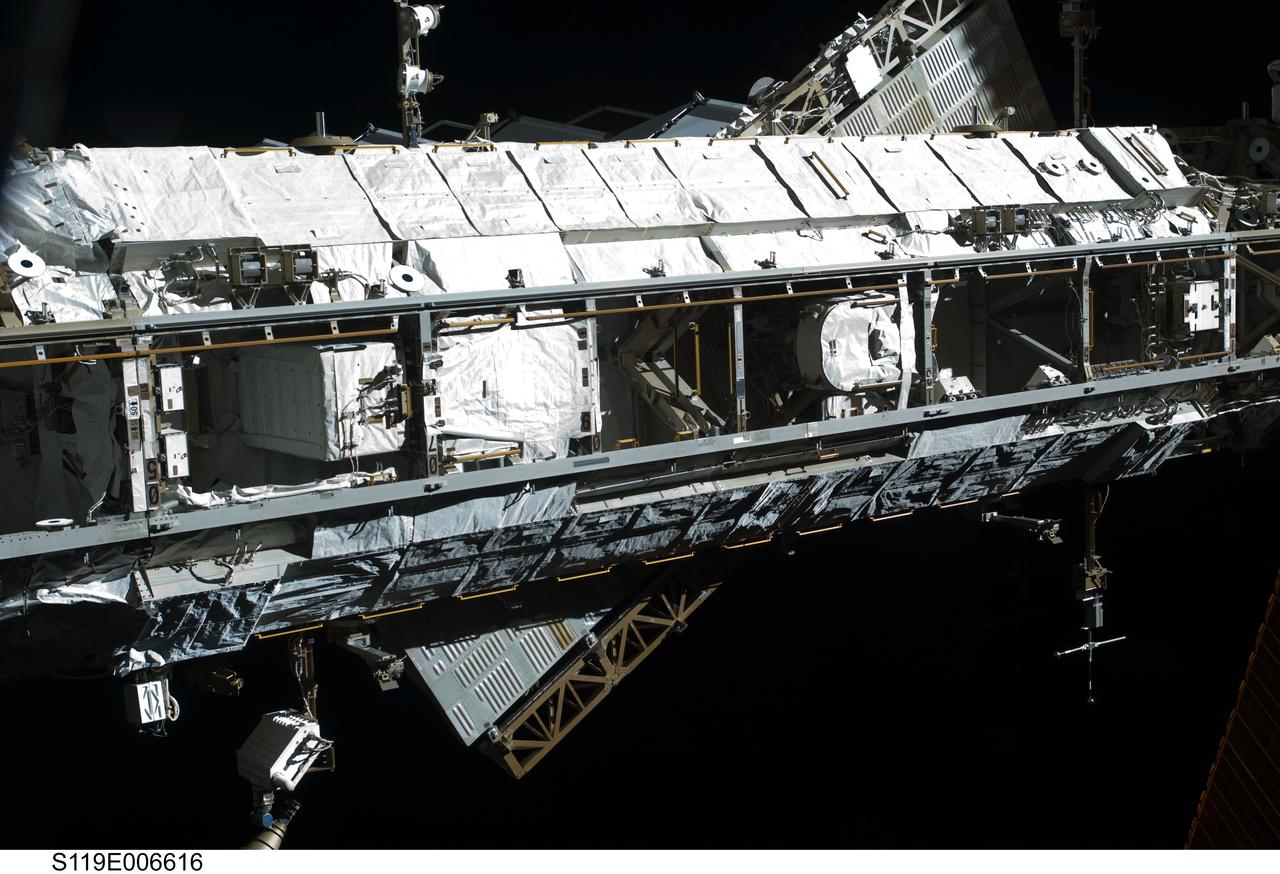
S119-E-006616 (18 March 2009) --- The International Space Station’s starboard truss is featured in this image photographed by a STS-119 crewmember while Space Shuttle Discovery is docked with the station.
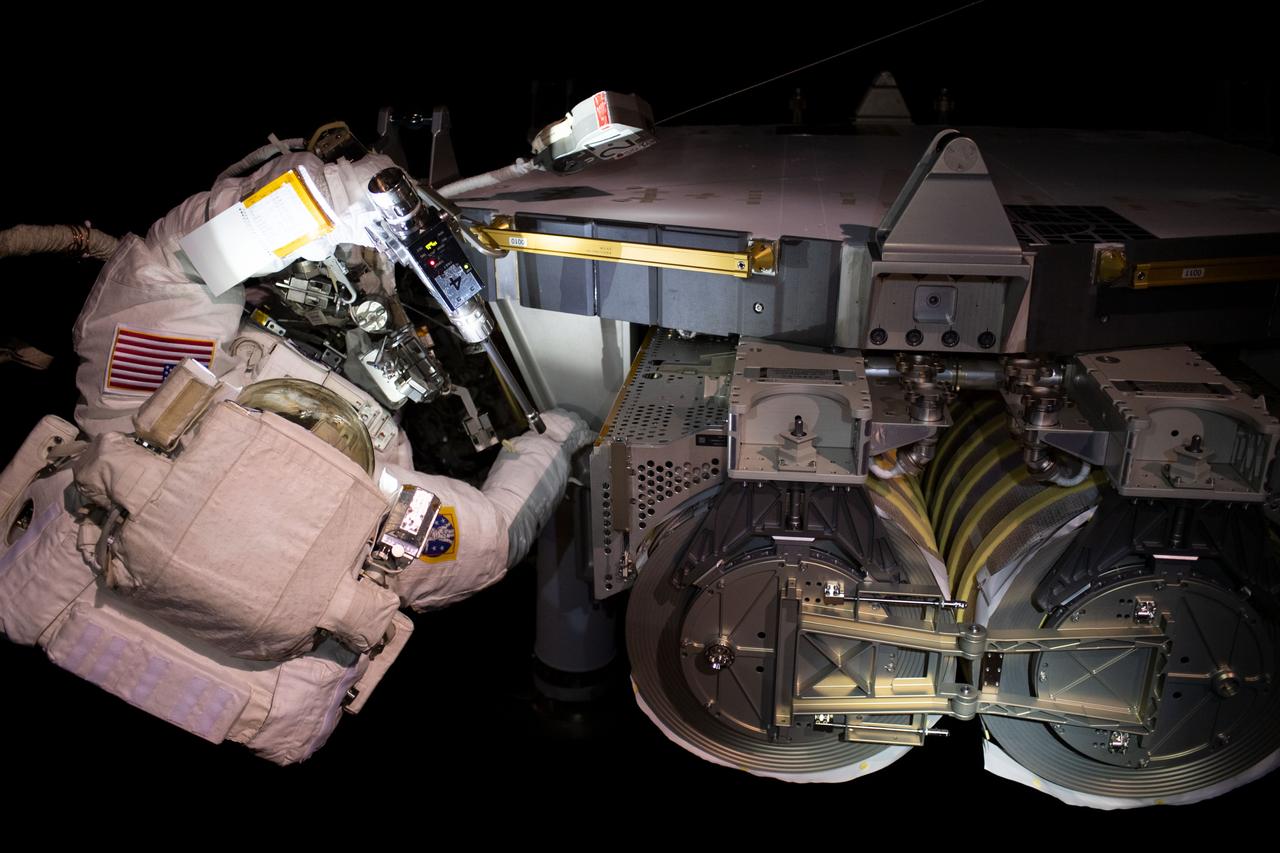
iss069e020612 (June 15, 2023) --- NASA astronaut Stephen Bowen is pictured readying a roll-out solar array before installating it on the International Space Station's Starboard-6 truss structure.

iss061e058179 (Nov. 22, 2019) --- Astronaut Andrew Morgan of NASA is tethered to the Starboard-3 truss segment work site during the second spacewalk to repair the International Space Station's cosmic particle detector, the Alpha Magnetic Spectrometer.
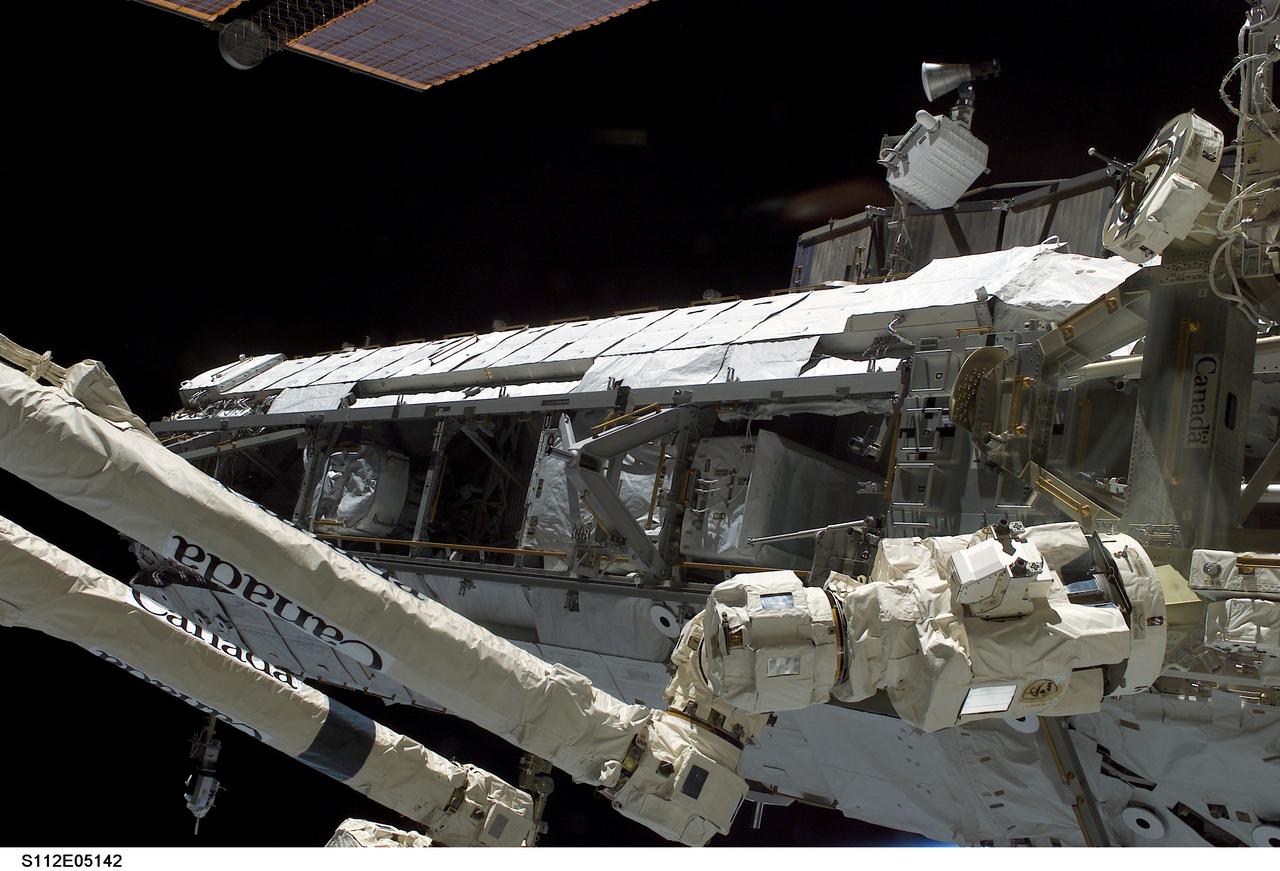
STS112-E-05142 (11 October 2002) --- A view of the Starboard One (S1) Truss, newly installed on the International Space Station (ISS). The station’s Canadarm2 is in the foreground.
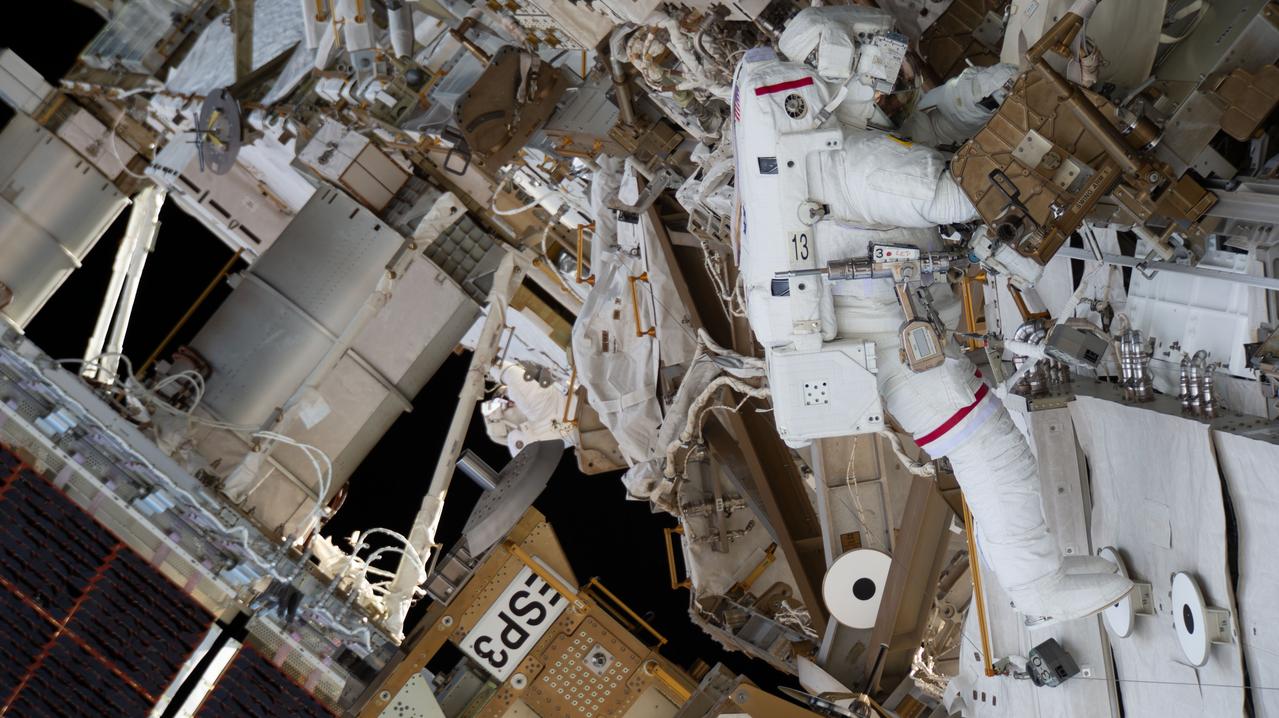
iss068e026407 (Dec. 3, 2022) --- NASA astronaut and Expedition 68 Flight Engineer Josh Cassada is pictured tethered to the International Space Station during a spacewalk to install a roll-out solar array on the Starboard-4 truss segment.
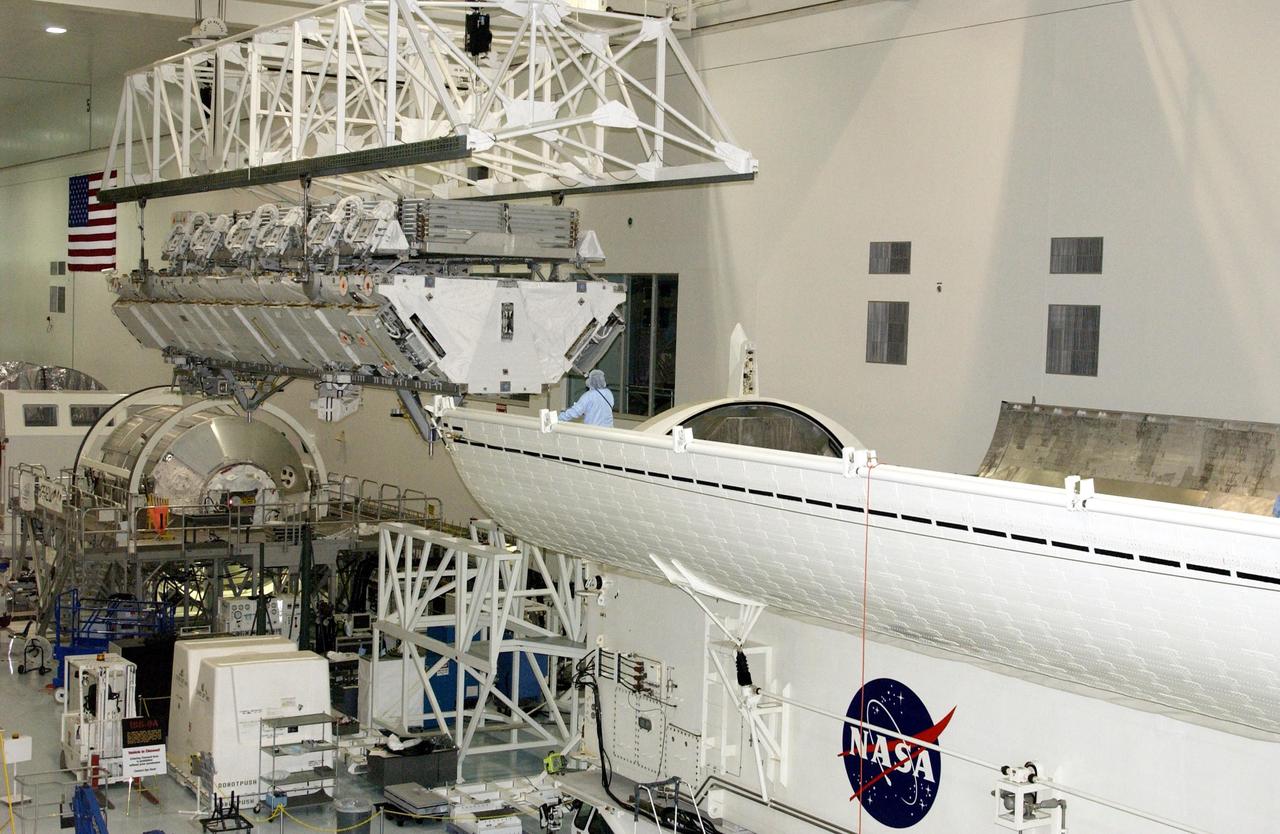
KENNEDY SPACE CENTER, FLA. -- An overhead crane moves the S1 Integrated Truss Structure toward the payload canister below, which will transport it to Atlantis. The first starboard truss segment, the S1 will be attached to the Central truss segment, the S0 Truss, on the International Space Station during mission STS-112. Atlantis is scheduled to launch no earlier than Oct. 2.
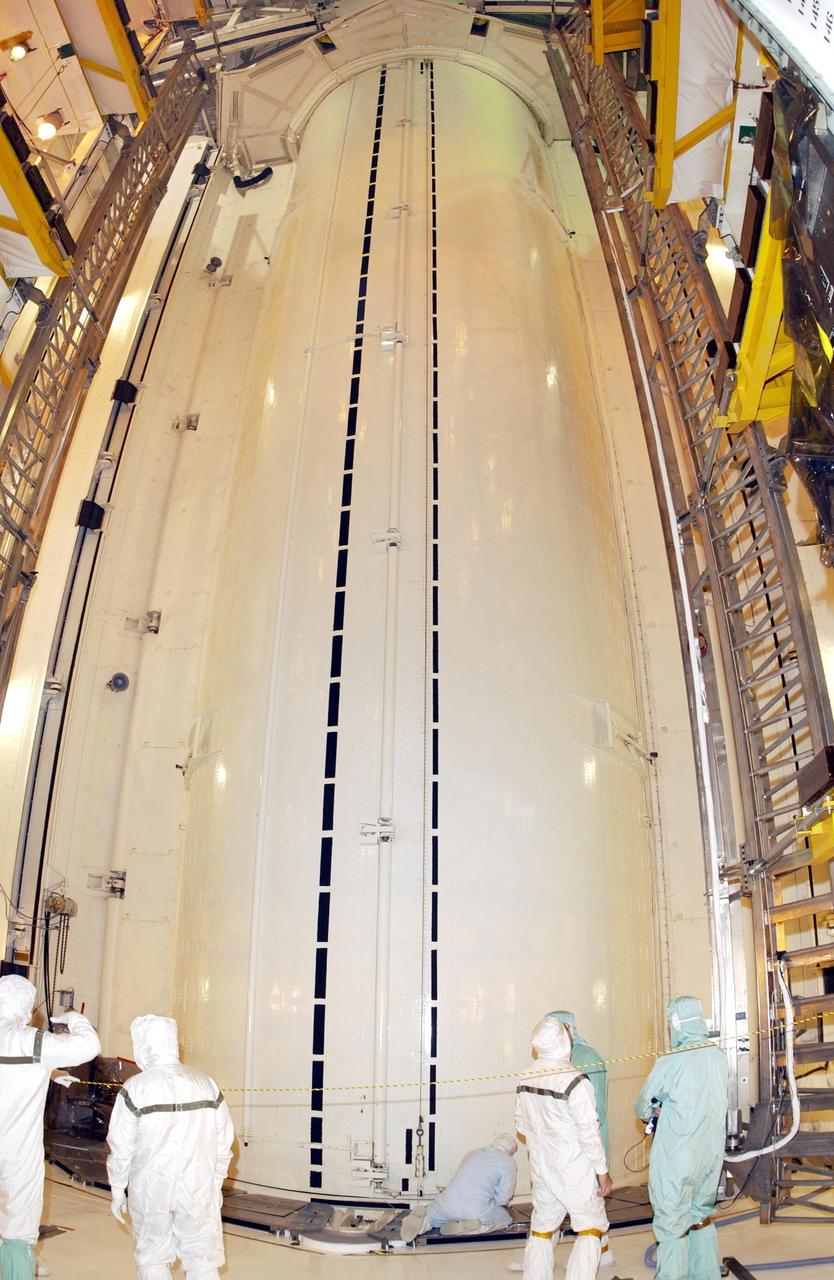
KENNEDY SPACE CENTER, FLA. -- The payload canister is ready to be opened in the Payload Changeout Room at the pad. Inside is the S1 Integrated Truss Structure, primary payload on mission STS-112 aboard Space Shuttle Atlantis. The first starboard truss segment, the S1 will be attached to the Central truss segment, the S0 Truss, on the International Space Station during the mission. Atlantis is scheduled to launch no earlier than Oct. 2.
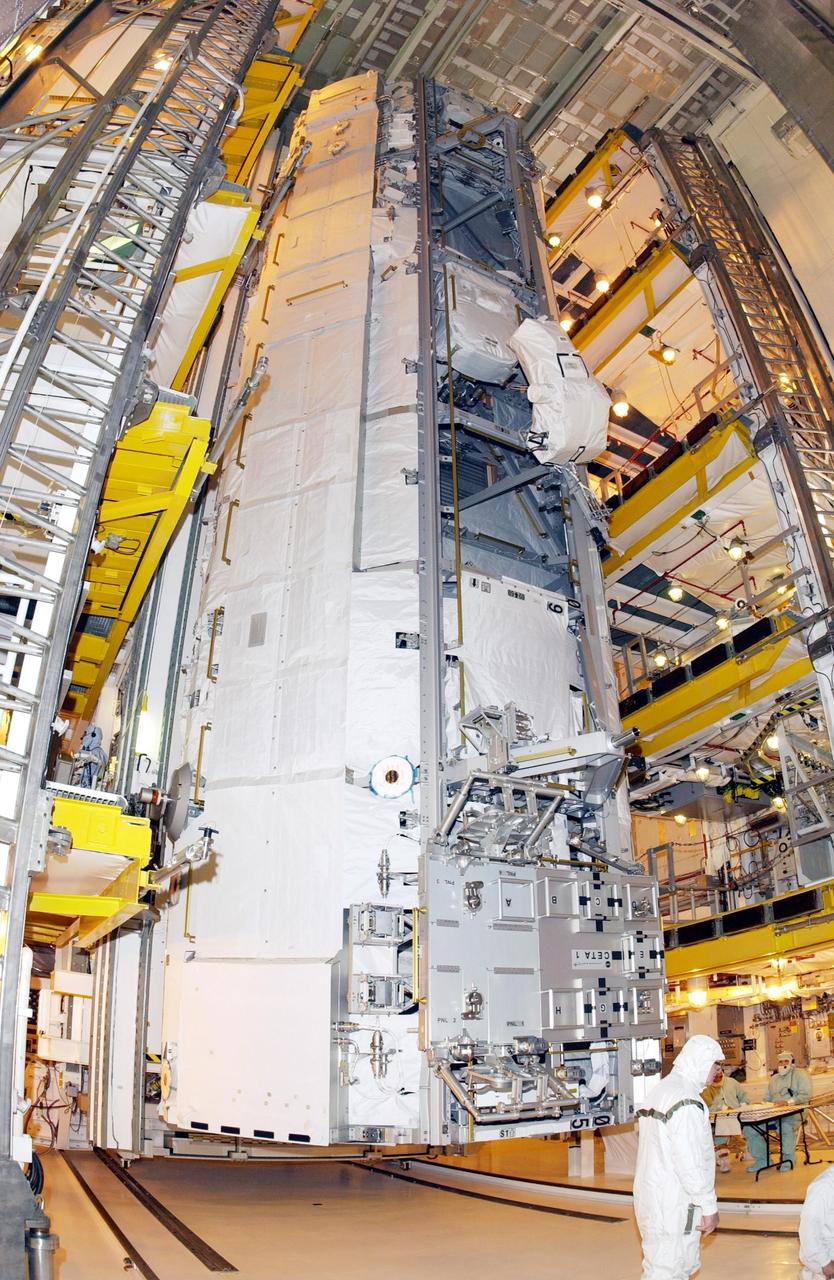
KENNEDY SPACE CENTER, FLA. -- In the Payload Changeout Room at the pad, the payload is moved out of the payload canister for transfer to Space Shuttle Atlantis' payload bay for mission STS-112. The primary payload on the mission is the S1 Integrated Truss Structure. The first starboard truss segment, the S1 will be attached to the Central truss segment, the S0 Truss, on the International Space Station during the mission. Atlantis is scheduled to launch no earlier than Oct. 2.
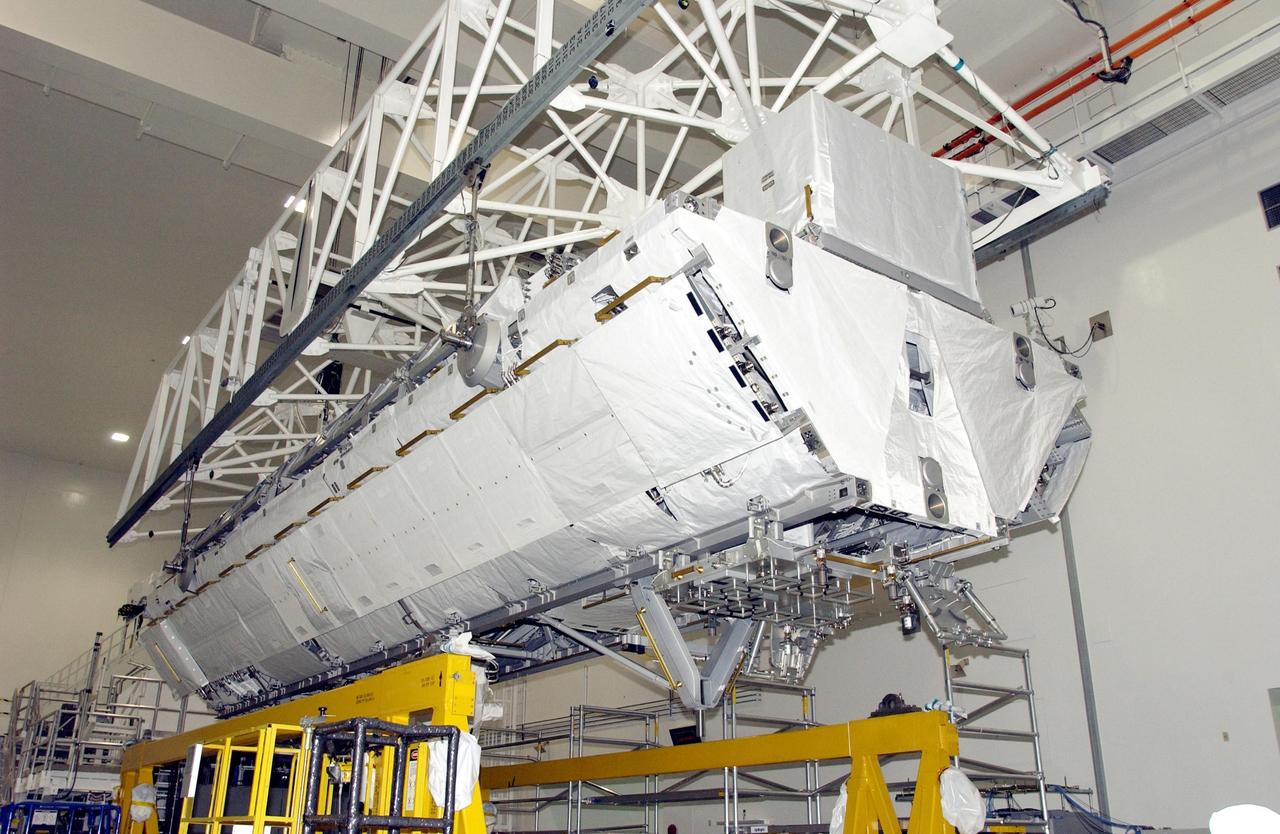
KENNEDY SPACE CENTER, FLA. -- An overhead crane lifts the S1 Integrated Truss Structure from its workstand. The S1 will be placed in the payload canister for transport it to Atlantis. The first starboard truss segment, the S1 will be attached to the Central truss segment, the S0 Truss, on the International Space Station during mission STS-112. Atlantis is scheduled to launch no earlier than Oct. 2.
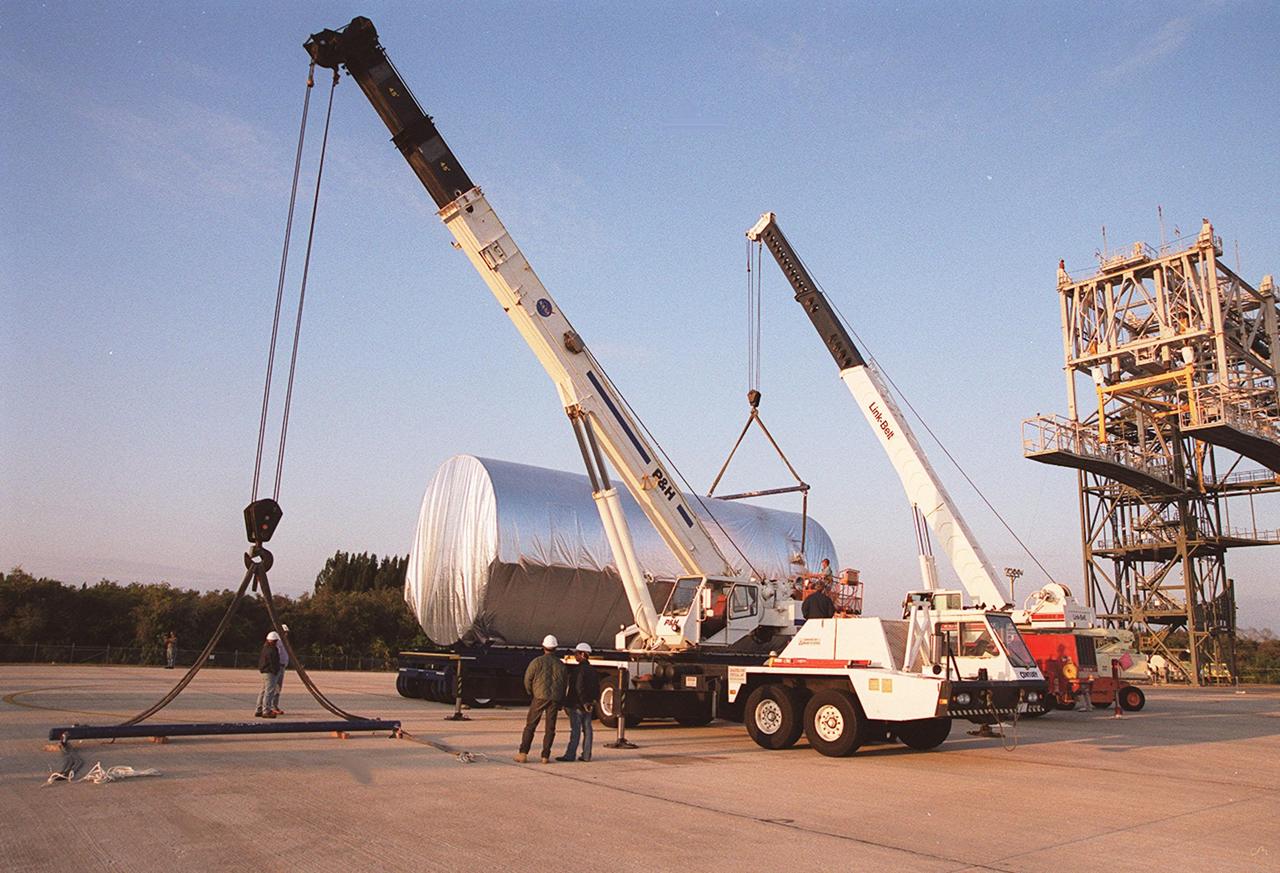
Cranes move toward the Integrated Truss Structure S3 as it sits on the parking apron of the Shuttle Landing Facility after being offloaded from the Super Guppy aircraft. The truss will be moved to a transporter and taken to the Operations and Checkout Building. The second starboard truss segment of the International Space Station, the S3 truss is scheduled to be added to the Station in April 2003
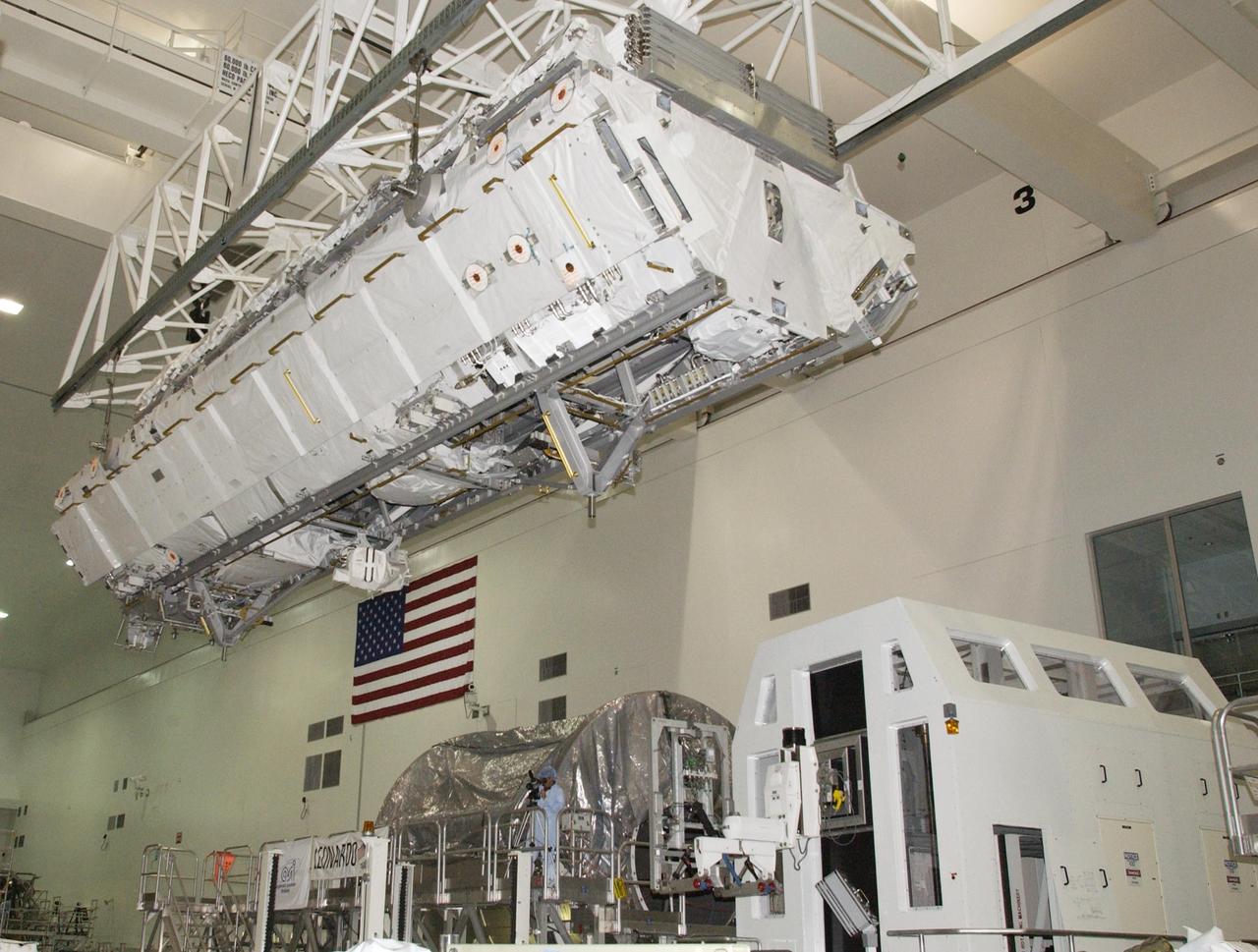
KENNEDY SPACE CENTER, FLA. -- An overhead crane moves the S1 Integrated Truss Structure above over other equipment to get to the payload canister for transport to Atlantis. The first starboard truss segment, the S1 will be attached to the Central truss segment, the S0 Truss, on the International Space Station during mission STS-112. Atlantis is scheduled to launch no earlier than Oct. 2.
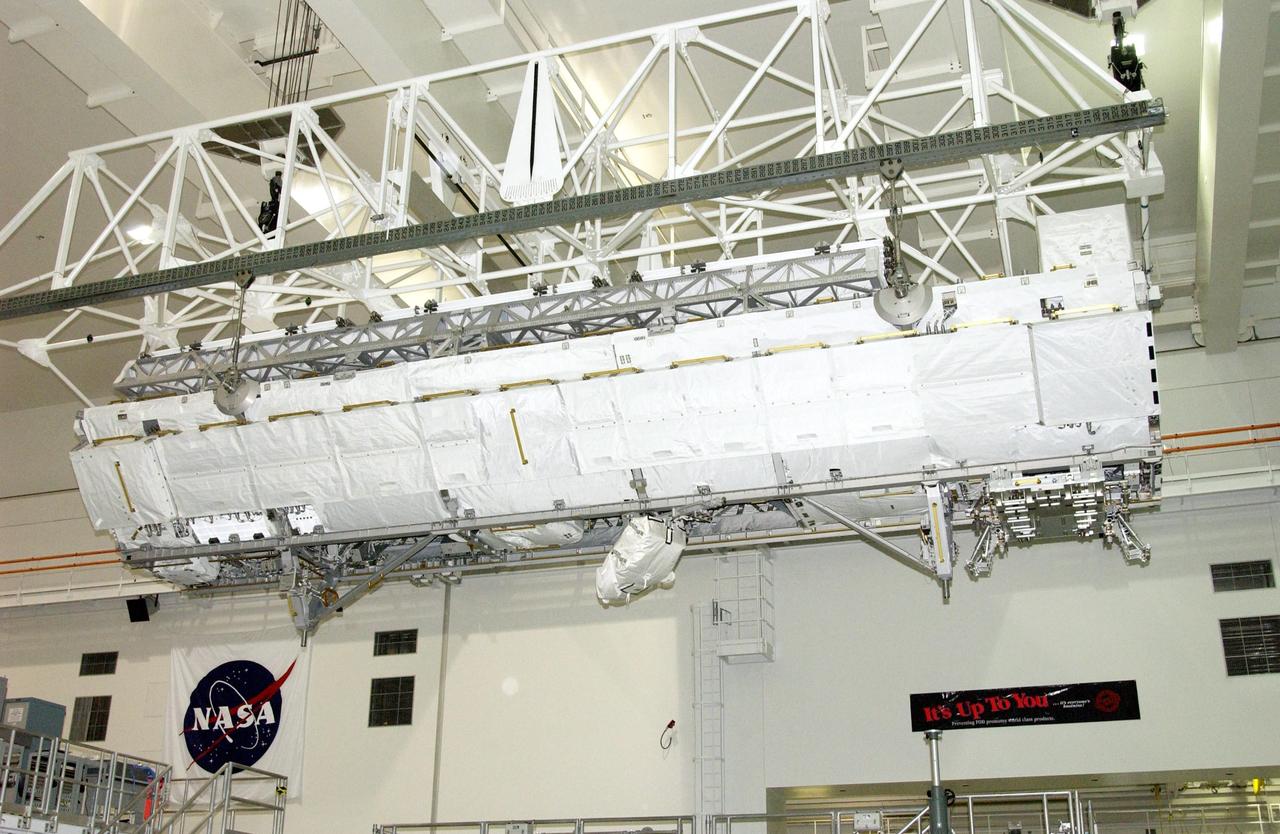
KENNEDY SPACE CENTER, FLA. -- An overhead crane moves the S1 Integrated Truss Structure toward the payload canister, which will transport it to Atlantis. The first starboard truss segment, the S1 will be attached to the Central truss segment, the S0 Truss, on the International Space Station during mission STS-112. Atlantis is scheduled to launch no earlier than Oct. 2.
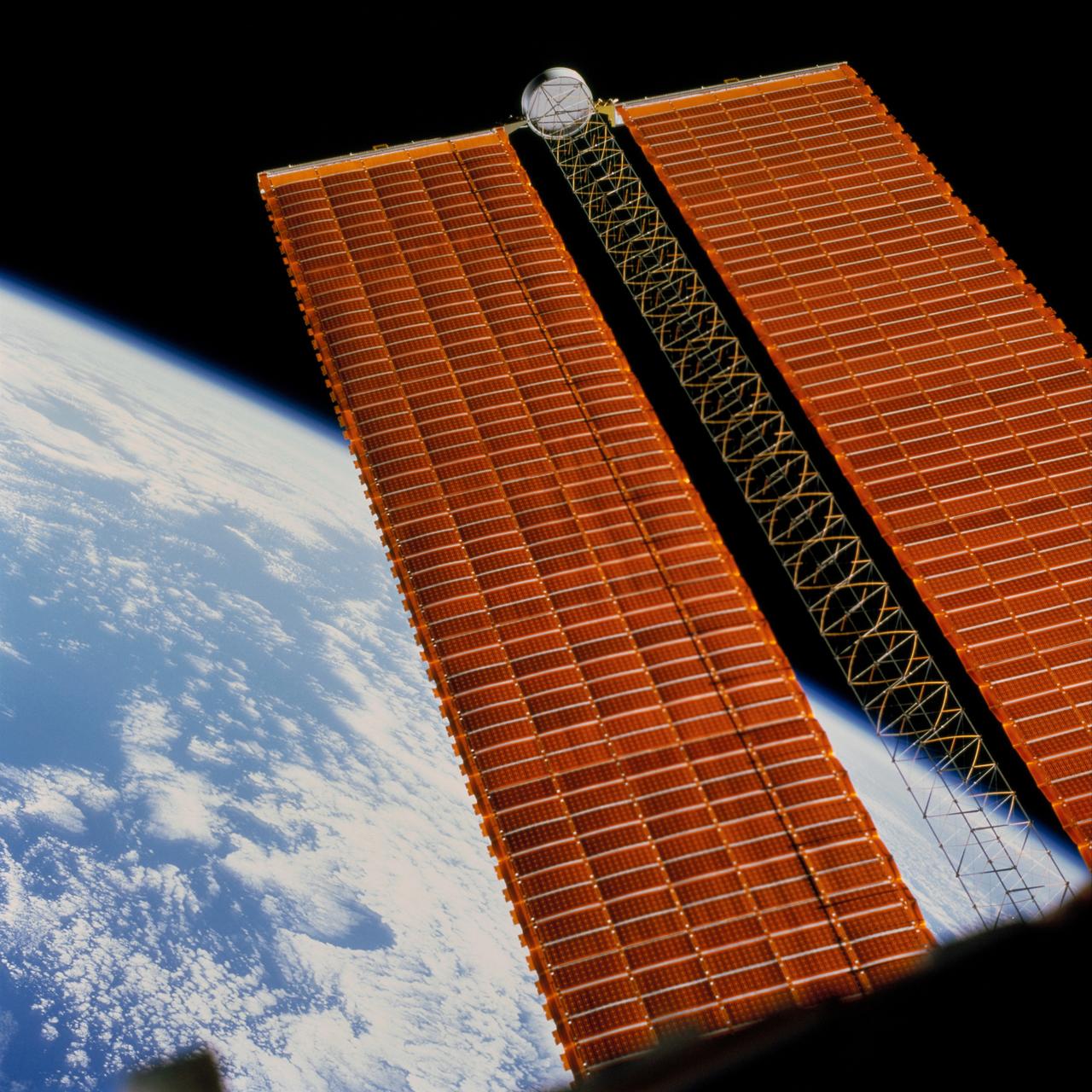
STS097-702-070 (3 December 2000) --- An astronaut inside Endeavour's crew cabin used a handheld 70mm camera to expose this frame of the International Space Station's starboard solar array wing panel, backdropped against an Earth horizon scene.
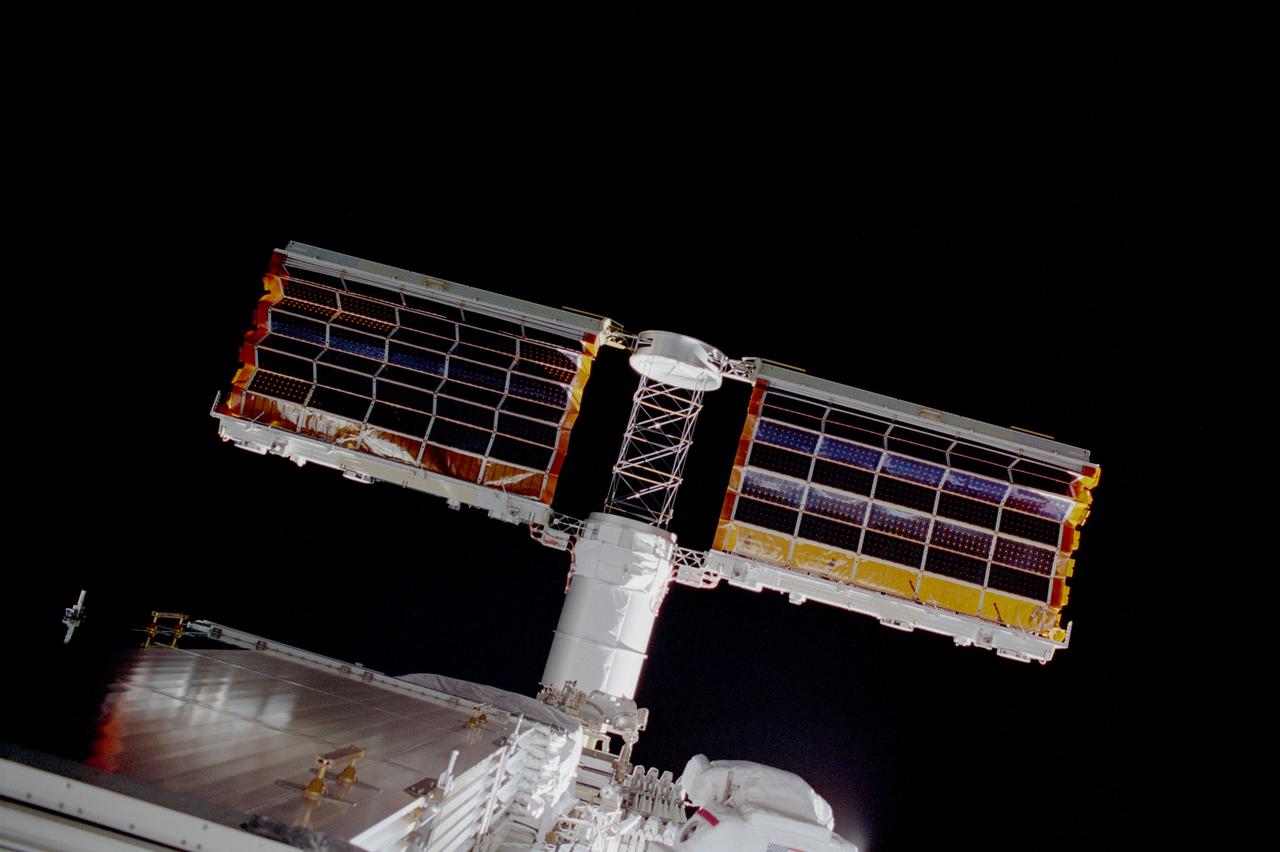
STS097-373-005 (3 December 2000) --- Backdropped against the blackness of space, the deployment of International Space Station (ISS) solar array was photographed with a 35mm camera by astronaut Carlos I. Noriega, mission specialist. Part of the extravehicular mobility unit (EMU) attached to astronaut Joseph R. Tanner, mission specialist, is visible at bottom center. Tanner and Noriega went on to participate together in three separate space walks.

KENNEDY SPACE CENTER, FLA. -- In the Space Station Processing Facility, as part of the Crew Equipment Interface Test, STS-112 Commander Jeffrey Ashby looks over the S1 Integrated Truss Structure, part of the payload for the mission to the International Space Station. The S1 truss is the first starboard (right-side) truss segment, whose main job is providing structural support for the orbiting research facility's radiator panels that cool the Space Station's complex power system. The S1 truss segment also will house communications systems, external experiment positions and other subsystems. The S1 truss will be attached to the S0 truss. Launch of STS-112 is scheduled for Aug. 22, 2002
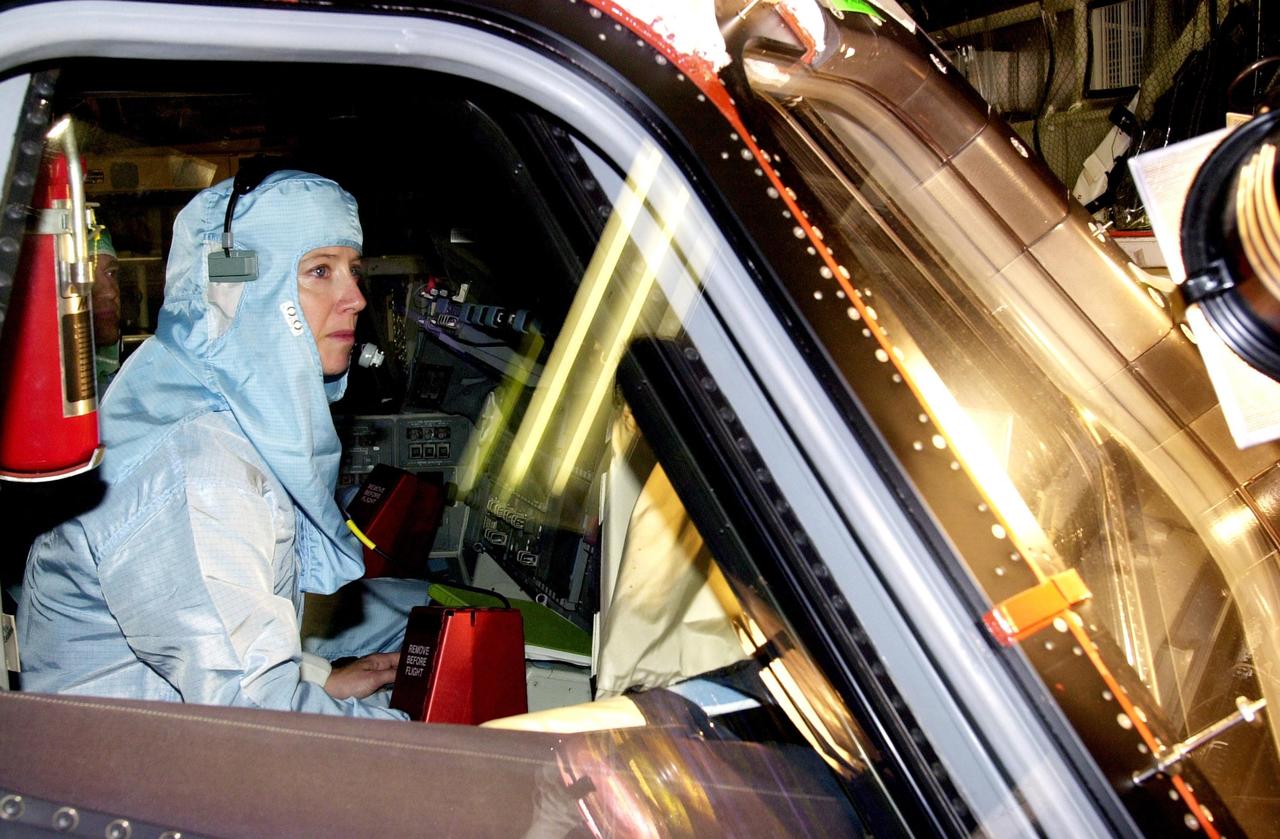
KENNEDY SPACE CENTER, FLA. -- During a Crew Equipment Interface Test, STS-112 Pilot Pamela Melroy checks out the windshield on Atlantis, the designated orbiter for the mission. STS-112 is the 15th assembly flight to the International Space Station and will be ferrying the S1 Integrated Truss Structure. The S1 truss is the first starboard (right-side) truss segment, whose main job is providing structural support for the radiator panels that cool the Space Station's complex power system. The S1 truss segment also will house communications systems, external experiment positions and other subsystems. The S1 truss will be attached to the S0 truss. STS-112 is currently scheduled for launch Aug. 22, 2002
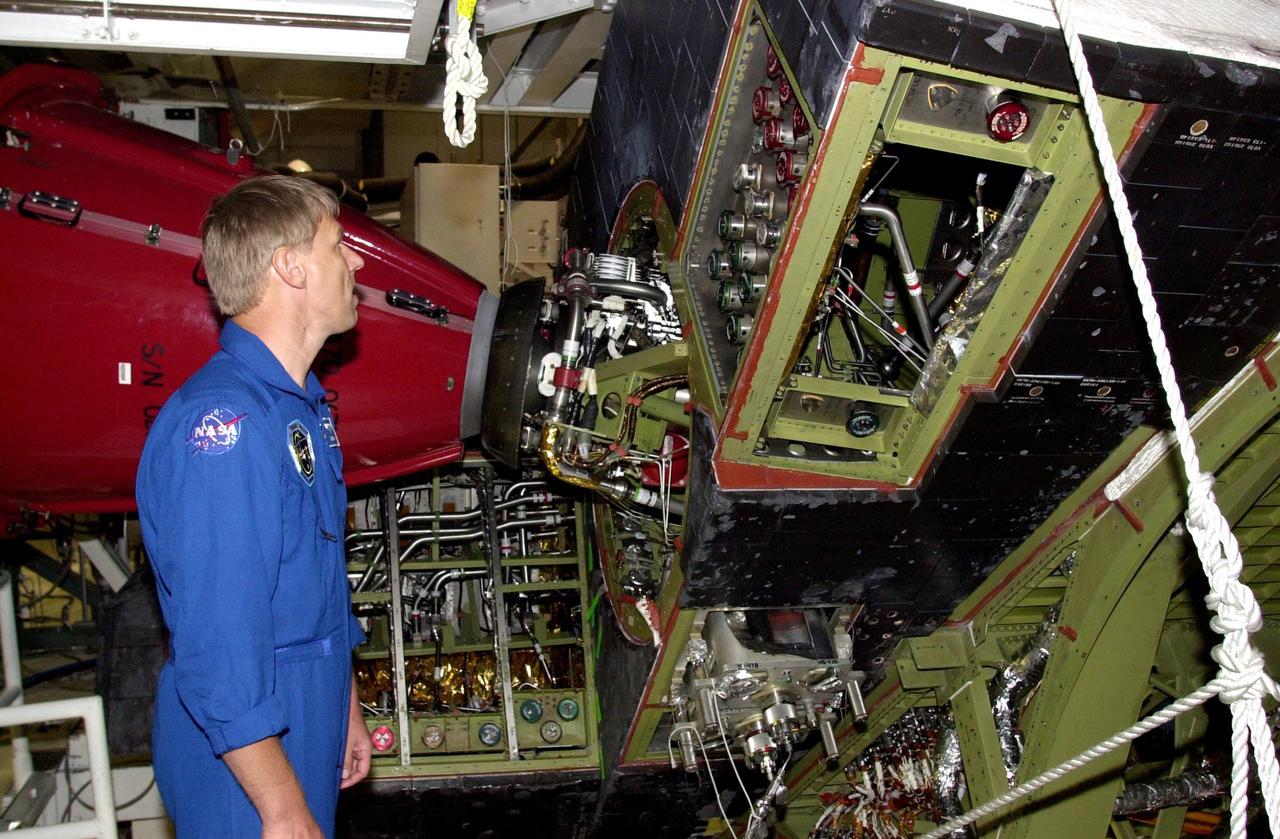
KENNEDY SPACE CENTER, FLA. - During a Crew Equipment Interface Test, STS-112 Mission Specialist Piers Sellers looks at the engine on Atlantis, the designated orbiter for the mission. On the 15th assembly flight to the International Space Station, Atlantis and crew will be ferrying the S1 Integrated Truss Structure. The S1 truss is the first starboard (right-side) truss segment, whose main job is providing structural support for the radiator panels that cool the Space Station's complex power system. The S1 truss segment also will house communications systems, external experiment positions and other subsystems. The S1 truss will be attached to the S0 truss. STS-112 is currently scheduled for launch Aug. 22, 2002
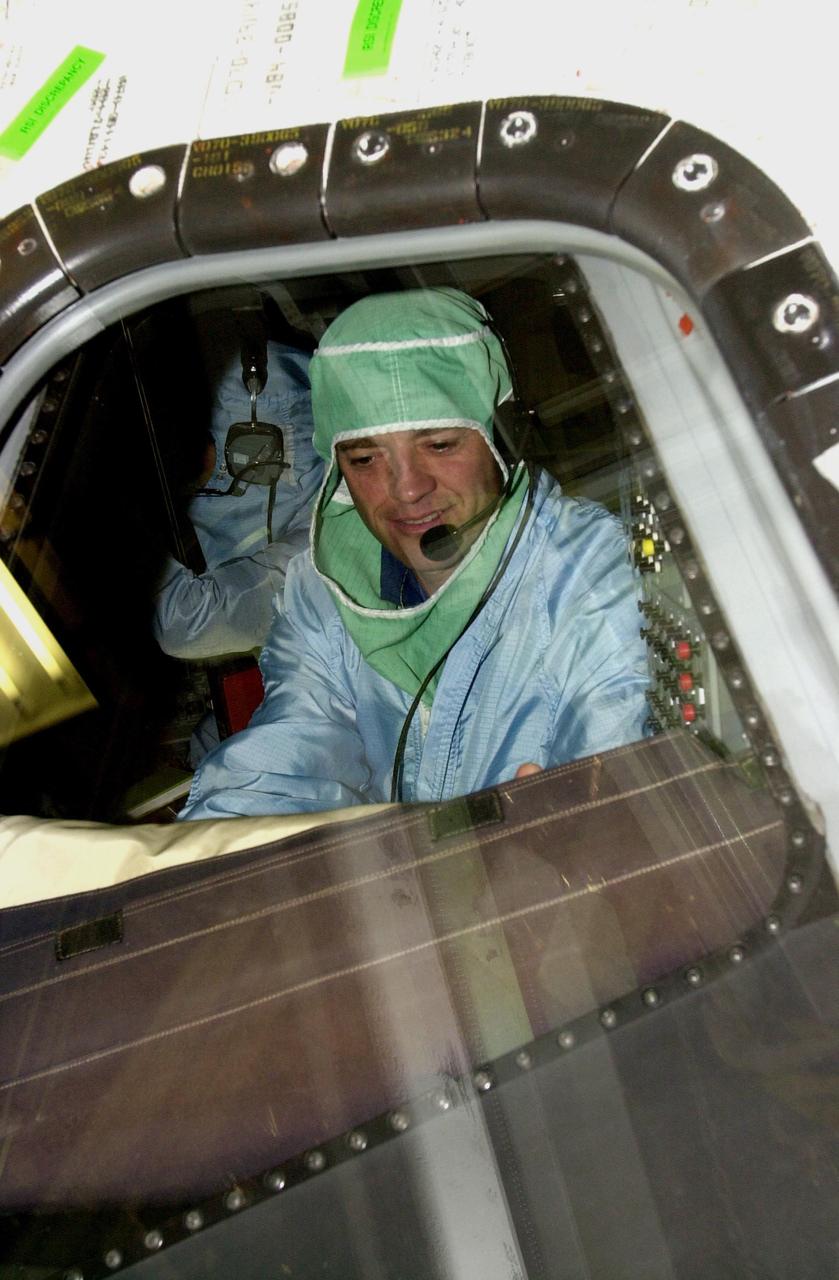
KENNEDY SPACE CENTER, FLA. -- During a Crew Equipment Interface Test, STS-112 Commander Jeffrey Ashby checks out the windshield on Atlantis, the designated orbiter for the mission. STS-112 is the 15th assembly flight to the International Space Station and will be ferrying the S1 Integrated Truss Structure. The S1 truss is the first starboard (right-side) truss segment, whose main job is providing structural support for the radiator panels that cool the Space Station's complex power system. The S1 truss segment also will house communications systems, external experiment positions and other subsystems. The S1 truss will be attached to the S0 truss. STS-112 is currently scheduled for launch Aug. 22, 2002
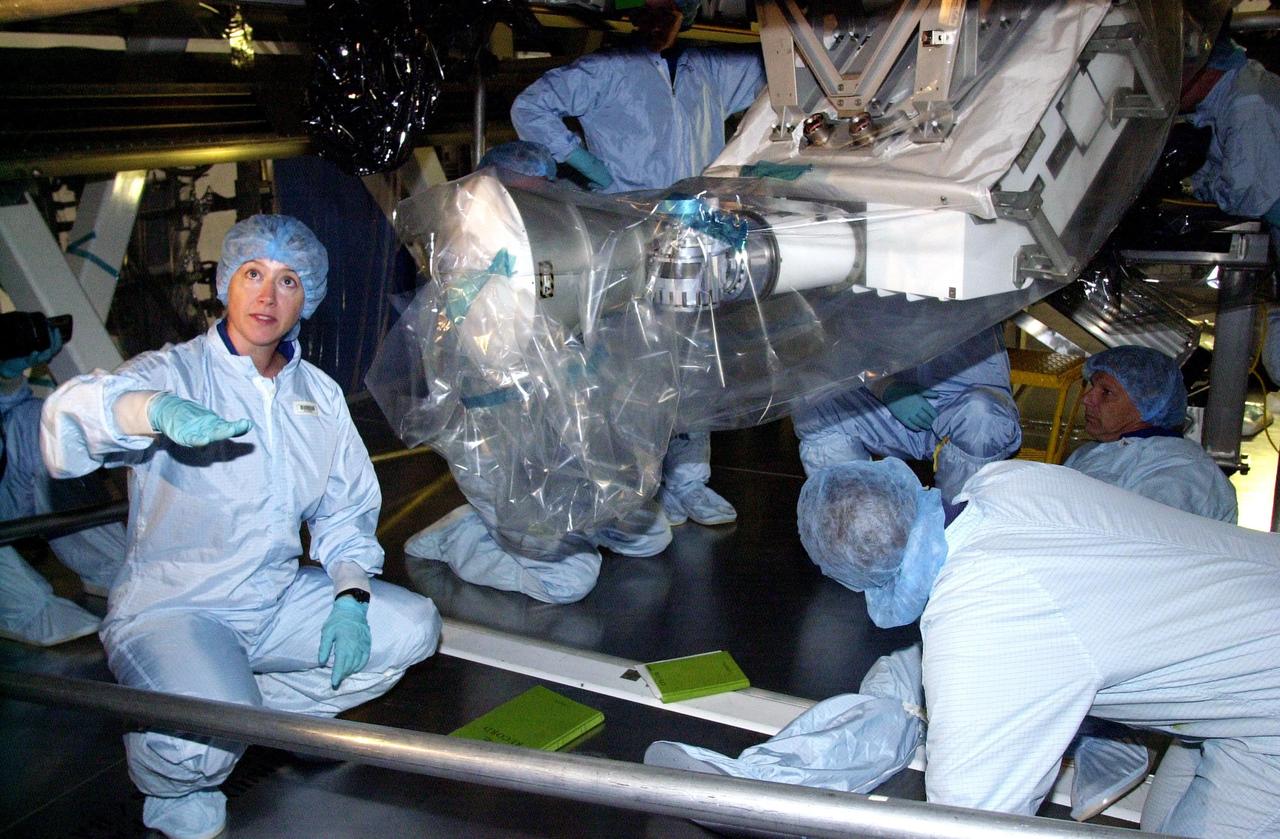
KENNEDY SPACE CENTER, FLA. - STS-112 Pilot Pamela Melroy signals to someone off camera while behind her other crew members look over the S1 Integrated Truss Structure, part of the payload for the mission to the International Space Station. The S1 truss is the first starboard (right-side) truss segment, whose main job is providing structural support for the orbiting research facility's radiator panels that cool the Space Station's complex power system. The S1 truss segment also will house communications systems, external experiment positions and other subsystems. The S1 truss will be attached to the S0 truss. Launch of STS-112 is scheduled for Aug. 22, 2002

KENNEDY SPACE CENTER, FLA. - As part of the Crew Equipment Interface Test, STS-112 Mission Specialist David Wolf (right) checks out a part of the S1 Integrated Truss Structure, part of the payload for the mission to the International Space Station. The S1 truss is the first starboard (right-side) truss segment, whose main job is providing structural support for the orbiting research facility's radiator panels that cool the Space Station's complex power system. The S1 truss segment also will house communications systems, external experiment positions and other subsystems. The S1 truss will be attached to the S0 truss. Launch of STS-112 is scheduled for Aug. 22, 2002
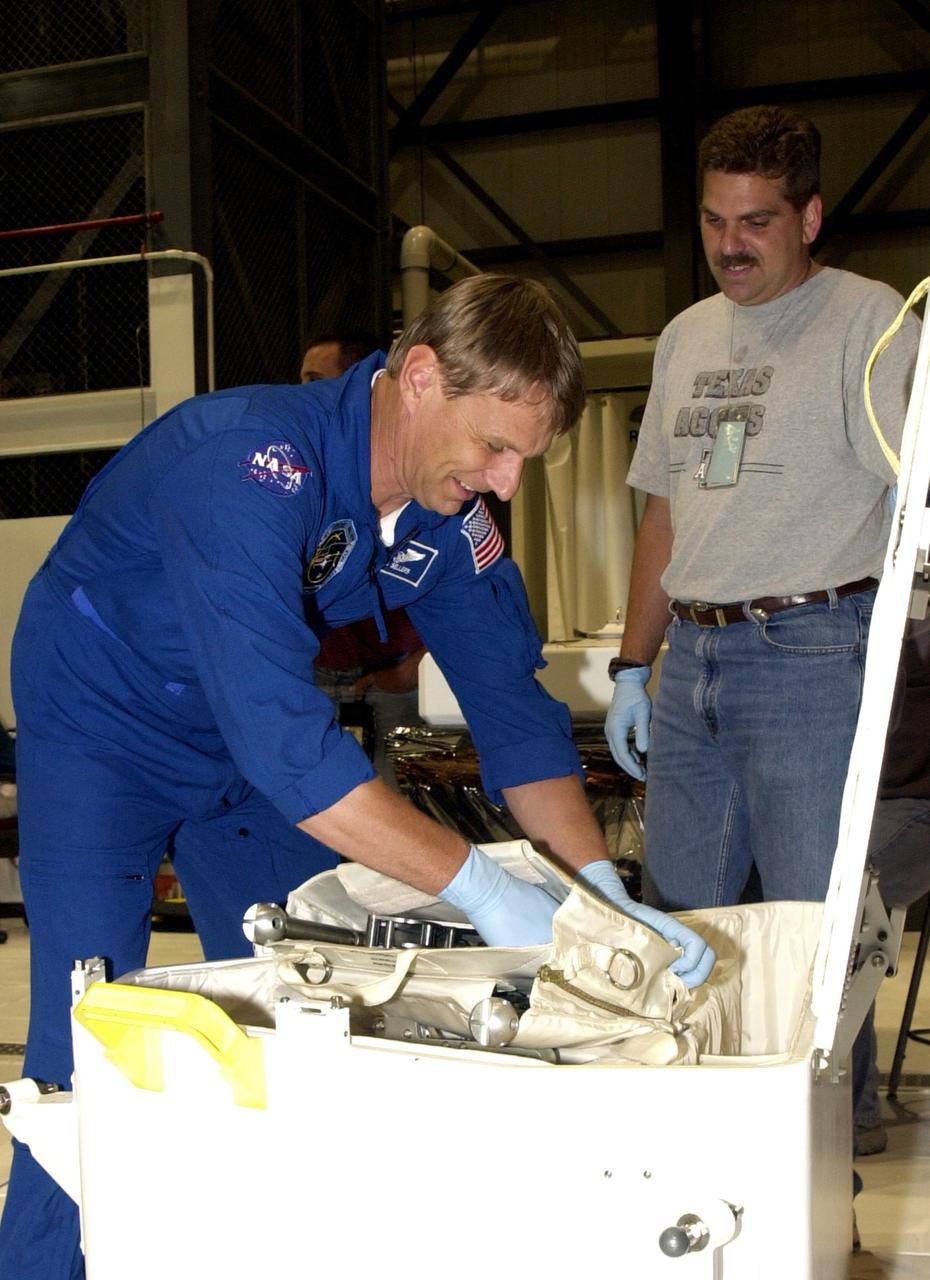
KENNEDY SPACE CENTER, FLA. - STS-112 Mission Specialist Piers Sellers checks out flight equipment during a Crew Equipment Interface Test at KSC. STS-112 is the 15th assembly flight to the International Space Station and will be ferrying the S1 Integrated Truss Structure. The S1 truss is the first starboard (right-side) truss segment, whose main job is providing structural support for the radiator panels that cool the Space Station's complex power system. The S1 truss segment also will house communications systems, external experiment positions and other subsystems. The S1 truss will be attached to the S0 truss. STS-112 is currently scheduled for launch Aug. 22, 2002
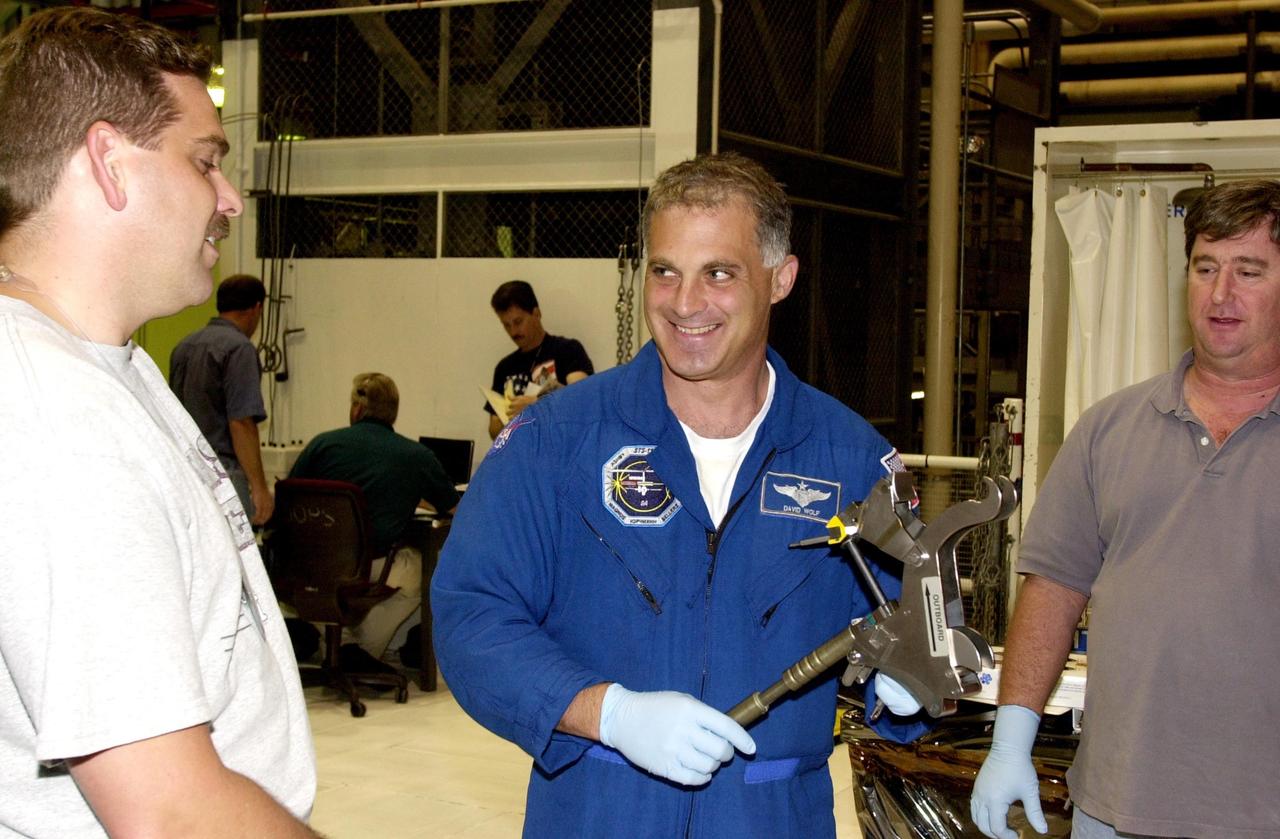
KENNEDY SPACE CENTER, FLA. -- STS-112 Mission Specialist David Wolf discusses flight equipment with two technicians during a Crew Equipment Interface Test at KSC. STS-112 is the 15th assembly flight to the International Space Station and will be ferrying the S1 Integrated Truss Structure. The S1 truss is the first starboard (right-side) truss segment, whose main job is providing structural support for the radiator panels that cool the Space Station's complex power system. The S1 truss segment also will house communications systems, external experiment positions and other subsystems. The S1 truss will be attached to the S0 truss. STS-112 is currently scheduled for launch Aug. 22, 2002

KENNEDY SPACE CENTER, FLA. -- In the Space Station Processing Facility, STS-112 Pilot Pamela Melroy looks at equipment for the mission as part of the Crew Equipment Interface Test. Mission Specialist Sandra Magnus is behind her. Mission STS-112 will be ferrying the S1 truss to the International Space Station on its scheduled Aug. 22 flight. The S1 truss is the first starboard (right-side) truss segment, whose main job is providing structural support for the orbiting research facility's radiator panels that cool the Space Station's complex power system. The S1 truss segment also will house communications systems, external experiment positions and other subsystems. The S1 truss will be attached to the S0 truss
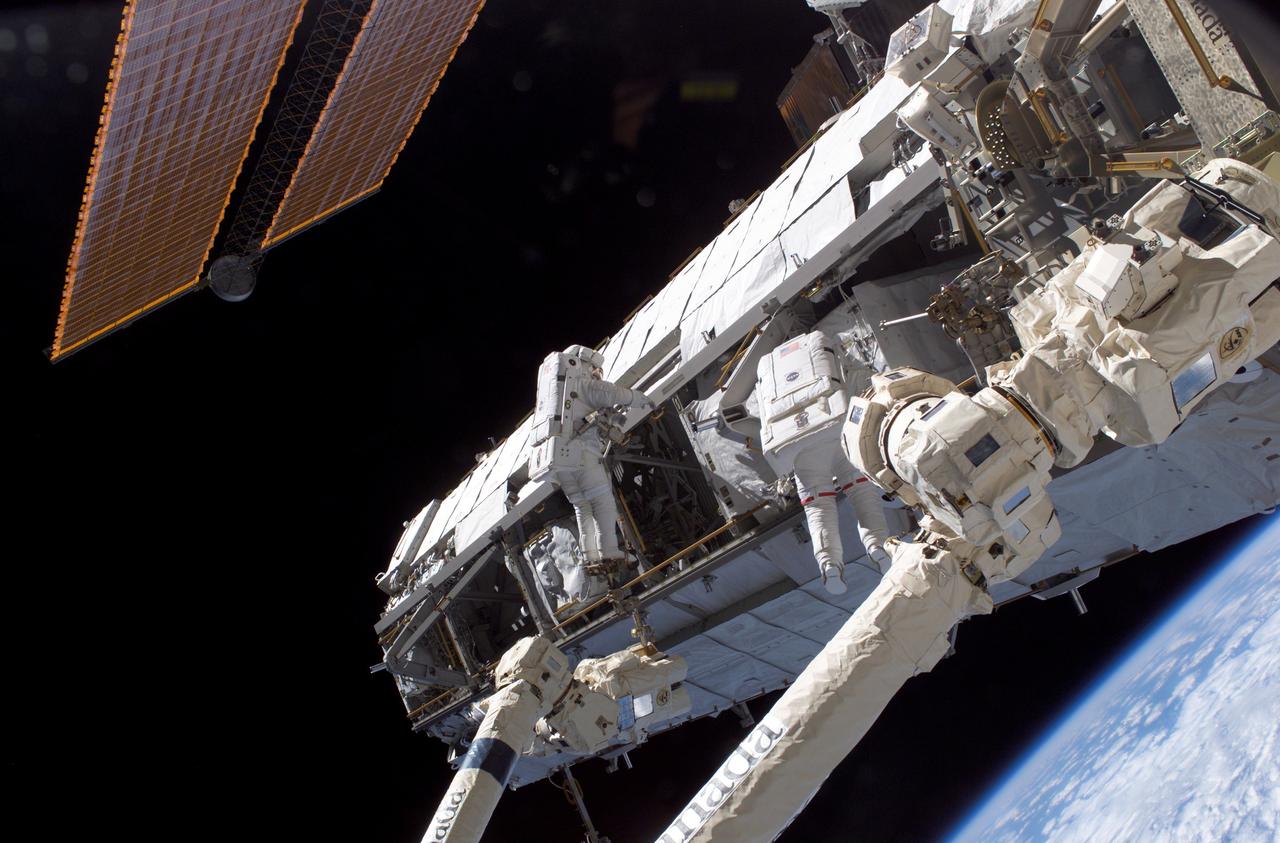
Astronauts Piers J. Sellers (left ) and David A. Wolf work on the newly installed Starboard One (S1) truss to the International Space Station (ISS) during the STS-112 mission. The primary payloads of this mission, ISS Assembly Mission 9A, were the Integrated Truss Assembly S1 (S One), the starboard side thermal radiator truss, and the Crew Equipment Translation Aid (CETA) cart to the ISS. The S1 truss provides structural support for the orbiting research facility's radiator panels, which use ammonia to cool the Station's complex power system. The S1 truss was attached to the S0 (S Zero) truss, which was launched on April 8, 2002 aboard the STS-110, and flows 637 pounds of anhydrous ammonia through three heat-rejection radiators. The truss is 45-feet long, 15-feet wide, 10-feet tall, and weighs approximately 32,000 pounds. The CETA cart was attached to the Mobil Transporter and will be used by assembly crews on later missions. Manufactured by the Boeing Company in Huntington Beach, California, the truss primary structure was transferred to the Marshall Space Flight Center in February 1999 for hardware installations and manufacturing acceptance testing. The launch of the STS-112 mission occurred on October 7, 2002, and its 11-day mission ended on October 18, 2002.
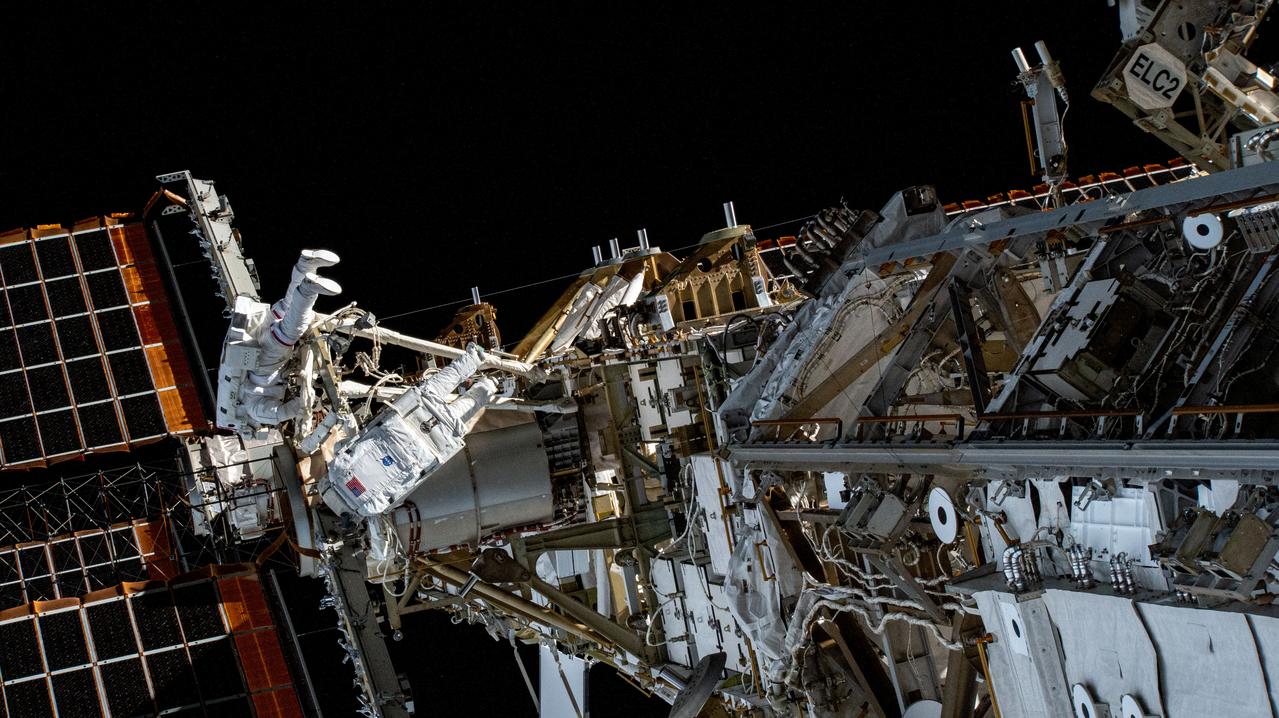
iss069e005734 (April 28, 2023) --- NASA astronaut Stephen Bowen and UAE (United Arab Emirates) astronaut Sultan Alneyadi are pictured in their Extravehicular Mobility Units, or spacesuits, on the International Space Station's starboard truss structure during a spacewalk. The duo would spend seven hours and one minute in the vacuum of space routing cables and installing insulation readying the orbital outpost for its next set of roll-out solar arrays due to be installed after their delivery on the next SpaceX Dragon cargo mission.
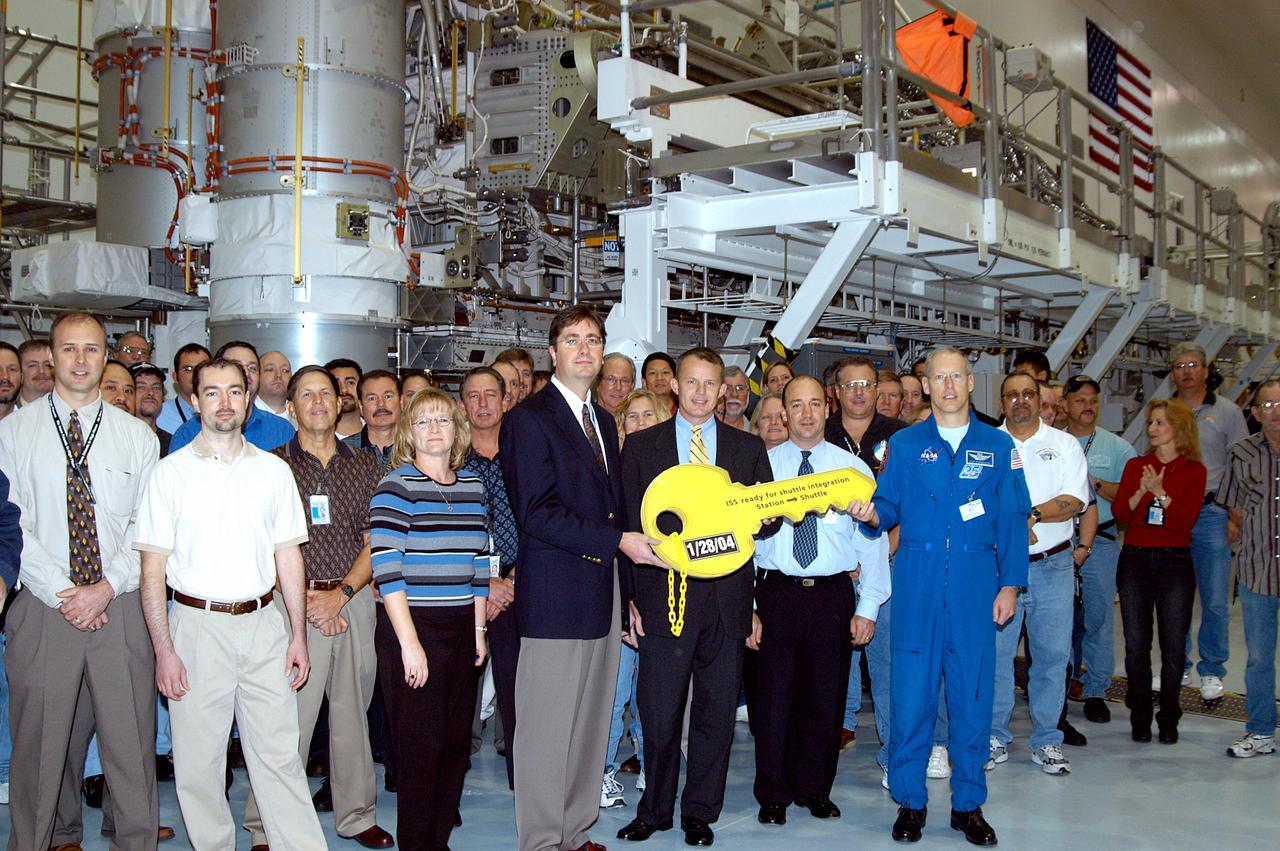
KENNEDY SPACE CENTER, FLA. - Surrounded by workers in the Space Station Processing Facility, Chuck Hardison (left), Boeing senior truss manager, presents the “key” for the starboard truss segment S3/S4 to Scott Gahring (center), ISS Vehicle Office manager (acting), Johnson Space Center. The trusses are scheduled to be delivered to the International Space Station on mission STS-117. Holding the tip of the key at right is astronaut Patrick Forrester, who is a mission specialist on the flight.
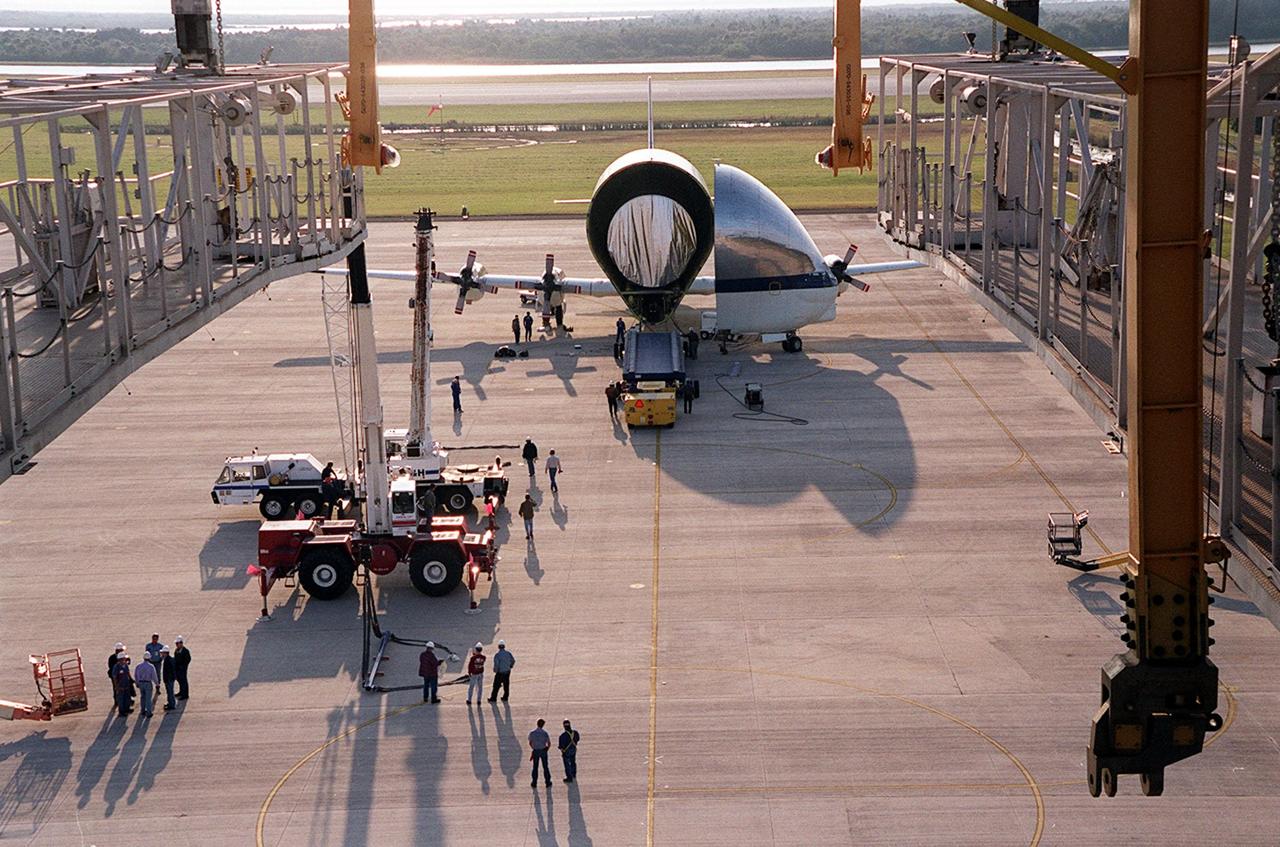
On the parking apron of the KSC Shuttle Landing Facility, near the Mate/Demate device (seen in the foreground), the opened nose of the Super Guppy aircraft reveals its cargo, the Integrated Truss Structure S3. It was built by The Boeing Co. After offloading, the S3 will be transported to the Operations and Checkout Building. The second starboard truss segment of the International Space Station, the S3 truss is scheduled to be added to the Station in April 2003
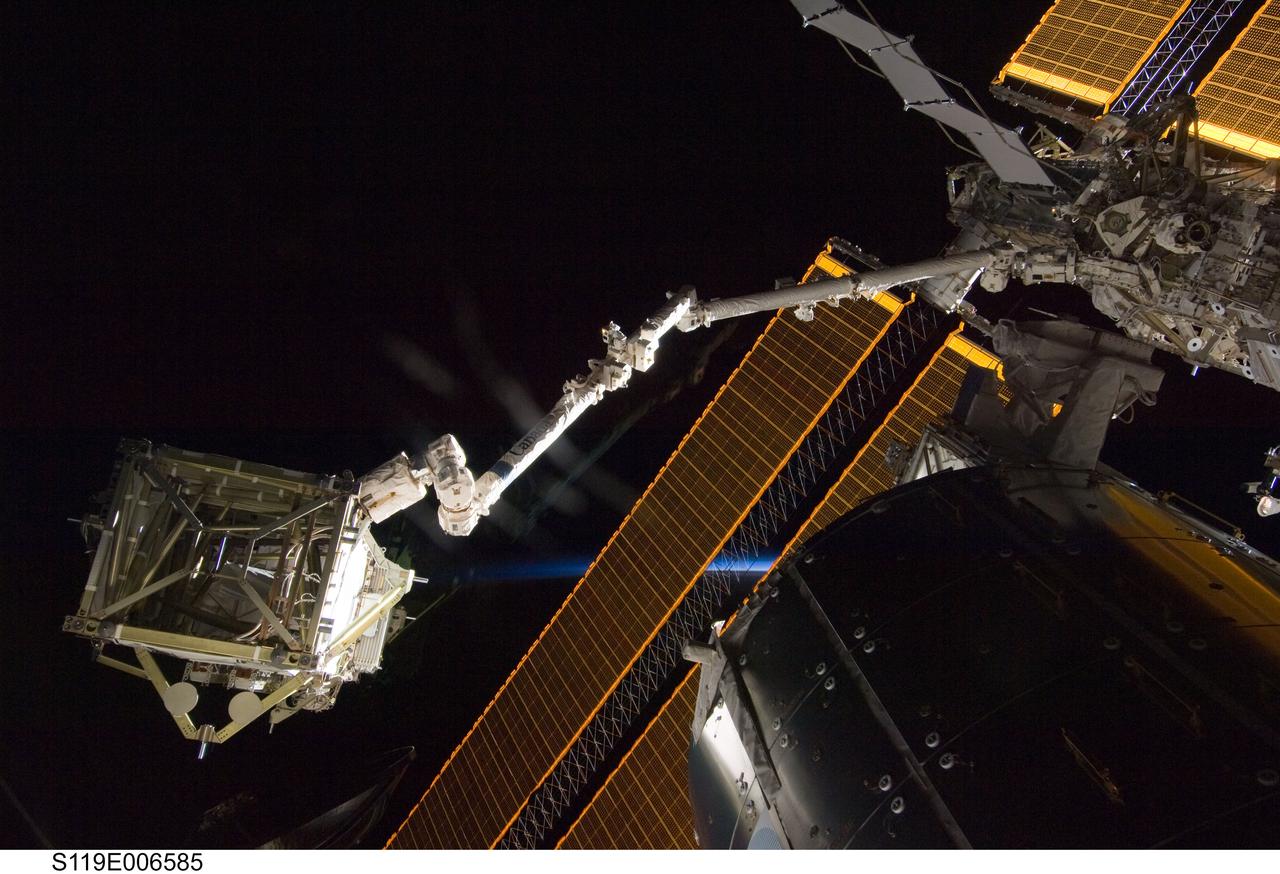
S119-E-006585 (18 March 2009) --- In the grasp of the International Space Station’s robotic Canadarm2, the S6 truss segment was photographed by a STS-119 crewmember while Space Shuttle Discovery is docked with the station. The S6 truss segment was moved from Discovery’s cargo bay by the station’s Canadarm2, handed off to the shuttle’s remote manipulator system (RMS), and then handed back to the station’s robotic arm where it will remain in an overnight parked position. Also visible in the image are the Columbus laboratory, starboard truss and solar array panels.
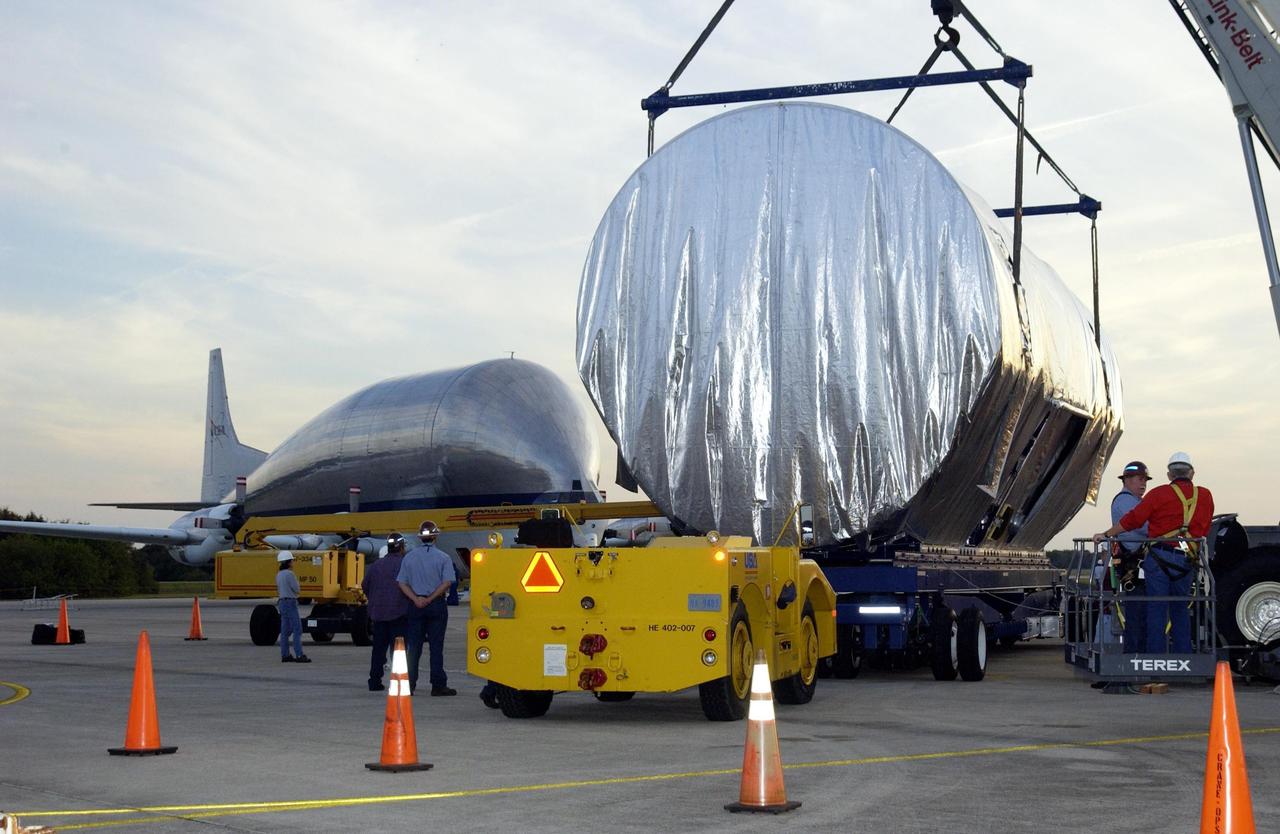
KENNEDY SPACE CENTER, FLA. -- The Integrated Equipment Assembly (IEA), one of two major components of the Starboard 6 (S6) truss segment for the International Space Station (ISS), is offloaded onto a cargo transporter following its arrival at the Shuttle Landing Facility. The IEA will be joined to its companion piece, the Long Spacer, before launch early in 2004. The S6 truss segment will be the 11th and final piece of the Station's Integrated Truss Structure and will support the fourth and final set of solar arrays, batteries, and electronics.
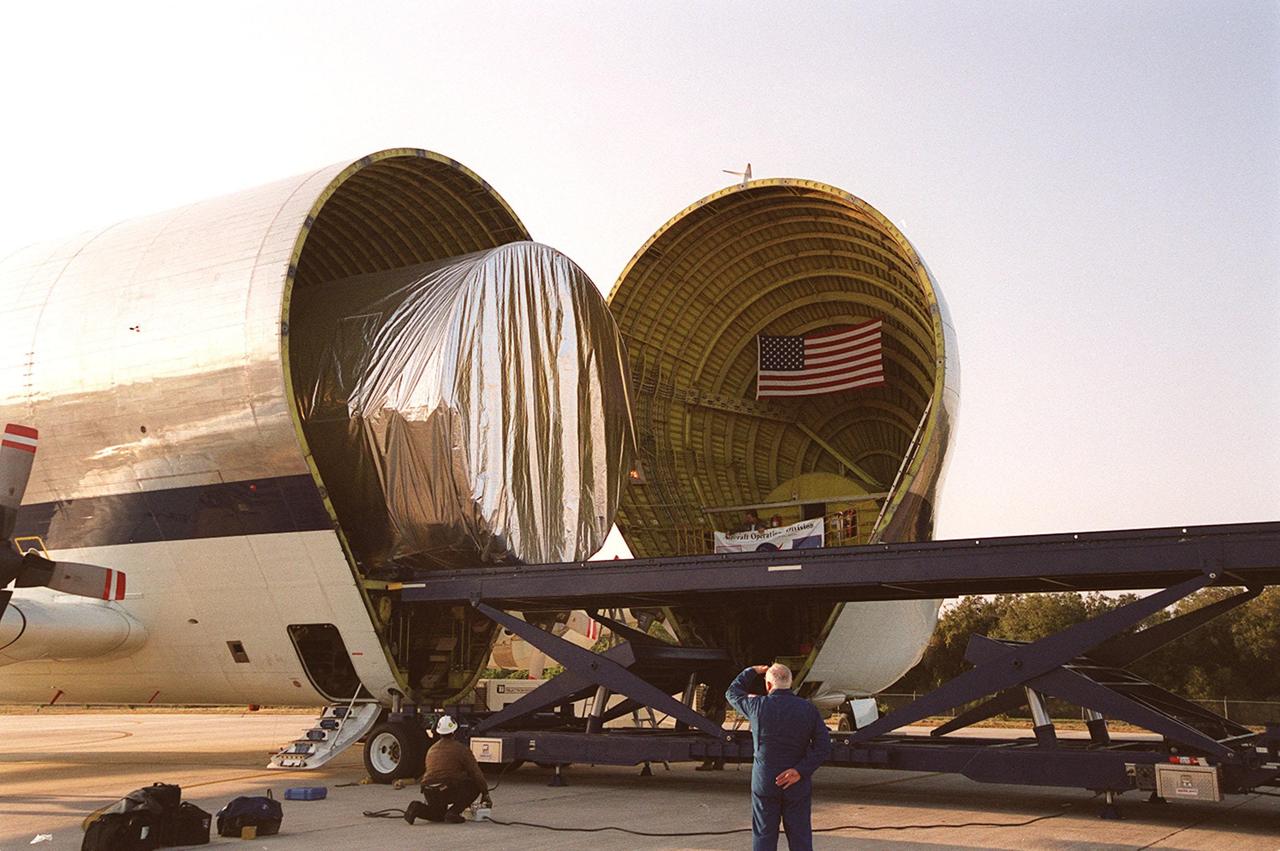
On the parking apron of the KSC Shuttle Landing Facility, the Integrated Truss Structure S3 moves out from inside the Super Guppy aircraft that brought it to KSC from Tulsa, Okla. After offloading, the S3 will be transported to the Operations and Checkout Building. The second starboard truss segment of the International Space Station, the S3 truss is scheduled to be added to the Station in April 2003
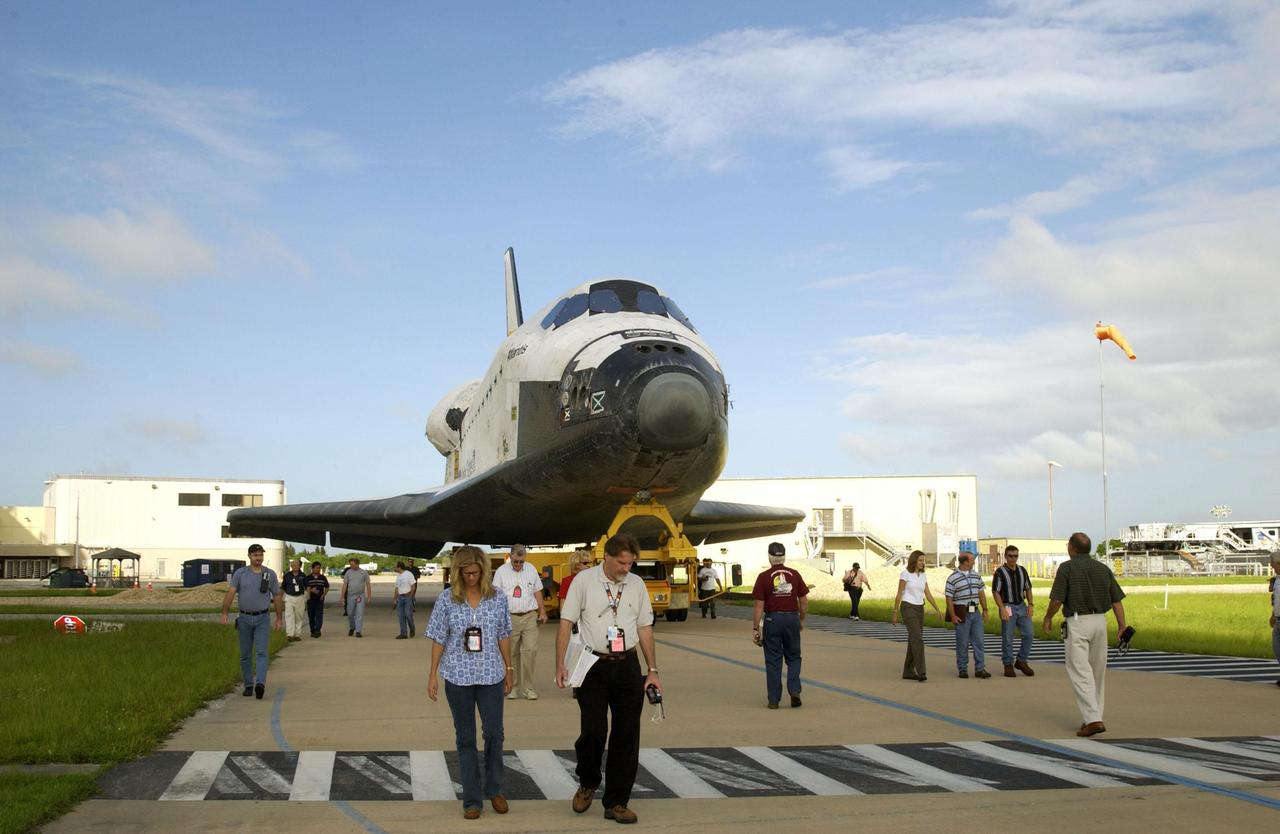
KENNEDY SPACE CENTER, FLA. -- Workers at KSC stroll along with the orbiter Atlantis as it rolls from the Orbiter Processing Facility to begin the next stage of preparation for launch. Atlantis will be making its 26th flight on mission STS-112, an assembly flight to the International Space Station. The orbiter will carry the first starboard truss segment, S1, which will be attached to the Central truss segment, the S0 Truss, on the Station. Atlantis is scheduled to launch no earlier than Oct. 2.
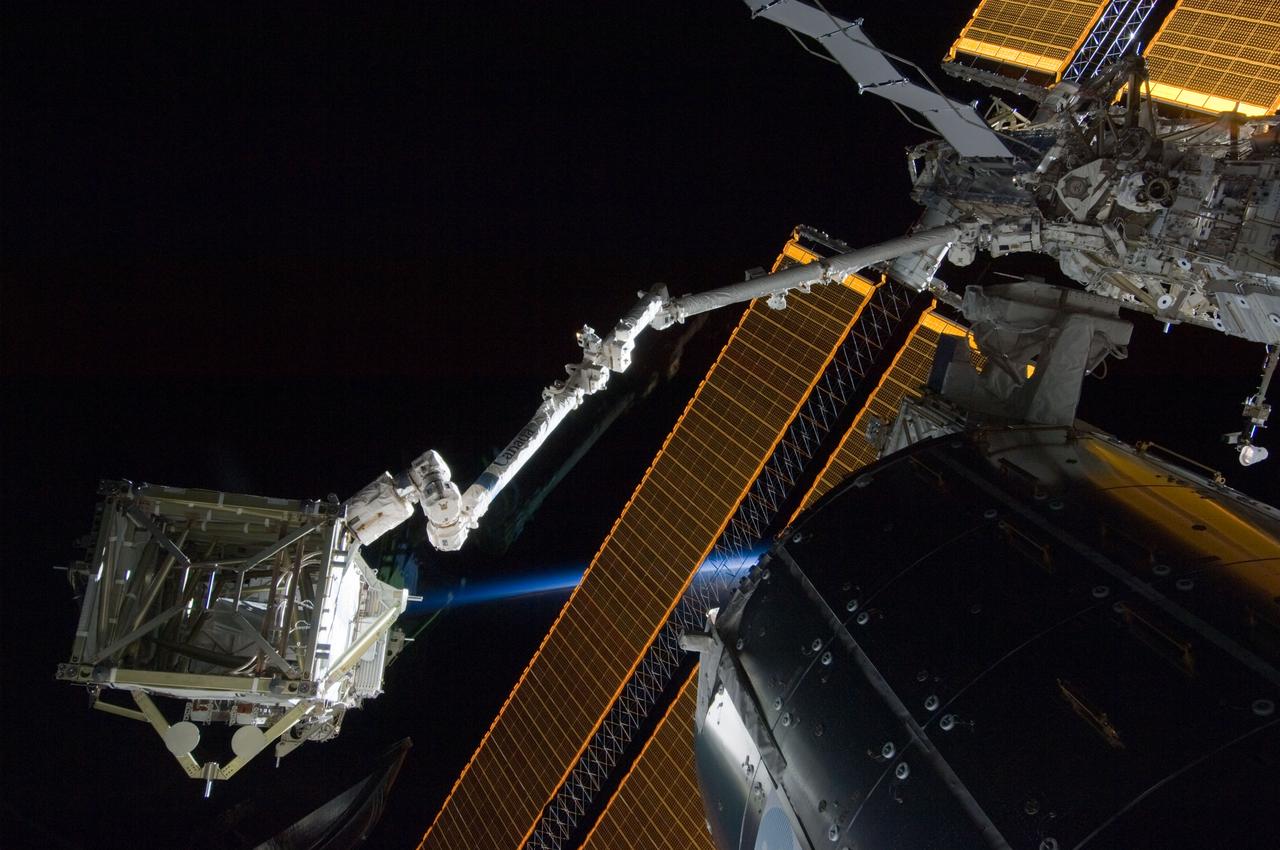
S119-E-006588 (18 March 2009) --- In the grasp of the International Space Station’s robotic Canadarm2, the S6 truss segment was photographed by a STS-119 crewmember while Space Shuttle Discovery is docked with the station. The S6 truss segment was moved from Discovery’s cargo bay by the station’s Canadarm2, handed off to the shuttle’s remote manipulator system (RMS), and then handed back to the station’s robotic arm where it will remain in an overnight parked position. Also visible in the image are the Columbus laboratory, starboard truss and solar array panels.
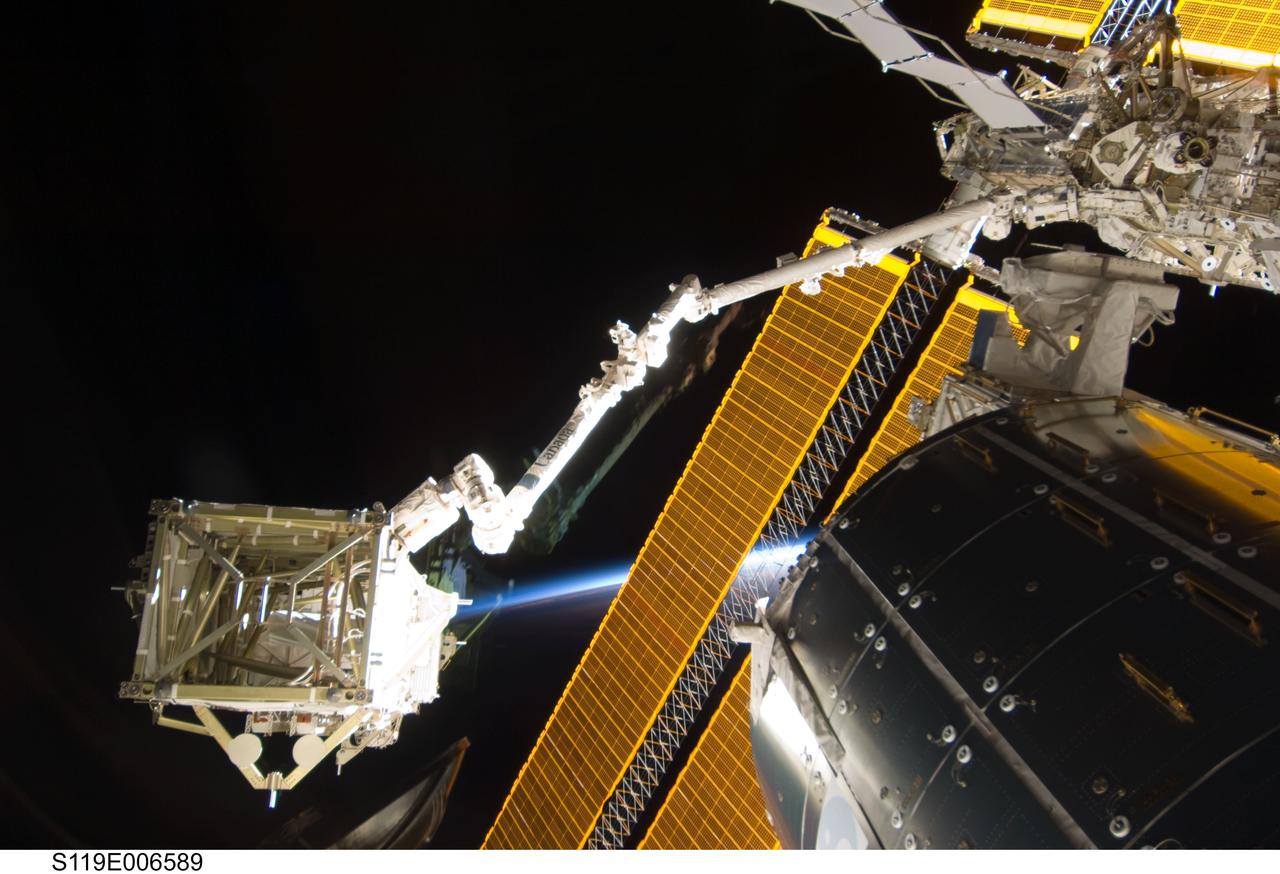
S119-E-006589 (18 March 2009) --- In the grasp of the International Space Station’s robotic Canadarm2, the S6 truss segment was photographed by a STS-119 crewmember while Space Shuttle Discovery is docked with the station. The S6 truss segment was moved from Discovery’s cargo bay by the station’s Canadarm2, handed off to the shuttle’s remote manipulator system (RMS), and then handed back to the station’s robotic arm where it will remain in an overnight parked position. Also visible in the image are the Columbus laboratory, starboard truss and solar array panels.
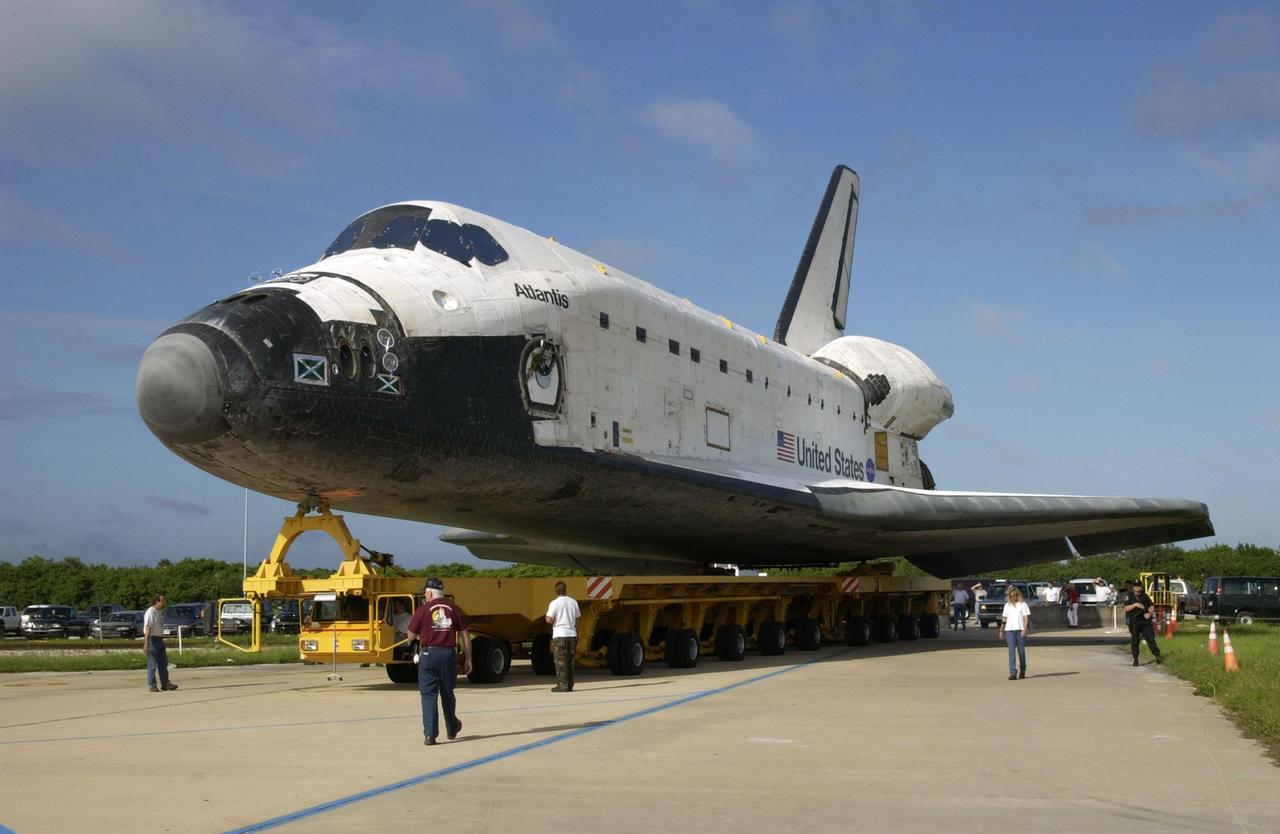
KENNEDY SPACE CENTER, FLA. -- Orbiter Atlantis begins turning after leaving the Orbiter Processing Facility to begin the next stage of preparation for launch. Atlantis will be making its 26th flight on mission STS-112, an assembly flight to the International Space Station. The orbiter will carry the first starboard truss segment, S1, which will be attached to the Central truss segment, the S0 Truss, on the Station. Atlantis is scheduled to launch no earlier than Oct. 2.
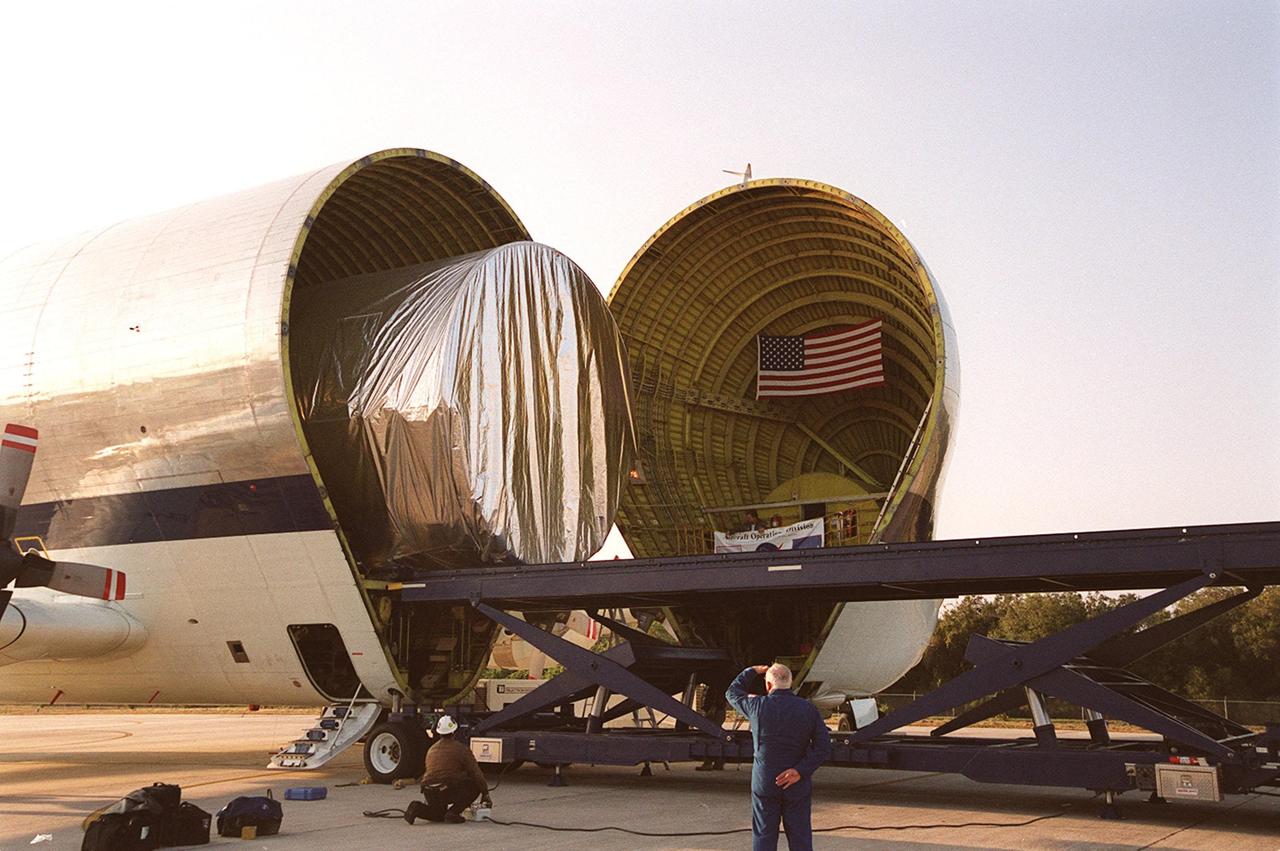
On the parking apron of the KSC Shuttle Landing Facility, the Integrated Truss Structure S3 moves out from inside the Super Guppy aircraft that brought it to KSC from Tulsa, Okla. After offloading, the S3 will be transported to the Operations and Checkout Building. The second starboard truss segment of the International Space Station, the S3 truss is scheduled to be added to the Station in April 2003
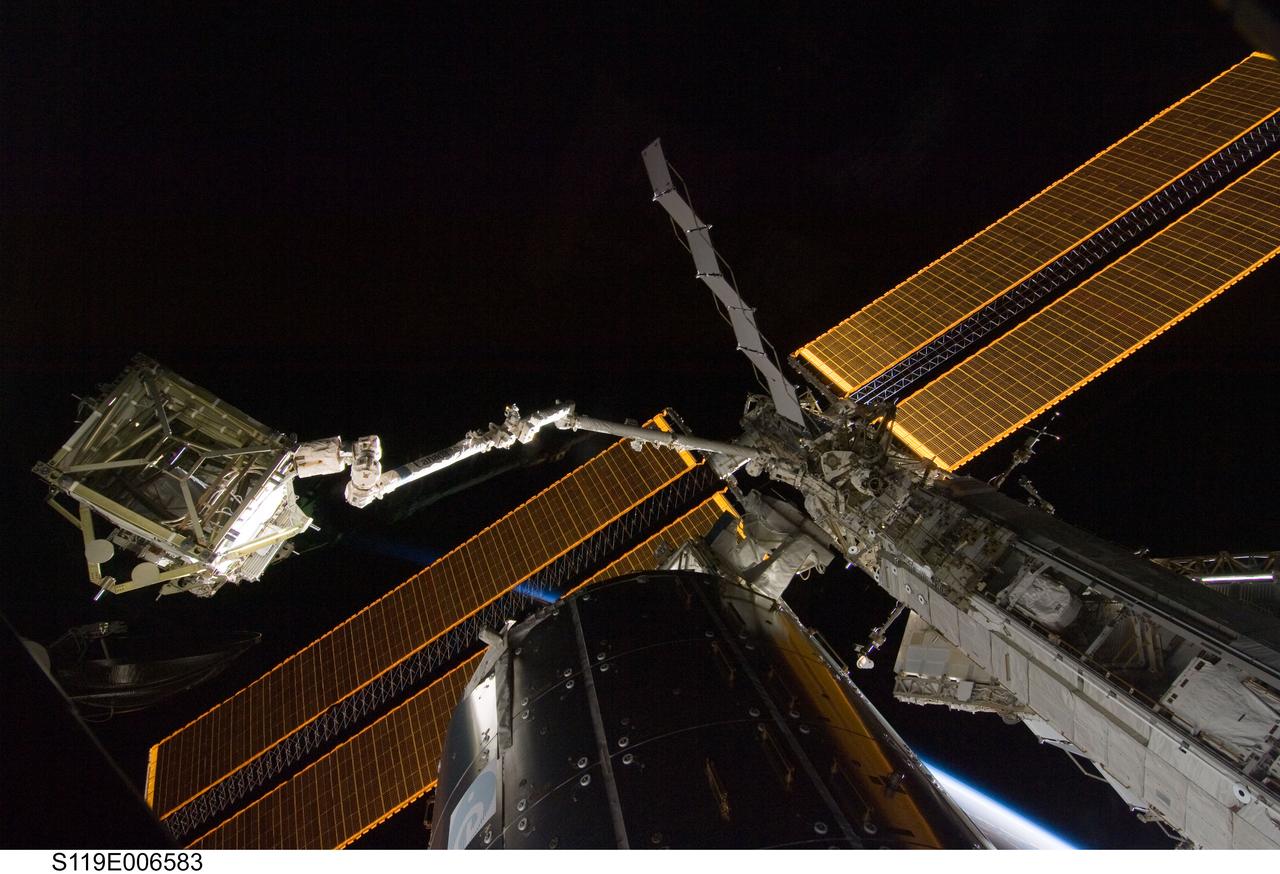
S119-E-006583 (18 March 2009) --- In the grasp of the International Space Station’s robotic Canadarm2, the S6 truss segment was photographed by a STS-119 crewmember while Space Shuttle Discovery is docked with the station. The S6 truss segment was moved from Discovery’s cargo bay by the station’s Canadarm2, handed off to the shuttle’s remote manipulator system (RMS), and then handed back to the station’s robotic arm where it will remain in an overnight parked position. Also visible in the image are the Columbus laboratory, starboard truss and solar array panels.
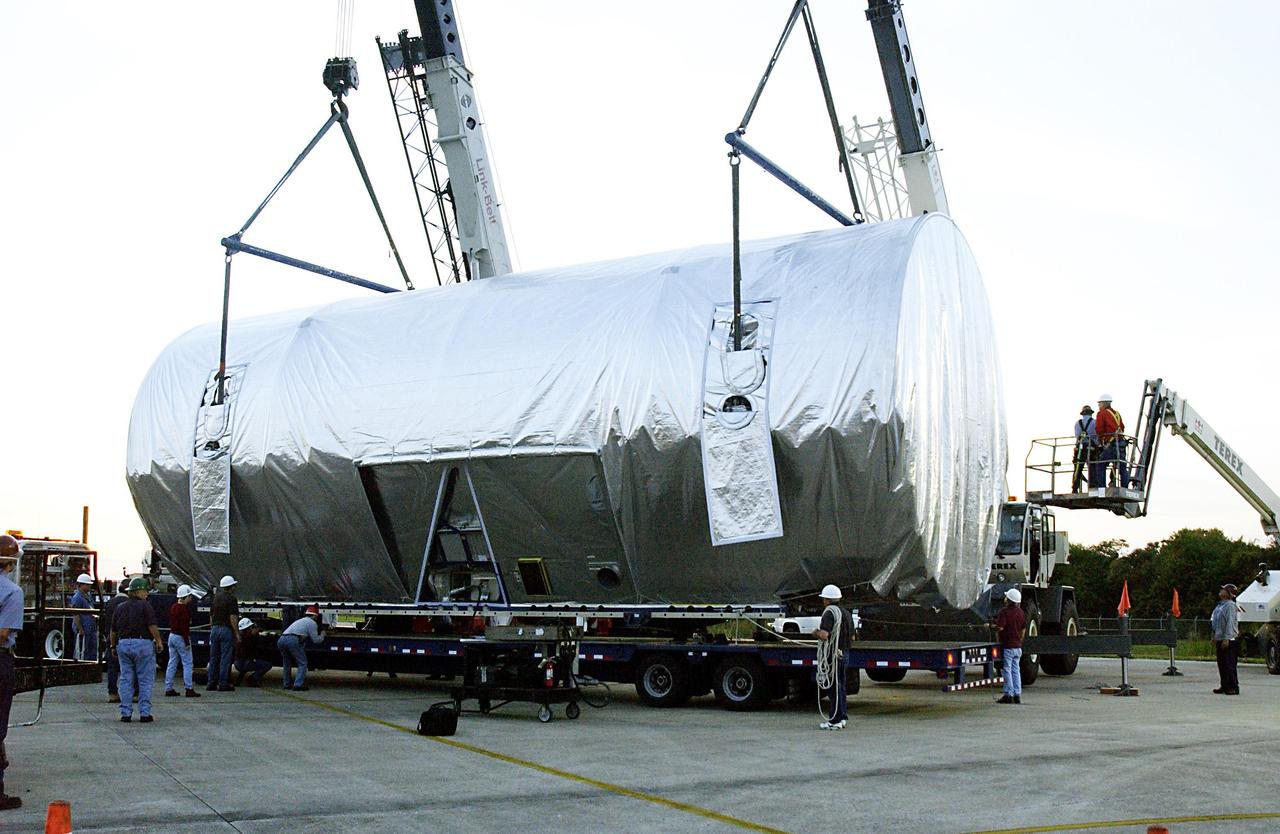
KENNEDY SPACE CENTER, FLA. -- KSC technicians supervise the transfer of the Integrated Equipment Assembly (IEA), one of two major components of the Starboard 6 (S6) truss segment for the International Space Station (ISS), onto a cargo transporter following its arrival at the Shuttle Landing Facility. The IEA will be joined to its companion piece, the Long Spacer, before launch early in 2004. The S6 truss segment will be the 11th and final piece of the Station's Integrated Truss Structure and will support the fourth and final set of solar arrays, batteries, and electronics.
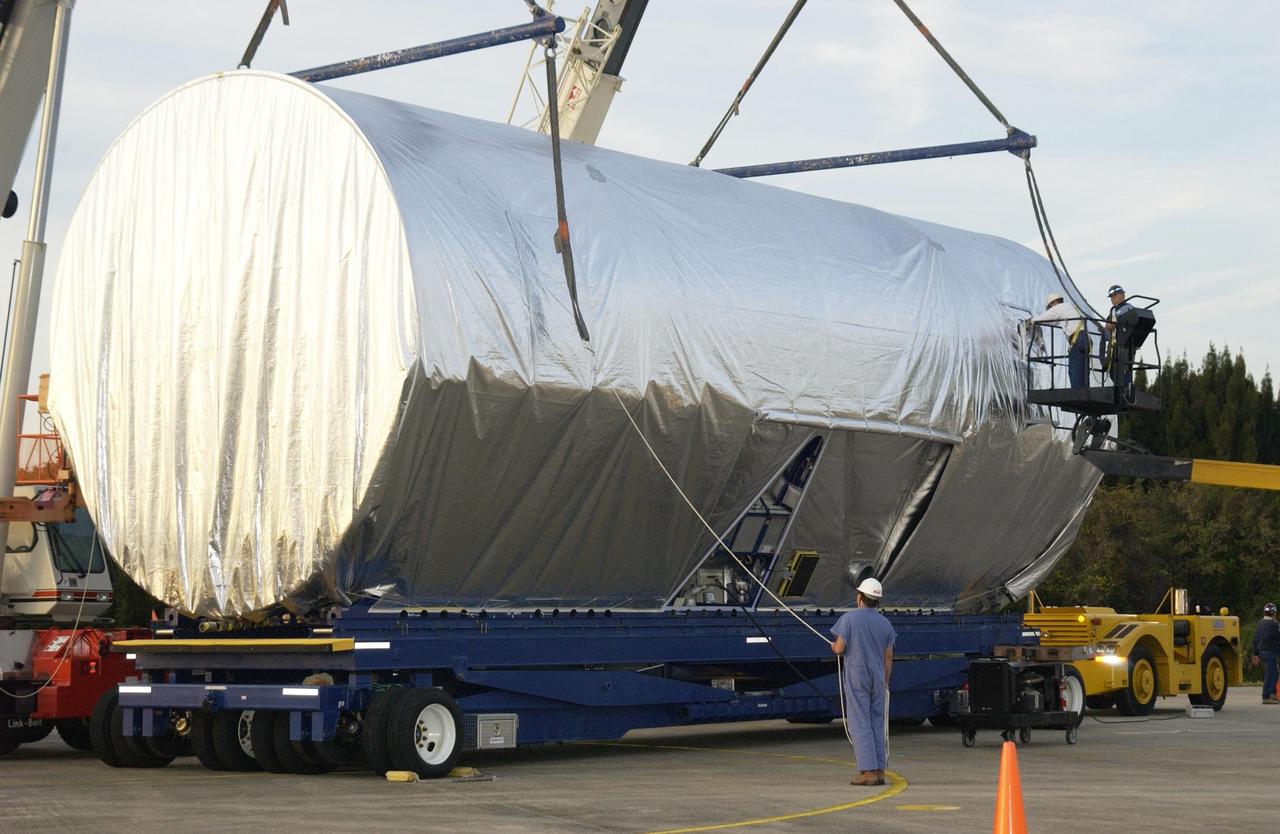
KENNEDY SPACE CENTER, FLA. -- The Integrated Equipment Assembly (IEA), one of two major components of the Starboard 6 (S6) truss segment for the International Space Station (ISS), is offloaded onto a cargo transporter following its arrival at the Shuttle Landing Facility. The IEA will be joined to its companion piece, the Long Spacer, before launch early in 2004. The S6 truss segment will be the 11th and final piece of the Station's Integrated Truss Structure and will support the fourth and final set of solar arrays, batteries, and electronics.
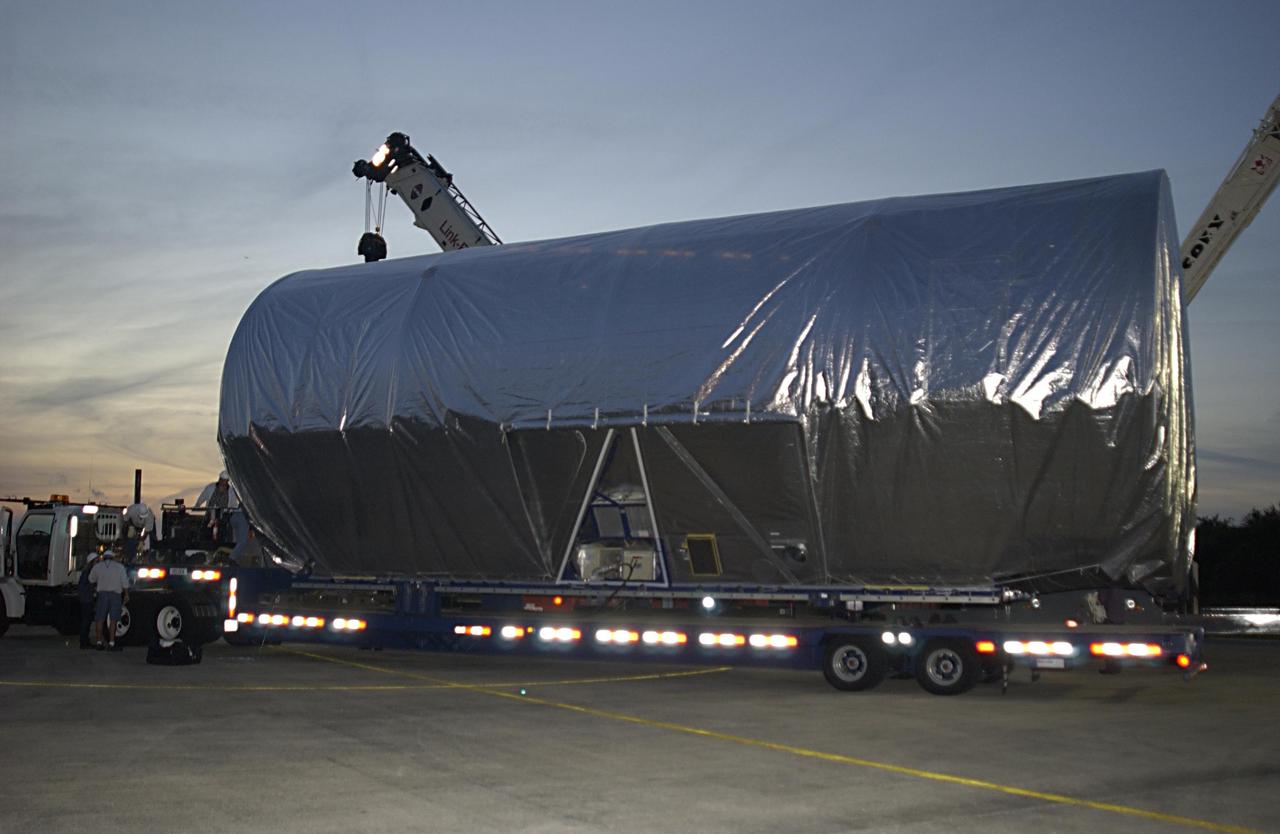
KENNEDY SPACE CENTER, FLA. -- The Integrated Equipment Assembly (IEA), one of two major components of the Starboard 6 (S6) truss segment for the International Space Station (ISS), sits on a cargo transporter following its arrival at the Shuttle Landing Facility. The IEA will be joined to its companion piece, the Long Spacer, before launch early in 2004. The S6 truss segment will be the 11th and final piece of the Station's Integrated Truss Structure and will support the fourth and final set of solar arrays, batteries, and electronics.
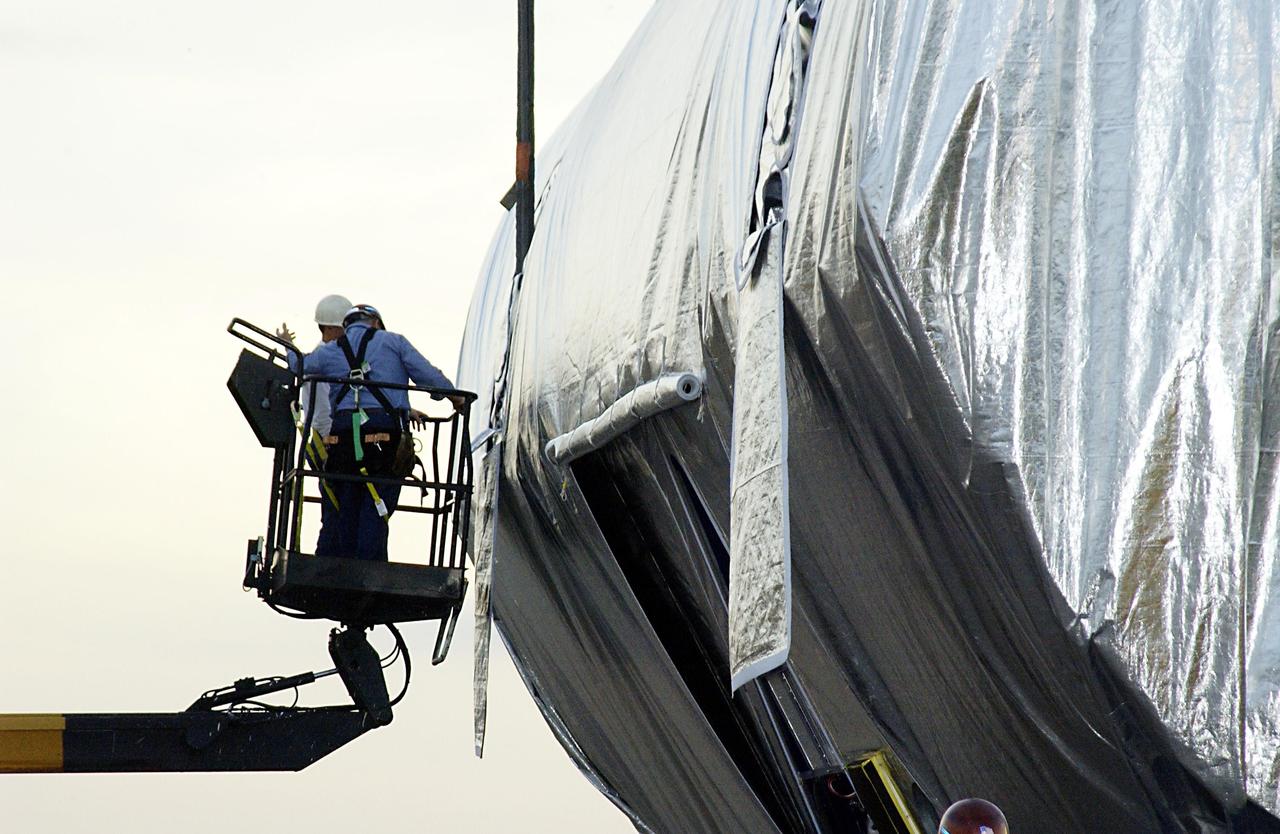
KENNEDY SPACE CENTER, FLA. -- KSC technicians supervise the offloading of the Integrated Equipment Assembly (IEA), one of two major components of the Starboard 6 (S6) truss segment for the International Space Station (ISS), onto a cargo transporter following its arrival at the Shuttle Landing Facility. The IEA will be joined to its companion piece, the Long Spacer, before launch early in 2004. The S6 truss segment will be the 11th and final piece of the Station's Integrated Truss Structure and will support the fourth and final set of solar arrays, batteries, and electronics.
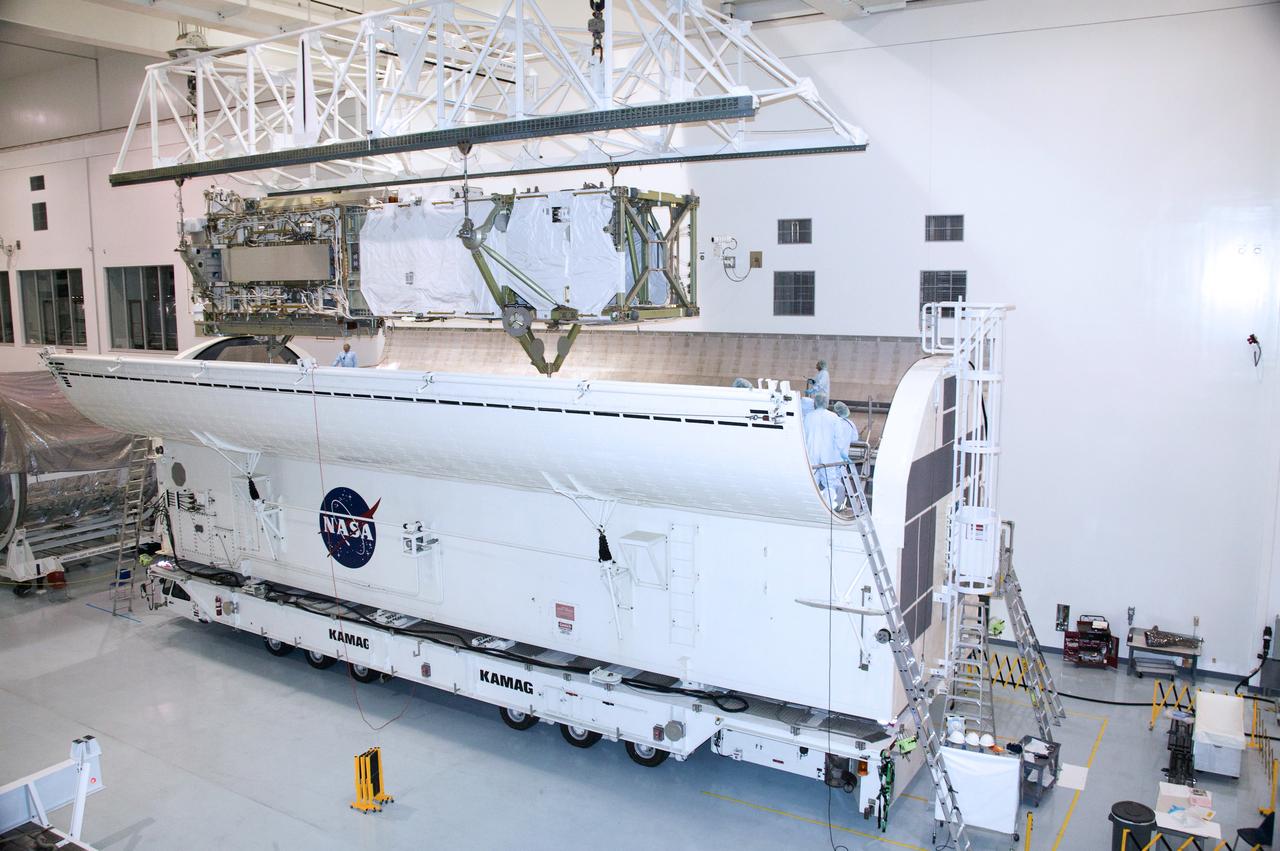
CAPE CANAVERAL, Fla. – In the Space Station Processing Facility at NASA's Kennedy Space Center in Florida, the integrated truss structure, S6, and solar arrays are lowered into the payload canister for transfer to Launch Pad 39A. Launch of Discovery on the STS-119 mission is targeted for Feb. 12. During Discovery's 14-day mission, the crew will install the S6 truss segment and its solar arrays to the starboard side of the station, completing the station's truss, or backbone. Photo credit: NASA/Kevin Gill
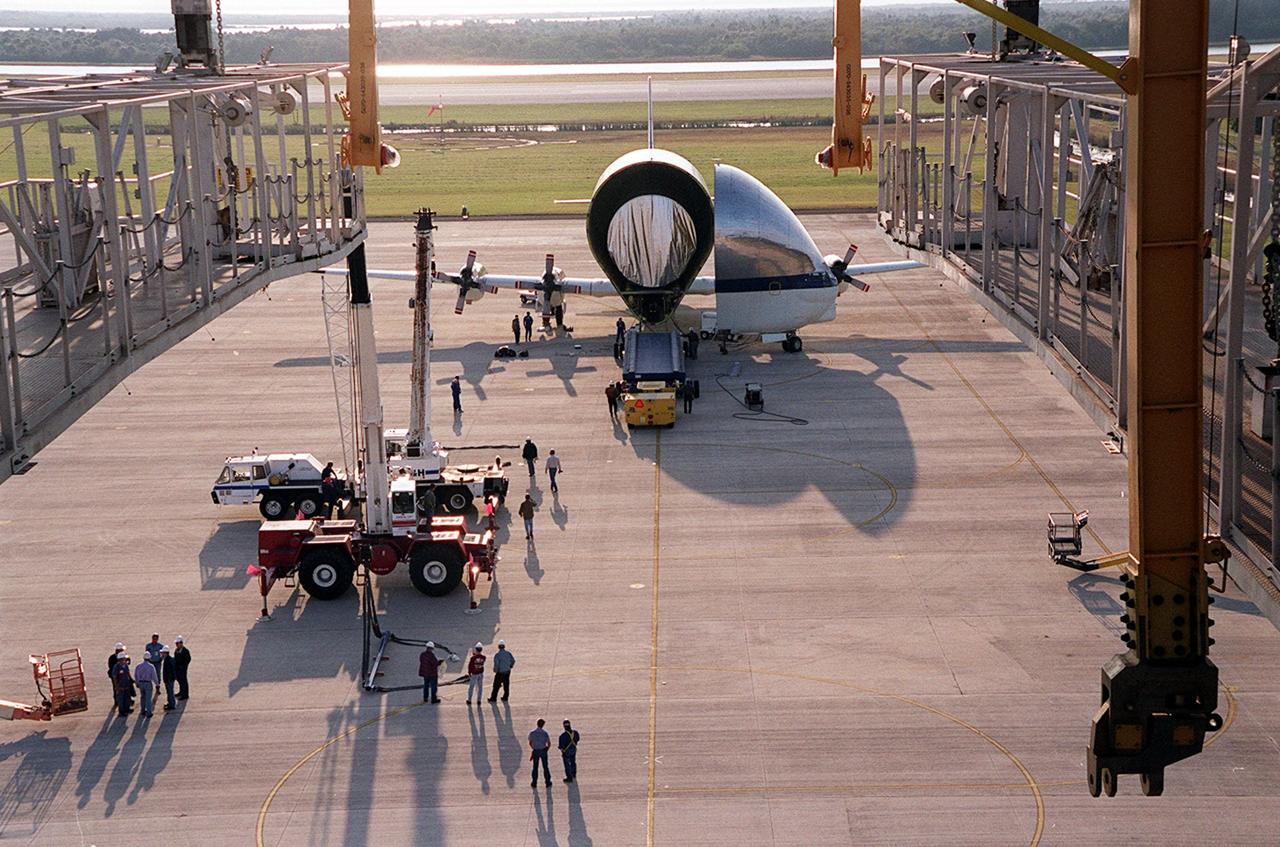
On the parking apron of the KSC Shuttle Landing Facility, near the Mate/Demate device (seen in the foreground), the opened nose of the Super Guppy aircraft reveals its cargo, the Integrated Truss Structure S3. It was built by The Boeing Co. After offloading, the S3 will be transported to the Operations and Checkout Building. The second starboard truss segment of the International Space Station, the S3 truss is scheduled to be added to the Station in April 2003

S119-E-006596 (18 March 2009) --- In the grasp of the International Space Station’s robotic Canadarm2, the S6 truss segment was photographed by a STS-119 crewmember while Space Shuttle Discovery is docked with the station. The S6 truss segment was moved from Discovery’s cargo bay by the station’s Canadarm2, handed off to the shuttle’s remote manipulator system (RMS), and then handed back to the station’s robotic arm where it will remain in an overnight parked position. Also visible in the image are the Columbus laboratory, starboard truss and solar array panels.

KENNEDY SPACE CENTER, FLA. -- Orbiter Atlantis, on top of an orbiter transporter, rolls out of the Orbiter Processing Facility to begin the next stage of preparation for launch. Atlantis will be making its 26th flight on mission STS-112, an assembly flight to the International Space Station. The orbiter will carry the first starboard truss segment, S1, which will be attached to the Central truss segment, the S0 Truss, on the Station. Atlantis is scheduled to launch no earlier than Oct. 2.
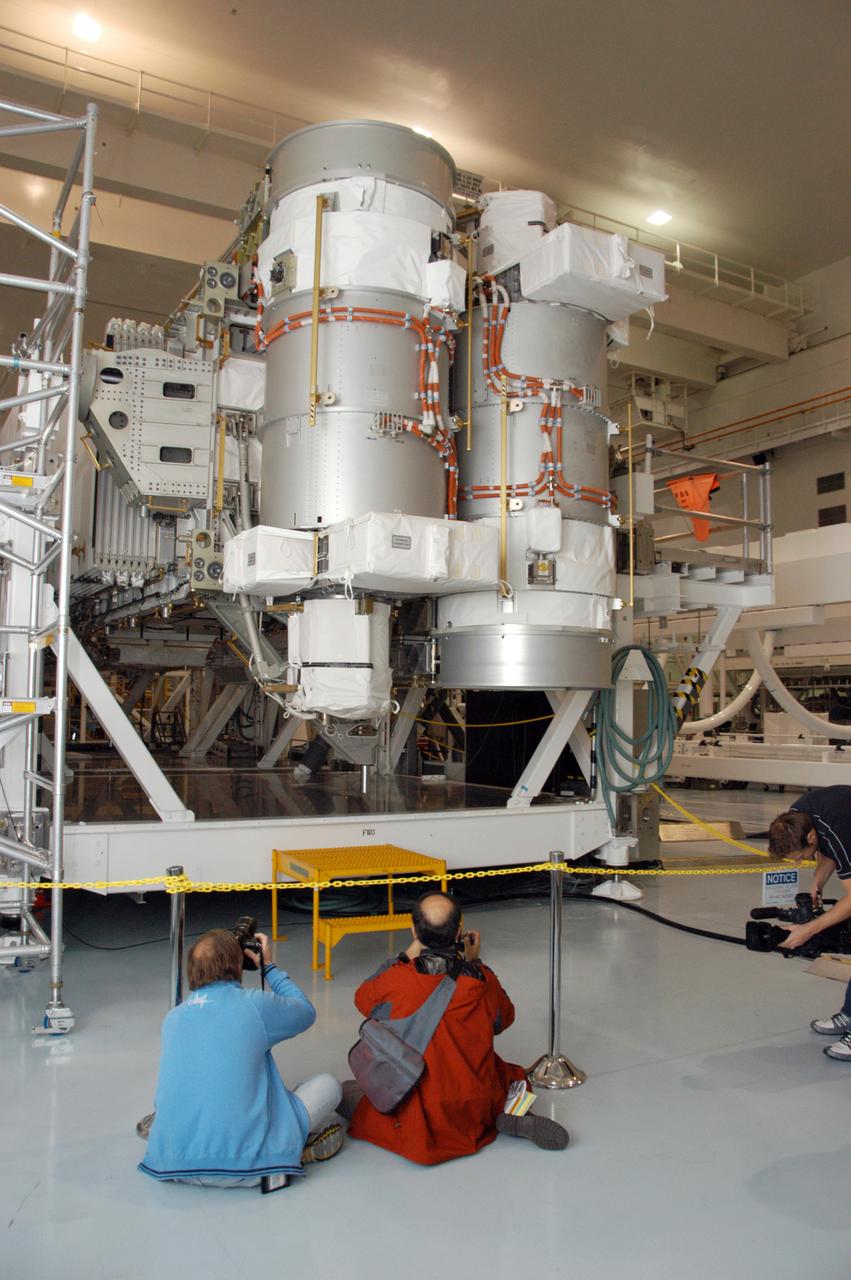
In the Space Station Processing Facility, photographers take advantage of a media showcase to get photos of the S3/S4 integrated truss segment. The starboard 3/4 truss segment will launch aboard Space Shuttle Atlantis on mission STS-117, targeted for March 15. The element will be added to the 11-segment integrated truss structure, the station's backbone. The integrated truss structure eventually will span more than 300 feet. The S3/S4 truss has two large solar arrays and will provide one-fourth of the total power generation for the completed station.
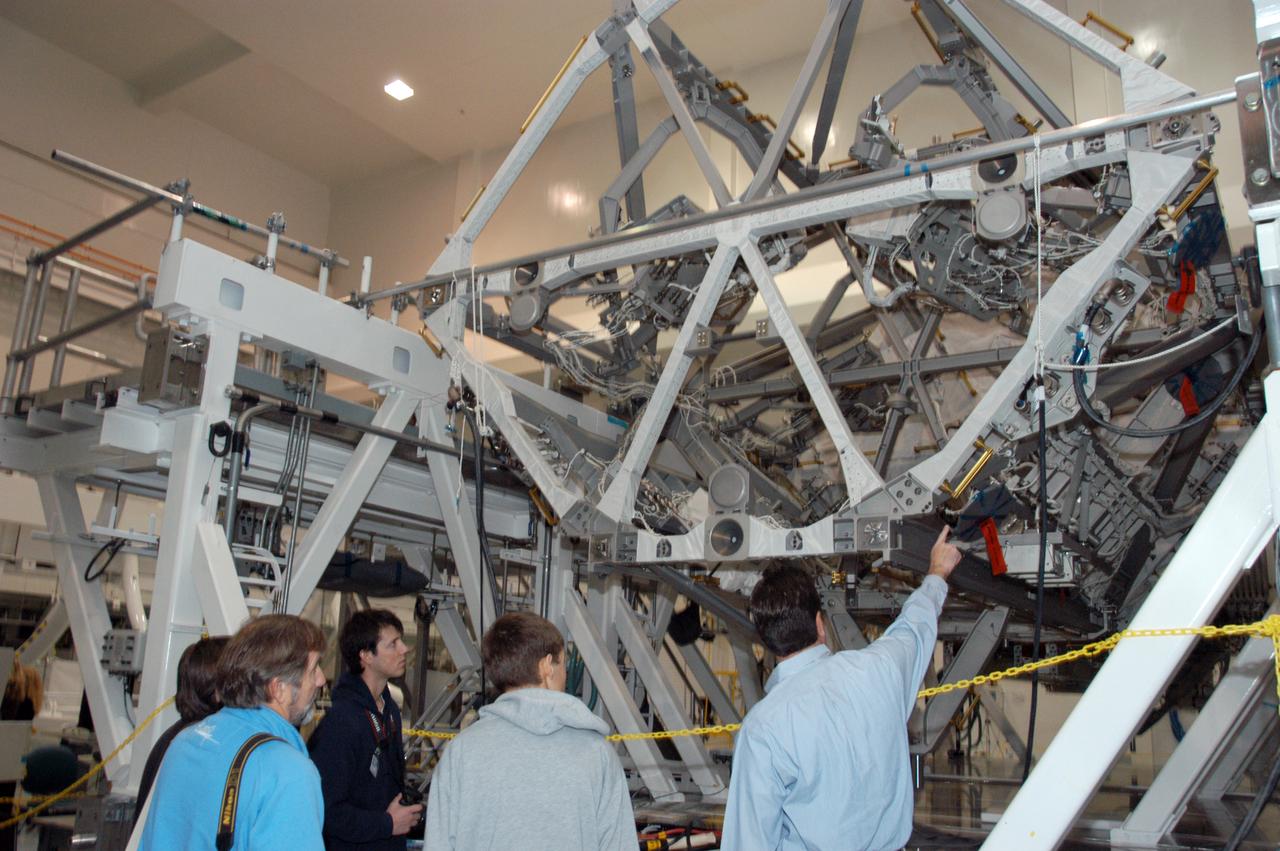
At a media showcase in the Space Station Processing Facility, reporters and photographers get a close look at the S3/S4 integrated truss segment. The starboard 3/4 truss segment will launch aboard Space Shuttle Atlantis on mission STS-117, targeted for March 15. The element will be added to the 11-segment integrated truss structure, the station's backbone. The integrated truss structure eventually will span more than 300 feet. The S3/S4 truss has two large solar arrays and will provide one-fourth of the total power generation for the completed station.
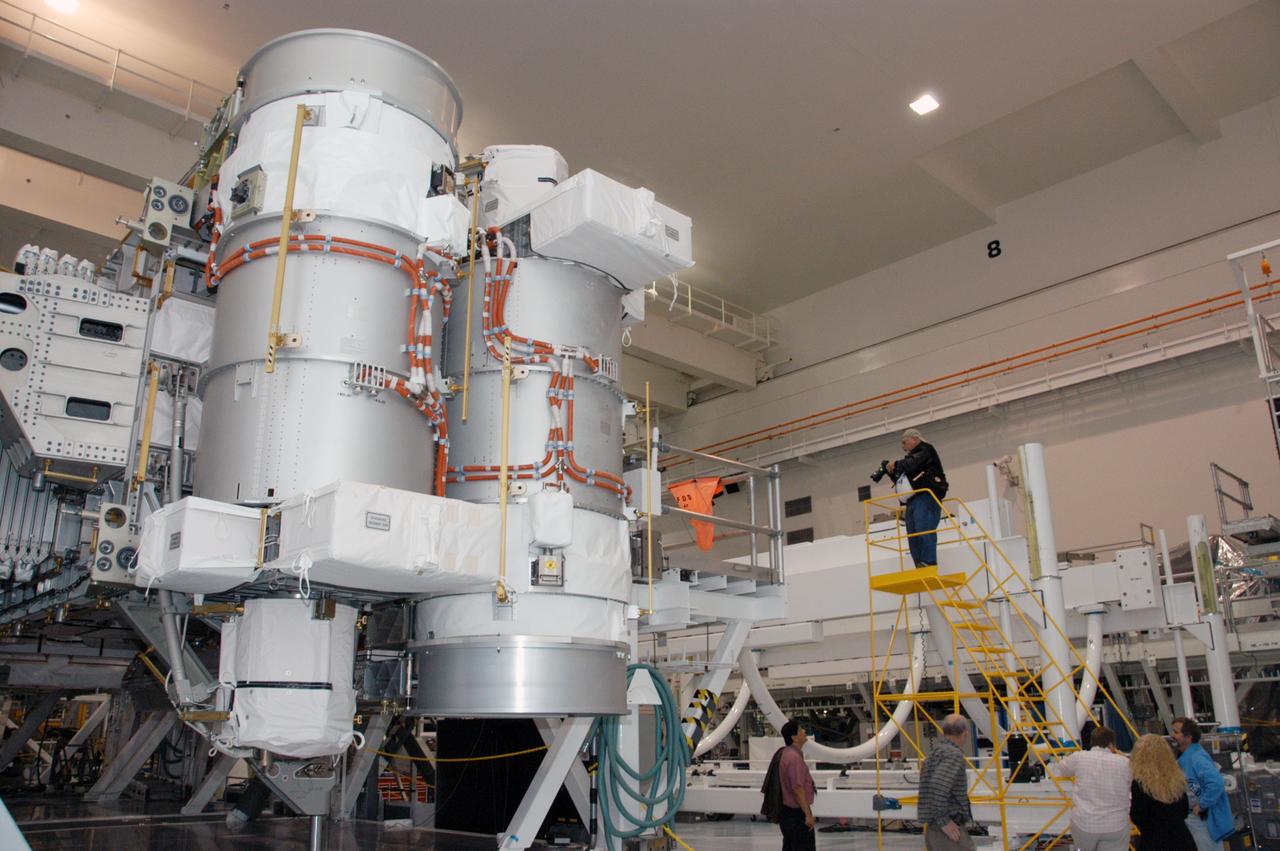
At a media showcase in the Space Station Processing Facility, reporters and photographers get a close look at the S3/S4 integrated truss segment. The starboard 3/4 truss segment will launch aboard Space Shuttle Atlantis on mission STS-117, targeted for March 15. The element will be added to the 11-segment integrated truss structure, the station's backbone. The integrated truss structure eventually will span more than 300 feet. The S3/S4 truss has two large solar arrays and will provide one-fourth of the total power generation for the completed station.
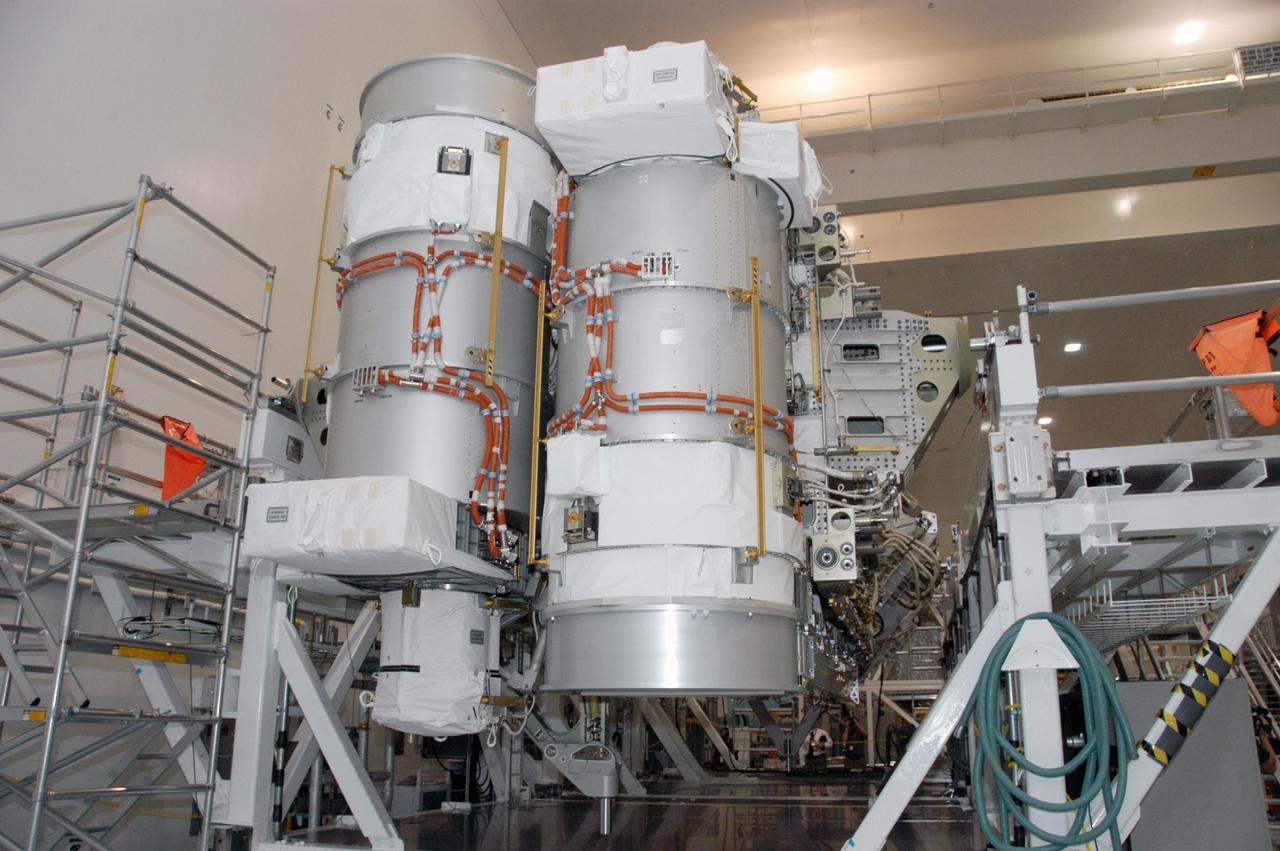
KENNEDY SPACE CENTER, FLA. -- In the Space Station Processing Facility, the S3/S4 integrated truss segment is on display for the media. The starboard 3/4 truss segment will launch aboard Space Shuttle Atlantis on mission STS-117, targeted for March 15. The element will be added to the 11-segment integrated truss structure, the station's backbone. The integrated truss structure eventually will span more than 300 feet. The S3/S4 truss has two large solar arrays and will provide one-fourth of the total power generation for the completed station. Photo credit: NASA/George Shelton
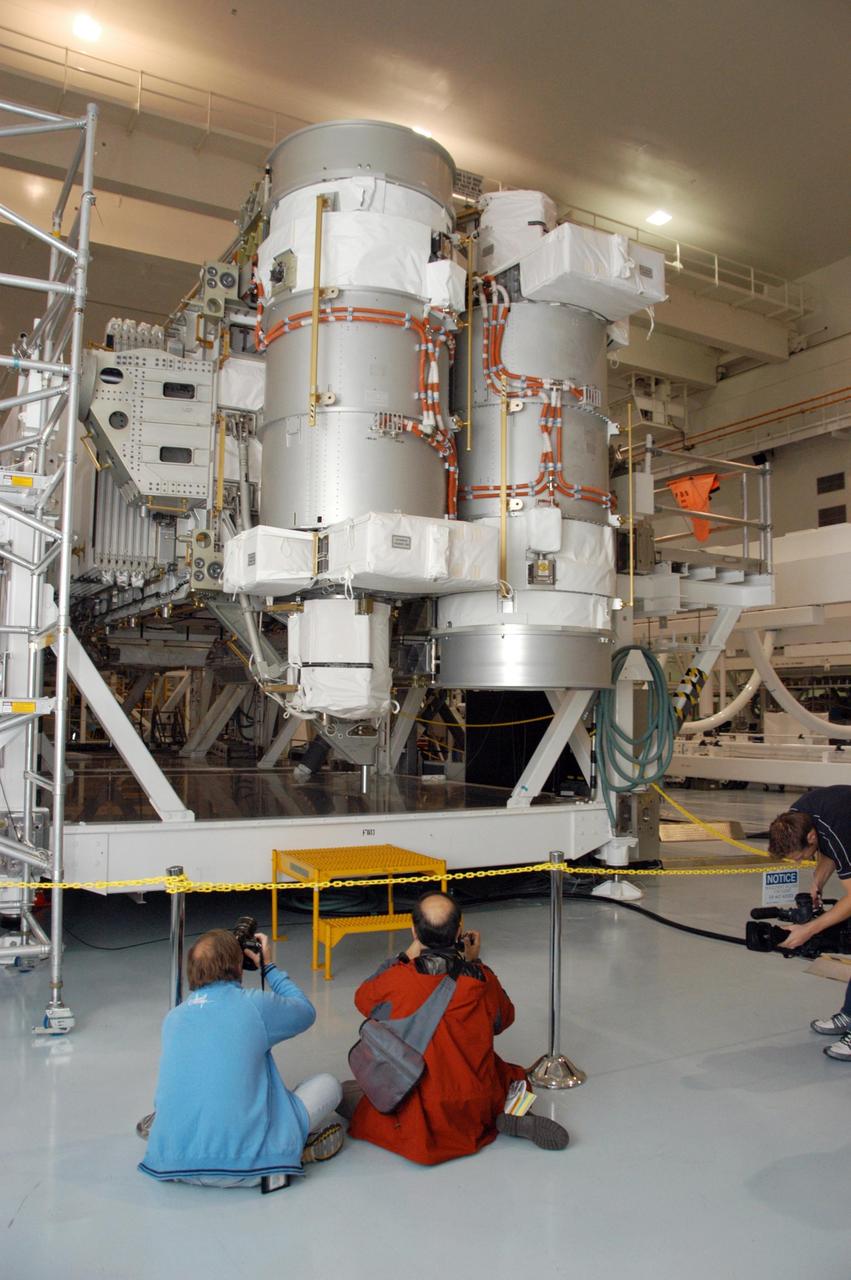
KENNEDY SPACE CENTER, FLA. -- In the Space Station Processing Facility, photographers take advantage of a media showcase to get photos of the S3/S4 integrated truss segment. The starboard 3/4 truss segment will launch aboard Space Shuttle Atlantis on mission STS-117, targeted for March 15. The element will be added to the 11-segment integrated truss structure, the station's backbone. The integrated truss structure eventually will span more than 300 feet. The S3/S4 truss has two large solar arrays and will provide one-fourth of the total power generation for the completed station. Photo credit: NASA/George Shelton

KENNEDY SPACE CENTER, FLA. -- As part of the Crew Equipment Interface Test, STS-112 Mission Specialist Piers Sellers (foreground) and Commander Jeffrey Ashby look over the payload for the mission in the Space Station Processing Facility. Mission STS-112 will be ferrying the S1 ITS to the International Space Station on its scheduled Aug. 22 flight. The S1 truss is the first starboard (right-side) truss segment, whose main job is providing structural support for the orbiting research facility's radiator panels that cool the Space Station's complex power system. The S1 truss segment also will house communications systems, external experiment positions and other subsystems. The S1 truss will be attached to the S0 truss
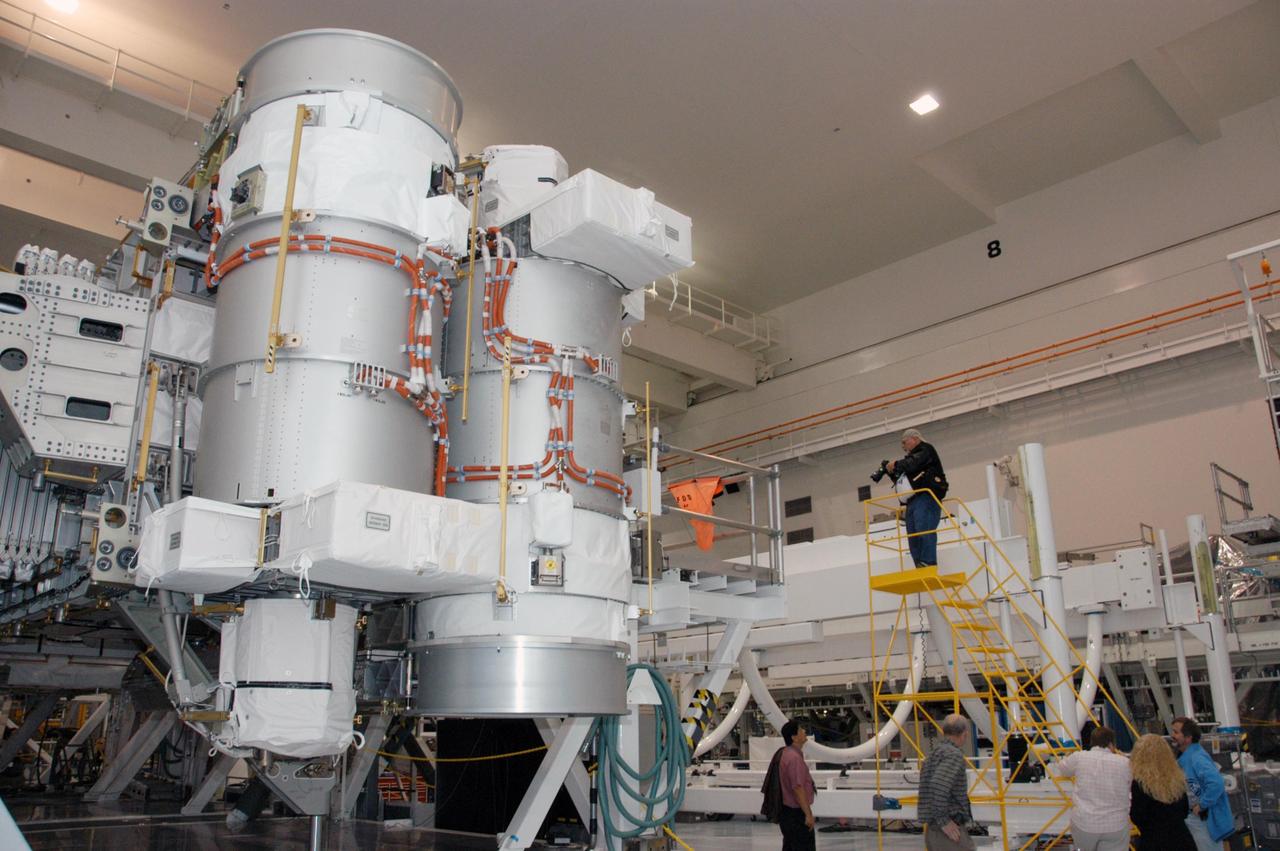
KENNEDY SPACE CENTER, FLA. -- At a media showcase in the Space Station Processing Facility, reporters and photographers get a close look at the S3/S4 integrated truss segment. The starboard 3/4 truss segment will launch aboard Space Shuttle Atlantis on mission STS-117, targeted for March 15. The element will be added to the 11-segment integrated truss structure, the station's backbone. The integrated truss structure eventually will span more than 300 feet. The S3/S4 truss has two large solar arrays and will provide one-fourth of the total power generation for the completed station. Photo credit: NASA/George Shelton
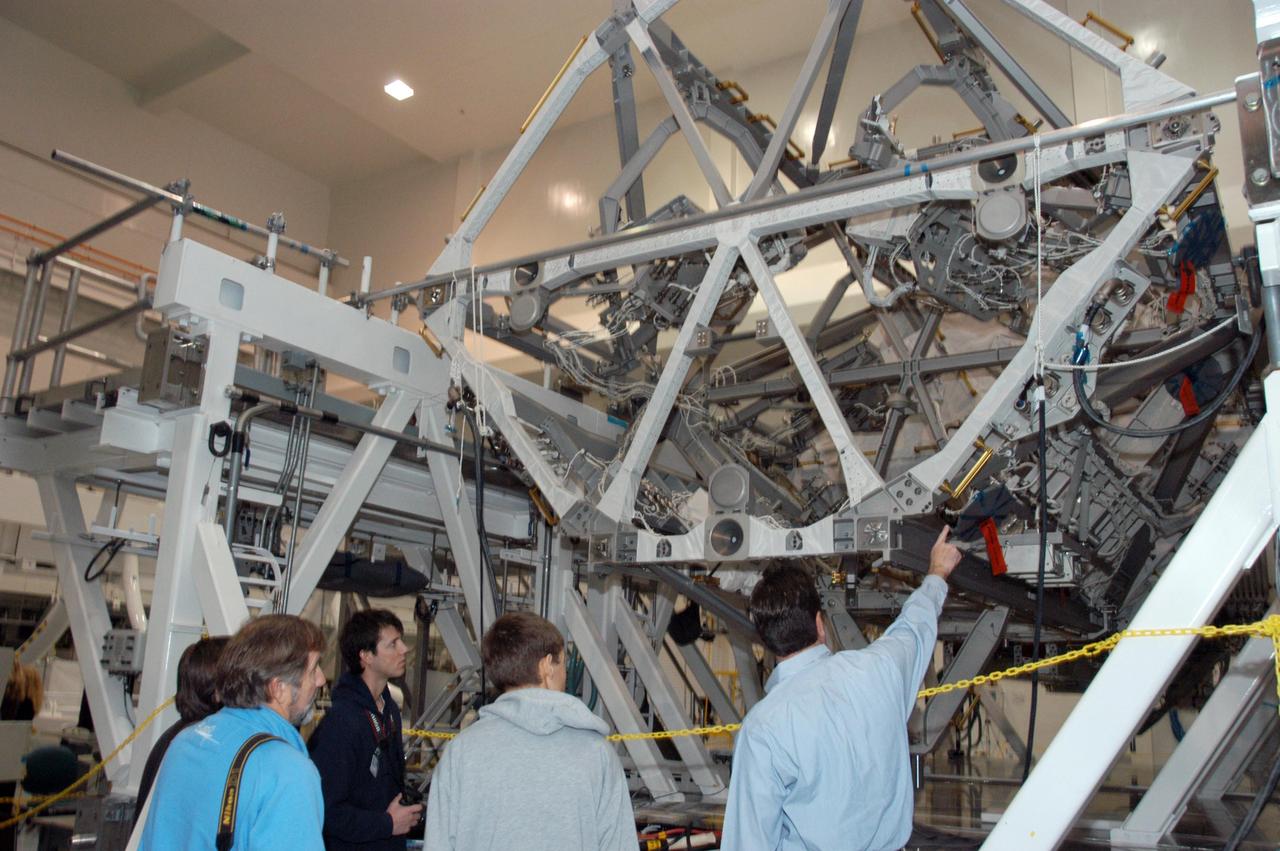
KENNEDY SPACE CENTER, FLA. -- At a media showcase in the Space Station Processing Facility, reporters and photographers get a close look at the S3/S4 integrated truss segment. The starboard 3/4 truss segment will launch aboard Space Shuttle Atlantis on mission STS-117, targeted for March 15. The element will be added to the 11-segment integrated truss structure, the station's backbone. The integrated truss structure eventually will span more than 300 feet. The S3/S4 truss has two large solar arrays and will provide one-fourth of the total power generation for the completed station. Photo credit: NASA/George Shelton
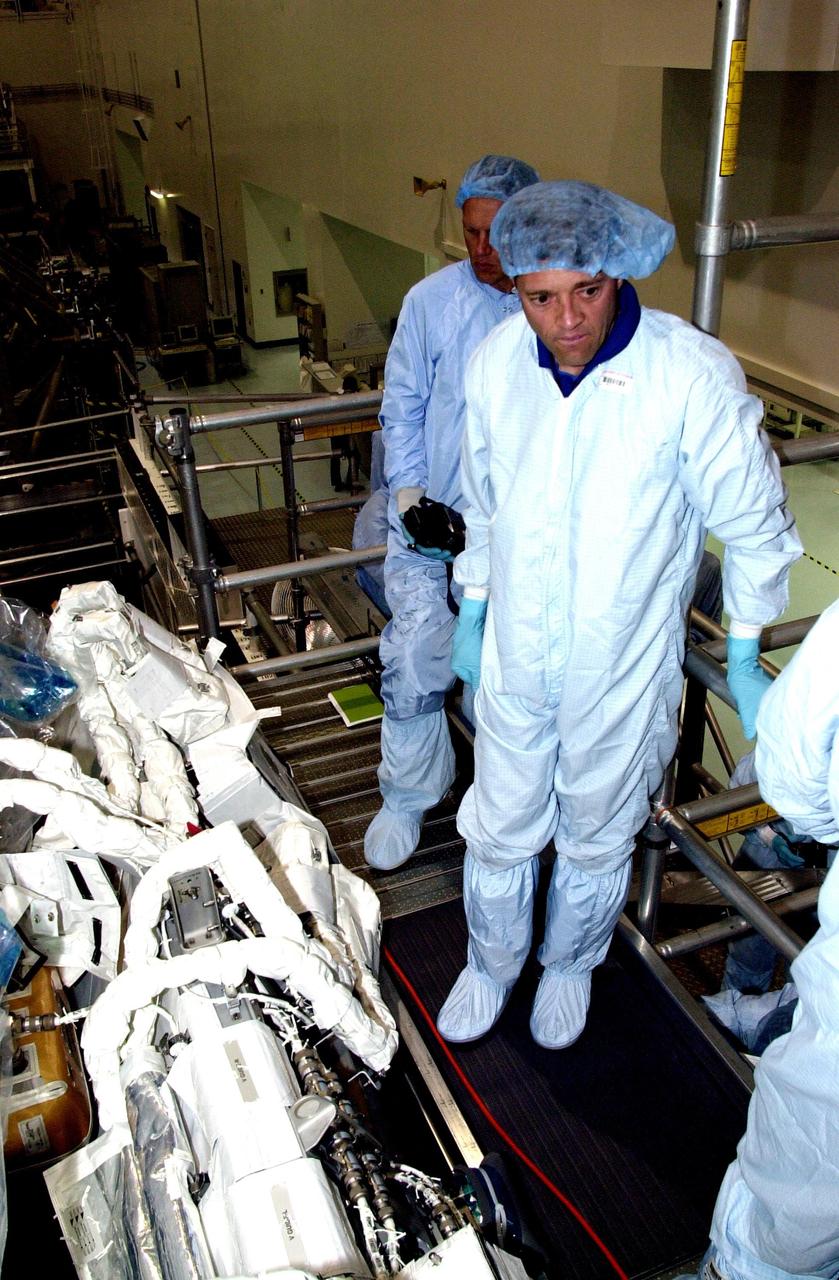
KENNEDY SPACE CENTER, FLA. -- In the Space Station Processing Facility, STS-112 Commander Jeffrey Ashby looks over the payload for the mission as part of the Crew Equipment Interface Test. Mission STS-112 will be ferrying the S1 ITS to the International Space Station on its scheduled Aug. 22 flight. The S1 truss is the first starboard (right-side) truss segment, whose main job is providing structural support for the orbiting research facility's radiator panels that cool the Space Station's complex power system. The S1 truss segment also will house communications systems, external experiment positions and other subsystems. The S1 truss will be attached to the S0 truss
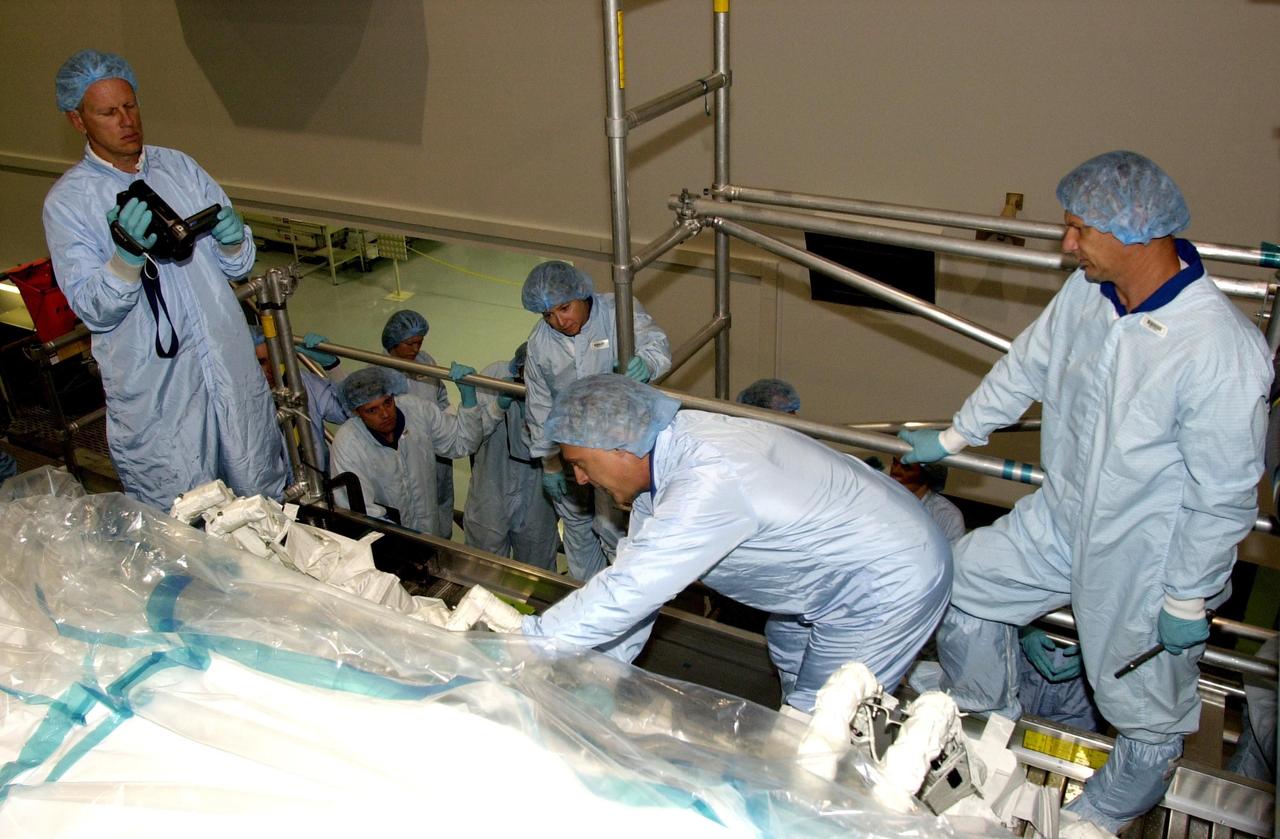
KENNEDY SPACE CENTER, FLA. -- In the Space Station Processing Facility, the STS-112 crew looks over the payload for their mission as part of the Crew Equipment Interface Test. At right are Mission Specialists David Wolf and Piers Sellers. Mission STS-112 will be ferrying the S1 ITS to the International Space Station on its scheduled Aug. 22 flight. The S1 truss is the first starboard (right-side) truss segment, whose main job is providing structural support for the orbiting research facility's radiator panels that cool the Space Station's complex power system. The S1 truss segment also will house communications systems, external experiment positions and other subsystems. The S1 truss will be attached to the S0 truss
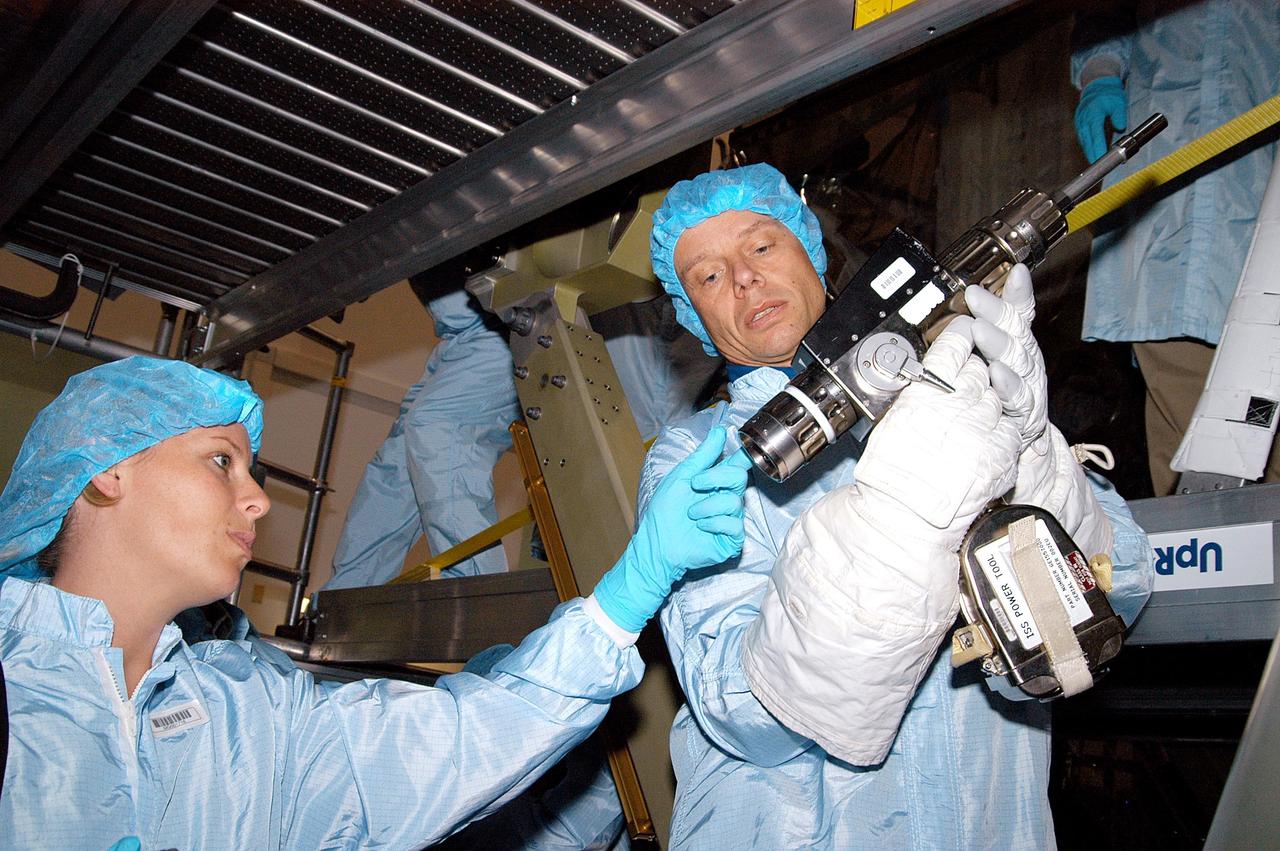
KENNEDY SPACE CENTER, FLA. - STS-116 Mission Specialist Christer Fuglesang (right) (European Space Agency) practices using a tool that is part of the equipment for the mission. He joined STS-118 crew members for the familiarization activities in the Space Station Processing Facility. The STS-116 mission will deliver the third port truss segment, the P5 Truss, to attach to the second port truss segment, the P3/P4 Truss. The STS-118 mission will be delivering and installing the third starboard truss segment, the ITS S5, to the International Space Station, and carry a SPACEHAB Single Cargo Module with supplies and equipment. Launch dates for both missions are under review.
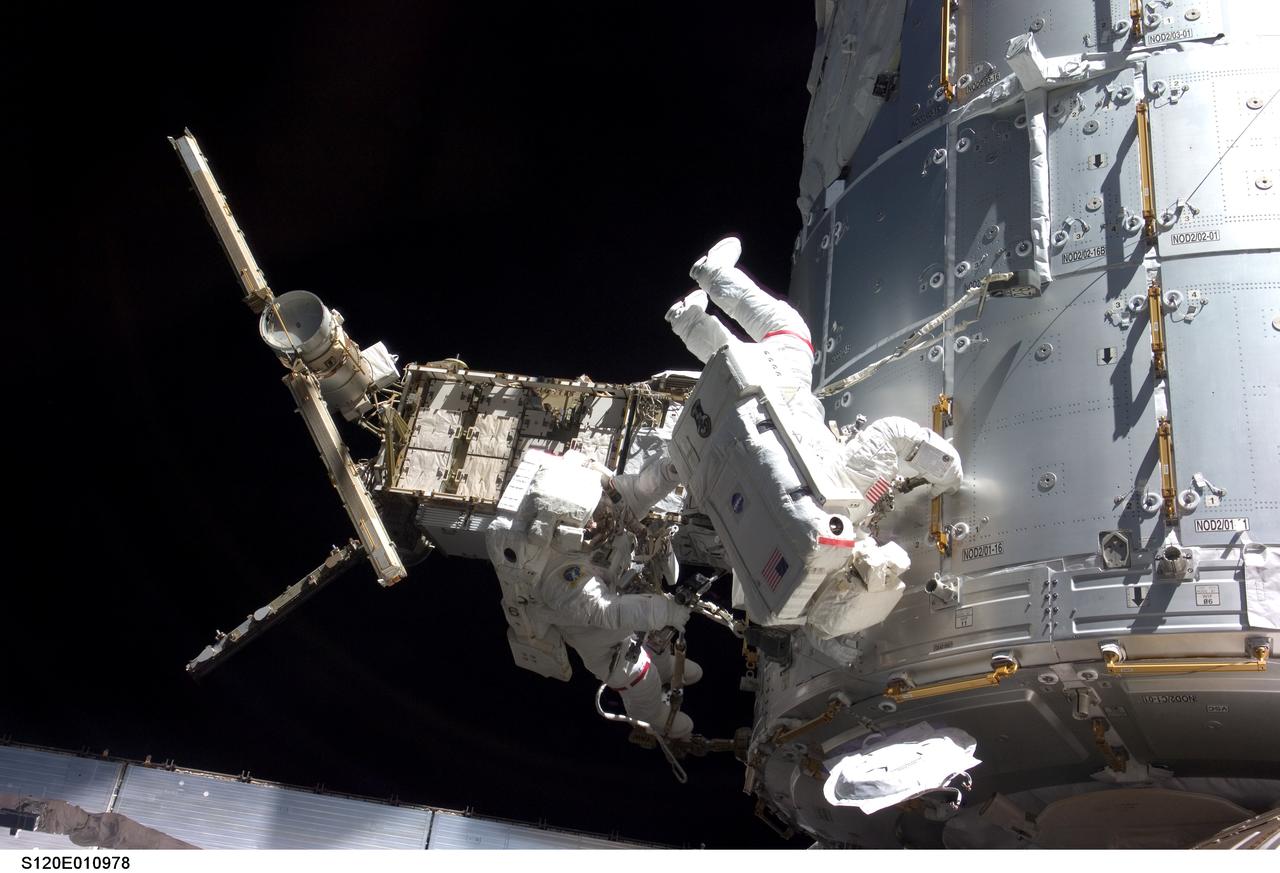
S120-E-010978 (28 Oct. 2007) --- Astronauts Daniel Tani (left), Expedition 16 flight engineer, and Scott Parazynski, STS-120 mission specialist, participate in the second scheduled session of extravehicular activity (EVA) as construction continues on the International Space Station. During the 6-hour, 33-minute spacewalk Tani and Parazynski outfitted the Harmony module, mated the power and data grapple fixture and reconfigured connectors on the starboard 1 (S1) truss that will allow the radiator on S1 to be deployed from the ground later. Also the spacewalkers worked in tandem to disconnect cables from the P6 truss, allowing it to be removed from the Z1 truss. Tani also visually inspected the station's starboard Solar Alpha Rotary Joint (SARJ) and gathered samples of "shavings" he found under the joint's multi-layer insulation covers.
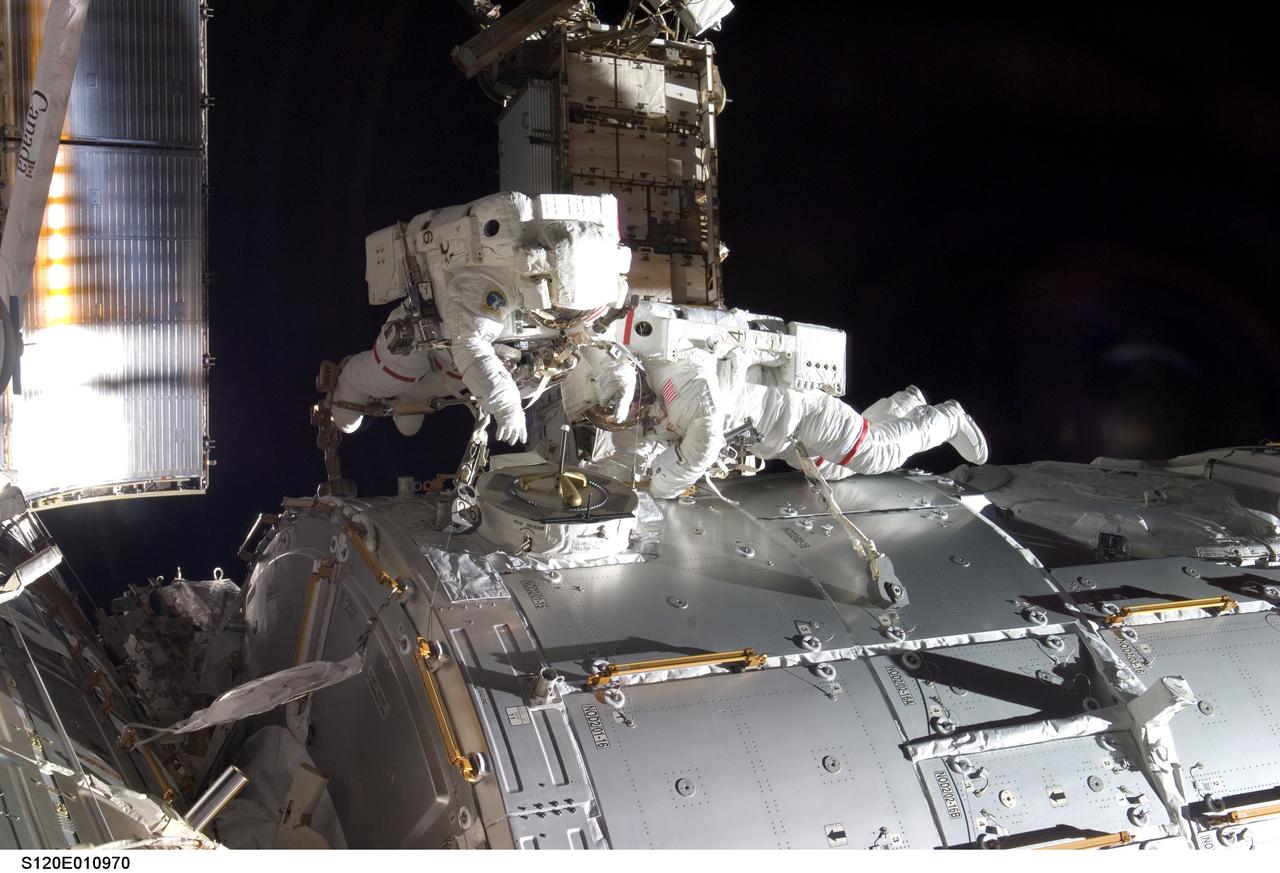
S120-E-010970 (28 Oct. 2007) --- Astronauts Daniel Tani (left), Expedition 16 flight engineer, and Scott Parazynski, STS-120 mission specialist, participate in the second scheduled session of extravehicular activity (EVA) as construction continues on the International Space Station. During the 6-hour, 33-minute spacewalk Tani and Parazynski outfitted the Harmony module, mated the power and data grapple fixture and reconfigured connectors on the starboard 1 (S1) truss that will allow the radiator on S1 to be deployed from the ground later. Also the spacewalkers worked in tandem to disconnect cables from the P6 truss, allowing it to be removed from the Z1 truss. Tani also visually inspected the station's starboard Solar Alpha Rotary Joint (SARJ) and gathered samples of "shavings" he found under the joint's multi-layer insulation covers.
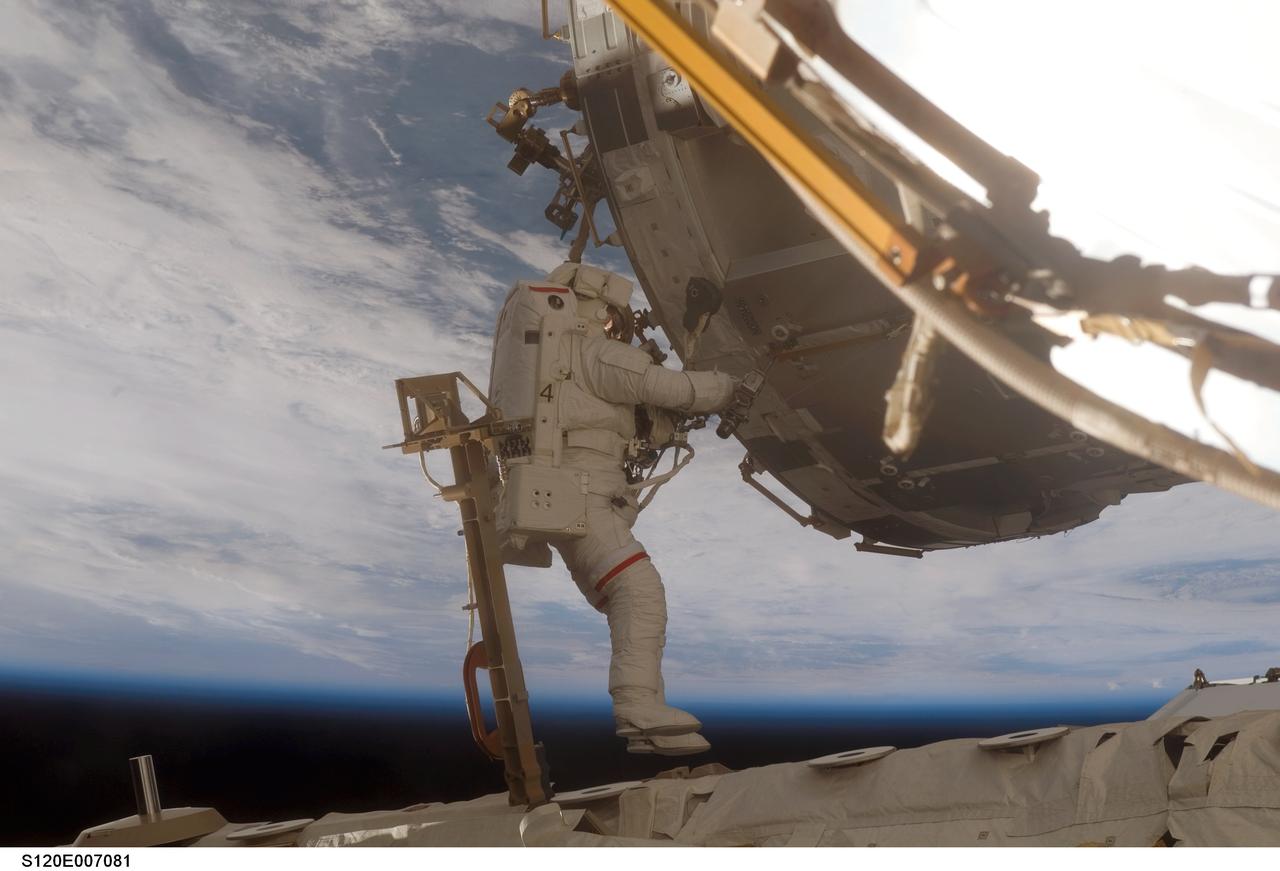
S120-E-007081 (28 Oct. 2007) --- Astronaut Scott Parazynski, STS-120 mission specialist, participates in the second of five scheduled sessions of extravehicular activity (EVA) as construction continues on the International Space Station. During the 6-hour, 33-minute spacewalk Parazynski and astronaut Daniel Tani (out of frame), Expedition 16 flight engineer, worked in tandem to disconnect cables from the P6 truss, allowing it to be removed from the Z1 truss. Tani also visually inspected the station's starboard Solar Alpha Rotary Joint (SARJ) and gathered samples of "shavings" he found under the joint's multi-layer insulation covers. Also the spacewalkers outfitted the Harmony module, mated the power and data grapple fixture and reconfigured connectors on the starboard 1 (S1) truss that will allow the radiator on S1 to be deployed from the ground later.
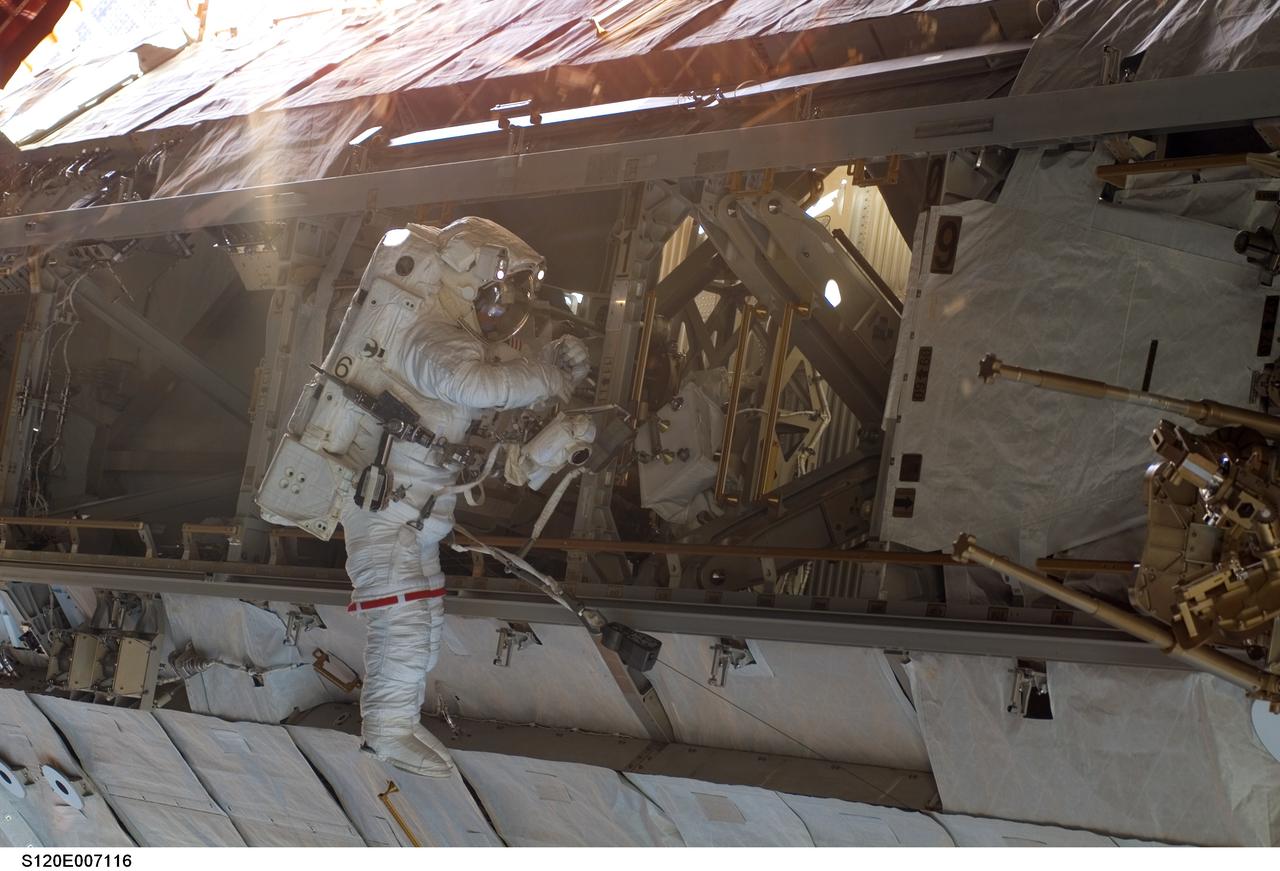
S120-E-007116 (28 Oct. 2007) --- Astronaut Daniel Tani, Expedition 16 flight engineer, participates in the second of five scheduled sessions of extravehicular activity (EVA) as construction continues on the International Space Station. During the 6-hour, 33-minute spacewalk Tani and astronaut Scott Parazynski (out of frame), STS-120 mission specialist, worked in tandem to disconnect cables from the P6 truss, allowing it to be removed from the Z1 truss. Tani also visually inspected the station's starboard Solar Alpha Rotary Joint (SARJ) and gathered samples of "shavings" he found under the joint's multi-layer insulation covers. Also the spacewalkers outfitted the Harmony module, mated the power and data grapple fixture and reconfigured connectors on the starboard 1 (S1) truss that will allow the radiator on S1 to be deployed from the ground later.
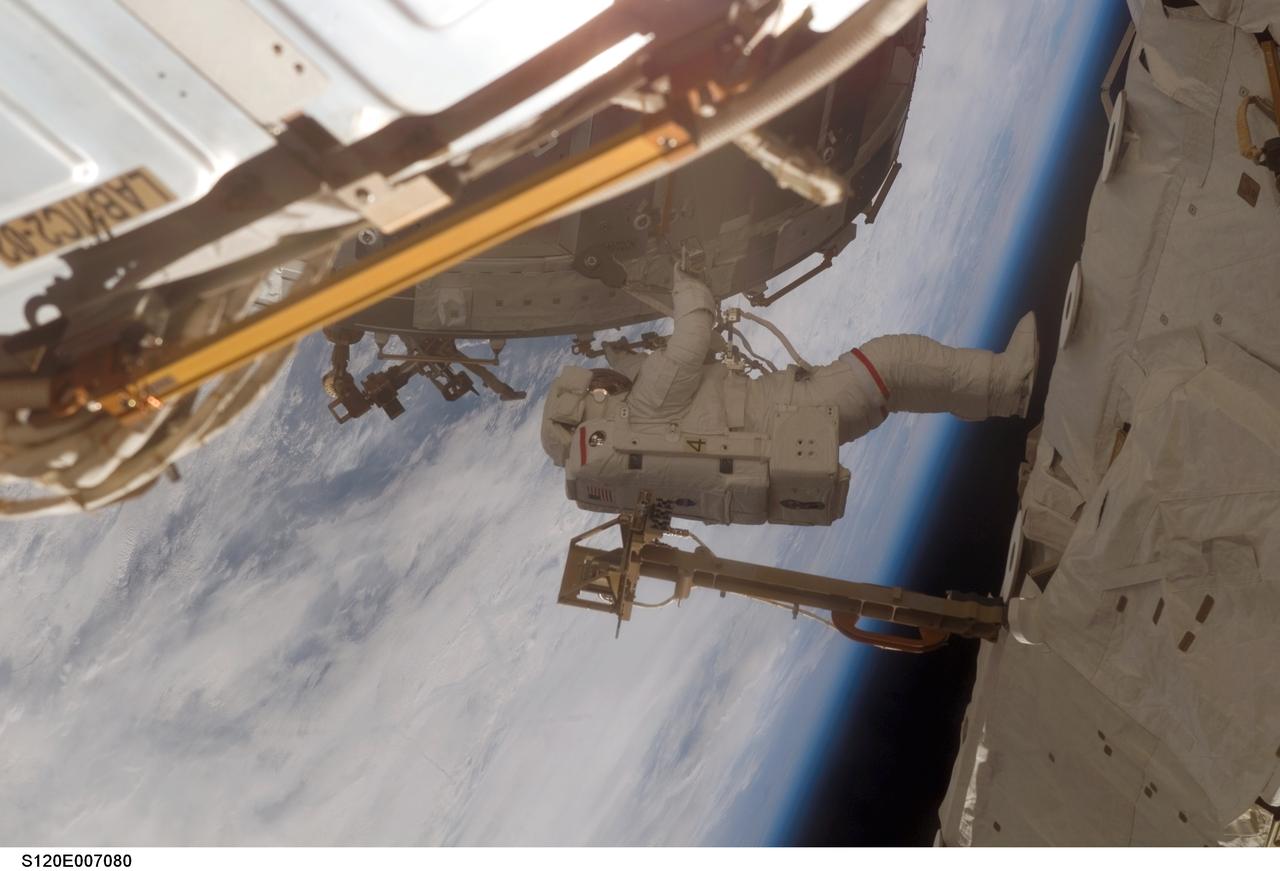
S120-E-007080 (28 Oct. 2007) --- Astronaut Scott Parazynski, STS-120 mission specialist, participates in the second of five scheduled sessions of extravehicular activity (EVA) as construction continues on the International Space Station. During the 6-hour, 33-minute spacewalk Parazynski and astronaut Daniel Tani (out of frame), Expedition 16 flight engineer, worked in tandem to disconnect cables from the P6 truss, allowing it to be removed from the Z1 truss. Tani also visually inspected the station's starboard Solar Alpha Rotary Joint (SARJ) and gathered samples of "shavings" he found under the joint's multi-layer insulation covers. Also the spacewalkers outfitted the Harmony module, mated the power and data grapple fixture and reconfigured connectors on the starboard 1 (S1) truss that will allow the radiator on S1 to be deployed from the ground later.
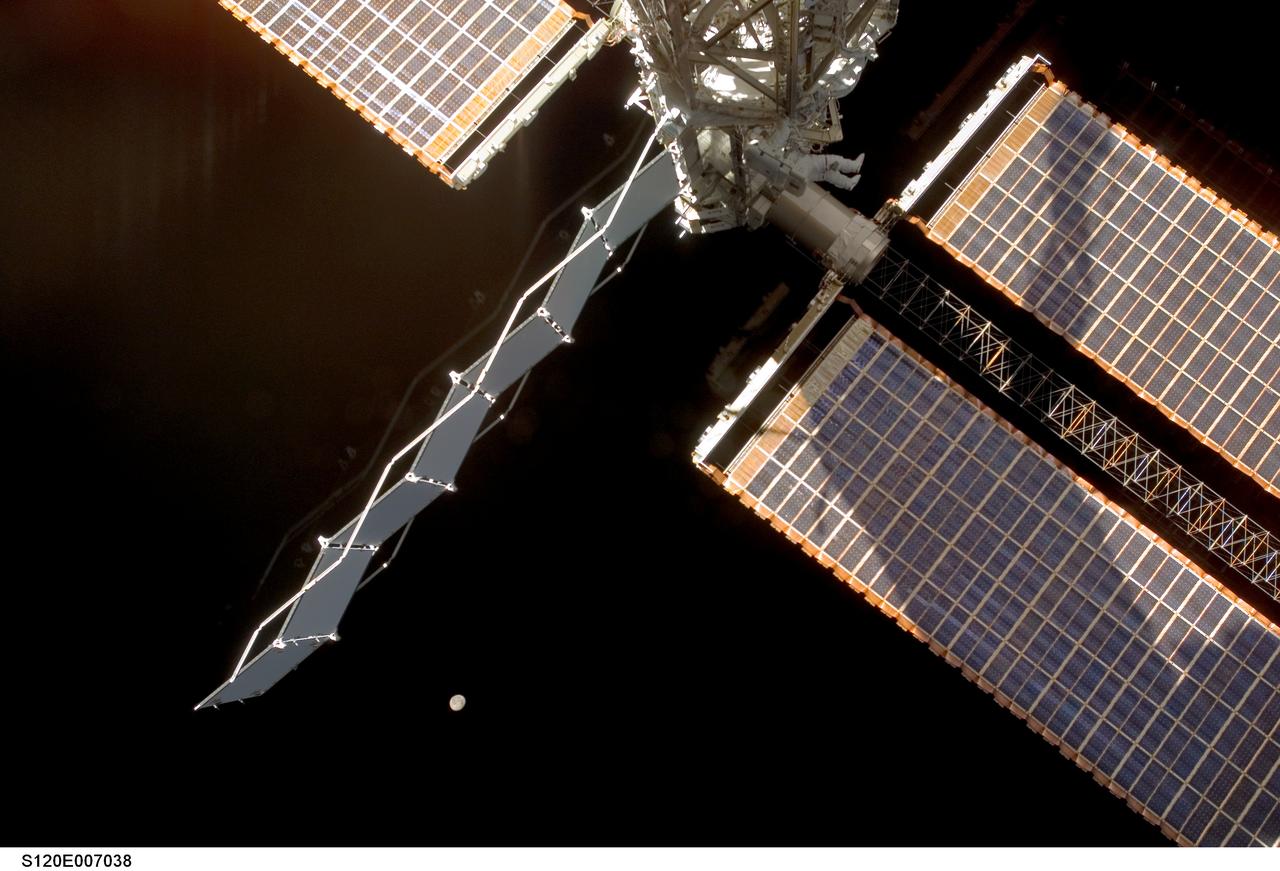
S120-E-007038 (28 Oct. 2007) --- Astronaut Daniel Tani (top center), Expedition 16 flight engineer, participates in the second of five scheduled sessions of extravehicular activity (EVA) as construction continues on the International Space Station. During the 6-hour, 33-minute spacewalk Tani and astronaut Scott Parazynski (out of frame), STS-120 mission specialist, worked in tandem to disconnect cables from the P6 truss, allowing it to be removed from the Z1 truss. Tani also visually inspected the station's starboard Solar Alpha Rotary Joint (SARJ) and gathered samples of "shavings" he found under the joint's multi-layer insulation covers. Also the spacewalkers outfitted the Harmony module, mated the power and data grapple fixture and reconfigured connectors on the starboard 1 (S1) truss that will allow the radiator on S1 to be deployed from the ground later. The moon is visible at lower center.
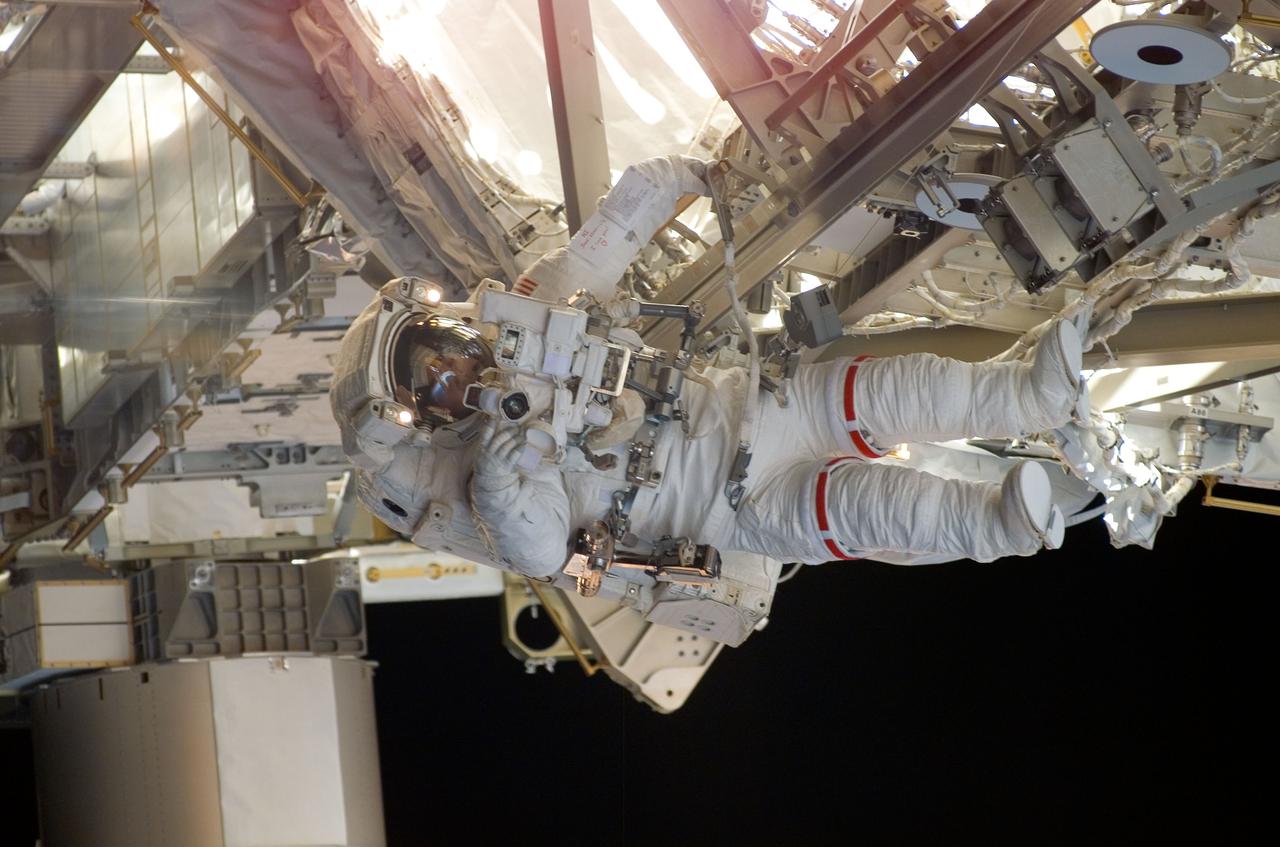
S120-E-007100 (28 Oct. 2007) --- Astronaut Daniel Tani, Expedition 16 flight engineer, participates in the second of five scheduled sessions of extravehicular activity (EVA) as construction continues on the International Space Station. During the 6-hour, 33-minute spacewalk Tani and astronaut Scott Parazynski (out of frame), STS-120 mission specialist, worked in tandem to disconnect cables from the P6 truss, allowing it to be removed from the Z1 truss. Tani also visually inspected the station's starboard Solar Alpha Rotary Joint (SARJ) and gathered samples of "shavings" he found under the joint's multi-layer insulation covers. Also the spacewalkers outfitted the Harmony module, mated the power and data grapple fixture and reconfigured connectors on the starboard 1 (S1) truss that will allow the radiator on S1 to be deployed from the ground later.