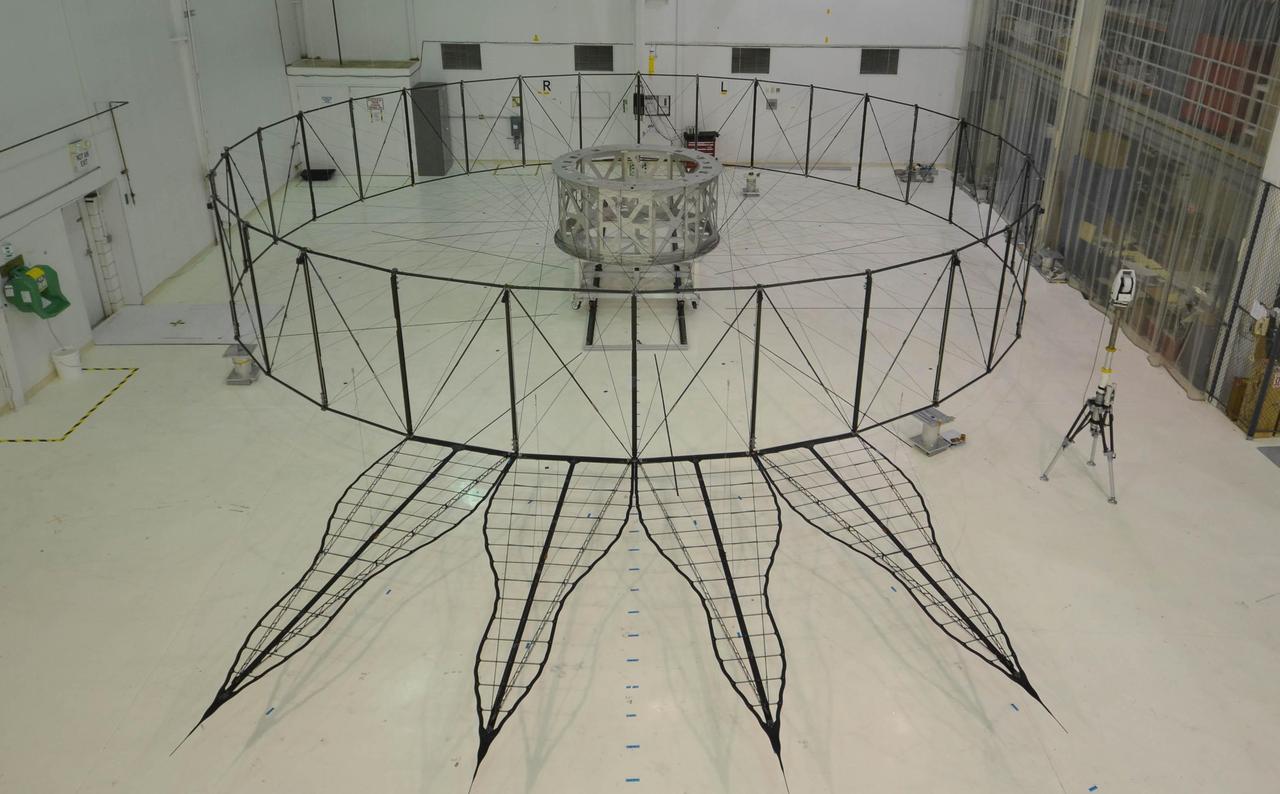
This image shows the bare bones of the first prototype starshade by NASA's Jet Propulsion Laboratory, Pasadena, California. The prototype was shown in technology partner Astro Aerospace/Northrup Grumman's facility in Santa Barbara, California in 2013. In order for the petals of the starshade to diffract starlight away from the camera of a space telescope, they must be deployed with accuracy once the starshade reaches space. The four petals pictured in the image are being measured for this positional accuracy with a laser. As shown by this 66-foot (20-meter) model, starshades can come in many shapes and sizes. This design shows petals that are more extreme in shape which properly diffracts starlight for smaller telescopes. http://photojournal.jpl.nasa.gov/catalog/PIA20903

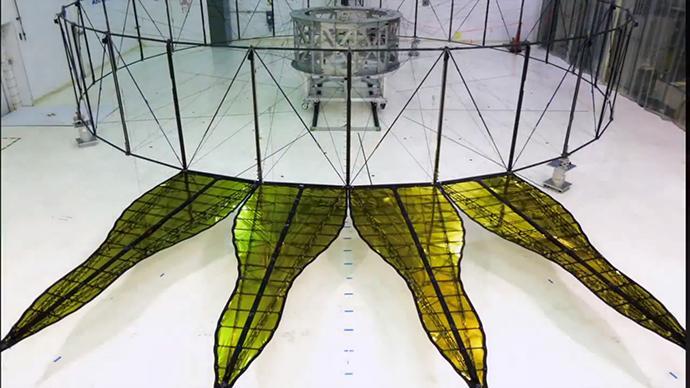
This image shows the deployment of a half-scale starshade with four petals at NASA's Jet Propulsion Laboratory in Pasadena, California, in 2014. The full scale of this starshade (not shown) will measure at 34 meters, or approximately 111 feet. The flower-like petals of the starshade are designed to diffract bright starlight away from telescopes seeking the dim light of exoplanets. The starshade was re-designed from earlier models to allow these petals to furl, or wrap around the spacecraft, for launch into space. Once in space, the starshade will need to expand from its tightly-packed launch shape to become large and umbrella-like, ideal for blocking starlight. Each petal is covered in a high-performance plastic film that resembles gold foil. On a starshade ready for launch, the thermal gold foil will only cover the side of the petals facing away from the telescope, with black on the other, so as not to reflect other light sources such as the Earth into its lens. Starlight-blocking technologies such as the starshade are being developed to help image exoplanets, with a focus on Earth-sized, habitable worlds. http://photojournal.jpl.nasa.gov/catalog/PIA20907

A deployed half-scale starshade with four petals at NASA's Jet Propulsion Laboratory, Pasadena, California, in 2014. The flower-like petals of the starshade are designed to diffract bright starlight away from telescopes seeking the dim light of exoplanets. The starshade was re-designed from earlier models to allow these petals to furl, or wrap around the spacecraft, for launch into space. Each petal is covered in a high-performance plastic film that resembles gold foil. On a starshade ready for launch, the thermal gold foil will only cover the side of the petals facing away from the telescope, with black on the other, so as not to reflect other light sources such as the Earth into its camera. http://photojournal.jpl.nasa.gov/catalog/PIA20904
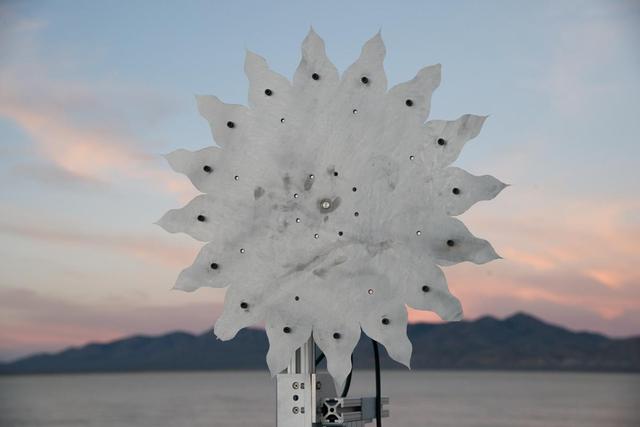
A test of a small-scale starshade model (58 cm), made from metal, in a dry lake bed in central Nevada's Smith Creek, took place from May to June 2014. Nineteen different versions of the miniaturized starshade were tested over five days. The tests revealed that a starshade, or external occulter, is capable of blocking starlight to a degree that reveals the relatively dim reflected light of a planet next to its brighter star. Like holding your hand up to block sunlight, the starshade works to block excessive starlight from the "eyes" of a space telescope like Hubble. http://photojournal.jpl.nasa.gov/catalog/PIA20902
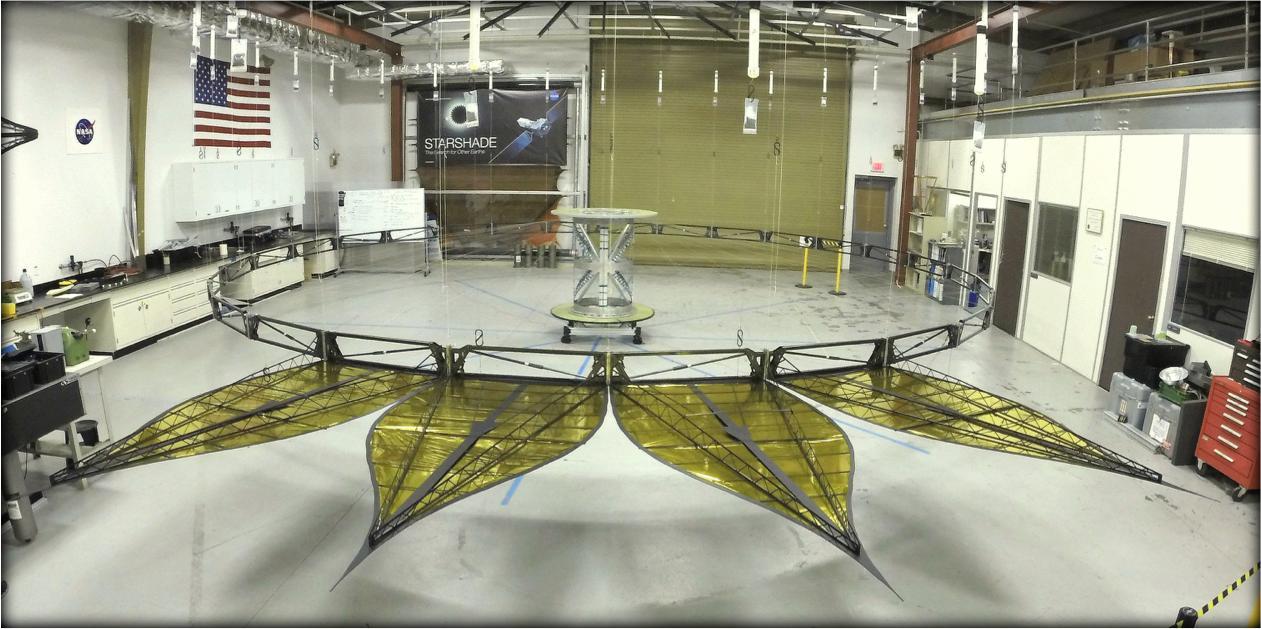
is image shows a deployed half-scale starshade with four petals at NASA's Jet Propulsion Laboratory, Pasadena, California in 2014. The full-scale of this starshade (not shown) will measure at 111 feet (34 meters). The flower-like petals of the starshade are designed to diffract bright starlight away from telescopes seeking the dim light of exoplanets. The starshade was re-designed from earlier models to allow these petals to furl, or wrap around the spacecraft, for launch into space. Each petal is covered in a high-performance plastic film that resembles gold foil. On a starshade ready for launch, the thermal gold foil will only cover the side of the petals facing away from the telescope, with black on the other, so as not to reflect other light sources such as the Earth into its lens. The starshade is light enough for space and cannot support its own weight on Earth. Is it shown offloaded with counterweights, much like an elevator. Starlight-blocking technologies such as the starshade are being developed to help image exoplanets, with a focus on Earth-sized, habitable worlds. http://photojournal.jpl.nasa.gov/catalog/PIA20909
The first prototype starshade developed by NASA's Jet Propulsion Laboratory, shown in technology partner Astro Aerospace/Northrup Grumman's facility in Santa Barbara, California, in 2013. As shown by this 66 foot (20-meter) model, starshades can come in many shapes and sizes. This design shows petals that are more extreme in shape which properly diffracts starlight for smaller telescopes. Each petal is covered in a high-performance plastic film that resembles gold foil. On a starshade ready for launch, the thermal gold foil will only cover the side of the petals facing away from the telescope, with black on the other, so as not to reflect other light sources such as the Earth into its camera. http://photojournal.jpl.nasa.gov/catalog/PIA20906
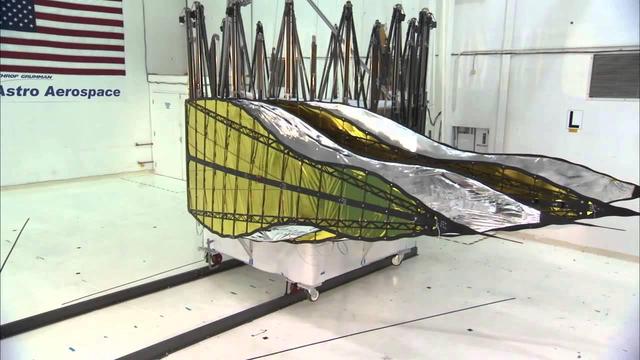
A furled first prototype starshade developed by NASA's Jet Propulsion Laboratory, shown in technology partner Astro Aerospace/Northrup Grumman's facility in Santa Barbara, California, in 2013. This design shows petals that are more extreme in shape, which properly diffracts starlight for smaller telescopes. For launch, the petals of the starshade will be wrapped around the spacecraft, then unfurled into the familiar flower-like design once in space. As shown by this 66-foot (20-meter) model, starshades can come in many shapes and sizes. http://photojournal.jpl.nasa.gov/catalog/PIA20905
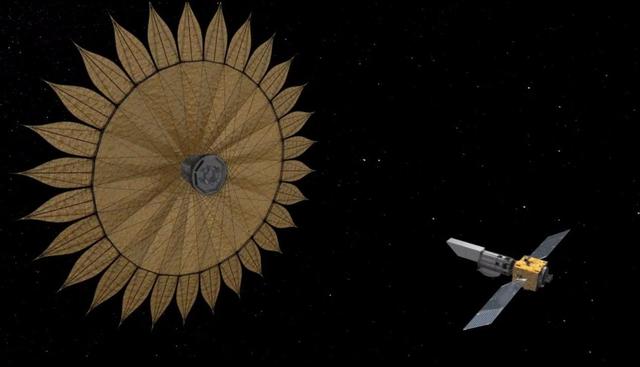
This artist's rendering shows the proposed starshade flying in sync with a space telescope. The giant sunflower-like structure would be used to acquire images of Earth-like rocky planets around nearby stars. The proposed starshade could launch together with a telescope. Once in space, it would separate from the rocket and telescope, unfurl its petals, then move into position to block the light of stars. http://photojournal.jpl.nasa.gov/catalog/PIA20910
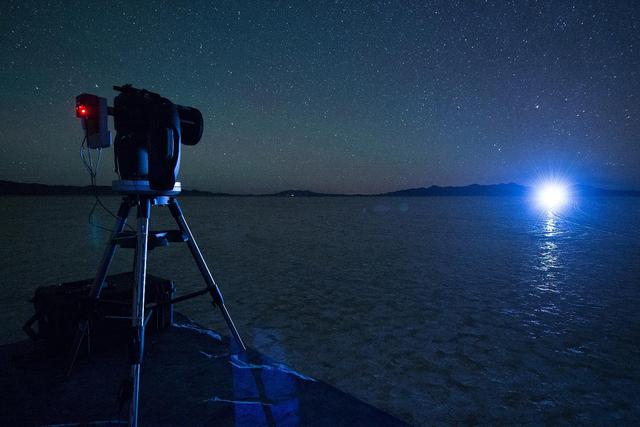
A night test of a small-scale starshade model, in a dry lake bed in central Nevada's Smith Creek by Northrup Grumman, took place in May to June 2014. A telescope points toward a bright light, which in the darkness of the desert mimics the conditions of starlight in space. Other lights, which are up to 10 million times fainter than the light source standing in for the star, represent the reflected light of planets. Telescopes searching for the relatively dim light of an exoplanet next to its much brighter star are faced with a challenge as difficult as searching from Los Angeles for a firefly in New York -- if the firefly is next to the brightness of a lighthouse. The tests by Northrup Grumman determined that a starshade, or external occulter, is capable of blocking starlight to a degree that can indeed reveal the light of a planet. http://photojournal.jpl.nasa.gov/catalog/PIA20901
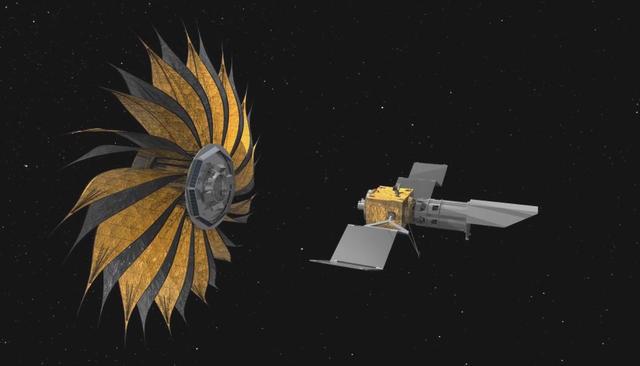
How do we find Earth-like planets outside our solar system? One idea is to send a giant structure that blocks starlight so that astronomers can more easily detect orbiting planets. This artist's rendering shows the proposed starshade concept flying in sync with a space telescope. The giant sunflower-like structure would be used to acquire images of Earth-like rocky planets around nearby stars. The proposed starshade could launch together with a telescope. Once in space, it would separate from the rocket and telescope, unfurl its petals, then move into position to block the light of stars. http://photojournal.jpl.nasa.gov/catalog/PIA20911
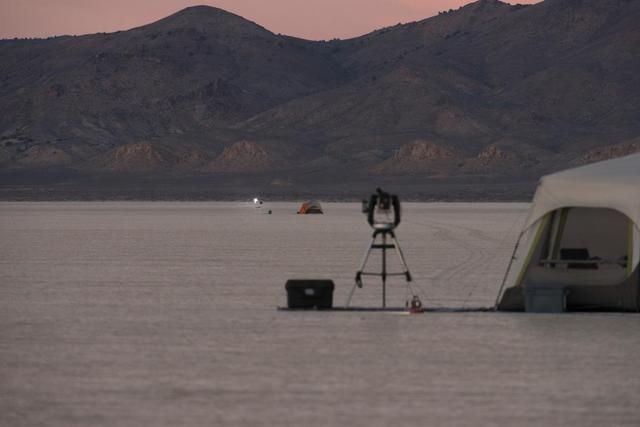
A test of a small-scale starshade model in a dry lake bed in central Nevada's Smith Creek by Northrup Grumman in May-June 2014. A telescope points toward a bright light, which mimics the conditions of starlight in space. Other lights, which are up to 10 million times fainter than the light source standing in for the star, represent the reflected light of planets. Telescopes searching for the relatively dim light of an exoplanet next to its much bright star are faced with a challenge as difficult as searching from Los Angeles for a firefly in New York– if the firefly is also beside a lighthouse. These tests determined that a starshade, or external occulter, is indeed capable of blocking starlight to a degree that reveals the light of a planet. http://photojournal.jpl.nasa.gov/catalog/PIA20908