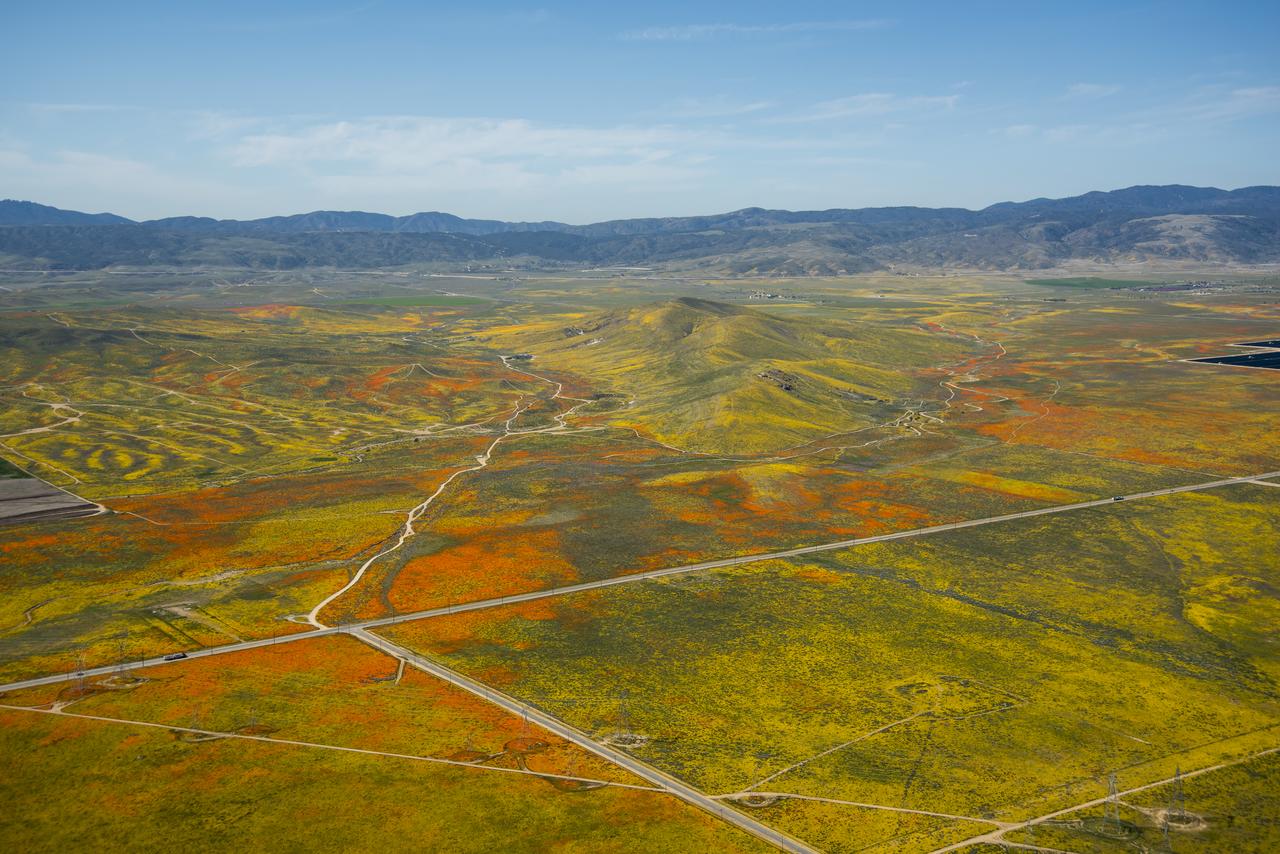
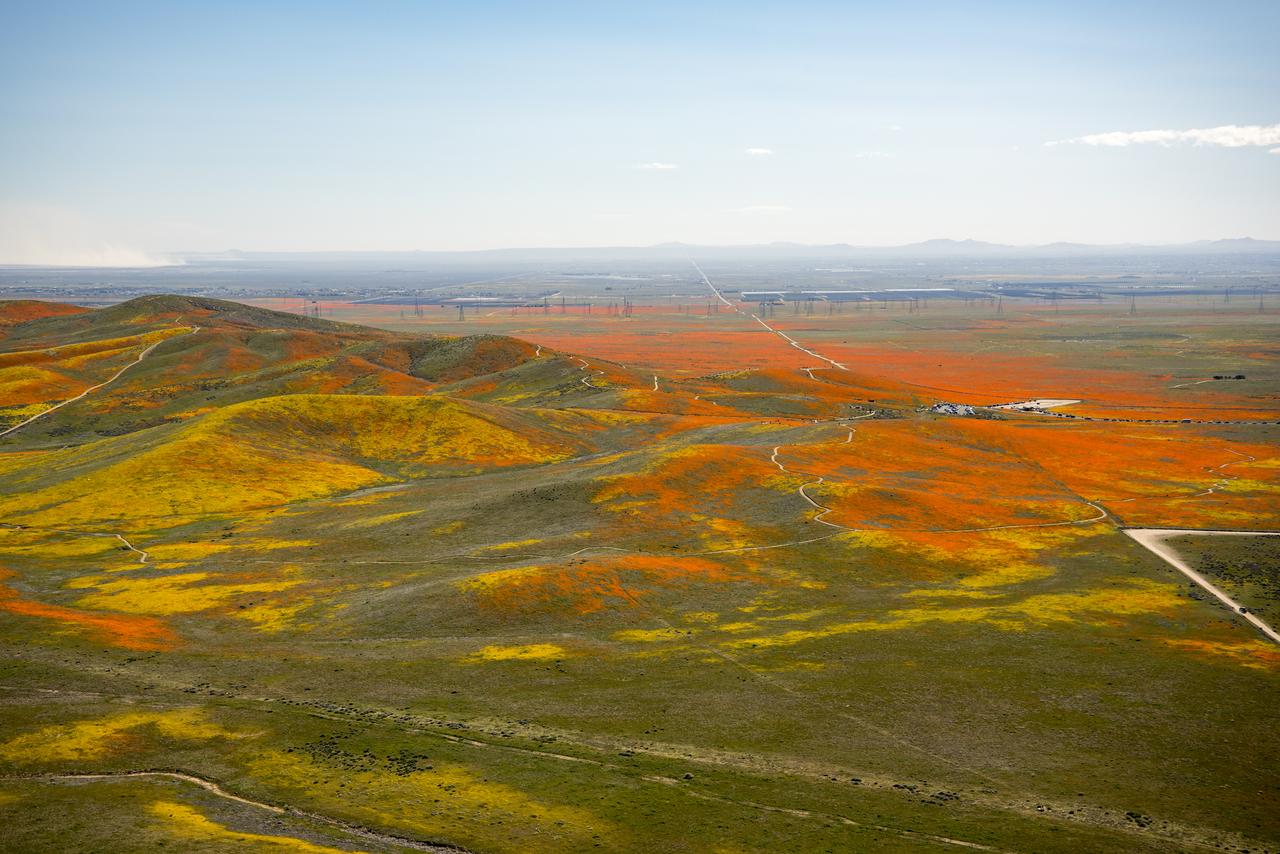
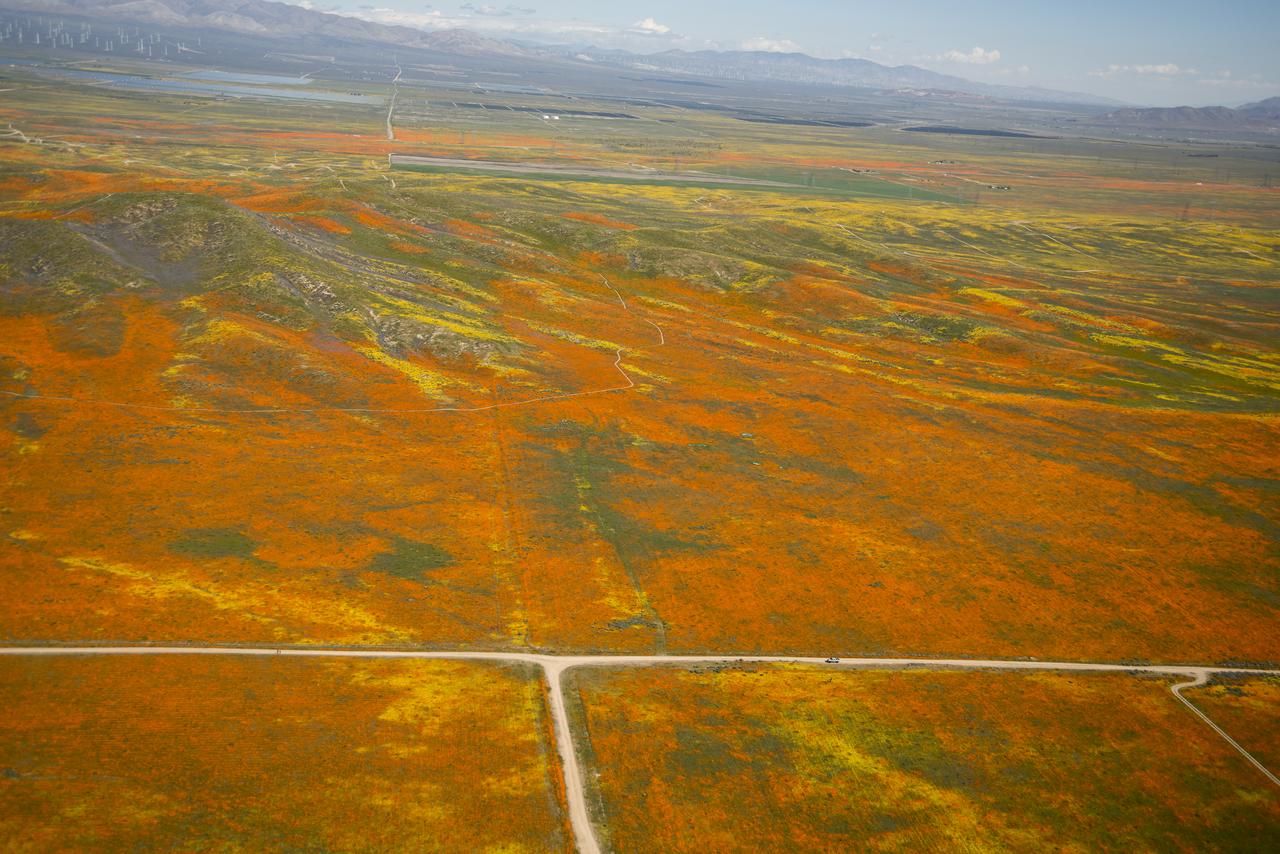
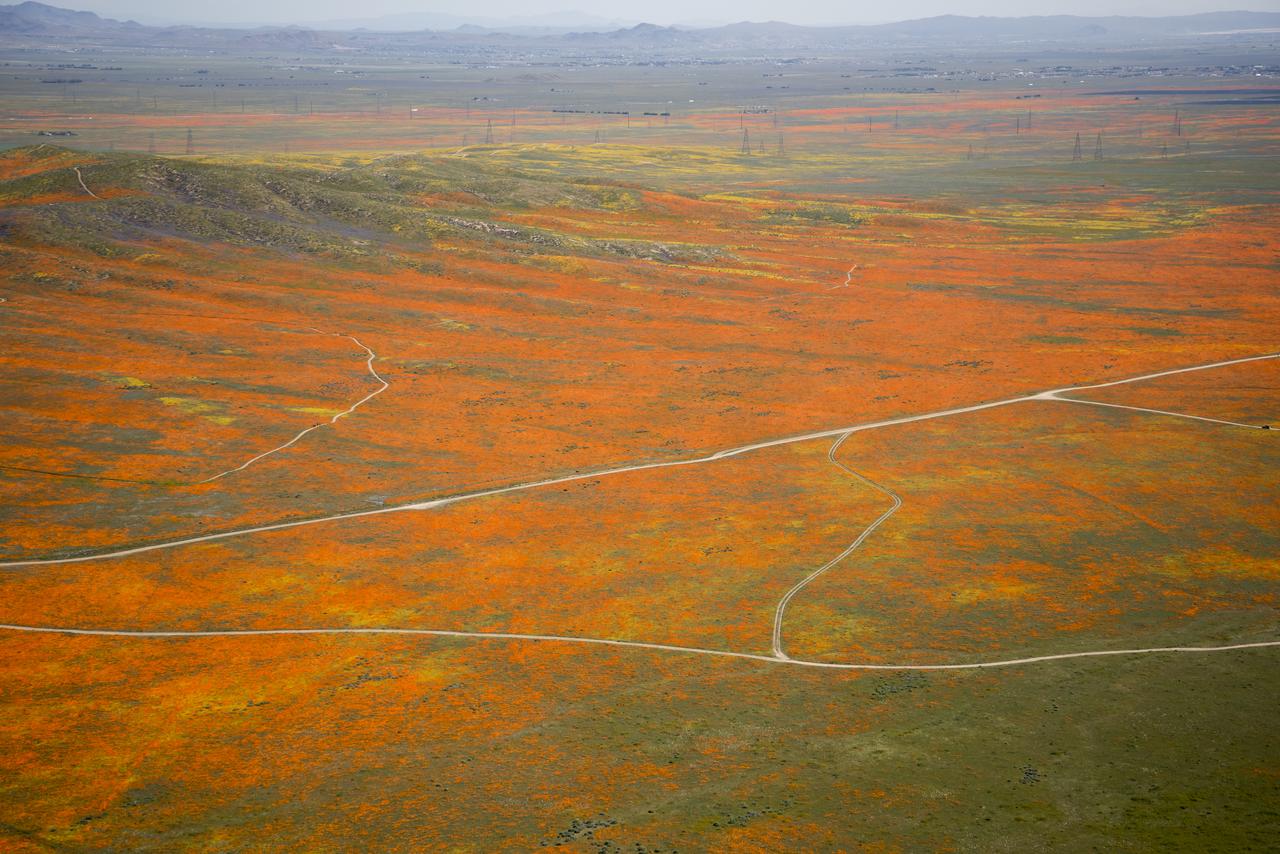
View from a NASA aircraft, TG-14, over the Superbloom of yellow wildflowers and orange poppies from the Antelope Valley in Southern California. The poppy is the state flower.
Rainy Winter Season Brings Abundance of Wildflowers and Poppies in Southern California’s Antelope Valley. The poppy is the state flower.
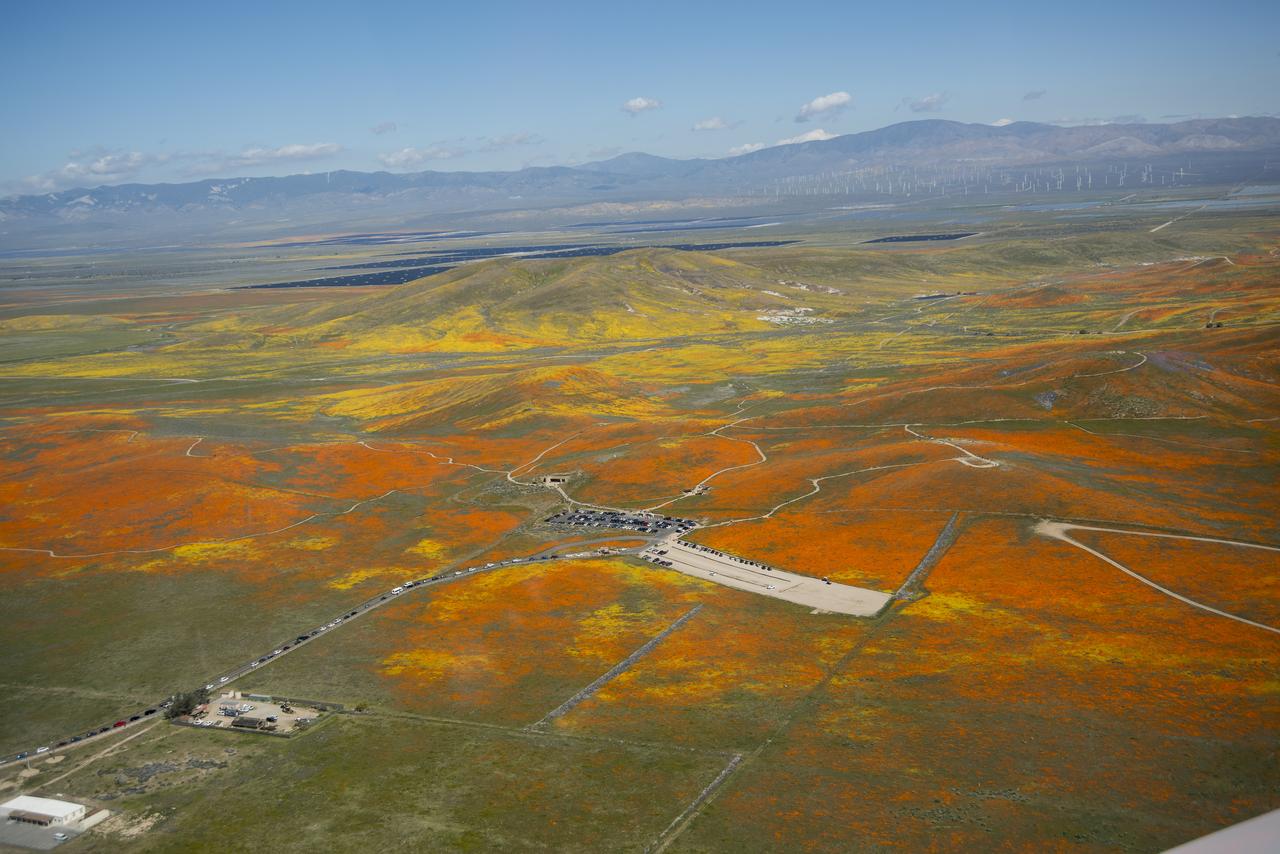
View from a NASA aircraft, TG-14, over the Superbloom of yellow wildflowers and orange poppies from the Antelope Valley in Southern California, Poppy Reserve and solar panels are in the background.
Rainy Winter Season Brings Abundance of Wildflowers and Poppies in Southern California’s Antelope Valley. The Poppy is the state flower.
View from a NASA aircraft, TG-14, over the Superbloom of wildflowers and poppies from the Antelope Valley in Southern California and Poppy Reserve and solar panels in background
Rainy Winter Season Brings Abundance of Wildflowers and Poppies in Southern California’s Antelope Valley. The poppy is the state flower.
Image from a NASA aircraft, TG-14, over the Superbloom of wildflowers and poppies from the Antelope Valley in Southern California
Rainy Winter Season Brings Abundance of Wildflowers and Poppies in Southern California's Antelope Valley. The poppy is the state flower.
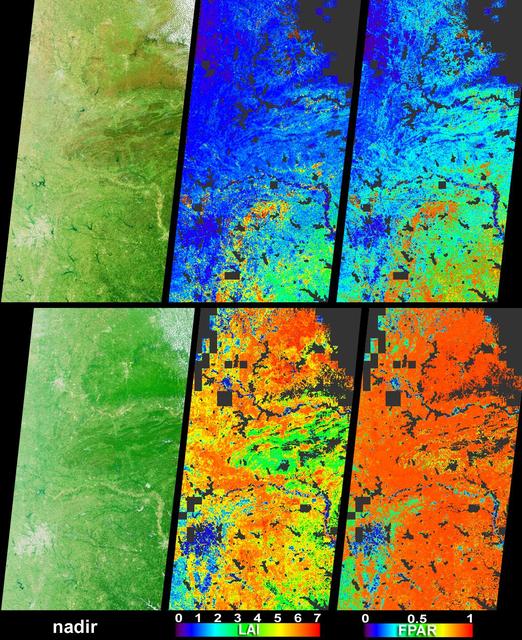
Vigorous vegetation growth in the Southern United States after heavy rains fell during April and early May, 2004, is quantified in these images and data products from NASA Terra spacecraft.
April Showers Bring May Flowers to the Southern United States
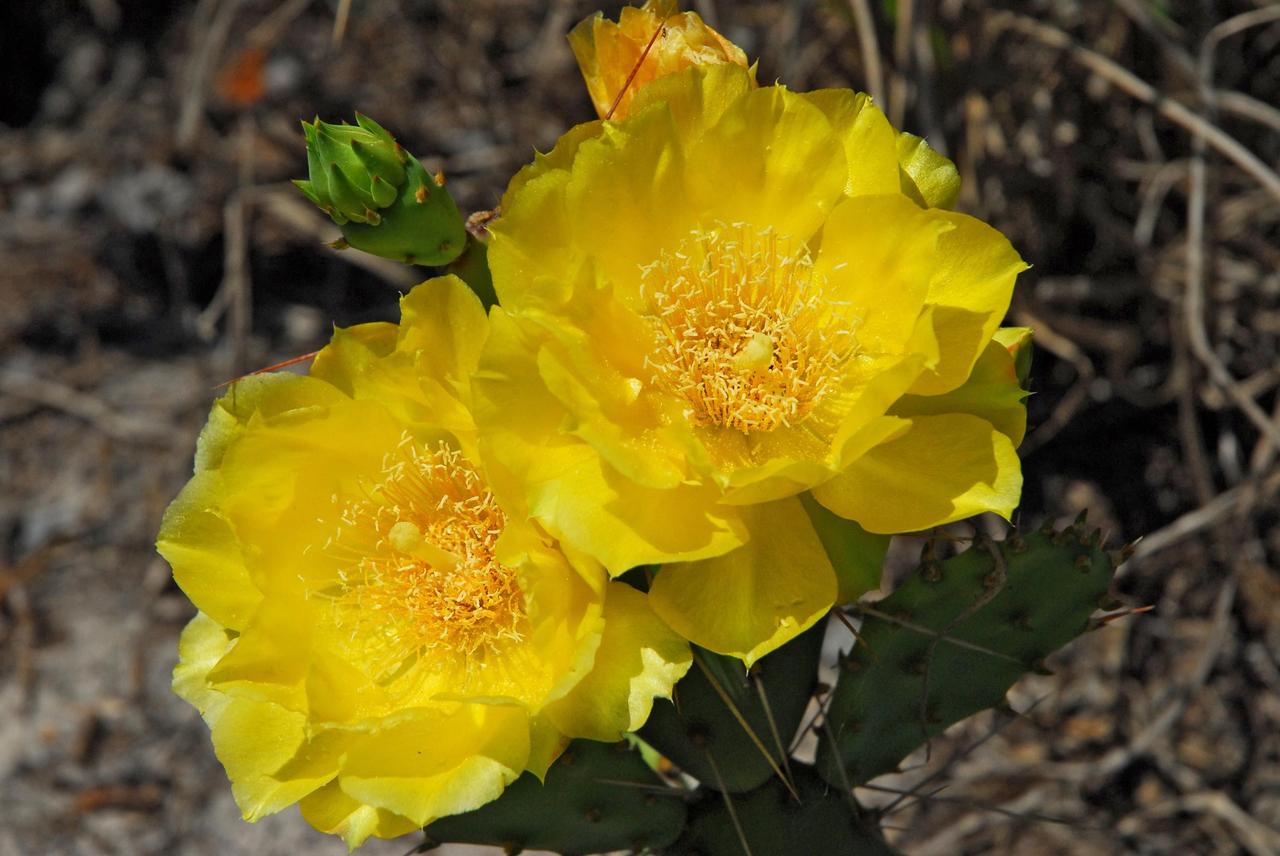
KENNEDY SPACE CENTER, FLA.  --   A taste of spring is heralded by the blooming of these flowers near a riverbank on Kennedy Space Center.  KSC shares a boundary with the Merritt Island Wildlife Nature Refuge. The refuge is a habitat for more than 310 species of birds, 25 mammals, 117 fishes and 65 amphibians and reptiles. In addition, the Refuge supports 19 endangered or threatened wildlife species on Federal or State lists, more than any other single refuge in the U.S.   Photo credit: NASA/Dimitri Gerondidakis
KSC-07pd0880
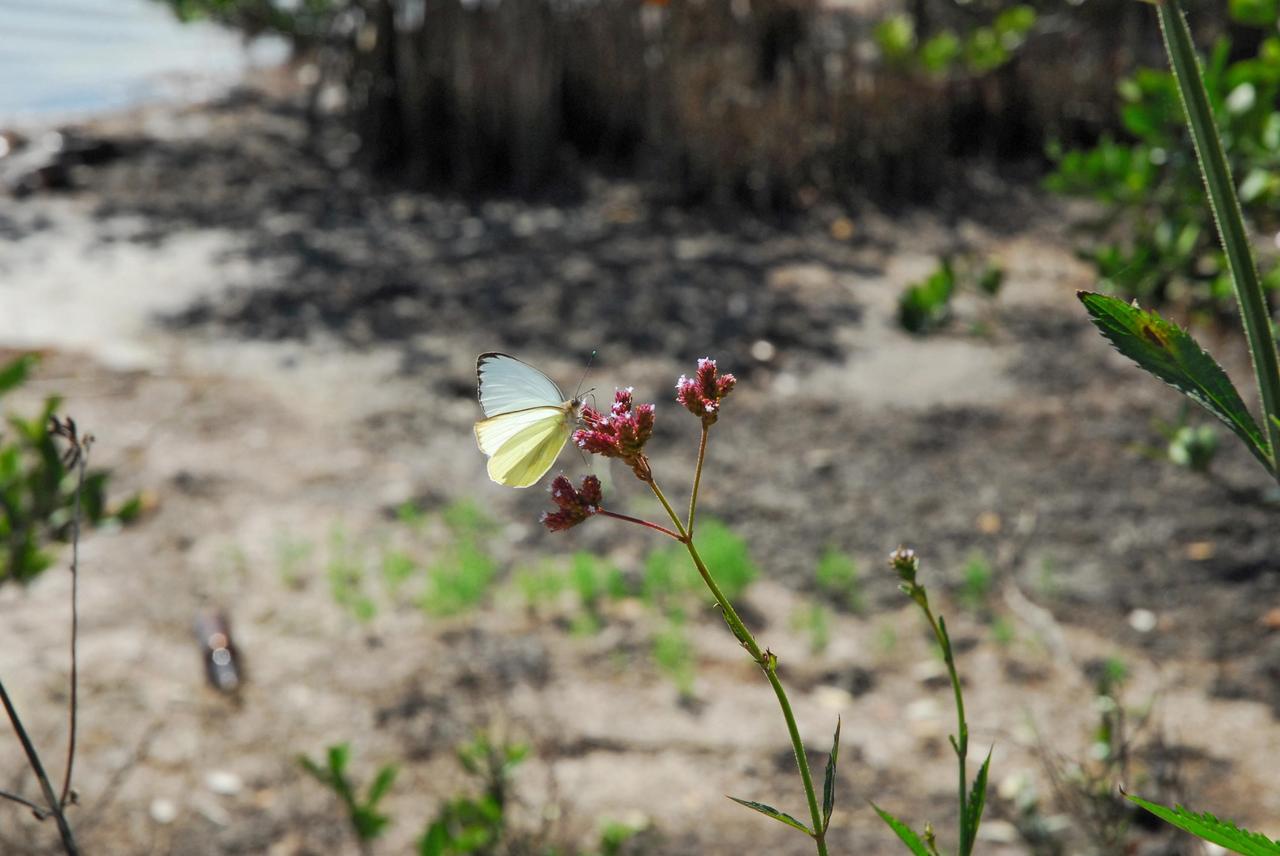
KENNEDY SPACE CENTER, FLA.  --   A delicate butterfly perches on a wild flower among the grasses on Kennedy Space Center.    KSC shares a boundary with the Merritt Island Wildlife Nature Refuge. The refuge is a habitat for more than 310 species of birds, 25 mammals, 117 fishes and 65 amphibians and reptiles. In addition, the Refuge supports 19 endangered or threatened wildlife species on Federal or State lists, more than any other single refuge in the U.S.   Photo credit: NASA/Dimitri Gerondidakis
KSC-07pd0871
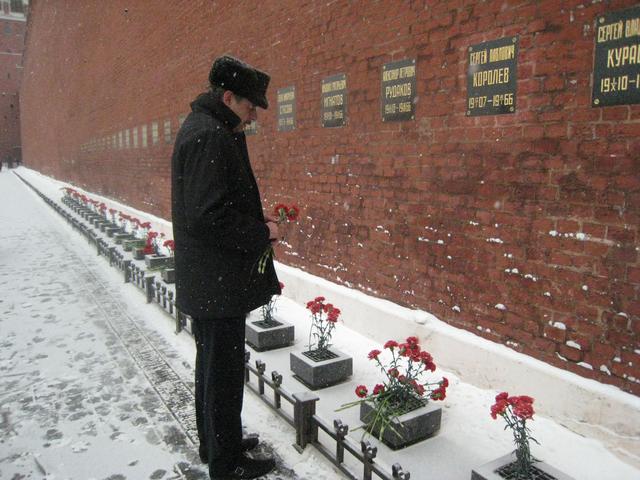
JSC2010-E-041315 (19 March 2010) ----At the Kremlin Wall in Red Square in Moscow March 19, 2010, Russian cosmonaut Mikhail Kornienko, Expedition 23 flight engineer, lays flowers in a traditional ceremony prior to his departure for the launch site at the Baikonur Cosmodrome in Kazakhstan for final preparations for launch on the Soyuz TMA-18 spacecraft to the International Space Station April 2. Russian cosmonaut Alexander Skvortsov, Soyuz commander, NASA astronaut Tracy Caldwell Dyson, Expedition 23 flight engineer, and Kornienko were certified for launch earlier in the day by the Russian State Commission.  Credit: NASA/Stephanie Stoll
Expedition 23 preflight
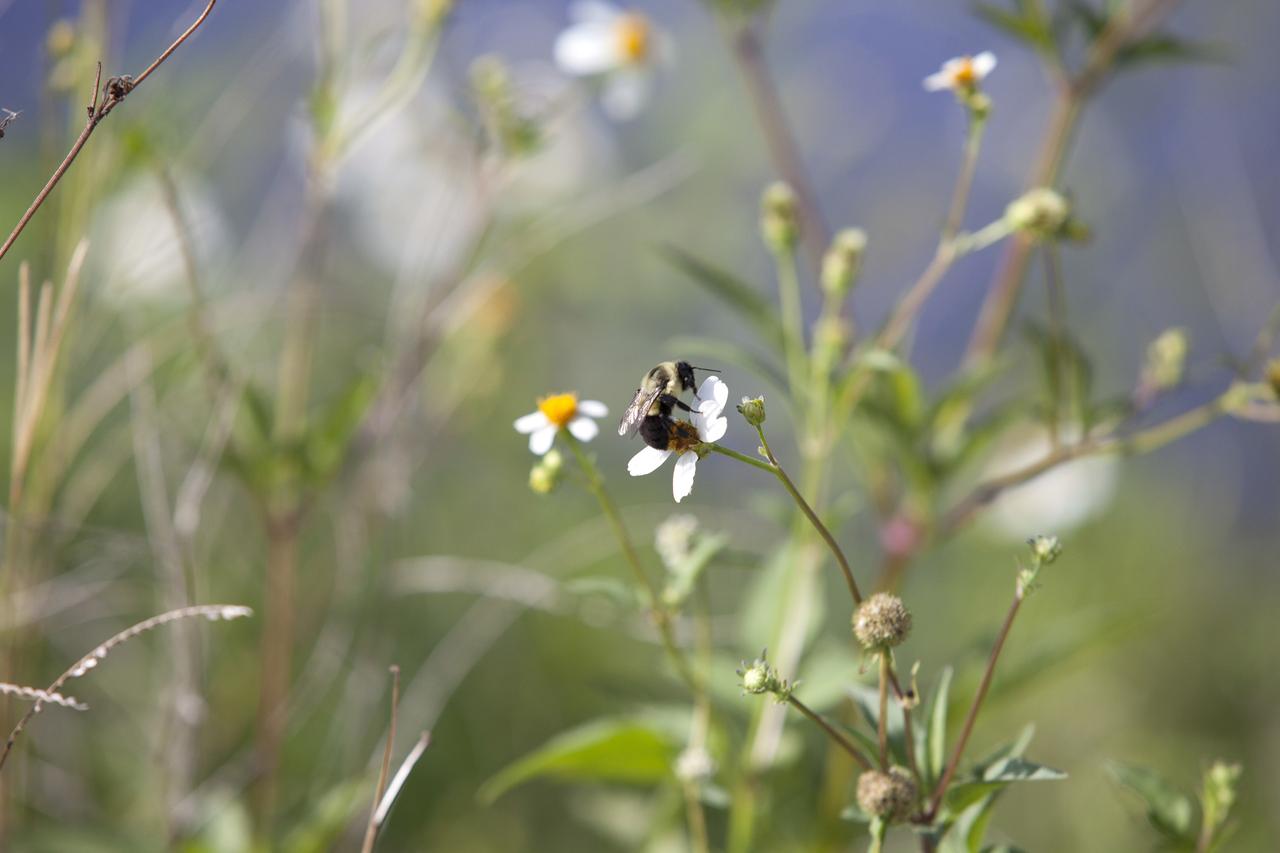
CAPE CANAVERAL, Fla. – A bee goes about his business pollinating the flowers off Schwartz Road on NASA's Kennedy Space Center in Florida. There are 4,000 species of native bees in the United States. The members of the five most common families - Apidae, Halictidae, Andrenidae, Megachilidae, and  Colletidae - can be found throughout North America, including in Florida.    The undeveloped property on Kennedy Space Center is managed by the U.S. Fish and Wildlife Service through the Merritt Island National Wildlife Refuge. For information on the refuge, visit http://www.fws.gov/merrittisland/Index.html. For information on the alligators prowling the waterways at Kennedy, visit http://www.nasa.gov/content/ancient-creatures-on-the-prowl/. Photo credit: NASA/Daniel Casper
KSC-2014-4339
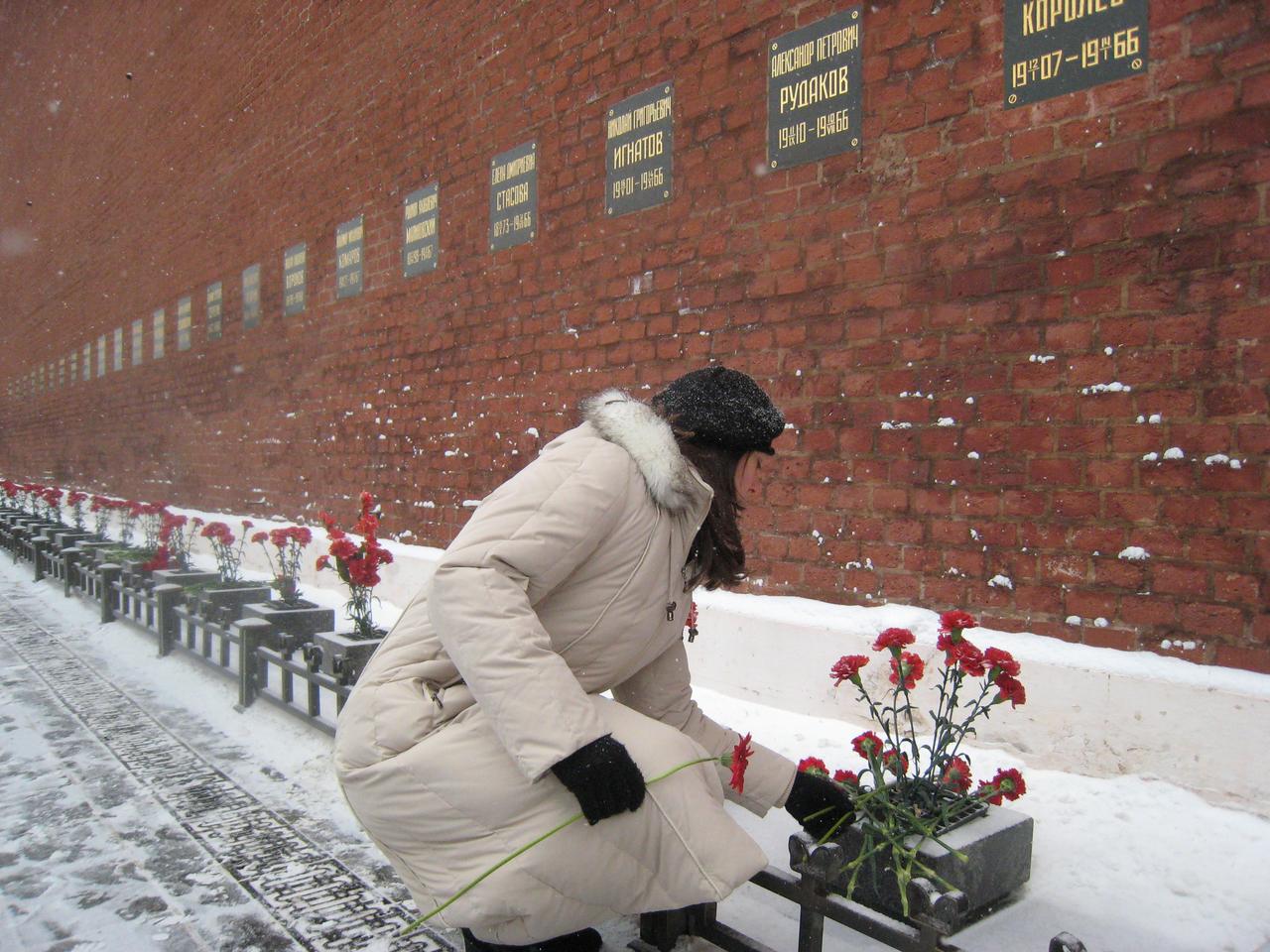
JSC2010-E-041314 (19 March 2010) --- At the Kremlin Wall in Red Square in Moscow March 19, 2010, NASA astronaut Tracy Caldwell Dyson, Expedition 23 flight engineer, lays flowers in a traditional ceremony prior to her departure for the launch site at the Baikonur Cosmodrome in Kazakhstan for final preparations for her launch on the Soyuz TMA-18 spacecraft to the International Space Station April 2. Caldwell Dyson, Russian cosmonauts Alexander Skvortsov, Soyuz commander, and  Mikhail Kornienko, Expedition 23 flight engineer,  were certified for launch earlier in the day by the Russian State Commission. Photo credit: NASA/Stephanie Stoll
Expedition 23 preflight
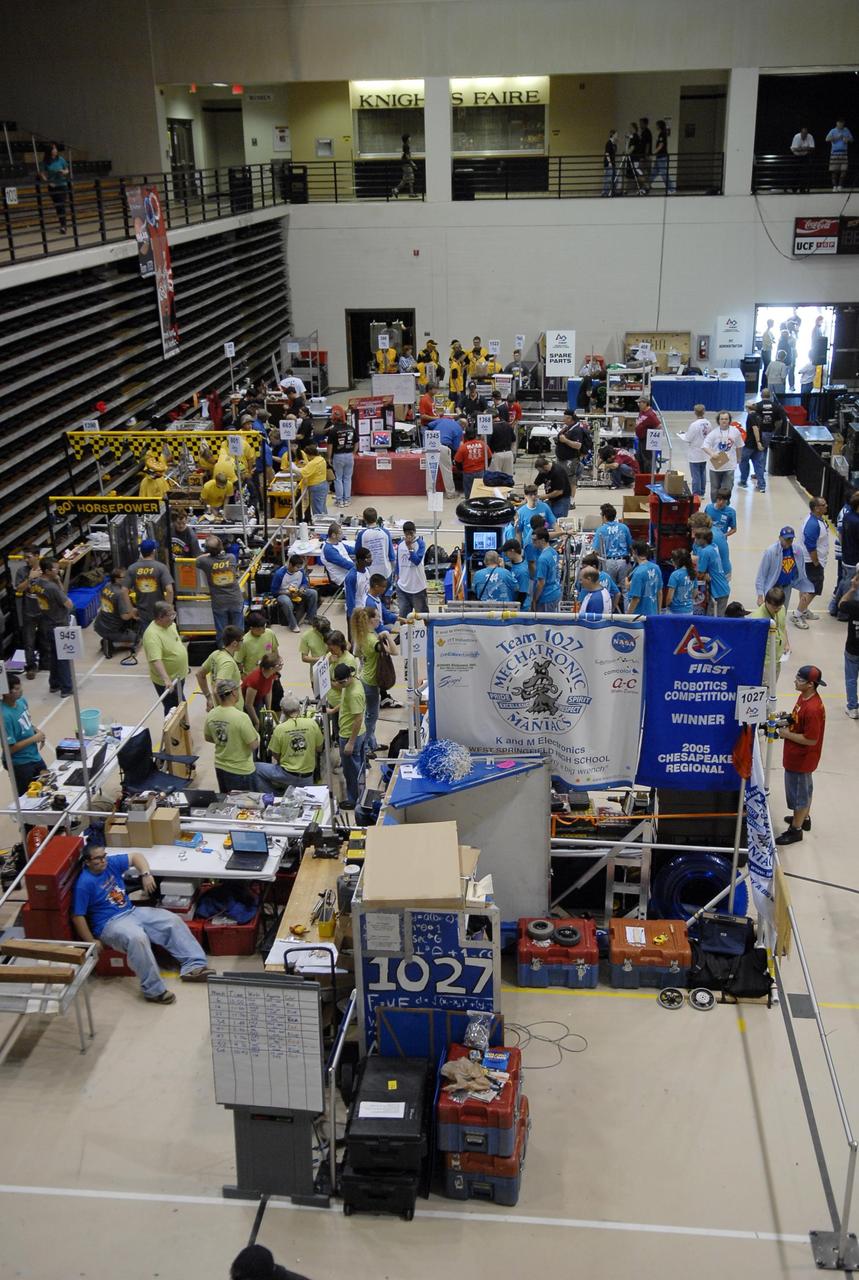
KENNEDY SPACE CENTER, FLA. --  Student teams representing Florida and several out-of-state areas display and work on their robots for the FIRST robotics event held at the University of Central Florida Arena March 8-10.  The FIRST, or For Inspiration and Recognition of Science and Technology, Robotics Competition challenges teams of young people and their mentors to solve a common problem in a six-week timeframe using a standard "kit of parts" and a common set of rules. Teams build robots from the parts and enter them in a series of competitions designed by FIRST founder Dean Kamen and Dr. Woodie Flowers, chairman and vice chairman of the Executive Advisory Board respectively, and a committee of engineers and other professionals. FIRST redefines winning for these students. Teams are rewarded for excellence in design, demonstrated team spirit, gracious professionalism and maturity, and ability to overcome obstacles. Scoring the most points is a secondary goal. Winning means building partnerships that last. Photo credit: NASA/Kim Shiflett
KSC-07pd0613
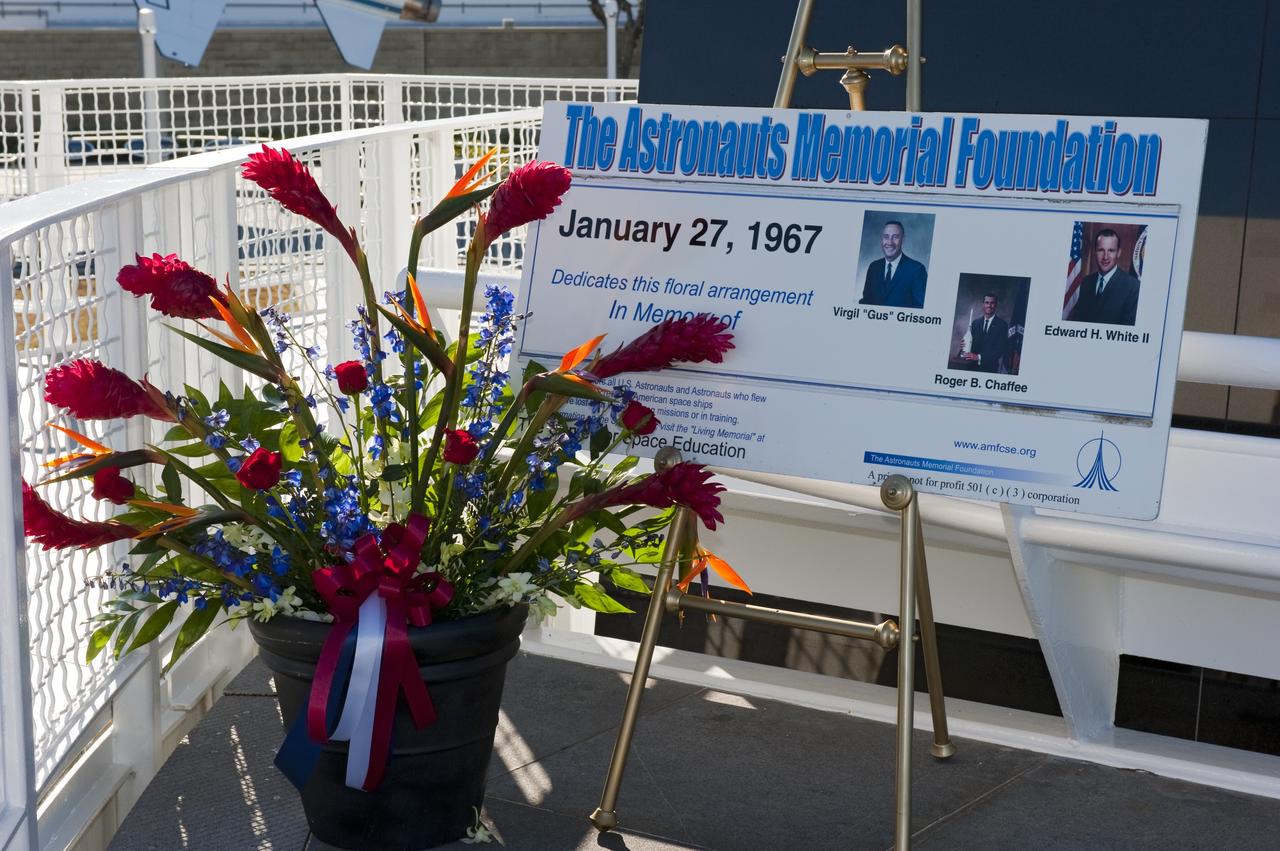
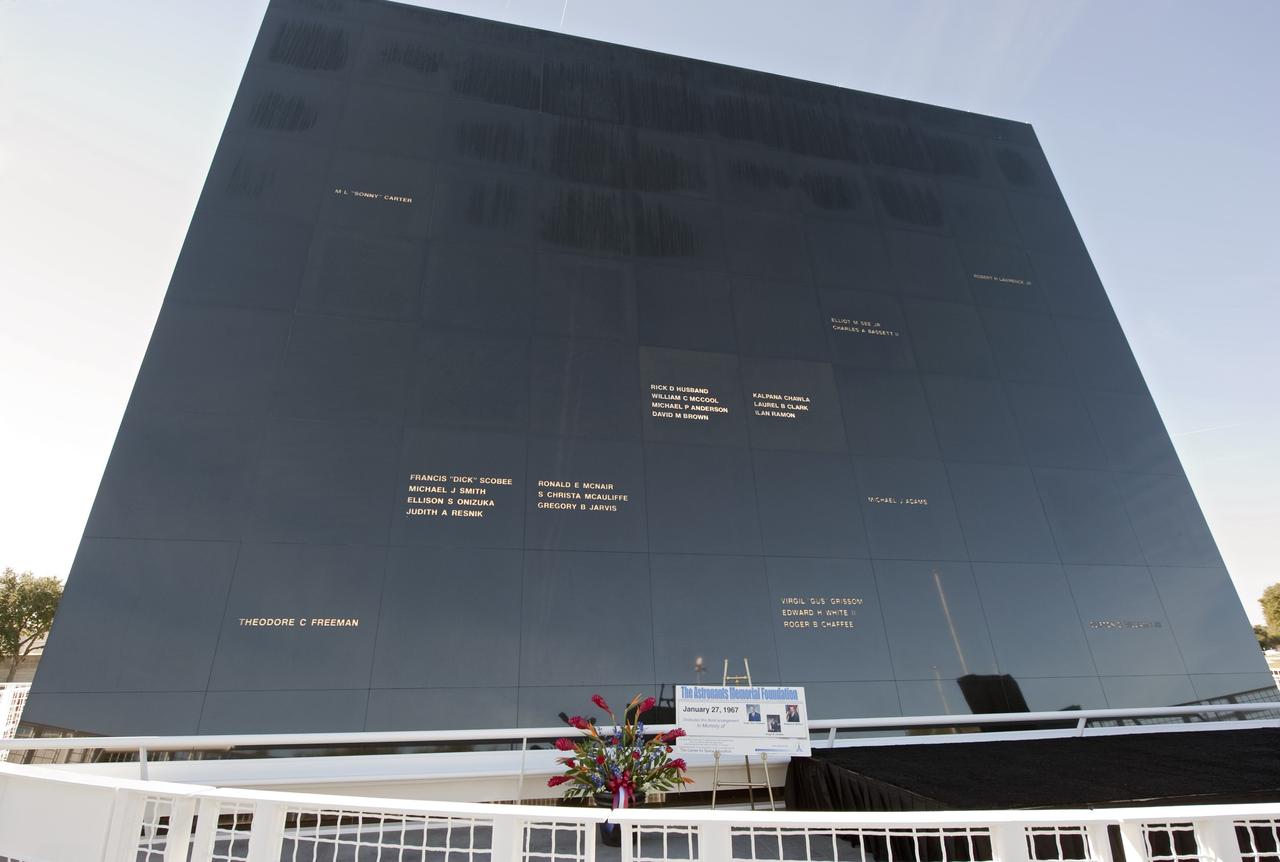
CAPE CANAVERAL, Fla. -- Flowers lay at the foot of the Space Mirror Memorial at the Kennedy Space Center Visitor Complex in Florida before a Day of Remembrance wreath laying ceremony to honor members of the NASA family who lost their lives while furthering the cause of exploration and discovery. The floral arrangement is dedicated to the Apollo 1 crew members Virgil "Gus" Grissom, Roger B. Chaffee and Edward H. White II. The memorial honors 24 United States astronauts, including the crew members of space shuttles Columbia and Challenger, Apollo 1, and those who died in training and commercial airplane accidents.            The memorial is a project of the Astronauts Memorial Foundation and was paid for by Florida residents who purchased special Challenger mission automobile license plates. 2011 marks the 25th anniversary of the loss of Challenger, which broke apart over the Atlantic Ocean 73 seconds into flight on Jan. 28, 1986. Photo credit: NASA/Kim Shiflett
KSC-2011-1209
CAPE CANAVERAL, Fla. -- Flowers lay at the foot of the Space Mirror Memorial at the Kennedy Space Center Visitor Complex in Florida before a Day of Remembrance wreath laying ceremony to honor members of the NASA family who lost their lives while furthering the cause of exploration and discovery. The memorial honors 24 United States astronauts, including the crew members of space shuttles Columbia and Challenger, Apollo 1, and those who died in training and commercial airplane accidents.           The memorial is a project of the Astronauts Memorial Foundation and was paid for by Florida residents who purchased special Challenger mission automobile license plates. 2011 marks the 25th anniversary of the loss of Challenger, which broke apart over the Atlantic Ocean 73 seconds into flight on Jan. 28, 1986. Photo credit: NASA/Kim Shiflett
KSC-2011-1208
KENNEDY SPACE CENTER, FLA. --   Center Director Bill Parsons (left) greets the Lt. Governor of the State of Florida, Jeff Kottkamp, at the FIRST robotics event held at the University of Central Florida Arena March 8-10.  The FIRST, or For Inspiration and Recognition of Science and Technology, Robotics Competition challenges teams of young people and their mentors to solve a common problem in a six-week timeframe using a standard "kit of parts" and a common set of rules. Teams build robots from the parts and enter them in a series of competitions designed by FIRST founder Dean Kamen and Dr. Woodie Flowers, chairman and vice chairman of the Executive Advisory Board respectively, and a committee of engineers and other professionals. FIRST redefines winning for these students. Teams are rewarded for excellence in design, demonstrated team spirit, gracious professionalism and maturity, and ability to overcome obstacles. Scoring the most points is a secondary goal. Winning means building partnerships that last. Photo credit: NASA/Kim Shiflett
KSC-07pd0622
View from a NASA aircraft, TG-14, over the Superbloom of wildflowers and poppies from the Antelope Valley in Southern California. The Poppy Reserve is in the foreground and solar panels are in the background.
Rainy Winter Season Brings Abundance of Wildflowers and Poppies in Southern California’s Antelope Valley showing Poppy Reserve and solar panels are in the background.
View from a NASA aircraft, TG-14, over the Superbloom of wildflowers and poppies from the Antelope Valley in Southern California, Poppy Reserve and solar panels are in the background.
Rainy Winter Season Brings Abundance of Wildflowers and Poppies in Southern California’s Antelope Valley. Solar panels are in the background.
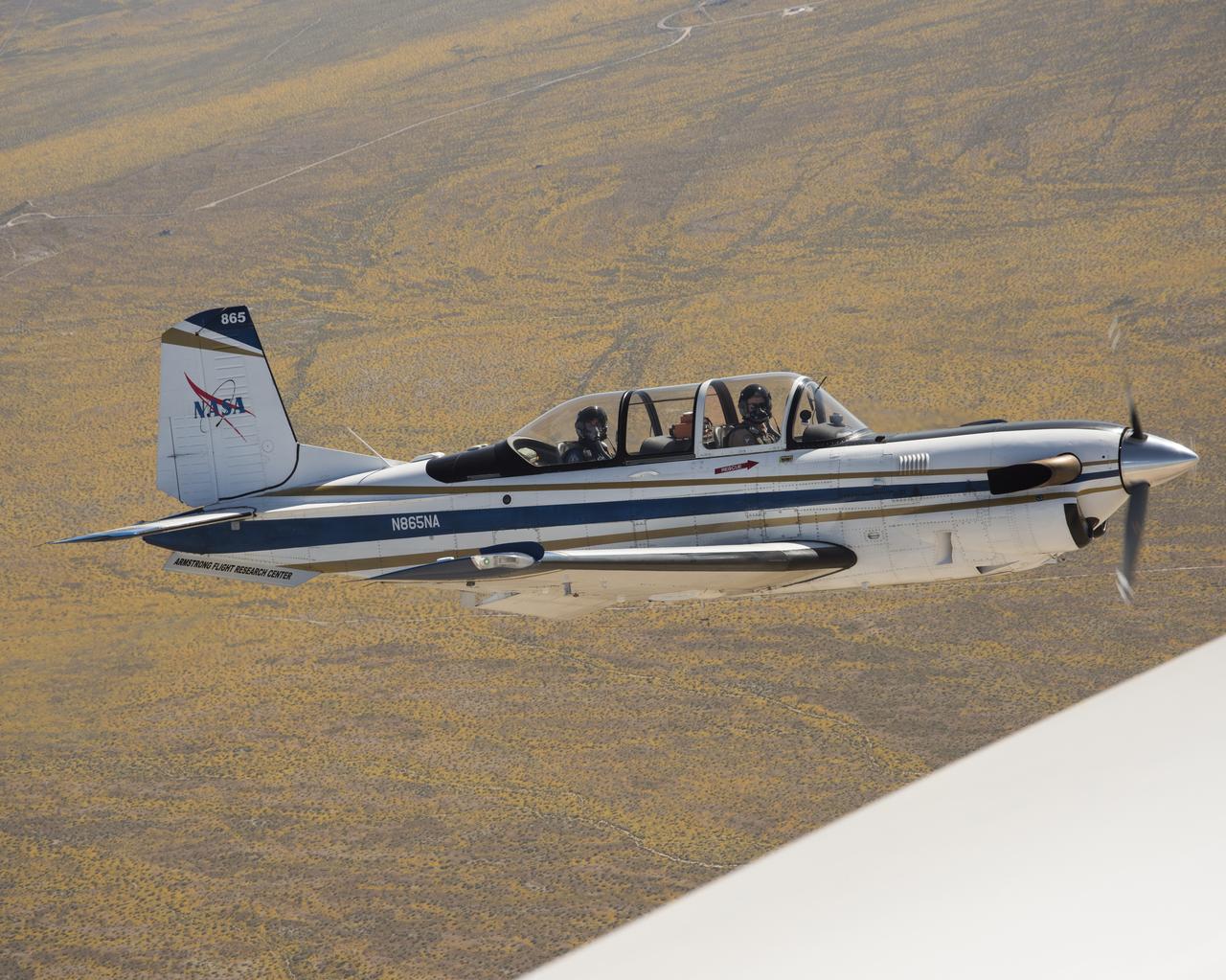
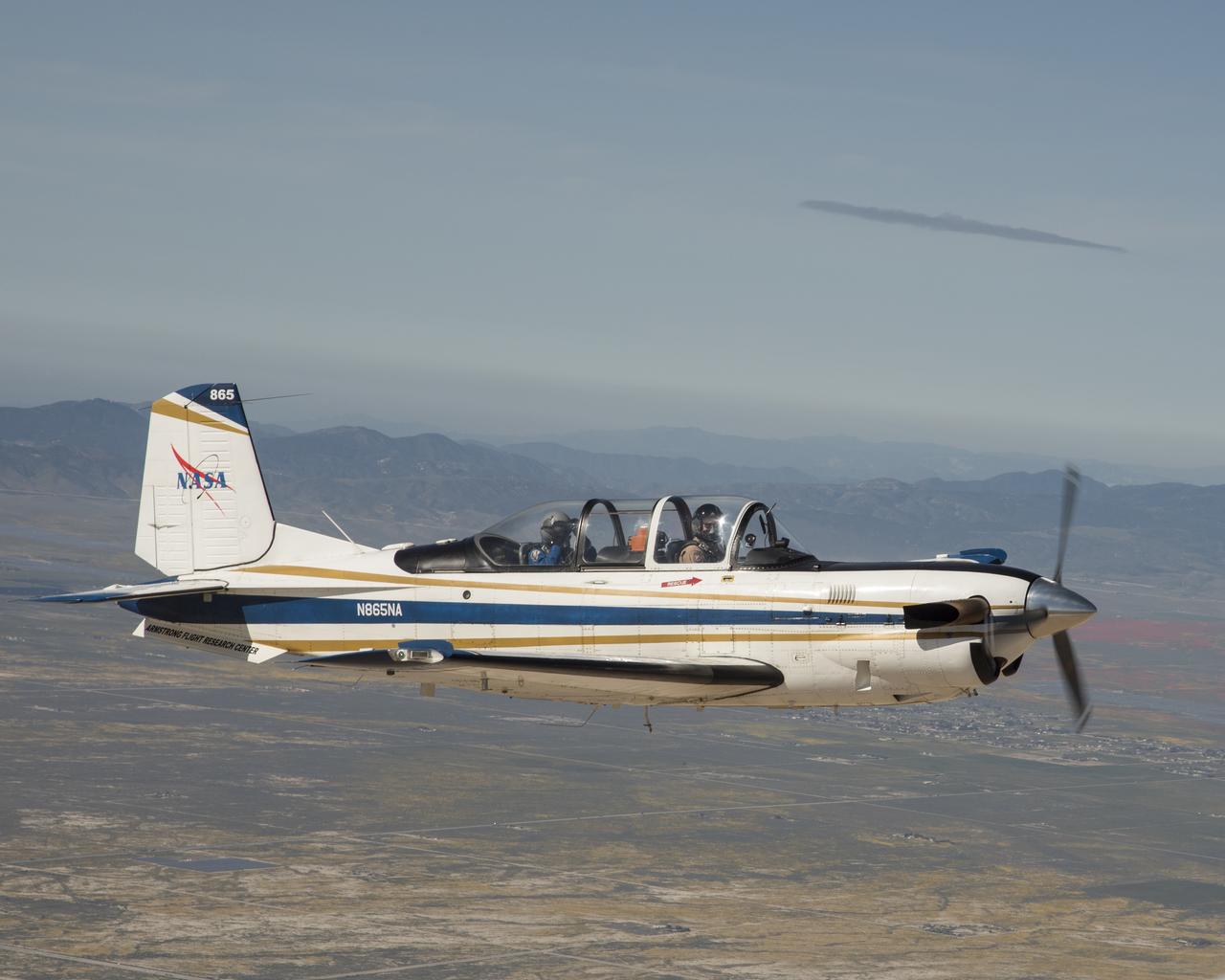
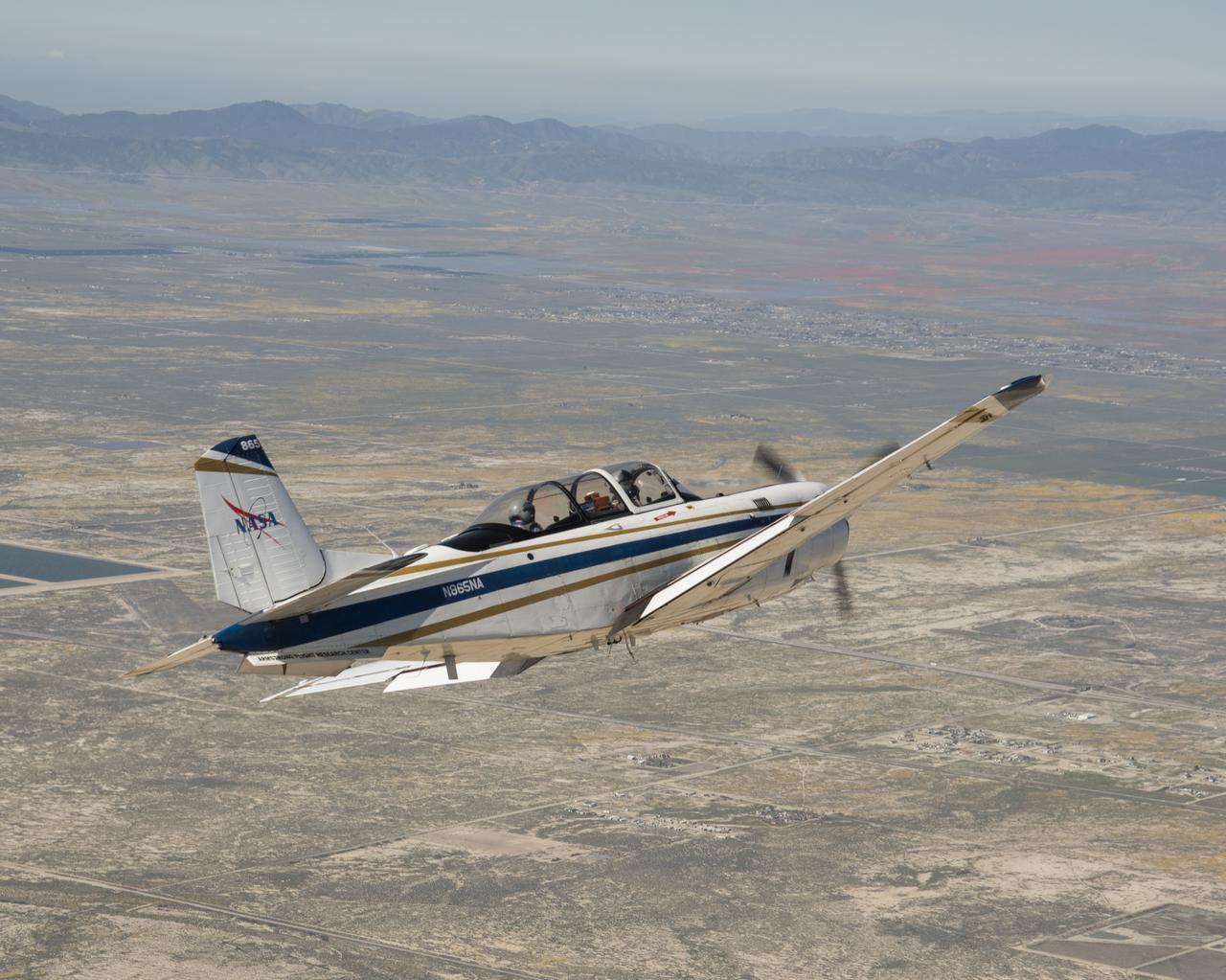
NASA’s T-34 aircraft flown from the agency’s Armstrong Flight Research Center heading toward Southern California’s Antelope Valley Poppy Reserve. The aircraft was flown from the agency’s Armstrong Flight Research Center.
NASA Aircraft heads to Southern California’s Poppy Reserve in the foreground. Rainy Season made the Antelope Valley colorful with poppies and wildflowers.
NASA’s T-34 aircraft flown from the agency’s Armstrong Flight Research Center aims the plane toward Southern California’s Antelope Valley Poppy Reserve flying over yellow wildflowers. The aircraft was flown from the agency’s Armstrong Flight Research Center.
NASA Aircraft flies over yellow wildflowers abundant due to rainy winter season. The T-34 aircraft was flown from the agency's Armstrong Flight Research Center.
NASA's T-34 aircraft flown from the agency's Armstrong Flight Research Center aims the plane toward Southern California's Antelope Valley Poppy Reserve. The aircraft was flown from the agency's Armstrong Flight Research Center.
NASA Aircraft heads to Southern California's Poppy Reserve in the foreground. Rainy Season made the Antelope Valley colorful with poppies and wildflowers.