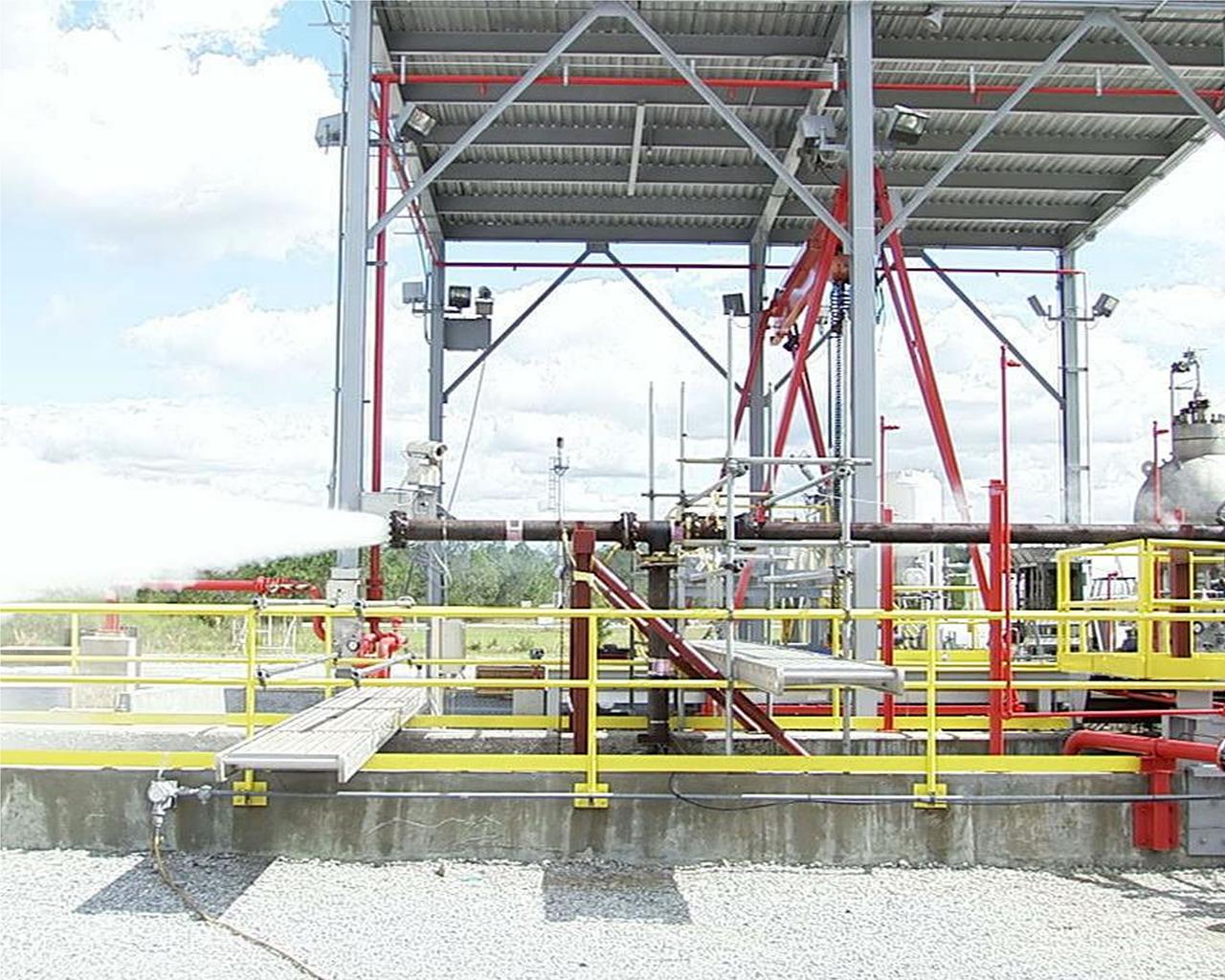
Phase 2 of the A-3 Test Facility Subscale Diffuser Risk Mitigation Project at Stennis Space Center reached a milestone Oct. 25 when the E-3 Test Facility produced superheated (500+ degrees) steam for approximately 3 seconds at more than 400 psi. The test team, led by Barry Robinson of NASA's Test Projects Office, followed that success with further tests to lengthen the duration of steam production. On Nov. 1, they were able to maintain a consistent pressure and temperature of steam for 60 seconds. In December, the team began Phase 3 of the testing, providing data for the design and procurement to build the full-scale version of the steam diffuser for SSC's A-3 Test Stand.
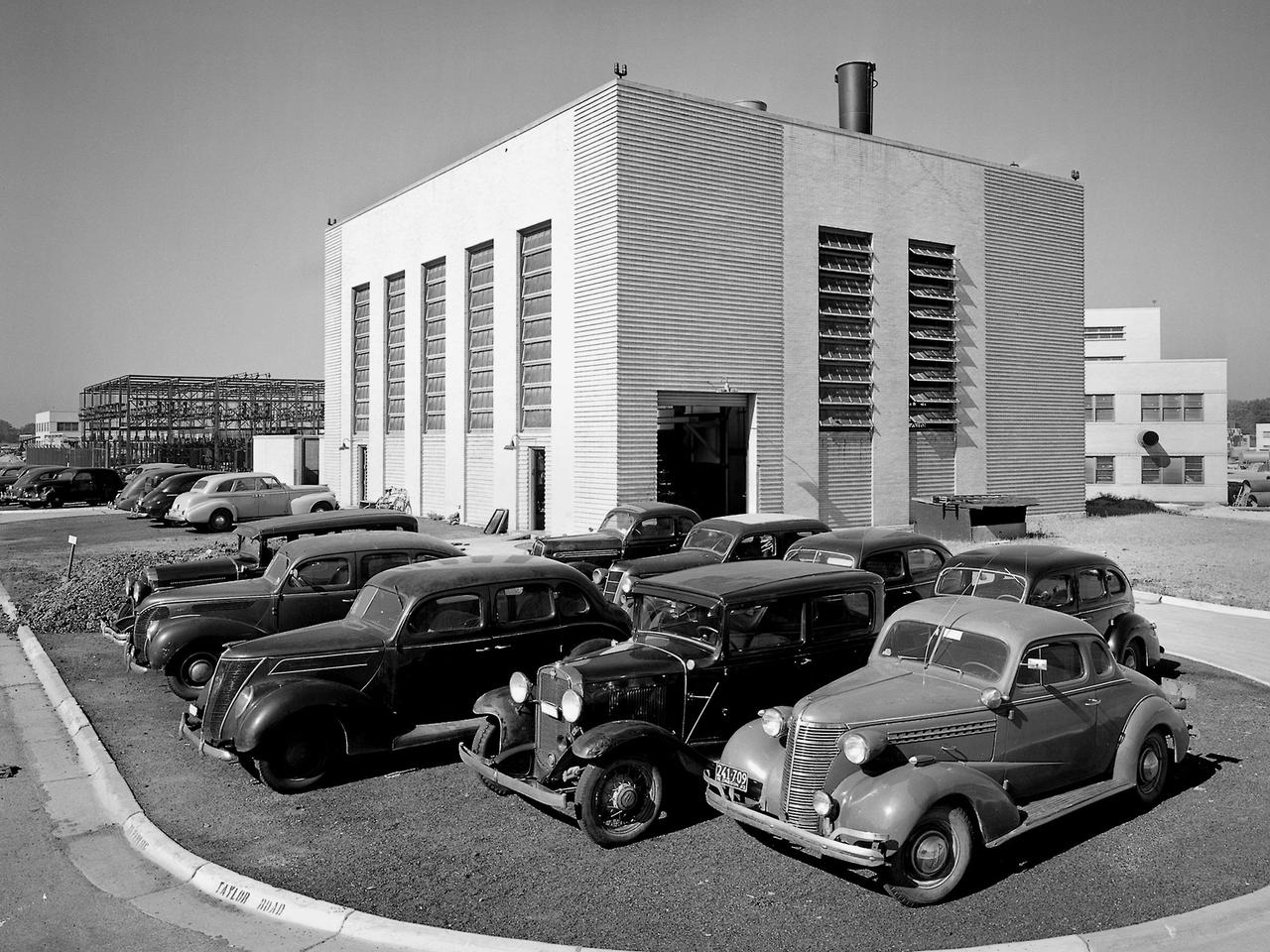
The Steam Plant at the National Advisory Committee for Aeronautics (NACA) Aircraft Engine Research Laboratory supplies steam to the major test facilities and office buildings. Steam is used for the Icing Research Tunnel's spray system and the Engine Research Building’s desiccant air dryers. In addition, its five boilers supply heat to various buildings and the cafeteria. Schirmer-Schneider Company built the $141,000 facility in the fall of 1942, and it has been in operation ever since.
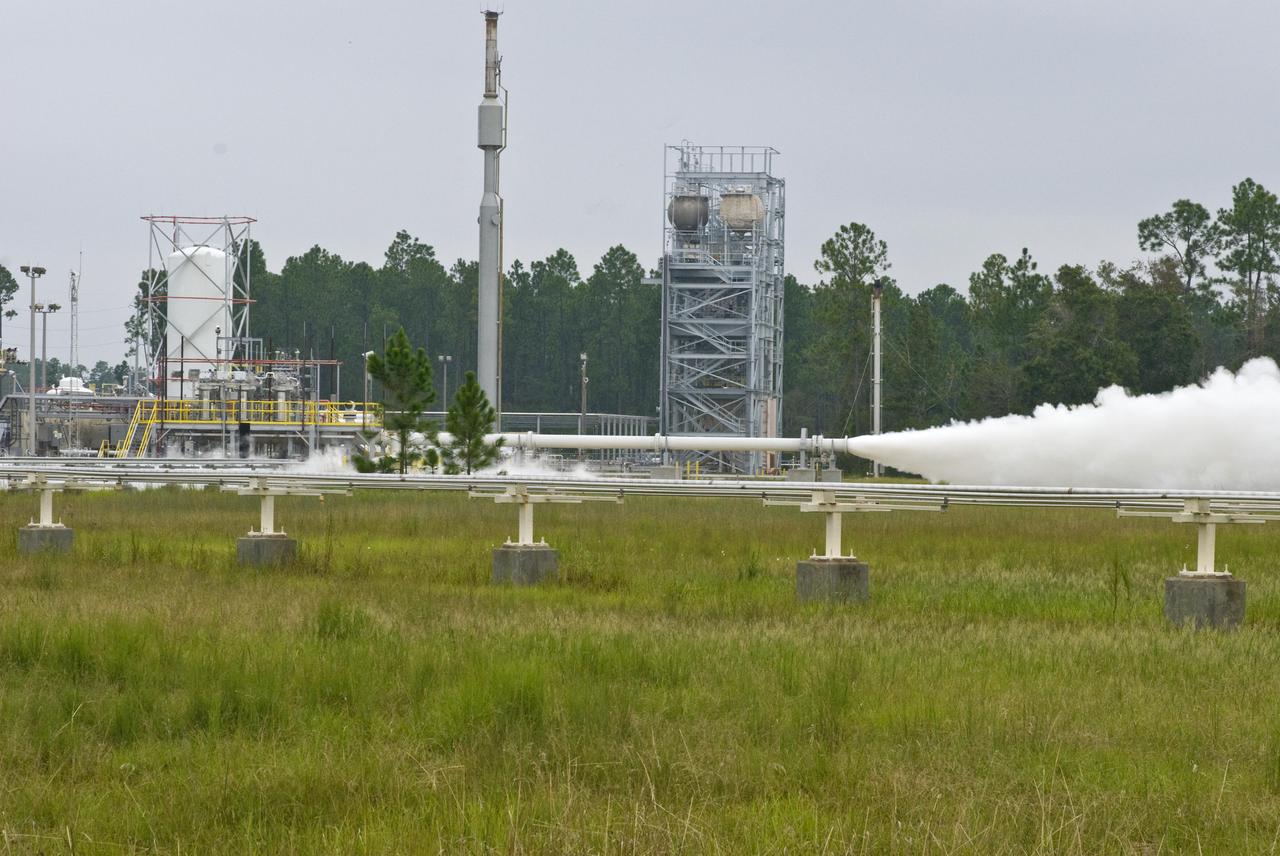
E-2 Test Stand team members at Stennis Space Center conducted their first series of tests on a three-module chemical steam generator unit Sept. 15. All three modules successfully fired during the tests. The chemical steam generator is a critical component for the A-3 Test Stand under construction at Stennis.
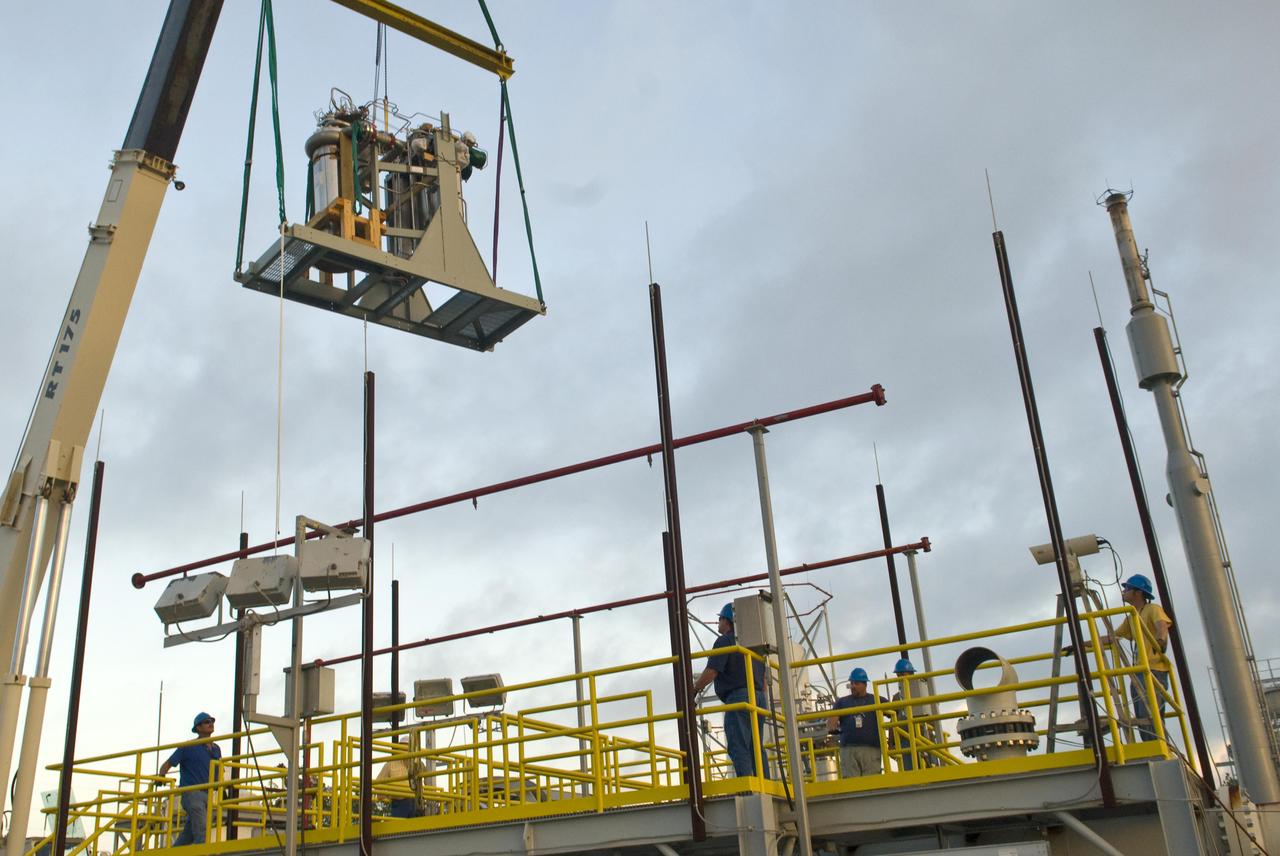
The first of nine chemical steam generator (CSG) units that will be used on the A-3 Test Stand is hoisted into place at the E-2 Test Stand at John C. Stennis Space Center on Oct. 24, 2010. The unit was installed at the E-2 stand for verification and validation testing before it is moved to the A-3 stand. Steam generated by the nine CSG units that will be installed on the A-3 stand will create a vacuum that allows Stennis operators to test next-generation rocket engines at simulated altitudes up to 100,000 feet.
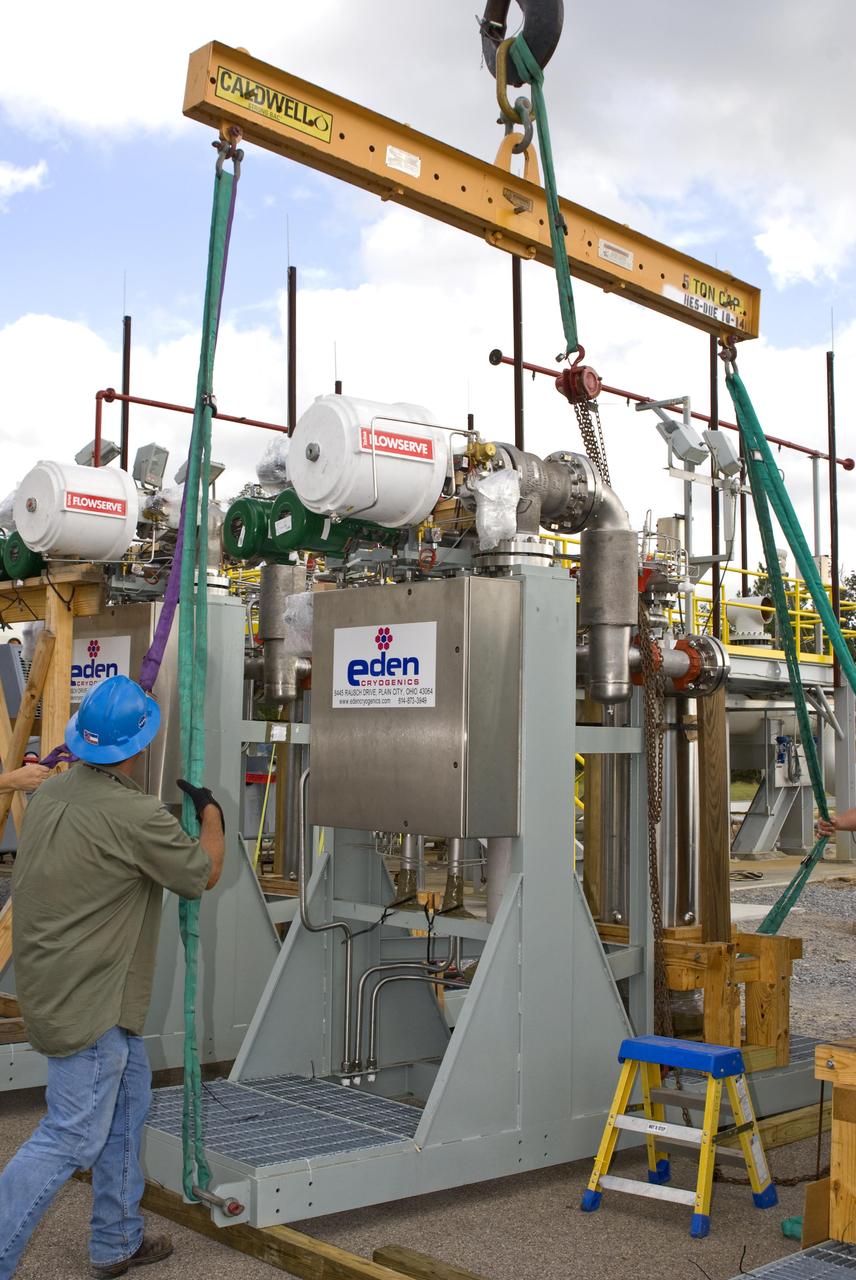
The first of nine chemical steam generator (CSG) units that will be used on the A-3 Test Stand is prepared for installation Oct. 24, 2010, at John C. Stennis Space Center. The unit was installed at the E-2 Test Stand for verification and validation testing before it is moved to the A-3 stand. Steam generated by the nine CSG units that will be installed on the A-3 stand will create a vacuum that allows Stennis operators to test next-generation rocket engines at simulated altitudes up to 100,000 feet.
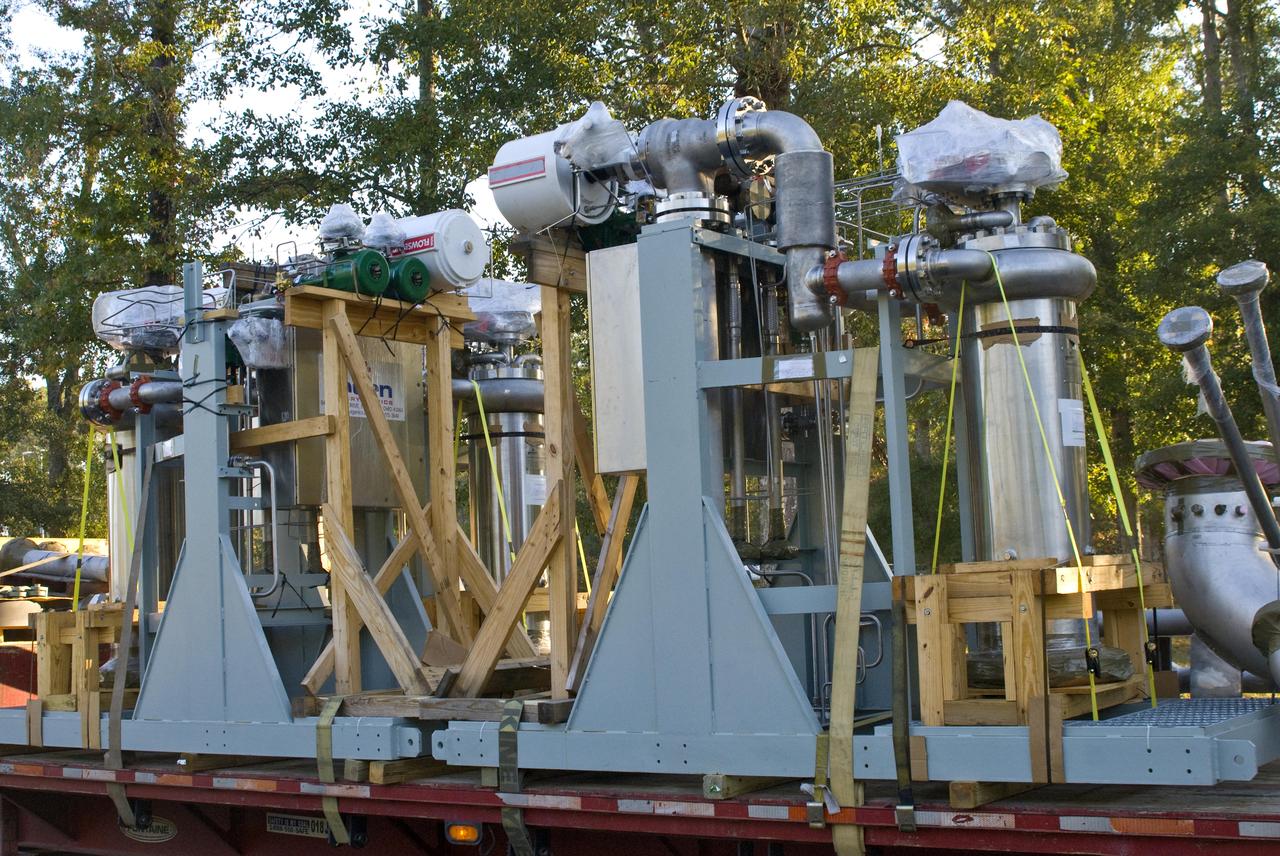
The first of nine chemical steam generator (CSG) units that will be used on the A-3 Test Stand arrived at John. C. Stennis Space Center on Oct. 22, 2010. The unit was installed at the E-2 Test Stand for verification and validation testing before it is moved to the A-3 stand. Steam generated by the nine CSG units that will be installed on the A-3 stand will create a vacuum that allows Stennis operators to test next-generation rocket engines at simulated altitudes up to 100,000 feet.

NASA engineers test a chemical steam generator (CSG) unit on the E-2 Test Stand at John C. Stennis Space Center on Nov. 6. The test was one of 27 conducted in Stennis' E Test Complex the week of Nov. 5. Twenty-seven CSG units will be used on the new A-3 Test Stand at Stennis to produce a vacuum that allows testing of engines at simulated altitudes up to 100,000 feet.
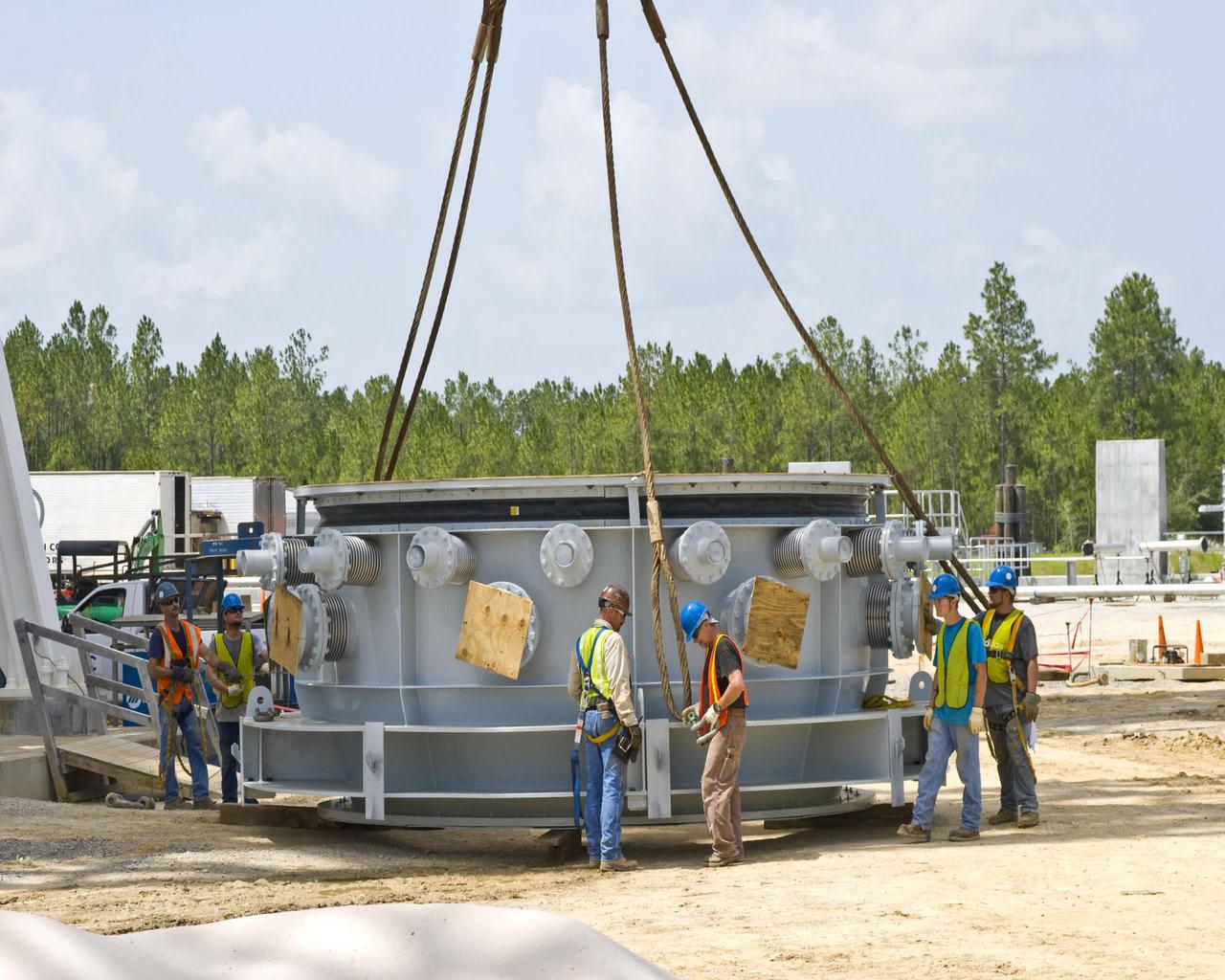
Work on the A-3 Test Stand at Stennis Space Center took a step forward in July with delivery of the first-stage steam ejector July 13. Stennis employees are shown preparing the ejector to be lifted into place on the test stand. When activated in 2012, the A-3 Test Stand will allow operators to test rocket engines at simulated altitudes of 100,000 feet, a critical feature for next-generation engines that will take humans beyond low-Earth orbit once more.

John C. Stennis Space Center employees complete installation of a chemical steam generator (CSG) unit at the site's E-2 Test Stand. On Oct. 24, 2010. The unit will undergo verification and validation testing on the E-2 stand before it is moved to the A-3 Test Stand under construction at Stennis. Each CSG unit includes three modules. Steam generated by the nine CSG units that will be installed on the A-3 stand will create a vacuum that allows Stennis operators to test next-generation rocket engines at simulated altitudes up to 100,000 feet.
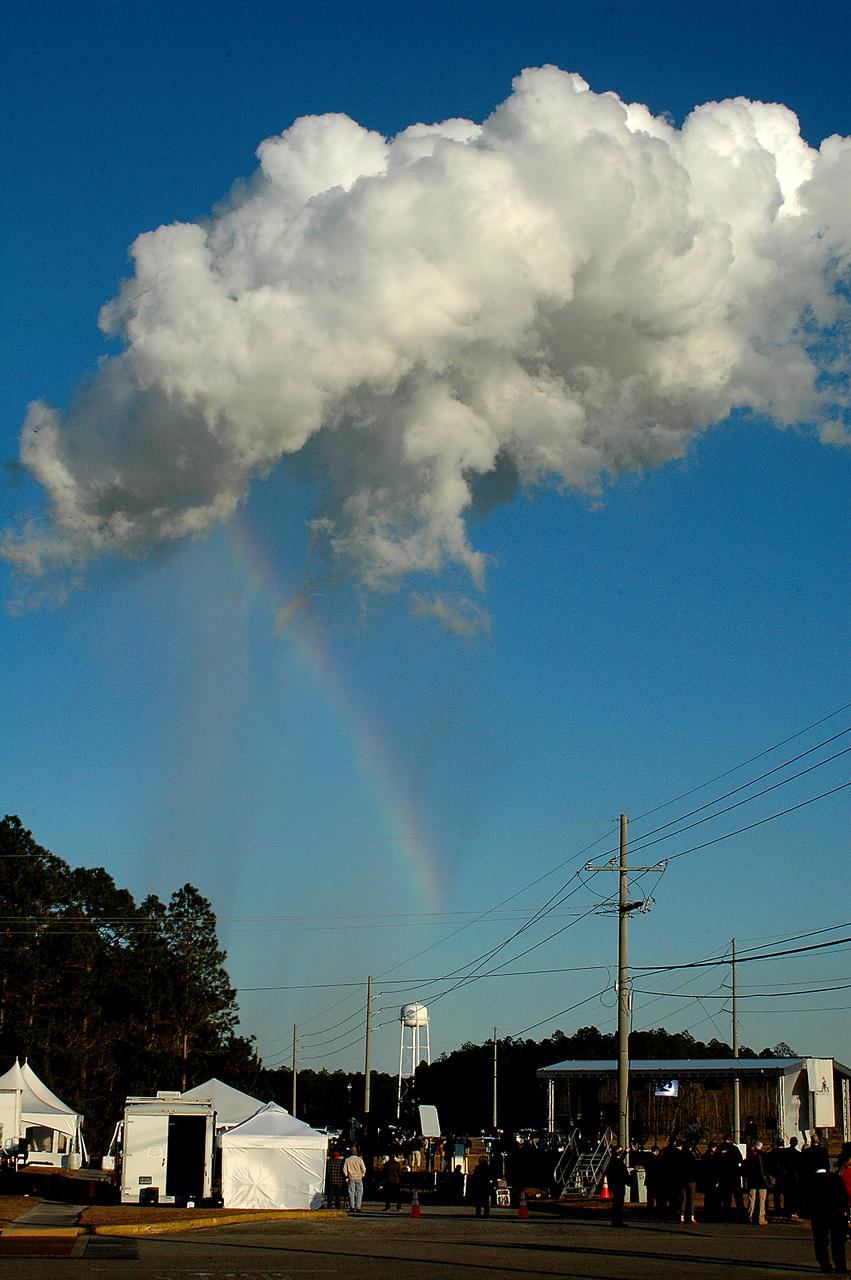
A rainbow appears as the steam cloud dissipates following the Green Run hot fire test of the core stage for NASA’s Space Launch System (SLS) rocket on Saturday, January 16, 2021. NASA conducted a hot fire test of the core stage’s four RS-25 engines on the B-2 Test Stand at Stennis Space Center near Bay St. Louis, Mississippi. Scheduled for as long as eight minutes, the engines fired for a little more than one minute to generate a combined 1.6 million pounds of thrust, just as will occur during an actual launch. The hot fire is the final test of the Green Run test series, a comprehensive assessment of the SLS core stage prior to launching the Artemis I mission to the Moon.
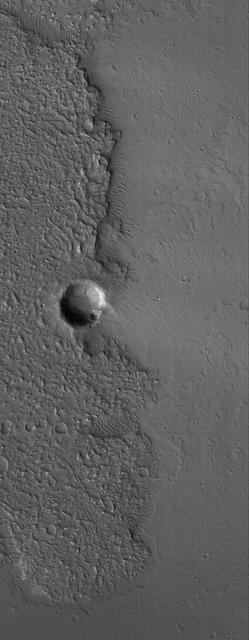
This MOC image shows the margin of an ancient, cratered, hummocky rough lava flow at just the point where it encroached upon a small impact crater east of the volcano, Tharsis Tholus
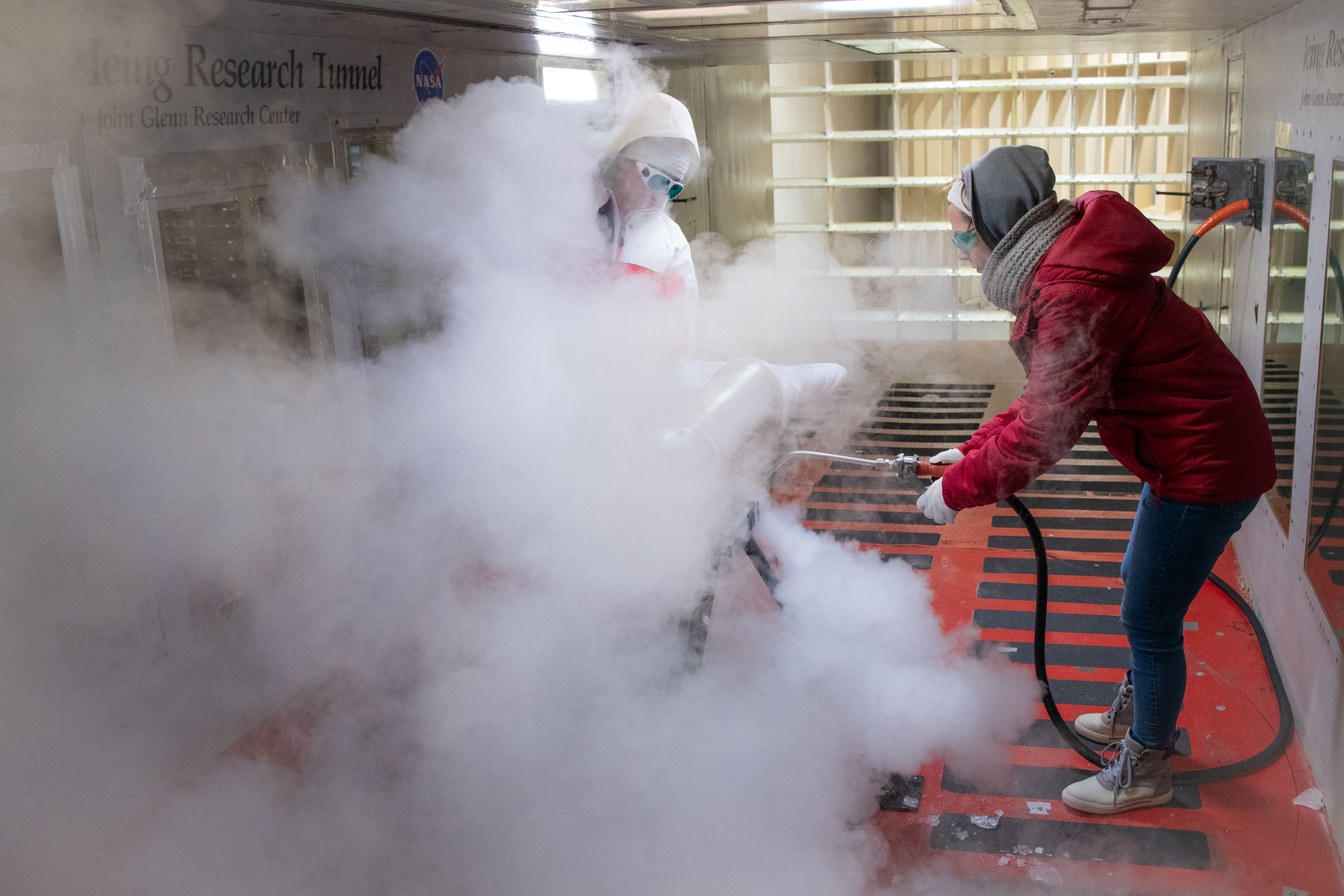
Test engineers clean the ice cloud detection probe in the Icing Research Tunnel in between test runs. Steam is used to melt the accumulated ice on the detection probe. The test engineers need to wear goggles to protect them from the laser light that the probe emits. The laser detects water content and ice particles in the cloud that the wind tunnel produces. This process is done to calibrate the tunnel for research by characterizing the cloud flow.

This NASA Terra satellite image of Mount St. Helens was captured one week after the March 8, 2005 ash and steam eruption, the latest activity since the volcano reawakening in September 2004.
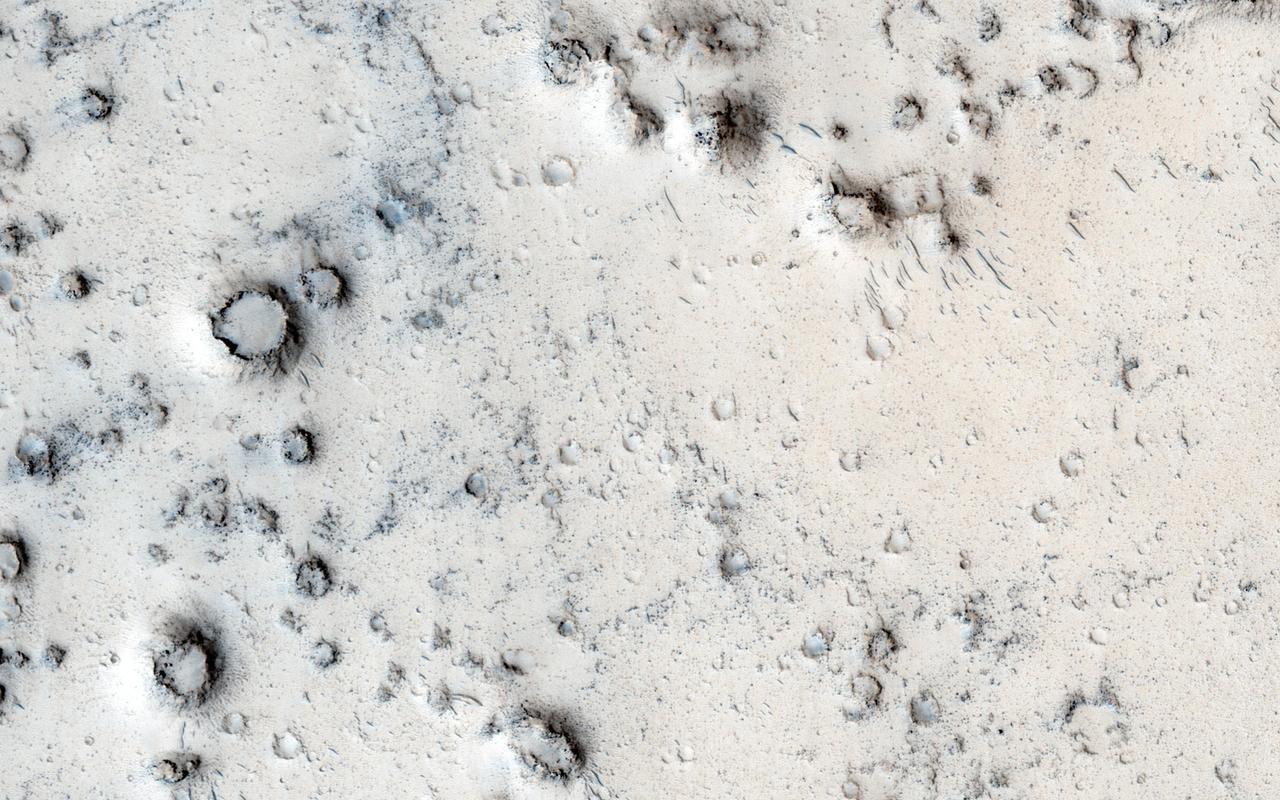
Many types of craters exist on Mars. Most are generated by impacts of asteroids and comets. However, in this image captured by NASA Mars Reconnaissance Orbiter, the craters may be due to steam explosions.
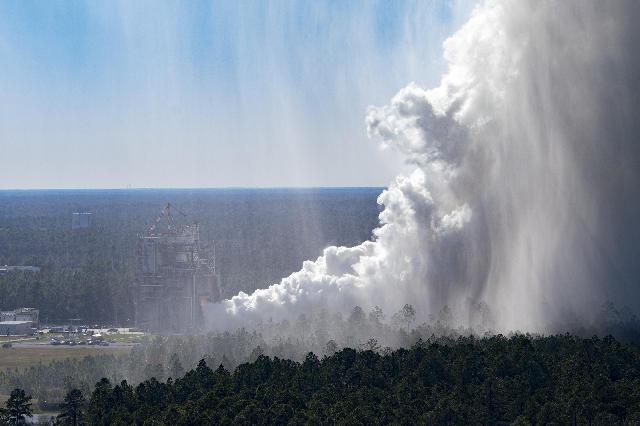
The cloud of steam is visible at NASA’s Stennis Space Center during the Oct. 17 hot fire, which marks the first test in the critical series to support future SLS (Space Launch System) missions to deep space. The steam released during the full duration, 550-second test is water and does not pollute the atmosphere.
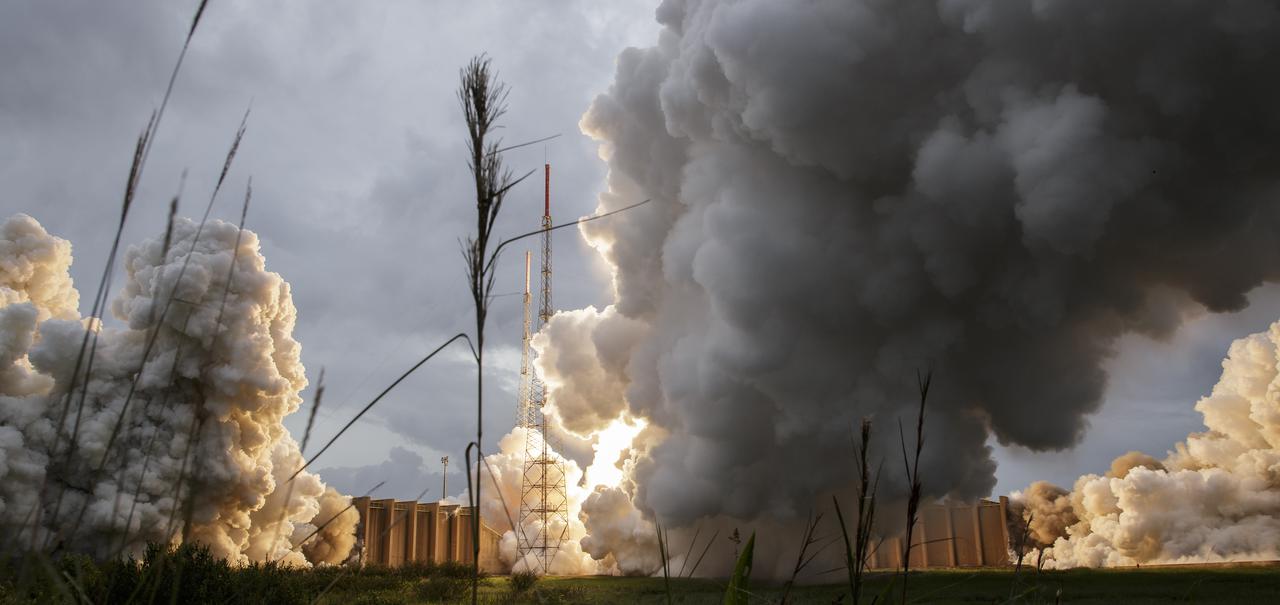
Steam and smoke from Arianespace's Ariane 5 Vulcain engine, center, and two solid rocket boosters, is seen as it launches with NASA’s James Webb Space Telescope onboard, Saturday, Dec. 25, 2021, from the ELA-3 Launch Zone of Europe’s Spaceport at the Guiana Space Centre in Kourou, French Guiana. The James Webb Space Telescope (sometimes called JWST or Webb) is a large infrared telescope with a 21.3 foot (6.5 meter) primary mirror. The observatory will study every phase of cosmic history—from within our solar system to the most distant observable galaxies in the early universe. Photo Credit: (NASA/Bill Ingalls)
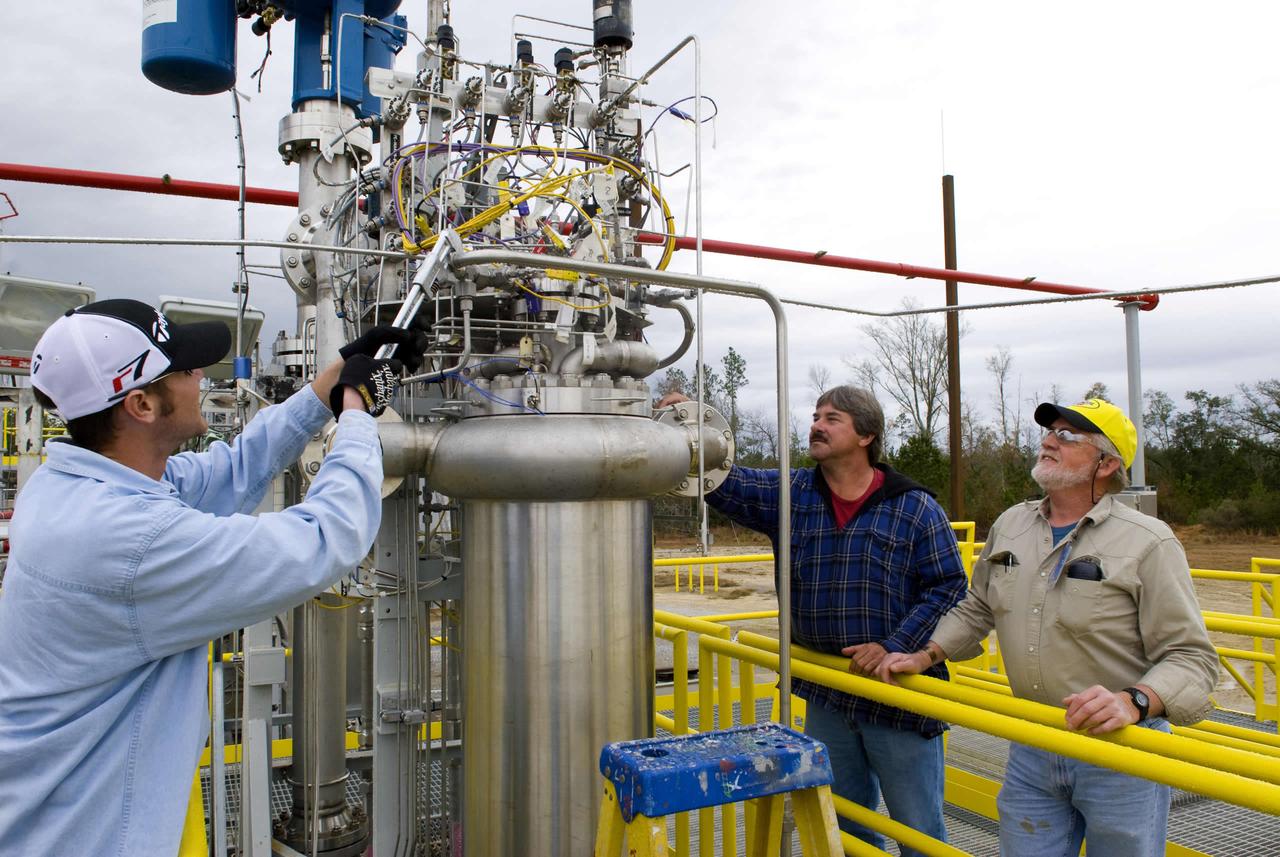
Kanaly Slade, Pat Guidry and Danny Tarter, all of Jacobs NTOG, make adjustments to the chemical steam generator installed on the E-2 Test Stand.
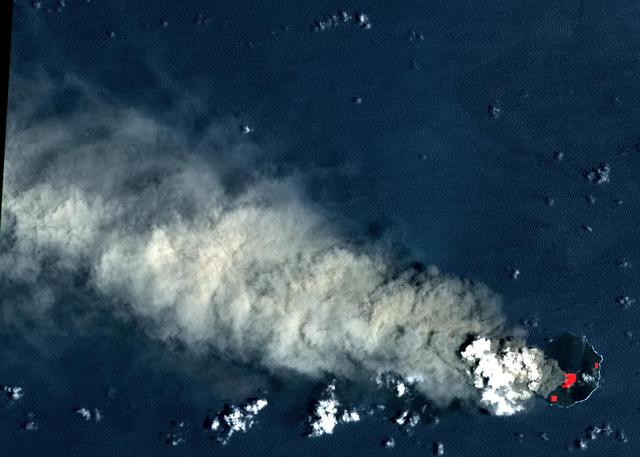
Nishinoshima is a small volcanic island located about 1000 km south of Tokyo, Japan. Eruptive activity began in December 2019, and has continued uninterrupted. ASTER captured this image of an ash and steam plume emanating from the central crater. Thermal infrared data is superposed in red on a visible-infrared color image to highlight the lava in the central crater and lava flows that have flowed down the volcano's flanks. The image was acquired July 28, 2020, covers an area of 15 by 21 km, and is located at 27.3 degrees north, 140.8 degrees east. https://photojournal.jpl.nasa.gov/catalog/PIA24017
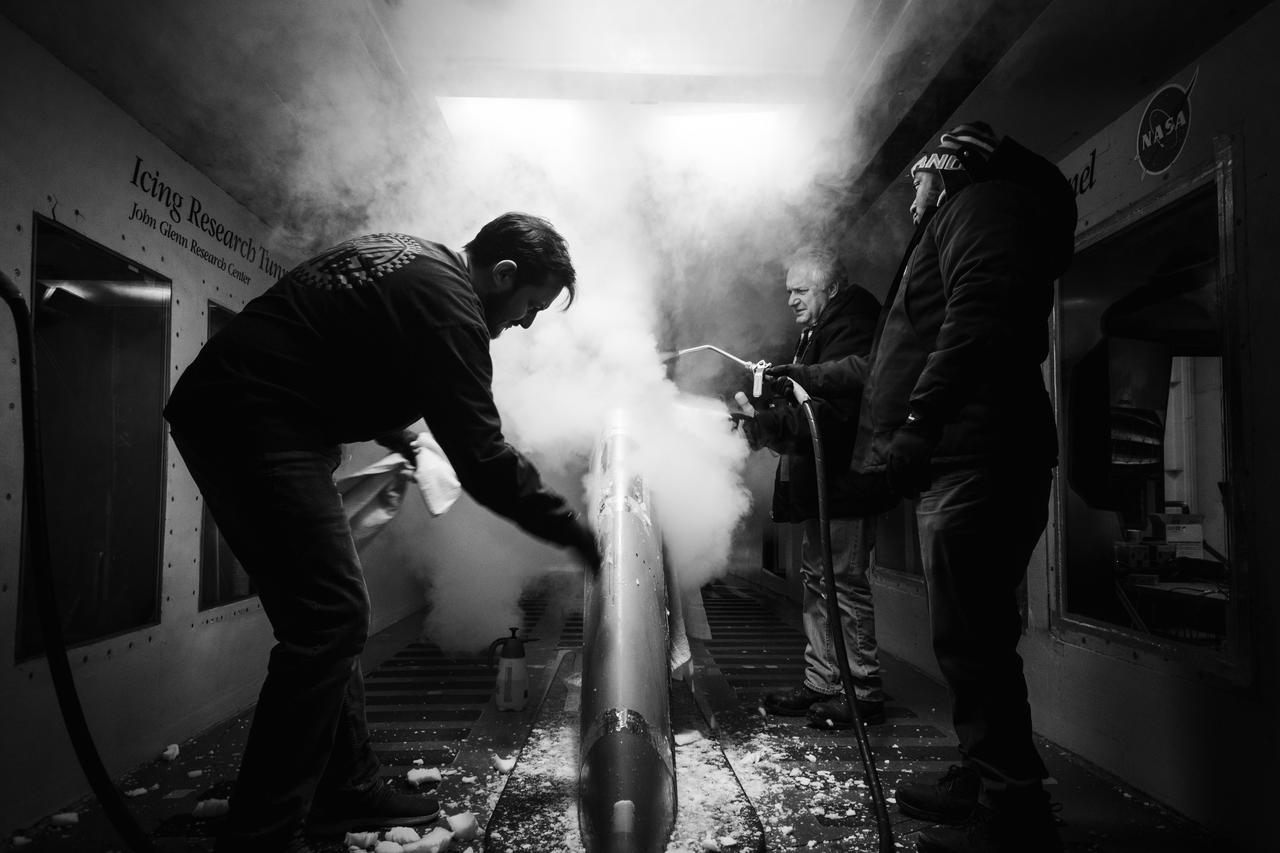
Technicians spray steam to help scrape off ice at the Icing Research Tunnel. The technicians need all the help they can get in sub-zero temperatures. Photo Credit: (NASA/Jordan Salkin)
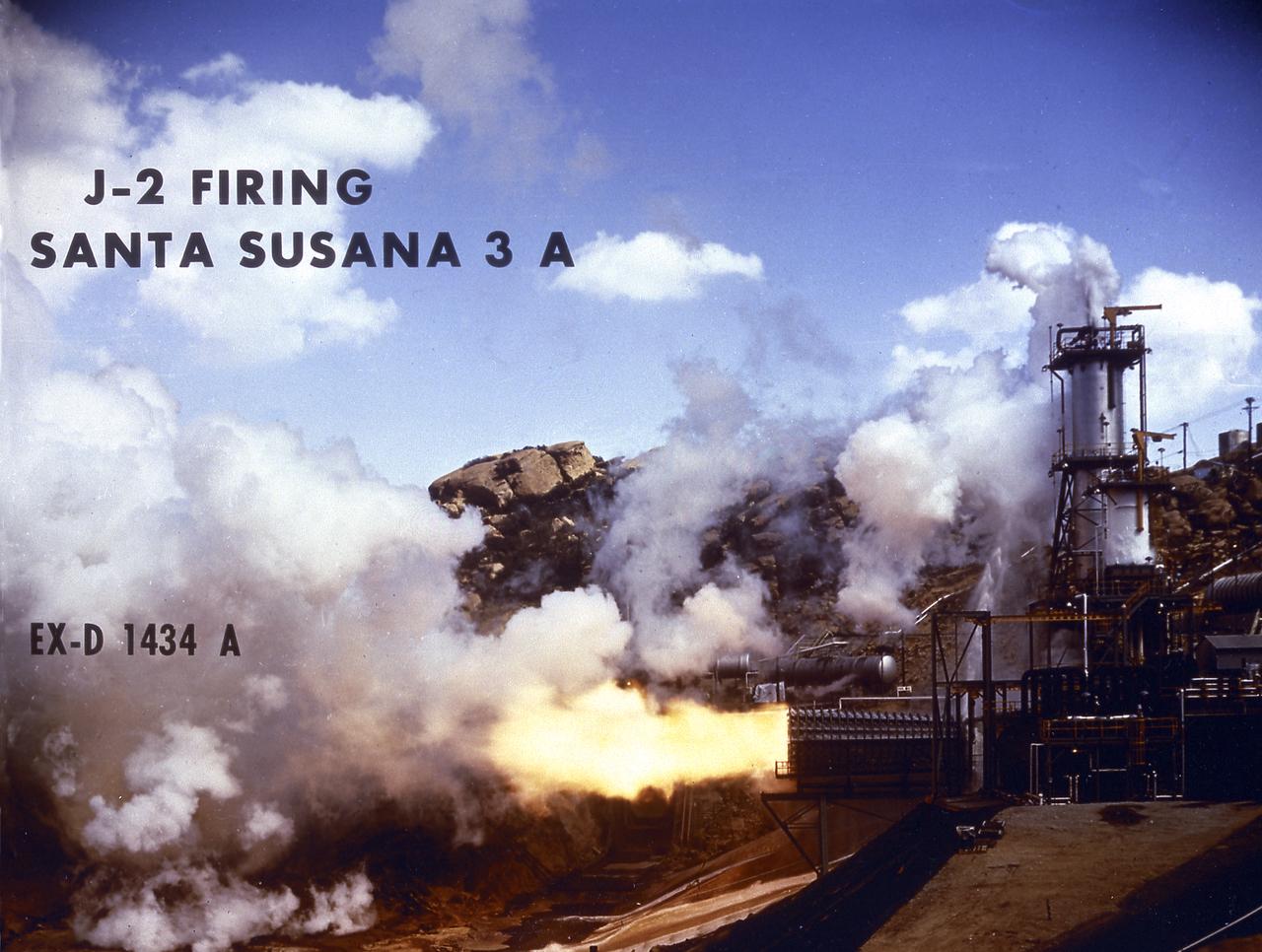
Smokeless flame juts from the diffuser of a unique vacuum chamber in which the upper stage rocket engine, the hydrogen fueled J-2, was tested at a simulated space altitude in excess of 60,000 feet. The smoke you see is actually steam. In operation, vacuum is established by injecting steam into the chamber and is maintained by the thrust of the engine firing through the diffuser. The engine was tested in this environment for start, stop, coast, restart, and full-duration operations. The chamber was located at Rocketdyne's Propulsion Field Laboratory, in the Santa Susana Mountains, near Canoga Park, California. The J-2 engine was developed by Rocketdyne for the Marshall Space Flight Center.
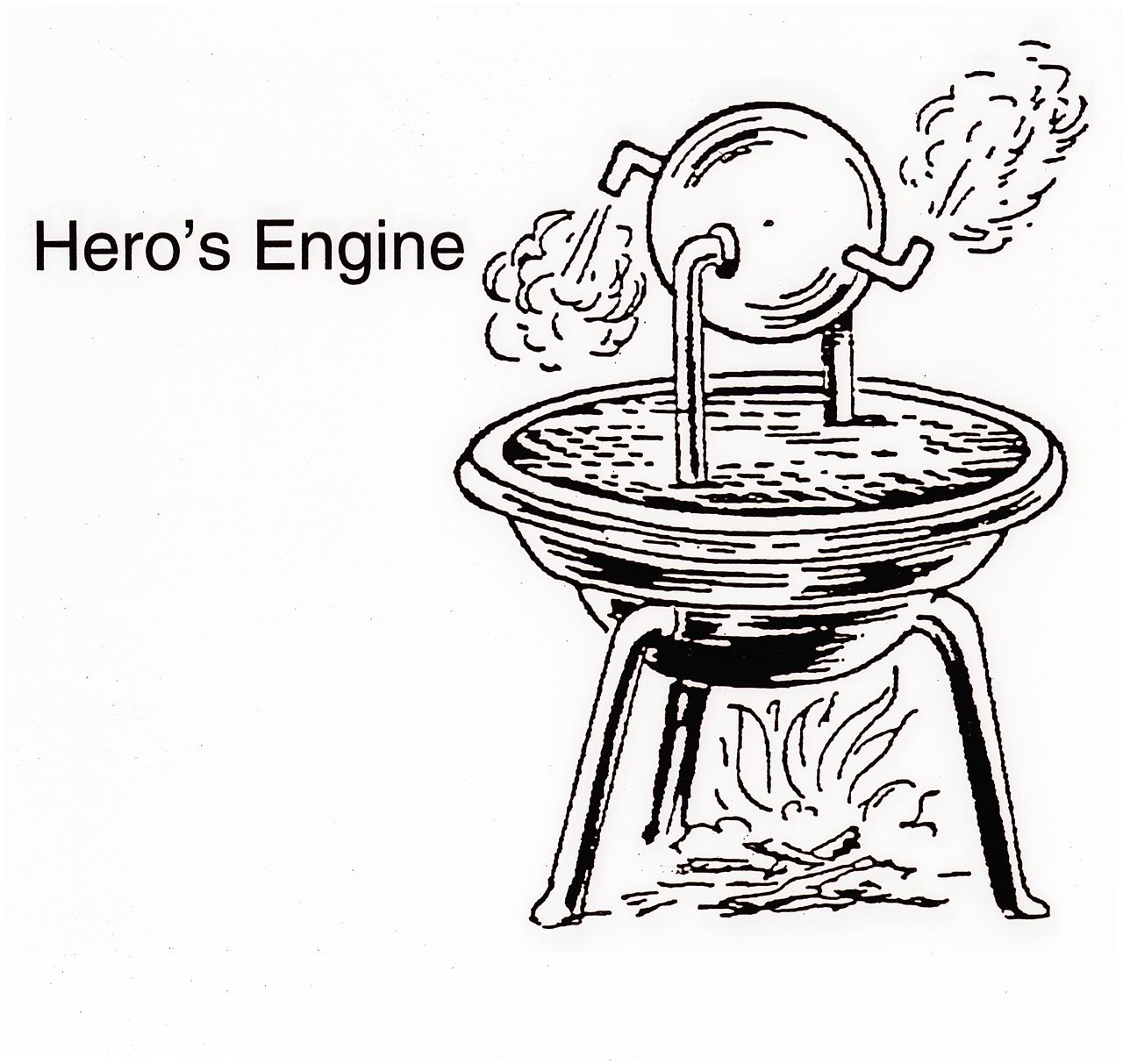
Legendary characters used the power of mythology to fly through the heavens. About 200 BC, a Greek inventor known as Hero of Alexandria came up with a new invention that depended on the mechanical interaction of heat and water. He invented a rocket-like device called an aeolipile. It used steam for propulsion. Hero mounted a sphere on top of a water kettle. A fire below the kettle turned the water into steam, and the gas traveled through the pipes to the sphere. Two L-shaped tubes on opposite sides of the sphere allowed the gas to escape, and in doing so gave a thrust to the sphere that caused it to rotate.
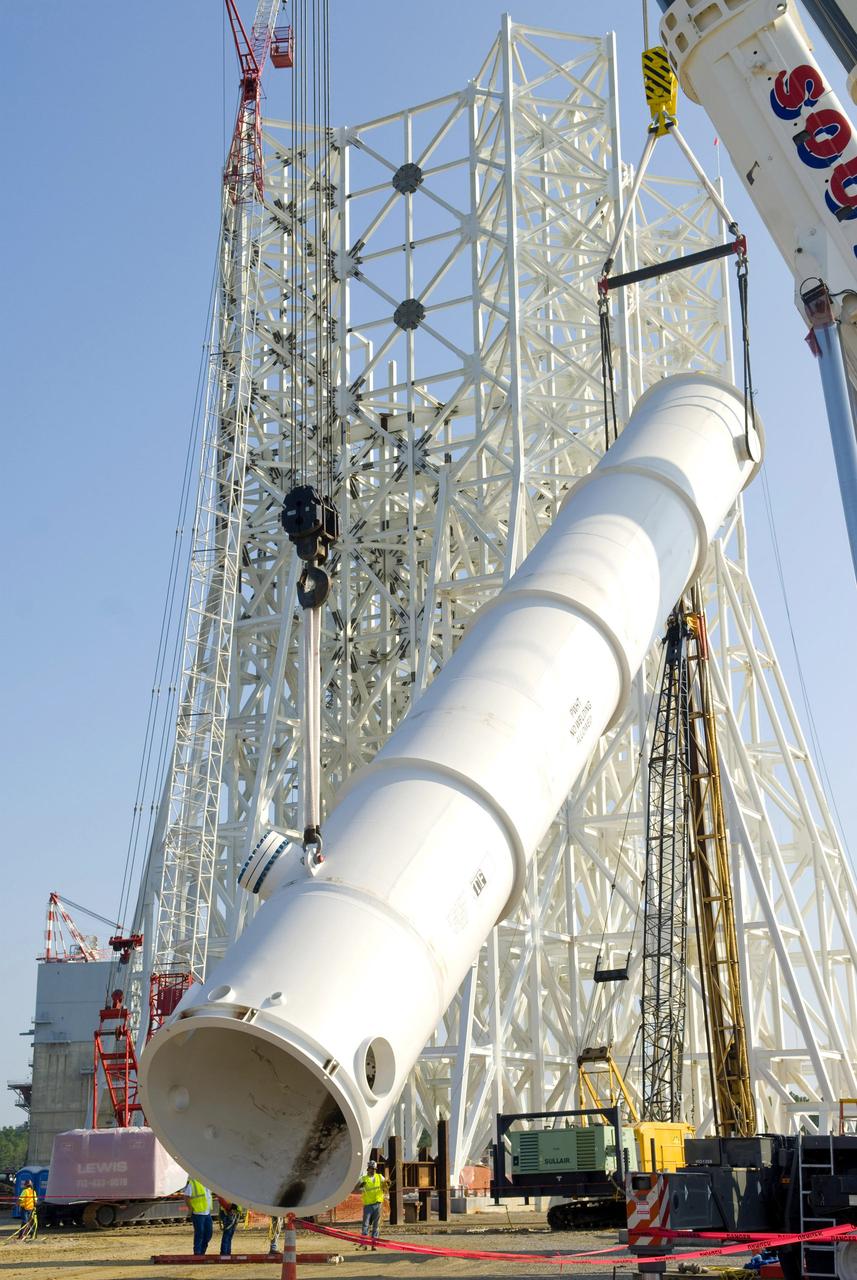
A water tank is lifted into place at the A-3 Test Stand being built at NASA's John C. Stennis Space Center. Fourteen water, liquid oxygen (LOX) and isopropyl alcohol (IPA) tanks are being installed to support the chemical steam generators to be used on the A-3 Test Stand. The IPA and LOX tanks will provide fuel for the generators. The water will allow the generators to produce steam that will be used to reduce pressure inside the stand's test cell diffuser, enabling operators to simulate altitudes up to 100,000 feet. In that way, operators can perform the tests needed on rocket engines being built to carry humans back to the moon and possibly beyond. The A-3 Test Stand is set for completion and activation in 2011.
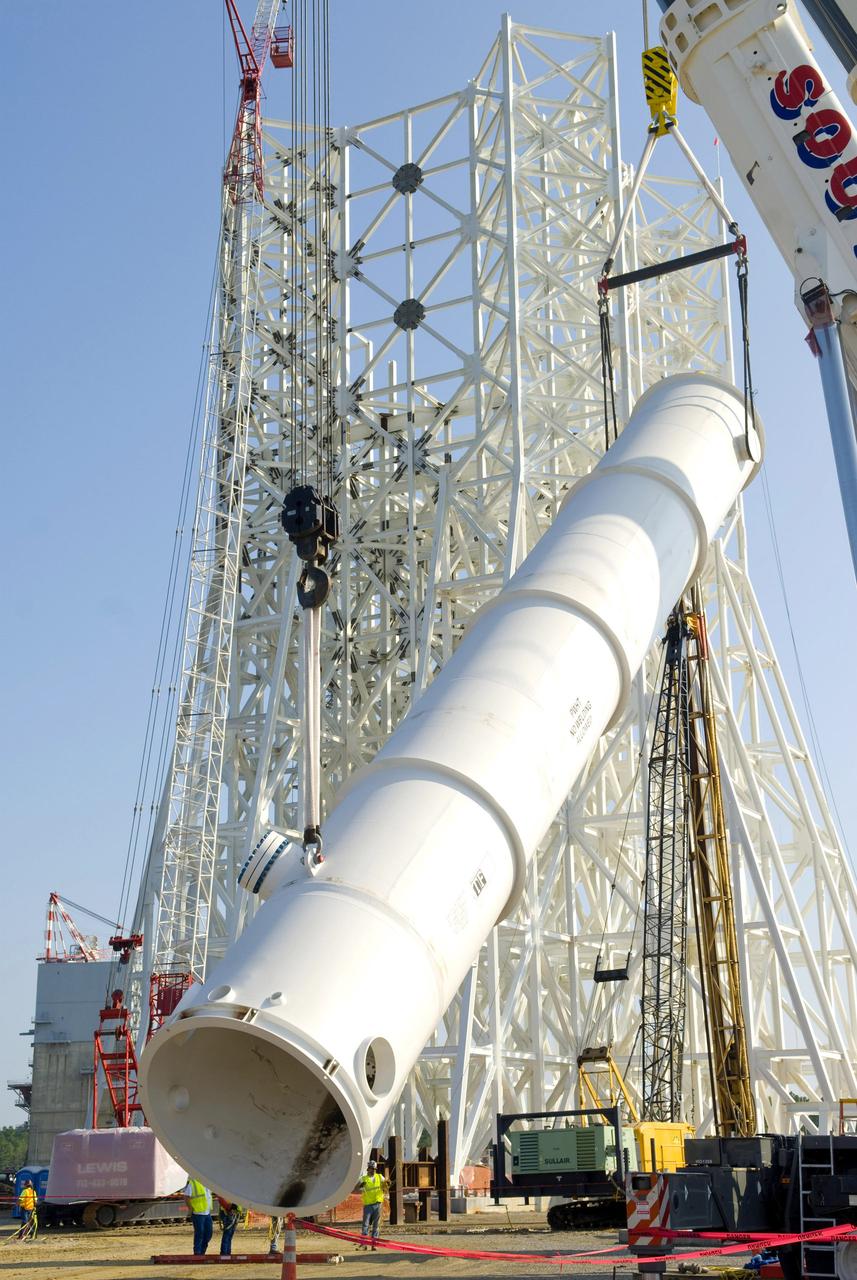
A water tank is lifted into place at the A-3 Test Stand being built at NASA's John C. Stennis Space Center. Fourteen water, liquid oxygen (LOX) and isopropyl alcohol (IPA) tanks are being installed to support the chemical steam generators to be used on the A-3 Test Stand. The IPA and LOX tanks will provide fuel for the generators. The water will allow the generators to produce steam that will be used to reduce pressure inside the stand's test cell diffuser, enabling operators to simulate altitudes up to 100,000 feet. In that way, operators can perform the tests needed on rocket engines being built to carry humans back to the moon and possibly beyond. The A-3 Test Stand is set for completion and activation in 2011.
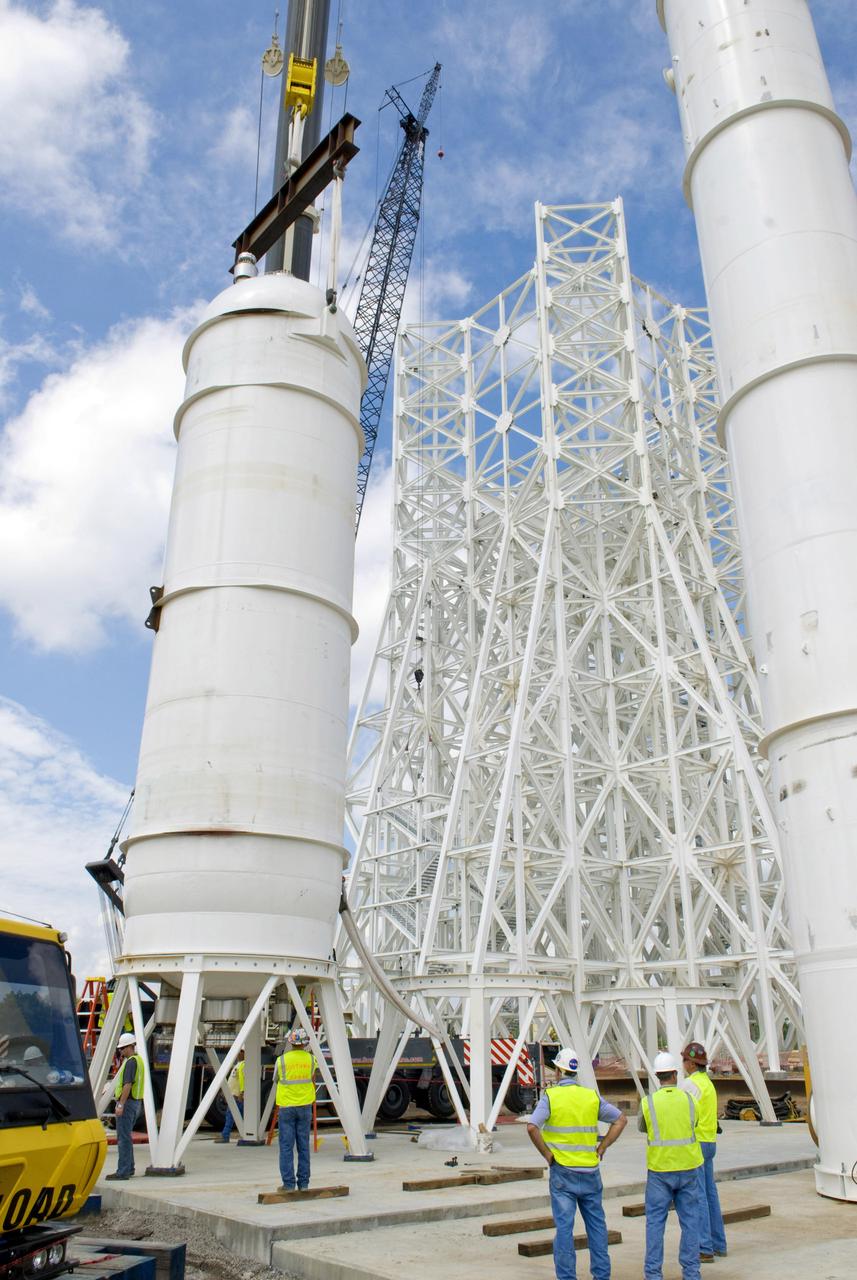
A liquid oxygen (LOX) tank is lifted into place at the A-3 Test Stand being built at NASA's John C. Stennis Space Center. Fourteen LOX, isopropyl alcohol (IPA) and water tanks are being installed to support the chemical steam generators to be used on the A-3 Test Stand. The IPA and LOX tanks will provide fuel for the generators. The water will allow the generators to produce steam that will be used to reduce pressure inside the stand's test cell diffuser, enabling operators to simulate altitudes up to 100,000 feet. In that way, operators can perform the tests needed on rocket engines being built to carry humans back to the moon and possibly beyond. The A-3 Test Stand is set for completion and activation in 2011.
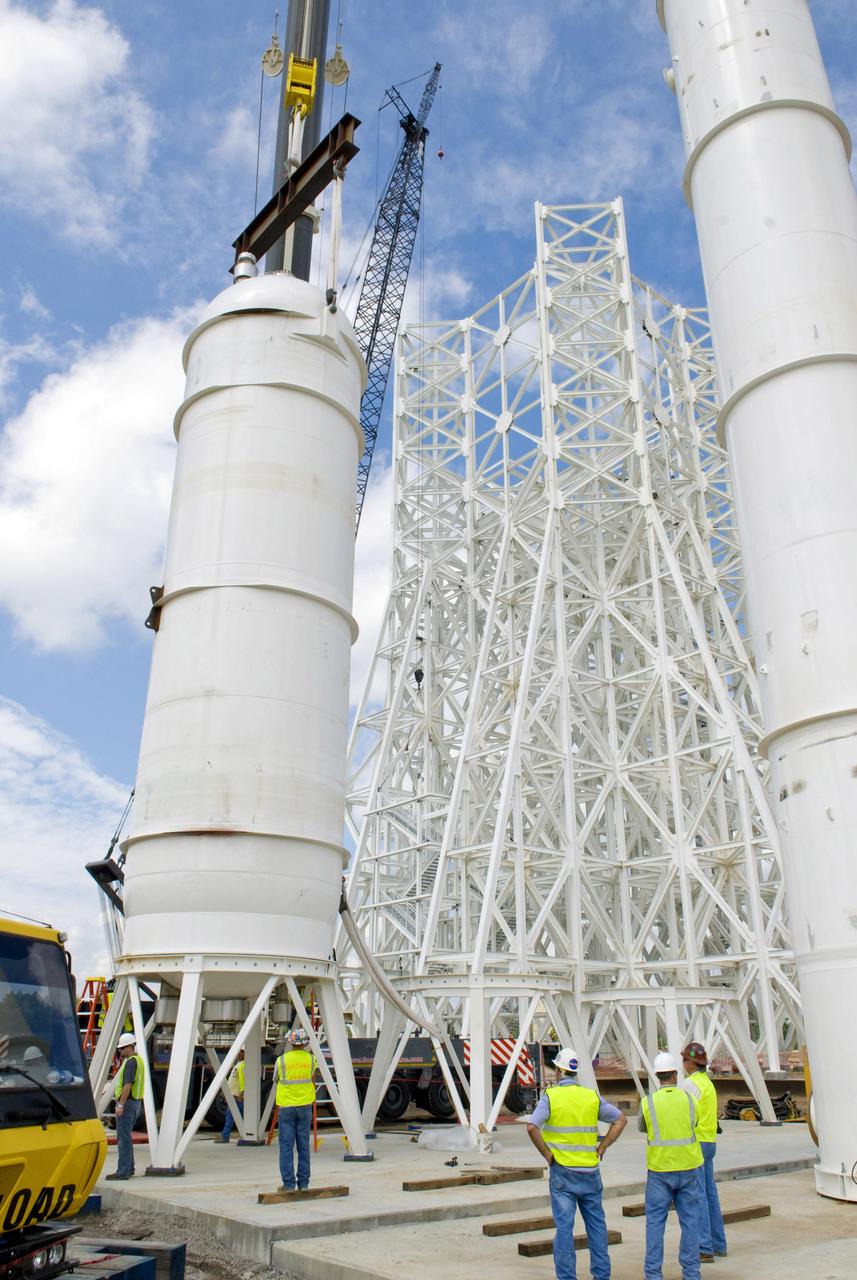
A liquid oxygen (LOX) tank is lifted into place at the A-3 Test Stand being built at NASA's John C. Stennis Space Center. Fourteen LOX, isopropyl alcohol (IPA) and water tanks are being installed to support the chemical steam generators to be used on the A-3 Test Stand. The IPA and LOX tanks will provide fuel for the generators. The water will allow the generators to produce steam that will be used to reduce pressure inside the stand's test cell diffuser, enabling operators to simulate altitudes up to 100,000 feet. In that way, operators can perform the tests needed on rocket engines being built to carry humans back to the moon and possibly beyond. The A-3 Test Stand is set for completion and activation in 2011.
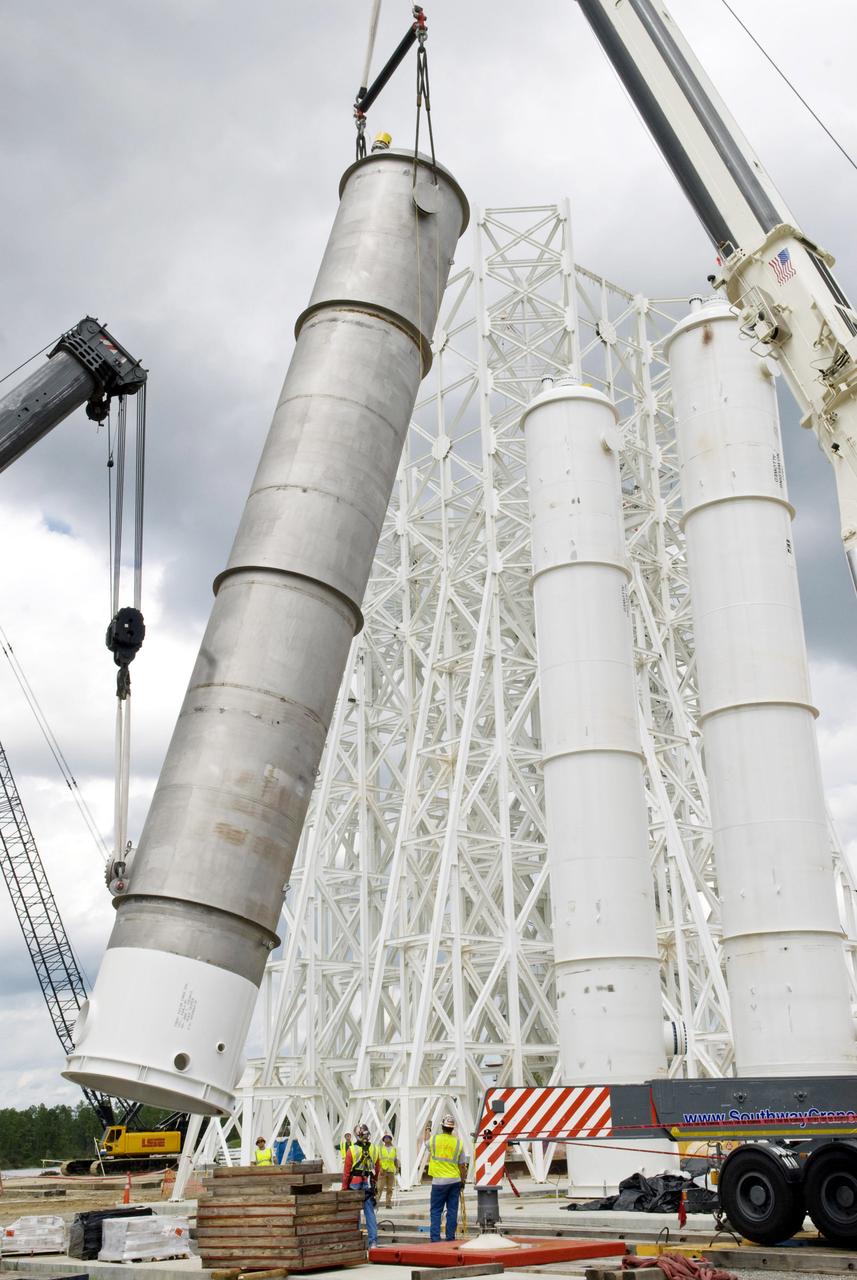
An isopropyl alcohol (IPA) tank is lifted into place at the A-3 Test Stand being built at NASA's John C. Stennis Space Center. Fourteen IPA, water and liquid oxygen (LOX) tanks are being installed to support the chemical steam generators to be used on the A-3 Test Stand. The IPA and LOX tanks will provide fuel for the generators. The water will allow the generators to produce steam that will be used to reduce pressure inside the stand's test cell diffuser, enabling operators to simulate altitudes up to 100,000 feet. In that way, operators can perform the tests needed on rocket engines being built to carry humans back to the moon and possibly beyond. The A-3 Test Stand is set for completion and activation in 2011.
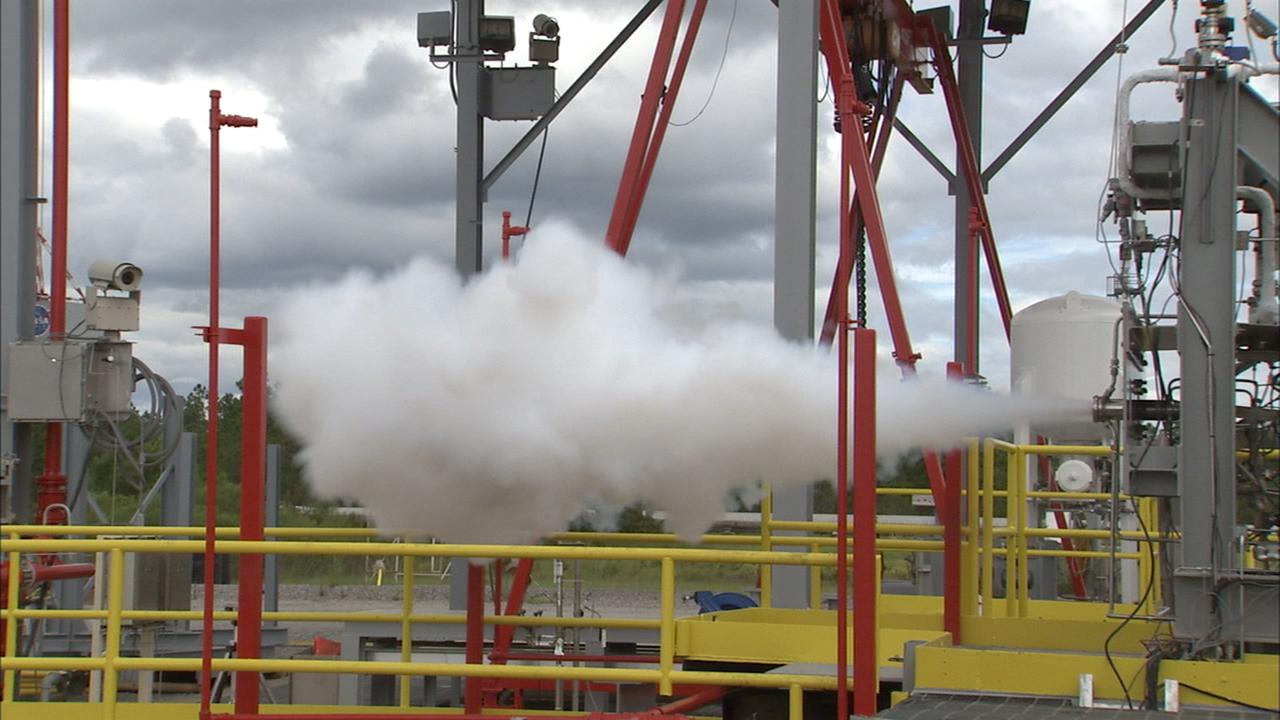
Tests begun at Stennis Space Center's E Complex Sept. 13 evaluated a liquid oxygen lead for engine start performance, part of the A-3 Test Facility Subscale Diffuser Risk Mitigation Project at SSC's E-3 Test Facility. Phase 1 of the subscale diffuser project, completed Sept. 24, was a series of 18 hot-fire tests using a 1,000-pound liquid oxygen and gaseous hydrogen thruster to verify maximum duration and repeatability for steam generation supporting the A-3 Test Stand project. The thruster is a stand-in for NASA's developing J-2X engine, to validate a 6 percent scale version of A-3's exhaust diffuser. Testing the J-2X at altitude conditions requires an enormous diffuser. Engineers will generate nearly 4,600 pounds per second of steam to reduce pressure inside A-3's test cell to simulate altitude conditions. A-3's exhaust diffuser has to be able to withstand regulated pressure, temperatures and the safe discharge of the steam produced during those tests. Before the real thing is built, engineers hope to work out any issues on the miniature version. Phase 2 testing is scheduled to begin this month.

The Mars celebration Friday, May 31, 2019, in Mars, Pennsylvania. NASA is in the small town to celebrate Mars exploration and share the agency’s excitement about landing astronauts on the Moon in five years. The celebration includes a weekend of Science, Technology, Engineering, Arts and Mathematics (STEAM) activities. Photo Credit: (NASA/Bill Ingalls)

The Mars celebration Friday, May 31, 2019, in Mars, Pennsylvania. NASA is in the small town to celebrate Mars exploration and share the agency’s excitement about landing astronauts on the Moon in five years. The celebration includes a weekend of Science, Technology, Engineering, Arts and Mathematics (STEAM) activities. Photo Credit: (NASA/Bill Ingalls)
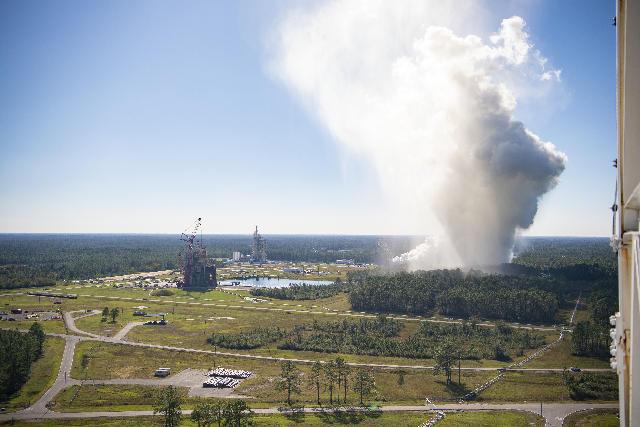
The RS-25 certification test series begins Oct. 17. When the liquid hydrogen and liquid oxygen propellants mix and ignite, an extremely high temperature exhaust, of up to 6,000-degrees Fahrenheit, mixes with water to form steam that exits the flame deflector and rises into the atmosphere, forming a cloud that subsequently cools.
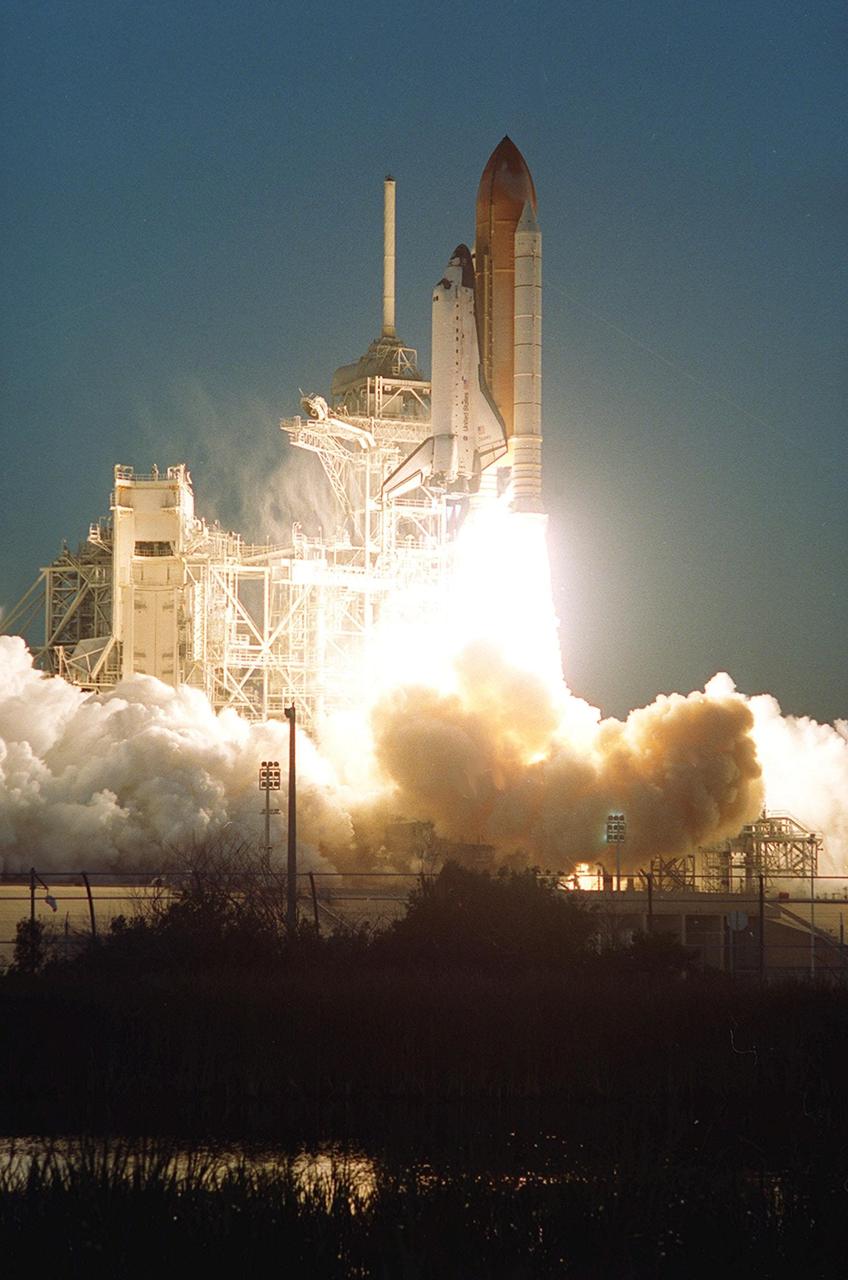
KENNEDY SPACE CENTER, Fla. -- Clouds of smoke and steam flow from Space Shuttle Discovery as it lifts off on mission STS-102 to the International Space Station. The brilliance of the launch rivaled the sunrise on this perfect launch. Liftoff occurred at 6:42:09 EST for the eighth flight to the Space Station

The Mars celebration Friday, May 31, 2019, in Mars, Pennsylvania. NASA is in the small town to celebrate Mars exploration and share the agency’s excitement about landing astronauts on the Moon in five years. The celebration includes a weekend of Science, Technology, Engineering, Arts and Mathematics (STEAM) activities. Photo Credit: (NASA/Bill Ingalls)

The Mars celebration Friday, May 31, 2019, in Mars, Pennsylvania. NASA is in the small town to celebrate Mars exploration and share the agency’s excitement about landing astronauts on the Moon in five years. The celebration includes a weekend of Science, Technology, Engineering, Arts and Mathematics (STEAM) activities. Photo Credit: (NASA/Bill Ingalls)
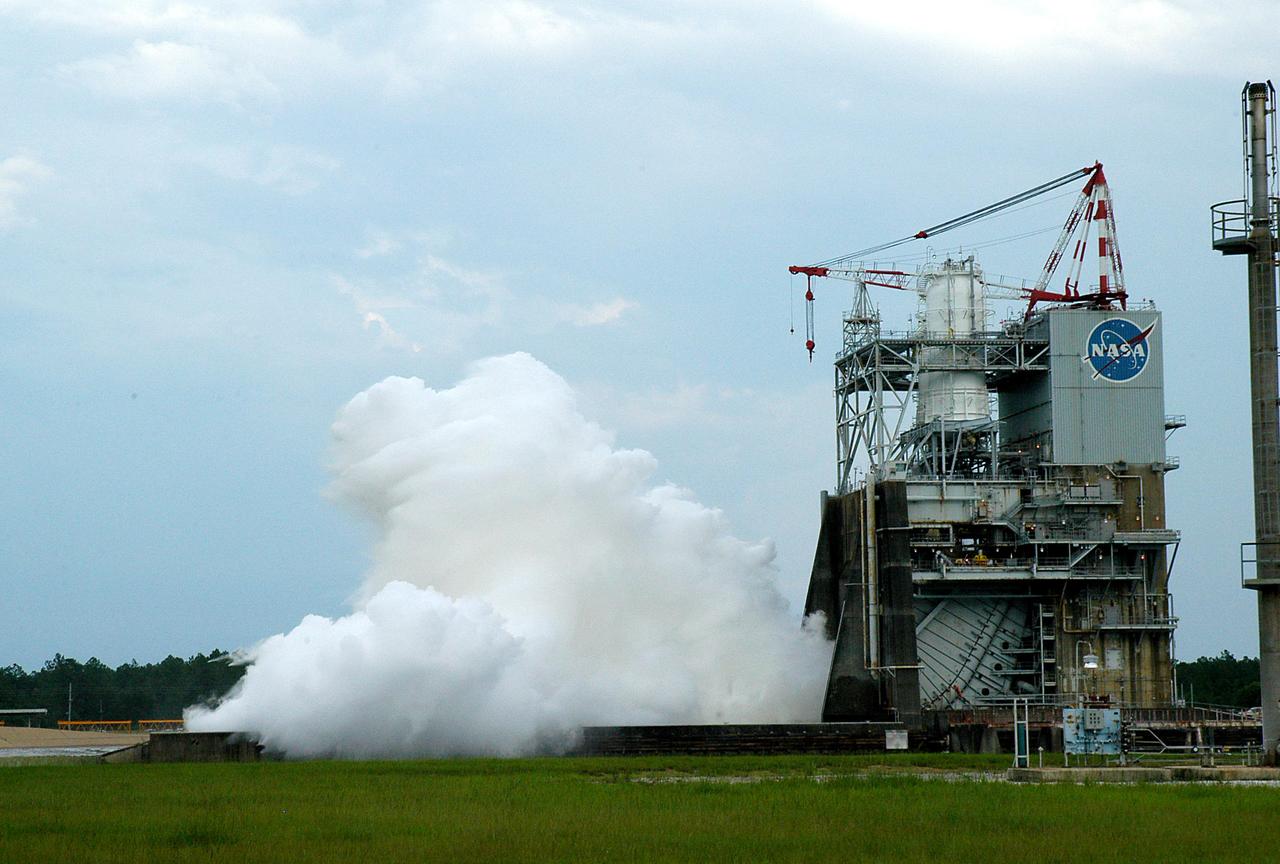
A plume of steam signals a successful engine start of the J-2X rocket engine on the A-3 Test Stand at Stennis Space Center on July 26. The 3.7-second test was the second on the next-generation engine, which is being developed for NASA by Pratt & Whitney Rocketdyne.

The Mars celebration Friday, May 31, 2019, in Mars, Pennsylvania. NASA is in the small town to celebrate Mars exploration and share the agency’s excitement about landing astronauts on the Moon in five years. The celebration includes a weekend of Science, Technology, Engineering, Arts and Mathematics (STEAM) activities. Photo Credit: (NASA/Bill Ingalls)
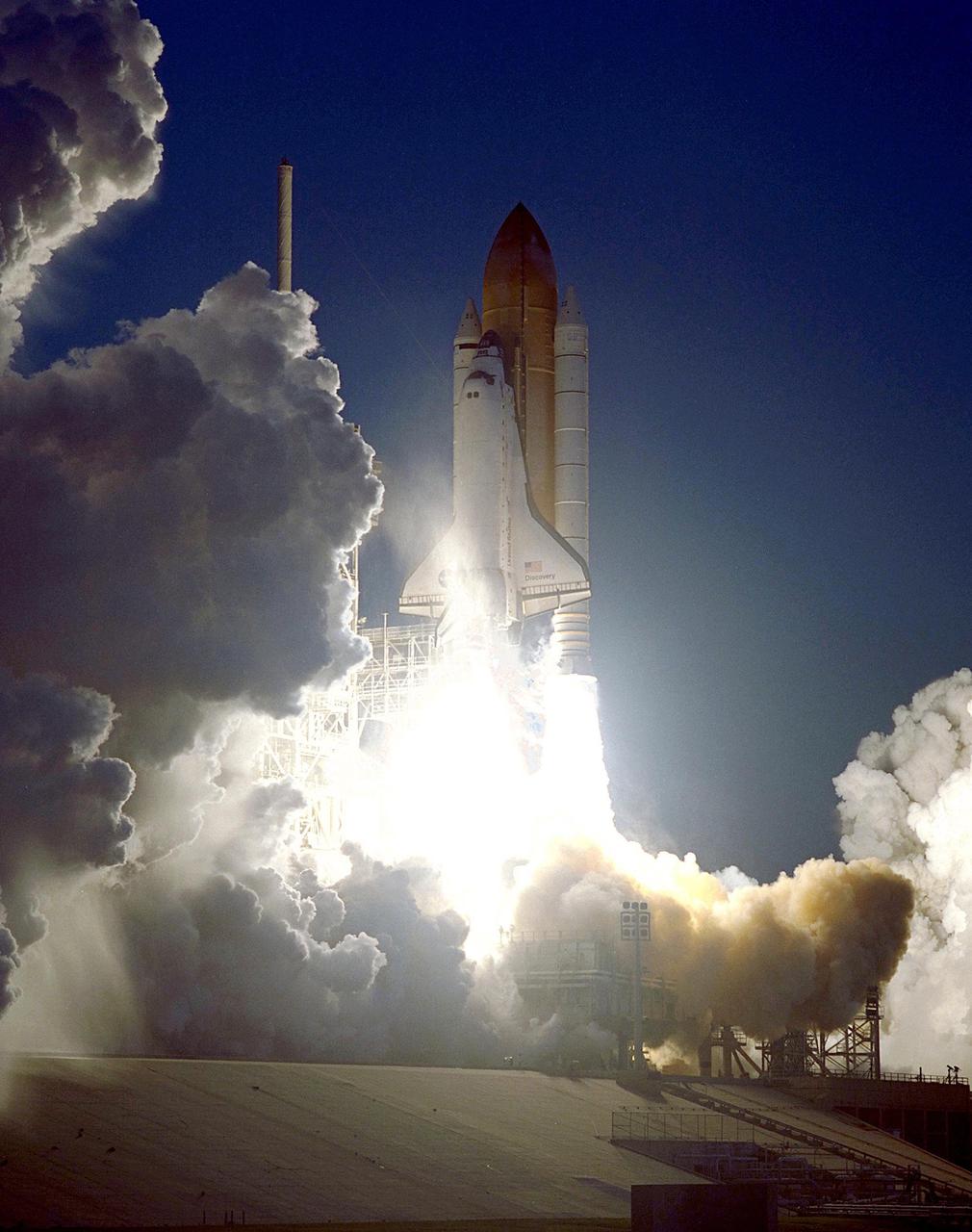
KENNEDY SPACE CENTER, Fla. -- Clouds of smoke and steam billow out from Launch Pad 39B as Space Shuttle Discovery lifts off for mission STS-102 to the International Space Station. The brilliance of the launch rivaled the sunrise on this perfect launch. Liftoff occurred at 6:42:09 EST for the eighth flight to the Space Station
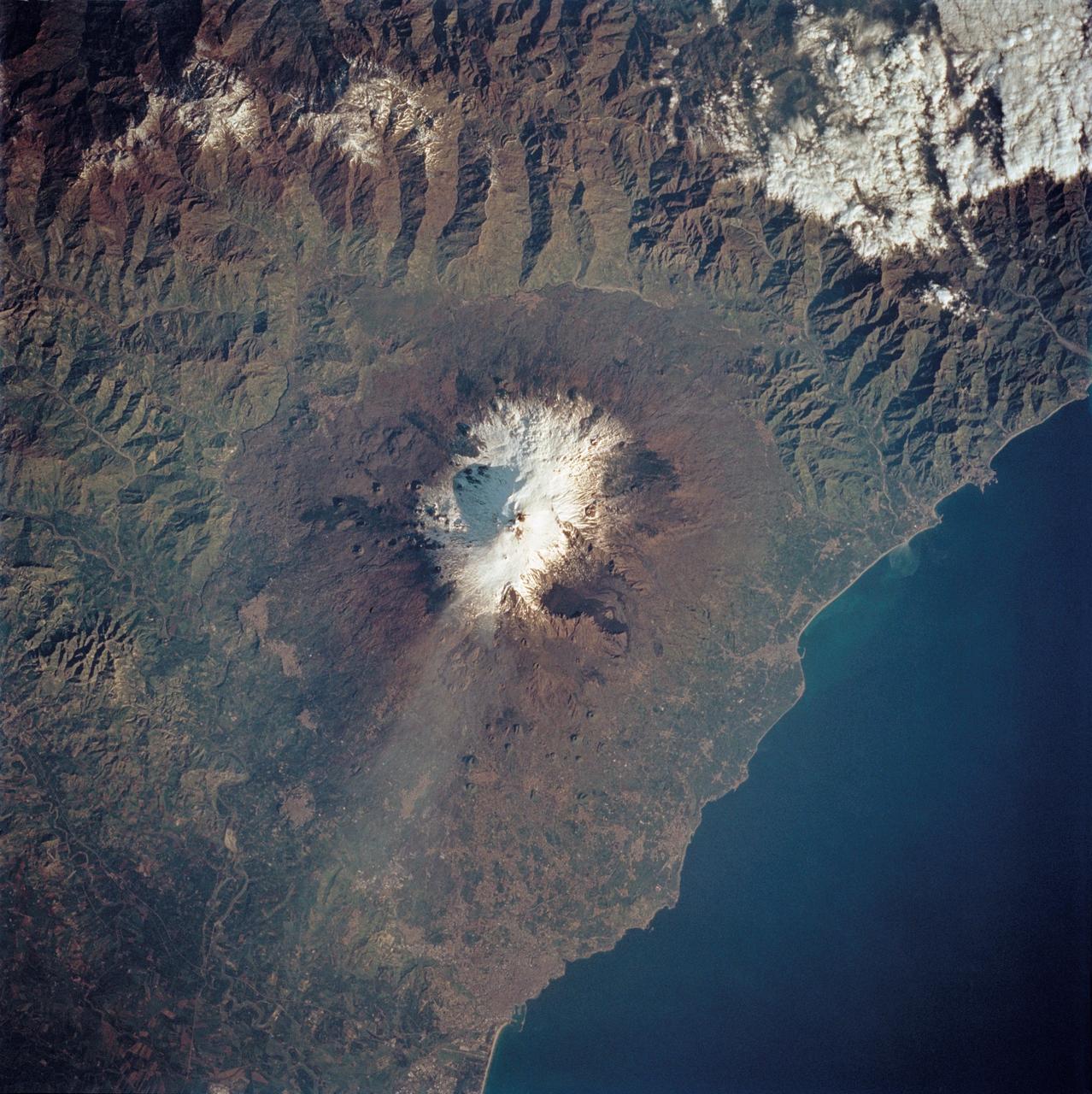
STS062-85-195 (4-18 March 1994) --- A thin plume of steam blows southward from the summit of Mt. Etna, the active volcano on the island of Sicily. The summit is capped with snow but the dark lava flow along the eastern flank (the 1991-93 flow) is clearly visible. The coastal city south of Etna is Catania.

The Mars celebration Saturday, June 1, 2019, in Mars, Pennsylvania. NASA is in the small town to celebrate Mars exploration and share the agency’s excitement about landing astronauts on the Moon in five years. The celebration includes a weekend of Science, Technology, Engineering, Arts and Mathematics (STEAM) activities. Photo Credit: (NASA/Bill Ingalls)
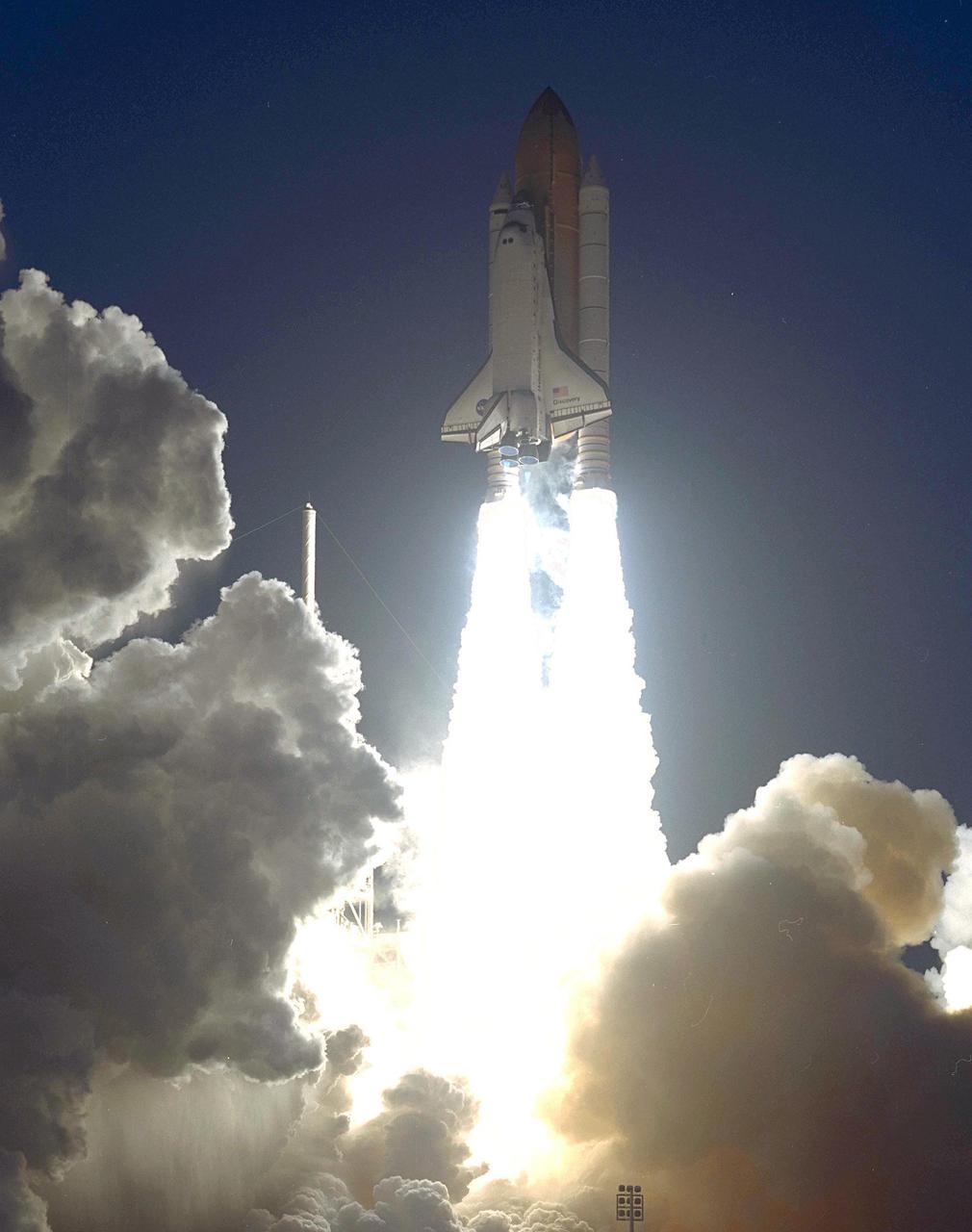
KENNEDY SPACE CENTER, Fla. -- Clouds of smoke and steam seem to break away as Space Shuttle Discovery blasts off from Launch Pad 39B on mission STS-102. Liftoff occurred at 6:42:09 EST for this eighth flight to the International Space Station

The Mars celebration Friday, May 31, 2019, in Mars, Pennsylvania. NASA is in the small town to celebrate Mars exploration and share the agency’s excitement about landing astronauts on the Moon in five years. The celebration includes a weekend of Science, Technology, Engineering, Arts and Mathematics (STEAM) activities. Photo Credit: (NASA/Bill Ingalls)

The Mars celebration Friday, May 31, 2019, in Mars, Pennsylvania. NASA is in the small town to celebrate Mars exploration and share the agency’s excitement about landing astronauts on the Moon in five years. The celebration includes a weekend of Science, Technology, Engineering, Arts and Mathematics (STEAM) activities. Photo Credit: (NASA/Bill Ingalls)

The Mars celebration Friday, May 31, 2019, in Mars, Pennsylvania. NASA is in the small town to celebrate Mars exploration and share the agency’s excitement about landing astronauts on the Moon in five years. The celebration includes a weekend of Science, Technology, Engineering, Arts and Mathematics (STEAM) activities. Photo Credit: (NASA/Bill Ingalls)

The Mars celebration Friday, May 31, 2019, in Mars, Pennsylvania. NASA is in the small town to celebrate Mars exploration and share the agency’s excitement about landing astronauts on the Moon in five years. The celebration includes a weekend of Science, Technology, Engineering, Arts and Mathematics (STEAM) activities. Photo Credit: (NASA/Bill Ingalls)

The Mars celebration Friday, May 31, 2019, in Mars, Pennsylvania. NASA is in the small town to celebrate Mars exploration and share the agency’s excitement about landing astronauts on the Moon in five years. The celebration includes a weekend of Science, Technology, Engineering, Arts and Mathematics (STEAM) activities. Photo Credit: (NASA/Bill Ingalls)

The Mars celebration Saturday, June 1, 2019, in Mars, Pennsylvania. NASA is in the small town to celebrate Mars exploration and share the agency’s excitement about landing astronauts on the Moon in five years. The celebration includes a weekend of Science, Technology, Engineering, Arts and Mathematics (STEAM) activities. Photo Credit: (NASA/Bill Ingalls)

The Mars celebration Friday, May 31, 2019, in Mars, Pennsylvania. NASA is in the small town to celebrate Mars exploration and share the agency’s excitement about landing astronauts on the Moon in five years. The celebration includes a weekend of Science, Technology, Engineering, Arts and Mathematics (STEAM) activities. Photo Credit: (NASA/Bill Ingalls)

The Mars celebration Friday, May 31, 2019, in Mars, Pennsylvania. NASA is in the small town to celebrate Mars exploration and share the agency’s excitement about landing astronauts on the Moon in five years. The celebration includes a weekend of Science, Technology, Engineering, Arts and Mathematics (STEAM) activities. Photo Credit: (NASA/Bill Ingalls)

The Mars celebration Friday, May 31, 2019, in Mars, Pennsylvania. NASA is in the small town to celebrate Mars exploration and share the agency’s excitement about landing astronauts on the Moon in five years. The celebration includes a weekend of Science, Technology, Engineering, Arts and Mathematics (STEAM) activities. Photo Credit: (NASA/Bill Ingalls)
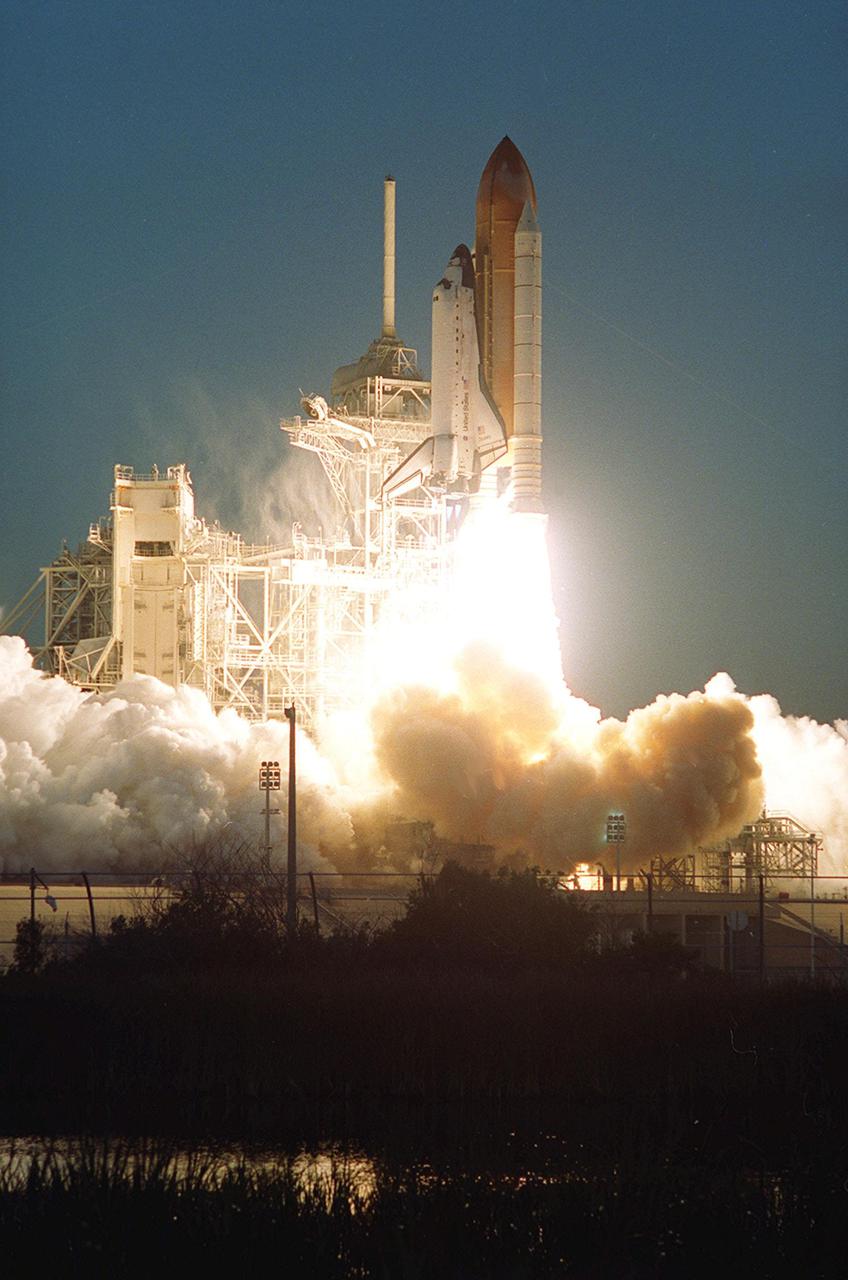
KENNEDY SPACE CENTER, Fla. -- Clouds of smoke and steam flow from Space Shuttle Discovery as it lifts off on mission STS-102 to the International Space Station. The brilliance of the launch rivaled the sunrise on this perfect launch. Liftoff occurred at 6:42:09 EST for the eighth flight to the Space Station

The Mars celebration Friday, May 31, 2019, in Mars, Pennsylvania. NASA is in the small town to celebrate Mars exploration and share the agency’s excitement about landing astronauts on the Moon in five years. The celebration includes a weekend of Science, Technology, Engineering, Arts and Mathematics (STEAM) activities. Photo Credit: (NASA/Bill Ingalls)
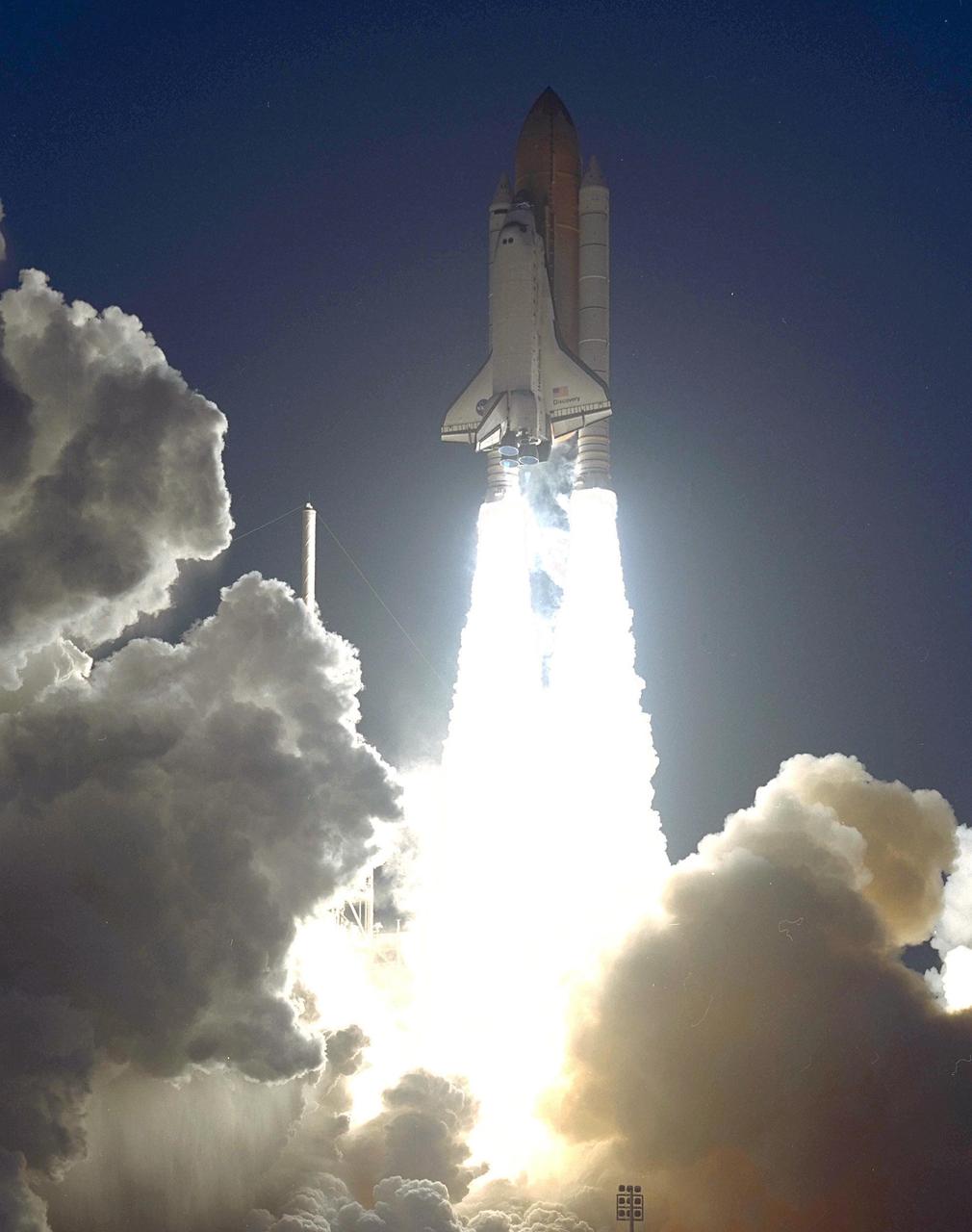
KENNEDY SPACE CENTER, Fla. -- Clouds of smoke and steam seem to break away as Space Shuttle Discovery blasts off from Launch Pad 39B on mission STS-102. Liftoff occurred at 6:42:09 EST for this eighth flight to the International Space Station

The Mars celebration Saturday, June 1, 2019, in Mars, Pennsylvania. NASA is in the small town to celebrate Mars exploration and share the agency’s excitement about landing astronauts on the Moon in five years. The celebration includes a weekend of Science, Technology, Engineering, Arts and Mathematics (STEAM) activities. Photo Credit: (NASA/Bill Ingalls)
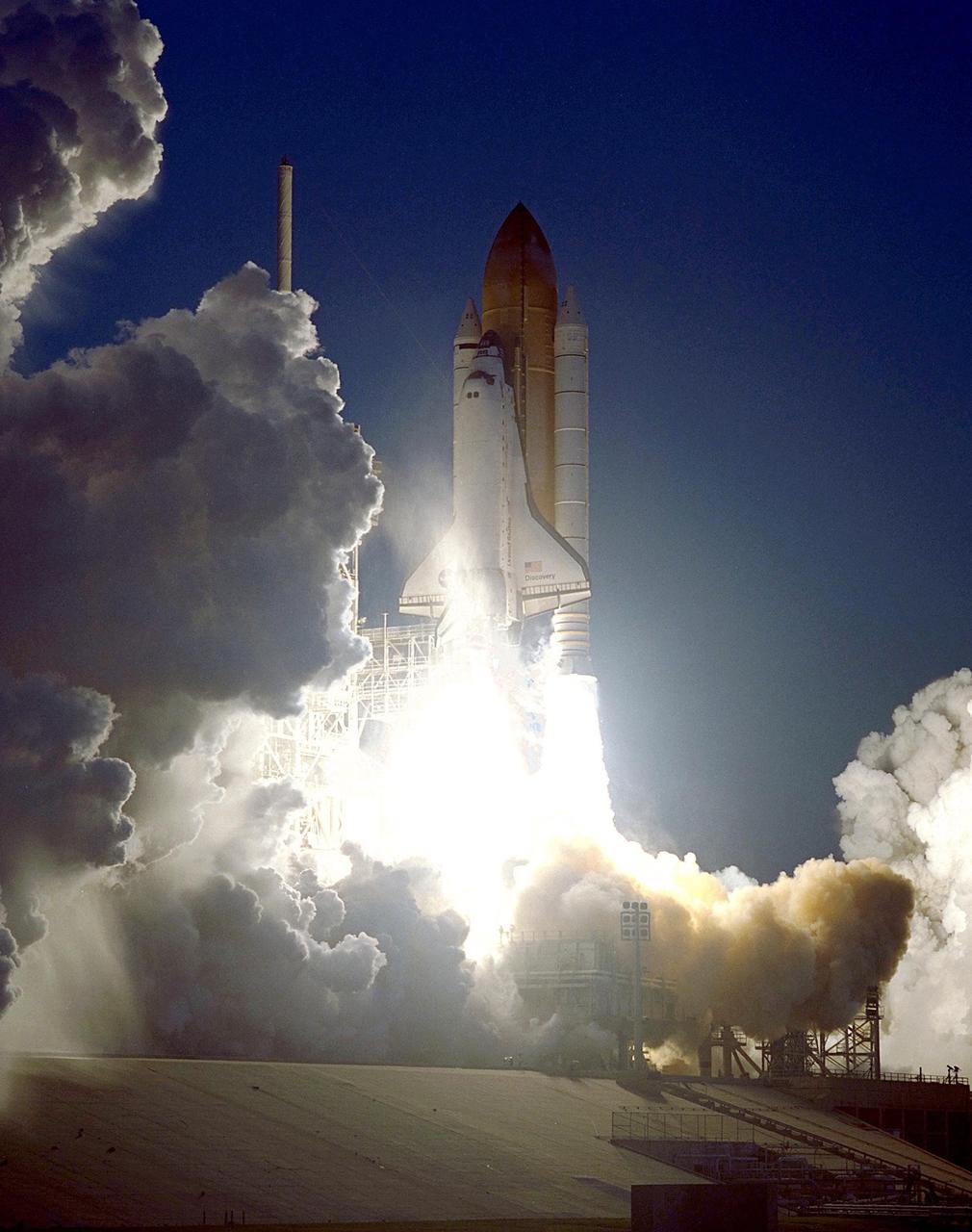
KENNEDY SPACE CENTER, Fla. -- Clouds of smoke and steam billow out from Launch Pad 39B as Space Shuttle Discovery lifts off for mission STS-102 to the International Space Station. The brilliance of the launch rivaled the sunrise on this perfect launch. Liftoff occurred at 6:42:09 EST for the eighth flight to the Space Station
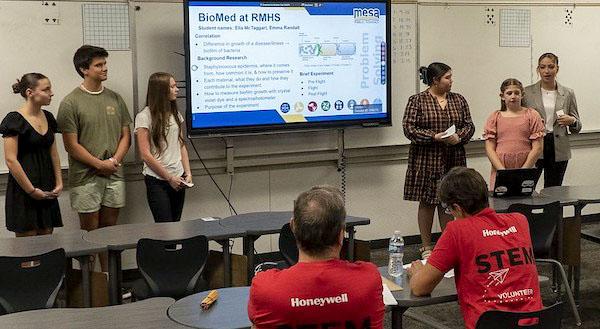
jsc2024e066518 (11/1/2023) --- Mesa Publc School students work together presenting their critical design review to their industry partners Honeywell Aerospace Technologies in their successful bid to be a finalist for the Nanoracks-National Center for Earth and Space Science Education-Surveyor-Student Spaceflight Experiments Program Mission 18 to ISS (Nanoracks-NCESSE-Surveyor-SSEP). Their experiment is The Growth and Mutation of Staphylococcus epidermidis Biofilm in Microgravity.
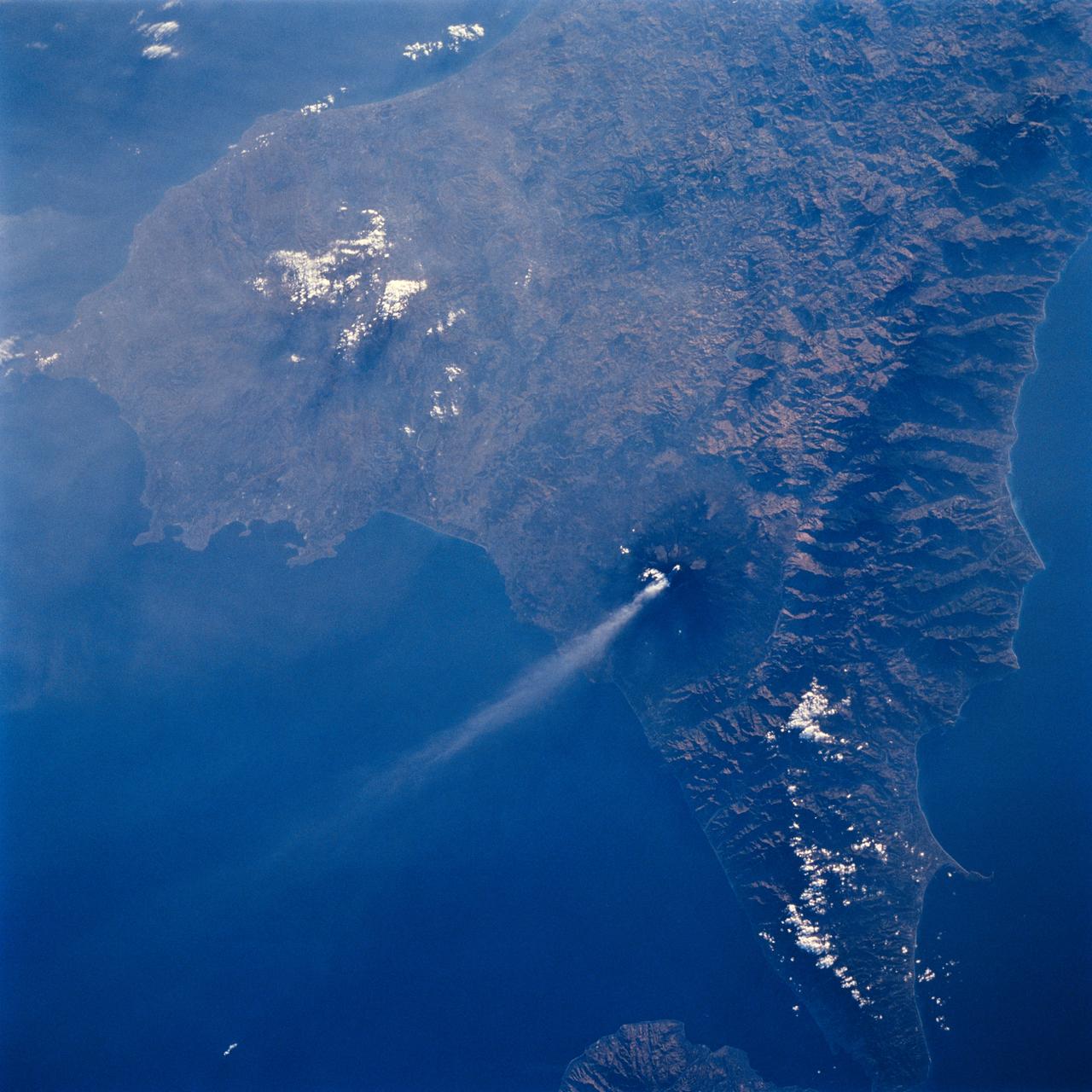
STS064-71-037 (9-20 Sept. 1994) --- Mt. Etna on Sicily displays a steam plume from its summit. Geologists attribute the volcano's existence to the collision of tectonic plates. Unlike the sudden, explosive eruption at Rabaul, Mt. Etna's activity is ongoing and is generally not explosive - Etna's slopes have been settled with villages and cultivated land for centuries. Other Mediterranean volcanoes (like Santorini) have experienced large catastrophic eruptions. Etna recently finished a two-year eruption (ending in 1993), marked by relatively gentle lava flows down the eastern flank. It has been continually degassing since then, according to the geologists, producing an omnipresent steam plume, as seen here. The 1993 flow is difficult to identify in this image because it lies within shadows on the eastern flank, but small cinder cones on the western flank mark earlier episodes of volcanic activity. Photo credit: NASA or National Aeronautics and Space Administration

NASA Chief Technologist Douglas Terrier gives opening remarks during a Mars celebration Friday, May 31, 2019, in Mars, Pennsylvania. NASA is in the small town to celebrate Mars exploration and share the agency’s excitement about landing astronauts on the Moon in five years. The celebration includes a weekend of Science, Technology, Engineering, Arts and Mathematics (STEAM) activities. Photo Credit: (NASA/Bill Ingalls)
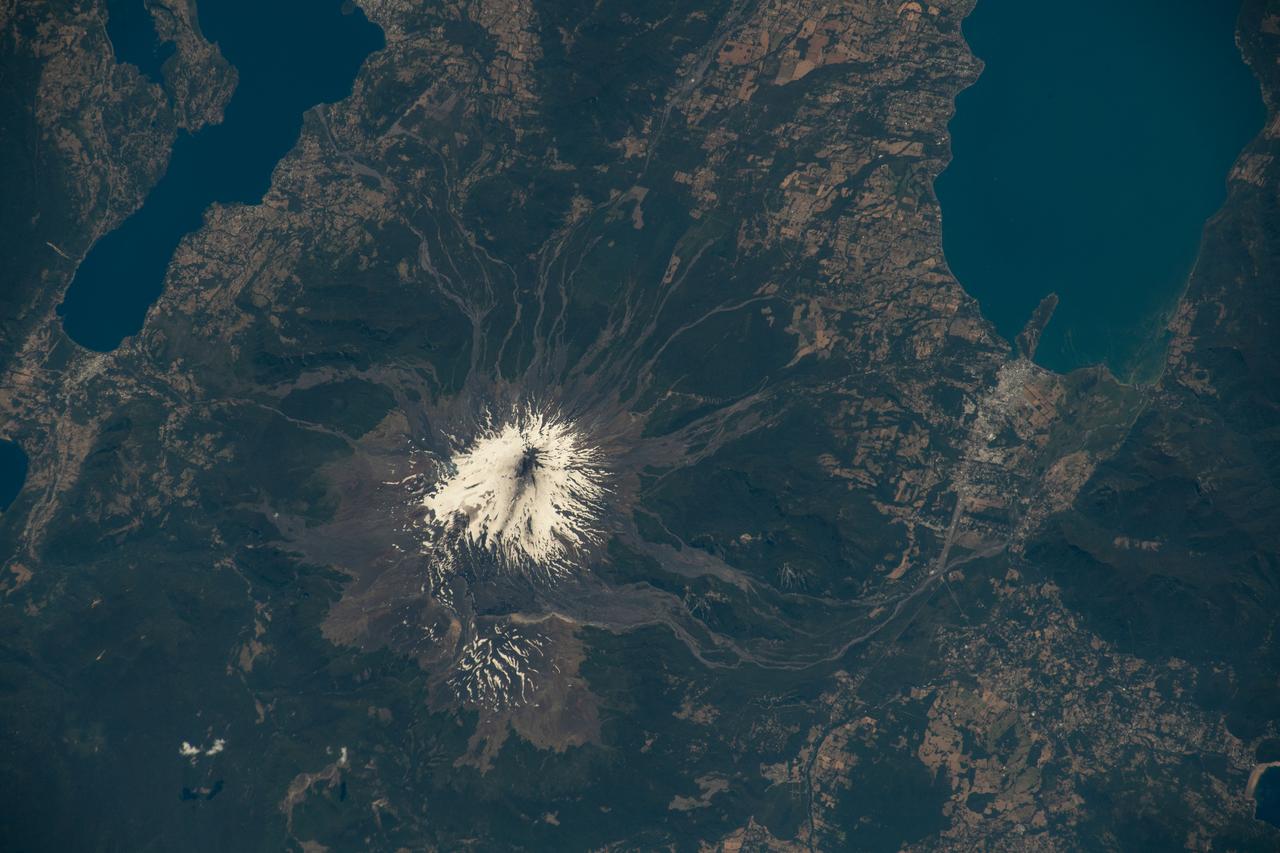
iss068e040596 (Jan. 17, 2023) --- Chile’s Villarrica volcano emits steam and other volcanic gases in this photo taken from the International Space Station on Jan. 17, 2023. The gases come from a series of minor explosions—called Strombolian eruptions—that have been ongoing at Villarrica since October 2022. Located along Chile’s southern Andes, Villarrica is one of the most active and dangerous volcanoes in South America; it typically erupts every three to six years. Image Credit: NASA

A participant of the Mars celebration launches a rocket, Saturday, June 1, 2019, in Mars, Pennsylvania. NASA is in the small town to celebrate Mars exploration and share the agency’s excitement about landing astronauts on the Moon in five years. The celebration includes a weekend of Science, Technology, Engineering, Arts and Mathematics (STEAM) activities. Photo Credit: (NASA/Bill Ingalls)
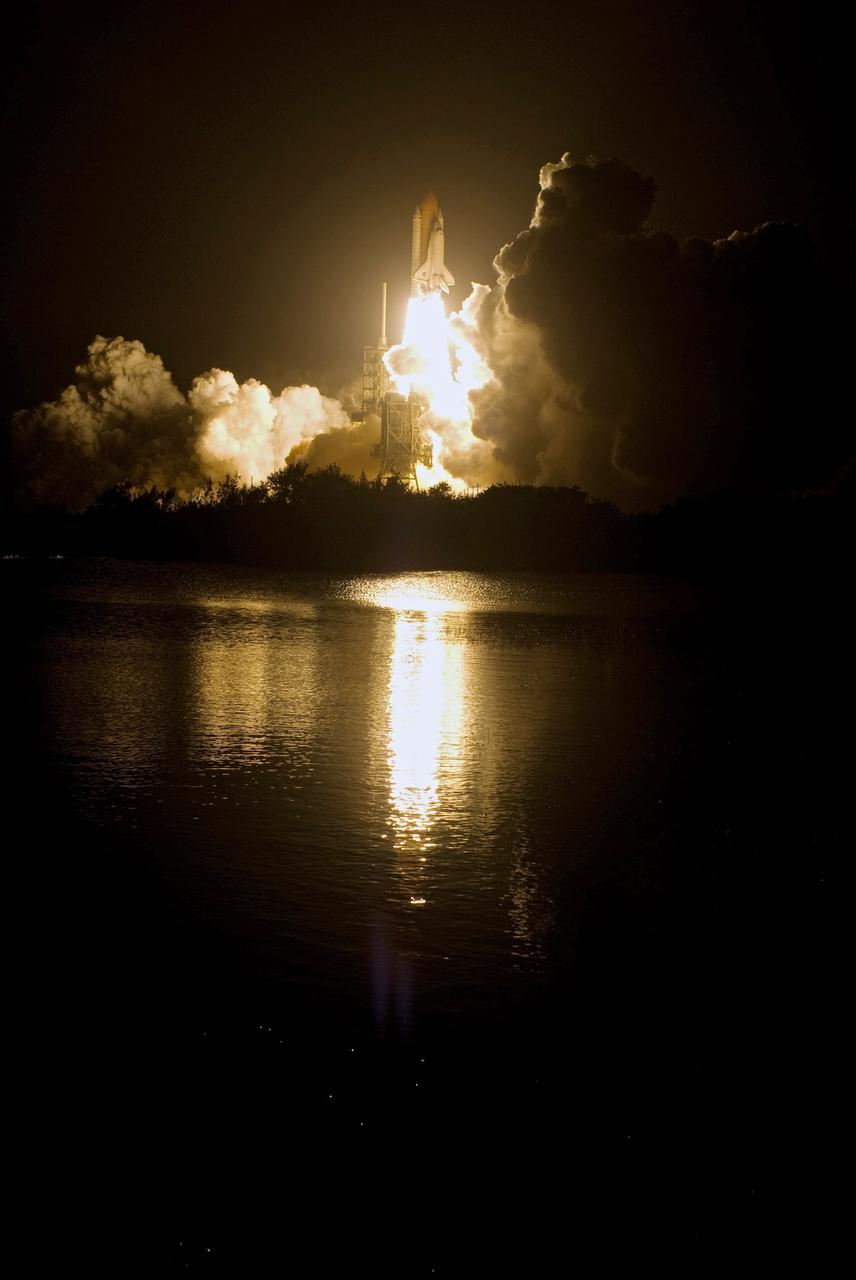
CAPE CANAVERAL, Fla. – The light-filled clouds of smoke and steam spotlight space shuttle Endeavour as it lifts off on the STS-126 mission from Launch Pad 39A at NASA's Kennedy Space Center. Liftoff was on time at 7:55 p.m. EST. STS-126 is the 124th space shuttle flight and the 27th flight to the International Space Station. The mission will feature four spacewalks and work that will prepare the space station to house six crew members for long-duration missions. Photo credit: NASA/Tony Gray-Tom Farrar
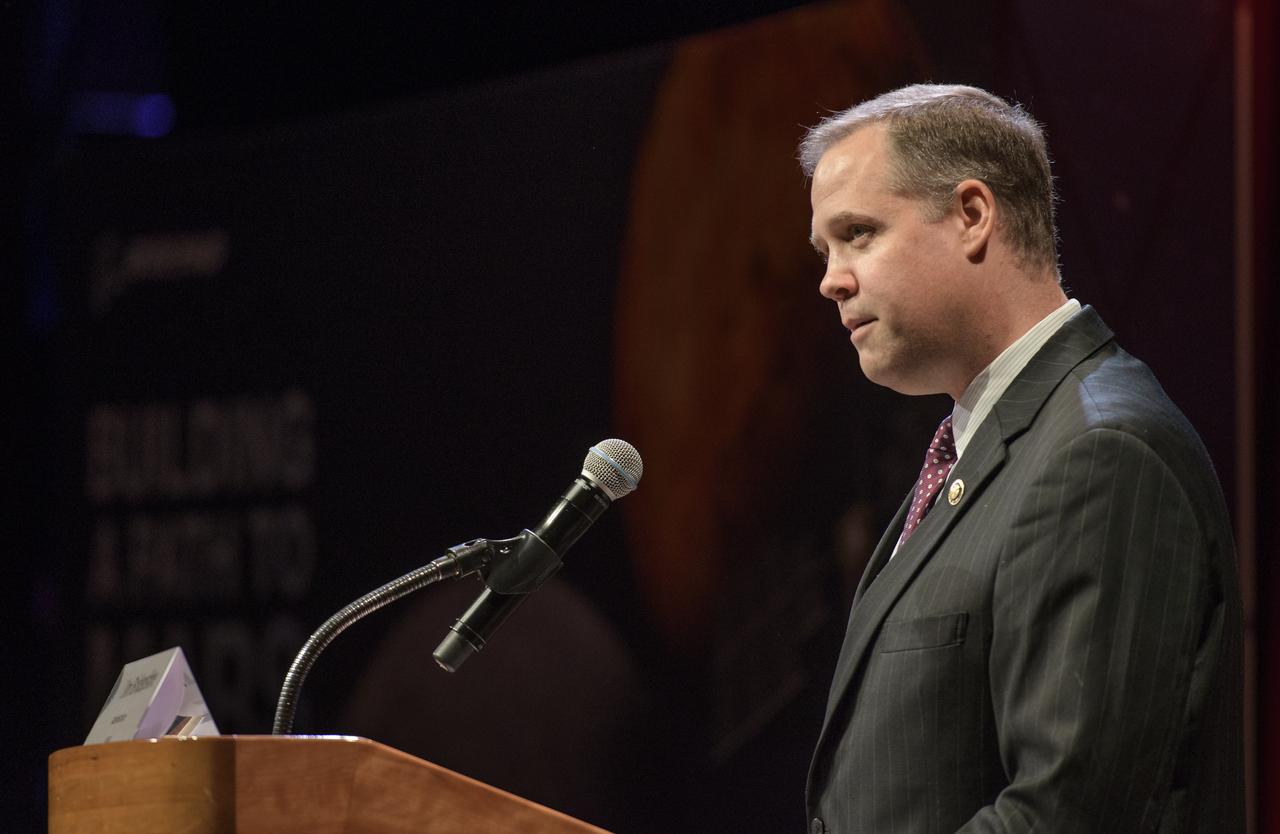
NASA Administrator Jim Bridenstine delivers the keynote speech at the Humans to Mars Summit (H2M), Wednesday, May 9, 2018 at George Washington University in Washington. Bridenstine joined more than 20 NASA scientists and technologists at the three-day event sponsored by Explore Mars Inc. It brought industry, government and the scientific, entertainment and academic communities together to discuss technology developments, foster partnerships, and encourage students to pursue STEAM careers. Photo Credit: (NASA/Bill Ingalls)

A young couple stop by the Mars celebration prior to attending prom, Saturday, June 1, 2019, in Mars, Pennsylvania. NASA is in the small town to celebrate Mars exploration and share the agency’s excitement about landing astronauts on the Moon in five years. The celebration includes a weekend of Science, Technology, Engineering, Arts and Mathematics (STEAM) activities. Photo Credit: (NASA/Bill Ingalls)
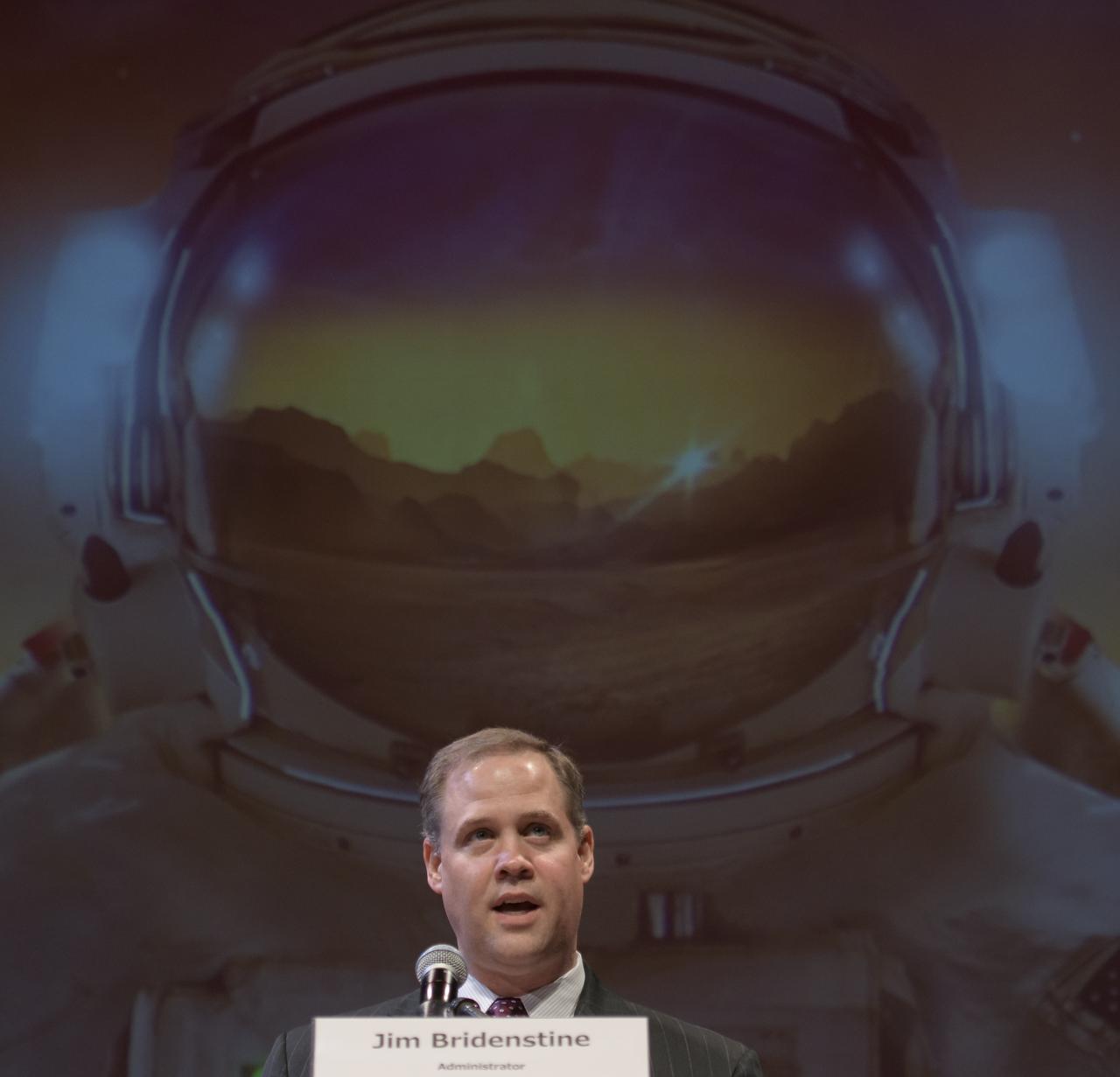
NASA Administrator Jim Bridenstine delivers the keynote speech at the Humans to Mars Summit (H2M), Wednesday, May 9, 2018 at George Washington University in Washington. Bridenstine joined more than 20 NASA scientists and technologists at the three-day event sponsored by Explore Mars Inc. It brought industry, government and the scientific, entertainment and academic communities together to discuss technology developments, foster partnerships, and encourage students to pursue STEAM careers. Photo Credit: (NASA/Bill Ingalls)

Lyle Tavernier from NASA's Jet Propulsion Laboratory talks about Mars rovers live from California to attendees of a Mars celebration Friday, May 31, 2019, in Mars, Pennsylvania. NASA is in the small town to celebrate Mars exploration and share the agency’s excitement about landing astronauts on the Moon in five years. The celebration includes a weekend of Science, Technology, Engineering, Arts and Mathematics (STEAM) activities. Photo Credit: (NASA/Bill Ingalls)

A drone show is seen during the Mars celebration Friday, May 31, 2019, in Mars, Pennsylvania. NASA is in the small town to celebrate Mars exploration and share the agency’s excitement about landing astronauts on the Moon in five years. The celebration includes a weekend of Science, Technology, Engineering, Arts and Mathematics (STEAM) activities. Photo Credit: (NASA/Bill Ingalls)

April Lanotte gives remarks during the Mars celebration Saturday, June 1, 2019, in Mars, Pennsylvania. NASA is in the small town to celebrate Mars exploration and share the agency’s excitement about landing astronauts on the Moon in five years. The celebration includes a weekend of Science, Technology, Engineering, Arts and Mathematics (STEAM) activities. Photo Credit: (NASA/Bill Ingalls)
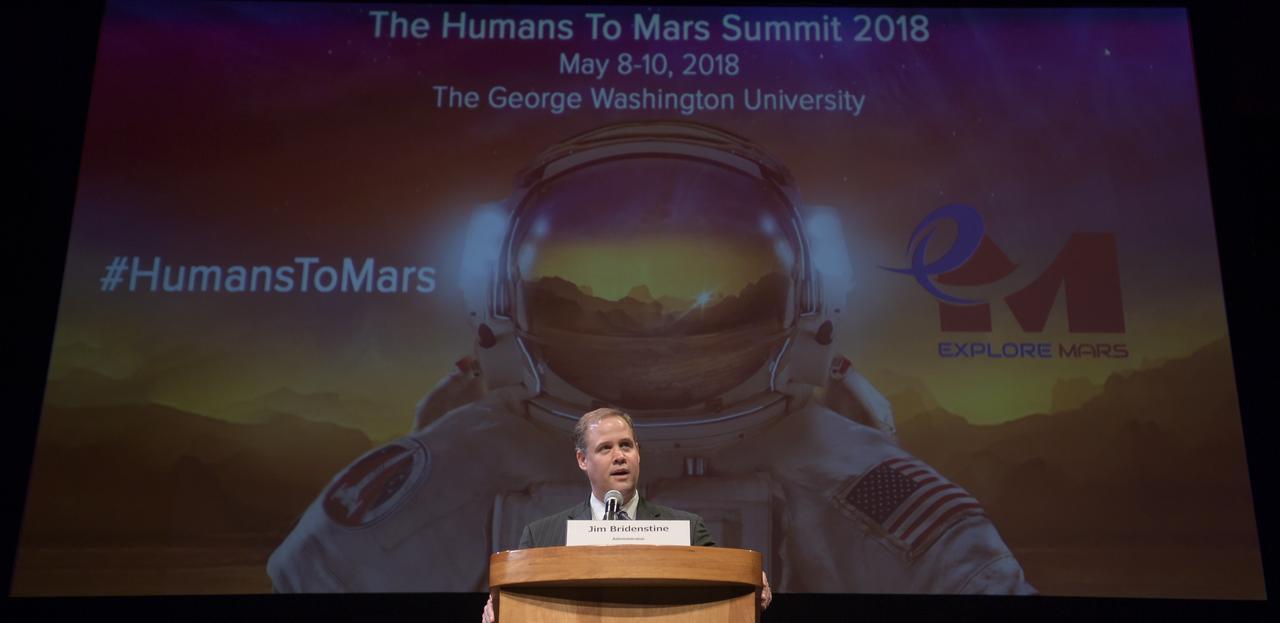
NASA Administrator Jim Bridenstine delivers the keynote speech at the Humans to Mars Summit (H2M), Wednesday, May 9, 2018 at George Washington University in Washington. Bridenstine joined more than 20 NASA scientists and technologists at the three-day event sponsored by Explore Mars Inc. It brought industry, government and the scientific, entertainment and academic communities together to discuss technology developments, foster partnerships, and encourage students to pursue STEAM careers. Photo Credit: (NASA/Bill Ingalls)
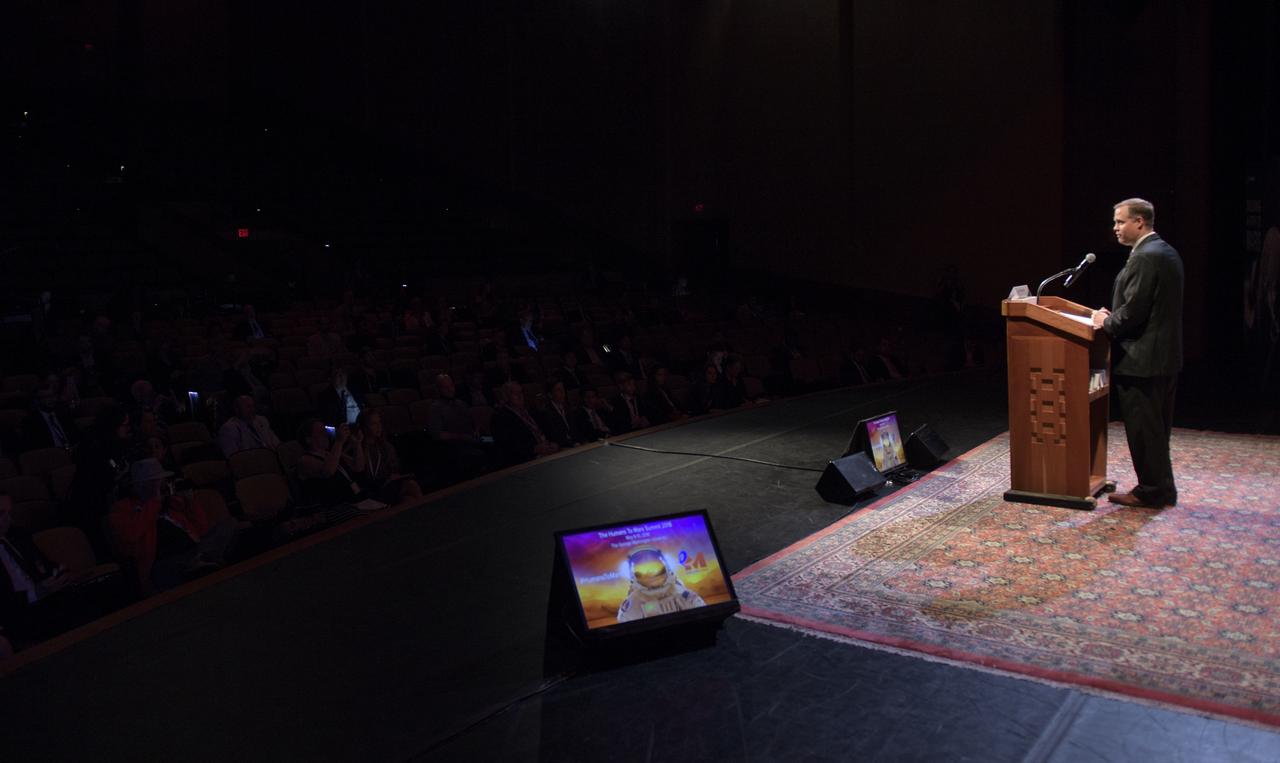
NASA Administrator Jim Bridenstine delivers the keynote speech at the Humans to Mars Summit (H2M), Wednesday, May 9, 2018 at George Washington University in Washington. Bridenstine joined more than 20 NASA scientists and technologists at the three-day event sponsored by Explore Mars Inc. It brought industry, government and the scientific, entertainment and academic communities together to discuss technology developments, foster partnerships, and encourage students to pursue STEAM careers. Photo Credit: (NASA/Bill Ingalls)

NASA Chief Technologist Douglas Terrier talks about NASA's plans for going forward to the Moon and Mars during a Mars celebration Saturday, June 1, 2019, in Mars, Pennsylvania. NASA is in the small town to celebrate Mars exploration and share the agency’s excitement about landing astronauts on the Moon in five years. The celebration includes a weekend of Science, Technology, Engineering, Arts and Mathematics (STEAM) activities. Photo Credit: (NASA/Bill Ingalls)
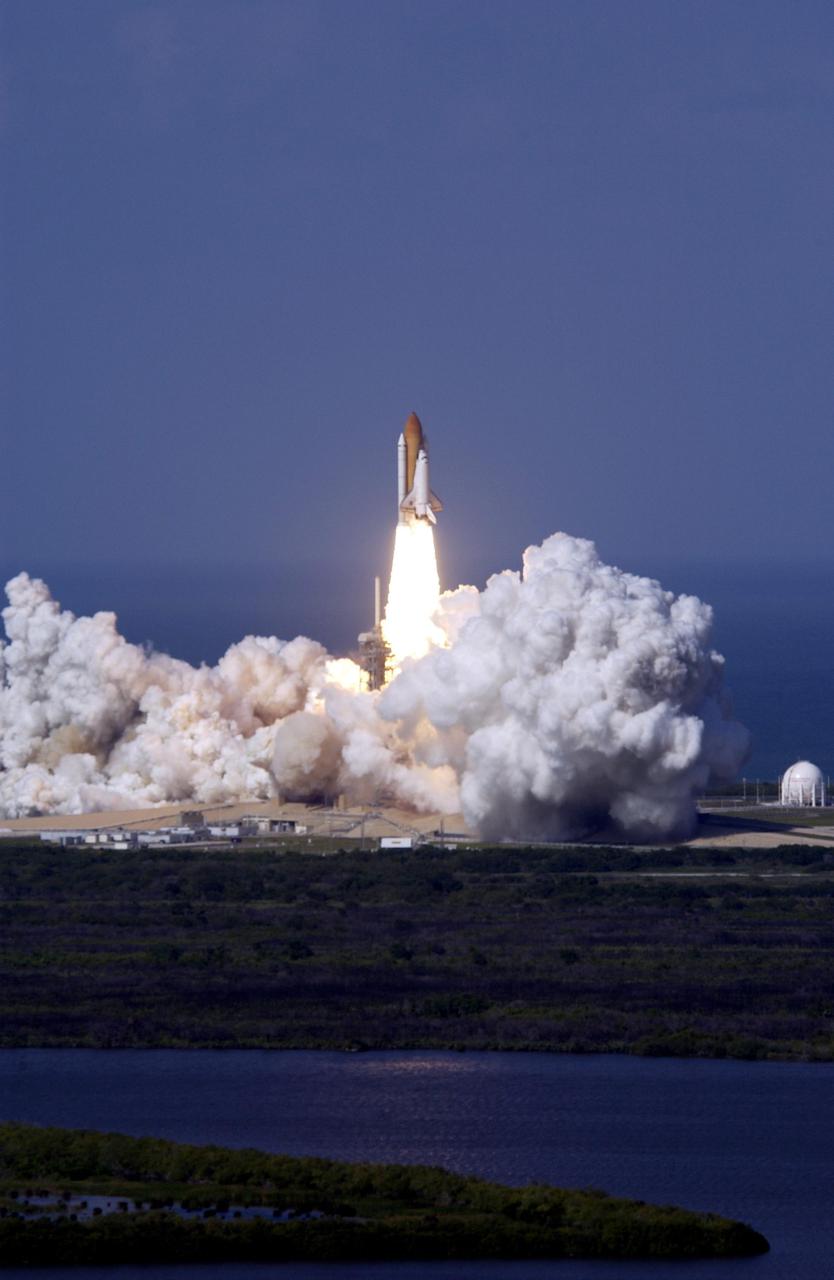
KENNEDY SPACE CENTER, FLA. -- Billows of smoke and steam roll across Launch Pad 39B as Space Shuttle Atlantis roars into the sky on mission STS-110. Liftoff occurred at 4:44:19 p.m. EDT (20:41:19 GMT). STS-110 is the 13th assembly flight to the International Space Station, carrying the S0 Integrated Truss Structure and Mobile Transporter

Staff prepare for the Mars celebration event Friday, May 31, 2019, in Mars, Pennsylvania. NASA is in the small town to celebrate Mars exploration and share the agency’s excitement about landing astronauts on the Moon in five years. The celebration includes a weekend of Science, Technology, Engineering, Arts and Mathematics (STEAM) activities. Photo Credit: (NASA/Bill Ingalls)
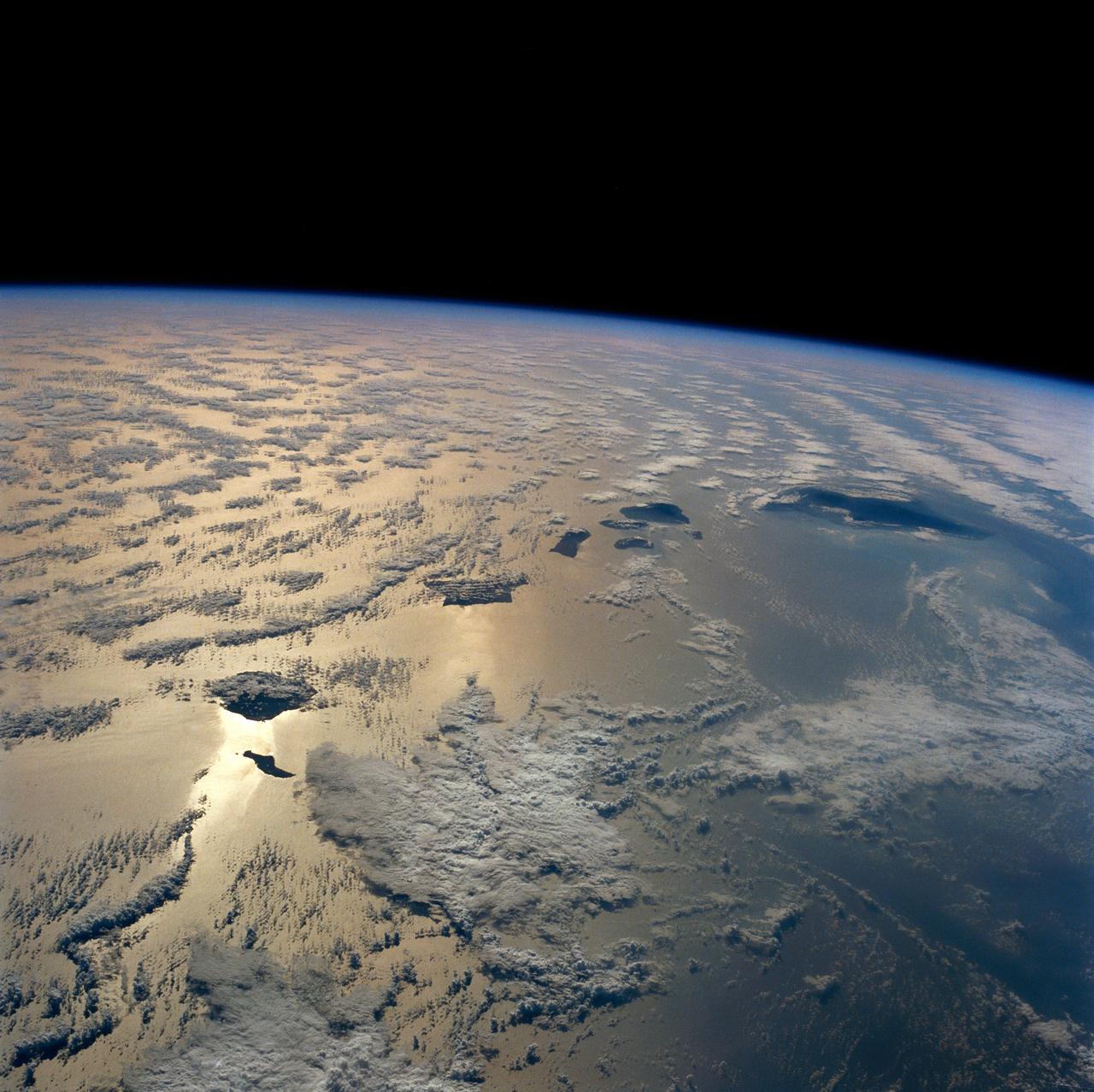
The entire Hawaiian Island Archipelago (21.5N, 158.0W) is seen in this single view. The islands are a favorite international resort and tourist attraction drawing visitors from all over the world to enjoy the tropical climate, year round beaches and lush island flora. Being volcanic in origin, the islands' offer a rugged landscape and on the big island of Hawaii, there is still an occasional volcanic eruption of lava flows and steam vents.

NASA Chief Technologist Douglas Terrier talks about NASA's plans for going forward to the Moon and Mars during a Mars celebration Saturday, June 1, 2019, in Mars, Pennsylvania. NASA is in the small town to celebrate Mars exploration and share the agency’s excitement about landing astronauts on the Moon in five years. The celebration includes a weekend of Science, Technology, Engineering, Arts and Mathematics (STEAM) activities. Photo Credit: (NASA/Bill Ingalls)
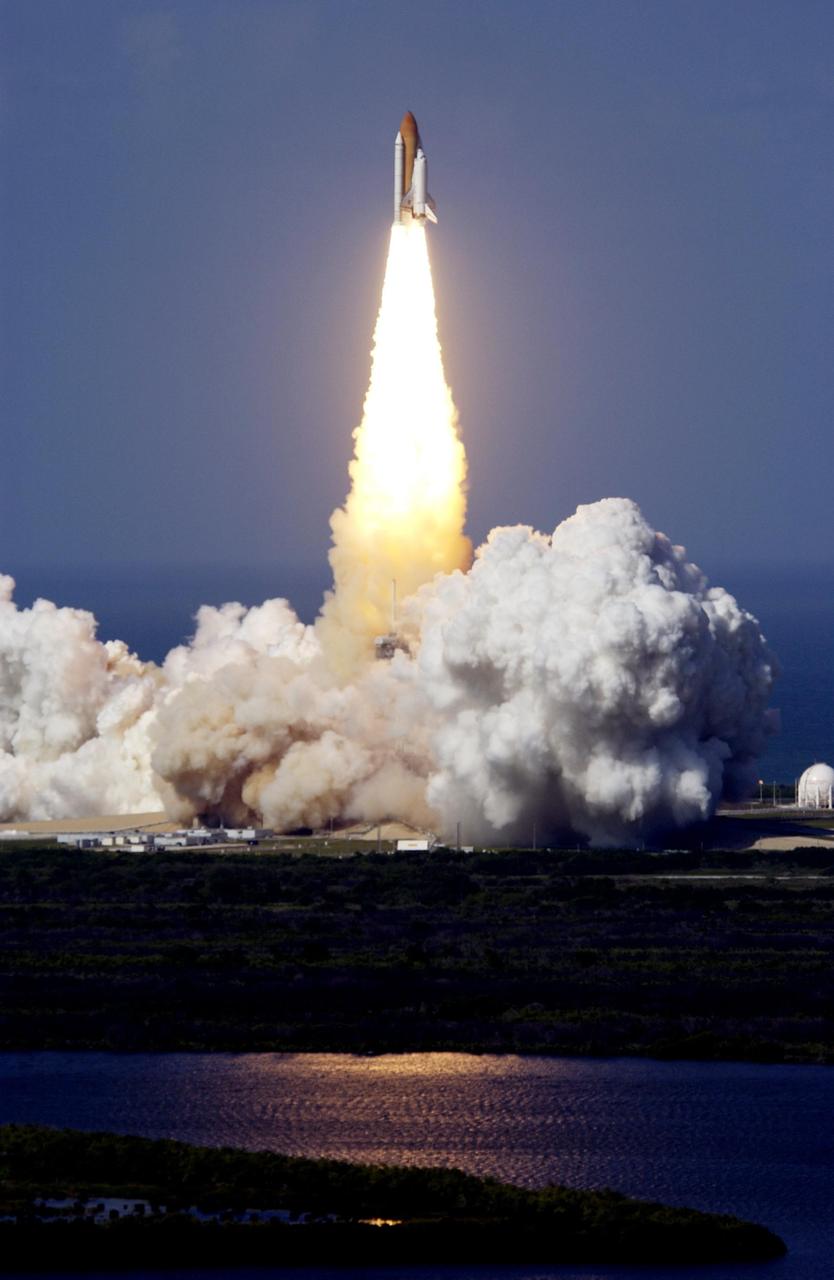
KENNEDY SPACE CENTER, FLA. - With billows of smoke and steam below, Space Shuttle Atlantis roars into the sky on mission STS-110. Liftoff occurred at 4:44:19 p.m. EDT (20:41:19 GMT). STS-110 is the 13th assembly flight to the International Space Station, carrying the S0 Integrated Truss Structure and Mobile Transporter
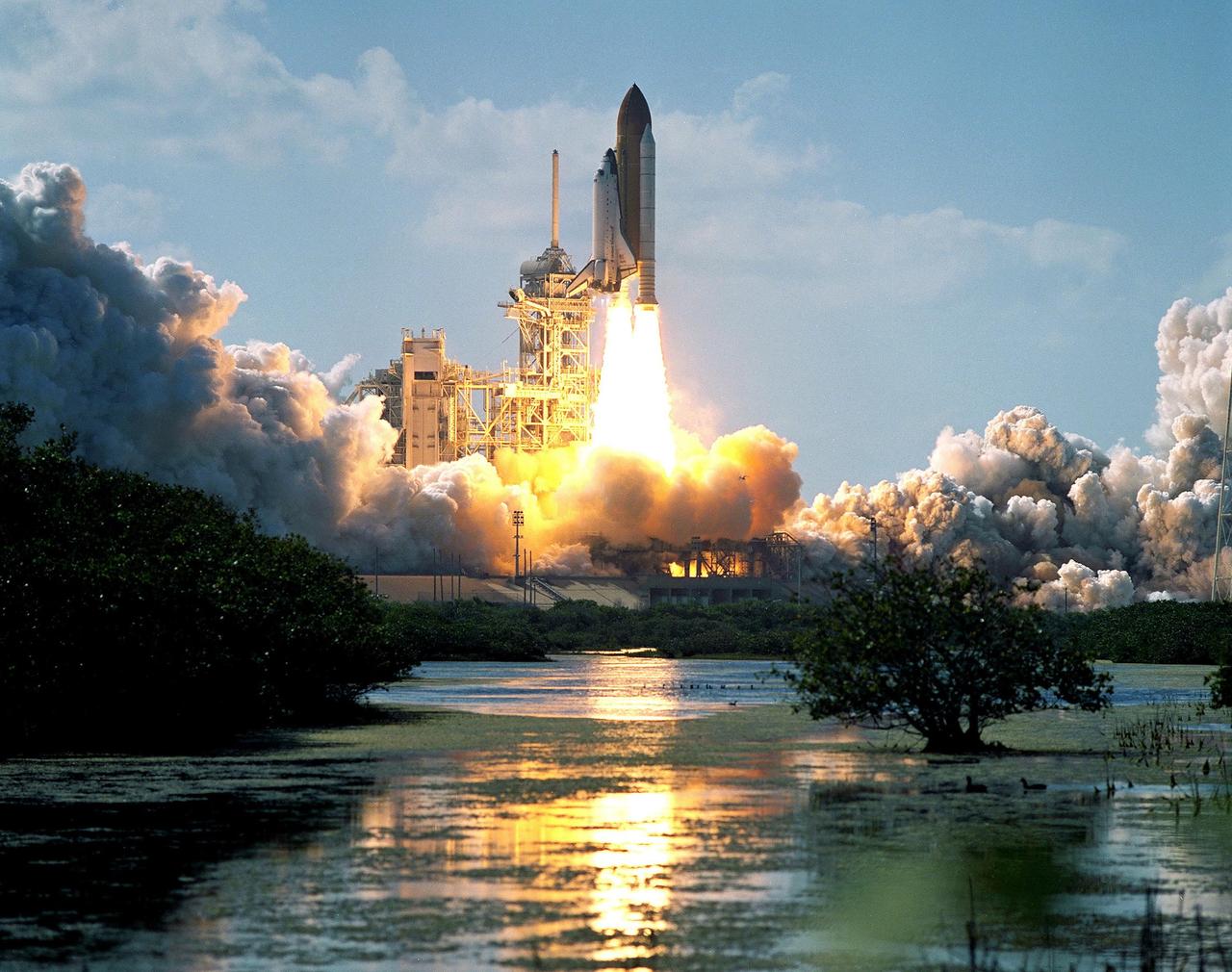
KENNEDY SPACE CENTER, FLA. - Billowing clouds of smoke and steam roll away from the launch pad while the water below captures the brilliance of the flames as Space Shuttle Atlantis soars above the lightning mast on mission STS-110. Liftoff occurred at 4:44:19 p.m. EDT (20:41:19 GMT). Carrying the S0 Integrated Truss Structure and Mobile Transporter, STS-110 is the 13th assembly flight to the International Space Station.

A local First Robotics team poses for a group photo during Tthe Mars celebration Saturday, June 1, 2019, in Mars, Pennsylvania. NASA is in the small town to celebrate Mars exploration and share the agency’s excitement about landing astronauts on the Moon in five years. The celebration includes a weekend of Science, Technology, Engineering, Arts and Mathematics (STEAM) activities. Photo Credit: (NASA/Bill Ingalls)
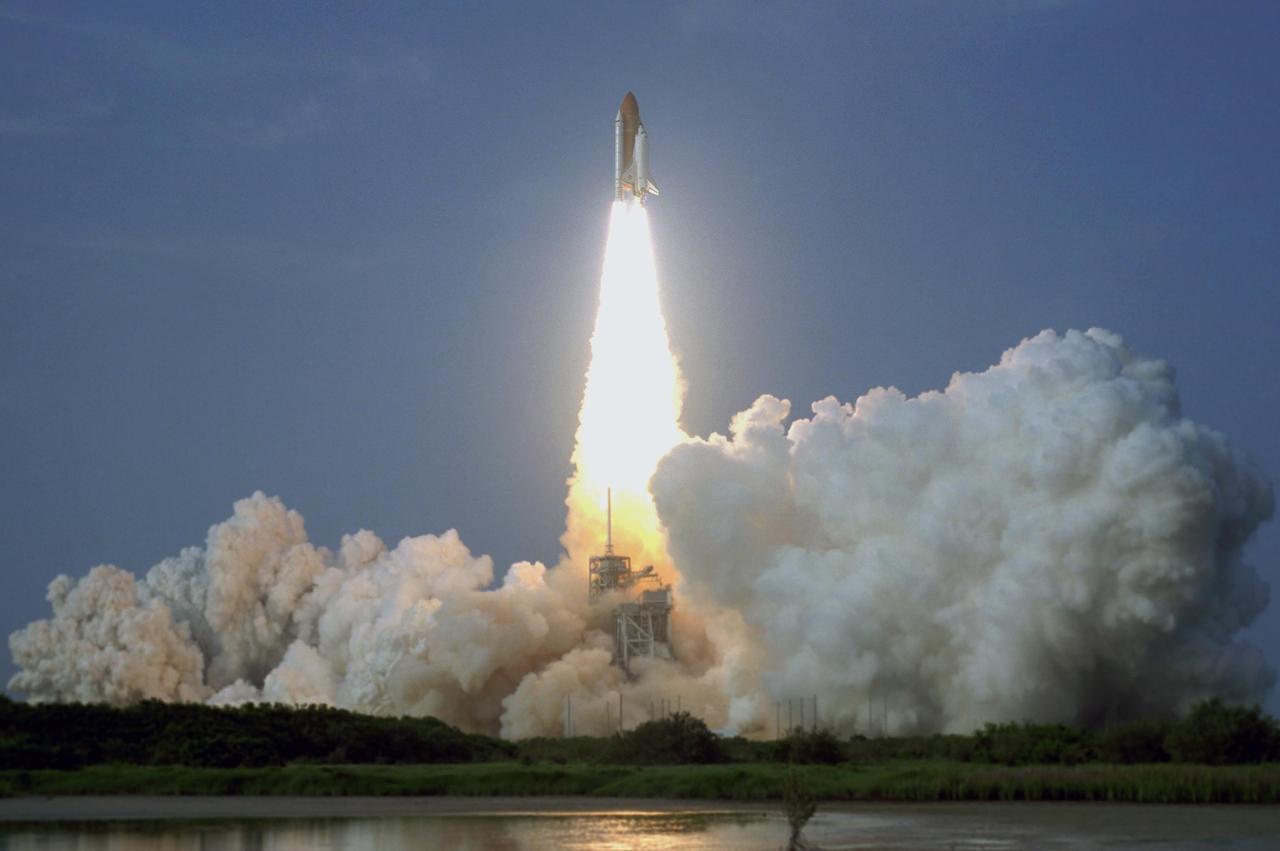
KENNEDY SPACE CENTER, FLA. -- Clouds of smoke and steam fill Launch Pad 39A after liftoff of Space Shuttle Endeavour, trailing a fiery tail, on mission STS-118. The 22nd shuttle flight to the International Space Station, the mission will continue space station construction by delivering a third starboard truss segment, S5, and other payloads such as the SPACEHAB module and the external stowage platform 3. Liftoff of Endeavour was on time at 6:36 p.m. EDT. Photo credit: NASA/Sandra Joseph, Tony Gray, Robert Murray

Local resident Rick Miller, dressed as Abraham Lincoln, attends the Mars celebration Saturday, June 1, 2019, in Mars, Pennsylvania. NASA is in the small town to celebrate Mars exploration and share the agency’s excitement about landing astronauts on the Moon in five years. The celebration includes a weekend of Science, Technology, Engineering, Arts and Mathematics (STEAM) activities. Photo Credit: (NASA/Bill Ingalls)

An alien themed cup cake is seen during the Mars celebration Saturday, June 1, 2019, in Mars, Pennsylvania. NASA is in the small town to celebrate Mars exploration and share the agency’s excitement about landing astronauts on the Moon in five years. The celebration includes a weekend of Science, Technology, Engineering, Arts and Mathematics (STEAM) activities. Photo Credit: (NASA/Bill Ingalls)
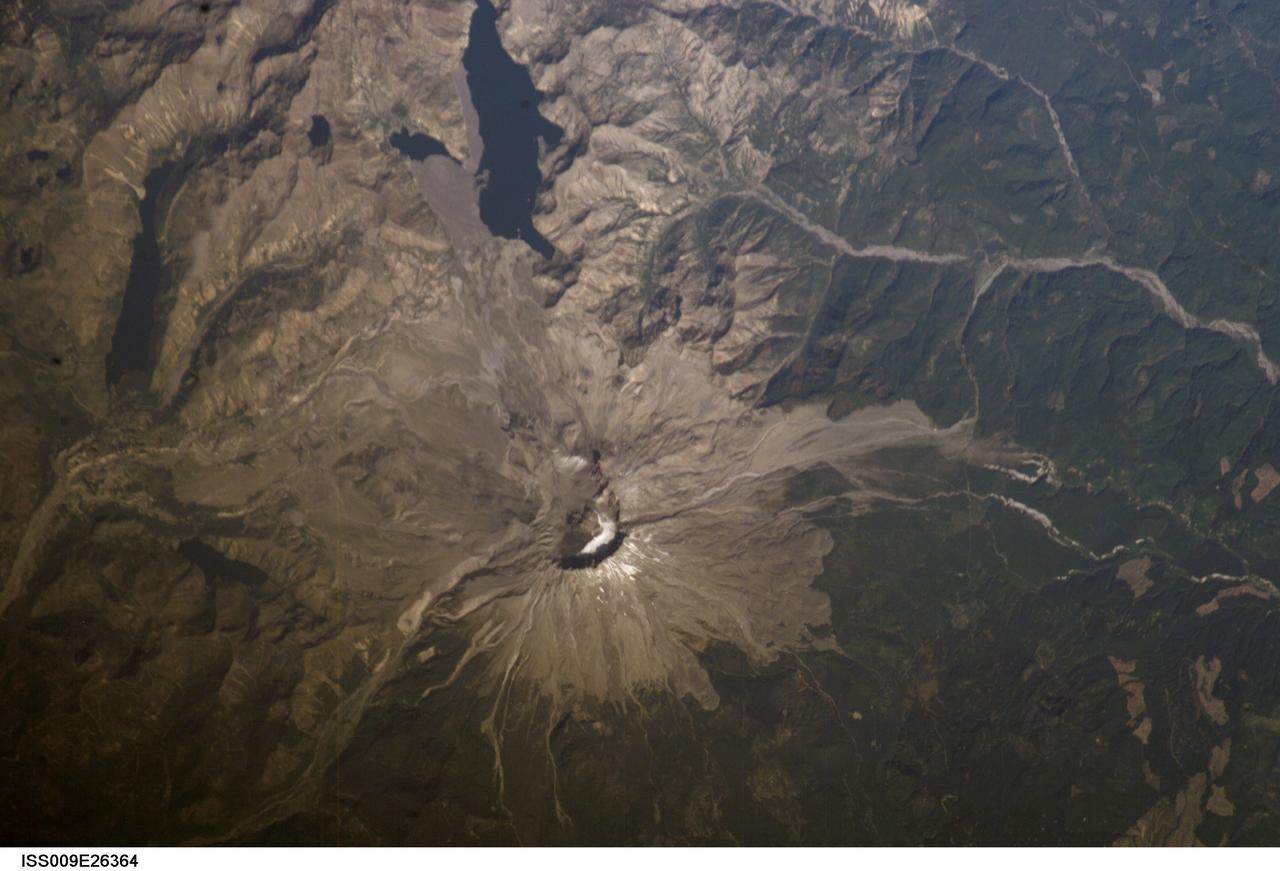
ISS009-E-26364 (1 October 2004) --- Mount Saint Helens, Washington, is featured in this image photographed by an Expedition 9 crewmember on the International Space Station (ISS). The USGS has been monitoring Mount Saint Helens closely since last Thursday, when the volcano began to belch steam and swarms of tiny earthquakes were first recorded.

A Mars celebration attendee views the surface of Mars via a virtual reality headset Saturday, June 1, 2019, in Mars, Pennsylvania. NASA is in the small town to celebrate Mars exploration and share the agency’s excitement about landing astronauts on the Moon in five years. The celebration includes a weekend of Science, Technology, Engineering, Arts and Mathematics (STEAM) activities. Photo Credit: (NASA/Bill Ingalls)

Sophia Bogat from NASA Headquarters talks about the various wheels used on Mars rovers during the Mars celebration Saturday, June 1, 2019, in Mars, Pennsylvania. NASA is in the small town to celebrate Mars exploration and share the agency’s excitement about landing astronauts on the Moon in five years. The celebration includes a weekend of Science, Technology, Engineering, Arts and Mathematics (STEAM) activities. Photo Credit: (NASA/Bill Ingalls)
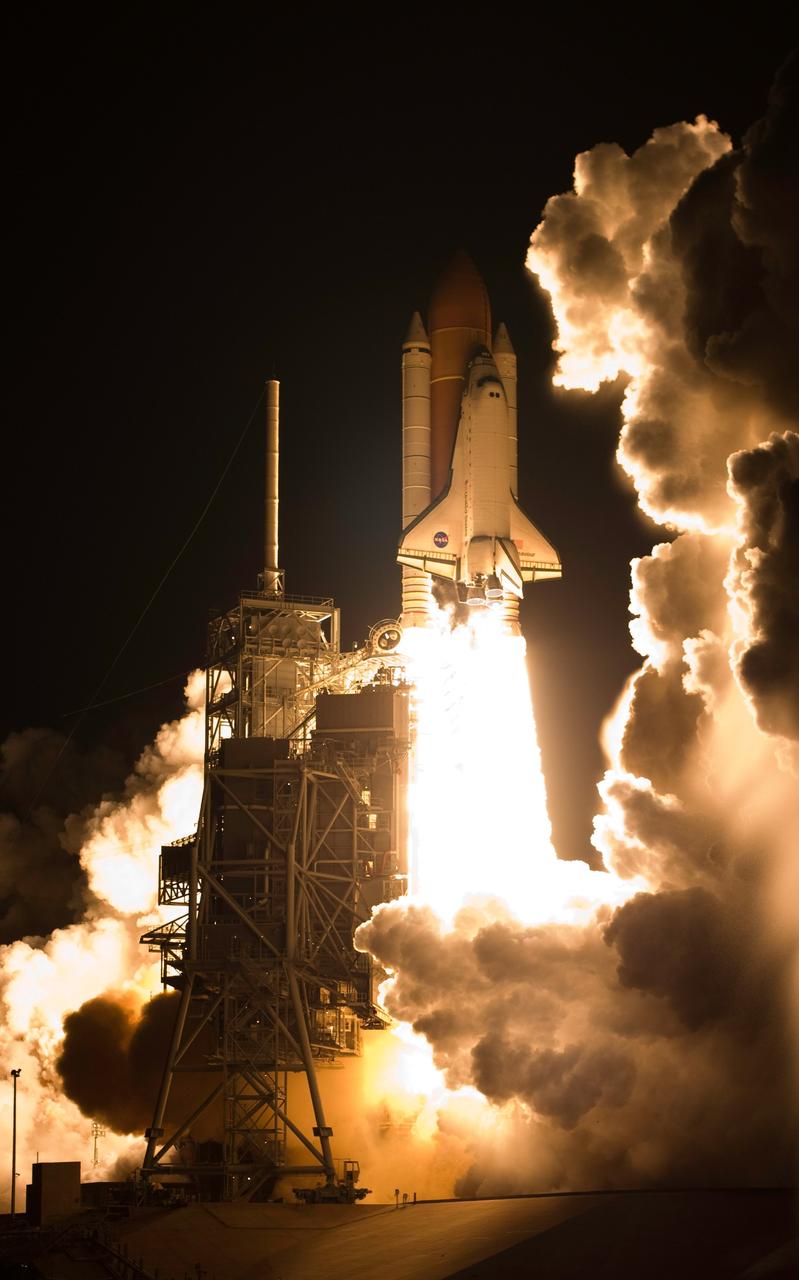
KENNEDY SPACE CENTER, FLA. -- Clouds of smoke and steam seem to envelop space shuttle Atlantis as it leaps into the night sky from Launch Pad 39A at NASA's Kennedy Space Center on the STS-123 mission. Liftoff was on time at 2:28 a.m. EDT. Endeavour's crew will make a record-breaking 16-day mission to the International Space Station and deliver the first section of the Japan Aerospace Exploration Agency's Kibo laboratory and the Canadian Space Agency's two-armed robotic system, Dextre. Photo courtesy of Scott Andrews
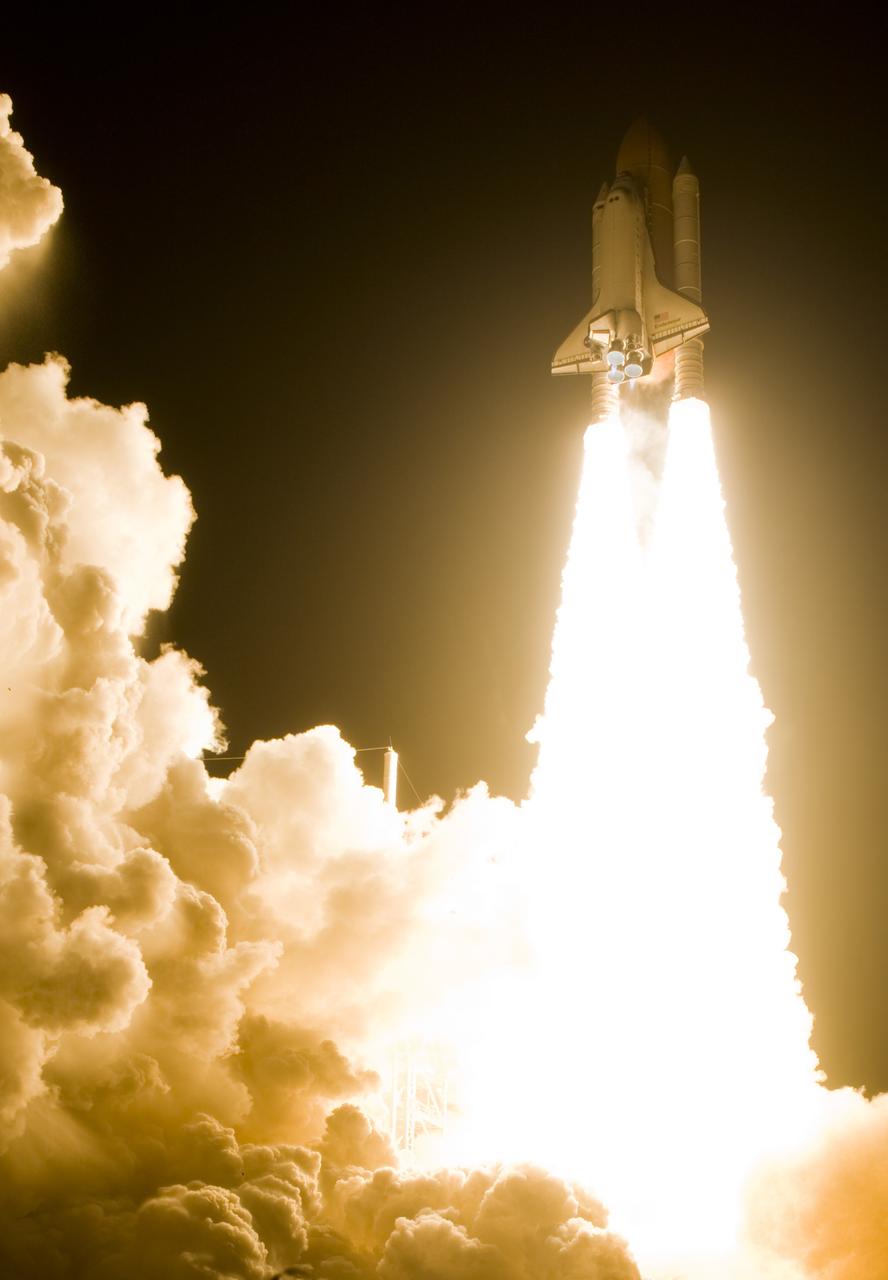
CAPE CANAVERAL, Fla. – Atop twin towers of flame, space shuttle Endeavour erupts from the smoke and steam as it hurtles into space from Launch Pad 39A at NASA's Kennedy Space Center in Florida. Liftoff on the STS-126 mission was on time at 7:55 p.m. EST. STS-126 is the 124th space shuttle flight and the 27th flight to the International Space Station. The mission will feature four spacewalks and work that will prepare the space station to house six crew members for long-duration missions. Photo courtesy of Scott Andrews

Attendees view a 3D panorama of Mars during a Mars celebration event Friday, May 31, 2019, in Mars, Pennsylvania. NASA is in the small town to celebrate Mars exploration and share the agency’s excitement about landing astronauts on the Moon in five years. The celebration includes a weekend of Science, Technology, Engineering, Arts and Mathematics (STEAM) activities. Photo Credit: (NASA/Bill Ingalls)

Sandy Krasner from NASA's Jet Propulsion Laboratory discusses the Mars InSight lander with attendees of a Mars celebration Friday, May 31, 2019, in Mars, Pennsylvania. NASA is in the small town to celebrate Mars exploration and share the agency’s excitement about landing astronauts on the Moon in five years. The celebration includes a weekend of Science, Technology, Engineering, Arts and Mathematics (STEAM) activities. Photo Credit: (NASA/Bill Ingalls)
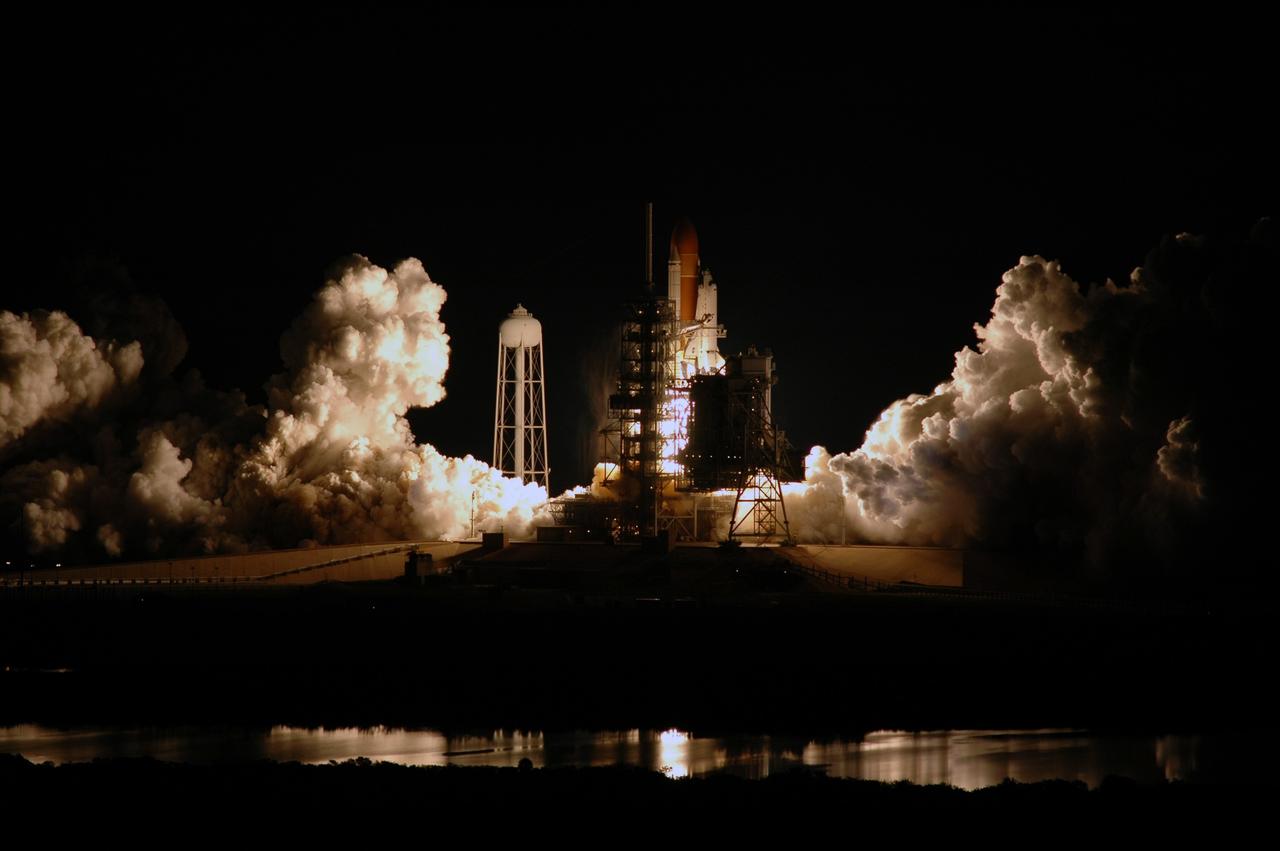
KENNEDY SPACE CENTER, FLA. -- The clouds of smoke and steam generated during liftoff of space shuttle Endeavour on the STS-123 mission capture the light from the flames flowing from the engines and solid rocket boosters. Liftoff was on time at 2:28 a.m. EDT. The crew will make a record-breaking 16-day mission to the International Space Station and deliver the first section of the Japan Aerospace Exploration Agency's Kibo laboratory and the Canadian Space Agency's two-armed robotic system, Dextre. Photo credit: NASA/Jim Grossmann

A woman photographs her two dogs during a Mars celebration event Friday, May 31, 2019, in Mars, Pennsylvania. NASA is in the small town to celebrate Mars exploration and share the agency’s excitement about landing astronauts on the Moon in five years. The celebration includes a weekend of Science, Technology, Engineering, Arts and Mathematics (STEAM) activities. Photo Credit: (NASA/Bill Ingalls)

NASA Chief Technologist Douglas Terrier talks about NASA's plans for going forward to the Moon and Mars during a Mars celebration Saturday, June 1, 2019, in Mars, Pennsylvania. NASA is in the small town to celebrate Mars exploration and share the agency’s excitement about landing astronauts on the Moon in five years. The celebration includes a weekend of Science, Technology, Engineering, Arts and Mathematics (STEAM) activities. Photo Credit: (NASA/Bill Ingalls)

A drone show is seen during the Mars celebration Friday, May 31, 2019, in Mars, Pennsylvania. NASA is in the small town to celebrate Mars exploration and share the agency’s excitement about landing astronauts on the Moon in five years. The celebration includes a weekend of Science, Technology, Engineering, Arts and Mathematics (STEAM) activities. Photo Credit: (NASA/Bill Ingalls)
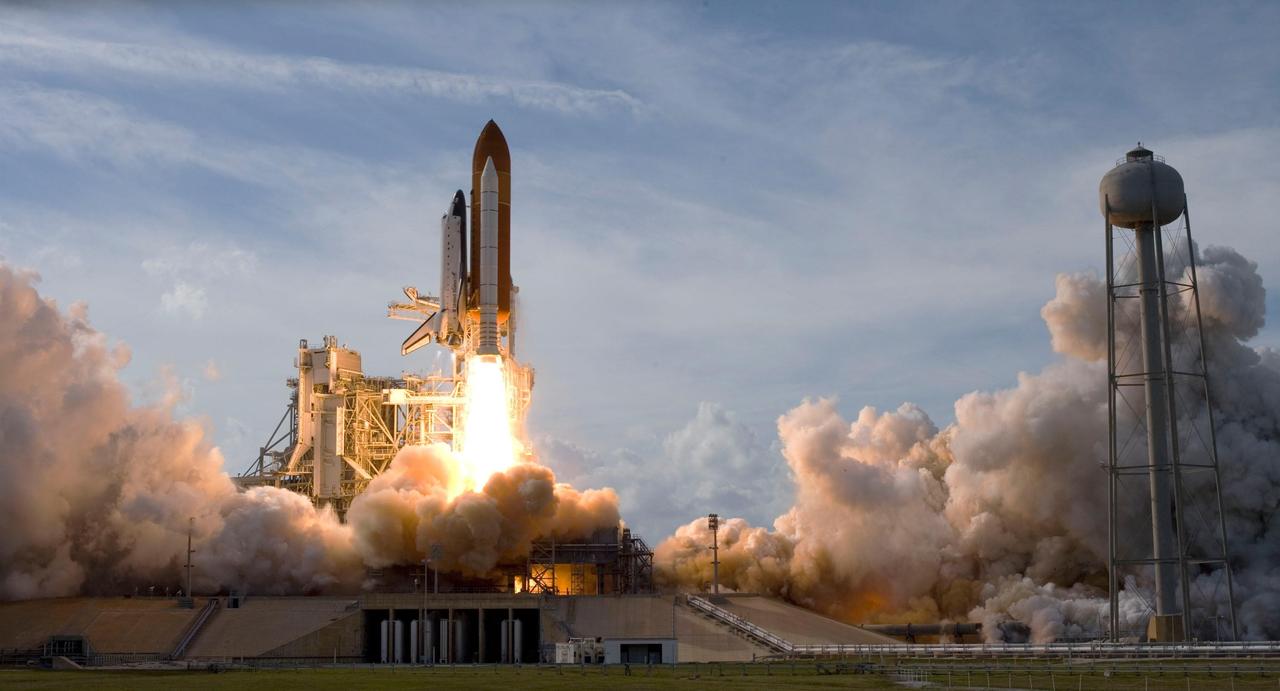
KENNEDY SPACE CENTER, FLA. -- Emerging from the billows of smoke and steam on Launch Pad 39A, space shuttle Atlantis hurtles into space for a rendezvous with the International Space Station on mission STS-122. Liftoff was on time at 2:45 p.m. EST. This is the third launch attempt for Atlantis since December 2007 to carry the European Space Agency's Columbus laboratory to the station. During the 11-day mission, the crew's prime objective is to attach the laboratory to the Harmony module, adding to the station's size and capabilities. Photo credit: Scott Andrews

A participant of the Mars celebration launches a rocket, Saturday, June 1, 2019, in Mars, Pennsylvania. NASA is in the small town to celebrate Mars exploration and share the agency’s excitement about landing astronauts on the Moon in five years. The celebration includes a weekend of Science, Technology, Engineering, Arts and Mathematics (STEAM) activities. Photo Credit: (NASA/Bill Ingalls)
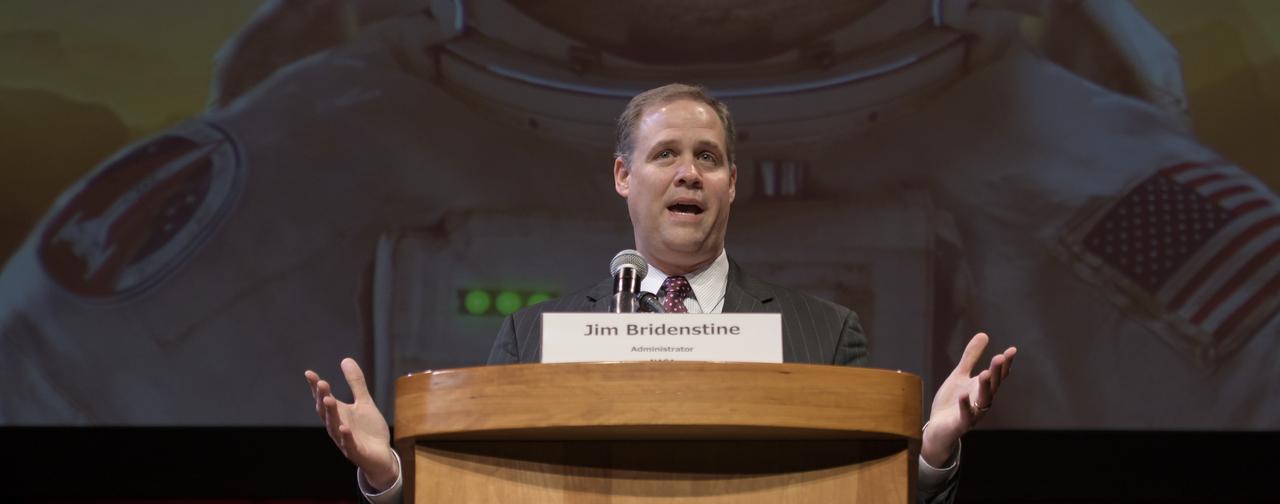
NASA Administrator Jim Bridenstine delivers the keynote speech at the Humans to Mars Summit (H2M), Wednesday, May 9, 2018 at George Washington University in Washington. Bridenstine joined more than 20 NASA scientists and technologists at the three-day event sponsored by Explore Mars Inc. It brought industry, government and the scientific, entertainment and academic communities together to discuss technology developments, foster partnerships, and encourage students to pursue STEAM careers. Photo Credit: (NASA/Bill Ingalls)
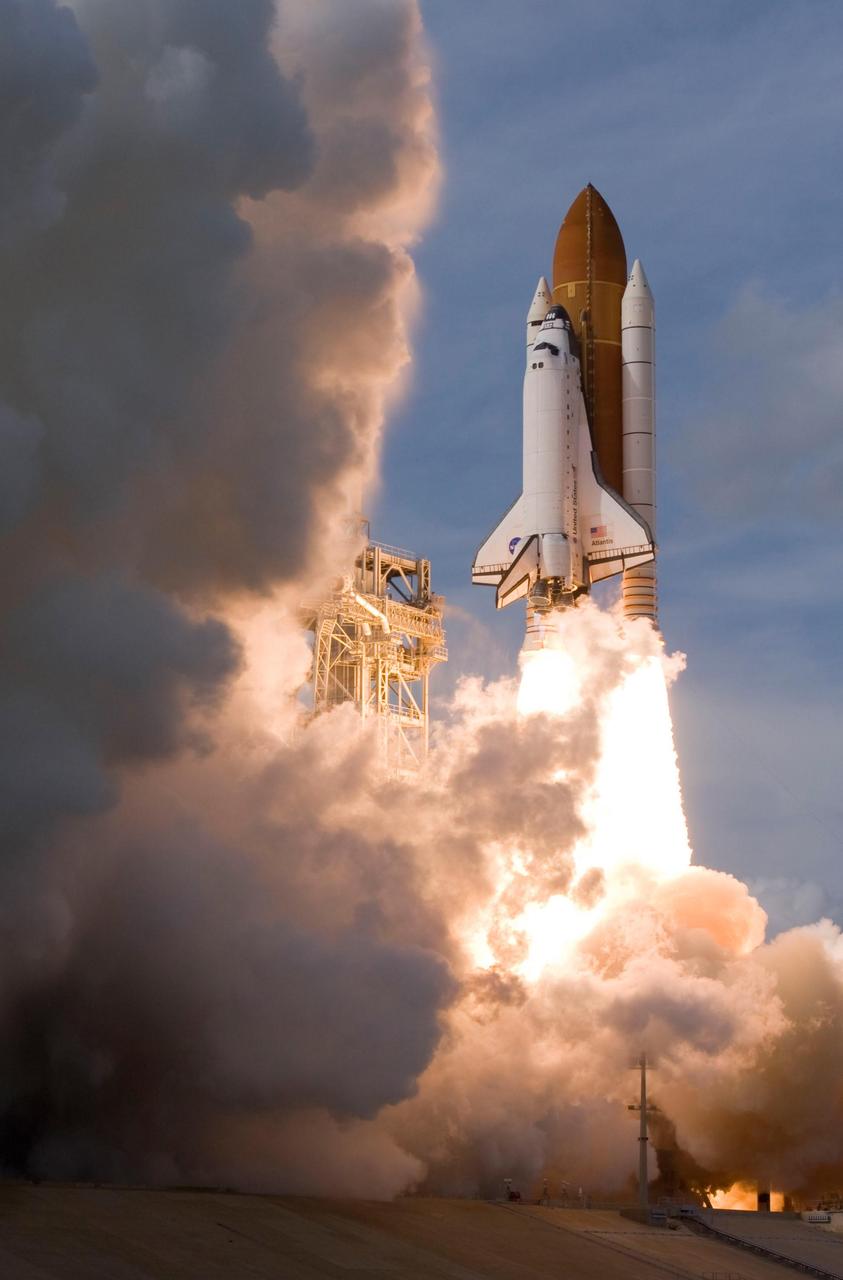
KENNEDY SPACE CENTER, FLA. -- Billows of smoke and steam nearly obscure the twin columns of fire boosting space shuttle Atlantis into space for a rendezvous with the International Space Station on mission STS-122. Liftoff was on time at 2:45 p.m. EST. This is the third launch attempt for Atlantis since December 2007 to carry the European Space Agency's Columbus laboratory to the station. During the 11-day mission, the crew's prime objective is to attach the laboratory to the Harmony module, adding to the station's size and capabilities. Photo credit: Scott Andrews

NASA Chief Technologist Douglas Terrier talks about NASA's plans for going forward to the Moon and Mars during a Mars celebration Saturday, June 1, 2019, in Mars, Pennsylvania. NASA is in the small town to celebrate Mars exploration and share the agency’s excitement about landing astronauts on the Moon in five years. The celebration includes a weekend of Science, Technology, Engineering, Arts and Mathematics (STEAM) activities. Photo Credit: (NASA/Bill Ingalls)

NASA Chief Technologist Douglas Terrier talks about NASA's plans for going forward to the Moon and Mars during a Mars celebration Saturday, June 1, 2019, in Mars, Pennsylvania. NASA is in the small town to celebrate Mars exploration and share the agency’s excitement about landing astronauts on the Moon in five years. The celebration includes a weekend of Science, Technology, Engineering, Arts and Mathematics (STEAM) activities. Photo Credit: (NASA/Bill Ingalls)
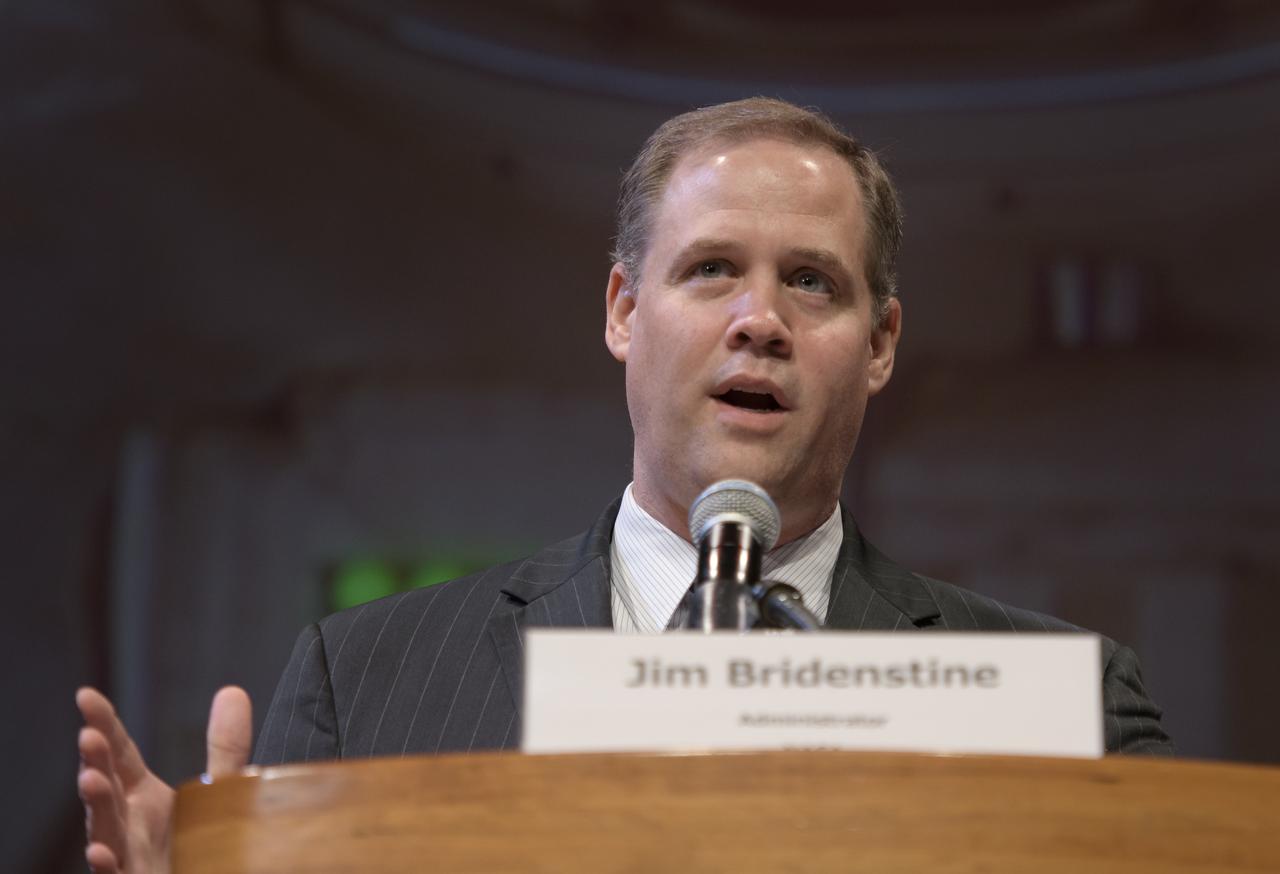
NASA Administrator Jim Bridenstine delivers the keynote speech at the Humans to Mars Summit (H2M), Wednesday, May 9, 2018 at George Washington University in Washington. Bridenstine joined more than 20 NASA scientists and technologists at the three-day event sponsored by Explore Mars Inc. It brought industry, government and the scientific, entertainment and academic communities together to discuss technology developments, foster partnerships, and encourage students to pursue STEAM careers. Photo Credit: (NASA/Bill Ingalls)
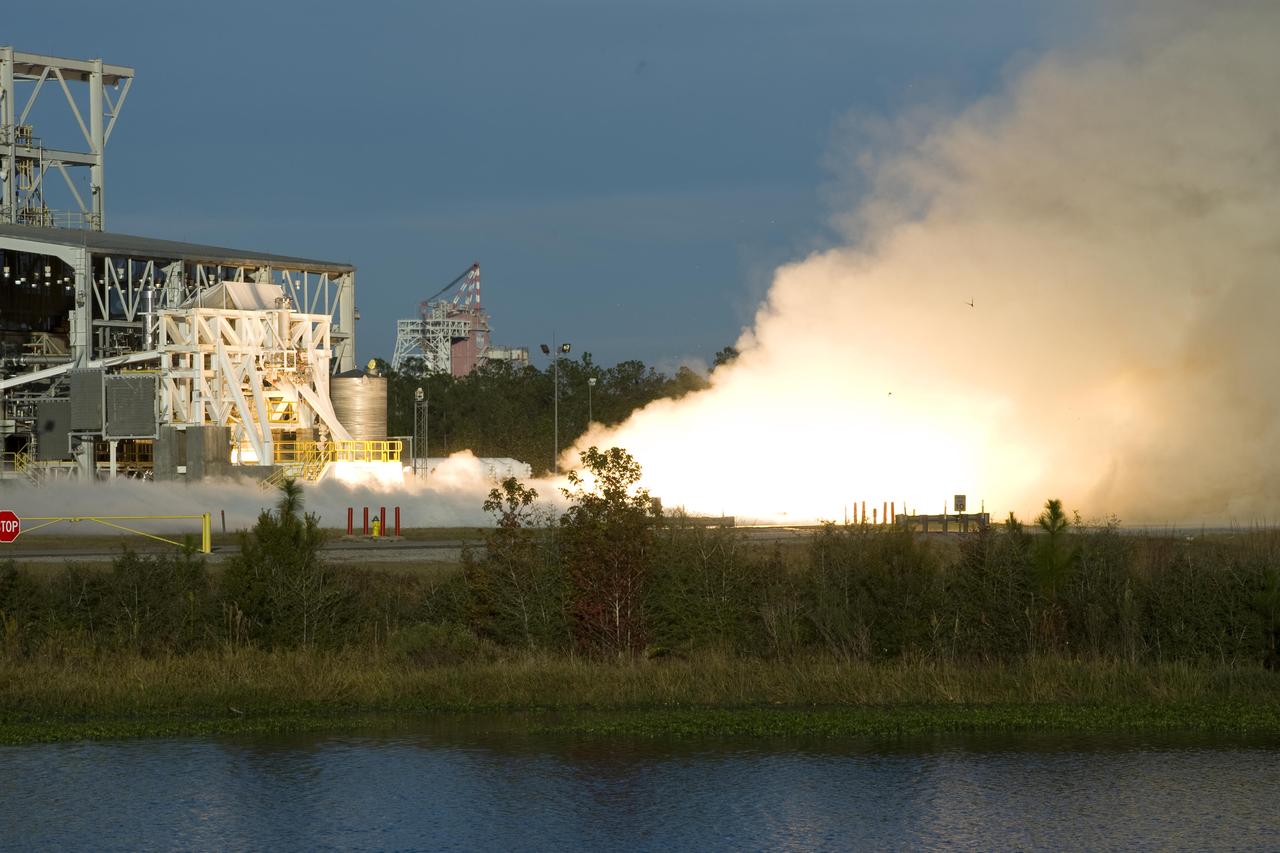
Fire and steam signal a successful test firing of Orbital Sciences Corporation's Aerojet AJ26 rocket engine at John C. Stennis Space Center. AJ26 engines will be used to power Orbital's Taurus II space vehicle on commercial cargo flights to the International Space Station. On Nov. 10, operators at Stennis' E-1 Test Stand conducted a 10-second test fire of the engine, the first of a series of three verification tests. Orbital has partnered with NASA to provide eight missions to the ISS by 2015.
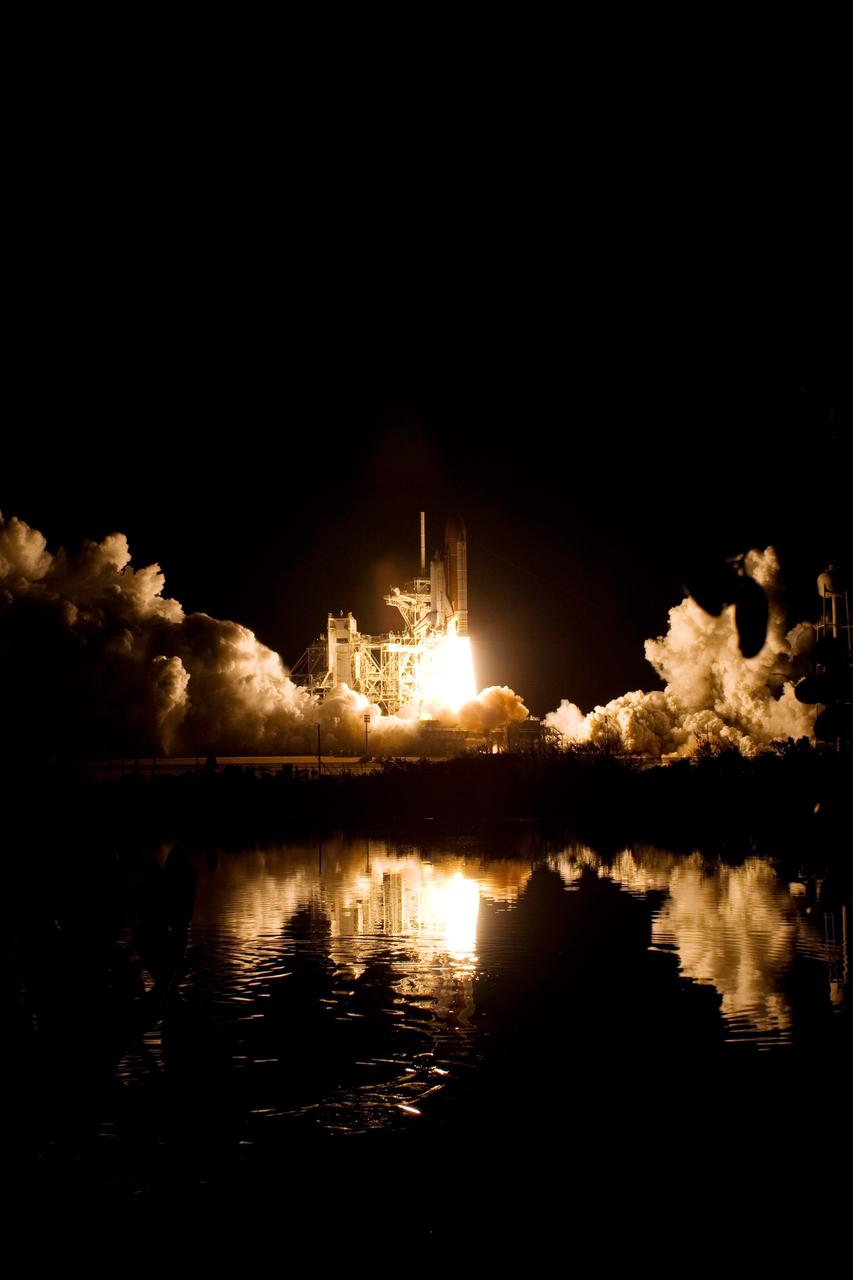
KENNEDY SPACE CENTER, FLA. -- Clouds of smoke and steam capture light from the fiery columns beneath space shuttle Endeavour as it lifts off on the STS-123 mission. Liftoff was on time at 2:28 a.m. EDT. The crew will make a record-breaking 16-day mission to the International Space Station and deliver the first section of the Japan Aerospace Exploration Agency's Kibo laboratory and the Canadian Space Agency's two-armed robotic system, Dextre. Photo credit: NASA/Sandra Joseph, Tony Gray, Robert Murray
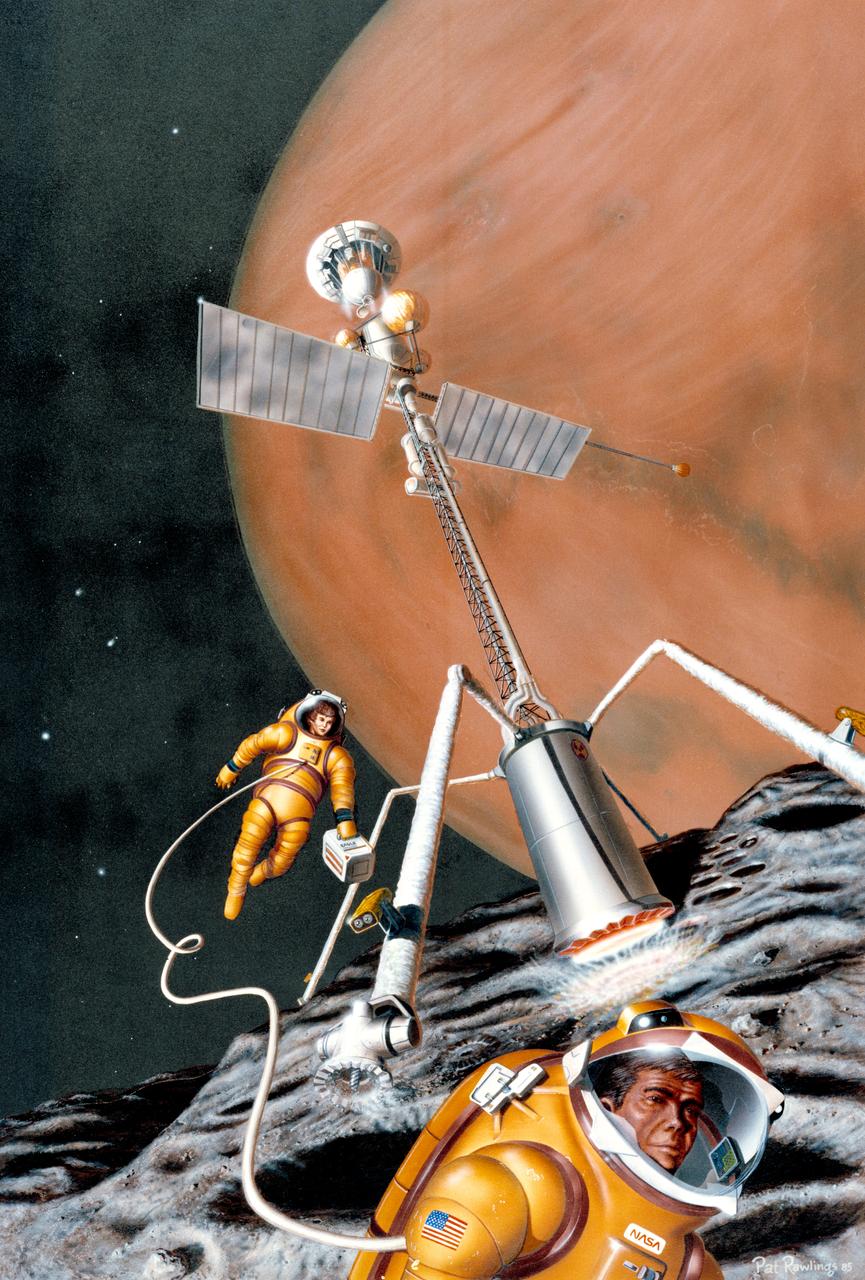
S86-25375 (1986) --- (Artist's concept of possible exploration programs.) On Phobos, the innermost moon of Mars and likely location for extraterrestrial resources, a mobile propellant-production plant lumbers across the irregular surface. Using a nuclear reactor the large tower melts into the surface, generating steam which is converted into liquid hydrogen and liquid oxygen. Artwork by Pat Rawlings, of Eagle Engineering, Incorporated.

NASA engineers discuss Mars exploration with attendees of a Mars celebration Friday, May 31, 2019, in Mars, Pennsylvania. NASA is in the small town to celebrate Mars exploration and share the agency’s excitement about landing astronauts on the Moon in five years. The celebration includes a weekend of Science, Technology, Engineering, Arts and Mathematics (STEAM) activities. Photo Credit: (NASA/Bill Ingalls)