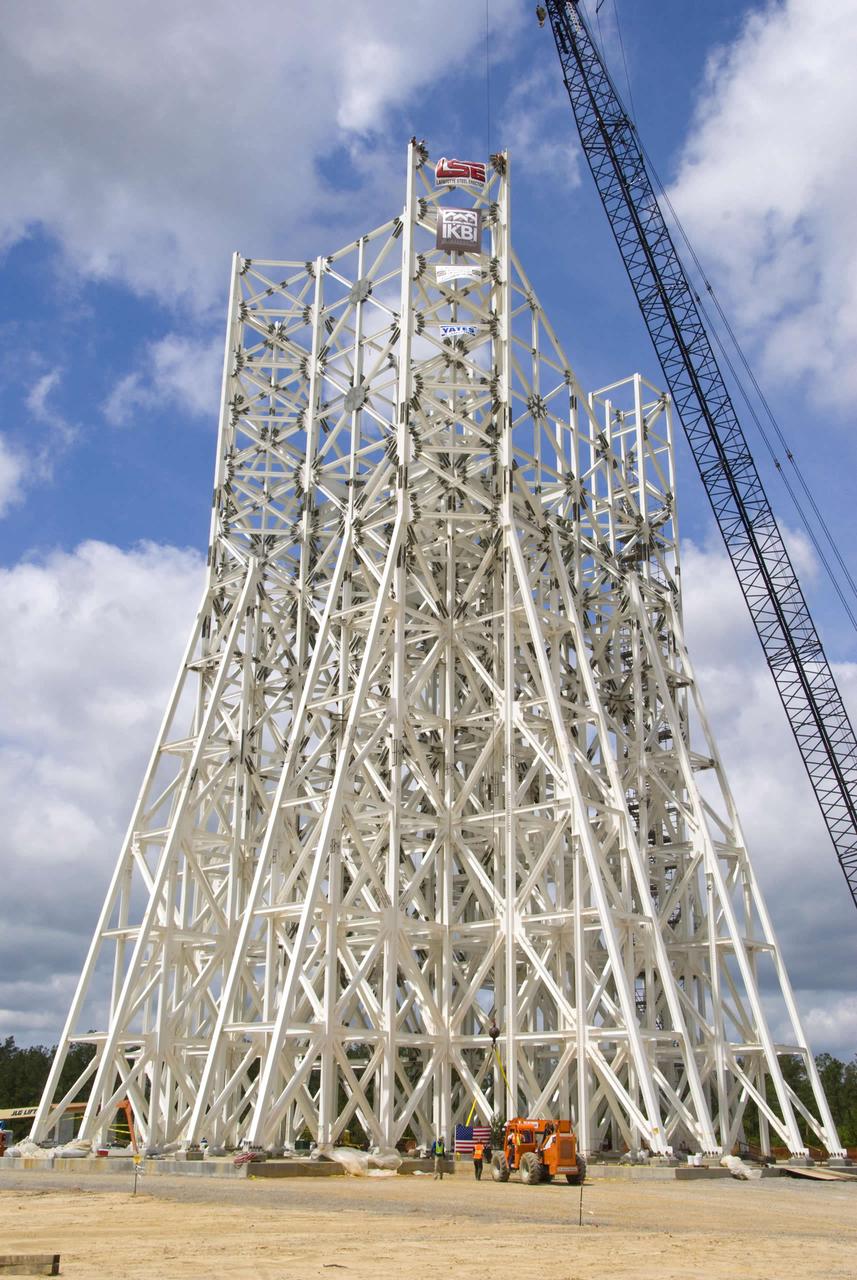
Stennis Space Center engineers celebrated a key milestone in construction of the A-3 Test Stand on April 9 - completion of structural steel work. Workers with Lafayette (La.) Steel Erector Inc. placed the last structural steel beam atop the stand during a noon ceremony attended by more than 100 workers and guests.
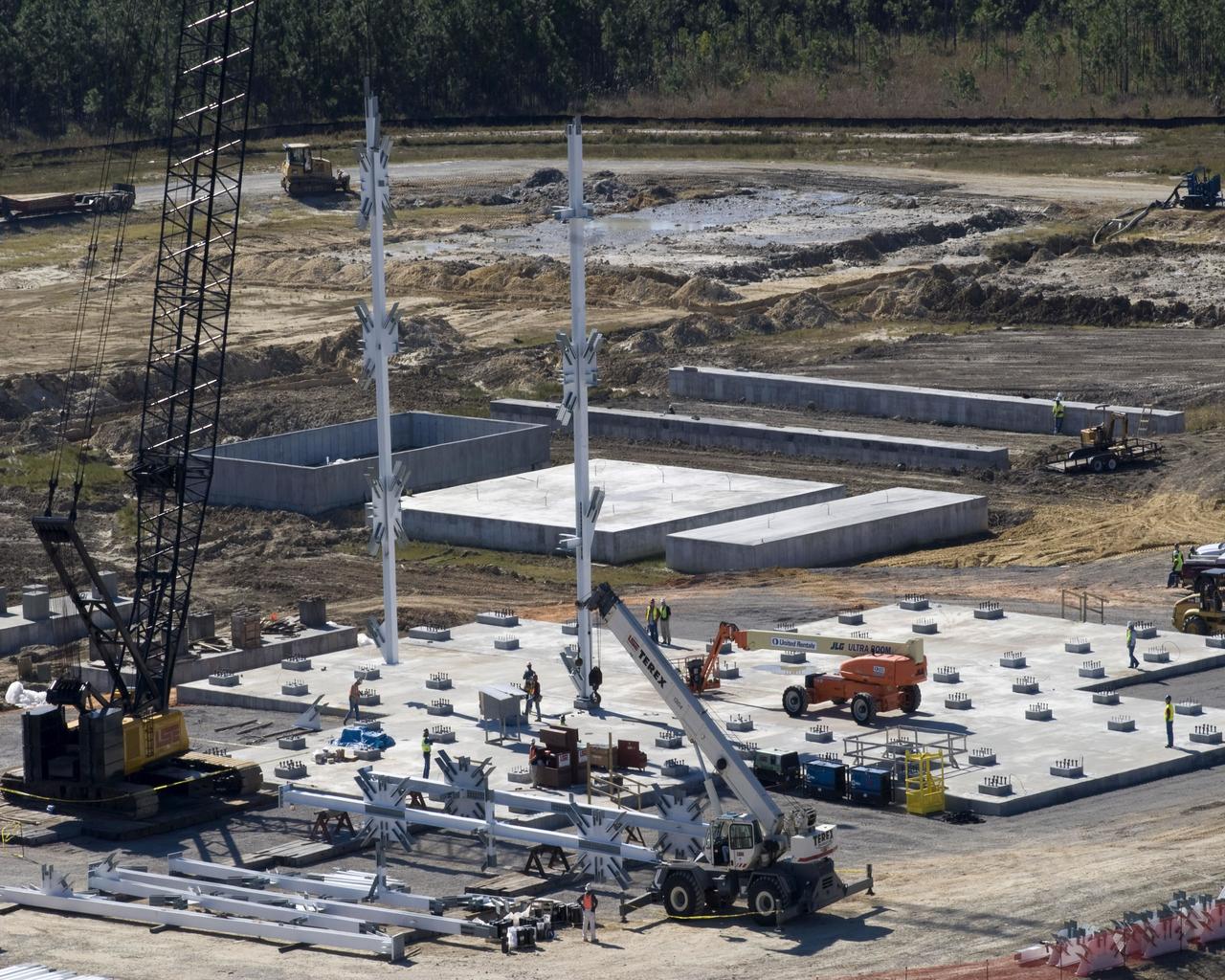
Workers erect the first fabricated steel girders to arrive at the A-3 Test Stand at Stennis Space Center. Steel work began at the construction site Oct. 29 and is scheduled to continue into next spring.
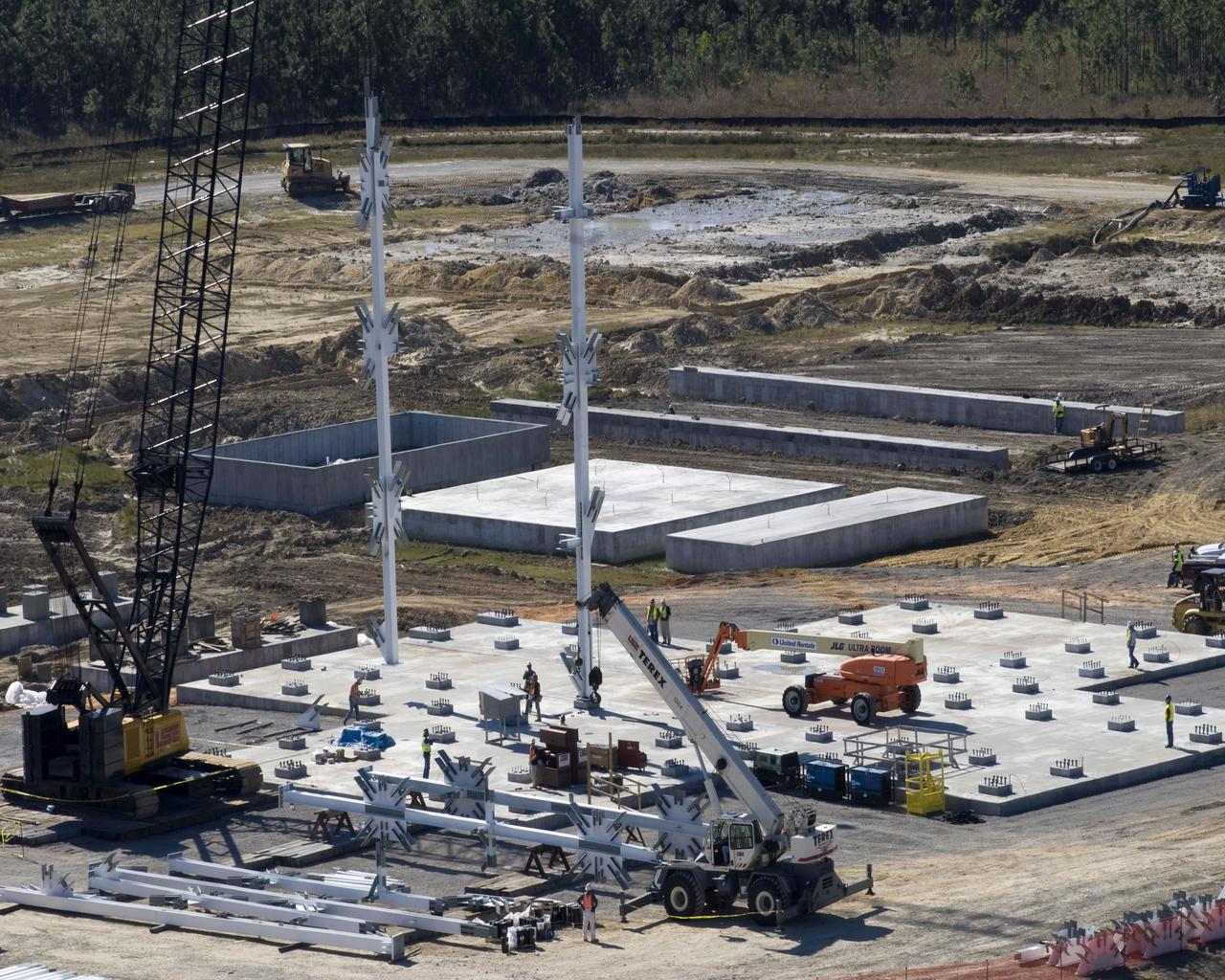
Fabricated steel began arriving by truck Oct. 24 for construction of the A-3 Test Stand that will be used to test the engine for the nation's next generation of moon rockets. Within days workers from Lafayette Steel Erector Inc. began assembling the 16 steel stages needed on the foundation and footings poured in the previous year.
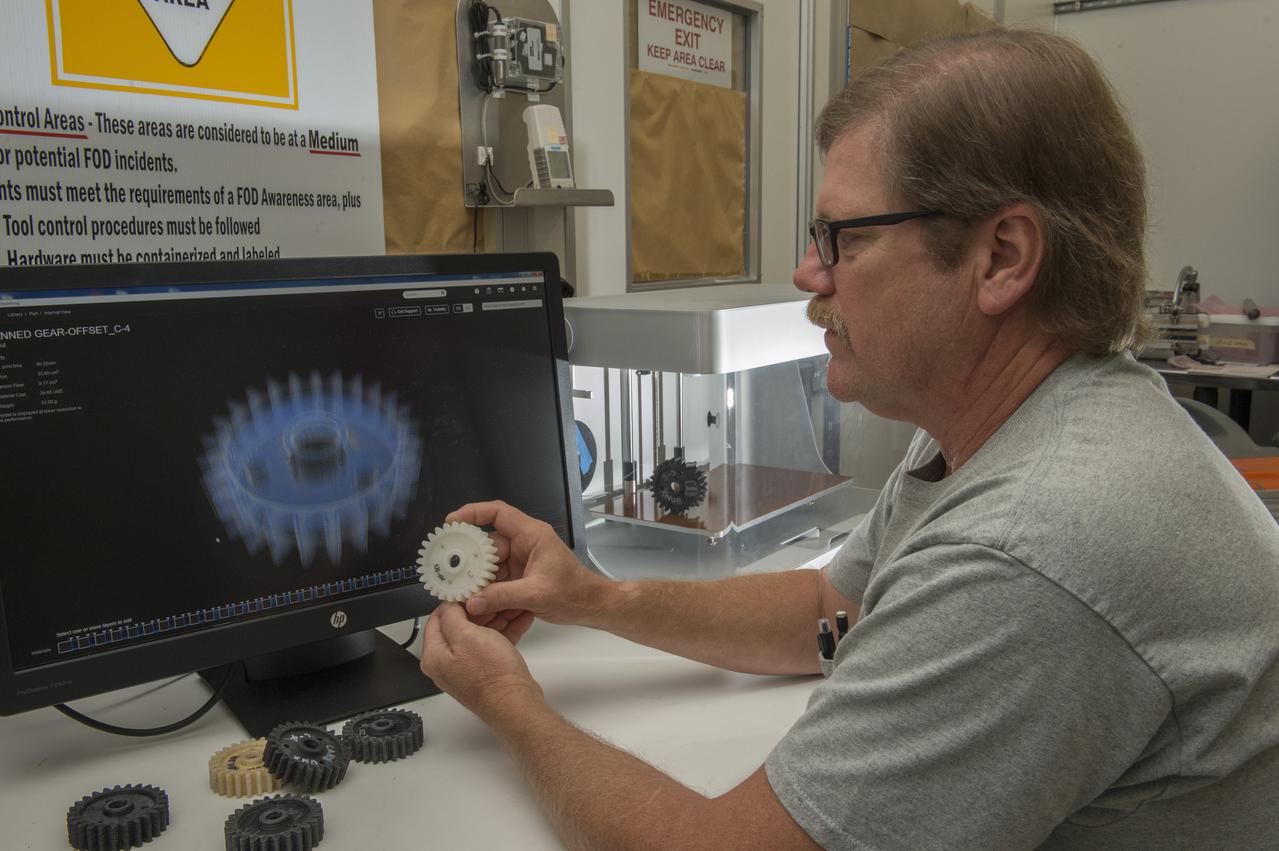
Phillip Steele (EM42/ESSSA) examines composite material gears printed with Marshall’s MarkForged® 3D Printer (background).
![“At the end of the day people won't remember what you said or did. They will remember how you made them feel.’ [This quote] resonates with me because I feel my job in public engagement is creating unique experiences for people, so when they walk away you’ve touched them in a way that leaves a meaningful impression. “[The ceremony] was more than just a street renaming. In my mind, I was thinking, who am I doing this for? I am doing this for any person who feels that he or she was not valued, or perhaps they were not seen or not heard. What will people think when they walk up and see Hidden Figures Way? Will they think of those times in their life where they weren't seen, or they felt they didn't have a voice? “It was a time to make that [street] meaningful and to leave a lasting impression with people to see that name and feel proud to be part of it. That was a really proud moment for me to be charged with bringing [the ceremony] together and creating this memorable experience.” Chief of the Public Engagement Division at NASA Headquarters, Cindy Steele, poses for a portrait, Monday, February 8, 2021 at NASA Headquarters in Washington. Photo Credit: (NASA/Aubrey Gemignani)](https://images-assets.nasa.gov/image/NHQ202102090001/NHQ202102090001~medium.jpg)
“At the end of the day people won't remember what you said or did. They will remember how you made them feel.’ [This quote] resonates with me because I feel my job in public engagement is creating unique experiences for people, so when they walk away you’ve touched them in a way that leaves a meaningful impression. “[The ceremony] was more than just a street renaming. In my mind, I was thinking, who am I doing this for? I am doing this for any person who feels that he or she was not valued, or perhaps they were not seen or not heard. What will people think when they walk up and see Hidden Figures Way? Will they think of those times in their life where they weren't seen, or they felt they didn't have a voice? “It was a time to make that [street] meaningful and to leave a lasting impression with people to see that name and feel proud to be part of it. That was a really proud moment for me to be charged with bringing [the ceremony] together and creating this memorable experience.” Chief of the Public Engagement Division at NASA Headquarters, Cindy Steele, poses for a portrait, Monday, February 8, 2021 at NASA Headquarters in Washington. Photo Credit: (NASA/Aubrey Gemignani)
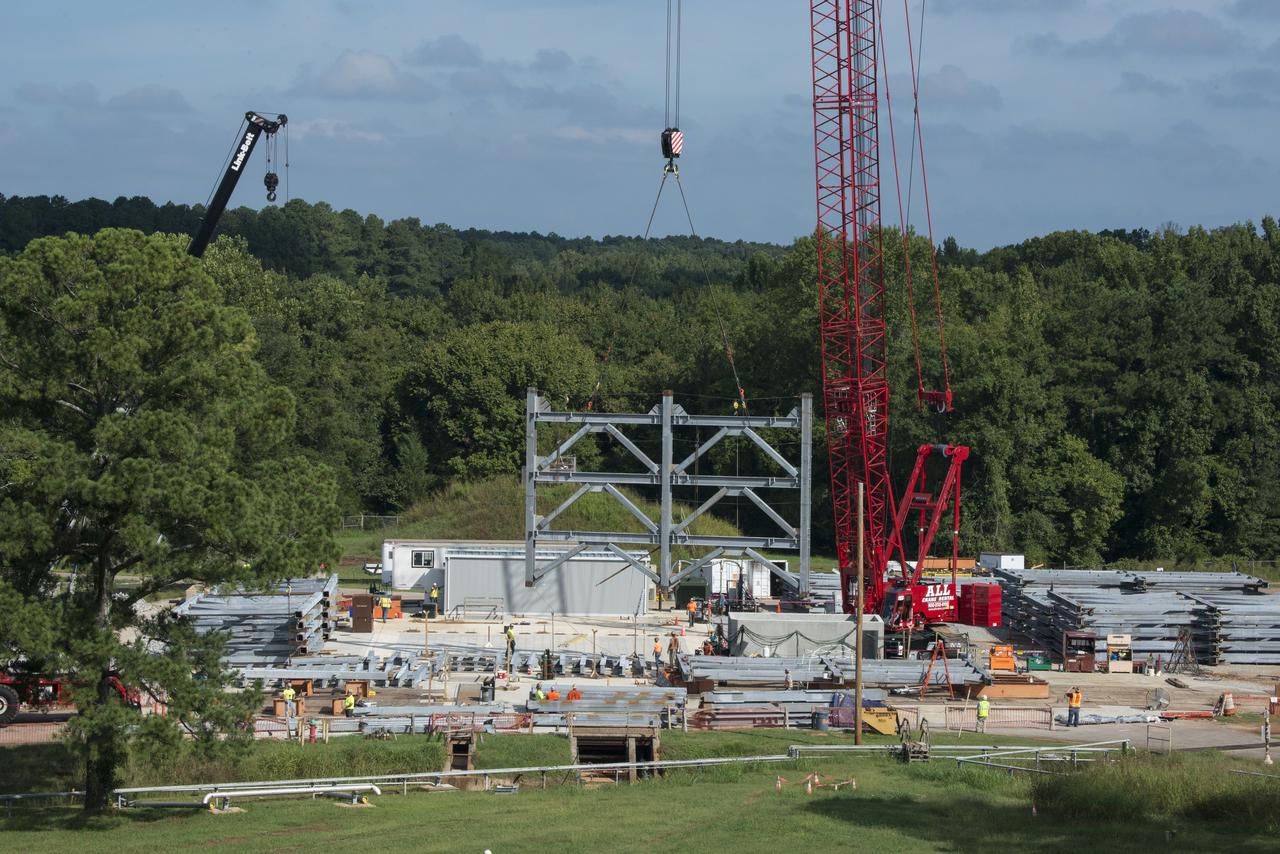
PLACEMENT OF THE FIRST STEEL GIRDERS FOR THE NEW SLS TEST STAND # 4693

PLACEMENT OF THE FIRST STEEL GIRDERS FOR THE NEW SLS TEST STAND # 4693
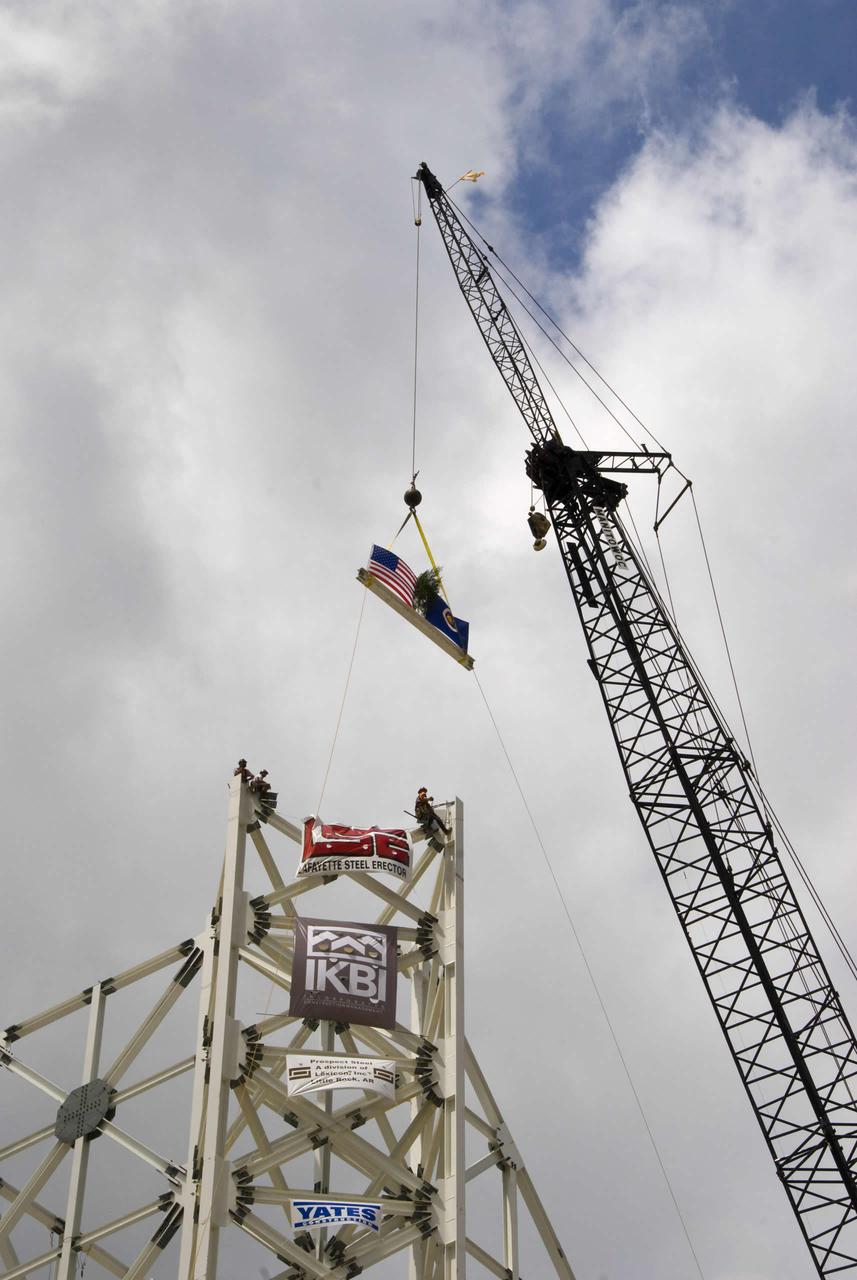
The final structural steel beam, bearing flags and the names of project workers, is hoisted and fastened into place atop the A-3 Test Stand.
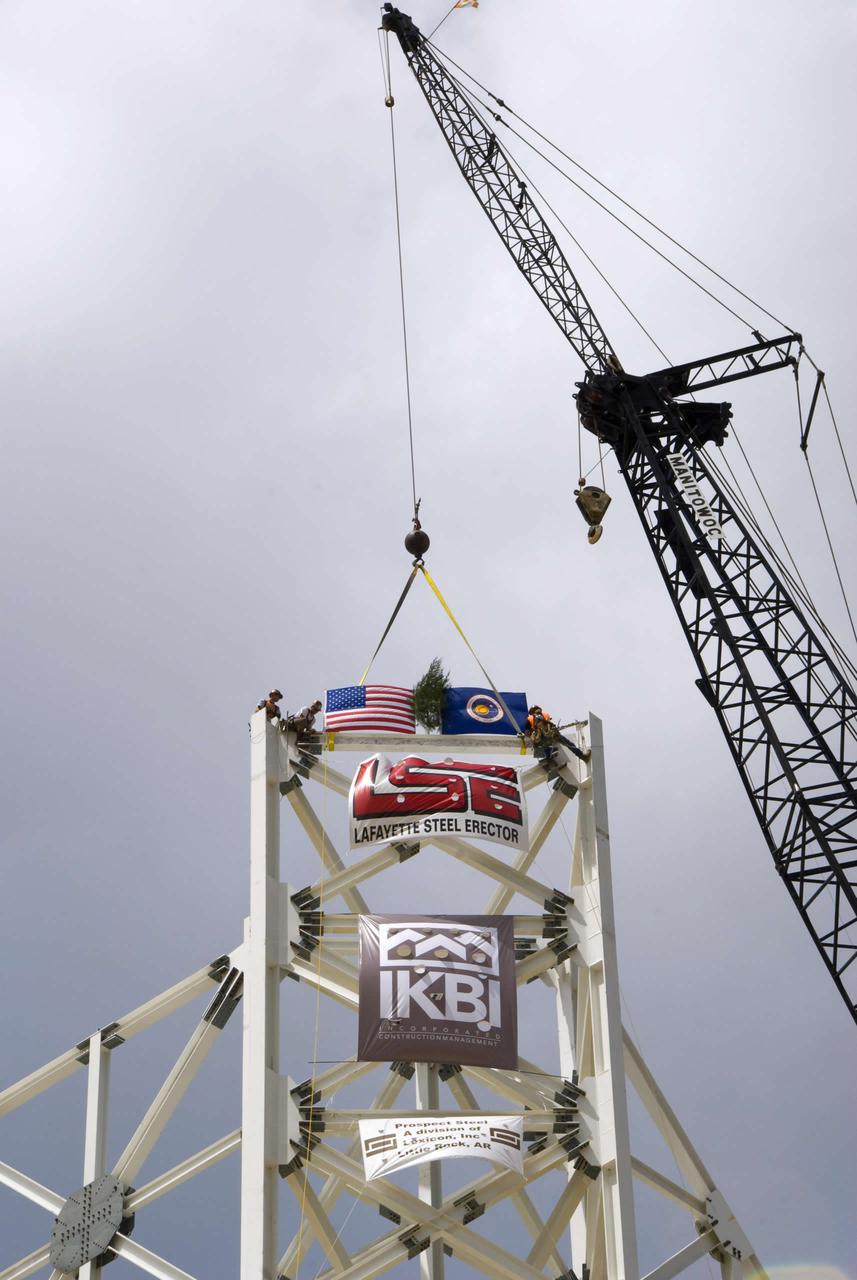
The final structural steel beam, bearing flags and the names of project workers, is hoisted and fastened into place atop the A-3 Test Stand.
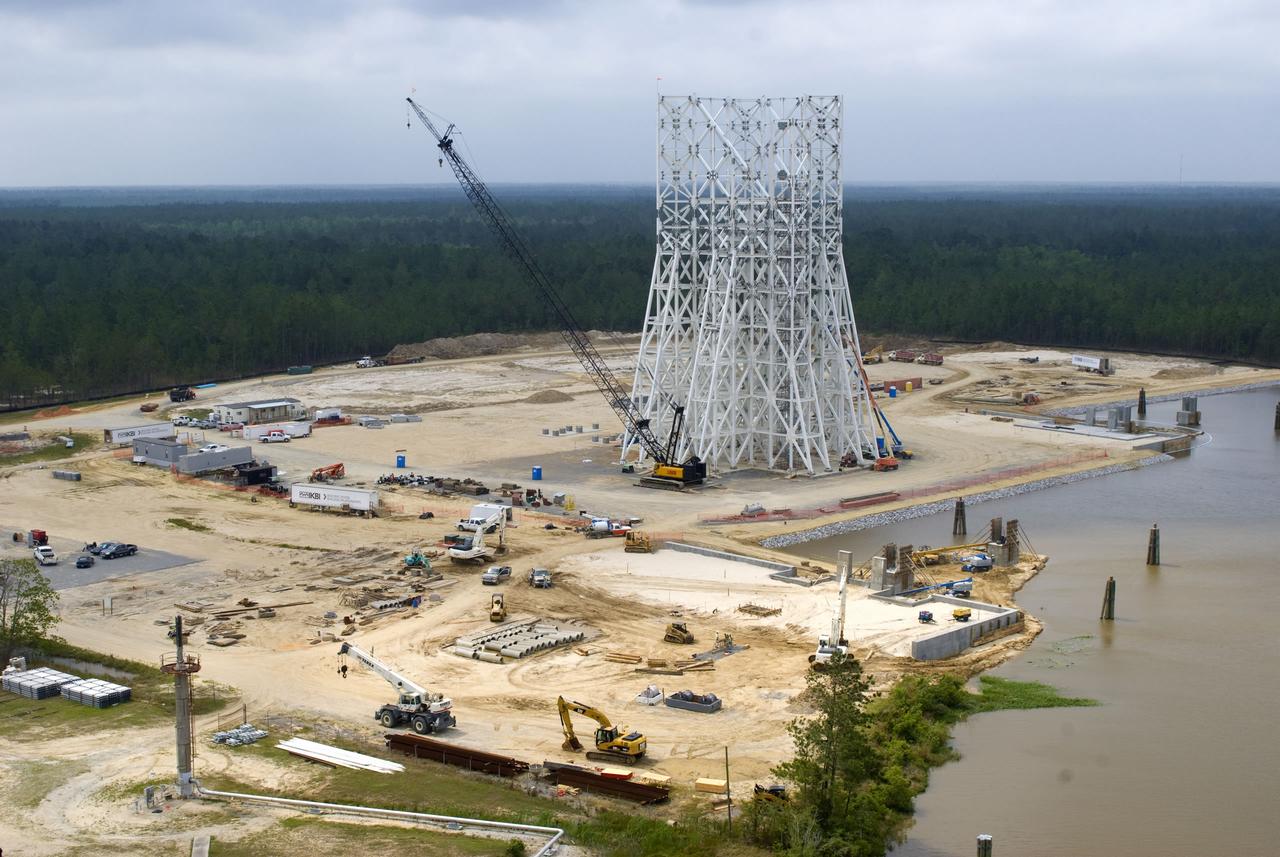
Structural steel work is completed on the 235-foot A-3 Test Stand at NASA's John C. Stennis Space Center. Stennis engineers celebrated this key milestone in construction April 9.
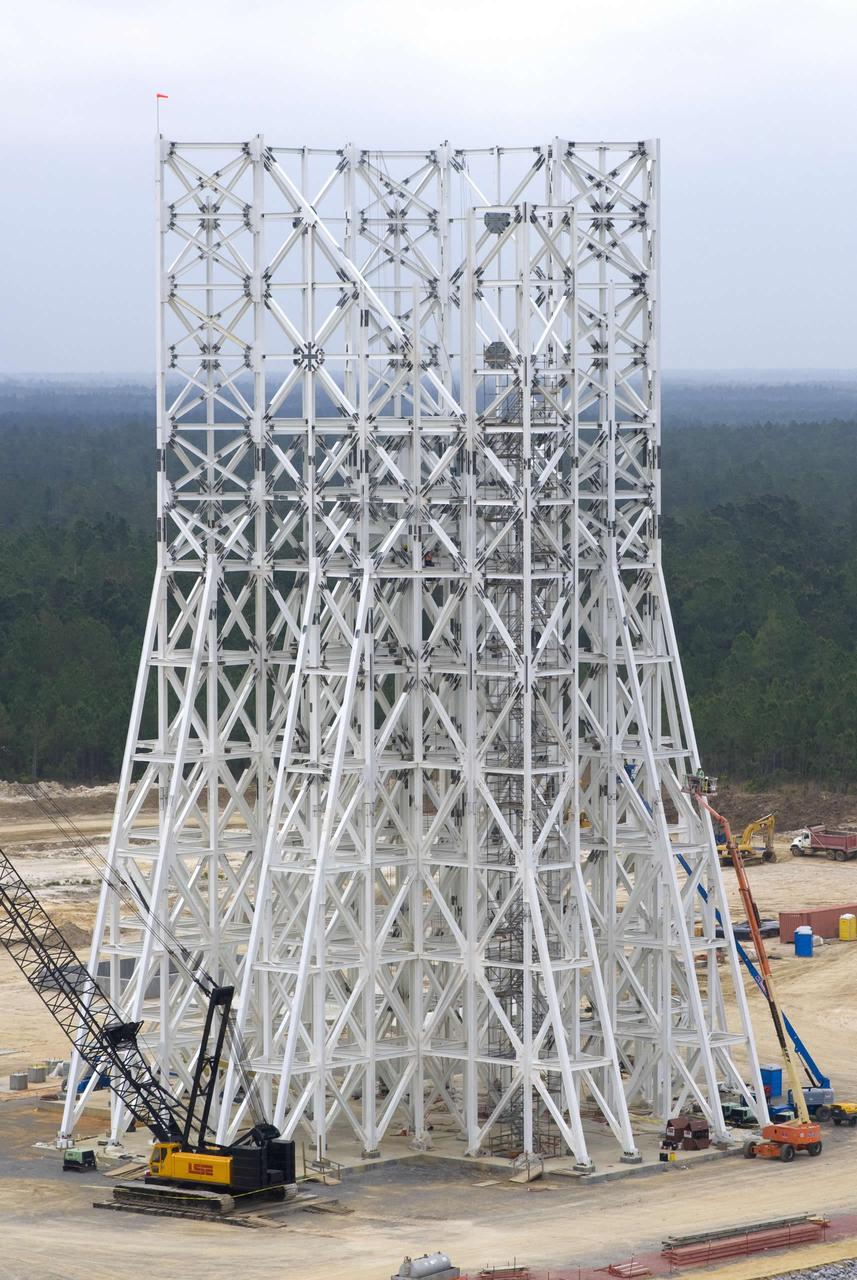
Structural steel work is completed on the 235-foot A-3 Test Stand at NASA's John C. Stennis Space Center. Stennis engineers celebrated this key milestone in construction April 9.
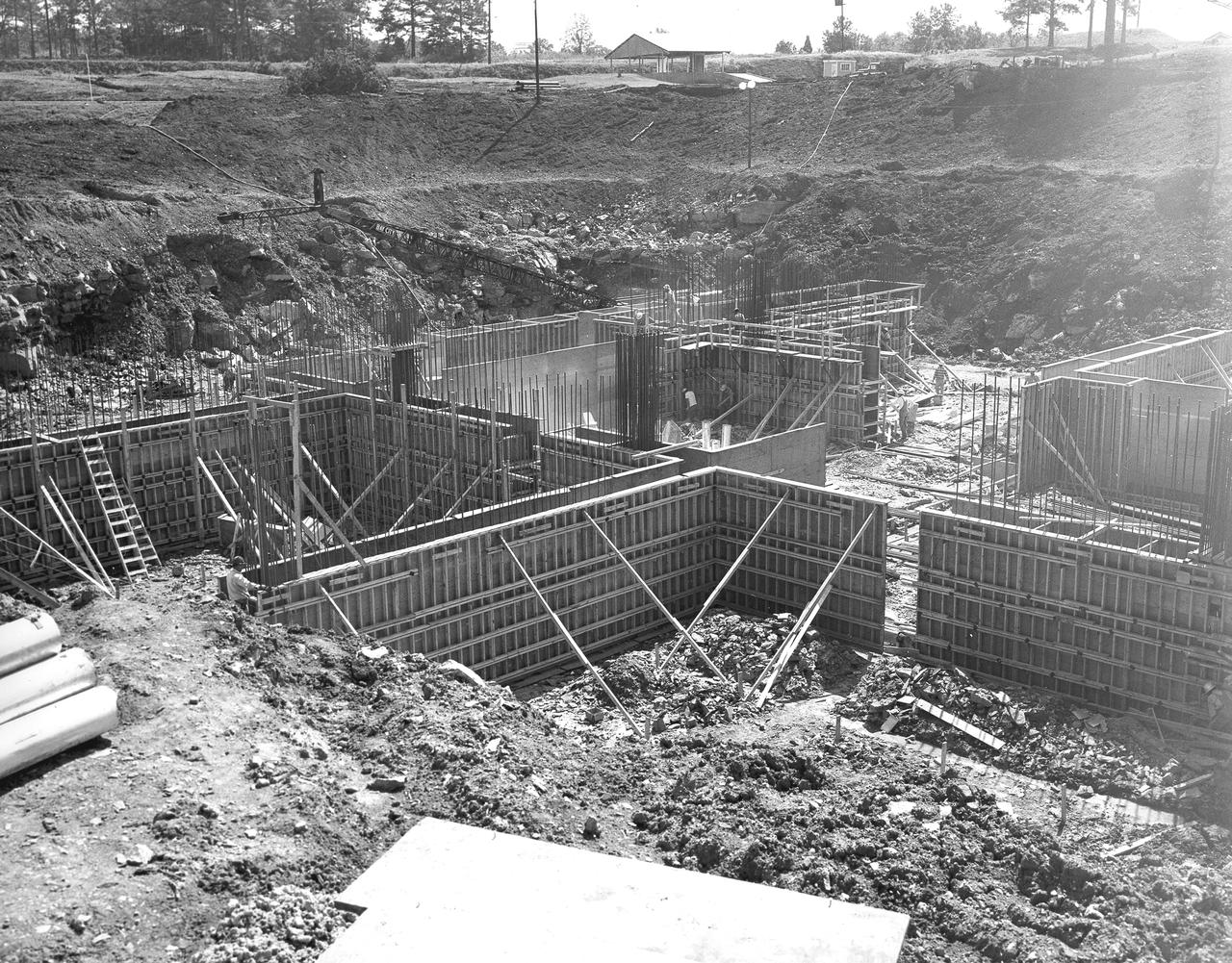
At its founding, the Marshall Space Flight Center (MSFC) inherited the Army’s Jupiter and Redstone test stands, but much larger facilities were needed for the giant stages of the Saturn V. From 1960 to 1964, the existing stands were remodeled and a sizable new test area was developed. The new comprehensive test complex for propulsion and structural dynamics was unique within the nation and the free world, and they remain so today because they were constructed with foresight to meet the future as well as on going needs. Construction of the S-IC Static test stand complex began in 1961 in the west test area of MSFC, and was completed in 1964. The S-IC static test stand was designed to develop and test the 138-ft long and 33-ft diameter Saturn V S-IC first stage, or booster stage, weighing in at 280,000 pounds. Required to hold down the brute force of a 7,500,000-pound thrust produced by 5 F-1 engines, the S-IC static test stand was designed and constructed with the strength of hundreds of tons of steel and 12,000,000 pounds of cement, planted down to bedrock 40 feet below ground level. The foundation walls, constructed with concrete and steel, are 4 feet thick. The base structure consists of four towers with 40-foot-thick walls extending upward 144 feet above ground level. The structure was topped by a crane with a 135-foot boom. With the boom in the upright position, the stand was given an overall height of 405 feet, placing it among the highest structures in Alabama at the time. This photo, taken September 15, 1961, shows the installation of the reinforcing steel prior to the pouring of the concrete foundation walls.
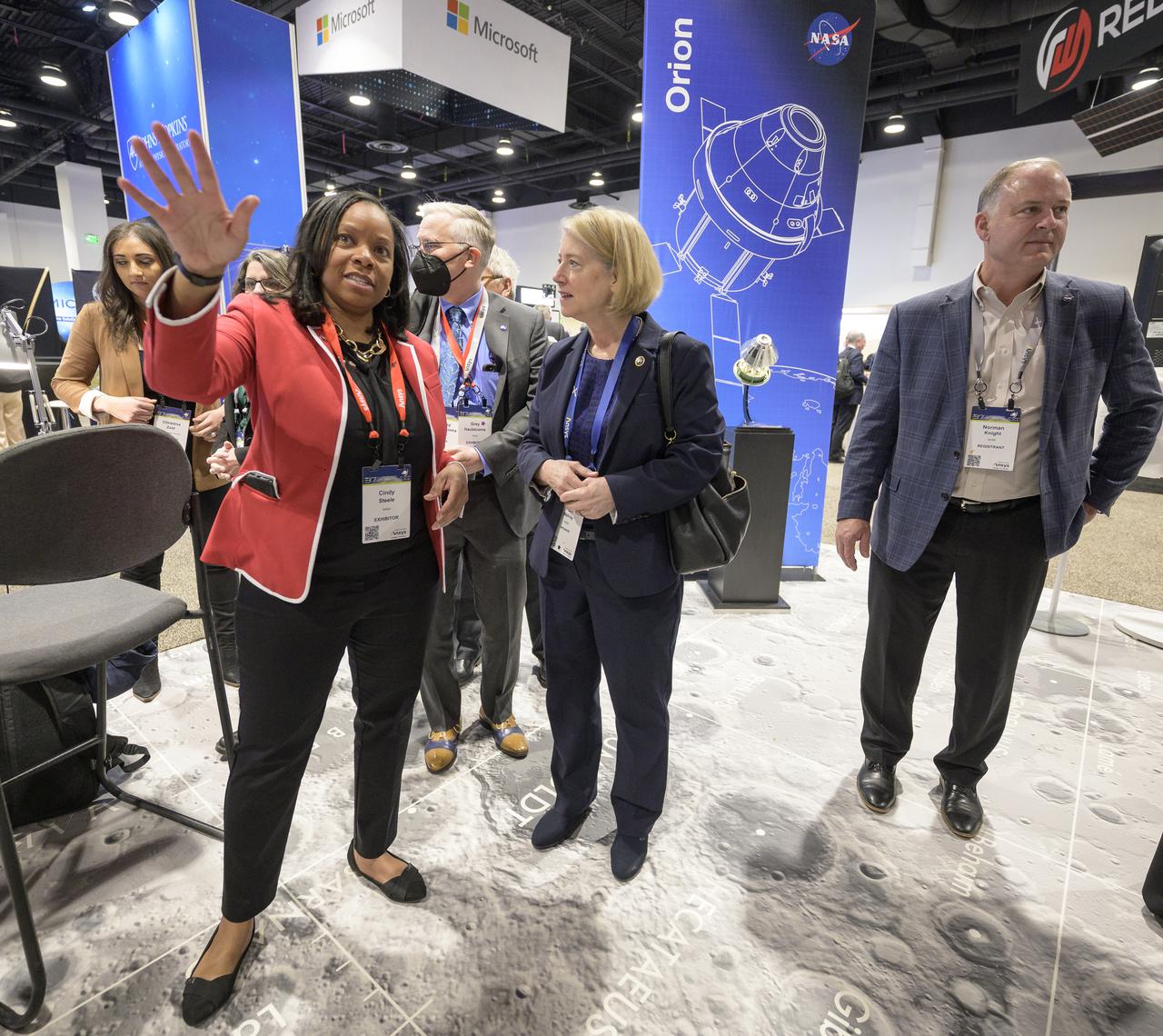
Cindy Steele from NASA Headquarters Communications shows NASA Deputy Administrator Pam Melroy the NASA Exhibit area during the 37th Space Symposium, Wednesday, April 6, 2022, in Colorado Springs, Colorado. Photo Credit: (NASA/Bill Ingalls)
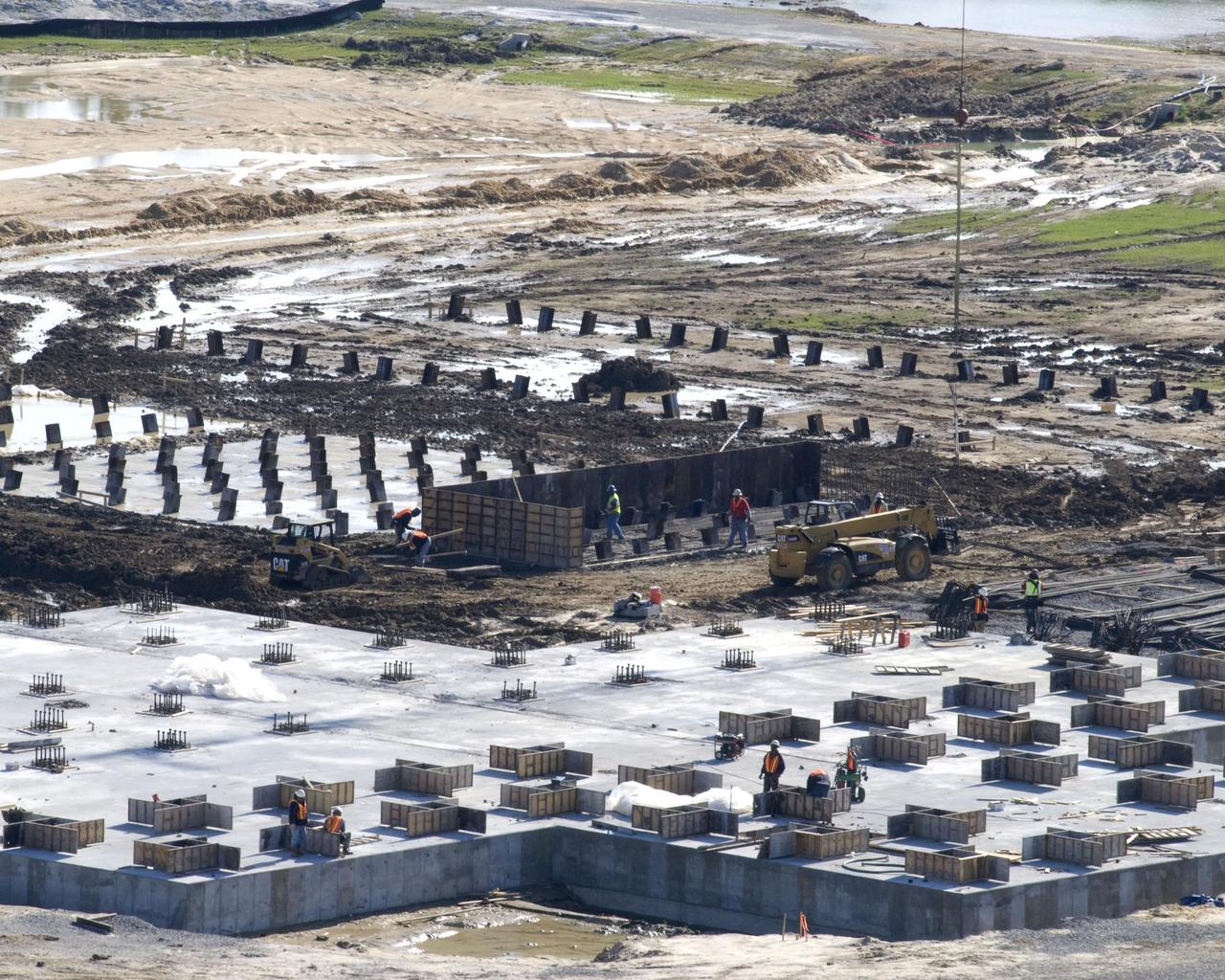
The concrete foundation placed Dec. 18 (foreground) for Stennis Space Center's future A-3 Test Stand has almost completely cured by early January, according to Bo Clarke, NASA's contracting officer technical representative for the foundation contract. By late December, construction on foundations for many of the test stand's support structures - diffuser, liquid oxygen, isopropyl alcohol and water tanks and gaseous nitrogen bottle battery - had begun with the installation of (background) `mud slabs.' The slabs provide a working surface for the reinforcing steel and foundation forms.
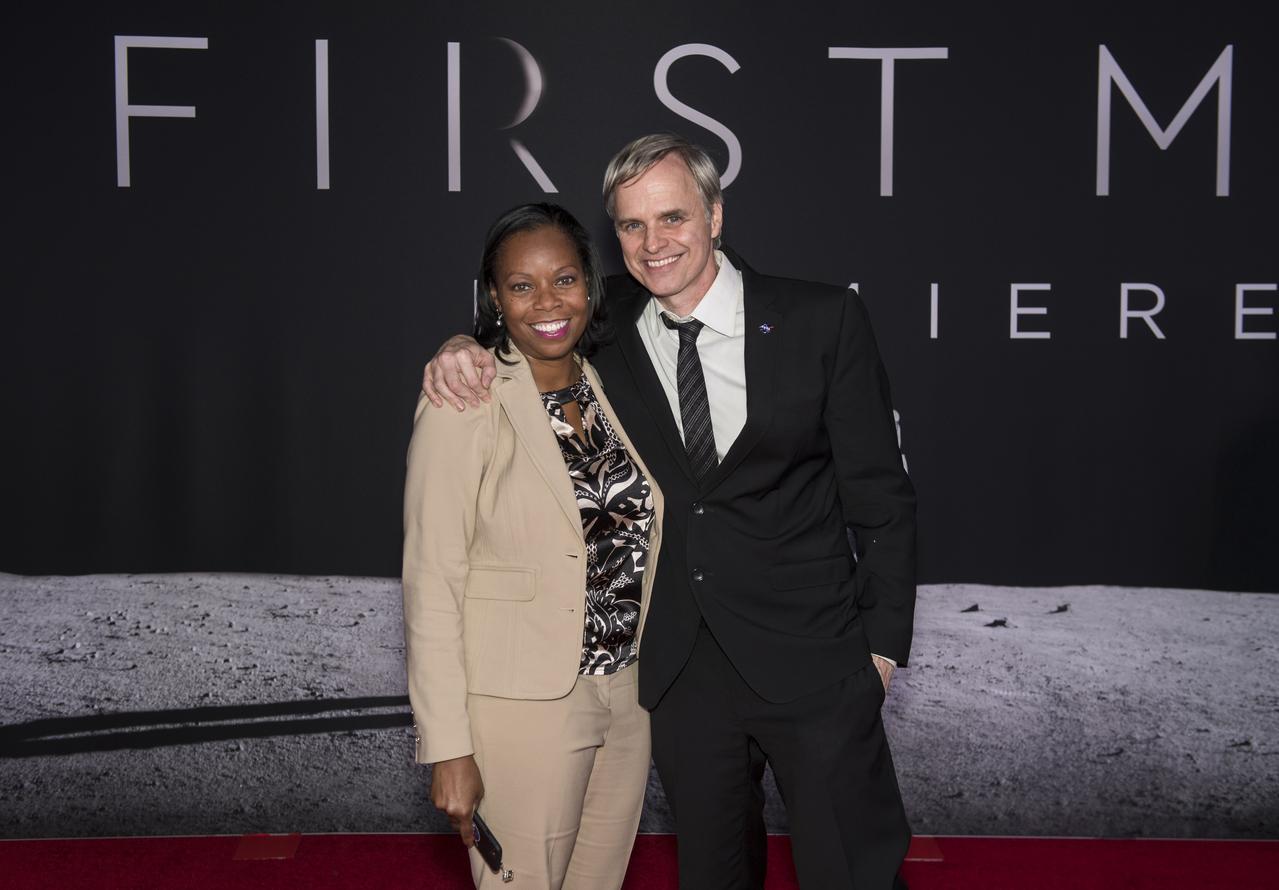
NASA's Cindy Steele, left, and Bert Ulrich, right, attend the premiere of Universal's feature film "First Man” Thursday, Oct. 4, 2018 at the Smithsonian National Air and Space Museum in Washington. The movie is based on the book by Jim Hansen that chronicles the life of NASA astronaut Neil Armstrong from test pilot to his historic Moon landing. It was directed by Damien Chazelle and stars Ryan Gosling and Claire Foy. Photo Credit: (NASA/Aubrey Gemignani)

NASA staff, from left to right, Cindy Steele, Bert Ulrich, Bettina Inclán, and Cheryl Warner pose for a photo on the red carpet during a screening of the film "Ad Astra" at National Geographic Society, Monday, September 16, 2019 in Washington. The film was produced, co-written, and directed by James Gray and stars Pitt, Tommy Lee Jones, Ruth Negga, Liv Tyler, and Donald Sutherland. Pitt stars as astronaut Roy McBride who travels deep into the solar system in hopes of solving a mystery that threatens life on Earth. Photo Credit: (NASA/Aubrey Gemignani)
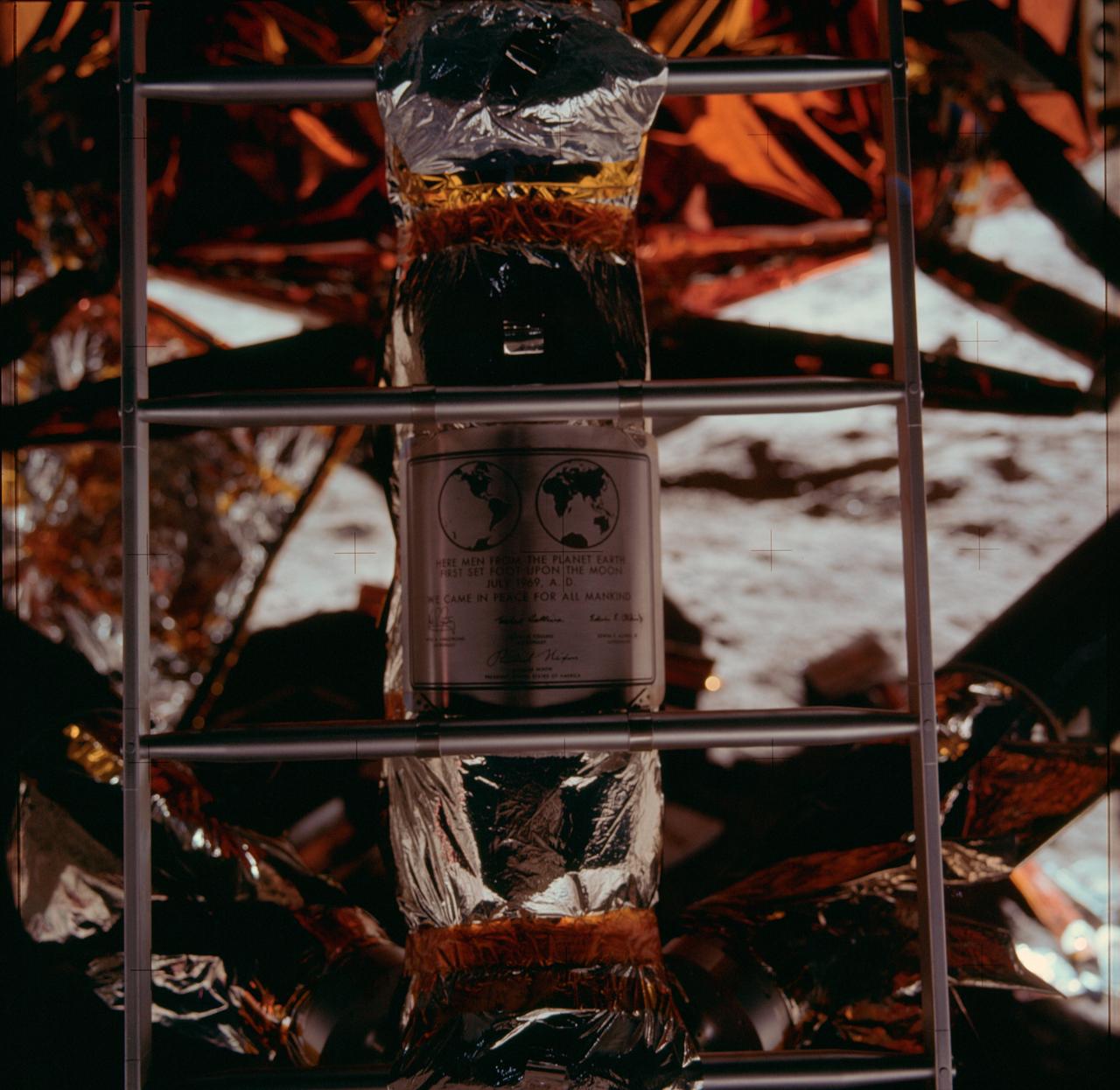
AS11-40-5899 (20 July 1969) --- Close-up view of the plaque which the Apollo 11 astronauts left on the moon in commemoration of the historic lunar landing mission. The plaque was attached to the ladder on the landing gear strut on the descent stage of the Apollo 11 Lunar Module (LM). The plaque was covered with a thin sheet of stainless steel during flight. Astronaut Michael Collins, command module pilot, remained with the Command and Service Modules (CSM) in lunar orbit while astronauts Neil A. Armstrong, commander, and Edwin E. Aldrin Jr., lunar module pilot, explored the moon.

Official group photo of the new class of PODs (Payload Operations Directors) for 2019, taken in building 4663 Payload Operations Center. (L to R) Stacey Steele, Dr. Ian Howley, Michael Vigo, Jennifer McMillian, Luke Bingaman, Carlos Barreto, Luke Mays, David Nicholas Benjamin
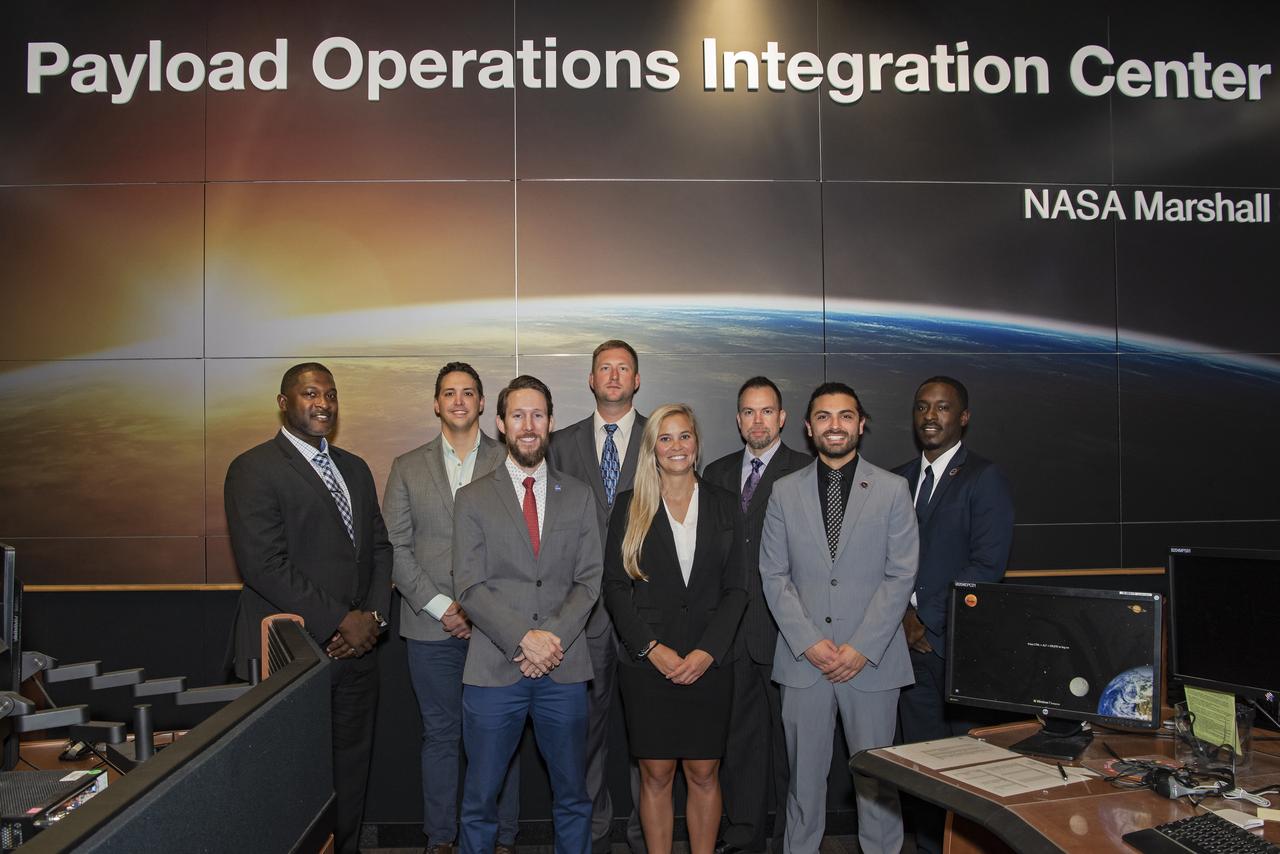
Official group photo of the new class of PODs (Payload Operations Directors) for 2019, taken in building 4663 Payload Operations Center. (L to R) Stacey Steele, Michael Vigo, Dr. Ian Howley, Luke Bingaman, Jennifer McMillian, Luke Mays, Carlos Barreto, David Nicholas Benjamin

From left to right, NASA staff, Cindy Steele, Bert Ulrich, and Cheryl Warner, "Ad Astra" producer, co-writer, and director James Gray, former NASA astronaut Kay Hire, and NASA Associate Administrator for the Office of Communications, Bettina Inclán, pose for a photo on the red carpet during a screening of the film "Ad Astra" at National Geographic Society, Monday, September 16, 2019 in Washington. The film was produced, co-written, and directed by James Gray and stars Pitt, Tommy Lee Jones, Ruth Negga, Liv Tyler, and Donald Sutherland. Pitt stars as astronaut Roy McBride who travels deep into the solar system in hopes of solving a mystery that threatens life on Earth. Photo Credit: (NASA/Aubrey Gemignani)
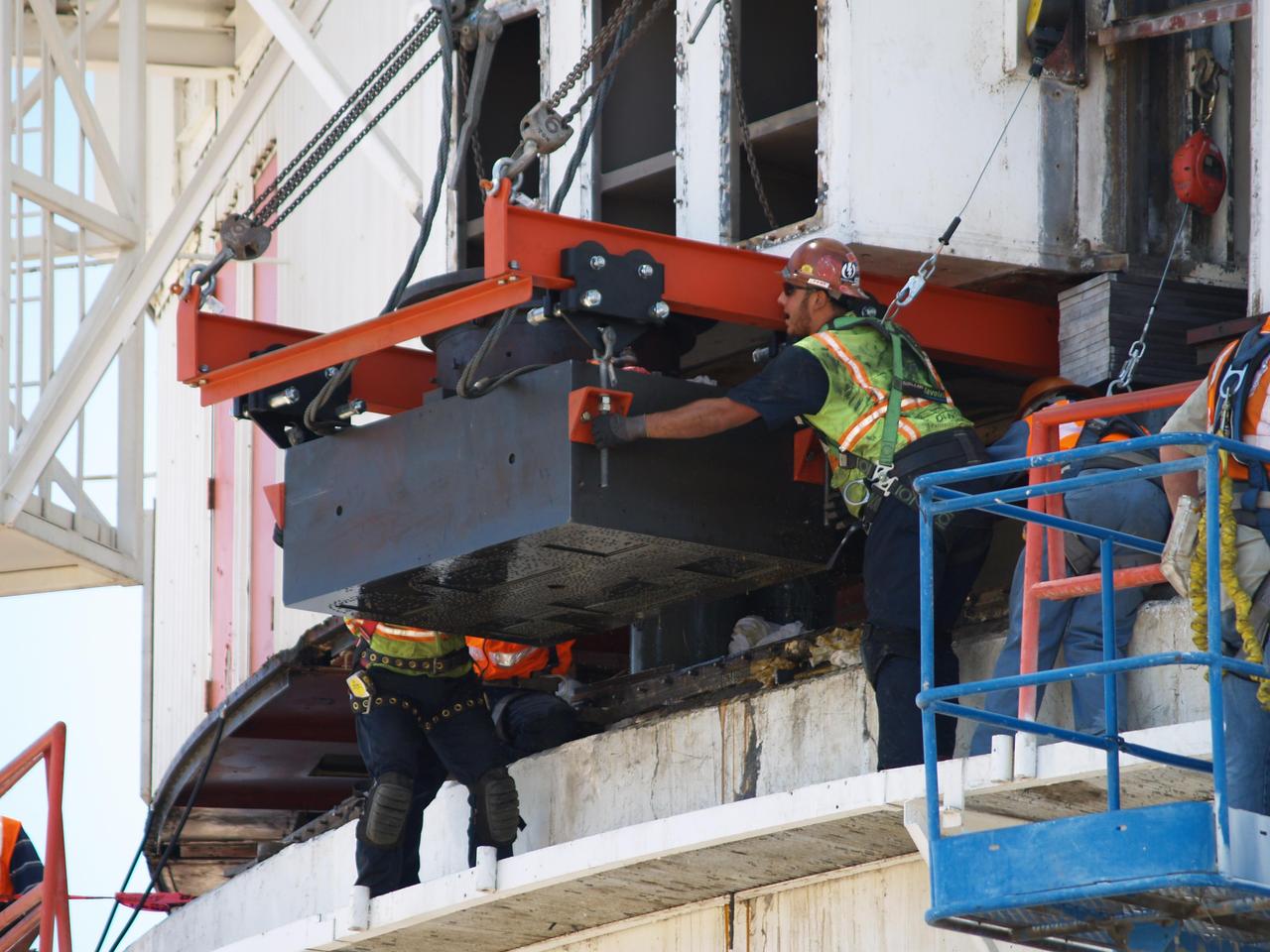
On May 3, 2010, workers at NASA Deep Space Network Goldstone Deep Space Communications Complex removed one of the large steel pads that help the giant Mars antenna rotate sideways.

MICRO MACHINING STAINLESS STEEL BURNER
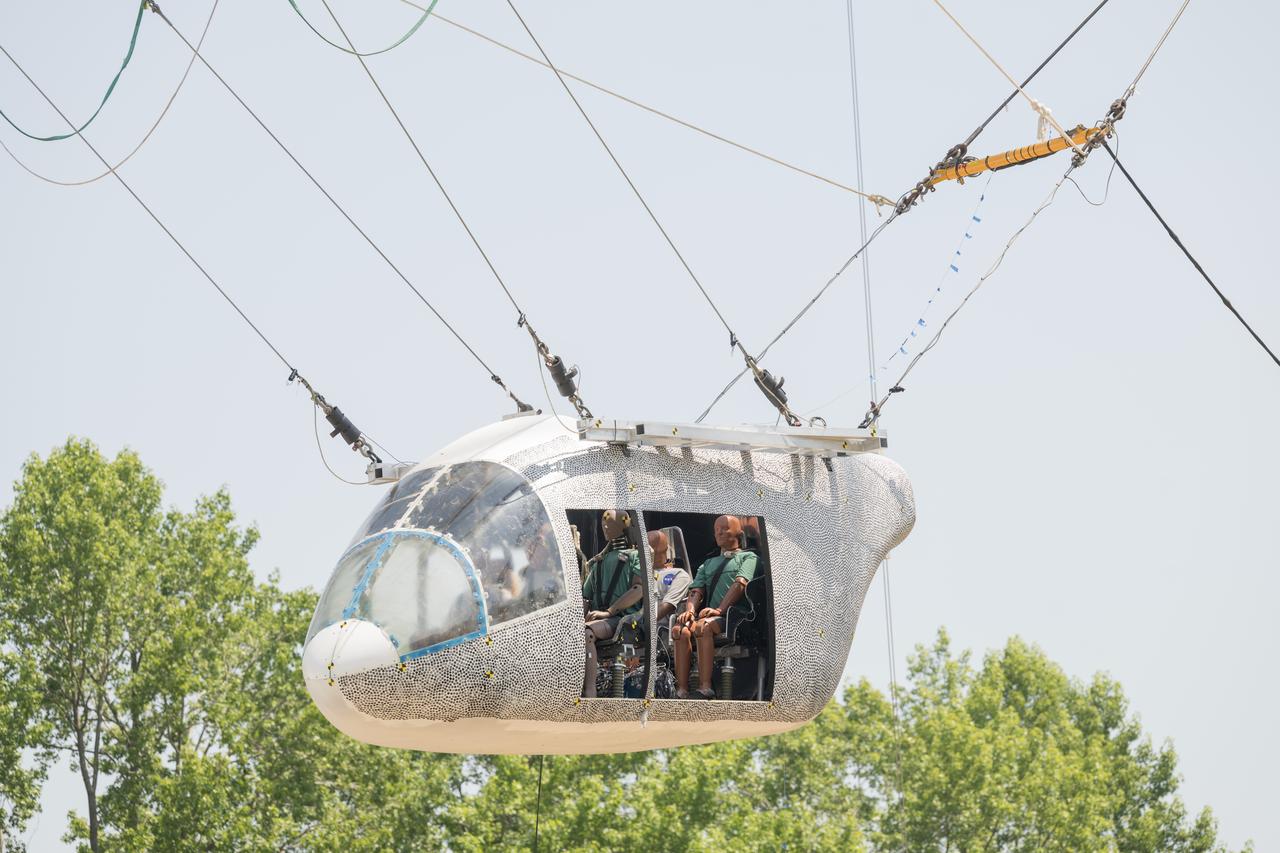
An aircraft body modeled after an air taxi with weighted test dummies inside is hoisted about 35 feet in the air by cables at NASA’s Langley Research Center in Hampton, Virginia. The aircraft was dropped from a tall steel structure, known as a gantry, on June 26 at Langley’s Landing and Impact Research Facility. NASA researchers are investigating aircraft materials that best absorb impact forces in a crash.
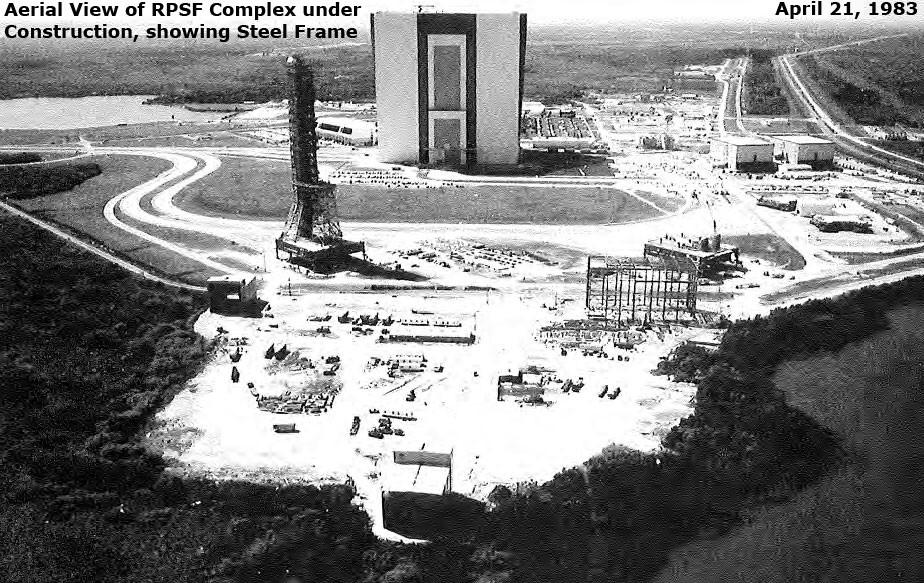
Aerial View of RPSF Complex under construction showing steel frame, April 21, 1983
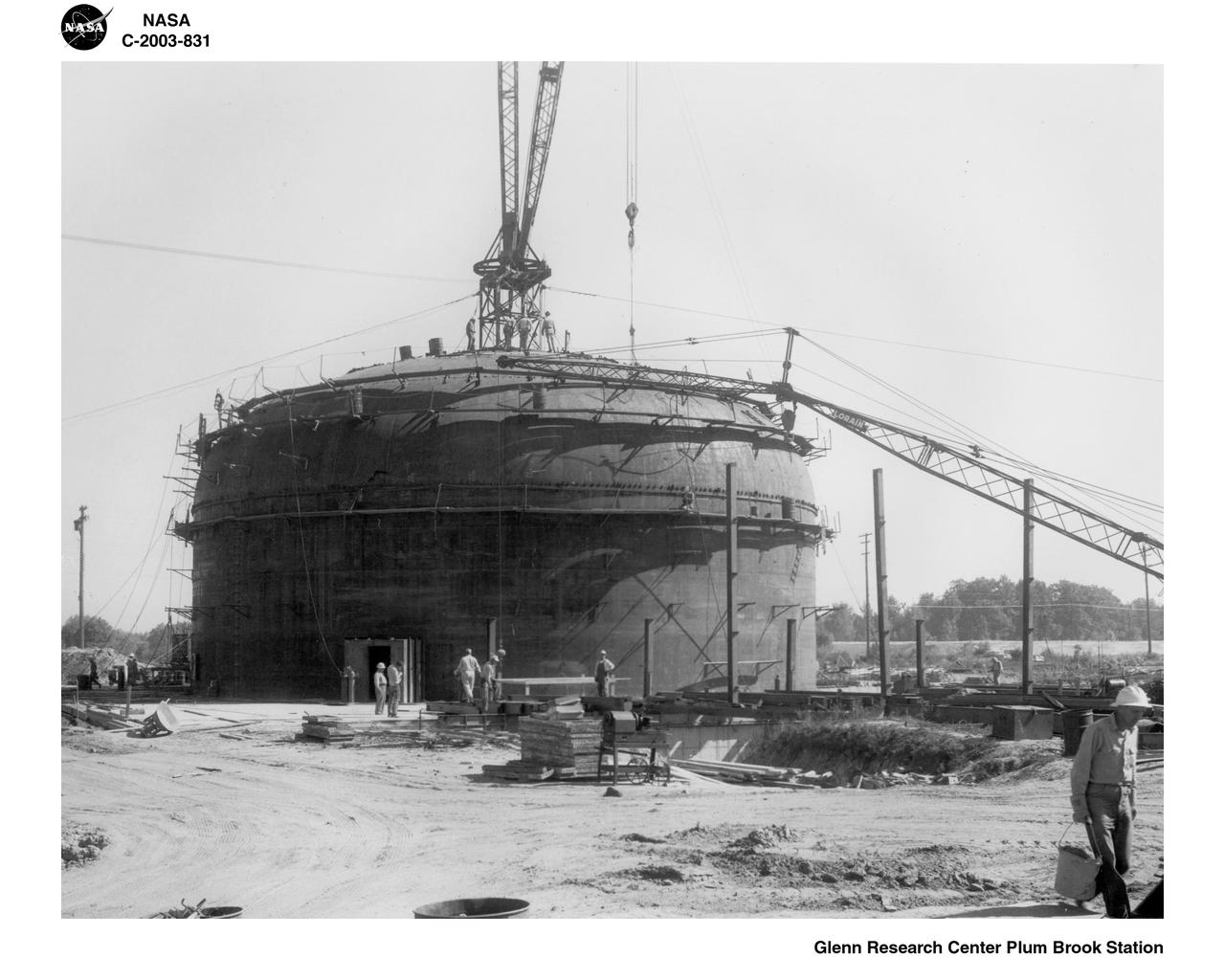
NASA PLUM BROOK REACTOR'S STEEL CONTAINMENT VESSEL BUILDING DOME - c1956-60
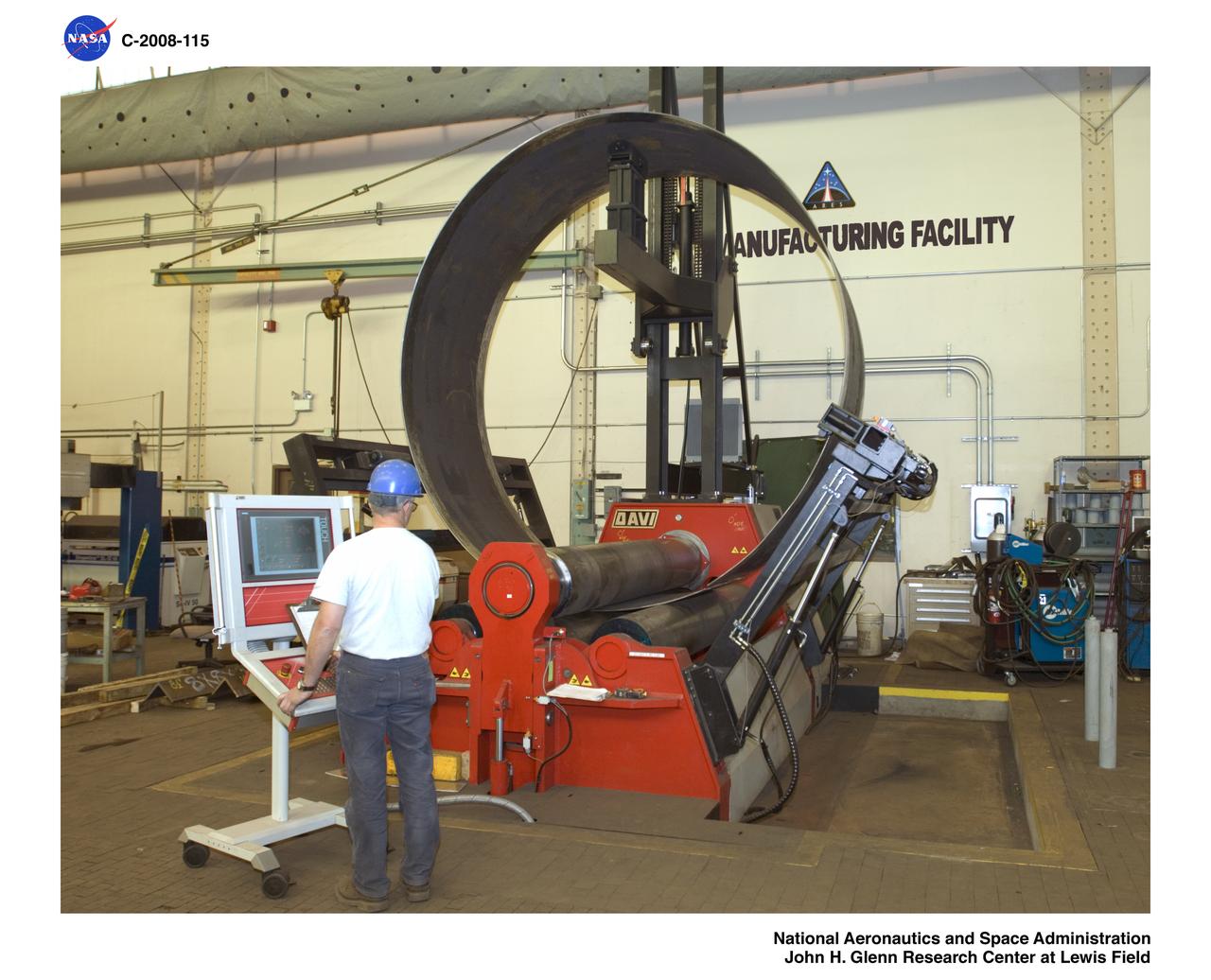
Inner Can US7 Ballast Assembly, Ares 1-X Steel Rolled on Davi
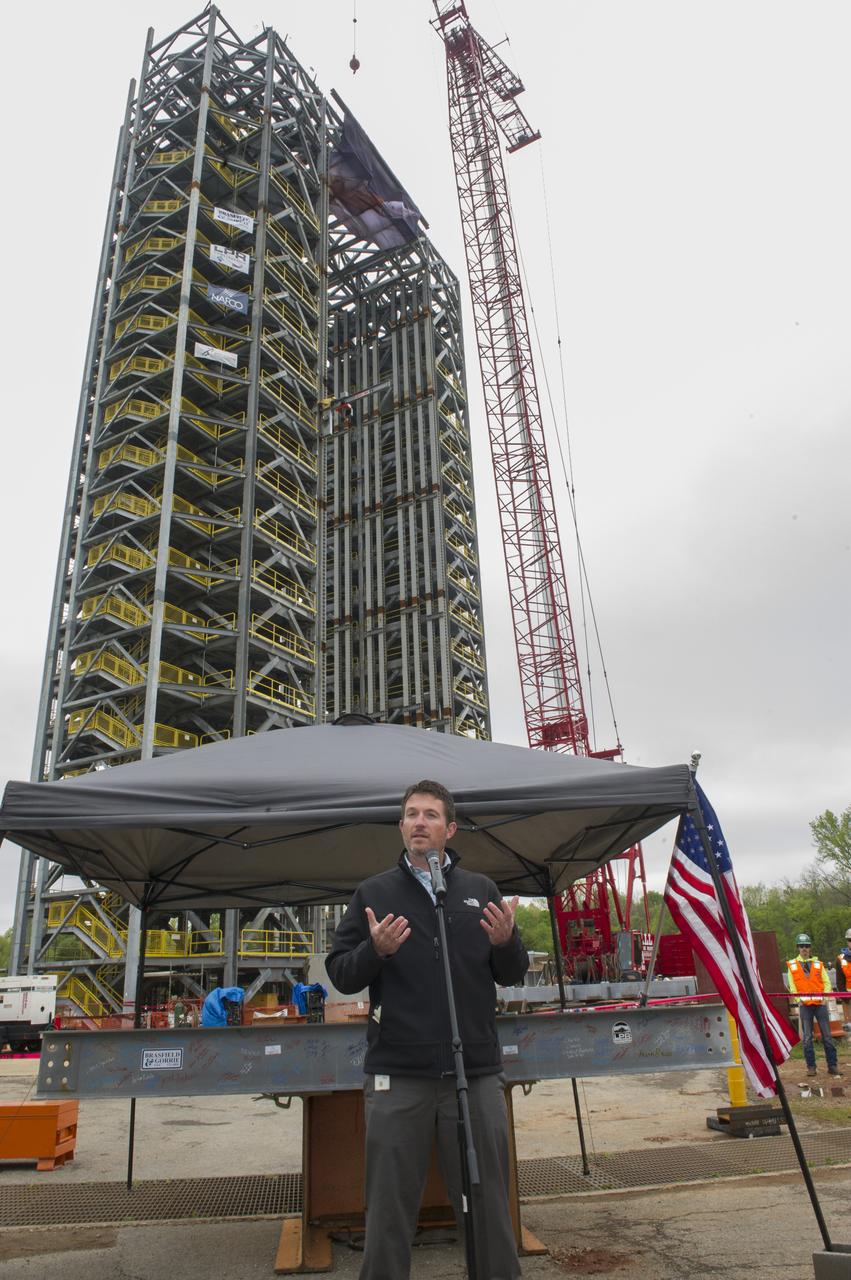
PHIL HENDRIX, SPEAKS TO THE CROWD IN FRONT OF A STEEL BEAM DESTINED FOR TEST STAND 4693 DURING THE STRUCTURE'S TOPPING OUT CEREMONY APRIL 12.
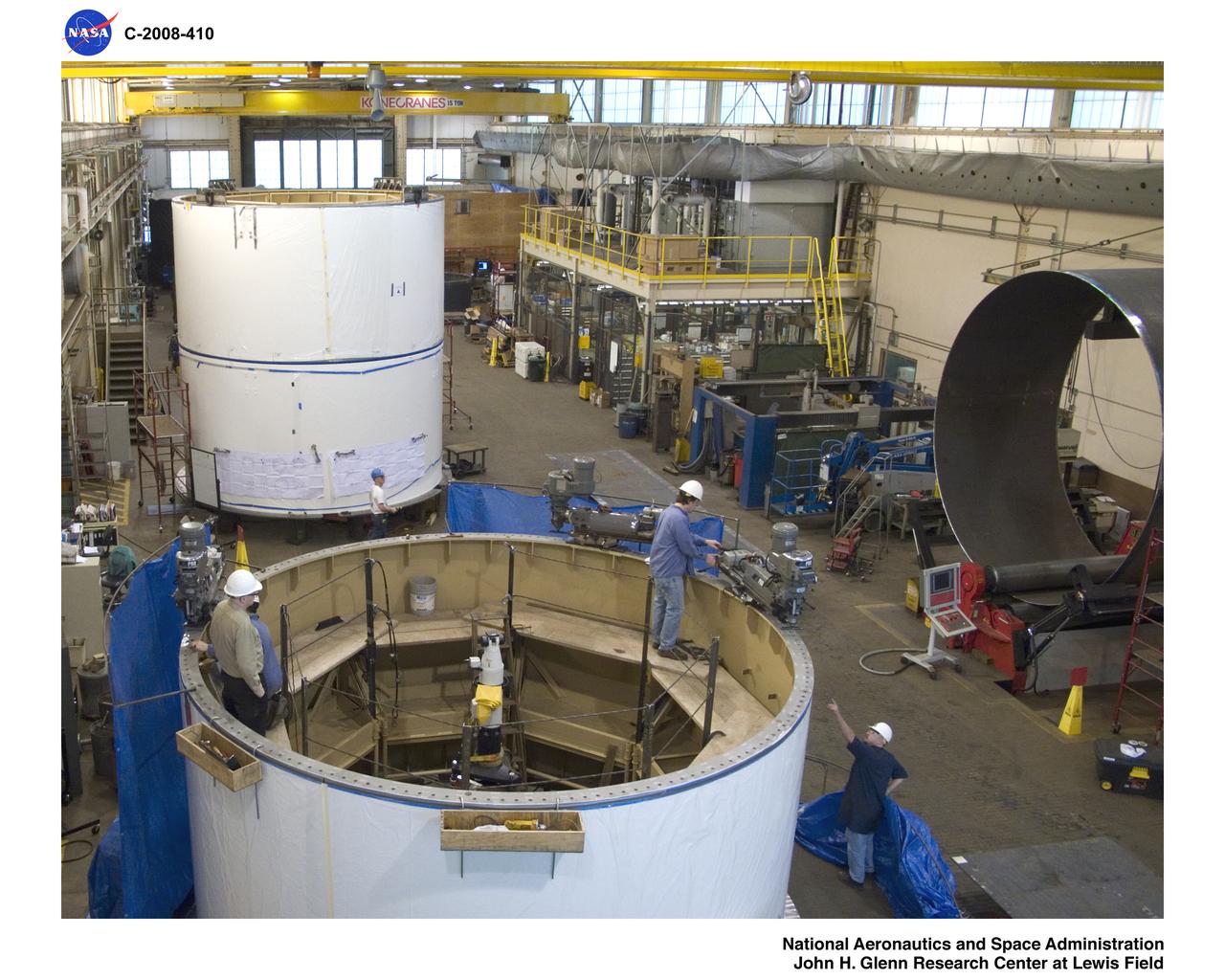
Inside Building 50, US-5 in foreground flange being milled, US-4 stacked on US-3 and steel rolled setting on Davi.
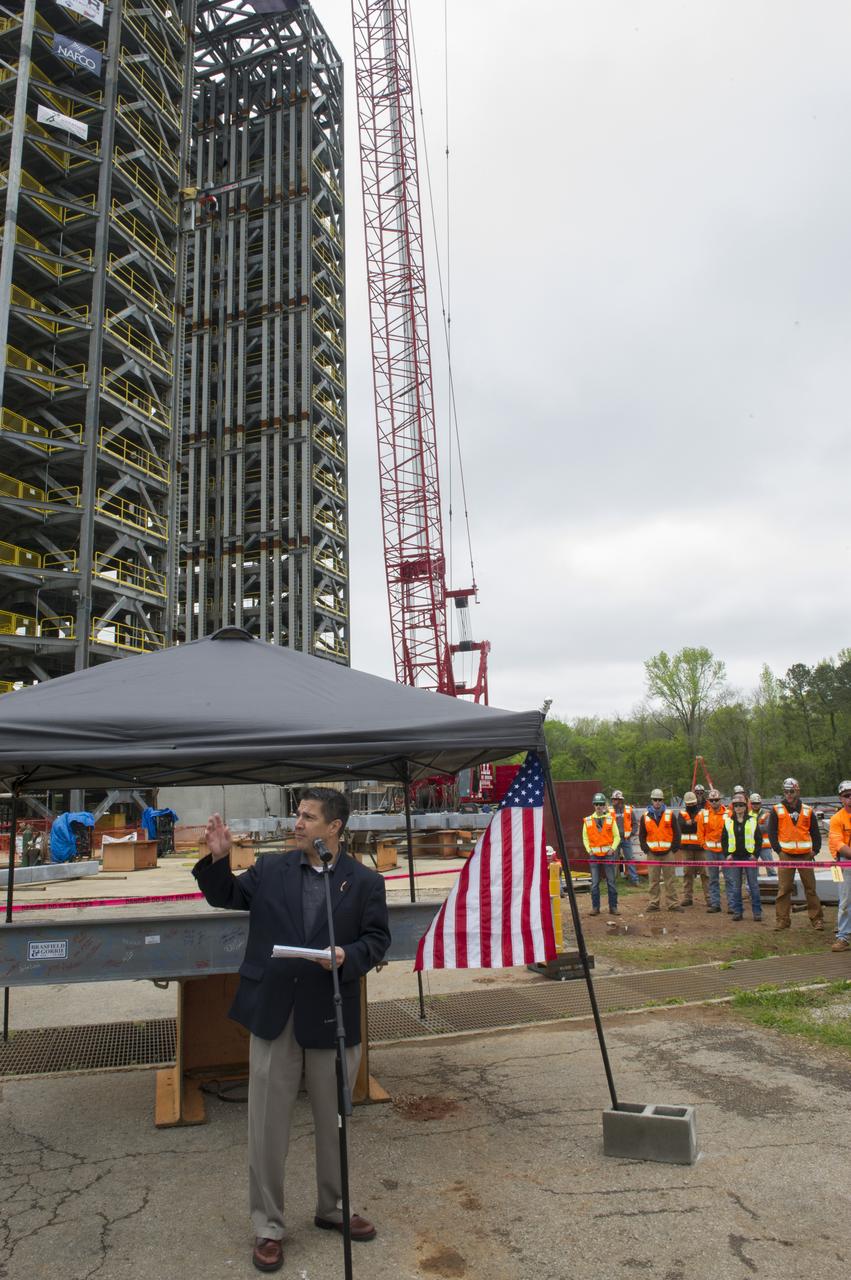
TIM FLORES SPEAKS TO THE CROWD IN FRONT OF A STEEL BEAM DESTINED FOR TEST STAND 4693 DURING THE STRUCTURE'S TOPPING OUT CEREMONY APRIL 12.
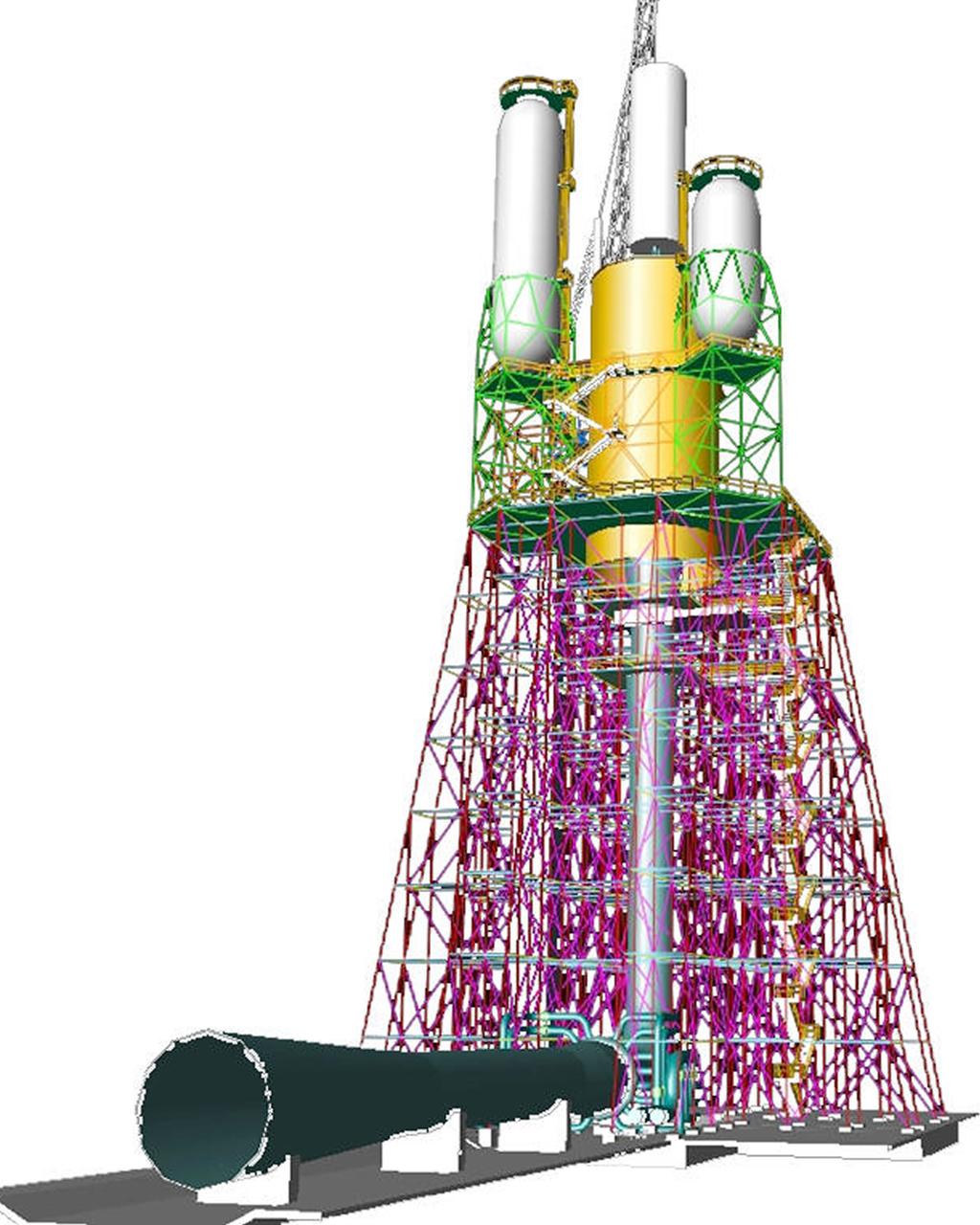
This engineer's concept drawing of the A-3 Test Stand shows the 300-foot-tall structure's open steel frame and large exhaust diffuser.
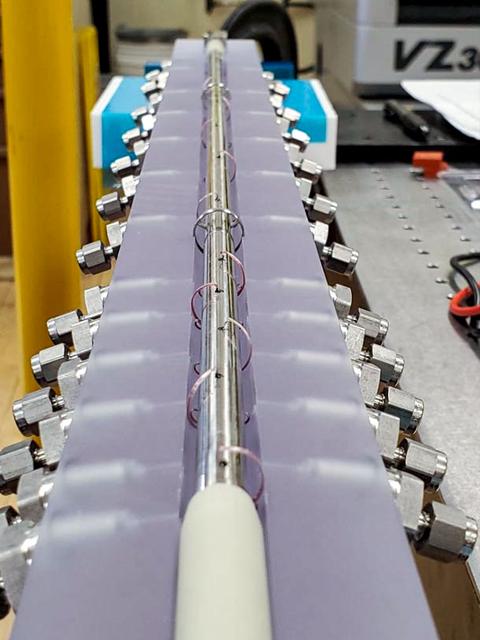
jsc2023e038724 (6/28/2023) --- An interior view of the FBCE-CM-HT test section. Test fluid is vaporized and pumped through the steel tube embedded in an insulating material while space station cooling water is flown around the outer annulus of the steel tube causing the internal vapor to condense. Both cooling water and test fluid temperatures are measured using a system of.thermocouples to calculate heat transfer. Image courtesy of NASA Glenn Research Center..
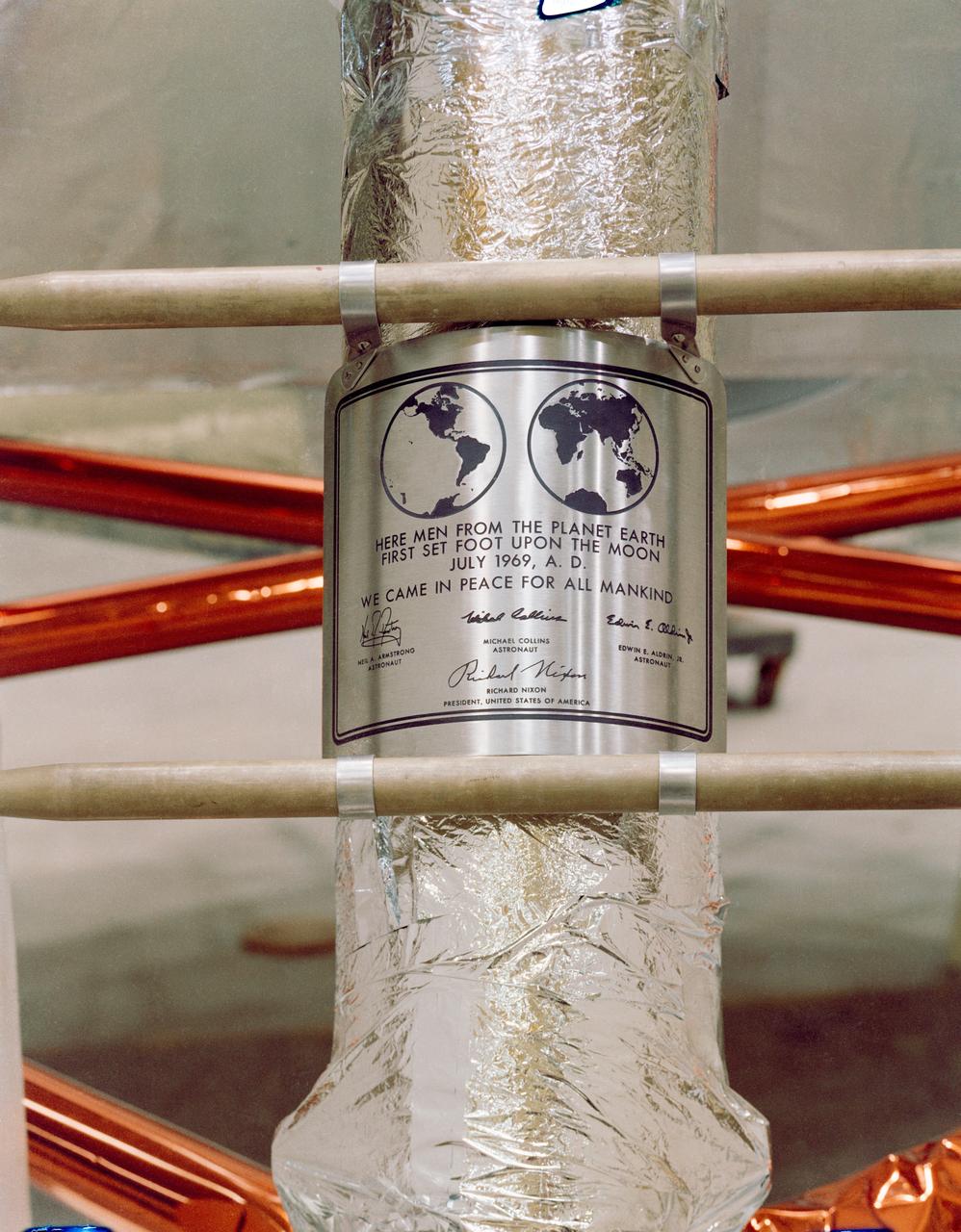
S69-38749 (July 1969) --- Close-up view of the plaque which the Apollo 11 astronauts will leave behind on the moon in commemoration of the historic event. The plaque is made of stainless steel measuring nine by seven and five-eighths inches, and one-sixteenth inch thick. The plaque will be attached to the ladder on the landing gear strut on the descent stage of the Apollo 11 Lunar Module (LM). Covering the plaque during flight will be a thin sheet of stainless steel which will be removed on the lunar surface.

S69-39334 (July 1969) --- This is a replica of the plaque which the Apollo 11 astronauts will leave behind on the moon in commemoration of the historic event. The plaque is made of stainless steel, measuring nine by seven and five-eighths inches, and one-sixteenth inch thick. The plaque will be attached to the ladder on the landing gear strut on the descent stage of the Apollo 11 Lunar Module (LM). Covering the plaque during the flight will be a thin sheet of stainless steel which will be removed on the lunar surface.
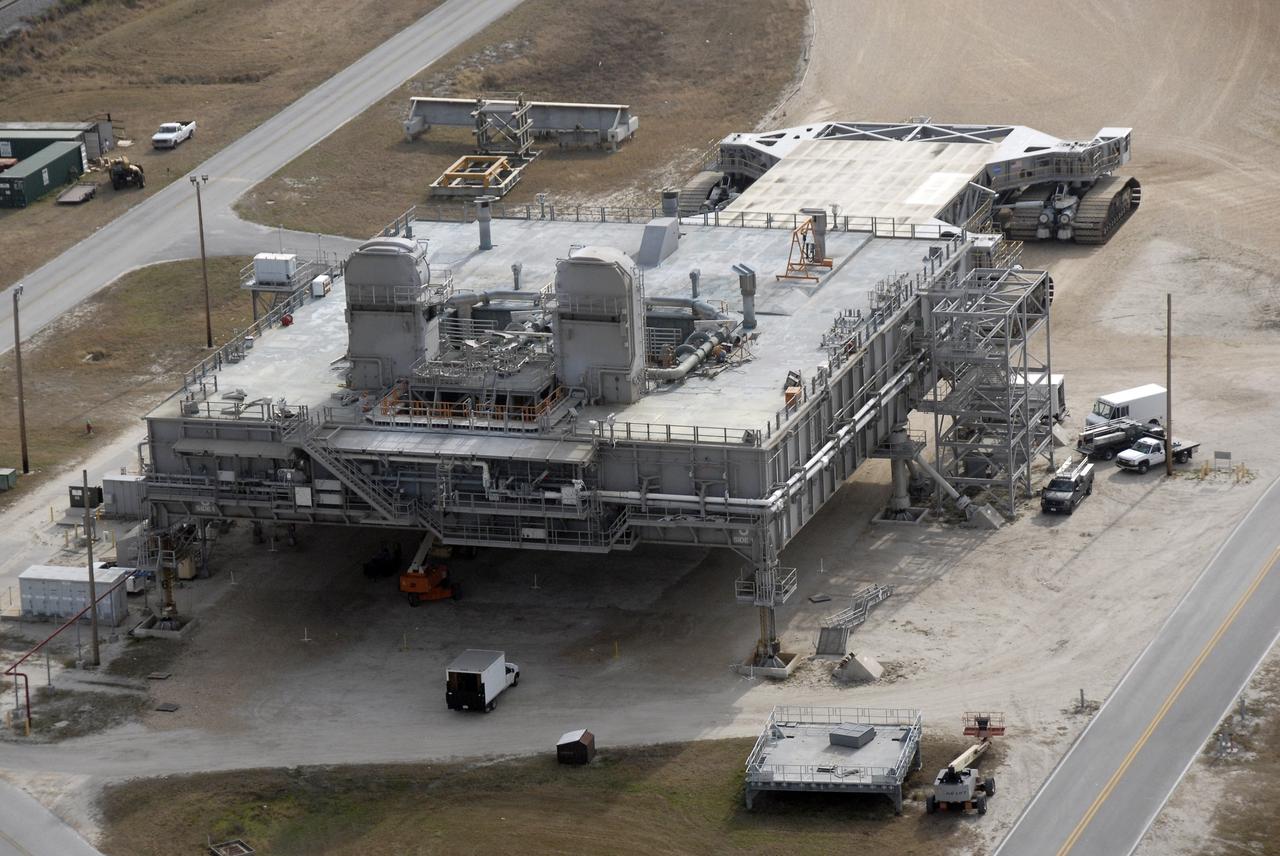
CAPE CANAVERAL, Fla. – An aerial view of a mobile launcher platform that is parked in the Launch Complex 39 Area at NASA's Kennedy Space Center in Florida. The platform, which is a moveable base for the launch of space shuttle, is a two-story steel structure 25 feet high, 160 feet long and 135 feet wide. It is constructed of welded steel up to 6 inches thick. The platform rests on six 22-foot-tall pedestals. Photo credit: NASA/Kim Shiflett
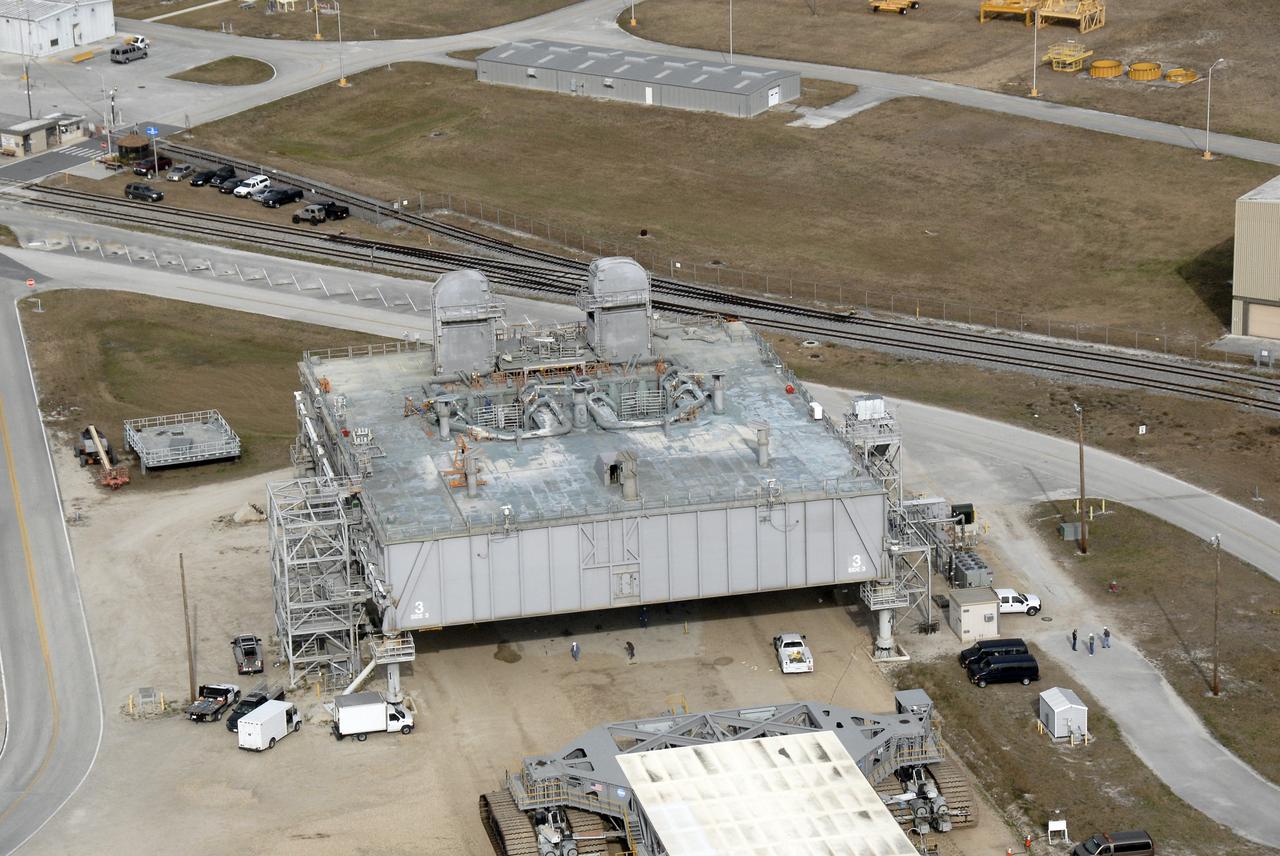
CAPE CANAVERAL, Fla. – An aerial view of a mobile launcher platform that is parked in the Launch Complex 39 Area at NASA's Kennedy Space Center in Florida. The platform, which is a moveable base for the launch of space shuttle, is a two-story steel structure 25 feet high, 160 feet long and 135 feet wide. It is constructed of welded steel up to 6 inches thick. The platform rests on six 22-foot-tall pedestals. Photo credit: NASA/Kim Shiflett

CAPE CANAVERAL, Fla. – An aerial view of a mobile launcher platform that is parked in the Launch Complex 39 Area at NASA's Kennedy Space Center in Florida. The platform, which is a moveable base for the launch of space shuttle, is a two-story steel structure 25 feet high, 160 feet long and 135 feet wide. It is constructed of welded steel up to 6 inches thick. The platform rests on six 22-foot-tall pedestals. Photo credit: NASA/Kim Shiflett
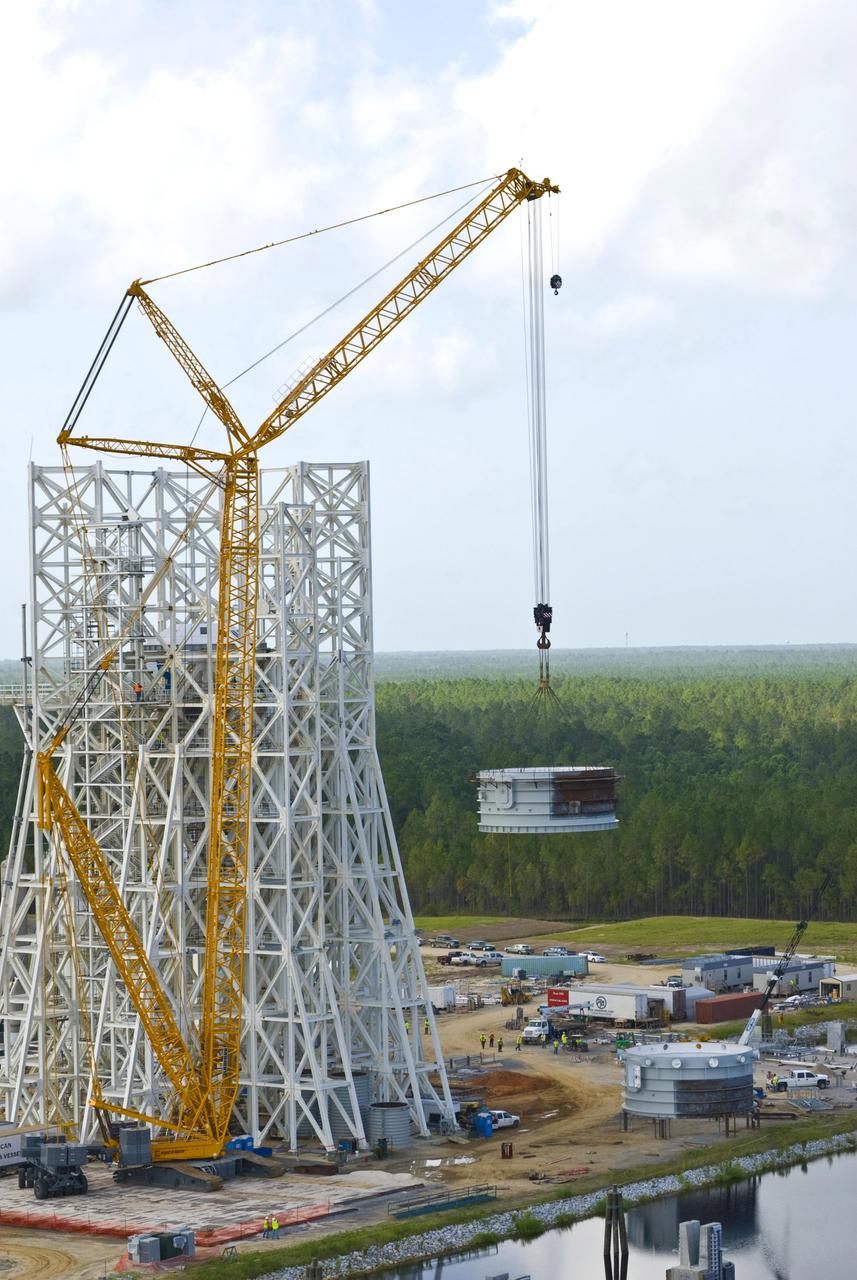
Employees at Stennis Space Center continue work on the A-3 Test Stand. As shown, a section of the test cell is lifted for installation on the stand's structural steel frame. Work on the A-3 Test Stand began in 2007. It is scheduled for activation in 2012.
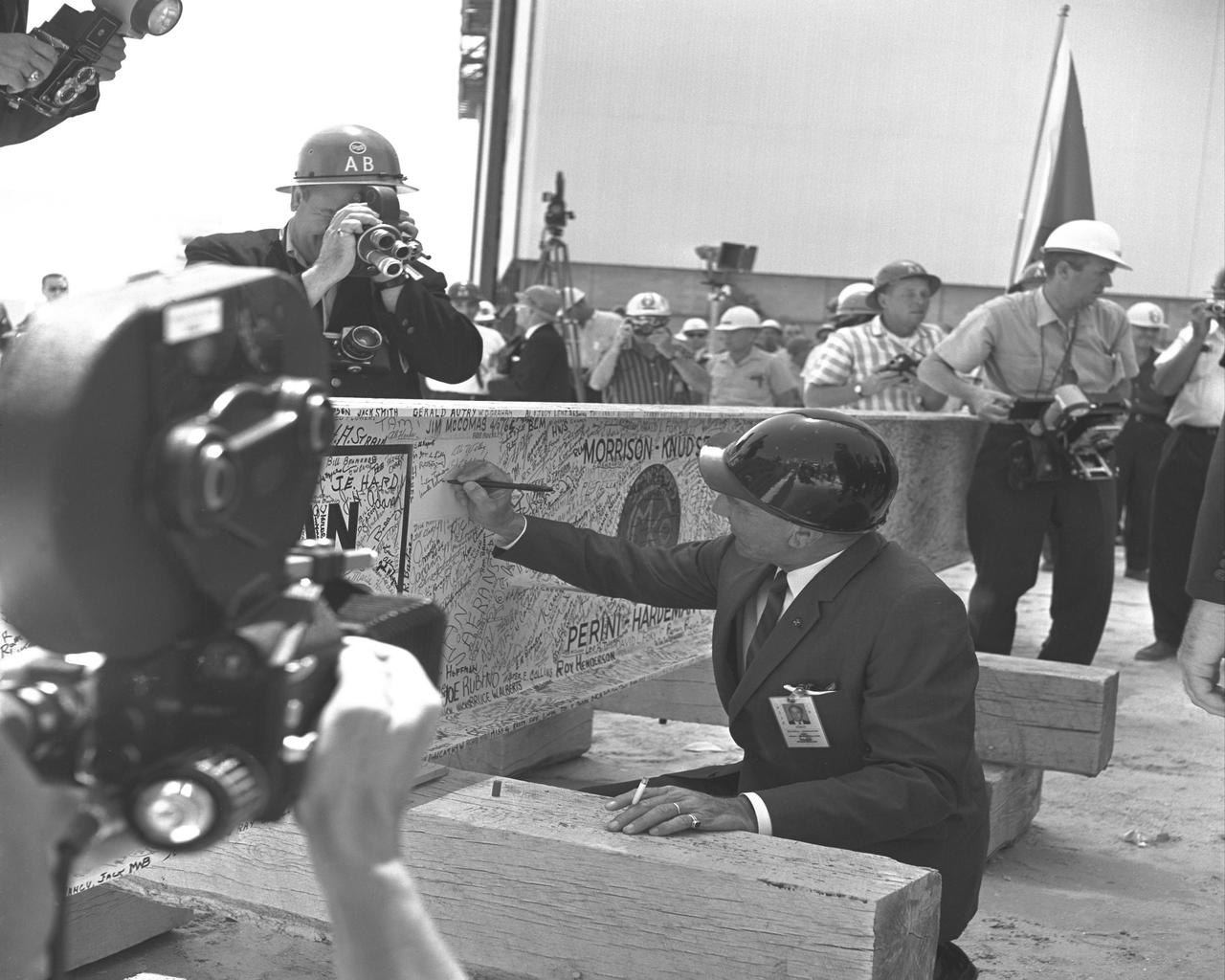
KENNEDY SPACE CENTER, FLA. -- Dr. Kurt Debus, Kennedy Space Center's first director, adds his name to the thousands of signatures affixed to the 38-foot-long steel beam used in the VAB's 'Topping Off' ceremonies.
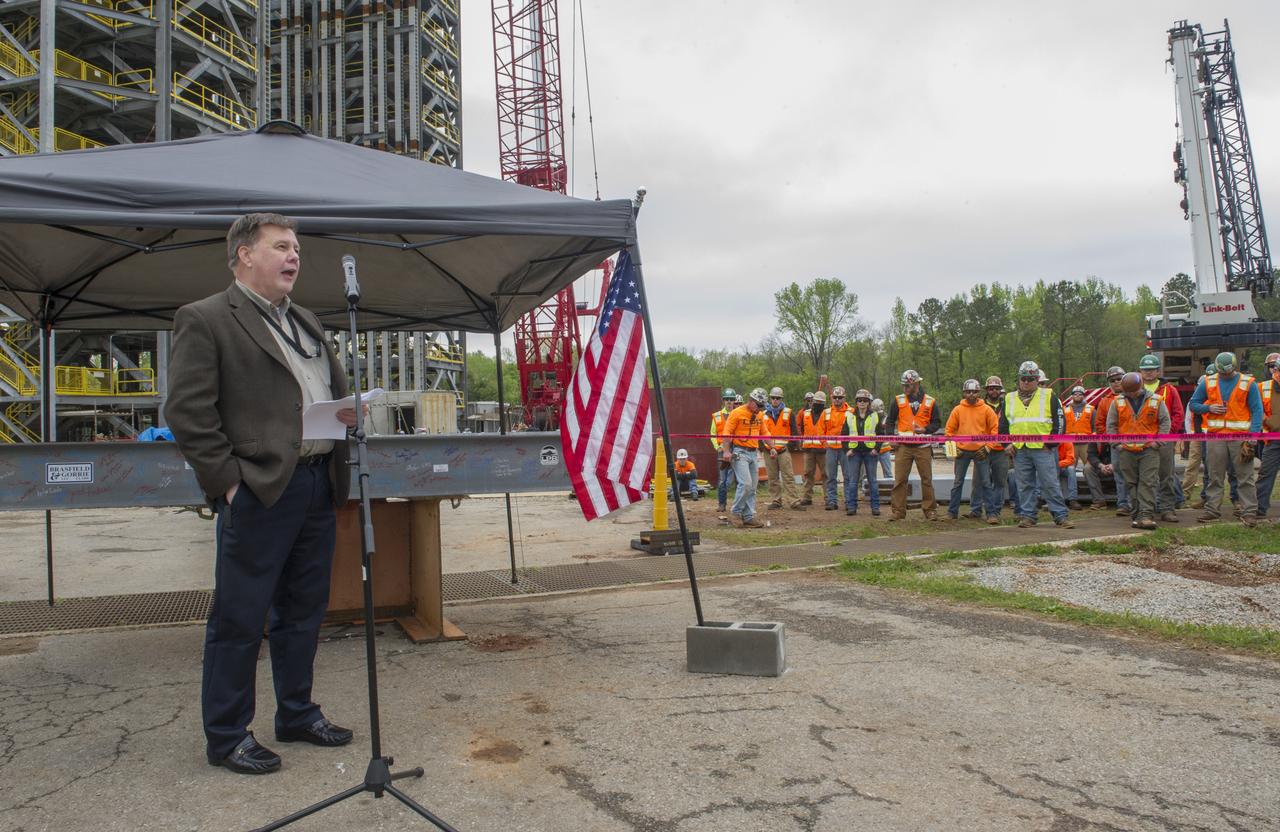
BOB DEVLIN, DEPUTY DIRECTOR OF MARSHALL'S OFFICE OF CENTER OPERATIONS, SPEAKS TO THE CROWD IN FRONT OF A STEEL BEAM DESTINED FOR TEST STAND 4693 DURING THE STRUCTURE'S TOPPING OUT CEREMONY APRIL 12.
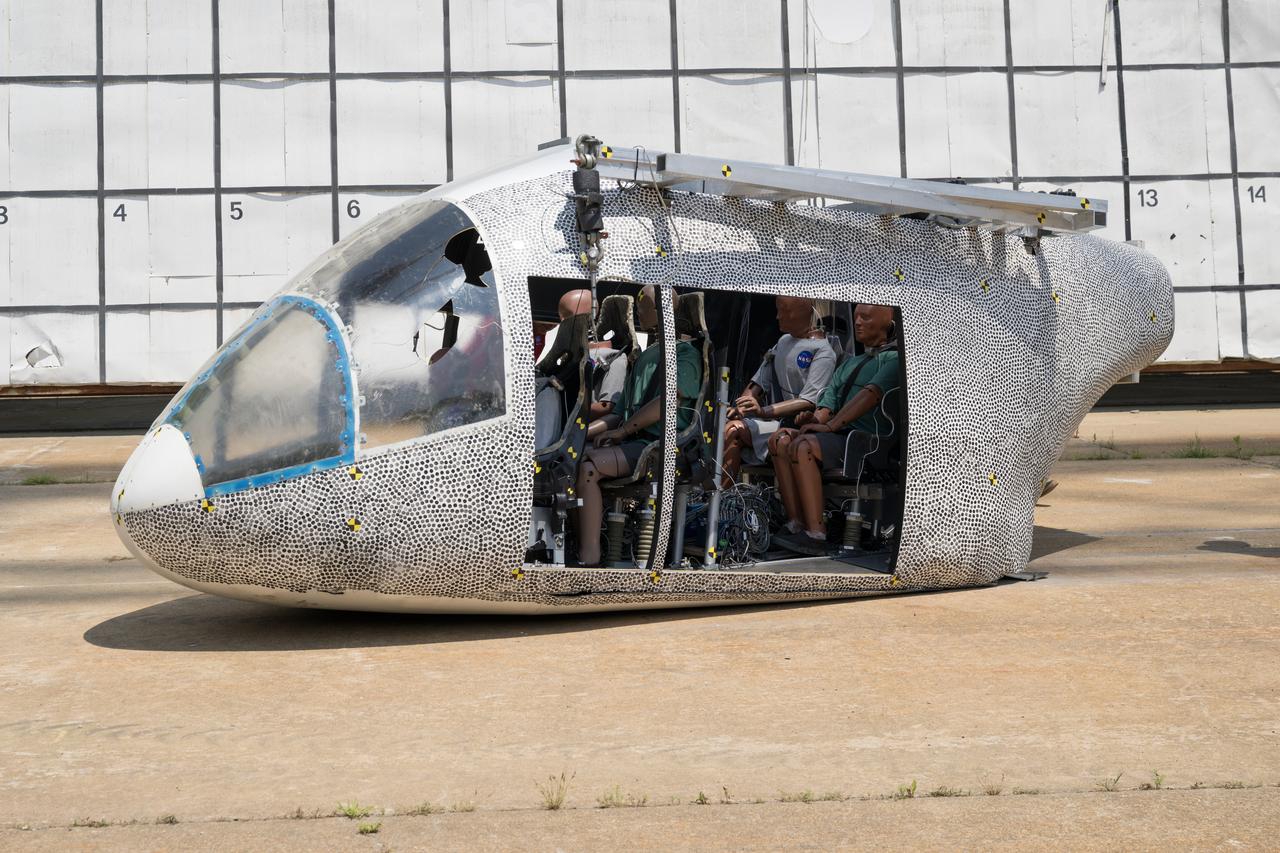
An aircraft body modeled after an air taxi with weighted test dummies inside is shown after a drop test at NASA’s Langley Research Center in Hampton, Virginia. The test was completed June 26 at Langley’s Landing and Impact Research Facility. The aircraft was dropped from a tall steel structure, known as a gantry, after being hoisted about 35 feet in the air by cables. NASA researchers are investigating aircraft materials that best absorb impact forces in a crash.
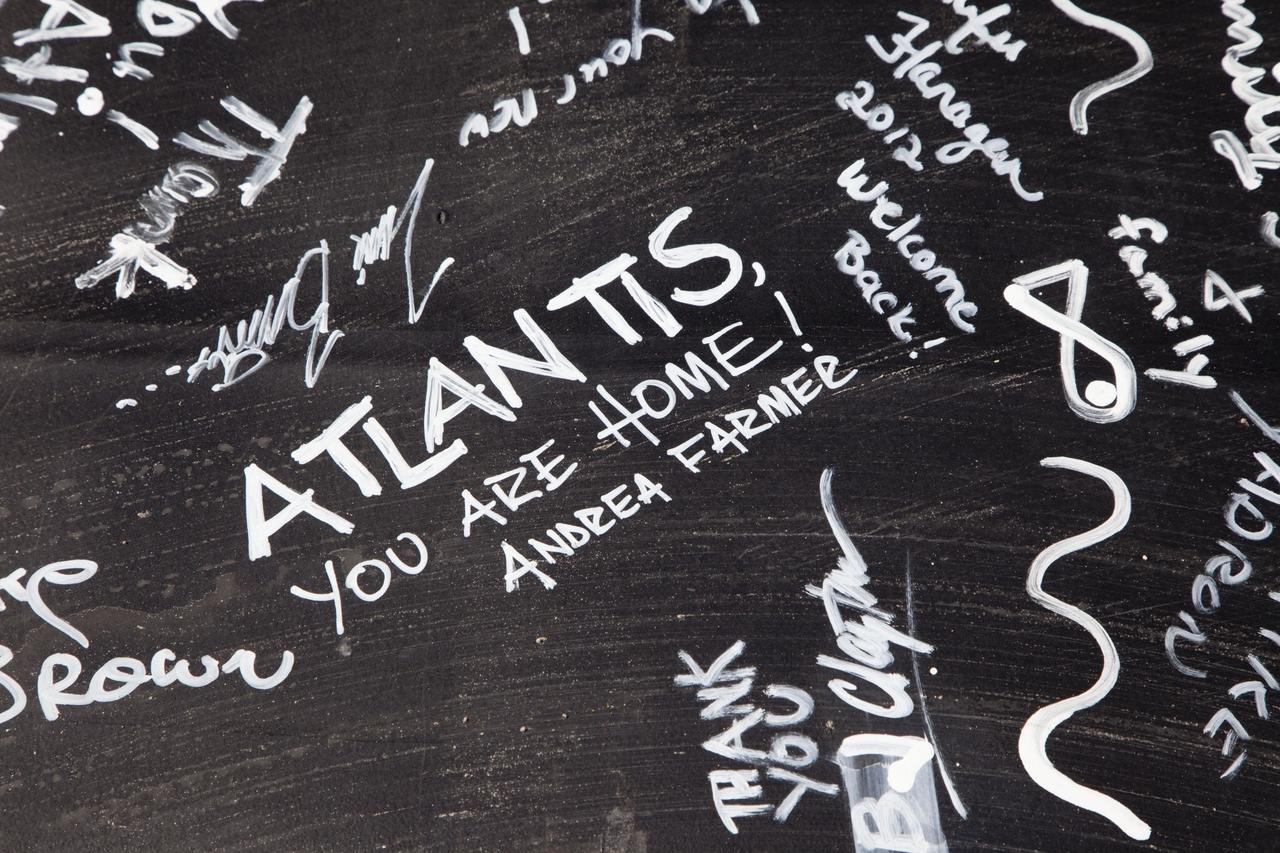
CAPE CANAVERAL, Fla. – Signatures on a steel beam that was placed at the highest point of a new exhibit facility under construction at the Kennedy Space Center Visitor Complex. The 90,000-square-foot facility will house space shuttle Atlantis and 62 shuttle program exhibits. Photo credit: NASA/Kim Shiflett
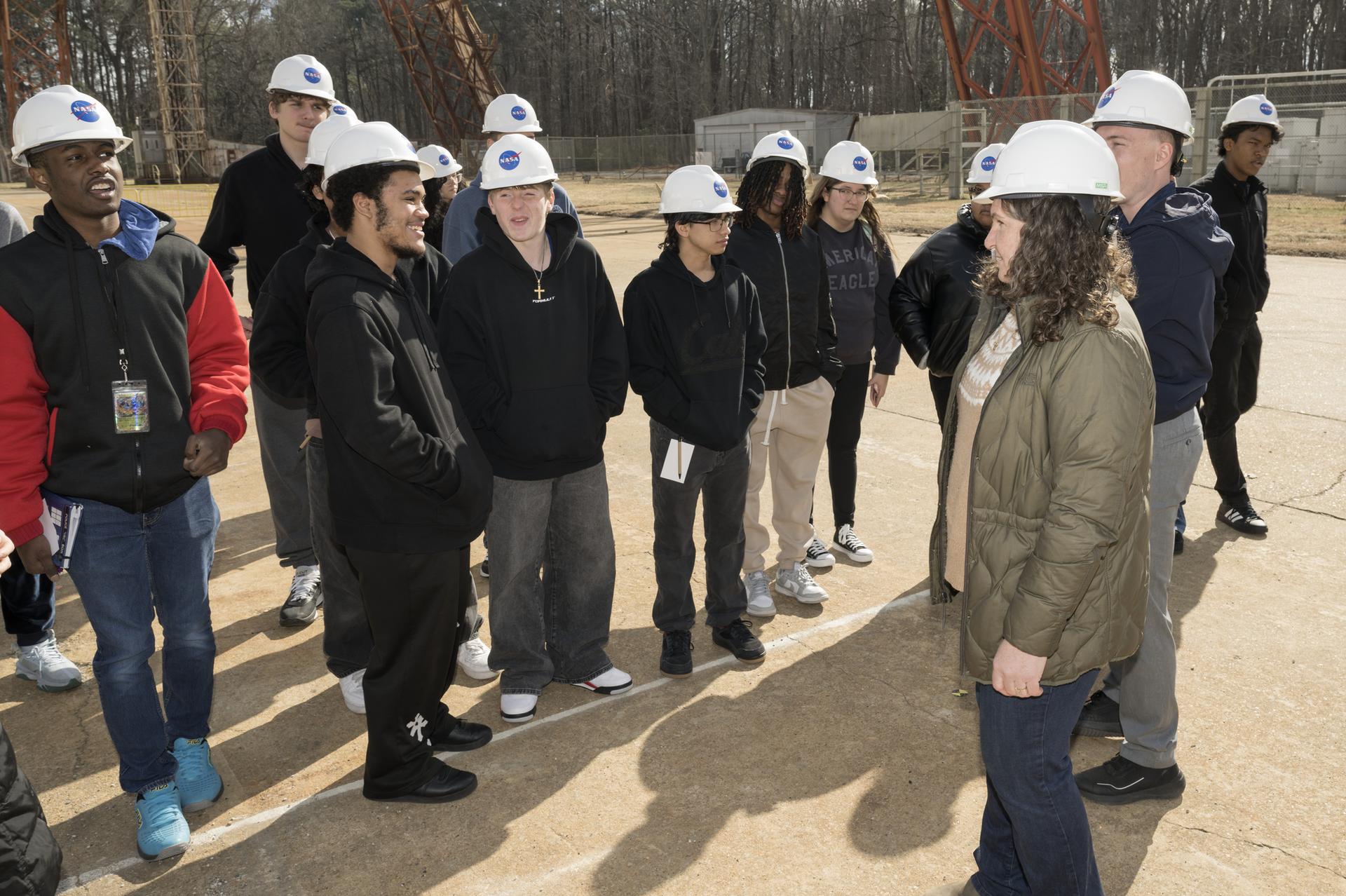
Old Dominion University's (ODU) Maritime Engineering and Environmental Studies Academy (MEESA) lab school juniors, tour the NASA Langley’s Landing and Impact Research Facility (LandIR), also know as the Gantry. The students were task to create an exhibit for the Vestil Aluminum/Steel Crane (VASC) of the crane used to build the Gantry.
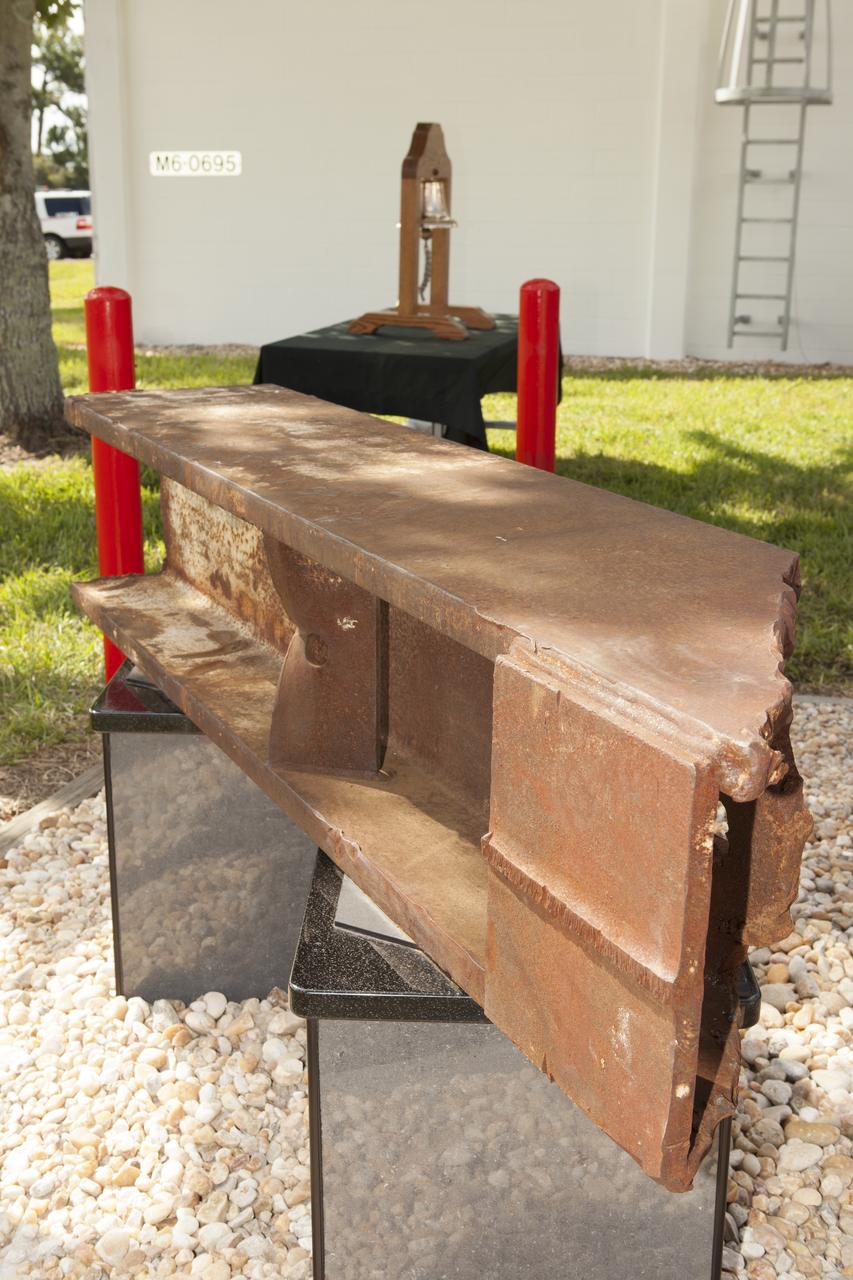
A memorial to the 343 first responder victims of the Sept. 11, 2001, terror attacks stands at Fire Station 1 at NASA's Kennedy Space Center during its dedication on Sept. 11, 2015. A section of steel I-beam from the World Trade Center in New York forms the centerpiece of the monument.

CAPE CANAVERAL, Fla. – A steel beam is lifted to the highest point of a new exhibit facility under construction at the Kennedy Space Center Visitor Complex. The 90,000-square-foot facility will house space shuttle Atlantis and 62 shuttle program exhibits. Photo credit: NASA/Kim Shiflett
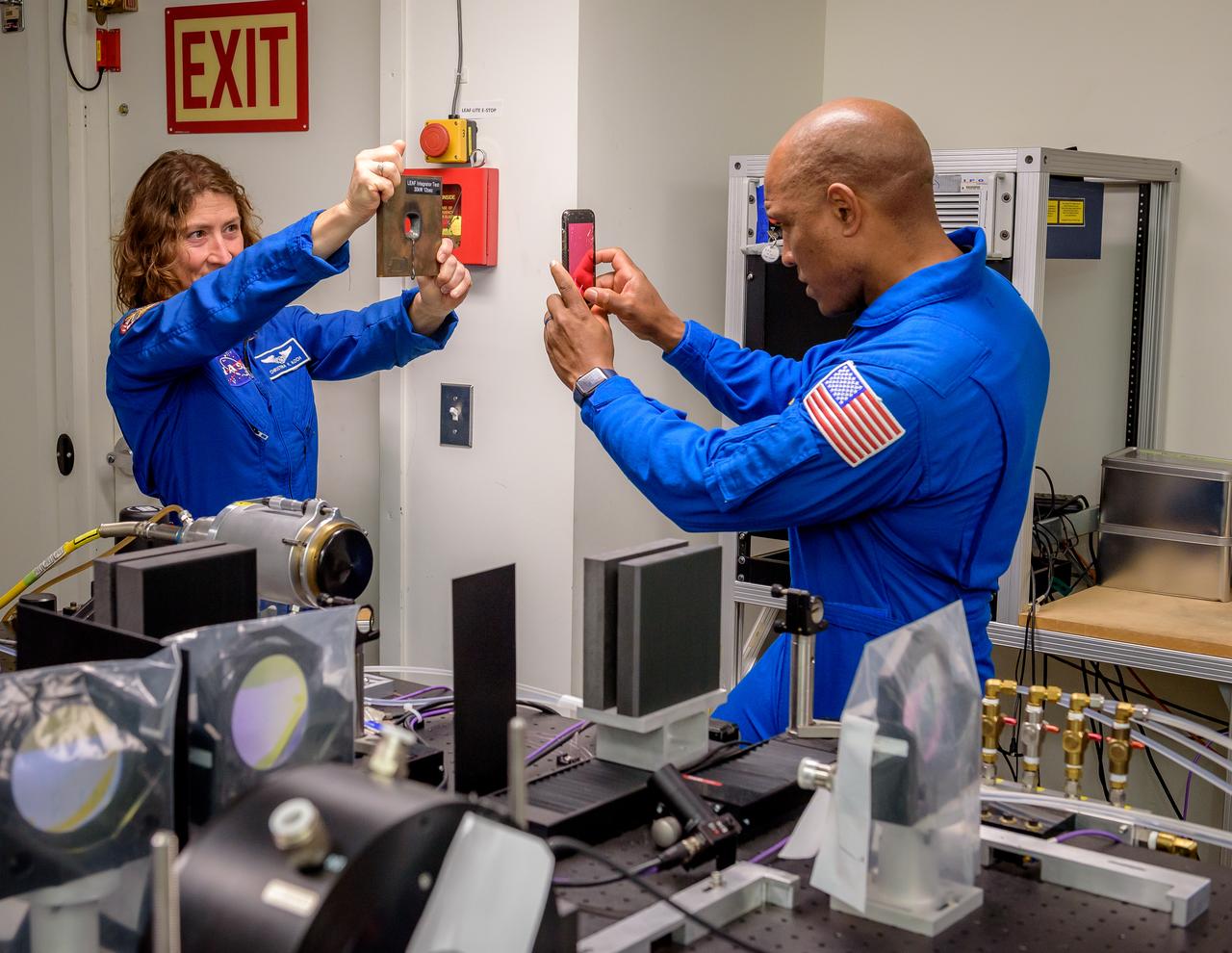
NASA Astronaut Christina Koch, left, holds a test sample for Victor J. Glover to photograph. The sample is a half-inch steel plate with a hole that was drilled by a 12-second burst from a 30kW laser in the Laser Enhanced Arc Jet Facility (LEAF) laboratory, N238.
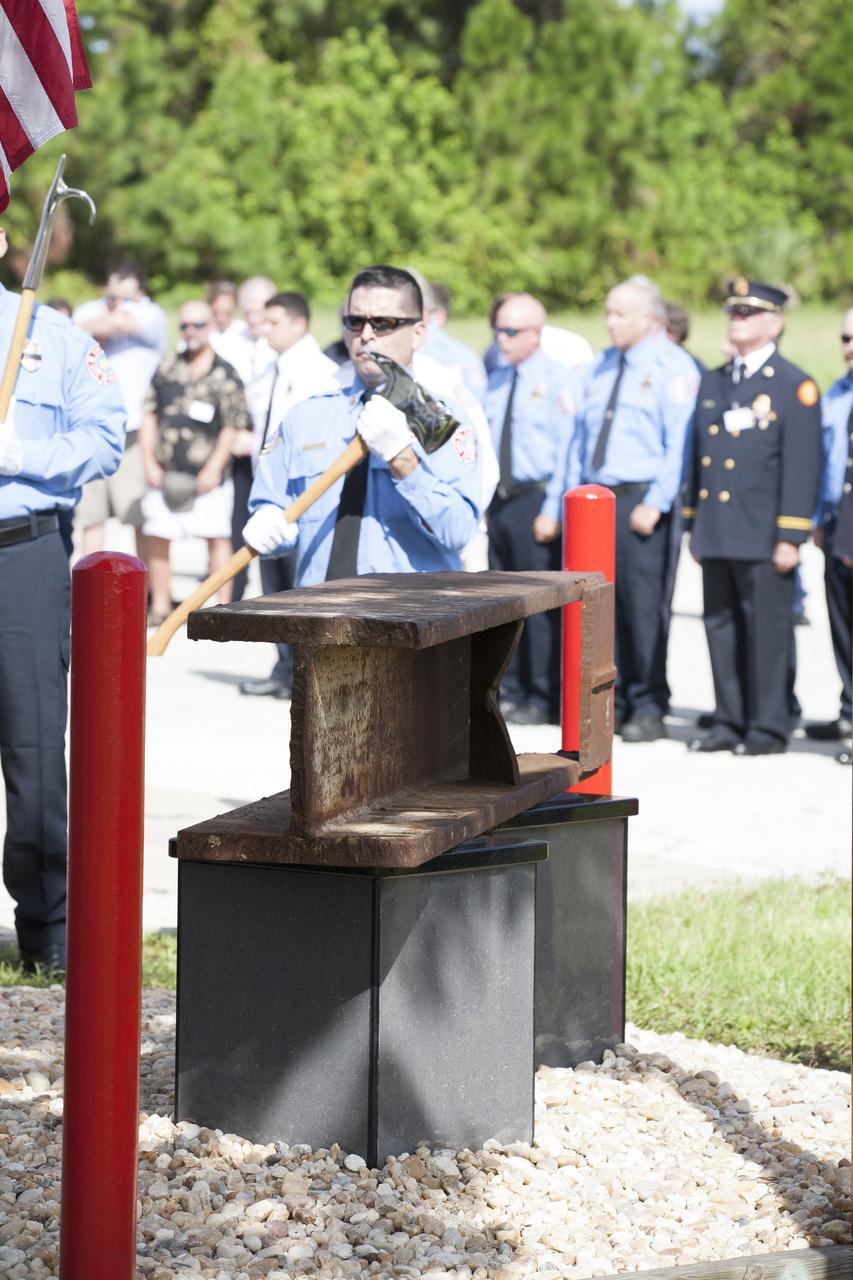
A memorial to the 343 first responder victims of the Sept. 11, 2001, terror attacks stands at Fire Station 1 at NASA's Kennedy Space Center during its dedication on Sept. 11, 2015. A section of steel I-beam from the World Trade Center in New York forms the centerpiece of the monument.
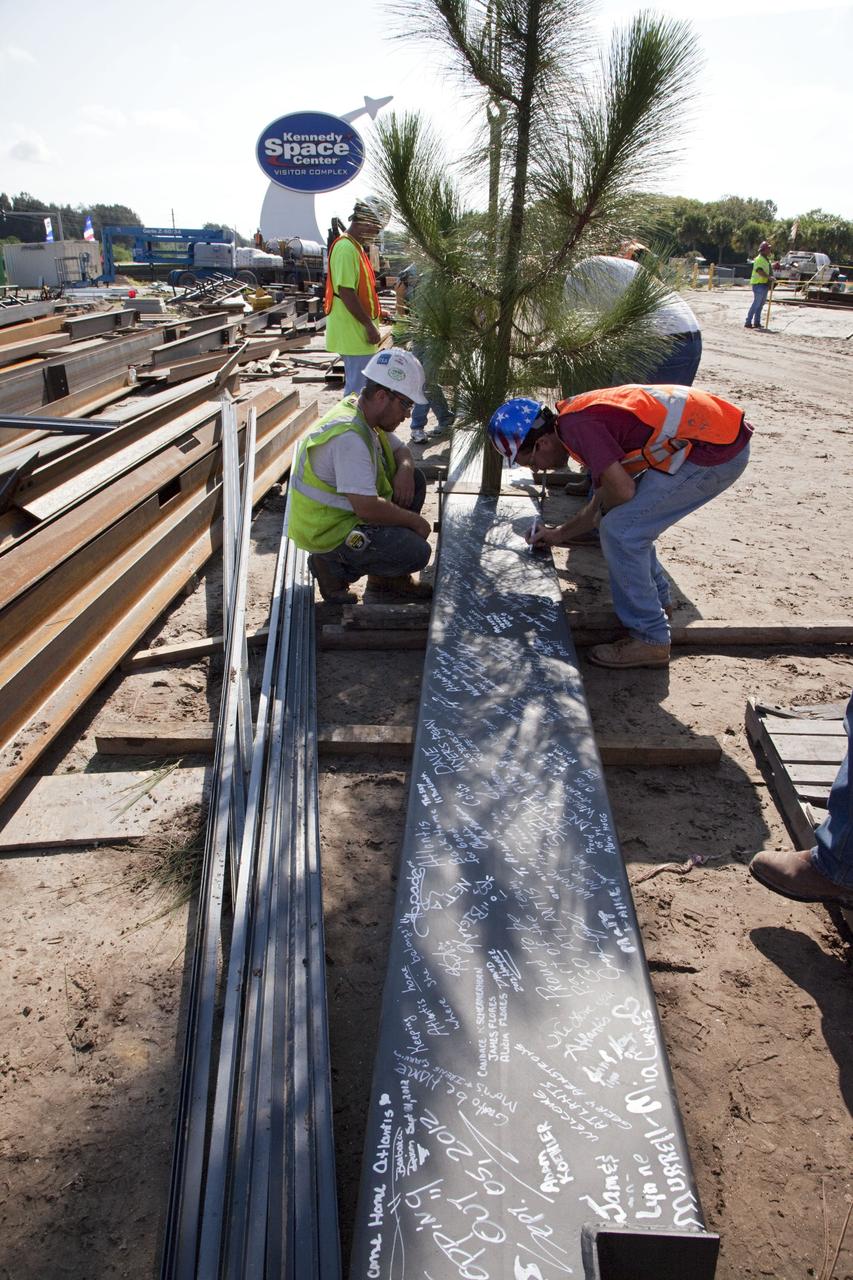
CAPE CANAVERAL, Fla. – Workers sign a steel beam before it is placed at the highest point of a new exhibit facility under construction at the Kennedy Space Center Visitor Complex. The 90,000-square-foot facility will house space shuttle Atlantis and 62 shuttle program exhibits. Photo credit: NASA/Kim Shiflett
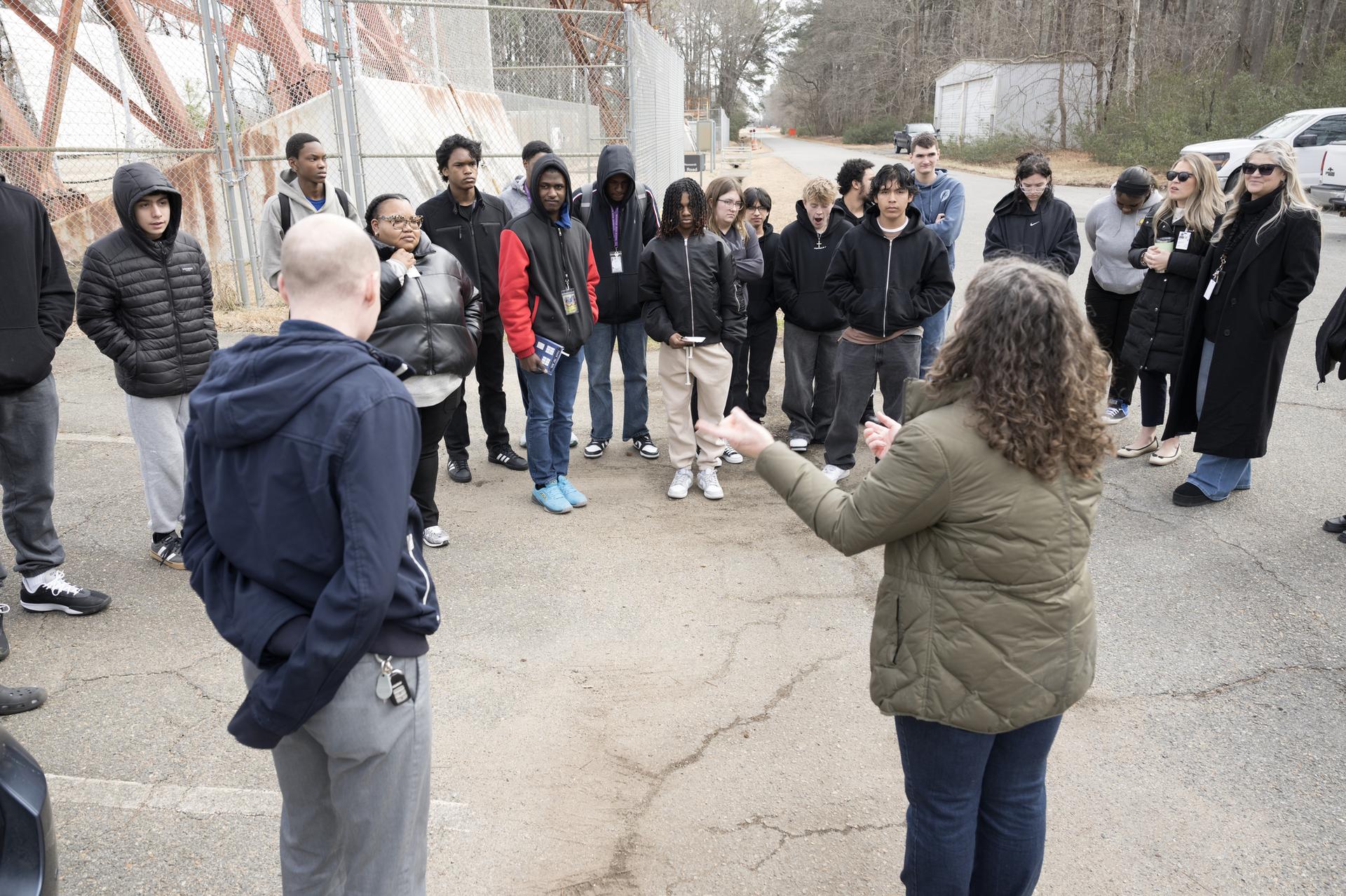
Old Dominion University's (ODU) Maritime Engineering and Environmental Studies Academy (MEESA) lab school juniors, tour the NASA Langley’s Landing and Impact Research Facility (LandIR), also know as the Gantry. The students were task to create an exhibit for the Vestil Aluminum/Steel Crane (VASC) of the crane used to build the Gantry.
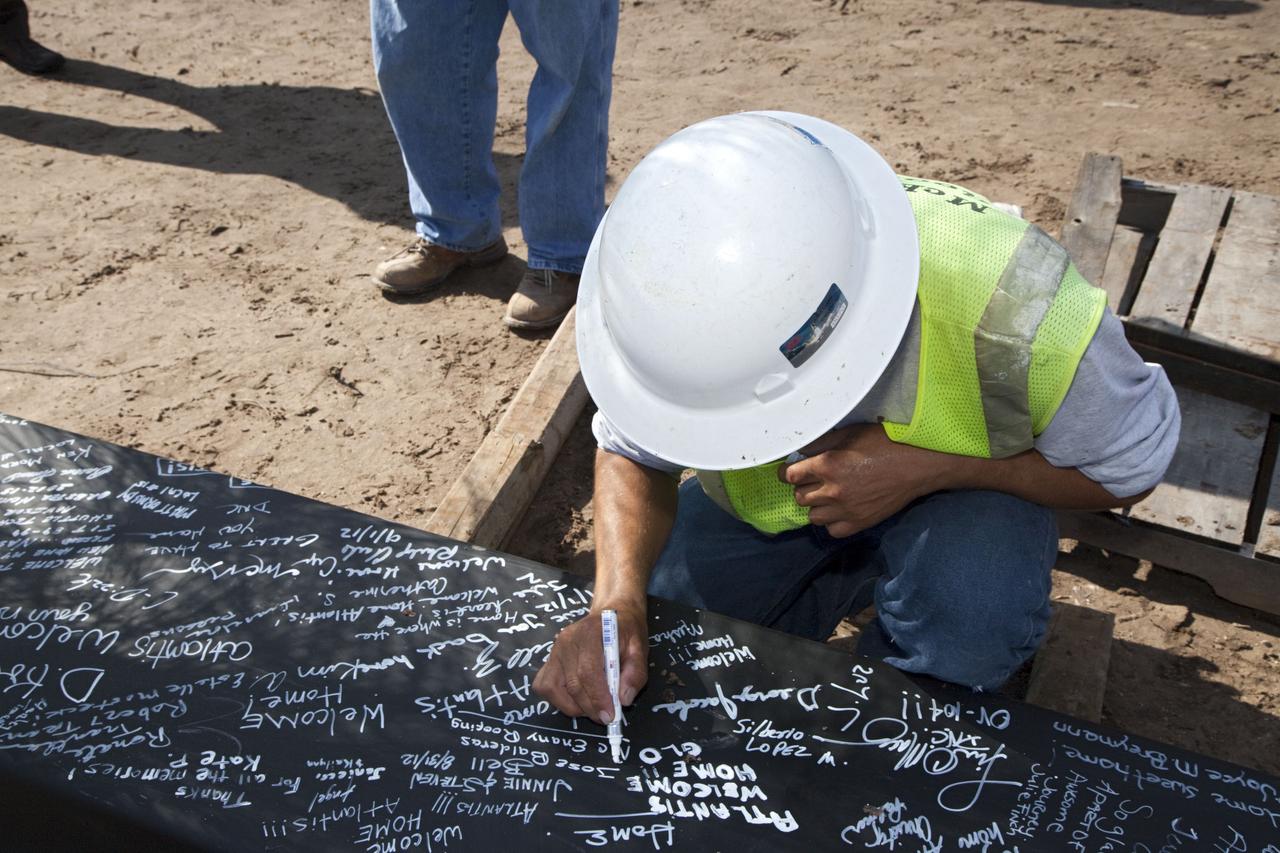
CAPE CANAVERAL, Fla. – A worker signs a steel beam before it is placed at the highest point of a new exhibit facility under construction at the Kennedy Space Center Visitor Complex. The 90,000-square-foot facility will house space shuttle Atlantis and 62 shuttle program exhibits. Photo credit: NASA/Kim Shiflett
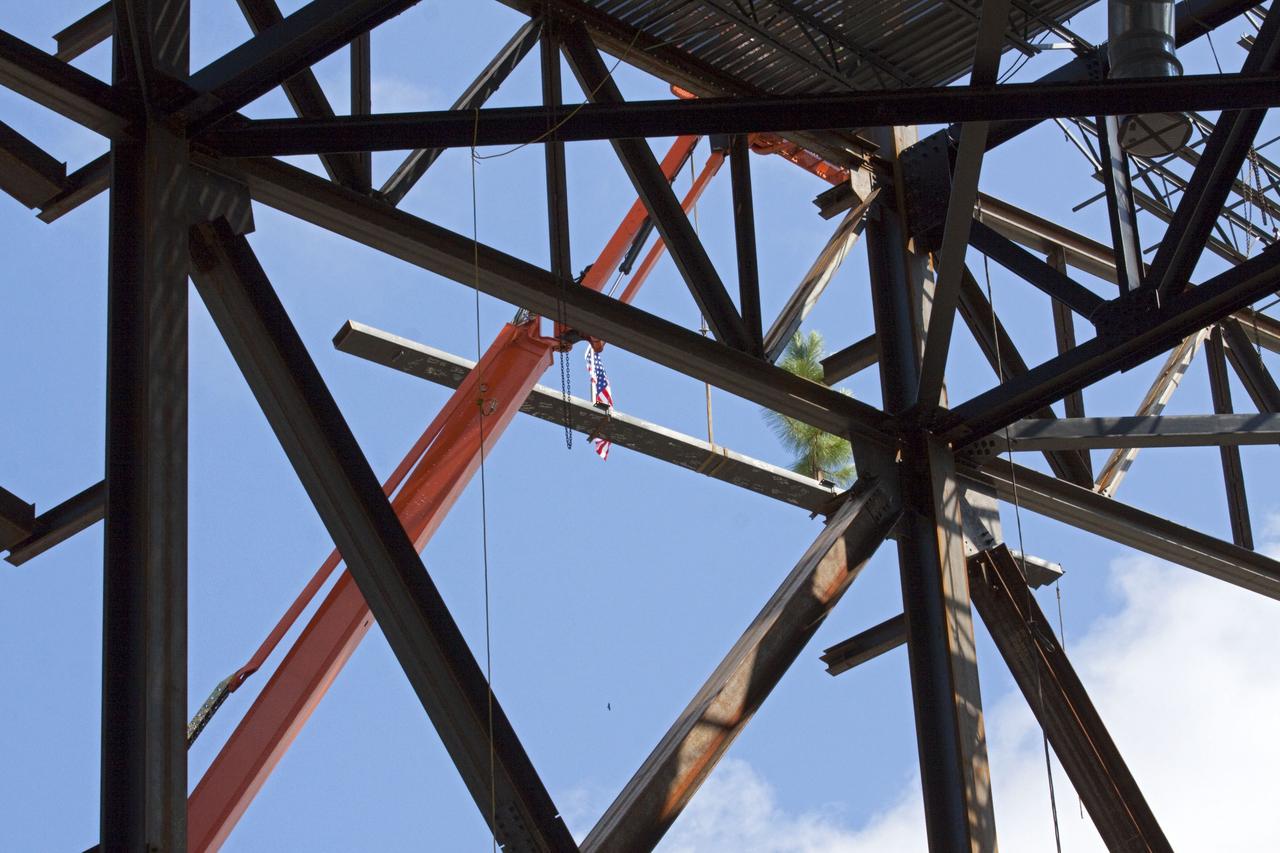
CAPE CANAVERAL, Fla. – A steel beam is lifted to the highest point of a new exhibit facility under construction at the Kennedy Space Center Visitor Complex. The 90,000-square-foot facility will house space shuttle Atlantis and 62 shuttle program exhibits. Photo credit: NASA/Kim Shiflett
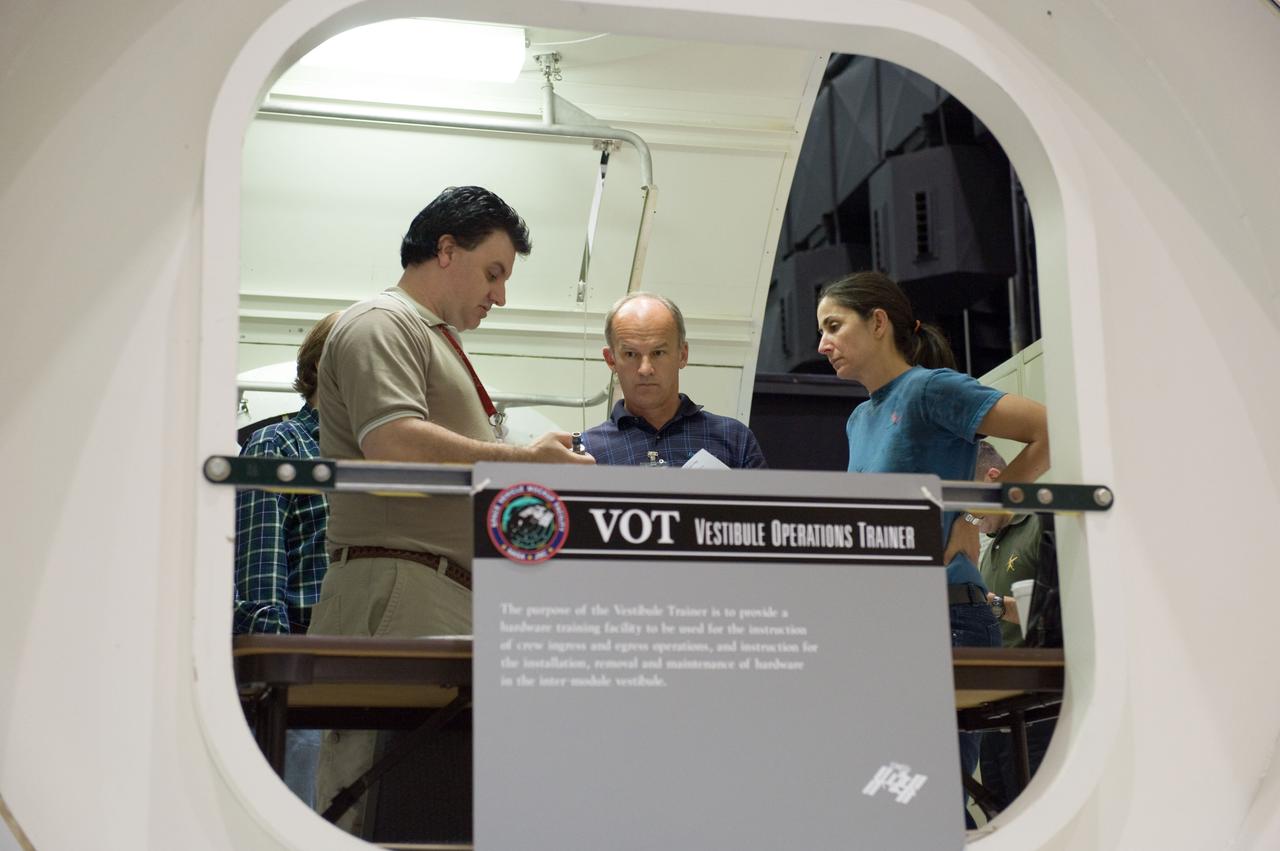
Date: 6-24-09 Location: Bldg 9NW - Node 1 Training Area Subject: Expedition 21 astronauts Jeff Williams and Nicole Scott during new Vestibule Procedures training with instructor Michael Steele. Photographer: Lauren Harnett
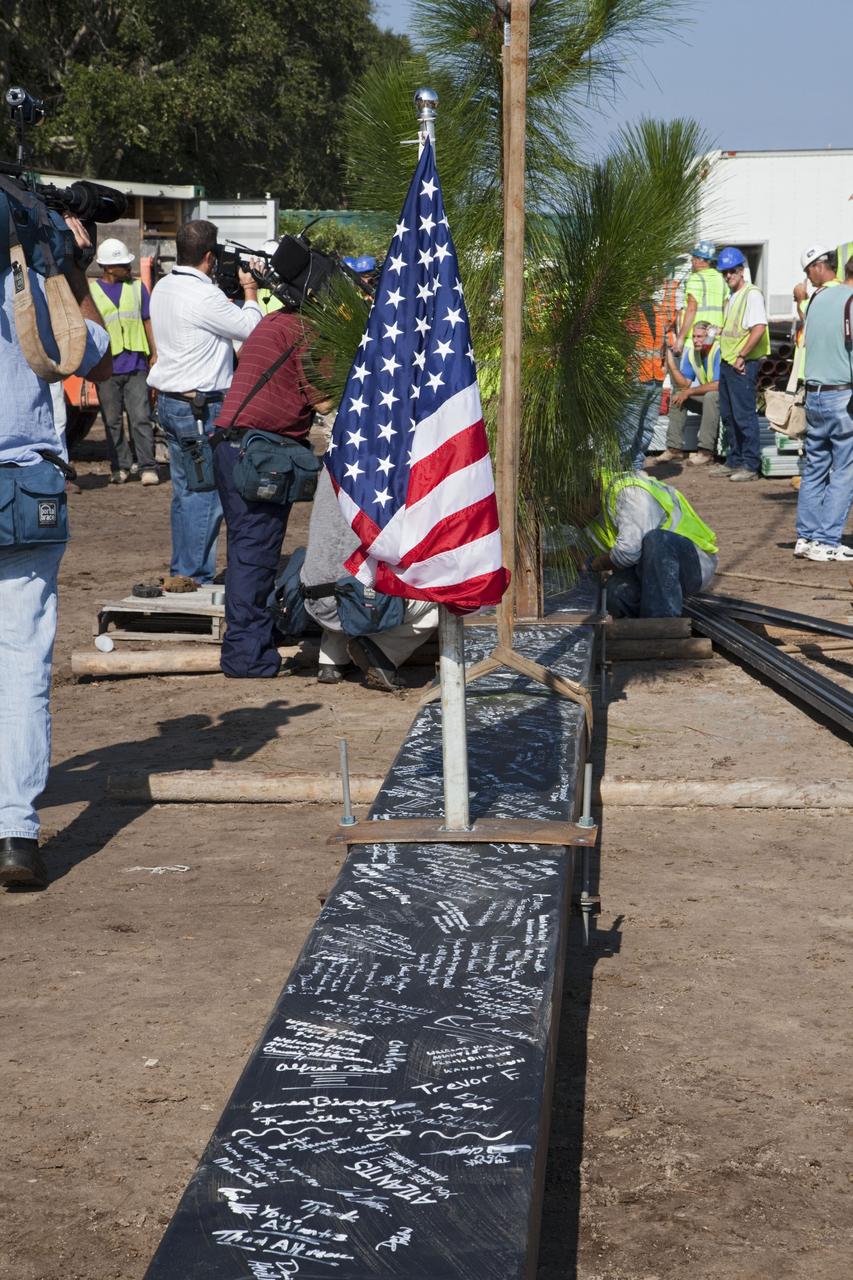
CAPE CANAVERAL, Fla. – Workers sign a steel beam before it is placed at the highest point of a new exhibit facility under construction at the Kennedy Space Center Visitor Complex. The 90,000-square-foot facility will house space shuttle Atlantis and 62 shuttle program exhibits. Photo credit: NASA/Kim Shiflett
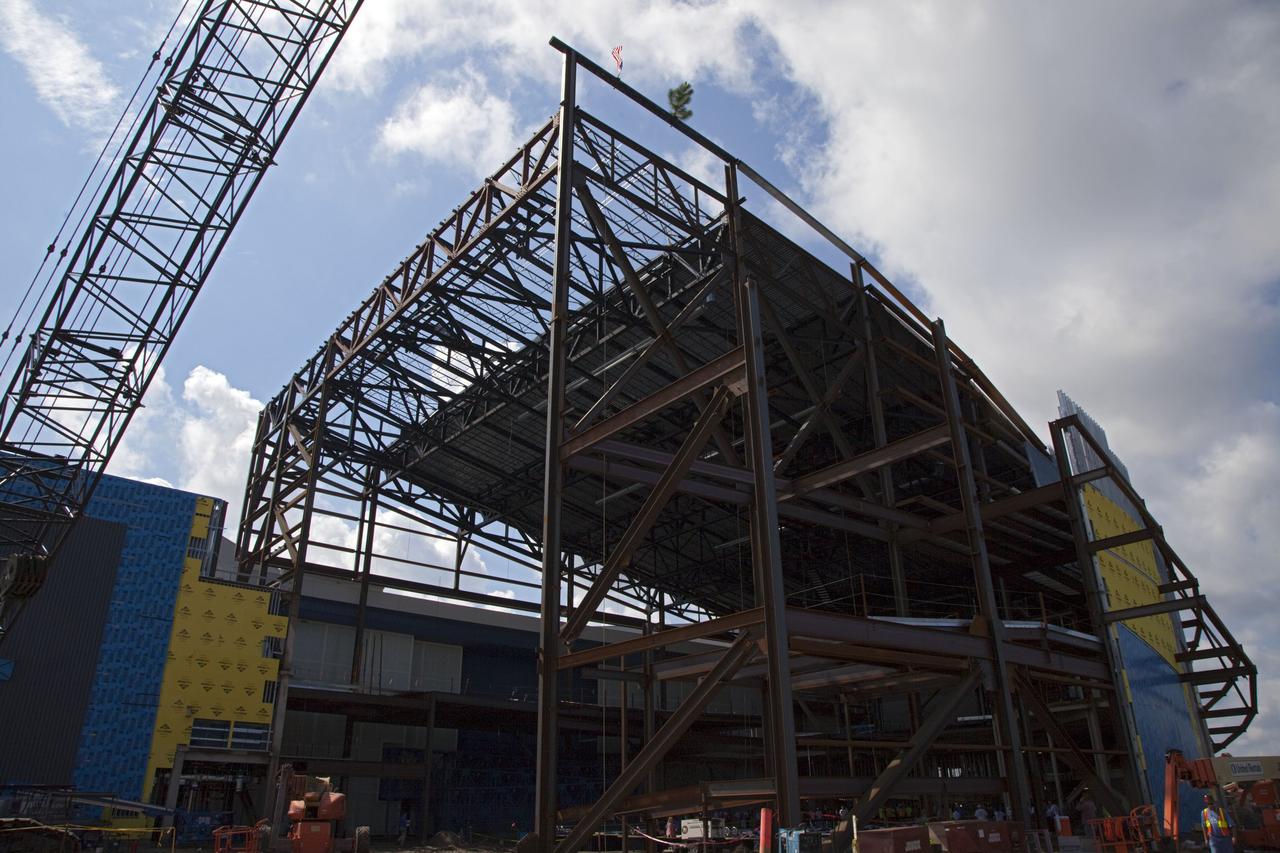
CAPE CANAVERAL, Fla. – A steel beam after being fitted to the highest point of a new exhibit facility under construction at the Kennedy Space Center Visitor Complex. The 90,000-square-foot facility will house space shuttle Atlantis and 62 shuttle program exhibits. Photo credit: NASA/Kim Shiflett
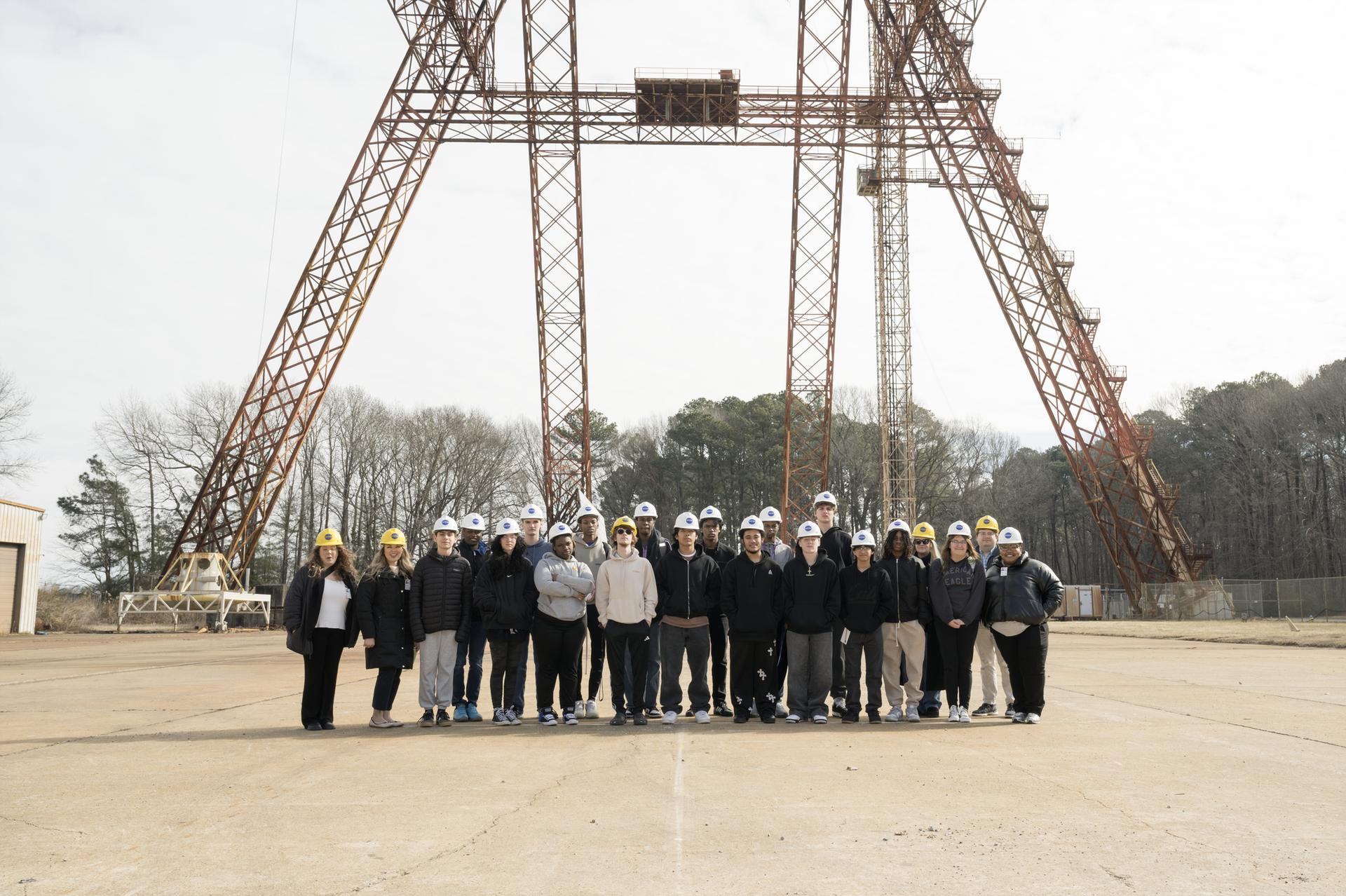
Old Dominion University's (ODU) Maritime Engineering and Environmental Studies Academy (MEESA) lab school juniors, tour the NASA Langley’s Landing and Impact Research Facility (LandIR), also know as the Gantry. The students were task to create an exhibit for the Vestil Aluminum/Steel Crane (VASC) of the crane used to build the Gantry.
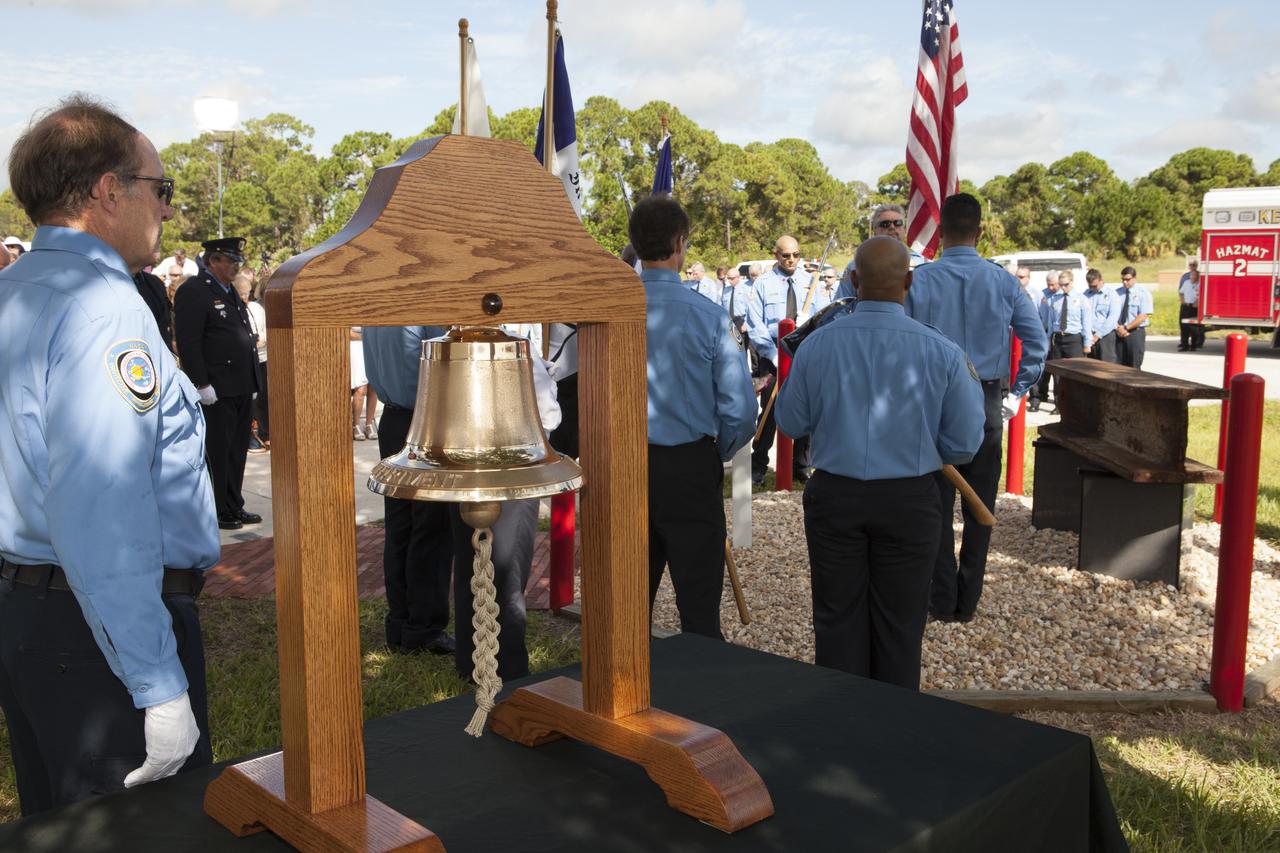
Firefighters stand at attention as a memorial to the 343 first responder victims of the Sept. 11, 2001, terror attacks is dedicated at Fire Station 1 at NASA's Kennedy Space Center on Sept. 11, 2015. A section of steel I-beam from the World Trade Center in New York forms the centerpiece of the monument.
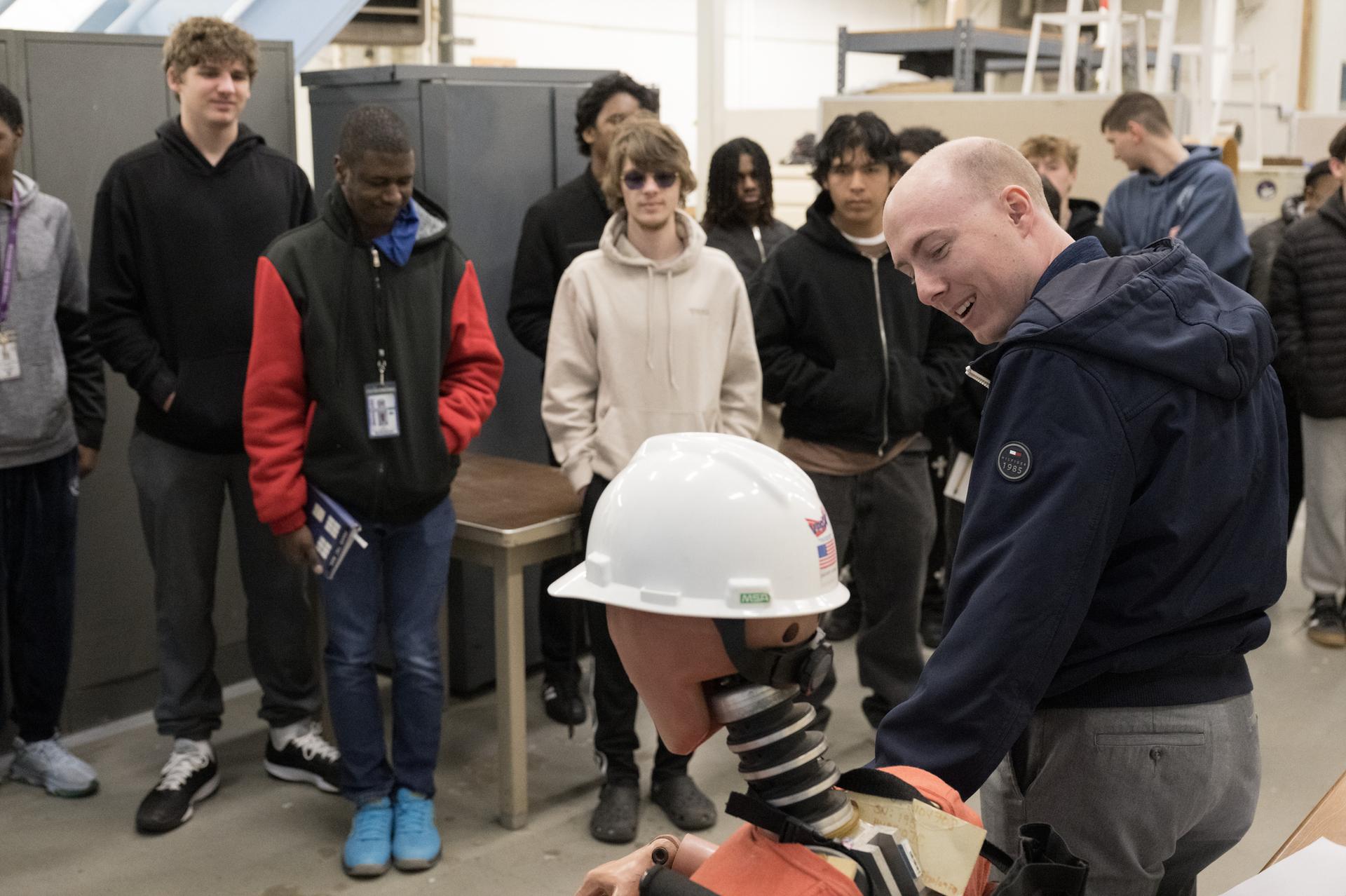
Old Dominion University's (ODU) Maritime Engineering and Environmental Studies Academy (MEESA) lab school juniors, tour the NASA Langley’s Landing and Impact Research Facility (LandIR), also know as the Gantry. The students were task to create an exhibit for the Vestil Aluminum/Steel Crane (VASC) of the crane used to build the Gantry.
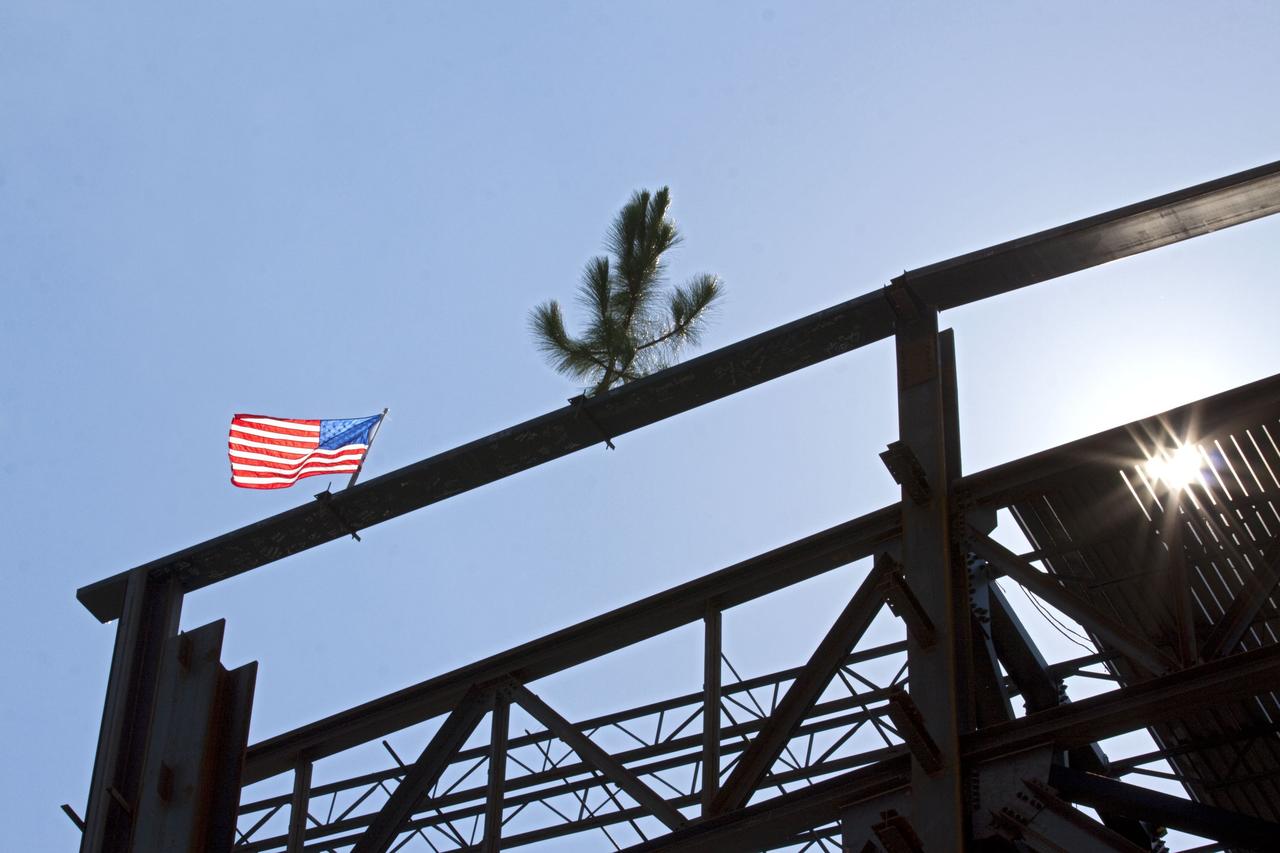
CAPE CANAVERAL, Fla. – A steel beam after being fitted to the highest point of a new exhibit facility under construction at the Kennedy Space Center Visitor Complex. The 90,000-square-foot facility will house space shuttle Atlantis and 62 shuttle program exhibits. Photo credit: NASA/Kim Shiflett
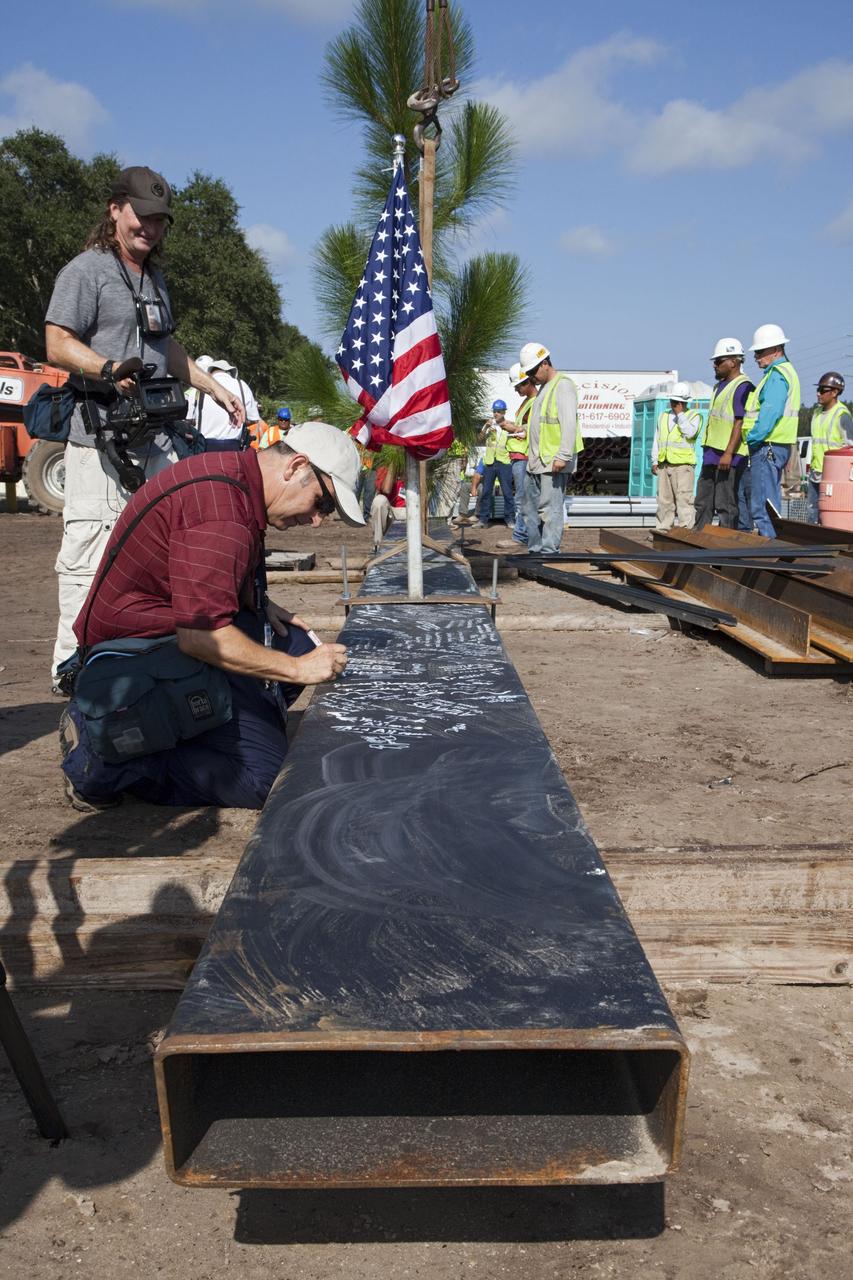
CAPE CANAVERAL, Fla. – An event observer signs a steel beam before it is placed at the highest point of a new exhibit facility under construction at the Kennedy Space Center Visitor Complex. The 90,000-square-foot facility will house space shuttle Atlantis and 62 shuttle program exhibits. Photo credit: NASA/Kim Shiflett
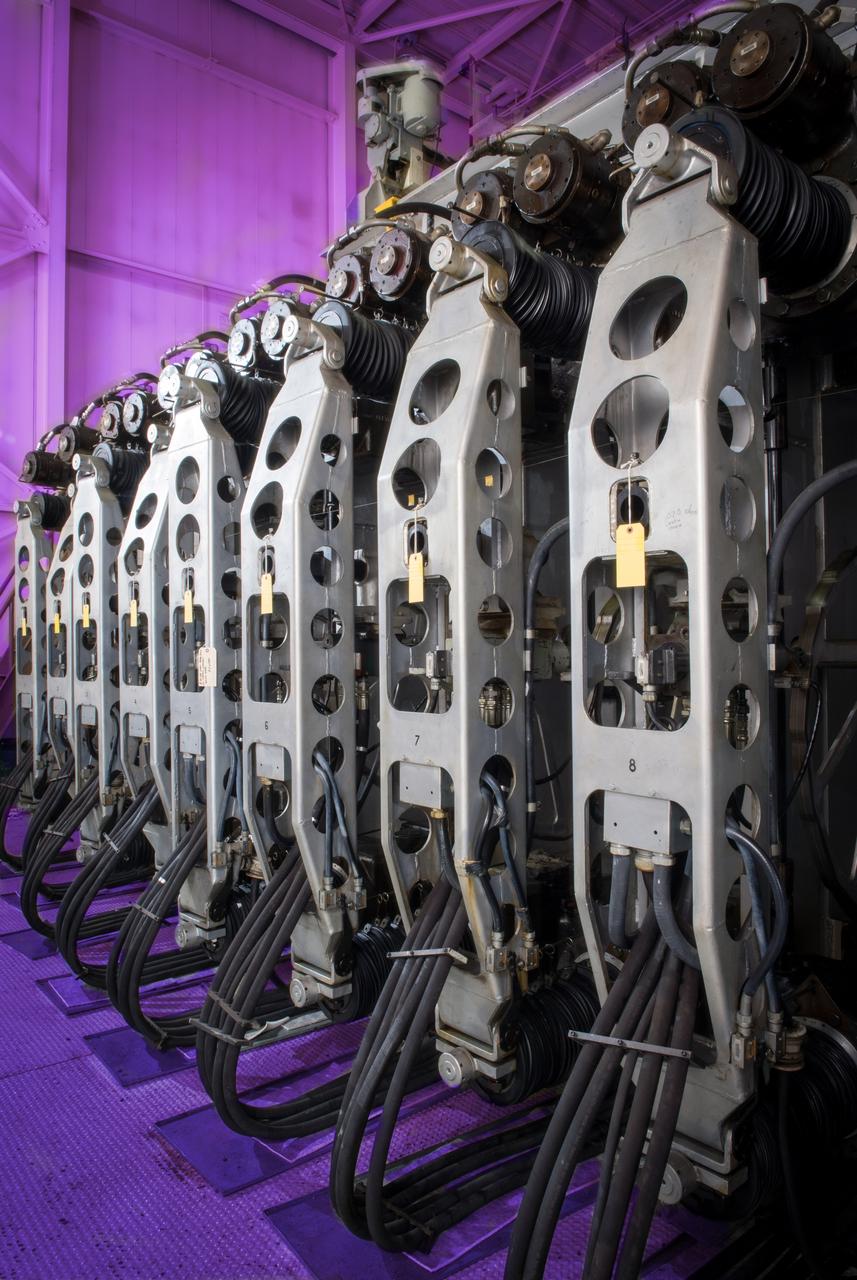
The flexwall section of NASA Glenn’s 10x10 supersonic wind tunnel is made up of two movable flexible steel sidewalls. These powerful hydraulic jacks move the walls in and out to control supersonic air speeds in the test section between Mach 2.0 and 3.5.
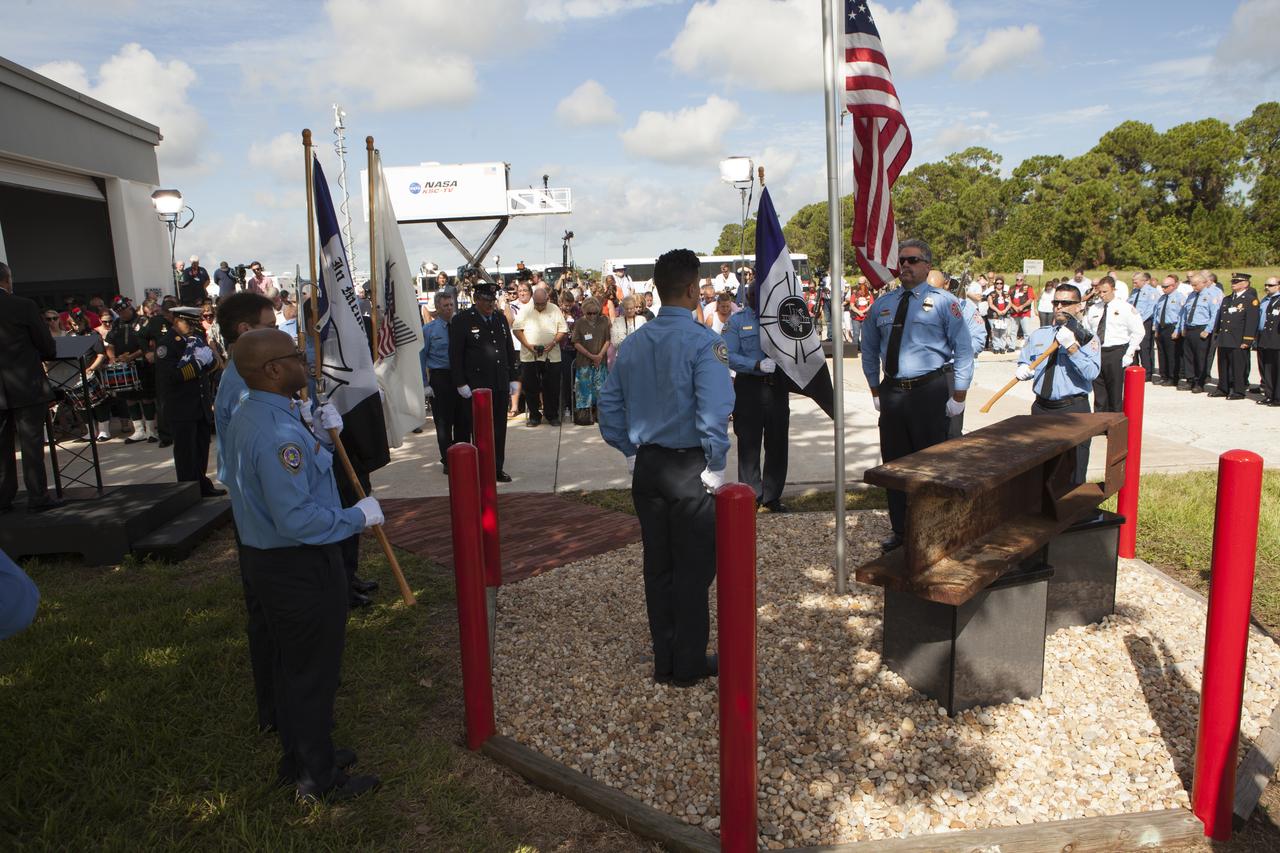
Firefighters stand at attention as a memorial to the 343 first responder victims of the Sept. 11, 2001, terror attacks is dedicated at Fire Station 1 at NASA's Kennedy Space Center on Sept. 11, 2015. A section of steel I-beam from the World Trade Center in New York forms the centerpiece of the monument.
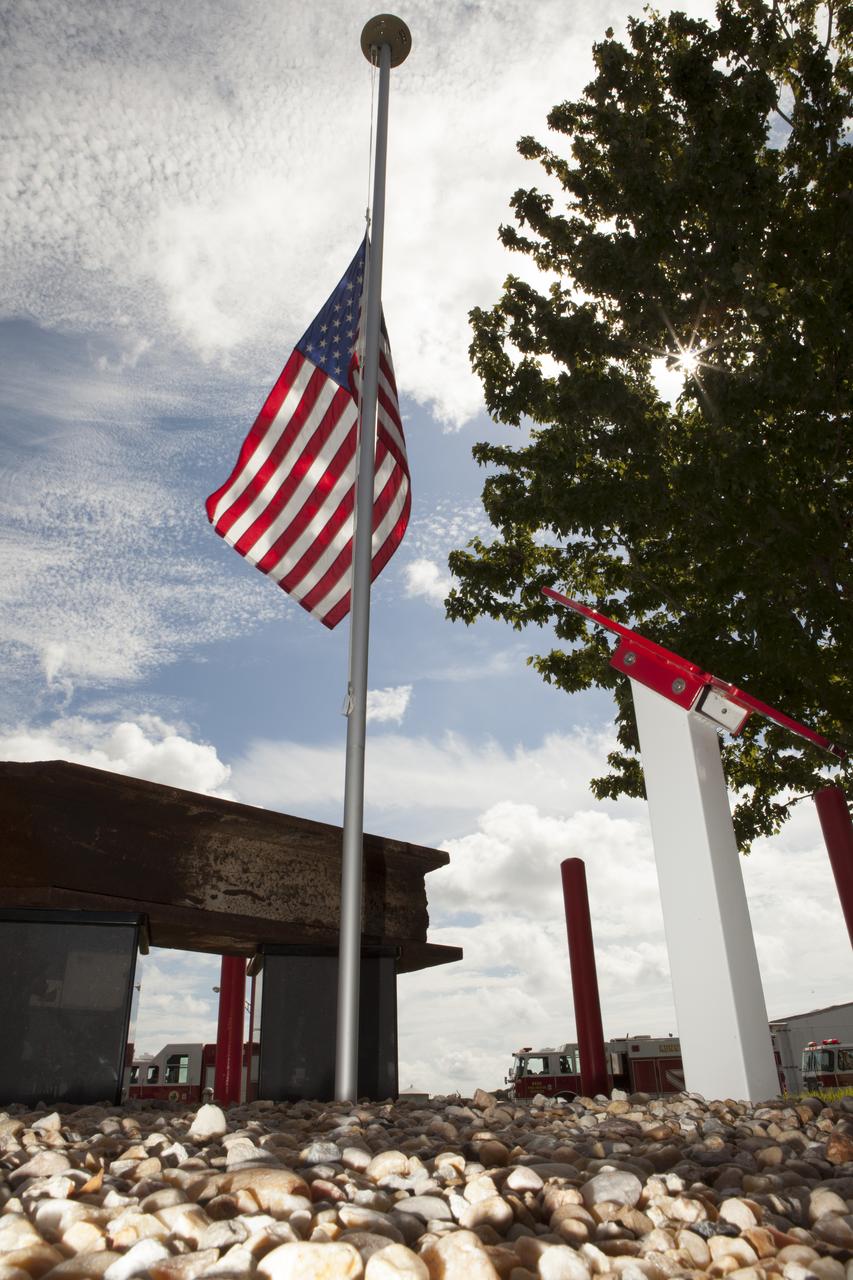
A memorial to the 343 first responder victims of the Sept. 11, 2001, terror attacks stands at Fire Station 1 at NASA's Kennedy Space Center during its dedication on Sept. 11, 2015. A section of steel I-beam from the World Trade Center in New York forms the centerpiece of the monument.
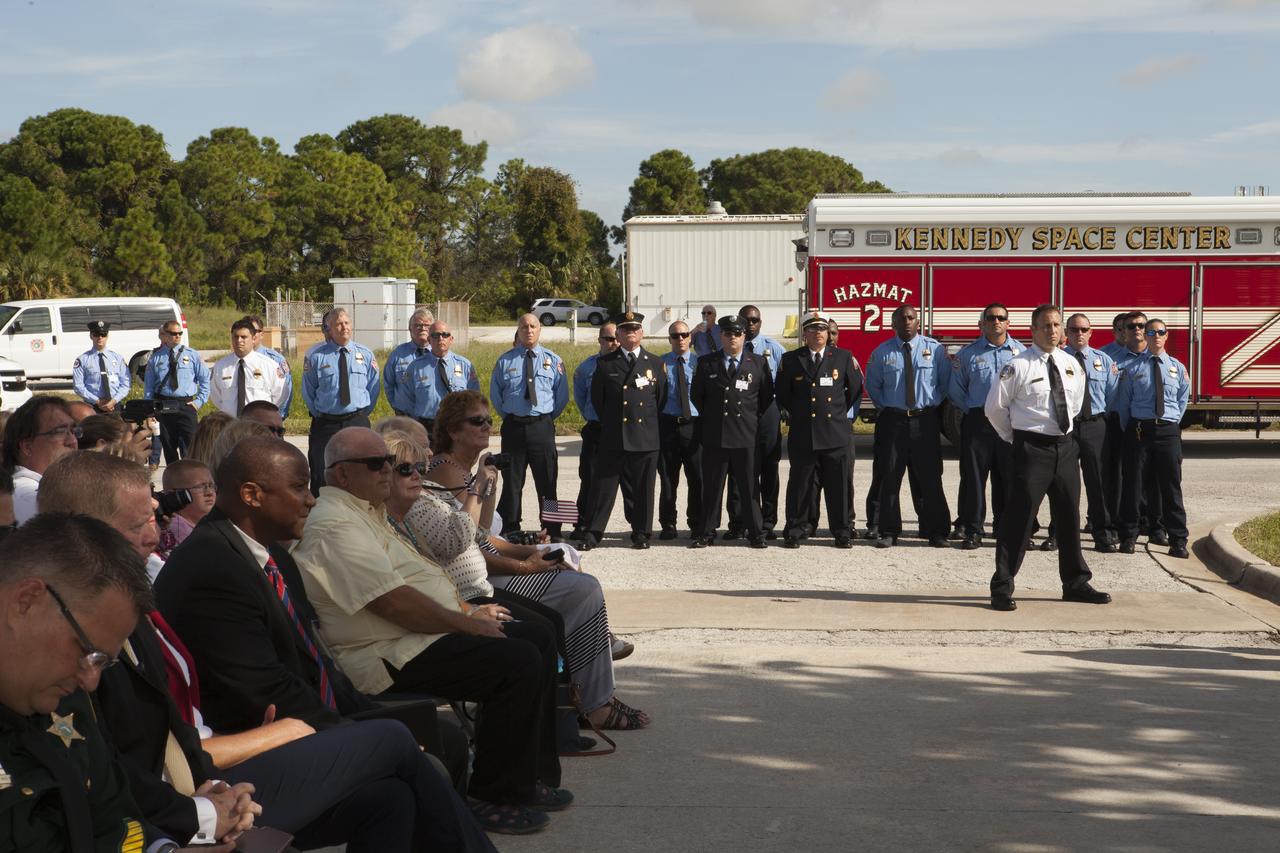
Officials and firefighters at NASA's Kennedy Space Center observe the dedication service for a memorial to the 343 first responder victims of the Sept. 11, 2001, terror attacks at Fire Station 1 at Kennedy on Sept. 11, 2015. The ceremony dedicated a monument that includes a section of steel I-beam from the World Trade Center in New York.
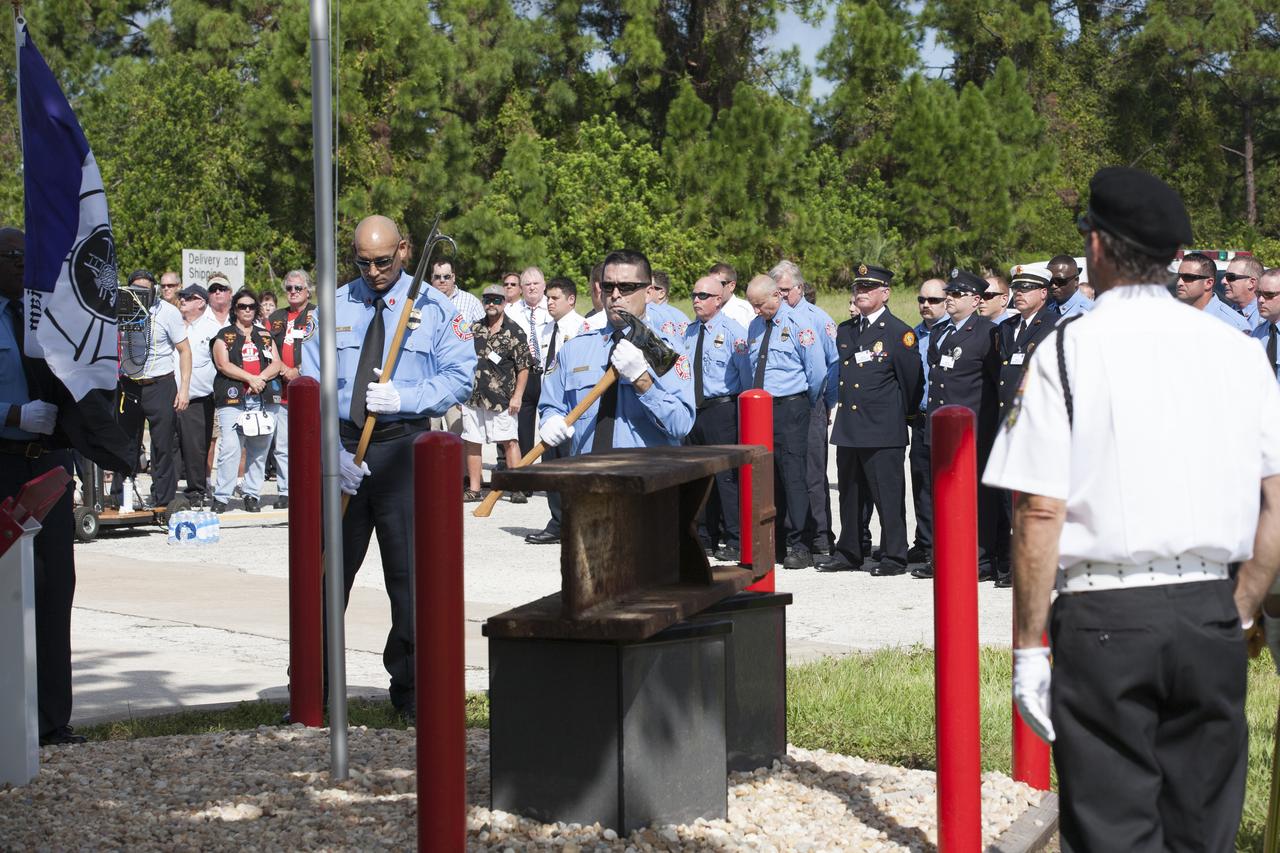
Firefighters stand at attention as a memorial to the 343 first responder victims of the Sept. 11, 2001, terror attacks is dedicated at Fire Station 1 at NASA's Kennedy Space Center on Sept. 11, 2015. A section of steel I-beam from the World Trade Center in New York forms the centerpiece of the monument.
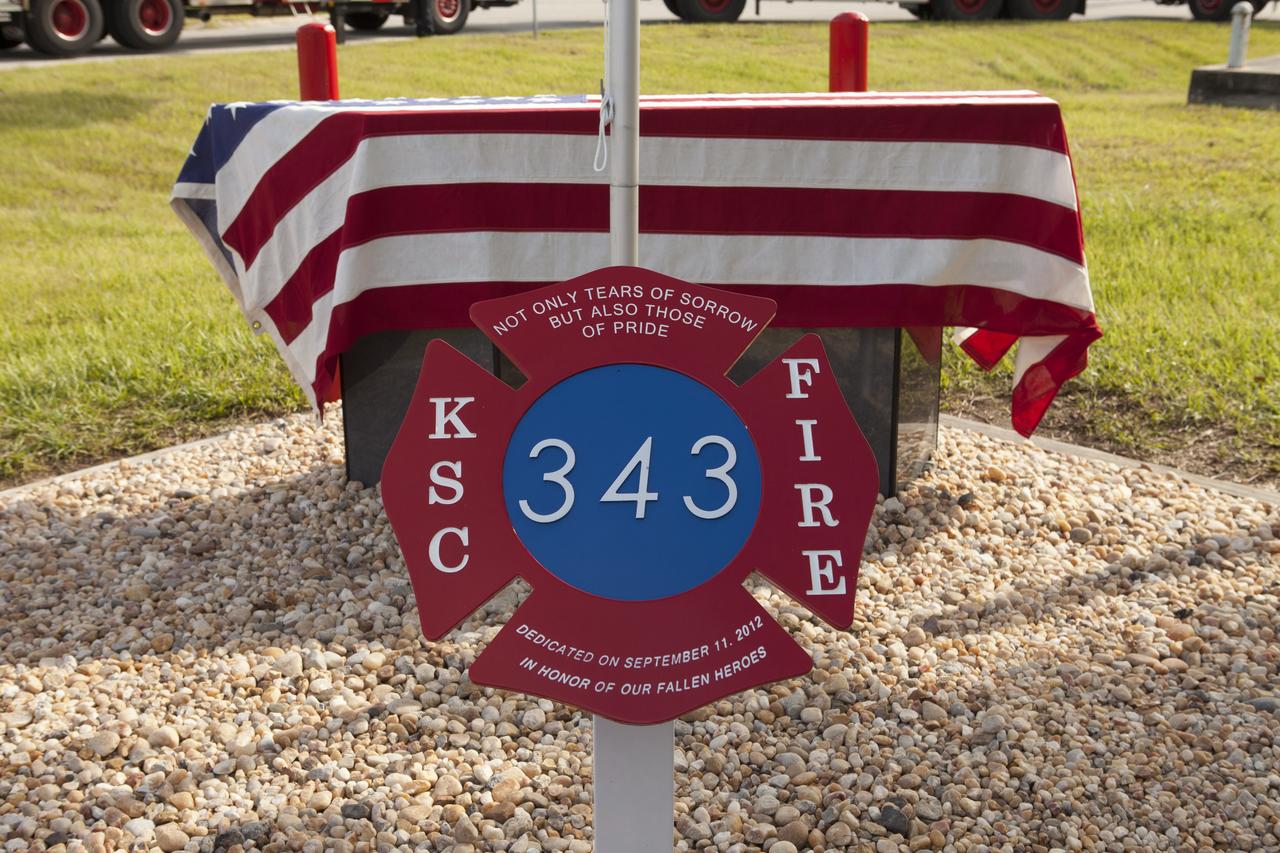
A memorial to the 343 first responder victims of the Sept. 11, 2001, terror attacks stands at Fire Station 1 at NASA's Kennedy Space Center prior to its dedication on Sept. 11, 2015. Beneath the American flag is a section of steel I-beam from the World Trade Center in New York that forms the centerpiece of the monument.
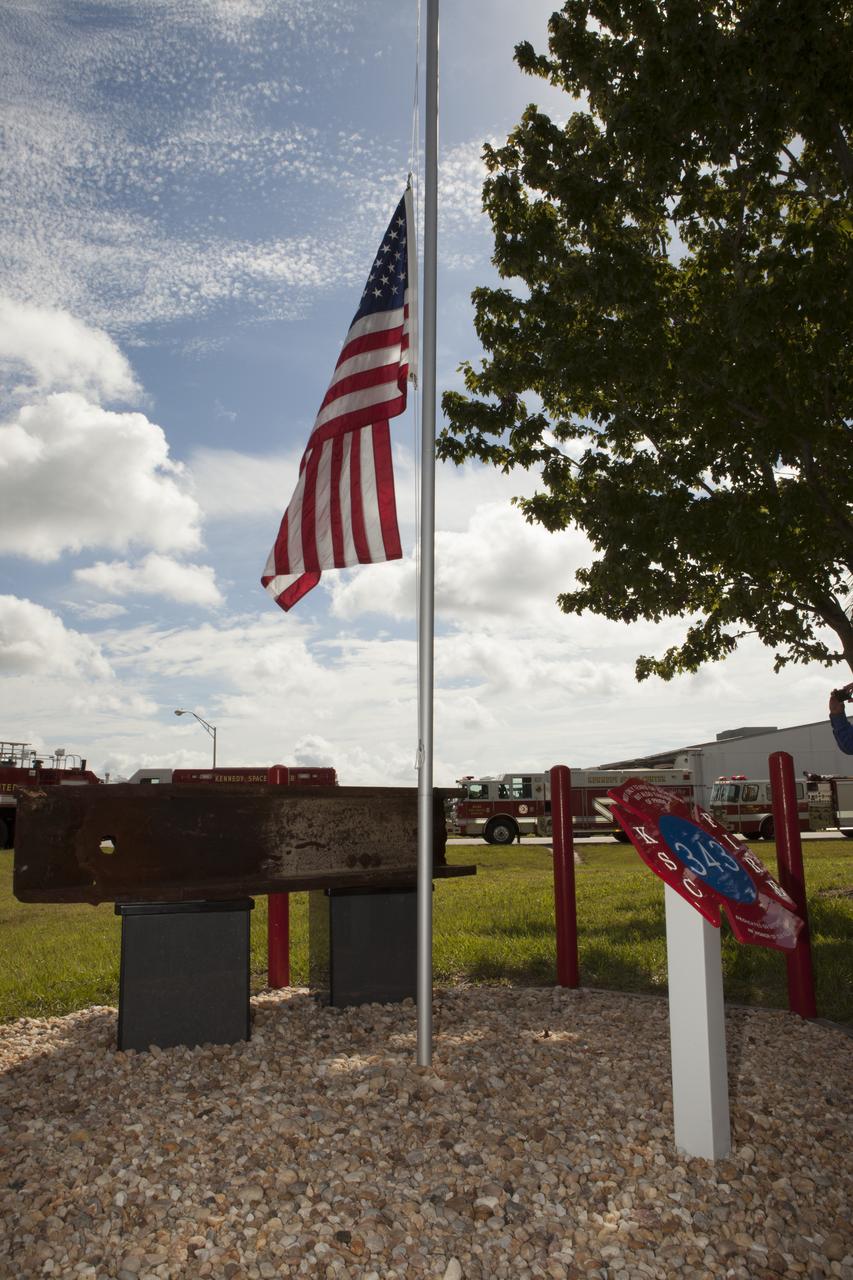
A memorial to the 343 first responder victims of the Sept. 11, 2001, terror attacks stands at Fire Station 1 at NASA's Kennedy Space Center during its dedication on Sept. 11, 2015. A section of steel I-beam from the World Trade Center in New York forms the centerpiece of the monument.
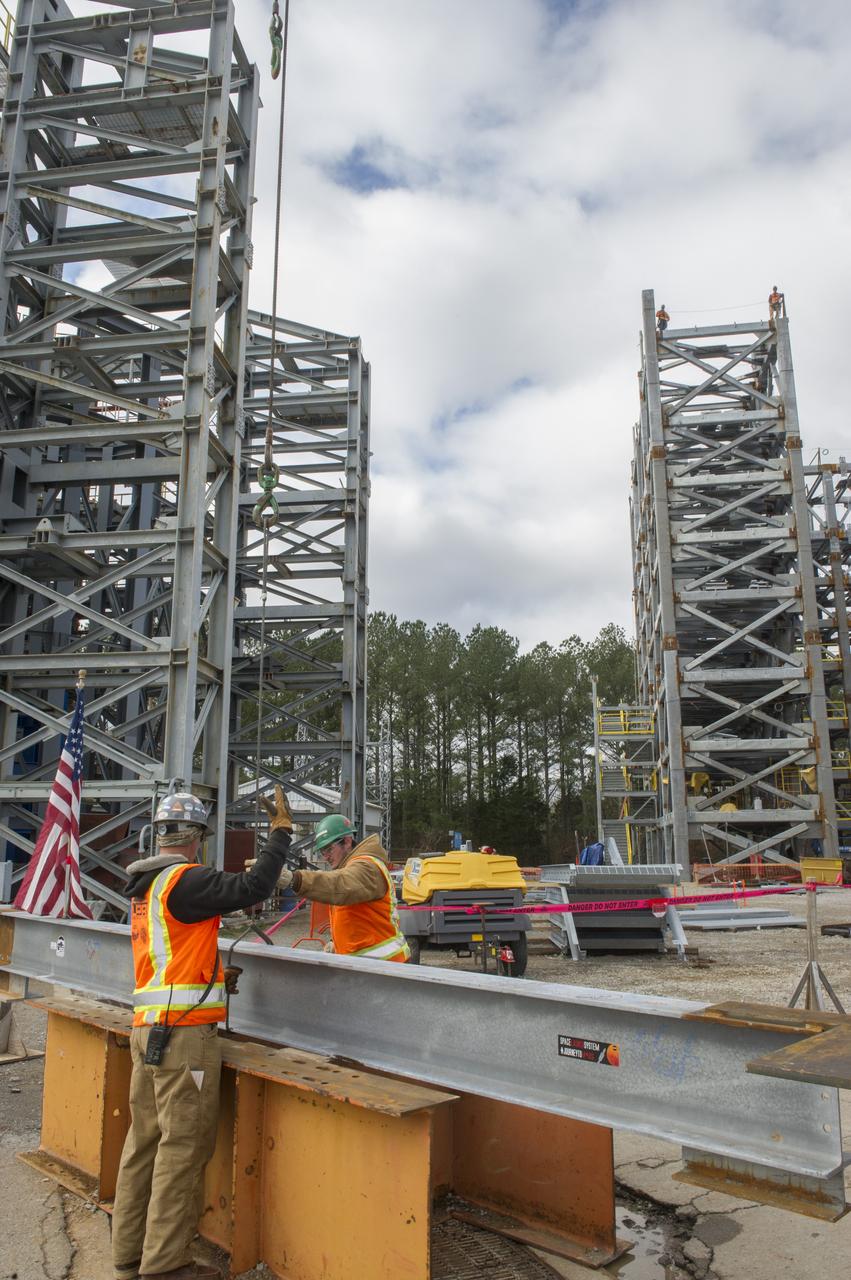
ON MARCH 4, CREW MEMBERS READIED A 900-POUND STEEL BEAM TO "TOP OUT" TEST STAND 4697, WHICH IS UNDER CONSTRUCTION TO TEST THE SPACE LAUNCH SYSTEM LIQUID OXYGEN TANK AT NASA'S MARSHALL SPACE FLIGHT CENTER.
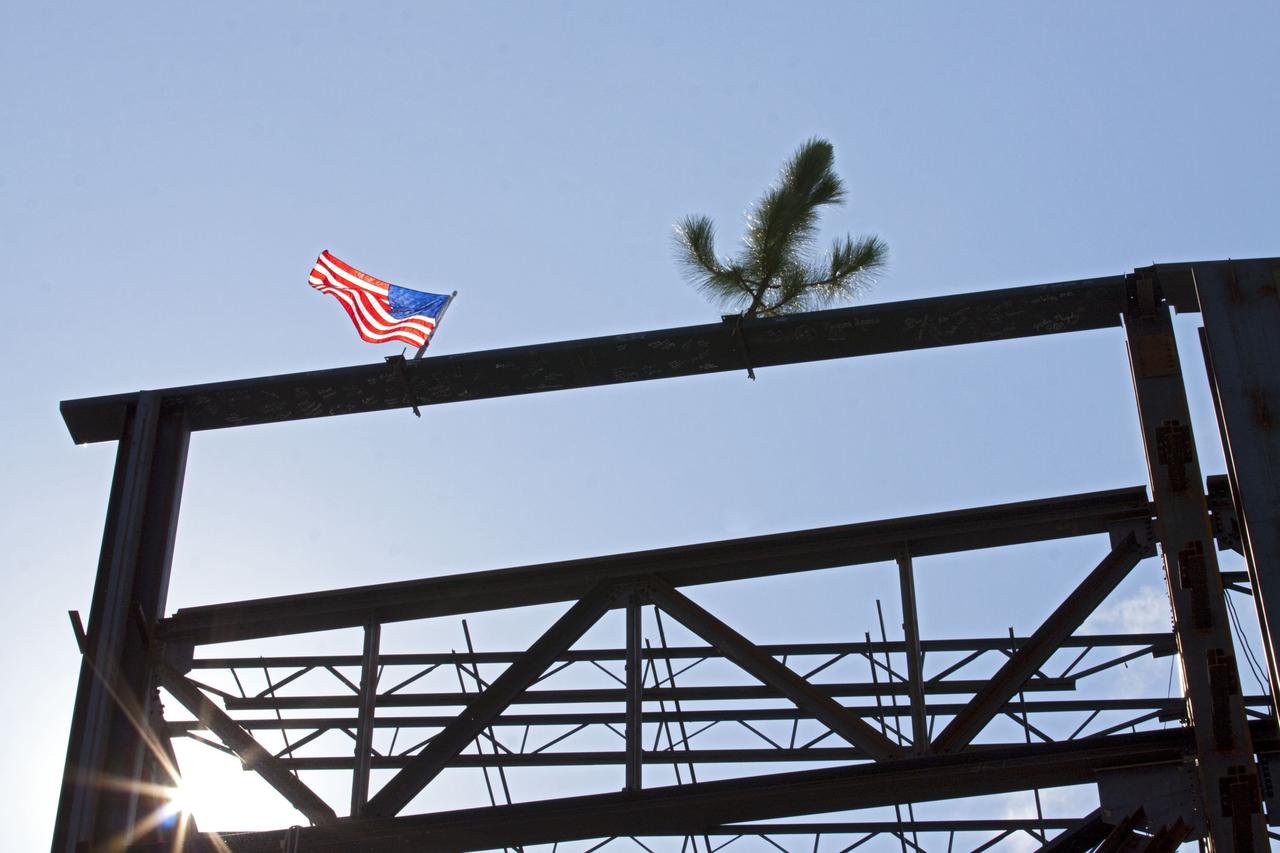
CAPE CANAVERAL, Fla. – A steel beam after being fitted to the highest point of a new exhibit facility under construction at the Kennedy Space Center Visitor Complex. The 90,000-square-foot facility will house space shuttle Atlantis and 62 shuttle program exhibits. Photo credit: NASA/Kim Shiflett
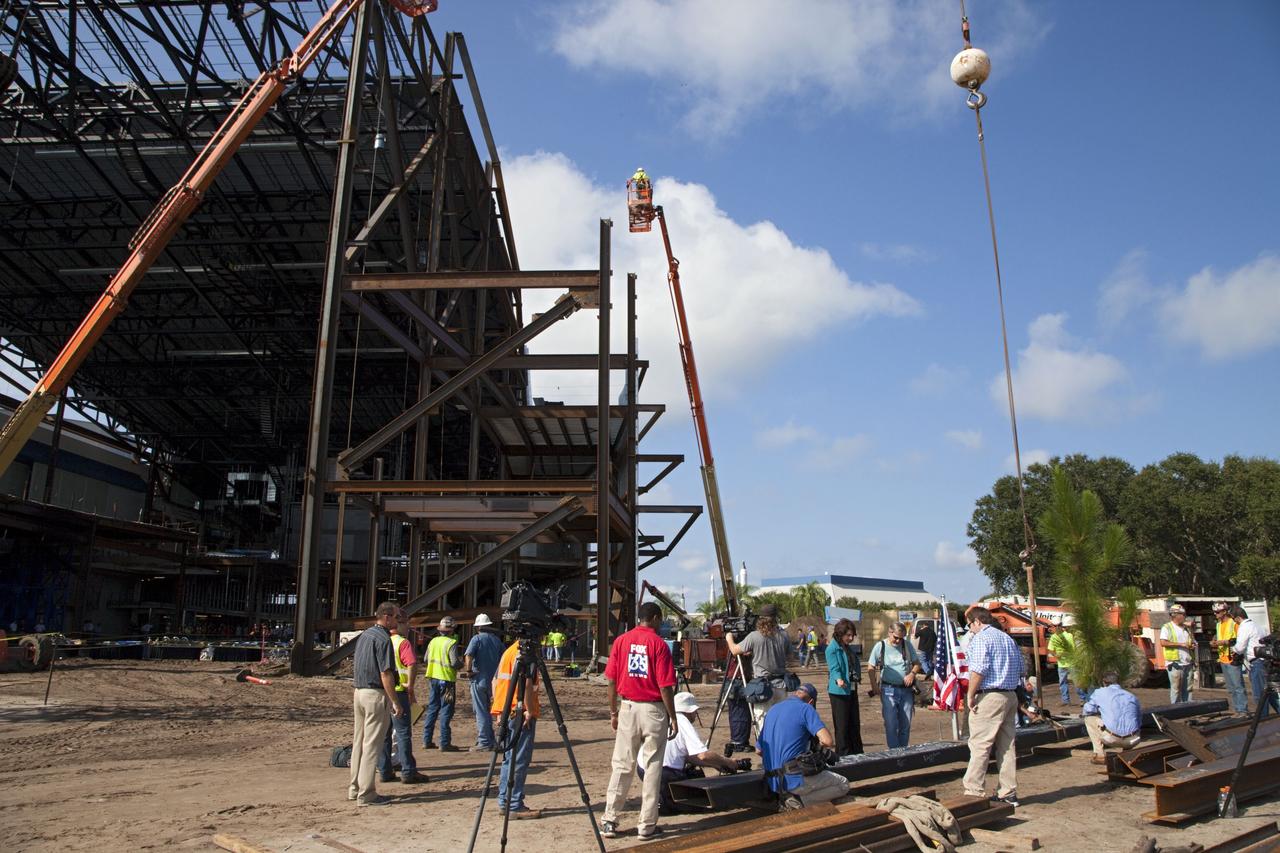
CAPE CANAVERAL, Fla. – Workers sign a steel beam before it is placed at the highest point of a new exhibit facility under construction at the Kennedy Space Center Visitor Complex. The 90,000-square-foot facility will house space shuttle Atlantis and 62 shuttle program exhibits. Photo credit: NASA/Kim Shiflett
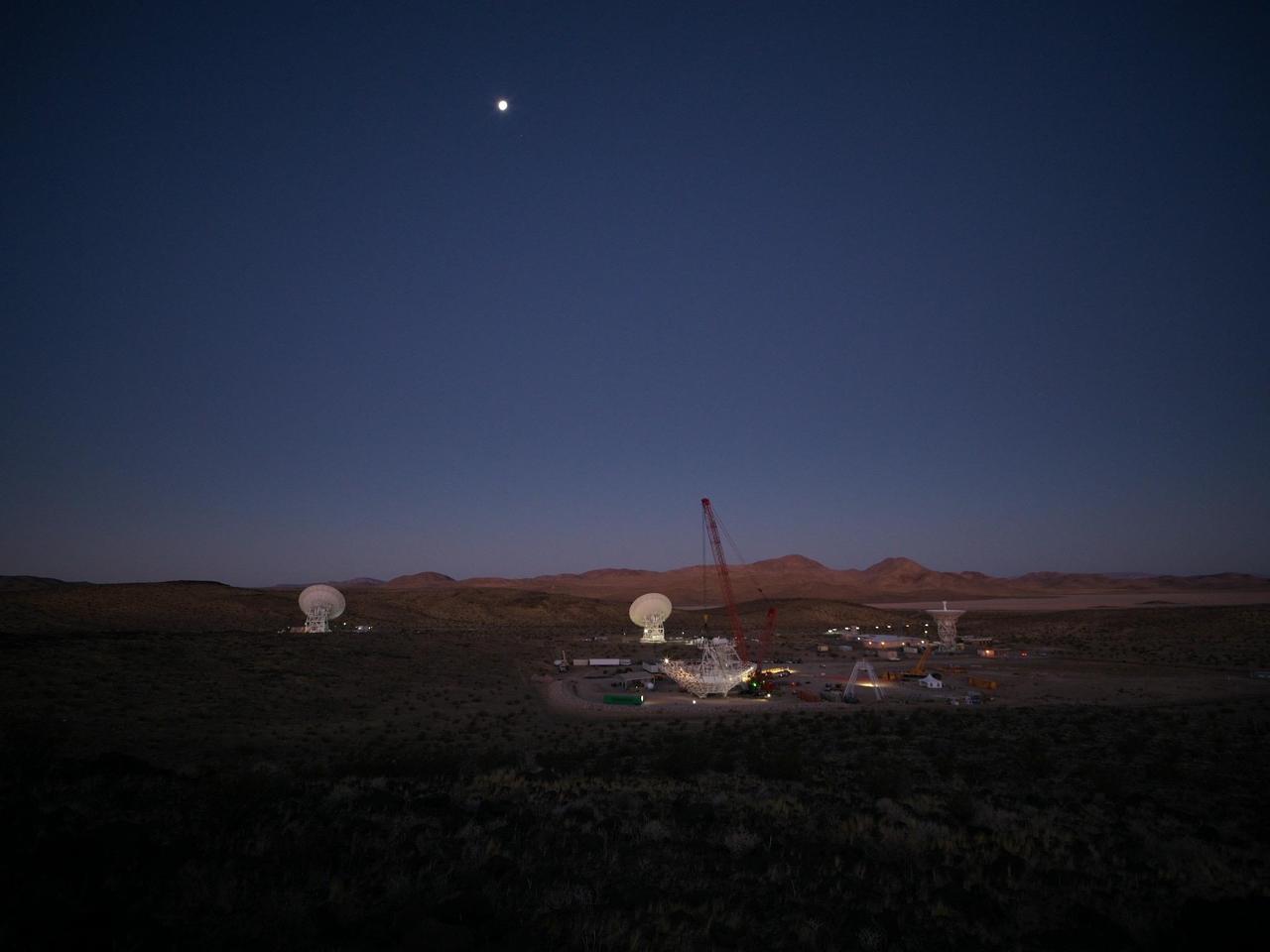
In the early morning of Dec. 18, 2024, a crane looms over the 112-foot-wide (34-meter-wide) steel framework for Deep Space Station 23 (DSS-23) reflector dish, which will soon be lowered into position on the antenna's base structure. Located at the Deep Space Network's Goldstone Space Communications Complex near Barstow, California, DSS-23 is a multi-frequency beam waveguide antenna that will boost the DSN's capacity and enhance NASA's deep space communications capabilities for decades to come. In the background are, from left to right, the beam waveguide antennas DSS-25 and DSS-26, and the decommissioned 85-foot (26-meter) Apollo antenna. https://photojournal.jpl.nasa.gov/catalog/PIA26456
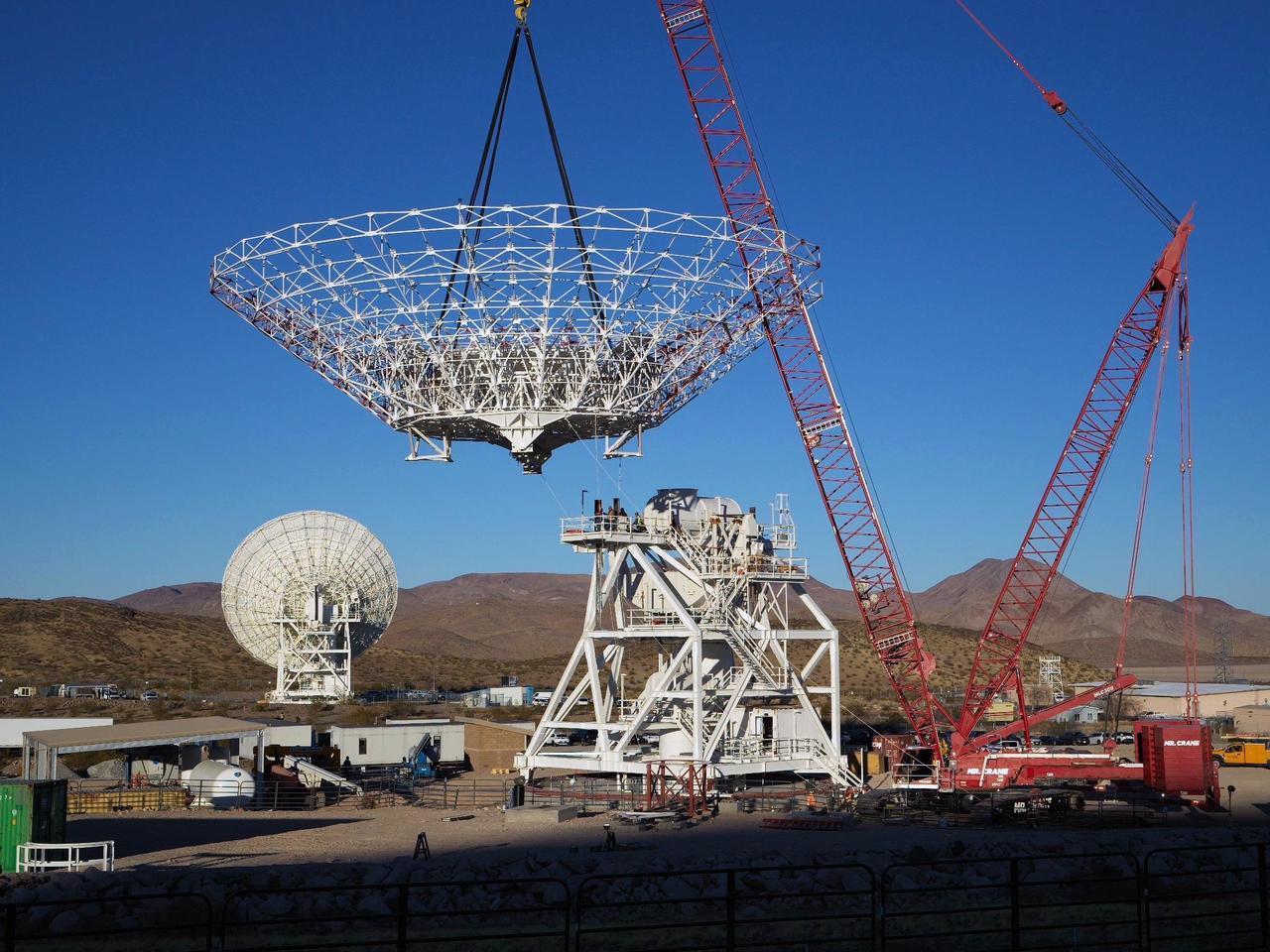
A crane lowers the 112-foot-wide (34-meter-wide) steel framework for the Deep Space Station 23 (DSS-23) reflector dish into position on Dec. 18, 2024, at the Deep Space Network's Goldstone Space Communications Complex near Barstow, California. A multi-frequency beam waveguide antenna, DSS-23 will boost the DSN's capacity and enhance NASA's deep space communications capabilities for decades to come. Once online in 2026, DSS-23 will be the fifth of six new beam waveguide antennas to be added to the network, following DSS-53, which was added at the DSN's Madrid complex in 2022. After the reflector skeleton was bolted into place, engineers placed what's called a quadripod into the center of the structure. A four-legged support structure weighing 16 ½ tons, the quadripod is fitted with a curved subreflector that will direct radio frequency signals from deep space that bounce off the main reflector into the antenna's pedestal where the antenna's receivers are housed. Next steps: to fit panels onto the steel skeleton of the parabolic reflector to create a curved surface to collect radio frequency signals. The DSN allows missions to track, send commands to, and receive scientific data from faraway spacecraft. It is managed by NASA's Jet Propulsion Laboratory in Southern California for the agency's Space Communications and Navigation (SCaN) program, which is located at NASA Headquarters within the Space Operations Mission Directorate. https://photojournal.jpl.nasa.gov/catalog/PIA26454
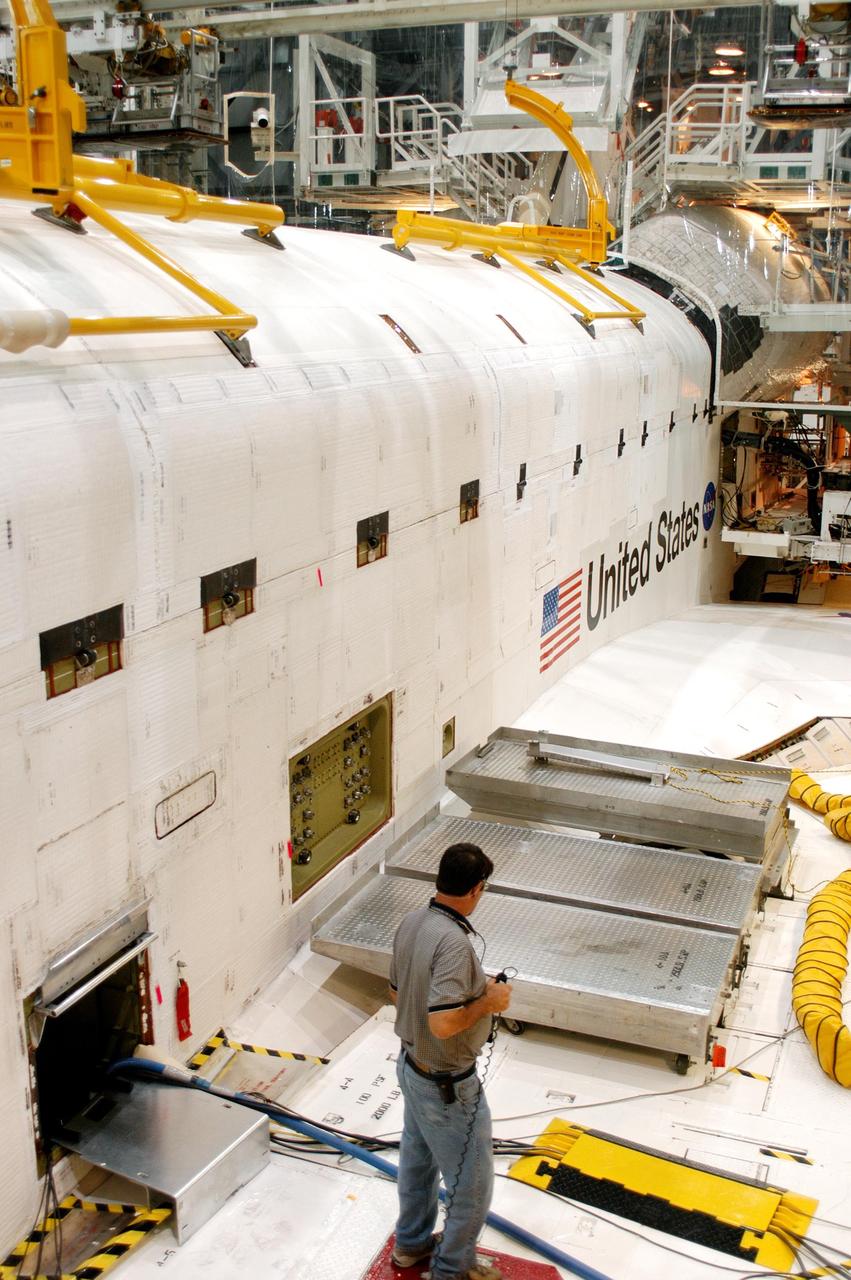
KENNEDY SPACE CENTER, FLA. - In the Orbiter Processing Facility, a worker checks out part of Atlantis after payload bay doors were closed in preparation for the expected impact of Hurricane Frances on Saturday. Other preparations at KSC include powering down the Space Shuttle orbiters and stowing the landing gear. Workers are also taking precautions against flooding by moving spacecraft hardware off the ground and sandbagging facilities. The Orbiter Processing Facility is constructed of concrete and steel and was designed to withstand winds of 105 mph. The Vehicle Assembly Building is constructed of concrete and steel and was designed to withstand winds of 125 mph. Other payload and flight hardware support facilities can endure winds of 110 mph. Launch pads and the Payload Hazardous Servicing Facility can withstand 125-mph winds.
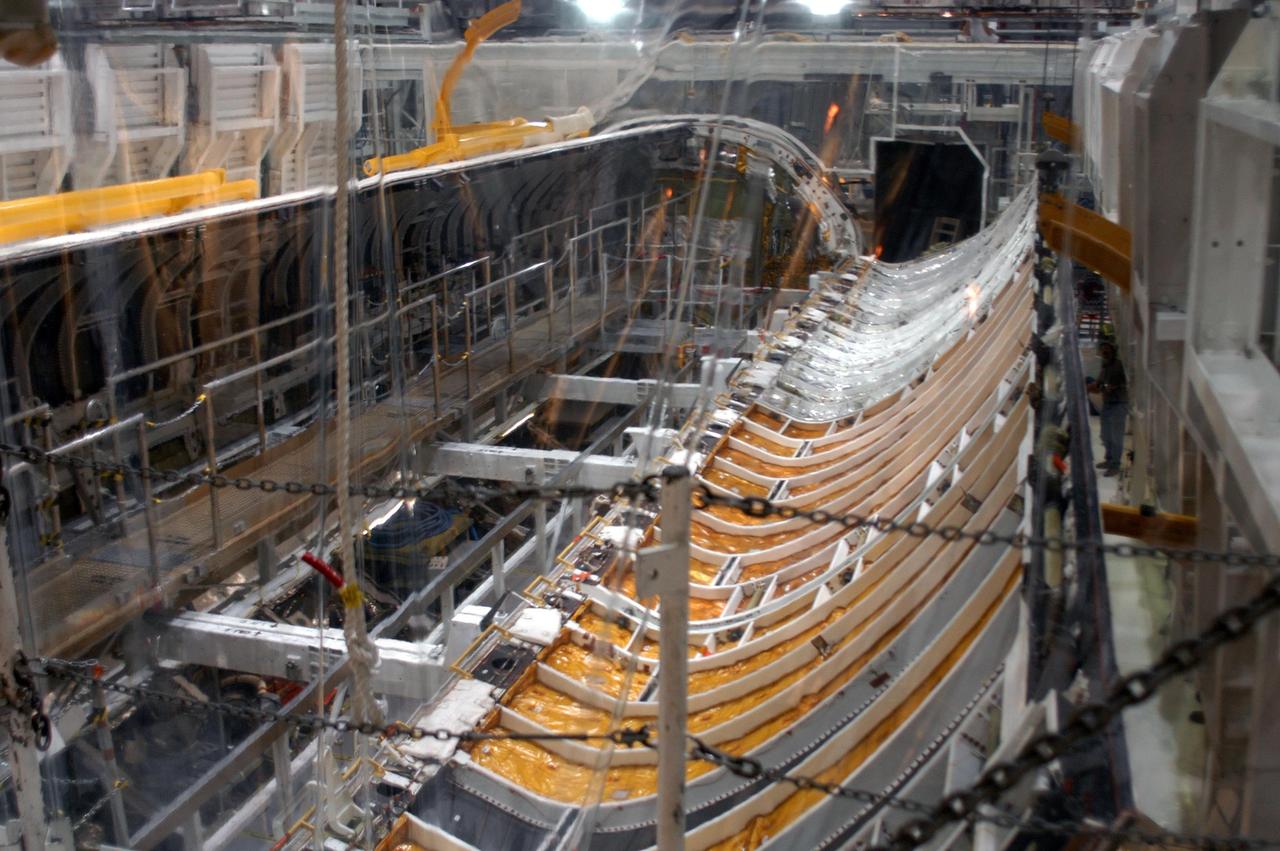
KENNEDY SPACE CENTER, FLA. - In the Orbiter Processing Facility, the payload bay doors on Atlantis are being closed in preparation for the expected impact of Hurricane Frances on Saturday. Other preparations at KSC include powering down the Space Shuttle orbiters and stowing the landing gear. Workers are also taking precautions against flooding by moving spacecraft hardware off the ground and sandbagging facilities. The Orbiter Processing Facility is constructed of concrete and steel and was designed to withstand winds of 105 mph. The Vehicle Assembly Building is constructed of concrete and steel and was designed to withstand winds of 125 mph. Other payload and flight hardware support facilities can endure winds of 110 mph. Launch pads and the Payload Hazardous Servicing Facility can withstand 125-mph winds.
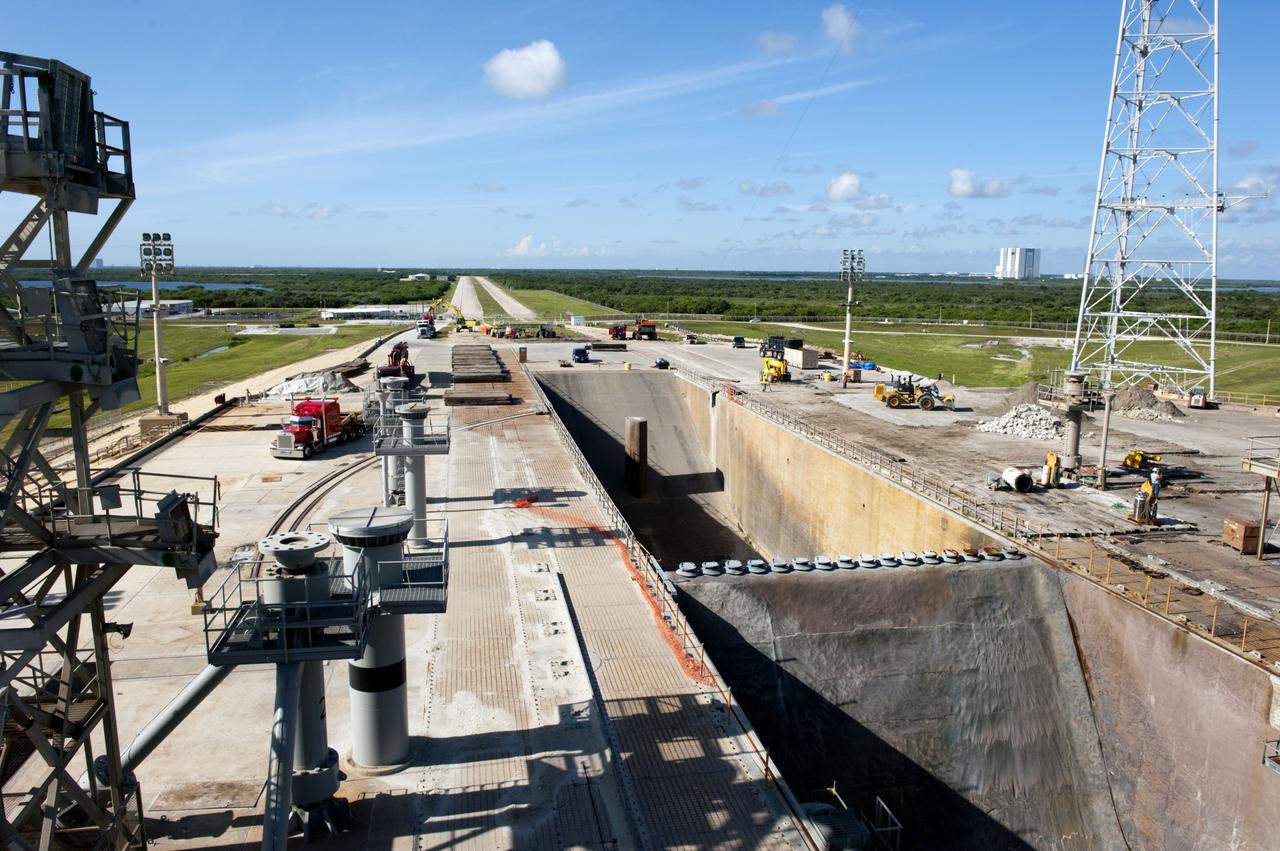
CAPE CANAVERAL, Fla. -- At NASA's Kennedy Space Center in Florida, cleanup of Launch Pad 39B is in progress beside the pad's flame trench. The trench is 450 feet long, 58 feet wide and 42 feet deep with an inner inverted V-shaped steel flame deflector. Sand, reinforcing steel and large wooden mats were placed over the pad's concrete surfaces during deconstruction to protect them from falling debris. In the distance is the 525-foot-tall Vehicle Assembly Building. In 2009, the structure at the pad was no longer needed for NASA's Space Shuttle Program, so it is being restructured for future use. The new design will feature a "clean pad" for rockets to come with their own launcher, making it more versatile for a number of rockets and spacecraft. The lightning protection system, consisting of three lightning towers and a wire catenary system, will remain. For information on NASA's future plans, visit http://www.nasa.gov/exploration. Photo credit: NASA/Kim Shiflett
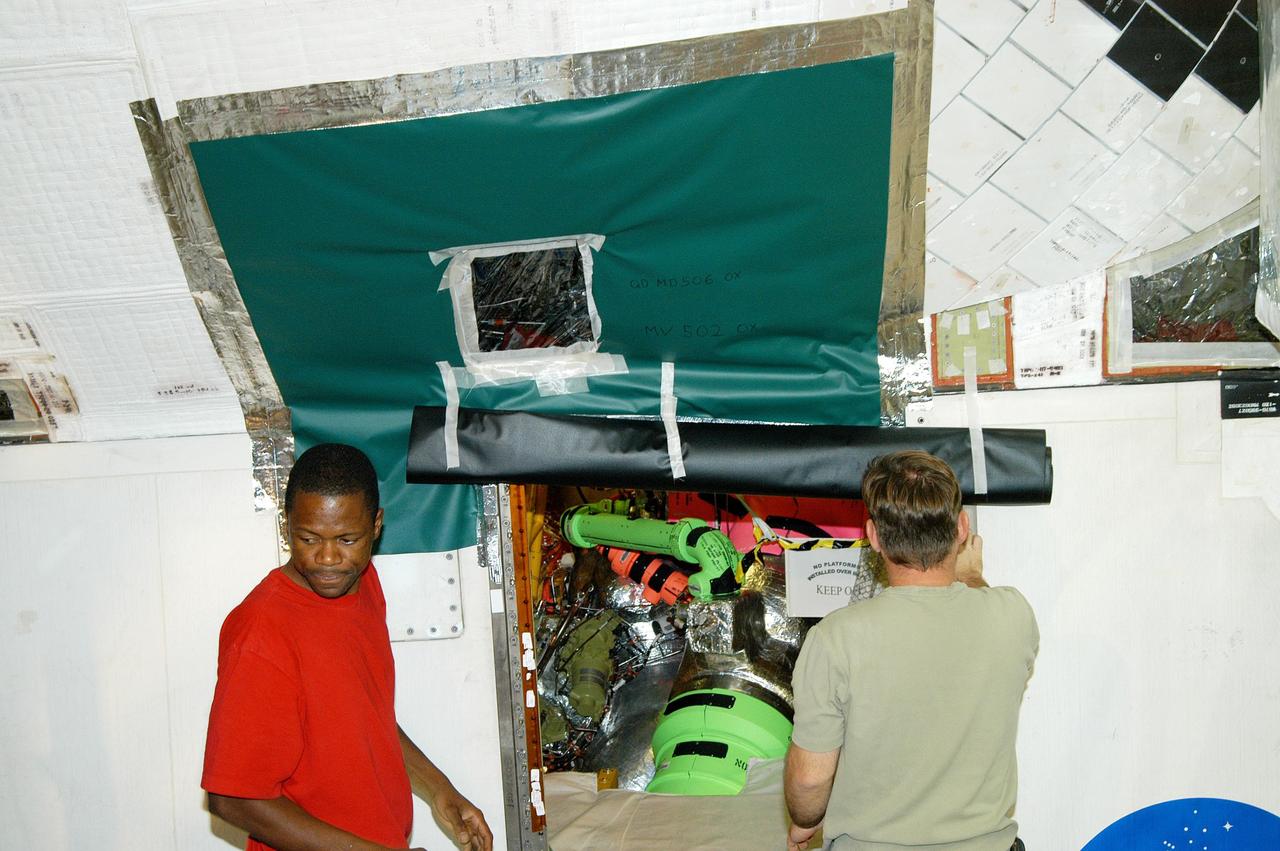
KENNEDY SPACE CENTER, FLA. - Workers in the Orbiter Processing Facility cover up areas of Atlantis, preparing for the expected impact of Hurricane Frances on Saturday. Other preparations at KSC include powering down the Space Shuttle orbiters, closing the payload bay doors and stowing the landing gear. Workers are also taking precautions against flooding by moving spacecraft hardware off the ground and sandbagging facilities. The Orbiter Processing Facility is constructed of concrete and steel and was designed to withstand winds of 105 mph. The Vehicle Assembly Building is constructed of concrete and steel and was designed to withstand winds of 125 mph. Other payload and flight hardware support facilities can endure winds of 110 mph. Launch pads and the Payload Hazardous Servicing Facility can withstand 125-mph winds.
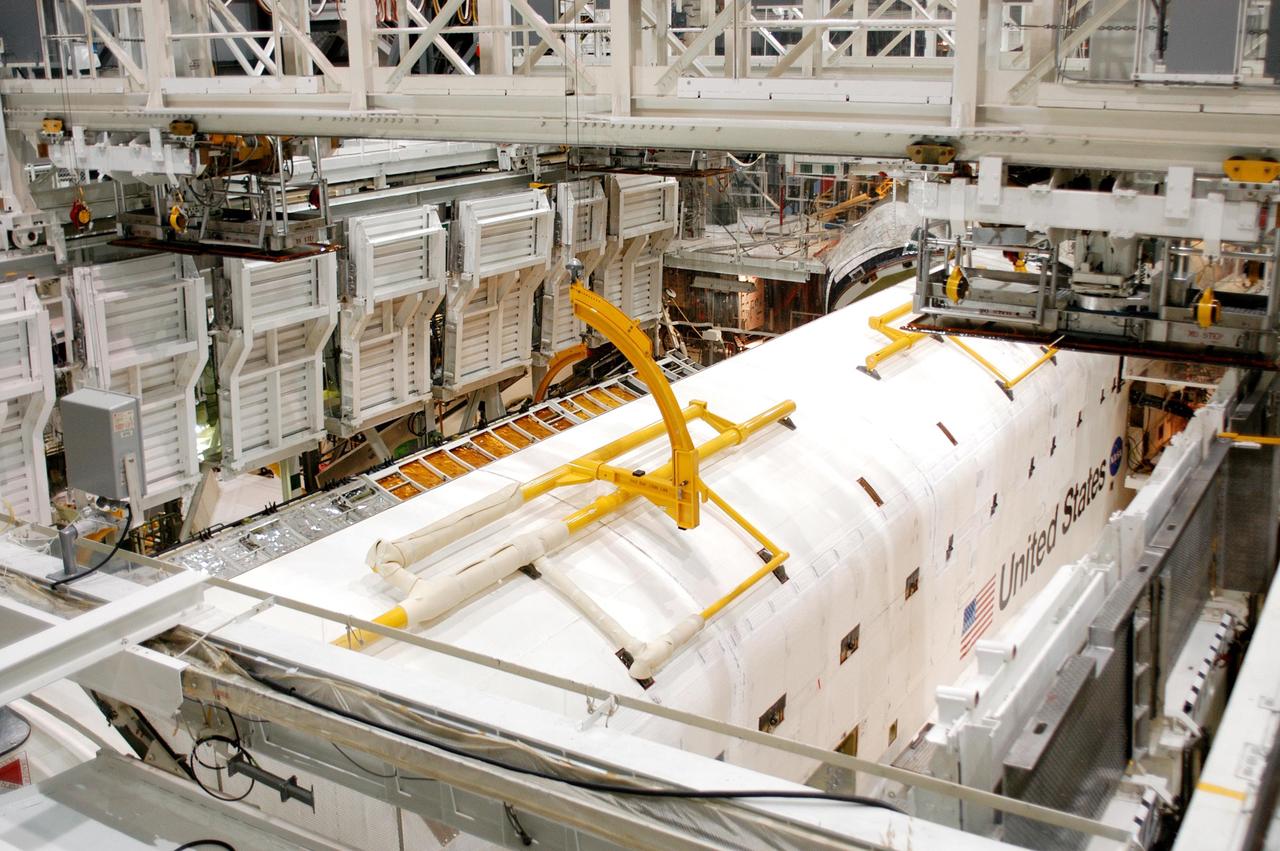
KENNEDY SPACE CENTER, FLA. - In the Orbiter Processing Facility, the payload bay doors on Atlantis are being closed in preparation for the expected impact of Hurricane Frances on Saturday. Other preparations at KSC include powering down the Space Shuttle orbiters and stowing the landing gear. Workers are also taking precautions against flooding by moving spacecraft hardware off the ground and sandbagging facilities. The Orbiter Processing Facility is constructed of concrete and steel and was designed to withstand winds of 105 mph. The Vehicle Assembly Building is constructed of concrete and steel and was designed to withstand winds of 125 mph. Other payload and flight hardware support facilities can endure winds of 110 mph. Launch pads and the Payload Hazardous Servicing Facility can withstand 125-mph winds.
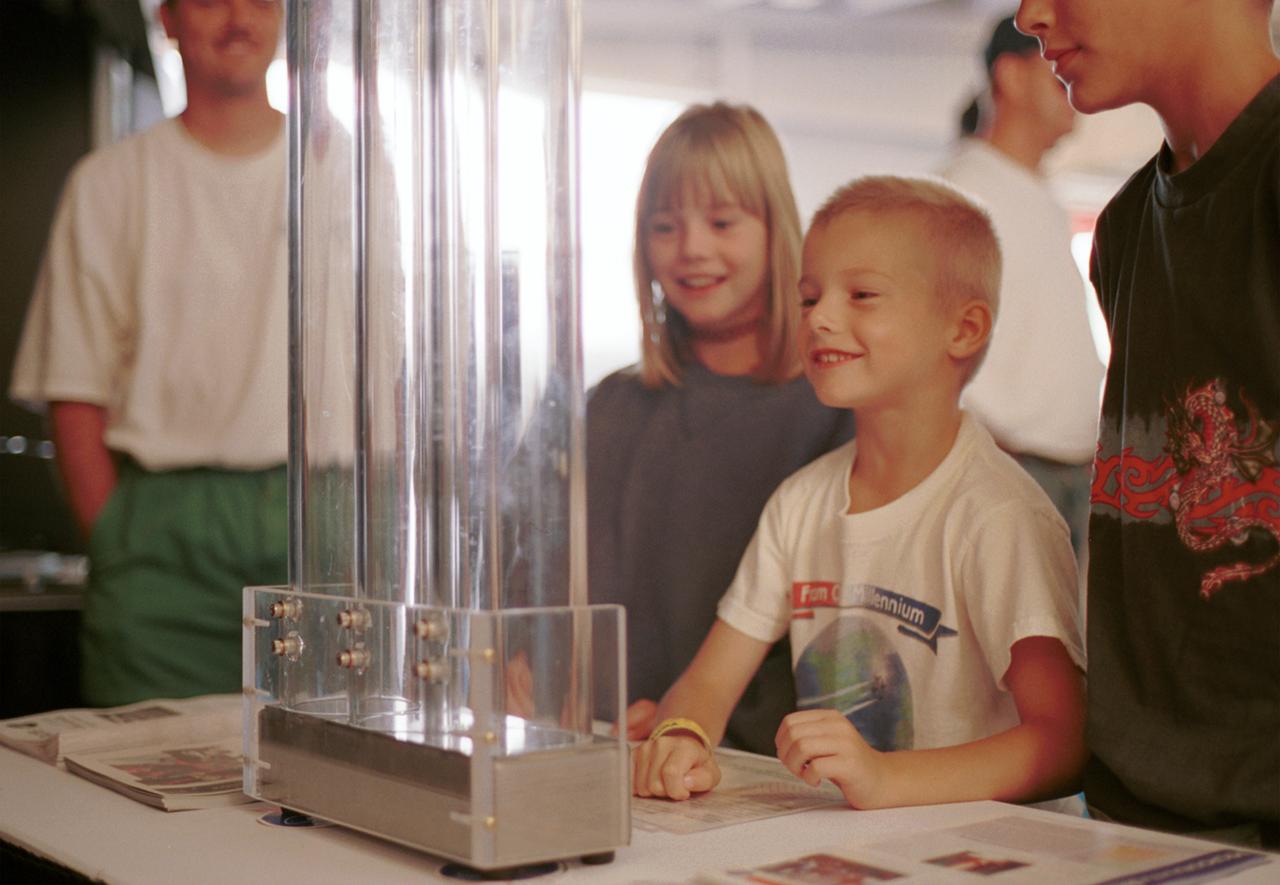
An entranced youngster watches a demonstration of the enhanced resilience of undercooled metal alloys as compared to conventional alloys. Steel bearings are dropped onto plates made of steel, titanium alloy, and zirconium liquid metal alloy, so-called because its molecular structure is amorphous and not crystalline. The bearing on the liquid metal plate bounces for a minute or more longer than on the other plates. Experiments aboard the Space Shuttle helped scientists refine their understanding of the physical properties of certain metal alloys when undercooled (i.e., kept liquid below their normal solidification temperature). This new knowledge then allowed scientists to modify a terrestrial production method so they can now make limited quantities marketed under the Liquid Metal trademark. The exhibit was a part of the NASA outreach activity at AirVenture 2000 sponsored by the Experimental Aircraft Association in Oshkosh, WI.
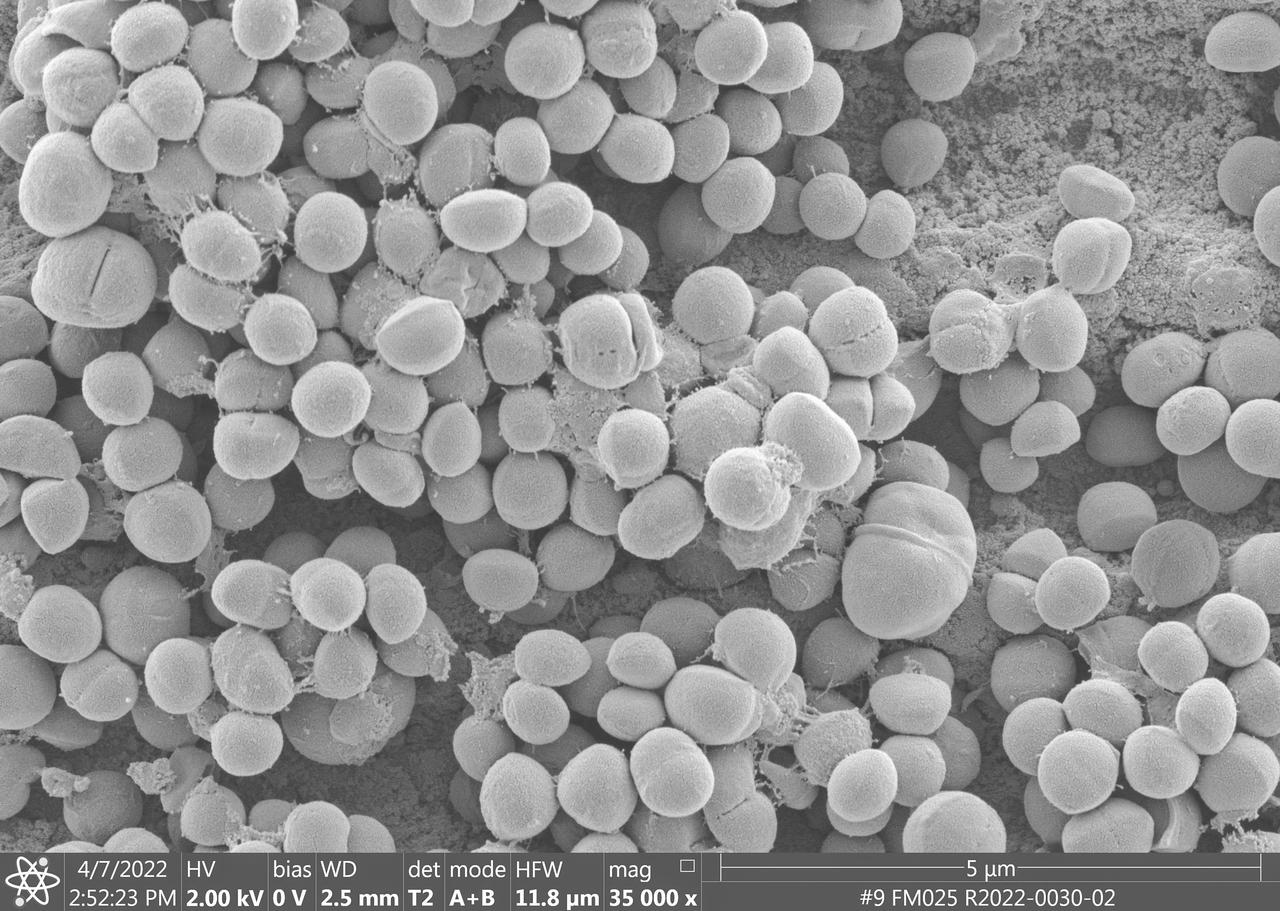
jsc2023e010178 (4/7/2022) --- This image taken by a scanning electron microscope shows one of the ESA-Biofilms sample plates from its first launch to the International Space Station. The sample plate in this image is made of stainless steel, which is the reference surface in the experiment since it has no antimicrobial properties. This surface also has a 3 µm laser structure engraved to the surface as control. In contrast to the copper surface, there are many Staphylococcus capitis cells attached to the steel surface that are actively dividing and starting to from components of a biofilm matrix. The ESA-Biofilms investigation studies bacterial biofilm formation and antimicrobial properties of different metal surfaces under spaceflight conditions in altered gravity. Image courtesy of DLR, CC BY-NC-ND 3.0.
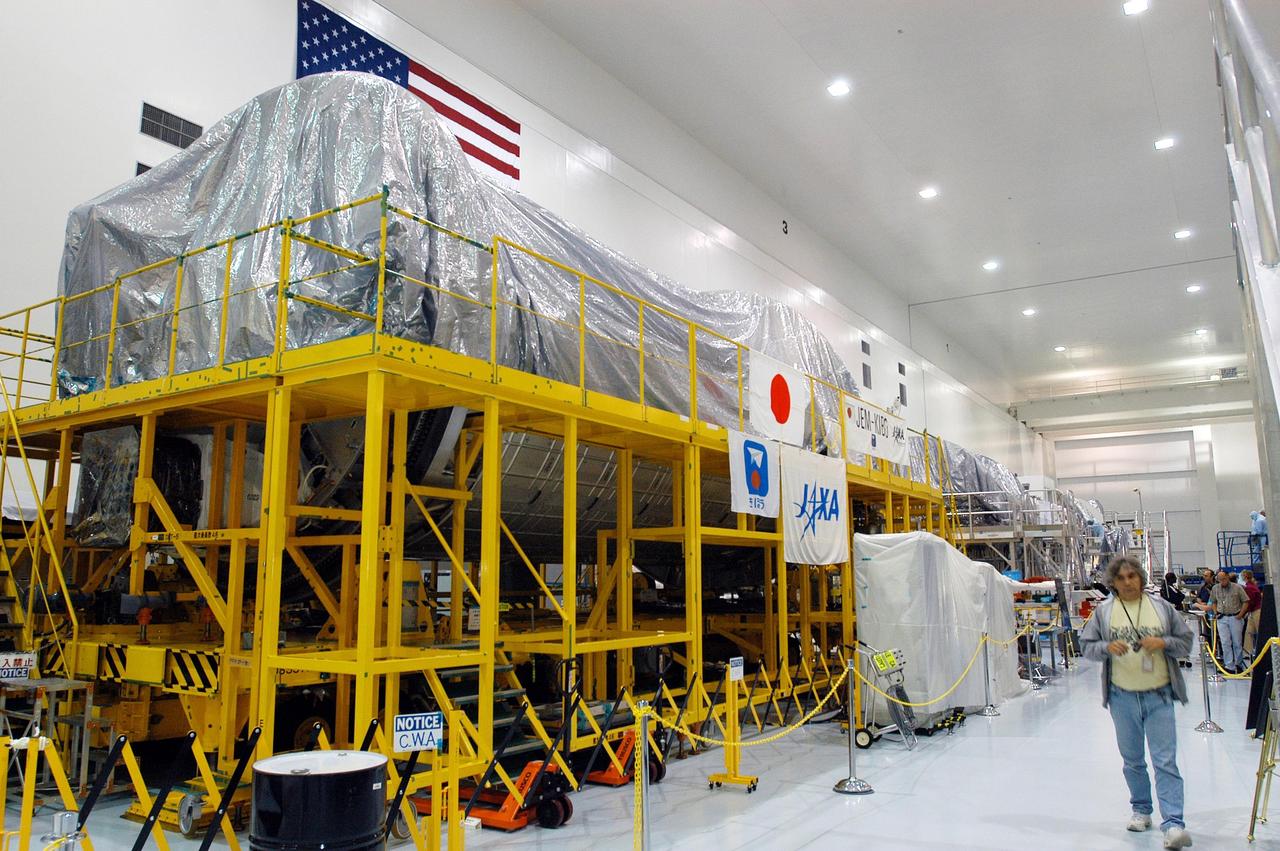
KENNEDY SPACE CENTER, FLA. - In the Space Station Processing Facility, modules wrapped in plastic line one wall. The modules and equipment are being covered in preparation for the expected impact of Hurricane Frances on Saturday. KSC workers also have powered down the Space Shuttle orbiters, closed their payload bay doors and stowed the landing gear. They are also taking precautions against flooding by moving spacecraft hardware off the ground and sandbagging facilities. The SSPF can withstand sustained winds of 110 mph and wind gusts up to 132 mph. The Orbiter Processing Facility is constructed of concrete and steel and was designed to withstand winds of 105 mph. The Vehicle Assembly Building is constructed of concrete and steel and was designed to withstand winds of 125 mph. Other payload and flight hardware support facilities can endure winds of 110 mph. Launch pads and the Payload Hazardous Servicing Facility can withstand 125-mph winds.
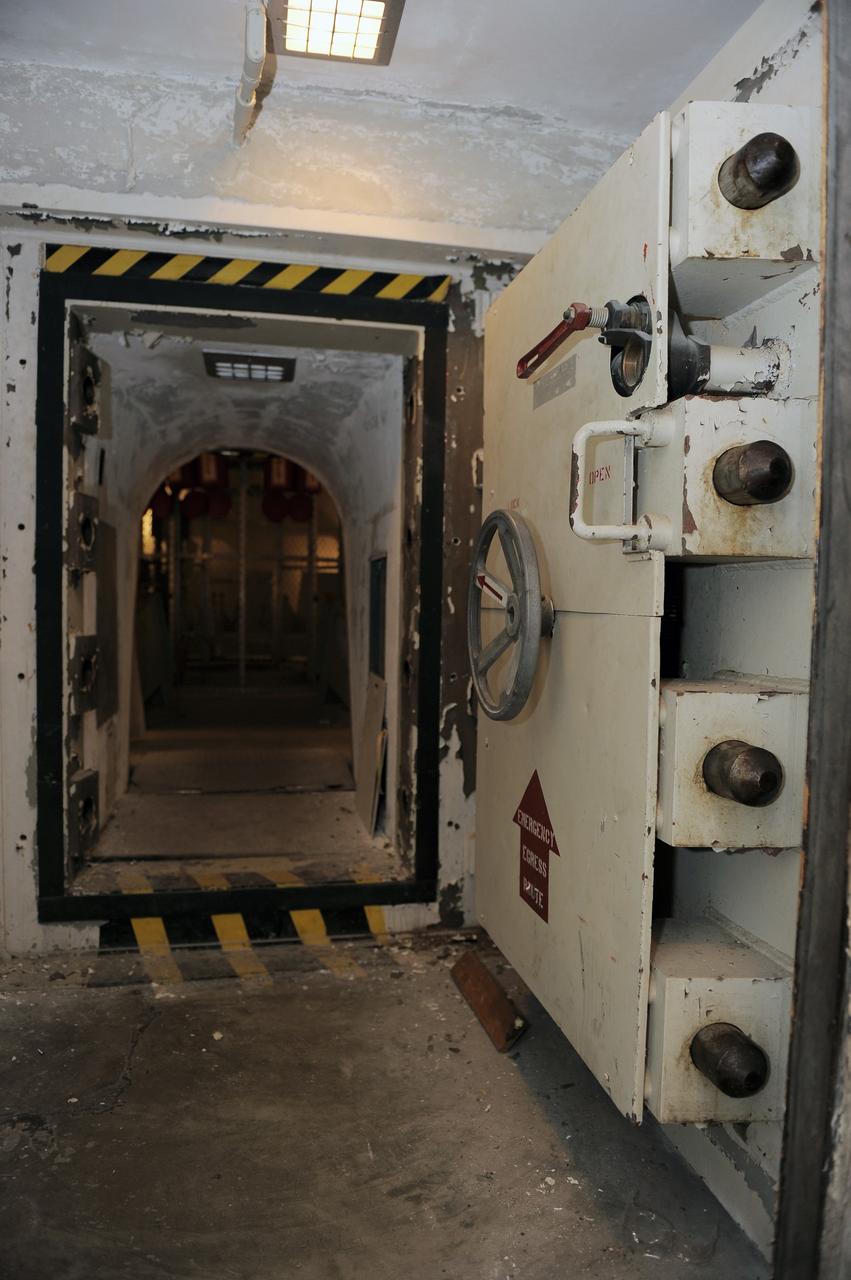
CAPE CANAVERAL, Fla. -- A steel door, similar to a bank vault door, leads to the blast-resistant "rubber room" beneath Launch Pad 39B at NASA's Kennedy Space Center. The room is a steel dome floating on rubber isolators and was used as an escape route during the Apollo Program in case of an emergency. It has since been abandoned by astronauts, but throughout the years nature found its way inside, including raccoons, snakes, birds and even a bobcat and opossum. Starting in 2009, the structure above the room on the pad was no longer needed for NASA's Space Shuttle Program, so it is being restructured for future use. The new design will feature a "clean pad" for rockets to come with their own launcher, making it more versatile for a number of vehicles. For information on NASA's future plans, visit www.nasa.gov. Photo credit: NASA/Kim Shiflett
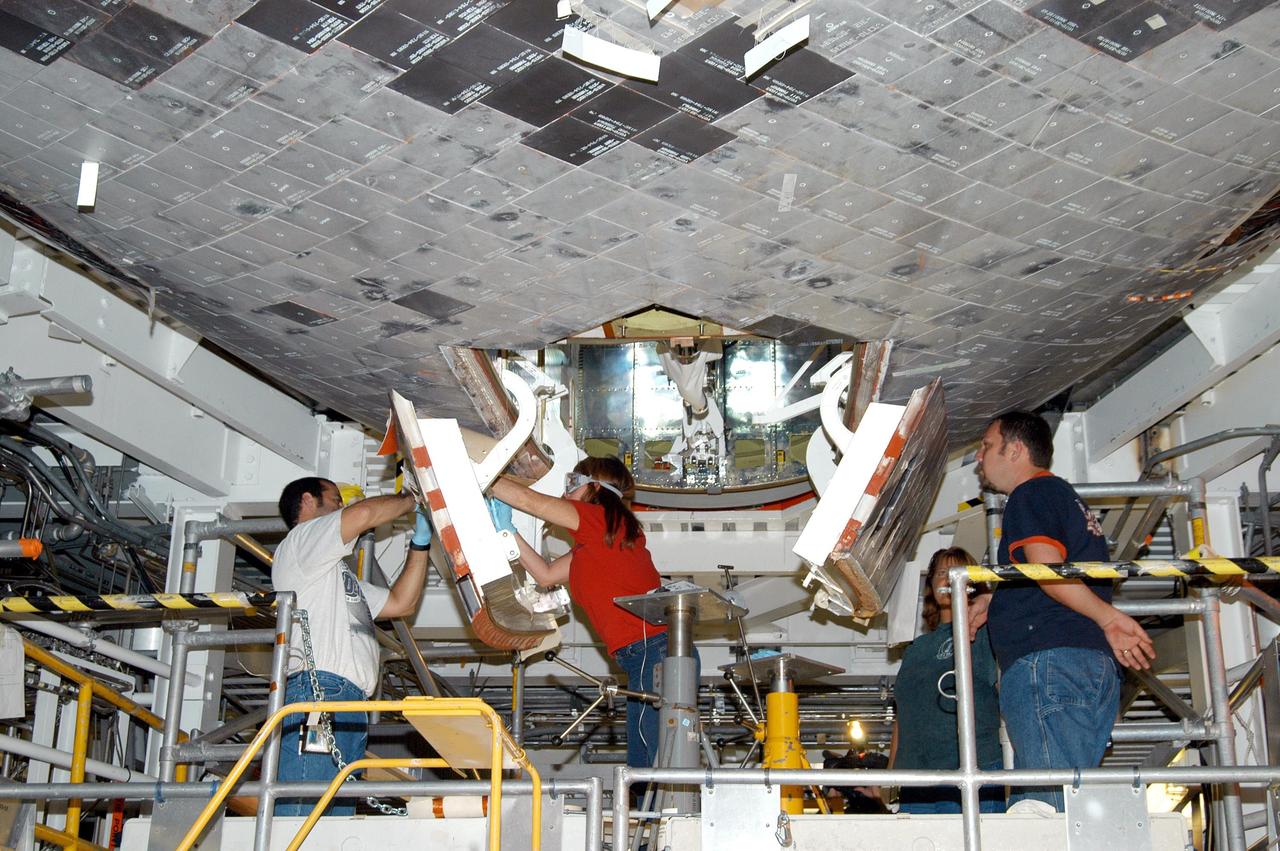
KENNEDY SPACE CENTER, FLA. - Workers in the Orbiter Processing Facility prepare to close the nose wheel doors on Atlantis in preparation for the expected impact of Hurricane Frances on Saturday. Preparations at KSC include powering down the Space Shuttle orbiters, closing their payload bay doors and stowing their landing gear. They are also taking precautions against flooding by moving spacecraft hardware off the ground and sandbagging facilities. The Orbiter Processing Facility is constructed of concrete and steel and was designed to withstand winds of 105 mph. The Vehicle Assembly Building is constructed of concrete and steel and was designed to withstand winds of 125 mph. Other payload and flight hardware support facilities can endure winds of 110 mph. Launch pads and the Payload Hazardous Servicing Facility can withstand 125-mph winds.
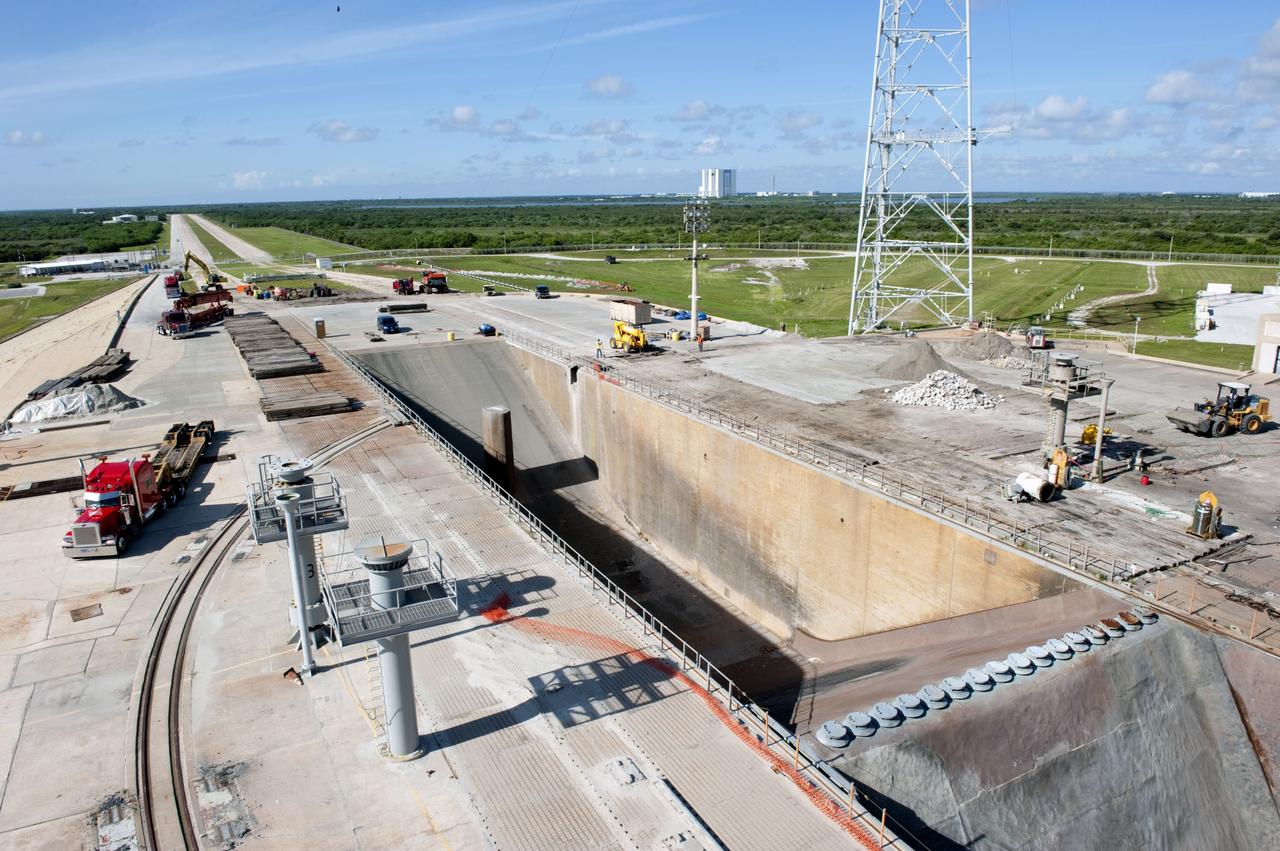
CAPE CANAVERAL, Fla. -- At NASA's Kennedy Space Center in Florida, cleanup of Launch Pad 39B is in progress beside the pad's flame trench. The trench is 450 feet long, 58 feet wide and 42 feet deep with an inner inverted V-shaped steel flame deflector. Sand, reinforcing steel and large wooden mats were placed over the pad's concrete surfaces during deconstruction to protect them from falling debris. In the distance is the 525-foot-tall Vehicle Assembly Building. In 2009, the structure at the pad was no longer needed for NASA's Space Shuttle Program, so it is being restructured for future use. The new design will feature a "clean pad" for rockets to come with their own launcher, making it more versatile for a number of rockets and spacecraft. The lightning protection system, consisting of three lightning towers and a wire catenary system, will remain. For information on NASA's future plans, visit http://www.nasa.gov/exploration. Photo credit: NASA/Kim Shiflett
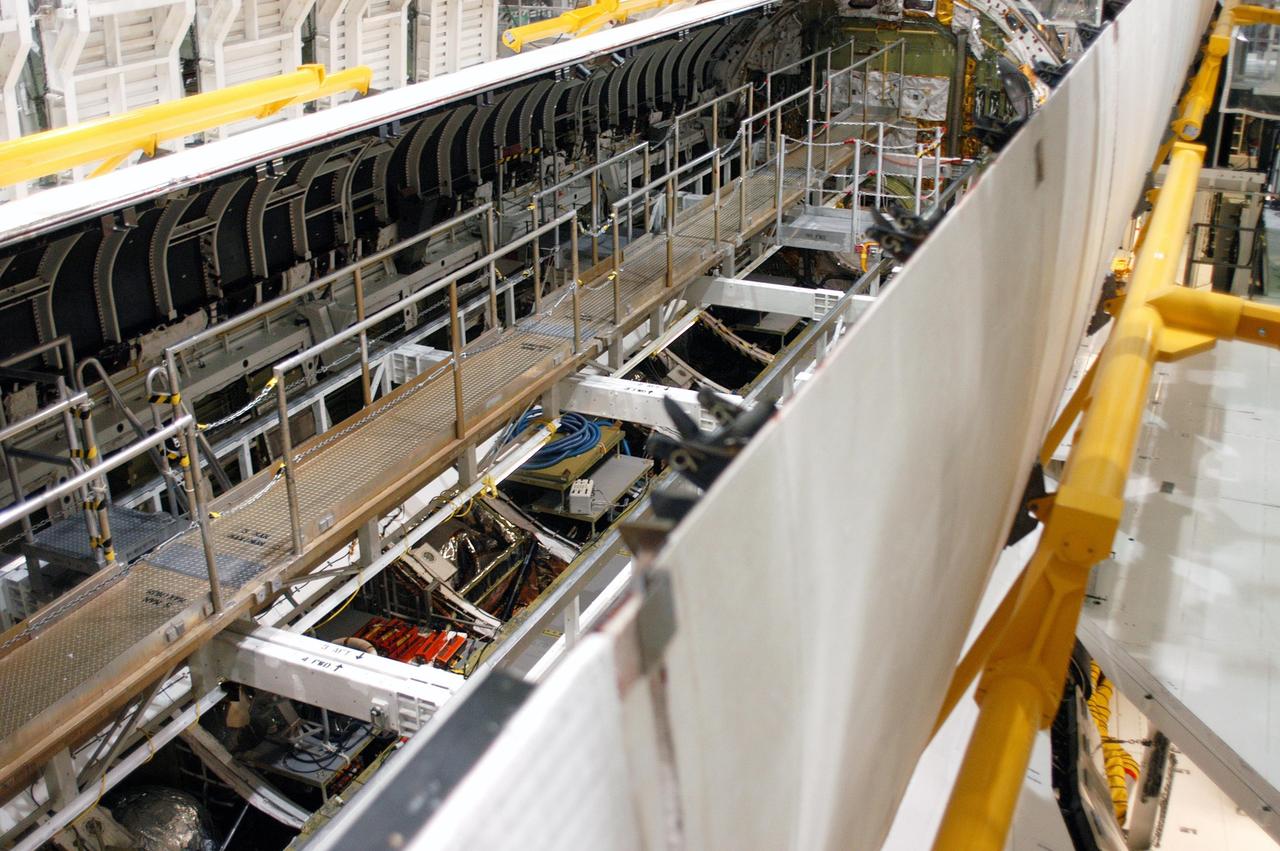
KENNEDY SPACE CENTER, FLA. - In the Orbiter Processing Facility, the payload bay doors on Atlantis are being closed in preparation for the expected impact of Hurricane Frances on Saturday. Other preparations at KSC include powering down the Space Shuttle orbiters and stowing the landing gear. Workers are also taking precautions against flooding by moving spacecraft hardware off the ground and sandbagging facilities. The Orbiter Processing Facility is constructed of concrete and steel and was designed to withstand winds of 105 mph. The Vehicle Assembly Building is constructed of concrete and steel and was designed to withstand winds of 125 mph. Other payload and flight hardware support facilities can endure winds of 110 mph. Launch pads and the Payload Hazardous Servicing Facility can withstand 125-mph winds.
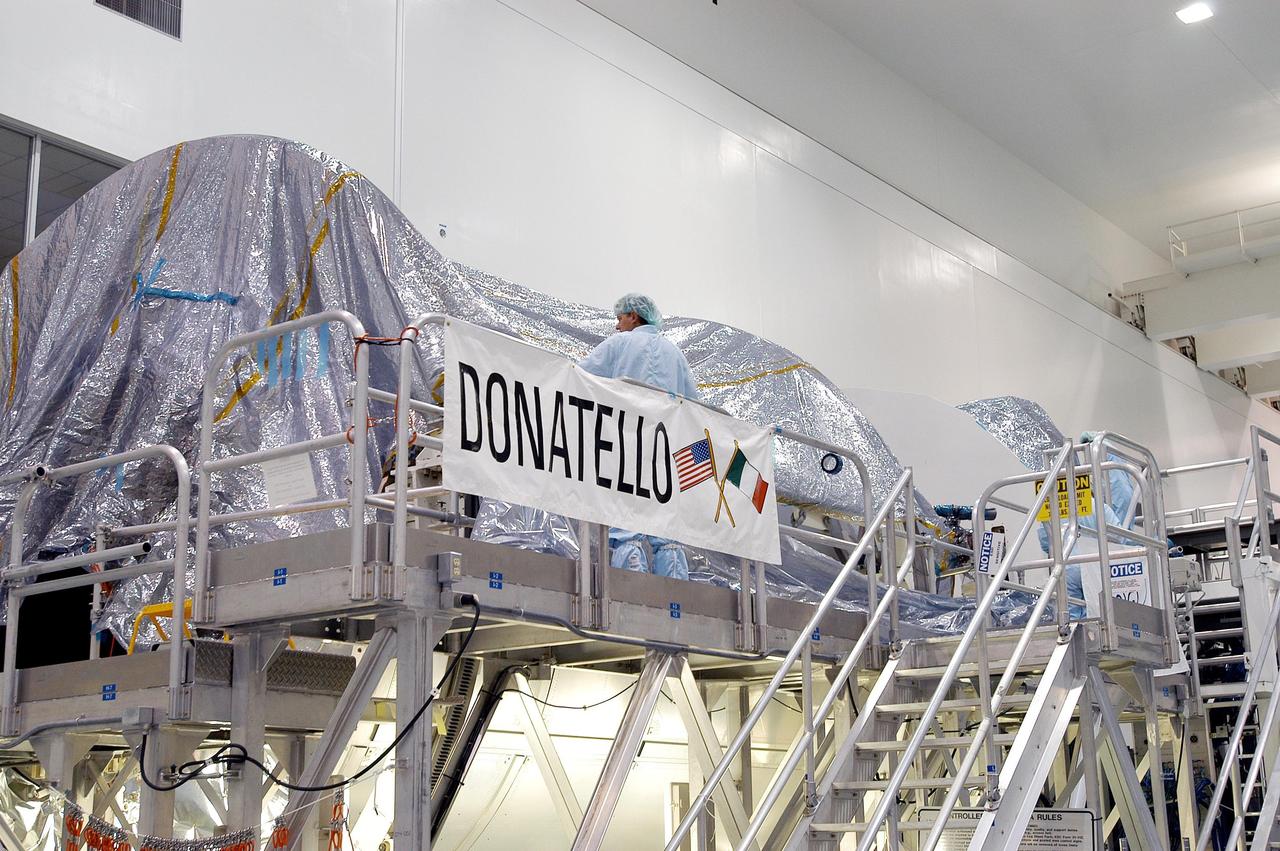
KENNEDY SPACE CENTER, FLA. - In the Space Station Processing Facility, workers cover with plastic the Multi-Purpose Logistics Module Donatello in preparation for the expected impact of Hurricane Frances on Saturday. Other modules and equipment are being covered as well. Workers also have powered down the Space Shuttle orbiters, closed their payload bay doors and stowed the landing gear. They are also taking precautions against flooding by moving spacecraft hardware off the ground and sandbagging facilities. The SSPF can withstand sustained winds of 110 mph and wind gusts up to 132 mph. The Orbiter Processing Facility is constructed of concrete and steel and was designed to withstand winds of 105 mph. The Vehicle Assembly Building is constructed of concrete and steel and was designed to withstand winds of 125 mph. Other payload and flight hardware support facilities can endure winds of 110 mph. Launch pads and the Payload Hazardous Servicing Facility can withstand 125-mph winds.
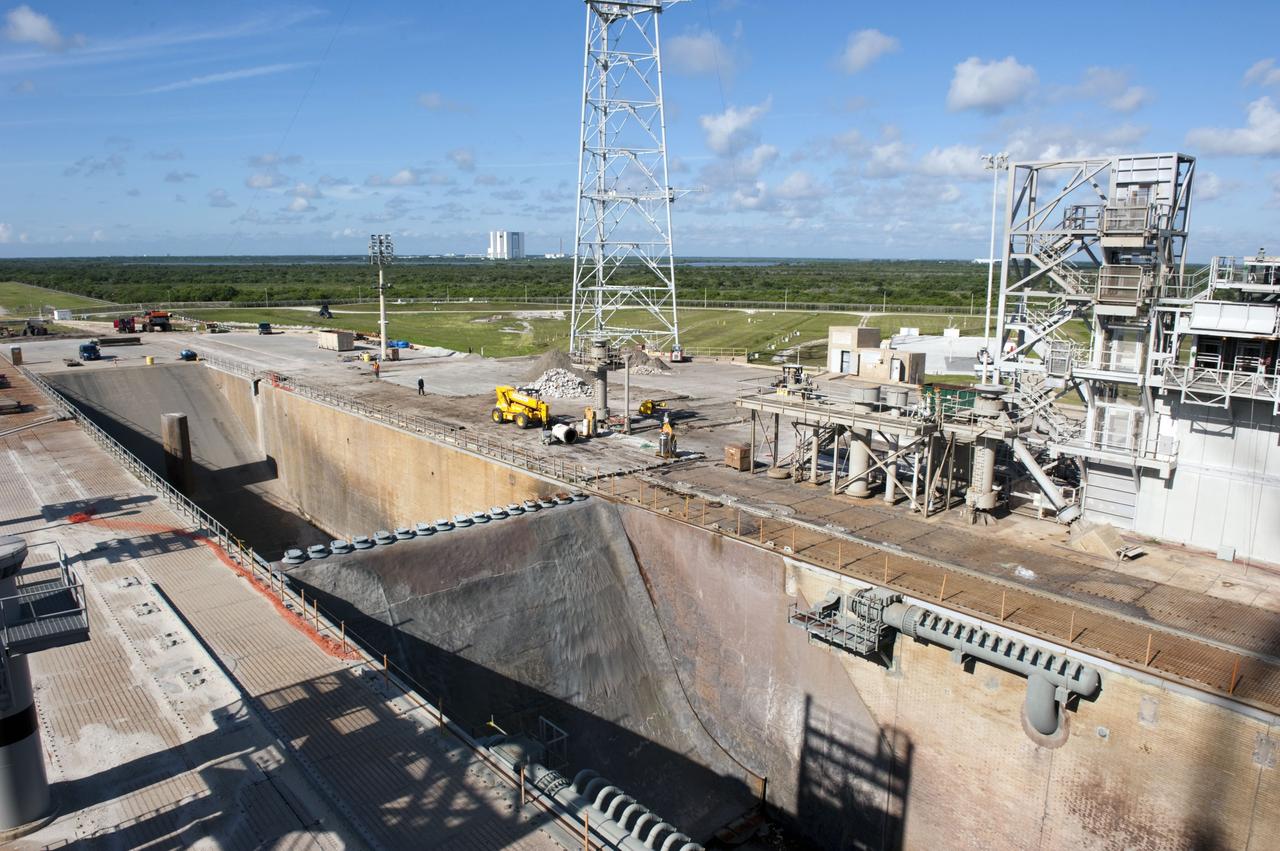
CAPE CANAVERAL, Fla. -- At NASA's Kennedy Space Center in Florida, cleanup of Launch Pad 39B is in progress beside the pad's flame trench. The trench is 450 feet long, 58 feet wide and 42 feet deep with an inner inverted V-shaped steel flame deflector. Sand, reinforcing steel and large wooden mats were placed over the pad's concrete surfaces during deconstruction to protect them from falling debris. In the distance is the 525-foot-tall Vehicle Assembly Building. In 2009, the structure at the pad was no longer needed for NASA's Space Shuttle Program, so it is being restructured for future use. The new design will feature a "clean pad" for rockets to come with their own launcher, making it more versatile for a number of rockets and spacecraft. The lightning protection system, consisting of three lightning towers and a wire catenary system, will remain. For information on NASA's future plans, visit http://www.nasa.gov/exploration. Photo credit: NASA/Kim Shiflett
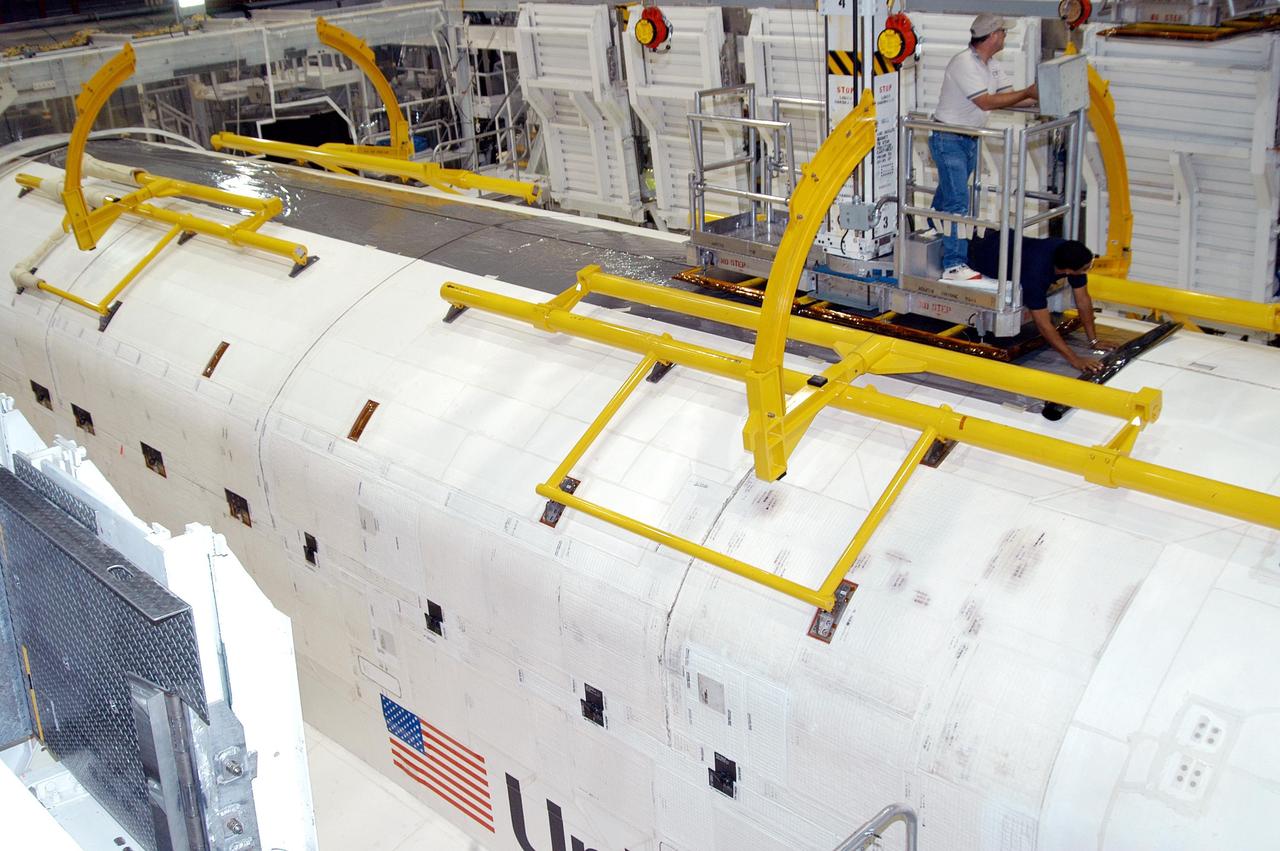
KENNEDY SPACE CENTER, FLA. - Workers in the Orbiter Processing Facility finish Hurricane preparations on the payload bay doors of Atlantis. Preparing for the expected impact of Hurricane Frances on Saturday, workers also powered down the Space Shuttle orbiters, and stowed the landing gear. They are also taking precautions against flooding by moving spacecraft hardware off the ground and sandbagging facilities. The Orbiter Processing Facility is constructed of concrete and steel and was designed to withstand winds of 105 mph. The Vehicle Assembly Building is constructed of concrete and steel and was designed to withstand winds of 125 mph. Other payload and flight hardware support facilities can endure winds of 110 mph. Launch pads and the Payload Hazardous Servicing Facility can withstand 125-mph winds.
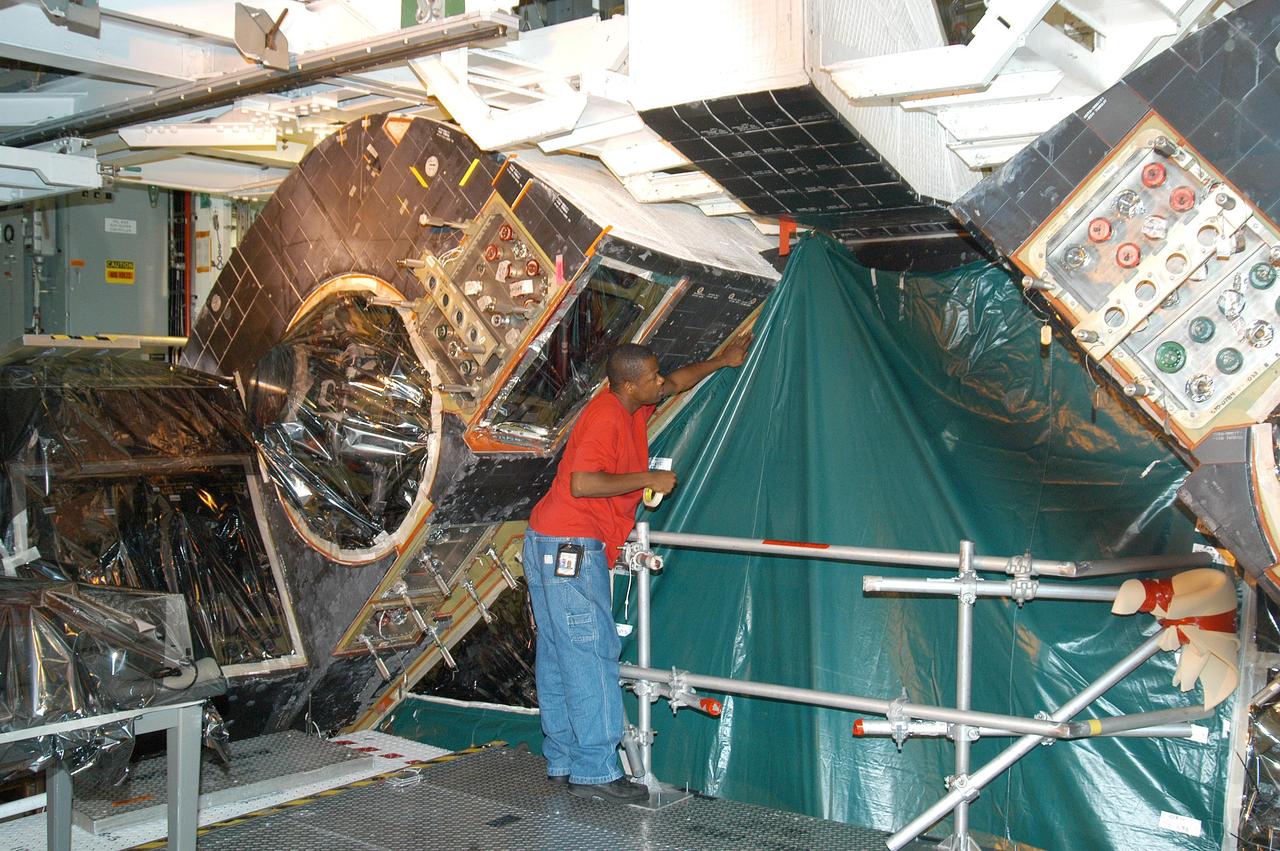
KENNEDY SPACE CENTER, FLA. - Workers in the Orbiter Processing Facility cover up areas of Atlantis with plastic, preparing for the expected impact of Hurricane Frances on Saturday. Other preparations at KSC include powering down the Space Shuttle orbiters, closing the payload bay doors and stowing the landing gear. Workers are also taking precautions against flooding by moving spacecraft hardware off the ground and sandbagging facilities. The Orbiter Processing Facility is constructed of concrete and steel and was designed to withstand winds of 105 mph. The Vehicle Assembly Building is constructed of concrete and steel and was designed to withstand winds of 125 mph. Other payload and flight hardware support facilities can endure winds of 110 mph. Launch pads and the Payload Hazardous Servicing Facility can withstand 125-mph winds.

KENNEDY SPACE CENTER, FLA. - Workers in the Orbiter Processing Facility cover up areas of Atlantis with plastic, preparing for the expected impact of Hurricane Frances on Saturday. Other preparations at KSC include powering down the Space Shuttle orbiters, closing the payload bay doors and stowing the landing gear. Workers are also taking precautions against flooding by moving spacecraft hardware off the ground and sandbagging facilities. The Orbiter Processing Facility is constructed of concrete and steel and was designed to withstand winds of 105 mph. The Vehicle Assembly Building is constructed of concrete and steel and was designed to withstand winds of 125 mph. Other payload and flight hardware support facilities can endure winds of 110 mph. Launch pads and the Payload Hazardous Servicing Facility can withstand 125-mph winds.
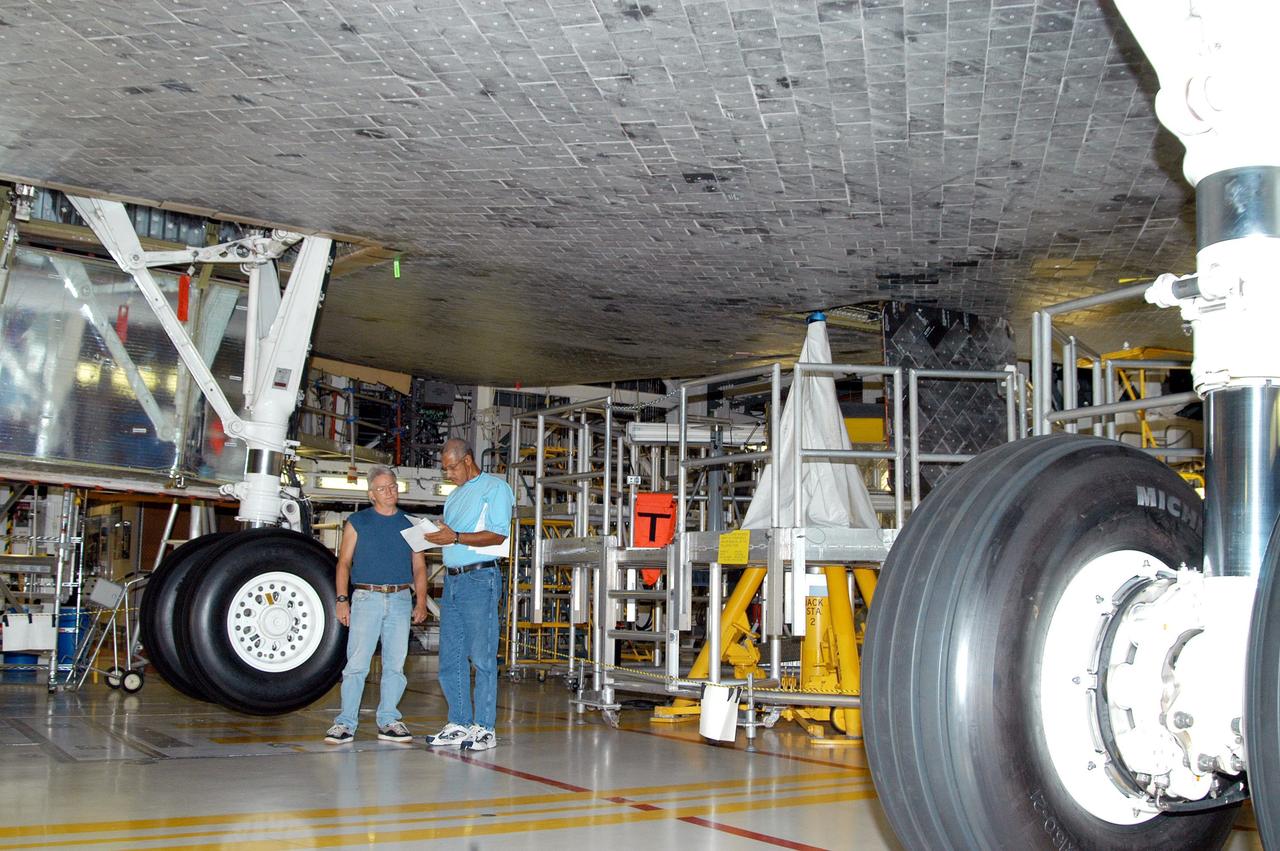
KENNEDY SPACE CENTER, FLA. - Workers in the Orbiter Processing Facility prepare to stow the landing gear on the orbiter Atlantis in preparation for the expected impact of Hurricane Frances on Saturday. Other preparations at KSC include powering down the Space Shuttle orbiters, and closing their payload bay doors. Workers are also taking precautions against flooding by moving spacecraft hardware off the ground and sandbagging facilities. The Orbiter Processing Facility is constructed of concrete and steel and was designed to withstand winds of 105 mph. The Vehicle Assembly Building is constructed of concrete and steel and was designed to withstand winds of 125 mph. Other payload and flight hardware support facilities can endure winds of 110 mph. Launch pads and the Payload Hazardous Servicing Facility can withstand 125-mph winds.
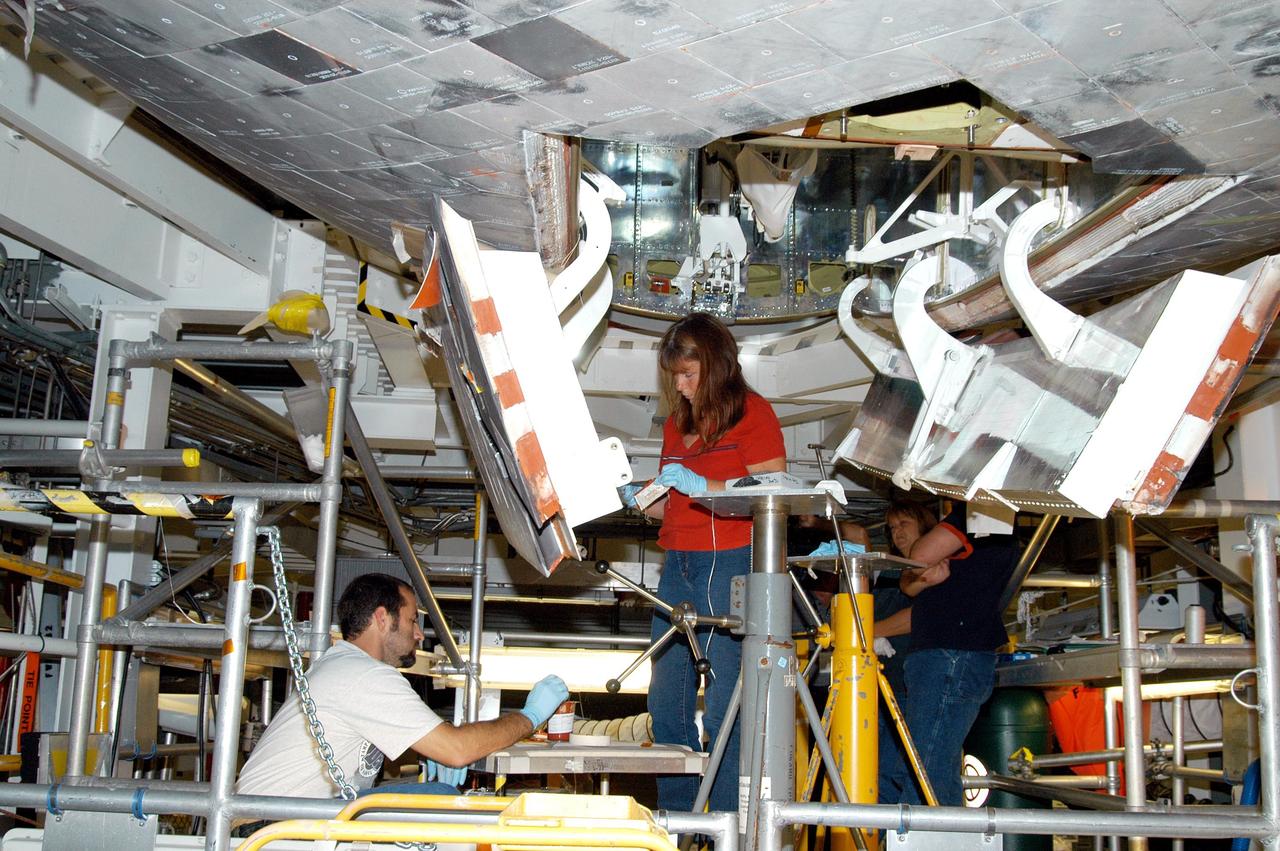
KENNEDY SPACE CENTER, FLA. - Workers in the Orbiter Processing Facility prepare to close the nose wheel doors on Atlantis in preparation for the expected impact of Hurricane Frances on Saturday. Preparations at KSC include powering down the Space Shuttle orbiters, closing their payload bay doors and stowing their landing gear. They are also taking precautions against flooding by moving spacecraft hardware off the ground and sandbagging facilities. The Orbiter Processing Facility is constructed of concrete and steel and was designed to withstand winds of 105 mph. The Vehicle Assembly Building is constructed of concrete and steel and was designed to withstand winds of 125 mph. Other payload and flight hardware support facilities can endure winds of 110 mph. Launch pads and the Payload Hazardous Servicing Facility can withstand 125-mph winds.
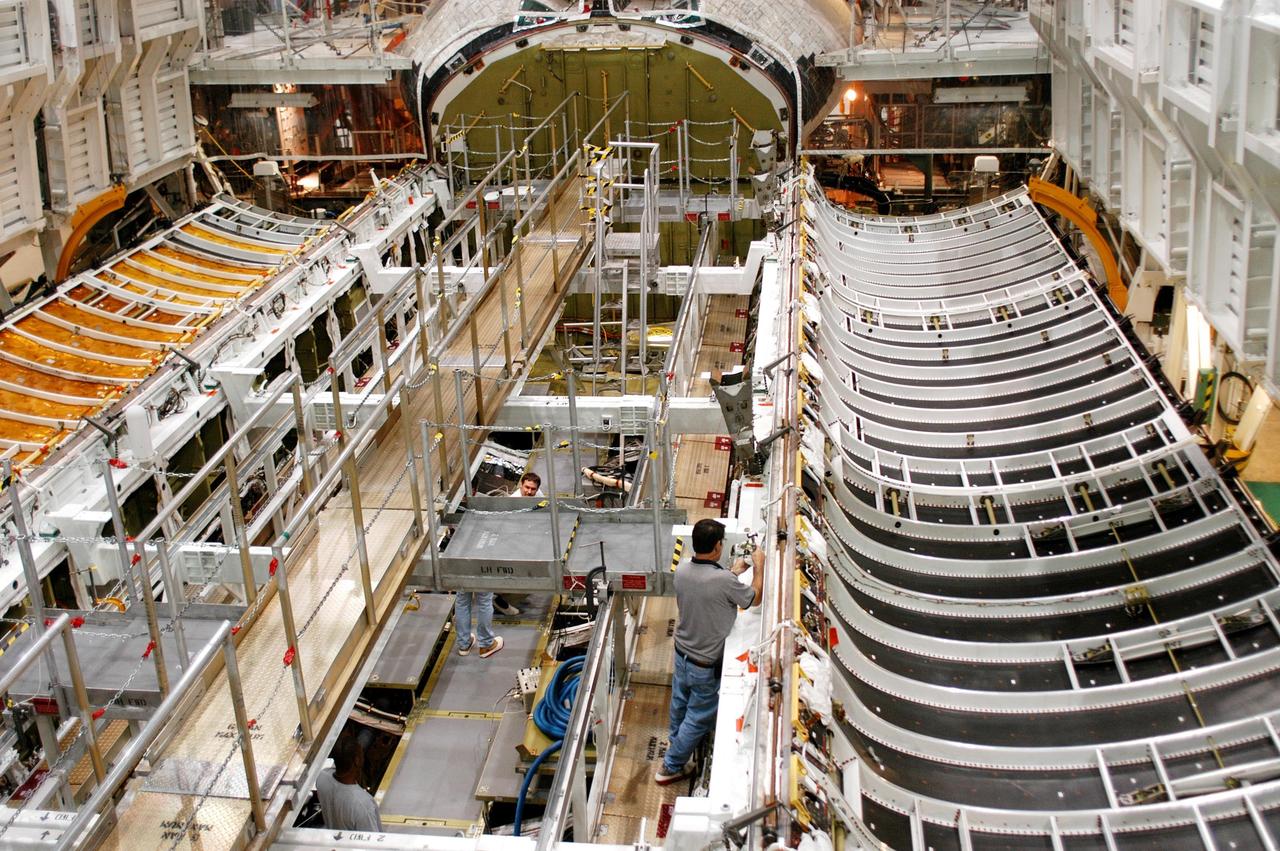
KENNEDY SPACE CENTER, FLA. - In the Orbiter Processing Facility, workers prepare to close the payload bay doors on Atlantis in preparation for the expected impact of Hurricane Frances on Saturday. Other preparations at KSC include powering down the Space Shuttle orbiters and stowing the landing gear. Workers are also taking precautions against flooding by moving spacecraft hardware off the ground and sandbagging facilities. The Orbiter Processing Facility is constructed of concrete and steel and was designed to withstand winds of 105 mph. The Vehicle Assembly Building is constructed of concrete and steel and was designed to withstand winds of 125 mph. Other payload and flight hardware support facilities can endure winds of 110 mph. Launch pads and the Payload Hazardous Servicing Facility can withstand 125-mph winds.
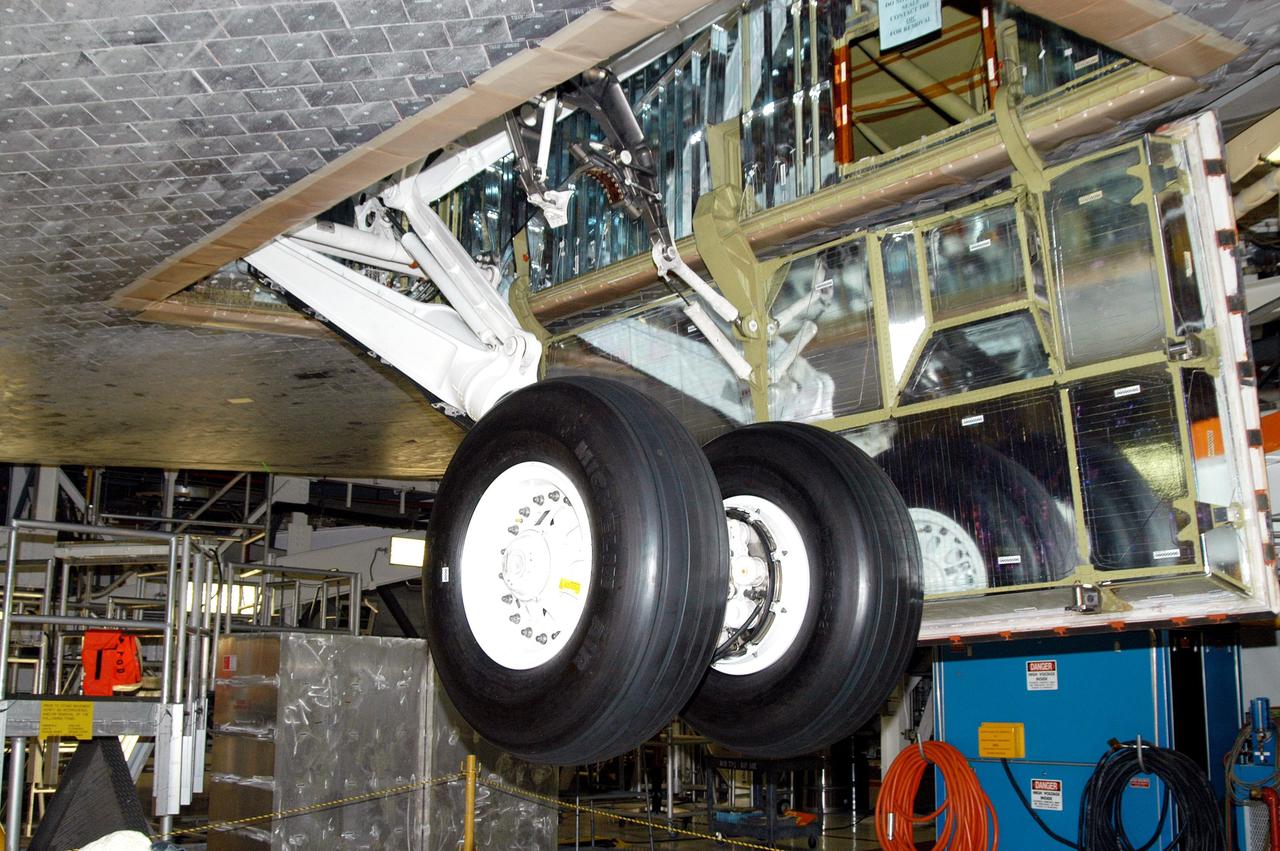
KENNEDY SPACE CENTER, FLA. - In the Orbiter Processing Facility, Atlantis’ wheels are raised into their wheel bays in preparation for the expected impact of Hurricane Frances on Saturday. Other preparations at KSC include powering down the Space Shuttle orbiters, and closing their payload bay doors. Workers are also taking precautions against flooding by moving spacecraft hardware off the ground and sandbagging facilities. The Orbiter Processing Facility is constructed of concrete and steel and was designed to withstand winds of 105 mph. The Vehicle Assembly Building is constructed of concrete and steel and was designed to withstand winds of 125 mph. Other payload and flight hardware support facilities can endure winds of 110 mph. Launch pads and the Payload Hazardous Servicing Facility can withstand 125-mph winds.
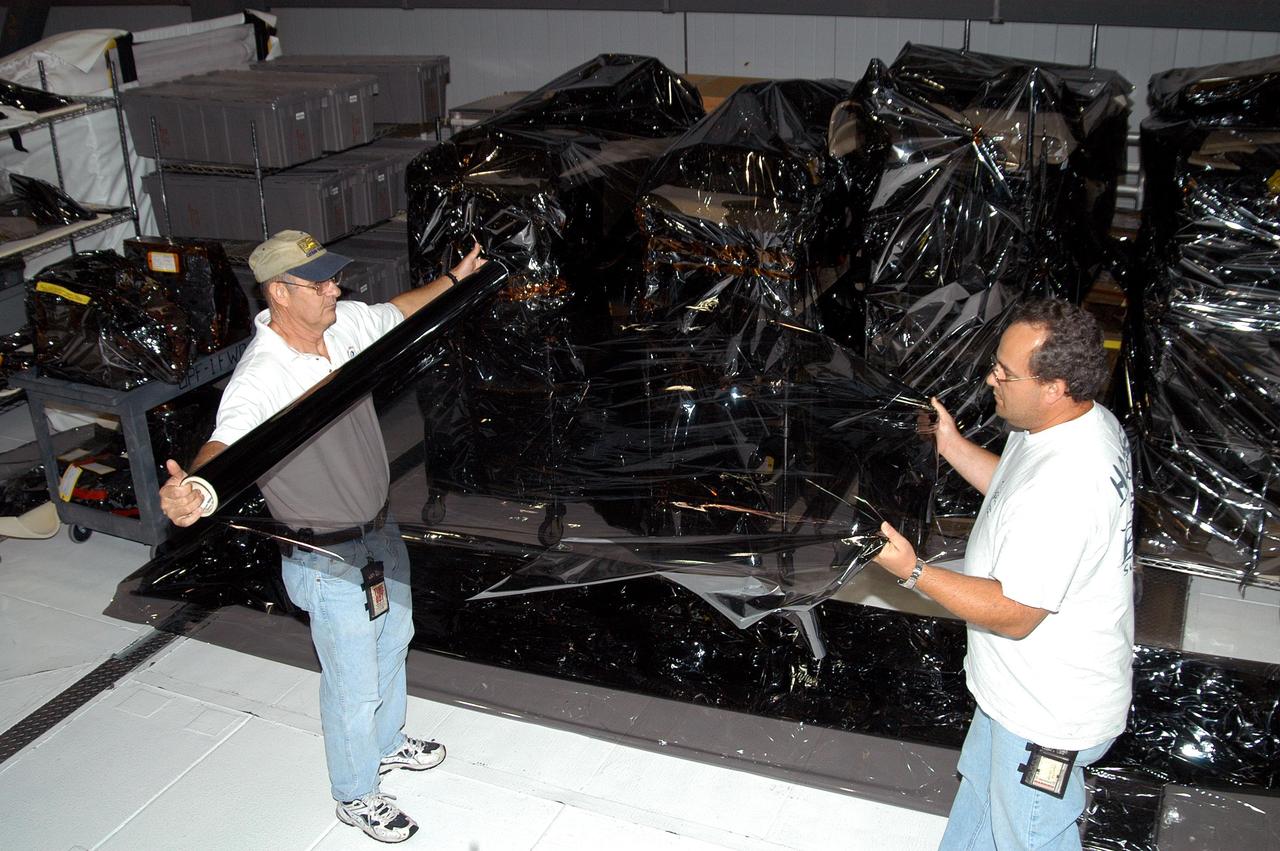
KENNEDY SPACE CENTER, FLA. - Workers in the Orbiter Processing Facility unwrap plastic for use in covering equipment as part of preparations for the expected impact of Hurricane Frances on Saturday. Other preparations at KSC include powering down the Space Shuttle orbiters, closing the payload bay doors and stowing the landing gear. Workers are also taking precautions against flooding by moving spacecraft hardware off the ground and sandbagging facilities. The Orbiter Processing Facility is constructed of concrete and steel and was designed to withstand winds of 105 mph. The Vehicle Assembly Building is constructed of concrete and steel and was designed to withstand winds of 125 mph. Other payload and flight hardware support facilities can endure winds of 110 mph. Launch pads and the Payload Hazardous Servicing Facility can withstand 125-mph winds.
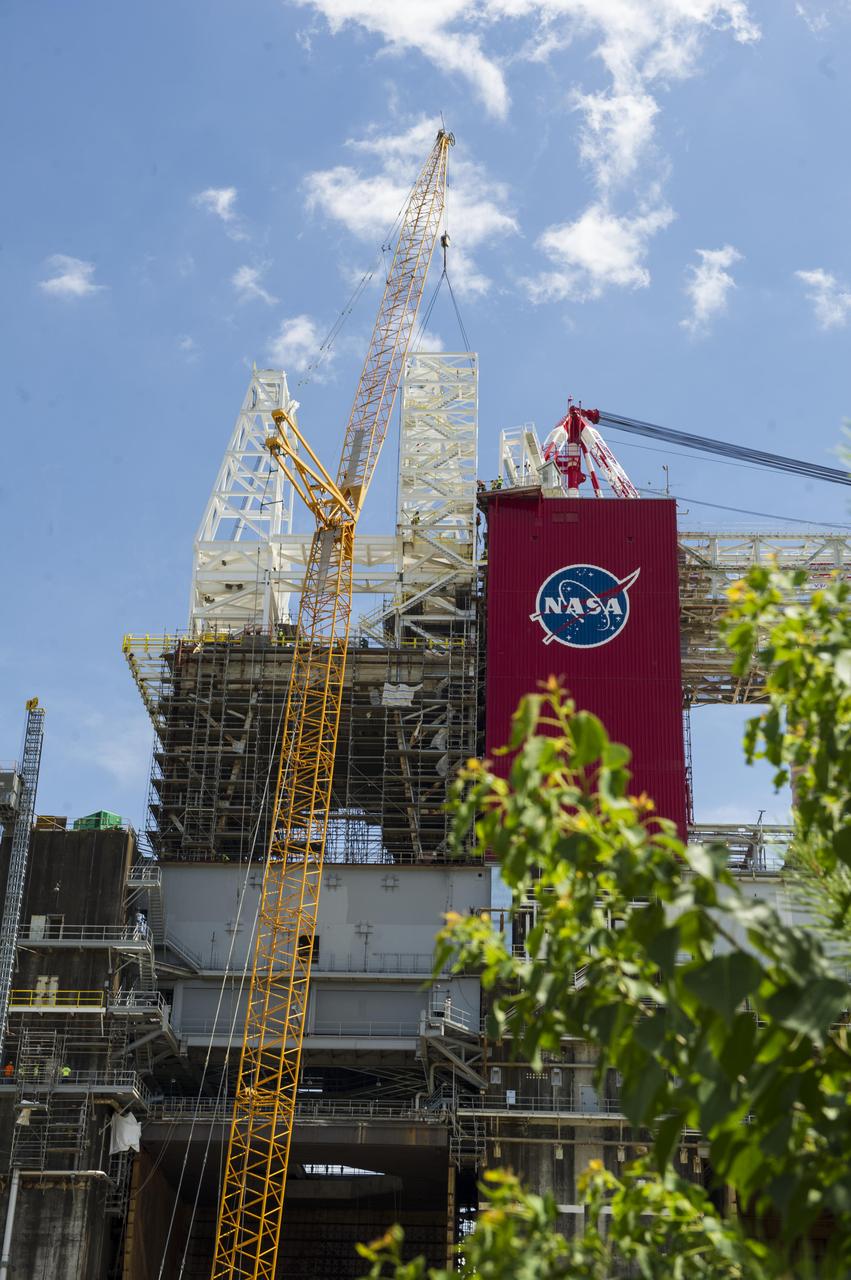
A structural steel section is lifted into place atop the B-2 Test Stand at NASA’s Stennis Space Center as part of modification work to prepare for testing the core stage of NASA’s new Space Launch System. The section is part of the Main Propulsion Test Article (MPTA) framework, which will support the SLS core stage for testing. The existing framework was installed on the stand in the late 1970s to test the shuttle MPTA. However, that framework had to be repositioned and modified to accommodate the larger SLS stage. About 1 million pounds of structural steel has been added, extending the framework about 100 feet higher and providing a new look to the Stennis skyline. Stennis will test the actual flight core stage for the first uncrewed SLS mission, Exploration Mission-1.
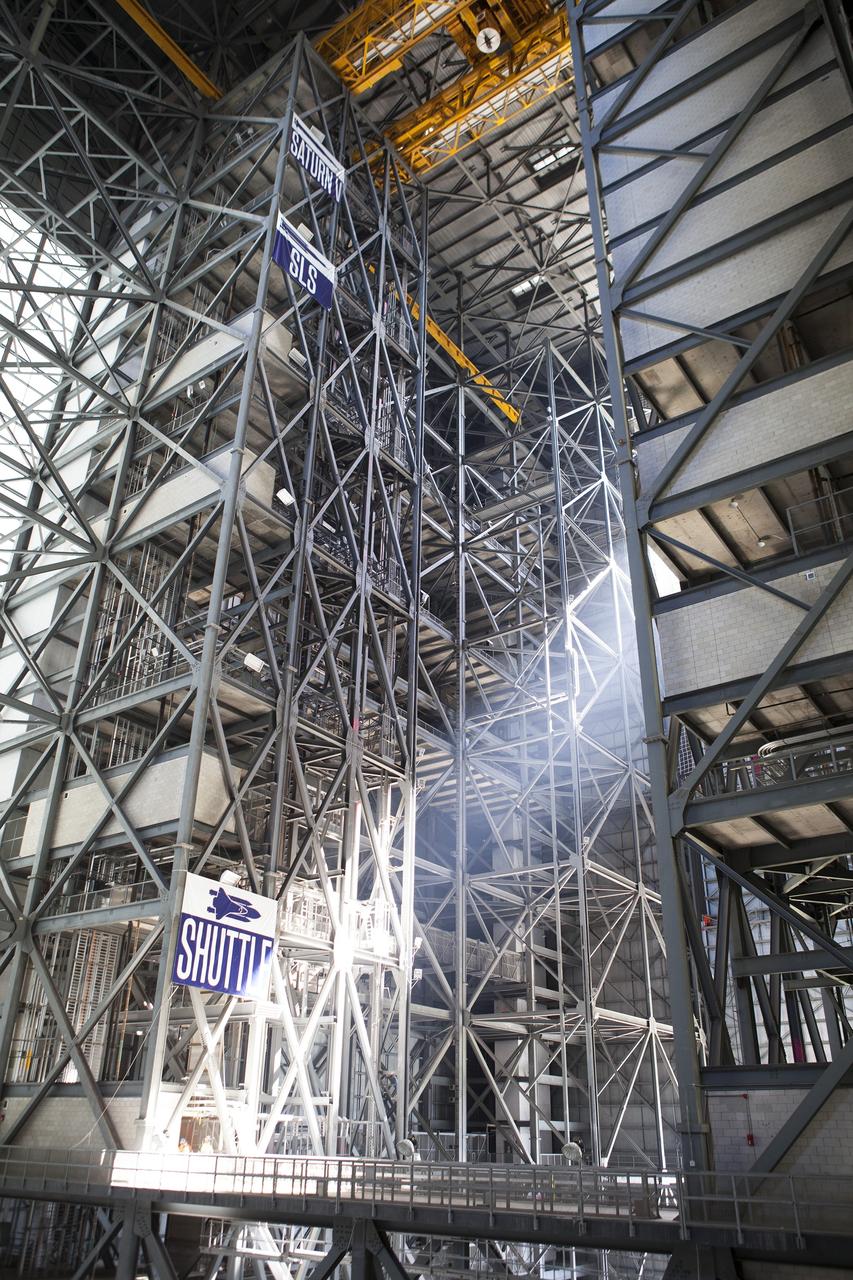
CAPE CANAVERAL, Fla. – Steel structures surround High Bay 3 inside the Vehicle Assembly Building, or VAB, at NASA’s Kennedy Space Center in Florida. In view, high above, is the 175-ton crane. Banners note the heights of the Saturn V, Space Launch System, or SLS, and shuttle on the steel structure. Modifications are underway in the VAB to prepare High Bay 3 for a new platform system. The modifications are part of a centerwide refurbishment initiative under the Ground Systems Development and Operations Program. High bay 3 is being refurbished to accommodate NASA’s Space Launch System and a variety of other spacecraft. For more information, visit http://www.nasa.gov/exploration/systems/ground/index.html. Photo credit: NASA/Dimitri Gerondidakis
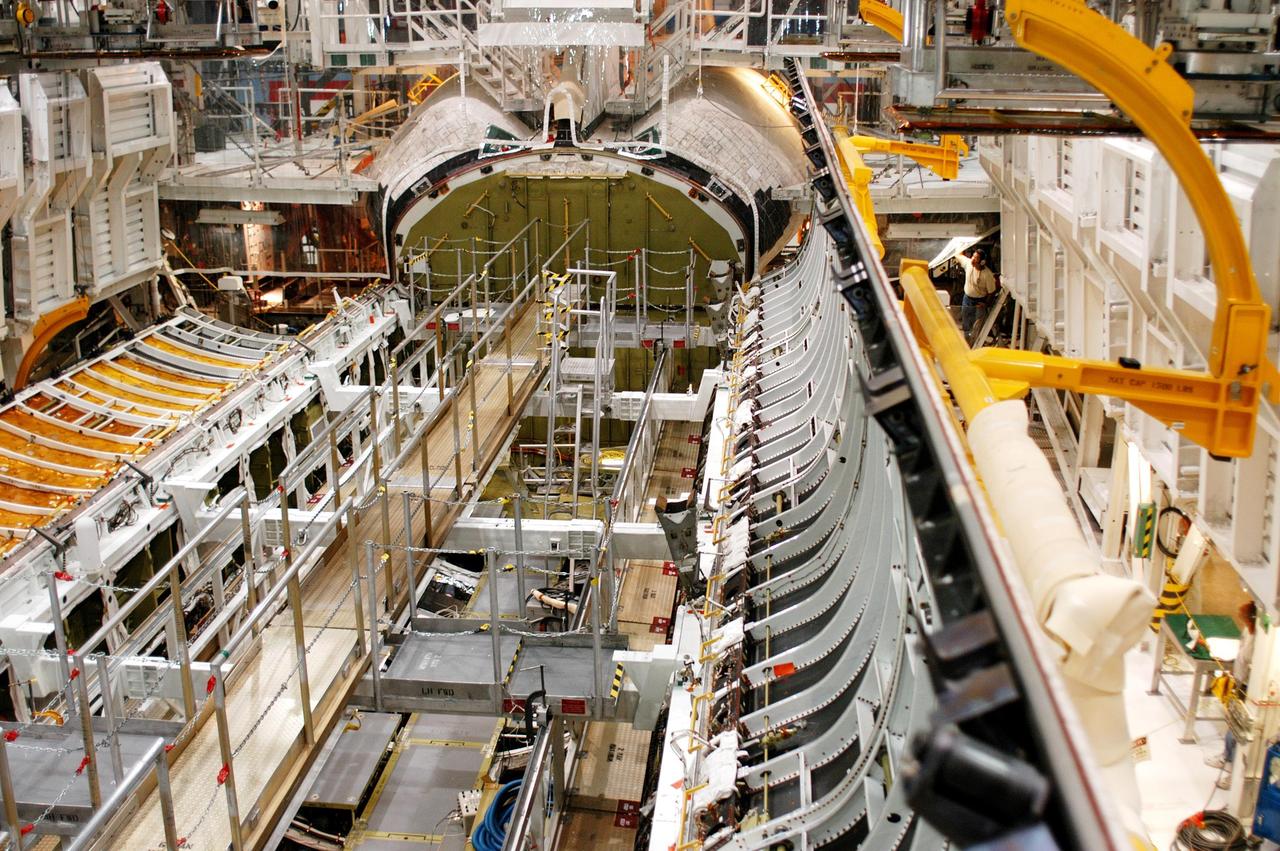
KENNEDY SPACE CENTER, FLA. - In the Orbiter Processing Facility, workers prepare to close the payload bay doors on Atlantis in preparation for the expected impact of Hurricane Frances on Saturday. Other preparations at KSC include powering down the Space Shuttle orbiters and stowing the landing gear. Workers are also taking precautions against flooding by moving spacecraft hardware off the ground and sandbagging facilities. The Orbiter Processing Facility is constructed of concrete and steel and was designed to withstand winds of 105 mph. The Vehicle Assembly Building is constructed of concrete and steel and was designed to withstand winds of 125 mph. Other payload and flight hardware support facilities can endure winds of 110 mph. Launch pads and the Payload Hazardous Servicing Facility can withstand 125-mph winds.
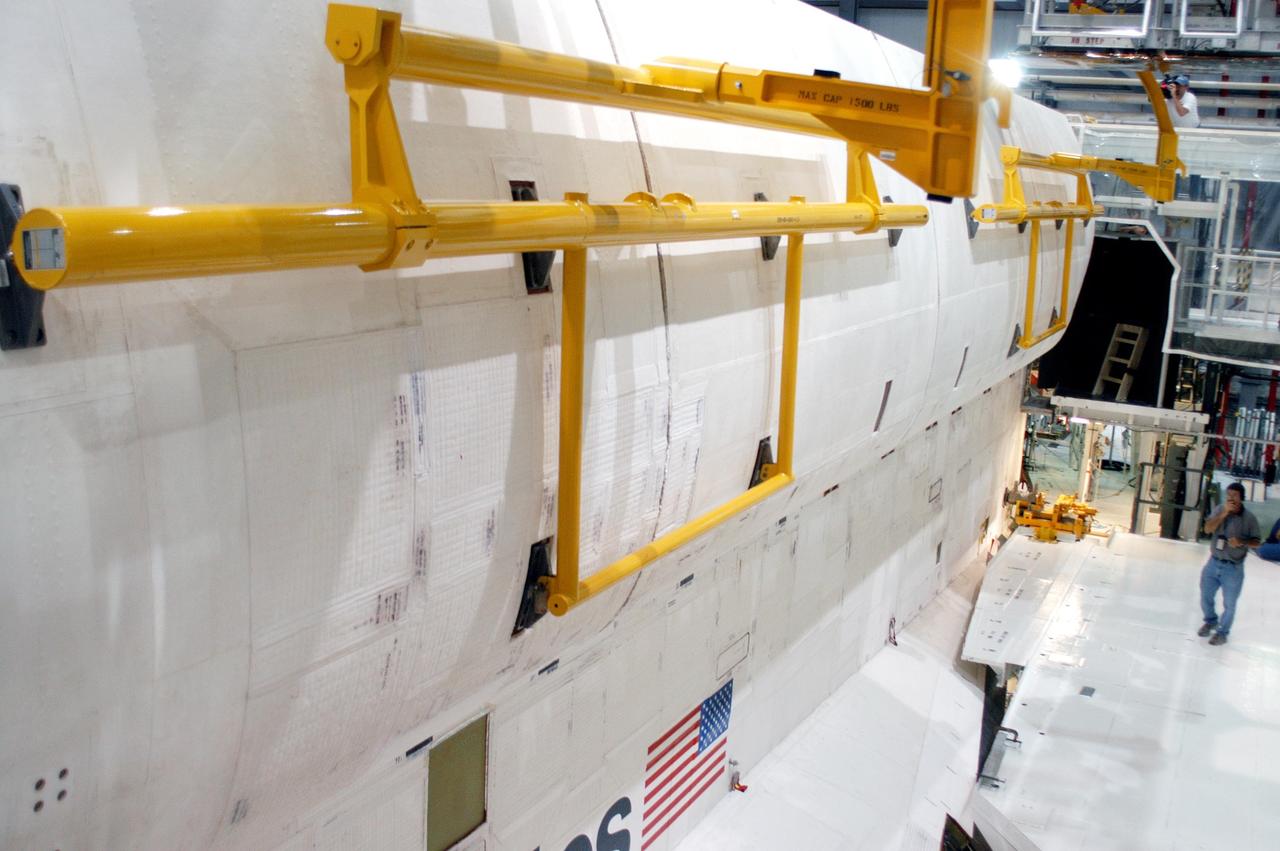
KENNEDY SPACE CENTER, FLA. - In the Orbiter Processing Facility, the payload bay doors on Atlantis are being closed in preparation for the expected impact of Hurricane Frances on Saturday. Other preparations at KSC include powering down the Space Shuttle orbiters and stowing the landing gear. Workers are also taking precautions against flooding by moving spacecraft hardware off the ground and sandbagging facilities. The Orbiter Processing Facility is constructed of concrete and steel and was designed to withstand winds of 105 mph. The Vehicle Assembly Building is constructed of concrete and steel and was designed to withstand winds of 125 mph. Other payload and flight hardware support facilities can endure winds of 110 mph. Launch pads and the Payload Hazardous Servicing Facility can withstand 125-mph winds.

KENNEDY SPACE CENTER, FLA. - Workers in the Orbiter Processing Facility prepare to stow the landing gear on the orbiter Atlantis in preparation for the expected impact of Hurricane Frances on Saturday. Other preparations at KSC include powering down the Space Shuttle orbiters, and closing their payload bay doors. Workers are also taking precautions against flooding by moving spacecraft hardware off the ground and sandbagging facilities. The Orbiter Processing Facility is constructed of concrete and steel and was designed to withstand winds of 105 mph. The Vehicle Assembly Building is constructed of concrete and steel and was designed to withstand winds of 125 mph. Other payload and flight hardware support facilities can endure winds of 110 mph. Launch pads and the Payload Hazardous Servicing Facility can withstand 125-mph winds.
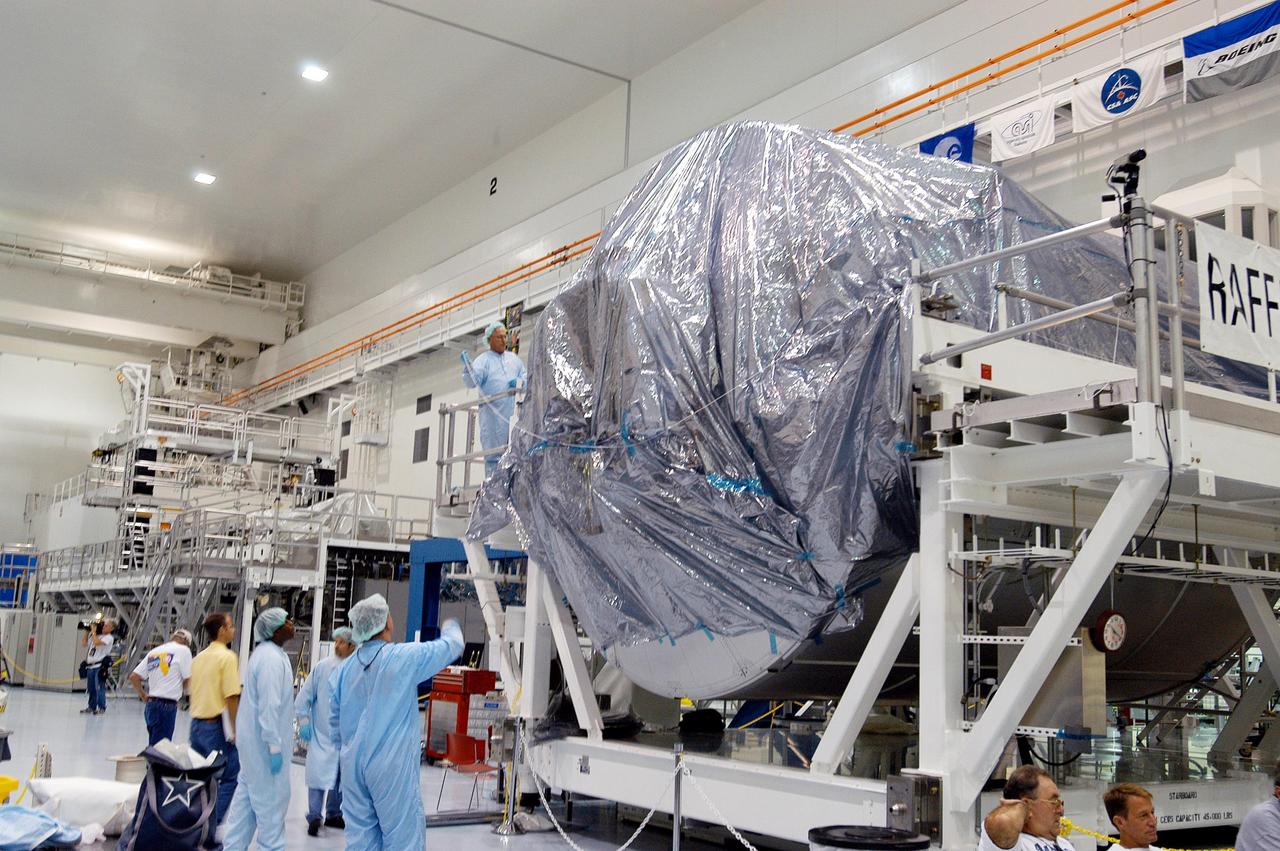
KENNEDY SPACE CENTER, FLA. - In the Space Station Processing Facility, workers cover with plastic the Multi-Purpose Logistics Module Raffaello in preparation for the expected impact of Hurricane Frances on Saturday. Other modules and equipment are being covered as well. Workers also have powered down the Space Shuttle orbiters, closed their payload bay doors and stowed the landing gear. They are also taking precautions against flooding by moving spacecraft hardware off the ground and sandbagging facilities. The SSPF can withstand sustained winds of 110 mph and wind gusts up to 132 mph. The Orbiter Processing Facility is constructed of concrete and steel and was designed to withstand winds of 105 mph. The Vehicle Assembly Building is constructed of concrete and steel and was designed to withstand winds of 125 mph. Other payload and flight hardware support facilities can endure winds of 110 mph. Launch pads and the Payload Hazardous Servicing Facility can withstand 125-mph winds.
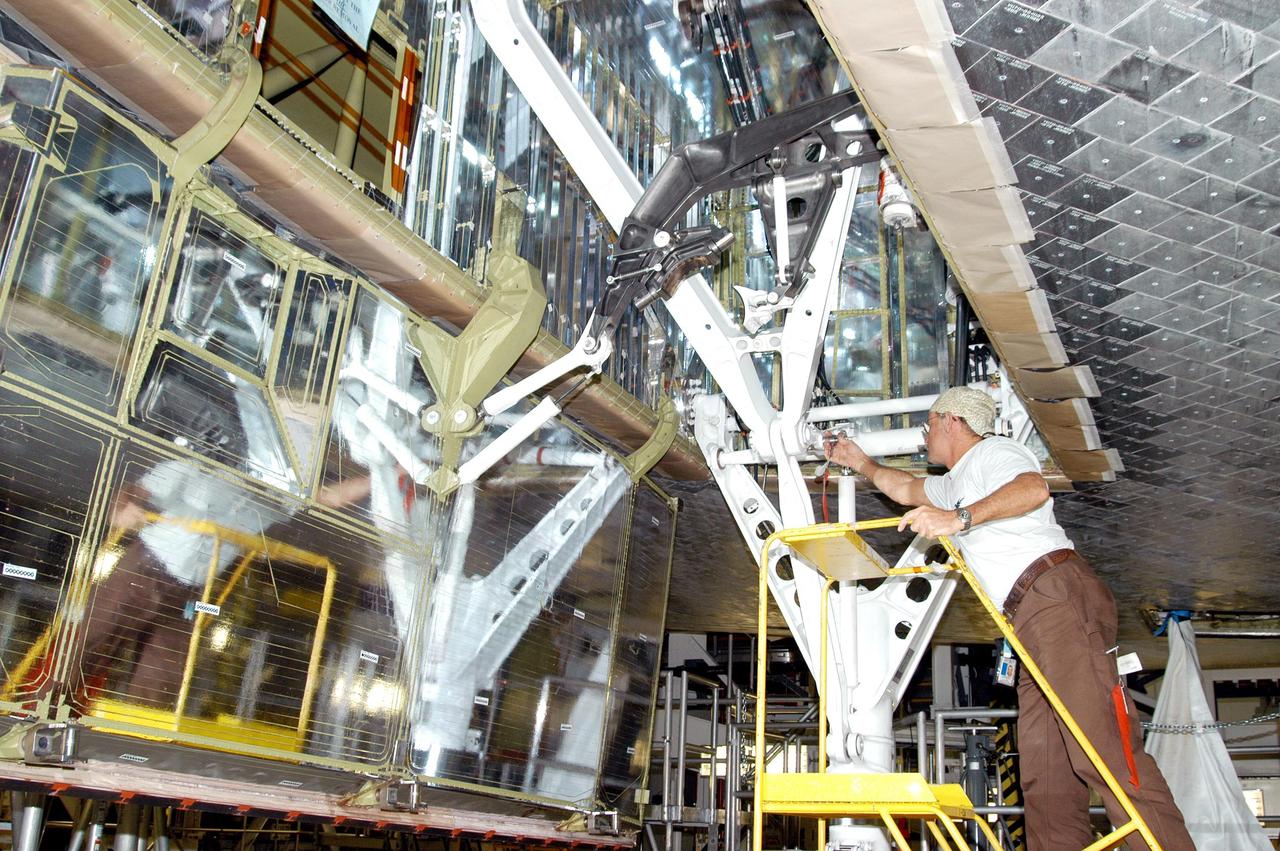
KENNEDY SPACE CENTER, FLA. - Workers in the Orbiter Processing Facility prepare the wheel bay to stow Atlantis’ landing gear in preparation for the expected impact of Hurricane Frances on Saturday. Other preparations at KSC include powering down the Space Shuttle orbiters, and closing their payload bay doors. Workers are also taking precautions against flooding by moving spacecraft hardware off the ground and sandbagging facilities. The Orbiter Processing Facility is constructed of concrete and steel and was designed to withstand winds of 105 mph. The Vehicle Assembly Building is constructed of concrete and steel and was designed to withstand winds of 125 mph. Other payload and flight hardware support facilities can endure winds of 110 mph. Launch pads and the Payload Hazardous Servicing Facility can withstand 125-mph winds.
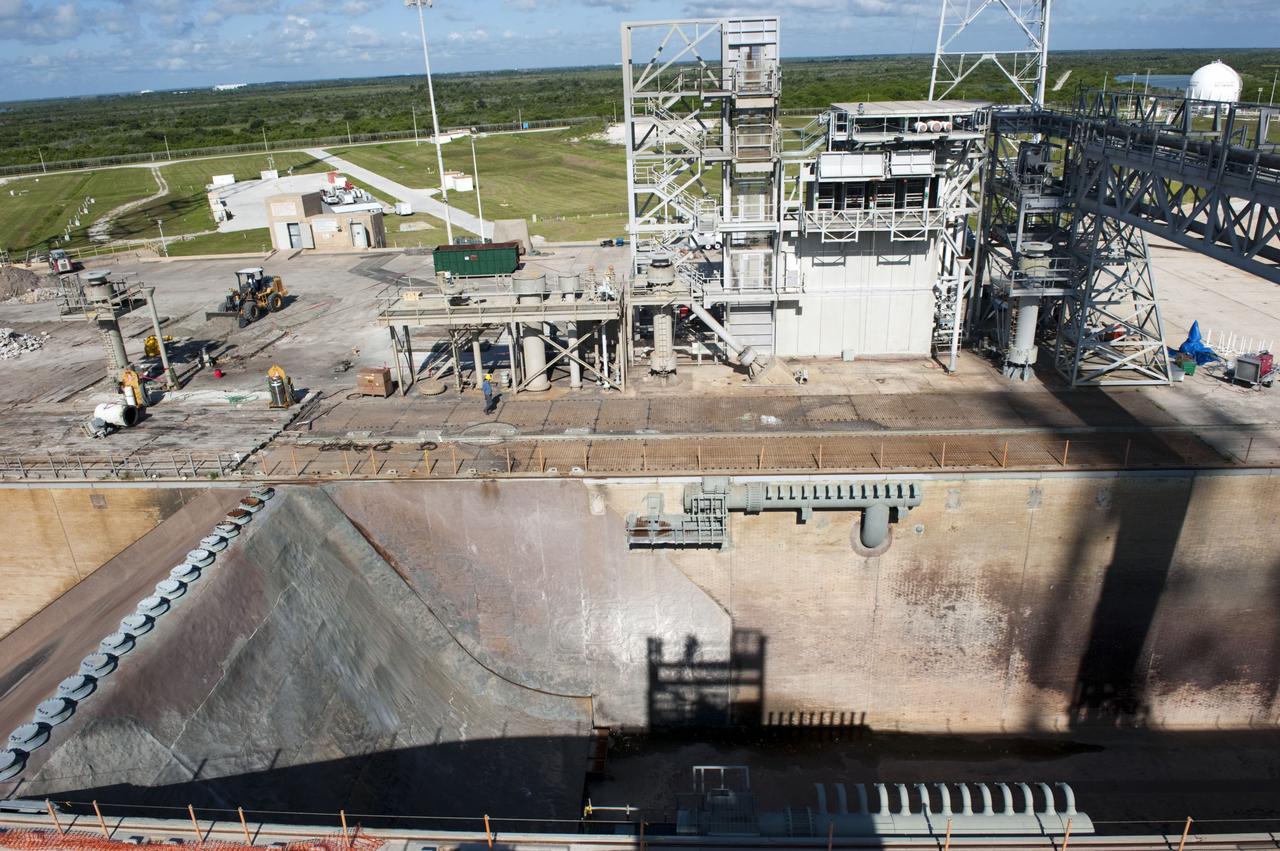
CAPE CANAVERAL, Fla. -- At NASA's Kennedy Space Center in Florida, cleanup of Launch Pad 39B is in progress beside the pad's flame trench. The trench is 450 feet long, 58 feet wide and 42 feet deep with an inner inverted V-shaped steel flame deflector. Sand, reinforcing steel and large wooden mats were placed over the pad's concrete surfaces during deconstruction to protect them from falling debris. In 2009, the structure at the pad was no longer needed for NASA's Space Shuttle Program, so it is being restructured for future use. The new design will feature a "clean pad" for rockets to come with their own launcher, making it more versatile for a number of rockets and spacecraft. The lightning protection system, consisting of three lightning towers and a wire catenary system, will remain. For information on NASA's future plans, visit http://www.nasa.gov/exploration. Photo credit: NASA/Kim Shiflett