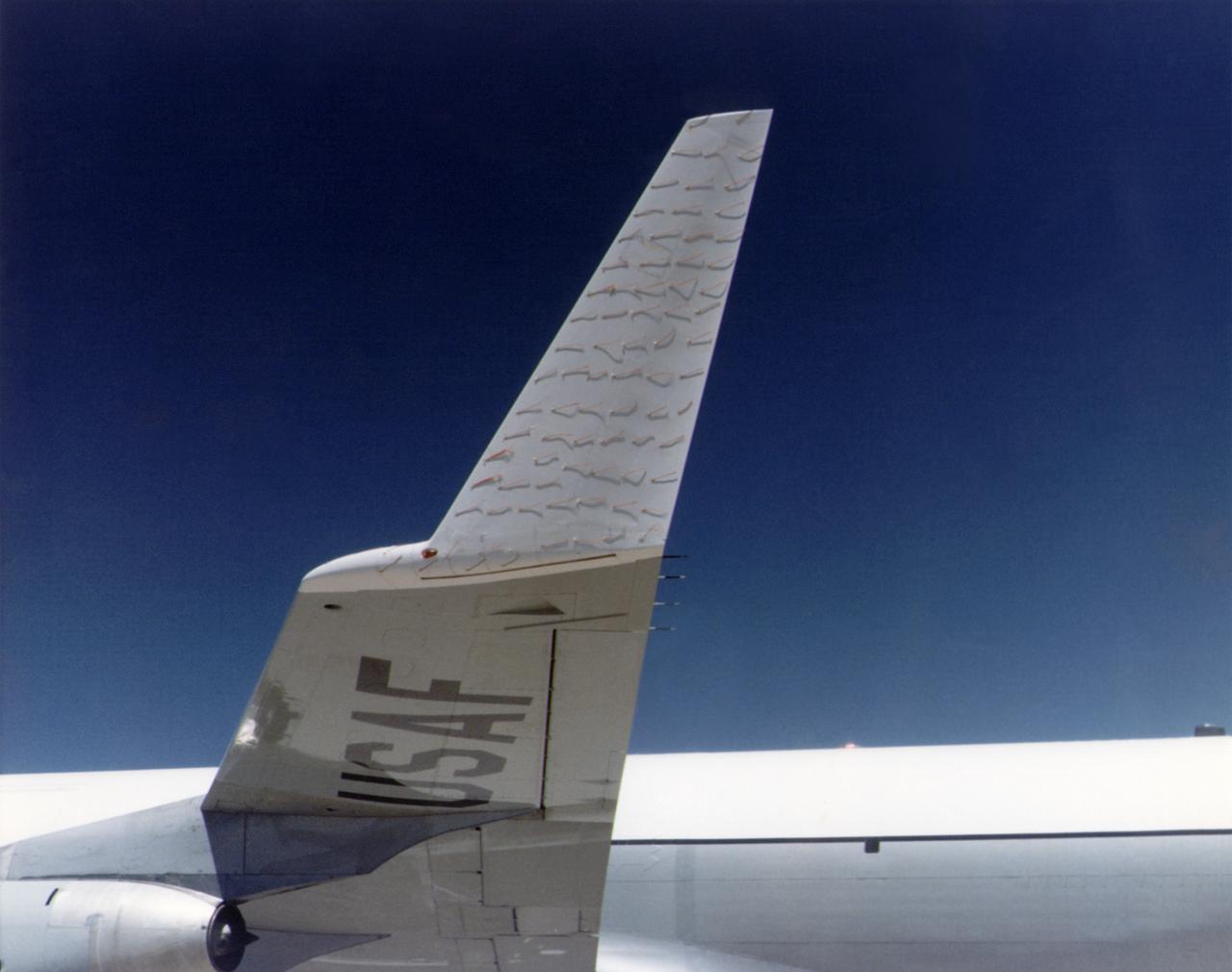
A chase plane view of the tufts on the KC-135 winglet. The use of tufts in flight research dates back to the early days of the NACA, and remains an effective means of observing airflow even today. In this procedure, rows of strings are attached to an airplane's surface, with one end of each string taped to the airplane and the other end free to swing about in the airflow. The movements of the tufts are photographed by on-board cameras or a chase plane. If the tufts are arrayed in neat rows, as seen here, then the airflow is smooth over the airplane's surface. If, however, they are moving about violently, it suggests turbulent airflow. Such motions may indicate high drag, flow separation (such as in a stall), or buffeting. In some cases, tufts will actually point forward, indicating the airflow has reversed direction.
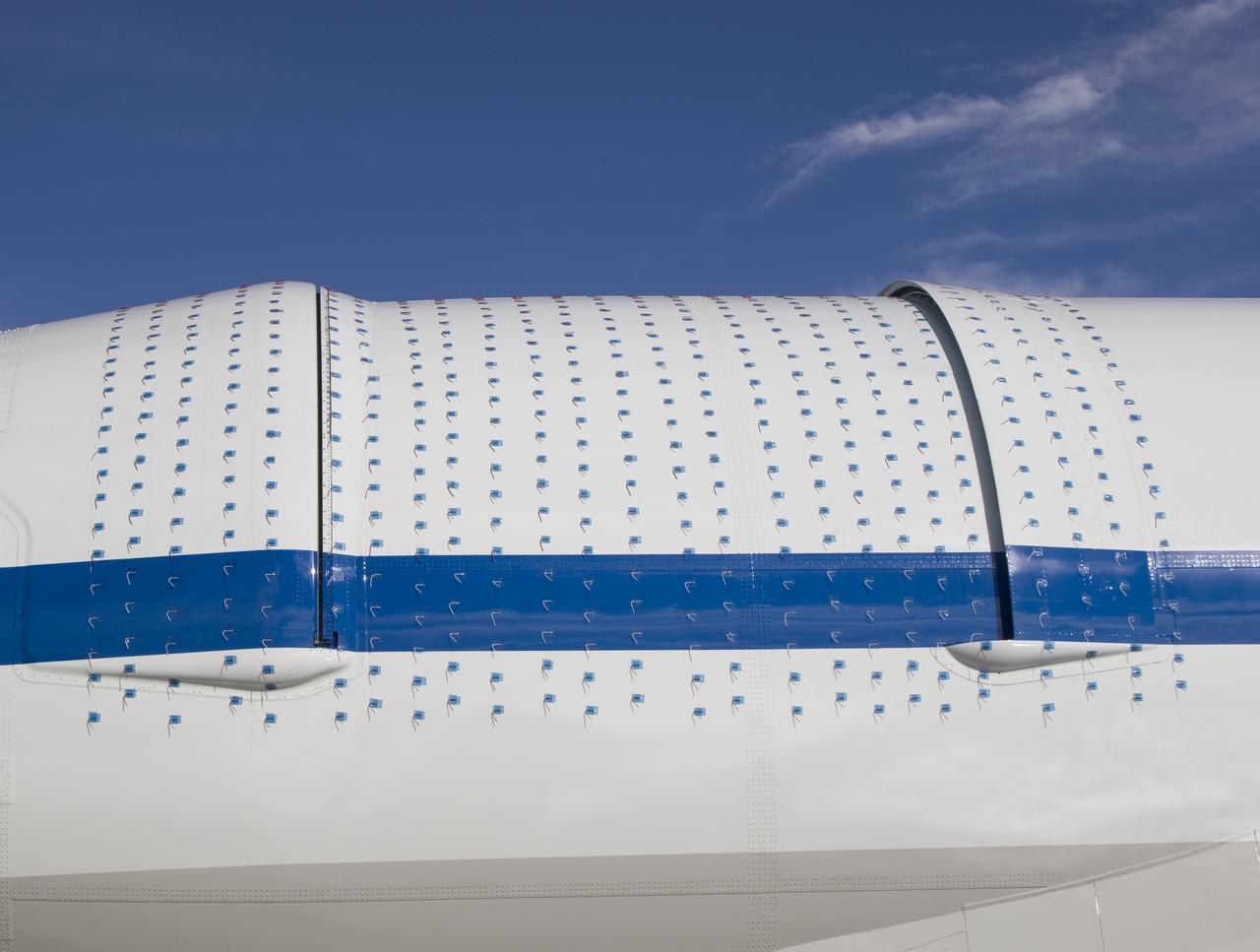
NASA's Stratospheric Observatory for Infrared Astronomy, or SOFIA, arrived at NASA's Dryden Flight Research Center at Edwards Air Force Base, Calif. on May 31, 2007. The heavily modified Boeing 747SP was ferried to Dryden from Waco, Texas, where L-3 Communications Integrated Systems installed a German-built 2.5-meter infrared telescope and made other major modifications over the past several years. SOFIA is scheduled to undergo installation and integration of mission systems and a multi-phase flight test program at Dryden over the next three years that is expected to lead to a full operational capability to conduct astronomy missions in about 2010. During its expected 20-year lifetime, SOFIA will be capable of "Great Observatory" class astronomical science, providing astronomers with access to the visible, infrared and sub-millimeter spectrum with optimized performance in the mid-infrared to sub-millimeter range.