
Space Shuttle Discovery (STS-133) lands, Wednesday, March 9, 2011, at Kennedy Space Center in Cape Canaveral, Fla., completing its 39th and final flight. Since 1984, Discovery flew 39 missions, spent 365 days in space, orbited Earth 5,830 times and traveled 148,221,675 miles. Photo credit: (NASA/Bill Ingalls)
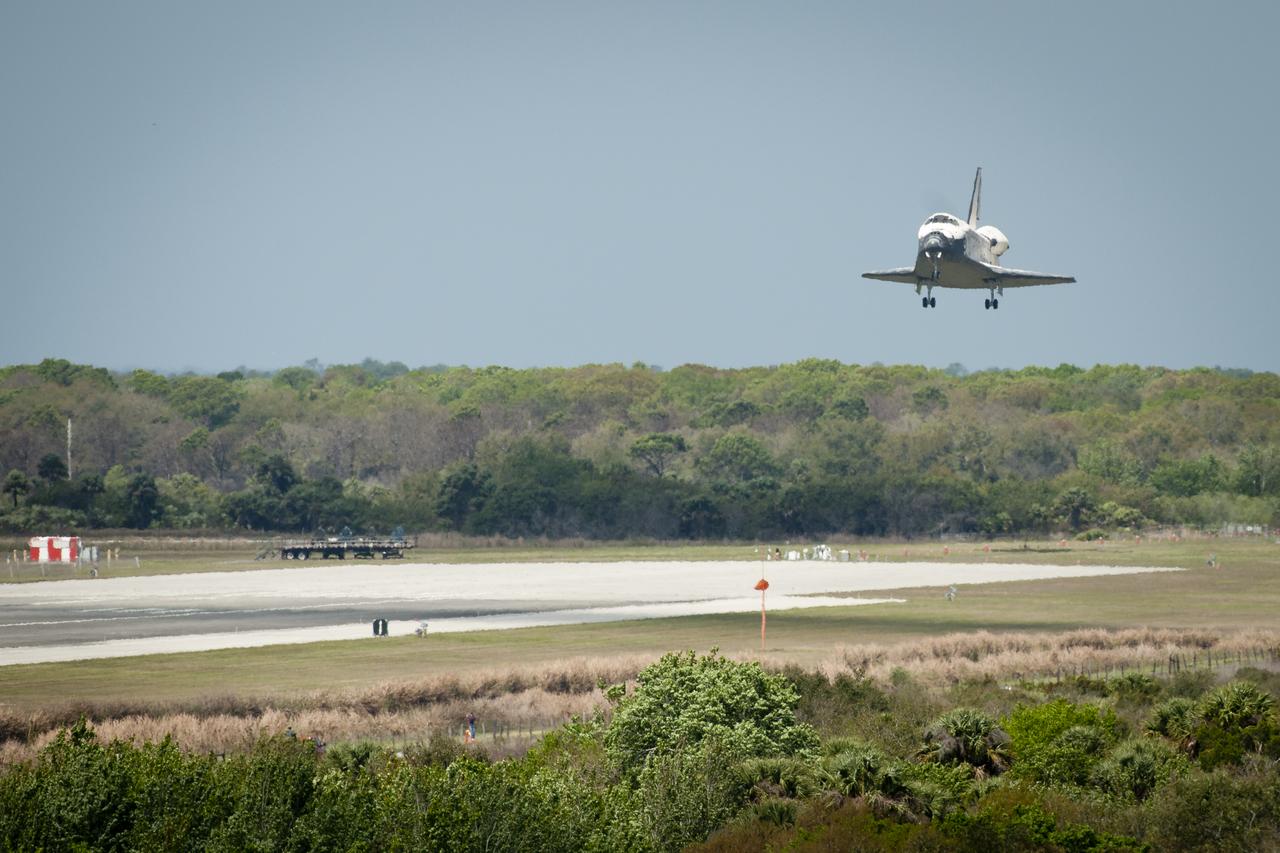
Space Shuttle Discovery (STS-133) lands, Wednesday, March 9, 2011, at Kennedy Space Center in Cape Canaveral, Fla., completing its 39th and final flight. Since 1984, Discovery flew 39 missions, spent 365 days in space, orbited Earth 5,830 times and traveled 148,221,675 miles. Photo credit: (NASA/Bill Ingalls)
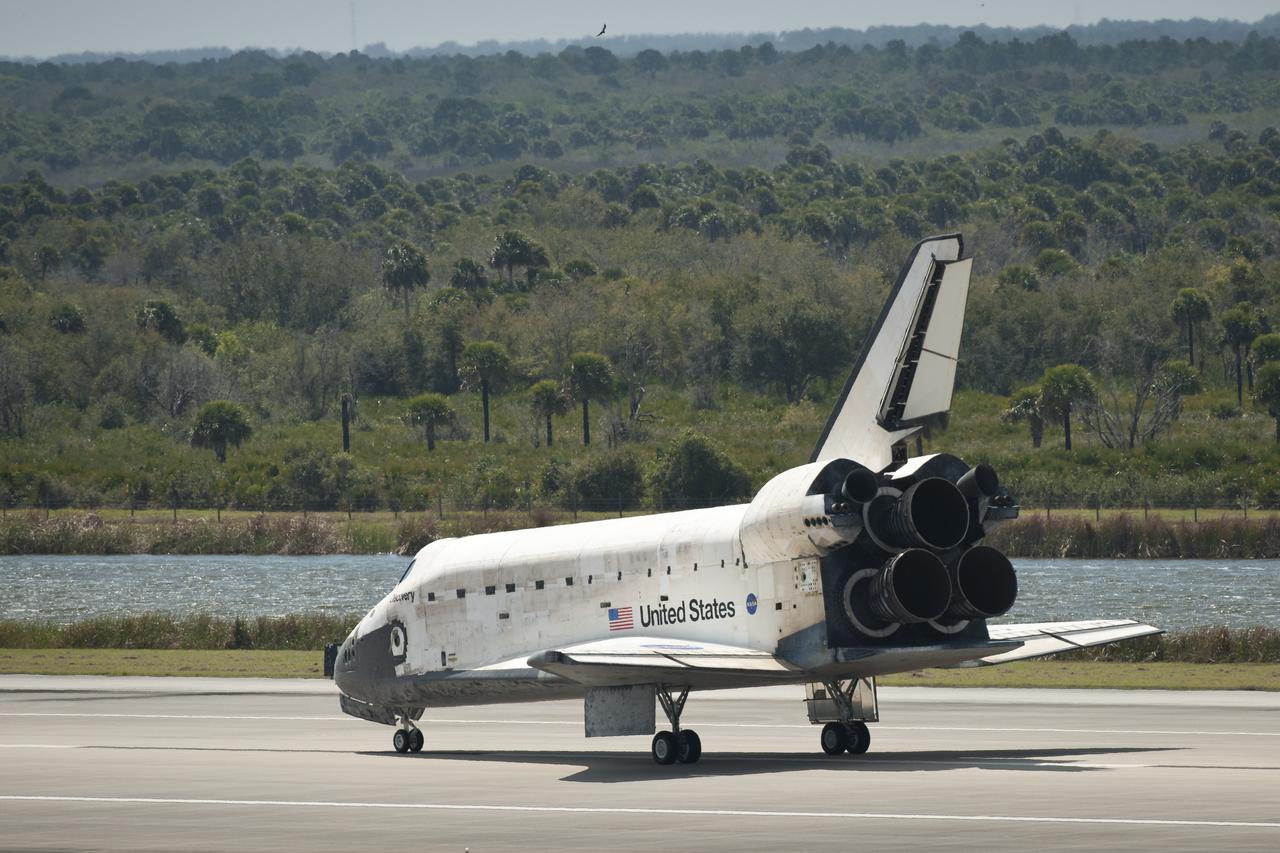
Space Shuttle Discovery (STS-133) is seen shortly after it landed, Wednesday, March 9, 2011, at Kennedy Space Center in Cape Canaveral, Fla., completing its 39th and final flight. Since 1984, Discovery flew 39 missions, spent 365 days in space, orbited Earth 5,830 times and traveled 148,221,675 miles. Photo credit: (NASA/Bill Ingalls)
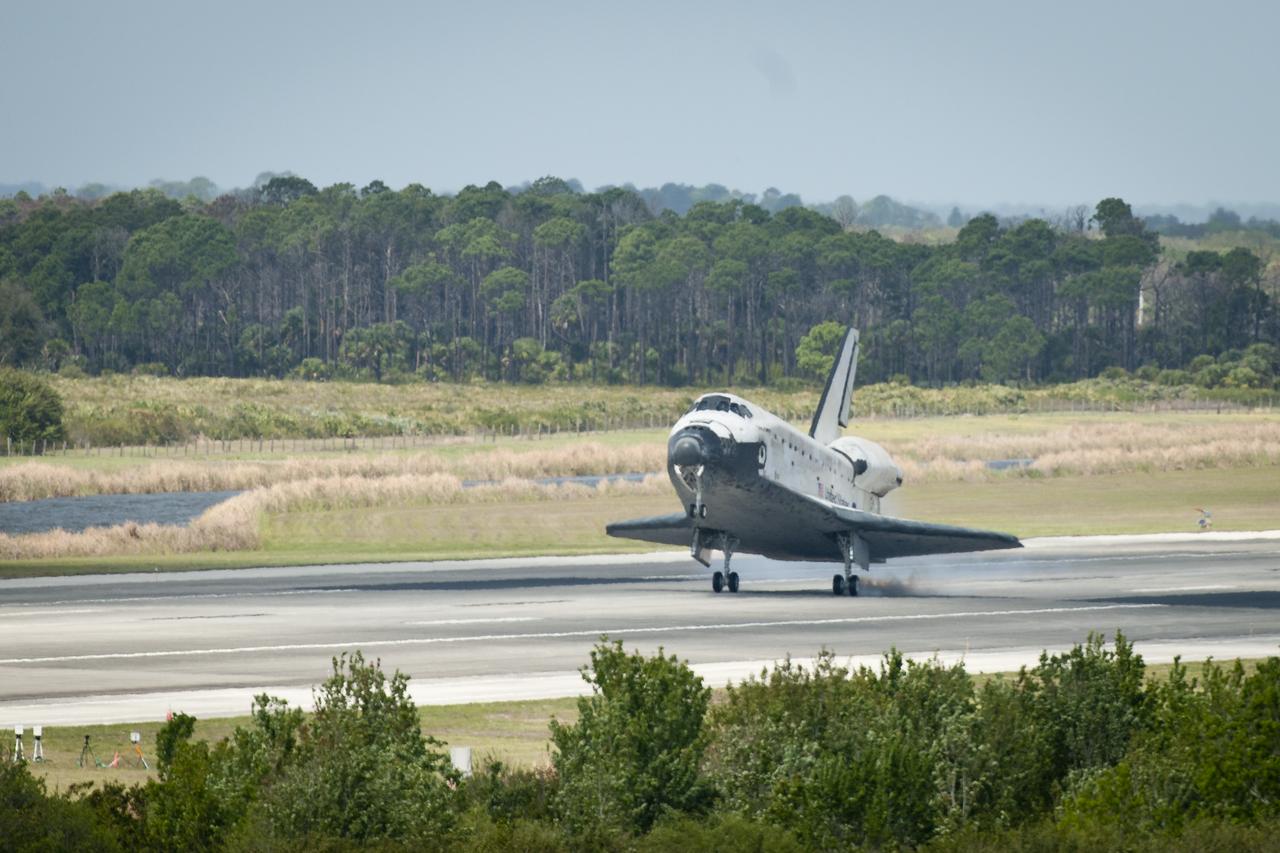
Space Shuttle Discovery (STS-133) lands, Wednesday, March 9, 2011, at Kennedy Space Center in Cape Canaveral, Fla., completing its 39th and final flight. Since 1984, Discovery flew 39 missions, spent 365 days in space, orbited Earth 5,830 times and traveled 148,221,675 miles. Photo credit: (NASA/Bill Ingalls)
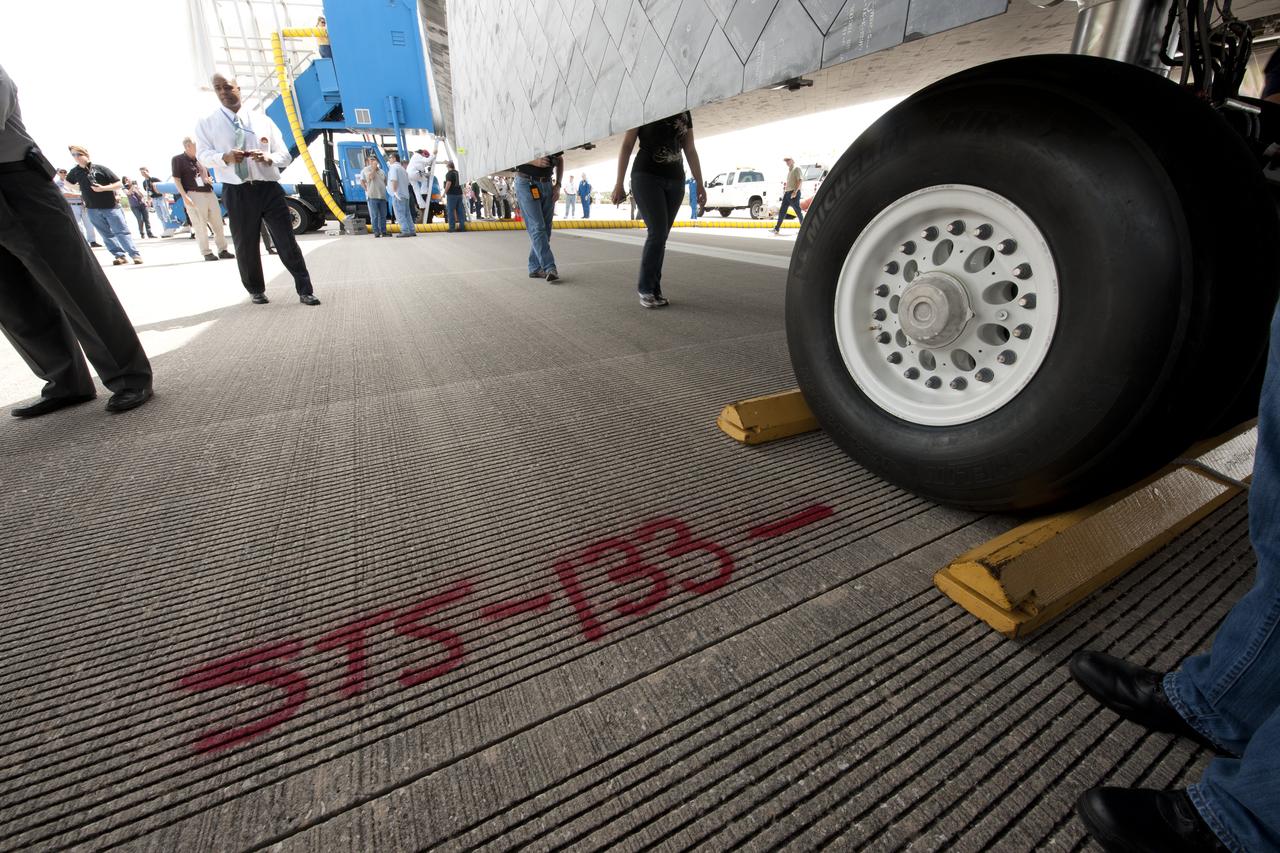
The runway of the Shuttle Landing Facility (SLF) is marked to show where the wheels stopped for the space shuttle Discovery (STS-133) shortly after it landed, Wednesday, March 9, 2011, at Kennedy Space Center in Cape Canaveral, Fla., completing its 39th and final flight. Since 1984, Discovery flew 39 missions, spent 365 days in space, orbited Earth 5,830 times and traveled 148,221,675 miles. Photo credit: (NASA/Bill Ingalls)
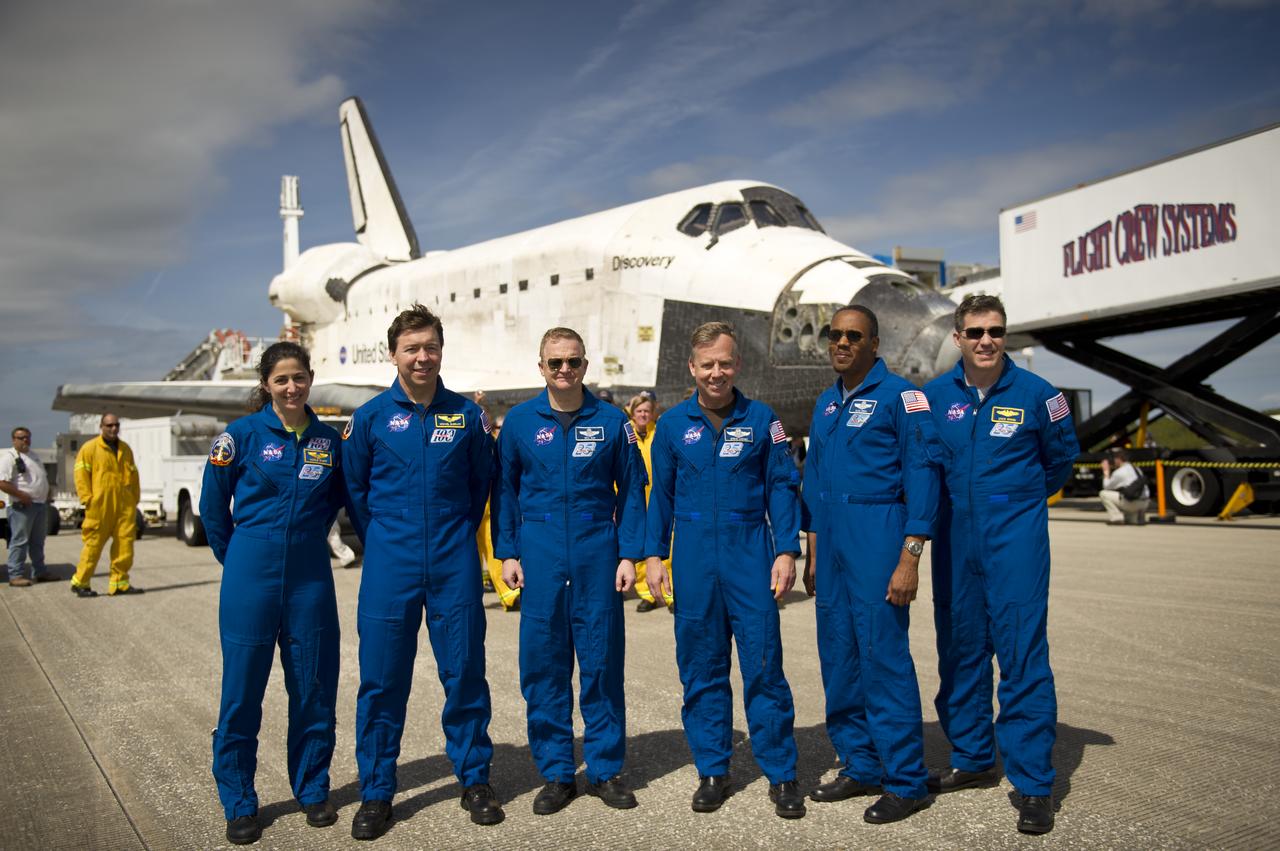
NASA Astronauts and STS-133 mission crew members, from left, Mission Specialists Nicole Stott, Michael Barratt, Pilot Eric Boe, Commander Steve Lindsey, Mission Specialists Alvin Drew, and Steve Bowen pose for a photograph in front of the space shuttle Discovery after they landed, Wednesday, March 9, 2011, at Kennedy Space Center in Cape Canaveral, Fla., completing Discovery's 39th and final flight. Since 1984, Discovery flew 39 missions, spent 365 days in space, orbited Earth 5,830 times and traveled 148,221,675 miles. Photo credit: (NASA/Bill Ingalls)
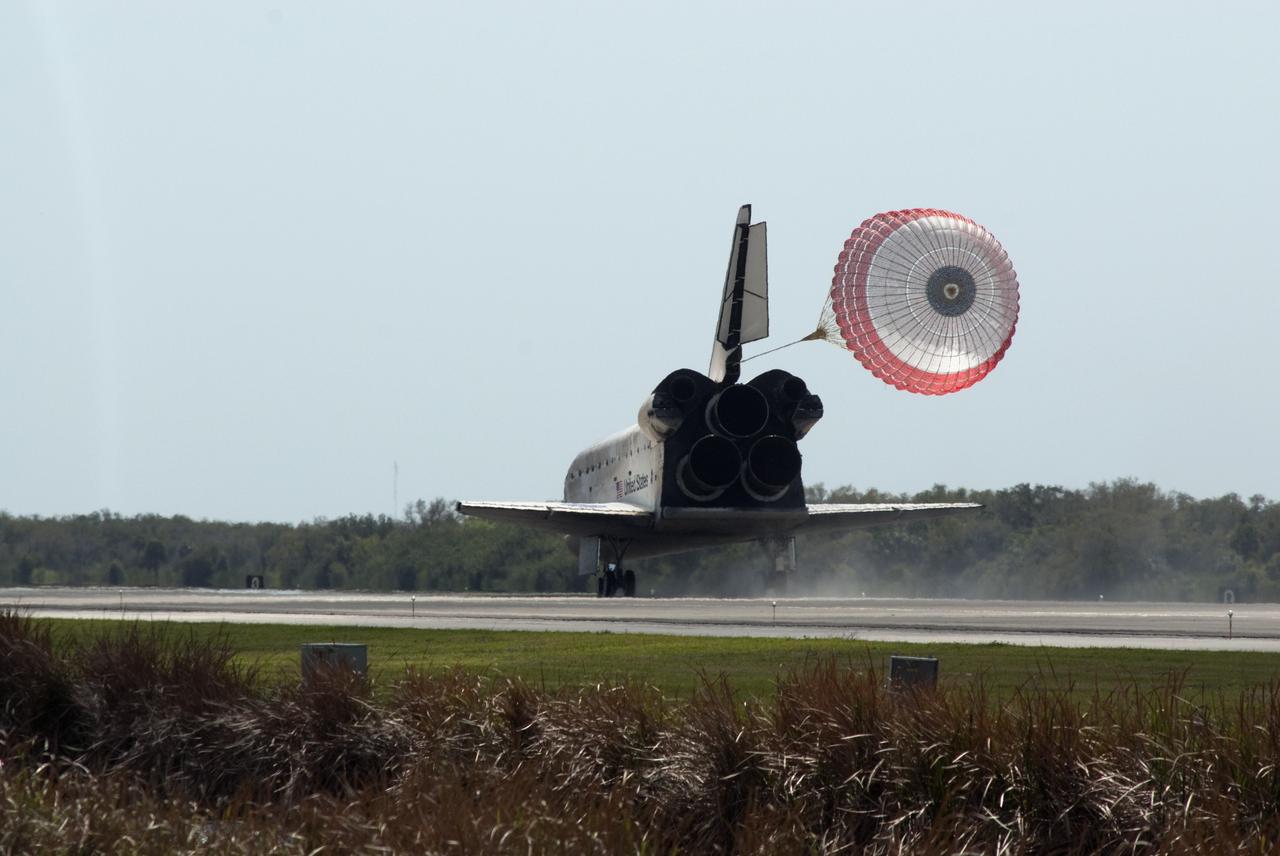
CAPE CANAVERAL, Fla. - With its drag chute unfurled, space shuttle Discovery rolls down Runway 15 at the Shuttle Landing Facility at NASA's Kennedy Space Center in Florida. Landing was at 11:57 a.m. EST, completing a 13-day STS-133 mission to the International Space Station. Discovery and its six-member crew delivered the Permanent Multipurpose Module, packed with supplies and critical spare parts, as well as Robonaut 2, the dexterous humanoid astronaut helper, to the orbiting outpost. STS-133 was Discovery's 39th and final mission. This was the 133rd Space Shuttle Program mission and the 35th shuttle voyage to the space station. Photo credit: NASA/Kim Shiflett
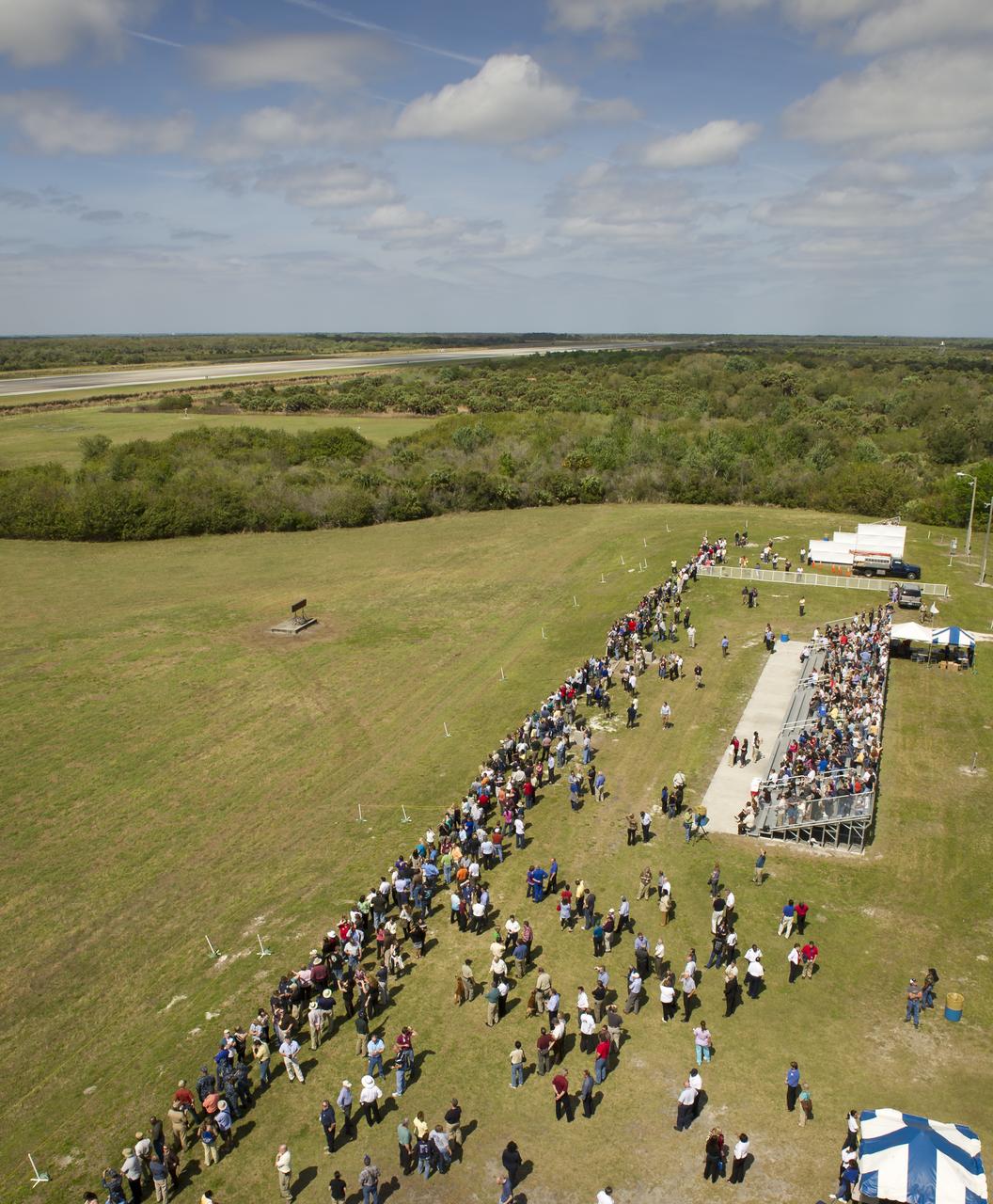
Crowds start to gather at the Shuttle Landing Facility (SLF) in preparation for the landing of the space shuttle Discovery, Wednesday, March 9, 2011, at Kennedy Space Center in Cape Canaveral, Fla. This was Discovery's final flight. Discovery flew 39 missions, spent 365 days in space, orbited Earth 5,830 times and traveled 148,221,675 miles. Photo credit: (NASA/Bill Ingalls)
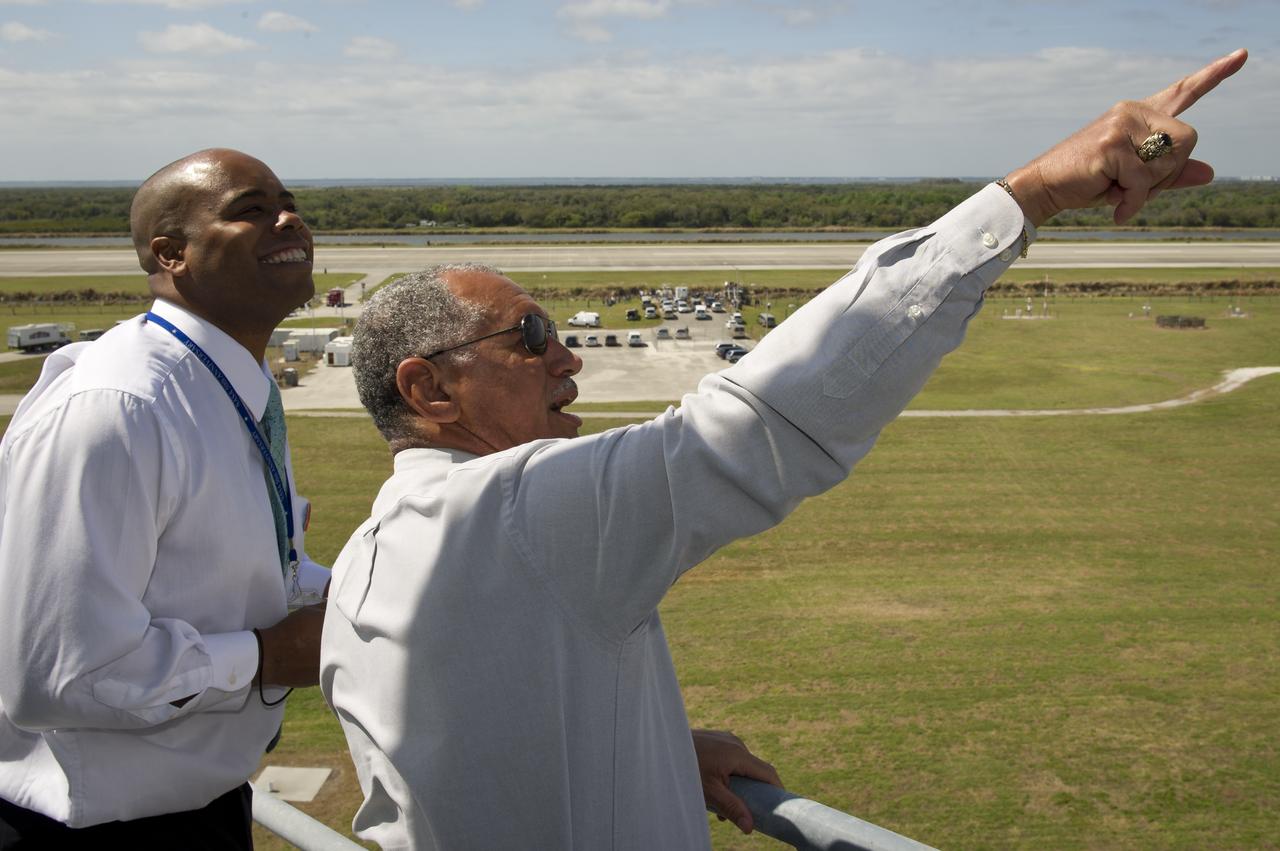
NASA Administrator Charles Bolden, right, and NASA Executive Officer to the Deputy Administrator Garvey McIntosh scan the sky for the space shuttle Discovery as it approaches for landing from its 39th and final flight at the Kennedy Space Center in Cape Canaveral, Fla., Wednesday, March 9, 2011. Since 1984, Discovery flew 39 missions, spent 365 days in space, orbited Earth 5,830 times and traveled 148,221,675 miles. Photo credit: (NASA/Bill Ingalls)
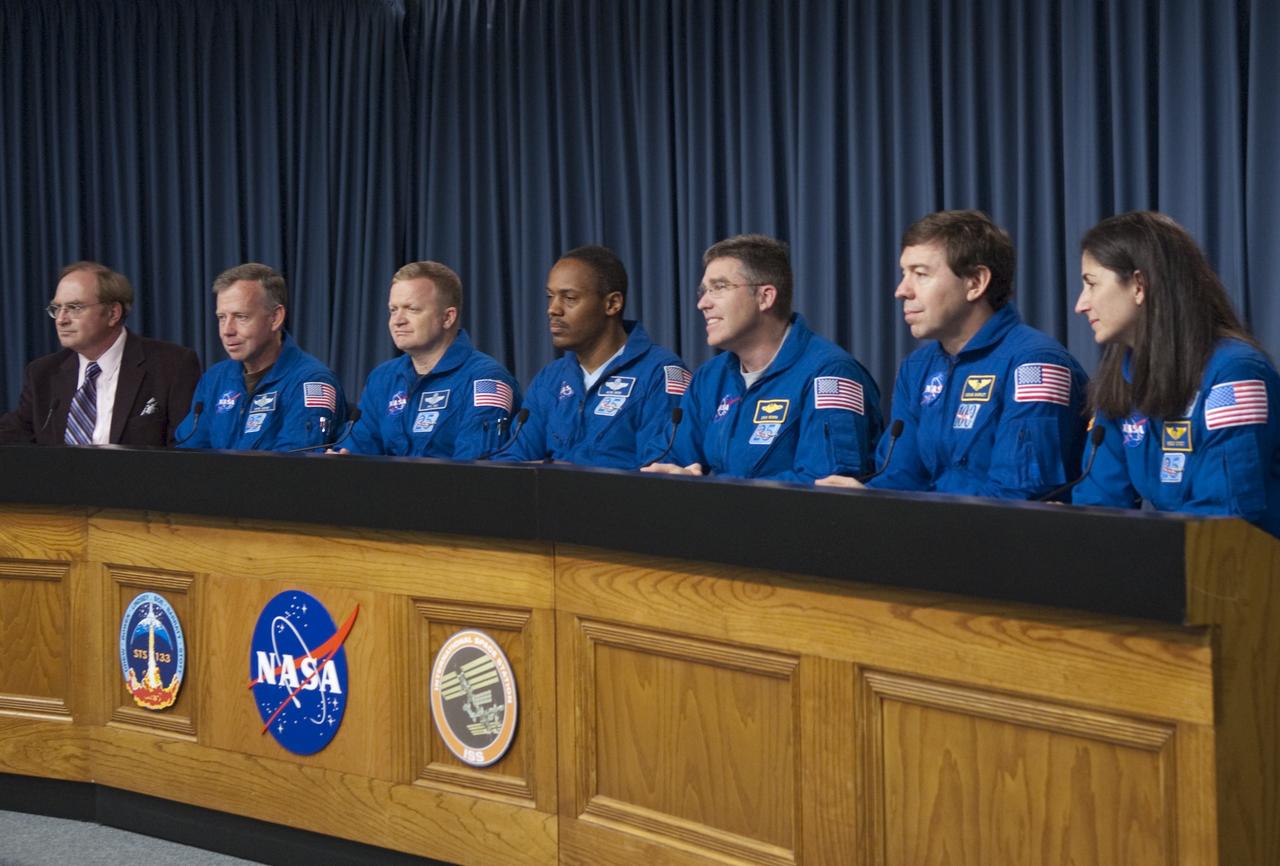
CAPE CANAVERAL, Fla. -- Space shuttle Discovery's STS-133 crew participates in a post-landing news conference in the Press Site TV Auditorium at NASA's Kennedy Space Center in Florida. From left, are NASA Public Affairs Officer George Diller, STS-133 Commander Steve Lindsey, Pilot Eric Boe, and Mission Specialists Alvin Drew, Steve Bowen, Michael Barratt and Nicole Stott. Discovery and crew landed on the Shuttle Landing Facility's Runway 15 at 11:57 a.m., completing a 13-day, 5.3-million-mile mission to the International Space Station. STS-133 delivered the Permanent Multipurpose Module, packed with supplies and critical spare parts, as well as Robonaut 2, the dexterous humanoid astronaut helper, to the orbiting outpost. STS-133 was Discovery's 39th and final mission. This was the 133rd Space Shuttle Program mission and the 35th shuttle voyage to the space station. Photo credit: NASA/Kim Shiflett
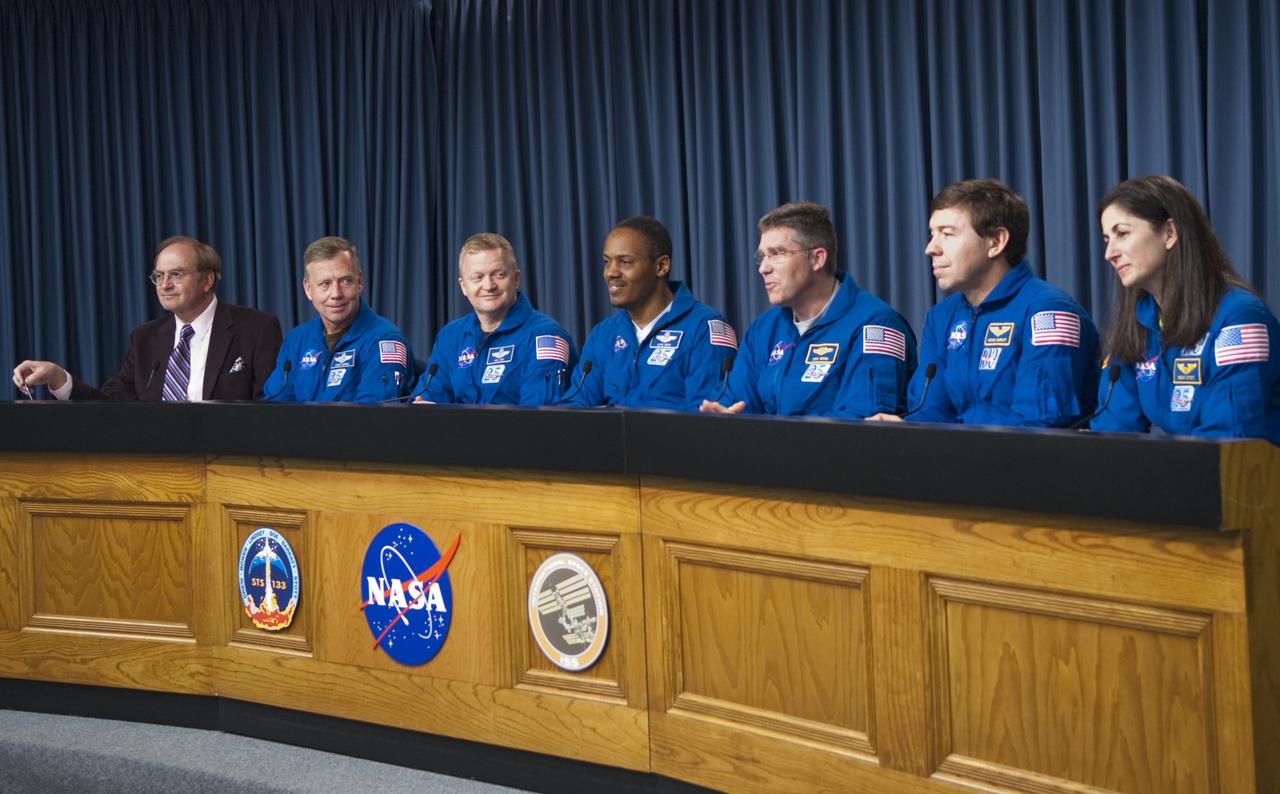
CAPE CANAVERAL, Fla. -- Space shuttle Discovery's STS-133 crew participates in a post-landing news conference in the Press Site TV Auditorium at NASA's Kennedy Space Center in Florida. From left, are NASA Public Affairs Officer George Diller, STS-133 Commander Steve Lindsey, Pilot Eric Boe, and Mission Specialists Alvin Drew, Steve Bowen, Michael Barratt and Nicole Stott. Discovery and crew landed on the Shuttle Landing Facility's Runway 15 at 11:57 a.m., completing a 13-day, 5.3-million-mile mission to the International Space Station. STS-133 delivered the Permanent Multipurpose Module, packed with supplies and critical spare parts, as well as Robonaut 2, the dexterous humanoid astronaut helper, to the orbiting outpost. STS-133 was Discovery's 39th and final mission. This was the 133rd Space Shuttle Program mission and the 35th shuttle voyage to the space station. Photo credit: NASA/Kim Shiflett
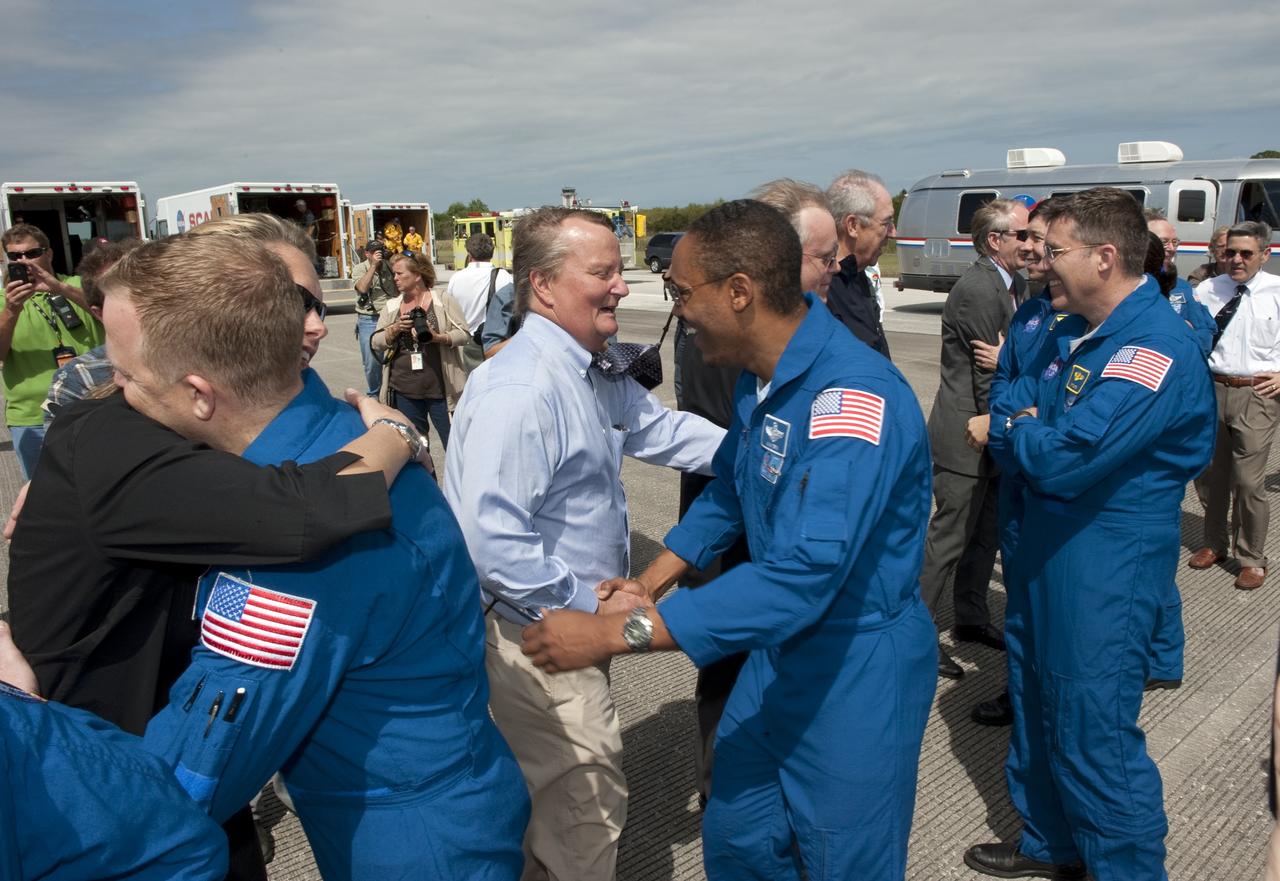
CAPE CANAVERAL, Fla. -- NASA managers welcome space shuttle Discovery's STS-133 crew members home to Kennedy Space Center in Florida. In the foreground, Discovery Flow Director Stephanie Stilson hugs STS-133 Pilot Eric Boe. Beside them, Shuttle Launch Director Mike Leinbach congratulates Mission Specialist Alvin Drew on a successful mission. Discovery and its six-member crew landed on the Shuttle Landing Facility's Runway 15 at 11:57 a.m. EST, bringing an end to the 13-day, 5.3-million-mile mission to the International Space Station. STS-133 delivered the Permanent Multipurpose Module, packed with supplies and critical spare parts, as well as Robonaut 2, the dexterous humanoid astronaut helper, to the orbiting outpost. STS-133 was Discovery's 39th and final mission. This was the 133rd Space Shuttle Program mission and the 35th shuttle voyage to the space station. Photo credit: NASA/Kim Shiflett
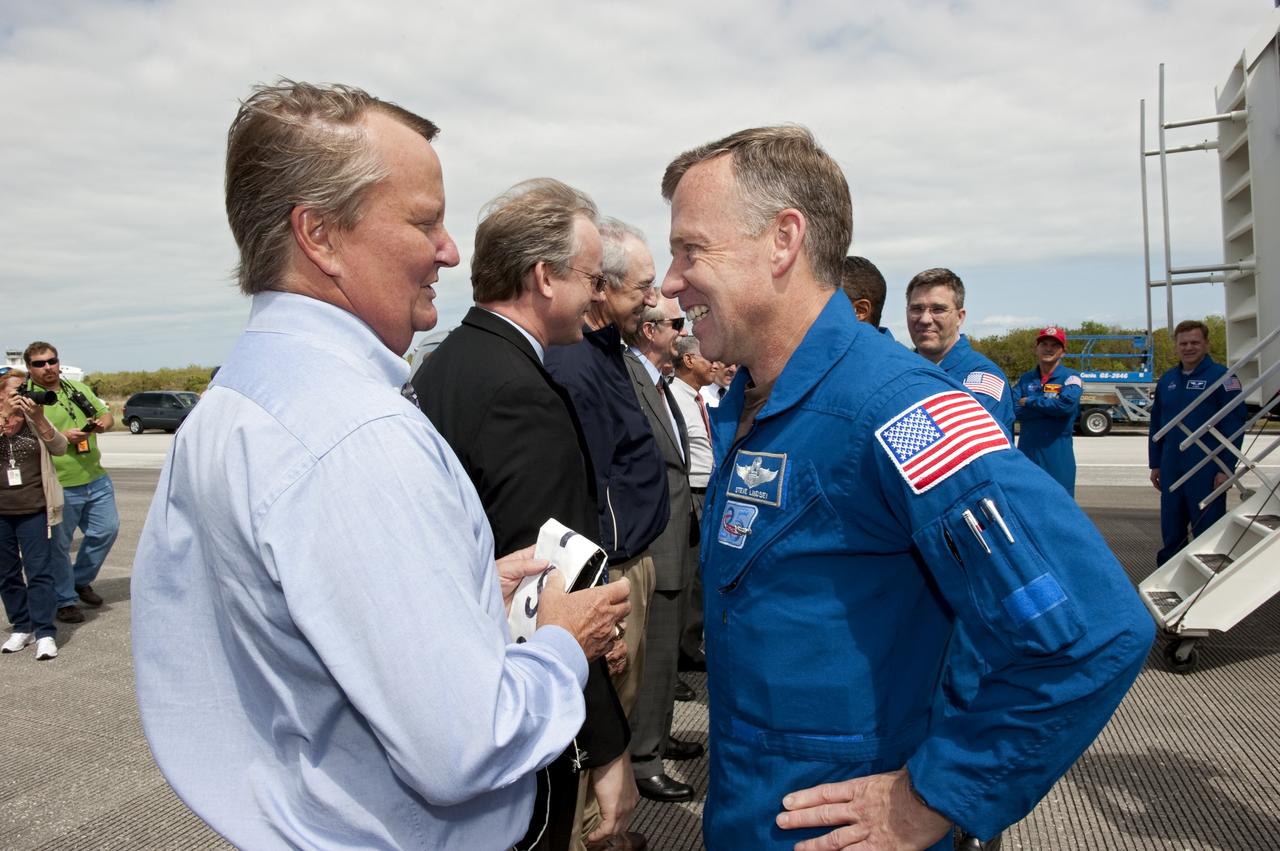
CAPE CANAVERAL, Fla. -- NASA managers welcome space shuttle Discovery's STS-133 crew members home to Kennedy Space Center in Florida. In the foreground, Shuttle Launch Director Mike Leinbach congratulates STS-133 Commander Steve Lindsey on a successful mission. Discovery and its six-member crew landed on the Shuttle Landing Facility's Runway 15 at 11:57 a.m. EST, bringing an end to the 13-day, 5.3-million-mile mission to the International Space Station. STS-133 delivered the Permanent Multipurpose Module, packed with supplies and critical spare parts, as well as Robonaut 2, the dexterous humanoid astronaut helper, to the orbiting outpost. STS-133 was Discovery's 39th and final mission. This was the 133rd Space Shuttle Program mission and the 35th shuttle voyage to the space station. Photo credit: NASA/Kim Shiflett
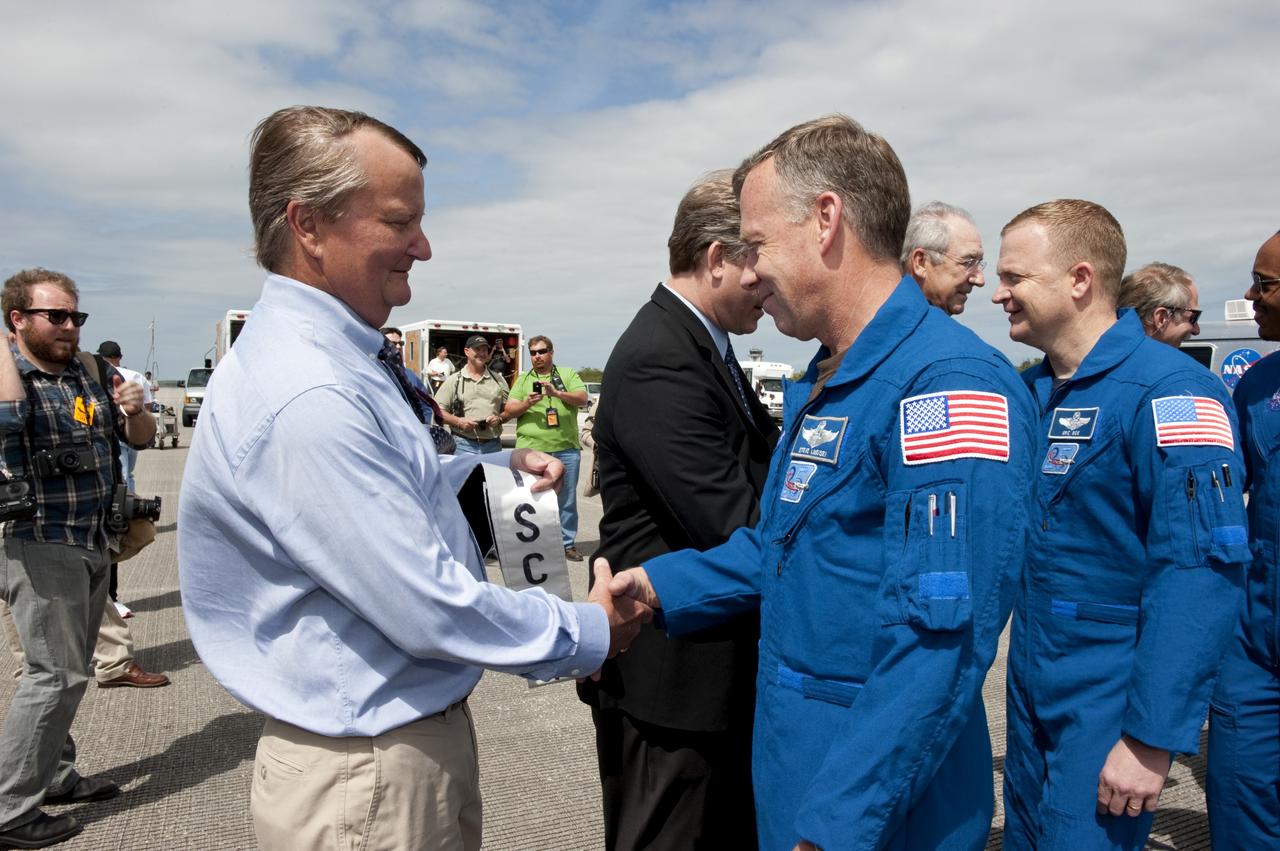
CAPE CANAVERAL, Fla. -- NASA managers welcome space shuttle Discovery's STS-133 crew members home to Kennedy Space Center in Florida. In the foreground, Shuttle Launch Director Mike Leinbach congratulates STS-133 Commander Steve Lindsey on a successful mission. Discovery and its six-member crew landed on the Shuttle Landing Facility's Runway 15 at 11:57 a.m. EST, bringing an end to the 13-day, 5.3-million-mile mission to the International Space Station. STS-133 delivered the Permanent Multipurpose Module, packed with supplies and critical spare parts, as well as Robonaut 2, the dexterous humanoid astronaut helper, to the orbiting outpost. STS-133 was Discovery's 39th and final mission. This was the 133rd Space Shuttle Program mission and the 35th shuttle voyage to the space station. Photo credit: NASA/Kim Shiflett
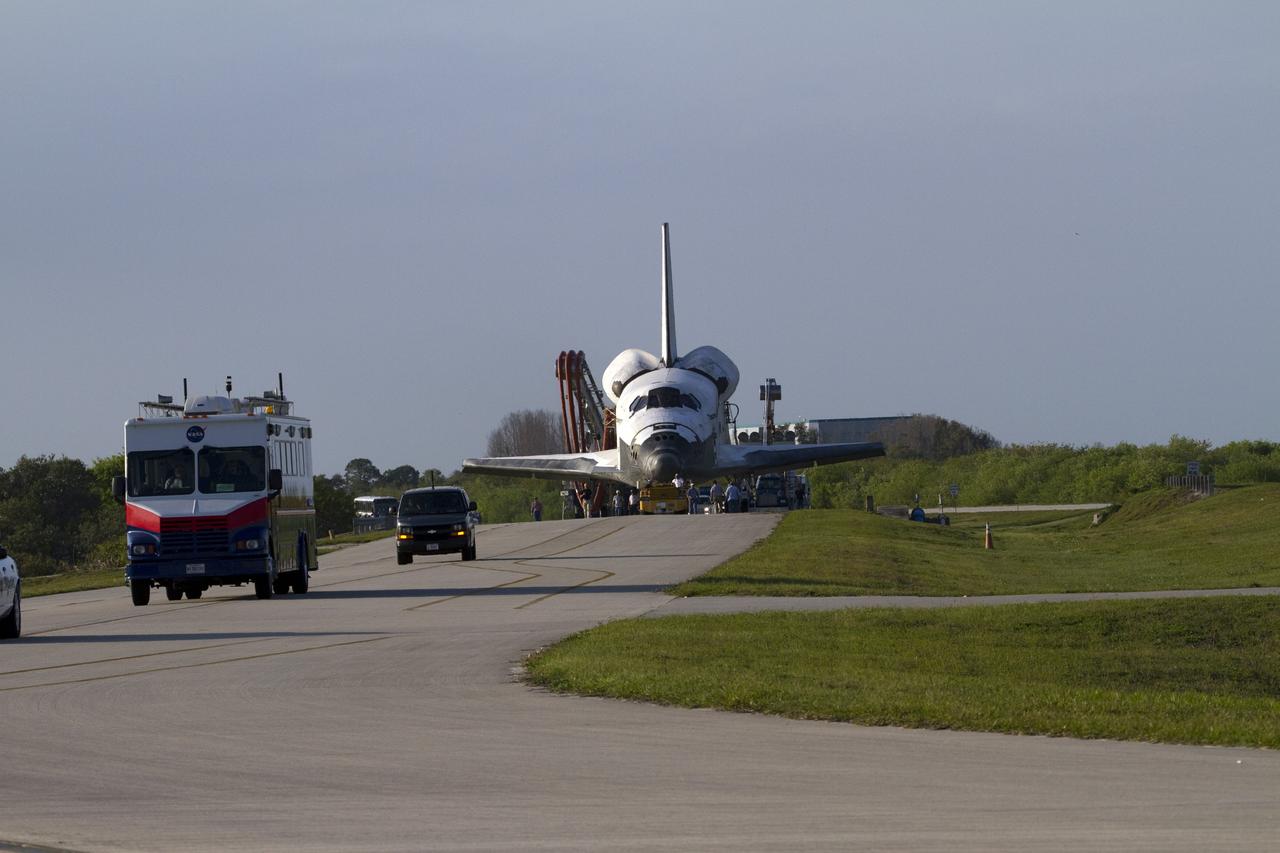
CAPE CANAVERAL, Fla. - The Convoy Command Vehicle leads space shuttle Discovery and the landing convoy along the towway from the Shuttle Landing Facility to Orbiter Processing Facility-2 at NASA's Kennedy Space Center in Florida. Discovery touched down on Runway 15 at 11:57 a.m., bringing an end to its 39th and final spaceflight mission, STS-133. Discovery and its six-member STS-133 crew delivered the Permanent Multipurpose Module, packed with supplies and critical spare parts, as well as Robonaut 2, the dexterous humanoid astronaut helper, to the International Space Station. Inside the processing facility, Discovery will be prepared for future public display. Photo credit: NASA/Jack Pfaller
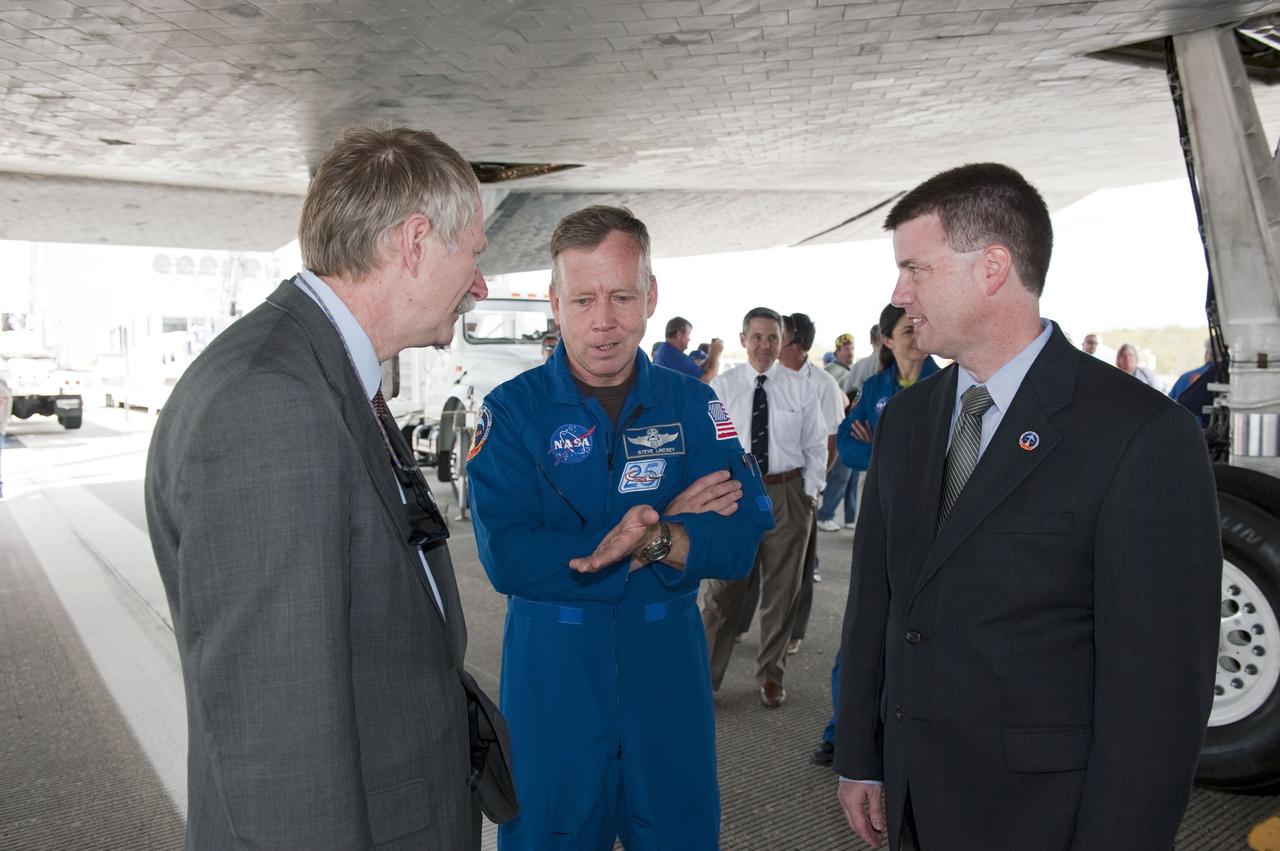
STS133-S-150 (9 March 2011) --- Associate Administrator for Space Operations Bill Gerstenmaier, left, astronaut Steve Lindsey, STS-133 commander, and Space Shuttle Launch Integration Manager Mike Moses talk about Lindsey's recent 13-day, 5.3-million-mile mission to the International Space Station aboard space shuttle Discovery. The STS-133 crew landed at 11:57 a.m. (EST) on March 9, 2011, on the Shuttle Landing Facility's Runway 15 at NASA's Kennedy Space Center in Florida. STS-133 delivered the Permanent Multipurpose Module, packed with supplies and critical spare parts, as well as Robonaut 2, the dexterous humanoid astronaut helper, to the orbiting outpost. STS-133 was Discovery's 39th and final mission. This was the 133rd Space Shuttle Program mission and the 35th shuttle voyage to the space station. Photo credit: NASA or National Aeronautics and Space Administration
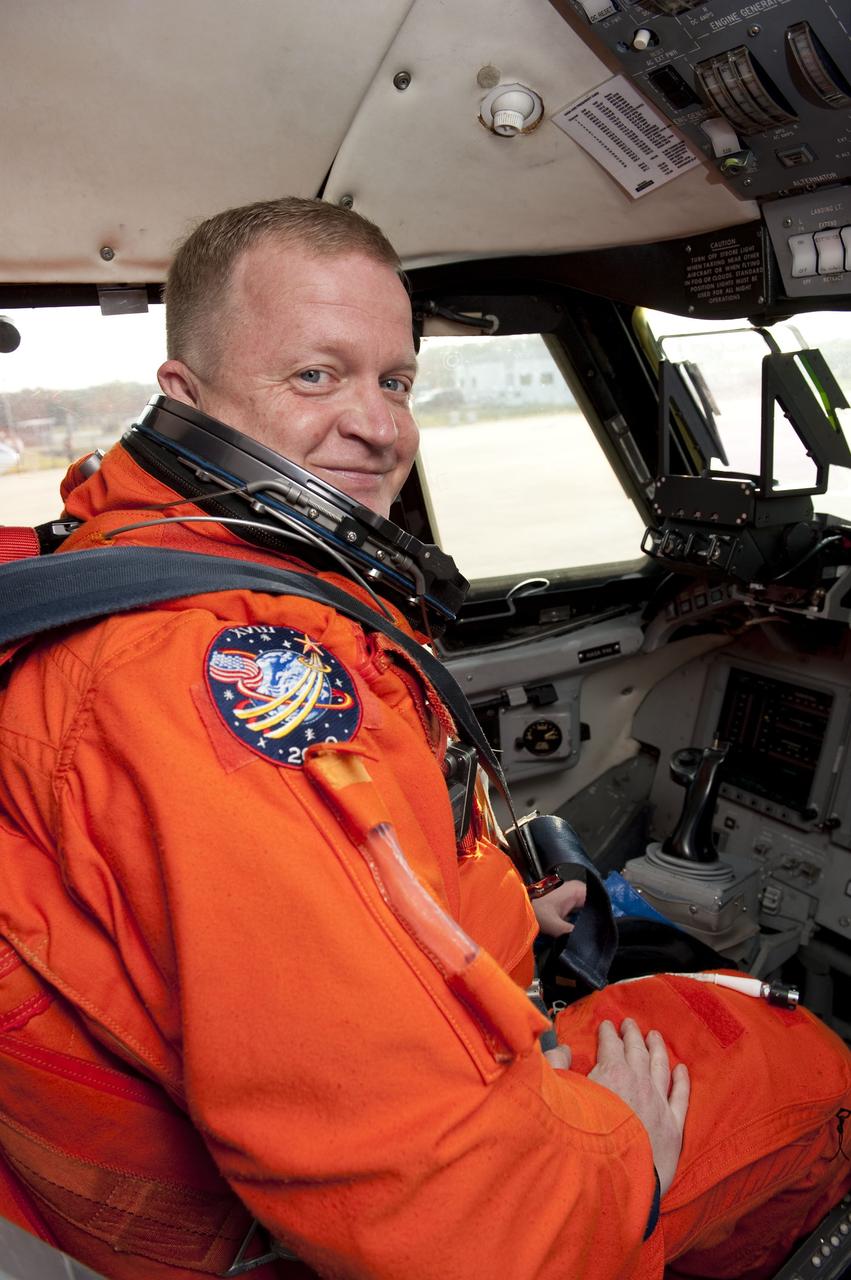
CAPE CANAVERAL, Fla. -- STS-133 Pilot Eric Boe prepares to perform touch-and-go landings aboard a Shuttle Training Aircraft (STA) on the Shuttle Landing Facility runway at NASA's Kennedy Space Center in Florida. An STA is a Gulfstream II business jet that is modified to mimic the shuttle's handling during the final phase of landing. Boe and STS-133 Commander Steve Lindsey will practice landings as part of standard training before space shuttle Discovery's launch to the International Space Station. Scheduled to lift off Feb. 24 at 4:50 p.m. EST, Discovery and its six-member crew will deliver the Permanent Multipurpose Module, packed with supplies and critical spare parts, as well as Robonaut 2, the dexterous humanoid astronaut helper, to the orbiting outpost. For more information on the STS-133 mission, visit www.nasa.gov/mission_pages/shuttle/shuttlemissions/sts133/. Photo credit: NASA/Kim Shiflett
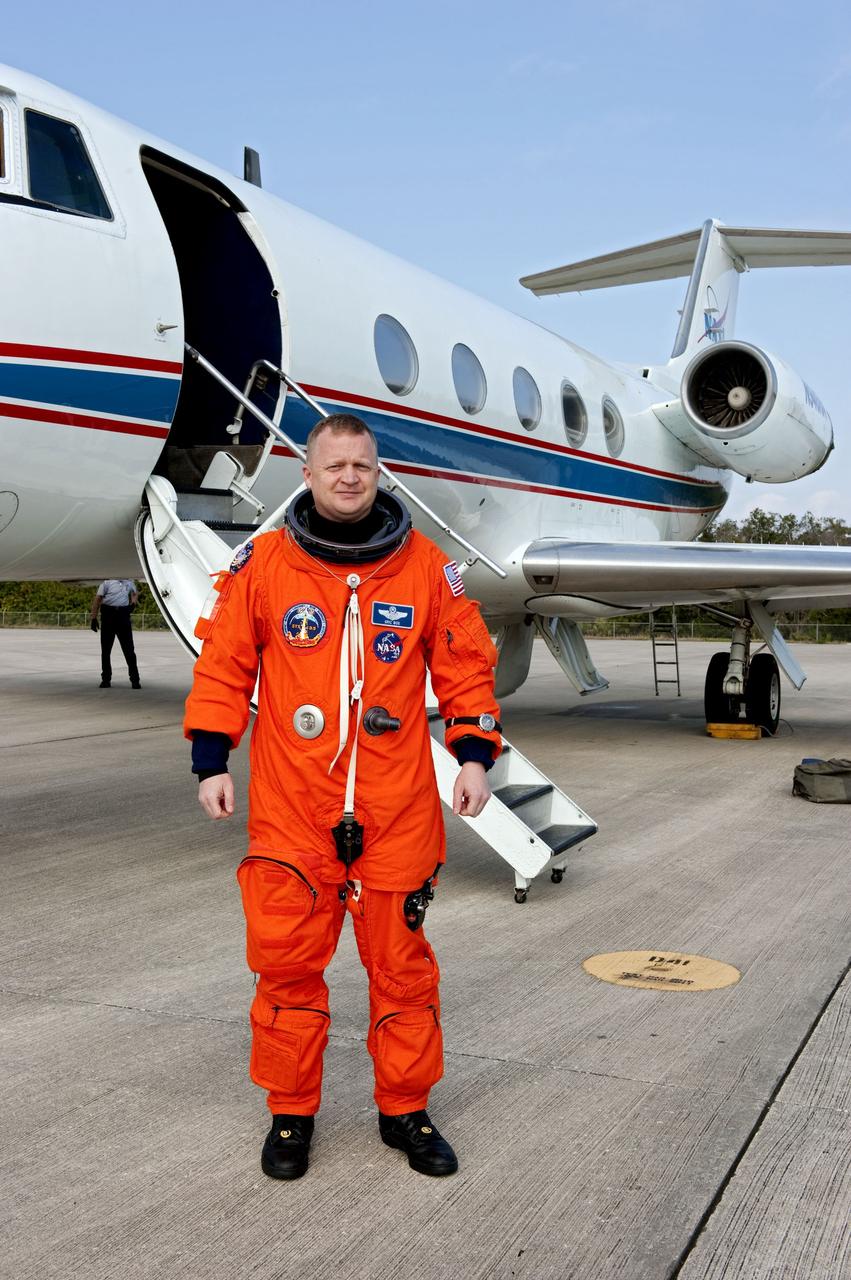
CAPE CANAVERAL, Fla. -- STS-133 Pilot Eric Boe takes a break on the Shuttle Landing Facility runway from performing touch-and-go landings in a Shuttle Training Aircraft (STA) at NASA's Kennedy Space Center in Florida. Boe and STS-133 Commander Steve Lindsey flew two Gulfstream II business jets that are modified to mimic the shuttle's handling during the final phase of landing. Practice landings are part of standard training before space shuttle Discovery's launch to the International Space Station. Scheduled to lift off Feb. 24 at 4:50 p.m. EST, Discovery and its six-member crew will deliver the Permanent Multipurpose Module, packed with supplies and critical spare parts, as well as Robonaut 2, the dexterous humanoid astronaut helper, to the orbiting outpost. For more information on the STS-133 mission, visit www.nasa.gov/mission_pages/shuttle/shuttlemissions/sts133/. Photo credit: NASA/Kim Shiflett
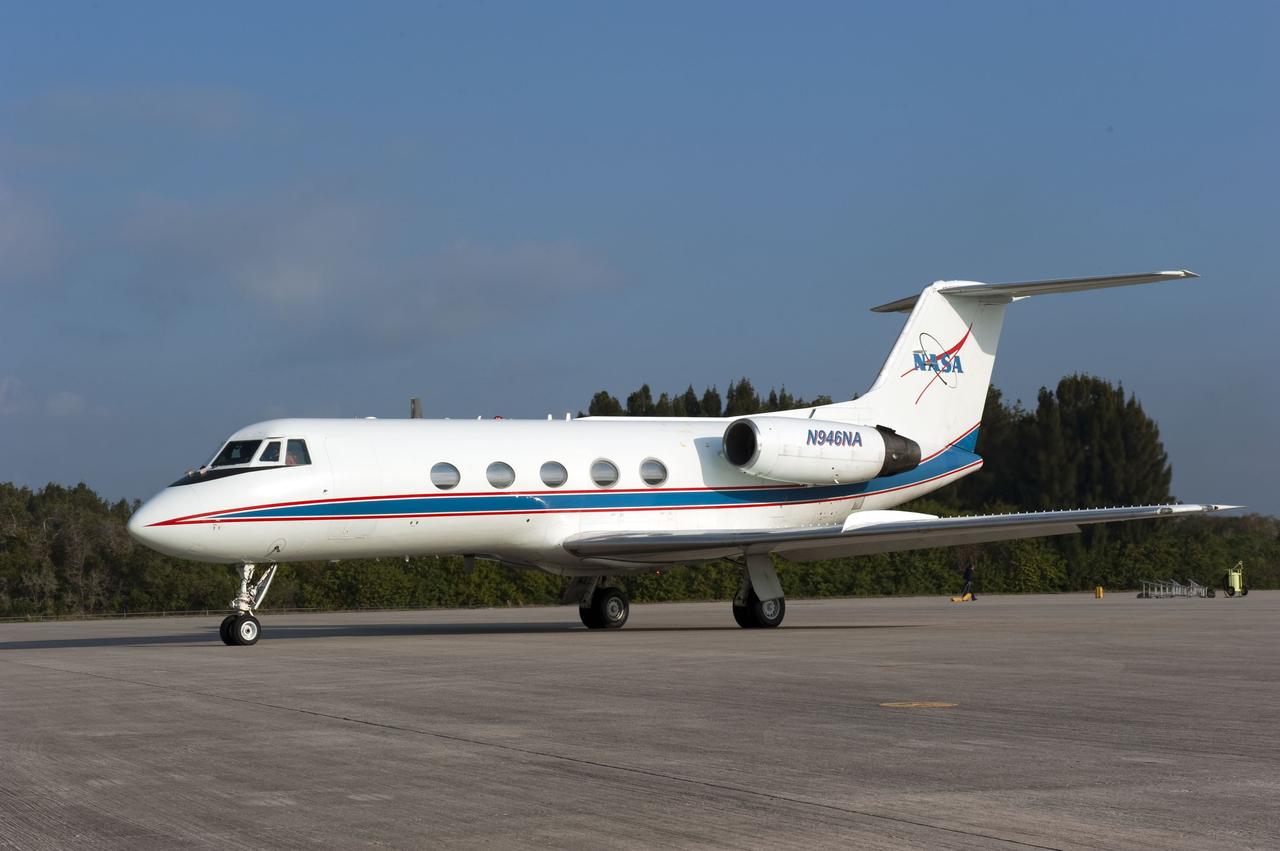
CAPE CANAVERAL, Fla. -- STS-133 Pilot Eric Boe is ready to take off and perform touch-and-go landings aboard a Shuttle Training Aircraft (STA) on the Shuttle Landing Facility runway at NASA's Kennedy Space Center in Florida. An STA is a Gulfstream II business jet that is modified to mimic the shuttle's handling during the final phase of landing. Boe and STS-133 Commander Steve Lindsey will practice landings as part of standard training before space shuttle Discovery's launch to the International Space Station. Scheduled to lift off Feb. 24 at 4:50 p.m. EST, Discovery and its six-member crew will deliver the Permanent Multipurpose Module, packed with supplies and critical spare parts, as well as Robonaut 2, the dexterous humanoid astronaut helper, to the orbiting outpost. For more information on the STS-133 mission, visit www.nasa.gov/mission_pages/shuttle/shuttlemissions/sts133/. Photo credit: NASA/Kim Shiflett
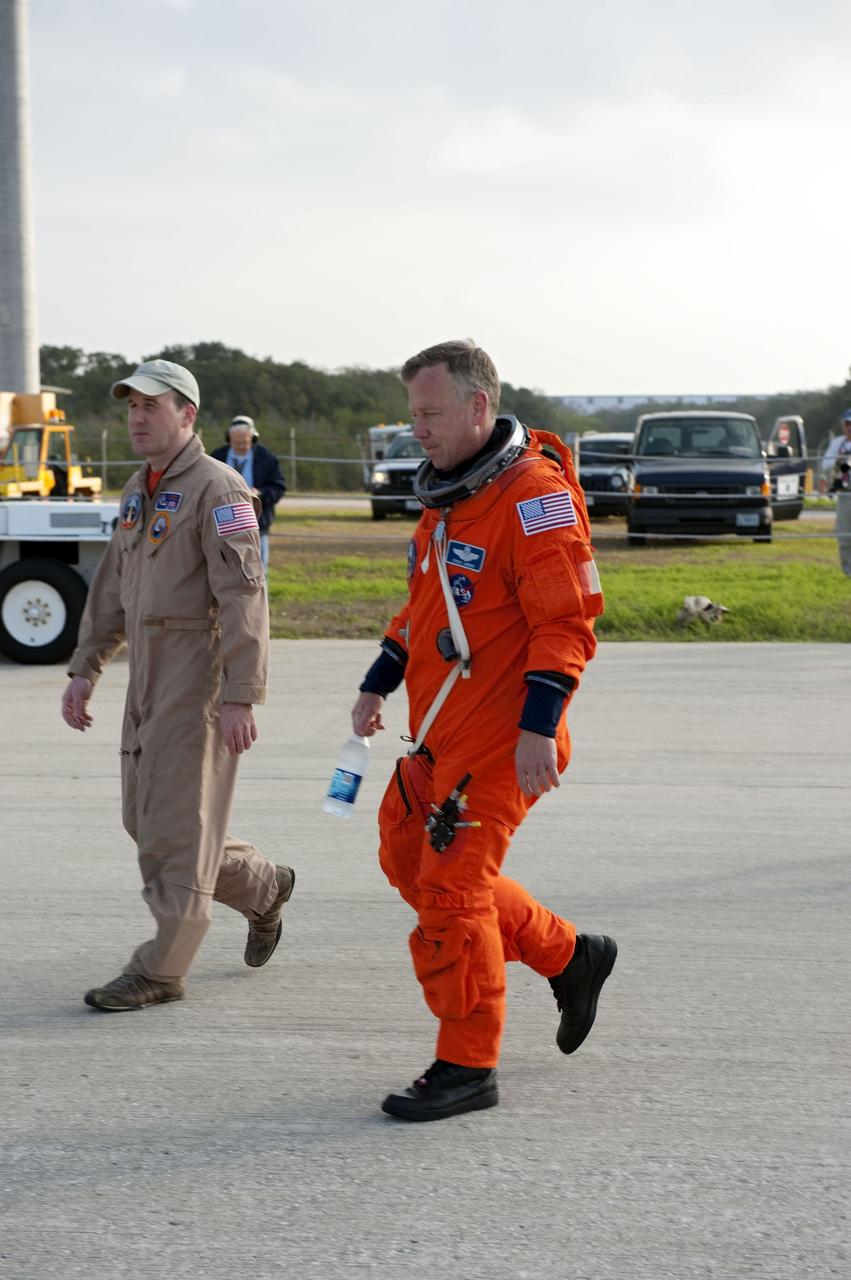
CAPE CANAVERAL, Fla. -- STS-133 Commander Steve Lindsey, right, arrives on the Shuttle Landing Facility runway at NASA's Kennedy Space Center in Florida to perform touch-and-go landings aboard a Shuttle Training Aircraft (STA). An STA is a Gulfstream II business jet that is modified to mimic the shuttle's handling during the final phase of landing. Lindsey and STS-133 Pilot Eric Boe will practice landings as part of standard training before space shuttle Discovery's launch to the International Space Station. Scheduled to lift off Feb. 24 at 4:50 p.m. EST, Discovery and its six-member crew will deliver the Permanent Multipurpose Module, packed with supplies and critical spare parts, as well as Robonaut 2, the dexterous humanoid astronaut helper, to the orbiting outpost. For more information on the STS-133 mission, visit www.nasa.gov/mission_pages/shuttle/shuttlemissions/sts133/. Photo credit: NASA/Kim Shiflett
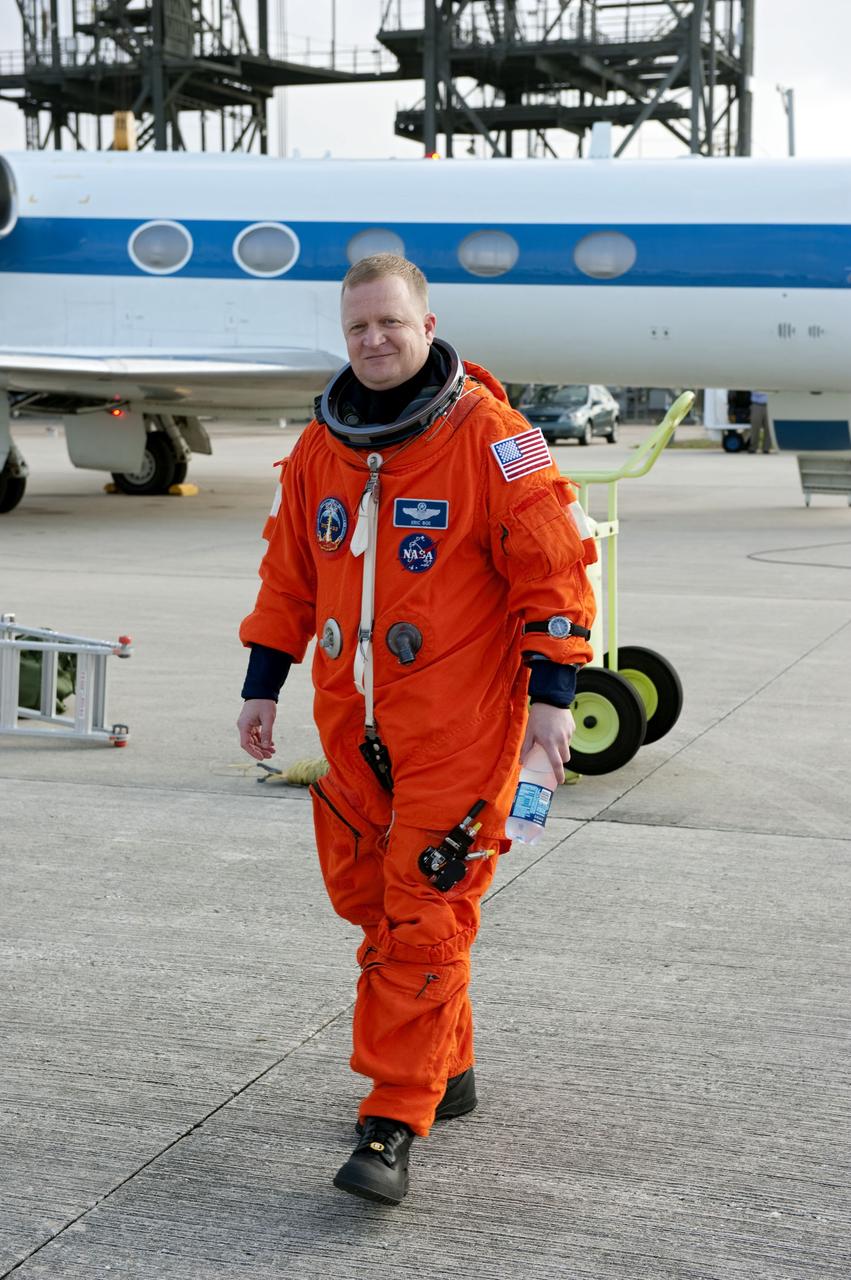
CAPE CANAVERAL, Fla. -- STS-133 Pilot Eric Boe prepares to perform touch-and-go landings aboard a Shuttle Training Aircraft (STA) on the Shuttle Landing Facility runway at NASA's Kennedy Space Center in Florida. An STA is a Gulfstream II business jet that is modified to mimic the shuttle's handling during the final phase of landing. Boe and STS-133 Commander Steve Lindsey will practice landings as part of standard training before space shuttle Discovery's launch to the International Space Station. Scheduled to lift off Feb. 24 at 4:50 p.m. EST, Discovery and its six-member crew will deliver the Permanent Multipurpose Module, packed with supplies and critical spare parts, as well as Robonaut 2, the dexterous humanoid astronaut helper, to the orbiting outpost. For more information on the STS-133 mission, visit www.nasa.gov/mission_pages/shuttle/shuttlemissions/sts133/. Photo credit: NASA/Kim Shiflett
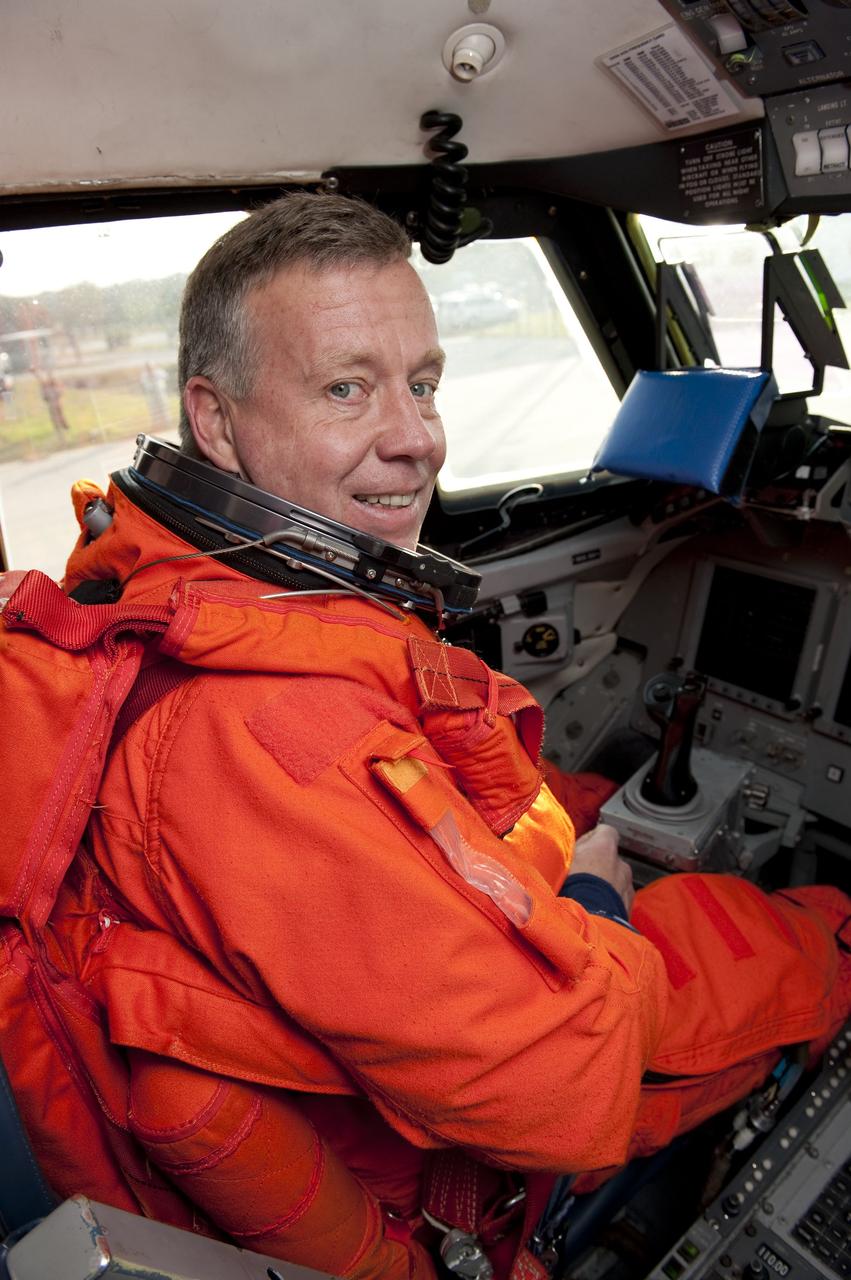
CAPE CANAVERAL, Fla. -- STS-133 Commander Steve Lindsey prepares to perform touch-and-go landings aboard a Shuttle Training Aircraft (STA) on the Shuttle Landing Facility runway at NASA's Kennedy Space Center in Florida. An STA is a Gulfstream II business jet that is modified to mimic the shuttle's handling during the final phase of landing. Lindsey and STS-133 Pilot Eric Boe will practice landings as part of standard training before space shuttle Discovery's launch to the International Space Station. Scheduled to lift off Feb. 24 at 4:50 p.m. EST, Discovery and its six-member crew will deliver the Permanent Multipurpose Module, packed with supplies and critical spare parts, as well as Robonaut 2, the dexterous humanoid astronaut helper, to the orbiting outpost. For more information on the STS-133 mission, visit www.nasa.gov/mission_pages/shuttle/shuttlemissions/sts133/. Photo credit: NASA/Kim Shiflett

CAPE CANAVERAL, Fla. -- STS-133 Pilot Eric Boe is ready to take off and perform touch-and-go landings aboard a Shuttle Training Aircraft (STA) on the Shuttle Landing Facility runway at NASA's Kennedy Space Center in Florida. An STA is a Gulfstream II business jet that is modified to mimic the shuttle's handling during the final phase of landing. Boe and STS-133 Commander Steve Lindsey will practice landings as part of standard training before space shuttle Discovery's launch to the International Space Station. Scheduled to lift off Feb. 24 at 4:50 p.m. EST, Discovery and its six-member crew will deliver the Permanent Multipurpose Module, packed with supplies and critical spare parts, as well as Robonaut 2, the dexterous humanoid astronaut helper, to the orbiting outpost. For more information on the STS-133 mission, visit www.nasa.gov/mission_pages/shuttle/shuttlemissions/sts133/. Photo credit: NASA/Kim Shiflett
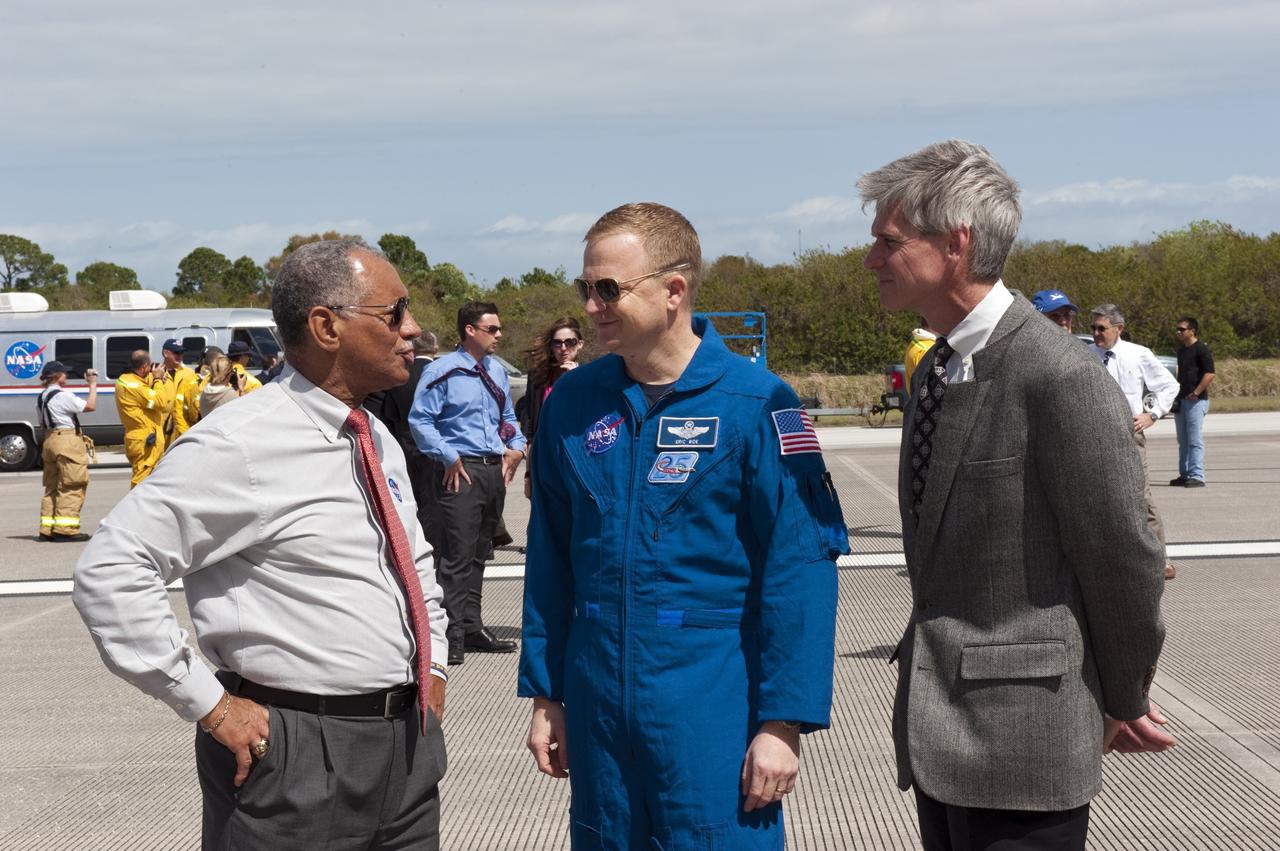
CAPE CANAVERAL, Fla. -- NASA Administrator Charlie Bolden, left, STS-133 Pilot Eric Boe and STS-133 Flight Director Bryan Lunney talk about the recent 13-day, 5.3-million-mile mission to the International Space Station aboard space shuttle Discovery. The STS-133 crew returned to Earth at 11:57 a.m. on the Shuttle Landing Facility's Runway 15 at NASA's Kennedy Space Center in Florida. STS-133 delivered the Permanent Multipurpose Module, packed with supplies and critical spare parts, as well as Robonaut 2, the dexterous humanoid astronaut helper, to the orbiting outpost. STS-133 was Discovery's 39th and final mission. This was the 133rd Space Shuttle Program mission and the 35th shuttle voyage to the space station. Photo credit: NASA/Kim Shiflett
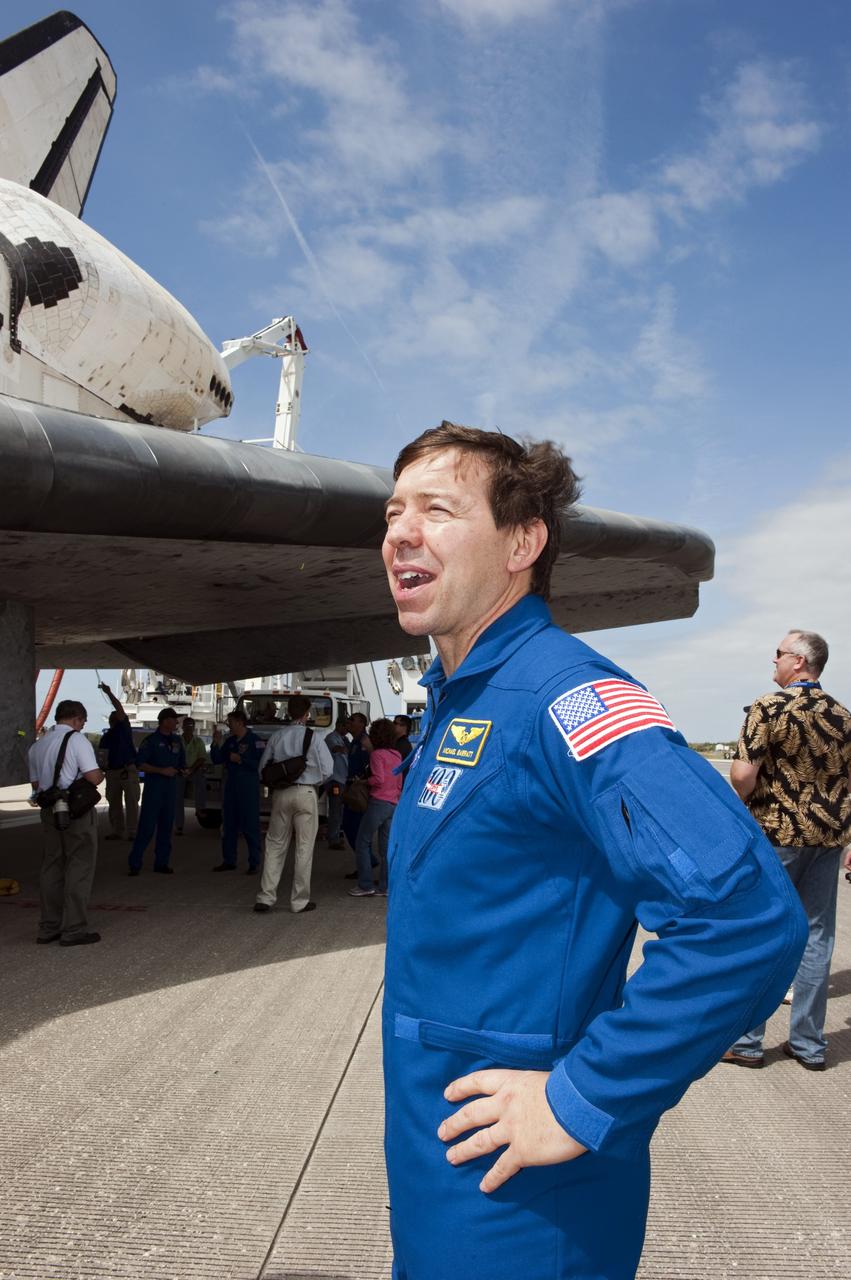
CAPE CANAVERAL, Fla. -- STS-133 Mission Specialist Michael Barratt admires space shuttle Discovery on the Shuttle Landing Facility's Runway 15 at NASA's Kennedy Space Center in Florida. Barratt and his crewmates returned from a 13-day, 5.3-million-mile mission to the International Space Station at 11:57 a.m. EST. STS-133 delivered the Permanent Multipurpose Module, packed with supplies and critical spare parts, as well as Robonaut 2, the dexterous humanoid astronaut helper, to the orbiting outpost. STS-133 was Discovery's 39th and final mission. This was the 133rd Space Shuttle Program mission and the 35th shuttle voyage to the space station. Photo credit: NASA/Kim Shiflett
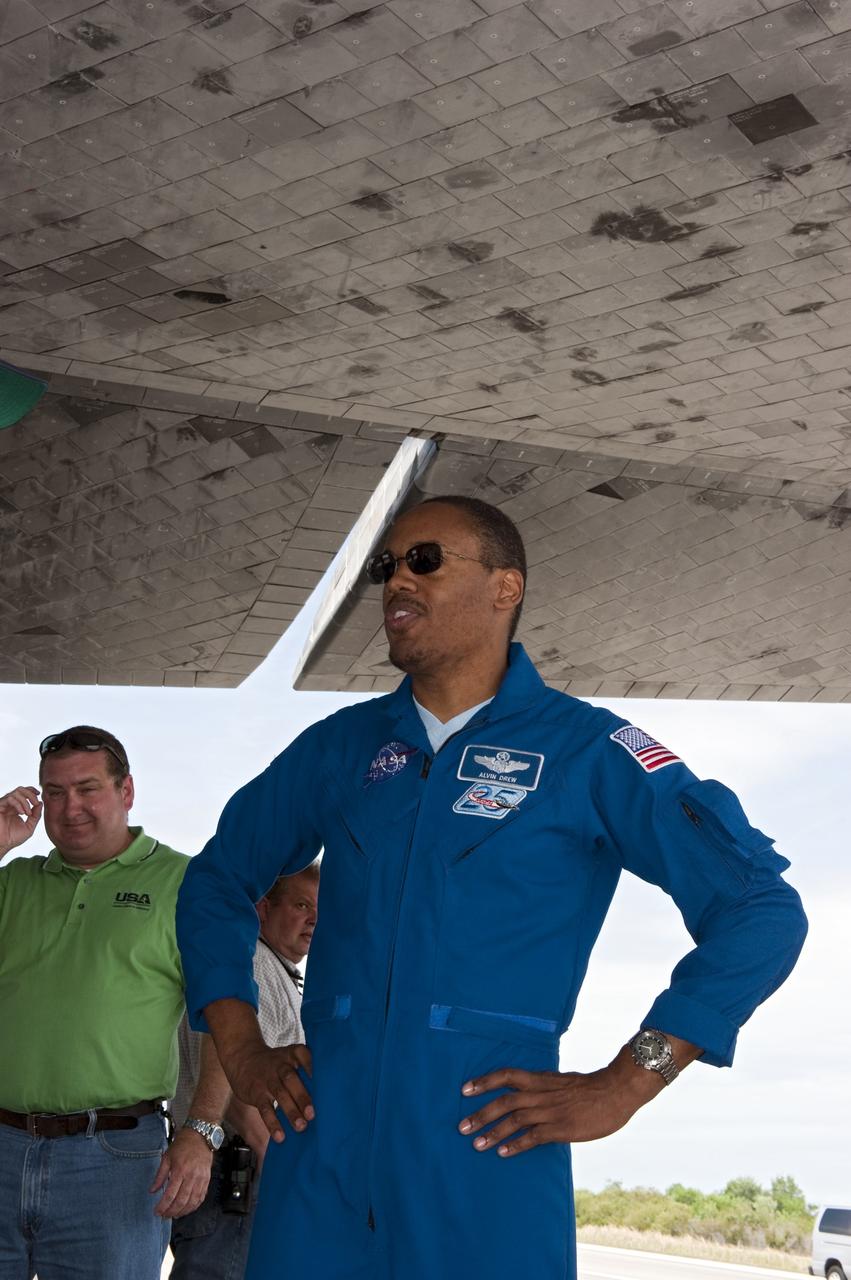
CAPE CANAVERAL, Fla. -- STS-133 Mission Specialist Alvin Drew admires space shuttle Discovery on the Shuttle Landing Facility's Runway 15 at NASA's Kennedy Space Center in Florida. Drew and his crewmates returned from a 13-day, 5.3-million-mile mission to the International Space Station at 11:57 a.m. EST. STS-133 delivered the Permanent Multipurpose Module, packed with supplies and critical spare parts, as well as Robonaut 2, the dexterous humanoid astronaut helper, to the orbiting outpost. STS-133 was Discovery's 39th and final mission. This was the 133rd Space Shuttle Program mission and the 35th shuttle voyage to the space station. Photo credit: NASA/Kim Shiflett
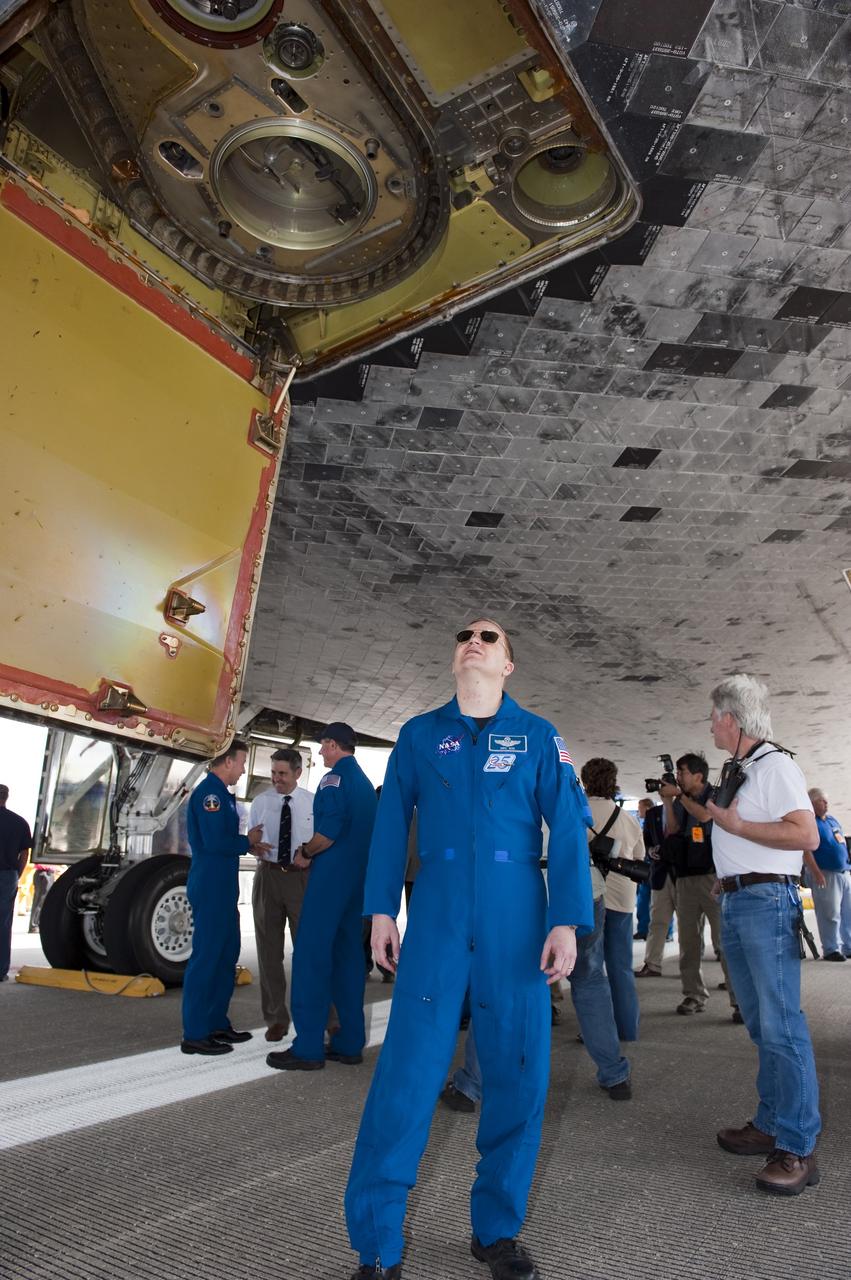
CAPE CANAVERAL, Fla. -- STS-133 Pilot Eric Boe admires space shuttle Discovery on the Shuttle Landing Facility's Runway 15 at NASA's Kennedy Space Center in Florida. Boe and his crewmates returned from a 13-day, 5.3-million-mile mission to the International Space Station at 11:57 a.m. EST. STS-133 delivered the Permanent Multipurpose Module, packed with supplies and critical spare parts, as well as Robonaut 2, the dexterous humanoid astronaut helper, to the orbiting outpost. STS-133 was Discovery's 39th and final mission. This was the 133rd Space Shuttle Program mission and the 35th shuttle voyage to the space station. Photo credit: NASA/Kim Shiflett
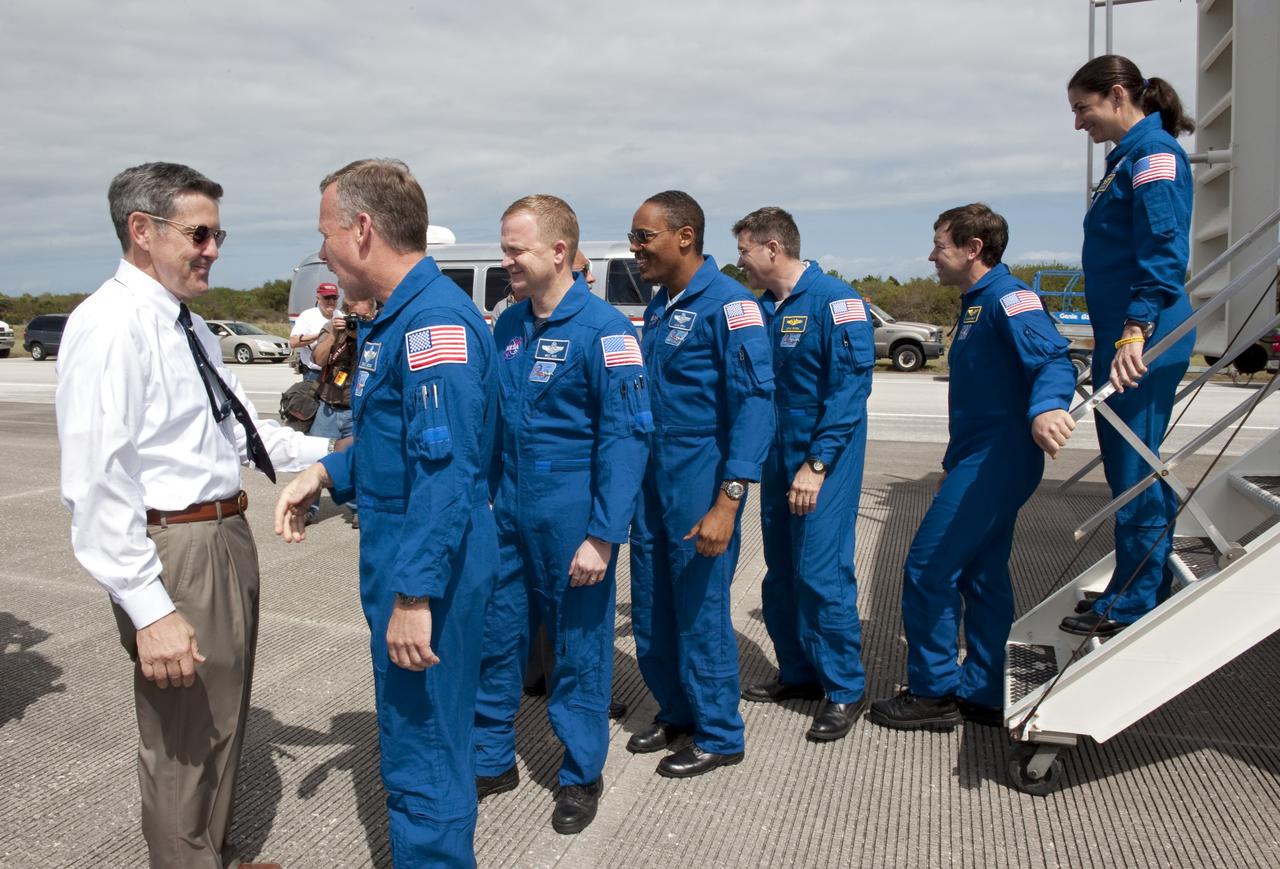
CAPE CANAVERAL, Fla. -- Bob Cabana, director of NASA's Kennedy Space Center in Florida, greets the STS-133 crew members as they exit the crew transport vehicle after landing aboard space shuttle Discovery. Leading the crew is Commander Steve Lindsey, followed by Pilot Eric Boe, and Mission Specialists Alvin Drew, Steve Bowen, Michael Barratt and Nicole Stott. Touchdown on the Shuttle Landing Facility's Runway 15 was at 11:57 a.m. EST, bringing an end to the 13-day STS-133 mission to the International Space Station. Discovery and its six-member crew delivered the Permanent Multipurpose Module, packed with supplies and critical spare parts, as well as Robonaut 2, the dexterous humanoid astronaut helper, to the orbiting outpost. STS-133 was Discovery's 39th and final mission. This was the 133rd Space Shuttle Program mission and the 35th shuttle voyage to the space station. Photo credit: NASA/Kim Shiflett
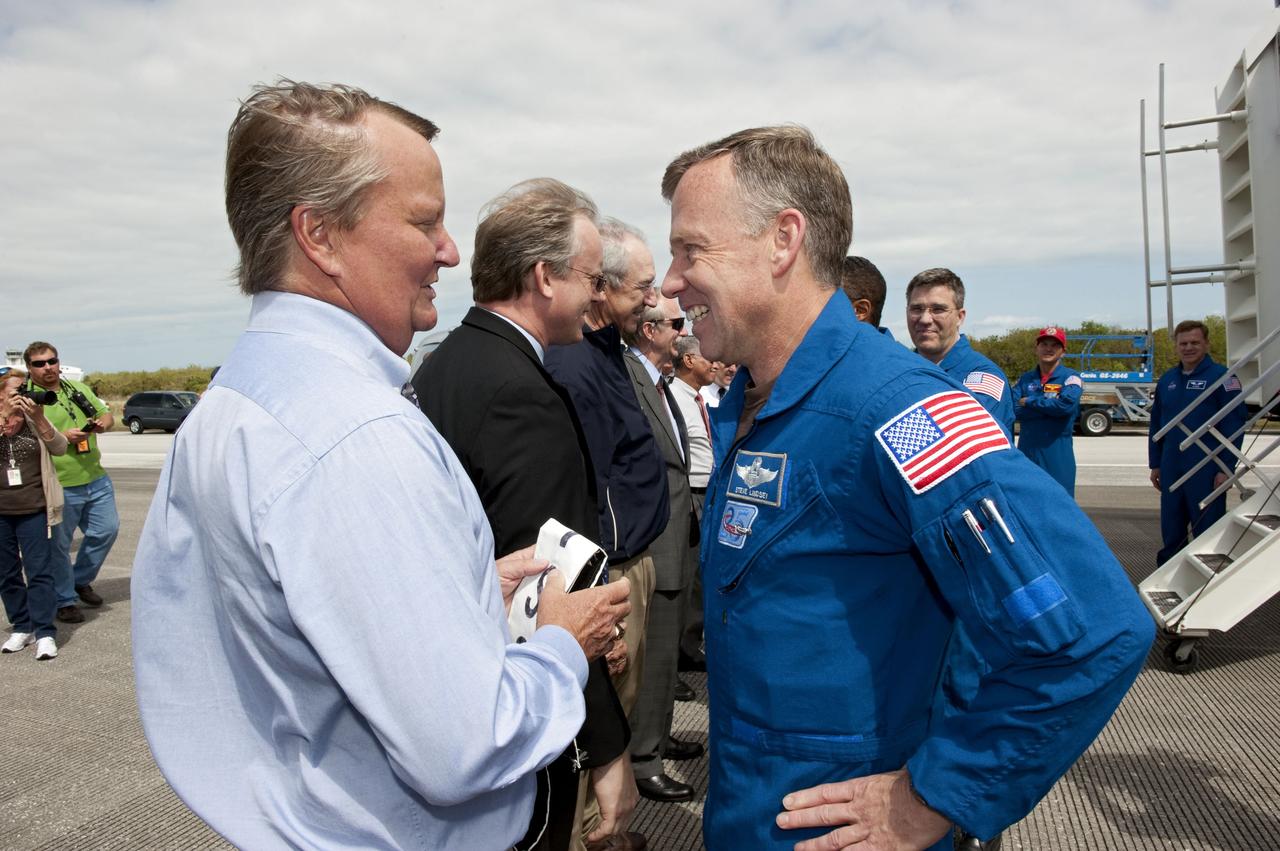
STS133-S-141 (9 March 2011) --- NASA managers welcome space shuttle Discovery's STS-133 crew members home to Kennedy Space Center in Florida. In the foreground, Shuttle Launch Director Mike Leinbach congratulates astronaut Steve Lindsey, commander, on a successful mission. Discovery and its six-member crew landed on the Shuttle Landing Facility's Runway 15 at 11:57 a.m. (EST) on March 9, 2011, bringing an end to the 13-day, 5.3-million-mile mission to the International Space Station. STS-133 delivered the Permanent Multipurpose Module, packed with supplies and critical spare parts, as well as Robonaut 2, the dexterous humanoid astronaut helper, to the orbiting outpost. STS-133 was Discovery's 39th and final mission. This was the 133rd Space Shuttle Program mission and the 35th shuttle voyage to the space station. Photo credit: NASA or National Aeronautics and Space Administration
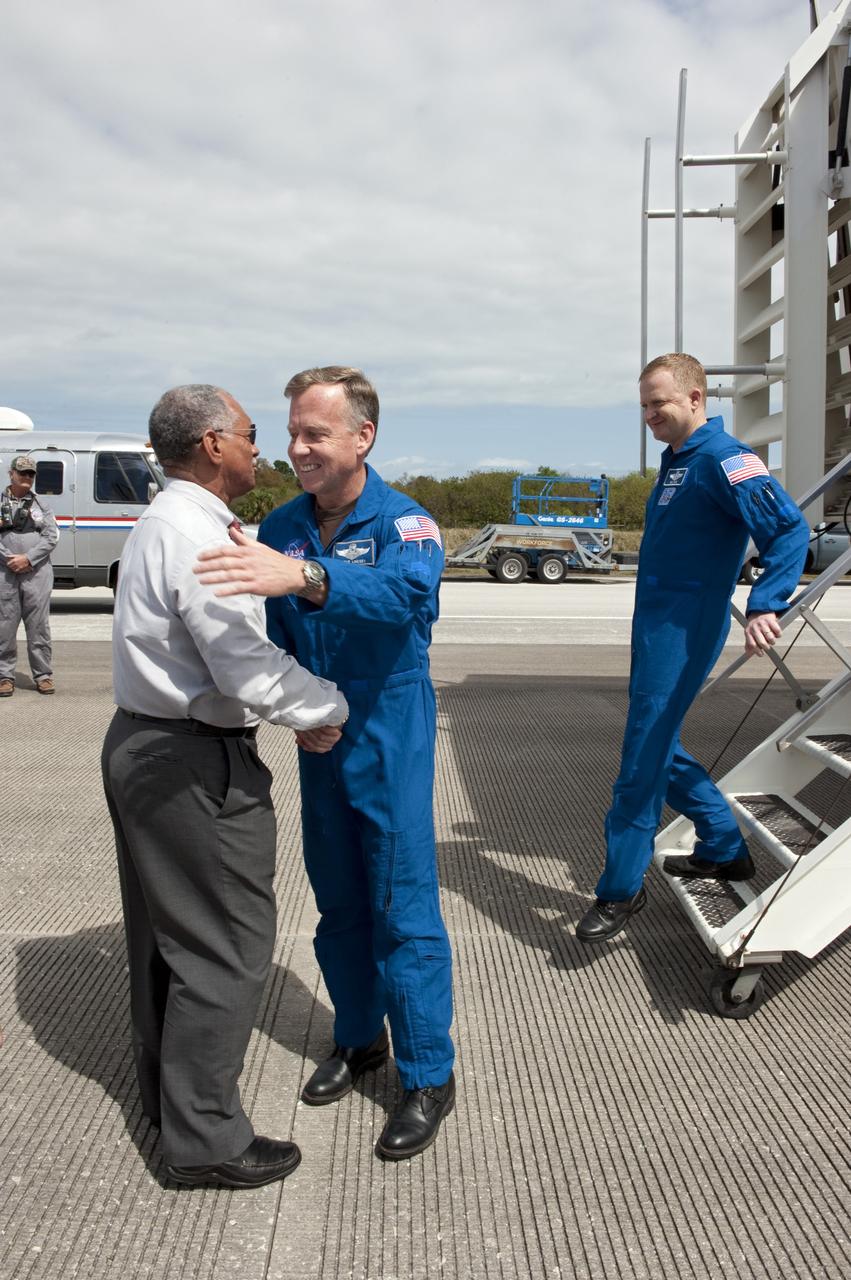
CAPE CANAVERAL, Fla. -- NASA Administrator Charlie Bolden begins to greet the STS-133 crew members as they exit the crew transport vehicle after landing at NASA's Kennedy Space Center in Florida aboard space shuttle Discovery. Leading the crew is Commander Steve Lindsey, followed by Pilot Eric Boe. Touchdown on the Shuttle Landing Facility's Runway 15 was at 11:57 a.m. EST, bringing an end to the 13-day STS-133 mission to the International Space Station. Discovery and its six-member crew delivered the Permanent Multipurpose Module, packed with supplies and critical spare parts, as well as Robonaut 2, the dexterous humanoid astronaut helper, to the orbiting outpost. STS-133 was Discovery's 39th and final mission. This was the 133rd Space Shuttle Program mission and the 35th shuttle voyage to the space station. Photo credit: NASA/Kim Shiflett
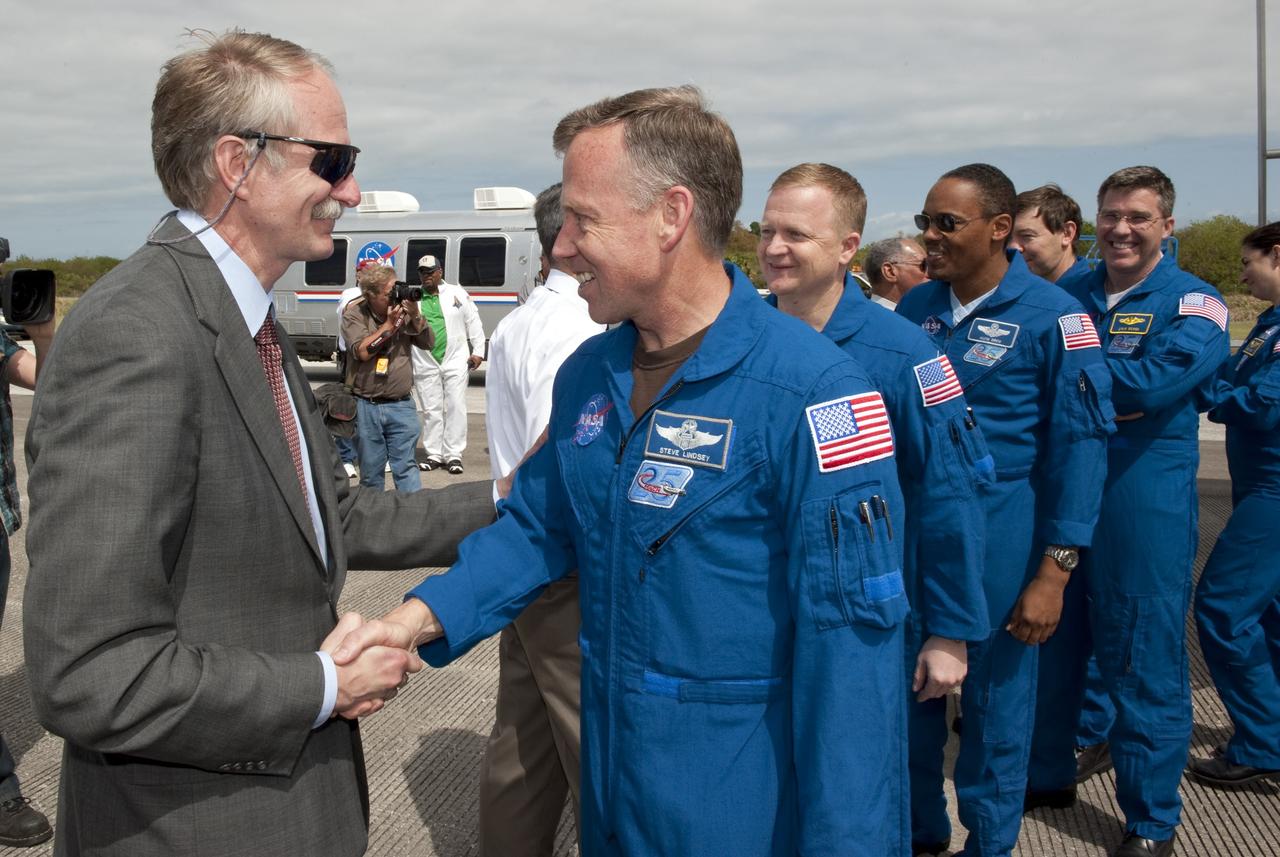
CAPE CANAVERAL, Fla. -- Bill Gerstenmaier, associate administrator for Space Operations, greets the STS-133 crew members as they exit the crew transport vehicle after landing at NASA's Kennedy Space Center in Florida aboard space shuttle Discovery. Leading the crew is Commander Steve Lindsey, followed by Pilot Eric Boe, and Mission Specialists Alvin Drew, Steve Bowen, Michael Barratt and Nicole Stott. Touchdown on the Shuttle Landing Facility's Runway 15 was at 11:57 a.m. EST, bringing an end to the 13-day STS-133 mission to the International Space Station. Discovery and its six-member crew delivered the Permanent Multipurpose Module, packed with supplies and critical spare parts, as well as Robonaut 2, the dexterous humanoid astronaut helper, to the orbiting outpost. STS-133 was Discovery's 39th and final mission. This was the 133rd Space Shuttle Program mission and the 35th shuttle voyage to the space station. Photo credit: NASA/Kim Shiflett
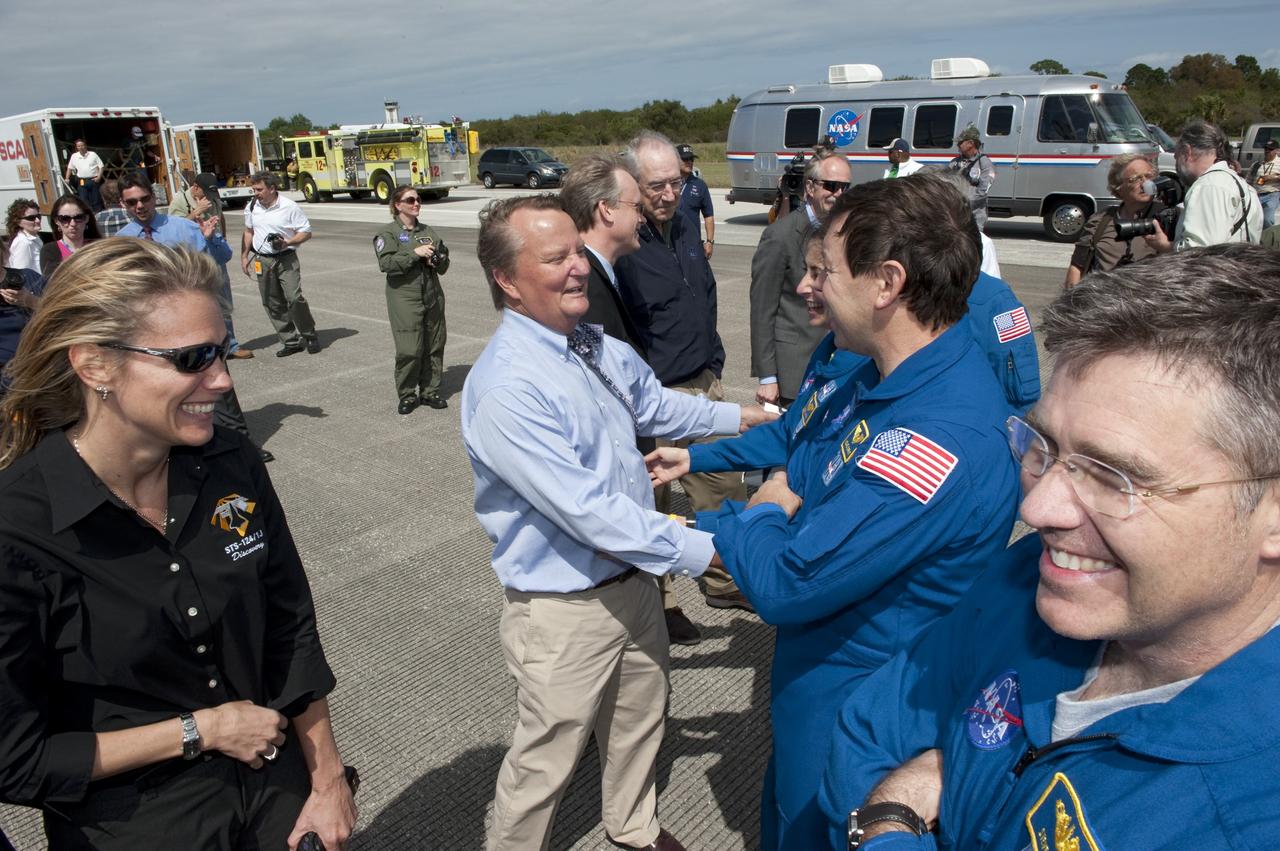
CAPE CANAVERAL, Fla. -- NASA managers welcome space shuttle Discovery's STS-133 crew members home to Kennedy Space Center in Florida. Discovery and its six-member crew landed on the Shuttle Landing Facility's Runway 15 at 11:57 a.m. EST, bringing an end to the 13-day, 5.3-million-mile mission to the International Space Station. STS-133 delivered the Permanent Multipurpose Module, packed with supplies and critical spare parts, as well as Robonaut 2, the dexterous humanoid astronaut helper, to the orbiting outpost. STS-133 was Discovery's 39th and final mission. This was the 133rd Space Shuttle Program mission and the 35th shuttle voyage to the space station. Photo credit: NASA/Kim Shiflett
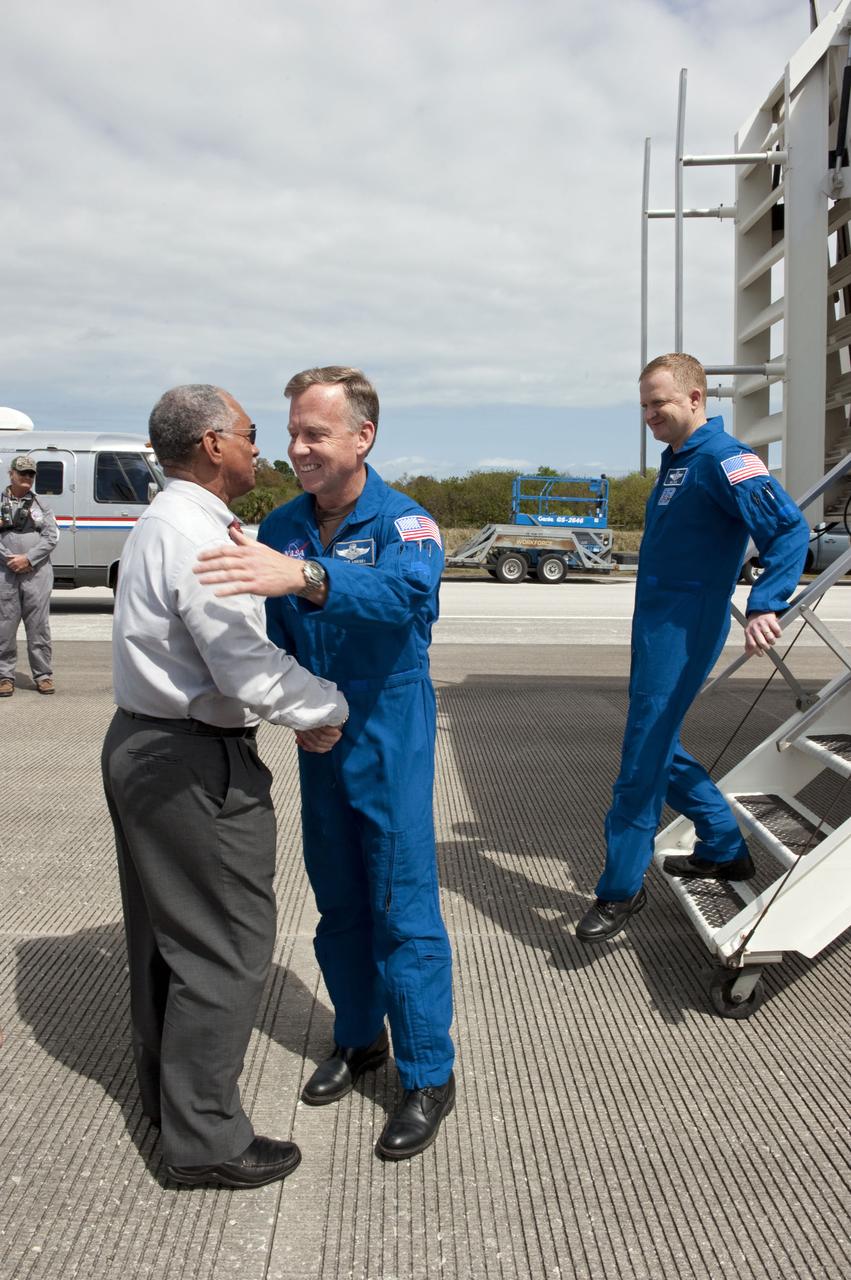
STS133-S-136 (9 March 2011) --- NASA Administrator Charlie Bolden begins to greet the STS-133 crew members as they exit the crew transport vehicle after landing at NASA's Kennedy Space Center in Florida aboard space shuttle Discovery. Leading the crew is astronaut Steve Lindsey, commander; followed by astronaut Eric Boe, pilot. Touchdown on the Shuttle Landing Facility's Runway 15 was at 11:57 a.m. (EST) on March 9, 2011, bringing an end to the 13-day STS-133 mission to the International Space Station. Discovery and its six-member crew delivered the Permanent Multipurpose Module, packed with supplies and critical spare parts, as well as Robonaut 2, the dexterous humanoid astronaut helper, to the orbiting outpost. STS-133 was Discovery's 39th and final mission. This was the 133rd Space Shuttle Program mission and the 35th shuttle voyage to the space station. Photo credit: NASA or National Aeronautics and Space Administration

CAPE CANAVERAL, Fla. -- Bob Cabana, director of NASA's Kennedy Space Center in Florida, greets the STS-133 crew members as they exit the crew transport vehicle after landing aboard space shuttle Discovery. Leading the crew is Commander Steve Lindsey, followed by Pilot Eric Boe, and Mission Specialists Alvin Drew, Steve Bowen, Michael Barratt and Nicole Stott. Touchdown on the Shuttle Landing Facility's Runway 15 was at 11:57 a.m. EST, bringing an end to the 13-day STS-133 mission to the International Space Station. Discovery and its six-member crew delivered the Permanent Multipurpose Module, packed with supplies and critical spare parts, as well as Robonaut 2, the dexterous humanoid astronaut helper, to the orbiting outpost. STS-133 was Discovery's 39th and final mission. This was the 133rd Space Shuttle Program mission and the 35th shuttle voyage to the space station. Photo credit: NASA/Kim Shiflett
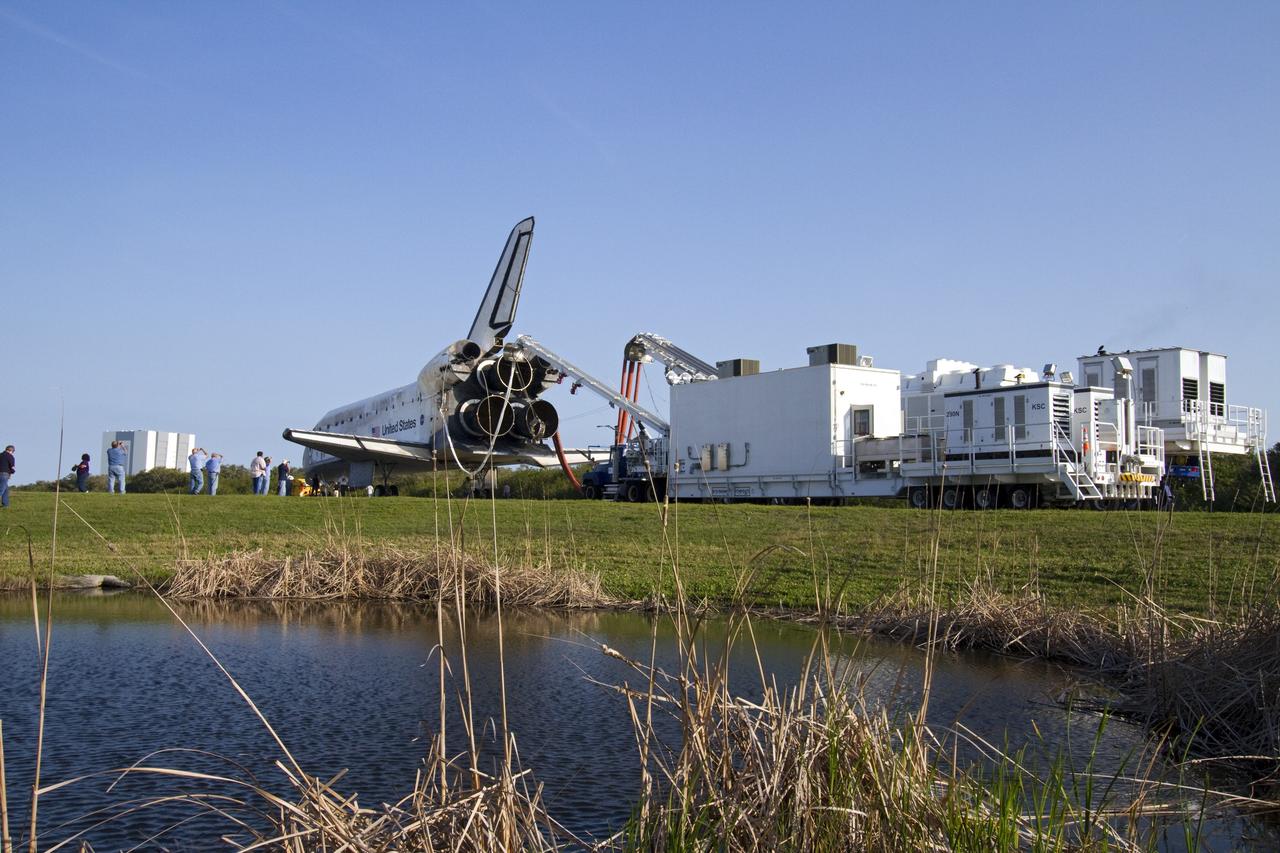
CAPE CANAVERAL, Fla. - Photographers are in position beside the towway to capture space shuttle Discovery and the landing convoy on its slow trip from the Shuttle Landing Facility to Orbiter Processing Facility-2 at NASA's Kennedy Space Center in Florida. A purge unit that pumps conditioned air into a shuttle after landing is connected to Discovery's aft end. In the background at left is the 525-foot-tall Vehicle Assembly Building. Discovery touched down on Runway 15 at 11:57 a.m., bringing an end to its 39th and final spaceflight mission, STS-133. Discovery and its six-member STS-133 crew delivered the Permanent Multipurpose Module, packed with supplies and critical spare parts, as well as Robonaut 2, the dexterous humanoid astronaut helper, to the International Space Station. Inside the processing facility, Discovery will be prepared for future public display. Photo credit: NASA/Jack Pfaller
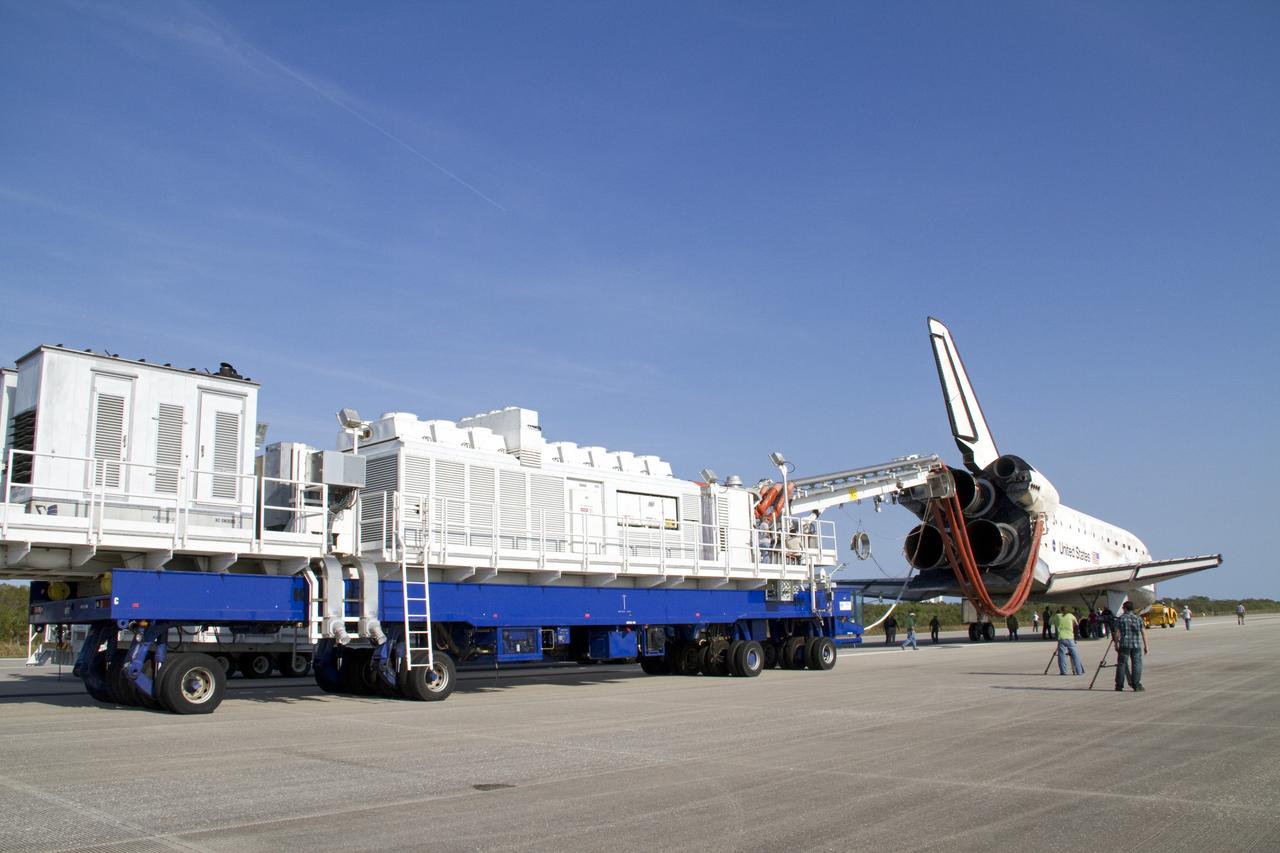
CAPE CANAVERAL, Fla. - The aft end of space shuttle Discovery is connected to a purge unit, one of the vehicles in the landing convoy at NASA's Kennedy Space Center in Florida. A purge unit pumps conditioned air into a shuttle after landing. Preparations are under way to tow Discovery from the Shuttle Landing Facility to Orbiter Processing Facility-2. Discovery touched down on Runway 15 at 11:57 a.m., bringing an end to its 39th and final spaceflight mission, STS-133. Discovery and its six-member STS-133 crew delivered the Permanent Multipurpose Module, packed with supplies and critical spare parts, as well as Robonaut 2, the dexterous humanoid astronaut helper, to the International Space Station. Inside the processing facility, Discovery will be prepared for future public display. Photo credit: NASA/Jack Pfaller
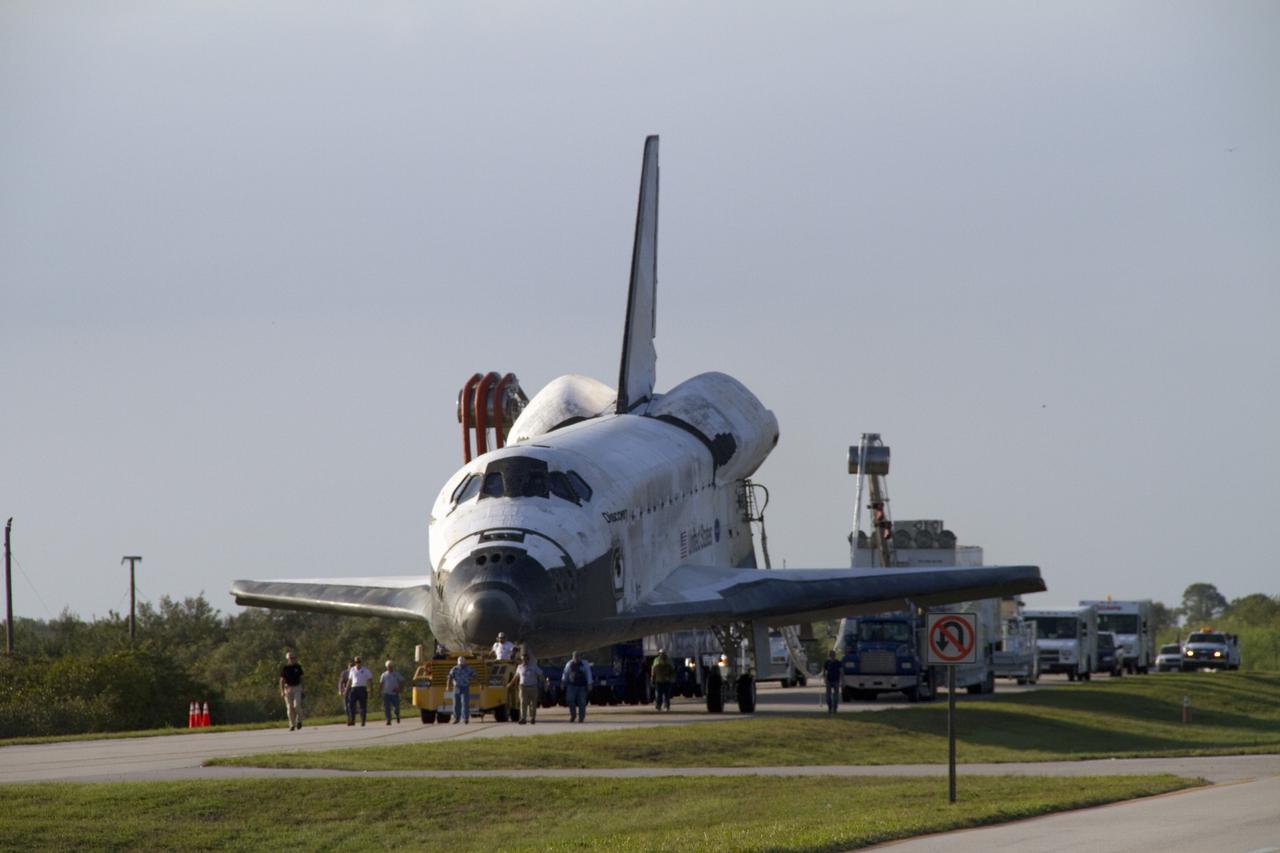
CAPE CANAVERAL, Fla. - Space shuttle Discovery's "towback" vehicle slowly pulls the spacecraft from the Shuttle Landing Facility to Orbiter Processing Facility-2 at NASA's Kennedy Space Center in Florida. A purge unit that pumps conditioned air into a shuttle after landing is connected to Discovery's aft end and additional landing convoy vehicles follow closely behind. Discovery touched down on Runway 15 at 11:57 a.m., bringing an end to its 39th and final spaceflight mission, STS-133. Discovery and its six-member STS-133 crew delivered the Permanent Multipurpose Module, packed with supplies and critical spare parts, as well as Robonaut 2, the dexterous humanoid astronaut helper, to the International Space Station. Inside the processing facility, Discovery will be prepared for future public display. Photo credit: NASA/Jack Pfaller
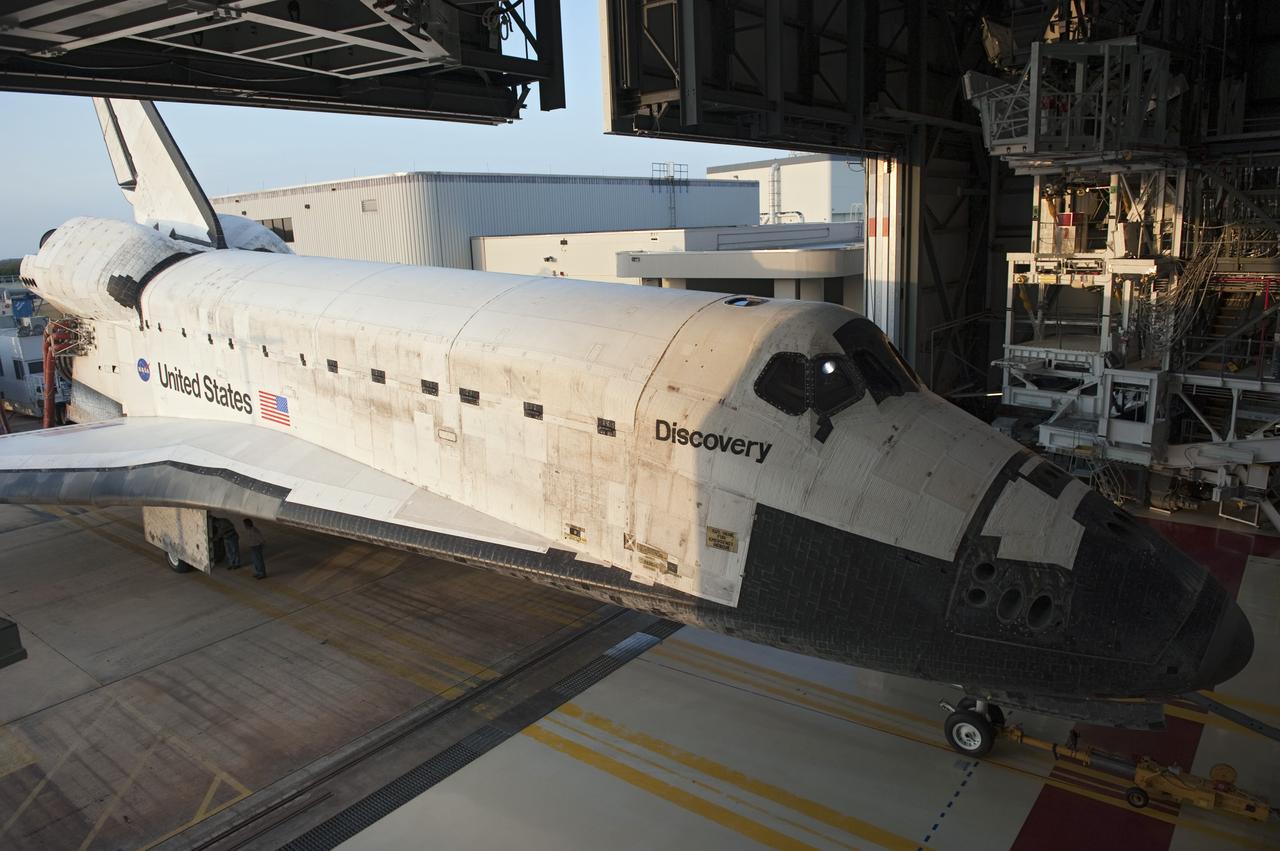
CAPE CANAVERAL, Fla. - Space shuttle Discovery slides through the open hangar door into Orbiter Processing Facility-2 at NASA's Kennedy Space Center in Florida. Discovery touched down on the Shuttle Landing Facility's Runway 15 at 11:57 a.m., bringing an end to its 39th and final spaceflight mission, STS-133. Discovery and its six-member STS-133 crew delivered the Permanent Multipurpose Module, packed with supplies and critical spare parts, as well as Robonaut 2, the dexterous humanoid astronaut helper, to the International Space Station. Inside the processing facility, Discovery will be prepared for future public display. Photo credit: NASA/Kim Shiflett
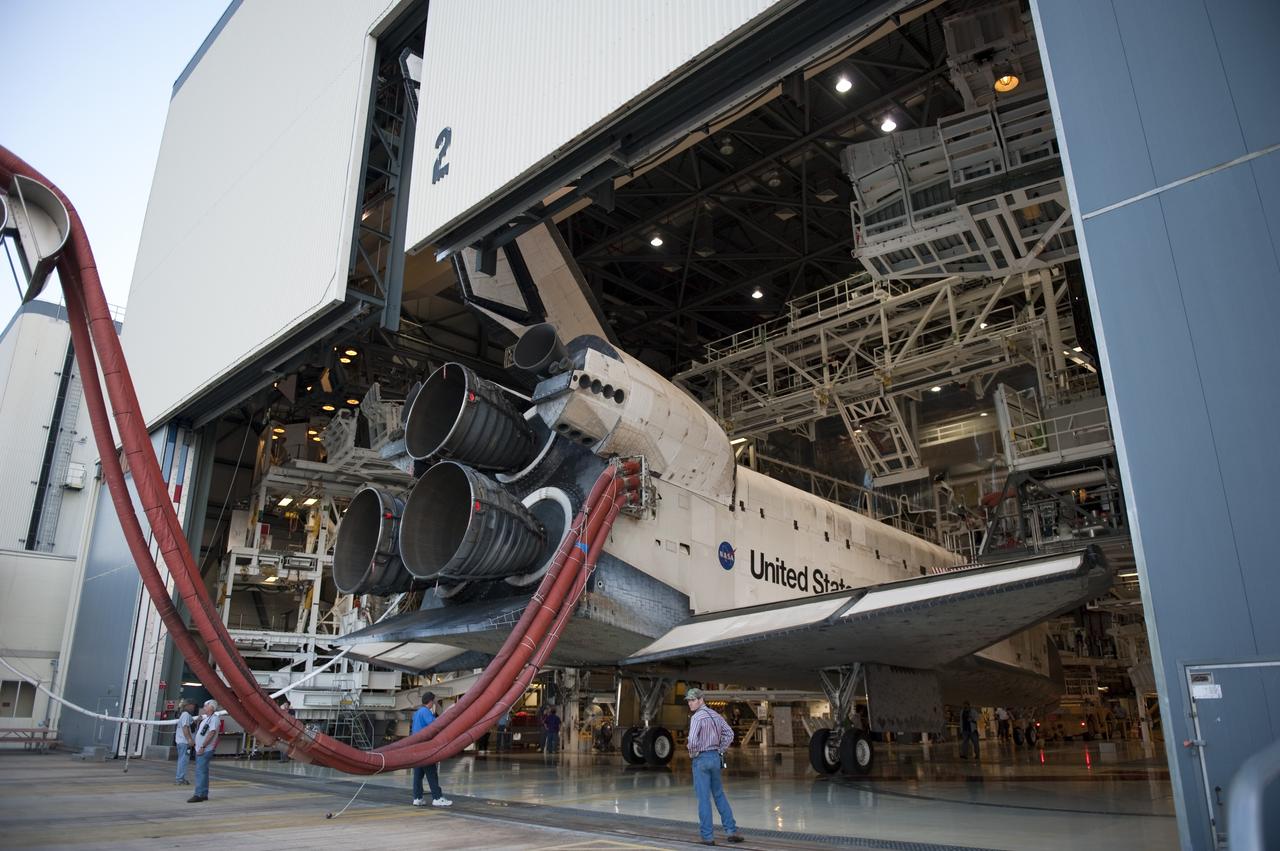
CAPE CANAVERAL, Fla. - Space shuttle Discovery's tail fin clears the hangar door of Orbiter Processing Facility-2 at NASA's Kennedy Space Center in Florida. Discovery touched down on the Shuttle Landing Facility's Runway 15 at 11:57 a.m., bringing an end to its 39th and final spaceflight mission, STS-133. Discovery and its six-member STS-133 crew delivered the Permanent Multipurpose Module, packed with supplies and critical spare parts, as well as Robonaut 2, the dexterous humanoid astronaut helper, to the International Space Station. Inside the processing facility, Discovery will be prepared for future public display. Photo credit: NASA/Kim Shiflett
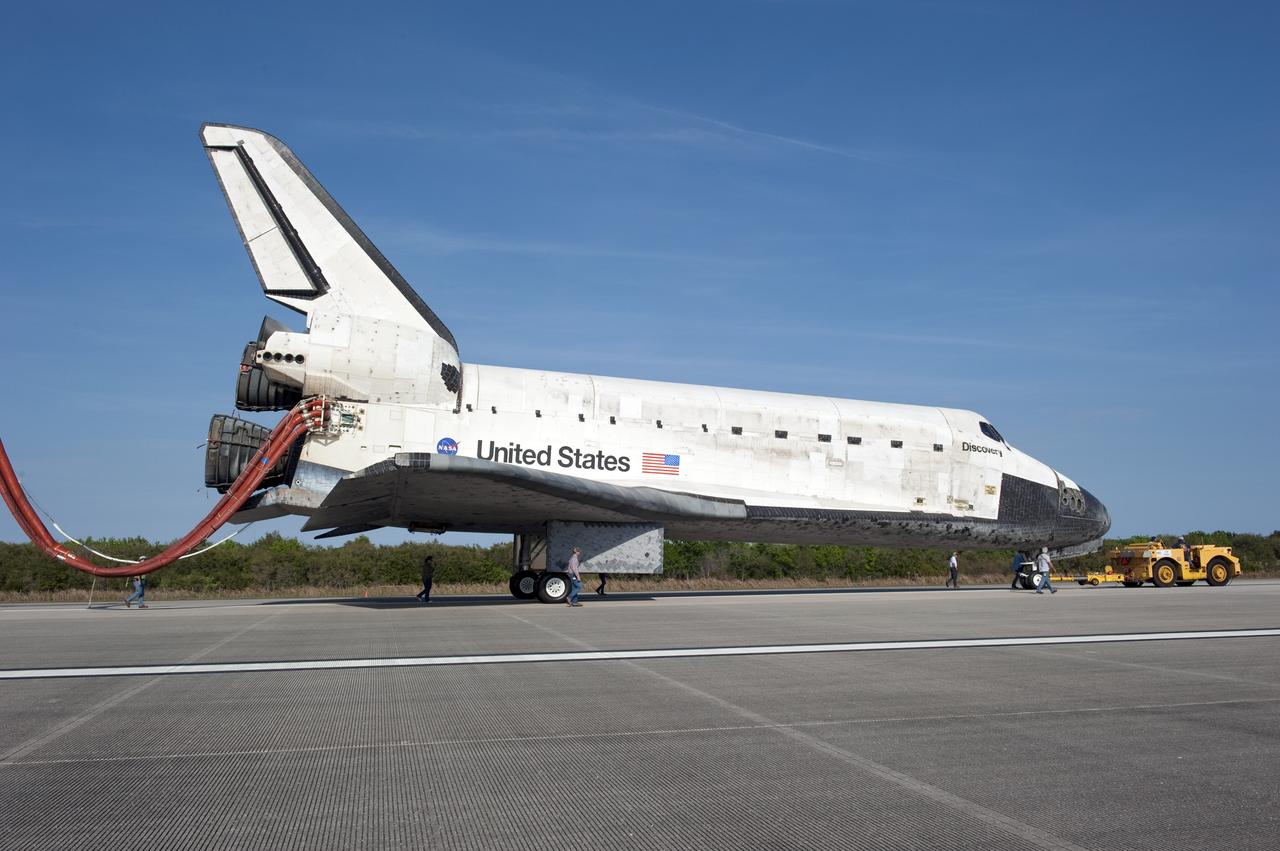
CAPE CANAVERAL, Fla. - The "towback" vehicle slowly pulls Space shuttle Discovery from the Shuttle Landing Facility to Orbiter Processing Facility-2 at NASA's Kennedy Space Center in Florida. Discovery touched down on Runway 15 at 11:57 a.m., bringing an end to its 39th and final spaceflight mission, STS-133. Discovery and its six-member STS-133 crew delivered the Permanent Multipurpose Module, packed with supplies and critical spare parts, as well as Robonaut 2, the dexterous humanoid astronaut helper, to the International Space Station. Inside the processing facility, Discovery will be prepared for future public display. Photo credit: NASA/Kim Shiflett
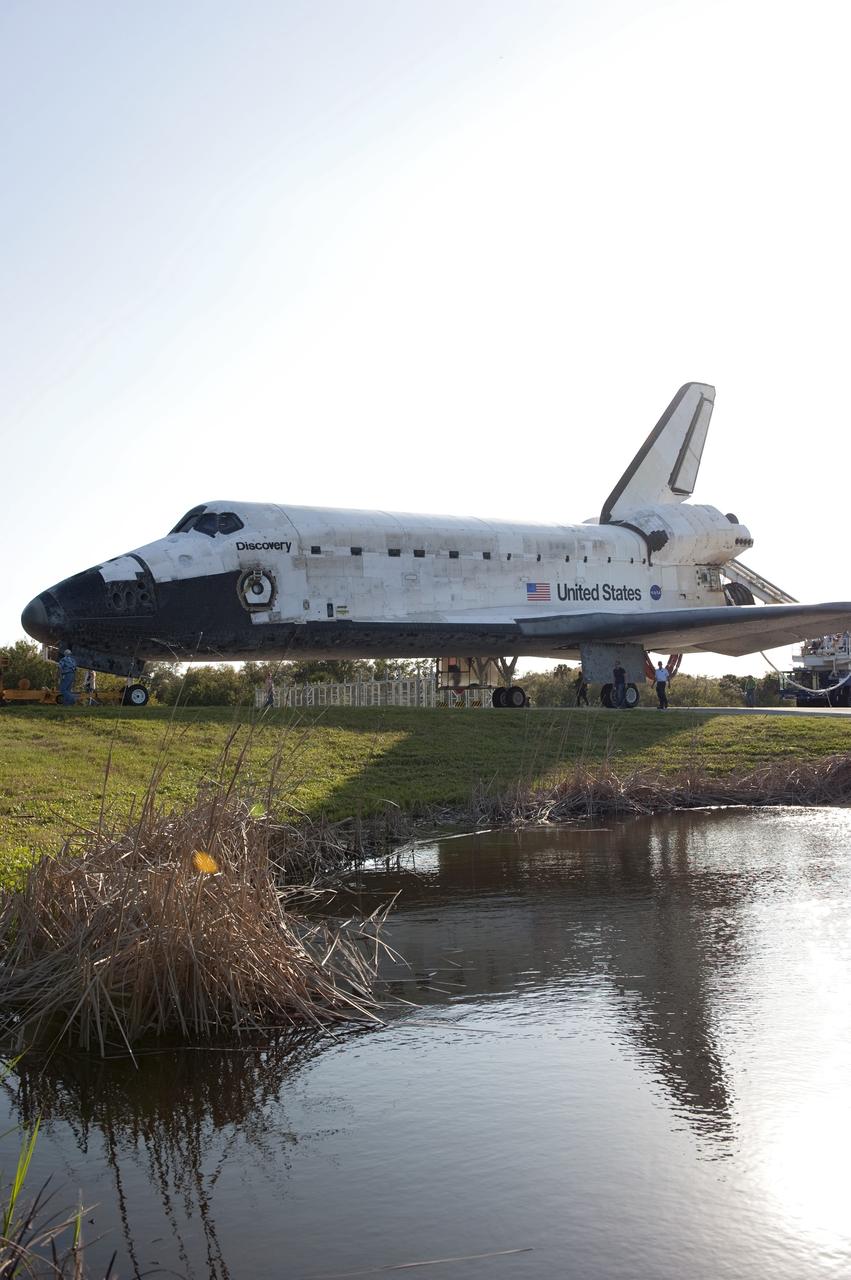
CAPE CANAVERAL, Fla. - Space shuttle Discovery casts a shadow in the water beside the towway on its slow trip from the Shuttle Landing Facility to Orbiter Processing Facility-2 at NASA's Kennedy Space Center in Florida. Discovery touched down on Runway 15 at 11:57 a.m., bringing an end to its 39th and final spaceflight mission, STS-133. Discovery and its six-member STS-133 crew delivered the Permanent Multipurpose Module, packed with supplies and critical spare parts, as well as Robonaut 2, the dexterous humanoid astronaut helper, to the International Space Station. Inside the processing facility, Discovery will be prepared for future public display. Photo credit: NASA/Kim Shiflett
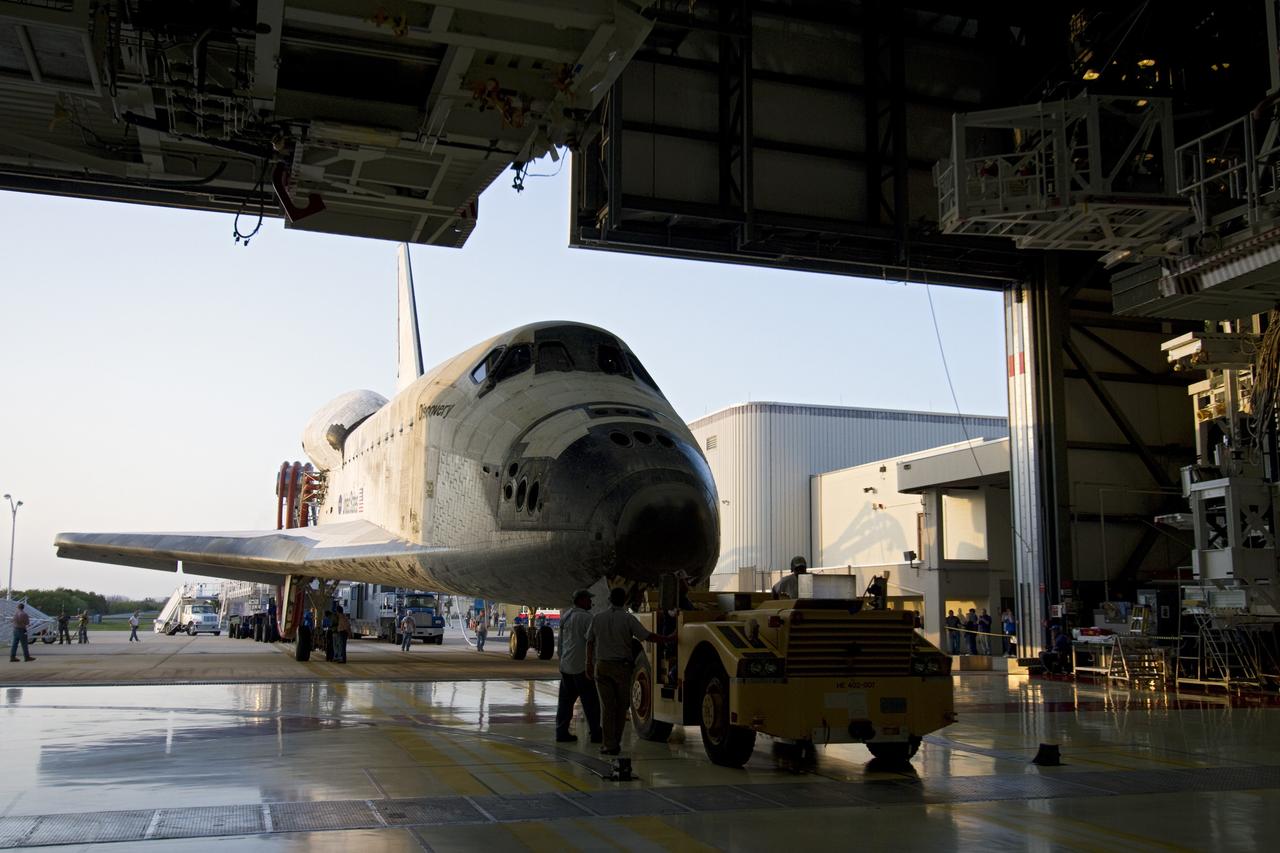
CAPE CANAVERAL, Fla. - Space shuttle Discovery's "towback" vehicle slowly pulls the spacecraft into Orbiter Processing Facility-2 at NASA's Kennedy Space Center in Florida. Discovery touched down on the Shuttle Landing Facility's Runway 15 at 11:57 a.m., bringing an end to its 39th and final spaceflight mission, STS-133. Discovery and its six-member STS-133 crew delivered the Permanent Multipurpose Module, packed with supplies and critical spare parts, as well as Robonaut 2, the dexterous humanoid astronaut helper, to the International Space Station. Inside the processing facility, Discovery will be prepared for future public display. Photo credit: NASA/Jack Pfaller
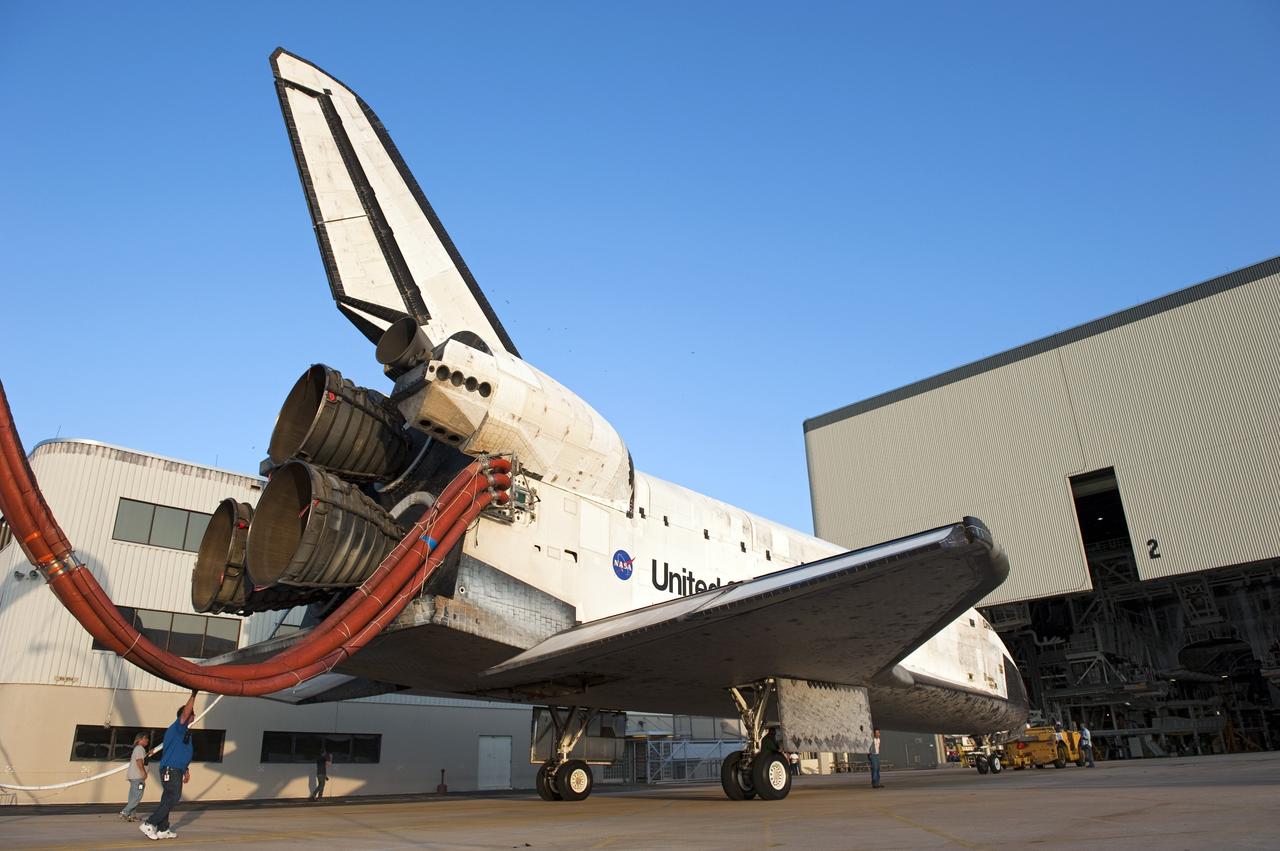
CAPE CANAVERAL, Fla. - Space shuttle Discovery noses its way toward the open hangar door of Orbiter Processing Facility-2 at NASA's Kennedy Space Center in Florida. Discovery touched down on the Shuttle Landing Facility's Runway 15 at 11:57 a.m., bringing an end to its 39th and final spaceflight mission, STS-133. Discovery and its six-member STS-133 crew delivered the Permanent Multipurpose Module, packed with supplies and critical spare parts, as well as Robonaut 2, the dexterous humanoid astronaut helper, to the International Space Station. Inside the processing facility, Discovery will be prepared for future public display. Photo credit: NASA/Kim Shiflett
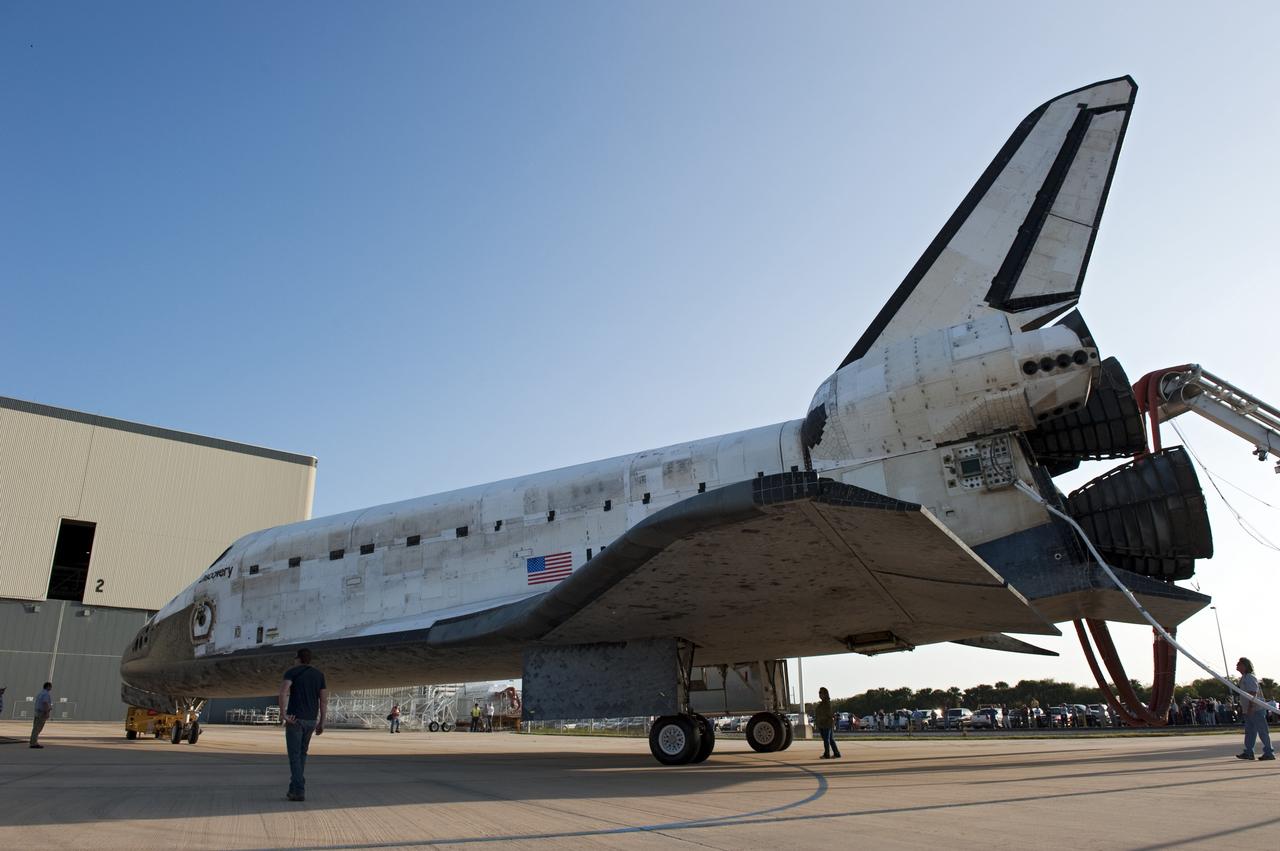
CAPE CANAVERAL, Fla. - Space shuttle Discovery's "towback" vehicle slowly pulls the spacecraft toward Orbiter Processing Facility-2 at NASA's Kennedy Space Center in Florida. Discovery touched down on the Shuttle Landing Facility's Runway 15 at 11:57 a.m., bringing an end to its 39th and final spaceflight mission, STS-133. Discovery and its six-member STS-133 crew delivered the Permanent Multipurpose Module, packed with supplies and critical spare parts, as well as Robonaut 2, the dexterous humanoid astronaut helper, to the International Space Station. Inside the processing facility, Discovery will be prepared for future public display. Photo credit: NASA/Kim Shiflett
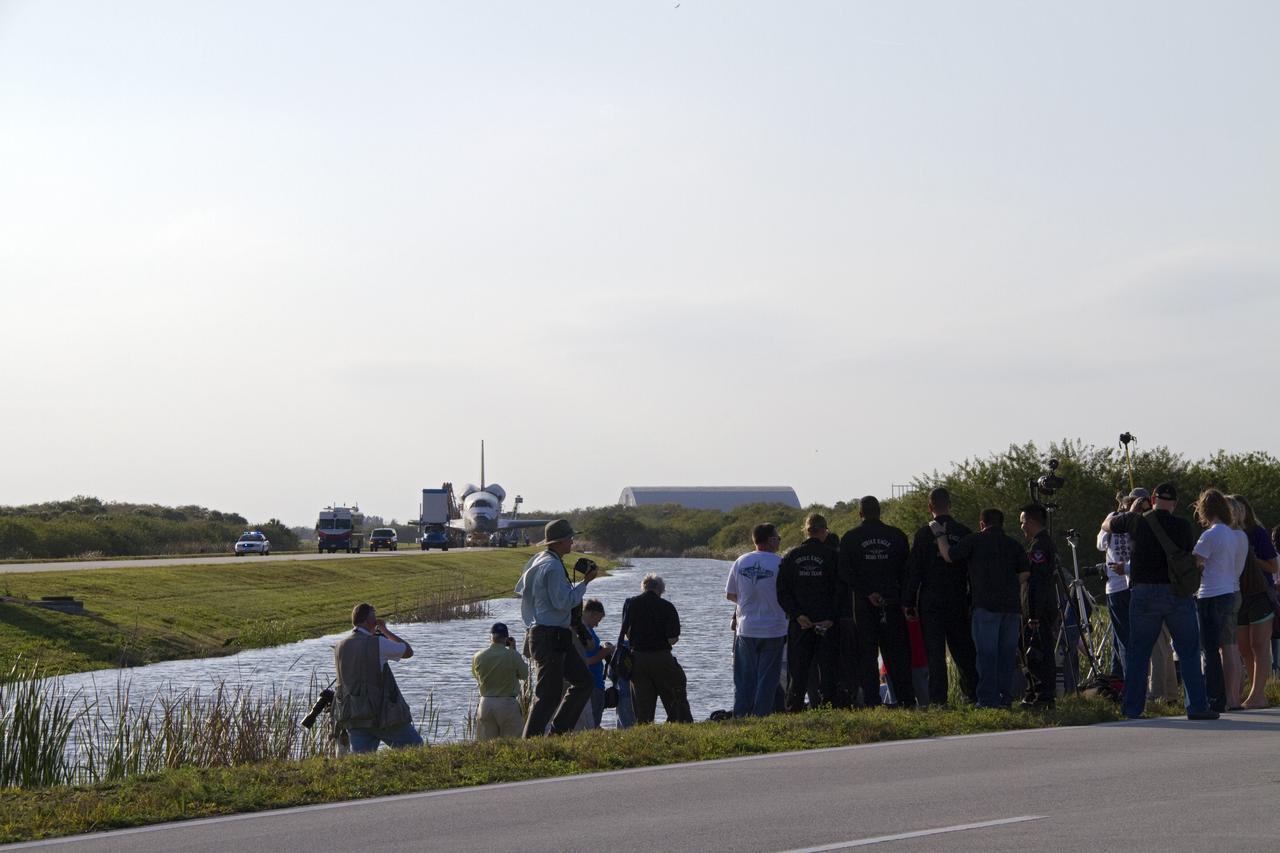
CAPE CANAVERAL, Fla. - Photographers are in position near the towway to capture space shuttle Discovery as it is towed from the Shuttle Landing Facility to Orbiter Processing Facility-2 at NASA's Kennedy Space Center in Florida. Discovery touched down on Runway 15 at 11:57 a.m., bringing an end to its 39th and final spaceflight mission, STS-133. Discovery and its six-member STS-133 crew delivered the Permanent Multipurpose Module, packed with supplies and critical spare parts, as well as Robonaut 2, the dexterous humanoid astronaut helper, to the International Space Station. Inside the processing facility, Discovery will be prepared for future public display. Photo credit: NASA/Jack Pfaller
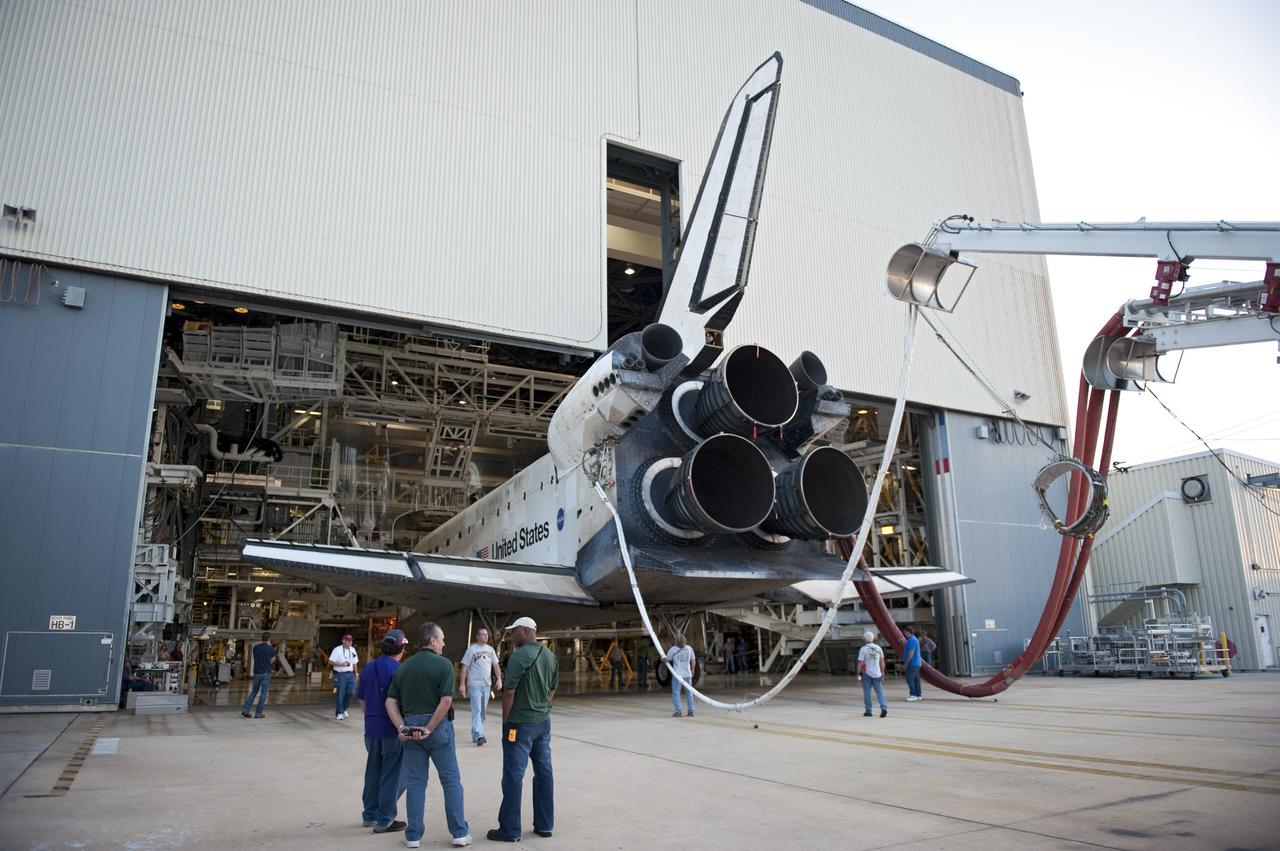
CAPE CANAVERAL, Fla. - Space shuttle Discovery is half in, half out of Orbiter Processing Facility-2 at NASA's Kennedy Space Center in Florida. Discovery touched down on the Shuttle Landing Facility's Runway 15 at 11:57 a.m., bringing an end to its 39th and final spaceflight mission, STS-133. Discovery and its six-member STS-133 crew delivered the Permanent Multipurpose Module, packed with supplies and critical spare parts, as well as Robonaut 2, the dexterous humanoid astronaut helper, to the International Space Station. Inside the processing facility, Discovery will be prepared for future public display. Photo credit: NASA/Kim Shiflett
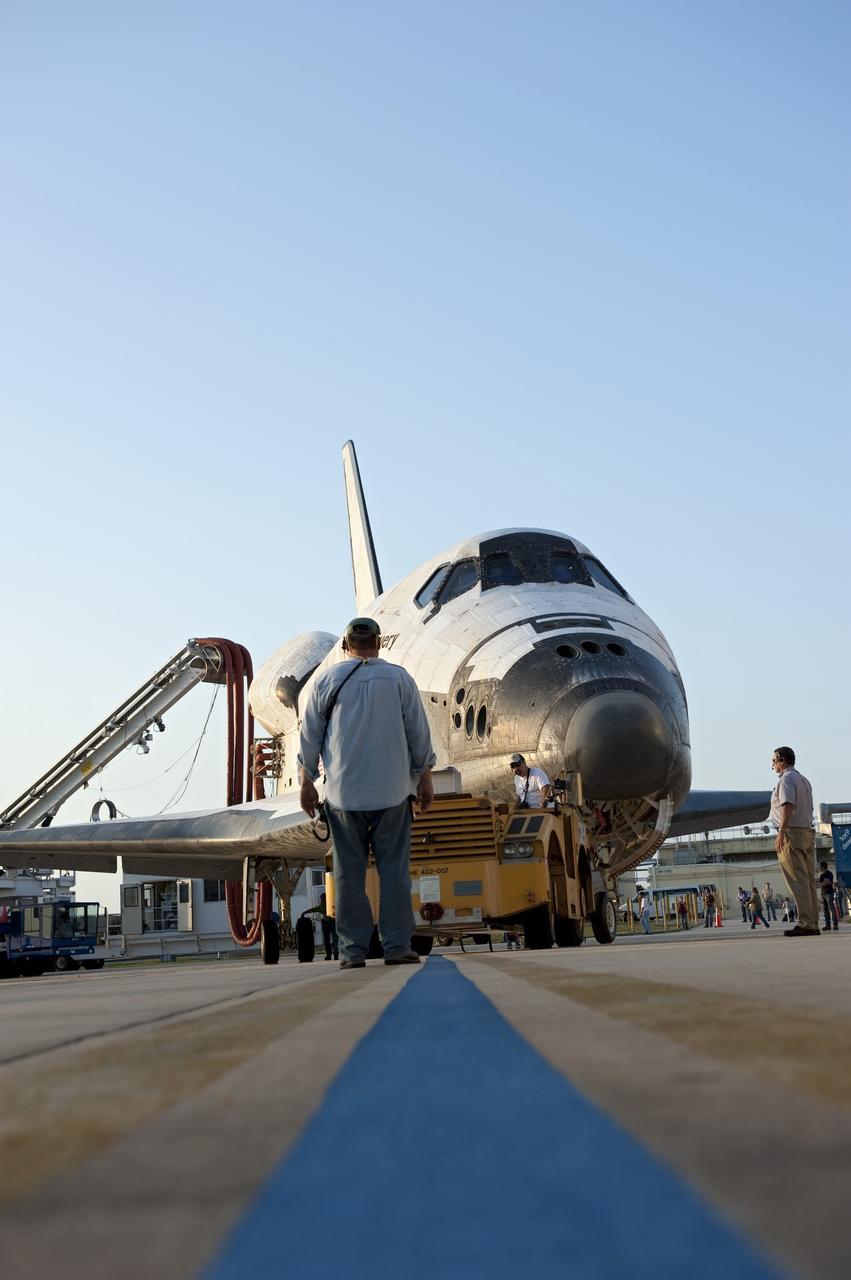
CAPE CANAVERAL, Fla. - The "towback" vehicle lines up space shuttle Discovery for entry into Orbiter Processing Facility-2 at NASA's Kennedy Space Center in Florida. Discovery touched down on the Shuttle Landing Facility's Runway 15 at 11:57 a.m., bringing an end to its 39th and final spaceflight mission, STS-133. Discovery and its six-member STS-133 crew delivered the Permanent Multipurpose Module, packed with supplies and critical spare parts, as well as Robonaut 2, the dexterous humanoid astronaut helper, to the International Space Station. Inside the processing facility, Discovery will be prepared for future public display. Photo credit: NASA/Kim Shiflett
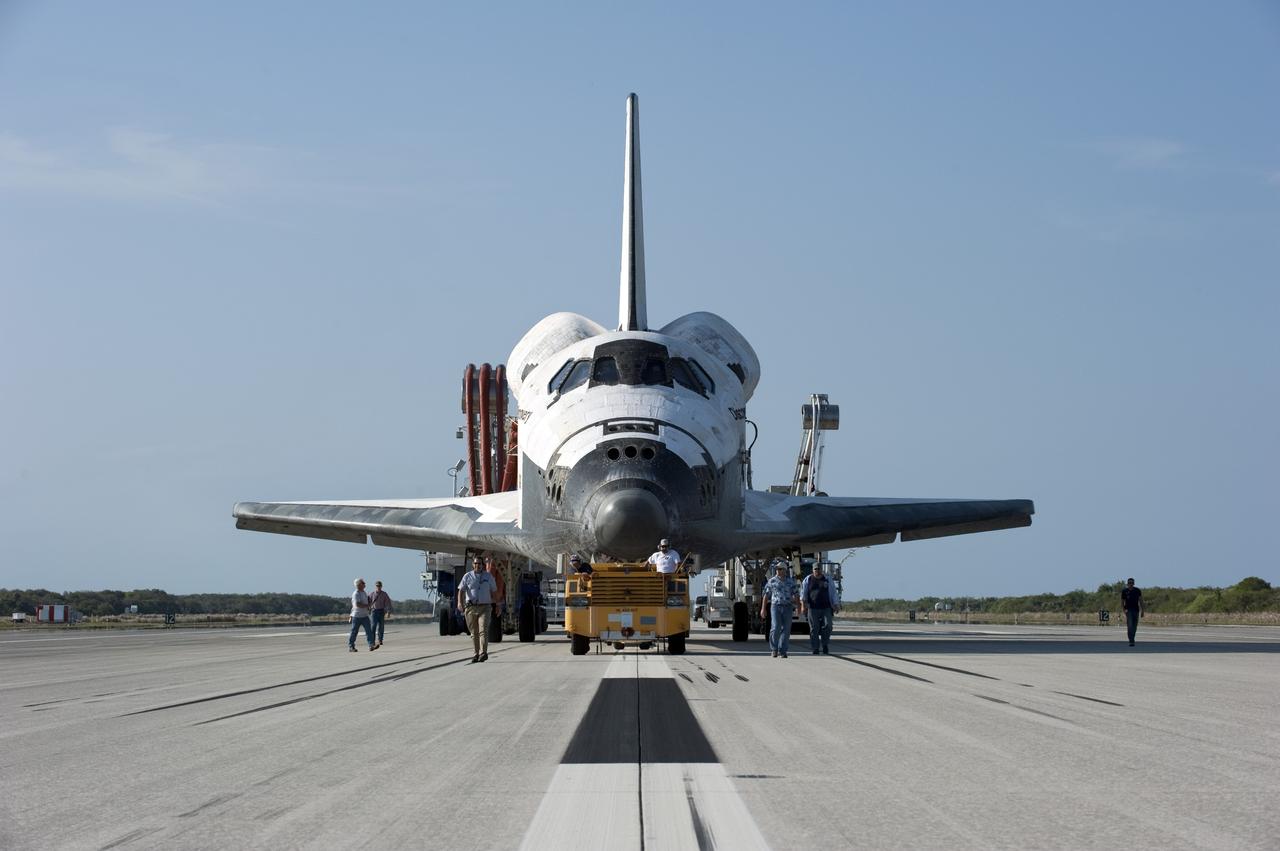
CAPE CANAVERAL, Fla. - Employees accompany space shuttle Discovery as it is pulled by a "towback" vehicle from the Shuttle Landing Facility to Orbiter Processing Facility-2 at NASA's Kennedy Space Center in Florida. Discovery touched down on Runway 15 at 11:57 a.m., bringing an end to its 39th and final spaceflight mission, STS-133. Discovery and its six-member STS-133 crew delivered the Permanent Multipurpose Module, packed with supplies and critical spare parts, as well as Robonaut 2, the dexterous humanoid astronaut helper, to the International Space Station. Inside the processing facility, Discovery will be prepared for future public display. Photo credit: NASA/Kim Shiflett
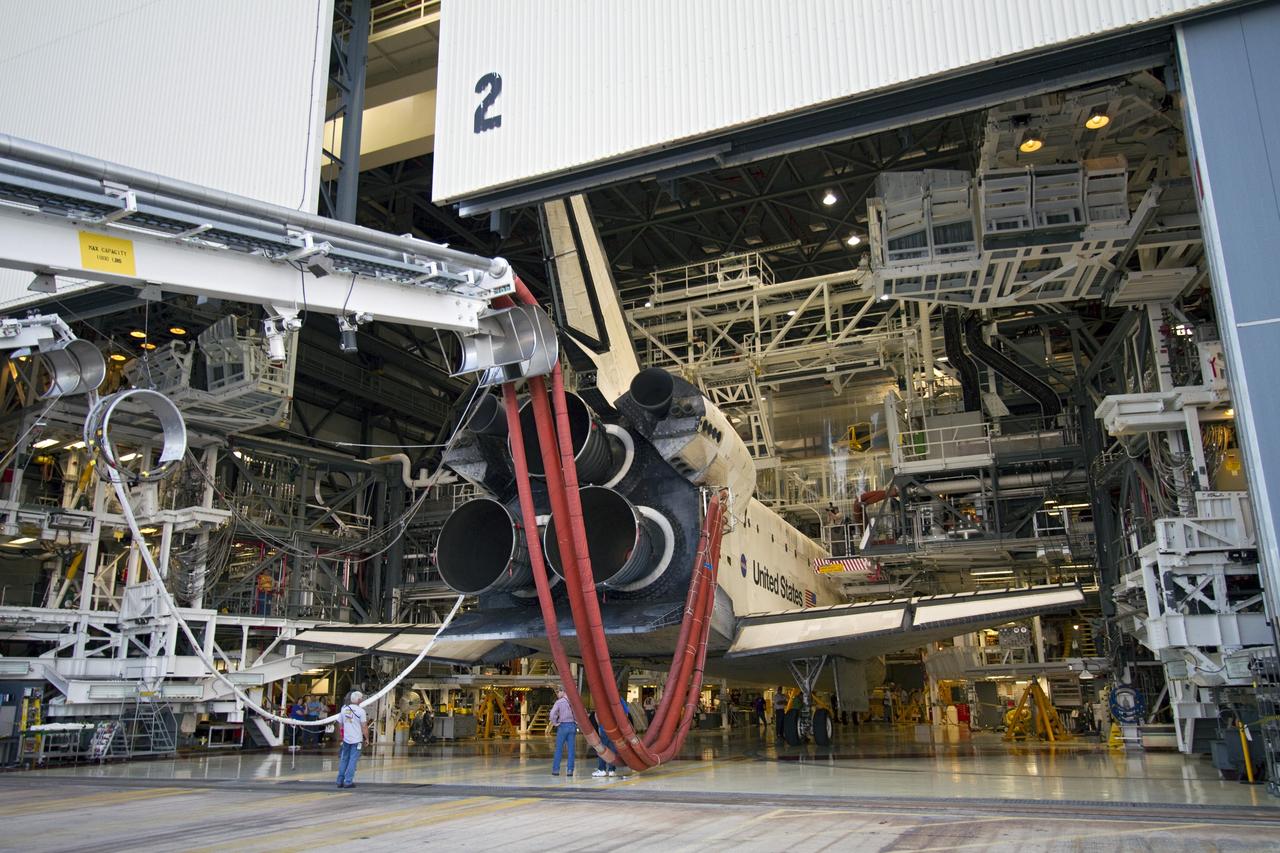
CAPE CANAVERAL, Fla. - Space shuttle Discovery enters Orbiter Processing Facility-2 at NASA's Kennedy Space Center in Florida during a move called "towback." Discovery touched down on the Shuttle Landing Facility's Runway 15 at 11:57 a.m., bringing an end to its 39th and final spaceflight mission, STS-133. Discovery and its six-member STS-133 crew delivered the Permanent Multipurpose Module, packed with supplies and critical spare parts, as well as Robonaut 2, the dexterous humanoid astronaut helper, to the International Space Station. Inside the processing facility, Discovery will be prepared for future public display. Photo credit: NASA/Jack Pfaller
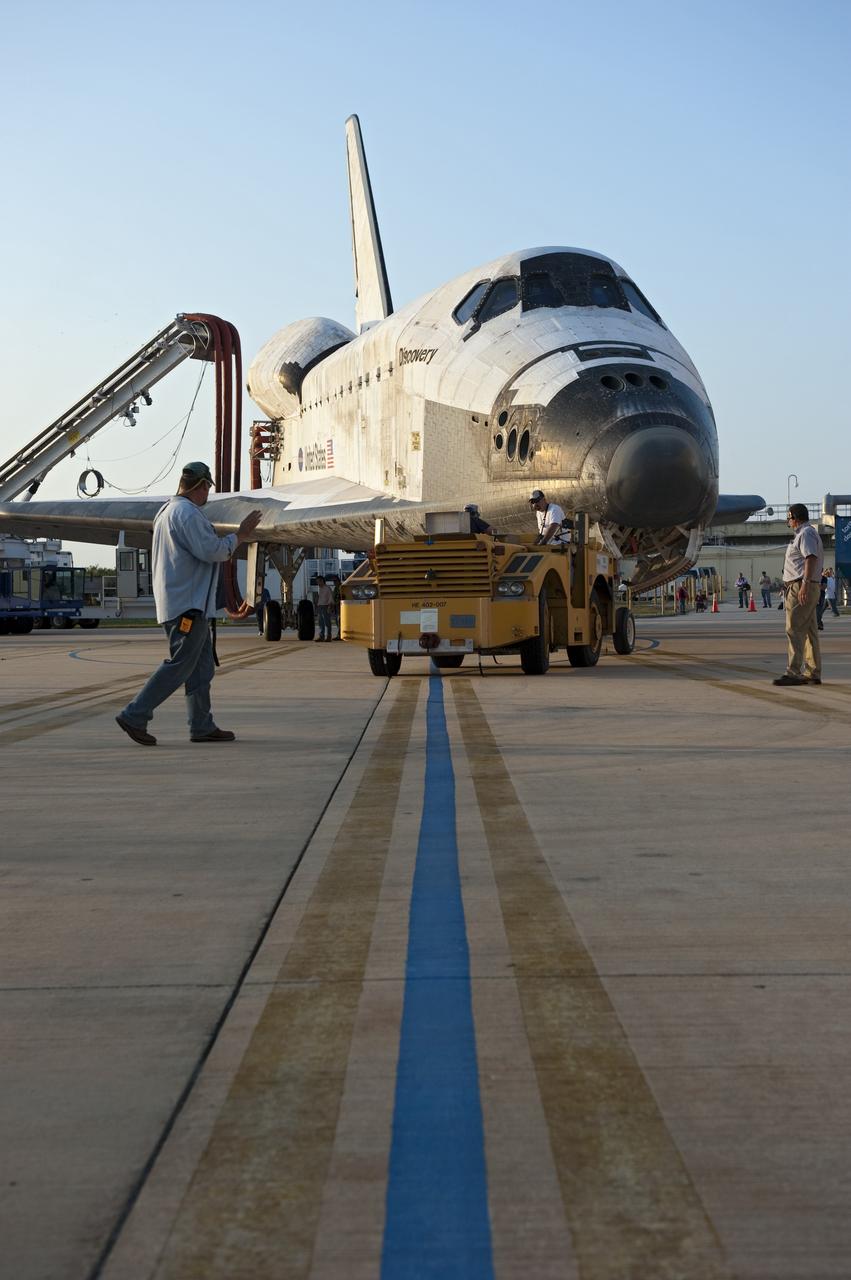
CAPE CANAVERAL, Fla. - Employees guide space shuttle Discovery into position for entry into Orbiter Processing Facility-2 at NASA's Kennedy Space Center in Florida. Discovery touched down on the Shuttle Landing Facility's Runway 15 at 11:57 a.m., bringing an end to its 39th and final spaceflight mission, STS-133. Discovery and its six-member STS-133 crew delivered the Permanent Multipurpose Module, packed with supplies and critical spare parts, as well as Robonaut 2, the dexterous humanoid astronaut helper, to the International Space Station. Inside the processing facility, Discovery will be prepared for future public display. Photo credit: NASA/Kim Shiflett
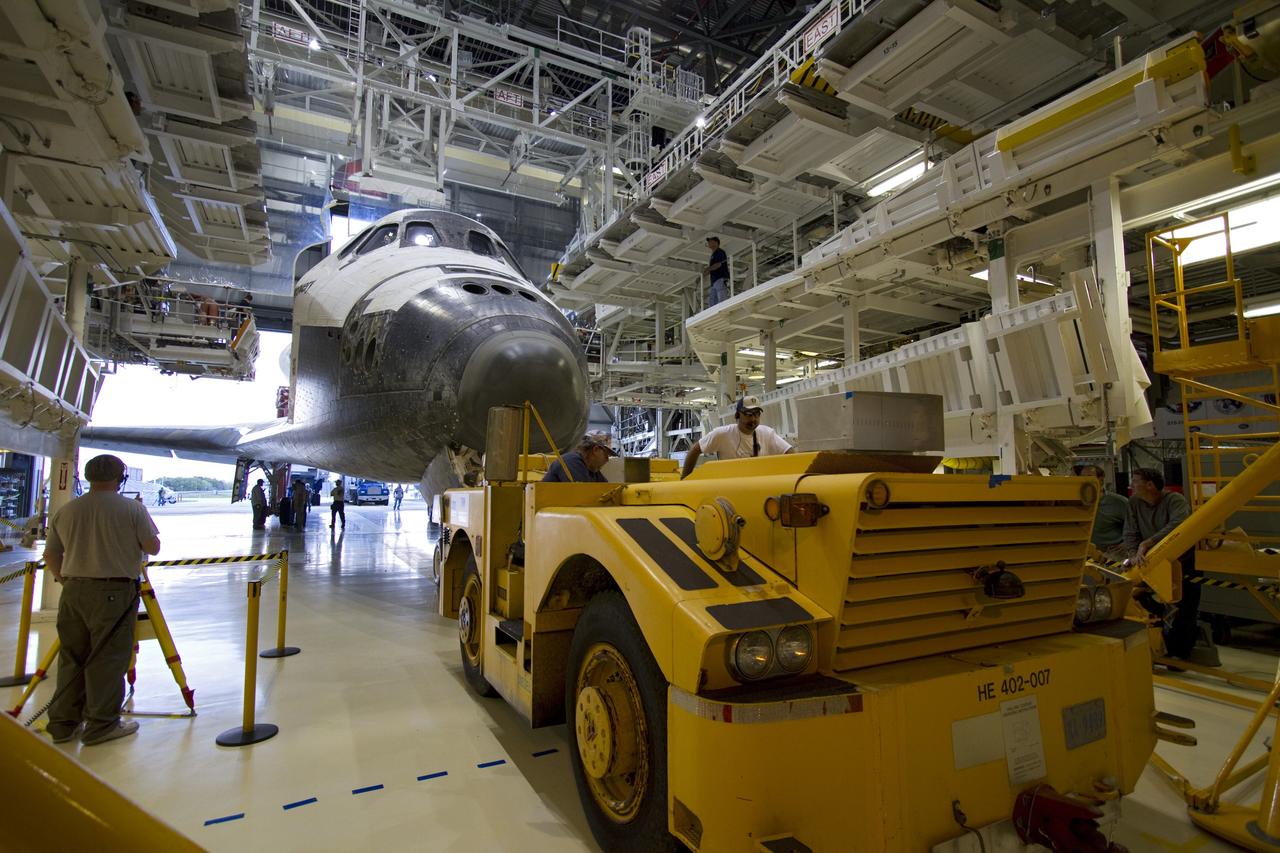
CAPE CANAVERAL, Fla. - A "towback" vehicle slowly pulls space shuttle Discovery through the open door of Orbiter Processing Facility-2 at NASA's Kennedy Space Center in Florida. Discovery touched down on the Shuttle Landing Facility's Runway 15 at 11:57 a.m., bringing an end to its 39th and final spaceflight mission, STS-133. Discovery and its six-member STS-133 crew delivered the Permanent Multipurpose Module, packed with supplies and critical spare parts, as well as Robonaut 2, the dexterous humanoid astronaut helper, to the International Space Station. Inside the processing facility, Discovery will be prepared for future public display. Photo credit: NASA/Jack Pfaller
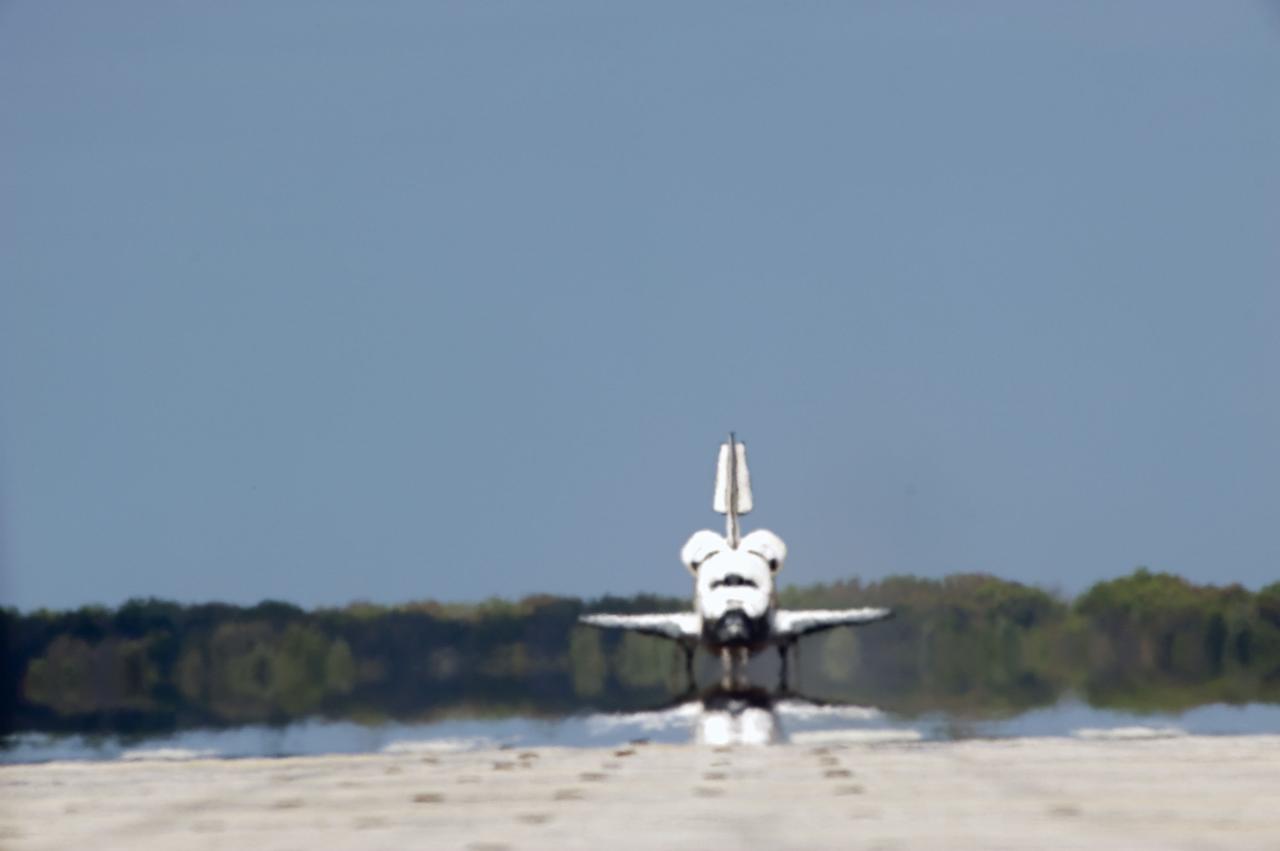
STS133-S-133 (9 March 2011) --- Space shuttle Discovery rolls down Runway 15 at the Shuttle Landing Facility at NASA's Kennedy Space Center in Florida. Landing was at 11:57 a.m. (EST) on March 9, 2011, completing a more than 12-day STS-133 mission to the International Space Station. Onboard are NASA astronauts Steve Lindsey, commander; Eric Boe, pilot; Steve Bowen, Alvin Drew, Michael Barratt and Nicole Stott, all mission specialists. Discovery and its six-member crew delivered the Permanent Multipurpose Module, packed with supplies and critical spare parts, as well as Robonaut 2, the dexterous humanoid astronaut helper, to the orbiting outpost. STS-133 was Discovery's 39th and final mission. This was the 133rd Space Shuttle Program mission and the 35th shuttle voyage to the space station. Photo credit: NASA or National Aeronautics and Space Administration

CAPE CANAVERAL, Fla. -- The news media ask space shuttle Discovery's STS-133 crew members questions during a post-landing news conference in the Press Site TV Auditorium at NASA's Kennedy Space Center in Florida. From left, are NASA Public Affairs Officer George Diller, STS-133 Commander Steve Lindsey, Pilot Eric Boe, and Mission Specialists Alvin Drew, Steve Bowen, Michael Barratt and Nicole Stott. Discovery and crew landed on the Shuttle Landing Facility's Runway 15 at 11:57 a.m., completing a 13-day, 5.3-million-mile mission to the International Space Station. STS-133 delivered the Permanent Multipurpose Module, packed with supplies and critical spare parts, as well as Robonaut 2, the dexterous humanoid astronaut helper, to the orbiting outpost. STS-133 was Discovery's 39th and final mission. This was the 133rd Space Shuttle Program mission and the 35th shuttle voyage to the space station. Photo credit: NASA/Kim Shiflett
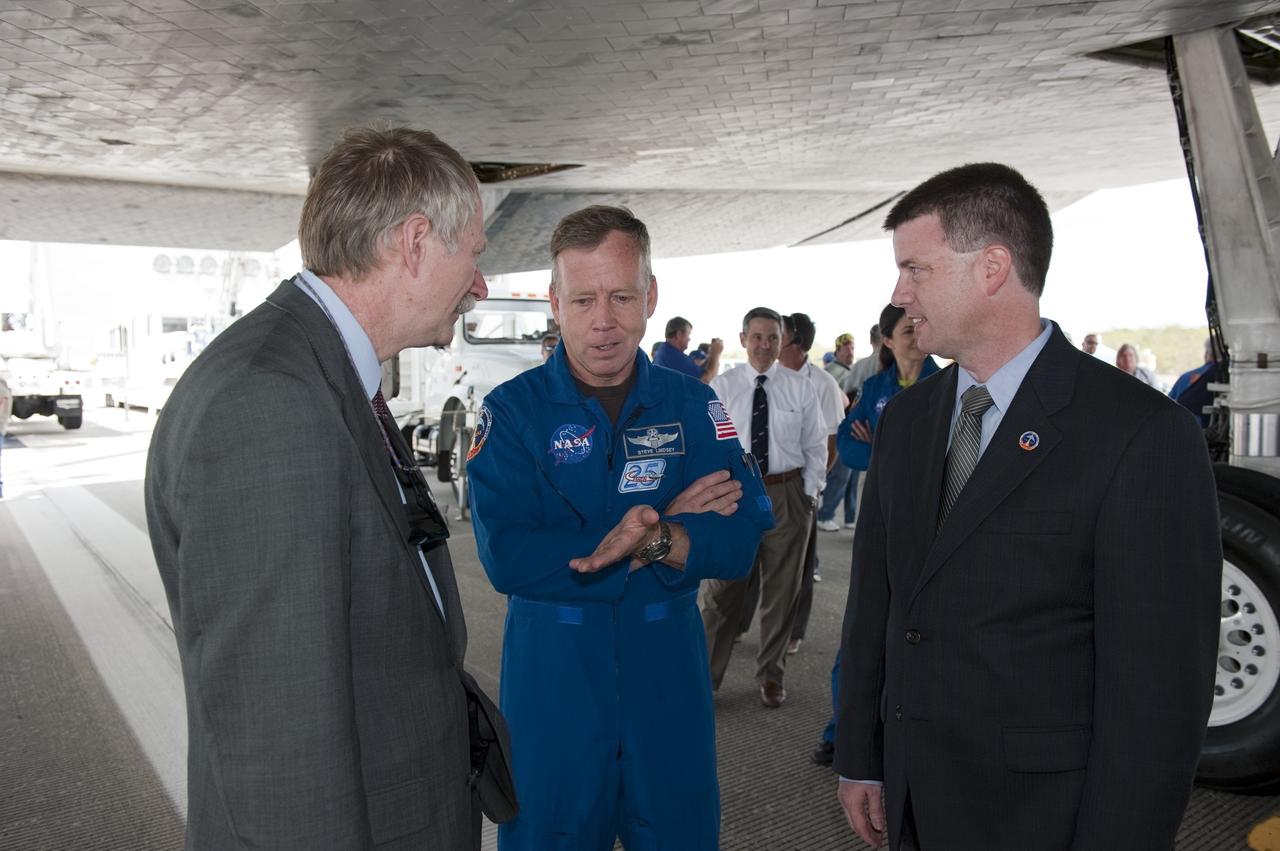
CAPE CANAVERAL, Fla. -- Associate Administrator for Space Operations Bill Gerstenmaier, left, STS-133 Commander Steve Lindsey and Space Shuttle Launch Integration Manager Mike Moses talk about Lindsey's recent 13-day, 5.3-million-mile mission to the International Space Station aboard space shuttle Discovery. The STS-133 crew returned to Earth at 11:57 a.m. on the Shuttle Landing Facility's Runway 15 at NASA's Kennedy Space Center in Florida. STS-133 delivered the Permanent Multipurpose Module, packed with supplies and critical spare parts, as well as Robonaut 2, the dexterous humanoid astronaut helper, to the orbiting outpost. STS-133 was Discovery's 39th and final mission. This was the 133rd Space Shuttle Program mission and the 35th shuttle voyage to the space station. Photo credit: NASA/Kim Shiflett

CAPE CANAVERAL, Fla. -- On the Shuttle Landing Facility at NASA's Kennedy Space Center in Florida, STS-133 Commander Steve Lindsey talks to media representatives about space shuttle Discovery's final spaceflight mission. Mission Specialist Steve Bowen, left, and NASA Administrator Charlie Bolden are behind Lindsey. The STS-133 crew returned to Earth at 11:57 a.m. on Runway 15, completing a 13-day, 5.3-million-mile mission to the International Space Station. STS-133 delivered the Permanent Multipurpose Module, packed with supplies and critical spare parts, as well as Robonaut 2, the dexterous humanoid astronaut helper, to the orbiting outpost. STS-133 was Discovery's 39th and final mission. This was the 133rd Space Shuttle Program mission and the 35th shuttle voyage to the space station. Photo credit: NASA/Kim Shiflett
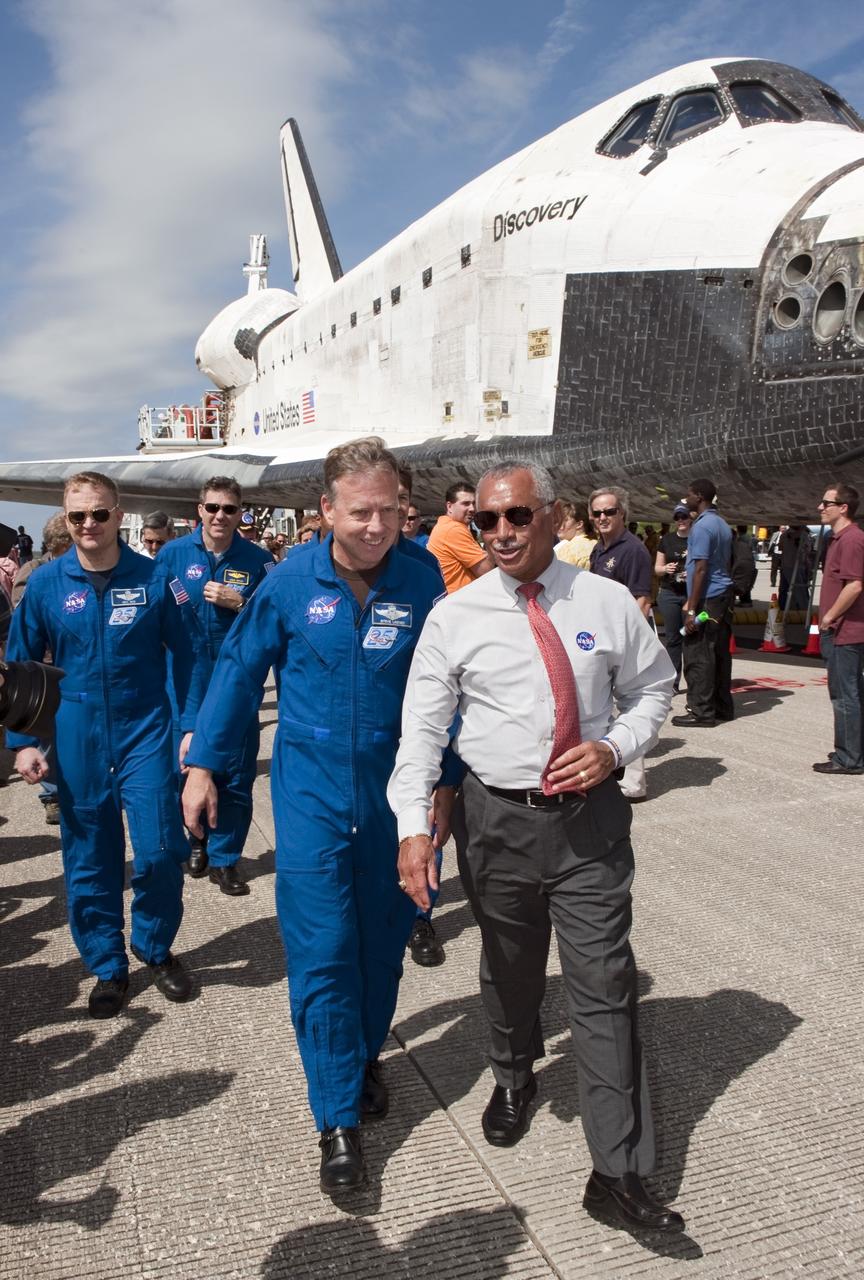
CAPE CANAVERAL, Fla. -- NASA Administrator Charlie Bolden leads the STS-133 crew to media representatives waiting on the Shuttle Landing Facility at Kennedy Space Center in Florida to hear statements about space shuttle Discovery's final spaceflight mission. The STS-133 crew returned to Earth at 11:57 a.m. on Runway 15, completing a 13-day, 5.3-million-mile mission to the International Space Station. STS-133 delivered the Permanent Multipurpose Module, packed with supplies and critical spare parts, as well as Robonaut 2, the dexterous humanoid astronaut helper, to the orbiting outpost. STS-133 was Discovery's 39th and final mission. This was the 133rd Space Shuttle Program mission and the 35th shuttle voyage to the space station. Photo credit: NASA/Kim Shiflett
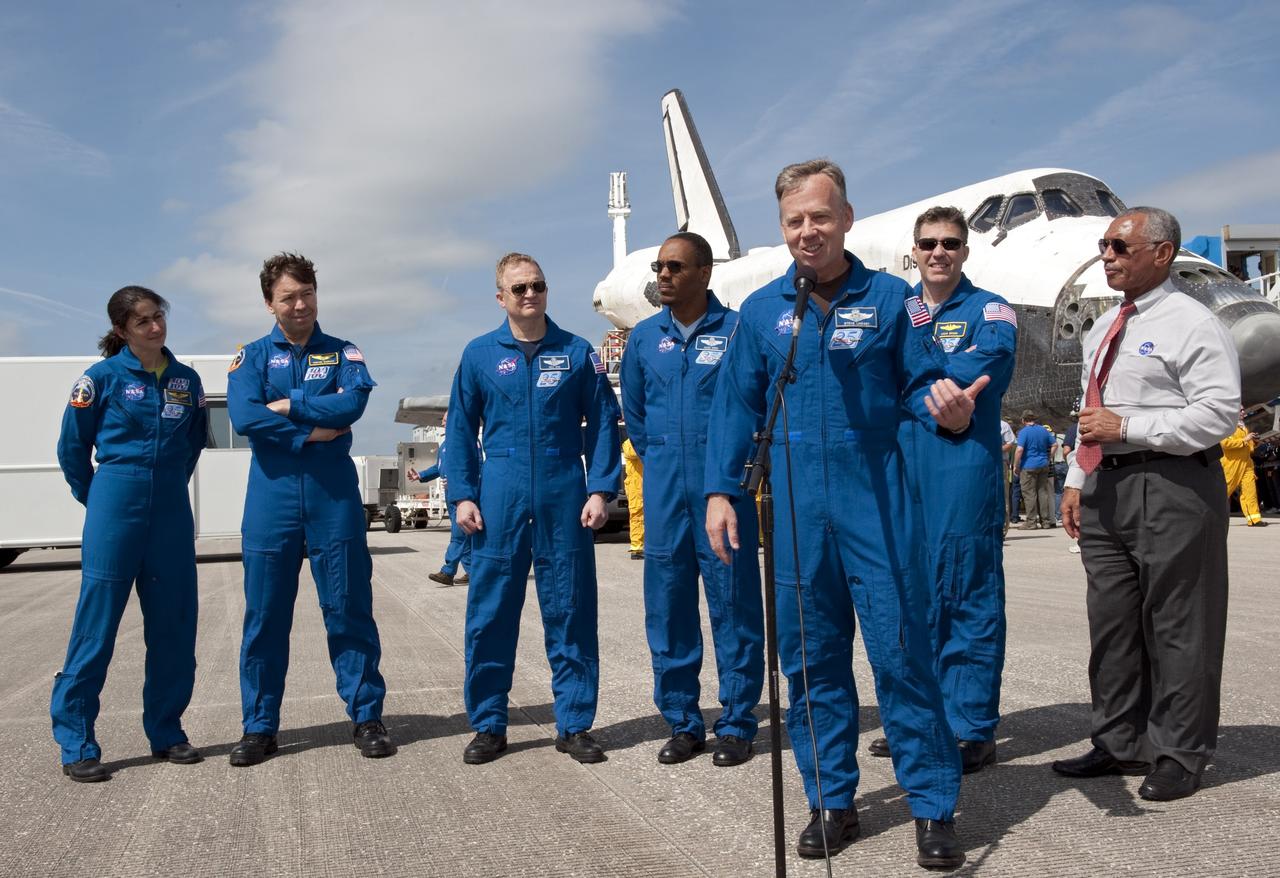
CAPE CANAVERAL, Fla. -- On the Shuttle Landing Facility at NASA's Kennedy Space Center in Florida, STS-133 Commander Steve Lindsey talks to media representatives about space shuttle Discovery's final spaceflight mission. Behind Lindsey, from left, are Mission Specialists Nicole Stott and Michael Barratt, Pilot Eric Boe, Mission Specialists Alvin Drew and Steve Bowen, and NASA Administrator Charlie Bolden. The STS-133 crew returned to Earth at 11:57 a.m. on Runway 15, completing a 13-day, 5.3-million-mile mission to the International Space Station. STS-133 delivered the Permanent Multipurpose Module, packed with supplies and critical spare parts, as well as Robonaut 2, the dexterous humanoid astronaut helper, to the orbiting outpost. STS-133 was Discovery's 39th and final mission. This was the 133rd Space Shuttle Program mission and the 35th shuttle voyage to the space station. Photo credit: NASA/Kim Shiflett
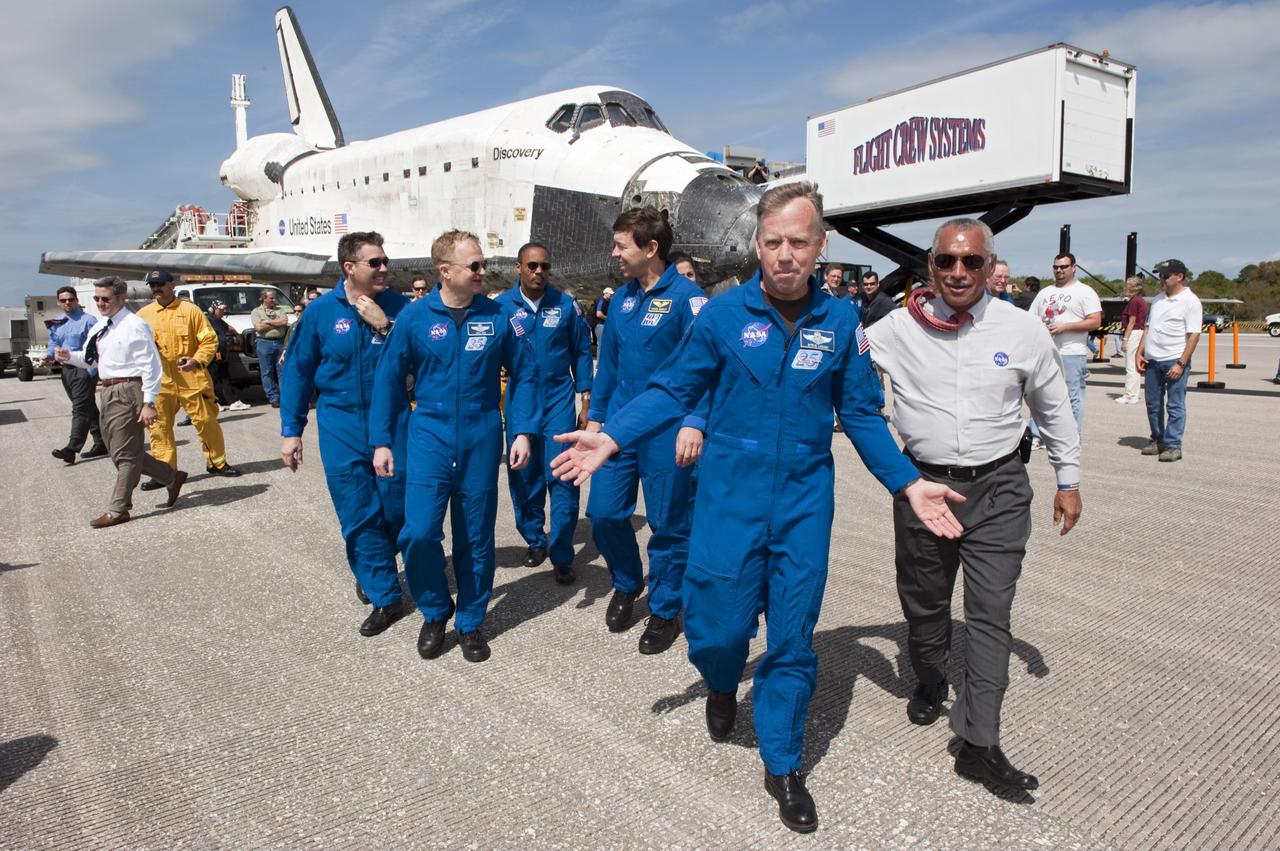
CAPE CANAVERAL, Fla. -- NASA Administrator Charlie Bolden escorts the STS-133 crew to media representatives waiting on the Shuttle Landing Facility at Kennedy Space Center in Florida to hear statements about space shuttle Discovery's final spaceflight mission. The STS-133 crew returned to Earth at 11:57 a.m. on Runway 15, completing a 13-day, 5.3-million-mile mission to the International Space Station. STS-133 delivered the Permanent Multipurpose Module, packed with supplies and critical spare parts, as well as Robonaut 2, the dexterous humanoid astronaut helper, to the orbiting outpost. STS-133 was Discovery's 39th and final mission. This was the 133rd Space Shuttle Program mission and the 35th shuttle voyage to the space station. Photo credit: NASA/Kim Shiflett
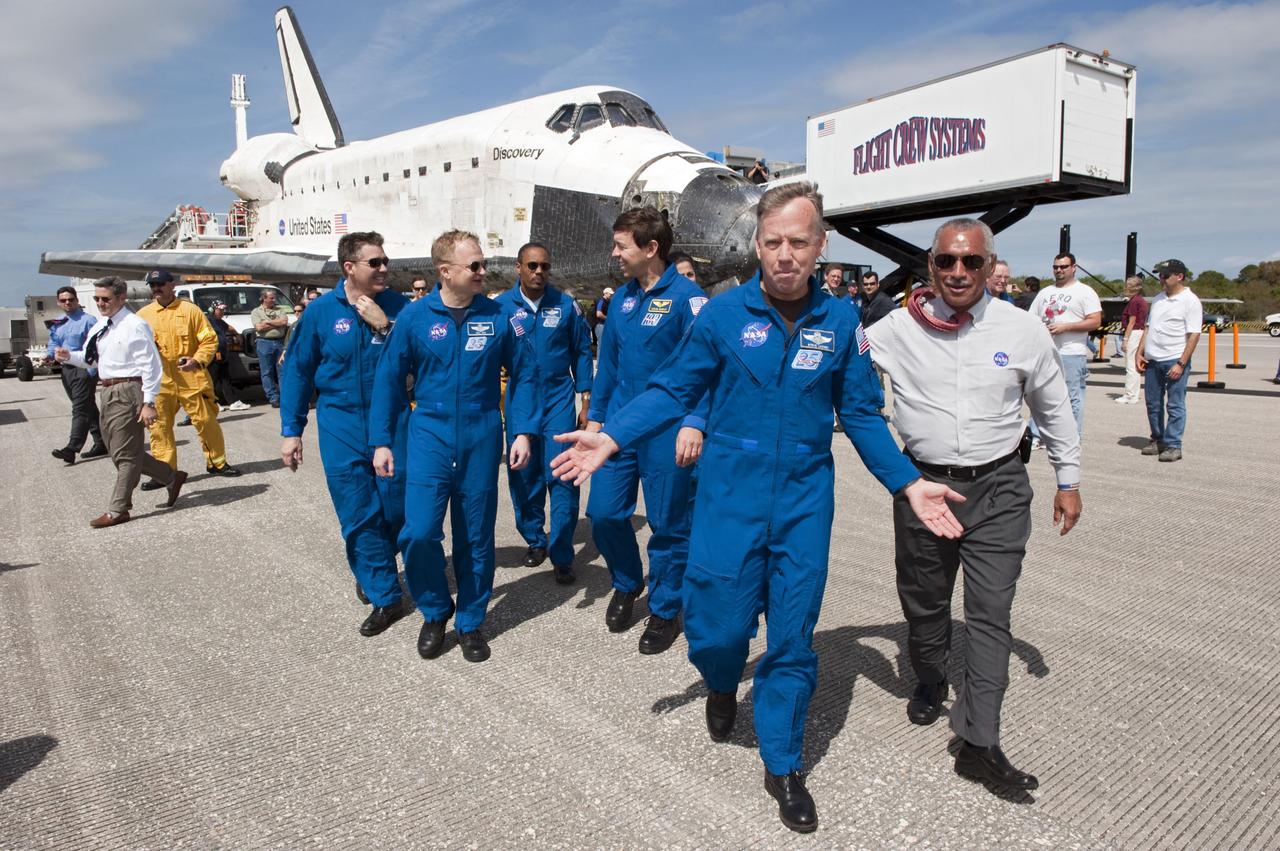
STS133-S-152 (9 March 2011) --- NASA Administrator Charlie Bolden escorts the STS-133 crew to media representatives waiting on the Shuttle Landing Facility at Kennedy Space Center in Florida to hear statements about space shuttle Discovery's final spaceflight mission. The STS-133 crew returned to Earth at 11:57 a.m. (EST) on March 9, 2011, on Runway 15, completing a 13-day, 5.3-million-mile mission to the International Space Station. STS-133 delivered the Permanent Multipurpose Module, packed with supplies and critical spare parts, as well as Robonaut 2, the dexterous humanoid astronaut helper, to the orbiting outpost. STS-133 was Discovery's 39th and final mission. This was the 133rd Space Shuttle Program mission and the 35th shuttle voyage to the space station. Photo credit: NASA or National Aeronautics and Space Administration
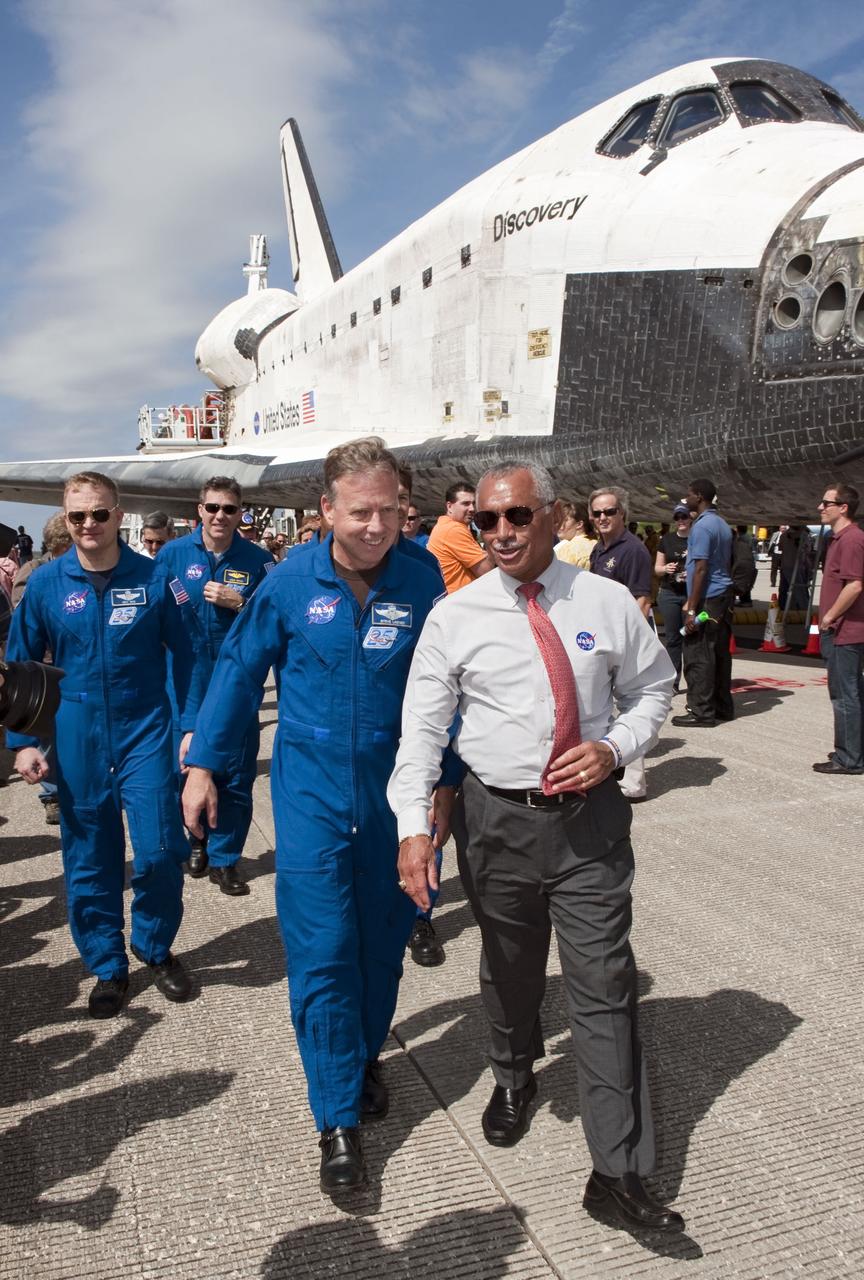
STS133-S-151 (9 March 2011) --- NASA Administrator Charlie Bolden leads the STS-133 crew to media representatives waiting on the Shuttle Landing Facility at Kennedy Space Center in Florida to hear statements about space shuttle Discovery's final spaceflight mission. The STS-133 crew returned to Earth at 11:57 a.m. (EST) on March 9, 2011, on Runway 15, completing a 13-day, 5.3-million-mile mission to the International Space Station. STS-133 delivered the Permanent Multipurpose Module, packed with supplies and critical spare parts, as well as Robonaut 2, the dexterous humanoid astronaut helper, to the orbiting outpost. STS-133 was Discovery's 39th and final mission. This was the 133rd Space Shuttle Program mission and the 35th shuttle voyage to the space station. Photo credit: NASA or National Aeronautics and Space Administration
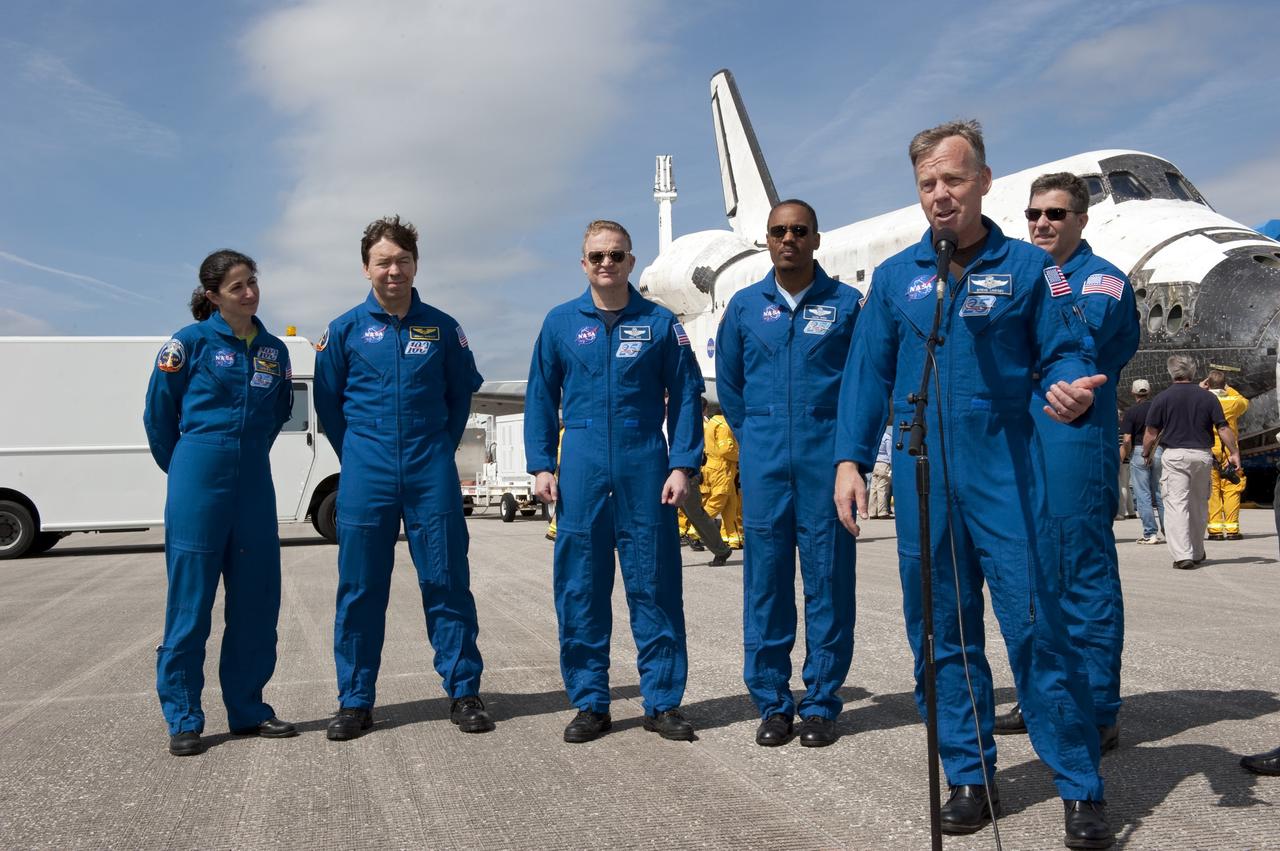
CAPE CANAVERAL, Fla. -- On the Shuttle Landing Facility at NASA's Kennedy Space Center in Florida, STS-133 Commander Steve Lindsey talks to media representatives about space shuttle Discovery's final spaceflight mission. Behind Lindsey, from left, are Mission Specialists Nicole Stott and Michael Barratt, Pilot Eric Boe, and Mission Specialists Alvin Drew and Steve Bowen. The STS-133 crew returned to Earth at 11:57 a.m. on Runway 15, completing a 13-day, 5.3-million-mile mission to the International Space Station. STS-133 delivered the Permanent Multipurpose Module, packed with supplies and critical spare parts, as well as Robonaut 2, the dexterous humanoid astronaut helper, to the orbiting outpost. STS-133 was Discovery's 39th and final mission. This was the 133rd Space Shuttle Program mission and the 35th shuttle voyage to the space station. Photo credit: NASA/Kim Shiflett
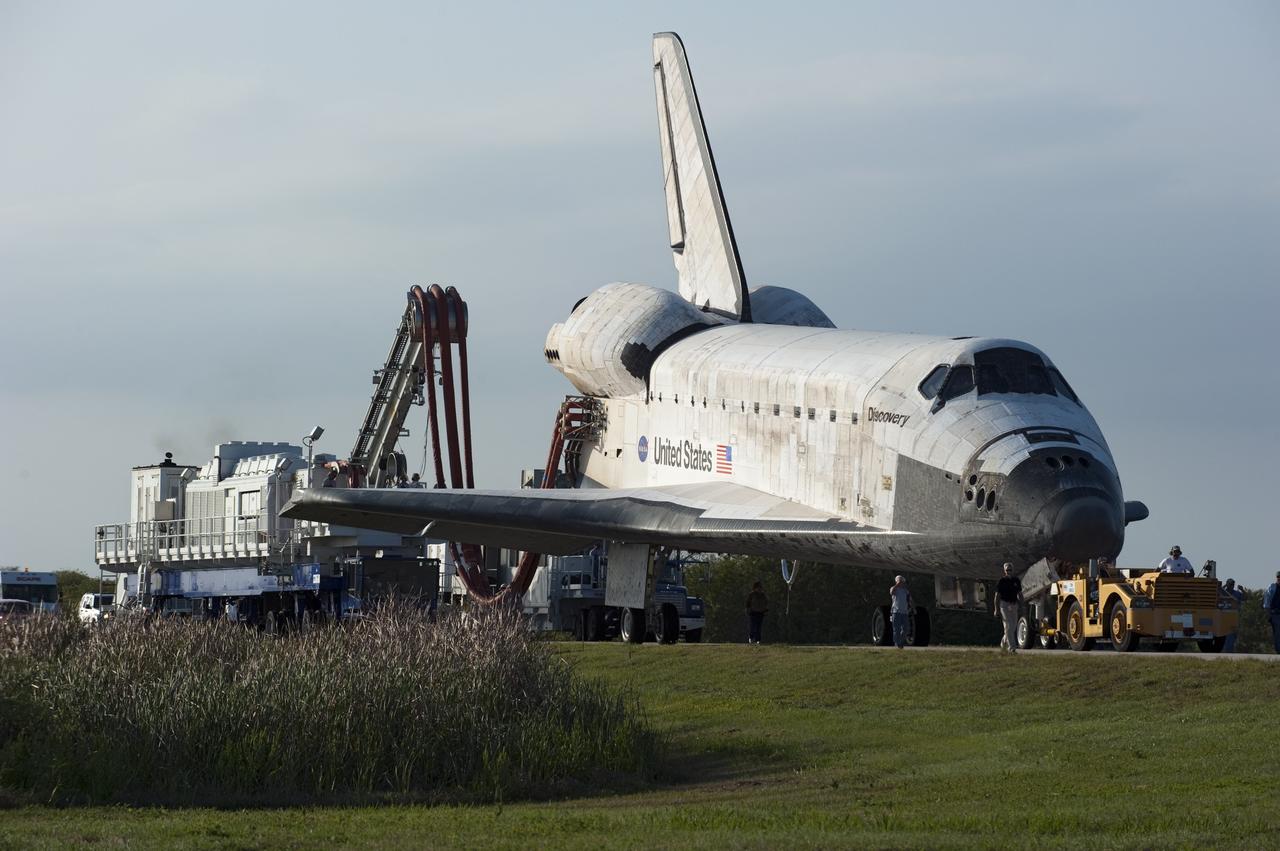
CAPE CANAVERAL, Fla. - Space shuttle Discovery's "towback" vehicle slowly pulls the spacecraft from the Shuttle Landing Facility to Orbiter Processing Facility-2 at NASA's Kennedy Space Center in Florida. A purge unit that pumps conditioned air into a shuttle after landing is connected to Discovery's aft end. Discovery touched down on Runway 15 at 11:57 a.m., bringing an end to its 39th and final spaceflight mission, STS-133. Discovery and its six-member STS-133 crew delivered the Permanent Multipurpose Module, packed with supplies and critical spare parts, as well as Robonaut 2, the dexterous humanoid astronaut helper, to the International Space Station. Inside the processing facility, Discovery will be prepared for future public display. Photo credit: NASA/Kim Shiflett
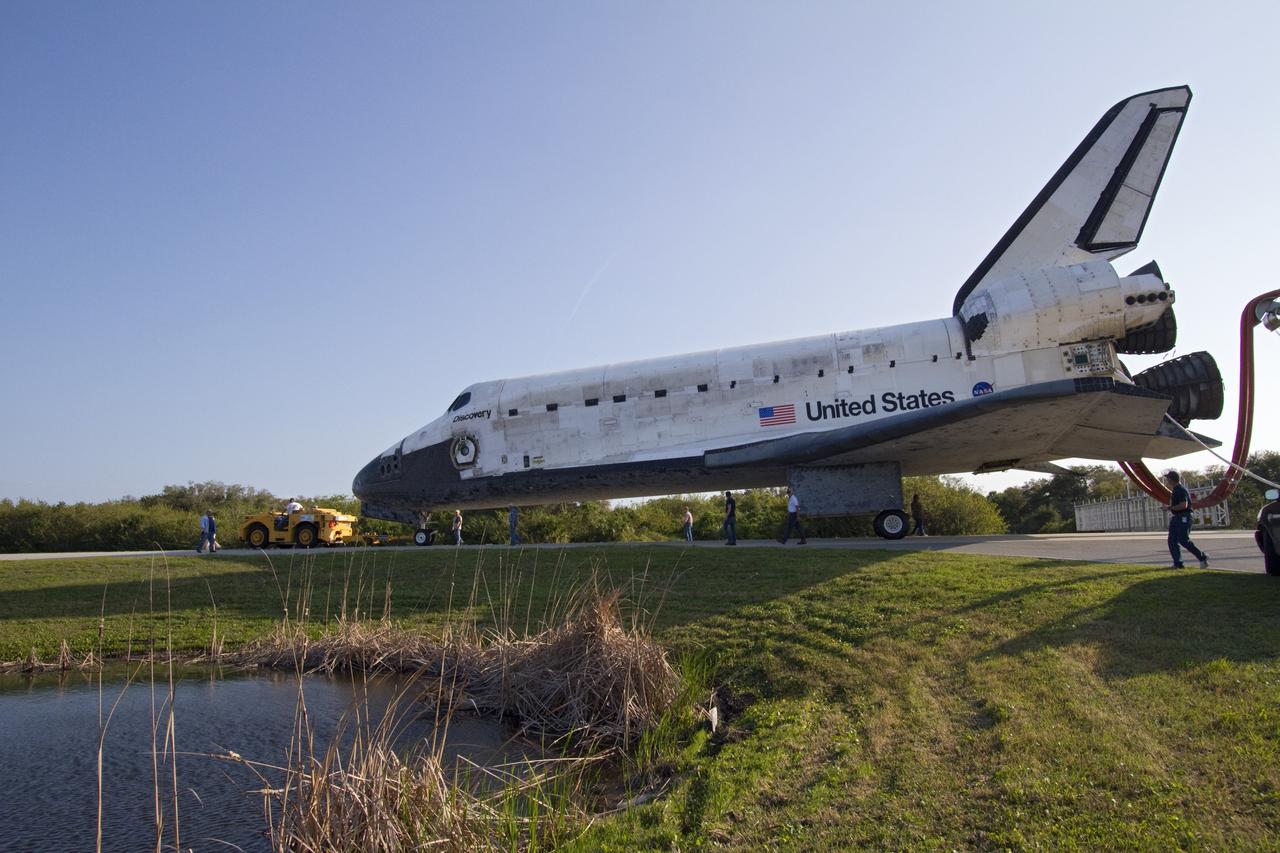
CAPE CANAVERAL, Fla. - Space shuttle Discovery's "towback" vehicle slowly pulls the spacecraft from the Shuttle Landing Facility to Orbiter Processing Facility-2 at NASA's Kennedy Space Center in Florida. A purge unit that pumps conditioned air into a shuttle after landing is connected to Discovery's aft end. Discovery touched down on Runway 15 at 11:57 a.m., bringing an end to its 39th and final spaceflight mission, STS-133. Discovery and its six-member STS-133 crew delivered the Permanent Multipurpose Module, packed with supplies and critical spare parts, as well as Robonaut 2, the dexterous humanoid astronaut helper, to the International Space Station. Inside the processing facility, Discovery will be prepared for future public display. Photo credit: NASA/Jack Pfaller
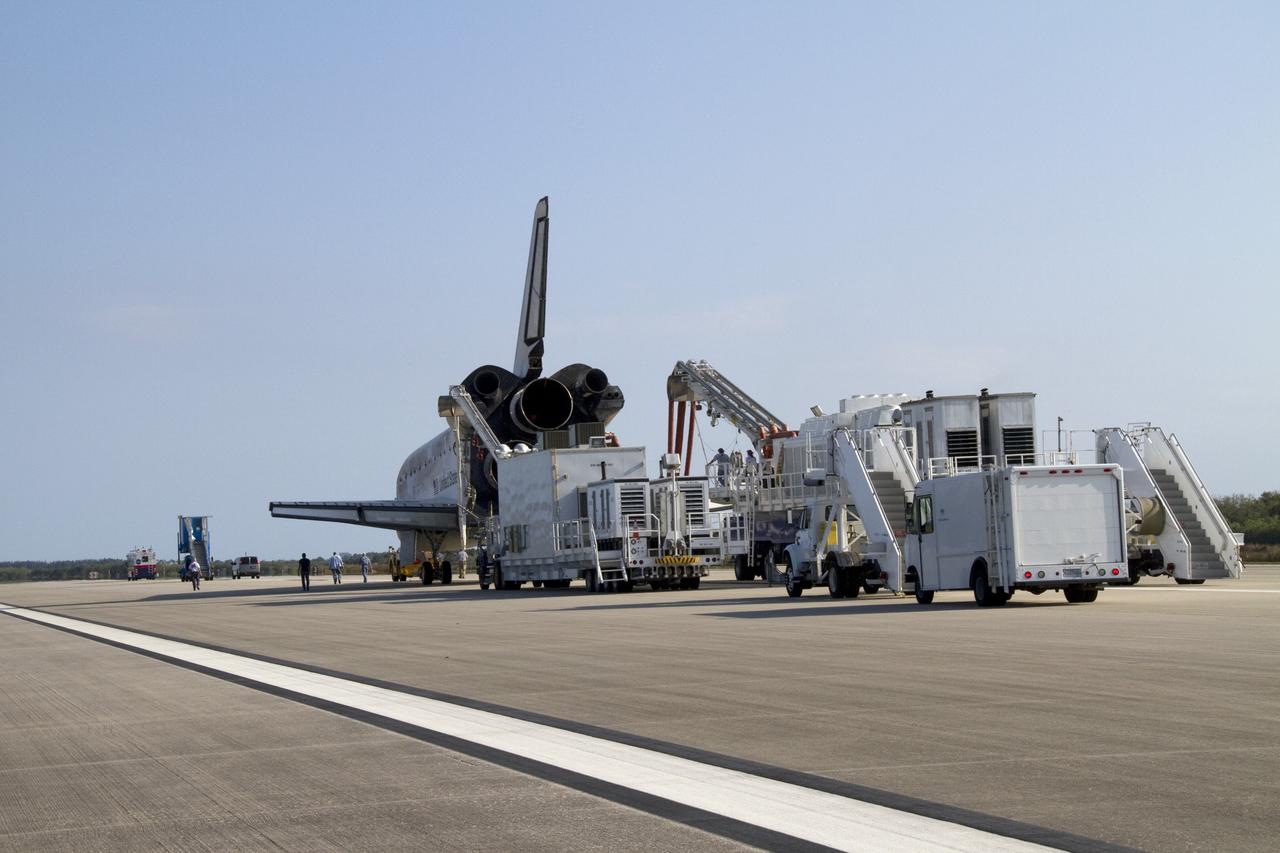
CAPE CANAVERAL, Fla. - Vehicles in the landing convoy surround space shuttle Discovery at NASA's Kennedy Space Center in Florida. A purge unit, connected to Discovery's aft end, pumps conditioned air into the shuttle for the slow trip from the Shuttle Landing Facility to Orbiter Processing Facility-2. Discovery touched down on Runway 15 at 11:57 a.m., bringing an end to its 39th and final spaceflight mission, STS-133. Discovery and its six-member STS-133 crew delivered the Permanent Multipurpose Module, packed with supplies and critical spare parts, as well as Robonaut 2, the dexterous humanoid astronaut helper, to the International Space Station. Inside the processing facility, Discovery will be prepared for future public display. Photo credit: NASA/Jack Pfaller
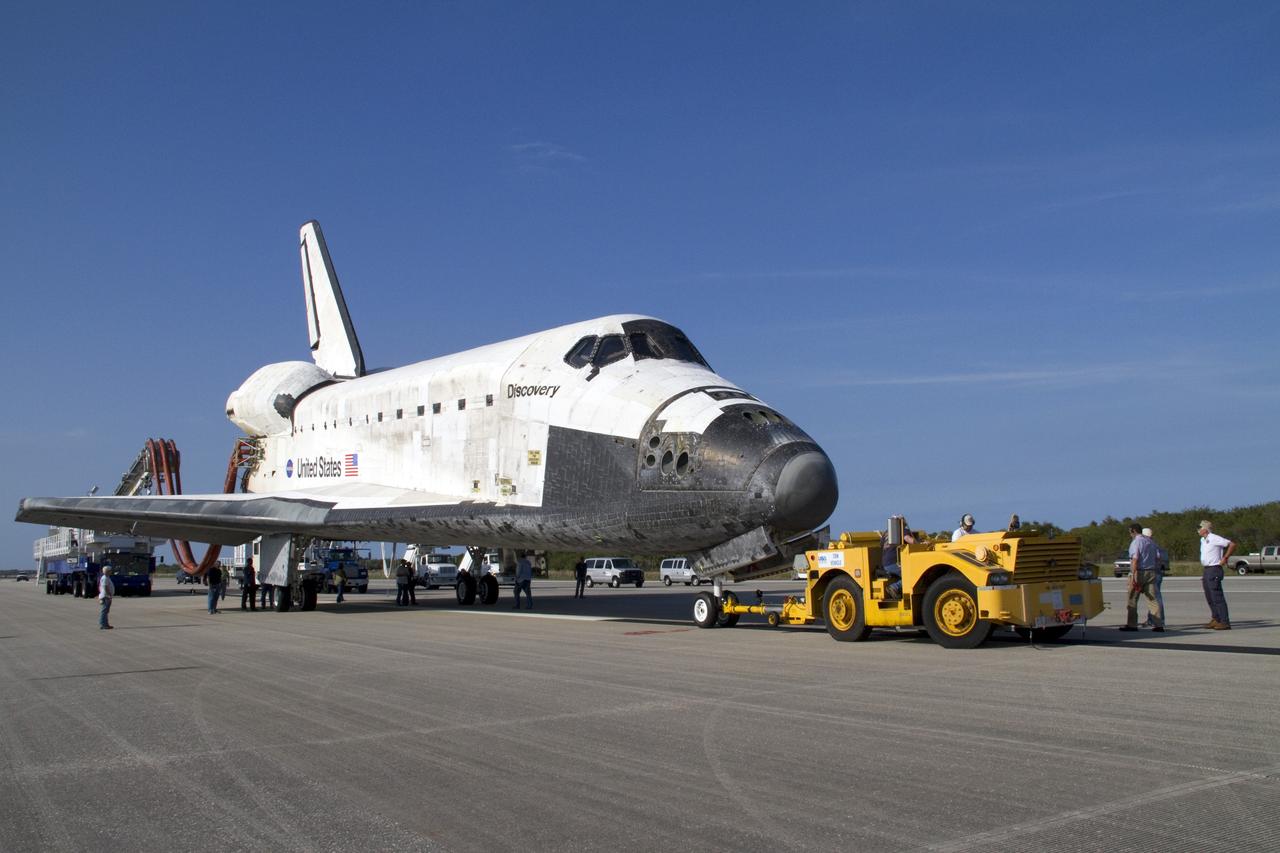
CAPE CANAVERAL, Fla. - Space shuttle Discovery is connected to its "towback" vehicle, which will slowly pull the spacecraft from the Shuttle Landing Facility to Orbiter Processing Facility-2 at NASA's Kennedy Space Center in Florida. A purge unit that pumps conditioned air into a shuttle after landing is connected to Discovery's aft end. Discovery touched down on Runway 15 at 11:57 a.m., bringing an end to its 39th and final spaceflight mission, STS-133. Discovery and its six-member STS-133 crew delivered the Permanent Multipurpose Module, packed with supplies and critical spare parts, as well as Robonaut 2, the dexterous humanoid astronaut helper, to the International Space Station. Inside the processing facility, Discovery will be prepared for future public display. Photo credit: NASA/Jack Pfaller
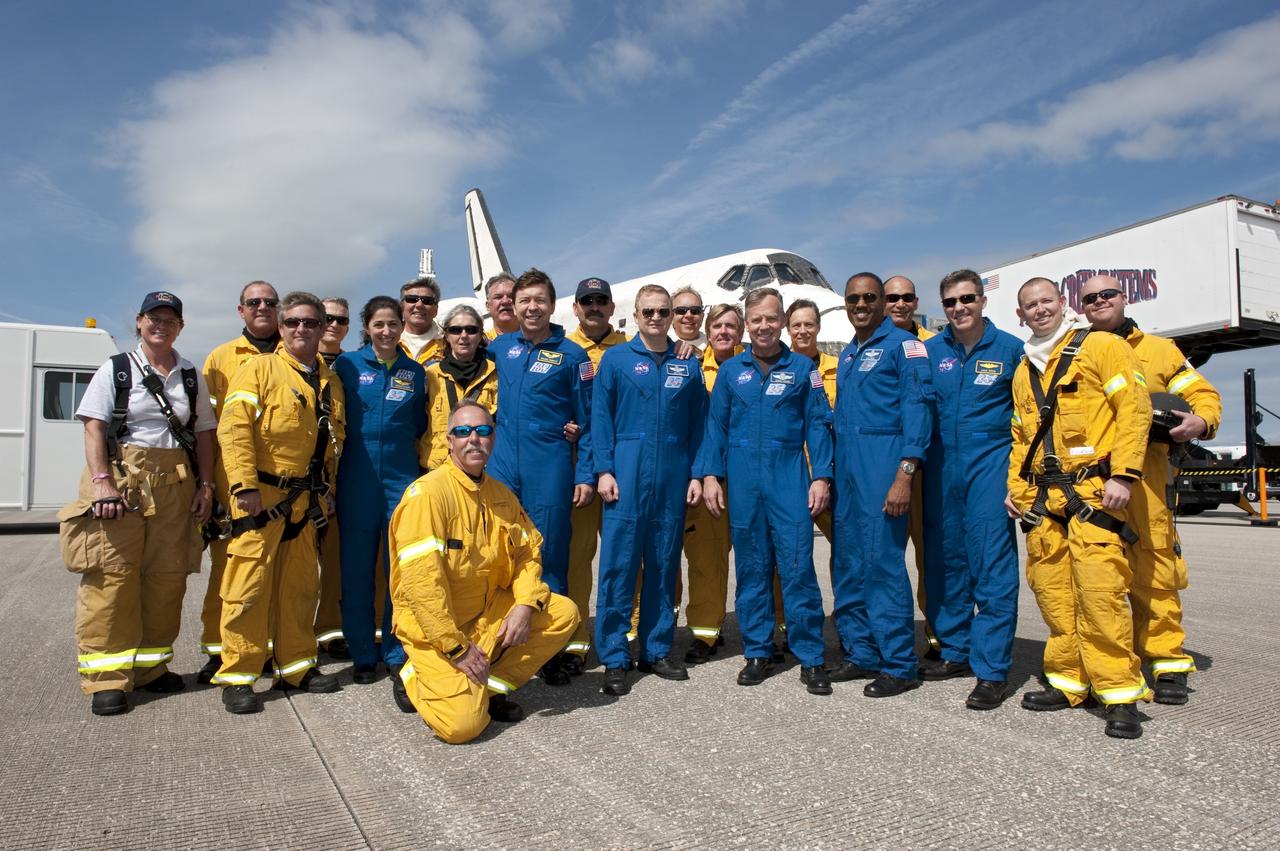
CAPE CANAVERAL, Fla. -- The STS-133 crew poses for a photo with NASA Fire Rescue personnel in front of space shuttle Discovery on the Shuttle Landing Facility's Runway 15 at NASA's Kennedy Space Center in Florida. From left, are Mission Specialists Nicole Stott and Michael Barratt, Pilot Eric Boe, Commander Steve Lindsey, and Mission Specialists Alvin Drew and Steve Bowen. Discovery and the flight crew returned to Earth at 11:57 a.m., completing a 13-day, 5.3-million-mile mission to the International Space Station. STS-133 delivered the Permanent Multipurpose Module, packed with supplies and critical spare parts, as well as Robonaut 2, the dexterous humanoid astronaut helper, to the orbiting outpost. STS-133 was Discovery's 39th and final mission. This was the 133rd Space Shuttle Program mission and the 35th shuttle voyage to the space station. Photo credit: NASA/Kim Shiflett
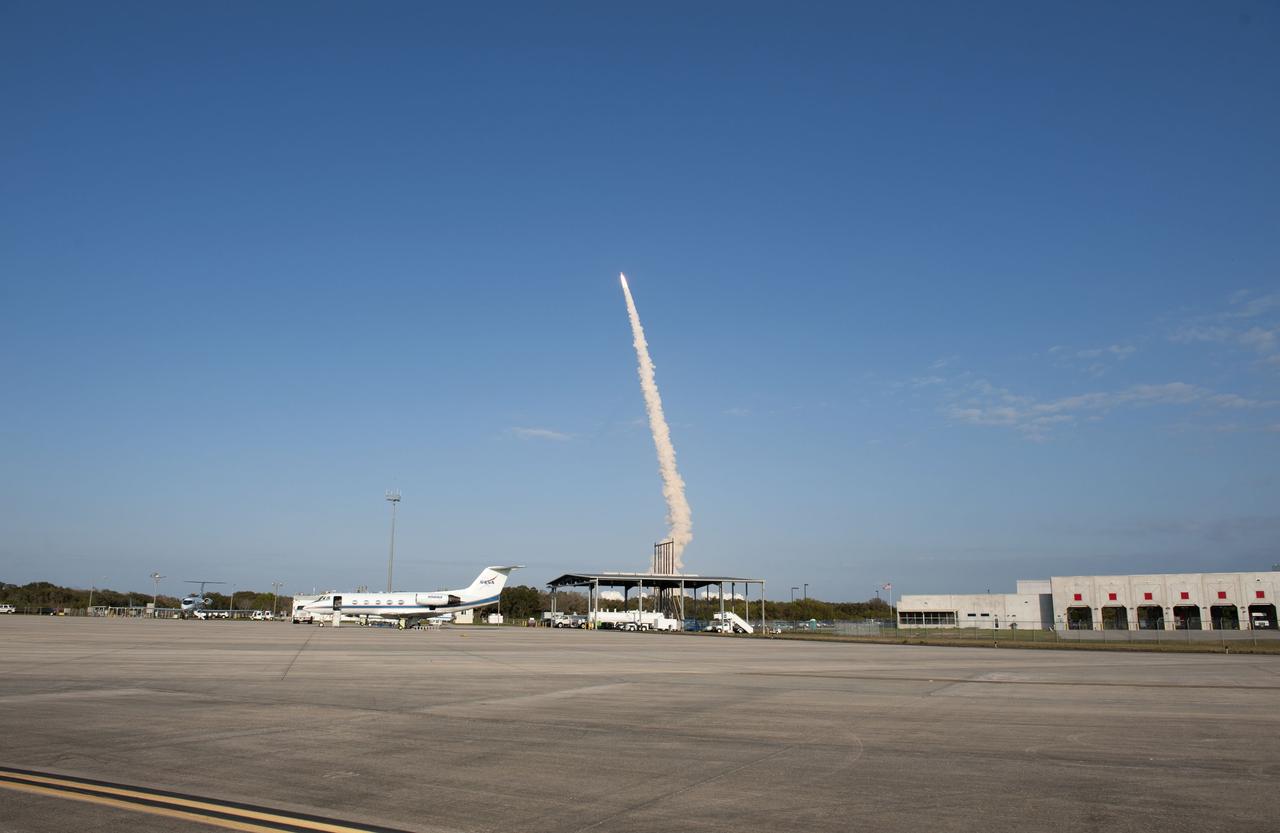
CAPE CANAVERAL, Fla. -- This image taken from the Shuttle Landing Facility at NASA's Kennedy Space Center in Florida, shows space shuttle Discovery lifting off from Launch Pad 39A at NASA's Kennedy Space Center in Florida, beginning its final flight, the STS-133 mission, to the International Space Station. Launch was at 4:53 p.m. EST. Discovery and its six-member crew will deliver the Permanent Multipurpose Module, packed with supplies and critical spare parts, as well as Robonaut 2, the dexterous humanoid astronaut helper, to the orbiting outpost. Discovery is flying on its 39th mission and is scheduled to be retired following STS-133. This is the 133rd Space Shuttle Program mission and the 35th shuttle voyage to the space station. For more information on the STS-133 mission, visit www.nasa.gov/mission_pages/shuttle/shuttlemissions/sts133/. Photo credit: NASA/Carl Winebarger
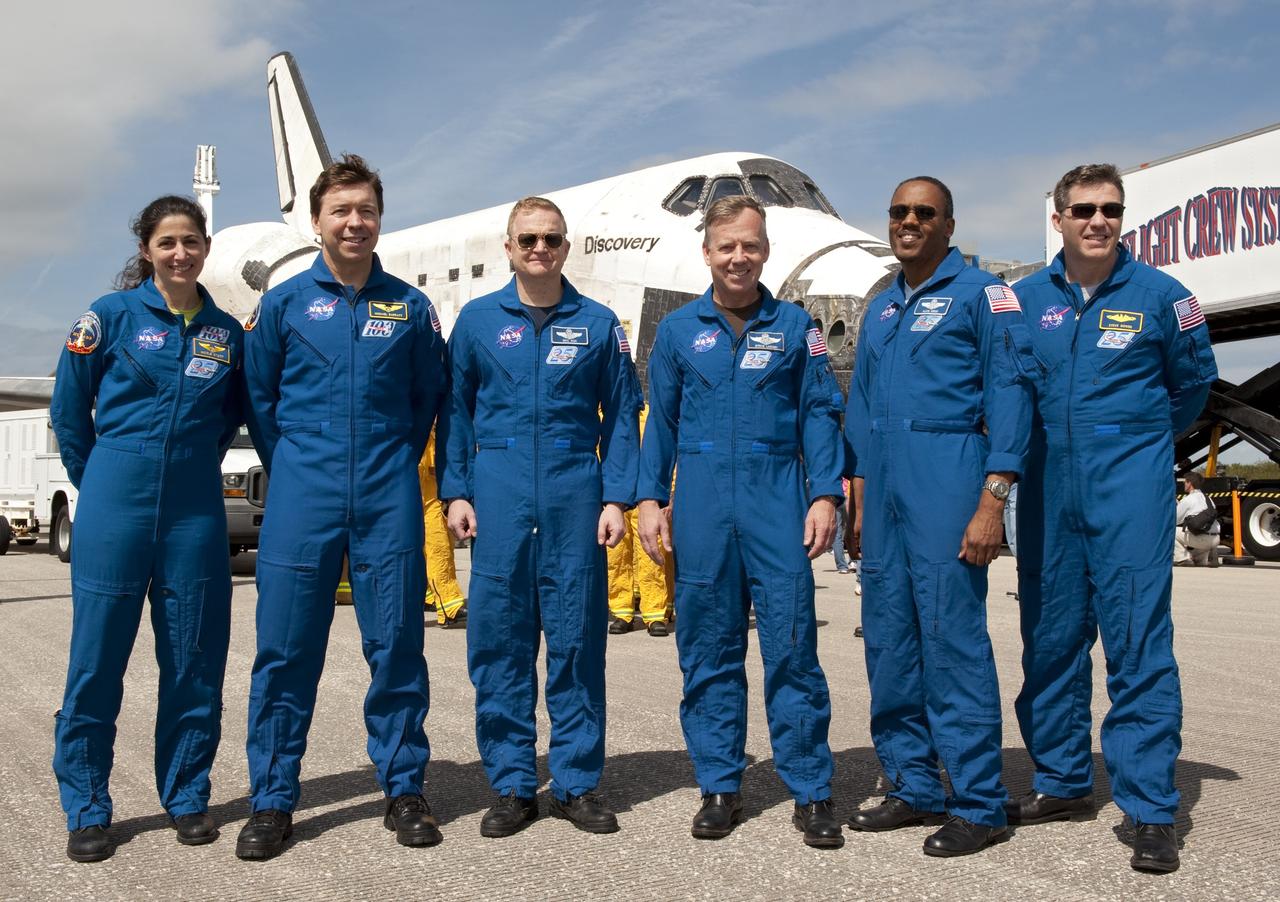
CAPE CANAVERAL, Fla. -- The STS-133 crew poses for a photo in front of space shuttle Discovery on the Shuttle Landing Facility's Runway 15 at NASA's Kennedy Space Center in Florida. From left, are Mission Specialists Nicole Stott and Michael Barratt, Pilot Eric Boe, Commander Steve Lindsey, and Mission Specialists Alvin Drew and Steve Bowen. Discovery and crew returned to Earth at 11:57 a.m., completing a 13-day, 5.3-million-mile mission to the International Space Station. STS-133 delivered the Permanent Multipurpose Module, packed with supplies and critical spare parts, as well as Robonaut 2, the dexterous humanoid astronaut helper, to the orbiting outpost. STS-133 was Discovery's 39th and final mission. This was the 133rd Space Shuttle Program mission and the 35th shuttle voyage to the space station. Photo credit: NASA/Kim Shiflett
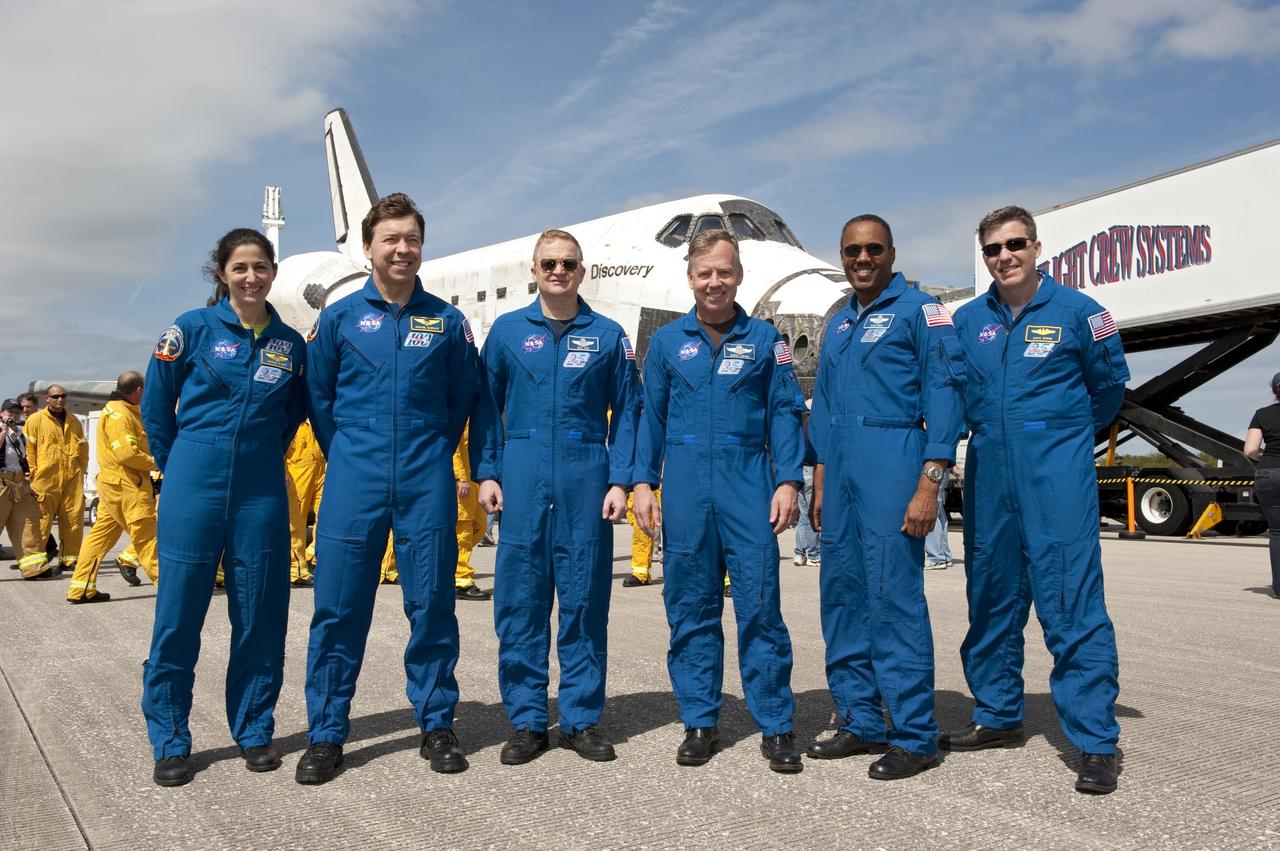
CAPE CANAVERAL, Fla. -- The STS-133 crew poses for a photo in front of space shuttle Discovery on the Shuttle Landing Facility's Runway 15 at NASA's Kennedy Space Center in Florida. From left, are Mission Specialists Nicole Stott and Michael Barratt, Pilot Eric Boe, Commander Steve Lindsey, and Mission Specialists Alvin Drew and Steve Bowen. Discovery and crew returned to Earth at 11:57 a.m., completing a 13-day, 5.3-million-mile mission to the International Space Station. STS-133 delivered the Permanent Multipurpose Module, packed with supplies and critical spare parts, as well as Robonaut 2, the dexterous humanoid astronaut helper, to the orbiting outpost. STS-133 was Discovery's 39th and final mission. This was the 133rd Space Shuttle Program mission and the 35th shuttle voyage to the space station. Photo credit: NASA/Kim Shiflett
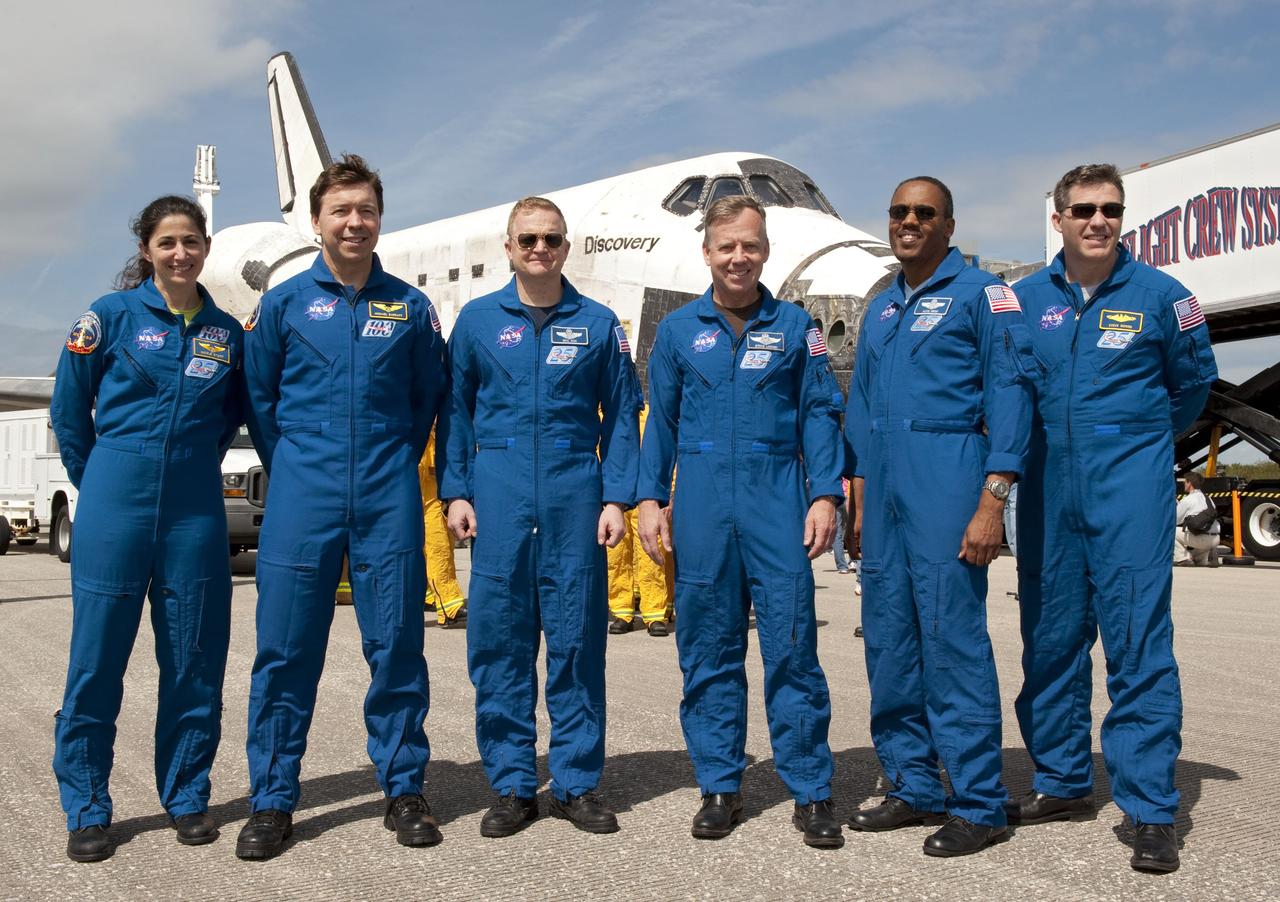
STS133-S-157 (9 March 2011) --- The STS-133 crew poses for a photo in front of space shuttle Discovery on the Shuttle Landing Facility's Runway 15 at NASA's Kennedy Space Center in Florida. From left are astronauts Nicole Stott and Michael Barratt, both mission specialists; Eric Boe, pilot; Steve Lindsey, commander; Alvin Drew and Steve Bowen, both mission specialists. Discovery and crew returned to Earth at 11:57 a.m. (EST) on March 9, 2011, completing a 13-day, 5.3-million-mile mission to the International Space Station. STS-133 delivered the Permanent Multipurpose Module, packed with supplies and critical spare parts, as well as Robonaut 2, the dexterous humanoid astronaut helper, to the orbiting outpost. STS-133 was Discovery's 39th and final mission. This was the 133rd Space Shuttle Program mission and the 35th shuttle voyage to the space station. Photo credit: NASA or National Aeronautics and Space Administration
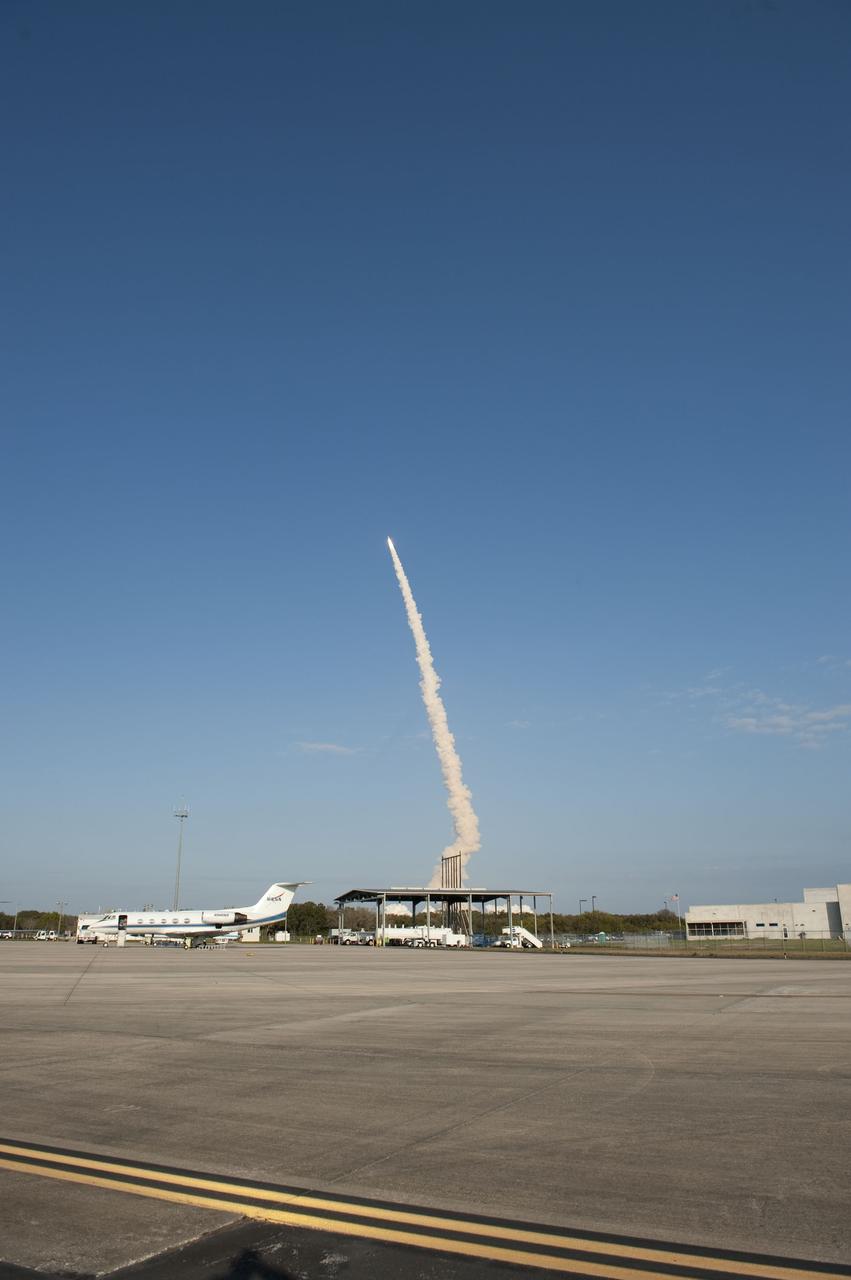
CAPE CANAVERAL, Fla. -- This image taken from the Shuttle Landing Facility at NASA's Kennedy Space Center in Florida, shows space shuttle Discovery lifting off from Launch Pad 39A at NASA's Kennedy Space Center in Florida, beginning its final flight, the STS-133 mission, to the International Space Station. Launch was at 4:53 p.m. EST. Discovery and its six-member crew will deliver the Permanent Multipurpose Module, packed with supplies and critical spare parts, as well as Robonaut 2, the dexterous humanoid astronaut helper, to the orbiting outpost. Discovery is flying on its 39th mission and is scheduled to be retired following STS-133. This is the 133rd Space Shuttle Program mission and the 35th shuttle voyage to the space station. For more information on the STS-133 mission, visit www.nasa.gov/mission_pages/shuttle/shuttlemissions/sts133/. Photo credit: NASA/Carl Winebarger
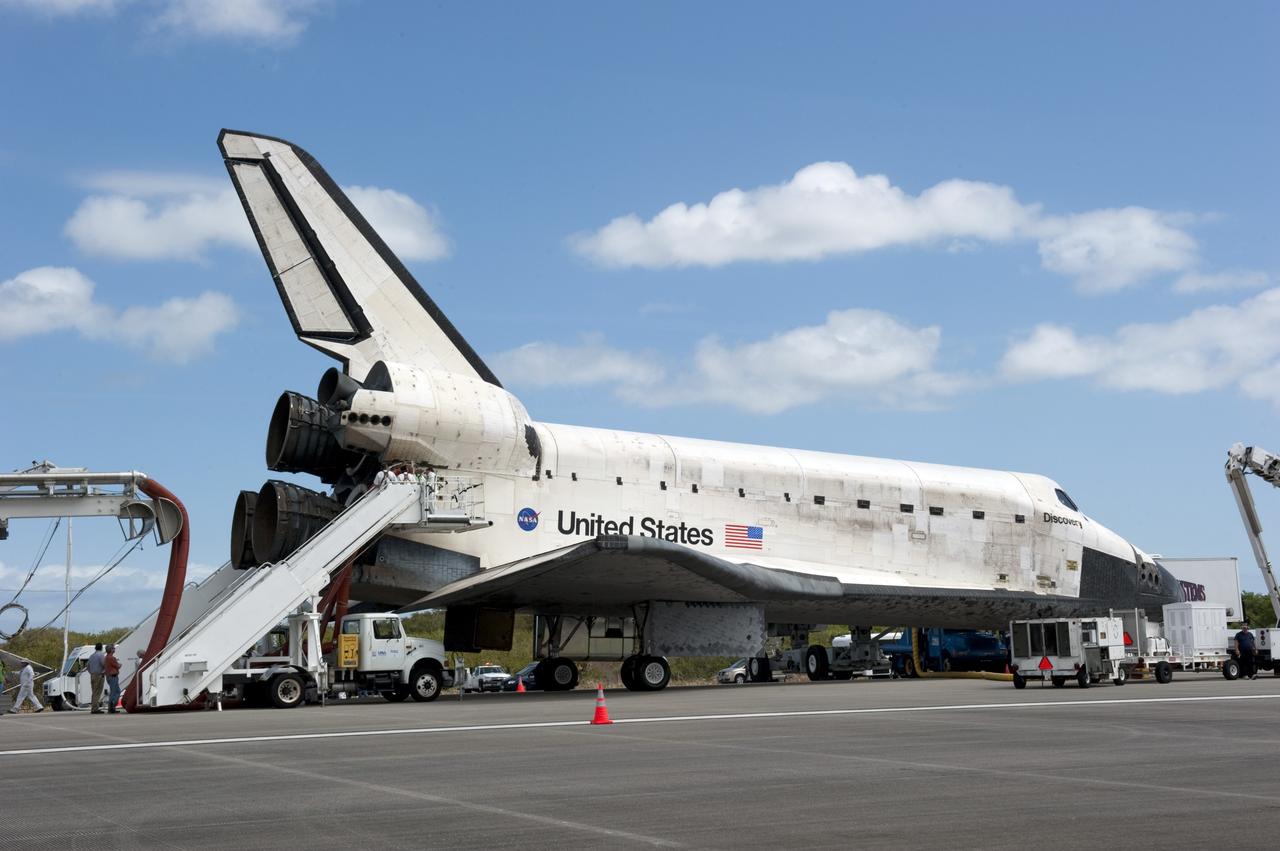
CAPE CANAVERAL, Fla. -- The landing convoy that will make space shuttle Discovery secure for towing to its processing hangar begins to pull up around the spacecraft following wheelstop on the Shuttle Landing Facility's Runway 15 at NASA's Kennedy Space Center in Florida. Discovery's final return from space completed the 13-day, 5.3-million-mile STS-133 mission. Main gear touchdown was at 11:57:17 a.m., followed by nose gear touchdown at 11:57:28, and wheelstop at 11:58:14 a.m. Discovery and its six-member crew delivered the Permanent Multipurpose Module, packed with supplies and critical spare parts, as well as Robonaut 2, the dexterous humanoid astronaut helper, to the orbiting outpost. STS-133 was Discovery's 39th and final mission. This was the 133rd Space Shuttle Program mission and the 35th shuttle voyage to the space station. Photo credit: NASA/Kim Shiflett
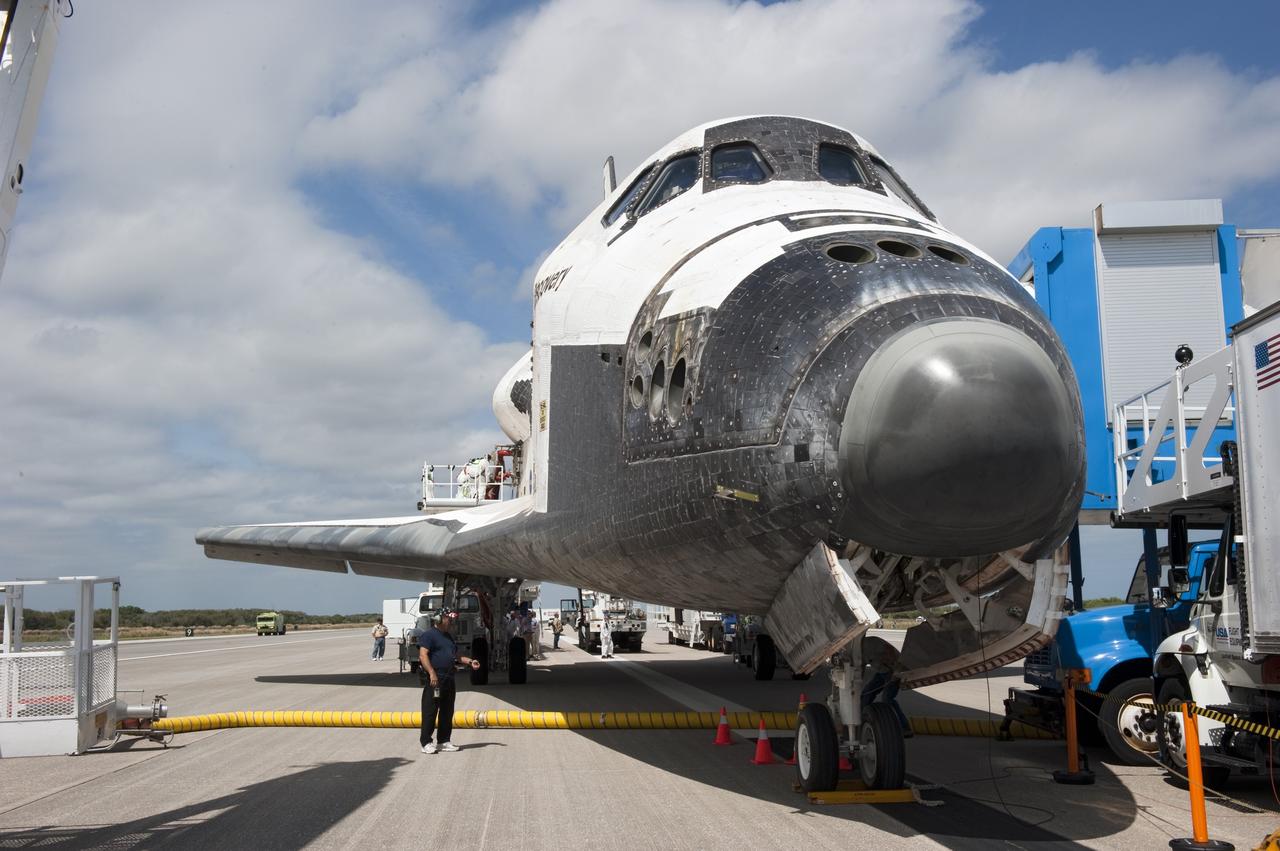
CAPE CANAVERAL, Fla. -- The landing convoy that will make space shuttle Discovery secure for towing to its processing hangar begins to pull up around the spacecraft following wheelstop on the Shuttle Landing Facility's Runway 15 at NASA's Kennedy Space Center in Florida. Discovery's final return from space completed the 13-day, 5.3-million-mile STS-133 mission. Main gear touchdown was at 11:57:17 a.m., followed by nose gear touchdown at 11:57:28, and wheelstop at 11:58:14 a.m. Discovery and its six-member crew delivered the Permanent Multipurpose Module, packed with supplies and critical spare parts, as well as Robonaut 2, the dexterous humanoid astronaut helper, to the orbiting outpost. STS-133 was Discovery's 39th and final mission. This was the 133rd Space Shuttle Program mission and the 35th shuttle voyage to the space station. Photo credit: NASA/Kim Shiflett
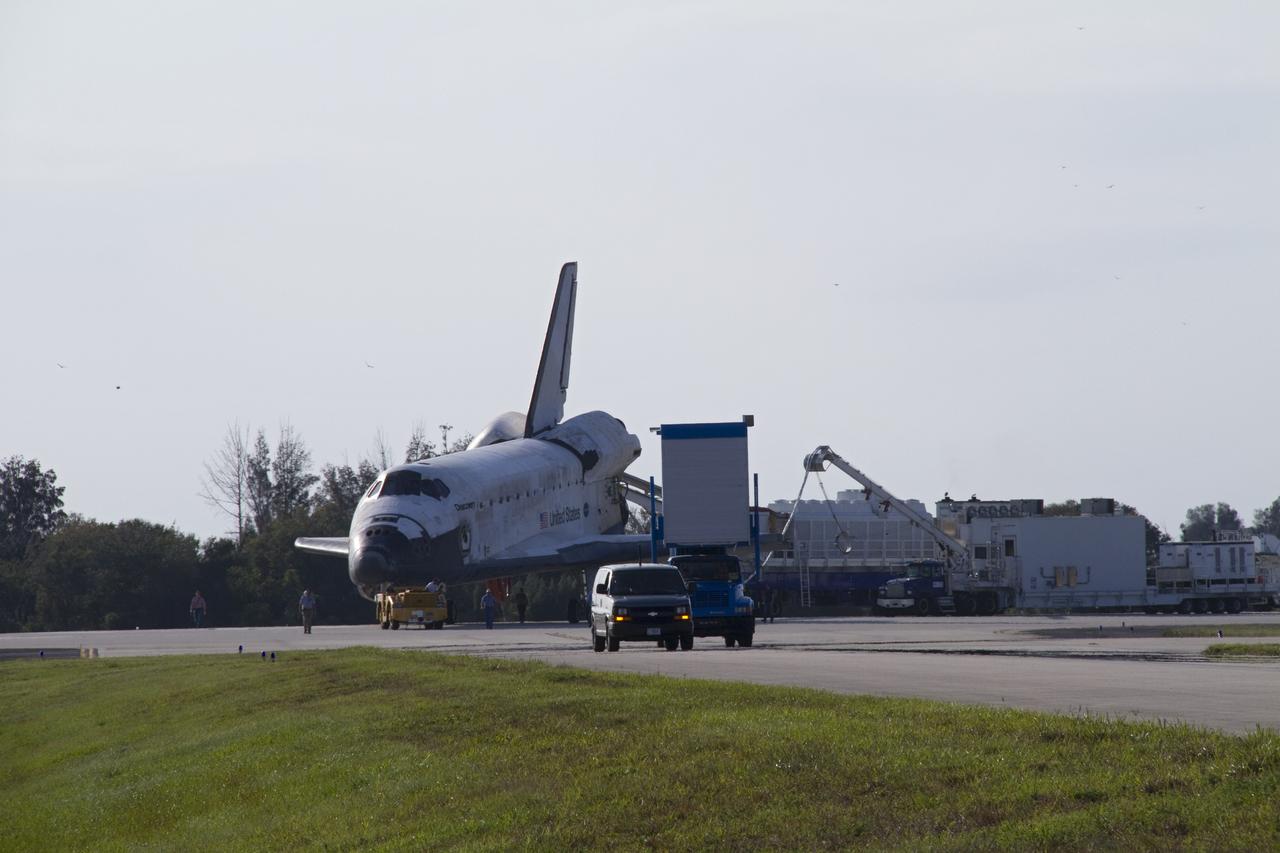
CAPE CANAVERAL, Fla. - Space shuttle Discovery and vehicles in the landing convoy enter the towway at NASA's Kennedy Space Center in Florida. The slow trip from the Shuttle Landing Facility to Orbiter Processing Facility-2 is under way. Discovery touched down on Runway 15 at 11:57 a.m., bringing an end to its 39th and final spaceflight mission, STS-133. Discovery and its six-member STS-133 crew delivered the Permanent Multipurpose Module, packed with supplies and critical spare parts, as well as Robonaut 2, the dexterous humanoid astronaut helper, to the International Space Station. Inside the processing facility, Discovery will be prepared for future public display. Photo credit: NASA/Jack Pfaller
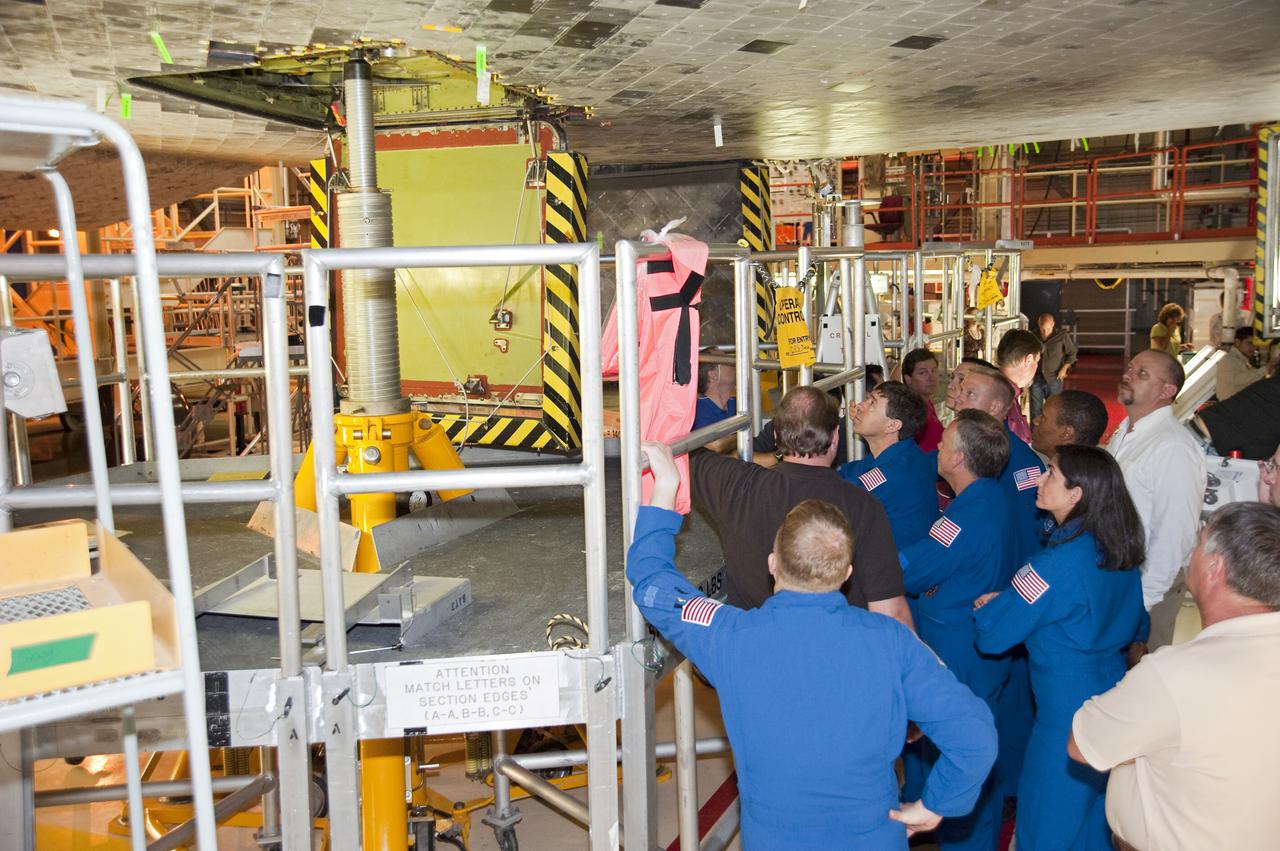
CAPE CANAVERAL, Fla. -- In Orbiter Processing Facility-3 at NASA's Kennedy Space Center in Florida, the STS-133 crew members look up into the shuttle's wheel well as a technician describes the landing gear. The astronauts are at Kennedy for the Crew Equipment Interface Test, or CEIT, which provides the crew with hands-on training and observation of shuttle and flight hardware for their mission to the International Space Station. Launch of the STS-133 mission on space shuttle Discovery is targeted for Nov. 1 at 4:33 p.m. EDT. Photo credit: NASA_Kim Shiflett
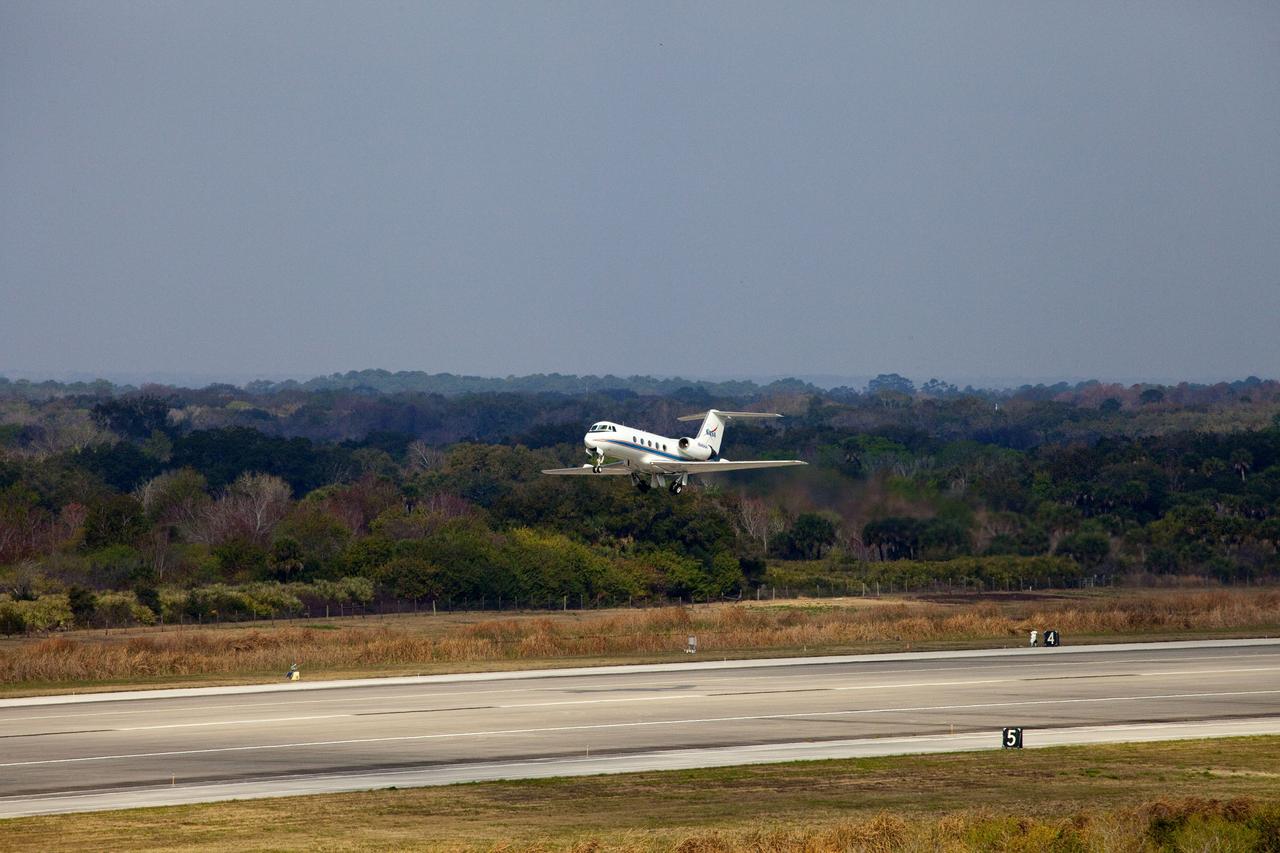
CAPE CANAVERAL, Fla. -- This image was taken from the Shuttle Landing Facility's air traffic control tower at NASA's Kennedy Space Center in Florida and provides a birds-eye view of STS-133 Pilot Eric Boe performing touch-and-go landings aboard one of two Shuttle Training Aircraft (STA). STAs are Gulfstream II business jets that are modified to mimic the shuttle's handling during the final phase of landing. Practice landings are part of standard training before space shuttle Discovery's launch to the International Space Station. Scheduled to lift off Feb. 24 at 4:50 p.m. EST, Discovery and its six-member crew will deliver the Permanent Multipurpose Module, packed with supplies and critical spare parts, as well as Robonaut 2, the dexterous humanoid astronaut helper, to the orbiting outpost. For more information on the STS-133 mission, visit www.nasa.gov/mission_pages/shuttle/shuttlemissions/sts133/. Photo credit: NASA/Ben Smegelsky
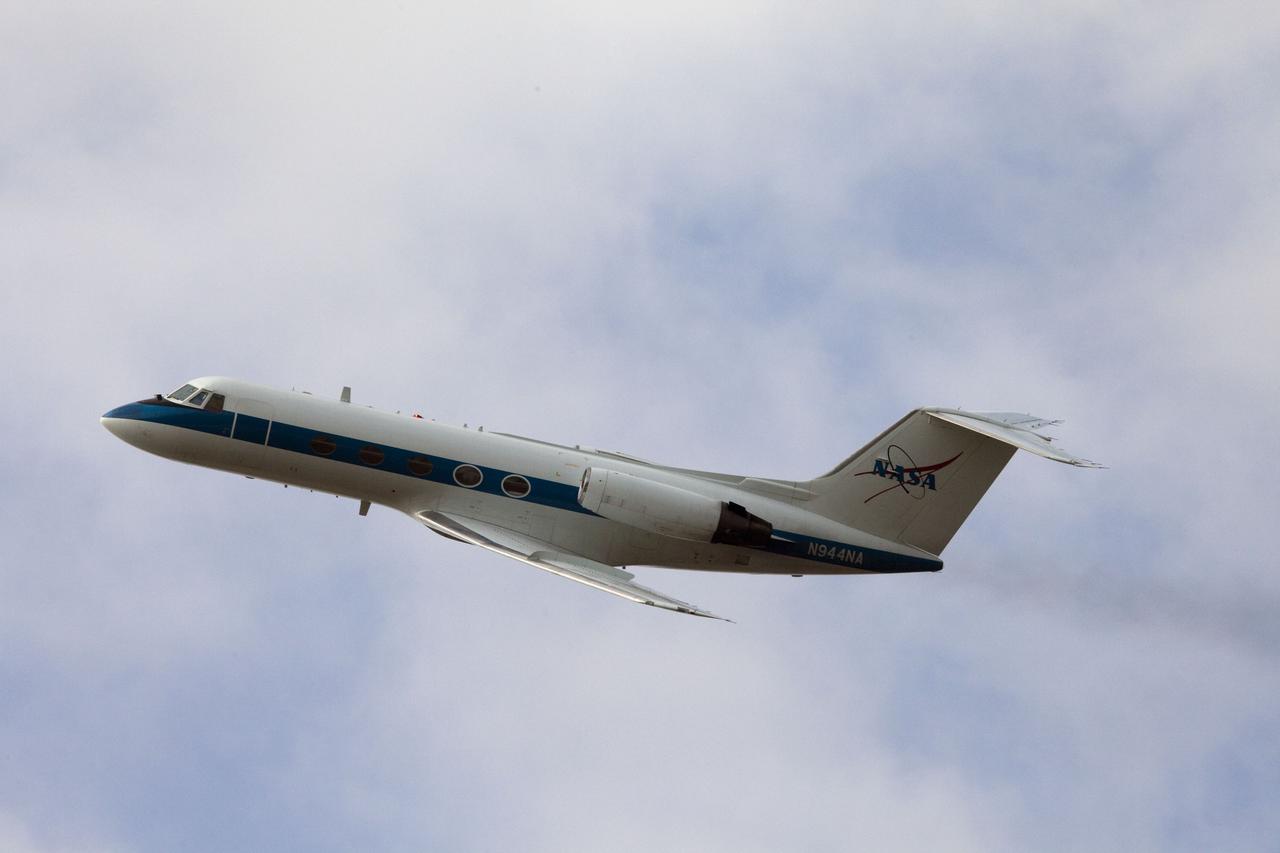
CAPE CANAVERAL, Fla. -- This image was taken from the Shuttle Landing Facility's air traffic control tower at NASA's Kennedy Space Center in Florida and provides a birds-eye view of STS-133 Commander Steve Lindsey performing touch-and-go landings aboard one of two Shuttle Training Aircraft (STA). STAs are Gulfstream II business jets that are modified to mimic the shuttle's handling during the final phase of landing. Practice landings are part of standard training before space shuttle Discovery's launch to the International Space Station. Scheduled to lift off Feb. 24 at 4:50 p.m. EST, Discovery and its six-member crew will deliver the Permanent Multipurpose Module, packed with supplies and critical spare parts, as well as Robonaut 2, the dexterous humanoid astronaut helper, to the orbiting outpost. For more information on the STS-133 mission, visit www.nasa.gov/mission_pages/shuttle/shuttlemissions/sts133/. Photo credit: NASA/Ben Smegelsky

CAPE CANAVERAL, Fla. -- This image was taken from the Shuttle Landing Facility's air traffic control tower at NASA's Kennedy Space Center in Florida and provides a birds-eye view of STS-133 Commander Steve Lindsey performing touch-and-go landings aboard one of two Shuttle Training Aircraft (STA). STAs are Gulfstream II business jets that are modified to mimic the shuttle's handling during the final phase of landing. Practice landings are part of standard training before space shuttle Discovery's launch to the International Space Station. Scheduled to lift off Feb. 24 at 4:50 p.m. EST, Discovery and its six-member crew will deliver the Permanent Multipurpose Module, packed with supplies and critical spare parts, as well as Robonaut 2, the dexterous humanoid astronaut helper, to the orbiting outpost. For more information on the STS-133 mission, visit www.nasa.gov/mission_pages/shuttle/shuttlemissions/sts133/. Photo credit: NASA/Ben Smegelsky
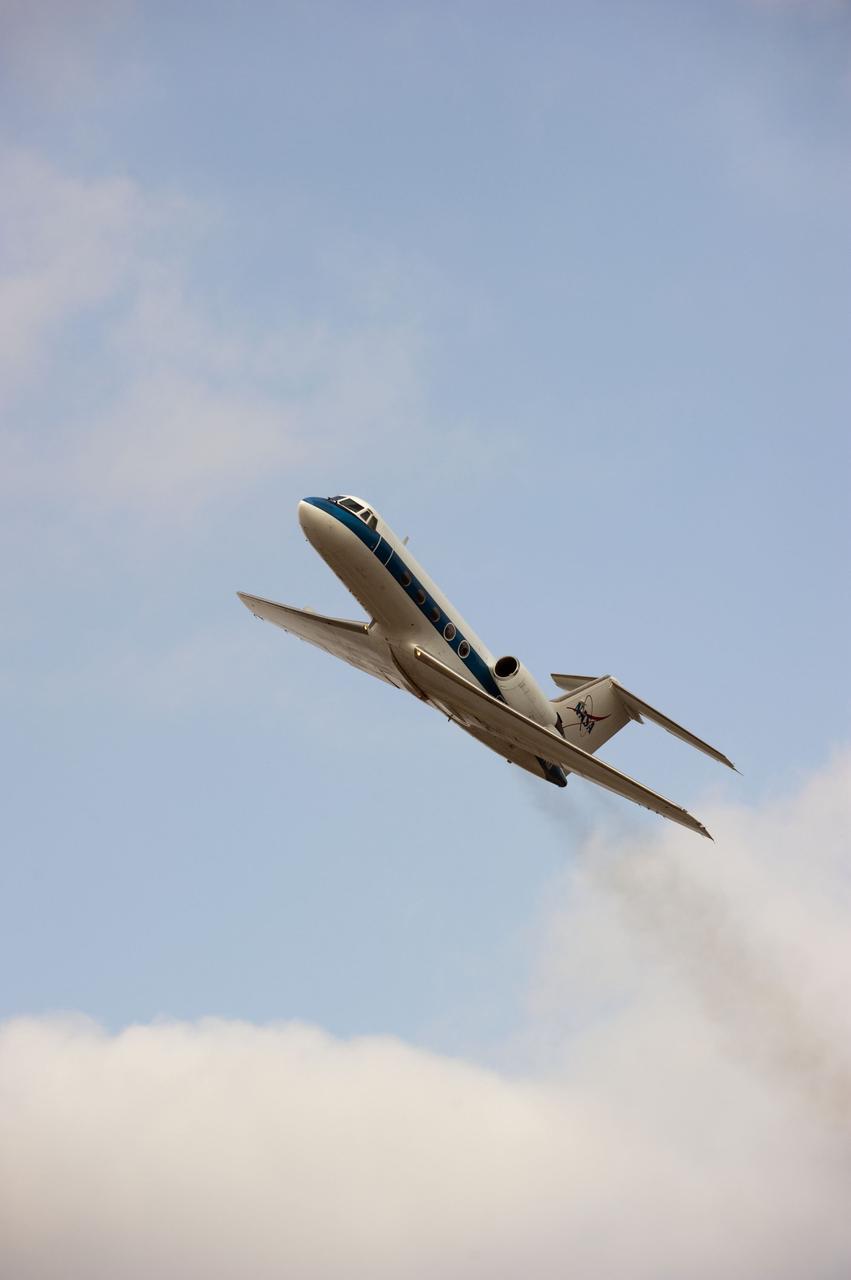
CAPE CANAVERAL, Fla. -- A Shuttle Training Aircraft (STA) performs touch-and-go landings over the Shuttle Landing Facility runway at NASA's Kennedy Space Center in Florida. STS-133 Commander Steve Lindsey and Pilot Eric Boe are flying two Gulfstream II business jets that are modified to mimic the shuttle's handling during the final phase of landing. These practice landings are part of standard training before space shuttle Discovery's launch to the International Space Station. Scheduled to lift off Feb. 24 at 4:50 p.m. EST, Discovery and its six-member crew will deliver the Permanent Multipurpose Module, packed with supplies and critical spare parts, as well as Robonaut 2, the dexterous humanoid astronaut helper, to the orbiting outpost. For more information on the STS-133 mission, visit www.nasa.gov/mission_pages/shuttle/shuttlemissions/sts133/. Photo credit: NASA/Kim Shiflett
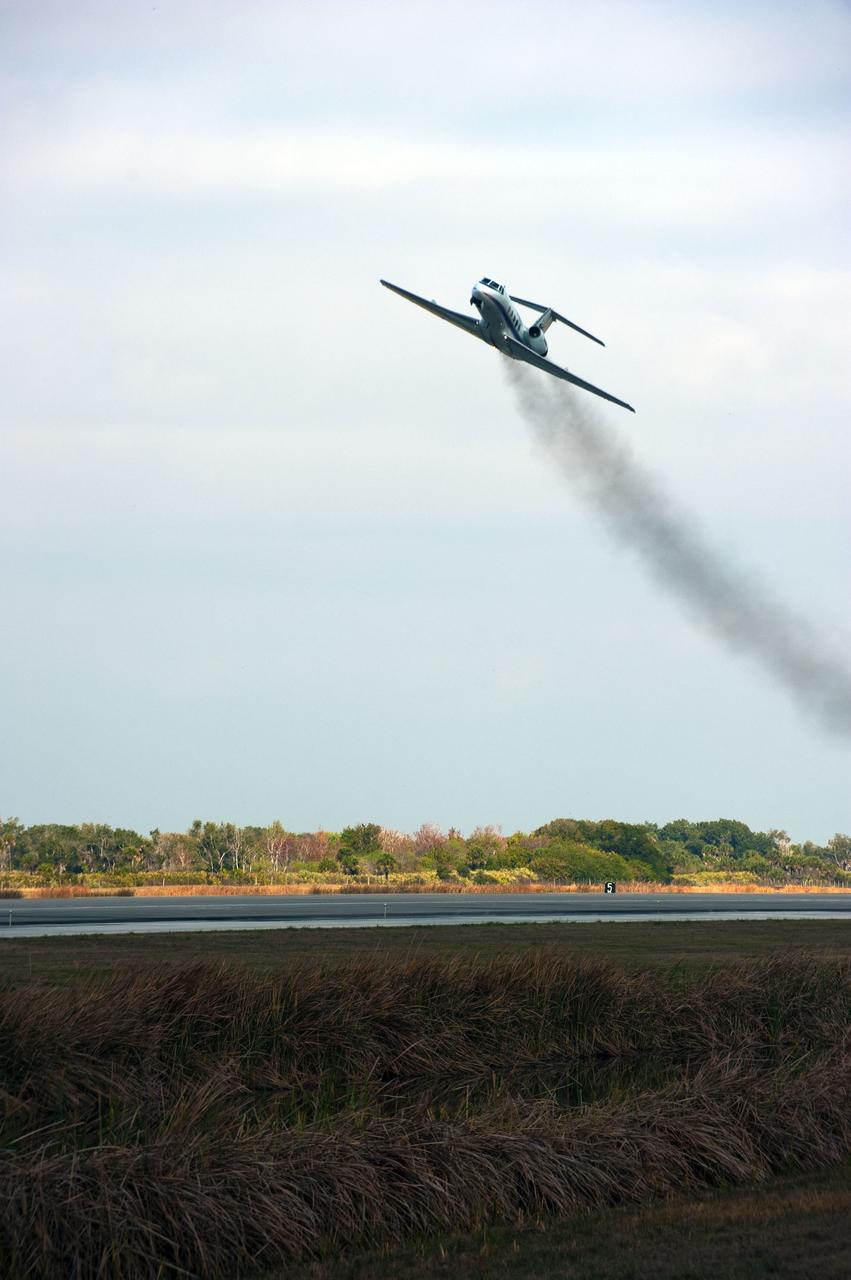
CAPE CANAVERAL, Fla. -- A Shuttle Training Aircraft (STA) performs touch-and-go landings over the Shuttle Landing Facility runway at NASA's Kennedy Space Center in Florida. STS-133 Commander Steve Lindsey and Pilot Eric Boe are flying two Gulfstream II business jets that are modified to mimic the shuttle's handling during the final phase of landing. These practice landings are part of standard training before space shuttle Discovery's launch to the International Space Station. Scheduled to lift off Feb. 24 at 4:50 p.m. EST, Discovery and its six-member crew will deliver the Permanent Multipurpose Module, packed with supplies and critical spare parts, as well as Robonaut 2, the dexterous humanoid astronaut helper, to the orbiting outpost. For more information on the STS-133 mission, visit www.nasa.gov/mission_pages/shuttle/shuttlemissions/sts133/. Photo credit: NASA/Kim Shiflett
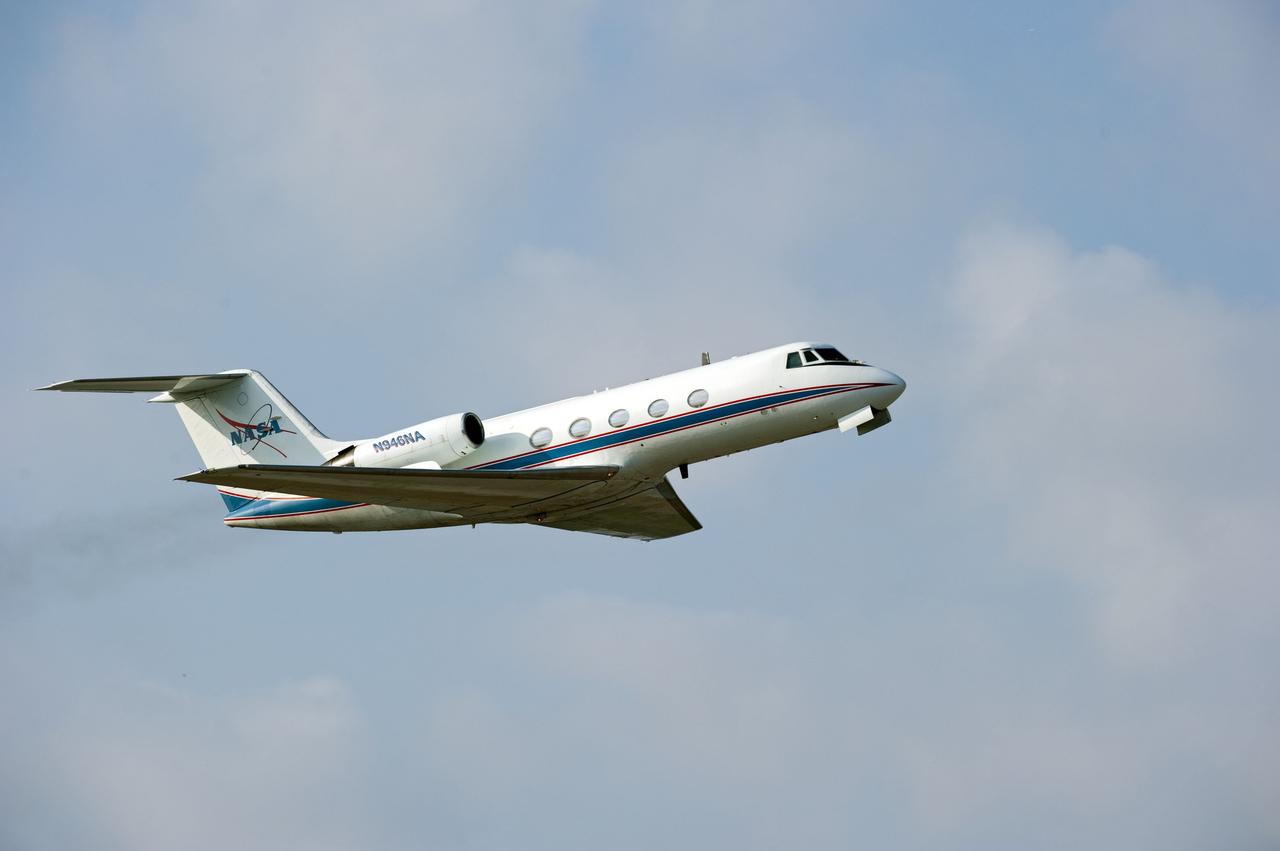
CAPE CANAVERAL, Fla. -- A Shuttle Training Aircraft (STA) performs touch-and-go landings over the Shuttle Landing Facility runway at NASA's Kennedy Space Center in Florida. STS-133 Commander Steve Lindsey and Pilot Eric Boe are flying two Gulfstream II business jets that are modified to mimic the shuttle's handling during the final phase of landing. These practice landings are part of standard training before space shuttle Discovery's launch to the International Space Station. Scheduled to lift off Feb. 24 at 4:50 p.m. EST, Discovery and its six-member crew will deliver the Permanent Multipurpose Module, packed with supplies and critical spare parts, as well as Robonaut 2, the dexterous humanoid astronaut helper, to the orbiting outpost. For more information on the STS-133 mission, visit www.nasa.gov/mission_pages/shuttle/shuttlemissions/sts133/. Photo credit: NASA/Kim Shiflett
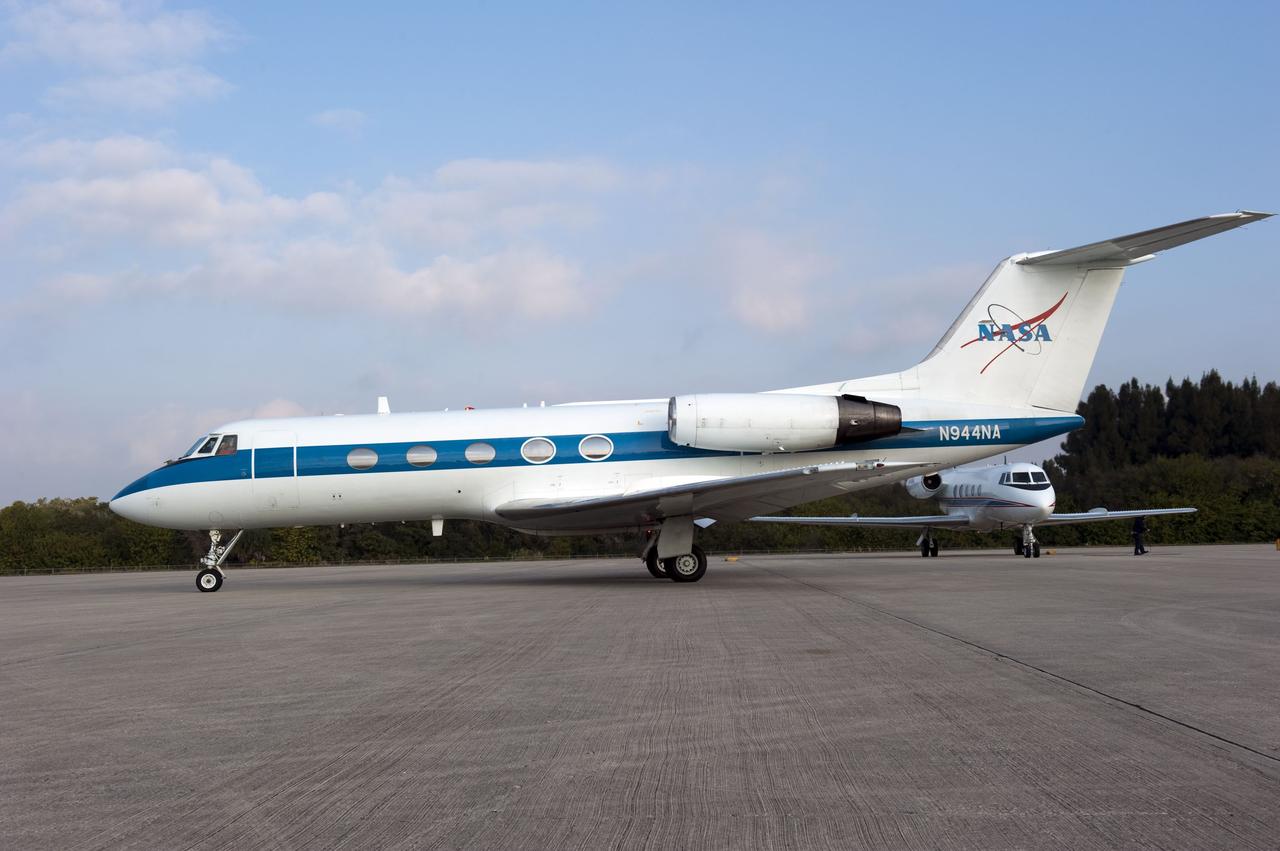
CAPE CANAVERAL, Fla. -- STS-133 Commander Steve Lindsey, foreground aircraft, and Pilot Eric Boe are ready to take off and perform touch-and-go landings aboard two Shuttle Training Aircraft (STA) on the Shuttle Landing Facility runway at NASA's Kennedy Space Center in Florida. STAs are Gulfstream II business jets that are modified to mimic the shuttle's handling during the final phase of landing. Practice landings are part of standard training before space shuttle Discovery's launch to the International Space Station. Scheduled to lift off Feb. 24 at 4:50 p.m. EST, Discovery and its six-member crew will deliver the Permanent Multipurpose Module, packed with supplies and critical spare parts, as well as Robonaut 2, the dexterous humanoid astronaut helper, to the orbiting outpost. For more information on the STS-133 mission, visit www.nasa.gov/mission_pages/shuttle/shuttlemissions/sts133/. Photo credit: NASA/Kim Shiflett
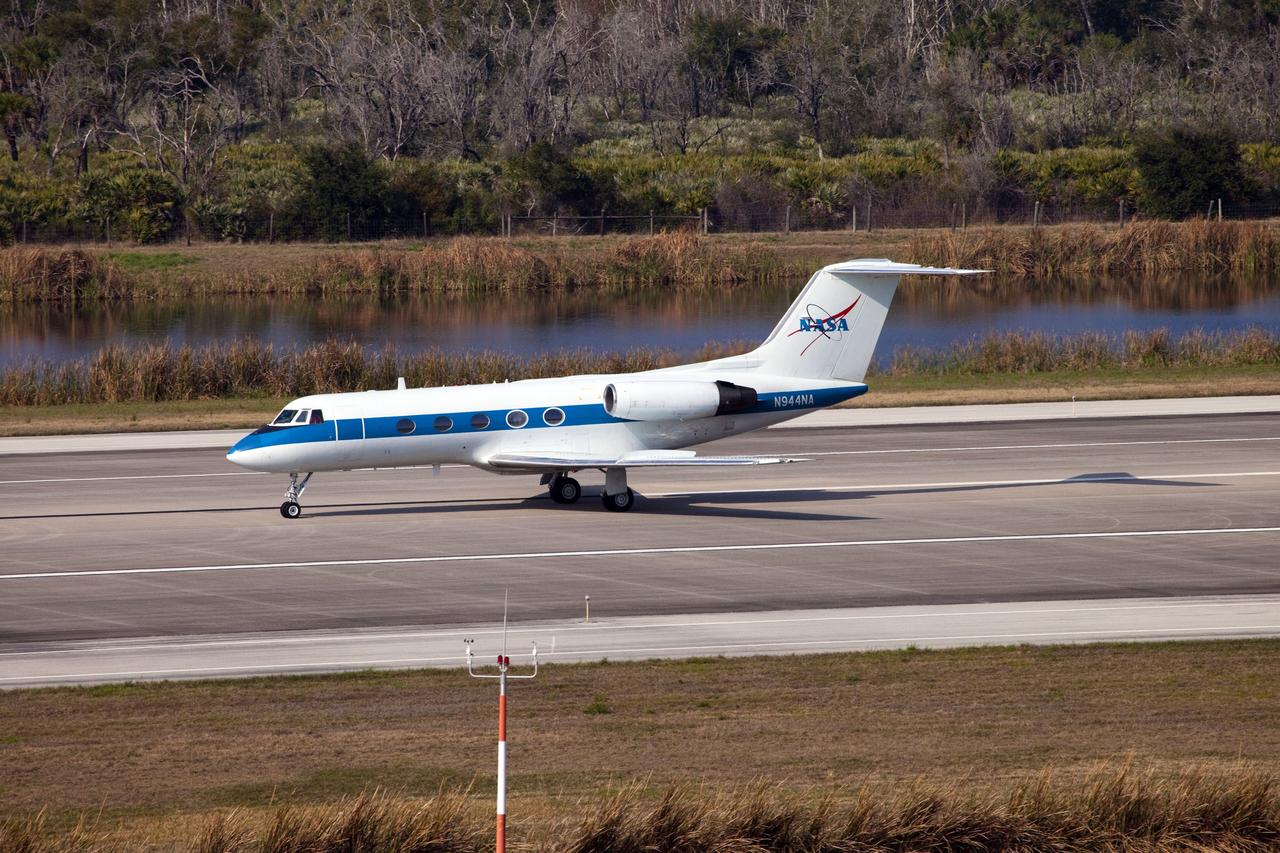
CAPE CANAVERAL, Fla. -- This image was taken from the Shuttle Landing Facility's air traffic control tower at NASA's Kennedy Space Center in Florida and provides a birds-eye view of STS-133 Commander Steve Lindsey performing touch-and-go landings aboard one of two Shuttle Training Aircraft (STA). STAs are Gulfstream II business jets that are modified to mimic the shuttle's handling during the final phase of landing. Practice landings are part of standard training before space shuttle Discovery's launch to the International Space Station. Scheduled to lift off Feb. 24 at 4:50 p.m. EST, Discovery and its six-member crew will deliver the Permanent Multipurpose Module, packed with supplies and critical spare parts, as well as Robonaut 2, the dexterous humanoid astronaut helper, to the orbiting outpost. For more information on the STS-133 mission, visit www.nasa.gov/mission_pages/shuttle/shuttlemissions/sts133/. Photo credit: NASA/Ben Smegelsky

CAPE CANAVERAL, Fla. -- STS-133 Commander Steve Lindsey, left, and Pilot Eric Boe arrive on the Shuttle Landing Facility runway at NASA's Kennedy Space Center in Florida to perform touch-and-go landings aboard two Shuttle Training Aircraft (STA). STAs are Gulfstream II business jets that are modified to mimic the shuttle's handling during the final phase of landing. Practice landings are part of standard training before space shuttle Discovery's launch to the International Space Station. Scheduled to lift off Feb. 24 at 4:50 p.m. EST, Discovery and its six-member crew will deliver the Permanent Multipurpose Module, packed with supplies and critical spare parts, as well as Robonaut 2, the dexterous humanoid astronaut helper, to the orbiting outpost. For more information on the STS-133 mission, visit www.nasa.gov/mission_pages/shuttle/shuttlemissions/sts133/. Photo credit: NASA/Kim Shiflett
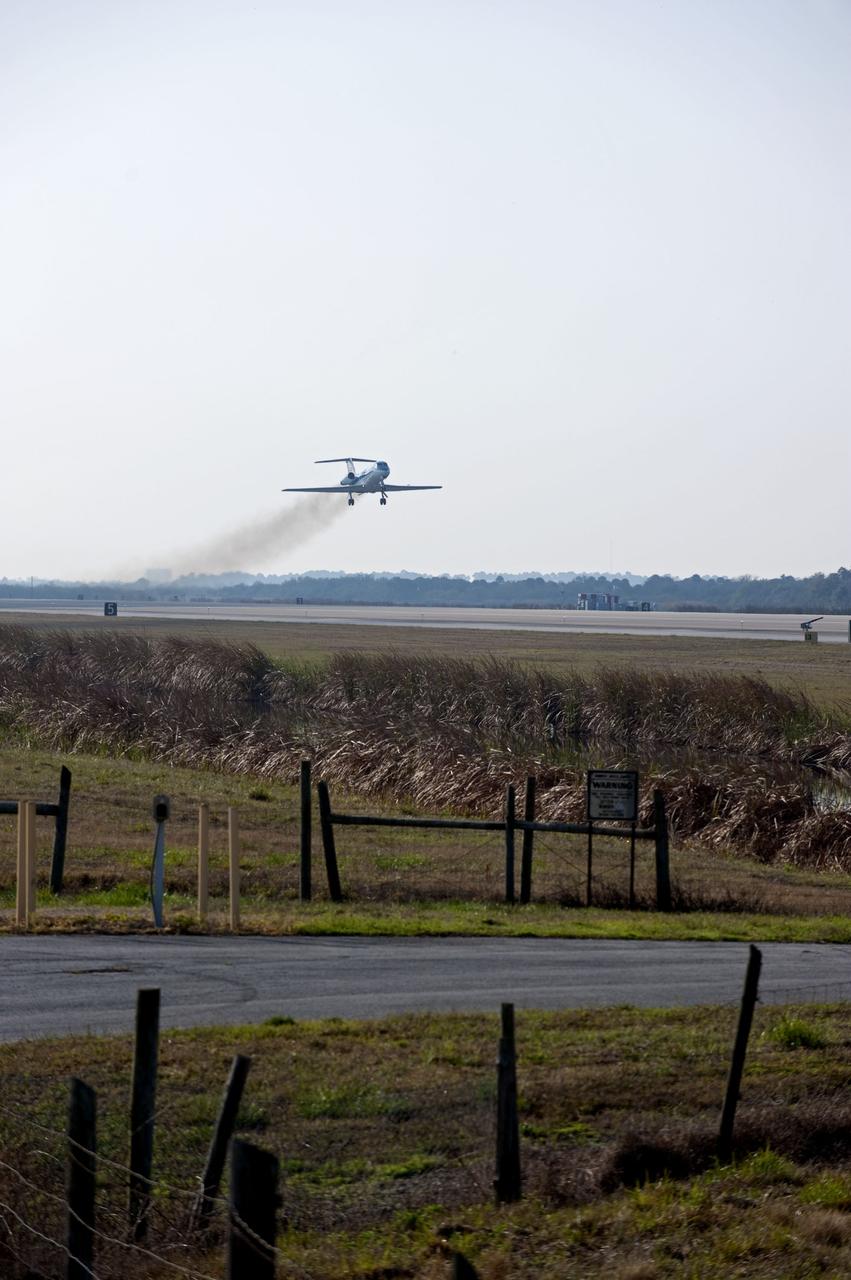
CAPE CANAVERAL, Fla. -- A Shuttle Training Aircraft (STA) performs touch-and-go landings over the Shuttle Landing Facility runway at NASA's Kennedy Space Center in Florida. STS-133 Commander Steve Lindsey and Pilot Eric Boe are flying two Gulfstream II business jets that are modified to mimic the shuttle's handling during the final phase of landing. These practice landings are part of standard training before space shuttle Discovery's launch to the International Space Station. Scheduled to lift off Feb. 24 at 4:50 p.m. EST, Discovery and its six-member crew will deliver the Permanent Multipurpose Module, packed with supplies and critical spare parts, as well as Robonaut 2, the dexterous humanoid astronaut helper, to the orbiting outpost. For more information on the STS-133 mission, visit www.nasa.gov/mission_pages/shuttle/shuttlemissions/sts133/. Photo credit: NASA/Kim Shiflett
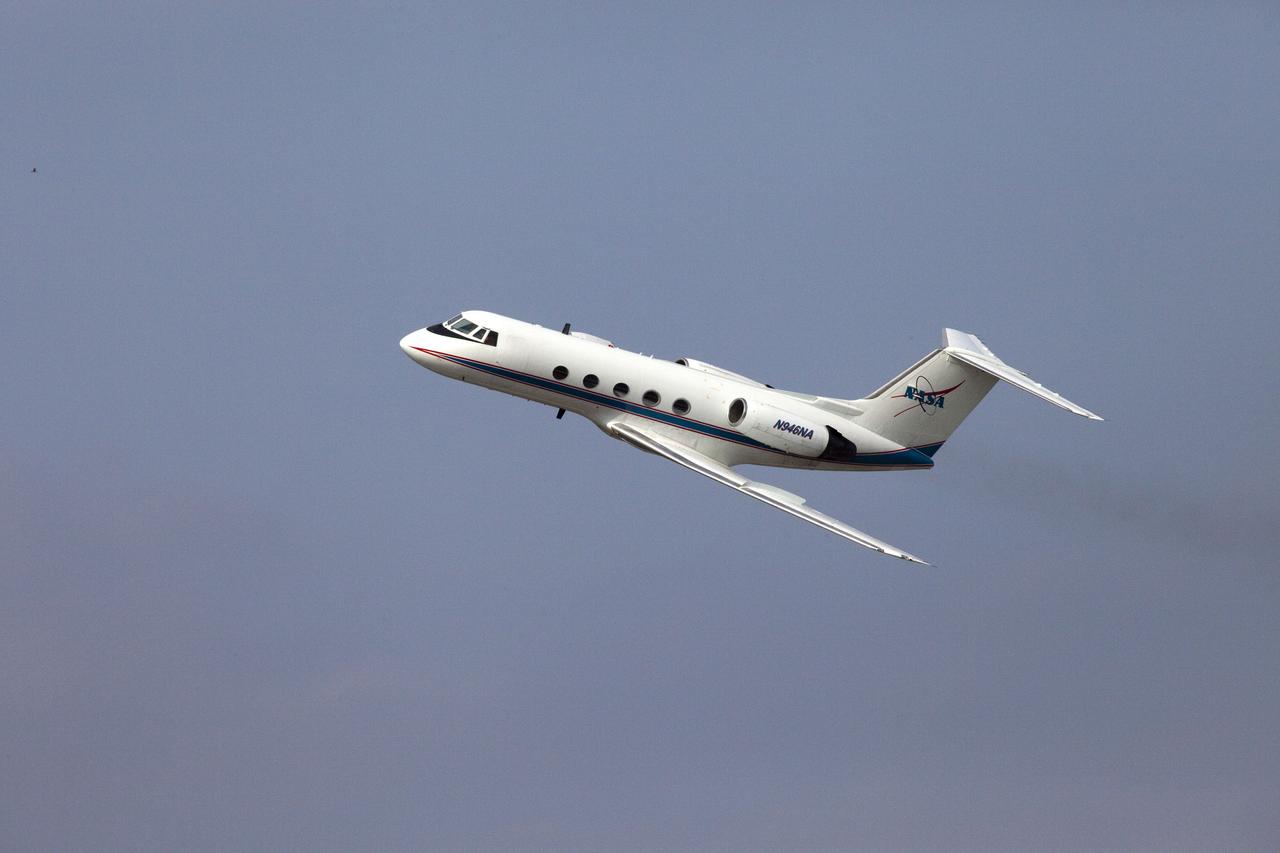
CAPE CANAVERAL, Fla. -- This image was taken from the Shuttle Landing Facility's air traffic control tower at NASA's Kennedy Space Center in Florida and provides a birds-eye view of STS-133 Pilot Eric Boe performing touch-and-go landings aboard one of two Shuttle Training Aircraft (STA). STAs are Gulfstream II business jets that are modified to mimic the shuttle's handling during the final phase of landing. Practice landings are part of standard training before space shuttle Discovery's launch to the International Space Station. Scheduled to lift off Feb. 24 at 4:50 p.m. EST, Discovery and its six-member crew will deliver the Permanent Multipurpose Module, packed with supplies and critical spare parts, as well as Robonaut 2, the dexterous humanoid astronaut helper, to the orbiting outpost. For more information on the STS-133 mission, visit www.nasa.gov/mission_pages/shuttle/shuttlemissions/sts133/. Photo credit: NASA/Ben Smegelsky
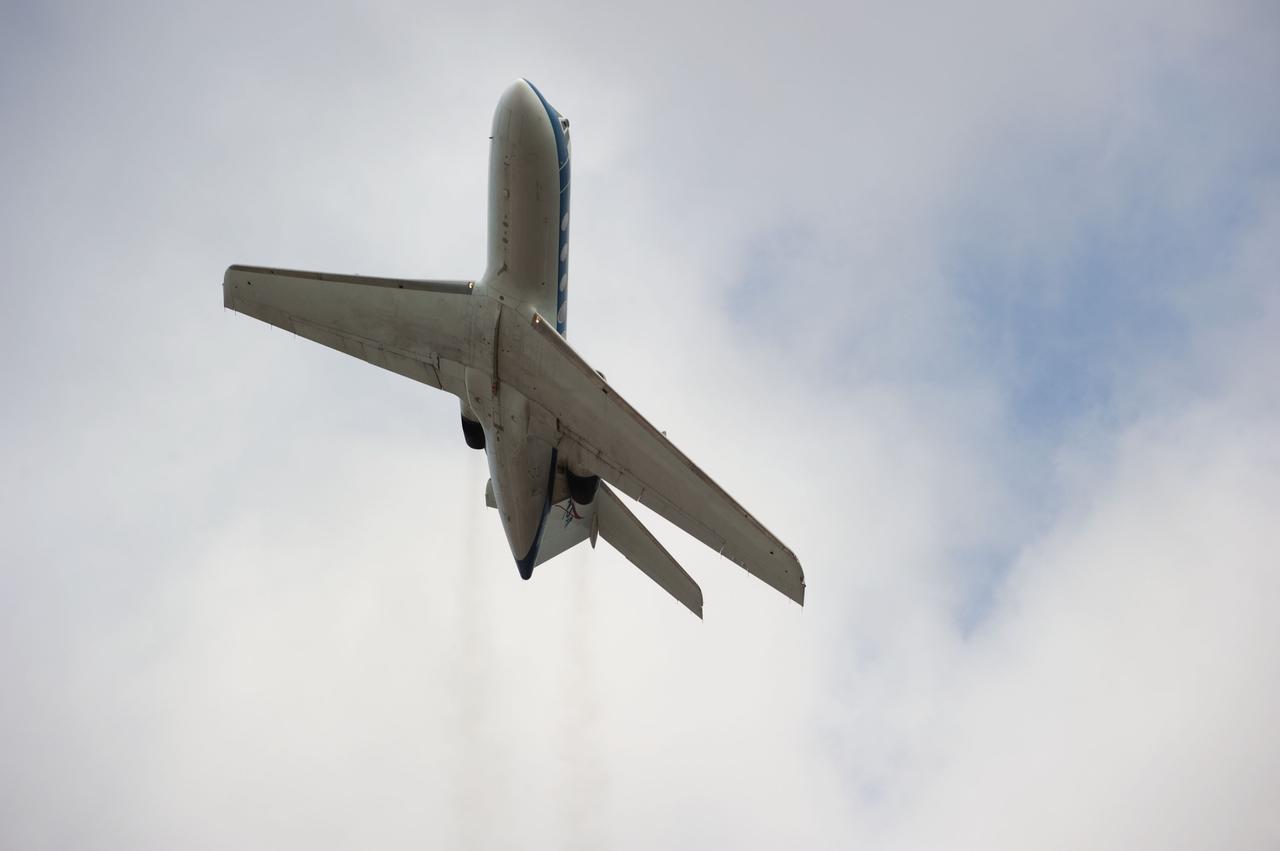
CAPE CANAVERAL, Fla. -- A Shuttle Training Aircraft (STA) performs touch-and-go landings over the Shuttle Landing Facility runway at NASA's Kennedy Space Center in Florida. STS-133 Commander Steve Lindsey and Pilot Eric Boe are flying two Gulfstream II business jets that are modified to mimic the shuttle's handling during the final phase of landing. These practice landings are part of standard training before space shuttle Discovery's launch to the International Space Station. Scheduled to lift off Feb. 24 at 4:50 p.m. EST, Discovery and its six-member crew will deliver the Permanent Multipurpose Module, packed with supplies and critical spare parts, as well as Robonaut 2, the dexterous humanoid astronaut helper, to the orbiting outpost. For more information on the STS-133 mission, visit www.nasa.gov/mission_pages/shuttle/shuttlemissions/sts133/. Photo credit: NASA/Kim Shiflett
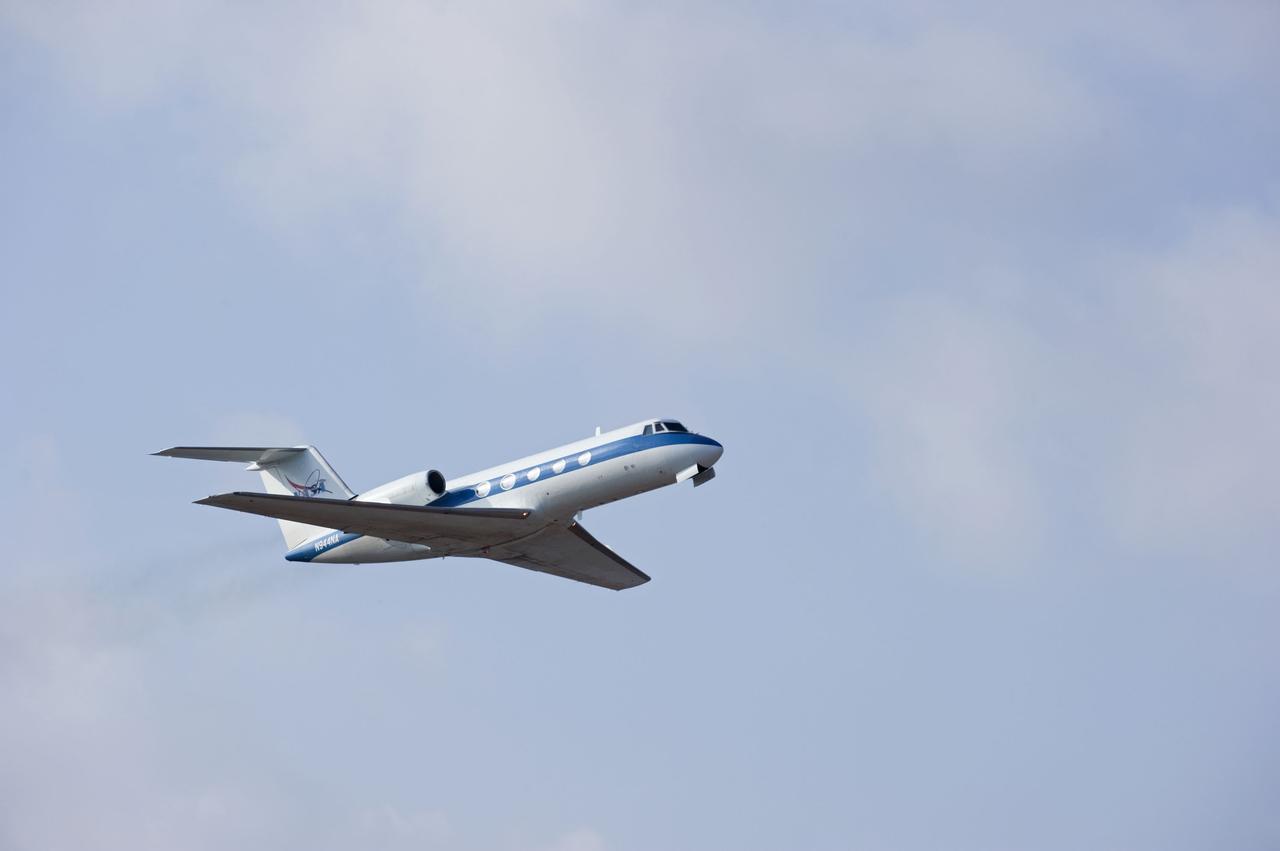
CAPE CANAVERAL, Fla. -- A Shuttle Training Aircraft (STA) performs touch-and-go landings over the Shuttle Landing Facility runway at NASA's Kennedy Space Center in Florida. STS-133 Commander Steve Lindsey and Pilot Eric Boe are flying two Gulfstream II business jets that are modified to mimic the shuttle's handling during the final phase of landing. These practice landings are part of standard training before space shuttle Discovery's launch to the International Space Station. Scheduled to lift off Feb. 24 at 4:50 p.m. EST, Discovery and its six-member crew will deliver the Permanent Multipurpose Module, packed with supplies and critical spare parts, as well as Robonaut 2, the dexterous humanoid astronaut helper, to the orbiting outpost. For more information on the STS-133 mission, visit www.nasa.gov/mission_pages/shuttle/shuttlemissions/sts133/. Photo credit: NASA/Kim Shiflett
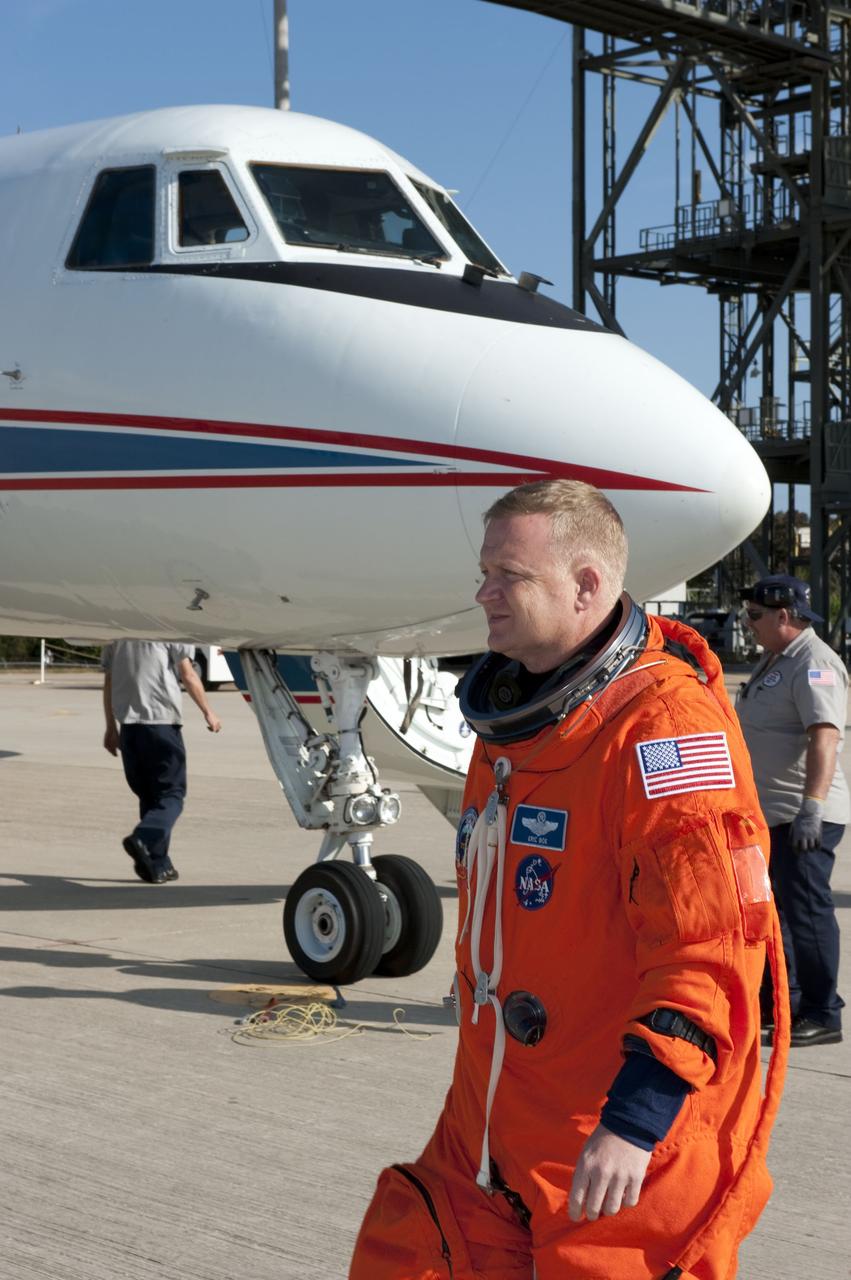
CANAVERAL, Fla. -- At NASA's Kennedy Space Center in Florida, STS-133 Pilot Eric Boe returns from flying touch-and-go landings in a Shuttle Training Aircraft (STA) over the Shuttle Landing Facility runway. The Gulfstream II business jet is modified to mimic the shuttle's handling during the final phase of landing. Space shuttle Discovery's crew members are at Kennedy for their upcoming launch to the International Space Station. In the days leading up to lift off, they will check the fit of their spacesuits, review launch-day procedures, receive weather briefings and remain medically quarantined to prevent sickness. STS-133 will deliver the Permanent Multipurpose Module, packed with supplies and critical spare parts, as well as Robonaut 2, the dexterous humanoid astronaut helper, to the orbiting outpost. For more information on the STS-133 mission, visit www.nasa.gov/mission_pages/shuttle/shuttlemissions/sts133/. Photo credit: NASA/Kim Shiflett
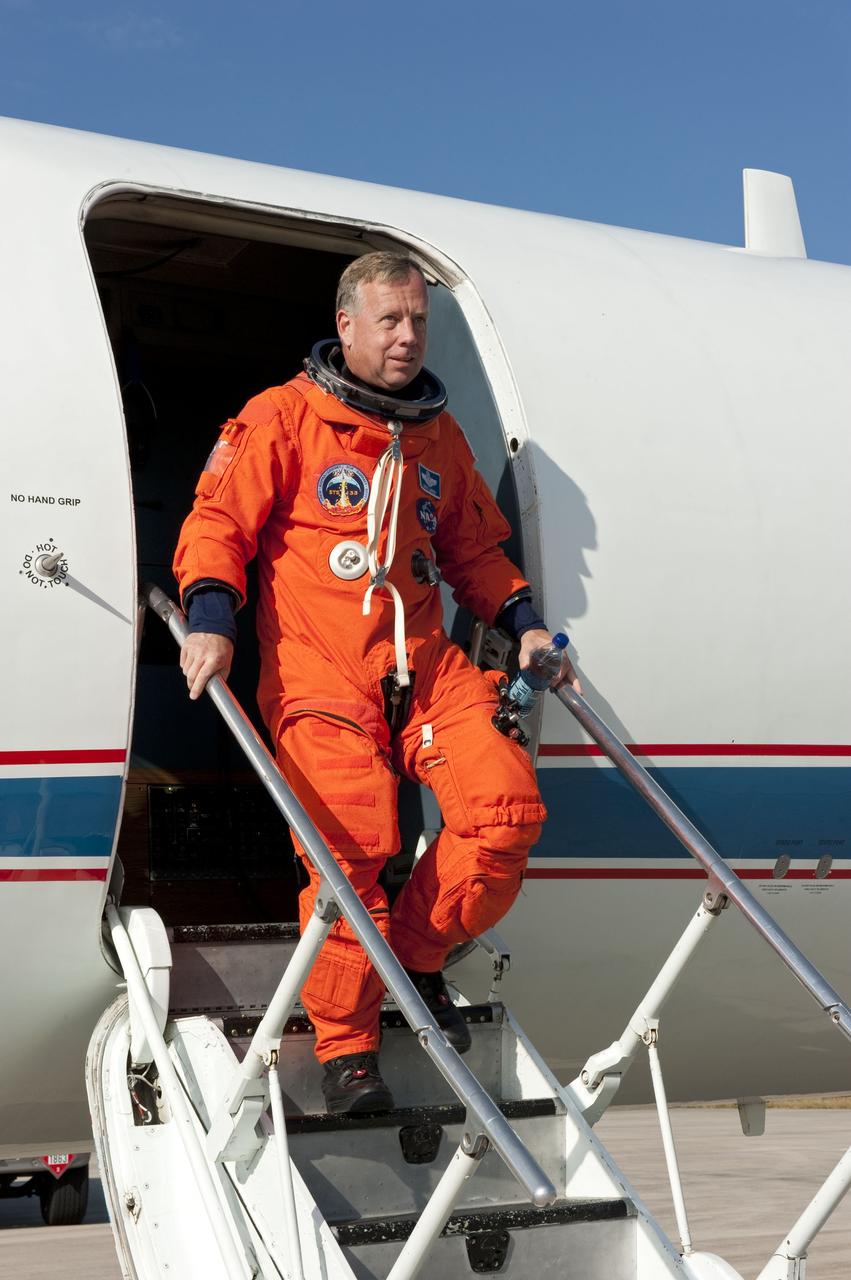
CANAVERAL, Fla. -- At NASA's Kennedy Space Center in Florida, STS-133 Commander Steve Lindsey returns from flying touch-and-go landings in a Shuttle Training Aircraft (STA) over the Shuttle Landing Facility runway. The Gulfstream II business jet is modified to mimic the shuttle's handling during the final phase of landing. Space shuttle Discovery's crew members are at Kennedy for their upcoming launch to the International Space Station. In the days leading up to lift off, they will check the fit of their spacesuits, review launch-day procedures, receive weather briefings and remain medically quarantined to prevent sickness. STS-133 will deliver the Permanent Multipurpose Module, packed with supplies and critical spare parts, as well as Robonaut 2, the dexterous humanoid astronaut helper, to the orbiting outpost. For more information on the STS-133 mission, visit www.nasa.gov/mission_pages/shuttle/shuttlemissions/sts133/. Photo credit: NASA/Kim Shiflett
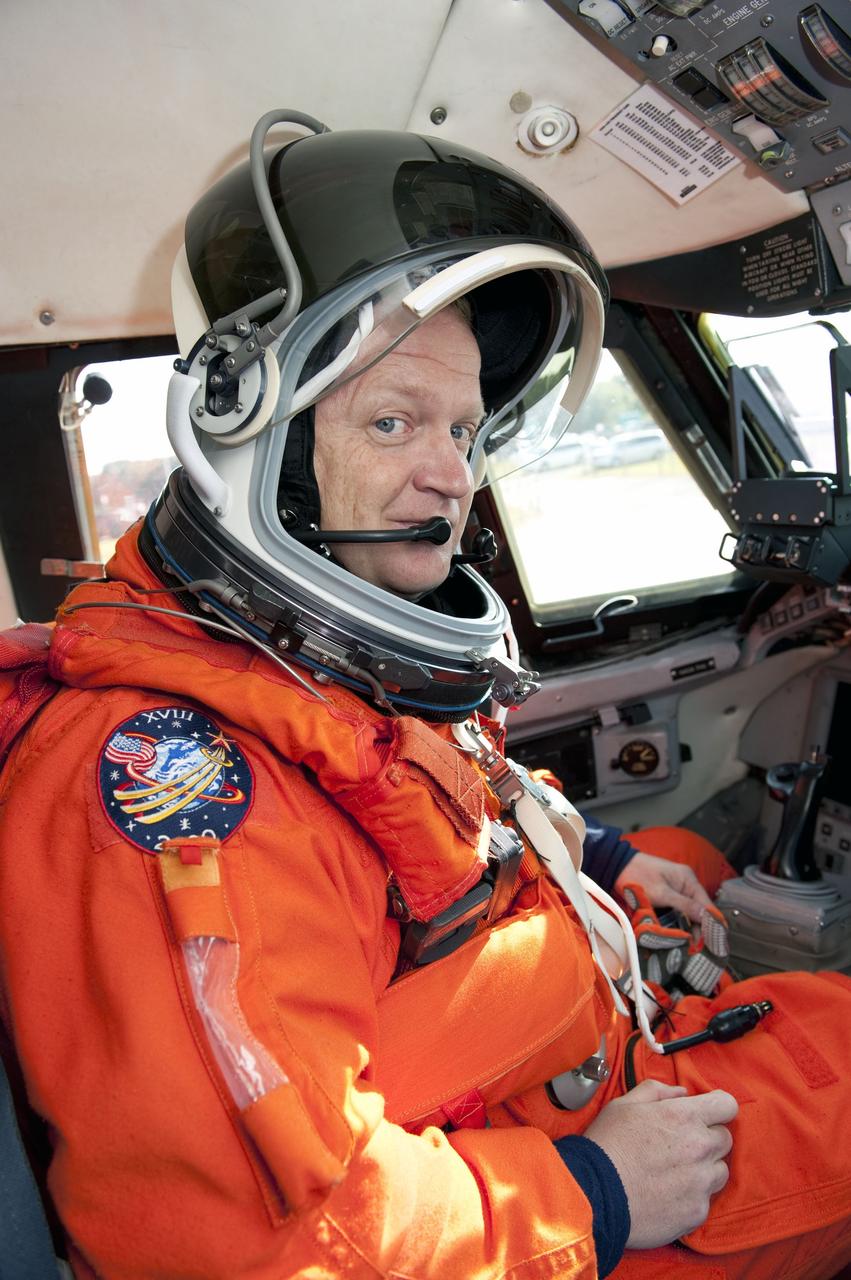
CANAVERAL, Fla. -- At NASA's Kennedy Space Center in Florida, STS-133 Pilot Eric Boe returns from flying touch-and-go landings in a Shuttle Training Aircraft (STA) over the Shuttle Landing Facility runway. The Gulfstream II business jet is modified to mimic the shuttle's handling during the final phase of landing. Space shuttle Discovery's crew members are at Kennedy for their upcoming launch to the International Space Station. In the days leading up to lift off, they will check the fit of their spacesuits, review launch-day procedures, receive weather briefings and remain medically quarantined to prevent sickness. STS-133 will deliver the Permanent Multipurpose Module, packed with supplies and critical spare parts, as well as Robonaut 2, the dexterous humanoid astronaut helper, to the orbiting outpost. For more information on the STS-133 mission, visit www.nasa.gov/mission_pages/shuttle/shuttlemissions/sts133/. Photo credit: NASA/Kim Shiflett
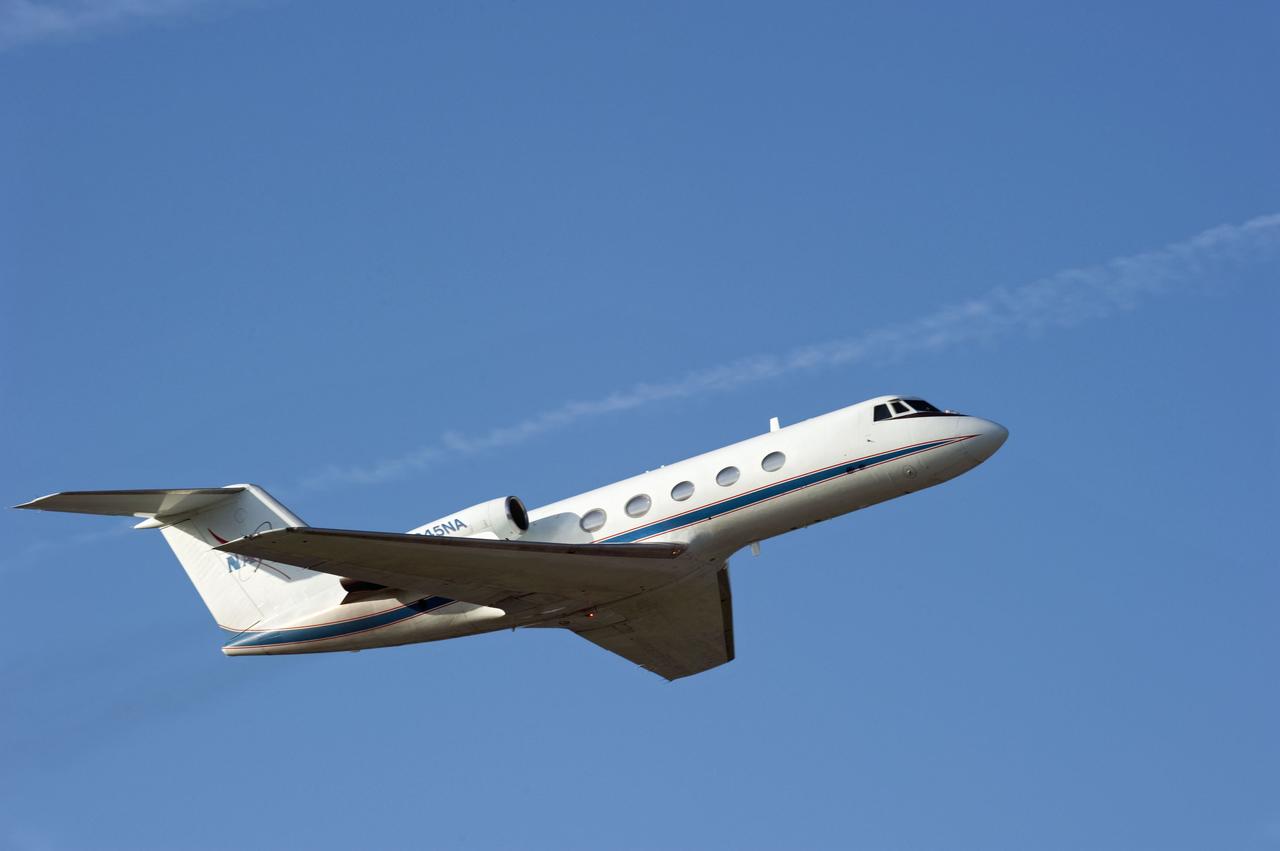
CANAVERAL, Fla. -- At NASA's Kennedy Space Center in Florida, STS-133 Commander Steve Lindsey guides the Shuttle Training Aircraft (STA) in touch-and-go landings over the Shuttle Landing Facility runway. The Gulfstream II business jet is modified to mimic the shuttle's handling during the final phase of landing. Space shuttle Discovery's crew members are at Kennedy for their upcoming launch to the International Space Station. In the days leading up to lift off, they will check the fit of their spacesuits, review launch-day procedures, receive weather briefings and remain medically quarantined to prevent sickness. STS-133 will deliver the Permanent Multipurpose Module, packed with supplies and critical spare parts, as well as Robonaut 2, the dexterous humanoid astronaut helper, to the orbiting outpost. For more information on the STS-133 mission, visit www.nasa.gov/mission_pages/shuttle/shuttlemissions/sts133/. Photo credit: NASA/Kim Shiflett
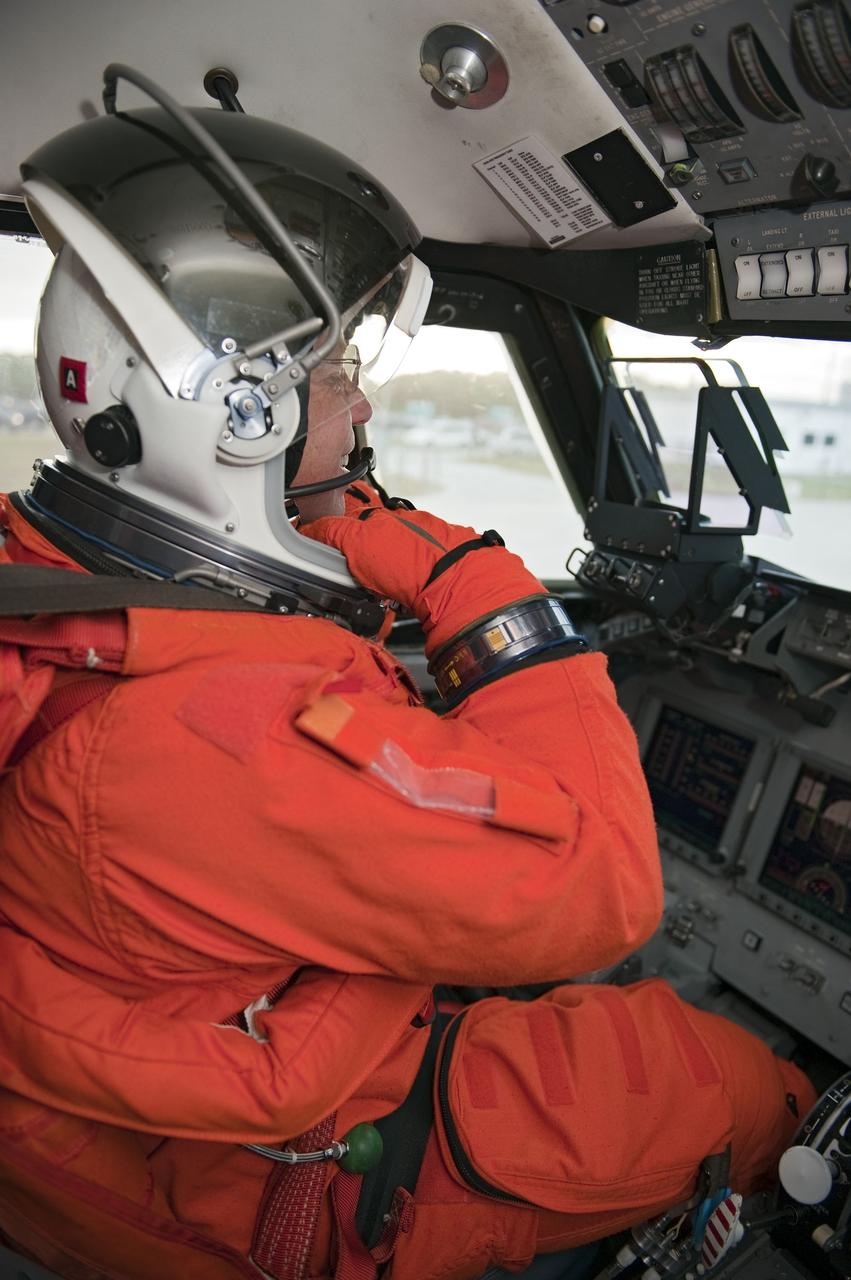
CANAVERAL, Fla. -- At NASA's Kennedy Space Center in Florida, STS-133 Commander Steve Lindsey prepares to fly touch-and-go landings in a Shuttle Training Aircraft (STA) over the Shuttle Landing Facility runway. The Gulfstream II business jet is modified to mimic the shuttle's handling during the final phase of landing. Space shuttle Discovery's crew members are at Kennedy for their upcoming launch to the International Space Station. In the days leading up to lift off, they will check the fit of their spacesuits, review launch-day procedures, receive weather briefings and remain medically quarantined to prevent sickness. STS-133 will deliver the Permanent Multipurpose Module, packed with supplies and critical spare parts, as well as Robonaut 2, the dexterous humanoid astronaut helper, to the orbiting outpost. For more information on the STS-133 mission, visit www.nasa.gov/mission_pages/shuttle/shuttlemissions/sts133/. Photo credit: NASA/Kim Shiflett
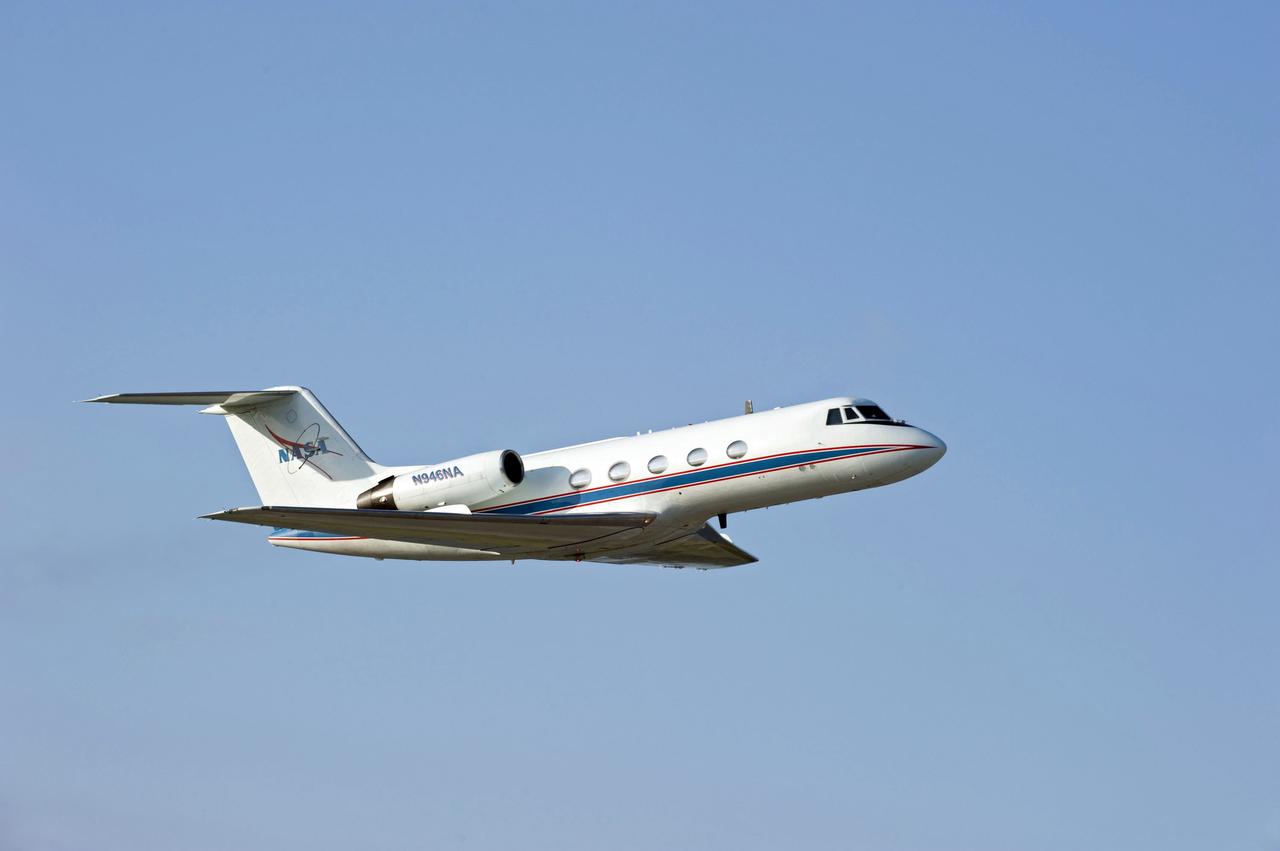
CANAVERAL, Fla. -- At NASA's Kennedy Space Center in Florida, STS-133 Pilot Eric Boe guides the Shuttle Training Aircraft (STA) in touch-and-go landings over the Shuttle Landing Facility runway. The Gulfstream II business jet is modified to mimic the shuttle's handling during the final phase of landing. Space shuttle Discovery's crew members are at Kennedy for their upcoming launch to the International Space Station. In the days leading up to lift off, they will check the fit of their spacesuits, review launch-day procedures, receive weather briefings and remain medically quarantined to prevent sickness. STS-133 will deliver the Permanent Multipurpose Module, packed with supplies and critical spare parts, as well as Robonaut 2, the dexterous humanoid astronaut helper, to the orbiting outpost. For more information on the STS-133 mission, visit www.nasa.gov/mission_pages/shuttle/shuttlemissions/sts133/. Photo credit: NASA/Kim Shiflett
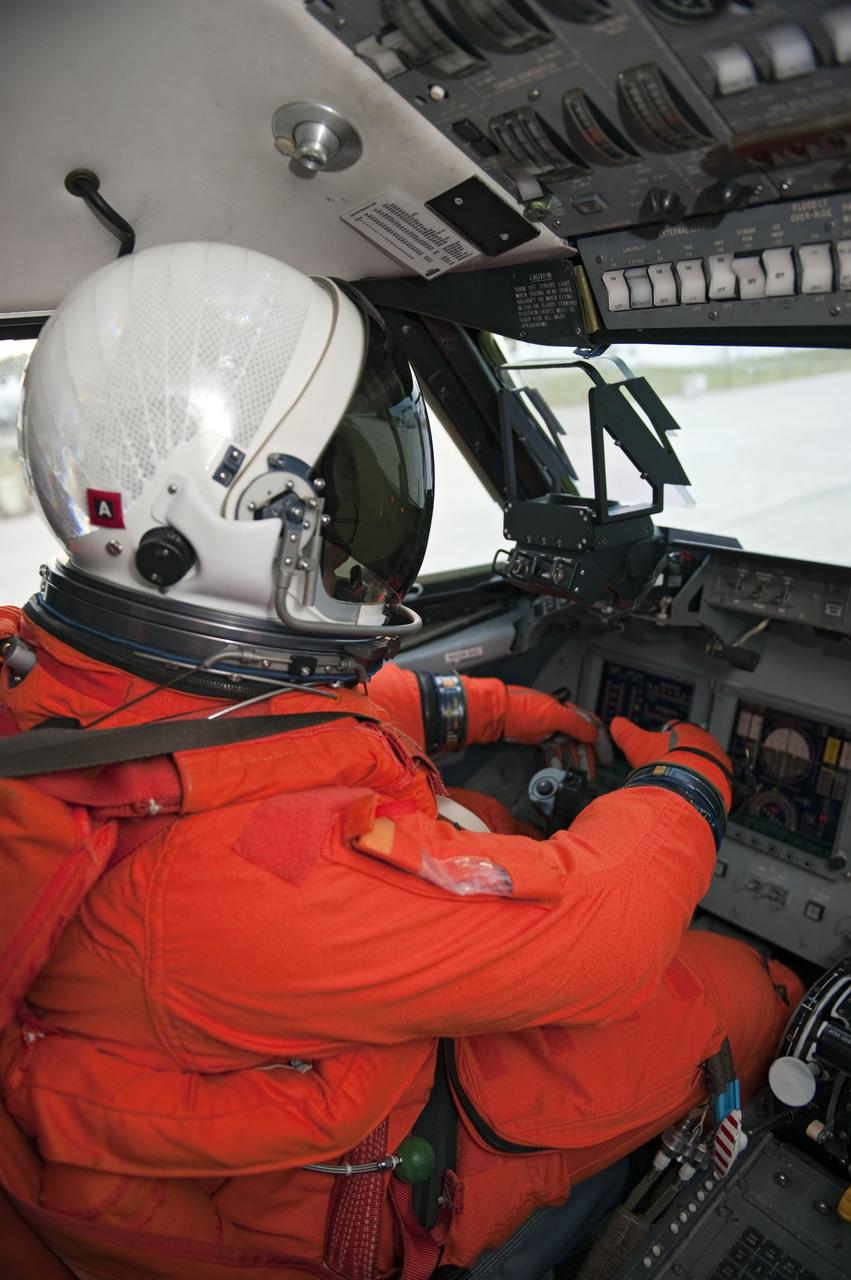
CANAVERAL, Fla. -- At NASA's Kennedy Space Center in Florida, STS-133 Commander Steve Lindsey is ready to fly touch-and-go landings in a Shuttle Training Aircraft (STA) over the Shuttle Landing Facility runway. The Gulfstream II business jet is modified to mimic the shuttle's handling during the final phase of landing. Space shuttle Discovery's crew members are at Kennedy for their upcoming launch to the International Space Station. In the days leading up to lift off, they will check the fit of their spacesuits, review launch-day procedures, receive weather briefings and remain medically quarantined to prevent sickness. STS-133 will deliver the Permanent Multipurpose Module, packed with supplies and critical spare parts, as well as Robonaut 2, the dexterous humanoid astronaut helper, to the orbiting outpost. For more information on the STS-133 mission, visit www.nasa.gov/mission_pages/shuttle/shuttlemissions/sts133/. Photo credit: NASA/Kim Shiflett
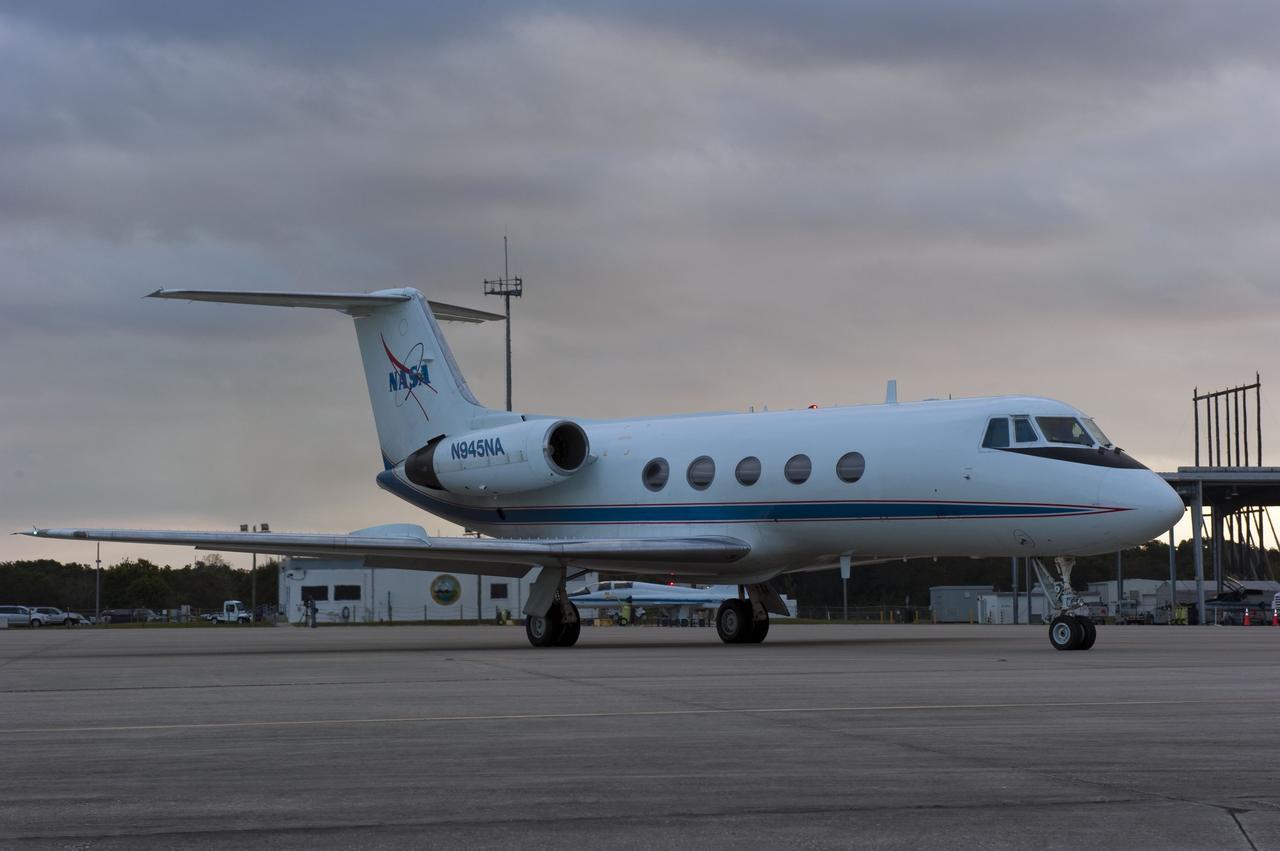
CANAVERAL, Fla. -- At NASA's Kennedy Space Center in Florida, STS-133 Commander Steve Lindsey is ready to take off from the Shuttle Landing Facility runway to fly touch-and-go landings in a Shuttle Training Aircraft (STA). The Gulfstream II business jet is modified to mimic the shuttle's handling during the final phase of landing. Space shuttle Discovery's crew members are at Kennedy for their upcoming launch to the International Space Station. In the days leading up to lift off, they will check the fit of their spacesuits, review launch-day procedures, receive weather briefings and remain medically quarantined to prevent sickness. STS-133 will deliver the Permanent Multipurpose Module, packed with supplies and critical spare parts, as well as Robonaut 2, the dexterous humanoid astronaut helper, to the orbiting outpost. For more information on the STS-133 mission, visit www.nasa.gov/mission_pages/shuttle/shuttlemissions/sts133/. Photo credit: NASA/Kim Shiflett
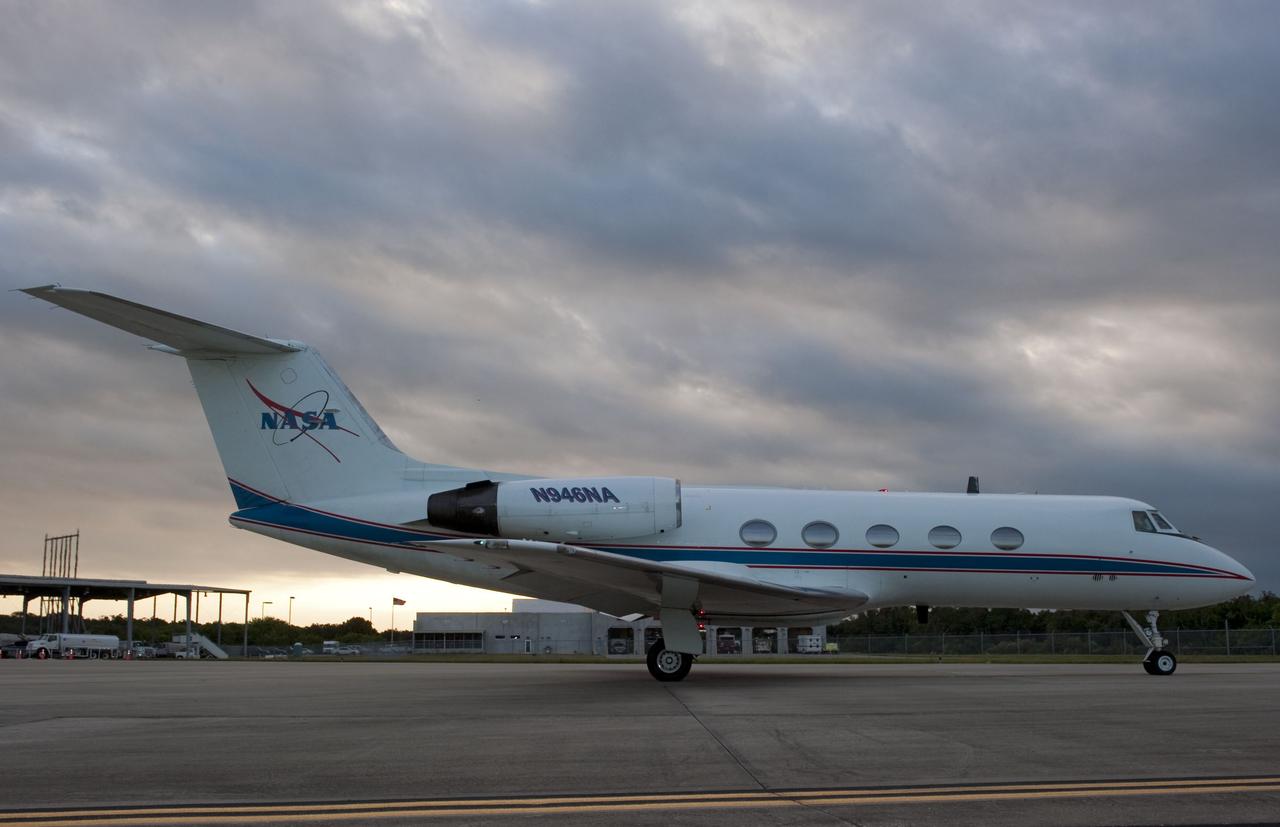
CANAVERAL, Fla. -- At NASA's Kennedy Space Center in Florida, STS-133 Pilot Eric Boe is ready to take off from the Shuttle Landing Facility runway to fly touch-and-go landings in a Shuttle Training Aircraft (STA). The Gulfstream II business jet is modified to mimic the shuttle's handling during the final phase of landing. Space shuttle Discovery's crew members are at Kennedy for their upcoming launch to the International Space Station. In the days leading up to lift off, they will check the fit of their spacesuits, review launch-day procedures, receive weather briefings and remain medically quarantined to prevent sickness. STS-133 will deliver the Permanent Multipurpose Module, packed with supplies and critical spare parts, as well as Robonaut 2, the dexterous humanoid astronaut helper, to the orbiting outpost. For more information on the STS-133 mission, visit www.nasa.gov/mission_pages/shuttle/shuttlemissions/sts133/. Photo credit: NASA/Kim Shiflett
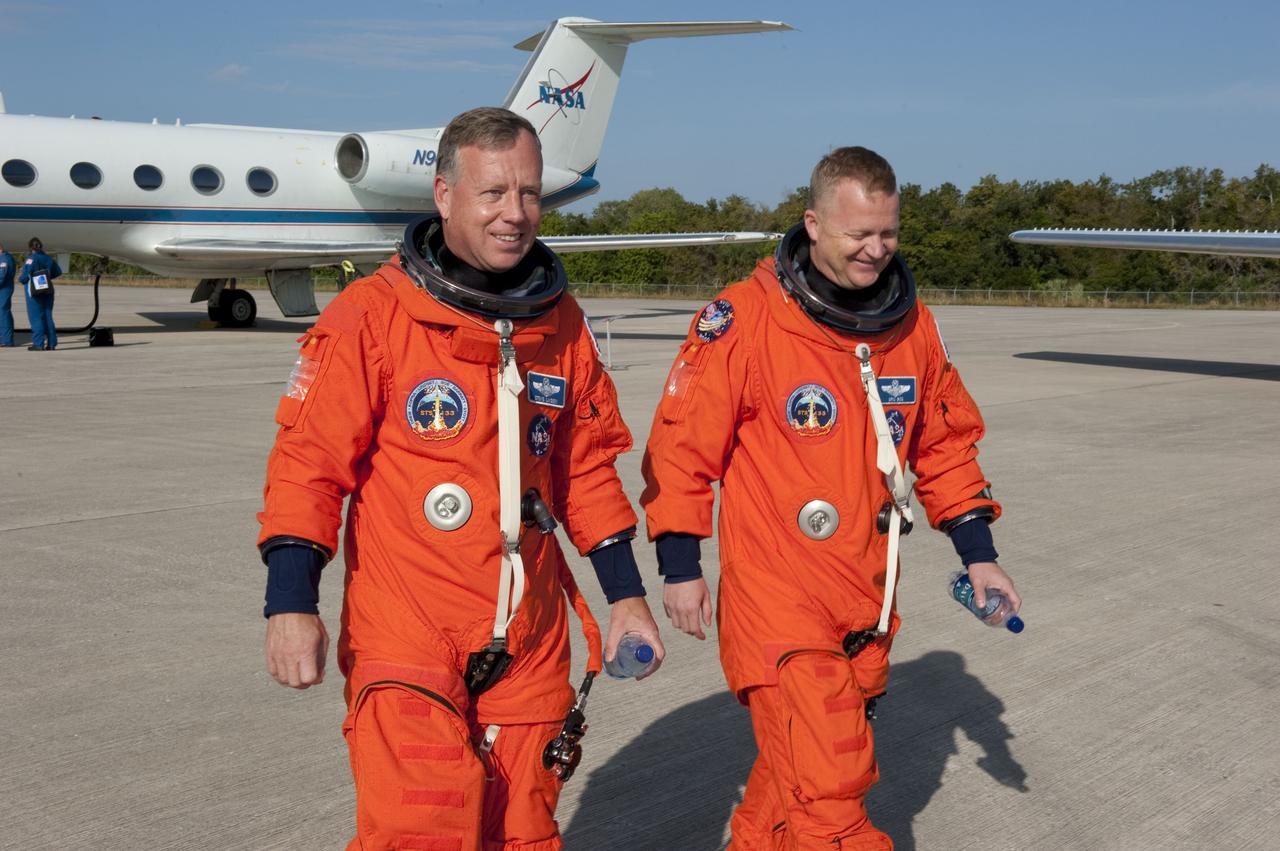
CANAVERAL, Fla. -- At NASA's Kennedy Space Center in Florida, STS-133 Commander Steve Lindsey, left, and Pilot Eric Boe return from flying touch-and-go landings in two Shuttle Training Aircraft (STA) over the Shuttle Landing Facility runway. The Gulfstream II business jets are modified to mimic the shuttle's handling during the final phase of landing. Space shuttle Discovery's crew members are at Kennedy for their upcoming launch to the International Space Station. In the days leading up to lift off, they will check the fit of their spacesuits, review launch-day procedures, receive weather briefings and remain medically quarantined to prevent sickness. STS-133 will deliver the Permanent Multipurpose Module, packed with supplies and critical spare parts, as well as Robonaut 2, the dexterous humanoid astronaut helper, to the orbiting outpost. For more information on the STS-133 mission, visit www.nasa.gov/mission_pages/shuttle/shuttlemissions/sts133/. Photo credit: NASA/Kim Shiflett
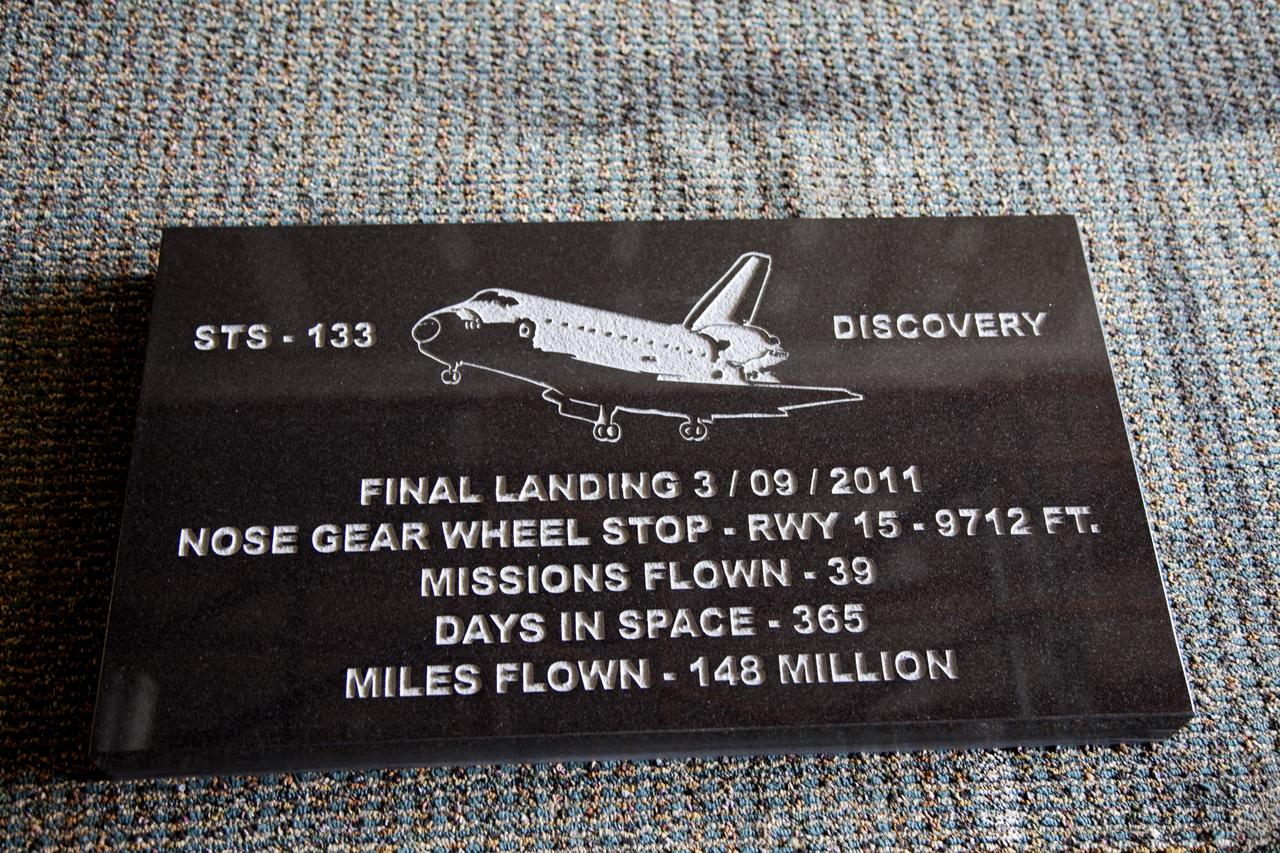
CAPE CANAVERAL, Fla. – At C Spray Glass Blasting of Cocoa Beach, Fla., the commemorative plaque to mark space shuttle Discovery’s wheel stop location has been completed. The special plaque will be permanently mounted at the Shuttle Landing Facility, or SLF, runway edge at NASA’s Kennedy Space Center in Florida to commemorate Discovery’s final landing. Discovery completed the STS-133 mission by landing at the SLF on March 9, 2011, at 11:57 a.m. EST. Discovery flew 39 missions, completed 5,830 orbits of the Earth, traveled 148 million miles and spent 365 days in space. Atlantis carried 252 astronauts to space. Photo credit: NASA/Lorne Mathre
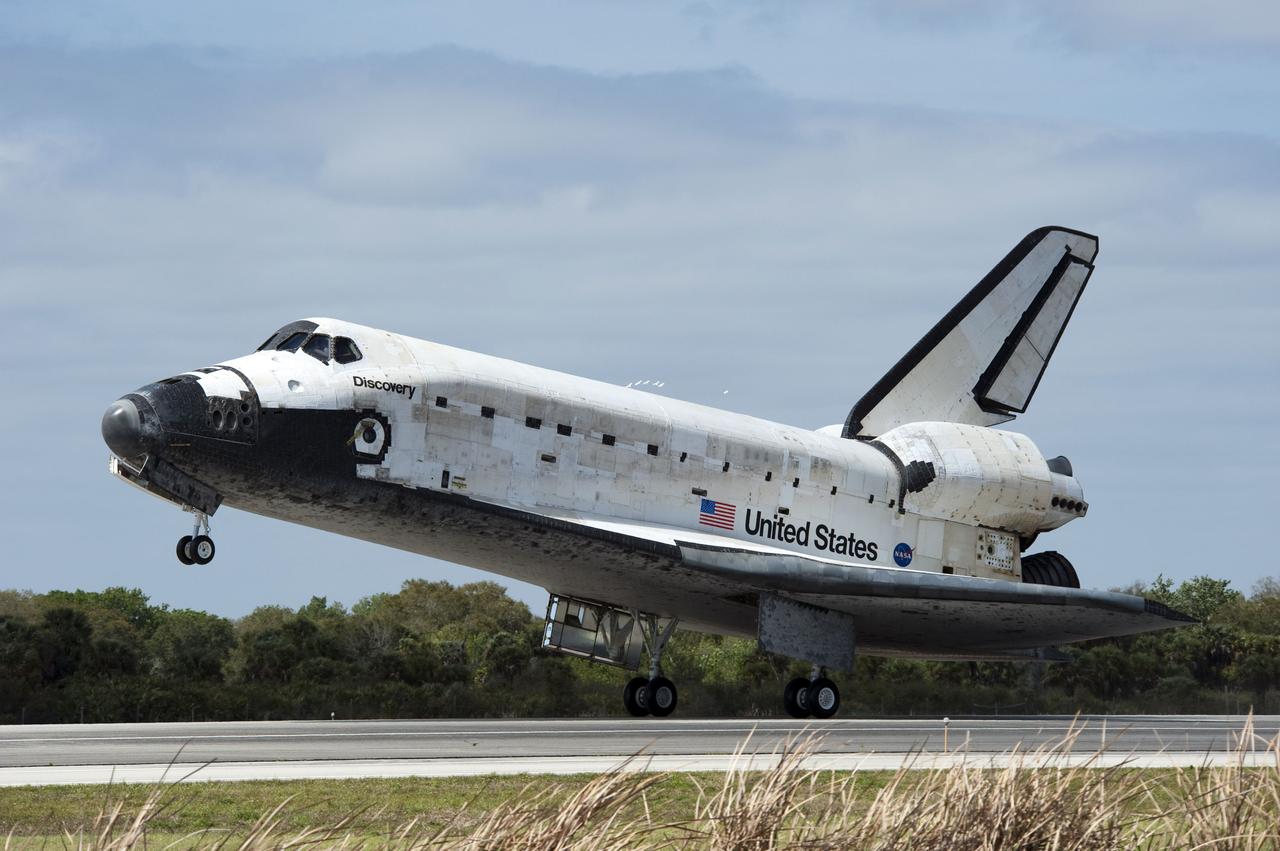
STS133-S-111 (9 March 2011) --- Space shuttle Discovery’s main gear touches down on Runway 15 at the Shuttle Landing Facility at NASA’s Kennedy Space Center in Florida. Landing was at 11:57 a.m. (EST) on March 9, 2011, completing a more than 12-day STS-133 mission to the International Space Station. Onboard are NASA astronauts Steve Lindsey, commander; Eric Boe, pilot; Steve Bowen, Alvin Drew, Michael Barratt and Nicole Stott, all mission specialists. Discovery and its six-member crew delivered the Permanent Multipurpose Module, packed with supplies and critical spare parts, as well as Robonaut 2, the dexterous humanoid astronaut helper, to the orbiting outpost. STS-133 was Discovery's 39th and final mission. This was the 133rd Space Shuttle Program mission and the 35th shuttle voyage to the space station. Photo credit: NASA or National Aeronautics and Space Administration