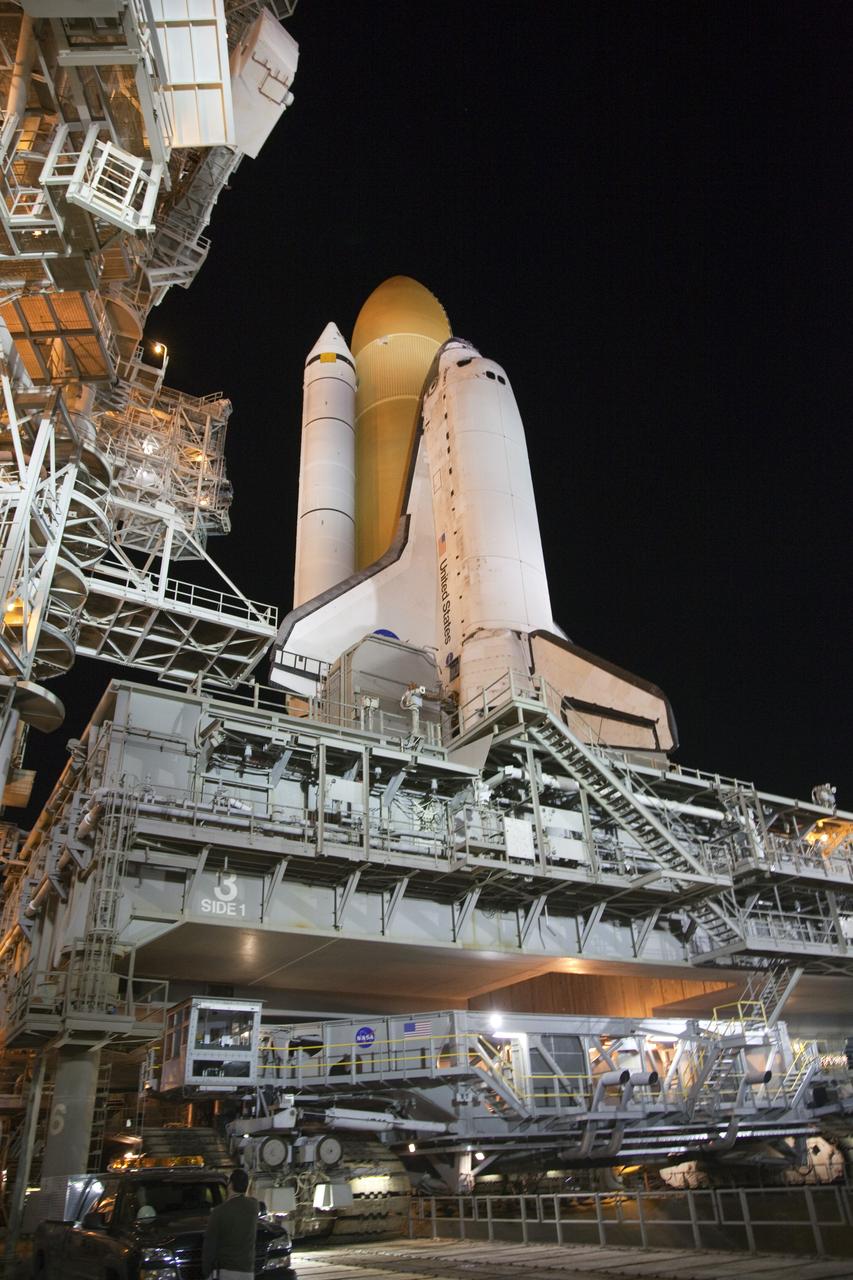
CAPE CANAVERAL, Fla. -- Space shuttle Discovery, secured to a crawler-transporter, begins its 3.4-mile trek, known as rollback, from Launch Pad 39A to the Vehicle Assembly Building at NASA's Kennedy Space Center in Florida. Rollback began at 10:48 p.m. and took about eight hours. Next, Discovery's external fuel tank will be examined and foam reapplied where 89 sensors were installed on the tank's aluminum skin for an instrumented tanking test on Dec. 17. The sensors were used to measure changes in the tank as super-cold propellants were pumped in and drained out. Data and analysis from the test will be used to determine what caused the tops of two, 21-foot-long support beams, called stringers, on the outside of the intertank to crack during fueling on Nov. 5. Discovery's next launch opportunity to the International Space Station on the STS-133 mission is no earlier than Feb. 3, 2011. For more information on STS-133, visit www.nasa.gov/mission_pages/shuttle/shuttlemissions/sts133/. Photo credit: NASA/Frank Michaux
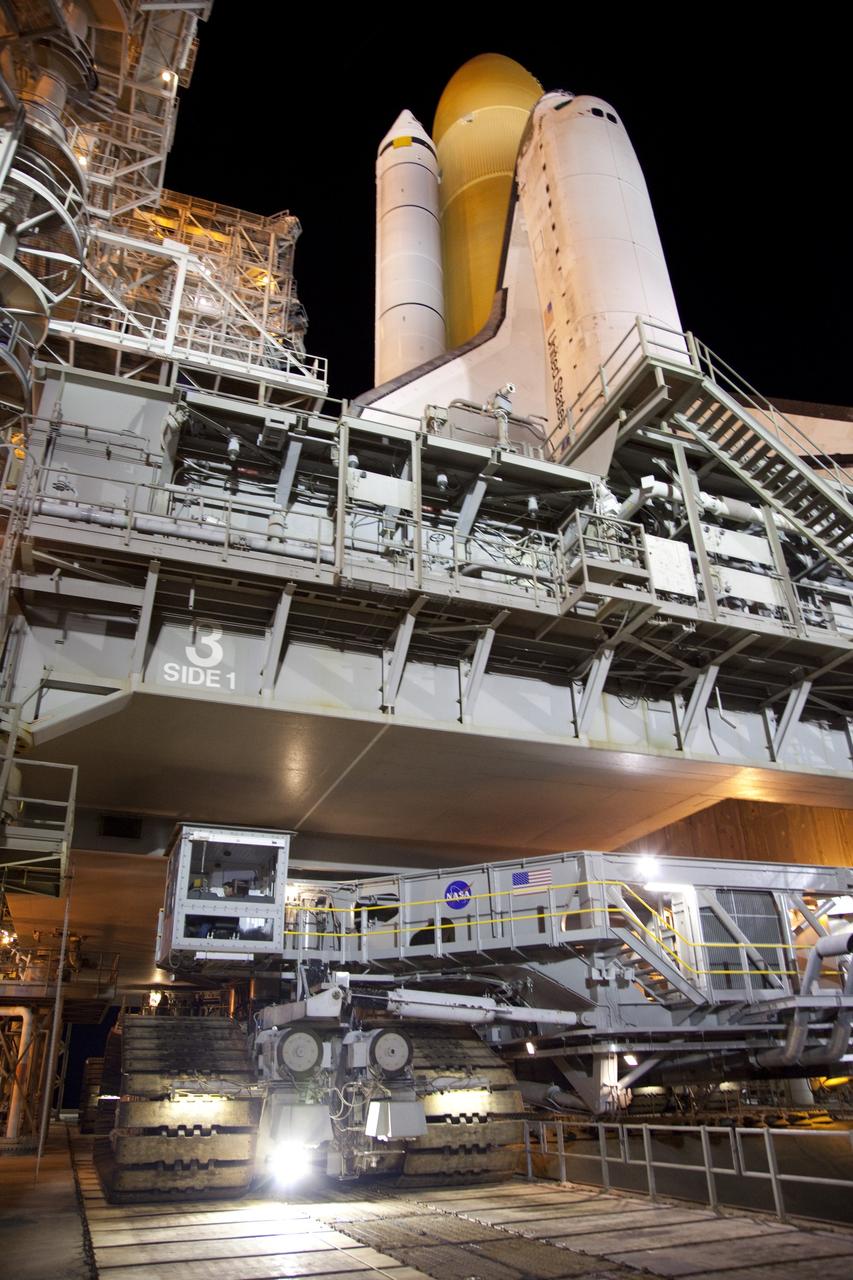
CAPE CANAVERAL, Fla. -- Space shuttle Discovery, secured to a crawler-transporter, begins its 3.4-mile trek, known as rollback, from Launch Pad 39A to the Vehicle Assembly Building at NASA's Kennedy Space Center in Florida. Rollback began at 10:48 p.m. and took about eight hours. Next, Discovery's external fuel tank will be examined and foam reapplied where 89 sensors were installed on the tank's aluminum skin for an instrumented tanking test on Dec. 17. The sensors were used to measure changes in the tank as super-cold propellants were pumped in and drained out. Data and analysis from the test will be used to determine what caused the tops of two, 21-foot-long support beams, called stringers, on the outside of the intertank to crack during fueling on Nov. 5. Discovery's next launch opportunity to the International Space Station on the STS-133 mission is no earlier than Feb. 3, 2011. For more information on STS-133, visit www.nasa.gov/mission_pages/shuttle/shuttlemissions/sts133/. Photo credit: NASA/Frank Michaux
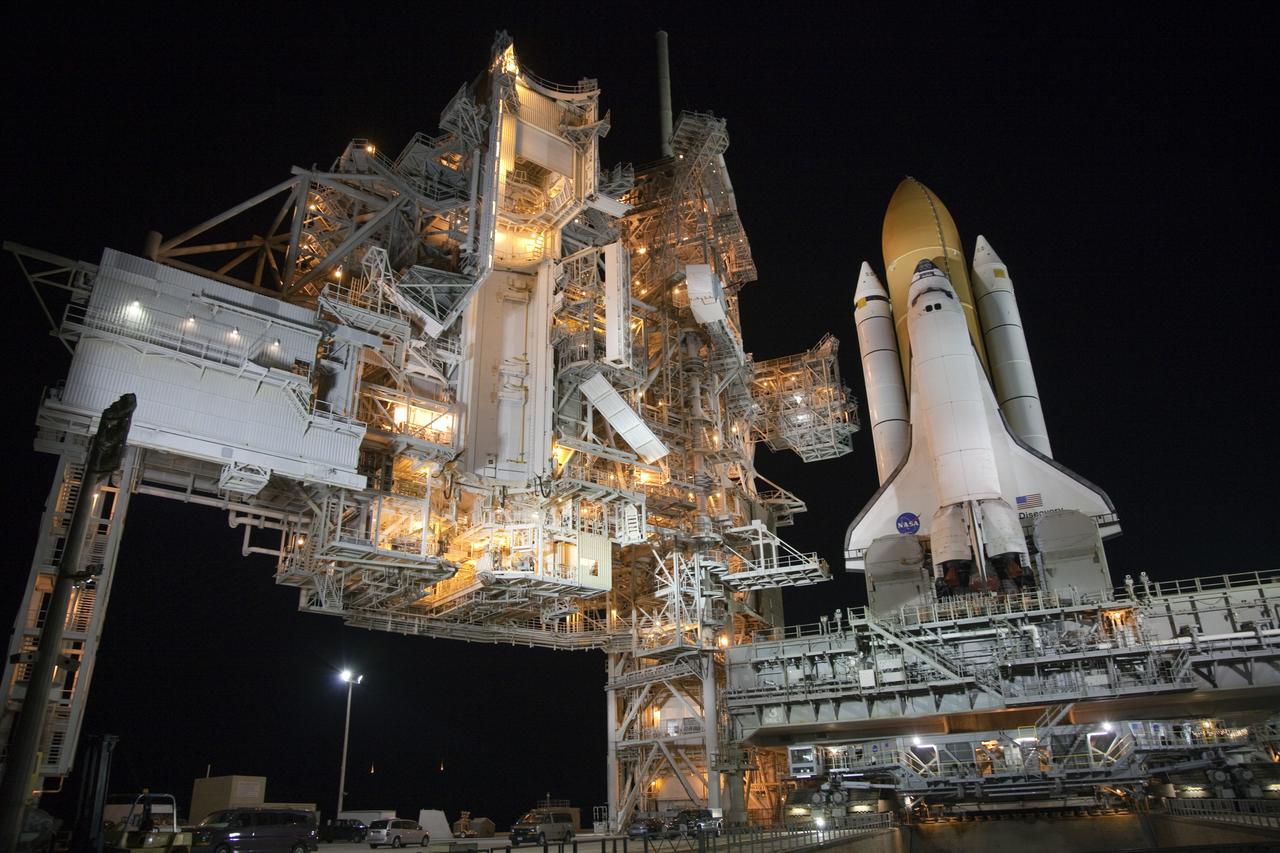
CAPE CANAVERAL, Fla. -- Space shuttle Discovery, secured to a crawler-transporter, slowly moves away from Launch Pad 39A at NASA's Kennedy Space Center in Florida. The 3.4-mile trek, called rollback, to the Vehicle Assembly Building began at 10:48 p.m. and took about eight hours. Next, Discovery's external fuel tank will be examined and foam reapplied where 89 sensors were installed on the tank's aluminum skin for an instrumented tanking test on Dec. 17. The sensors were used to measure changes in the tank as super-cold propellants were pumped in and drained out. Data and analysis from the test will be used to determine what caused the tops of two, 21-foot-long support beams, called stringers, on the outside of the intertank to crack during fueling on Nov. 5. Discovery's next launch opportunity to the International Space Station on the STS-133 mission is no earlier than Feb. 3, 2011. For more information on STS-133, visit www.nasa.gov/mission_pages/shuttle/shuttlemissions/sts133/. Photo credit: NASA/Frank Michaux
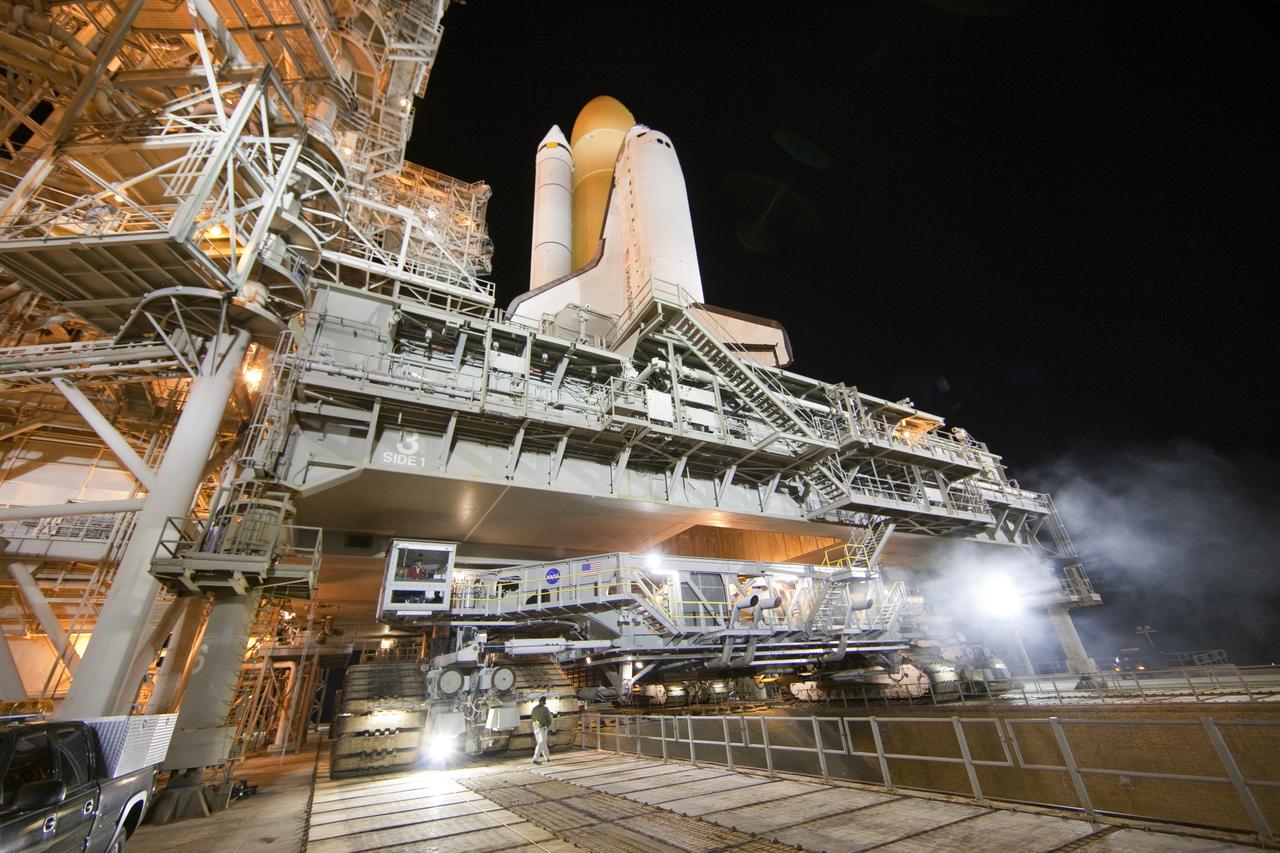
CAPE CANAVERAL, Fla. -- Space shuttle Discovery, secured to a crawler-transporter, slowly moves away from Launch Pad 39A at NASA's Kennedy Space Center in Florida. The 3.4-mile trek, called rollback, to the Vehicle Assembly Building began at 10:48 p.m. and took about eight hours. Next, Discovery's external fuel tank will be examined and foam reapplied where 89 sensors were installed on the tank's aluminum skin for an instrumented tanking test on Dec. 17. The sensors were used to measure changes in the tank as super-cold propellants were pumped in and drained out. Data and analysis from the test will be used to determine what caused the tops of two, 21-foot-long support beams, called stringers, on the outside of the intertank to crack during fueling on Nov. 5. Discovery's next launch opportunity to the International Space Station on the STS-133 mission is no earlier than Feb. 3, 2011. For more information on STS-133, visit www.nasa.gov/mission_pages/shuttle/shuttlemissions/sts133/. Photo credit: NASA/Frank Michaux
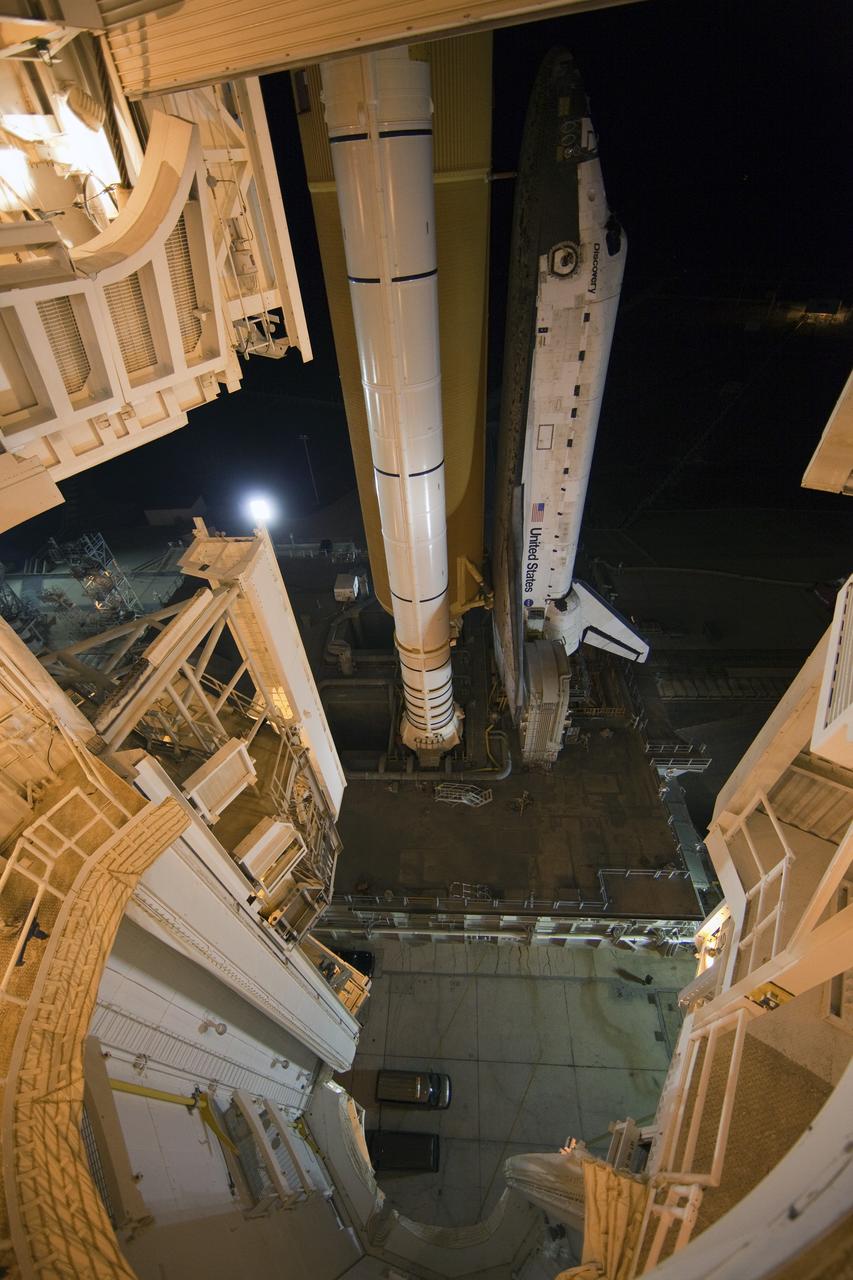
CAPE CANAVERAL, Fla. -- Space shuttle Discovery, secured to a crawler-transporter, slowly moves away from Launch Pad 39A at NASA's Kennedy Space Center in Florida. The 3.4-mile trek, called rollback, to the Vehicle Assembly Building began at 10:48 p.m. and took about eight hours. Next, Discovery's external fuel tank will be examined and foam reapplied where 89 sensors were installed on the tank's aluminum skin for an instrumented tanking test on Dec. 17. The sensors were used to measure changes in the tank as super-cold propellants were pumped in and drained out. Data and analysis from the test will be used to determine what caused the tops of two, 21-foot-long support beams, called stringers, on the outside of the intertank to crack during fueling on Nov. 5. Discovery's next launch opportunity to the International Space Station on the STS-133 mission is no earlier than Feb. 3, 2011. For more information on STS-133, visit www.nasa.gov/mission_pages/shuttle/shuttlemissions/sts133/. Photo credit: NASA/Frank Michaux
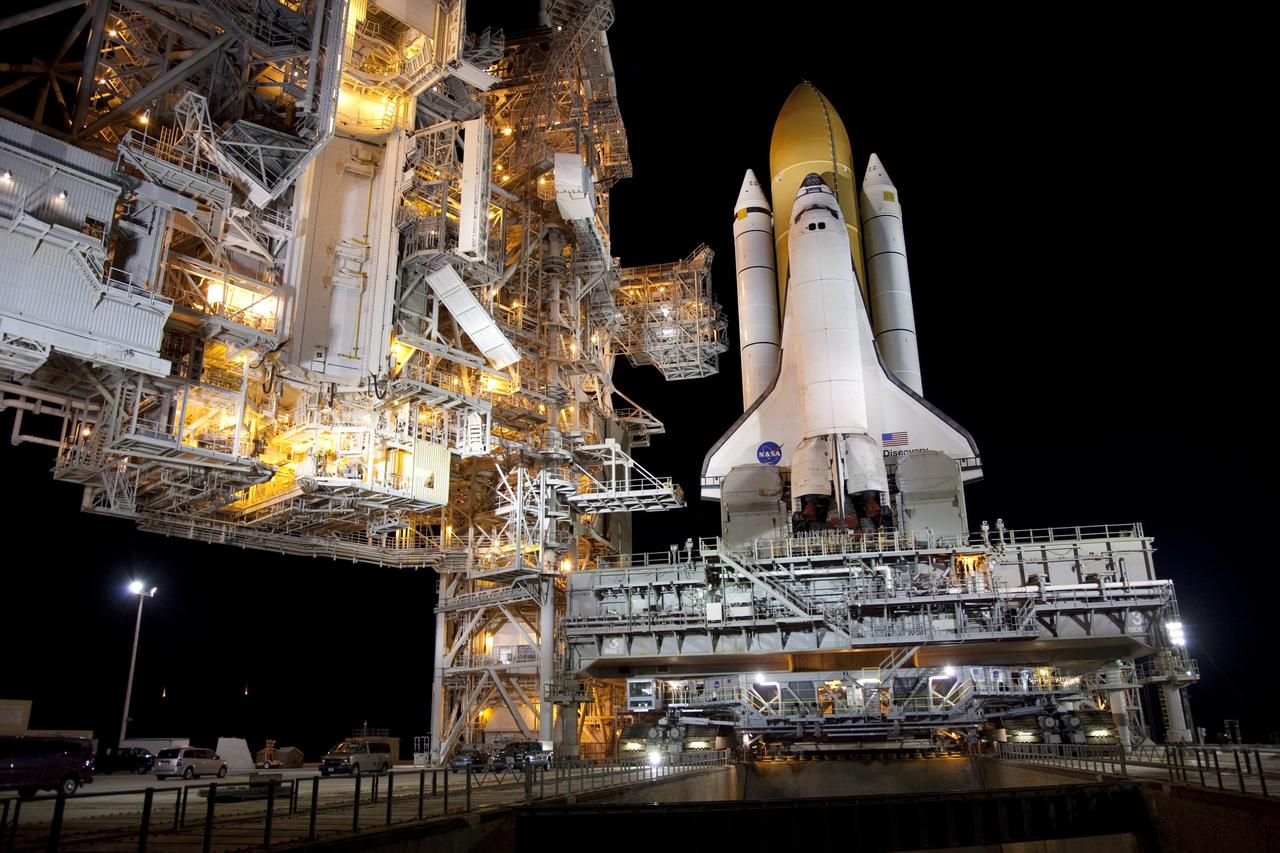
CAPE CANAVERAL, Fla. -- Space shuttle Discovery, secured to a crawler-transporter, slowly moves away from Launch Pad 39A at NASA's Kennedy Space Center in Florida. The 3.4-mile trek, called rollback, to the Vehicle Assembly Building began at 10:48 p.m. and took about eight hours. Next, Discovery's external fuel tank will be examined and foam reapplied where 89 sensors were installed on the tank's aluminum skin for an instrumented tanking test on Dec. 17. The sensors were used to measure changes in the tank as super-cold propellants were pumped in and drained out. Data and analysis from the test will be used to determine what caused the tops of two, 21-foot-long support beams, called stringers, on the outside of the intertank to crack during fueling on Nov. 5. Discovery's next launch opportunity to the International Space Station on the STS-133 mission is no earlier than Feb. 3, 2011. For more information on STS-133, visit www.nasa.gov/mission_pages/shuttle/shuttlemissions/sts133/. Photo credit: NASA/Frank Michaux
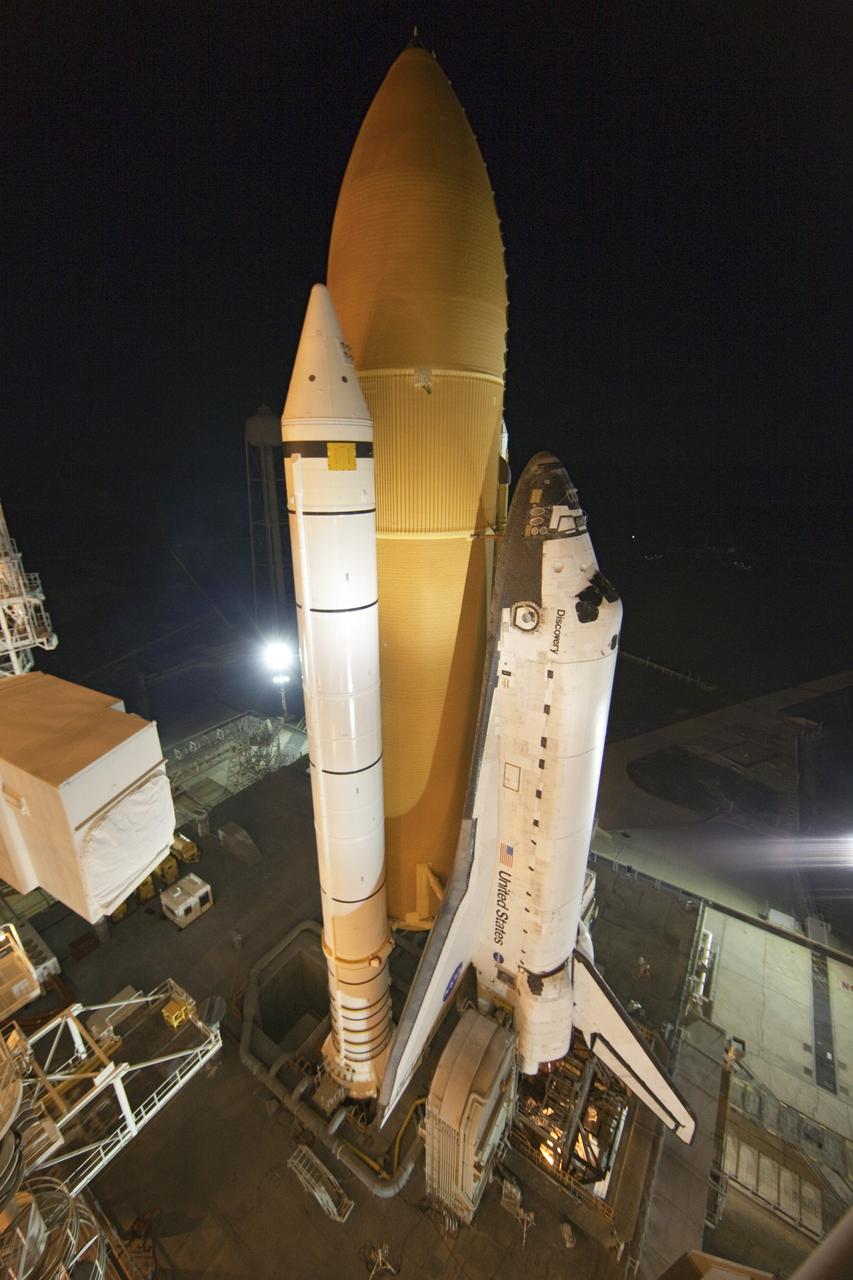
CAPE CANAVERAL, Fla. -- Space shuttle Discovery, secured to a crawler-transporter, slowly moves away from Launch Pad 39A at NASA's Kennedy Space Center in Florida. The 3.4-mile trek, called rollback, to the Vehicle Assembly Building began at 10:48 p.m. and took about eight hours. Next, Discovery's external fuel tank will be examined and foam reapplied where 89 sensors were installed on the tank's aluminum skin for an instrumented tanking test on Dec. 17. The sensors were used to measure changes in the tank as super-cold propellants were pumped in and drained out. Data and analysis from the test will be used to determine what caused the tops of two, 21-foot-long support beams, called stringers, on the outside of the intertank to crack during fueling on Nov. 5. Discovery's next launch opportunity to the International Space Station on the STS-133 mission is no earlier than Feb. 3, 2011. For more information on STS-133, visit www.nasa.gov/mission_pages/shuttle/shuttlemissions/sts133/. Photo credit: NASA/Frank Michaux
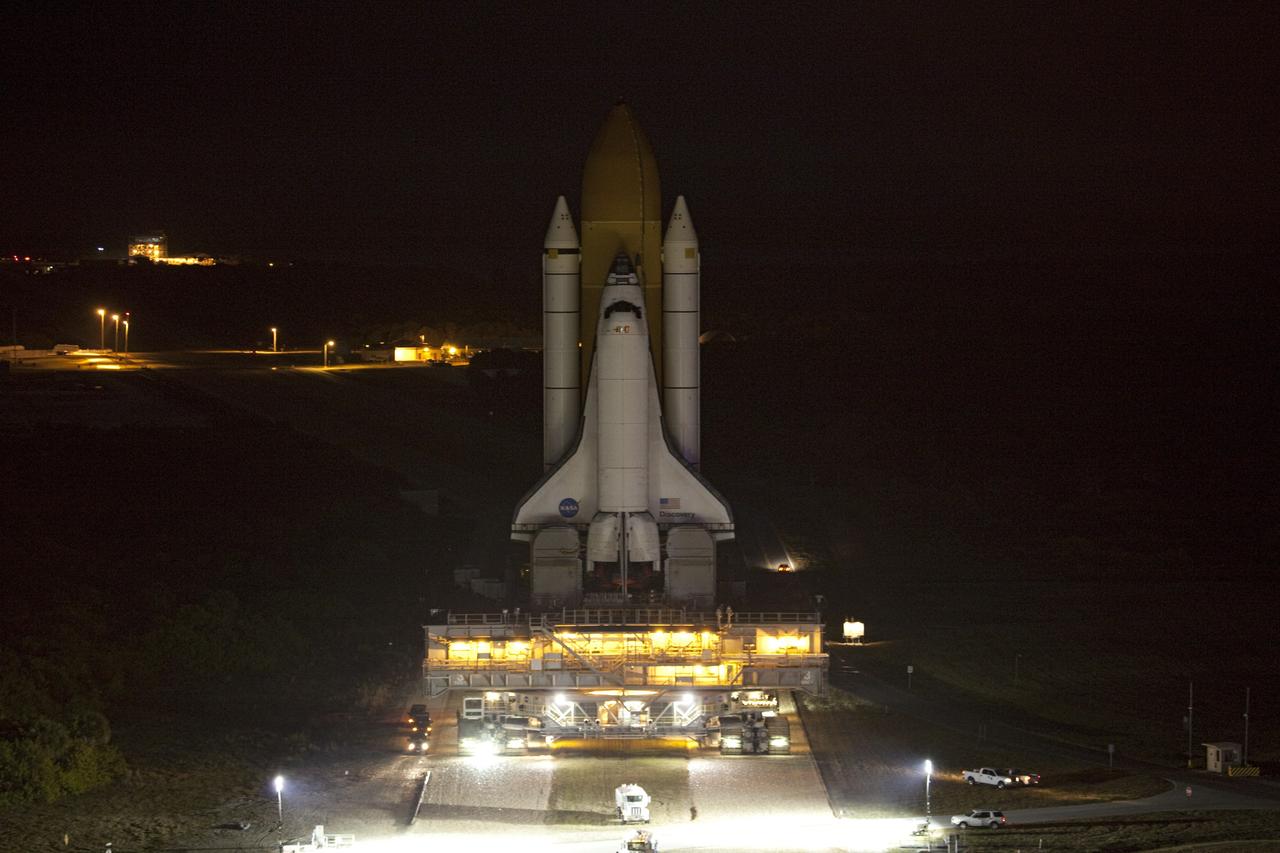
CAPE CANAVERAL, Fla. -- Space shuttle Discovery slowly moves down the crawlerway at NASA's Kennedy Space Center in Florida. The 3.4-mile trek, called rollback, from Launch Pad 39A to the Vehicle Assembly Building began at 10:48 p.m. yesterday and took about eight hours. Next, Discovery's external fuel tank will be examined and foam reapplied where 89 sensors were installed on the tank's aluminum skin for an instrumented tanking test on Dec. 17. The sensors were used to measure changes in the tank as super-cold propellants were pumped in and drained out. Data and analysis from the test will be used to determine what caused the tops of two, 21-foot-long support beams, called stringers, on the outside of the intertank to crack during fueling on Nov. 5. Discovery's next launch opportunity to the International Space Station on the STS-133 mission is no earlier than Feb. 3, 2011. For more information on STS-133, visit www.nasa.gov/mission_pages/shuttle/shuttlemissions/sts133/. Photo credit: NASA/Frank Michaux
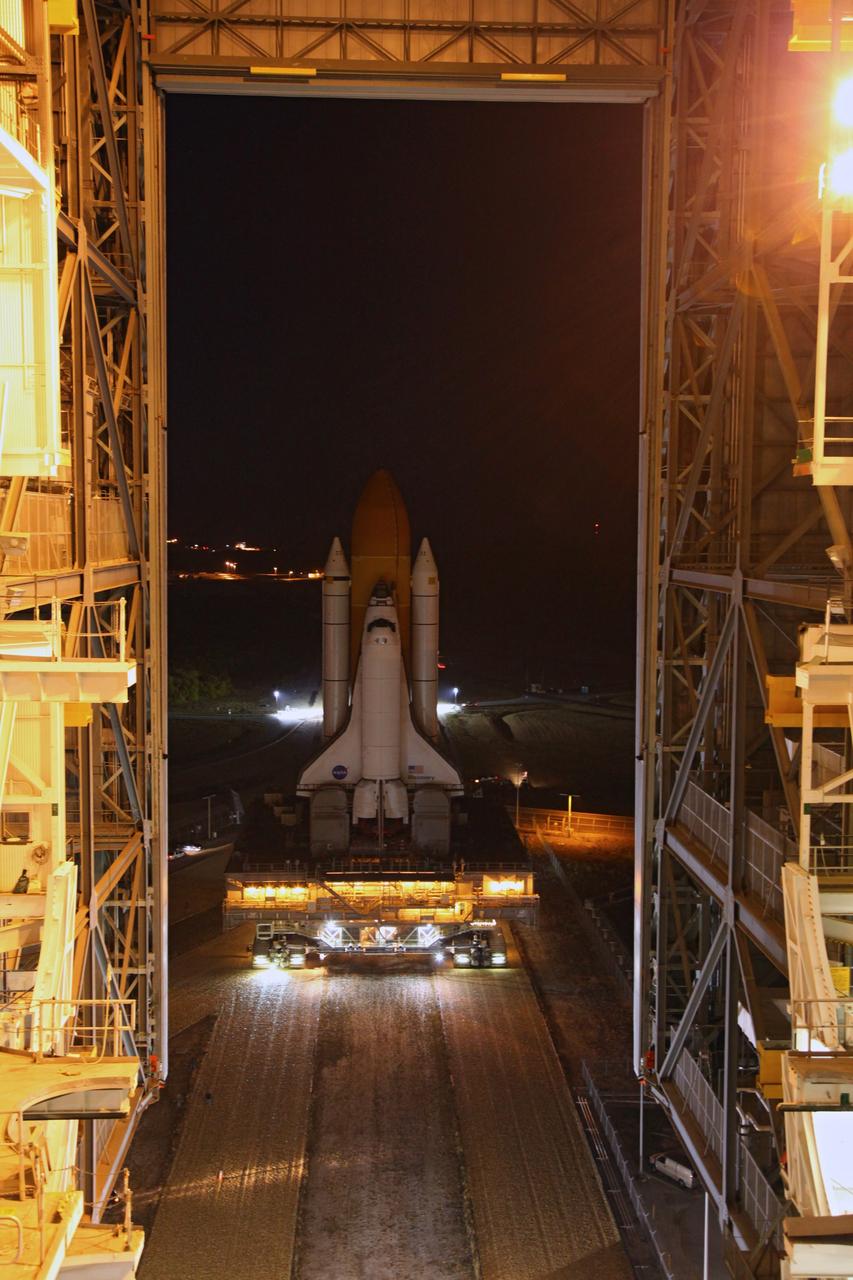
CAPE CANAVERAL, Fla. -- Space shuttle Discovery approached the Vehicle Assembly Building at NASA's Kennedy Space Center in Florida. The 3.4-mile trek, called rollback, from Launch Pad 39A began at 10:48 p.m. yesterday and took about eight hours. Next, Discovery's external fuel tank will be examined and foam reapplied where 89 sensors were installed on the tank's aluminum skin for an instrumented tanking test on Dec. 17. The sensors were used to measure changes in the tank as super-cold propellants were pumped in and drained out. Data and analysis from the test will be used to determine what caused the tops of two, 21-foot-long support beams, called stringers, on the outside of the intertank to crack during fueling on Nov. 5. Discovery's next launch opportunity to the International Space Station on the STS-133 mission is no earlier than Feb. 3, 2011. For more information on STS-133, visit www.nasa.gov/mission_pages/shuttle/shuttlemissions/sts133/. Photo credit: NASA/Frank Michaux

CAPE CANAVERAL, Fla. -- Work platforms inside the Vehicle Assembly Building at NASA's Kennedy Space Center in Florida begin to surround space shuttle Discovery, its solid rocket boosters and external fuel tank. The shuttle rolled back from Launch Pad 39A so technicians can examine the external tank and re-apply foam where 89 sensors were installed on the tank's aluminum skin for an instrumented tanking test on Dec. 17. The sensors were used to measure changes in the tank as super-cold propellants were pumped in and drained out. Data and analysis from the test will be used to determine what caused the tops of two, 21-foot-long support beams, called stringers, on the outside of the intertank to crack during fueling on Nov. 5. Discovery's next launch opportunity to the International Space Station on the STS-133 mission is no earlier than Feb. 3, 2011. For more information on STS-133, visit www.nasa.gov/mission_pages/shuttle/shuttlemissions/sts133/. Photo credit: NASA/Frank Michaux
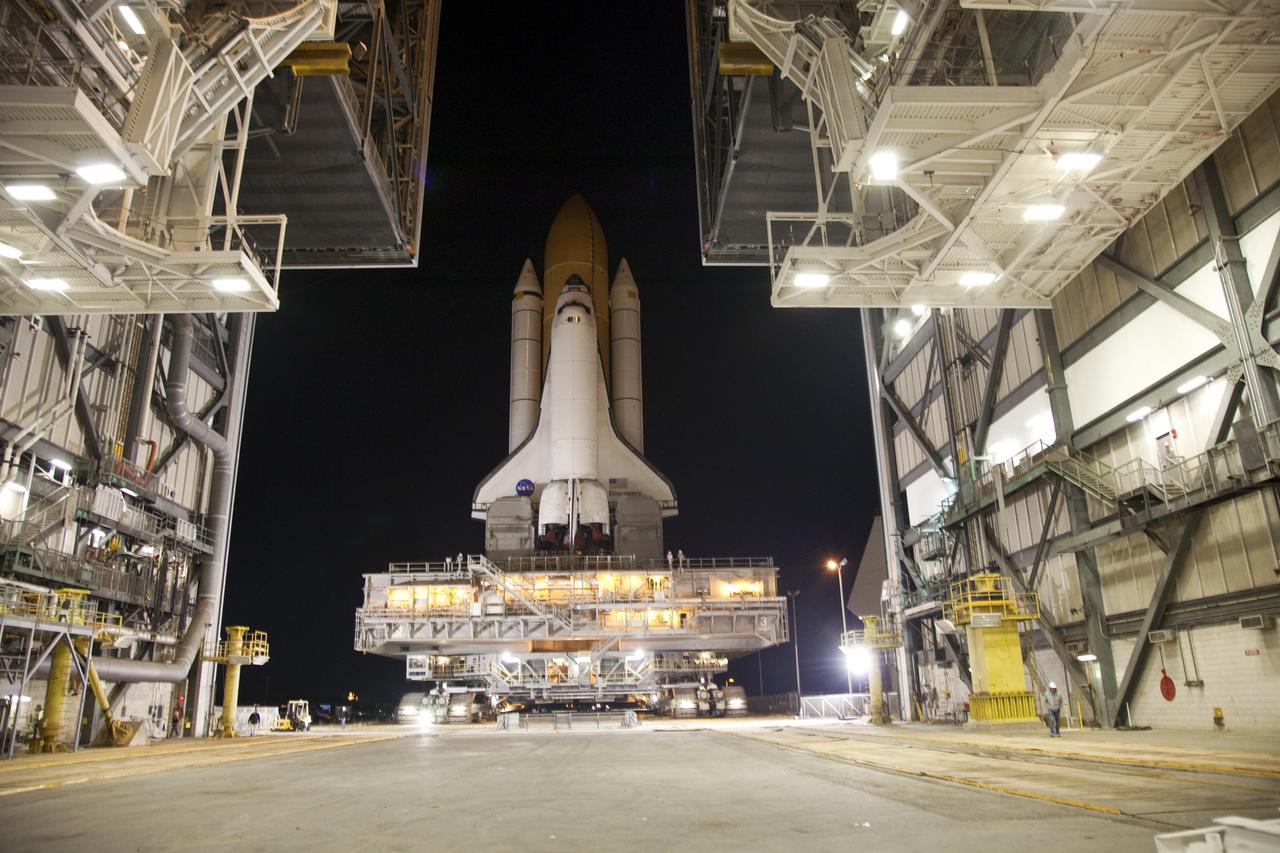
CAPE CANAVERAL, Fla. -- The bright lights inside the Vehicle Assembly Building at NASA's Kennedy Space Center in Florida invite space shuttle Discovery inside. The 3.4-mile trek, called rollback, from Launch Pad 39A began at 10:48 p.m. yesterday and took about eight hours. Next, Discovery's external fuel tank will be examined and foam reapplied where 89 sensors were installed on the tank's aluminum skin for an instrumented tanking test on Dec. 17. The sensors were used to measure changes in the tank as super-cold propellants were pumped in and drained out. Data and analysis from the test will be used to determine what caused the tops of two, 21-foot-long support beams, called stringers, on the outside of the intertank to crack during fueling on Nov. 5. Discovery's next launch opportunity to the International Space Station on the STS-133 mission is no earlier than Feb. 3, 2011. For more information on STS-133, visit www.nasa.gov/mission_pages/shuttle/shuttlemissions/sts133/. Photo credit: NASA/Frank Michaux
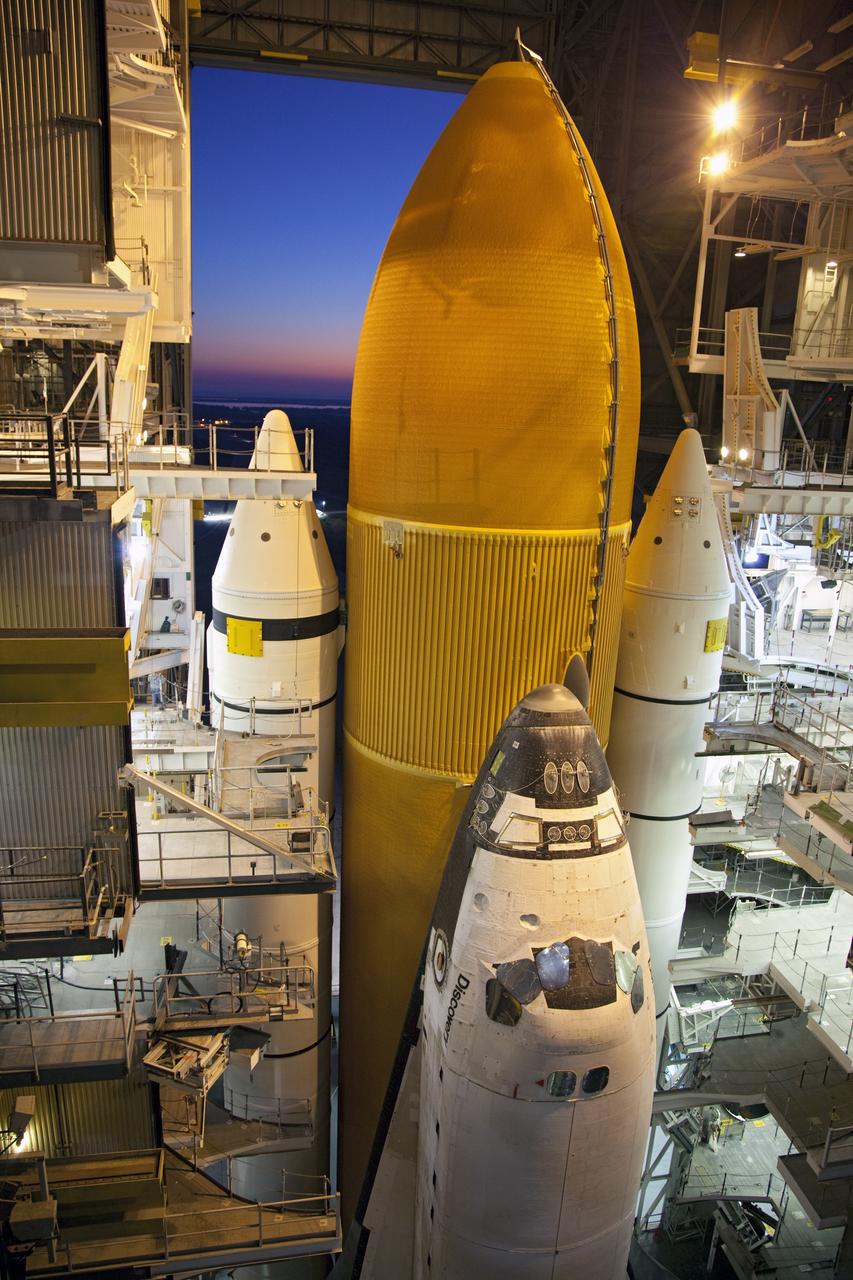
CAPE CANAVERAL, Fla. -- Work platforms inside the Vehicle Assembly Building at NASA's Kennedy Space Center in Florida begin to surround space shuttle Discovery, its solid rocket boosters and external fuel tank at dawn. The shuttle rolled back from Launch Pad 39A so technicians can examine the external tank and re-apply foam where 89 sensors were installed on the tank's aluminum skin for an instrumented tanking test on Dec. 17. The sensors were used to measure changes in the tank as super-cold propellants were pumped in and drained out. Data and analysis from the test will be used to determine what caused the tops of two, 21-foot-long support beams, called stringers, on the outside of the intertank to crack during fueling on Nov. 5. Discovery's next launch opportunity to the International Space Station on the STS-133 mission is no earlier than Feb. 3, 2011. For more information on STS-133, visit www.nasa.gov/mission_pages/shuttle/shuttlemissions/sts133/. Photo credit: NASA/Frank Michaux
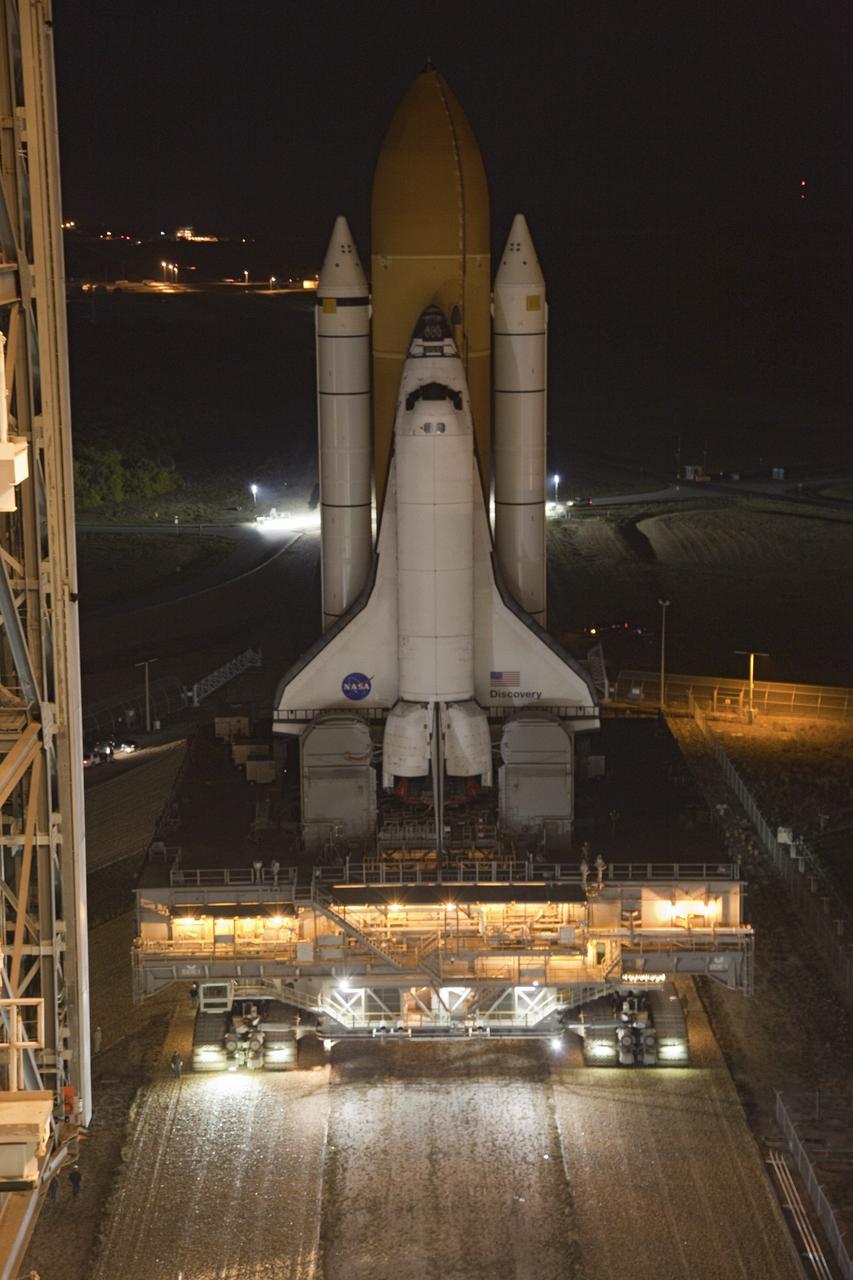
CAPE CANAVERAL, Fla. -- Space shuttle Discovery begins to enter the Vehicle Assembly Building at NASA's Kennedy Space Center in Florida. The 3.4-mile trek, called rollback, from Launch Pad 39A began at 10:48 p.m. yesterday and took about eight hours. Next, Discovery's external fuel tank will be examined and foam reapplied where 89 sensors were installed on the tank's aluminum skin for an instrumented tanking test on Dec. 17. The sensors were used to measure changes in the tank as super-cold propellants were pumped in and drained out. Data and analysis from the test will be used to determine what caused the tops of two, 21-foot-long support beams, called stringers, on the outside of the intertank to crack during fueling on Nov. 5. Discovery's next launch opportunity to the International Space Station on the STS-133 mission is no earlier than Feb. 3, 2011. For more information on STS-133, visit www.nasa.gov/mission_pages/shuttle/shuttlemissions/sts133/. Photo credit: NASA/Frank Michaux
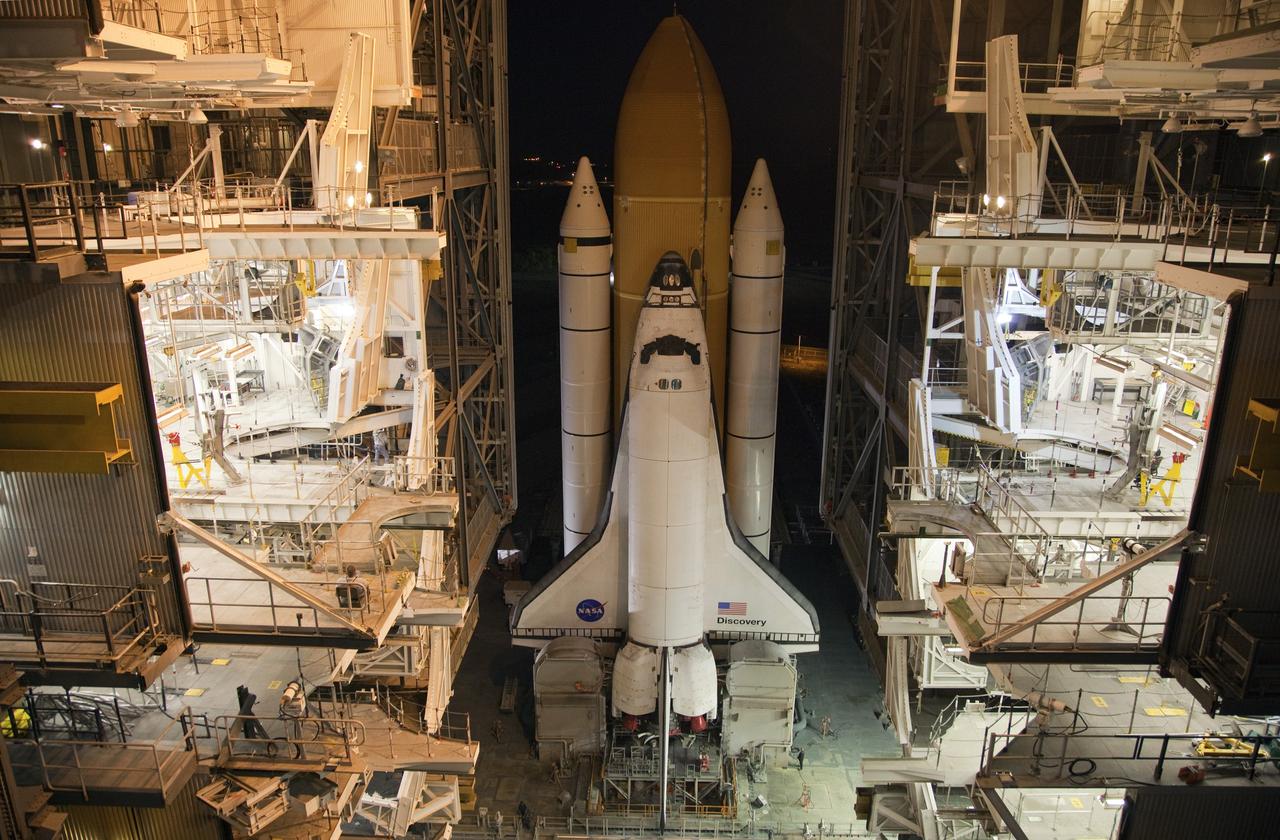
CAPE CANAVERAL, Fla. -- Space shuttle Discovery enters the Vehicle Assembly Building at NASA's Kennedy Space Center in Florida. The 3.4-mile trek, called rollback, from Launch Pad 39A began at 10:48 p.m. yesterday and took about eight hours. Next, Discovery's external fuel tank will be examined and foam reapplied where 89 sensors were installed on the tank's aluminum skin for an instrumented tanking test on Dec. 17. The sensors were used to measure changes in the tank as super-cold propellants were pumped in and drained out. Data and analysis from the test will be used to determine what caused the tops of two, 21-foot-long support beams, called stringers, on the outside of the intertank to crack during fueling on Nov. 5. Discovery's next launch opportunity to the International Space Station on the STS-133 mission is no earlier than Feb. 3, 2011. For more information on STS-133, visit www.nasa.gov/mission_pages/shuttle/shuttlemissions/sts133/. Photo credit: NASA/Frank Michaux
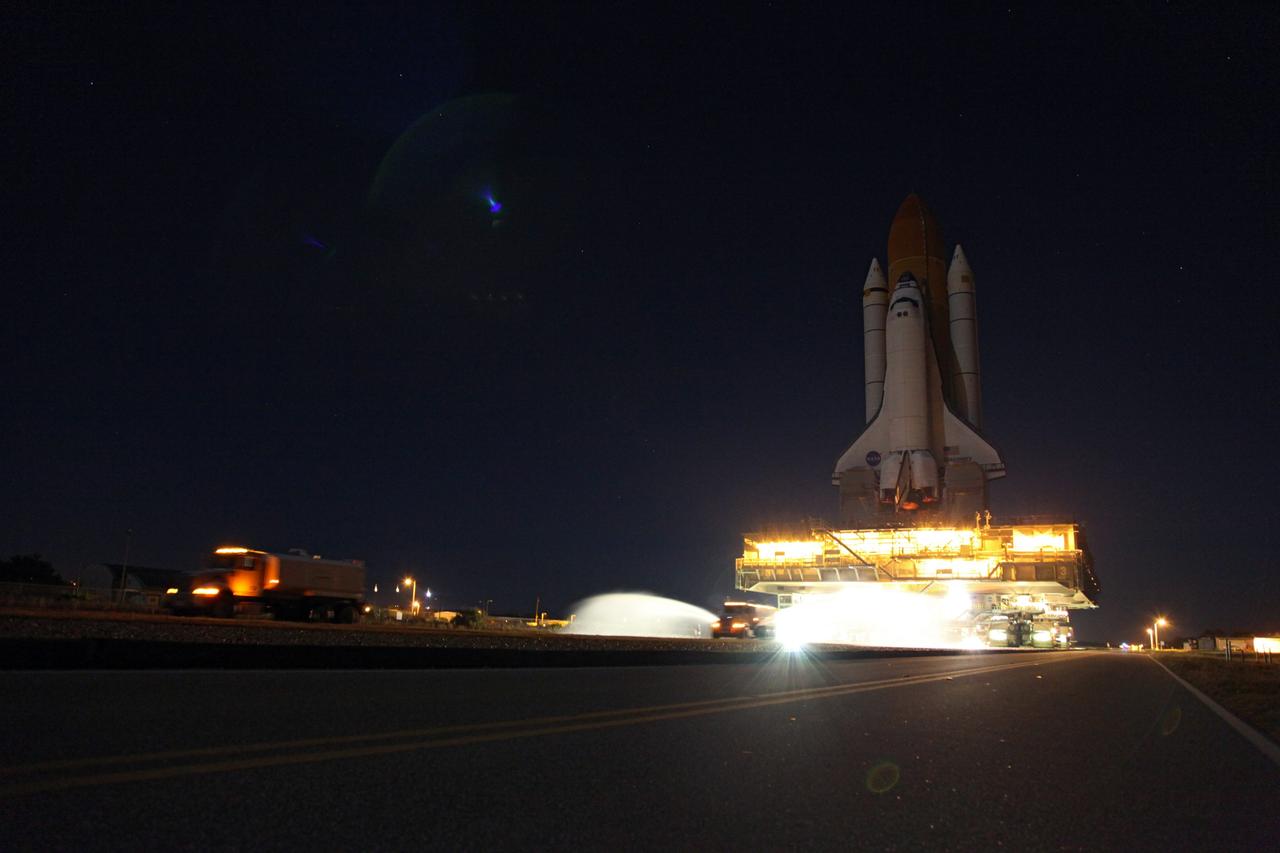
CAPE CANAVERAL, Fla. -- Space shuttle Discovery slowly moves down the crawlerway at NASA's Kennedy Space Center in Florida. The 3.4-mile trek, called rollback, from Launch Pad 39A to the Vehicle Assembly Building began at 10:48 p.m. yesterday and took about eight hours. Next, Discovery's external fuel tank will be examined and foam reapplied where 89 sensors were installed on the tank's aluminum skin for an instrumented tanking test on Dec. 17. The sensors were used to measure changes in the tank as super-cold propellants were pumped in and drained out. Data and analysis from the test will be used to determine what caused the tops of two, 21-foot-long support beams, called stringers, on the outside of the intertank to crack during fueling on Nov. 5. Discovery's next launch opportunity to the International Space Station on the STS-133 mission is no earlier than Feb. 3, 2011. For more information on STS-133, visit www.nasa.gov/mission_pages/shuttle/shuttlemissions/sts133/. Photo credit: NASA/Frank Michaux
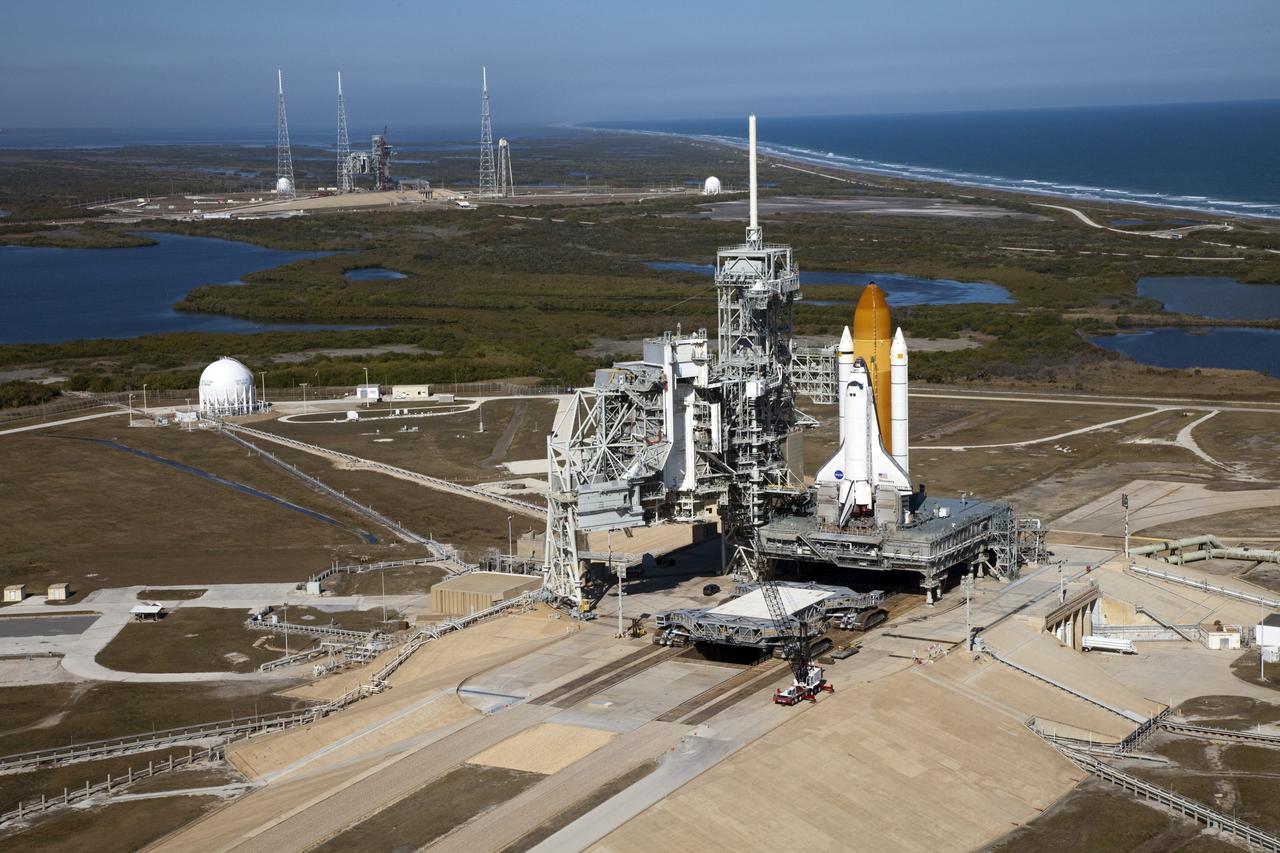
CAPE CANAVERAL, Fla. -- Space shuttle Discovery awaits its move, called rollback, from Launch Pad 39A to the Vehicle Assembly Building (VAB) at NASA's Kennedy Space Center in Florida. Rollback was scheduled for 12:30 a.m., but was postponed until 10 p.m. so technicians could resolve an issue with a leveling system on the crawler-transporter, which is in front of the shuttle. Once inside the VAB, Discovery's external fuel tank will be examined and foam reapplied where 89 sensors were installed on the tank's aluminum skin for an instrumented tanking test on Dec. 17. The sensors were used to measure changes in the tank as super-cold propellants were pumped in and drained out. Data and analysis from the test will be used to determine what caused the tops of two, 21-foot-long support beams, called stringers, on the outside of the intertank to crack during fueling on Nov. 5. Discovery's next launch opportunity to the International Space Station on the STS-133 mission is no earlier than Feb. 3, 2011. For more information on STS-133, visit www.nasa.gov/mission_pages/shuttle/shuttlemissions/sts133/. Photo credit: NASA/Frank Michaux
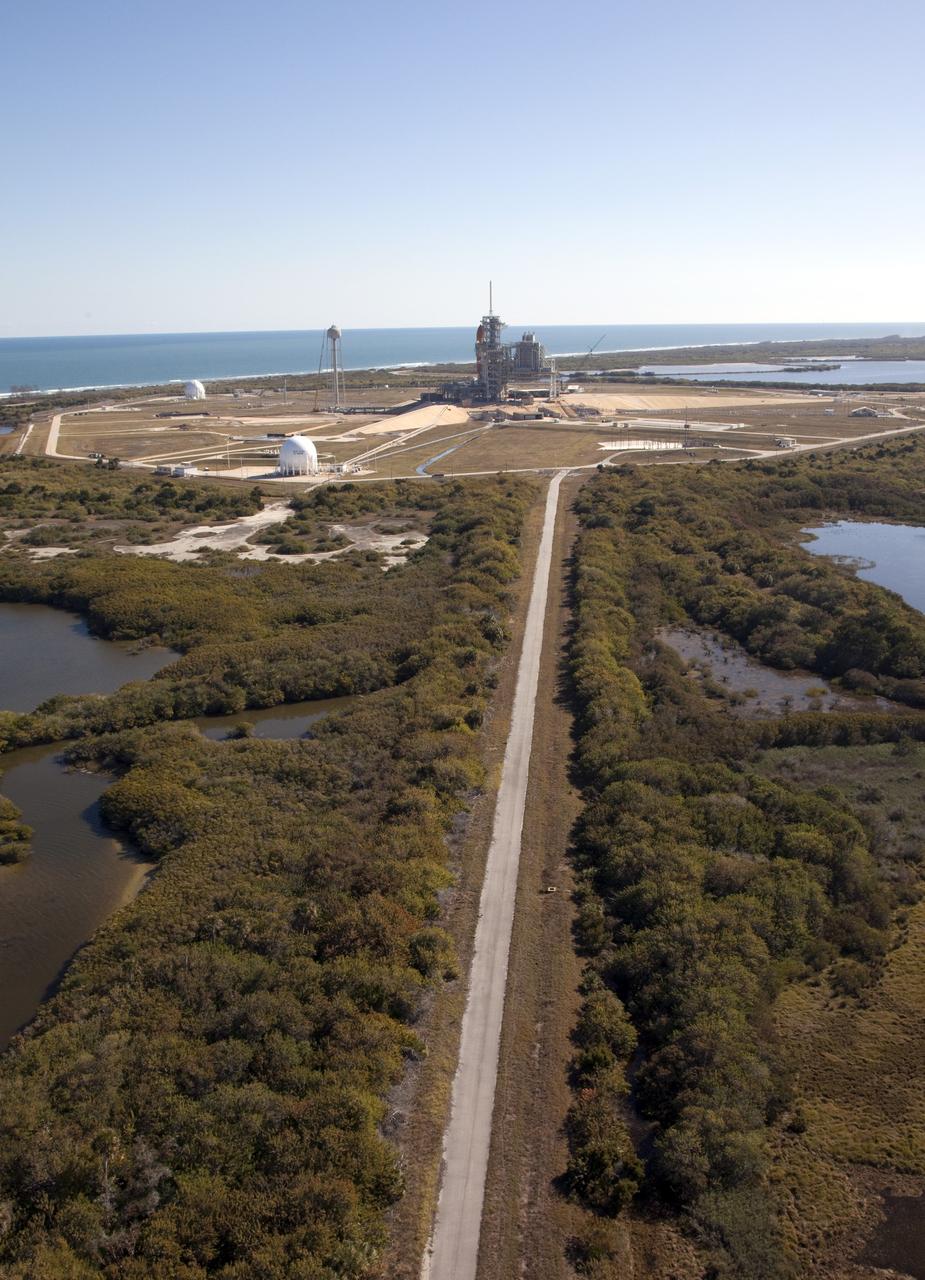
CAPE CANAVERAL, Fla. -- Space shuttle Discovery awaits its move, called rollback, from Launch Pad 39A to the Vehicle Assembly Building (VAB) at NASA's Kennedy Space Center in Florida. Rollback was scheduled for 12:30 a.m., but was postponed until 10 p.m. so technicians could resolve an issue with a leveling system on the crawler-transporter. Once inside the VAB, Discovery's external fuel tank will be examined and foam reapplied where 89 sensors were installed on the tank's aluminum skin for an instrumented tanking test on Dec. 17. The sensors were used to measure changes in the tank as super-cold propellants were pumped in and drained out. Data and analysis from the test will be used to determine what caused the tops of two, 21-foot-long support beams, called stringers, on the outside of the intertank to crack during fueling on Nov. 5. Discovery's next launch opportunity to the International Space Station on the STS-133 mission is no earlier than Feb. 3, 2011. For more information on STS-133, visit www.nasa.gov/mission_pages/shuttle/shuttlemissions/sts133/. Photo credit: NASA/Frank Michaux
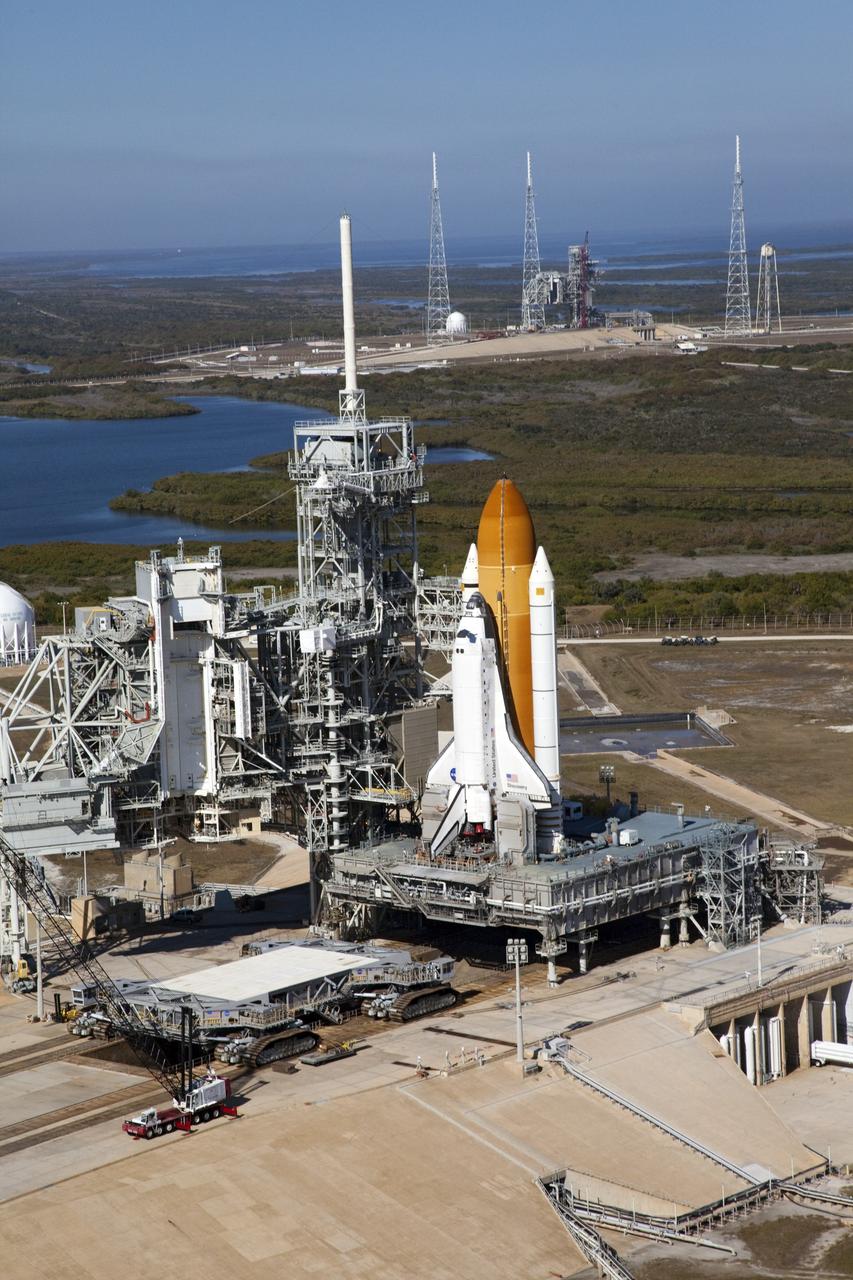
CAPE CANAVERAL, Fla. -- Space shuttle Discovery awaits its move, called rollback, from Launch Pad 39A to the Vehicle Assembly Building (VAB) at NASA's Kennedy Space Center in Florida. Rollback was scheduled for 12:30 a.m., but was postponed until 10 p.m. so technicians could resolve an issue with a leveling system on the crawler-transporter, which is to the left of the shuttle. Once inside the VAB, Discovery's external fuel tank will be examined and foam reapplied where 89 sensors were installed on the tank's aluminum skin for an instrumented tanking test on Dec. 17. The sensors were used to measure changes in the tank as super-cold propellants were pumped in and drained out. Data and analysis from the test will be used to determine what caused the tops of two, 21-foot-long support beams, called stringers, on the outside of the intertank to crack during fueling on Nov. 5. Discovery's next launch opportunity to the International Space Station on the STS-133 mission is no earlier than Feb. 3, 2011. For more information on STS-133, visit www.nasa.gov/mission_pages/shuttle/shuttlemissions/sts133/. Photo credit: NASA/Frank Michaux
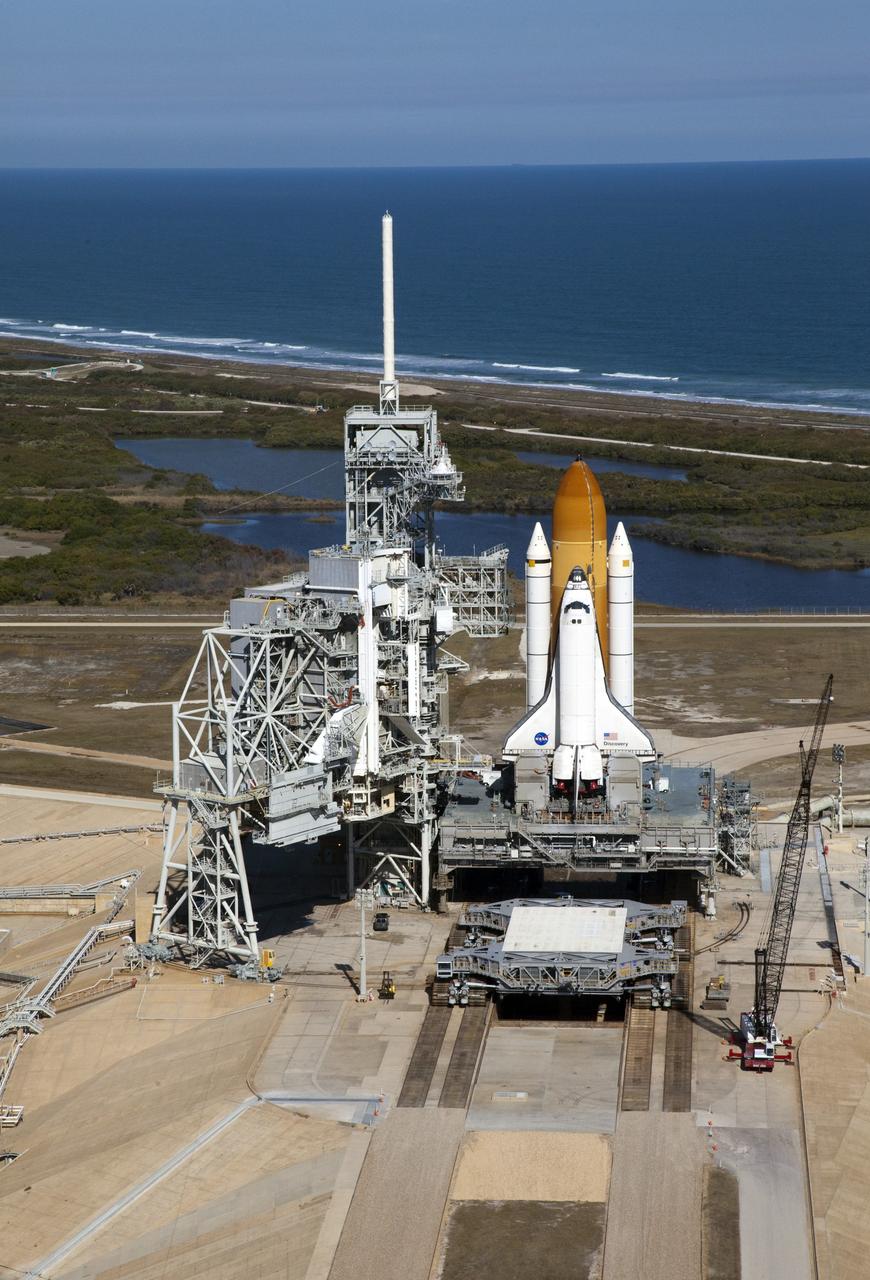
CAPE CANAVERAL, Fla. -- Space shuttle Discovery awaits its move, called rollback, from Launch Pad 39A to the Vehicle Assembly Building (VAB) at NASA's Kennedy Space Center in Florida. Rollback was scheduled for 12:30 a.m., but was postponed until 10 p.m. so technicians could resolve an issue with a leveling system on the crawler-transporter, which is in front of the shuttle. Once inside the VAB, Discovery's external fuel tank will be examined and foam reapplied where 89 sensors were installed on the tank's aluminum skin for an instrumented tanking test on Dec. 17. The sensors were used to measure changes in the tank as super-cold propellants were pumped in and drained out. Data and analysis from the test will be used to determine what caused the tops of two, 21-foot-long support beams, called stringers, on the outside of the intertank to crack during fueling on Nov. 5. Discovery's next launch opportunity to the International Space Station on the STS-133 mission is no earlier than Feb. 3, 2011. For more information on STS-133, visit www.nasa.gov/mission_pages/shuttle/shuttlemissions/sts133/. Photo credit: NASA/Frank Michaux
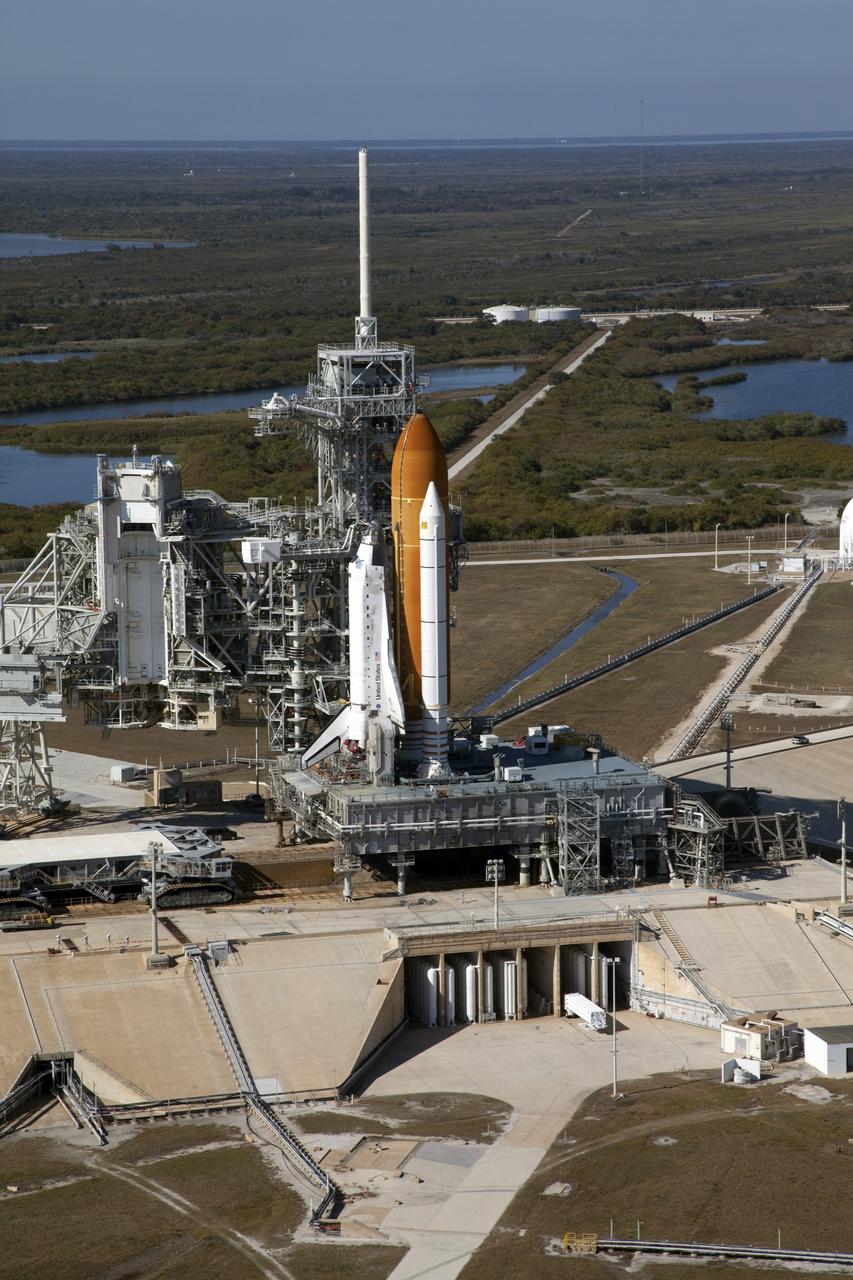
CAPE CANAVERAL, Fla. -- Space shuttle Discovery awaits its move, called rollback, from Launch Pad 39A to the Vehicle Assembly Building (VAB) at NASA's Kennedy Space Center in Florida. Rollback was scheduled for 12:30 a.m., but was postponed until 10 p.m. so technicians could resolve an issue with a leveling system on the crawler-transporter, which is to the left of the shuttle. Once inside the VAB, Discovery's external fuel tank will be examined and foam reapplied where 89 sensors were installed on the tank's aluminum skin for an instrumented tanking test on Dec. 17. The sensors were used to measure changes in the tank as super-cold propellants were pumped in and drained out. Data and analysis from the test will be used to determine what caused the tops of two, 21-foot-long support beams, called stringers, on the outside of the intertank to crack during fueling on Nov. 5. Discovery's next launch opportunity to the International Space Station on the STS-133 mission is no earlier than Feb. 3, 2011. For more information on STS-133, visit www.nasa.gov/mission_pages/shuttle/shuttlemissions/sts133/. Photo credit: NASA/Frank Michaux
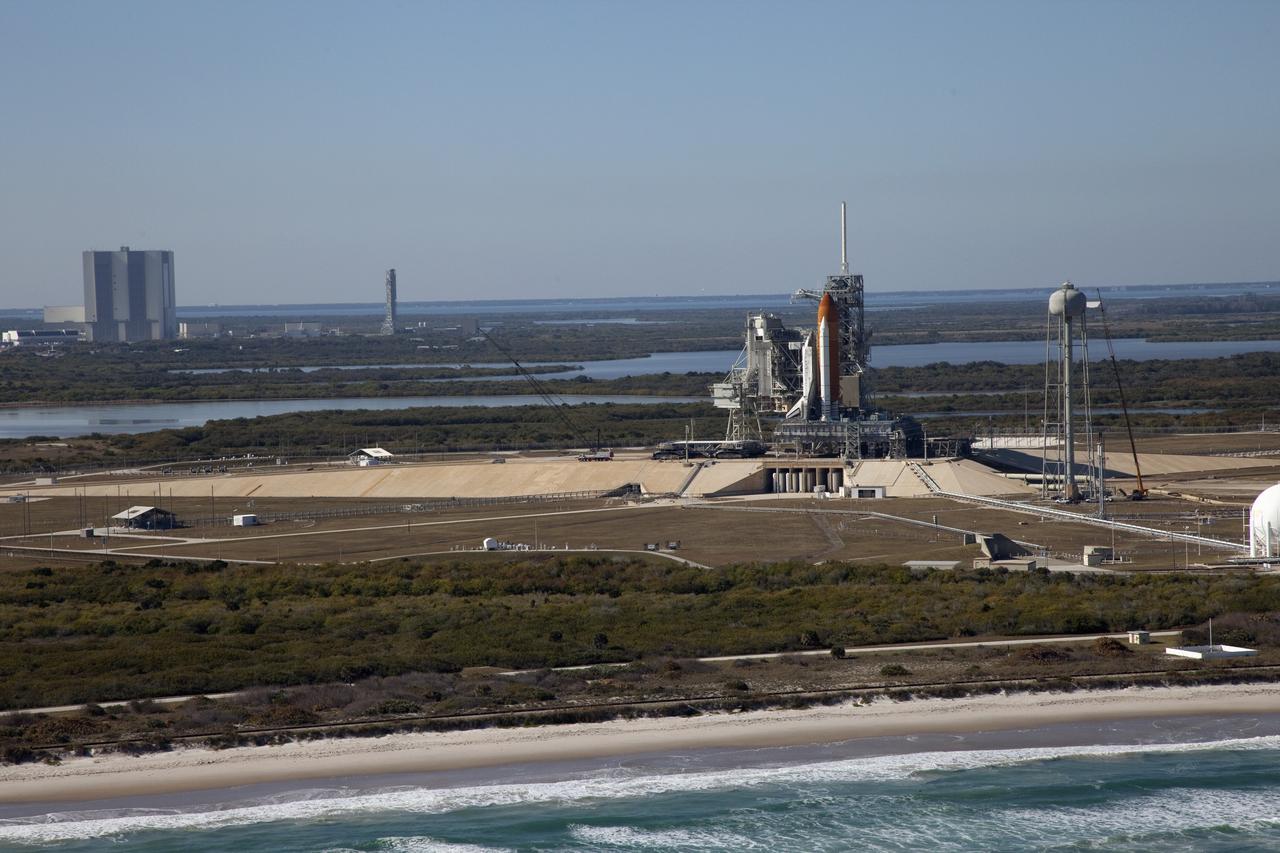
CAPE CANAVERAL, Fla. -- Space shuttle Discovery awaits its move, called rollback, from Launch Pad 39A to the Vehicle Assembly Building (VAB) at NASA's Kennedy Space Center in Florida. Rollback was scheduled for 12:30 a.m., but was postponed until 10 p.m. so technicians could resolve an issue with a leveling system on the crawler-transporter. Once inside the VAB, Discovery's external fuel tank will be examined and foam reapplied where 89 sensors were installed on the tank's aluminum skin for an instrumented tanking test on Dec. 17. The sensors were used to measure changes in the tank as super-cold propellants were pumped in and drained out. Data and analysis from the test will be used to determine what caused the tops of two, 21-foot-long support beams, called stringers, on the outside of the intertank to crack during fueling on Nov. 5. Discovery's next launch opportunity to the International Space Station on the STS-133 mission is no earlier than Feb. 3, 2011. For more information on STS-133, visit www.nasa.gov/mission_pages/shuttle/shuttlemissions/sts133/. Photo credit: NASA/Frank Michaux
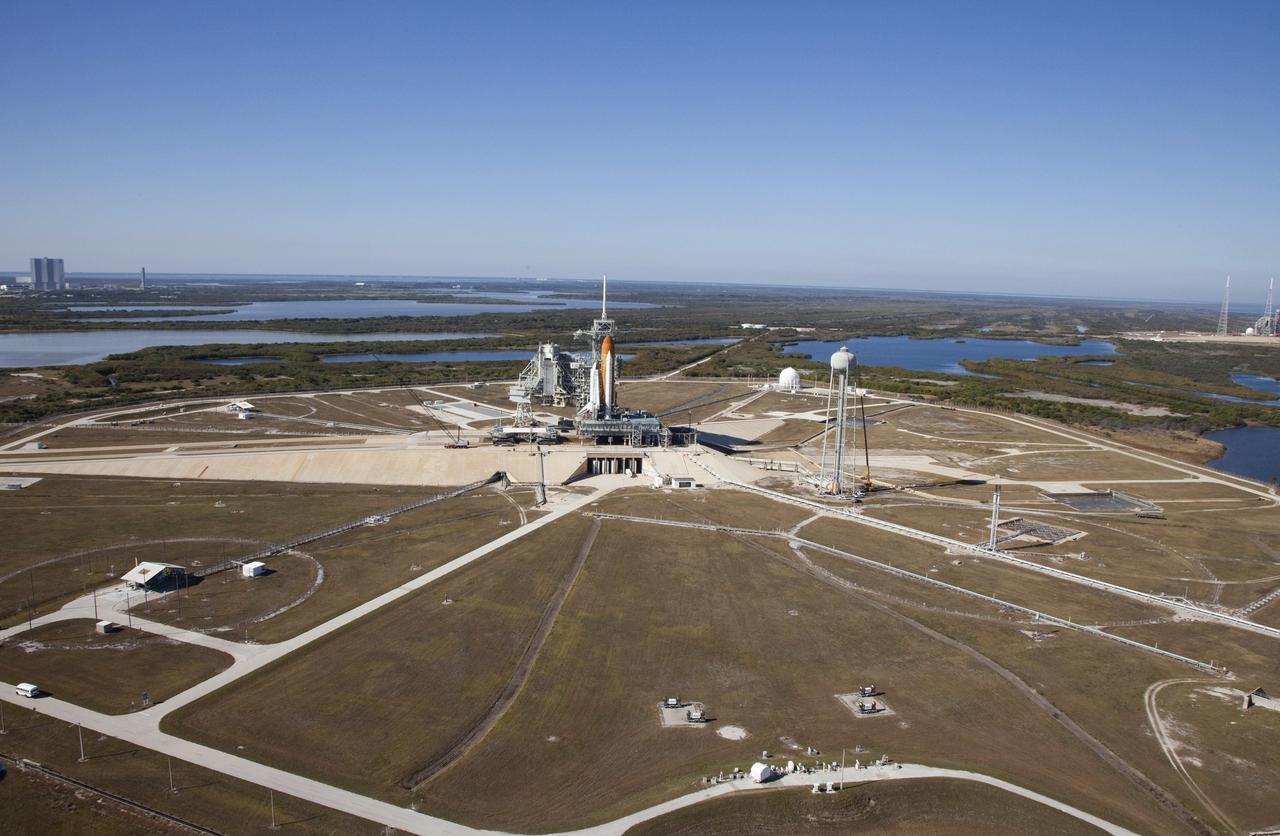
CAPE CANAVERAL, Fla. -- Space shuttle Discovery awaits its move, called rollback, from Launch Pad 39A to the Vehicle Assembly Building (VAB) at NASA's Kennedy Space Center in Florida. Rollback was scheduled for 12:30 a.m., but was postponed until 10 p.m. so technicians could resolve an issue with a leveling system on the crawler-transporter. Once inside the VAB, Discovery's external fuel tank will be examined and foam reapplied where 89 sensors were installed on the tank's aluminum skin for an instrumented tanking test on Dec. 17. The sensors were used to measure changes in the tank as super-cold propellants were pumped in and drained out. Data and analysis from the test will be used to determine what caused the tops of two, 21-foot-long support beams, called stringers, on the outside of the intertank to crack during fueling on Nov. 5. Discovery's next launch opportunity to the International Space Station on the STS-133 mission is no earlier than Feb. 3, 2011. For more information on STS-133, visit www.nasa.gov/mission_pages/shuttle/shuttlemissions/sts133/. Photo credit: NASA/Frank Michaux
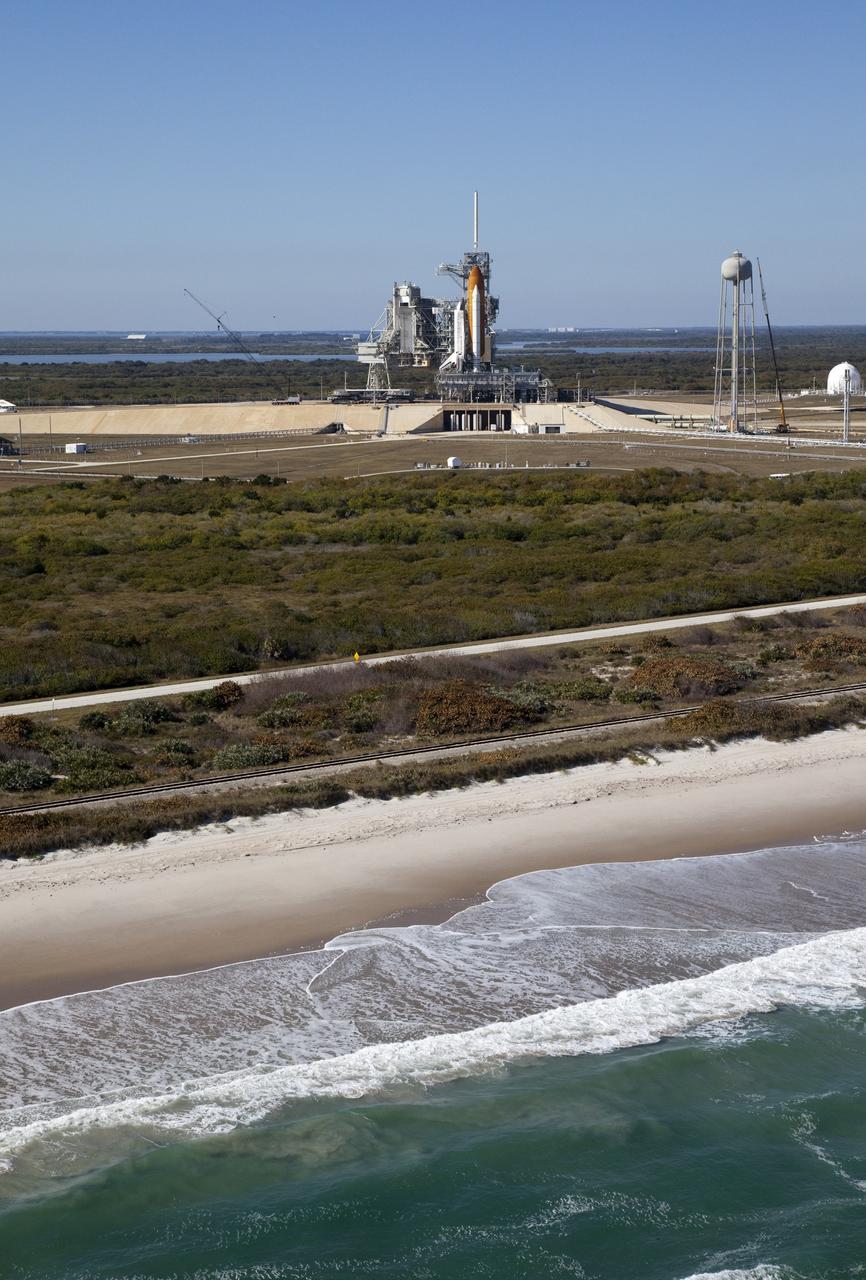
CAPE CANAVERAL, Fla. -- Space shuttle Discovery awaits its move, called rollback, from Launch Pad 39A to the Vehicle Assembly Building (VAB) at NASA's Kennedy Space Center in Florida. Rollback was scheduled for 12:30 a.m., but was postponed until 10 p.m. so technicians could resolve an issue with a leveling system on the crawler-transporter. Once inside the VAB, Discovery's external fuel tank will be examined and foam reapplied where 89 sensors were installed on the tank's aluminum skin for an instrumented tanking test on Dec. 17. The sensors were used to measure changes in the tank as super-cold propellants were pumped in and drained out. Data and analysis from the test will be used to determine what caused the tops of two, 21-foot-long support beams, called stringers, on the outside of the intertank to crack during fueling on Nov. 5. Discovery's next launch opportunity to the International Space Station on the STS-133 mission is no earlier than Feb. 3, 2011. For more information on STS-133, visit www.nasa.gov/mission_pages/shuttle/shuttlemissions/sts133/. Photo credit: NASA/Frank Michaux
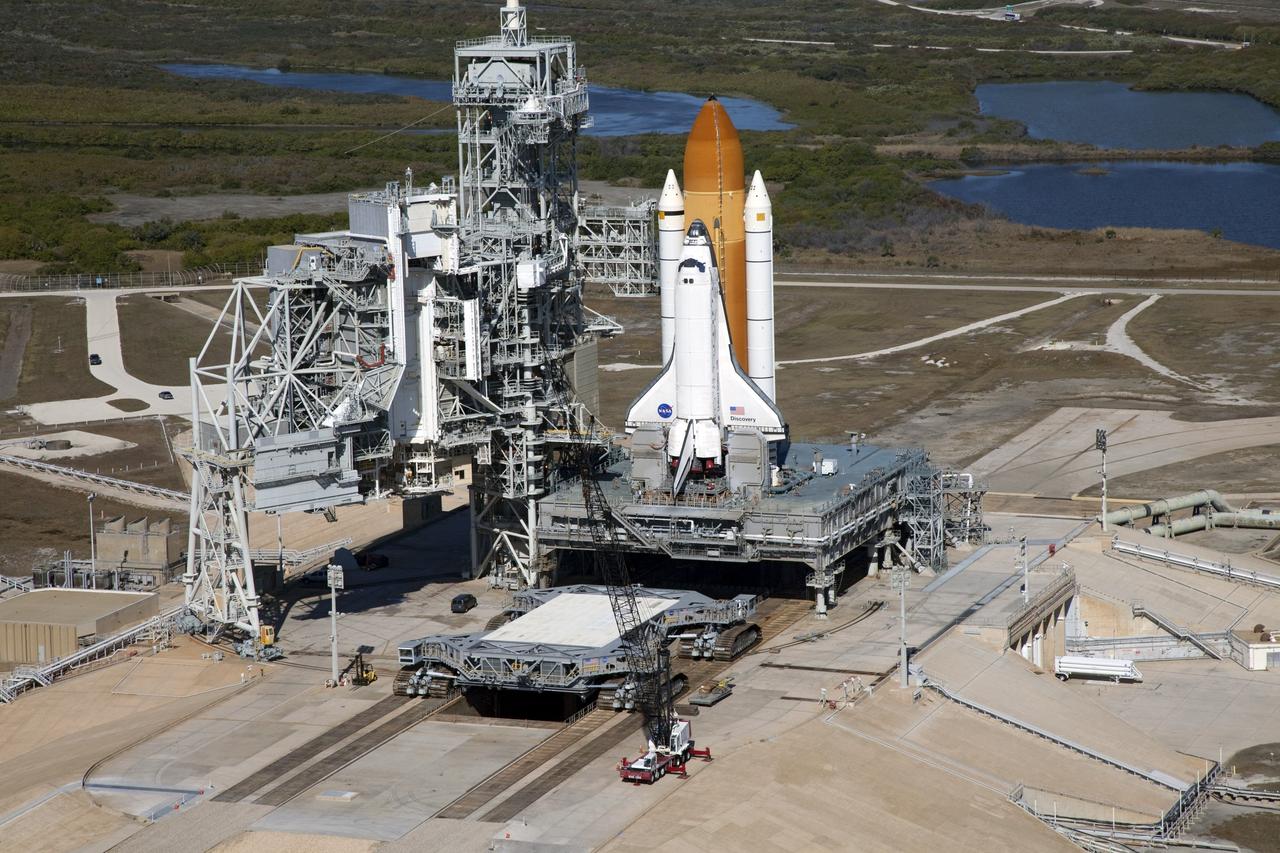
CAPE CANAVERAL, Fla. -- Space shuttle Discovery awaits its move, called rollback, from Launch Pad 39A to the Vehicle Assembly Building (VAB) at NASA's Kennedy Space Center in Florida. Rollback was scheduled for 12:30 a.m., but was postponed until 10 p.m. so technicians could resolve an issue with a leveling system on the crawler-transporter, which is in front of the shuttle. Once inside the VAB, Discovery's external fuel tank will be examined and foam reapplied where 89 sensors were installed on the tank's aluminum skin for an instrumented tanking test on Dec. 17. The sensors were used to measure changes in the tank as super-cold propellants were pumped in and drained out. Data and analysis from the test will be used to determine what caused the tops of two, 21-foot-long support beams, called stringers, on the outside of the intertank to crack during fueling on Nov. 5. Discovery's next launch opportunity to the International Space Station on the STS-133 mission is no earlier than Feb. 3, 2011. For more information on STS-133, visit www.nasa.gov/mission_pages/shuttle/shuttlemissions/sts133/. Photo credit: NASA/Frank Michaux
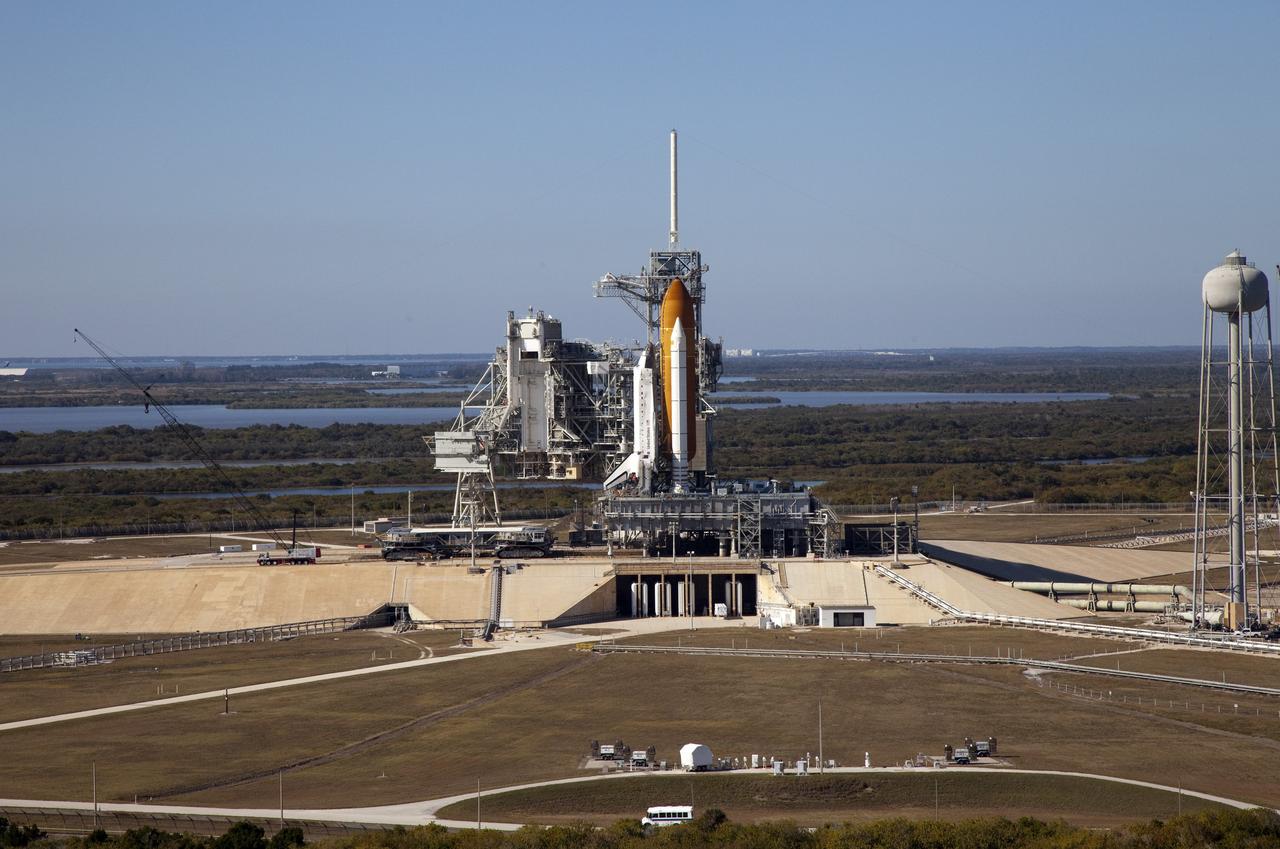
CAPE CANAVERAL, Fla. -- Space shuttle Discovery awaits its move, called rollback, from Launch Pad 39A to the Vehicle Assembly Building (VAB) at NASA's Kennedy Space Center in Florida. Rollback was scheduled for 12:30 a.m., but was postponed until 10 p.m. so technicians could resolve an issue with a leveling system on the crawler-transporter, which is to the left of the shuttle. Once inside the VAB, Discovery's external fuel tank will be examined and foam reapplied where 89 sensors were installed on the tank's aluminum skin for an instrumented tanking test on Dec. 17. The sensors were used to measure changes in the tank as super-cold propellants were pumped in and drained out. Data and analysis from the test will be used to determine what caused the tops of two, 21-foot-long support beams, called stringers, on the outside of the intertank to crack during fueling on Nov. 5. Discovery's next launch opportunity to the International Space Station on the STS-133 mission is no earlier than Feb. 3, 2011. For more information on STS-133, visit www.nasa.gov/mission_pages/shuttle/shuttlemissions/sts133/. Photo credit: NASA/Frank Michaux
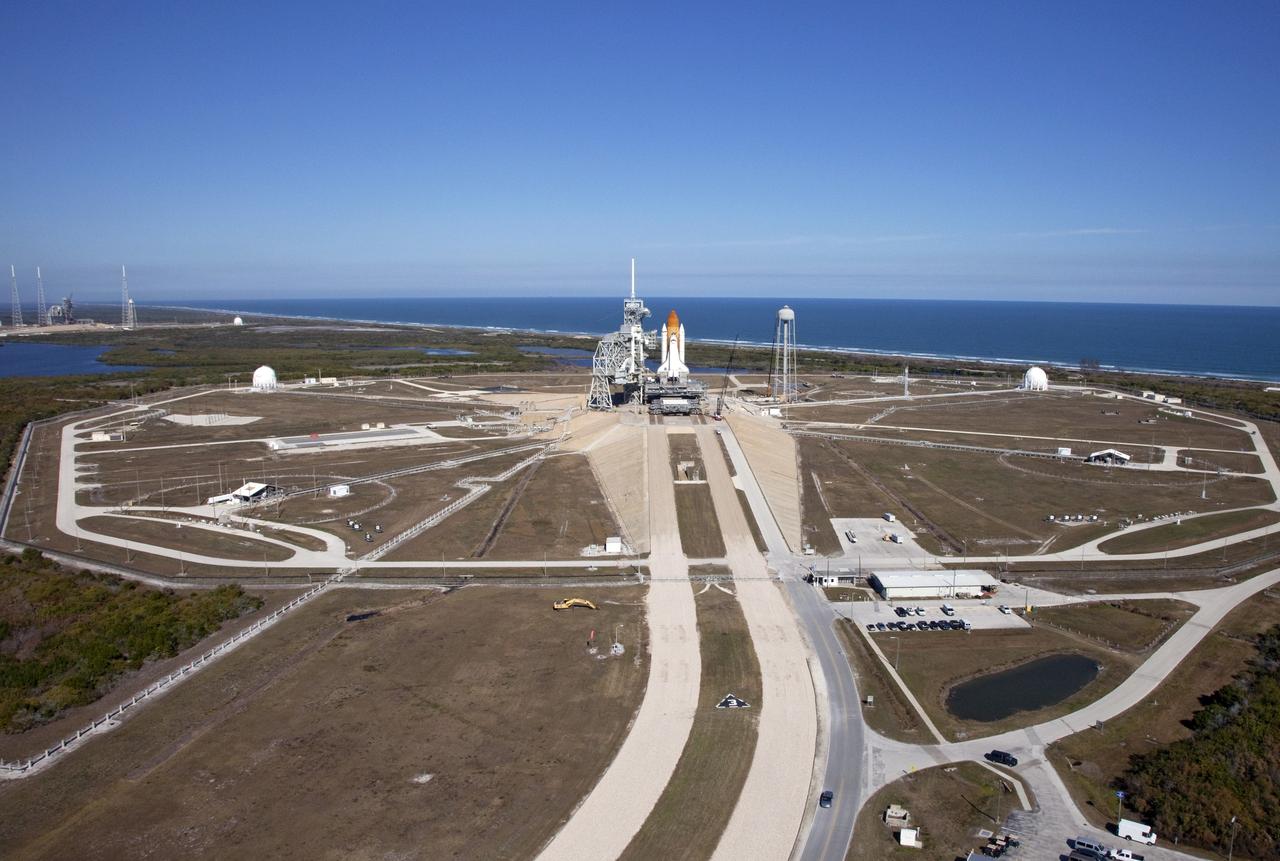
CAPE CANAVERAL, Fla. -- Space shuttle Discovery awaits its move, called rollback, from Launch Pad 39A to the Vehicle Assembly Building (VAB) at NASA's Kennedy Space Center in Florida. Rollback was scheduled for 12:30 a.m., but was postponed until 10 p.m. so technicians could resolve an issue with a leveling system on the crawler-transporter, which is in front of the shuttle. Once inside the VAB, Discovery's external fuel tank will be examined and foam reapplied where 89 sensors were installed on the tank's aluminum skin for an instrumented tanking test on Dec. 17. The sensors were used to measure changes in the tank as super-cold propellants were pumped in and drained out. Data and analysis from the test will be used to determine what caused the tops of two, 21-foot-long support beams, called stringers, on the outside of the intertank to crack during fueling on Nov. 5. Discovery's next launch opportunity to the International Space Station on the STS-133 mission is no earlier than Feb. 3, 2011. For more information on STS-133, visit www.nasa.gov/mission_pages/shuttle/shuttlemissions/sts133/. Photo credit: NASA/Frank Michaux
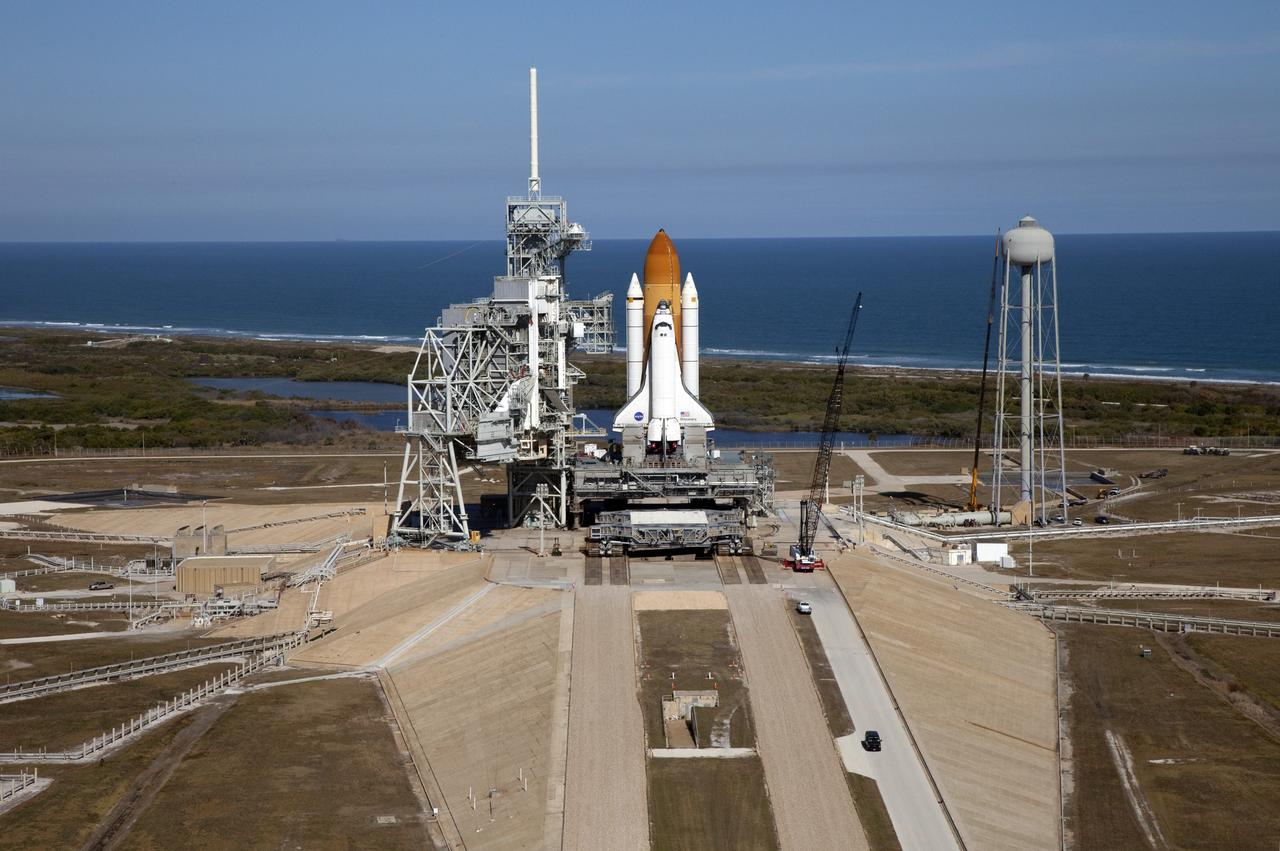
CAPE CANAVERAL, Fla. -- Space shuttle Discovery awaits its move, called rollback, from Launch Pad 39A to the Vehicle Assembly Building (VAB) at NASA's Kennedy Space Center in Florida. Rollback was scheduled for 12:30 a.m., but was postponed until 10 p.m. so technicians could resolve an issue with a leveling system on the crawler-transporter, which is in front of the shuttle. Once inside the VAB, Discovery's external fuel tank will be examined and foam reapplied where 89 sensors were installed on the tank's aluminum skin for an instrumented tanking test on Dec. 17. The sensors were used to measure changes in the tank as super-cold propellants were pumped in and drained out. Data and analysis from the test will be used to determine what caused the tops of two, 21-foot-long support beams, called stringers, on the outside of the intertank to crack during fueling on Nov. 5. Discovery's next launch opportunity to the International Space Station on the STS-133 mission is no earlier than Feb. 3, 2011. For more information on STS-133, visit www.nasa.gov/mission_pages/shuttle/shuttlemissions/sts133/. Photo credit: NASA/Frank Michaux
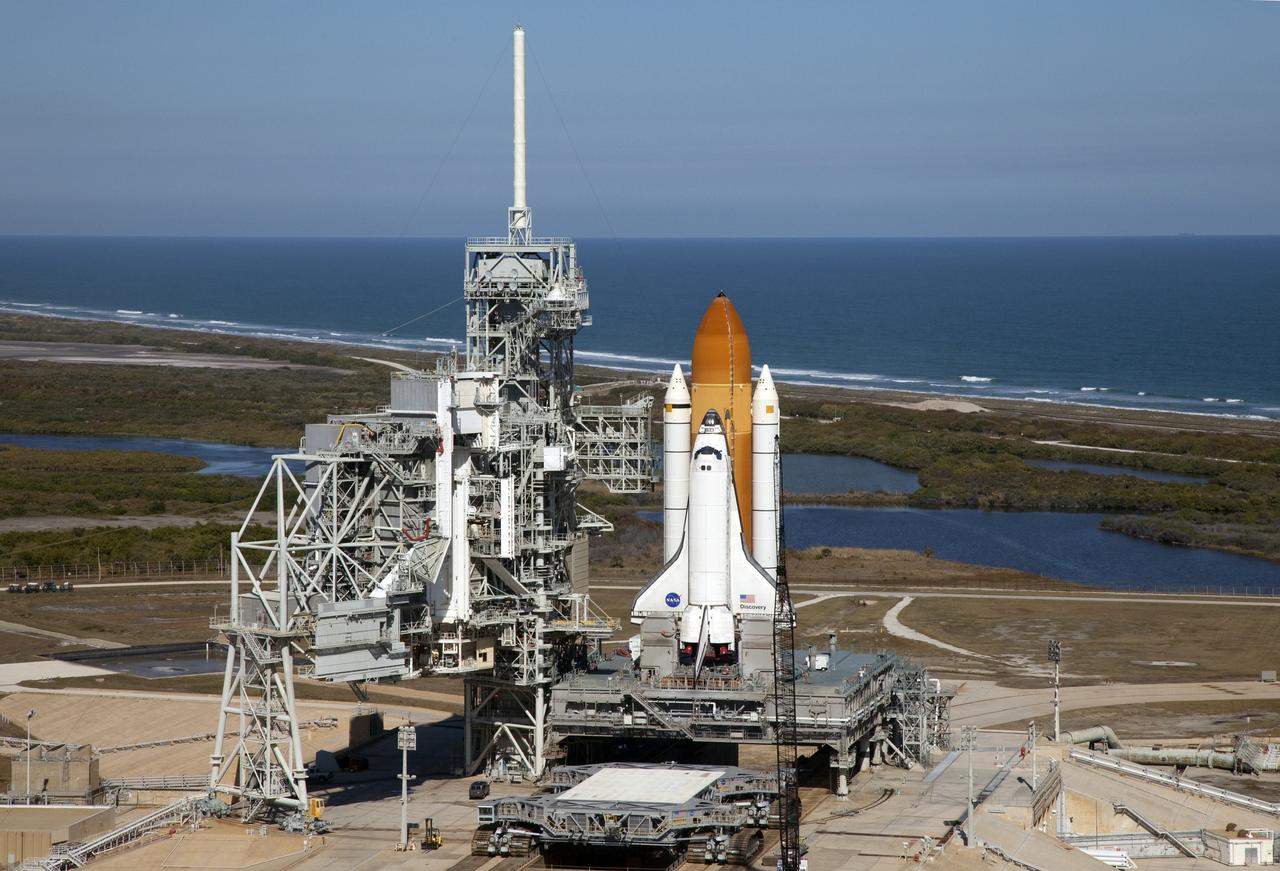
CAPE CANAVERAL, Fla. -- Space shuttle Discovery awaits its move, called rollback, from Launch Pad 39A to the Vehicle Assembly Building (VAB) at NASA's Kennedy Space Center in Florida. Rollback was scheduled for 12:30 a.m., but was postponed until 10 p.m. so technicians could resolve an issue with a leveling system on the crawler-transporter, which is in front of the shuttle. Once inside the VAB, Discovery's external fuel tank will be examined and foam reapplied where 89 sensors were installed on the tank's aluminum skin for an instrumented tanking test on Dec. 17. The sensors were used to measure changes in the tank as super-cold propellants were pumped in and drained out. Data and analysis from the test will be used to determine what caused the tops of two, 21-foot-long support beams, called stringers, on the outside of the intertank to crack during fueling on Nov. 5. Discovery's next launch opportunity to the International Space Station on the STS-133 mission is no earlier than Feb. 3, 2011. For more information on STS-133, visit www.nasa.gov/mission_pages/shuttle/shuttlemissions/sts133/. Photo credit: NASA/Frank Michaux
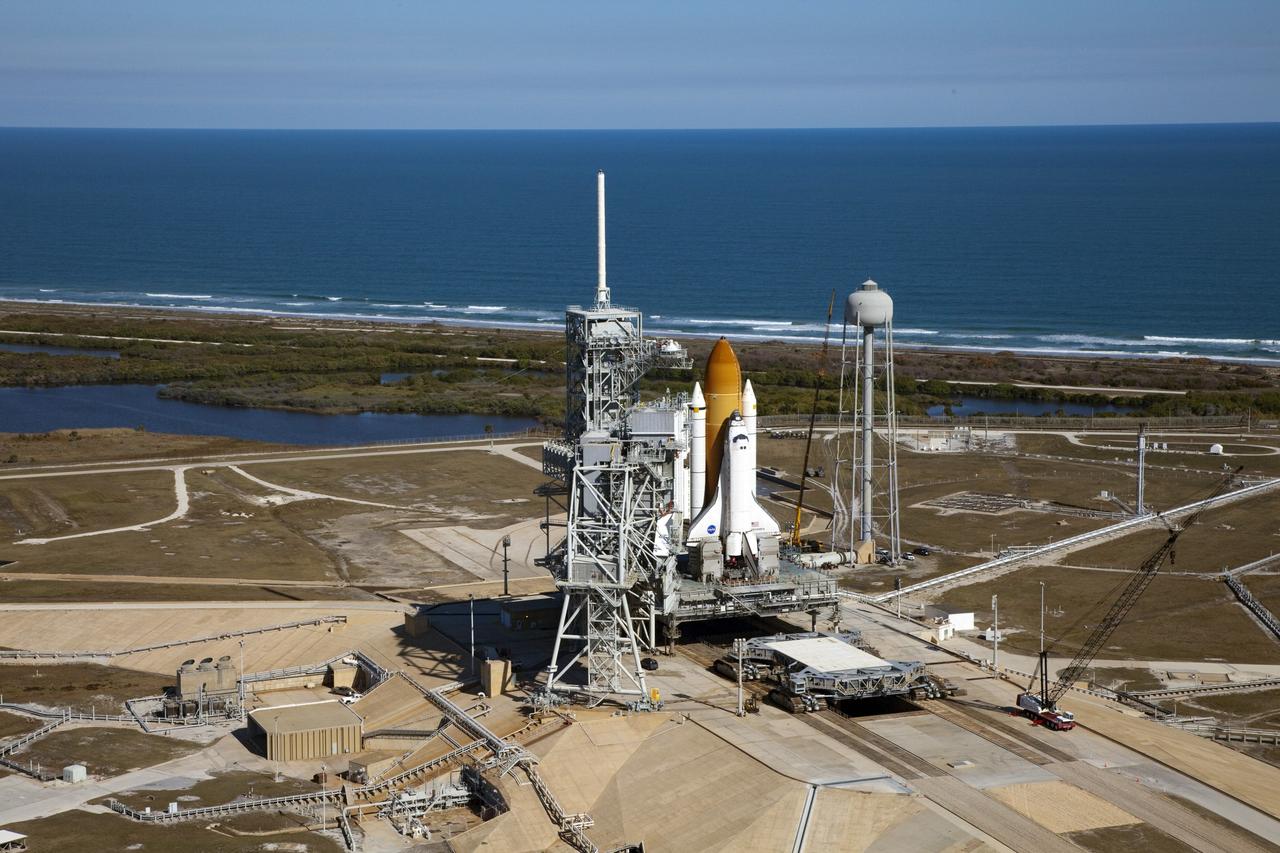
CAPE CANAVERAL, Fla. -- Space shuttle Discovery awaits its move, called rollback, from Launch Pad 39A to the Vehicle Assembly Building (VAB) at NASA's Kennedy Space Center in Florida. Rollback was scheduled for 12:30 a.m., but was postponed until 10 p.m. so technicians could resolve an issue with a leveling system on the crawler-transporter, which is in front of the shuttle. Once inside the VAB, Discovery's external fuel tank will be examined and foam reapplied where 89 sensors were installed on the tank's aluminum skin for an instrumented tanking test on Dec. 17. The sensors were used to measure changes in the tank as super-cold propellants were pumped in and drained out. Data and analysis from the test will be used to determine what caused the tops of two, 21-foot-long support beams, called stringers, on the outside of the intertank to crack during fueling on Nov. 5. Discovery's next launch opportunity to the International Space Station on the STS-133 mission is no earlier than Feb. 3, 2011. For more information on STS-133, visit www.nasa.gov/mission_pages/shuttle/shuttlemissions/sts133/. Photo credit: NASA/Frank Michaux
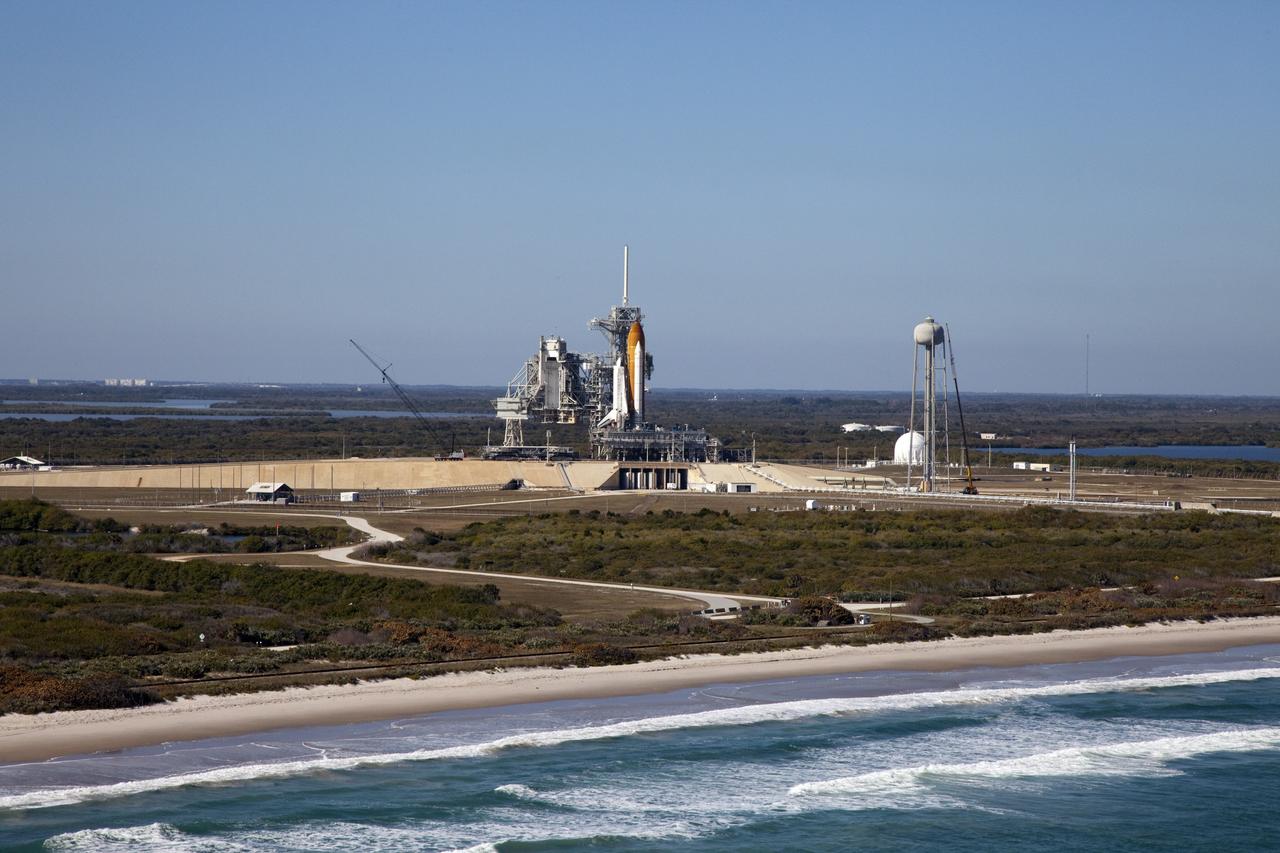
CAPE CANAVERAL, Fla. -- Space shuttle Discovery awaits its move, called rollback, from Launch Pad 39A to the Vehicle Assembly Building (VAB) at NASA's Kennedy Space Center in Florida. Rollback was scheduled for 12:30 a.m., but was postponed until 10 p.m. so technicians could resolve an issue with a leveling system on the crawler-transporter. Once inside the VAB, Discovery's external fuel tank will be examined and foam reapplied where 89 sensors were installed on the tank's aluminum skin for an instrumented tanking test on Dec. 17. The sensors were used to measure changes in the tank as super-cold propellants were pumped in and drained out. Data and analysis from the test will be used to determine what caused the tops of two, 21-foot-long support beams, called stringers, on the outside of the intertank to crack during fueling on Nov. 5. Discovery's next launch opportunity to the International Space Station on the STS-133 mission is no earlier than Feb. 3, 2011. For more information on STS-133, visit www.nasa.gov/mission_pages/shuttle/shuttlemissions/sts133/. Photo credit: NASA/Frank Michaux
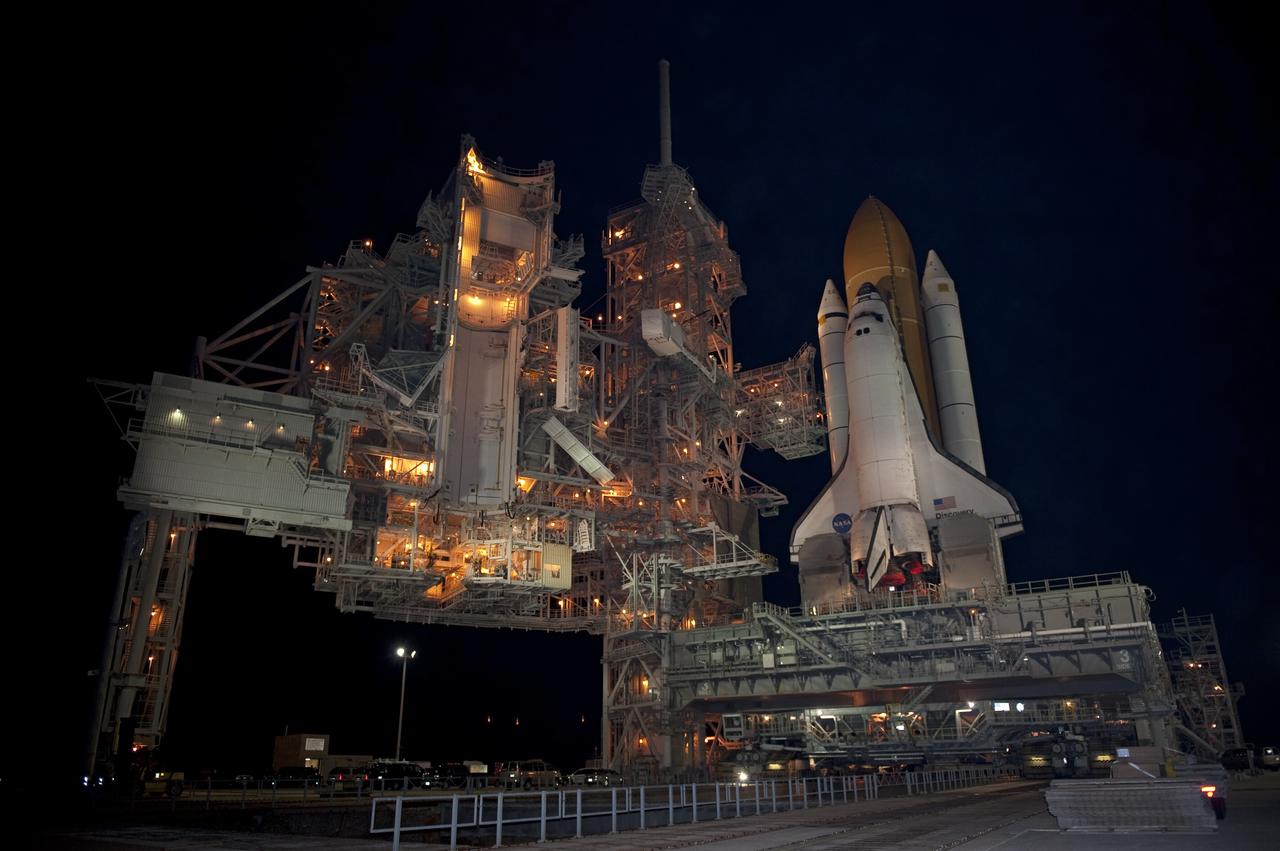
CAPE CANAVERAL, Fla. -- Space shuttle Discovery awaits its move, called rollback, from Launch Pad 39A to the Vehicle Assembly Building (VAB) at NASA's Kennedy Space Center in Florida. Rollback was scheduled for 12:30 a.m., but was postponed until 10 p.m. so technicians could resolve an issue with a leveling system on the crawler-transporter. Once inside the VAB, Discovery's external fuel tank will be examined and foam reapplied where 89 sensors were installed on the tank's aluminum skin for an instrumented tanking test on Dec. 17. The sensors were used to measure changes in the tank as super-cold propellants were pumped in and drained out. Data and analysis from the test will be used to determine what caused the tops of two, 21-foot-long support beams, called stringers, on the outside of the intertank to crack during fueling on Nov. 5. Discovery's next launch opportunity is no earlier than Feb. 3, 2011. For more information on STS-133, visit www.nasa.gov/mission_pages/shuttle/shuttlemissions/sts133/. Photo credit: NASA/Kim Shiflett
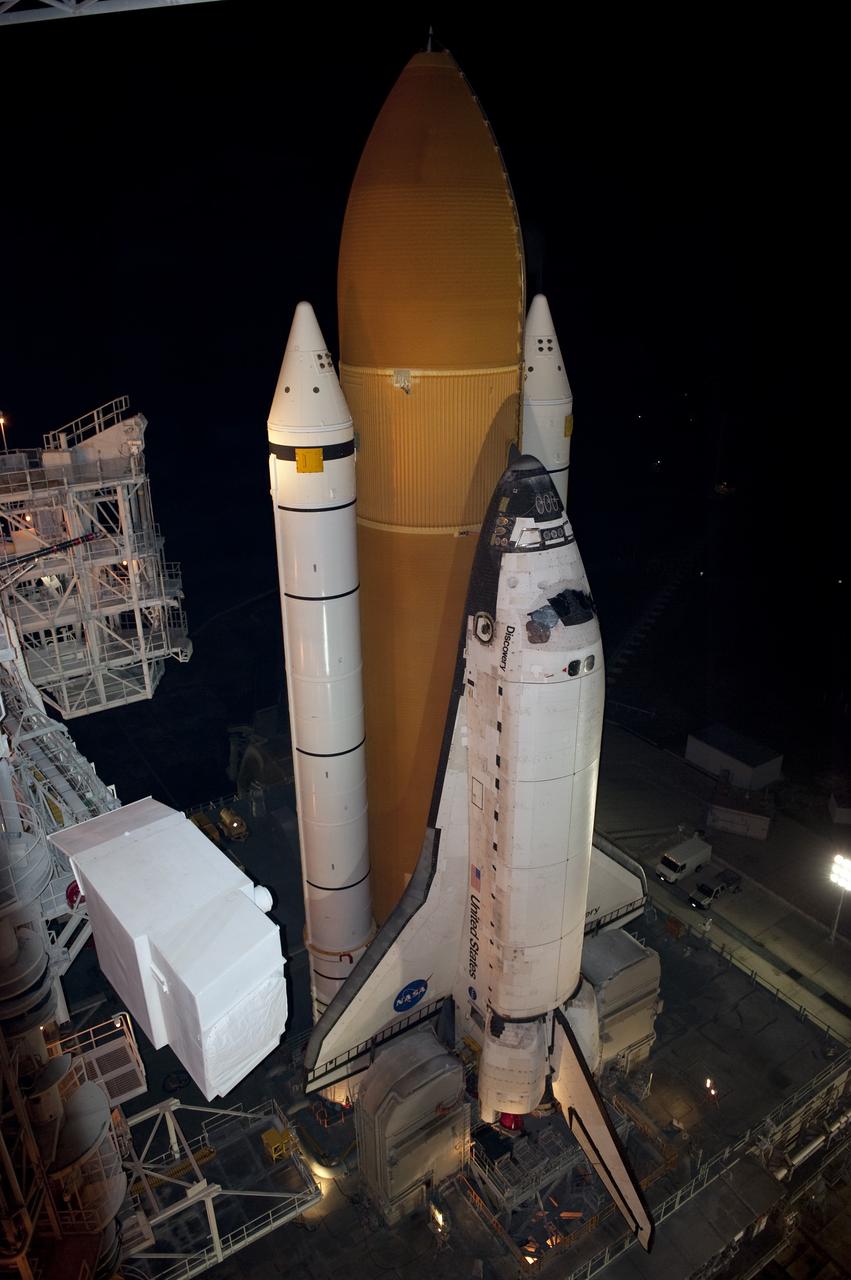
CAPE CANAVERAL, Fla. -- Space shuttle Discovery awaits its move, called rollback, from Launch Pad 39A to the Vehicle Assembly Building (VAB) at NASA's Kennedy Space Center in Florida. Rollback was scheduled for 12:30 a.m., but was postponed until 10 p.m. so technicians could resolve an issue with a leveling system on the crawler-transporter. Once inside the VAB, Discovery's external fuel tank will be examined and foam reapplied where 89 sensors were installed on the tank's aluminum skin for an instrumented tanking test on Dec. 17. The sensors were used to measure changes in the tank as super-cold propellants were pumped in and drained out. Data and analysis from the test will be used to determine what caused the tops of two, 21-foot-long support beams, called stringers, on the outside of the intertank to crack during fueling on Nov. 5. Discovery's next launch opportunity is no earlier than Feb. 3, 2011. For more information on STS-133, visit www.nasa.gov/mission_pages/shuttle/shuttlemissions/sts133/. Photo credit: NASA/Kim Shiflett