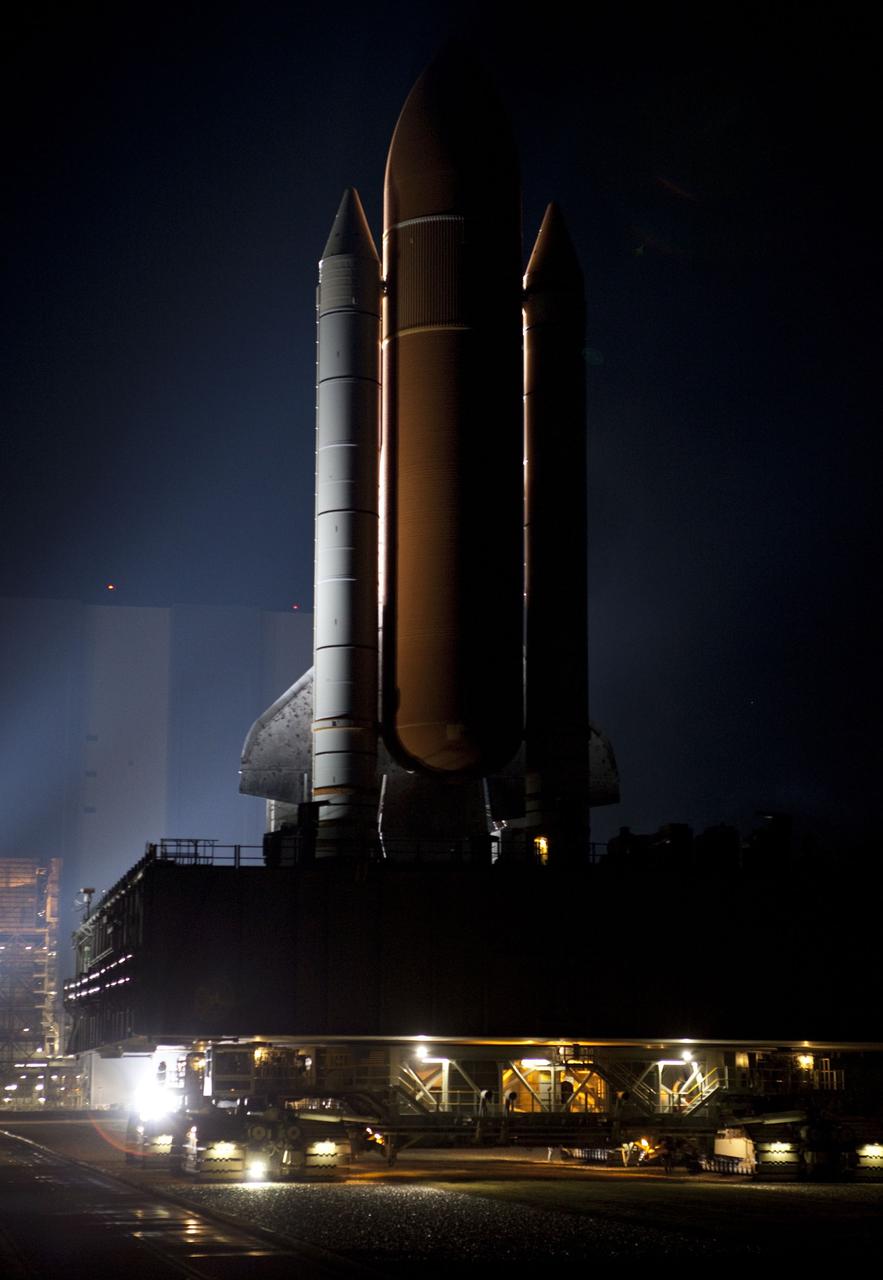
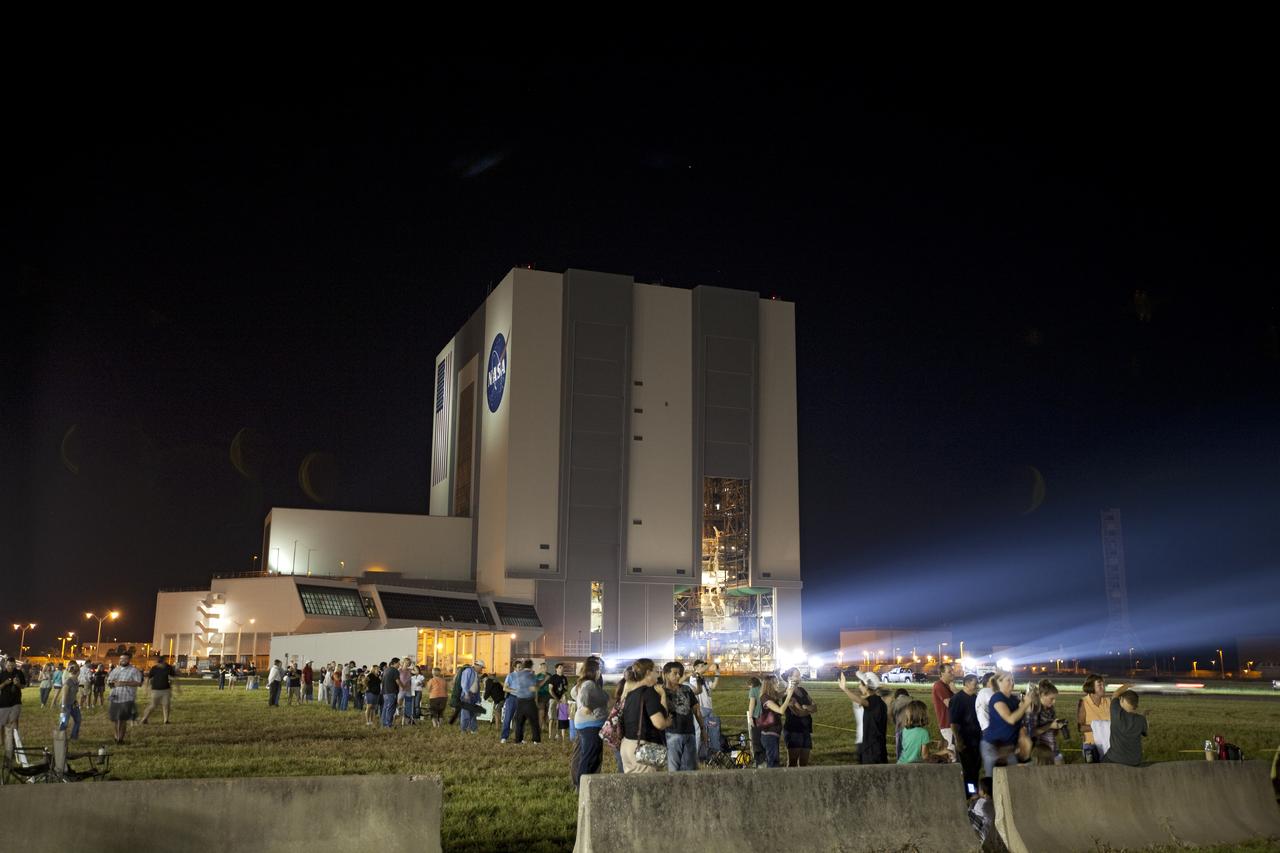
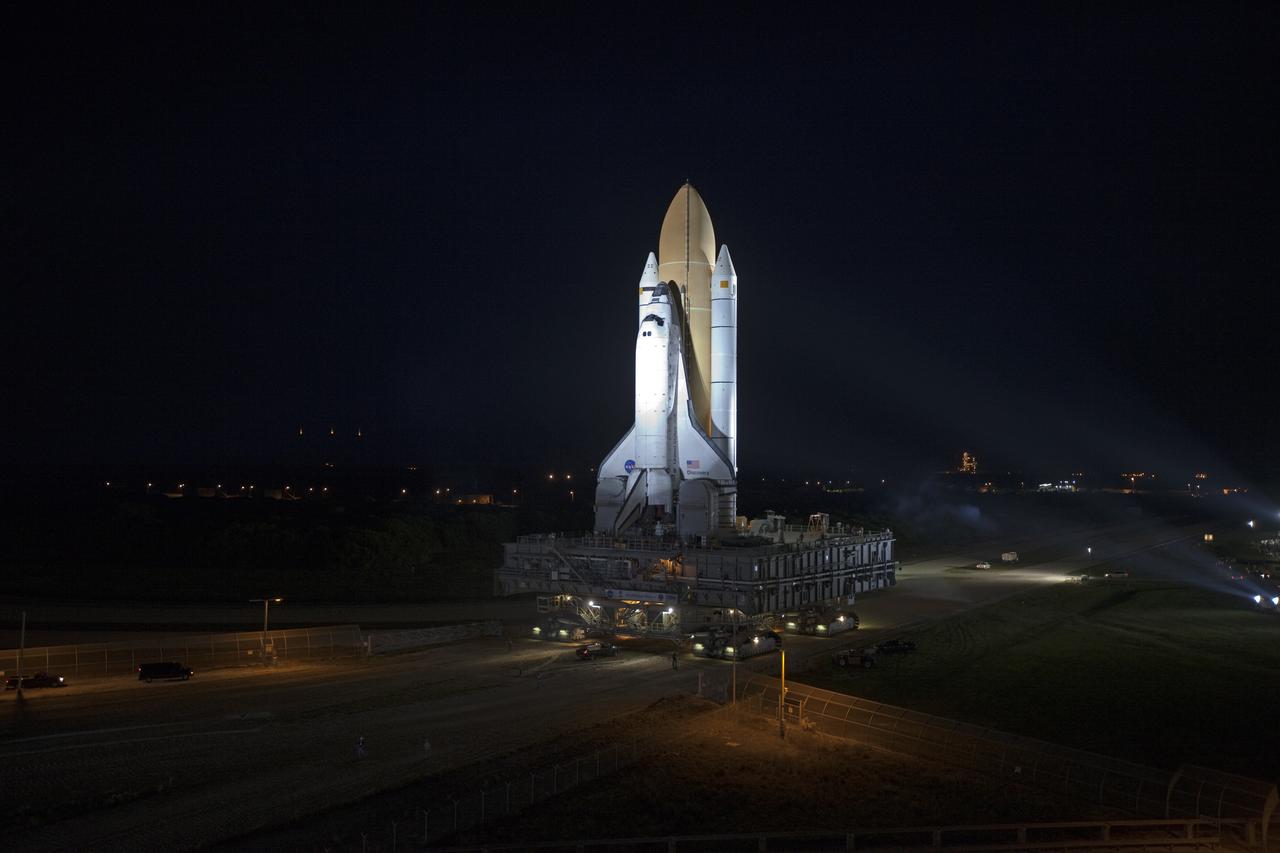
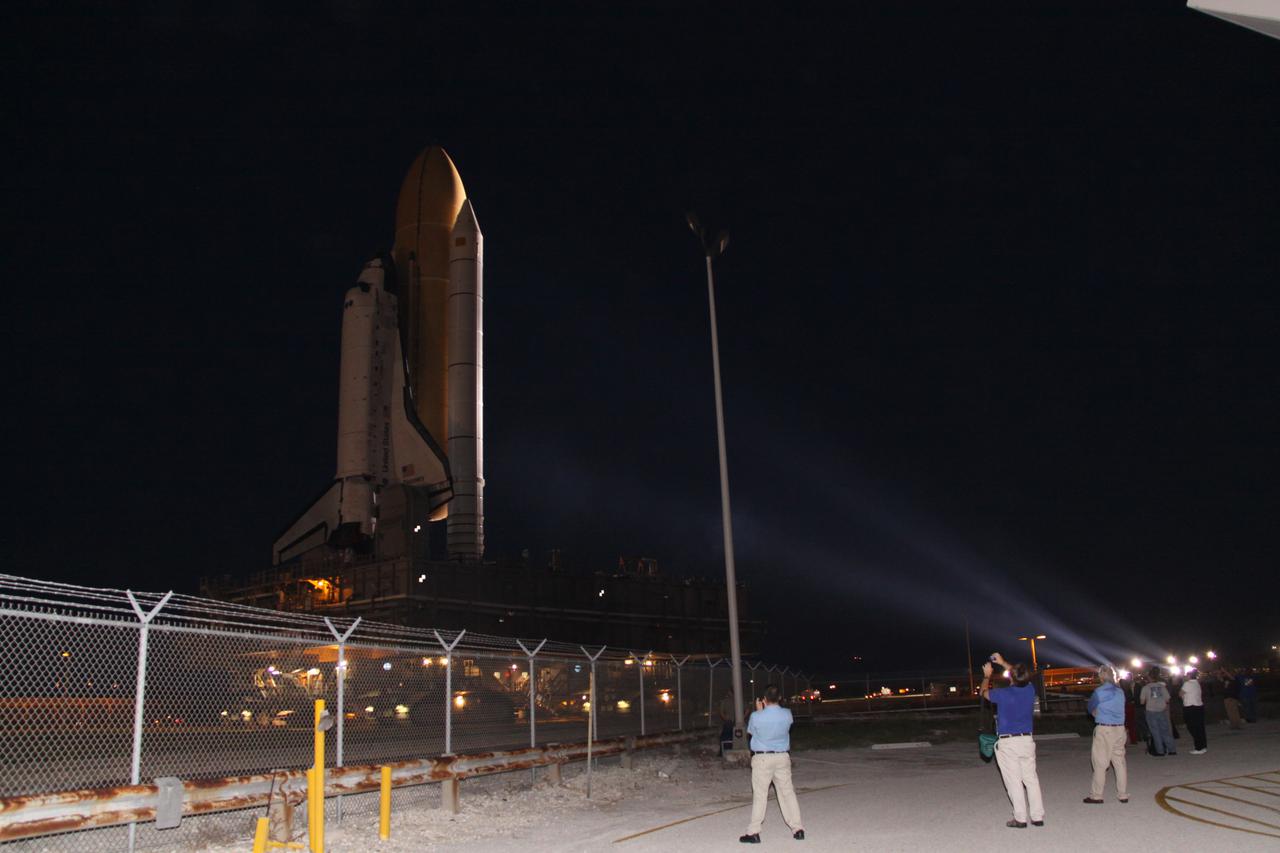
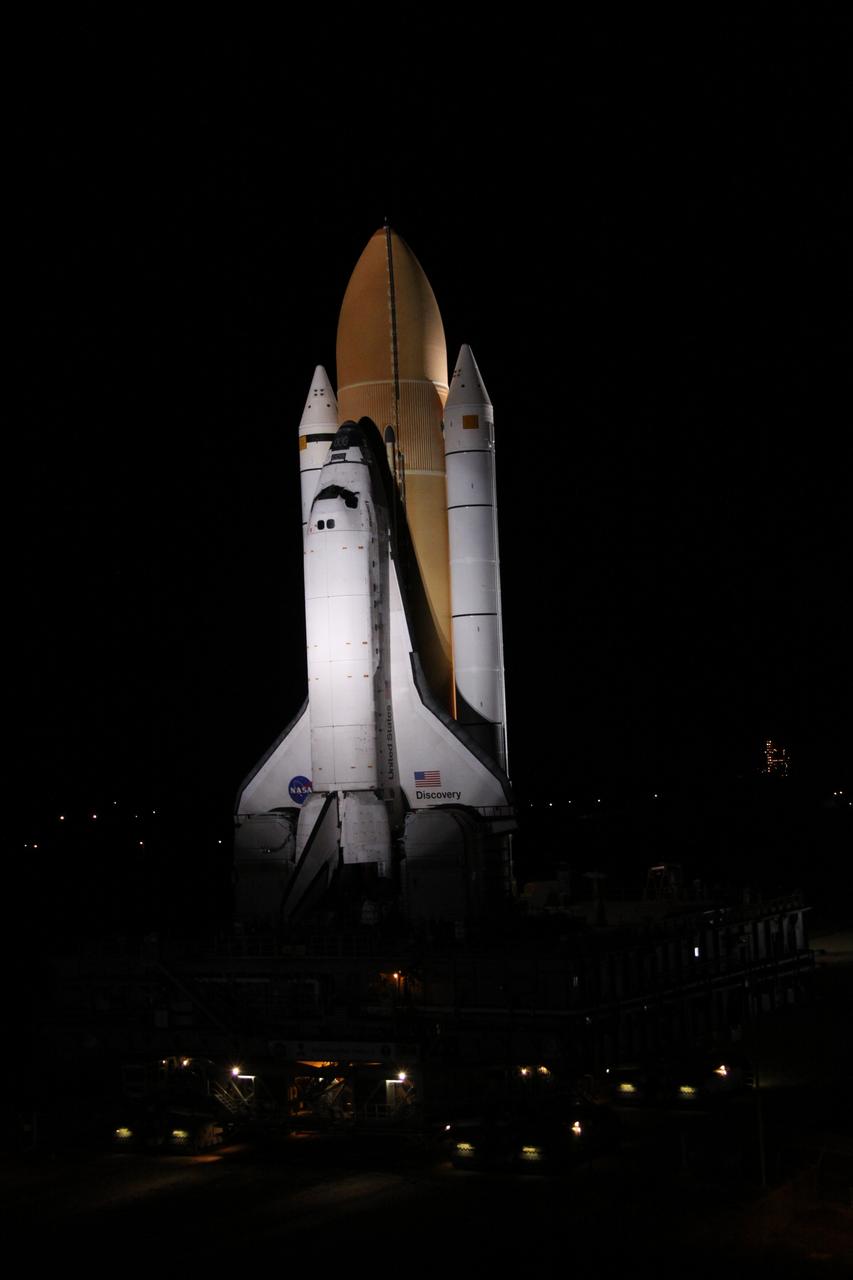
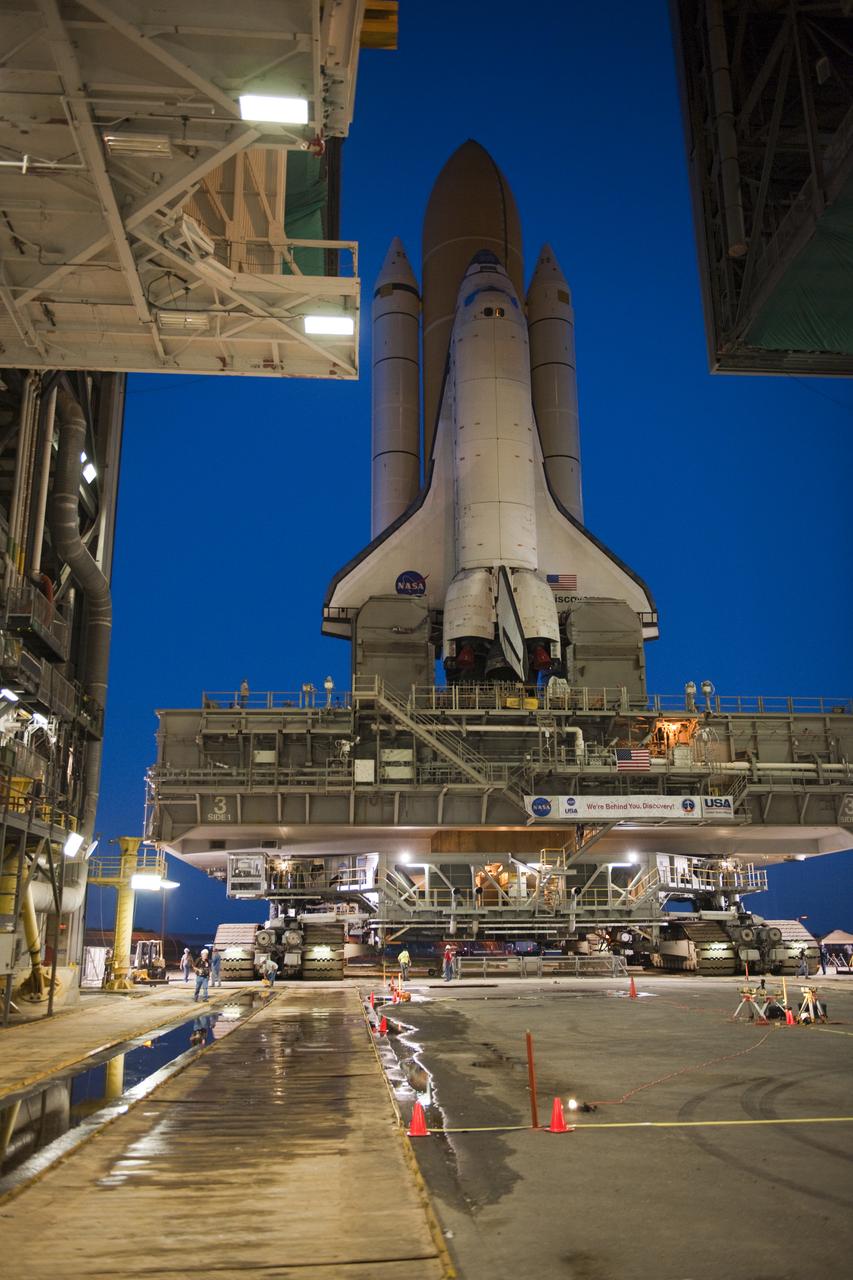
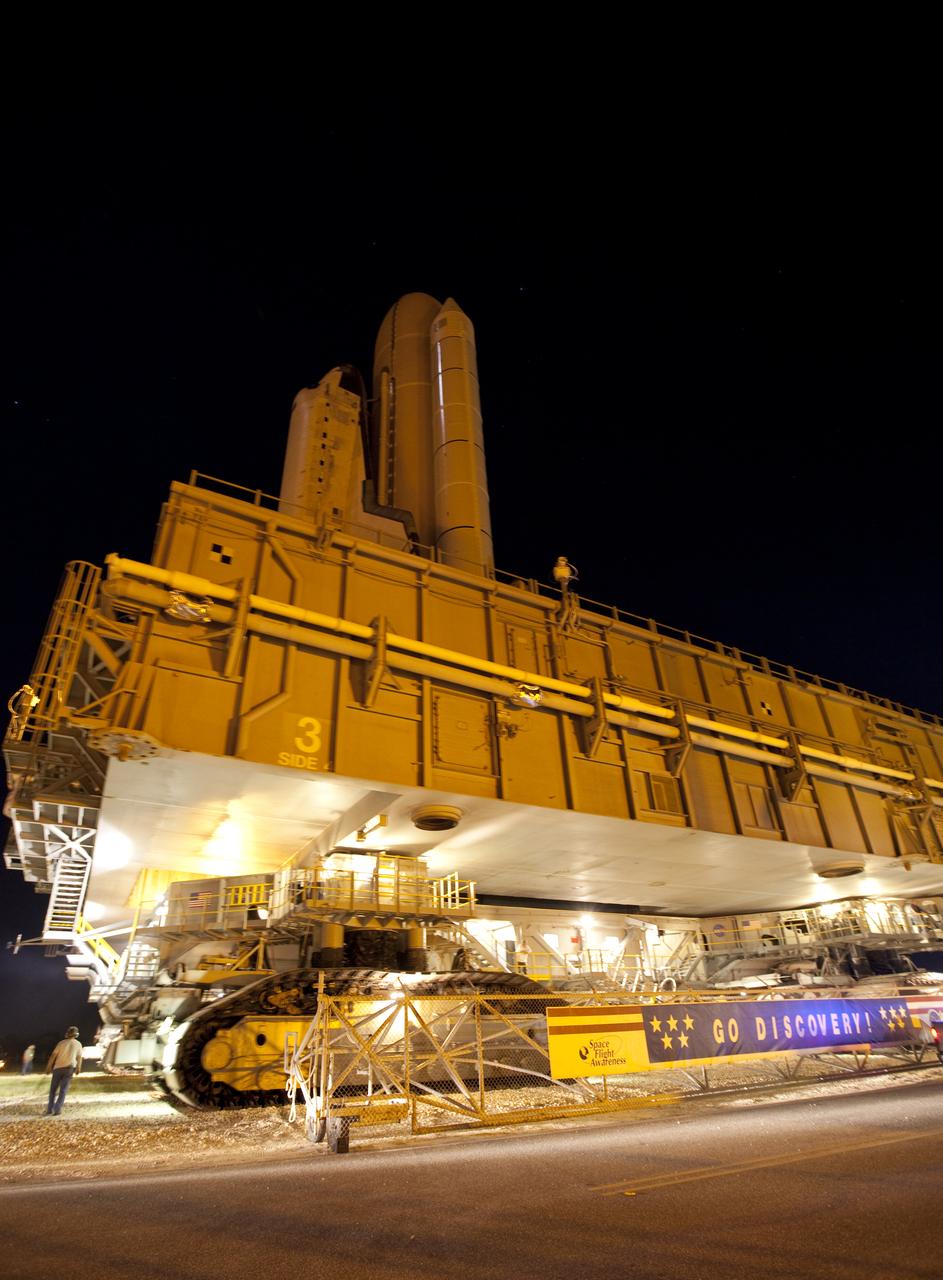
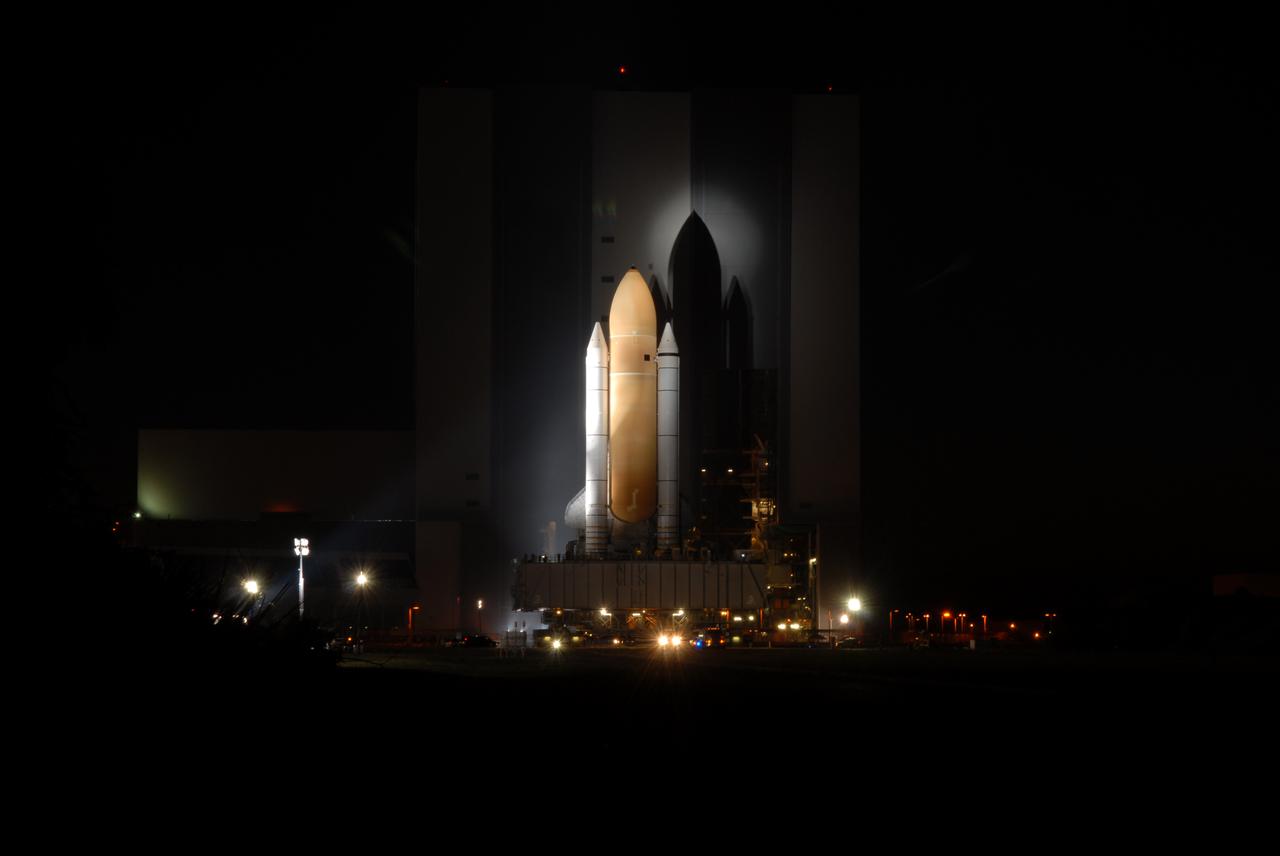
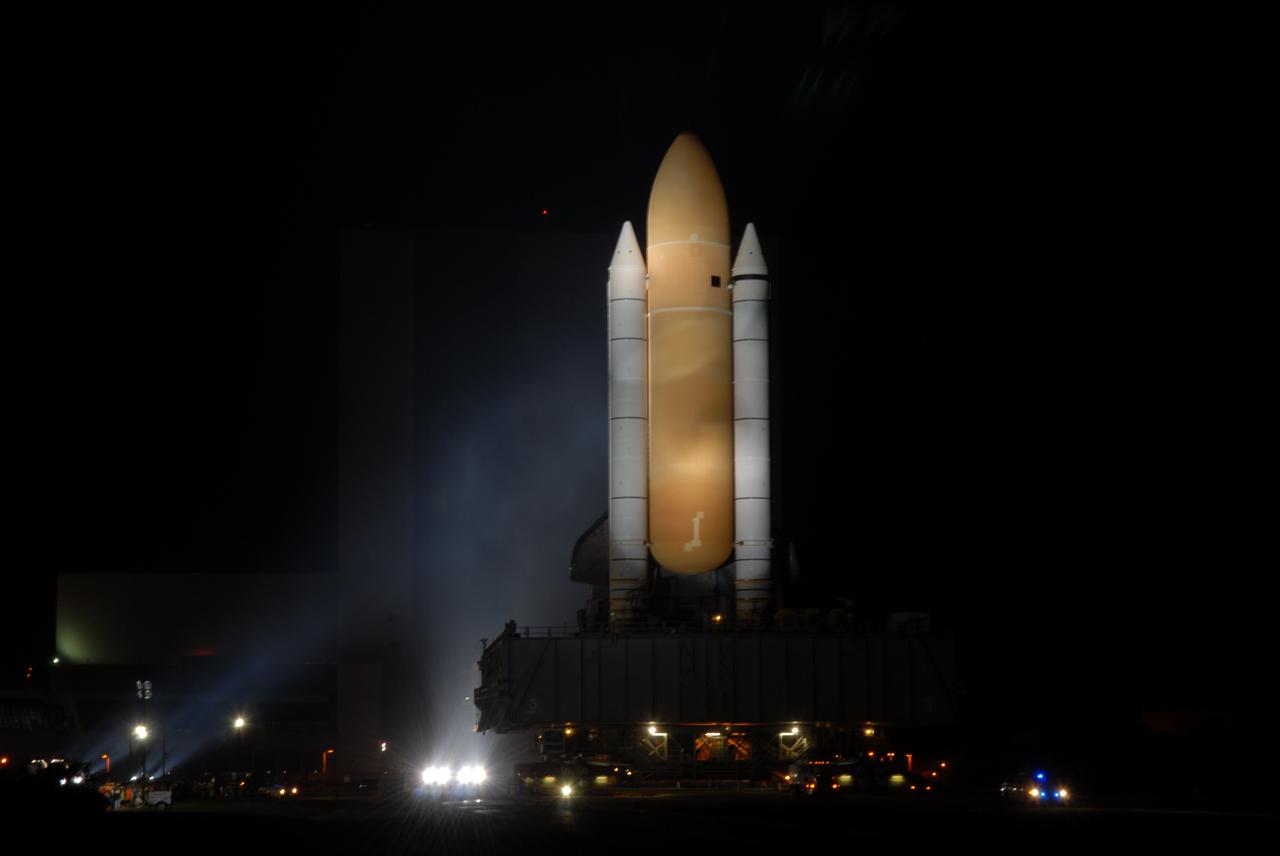
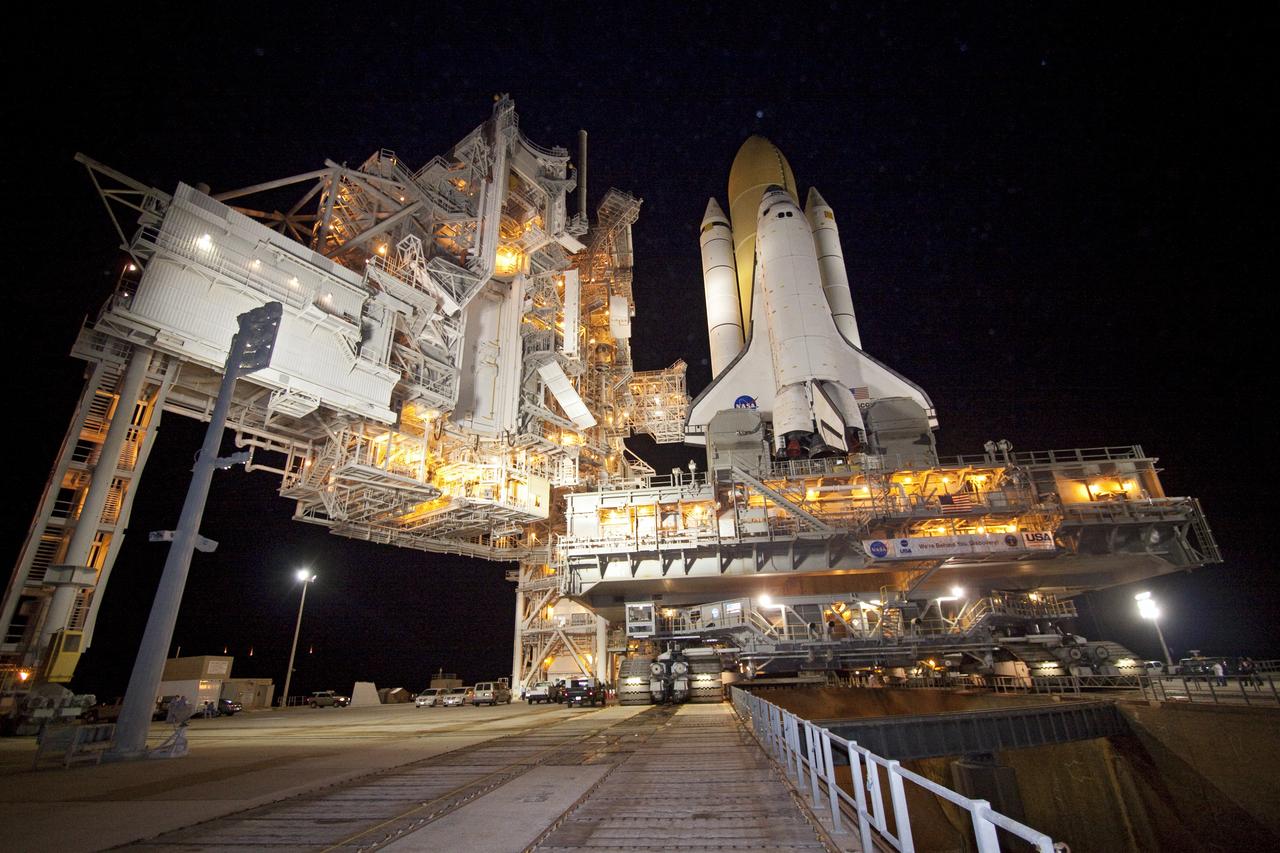
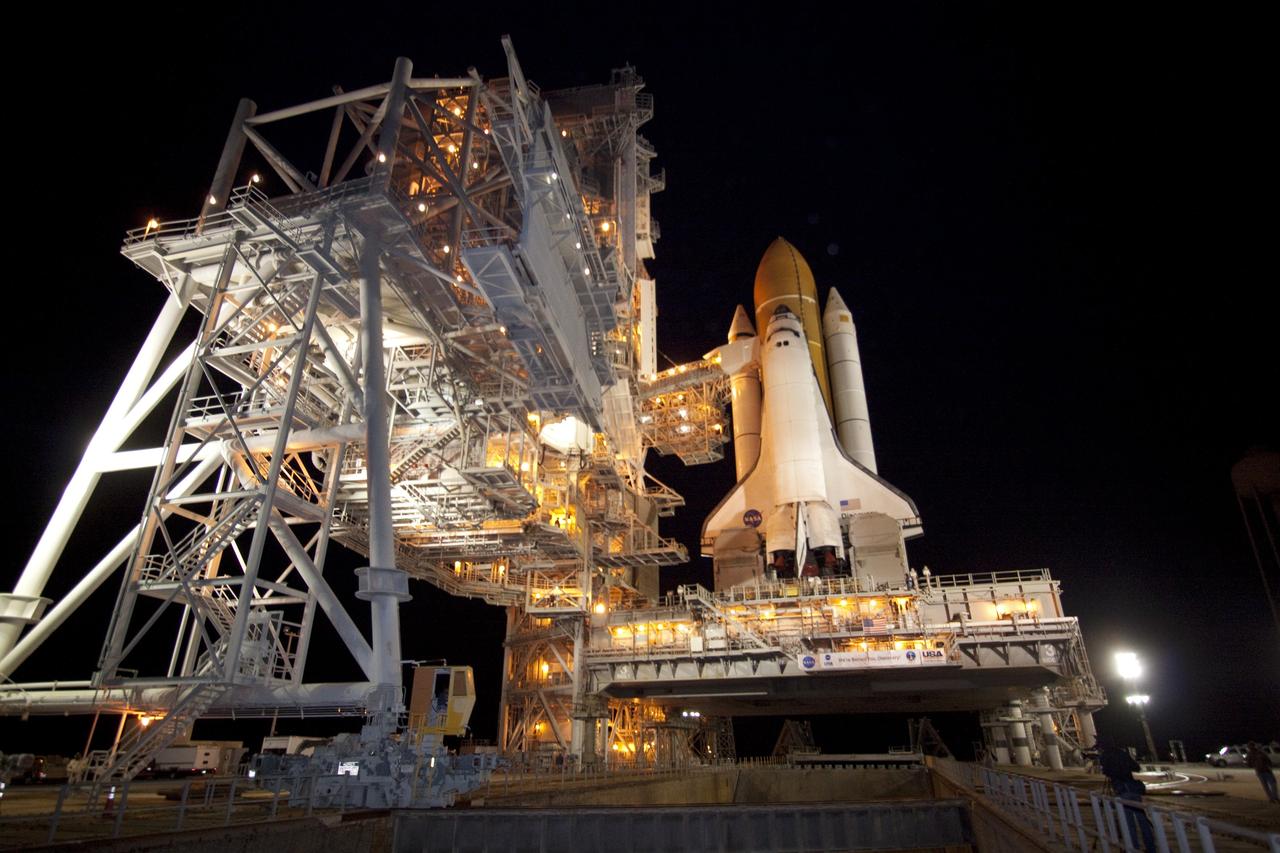
CAPE CANAVERAL, Fla. -- Xenon lights illuminate space shuttle Discovery as it makes its nighttime trek, known as "rollout," from the Vehicle Assembly Building to Launch Pad 39A at NASA's Kennedy Space Center in Florida. It will take the shuttle, attached to its external fuel tank, twin solid rocket boosters and mobile launcher platform, about seven hours to complete the move. This is the second time Discovery has rolled out to the pad for the STS-133 mission, and comes after a thorough check and modifications to the shuttle's external tank. Targeted to liftoff Feb. 24, Discovery will take the Permanent Multipurpose Module (PMM) packed with supplies and critical spare parts, as well as Robonaut 2 (R2) to the International Space Station. For more information on STS-133, visit www.nasa.gov/mission_pages/shuttle/shuttlemissions/sts133/. Photo credit: NASA/Frank Michaux
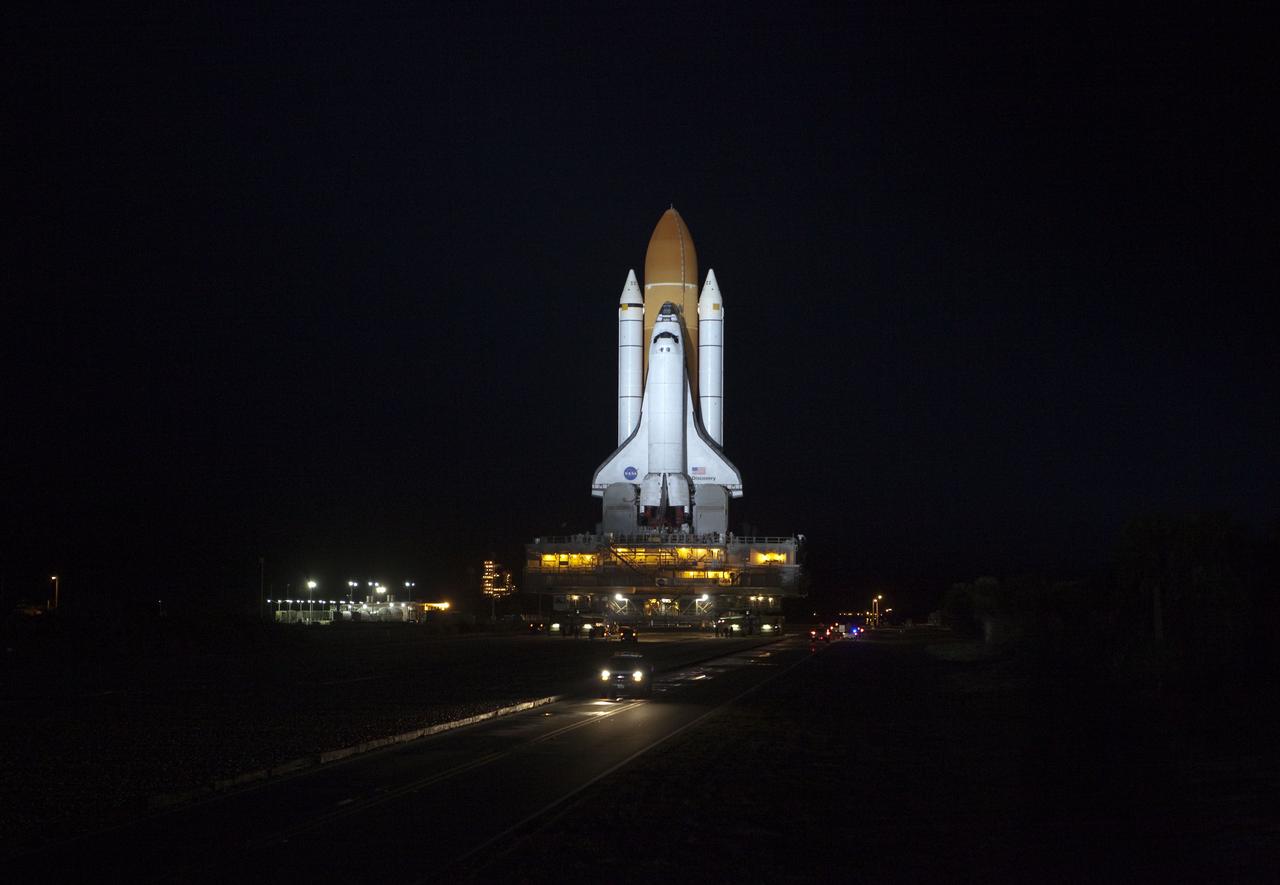
CAPE CANAVERAL, Fla. -- Xenon lights illuminate space shuttle Discovery as it makes its nighttime trek, known as "rollout," from the Vehicle Assembly Building to Launch Pad 39A at NASA's Kennedy Space Center in Florida. It will take the shuttle, attached to its external fuel tank, twin solid rocket boosters and mobile launcher platform, about seven hours to complete the move. This is the second time Discovery has rolled out to the pad for the STS-133 mission, and comes after a thorough check and modifications to the shuttle's external tank. Targeted to liftoff Feb. 24, Discovery will take the Permanent Multipurpose Module (PMM) packed with supplies and critical spare parts, as well as Robonaut 2 (R2) to the International Space Station. For more information on STS-133, visit www.nasa.gov/mission_pages/shuttle/shuttlemissions/sts133/. Photo credit: NASA/Frank Michaux
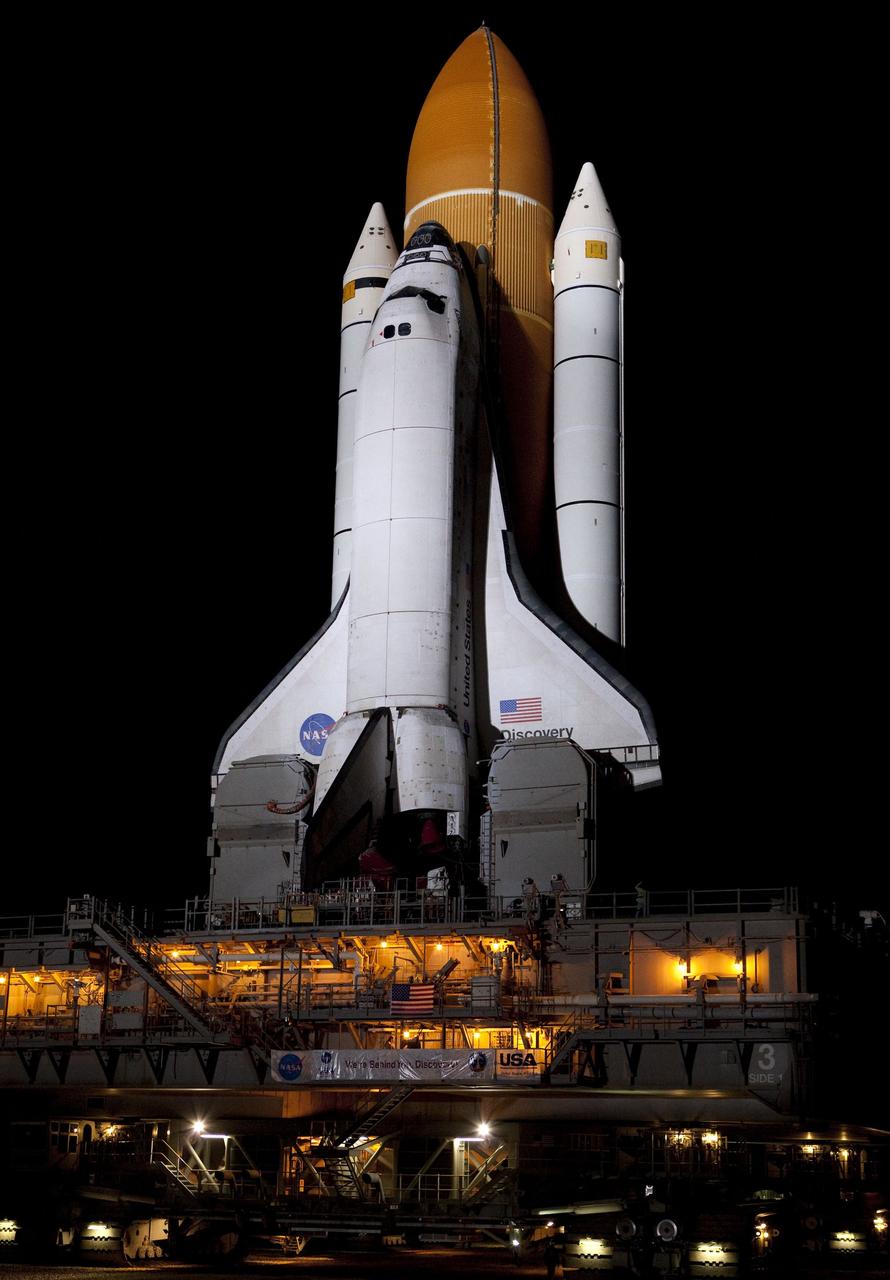
CAPE CANAVERAL, Fla. -- Xenon lights illuminate space shuttle Discovery as it makes its nighttime trek, known as "rollout," from the Vehicle Assembly Building to Launch Pad 39A at NASA's Kennedy Space Center in Florida. It will take the shuttle, attached to its external fuel tank, twin solid rocket boosters and mobile launcher platform, about seven hours to complete the move. This is the second time Discovery has rolled out to the pad for the STS-133 mission, and comes after a thorough check and modifications to the shuttle's external tank. Targeted to liftoff Feb. 24, Discovery will take the Permanent Multipurpose Module (PMM) packed with supplies and critical spare parts, as well as Robonaut 2 (R2) to the International Space Station. For more information on STS-133, visit www.nasa.gov/mission_pages/shuttle/shuttlemissions/sts133/. Photo credit: NASA/Frank Michaux
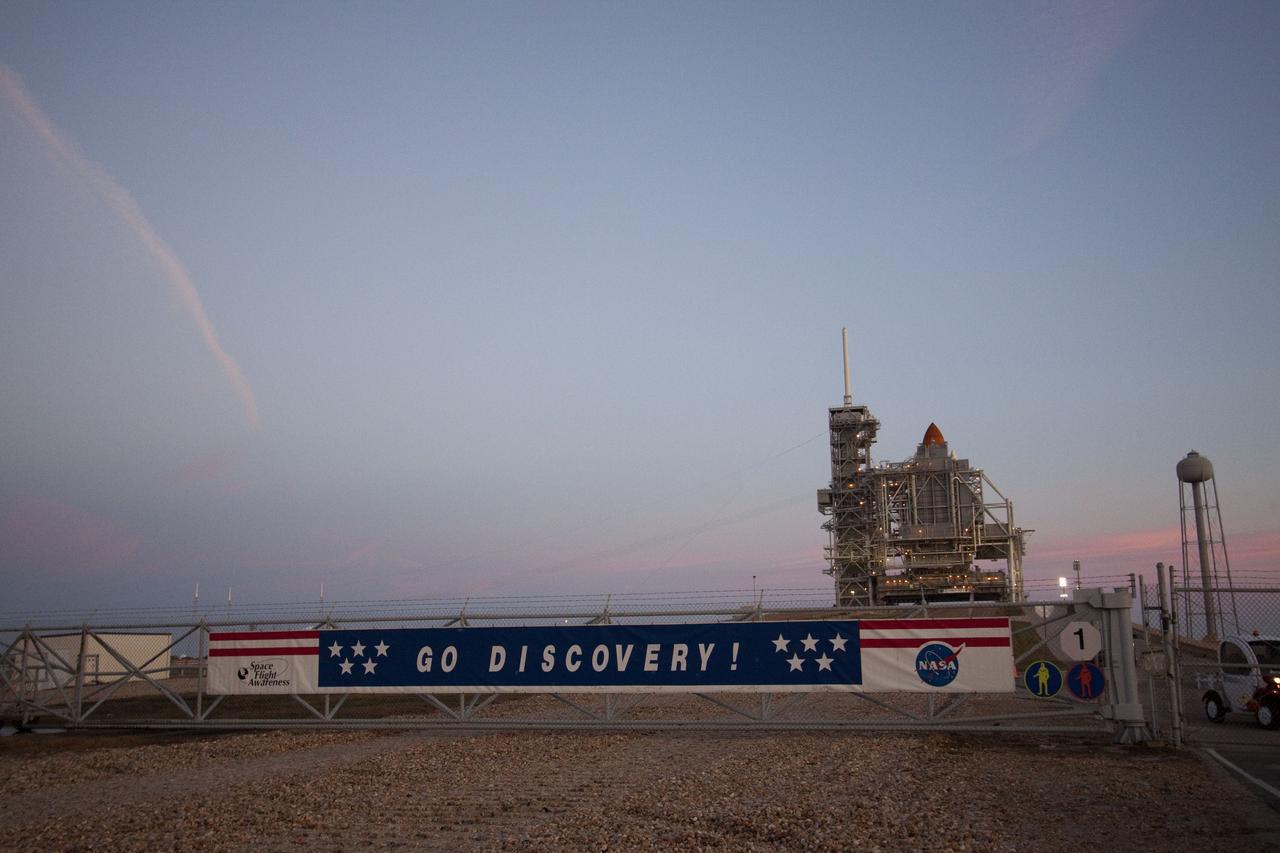
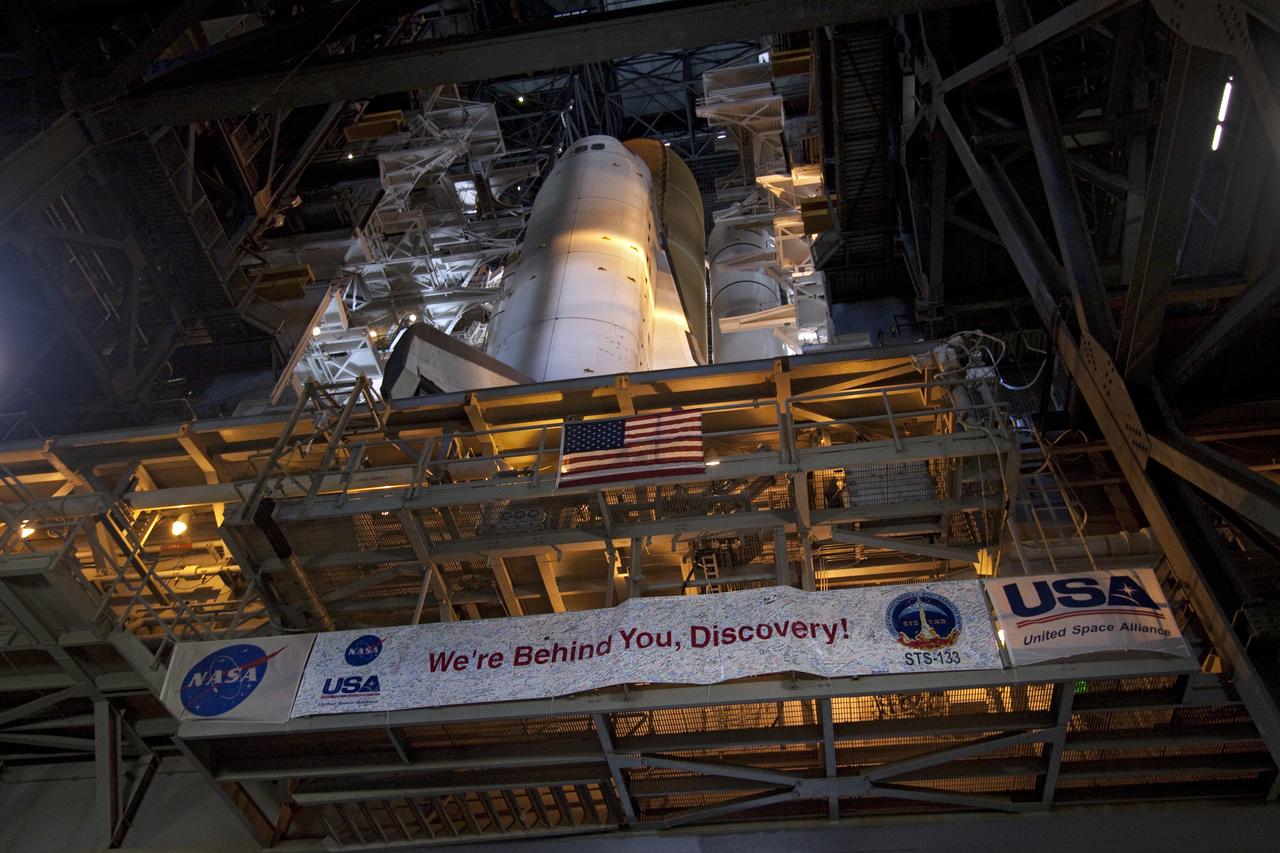
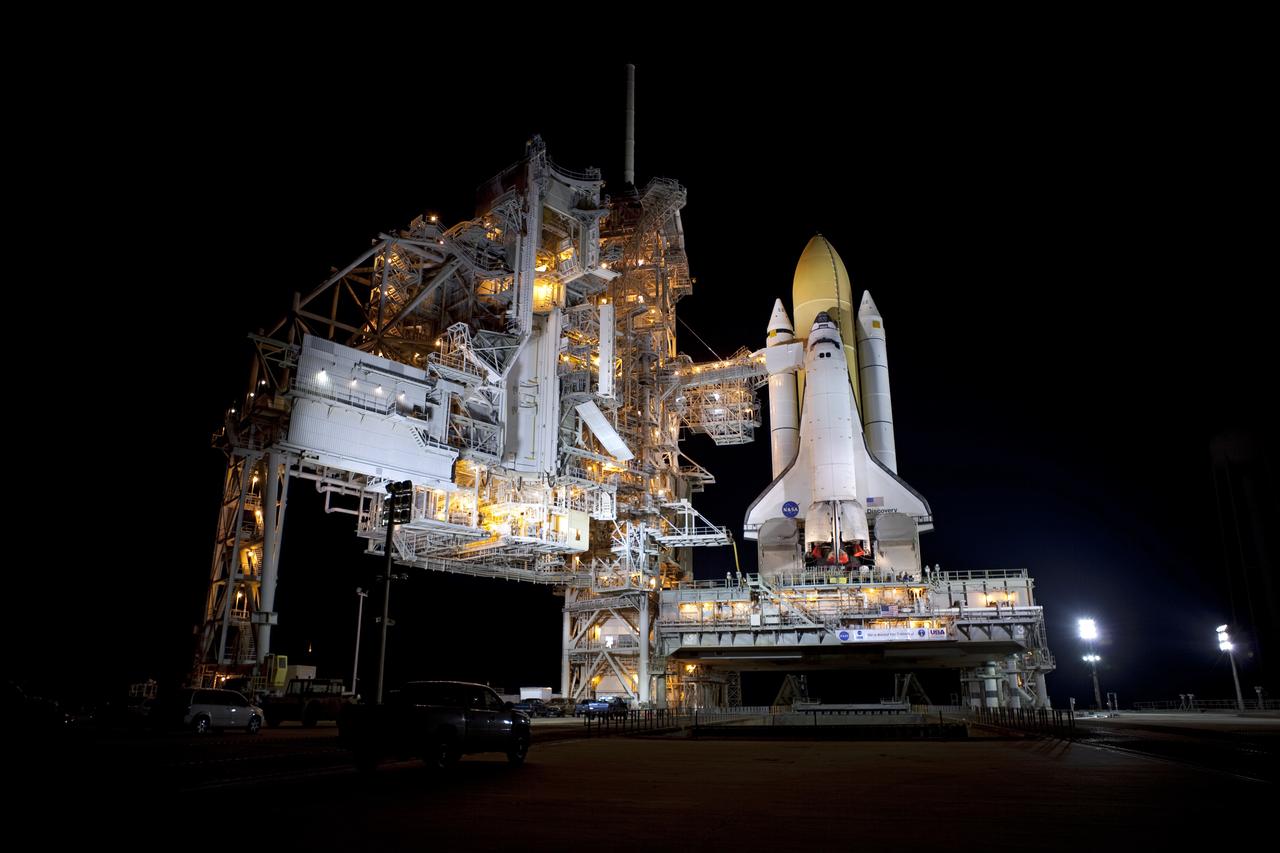
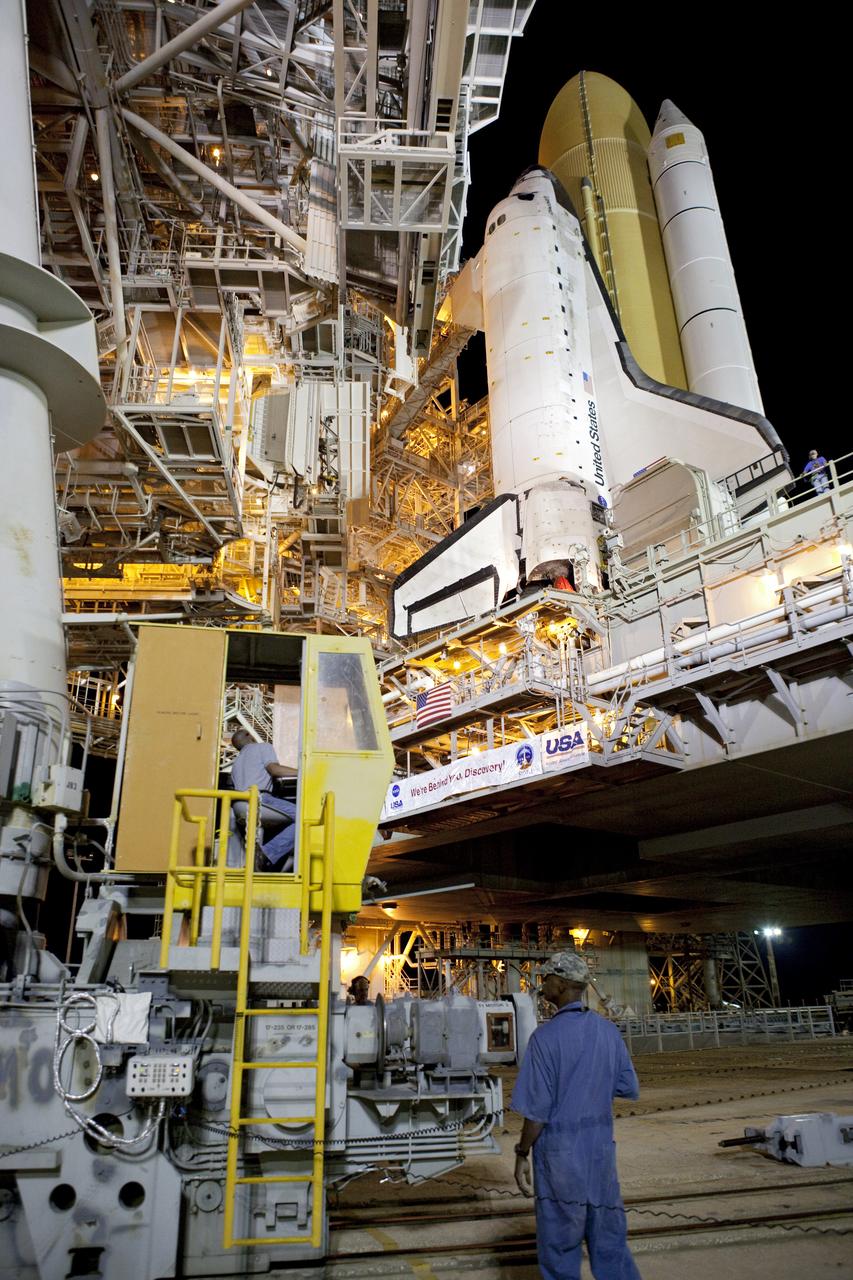
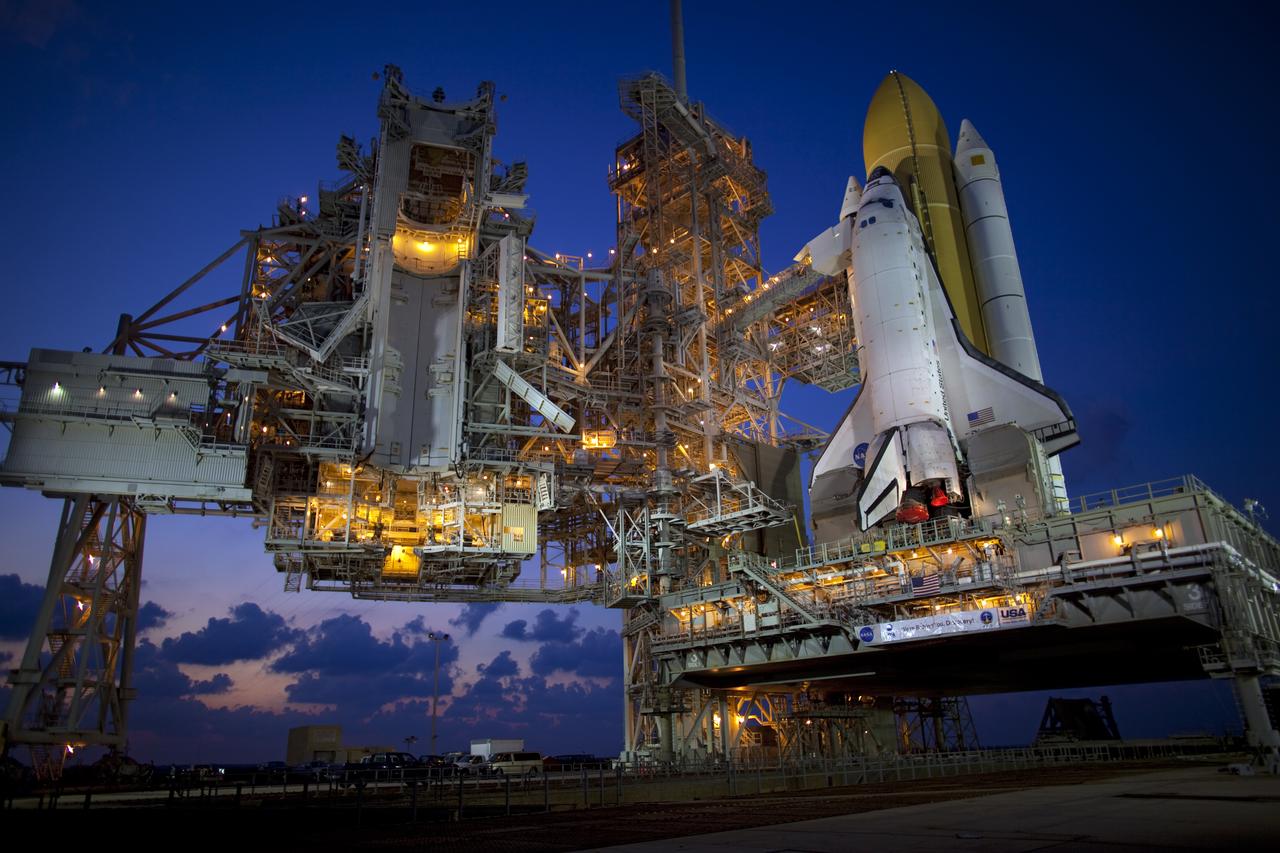
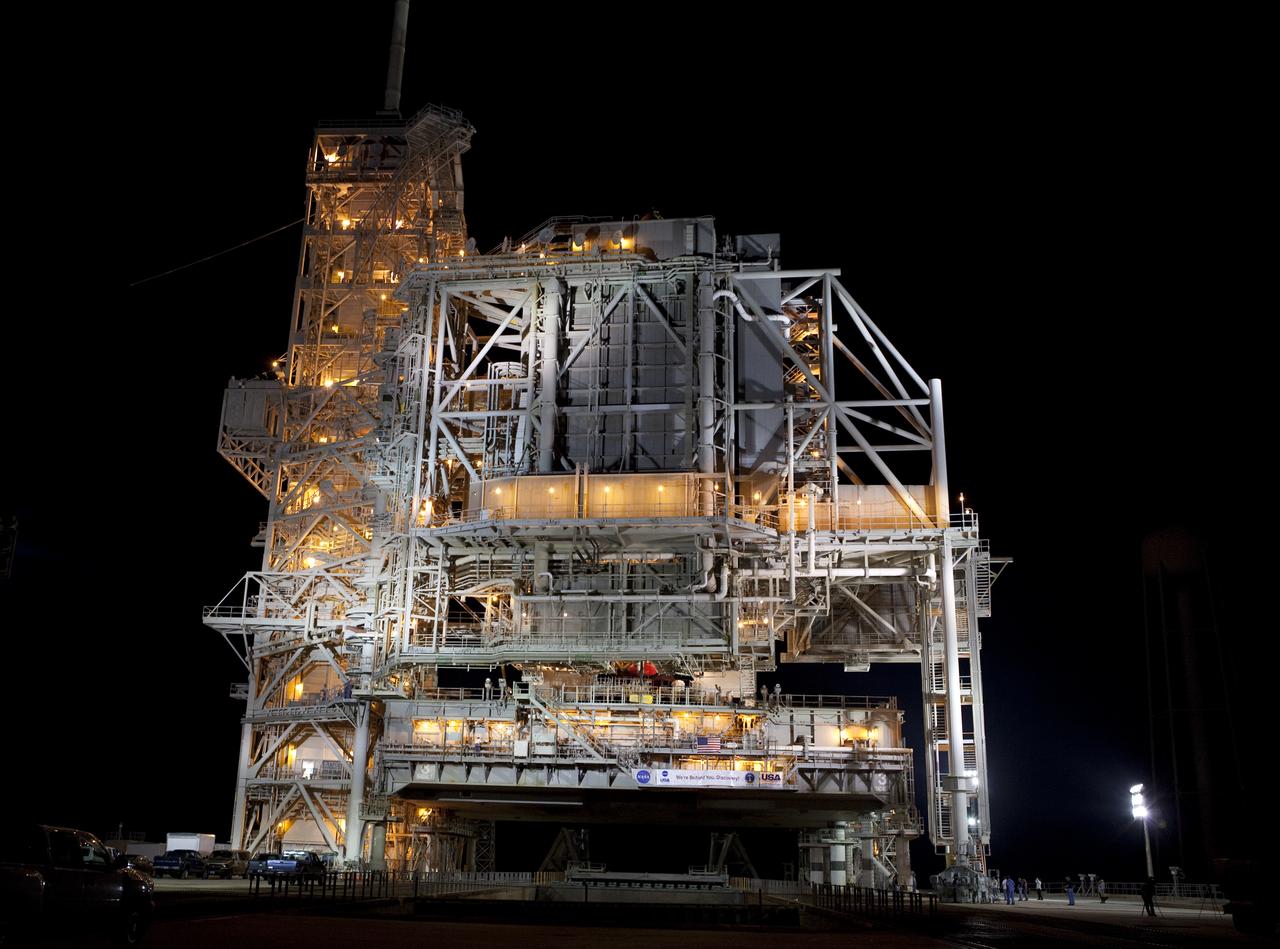
CAPE CANAVERAL, Fla. -- As dawn breaks over the Atlantic Ocean near Launch Pad 39A at NASA's Kennedy Space Center in Florida, a banner proclaims the sentiments of the work force at Kennedy Space Center following the rollout of space shuttle Discovery to the pad. First motion on its 3.4-mile trip from the Vehicle Assembly Building was at 7:58 p.m. EST Jan. 31, and was secured or "hard down" on the pad a little before 3 a.m. Feb. 1. Discovery's next launch opportunity to the International Space Station on the STS-133 mission is targeted for Feb. 24. For more information on STS-133, visit www.nasa.gov/mission_pages/shuttle/shuttlemissions/sts133/. Photo credit: NASA/Jack Pfaller
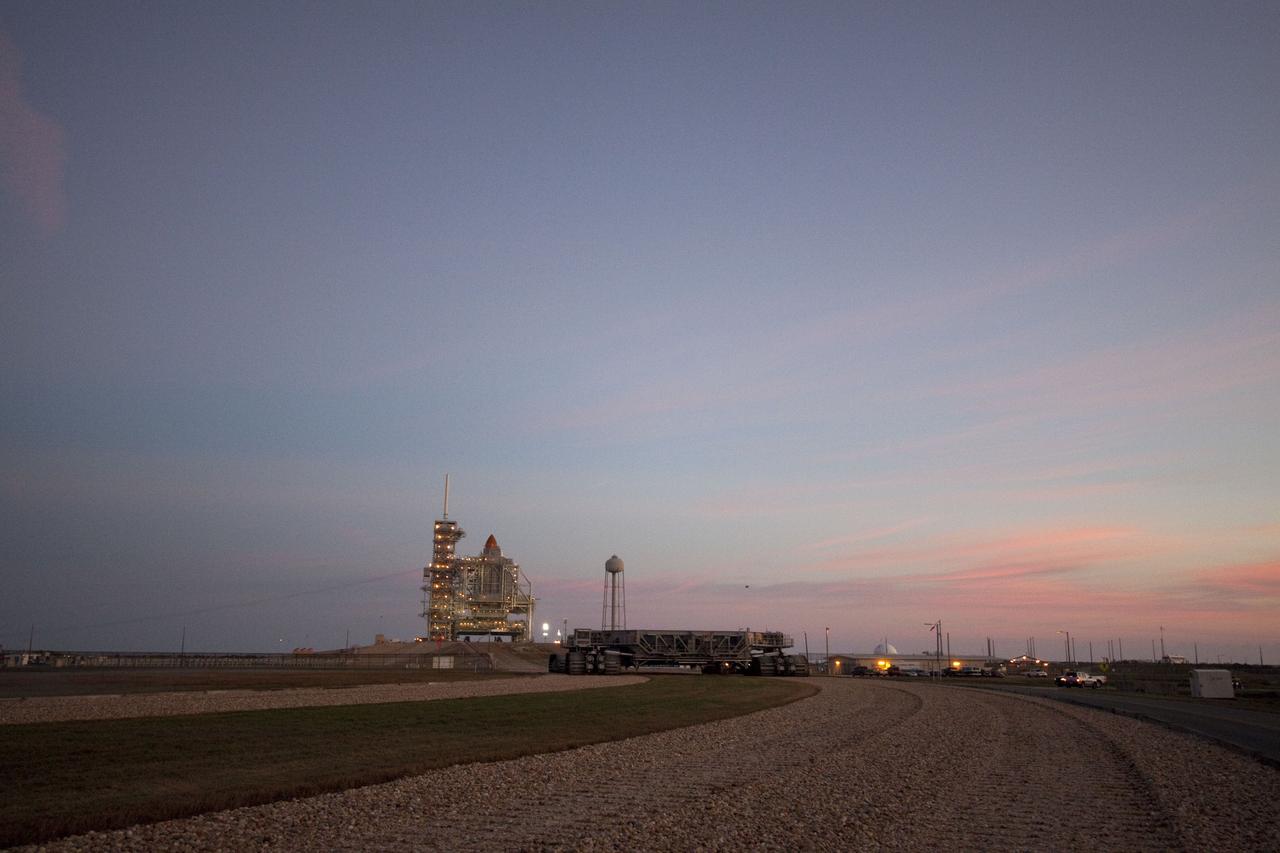
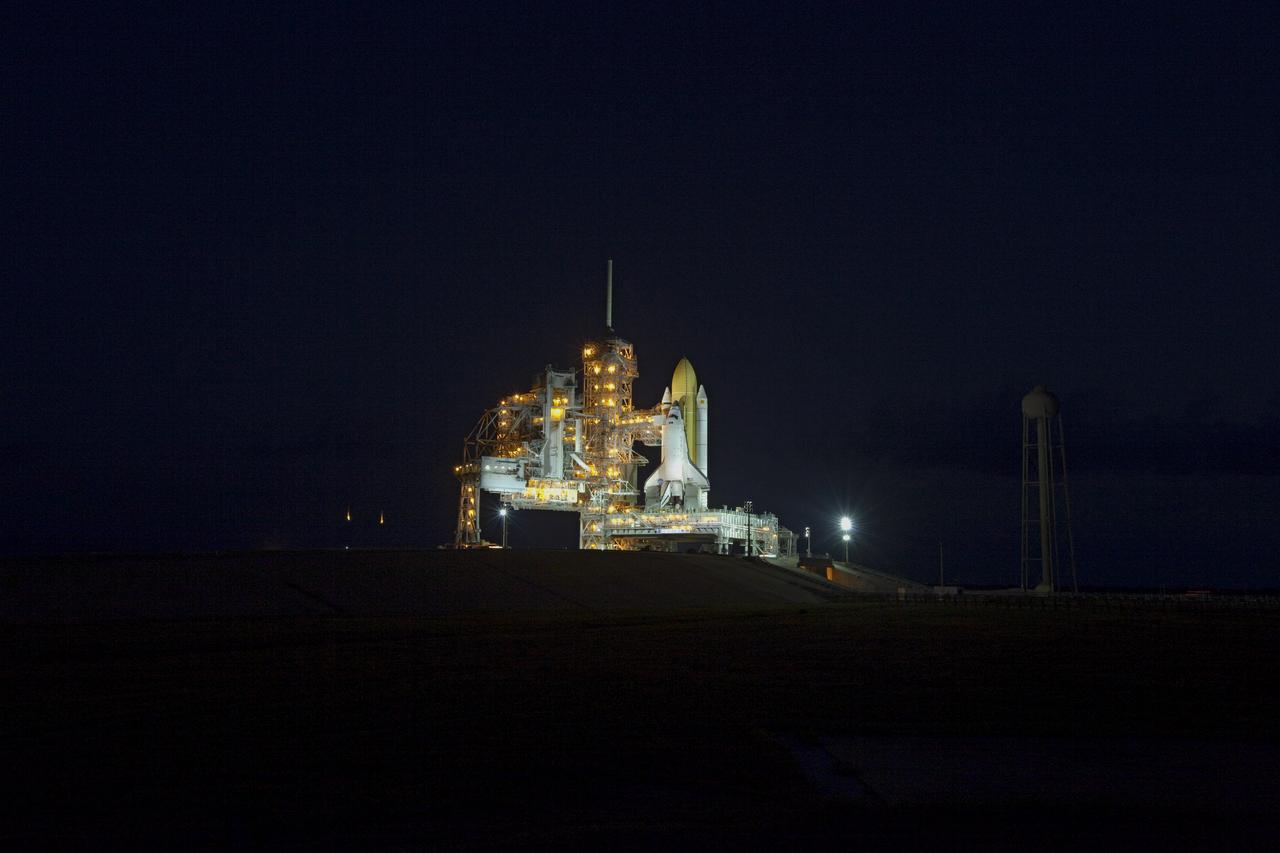
CAPE CANAVERAL, Fla. -- Dawn breaks over the Atlantic Ocean near Launch Pad 39A at NASA's Kennedy Space Center in Florida to reveal space shuttle Discovery newly arrived for its upcoming launch. First motion on its 3.4-mile trip from the Vehicle Assembly Building was at 7:58 p.m. EST Jan. 31, and was secured or "hard down" on the pad a little before 3 a.m. Feb. 1. Discovery's next launch opportunity to the International Space Station on the STS-133 mission is targeted for Feb. 24. For more information on STS-133, visit www.nasa.gov/mission_pages/shuttle/shuttlemissions/sts133/. Photo credit: NASA/Jack Pfaller
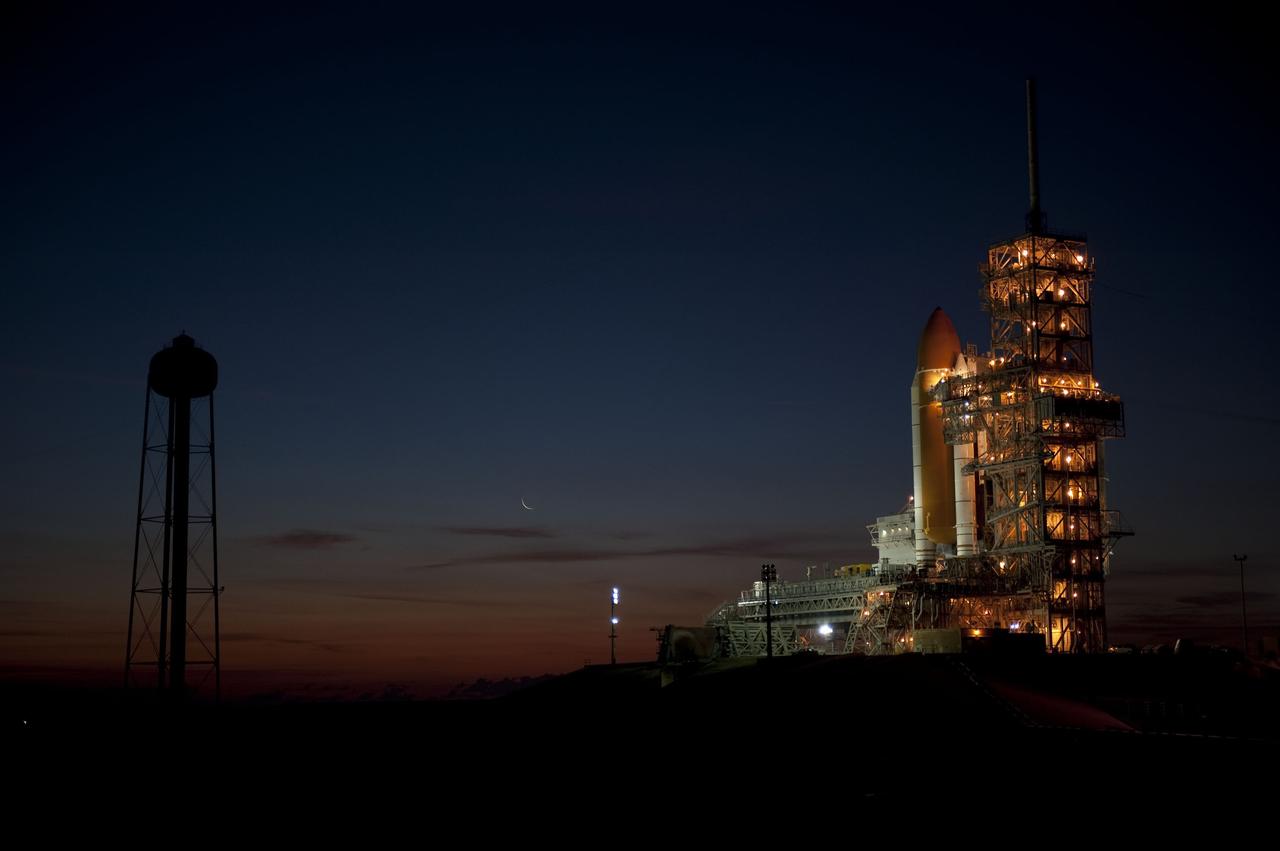
CAPE CANAVERAL, Fla. -- Dawn breaks over the Atlantic Ocean near Launch Pad 39A at NASA's Kennedy Space Center in Florida to reveal space shuttle Discovery newly arrived for its upcoming launch. First motion on its 3.4-mile trip from the Vehicle Assembly Building was at 7:58 p.m. EST Jan. 31, and was secured or "hard down" on the pad a little before 3 a.m. Feb. 1. Discovery's next launch opportunity to the International Space Station on the STS-133 mission is targeted for Feb. 24. For more information on STS-133, visit www.nasa.gov/mission_pages/shuttle/shuttlemissions/sts133/. Photo credit: NASA/Kim Shiflett

CAPE CANAVERAL, Fla. -- Dawn breaks over the Atlantic Ocean near Launch Pad 39A at NASA's Kennedy Space Center in Florida to reveal space shuttle Discovery newly arrived for its upcoming launch. First motion on its 3.4-mile trip from the Vehicle Assembly Building was at 7:58 p.m. EST Jan. 31, and was secured or "hard down" on the pad a little before 3 a.m. Feb. 1. Discovery's next launch opportunity to the International Space Station on the STS-133 mission is targeted for Feb. 24. For more information on STS-133, visit www.nasa.gov/mission_pages/shuttle/shuttlemissions/sts133/. Photo credit: NASA/Kim Shiflett
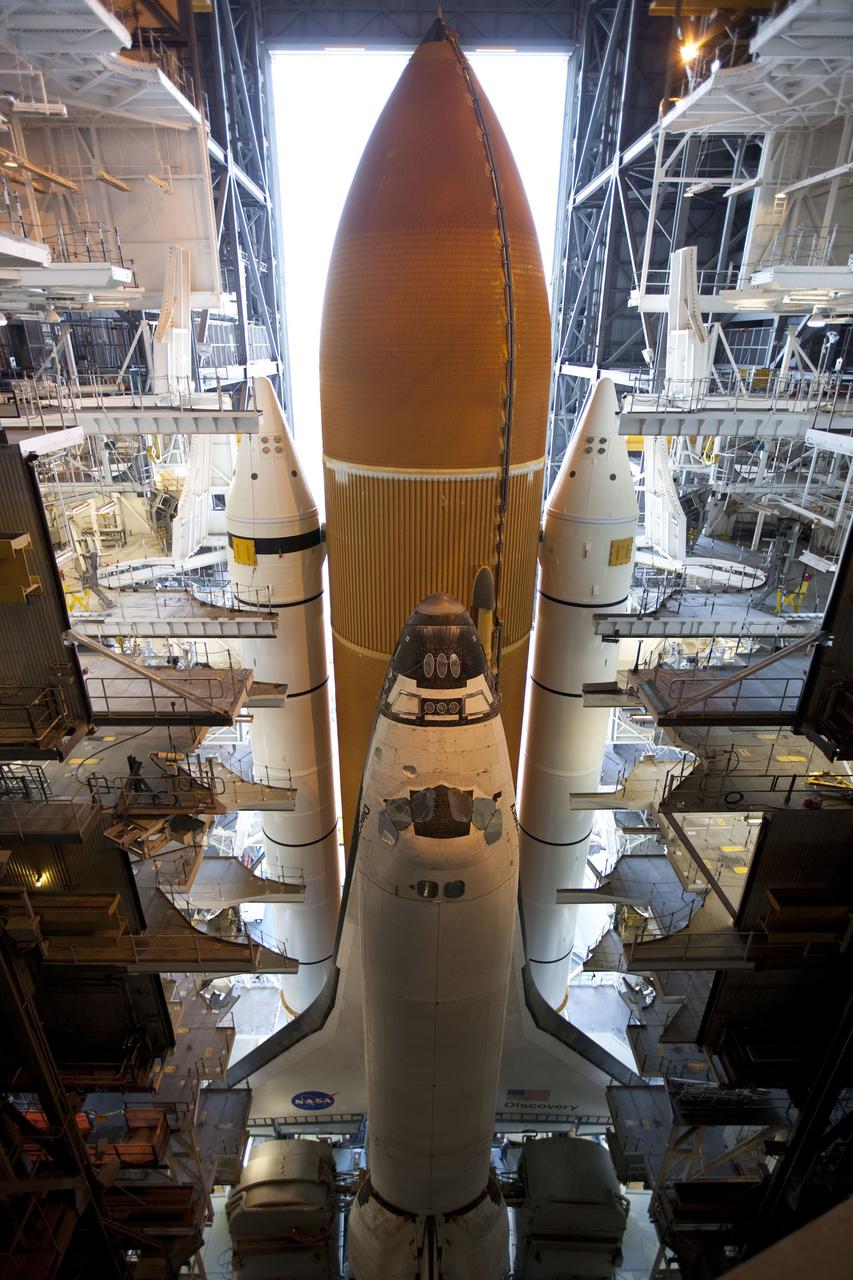
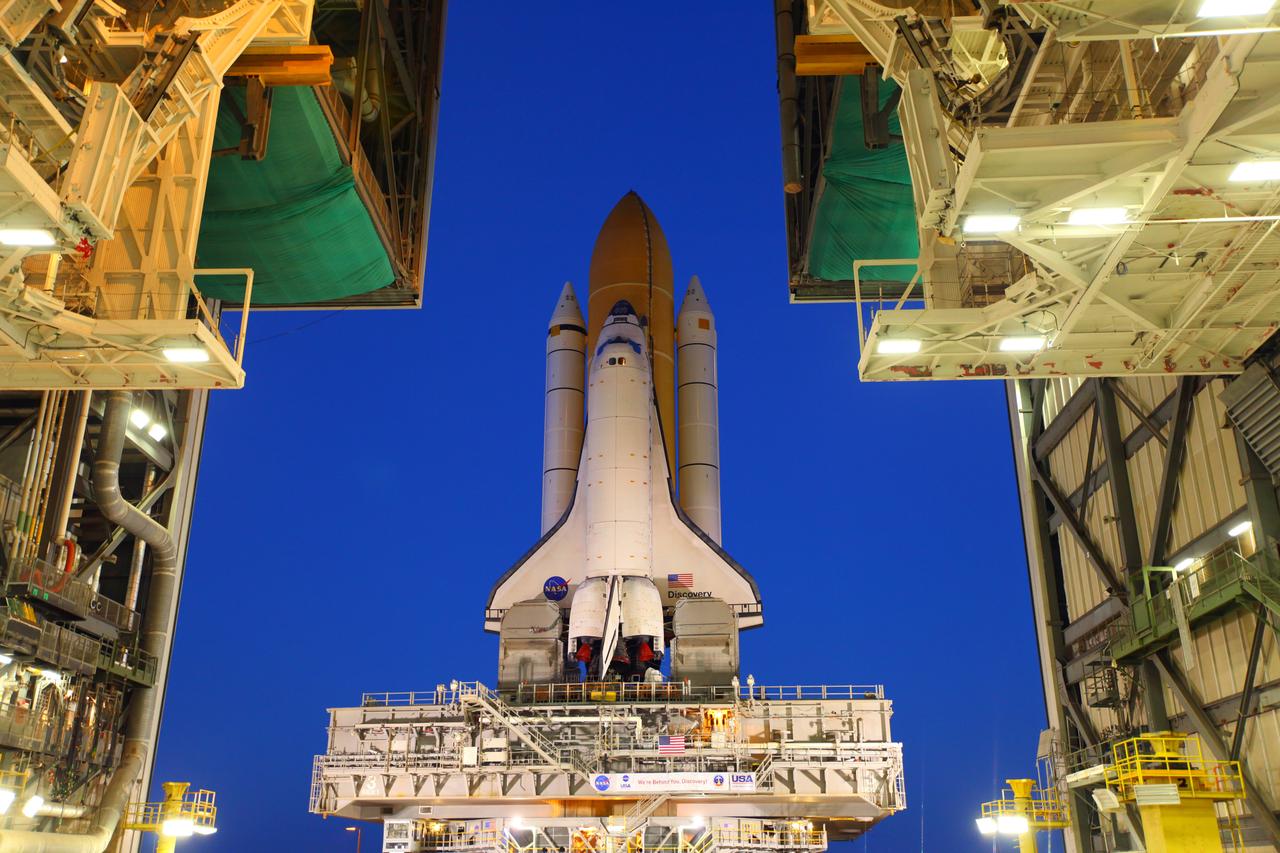
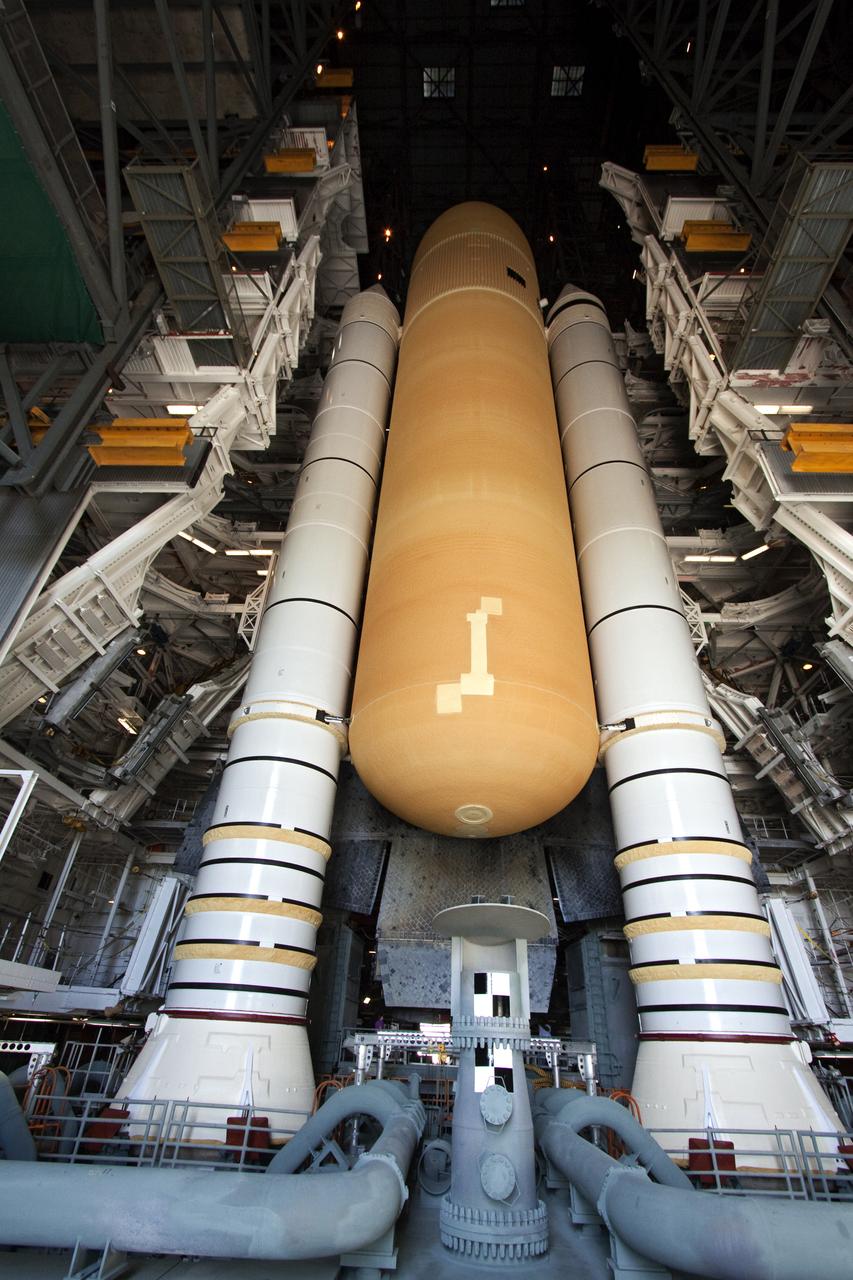
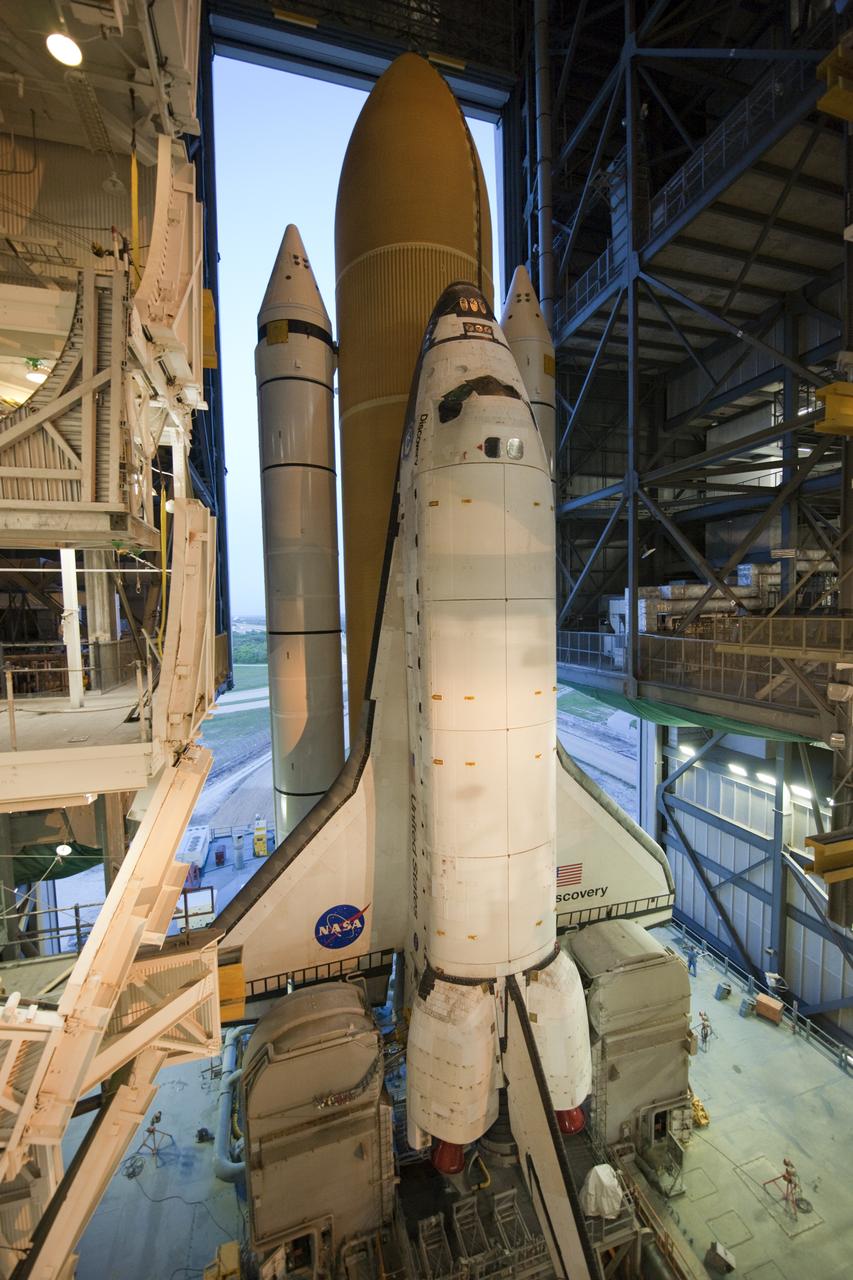
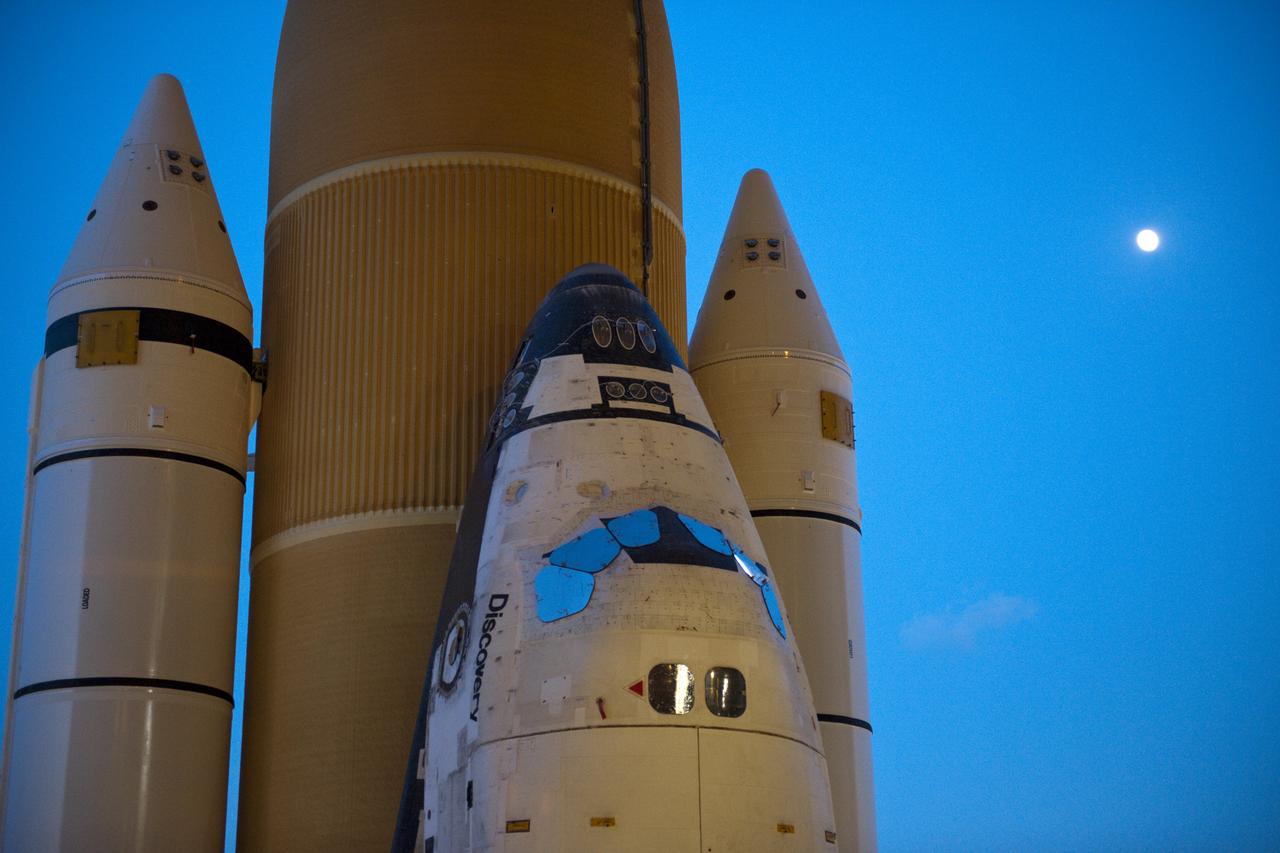
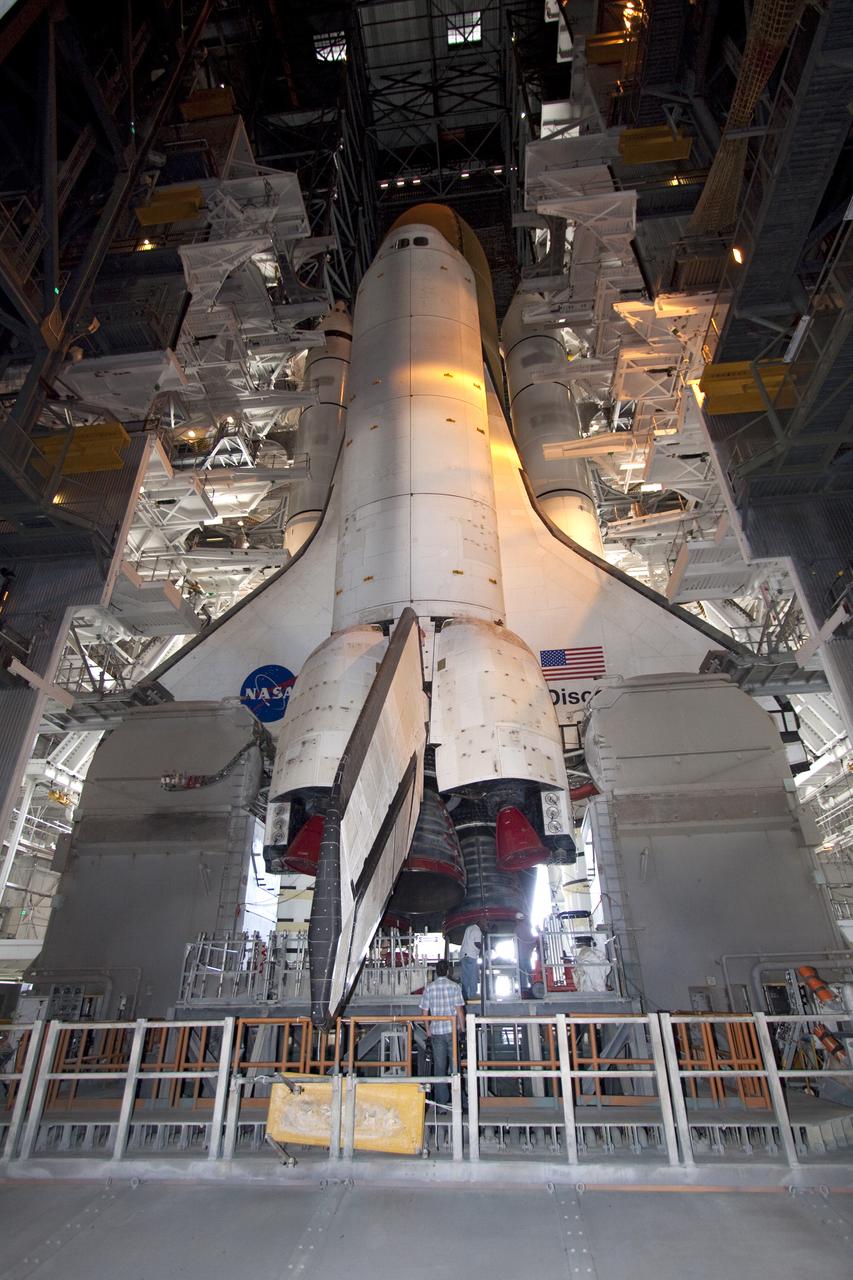
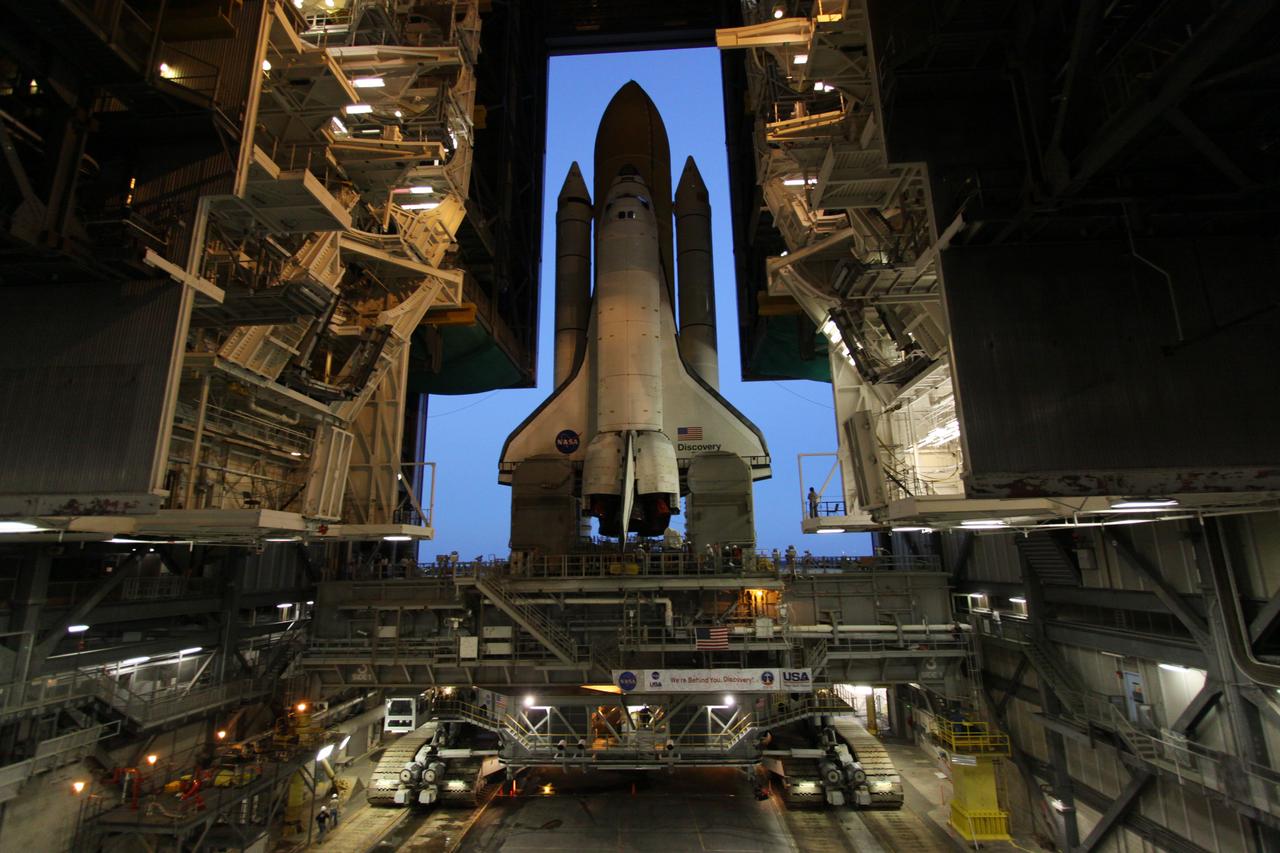
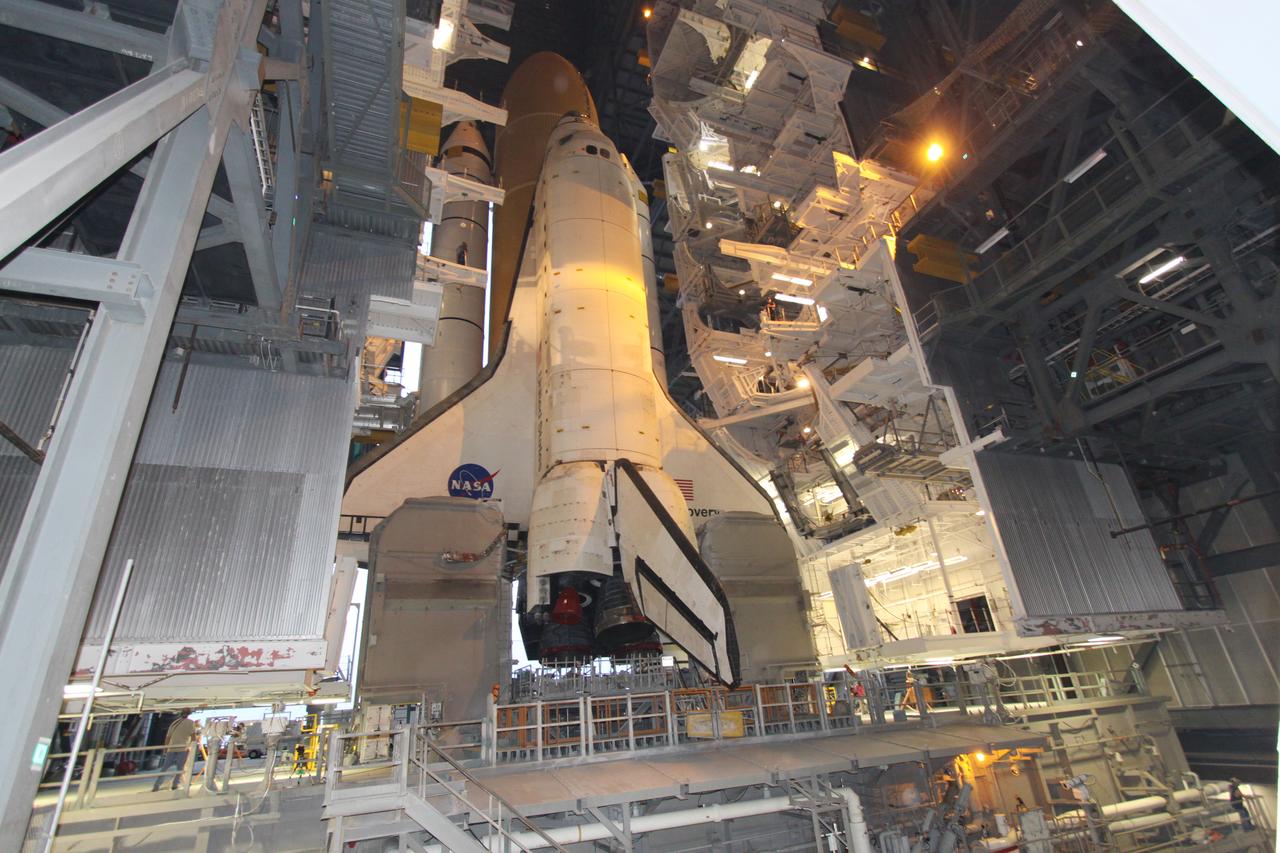
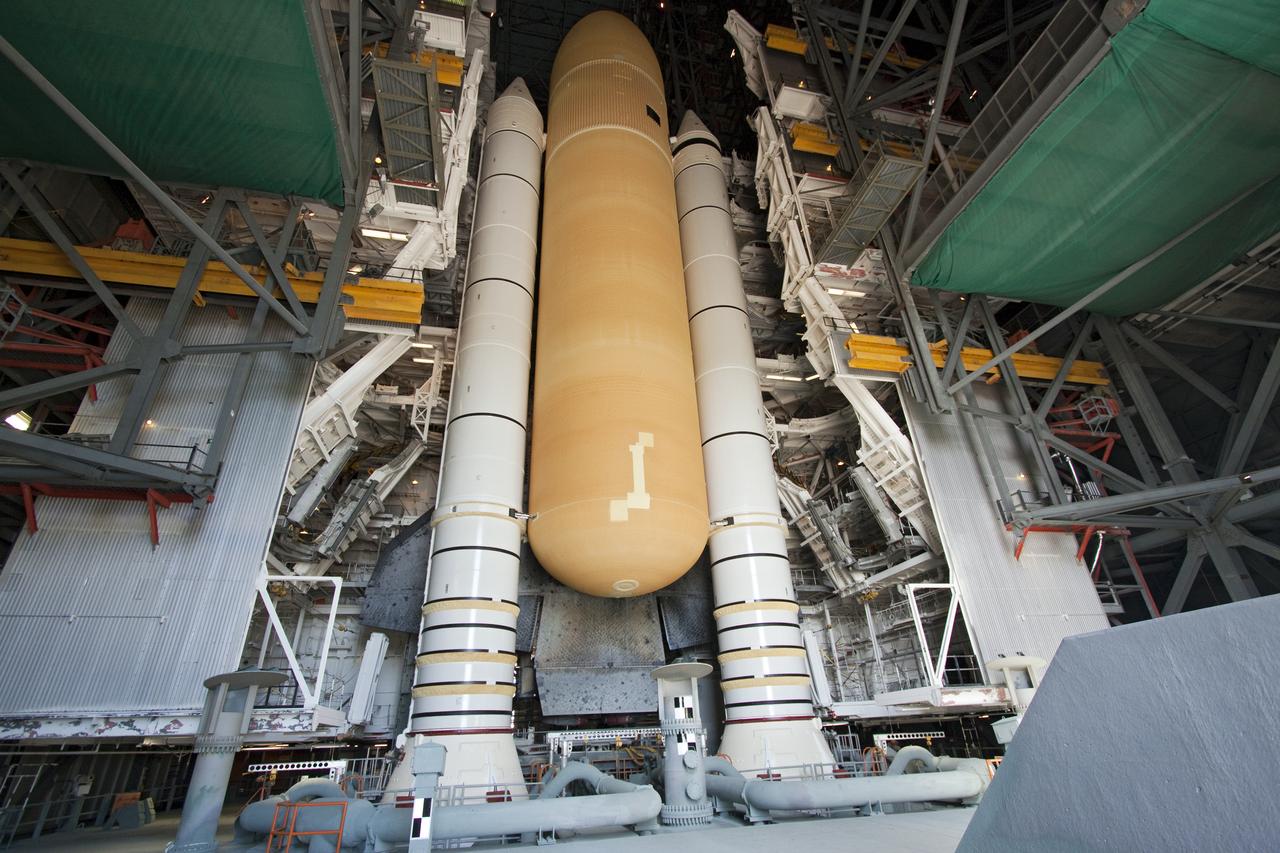
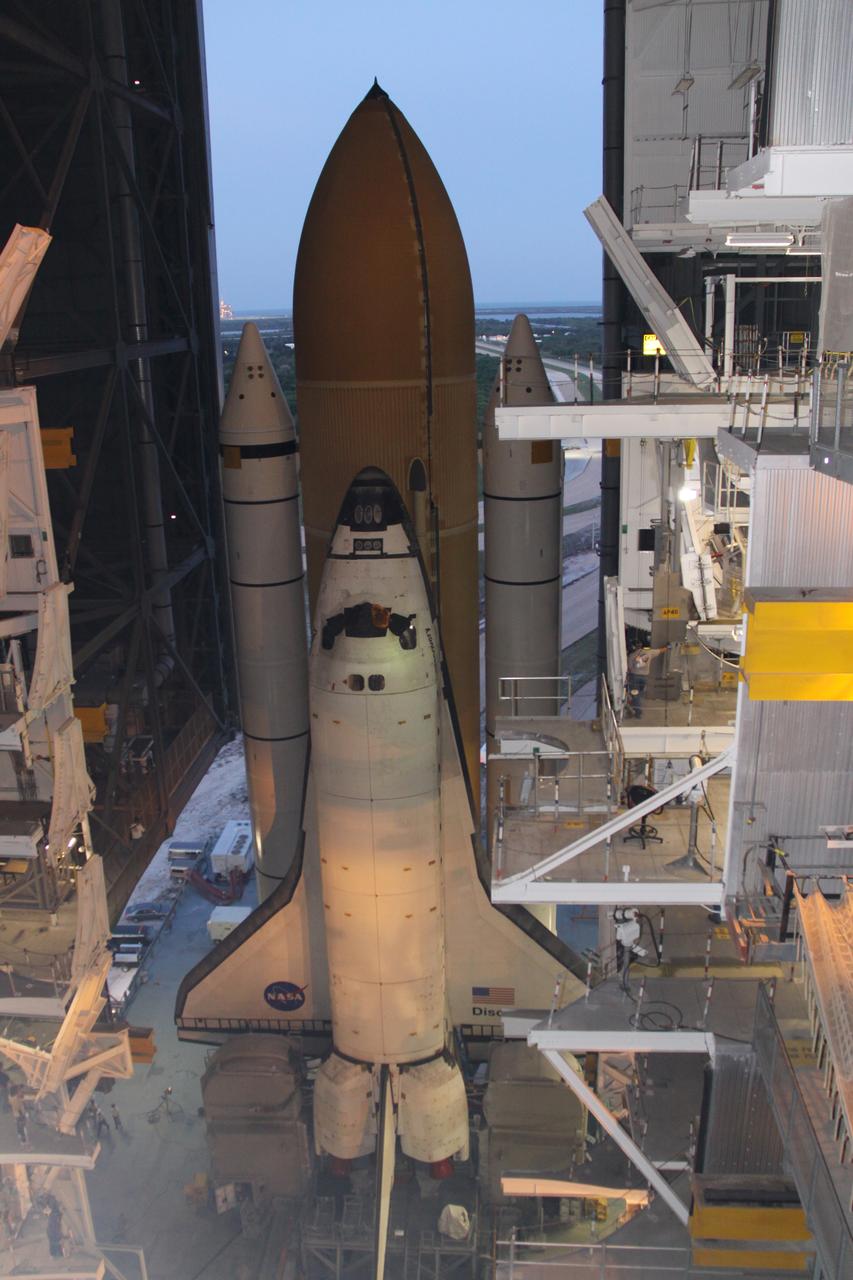
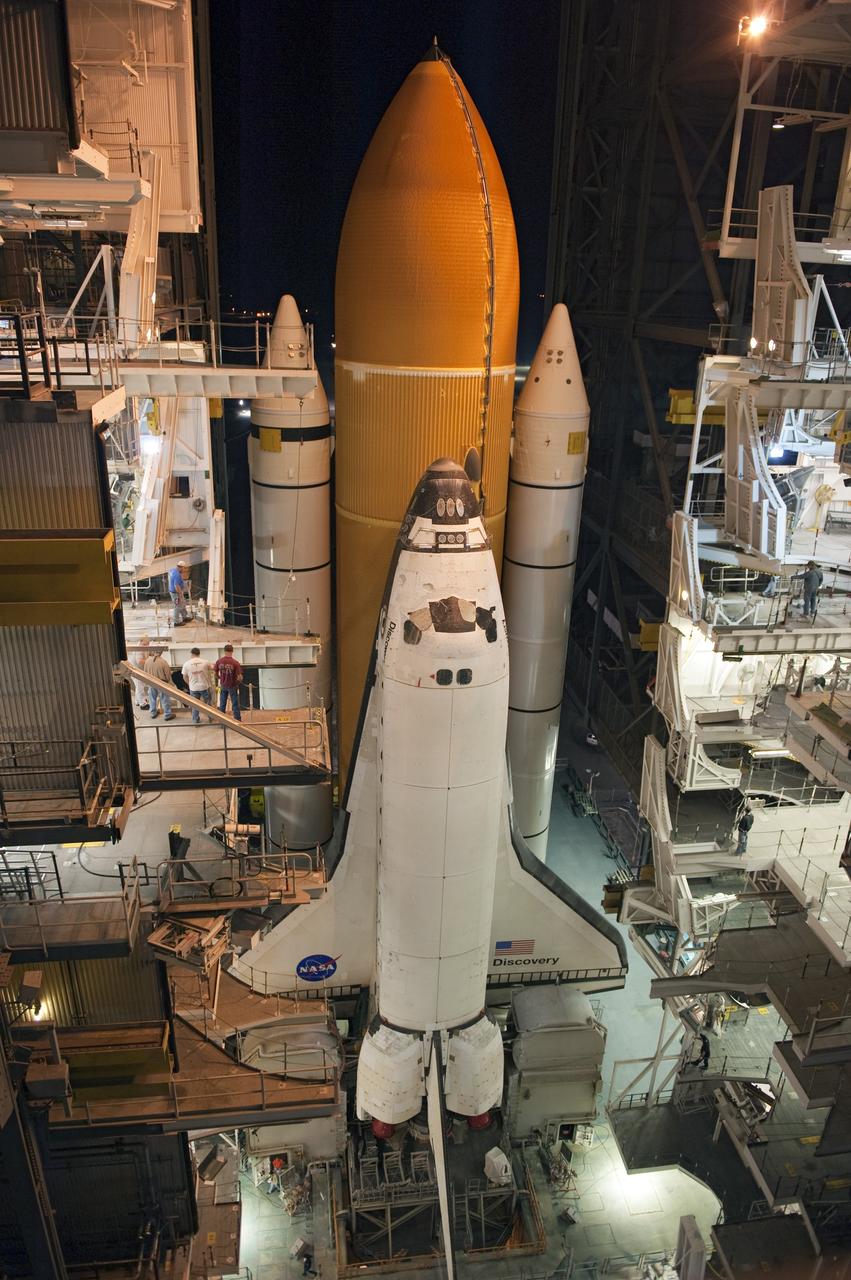
CAPE CANAVERAL, Fla. -- Viewed from inside the Vehicle Assembly Building at NASA's Kennedy Space Center in Florida, space shuttle Discovery, perched on a crawler-transporter in the doorway of the massive Vehicle Assembly Building, is ready for its 3.4-mile journey to Launch Pad 39A. It will take the shuttle, attached to its external fuel tank, twin solid rocket boosters and mobile launcher platform, about seven hours to complete the move. This is the second time Discovery has rolled out to the pad for the STS-133 mission, and comes after a thorough check and modifications to the shuttle's external tank. Targeted to liftoff Feb. 24, Discovery will take the Permanent Multipurpose Module (PMM) packed with supplies and critical spare parts, as well as Robonaut 2 (R2) to the International Space Station. For more information on STS-133, visit www.nasa.gov/mission_pages/shuttle/shuttlemissions/sts133/. Photo credit: NASA/Frank Michaux
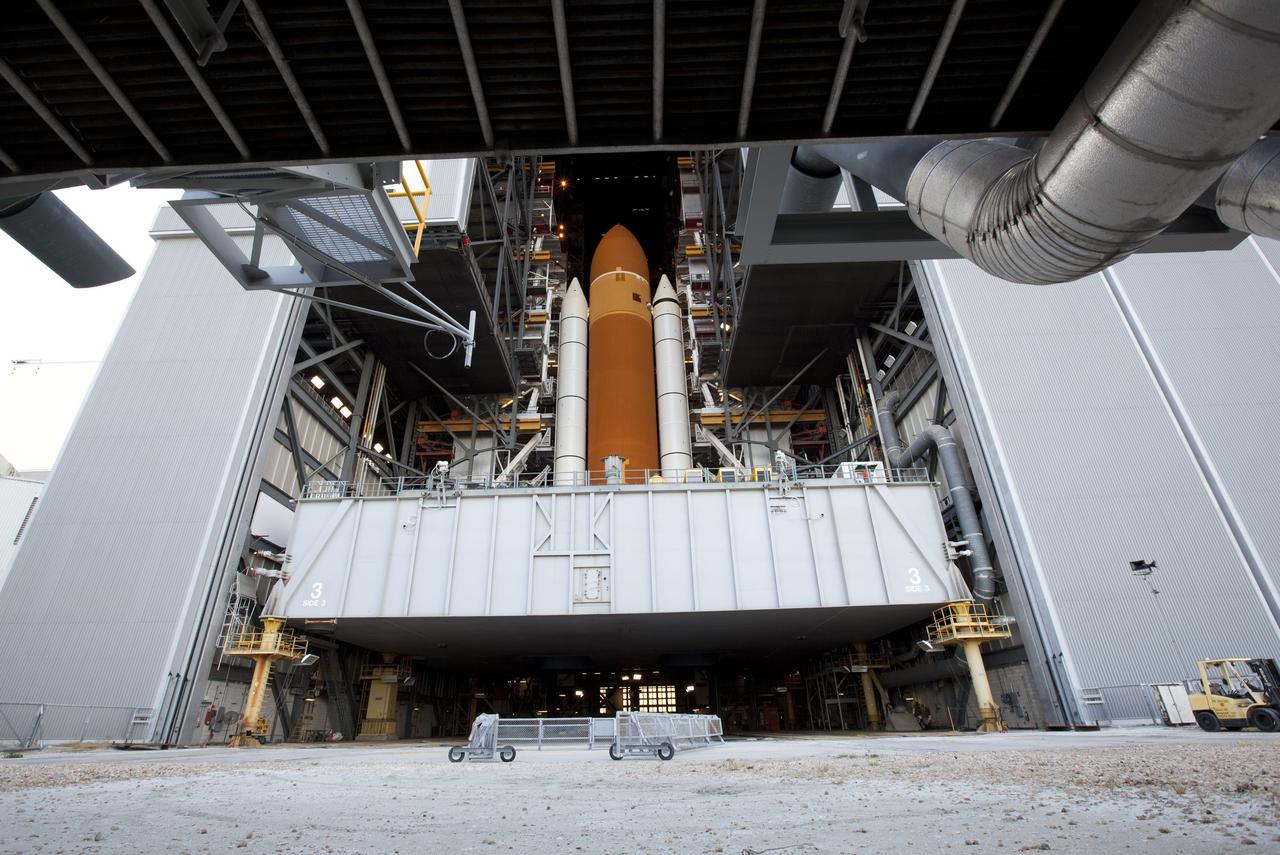
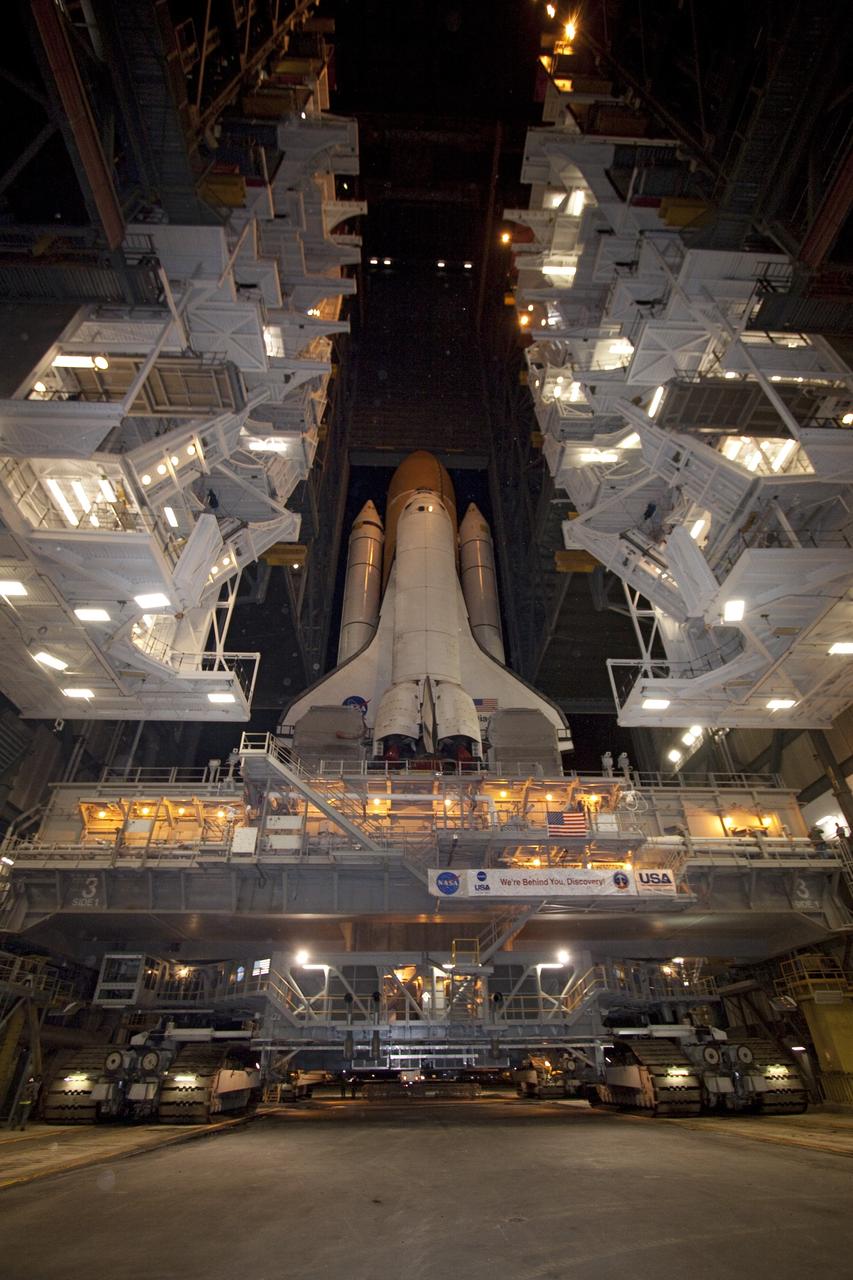
CAPE CANAVERAL, Fla. -- At NASA's Kennedy Space Center in Florida, space shuttle Discovery perched on a crawler-transporter in the doorway of the massive Vehicle Assembly Building, is ready for its 3.4-mile journey to Launch Pad 39A. It will take the shuttle, attached to its external fuel tank, twin solid rocket boosters and mobile launcher platform, about seven hours to complete the move. This is the second time Discovery has rolled out to the pad for the STS-133 mission, and comes after a thorough check and modifications to the shuttle's external tank. Targeted to liftoff Feb. 24, Discovery will take the Permanent Multipurpose Module (PMM) packed with supplies and critical spare parts, as well as Robonaut 2 (R2) to the International Space Station. For more information on STS-133, visit www.nasa.gov/mission_pages/shuttle/shuttlemissions/sts133/. Photo credit: NASA/Frank Michaux
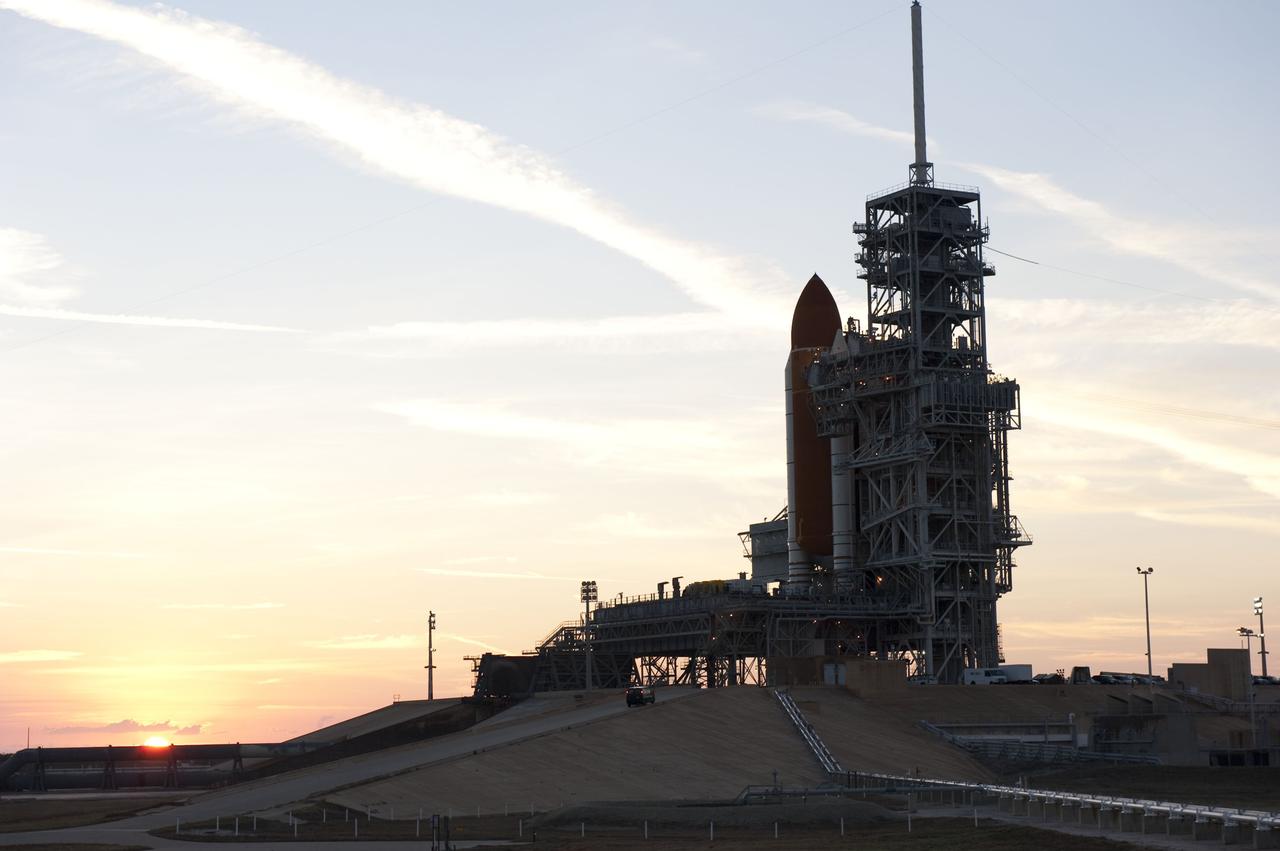
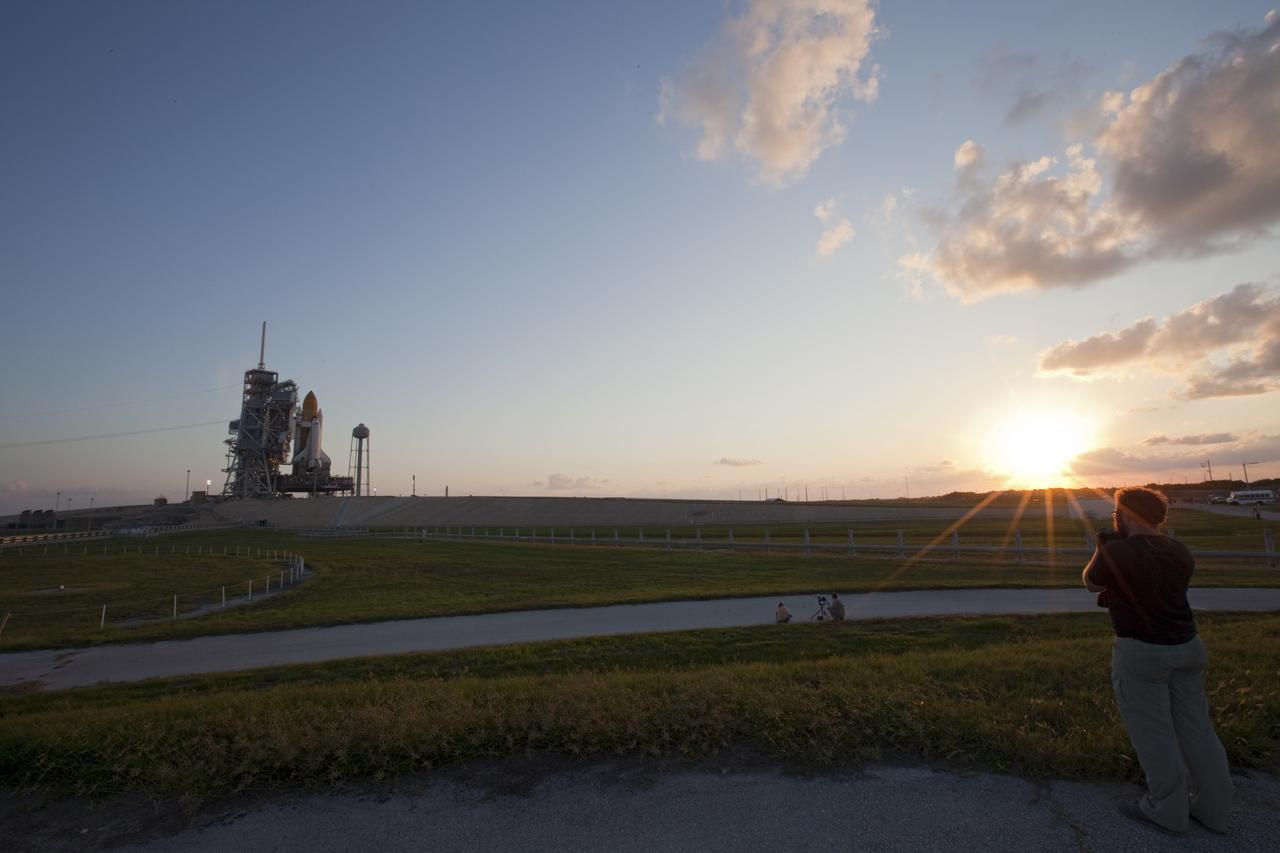
CAPE CANAVERAL, Fla. -- At NASA's Kennedy Space Center in Florida, the sun begins it rise in the East overlooking Launch Pad 39A and space shuttle Discovery, newly arrived for its upcoming launch. First motion on its 3.4-mile trip from the Vehicle Assembly Building was at 7:58 p.m. EST Jan. 31, and was secured or "hard down" on the pad a little before 3 a.m. Feb. 1. Discovery's next launch opportunity to the International Space Station on the STS-133 mission is targeted for Feb. 24. For more information on STS-133, visit www.nasa.gov/mission_pages/shuttle/shuttlemissions/sts133/. Photo credit: NASA/Kim Shiflett
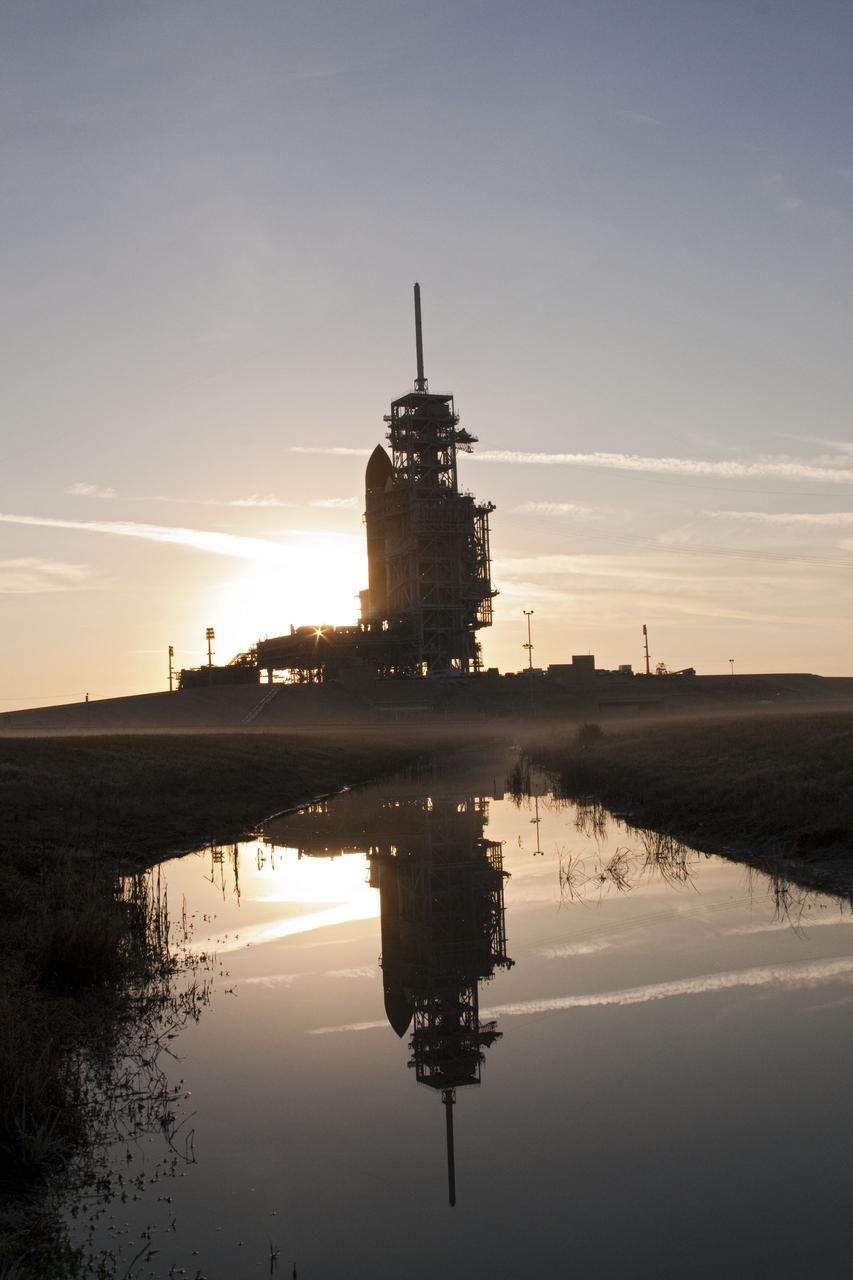
CAPE CANAVERAL, Fla. -- At NASA's Kennedy Space Center in Florida, the sun's early morning rays and space shuttle Discovery are reflected in a pond at Launch Pad 39A. Discovery was moved from the Vehicle Assembly Building with first motion at 7:58 p.m. EST Jan. 31, and was secured or "hard down" on the pad a little before 3 a.m. Feb. 1. Discovery's next launch opportunity to the International Space Station on the STS-133 mission is targeted for Feb. 24. For more information on STS-133, visit www.nasa.gov/mission_pages/shuttle/shuttlemissions/sts133/. Photo credit: NASA/Jack Pfaller
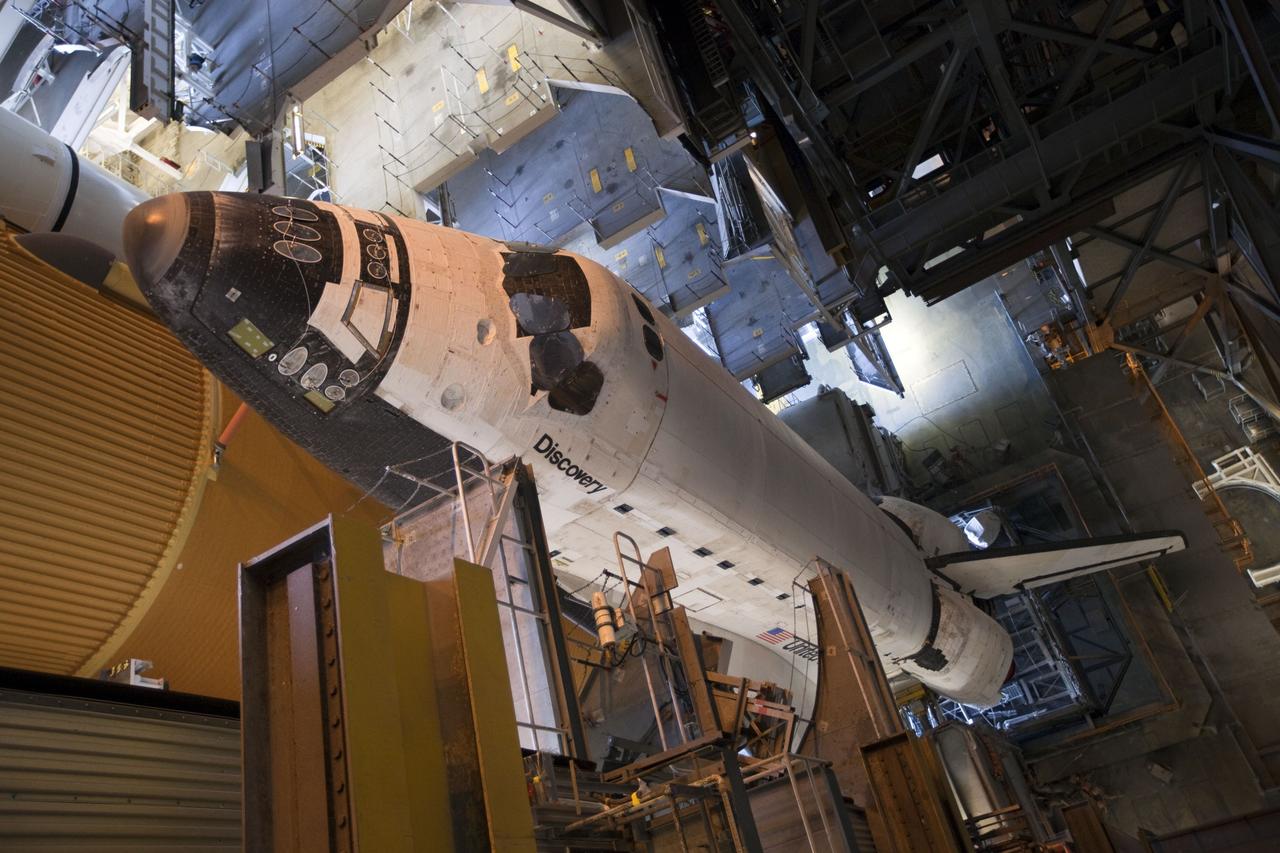
CAPE CANAVERAL, Fla. -- Viewed from inside the Vehicle Assembly Building at NASA's Kennedy Space Center in Florida, space shuttle Discovery, perched on a crawler-transporter in the doorway of the massive Vehicle Assembly Building, is ready for its 3.4-mile journey to Launch Pad 39A. It will take the shuttle, attached to its external fuel tank, twin solid rocket boosters and mobile launcher platform, about seven hours to complete the move. This is the second time Discovery has rolled out to the pad for the STS-133 mission, and comes after a thorough check and modifications to the shuttle's external tank. Targeted to liftoff Feb. 24, Discovery will take the Permanent Multipurpose Module (PMM) packed with supplies and critical spare parts, as well as Robonaut 2 (R2) to the International Space Station. For more information on STS-133, visit www.nasa.gov/mission_pages/shuttle/shuttlemissions/sts133/. Photo credit: NASA/Frank Michaux
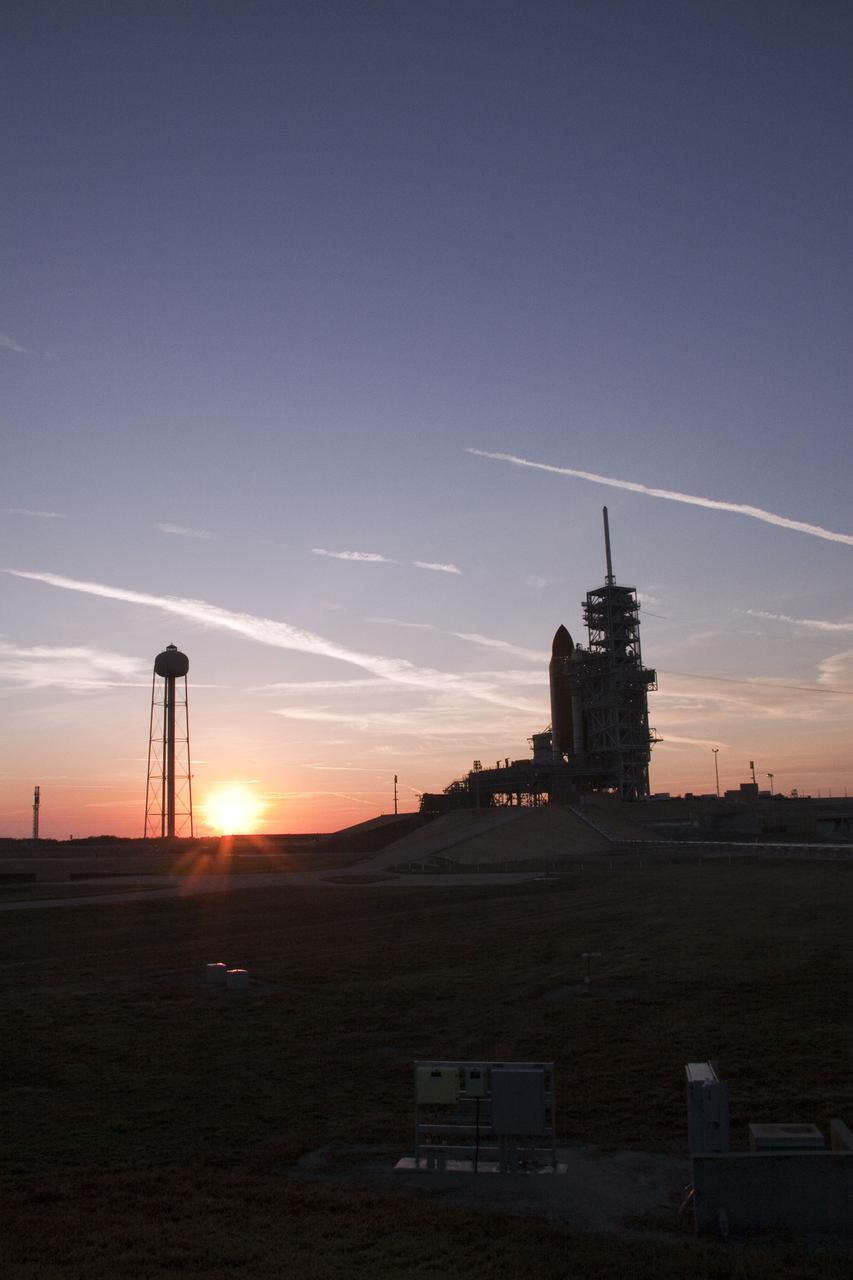
CAPE CANAVERAL, Fla. -- At NASA's Kennedy Space Center in Florida, the sun begins it rise in the East overlooking Launch Pad 39A and space shuttle Discovery, newly arrived for its upcoming launch. First motion on its 3.4-mile trip from the Vehicle Assembly Building was at 7:58 p.m. EST Jan. 31, and was secured or "hard down" on the pad a little before 3 a.m. Feb. 1. Discovery's next launch opportunity to the International Space Station on the STS-133 mission is targeted for Feb. 24. For more information on STS-133, visit www.nasa.gov/mission_pages/shuttle/shuttlemissions/sts133/. Photo credit: NASA/Jack Pfaller
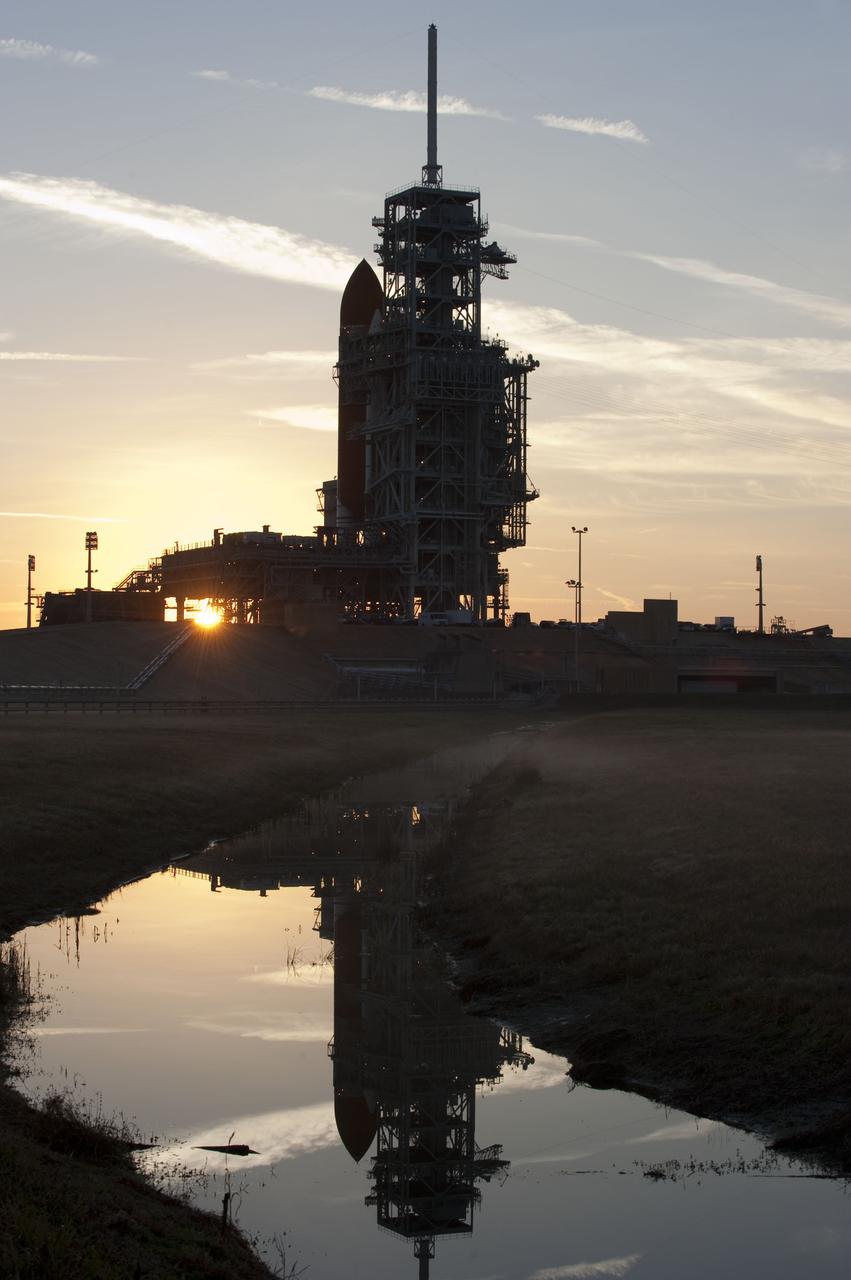
CAPE CANAVERAL, Fla. -- At NASA's Kennedy Space Center in Florida, the sun's early morning rays and space shuttle Discovery are reflected in a pond at Launch Pad 39A. Discovery was moved from the Vehicle Assembly Building with first motion at 7:58 p.m. EST Jan. 31, and was secured or "hard down" on the pad a little before 3 a.m. Feb. 1. Discovery's next launch opportunity to the International Space Station on the STS-133 mission is targeted for Feb. 24. For more information on STS-133, visit www.nasa.gov/mission_pages/shuttle/shuttlemissions/sts133/. Photo credit: NASA/Kim Shiflett
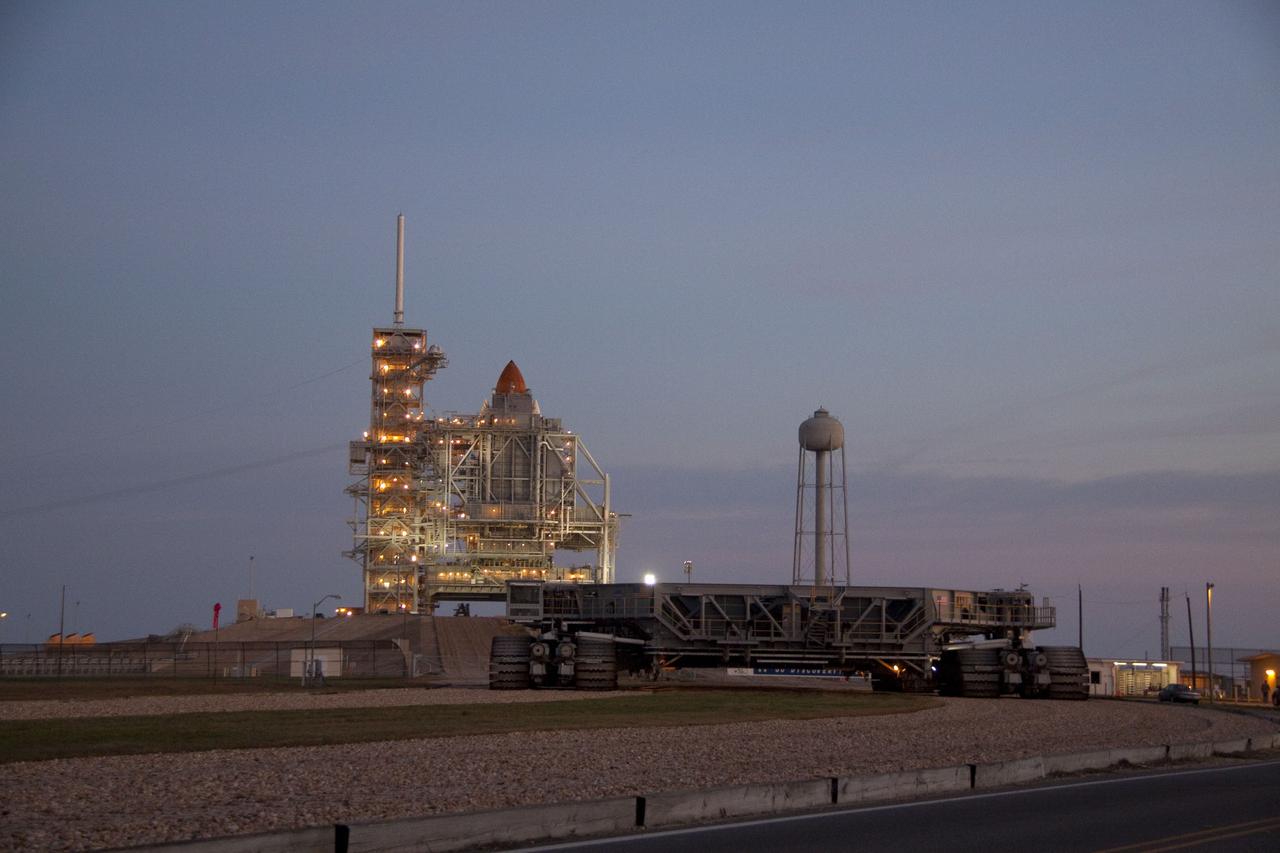
CAPE CANAVERAL, Fla. -- Dawn breaks over the Atlantic Ocean near Launch Pad 39A at NASA's Kennedy Space Center in Florida to reveal space shuttle Discovery newly arrived for its upcoming launch. First motion on its 3.4-mile trip from the Vehicle Assembly Building was at 7:58 p.m. EST Jan. 31, and was secured or "hard down" on the pad a little before 3 a.m. Feb. 1. Discovery's next launch opportunity to the International Space Station on the STS-133 mission is targeted for Feb. 24. For more information on STS-133, visit www.nasa.gov/mission_pages/shuttle/shuttlemissions/sts133/. Photo credit: NASA/Jack Pfaller
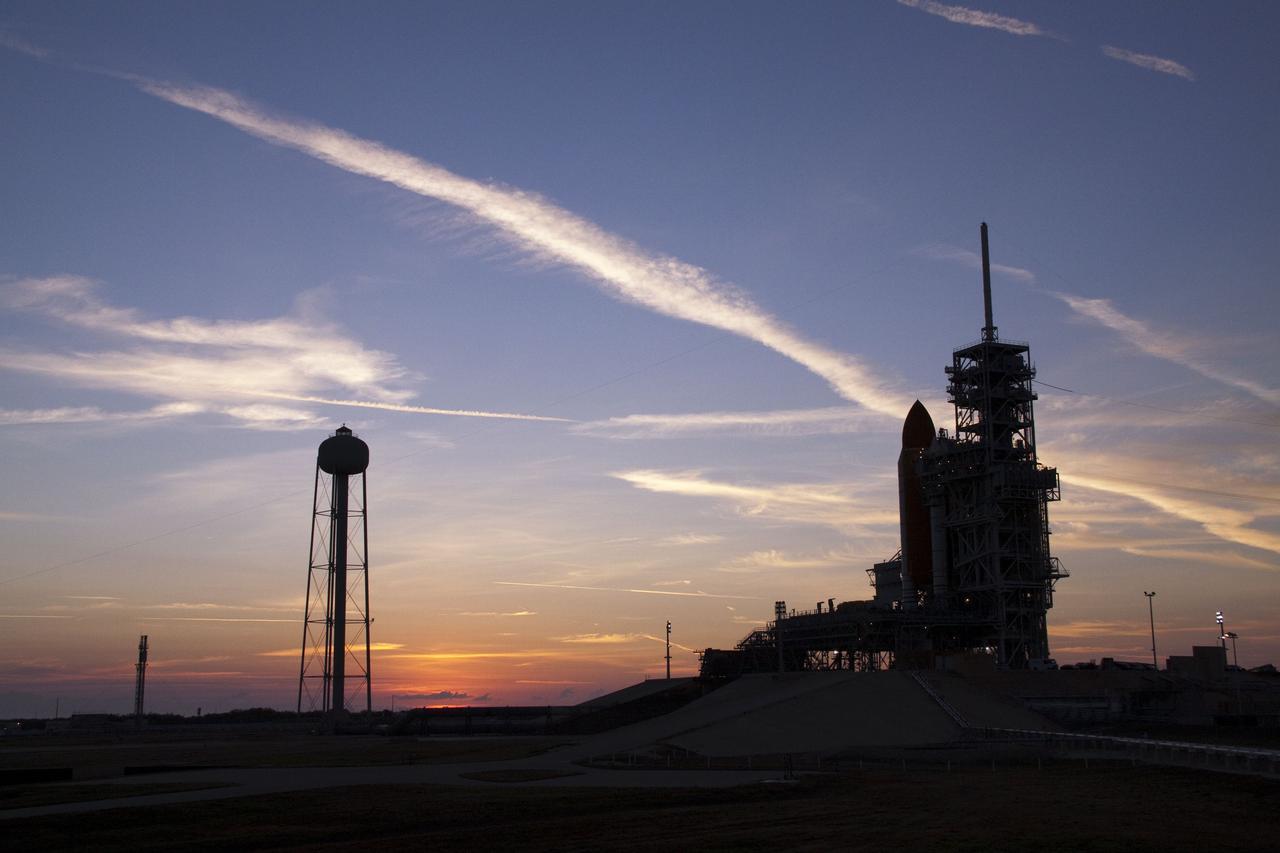
CAPE CANAVERAL, Fla. -- At NASA's Kennedy Space Center in Florida, the sun begins it rise in the East overlooking Launch Pad 39A and space shuttle Discovery, newly arrived for its upcoming launch. First motion on its 3.4-mile trip from the Vehicle Assembly Building was at 7:58 p.m. EST Jan. 31, and was secured or "hard down" on the pad a little before 3 a.m. Feb. 1. Discovery's next launch opportunity to the International Space Station on the STS-133 mission is targeted for Feb. 24. For more information on STS-133, visit www.nasa.gov/mission_pages/shuttle/shuttlemissions/sts133/. Photo credit: NASA/Jack Pfaller

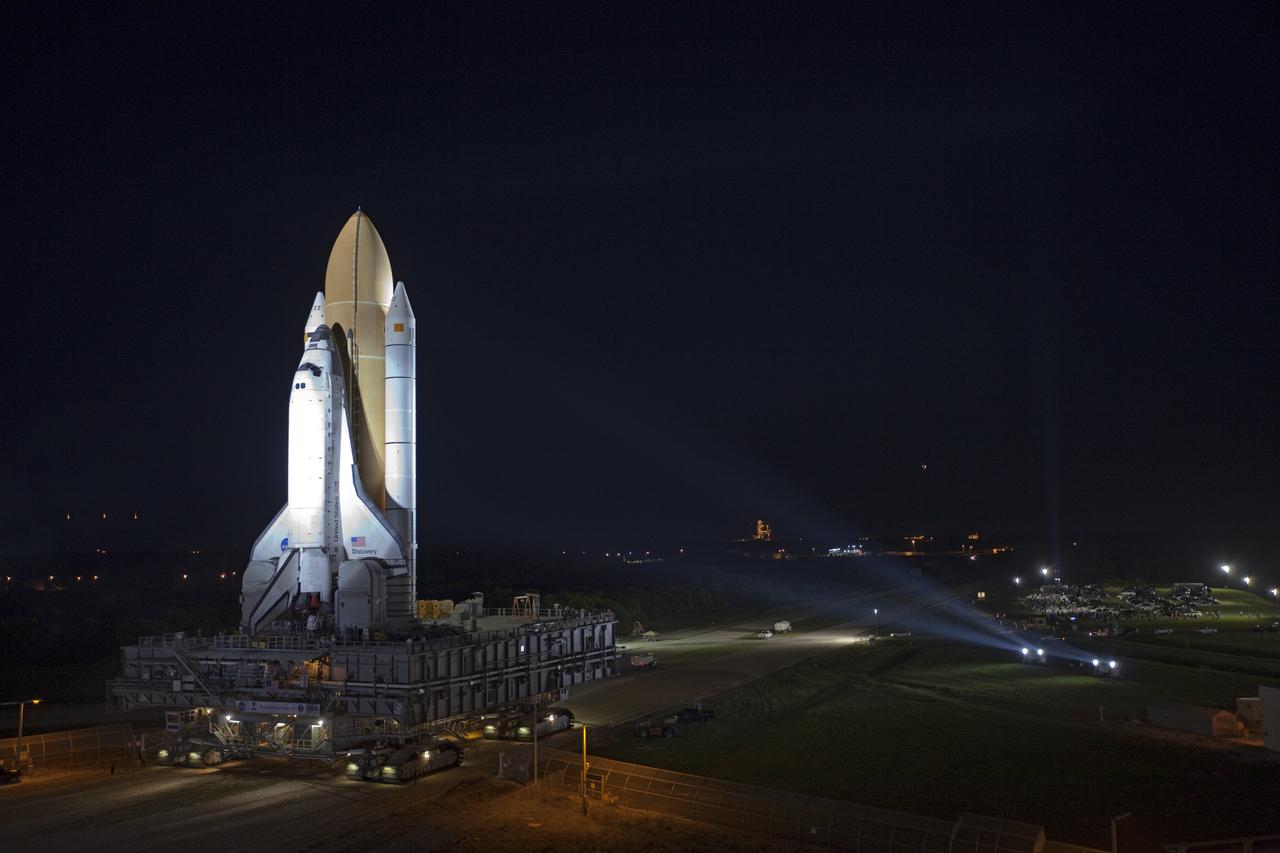
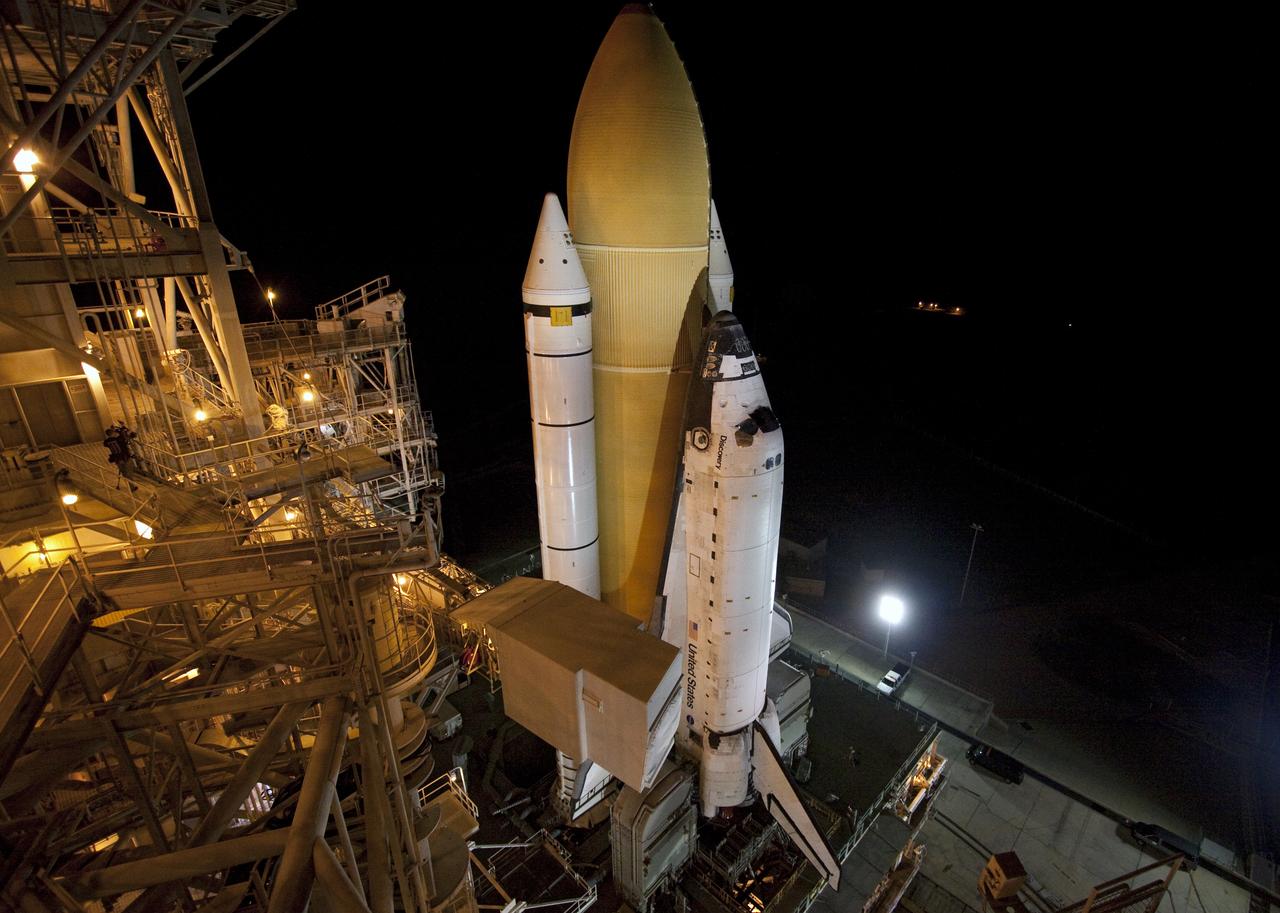
CAPE CANAVERAL, Fla. -- At NASA's Kennedy Space Center in Florida, space shuttle Discovery is in the spotlight as it is being moved atop the crawler-transporter out of the Vehicle Assembly Building on its 3.4-mile trek to Launch Pad 39A. It will take the shuttle, attached to its external fuel tank, twin solid rocket boosters and mobile launcher platform, about seven hours to complete the journey. This is the second time Discovery has rolled out to the pad for the STS-133 mission, and comes after a thorough check and modifications to the shuttle's external tank. Targeted to liftoff Feb. 24, Discovery will take the Permanent Multipurpose Module (PMM) packed with supplies and critical spare parts, as well as Robonaut 2 (R2) to the International Space Station. For more information on STS-133, visit www.nasa.gov/mission_pages/shuttle/shuttlemissions/sts133/. Photo credit: NASA/Frank Michaux
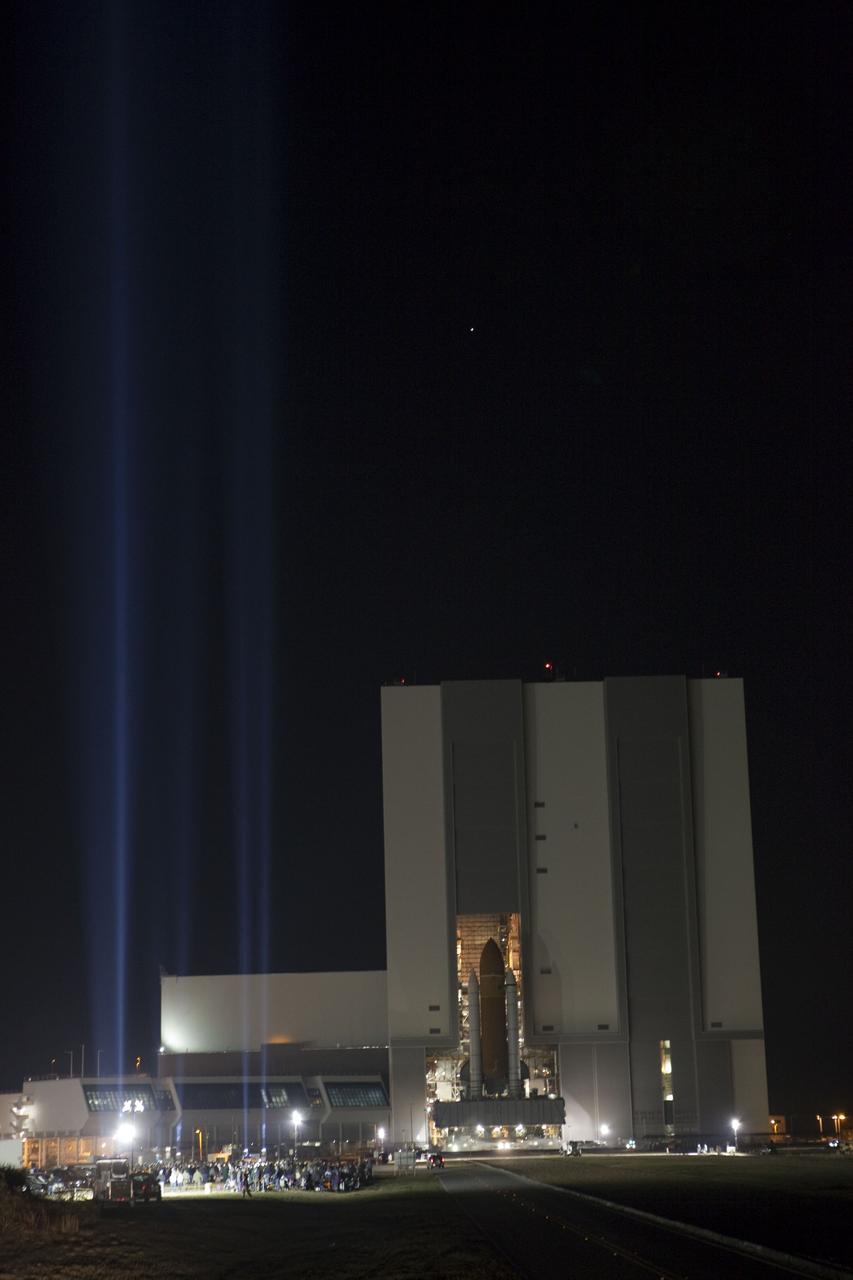
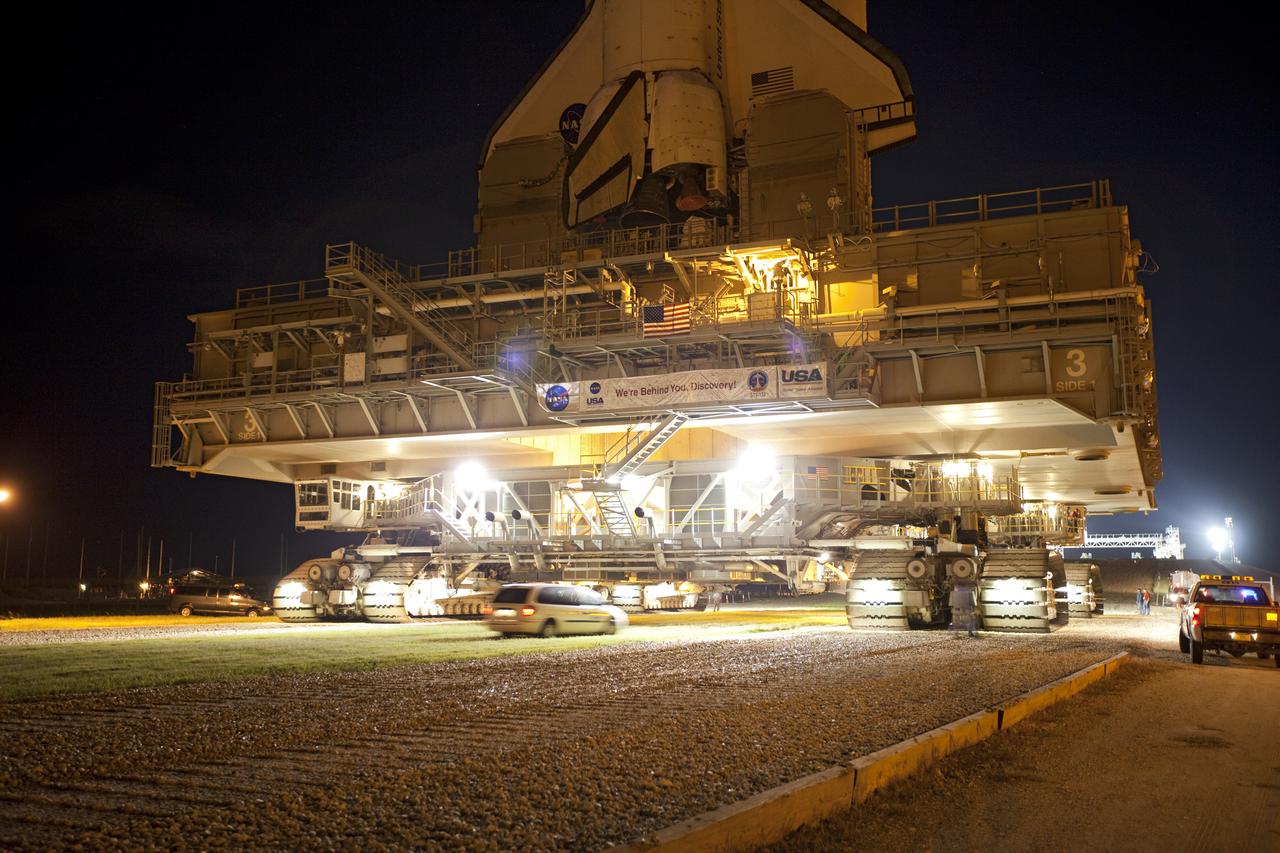
CAPE CANAVERAL, Fla. -- At NASA's Kennedy Space Center in Florida, space shuttle Discovery, perched on a crawler-transporter, begins a nighttime trek out of the massive Vehicle Assembly Building, on its 3.4-mile journey to Launch Pad 39A. It will take the shuttle, attached to its external fuel tank, twin solid rocket boosters and mobile launcher platform, about seven hours to complete the move. This is the second time Discovery has rolled out to the pad for the STS-133 mission, and comes after a thorough check and modifications to the shuttle's external tank. Targeted to liftoff Feb. 24, Discovery will take the Permanent Multipurpose Module (PMM) packed with supplies and critical spare parts, as well as Robonaut 2 (R2) to the International Space Station. For more information on STS-133, visit www.nasa.gov/mission_pages/shuttle/shuttlemissions/sts133/. Photo credit: NASA/Frank Michaux
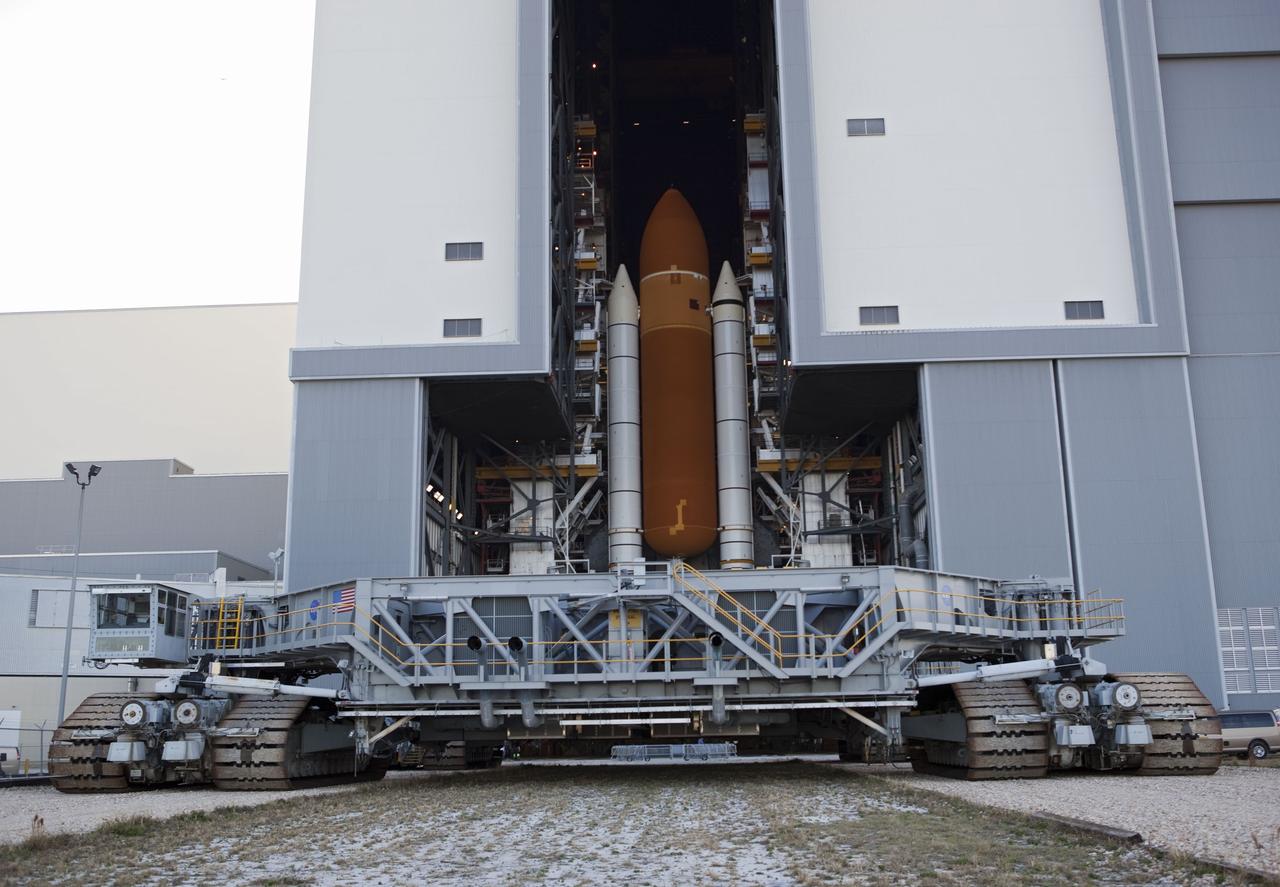
CAPE CANAVERAL, Fla. -- At NASA's Kennedy Space Center in Florida, space shuttle Discovery perched on a crawler-transporter in the doorway of the massive Vehicle Assembly Building, is ready for its 3.4-mile journey to Launch Pad 39A. It will take the shuttle, attached to its external fuel tank, twin solid rocket boosters and mobile launcher platform, about seven hours to complete the move. This is the second time Discovery has rolled out to the pad for the STS-133 mission, and comes after a thorough check and modifications to the shuttle's external tank. Targeted to liftoff Feb. 24, Discovery will take the Permanent Multipurpose Module (PMM) packed with supplies and critical spare parts, as well as Robonaut 2 (R2) to the International Space Station. For more information on STS-133, visit www.nasa.gov/mission_pages/shuttle/shuttlemissions/sts133/. Photo credit: NASA/Frank Michaux
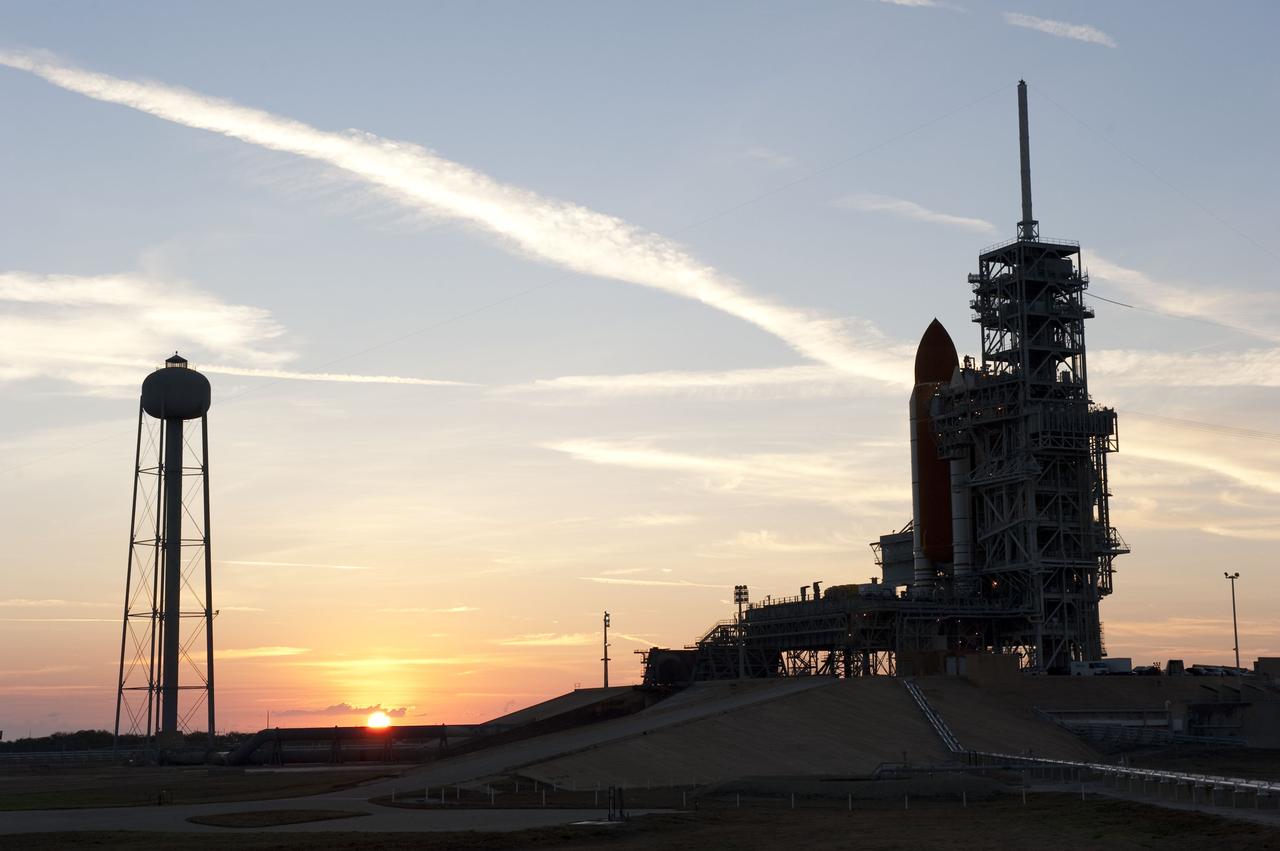
CAPE CANAVERAL, Fla. -- At NASA's Kennedy Space Center in Florida, the sun begins it rise in the East overlooking Launch Pad 39A and space shuttle Discovery, newly arrived for its upcoming launch. First motion on its 3.4-mile trip from the Vehicle Assembly Building was at 7:58 p.m. EST Jan. 31, and was secured or "hard down" on the pad a little before 3 a.m. Feb. 1. Discovery's next launch opportunity to the International Space Station on the STS-133 mission is targeted for Feb. 24. For more information on STS-133, visit www.nasa.gov/mission_pages/shuttle/shuttlemissions/sts133/. Photo credit: NASA/Kim Shiflett
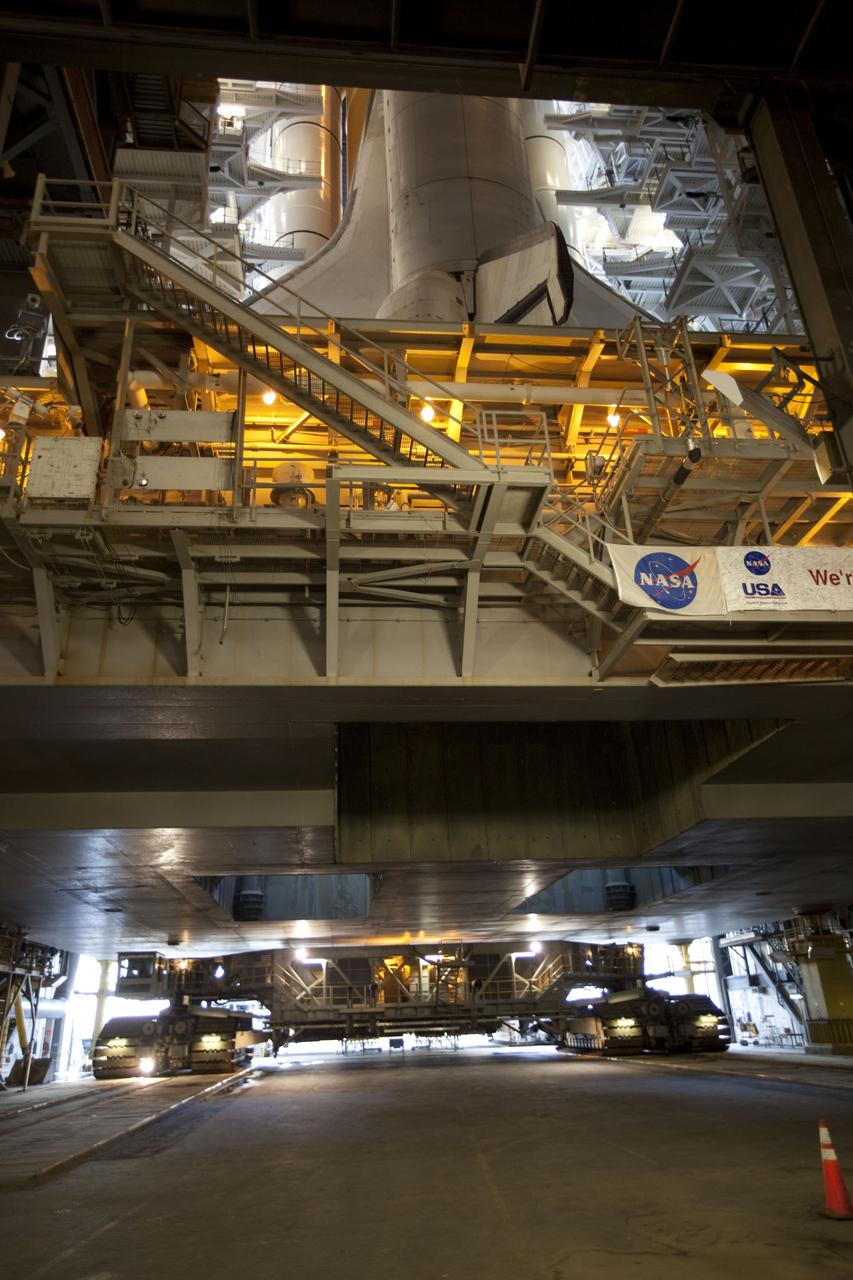
CAPE CANAVERAL, Fla. -- Viewed from inside the Vehicle Assembly Building at NASA's Kennedy Space Center in Florida, space shuttle Discovery, perched on a crawler-transporter in the doorway of the massive Vehicle Assembly Building, is ready for its 3.4-mile journey to Launch Pad 39A. It will take the shuttle, attached to its external fuel tank, twin solid rocket boosters and mobile launcher platform, about seven hours to complete the move. This is the second time Discovery has rolled out to the pad for the STS-133 mission, and comes after a thorough check and modifications to the shuttle's external tank. Targeted to liftoff Feb. 24, Discovery will take the Permanent Multipurpose Module (PMM) packed with supplies and critical spare parts, as well as Robonaut 2 (R2) to the International Space Station. For more information on STS-133, visit www.nasa.gov/mission_pages/shuttle/shuttlemissions/sts133/. Photo credit: NASA/Frank Michaux
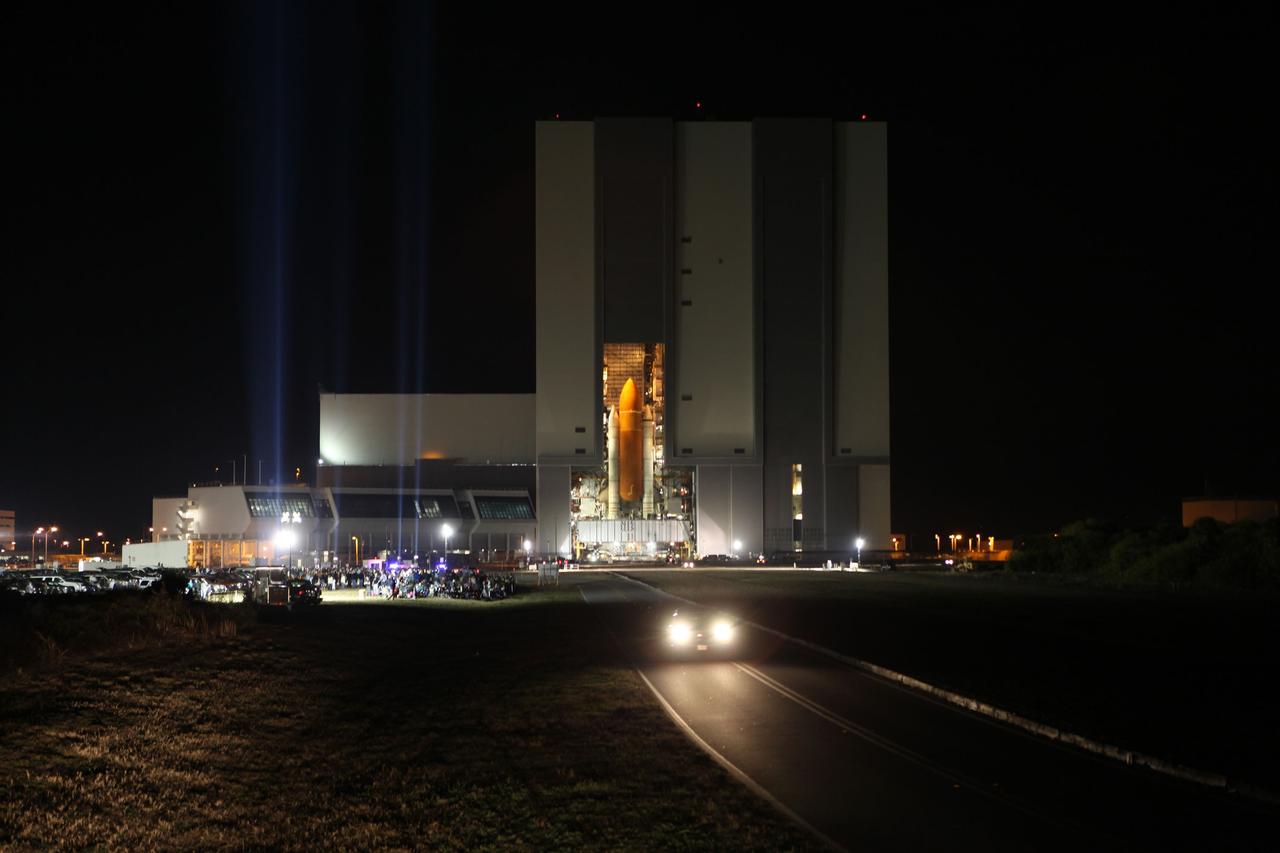
CAPE CANAVERAL, Fla. -- At NASA's Kennedy Space Center in Florida, space shuttle Discovery, perched on a crawler-transporter, begins a nighttime trek out of the massive Vehicle Assembly Building, on its 3.4-mile journey to Launch Pad 39A. It will take the shuttle, attached to its external fuel tank, twin solid rocket boosters and mobile launcher platform, about seven hours to complete the move. This is the second time Discovery has rolled out to the pad for the STS-133 mission, and comes after a thorough check and modifications to the shuttle's external tank. Targeted to liftoff Feb. 24, Discovery will take the Permanent Multipurpose Module (PMM) packed with supplies and critical spare parts, as well as Robonaut 2 (R2) to the International Space Station. For more information on STS-133, visit www.nasa.gov/mission_pages/shuttle/shuttlemissions/sts133/. Photo credit: NASA/Frank Michaux
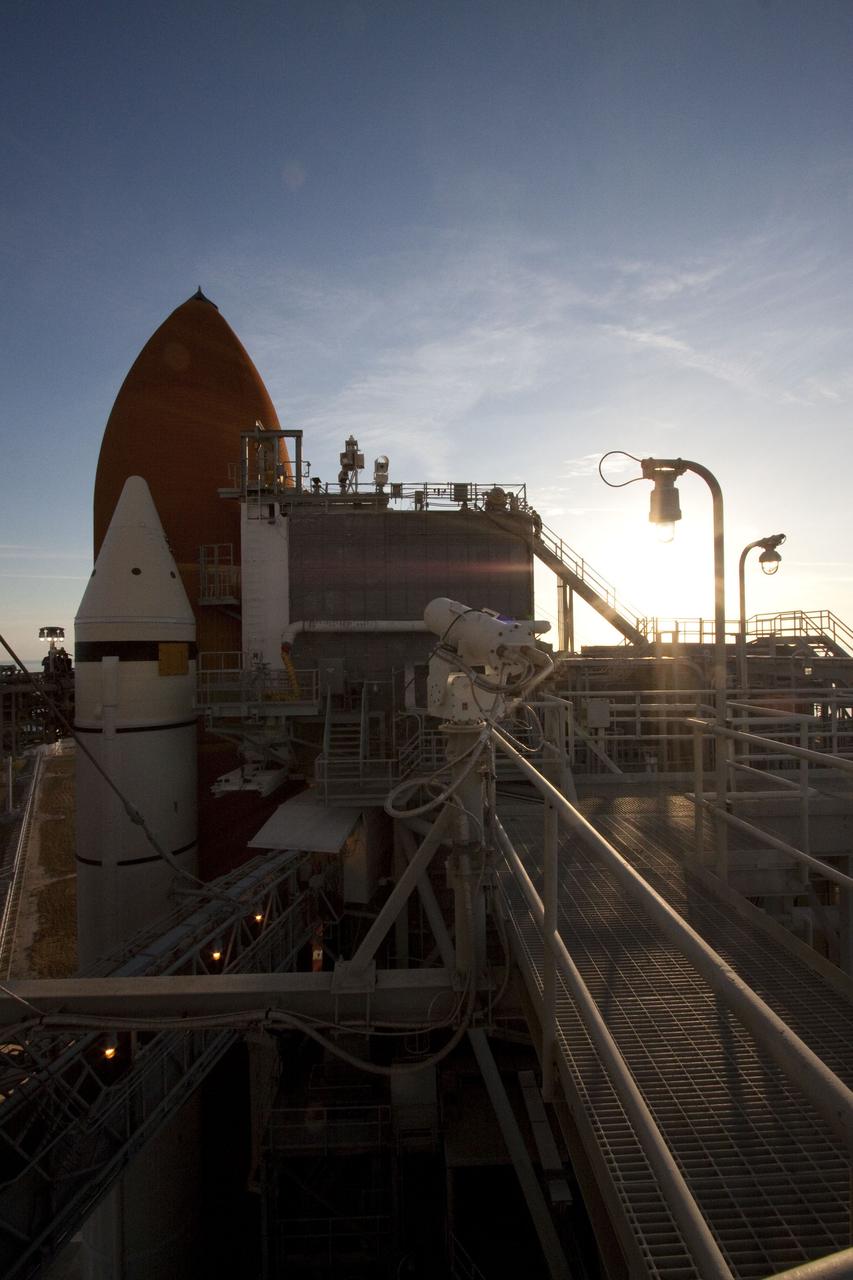
CAPE CANAVERAL, Fla. -- At NASA's Kennedy Space Center in Florida, this image of Launch Pad 39A from the 205-foot level reveals the rising sun over newly arrived space shuttle Discovery. The shuttle moved from the Vehicle Assembly Building with first motion at 7:58 p.m. EST Jan. 31, and was secured or "hard down" on the pad a little before 3 a.m. Feb. 1. Discovery's next launch opportunity to the International Space Station on the STS-133 mission is targeted for Feb. 24. For more information on STS-133, visit www.nasa.gov/mission_pages/shuttle/shuttlemissions/sts133/. Photo credit: NASA/Jack Pfaller
STS-133 Discovery Rollout
STS-133 Discovery Rollout
STS-133 Discovery Rollout
STS-133 Discovery Rollout
STS-133 DISCOVERY COMPLETE STACK - PRE-ROLLOUT
STS-133 DISCOVERY COMPLETE STACK - PRE-ROLLOUT
STS-133 DISCOVERY ROLLOUT - 1ST MOTION
STS-133 DISCOVERY AT PAD 39A AFTER ROLLOUT
STS-133 Discovery Rollout from the VAB
STS-133 DISCOVERY ROLLOUT - 1ST MOTION
STS-133 DISCOVERY COMPLETE STACK - PRE-ROLLOUT
STS-133 DISCOVERY ROLLOUT - FIRST MOTION
STS-133 DISCOVERY AT PAD 39A AFTER ROLLOUT
STS-133 DISCOVERY AT PAD 39A AFTER ROLLOUT
STS-133 Discovery Rollout from the VAB
STS-133 DISCOVERY ROLLOUT - 1ST MOTION
STS-133 DISCOVERY ROLLOUT - FIRST MOTION
STS-133 DISCOVERY COMPLETE STACK - PRE-ROLLOUT
STS-133 DISCOVERY ROLLOUT - FIRST MOTION
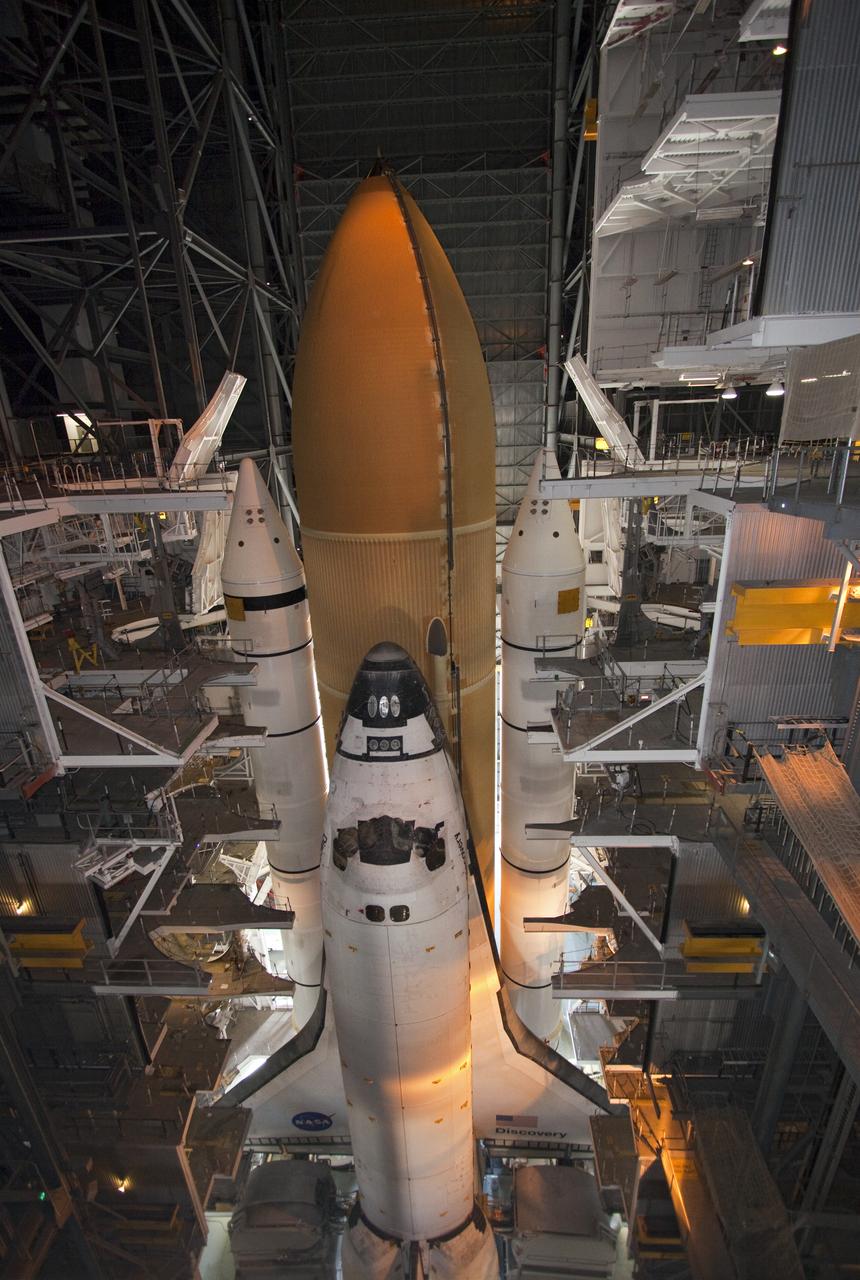
STS-133 DISCOVERY COMPLETE STACK - PRE-ROLLOUT
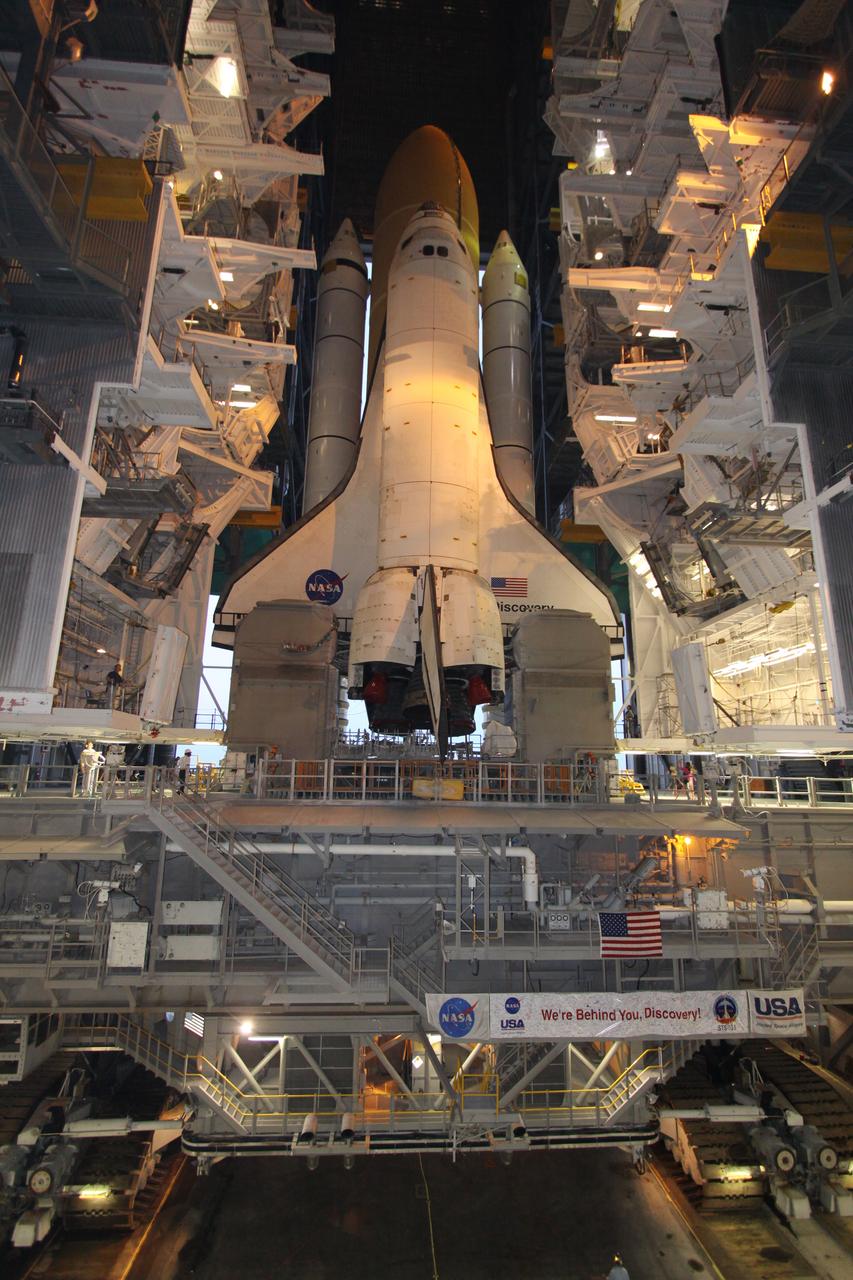
STS-133 DISCOVERY ROLLOUT - FIRST MOTION
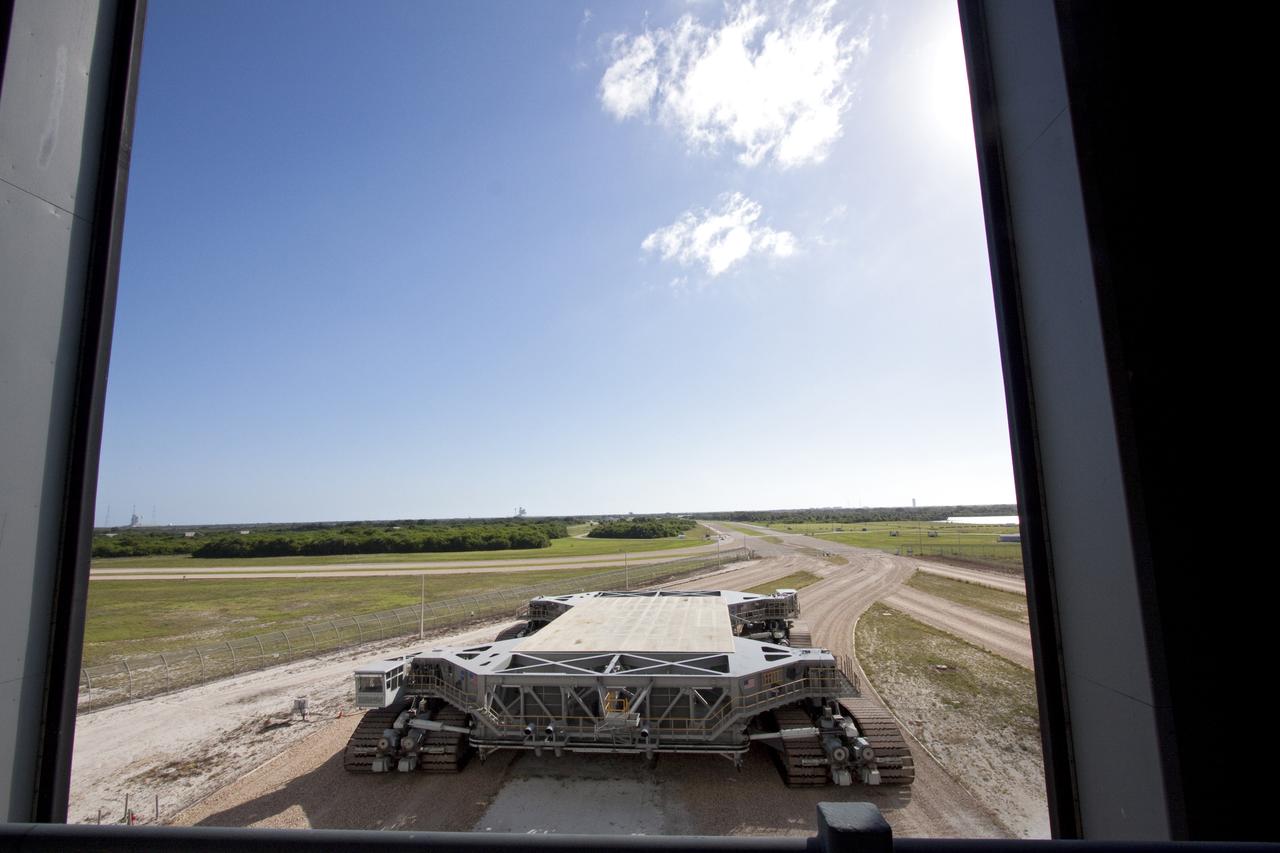
STS-133 DISCOVERY COMPLETE STACK - PRE-ROLLOUT

STS-133 DISCOVERY ROLLOUT FROM VAB TO PAD 39A

STS-133 DISCOVERY ROLLOUT FROM VAB TO PAD 39A
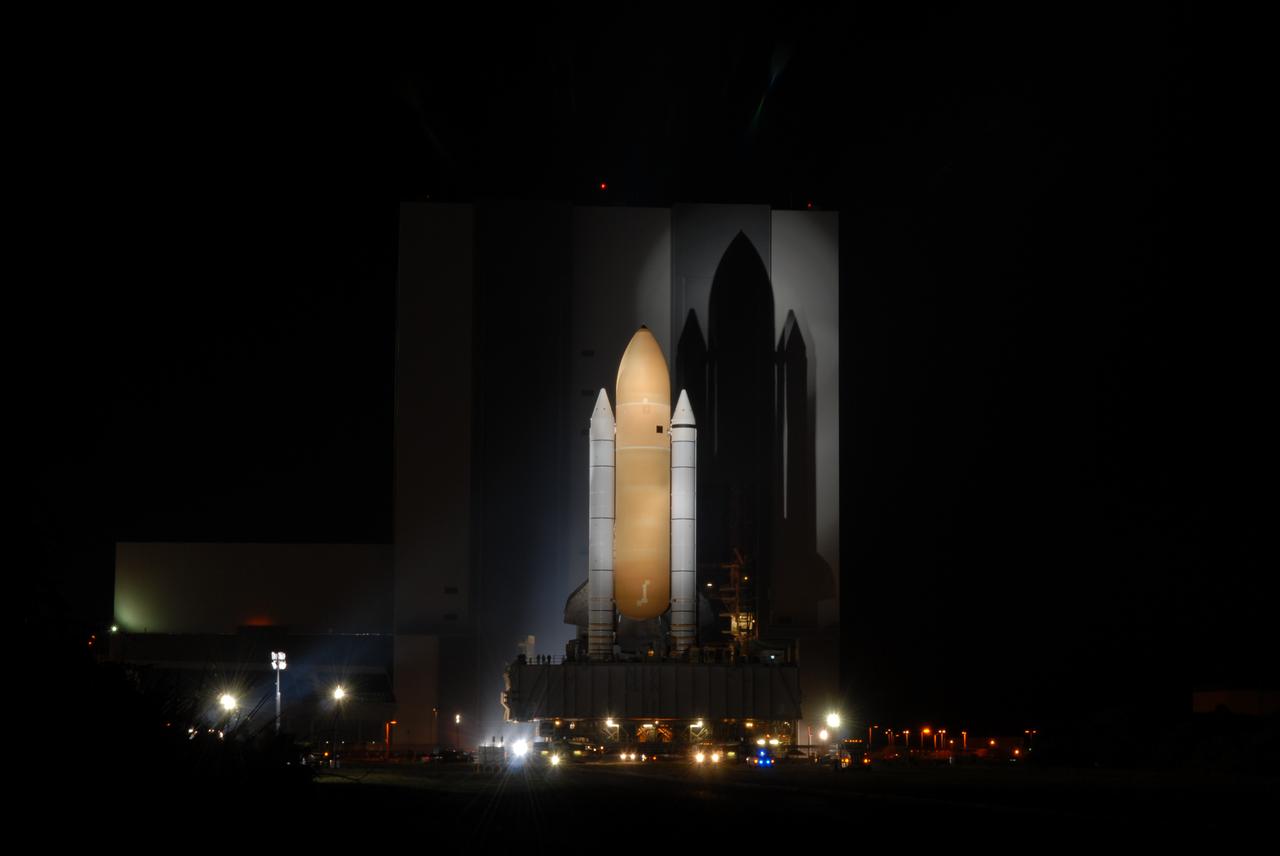
STS-133 Discovery Rollout - first motion to out of lights
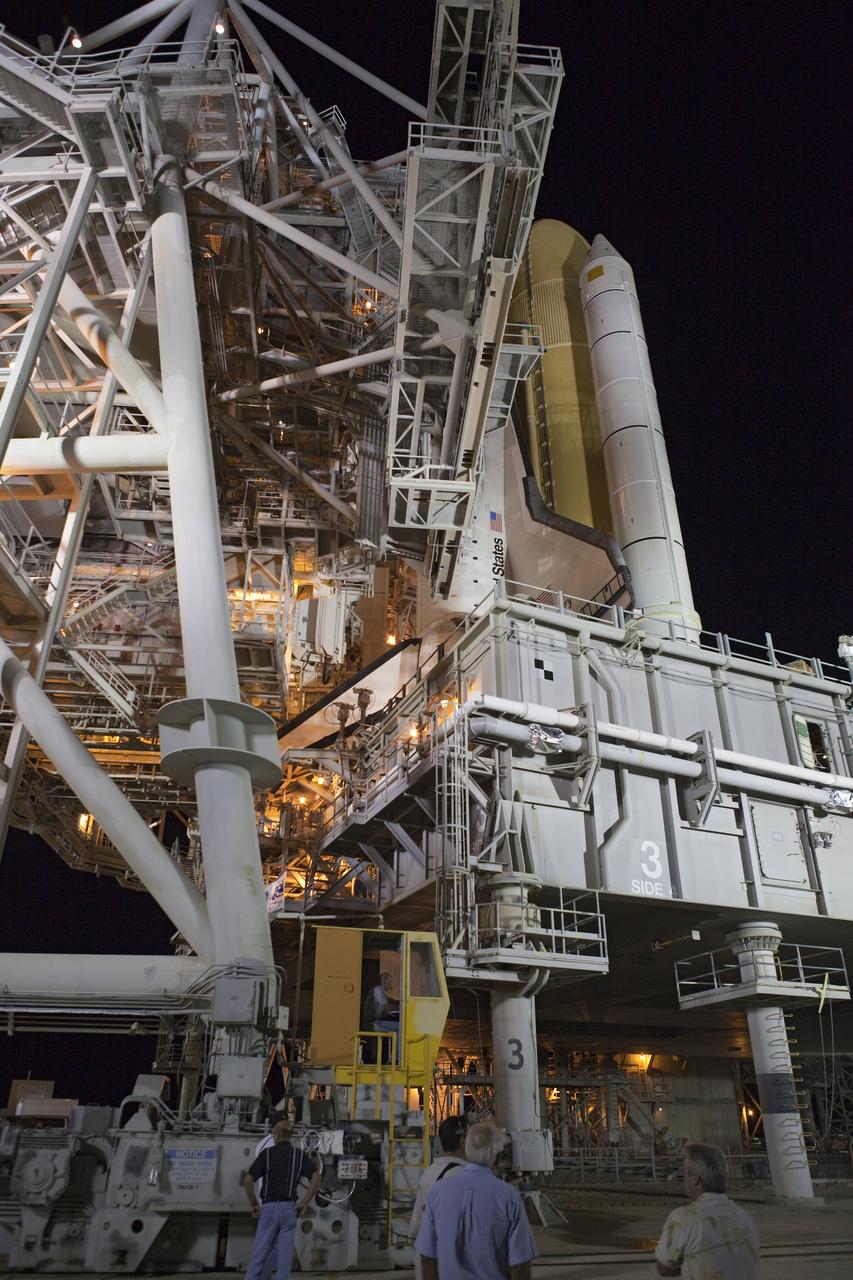
STS-133 DISCOVERY - RSS CLOSURE AFTER ROLLOUT & EMPLOYEE PHOTO OPPORTUNITY
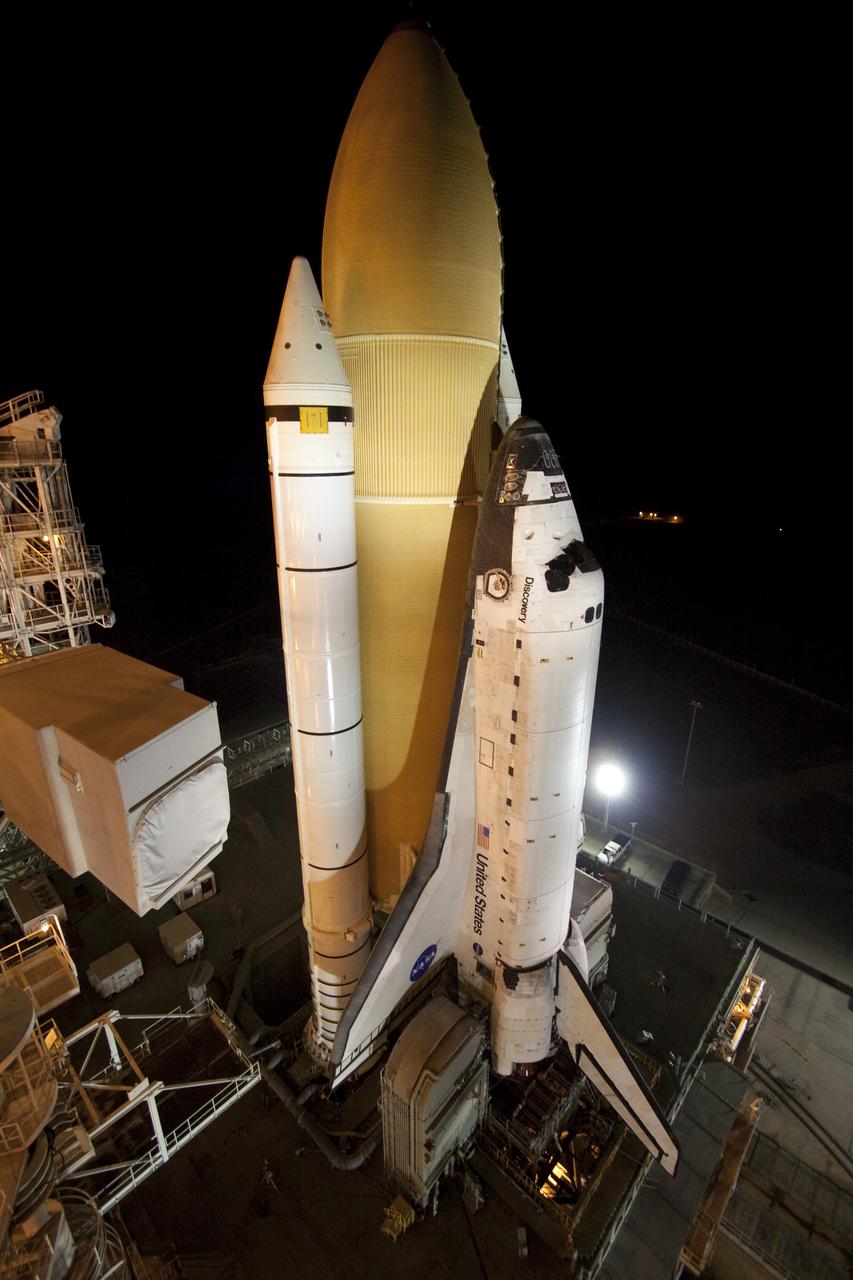
STS-133 DISCOVERY ROLLOUT FROM VAB TO PAD 39A
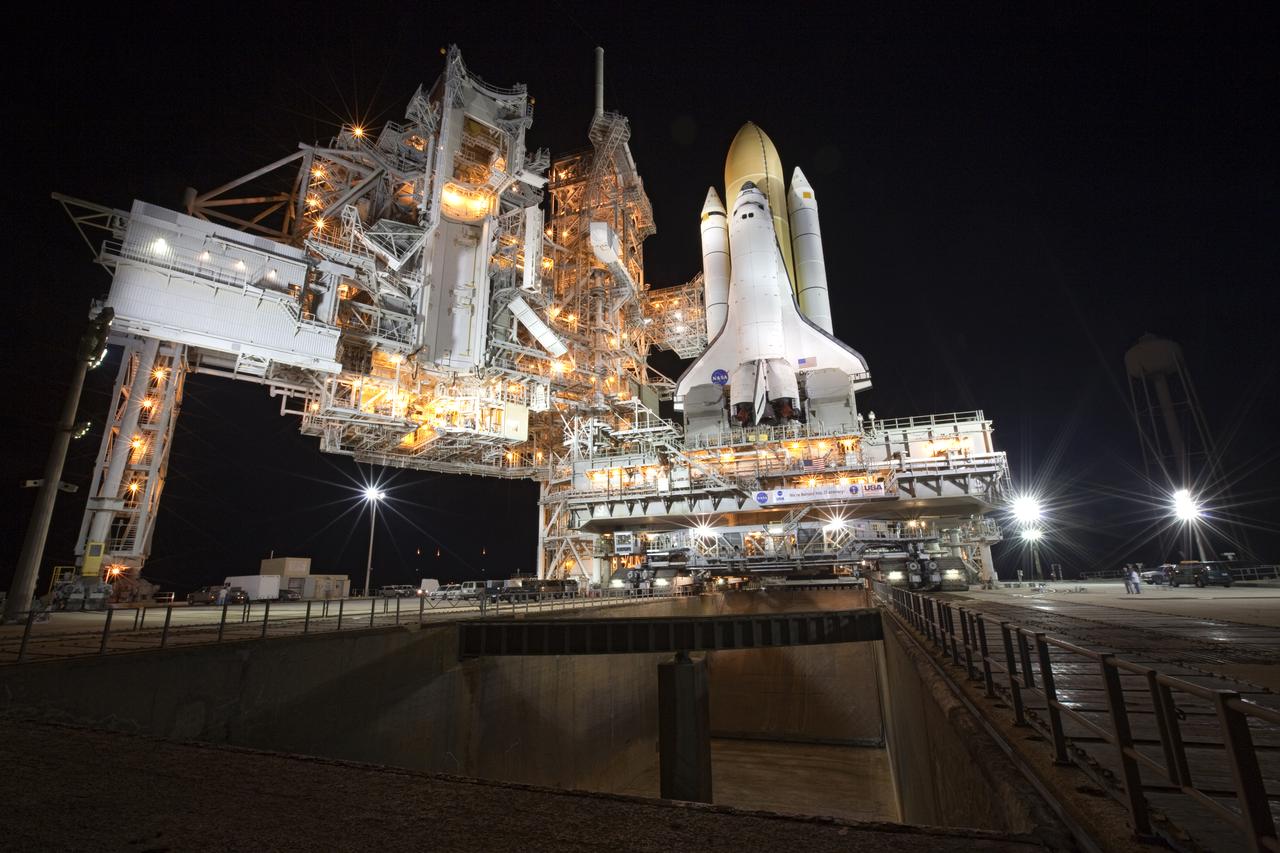
STS-133 DISCOVERY ROLLOUT FROM VAB TO PAD 39A
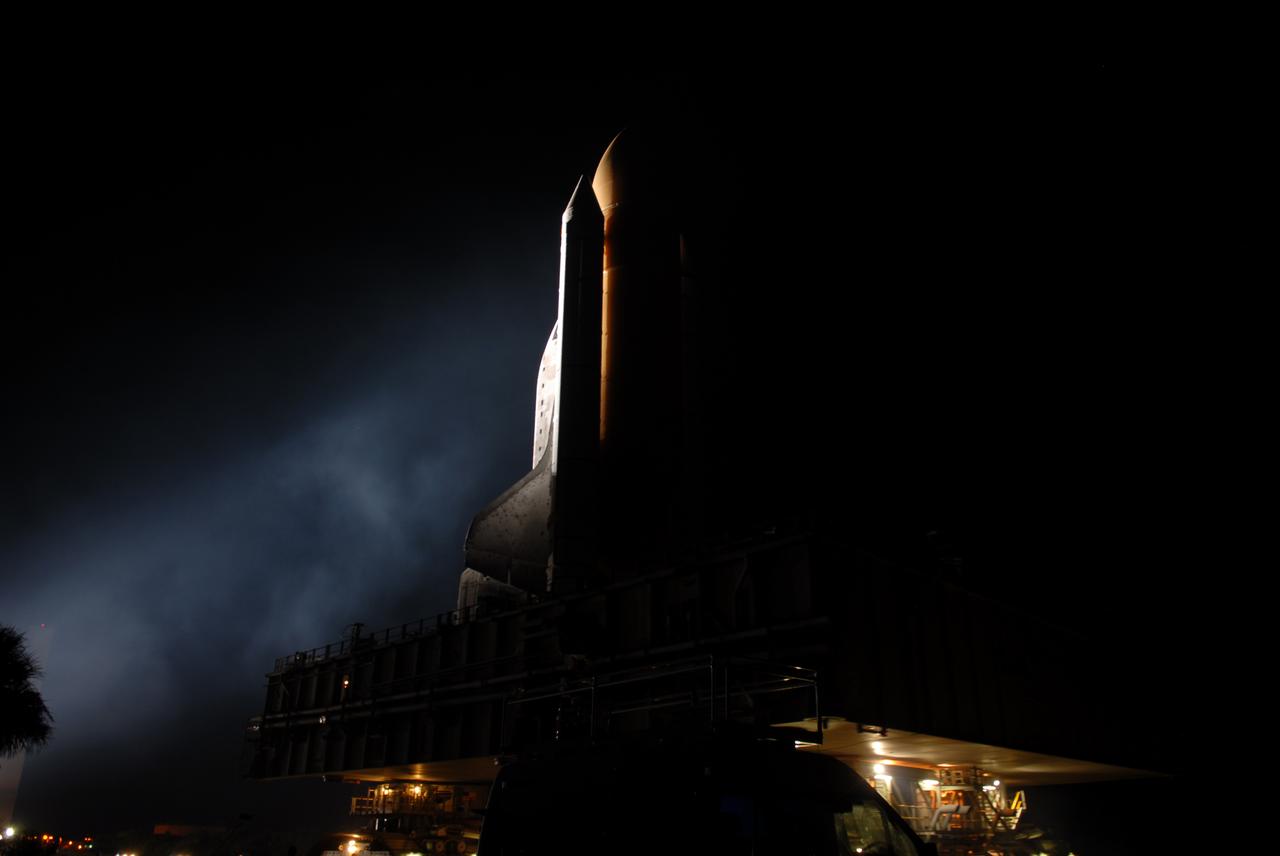
STS-133 Discovery Rollout - first motion to out of lights
STS-133 DISCOVERY ROLLOUT FROM VAB TO PAD 39A

STS-133 Discovery Rollout - first motion to out of lights
STS-133 DISCOVERY ROLLOUT FROM VAB TO PAD 39A
STS-133 DISCOVERY - RSS CLOSURE AFTER ROLLOUT & EMPLOYEE PHOTO OPPORTUNITY

STS-133 DISCOVERY ROLLOUT FROM VAB TO PAD 39A
STS-133 DISCOVERY ROLLOUT FROM VAB TO PAD 39A

STS-133 DISCOVERY - RSS CLOSURE AFTER ROLLOUT & EMPLOYEE PHOTO OPPORTUNITY
STS-133 Discovery Rollout - first motion to out of lights
STS-133 DISCOVERY - RSS CLOSURE AFTER ROLLOUT & EMPLOYEE PHOTO OPPORTUNITY

STS-133 DISCOVERY ROLLOUT FROM VAB TO PAD 39A
STS-133 DISCOVERY ROLLOUT FROM VAB TO PAD 39A
STS-133 DISCOVERY ROLLOUT FROM VAB TO PAD 39A
STS-133 DISCOVERY - RSS CLOSURE AFTER ROLLOUT & EMPLOYEE PHOTO OPPORTUNITY
STS-133 Discovery Rollout - first motion to out of lights
STS-133 DISCOVERY - RSS CLOSURE AFTER ROLLOUT & EMPLOYEE PHOTO OPPORTUNITY
STS-133 DISCOVERY - RSS CLOSURE AFTER ROLLOUT & EMPLOYEE PHOTO OPPORTUNITY
STS-133 DISCOVERY ROLLOUT FROM VAB TO PAD 39A

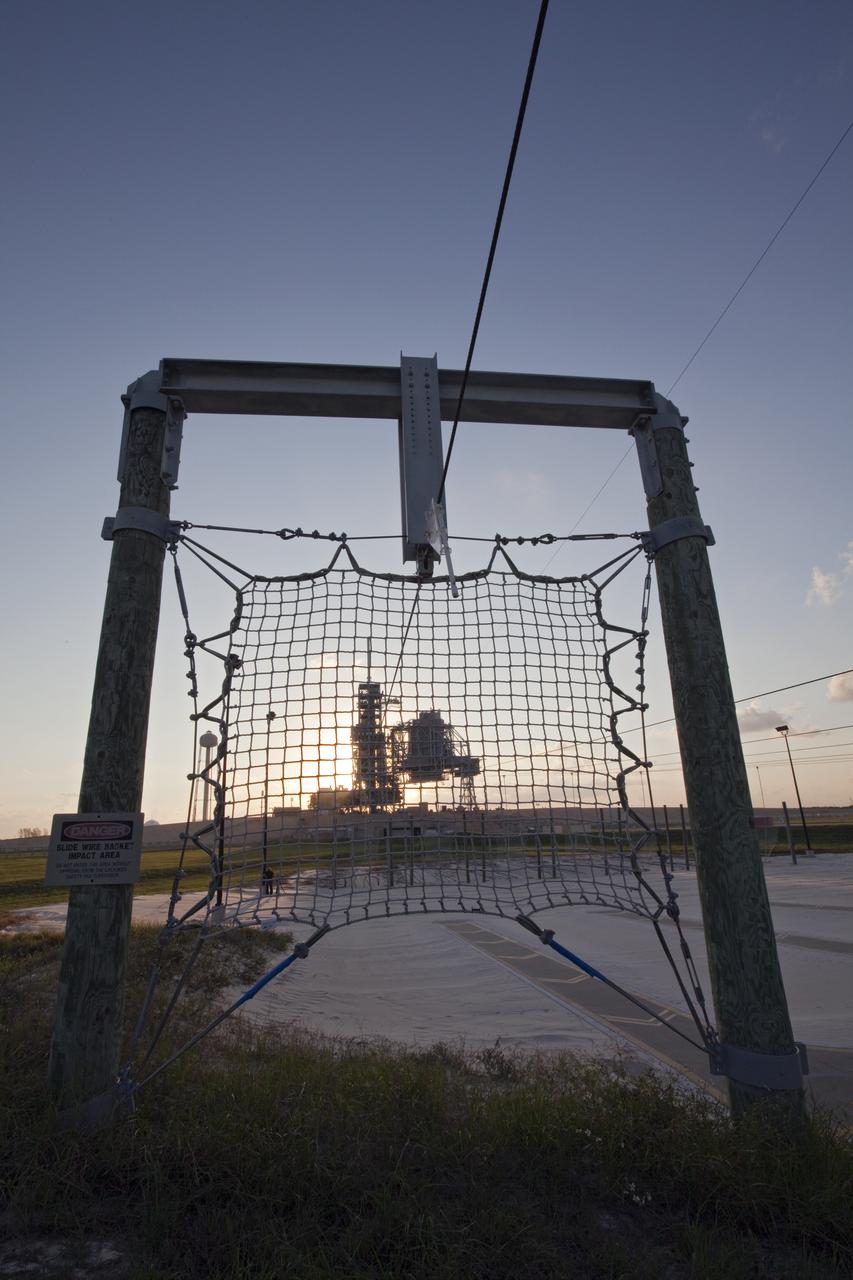
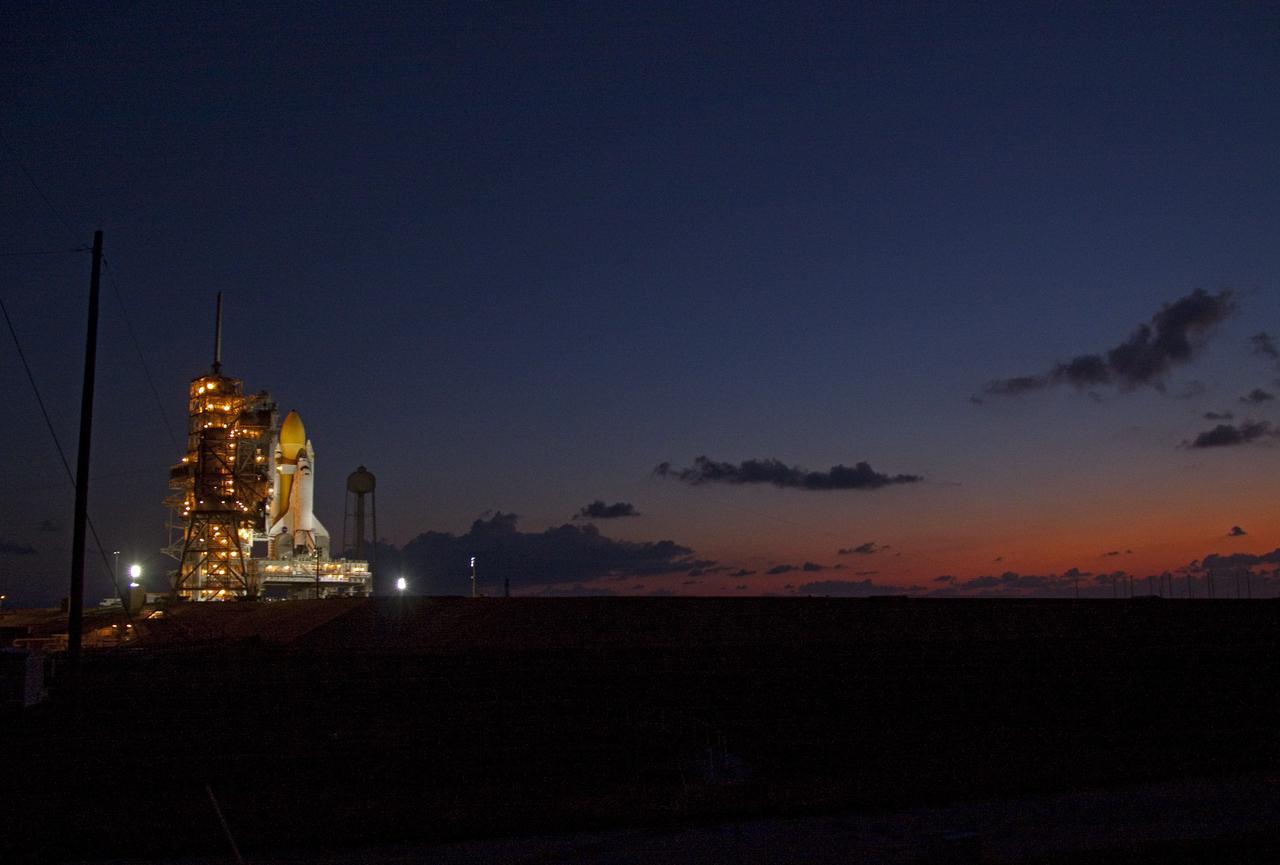
CAPE CANAVERAL, Fla. -- At NASA's Kennedy Space Center in Florida, the sun shines through Launch Pad 39A and hides space shuttle Discovery, which is secured to the pad structure. It took the spacecraft about six hours to make the journey, known as "rollout," from the Vehicle Assembly Building to the pad. Rollout sets the stage for Discovery's STS-133 crew to practice countdown and launch procedures during the Terminal Countdown Demonstration Test in mid-October. Targeted to liftoff Nov. 1, Discovery will take the Permanent Multipurpose Module (PMM) packed with supplies and critical spare parts, as well as Robonaut 2 (R2) to the International Space Station. Photo credit: NASA/Jack Pfaller
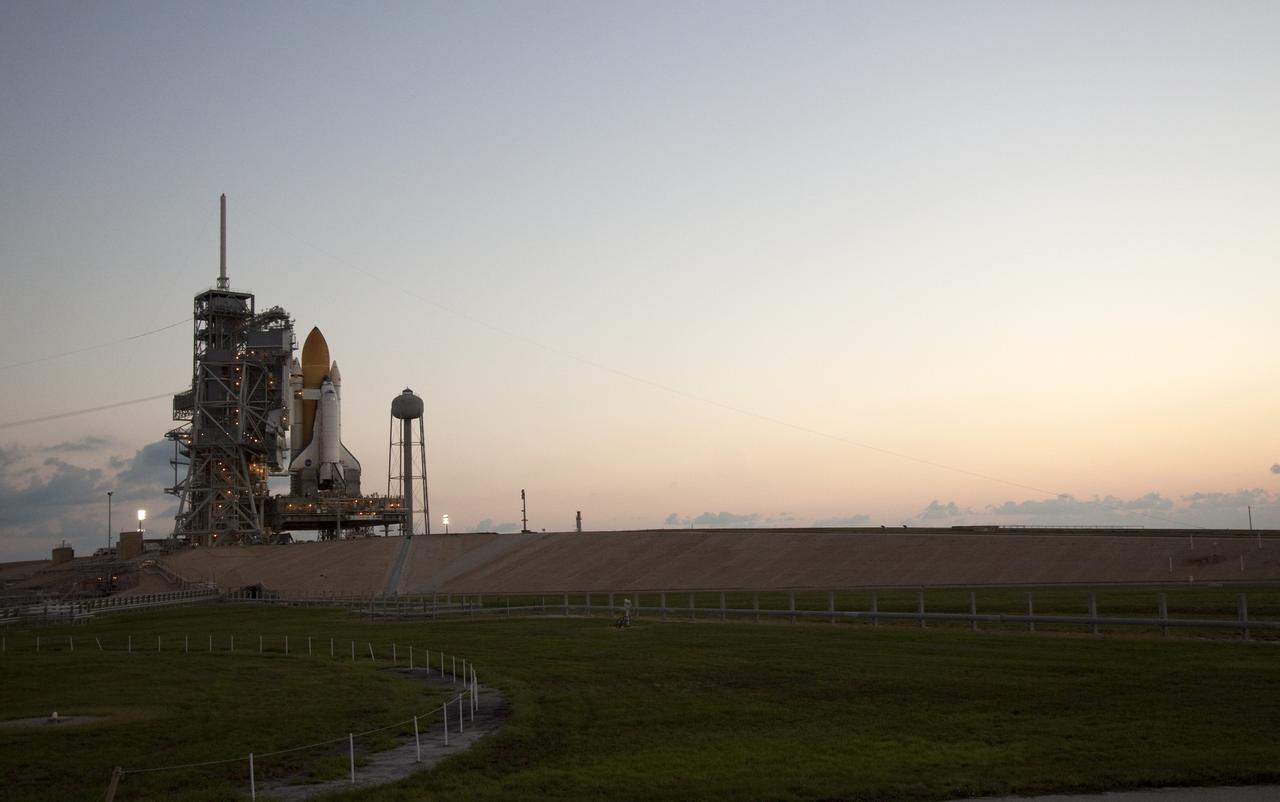
CAPE CANAVERAL, Fla. -- Space shuttle Discovery is attached to Launch Pad 39A as the sun rises over NASA's Kennedy Space Center in Florida. It took the spacecraft about six hours to make the journey, known as "rollout," from the Vehicle Assembly Building to the pad. Rollout sets the stage for Discovery's STS-133 crew to practice countdown and launch procedures during the Terminal Countdown Demonstration Test in mid-October. Targeted to liftoff Nov. 1, Discovery will take the Permanent Multipurpose Module (PMM) packed with supplies and critical spare parts, as well as Robonaut 2 (R2) to the International Space Station. Photo credit: NASA/Jack Pfaller
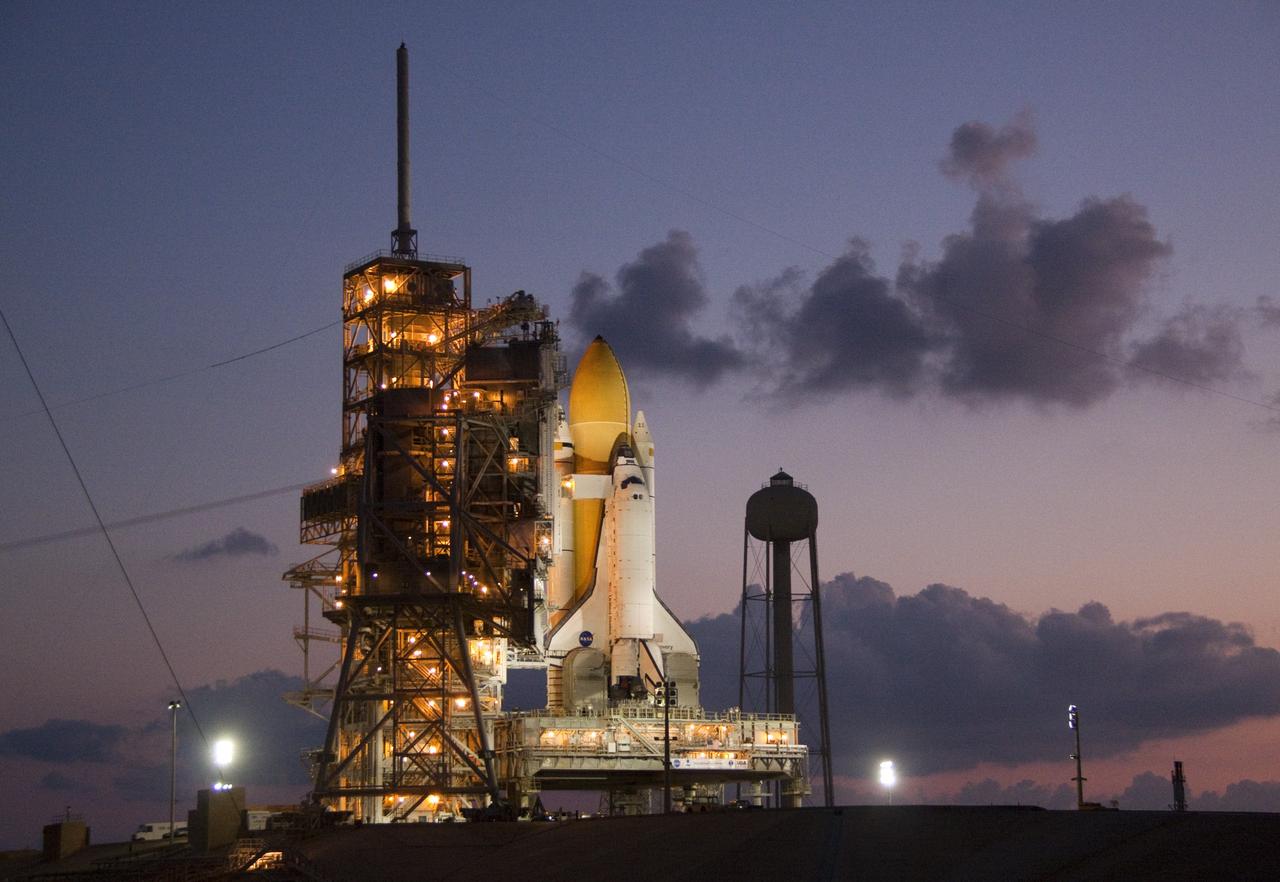
CAPE CANAVERAL, Fla. -- Space shuttle Discovery is attached to Launch Pad 39A as the sun rises over NASA's Kennedy Space Center in Florida. It took the spacecraft about six hours to make the journey, known as "rollout," from the Vehicle Assembly Building to the pad. Rollout sets the stage for Discovery's STS-133 crew to practice countdown and launch procedures during the Terminal Countdown Demonstration Test in mid-October. Targeted to liftoff Nov. 1, Discovery will take the Permanent Multipurpose Module (PMM) packed with supplies and critical spare parts, as well as Robonaut 2 (R2) to the International Space Station. Photo credit: NASA/Jack Pfaller
CAPE CANAVERAL, Fla. -- Space shuttle Discovery is attached to Launch Pad 39A as the sun rises over NASA's Kennedy Space Center in Florida. It took the spacecraft about six hours to make the journey, known as "rollout," from the Vehicle Assembly Building to the pad. Rollout sets the stage for Discovery's STS-133 crew to practice countdown and launch procedures during the Terminal Countdown Demonstration Test in mid-October. Targeted to liftoff Nov. 1, Discovery will take the Permanent Multipurpose Module (PMM) packed with supplies and critical spare parts, as well as Robonaut 2 (R2) to the International Space Station. Photo credit: NASA/Jack Pfaller
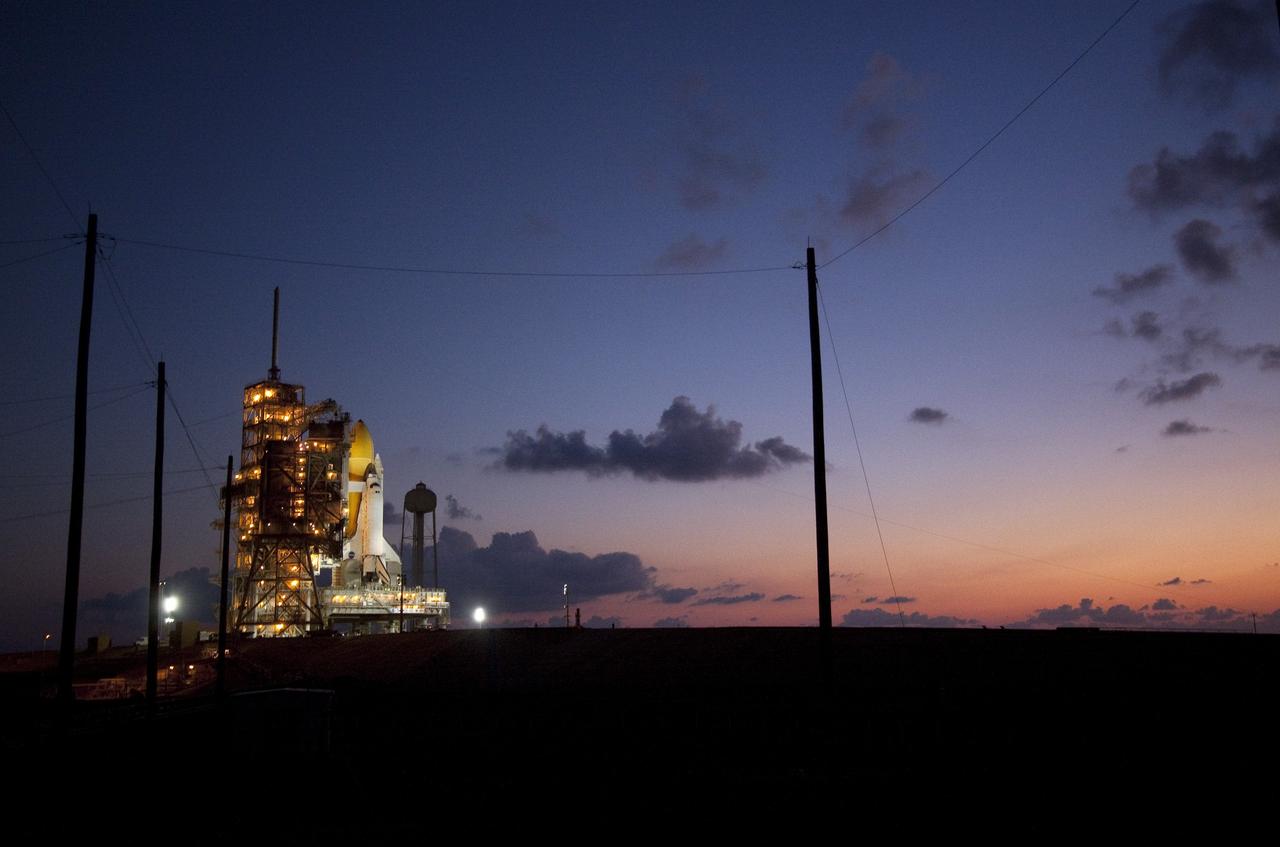
CAPE CANAVERAL, Fla. -- Space shuttle Discovery is attached to Launch Pad 39A as the sun rises over NASA's Kennedy Space Center in Florida. It took the spacecraft about six hours to make the journey, known as "rollout," from the Vehicle Assembly Building to the pad. Rollout sets the stage for Discovery's STS-133 crew to practice countdown and launch procedures during the Terminal Countdown Demonstration Test in mid-October. Targeted to liftoff Nov. 1, Discovery will take the Permanent Multipurpose Module (PMM) packed with supplies and critical spare parts, as well as Robonaut 2 (R2) to the International Space Station. Photo credit: NASA/Jack Pfaller
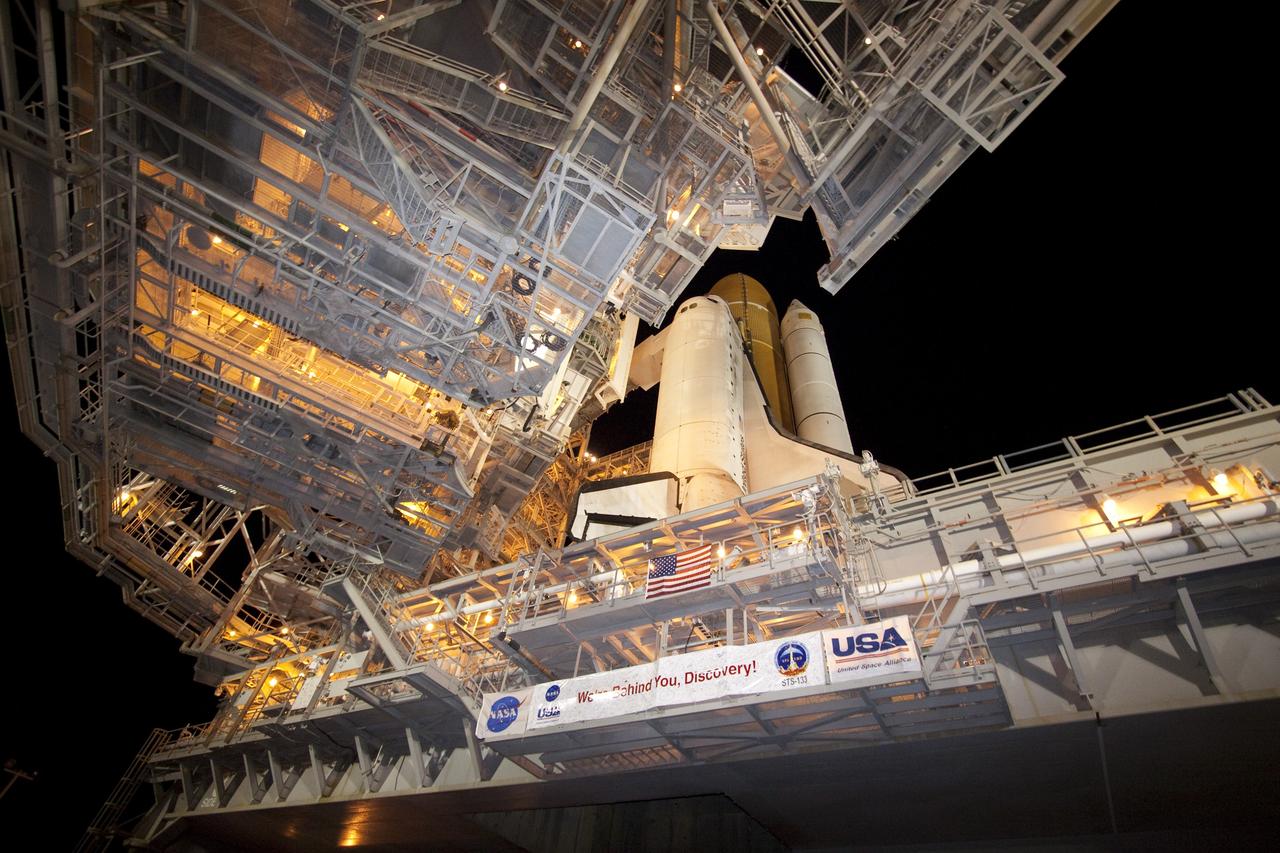
CAPE CANAVERAL, Fla. -- The rotating service structure (RSS), which provides weather protection and access to the shuttle, moves into place around space shuttle Discovery on Launch Pad 39A at NASA's Kennedy Space Center in Florida. This comes after Discovery, attached to its external fuel tank, twin solid rocket boosters and mobile launcher platform, rolled out to the pad from the Vehicle Assembly Building during the overnight hours. Rollout to the pad is a significant shuttle processing milestone for the upcoming STS-133 mission, and comes after a thorough check and modifications to the shuttle's external fuel tank. Targeted to liftoff Feb. 24, Discovery will take the Permanent Multipurpose Module (PMM) packed with supplies and critical spare parts, as well as Robonaut 2 (R2) to the International Space Station. For more information on STS-133, visit www.nasa.gov/mission_pages/shuttle/shuttlemissions/sts133/. Photo credit: NASA/Jack Pfaller
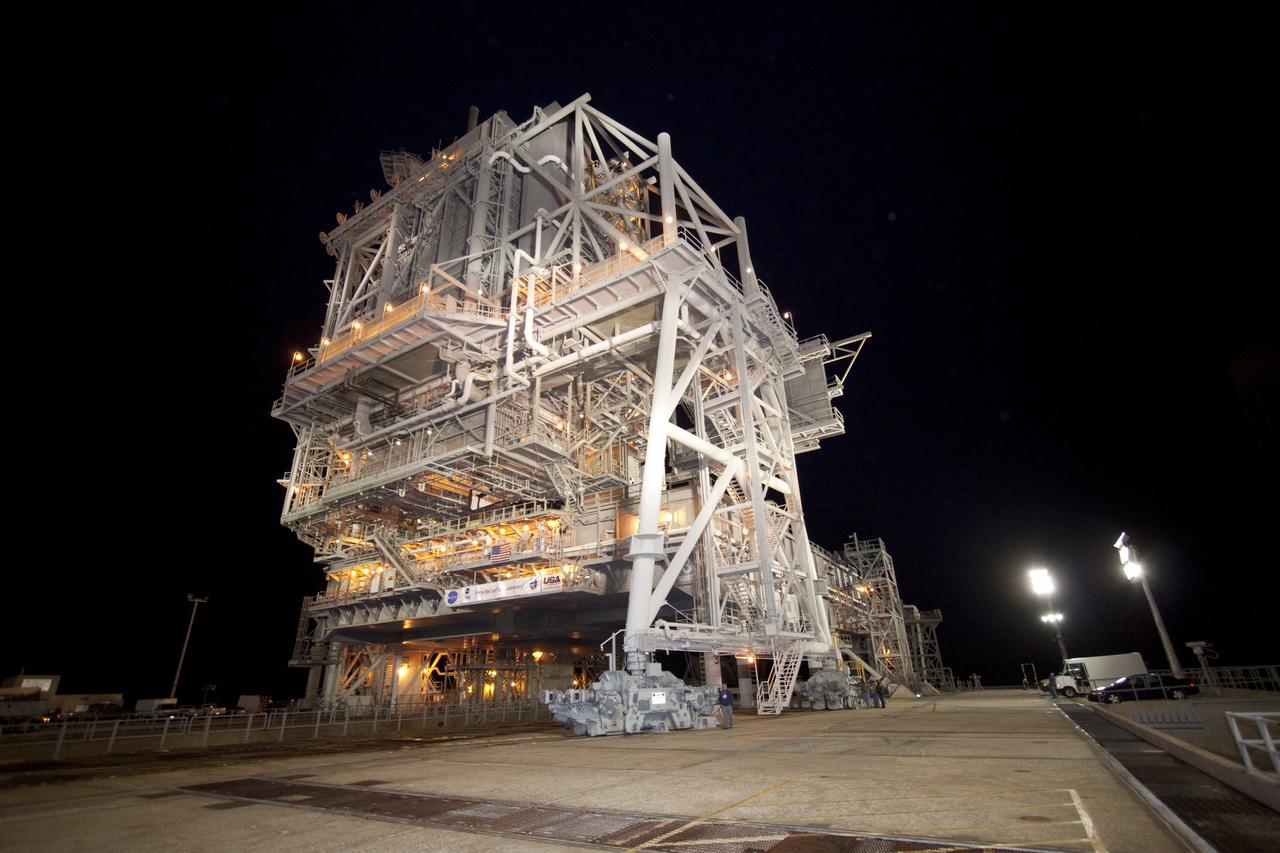
CAPE CANAVERAL, Fla. -- The rotating service structure (RSS), which provides weather protection and access to the shuttle, surrounds space shuttle Discovery on Launch Pad 39A at NASA's Kennedy Space Center in Florida. This comes after Discovery, attached to its external fuel tank, twin solid rocket boosters and mobile launcher platform, rolled out to the pad from the Vehicle Assembly Building during the overnight hours. Rollout to the pad is a significant shuttle processing milestone for the upcoming STS-133 mission, and comes after a thorough check and modifications to the shuttle's external fuel tank. Targeted to liftoff Feb. 24, Discovery will take the Permanent Multipurpose Module (PMM) packed with supplies and critical spare parts, as well as Robonaut 2 (R2) to the International Space Station. For more information on STS-133, visit www.nasa.gov/mission_pages/shuttle/shuttlemissions/sts133/. Photo credit: NASA/Jack Pfaller
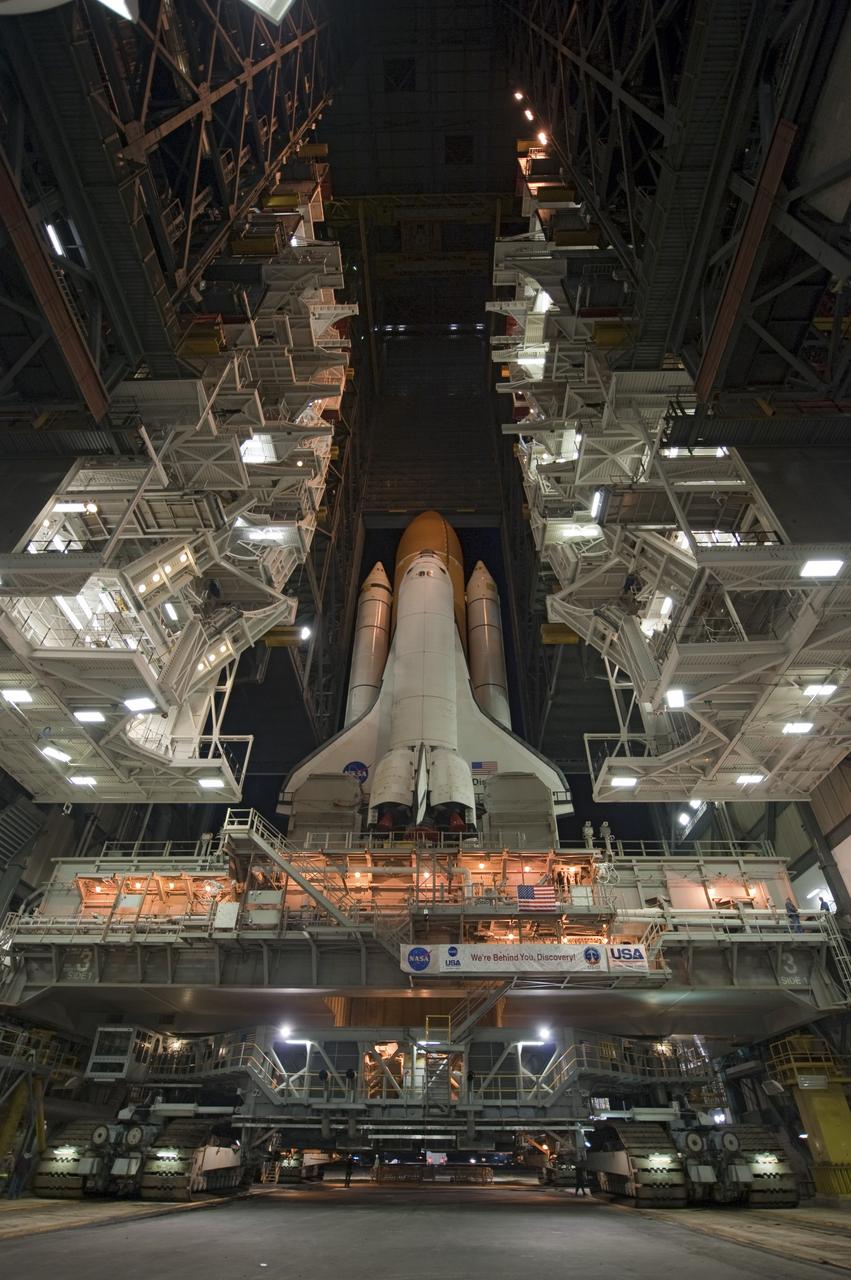
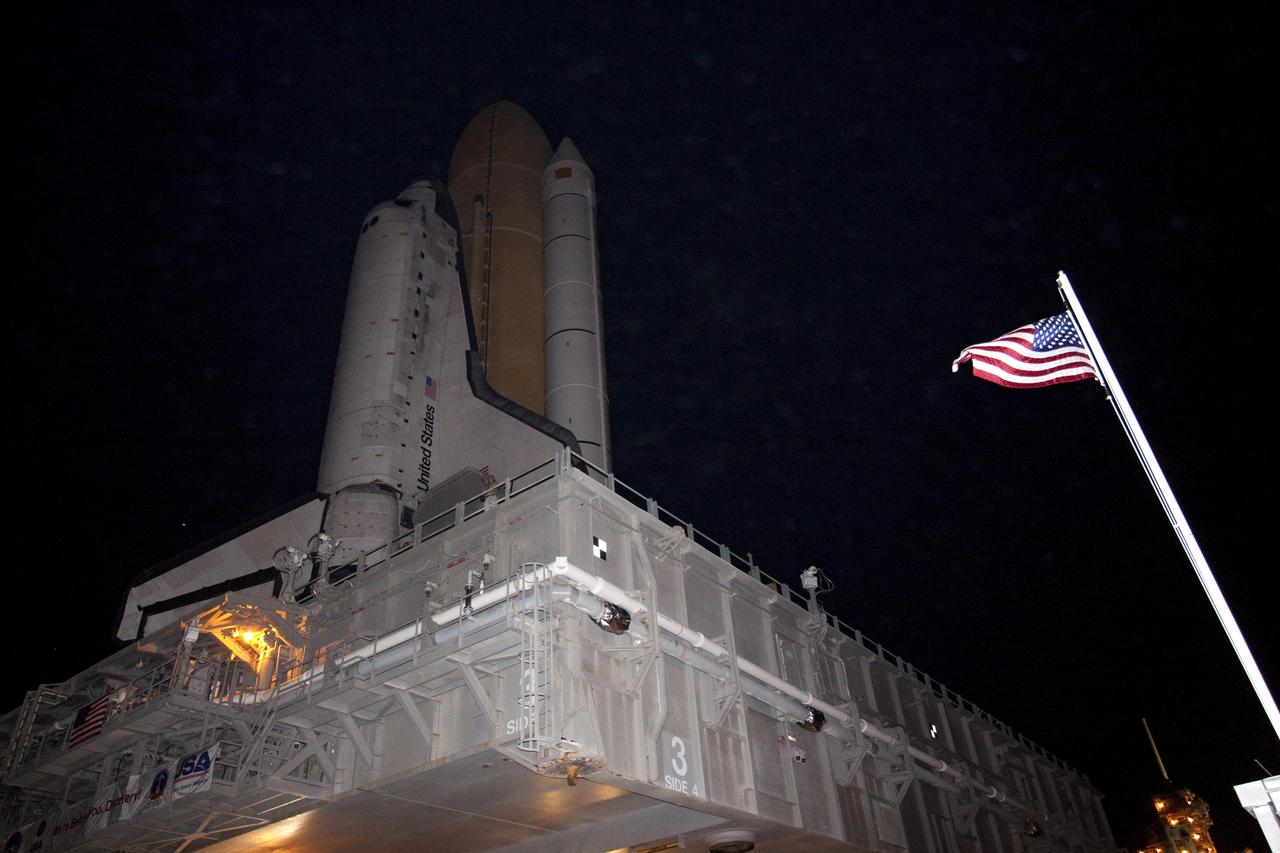
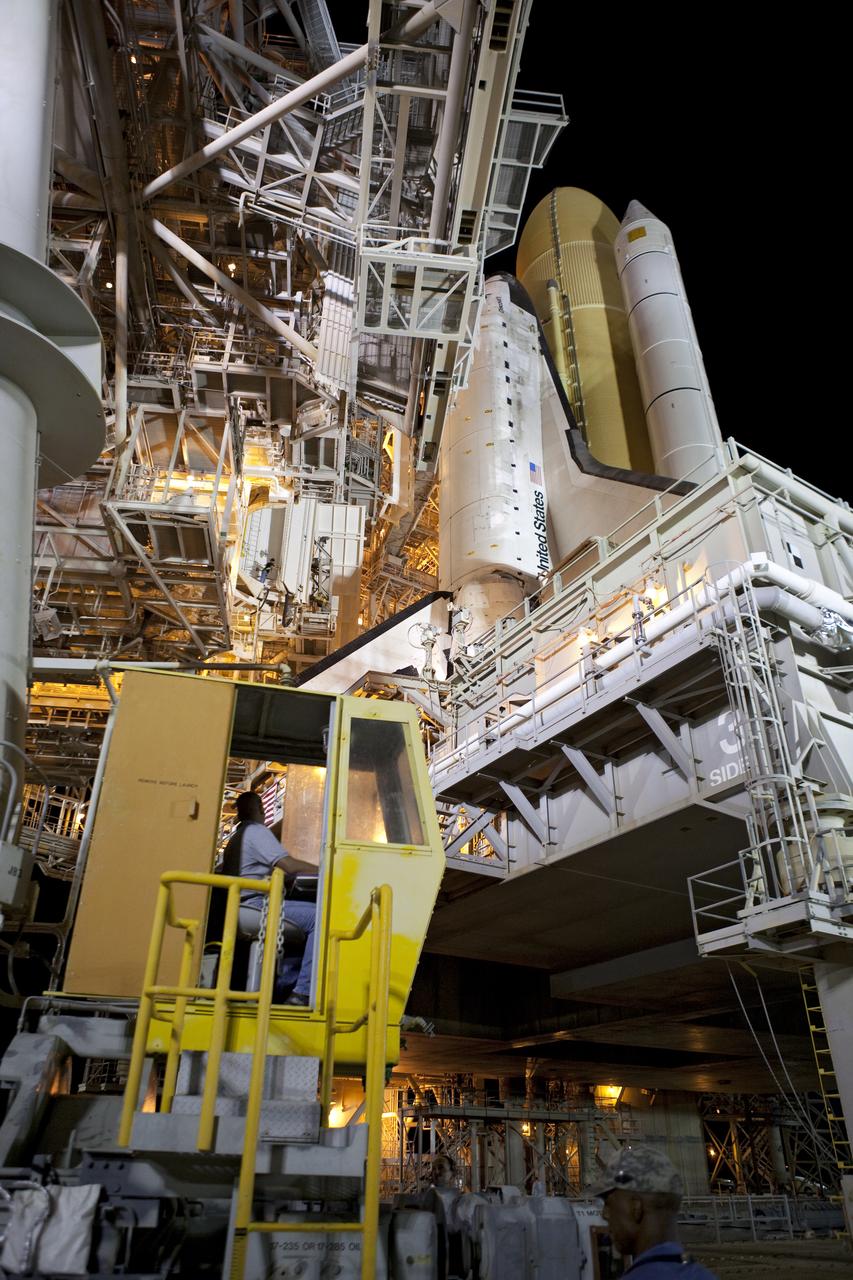
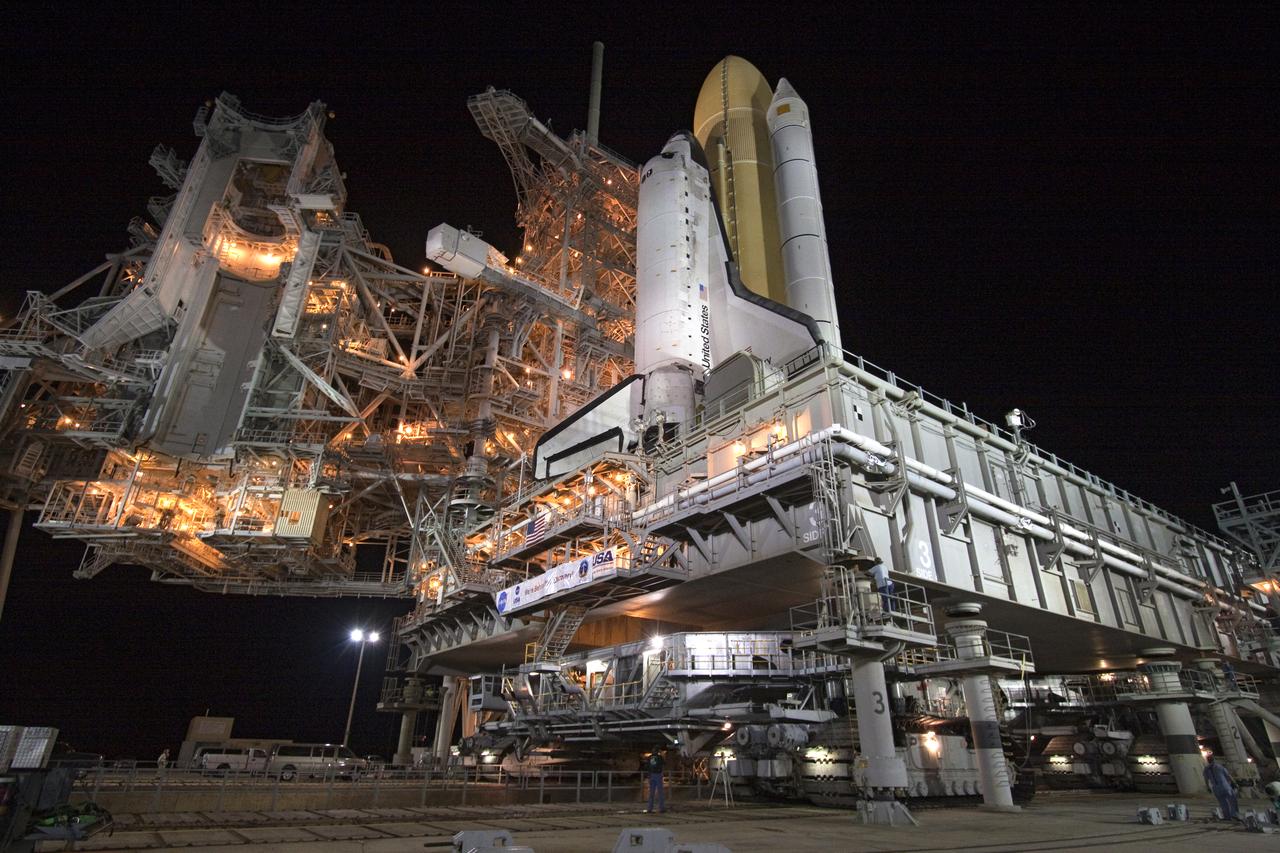
CAPE CANAVERAL, Fla. -- At NASA's Kennedy Space Center in Florida, space shuttle Discovery begins its nighttime trek, known as "rollout," from the Vehicle Assembly Building to Launch Pad 39A. It will take the shuttle, attached to its external fuel tank, twin solid rocket boosters and mobile launcher platform, about seven hours to complete the move atop a crawler-transporter. This is the second time Discovery has rolled out to the pad for the STS-133 mission, and comes after a thorough check and modifications to the shuttle's external tank. Targeted to liftoff Feb. 24, Discovery will take the Permanent Multipurpose Module (PMM) packed with supplies and critical spare parts, as well as Robonaut 2 (R2) to the International Space Station. For more information on STS-133, visit www.nasa.gov/mission_pages/shuttle/shuttlemissions/sts133/. Photo credit: NASA/Kim Shiflett
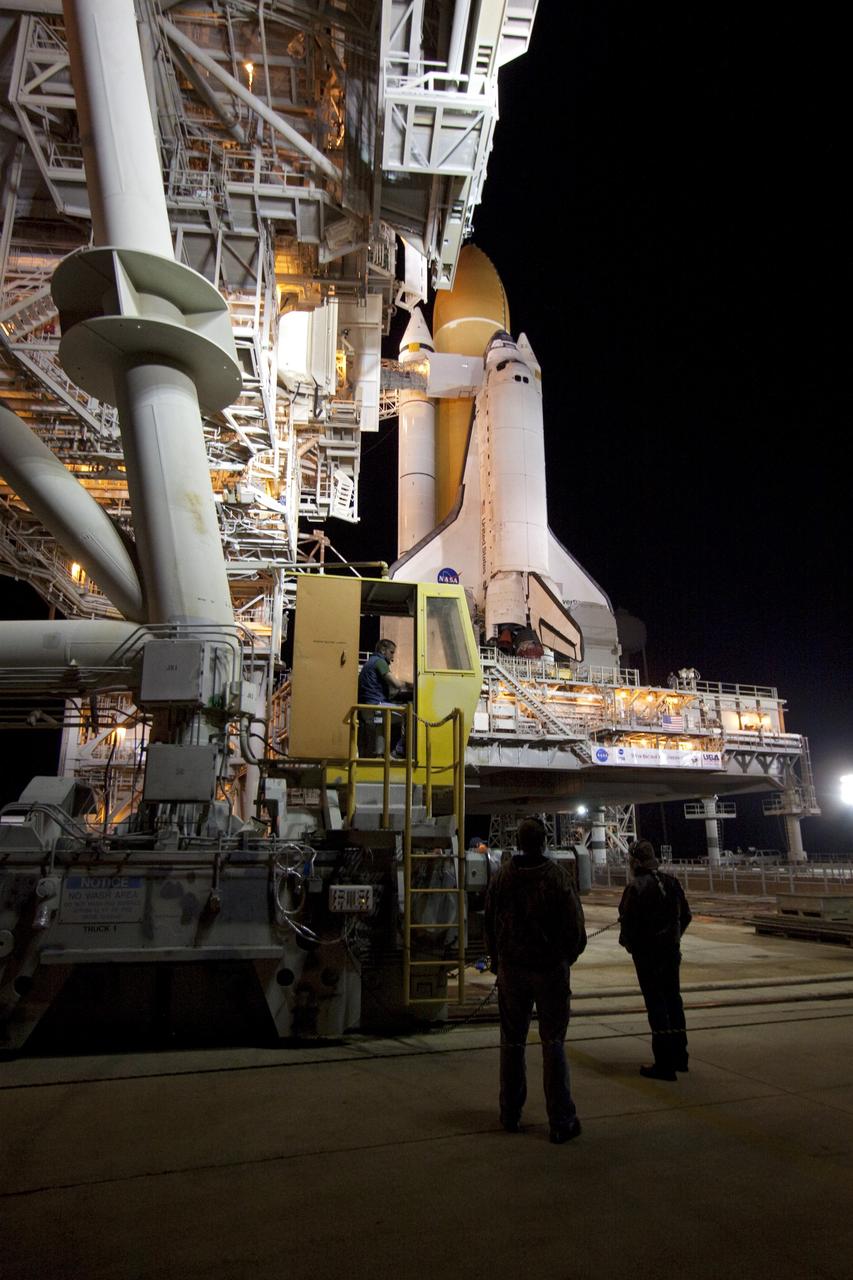
CAPE CANAVERAL, Fla. -- The rotating service structure (RSS), which provides weather protection and access to the shuttle, begins to move into place around space shuttle Discovery on Launch Pad 39A at NASA's Kennedy Space Center in Florida. This comes after Discovery, attached to its external fuel tank, twin solid rocket boosters and mobile launcher platform, rolled out to the pad from the Vehicle Assembly Building during the overnight hours. Rollout to the pad is a significant shuttle processing milestone for the upcoming STS-133 mission, and comes after a thorough check and modifications to the shuttle's external fuel tank. Targeted to liftoff Feb. 24, Discovery will take the Permanent Multipurpose Module (PMM) packed with supplies and critical spare parts, as well as Robonaut 2 (R2) to the International Space Station. For more information on STS-133, visit www.nasa.gov/mission_pages/shuttle/shuttlemissions/sts133/. Photo credit: NASA/Jack Pfaller
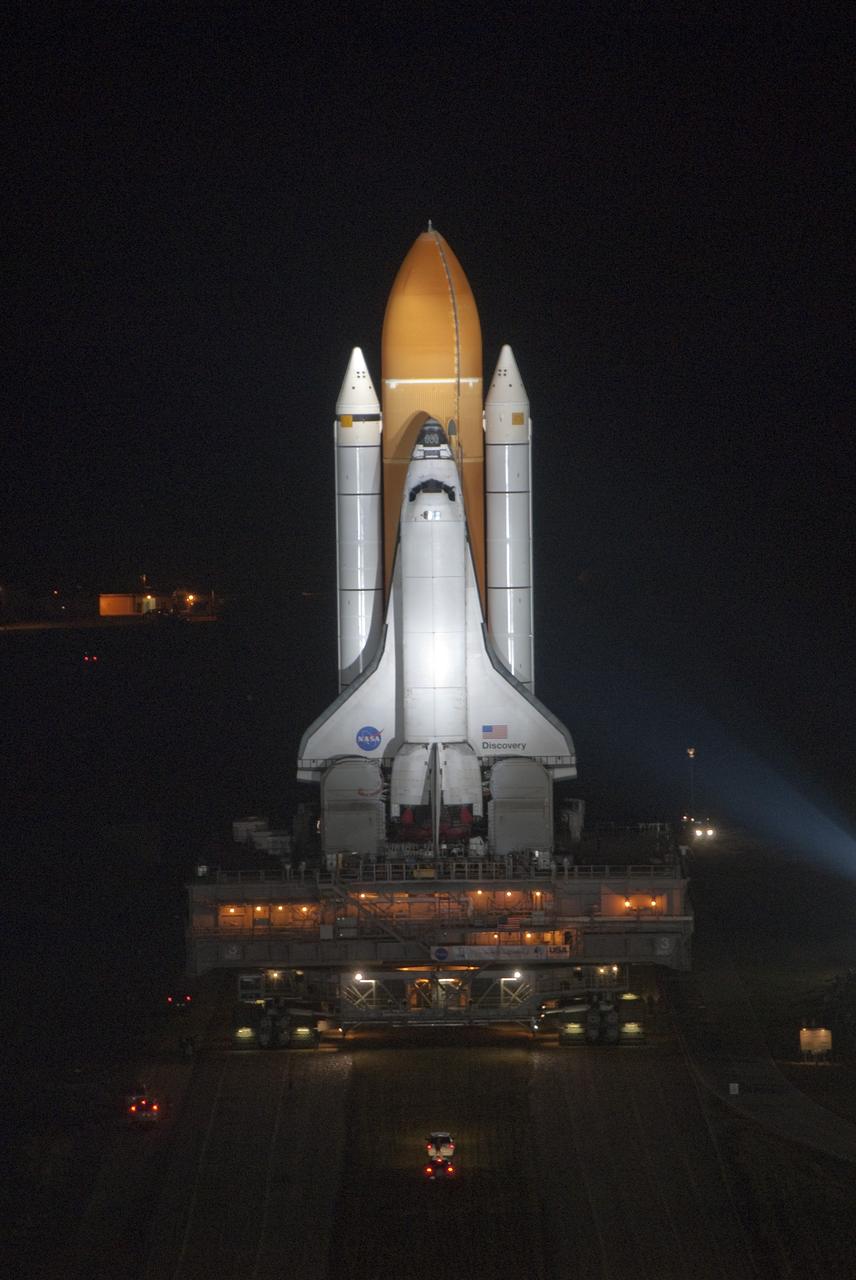
CAPE CANAVERAL, Fla. -- Xenon lights illuminate space shuttle Discovery as it makes its nighttime trek, known as "rollout," from the Vehicle Assembly Building to Launch Pad 39A at NASA's Kennedy Space Center in Florida. It will take the shuttle, attached to its external fuel tank, twin solid rocket boosters and mobile launcher platform, about seven hours to complete the move atop a crawler-transporter. This is the second time Discovery has rolled out to the pad for the STS-133 mission, and comes after a thorough check and modifications to the shuttle's external tank. Targeted to liftoff Feb. 24, Discovery will take the Permanent Multipurpose Module (PMM) packed with supplies and critical spare parts, as well as Robonaut 2 (R2) to the International Space Station. For more information on STS-133, visit www.nasa.gov/mission_pages/shuttle/shuttlemissions/sts133/. Photo credit: NASA/Jim Grossmann
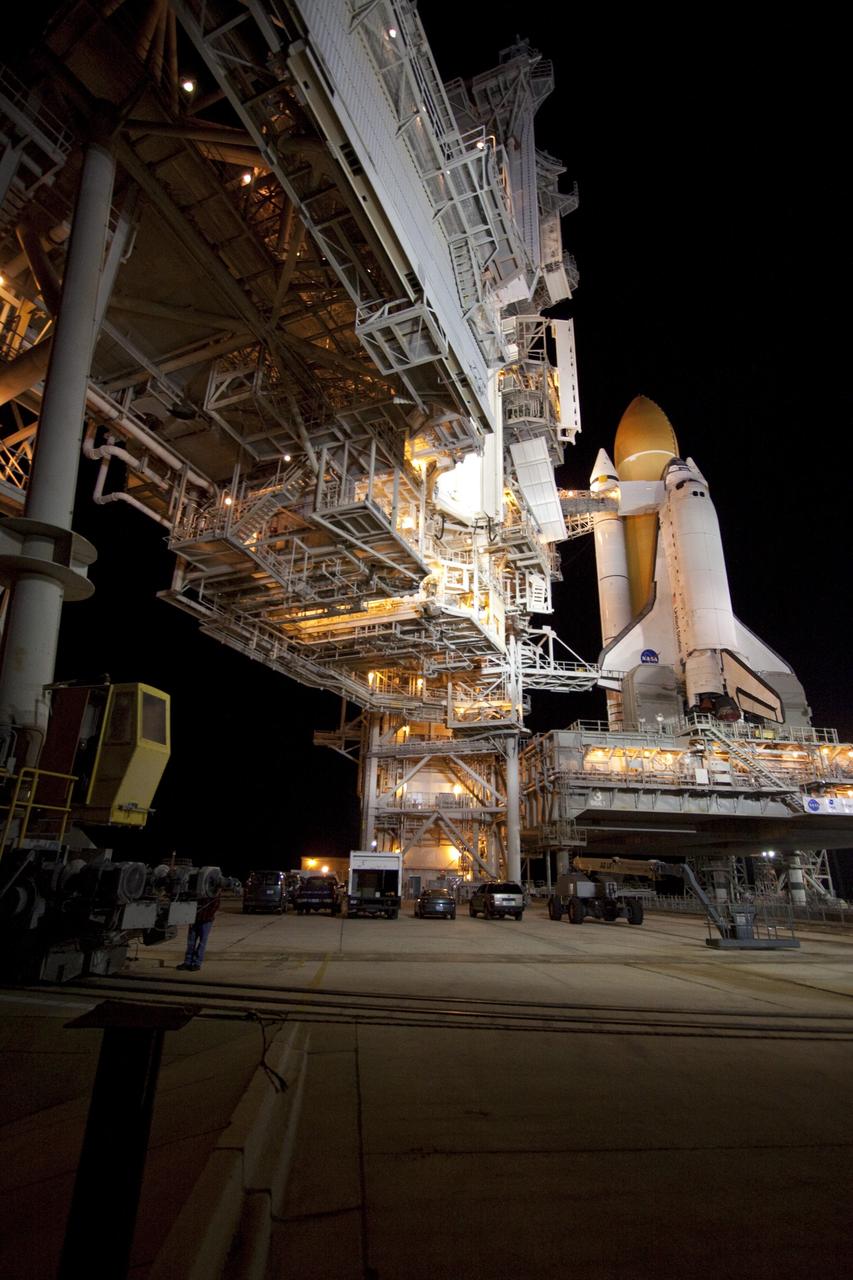
CAPE CANAVERAL, Fla. -- The rotating service structure (RSS), which provides weather protection and access to the shuttle, begins to move into place around space shuttle Discovery on Launch Pad 39A at NASA's Kennedy Space Center in Florida. This comes after Discovery, attached to its external fuel tank, twin solid rocket boosters and mobile launcher platform, rolled out to the pad from the Vehicle Assembly Building during the overnight hours. Rollout to the pad is a significant shuttle processing milestone for the upcoming STS-133 mission, and comes after a thorough check and modifications to the shuttle's external fuel tank. Targeted to liftoff Feb. 24, Discovery will take the Permanent Multipurpose Module (PMM) packed with supplies and critical spare parts, as well as Robonaut 2 (R2) to the International Space Station. For more information on STS-133, visit www.nasa.gov/mission_pages/shuttle/shuttlemissions/sts133/. Photo credit: NASA/Jack Pfaller
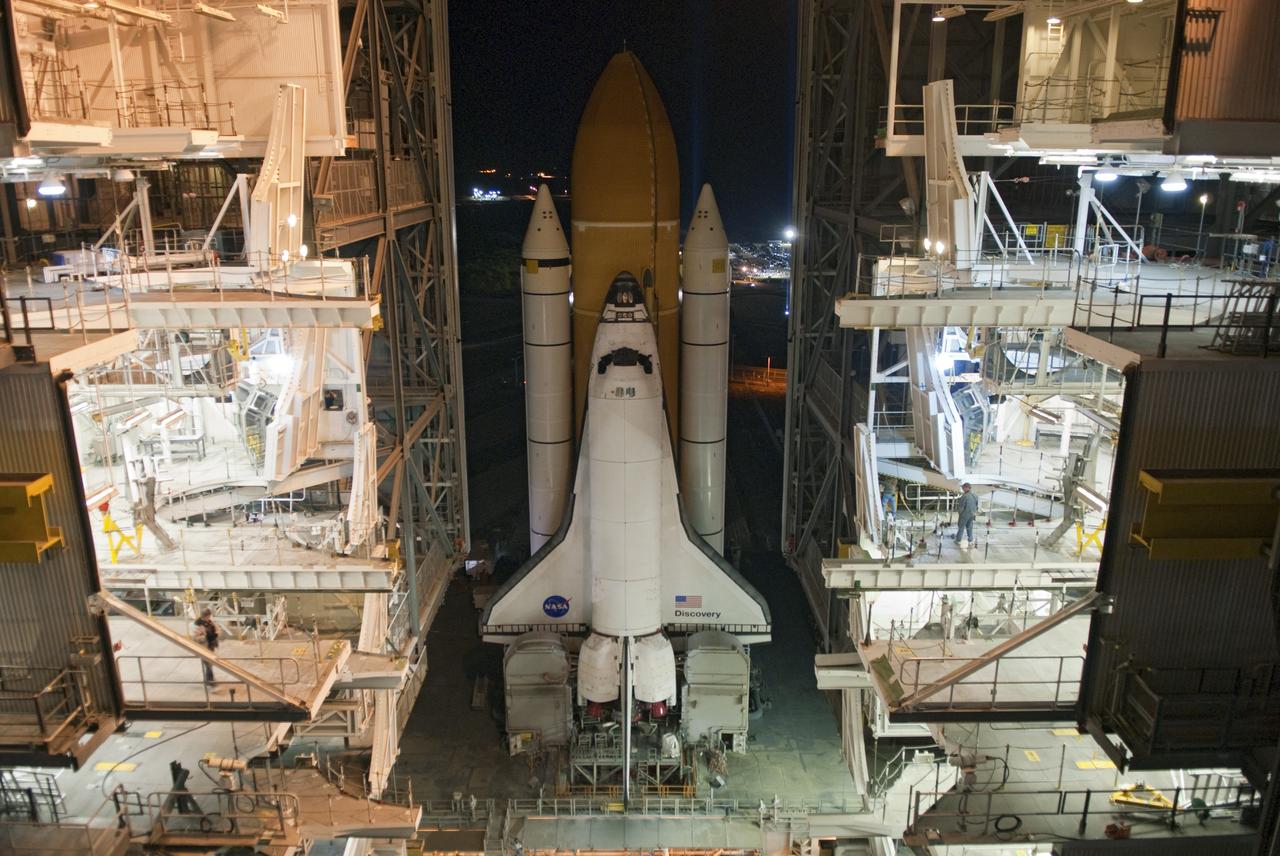
CAPE CANAVERAL, Fla. -- Space shuttle Discovery slowly rolls out of the Vehicle Assembly Building and heads toward Launch Pad 39A at NASA's Kennedy Space Center in Florida. The slow trek, known as "rollout," will take the shuttle, attached to its external fuel tank, twin solid rocket boosters and mobile launcher platform atop a crawler-transporter, about seven hours to complete. This is the second time Discovery has rolled out to the pad for the STS-133 mission, and comes after a thorough check and modifications to the shuttle's external tank. Targeted to liftoff Feb. 24, Discovery will take the Permanent Multipurpose Module (PMM) packed with supplies and critical spare parts, as well as Robonaut 2 (R2) to the International Space Station. For more information on STS-133, visit www.nasa.gov/mission_pages/shuttle/shuttlemissions/sts133/. Photo credit: NASA/Jim Grossmann
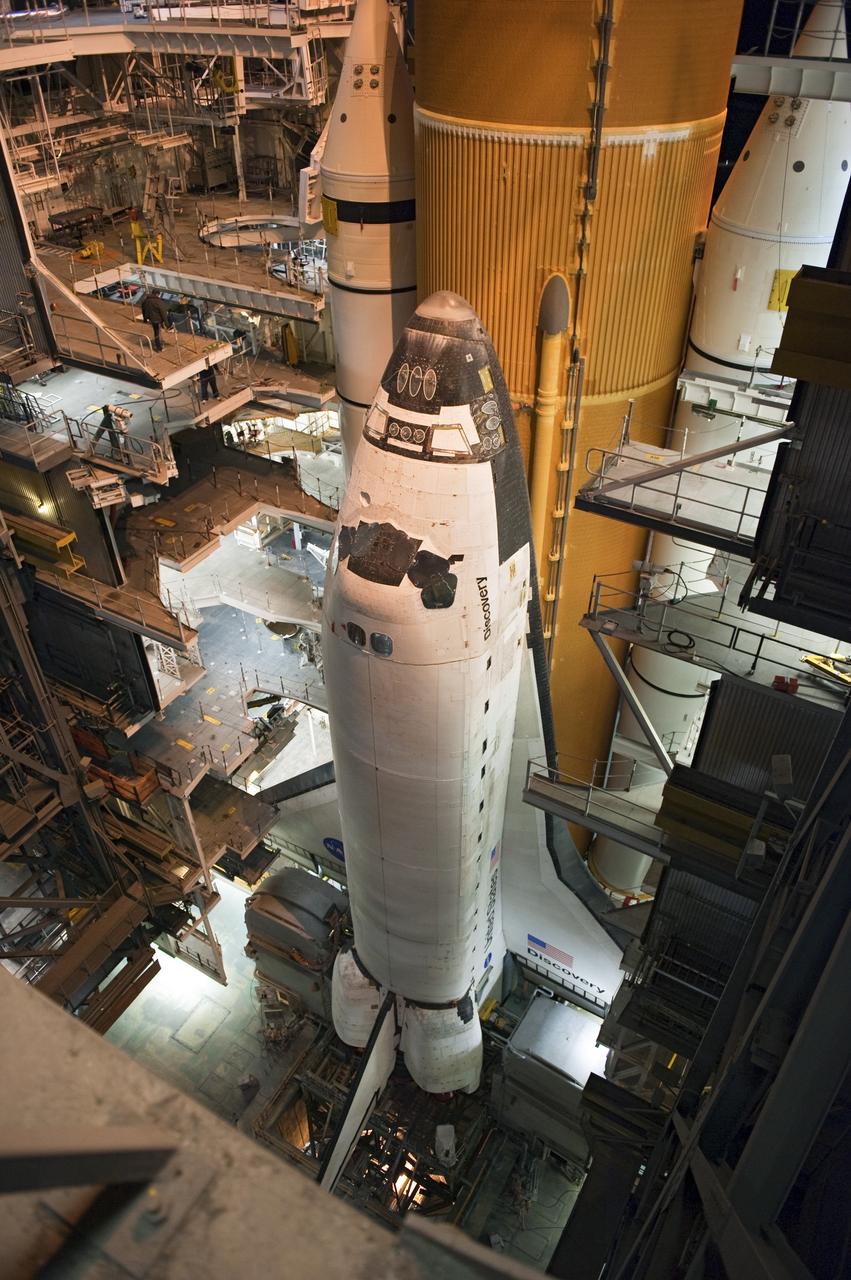
CAPE CANAVERAL, Fla. -- At NASA's Kennedy Space Center in Florida, space shuttle Discovery begins its nighttime trek, known as "rollout," from the Vehicle Assembly Building to Launch Pad 39A. It will take the shuttle, attached to its external fuel tank, twin solid rocket boosters and mobile launcher platform, about seven hours to complete the move atop a crawler-transporter. This is the second time Discovery has rolled out to the pad for the STS-133 mission, and comes after a thorough check and modifications to the shuttle's external tank. Targeted to liftoff Feb. 24, Discovery will take the Permanent Multipurpose Module (PMM) packed with supplies and critical spare parts, as well as Robonaut 2 (R2) to the International Space Station. For more information on STS-133, visit www.nasa.gov/mission_pages/shuttle/shuttlemissions/sts133/. Photo credit: NASA/Kim Shiflett
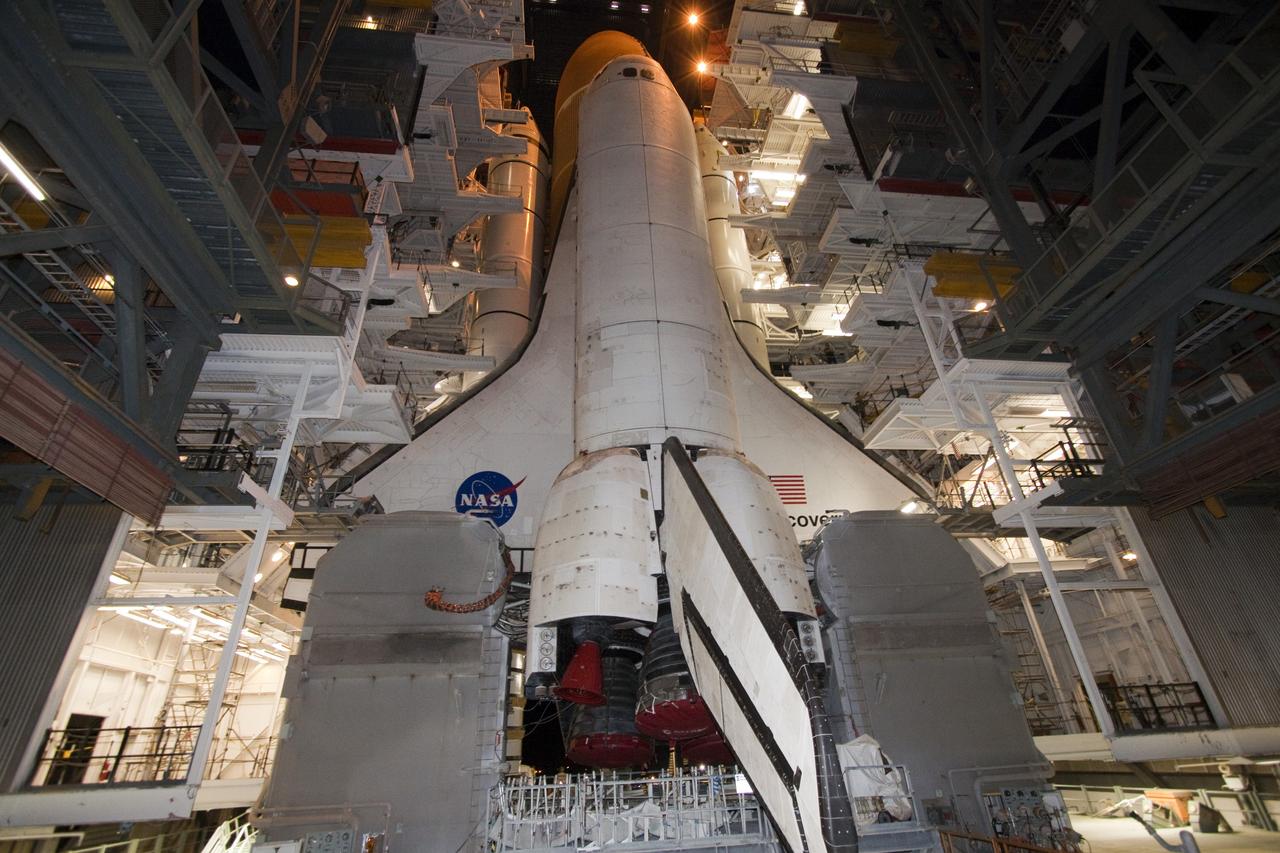
CAPE CANAVERAL, Fla. -- At NASA's Kennedy Space Center in Florida, space shuttle Discovery begins its nighttime trek, known as "rollout," from the Vehicle Assembly Building to Launch Pad 39A. It will take the shuttle, attached to its external fuel tank, twin solid rocket boosters and mobile launcher platform, about seven hours to complete the move atop a crawler-transporter. This is the second time Discovery has rolled out to the pad for the STS-133 mission, and comes after a thorough check and modifications to the shuttle's external tank. Targeted to liftoff Feb. 24, Discovery will take the Permanent Multipurpose Module (PMM) packed with supplies and critical spare parts, as well as Robonaut 2 (R2) to the International Space Station. For more information on STS-133, visit www.nasa.gov/mission_pages/shuttle/shuttlemissions/sts133/. Photo credit: NASA/Jack Pfaller
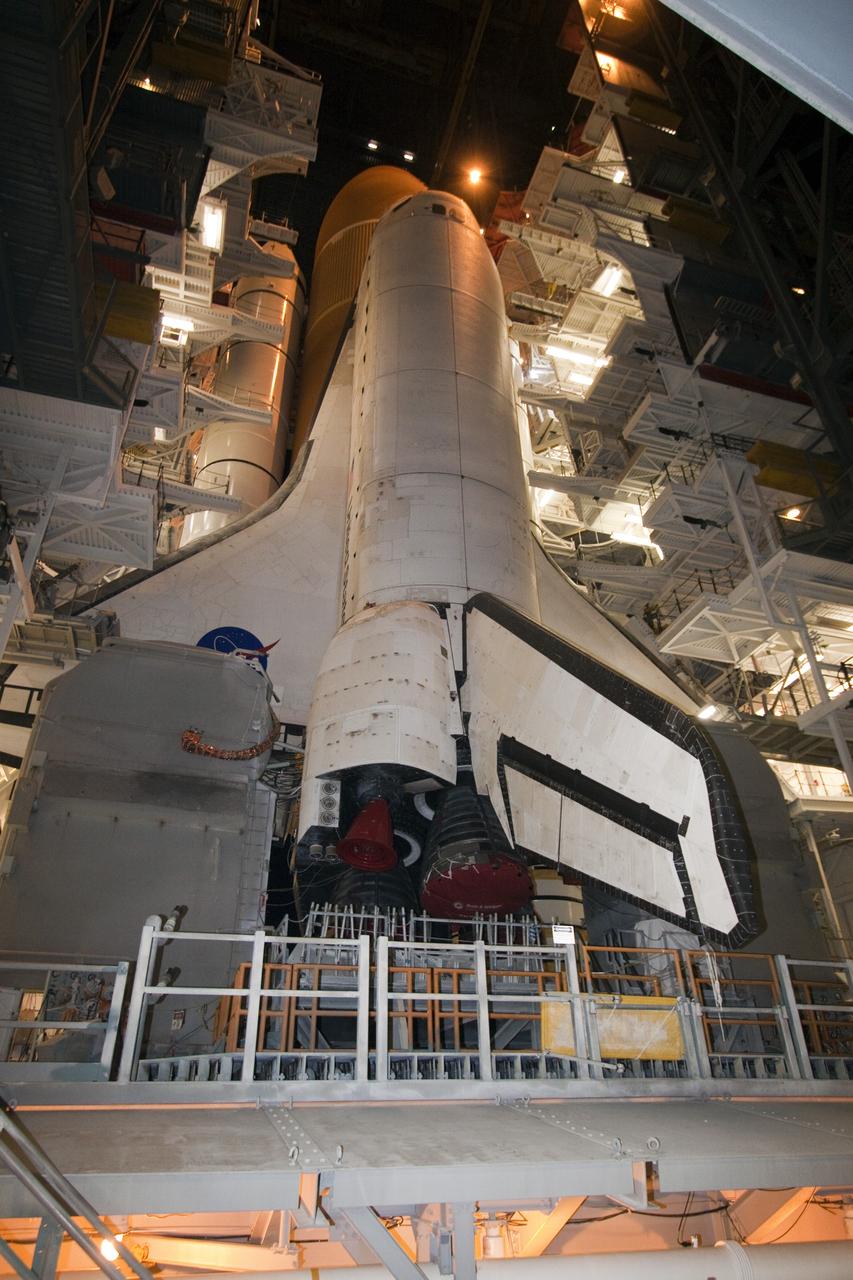
CAPE CANAVERAL, Fla. -- At NASA's Kennedy Space Center in Florida, space shuttle Discovery begins its nighttime trek, known as "rollout," from the Vehicle Assembly Building to Launch Pad 39A. It will take the shuttle, attached to its external fuel tank, twin solid rocket boosters and mobile launcher platform, about seven hours to complete the move atop a crawler-transporter. This is the second time Discovery has rolled out to the pad for the STS-133 mission, and comes after a thorough check and modifications to the shuttle's external tank. Targeted to liftoff Feb. 24, Discovery will take the Permanent Multipurpose Module (PMM) packed with supplies and critical spare parts, as well as Robonaut 2 (R2) to the International Space Station. For more information on STS-133, visit www.nasa.gov/mission_pages/shuttle/shuttlemissions/sts133/. Photo credit: NASA/Jack Pfaller

CAPE CANAVERAL, Fla. -- The rotating service structure (RSS), which provides weather protection and access to the shuttle, moves into place around space shuttle Discovery on Launch Pad 39A at NASA's Kennedy Space Center in Florida. This comes after Discovery, attached to its external fuel tank, twin solid rocket boosters and mobile launcher platform, rolled out to the pad from the Vehicle Assembly Building during the overnight hours. Rollout to the pad is a significant shuttle processing milestone for the upcoming STS-133 mission, and comes after a thorough check and modifications to the shuttle's external fuel tank. Targeted to liftoff Feb. 24, Discovery will take the Permanent Multipurpose Module (PMM) packed with supplies and critical spare parts, as well as Robonaut 2 (R2) to the International Space Station. For more information on STS-133, visit www.nasa.gov/mission_pages/shuttle/shuttlemissions/sts133/. Photo credit: NASA/Jack Pfaller
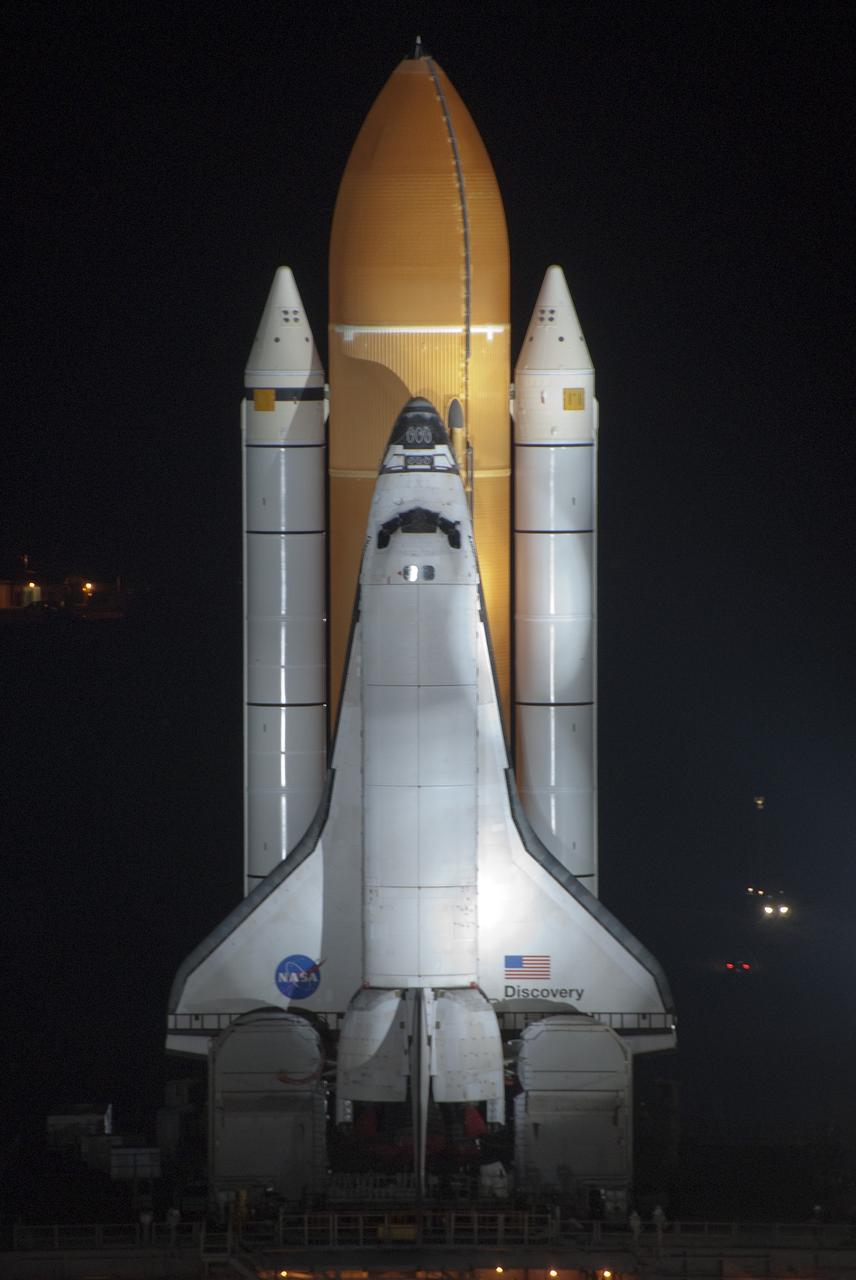
CAPE CANAVERAL, Fla. -- Xenon lights illuminate space shuttle Discovery as it makes its nighttime trek, known as "rollout," from the Vehicle Assembly Building to Launch Pad 39A at NASA's Kennedy Space Center in Florida. It will take the shuttle, attached to its external fuel tank, twin solid rocket boosters and mobile launcher platform, about seven hours to complete the move atop a crawler-transporter. This is the second time Discovery has rolled out to the pad for the STS-133 mission, and comes after a thorough check and modifications to the shuttle's external tank. Targeted to liftoff Feb. 24, Discovery will take the Permanent Multipurpose Module (PMM) packed with supplies and critical spare parts, as well as Robonaut 2 (R2) to the International Space Station. For more information on STS-133, visit www.nasa.gov/mission_pages/shuttle/shuttlemissions/sts133/. Photo credit: NASA/Jim Grossmann
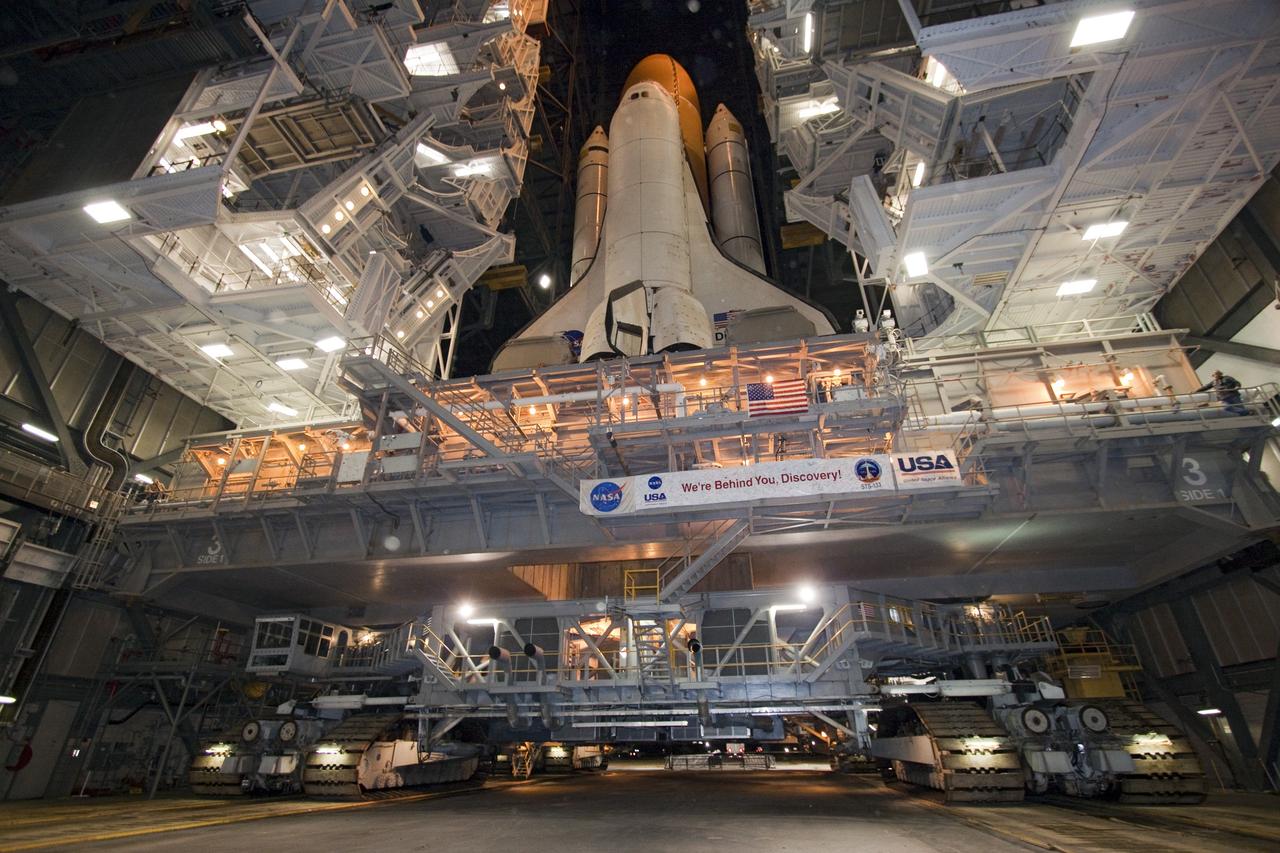
CAPE CANAVERAL, Fla. -- At NASA's Kennedy Space Center in Florida, space shuttle Discovery begins its nighttime trek, known as "rollout," from the Vehicle Assembly Building to Launch Pad 39A. It will take the shuttle, attached to its external fuel tank, twin solid rocket boosters and mobile launcher platform, about seven hours to complete the move atop a crawler-transporter. This is the second time Discovery has rolled out to the pad for the STS-133 mission, and comes after a thorough check and modifications to the shuttle's external tank. Targeted to liftoff Feb. 24, Discovery will take the Permanent Multipurpose Module (PMM) packed with supplies and critical spare parts, as well as Robonaut 2 (R2) to the International Space Station. For more information on STS-133, visit www.nasa.gov/mission_pages/shuttle/shuttlemissions/sts133/. Photo credit: NASA/Jack Pfaller

CAPE CANAVERAL, Fla. -- At NASA's Kennedy Space Center in Florida, space shuttle Discovery begins its nighttime trek, known as "rollout," from the Vehicle Assembly Building to Launch Pad 39A. It will take the shuttle, attached to its external fuel tank, twin solid rocket boosters and mobile launcher platform, about seven hours to complete the move atop a crawler-transporter. This is the second time Discovery has rolled out to the pad for the STS-133 mission, and comes after a thorough check and modifications to the shuttle's external tank. Targeted to liftoff Feb. 24, Discovery will take the Permanent Multipurpose Module (PMM) packed with supplies and critical spare parts, as well as Robonaut 2 (R2) to the International Space Station. For more information on STS-133, visit www.nasa.gov/mission_pages/shuttle/shuttlemissions/sts133/. Photo credit: NASA/Kim Shiflett
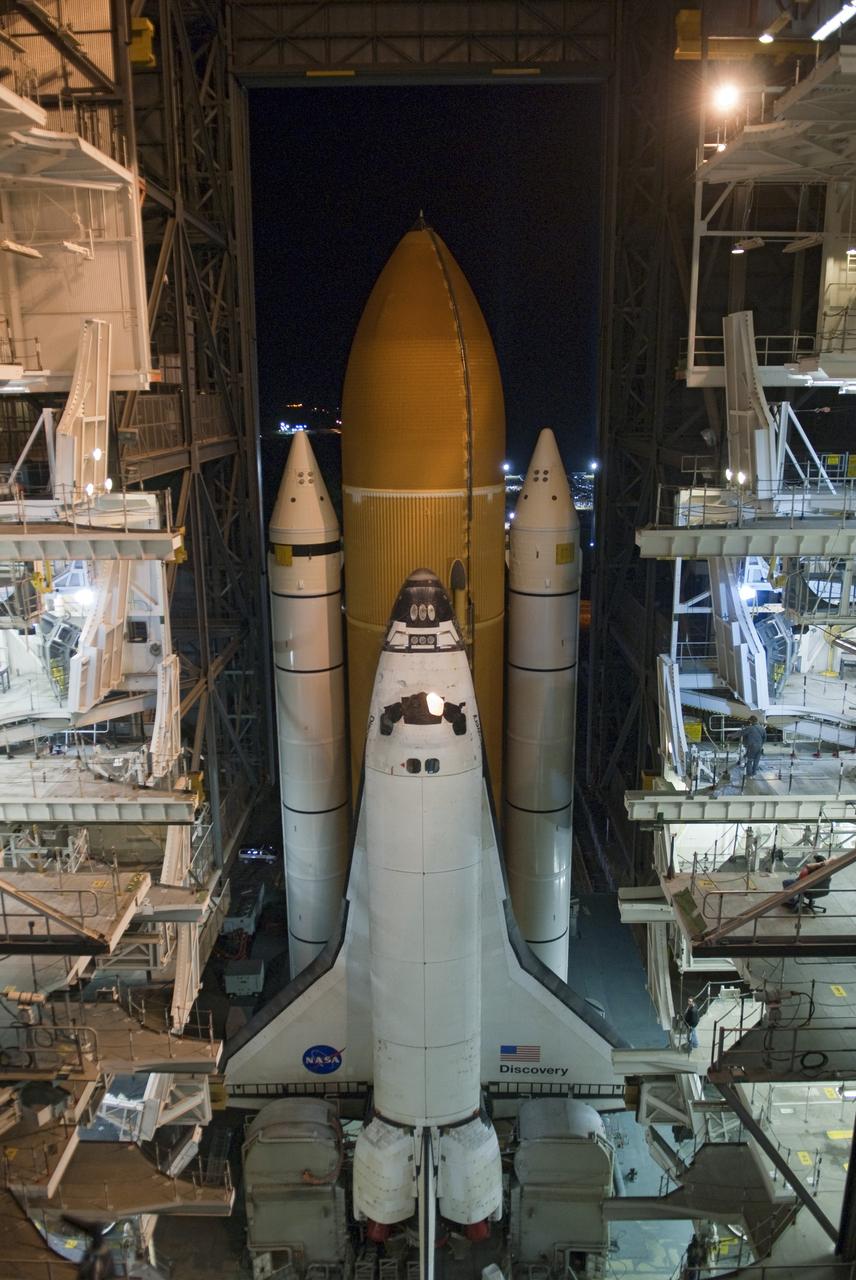
CAPE CANAVERAL, Fla. -- At NASA's Kennedy Space Center in Florida, space shuttle Discovery begins its nighttime trek, known as "rollout," from the Vehicle Assembly Building to Launch Pad 39A. It will take the shuttle, attached to its external fuel tank, twin solid rocket boosters and mobile launcher platform, about seven hours to complete the move atop a crawler-transporter. This is the second time Discovery has rolled out to the pad for the STS-133 mission, and comes after a thorough check and modifications to the shuttle's external tank. Targeted to liftoff Feb. 24, Discovery will take the Permanent Multipurpose Module (PMM) packed with supplies and critical spare parts, as well as Robonaut 2 (R2) to the International Space Station. For more information on STS-133, visit www.nasa.gov/mission_pages/shuttle/shuttlemissions/sts133/. Photo credit: NASA/Jim Grossmann
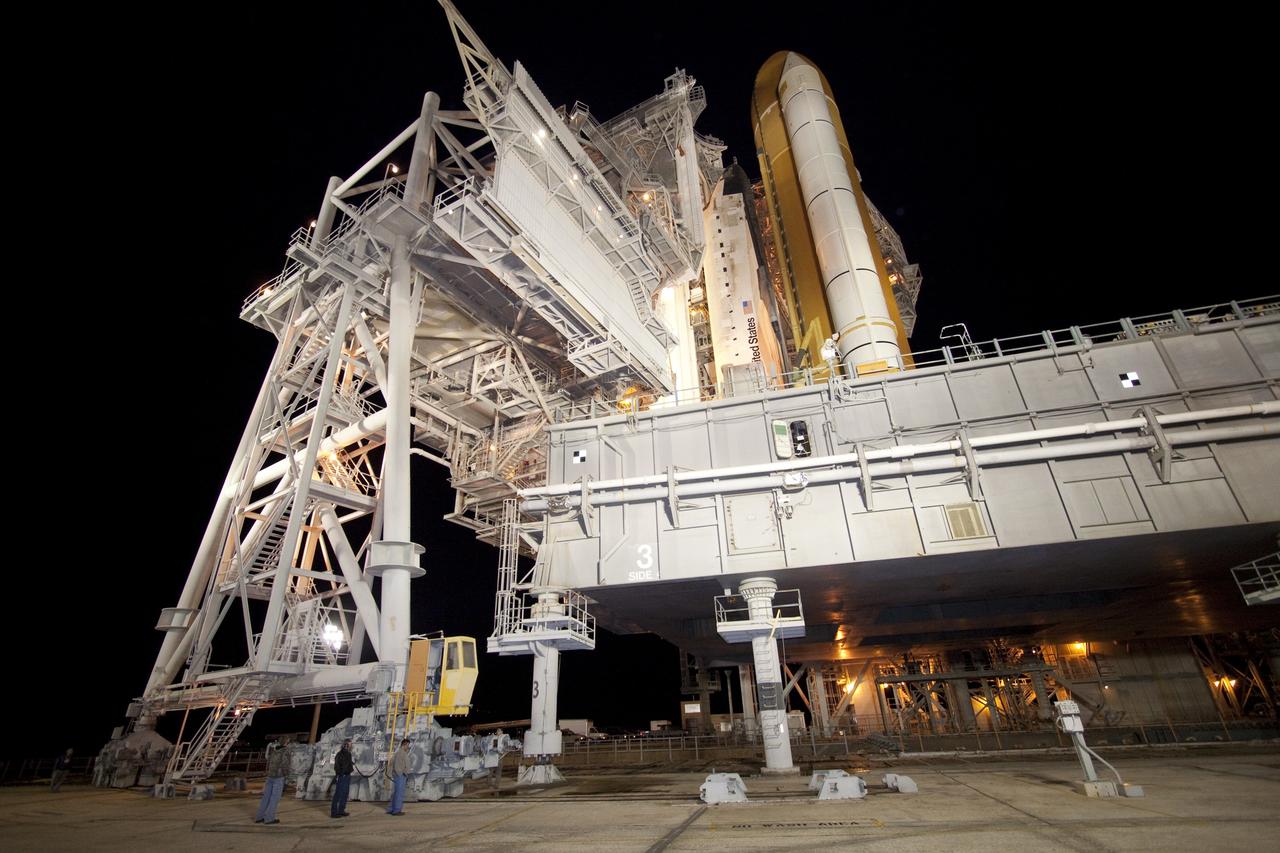
CAPE CANAVERAL, Fla. -- The rotating service structure (RSS), which provides weather protection and access to the shuttle, moves into place around space shuttle Discovery on Launch Pad 39A at NASA's Kennedy Space Center in Florida. This comes after Discovery, attached to its external fuel tank, twin solid rocket boosters and mobile launcher platform, rolled out to the pad from the Vehicle Assembly Building during the overnight hours. Rollout to the pad is a significant shuttle processing milestone for the upcoming STS-133 mission, and comes after a thorough check and modifications to the shuttle's external fuel tank. Targeted to liftoff Feb. 24, Discovery will take the Permanent Multipurpose Module (PMM) packed with supplies and critical spare parts, as well as Robonaut 2 (R2) to the International Space Station. For more information on STS-133, visit www.nasa.gov/mission_pages/shuttle/shuttlemissions/sts133/. Photo credit: NASA/Jack Pfaller
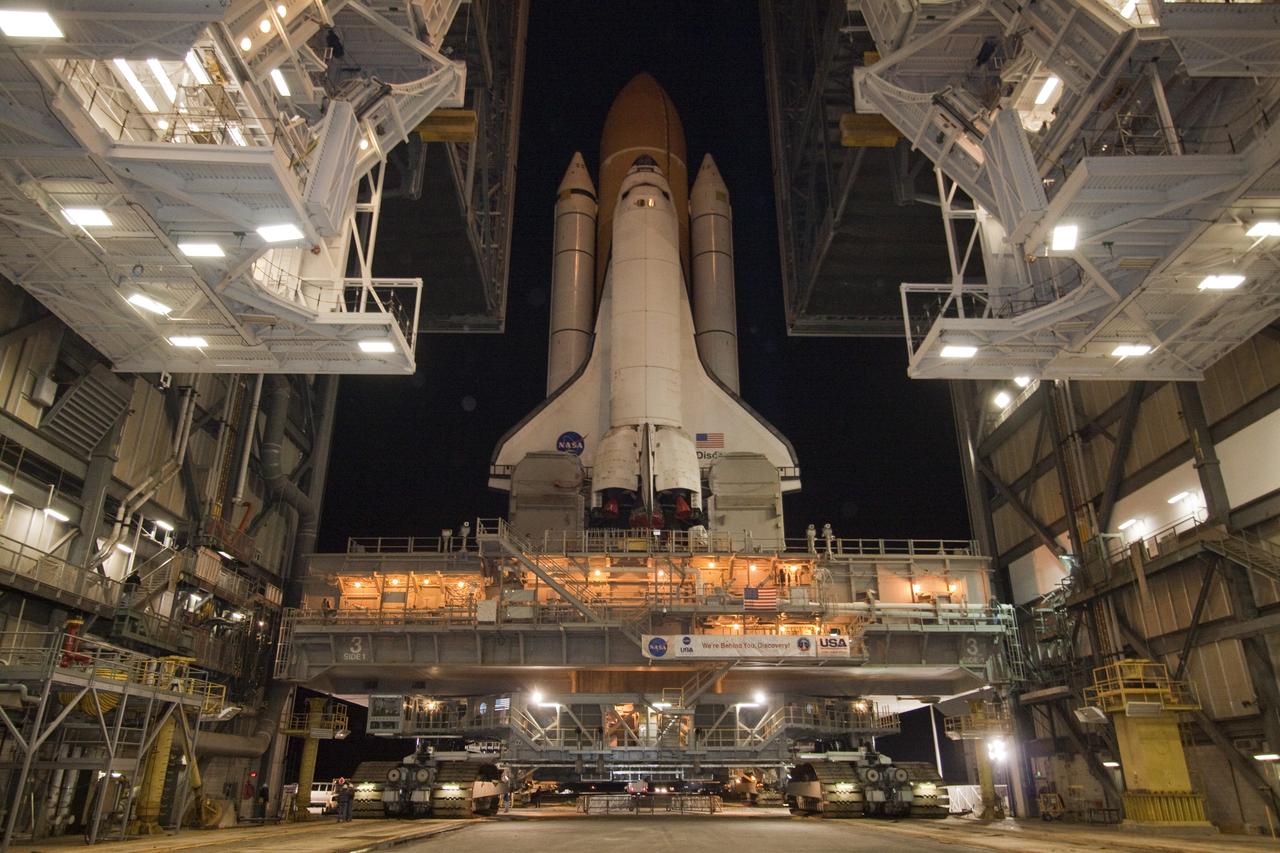
CAPE CANAVERAL, Fla. -- At NASA's Kennedy Space Center in Florida, space shuttle Discovery begins its nighttime trek, known as "rollout," from the Vehicle Assembly Building to Launch Pad 39A. It will take the shuttle, attached to its external fuel tank, twin solid rocket boosters and mobile launcher platform, about seven hours to complete the move atop a crawler-transporter. This is the second time Discovery has rolled out to the pad for the STS-133 mission, and comes after a thorough check and modifications to the shuttle's external tank. Targeted to liftoff Feb. 24, Discovery will take the Permanent Multipurpose Module (PMM) packed with supplies and critical spare parts, as well as Robonaut 2 (R2) to the International Space Station. For more information on STS-133, visit www.nasa.gov/mission_pages/shuttle/shuttlemissions/sts133/. Photo credit: NASA/Jack Pfaller
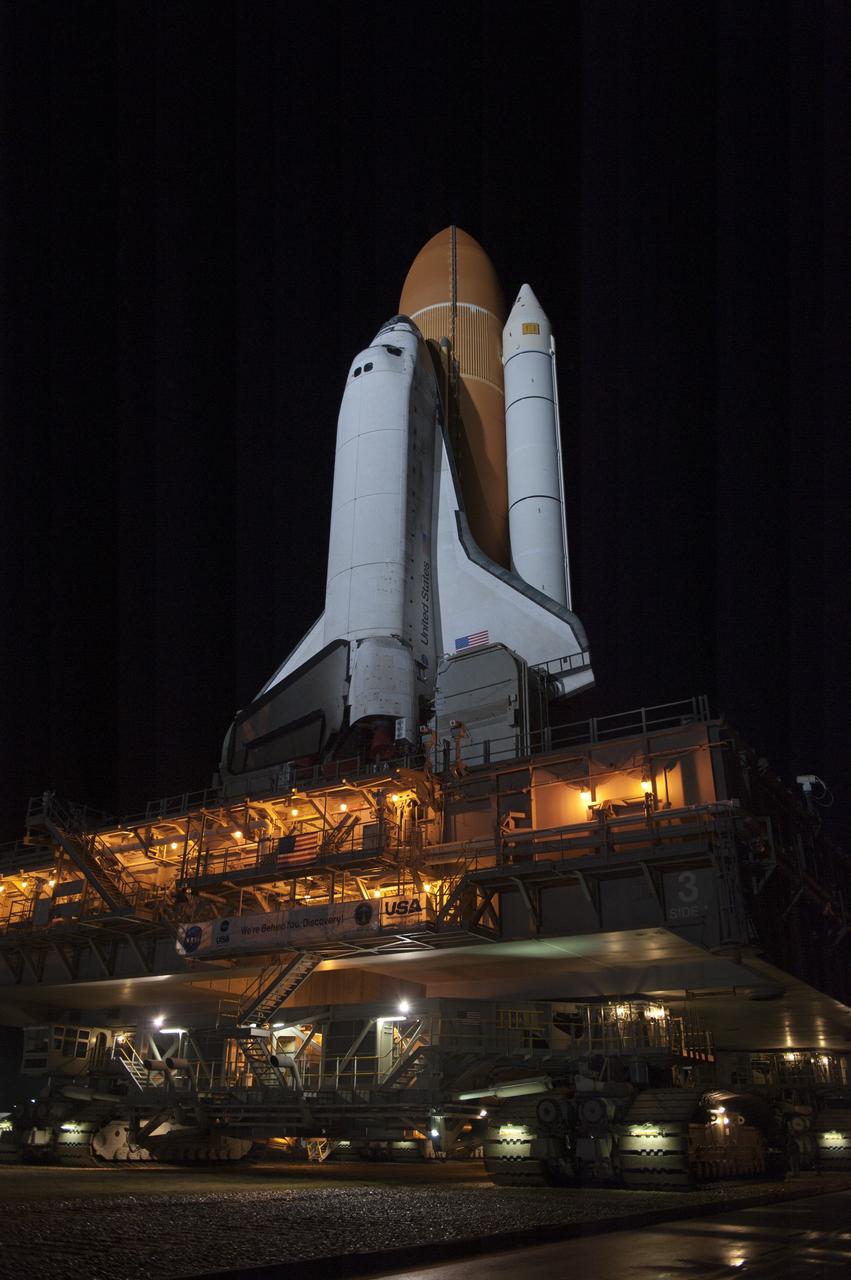
CAPE CANAVERAL, Fla. -- Xenon lights illuminate space shuttle Discovery as it makes its nighttime trek, known as "rollout," from the Vehicle Assembly Building to Launch Pad 39A at NASA's Kennedy Space Center in Florida. It will take the shuttle, attached to its external fuel tank, twin solid rocket boosters and mobile launcher platform, about seven hours to complete the move atop a crawler-transporter. This is the second time Discovery has rolled out to the pad for the STS-133 mission, and comes after a thorough check and modifications to the shuttle's external tank. Targeted to liftoff Feb. 24, Discovery will take the Permanent Multipurpose Module (PMM) packed with supplies and critical spare parts, as well as Robonaut 2 (R2) to the International Space Station. For more information on STS-133, visit www.nasa.gov/mission_pages/shuttle/shuttlemissions/sts133/. Photo credit: NASA/Kim Shiflett
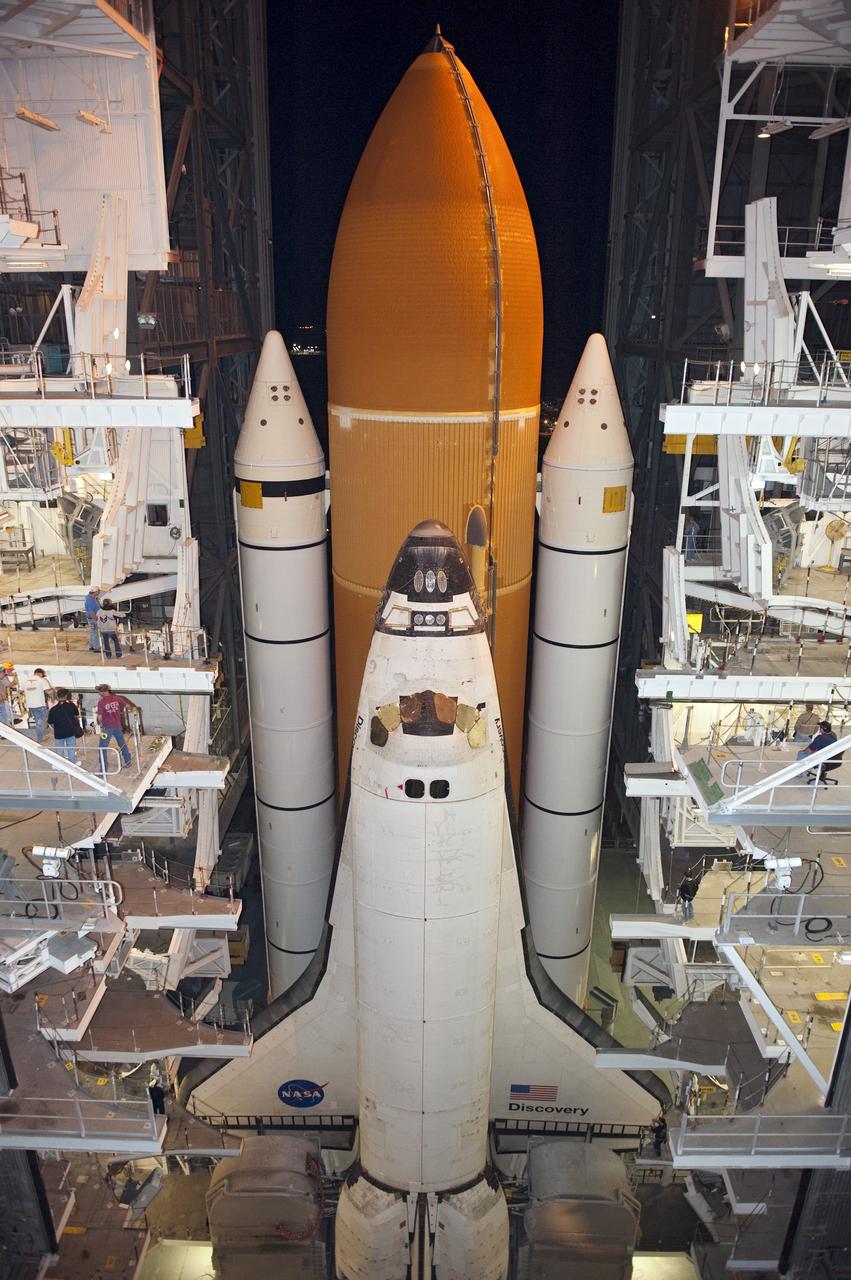
CAPE CANAVERAL, Fla. -- At NASA's Kennedy Space Center in Florida, space shuttle Discovery begins its nighttime trek, known as "rollout," from the Vehicle Assembly Building to Launch Pad 39A. It will take the shuttle, attached to its external fuel tank, twin solid rocket boosters and mobile launcher platform, about seven hours to complete the move atop a crawler-transporter. This is the second time Discovery has rolled out to the pad for the STS-133 mission, and comes after a thorough check and modifications to the shuttle's external tank. Targeted to liftoff Feb. 24, Discovery will take the Permanent Multipurpose Module (PMM) packed with supplies and critical spare parts, as well as Robonaut 2 (R2) to the International Space Station. For more information on STS-133, visit www.nasa.gov/mission_pages/shuttle/shuttlemissions/sts133/. Photo credit: NASA/Kim Shiflett
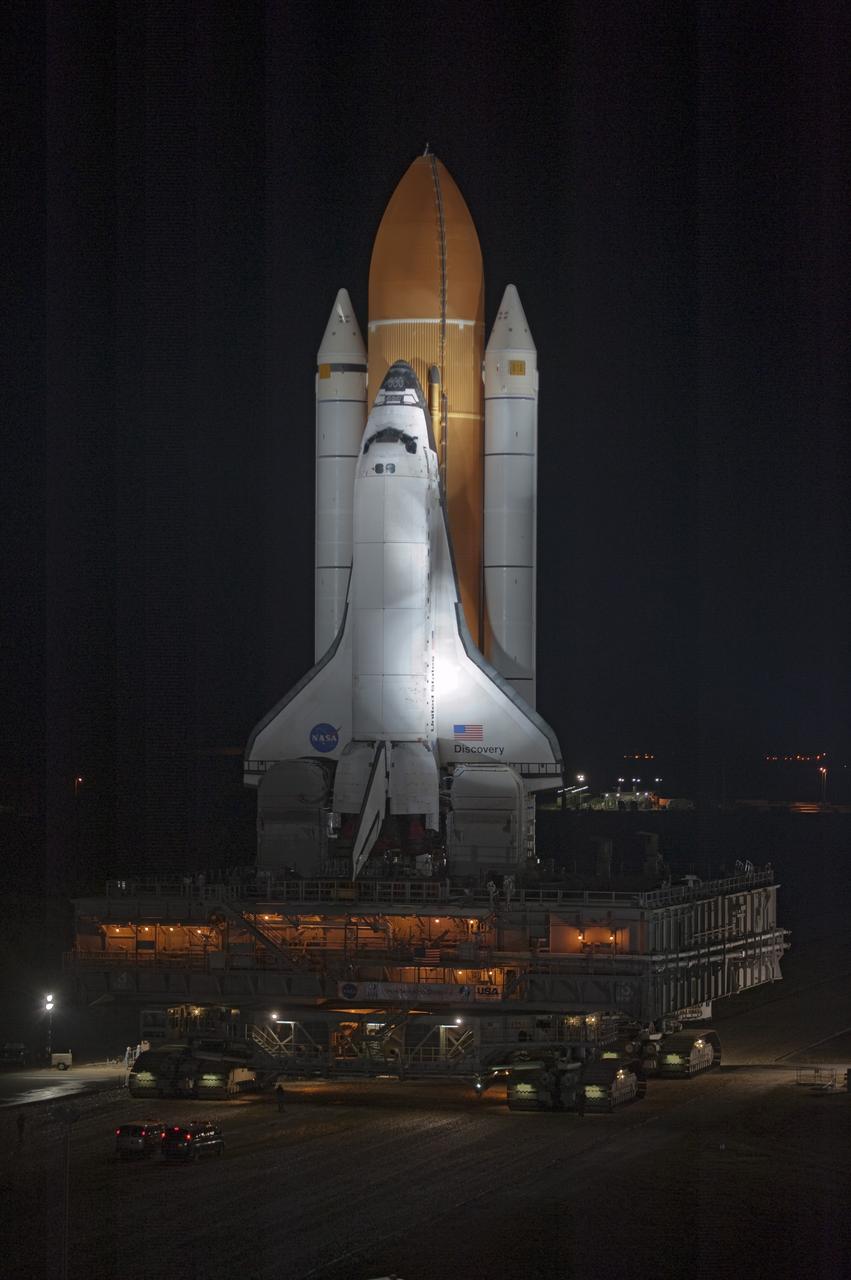
CAPE CANAVERAL, Fla. -- Xenon lights illuminate space shuttle Discovery as it makes its nighttime trek, known as "rollout," from the Vehicle Assembly Building to Launch Pad 39A at NASA's Kennedy Space Center in Florida. It will take the shuttle, attached to its external fuel tank, twin solid rocket boosters and mobile launcher platform, about seven hours to complete the move atop a crawler-transporter. This is the second time Discovery has rolled out to the pad for the STS-133 mission, and comes after a thorough check and modifications to the shuttle's external tank. Targeted to liftoff Feb. 24, Discovery will take the Permanent Multipurpose Module (PMM) packed with supplies and critical spare parts, as well as Robonaut 2 (R2) to the International Space Station. For more information on STS-133, visit www.nasa.gov/mission_pages/shuttle/shuttlemissions/sts133/. Photo credit: NASA/Kim Shiflett
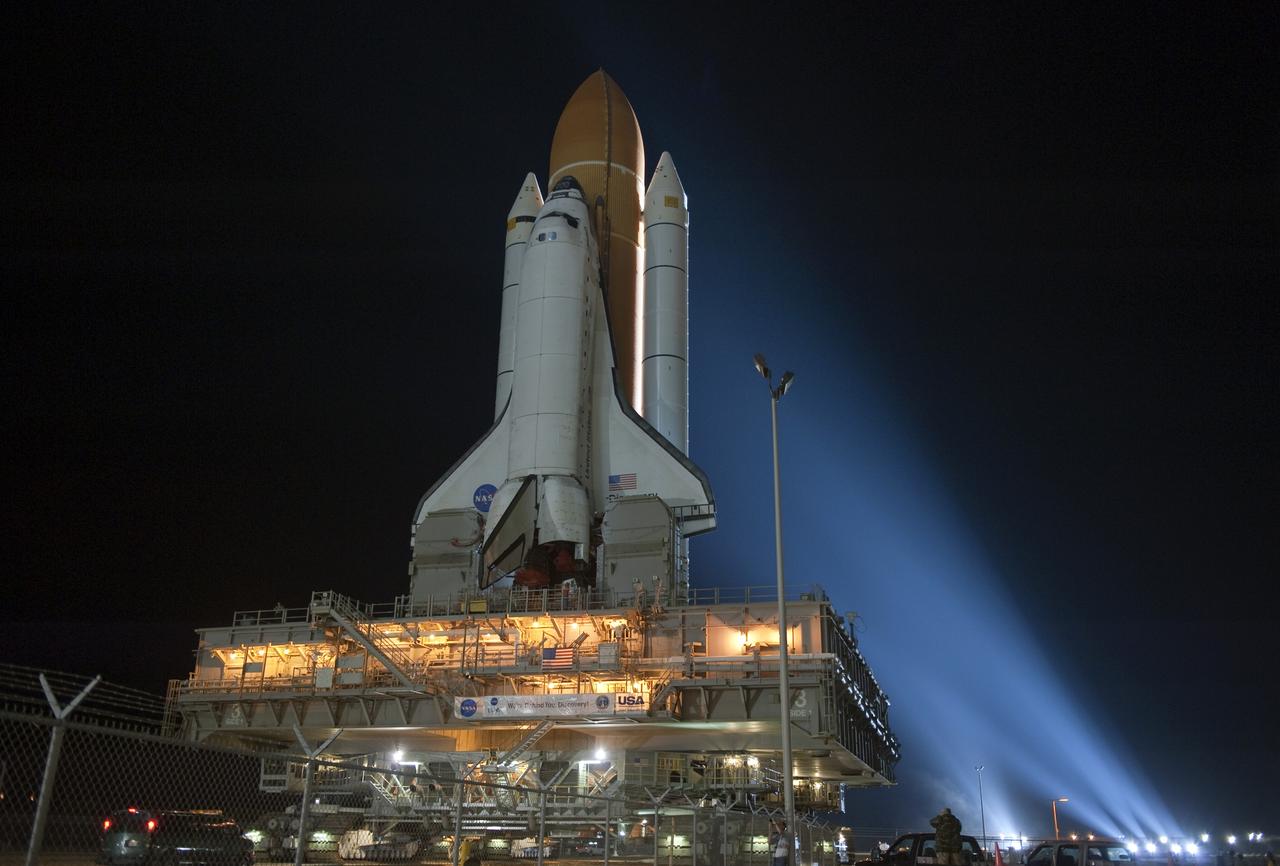
CAPE CANAVERAL, Fla. -- Xenon lights illuminate space shuttle Discovery as it makes its nighttime trek, known as "rollout," from the Vehicle Assembly Building to Launch Pad 39A at NASA's Kennedy Space Center in Florida. It will take the shuttle, attached to its external fuel tank, twin solid rocket boosters and mobile launcher platform, about seven hours to complete the move atop a crawler-transporter. This is the second time Discovery has rolled out to the pad for the STS-133 mission, and comes after a thorough check and modifications to the shuttle's external tank. Targeted to liftoff Feb. 24, Discovery will take the Permanent Multipurpose Module (PMM) packed with supplies and critical spare parts, as well as Robonaut 2 (R2) to the International Space Station. For more information on STS-133, visit www.nasa.gov/mission_pages/shuttle/shuttlemissions/sts133/. Photo credit: NASA/Kim Shiflett
CAPE CANAVERAL, Fla. -- The rotating service structure (RSS), which provides weather protection and access to the shuttle, begins to move into place around space shuttle Discovery on Launch Pad 39A at NASA's Kennedy Space Center in Florida. This comes after Discovery, attached to its external fuel tank, twin solid rocket boosters and mobile launcher platform, rolled out to the pad from the Vehicle Assembly Building during the overnight hours. Rollout to the pad is a significant shuttle processing milestone for the upcoming STS-133 mission, and comes after a thorough check and modifications to the shuttle's external fuel tank. Targeted to liftoff Feb. 24, Discovery will take the Permanent Multipurpose Module (PMM) packed with supplies and critical spare parts, as well as Robonaut 2 (R2) to the International Space Station. For more information on STS-133, visit www.nasa.gov/mission_pages/shuttle/shuttlemissions/sts133/. Photo credit: NASA/Jack Pfaller
CAPE CANAVERAL, Fla. -- The rotating service structure (RSS), which provides weather protection and access to the shuttle, begins to move into place around space shuttle Discovery on Launch Pad 39A at NASA's Kennedy Space Center in Florida. This comes after Discovery, attached to its external fuel tank, twin solid rocket boosters and mobile launcher platform, rolled out to the pad from the Vehicle Assembly Building during the overnight hours. Rollout to the pad is a significant shuttle processing milestone for the upcoming STS-133 mission, and comes after a thorough check and modifications to the shuttle's external fuel tank. Targeted to liftoff Feb. 24, Discovery will take the Permanent Multipurpose Module (PMM) packed with supplies and critical spare parts, as well as Robonaut 2 (R2) to the International Space Station. For more information on STS-133, visit www.nasa.gov/mission_pages/shuttle/shuttlemissions/sts133/. Photo credit: NASA/Jack Pfaller
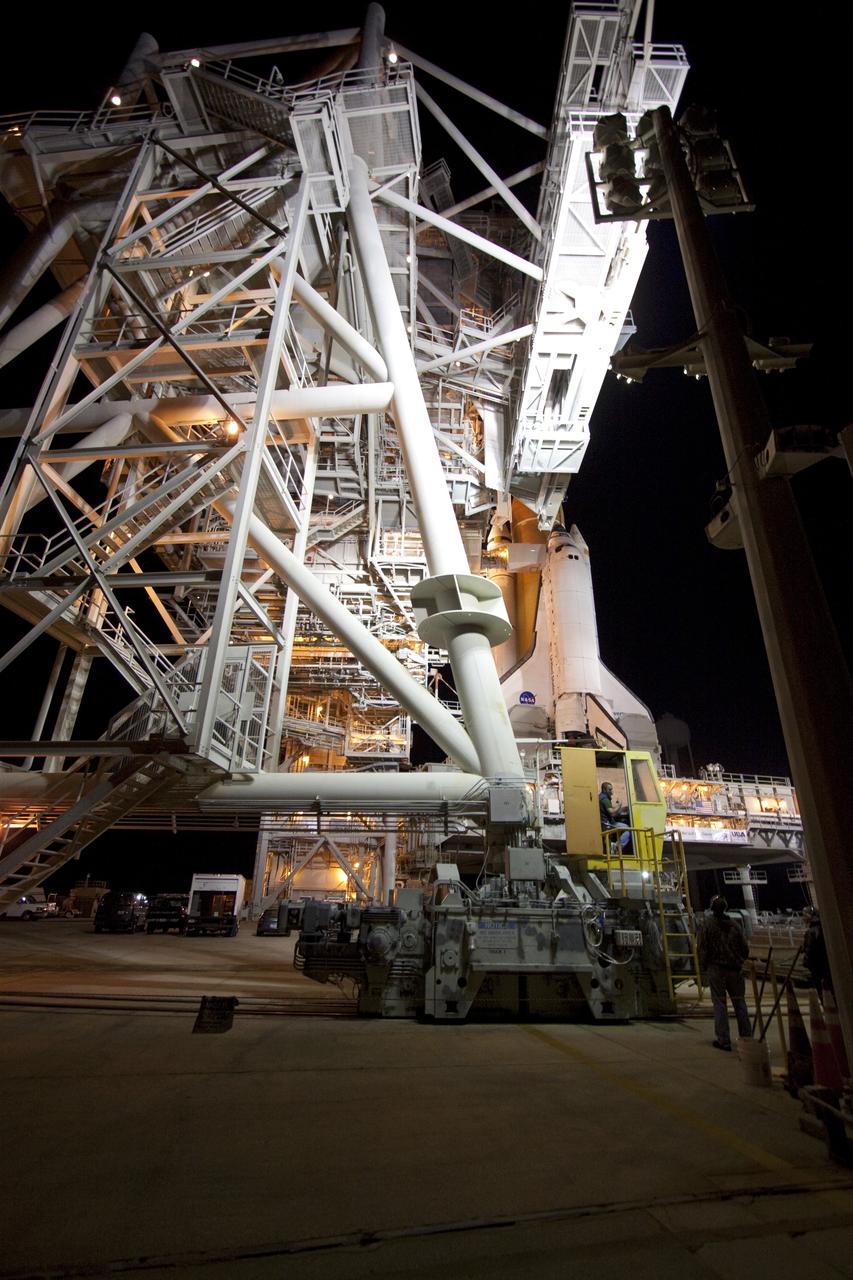
CAPE CANAVERAL, Fla. -- At NASA's Kennedy Space Center in Florida, space shuttle Discovery begins its nighttime trek, known as "rollout," from the Vehicle Assembly Building to Launch Pad 39A. It will take the shuttle, attached to its external fuel tank, twin solid rocket boosters and mobile launcher platform, about seven hours to complete the move atop a crawler-transporter. This is the second time Discovery has rolled out to the pad for the STS-133 mission, and comes after a thorough check and modifications to the shuttle's external tank. Targeted to liftoff Feb. 24, Discovery will take the Permanent Multipurpose Module (PMM) packed with supplies and critical spare parts, as well as Robonaut 2 (R2) to the International Space Station. For more information on STS-133, visit www.nasa.gov/mission_pages/shuttle/shuttlemissions/sts133/. Photo credit: NASA/Kim Shiflett
CAPE CANAVERAL, Fla. -- At NASA's Kennedy Space Center in Florida, space shuttle Discovery begins its nighttime trek, known as "rollout," from the Vehicle Assembly Building to Launch Pad 39A. It will take the shuttle, attached to its external fuel tank, twin solid rocket boosters and mobile launcher platform, about seven hours to complete the move atop a crawler-transporter. This is the second time Discovery has rolled out to the pad for the STS-133 mission, and comes after a thorough check and modifications to the shuttle's external tank. Targeted to liftoff Feb. 24, Discovery will take the Permanent Multipurpose Module (PMM) packed with supplies and critical spare parts, as well as Robonaut 2 (R2) to the International Space Station. For more information on STS-133, visit www.nasa.gov/mission_pages/shuttle/shuttlemissions/sts133/. Photo credit: NASA/Jack Pfaller
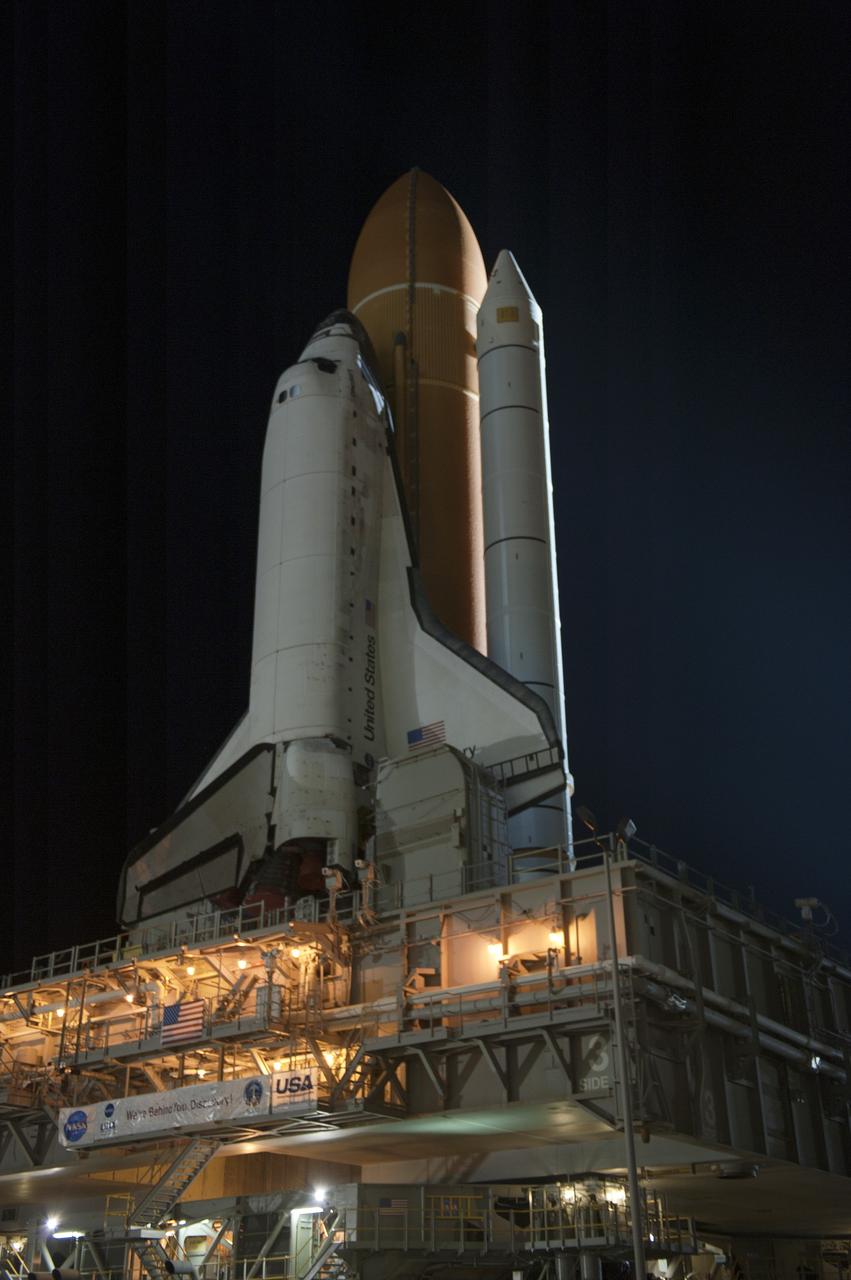
CAPE CANAVERAL, Fla. -- Xenon lights illuminate space shuttle Discovery as it makes its nighttime trek, known as "rollout," from the Vehicle Assembly Building to Launch Pad 39A at NASA's Kennedy Space Center in Florida. It will take the shuttle, attached to its external fuel tank, twin solid rocket boosters and mobile launcher platform, about seven hours to complete the move atop a crawler-transporter. This is the second time Discovery has rolled out to the pad for the STS-133 mission, and comes after a thorough check and modifications to the shuttle's external tank. Targeted to liftoff Feb. 24, Discovery will take the Permanent Multipurpose Module (PMM) packed with supplies and critical spare parts, as well as Robonaut 2 (R2) to the International Space Station. For more information on STS-133, visit www.nasa.gov/mission_pages/shuttle/shuttlemissions/sts133/. Photo credit: NASA/Kim Shiflett