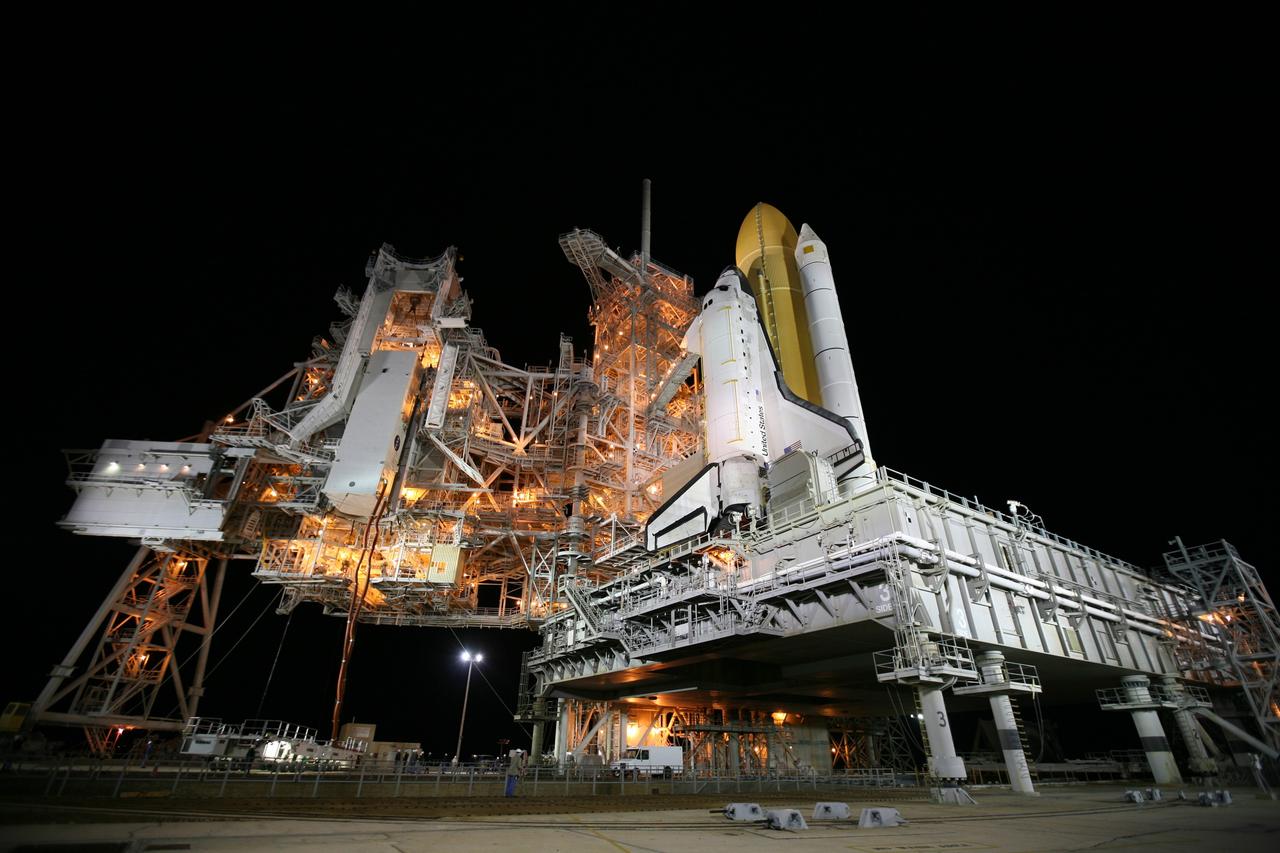
CAPE CANAVERAL, Fla. -- At NASA's Kennedy Space Center in Florida, the STS-133 payload canister is lifted into the rotating service structure on Launch Pad 39A. The payload then will be moved into space shuttle Discovery's payload bay. Discovery and its STS-133 crew will deliver the Permanent Multipurpose Module, packed with supplies and critical spare parts, as well as Robonaut 2, the dexterous humanoid astronaut helper, to the International Space Station. Launch is targeted for 4:40 p.m. EDT, Nov. 1. Photo credit: NASA/Amanda Diller
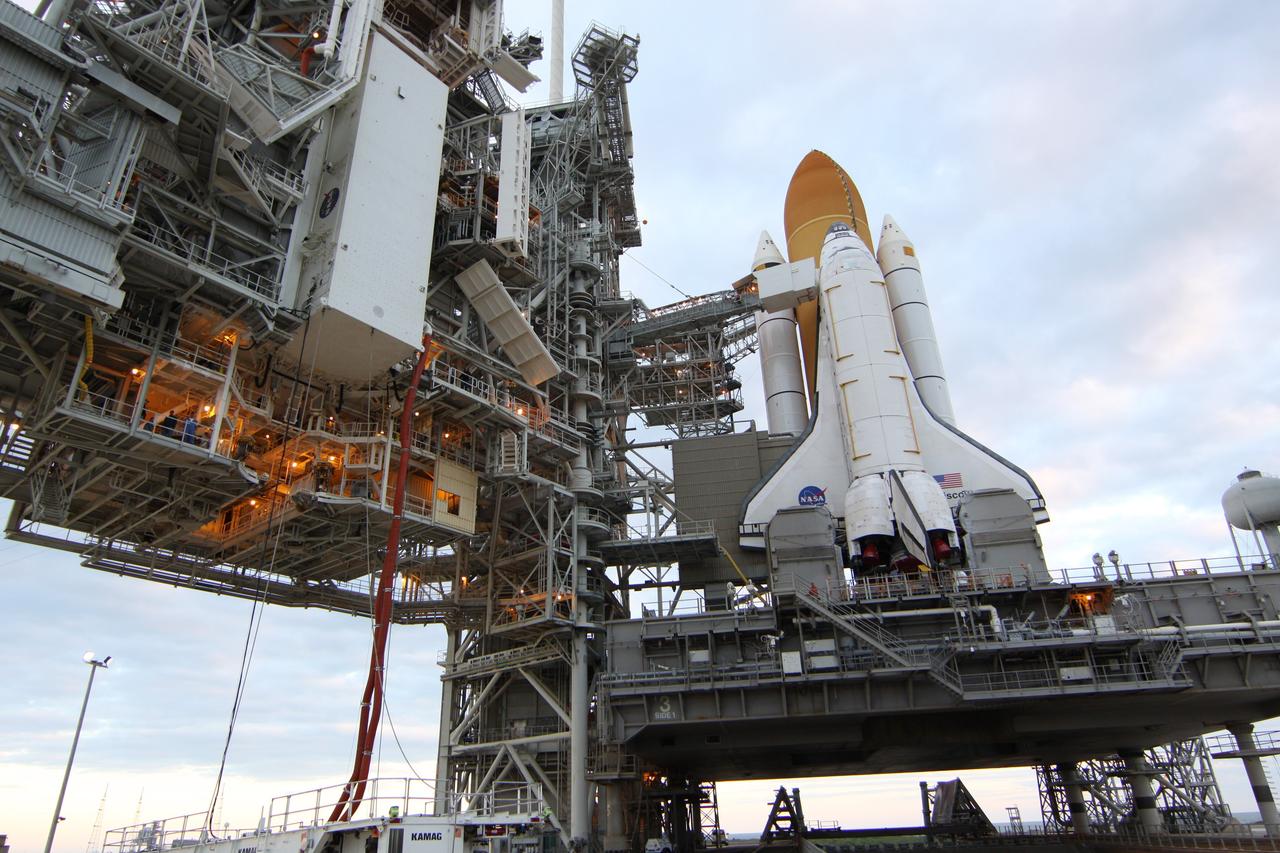
CAPE CANAVERAL, Fla. -- At NASA's Kennedy Space Center in Florida, the STS-133 payload canister now is in the rotating service structure on Launch Pad 39A. The payload then will be moved into space shuttle Discovery's payload bay. Discovery and its STS-133 crew will deliver the Permanent Multipurpose Module, packed with supplies and critical spare parts, as well as Robonaut 2, the dexterous humanoid astronaut helper, to the International Space Station. Launch is targeted for 4:40 p.m. EDT, Nov. 1. Photo credit: NASA/Troy Cryder
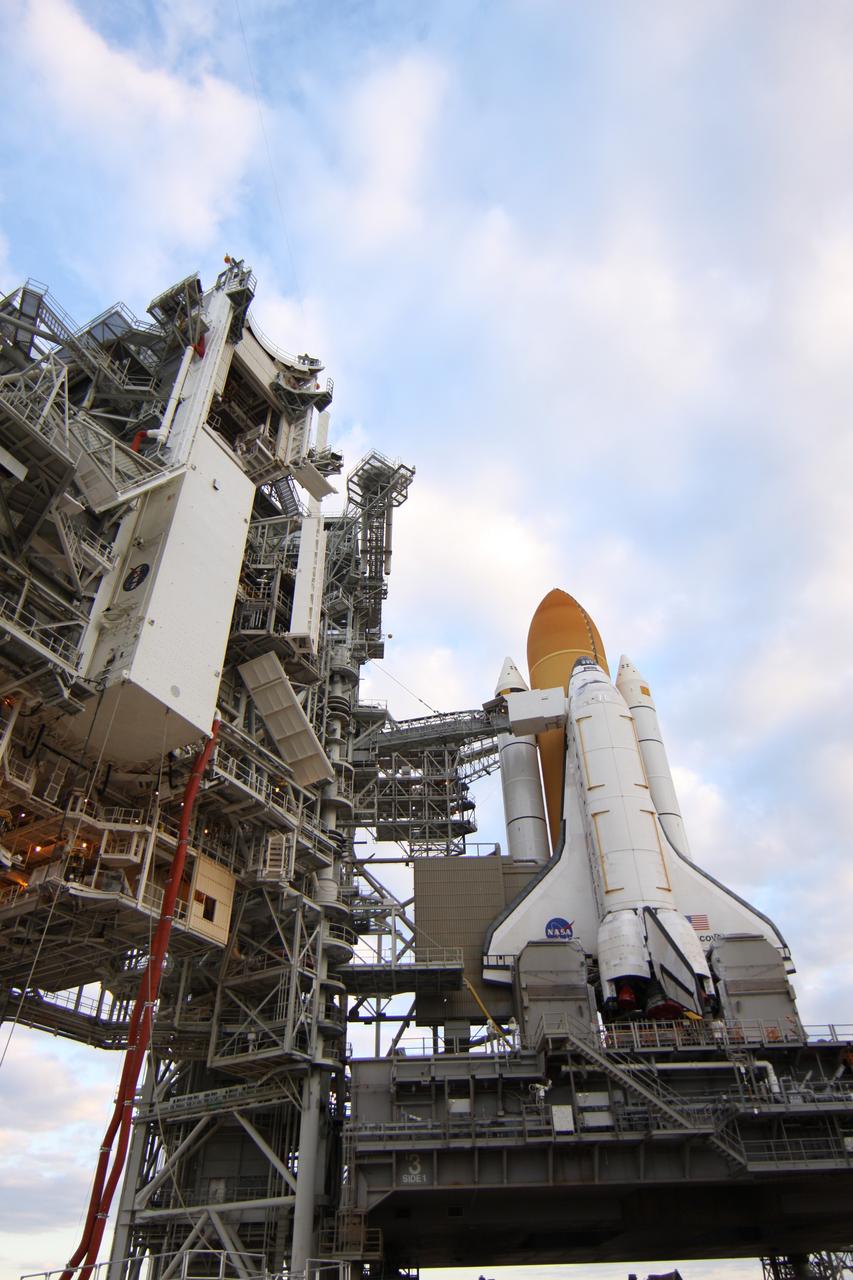
CAPE CANAVERAL, Fla. -- At NASA's Kennedy Space Center in Florida, the STS-133 payload canister now is in the rotating service structure on Launch Pad 39A. The payload then will be moved into space shuttle Discovery's payload bay. Discovery and its STS-133 crew will deliver the Permanent Multipurpose Module, packed with supplies and critical spare parts, as well as Robonaut 2, the dexterous humanoid astronaut helper, to the International Space Station. Launch is targeted for 4:40 p.m. EDT, Nov. 1. Photo credit: NASA/Troy Cryder
CAPE CANAVERAL, Fla. -- At NASA's Kennedy Space Center in Florida, the STS-133 payload canister is lifted into the rotating service structure on Launch Pad 39A. The payload then will be moved into space shuttle Discovery's payload bay. Discovery and its STS-133 crew will deliver the Permanent Multipurpose Module, packed with supplies and critical spare parts, as well as Robonaut 2, the dexterous humanoid astronaut helper, to the International Space Station. Launch is targeted for 4:40 p.m. EDT, Nov. 1. Photo credit: NASA/Troy Cryder
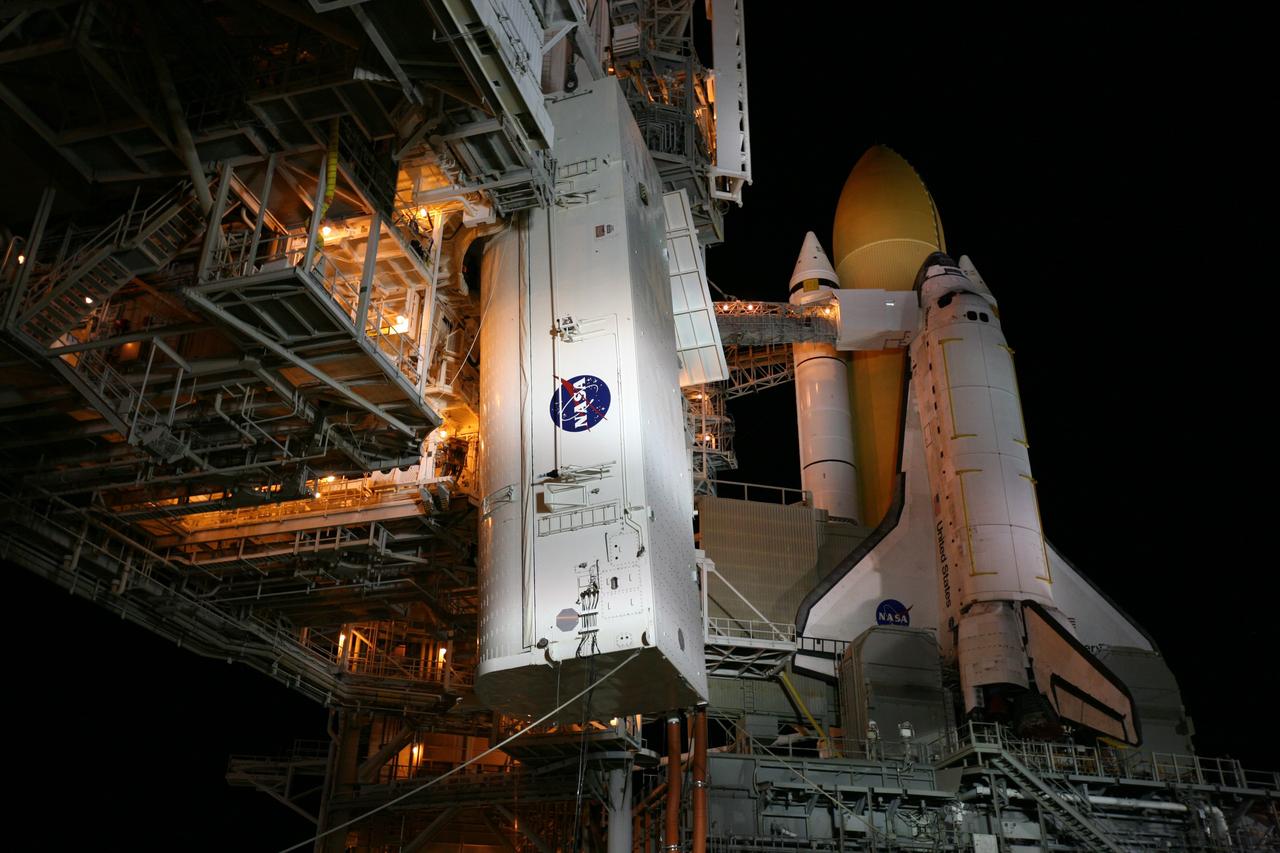
CAPE CANAVERAL, Fla. -- At NASA's Kennedy Space Center in Florida, the STS-133 payload canister is lifted into the rotating service structure on Launch Pad 39A. The payload then will be moved into space shuttle Discovery's payload bay. Discovery and its STS-133 crew will deliver the Permanent Multipurpose Module, packed with supplies and critical spare parts, as well as Robonaut 2, the dexterous humanoid astronaut helper, to the International Space Station. Launch is targeted for 4:40 p.m. EDT, Nov. 1. Photo credit: NASA/Amanda Diller
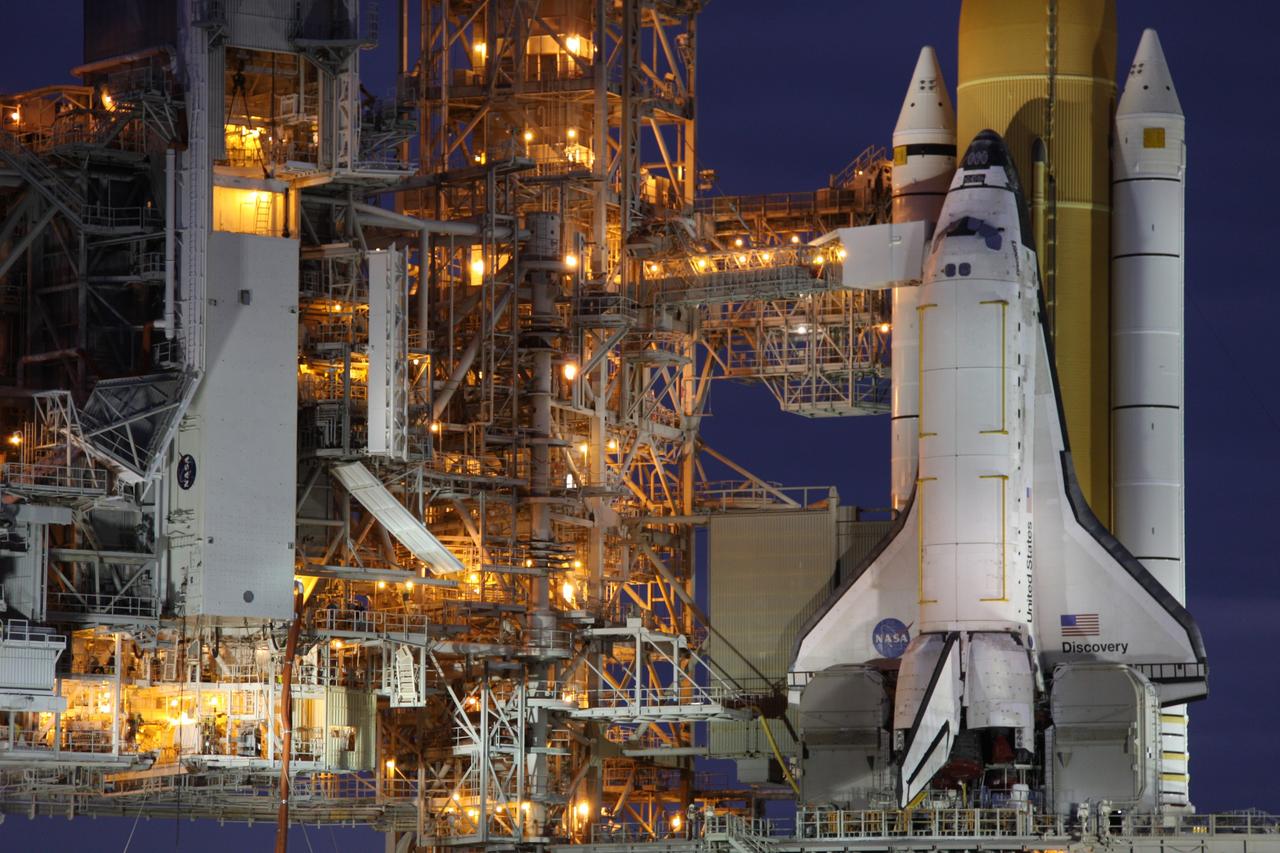
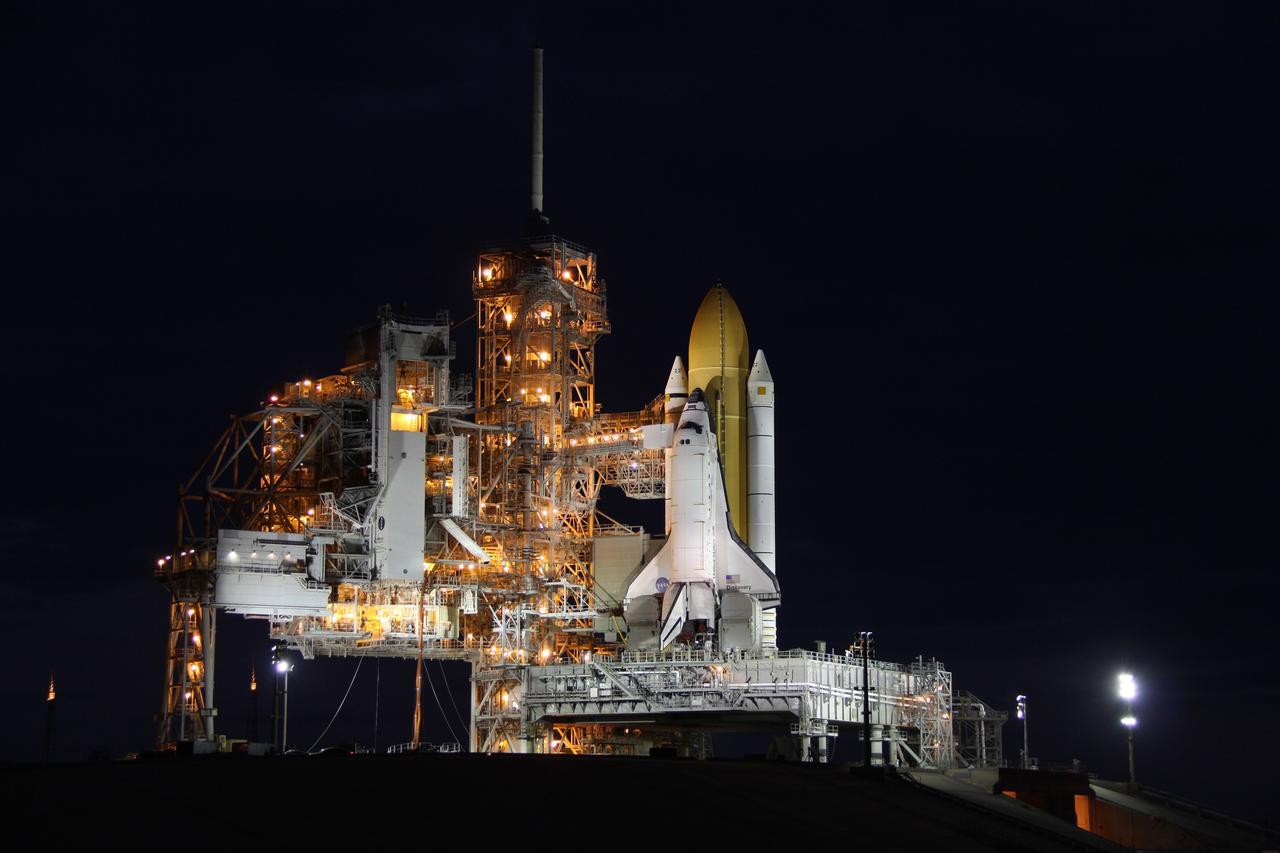
CAPE CANAVERAL, Fla. -- At NASA's Kennedy Space Center in Florida, the STS-133 payload canister is lifted into the rotating service structure on Launch Pad 39A. The payload then will be moved into space shuttle Discovery's payload bay. Discovery and its STS-133 crew will deliver the Permanent Multipurpose Module, packed with supplies and critical spare parts, as well as Robonaut 2, the dexterous humanoid astronaut helper, to the International Space Station. Launch is targeted for 4:40 p.m. EDT, Nov. 1. Photo credit: NASA/Troy Cryder
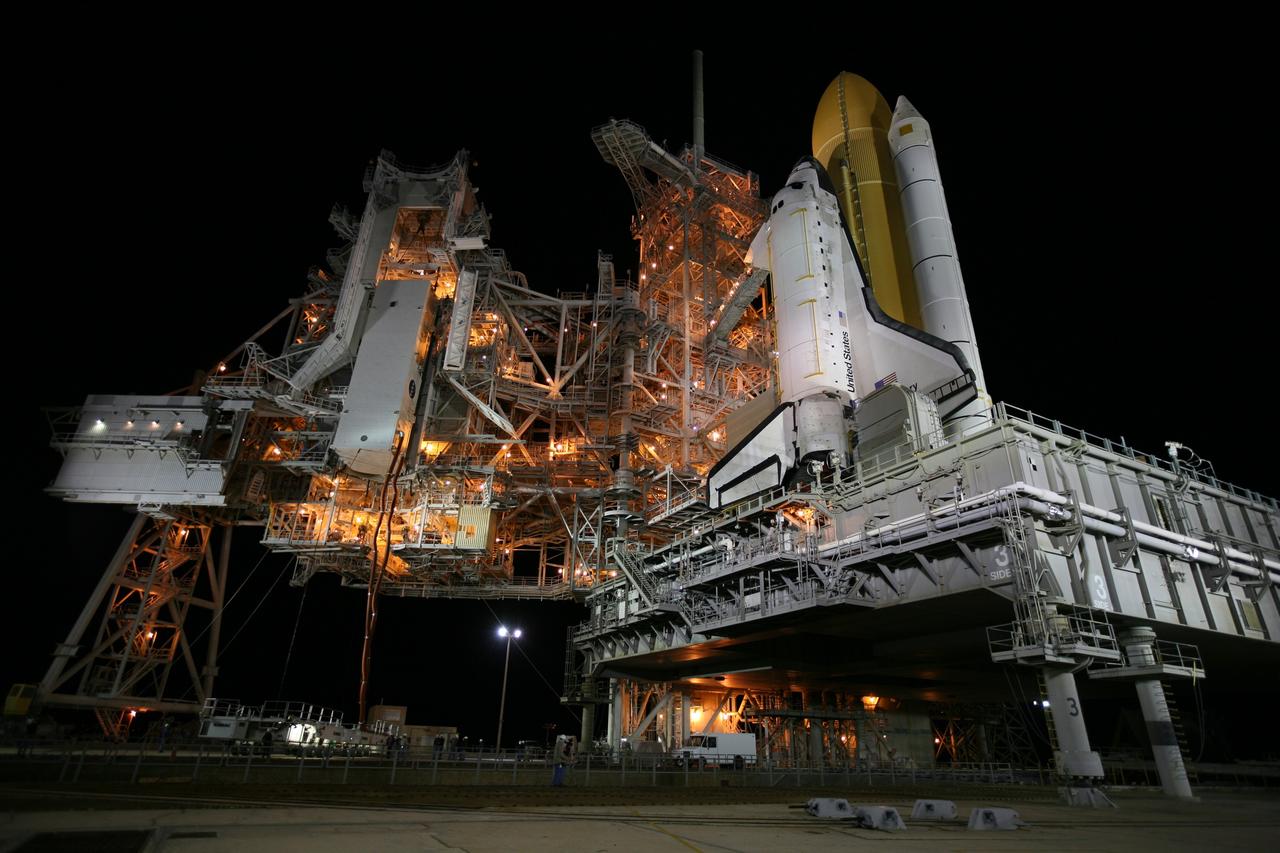
CAPE CANAVERAL, Fla. -- At NASA's Kennedy Space Center in Florida, the STS-133 payload canister is lifted into the rotating service structure on Launch Pad 39A. The payload then will be moved into space shuttle Discovery's payload bay. Discovery and its STS-133 crew will deliver the Permanent Multipurpose Module, packed with supplies and critical spare parts, as well as Robonaut 2, the dexterous humanoid astronaut helper, to the International Space Station. Launch is targeted for 4:40 p.m. EDT, Nov. 1. Photo credit: NASA/Amanda Diller
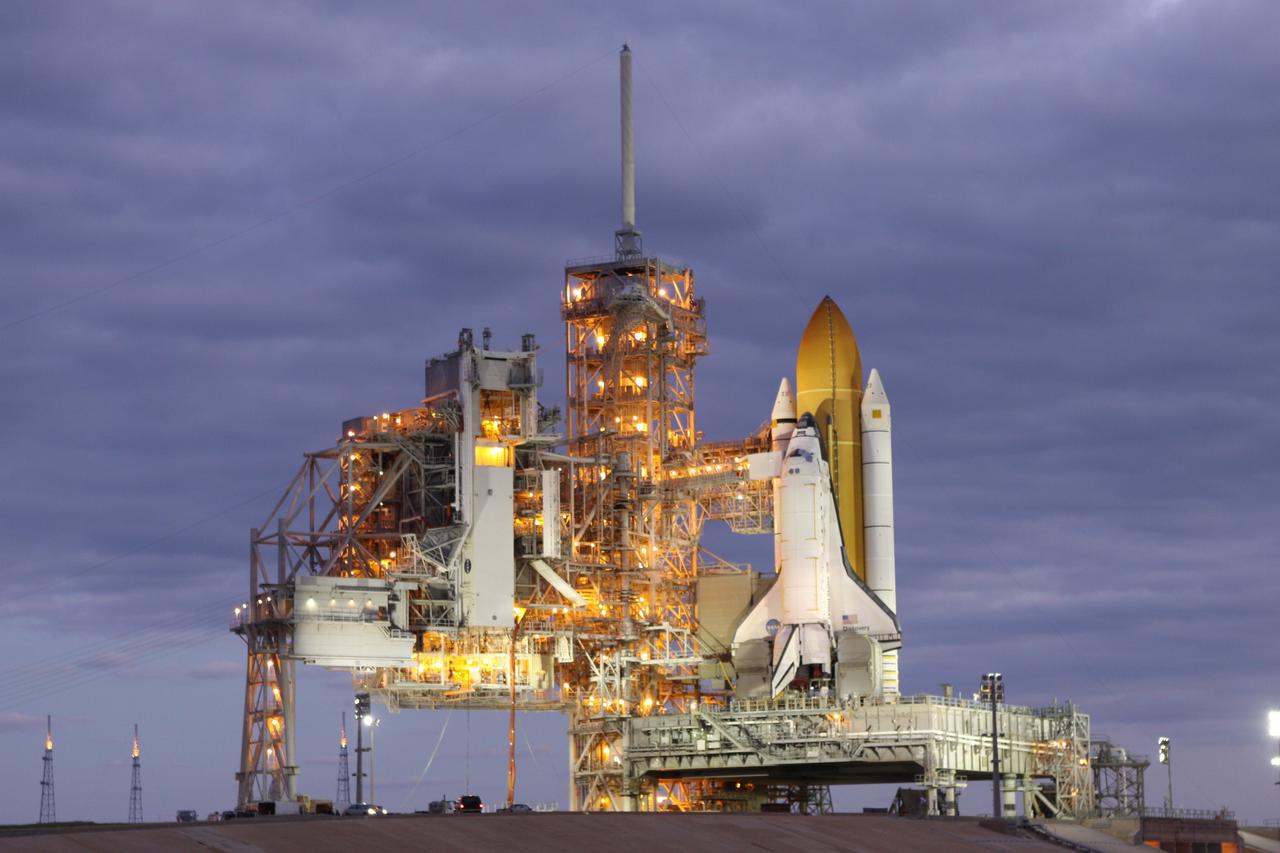
CAPE CANAVERAL, Fla. -- At NASA's Kennedy Space Center in Florida, the STS-133 payload canister is lifted into the rotating service structure on Launch Pad 39A. The payload then will be moved into space shuttle Discovery's payload bay. Discovery and its STS-133 crew will deliver the Permanent Multipurpose Module, packed with supplies and critical spare parts, as well as Robonaut 2, the dexterous humanoid astronaut helper, to the International Space Station. Launch is targeted for 4:40 p.m. EDT, Nov. 1. Photo credit: NASA/Troy Cryder
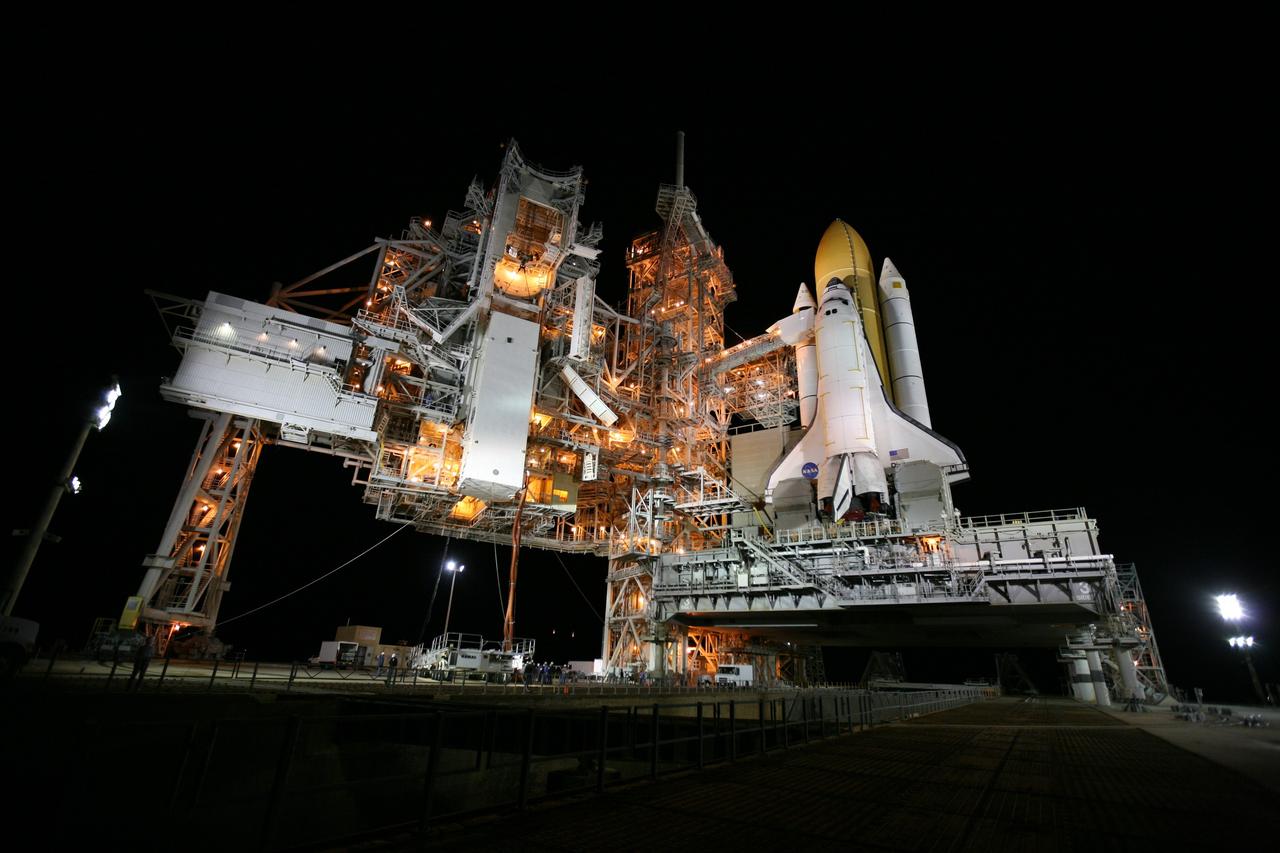
CAPE CANAVERAL, Fla. -- At NASA's Kennedy Space Center in Florida, the STS-133 payload canister is lifted into the rotating service structure on Launch Pad 39A. The payload then will be moved into space shuttle Discovery's payload bay. Discovery and its STS-133 crew will deliver the Permanent Multipurpose Module, packed with supplies and critical spare parts, as well as Robonaut 2, the dexterous humanoid astronaut helper, to the International Space Station. Launch is targeted for 4:40 p.m. EDT, Nov. 1. Photo credit: NASA/Amanda Diller
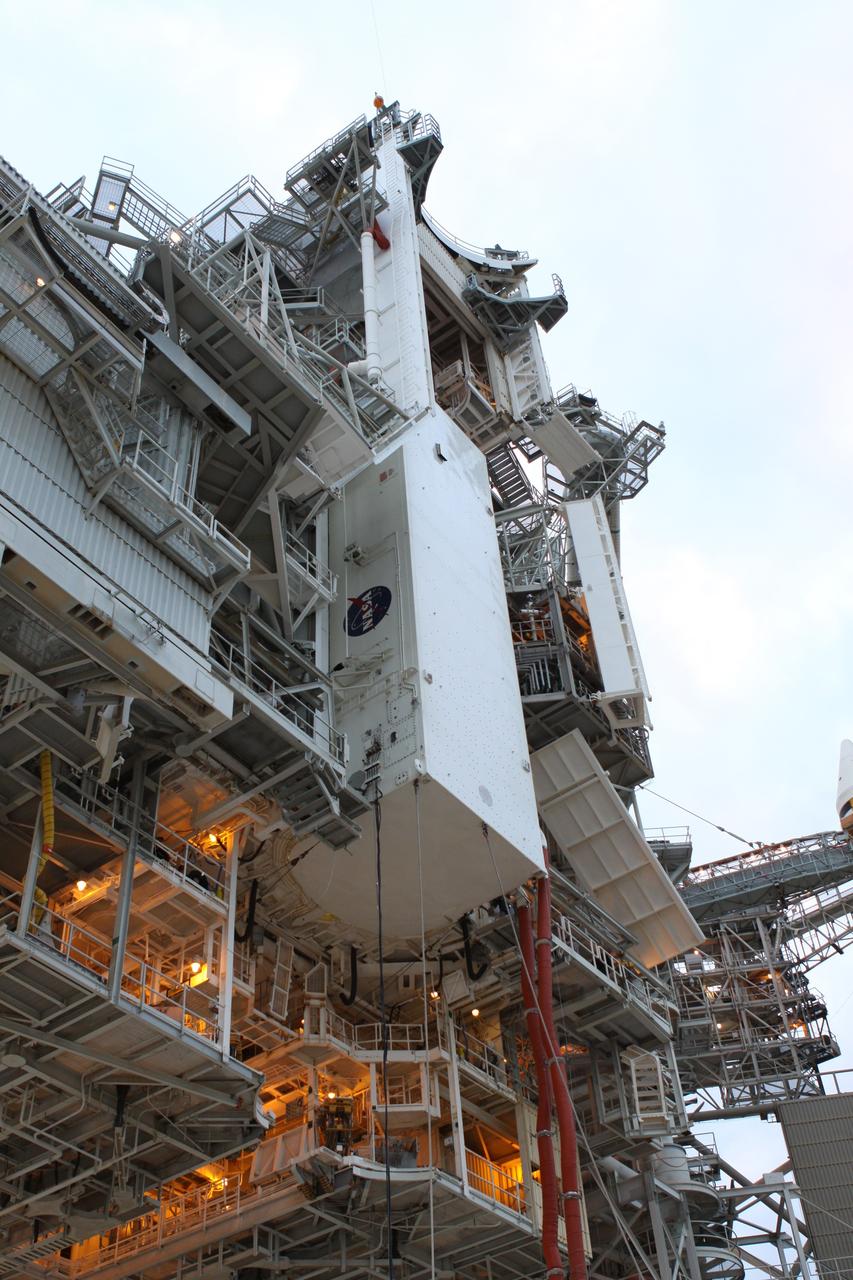
CAPE CANAVERAL, Fla. -- At NASA's Kennedy Space Center in Florida, the STS-133 payload canister now is in the rotating service structure on Launch Pad 39A. The payload then will be moved into space shuttle Discovery's payload bay. Discovery and its STS-133 crew will deliver the Permanent Multipurpose Module, packed with supplies and critical spare parts, as well as Robonaut 2, the dexterous humanoid astronaut helper, to the International Space Station. Launch is targeted for 4:40 p.m. EDT, Nov. 1. Photo credit: NASA/Troy Cryder
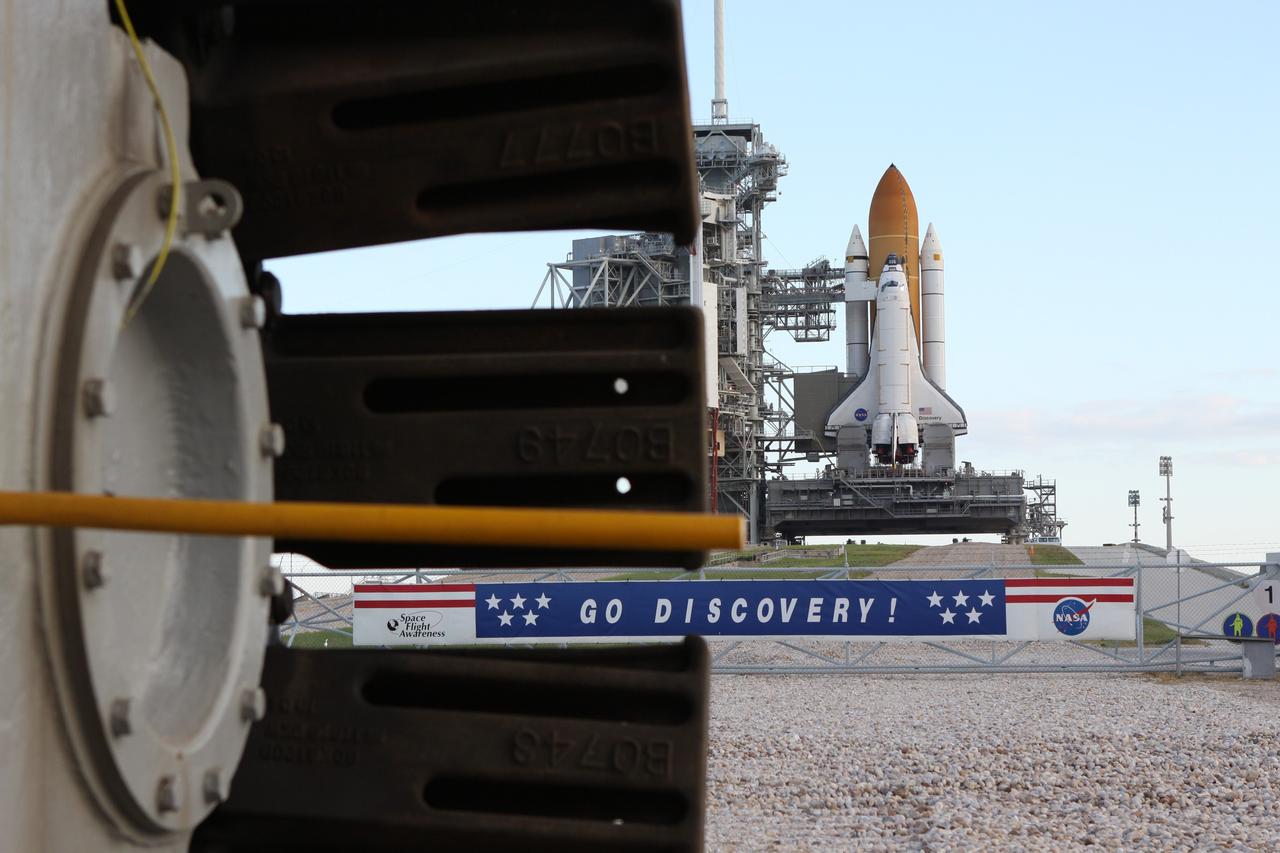
CAPE CANAVERAL, Fla. -- At NASA's Kennedy Space Center in Florida, the STS-133 payload canister now is in the rotating service structure on Launch Pad 39A. A sign hanging on the fence in front of the pad entrance supporting space shuttle Discovery is seen through the tred from a crawler-transporter. The payload then will be moved into space shuttle Discovery's payload bay. Discovery and its STS-133 crew will deliver the Permanent Multipurpose Module, packed with supplies and critical spare parts, as well as Robonaut 2, the dexterous humanoid astronaut helper, to the International Space Station. Launch is targeted for 4:40 p.m. EDT, Nov. 1. Photo credit: NASA/Troy Cryder
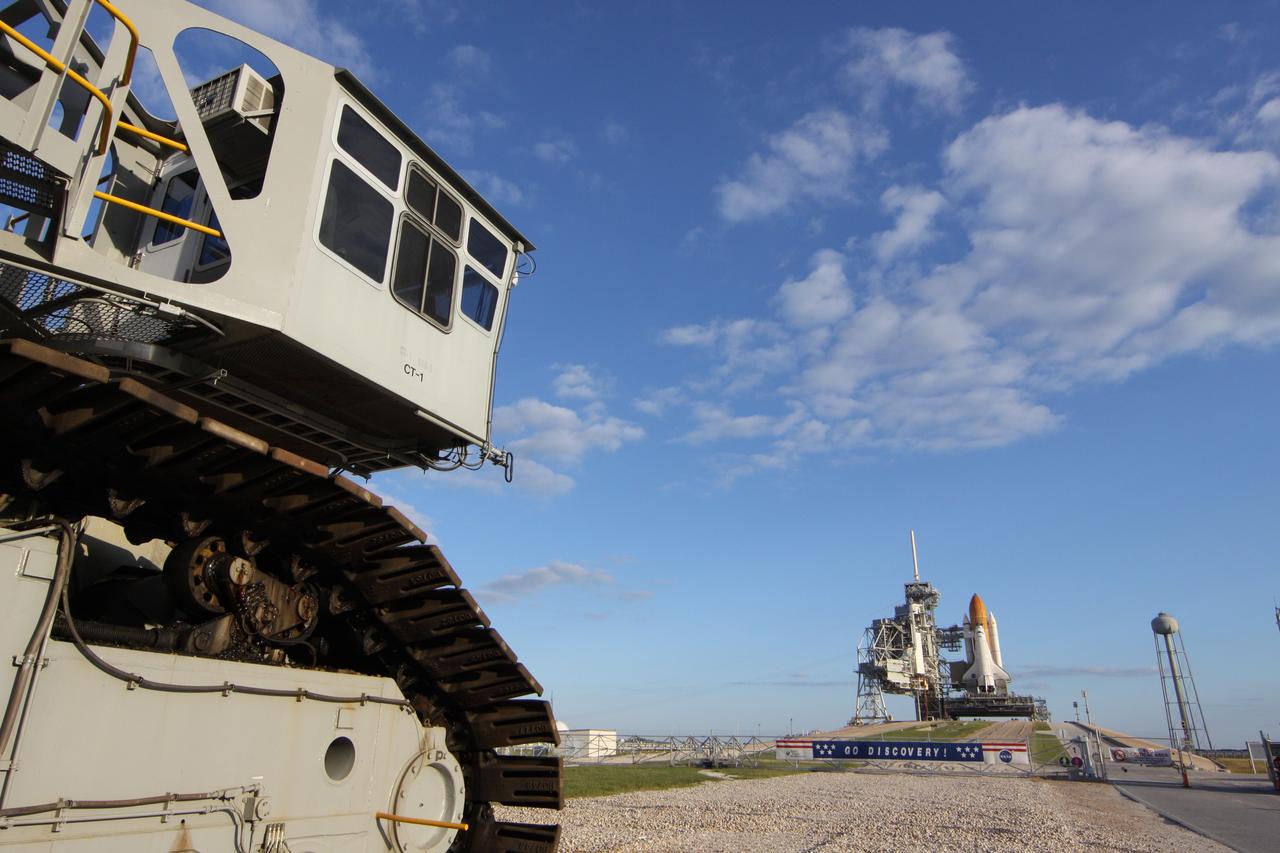
CAPE CANAVERAL, Fla. -- At NASA's Kennedy Space Center in Florida, the STS-133 payload canister now is in the rotating service structure on Launch Pad 39A. A crawler-transporter sits to the left of a sign hanging on the fence in front of the pad entrance supporting space shuttle Discovery. The payload then will be moved into space shuttle Discovery's payload bay. Discovery and its STS-133 crew will deliver the Permanent Multipurpose Module, packed with supplies and critical spare parts, as well as Robonaut 2, the dexterous humanoid astronaut helper, to the International Space Station. Launch is targeted for 4:40 p.m. EDT, Nov. 1. Photo credit: NASA/Troy Cryder
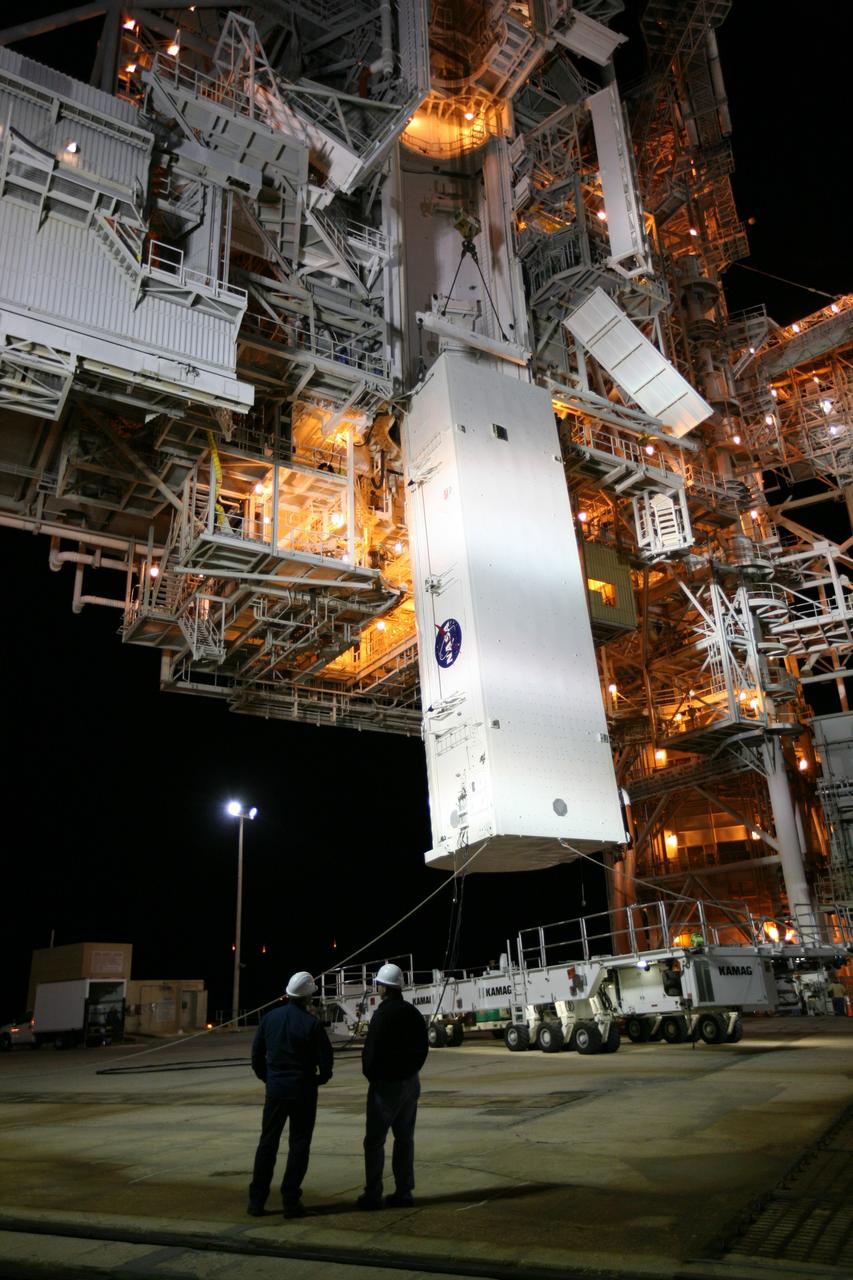
CAPE CANAVERAL, Fla. -- At NASA's Kennedy Space Center in Florida, workers begin the process of lifting the STS-133 payload canister off its transport vehicle toward the rotating service structure on Launch Pad 39A. The payload then will be moved into space shuttle Discovery's payload bay. Discovery and its STS-133 crew will deliver the Permanent Multipurpose Module, packed with supplies and critical spare parts, as well as Robonaut 2, the dexterous humanoid astronaut helper, to the International Space Station. Launch is targeted for 4:40 p.m. EDT, Nov. 1. Photo credit: NASA/Amanda Diller
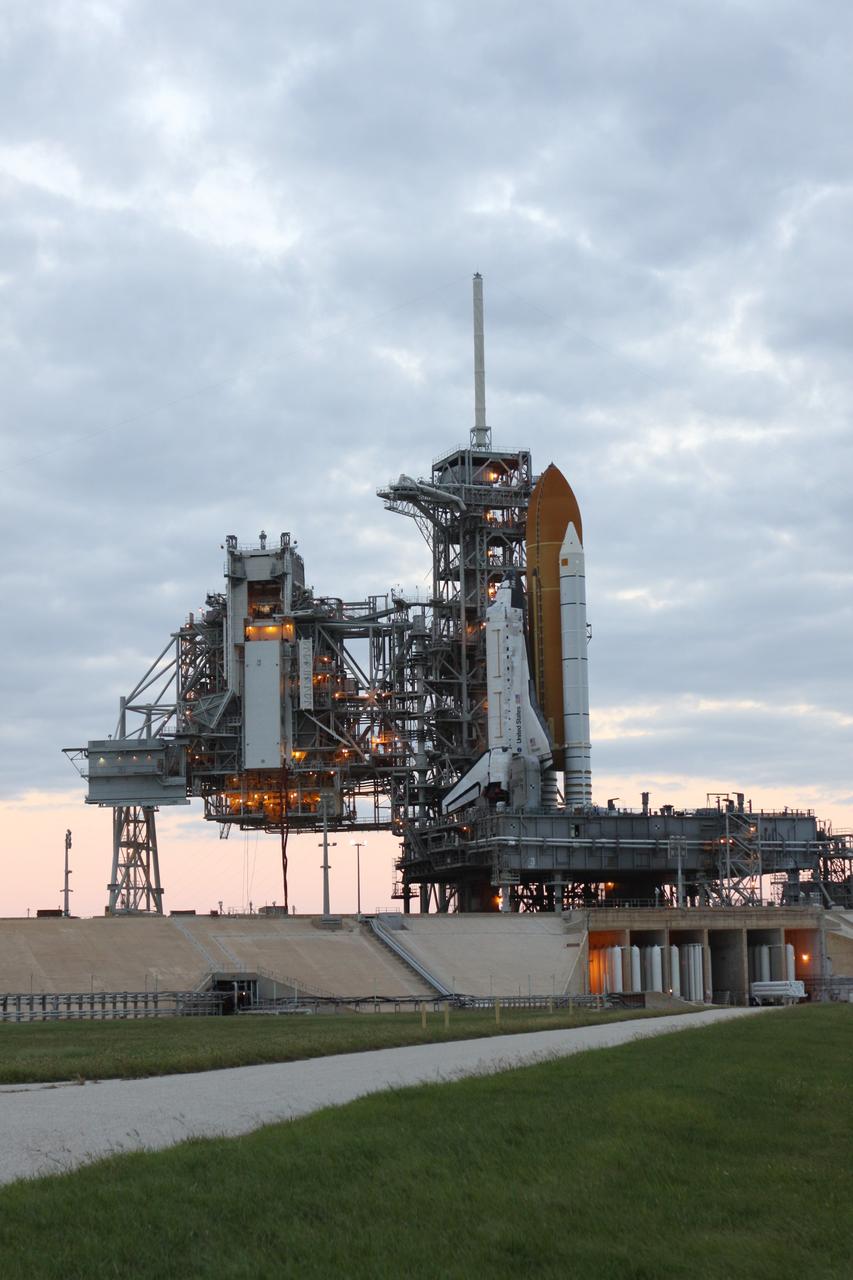
CAPE CANAVERAL, Fla. -- As dawn approaches at NASA's Kennedy Space Center in Florida, the STS-133 payload canister now is in the rotating service structure on Launch Pad 39A. The payload then will be moved into space shuttle Discovery's payload bay. Discovery and its STS-133 crew will deliver the Permanent Multipurpose Module, packed with supplies and critical spare parts, as well as Robonaut 2, the dexterous humanoid astronaut helper, to the International Space Station. Launch is targeted for 4:40 p.m. EDT, Nov. 1. Photo credit: NASA/Troy Cryder
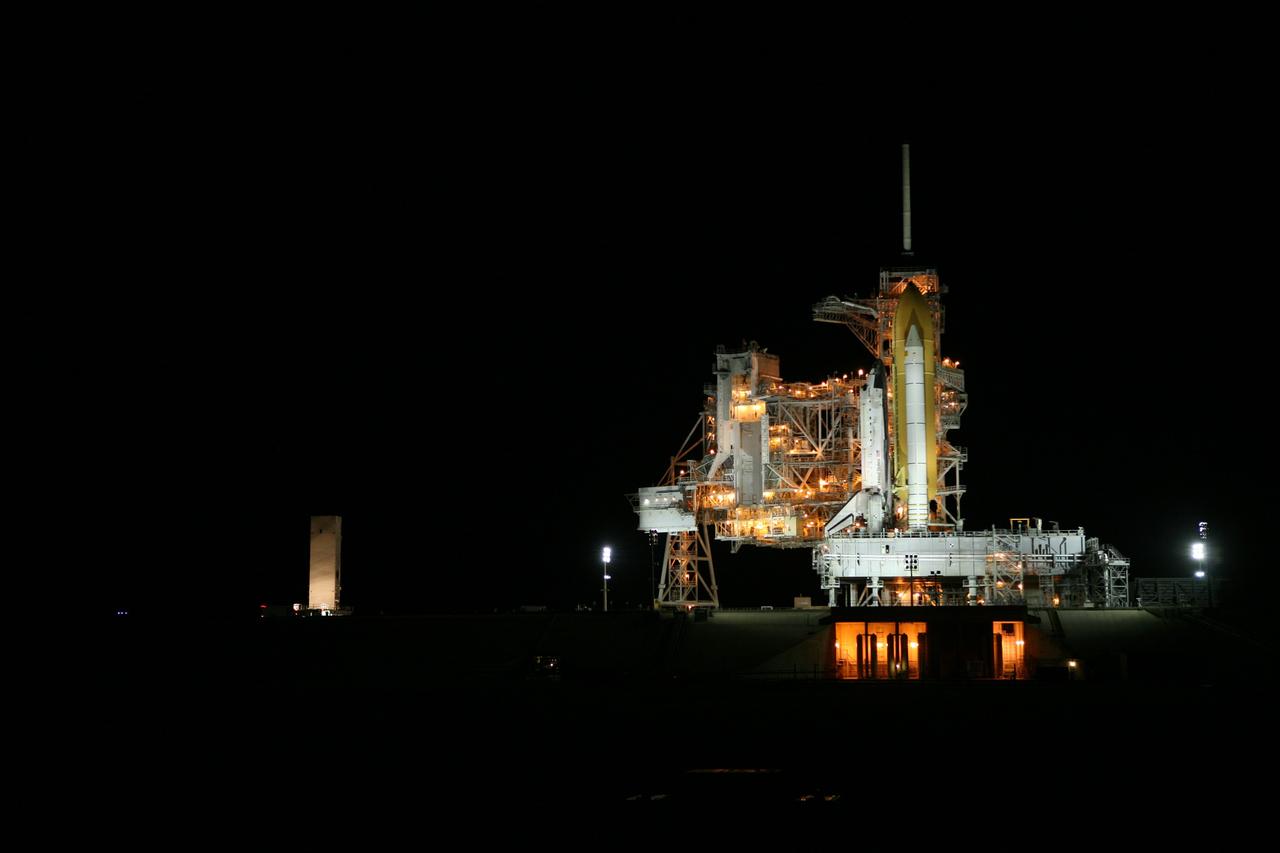
CAPE CANAVERAL, Fla. -- At NASA's Kennedy Space Center in Florida, the STS-133 payload canister approaches Launch Pad 39A where it will be lifted into the rotating service structure. The payload then will be moved into space shuttle Discovery's payload bay. Discovery and its STS-133 crew will deliver the Permanent Multipurpose Module, packed with supplies and critical spare parts, as well as Robonaut 2, the dexterous humanoid astronaut helper, to the International Space Station. Launch is targeted for 4:40 p.m. EDT, Nov. 1. Photo credit: NASA/Amanda Diller
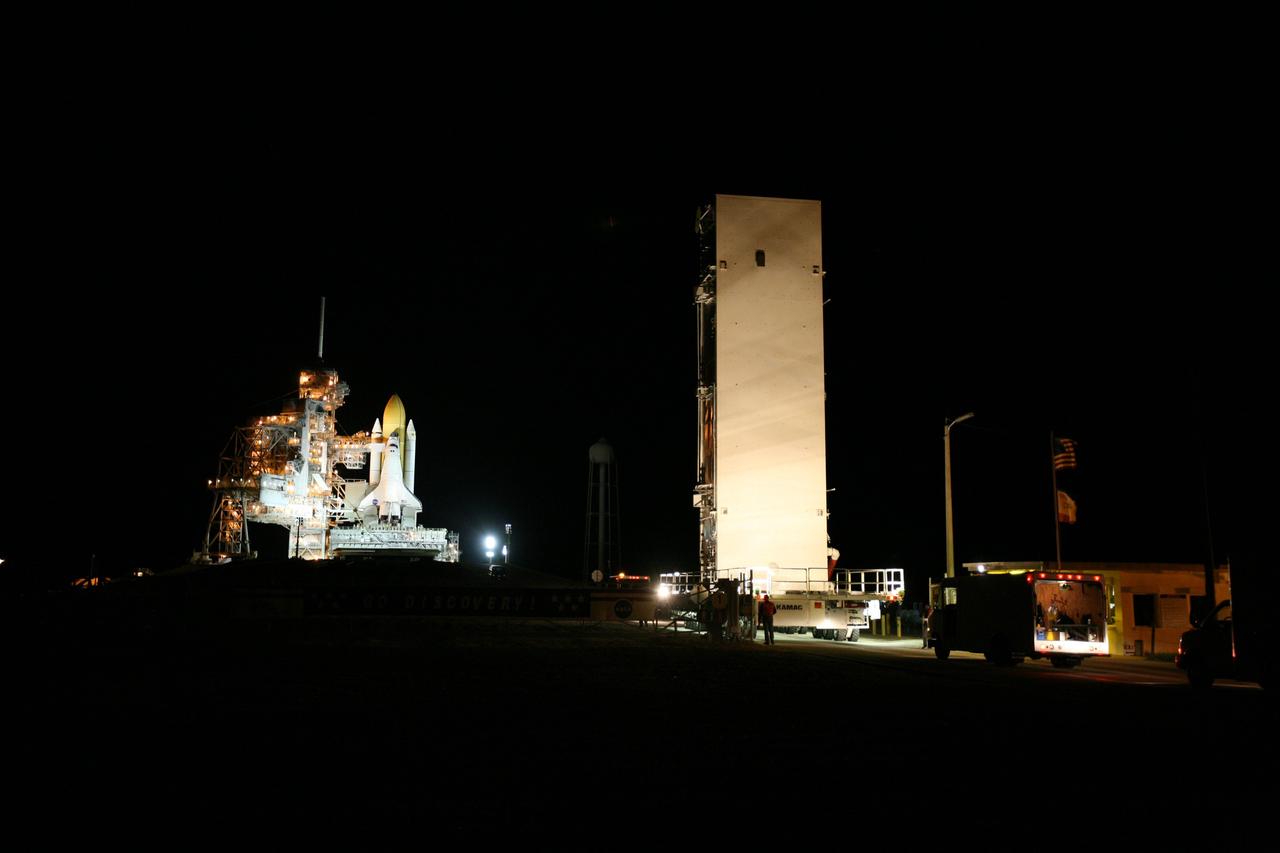
CAPE CANAVERAL, Fla. -- At NASA's Kennedy Space Center in Florida, the STS-133 payload canister approaches Launch Pad 39A where it will be lifted into the rotating service structure. The payload then will be moved into space shuttle Discovery's payload bay. Discovery and its STS-133 crew will deliver the Permanent Multipurpose Module, packed with supplies and critical spare parts, as well as Robonaut 2, the dexterous humanoid astronaut helper, to the International Space Station. Launch is targeted for 4:40 p.m. EDT, Nov. 1. Photo credit: NASA/Amanda Diller
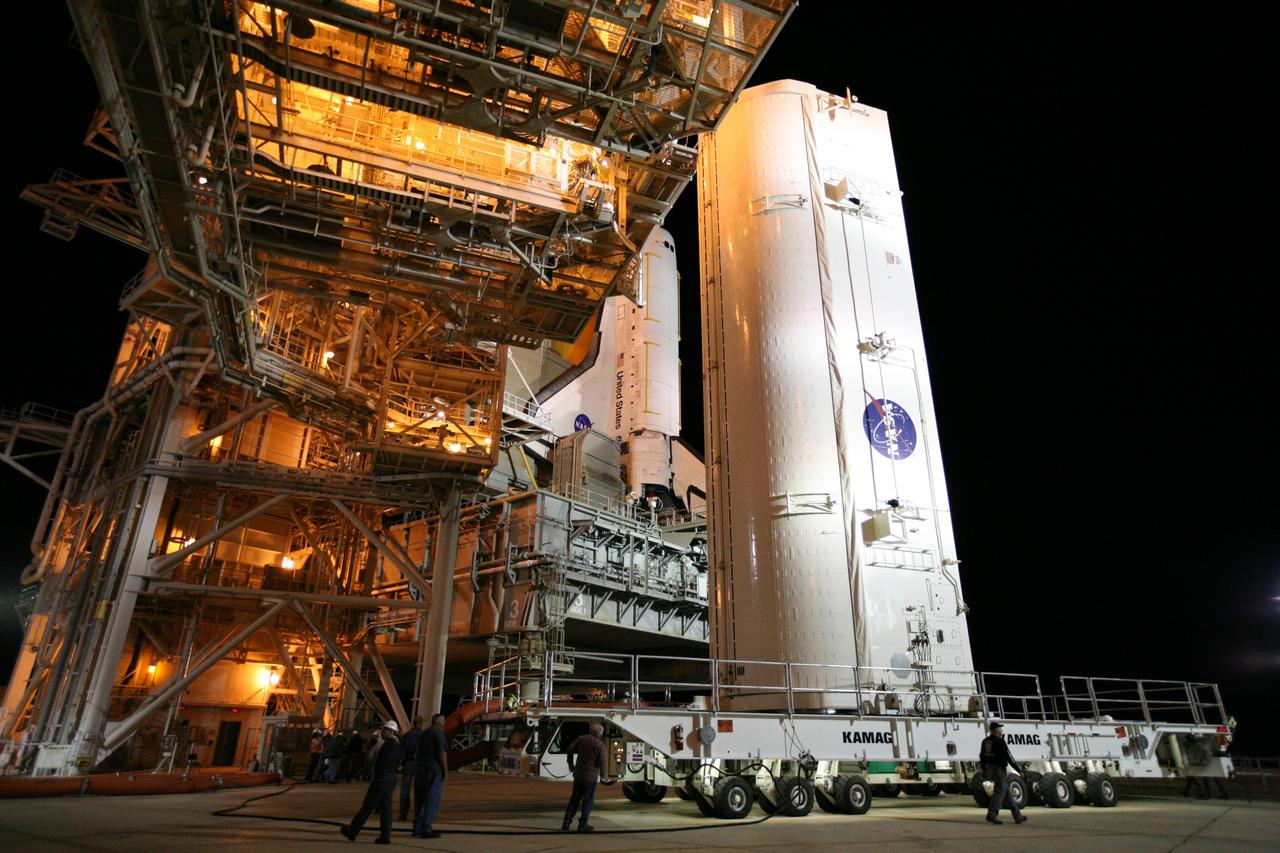
CAPE CANAVERAL, Fla. -- At NASA's Kennedy Space Center in Florida, workers monitor the arrival of the STS-133 payload canister to Launch Pad 39A where it will be lifted into the rotating service structure. The payload then will be moved into space shuttle Discovery's payload bay. Discovery and its STS-133 crew will deliver the Permanent Multipurpose Module, packed with supplies and critical spare parts, as well as Robonaut 2, the dexterous humanoid astronaut helper, to the International Space Station. Launch is targeted for 4:40 p.m. EDT, Nov. 1. Photo credit: NASA/Amanda Diller
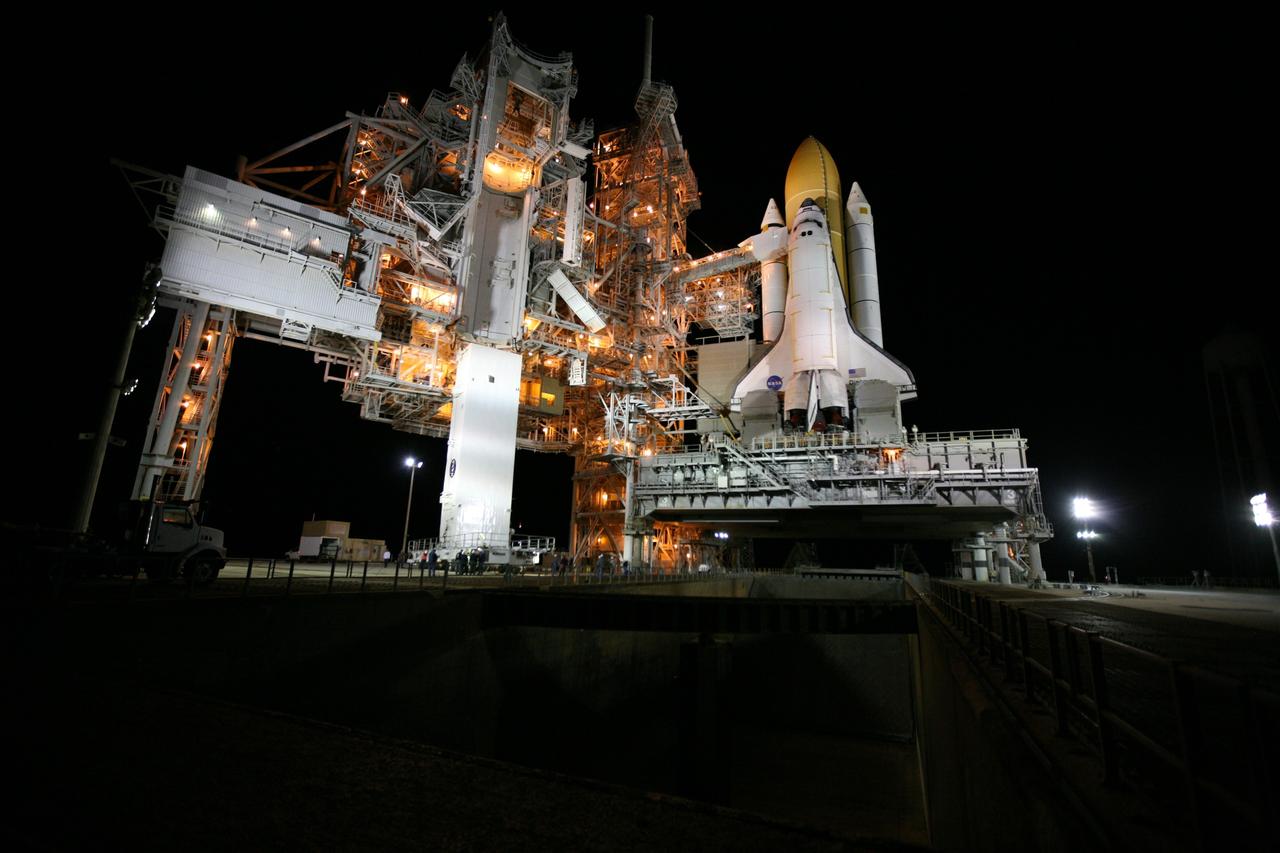
CAPE CANAVERAL, Fla. -- At NASA's Kennedy Space Center in Florida, workers monitor the arrival of the STS-133 payload canister to Launch Pad 39A where it will be lifted into the rotating service structure. The payload then will be moved into space shuttle Discovery's payload bay. Discovery and its STS-133 crew will deliver the Permanent Multipurpose Module, packed with supplies and critical spare parts, as well as Robonaut 2, the dexterous humanoid astronaut helper, to the International Space Station. Launch is targeted for 4:40 p.m. EDT, Nov. 1. Photo credit: NASA/Amanda Diller
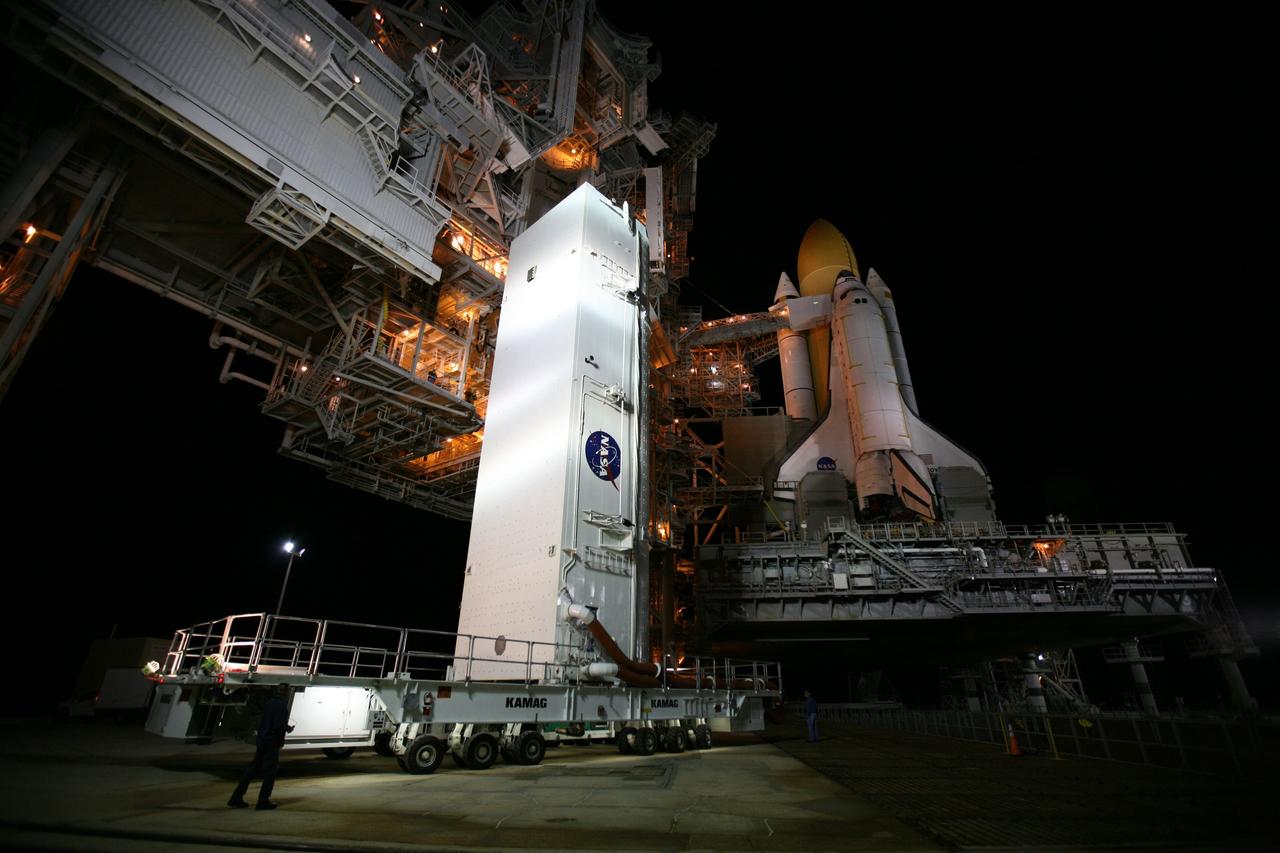
CAPE CANAVERAL, Fla. -- At NASA's Kennedy Space Center in Florida, the STS-133 payload canister approaches Launch Pad 39A where it will be lifted into the rotating service structure. The payload then will be moved into space shuttle Discovery's payload bay. Discovery and its STS-133 crew will deliver the Permanent Multipurpose Module, packed with supplies and critical spare parts, as well as Robonaut 2, the dexterous humanoid astronaut helper, to the International Space Station. Launch is targeted for 4:40 p.m. EDT, Nov. 1. Photo credit: NASA/Amanda Diller
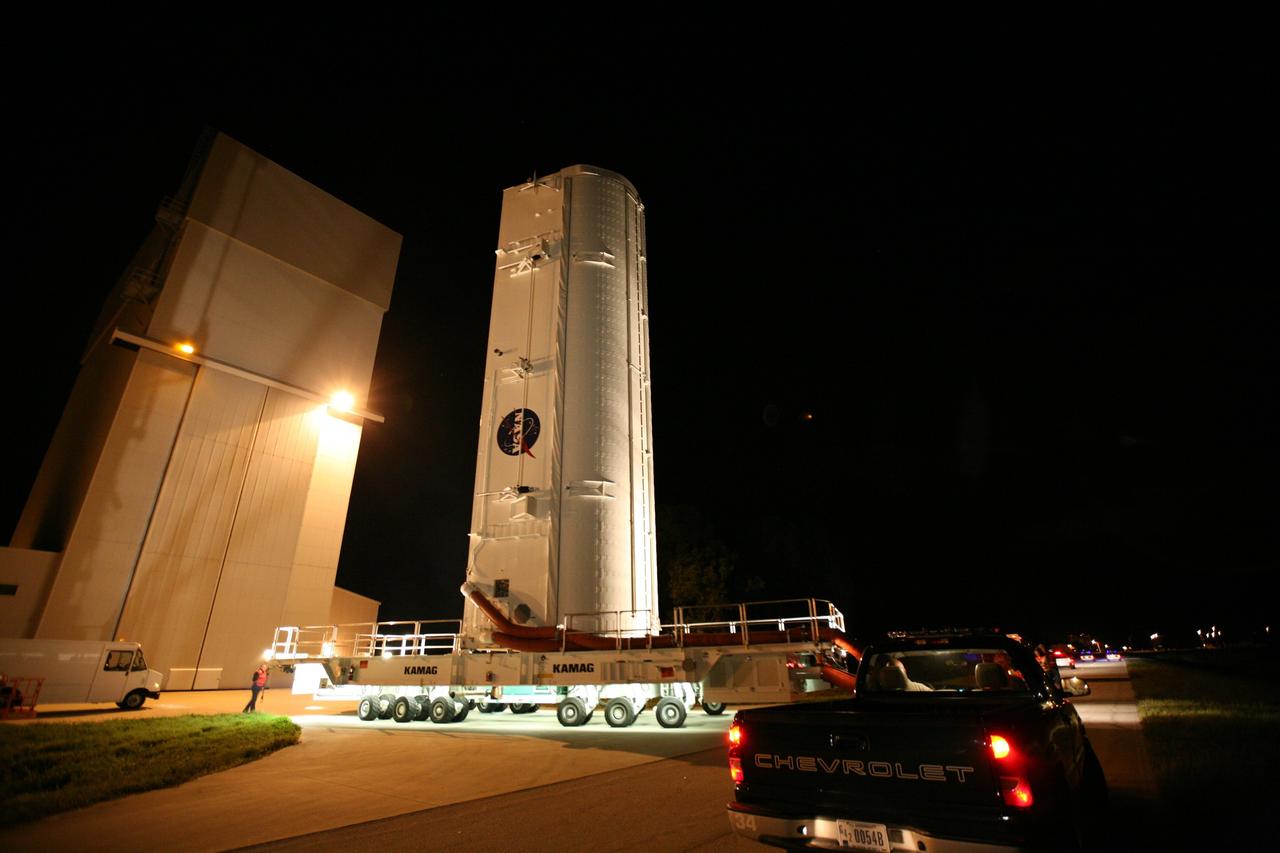
CAPE CANAVERAL, Fla. -- At NASA's Kennedy Space Center in Florida, the STS-133 payload canister leaves the Canister Rotation Facility on a transport vehicle headed for Launch Pad 39A where it will be lifted into the rotating service structure. The payload then will be moved into space shuttle Discovery's payload bay. Discovery and its STS-133 crew will deliver the Permanent Multipurpose Module, packed with supplies and critical spare parts, as well as Robonaut 2, the dexterous humanoid astronaut helper, to the International Space Station. Launch is targeted for 4:40 p.m. EDT, Nov. 1. Photo credit: NASA/Amanda Diller
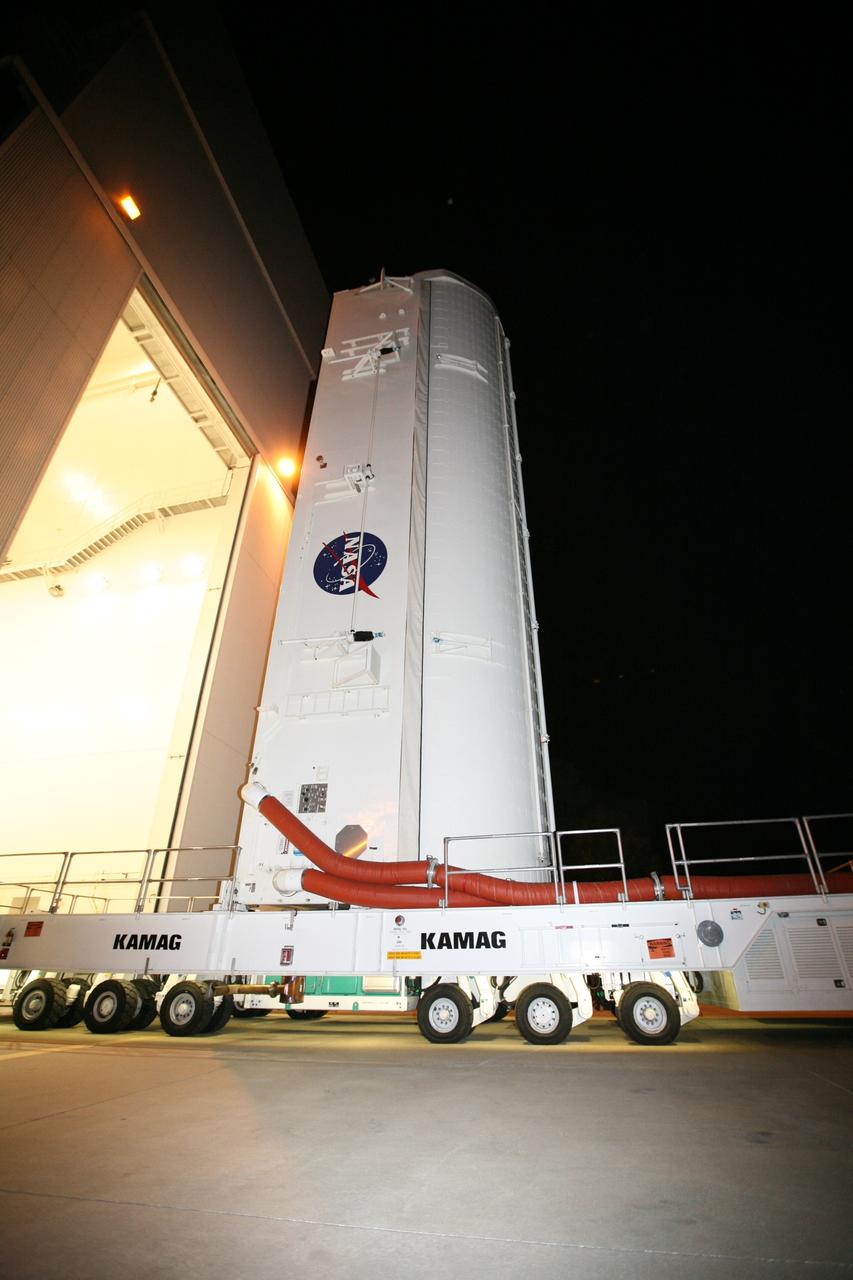
CAPE CANAVERAL, Fla. -- At NASA's Kennedy Space Center in Florida, the STS-133 payload canister leaves the Canister Rotation Facility on a transport vehicle headed for Launch Pad 39A where it will be lifted into the rotating service structure. The payload then will be moved into space shuttle Discovery's payload bay. Discovery and its STS-133 crew will deliver the Permanent Multipurpose Module, packed with supplies and critical spare parts, as well as Robonaut 2, the dexterous humanoid astronaut helper, to the International Space Station. Launch is targeted for 4:40 p.m. EDT, Nov. 1. Photo credit: NASA/Amanda Diller
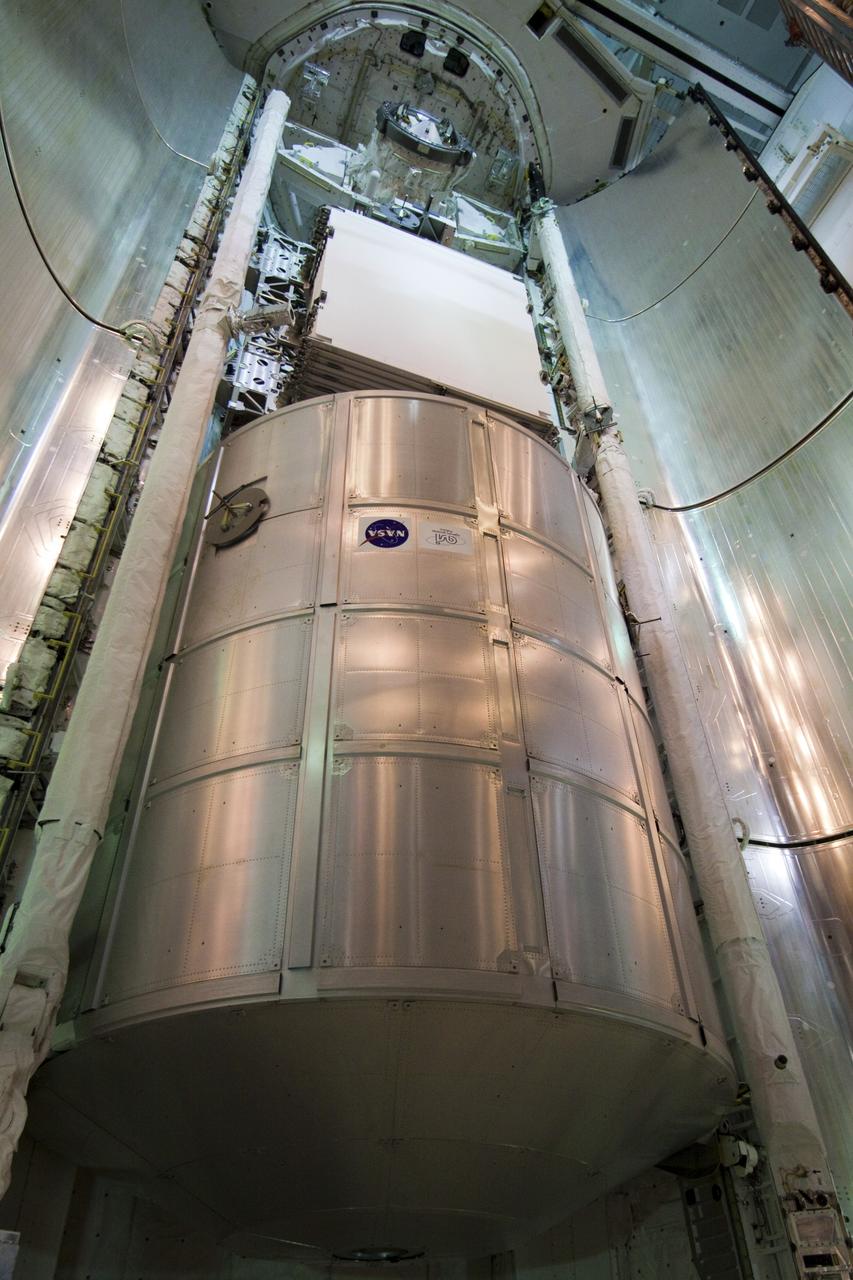
CAPE CANAVERAL, Fla. -- On Launch Pad 39A at NASA's Kennedy Space Center in Florida, the clamshell doors of space shuttle Discovery's payload bay are ready to be closed in preparation for the STS-133 launch to the International Space Station. Targeted to launch Nov. 1, STS-133 will carry the Permanent Multipurpose Module (PMM) packed with supplies and critical spare parts, as well as Robonaut 2 (R2) to the station. Photo credit: NASA/Jack Pfaller
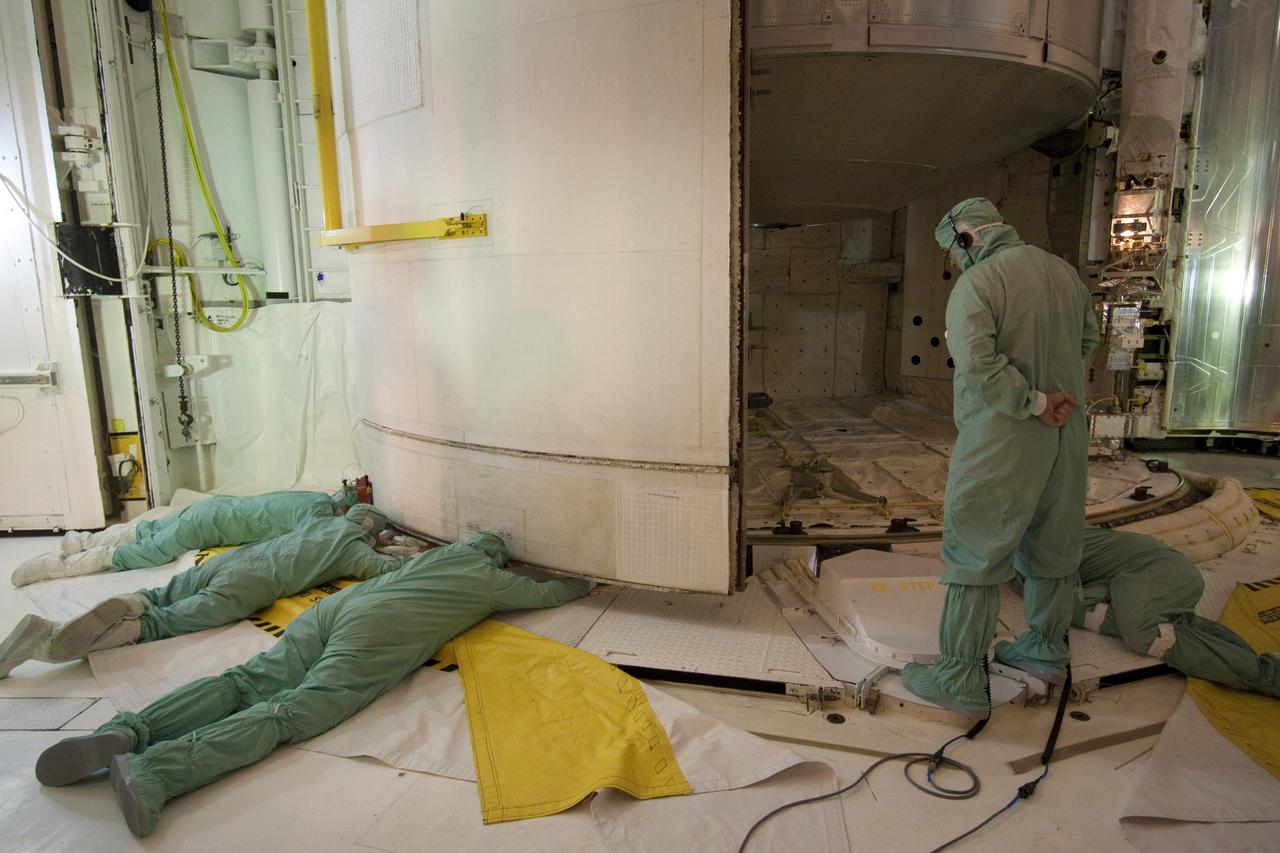
CAPE CANAVERAL, Fla. -- On Launch Pad 39A at NASA's Kennedy Space Center in Florida, technicians close the clamshell doors of space shuttle Discovery's payload bay in preparation for the STS-133 launch to the International Space Station. Targeted to launch Nov. 1, STS-133 will carry the Permanent Multipurpose Module (PMM) packed with supplies and critical spare parts, as well as Robonaut 2 (R2) to the station. Photo credit: NASA/Jack Pfaller
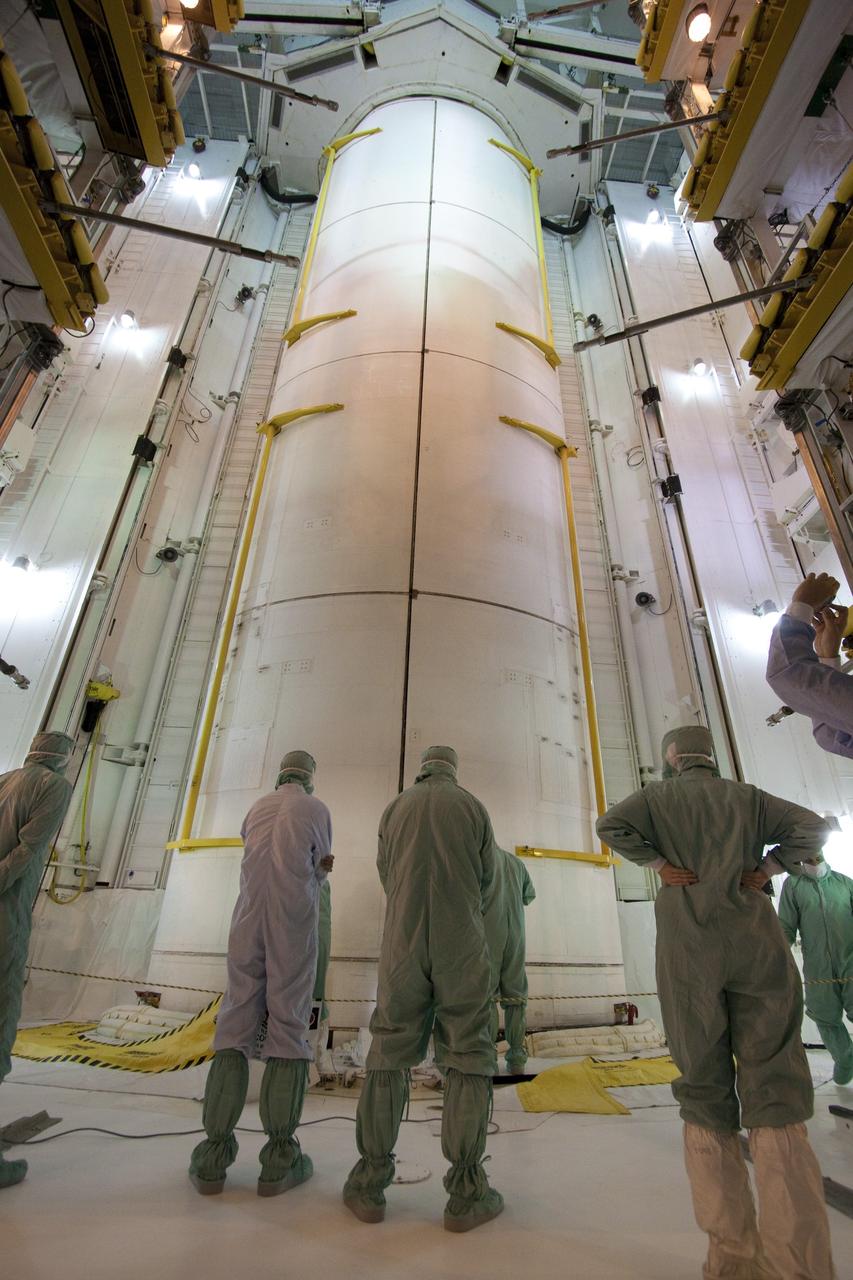
CAPE CANAVERAL, Fla. -- On Launch Pad 39A at NASA's Kennedy Space Center in Florida, the clamshell doors of space shuttle Discovery's payload bay are closed in preparation for the STS-133 launch to the International Space Station. Targeted to launch Nov. 1, STS-133 will carry the Permanent Multipurpose Module (PMM) packed with supplies and critical spare parts, as well as Robonaut 2 (R2) to the station. Photo credit: NASA/Jack Pfaller
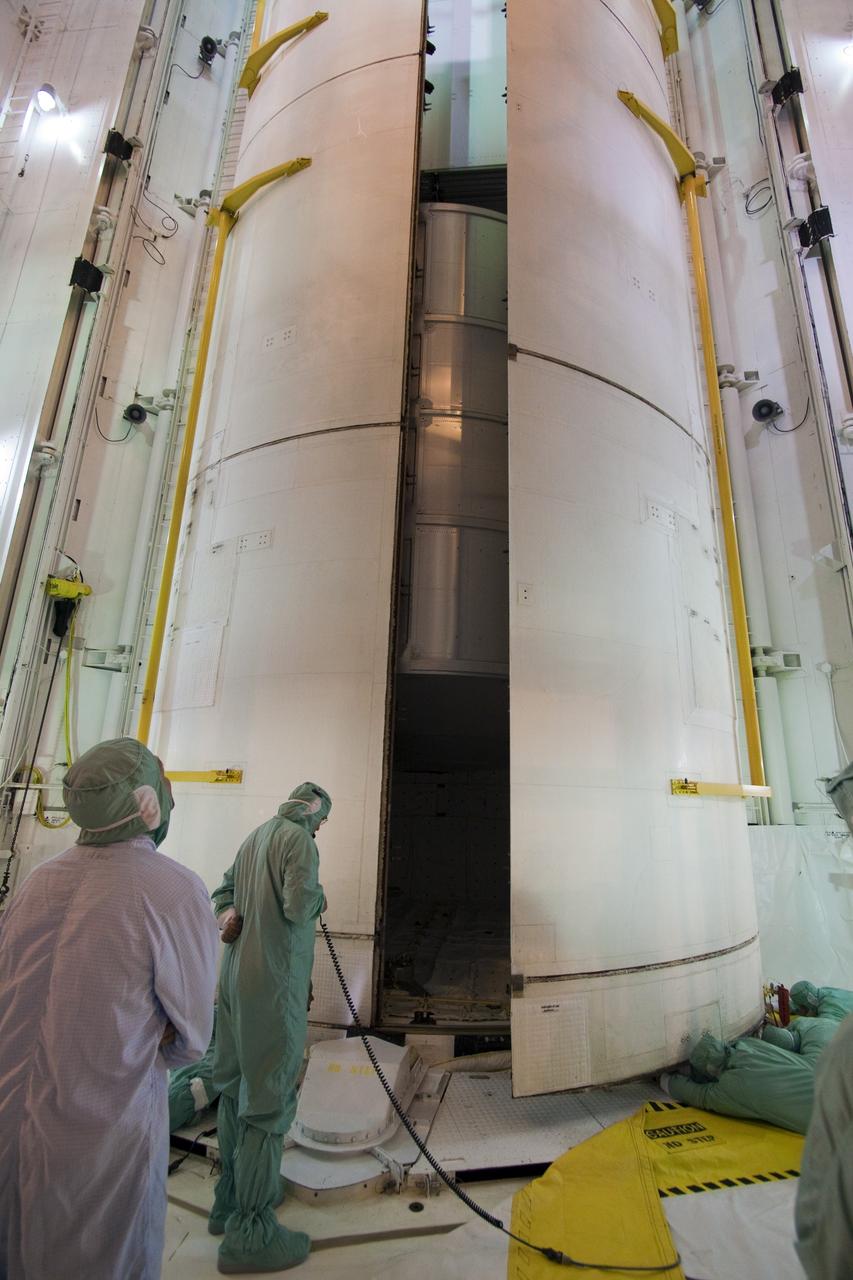
CAPE CANAVERAL, Fla. -- On Launch Pad 39A at NASA's Kennedy Space Center in Florida, technicians close the clamshell doors of space shuttle Discovery's payload bay in preparation for the STS-133 launch to the International Space Station. Targeted to launch Nov. 1, STS-133 will carry the Permanent Multipurpose Module (PMM) packed with supplies and critical spare parts, as well as Robonaut 2 (R2) to the station. Photo credit: NASA/Jack Pfaller
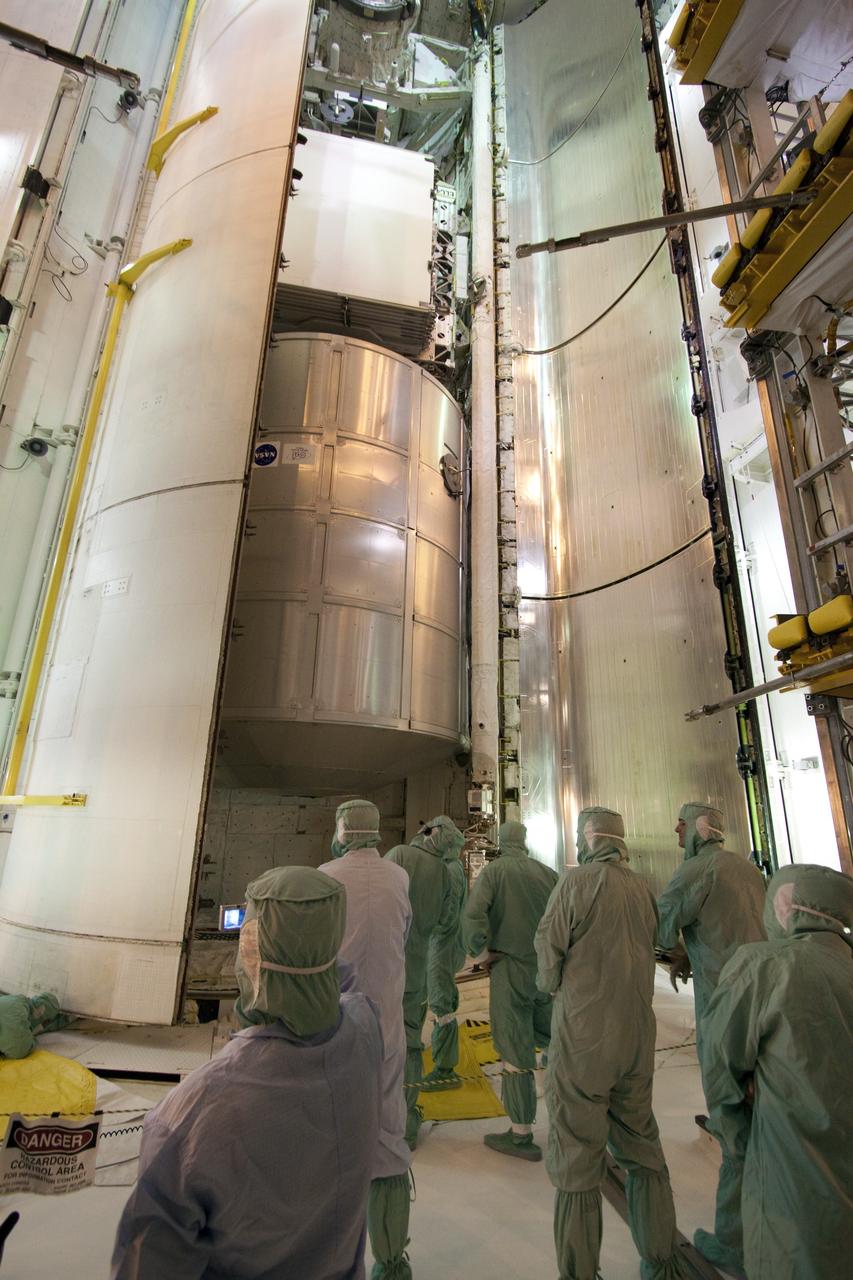
CAPE CANAVERAL, Fla. -- On Launch Pad 39A at NASA's Kennedy Space Center in Florida, technicians close the clamshell doors of space shuttle Discovery's payload bay in preparation for the STS-133 launch to the International Space Station. Targeted to launch Nov. 1, STS-133 will carry the Permanent Multipurpose Module (PMM) packed with supplies and critical spare parts, as well as Robonaut 2 (R2) to the station. Photo credit: NASA/Jack Pfaller
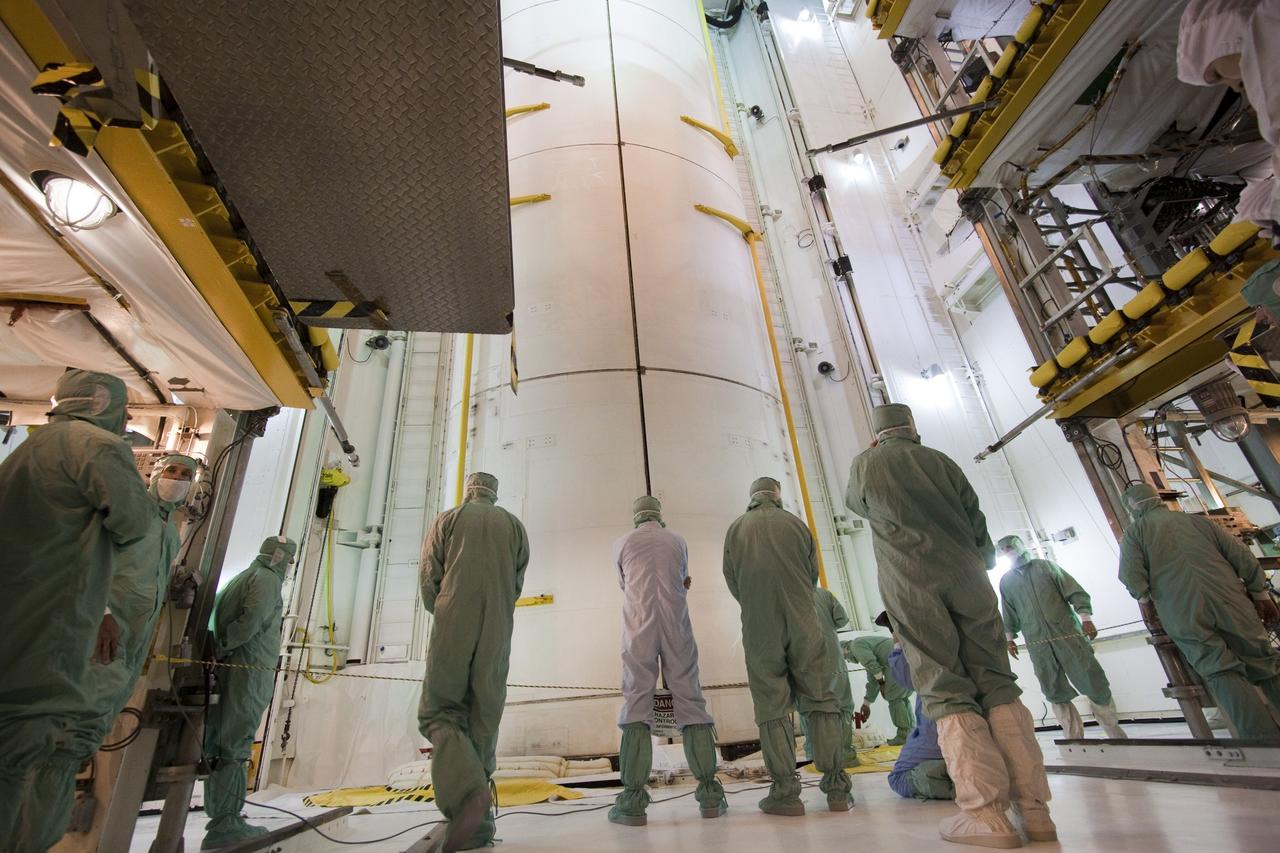
CAPE CANAVERAL, Fla. -- On Launch Pad 39A at NASA's Kennedy Space Center in Florida, the clamshell doors of space shuttle Discovery's payload bay are closed in preparation for the STS-133 launch to the International Space Station. Targeted to launch Nov. 1, STS-133 will carry the Permanent Multipurpose Module (PMM) packed with supplies and critical spare parts, as well as Robonaut 2 (R2) to the station. Photo credit: NASA/Jack Pfaller
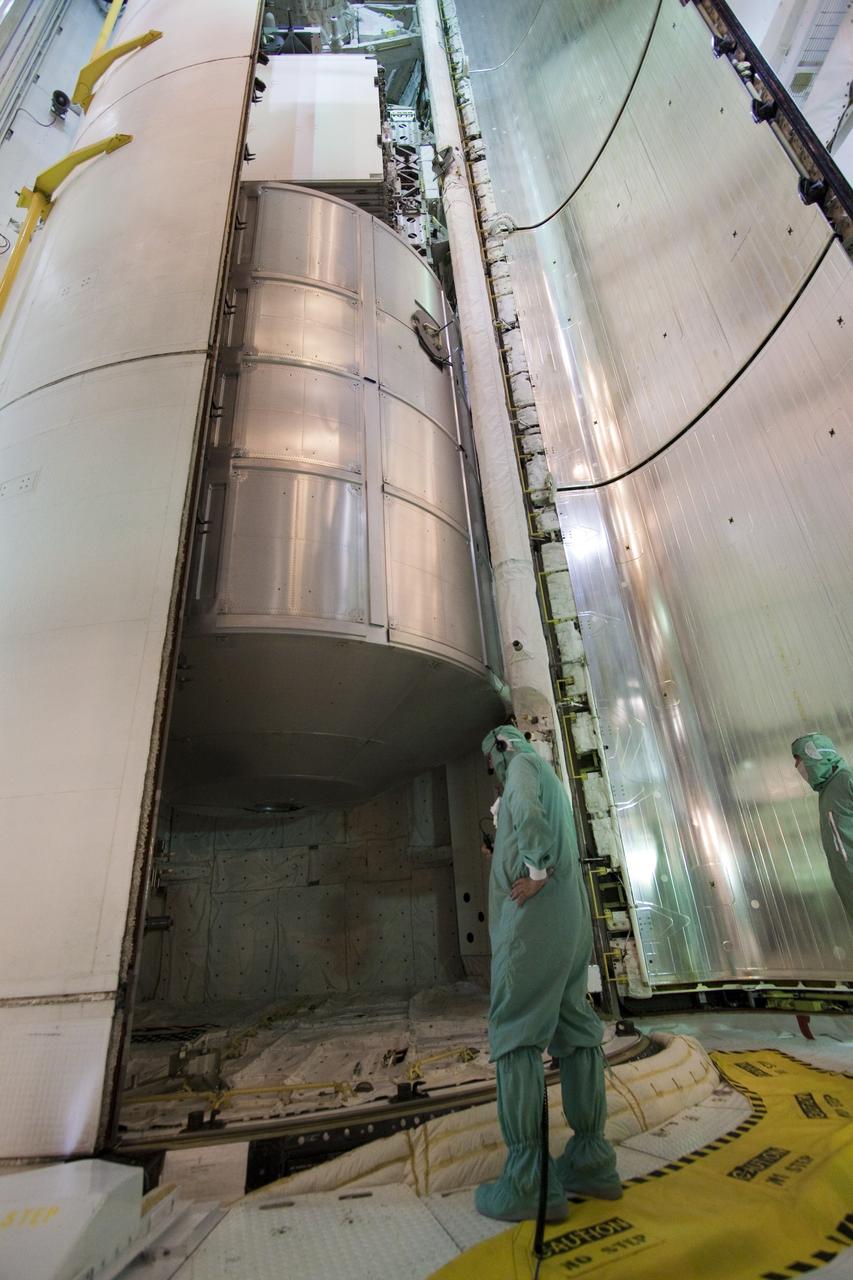
CAPE CANAVERAL, Fla. -- On Launch Pad 39A at NASA's Kennedy Space Center in Florida, technicians close the clamshell doors of space shuttle Discovery's payload bay in preparation for the STS-133 launch to the International Space Station. Targeted to launch Nov. 1, STS-133 will carry the Permanent Multipurpose Module (PMM) packed with supplies and critical spare parts, as well as Robonaut 2 (R2) to the station. Photo credit: NASA/Jack Pfaller
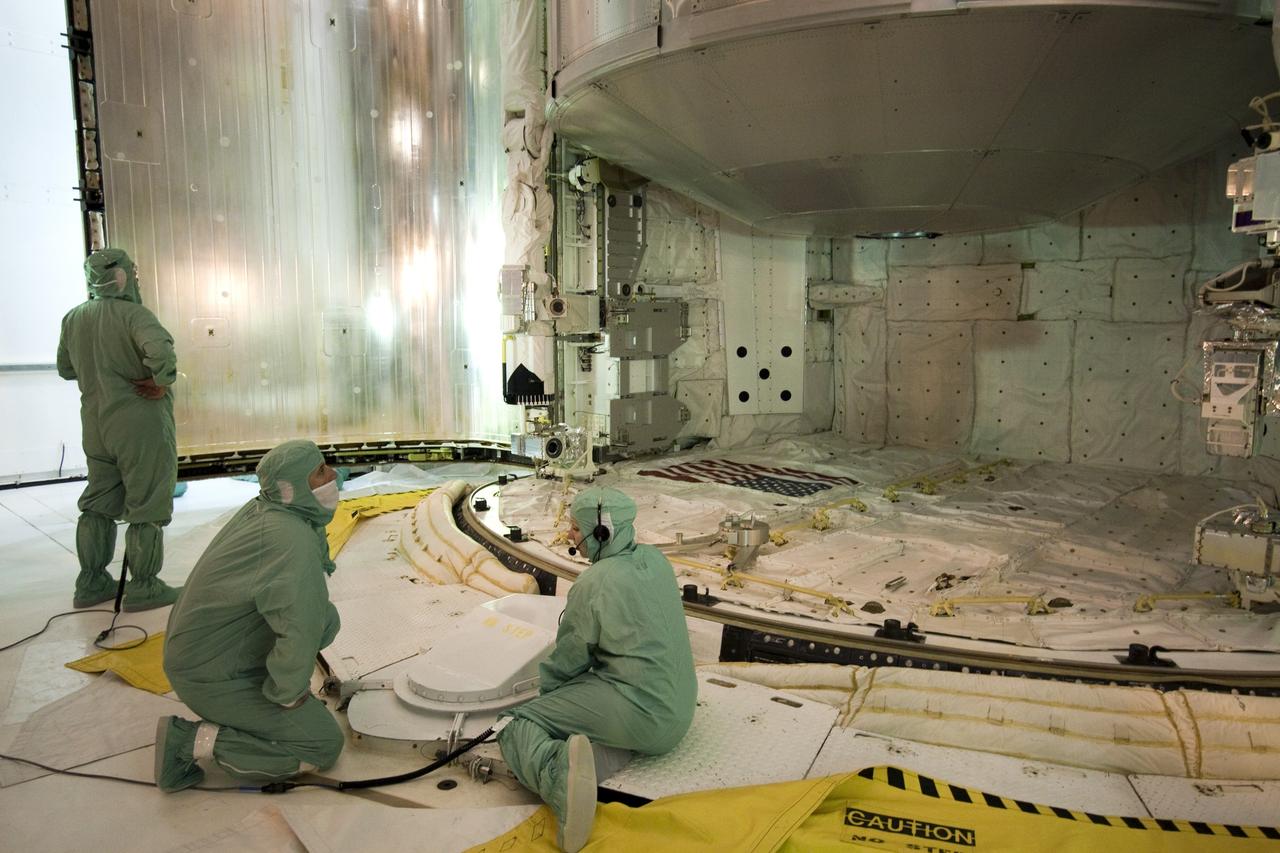
CAPE CANAVERAL, Fla. -- On Launch Pad 39A at NASA's Kennedy Space Center in Florida, technicians prepare to close the clamshell doors of space shuttle Discovery's payload bay in preparation for the STS-133 launch to the International Space Station. Targeted to launch Nov. 1, STS-133 will carry the Permanent Multipurpose Module (PMM) packed with supplies and critical spare parts, as well as Robonaut 2 (R2) to the station. Photo credit: NASA/Jack Pfaller
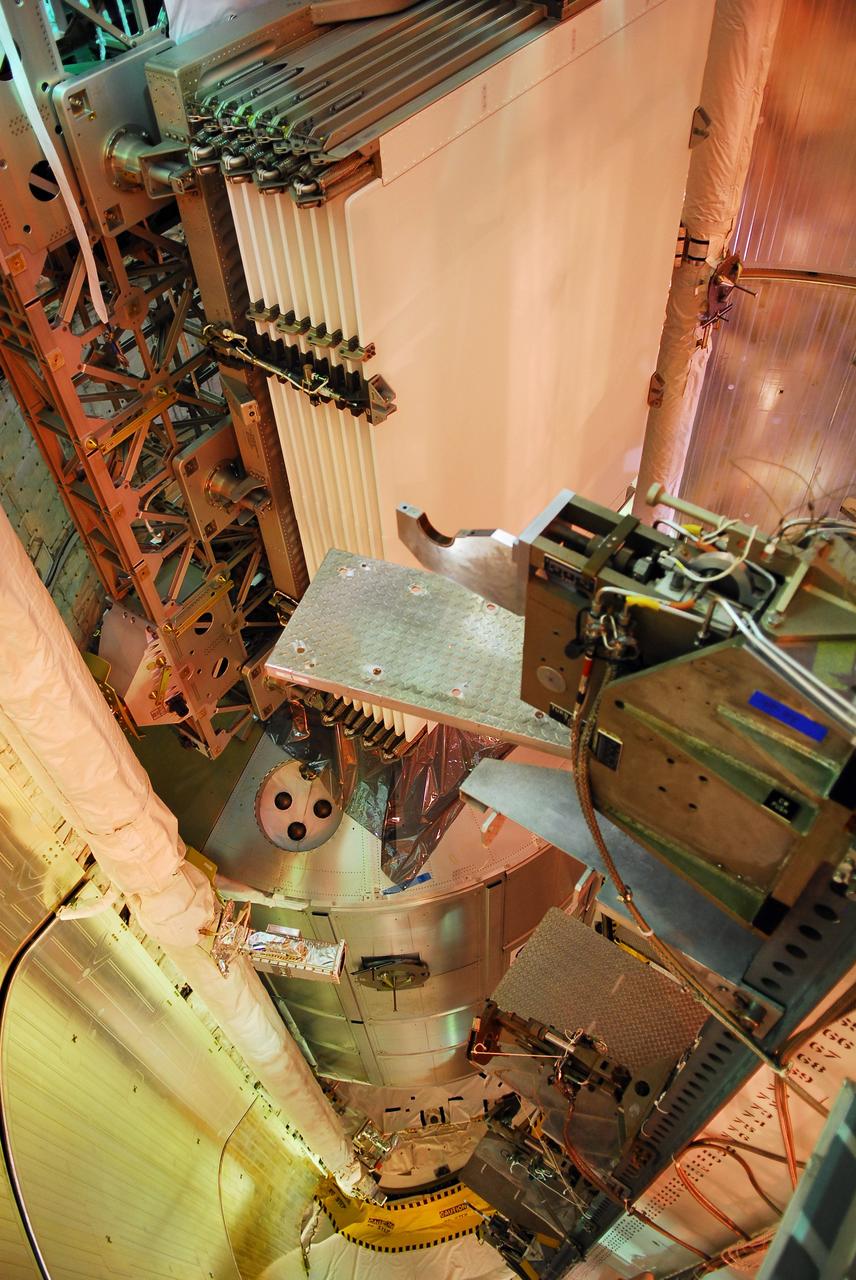
CAPE CANAVERAL, Fla. -- At NASA's Kennedy Space Center in Florida, space shuttle Discovery's payload bay is open for the STS-133 crew members to take a look at their payload while at Launch Pad 39A for the Terminal Countdown Demonstration Test (TCDT). Discovery and its STS-133 crew will deliver the Permanent Multipurpose Module, packed with supplies and critical spare parts, as well as Robonaut 2, the dexterous humanoid astronaut helper, to the International Space Station. Launch is targeted for 4:40 p.m. EDT, Nov. 1. Photo credit: NASA/Jim Grossmann
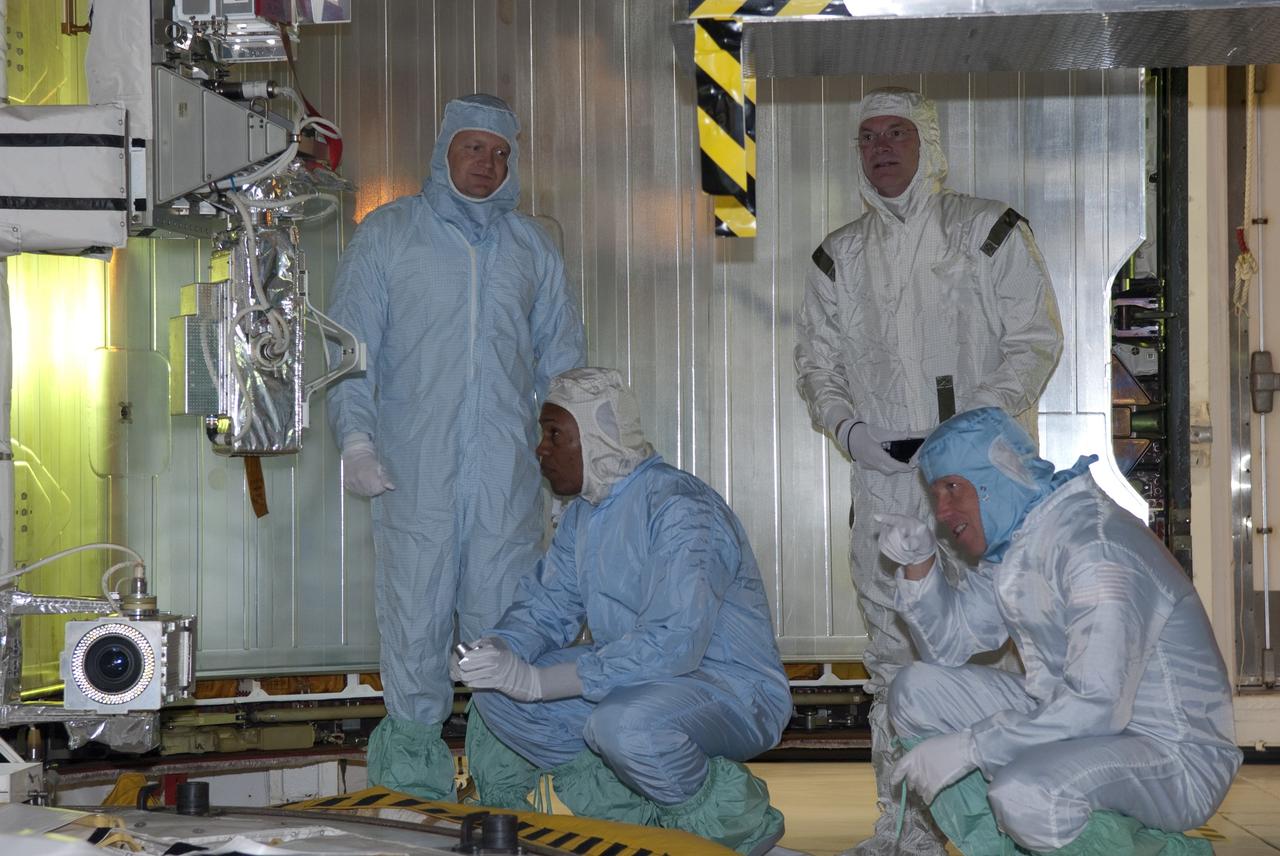
CAPE CANAVERAL, Fla. -- At NASA's Kennedy Space Center in Florida, STS-133 crew members check out their mission's payload while at Launch Pad 39A for the Terminal Countdown Demonstration Test (TCDT). From left, are Pilot Eric Boe, and Mission Specialists Alvin Drew, and Tim Kopra. Standing behind Kopra in a white "bunny suit" is a pad technician. Discovery and its STS-133 crew will deliver the Permanent Multipurpose Module, packed with supplies and critical spare parts, as well as Robonaut 2, the dexterous humanoid astronaut helper, to the International Space Station. Launch is targeted for 4:40 p.m. EDT, Nov. 1. Photo credit: NASA/Jim Grossmann
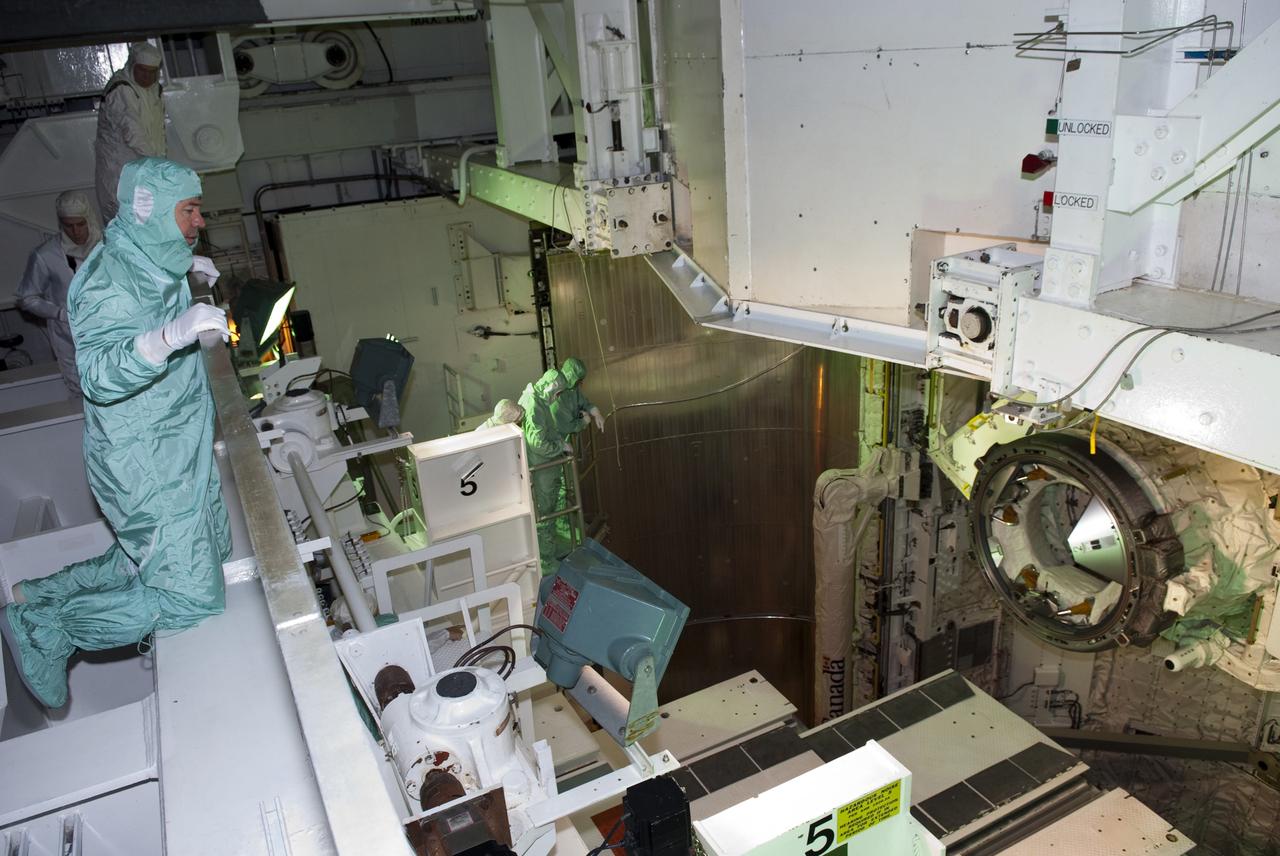
CAPE CANAVERAL, Fla. -- At NASA's Kennedy Space Center in Florida, STS-133 Mission Specialist Michael Barratt, foreground, checks out his mission's payload while at Launch Pad 39A for the Terminal Countdown Demonstration Test (TCDT). Discovery and its STS-133 crew will deliver the Permanent Multipurpose Module, packed with supplies and critical spare parts, as well as Robonaut 2, the dexterous humanoid astronaut helper, to the International Space Station. Launch is targeted for 4:40 p.m. EDT, Nov. 1. Photo credit: NASA/Jim Grossmann
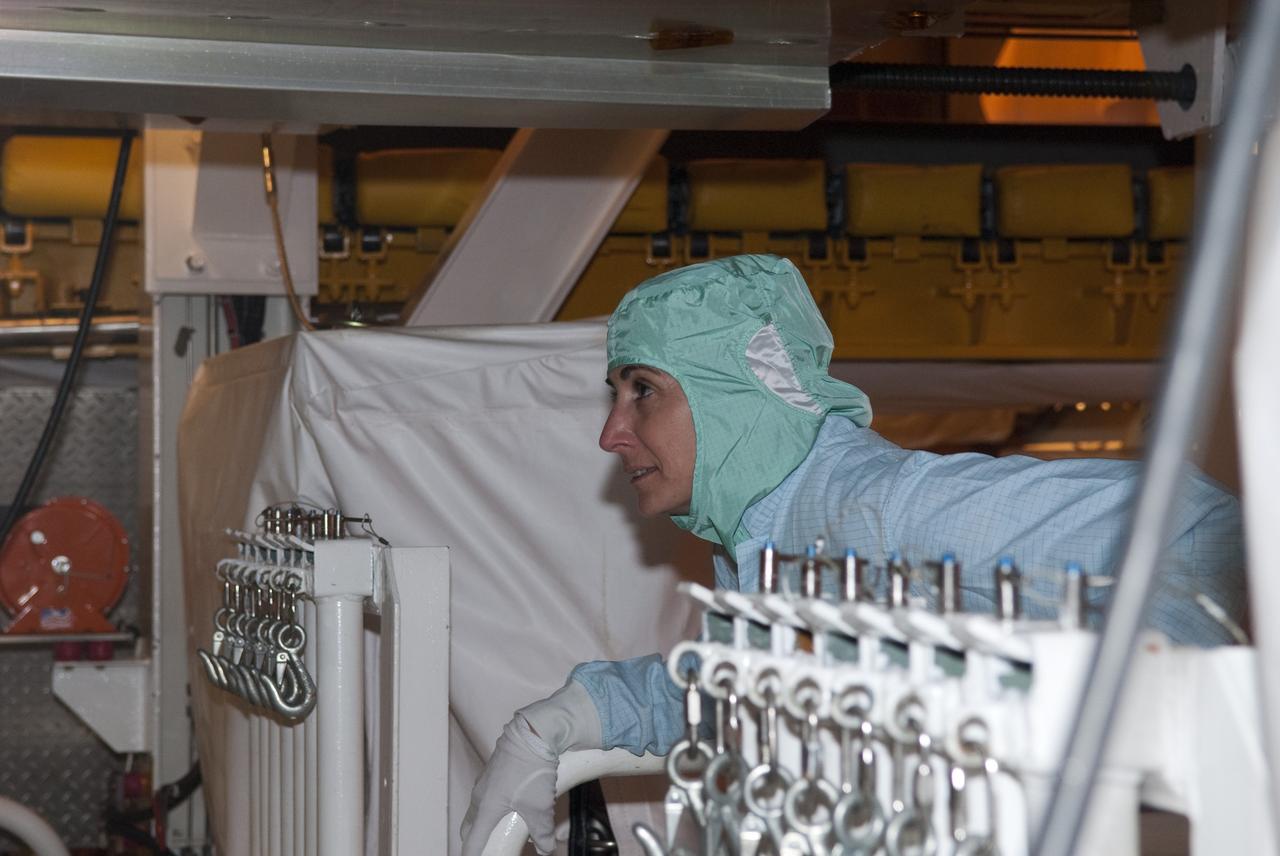
CAPE CANAVERAL, Fla. -- At NASA's Kennedy Space Center in Florida, STS-133 Mission Specialist Nicole Stott checks out her mission's payload while at Launch Pad 39A for the Terminal Countdown Demonstration Test (TCDT). Discovery and its STS-133 crew will deliver the Permanent Multipurpose Module, packed with supplies and critical spare parts, as well as Robonaut 2, the dexterous humanoid astronaut helper, to the International Space Station. Launch is targeted for 4:40 p.m. EDT, Nov. 1. Photo credit: NASA/Jim Grossmann
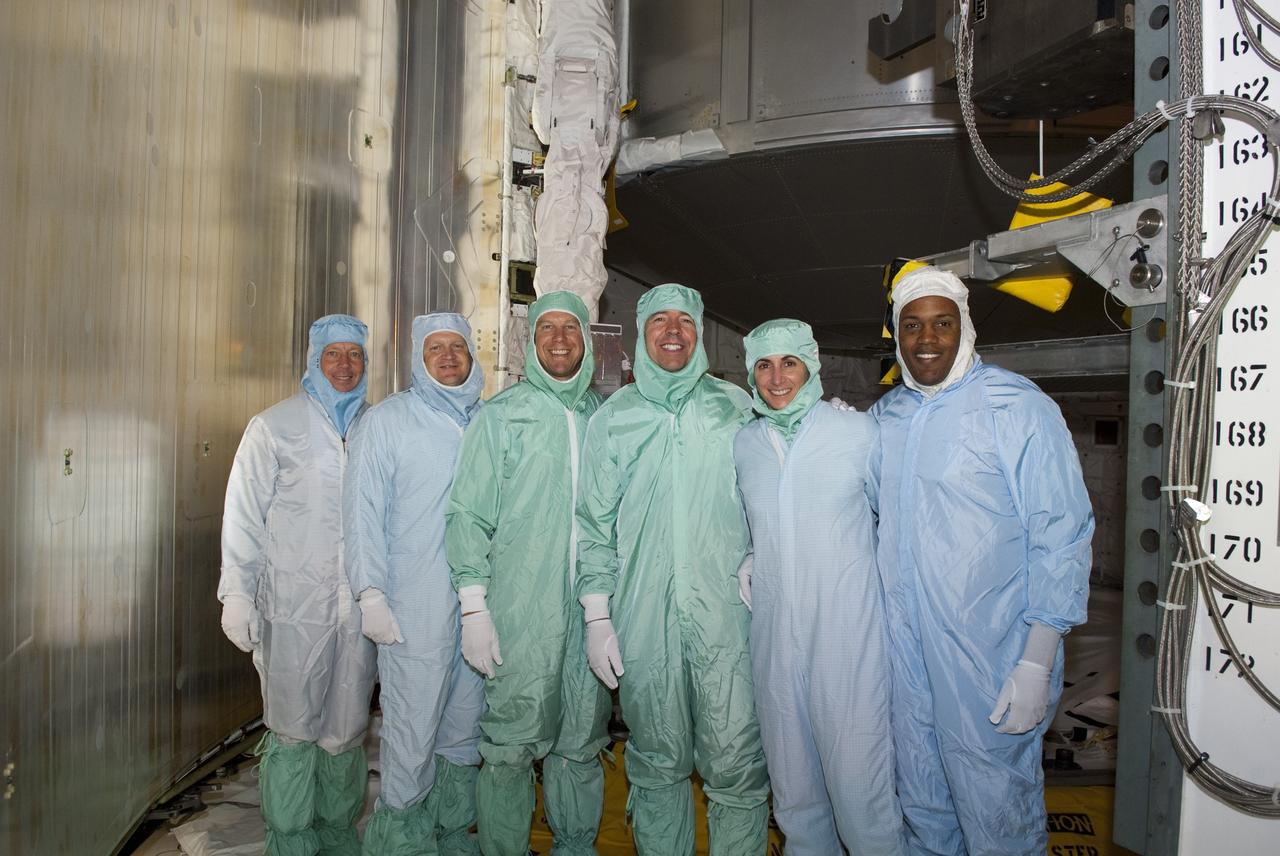
CAPE CANAVERAL, Fla. -- At NASA's Kennedy Space Center in Florida, STS-133 crew members pose for a photo after checking out their mission's payload while at Launch Pad 39A for the Terminal Countdown Demonstration Test (TCDT). From left, are Commander Steve Lindsey, Pilot Eric Boe, and Mission Specialists Tim Kopra, Michael Barratt, Nicole Stott, and Alvin Drew. Discovery and its STS-133 crew will deliver the Permanent Multipurpose Module, packed with supplies and critical spare parts, as well as Robonaut 2, the dexterous humanoid astronaut helper, to the International Space Station. Launch is targeted for 4:40 p.m. EDT, Nov. 1. Photo credit: NASA/Jim Grossmann
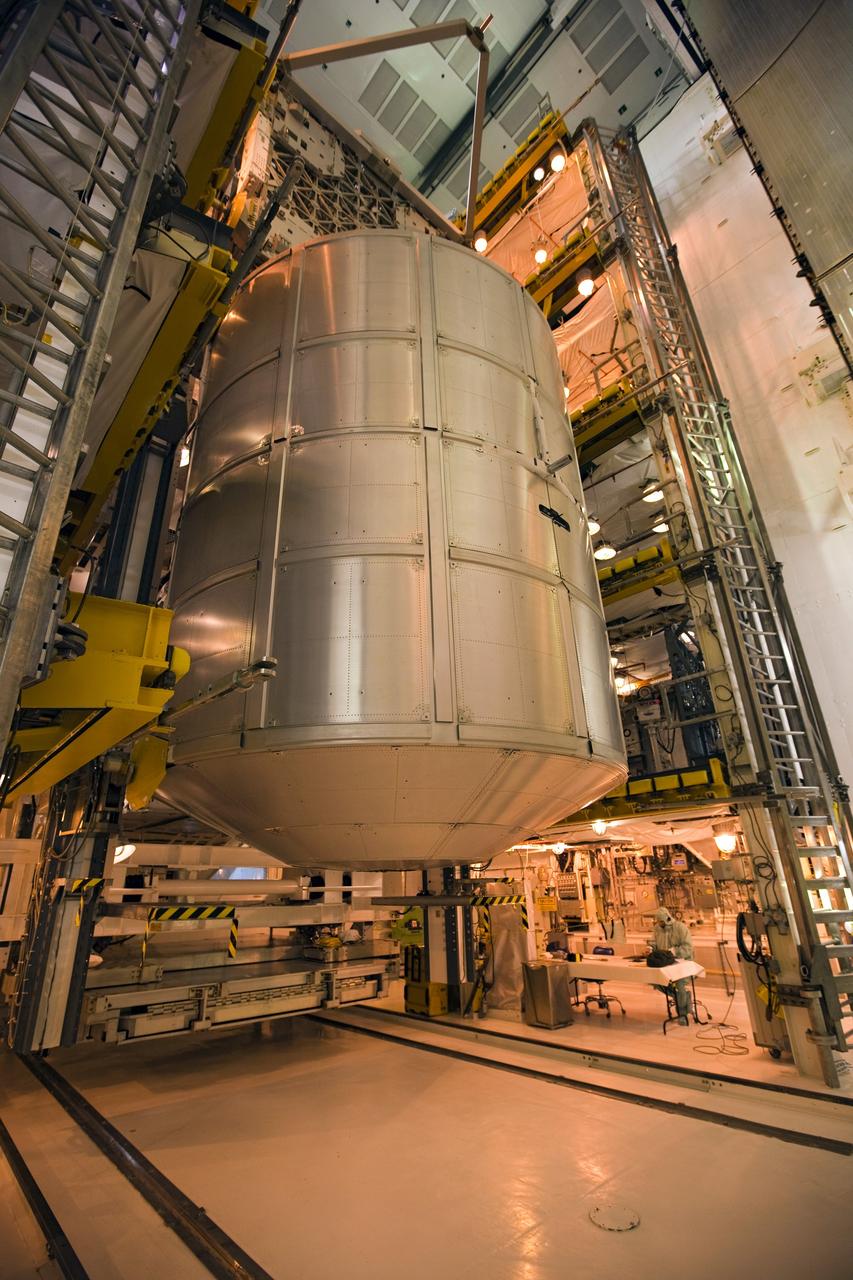
CAPE CANAVERAL, Fla. -- At NASA's Kennedy Space Center in Florida, technicians prepare to move the STS-133 payload from the rotating service structure on Launch Pad 39A to space shuttle Discovery's payload bay. The move paves the way for the Terminal Countdown Demonstration Test (TCDT) this week, which will give the astronauts and teams at Kennedy and NASA's Johnson Space Center in Houston a chance to practice launch day tasks. Discovery and its STS-133 crew will deliver the Permanent Multipurpose Module, packed with supplies and critical spare parts, as well as Robonaut 2, the dexterous humanoid astronaut helper, to the International Space Station. Launch is targeted for 4:40 p.m. EDT, Nov. 1. Photo credit: NASA/Dimitri Gerondidakis
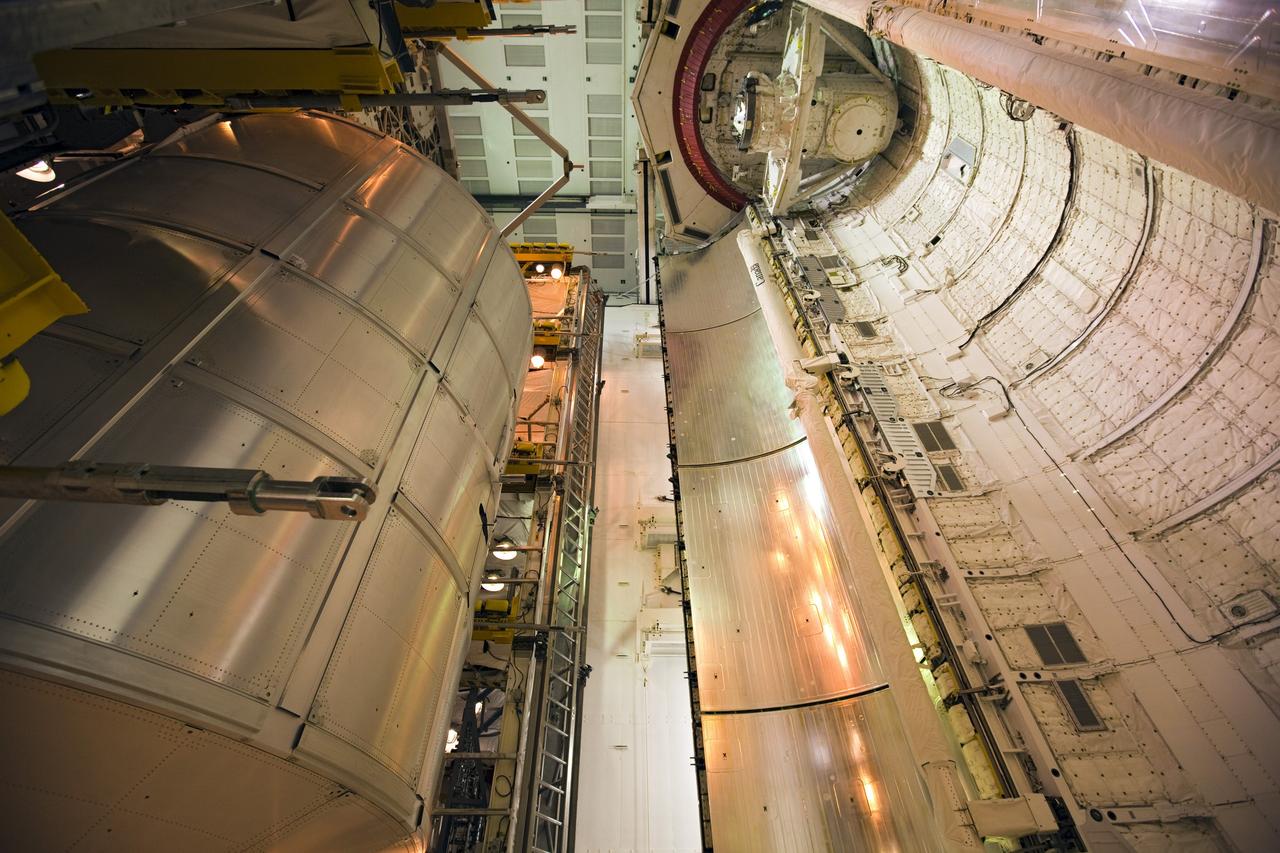
CAPE CANAVERAL, Fla. -- At NASA's Kennedy Space Center in Florida, technicians prepare to move the STS-133 payload from the rotating service structure on Launch Pad 39A to space shuttle Discovery's payload bay. The move paves the way for the Terminal Countdown Demonstration Test (TCDT) this week, which will give the astronauts and teams at Kennedy and NASA's Johnson Space Center in Houston a chance to practice launch day tasks. Discovery and its STS-133 crew will deliver the Permanent Multipurpose Module, packed with supplies and critical spare parts, as well as Robonaut 2, the dexterous humanoid astronaut helper, to the International Space Station. Launch is targeted for 4:40 p.m. EDT, Nov. 1. Photo credit: NASA/Dimitri Gerondidakis
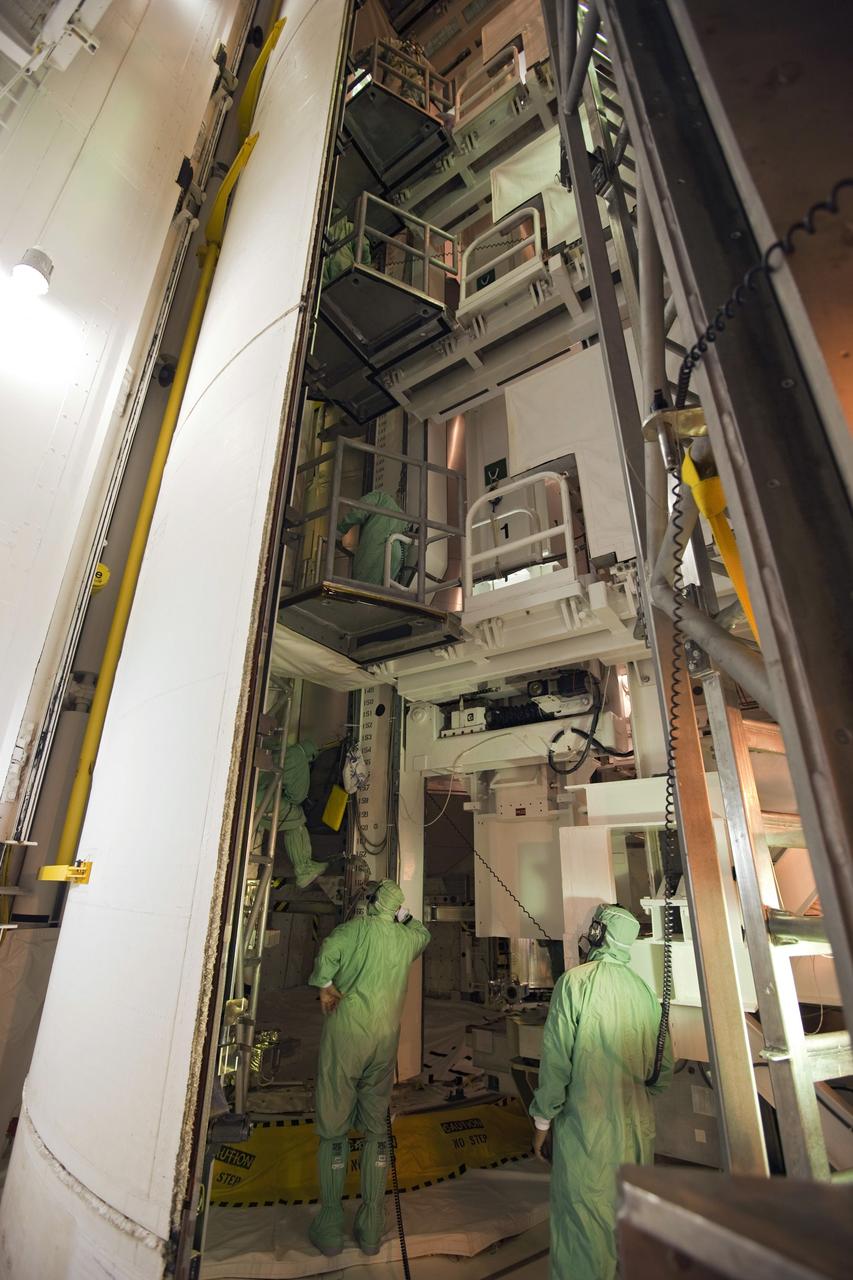
CAPE CANAVERAL, Fla. -- At NASA's Kennedy Space Center in Florida, technicians prepare to move the STS-133 payload from the rotating service structure on Launch Pad 39A to space shuttle Discovery's payload bay. The move paves the way for the Terminal Countdown Demonstration Test (TCDT) this week, which will give the astronauts and teams at Kennedy and NASA's Johnson Space Center in Houston a chance to practice launch day tasks. Discovery and its STS-133 crew will deliver the Permanent Multipurpose Module, packed with supplies and critical spare parts, as well as Robonaut 2, the dexterous humanoid astronaut helper, to the International Space Station. Launch is targeted for 4:40 p.m. EDT, Nov. 1. Photo credit: NASA/Dimitri Gerondidakis
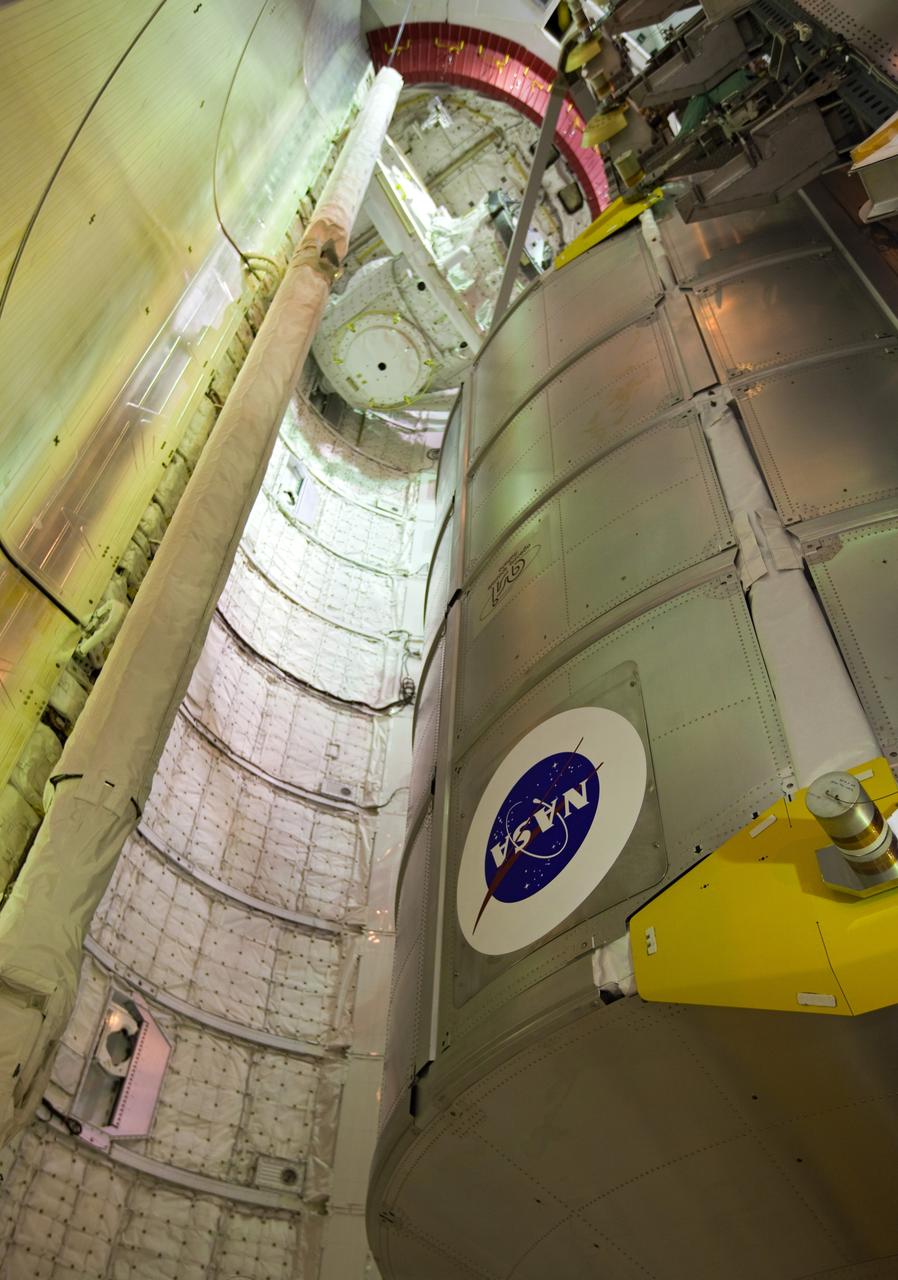
CAPE CANAVERAL, Fla. -- At NASA's Kennedy Space Center in Florida, technicians prepare to move the STS-133 payload from the rotating service structure on Launch Pad 39A to space shuttle Discovery's payload bay. The move paves the way for the Terminal Countdown Demonstration Test (TCDT) this week, which will give the astronauts and teams at Kennedy and NASA's Johnson Space Center in Houston a chance to practice launch day tasks. Discovery and its STS-133 crew will deliver the Permanent Multipurpose Module, packed with supplies and critical spare parts, as well as Robonaut 2, the dexterous humanoid astronaut helper, to the International Space Station. Launch is targeted for 4:40 p.m. EDT, Nov. 1. Photo credit: NASA/Dimitri Gerondidakis
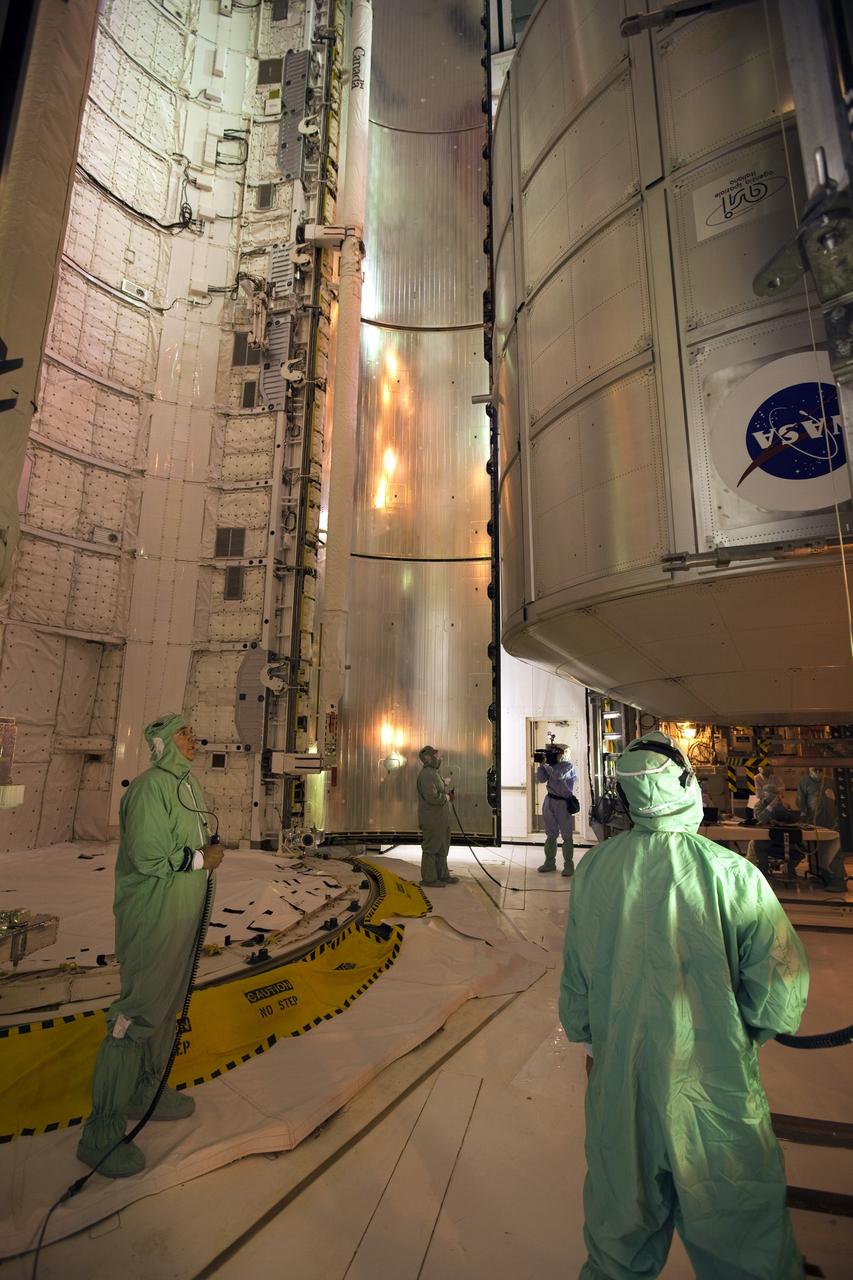
CAPE CANAVERAL, Fla. -- At NASA's Kennedy Space Center in Florida, technicians prepare to move the STS-133 payload from the rotating service structure on Launch Pad 39A to space shuttle Discovery's payload bay. The move paves the way for the Terminal Countdown Demonstration Test (TCDT) this week, which will give the astronauts and teams at Kennedy and NASA's Johnson Space Center in Houston a chance to practice launch day tasks. Discovery and its STS-133 crew will deliver the Permanent Multipurpose Module, packed with supplies and critical spare parts, as well as Robonaut 2, the dexterous humanoid astronaut helper, to the International Space Station. Launch is targeted for 4:40 p.m. EDT, Nov. 1. Photo credit: NASA/Dimitri Gerondidakis
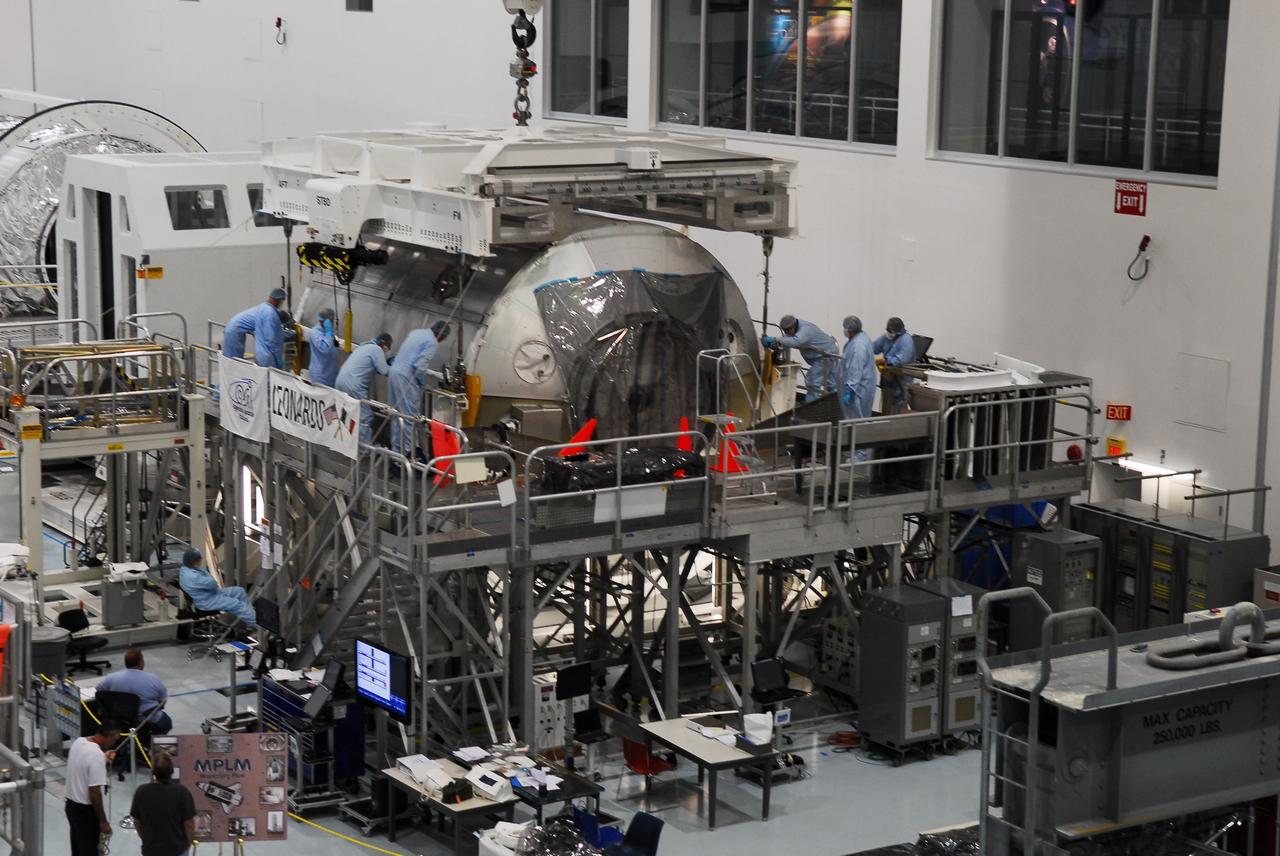
CAPE CANAVERAL, Fla. -- In the Space Station Processing Facility at NASA's Kennedy Space Center in Florida, technicians connect an overhead crane to the Permanent Multipurpose Module, or PMM, for its transfer into a payload canister. The canister will then be transported to Launch Pad 39A and installed into space shuttle Discovery's payload bay. Discovery and its STS-133 crew will deliver the PMM, packed with supplies and critical spare parts, as well as Robonaut 2, the dexterous humanoid astronaut helper, to the International Space Station. Launch is targeted for 4:40 p.m. EDT, Nov. 1. Photo credit: NASA/Cory Huston
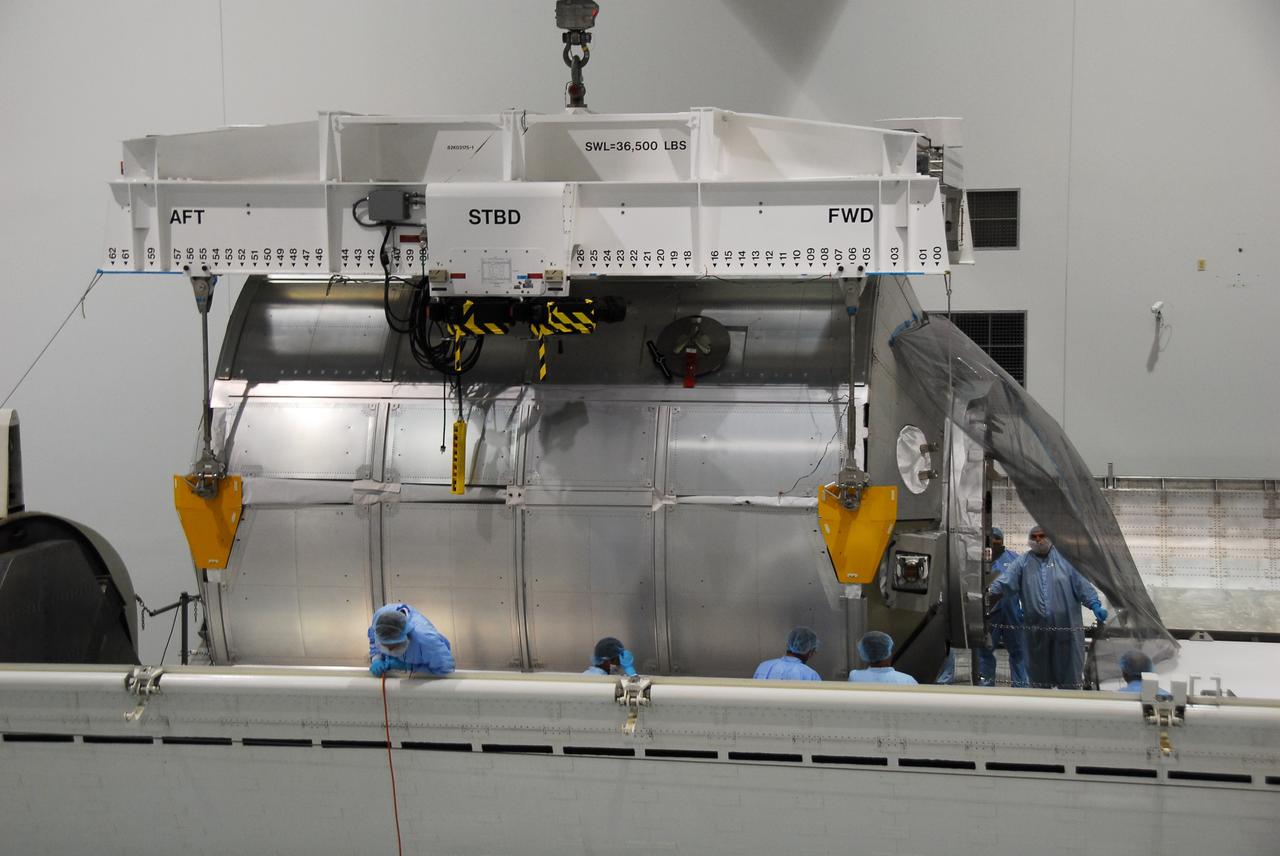
CAPE CANAVERAL, Fla. -- In the Space Station Processing Facility at NASA's Kennedy Space Center in Florida, technicians guide the Permanent Multipurpose Module, or PMM, as an overhead crane lowers it into the payload canister. The canister will then be transported to Launch Pad 39A and installed into space shuttle Discovery's payload bay. Discovery and its STS-133 crew will deliver the PMM, packed with supplies and critical spare parts, as well as Robonaut 2, the dexterous humanoid astronaut helper, to the International Space Station. Launch is targeted for 4:40 p.m. EDT, Nov. 1. Photo credit: NASA/Cory Huston
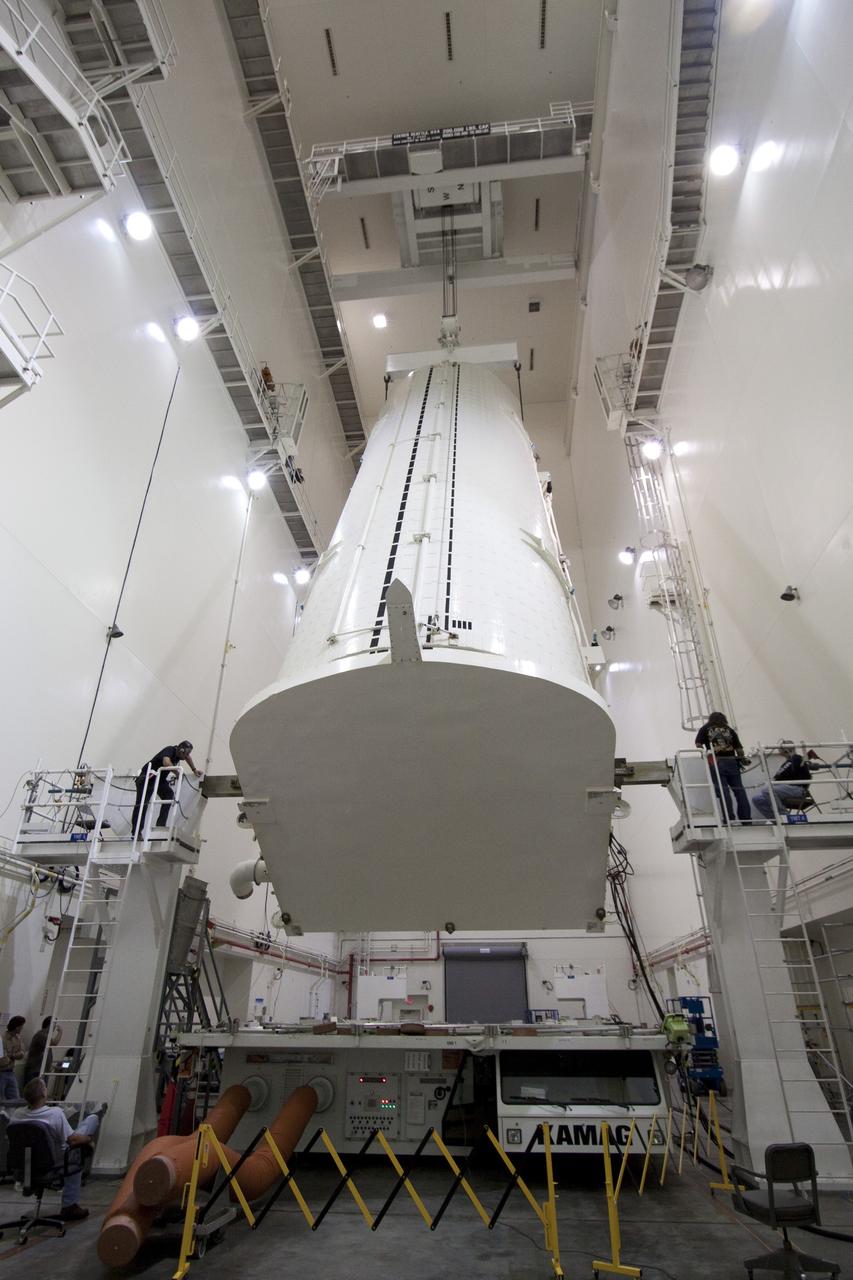
CAPE CANAVERAL, Fla. -- In the Canister Rotation Facility at NASA's Kennedy Space Center in Florida, workers monitor the progress of the payload canister as an overhead crane rotates it into a vertical position. The canister will then be delivered to Launch Pad 39A, lifted into the rotating service structure where the module will be moved into the clean room before it is installed into space shuttle Discovery's payload bay. Discovery and its STS-133 crew will deliver the PMM, packed with supplies and critical spare parts, as well as Robonaut 2, the dexterous humanoid astronaut helper, to the International Space Station. Launch is targeted for 4:40 p.m. EDT, Nov. 1. Photo credit: NASA/Jack Pfaller
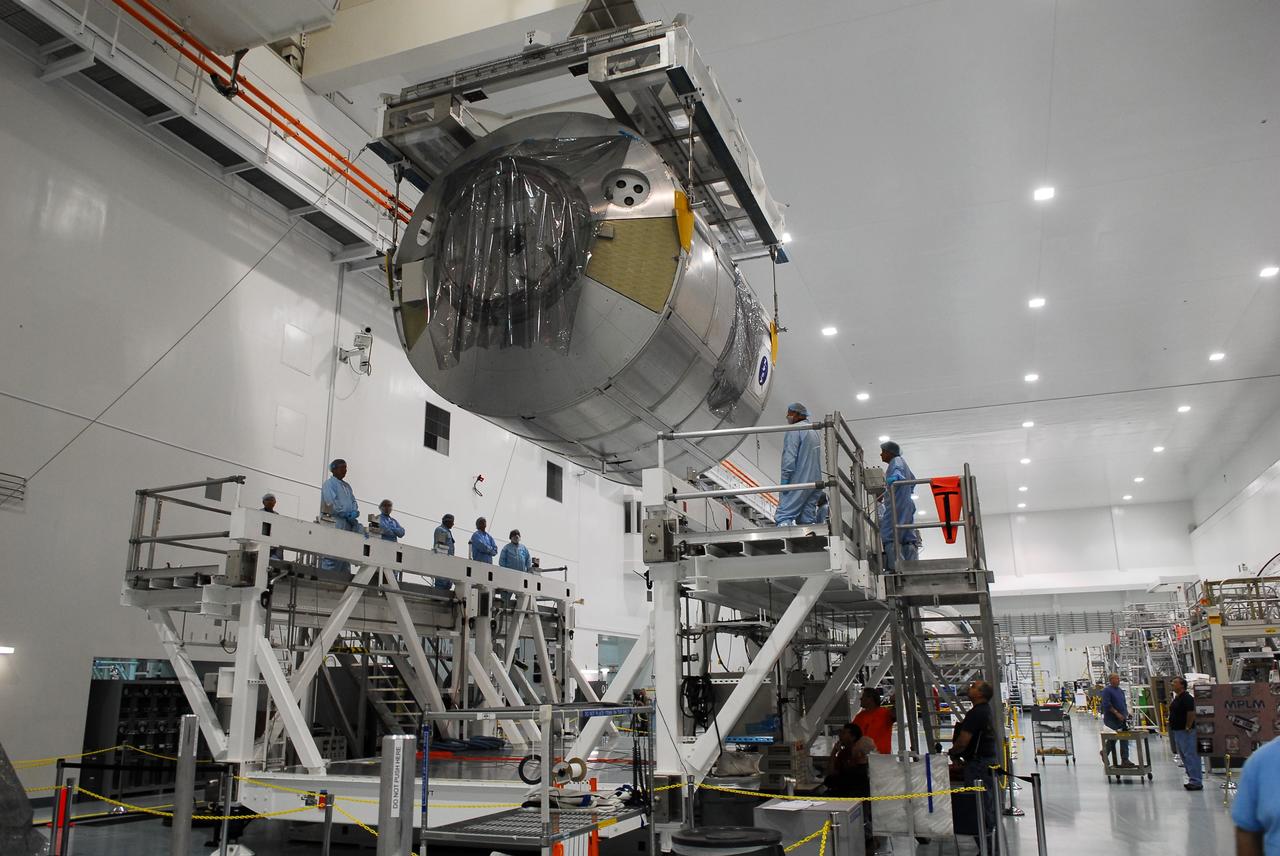
CAPE CANAVERAL, Fla. -- In the Space Station Processing Facility at NASA's Kennedy Space Center in Florida, technicians monitor the progress of the Permanent Multipurpose Module, or PMM, as it is being transferred by overhead crane towards a payload canister. The canister will then be transported to Launch Pad 39A and installed into space shuttle Discovery's payload bay. Discovery and its STS-133 crew will deliver the PMM, packed with supplies and critical spare parts, as well as Robonaut 2, the dexterous humanoid astronaut helper, to the International Space Station. Launch is targeted for 4:40 p.m. EDT, Nov. 1. Photo credit: NASA/Cory Huston
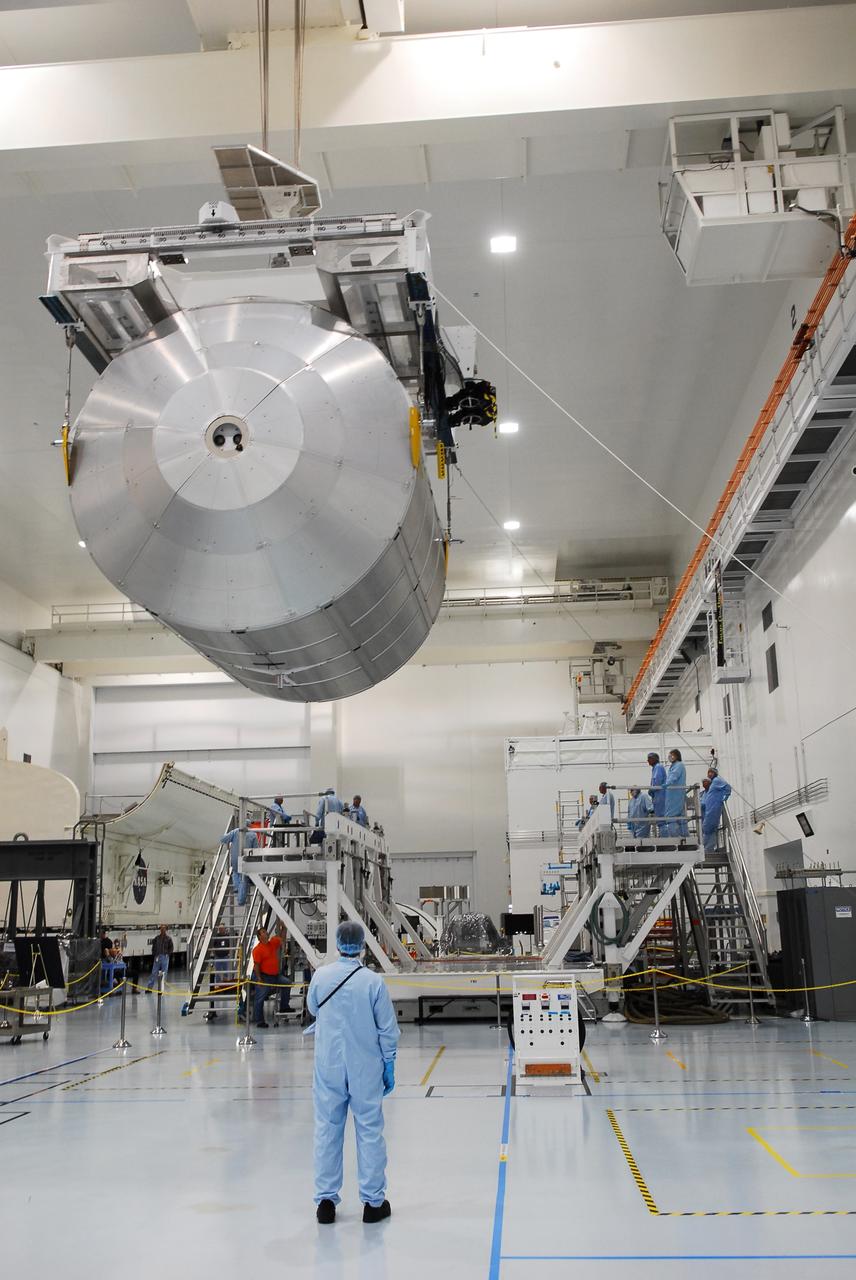
CAPE CANAVERAL, Fla. -- In the Space Station Processing Facility at NASA's Kennedy Space Center in Florida, technicians monitor the progress of the Permanent Multipurpose Module, or PMM, as it is being transferred by overhead crane towards a payload canister. The canister will then be transported to Launch Pad 39A and installed into space shuttle Discovery's payload bay. Discovery and its STS-133 crew will deliver the PMM, packed with supplies and critical spare parts, as well as Robonaut 2, the dexterous humanoid astronaut helper, to the International Space Station. Launch is targeted for 4:40 p.m. EDT, Nov. 1. Photo credit: NASA/Cory Huston
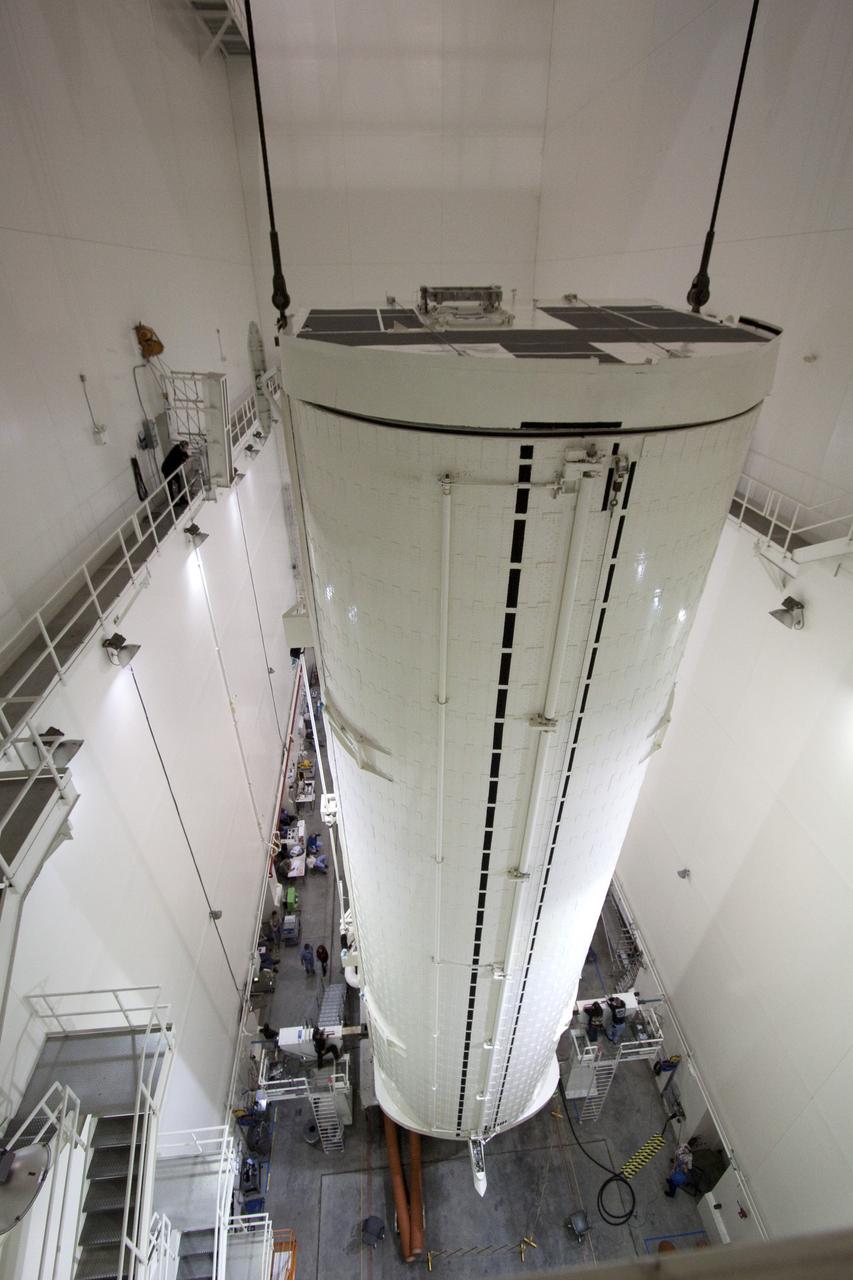
CAPE CANAVERAL, Fla. -- In the Canister Rotation Facility at NASA's Kennedy Space Center in Florida, an overhead crane lifts the payload canister into a vertical position. The canister will then be delivered to Launch Pad 39A, lifted into the rotating service structure where the module will be moved into the clean room before it is installed into space shuttle Discovery's payload bay. Discovery and its STS-133 crew will deliver the PMM, packed with supplies and critical spare parts, as well as Robonaut 2, the dexterous humanoid astronaut helper, to the International Space Station. Launch is targeted for 4:40 p.m. EDT, Nov. 1. Photo credit: NASA/Jack Pfaller
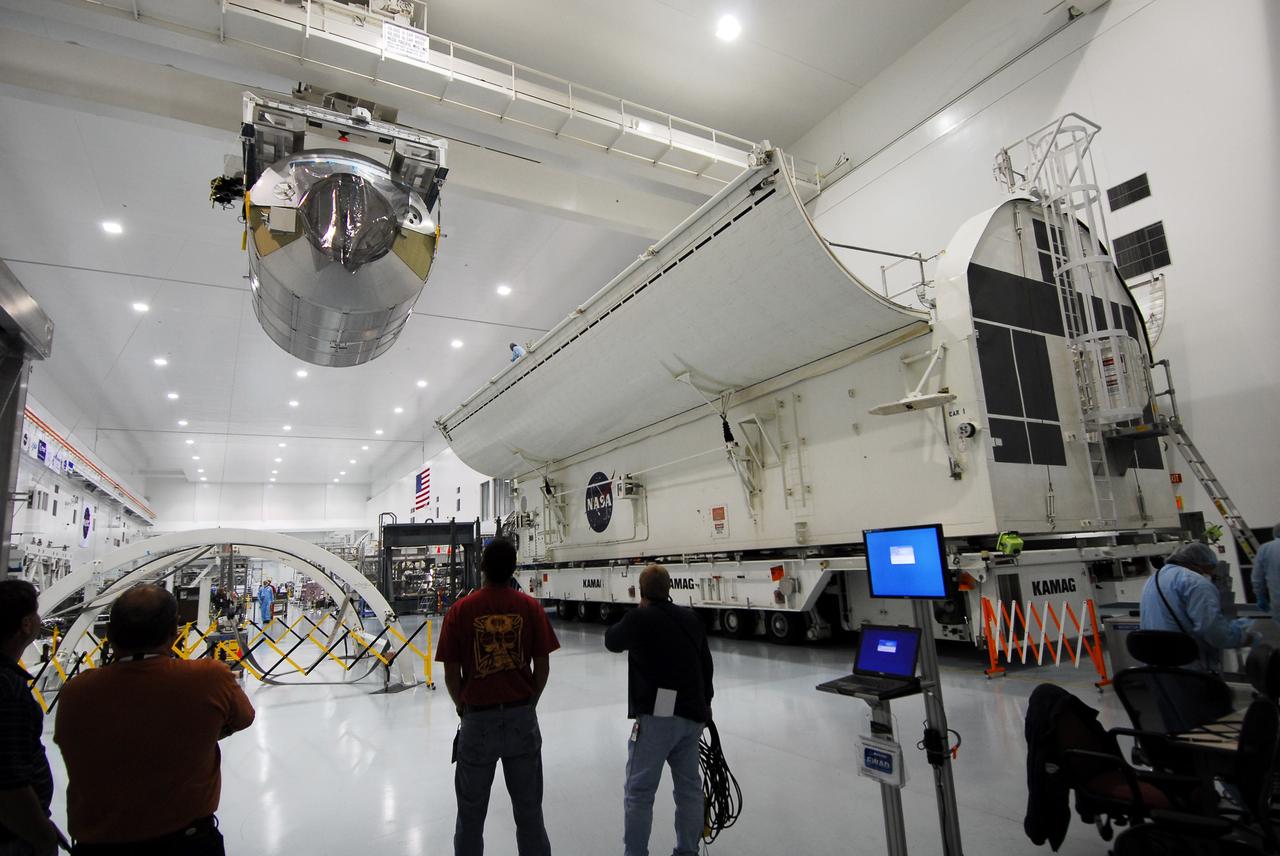
CAPE CANAVERAL, Fla. -- In the Space Station Processing Facility at NASA's Kennedy Space Center in Florida, workers watch the progress of the Permanent Multipurpose Module, or PMM, as it is being transferred by overhead crane towards a payload canister. The canister will then be transported to Launch Pad 39A and installed into space shuttle Discovery's payload bay. Discovery and its STS-133 crew will deliver the PMM, packed with supplies and critical spare parts, as well as Robonaut 2, the dexterous humanoid astronaut helper, to the International Space Station. Launch is targeted for 4:40 p.m. EDT, Nov. 1. Photo credit: NASA/Cory Huston
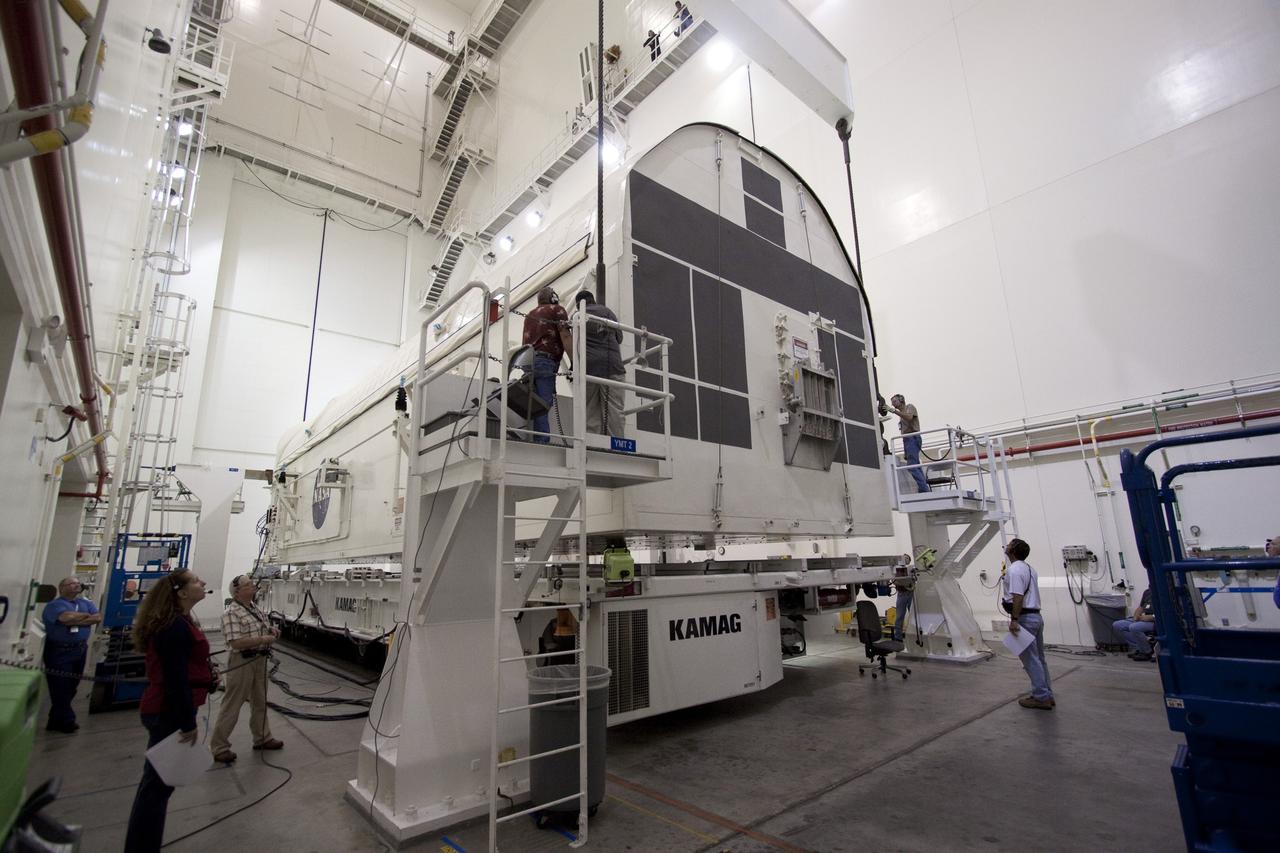
CAPE CANAVERAL, Fla. -- In the Canister Rotation Facility at NASA's Kennedy Space Center in Florida, workers connect an overhead crane to the payload canister for its rotation into a vertical position. The canister will then be delivered to Launch Pad 39A, lifted into the rotating service structure where the module will be moved into the clean room before it is installed into space shuttle Discovery's payload bay. Discovery and its STS-133 crew will deliver the PMM, packed with supplies and critical spare parts, as well as Robonaut 2, the dexterous humanoid astronaut helper, to the International Space Station. Launch is targeted for 4:40 p.m. EDT, Nov. 1. Photo credit: NASA/Jack Pfaller
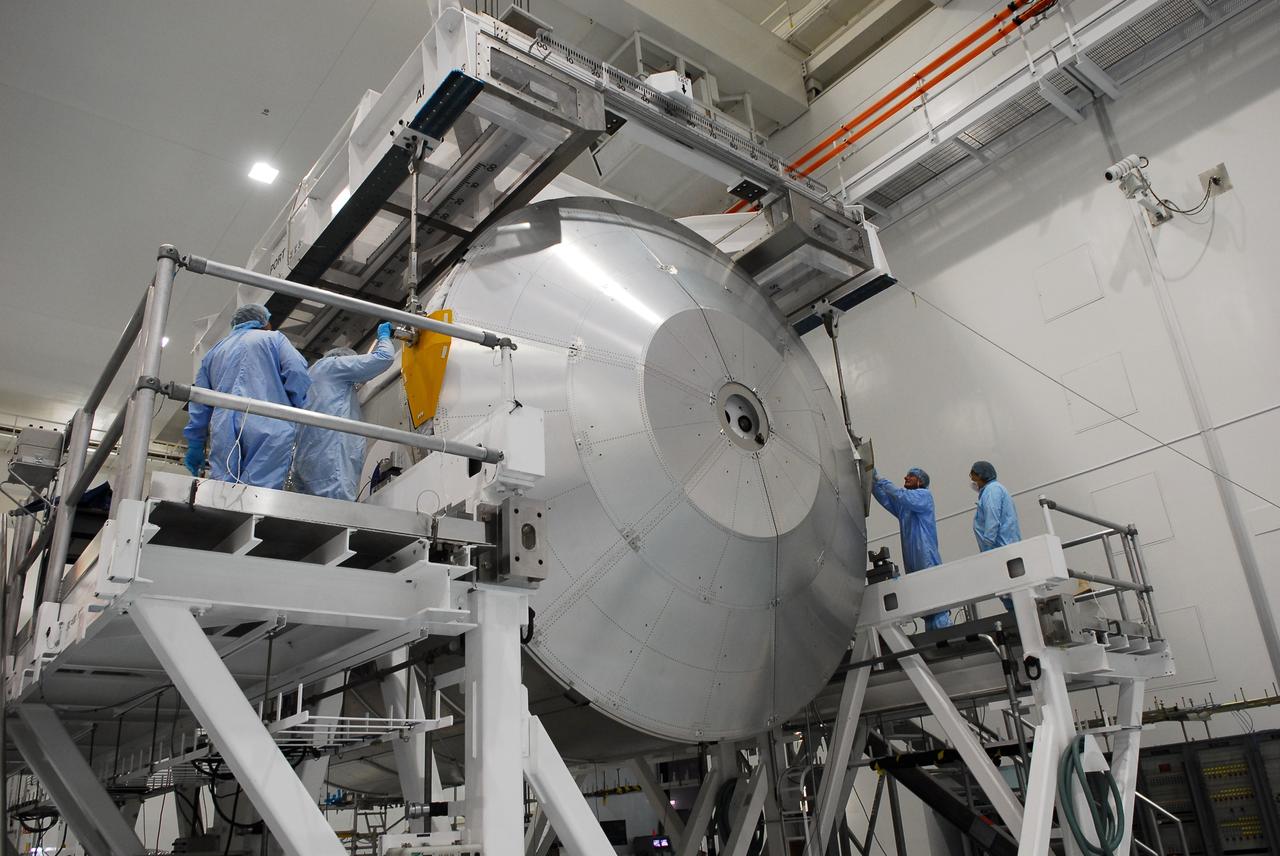
CAPE CANAVERAL, Fla. -- In the Space Station Processing Facility at NASA's Kennedy Space Center in Florida, technicians connect an overhead crane to the Permanent Multipurpose Module, or PMM, for its transfer into a payload canister. The canister will then be transported to Launch Pad 39A and installed into space shuttle Discovery's payload bay. Discovery and its STS-133 crew will deliver the PMM, packed with supplies and critical spare parts, as well as Robonaut 2, the dexterous humanoid astronaut helper, to the International Space Station. Launch is targeted for 4:40 p.m. EDT, Nov. 1. Photo credit: NASA/Cory Huston
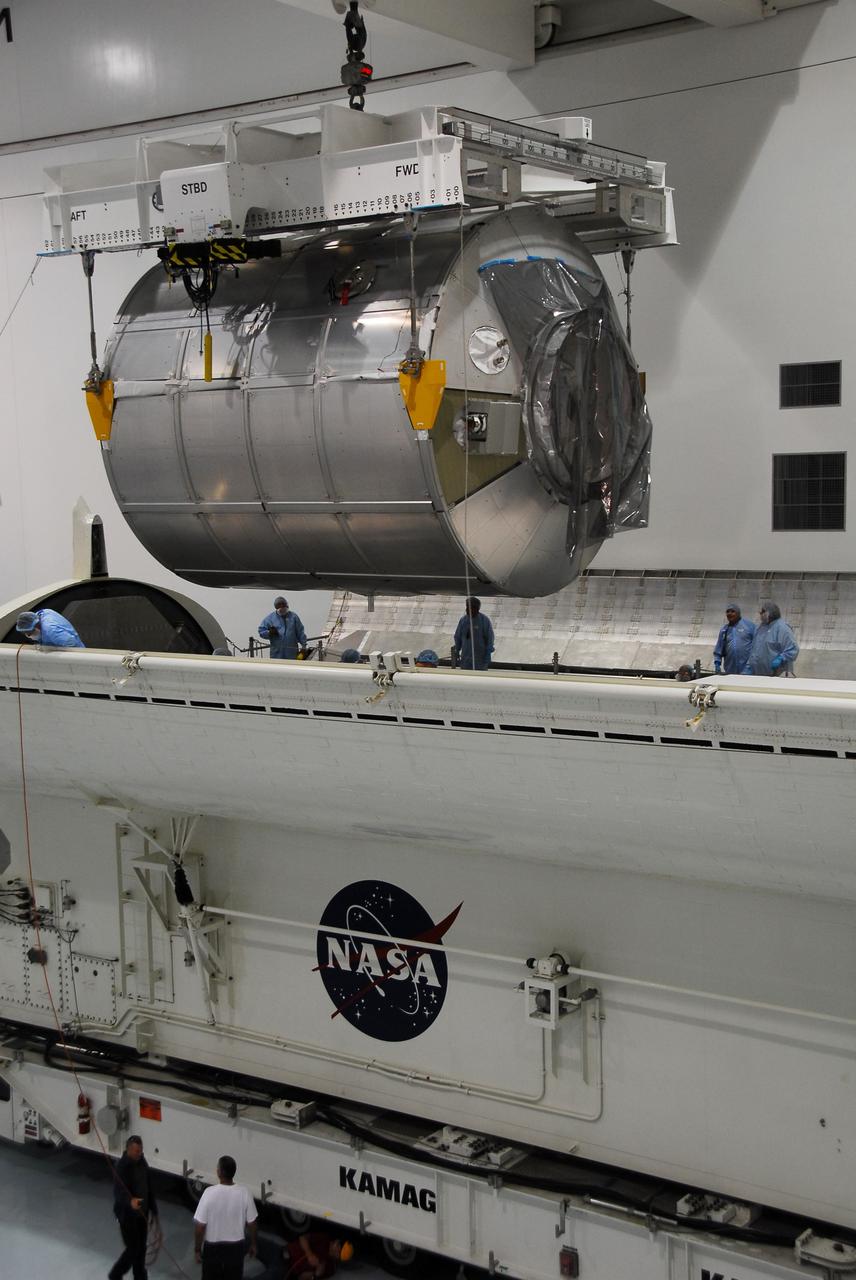
CAPE CANAVERAL, Fla. -- In the Space Station Processing Facility at NASA's Kennedy Space Center in Florida, technicians guide the Permanent Multipurpose Module, or PMM, as an overhead crane lowers it into the payload canister. The canister will then be transported to Launch Pad 39A and installed into space shuttle Discovery's payload bay. Discovery and its STS-133 crew will deliver the PMM, packed with supplies and critical spare parts, as well as Robonaut 2, the dexterous humanoid astronaut helper, to the International Space Station. Launch is targeted for 4:40 p.m. EDT, Nov. 1. Photo credit: NASA/Cory Huston
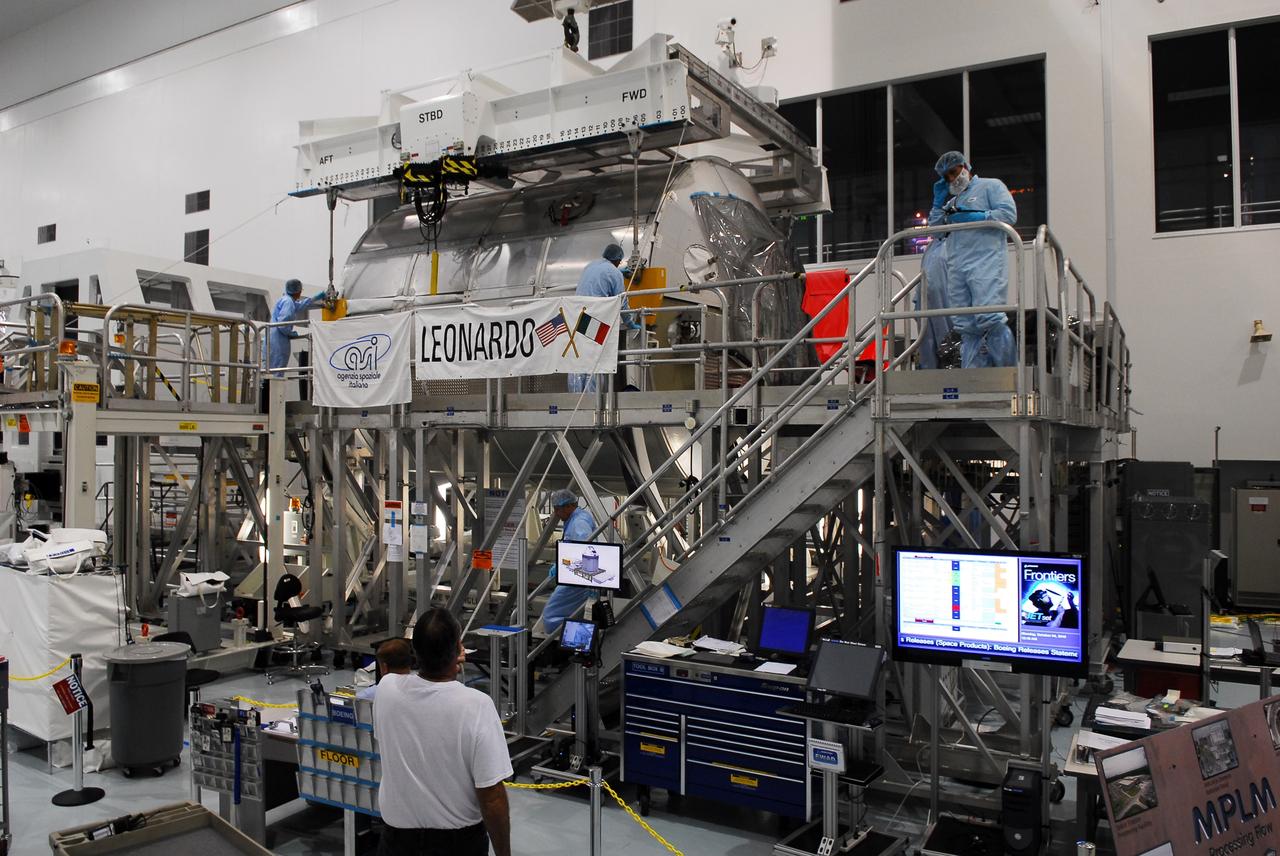
CAPE CANAVERAL, Fla. -- In the Space Station Processing Facility at NASA's Kennedy Space Center in Florida, technicians connect an overhead crane to the Permanent Multipurpose Module, or PMM, for its transfer into a payload canister. The canister will then be transported to Launch Pad 39A and installed into space shuttle Discovery's payload bay. Discovery and its STS-133 crew will deliver the PMM, packed with supplies and critical spare parts, as well as Robonaut 2, the dexterous humanoid astronaut helper, to the International Space Station. Launch is targeted for 4:40 p.m. EDT, Nov. 1. Photo credit: NASA/Cory Huston
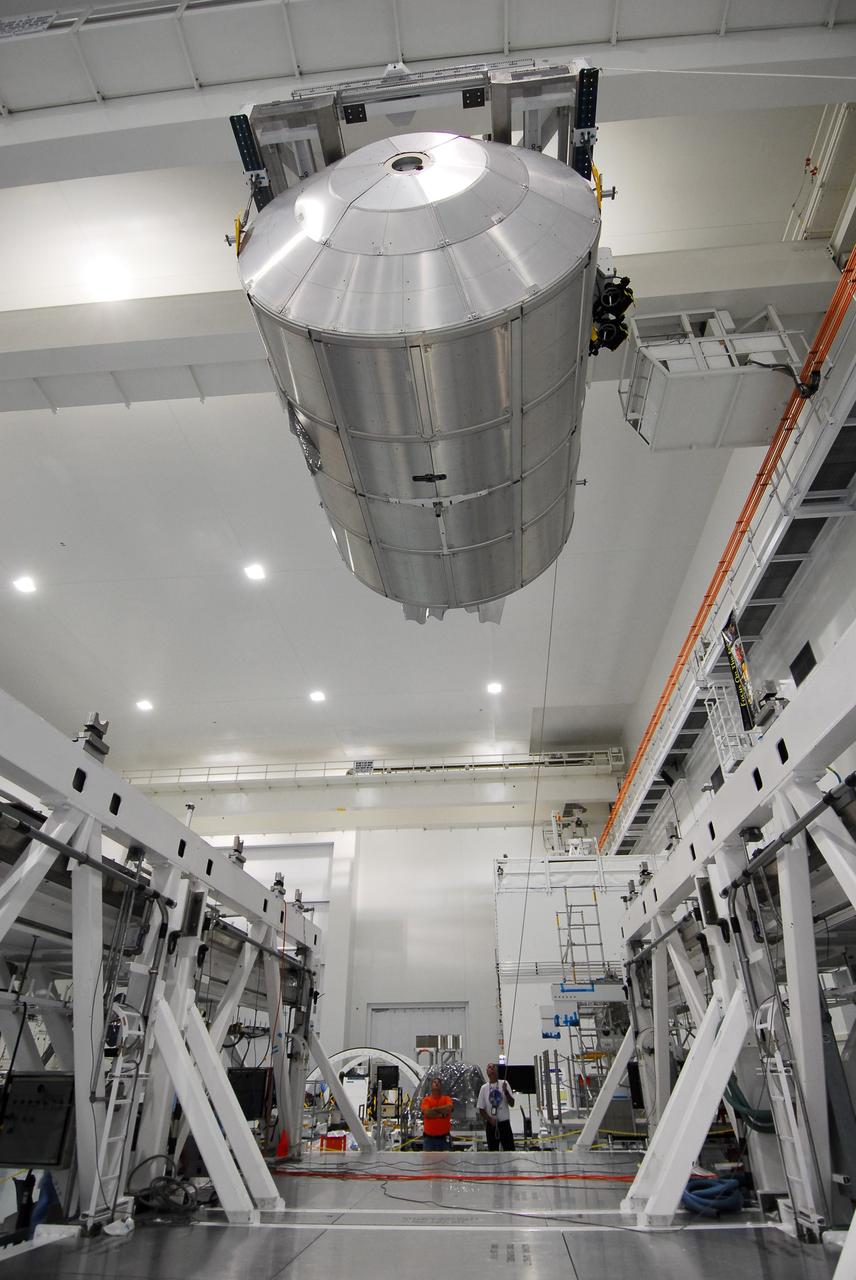
CAPE CANAVERAL, Fla. -- In the Space Station Processing Facility at NASA's Kennedy Space Center in Florida, workers guide the Permanent Multipurpose Module, or PMM, as it is being transferred by overhead crane towards a payload canister. The canister will then be transported to Launch Pad 39A and installed into space shuttle Discovery's payload bay. Discovery and its STS-133 crew will deliver the PMM, packed with supplies and critical spare parts, as well as Robonaut 2, the dexterous humanoid astronaut helper, to the International Space Station. Launch is targeted for 4:40 p.m. EDT, Nov. 1. Photo credit: NASA/Cory Huston
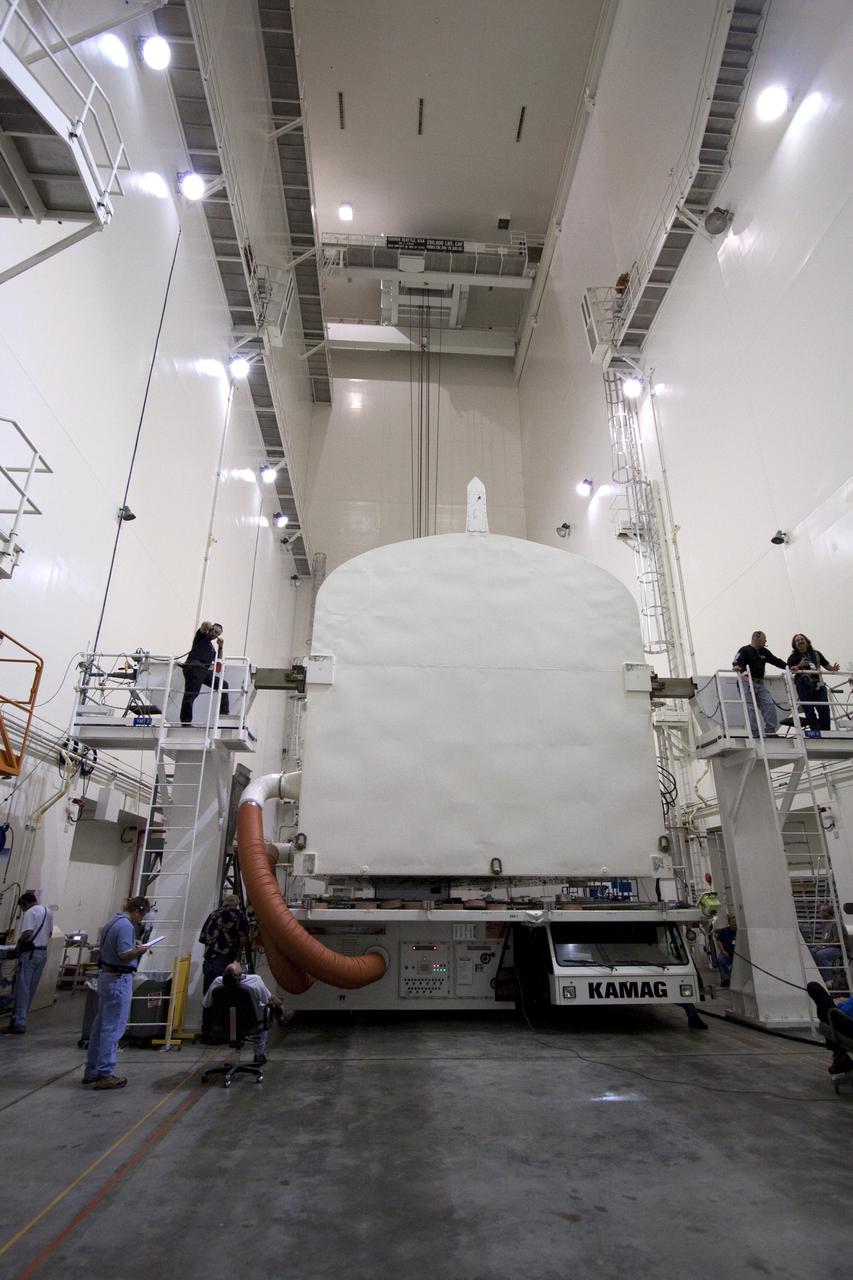
CAPE CANAVERAL, Fla. -- In the Canister Rotation Facility at NASA's Kennedy Space Center in Florida, workers are preparing the payload canister for its rotation into a vertical position. The canister will then be delivered to Launch Pad 39A, lifted into the rotating service structure where the module will be moved into the clean room before it is installed into space shuttle Discovery's payload bay. Discovery and its STS-133 crew will deliver the PMM, packed with supplies and critical spare parts, as well as Robonaut 2, the dexterous humanoid astronaut helper, to the International Space Station. Launch is targeted for 4:40 p.m. EDT, Nov. 1. Photo credit: NASA/Jack Pfaller
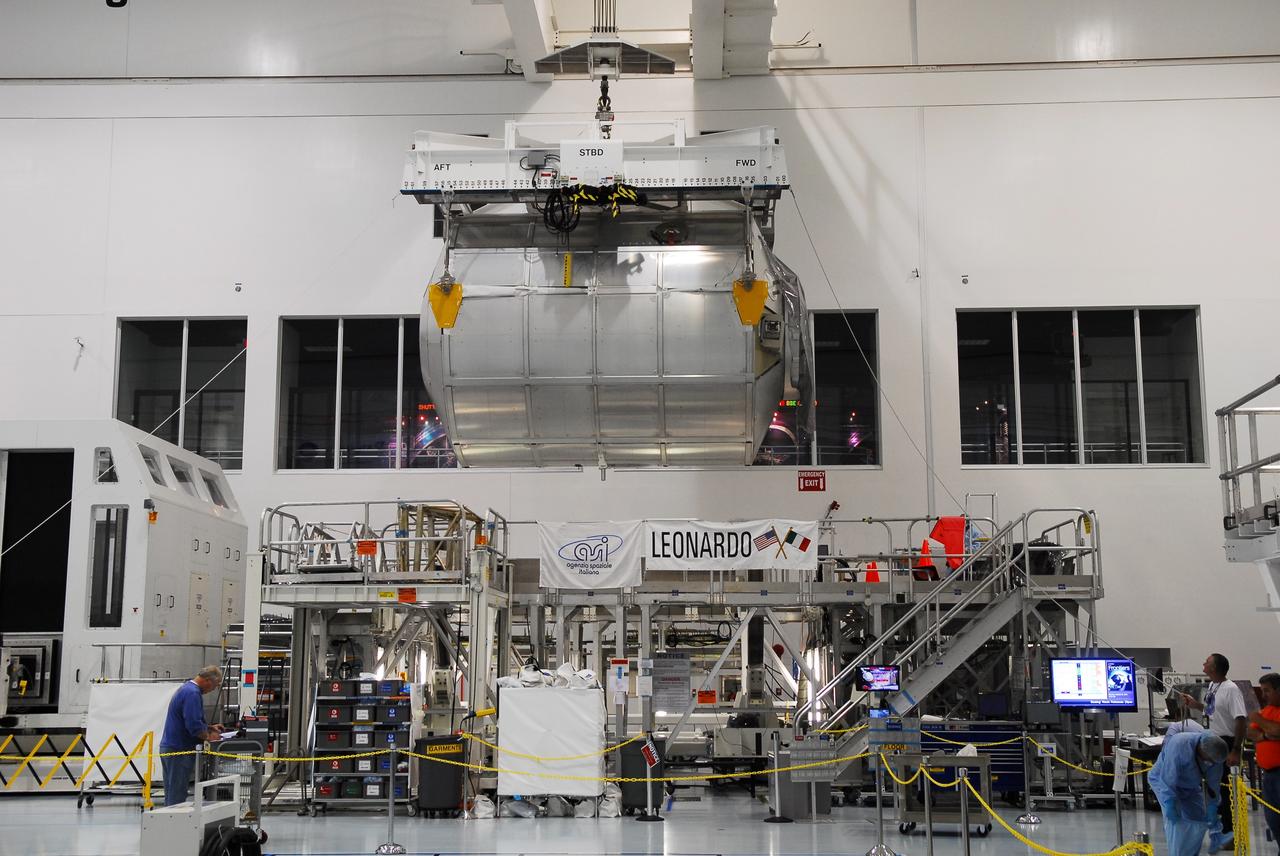
CAPE CANAVERAL, Fla. -- In the Space Station Processing Facility at NASA's Kennedy Space Center in Florida, the Permanent Multipurpose Module, or PMM, is being transferred by overhead crane towards a payload canister. The canister will then be transported to Launch Pad 39A and installed into space shuttle Discovery's payload bay. Discovery and its STS-133 crew will deliver the PMM, packed with supplies and critical spare parts, as well as Robonaut 2, the dexterous humanoid astronaut helper, to the International Space Station. Launch is targeted for 4:40 p.m. EDT, Nov. 1. Photo credit: NASA/Cory Huston
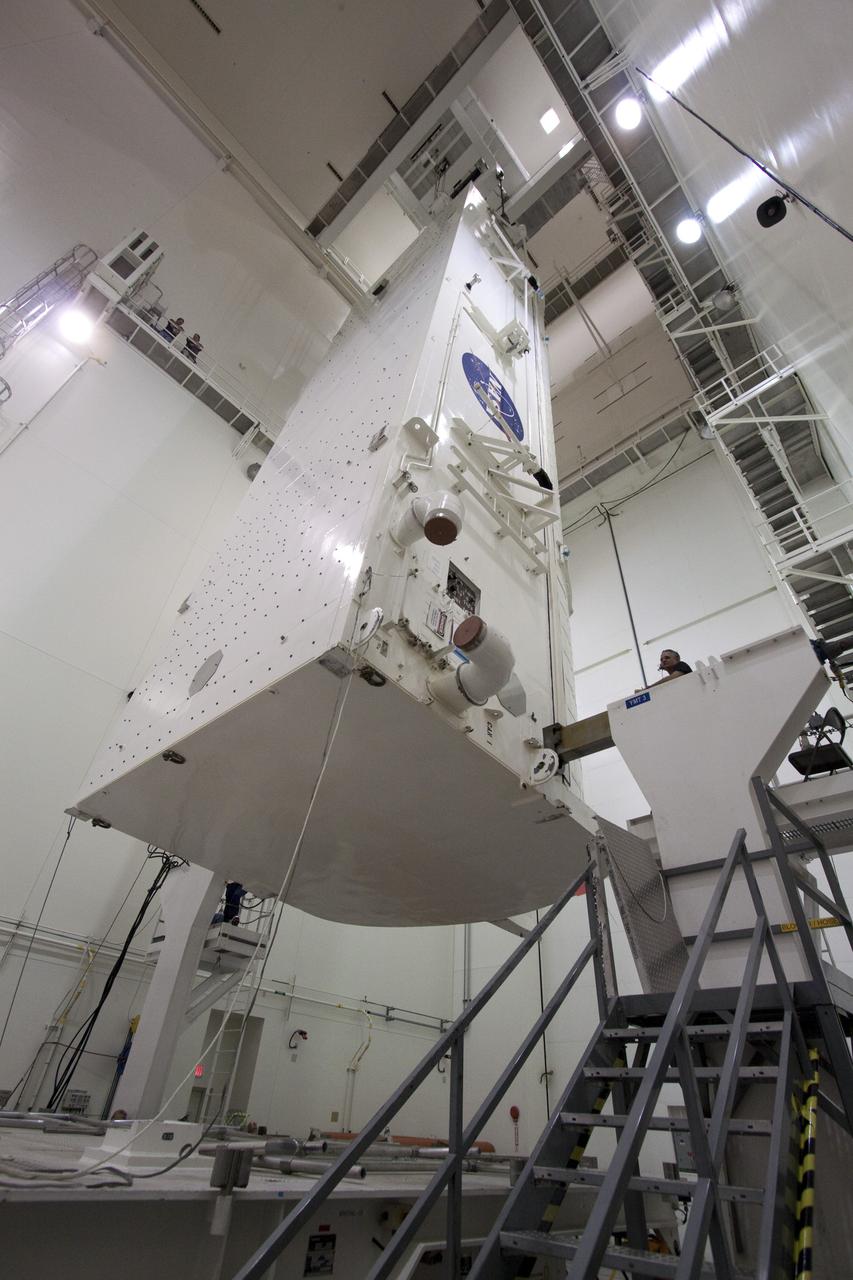
CAPE CANAVERAL, Fla. -- In the Canister Rotation Facility at NASA's Kennedy Space Center in Florida, workers monitor the progress of the payload canister as an overhead crane lifts it into a vertical position. The canister will then be delivered to Launch Pad 39A, lifted into the rotating service structure where the module will be moved into the clean room before it is installed into space shuttle Discovery's payload bay. Discovery and its STS-133 crew will deliver the PMM, packed with supplies and critical spare parts, as well as Robonaut 2, the dexterous humanoid astronaut helper, to the International Space Station. Launch is targeted for 4:40 p.m. EDT, Nov. 1. Photo credit: NASA/Jack Pfaller
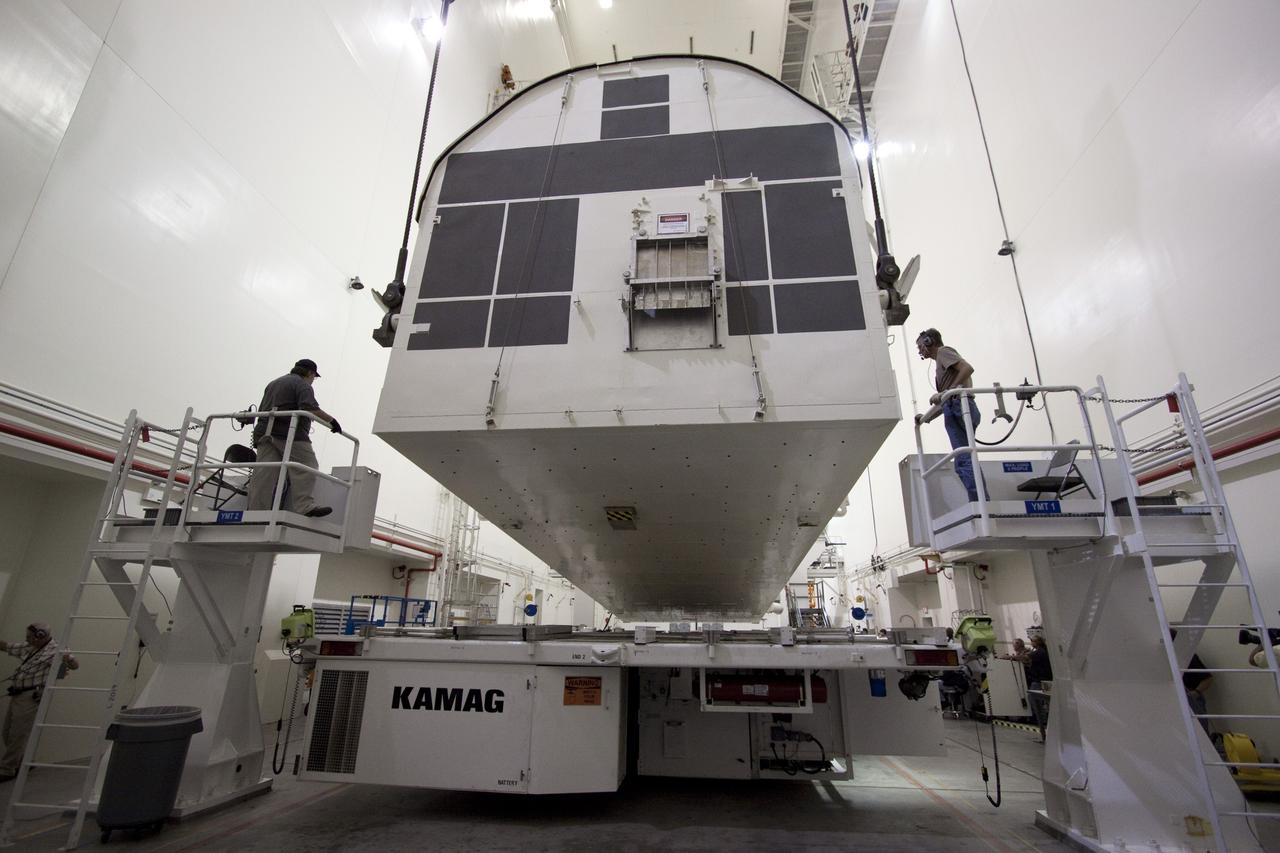
CAPE CANAVERAL, Fla. -- In the Canister Rotation Facility at NASA's Kennedy Space Center in Florida, workers monitor the progress of the payload canister as an overhead crane rotates it into a vertical position. The canister will then be delivered to Launch Pad 39A, lifted into the rotating service structure where the module will be moved into the clean room before it is installed into space shuttle Discovery's payload bay. Discovery and its STS-133 crew will deliver the PMM, packed with supplies and critical spare parts, as well as Robonaut 2, the dexterous humanoid astronaut helper, to the International Space Station. Launch is targeted for 4:40 p.m. EDT, Nov. 1. Photo credit: NASA/Jack Pfaller
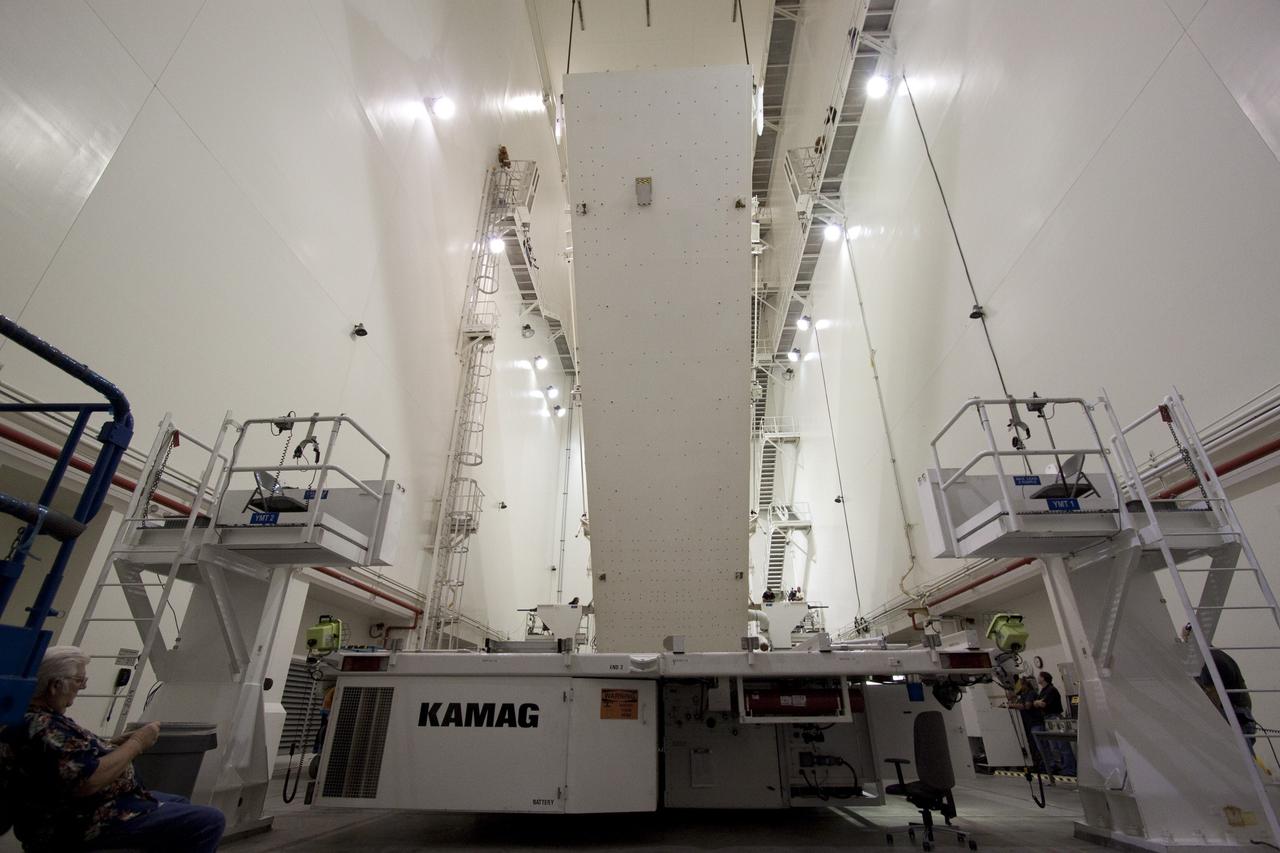
CAPE CANAVERAL, Fla. -- In the Canister Rotation Facility at NASA's Kennedy Space Center in Florida, an overhead crane lifts the payload canister into a vertical position. The canister will then be delivered to Launch Pad 39A, lifted into the rotating service structure where the module will be moved into the clean room before it is installed into space shuttle Discovery's payload bay. Discovery and its STS-133 crew will deliver the PMM, packed with supplies and critical spare parts, as well as Robonaut 2, the dexterous humanoid astronaut helper, to the International Space Station. Launch is targeted for 4:40 p.m. EDT, Nov. 1. Photo credit: NASA/Jack Pfaller
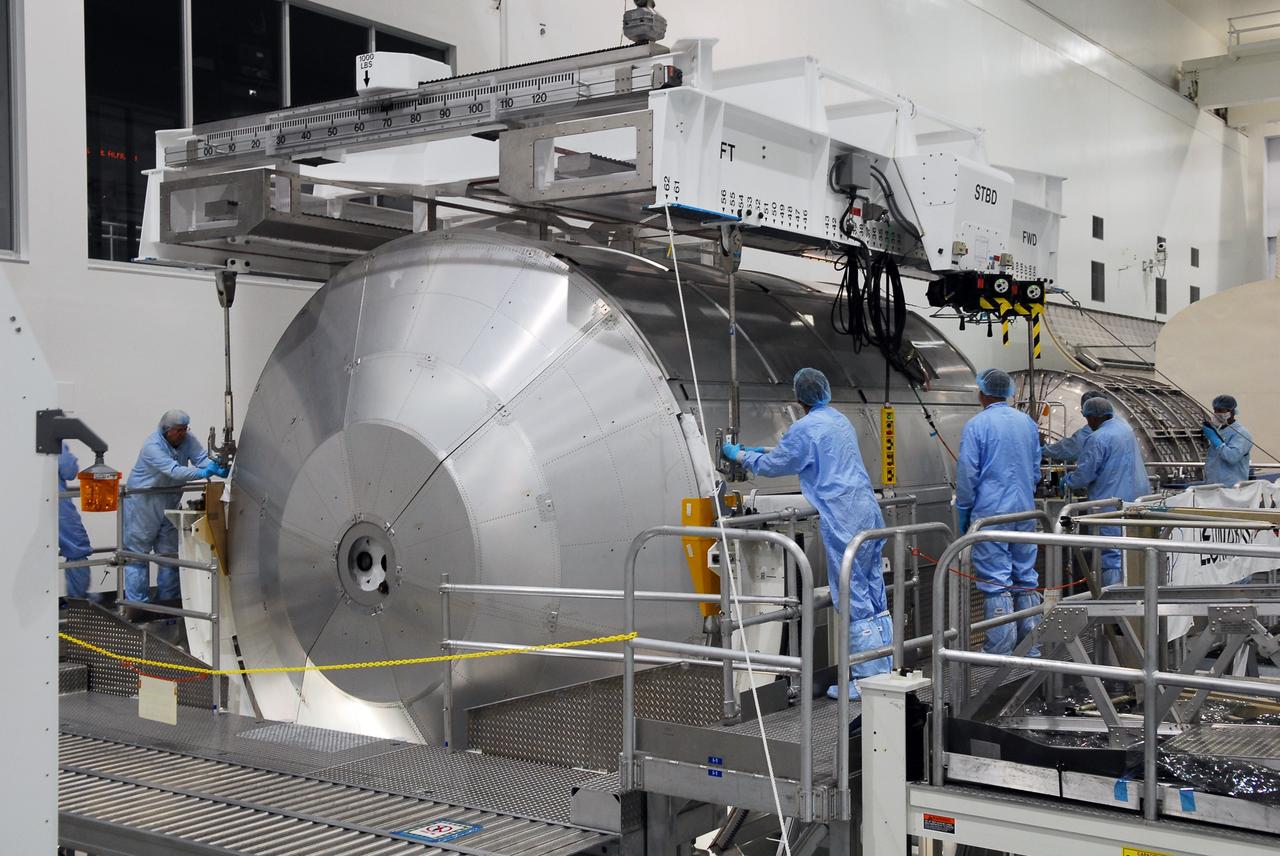
CAPE CANAVERAL, Fla. -- In the Space Station Processing Facility at NASA's Kennedy Space Center in Florida, technicians connect an overhead crane to the Permanent Multipurpose Module, or PMM, for its transfer into a payload canister. The canister will then be transported to Launch Pad 39A and installed into space shuttle Discovery's payload bay. Discovery and its STS-133 crew will deliver the PMM, packed with supplies and critical spare parts, as well as Robonaut 2, the dexterous humanoid astronaut helper, to the International Space Station. Launch is targeted for 4:40 p.m. EDT, Nov. 1. Photo credit: NASA/Cory Huston
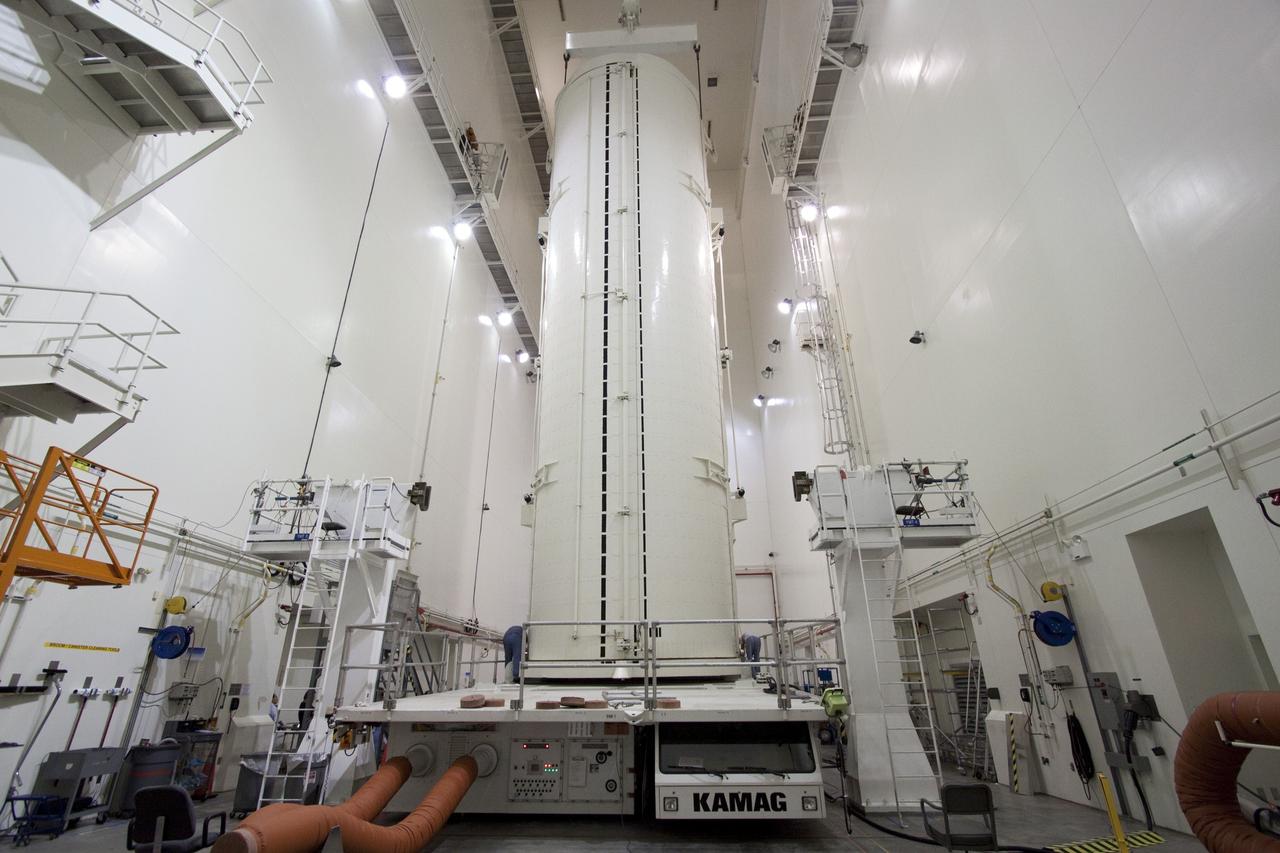
CAPE CANAVERAL, Fla. -- In the Canister Rotation Facility at NASA's Kennedy Space Center in Florida, the payload canister rests on a transport vehicle after being rotated into a vertical position. The canister will then be delivered to Launch Pad 39A, lifted into the rotating service structure where the module will be moved into the clean room before it is installed into space shuttle Discovery's payload bay. Discovery and its STS-133 crew will deliver the PMM, packed with supplies and critical spare parts, as well as Robonaut 2, the dexterous humanoid astronaut helper, to the International Space Station. Launch is targeted for 4:40 p.m. EDT, Nov. 1. Photo credit: NASA/Jack Pfaller
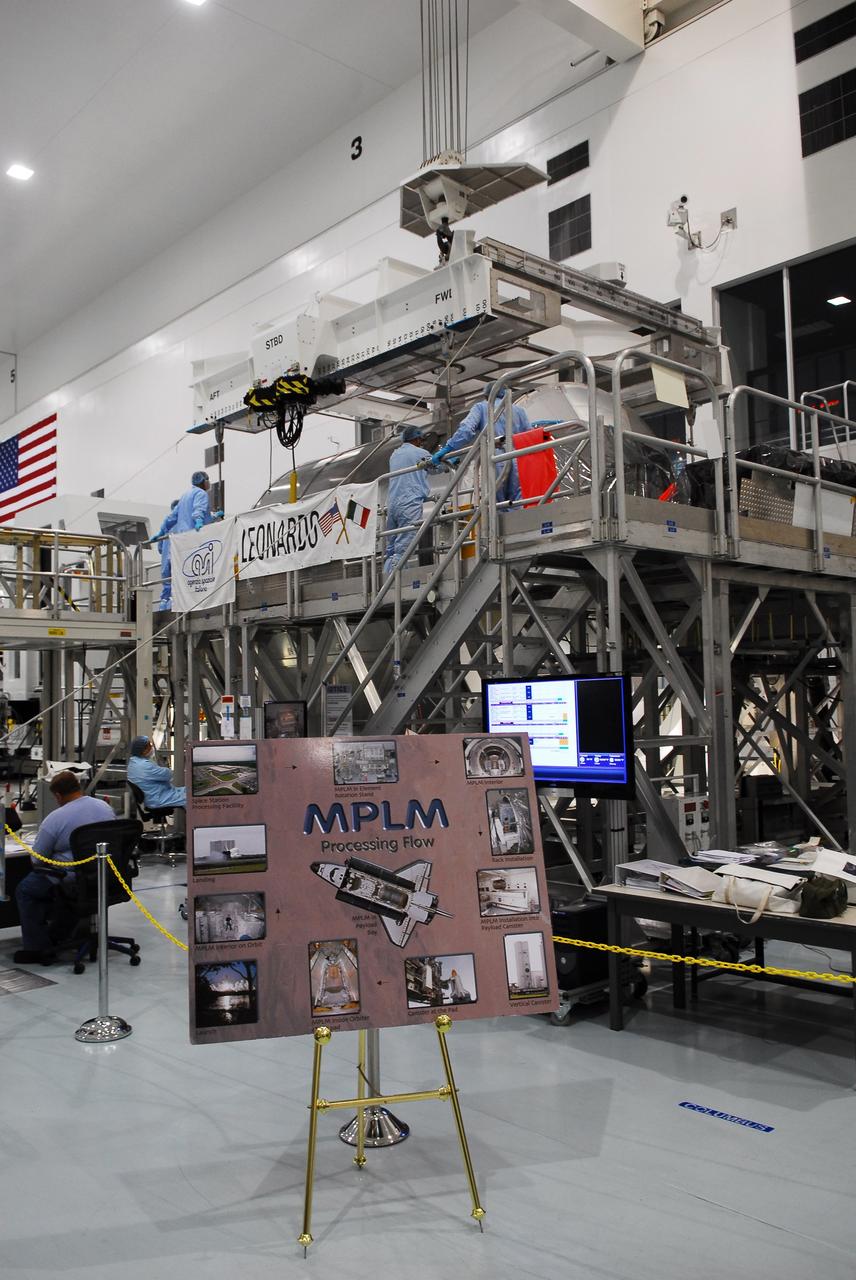
CAPE CANAVERAL, Fla. -- In the Space Station Processing Facility at NASA's Kennedy Space Center in Florida, technicians connect an overhead crane to the Permanent Multipurpose Module, or PMM, for its transfer into a payload canister. The canister will then be transported to Launch Pad 39A and installed into space shuttle Discovery's payload bay. Discovery and its STS-133 crew will deliver the PMM, packed with supplies and critical spare parts, as well as Robonaut 2, the dexterous humanoid astronaut helper, to the International Space Station. Launch is targeted for 4:40 p.m. EDT, Nov. 1. Photo credit: NASA/Cory Huston
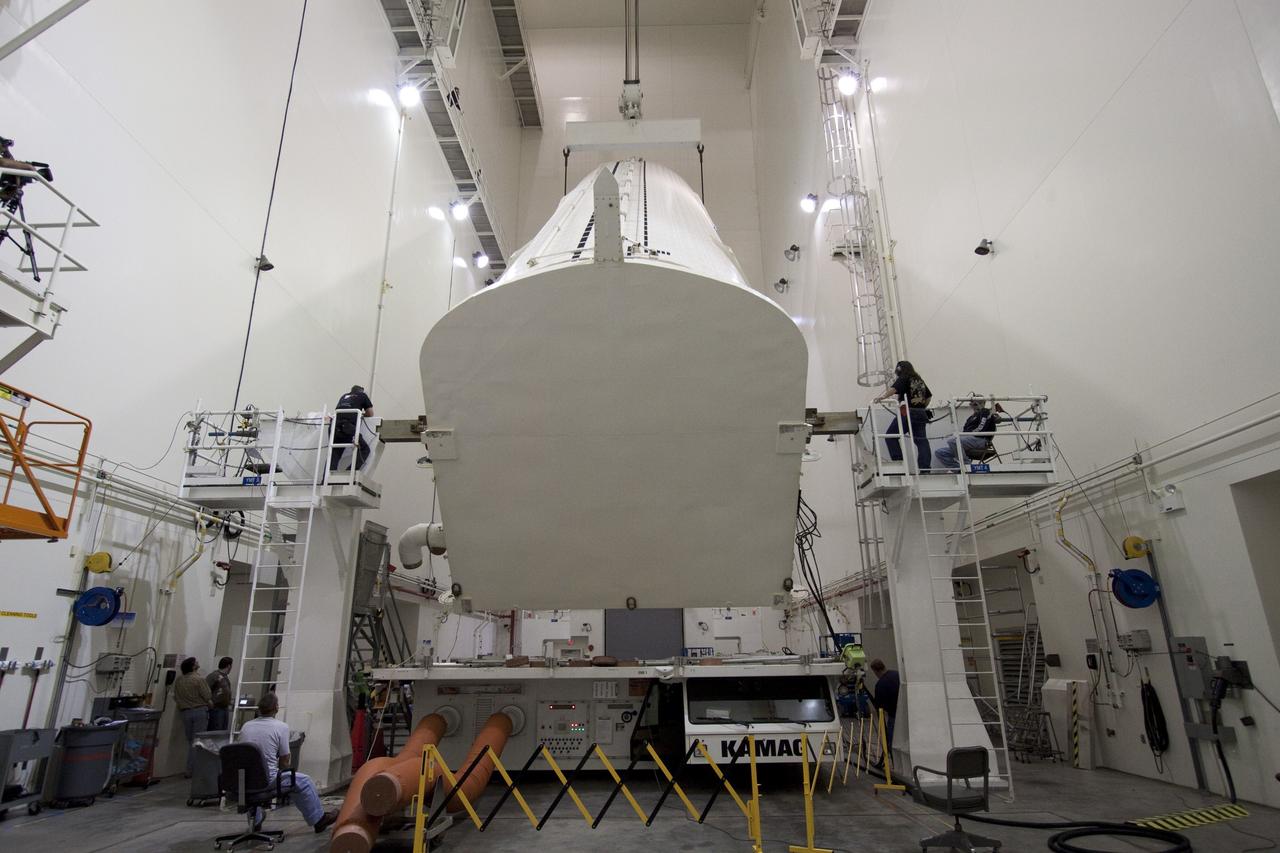
CAPE CANAVERAL, Fla. -- In the Canister Rotation Facility at NASA's Kennedy Space Center in Florida, workers monitor the progress of the payload canister as an overhead crane rotates it into a vertical position. The canister will then be delivered to Launch Pad 39A, lifted into the rotating service structure where the module will be moved into the clean room before it is installed into space shuttle Discovery's payload bay. Discovery and its STS-133 crew will deliver the PMM, packed with supplies and critical spare parts, as well as Robonaut 2, the dexterous humanoid astronaut helper, to the International Space Station. Launch is targeted for 4:40 p.m. EDT, Nov. 1. Photo credit: NASA/Jack Pfaller
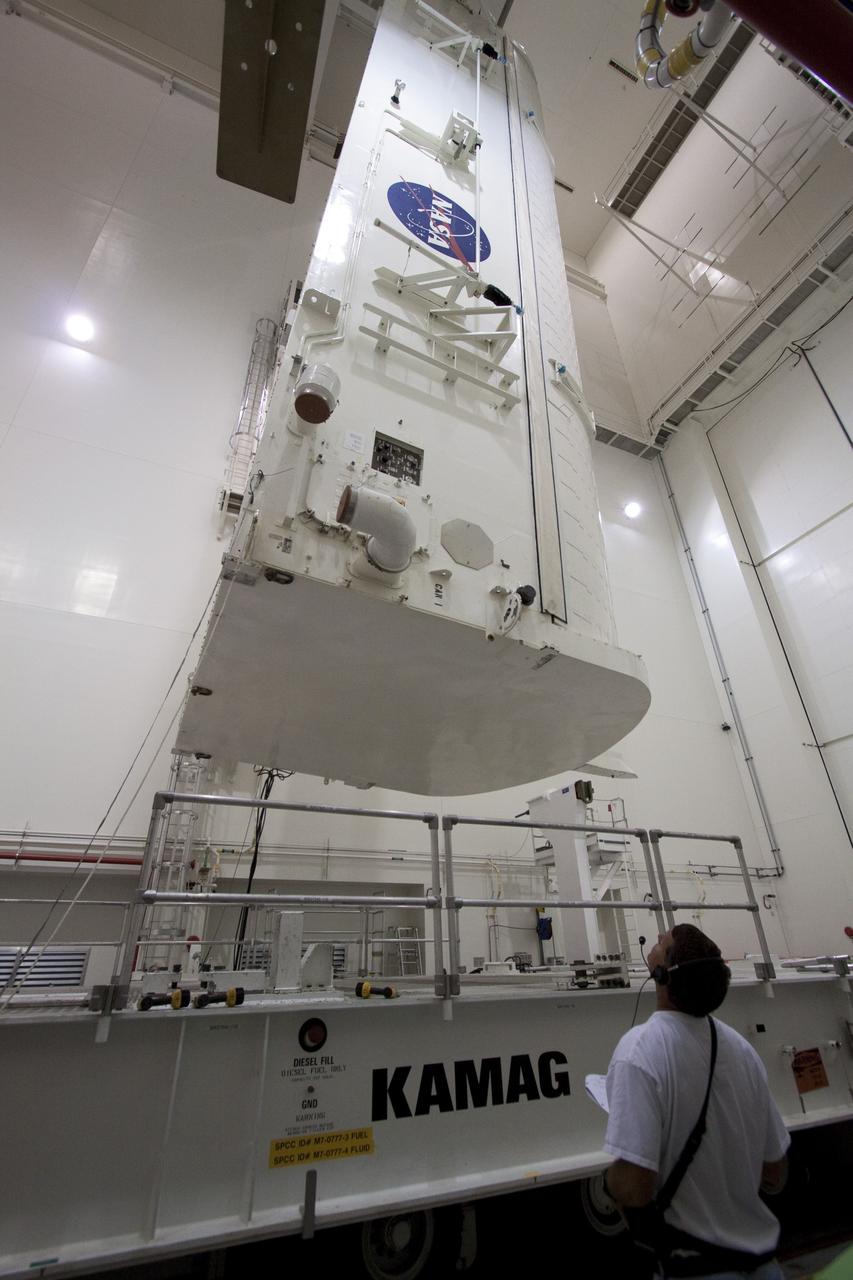
CAPE CANAVERAL, Fla. -- In the Canister Rotation Facility at NASA's Kennedy Space Center in Florida, a workers watches the progress of an overhead crane as it lowers the payload canister onto a transport vehicle. The canister will then be delivered to Launch Pad 39A, lifted into the rotating service structure where the module will be moved into the clean room before it is installed into space shuttle Discovery's payload bay. Discovery and its STS-133 crew will deliver the PMM, packed with supplies and critical spare parts, as well as Robonaut 2, the dexterous humanoid astronaut helper, to the International Space Station. Launch is targeted for 4:40 p.m. EDT, Nov. 1. Photo credit: NASA/Jack Pfaller
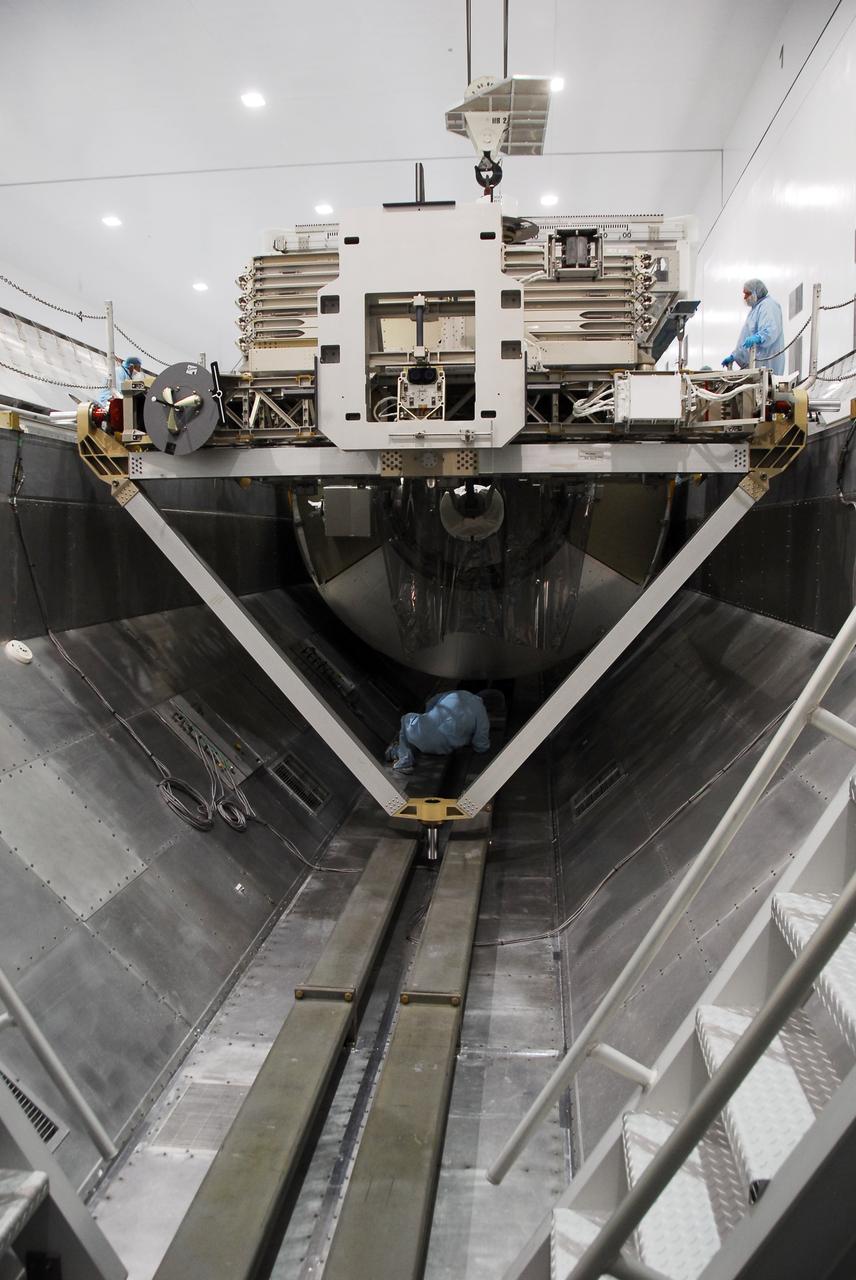
CAPE CANAVERAL, Fla. -- In the Space Station Processing Facility at NASA's Kennedy Space Center in Florida, technicians check the positioning of the Permanent Multipurpose Module, or PMM, after an overhead crane lowered it into the payload canister. Also being installed inside the canister is the Express Logistics Carrier-4 (top) carrying the Heat Rejection Subsystem radiator. The canister will then be transported to Launch Pad 39A and installed into space shuttle Discovery's payload bay. Discovery and its STS-133 crew will deliver the PMM, packed with supplies and critical spare parts, as well as Robonaut 2, the dexterous humanoid astronaut helper, to the International Space Station. Launch is targeted for 4:40 p.m. EDT, Nov. 1. Photo credit: NASA/Cory Huston
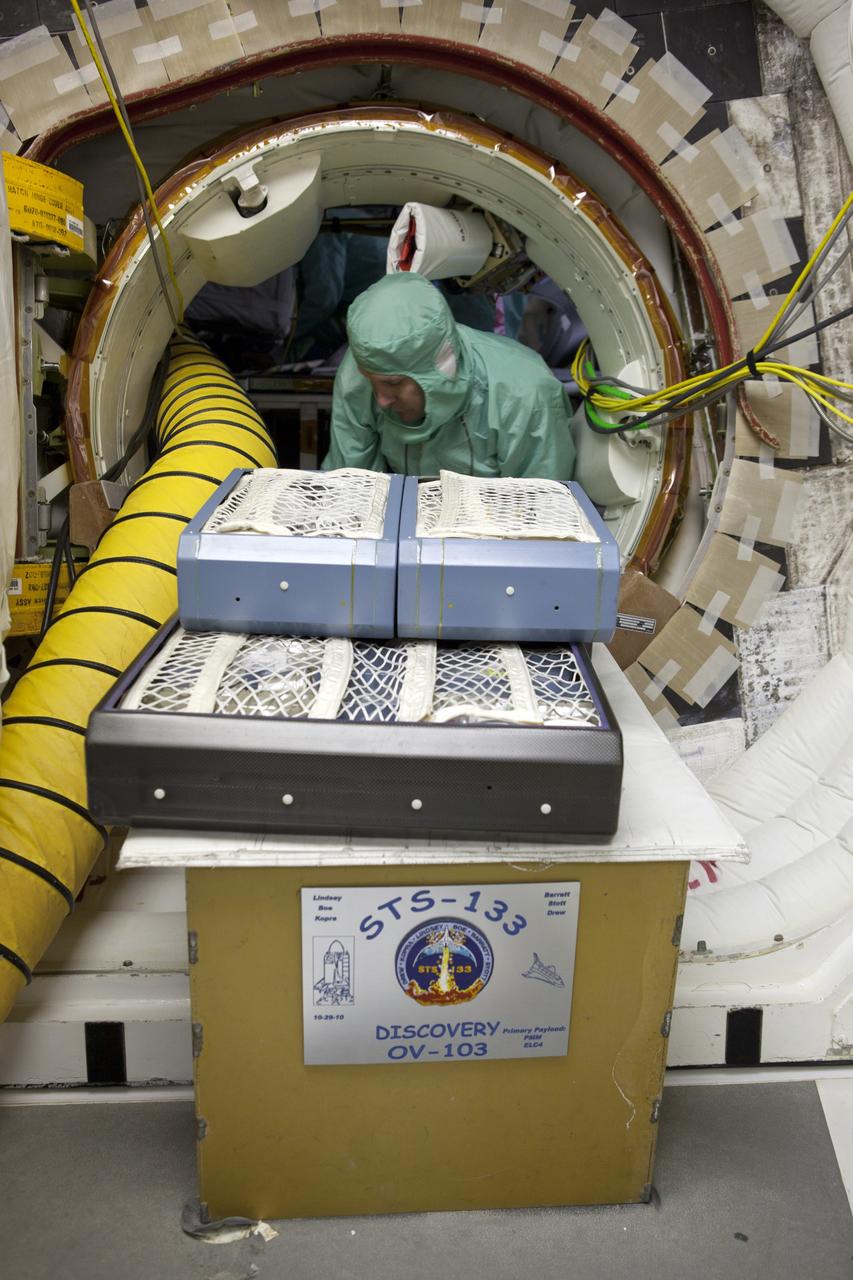
CAPE CANAVERAL, Fla. -- On Launch Pad 39A at NASA's Kennedy Space Center in Florida, technicians remove a few items from space shuttle Discovery's middeck payload, including food, prior to a tanking test planned for no earlier than Dec. 15. During the test, engineers will monitor what happens to the external fuel tank's newly replaced ground umbilical carrier plate (GUCP) and the intertank's stringers, which are 21-foot long, U-shaped aluminum brackets located on the intertank, during loading of cryogenic propellants. Technicians already installed environmental enclosures on the tank, removed foam and prepared the tank's skin for approximately 89 strain gauges and thermocouples. Discovery's first launch attempt for STS-133 was scrubbed in early November due to a hydrogen gas leak at GUCP. The next launch opportunity is no earlier than Feb. 3, 2011. For more information on STS-133, visit www.nasa.gov/mission_pages/shuttle/shuttlemissions/sts133/. Photo credit: NASA/Ben Smegelsky
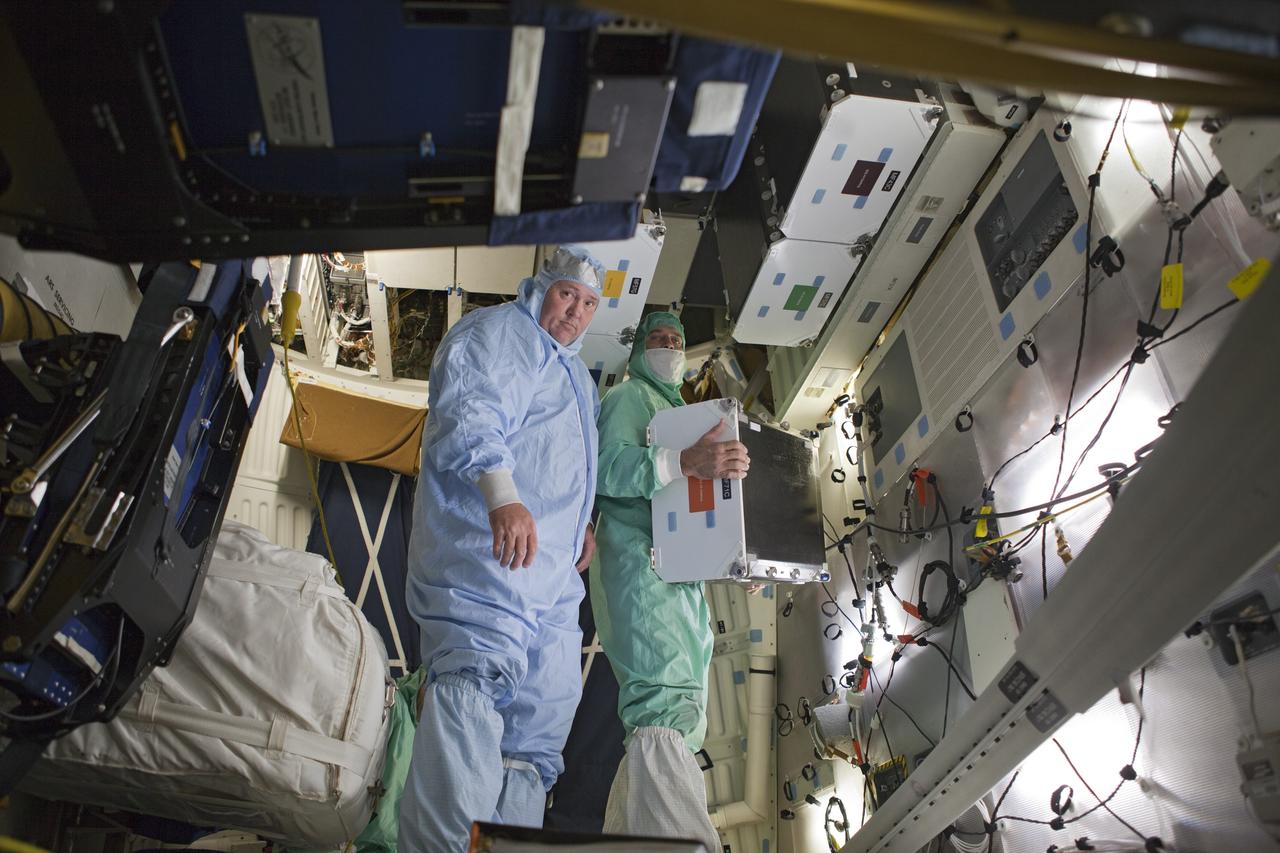
CAPE CANAVERAL, Fla. -- On Launch Pad 39A at NASA's Kennedy Space Center in Florida, technicians remove a few items from space shuttle Discovery's middeck payload, including food, prior to a tanking test planned for no earlier than Dec. 15. During the test, engineers will monitor what happens to the external fuel tank's newly replaced ground umbilical carrier plate (GUCP) and the intertank's stringers, which are 21-foot long, U-shaped aluminum brackets located on the intertank, during loading of cryogenic propellants. Technicians already installed environmental enclosures on the tank, removed foam and prepared the tank's skin for approximately 89 strain gauges and thermocouples. Discovery's first launch attempt for STS-133 was scrubbed in early November due to a hydrogen gas leak at GUCP. The next launch opportunity is no earlier than Feb. 3, 2011. For more information on STS-133, visit www.nasa.gov/mission_pages/shuttle/shuttlemissions/sts133/. Photo credit: NASA/Ben Smegelsky
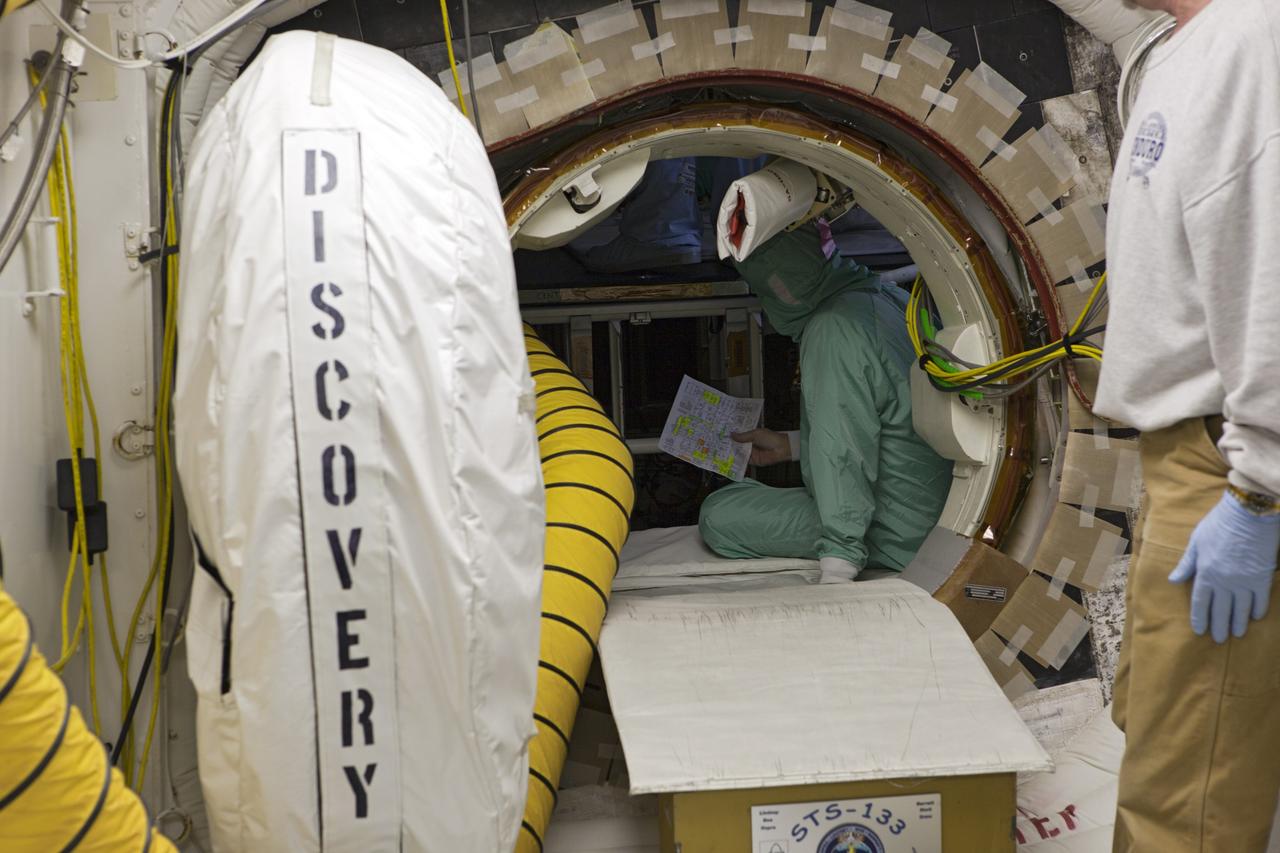
CAPE CANAVERAL, Fla. -- On Launch Pad 39A at NASA's Kennedy Space Center in Florida, technicians remove a few items from space shuttle Discovery's middeck payload, including food, prior to a tanking test planned for no earlier than Dec. 15. During the test, engineers will monitor what happens to the external fuel tank's newly replaced ground umbilical carrier plate (GUCP) and the intertank's stringers, which are 21-foot long, U-shaped aluminum brackets located on the intertank, during loading of cryogenic propellants. Technicians already installed environmental enclosures on the tank, removed foam and prepared the tank's skin for approximately 89 strain gauges and thermocouples. Discovery's first launch attempt for STS-133 was scrubbed in early November due to a hydrogen gas leak at GUCP. The next launch opportunity is no earlier than Feb. 3, 2011. For more information on STS-133, visit www.nasa.gov/mission_pages/shuttle/shuttlemissions/sts133/. Photo credit: NASA/Ben Smegelsky
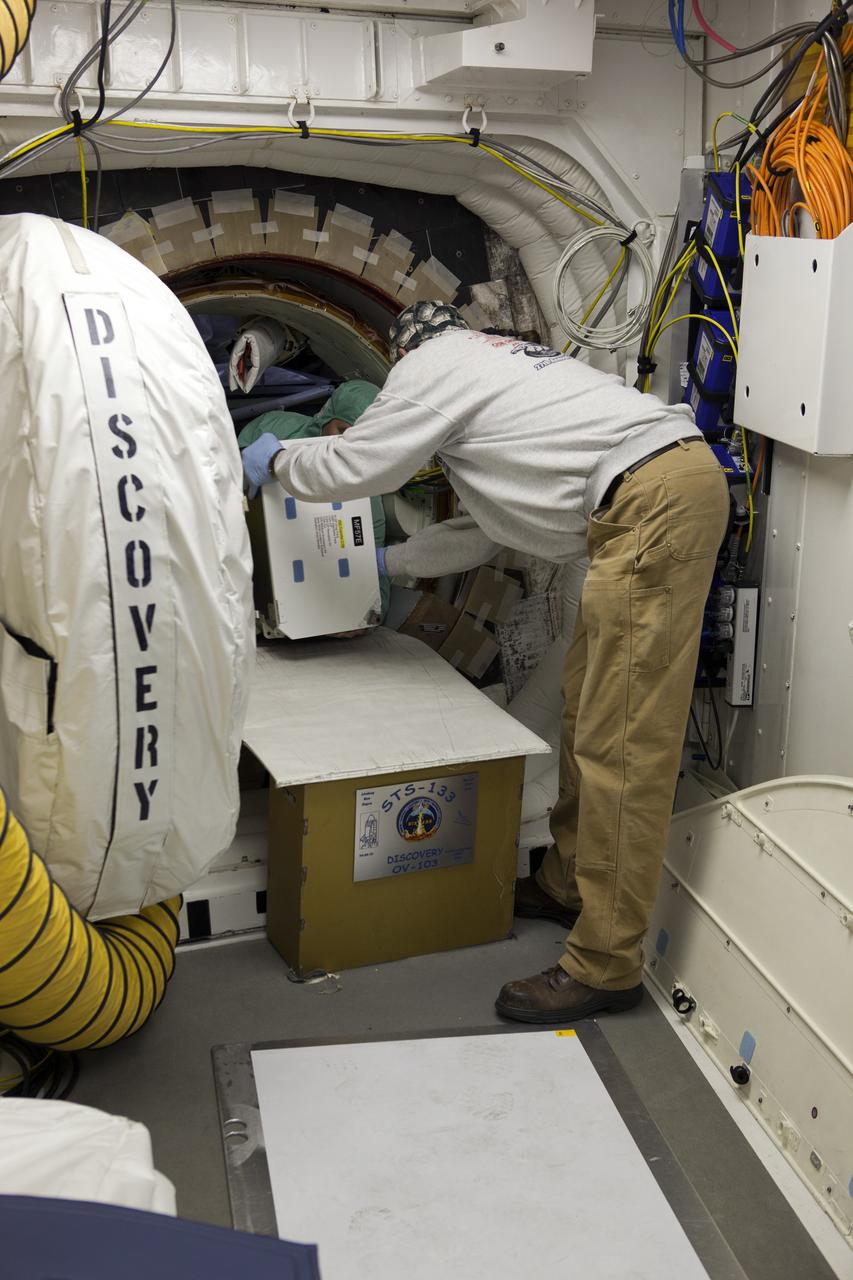
CAPE CANAVERAL, Fla. -- On Launch Pad 39A at NASA's Kennedy Space Center in Florida, technicians remove a few items from space shuttle Discovery's middeck payload, including food, prior to a tanking test planned for no earlier than Dec. 15. During the test, engineers will monitor what happens to the external fuel tank's newly replaced ground umbilical carrier plate (GUCP) and the intertank's stringers, which are 21-foot long, U-shaped aluminum brackets located on the intertank, during loading of cryogenic propellants. Technicians already installed environmental enclosures on the tank, removed foam and prepared the tank's skin for approximately 89 strain gauges and thermocouples. Discovery's first launch attempt for STS-133 was scrubbed in early November due to a hydrogen gas leak at GUCP. The next launch opportunity is no earlier than Feb. 3, 2011. For more information on STS-133, visit www.nasa.gov/mission_pages/shuttle/shuttlemissions/sts133/. Photo credit: NASA/Ben Smegelsky
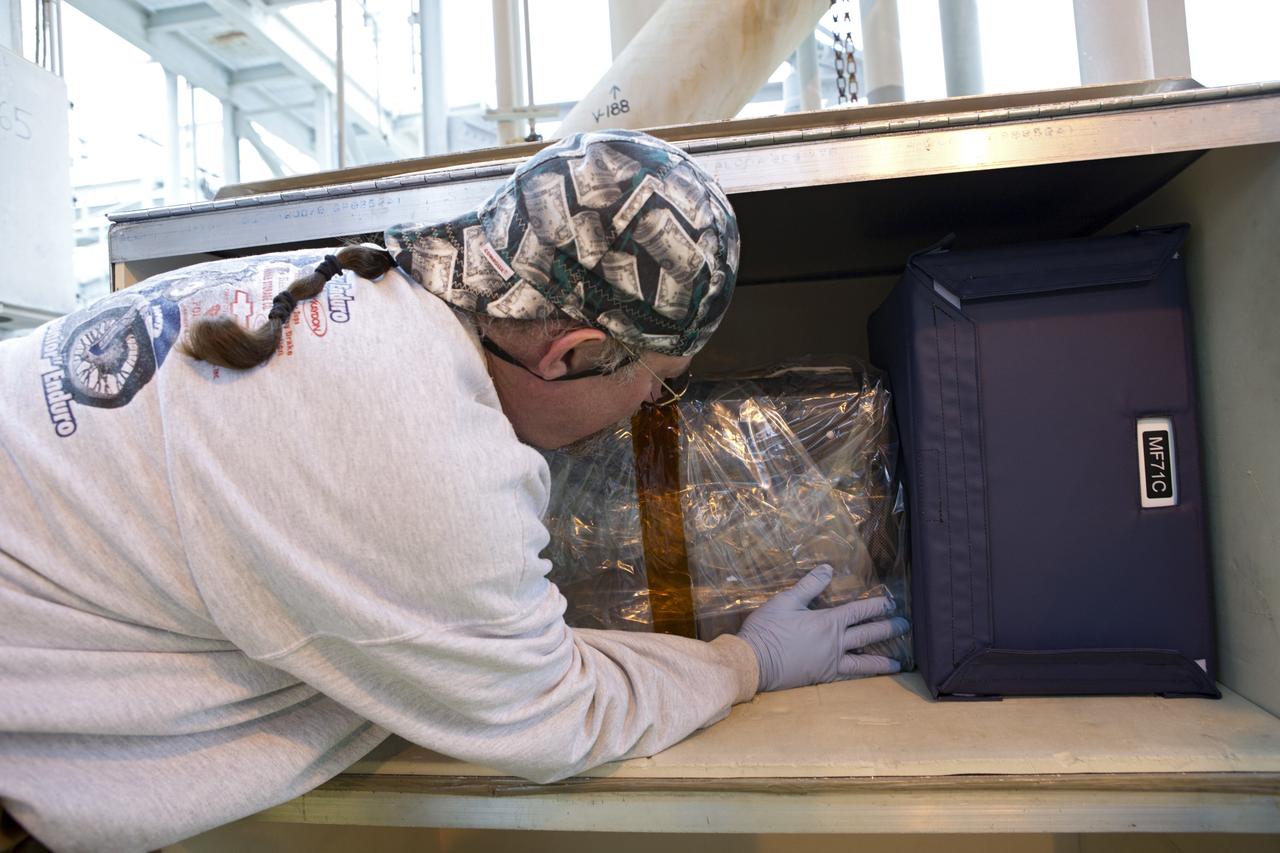
CAPE CANAVERAL, Fla. -- On Launch Pad 39A at NASA's Kennedy Space Center in Florida, technicians removed a few items from space shuttle Discovery's middeck payload, including food, prior to a tanking test planned for no earlier than Dec. 15. During the test, engineers will monitor what happens to the external fuel tank's newly replaced ground umbilical carrier plate (GUCP) and the intertank's stringers, which are 21-foot long, U-shaped aluminum brackets located on the intertank, during loading of cryogenic propellants. Technicians already installed environmental enclosures on the tank, removed foam and prepared the tank's skin for approximately 89 strain gauges and thermocouples. Discovery's first launch attempt for STS-133 was scrubbed in early November due to a hydrogen gas leak at GUCP. The next launch opportunity is no earlier than Feb. 3, 2011. For more information on STS-133, visit www.nasa.gov/mission_pages/shuttle/shuttlemissions/sts133/. Photo credit: NASA/Ben Smegelsky
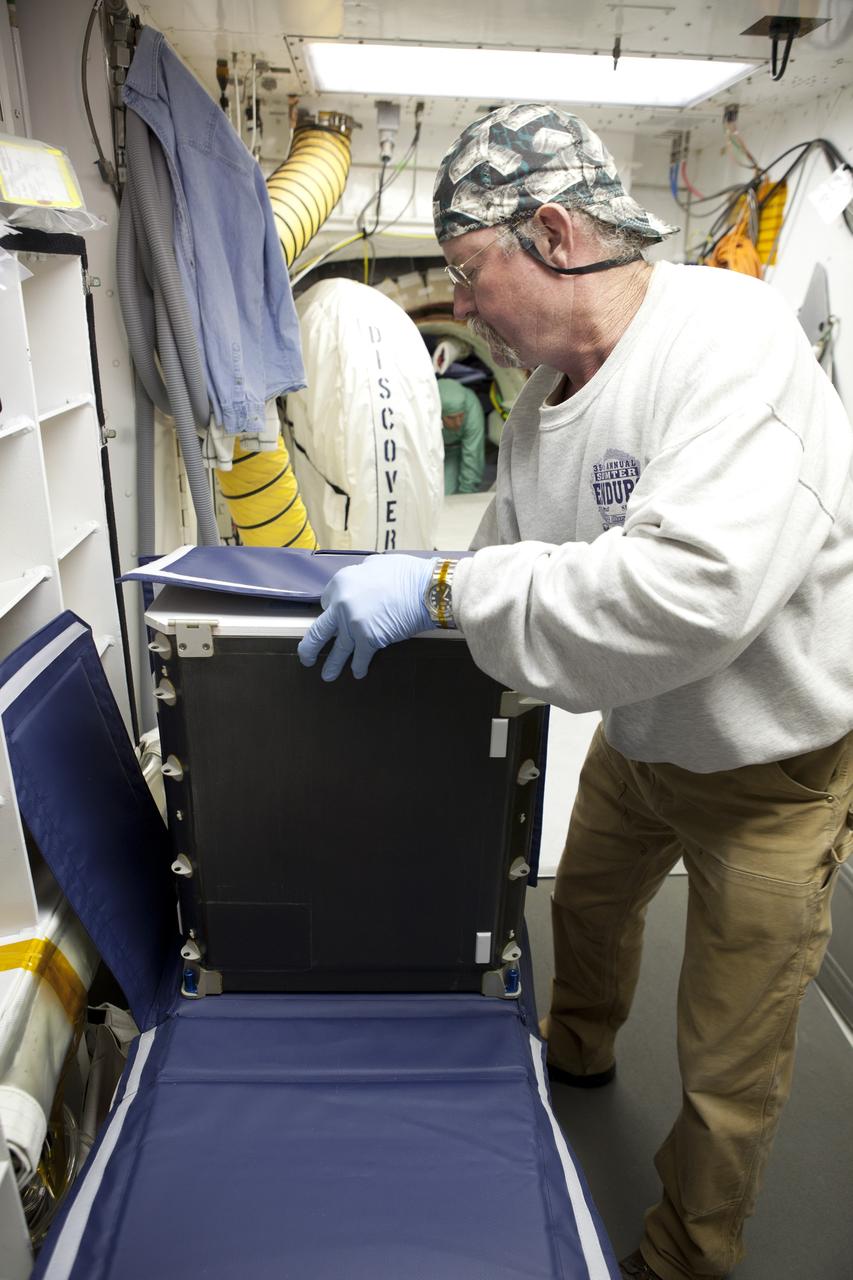
CAPE CANAVERAL, Fla. -- On Launch Pad 39A at NASA's Kennedy Space Center in Florida, technicians remove a few items from space shuttle Discovery's middeck payload, including food, prior to a tanking test planned for no earlier than Dec. 15. During the test, engineers will monitor what happens to the external fuel tank's newly replaced ground umbilical carrier plate (GUCP) and the intertank's stringers, which are 21-foot long, U-shaped aluminum brackets located on the intertank, during loading of cryogenic propellants. Technicians already installed environmental enclosures on the tank, removed foam and prepared the tank's skin for approximately 89 strain gauges and thermocouples. Discovery's first launch attempt for STS-133 was scrubbed in early November due to a hydrogen gas leak at GUCP. The next launch opportunity is no earlier than Feb. 3, 2011. For more information on STS-133, visit www.nasa.gov/mission_pages/shuttle/shuttlemissions/sts133/. Photo credit: NASA/Ben Smegelsky
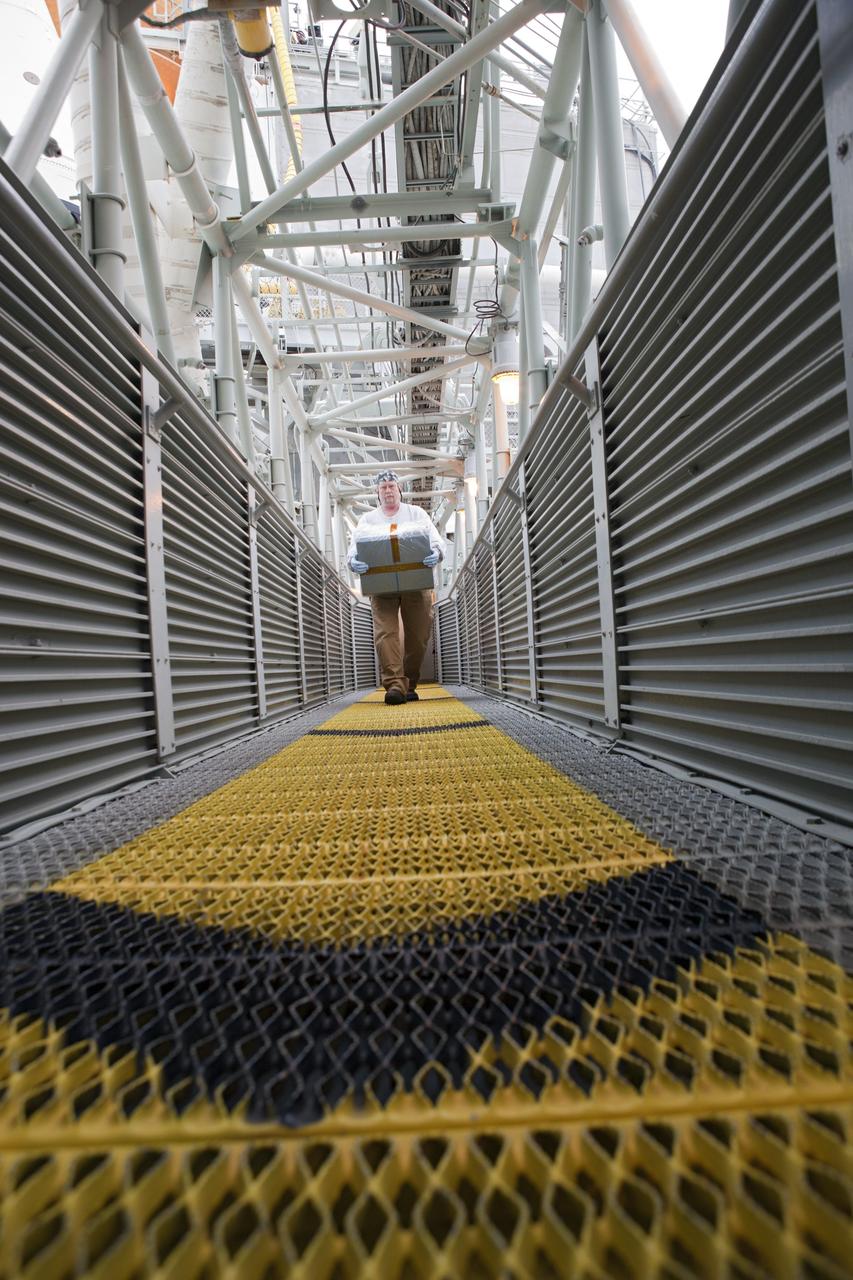
CAPE CANAVERAL, Fla. -- On Launch Pad 39A at NASA's Kennedy Space Center in Florida, technicians remove a few items from space shuttle Discovery's middeck payload, including food, prior to a tanking test planned for no earlier than Dec. 15. During the test, engineers will monitor what happens to the external fuel tank's newly replaced ground umbilical carrier plate (GUCP) and the intertank's stringers, which are 21-foot long, U-shaped aluminum brackets located on the intertank, during loading of cryogenic propellants. Technicians already installed environmental enclosures on the tank, removed foam and prepared the tank's skin for approximately 89 strain gauges and thermocouples. Discovery's first launch attempt for STS-133 was scrubbed in early November due to a hydrogen gas leak at GUCP. The next launch opportunity is no earlier than Feb. 3, 2011. For more information on STS-133, visit www.nasa.gov/mission_pages/shuttle/shuttlemissions/sts133/. Photo credit: NASA/Ben Smegelsky
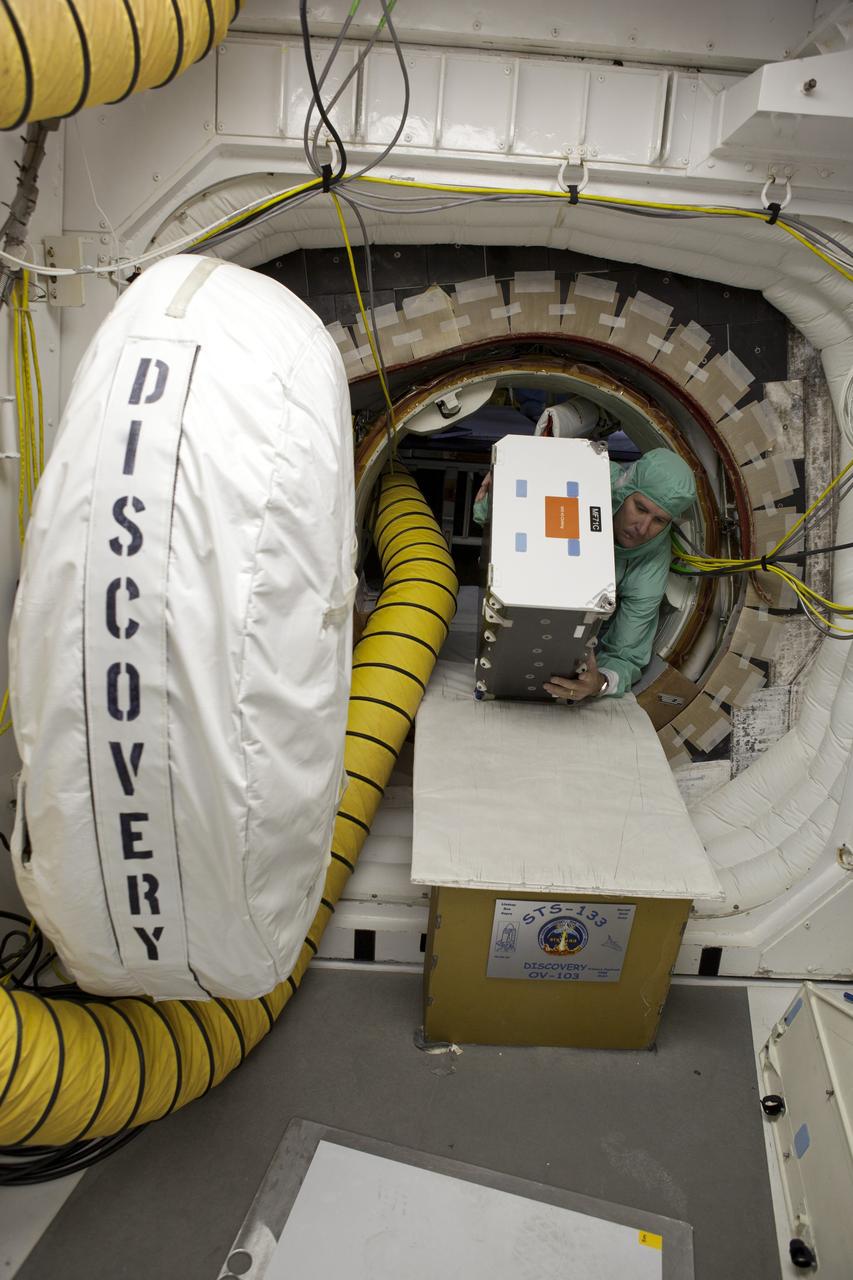
CAPE CANAVERAL, Fla. -- On Launch Pad 39A at NASA's Kennedy Space Center in Florida, technicians remove a few items from space shuttle Discovery's middeck payload, including food, prior to a tanking test planned for no earlier than Dec. 15. During the test, engineers will monitor what happens to the external fuel tank's newly replaced ground umbilical carrier plate (GUCP) and the intertank's stringers, which are 21-foot long, U-shaped aluminum brackets located on the intertank, during loading of cryogenic propellants. Technicians already installed environmental enclosures on the tank, removed foam and prepared the tank's skin for approximately 89 strain gauges and thermocouples. Discovery's first launch attempt for STS-133 was scrubbed in early November due to a hydrogen gas leak at GUCP. The next launch opportunity is no earlier than Feb. 3, 2011. For more information on STS-133, visit www.nasa.gov/mission_pages/shuttle/shuttlemissions/sts133/. Photo credit: NASA/Ben Smegelsky