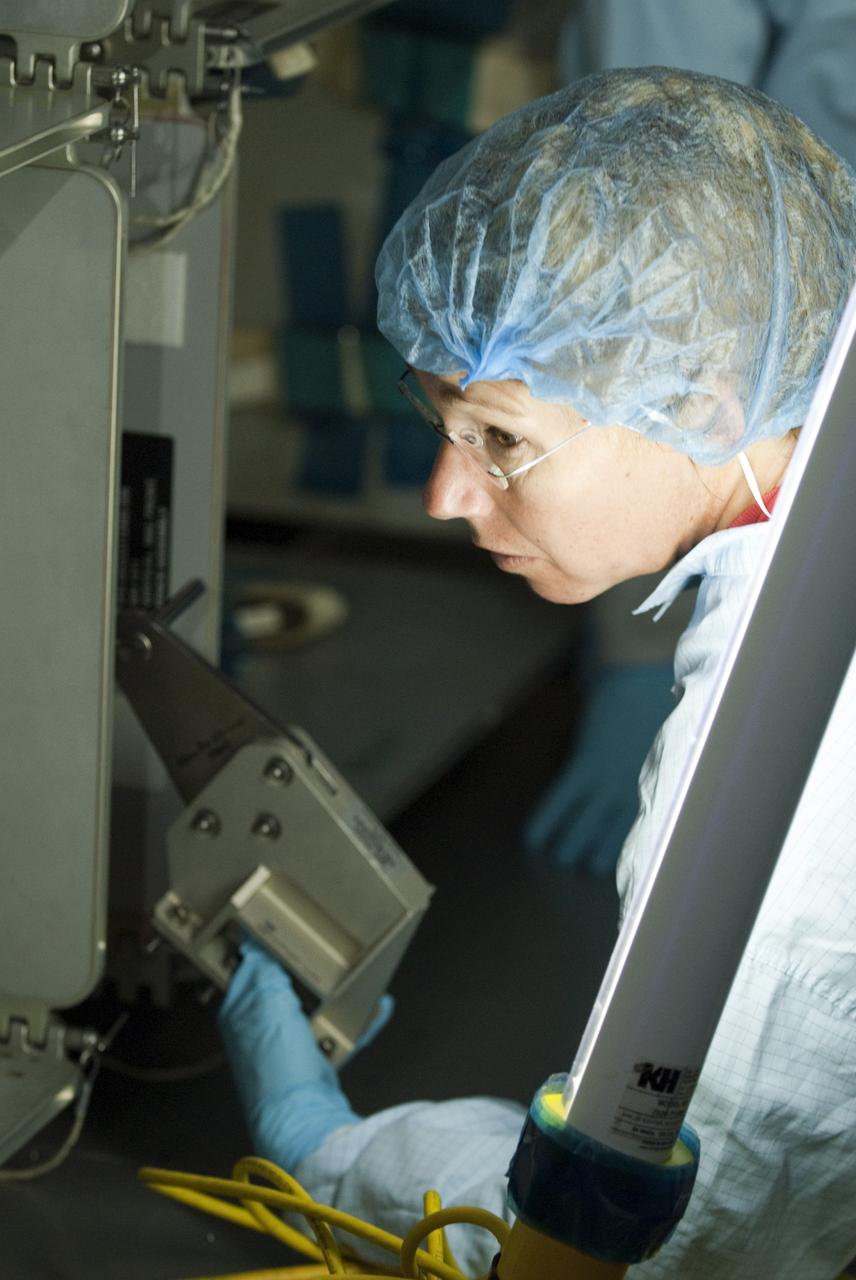
CAPE CANAVERAL, Fla. -- In the Space Station Processing Facility at NASA's Kennedy Space Center in Florida, STS-135 Mission Specialist Sandy Magnus, garbed in protective wear, inspects the Raffaello multi-purpose logistics module for shuttle Atlantis' flight to the International Space Station. Commander Chris Ferguson, Pilot Doug Hurley and Mission Specialists Sandra Magnus and Rex Walheim are targeted to launch on July 8, taking with them the Raffaello multi-purpose logistics module packed with supplies, logistics and spare parts. The STS-135 mission also will fly a system to investigate the potential for robotically refueling existing spacecraft and return a failed ammonia pump module to help NASA better understand the failure mechanism and improve pump designs for future systems. STS-135 will be the 33rd flight of Atlantis, the 37th shuttle mission to the space station, and the 135th and final mission of NASA's Space Shuttle Program. For more information visit, www.nasa.gov/mission_pages/shuttle/shuttlemissions/sts135/index.html. Photo credit: NASA/Kim Shiflett
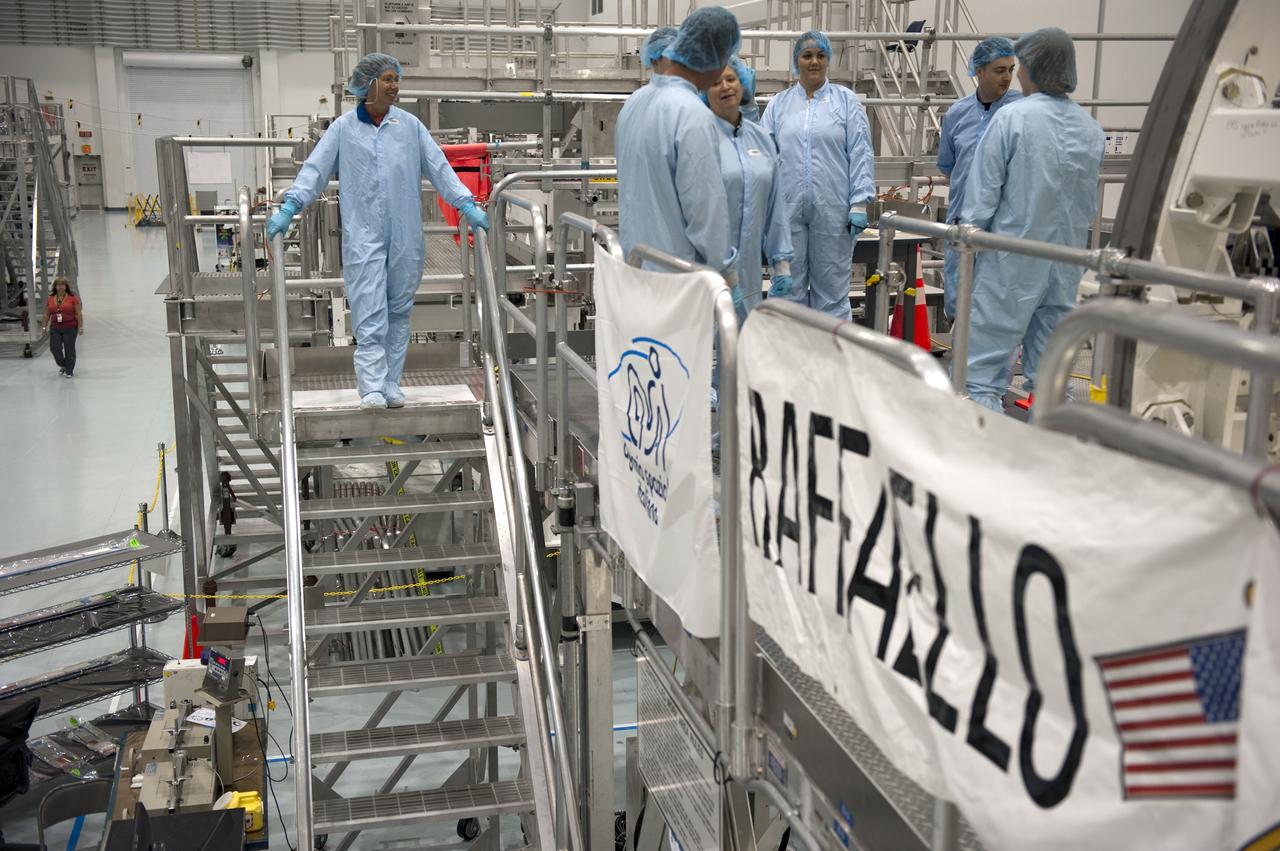
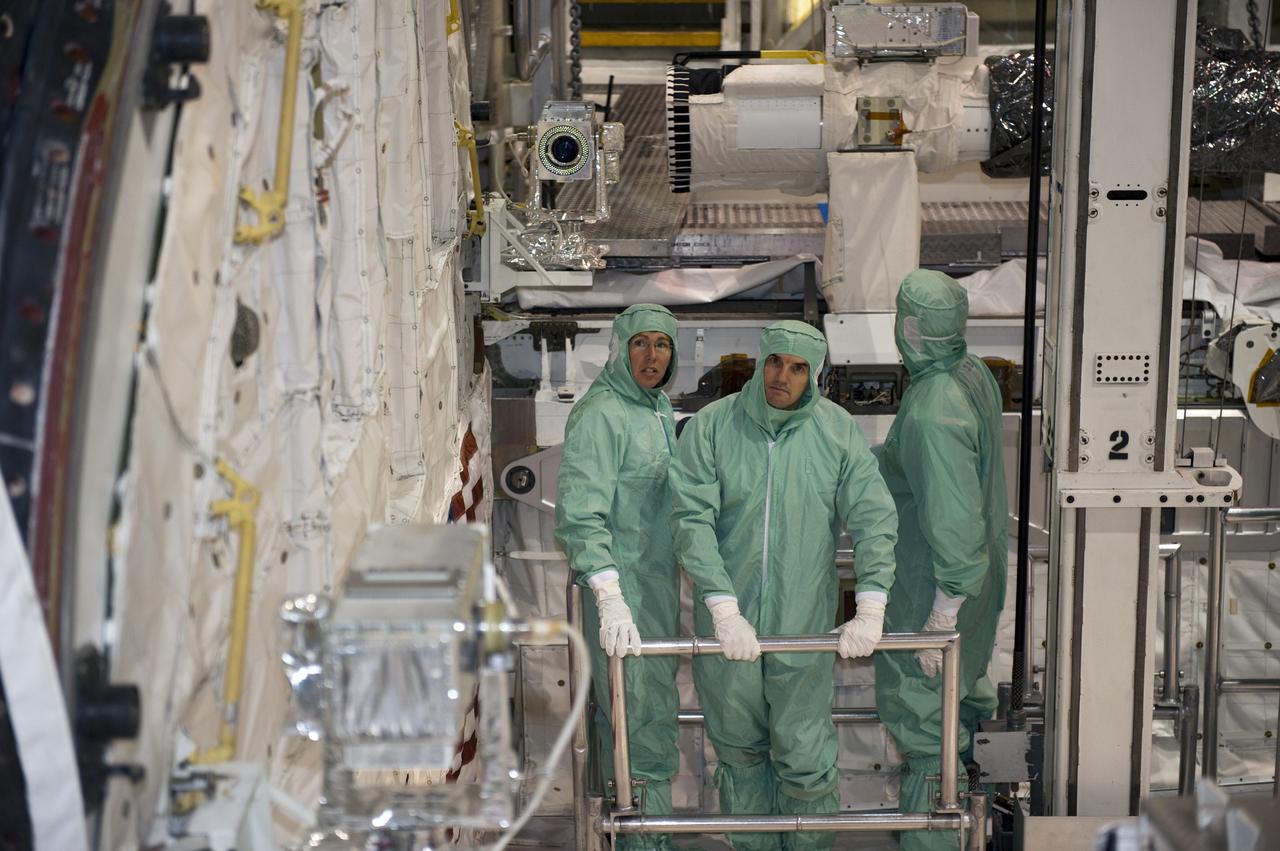
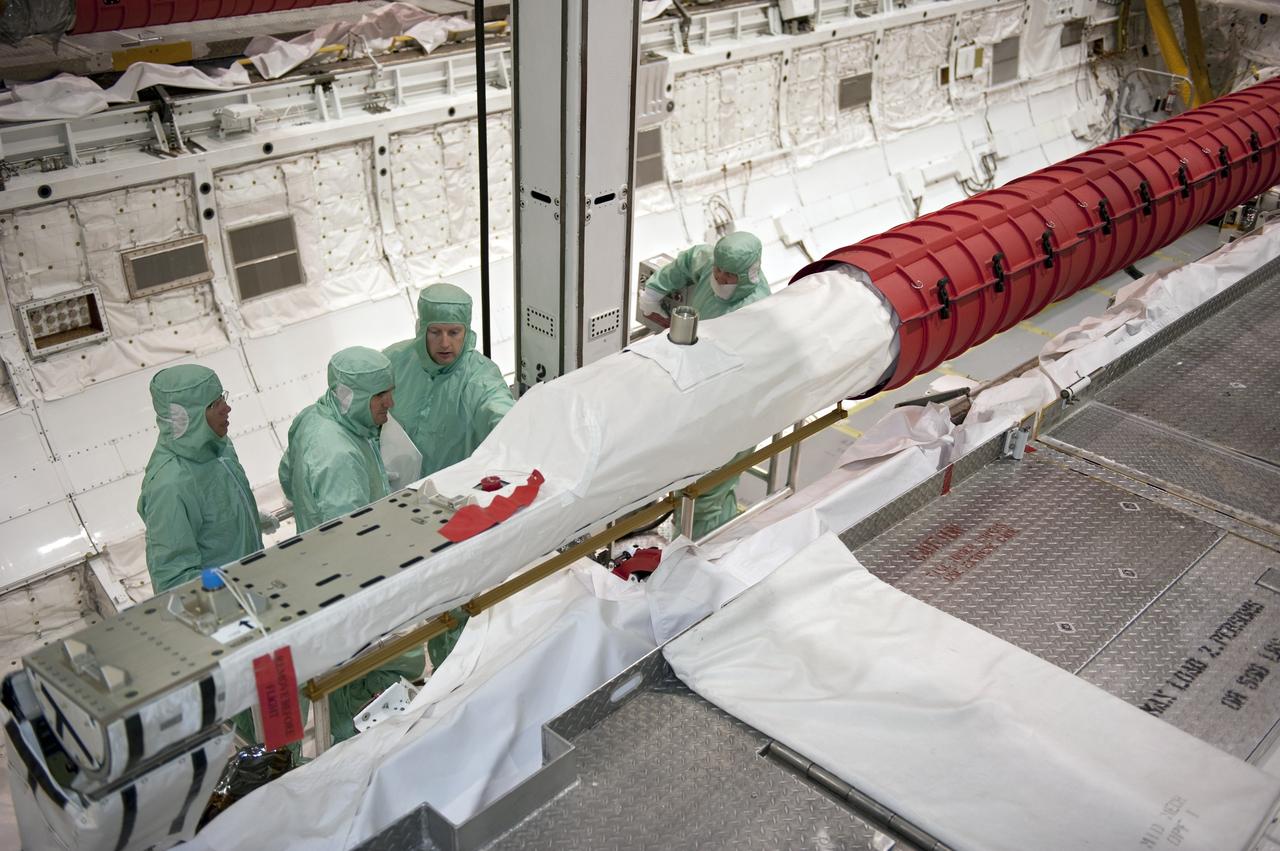
CAPE CANAVERAL, Fla. -- In the Space Station Processing Facility at NASA's Kennedy Space Center in Florida, STS-135 Mission Specialist Sandra Magnus and facility technicians garbed in protective wear, have completed their inspection of the Raffaello multi-purpose logistics module for shuttle Atlantis' flight to the International Space Station. Commander Chris Ferguson, Pilot Doug Hurley and Mission Specialists Sandra Magnus and Rex Walheim are targeted to launch on July 8, taking with them the Raffaello multi-purpose logistics module packed with supplies, logistics and spare parts. The STS-135 mission also will fly a system to investigate the potential for robotically refueling existing spacecraft and return a failed ammonia pump module to help NASA better understand the failure mechanism and improve pump designs for future systems. STS-135 will be the 33rd flight of Atlantis, the 37th shuttle mission to the space station, and the 135th and final mission of NASA's Space Shuttle Program. For more information visit, www.nasa.gov/mission_pages/shuttle/shuttlemissions/sts135/index.html. Photo credit: NASA/Kim Shiflett
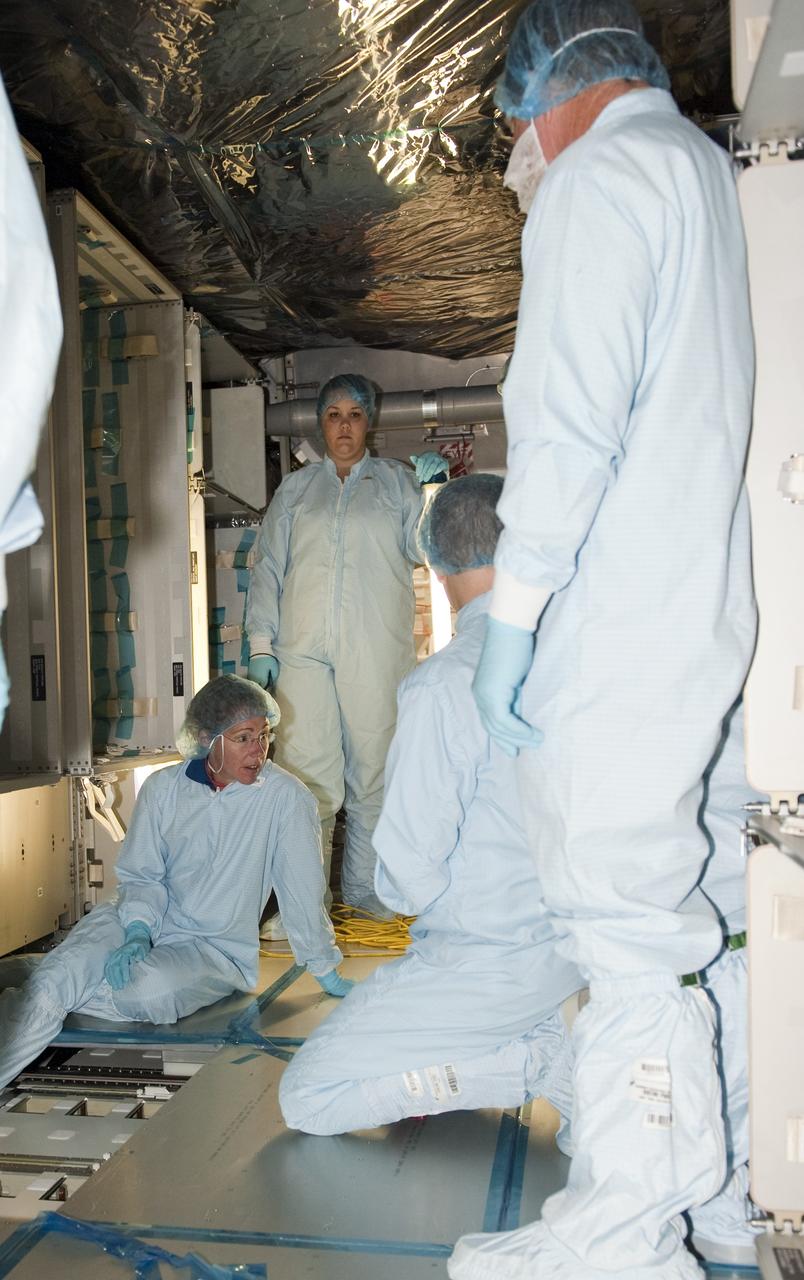
CAPE CANAVERAL, Fla. -- In the Space Station Processing Facility at NASA's Kennedy Space Center in Florida, STS-135 Mission Specialist Sandra Magnus and facility technicians garbed in protective wear, inspect the Raffaello multi-purpose logistics module for shuttle Atlantis' flight to the International Space Station. Commander Chris Ferguson, Pilot Doug Hurley and Mission Specialists Sandra Magnus and Rex Walheim are targeted to launch on July 8, taking with them the Raffaello multi-purpose logistics module packed with supplies, logistics and spare parts. The STS-135 mission also will fly a system to investigate the potential for robotically refueling existing spacecraft and return a failed ammonia pump module to help NASA better understand the failure mechanism and improve pump designs for future systems. STS-135 will be the 33rd flight of Atlantis, the 37th shuttle mission to the space station, and the 135th and final mission of NASA's Space Shuttle Program. For more information visit, www.nasa.gov/mission_pages/shuttle/shuttlemissions/sts135/index.html. Photo credit: NASA/Kim Shiflett
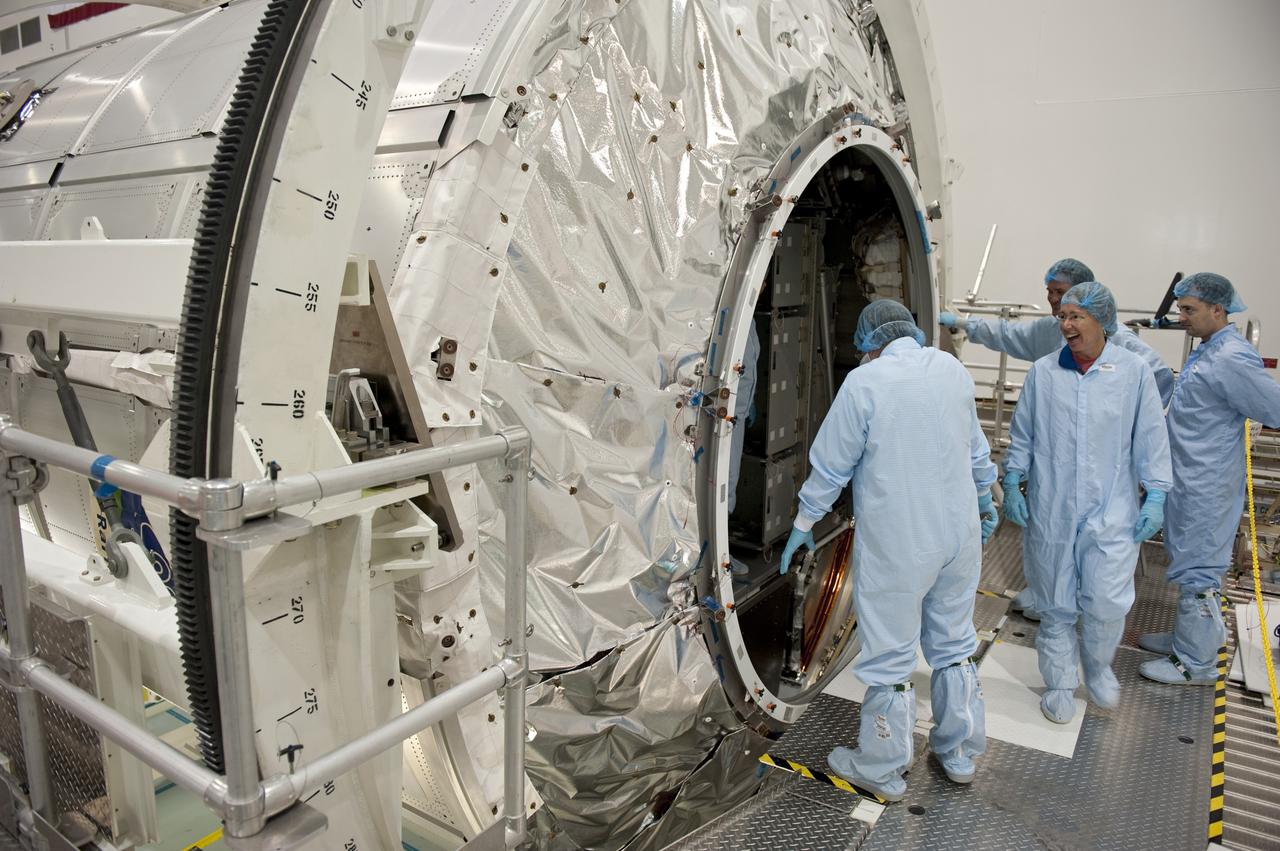
CAPE CANAVERAL, Fla. -- In the Space Station Processing Facility at NASA's Kennedy Space Center in Florida, STS-135 Mission Specialist Sandra Magnus and facility technicians garbed in protective wear, enjoy a light-hearted moment after inspecting the Raffaello multi-purpose logistics module for shuttle Atlantis' flight to the International Space Station. Commander Chris Ferguson, Pilot Doug Hurley and Mission Specialists Sandra Magnus and Rex Walheim are targeted to launch on July 8, taking with them the Raffaello multi-purpose logistics module packed with supplies, logistics and spare parts. The STS-135 mission also will fly a system to investigate the potential for robotically refueling existing spacecraft and return a failed ammonia pump module to help NASA better understand the failure mechanism and improve pump designs for future systems. STS-135 will be the 33rd flight of Atlantis, the 37th shuttle mission to the space station, and the 135th and final mission of NASA's Space Shuttle Program. For more information visit, www.nasa.gov/mission_pages/shuttle/shuttlemissions/sts135/index.html. Photo credit: NASA/Kim Shiflett

CAPE CANAVERAL, Fla. -- In the Space Station Processing Facility at NASA's Kennedy Space Center in Florida, STS-135 Mission Specialist Sandra Magnus and facility technicians garbed in protective wear, inspect the Raffaello multi-purpose logistics module for shuttle Atlantis' flight to the International Space Station. Commander Chris Ferguson, Pilot Doug Hurley and Mission Specialists Sandra Magnus and Rex Walheim are targeted to launch on July 8, taking with them the Raffaello multi-purpose logistics module packed with supplies, logistics and spare parts. The STS-135 mission also will fly a system to investigate the potential for robotically refueling existing spacecraft and return a failed ammonia pump module to help NASA better understand the failure mechanism and improve pump designs for future systems. STS-135 will be the 33rd flight of Atlantis, the 37th shuttle mission to the space station, and the 135th and final mission of NASA's Space Shuttle Program. For more information visit, www.nasa.gov/mission_pages/shuttle/shuttlemissions/sts135/index.html. Photo credit: NASA/Kim Shiflett
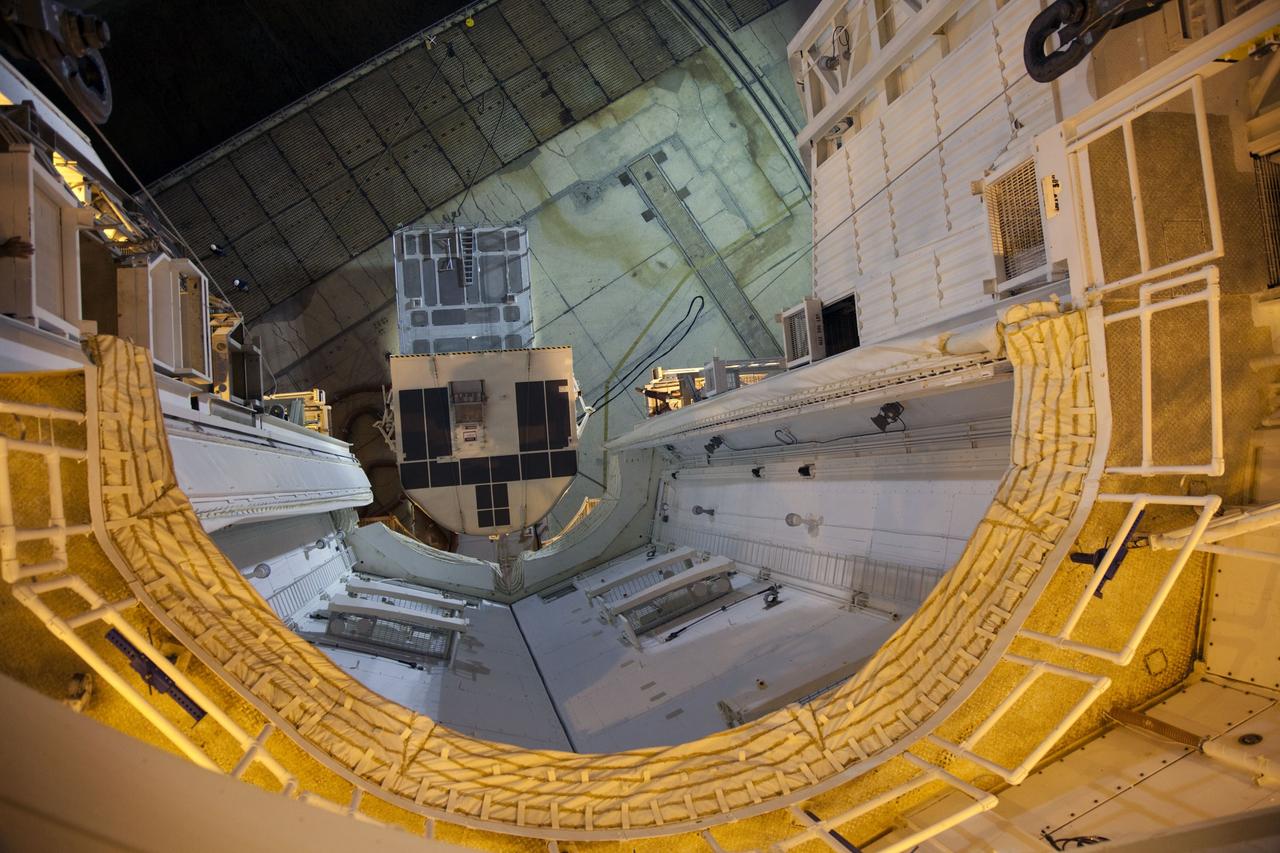
CAPE CANAVERAL, Fla. -- On Launch Pad 39A at NASA's Kennedy Space Center in Florida, the Raffaello multi-purpose logistics module (MPLM) payload for space shuttle Atlantis' STS-135 mission to the International Space Station can be seen from inside the payload changeout room (PCR). The payload canister will be lifted to the PCR and the payload ground-handling mechanism then will be used to transfer Raffaello out of the canister into Atlantis' payload bay. Next, the rotating service structure that protects the shuttle from the elements and provides access will be rotated back into place. Commander Chris Ferguson, Pilot Doug Hurley and Mission Specialists Sandra Magnus and Rex Walheim are targeted to lift off on Atlantis July 8, taking with them the MPLM packed with supplies, logistics and spare parts to the station. The STS-135 mission also will fly a system to investigate the potential for robotically refueling existing satellites and return a failed ammonia pump module to help NASA better understand the failure mechanism and improve pump designs for future systems. STS-135 will be the 33rd flight of Atlantis, the 37th shuttle mission to the space station, and the 135th and final mission of NASA's Space Shuttle Program. For more information visit, www.nasa.gov/mission_pages/shuttle/shuttlemissions/sts135/index.html. Photo credit: NASA/Frank Michaux
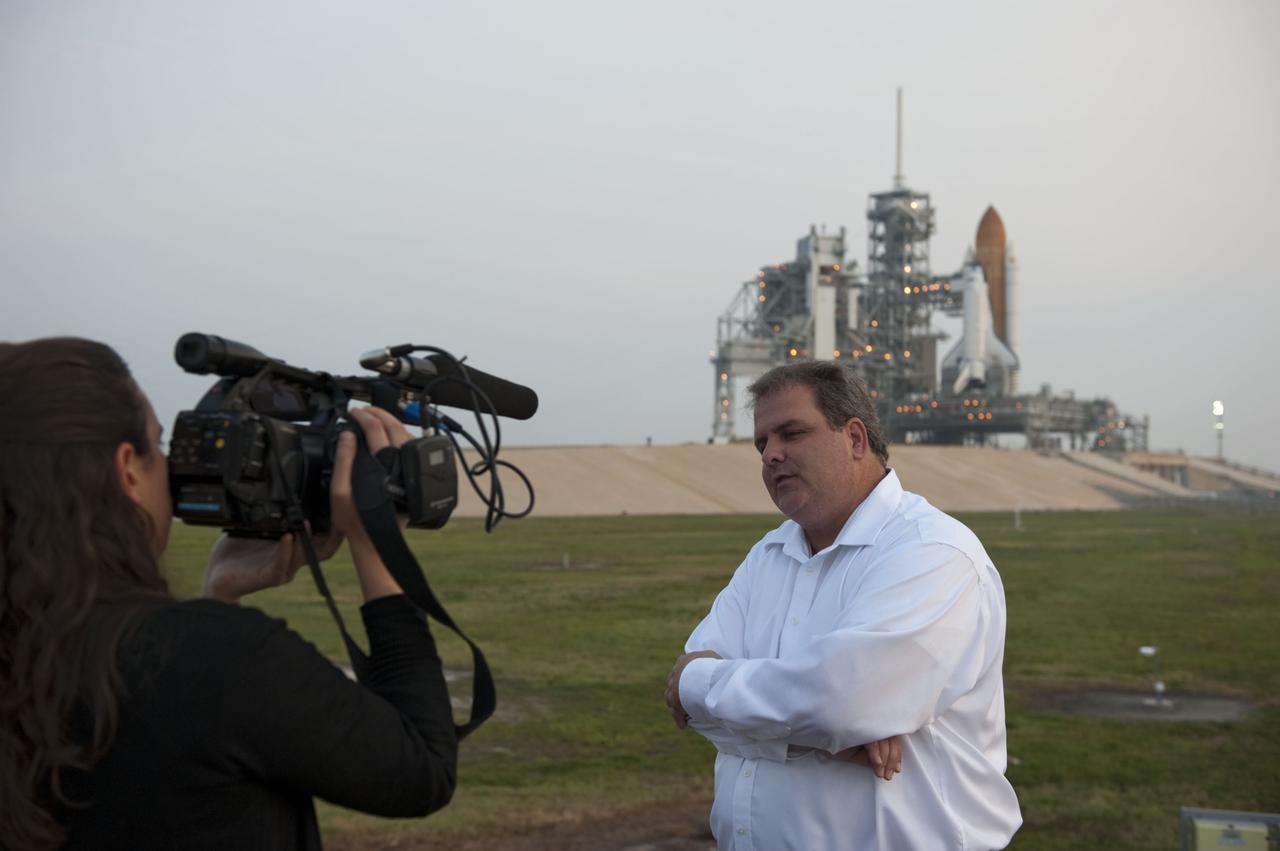
CAPE CANAVERAL, Fla. -- Near Launch Pad 39A at NASA's Kennedy Space Center in Florida, Payload Mission Manager Joe Delai speaks to media. The Raffaello multi-purpose logistics module (MPLM) was delivered to the pad overnight and lifted into the payload changeout room. The payload ground-handling mechanism then will be used to transfer Raffaello out of the canister into Atlantis' payload bay. Next, the rotating service structure that protects the shuttle from the elements and provides access will be rotated back into place. In the background is shuttle Atlantis, waiting to launch on the STS-135 mission. Commander Chris Ferguson, Pilot Doug Hurley and Mission Specialists Sandra Magnus and Rex Walheim are targeted to lift off on space shuttle Atlantis July 8, taking with them the MPLM packed with supplies, logistics and spare parts to the International Space Station. The STS-135 mission also will fly a system to investigate the potential for robotically refueling existing satellites and return a failed ammonia pump module to help NASA better understand the failure mechanism and improve pump designs for future systems. STS-135 will be the 33rd flight of Atlantis, the 37th shuttle mission to the space station, and the 135th and final mission of NASA's Space Shuttle Program. For more information visit, www.nasa.gov/mission_pages/shuttle/shuttlemissions/sts135/index.html. Photo credit: NASA/Kim Shiflett
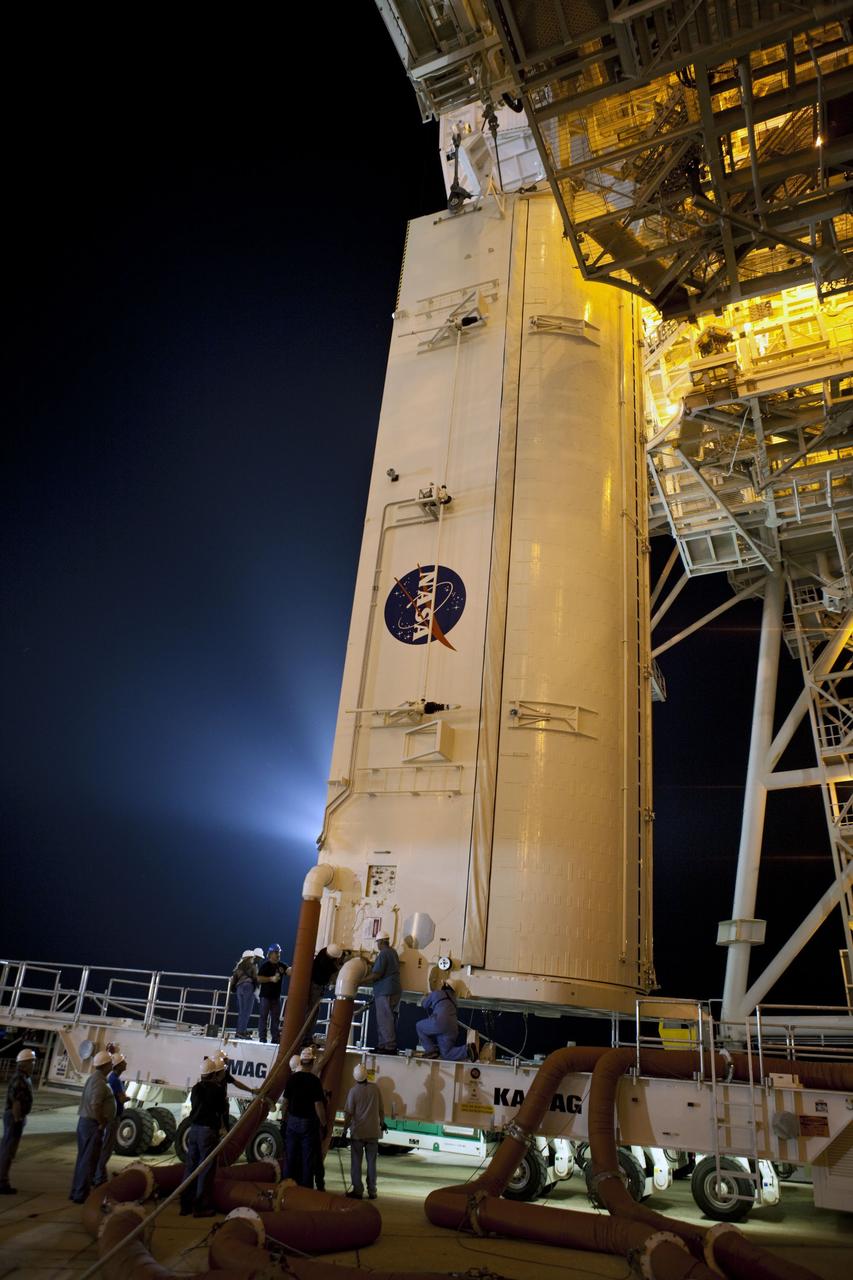
CAPE CANAVERAL, Fla. -- Workers attach umbilical hoses that maintain a controlled environment inside the canister carrying the Raffaello multi-purpose logistics module (MPLM). The payload was delivered to Launch Pad 39A at NASA's Kennedy Space Center in Florida for space shuttle Atlantis' STS-135 mission to the International Space Station. The canister is being lifted into the payload changeout room. The payload ground-handling mechanism then will be used to transfer Raffaello out of the canister into Atlantis' payload bay. Next, the rotating service structure that protects the shuttle from the elements and provides access will be rotated back into place. Commander Chris Ferguson, Pilot Doug Hurley and Mission Specialists Sandra Magnus and Rex Walheim are targeted to lift off on Atlantis July 8, taking with them the MPLM packed with supplies, logistics and spare parts to the station. The STS-135 mission also will fly a system to investigate the potential for robotically refueling existing satellites and return a failed ammonia pump module to help NASA better understand the failure mechanism and improve pump designs for future systems. STS-135 will be the 33rd flight of Atlantis, the 37th shuttle mission to the space station, and the 135th and final mission of NASA's Space Shuttle Program. For more information visit, www.nasa.gov/mission_pages/shuttle/shuttlemissions/sts135/index.html. Photo credit: NASA/Dimitri Gerondidakis
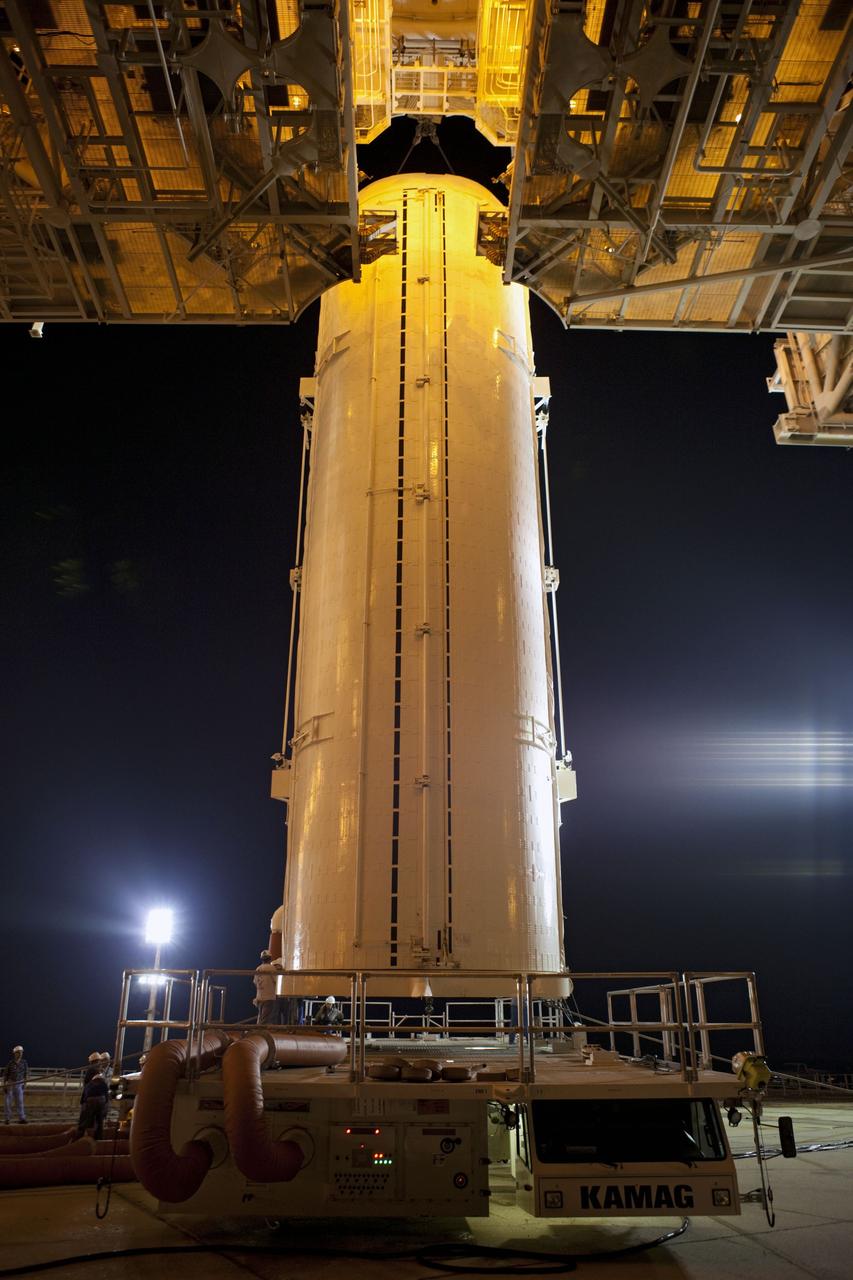
CAPE CANAVERAL, Fla. -- An overhead crane lifts the canister carrying the Raffaello multi-purpose logistics module (MPLM) off its transporter to the payload changeout room. The payload was delivered to Launch Pad 39A at NASA's Kennedy Space Center in Florida for space shuttle Atlantis' STS-135 mission to the International Space Station. The payload ground-handling mechanism then will be used to transfer Raffaello out of the canister into Atlantis' payload bay. Next, the rotating service structure that protects the shuttle from the elements and provides access will be rotated back into place. Commander Chris Ferguson, Pilot Doug Hurley and Mission Specialists Sandra Magnus and Rex Walheim are targeted to lift off on Atlantis July 8, taking with them the MPLM packed with supplies, logistics and spare parts to the station. The STS-135 mission also will fly a system to investigate the potential for robotically refueling existing satellites and return a failed ammonia pump module to help NASA better understand the failure mechanism and improve pump designs for future systems. STS-135 will be the 33rd flight of Atlantis, the 37th shuttle mission to the space station, and the 135th and final mission of NASA's Space Shuttle Program. For more information visit, www.nasa.gov/mission_pages/shuttle/shuttlemissions/sts135/index.html. Photo credit: NASA/Dimitri Gerondidakis
CAPE CANAVERAL, Fla. -- In Orbiter Processing Facility-1 at NASA's Kennedy Space Center in Florida, STS-135 Mission Specialists Sandy Magnus and Rex Walheim, along with Pilot Doug Hurley (turned away from the camera), inspect shuttle Atlantis' payload bay. The four-member crew is at Kennedy to participate in the Crew Equipment Interface Test (CEIT), which gives them an opportunity for hands-on training with the tools and equipment they'll use in space and familiarization of the payload they'll deliver to the International Space Station. Atlantis is being prepared for the STS-135 mission, which will deliver Raffaello multi-purpose logistics module packed with supplies and spare parts to the station. Atlantis is targeted to launch June 28, and will be the last shuttle flight for the Space Shuttle Program. Photo credit: NASA/Kim Shiflett
CAPE CANAVERAL, Fla. -- In Orbiter Processing Facility-1 at NASA's Kennedy Space Center in Florida, the STS-135 crew inspect shuttle Atlantis' payload bay. From left are Mission Specialists Sandy Magnus and Rex Walheim; Pilot Doug Hurley and Commander Chris Ferguson. The four-member crew is at Kennedy to participate in the Crew Equipment Interface Test (CEIT), which gives them an opportunity for hands-on training with the tools and equipment they'll use in space and familiarization of the payload they'll deliver to the International Space Station. Atlantis is being prepared for the STS-135 mission, which will deliver Raffaello multi-purpose logistics module packed with supplies and spare parts to the station. Atlantis is targeted to launch June 28, and will be the last shuttle flight for the Space Shuttle Program. Photo credit: NASA/Kim Shiflett
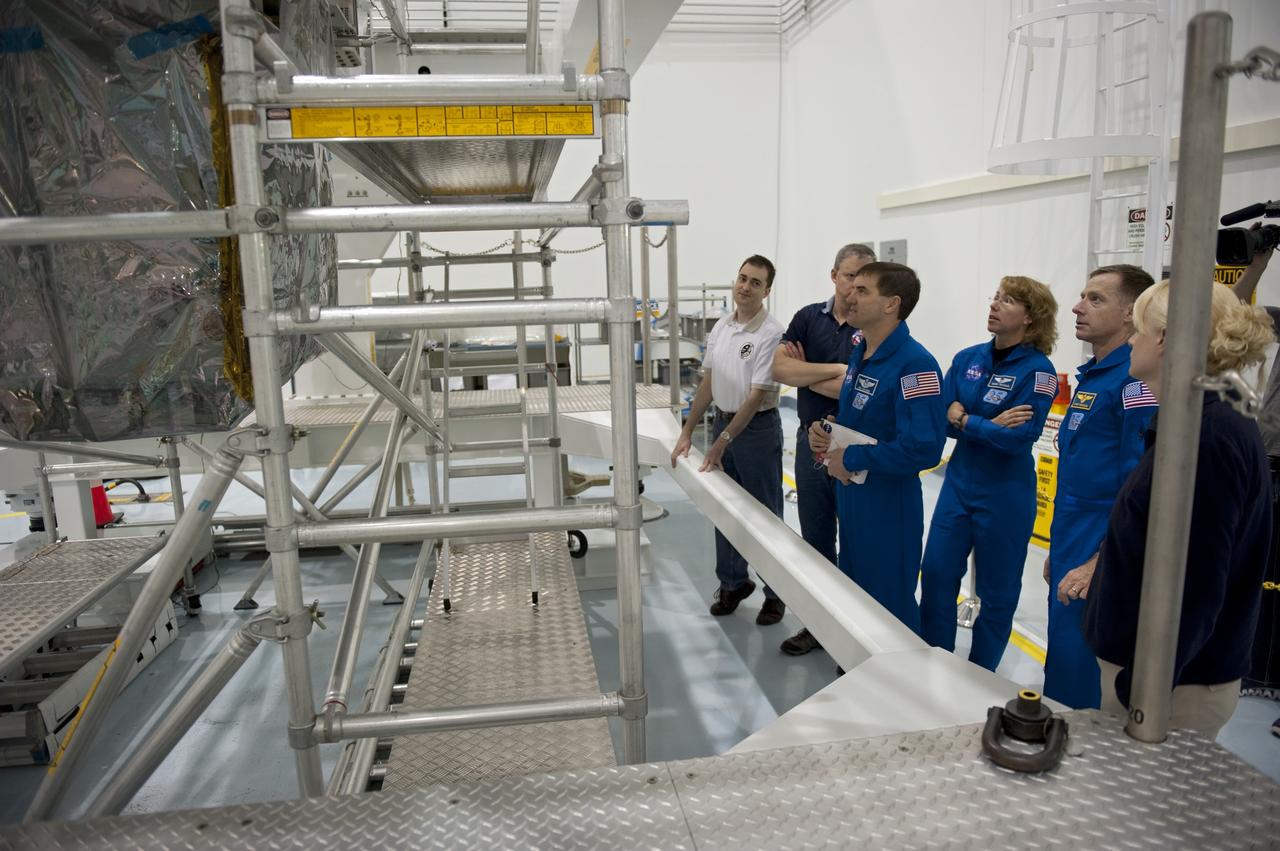
CAPE CANAVERAL, Fla. -- In the Space Station Processing Facility at NASA's Kennedy Space Center in Florida, the STS-135 crew members inspect the cargo that will be loaded into shuttle Atlantis' payload bay. From left are Mission Specialists Rex Walheim and Sandy Magnus; and Commander Chris Ferguson. The four-member crew is at Kennedy participating in the Crew Equipment Interface Test (CEIT), which gives them an opportunity for hands-on training with tools they'll use in space and familiarization of the payload they'll deliver to the International Space Station. Shuttle Atlantis is being prepared for the STS-135 mission, which will deliver the Raffaello multi-purpose logistics module packed with supplies and spare parts to the station. Atlantis is targeted to launch June 28, and will be the last shuttle flight for the Space Shuttle Program. For more information visit, http://www.nasa.gov/mission_pages/shuttle/shuttlemissions/sts135/index.html. Photo credit: NASA/Kim Shiflett
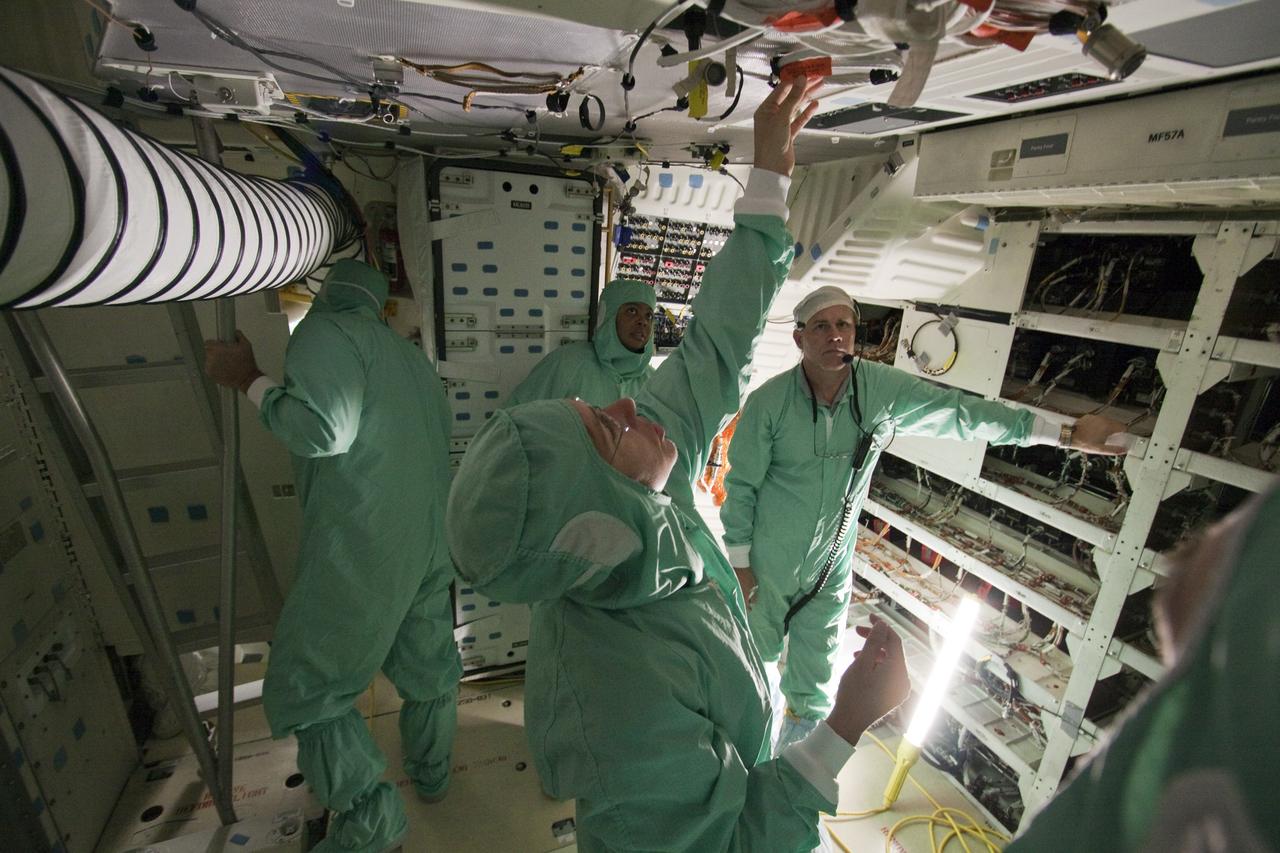
CAPE CANAVERAL, Fla. -- In the Space Station Processing Facility at NASA's Kennedy Space Center in Florida, STS-135 Mission Specialist Sandy Magnus along with technicians are inspecting the mid-deck of shuttle Atlantis. The four-member crew is at Kennedy participating in the Crew Equipment Interface Test (CEIT), which gives them an opportunity for hands-on training with the spacecraft and familiarization of the payload they'll deliver to the International Space Station. Atlantis and its payload is being prepared for the STS-135 mission, which will deliver the Raffaello multi-purpose logistics module packed with supplies and spare parts to the station. Atlantis is targeted to launch June 28, and will be the last shuttle flight for the Space Shuttle Program. For more information visit, http://www.nasa.gov/mission_pages/shuttle/shuttlemissions/sts135/index.html. Photo credit: NASA/Frankie Martin
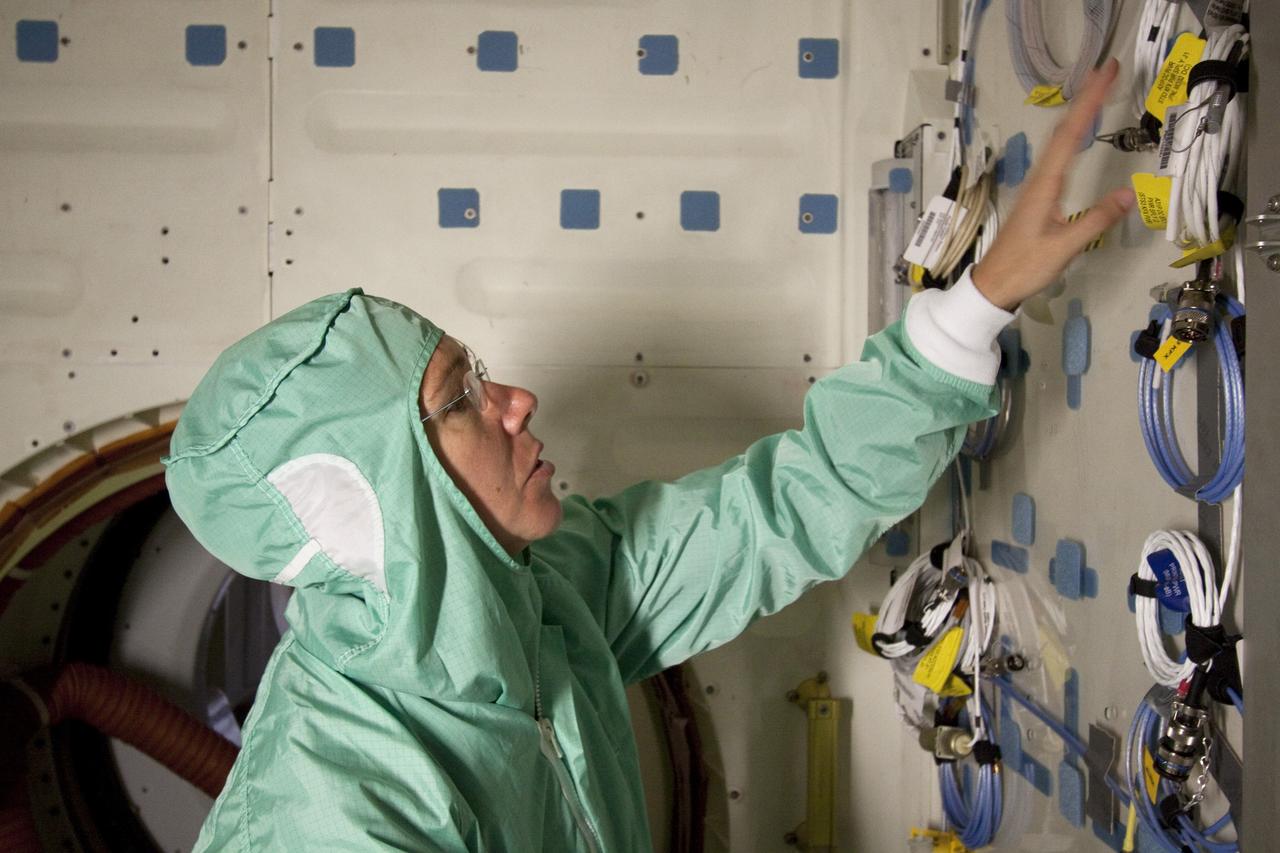
CAPE CANAVERAL, Fla. -- In the Space Station Processing Facility at NASA's Kennedy Space Center in Florida, STS-135 Mission Specialist Sandy Magnus is inspecting the mid-deck of shuttle Atlantis. The four-member crew is at Kennedy participating in the Crew Equipment Interface Test (CEIT), which gives them an opportunity for hands-on training with the spacecraft and familiarization of the payload they'll deliver to the International Space Station. Atlantis and its payload is being prepared for the STS-135 mission, which will deliver the Raffaello multi-purpose logistics module packed with supplies and spare parts to the station. Atlantis is targeted to launch June 28, and will be the last shuttle flight for the Space Shuttle Program. For more information visit, http://www.nasa.gov/mission_pages/shuttle/shuttlemissions/sts135/index.html. Photo credit: NASA/Frankie Martin
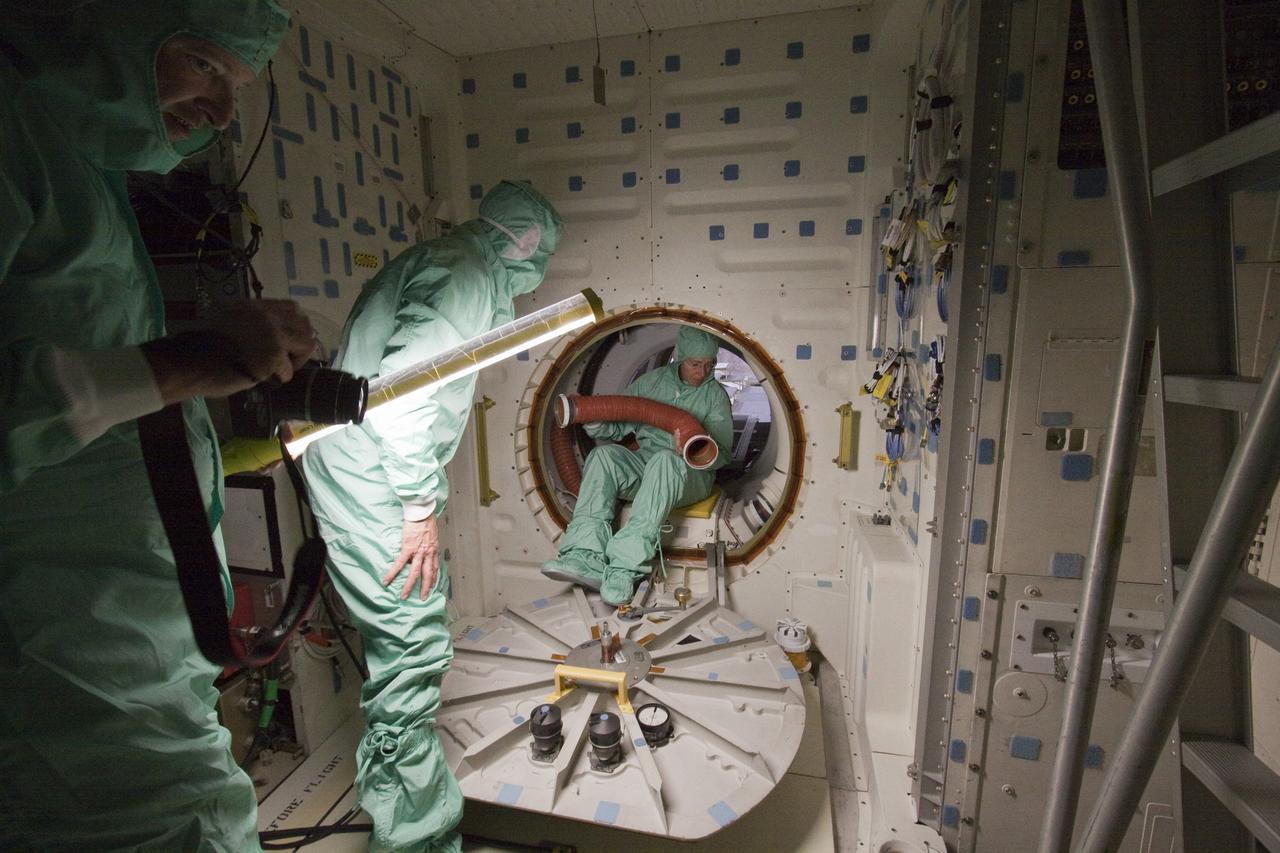
CAPE CANAVERAL, Fla. -- In the Space Station Processing Facility at NASA's Kennedy Space Center in Florida, STS-135 Mission Specialist Sandy Magnus crawls through a hatch with the aid of technicians while inspecting the mid-deck of shuttle Atlantis. The four-member crew is at Kennedy participating in the Crew Equipment Interface Test (CEIT), which gives them an opportunity for hands-on training with the spacecraft and familiarization of the payload they'll deliver to the International Space Station. Atlantis and its payload is being prepared for the STS-135 mission, which will deliver the Raffaello multi-purpose logistics module packed with supplies and spare parts to the station. Atlantis is targeted to launch June 28, and will be the last shuttle flight for the Space Shuttle Program. For more information visit, http://www.nasa.gov/mission_pages/shuttle/shuttlemissions/sts135/index.html. Photo credit: NASA/Frankie Martin
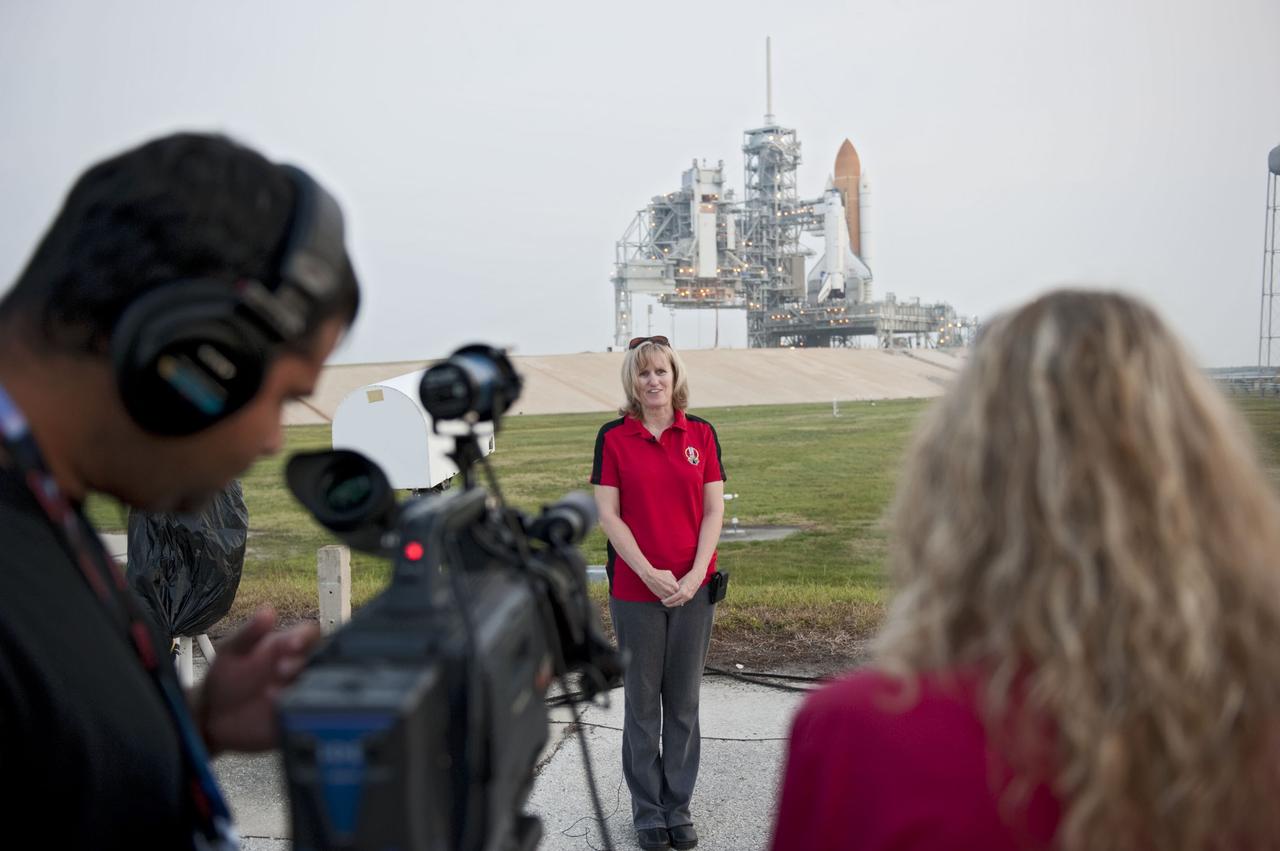
CAPE CANAVERAL, Fla. -- Near Launch Pad 39A at NASA's Kennedy Space Center in Florida, space shuttle Atlantis' Flow Director Angie Brewer speaks to media. The Raffaello multi-purpose logistics module (MPLM) was delivered to the pad overnight and lifted into the payload changeout room. The payload ground-handling mechanism then will be used to transfer Raffaello out of the canister into Atlantis' payload bay. Next, the rotating service structure that protects the shuttle from the elements and provides access will be rotated back into place. In the background is shuttle Atlantis, waiting to launch on the STS-135 mission. Commander Chris Ferguson, Pilot Doug Hurley and Mission Specialists Sandra Magnus and Rex Walheim are targeted to lift off on space shuttle Atlantis July 8, taking with them the MPLM packed with supplies, logistics and spare parts to the International Space Station. The STS-135 mission also will fly a system to investigate the potential for robotically refueling existing satellites and return a failed ammonia pump module to help NASA better understand the failure mechanism and improve pump designs for future systems. STS-135 will be the 33rd flight of Atlantis, the 37th shuttle mission to the space station, and the 135th and final mission of NASA's Space Shuttle Program. For more information visit, www.nasa.gov/mission_pages/shuttle/shuttlemissions/sts135/index.html. Photo credit: NASA/Kim Shiflett
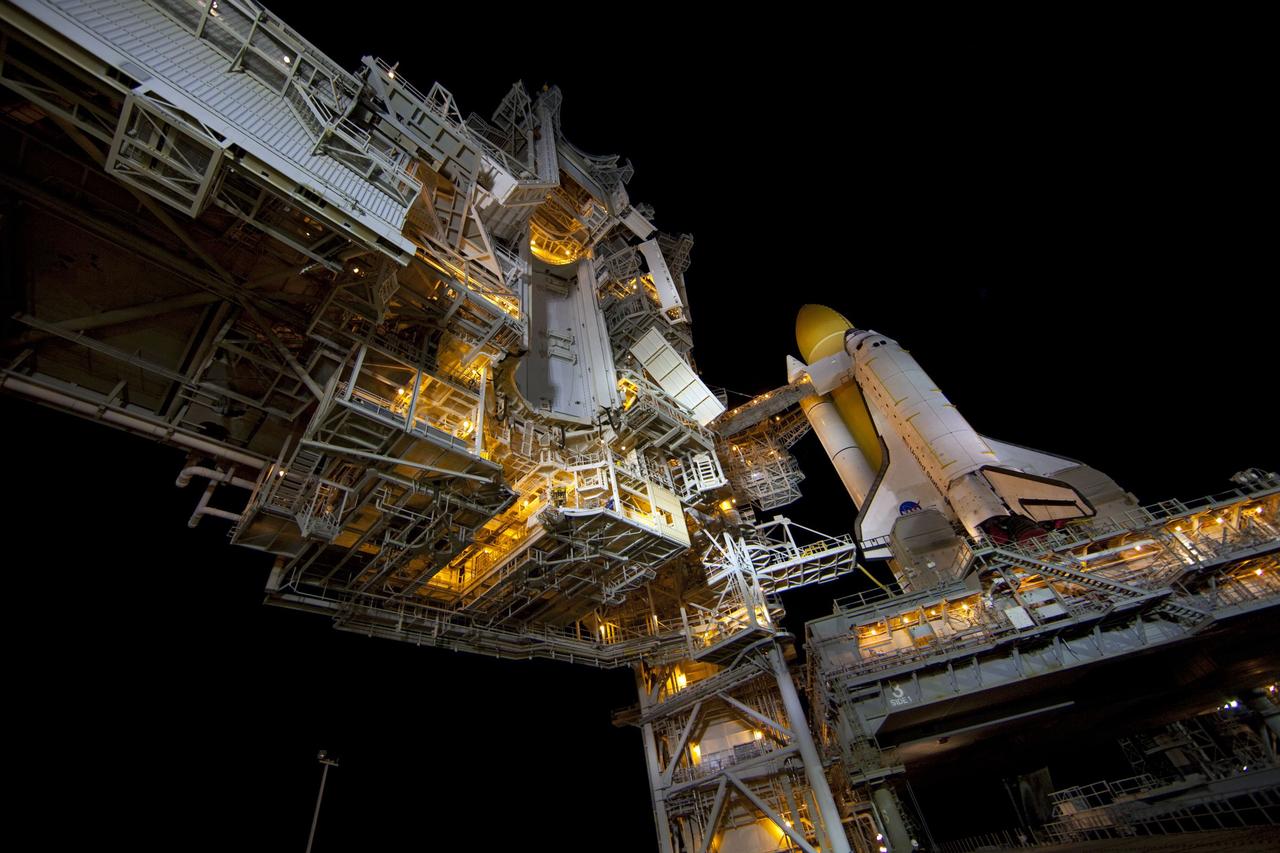
CAPE CANAVERAL, Fla. -- A canister, carrying the Raffaello multi-purpose logistics module (MPLM) for space shuttle Atlantis' STS-135 mission to the International Space Station, arrives at Launch Pad 39A at NASA's Kennedy Space Center in Florida. The canister will be lifted to the payload changeout room (seen here center of image). The payload ground-handling mechanism then will be used to transfer Raffaello out of the canister into Atlantis' payload bay. Next, the rotating service structure that protects the shuttle from the elements and provides access will be rotated back into place. Commander Chris Ferguson, Pilot Doug Hurley and Mission Specialists Sandra Magnus and Rex Walheim are targeted to lift off on Atlantis July 8, taking with them the MPLM packed with supplies, logistics and spare parts to the station. The STS-135 mission also will fly a system to investigate the potential for robotically refueling existing satellites and return a failed ammonia pump module to help NASA better understand the failure mechanism and improve pump designs for future systems. STS-135 will be the 33rd flight of Atlantis, the 37th shuttle mission to the space station, and the 135th and final mission of NASA's Space Shuttle Program. For more information visit, www.nasa.gov/mission_pages/shuttle/shuttlemissions/sts135/index.html. Photo credit: NASA/Frank Michaux
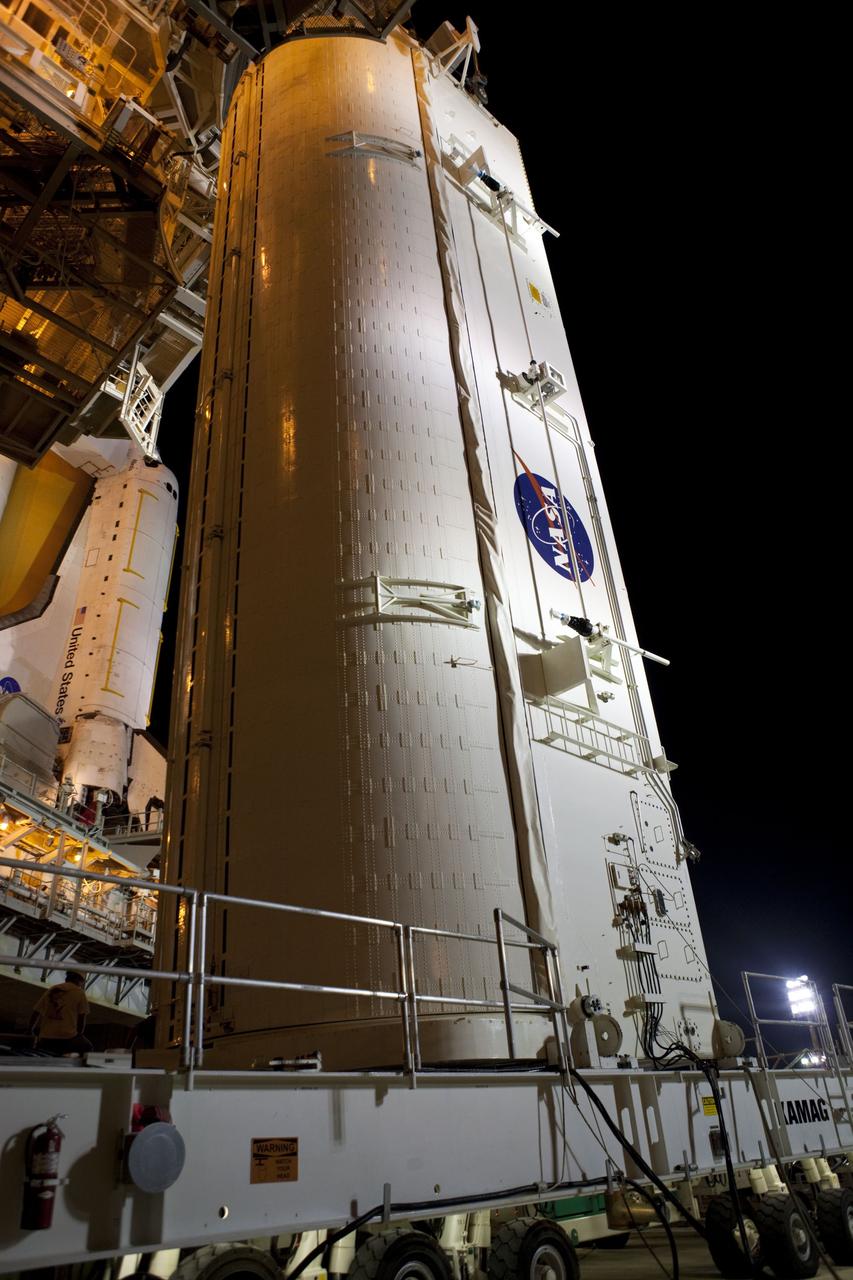
CAPE CANAVERAL, Fla. -- A canister, carrying the Raffaello multi-purpose logistics module (MPLM) for space shuttle Atlantis' STS-135 mission to the International Space Station, arrives at Launch Pad 39A at NASA's Kennedy Space Center in Florida. The canister will be lifted to the payload changeout room. The payload ground-handling mechanism then will be used to transfer Raffaello out of the canister into Atlantis' payload bay. Next, the rotating service structure that protects the shuttle from the elements and provides access will be rotated back into place. Commander Chris Ferguson, Pilot Doug Hurley and Mission Specialists Sandra Magnus and Rex Walheim are targeted to lift off on Atlantis July 8, taking with them the MPLM packed with supplies, logistics and spare parts to the station. The STS-135 mission also will fly a system to investigate the potential for robotically refueling existing satellites and return a failed ammonia pump module to help NASA better understand the failure mechanism and improve pump designs for future systems. STS-135 will be the 33rd flight of Atlantis, the 37th shuttle mission to the space station, and the 135th and final mission of NASA's Space Shuttle Program. For more information visit, www.nasa.gov/mission_pages/shuttle/shuttlemissions/sts135/index.html. Photo credit: NASA/Dimitri Gerondidakis
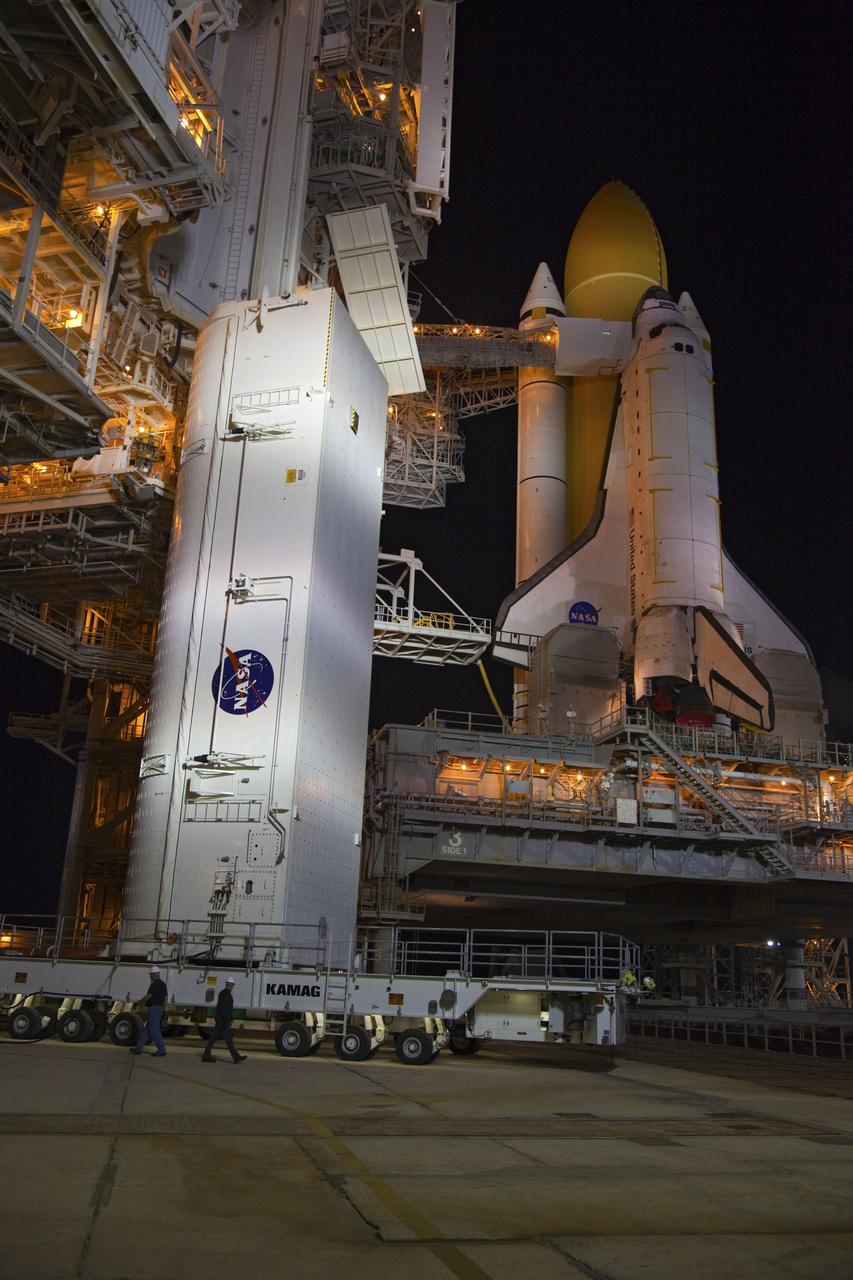
CAPE CANAVERAL, Fla. -- A canister, carrying the Raffaello multi-purpose logistics module (MPLM) for space shuttle Atlantis' STS-135 mission to the International Space Station, arrives at Launch Pad 39A at NASA's Kennedy Space Center in Florida. The canister will be lifted to the payload changeout room. The payload ground-handling mechanism then will be used to transfer Raffaello out of the canister into Atlantis' payload bay. Next, the rotating service structure that protects the shuttle from the elements and provides access will be rotated back into place. Commander Chris Ferguson, Pilot Doug Hurley and Mission Specialists Sandra Magnus and Rex Walheim are targeted to lift off on Atlantis July 8, taking with them the MPLM packed with supplies, logistics and spare parts to the station. The STS-135 mission also will fly a system to investigate the potential for robotically refueling existing satellites and return a failed ammonia pump module to help NASA better understand the failure mechanism and improve pump designs for future systems. STS-135 will be the 33rd flight of Atlantis, the 37th shuttle mission to the space station, and the 135th and final mission of NASA's Space Shuttle Program. For more information visit, www.nasa.gov/mission_pages/shuttle/shuttlemissions/sts135/index.html. Photo credit: NASA/Frank Michaux
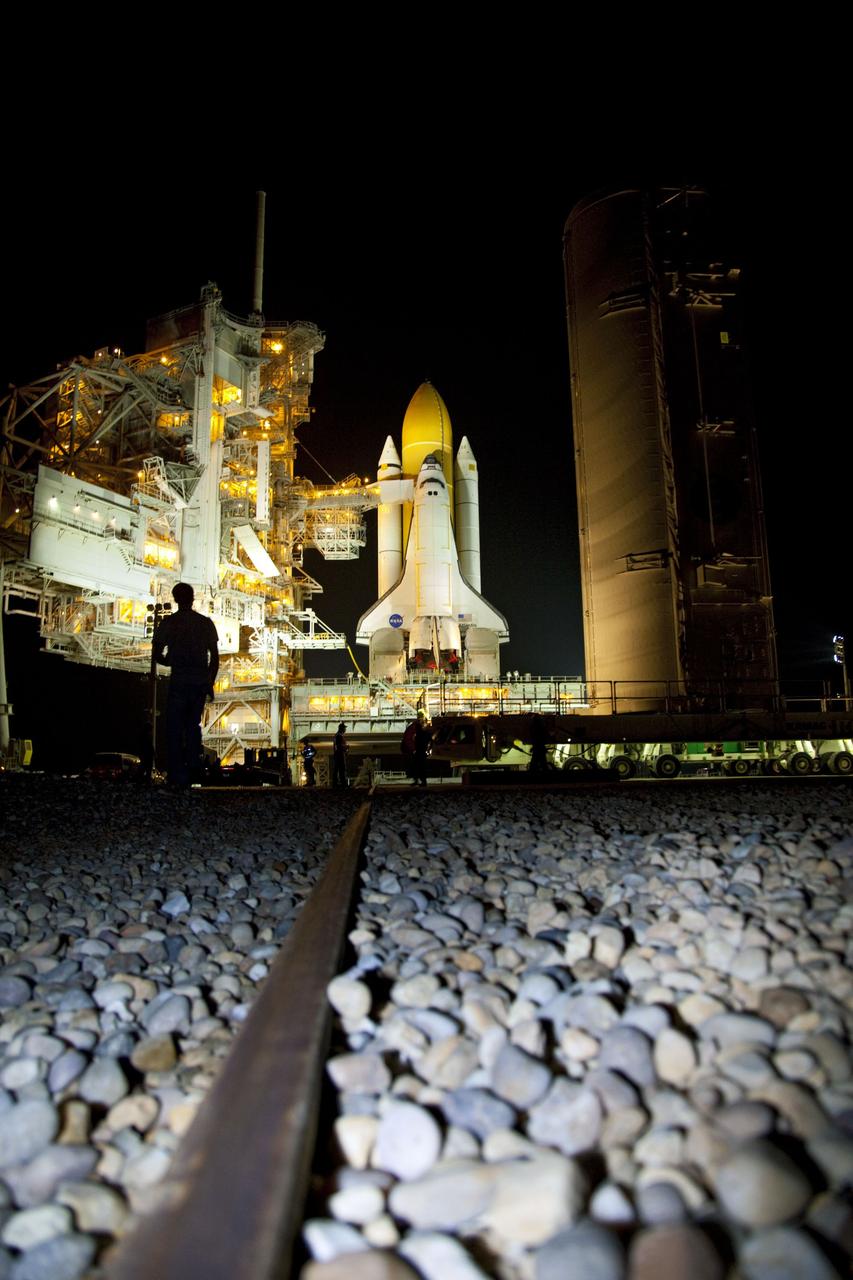
CAPE CANAVERAL, Fla. -- A canister, carrying the Raffaello multi-purpose logistics module (MPLM) for space shuttle Atlantis' STS-135 mission to the International Space Station, arrives at Launch Pad 39A at NASA's Kennedy Space Center in Florida. The canister will be lifted to the payload changeout room. The payload ground-handling mechanism then will be used to transfer Raffaello out of the canister into Atlantis' payload bay. Next, the rotating service structure that protects the shuttle from the elements and provides access will be rotated back into place. Commander Chris Ferguson, Pilot Doug Hurley and Mission Specialists Sandra Magnus and Rex Walheim are targeted to lift off on Atlantis July 8, taking with them the MPLM packed with supplies, logistics and spare parts to the station. The STS-135 mission also will fly a system to investigate the potential for robotically refueling existing satellites and return a failed ammonia pump module to help NASA better understand the failure mechanism and improve pump designs for future systems. STS-135 will be the 33rd flight of Atlantis, the 37th shuttle mission to the space station, and the 135th and final mission of NASA's Space Shuttle Program. For more information visit, www.nasa.gov/mission_pages/shuttle/shuttlemissions/sts135/index.html. Photo credit: NASA/Frank Michaux
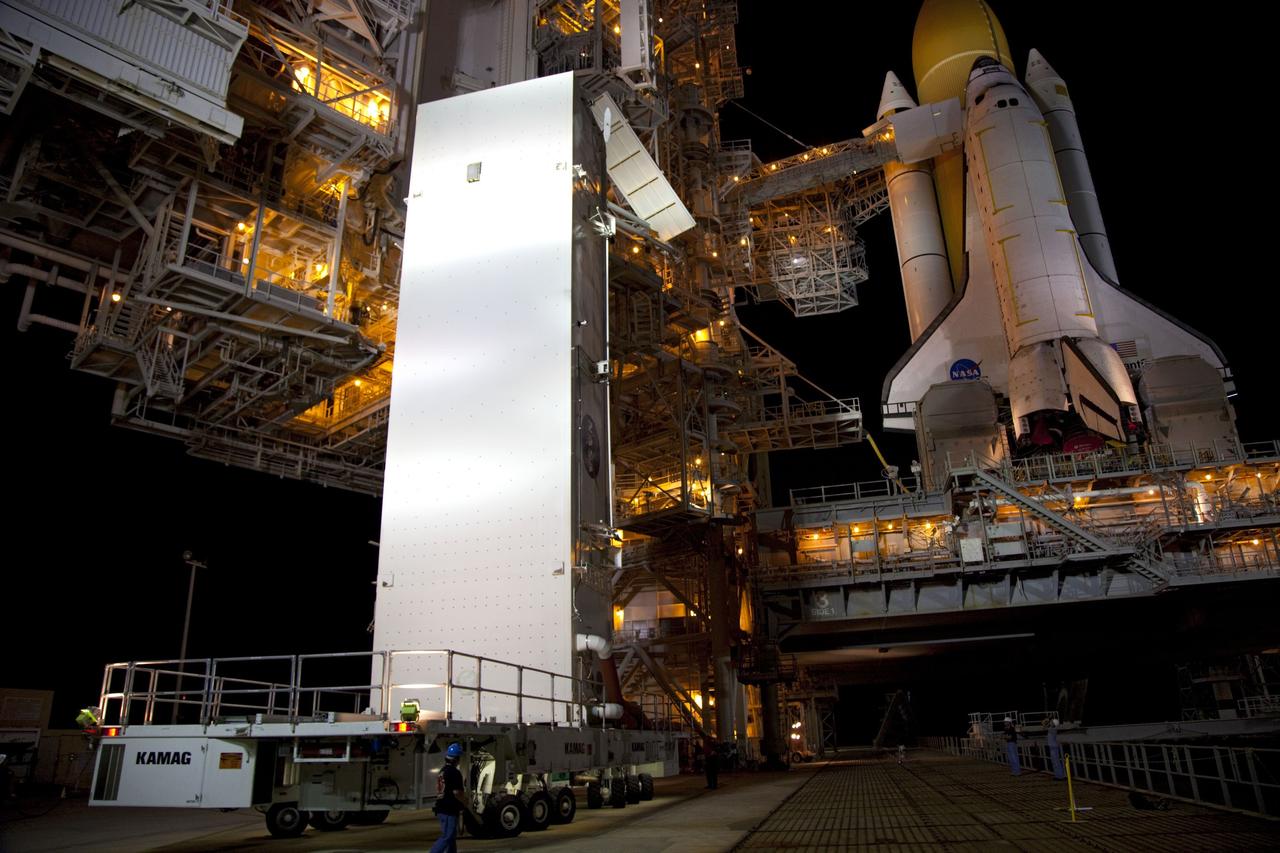
CAPE CANAVERAL, Fla. -- A canister, carrying the Raffaello multi-purpose logistics module (MPLM) for space shuttle Atlantis' STS-135 mission to the International Space Station, arrives at Launch Pad 39A at NASA's Kennedy Space Center in Florida. The canister will be lifted to the payload changeout room. The payload ground-handling mechanism then will be used to transfer Raffaello out of the canister into Atlantis' payload bay. Next, the rotating service structure that protects the shuttle from the elements and provides access will be rotated back into place. Commander Chris Ferguson, Pilot Doug Hurley and Mission Specialists Sandra Magnus and Rex Walheim are targeted to lift off on Atlantis July 8, taking with them the MPLM packed with supplies, logistics and spare parts to the station. The STS-135 mission also will fly a system to investigate the potential for robotically refueling existing satellites and return a failed ammonia pump module to help NASA better understand the failure mechanism and improve pump designs for future systems. STS-135 will be the 33rd flight of Atlantis, the 37th shuttle mission to the space station, and the 135th and final mission of NASA's Space Shuttle Program. For more information visit, www.nasa.gov/mission_pages/shuttle/shuttlemissions/sts135/index.html. Photo credit: NASA/Frank Michaux
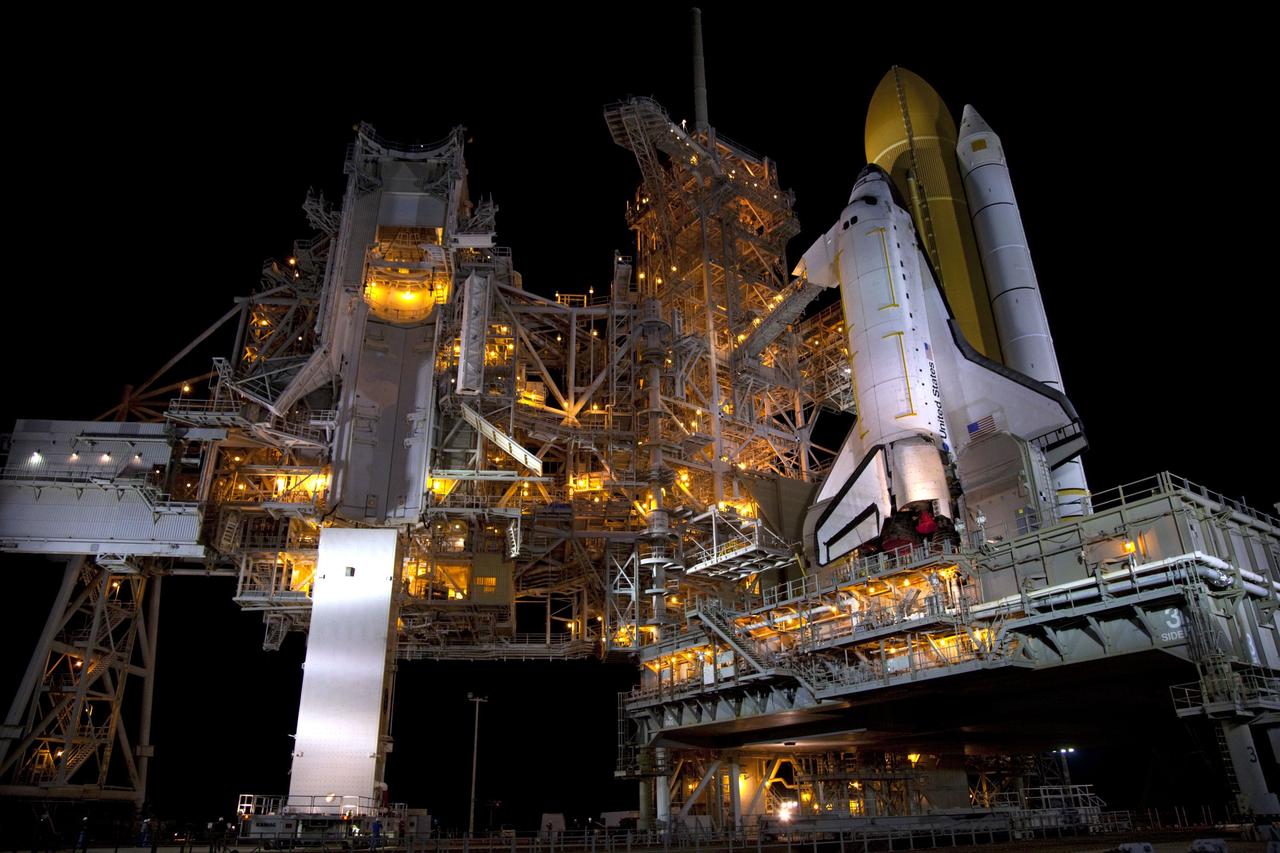
CAPE CANAVERAL, Fla. -- A canister, carrying the Raffaello multi-purpose logistics module (MPLM) for space shuttle Atlantis' STS-135 mission to the International Space Station, arrives at Launch Pad 39A at NASA's Kennedy Space Center in Florida. The canister will be lifted to the payload changeout room. The payload ground-handling mechanism then will be used to transfer Raffaello out of the canister into Atlantis' payload bay. Next, the rotating service structure that protects the shuttle from the elements and provides access will be rotated back into place. Commander Chris Ferguson, Pilot Doug Hurley and Mission Specialists Sandra Magnus and Rex Walheim are targeted to lift off on Atlantis July 8, taking with them the MPLM packed with supplies, logistics and spare parts to the station. The STS-135 mission also will fly a system to investigate the potential for robotically refueling existing satellites and return a failed ammonia pump module to help NASA better understand the failure mechanism and improve pump designs for future systems. STS-135 will be the 33rd flight of Atlantis, the 37th shuttle mission to the space station, and the 135th and final mission of NASA's Space Shuttle Program. For more information visit, www.nasa.gov/mission_pages/shuttle/shuttlemissions/sts135/index.html. Photo credit: NASA/Frank Michaux

CAPE CANAVERAL, Fla. -- A canister, carrying the Raffaello multi-purpose logistics module (MPLM) for space shuttle Atlantis' STS-135 mission to the International Space Station, arrives at Launch Pad 39A at NASA's Kennedy Space Center in Florida. The canister will be lifted to the payload changeout room. The payload ground-handling mechanism then will be used to transfer Raffaello out of the canister into Atlantis' payload bay. Next, the rotating service structure that protects the shuttle from the elements and provides access will be rotated back into place. Commander Chris Ferguson, Pilot Doug Hurley and Mission Specialists Sandra Magnus and Rex Walheim are targeted to lift off on Atlantis July 8, taking with them the MPLM packed with supplies, logistics and spare parts to the station. The STS-135 mission also will fly a system to investigate the potential for robotically refueling existing satellites and return a failed ammonia pump module to help NASA better understand the failure mechanism and improve pump designs for future systems. STS-135 will be the 33rd flight of Atlantis, the 37th shuttle mission to the space station, and the 135th and final mission of NASA's Space Shuttle Program. For more information visit, www.nasa.gov/mission_pages/shuttle/shuttlemissions/sts135/index.html. Photo credit: NASA/Frank Michaux
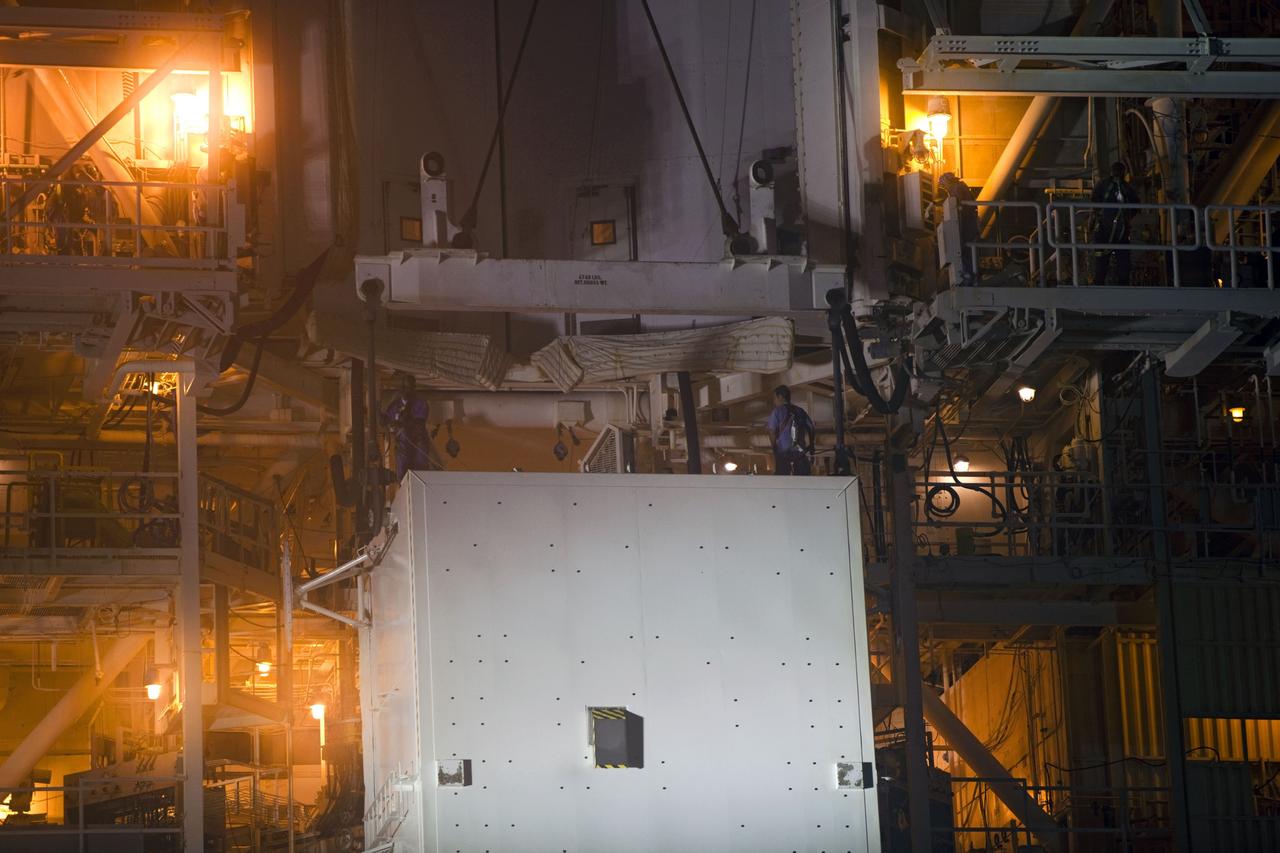
CAPE CANAVERAL, Fla. -- A canister, carrying the Raffaello multi-purpose logistics module (MPLM) for space shuttle Atlantis' STS-135 mission to the International Space Station, arrives at Launch Pad 39A at NASA's Kennedy Space Center in Florida. Workers attach an overhead crane to the canister carrying the Raffaello multi-purpose logistics module (MPLM) which will be lifted to the payload changeout room. The payload ground-handling mechanism then will be used to transfer Raffaello out of the canister into Atlantis' payload bay. Next, the rotating service structure that protects the shuttle from the elements and provides access will be rotated back into place. Commander Chris Ferguson, Pilot Doug Hurley and Mission Specialists Sandra Magnus and Rex Walheim are targeted to lift off on Atlantis July 8, taking with them the MPLM packed with supplies, logistics and spare parts to the station. The STS-135 mission also will fly a system to investigate the potential for robotically refueling existing satellites and return a failed ammonia pump module to help NASA better understand the failure mechanism and improve pump designs for future systems. STS-135 will be the 33rd flight of Atlantis, the 37th shuttle mission to the space station, and the 135th and final mission of NASA's Space Shuttle Program. For more information visit, www.nasa.gov/mission_pages/shuttle/shuttlemissions/sts135/index.html. Photo credit: NASA/Dimitri Gerondidakis
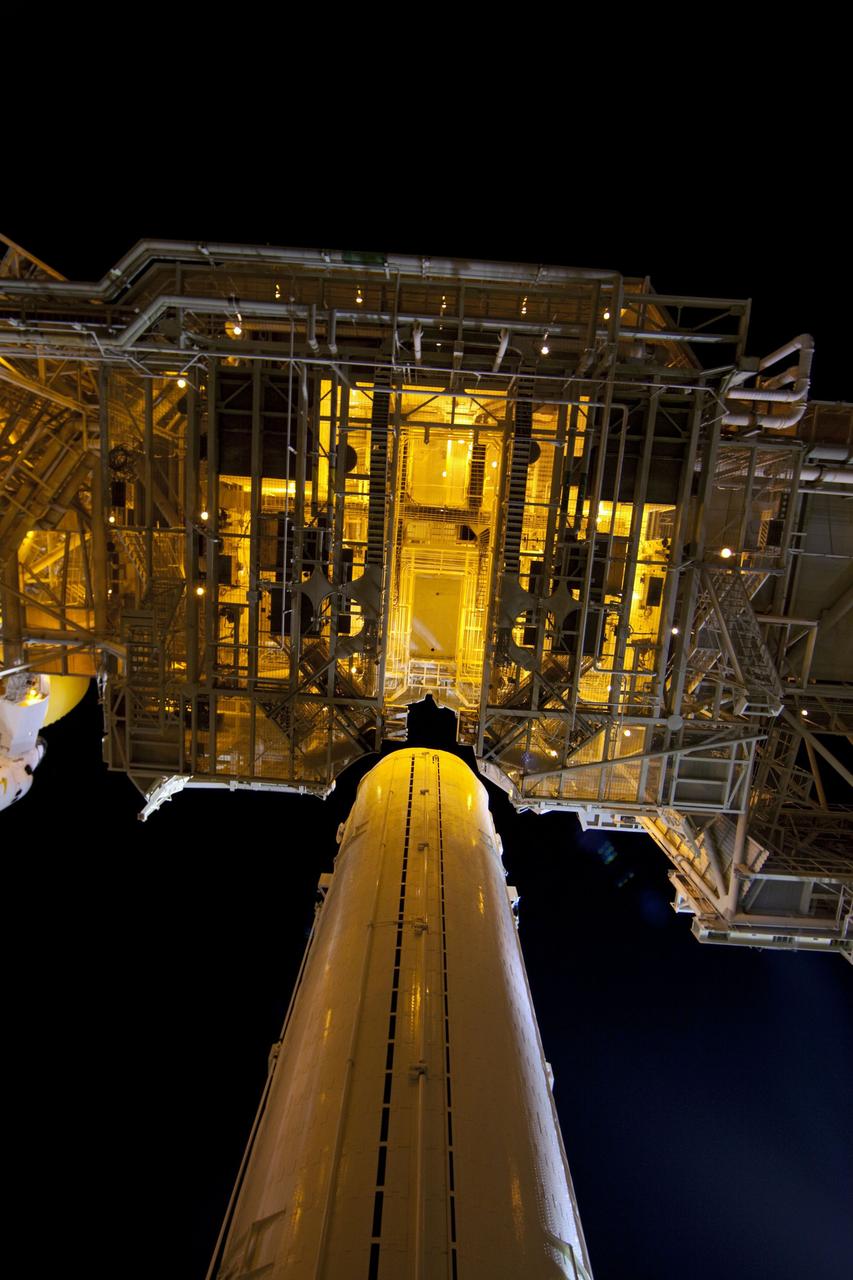
CAPE CANAVERAL, Fla. -- A canister, carrying the Raffaello multi-purpose logistics module (MPLM) for space shuttle Atlantis' STS-135 mission to the International Space Station, arrives at Launch Pad 39A at NASA's Kennedy Space Center in Florida. The canister will be lifted to the payload changeout room. The payload ground-handling mechanism then will be used to transfer Raffaello out of the canister into Atlantis' payload bay. Next, the rotating service structure that protects the shuttle from the elements and provides access will be rotated back into place. Commander Chris Ferguson, Pilot Doug Hurley and Mission Specialists Sandra Magnus and Rex Walheim are targeted to lift off on Atlantis July 8, taking with them the MPLM packed with supplies, logistics and spare parts to the station. The STS-135 mission also will fly a system to investigate the potential for robotically refueling existing satellites and return a failed ammonia pump module to help NASA better understand the failure mechanism and improve pump designs for future systems. STS-135 will be the 33rd flight of Atlantis, the 37th shuttle mission to the space station, and the 135th and final mission of NASA's Space Shuttle Program. For more information visit, www.nasa.gov/mission_pages/shuttle/shuttlemissions/sts135/index.html. Photo credit: NASA/Frank Michaux
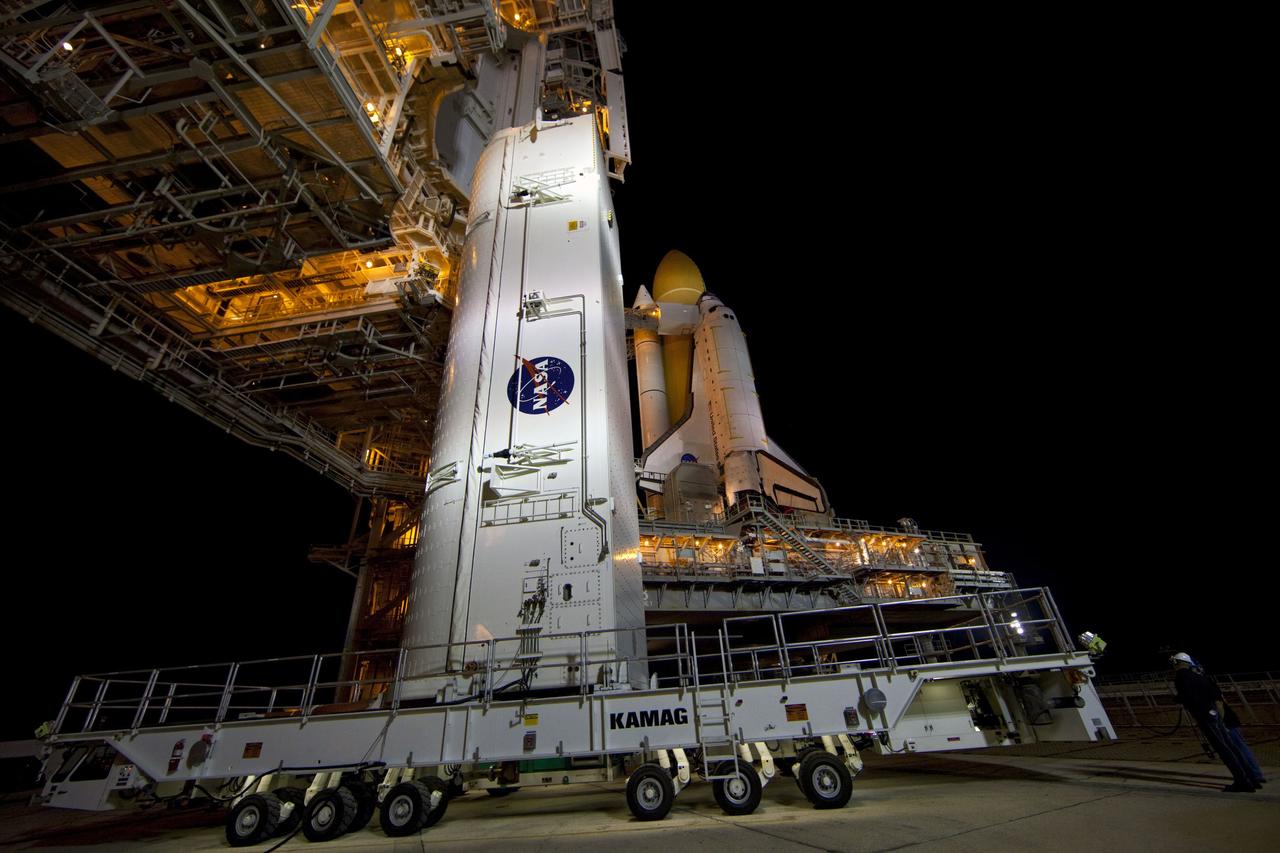
CAPE CANAVERAL, Fla. -- A canister, carrying the Raffaello multi-purpose logistics module (MPLM) for space shuttle Atlantis' STS-135 mission to the International Space Station, arrives at Launch Pad 39A at NASA's Kennedy Space Center in Florida. The canister will be lifted to the payload changeout room. The payload ground-handling mechanism then will be used to transfer Raffaello out of the canister into Atlantis' payload bay. Next, the rotating service structure that protects the shuttle from the elements and provides access will be rotated back into place. Commander Chris Ferguson, Pilot Doug Hurley and Mission Specialists Sandra Magnus and Rex Walheim are targeted to lift off on Atlantis July 8, taking with them the MPLM packed with supplies, logistics and spare parts to the station. The STS-135 mission also will fly a system to investigate the potential for robotically refueling existing satellites and return a failed ammonia pump module to help NASA better understand the failure mechanism and improve pump designs for future systems. STS-135 will be the 33rd flight of Atlantis, the 37th shuttle mission to the space station, and the 135th and final mission of NASA's Space Shuttle Program. For more information visit, www.nasa.gov/mission_pages/shuttle/shuttlemissions/sts135/index.html. Photo credit: NASA/Frank Michaux
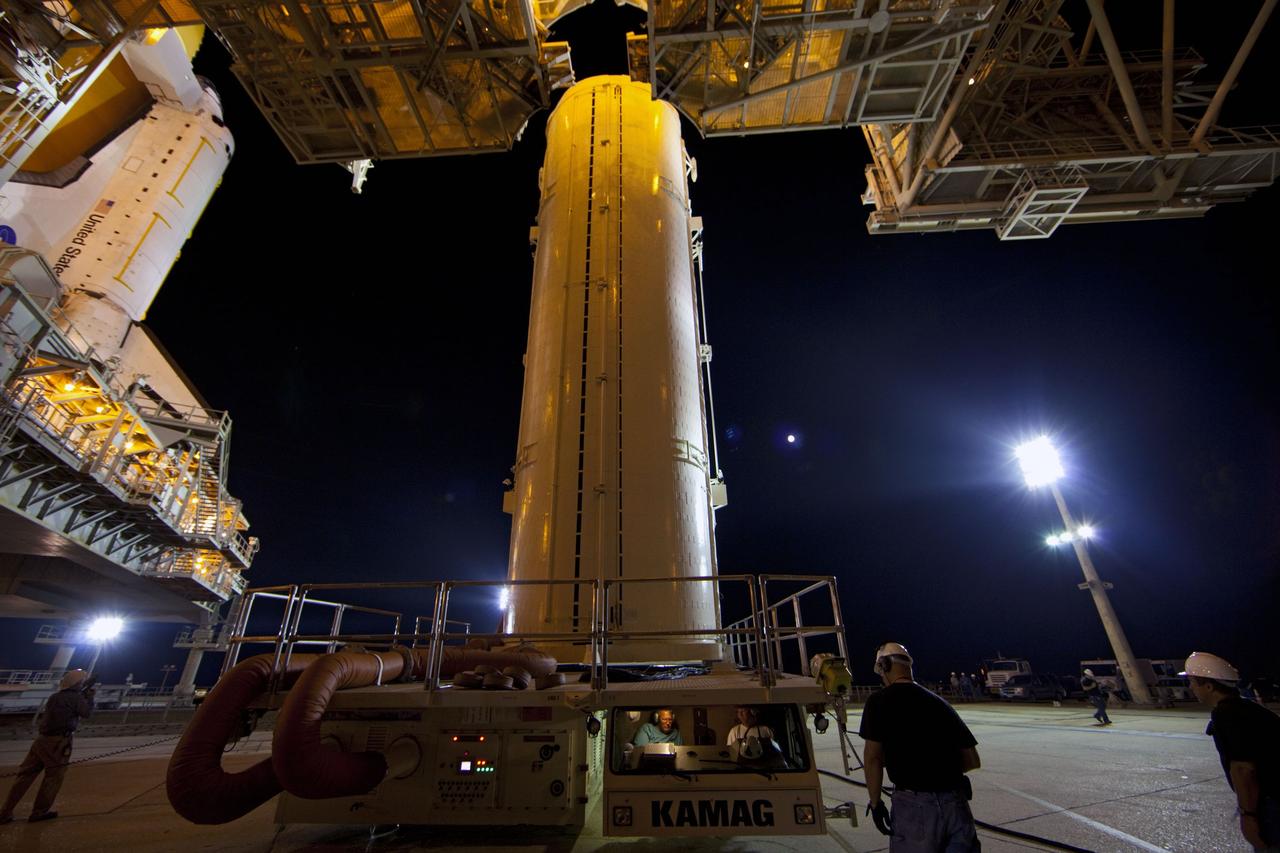
CAPE CANAVERAL, Fla. -- A canister, carrying the Raffaello multi-purpose logistics module (MPLM) for space shuttle Atlantis' STS-135 mission to the International Space Station, arrives at Launch Pad 39A at NASA's Kennedy Space Center in Florida. The canister will be lifted to the payload changeout room. The payload ground-handling mechanism then will be used to transfer Raffaello out of the canister into Atlantis' payload bay. Next, the rotating service structure that protects the shuttle from the elements and provides access will be rotated back into place. Commander Chris Ferguson, Pilot Doug Hurley and Mission Specialists Sandra Magnus and Rex Walheim are targeted to lift off on Atlantis July 8, taking with them the MPLM packed with supplies, logistics and spare parts to the station. The STS-135 mission also will fly a system to investigate the potential for robotically refueling existing satellites and return a failed ammonia pump module to help NASA better understand the failure mechanism and improve pump designs for future systems. STS-135 will be the 33rd flight of Atlantis, the 37th shuttle mission to the space station, and the 135th and final mission of NASA's Space Shuttle Program. For more information visit, www.nasa.gov/mission_pages/shuttle/shuttlemissions/sts135/index.html. Photo credit: NASA/Frank Michaux
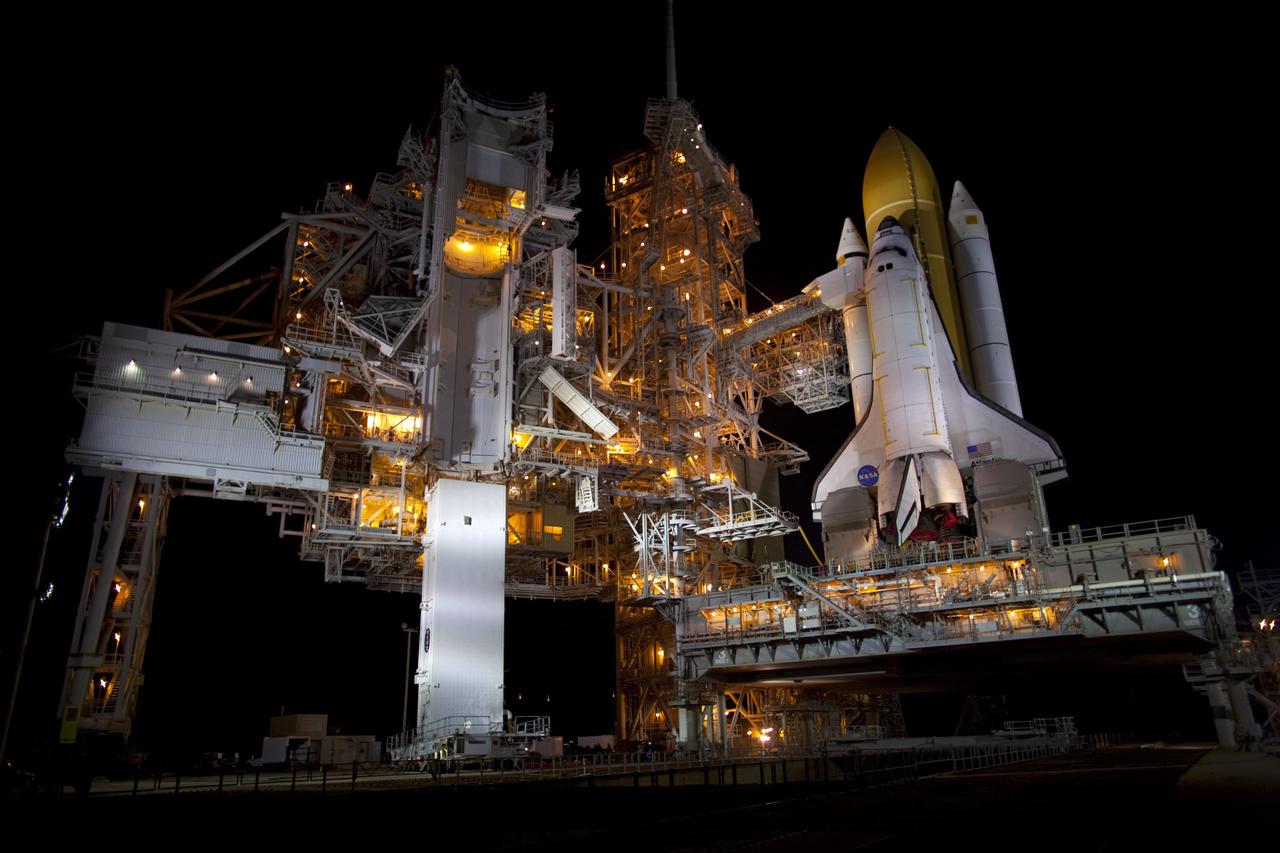
CAPE CANAVERAL, Fla. -- A canister, carrying the Raffaello multi-purpose logistics module (MPLM) for space shuttle Atlantis' STS-135 mission to the International Space Station, arrives at Launch Pad 39A at NASA's Kennedy Space Center in Florida. The canister will be lifted to the payload changeout room. The payload ground-handling mechanism then will be used to transfer Raffaello out of the canister into Atlantis' payload bay. Next, the rotating service structure that protects the shuttle from the elements and provides access will be rotated back into place. Commander Chris Ferguson, Pilot Doug Hurley and Mission Specialists Sandra Magnus and Rex Walheim are targeted to lift off on Atlantis July 8, taking with them the MPLM packed with supplies, logistics and spare parts to the station. The STS-135 mission also will fly a system to investigate the potential for robotically refueling existing satellites and return a failed ammonia pump module to help NASA better understand the failure mechanism and improve pump designs for future systems. STS-135 will be the 33rd flight of Atlantis, the 37th shuttle mission to the space station, and the 135th and final mission of NASA's Space Shuttle Program. For more information visit, www.nasa.gov/mission_pages/shuttle/shuttlemissions/sts135/index.html. Photo credit: NASA/Dimitri Gerondidakis
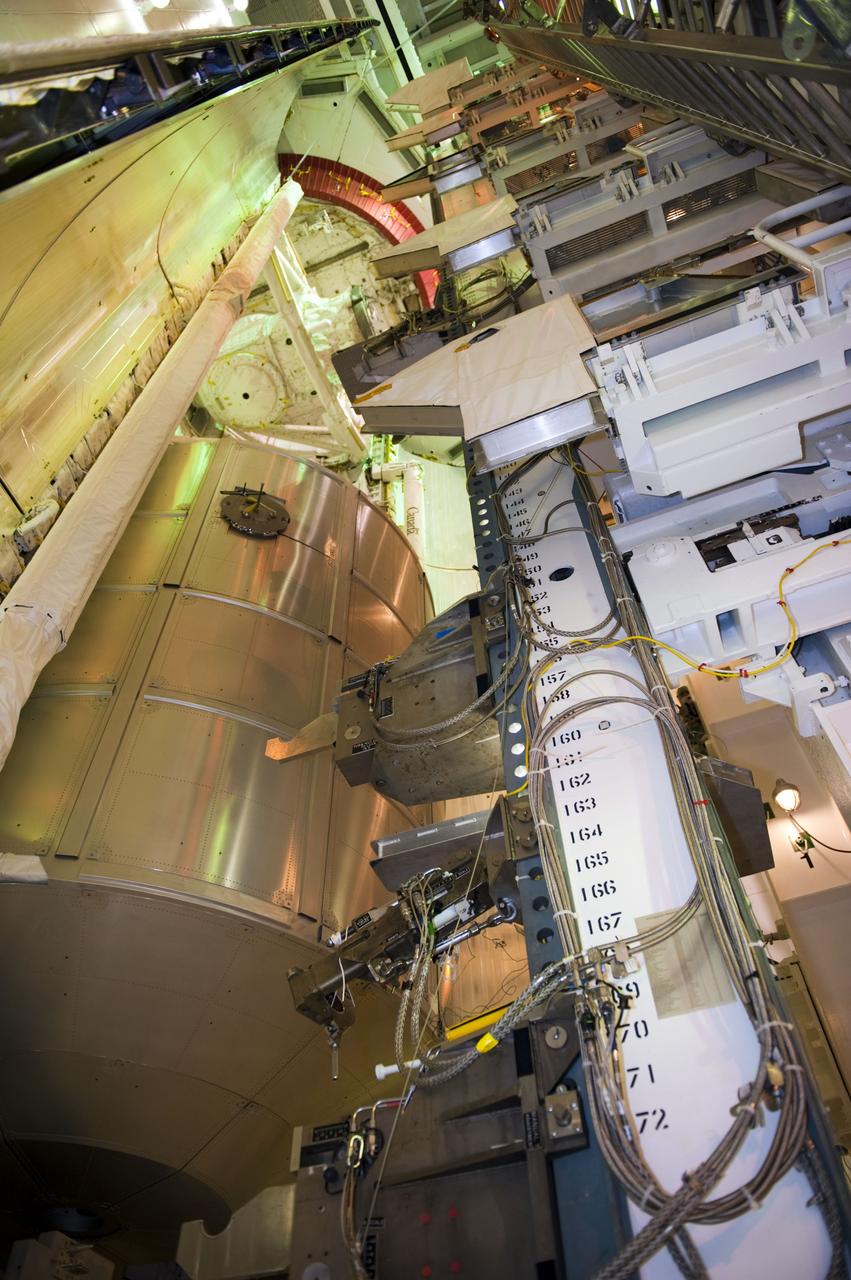
CAPE CANAVERAL, Fla. -- At NASA's Kennedy Space Center in Florida, technicians in the payload changeout room have maneuvered space shuttle Atlantis' cargo, the Raffaello multi-purpose logistics module (MPLM) into the shuttle's payload bay using the payload ground-handling mechanism at Launch Pad 39A. The rotating service structure that protects the shuttle from the elements and provides access has been moved back into place. STS-135 Commander Chris Ferguson, Pilot Doug Hurley and Mission Specialists Sandy Magnus and Rex Walheim are targeted to lift off on Atlantis July 8, taking with them the MPLM packed with supplies, logistics and spare parts to the station. The STS-135 mission also will fly a system to investigate the potential for robotically refueling existing satellites and return a failed ammonia pump module to help NASA better understand the failure mechanism and improve pump designs for future systems. STS-135 will be the 33rd flight of Atlantis, the 37th shuttle mission to the space station, and the 135th and final mission of NASA's Space Shuttle Program. For more information visit, www.nasa.gov/mission_pages/shuttle/shuttlemissions/sts135/index.html. Photo credit: NASA/Kim Shiflett
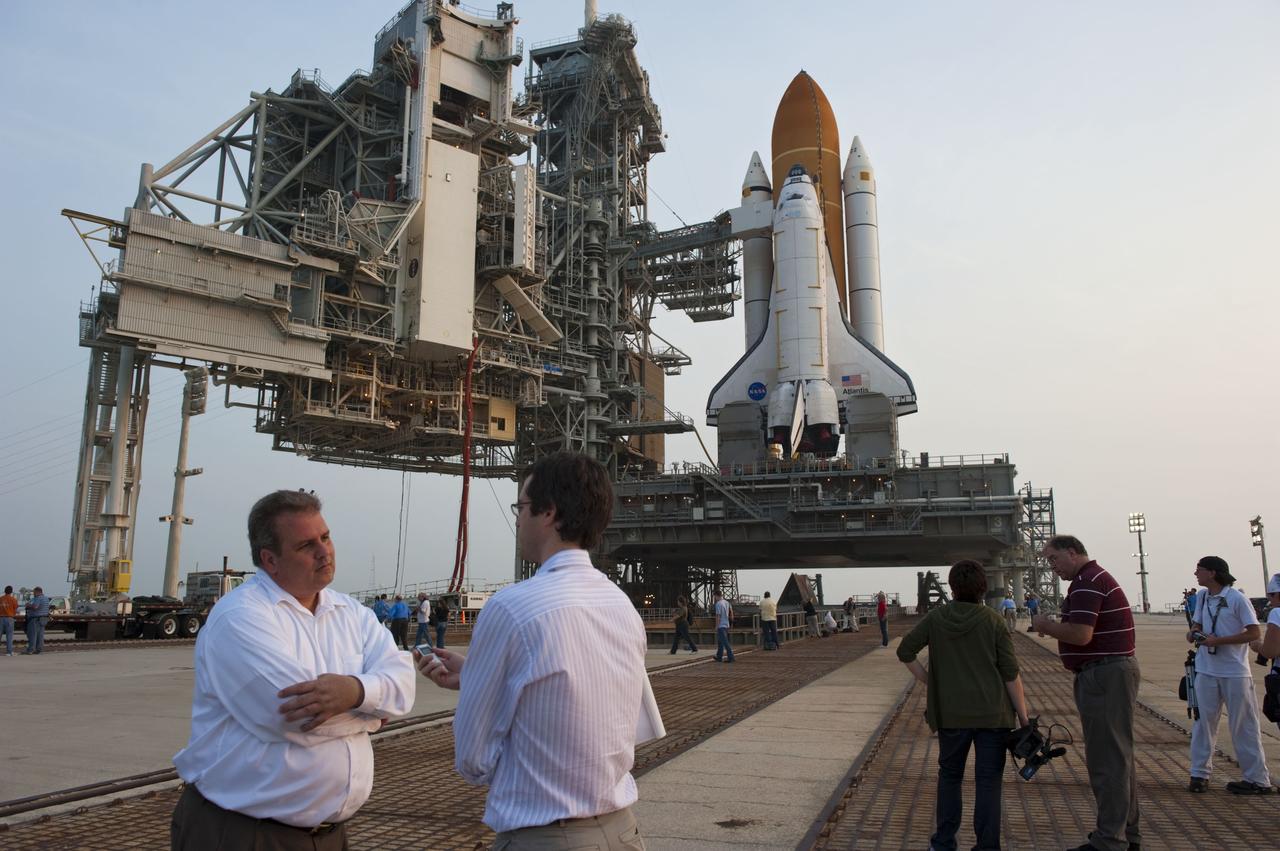
CAPE CANAVERAL, Fla. -- On Launch Pad 39A at NASA's Kennedy Space Center in Florida, Payload Mission Manager Joe Delai speaks to media after the payload canister carrying the Raffaello multi-purpose logistics module (MPLM) was delivered to the pad for space shuttle Atlantis' STS-135 mission, and lifted into the payload changeout room on the rotating service structure. Commander Chris Ferguson, Pilot Doug Hurley and Mission Specialists Sandra Magnus and Rex Walheim are targeted to lift off on space shuttle Atlantis July 8, taking with them the MPLM packed with supplies, logistics and spare parts to the International Space Station. The STS-135 mission also will fly a system to investigate the potential for robotically refueling existing satellites and return a failed ammonia pump module to help NASA better understand the failure mechanism and improve pump designs for future systems. STS-135 will be the 33rd flight of Atlantis, the 37th shuttle mission to the space station, and the 135th and final mission of NASA's Space Shuttle Program. For more information visit, www.nasa.gov/mission_pages/shuttle/shuttlemissions/sts135/index.html. Photo credit: NASA/Kim Shiflett
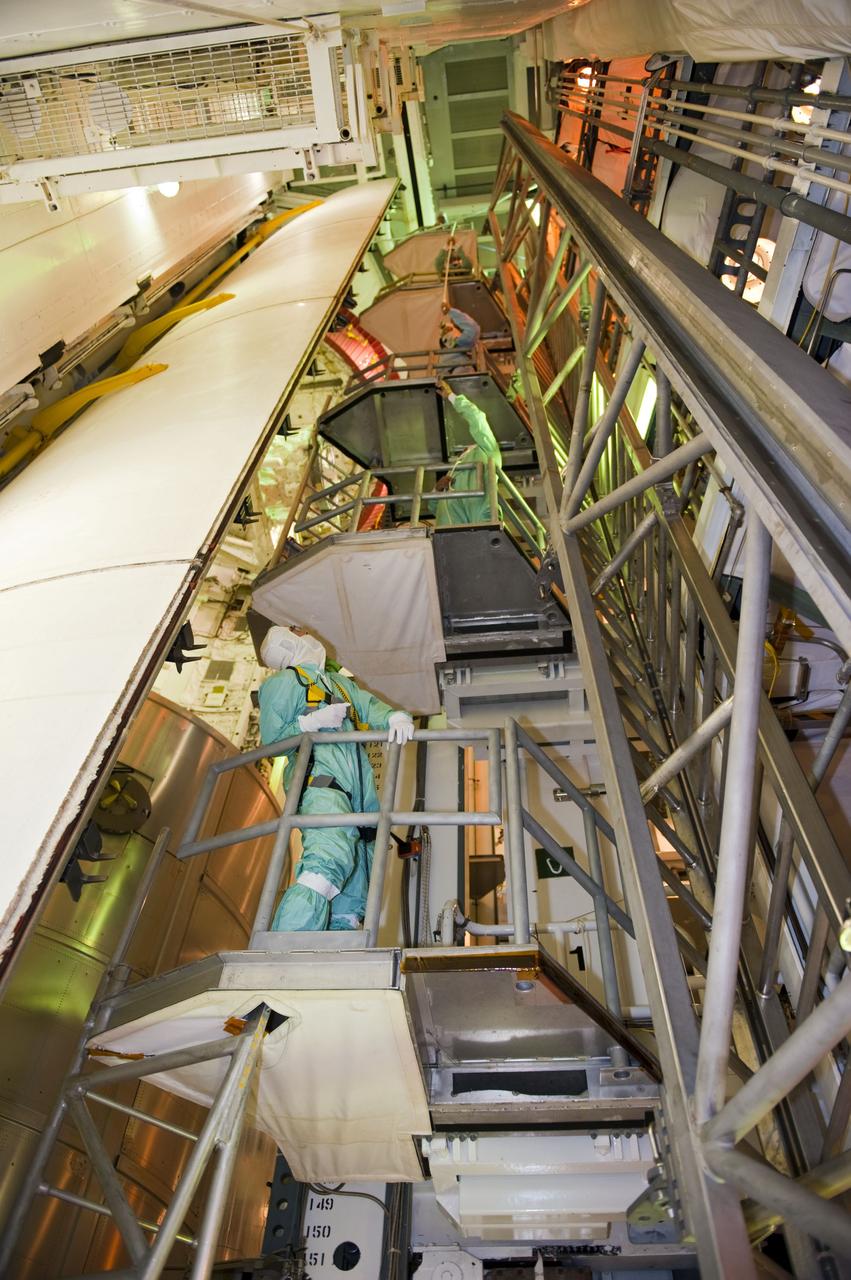
CAPE CANAVERAL, Fla. -- At NASA's Kennedy Space Center in Florida, technicians in the payload changeout room have maneuvered space shuttle Atlantis' cargo, the Raffaello multi-purpose logistics module (MPLM) into the shuttle's payload bay using the payload ground-handling mechanism at Launch Pad 39A. The rotating service structure that protects the shuttle from the elements and provides access has been moved back into place. STS-135 Commander Chris Ferguson, Pilot Doug Hurley and Mission Specialists Sandy Magnus and Rex Walheim are targeted to lift off on Atlantis July 8, taking with them the MPLM packed with supplies, logistics and spare parts to the station. The STS-135 mission also will fly a system to investigate the potential for robotically refueling existing satellites and return a failed ammonia pump module to help NASA better understand the failure mechanism and improve pump designs for future systems. STS-135 will be the 33rd flight of Atlantis, the 37th shuttle mission to the space station, and the 135th and final mission of NASA's Space Shuttle Program. For more information visit, www.nasa.gov/mission_pages/shuttle/shuttlemissions/sts135/index.html. Photo credit: NASA/Kim Shiflett
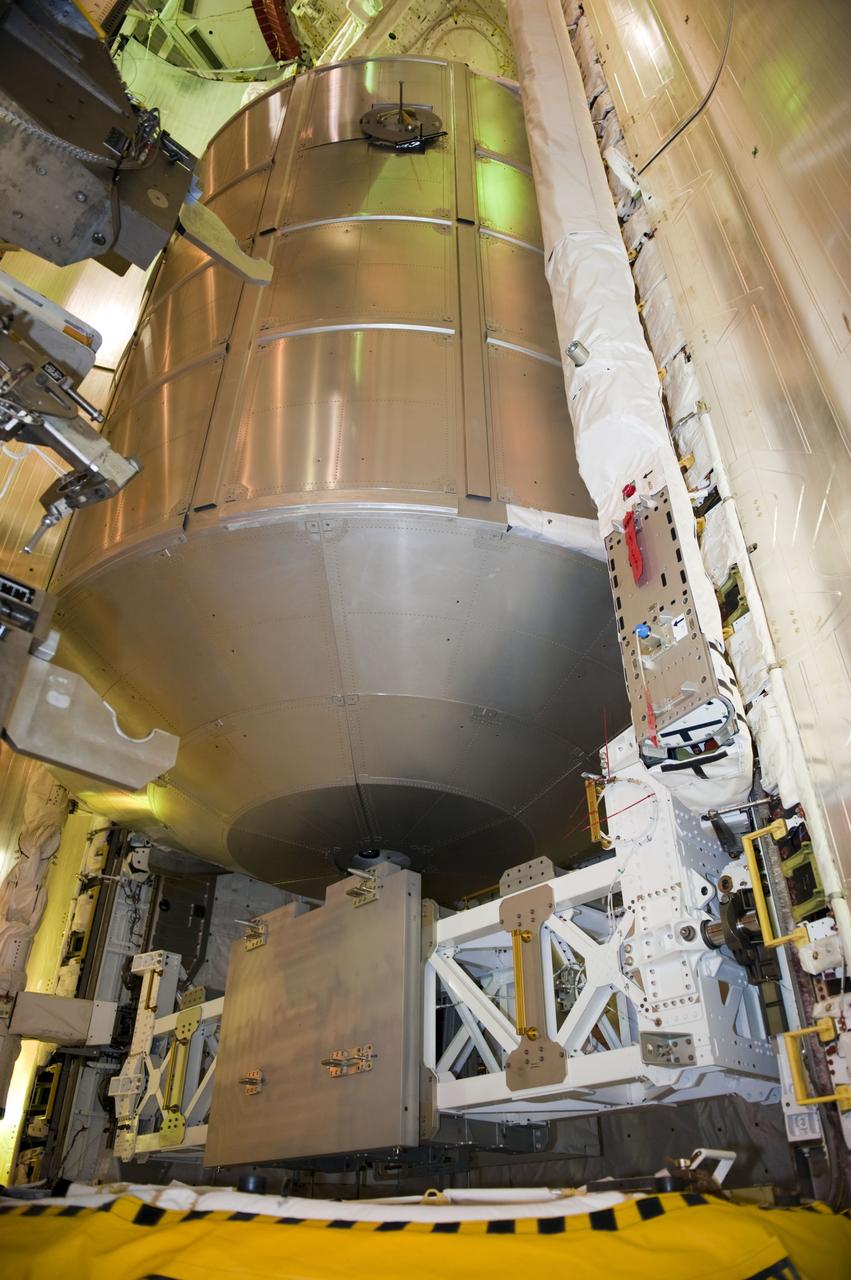
CAPE CANAVERAL, Fla. -- At NASA's Kennedy Space Center in Florida, technicians in the payload changeout room have maneuvered space shuttle Atlantis' cargo, the Raffaello multi-purpose logistics module (MPLM) into the shuttle's payload bay using the payload ground-handling mechanism at Launch Pad 39A. The rotating service structure that protects the shuttle from the elements and provides access has been moved back into place. STS-135 Commander Chris Ferguson, Pilot Doug Hurley and Mission Specialists Sandy Magnus and Rex Walheim are targeted to lift off on Atlantis July 8, taking with them the MPLM packed with supplies, logistics and spare parts to the station. The STS-135 mission also will fly a system to investigate the potential for robotically refueling existing satellites and return a failed ammonia pump module to help NASA better understand the failure mechanism and improve pump designs for future systems. STS-135 will be the 33rd flight of Atlantis, the 37th shuttle mission to the space station, and the 135th and final mission of NASA's Space Shuttle Program. For more information visit, www.nasa.gov/mission_pages/shuttle/shuttlemissions/sts135/index.html. Photo credit: NASA/Kim Shiflett
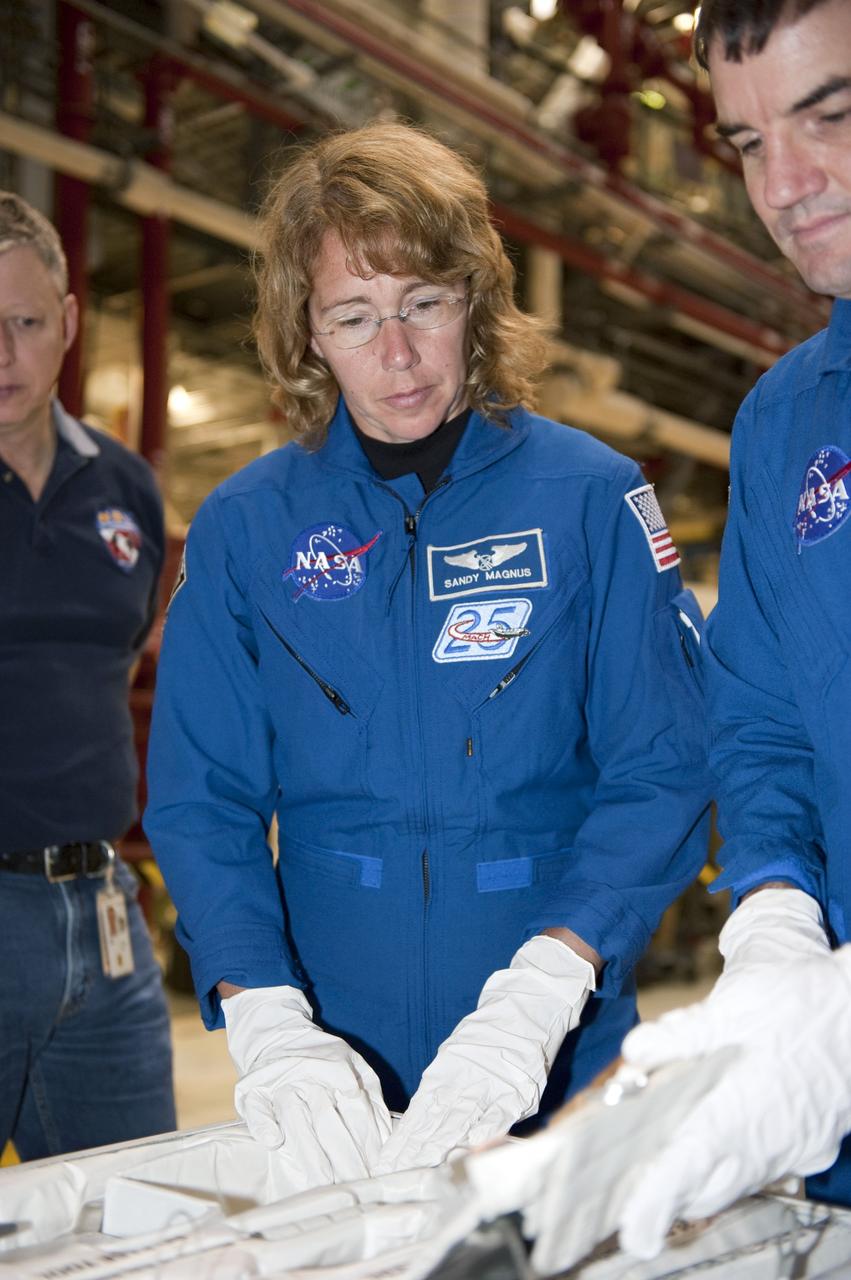
CAPE CANAVERAL, Fla. -- In Orbiter Processing Facility-1 at NASA's Kennedy Space Center in Florida, STS-135 Mission Specialists Sandy Magnus and Rex Walheim check out equipment they'll work with on their upcoming mission. The four-member crew is at Kennedy participating in the Crew Equipment Interface Test (CEIT), which gives them an opportunity for hands-on training with the tools and equipment they'll use and familiarization of shuttle Atlantis' payload they'll deliver to the International Space Station. Atlantis is being prepared for the STS-135 mission, which will deliver Raffaello multi-purpose logistics module packed with supplies and spare parts to the station. Atlantis is targeted to launch June 28, and will be the last shuttle flight for the Space Shuttle Program. Photo credit: NASA/Kim Shiflett
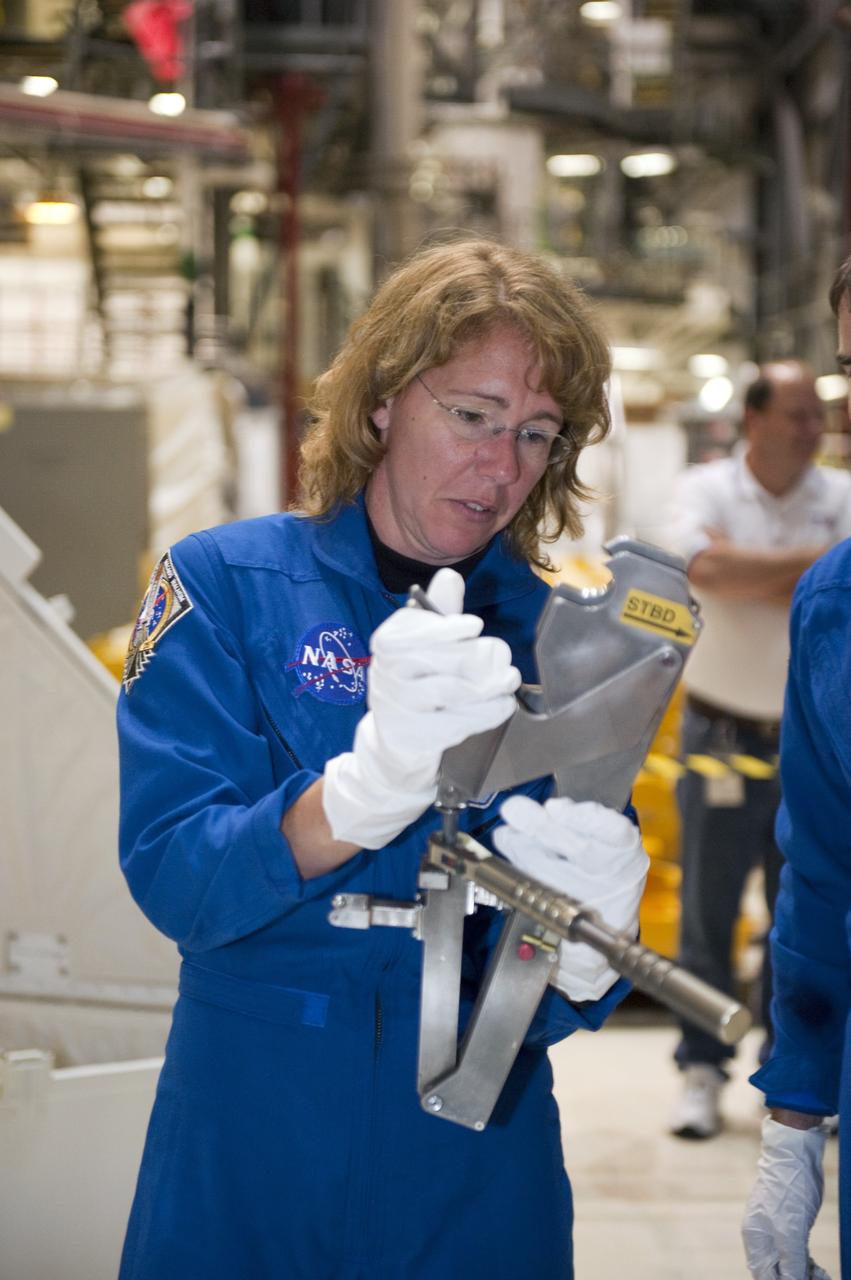
CAPE CANAVERAL, Fla. -- In Orbiter Processing Facility-1 at NASA's Kennedy Space Center in Florida, STS-135 Mission Specialist Sandy Magnus inspects a tool she'll use in space. The four-member crew is at Kennedy participating in the Crew Equipment Interface Test (CEIT), which gives them an opportunity for hands-on training with the tools and equipment they'll use and familiarization of shuttle Atlantis' payload they'll deliver to the International Space Station. Atlantis is being prepared for the STS-135 mission, which will deliver Raffaello multi-purpose logistics module packed with supplies and spare parts to the station. Atlantis is targeted to launch June 28, and will be the last shuttle flight for the Space Shuttle Program. Photo credit: NASA/Kim Shiflett
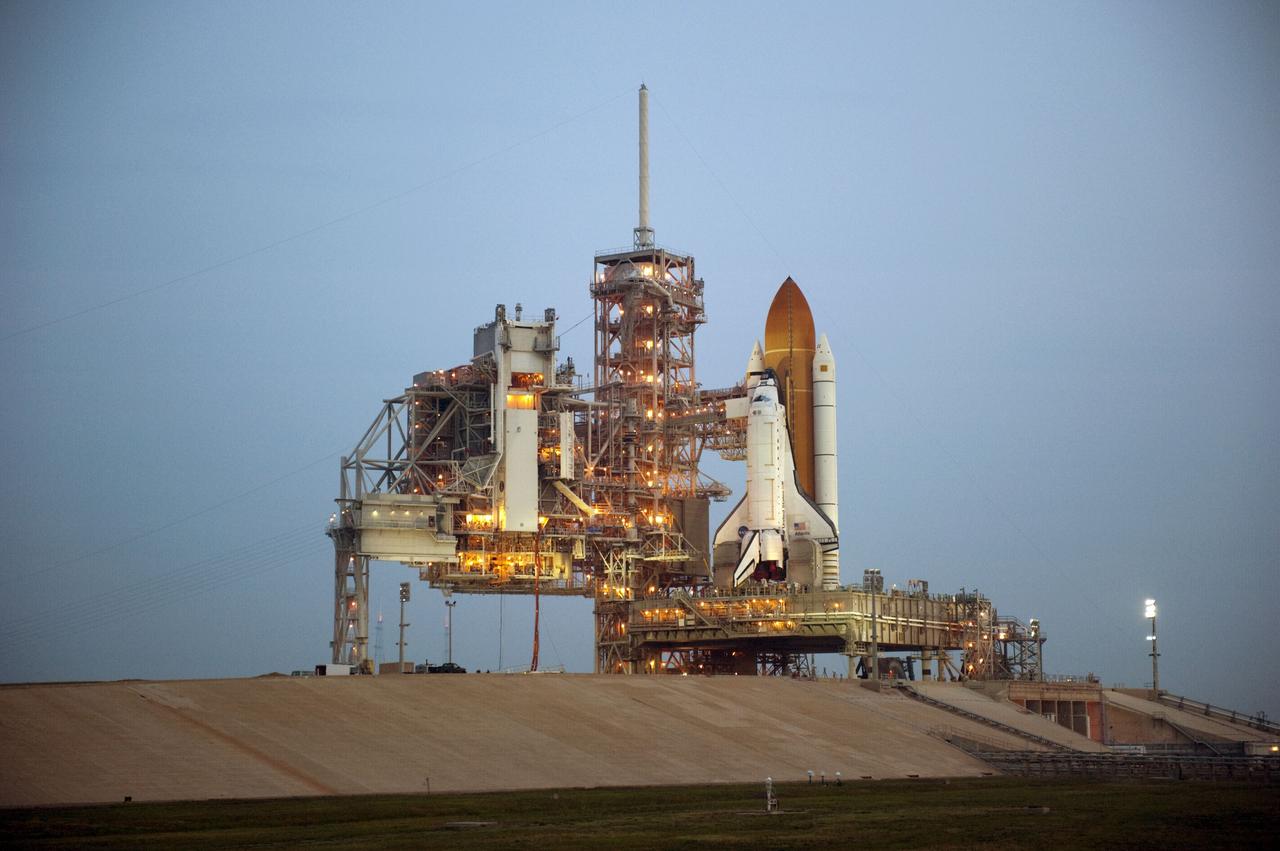
CAPE CANAVERAL, Fla. -- Sunrise at NASA's Kennedy Space Center in Florida finds space shuttle Atlantis on Launch Pad 39A after the payload canister carrying the Raffaello multi-purpose logistics module (MPLM) was lifted into the payload changeout room. The payload ground-handling mechanism then will be used to transfer Raffaello out of the canister into Atlantis' payload bay. Next, the rotating service structure that protects the shuttle from the elements and provides access will be rotated back into place. Commander Chris Ferguson, Pilot Doug Hurley and Mission Specialists Sandra Magnus and Rex Walheim are targeted to lift off on space shuttle Atlantis July 8, taking with them the MPLM packed with supplies, logistics and spare parts to the International Space Station. The STS-135 mission also will fly a system to investigate the potential for robotically refueling existing satellites and return a failed ammonia pump module to help NASA better understand the failure mechanism and improve pump designs for future systems. STS-135 will be the 33rd flight of Atlantis, the 37th shuttle mission to the space station, and the 135th and final mission of NASA's Space Shuttle Program. For more information visit, www.nasa.gov/mission_pages/shuttle/shuttlemissions/sts135/index.html. Photo credit: NASA/Kim Shiflett
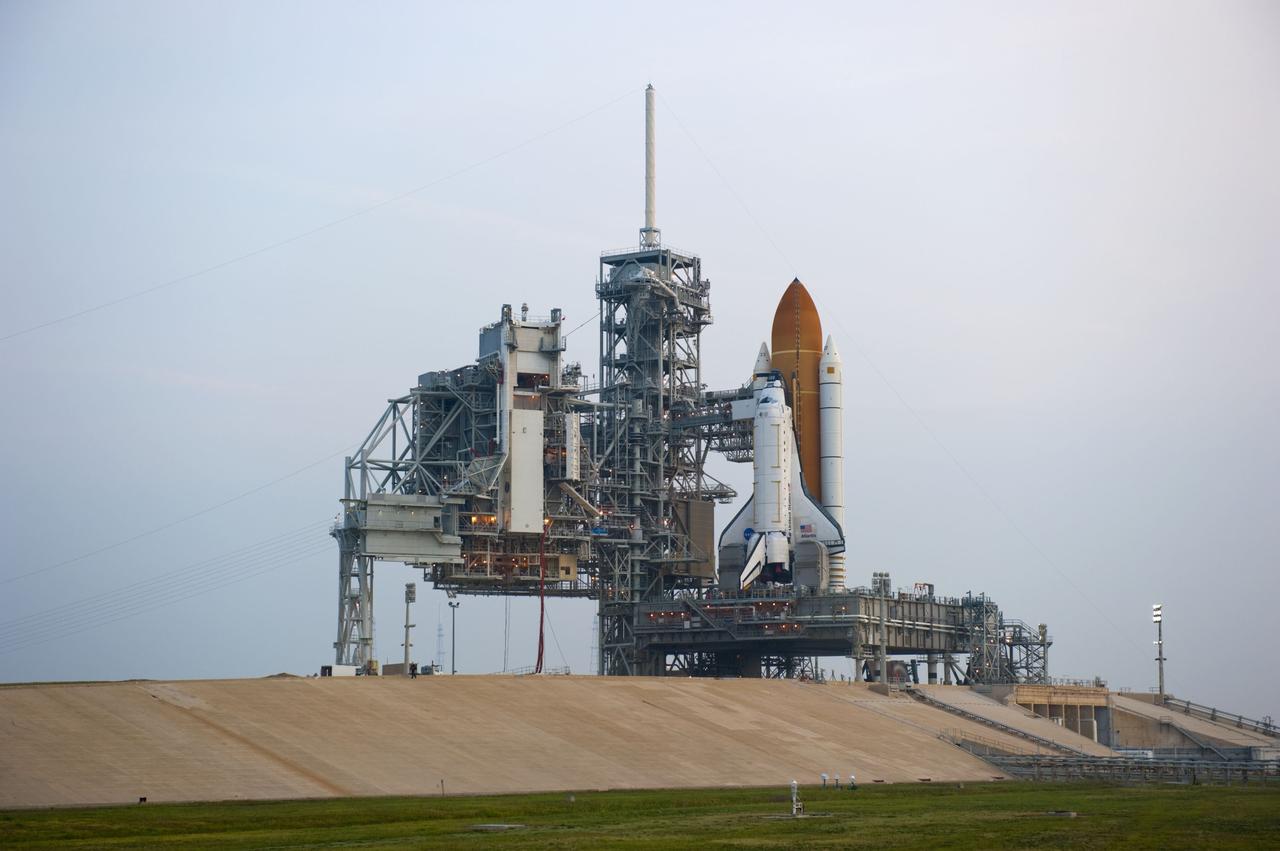
CAPE CANAVERAL, Fla. -- Sunrise at NASA's Kennedy Space Center in Florida finds space shuttle Atlantis on Launch Pad 39A after the payload canister carrying the Raffaello multi-purpose logistics module (MPLM) was lifted into the payload changeout room. The payload ground-handling mechanism then will be used to transfer Raffaello out of the canister into Atlantis' payload bay. Next, the rotating service structure that protects the shuttle from the elements and provides access will be rotated back into place. Commander Chris Ferguson, Pilot Doug Hurley and Mission Specialists Sandra Magnus and Rex Walheim are targeted to lift off on space shuttle Atlantis July 8, taking with them the MPLM packed with supplies, logistics and spare parts to the International Space Station. The STS-135 mission also will fly a system to investigate the potential for robotically refueling existing satellites and return a failed ammonia pump module to help NASA better understand the failure mechanism and improve pump designs for future systems. STS-135 will be the 33rd flight of Atlantis, the 37th shuttle mission to the space station, and the 135th and final mission of NASA's Space Shuttle Program. For more information visit, www.nasa.gov/mission_pages/shuttle/shuttlemissions/sts135/index.html. Photo credit: NASA/Kim Shiflett
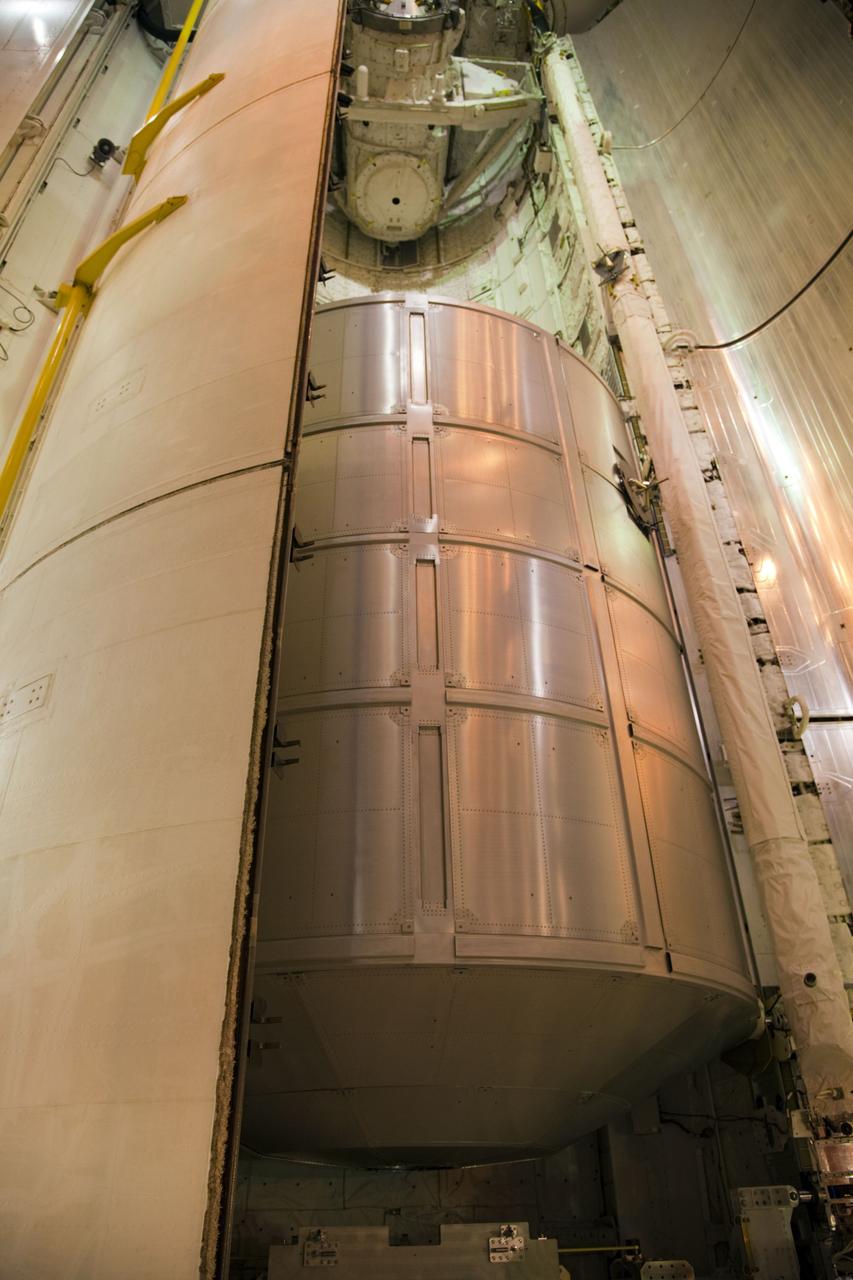
CAPE CANAVERAL, Fla. -- At Launch Pad 39A at NASA's Kennedy Space Center in Florida, space shuttle Atlantis' payload bay doors close around the Raffaello multi-purpose logistics module (MPLM) payload for Atlantis' STS-135 mission to the International Space Station. Commander Chris Ferguson, Pilot Doug Hurley and Mission Specialists Sandra Magnus and Rex Walheim are slated to lift off on July 8, taking with them the MPLM packed with supplies and spare parts to the station. The STS-135 mission also will fly a system to investigate the potential for robotically refueling existing satellites and return a failed ammonia pump module to help NASA better understand the failure mechanism and improve pump designs for future systems. STS-135 will be the 33rd flight of Atlantis, the 37th shuttle mission to the space station, and the 135th and final mission of NASA's Space Shuttle Program. For more information visit, www.nasa.gov/mission_pages/shuttle/shuttlemissions/sts135/index.html. Photo credit: NASA/Frank Michaux
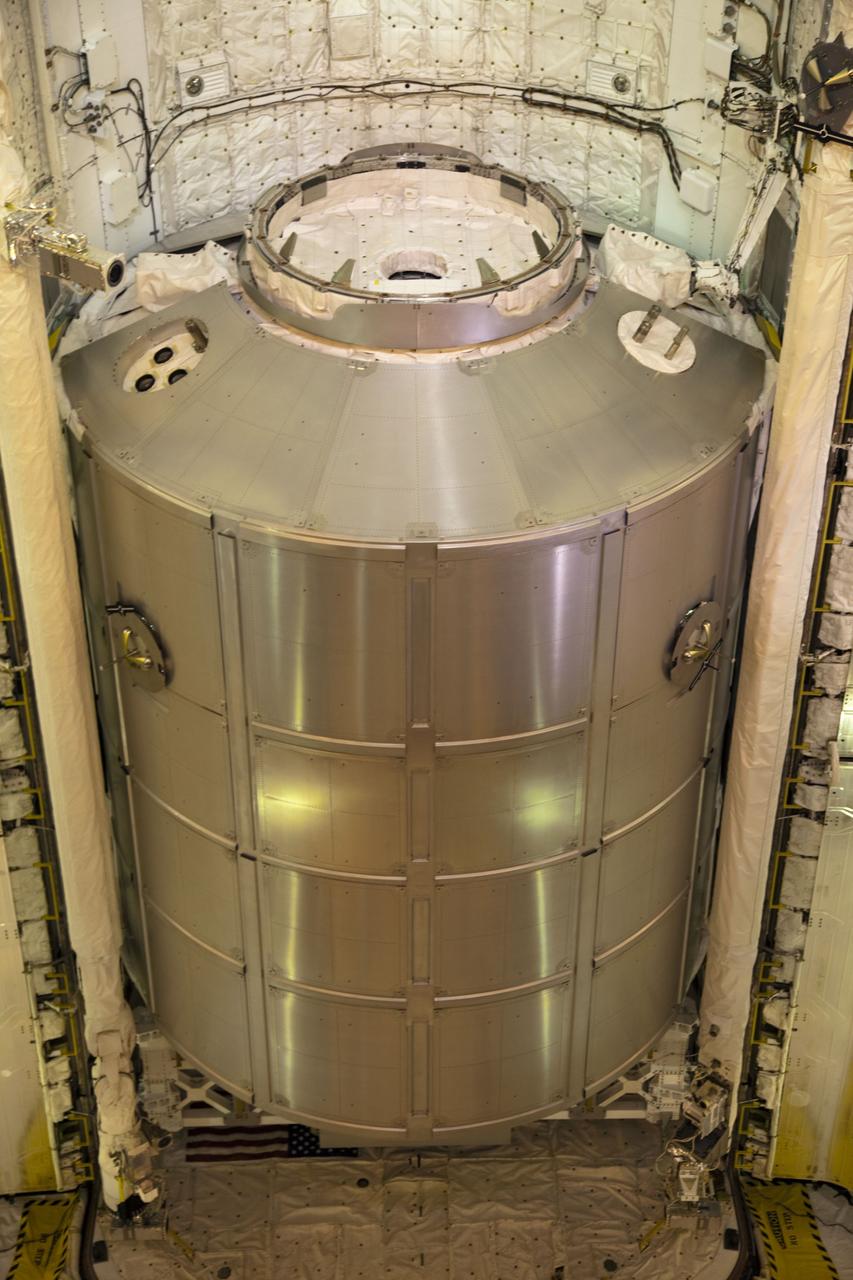
CAPE CANAVERAL, Fla. -- At Launch Pad 39A at NASA's Kennedy Space Center in Florida, work is under way to close space shuttle Atlantis' payload bay doors around the Raffaello multi-purpose logistics module (MPLM) payload for Atlantis' STS-135 mission to the International Space Station. Commander Chris Ferguson, Pilot Doug Hurley and Mission Specialists Sandra Magnus and Rex Walheim are slated to lift off on July 8, taking with them the MPLM packed with supplies and spare parts to the station. The STS-135 mission also will fly a system to investigate the potential for robotically refueling existing satellites and return a failed ammonia pump module to help NASA better understand the failure mechanism and improve pump designs for future systems. STS-135 will be the 33rd flight of Atlantis, the 37th shuttle mission to the space station, and the 135th and final mission of NASA's Space Shuttle Program. For more information visit, www.nasa.gov/mission_pages/shuttle/shuttlemissions/sts135/index.html. Photo credit: NASA/Frank Michaux
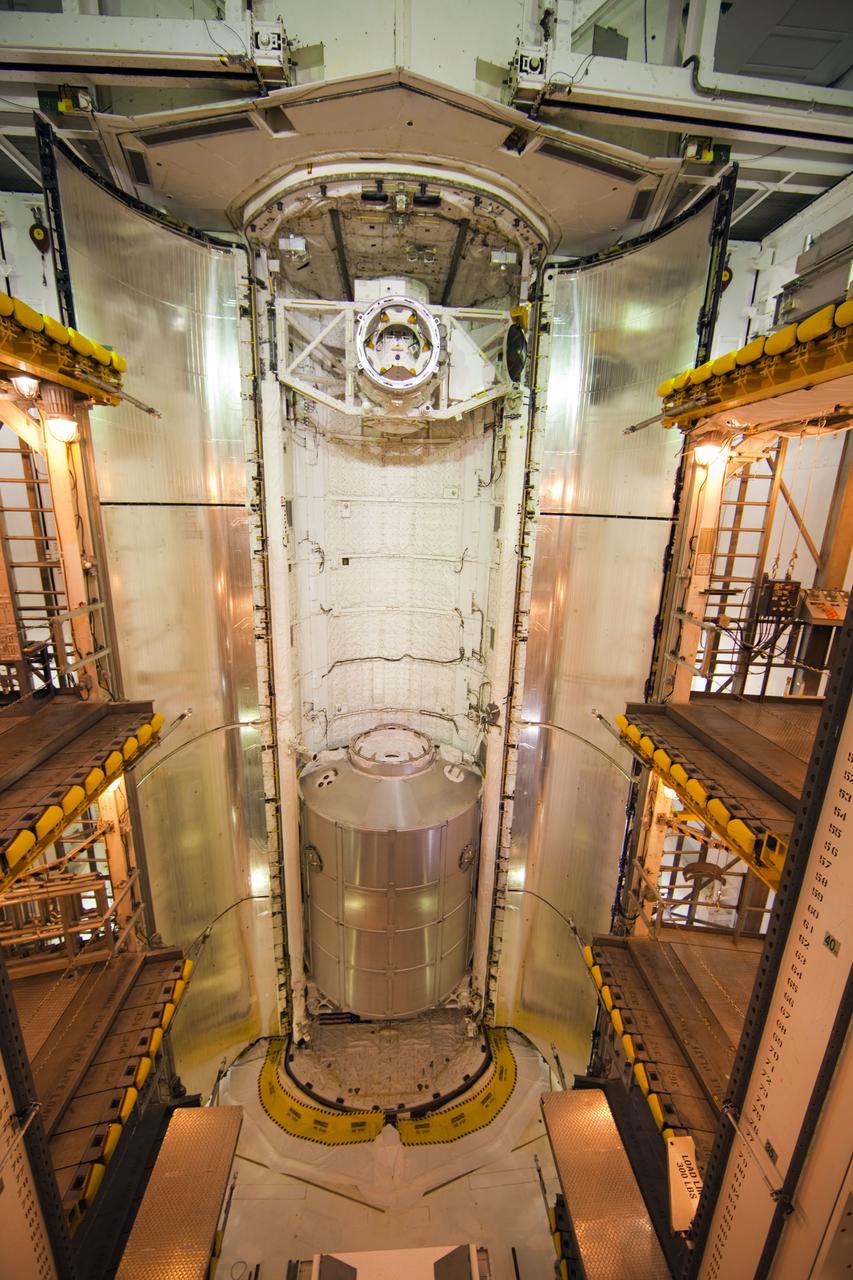
CAPE CANAVERAL, Fla. -- At Launch Pad 39A at NASA's Kennedy Space Center in Florida, work is under way to close space shuttle Atlantis' payload bay doors around the Raffaello multi-purpose logistics module (MPLM) payload for Atlantis' STS-135 mission to the International Space Station. Commander Chris Ferguson, Pilot Doug Hurley and Mission Specialists Sandra Magnus and Rex Walheim are slated to lift off on July 8, taking with them the MPLM packed with supplies and spare parts to the station. The STS-135 mission also will fly a system to investigate the potential for robotically refueling existing satellites and return a failed ammonia pump module to help NASA better understand the failure mechanism and improve pump designs for future systems. STS-135 will be the 33rd flight of Atlantis, the 37th shuttle mission to the space station, and the 135th and final mission of NASA's Space Shuttle Program. For more information visit, www.nasa.gov/mission_pages/shuttle/shuttlemissions/sts135/index.html. Photo credit: NASA/Frank Michaux
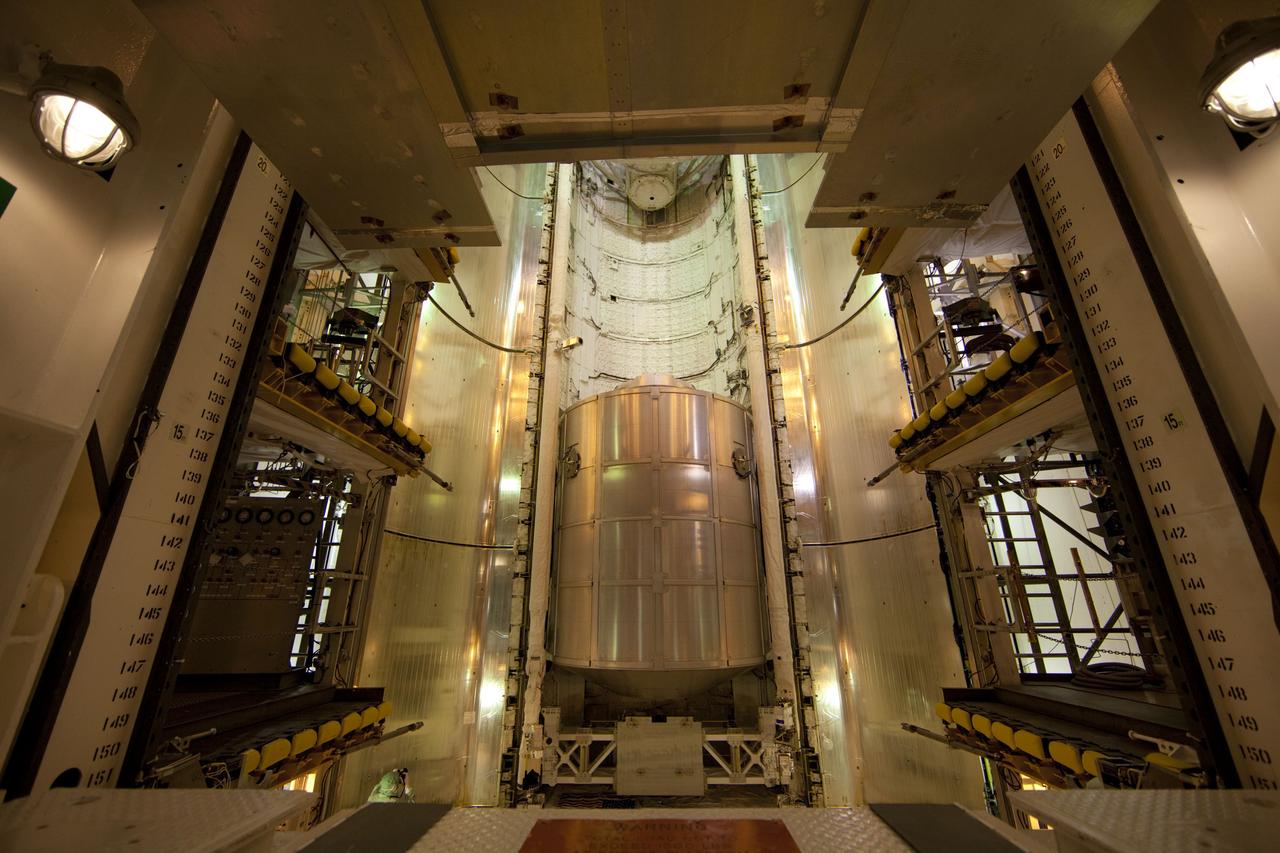
CAPE CANAVERAL, Fla. -- At Launch Pad 39A at NASA's Kennedy Space Center in Florida, work is under way to close space shuttle Atlantis' payload bay doors around the Raffaello multi-purpose logistics module (MPLM) payload for Atlantis' STS-135 mission to the International Space Station. Commander Chris Ferguson, Pilot Doug Hurley and Mission Specialists Sandra Magnus and Rex Walheim are slated to lift off on July 8, taking with them the MPLM packed with supplies and spare parts to the station. The STS-135 mission also will fly a system to investigate the potential for robotically refueling existing satellites and return a failed ammonia pump module to help NASA better understand the failure mechanism and improve pump designs for future systems. STS-135 will be the 33rd flight of Atlantis, the 37th shuttle mission to the space station, and the 135th and final mission of NASA's Space Shuttle Program. For more information visit, www.nasa.gov/mission_pages/shuttle/shuttlemissions/sts135/index.html. Photo credit: NASA/Frank Michaux
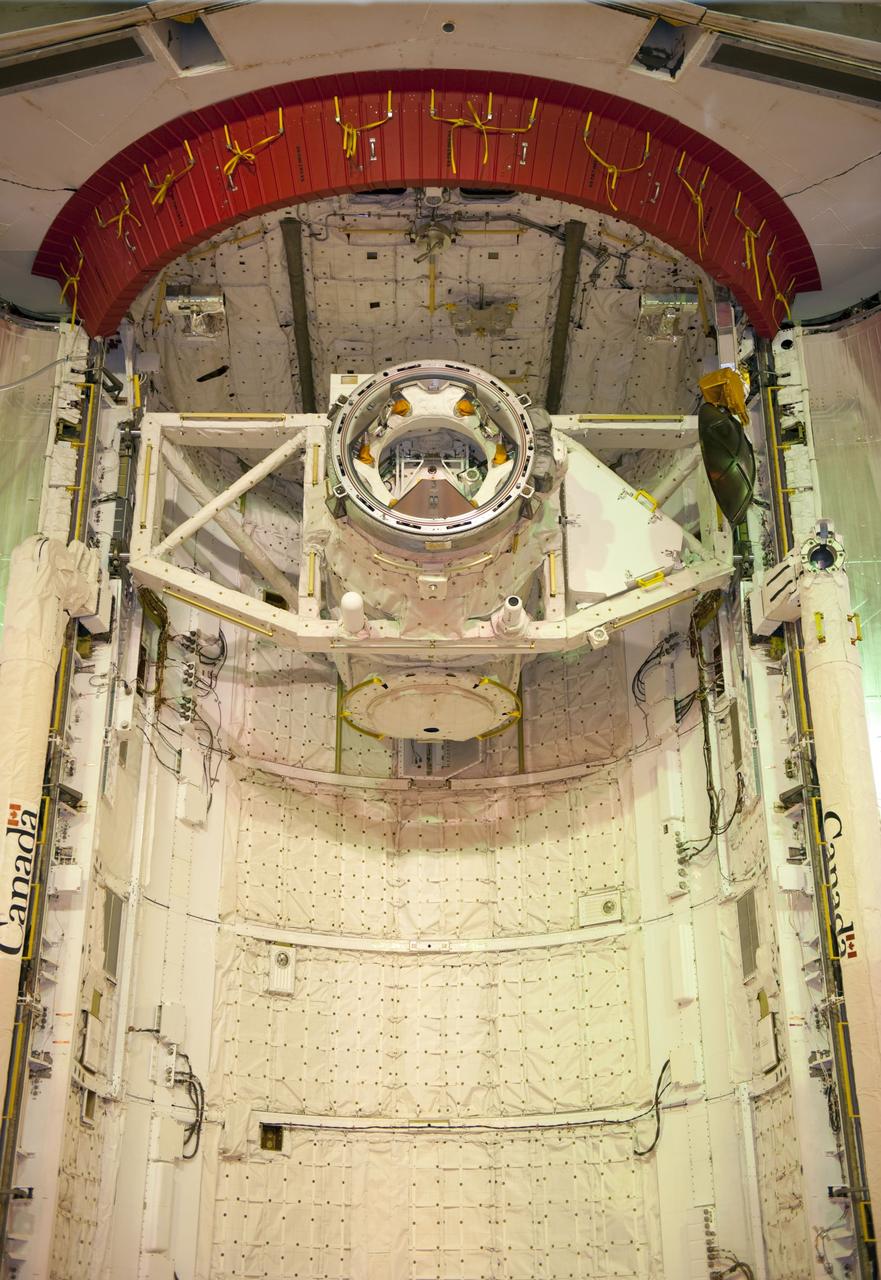
CAPE CANAVERAL, Fla. -- At NASA's Kennedy Space Center in Florida, space shuttle Atlantis' cargo, the Raffaello multi-purpose logistics module (MPLM) now is installed into the shuttle's payload bay at Launch Pad 39A (out of frame). Seen here is the airlock, already installed in the payload bay. The rotating service structure that protects the shuttle from the elements and provides access has been moved back into place. STS-135 Commander Chris Ferguson, Pilot Doug Hurley and Mission Specialists Sandy Magnus and Rex Walheim are targeted to lift off on Atlantis July 8, taking with them the MPLM packed with supplies, logistics and spare parts to the station. The STS-135 mission also will fly a system to investigate the potential for robotically refueling existing satellites and return a failed ammonia pump module to help NASA better understand the failure mechanism and improve pump designs for future systems. STS-135 will be the 33rd flight of Atlantis, the 37th shuttle mission to the space station, and the 135th and final mission of NASA's Space Shuttle Program. For more information visit, www.nasa.gov/mission_pages/shuttle/shuttlemissions/sts135/index.html. Photo credit: NASA/Kim Shiflett
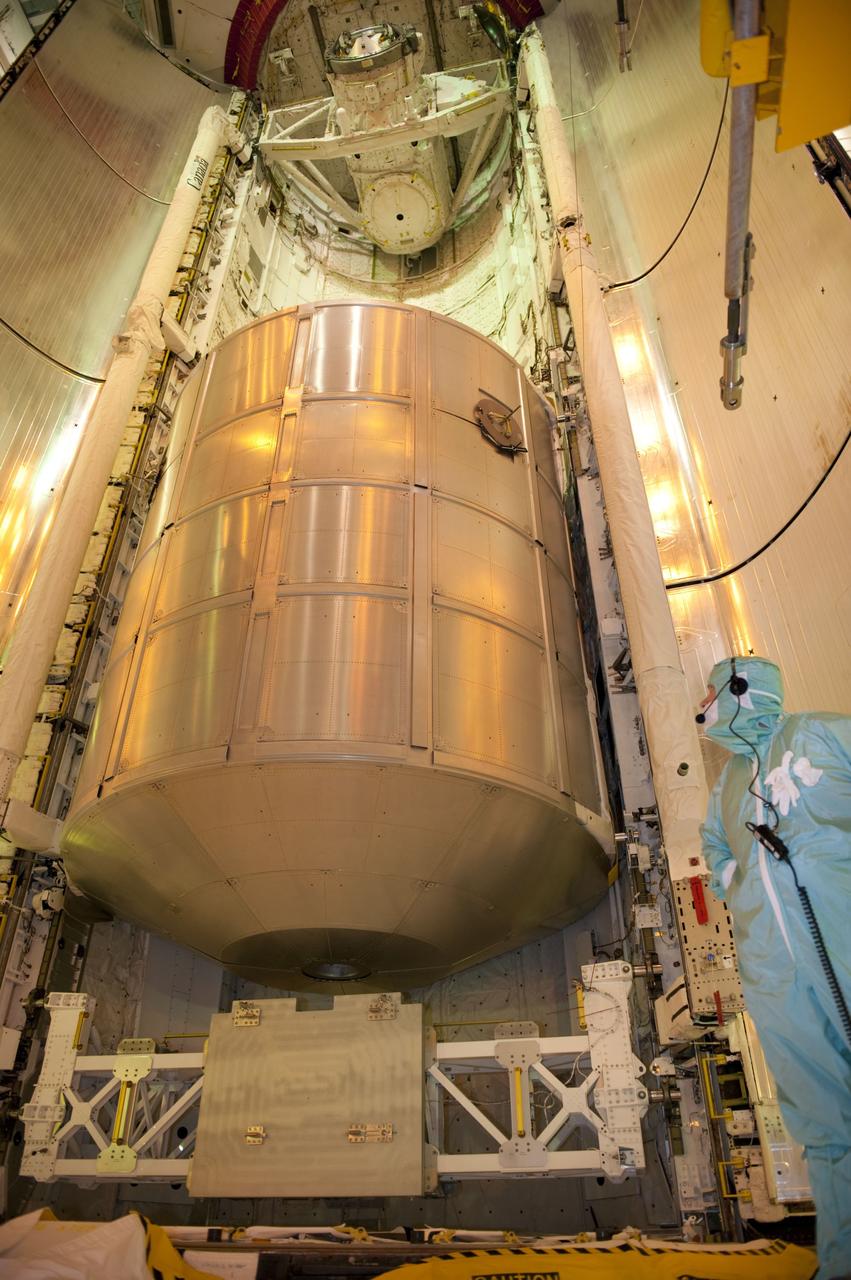
CAPE CANAVERAL, Fla. -- At NASA's Kennedy Space Center in Florida, technicians in the payload changeout room have maneuvered space shuttle Atlantis' cargo, the Raffaello multi-purpose logistics module (MPLM) into the shuttle's payload bay at Launch Pad 39A. The rotating service structure that protects the shuttle from the elements and provides access has been moved back into place. STS-135 Commander Chris Ferguson, Pilot Doug Hurley and Mission Specialists Sandy Magnus and Rex Walheim are targeted to lift off on Atlantis July 8, taking with them the MPLM packed with supplies, logistics and spare parts to the station. The STS-135 mission also will fly a system to investigate the potential for robotically refueling existing satellites and return a failed ammonia pump module to help NASA better understand the failure mechanism and improve pump designs for future systems. STS-135 will be the 33rd flight of Atlantis, the 37th shuttle mission to the space station, and the 135th and final mission of NASA's Space Shuttle Program. For more information visit, www.nasa.gov/mission_pages/shuttle/shuttlemissions/sts135/index.html. Photo credit: NASA/Kim Shiflett
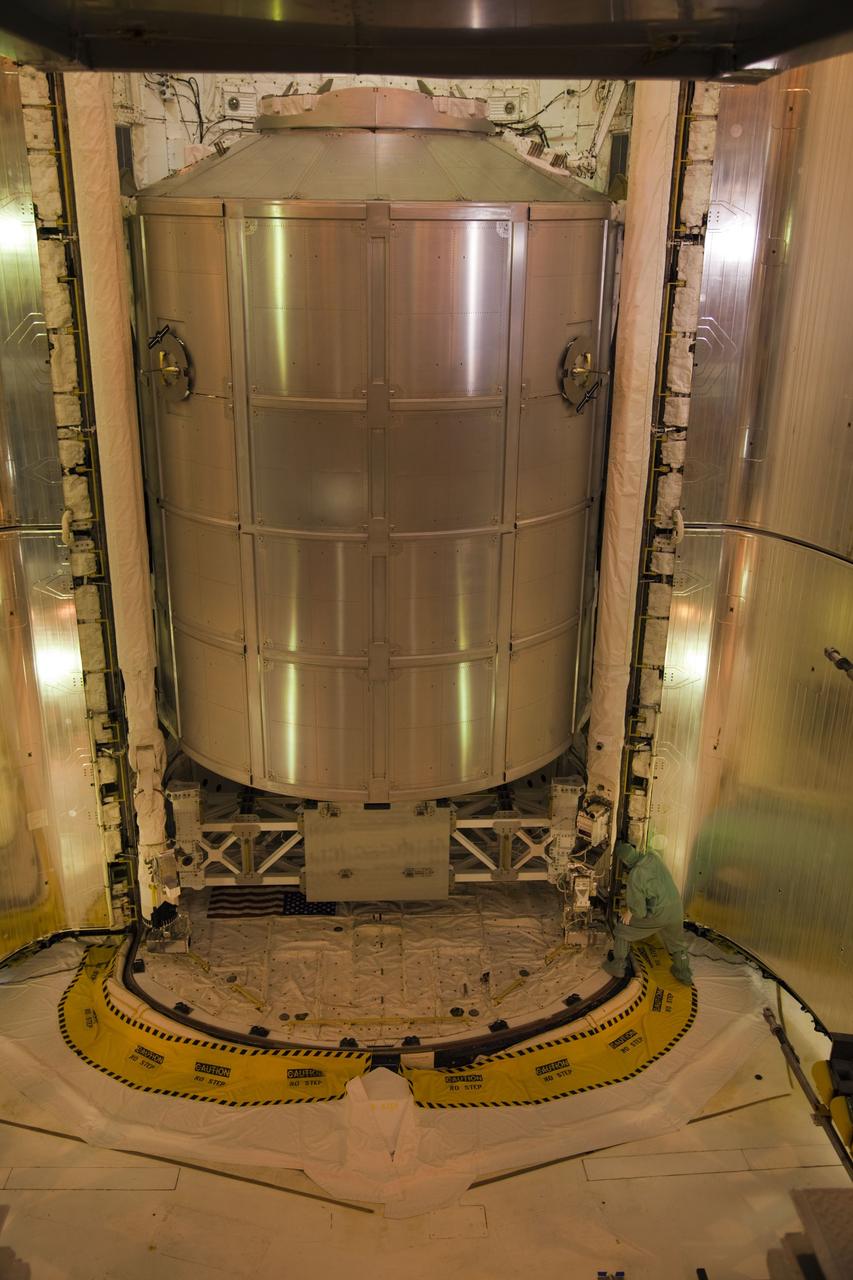
CAPE CANAVERAL, Fla. -- At Launch Pad 39A at NASA's Kennedy Space Center in Florida, work is under way to close space shuttle Atlantis' payload bay doors around the Raffaello multi-purpose logistics module (MPLM) payload for Atlantis' STS-135 mission to the International Space Station. Commander Chris Ferguson, Pilot Doug Hurley and Mission Specialists Sandra Magnus and Rex Walheim are slated to lift off on July 8, taking with them the MPLM packed with supplies and spare parts to the station. The STS-135 mission also will fly a system to investigate the potential for robotically refueling existing satellites and return a failed ammonia pump module to help NASA better understand the failure mechanism and improve pump designs for future systems. STS-135 will be the 33rd flight of Atlantis, the 37th shuttle mission to the space station, and the 135th and final mission of NASA's Space Shuttle Program. For more information visit, www.nasa.gov/mission_pages/shuttle/shuttlemissions/sts135/index.html. Photo credit: NASA/Frank Michaux
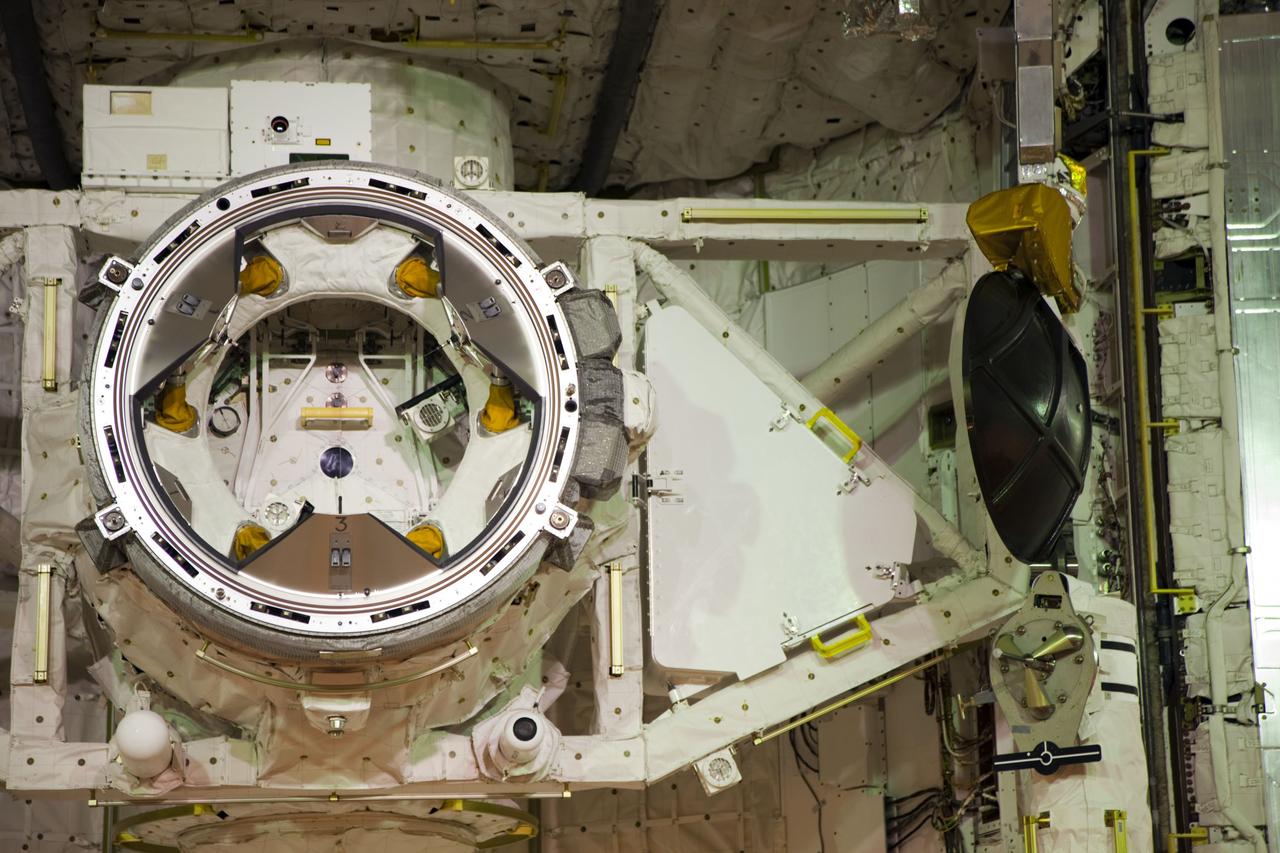
CAPE CANAVERAL, Fla. -- At Launch Pad 39A at NASA's Kennedy Space Center in Florida, work is under way to close space shuttle Atlantis' payload bay doors around the Raffaello multi-purpose logistics module (MPLM) payload for Atlantis' STS-135 mission to the International Space Station. Seen here is the airlock which is sized to accommodate two fully suited flight crew members simultaneously. Support functions include airlock depressurization and repressurization, extravehicular activity equipment recharge, liquid-cooled garment water cooling, spacesuit equipment checkout, and communications. Commander Chris Ferguson, Pilot Doug Hurley and Mission Specialists Sandra Magnus and Rex Walheim are slated to lift off on July 8, taking with them the MPLM packed with supplies and spare parts to the station. The STS-135 mission also will fly a system to investigate the potential for robotically refueling existing satellites and return a failed ammonia pump module to help NASA better understand the failure mechanism and improve pump designs for future systems. STS-135 will be the 33rd flight of Atlantis, the 37th shuttle mission to the space station, and the 135th and final mission of NASA's Space Shuttle Program. For more information visit, www.nasa.gov/mission_pages/shuttle/shuttlemissions/sts135/index.html. Photo credit: NASA/Frank Michaux
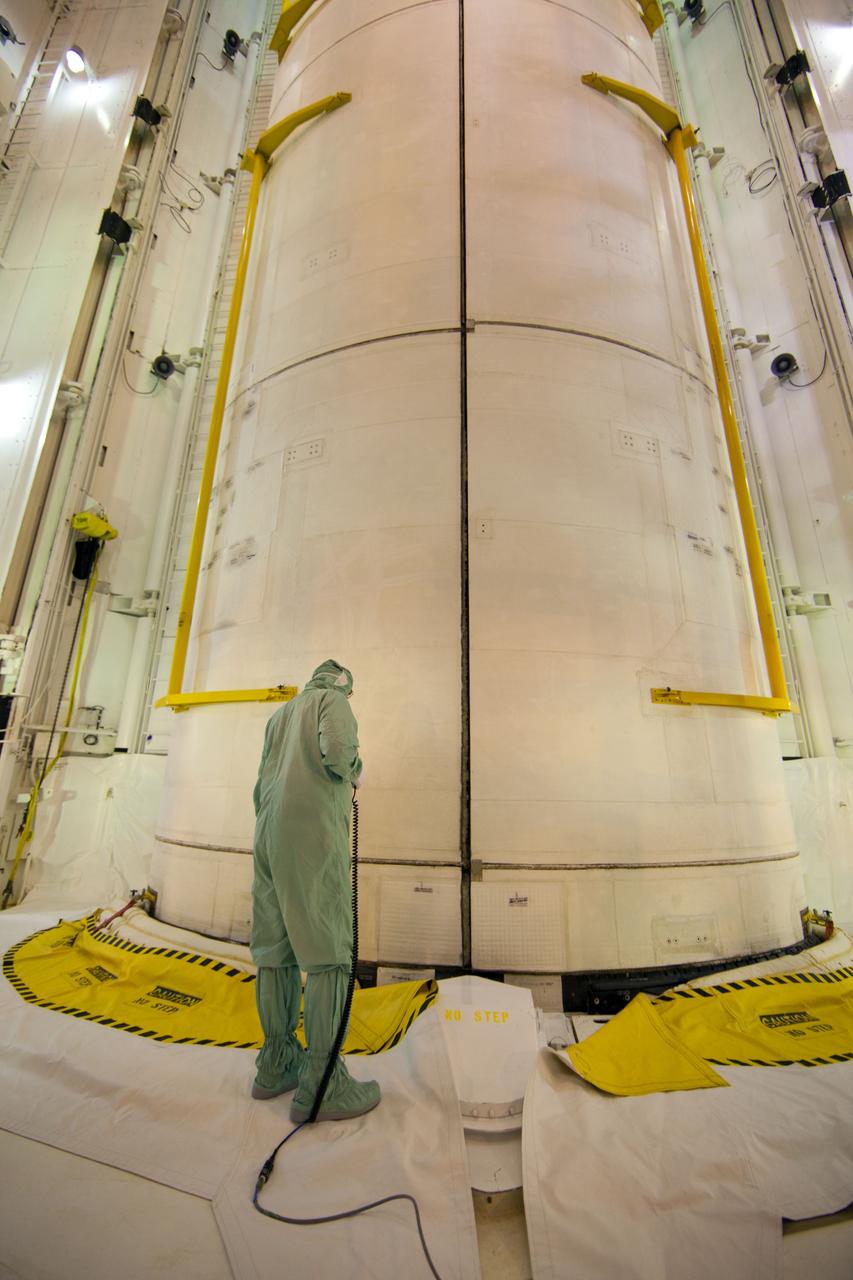
CAPE CANAVERAL, Fla. -- At Launch Pad 39A at NASA's Kennedy Space Center in Florida, space shuttle Atlantis' payload bay doors are closed around the Raffaello multi-purpose logistics module (MPLM) payload for Atlantis' STS-135 mission to the International Space Station. Commander Chris Ferguson, Pilot Doug Hurley and Mission Specialists Sandra Magnus and Rex Walheim are slated to lift off on July 8, taking with them the MPLM packed with supplies and spare parts to the station. The STS-135 mission also will fly a system to investigate the potential for robotically refueling existing satellites and return a failed ammonia pump module to help NASA better understand the failure mechanism and improve pump designs for future systems. STS-135 will be the 33rd flight of Atlantis, the 37th shuttle mission to the space station, and the 135th and final mission of NASA's Space Shuttle Program. For more information visit, www.nasa.gov/mission_pages/shuttle/shuttlemissions/sts135/index.html. Photo credit: NASA/Frank Michaux
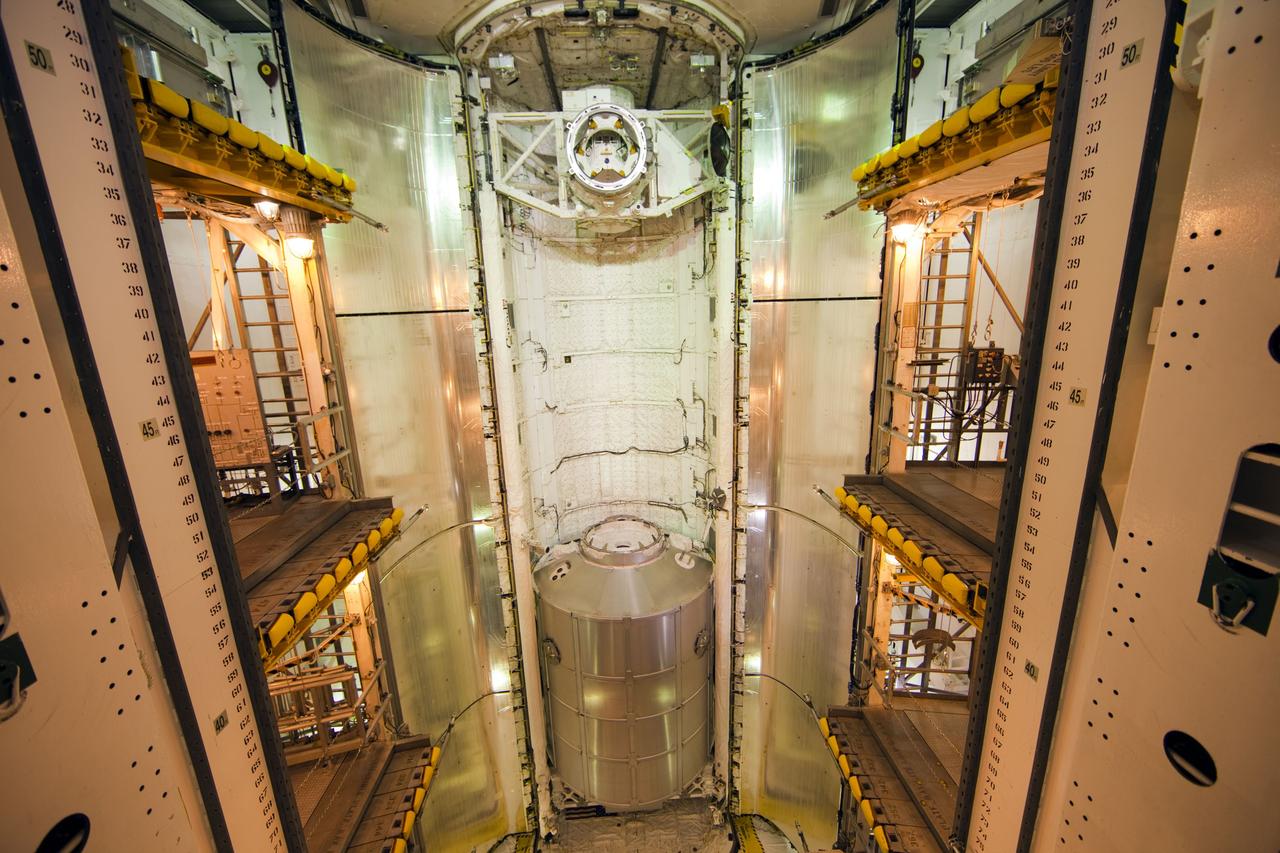
CAPE CANAVERAL, Fla. -- At Launch Pad 39A at NASA's Kennedy Space Center in Florida, work is under way to close space shuttle Atlantis' payload bay doors around the Raffaello multi-purpose logistics module (MPLM) payload for Atlantis' STS-135 mission to the International Space Station. Commander Chris Ferguson, Pilot Doug Hurley and Mission Specialists Sandra Magnus and Rex Walheim are slated to lift off on July 8, taking with them the MPLM packed with supplies and spare parts to the station. The STS-135 mission also will fly a system to investigate the potential for robotically refueling existing satellites and return a failed ammonia pump module to help NASA better understand the failure mechanism and improve pump designs for future systems. STS-135 will be the 33rd flight of Atlantis, the 37th shuttle mission to the space station, and the 135th and final mission of NASA's Space Shuttle Program. For more information visit, www.nasa.gov/mission_pages/shuttle/shuttlemissions/sts135/index.html. Photo credit: NASA/Frank Michaux
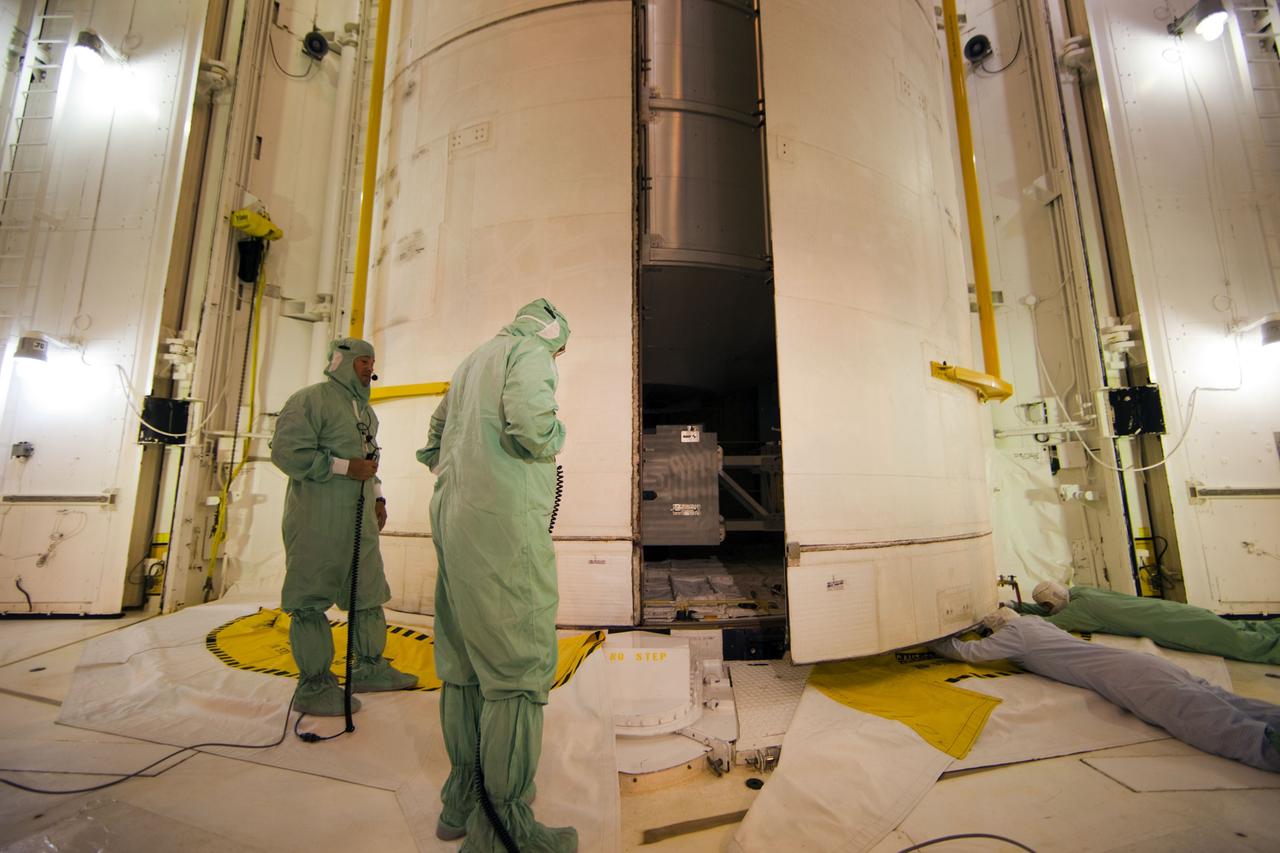
CAPE CANAVERAL, Fla. -- At Launch Pad 39A at NASA's Kennedy Space Center in Florida, technicians guide the progress of space shuttle Atlantis' payload bay doors as they close around the Raffaello multi-purpose logistics module (MPLM) payload for Atlantis' STS-135 mission to the International Space Station. Commander Chris Ferguson, Pilot Doug Hurley and Mission Specialists Sandra Magnus and Rex Walheim are slated to lift off on July 8, taking with them the MPLM packed with supplies and spare parts to the station. The STS-135 mission also will fly a system to investigate the potential for robotically refueling existing satellites and return a failed ammonia pump module to help NASA better understand the failure mechanism and improve pump designs for future systems. STS-135 will be the 33rd flight of Atlantis, the 37th shuttle mission to the space station, and the 135th and final mission of NASA's Space Shuttle Program. For more information visit, www.nasa.gov/mission_pages/shuttle/shuttlemissions/sts135/index.html. Photo credit: NASA/Frank Michaux
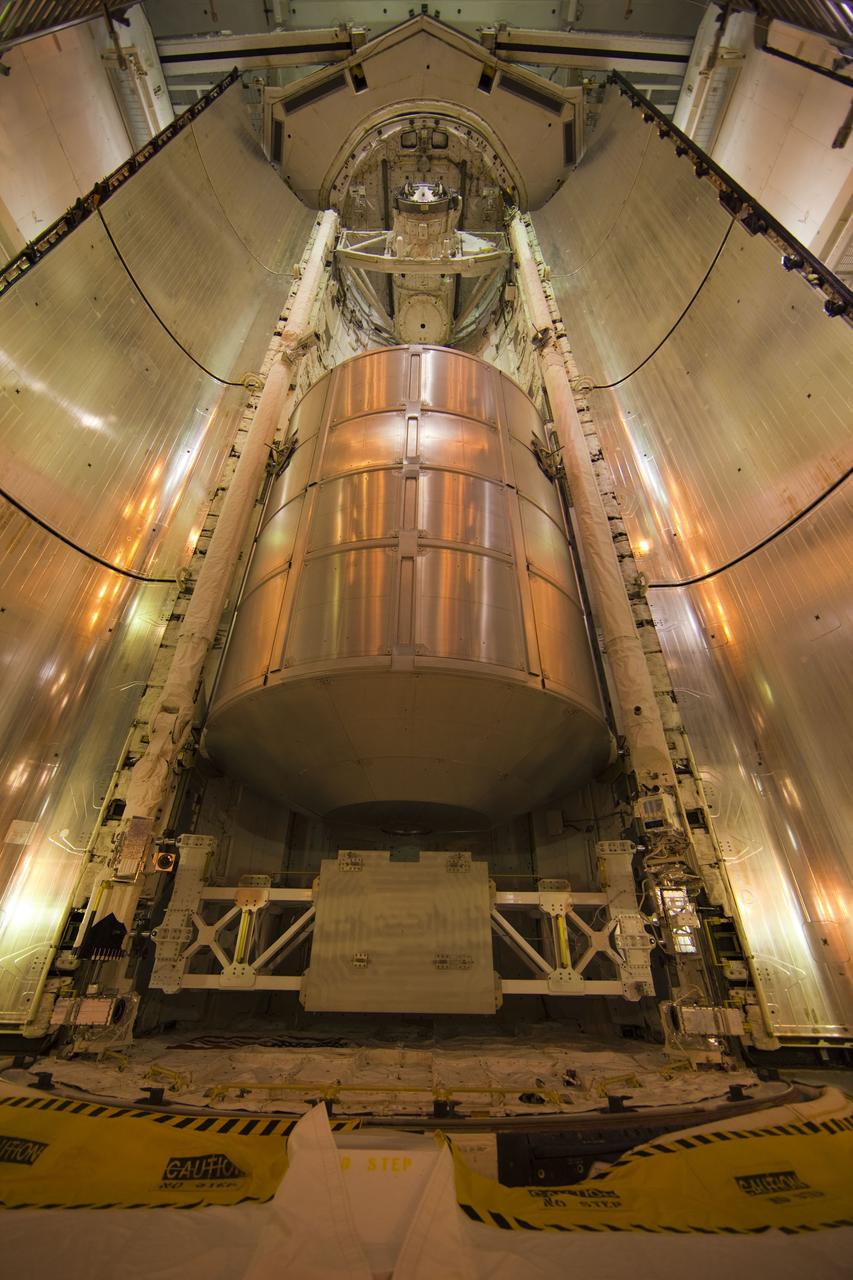
CAPE CANAVERAL, Fla. -- At Launch Pad 39A at NASA's Kennedy Space Center in Florida, space shuttle Atlantis' payload bay doors begin to close around the Raffaello multi-purpose logistics module (MPLM) payload for Atlantis' STS-135 mission to the International Space Station. Commander Chris Ferguson, Pilot Doug Hurley and Mission Specialists Sandra Magnus and Rex Walheim are slated to lift off on July 8, taking with them the MPLM packed with supplies and spare parts to the station. The STS-135 mission also will fly a system to investigate the potential for robotically refueling existing satellites and return a failed ammonia pump module to help NASA better understand the failure mechanism and improve pump designs for future systems. STS-135 will be the 33rd flight of Atlantis, the 37th shuttle mission to the space station, and the 135th and final mission of NASA's Space Shuttle Program. For more information visit, www.nasa.gov/mission_pages/shuttle/shuttlemissions/sts135/index.html. Photo credit: NASA/Frank Michaux
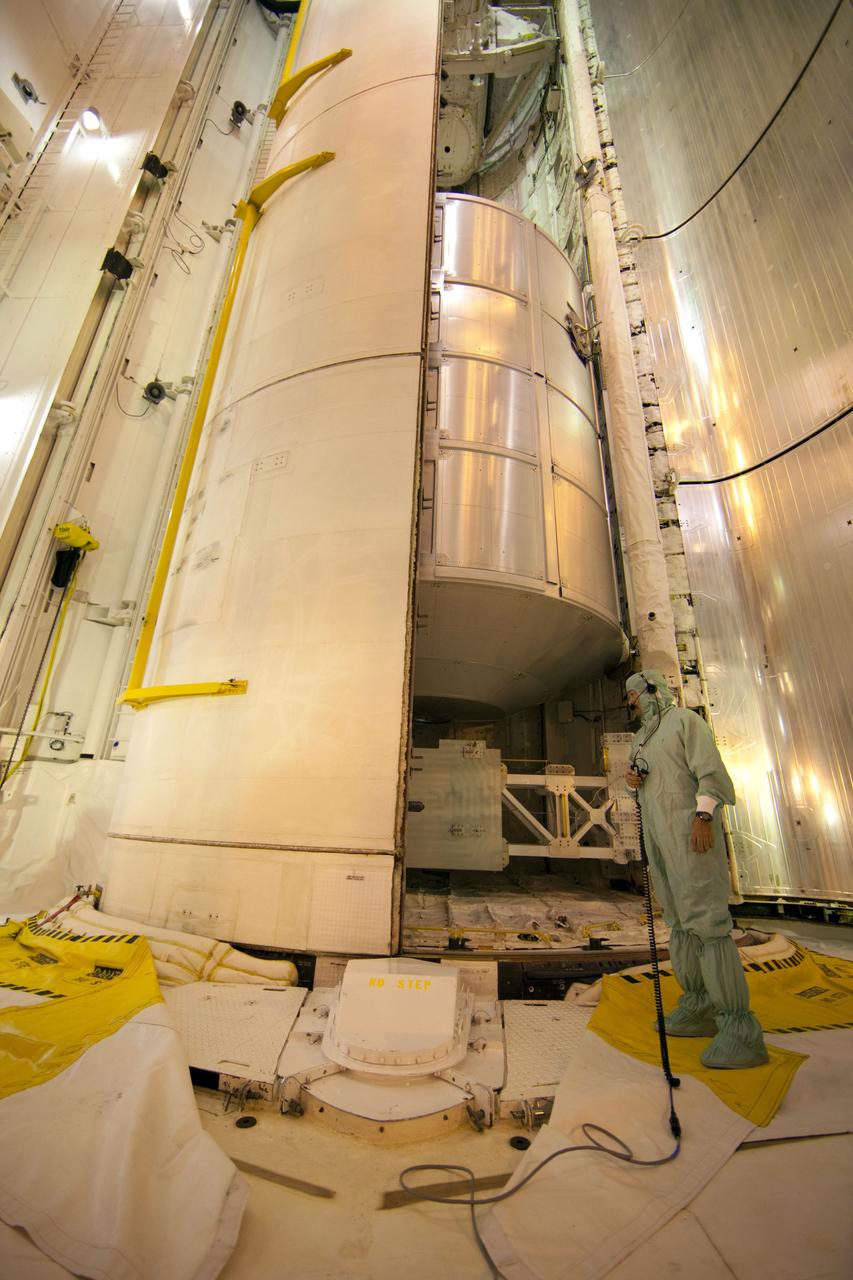
CAPE CANAVERAL, Fla. -- At Launch Pad 39A at NASA's Kennedy Space Center in Florida, technicians monitor the progress as space shuttle Atlantis' payload bay doors close around the Raffaello multi-purpose logistics module (MPLM) payload for Atlantis' STS-135 mission to the International Space Station. Commander Chris Ferguson, Pilot Doug Hurley and Mission Specialists Sandra Magnus and Rex Walheim are slated to lift off on July 8, taking with them the MPLM packed with supplies and spare parts to the station. The STS-135 mission also will fly a system to investigate the potential for robotically refueling existing satellites and return a failed ammonia pump module to help NASA better understand the failure mechanism and improve pump designs for future systems. STS-135 will be the 33rd flight of Atlantis, the 37th shuttle mission to the space station, and the 135th and final mission of NASA's Space Shuttle Program. For more information visit, www.nasa.gov/mission_pages/shuttle/shuttlemissions/sts135/index.html. Photo credit: NASA/Frank Michaux
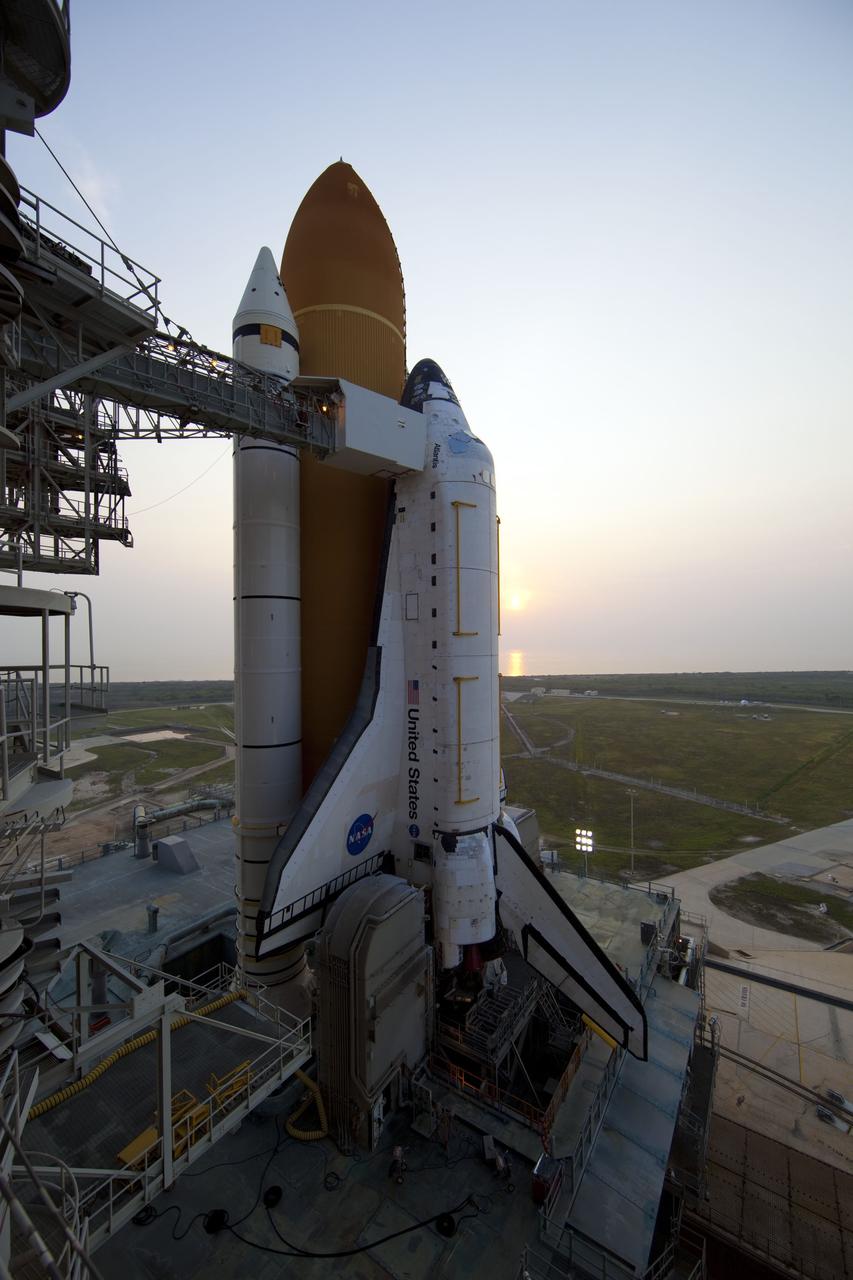
CAPE CANAVERAL, Fla. -- The sun rises above the horizon casting a shimmering glow on space shuttle Atlantis standing majestically on its seaside launch pad at NASA's Kennedy Space Center in Florida. Atlantis' payload, the Raffaello multi-purpose logistics module (MPLM) has been delivered to the pad and one more milestone is met for Atlantis' STS-135 mission to the International Space Station. Commander Chris Ferguson, Pilot Doug Hurley and Mission Specialists Sandra Magnus and Rex Walheim are targeted to lift off on Atlantis July 8, taking with them the MPLM packed with supplies, logistics and spare parts to the station. The STS-135 mission also will fly a system to investigate the potential for robotically refueling existing satellites and return a failed ammonia pump module to help NASA better understand the failure mechanism and improve pump designs for future systems. STS-135 will be the 33rd flight of Atlantis, the 37th shuttle mission to the space station, and the 135th and final mission of NASA's Space Shuttle Program. For more information visit, www.nasa.gov/mission_pages/shuttle/shuttlemissions/sts135/index.html. Photo credit: NASA/Dimitri Gerondidakis
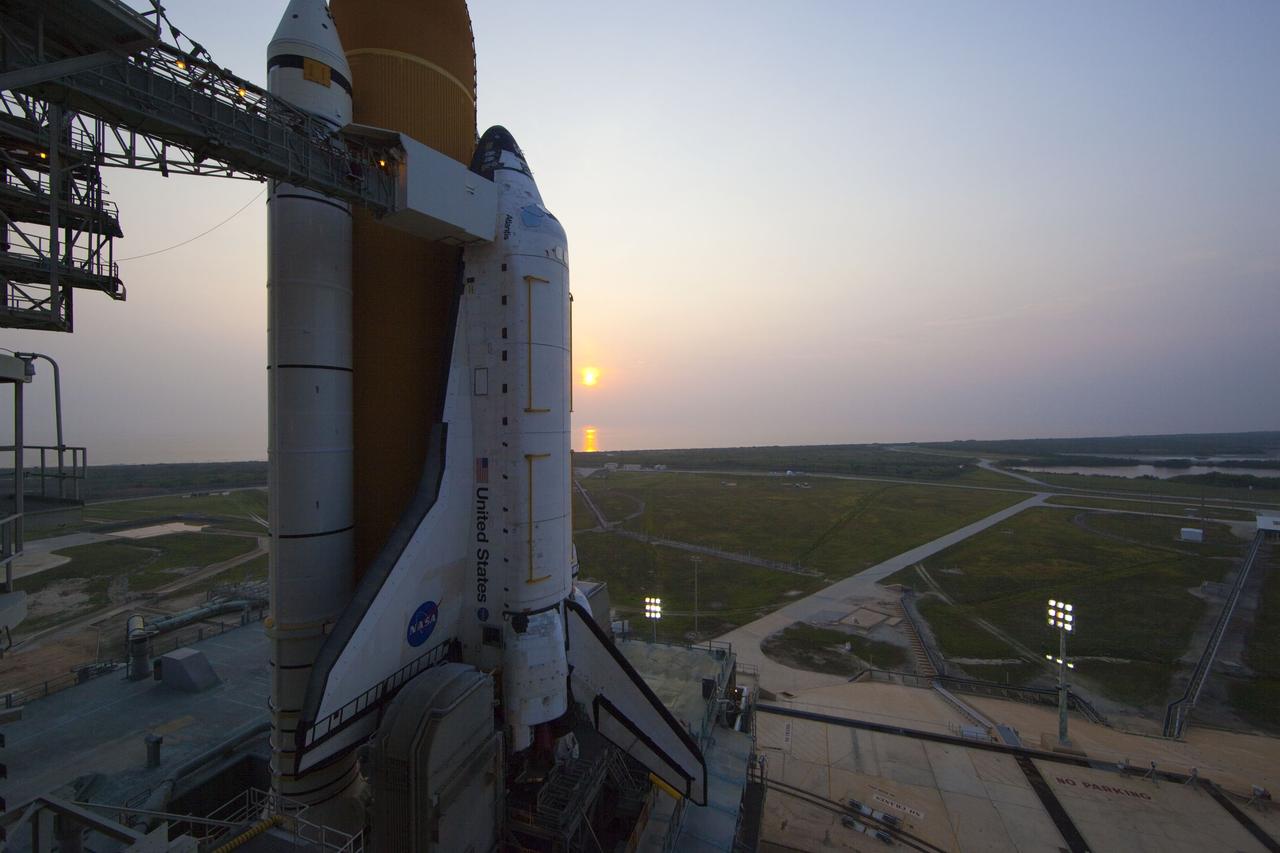
CAPE CANAVERAL, Fla. -- The sun rises above the horizon casting a shimmering glow on space shuttle Atlantis standing majestically on its seaside launch pad at NASA's Kennedy Space Center in Florida. Atlantis' payload, the Raffaello multi-purpose logistics module (MPLM) has been delivered to the pad and one more milestone is met for Atlantis' STS-135 mission to the International Space Station. Commander Chris Ferguson, Pilot Doug Hurley and Mission Specialists Sandra Magnus and Rex Walheim are targeted to lift off on Atlantis July 8, taking with them the MPLM packed with supplies, logistics and spare parts to the station. The STS-135 mission also will fly a system to investigate the potential for robotically refueling existing satellites and return a failed ammonia pump module to help NASA better understand the failure mechanism and improve pump designs for future systems. STS-135 will be the 33rd flight of Atlantis, the 37th shuttle mission to the space station, and the 135th and final mission of NASA's Space Shuttle Program. For more information visit, www.nasa.gov/mission_pages/shuttle/shuttlemissions/sts135/index.html. Photo credit: NASA/Dimitri Gerondidakis
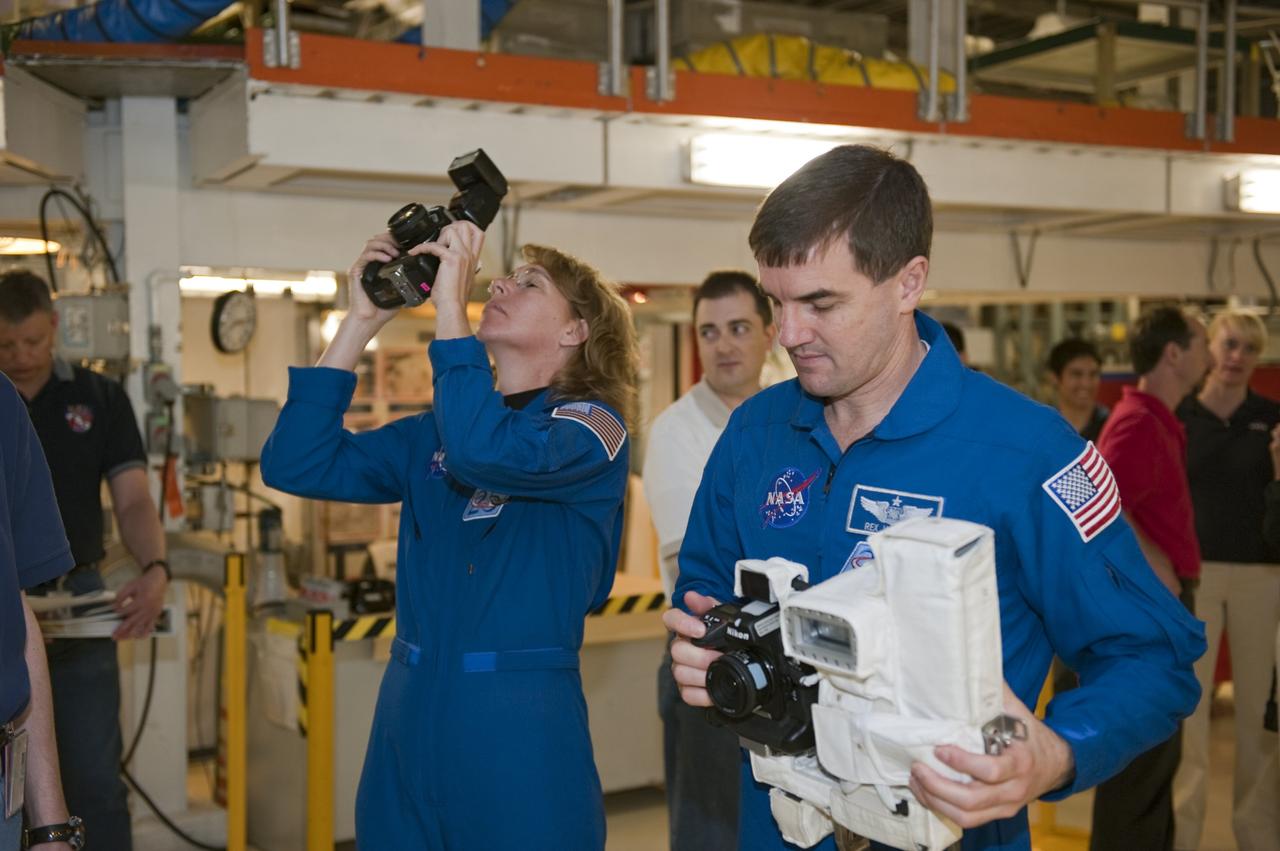
CAPE CANAVERAL, Fla. -- In Orbiter Processing Facility-1 at NASA's Kennedy Space Center in Florida, STS-135 Mission Specialists Sandy Magnus and Rex Walheim check out the equipment they'll work with while in space. The four-member crew is at Kennedy participating in the Crew Equipment Interface Test (CEIT), which gives them an opportunity for hands-on training with tools they'll use in space and familiarization of the payload they'll deliver to the International Space Station. Shuttle Atlantis is being prepared for the STS-135 mission, which will deliver the Raffaello multi-purpose logistics module packed with supplies and spare parts to the station. Atlantis is targeted to launch June 28, and will be the last shuttle flight for the Space Shuttle Program. For more information visit, http://www.nasa.gov/mission_pages/shuttle/shuttlemissions/sts135/index.html. Photo credit: NASA/Kim Shiflett
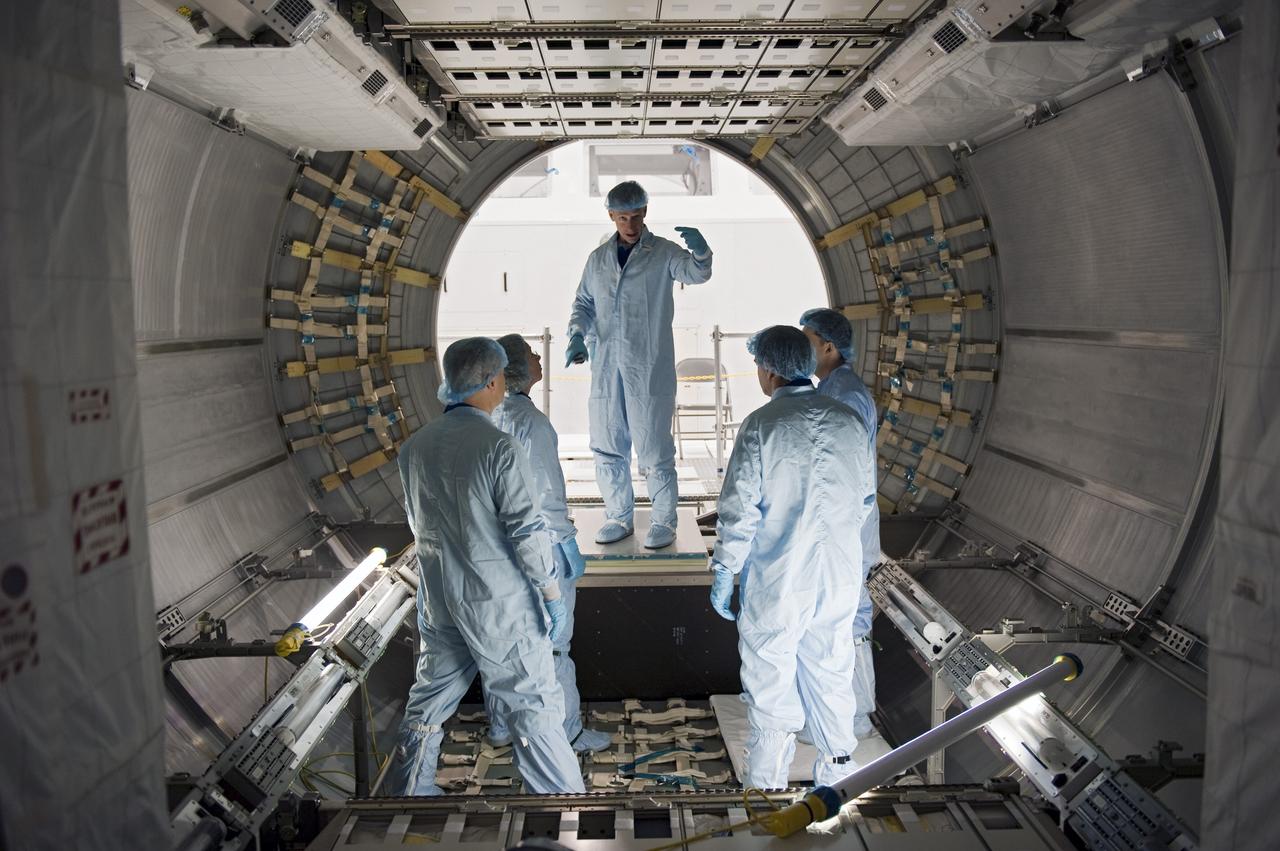
CAPE CANAVERAL, Fla. -- In the Space Station Processing Facility at NASA's Kennedy Space Center in Florida, the STS-135 crew inspects the Raffaello multi-purpose logistics module with the carrier's technician. From left are Pilot Doug Hurley, Mission Specialist Sandy Magnus, Commander Chris Ferguson (upper level), a carrier technician and Mission Specialist Rex Walheim. The four-member crew is at Kennedy participating in the Crew Equipment Interface Test (CEIT), which gives them an opportunity for hands-on training with tools they'll use in space and familiarization of the payload they'll deliver to the International Space Station. Shuttle Atlantis is being prepared for the STS-135 mission, which will deliver the Raffaello module packed with supplies and spare parts to the station. Atlantis is targeted to launch June 28, and will be the last shuttle flight for the Space Shuttle Program. For more information visit, http://www.nasa.gov/mission_pages/shuttle/shuttlemissions/sts135/index.html. Photo credit: NASA/Kim Shiflett
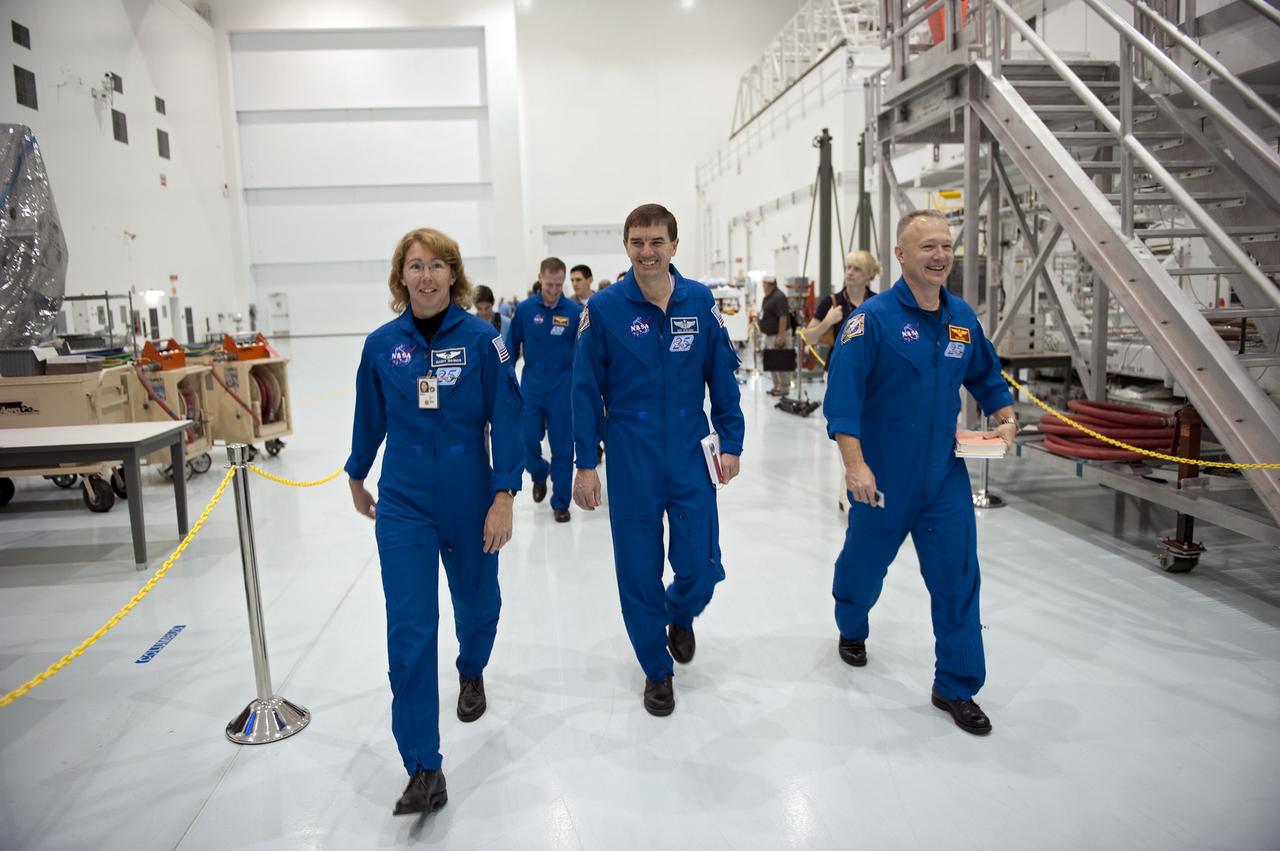
CAPE CANAVERAL, Fla. -- In the Space Station Processing Facility at NASA's Kennedy Space Center in Florida, the STS-135 crew members enjoy a light moment while they inspect the equipment they'll work with while in space. From left are Mission Specialists Sandy Magnus and Rex Walheim; Pilot Doug Hurley and Commander Chris Ferguson (rear). The four-member crew is at Kennedy participating in the Crew Equipment Interface Test (CEIT), which gives them an opportunity for hands-on training with tools they'll use in space and familiarization of the payload they'll deliver to the International Space Station. Shuttle Atlantis is being prepared for the STS-135 mission, which will deliver the Raffaello multi-purpose logistics module packed with supplies and spare parts to the station. Atlantis is targeted to launch June 28, and will be the last shuttle flight for the Space Shuttle Program. For more information visit, http://www.nasa.gov/mission_pages/shuttle/shuttlemissions/sts135/index.html. Photo credit: NASA/Kim Shiflett
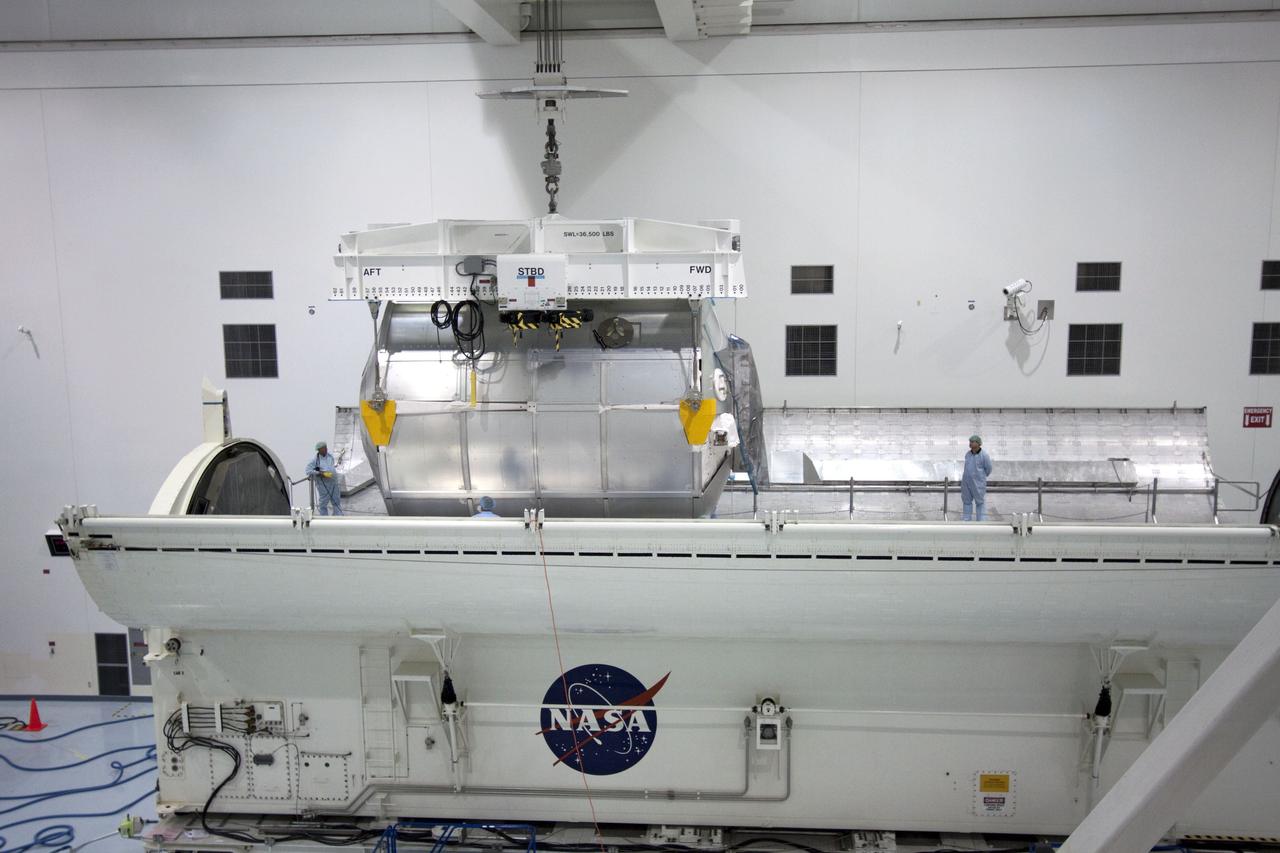
CAPE CANAVERAL, Fla. -- In the Space Station Processing Facility at NASA's Kennedy Space Center in Florida, an overhead crane lowers the Raffaello multi-purpose logistics module, or MPLM, into a payload canister. Commander Chris Ferguson, Pilot Doug Hurley and Mission Specialists Sandra Magnus and Rex Walheim are targeted to lift off on space shuttle Atlantis July 8, taking with them the MPLM packed with supplies, logistics and spare parts to the International Space Station. The STS-135 mission also will fly a system to investigate the potential for robotically refueling existing spacecraft and return a failed ammonia pump module to help NASA better understand the failure mechanism and improve pump designs for future systems. STS-135 will be the 33rd flight of Atlantis, the 37th shuttle mission to the space station, and the 135th and final mission of NASA's Space Shuttle Program. For more information, visit www.nasa.gov/mission_pages/shuttle/shuttlemissions/sts135/index.html. Photo credit: NASA/Jim Grossmann
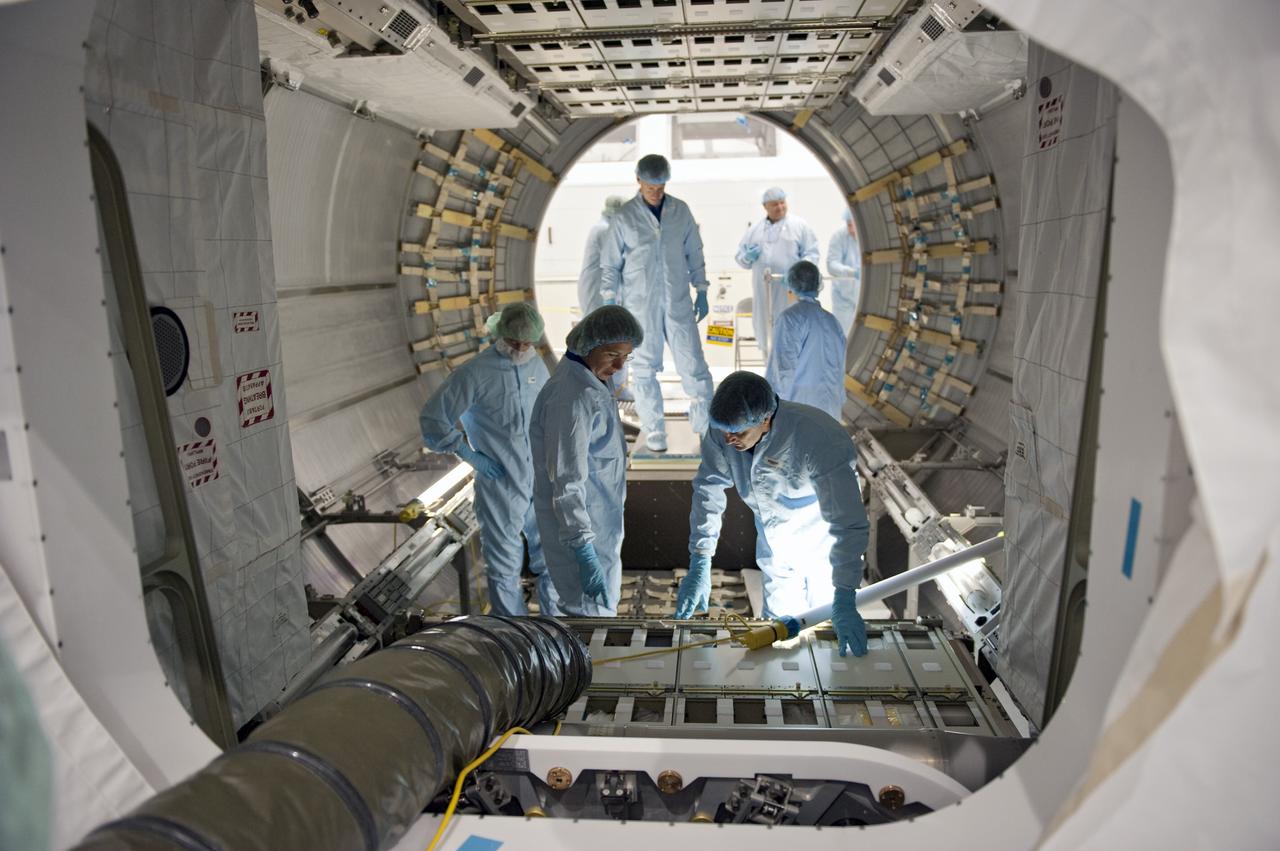
CAPE CANAVERAL, Fla. -- In the Space Station Processing Facility at NASA's Kennedy Space Center in Florida, the STS-135 crew inspects the Raffaello multi-purpose logistics module with the carrier's technician. From left are Pilot Doug Hurley, Mission Specialist Sandy Magnus, Commander Chris Ferguson (upper level), a carrier technician and Mission Specialist Rex Walheim. The four-member crew is at Kennedy participating in the Crew Equipment Interface Test (CEIT), which gives them an opportunity for hands-on training with tools they'll use in space and familiarization of the payload they'll deliver to the International Space Station. Shuttle Atlantis is being prepared for the STS-135 mission, which will deliver the Raffaello module packed with supplies and spare parts to the station. Atlantis is targeted to launch June 28, and will be the last shuttle flight for the Space Shuttle Program. For more information visit, http://www.nasa.gov/mission_pages/shuttle/shuttlemissions/sts135/index.html. Photo credit: NASA/Kim Shiflett
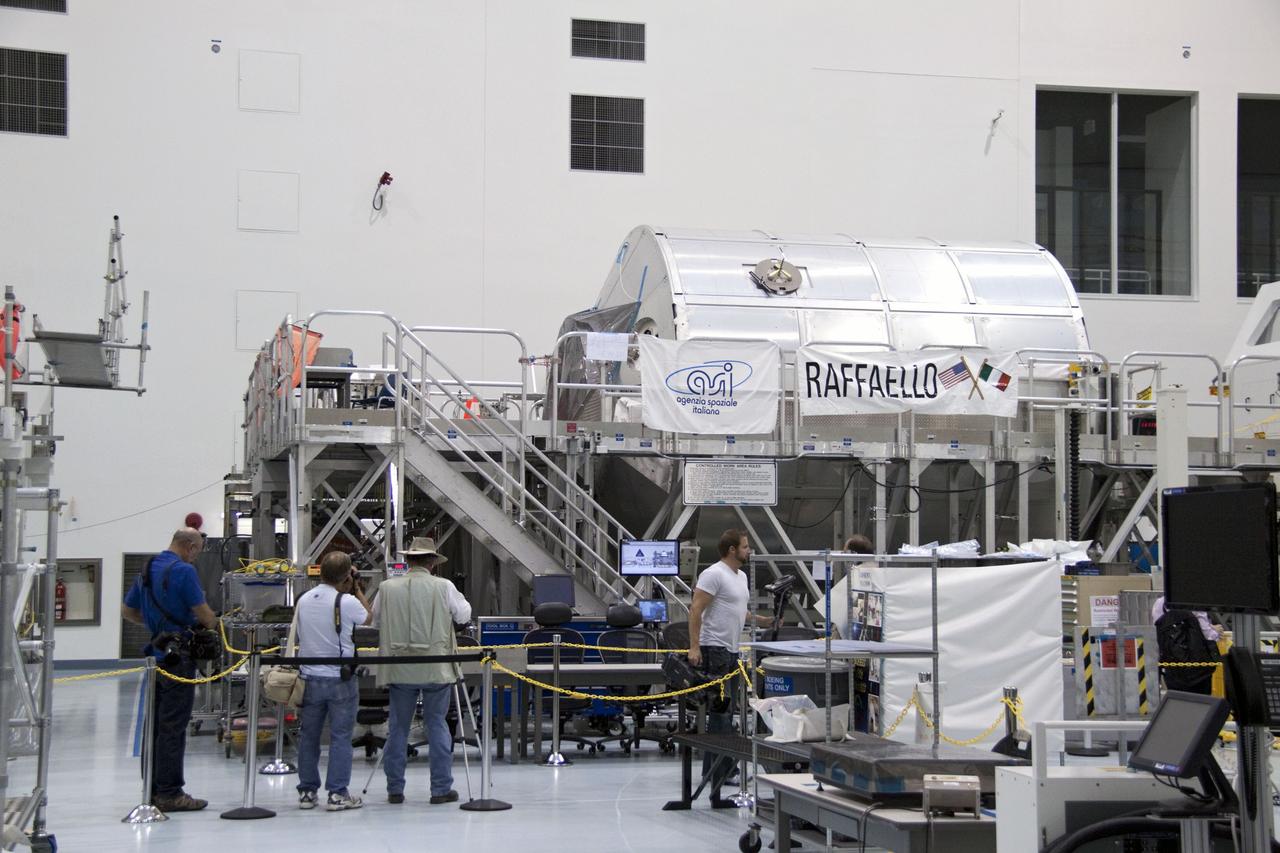
CAPE CANAVERAL, Fla. -- In the Space Station Processing Facility at NASA's Kennedy Space Center in Florida, media snap photos of the payload for shuttle Atlantis' flight to the International Space Station. Commander Chris Ferguson, Pilot Doug Hurley and Mission Specialists Sandra Magnus and Rex Walheim are targeted to lift off on July 8, taking with them the Raffaello multi-purpose logistics module packed with supplies, logistics and spare parts. The STS-135 mission also will fly a system to investigate the potential for robotically refueling existing spacecraft and return a failed ammonia pump module to help NASA better understand the failure mechanism and improve pump designs for future systems. STS-135 will be the 33rd flight of Atlantis, the 37th shuttle mission to the space station, and the 135th and final mission of NASA's Space Shuttle Program. For more information visit, www.nasa.gov/mission_pages/shuttle/shuttlemissions/sts135/index.html. Photo credit: NASA/Jack Pfaller
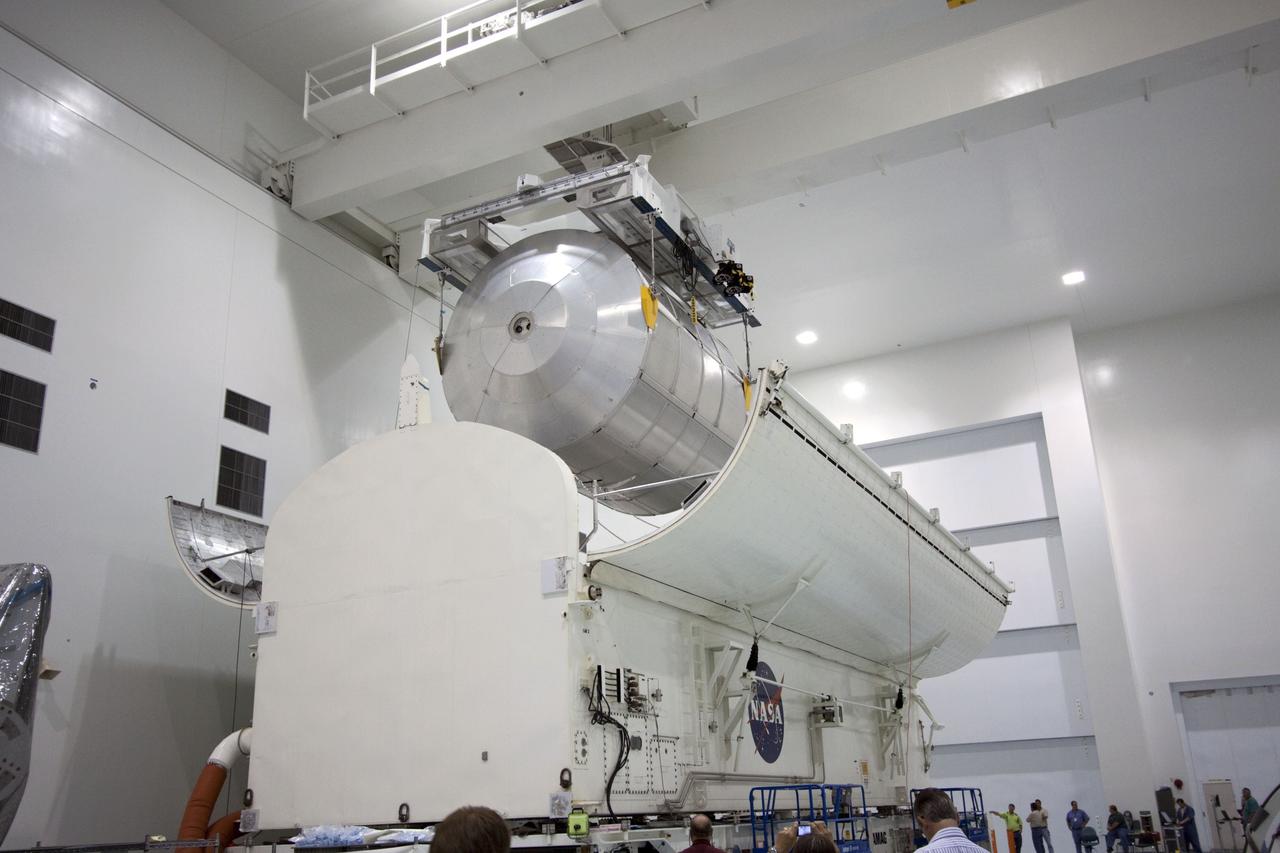
CAPE CANAVERAL, Fla. -- In the Space Station Processing Facility at NASA's Kennedy Space Center in Florida, an overhead crane lowers the Raffaello multi-purpose logistics module, or MPLM, into a payload canister. Commander Chris Ferguson, Pilot Doug Hurley and Mission Specialists Sandra Magnus and Rex Walheim are targeted to lift off on space shuttle Atlantis July 8, taking with them the MPLM packed with supplies, logistics and spare parts to the International Space Station. The STS-135 mission also will fly a system to investigate the potential for robotically refueling existing spacecraft and return a failed ammonia pump module to help NASA better understand the failure mechanism and improve pump designs for future systems. STS-135 will be the 33rd flight of Atlantis, the 37th shuttle mission to the space station, and the 135th and final mission of NASA's Space Shuttle Program. For more information, visit www.nasa.gov/mission_pages/shuttle/shuttlemissions/sts135/index.html. Photo credit: NASA/Jim Grossmann
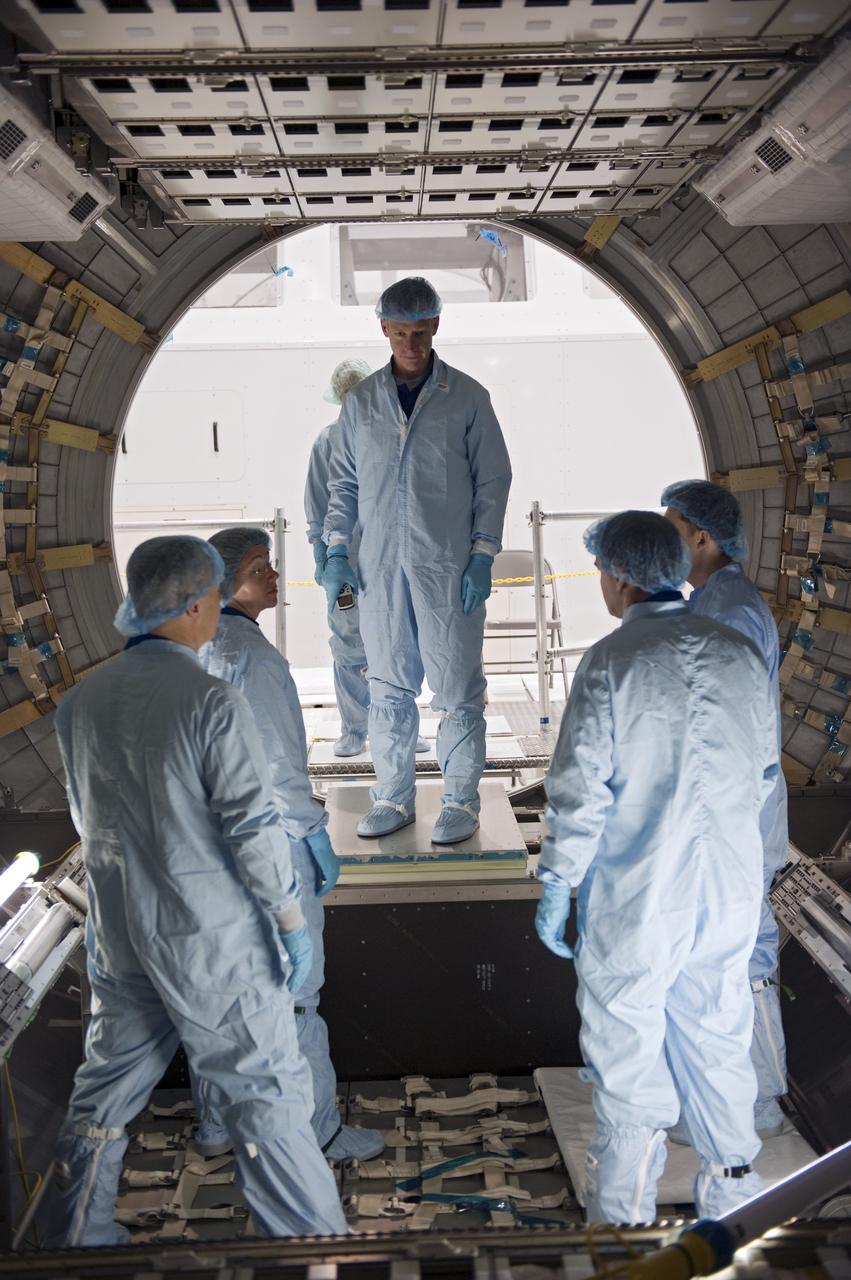
CAPE CANAVERAL, Fla. -- In the Space Station Processing Facility at NASA's Kennedy Space Center in Florida, the STS-135 crew inspects the Raffaello multi-purpose logistics module with the carrier's technician. From left are Pilot Doug Hurley, Mission Specialist Sandy Magnus, Commander Chris Ferguson (upper level), a carrier technician and Mission Specialist Rex Walheim. The four-member crew is at Kennedy participating in the Crew Equipment Interface Test (CEIT), which gives them an opportunity for hands-on training with tools they'll use in space and familiarization of the payload they'll deliver to the International Space Station. Shuttle Atlantis is being prepared for the STS-135 mission, which will deliver the Raffaello module packed with supplies and spare parts to the station. Atlantis is targeted to launch June 28, and will be the last shuttle flight for the Space Shuttle Program. For more information visit, http://www.nasa.gov/mission_pages/shuttle/shuttlemissions/sts135/index.html. Photo credit: NASA/Kim Shiflett
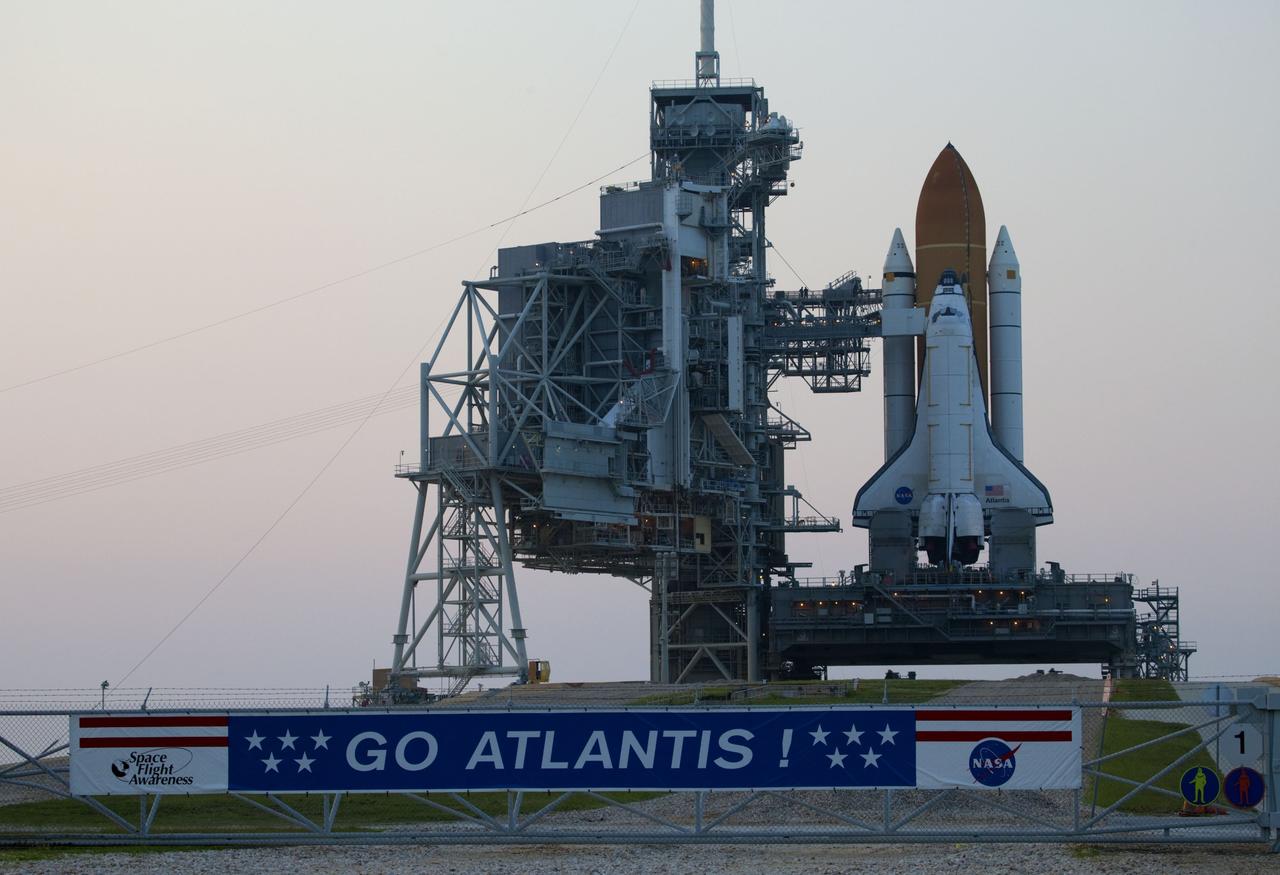
CAPE CANAVERAL, Fla. -- After sunset, lights glow on Launch Pad 39A at NASA's Kennedy Space Center in Florida as space shuttle Atlantis awaits delivery of the Raffaello multi-purpose logistics module (MPLM) in its transportation canister. Once delivered, the canister will be lifted to the payload changeout room. The payload ground-handling mechanism then will be used to transfer Raffaello out of the canister into Atlantis' payload bay. Next, the rotating service structure that protects the shuttle from the elements and provides access will be rotated back into place. Commander Chris Ferguson, Pilot Doug Hurley and Mission Specialists Sandra Magnus and Rex Walheim are targeted to lift off on Atlantis July 8, taking with them the MPLM packed with supplies, logistics and spare parts to the station. The STS-135 mission also will fly a system to investigate the potential for robotically refueling existing satellites and return a failed ammonia pump module to help NASA better understand the failure mechanism and improve pump designs for future systems. STS-135 will be the 33rd flight of Atlantis, the 37th shuttle mission to the space station, and the 135th and final mission of NASA's Space Shuttle Program. For more information visit, www.nasa.gov/mission_pages/shuttle/shuttlemissions/sts135/index.html. Photo credit: NASA/Frank Michaux
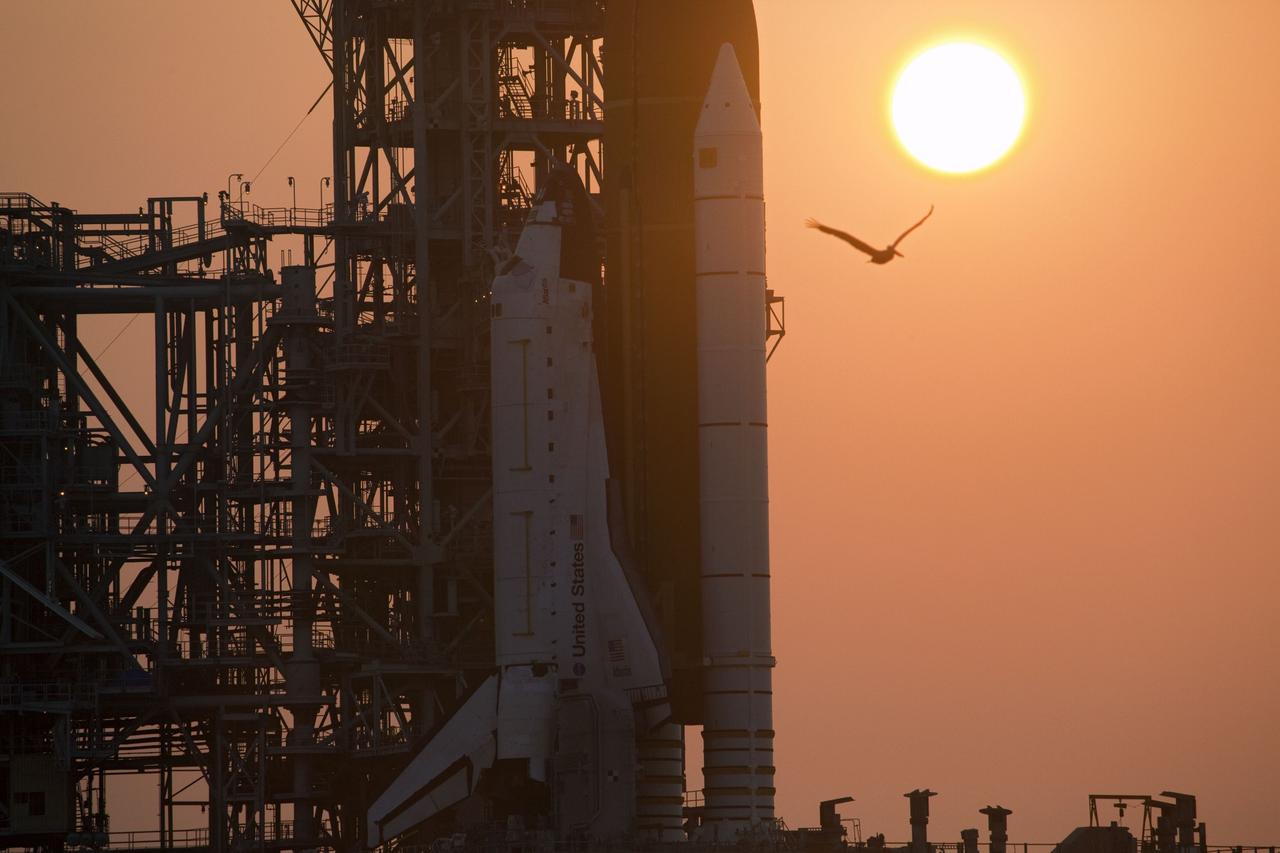
CAPE CANAVERAL, Fla. -- A hazy sun sets over Launch Pad 39A at NASA's Kennedy Space Center in Florida as space shuttle Atlantis awaits delivery of the Raffaello multi-purpose logistics module (MPLM) in its transportation canister. Once delivered, the canister will be lifted to the payload changeout room. The payload ground-handling mechanism then will be used to transfer Raffaello out of the canister into Atlantis' payload bay. Next, the rotating service structure that protects the shuttle from the elements and provides access will be rotated back into place. Commander Chris Ferguson, Pilot Doug Hurley and Mission Specialists Sandra Magnus and Rex Walheim are targeted to lift off on Atlantis July 8, taking with them the MPLM packed with supplies, logistics and spare parts to the station. The STS-135 mission also will fly a system to investigate the potential for robotically refueling existing satellites and return a failed ammonia pump module to help NASA better understand the failure mechanism and improve pump designs for future systems. STS-135 will be the 33rd flight of Atlantis, the 37th shuttle mission to the space station, and the 135th and final mission of NASA's Space Shuttle Program. For more information visit, www.nasa.gov/mission_pages/shuttle/shuttlemissions/sts135/index.html. Photo credit: NASA/Frank Michaux
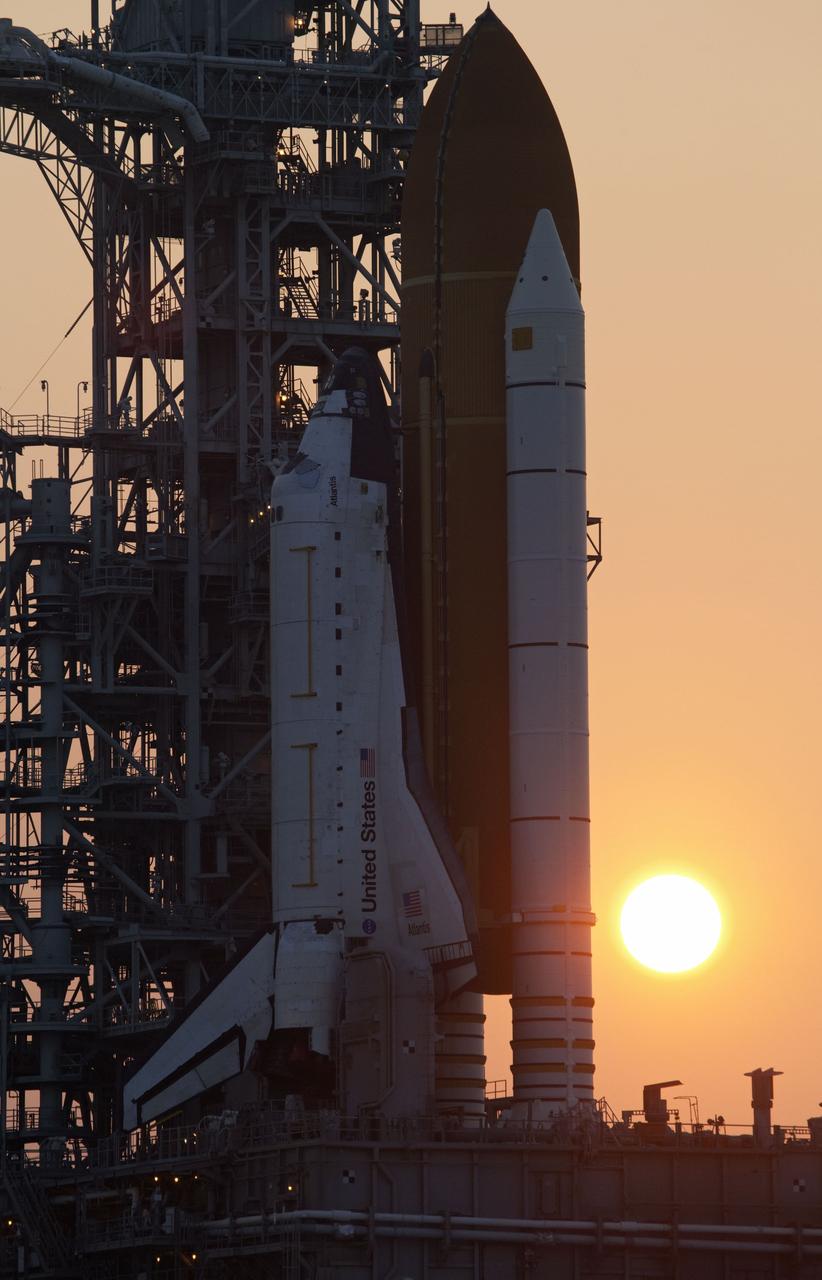
CAPE CANAVERAL, Fla. -- A hazy sun sets over Launch Pad 39A at NASA's Kennedy Space Center in Florida as space shuttle Atlantis awaits delivery of the Raffaello multi-purpose logistics module (MPLM) in its transportation canister. Once delivered, the canister will be lifted to the payload changeout room. The payload ground-handling mechanism then will be used to transfer Raffaello out of the canister into Atlantis' payload bay. Next, the rotating service structure that protects the shuttle from the elements and provides access will be rotated back into place. Commander Chris Ferguson, Pilot Doug Hurley and Mission Specialists Sandra Magnus and Rex Walheim are targeted to lift off on Atlantis July 8, taking with them the MPLM packed with supplies, logistics and spare parts to the station. The STS-135 mission also will fly a system to investigate the potential for robotically refueling existing satellites and return a failed ammonia pump module to help NASA better understand the failure mechanism and improve pump designs for future systems. STS-135 will be the 33rd flight of Atlantis, the 37th shuttle mission to the space station, and the 135th and final mission of NASA's Space Shuttle Program. For more information visit, www.nasa.gov/mission_pages/shuttle/shuttlemissions/sts135/index.html. Photo credit: NASA/Frank Michaux
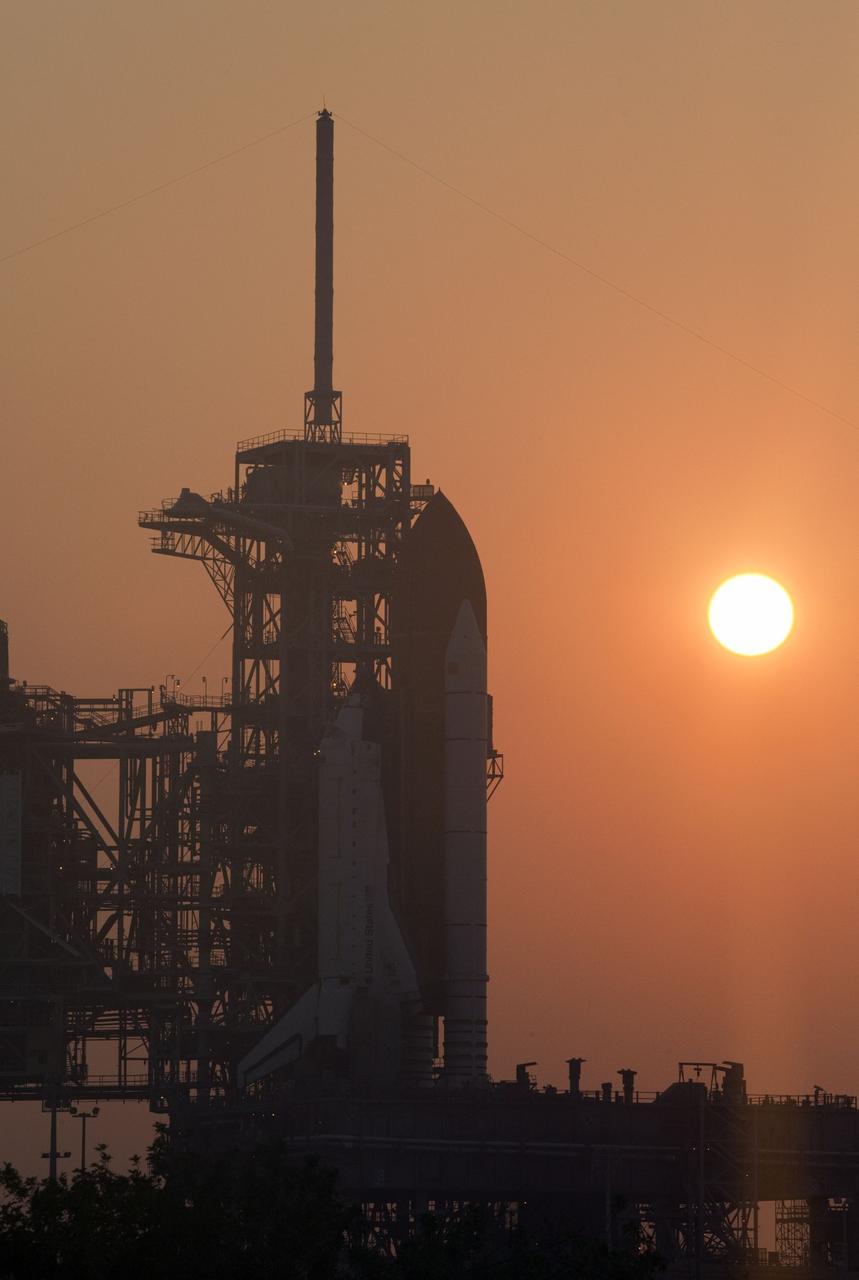
CAPE CANAVERAL, Fla. -- A hazy sun sets over Launch Pad 39A at NASA's Kennedy Space Center in Florida as space shuttle Atlantis awaits delivery of the Raffaello multi-purpose logistics module (MPLM) in its transportation canister. Once delivered, the canister will be lifted to the payload changeout room. The payload ground-handling mechanism then will be used to transfer Raffaello out of the canister into Atlantis' payload bay. Next, the rotating service structure that protects the shuttle from the elements and provides access will be rotated back into place. Commander Chris Ferguson, Pilot Doug Hurley and Mission Specialists Sandra Magnus and Rex Walheim are targeted to lift off on Atlantis July 8, taking with them the MPLM packed with supplies, logistics and spare parts to the station. The STS-135 mission also will fly a system to investigate the potential for robotically refueling existing satellites and return a failed ammonia pump module to help NASA better understand the failure mechanism and improve pump designs for future systems. STS-135 will be the 33rd flight of Atlantis, the 37th shuttle mission to the space station, and the 135th and final mission of NASA's Space Shuttle Program. For more information visit, www.nasa.gov/mission_pages/shuttle/shuttlemissions/sts135/index.html. Photo credit: NASA/Frank Michaux
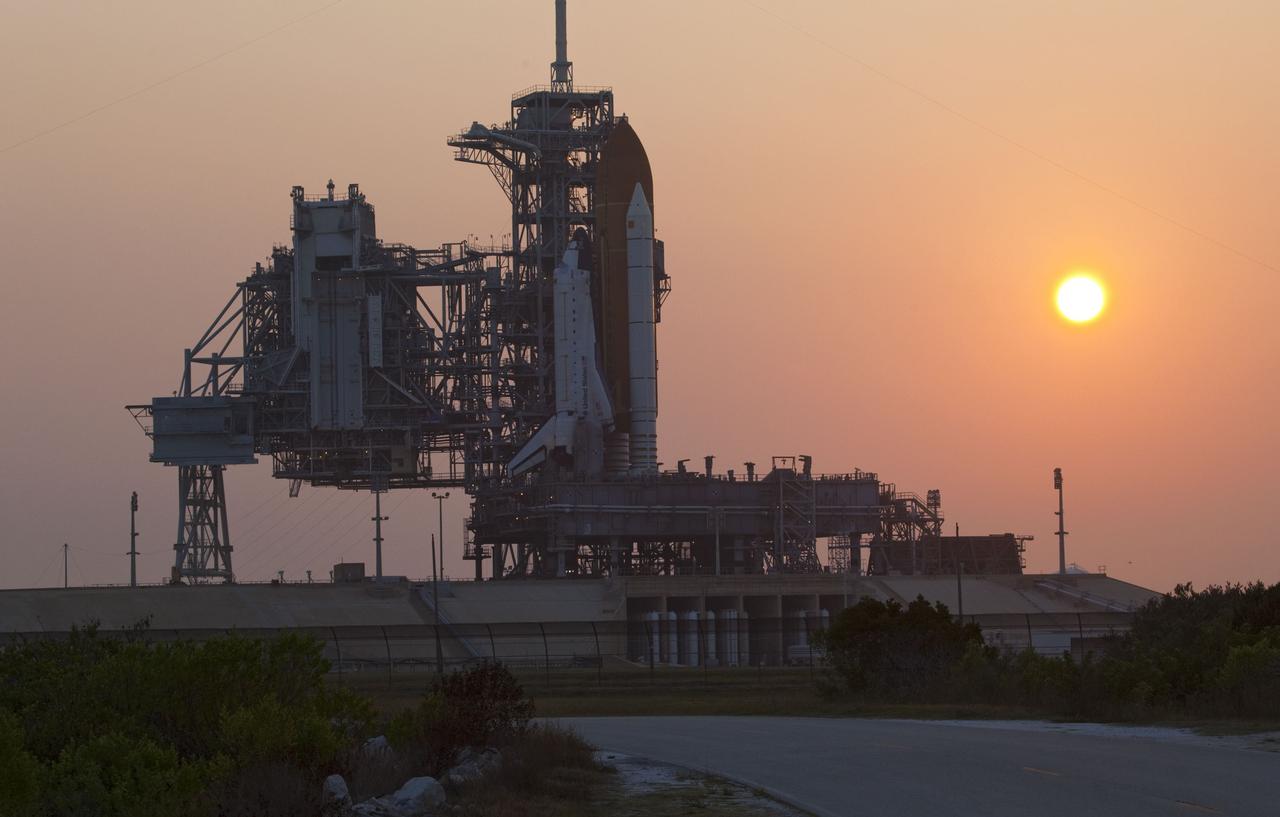
CAPE CANAVERAL, Fla. -- A hazy sun sets over Launch Pad 39A at NASA's Kennedy Space Center in Florida as space shuttle Atlantis awaits delivery of the Raffaello multi-purpose logistics module (MPLM) in its transportation canister. Once delivered, the canister will be lifted to the payload changeout room. The payload ground-handling mechanism then will be used to transfer Raffaello out of the canister into Atlantis' payload bay. Next, the rotating service structure that protects the shuttle from the elements and provides access will be rotated back into place. Commander Chris Ferguson, Pilot Doug Hurley and Mission Specialists Sandra Magnus and Rex Walheim are targeted to lift off on Atlantis July 8, taking with them the MPLM packed with supplies, logistics and spare parts to the station. The STS-135 mission also will fly a system to investigate the potential for robotically refueling existing satellites and return a failed ammonia pump module to help NASA better understand the failure mechanism and improve pump designs for future systems. STS-135 will be the 33rd flight of Atlantis, the 37th shuttle mission to the space station, and the 135th and final mission of NASA's Space Shuttle Program. For more information visit, www.nasa.gov/mission_pages/shuttle/shuttlemissions/sts135/index.html. Photo credit: NASA/Frank Michaux
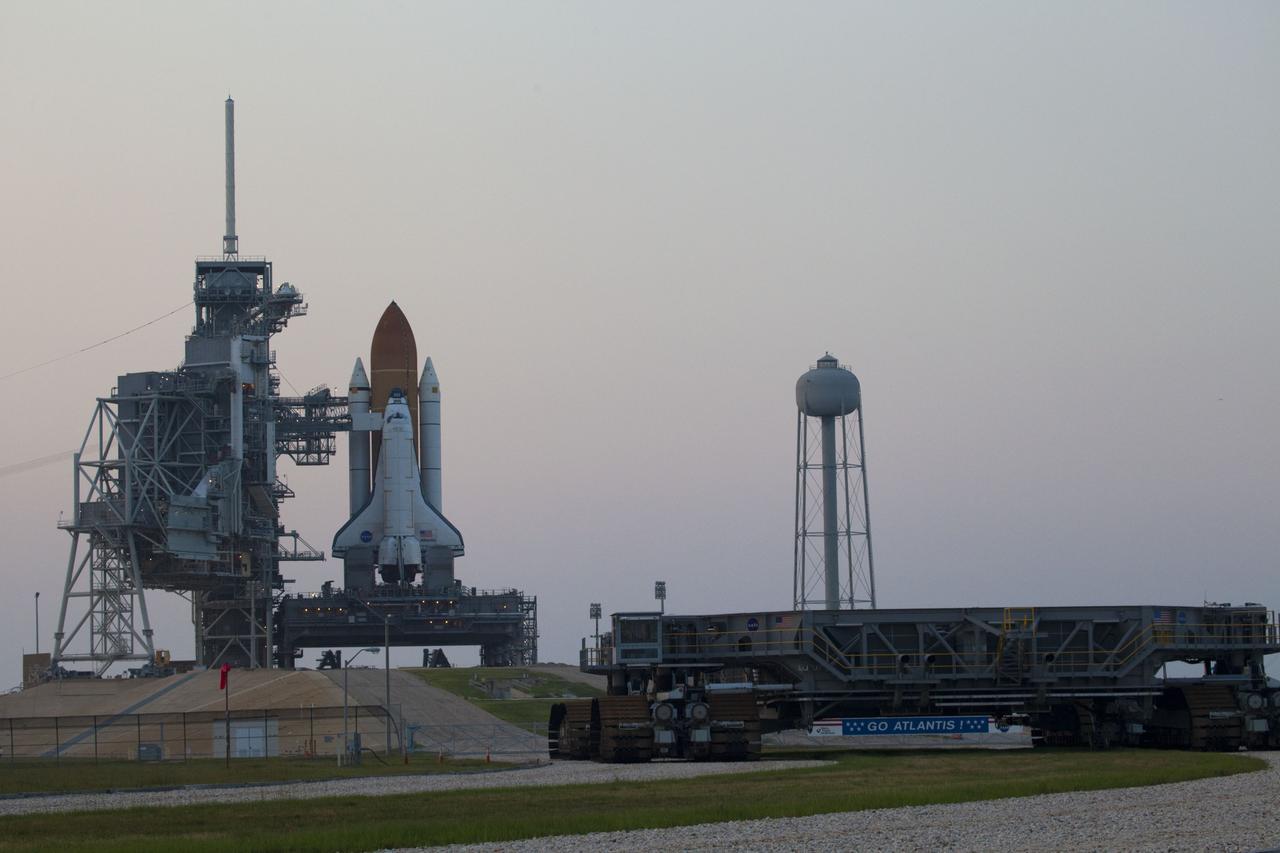
CAPE CANAVERAL, Fla. -- After sunset, lights glow on Launch Pad 39A at NASA's Kennedy Space Center in Florida as space shuttle Atlantis awaits delivery of the Raffaello multi-purpose logistics module (MPLM) in its transportation canister. Once delivered, the canister will be lifted to the payload changeout room. The payload ground-handling mechanism then will be used to transfer Raffaello out of the canister into Atlantis' payload bay. Next, the rotating service structure that protects the shuttle from the elements and provides access will be rotated back into place. Commander Chris Ferguson, Pilot Doug Hurley and Mission Specialists Sandra Magnus and Rex Walheim are targeted to lift off on Atlantis July 8, taking with them the MPLM packed with supplies, logistics and spare parts to the station. The STS-135 mission also will fly a system to investigate the potential for robotically refueling existing satellites and return a failed ammonia pump module to help NASA better understand the failure mechanism and improve pump designs for future systems. STS-135 will be the 33rd flight of Atlantis, the 37th shuttle mission to the space station, and the 135th and final mission of NASA's Space Shuttle Program. For more information visit, www.nasa.gov/mission_pages/shuttle/shuttlemissions/sts135/index.html. Photo credit: NASA/Frank Michaux
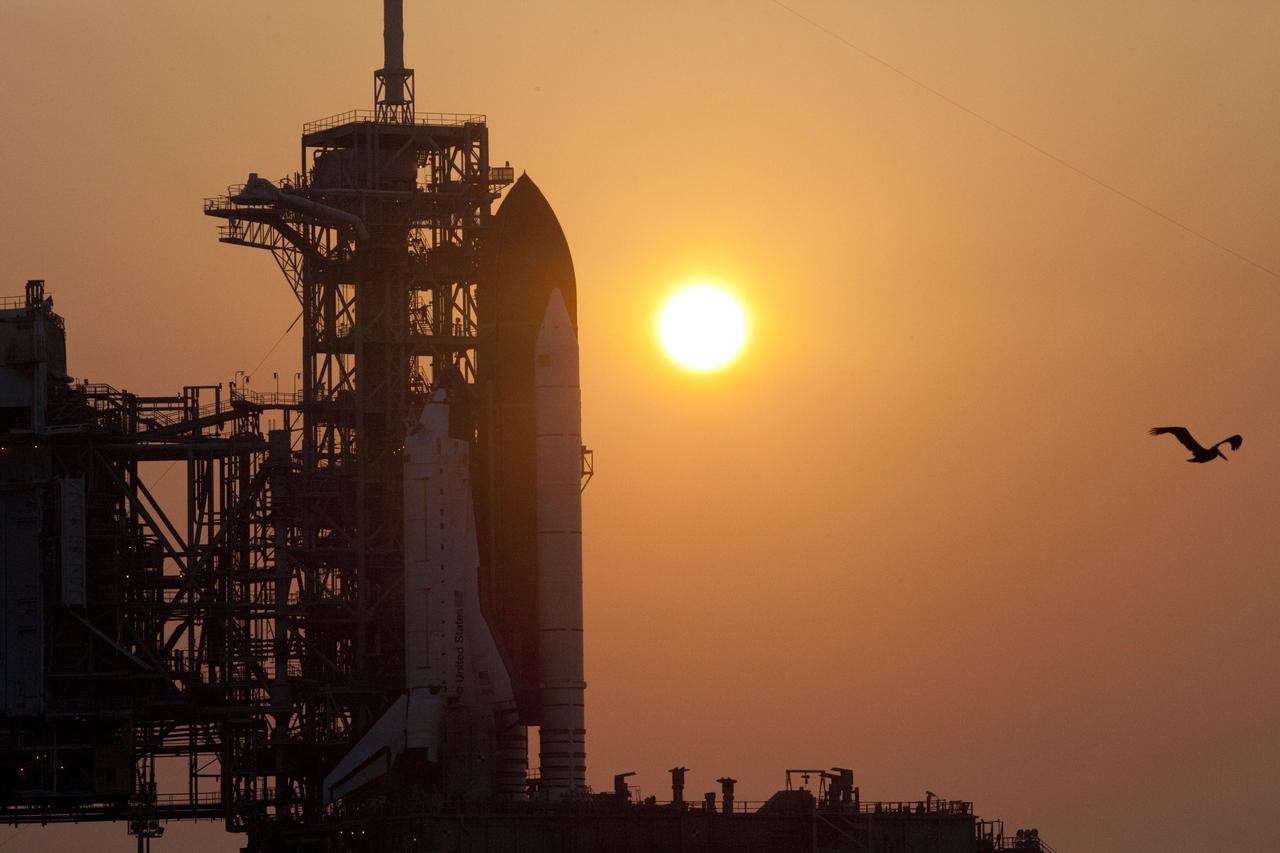
CAPE CANAVERAL, Fla. -- A hazy sun sets over Launch Pad 39A at NASA's Kennedy Space Center in Florida as space shuttle Atlantis awaits delivery of the Raffaello multi-purpose logistics module (MPLM) in its transportation canister. Once delivered, the canister will be lifted to the payload changeout room. The payload ground-handling mechanism then will be used to transfer Raffaello out of the canister into Atlantis' payload bay. Next, the rotating service structure that protects the shuttle from the elements and provides access will be rotated back into place. Commander Chris Ferguson, Pilot Doug Hurley and Mission Specialists Sandra Magnus and Rex Walheim are targeted to lift off on Atlantis July 8, taking with them the MPLM packed with supplies, logistics and spare parts to the station. The STS-135 mission also will fly a system to investigate the potential for robotically refueling existing satellites and return a failed ammonia pump module to help NASA better understand the failure mechanism and improve pump designs for future systems. STS-135 will be the 33rd flight of Atlantis, the 37th shuttle mission to the space station, and the 135th and final mission of NASA's Space Shuttle Program. For more information visit, www.nasa.gov/mission_pages/shuttle/shuttlemissions/sts135/index.html. Photo credit: NASA/Frank Michaux
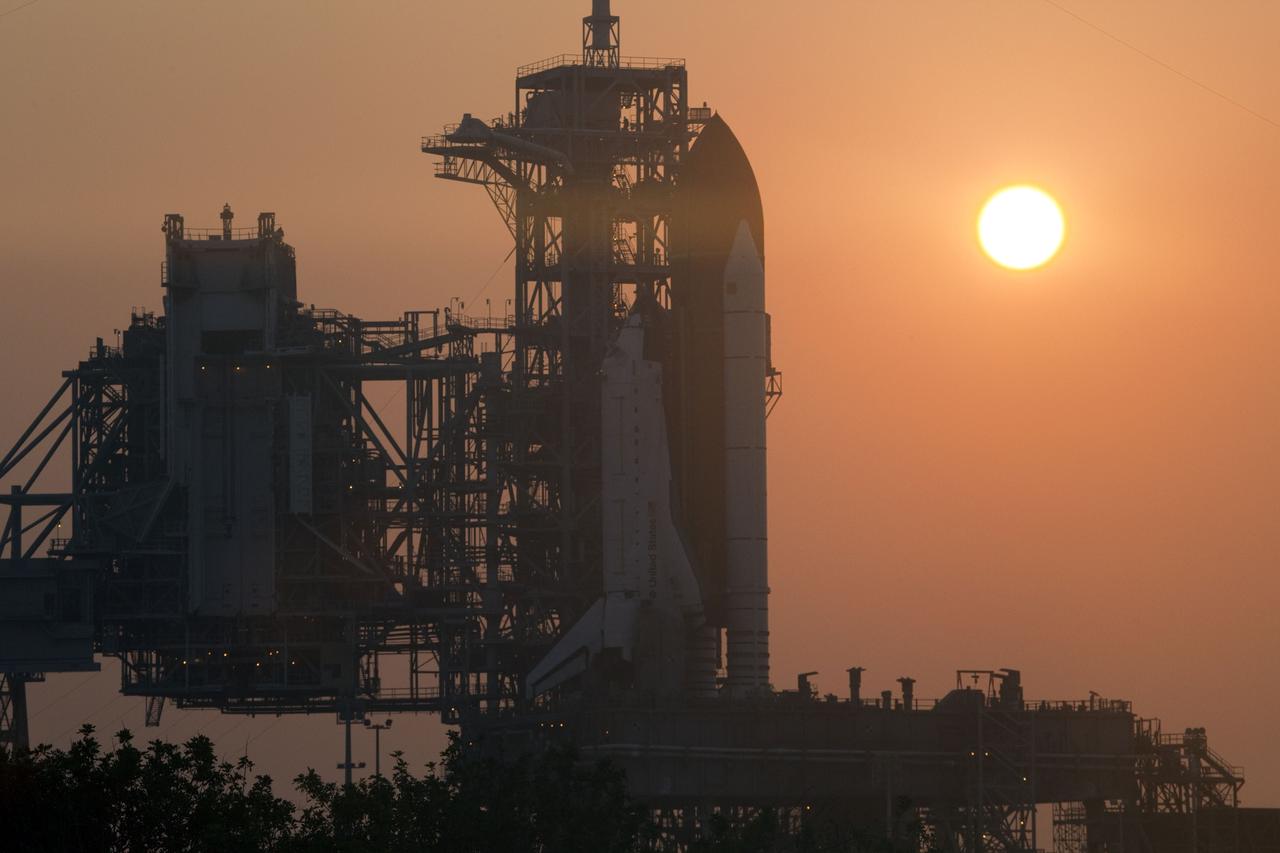
CAPE CANAVERAL, Fla. -- A hazy sun sets over Launch Pad 39A at NASA's Kennedy Space Center in Florida as space shuttle Atlantis awaits delivery of the Raffaello multi-purpose logistics module (MPLM) in its transportation canister. Once delivered, the canister will be lifted to the payload changeout room. The payload ground-handling mechanism then will be used to transfer Raffaello out of the canister into Atlantis' payload bay. Next, the rotating service structure that protects the shuttle from the elements and provides access will be rotated back into place. Commander Chris Ferguson, Pilot Doug Hurley and Mission Specialists Sandra Magnus and Rex Walheim are targeted to lift off on Atlantis July 8, taking with them the MPLM packed with supplies, logistics and spare parts to the station. The STS-135 mission also will fly a system to investigate the potential for robotically refueling existing satellites and return a failed ammonia pump module to help NASA better understand the failure mechanism and improve pump designs for future systems. STS-135 will be the 33rd flight of Atlantis, the 37th shuttle mission to the space station, and the 135th and final mission of NASA's Space Shuttle Program. For more information visit, www.nasa.gov/mission_pages/shuttle/shuttlemissions/sts135/index.html. Photo credit: NASA/Frank Michaux
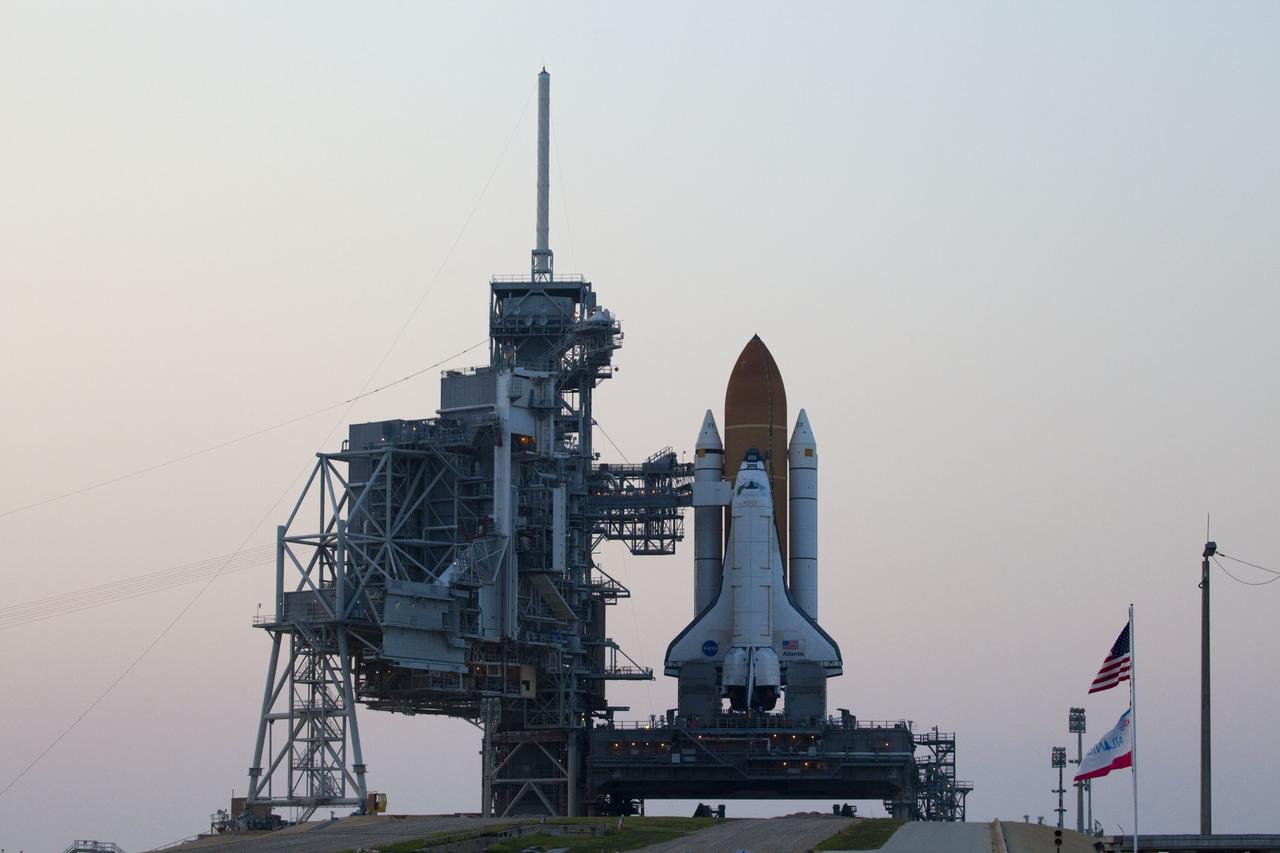
CAPE CANAVERAL, Fla. -- After sunset, lights glow on Launch Pad 39A at NASA's Kennedy Space Center in Florida as space shuttle Atlantis awaits delivery of the Raffaello multi-purpose logistics module (MPLM) in its transportation canister. Once delivered, the canister will be lifted to the payload changeout room. The payload ground-handling mechanism then will be used to transfer Raffaello out of the canister into Atlantis' payload bay. Next, the rotating service structure that protects the shuttle from the elements and provides access will be rotated back into place. Commander Chris Ferguson, Pilot Doug Hurley and Mission Specialists Sandra Magnus and Rex Walheim are targeted to lift off on Atlantis July 8, taking with them the MPLM packed with supplies, logistics and spare parts to the station. The STS-135 mission also will fly a system to investigate the potential for robotically refueling existing satellites and return a failed ammonia pump module to help NASA better understand the failure mechanism and improve pump designs for future systems. STS-135 will be the 33rd flight of Atlantis, the 37th shuttle mission to the space station, and the 135th and final mission of NASA's Space Shuttle Program. For more information visit, www.nasa.gov/mission_pages/shuttle/shuttlemissions/sts135/index.html. Photo credit: NASA/Frank Michaux
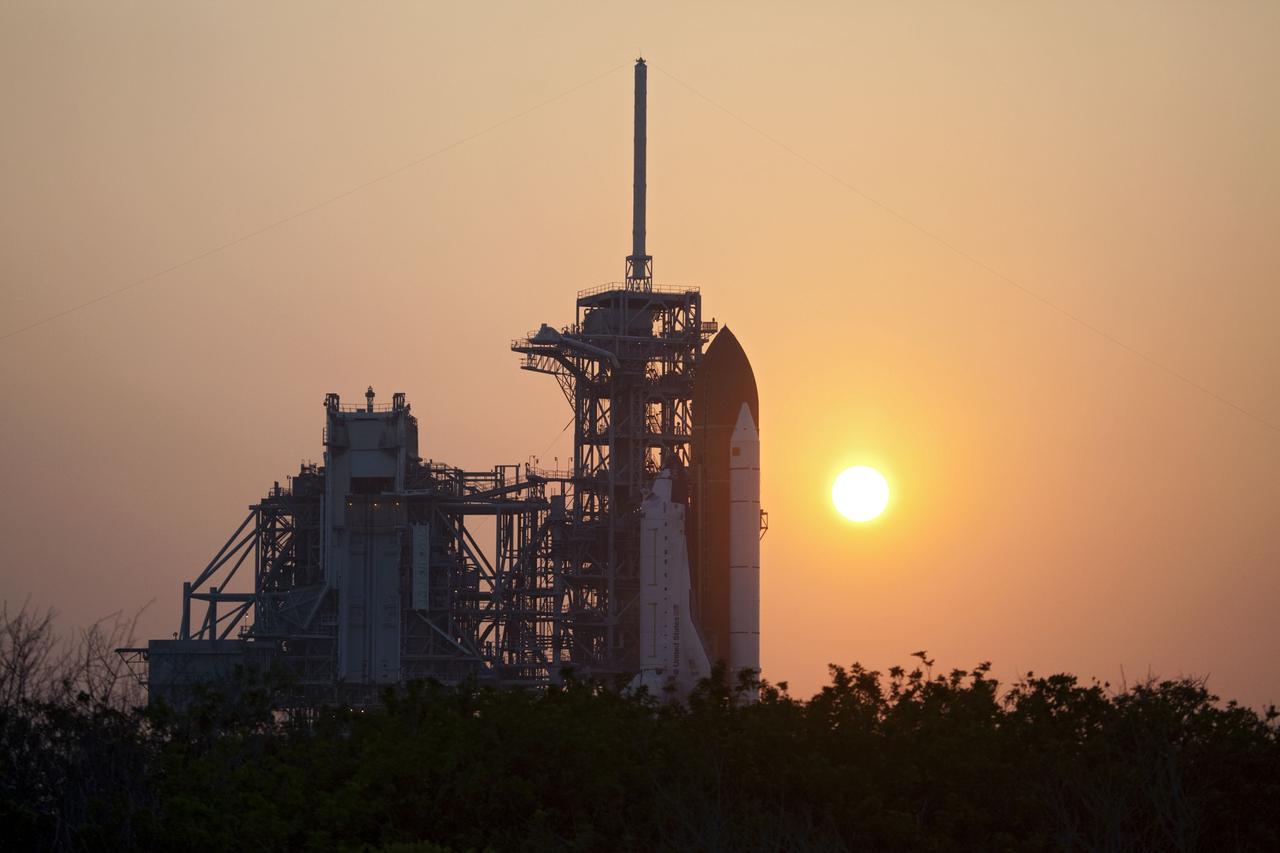
CAPE CANAVERAL, Fla. -- A hazy sun sets over Launch Pad 39A at NASA's Kennedy Space Center in Florida as space shuttle Atlantis awaits delivery of the Raffaello multi-purpose logistics module (MPLM) in its transportation canister. Once delivered, the canister will be lifted to the payload changeout room. The payload ground-handling mechanism then will be used to transfer Raffaello out of the canister into Atlantis' payload bay. Next, the rotating service structure that protects the shuttle from the elements and provides access will be rotated back into place. Commander Chris Ferguson, Pilot Doug Hurley and Mission Specialists Sandra Magnus and Rex Walheim are targeted to lift off on Atlantis July 8, taking with them the MPLM packed with supplies, logistics and spare parts to the station. The STS-135 mission also will fly a system to investigate the potential for robotically refueling existing satellites and return a failed ammonia pump module to help NASA better understand the failure mechanism and improve pump designs for future systems. STS-135 will be the 33rd flight of Atlantis, the 37th shuttle mission to the space station, and the 135th and final mission of NASA's Space Shuttle Program. For more information visit, www.nasa.gov/mission_pages/shuttle/shuttlemissions/sts135/index.html. Photo credit: NASA/Frank Michaux
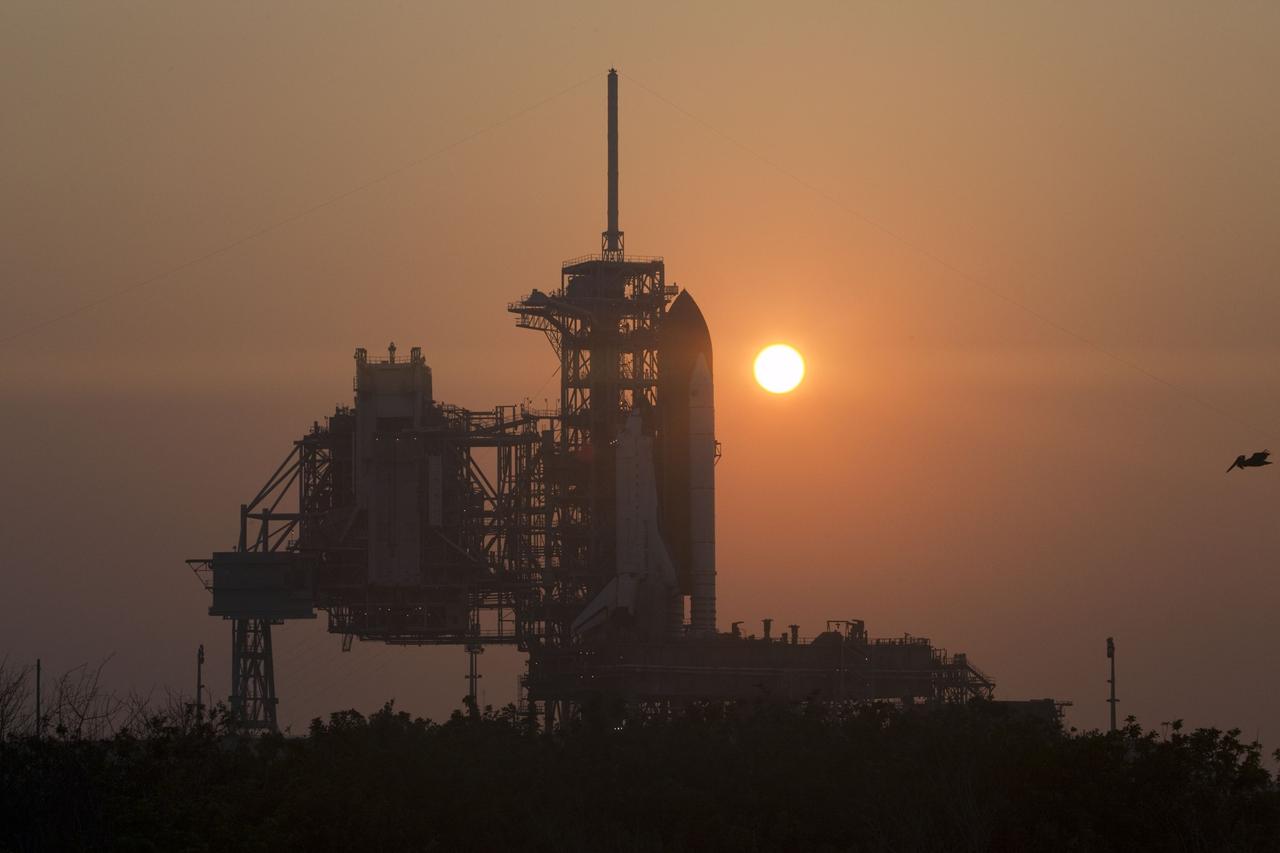
CAPE CANAVERAL, Fla. -- A hazy sun sets over Launch Pad 39A at NASA's Kennedy Space Center in Florida as space shuttle Atlantis awaits delivery of the Raffaello multi-purpose logistics module (MPLM) in its transportation canister. Once delivered, the canister will be lifted to the payload changeout room. The payload ground-handling mechanism then will be used to transfer Raffaello out of the canister into Atlantis' payload bay. Next, the rotating service structure that protects the shuttle from the elements and provides access will be rotated back into place. Commander Chris Ferguson, Pilot Doug Hurley and Mission Specialists Sandra Magnus and Rex Walheim are targeted to lift off on Atlantis July 8, taking with them the MPLM packed with supplies, logistics and spare parts to the station. The STS-135 mission also will fly a system to investigate the potential for robotically refueling existing satellites and return a failed ammonia pump module to help NASA better understand the failure mechanism and improve pump designs for future systems. STS-135 will be the 33rd flight of Atlantis, the 37th shuttle mission to the space station, and the 135th and final mission of NASA's Space Shuttle Program. For more information visit, www.nasa.gov/mission_pages/shuttle/shuttlemissions/sts135/index.html. Photo credit: NASA/Frank Michaux
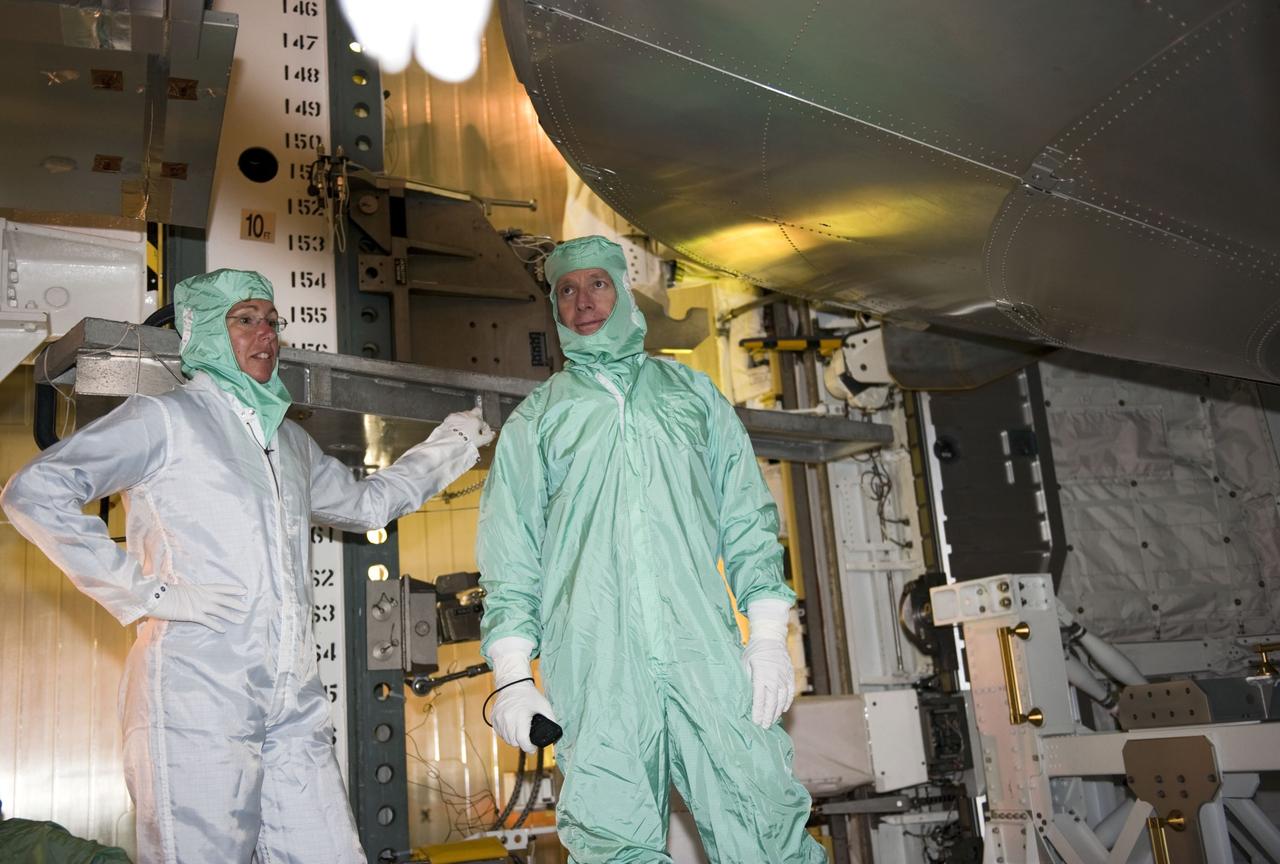
CAPE CANAVERAL, Fla. -- At Launch Pad 39A at NASA's Kennedy Space Center in Florida, space shuttle Atlantis' STS-135 crew members take part in a payload bay walkdown to check out the cargo secured in Atlantis' bay. Seen here are Mission Specialist Sandy Magnus (left) and Commander Chris Ferguson. The astronauts are at Kennedy to participate in a launch countdown dress rehearsal called the Terminal Countdown Demonstration Test (TCDT) and related training. Atlantis and its crew are targeted to lift off July 8, taking with them the Raffaello multi-purpose logistics module packed with supplies and spare parts to the International Space Station. The STS-135 mission also will fly a system to investigate the potential for robotically refueling existing satellites and return a failed ammonia pump module to help NASA better understand the failure mechanism and improve pump designs for future systems. STS-135 will be the 33rd flight of Atlantis, the 37th shuttle mission to the space station, and the 135th and final mission of NASA's Space Shuttle Program. For more information visit, www.nasa.gov/mission_pages/shuttle/shuttlemissions/sts135/index.html. Photo credit: NASA/Kim Shiflett
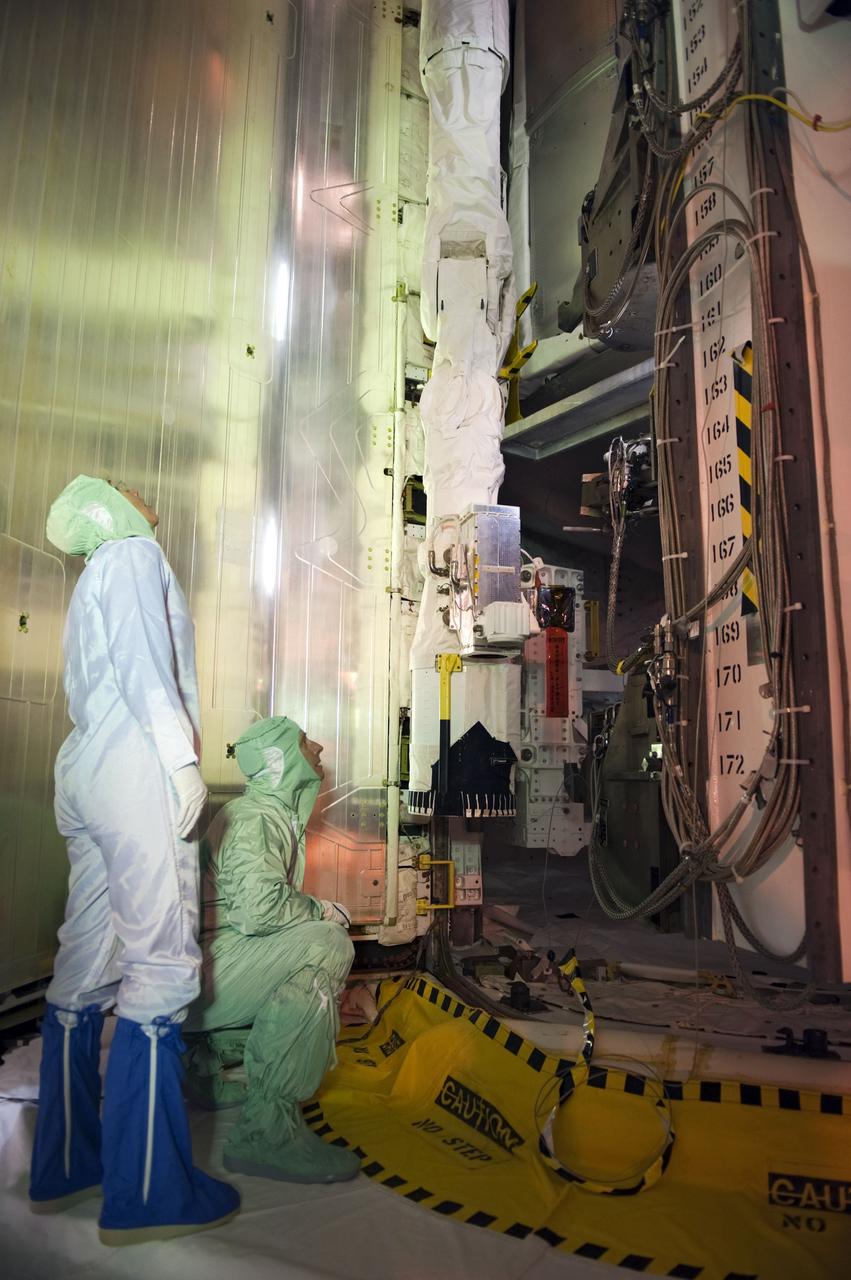
CAPE CANAVERAL, Fla. -- At Launch Pad 39A at NASA's Kennedy Space Center in Florida, space shuttle Atlantis' STS-135 crew members take part in a payload bay walkdown to check out the cargo secured in Atlantis' bay. Seen here are Mission Specialist Sandy Magnus (left) and Commander Chris Ferguson. The astronauts are at Kennedy to participate in a launch countdown dress rehearsal called the Terminal Countdown Demonstration Test (TCDT) and related training. Atlantis and its crew are targeted to lift off July 8, taking with them the Raffaello multi-purpose logistics module packed with supplies and spare parts to the International Space Station. The STS-135 mission also will fly a system to investigate the potential for robotically refueling existing satellites and return a failed ammonia pump module to help NASA better understand the failure mechanism and improve pump designs for future systems. STS-135 will be the 33rd flight of Atlantis, the 37th shuttle mission to the space station, and the 135th and final mission of NASA's Space Shuttle Program. For more information visit, www.nasa.gov/mission_pages/shuttle/shuttlemissions/sts135/index.html. Photo credit: NASA/Kim Shiflett
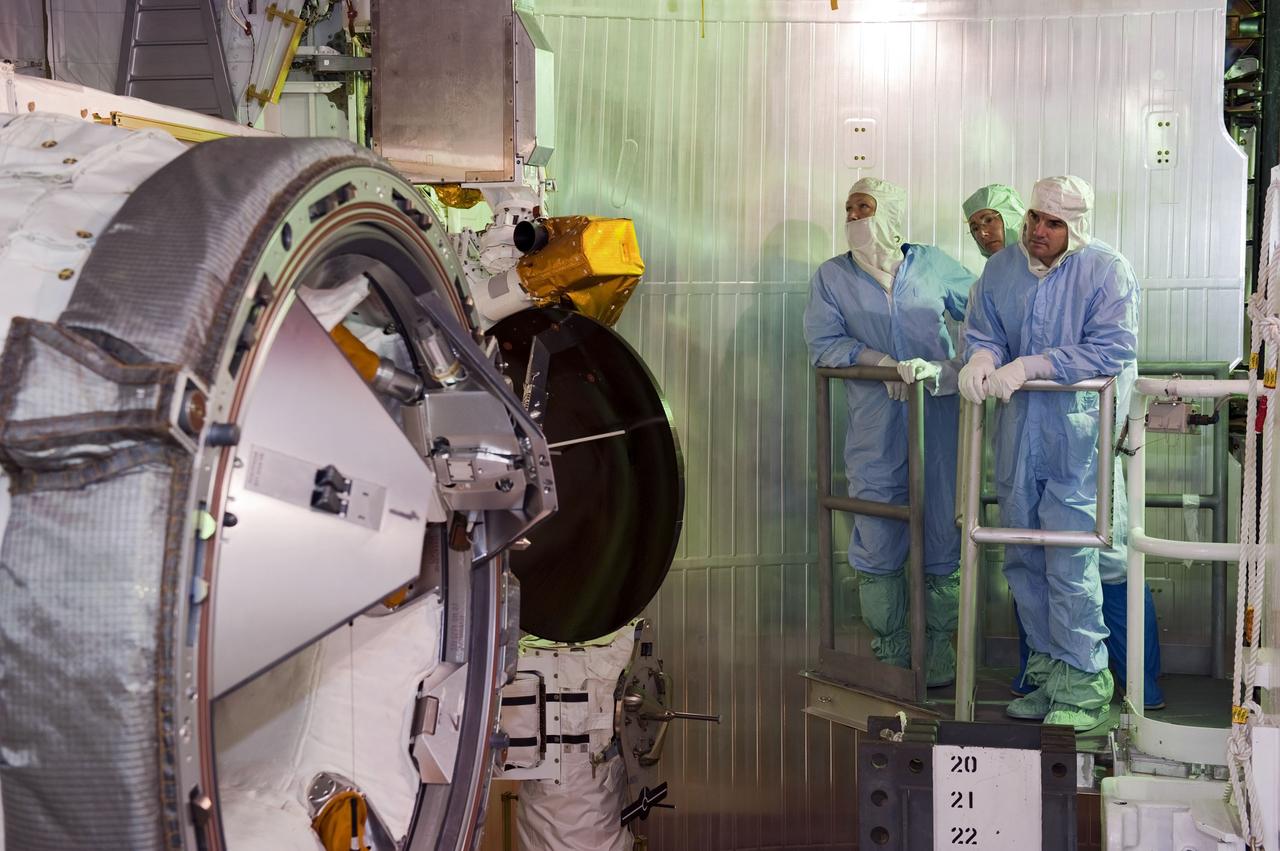
CAPE CANAVERAL, Fla. -- At Launch Pad 39A at NASA's Kennedy Space Center in Florida, space shuttle Atlantis' STS-135 crew members take part in a payload bay walkdown to check out the cargo secured in Atlantis' bay. Seen here inspecting the airlock are Pilot Doug Hurley (left), and Mission Specialists Sandy Magnus and Rex Walheim. The astronauts are at Kennedy to participate in a launch countdown dress rehearsal called the Terminal Countdown Demonstration Test (TCDT) and related training. Atlantis and its crew are targeted to lift off July 8, taking with them the Raffaello multi-purpose logistics module packed with supplies and spare parts to the International Space Station. The STS-135 mission also will fly a system to investigate the potential for robotically refueling existing satellites and return a failed ammonia pump module to help NASA better understand the failure mechanism and improve pump designs for future systems. STS-135 will be the 33rd flight of Atlantis, the 37th shuttle mission to the space station, and the 135th and final mission of NASA's Space Shuttle Program. For more information visit, www.nasa.gov/mission_pages/shuttle/shuttlemissions/sts135/index.html. Photo credit: NASA/Kim Shiflett
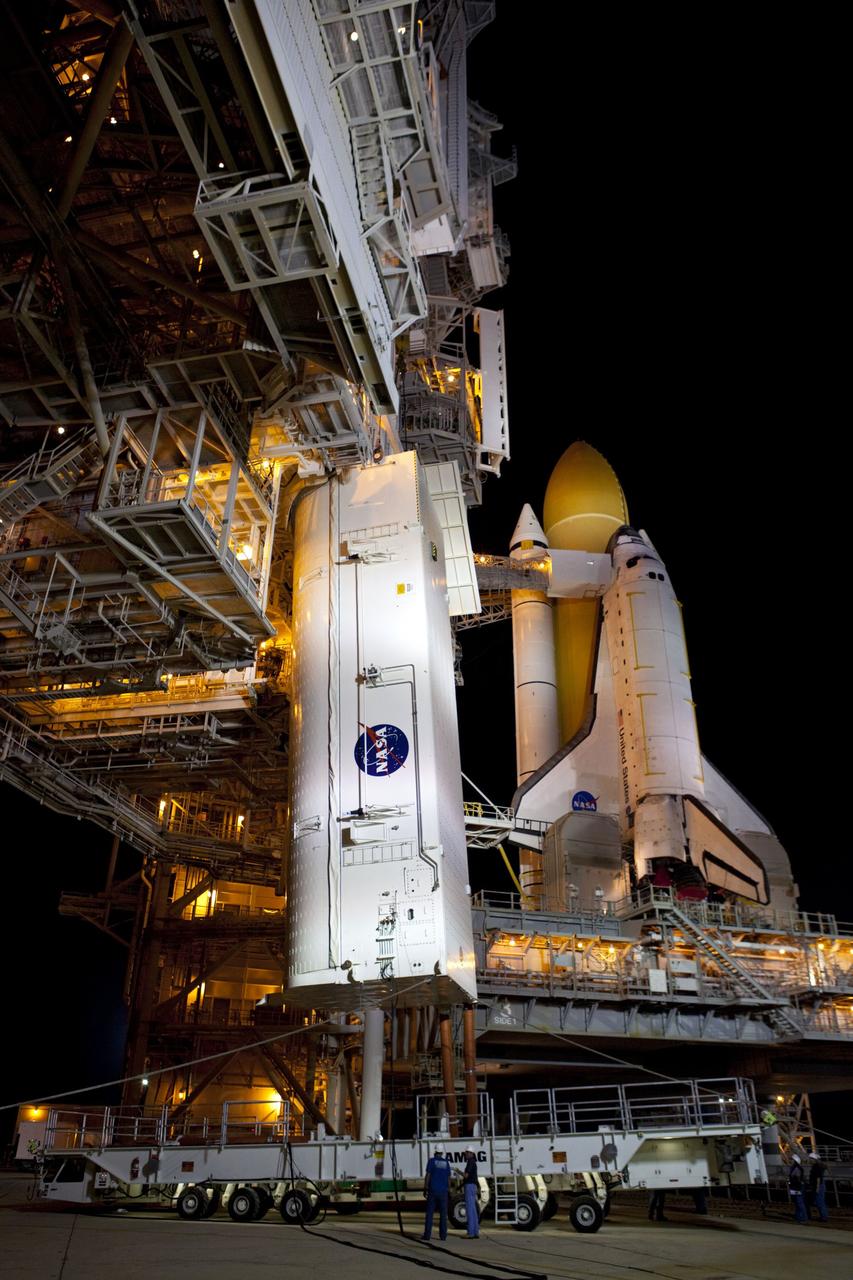
CAPE CANAVERAL, Fla. -- The payload canister carrying the Raffaello multi-purpose logistics module (MPLM) is lifted to the payload changeout room on the rotating service structure (RSS) on Launch Pad 39A at NASA's Kennedy Space Center in Florida. Umbilical hoses, maintaining a controlled environment for the cargo are attached to the lower end of the canister. The payload ground-handling mechanism then will be used to transfer Raffaello out of the canister into Atlantis' payload bay. Next, the RSS that protects the shuttle from the elements and provides access will be rotated back into place. Commander Chris Ferguson, Pilot Doug Hurley and Mission Specialists Sandra Magnus and Rex Walheim are targeted to lift off on Atlantis July 8, taking with them the MPLM packed with supplies, logistics and spare parts to the station. The STS-135 mission also will fly a system to investigate the potential for robotically refueling existing satellites and return a failed ammonia pump module to help NASA better understand the failure mechanism and improve pump designs for future systems. STS-135 will be the 33rd flight of Atlantis, the 37th shuttle mission to the space station, and the 135th and final mission of NASA's Space Shuttle Program. For more information visit, www.nasa.gov/mission_pages/shuttle/shuttlemissions/sts135/index.html. Photo credit: NASA/Dimitri Gerondidakis
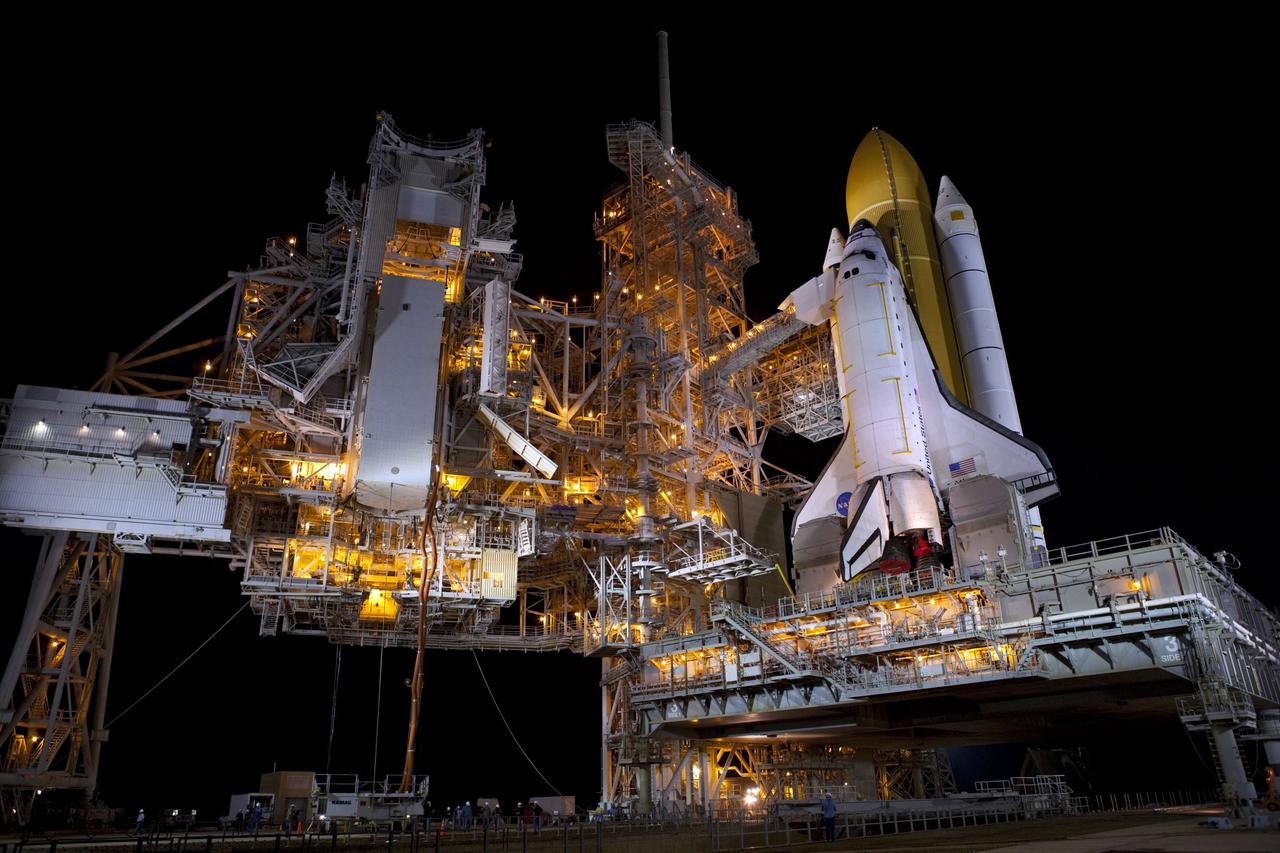
CAPE CANAVERAL, Fla. -- The payload canister carrying the Raffaello multi-purpose logistics module (MPLM) is lifted to the payload changeout room on the rotating service structure (RSS) on Launch Pad 39A at NASA's Kennedy Space Center in Florida. Umbilical hoses, maintaining a controlled environment for the cargo are attached to the lower end of the canister. The payload ground-handling mechanism then will be used to transfer Raffaello out of the canister into Atlantis' payload bay. Next, the RSS that protects the shuttle from the elements and provides access will be rotated back into place. Commander Chris Ferguson, Pilot Doug Hurley and Mission Specialists Sandra Magnus and Rex Walheim are targeted to lift off on Atlantis July 8, taking with them the MPLM packed with supplies, logistics and spare parts to the station. The STS-135 mission also will fly a system to investigate the potential for robotically refueling existing satellites and return a failed ammonia pump module to help NASA better understand the failure mechanism and improve pump designs for future systems. STS-135 will be the 33rd flight of Atlantis, the 37th shuttle mission to the space station, and the 135th and final mission of NASA's Space Shuttle Program. For more information visit, www.nasa.gov/mission_pages/shuttle/shuttlemissions/sts135/index.html. Photo credit: NASA/Dimitri Gerondidakis
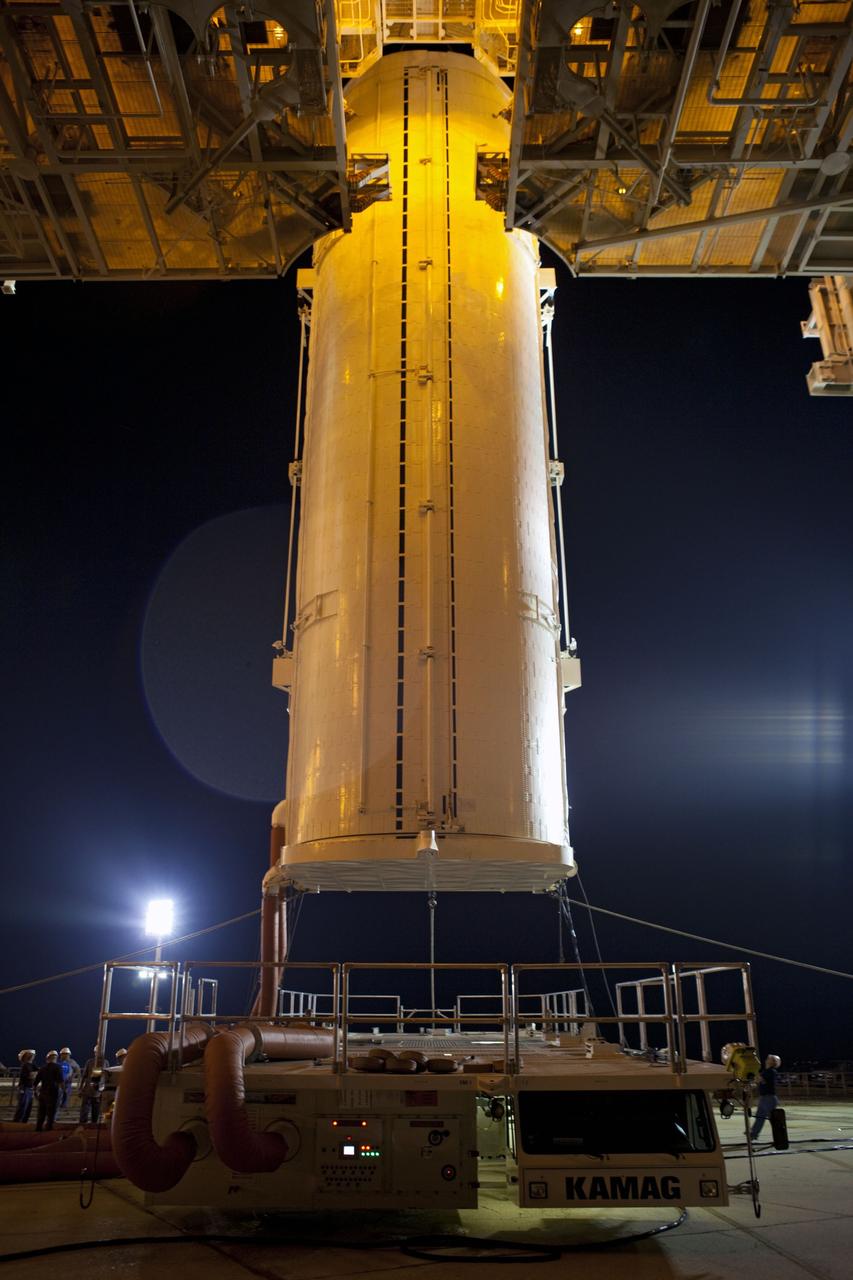
CAPE CANAVERAL, Fla. -- The payload canister carrying the Raffaello multi-purpose logistics module (MPLM) is lifted to the payload changeout room on the rotating service structure (RSS) on Launch Pad 39A at NASA's Kennedy Space Center in Florida. Umbilical hoses, maintaining a controlled environment for the cargo are attached to the lower end of the canister. The payload ground-handling mechanism then will be used to transfer Raffaello out of the canister into Atlantis' payload bay. Next, the RSS that protects the shuttle from the elements and provides access will be rotated back into place. Commander Chris Ferguson, Pilot Doug Hurley and Mission Specialists Sandra Magnus and Rex Walheim are targeted to lift off on Atlantis July 8, taking with them the MPLM packed with supplies, logistics and spare parts to the station. The STS-135 mission also will fly a system to investigate the potential for robotically refueling existing satellites and return a failed ammonia pump module to help NASA better understand the failure mechanism and improve pump designs for future systems. STS-135 will be the 33rd flight of Atlantis, the 37th shuttle mission to the space station, and the 135th and final mission of NASA's Space Shuttle Program. For more information visit, www.nasa.gov/mission_pages/shuttle/shuttlemissions/sts135/index.html. Photo credit: NASA/Dimitri Gerondidakis
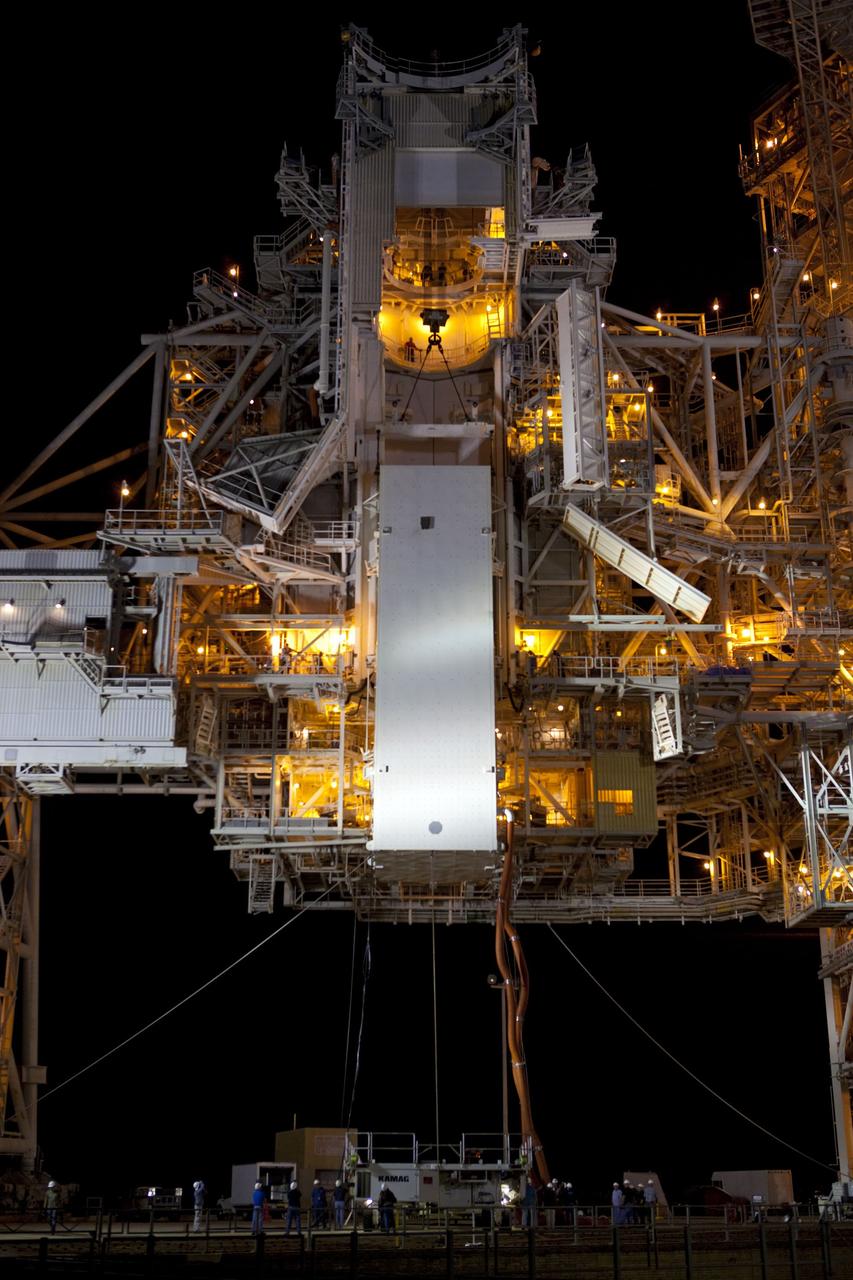
CAPE CANAVERAL, Fla. -- The payload canister carrying the Raffaello multi-purpose logistics module (MPLM) is lifted to the payload changeout room on the rotating service structure (RSS) on Launch Pad 39A at NASA's Kennedy Space Center in Florida. Umbilical hoses, maintaining a controlled environment for the cargo are attached to the lower end of the canister. The payload ground-handling mechanism then will be used to transfer Raffaello out of the canister into Atlantis' payload bay. Next, the RSS that protects the shuttle from the elements and provides access will be rotated back into place. Commander Chris Ferguson, Pilot Doug Hurley and Mission Specialists Sandra Magnus and Rex Walheim are targeted to lift off on Atlantis July 8, taking with them the MPLM packed with supplies, logistics and spare parts to the station. The STS-135 mission also will fly a system to investigate the potential for robotically refueling existing satellites and return a failed ammonia pump module to help NASA better understand the failure mechanism and improve pump designs for future systems. STS-135 will be the 33rd flight of Atlantis, the 37th shuttle mission to the space station, and the 135th and final mission of NASA's Space Shuttle Program. For more information visit, www.nasa.gov/mission_pages/shuttle/shuttlemissions/sts135/index.html. Photo credit: NASA/Dimitri Gerondidakis
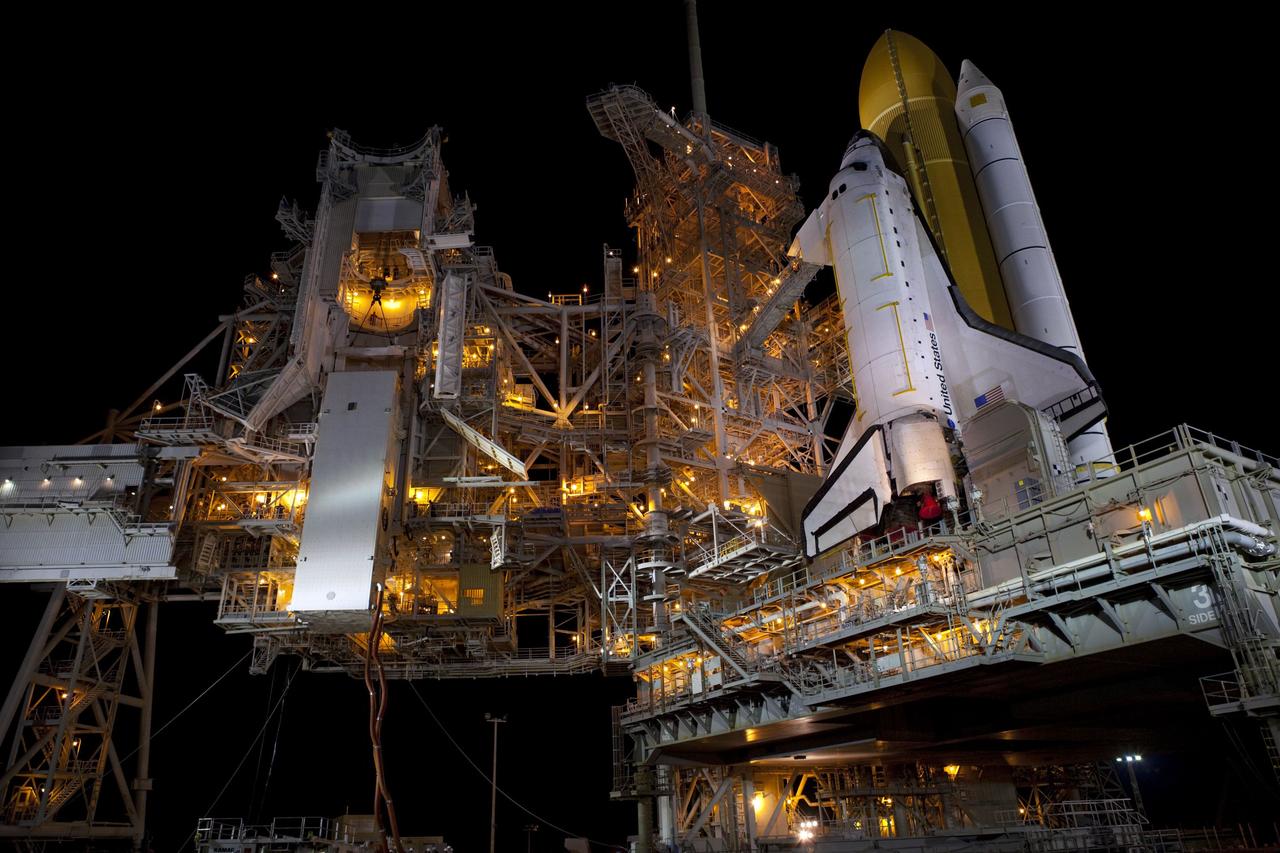
CAPE CANAVERAL, Fla. -- The payload canister carrying the Raffaello multi-purpose logistics module (MPLM) is lifted to the payload changeout room on the rotating service structure (RSS) on Launch Pad 39A at NASA's Kennedy Space Center in Florida. Umbilical hoses, maintaining a controlled environment for the cargo are attached to the lower end of the canister. The payload ground-handling mechanism then will be used to transfer Raffaello out of the canister into Atlantis' payload bay. Next, the RSS that protects the shuttle from the elements and provides access will be rotated back into place. Commander Chris Ferguson, Pilot Doug Hurley and Mission Specialists Sandra Magnus and Rex Walheim are targeted to lift off on Atlantis July 8, taking with them the MPLM packed with supplies, logistics and spare parts to the station. The STS-135 mission also will fly a system to investigate the potential for robotically refueling existing satellites and return a failed ammonia pump module to help NASA better understand the failure mechanism and improve pump designs for future systems. STS-135 will be the 33rd flight of Atlantis, the 37th shuttle mission to the space station, and the 135th and final mission of NASA's Space Shuttle Program. For more information visit, www.nasa.gov/mission_pages/shuttle/shuttlemissions/sts135/index.html. Photo credit: NASA/Dimitri Gerondidakis
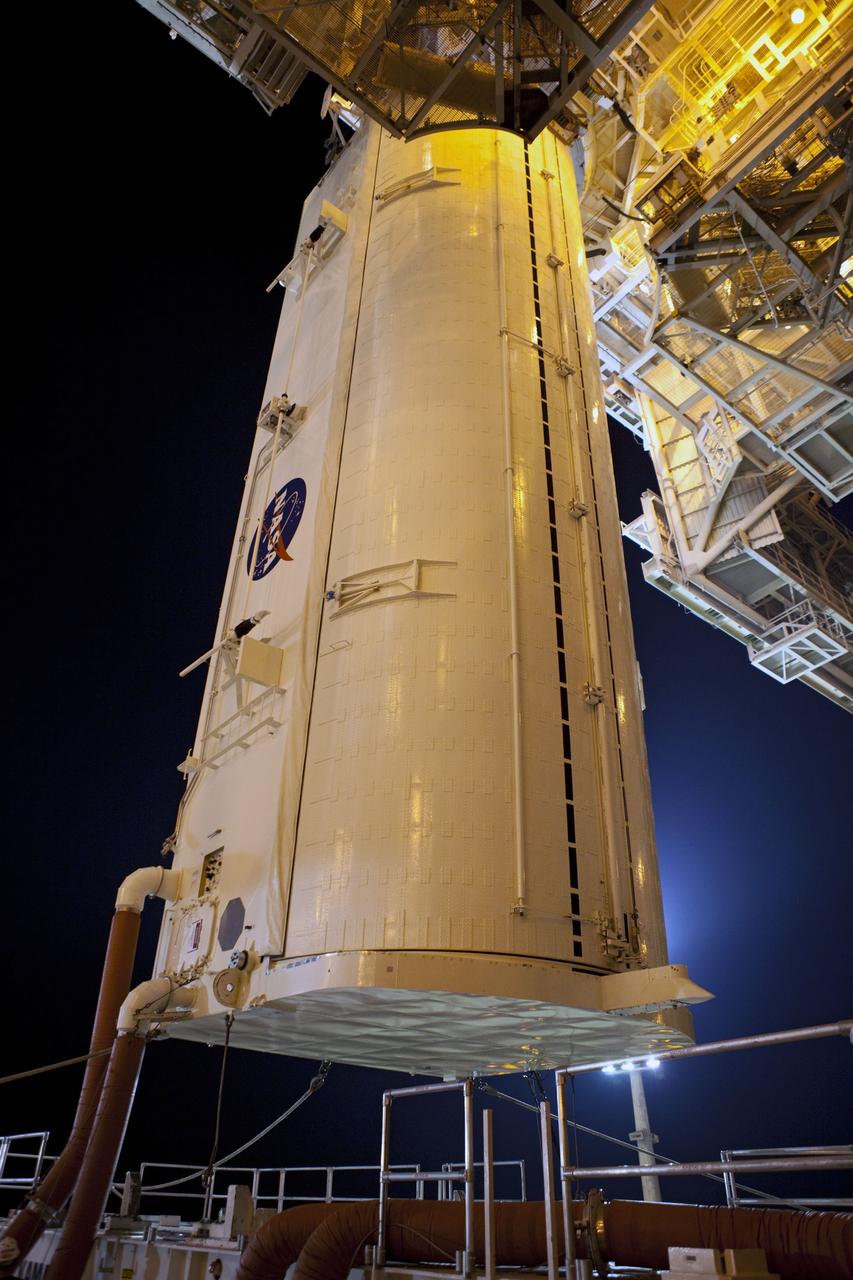
CAPE CANAVERAL, Fla. -- The payload canister carrying the Raffaello multi-purpose logistics module (MPLM) is lifted to the payload changeout room on the rotating service structure (RSS) on Launch Pad 39A at NASA's Kennedy Space Center in Florida. Umbilical hoses, maintaining a controlled environment for the cargo are attached to the lower end of the canister. The payload ground-handling mechanism then will be used to transfer Raffaello out of the canister into Atlantis' payload bay. Next, the RSS that protects the shuttle from the elements and provides access will be rotated back into place. Commander Chris Ferguson, Pilot Doug Hurley and Mission Specialists Sandra Magnus and Rex Walheim are targeted to lift off on Atlantis July 8, taking with them the MPLM packed with supplies, logistics and spare parts to the station. The STS-135 mission also will fly a system to investigate the potential for robotically refueling existing satellites and return a failed ammonia pump module to help NASA better understand the failure mechanism and improve pump designs for future systems. STS-135 will be the 33rd flight of Atlantis, the 37th shuttle mission to the space station, and the 135th and final mission of NASA's Space Shuttle Program. For more information visit, www.nasa.gov/mission_pages/shuttle/shuttlemissions/sts135/index.html. Photo credit: NASA/Dimitri Gerondidakis
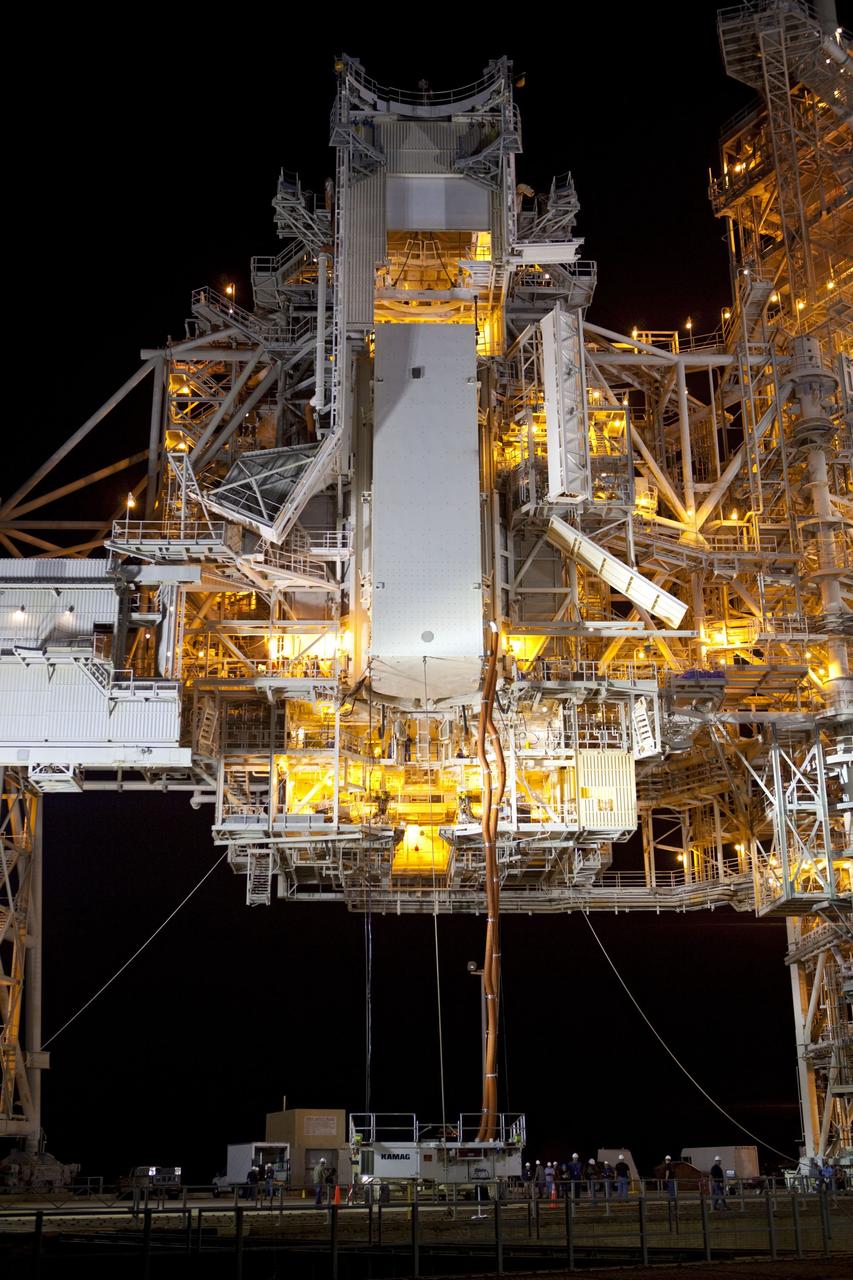
CAPE CANAVERAL, Fla. -- The payload canister carrying the Raffaello multi-purpose logistics module (MPLM) is lifted to the payload changeout room on the rotating service structure (RSS) on Launch Pad 39A at NASA's Kennedy Space Center in Florida. Umbilical hoses, maintaining a controlled environment for the cargo are attached to the lower end of the canister. The payload ground-handling mechanism then will be used to transfer Raffaello out of the canister into Atlantis' payload bay. Next, the RSS that protects the shuttle from the elements and provides access will be rotated back into place. Commander Chris Ferguson, Pilot Doug Hurley and Mission Specialists Sandra Magnus and Rex Walheim are targeted to lift off on Atlantis July 8, taking with them the MPLM packed with supplies, logistics and spare parts to the station. The STS-135 mission also will fly a system to investigate the potential for robotically refueling existing satellites and return a failed ammonia pump module to help NASA better understand the failure mechanism and improve pump designs for future systems. STS-135 will be the 33rd flight of Atlantis, the 37th shuttle mission to the space station, and the 135th and final mission of NASA's Space Shuttle Program. For more information visit, www.nasa.gov/mission_pages/shuttle/shuttlemissions/sts135/index.html. Photo credit: NASA/Dimitri Gerondidakis
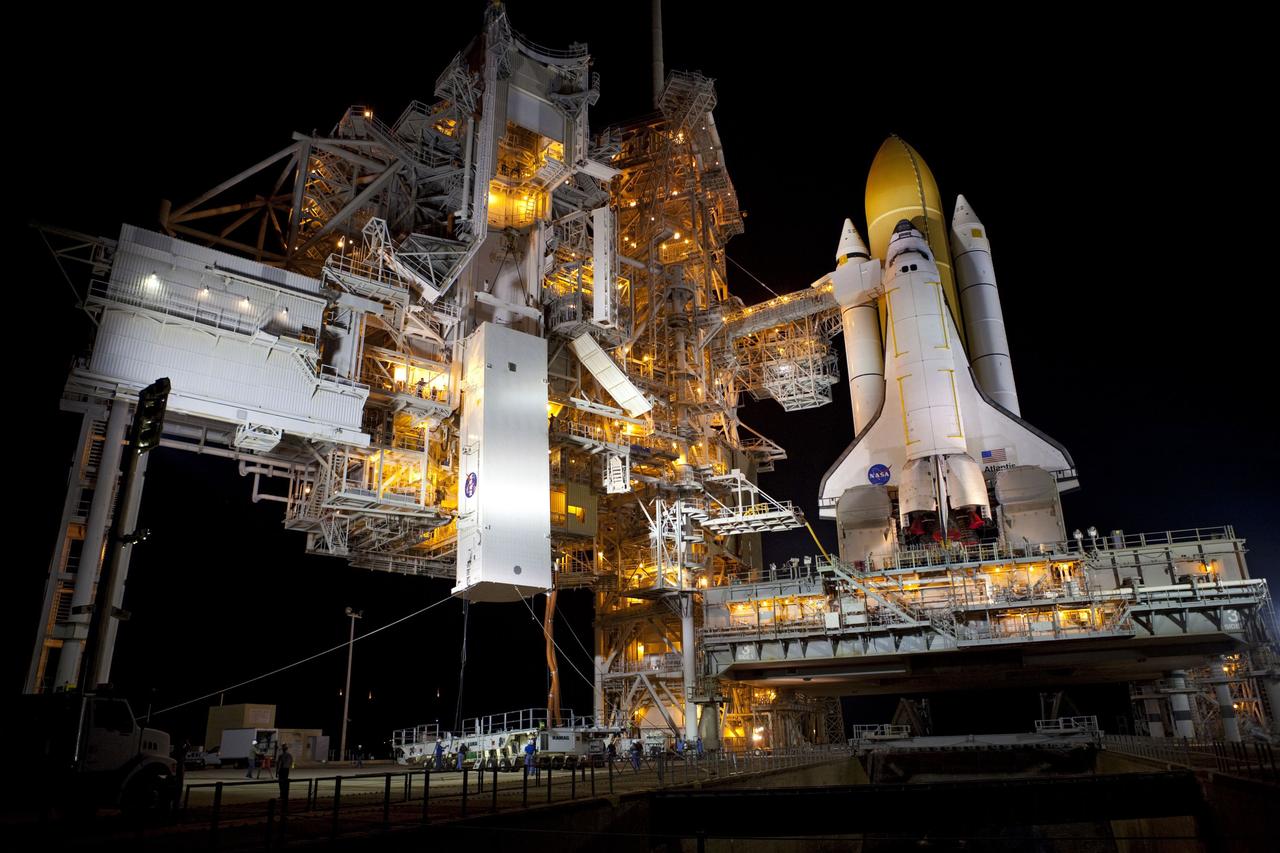
CAPE CANAVERAL, Fla. -- The payload canister carrying the Raffaello multi-purpose logistics module (MPLM) is lifted to the payload changeout room on the rotating service structure (RSS) on Launch Pad 39A at NASA's Kennedy Space Center in Florida. Umbilical hoses, maintaining a controlled environment for the cargo are attached to the lower end of the canister. The payload ground-handling mechanism then will be used to transfer Raffaello out of the canister into Atlantis' payload bay. Next, the RSS that protects the shuttle from the elements and provides access will be rotated back into place. Commander Chris Ferguson, Pilot Doug Hurley and Mission Specialists Sandra Magnus and Rex Walheim are targeted to lift off on Atlantis July 8, taking with them the MPLM packed with supplies, logistics and spare parts to the station. The STS-135 mission also will fly a system to investigate the potential for robotically refueling existing satellites and return a failed ammonia pump module to help NASA better understand the failure mechanism and improve pump designs for future systems. STS-135 will be the 33rd flight of Atlantis, the 37th shuttle mission to the space station, and the 135th and final mission of NASA's Space Shuttle Program. For more information visit, www.nasa.gov/mission_pages/shuttle/shuttlemissions/sts135/index.html. Photo credit: NASA/Dimitri Gerondidakis
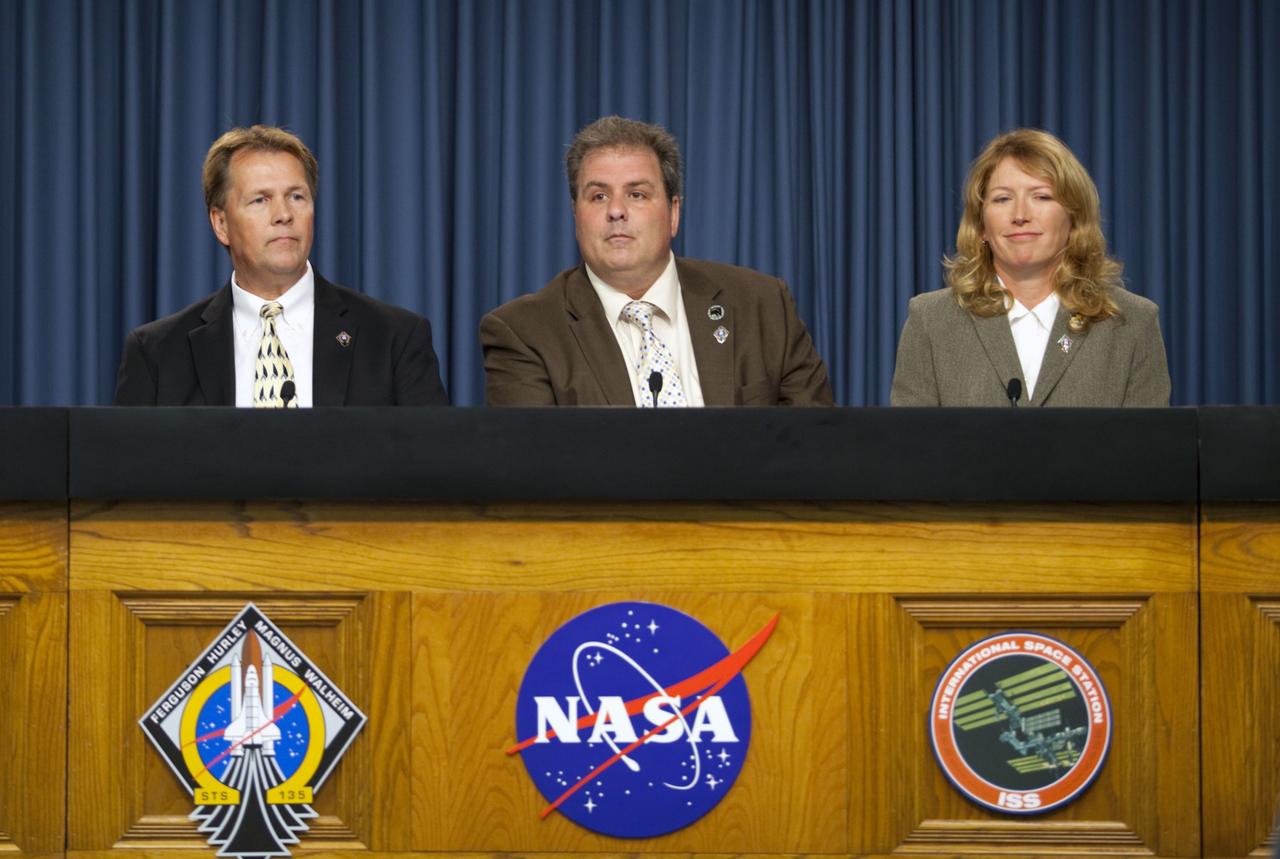
CAPE CANAVERAL, Fla. -- In the Press Site auditorium at NASA's Kennedy Space Center in Florida, NASA managers brief media about the payload and launch status of space shuttle Atlantis' STS-135 mission to the International Space Station. Seen here are NASA Test Director Jeff Spaulding (left), Payload Mission Manager Joe Delai and Shuttle Weather Officer Kathy Winters. Atlantis and its crew of four; Commander Chris Ferguson, Pilot Doug Hurley and Mission Specialists Sandy Magnus and Rex Walheim, are scheduled to lift off at 11:26 a.m. EDT on July 8 to deliver the Raffaello multi-purpose logistics module packed with supplies and spare parts to the station. Atlantis also will fly the Robotic Refueling Mission experiment that will investigate the potential for robotically refueling existing satellites in orbit. In addition, Atlantis will return with a failed ammonia pump module to help NASA better understand the failure mechanism and improve pump designs for future systems. STS-135 will be the 33rd flight of Atlantis, the 37th shuttle mission to the space station, and the 135th and final mission of NASA's Space Shuttle Program. For more information visit, www.nasa.gov/mission_pages/shuttle/shuttlemissions/sts135/index.html. Photo credit: NASA/Frankie Martin
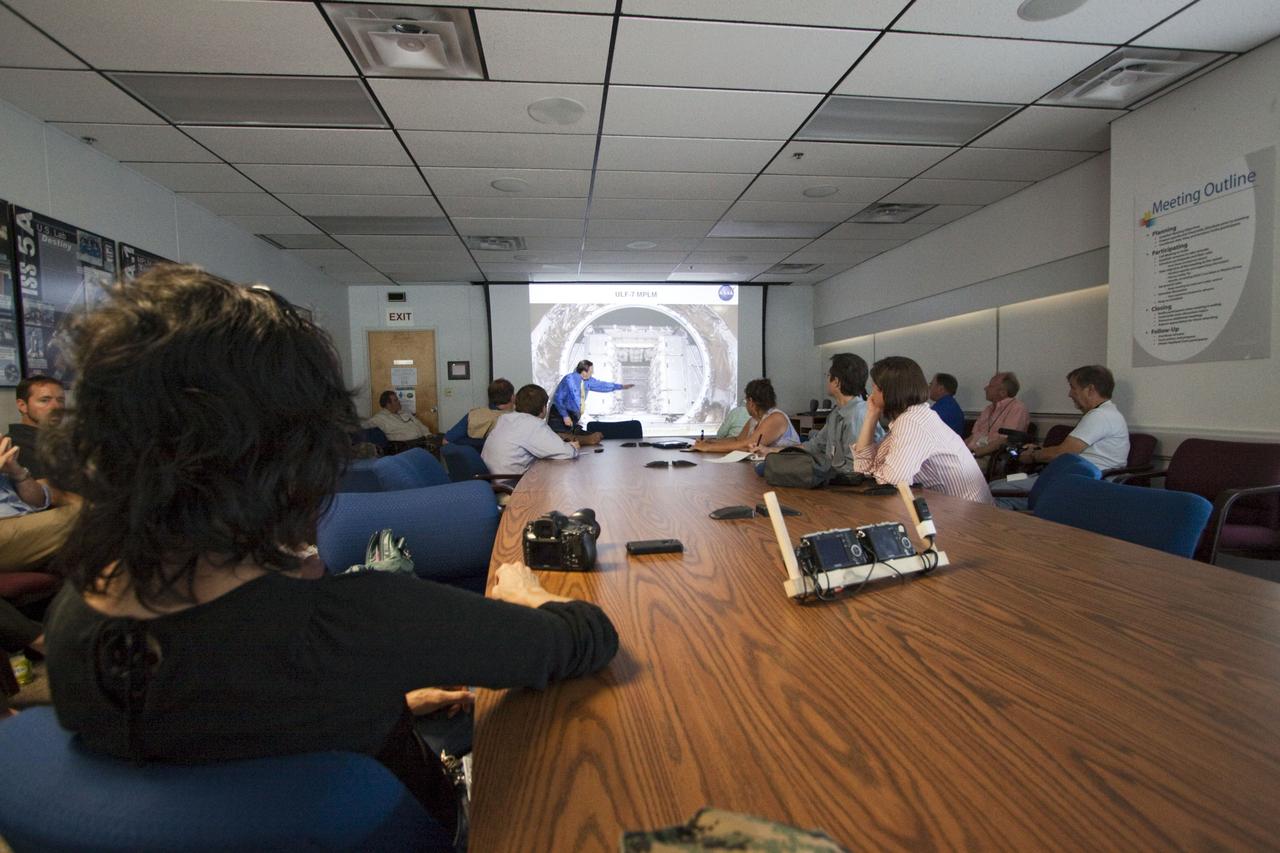
CAPE CANAVERAL, Fla. -- In the Space Station Processing Facility conference room at NASA's Kennedy Space Center in Florida, Mike Kinslow, STS-135 Payload Flow Manager from Boeing Space Operations describes the payload being prepared for shuttle Atlantis' flight to the International Space Station. Commander Chris Ferguson, Pilot Doug Hurley and Mission Specialists Sandra Magnus and Rex Walheim are targeted to lift off on July 8, taking with them the Raffaello multi-purpose logistics module packed with supplies, logistics and spare parts. The STS-135 mission also will fly a system to investigate the potential for robotically refueling existing spacecraft and return a failed ammonia pump module to help NASA better understand the failure mechanism and improve pump designs for future systems. STS-135 will be the 33rd flight of Atlantis, the 37th shuttle mission to the space station, and the 135th and final mission of NASA's Space Shuttle Program. For more information visit, www.nasa.gov/mission_pages/shuttle/shuttlemissions/sts135/index.html. Photo credit: NASA/Jack Pfaller
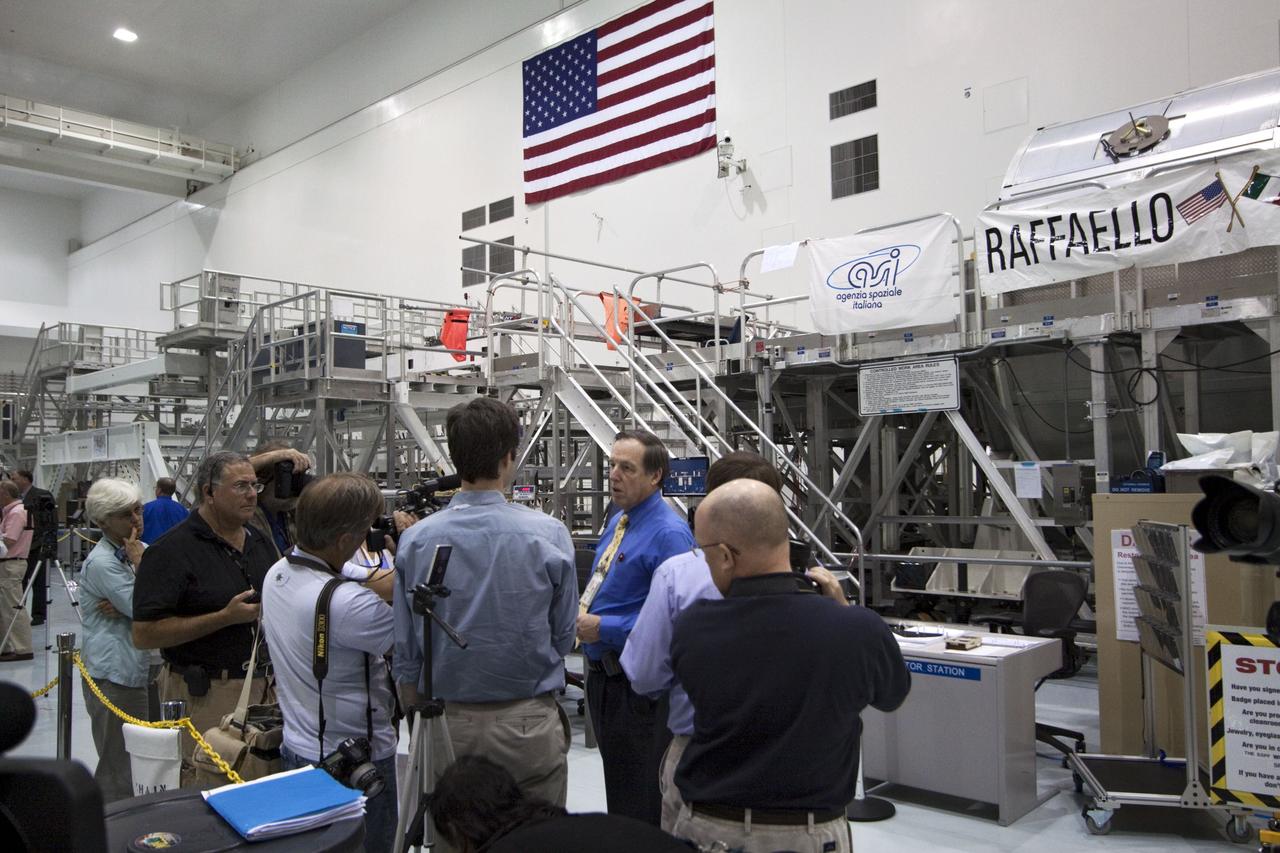
CAPE CANAVERAL, Fla. -- In the Space Station Processing Facility at NASA's Kennedy Space Center in Florida, Mike Kinslow, STS-135 Payload Flow Manager from Boeing Space Operations speaks to media about the payload for shuttle Atlantis' flight to the International Space Station. Commander Chris Ferguson, Pilot Doug Hurley and Mission Specialists Sandra Magnus and Rex Walheim are targeted to lift off on July 8, taking with them the Raffaello multi-purpose logistics module packed with supplies, logistics and spare parts. The STS-135 mission also will fly a system to investigate the potential for robotically refueling existing spacecraft and return a failed ammonia pump module to help NASA better understand the failure mechanism and improve pump designs for future systems. STS-135 will be the 33rd flight of Atlantis, the 37th shuttle mission to the space station, and the 135th and final mission of NASA's Space Shuttle Program. For more information visit, www.nasa.gov/mission_pages/shuttle/shuttlemissions/sts135/index.html. Photo credit: NASA/Jack Pfaller

CAPE CANAVERAL, Fla. -- In the Space Station Processing Facility conference room at NASA's Kennedy Space Center in Florida, Mike Kinslow, STS-135 Payload Flow Manager from Boeing Space Operations describes the payload being prepared for shuttle Atlantis' flight to the International Space Station. Commander Chris Ferguson, Pilot Doug Hurley and Mission Specialists Sandra Magnus and Rex Walheim are targeted to lift off on July 8, taking with them the Raffaello multi-purpose logistics module packed with supplies, logistics and spare parts. The STS-135 mission also will fly a system to investigate the potential for robotically refueling existing spacecraft and return a failed ammonia pump module to help NASA better understand the failure mechanism and improve pump designs for future systems. STS-135 will be the 33rd flight of Atlantis, the 37th shuttle mission to the space station, and the 135th and final mission of NASA's Space Shuttle Program. For more information visit, www.nasa.gov/mission_pages/shuttle/shuttlemissions/sts135/index.html. Photo credit: NASA/Jack Pfaller
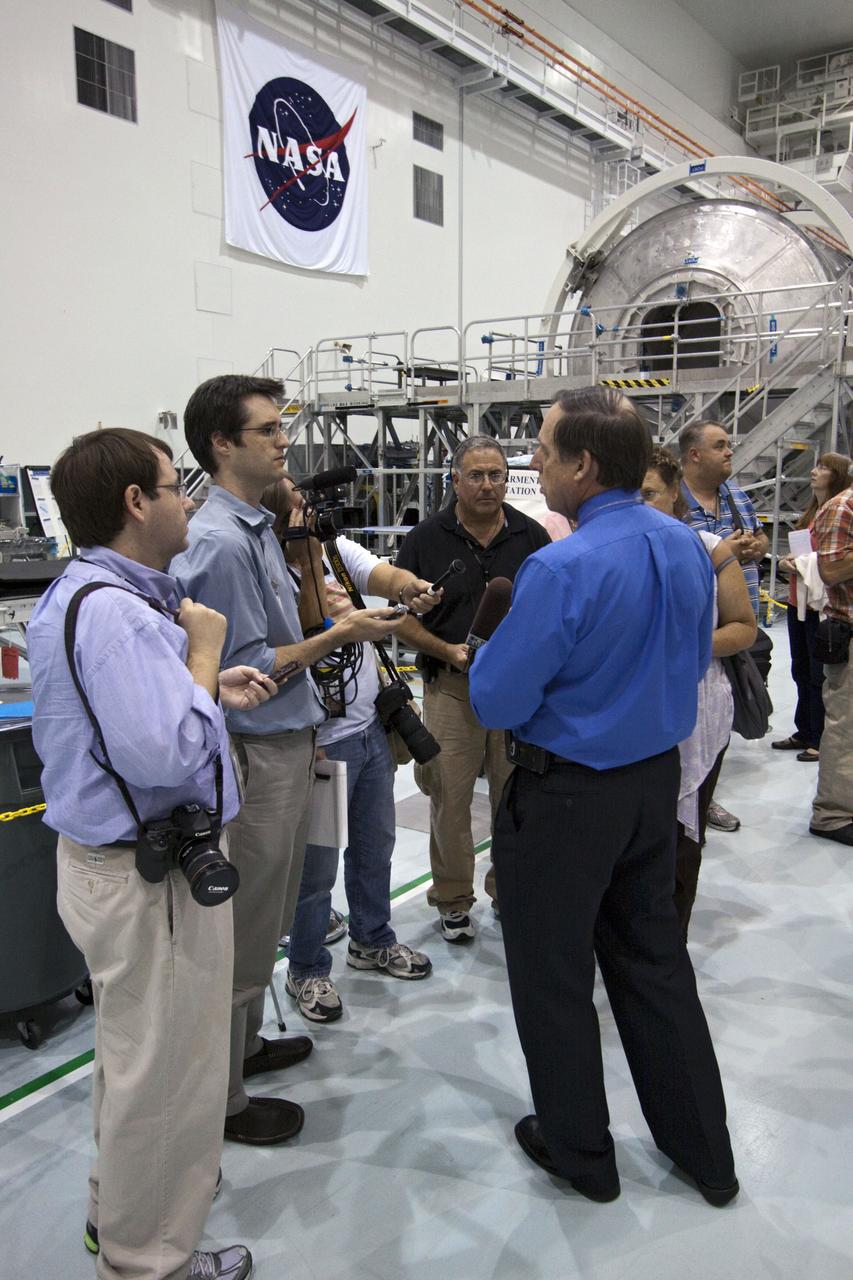
CAPE CANAVERAL, Fla. -- In the Space Station Processing Facility at NASA's Kennedy Space Center in Florida, Mike Kinslow, STS-135 Payload Flow Manager from Boeing Space Operations speaks to media about the payload for shuttle Atlantis' flight to the International Space Station. Commander Chris Ferguson, Pilot Doug Hurley and Mission Specialists Sandra Magnus and Rex Walheim are targeted to lift off on July 8, taking with them the Raffaello multi-purpose logistics module packed with supplies, logistics and spare parts. The STS-135 mission also will fly a system to investigate the potential for robotically refueling existing spacecraft and return a failed ammonia pump module to help NASA better understand the failure mechanism and improve pump designs for future systems. STS-135 will be the 33rd flight of Atlantis, the 37th shuttle mission to the space station, and the 135th and final mission of NASA's Space Shuttle Program. For more information visit, www.nasa.gov/mission_pages/shuttle/shuttlemissions/sts135/index.html. Photo credit: NASA/Jack Pfaller
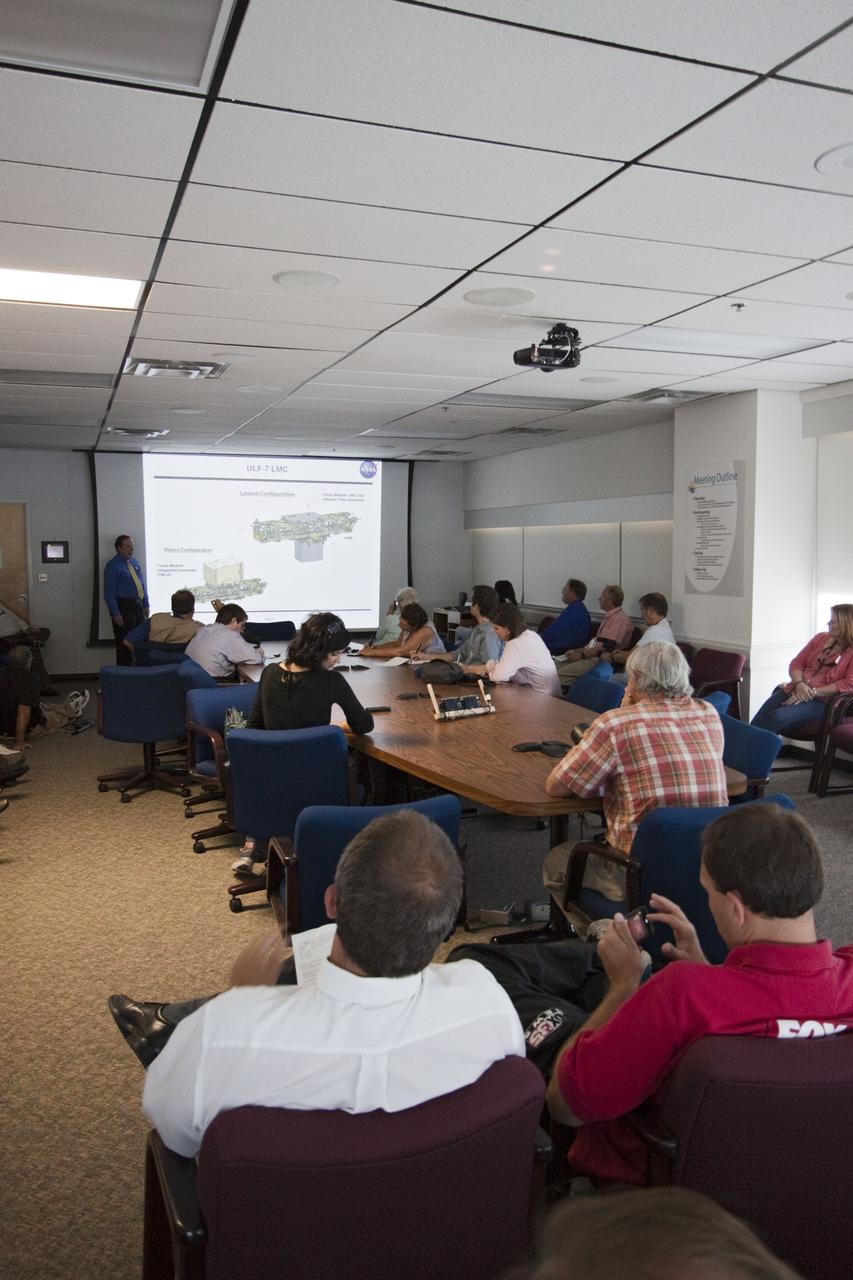
CAPE CANAVERAL, Fla. -- In the Space Station Processing Facility conference room at NASA's Kennedy Space Center in Florida, Mike Kinslow, STS-135 Payload Flow Manager from Boeing Space Operations describes the payload being prepared for shuttle Atlantis' flight to the International Space Station. Commander Chris Ferguson, Pilot Doug Hurley and Mission Specialists Sandra Magnus and Rex Walheim are targeted to lift off on July 8, taking with them the Raffaello multi-purpose logistics module packed with supplies, logistics and spare parts. The STS-135 mission also will fly a system to investigate the potential for robotically refueling existing spacecraft and return a failed ammonia pump module to help NASA better understand the failure mechanism and improve pump designs for future systems. STS-135 will be the 33rd flight of Atlantis, the 37th shuttle mission to the space station, and the 135th and final mission of NASA's Space Shuttle Program. For more information visit, www.nasa.gov/mission_pages/shuttle/shuttlemissions/sts135/index.html. Photo credit: NASA/Jack Pfaller
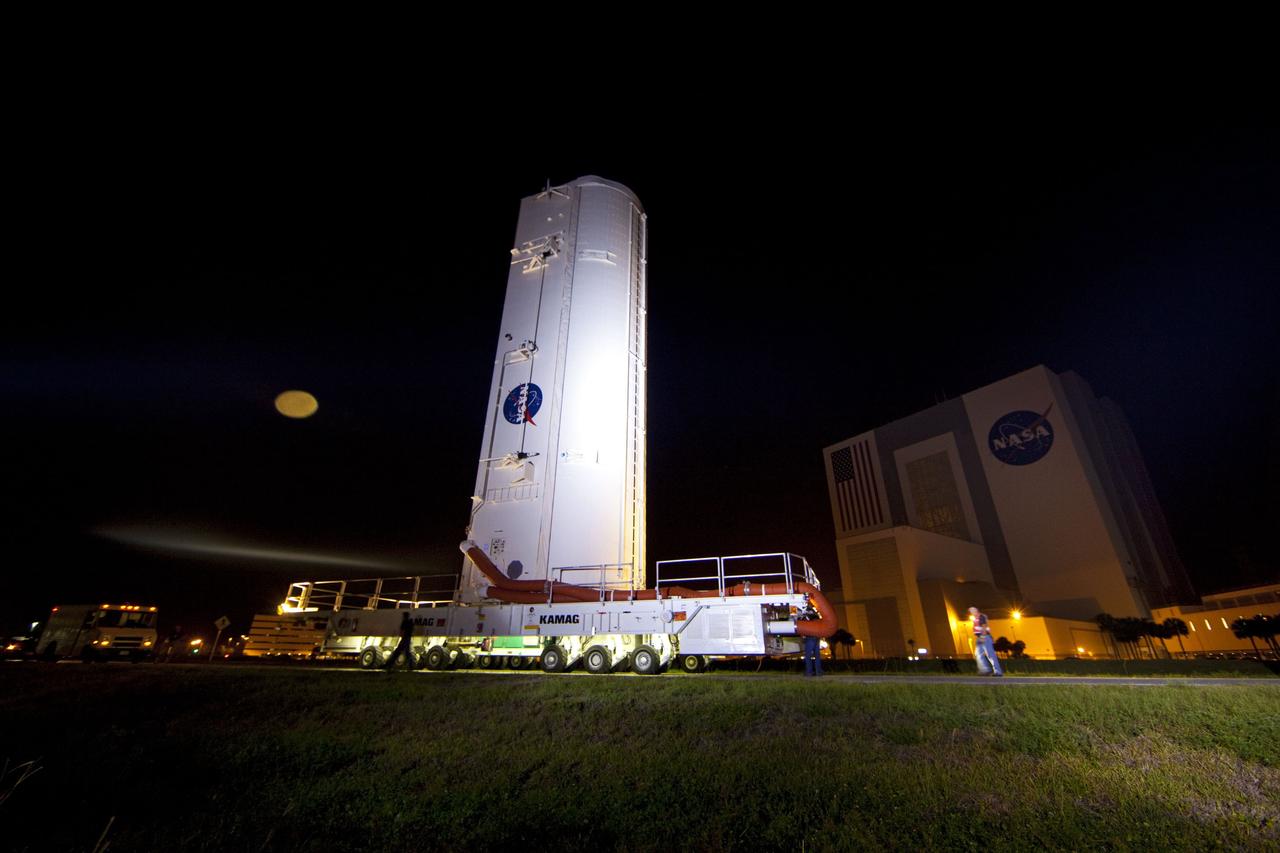
CAPE CANAVERAL, Fla. -- The container that carries the Raffaello multi-purpose logistics module (MPLM), secured on its transportation vehicle, makes its way past the Vehicle Assembly Building to Launch Pad 39A at NASA's Kennedy Space Center in Florida. Once there, the canister will be lifted to the payload changeout room. The payload ground-handling mechanism then will be used to transfer Raffaello out of the canister into space shuttle Atlantis' payload bay. Next, the rotating service structure that protects the shuttle from the elements and provides access will be rotated back into place. Commander Chris Ferguson, Pilot Doug Hurley and Mission Specialists Sandra Magnus and Rex Walheim are targeted to lift off on Atlantis July 8, taking with them the MPLM packed with supplies, logistics and spare parts to the station. The STS-135 mission also will fly a system to investigate the potential for robotically refueling existing satellites and return a failed ammonia pump module to help NASA better understand the failure mechanism and improve pump designs for future systems. STS-135 will be the 33rd flight of Atlantis, the 37th shuttle mission to the space station, and the 135th and final mission of NASA's Space Shuttle Program. For more information visit, www.nasa.gov/mission_pages/shuttle/shuttlemissions/sts135/index.html. Photo credit: NASA/Frank Michaux
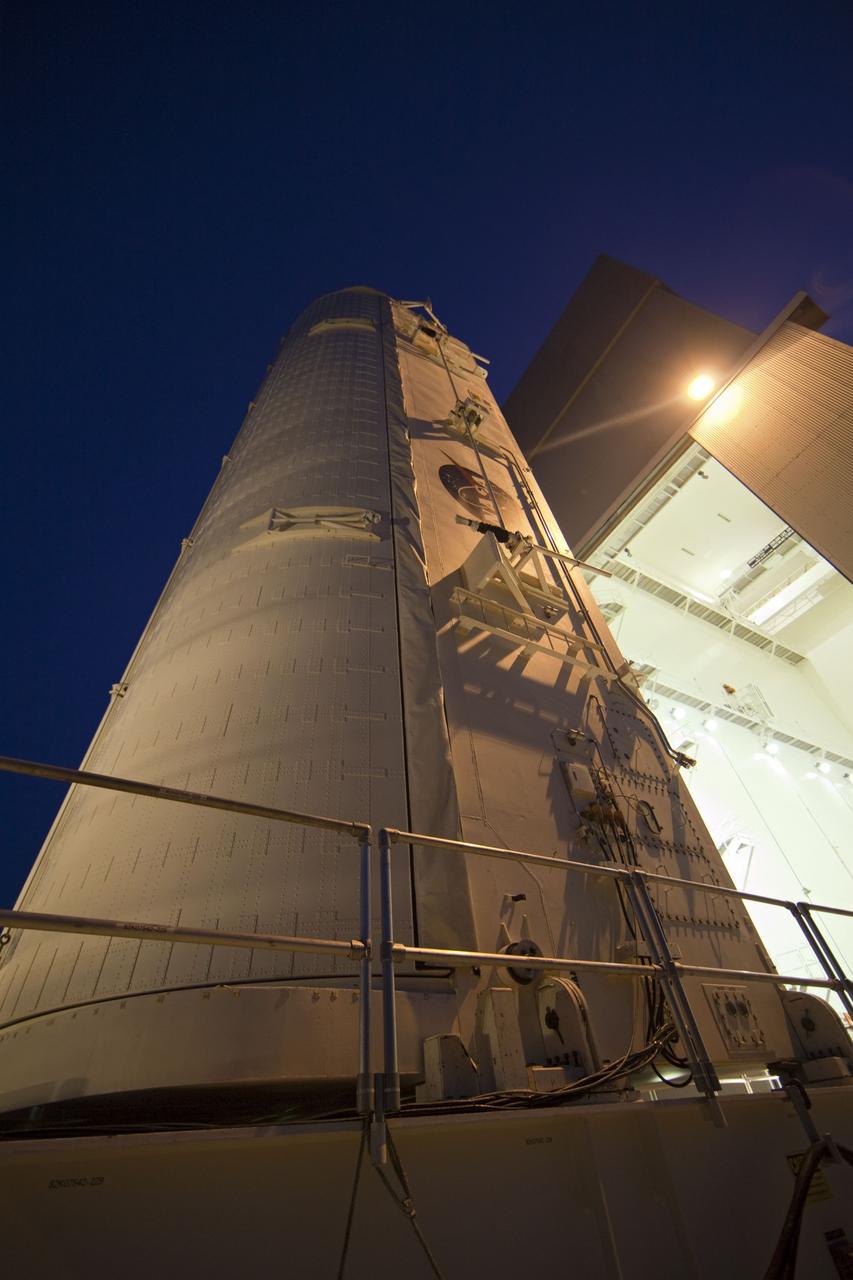
CAPE CANAVERAL, Fla. -- The container that carries the Raffaello multi-purpose logistics module (MPLM), secured on its transportation vehicle, begins its journey from the Canister Rotation Facility to Launch Pad 39A at NASA's Kennedy Space Center in Florida. Once there, the canister will be lifted to the payload changeout room. The payload ground-handling mechanism then will be used to transfer Raffaello out of the canister into space shuttle Atlantis' payload bay. Next, the rotating service structure that protects the shuttle from the elements and provides access will be rotated back into place. Commander Chris Ferguson, Pilot Doug Hurley and Mission Specialists Sandra Magnus and Rex Walheim are targeted to lift off on Atlantis July 8, taking with them the MPLM packed with supplies, logistics and spare parts to the station. The STS-135 mission also will fly a system to investigate the potential for robotically refueling existing satellites and return a failed ammonia pump module to help NASA better understand the failure mechanism and improve pump designs for future systems. STS-135 will be the 33rd flight of Atlantis, the 37th shuttle mission to the space station, and the 135th and final mission of NASA's Space Shuttle Program. For more information visit, www.nasa.gov/mission_pages/shuttle/shuttlemissions/sts135/index.html. Photo credit: NASA/Frank Michaux
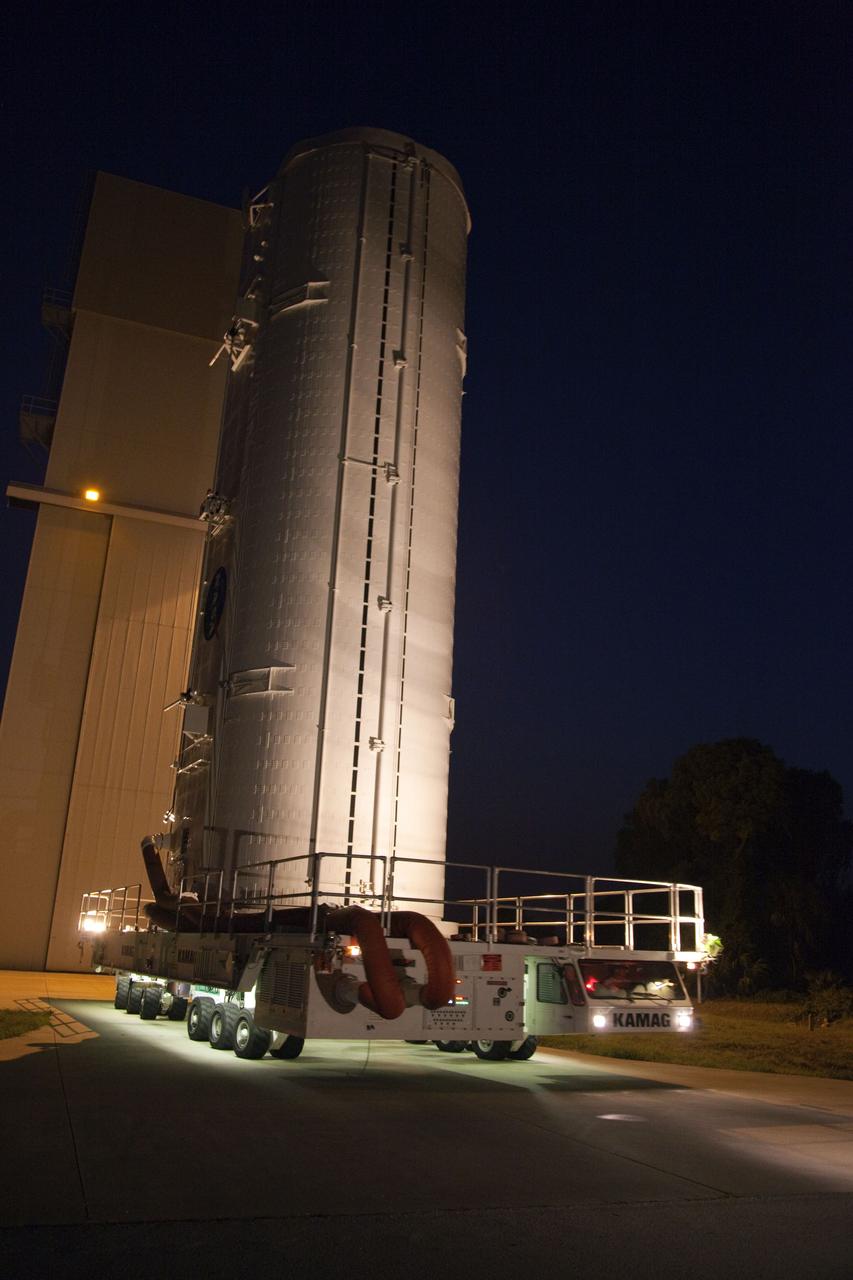
CAPE CANAVERAL, Fla. -- The container that carries the Raffaello multi-purpose logistics module (MPLM), secured on its transportation vehicle, begins its journey from the Canister Rotation Facility to Launch Pad 39A at NASA's Kennedy Space Center in Florida. Once there, the canister will be lifted to the payload changeout room. The payload ground-handling mechanism then will be used to transfer Raffaello out of the canister into space shuttle Atlantis' payload bay. Next, the rotating service structure that protects the shuttle from the elements and provides access will be rotated back into place. Commander Chris Ferguson, Pilot Doug Hurley and Mission Specialists Sandra Magnus and Rex Walheim are targeted to lift off on Atlantis July 8, taking with them the MPLM packed with supplies, logistics and spare parts to the station. The STS-135 mission also will fly a system to investigate the potential for robotically refueling existing satellites and return a failed ammonia pump module to help NASA better understand the failure mechanism and improve pump designs for future systems. STS-135 will be the 33rd flight of Atlantis, the 37th shuttle mission to the space station, and the 135th and final mission of NASA's Space Shuttle Program. For more information visit, www.nasa.gov/mission_pages/shuttle/shuttlemissions/sts135/index.html. Photo credit: NASA/Frank Michaux
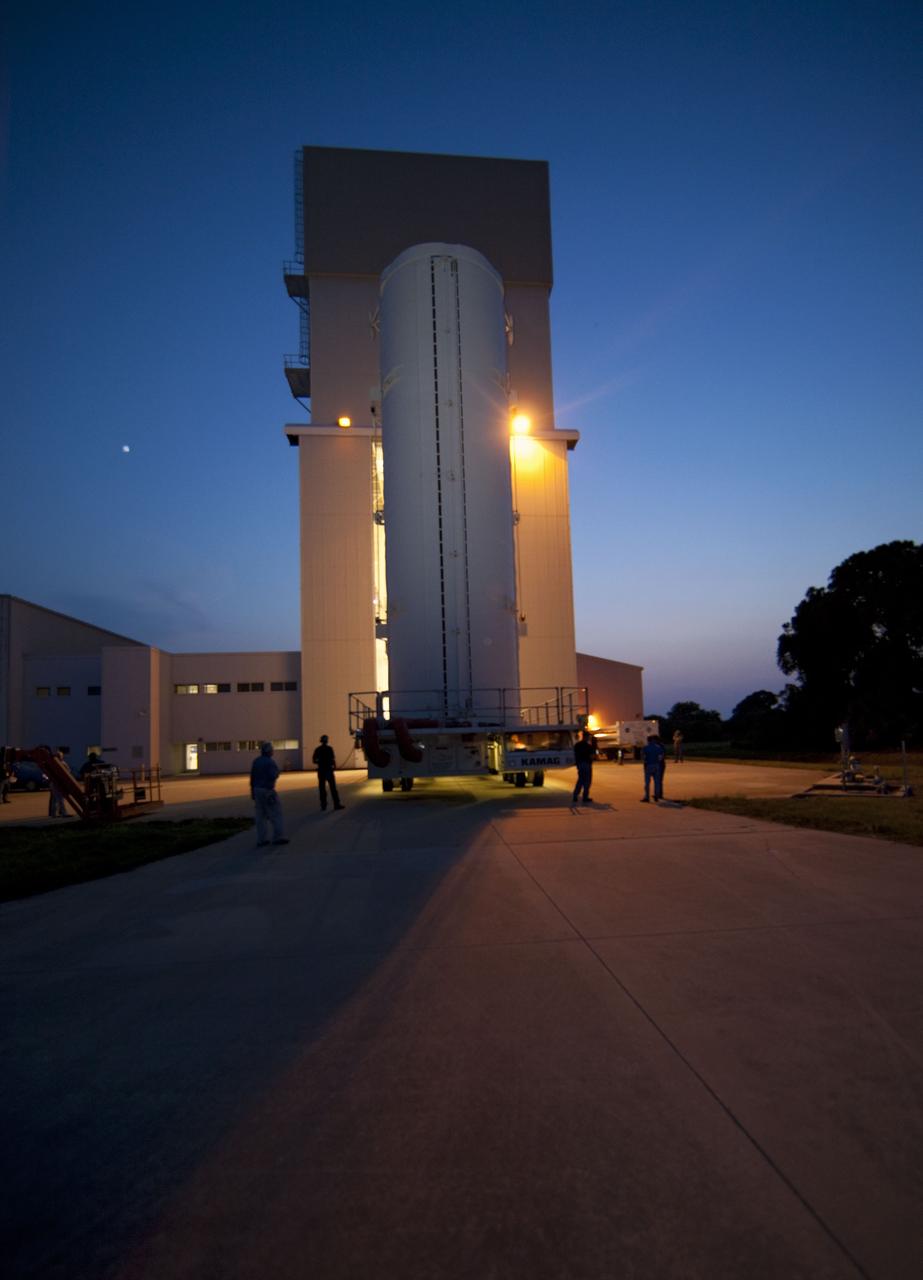
CAPE CANAVERAL, Fla. -- The container that carries the Raffaello multi-purpose logistics module (MPLM), secured on its transportation vehicle, begins its journey from the Canister Rotation Facility to Launch Pad 39A at NASA's Kennedy Space Center in Florida. Once there, the canister will be lifted to the payload changeout room. The payload ground-handling mechanism then will be used to transfer Raffaello out of the canister into space shuttle Atlantis' payload bay. Next, the rotating service structure that protects the shuttle from the elements and provides access will be rotated back into place. Commander Chris Ferguson, Pilot Doug Hurley and Mission Specialists Sandra Magnus and Rex Walheim are targeted to lift off on Atlantis July 8, taking with them the MPLM packed with supplies, logistics and spare parts to the station. The STS-135 mission also will fly a system to investigate the potential for robotically refueling existing satellites and return a failed ammonia pump module to help NASA better understand the failure mechanism and improve pump designs for future systems. STS-135 will be the 33rd flight of Atlantis, the 37th shuttle mission to the space station, and the 135th and final mission of NASA's Space Shuttle Program. For more information visit, www.nasa.gov/mission_pages/shuttle/shuttlemissions/sts135/index.html. Photo credit: NASA/Frank Michaux
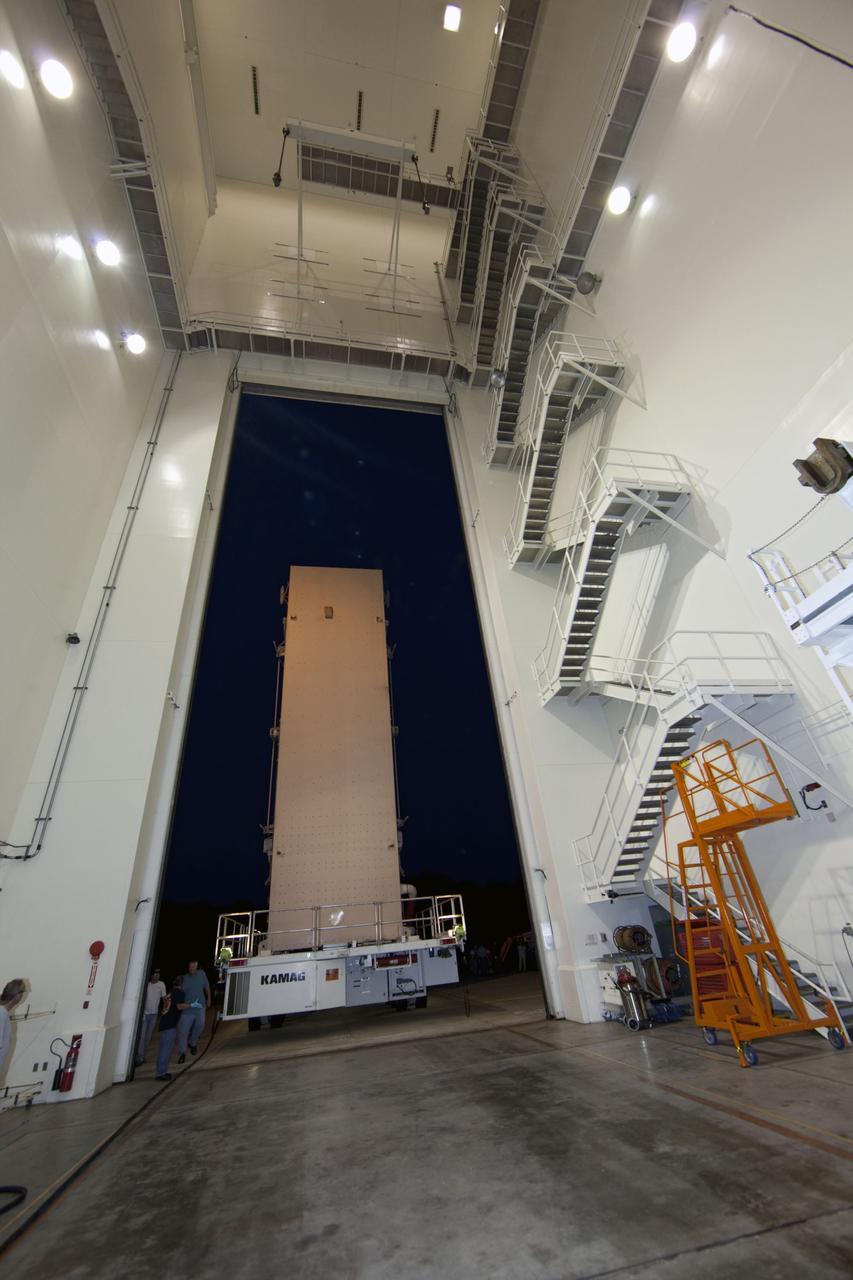
CAPE CANAVERAL, Fla. -- The container that carries the Raffaello multi-purpose logistics module (MPLM), secured on its transportation vehicle, begins its journey from the Canister Rotation Facility to Launch Pad 39A at NASA's Kennedy Space Center in Florida. Once there, the canister will be lifted to the payload changeout room. The payload ground-handling mechanism then will be used to transfer Raffaello out of the canister into space shuttle Atlantis' payload bay. Next, the rotating service structure that protects the shuttle from the elements and provides access will be rotated back into place. Commander Chris Ferguson, Pilot Doug Hurley and Mission Specialists Sandra Magnus and Rex Walheim are targeted to lift off on Atlantis July 8, taking with them the MPLM packed with supplies, logistics and spare parts to the station. The STS-135 mission also will fly a system to investigate the potential for robotically refueling existing satellites and return a failed ammonia pump module to help NASA better understand the failure mechanism and improve pump designs for future systems. STS-135 will be the 33rd flight of Atlantis, the 37th shuttle mission to the space station, and the 135th and final mission of NASA's Space Shuttle Program. For more information visit, www.nasa.gov/mission_pages/shuttle/shuttlemissions/sts135/index.html. Photo credit: NASA/Frank Michaux
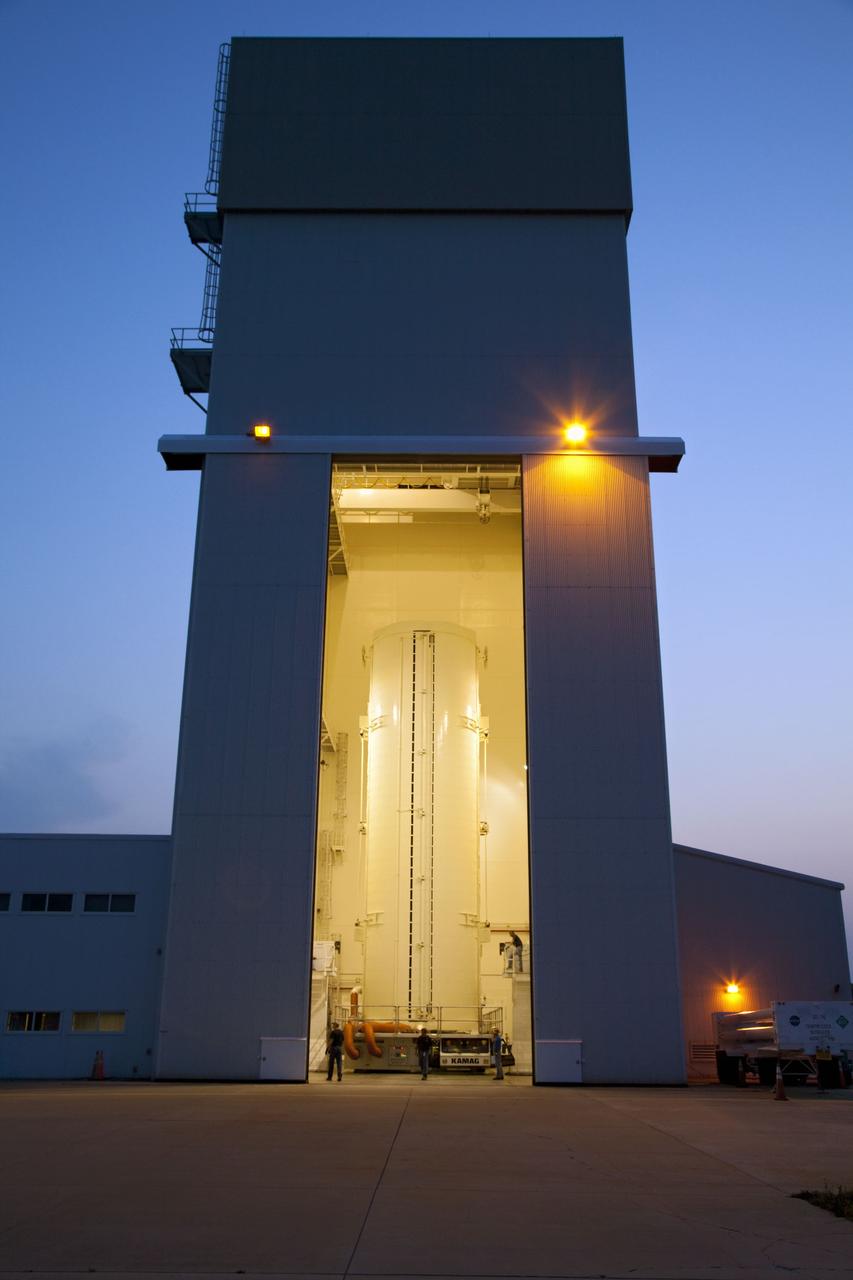
CAPE CANAVERAL, Fla. -- Inside the Canister Rotation Facility, the container that carries the Raffaello multi-purpose logistics module (MPLM), secured on its transportation vehicle, is ready for its journey to Launch Pad 39A at NASA's Kennedy Space Center in Florida. Once there, the canister will be lifted to the payload changeout room. The payload ground-handling mechanism then will be used to transfer Raffaello out of the canister into space shuttle Atlantis' payload bay. Next, the rotating service structure that protects the shuttle from the elements and provides access will be rotated back into place. Commander Chris Ferguson, Pilot Doug Hurley and Mission Specialists Sandra Magnus and Rex Walheim are targeted to lift off on Atlantis July 8, taking with them the MPLM packed with supplies, logistics and spare parts to the station. The STS-135 mission also will fly a system to investigate the potential for robotically refueling existing satellites and return a failed ammonia pump module to help NASA better understand the failure mechanism and improve pump designs for future systems. STS-135 will be the 33rd flight of Atlantis, the 37th shuttle mission to the space station, and the 135th and final mission of NASA's Space Shuttle Program. For more information visit, www.nasa.gov/mission_pages/shuttle/shuttlemissions/sts135/index.html. Photo credit: NASA/Frank Michaux
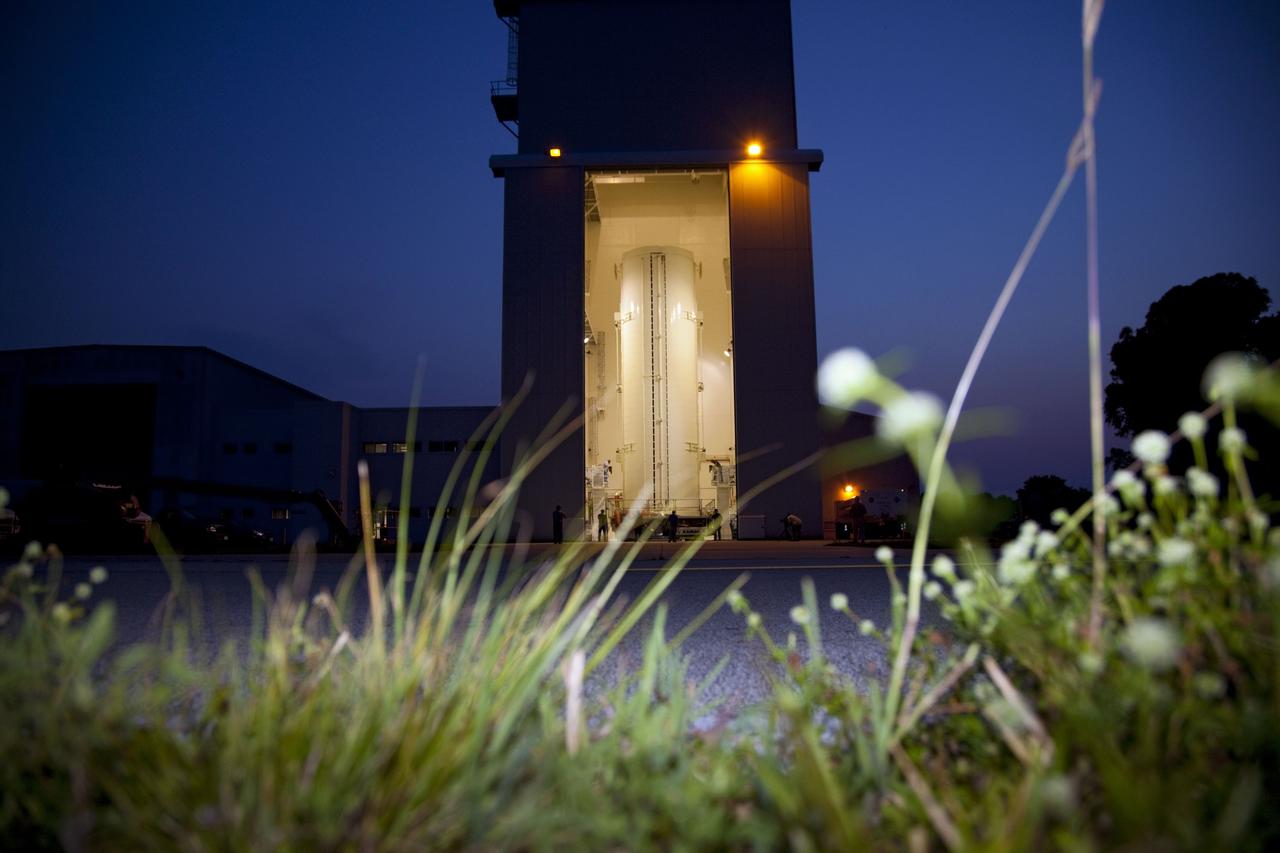
CAPE CANAVERAL, Fla. -- Inside the Canister Rotation Facility, the container that carries the Raffaello multi-purpose logistics module (MPLM), secured on its transportation vehicle, is ready for its journey to Launch Pad 39A at NASA's Kennedy Space Center in Florida. Once there, the canister will be lifted to the payload changeout room. The payload ground-handling mechanism then will be used to transfer Raffaello out of the canister into space shuttle Atlantis' payload bay. Next, the rotating service structure that protects the shuttle from the elements and provides access will be rotated back into place. Commander Chris Ferguson, Pilot Doug Hurley and Mission Specialists Sandra Magnus and Rex Walheim are targeted to lift off on Atlantis July 8, taking with them the MPLM packed with supplies, logistics and spare parts to the station. The STS-135 mission also will fly a system to investigate the potential for robotically refueling existing satellites and return a failed ammonia pump module to help NASA better understand the failure mechanism and improve pump designs for future systems. STS-135 will be the 33rd flight of Atlantis, the 37th shuttle mission to the space station, and the 135th and final mission of NASA's Space Shuttle Program. For more information visit, www.nasa.gov/mission_pages/shuttle/shuttlemissions/sts135/index.html. Photo credit: NASA/Frank Michaux
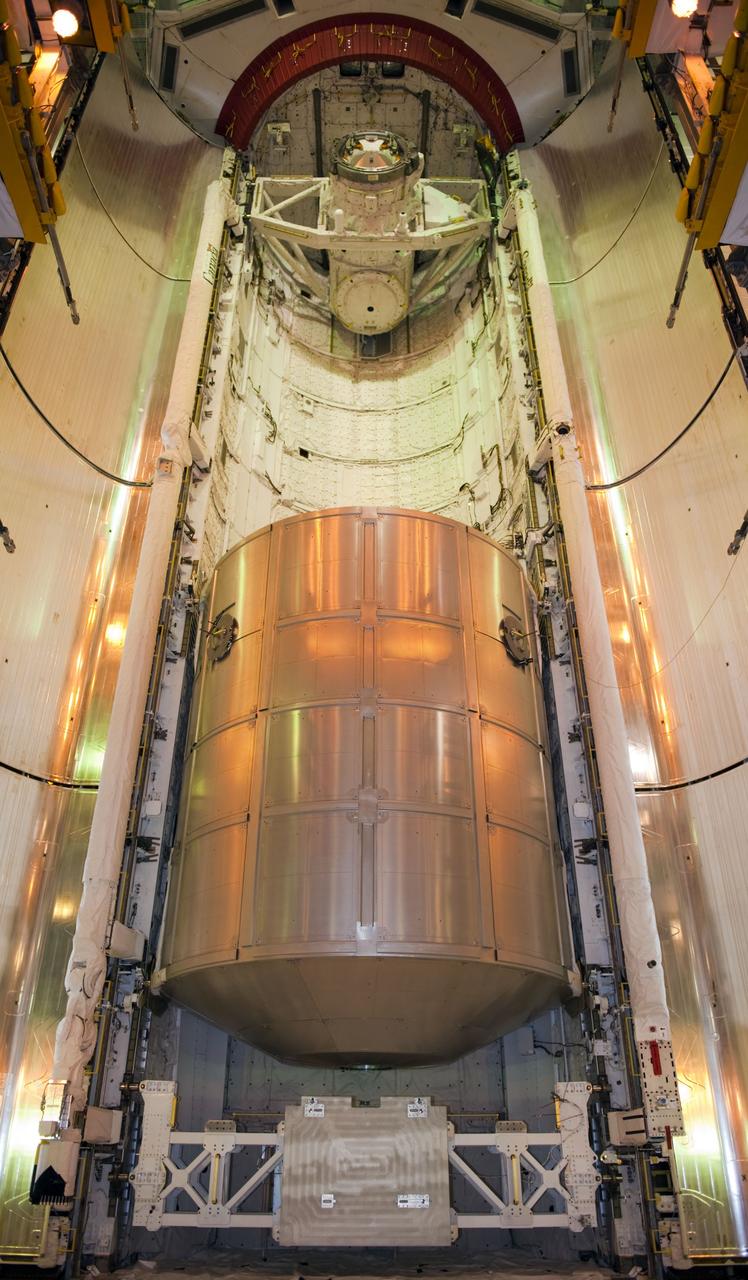
CAPE CANAVERAL, Fla. -- At NASA's Kennedy Space Center in Florida, space shuttle Atlantis' cargo, the Raffaello multi-purpose logistics module (MPLM) now is installed into the shuttle's payload bay at Launch Pad 39A. The rotating service structure that protects the shuttle from the elements and provides access has been moved back into place. STS-135 Commander Chris Ferguson, Pilot Doug Hurley and Mission Specialists Sandy Magnus and Rex Walheim are targeted to lift off on Atlantis July 8, taking with them the MPLM packed with supplies, logistics and spare parts to the station. The STS-135 mission also will fly a system to investigate the potential for robotically refueling existing satellites and return a failed ammonia pump module to help NASA better understand the failure mechanism and improve pump designs for future systems. STS-135 will be the 33rd flight of Atlantis, the 37th shuttle mission to the space station, and the 135th and final mission of NASA's Space Shuttle Program. For more information visit, www.nasa.gov/mission_pages/shuttle/shuttlemissions/sts135/index.html. Photo credit: NASA/Kim Shiflett
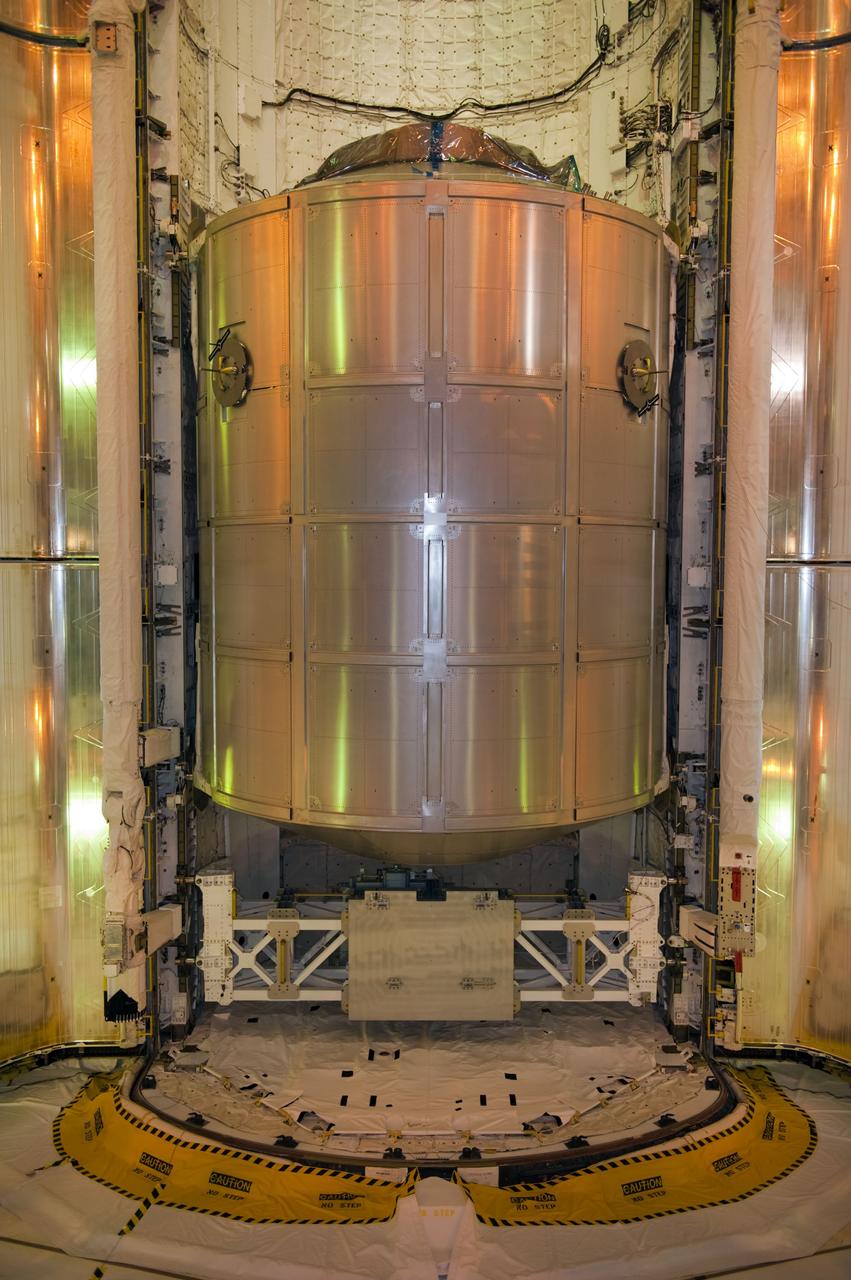
CAPE CANAVERAL, Fla. -- At NASA's Kennedy Space Center in Florida, space shuttle Atlantis' cargo, the Raffaello multi-purpose logistics module (MPLM) now is installed into the shuttle's payload bay at Launch Pad 39A. The rotating service structure that protects the shuttle from the elements and provides access has been moved back into place. STS-135 Commander Chris Ferguson, Pilot Doug Hurley and Mission Specialists Sandy Magnus and Rex Walheim are targeted to lift off on Atlantis July 8, taking with them the MPLM packed with supplies, logistics and spare parts to the station. The STS-135 mission also will fly a system to investigate the potential for robotically refueling existing satellites and return a failed ammonia pump module to help NASA better understand the failure mechanism and improve pump designs for future systems. STS-135 will be the 33rd flight of Atlantis, the 37th shuttle mission to the space station, and the 135th and final mission of NASA's Space Shuttle Program. For more information visit, www.nasa.gov/mission_pages/shuttle/shuttlemissions/sts135/index.html. Photo credit: NASA/Kim Shiflett
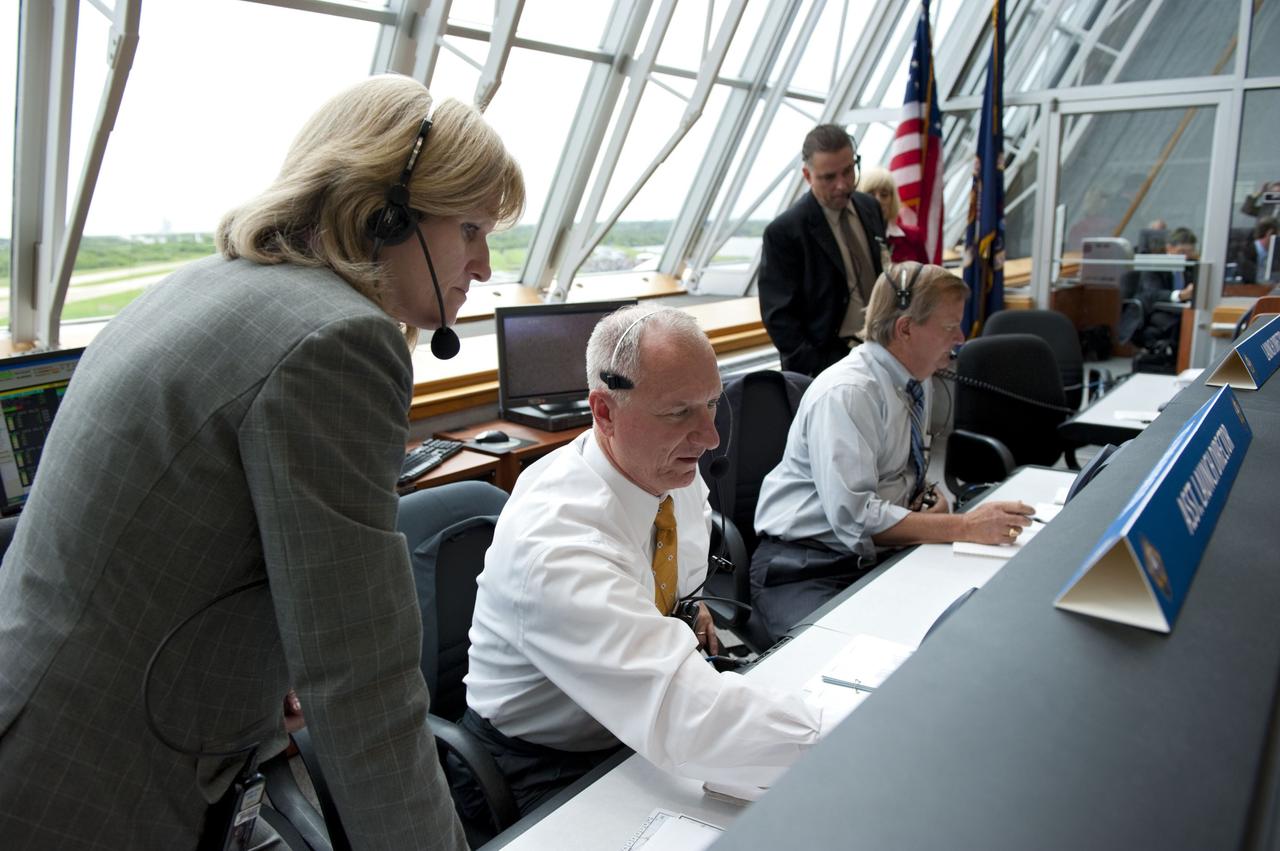
CAPE CANAVERAL, Fla. -- In Firing Room 4 of the Launch Control Center at NASA's Kennedy Space Center in Florida, launch team members monitor the countdown to the launch of space shuttle Atlantis on its STS-135 mission to the International Space Station. Seen here are Atlantis NASA Flow Director Angie Brewer, Assistant Launch Director Pete Nickolenko, Shuttle Launch Director Mike Leinbach and Payloads Launch Manager and Deputy Director of ISS and Spacecraft Processing at Kennedy, Bill Dowdell. Atlantis with its crew of four; Commander Chris Ferguson, Pilot Doug Hurley, Mission Specialists Sandy Magnus and Rex Walheim, lifted off at 11:29 a.m. EDT on July 8, 2011 to deliver the Raffaello multi-purpose logistics module packed with supplies and spare parts for the station. Atlantis also will fly the Robotic Refueling Mission experiment that will investigate the potential for robotically refueling existing satellites in orbit. In addition, Atlantis will return with a failed ammonia pump module to help NASA better understand the failure mechanism and improve pump designs for future systems. STS-135 will be the 33rd flight of Atlantis, the 37th shuttle mission to the space station, and the 135th and final mission of NASA's Space Shuttle Program. For more information, visit www.nasa.gov/mission_pages/shuttle/shuttlemissions/sts135/index.html. Photo credit: NASA/Kim Shiflett
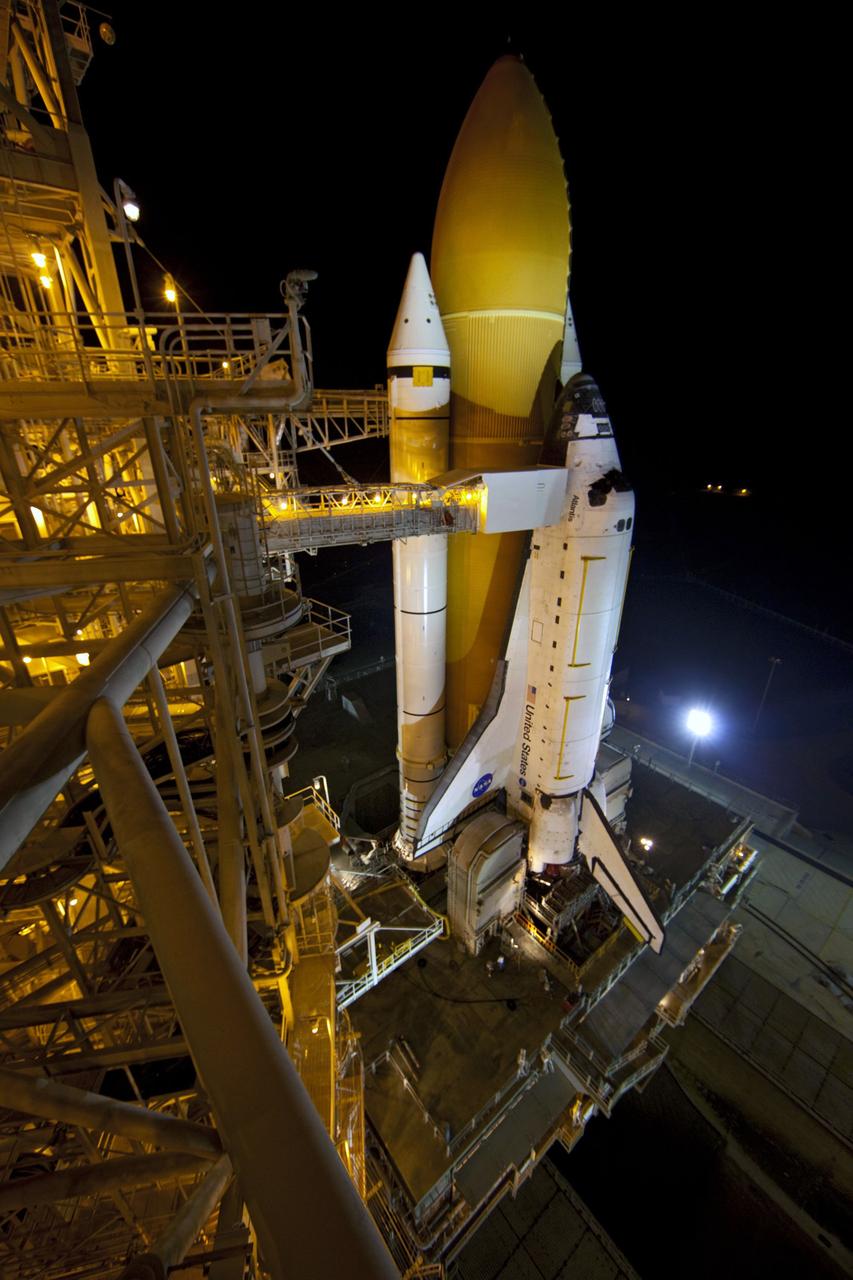
CAPE CANAVERAL, Fla. -- On Launch Pad 39A at NASA's Kennedy Space Center in Florida, the access arm supporting the pad's White Room is in place against space shuttle Atlantis. The room provides workers and astronauts an entry point to the shuttle's crew compartment. The Raffaello multi-purpose logistics module (MPLM) payload for space shuttle Atlantis' STS-135 mission to the International Space Station has arrived at the pad. The payload canister will be lifted to the payload changeout room and the payload ground-handling mechanism then will be used to transfer Raffaello out of the canister into Atlantis' payload bay. Next, the rotating service structure that protects the shuttle from the elements and provides access will be rotated back into place. Commander Chris Ferguson, Pilot Doug Hurley and Mission Specialists Sandra Magnus and Rex Walheim are targeted to lift off on Atlantis July 8, taking with them the MPLM packed with supplies, logistics and spare parts to the station. The STS-135 mission also will fly a system to investigate the potential for robotically refueling existing satellites and return a failed ammonia pump module to help NASA better understand the failure mechanism and improve pump designs for future systems. STS-135 will be the 33rd flight of Atlantis, the 37th shuttle mission to the space station, and the 135th and final mission of NASA's Space Shuttle Program. For more information visit, www.nasa.gov/mission_pages/shuttle/shuttlemissions/sts135/index.html. Photo credit: NASA/Frank Michaux
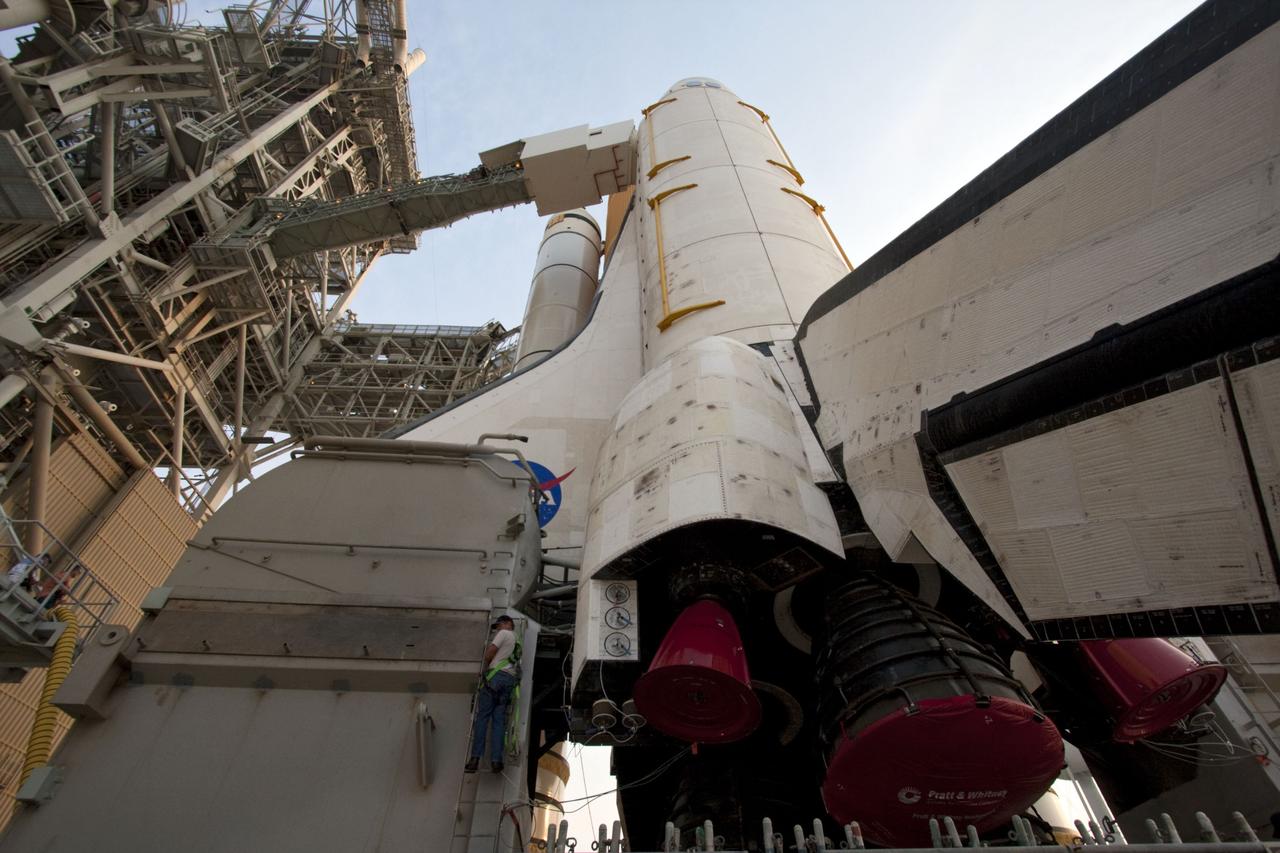
CAPE CANAVERAL, Fla. -- On Launch Pad 39A at NASA's Kennedy Space Center in Florida, the access arm supporting the pad's White Room is in place against space shuttle Atlantis. The room provides workers and astronauts an entry point to the shuttle's crew compartment. The Raffaello multi-purpose logistics module (MPLM) payload for space shuttle Atlantis' STS-135 mission to the International Space Station has been delivered to the pad. The payload canister will be lifted to the payload changeout room and the payload ground-handling mechanism then will be used to transfer Raffaello out of the canister into Atlantis' payload bay. Next, the rotating service structure that protects the shuttle from the elements and provides access will be rotated back into place. Commander Chris Ferguson, Pilot Doug Hurley and Mission Specialists Sandy Magnus and Rex Walheim are targeted to lift off on space shuttle Atlantis July 8, taking with them the MPLM packed with supplies, logistics and spare parts to the International Space Station. The STS-135 mission also will fly a system to investigate the potential for robotically refueling existing satellites and return a failed ammonia pump module to help NASA better understand the failure mechanism and improve pump designs for future systems. STS-135 will be the 33rd flight of Atlantis, the 37th shuttle mission to the space station, and the 135th and final mission of NASA's Space Shuttle Program. For more information visit, www.nasa.gov/mission_pages/shuttle/shuttlemissions/sts135/index.html. Photo credit: NASA/Ken Thornsley
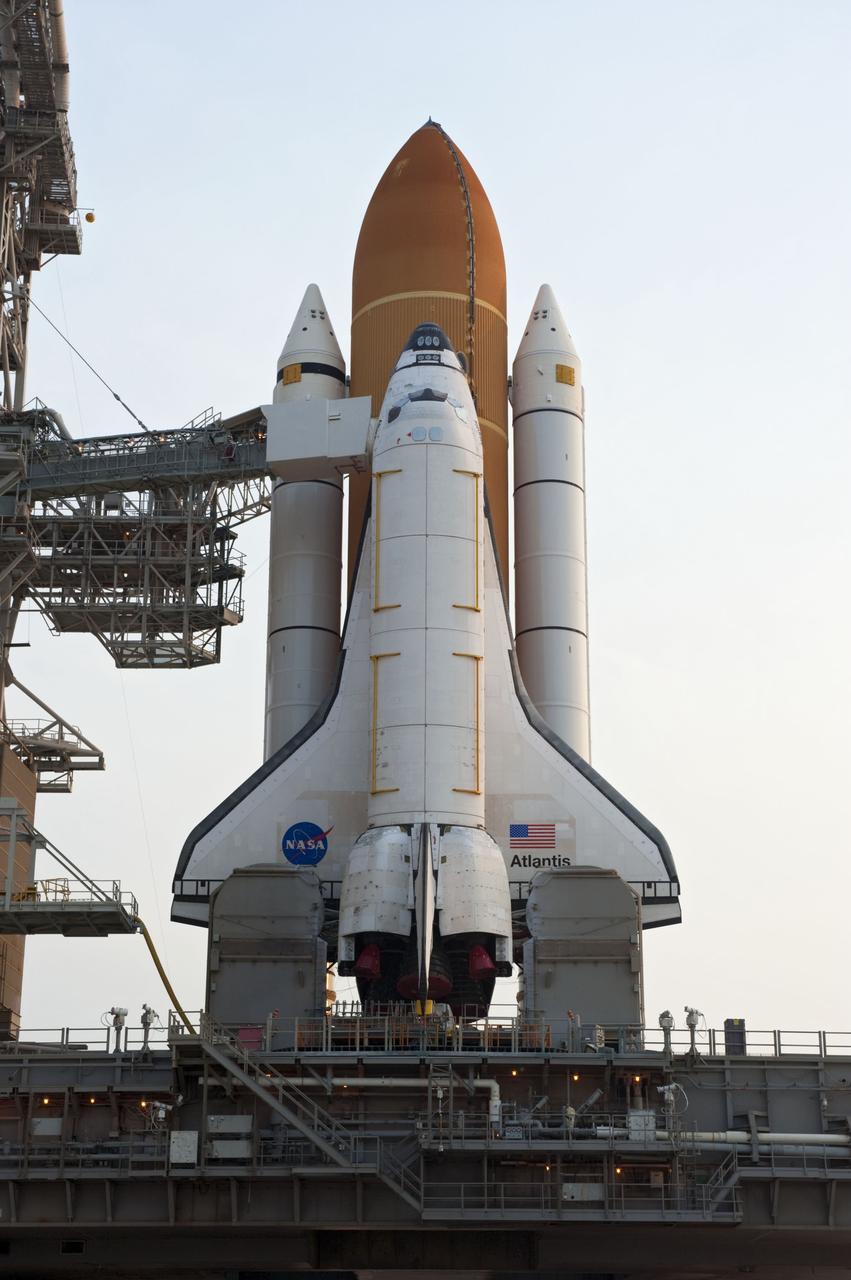
CAPE CANAVERAL, Fla. -- On Launch Pad 39A at NASA's Kennedy Space Center in Florida, the access arm supporting the pad's White Room is in place against space shuttle Atlantis. The room provides workers and astronauts an entry point to the shuttle's crew compartment. The Raffaello multi-purpose logistics module (MPLM) payload for space shuttle Atlantis' STS-135 mission to the International Space Station has arrived at the pad. The payload canister will be lifted to the payload changeout room and the payload ground-handling mechanism then will be used to transfer Raffaello out of the canister into Atlantis' payload bay. Next, the rotating service structure that protects the shuttle from the elements and provides access will be rotated back into place. Commander Chris Ferguson, Pilot Doug Hurley and Mission Specialists Sandra Magnus and Rex Walheim are targeted to lift off on space shuttle Atlantis July 8, taking with them the MPLM packed with supplies, logistics and spare parts to the International Space Station. The STS-135 mission also will fly a system to investigate the potential for robotically refueling existing satellites and return a failed ammonia pump module to help NASA better understand the failure mechanism and improve pump designs for future systems. STS-135 will be the 33rd flight of Atlantis, the 37th shuttle mission to the space station, and the 135th and final mission of NASA's Space Shuttle Program. For more information visit, www.nasa.gov/mission_pages/shuttle/shuttlemissions/sts135/index.html. Photo credit: NASA/Kim Shiflett