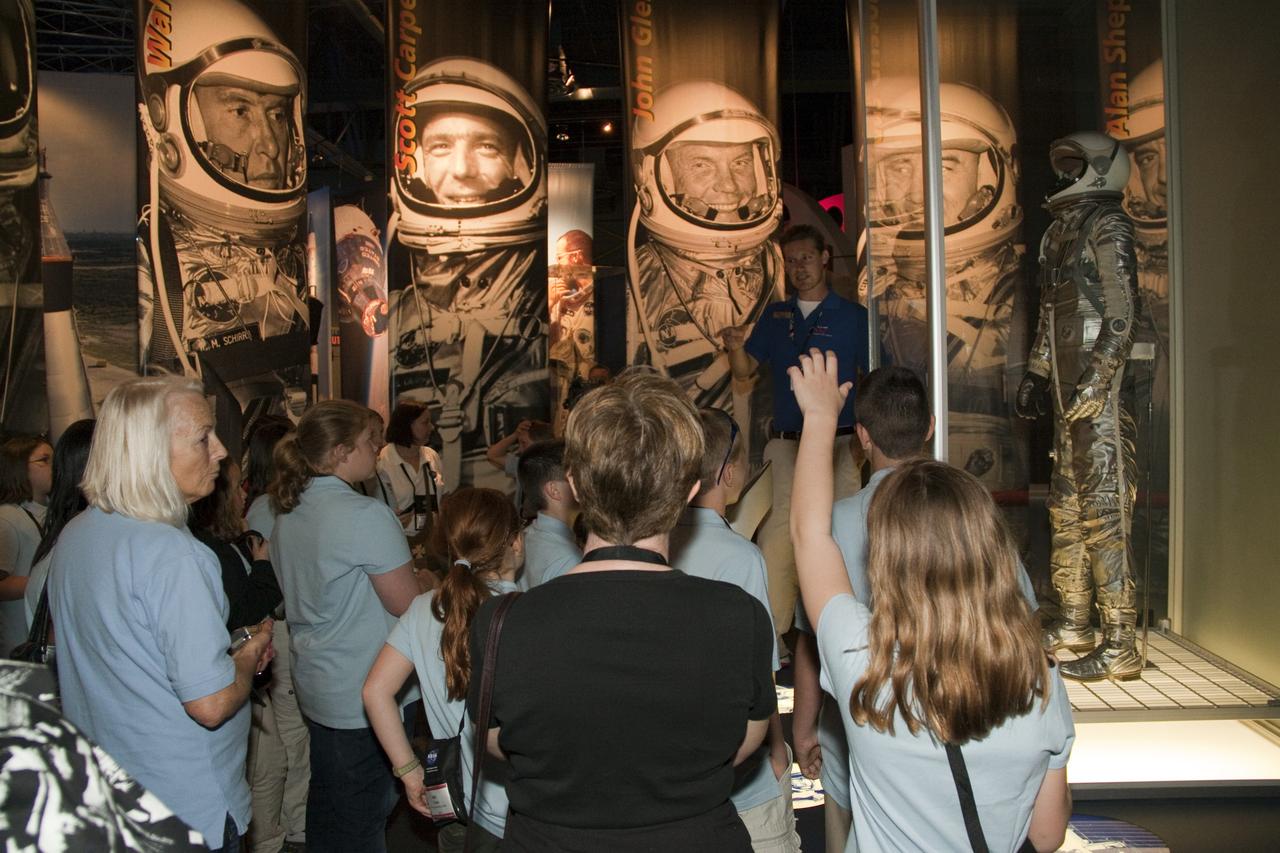
CAPE CANAVERAL, Fla. -- During the NASA Explorer Schools Symposium at Kennedy Space Center in Florida, students and teachers tour the U.S. Astronaut Hall of Fame. About 60 fourth- through 12-grade students from across the nation are at the center May 4-7 participating in tours of processing and launch facilities, as well as several educational activities and a career panel question-and-answer session. About 30 teachers will receive professional development opportunities during the symposium. The participants were competitively selected after they completed an original investigation focused on existing NASA missions or research interests. Photo Credit: NASA/Jack Pfaller
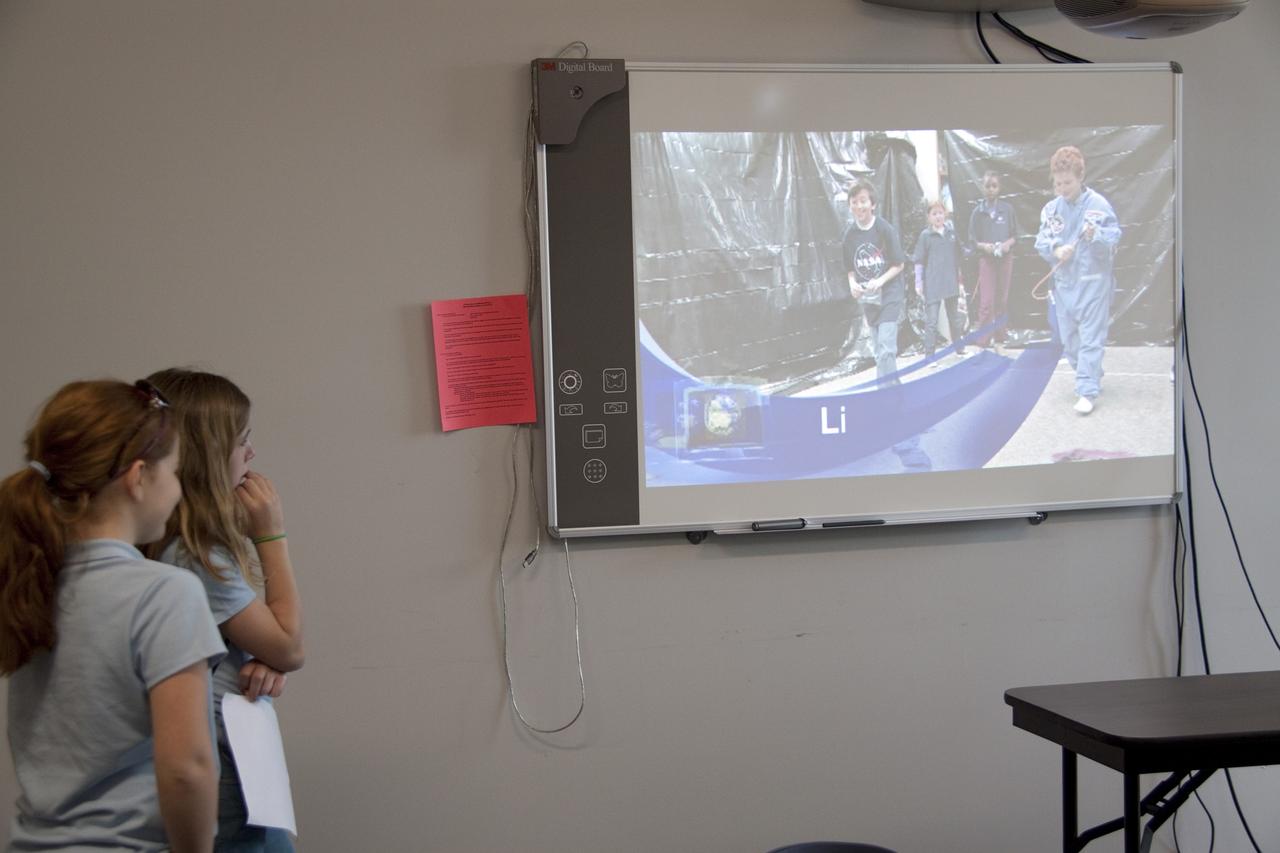
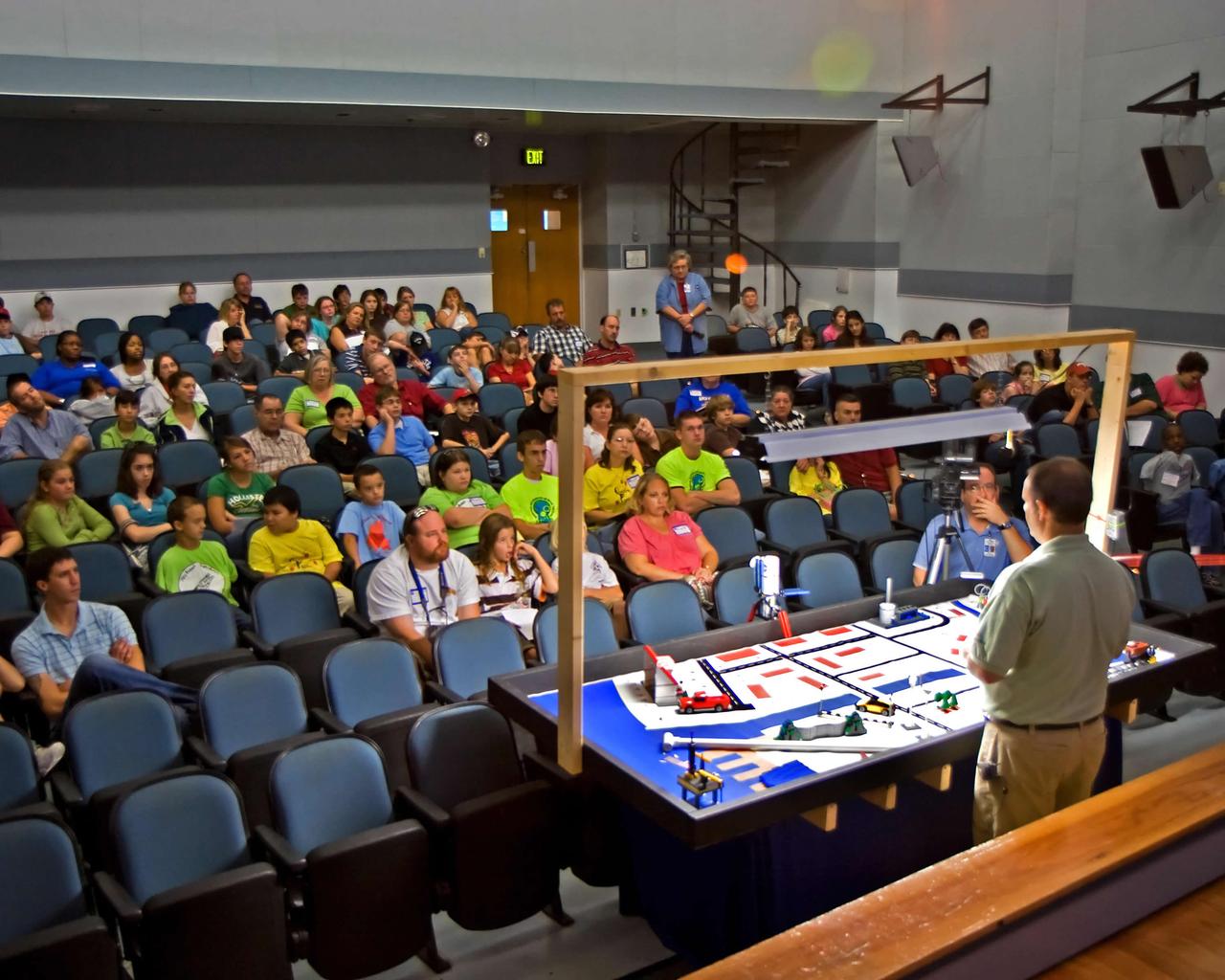
CAPE CANAVERAL, Fla. -- Students present their investigation project to their peers, scientists, engineers and education specialists during the NASA Explorer Schools Symposium at Kennedy Space Center in Florida. About 60 fourth- through 12-grade students from across the nation are at the center May 4-7 participating in tours of processing and launch facilities and the U.S. Astronaut Hall of Fame, as well as several educational activities and a career panel question-and-answer session. About 30 teachers will receive professional development opportunities during the symposium. The participants were competitively selected after they completed an original investigation focused on existing NASA missions or research interests. Photo Credit: NASA/Jack Pfaller
CAPE CANAVERAL, Fla. -- Students present their investigation project to their peers, scientists, engineers and education specialists during the NASA Explorer Schools Symposium at Kennedy Space Center in Florida. About 60 fourth- through 12-grade students from across the nation are at the center May 4-7 participating in tours of processing and launch facilities and the U.S. Astronaut Hall of Fame, as well as several educational activities and a career panel question-and-answer session. About 30 teachers will receive professional development opportunities during the symposium. The participants were competitively selected after they completed an original investigation focused on existing NASA missions or research interests. Photo Credit: NASA/Jack Pfaller
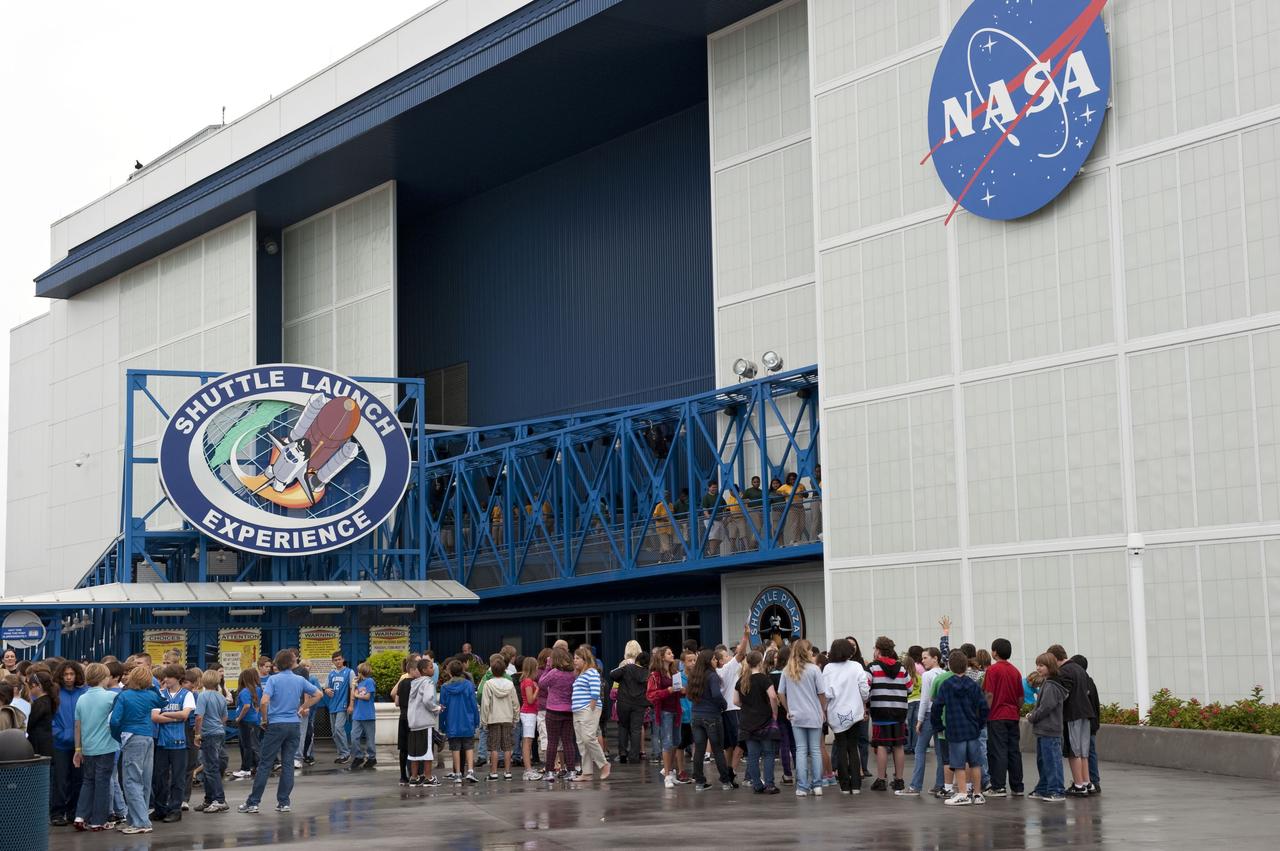
CAPE CANAVERAL, Fla. -- Brevard County sixth-graders participate in the eighth annual Space Week at the Kennedy Space Center Visitor Complex in Florida. Here, the students wait to take a ride on the Shuttle Launch Experience, which mimics the sights, sounds and sensations of a real space shuttle launch. About 5,000 students will participate throughout the 11-day event, which contains fun space exploration activities designed to emphasize the importance of science, technology, engineering and math (STEM). Space Week is sponsored by NASA Education, Brevard Public Schools, Delaware North Companies Parks and Resorts, and the Florida Chapter of the National Space Club. Photo Credit: NASA/Kim Shiflett
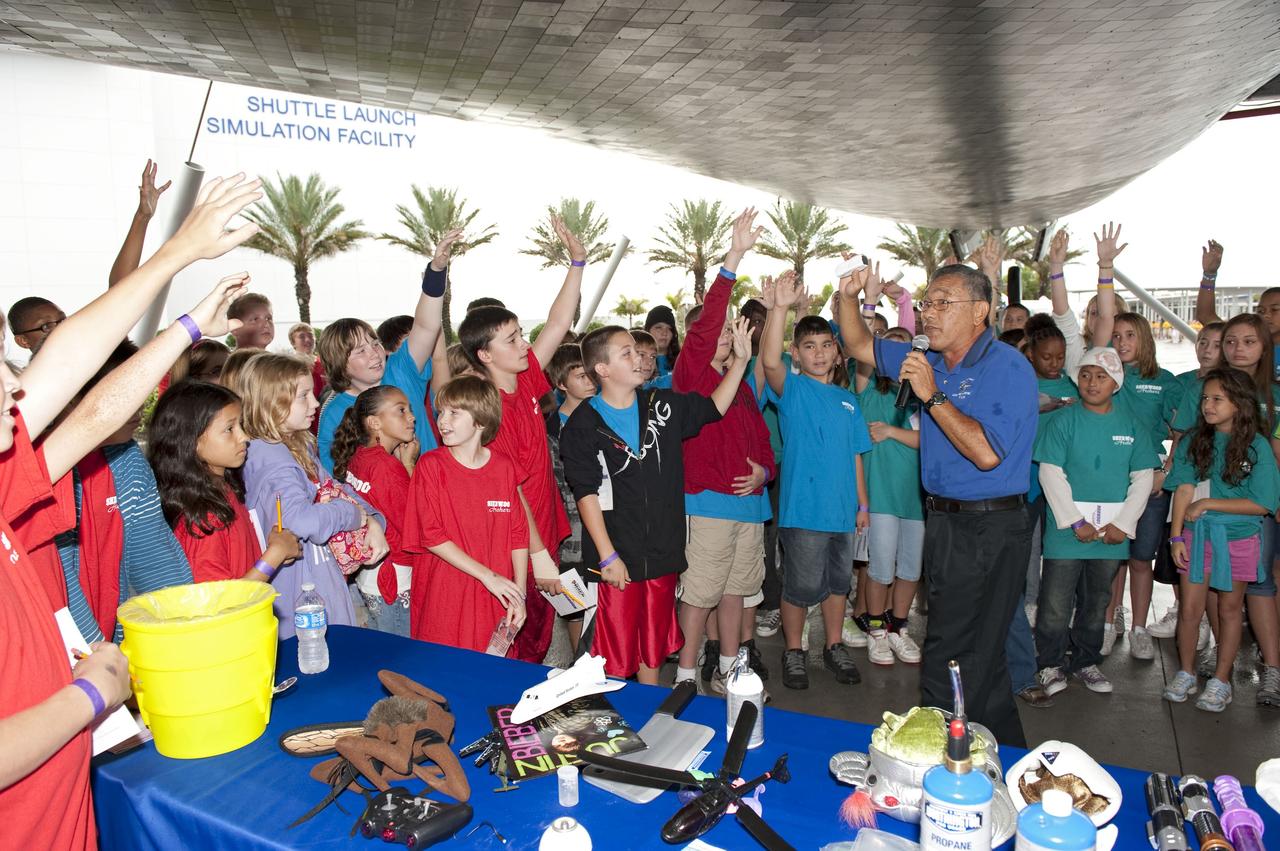
CAPE CANAVERAL, Fla. -- Brevard County sixth-graders participate in the eighth annual Space Week at the Kennedy Space Center Visitor Complex in Florida. Here, Herbert Yamada, an engineer with Lockheed Martin, uses fun props to teach students about NASA. About 5,000 students will participate throughout the 11-day event, which contains fun space exploration activities designed to emphasize the importance of science, technology, engineering and math (STEM). Space Week is sponsored by NASA Education, Brevard Public Schools, Delaware North Companies Parks and Resorts, and the Florida Chapter of the National Space Club. Photo Credit: NASA/Kim Shiflett
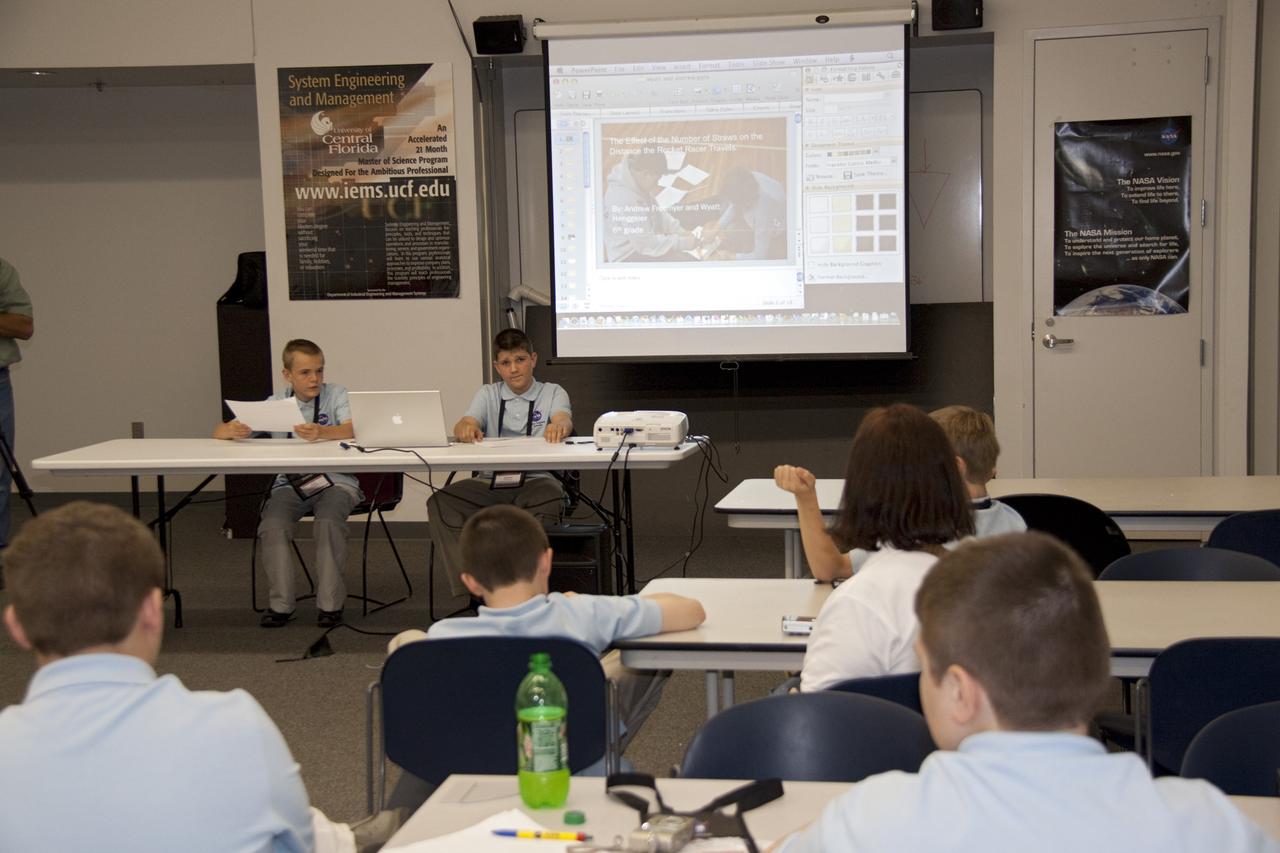
CAPE CANAVERAL, Fla. -- Students present their investigation project to their peers, scientists, engineers and education specialists during the NASA Explorer Schools Symposium at Kennedy Space Center in Florida. About 60 fourth- through 12-grade students from across the nation are at the center May 4-7 participating in tours of processing and launch facilities and the U.S. Astronaut Hall of Fame, as well as several educational activities and a career panel question-and-answer session. About 30 teachers will receive professional development opportunities during the symposium. The participants were competitively selected after they completed an original investigation focused on existing NASA missions or research interests. Photo Credit: NASA/Jack Pfaller
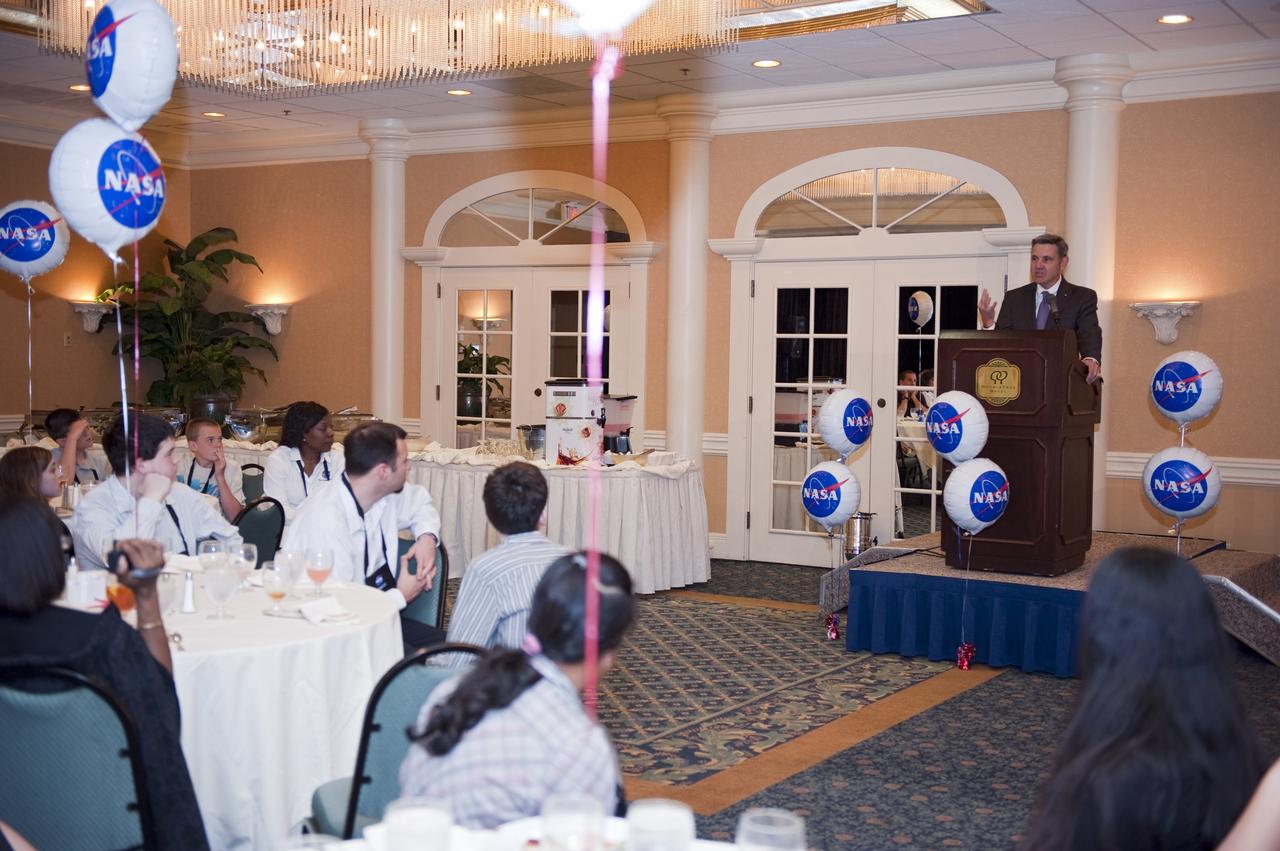
COCOA BEACH, Fla. -- NASA Kennedy Space Center Director Bob Cabana encourages fourth- through 12-grade students and their teachers from across the nation to "dream big" during the NASA Explorer Schools Symposium in Florida. During the event, May 4-7, about 60 students will tour Kennedy, the U.S. Astronaut Hall of Fame, and participate in several educational activities and a career panel question-and-answer session. The symposium also offers professional development opportunities for about 30 teachers. The participants were competitively selected after they completed an original investigation focused on existing NASA missions or research interests. Photo Credit: NASA/Kim Shiflett
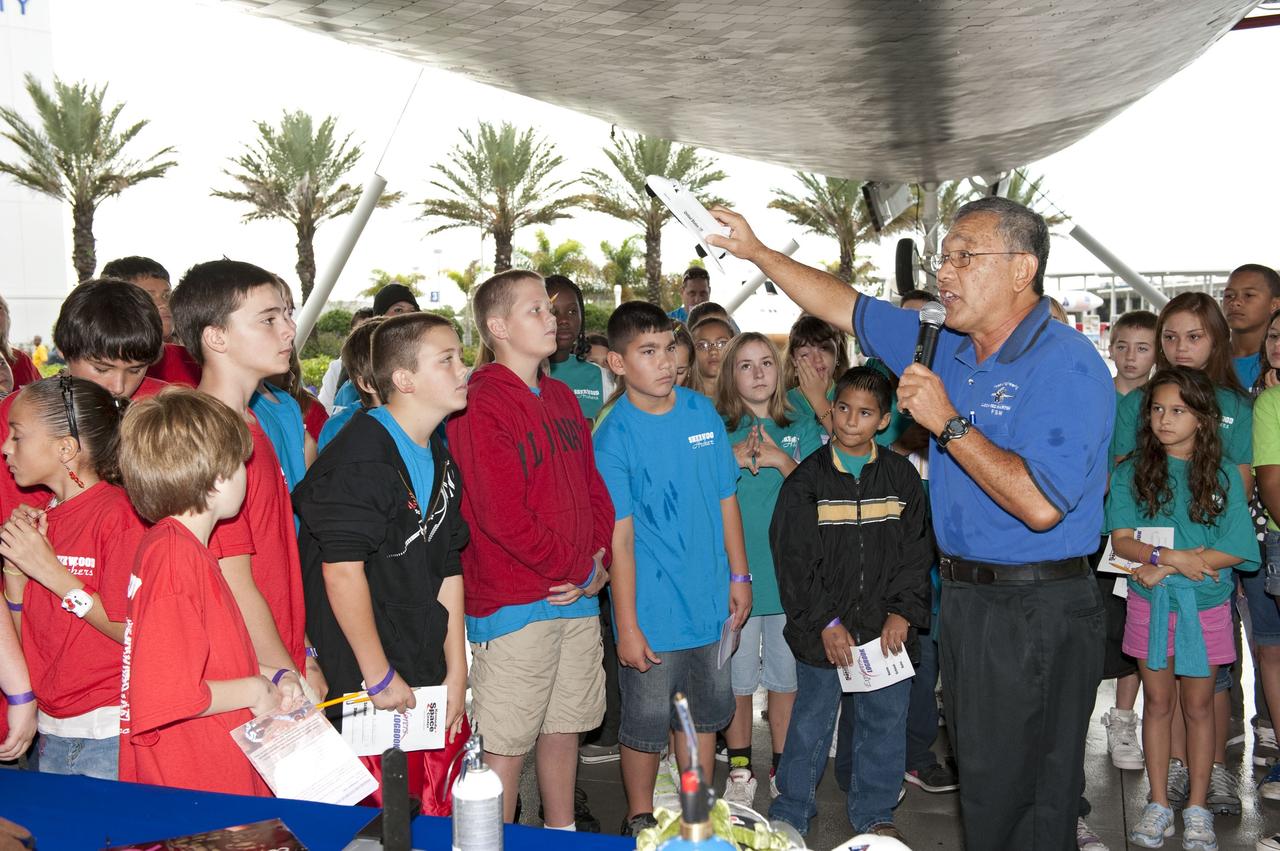
CAPE CANAVERAL, Fla. -- Brevard County sixth-graders participate in the eighth annual Space Week at the Kennedy Space Center Visitor Complex in Florida. Here, Herbert Yamada, an engineer with Lockheed Martin, teaches students about NASA's space shuttle. About 5,000 students will participate throughout the 11-day event, which contains fun space exploration activities designed to emphasize the importance of science, technology, engineering and math (STEM). Space Week is sponsored by NASA Education, Brevard Public Schools, Delaware North Companies Parks and Resorts, and the Florida Chapter of the National Space Club. Photo Credit: NASA/Kim Shiflett
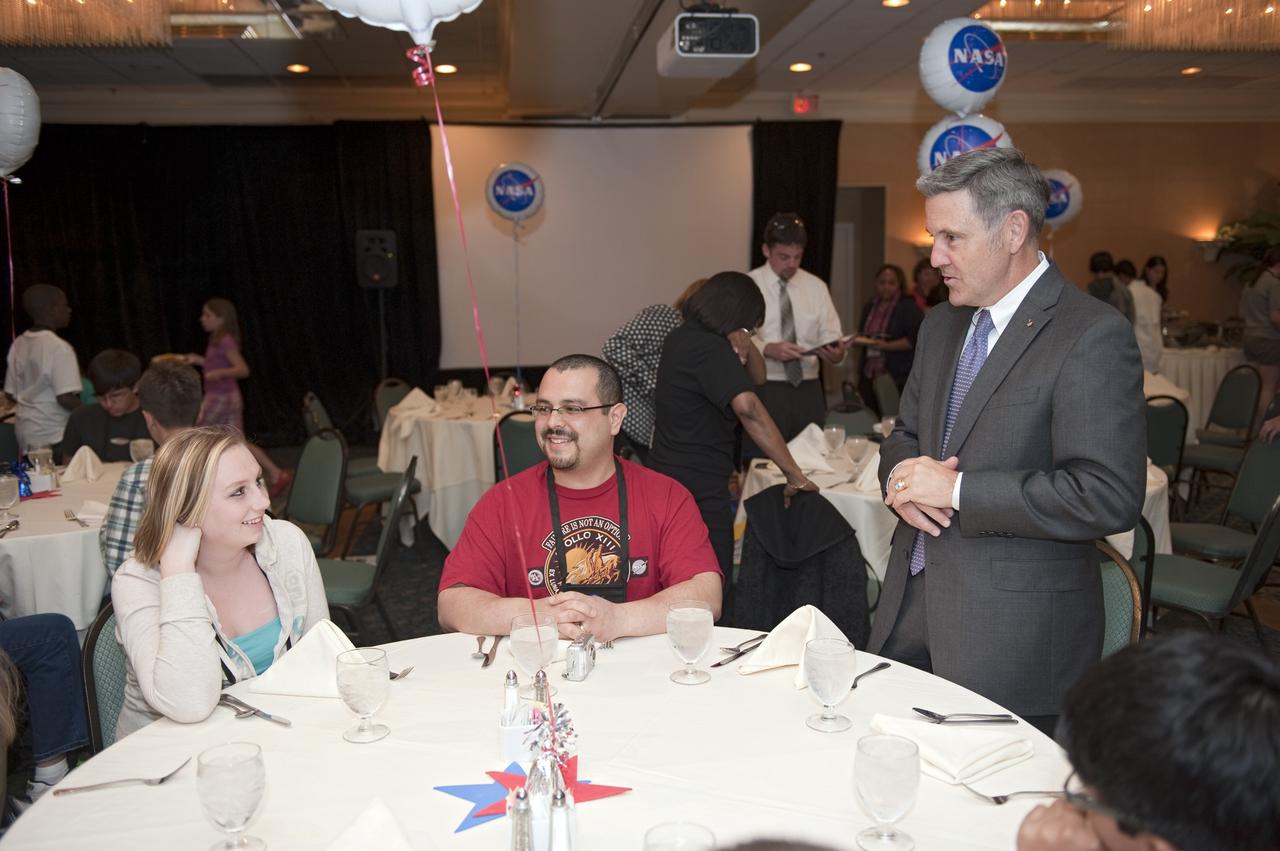
COCOA BEACH, Fla. -- NASA Kennedy Space Center Director Bob Cabana encourages fourth- through 12-grade students and their teachers from across the nation to "dream big" during the NASA Explorer Schools Symposium in Florida. During the event, May 4-7, about 60 students will tour Kennedy, the U.S. Astronaut Hall of Fame, and participate in several educational activities and a career panel question-and-answer session. The symposium also offers professional development opportunities for about 30 teachers. The participants were competitively selected after they completed an original investigation focused on existing NASA missions or research interests. Photo Credit: NASA/Kim Shiflett
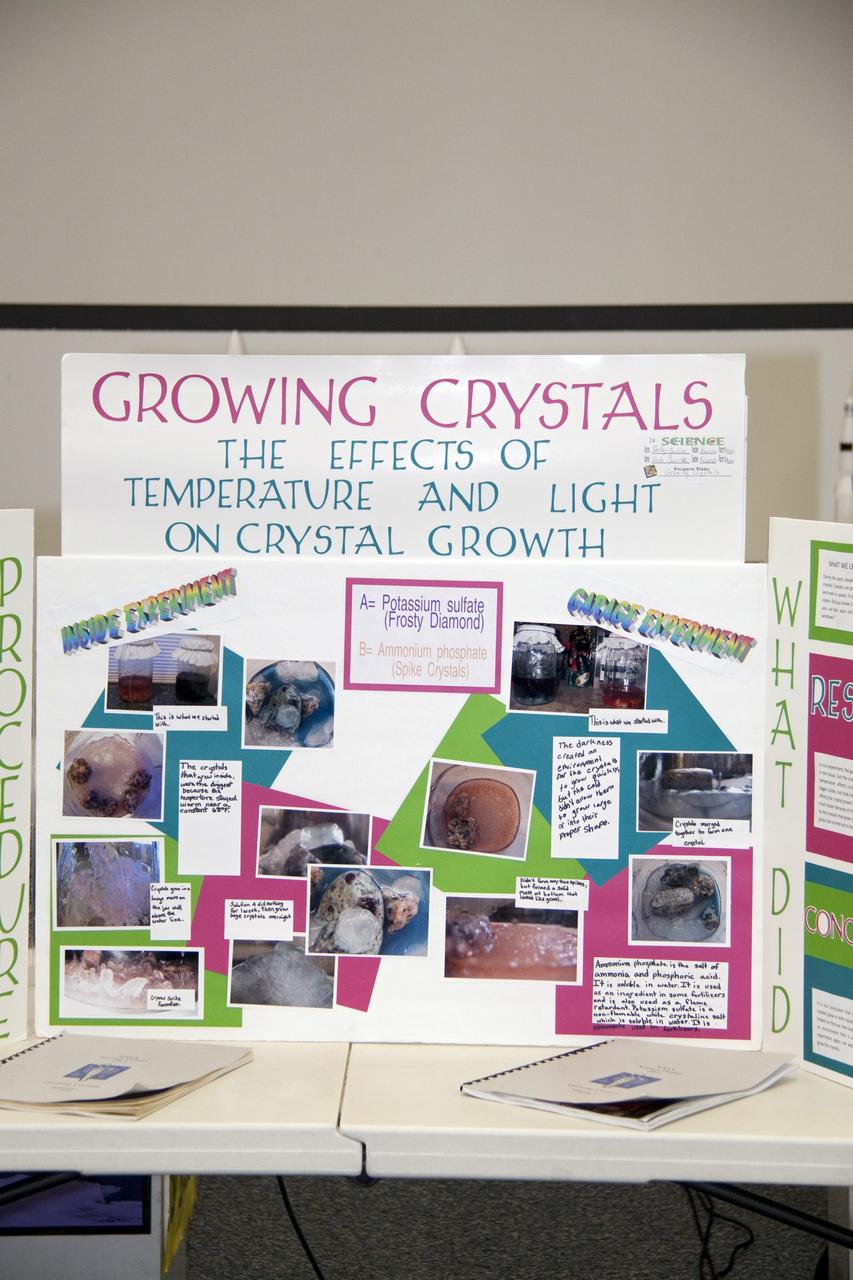
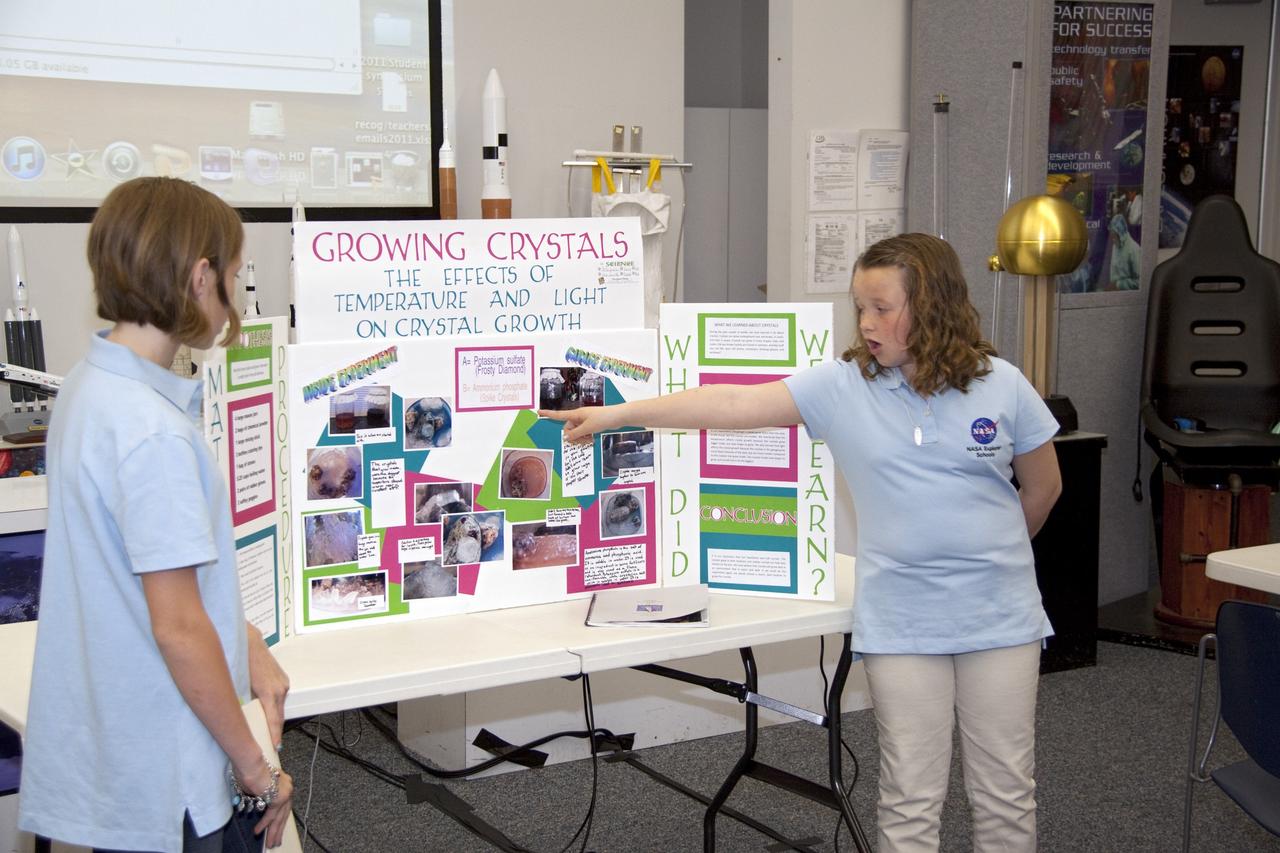
CAPE CANAVERAL, Fla. -- A student investigation project is on display during the NASA Explorer Schools Symposium at Kennedy Space Center in Florida. About 60 fourth- through 12-grade students from across the nation are at the center May 4-7 participating in tours of processing and launch facilities and the U.S. Astronaut Hall of Fame, as well as several educational activities and a career panel question-and-answer session. About 30 teachers will receive professional development opportunities during the symposium. The participants were competitively selected after they completed an original investigation focused on existing NASA missions or research interests. Photo Credit: NASA/Jack Pfaller
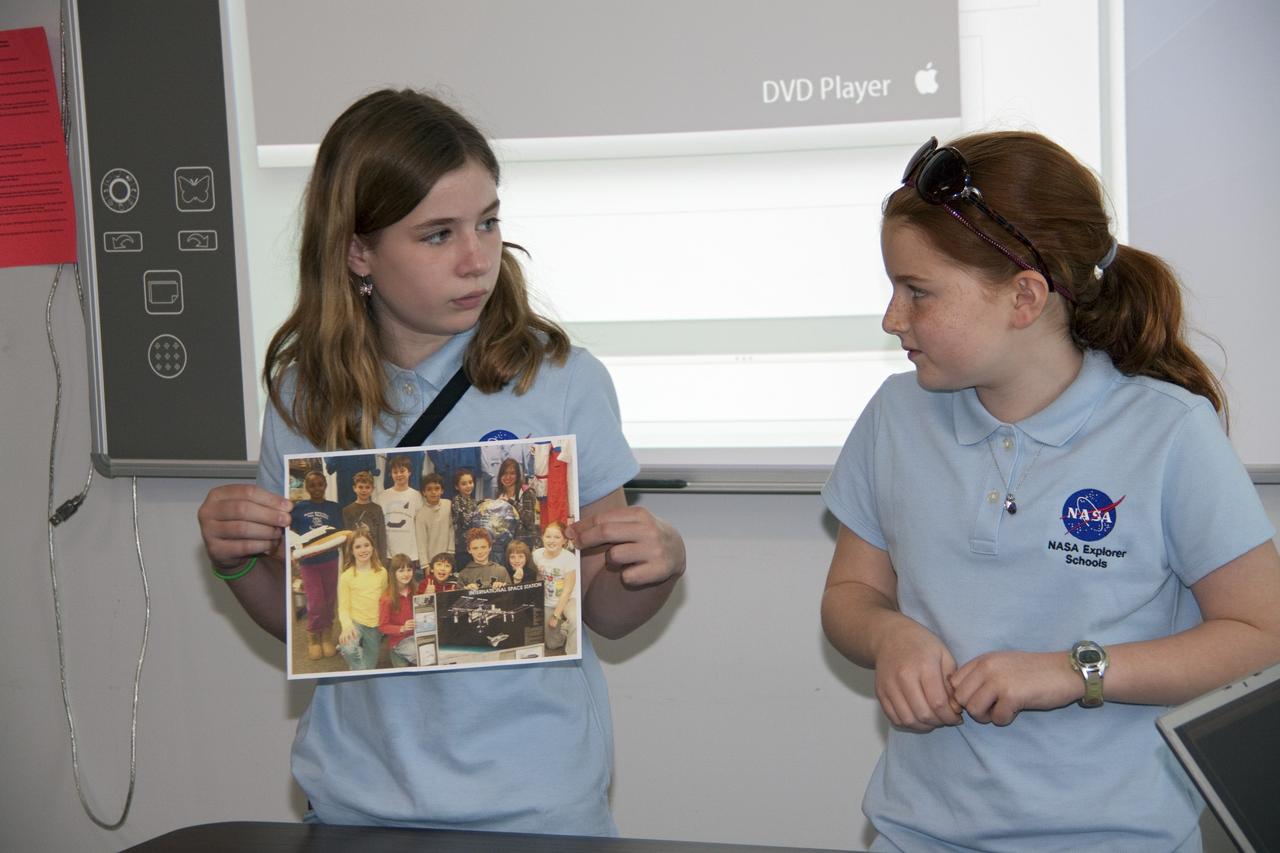
CAPE CANAVERAL, Fla. -- Students present their investigation project to their peers, scientists, engineers and education specialists during the NASA Explorer Schools Symposium at Kennedy Space Center in Florida. About 60 fourth- through 12-grade students from across the nation are at the center May 4-7 participating in tours of processing and launch facilities and the U.S. Astronaut Hall of Fame, as well as several educational activities and a career panel question-and-answer session. About 30 teachers will receive professional development opportunities during the symposium. The participants were competitively selected after they completed an original investigation focused on existing NASA missions or research interests. Photo Credit: NASA/Jack Pfaller
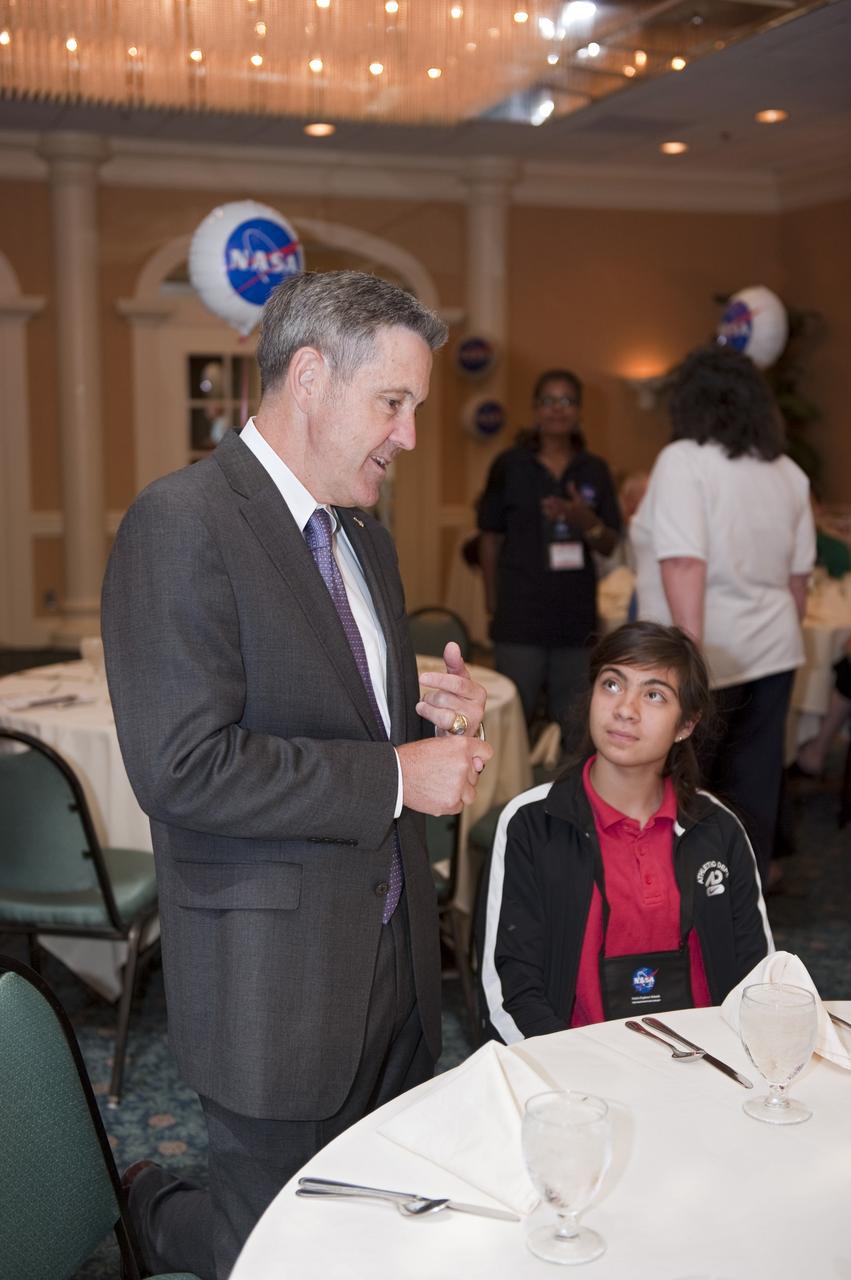
COCOA BEACH, Fla. -- NASA Kennedy Space Center Director Bob Cabana encourages fourth- through 12-grade students and their teachers from across the nation to "dream big" during the NASA Explorer Schools Symposium in Florida. During the event, May 4-7, about 60 students will tour Kennedy, the U.S. Astronaut Hall of Fame, and participate in several educational activities and a career panel question-and-answer session. The symposium also offers professional development opportunities for about 30 teachers. The participants were competitively selected after they completed an original investigation focused on existing NASA missions or research interests. Photo Credit: NASA/Kim Shiflett
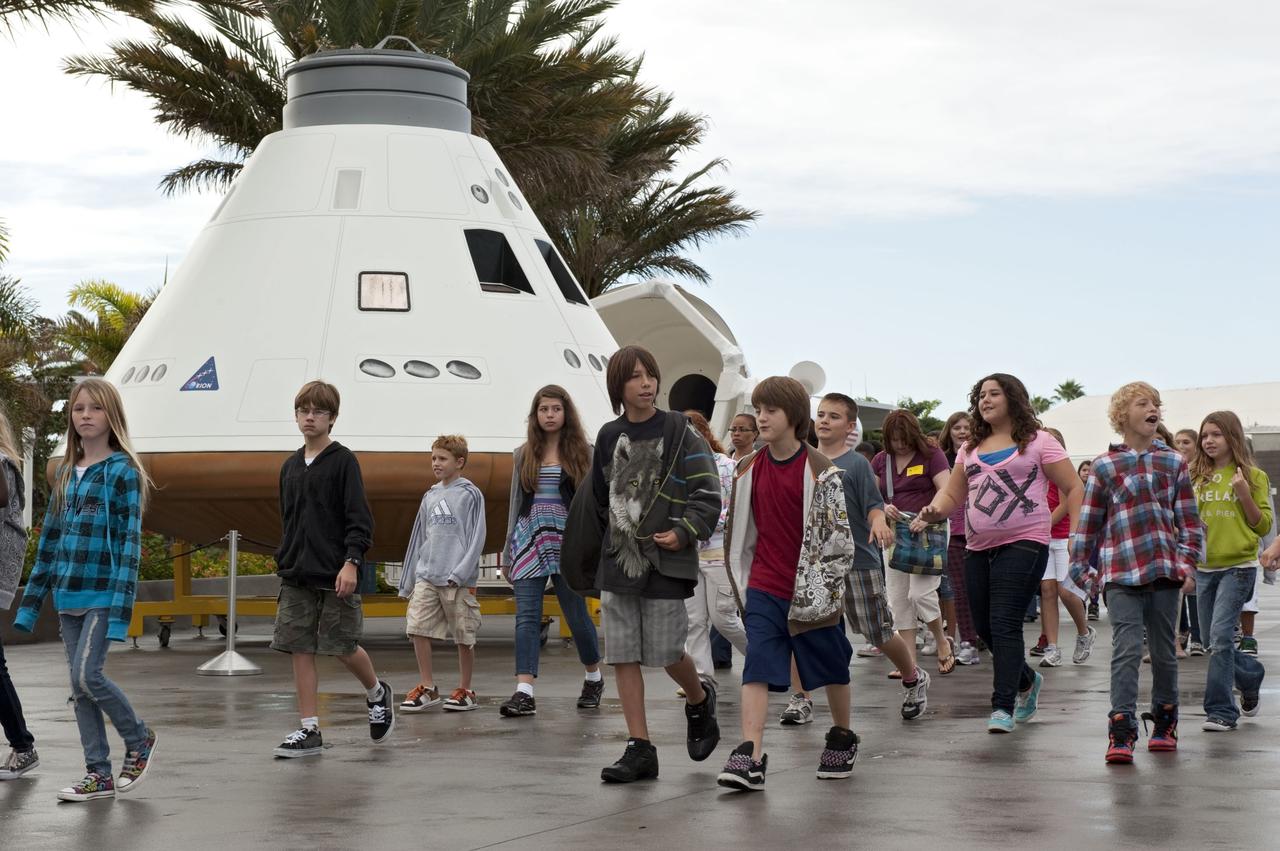
CAPE CANAVERAL, Fla. -- Brevard County sixth-graders participate in the eighth annual Space Week at the Kennedy Space Center Visitor Complex in Florida. Seen behind the students is a mock-up of NASA's Orion crew exploration vehicle, which was built by Guard-Lee Inc. of Apopka, Fla. About 5,000 students will participate throughout the 11-day event, which contains fun space exploration activities designed to emphasize the importance of science, technology, engineering and math (STEM). Space Week is sponsored by NASA Education, Brevard Public Schools, Delaware North Companies Parks and Resorts, and the Florida Chapter of the National Space Club. Photo Credit: NASA/Kim Shiflett
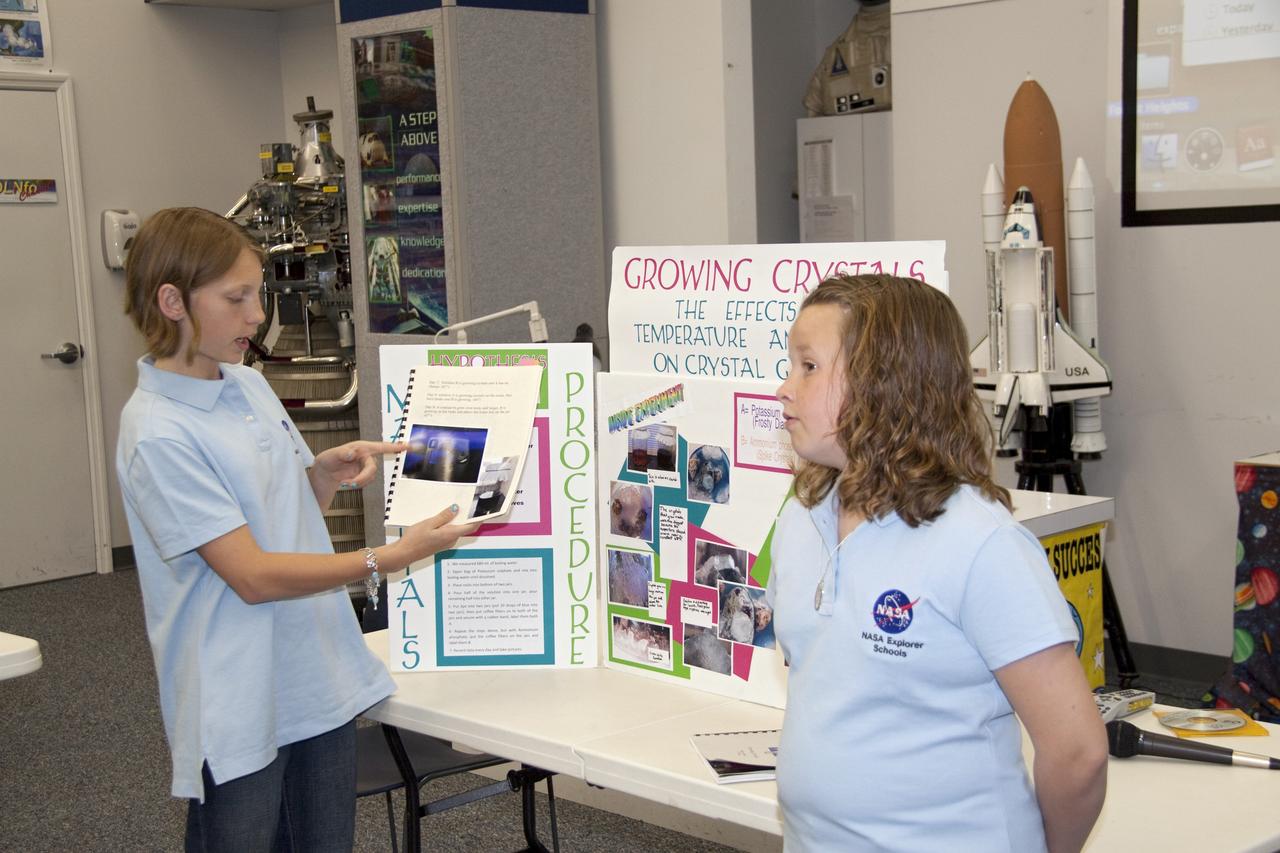
CAPE CANAVERAL, Fla. -- Students present their investigation project to their peers, scientists, engineers and education specialists during the NASA Explorer Schools Symposium at Kennedy Space Center in Florida. About 60 fourth- through 12-grade students from across the nation are at the center May 4-7 participating in tours of processing and launch facilities and the U.S. Astronaut Hall of Fame, as well as several educational activities and a career panel question-and-answer session. About 30 teachers will receive professional development opportunities during the symposium. The participants were competitively selected after they completed an original investigation focused on existing NASA missions or research interests. Photo Credit: NASA/Jack Pfaller
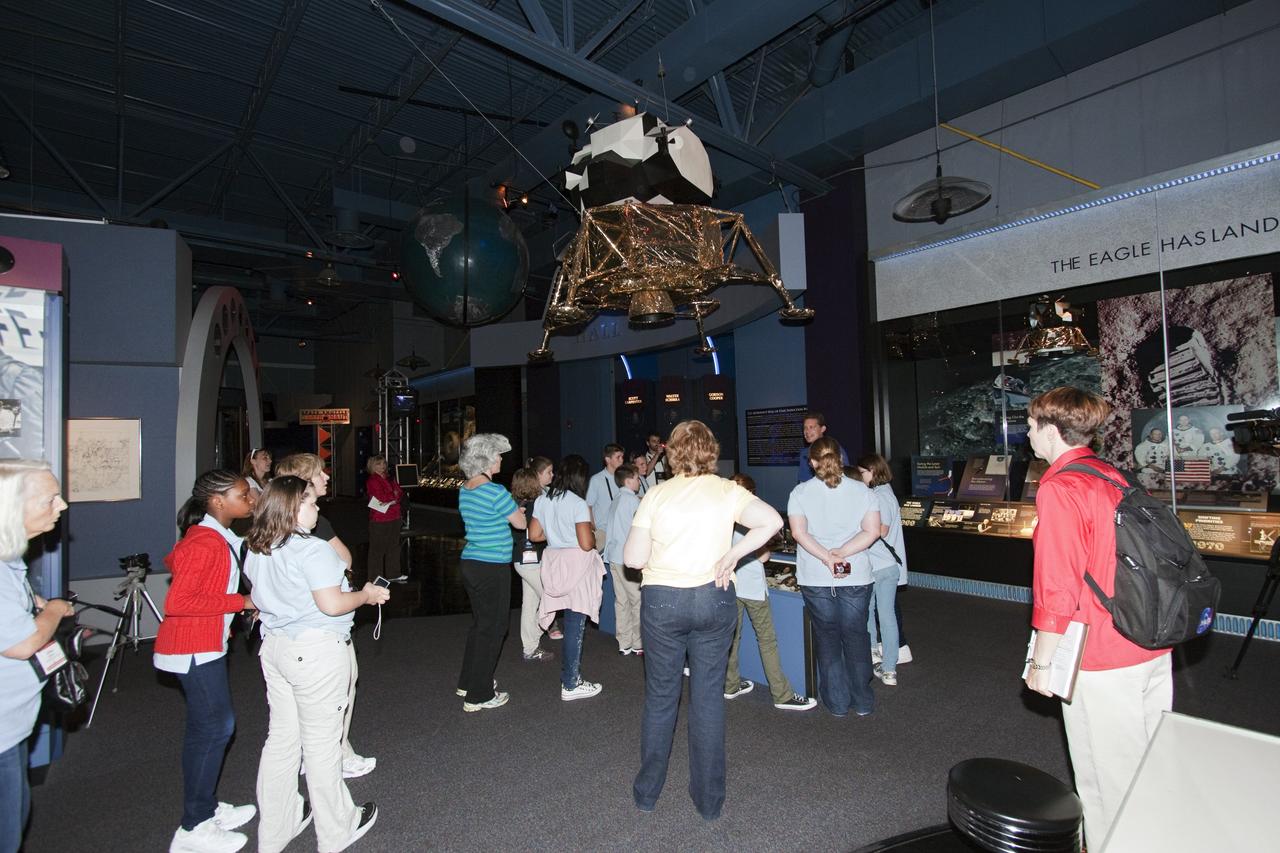
CAPE CANAVERAL, Fla. -- During the NASA Explorer Schools Symposium at Kennedy Space Center in Florida, students and teachers tour the U.S. Astronaut Hall of Fame. About 60 fourth- through 12-grade students from across the nation are at the center May 4-7 participating in tours of processing and launch facilities, as well as several educational activities and a career panel question-and-answer session. About 30 teachers will receive professional development opportunities during the symposium. The participants were competitively selected after they completed an original investigation focused on existing NASA missions or research interests. Photo Credit: NASA/Jack Pfaller
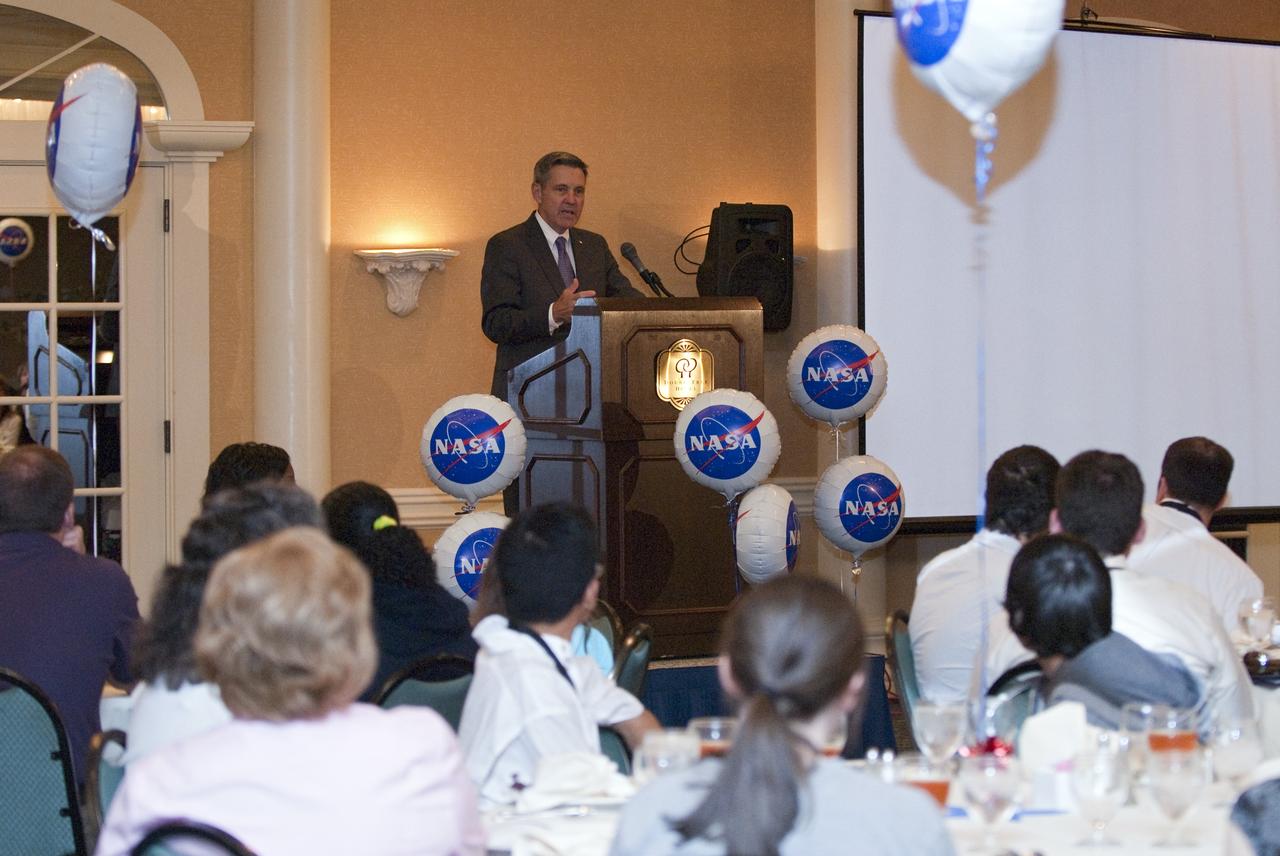
COCOA BEACH, Fla. -- NASA Kennedy Space Center Director Bob Cabana talks to fourth- through 12-grade students and their teachers from across the nation during the NASA Explorer Schools Symposium in Florida. During the event, May 4-7, about 60 students will tour Kennedy, the U.S. Astronaut Hall of Fame, and participate in several educational activities and a career panel question-and-answer session. The symposium also offers professional development opportunities for about 30 teachers. The participants were competitively selected after they completed an original investigation focused on existing NASA missions or research interests. Photo Credit: NASA/Kim Shiflett
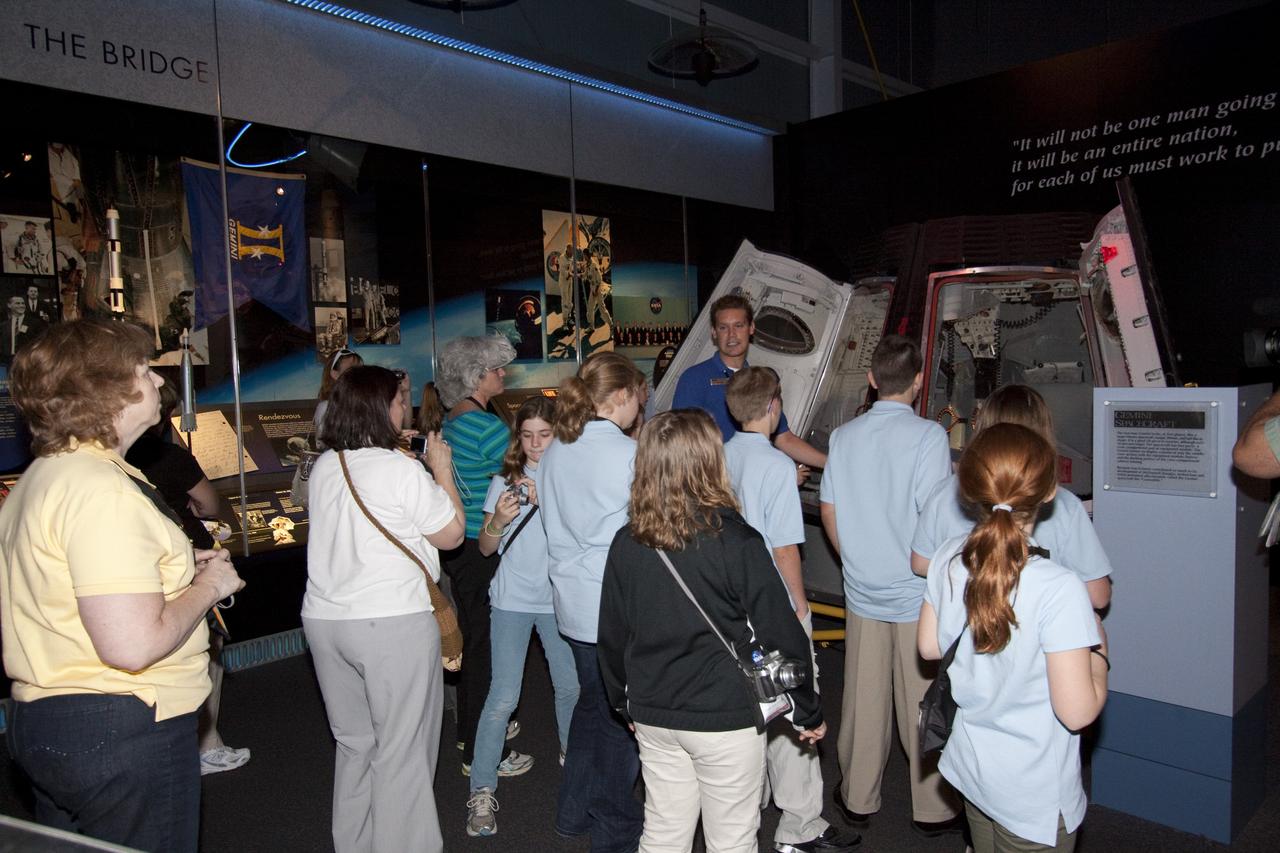
CAPE CANAVERAL, Fla. -- During the NASA Explorer Schools Symposium at Kennedy Space Center in Florida, students and teachers tour the U.S. Astronaut Hall of Fame. About 60 fourth- through 12-grade students from across the nation are at the center May 4-7 participating in tours of processing and launch facilities, as well as several educational activities and a career panel question-and-answer session. About 30 teachers will receive professional development opportunities during the symposium. The participants were competitively selected after they completed an original investigation focused on existing NASA missions or research interests. Photo Credit: NASA/Jack Pfaller
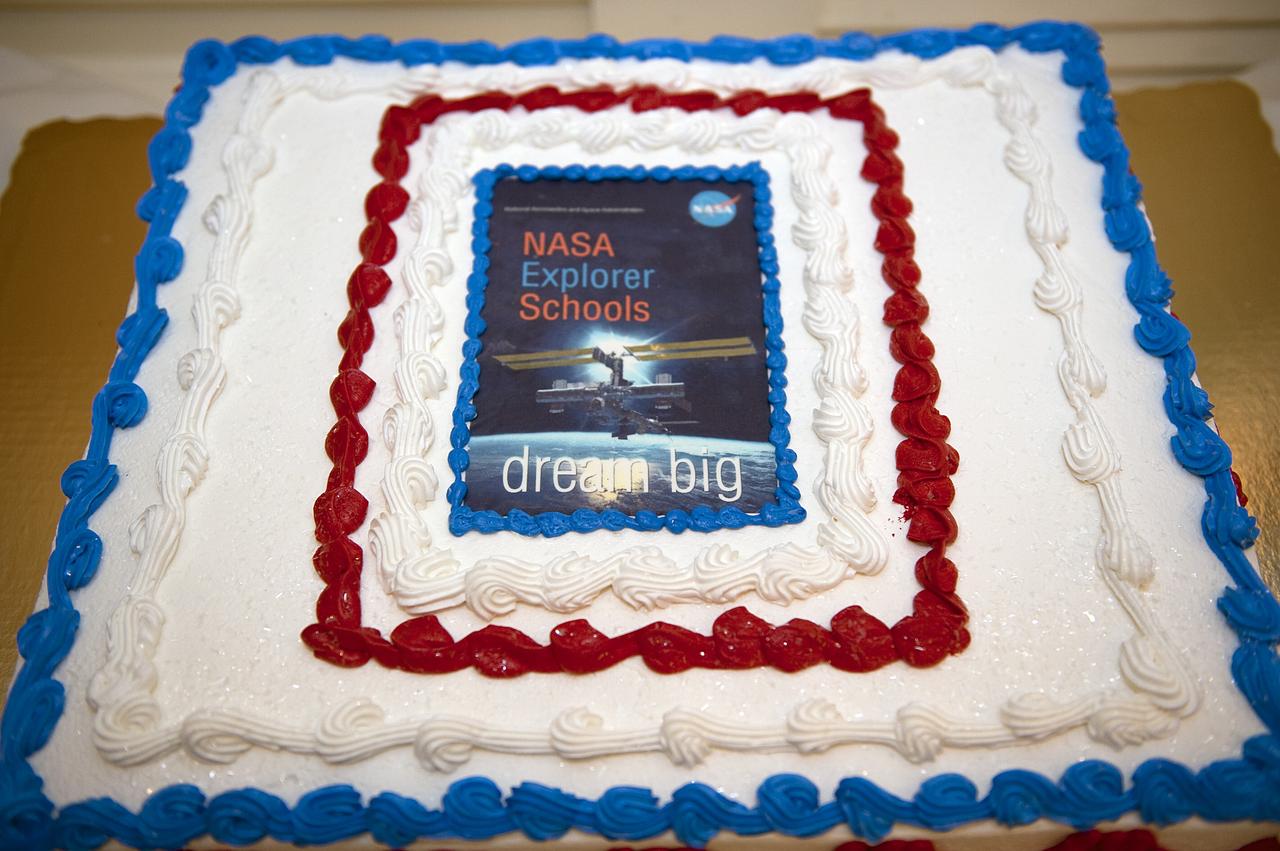
COCOA BEACH, Fla. -- A cake encourages fourth- through 12-grade students and their teachers from across the nation to "dream big" during the NASA Explorer Schools Symposium in Florida. During the event, May 4-7, about 60 students will tour NASA's Kennedy Space Center, the U.S. Astronaut Hall of Fame, and participate in several educational activities and a career panel question-and-answer session. The symposium also offers professional development opportunities for about 30 teachers. The participants were competitively selected after they completed an original investigation focused on existing NASA missions or research interests. Photo Credit: NASA/Kim Shiflett
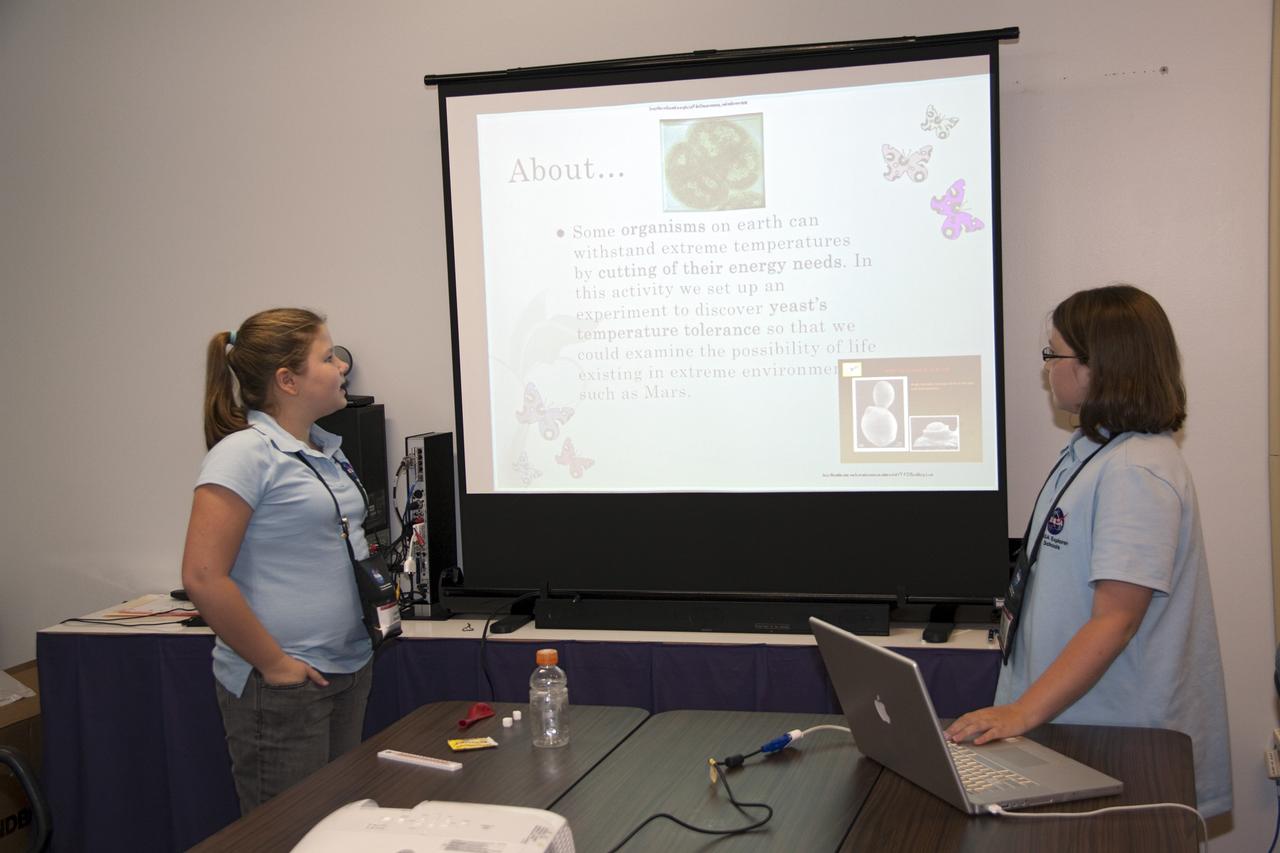
CAPE CANAVERAL, Fla. -- Students present their investigation project to their peers, scientists, engineers and education specialists during the NASA Explorer Schools Symposium at Kennedy Space Center in Florida. About 60 fourth- through 12-grade students from across the nation are at the center May 4-7 participating in tours of processing and launch facilities and the U.S. Astronaut Hall of Fame, as well as several educational activities and a career panel question-and-answer session. About 30 teachers will receive professional development opportunities during the symposium. The participants were competitively selected after they completed an original investigation focused on existing NASA missions or research interests. Photo Credit: NASA/Jack Pfaller
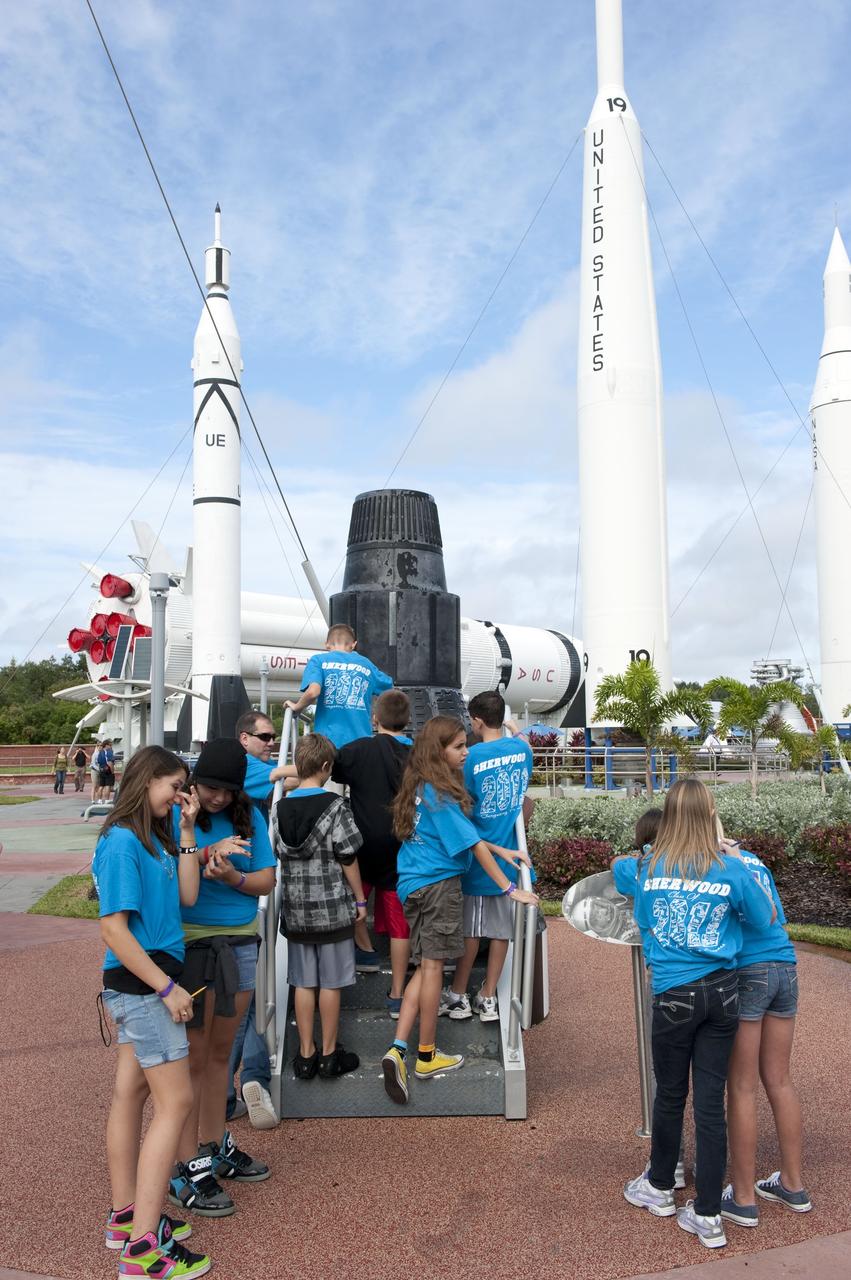
CAPE CANAVERAL, Fla. -- Brevard County sixth-graders participate in the eighth annual Space Week at the Kennedy Space Center Visitor Complex in Florida. Here, the students climb into a Mercury capsule in the complex's Rocket Garden. About 5,000 students will participate throughout the 11-day event, which contains fun space exploration activities designed to emphasize the importance of science, technology, engineering and math (STEM). Space Week is sponsored by NASA Education, Brevard Public Schools, Delaware North Companies Parks and Resorts, and the Florida Chapter of the National Space Club. Photo Credit: NASA/Kim Shiflett
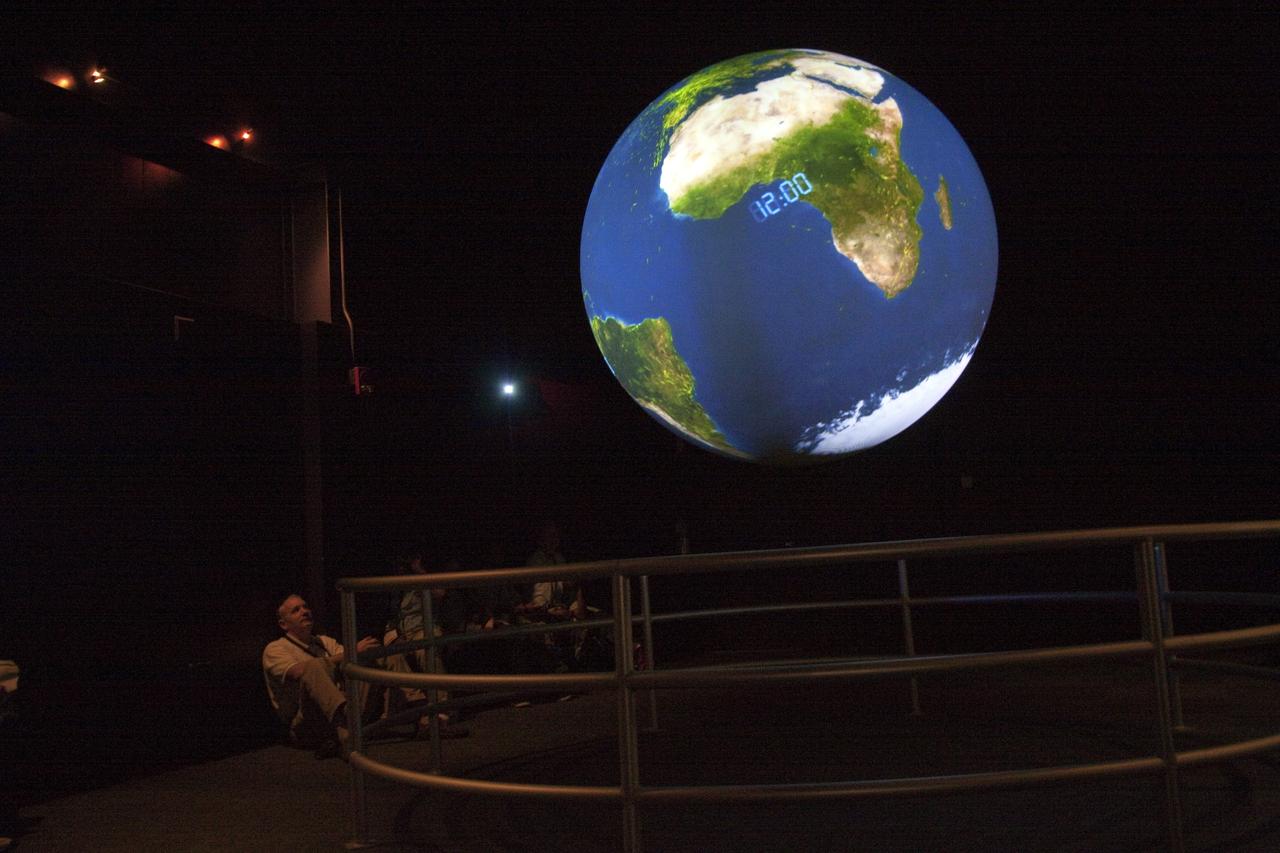
CAPE CANAVERAL, Fla. -- During the NASA Explorer Schools Symposium at Kennedy Space Center in Florida, students and teachers check out the Science on a Sphere system at the U.S. Astronaut Hall of Fame. About 60 fourth- through 12-grade students from across the nation are at the center May 4-7 participating in tours of processing and launch facilities, as well as several educational activities and a career panel question-and-answer session. About 30 teachers will receive professional development opportunities during the symposium. The participants were competitively selected after they completed an original investigation focused on existing NASA missions or research interests. Photo Credit: NASA/Jack Pfaller
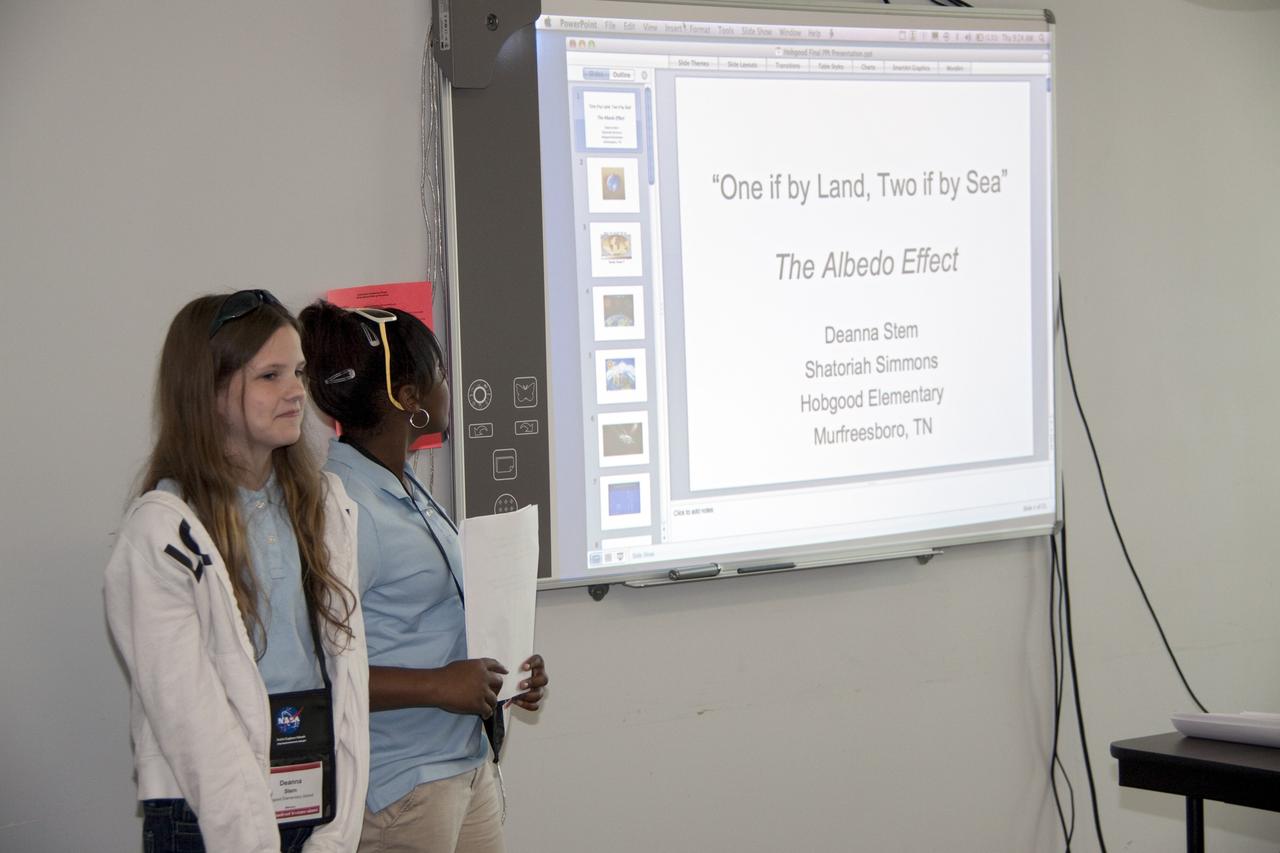
CAPE CANAVERAL, Fla. -- Students present their investigation project to their peers, scientists, engineers and education specialists during the NASA Explorer Schools Symposium at Kennedy Space Center in Florida. About 60 fourth- through 12-grade students from across the nation are at the center May 4-7 participating in tours of processing and launch facilities and the U.S. Astronaut Hall of Fame, as well as several educational activities and a career panel question-and-answer session. About 30 teachers will receive professional development opportunities during the symposium. The participants were competitively selected after they completed an original investigation focused on existing NASA missions or research interests. Photo Credit: NASA/Jack Pfaller
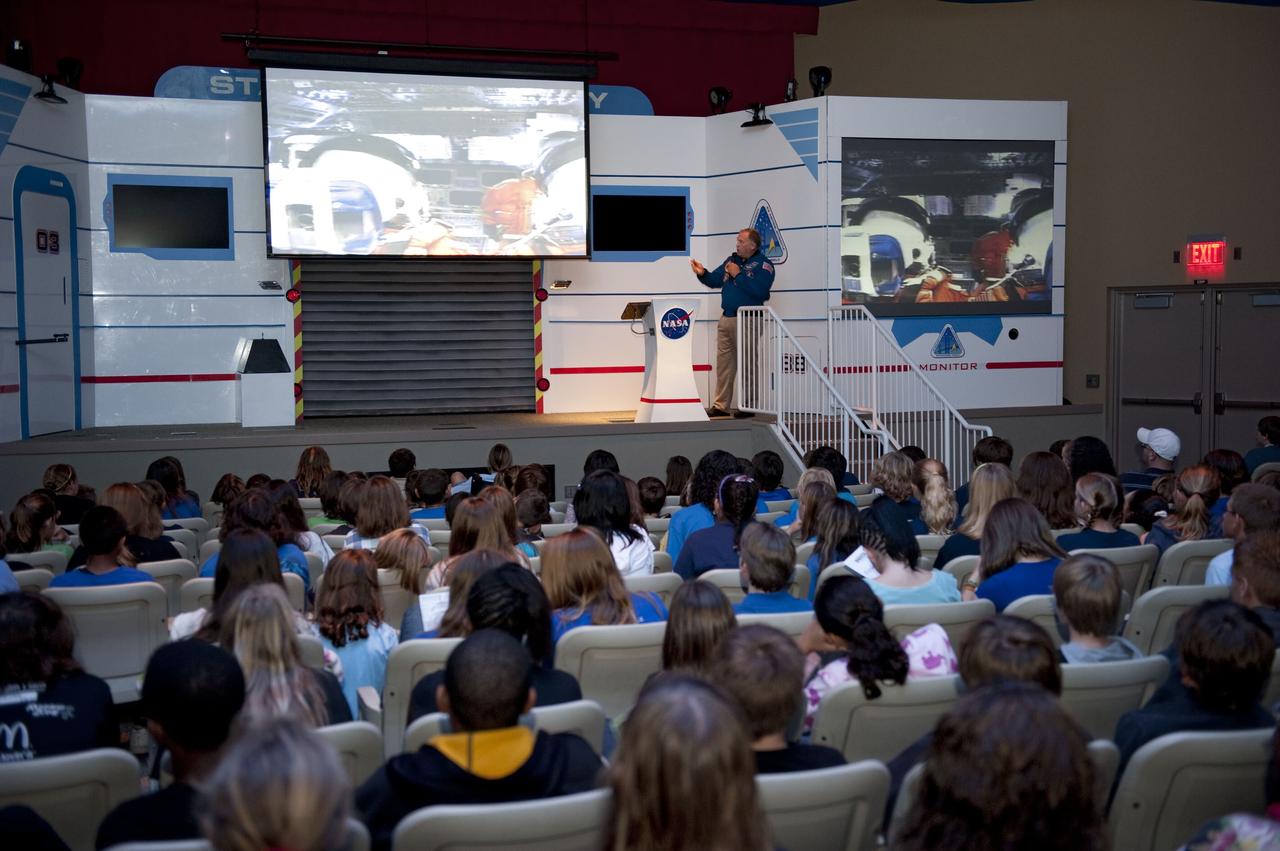
CAPE CANAVERAL, Fla. -- Brevard County sixth-graders participate in the eighth annual Space Week at the Kennedy Space Center Visitor Complex in Florida. Here, the students learn about launching to Earth's orbit from former NASA astronaut Mark Lee, a veteran of four space shuttle missions. About 5,000 students will participate throughout the 11-day event, which contains fun space exploration activities designed to emphasize the importance of science, technology, engineering and math (STEM). Space Week is sponsored by NASA Education, Brevard Public Schools, Delaware North Companies Parks and Resorts, and the Florida Chapter of the National Space Club. Photo Credit: NASA/Kim Shiflett

Pickerington High School student Jordan Elliott, left, and Dayton Regional STEM student Cheyenne Benson participate in the NASA Future Forum Inspiration and Education Panel at The Ohio State University on Monday, Feb. 20, 2012, in Columbus, Ohio. The NASA Future Forum features panel discussions on the importance of education to our nation's future in space, the benefit of commercialized space technology to our economy and lives here on Earth, and the shifting roles for the public, commercial and international communities in space. Photo Credit: (NASA/Bill Ingalls)
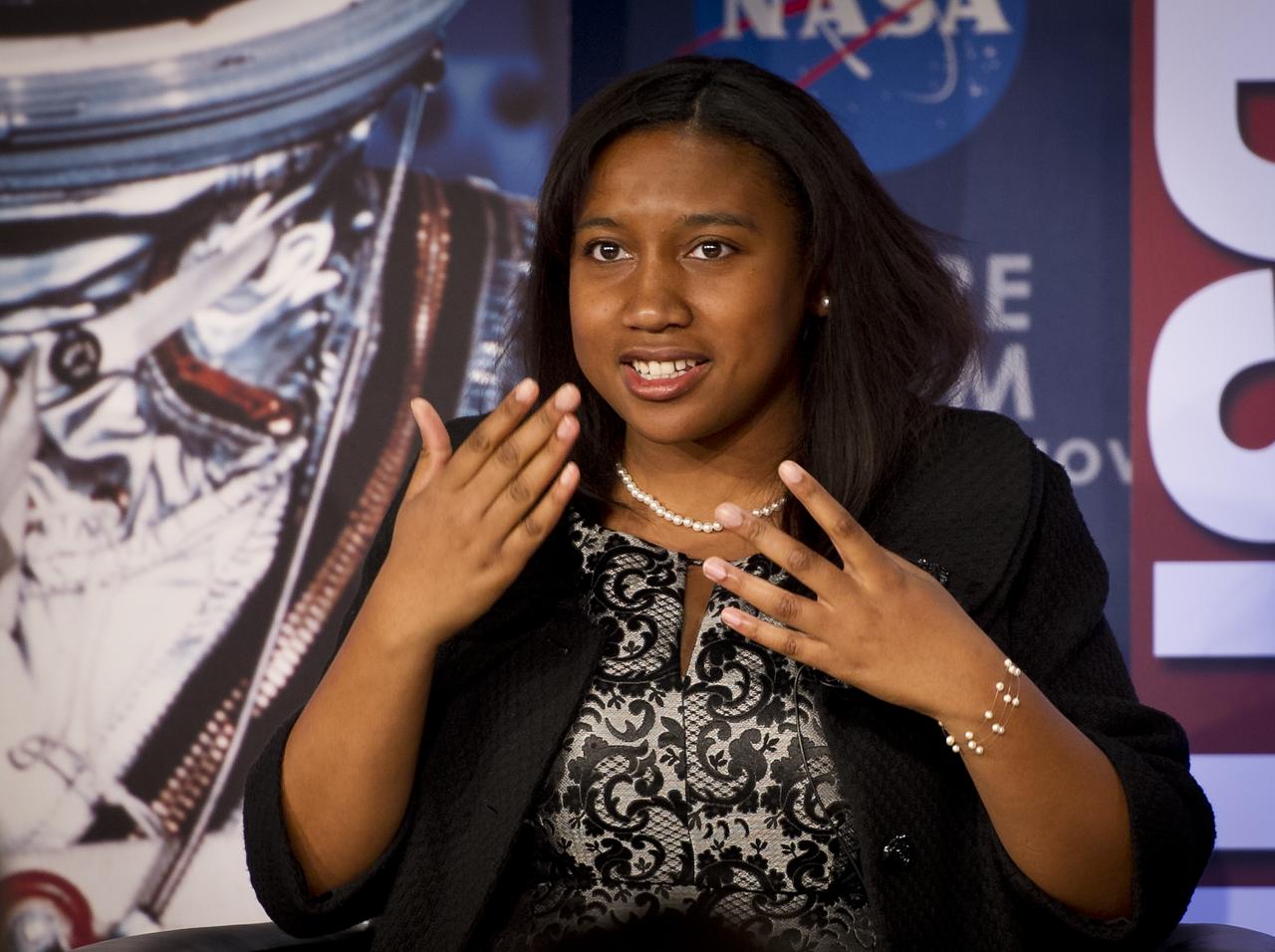
Ohio State University graduate student, biological sciences and NASA Student Ambassador, Monica Okon talks during the NASA Future Forum Inspiration and Education Panel at The Ohio State University on Monday, Feb. 20, 2012, in Columbus, Ohio. The NASA Future Forum features panel discussions on the importance of education to our nation's future in space, the benefit of commercialized space technology to our economy and lives here on Earth, and the shifting roles for the public, commercial and international communities in space. Photo Credit: (NASA/Bill Ingalls)
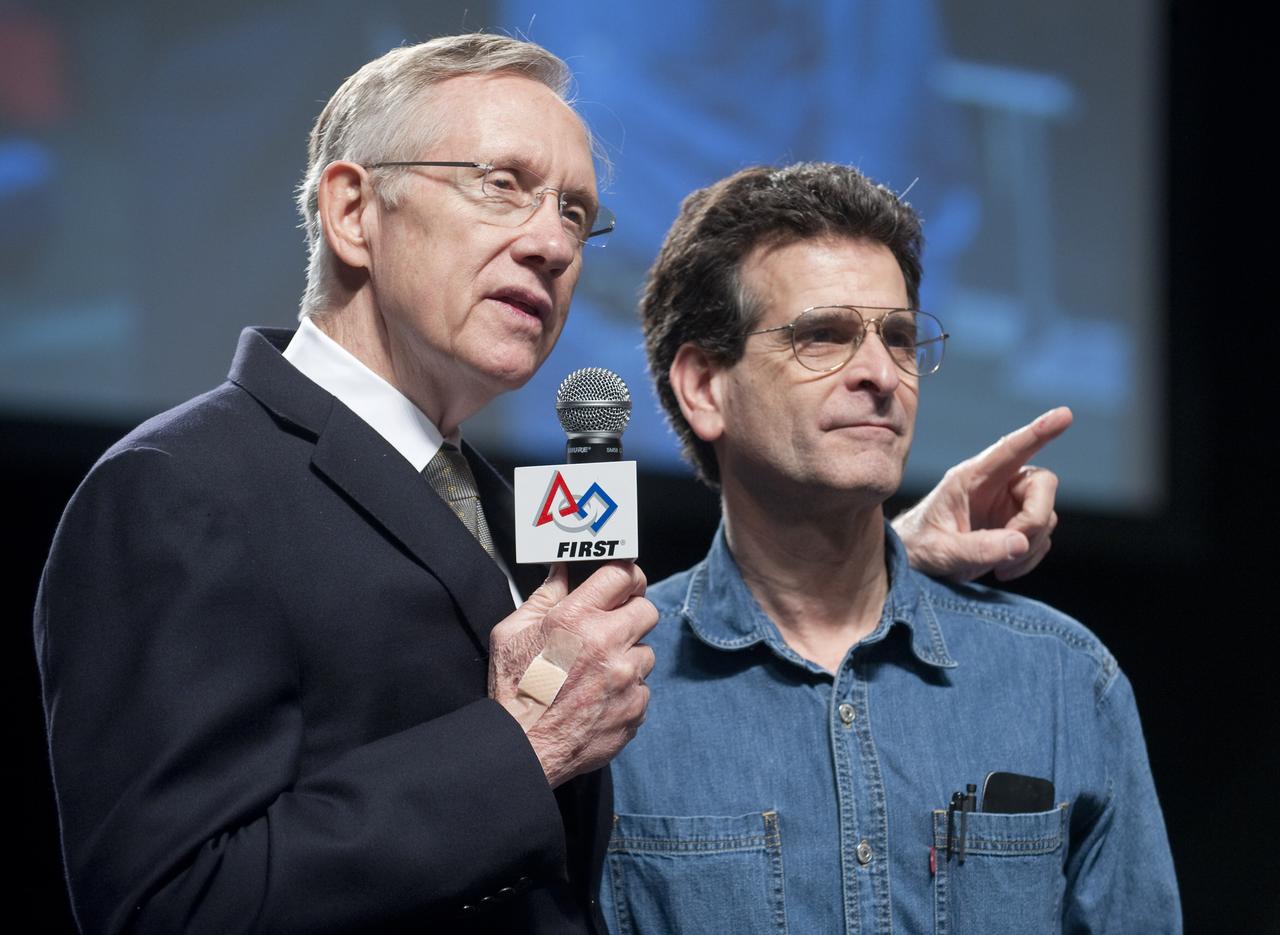
U.S. Senate Majority Leader Harry Reid, D-Nev., left, stands with Dean Kamen, the founder of First Robotics, as he talks about the importance of Science and Technology education during the First Robotics Competition, Friday March 5, 2010, in Washington. The student competition is called "For Inspiration and Recognition ofScience and Technology," or FIRST. The program was founded in 1989 by Kamen to inspire an appreciation of science and technology in young people, their schools and communities. Photo Credit: (NASA/Paul E. Alers)
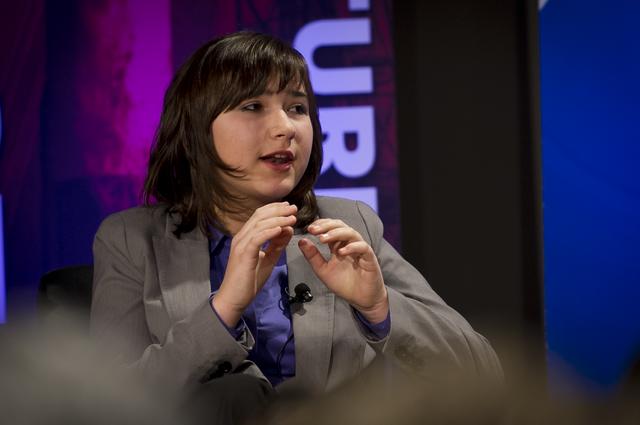
Dayton Regional STEM student Cheyenne Benson talks during the NASA Future Forum Inspiration and Education Panel at The Ohio State University on Monday, Feb. 20, 2012, in Columbus, Ohio. The NASA Future Forum features panel discussions on the importance of education to our nation's future in space, the benefit of commercialized space technology to our economy and lives here on Earth, and the shifting roles for the public, commercial and international communities in space. Photo Credit: (NASA/Bill Ingalls)
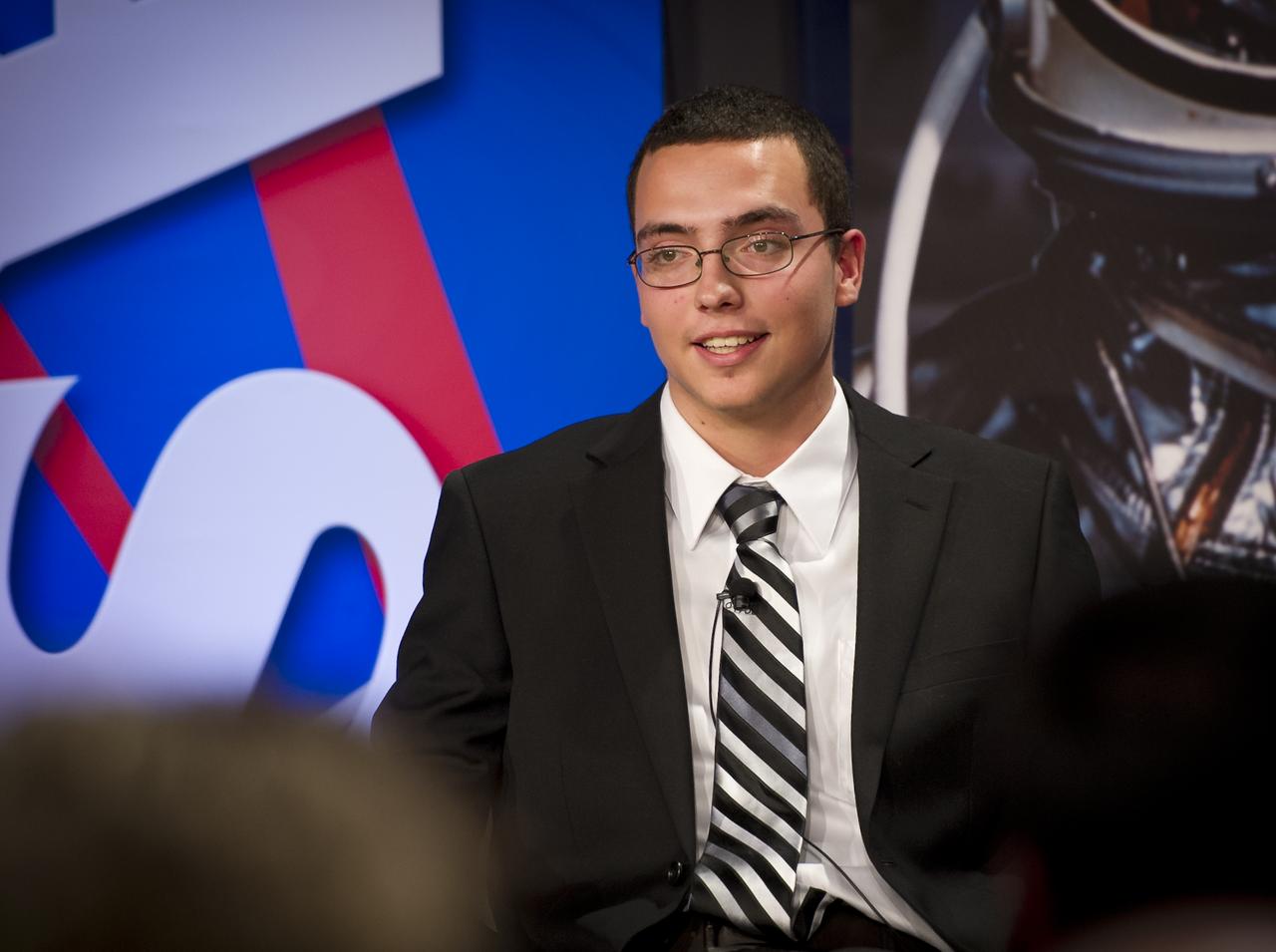
Metro High School Student Anthony Springer talks during the NASA Future Forum Inspiration and Education Panel at The Ohio State University on Monday, Feb. 20, 2012, in Columbus, Ohio. The NASA Future Forum features panel discussions on the importance of education to our nation's future in space, the benefit of commercialized space technology to our economy and lives here on Earth, and the shifting roles for the public, commercial and international communities in space. Photo Credit: (NASA/Bill Ingalls)
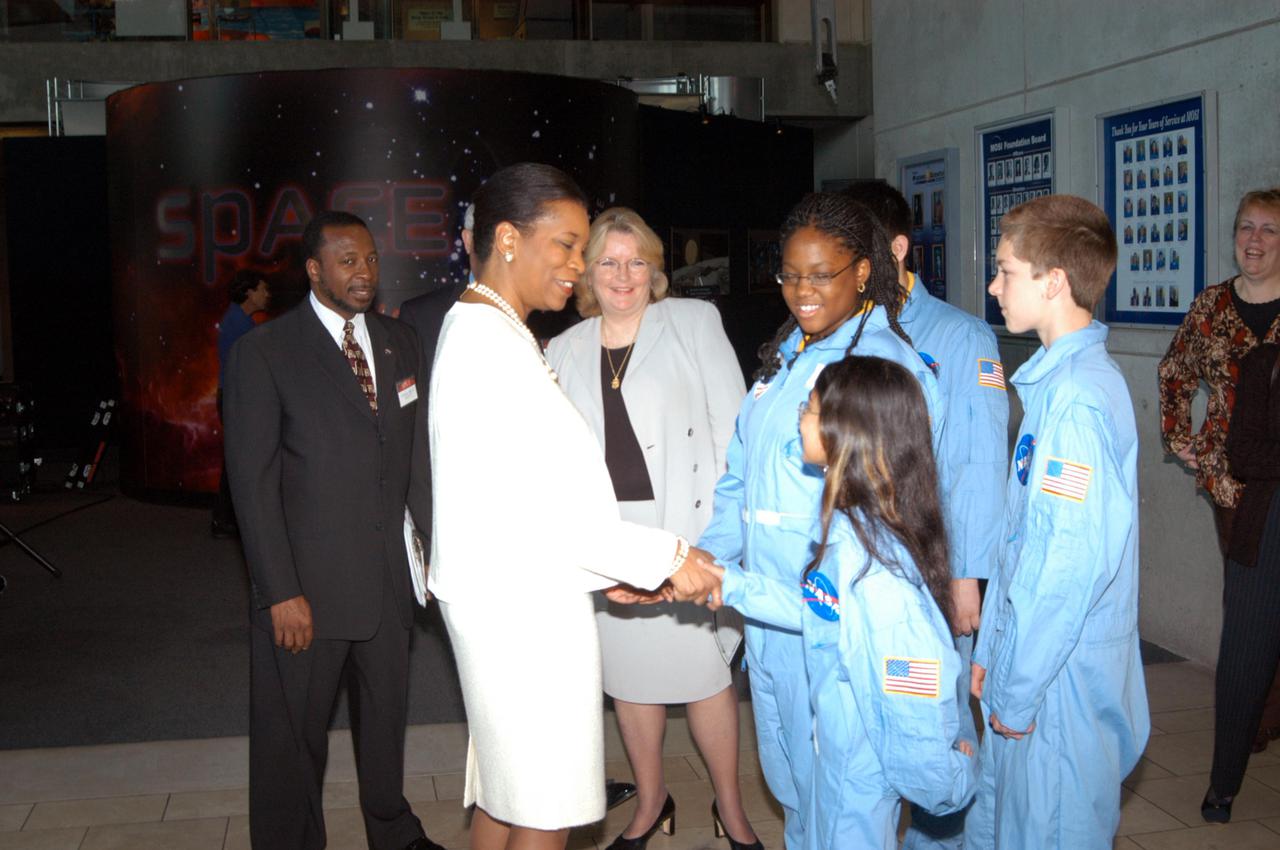
KENNEDY SPACE CENTER, FLA. - At the Museum of Science and Industry (MOSI) in Tampa, Dr. Adena Williams Loston, chief education officer at NASA Headquarters, greets students from one of NASA’s Explorer Schools, Stewart Middle School in Tampa. The students as well as Dr. Loston and KSC Deputy Director Dr. Woodrow Whitlow Jr. (far left) were at MOSI to view the space exhibits Space: A Journey to Our Future, an extraordinary, interactive exhibition designed to entertain, educate and inspire; and SPACE STATION, the first cinematic journey to the International Space Station (ISS), where audiences can experience for themselves life in zero gravity aboard the new station.
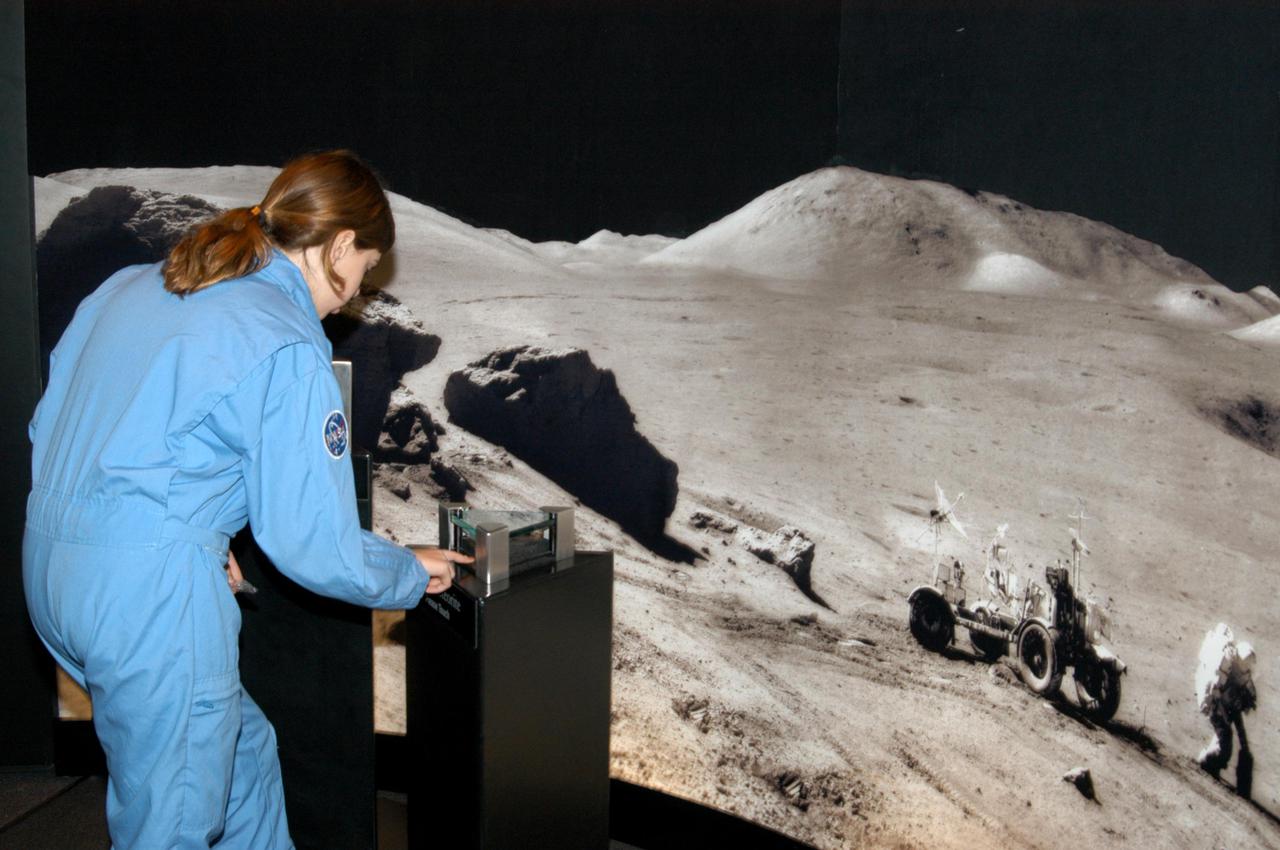
KENNEDY SPACE CENTER, FLA. - At the Museum of Science and Industry (MOSI) in Tampa, a student from one of NASA’s Explorer Schools, Stewart Middle School in Tampa, tries her hand at an interactive exhibit. The students are at MOSI to view the space exhibit Space: A Journey to Our Future, an extraordinary, interactive exhibition designed to entertain, educate and inspire. Another exhibit is SPACE STATION, the first cinematic journey to the International Space Station (ISS), where audiences can experience for themselves life in zero gravity aboard the new station.
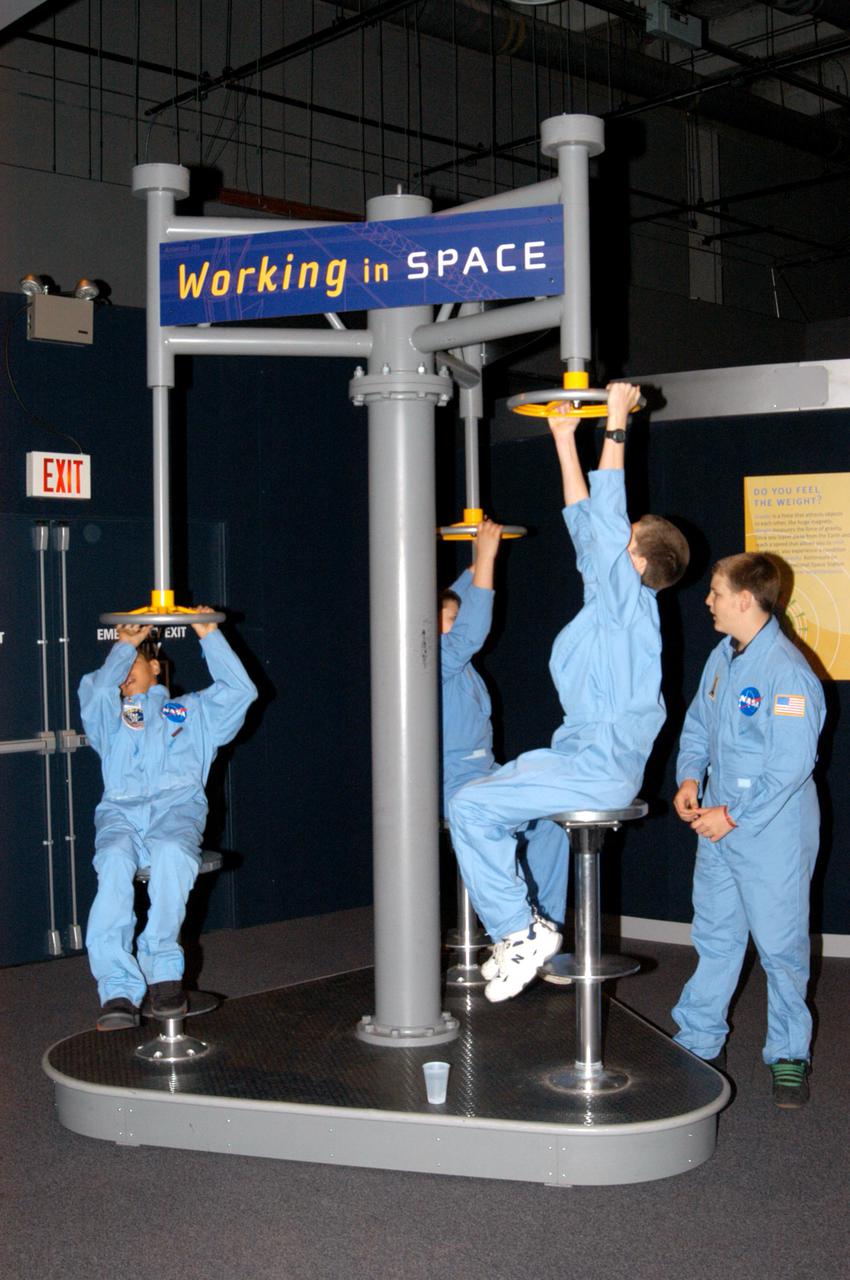
KENNEDY SPACE CENTER, FLA. - At the Museum of Science and Industry (MOSI) in Tampa, students from one of NASA’s Explorer Schools, Stewart Middle School in Tampa, enjoy an interactive exhibit. The students are at MOSI to view the space exhibit Space: A Journey to Our Future, an extraordinary, interactive exhibition designed to entertain, educate and inspire. Another exhibit is SPACE STATION, the first cinematic journey to the International Space Station (ISS), where audiences can experience for themselves life in zero gravity aboard the new station.
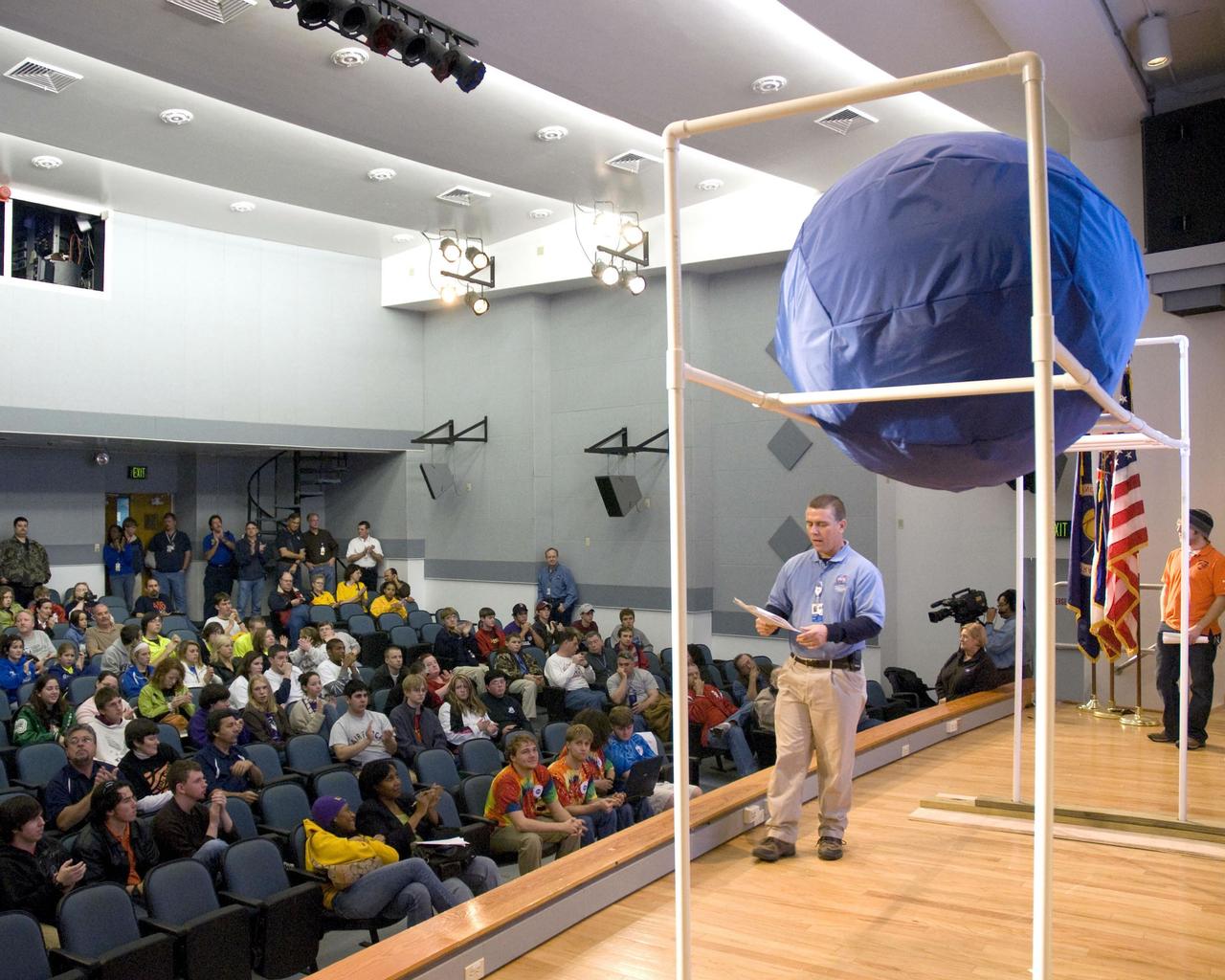
Master of ceremonies Steve Culivan, an employee of Penn State University and aerospace education specialist at NASA's Stennis Space Center, talked to a crowd of more than 300 who attended the Jan. 5 kickoff of the 2008 FIRST (For Inspiration and Recognition of Science and Technology) Robotics Competition season. The students, coaches and mentors from three states who attended also watched a live broadcast from FIRST's Manchester, N.H., headquarters that revealed this year's competition challenge, and received parts kits from which they built robots to meet the challenge.
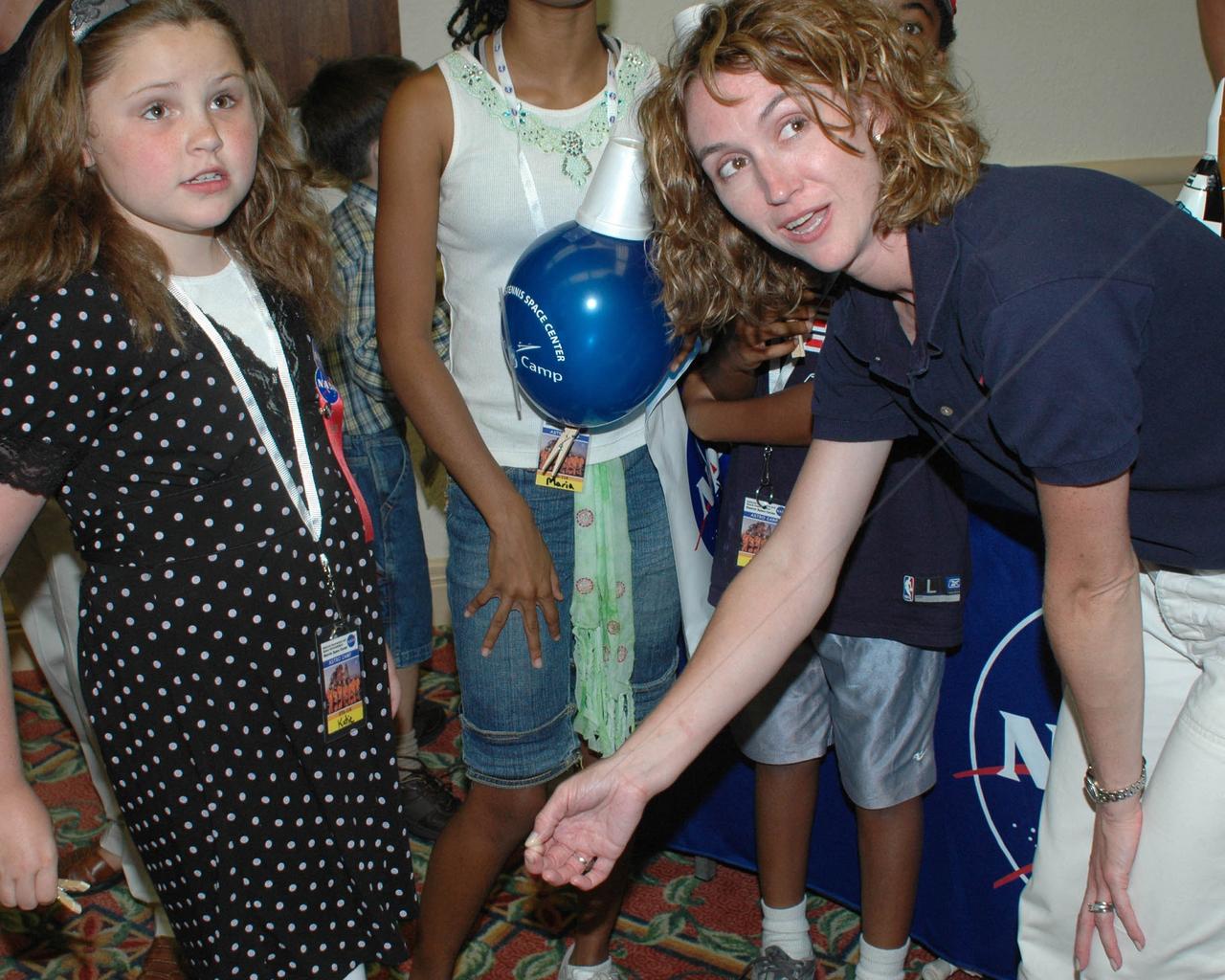
Katie Craig, daughter of former Stennis Space Center Deputy Director Mark Craig, launches a 'balloon rocket' with the help of Rebecca Compretta, Astro Camp coordinator at SSC. SSC took Astro Camp on the road to Florida this week to engage children and their parents during activities surrounding the Aug. 8 launch of Space Shuttle Endeavour on NASA's STS-118 mission to the International Space Station. Astro Camp is SSC's popular space camp program designed to inspire and educate students using science and math principles.
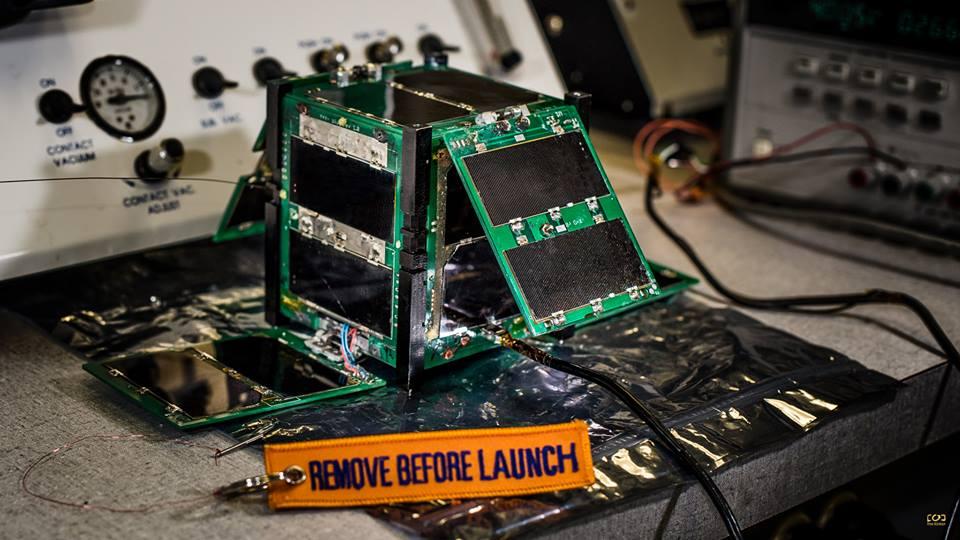
CAPE-2: Cajun Advanced Picosatellite Experiment – ELaNa IV CAPE-2 was developed by students from the University of Louisiana Lafayette to engage, inspire and educate K-12 students to encourage them to pursue STEM careers. The secondary focus is the technology demonstration of deployed solar panels to support the following payloads: text to speech, voice repeater, tweeting, email, file transfer and data collection from buoys. Launched by NASA’s CubeSat Launch Initiative on the ELaNa IV mission as an auxiliary payload aboard the U.S. Air Force-led Operationally Responsive Space (ORS-3) Mission on November 19, 2013.
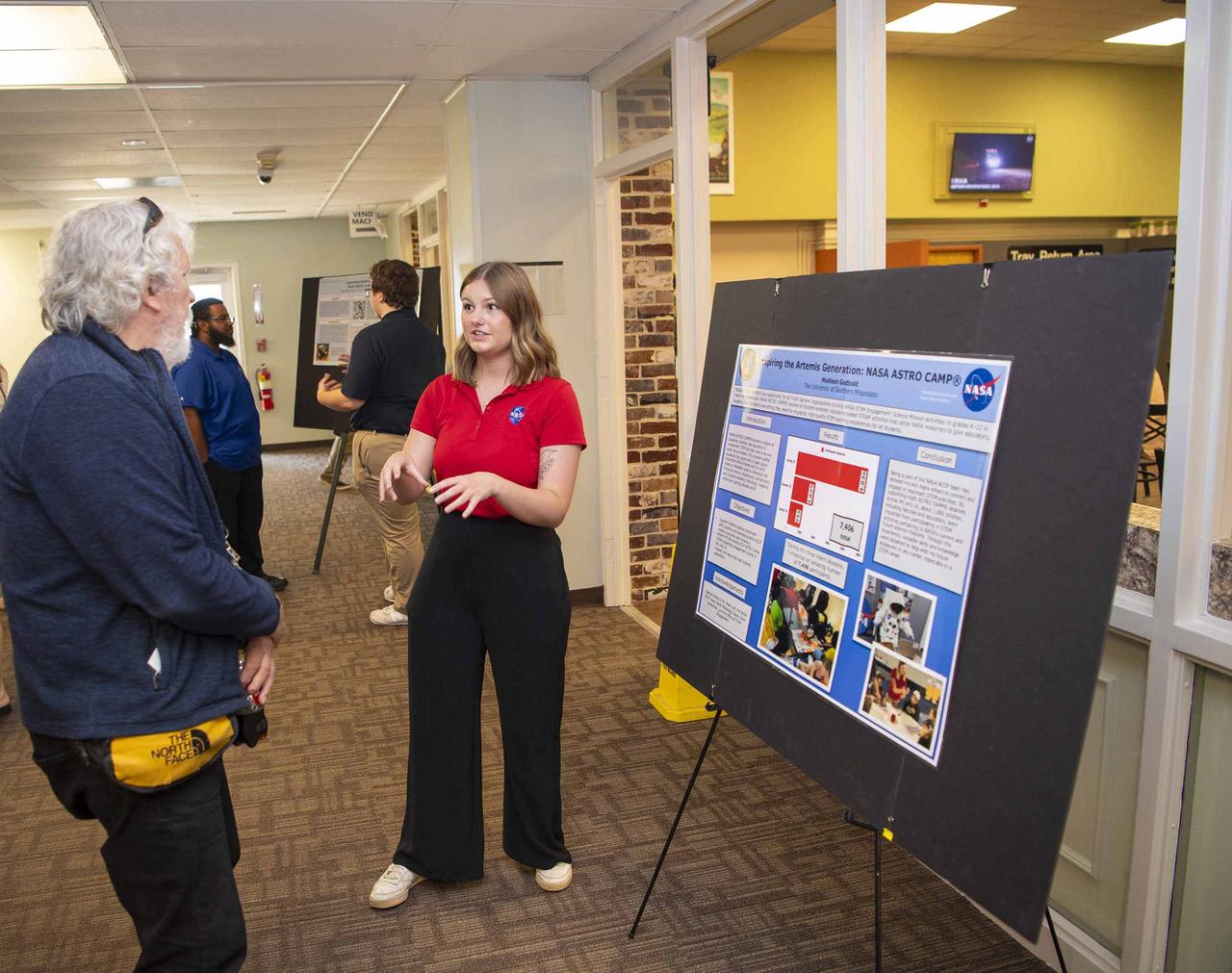
NASA Stennis summer intern Madison Godbold, right, shares about her work of inspiring the Artemis Generation through ASTRO Camp activities during an Aug. 7 event hosted by the Office of STEM Engagement. Godbold, a student at The University of Southern Mississippi in Hattiesburg, worked with the NASA Stennis Office of STEM Engagement. The poster symposium highlighted research topics, including propulsion test operations, lunar robotics, autonomous systems, STEM education, and more. NASA’s Office of STEM Engagement paid internships allow high school and college-level students to contribute to the agency’s mission to advance science, technology, aeronautics, and space exploration.
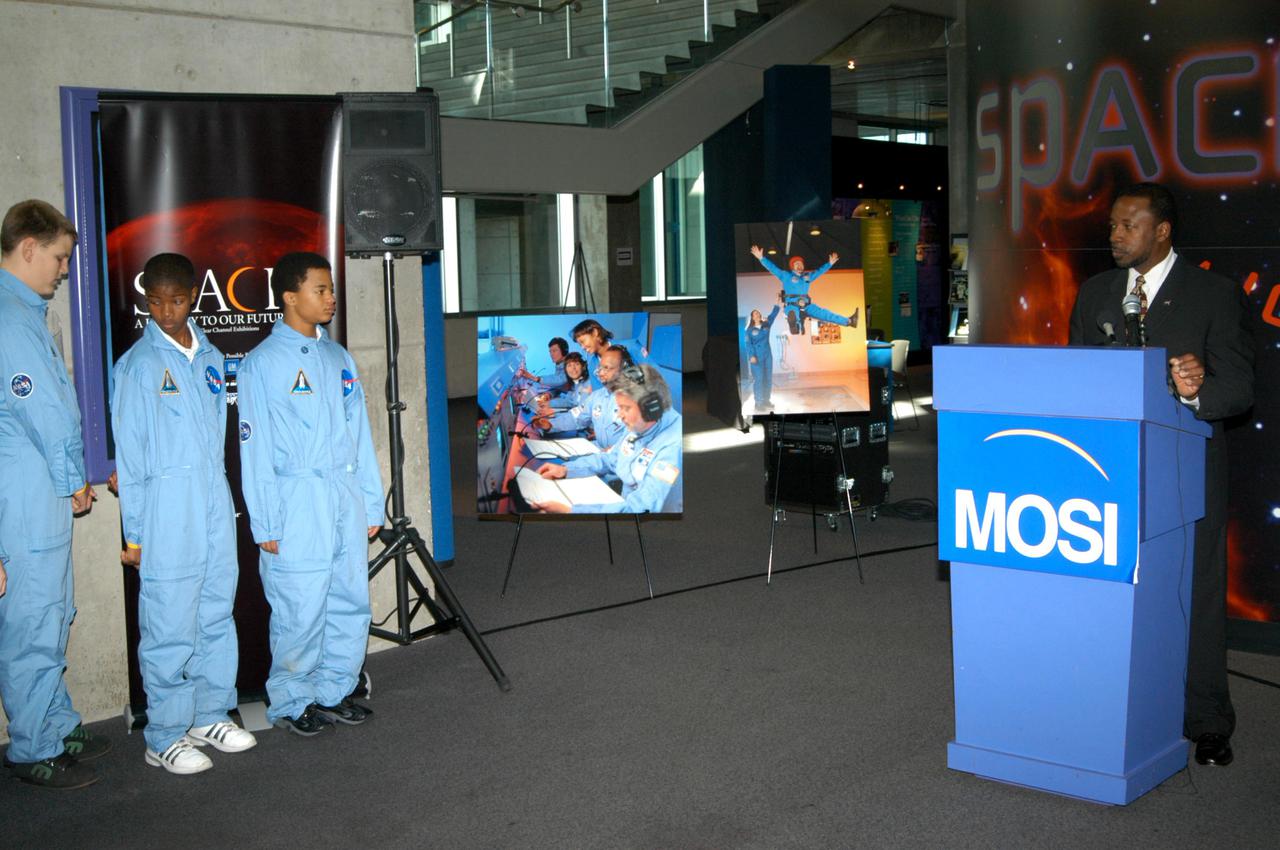
KENNEDY SPACE CENTER, FLA. - At the Museum of Science and Industry (MOSI) in Tampa, KSC Deputy Director Dr. Woodrow Whitlow Jr. introduces students from one of NASA’s Explorer Schools, Stewart Middle School in Tampa. The students and Dr. Whitlow are at MOSI to view the space exhibits Space: A Journey to Our Future, an extraordinary, interactive exhibition designed to entertain, educate and inspire; and SPACE STATION, the first cinematic journey to the International Space Station (ISS), where audiences can experience for themselves life in zero gravity aboard the new station.

KENNEDY SPACE CENTER, FLA. - On a visit to the Museum of Science and Industry (MOSI) in Tampa, KSC Deputy Director Dr. Woodrow Whitlow Jr. greets students from one of NASA’s Explorer Schools, Stewart Middle School in Tampa. The students and Dr. Whitlow are at MOSI to view the space exhibits Space: A Journey to Our Future, an extraordinary, interactive exhibition designed to entertain, educate and inspire; and SPACE STATION, the first cinematic journey to the International Space Station (ISS), where audiences can experience for themselves life in zero gravity aboard the new station.
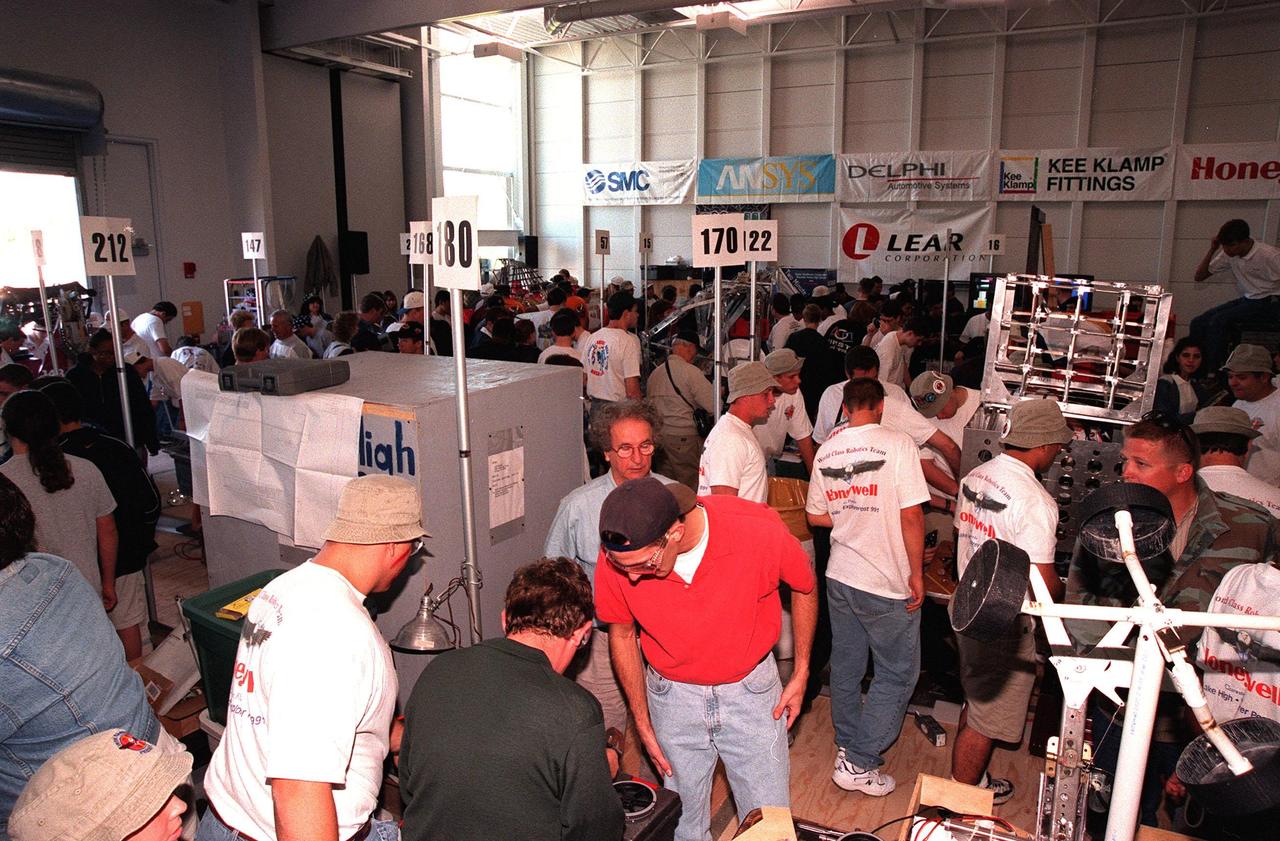
Student teams and sponsors, with their robots, fill the Center for Space Education at KSC as they look over the competition. Thirty schools from around the country have converged at KSC for the 1999 Southeastern Regional robotic competition March 4-6. The event pits the team-built gladiator robots against each other in an athletic-style competition. KSC is hosting the event being sponsored by the nonprofit organization For Inspiration and Recognition of Science and Technology, known as FIRST. The FIRST robotics competition is designed to provide students with a hands-on, inside look at engineering and other professional careers
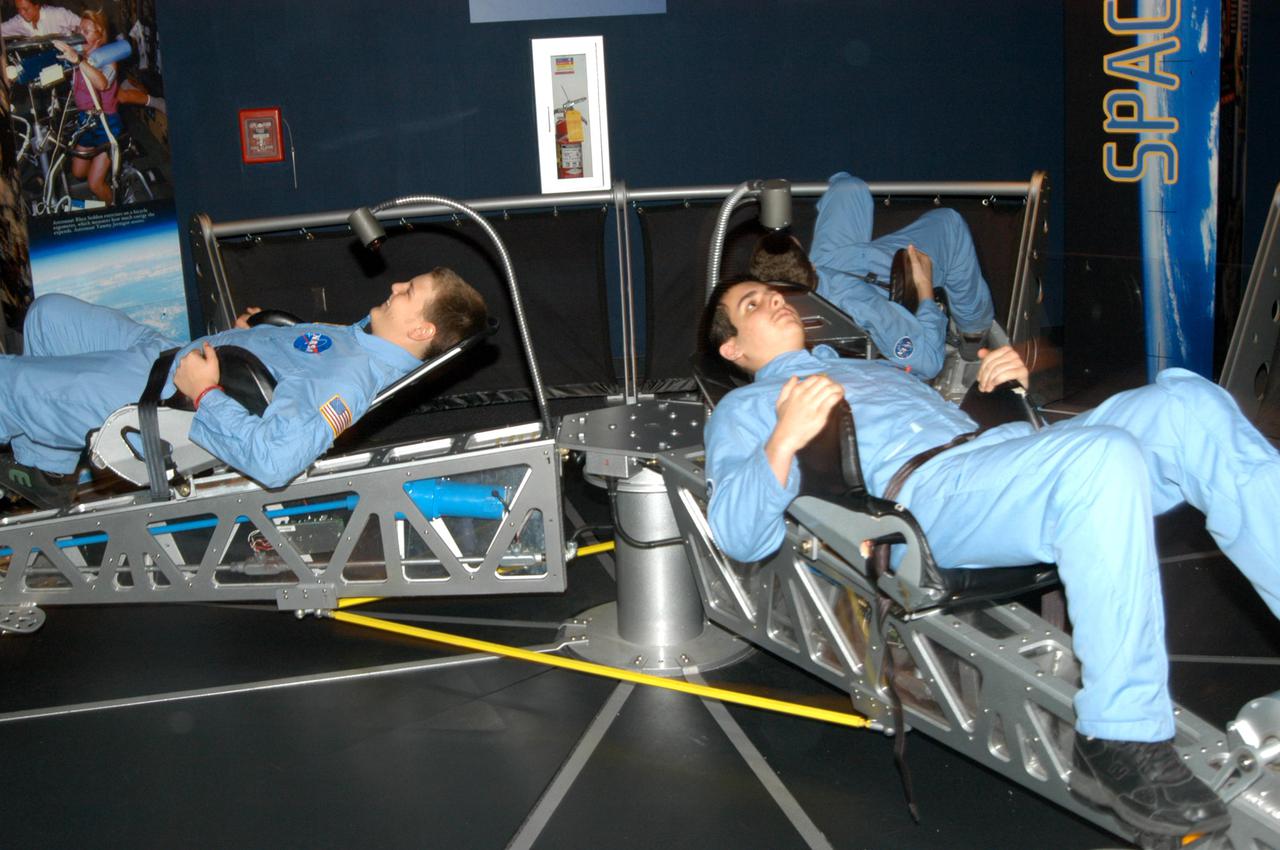
KENNEDY SPACE CENTER, FLA. - At the Museum of Science and Industry (MOSI) in Tampa, students from one of NASA’s Explorer Schools, Stewart Middle School in Tampa, get ready to spin on a bicycle-powered centrifuge, part of an interactive exhibit about space. The MOSI is featuring the space exhibits Space: A Journey to Our Future, an extraordinary, interactive exhibition designed to entertain, educate and inspire; and SPACE STATION, the first cinematic journey to the International Space Station (ISS), where audiences can experience for themselves life in zero gravity aboard the new station.
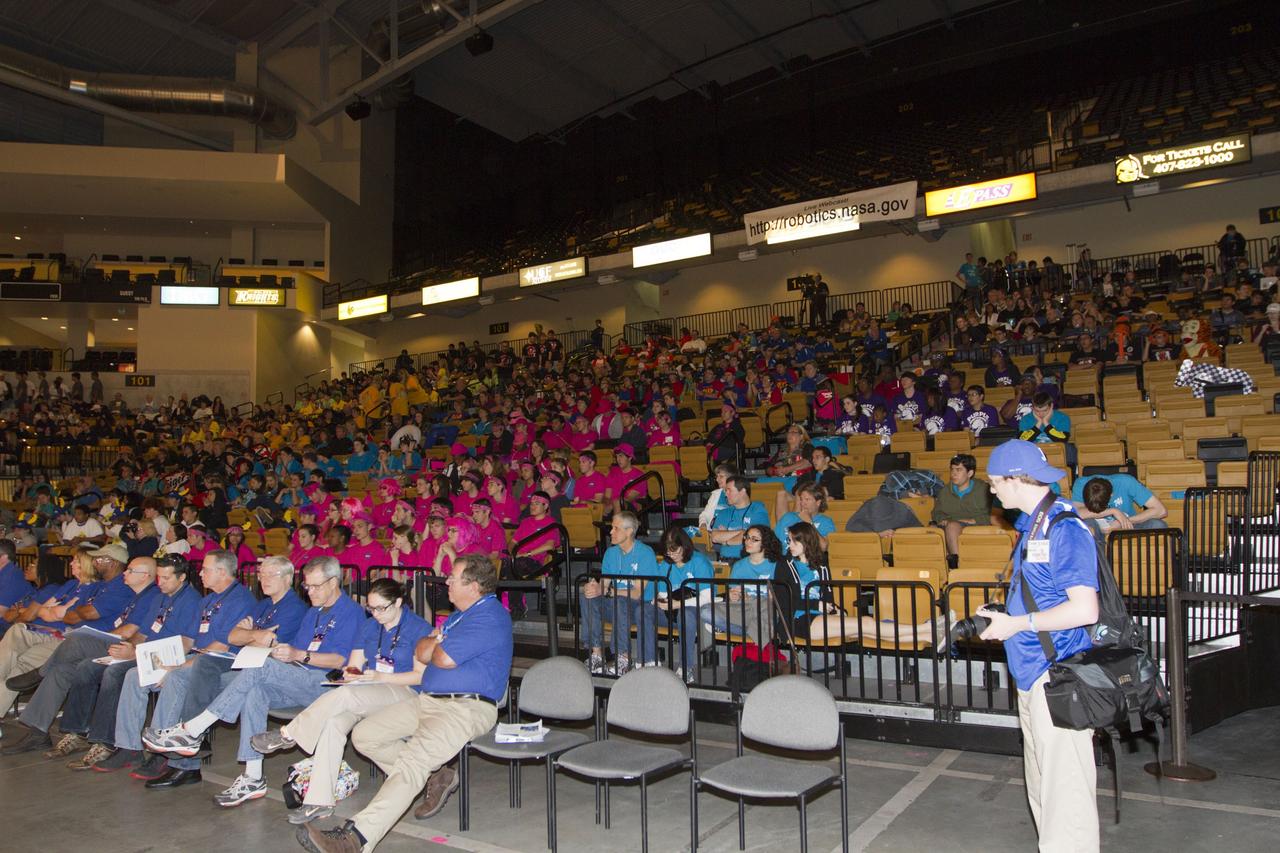
ORLANDO, Fla. -- High school teams compete in the regional FIRST robotics competition at the University of Central Florida in Orlando, Fla. More than 60 teams took part in the competition called "For Inspiration and Recognition of Science and Technology," or FIRST, in hopes of advancing to the national robotics championship. This year, the competition resembled a basketball game and was dubbed "Rebound Rumble." The game measured the effectiveness of each robot, the power of collaboration and the determination of the teams. On the left is Team 3502, called "The Octo Pie-Rates," which is comprised of students from School for Arts and Innovative Learning SAIL High School in Tallahassee. On the right is Team 3164, called "Tiger Robotics," which is comprised of students from Jesuit and The Academy of the Holy Names high schools in Tampa, Fla. FIRST, founded in 1989, is a non-profit organization that designs accessible, innovative programs to build self-confidence, knowledge and life skills while motivating young people to pursue academic opportunities. The robotics competition challenges teams of high school students and their mentors to solve a common problem in a six-week timeframe using a standard kit of parts and a common set of rules. NASA is the largest sponsor of the international program. Kennedy Space Center is a sponsor of the regional event. For more information on Kennedy's education events and initiatives, go to http://www.nasa.gov/offices/education/centers/kennedy/home/index.html. Photo credit: NASA/Kim Shiflett
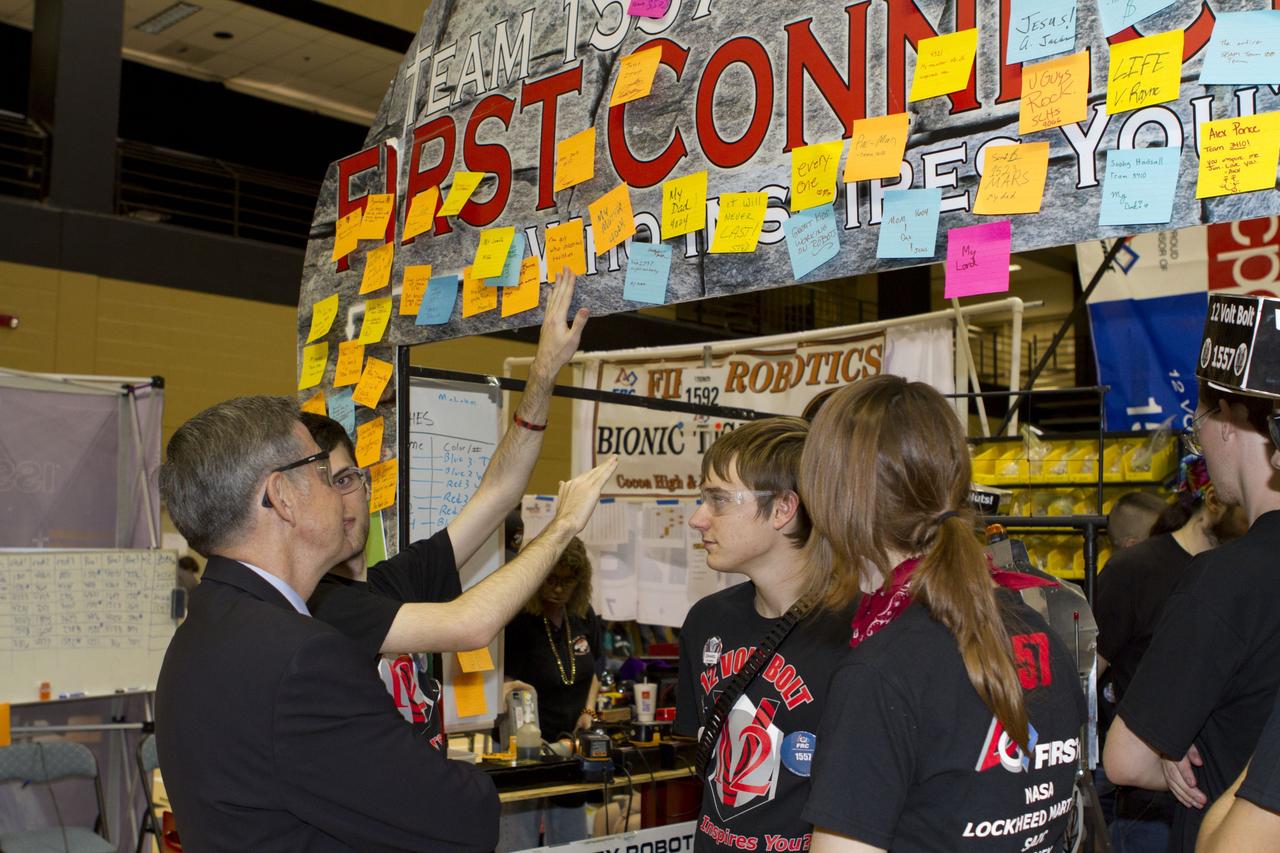
ORLANDO, Fla. -- NASA Kennedy Space Center Director Bob Cabana talks with members of the "12 Volt Bolt Team," which is participating in the regional FIRST robotics competition at the University of Central Florida in Orlando, Fla. The team is from Eustis, Fla., and consists of students from many Lake County schools, including Mt. Dora High, Eustis High, Tavares High, Mt. Dora Bible and homeschooled students. More than 60 high school teams took part in the competition called "For Inspiration and Recognition of Science and Technology," or FIRST, in hopes of advancing to the national robotics championship. This year, the competition resembled a basketball game and was dubbed "Rebound Rumble." The game measured the effectiveness of each robot, the power of collaboration and the determination of the teams. FIRST, founded in 1989, is a non-profit organization that designs accessible, innovative programs to build self-confidence, knowledge and life skills while motivating young people to pursue academic opportunities. The robotics competition challenges teams of high school students and their mentors to solve a common problem in a six-week timeframe using a standard kit of parts and a common set of rules. NASA is the largest sponsor of the international program. Kennedy Space Center is a sponsor of the regional event. For more information on Kennedy's education events and initiatives, go to http://www.nasa.gov/offices/education/centers/kennedy/home/index.html. Photo credit: NASA/Kim Shiflett

KENNEDY SPACE CENTER, FLA. - Students from one of NASA’s Explorer Schools, Stewart Middle School in Tampa pose for a photo with other guests visiting the Museum of Science and Industry (MOSI) in Tampa. At left, in the back row, are former astronaut Dan Brandenstein, current vice president of Consolidated Space Operations Centers (CSOC), and KSC Deputy Director Dr. Woodrow Whitlow Jr. In the center is Ronte Smith, southeast regional sales manager for General Motors, and Gail Rymer, with Lockheed Martin. On the right are Dr. Adena Williams Loston, chief education officer at NASA Headquarters, and Wit Ostrenko, president of MOSI. The MOSI is featuring the space exhibits Space: A Journey to Our Future, an extraordinary, interactive exhibition designed to entertain, educate and inspire; and SPACE STATION, the first cinematic journey to the International Space Station (ISS), where audiences can experience for themselves life in zero gravity aboard the new station.
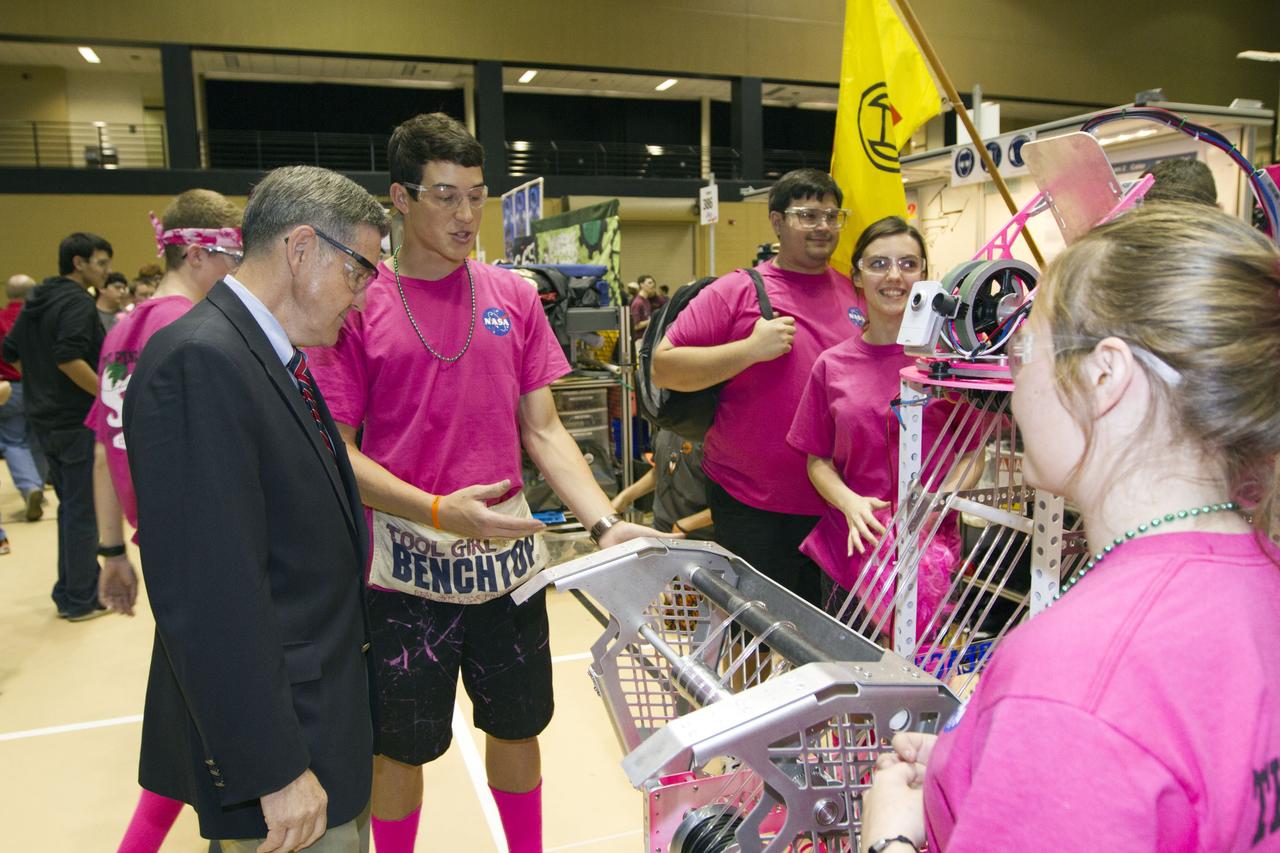
ORLANDO, Fla. -- NASA Kennedy Space Center Director Bob Cabana talks with members of Team 233, "The Pink Team," which is participating in the regional FIRST robotics competition at the University of Central Florida in Orlando, Fla. The team is made up of students from Rockledge, Cocoa Beach and Viera high schools along the Space Coast of Florida. Kennedy is a sponsor of the team. More than 60 high school teams took part in the competition called "For Inspiration and Recognition of Science and Technology," or FIRST, in hopes of advancing to the national robotics championship. This year, the competition resembled a basketball game and was dubbed "Rebound Rumble." The game measured the effectiveness of each robot, the power of collaboration and the determination of the teams. FIRST, founded in 1989, is a non-profit organization that designs accessible, innovative programs to build self-confidence, knowledge and life skills while motivating young people to pursue academic opportunities. The robotics competition challenges teams of high school students and their mentors to solve a common problem in a six-week timeframe using a standard kit of parts and a common set of rules. NASA is the largest sponsor of the international program. Kennedy Space Center is a sponsor of the regional event. For more information on Kennedy's education events and initiatives, go to http://www.nasa.gov/offices/education/centers/kennedy/home/index.html. Photo credit: NASA/Kim Shiflett
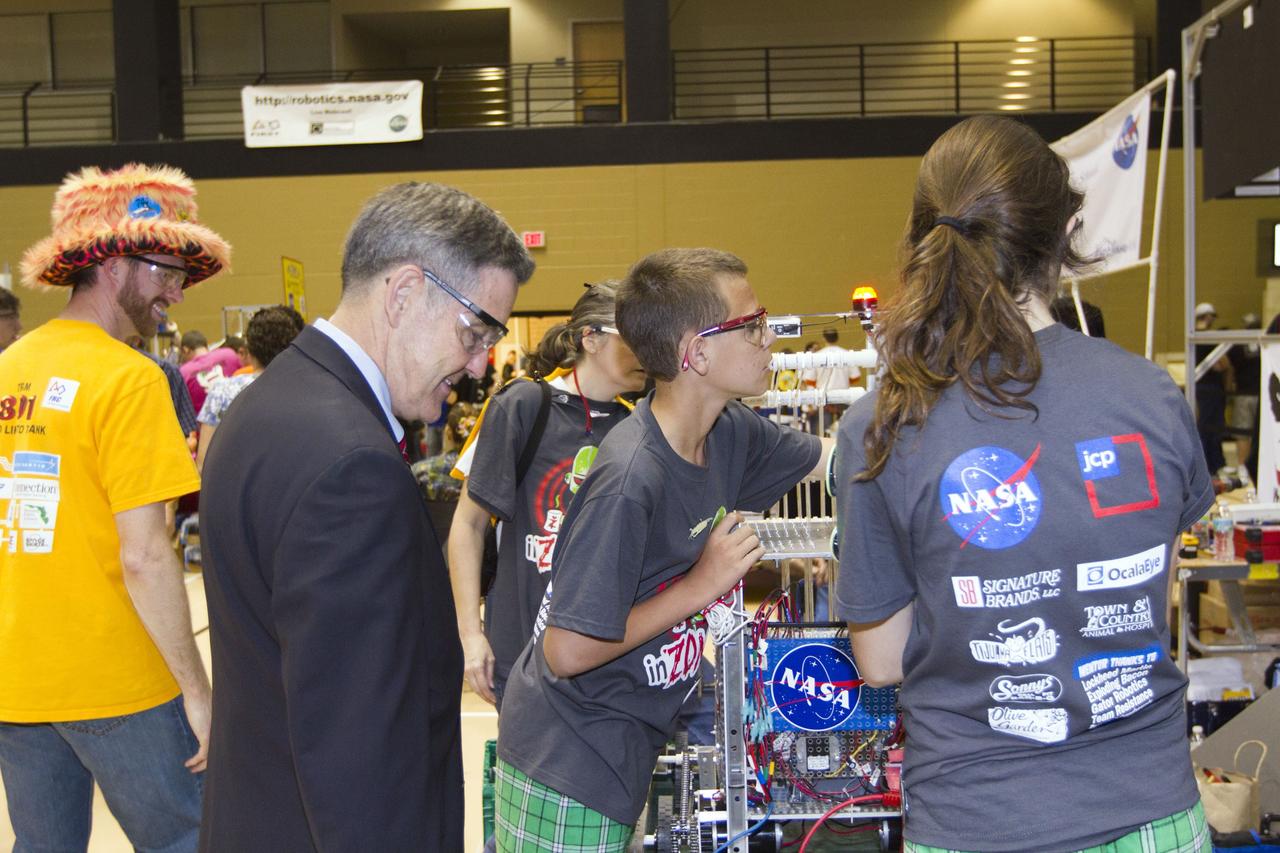
ORLANDO, Fla. -- NASA Kennedy Space Center Director Bob Cabana talks with members of Team 4064, which is participating in the regional FIRST robotics competition at the University of Central Florida in Orlando, Fla. The team is made up of students from Vanguard High School in Ocala, Fla. More than 60 high school teams from throughout the country took part in the competition called "For Inspiration and Recognition of Science and Technology," or FIRST, in hopes of advancing to the national robotics championship. This year the competition resembled a basketball game and was dubbed "Rebound Rumble." The game measured the effectiveness of each robot, the power of collaboration and the determination of the teams. FIRST, founded in 1989, is a non-profit organization that designs accessible, innovative programs to build self-confidence, knowledge and life skills while motivating young people to pursue academic opportunities. The robotics competition challenges teams of high school students and their mentors to solve a common problem in a six-week timeframe using a standard kit of parts and a common set of rules. NASA is the largest sponsor of the international program. Kennedy Space Center is a sponsor of the regional event. For more information on Kennedy's education events and initiatives, go to http://www.nasa.gov/offices/education/centers/kennedy/home/index.html. Photo credit: NASA/Kim Shiflett
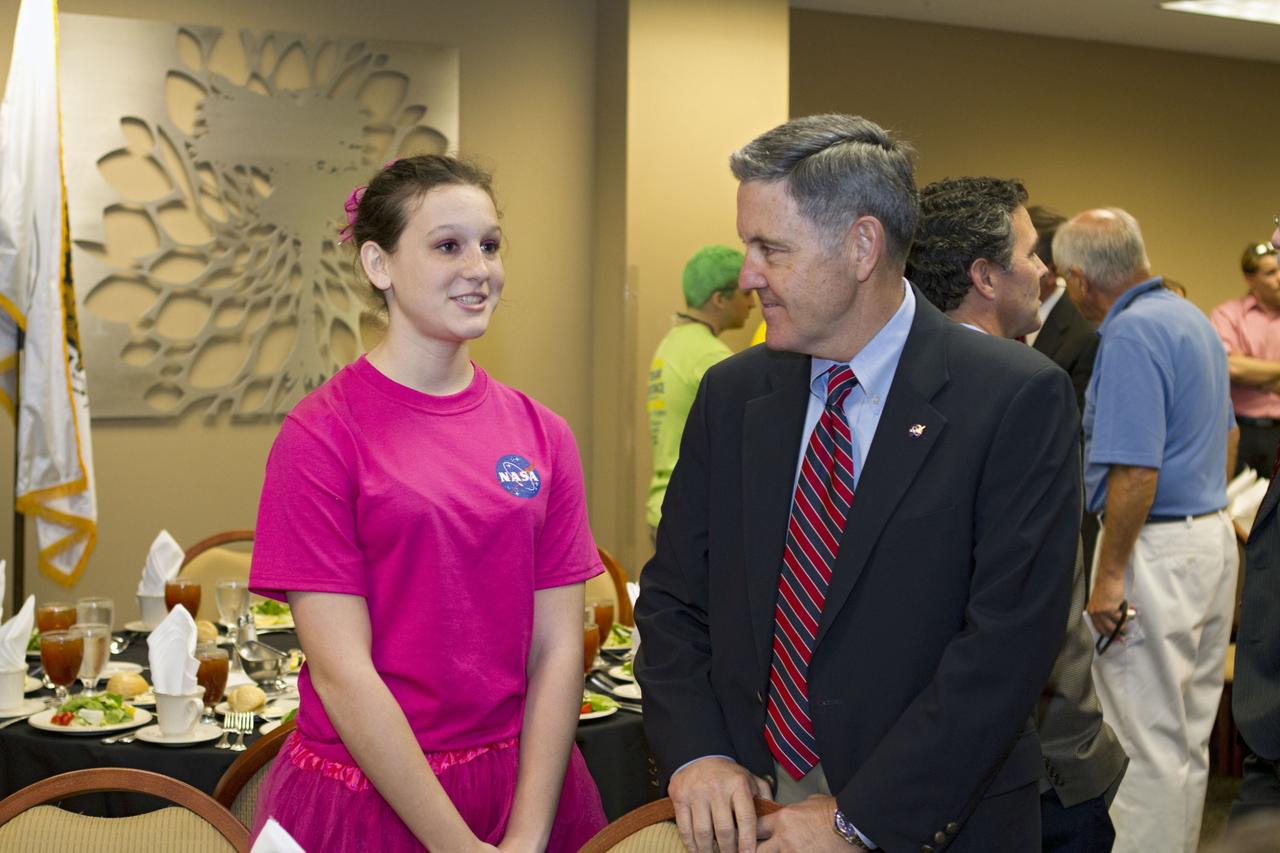
ORLANDO, Fla. -- NASA Kennedy Space Center Director Bob Cabana talks with a member of Team 233, "The Pink Team," which is participating in the regional FIRST robotics competition at the University of Central Florida in Orlando, Fla. The team is made up of students from Rockledge, Cocoa Beach and Viera high schools along the Space Coast of Florida. Kennedy is a sponsor of the team. More than 60 teams took part in the competition called "For Inspiration and Recognition of Science and Technology," or FIRST, in hopes of advancing to the national robotics championship. This year, the competition resembled a basketball game and was dubbed "Rebound Rumble." The game measured the effectiveness of each robot, the power of collaboration and the determination of the teams. FIRST, founded in 1989, is a non-profit organization that designs accessible, innovative programs to build self-confidence, knowledge and life skills while motivating young people to pursue academic opportunities. The robotics competition challenges teams of high school students and their mentors to solve a common problem in a six-week timeframe using a standard kit of parts and a common set of rules. NASA is the largest sponsor of the international program. Kennedy Space Center is a sponsor of the regional event. For more information on Kennedy's education events and initiatives, go to http://www.nasa.gov/offices/education/centers/kennedy/home/index.html. Photo credit: NASA/Kim Shiflett
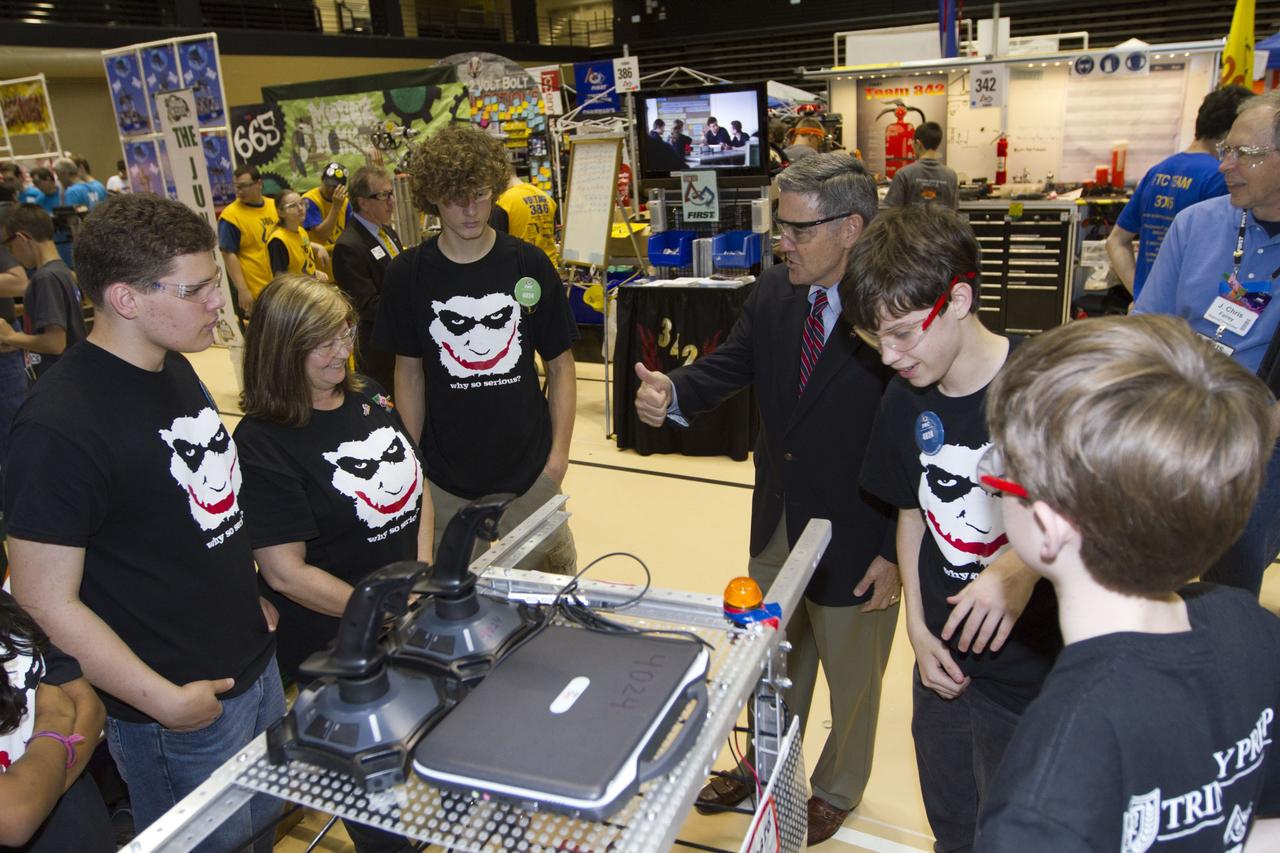
ORLANDO, Fla. -- NASA Kennedy Space Center Director Bob Cabana talks with members of Team 4024, which is participating in the regional FIRST robotics competition at the University of Central Florida in Orlando, Fla. The team is made up of students from Trinity Preparatory School in Winter Park, Fla. More than 60 high school teams took part in the competition called "For Inspiration and Recognition of Science and Technology," or FIRST, in hopes of advancing to the national robotics championship. This year, the competition resembled a basketball game and was dubbed "Rebound Rumble." The game measured the effectiveness of each robot, the power of collaboration and the determination of the teams. FIRST, founded in 1989, is a non-profit organization that designs accessible, innovative programs to build self-confidence, knowledge and life skills while motivating young people to pursue academic opportunities. The robotics competition challenges teams of high school students and their mentors to solve a common problem in a six-week timeframe using a standard kit of parts and a common set of rules. NASA is the largest sponsor of the international program. Kennedy Space Center is a sponsor of the regional event. For more information on Kennedy's education events and initiatives, go to http://www.nasa.gov/offices/education/centers/kennedy/home/index.html. Photo credit: NASA/Kim Shiflett
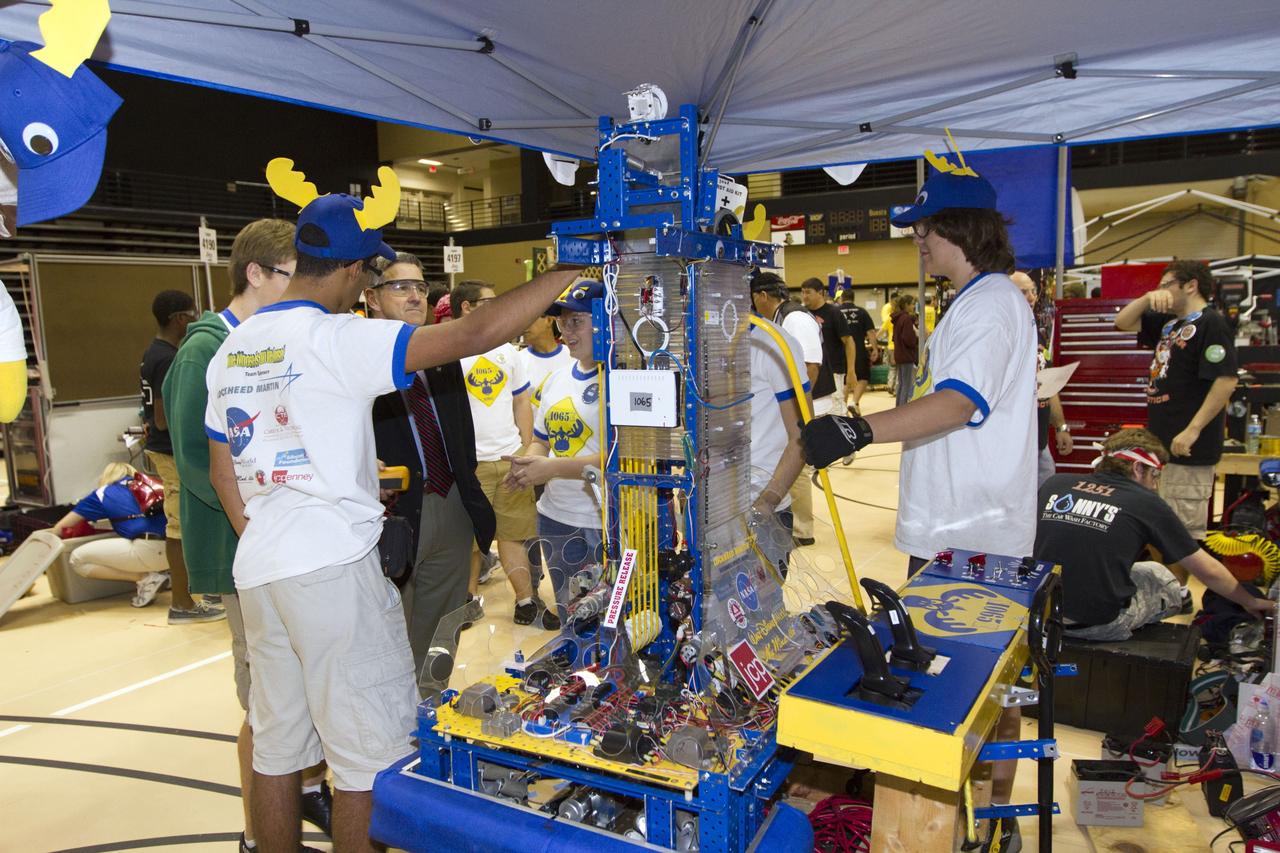
ORLANDO, Fla. -- NASA Kennedy Space Center Director Bob Cabana talks with members of Team 1056 "The Moose," which is participating in the regional FIRST robotics competition at the University of Central Florida in Orlando, Fla. The team is from Kissimmee, Fla., and consists of students from Osceola High School. More than 60 high school teams from took part in the competition called "For Inspiration and Recognition of Science and Technology," or FIRST, in hopes of advancing to the national robotics championship. This year, the competition resembled a basketball game and was dubbed "Rebound Rumble." The game measured the effectiveness of each robot, the power of collaboration and the determination of the teams. FIRST, founded in 1989, is a non-profit organization that designs accessible, innovative programs to build self-confidence, knowledge and life skills while motivating young people to pursue academic opportunities. The robotics competition challenges teams of high school students and their mentors to solve a common problem in a six-week timeframe using a standard kit of parts and a common set of rules. NASA is the largest sponsor of the international program. Kennedy Space Center is a sponsor of the regional event. For more information on Kennedy's education events and initiatives, go to http://www.nasa.gov/offices/education/centers/kennedy/home/index.html. Photo credit: NASA/Kim Shiflett
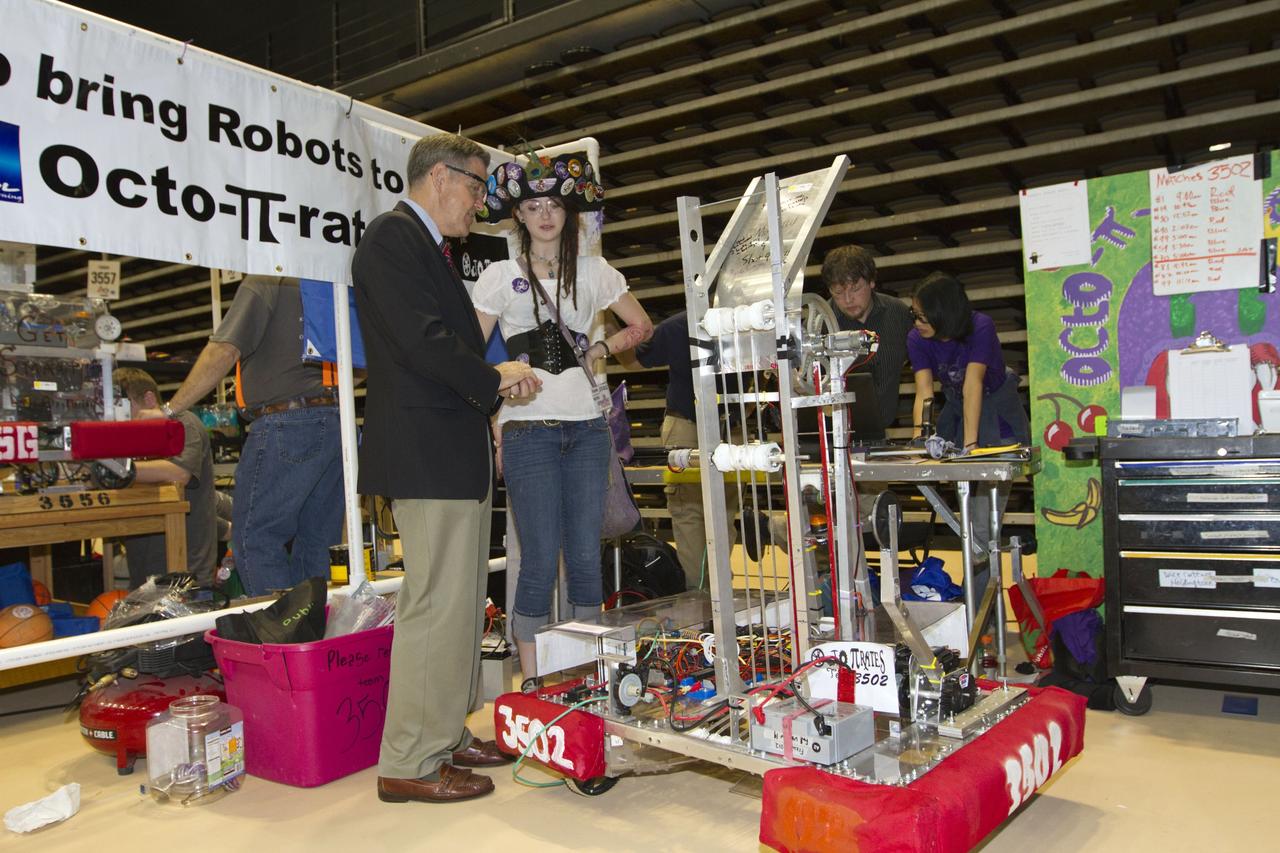
ORLANDO, Fla. -- NASA Kennedy Space Center Director Bob Cabana talks with a member of Team 3502, called "The Octo Pie-Rates," which is participating in the regional FIRST robotics competition at the University of Central Florida in Orlando, Fla. The team is made up of students from the School for Arts and Innovative Learning SAIL High School in Tallahassee. More than 60 high school teams took part in the competition called "For Inspiration and Recognition of Science and Technology," or FIRST, in hopes of advancing to the national robotics championship. This year, the competition resembled a basketball game and was dubbed "Rebound Rumble." The game measured the effectiveness of each robot, the power of collaboration and the determination of the teams. FIRST, founded in 1989, is a non-profit organization that designs accessible, innovative programs to build self-confidence, knowledge and life skills while motivating young people to pursue academic opportunities. The robotics competition challenges teams of high school students and their mentors to solve a common problem in a six-week timeframe using a standard kit of parts and a common set of rules. NASA is the largest sponsor of the international program. Kennedy Space Center is a sponsor of the regional event. For more information on Kennedy's education events and initiatives, go to http://www.nasa.gov/offices/education/centers/kennedy/home/index.html. Photo credit: NASA/Kim Shiflett
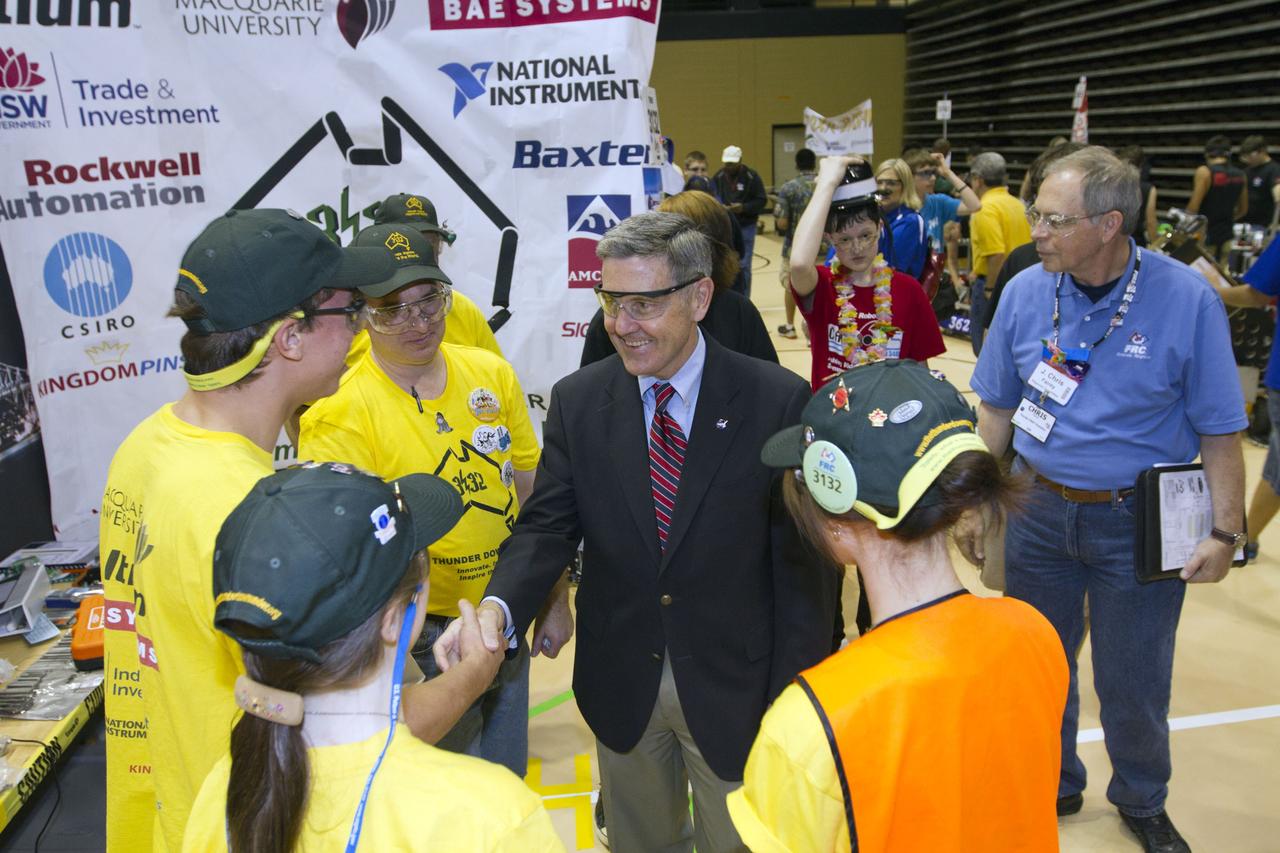
ORLANDO, Fla. -- NASA Kennedy Space Center Director Bob Cabana talks with members of Team 3132, called "Thunder Down Under," which is participating in the regional FIRST robotics competition at the University of Central Florida in Orlando, Fla. The team is made up of students from Sydney, Australia. More than 60 high school teams took part in the competition called "For Inspiration and Recognition of Science and Technology," or FIRST, in hopes of advancing to the national robotics championship. This year, the competition resembled a basketball game and was dubbed "Rebound Rumble." The game measured the effectiveness of each robot, the power of collaboration and the determination of the teams. FIRST, founded in 1989, is a non-profit organization that designs accessible, innovative programs to build self-confidence, knowledge and life skills while motivating young people to pursue academic opportunities. The robotics competition challenges teams of high school students and their mentors to solve a common problem in a six-week timeframe using a standard kit of parts and a common set of rules. NASA is the largest sponsor of the international program. Kennedy Space Center is a sponsor of the regional event. For more information on Kennedy's education events and initiatives, go to http://www.nasa.gov/offices/education/centers/kennedy/home/index.html. Photo credit: NASA/Kim Shiflett
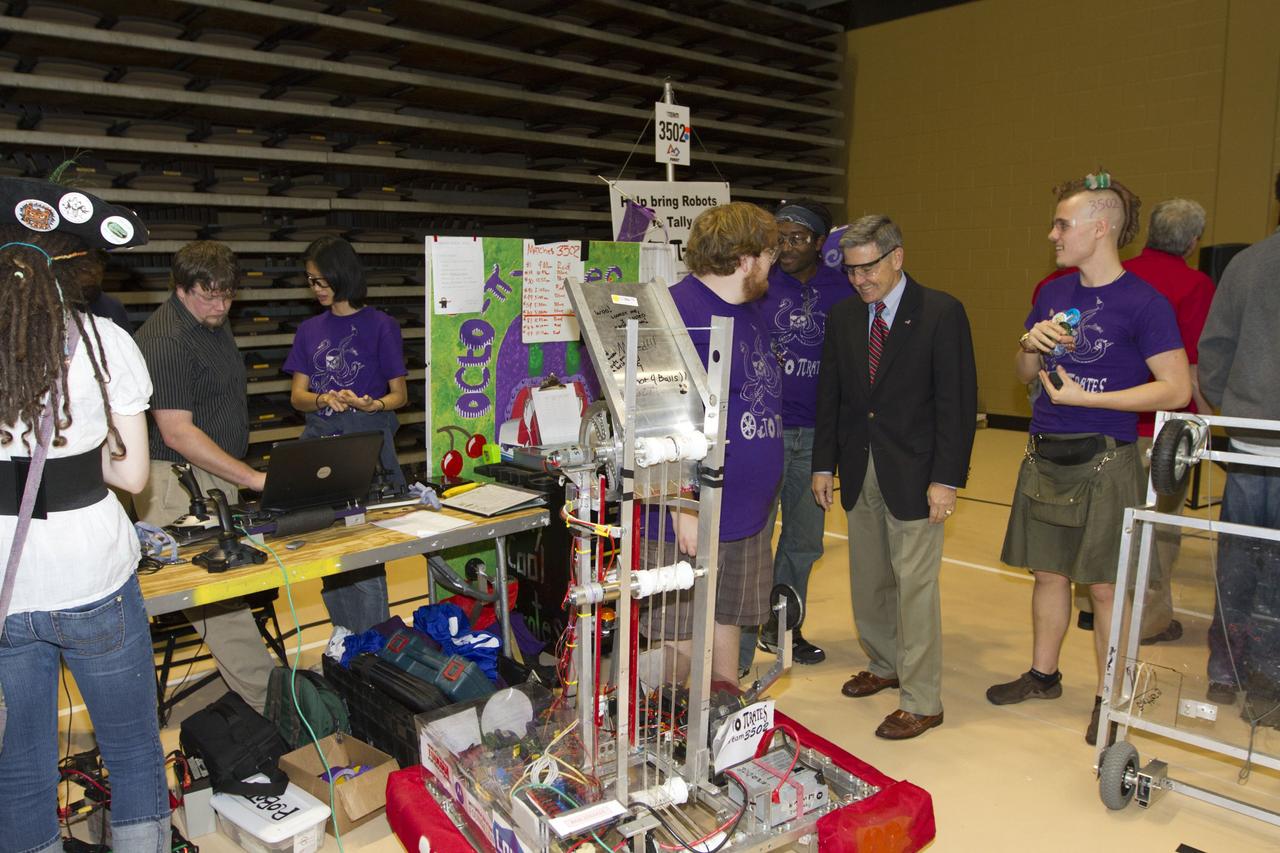
ORLANDO, Fla. -- NASA Kennedy Space Center Director Bob Cabana talks with members of Team 3502, called "The Octo Pie-Rates," which is participating in the regional FIRST robotics competition at the University of Central Florida in Orlando, Fla. The team is made up of students from the School for Arts and Innovative Learning SAIL High School in Tallahassee. More than 60 high school teams took part in the competition called "For Inspiration and Recognition of Science and Technology," or FIRST, in hopes of advancing to the national robotics championship. This year, the competition resembled a basketball game and was dubbed "Rebound Rumble." The game measured the effectiveness of each robot, the power of collaboration and the determination of the teams. FIRST, founded in 1989, is a non-profit organization that designs accessible, innovative programs to build self-confidence, knowledge and life skills while motivating young people to pursue academic opportunities. The robotics competition challenges teams of high school students and their mentors to solve a common problem in a six-week timeframe using a standard kit of parts and a common set of rules. NASA is the largest sponsor of the international program. Kennedy Space Center is a sponsor of the regional event. For more information on Kennedy's education events and initiatives, go to http://www.nasa.gov/offices/education/centers/kennedy/home/index.html. Photo credit: NASA/Kim Shiflett

ORLANDO, Fla. -- "The Pink Team," Team 233, tinkers with its robot during the regional FIRST robotics competition at the University of Central Florida in Orlando, Fla. The team is made up of students from Rockledge, Cocoa Beach and Viera high schools along the Space Coast of Florida. NASA’s Kennedy Space Center is a sponsor of the team. More than 60 high school teams took part in the competition called "For Inspiration and Recognition of Science and Technology," or FIRST, in hopes of advancing to the national robotics championship. This year, the competition resembled a basketball game and was dubbed "Rebound Rumble." The game measured the effectiveness of each robot, the power of collaboration and the determination of the teams. FIRST, founded in 1989, is a non-profit organization that designs accessible, innovative programs to build self-confidence, knowledge and life skills while motivating young people to pursue academic opportunities. The robotics competition challenges teams of high school students and their mentors to solve a common problem in a six-week timeframe using a standard kit of parts and a common set of rules. NASA is the largest sponsor of the international program. Kennedy Space Center is a sponsor of the regional event. For more information on Kennedy's education events and initiatives, go to http://www.nasa.gov/offices/education/centers/kennedy/home/index.html. Photo credit: NASA/Kim Shiflett
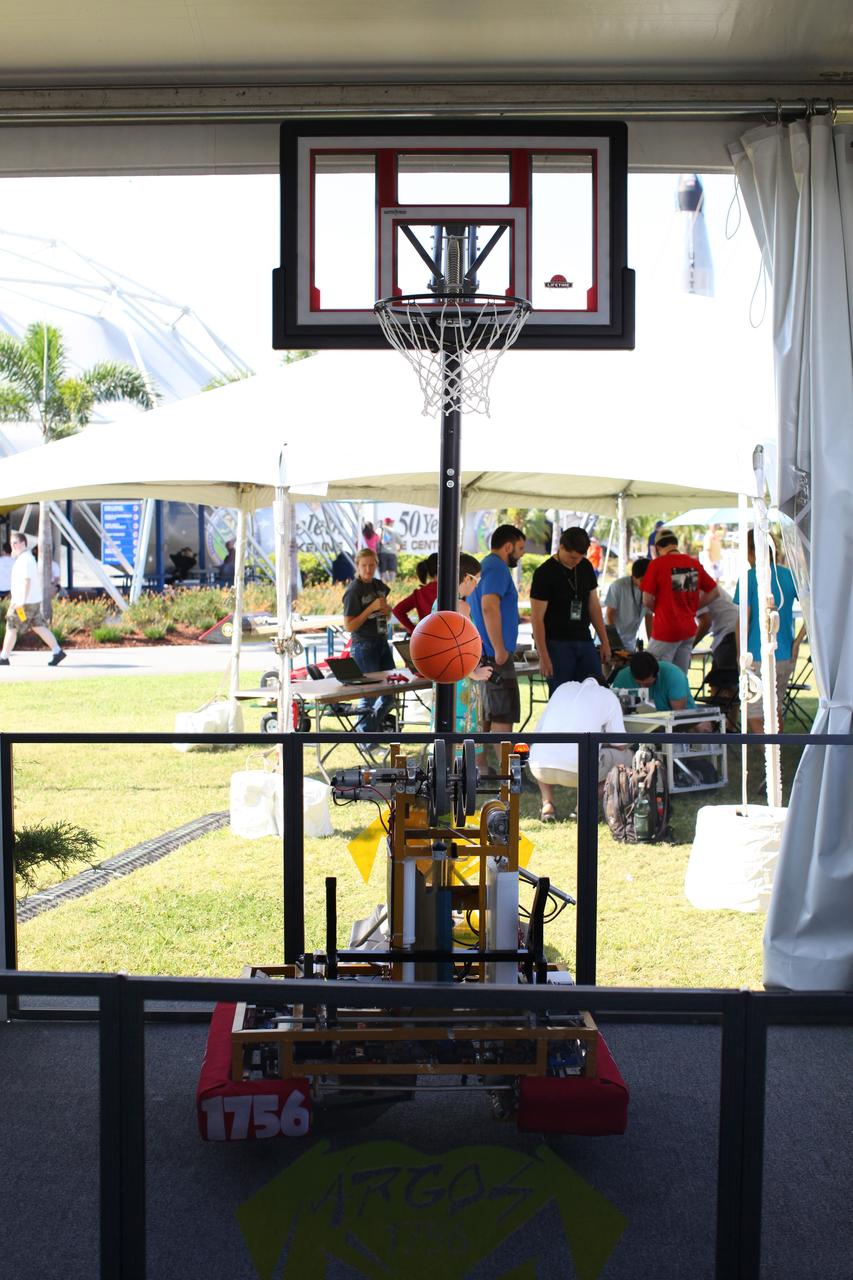
CAPE CANAVERAL, Fla. – At NASA’s Kennedy Space Center Visitor Complex in Florida, the For Inspiration and Recognition of Science and Technology FIRST Argos Team 1756 robot from Limestone Community, Brimfield and Richwoods High Schools in Peoria, Ill., is on display in Caterpillar’s sponsor booth at NASA’s Lunabotics Mining Competition. The mining competition is sponsored by NASA Kennedy Space Center’s Education Office for the agency’s Exploration Systems Mission Directorate. Undergraduate and graduate students from more than 50 universities and colleges in the U.S. and other countries use their remote-controlled Lunabots to maneuver and dig in a supersized sandbox filled with a crushed material that has characteristics similar to lunar soil. For more information, visit www.nasa.gov/lunabotics. Photo credit: NASA/Frankie Martin
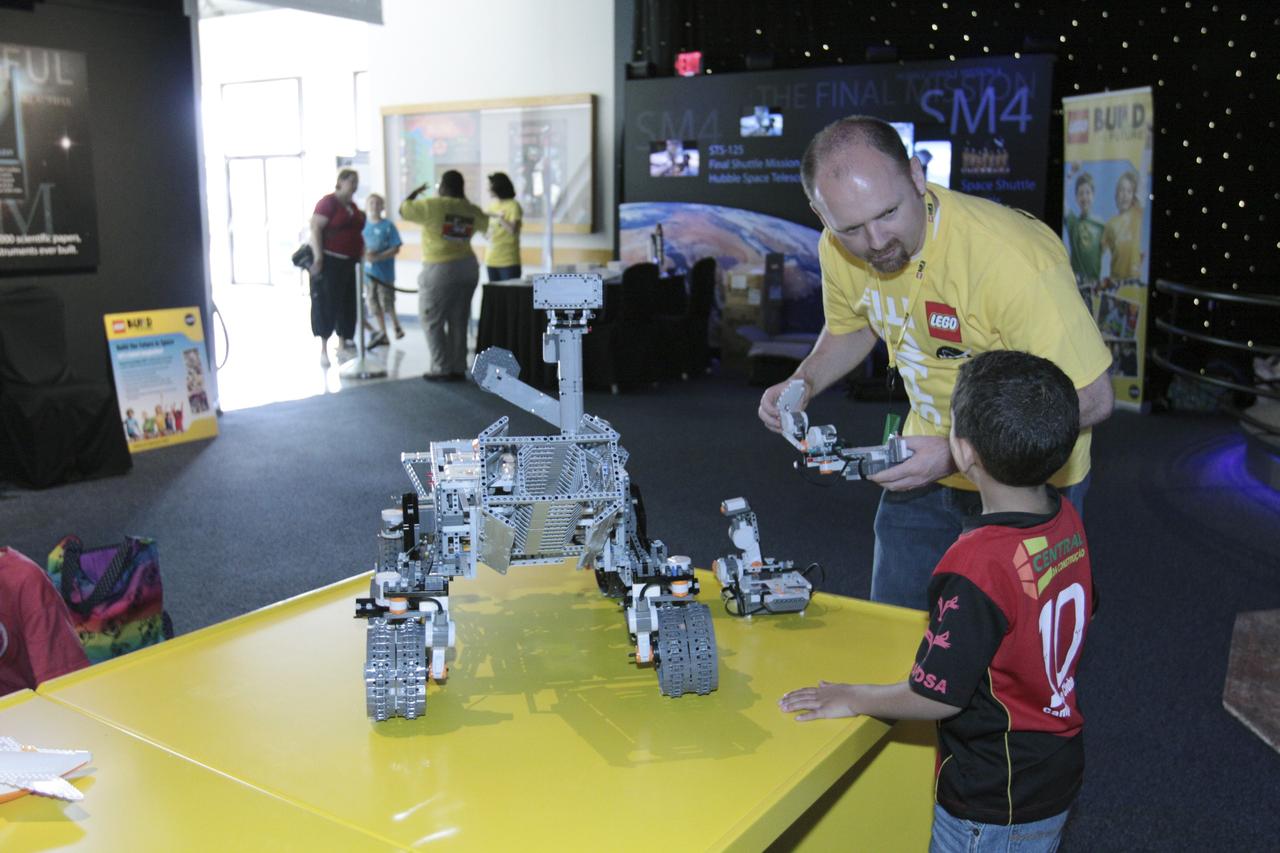
CAPE CANAVERAL, Fla. – LEGO NXT robots, designed to look like Mars rovers, are on display at the LEGO "Build the Future" event at the Kennedy Space Center Visitor Complex in Florida. The festivities coincide with the launch of NASA's Mars Science Laboratory (MSL), carrying a compact car-sized rover, Curiosity, to the red planet. Part of the Space Act Agreement between NASA and LEGO A/S, the activities are designed to inspire students of every age to consider an education and careers in the science, technology, engineering and mathematics, or STEM, disciplines. Launch of MSL aboard a United Launch Alliance Atlas V rocket is scheduled for Nov. 26 from Space Launch Complex-41 on Cape Canaveral Air Force Station in Florida. For more information, visit http://www.nasa.gov/audience/foreducators/nasa-lego-partnership.html. Photo credit: NASA/Kim Shiflett
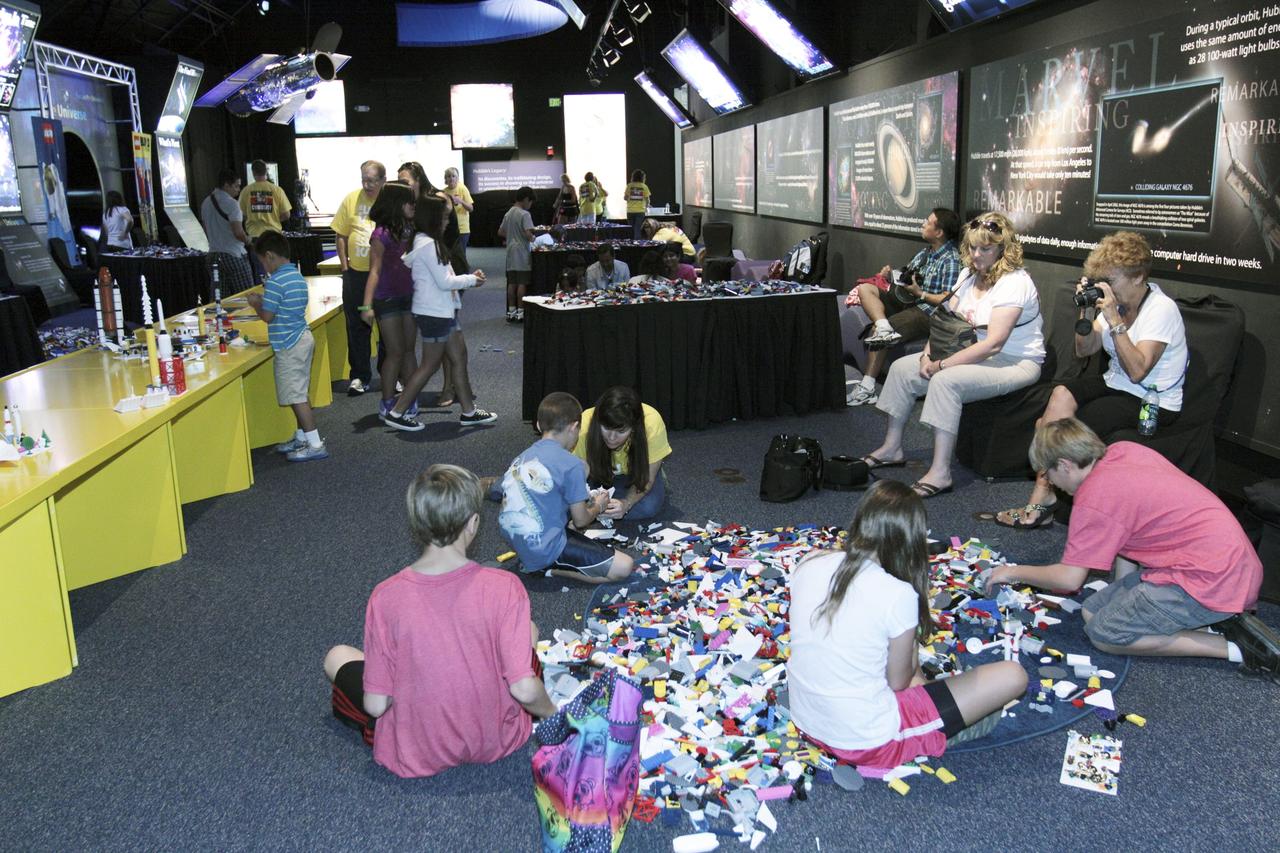
CAPE CANAVERAL, Fla. – LEGO blocks are spread out on the floor of an exhibition hall at the Kennedy Space Center Visitor Complex in Florida for easy access during the LEGO "Build the Future" event. The festivities coincide with the launch of NASA's Mars Science Laboratory (MSL), carrying a compact car-sized rover, Curiosity, to the red planet. Part of the Space Act Agreement between NASA and LEGO A/S, the activities are designed to inspire students of every age to consider an education and careers in the science, technology, engineering and mathematics, or STEM, disciplines. Launch of MSL aboard a United Launch Alliance Atlas V rocket is scheduled for Nov. 26 from Space Launch Complex-41 on Cape Canaveral Air Force Station in Florida. For more information, visit http://www.nasa.gov/audience/foreducators/nasa-lego-partnership.html. Photo credit: NASA/Kim Shiflett
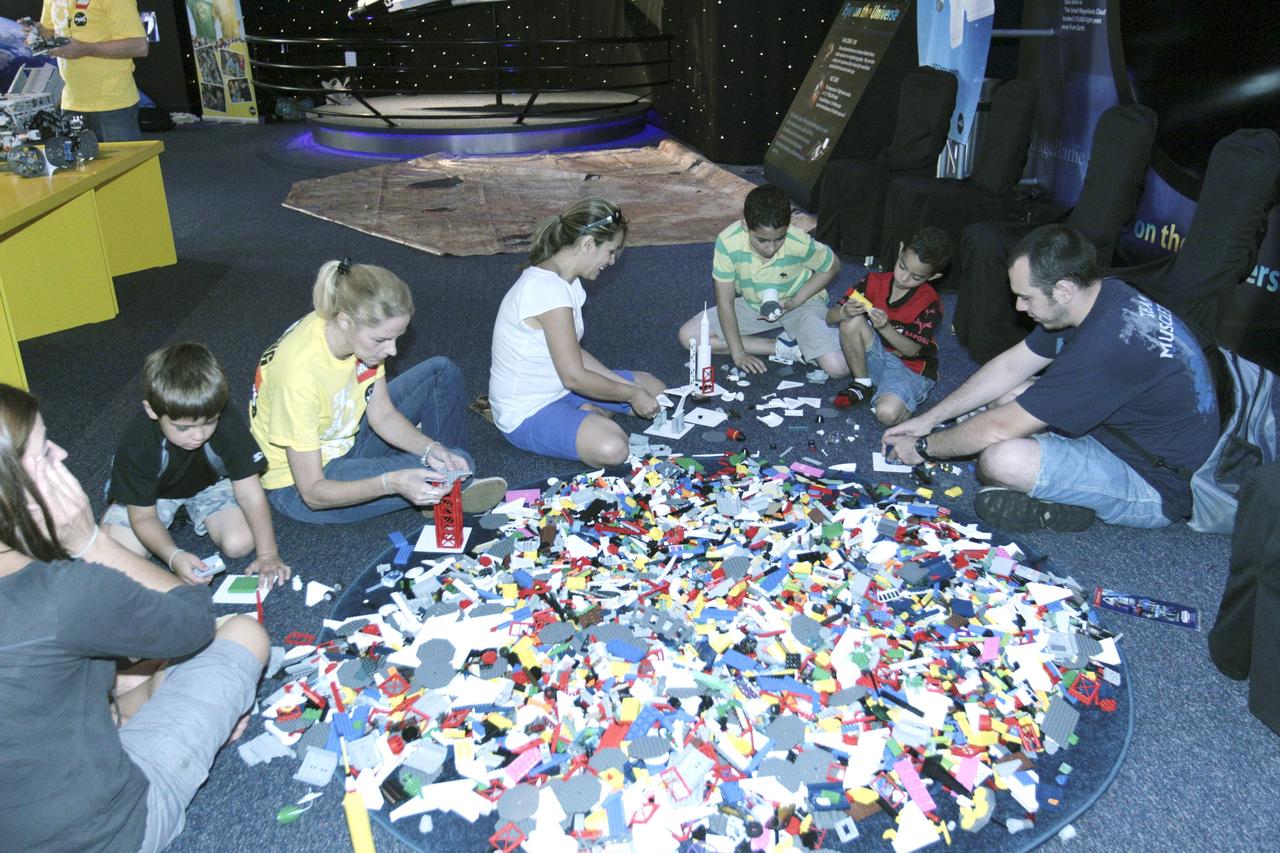
CAPE CANAVERAL, Fla. – Parents and children of all ages participate in a LEGO "Build the Future" event at the Kennedy Space Center Visitor Complex in Florida. The festivities coincide with the launch of NASA's Mars Science Laboratory (MSL), carrying a compact car-sized rover, Curiosity, to the red planet. Part of the Space Act Agreement between NASA and LEGO A/S, the activities are designed to inspire students of every age to consider an education and careers in the science, technology, engineering and mathematics, or STEM, disciplines. Launch of MSL aboard a United Launch Alliance Atlas V rocket is scheduled for Nov. 26 from Space Launch Complex-41 on Cape Canaveral Air Force Station in Florida. For more information, visit http://www.nasa.gov/audience/foreducators/nasa-lego-partnership.html. Photo credit: NASA/Kim Shiflett
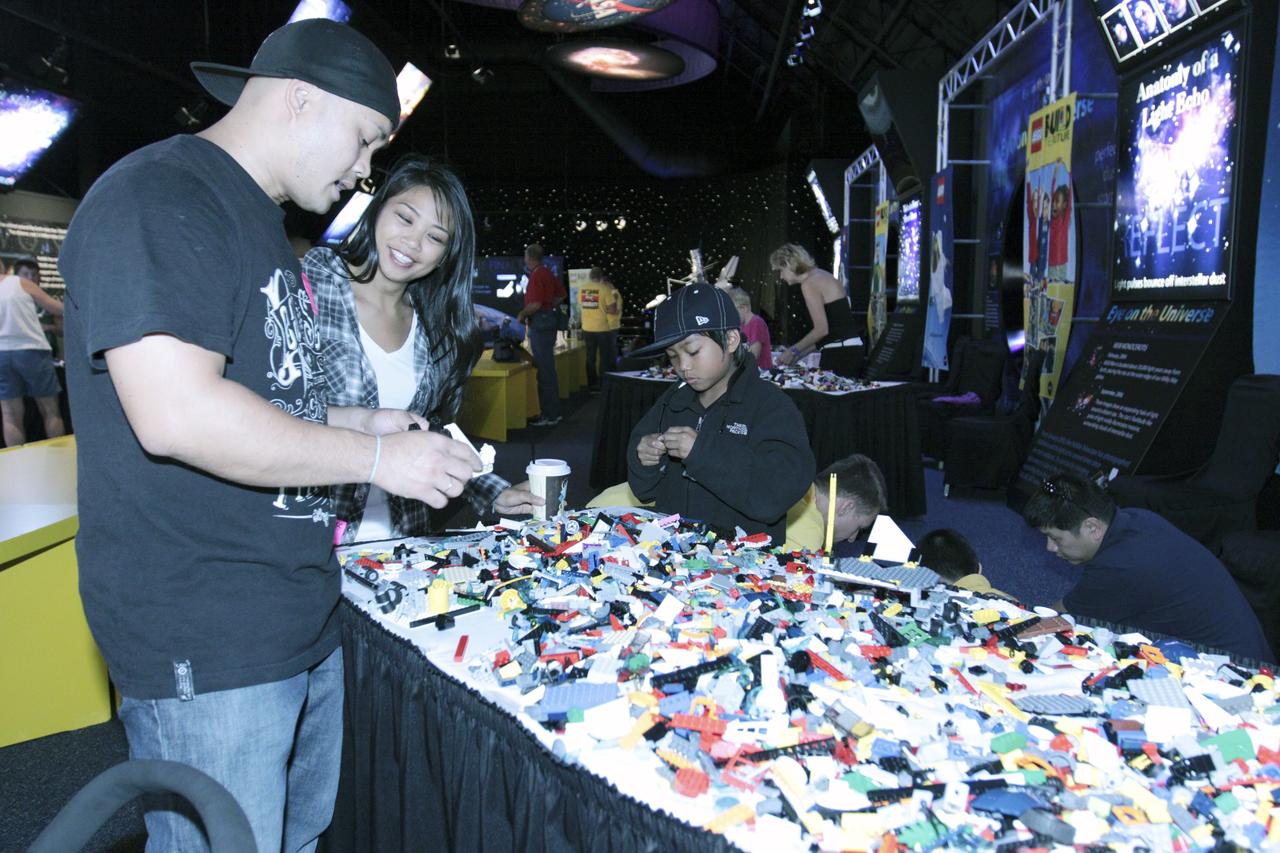
CAPE CANAVERAL, Fla. – Families visiting the Kennedy Space Center Visitor Complex in Florida participate in a LEGO "Build the Future" event. The festivities coincide with the launch of NASA's Mars Science Laboratory (MSL), carrying a compact car-sized rover, Curiosity, to the red planet. Part of the Space Act Agreement between NASA and LEGO A/S, the activities are designed to inspire students of every age to consider an education and careers in the science, technology, engineering and mathematics, or STEM, disciplines. Launch of MSL aboard a United Launch Alliance Atlas V rocket is scheduled for Nov. 26 from Space Launch Complex-41 on Cape Canaveral Air Force Station in Florida. For more information, visit http://www.nasa.gov/audience/foreducators/nasa-lego-partnership.html. Photo credit: NASA/Kim Shiflett
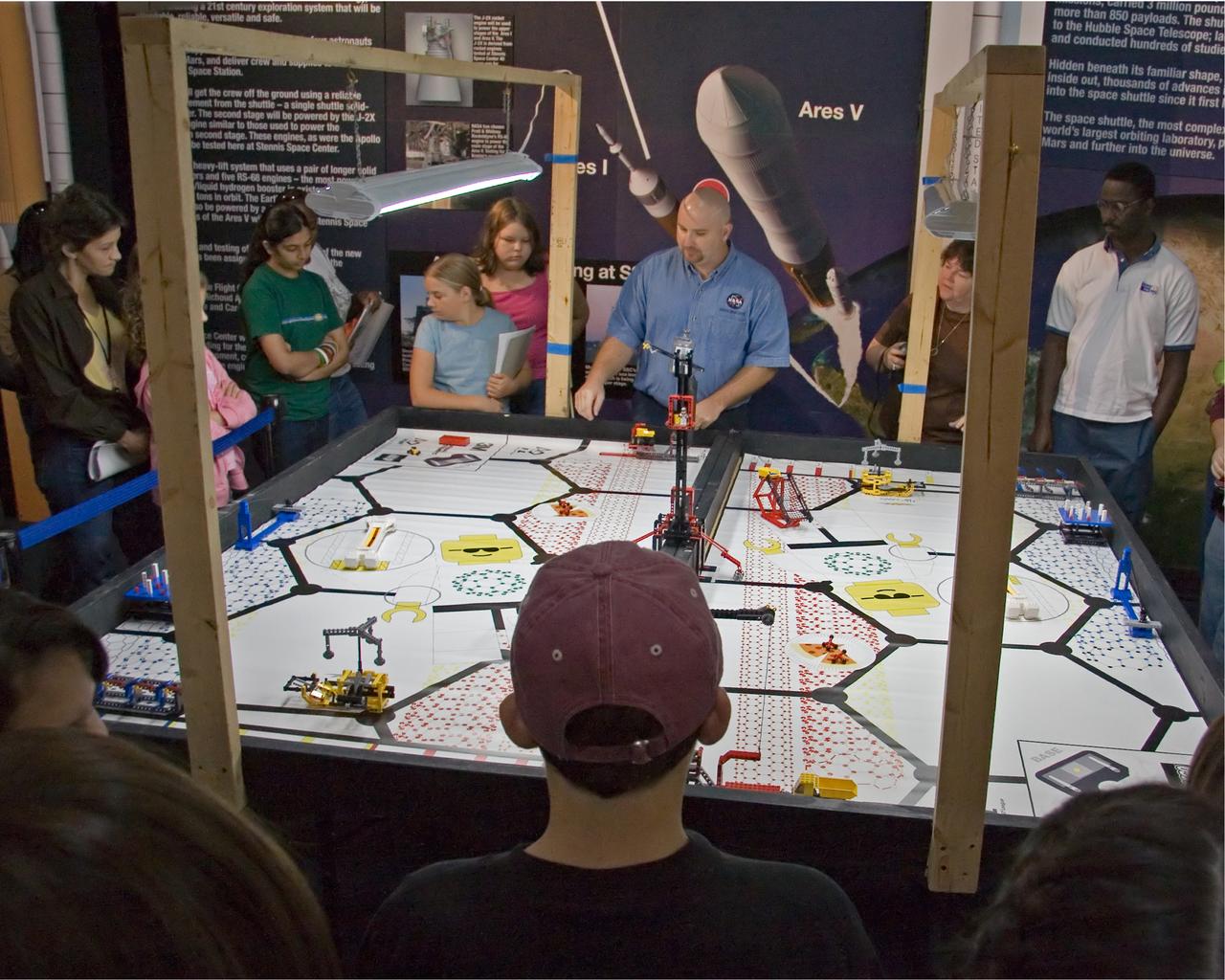
FIRST LEGO League participants listen to Aerospace Education Specialist Chris Copelan explain the playing field for 'Nano Quest' during a recent FLL kickoff event at StenniSphere, the visitor center at NASA Stennis Space Center. The kickoff began the 2006 FLL competition season. Eighty-five teachers, mentors, parents and 9- to 14-year-old students from southern and central Mississippi came to SSC to hear the rules for Nano Quest. The challenge requires teams to spend eight weeks building and programming robots from LEGO Mindstorms kits. They'll battle their creations in local and regional competitions. The Dec. 2 competition at Mississippi Gulf Coast Community College will involve about 200 students. FIRST LEGO League, considered the 'little league' of the FIRST (For Inspiration and Recognition of Science and Technology) Robotics Competition, partners FIRST and the LEGO Group. Competitions aim to inspire and celebrate science and technology using real-world context and hands-on experimentation, and to promote the principles of team play and gracious professionalism. Because NASA advocates robotics and science-technology education, the agency and SSC support FIRST by providing team coaches, mentors and training, as well as competition event judges, referees, audio-visual and other volunteer staff personnel. Two of Mississippi's NASA Explorer Schools, Bay-Waveland Middle and Hattiesburg's Lillie Burney Elementary, were in attendance. The following schools were also represented: Ocean Springs Middle, Pearl Upper Elementary, Long Beach Middle, Jackson Preparatory Academy, North Woolmarket Middle, D'Iberville Middle, West Wortham Middle, Picayune's Roseland Park Baptist Academy and Nicholson Elementary, as well as two home-school groups from McComb and Brandon. Gulfport and Picayune Memorial-Pearl River high schools' FIRST Robotics teams conducted robotics demonstrations for the FLL crowd.
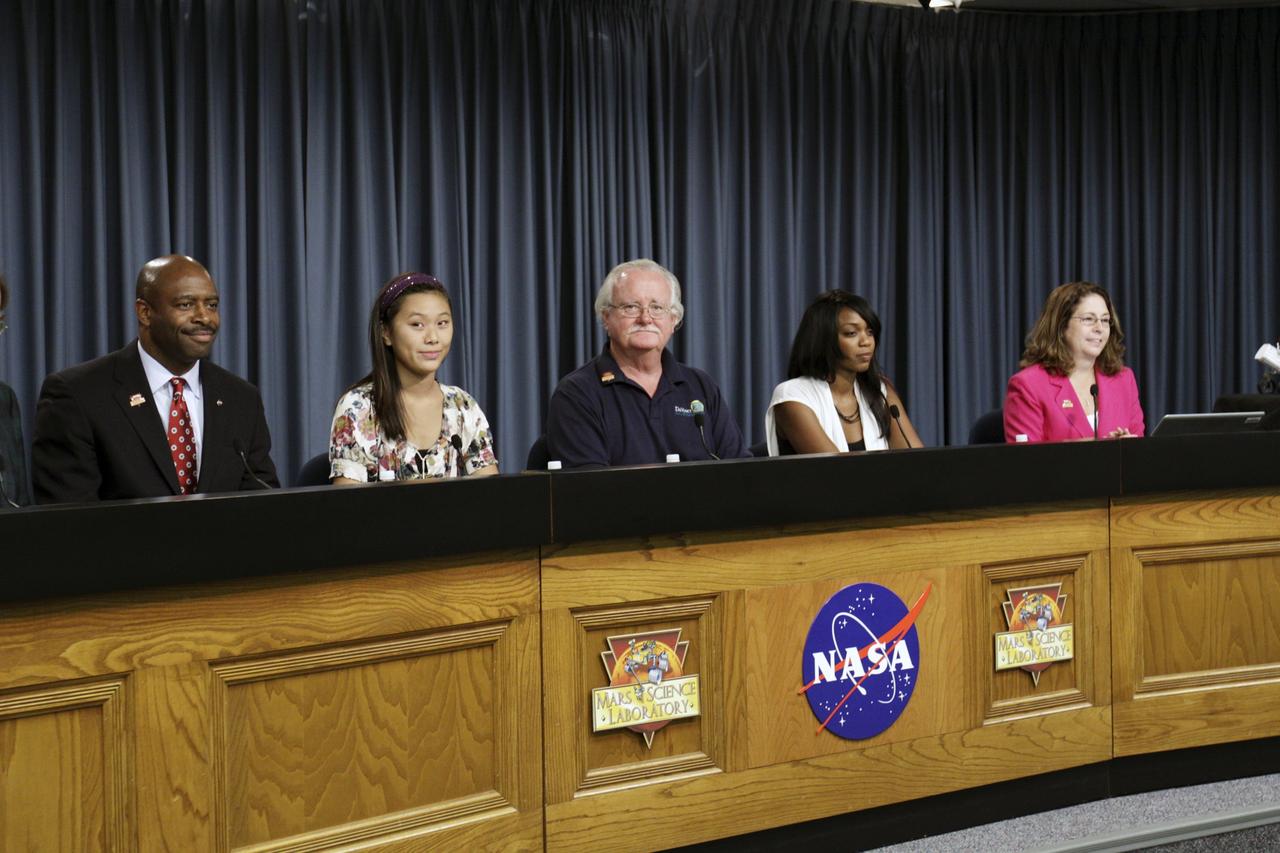
CAPE CANAVERAL, Fla. – An educational news conference to explore "Why Mars Excites and Inspires Us" begins in NASA Kennedy Space Center's Press Site auditorium in Florida during prelaunch activities for the agency’s Mars Science Laboratory (MSL) launch. Participants are, from left, Leland Melvin, NASA associate administrator for Education; Clara Ma, student, NASA contest winner for naming Curiosity, Shawnee Mission East High School, Prairie Village, Kansas; Scott Anderson, teacher and science department chairman, Da Vinci School for Science and the Arts, El Paso, Texas; Lauren Lyons, graduate student, Harvard University, FIRST robotics alumna; and Veronica McGregor, manager, Media Relations Office, NASA Jet Propulsion Laboratory. MSL's car-sized Martian rover, Curiosity, has 10 science instruments designed to search for signs of life, including methane, and help determine if the gas is from a biological or geological source. Ma's entry was selected the winner from 9,000 entries in NASA's nationwide student contest to name the rover. At the time, she was a twelve-year-old sixth-grade student at the Sunflower Elementary school in Lenexa, Kansas. Liftoff of MSL aboard a United Launch Alliance Atlas V rocket from Space Launch Complex-41 on Cape Canaveral Air Force Station is planned during a launch window which extends from 10:02 a.m. to 11:45 a.m. EST on Nov. 26. For more information, visit http://www.nasa.gov/msl. Photo credit: NASA/Kim Shiflett
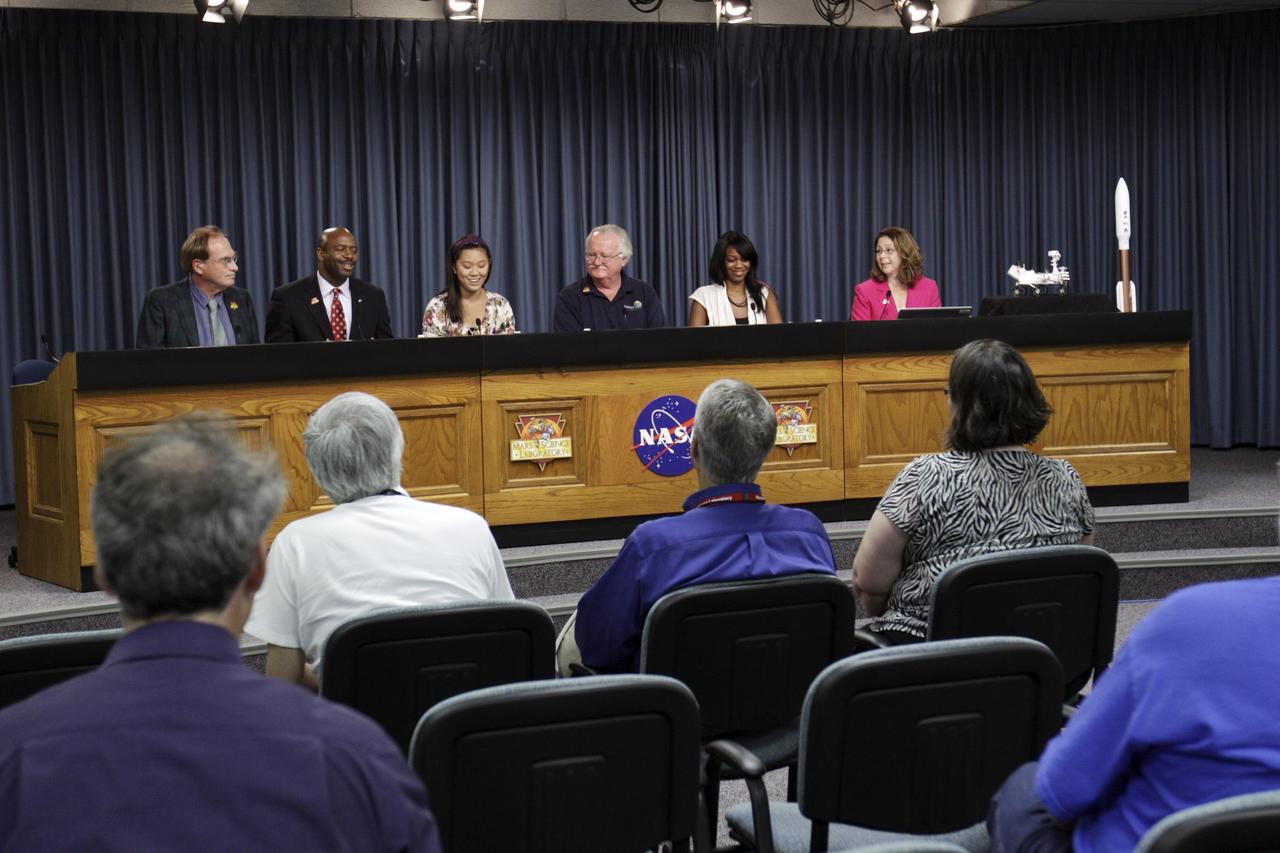
CAPE CANAVERAL, Fla. – An educational news conference to explore "Why Mars Excites and Inspires Us" is under way in NASA Kennedy Space Center's Press Site auditorium in Florida during prelaunch activities for the agency’s Mars Science Laboratory (MSL) launch. Participants are, from left, moderator George Diller, NASA Public Affairs, NASA Kennedy Space Center; Leland Melvin, NASA associate administrator for Education; Clara Ma, student, NASA contest winner for naming Curiosity, Shawnee Mission East High School, Prairie Village, Kansas; Scott Anderson, teacher and science department chairman, Da Vinci School for Science and the Arts, El Paso, Texas; Lauren Lyons, graduate student, Harvard University, FIRST robotics alumna; and Veronica McGregor, manager, Media Relations Office, NASA Jet Propulsion Laboratory. MSL's car-sized Martian rover, Curiosity, has 10 science instruments designed to search for signs of life, including methane, and help determine if the gas is from a biological or geological source. Ma's entry was selected the winner from 9,000 entries in NASA's nationwide student contest to name the rover. At the time, she was a twelve-year-old sixth-grade student at the Sunflower Elementary school in Lenexa, Kansas. Liftoff of MSL aboard a United Launch Alliance Atlas V rocket from Space Launch Complex-41 on Cape Canaveral Air Force Station is planned during a launch window which extends from 10:02 a.m. to 11:45 a.m. EST on Nov. 26. For more information, visit http://www.nasa.gov/msl. Photo credit: NASA/Kim Shiflett
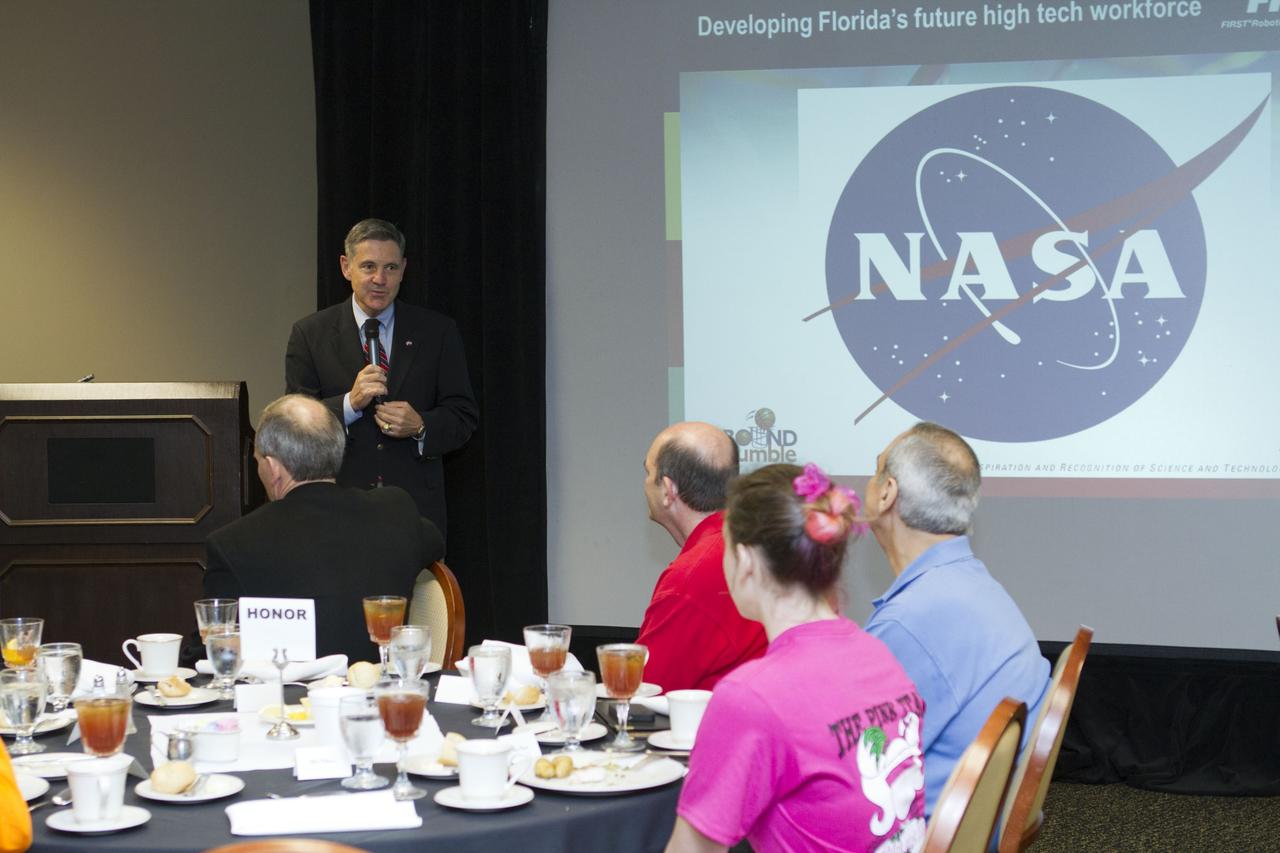
ORLANDO, Fla. -- NASA Kennedy Space Center Director Bob Cabana talks to teams that are participating in the regional FIRST robotics competition at the University of Central Florida in Orlando, Fla. More than 60 high school teams took part in the competition called "For Inspiration and Recognition of Science and Technology," or FIRST, in hopes of advancing to the national robotics championship. This year, the competition resembled a basketball game and was dubbed "Rebound Rumble." The game measured the effectiveness of each robot, the power of collaboration and the determination of the teams. FIRST, founded in 1989, is a non-profit organization that designs accessible, innovative programs to build self-confidence, knowledge and life skills while motivating young people to pursue academic opportunities. The robotics competition challenges teams of high school students and their mentors to solve a common problem in a six-week timeframe using a standard kit of parts and a common set of rules. NASA is the largest sponsor of the international program. Kennedy Space Center is a sponsor of the regional event. For more information on Kennedy's education events and initiatives, go to http://www.nasa.gov/offices/education/centers/kennedy/home/index.html. Photo credit: NASA/Kim Shiflett
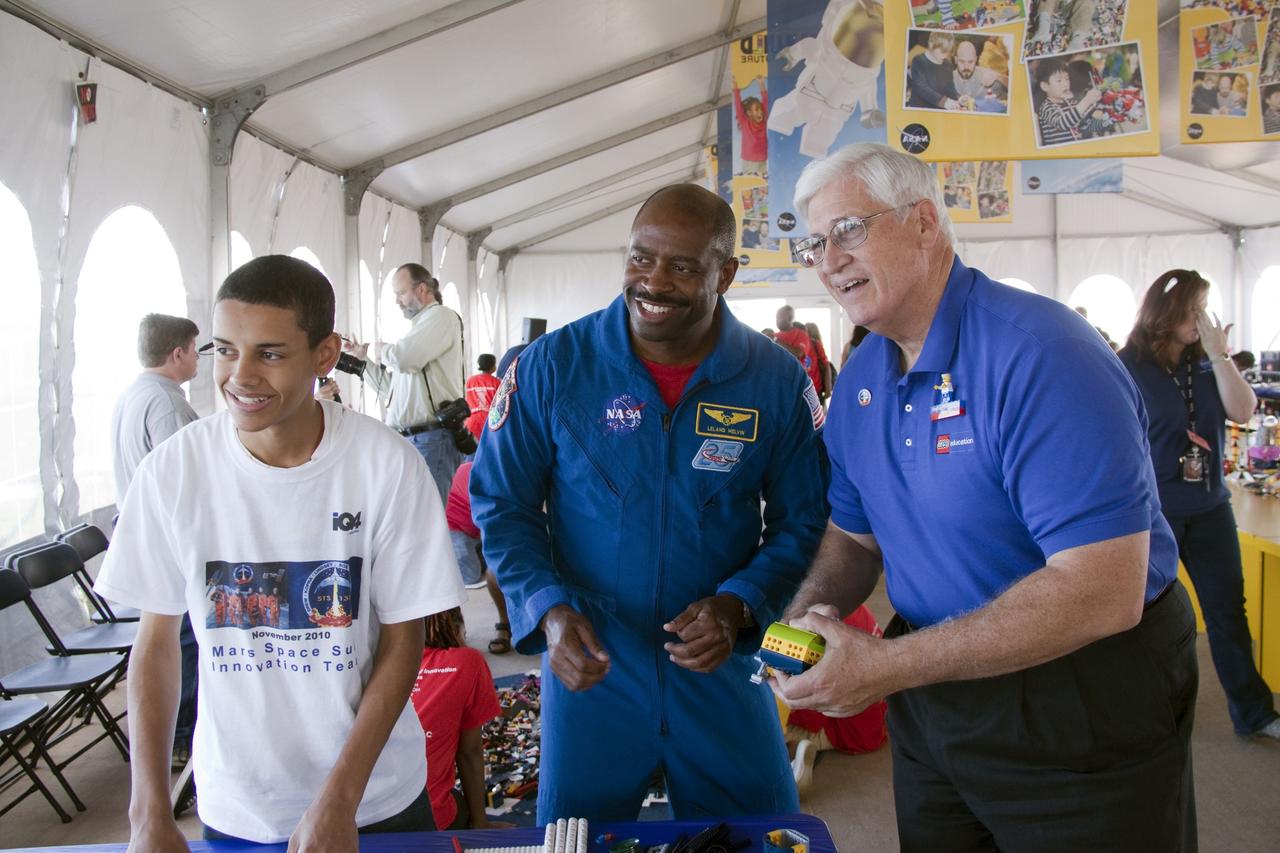
CAPE CANAVERAL, Fla. -- On the NASA Causeway at Kennedy Space Center in Florida, Leland Melvin, NASA's associate administrator for Education, center, and Stephan Turnipseed, president of LEGO Education North America, right, help a student build LEGO space vehicles inside a 40- by 70-foot activity tent. There, children of all ages are building their vision of the future with LEGO bricks, marking the beginning of a three-year Space Act Agreement meant to spark the interest of children in science, technology, engineering and mathematics (STEM). To commemorate the partnership, two small LEGO space shuttles will launch aboard space shuttle Discovery's STS-133 mission to the International Space Station and the company will release four NASA-inspired products in its LEGO CITY line next year. LEGO sets also will fly to the space station aboard Endeavour's STS-134 mission, and will be put together on orbit to demonstrate the challenges faced while building things in microgravity. Photo credit: NASA/Jack Pfaller
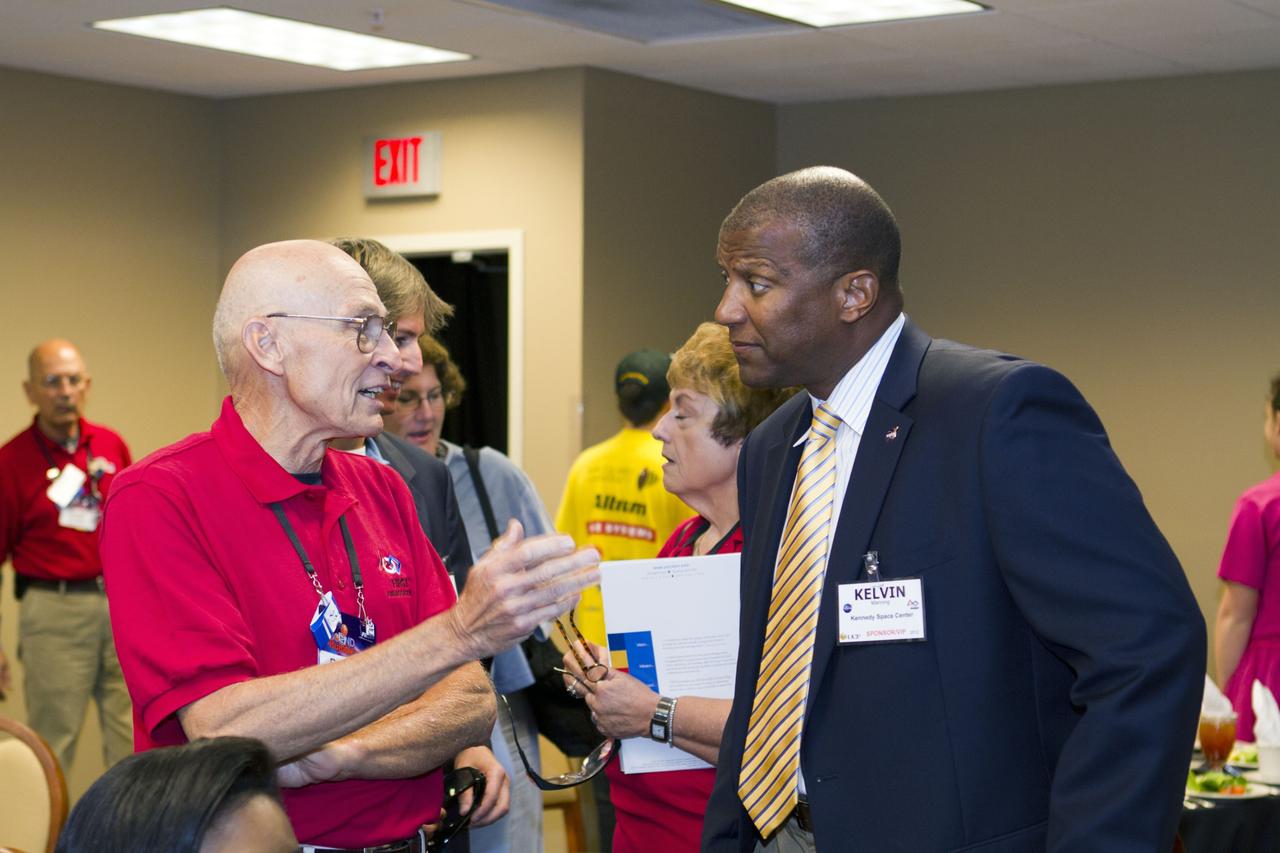
ORLANDO, Fla. -- Former space shuttle launch director, Bob Sieck, left, and NASA Kennedy Space Center Associate Director Kelvin Manning, right, talk amongst high school teams that are competing in the regional FIRST robotics competition at the University of Central Florida in Orlando, Fla. More than 60 teams took part in the competition called "For Inspiration and Recognition of Science and Technology," or FIRST, in hopes of advancing to the national robotics championship. This year, the competition resembled a basketball game and was dubbed "Rebound Rumble." The game measured the effectiveness of each robot, the power of collaboration and the determination of the teams. FIRST, founded in 1989, is a non-profit organization that designs accessible, innovative programs to build self-confidence, knowledge and life skills while motivating young people to pursue academic opportunities. The robotics competition challenges teams of high school students and their mentors to solve a common problem in a six-week timeframe using a standard kit of parts and a common set of rules. NASA is the largest sponsor of the international program. Kennedy Space Center is a sponsor of the regional event. For more information on Kennedy's education events and initiatives, go to http://www.nasa.gov/offices/education/centers/kennedy/home/index.html. Photo credit: NASA/Kim Shiflett
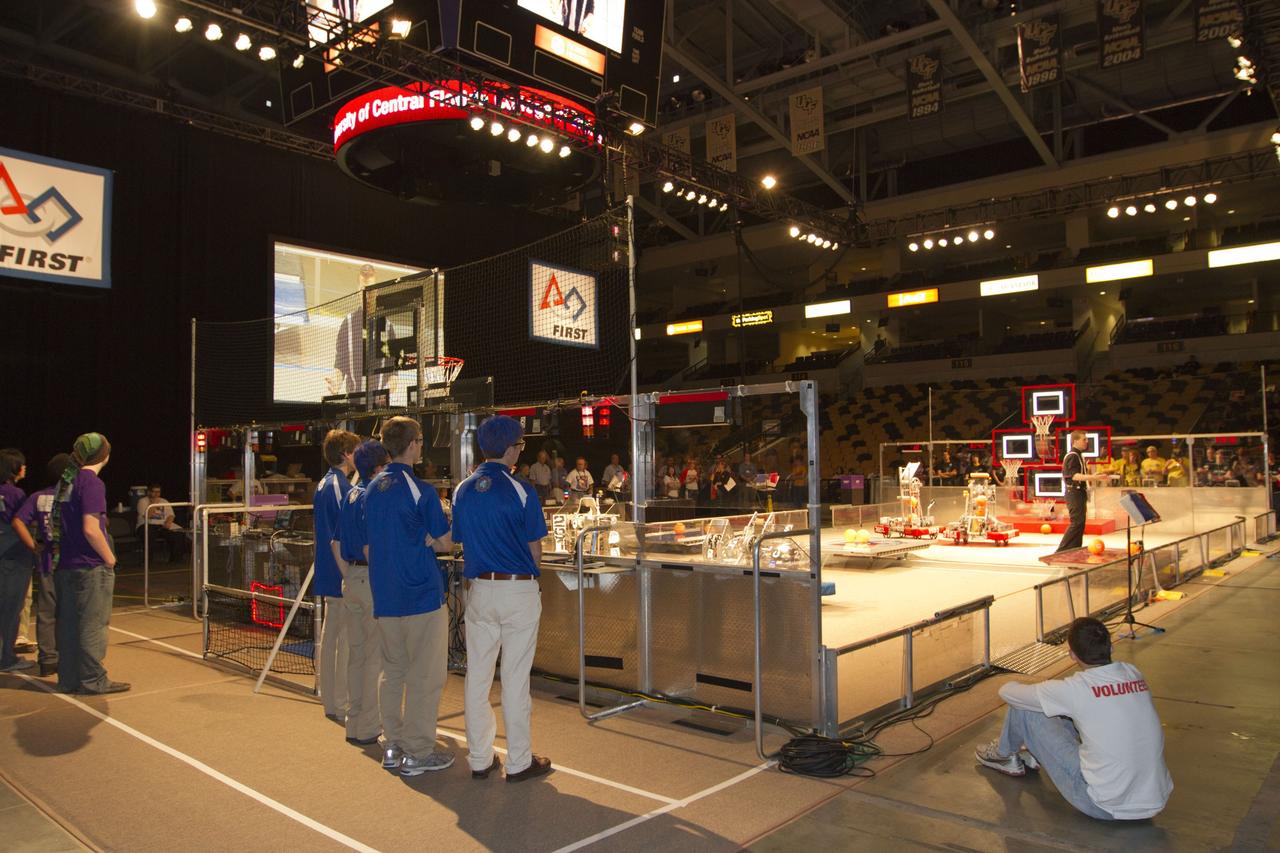
ORLANDO, Fla. -- High school teams compete in the regional FIRST robotics competition at the University of Central Florida in Orlando, Fla. More than 60 teams took part in the competition called "For Inspiration and Recognition of Science and Technology," or FIRST, in hopes of advancing to the national robotics championship. This year, the competition resembled a basketball game and was dubbed "Rebound Rumble." The game measured the effectiveness of each robot, the power of collaboration and the determination of the teams. FIRST, founded in 1989, is a non-profit organization that designs accessible, innovative programs to build self-confidence, knowledge and life skills while motivating young people to pursue academic opportunities. The robotics competition challenges teams of high school students and their mentors to solve a common problem in a six-week timeframe using a standard kit of parts and a common set of rules. NASA is the largest sponsor of the international program. Kennedy Space Center is a sponsor of the regional event. For more information on Kennedy's education events and initiatives, go to http://www.nasa.gov/offices/education/centers/kennedy/home/index.html. Photo credit: NASA/Kim Shiflett

ORLANDO, Fla. -- High school teams compete in the regional FIRST robotics competition at the University of Central Florida in Orlando, Fla. More than 60 teams took part in the competition called "For Inspiration and Recognition of Science and Technology," or FIRST, in hopes of advancing to the national robotics championship. This year, the competition resembled a basketball game and was dubbed "Rebound Rumble." The game measured the effectiveness of each robot, the power of collaboration and the determination of the teams. FIRST, founded in 1989, is a non-profit organization that designs accessible, innovative programs to build self-confidence, knowledge and life skills while motivating young people to pursue academic opportunities. The robotics competition challenges teams of high school students and their mentors to solve a common problem in a six-week timeframe using a standard kit of parts and a common set of rules. NASA is the largest sponsor of the international program. Kennedy Space Center is a sponsor of the regional event. For more information on Kennedy's education events and initiatives, go to http://www.nasa.gov/offices/education/centers/kennedy/home/index.html. Photo credit: NASA/Kim Shiflett
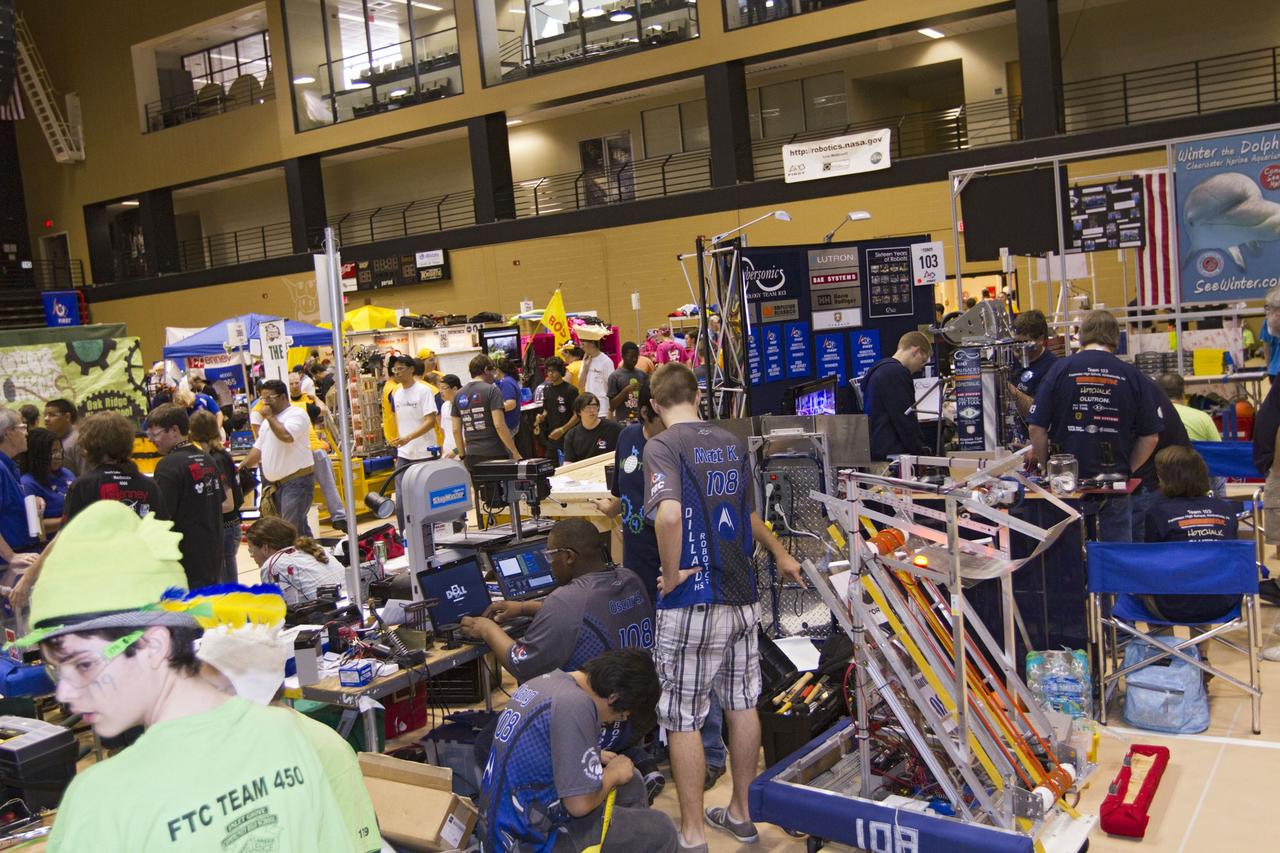
ORLANDO, Fla. -- High school teams tinker with their robots during the regional FIRST robotics competition at the University of Central Florida in Orlando, Fla. More than 60 teams took part in the competition called "For Inspiration and Recognition of Science and Technology," or FIRST, in hopes of advancing to the national robotics championship. This year ,the competition resembled a basketball game and was dubbed "Rebound Rumble." The game measured the effectiveness of each robot, the power of collaboration and the determination of the teams. FIRST, founded in 1989, is a non-profit organization that designs accessible, innovative programs to build self-confidence, knowledge and life skills while motivating young people to pursue academic opportunities. The robotics competition challenges teams of high school students and their mentors to solve a common problem in a six-week timeframe using a standard kit of parts and a common set of rules. NASA is the largest sponsor of the international program. Kennedy Space Center is a sponsor of the regional event. For more information on Kennedy's education events and initiatives, go to http://www.nasa.gov/offices/education/centers/kennedy/home/index.html. Photo credit: NASA/Kim Shiflett
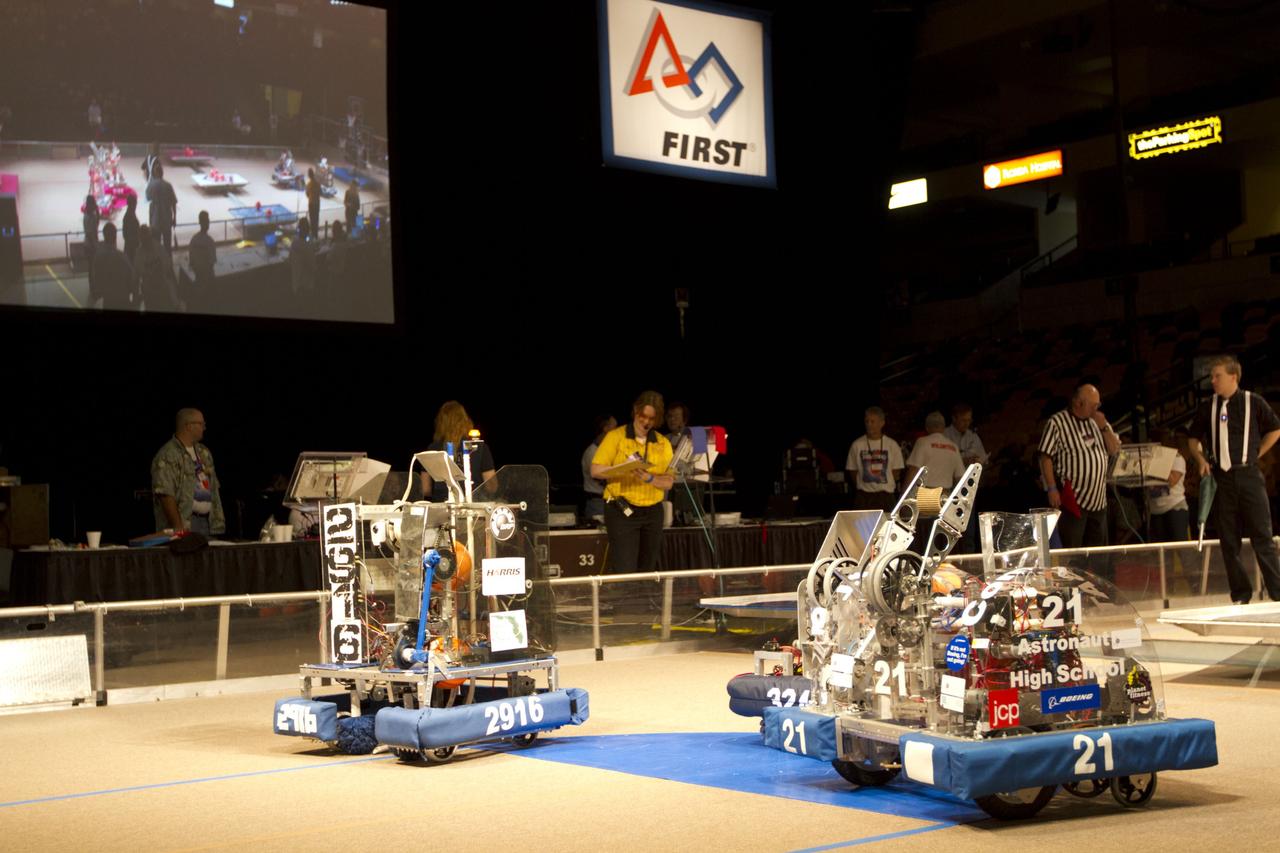
ORLANDO, Fla. -- High school teams compete in the regional FIRST robotics competition at the University of Central Florida in Orlando, Fla. More than 60 teams took part in the competition called "For Inspiration and Recognition of Science and Technology," or FIRST, in hopes of advancing to the national robotics championship. This year, the competition resembled a basketball game and was dubbed "Rebound Rumble." The game measured the effectiveness of each robot, the power of collaboration and the determination of the teams. FIRST, founded in 1989, is a non-profit organization that designs accessible, innovative programs to build self-confidence, knowledge and life skills while motivating young people to pursue academic opportunities. The robotics competition challenges teams of high school students and their mentors to solve a common problem in a six-week timeframe using a standard kit of parts and a common set of rules. NASA is the largest sponsor of the international program. Kennedy Space Center is a sponsor of the regional event. For more information on Kennedy's education events and initiatives, go to http://www.nasa.gov/offices/education/centers/kennedy/home/index.html. Photo credit: NASA/Kim Shiflett
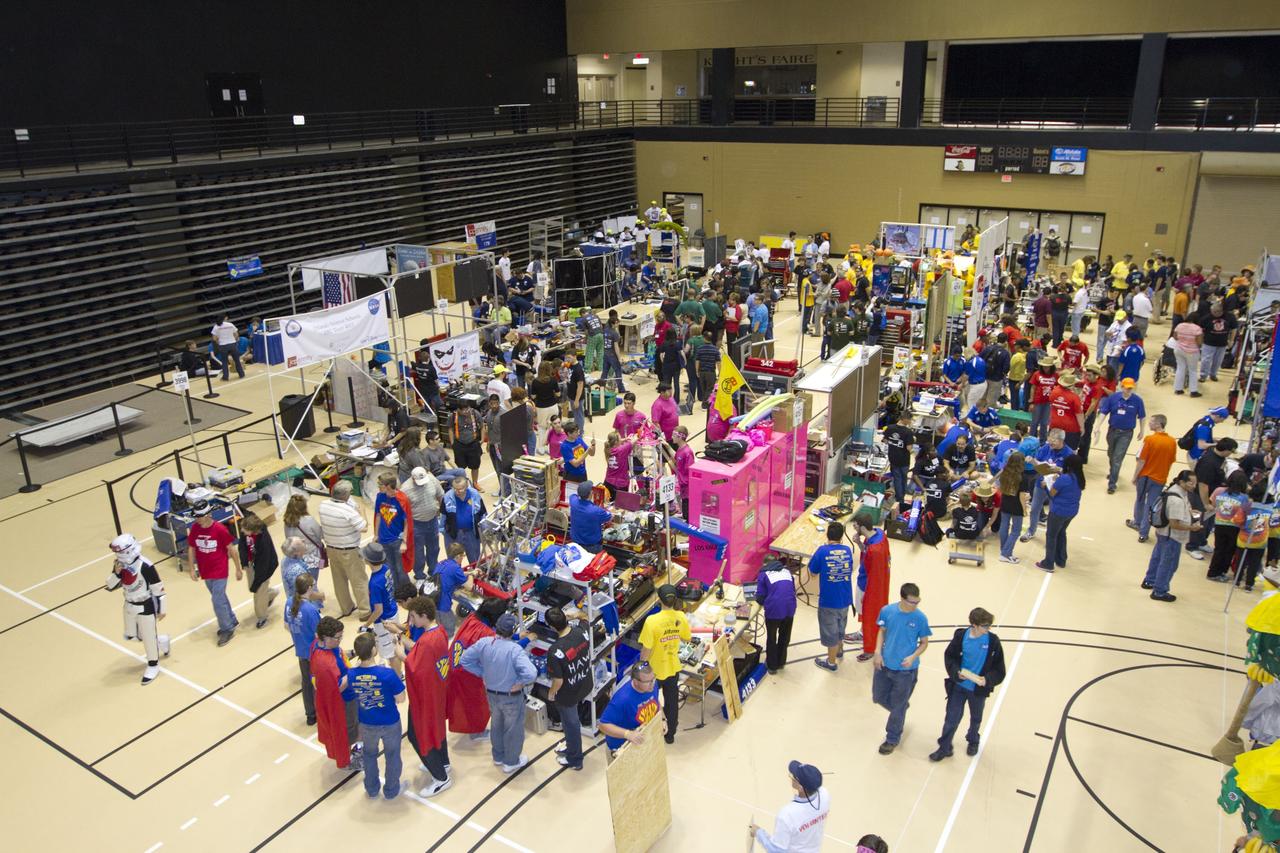
ORLANDO, Fla. -- High school teams tinker with their robots during the regional FIRST robotics competition at the University of Central Florida in Orlando, Fla. More than 60 teams took part in the competition called "For Inspiration and Recognition of Science and Technology," or FIRST, in hopes of advancing to the national robotics championship. This year, the competition resembled a basketball game and was dubbed "Rebound Rumble." The game measured the effectiveness of each robot, the power of collaboration and the determination of the teams. FIRST, founded in 1989, is a non-profit organization that designs accessible, innovative programs to build self-confidence, knowledge and life skills while motivating young people to pursue academic opportunities. The robotics competition challenges teams of high school students and their mentors to solve a common problem in a six-week timeframe using a standard kit of parts and a common set of rules. NASA is the largest sponsor of the international program. Kennedy Space Center is a sponsor of the regional event. For more information on Kennedy's education events and initiatives, go to http://www.nasa.gov/offices/education/centers/kennedy/home/index.html. Photo credit: NASA/Kim Shiflett
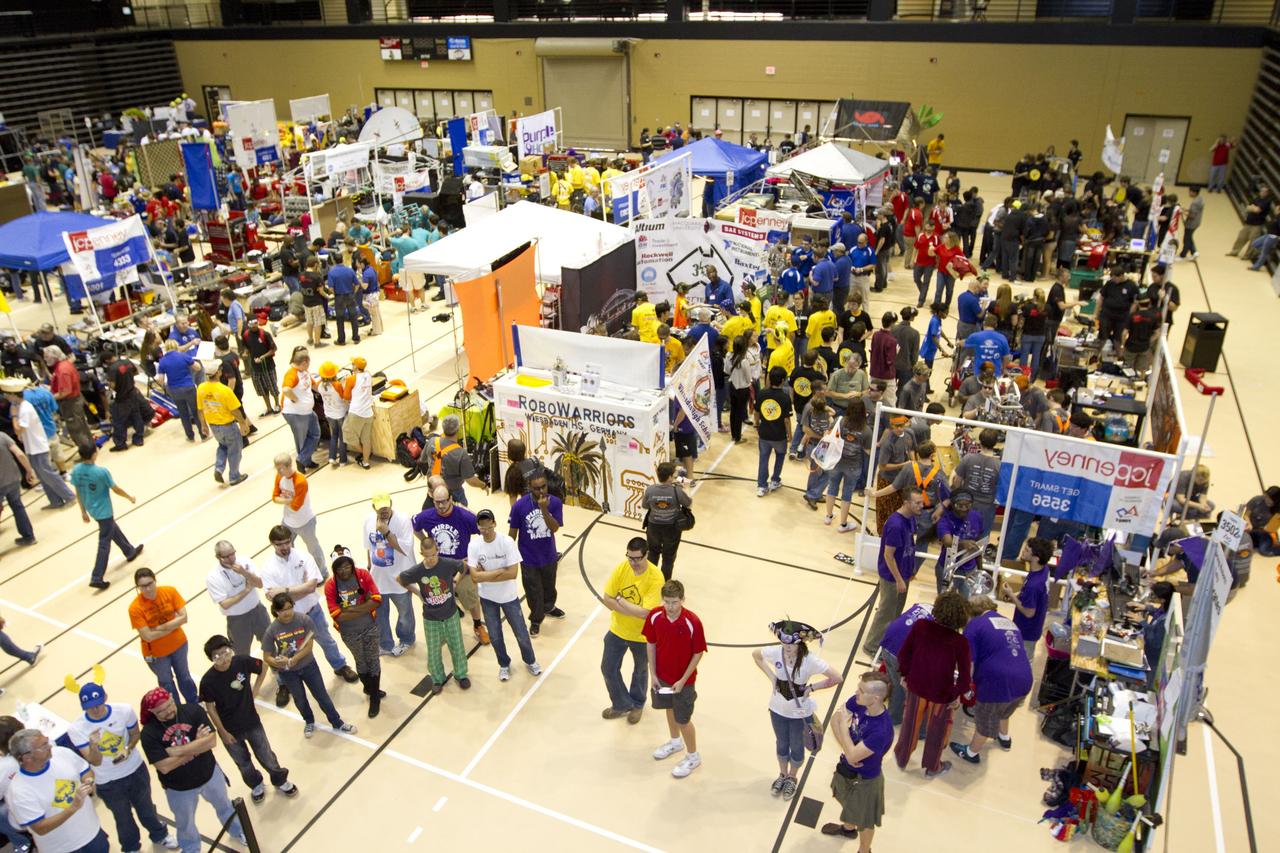
ORLANDO, Fla. -- High school teams tinker with their robots during the regional FIRST robotics competition at the University of Central Florida in Orlando, Fla. More than 50 teams took part in the competition called "For Inspiration and Recognition of Science and Technology," or FIRST, in hopes of advancing to the national robotics championship. This year, the competition resembled a basketball game and was dubbed "Rebound Rumble." The game measured the effectiveness of each robot, the power of collaboration and the determination of the teams. FIRST, founded in 1989, is a non-profit organization that designs accessible, innovative programs to build self-confidence, knowledge and life skills while motivating young people to pursue academic opportunities. The robotics competition challenges teams of high school students and their mentors to solve a common problem in a six-week timeframe using a standard kit of parts and a common set of rules. NASA is the largest sponsor of the international program. Kennedy Space Center is a sponsor of the regional event. For more information on Kennedy's education events and initiatives, go to http://www.nasa.gov/offices/education/centers/kennedy/home/index.html. Photo credit: NASA/Kim Shiflett
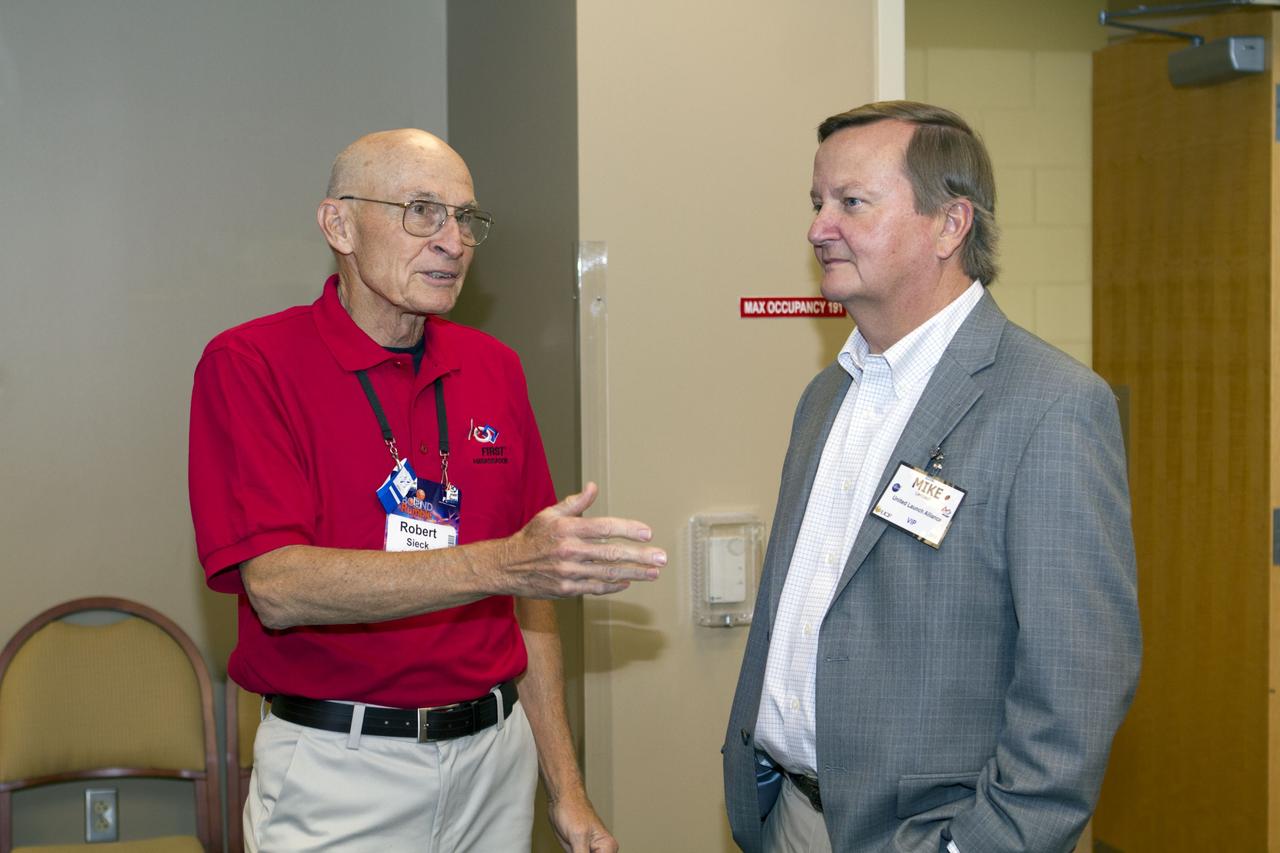
ORLANDO, Fla. -- Former space shuttle launch directors, Bob Sieck, left, and Mike Leinbach, right, talk with high school teams that are competing in the regional FIRST robotics competition at the University of Central Florida in Orlando, Fla. More than 60 teams took part in the competition called "For Inspiration and Recognition of Science and Technology," or FIRST, in hopes of advancing to the national robotics championship. This year, the competition resembled a basketball game and was dubbed "Rebound Rumble." The game measured the effectiveness of each robot, the power of collaboration and the determination of the teams. FIRST, founded in 1989, is a non-profit organization that designs accessible, innovative programs to build self-confidence, knowledge and life skills while motivating young people to pursue academic opportunities. The robotics competition challenges teams of high school students and their mentors to solve a common problem in a six-week timeframe using a standard kit of parts and a common set of rules. NASA is the largest sponsor of the international program. Kennedy Space Center is a sponsor of the regional event. For more information on Kennedy's education events and initiatives, go to http://www.nasa.gov/offices/education/centers/kennedy/home/index.html. Photo credit: NASA/Kim Shiflett
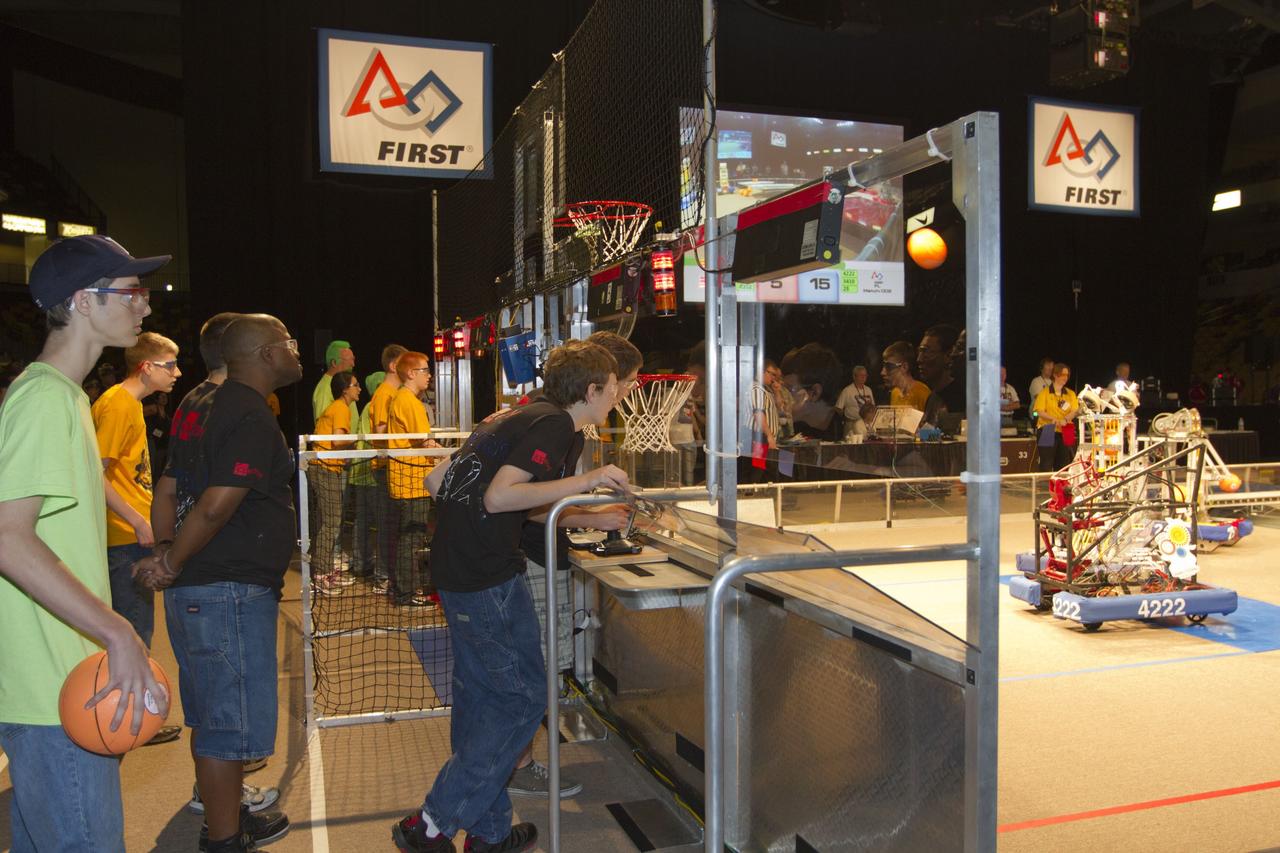
ORLANDO, Fla. -- High school teams compete in the regional FIRST robotics competition at the University of Central Florida in Orlando, Fla. More than 60 teams took part in the competition called "For Inspiration and Recognition of Science and Technology," or FIRST, in hopes of advancing to the national robotics championship. This year, the competition resembled a basketball game and was dubbed "Rebound Rumble." The game measured the effectiveness of each robot, the power of collaboration and the determination of the teams. FIRST, founded in 1989, is a non-profit organization that designs accessible, innovative programs to build self-confidence, knowledge and life skills while motivating young people to pursue academic opportunities. The robotics competition challenges teams of high school students and their mentors to solve a common problem in a six-week timeframe using a standard kit of parts and a common set of rules. NASA is the largest sponsor of the international program. Kennedy Space Center is a sponsor of the regional event. For more information on Kennedy's education events and initiatives, go to http://www.nasa.gov/offices/education/centers/kennedy/home/index.html. Photo credit: NASA/Kim Shiflett
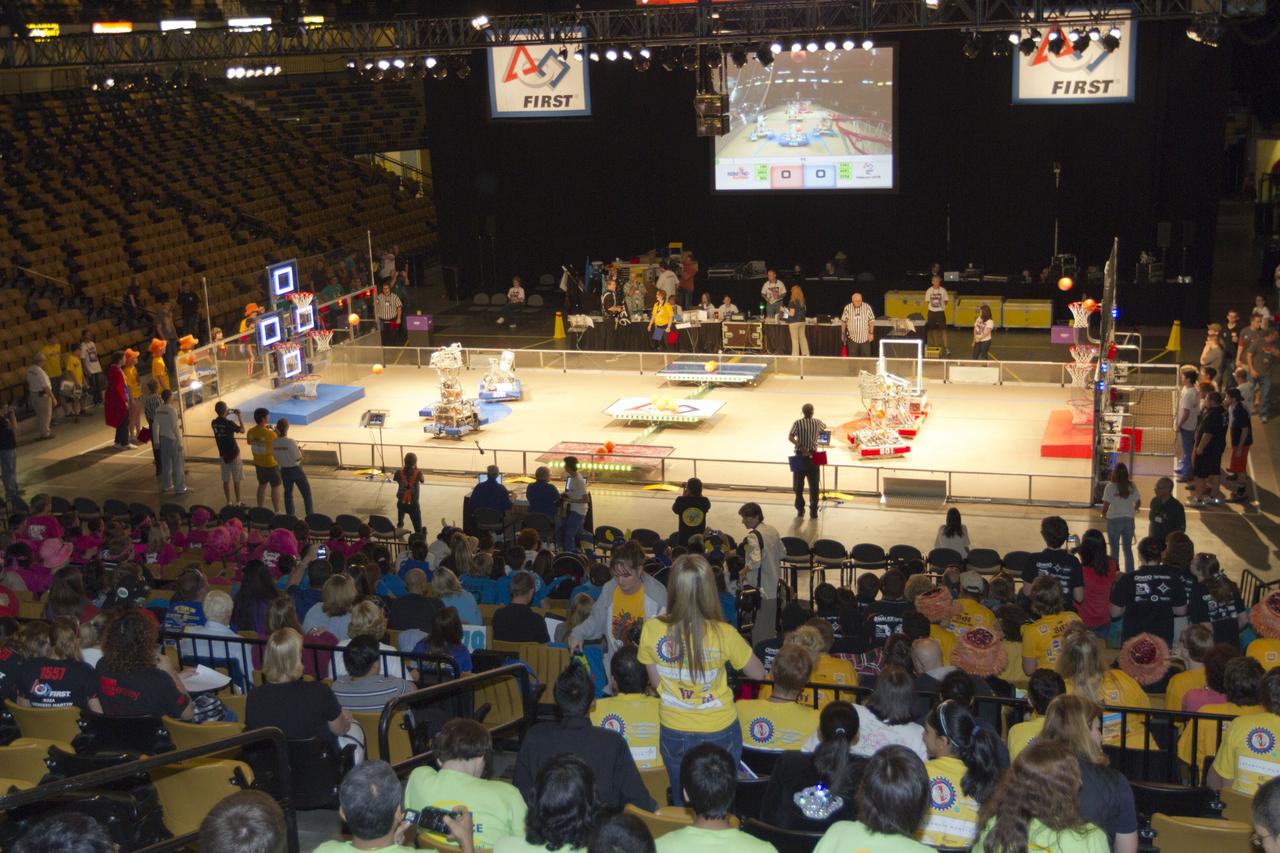
ORLANDO, Fla. -- High school teams compete in the regional FIRST robotics competition at the University of Central Florida in Orlando, Fla. More than 60 teams took part in the competition called "For Inspiration and Recognition of Science and Technology," or FIRST, in hopes of advancing to the national robotics championship. This year, the competition resembled a basketball game and was dubbed "Rebound Rumble." The game measured the effectiveness of each robot, the power of collaboration and the determination of the teams. FIRST, founded in 1989, is a non-profit organization that designs accessible, innovative programs to build self-confidence, knowledge and life skills while motivating young people to pursue academic opportunities. The robotics competition challenges teams of high school students and their mentors to solve a common problem in a six-week timeframe using a standard kit of parts and a common set of rules. NASA is the largest sponsor of the international program. Kennedy Space Center is a sponsor of the regional event. For more information on Kennedy's education events and initiatives, go to http://www.nasa.gov/offices/education/centers/kennedy/home/index.html. Photo credit: NASA/Kim Shiflett
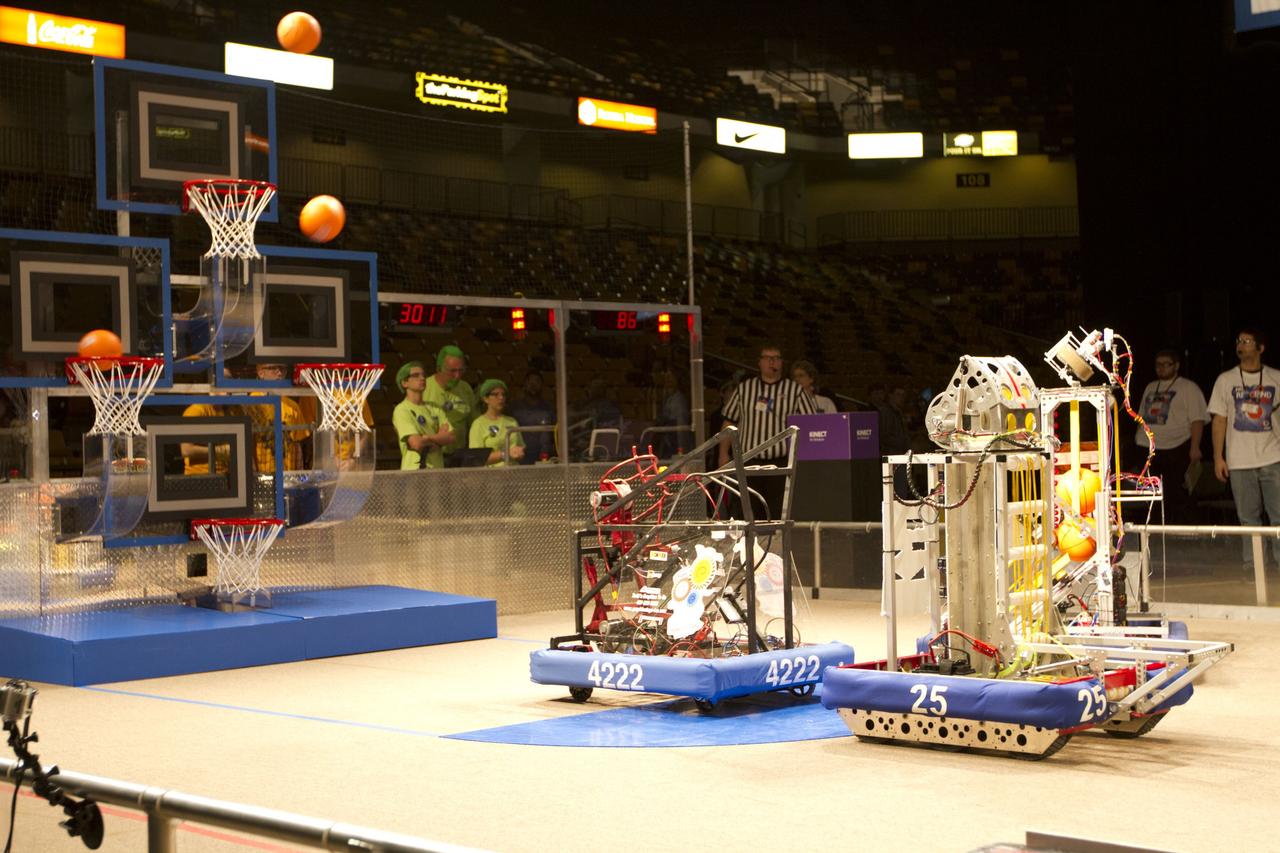
ORLANDO, Fla. -- High school teams compete in the regional FIRST robotics competition at the University of Central Florida in Orlando, Fla. More than 60 teams took part in the competition called "For Inspiration and Recognition of Science and Technology," or FIRST, in hopes of advancing to the national robotics championship. This year, the competition resembled a basketball game and was dubbed "Rebound Rumble." The game measured the effectiveness of each robot, the power of collaboration and the determination of the teams. FIRST, founded in 1989, is a non-profit organization that designs accessible, innovative programs to build self-confidence, knowledge and life skills while motivating young people to pursue academic opportunities. The robotics competition challenges teams of high school students and their mentors to solve a common problem in a six-week timeframe using a standard kit of parts and a common set of rules. NASA is the largest sponsor of the international program. Kennedy Space Center is a sponsor of the regional event. For more information on Kennedy's education events and initiatives, go to http://www.nasa.gov/offices/education/centers/kennedy/home/index.html. Photo credit: NASA/Kim Shiflett
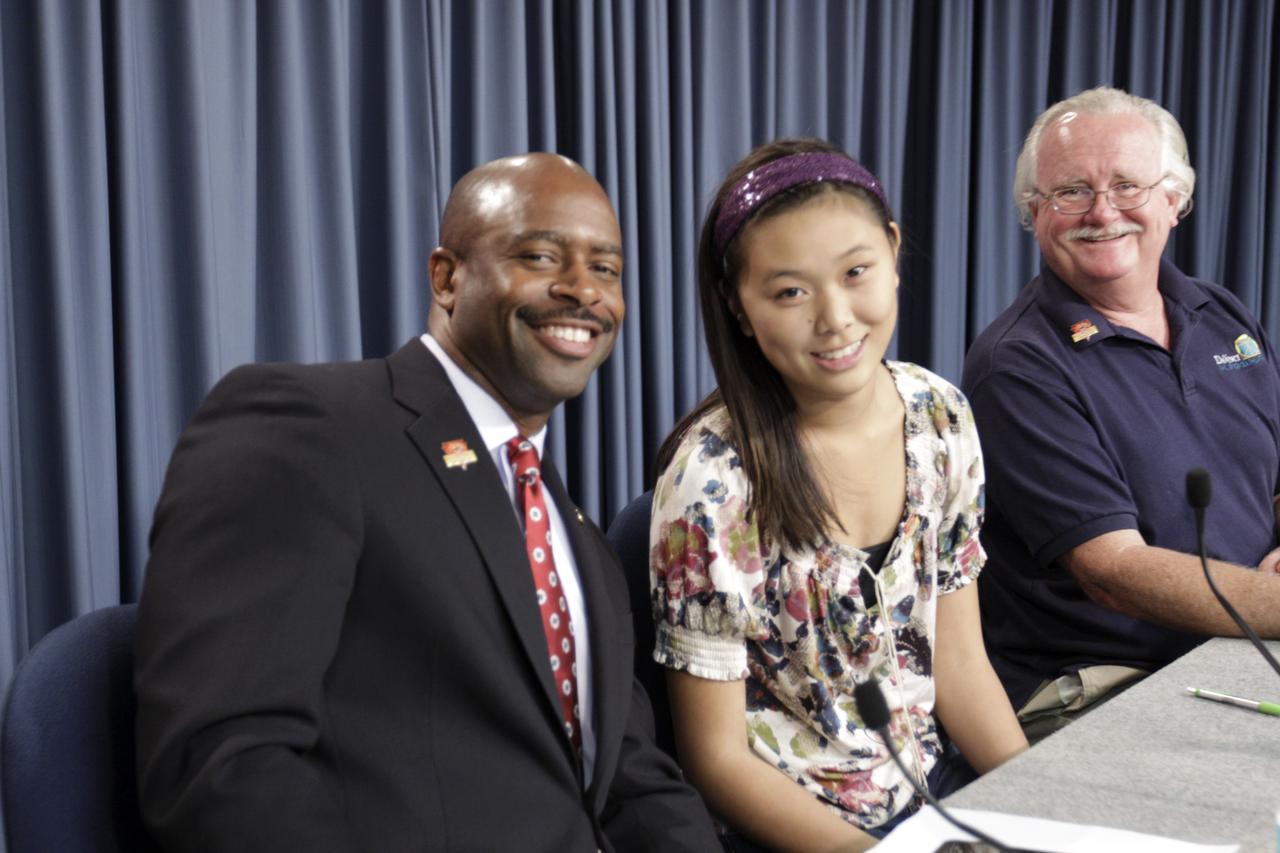
CAPE CANAVERAL, Fla. – Leland Melvin, NASA associate administrator for Education; Clara Ma, student, NASA contest winner for naming Curiosity, Shawnee Mission East High School, Prairie Village, Kansas; Scott Anderson, teacher and science department chairman Da Vinci School for Science and the Arts, El Paso, Texas, take a moment pose for the camera before the start of an educational news conference to explore "Why Mars Excites and Inspires Us" in NASA Kennedy Space Center's Press Site auditorium in Florida during prelaunch activities for the agency’s Mars Science Laboratory (MSL) launch. MSL's car-sized Martian rover, Curiosity, has 10 science instruments designed to search for signs of life, including methane, and help determine if the gas is from a biological or geological source. Ma's entry was selected the winner from 9,000 entries in NASA's nationwide student contest to name the rover. At the time, she was a twelve-year-old sixth-grade student at the Sunflower Elementary school in Lenexa, Kansas. Liftoff of MSL aboard a United Launch Alliance Atlas V rocket from Space Launch Complex-41 on Cape Canaveral Air Force Station is planned during a launch window which extends from 10:02 a.m. to 11:45 a.m. EST on Nov. 26. For more information, visit http://www.nasa.gov/msl. Photo credit: NASA/Kim Shiflett
Randall Hicks (right), Jacobs Technology's Education Services manager at NASA John C. Stennis Space Center, answers questions about the playing field for FIRST (For Inspiration and Recognition of Science and Technology) LEGO League's 2007 Challenge, `Power Puzzle.' More than 140 teachers, mentors, parents and students from 15 schools attended the Sept. 15 FLL season kickoff at StenniSphere, the visitor center at SSC. The teams from southern and central Mississippi and Mobile, Ala., who came to SSC heard rules for and asked questions about `Power Puzzle,' and saw robot demonstrations by Gulfport and Picayune high schools' past FIRST Robotics competitions. Using LEGO Mindstorms NXT kits, FLL teams of children ages 9-14 will spend the next three months building and programming robots to perform 'Power Puzzle's' challenge tasks, then pit them in competitions. They also will submit a research project about how energy choices impact the environment and the economy. The season will culminate at the Mississippi Championship Tournament on Dec. 8 at the Mississippi Gulf Coast Community College. FLL, considered the `little league' of the FIRST Robotics Competition, partners FIRST and the LEGO Group. Competitions aim to inspire and celebrate science and technology using real-world context and hands-on experimentation. NASA recognizes FIRST activities as an excellent hands-on method to increase student knowledge of science, engineering, technology and mathematics. Schools represented in this year's kickoff were: Madison Avenue Upper Elementary, the Mississippi Band of Choctaw Indians' Conehatta Elementary, Hattiesburg's Lillie Burney Elementary, Pearl Upper Elementary, Long Beach Middle, Oktibehha Elementary, d'Iberville Middle, Saucier's West Wortham Middle, Picayune's Nicholson Elementary and Roseland Park Baptist Church Academy, Bay St. Louis' St. Stanislaus College and Mobile's Davidson High, as well as two home-school groups from the Jackson area.

This image depicts a vast canyon of dust and gas in the Orion Nebula from a 3-D computer model based on observations by NASA's Hubble Space Telescope and created by science visualization specialists at the Space Telescope Science Institute (STScI) in Baltimore, Md. A 3-D visualization of this model takes viewers on an amazing four-minute voyage through the 15-light-year-wide canyon. Credit: NASA, G. Bacon, L. Frattare, Z. Levay, and F. Summers (STScI/AURA) Go here to learn more about Hubble 3D: <a href="http://www.nasa.gov/topics/universe/features/hubble_imax_premiere.html" rel="nofollow">www.nasa.gov/topics/universe/features/hubble_imax_premier...</a> or <a href="http://www.imax.com/hubble/" rel="nofollow">www.imax.com/hubble/</a> Take an exhilarating ride through the Orion Nebula, a vast star-making factory 1,500 light-years away. Swoop through Orion's giant canyon of gas and dust. Fly past behemoth stars whose brilliant light illuminates and energizes the entire cloudy region. Zoom by dusty tadpole-shaped objects that are fledgling solar systems. This virtual space journey isn't the latest video game but one of several groundbreaking astronomy visualizations created by specialists at the Space Telescope Science Institute (STScI) in Baltimore, the science operations center for NASA's Hubble Space Telescope. The cinematic space odysseys are part of the new Imax film "Hubble 3D," which opens today at select Imax theaters worldwide. The 43-minute movie chronicles the 20-year life of Hubble and includes highlights from the May 2009 servicing mission to the Earth-orbiting observatory, with footage taken by the astronauts. The giant-screen film showcases some of Hubble's breathtaking iconic pictures, such as the Eagle Nebula's "Pillars of Creation," as well as stunning views taken by the newly installed Wide Field Camera 3. While Hubble pictures of celestial objects are awe-inspiring, they are flat 2-D photographs. For this film, those 2-D images have been converted into 3-D environments, giving the audience the impression they are space travelers taking a tour of Hubble's most popular targets. "A large-format movie is a truly immersive experience," says Frank Summers, an STScI astronomer and science visualization specialist who led the team that developed the movie visualizations. The team labored for nine months, working on four visualization sequences that comprise about 12 minutes of the movie. "Seeing these Hubble images in 3-D, you feel like you are flying through space and not just looking at picture postcards," Summers continued. "The spacescapes are all based on Hubble images and data, though some artistic license is necessary to produce the full depth of field needed for 3-D." The most ambitious sequence is a four-minute voyage through the Orion Nebula's gas-and-dust canyon, about 15 light-years across. During the ride, viewers will see bright and dark, gaseous clouds; thousands of stars, including a grouping of bright, hefty stars called the Trapezium; and embryonic planetary systems. The tour ends with a detailed look at a young circumstellar disk, which is much like the structure from which our solar system formed 4.5 billion years ago. Based on a Hubble image of Orion released in 2006, the visualization was a collaborative effort between science visualization specialists at STScI, including Greg Bacon, who sculpted the Orion Nebula digital model, with input from STScI astronomer Massimo Roberto; the National Center for Supercomputing Applications at the University of Illinois at Urbana-Champaign; and the Spitzer Science Center at the California Institute of Technology in Pasadena. For some of the sequences, STScI imaging specialists developed new techniques for transforming the 2-D Hubble images into 3-D. STScI image processing specialists Lisa Frattare and Zolt Levay, for example, created methods of splitting a giant gaseous pillar in the Carina Nebula into multiple layers to produce a 3-D effect, giving the structure depth. The Carina Nebula is a nursery for baby stars. Frattare painstakingly removed the thousands of stars in the image so that Levay could separate the gaseous layers on the isolated Carina pillar. Frattare then replaced the stars into both foreground and background layers to complete the 3-D model. For added effect, the same separation was done for both visible and infrared Hubble images, allowing the film to cross-fade between wavelength views in 3-D. In another sequence viewers fly into a field of 170,000 stars in the giant star cluster Omega Centauri. STScI astronomer Jay Anderson used his stellar database to create a synthetic star field in 3-D that matches recent razor-sharp Hubble photos. The film's final four-minute sequence takes viewers on a voyage from our Milky Way Galaxy past many of Hubble's best galaxy shots and deep into space. Some 15,000 galaxies from Hubble's deepest surveys stretch billions of light-years across the universe in a 3-D sequence created by STScI astronomers and visualizers. The view dissolves into a cobweb that traces the universe's large-scale structure, the backbone from which galaxies were born. In addition to creating visualizations, STScI's education group also provided guidance on the "Hubble 3D" Educator Guide, which includes standards-based lesson plans and activities about Hubble and its mission. Students will use the guide before or after seeing the movie. "The guide will enhance the movie experience for students and extend the movie into classrooms," says Bonnie Eisenhamer, STScI's Hubble Formal Education manager. The Hubble Space Telescope is a project of international cooperation between NASA and the European Space Agency (ESA) and is managed by NASA’s Goddard Space Flight Center (GSFC) in Greenbelt, Md. The Space Telescope Science Institute (STScI) conducts Hubble science operations. The institute is operated for NASA by the Association of Universities for Research in Astronomy, Inc., Washington, D.C.