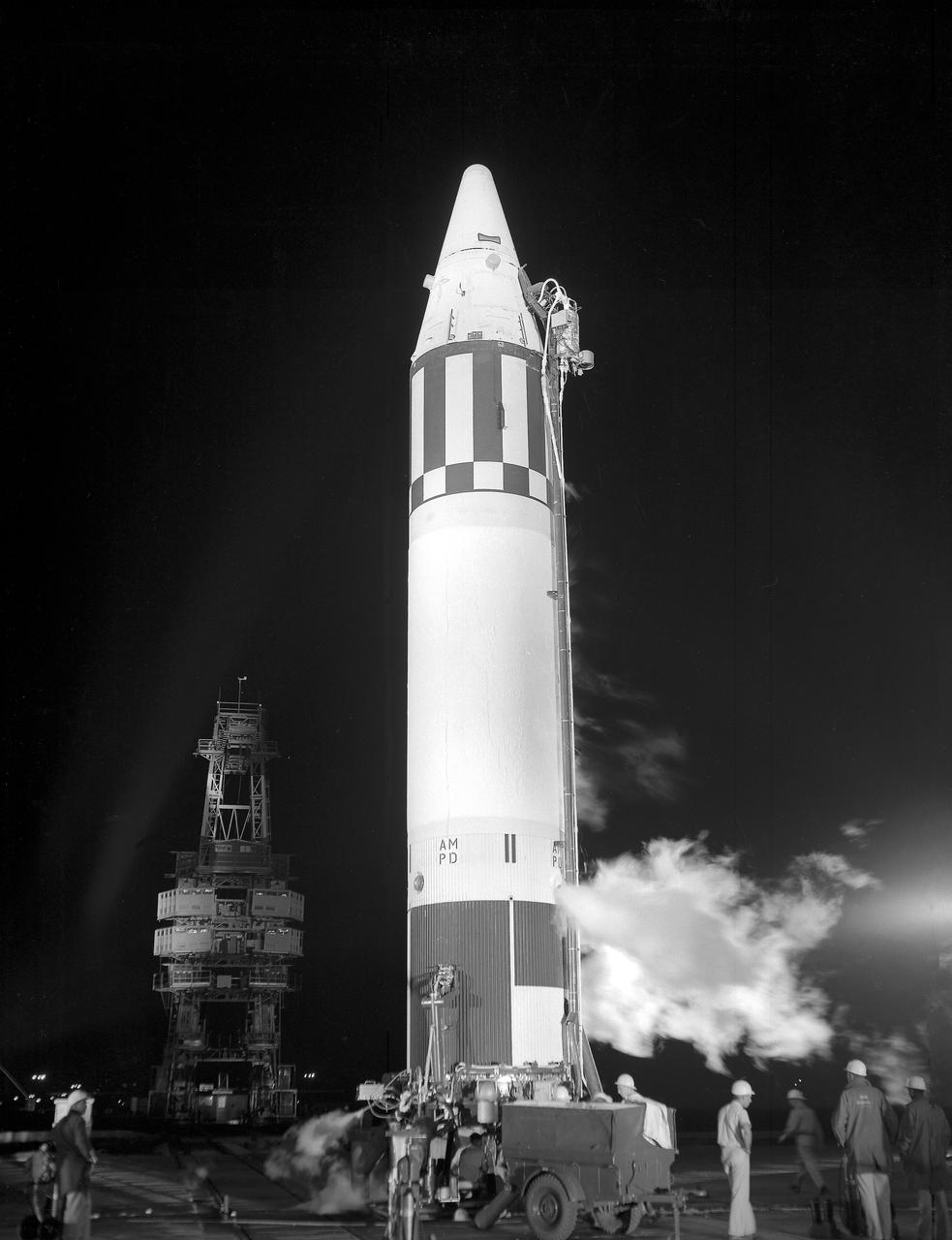
Jupiter (AM-18), suborbital primate flight with Able and Baker as its payload, being ready for launch, May 28, 1959
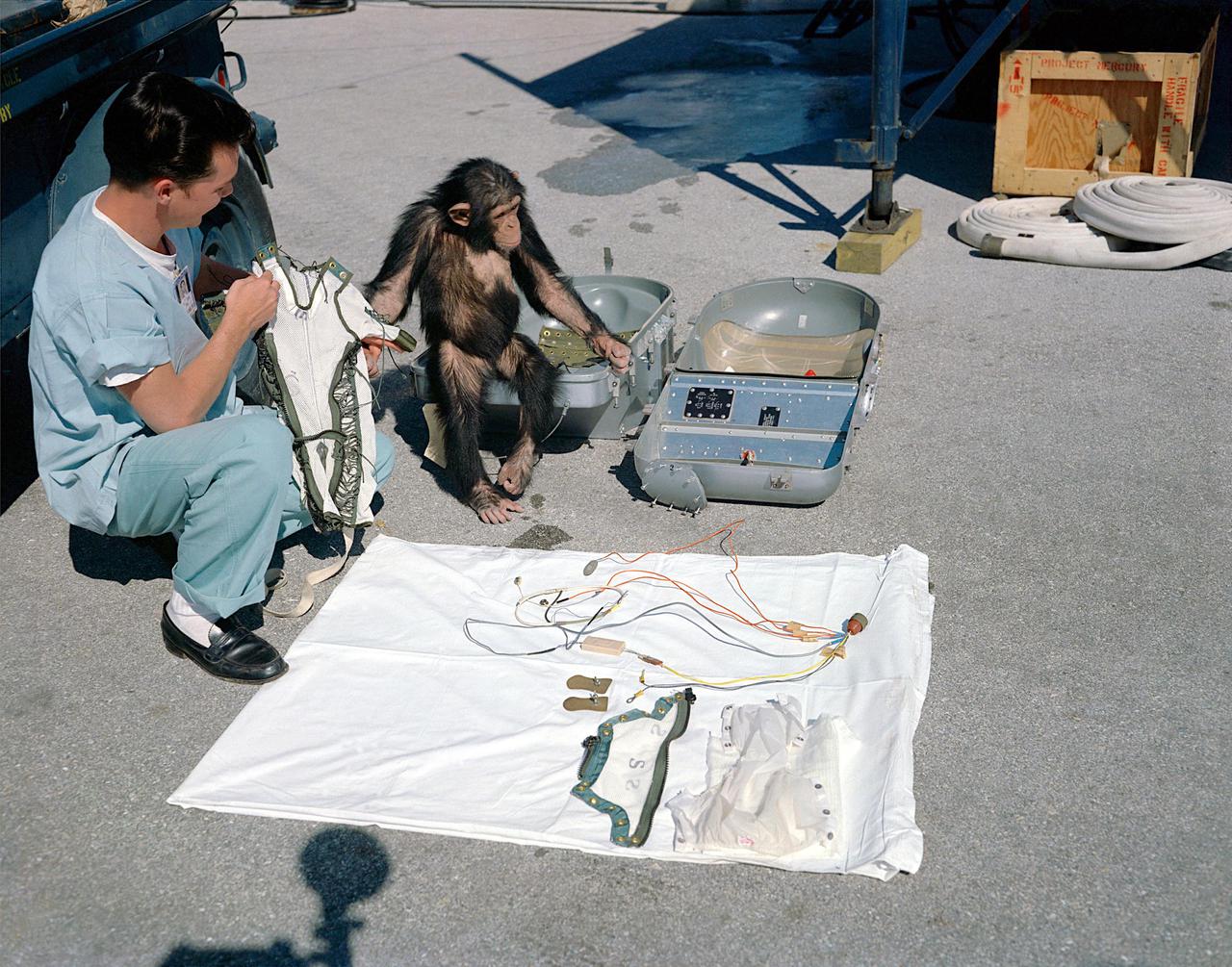
KENNEDY SPACE CENTER, FLA. - The chimp Ham (primate #65) and a technician goes over the equipment in Hangar S that is going to be used for Ham's suborbital flight. Ham is scheduled to be launched aboard a Mercury-Redstone 2 from Launch Pad 5 on January 31, 1961.
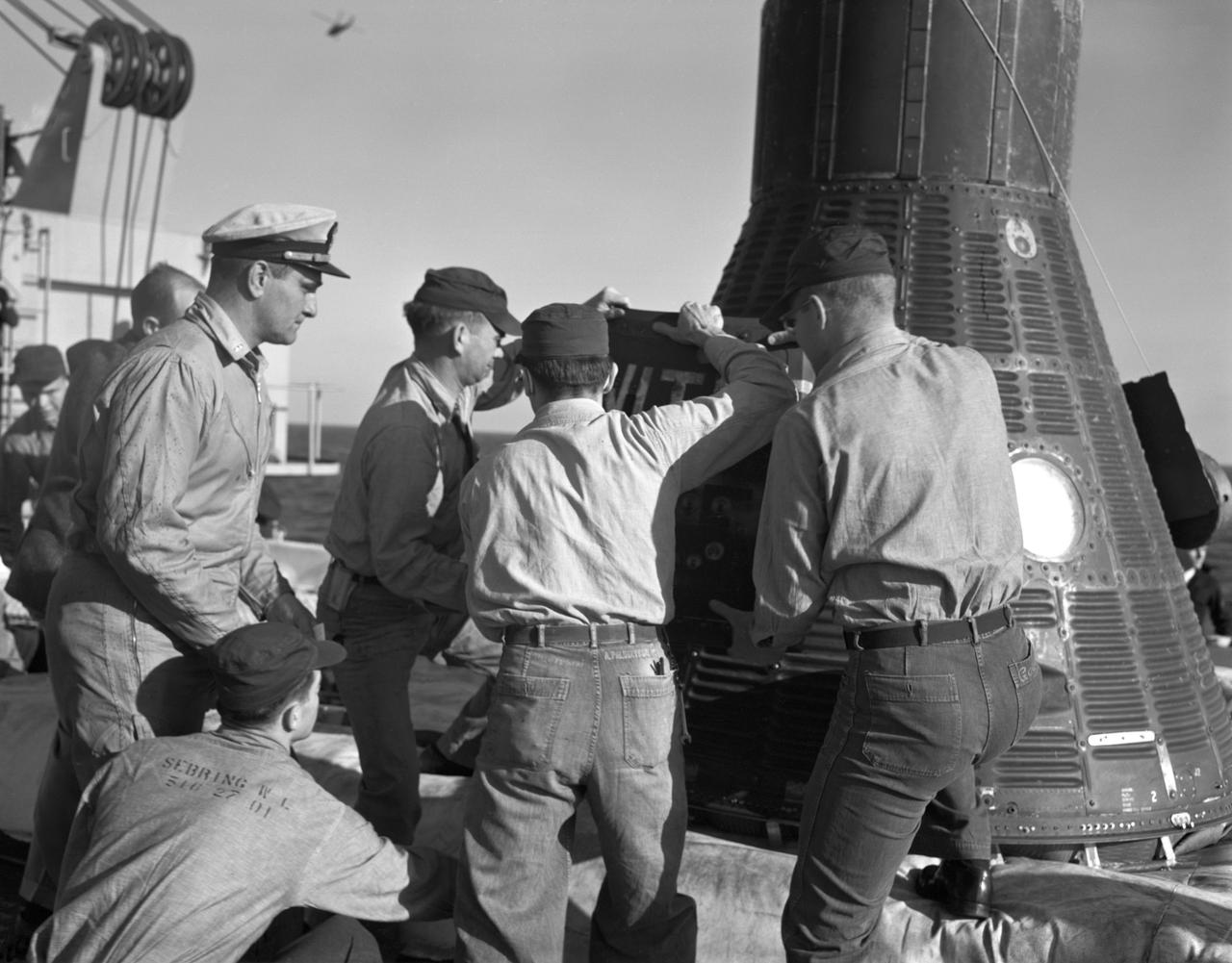
S61-00199 (31 Jan. 1961) --- Recovery personnel aboard the USS Donner remove ?Ham?, a 37-pound chimpanzee, from a Mercury-Redstone spacecraft following the successful Mercury-Redstone 2 (MR-2) suborbital flight from Cape Canaveral, Florida. The primate's 420-statute mile MR-2 flight was a significant accomplishment on the American route toward manned spaceflight. Photo credit: NASA
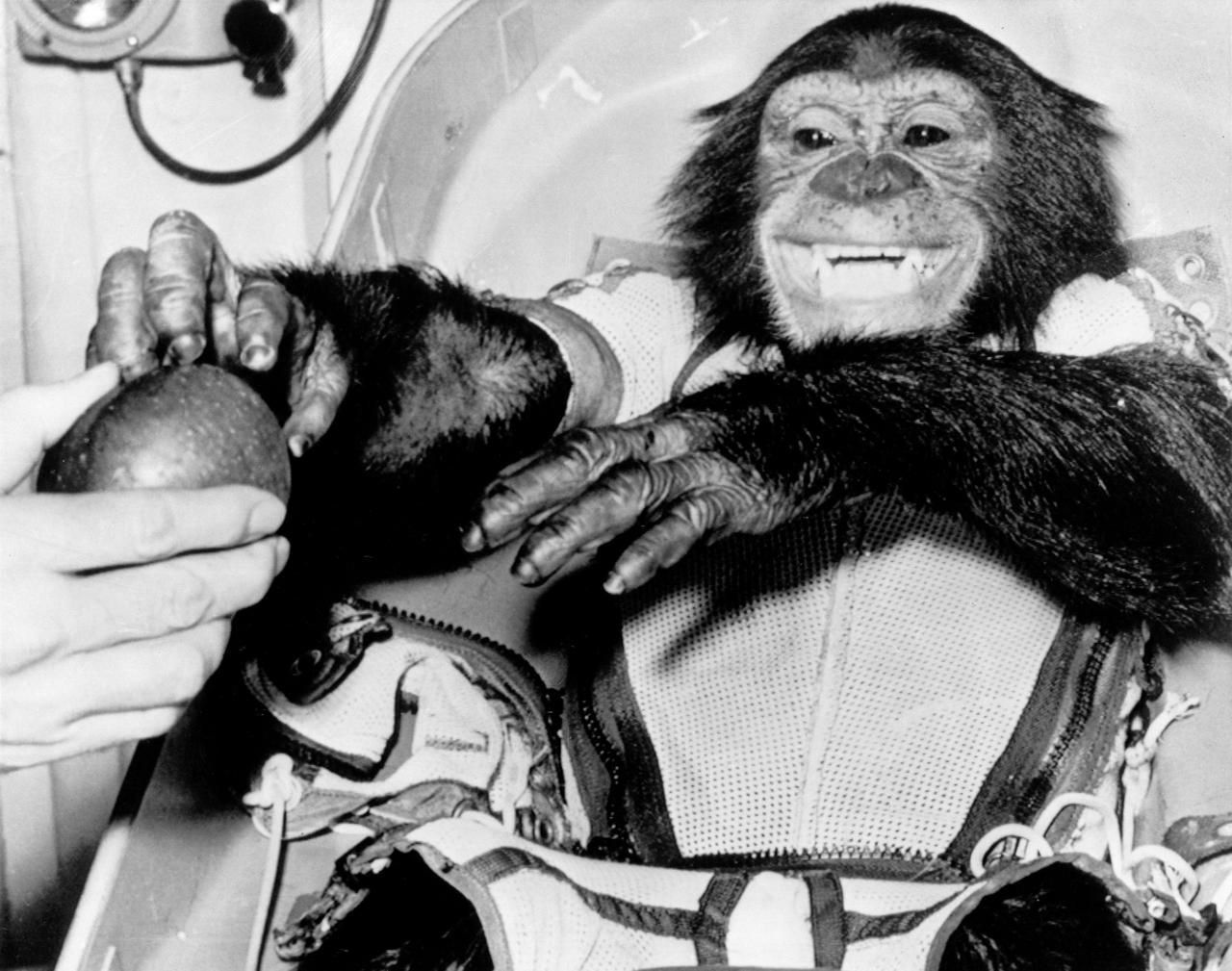
S63-18198 (31 Jan. 1961) --- Closeup view of the chimpanzee "Ham", the live test subject for the Mercury-Redstone 2 (MR-2) test flight, following his successful recovery from the Atlantic. The 420-statute mile suborbital MR-2 flight by the 37-pound primate was a significant accomplishment on the American route toward manned spaceflight. Photo credit: NASA
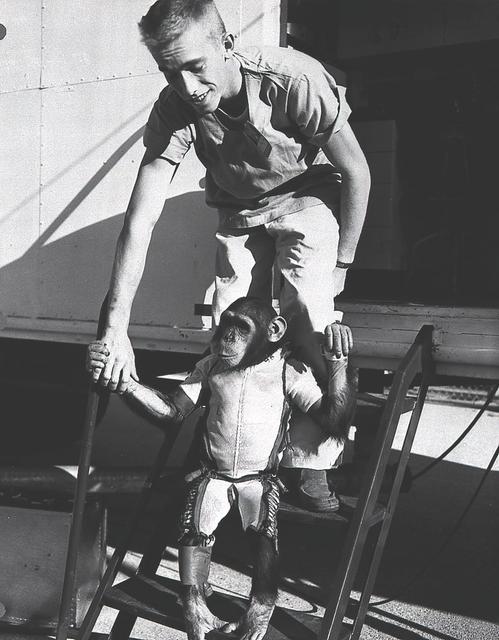
Ham, a three-year-old chimpanzee, in the spacesuit he would wear for the second Mercury- Redstone (MR-2) suborbital test flight in January, 1961. NASA used chimpanzees and other primates to test the Mercury capsule before launching the fisrt American astronaut, Alan Shepard, in May 1961. The Mercury capsule rode atop a modified Redstone rocket, developed by Dr. Wernher von Braun and the German Rocket Team in Huntsville, Alabama.
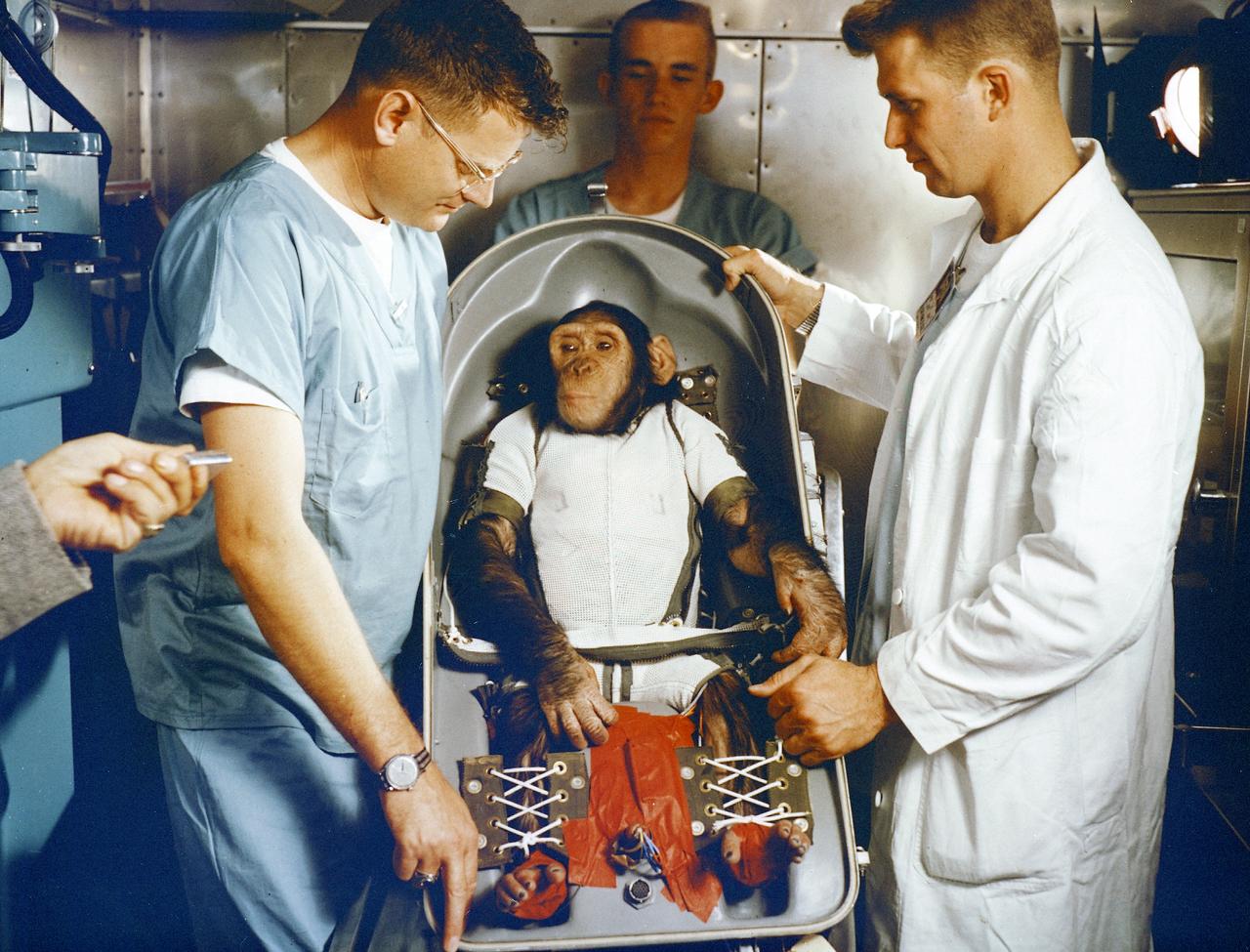
A three-year-old chimpanzee, named Ham, in the biopack couch for the MR-2 suborbital test flight. On January 31, 1961, a Mercury-Redstone launch from Cape Canaveral carried the chimpanzee "Ham" over 640 kilometers down range in an arching trajectory that reached a peak of 254 kilometers above the Earth. The mission was successful and Ham performed his lever-pulling task well in response to the flashing light. NASA used chimpanzees and other primates to test the Mercury Capsule before launching the first American astronaut Alan Shepard in May 1961. The successful flight and recovery confirmed the soundness of the Mercury-Redstone systems.
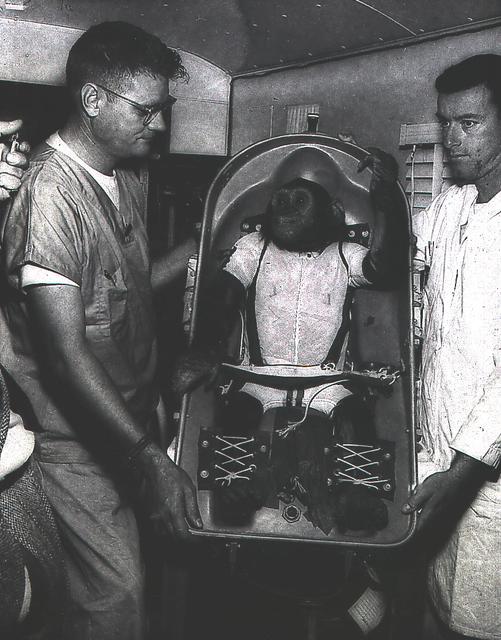
A three-year-old chimpanzee, named Ham, in the biopack couch for the MR-2 suborbital test flight. On January 31, 1961, a Mercury-Redstone launch from Cape Canaveral carried the chimpanzee "Ham" over 640 kilometers down range in an arching trajectory that reached a peak of 254 kilometers above the Earth. The mission was successful and Ham performed his lever-pulling task well in response to the flashing light. NASA used chimpanzees and other primates to test the Mercury Capsule before launching the first American astronaut Alan Shepard in May 1961. The successful flight and recovery confirmed the soundness of the Mercury-Redstone systems.