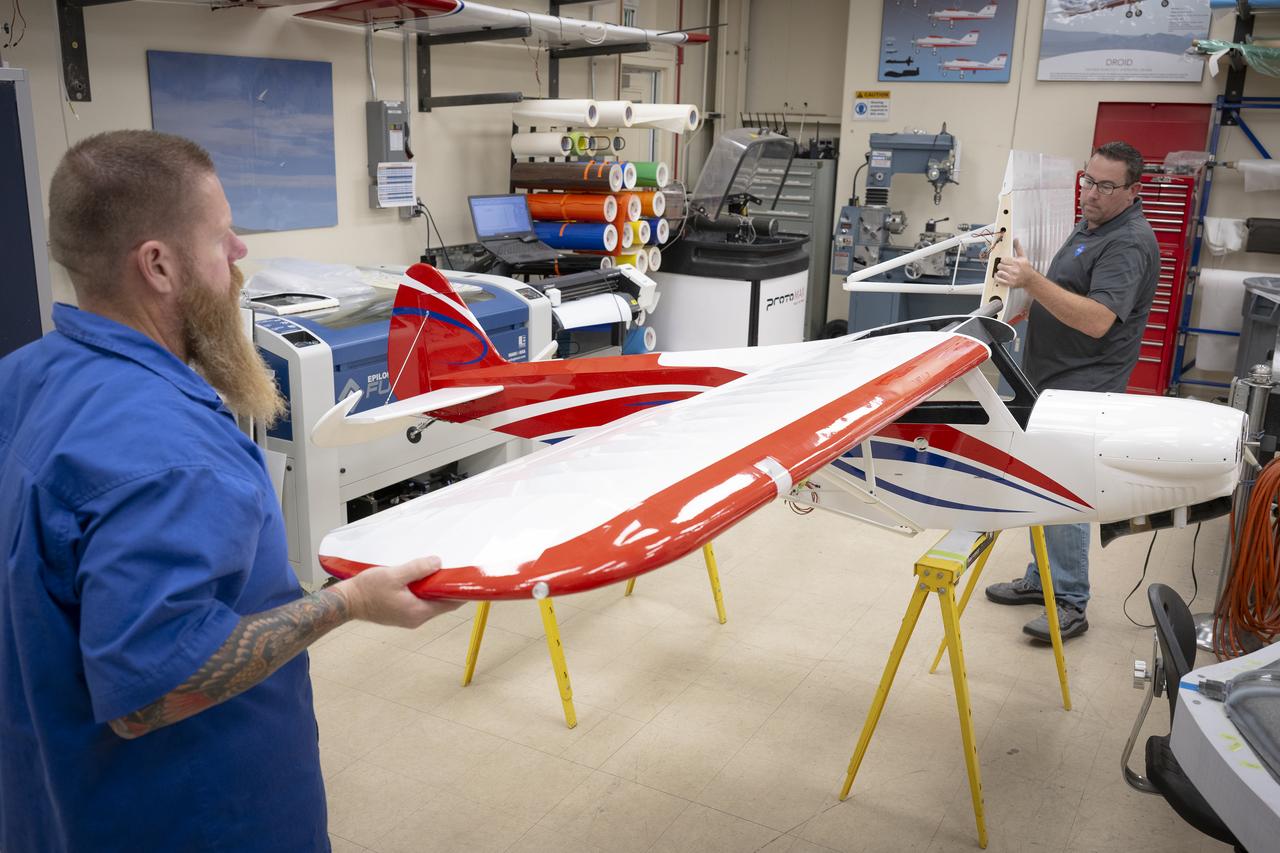
Justin Hall, left, and Justin Link attach the wings onto a subscale aircraft on Wednesday, Sept. 3, 2025, at NASA’s Armstong Flight Research Center in Edwards, California. Hall is chief pilot at the center’s Dale Reed Subscale Flight Research Laboratory and Link is a pilot for small uncrewed aircraft systems.
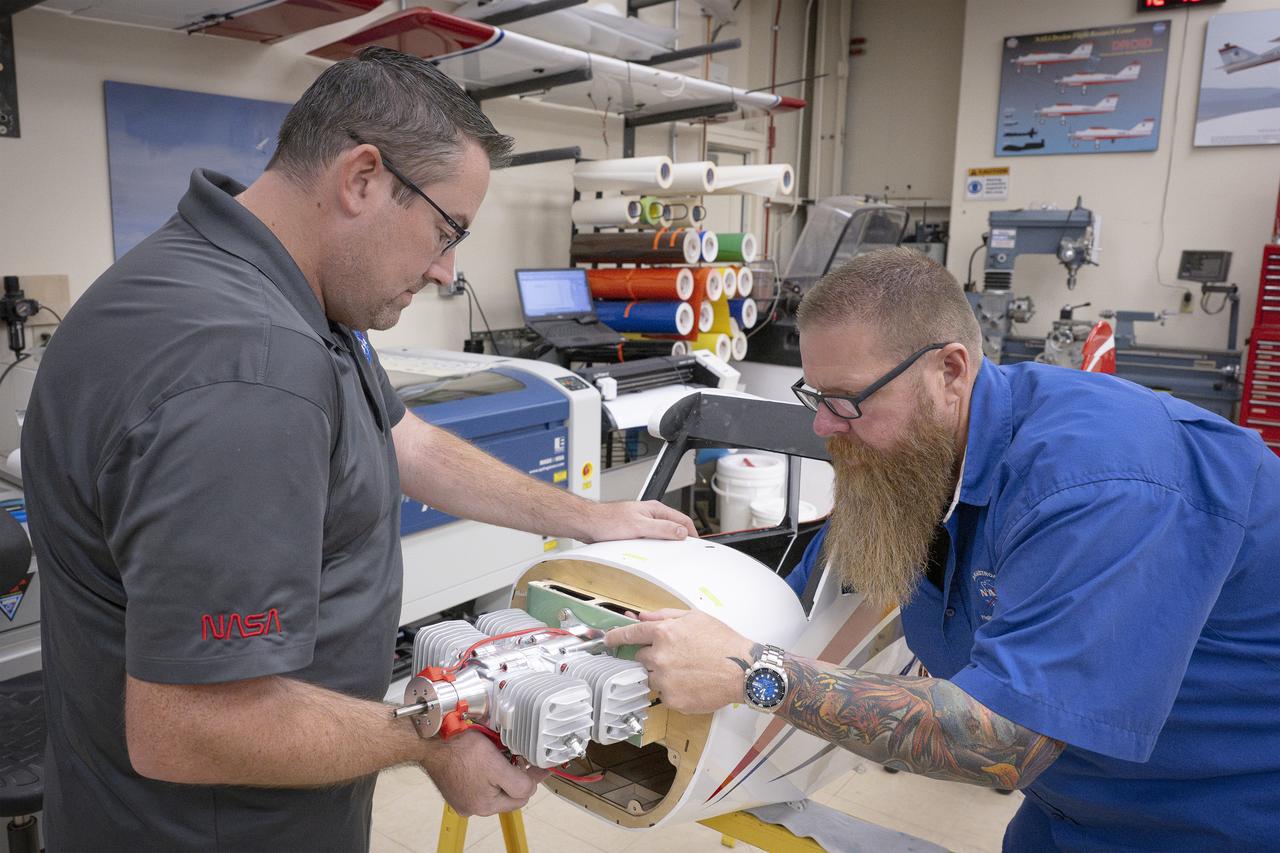
Justin Link, left, and Justin Hall attach an engine onto a subscale aircraft on Wednesday, Sept. 3, 2025, at NASA’s Armstong Flight Research Center in Edwards, California. Link is a pilot for small uncrewed aircraft systems at the center’s Dale Reed Subscale Flight Research Laboratory and Hall is the lab’s chief pilot.
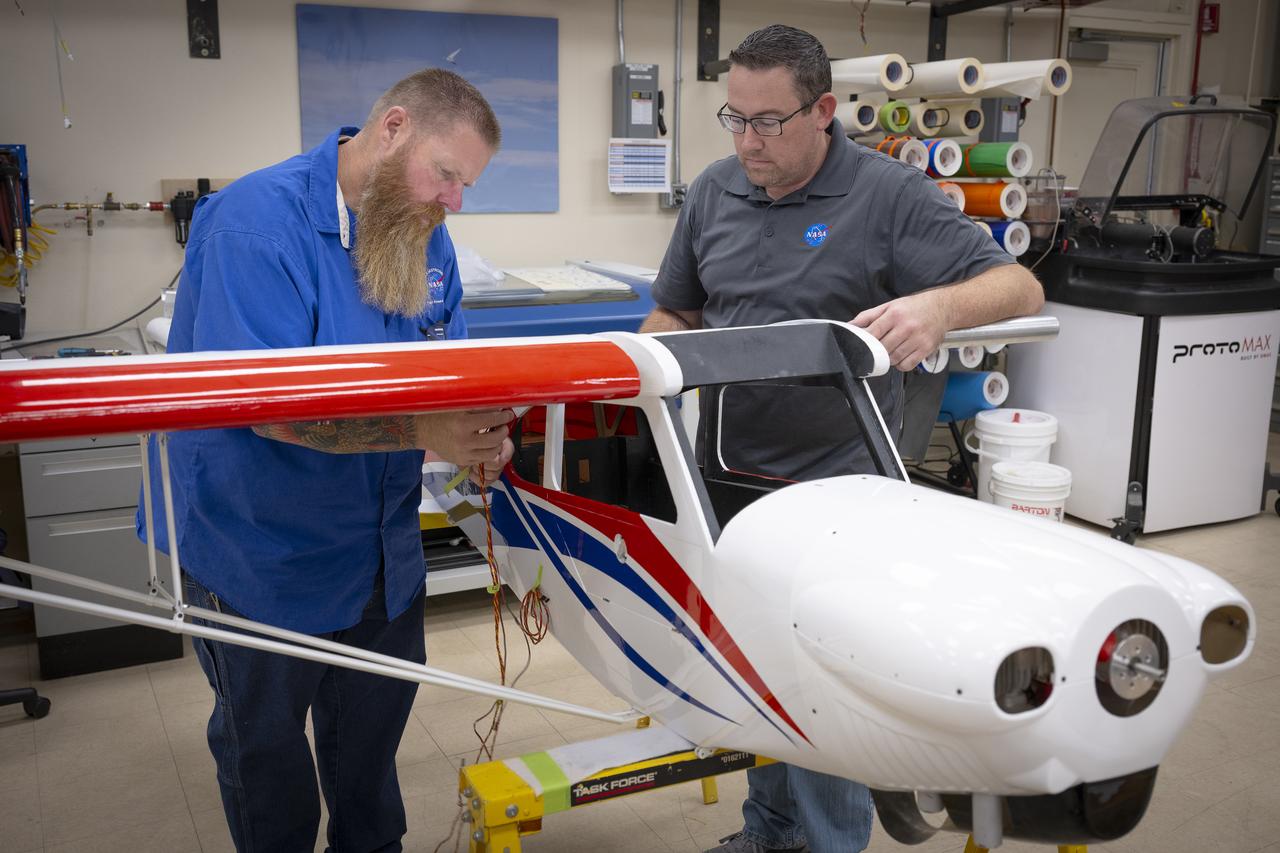
Justin Hall, left, and Justin Link secure a wing onto a subscale aircraft on Wednesday, Sept. 3, 2025, at NASA’s Armstong Flight Research Center in Edwards, California. Hall is chief pilot at the center’s Dale Reed Subscale Flight Research Laboratory and Link is a pilot for small uncrewed aircraft systems.
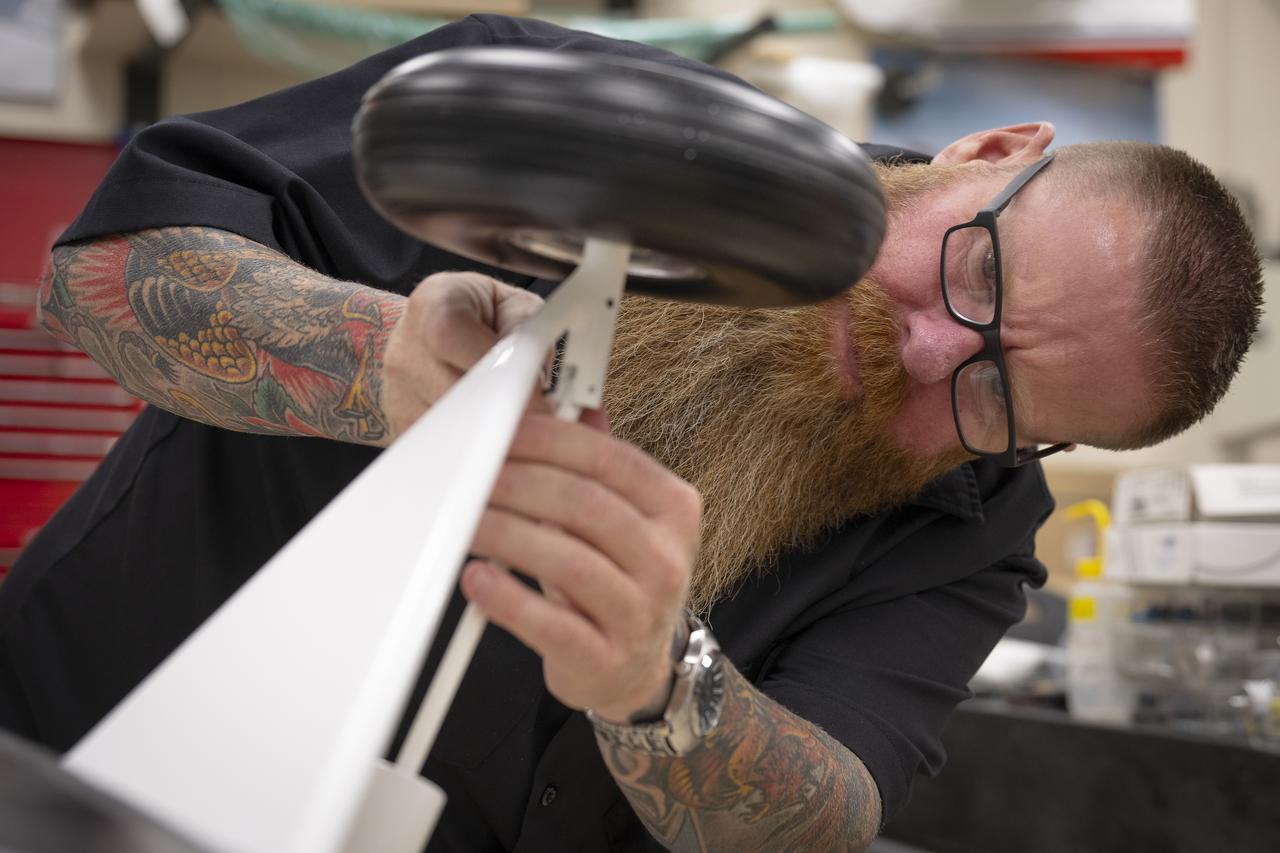
Justin Hall attaches part of the landing gear of a subscale aircraft on Friday, Sept. 12, 2025, at NASA’s Armstong Flight Research Center in Edwards, California. Hall is the chief pilot at the center’s Dale Reed Subscale Flight Research Laboratory.
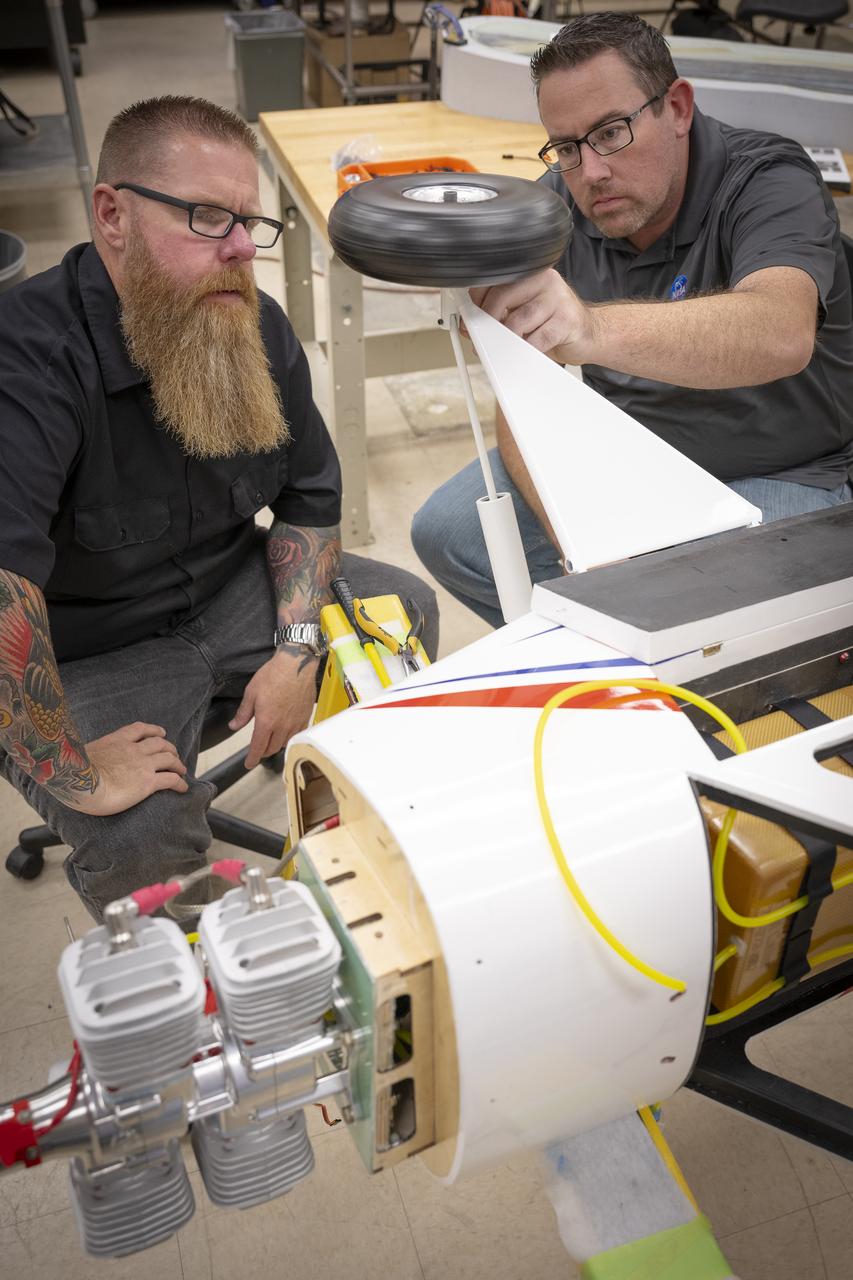
Justin Hall, left, and Justin Link attach a section of landing gear onto a subscale aircraft on Friday, Sept. 12, 2025, at NASA’s Armstong Flight Research Center in Edwards, California. Hall is chief pilot at the center’s Dale Reed Subscale Flight Research Laboratory and Link is a pilot for small uncrewed aircraft systems.
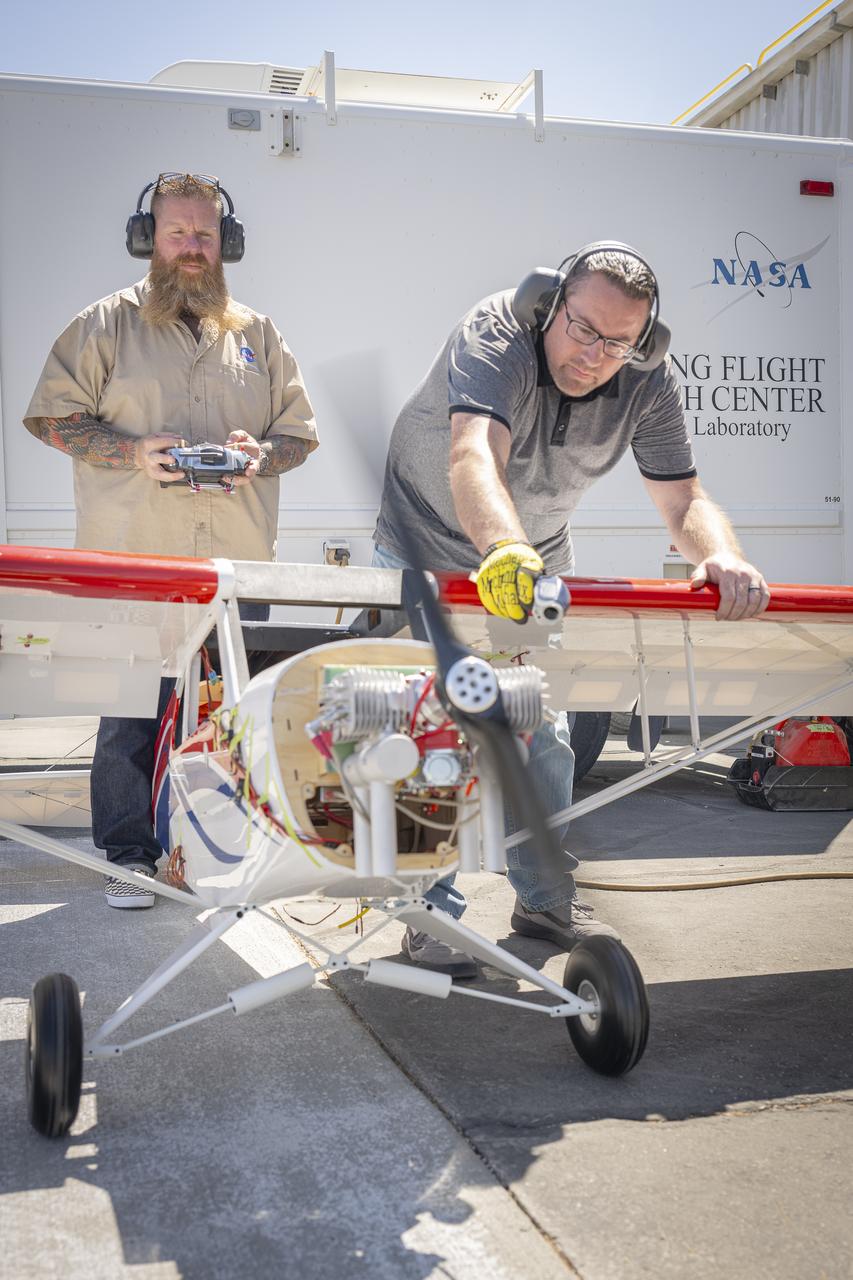
Justin Hall, left, controls a subscale aircraft as Justin Link holds the aircraft in place during preliminary engine tests on Friday, Sept. 12, 2025, at NASA’s Armstong Flight Research Center in Edwards, California. Hall is chief pilot at the center’s Dale Reed Subscale Flight Research Laboratory and Link is a pilot for small uncrewed aircraft systems.
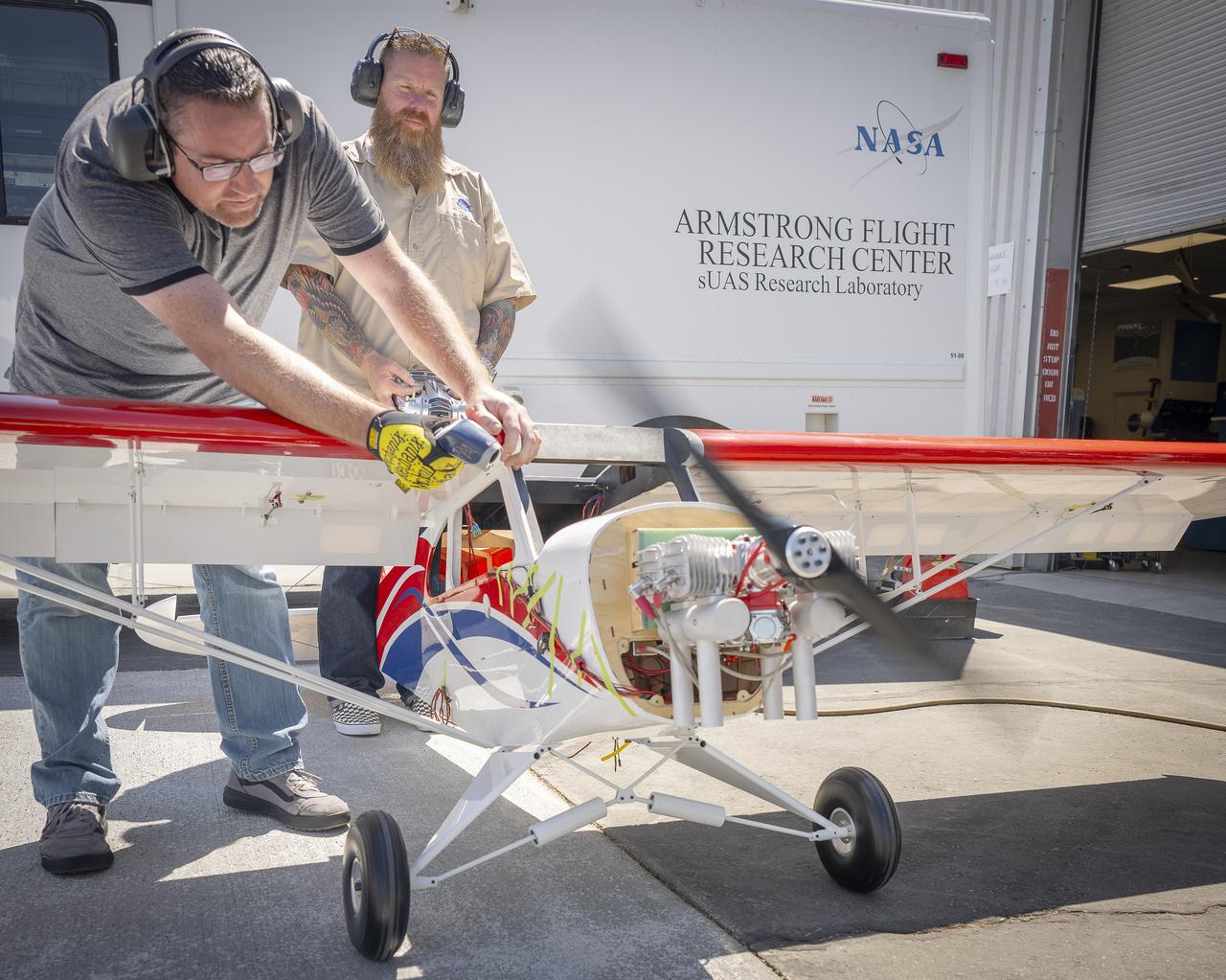
Justin Link, left, holds the subscale aircraft in place, while Justin Hall manages engine speed during preliminary engine tests on Friday, Sept. 12, 2025, at NASA’s Armstong Flight Research Center in Edwards, California. Link is a pilot for small uncrewed aircraft systems at the center’s Dale Reed Subscale Flight Research Laboratory and Hall is the chief pilot.
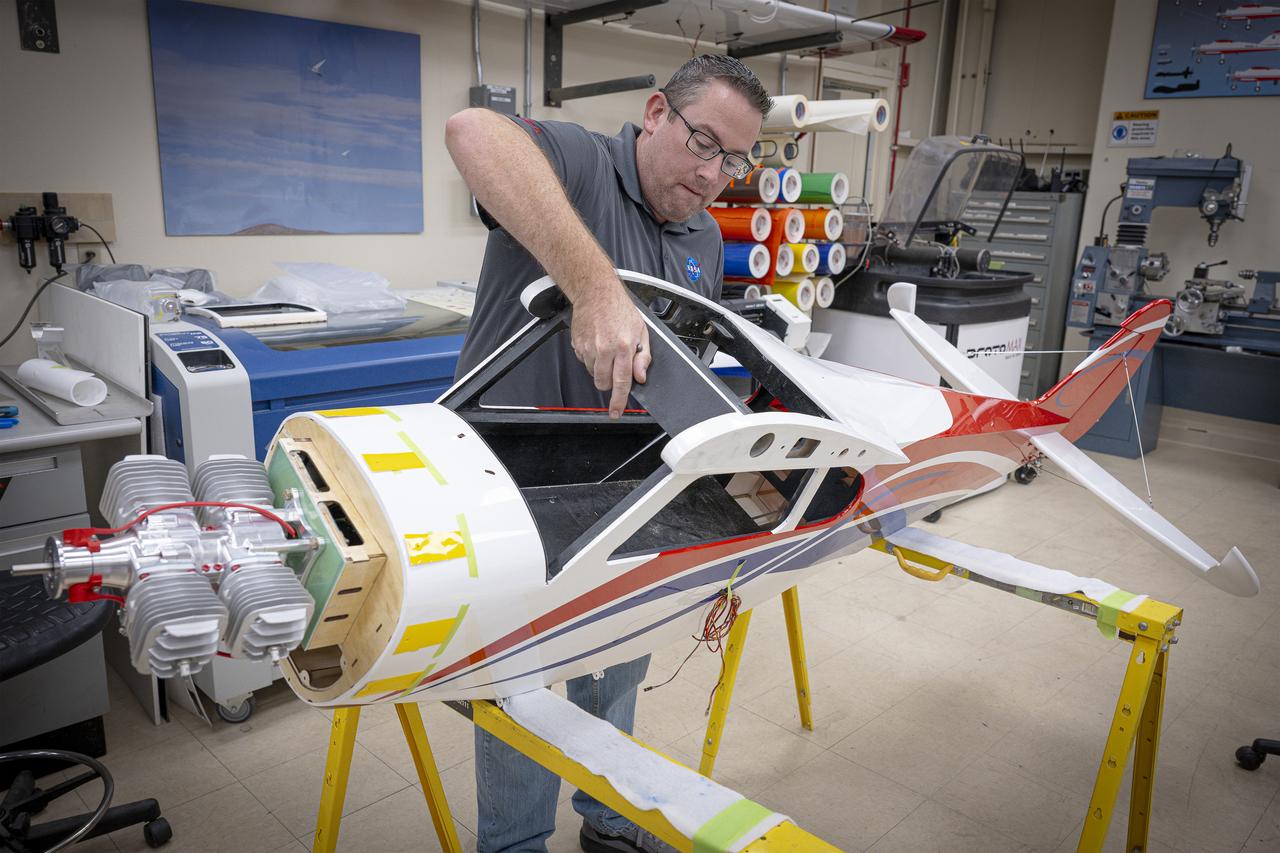
Justin Link turns a subscale aircraft on its side to continue work to mark where the engine cowl will go and where to line it up for attachment on Wednesday, Sept. 3, 2025, at NASA’s Armstong Flight Research Center in Edwards, California. Link is a pilot for small uncrewed aircraft systems at the center’s Dale Reed Subscale Flight Research Laboratory.

The MicroCub is the newest addition to NASA Armstrong's fleet of subscale research aircraft. The aircraft is a modified a Bill Hempel 60-percent-scale super cub, designed with a 21-foot wingspan, a Piccolo Autopilot guidance system and a JetCat SPT-15 Turboprop.
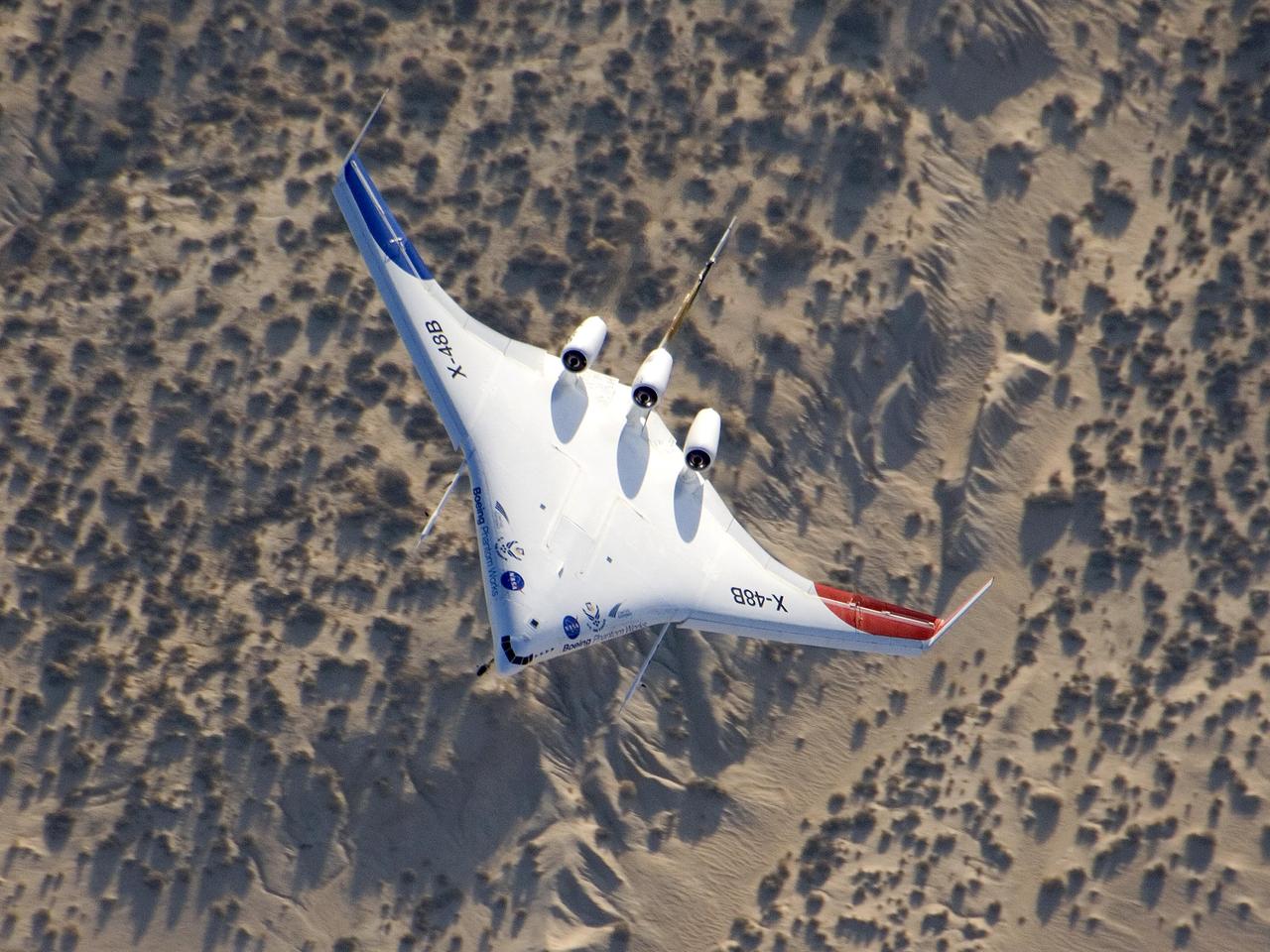
The unique X-48B Blended Wing Body subscale demonstrator banked over desert scrub at Edwards AFB during the aircraft's fifth test flight Aug. 14, 2007.
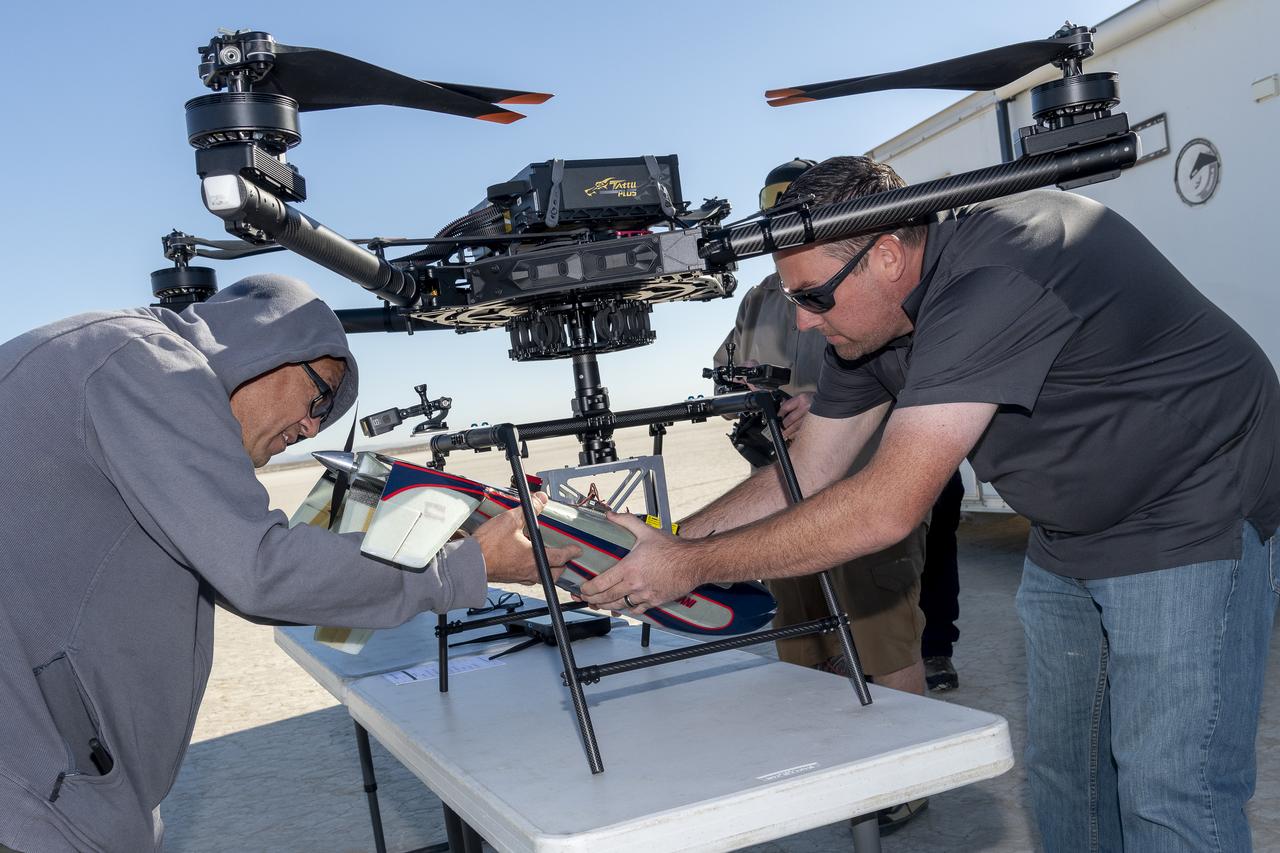
Derek Abramson, left, chief engineer for the Dale Reed Subscale Flight Research Laboratory, and Justin Link, small unmanned aircraft systems pilot, prepare an atmospheric probe model for flight on Oct. 22, 2024. A quad rotor remotely piloted aircraft released the probe above Rogers Dry Lake, a flight area adjacent to NASA’s Armstrong Flight Research Center in Edwards, California. The probe was designed and built at the center.
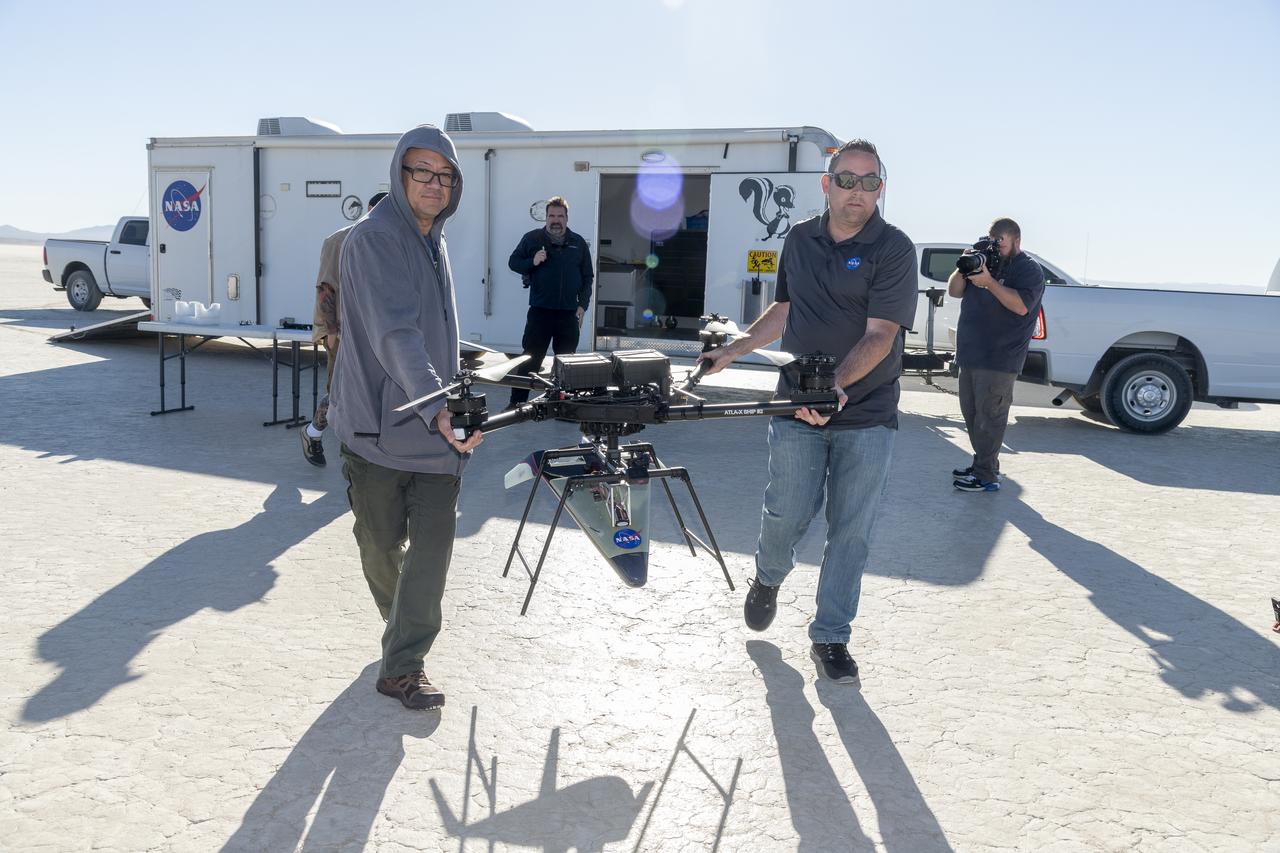
Derek Abramson, left, chief engineer for the Dale Reed Subscale Flight Research Laboratory, and Justin Link, small unmanned aircraft system pilot, carry the atmospheric probe model and a quad rotor remotely piloted aircraft to position it for flight on Oct. 24, 2024. John Bodylski, probe principal investigator, right, and videographer Jacob Shaw watch the preparations. Once at altitude, the quad rotor aircraft released the probe above Rogers Dry Lake, a flight area adjacent to NASA’s Armstrong Flight Research Center in Edwards, California. The probe was designed and built at the center.
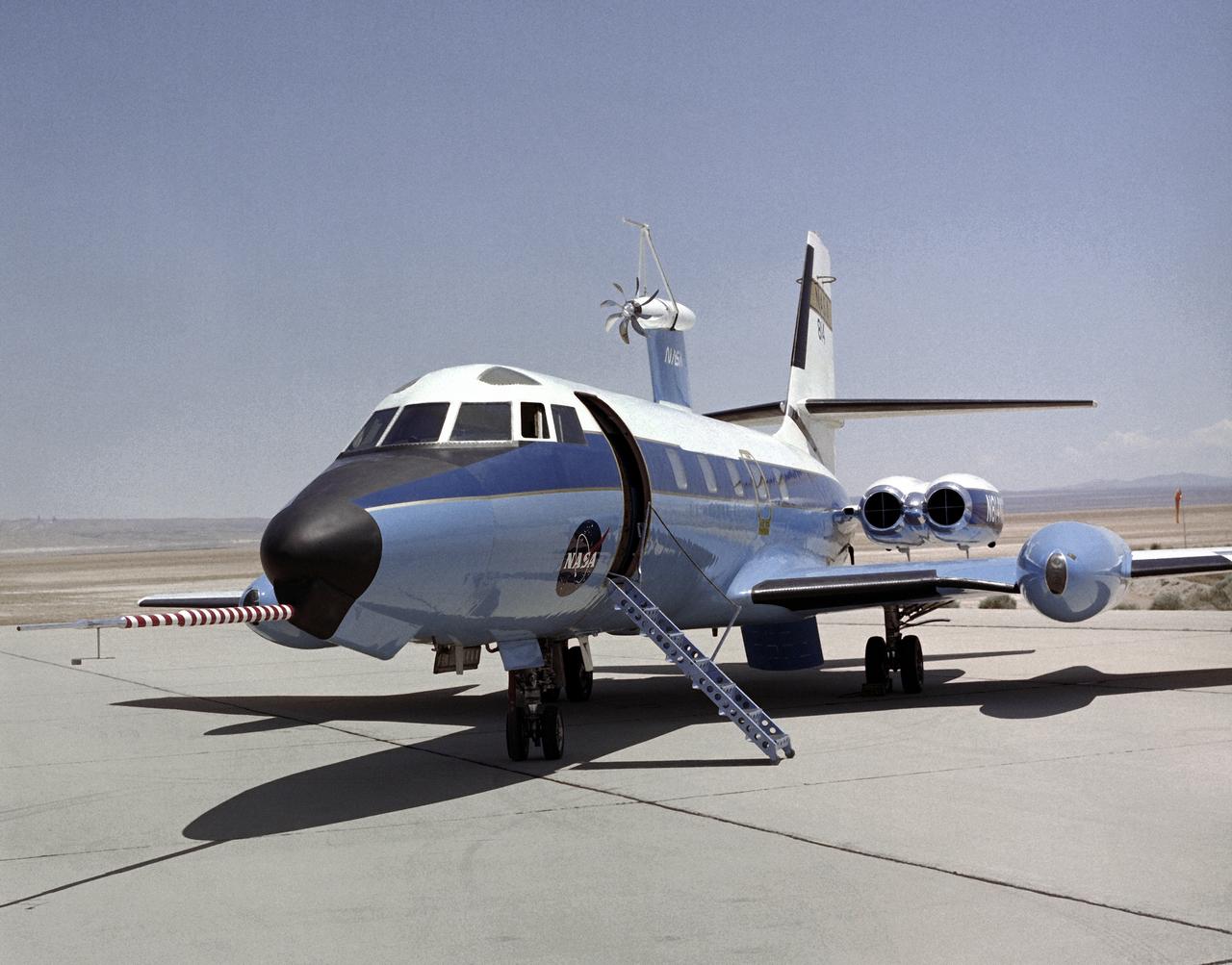
In this photo of the C-140 JetStar on the Dryden Ramp, a subscale propeller has been fitted to the upper fuselage of the aircraft.
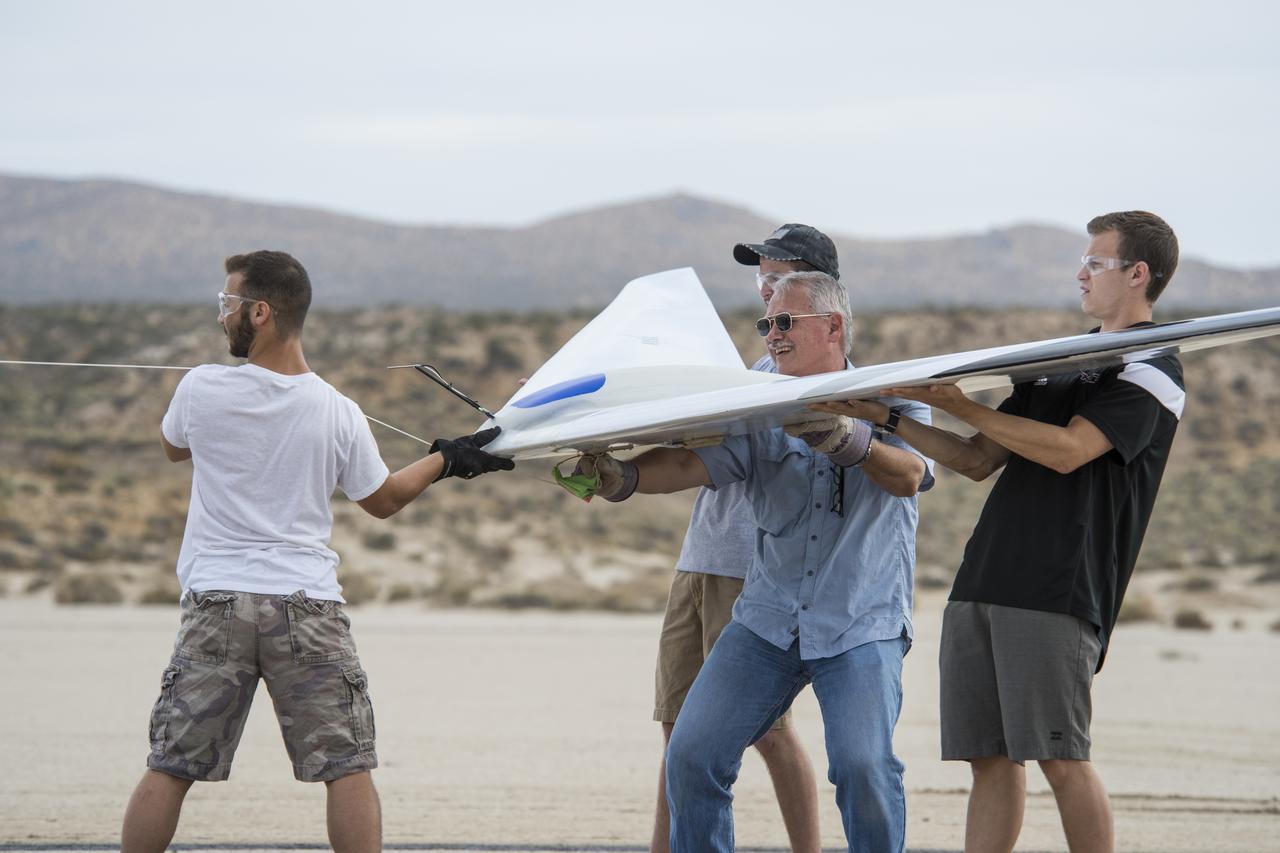
Al Bowers, center, and a group of student interns hook up a bungee cord for a flight of the Prandtl-D 3C subscale glider aircraft.
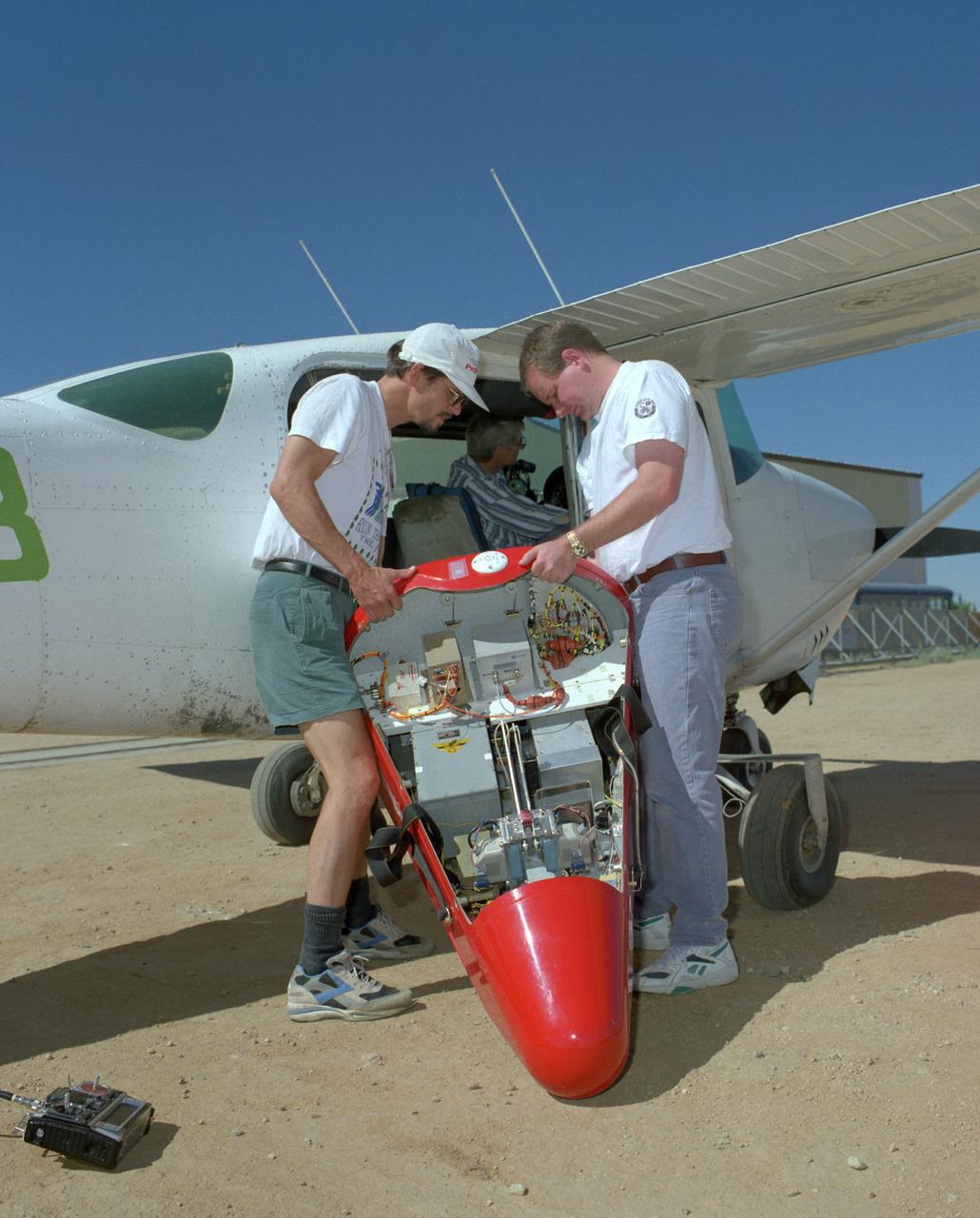
Crew members load a Spacewedge subscale research model into a Cessna aircraft for flight testing in 1996. The Spacewedge was drop-launched from the Cessna and then glided back to a soft landing under a steerable parafoil.
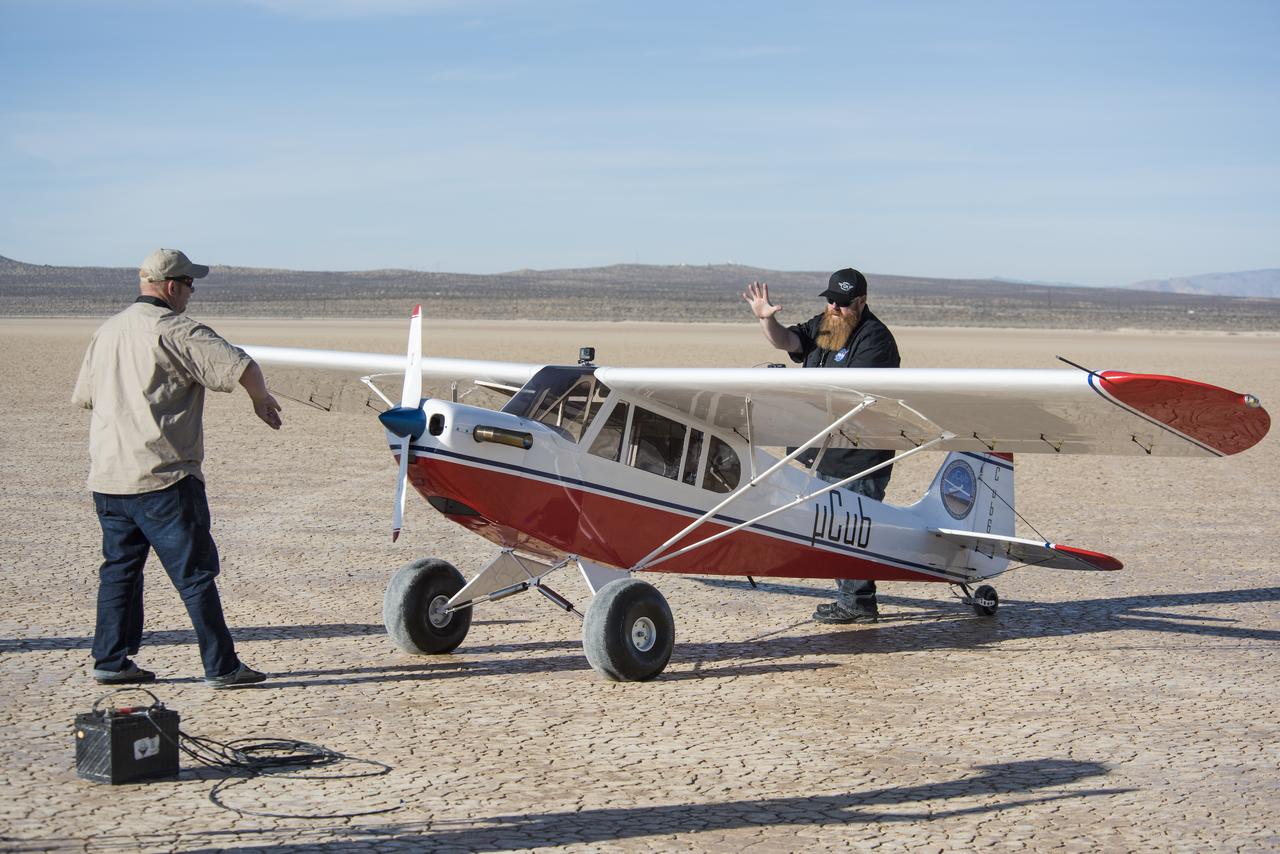
Crew members of the Subscale Research Lab at NASA’s Armstrong Flight Research Center in California perform a series of preflight system checks of the MicroCub to ensure the aircraft is ready for its maiden flight.
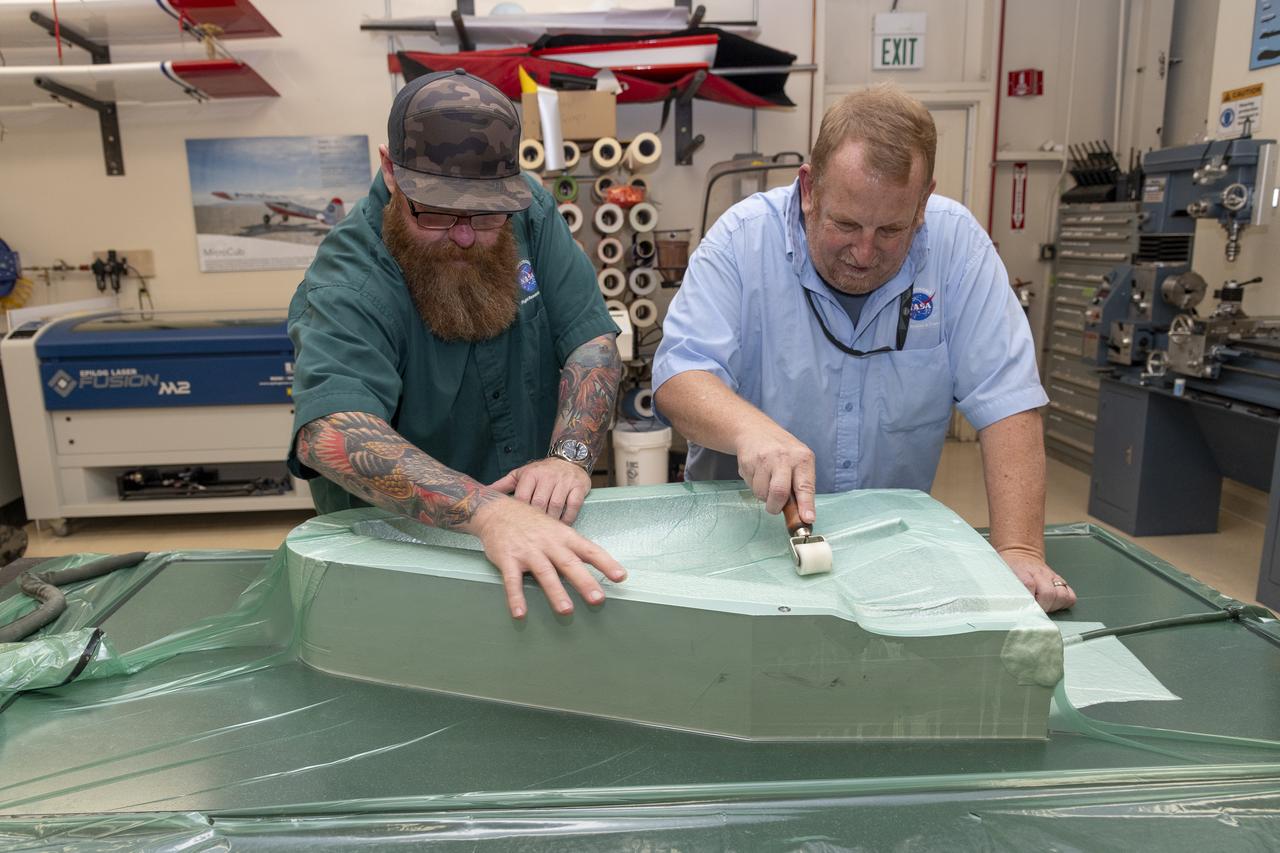
Justin Hall, left, and Robert “Red” Jensen work to eliminate the air around an aircraft mold where it will cure for eight hours. The subscale aircraft development at NASA’s Armstrong Flight Research Center in Edwards, California, may result in an atmospheric probe.
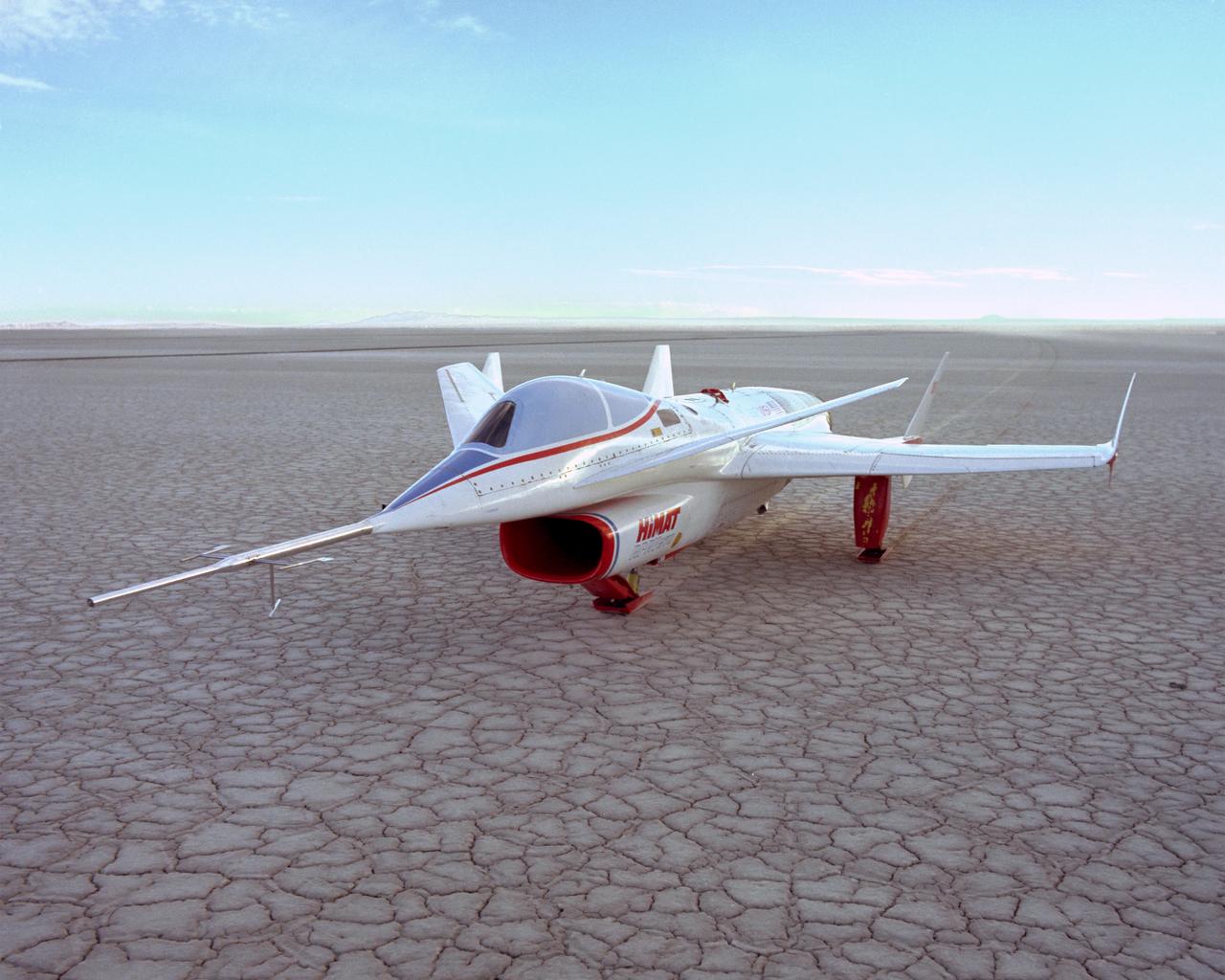
The HiMAT (Highly Maneuverable Aircraft Technology) subscale research vehicle, seen here after landing to conclude a research flight, was flown by the NASA Dryden Flight Research Center, Edwards, California, from mid 1979 to January 1983. The aircraft demonstrated advanced fighter technologies that have been used in the development of many modern high performance military aircraft.
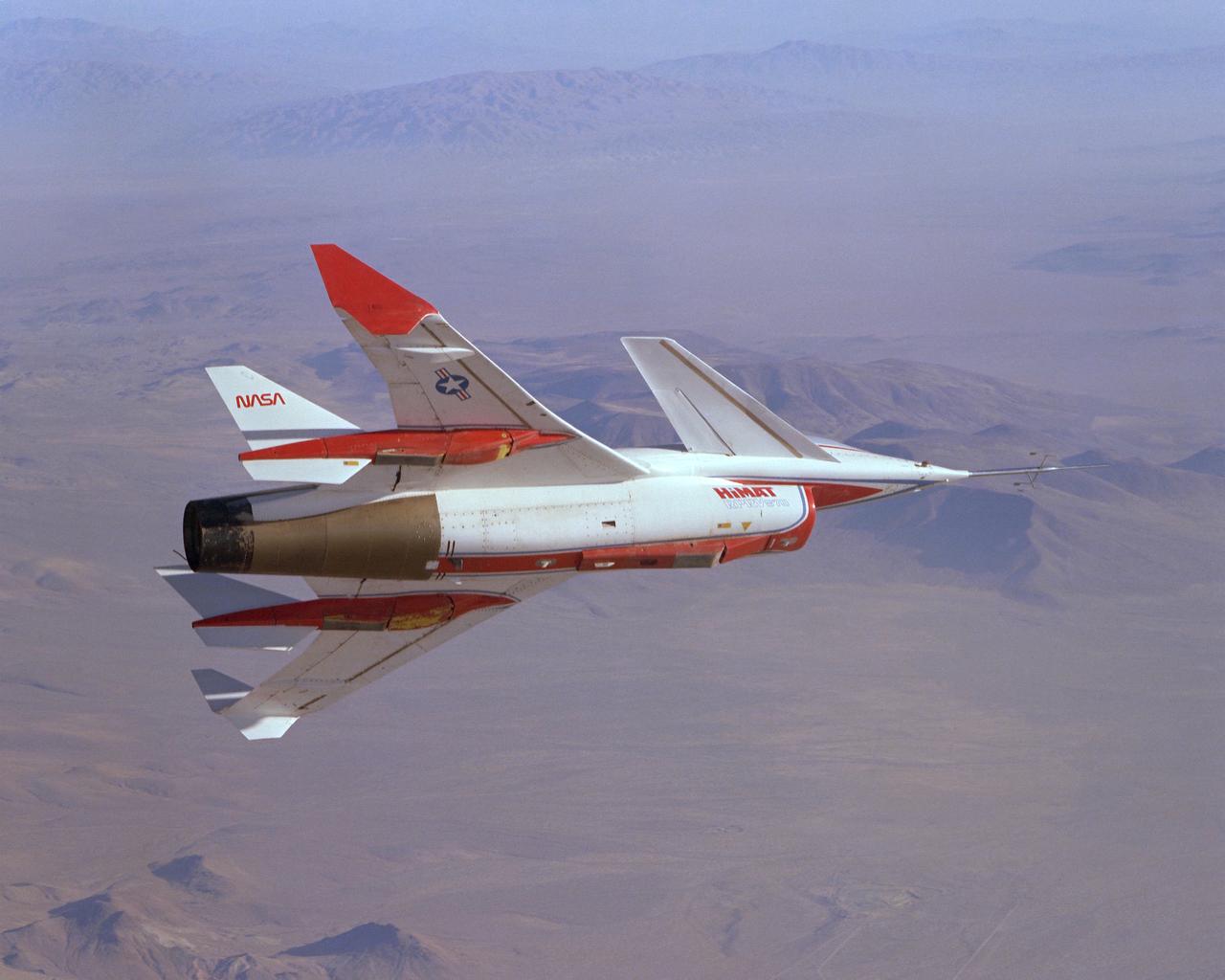
The HiMAT (Highly Maneuverable Aircraft Technology) subscale research vehicle, seen here during a research flight, was flown by the NASA Dryden Flight Research Center, Edwards, California, from mid 1979 to January 1983. The aircraft demonstrated advanced fighter technologies that have been used in the development of many modern high performance military aircraft.
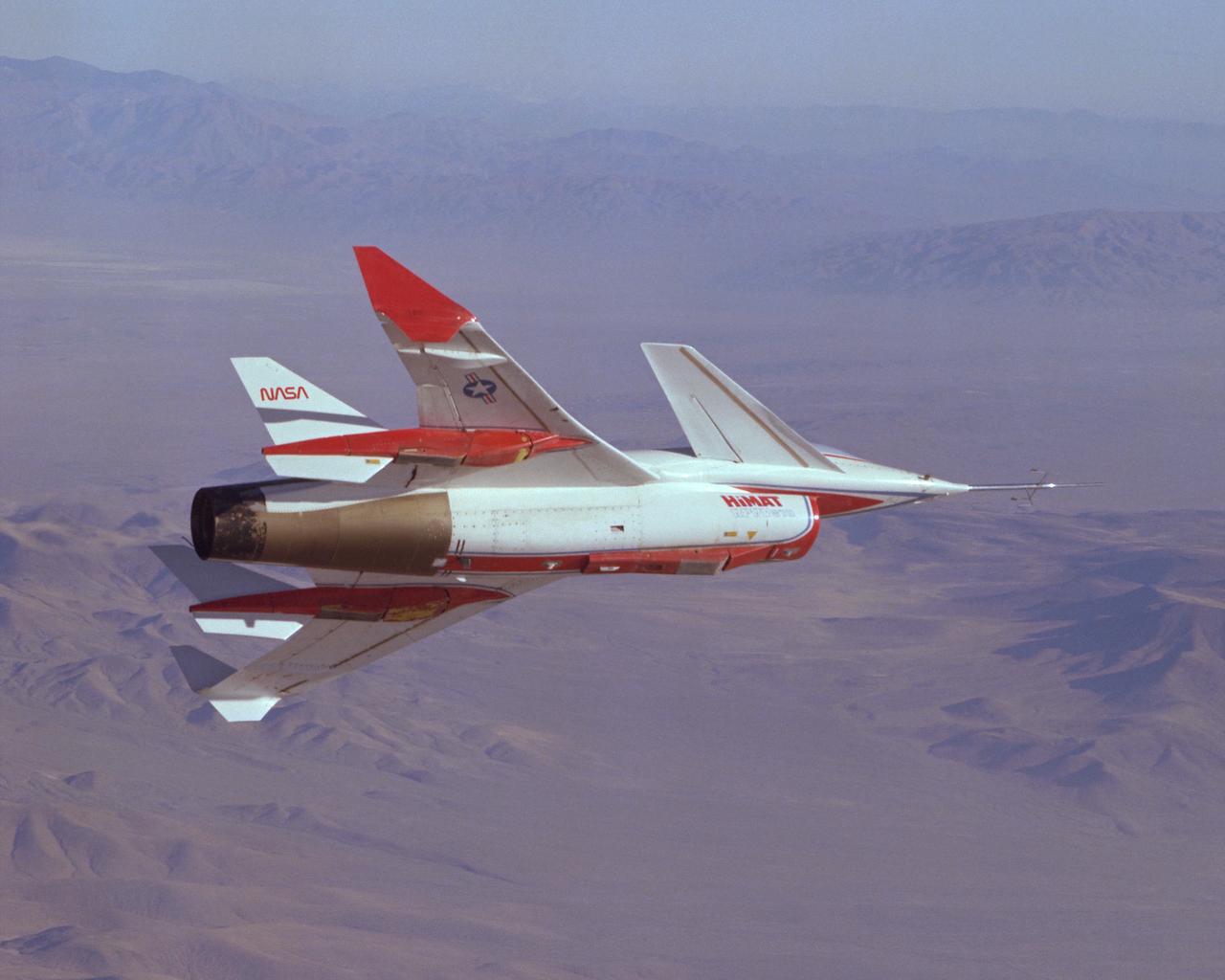
The HiMAT (Highly Maneuverable Aircraft Technology) subscale research vehicle, seen here during a research flight, was flown by the NASA Dryden Flight Research Center, Edwards, California, from mid 1979 to January 1983. The aircraft demonstrated advanced fighter technologies that have been used in the development of many modern high performance military aircraft.

The HiMAT (Highly Maneuverable Aircraft Technology) subscale research vehicle, seen here during a research flight, was flown by the NASA Dryden Flight Research Center, Edwards, California, from mid 1979 to January 1983. The aircraft demonstrated advanced fighter technologies that have been used in the development of many modern high performance military aircraft.
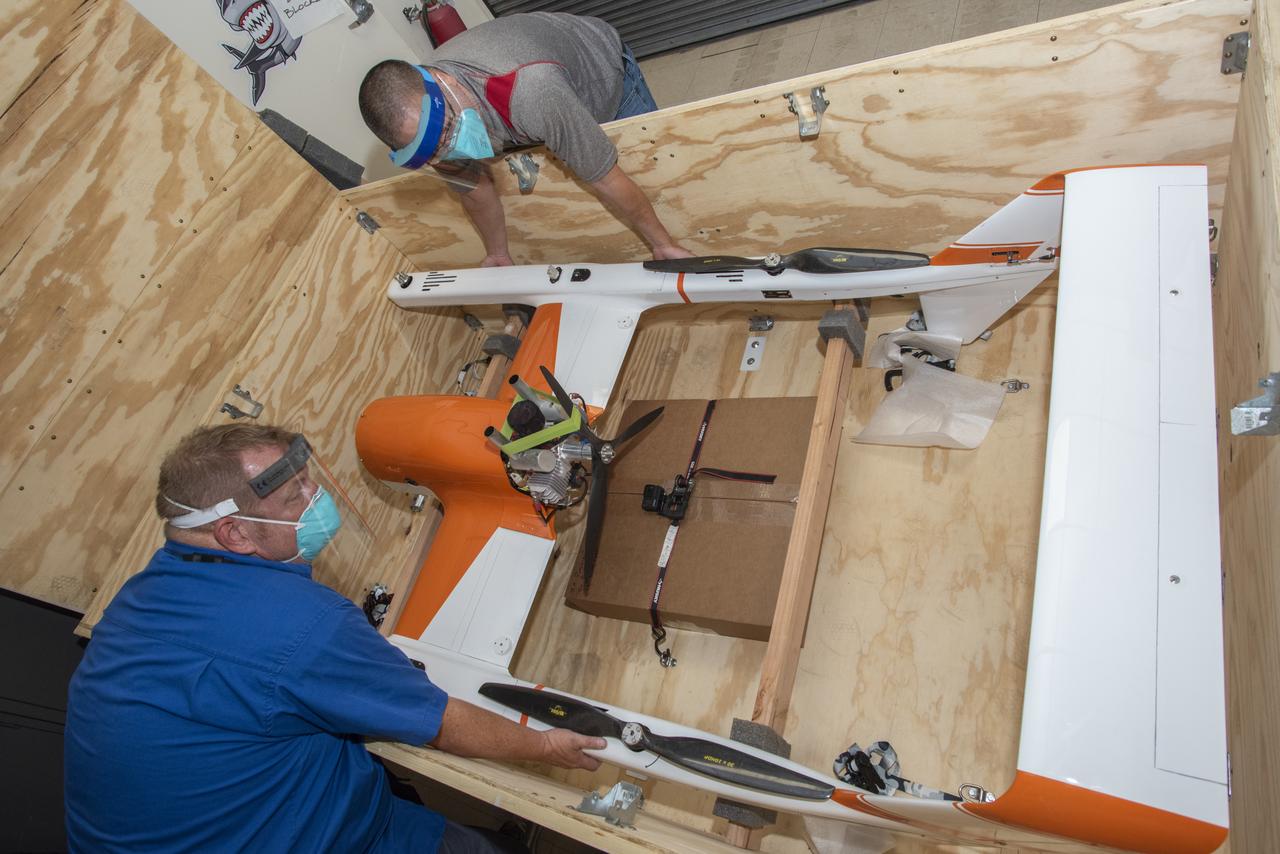
Derek Abramson and Robert Jensen unload the Hybrid Quadrotor 90C (HQ-90) at NASA Armstrong Flight Research Center’s Dale Reed Subscale Flight Research Lab in California on Oct. 1, 2020. The Resilient Autonomy project will use the vertical lift and transition remotely piloted aircraft for software testing at NASA Armstrong.
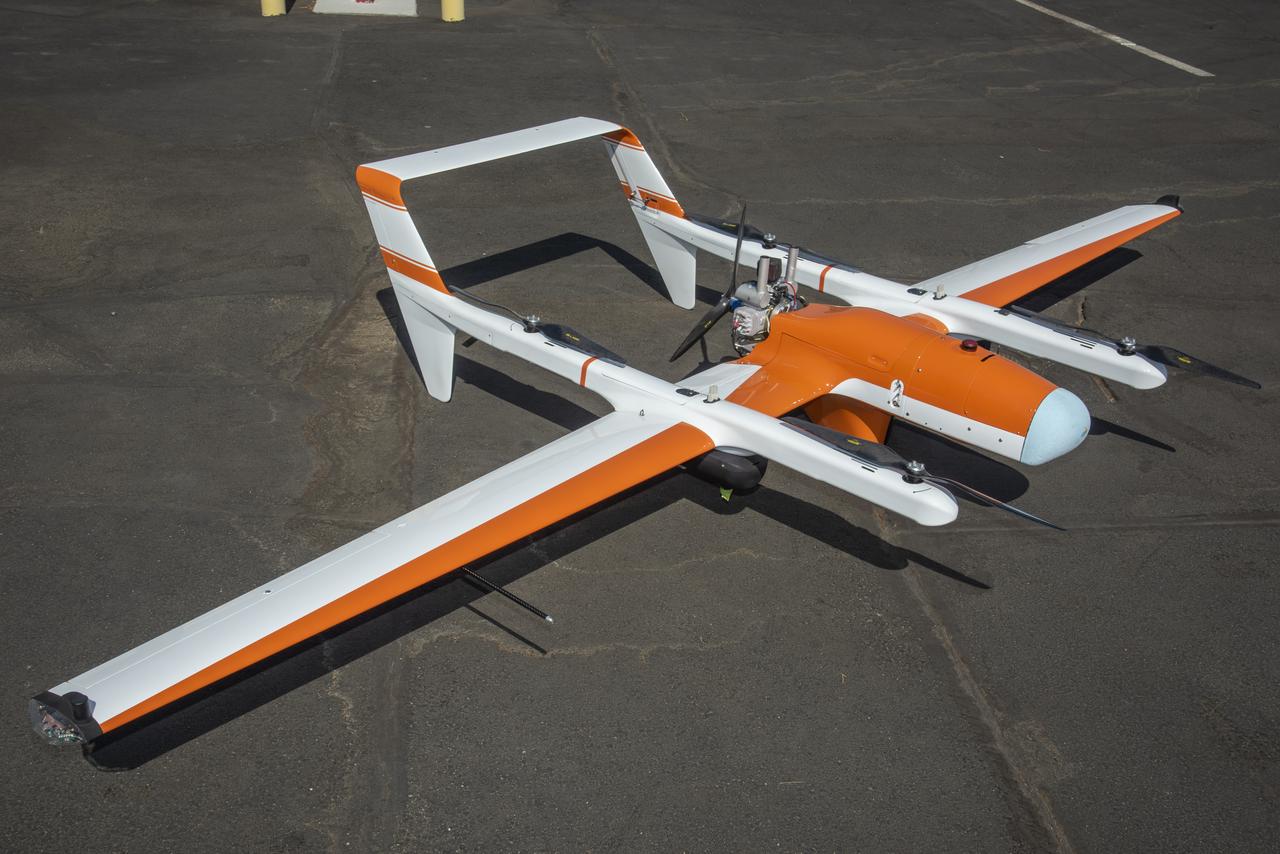
The Hybrid Quadrotor 90C (HQ-90) is displayed outside the NASA Armstrong Flight Research Center’s Dale Reed Subscale Flight Research Lab in California on Oct. 1, 2020. The Resilient Autonomy project will use this vertical lift and transition remotely piloted aircraft for software testing.
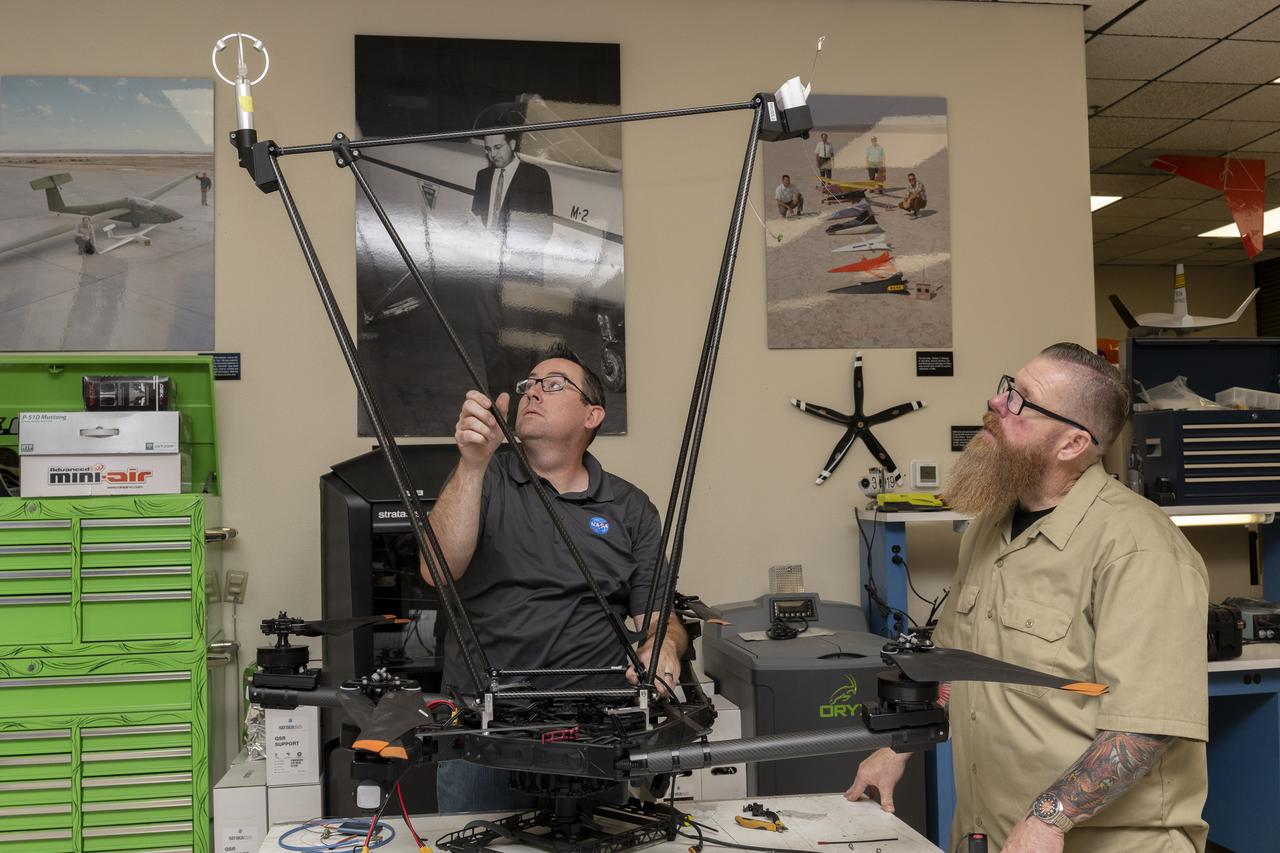
Justin Link, left, pilot for small uncrewed aircraft systems, and Justin Hall, chief pilot for small uncrewed aircraft systems, install weather instruments on NASA’s Alta X drone at the agency’s Armstrong Flight Research Center in Edwards, California. Members of the center’s Dale Reed Subscale Flight Research Laboratory used the Alta X to support the agency’s FireSense project in March 2025 for a prescribed burn in Geneva State Forest, which is about 100 miles south of Montgomery, Alabama.
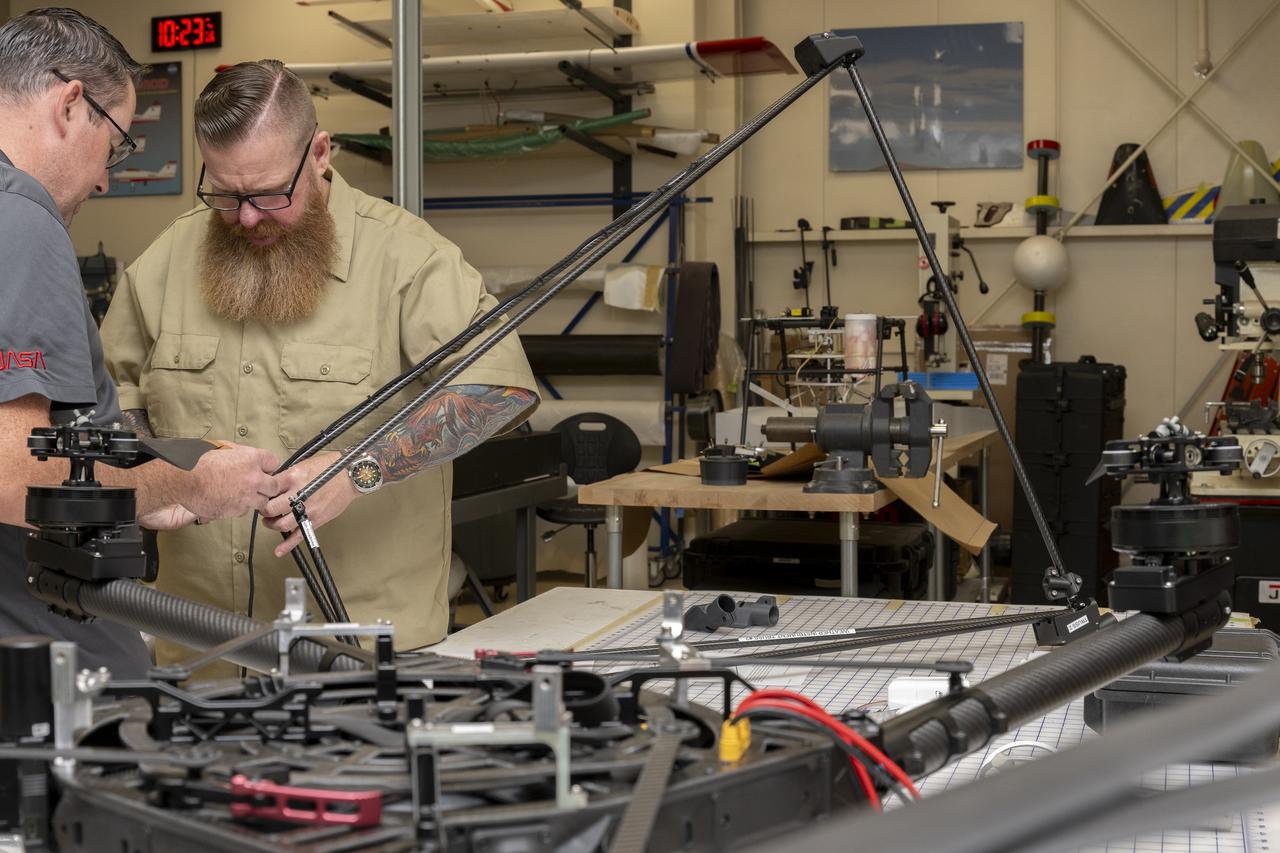
Justin Link, left, pilot for small uncrewed aircraft systems, and Justin Hall, chief pilot for small uncrewed aircraft systems, install weather instruments on NASA’s Alta X drone at the agency’s Armstrong Flight Research Center in Edwards, California. Members of the center’s NASA Armstrong Dale Reed Subscale Flight Research Laboratory used the Alta X to support the NASA’s FireSense project in March 2025 for a prescribed burn in Geneva State Forest, which is about 100 miles south of Montgomery, Alabama.
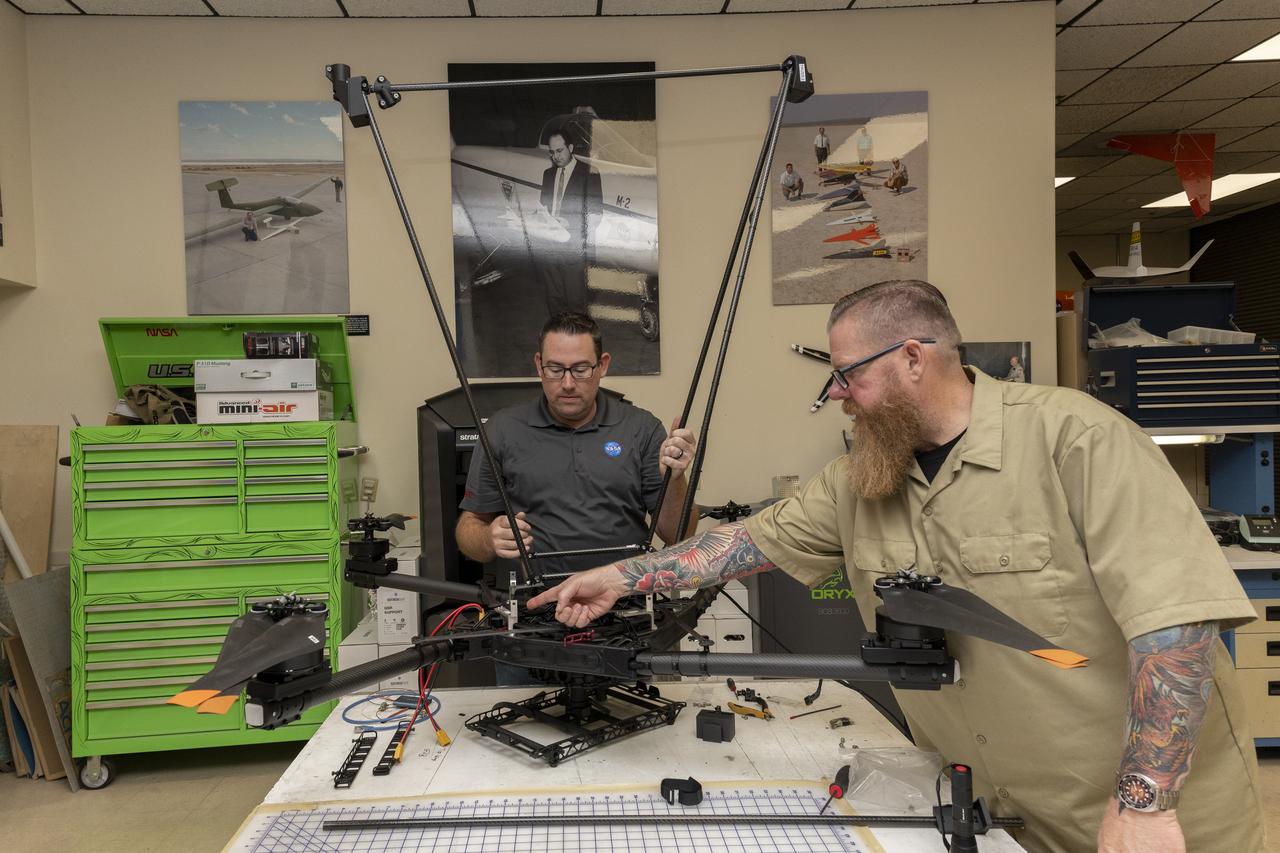
Justin Link, left, pilot for small uncrewed aircraft systems, and Justin Hall, chief pilot for small uncrewed aircraft systems, install weather instruments on NASA’s Alta X drone at the agency’s Armstrong Flight Research Center in Edwards, California. Members of the center’s NASA Armstrong Dale Reed Subscale Flight Research Laboratory used the Alta X to support the NASA’s FireSense project in March 2025 for a prescribed burn in Geneva State Forest, which is about 100 miles south of Montgomery, Alabama.
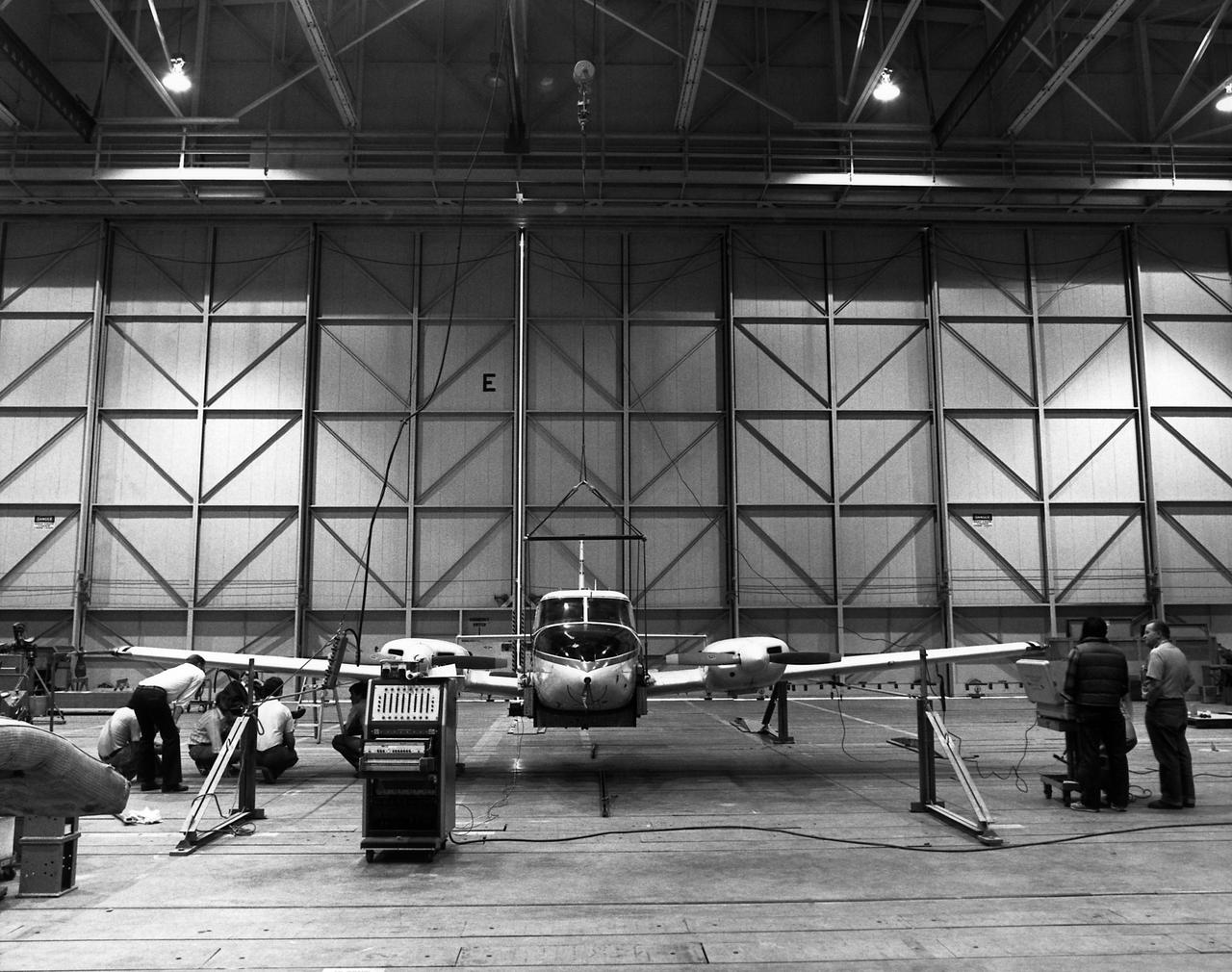
Technicians check instrumentation and systems on NASA 808, a PA-30 aircraft, prior to a research flight. The aircraft was used as the testbed in development of control systems for remotely piloted vehicles that were "flown" from the ground. The concept led to highly successful programs such as the HiMAT and the subscale F-15 remotely piloted vehicles. Over the years, NASA 808 has also been used for spin and stall research related to general aviation aircraft and also research to alleviate wake vortices behind large jetliners. This 1980 photograph taken inside a hangar shows technicians measuring moment of inertia.
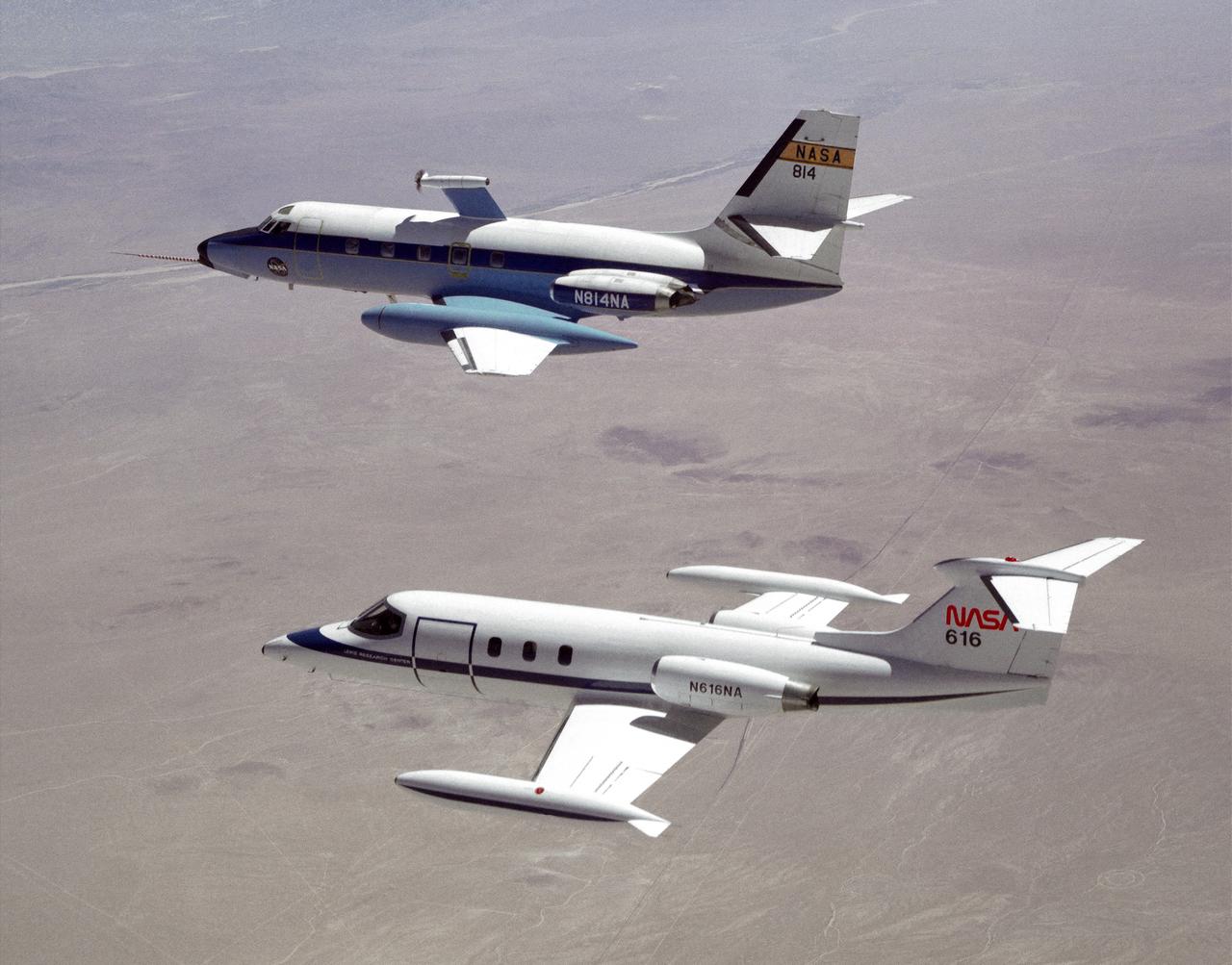
The NASA C-140 JetStar research aircraft (top) is followed by a NASA Learjet equipped with acoustic sensors during one of several tests of advanced propellors mounted on the vertical pylon atop the JetStar's fuselage. Several advanced prop designs were tested on the JetStar in 1982 by NASA's Dryden Flight Research Facility (DFRF), Edwards, California, to study the effects of noise created by propellors on aircraft structures and cabin interiors. To assess possible noise problems with the subscale turbofan, DFRF technicians mounted microphones on both the JetStar and the Learjet chase plane. DFRF then made measurements at close range and at longer distances. The data enabled structural changes and flightpath modifications.

Justin Link, pilot for small uncrewed aircraft systems, installs weather instruments on NASA’s Alta X drone at the agency’s Armstrong Flight Research Center in Edwards, California. Members of the center’s Dale Reed Subscale Flight Research Laboratory used the Alta X to support the agency’s FireSense project in March 2025 for a prescribed burn in Geneva State Forest, which is about 100 miles south of Montgomery, Alabama.
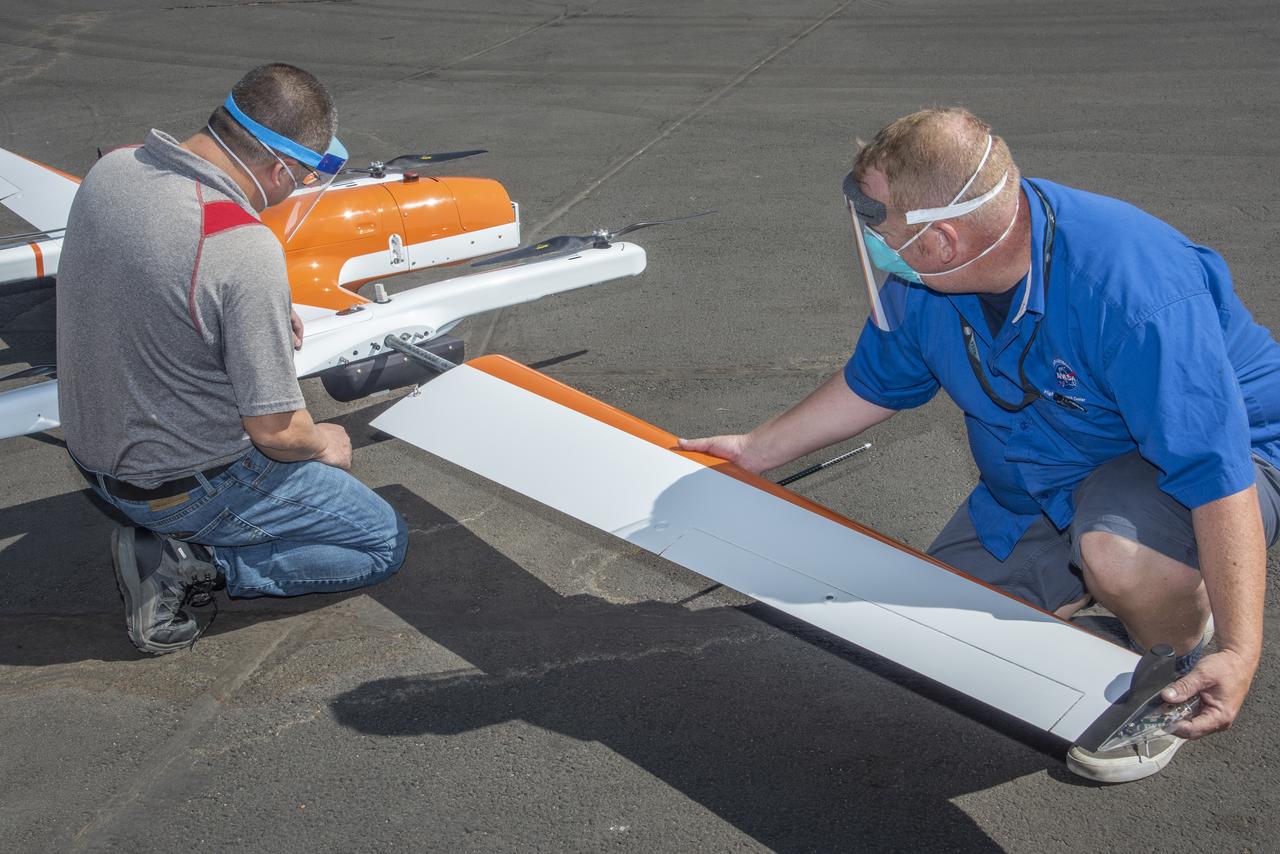
Derek Abramson and Robert Jensen install a wing on the Hybrid Quadrotor 90C (HQ-90) at NASA Armstrong Flight Research Center's Dale Reed Subscale Flight Research Lab in California on Oct. 1, 2020. This vertical lift and transition remotely piloted aircraft arrived in pieces packed in crates for the Resilient Autonomy project to test software in flight.
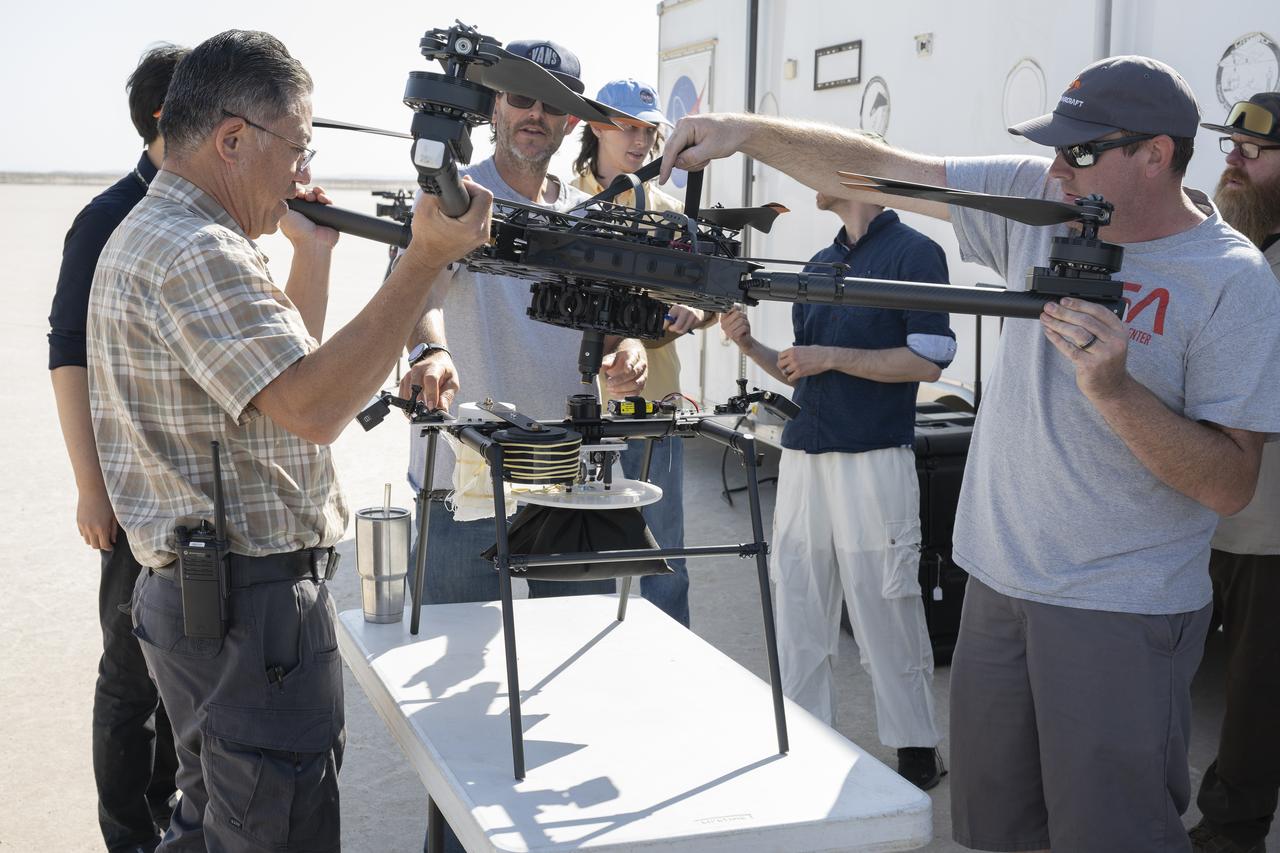
Derek Abramson, left, and Justin Link, right, attach an Alta X drone to the Enhancing Parachutes by Instrumenting the Canopy test experiment on June 4, 2025, at NASA’s Armstong Flight Research Center in Edwards, California. Abramson is NASA chief engineer at the center’s Dale Reed Subscale Flight Research Laboratory, where Link also works as a pilot for small uncrewed aircraft systems. NASA researchers are developing technology to make supersonic parachutes safer and more reliable for delivering science instruments and payloads to Mars.
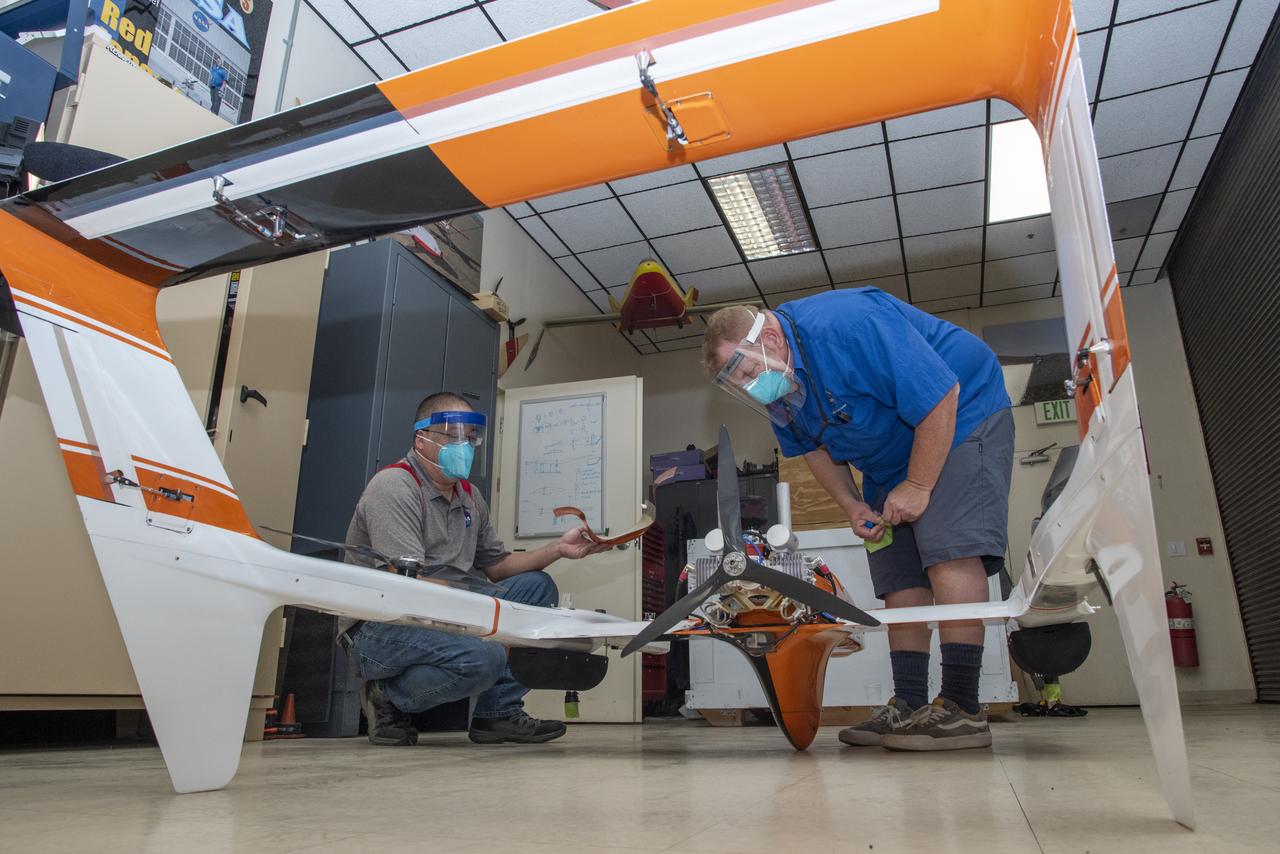
Derek Abramson and Robert Jensen assemble pieces of the Hybrid Quadrotor 90C (HQ-90) at NASA Armstrong Flight Research Center’s Dale Reed Subscale Flight Research Lab in California on Oct. 1, 2020. This vertical lift and transition remotely piloted aircraft arrived in pieces packed in crates. It was reassembled for the Resilient Autonomy project to test software in flight.
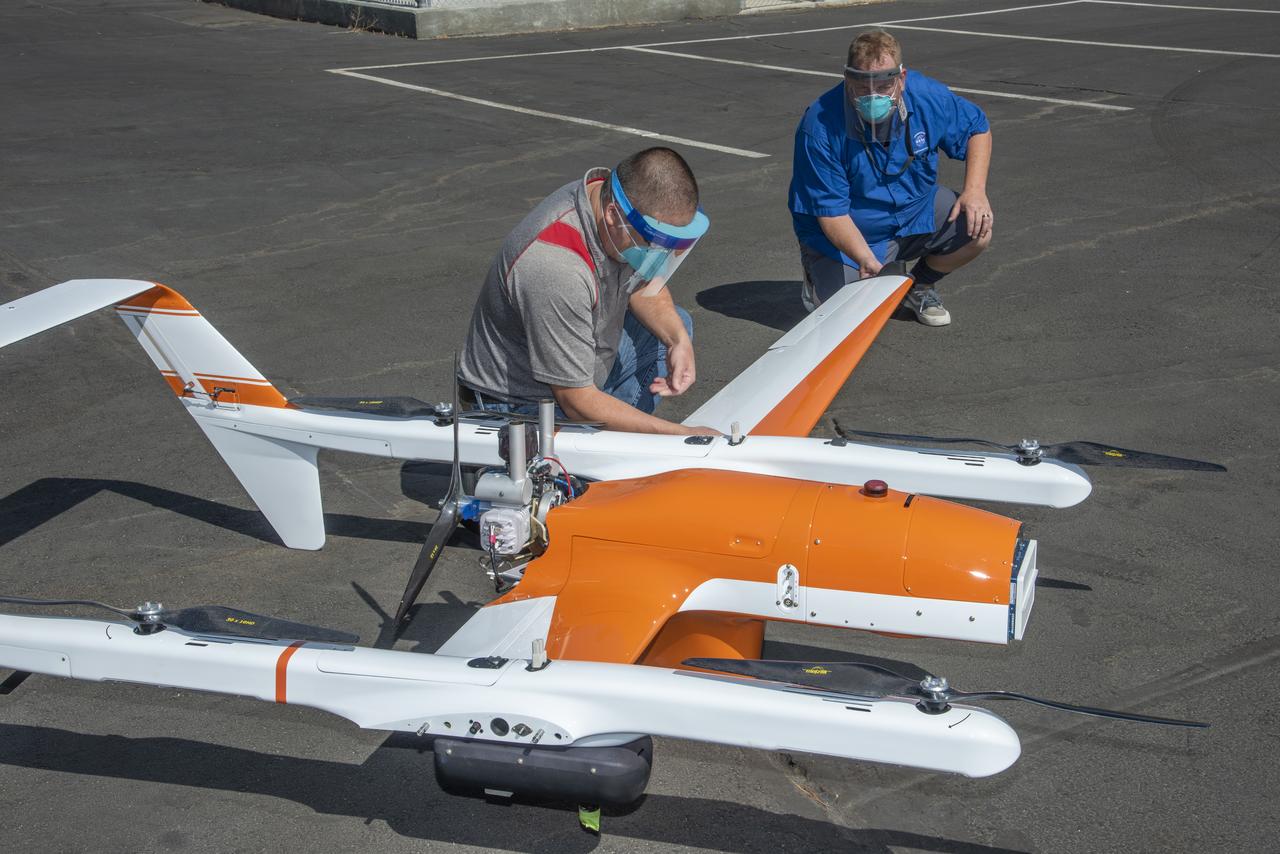
Derek Abramson and Robert Jensen install one of two wings on the Hybrid Quadrotor 90C (HQ-90) at NASA Armstrong Flight Research Center's Dale Reed Subscale Flight Research Lab in California on Oct. 1, 2020. This vertical lift and transition remotely piloted aircraft arrived in pieces packed in crates for the Resilient Autonomy project to test software in flight.
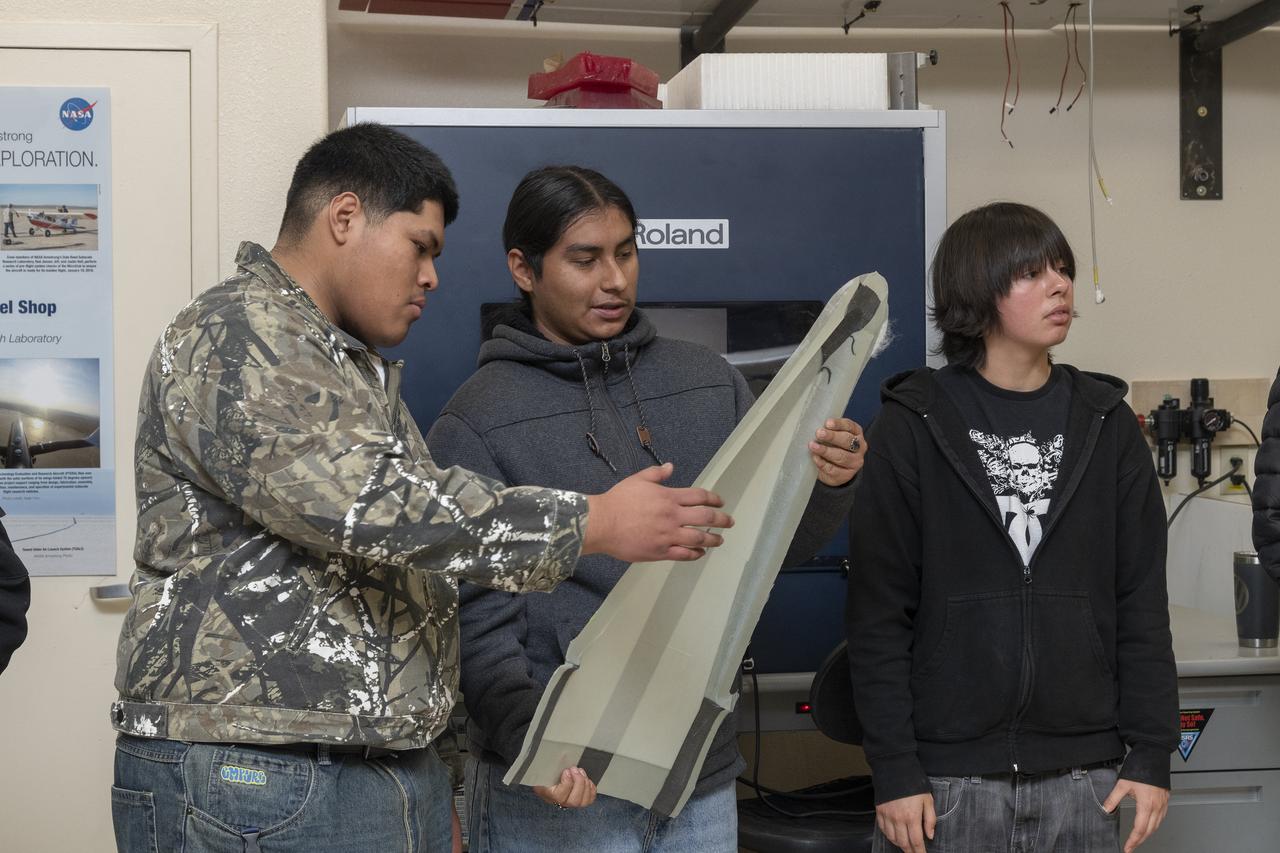
Students look at a subscale model at the Dale Reed Subscale Flight Research Laboratory at NASA’s Armstrong Research Flight Center in Edwards, California. The students are from the engineering club from Palmdale High School in Palmdale, California.
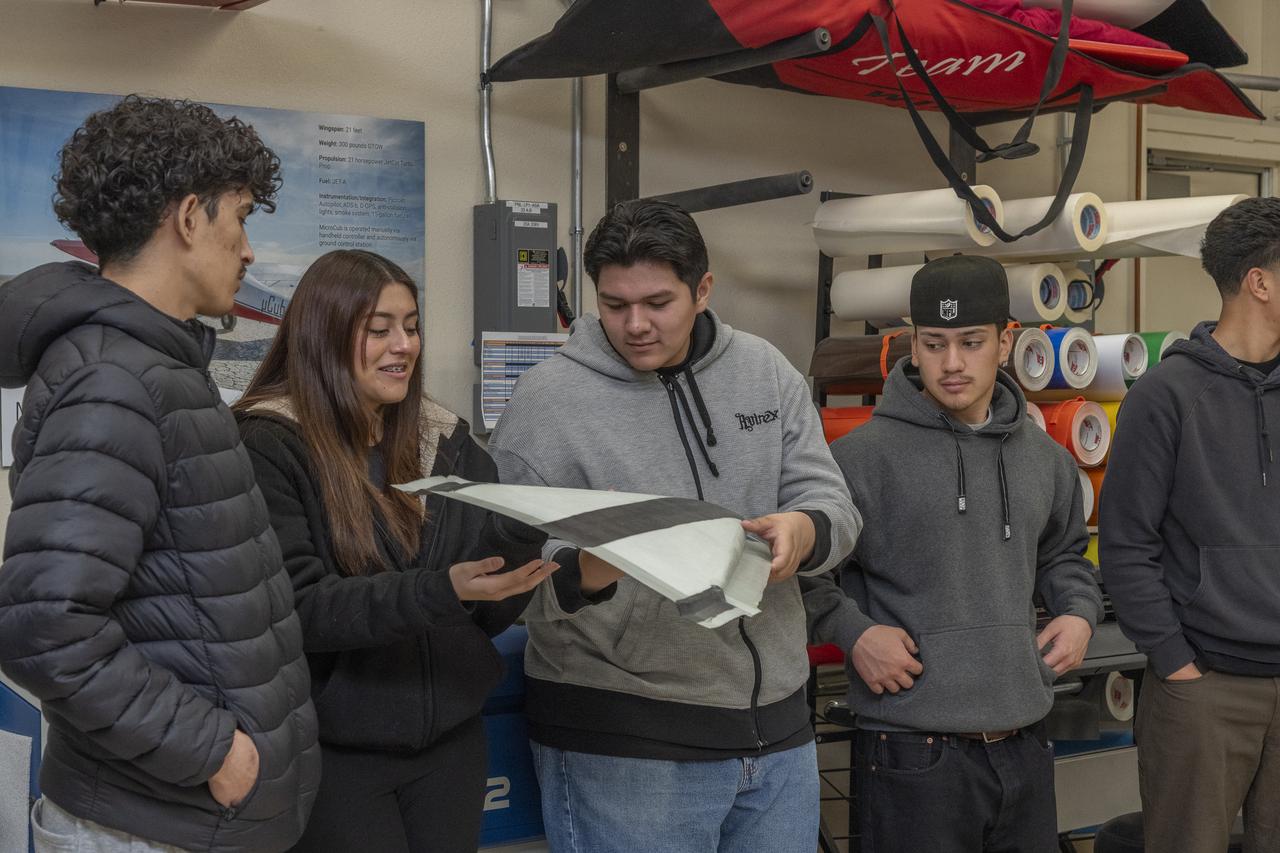
Students look at a subscale model at the Dale Reed Subscale Flight Research Laboratory at NASA’s Armstrong Research Flight Center in Edwards, California. The students are from the engineering club from Palmdale High School in Palmdale, California.
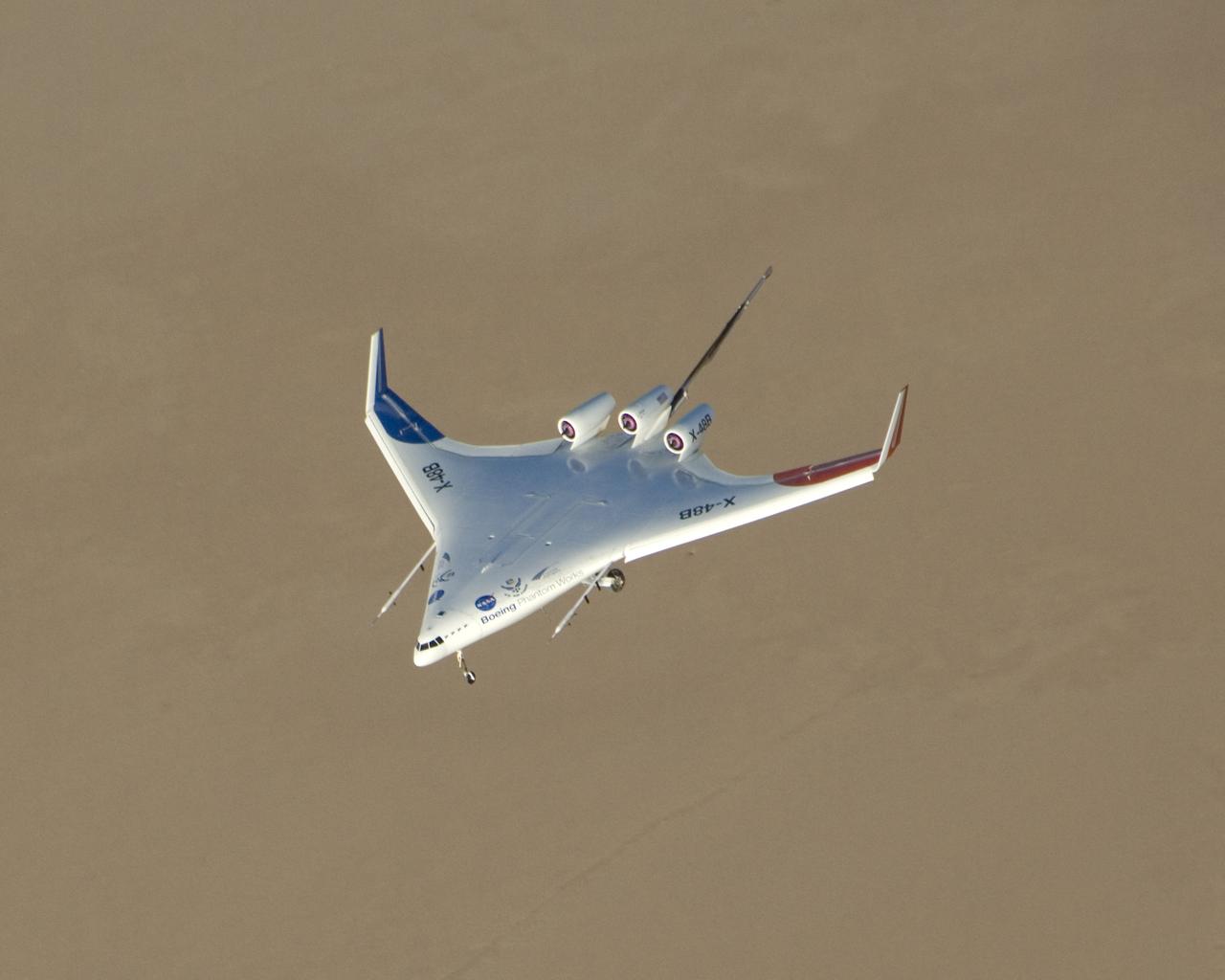
Boeing Phantom Works' subscale Blended Wing Body technology demonstration aircraft began its initial flight tests from NASA's Dryden Flight Research Center at Edwards Air Force Base, Calif. in the summer of 2007. The 8.5 percent dynamically scaled unmanned aircraft, designated the X-48B by the Air Force, is designed to mimic the aerodynamic characteristics of a full-scale large cargo transport aircraft with the same blended wing body shape. The initial flight tests focused on evaluation of the X-48B's low-speed flight characteristics and handling qualities. About 25 flights were planned to gather data in these low-speed flight regimes. Based on the results of the initial flight test series, a second set of flight tests was planned to test the aircraft's low-noise and handling characteristics at transonic speeds.
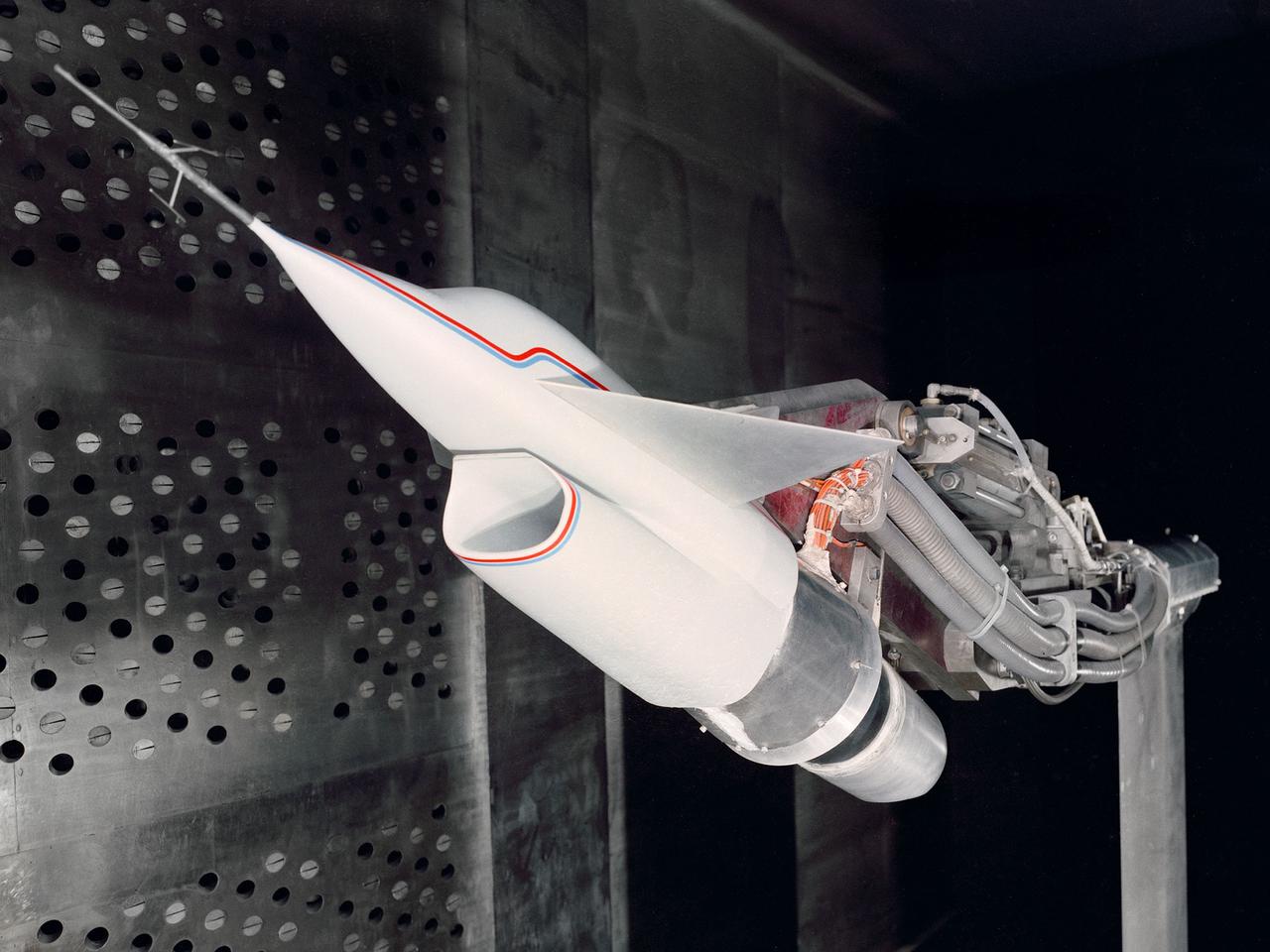
A Highly Maneuverable Aircraft Technology (HiMAT) inlet model installed in the test section of the 8- by 6-Foot Supersonic Wind Tunnel at the National Aeronautics and Space Administration (NASA) Lewis Research Center. Engineers at the Ames Research Center, Dryden Flight Research Center, and Rockwell International designed two pilotless subscale HiMAT vehicles in the mid-1970s to study new design concepts for fighter aircraft in the transonic realm without risking the lives of test pilots. The aircraft used sophisticated technologies such as advanced aerodynamics, composite materials, digital integrated propulsion control, and digital fly-by-wire control systems. In late 1977 NASA Lewis studied the HiMAT’s General Electric J85-21 jet engine in the Propulsion Systems Laboratory. The researchers charted the inlet quality with various combinations anti-distortion screens. HiMAT employed a relatively short and curved inlet compared to actual fighter jets. In the spring of 1979, Larry Smith led an in-depth analysis of the HiMAT inlet in the 8- by 6 tunnel. The researchers installed vortex generators to battle flow separation in the diffuser. The two HiMAT aircraft performed 11 hours of flying over the course of 26 missions from mid-1979 to January 1983 at Dryden and Ames. Although the HiMAT vehicles were considered to be overly complex and expensive, the program yielded a wealth of data that would validate computer-based design tools.
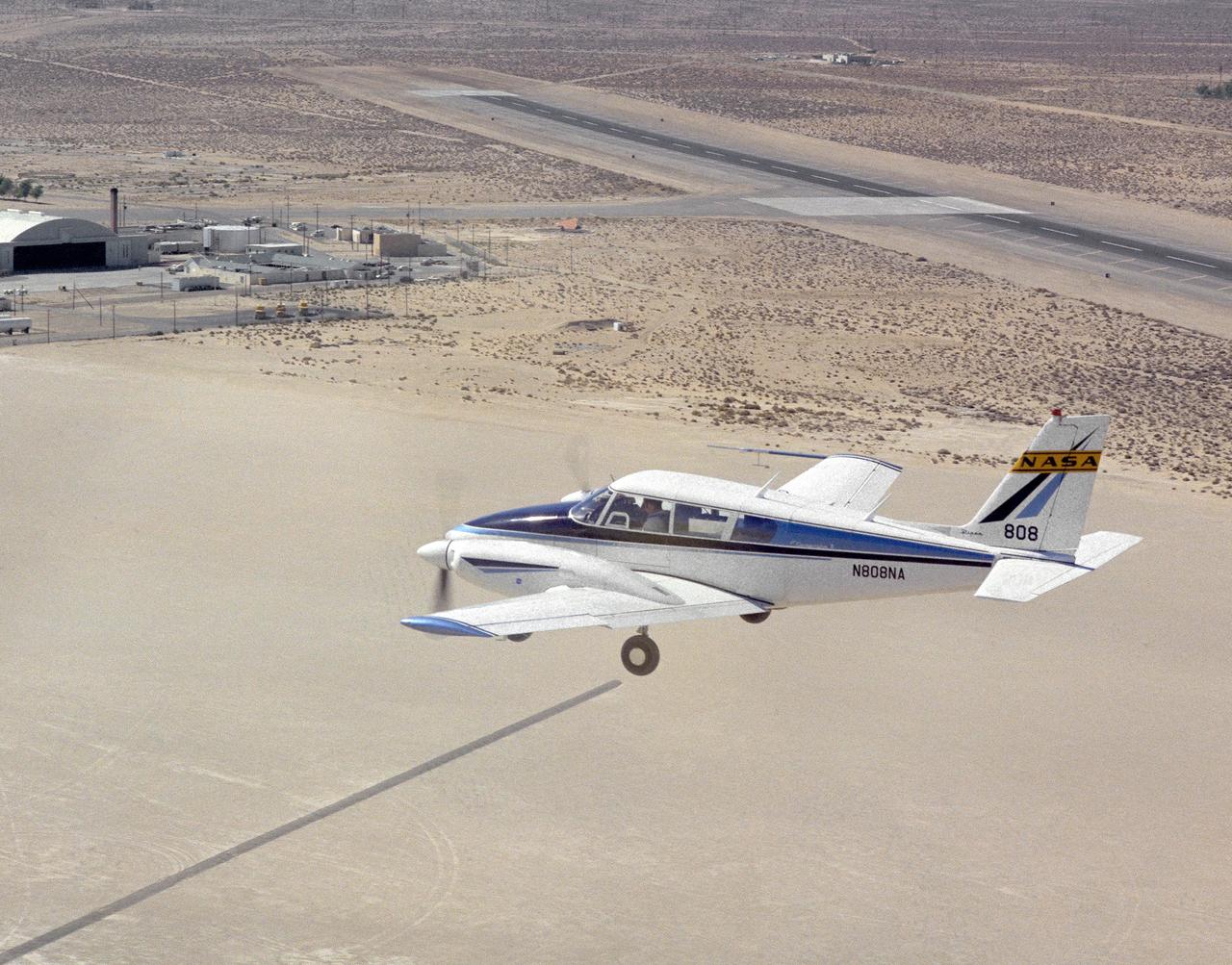
Dryden Flight Research Center's Piper PA-30 Twin Commanche, which helped validate the RPRV concept, descends to a remotely controlled landing on Rogers Dry Lake, unassisted by the onboard pilot. A Piper PA-30 Twin Commanche, known as NASA 808, was used at the NASA Dryden Flight Research Center as a rugged workhorse in a variety of research projects associated with both general aviation and military projects. In the early 1970s, the PA-30, serial number 301498, was used to test a flight technique used to fly Remotely Piloted Research Vehicles (RPRV's). The technique was first tested with the cockpit windows of the light aircraft blacked out while the pilot flew the aircraft utilizing a television monitor which gave him a "pilot's eye" view ahead of the aircraft. Later pilots flew the aircraft from a ground cockpit, a procedure used with all RPRV's. TV and two-way telemetry allow the pilot to be in constant control of the aircraft. The apparatus mounted over the cockpit is a special fish eye lens camera, used to obtain images that are transmitted to the ground based cockpit. This project paved the way for sophisticated, highly successful research programs involving high risk spin, stall, and flight control conditions, such as the HiMAT and the subscale F-15 remotely piloted vehicles. Over the years, NASA 808 has also been used for spin and stall research related to general aviation aircraft and also research to alleviate wake vortices behind large jetliners.
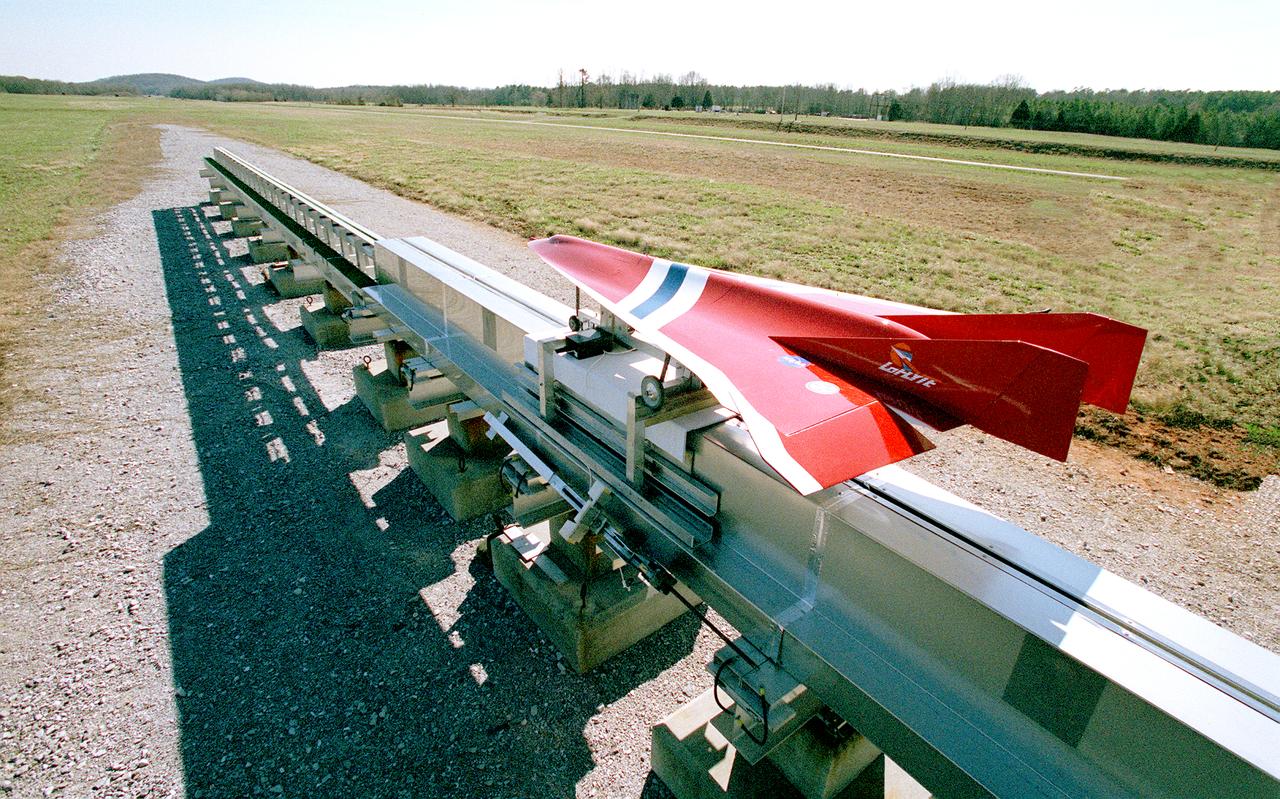
Engineers at the Marshall Space Flight Center (MSFC) have been testing Magnetic Launch Assist Systems, formerly known as Magnetic Levitation (MagLev) technologies. To launch spacecraft into orbit, a Magnetic Launch Assist system would use magnetic fields to levitate and accelerate a vehicle along a track at a very high speed. Similar to high-speed trains and roller coasters that use high-strength magnets to lift and propel a vehicle a couple of inches above a guideway, the launch-assist system would electromagnetically drive a space vehicle along the track. A full-scale, operational track would be about 1.5-miles long and capable of accelerating a vehicle to 600 mph in 9.5 seconds. This photograph shows a subscale model of an airplane running on the experimental track at MSFC during the demonstration test. This track is an advanced linear induction motor. Induction motors are common in fans, power drills, and sewing machines. Instead of spinning in a circular motion to turn a shaft or gears, a linear induction motor produces thrust in a straight line. Mounted on concrete pedestals, the track is 100-feet long, about 2-feet wide, and about 1.5- feet high. The major advantages of launch assist for NASA launch vehicles is that it reduces the weight of the take-off, the landing gear, the wing size, and less propellant resulting in significant cost savings. The US Navy and the British MOD (Ministry of Defense) are planning to use magnetic launch assist for their next generation aircraft carriers as the aircraft launch system. The US Army is considering using this technology for launching target drones for anti-aircraft training.
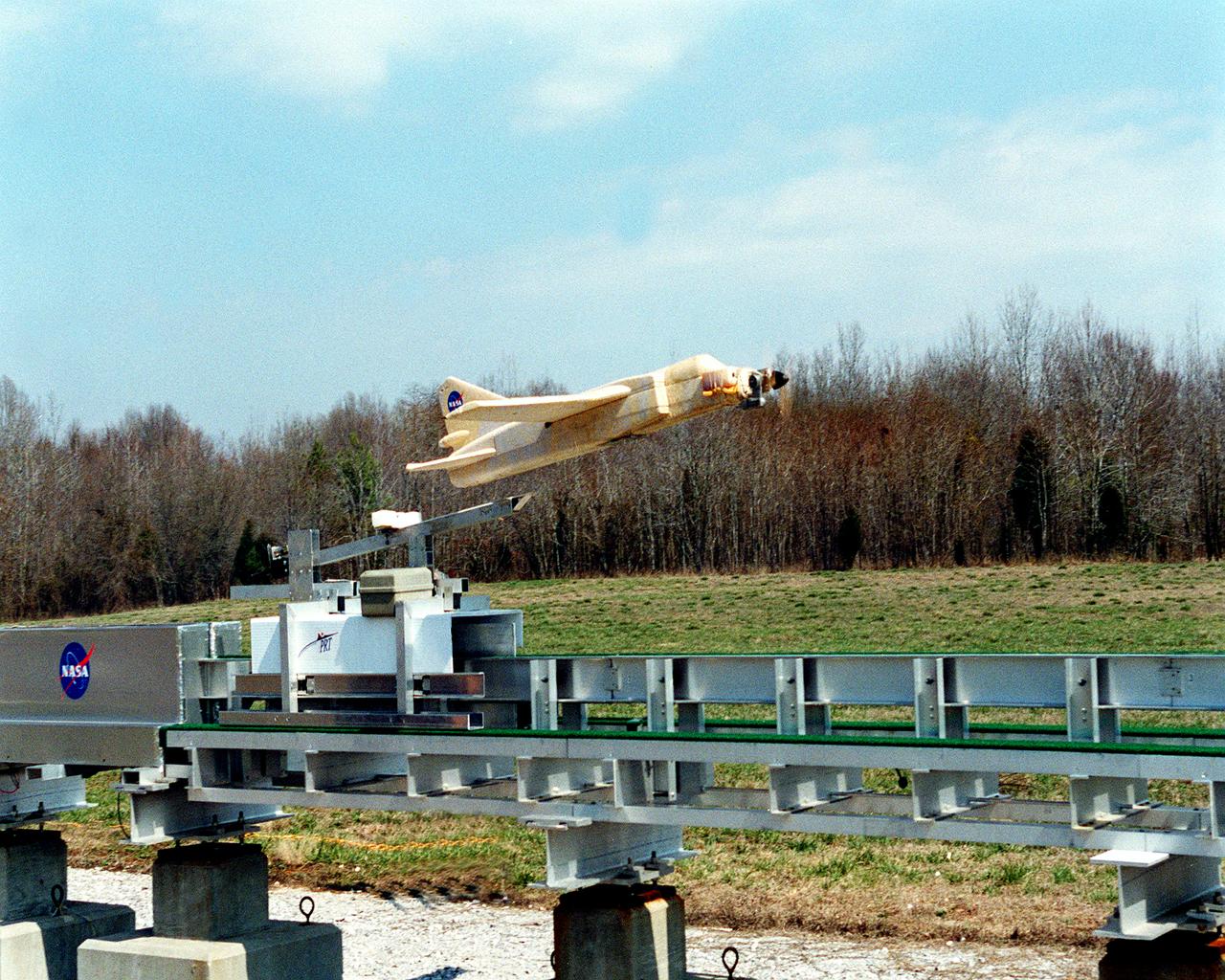
This image shows a 1/9 subscale model vehicle clearing the Magnetic Launch Assist System, formerly referred to as the Magnetic Levitation (MagLev), test track during a demonstration test conducted at the Marshall Space Flight Center (MSFC). Engineers at MSFC have developed and tested Magnetic Launch Assist technologies. To launch spacecraft into orbit, a Magnetic Launch Assist System would use magnetic fields to levitate and accelerate a vehicle along a track at very high speeds. Similar to high-speed trains and roller coasters that use high-strength magnets to lift and propel a vehicle a couple of inches above a guideway, a launch-assist system would electromagnetically drive a space vehicle along the track. A full-scale, operational track would be about 1.5-miles long and capable of accelerating a vehicle to 600 mph in 9.5 seconds. This track is an advanced linear induction motor. Induction motors are common in fans, power drills, and sewing machines. Instead of spinning in a circular motion to turn a shaft or gears, a linear induction motor produces thrust in a straight line. Mounted on concrete pedestals, the track is 100-feet long, about 2-feet wide and about 1.5-feet high. The major advantages of launch assist for NASA launch vehicles is that it reduces the weight of the take-off, the landing gear, the wing size, and less propellant resulting in significant cost savings. The US Navy and the British MOD (Ministry of Defense) are planning to use magnetic launch assist for their next generation aircraft carriers as the aircraft launch system. The US Army is considering using this technology for launching target drones for anti-aircraft training.
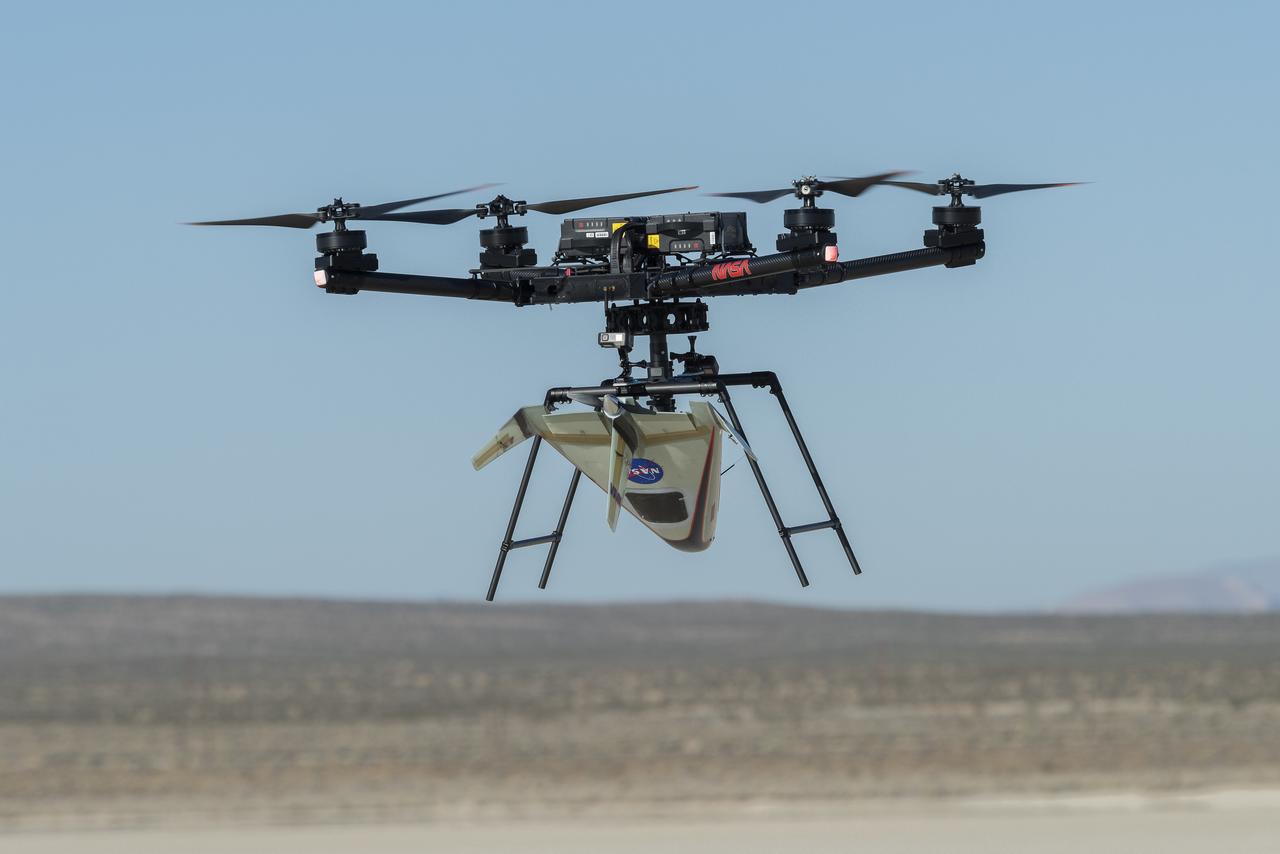
An atmospheric probe model attached upside down to a host quad rotor remotely piloted aircraft lifts off on Oct. 22, 2024. The quad rotor aircraft released the probe above Rogers Dry Lake, a flight area adjacent NASA’s Armstrong Flight Research Center in Edwards, California. The probe was designed and built at the center.
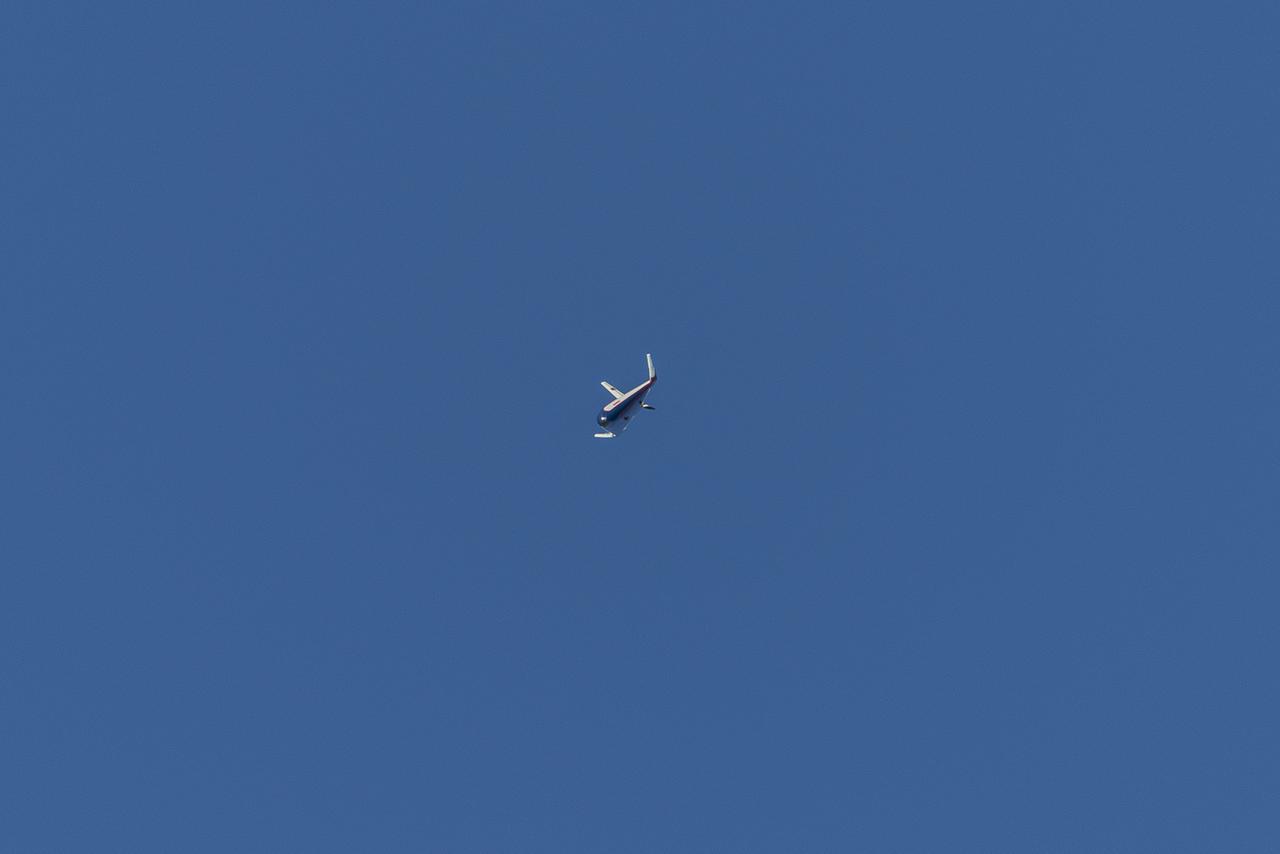
The atmospheric probe model flies free after release from a quad rotor remotely piloted aircraft above Rogers Dry Lake, a flight area adjacent NASA’s Armstrong Flight Research Center in Edwards, California, on Oct. 22, 2024. The probe was designed and built at the center.
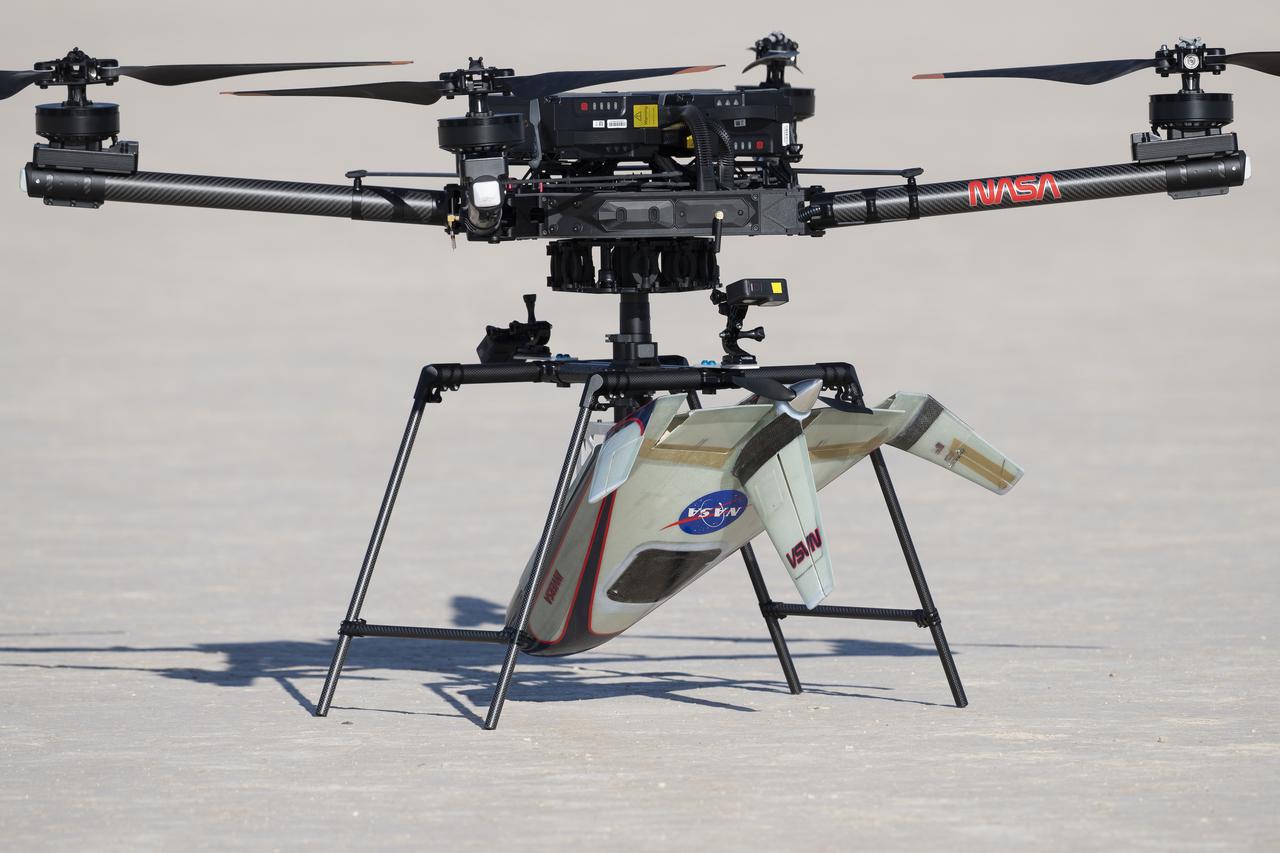
An atmospheric probe model is attached upside down to a quad rotor remotely piloted aircraft on Oct. 22, 2024. The quad rotor aircraft released the probe above Rogers Dry Lake, a flight area adjacent NASA’s Armstrong Flight Research Center in Edwards, California. The probe was designed and built at the center.
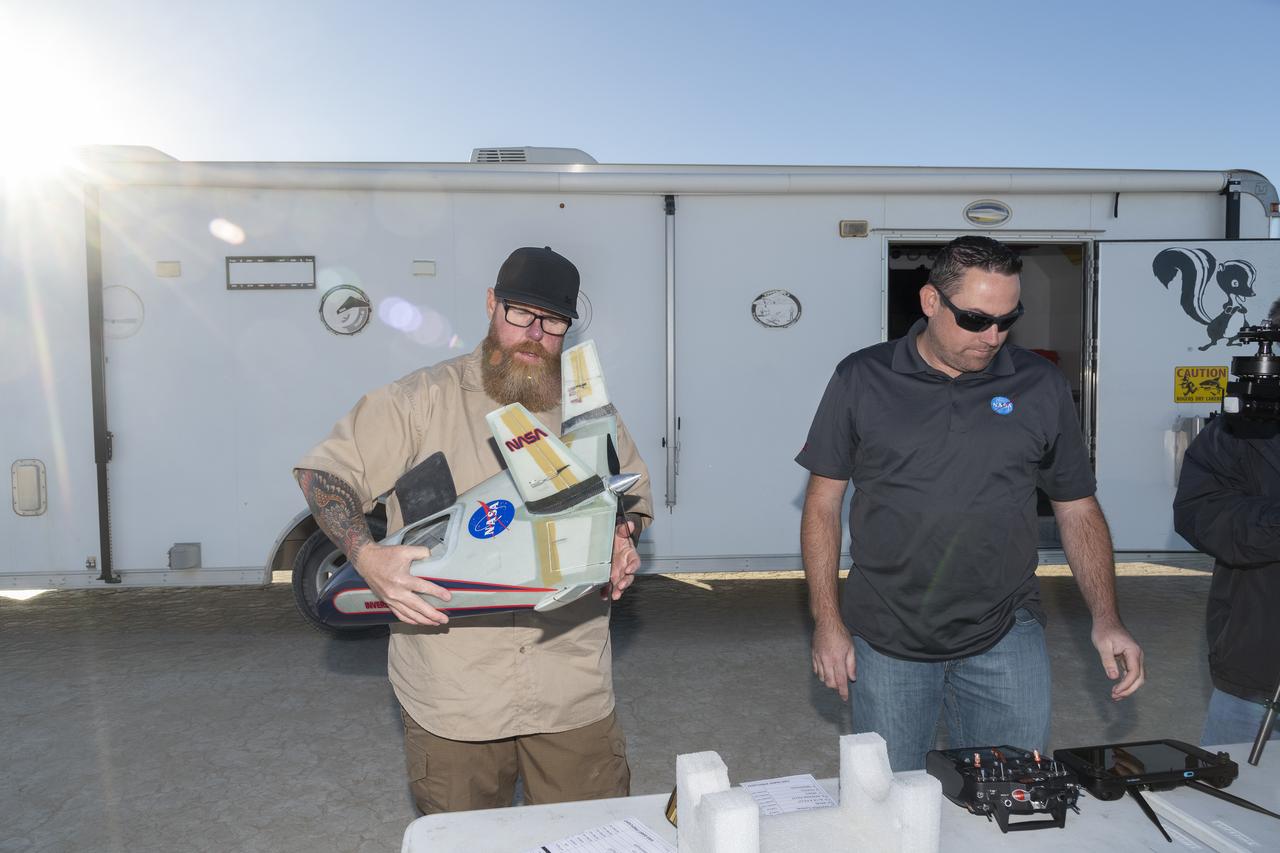
Justin Hall, left, chief pilot of small unmanned aircraft systems, carries the atmospheric probe at NASA’s Armstrong Flight Research Center in Edwards, California. The probe, which was designed and built at the center, flew after release from a quad rotor remotely piloted aircraft on Oct. 22, 2024, above Rogers Dry Lake, a flight area adjacent to the NASA center. At right, Justin Link, unmanned aircraft systems pilot, checks out the controllers for the two aircraft.
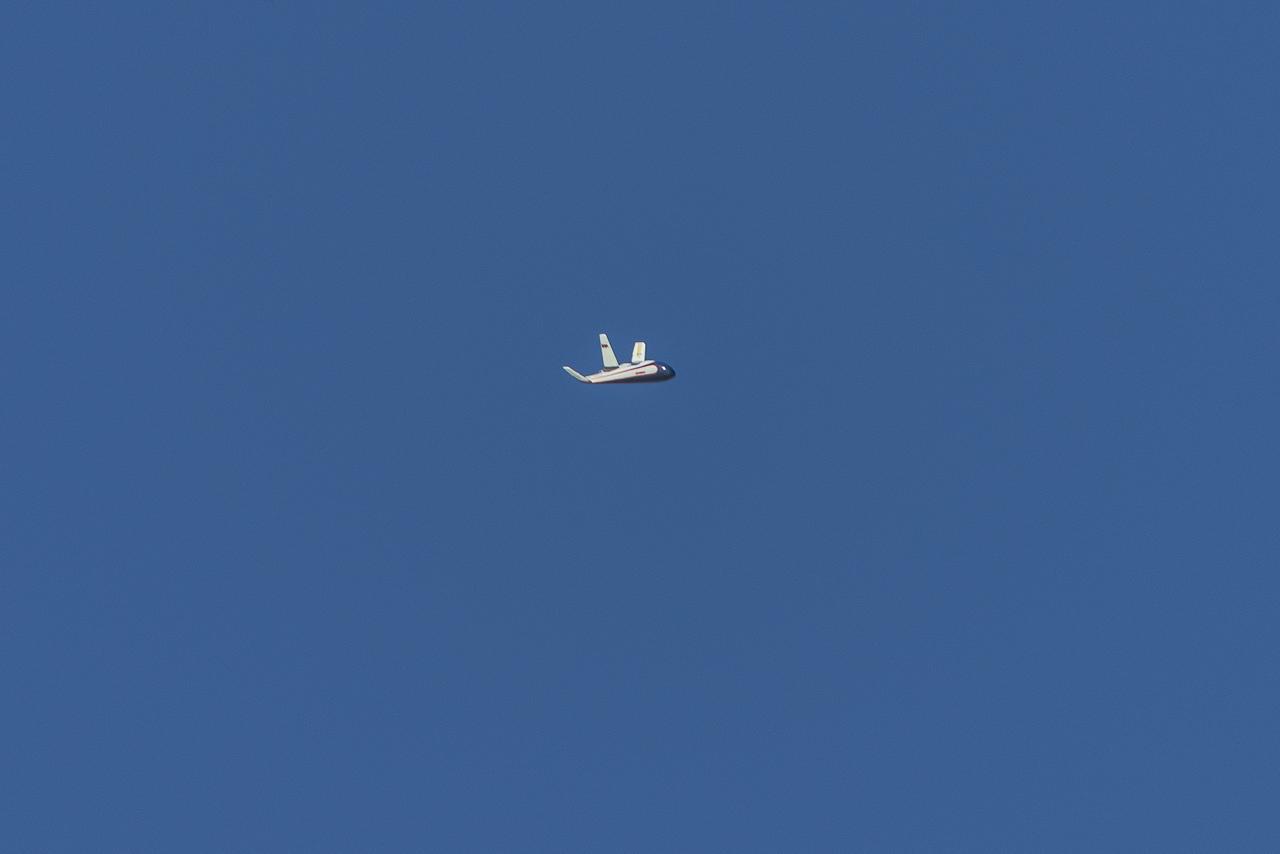
The atmospheric probe model flies free after release from a quad rotor remotely piloted aircraft above Rogers Dry Lake, a flight area adjacent NASA’s Armstrong Flight Research Center in Edwards, California, on Oct. 22, 2024. The probe was designed and built at the center.
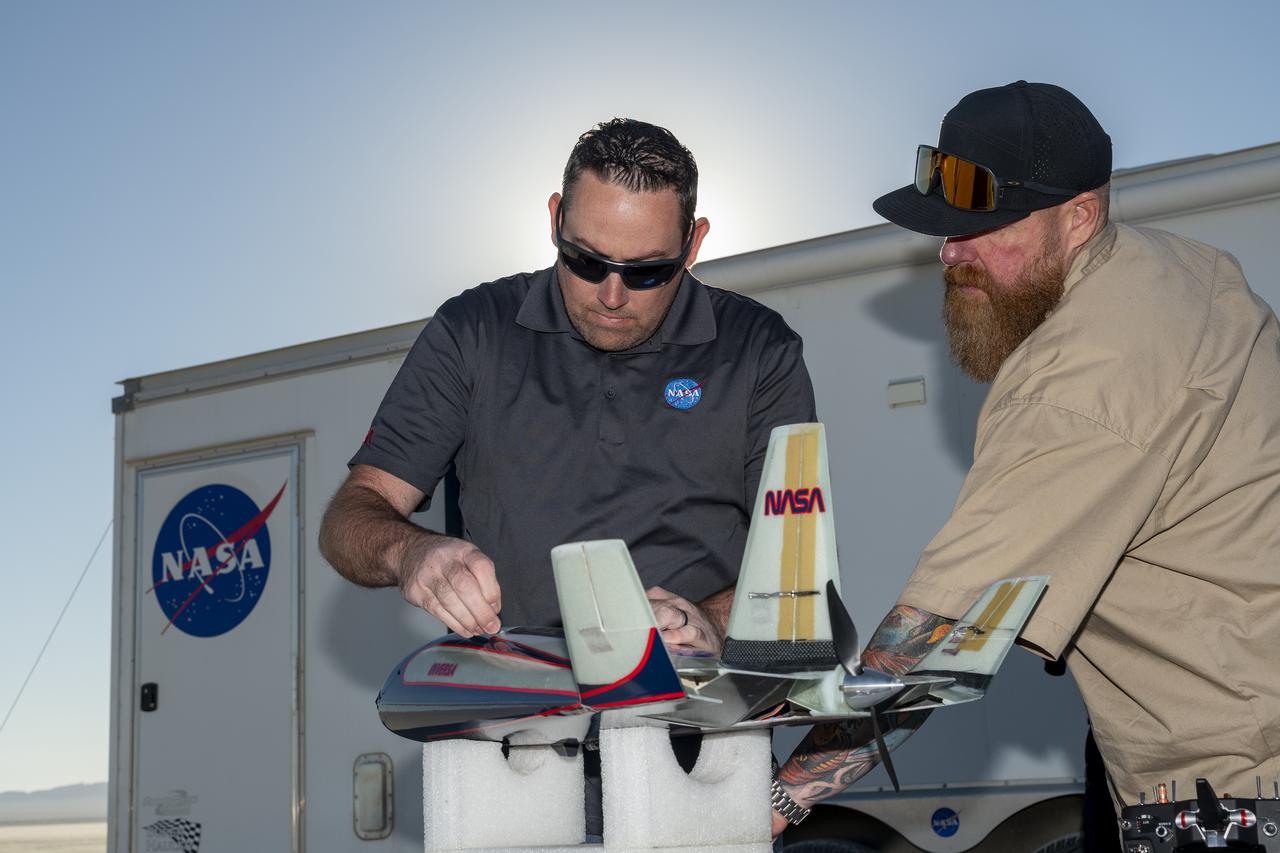
Justin Hall, chief pilot of small unmanned aircraft systems, prepares the atmospheric probe for flight above Rogers Dry Lake, a flight area adjacent NASA’s Armstrong Flight Research Center in Edwards, California. At right, Justin Link, small unmanned aircraft systems pilot, assists. The probe, designed and built at the center, flew after release from a quad rotor remotely piloted aircraft on Oct. 22, 2024.
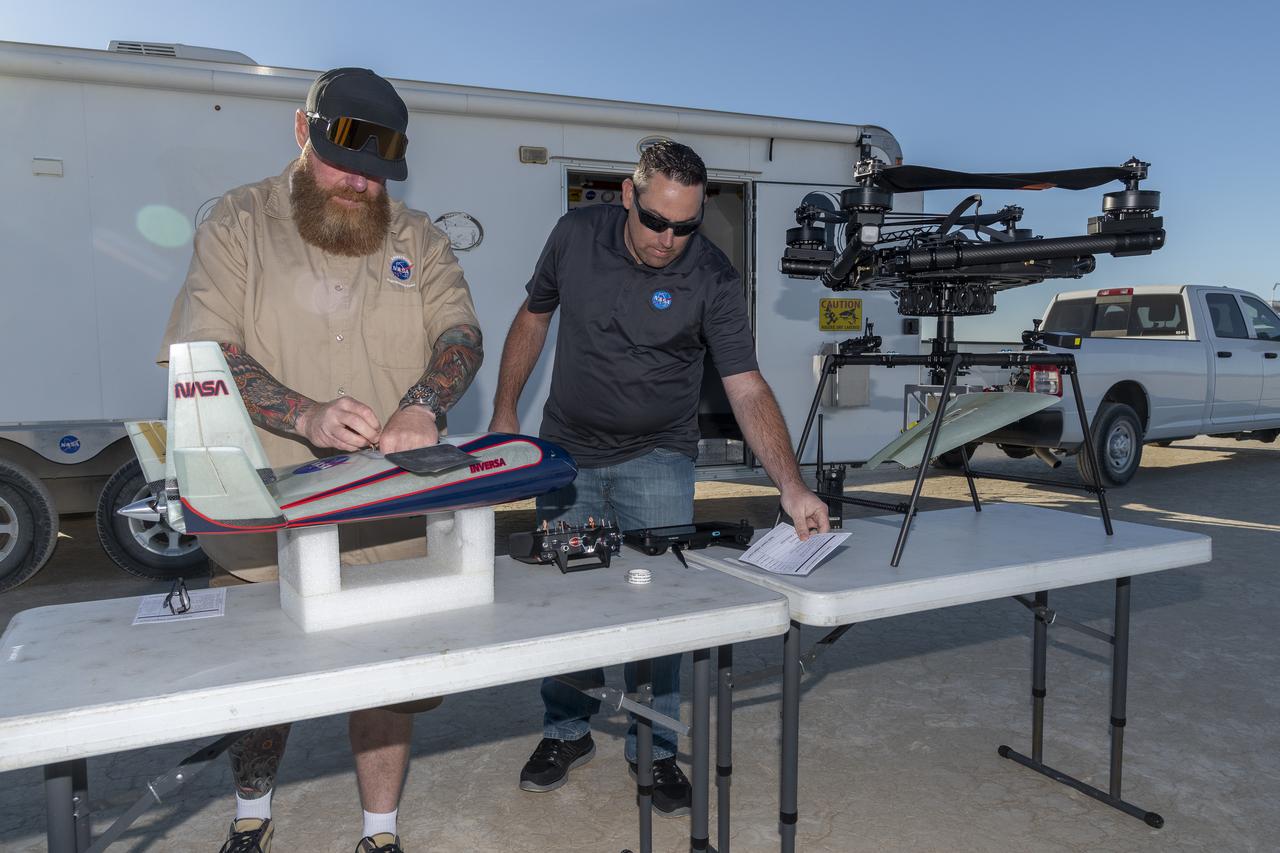
Justin Link, left, small unmanned aircraft systems pilot, and Justin Hall, chief pilot of small unmanned aircraft systems, prepare an atmospheric probe model for flight on Oct. 22, 2024. A quad rotor remotely piloted aircraft released the probe above Rogers Dry Lake, a flight area adjacent NASA’s Armstrong Flight Research Center in Edwards, California. The probe was designed and built at the center.
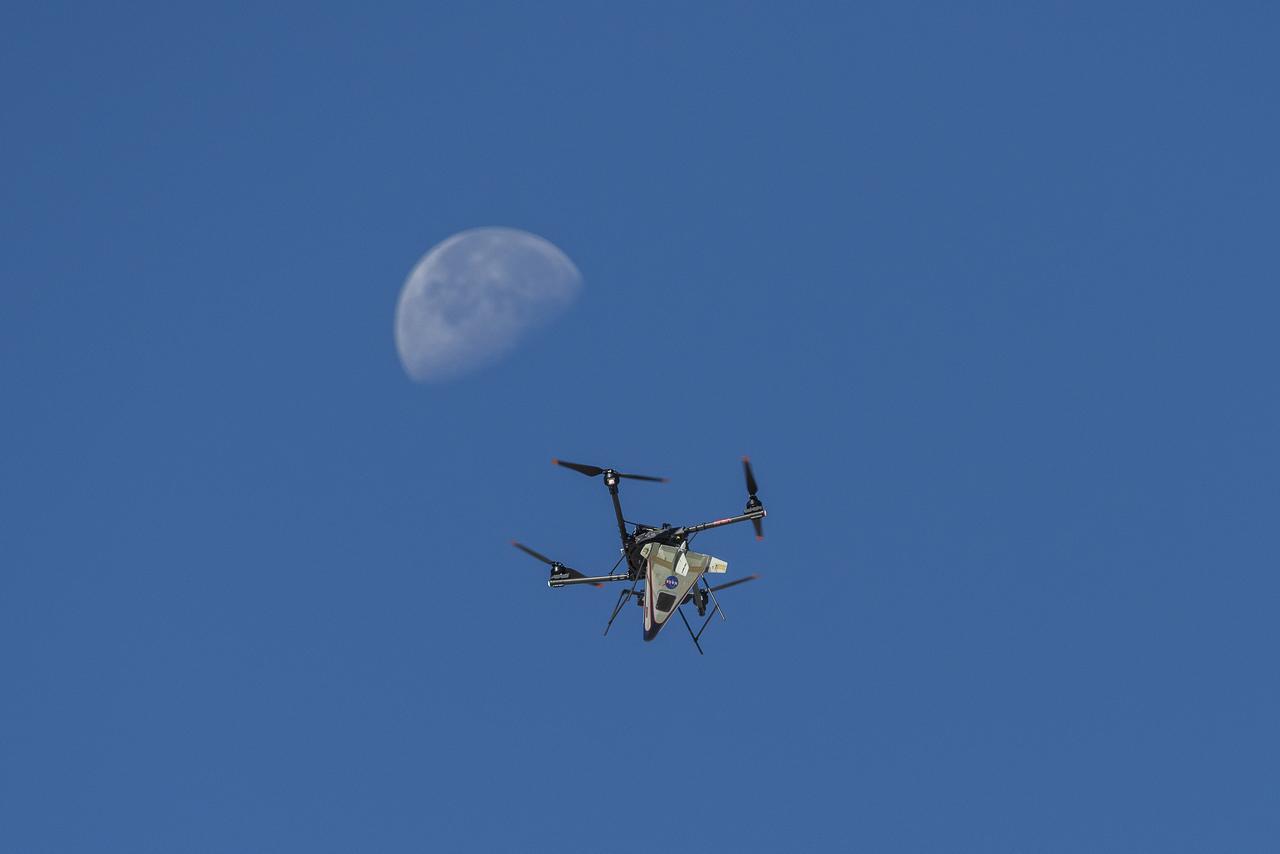
An atmospheric probe model attached upside down to a quad rotor remotely piloted aircraft ascends with the Moon visible on Oct. 22, 2024. The quad rotor aircraft released the probe above Rogers Dry Lake, a flight area adjacent NASA’s Armstrong Flight Research Center in Edwards, California. The probe was designed and built at the center.
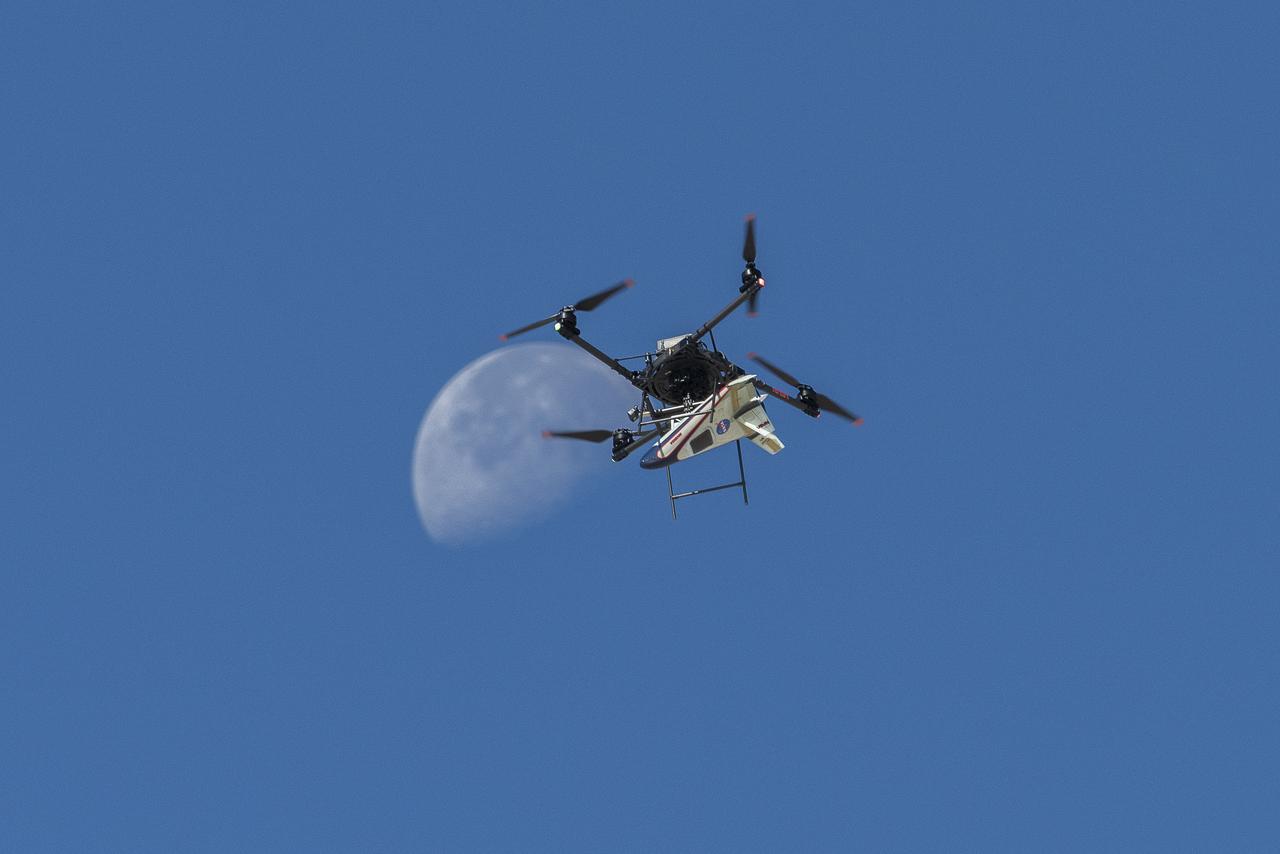
An atmospheric probe model attached upside down to a quad rotor remotely piloted aircraft ascends with the Moon visible on Oct. 22, 2024. The quad rotor aircraft released the probe above Rogers Dry Lake, a flight area adjacent NASA’s Armstrong Flight Research Center in Edwards, California. The probe was designed and built at the center.
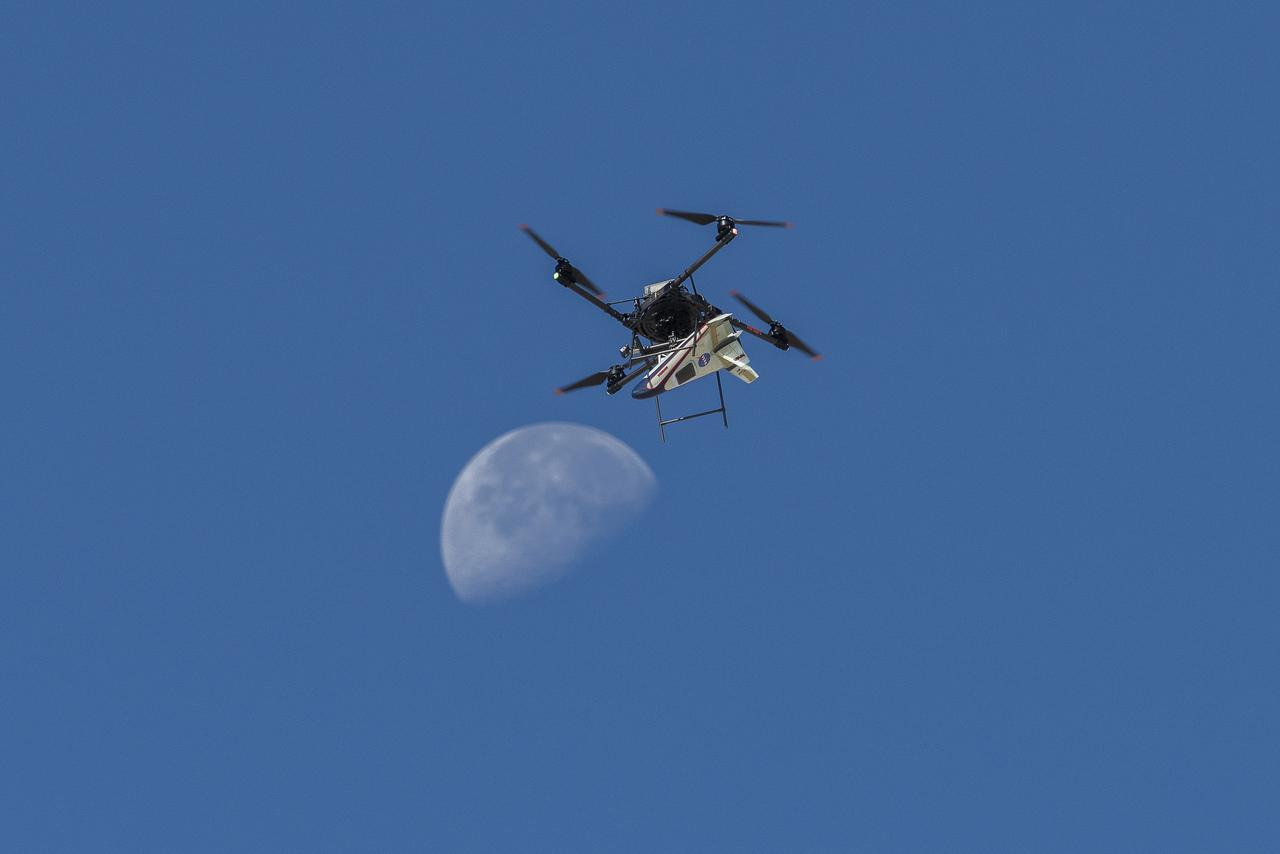
An atmospheric probe model attached upside down to a quad rotor remotely piloted aircraft ascends with the Moon visible on Oct. 22, 2024. The quad rotor aircraft released the probe above Rogers Dry Lake, a flight area adjacent NASA’s Armstrong Flight Research Center in Edwards, California. The probe was designed and built at the center.
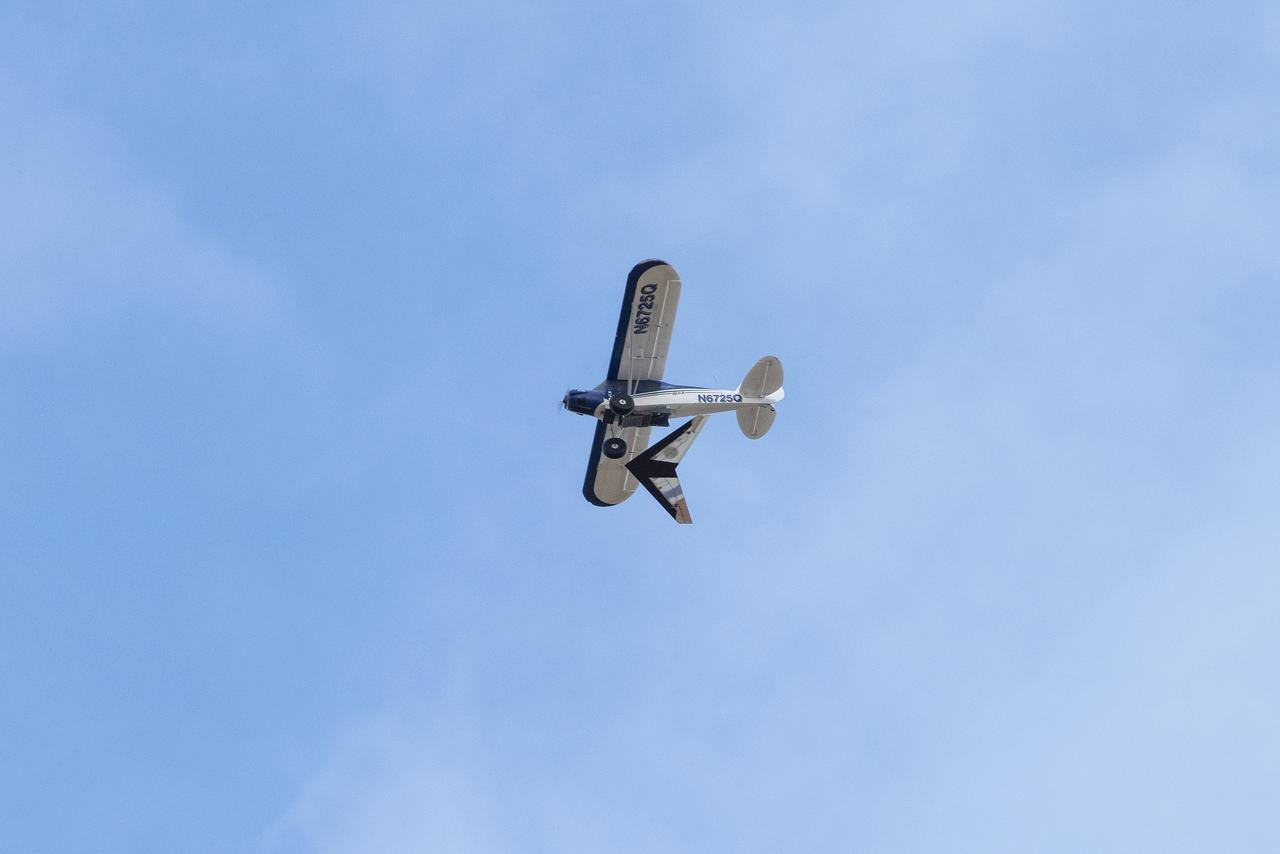
A Prandtl-M prototype is air launched from the Carbon Cub aircraft March 13, 2020, at NASA’s Armstrong Flight Research Center in California. The aircraft is the second of three prototypes of varying sizes to provide scientists with options to fly sensors in the Martian atmosphere to collect weather and landing site information for future human exploration of Mars.
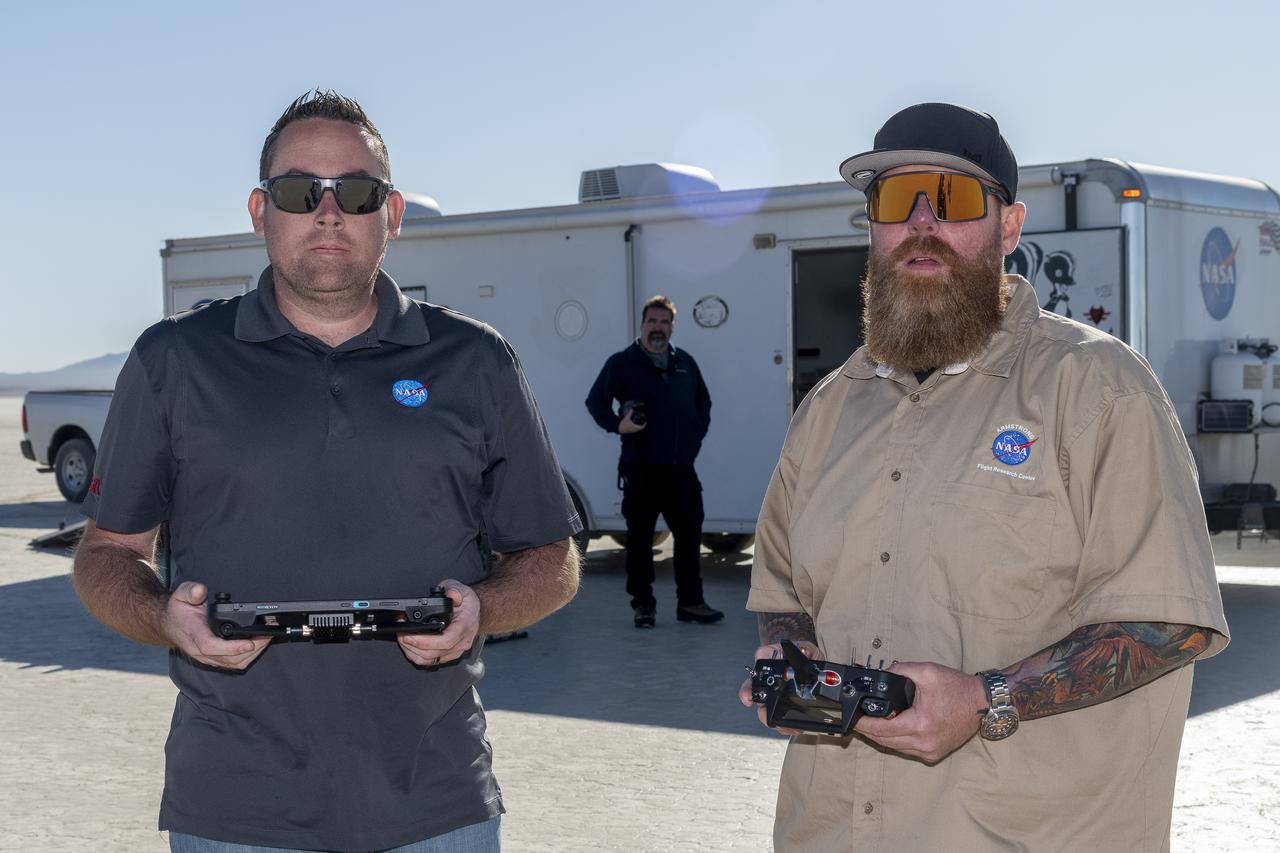
Justin Link, left, unmanned aircraft systems pilot, and Justin Hall, chief pilot for small unmanned aircraft systems, prepare to fly a quad rotor remotely piloted aircraft and an atmospheric probe model on Oct. 22, 2024. John Bodylski, probe principal investigator, watches the preparation for flight. The quad rotor aircraft released the probe above Rogers Dry Lake, a flight area adjacent NASA’s Armstrong Flight Research Center in Edwards, California. The probe was designed and built at the center.
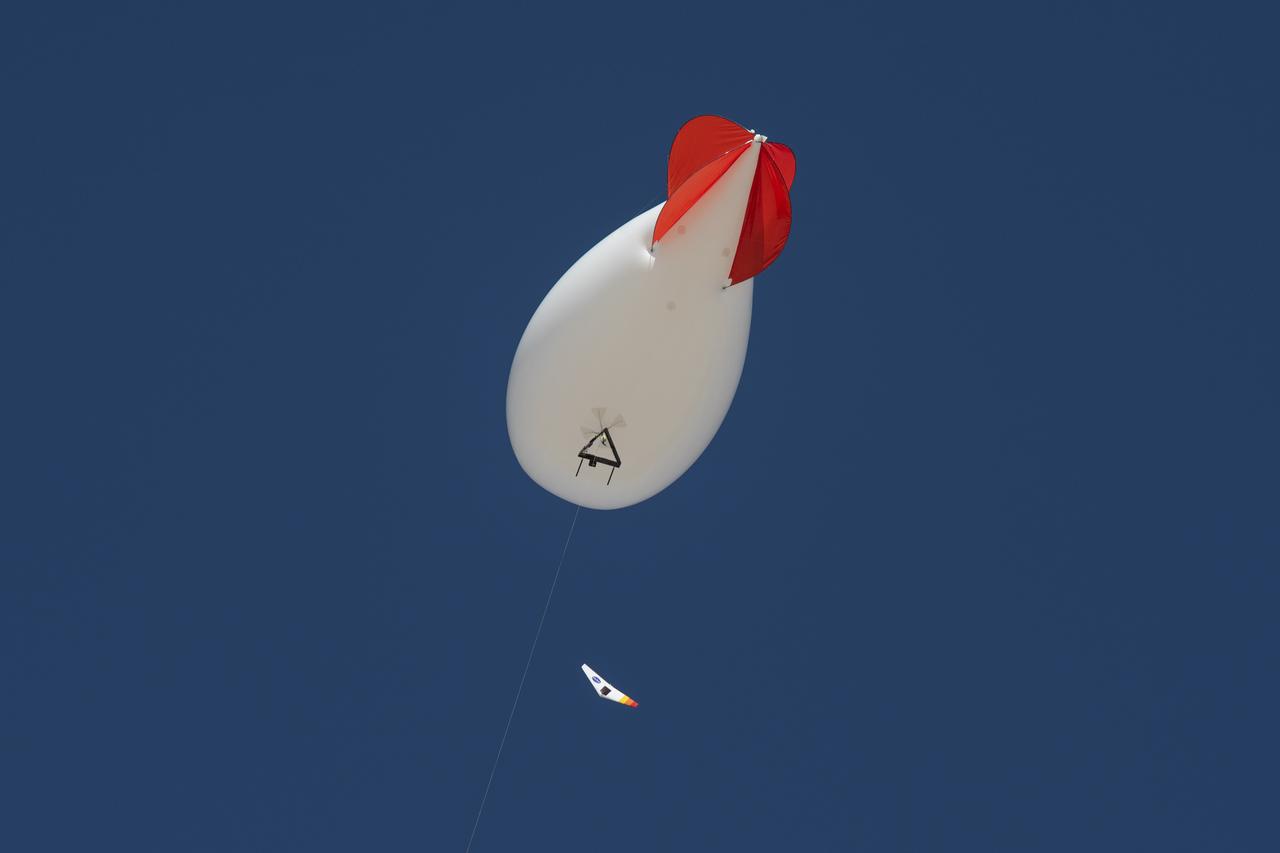
The first of three Prandtl-M prototype aircraft was air launched Aug. 16, 2019, from an Aerostat blimp at NASA’s Armstrong Flight Research Center in California. Three different prototypes of varying size, two still in development, eventually will be air launched from a weather balloon at 100,000 feet to simulate the atmosphere on Mars. The validated Prandtl-M could give scientists options to fly sensors in the Martian atmosphere to collect weather and landing site information for future human exploration of Mars.
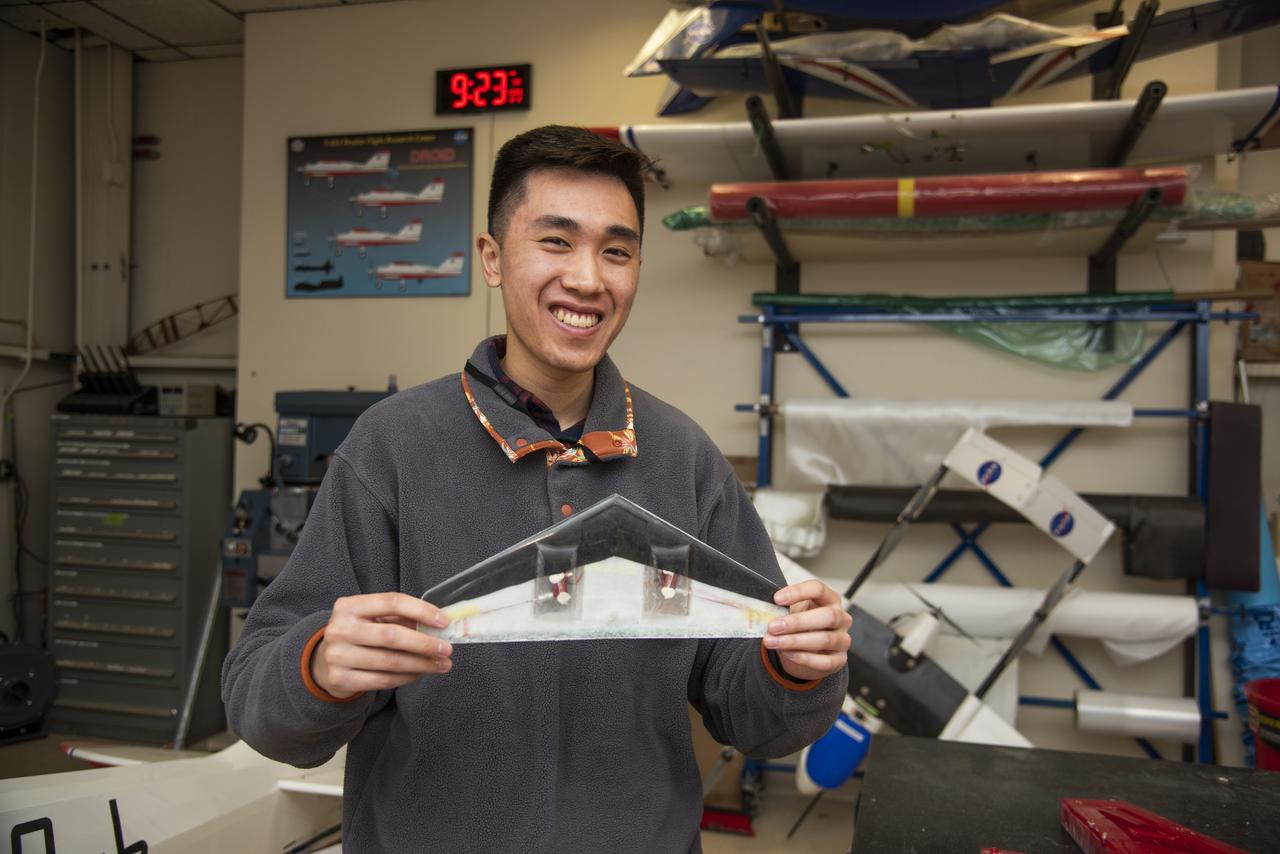
Nathan Sam shows the Prandtl-M aircraft he helped fabricate at NASA’s Armstrong Flight Research Center in California. The aircraft is the second of three prototypes of varying sizes to provide scientists with options to fly sensors in the Martian atmosphere to collect weather and landing site information for future human exploration of Mars.
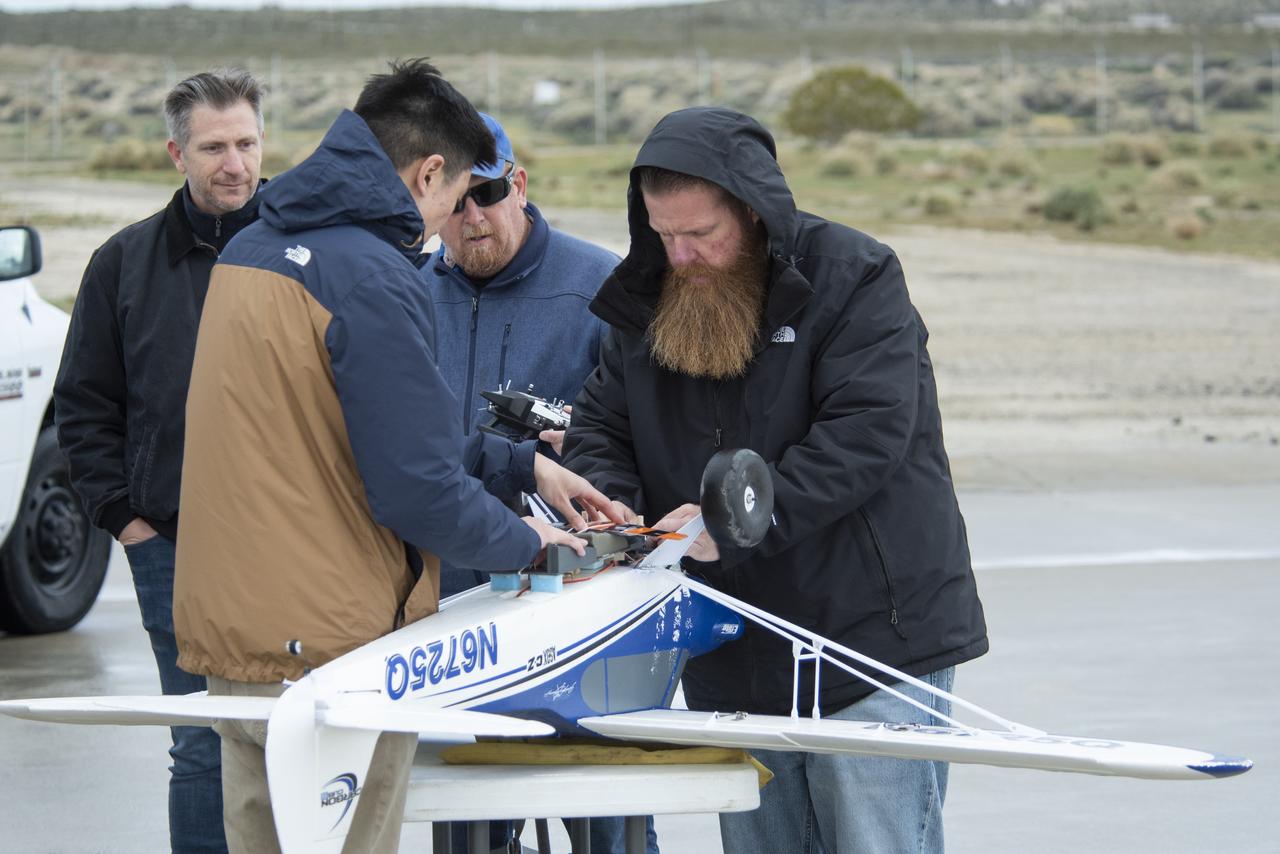
From left Eric Becker watches as Nathan Sam, Robert 'Red' Jensen and Justin Hall attach a Prandtl-M aircraft onto the Carbon Cub aircraft that air launched it at NASA's Armstrong Flight Research Center in California. The aircraft is the second of three prototypes of varying sizes to provide scientists with options to fly sensors in the Martian atmosphere to collect weather and landing site information for future human exploration of Mars.
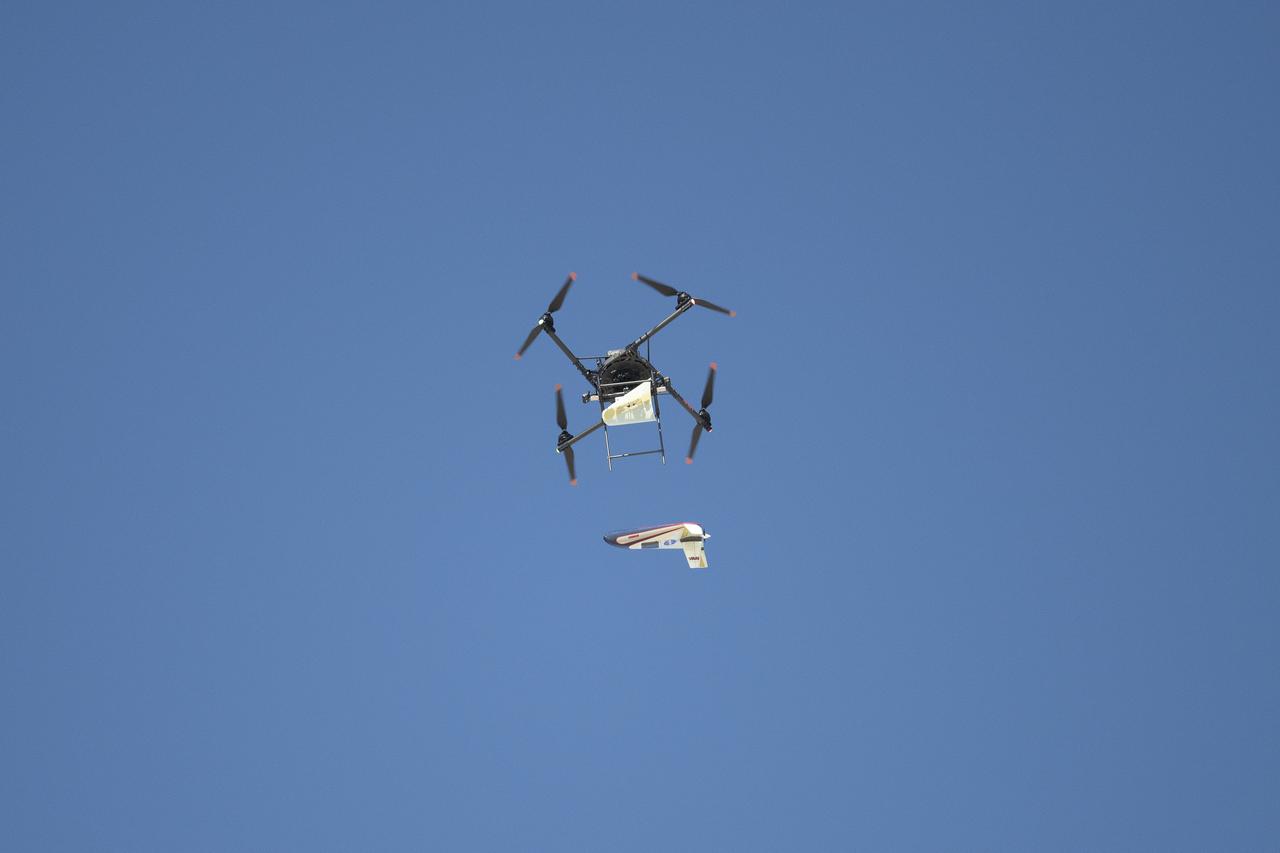
A quad rotor remotely piloted aircraft releases the atmospheric probe model above Rogers Dry Lake, a flight area adjacent NASA’s Armstrong Flight Research Center in Edwards, California, on Oct. 22, 2024. The probe was designed and built at the center.

Nathan Sam and Robert “Red†Jensen lay material into a Prandtl-M aircraft mold at NASA’s Armstrong Flight Research Center in California. The aircraft is the second of three prototypes of varying sizes to provide scientists with options to fly sensors in the Martian atmosphere to collect weather and landing site information for future human exploration of Mars.
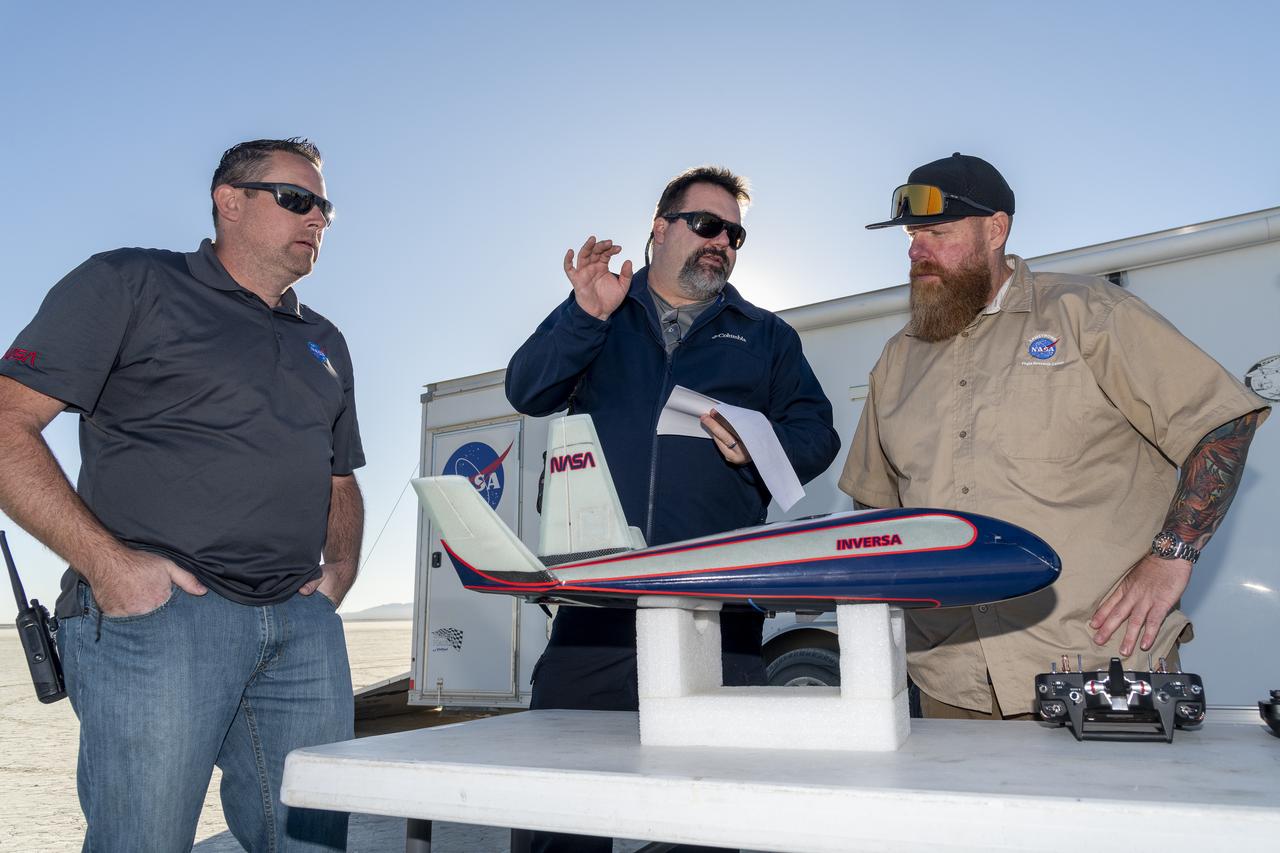
Justin Link, left, small unmanned aircraft systems pilot; John Bodylski, atmospheric probe principal investigator; and Justin Hall, chief pilot of small unmanned aircraft systems, discuss details of the atmospheric probe flight plan on Oct. 22, 2024. A quad rotor remotely piloted aircraft released the probe above Rogers Dry Lake, a flight area adjacent NASA’s Armstrong Flight Research Center in Edwards, California. The probe was designed and built at the center.
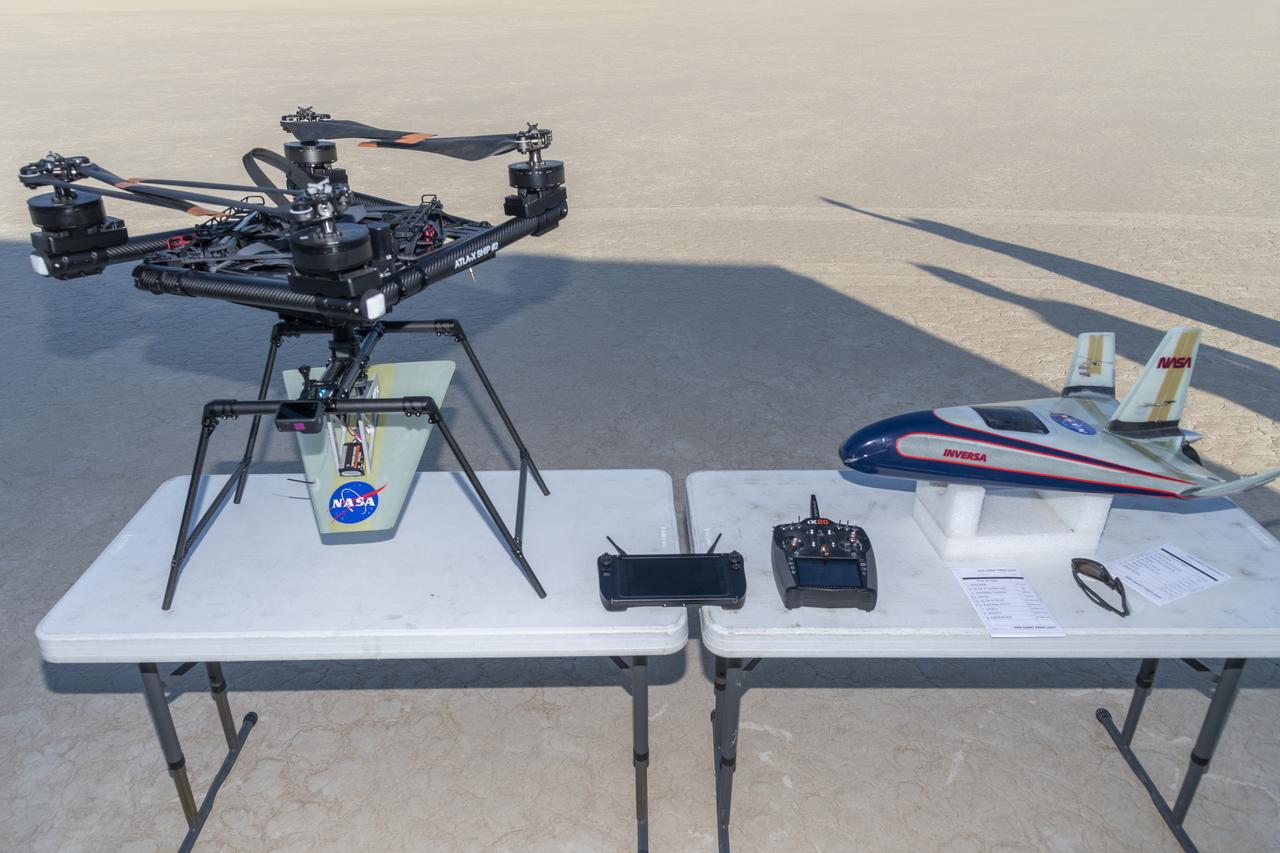
The atmospheric probe, right, flew after release from a quad rotor remotely piloted aircraft, left, on Oct. 22, 2024, above Rogers Dry Lake, a flight area adjacent to NASA’s Armstrong Flight Research Center in Edwards, California. The probe was designed and built at the center.

An atmospheric probe model attached upside down to a quad rotor remotely piloted aircraft ascends with the Moon visible on Oct. 22, 2024. The quad rotor aircraft released the probe above Rogers Dry Lake, a flight area adjacent NASA’s Armstrong Flight Research Center in Edwards, California. The probe was designed and built at the center.
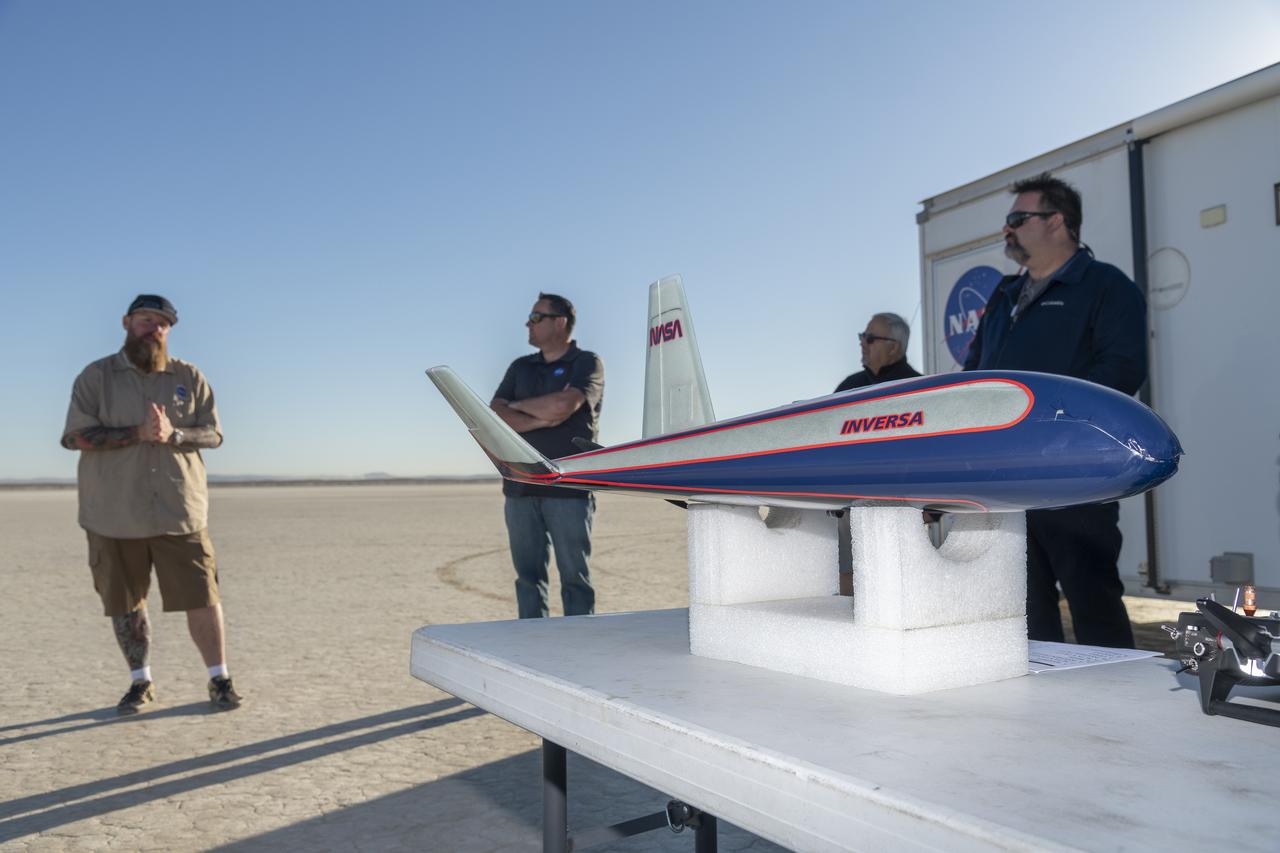
The atmospheric probe model on a stand is prepped for flight and release from a quad rotor remotely piloted aircraft. The probe successfully flew on Oct. 22, 2024, above Rogers Dry Lake, a flight area adjacent to NASA’s Armstrong Flight Research Center in Edwards, California. The probe was designed and built at the center. In the background from left are Justin Hall, chief pilot of small, unmanned aircraft systems; Justin Link, small unmanned aircraft systems pilot; communications writer Jay Levine; and John Bodylski, atmospheric probe principal investigator.