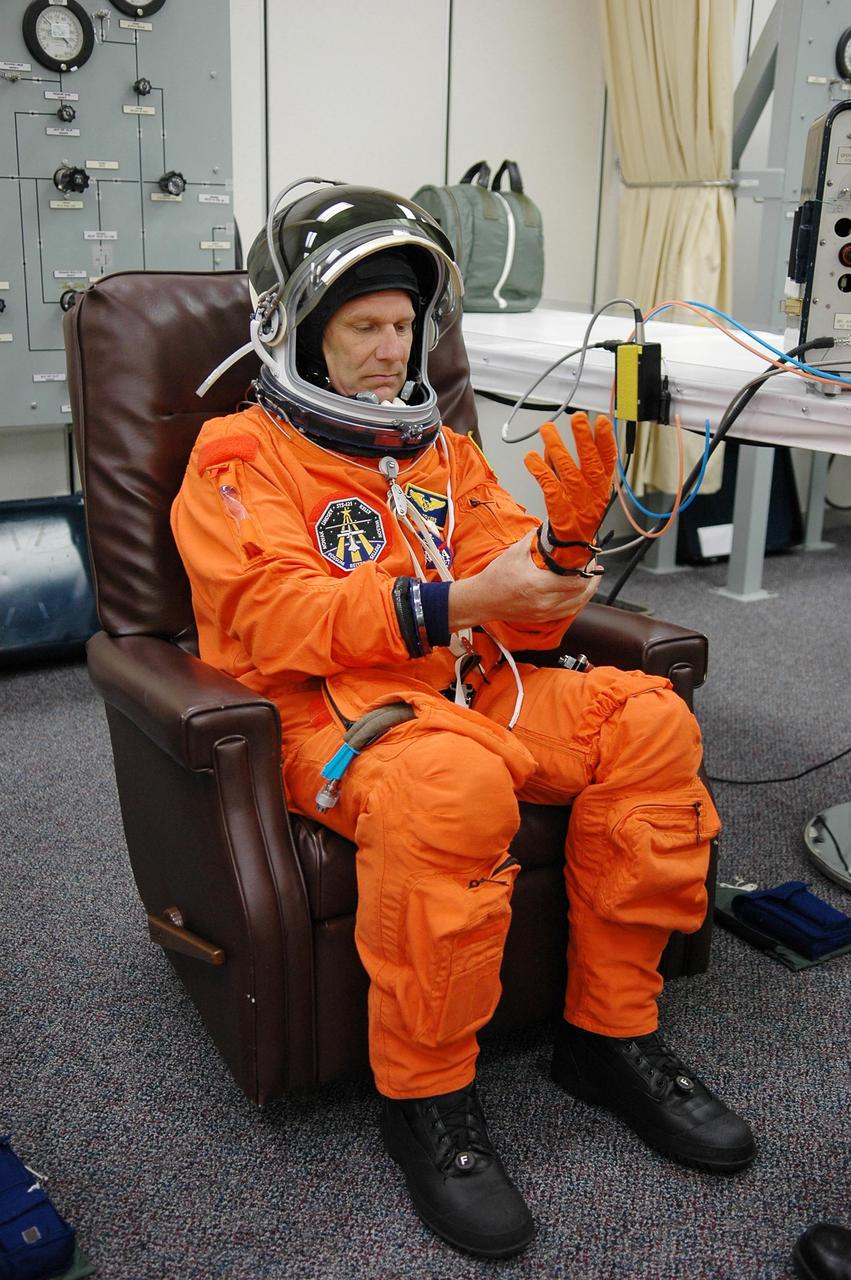
KENNEDY SPACE CENTER, FLA. - Prior to the third launch attempt on mission STS-121, Mission Specialist Piers Sellers fixes one of his gloves during suitup before heading to Launch Pad 39B. The July 2 launch attempt was scrubbed due to the presence of showers and thunderstorms within the surrounding area of the launch site. The launch of Space Shuttle Discovery on mission STS-121 is the 115th shuttle flight and the 18th U.S. flight to the International Space Station. During the 12-day mission, the STS-121 crew will test new equipment and procedures to improve shuttle safety, as well as deliver supplies and make repairs to the International Space Station. Photo credit: NASA/Kim Shiflett
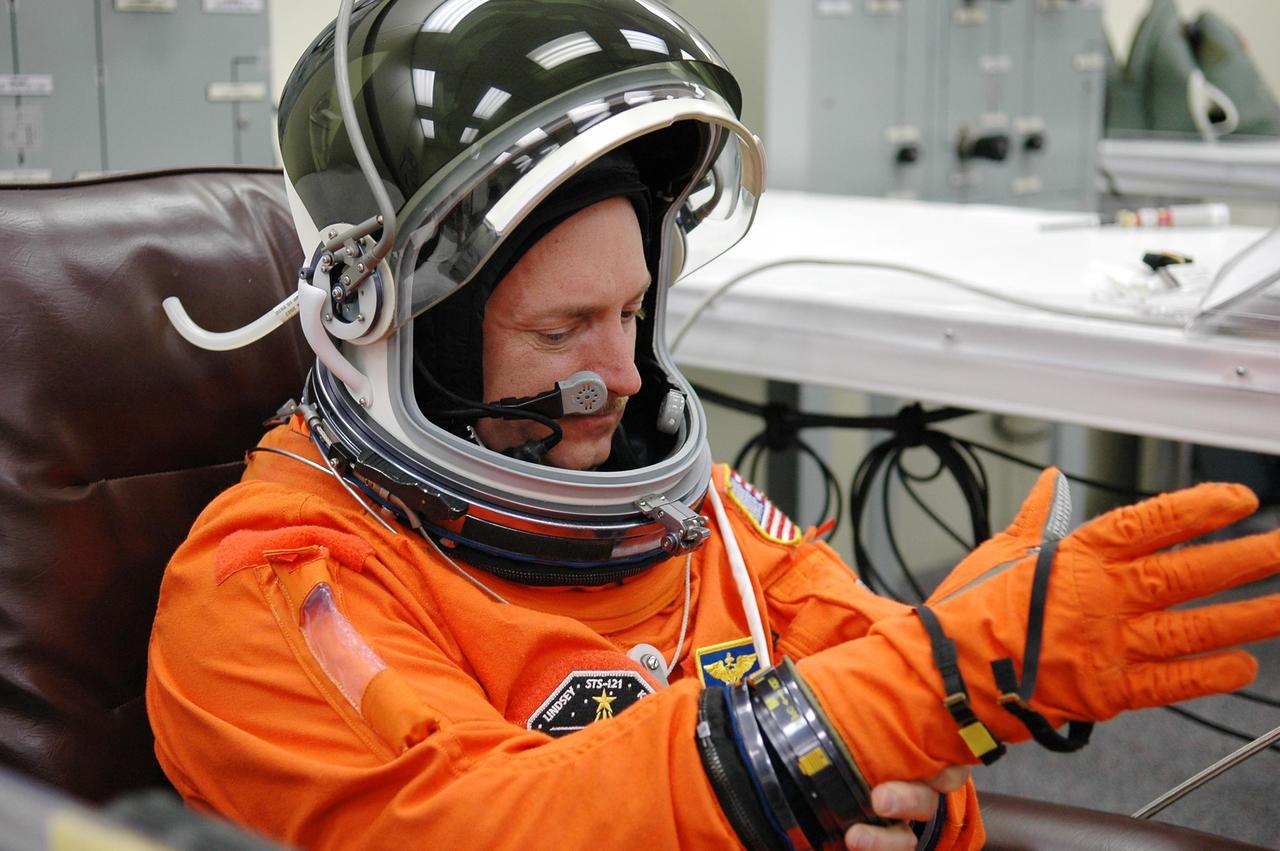
KENNEDY SPACE CENTER, FLA. - Prior to the third launch attempt on mission STS-121, Pilot Mark Kelly fixes his glove during suitup before heading to Launch Pad 39B. The July 2 launch attempt was scrubbed due to the presence of showers and thunderstorms within the surrounding area of the launch site. The launch of Space Shuttle Discovery on mission STS-121 is the 115th shuttle flight and the 18th U.S. flight to the International Space Station. During the 12-day mission, the STS-121 crew will test new equipment and procedures to improve shuttle safety, as well as deliver supplies and make repairs to the International Space Station. Photo credit: NASA/Kim Shiflett
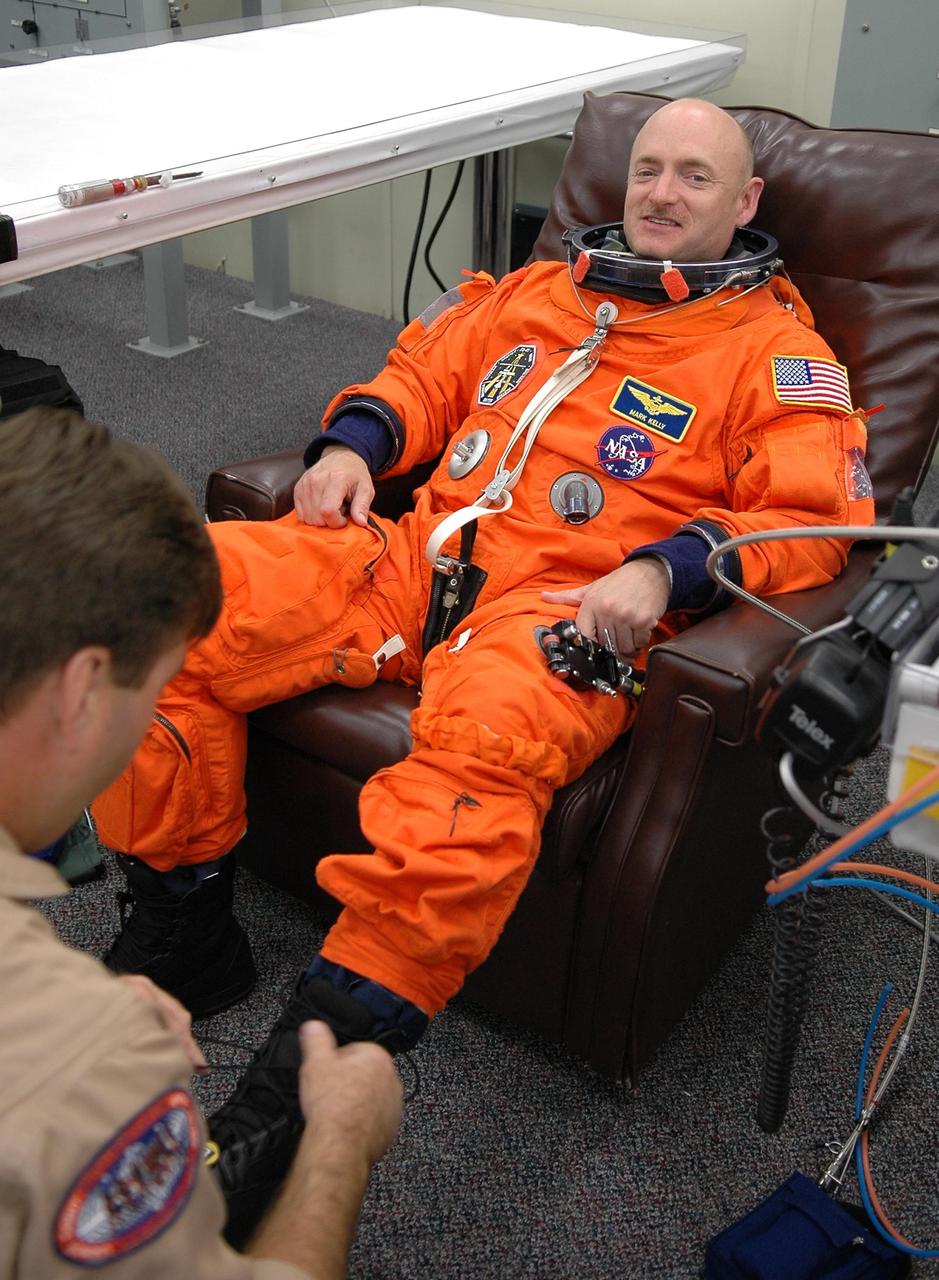
KENNEDY SPACE CENTER, FLA. - Prior to the third launch attempt on mission STS-121, Pilot Mark Kelly is helped with his boots during suitup before heading to Launch Pad 39B. The July 2 launch attempt was scrubbed due to the presence of showers and thunderstorms within the surrounding area of the launch site. The launch of Space Shuttle Discovery on mission STS-121 is the 115th shuttle flight and the 18th U.S. flight to the International Space Station. During the 12-day mission, the STS-121 crew will test new equipment and procedures to improve shuttle safety, as well as deliver supplies and make repairs to the International Space Station. Photo credit: NASA/Kim Shiflett
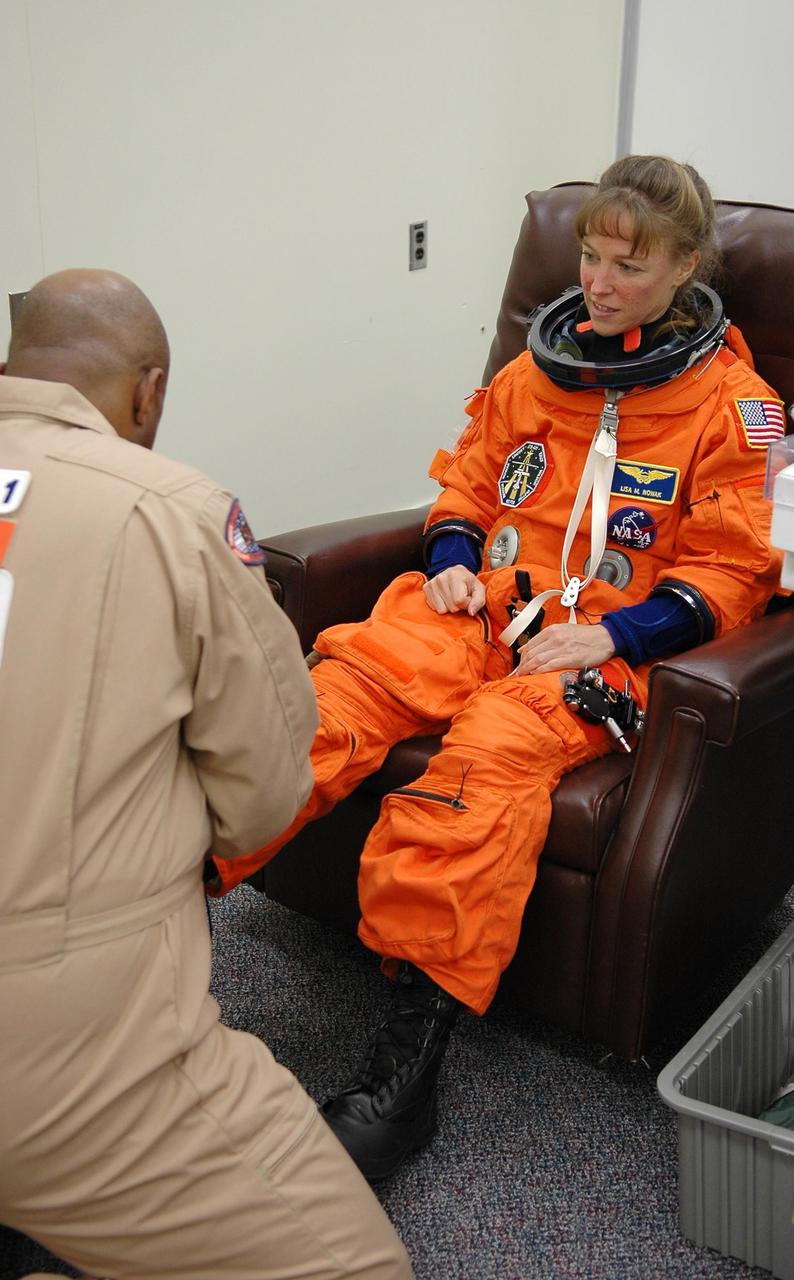
KENNEDY SPACE CENTER, FLA. - STS-121 Mission Specialist Lisa Nowak is helped with her boots during suitup before heading to Launch Pad 39B and a third launch attempt. The July 2 launch attempt was scrubbed due to the presence of showers and thunderstorms within the surrounding area of the launch site. The launch of Space Shuttle Discovery on mission STS-121 is the 115th shuttle flight and the 18th U.S. flight to the International Space Station. During the 12-day mission, the STS-121 crew will test new equipment and procedures to improve shuttle safety, as well as deliver supplies and make repairs to the International Space Station. Photo credit: NASA/Kim Shiflett

KENNEDY SPACE CENTER, FLA. - Prior to the third launch attempt on mission STS-121, Mission Specialist Stephanie Wilson gets help with her helmet during suitup before heading to Launch Pad 39B. The July 2 launch attempt was scrubbed due to the presence of showers and thunderstorms within the surrounding area of the launch site. The launch of Space Shuttle Discovery on mission STS-121 is the 115th shuttle flight and the 18th U.S. flight to the International Space Station. During the 12-day mission, the STS-121 crew will test new equipment and procedures to improve shuttle safety, as well as deliver supplies and make repairs to the International Space Station. Photo credit: NASA/Kim Shiflett
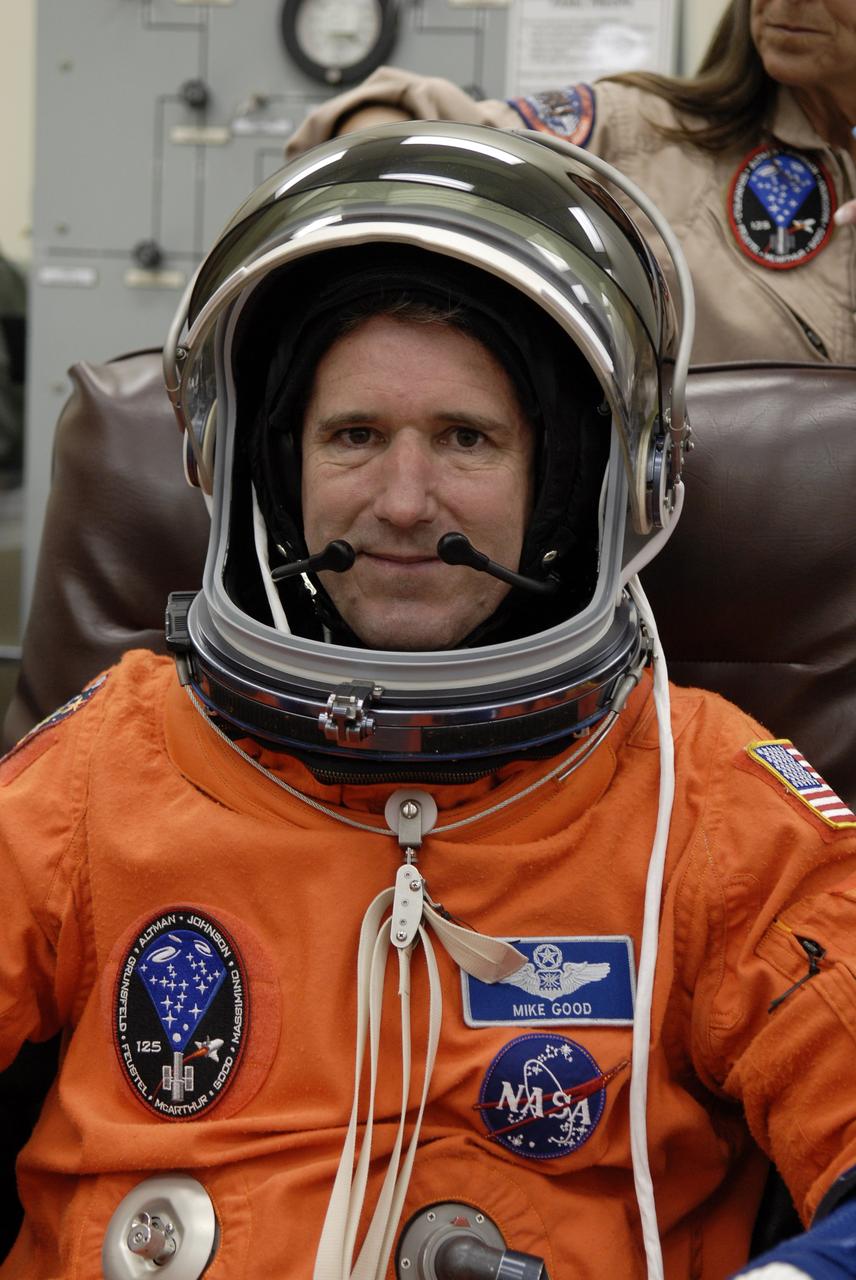
CAPE CANAVERAL, Fla. – In the Operations and Checkout Building at NASA's Kennedy Space Center in Florida, STS-125 Mission Specialist Michael Good is fitted with his helmet during suitup before heading for Launch Pad 39A and launch of space shuttle Atlantis. Liftoff is scheduled for 2:01 p.m. May 11 EDT. Atlantis' 11-day flight will include five spacewalks to refurbish and upgrade NASA's Hubble Space Telescope with state-of-the-art science instruments that will expand Hubble's capabilities and extend its operational lifespan through at least 2014. The payload includes a Wide Field Camera 3, fine guidance sensor and the Cosmic Origins Spectrograph. Photo credit: NASA/Kim Shiflett
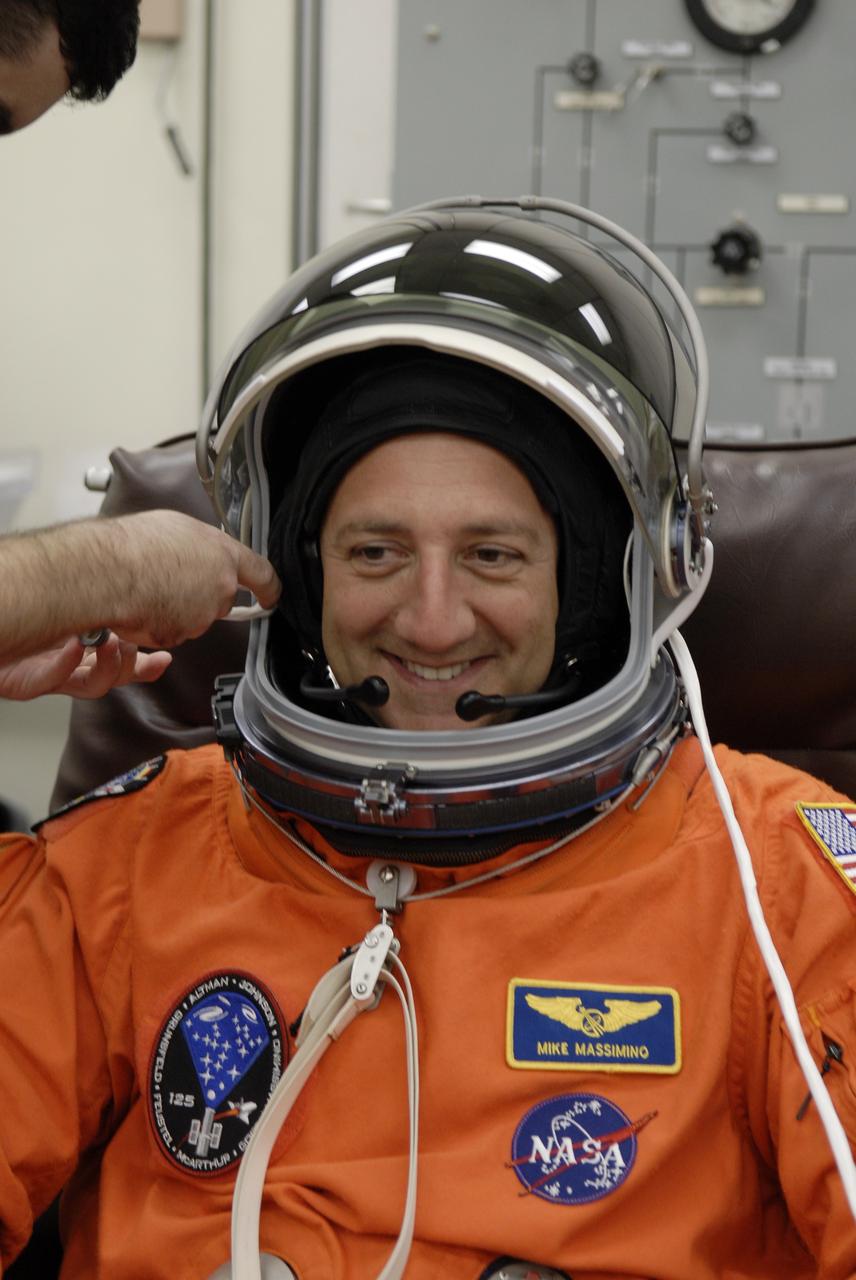
CAPE CANAVERAL, Fla. – In the Operations and Checkout Building at NASA's Kennedy Space Center in Florida, STS-125 Mission Specialist Mike Massimino is fitted with his helmet during suitup before heading for Launch Pad 39A and launch of space shuttle Atlantis. Liftoff is scheduled for 2:01 p.m. May 11 EDT. Atlantis' 11-day flight will include five spacewalks to refurbish and upgrade NASA's Hubble Space Telescope with state-of-the-art science instruments that will expand Hubble's capabilities and extend its operational lifespan through at least 2014. The payload includes a Wide Field Camera 3, fine guidance sensor and the Cosmic Origins Spectrograph. Photo credit: NASA/Kim Shiflett
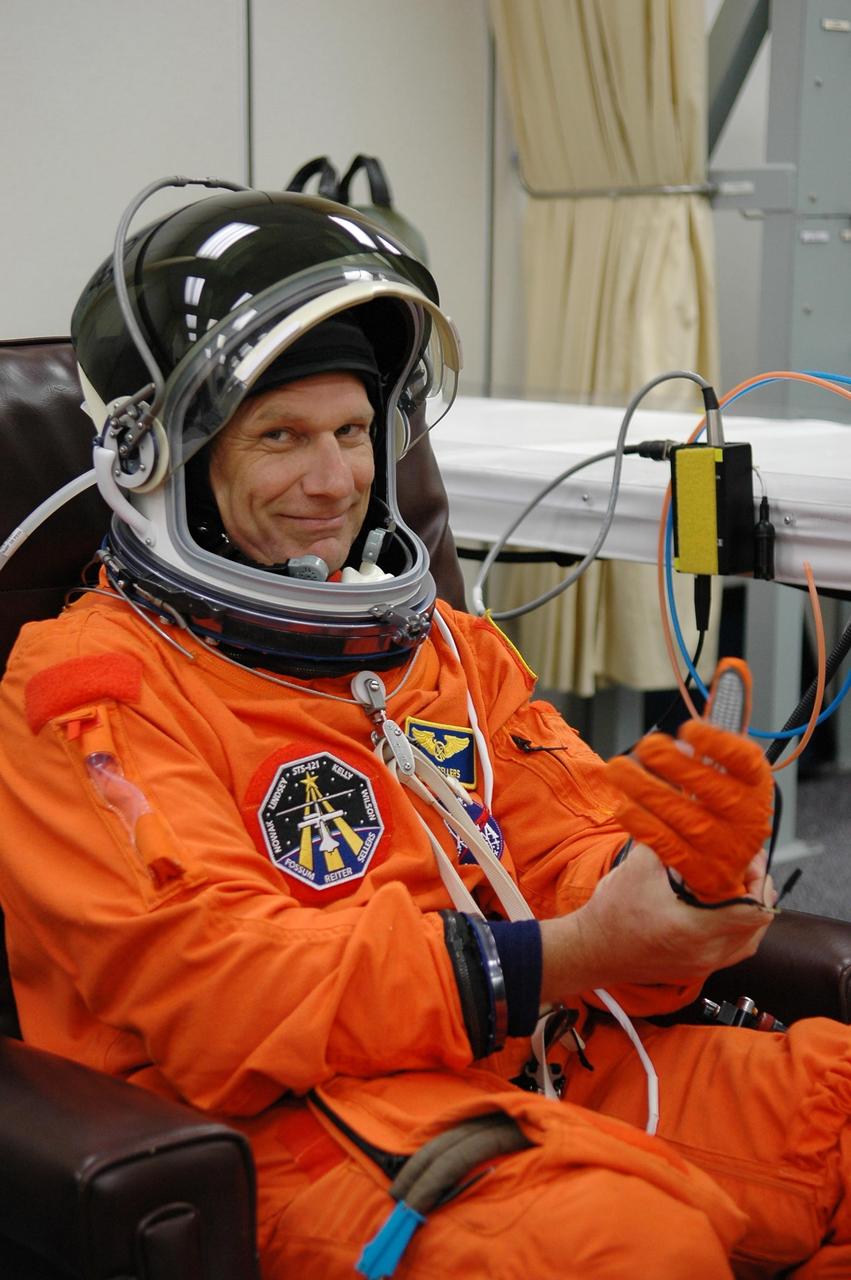
KENNEDY SPACE CENTER, FLA. - Mission Specialist Piers Sellers is happy to be making a third launch attempt on mission STS-121. Here, he fixes one of his gloves during suitup before heading to Launch Pad 39B. The July 2 launch attempt was scrubbed due to the presence of showers and thunderstorms within the surrounding area of the launch site. The launch of Space Shuttle Discovery on mission STS-121 is the 115th shuttle flight and the 18th U.S. flight to the International Space Station. During the 12-day mission, the STS-121 crew will test new equipment and procedures to improve shuttle safety, as well as deliver supplies and make repairs to the International Space Station. Photo credit: NASA/Kim Shiflett
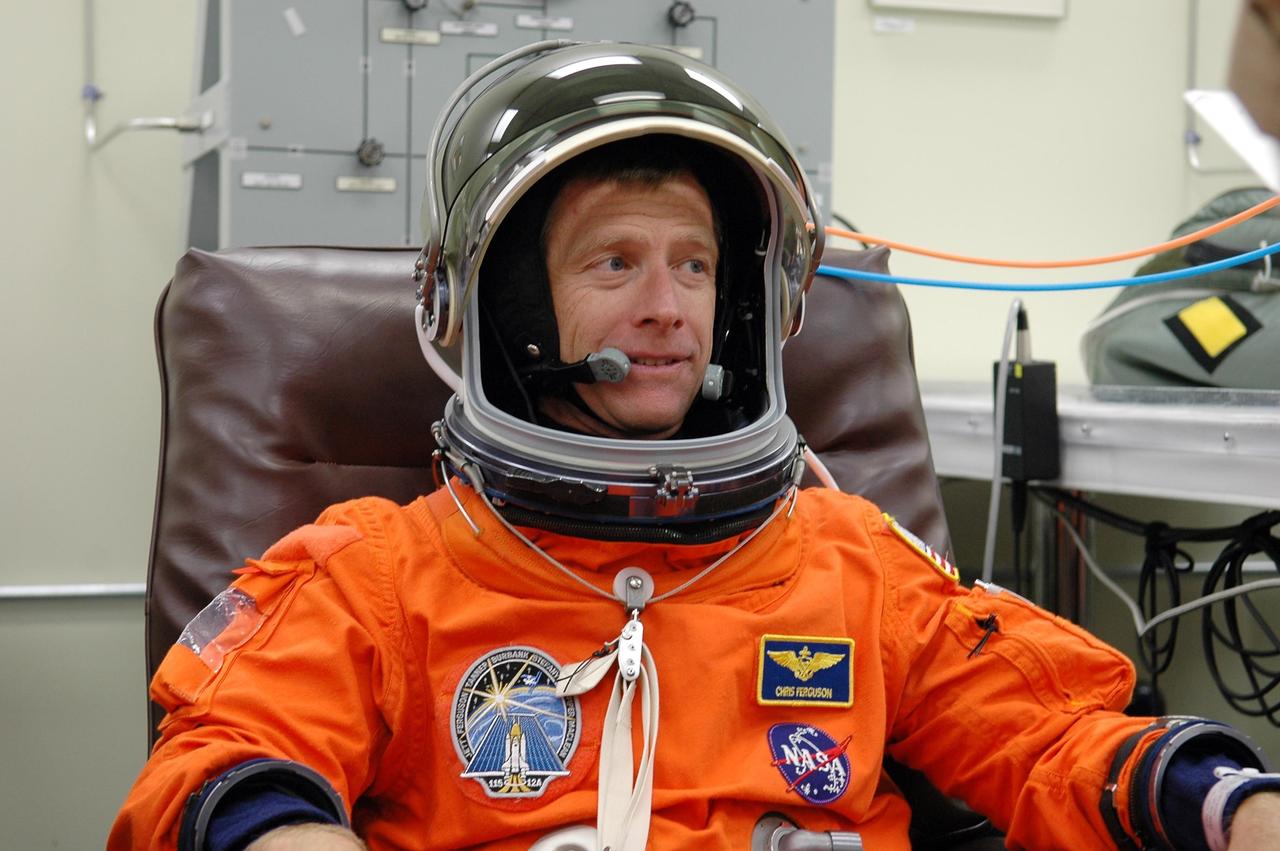
KENNEDY SPACE CENTER, FLA. - In the Operations and Checkout Building at NASA Kennedy Space Center, STS-115 Pilot Christopher Ferguson checks his helmet during suitup before heading to the launch pad. Ferguson is making his first shuttle flight on this mission to the International Space Station aboard Space Shuttle Atlantis. On its second attempt for launch, Atlantis is scheduled to lift off at 11:41 a.m. EDT today from Launch Pad 39B. During the STS-115 mission, Atlantis' astronauts will deliver and install the 17.5-ton, bus-sized P3/P4 integrated truss segment on the station. The girder-like truss includes a set of giant solar arrays, batteries and associated electronics and will provide one-fourth of the total power-generation capability for the completed station. This mission is the 116th space shuttle flight, the 27th flight for orbiter Atlantis, and the 19th U.S. flight to the ISS. STS-115 is scheduled to last 11 days with a planned landing at KSC. Photo credit: NASA/Kim Shiflett
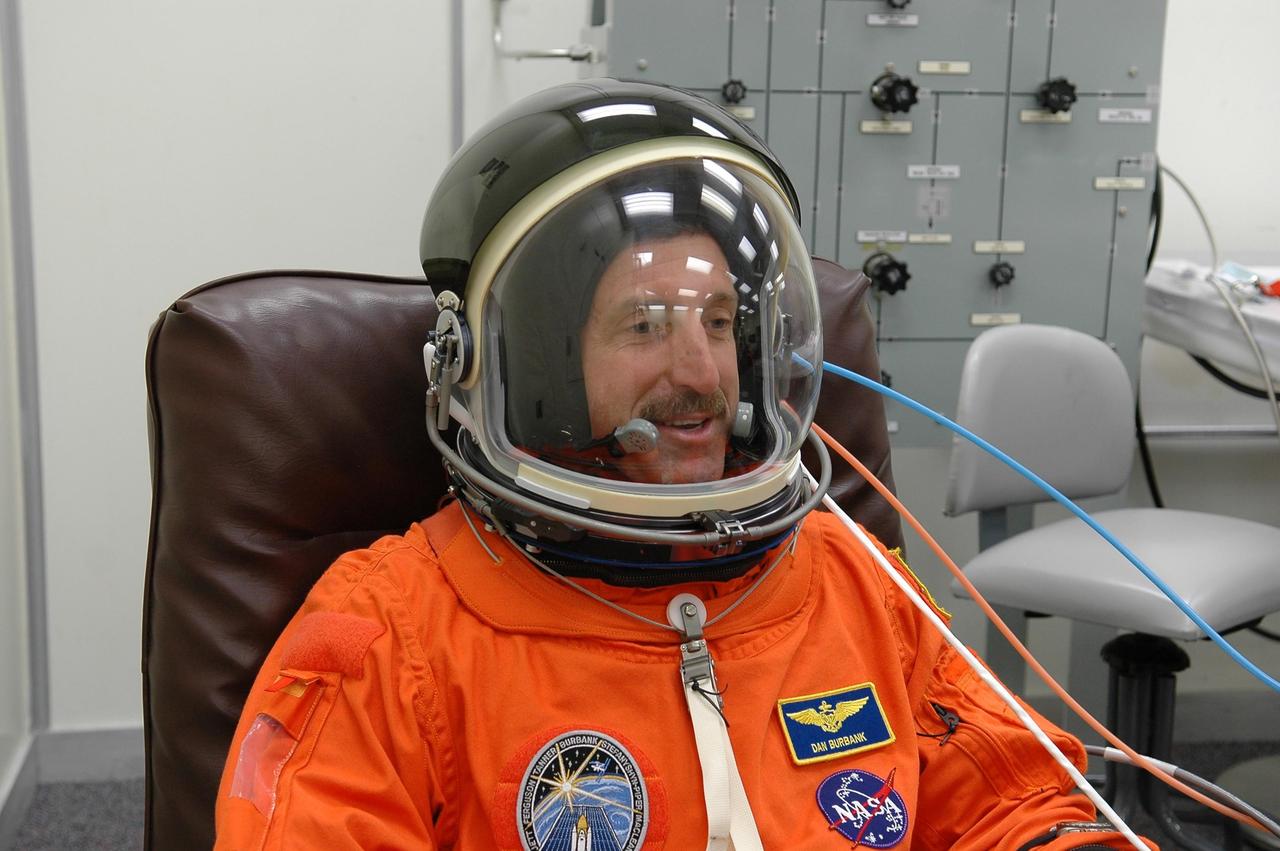
KENNEDY SPACE CENTER, FLA. - During suitup in the Operations and Checkout Building at NASA Kennedy Space Center, STS-115 Mission Specialist Daniel Burbank tests the communication system in his helmet. Burbank is making his second shuttle flight on this mission to the International Space Station aboard Space Shuttle Atlantis. On its second attempt for launch, Atlantis is scheduled to lift off at 11:41 a.m. EDT today from Launch Pad 39B. During the STS-115 mission, Atlantis' astronauts will deliver and install the 17.5-ton, bus-sized P3/P4 integrated truss segment on the station. The girder-like truss includes a set of giant solar arrays, batteries and associated electronics and will provide one-fourth of the total power-generation capability for the completed station. This mission is the 116th space shuttle flight, the 27th flight for orbiter Atlantis, and the 19th U.S. flight to the ISS. STS-115 is scheduled to last 11 days with a planned landing at KSC. Photo credit: NASA/Kim Shiflett
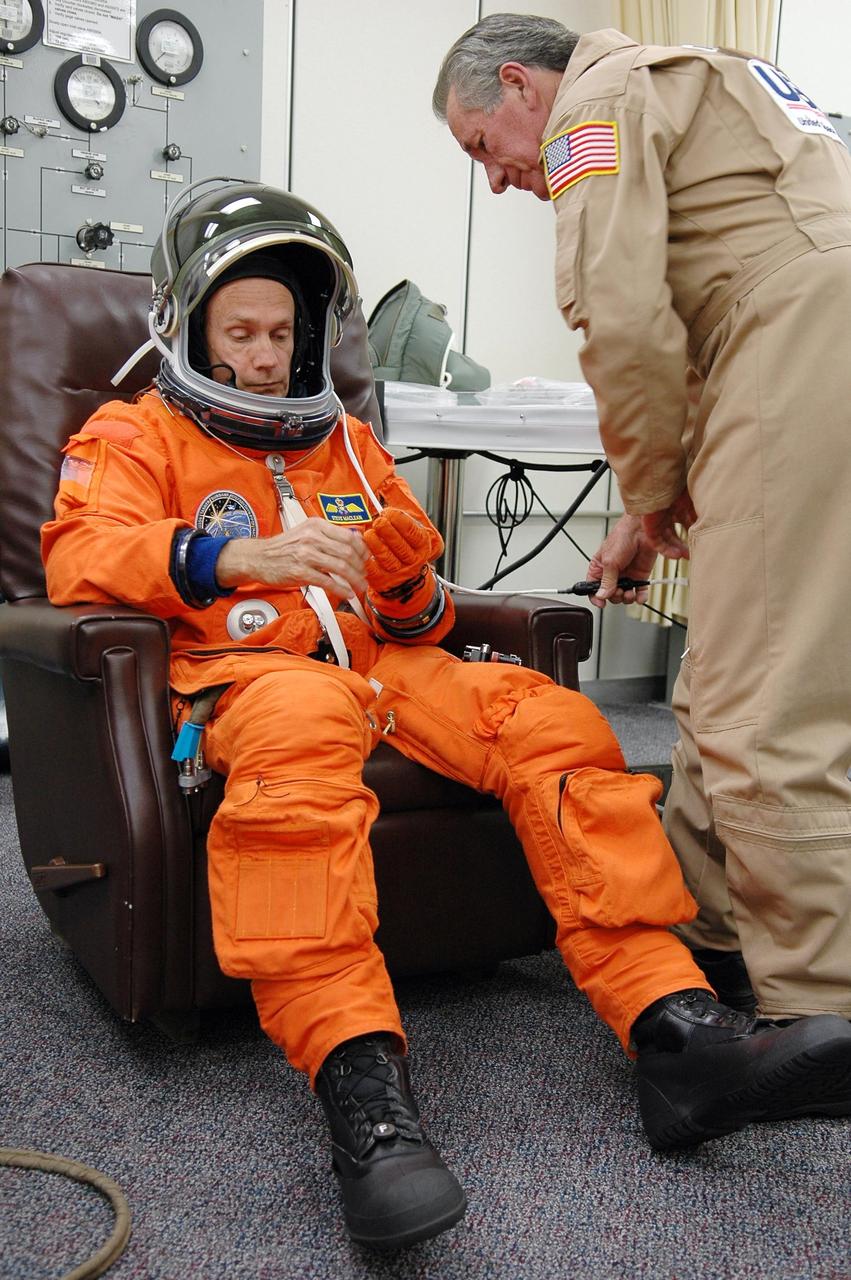
KENNEDY SPACE CENTER, FLA. - In the Operations and Checkout Building at NASA Kennedy Space Center, STS-115 Mission Specialist Steven MacLean checks his glove during suitup before heading to the launch pad. MacLean is with the Canadian Space Agency. MacLean is making his second shuttle flight on this mission to the International Space Station aboard Space Shuttle Atlantis. On its second attempt for launch, Atlantis is scheduled to lift off at 11:41 a.m. EDT today from Launch Pad 39B. During the STS-115 mission, Atlantis' astronauts will deliver and install the 17.5-ton, bus-sized P3/P4 integrated truss segment on the station. The girder-like truss includes a set of giant solar arrays, batteries and associated electronics and will provide one-fourth of the total power-generation capability for the completed station. This mission is the 116th space shuttle flight, the 27th flight for orbiter Atlantis, and the 19th U.S. flight to the ISS. STS-115 is scheduled to last 11 days with a planned landing at KSC. Photo credit: NASA/Kim Shiflett
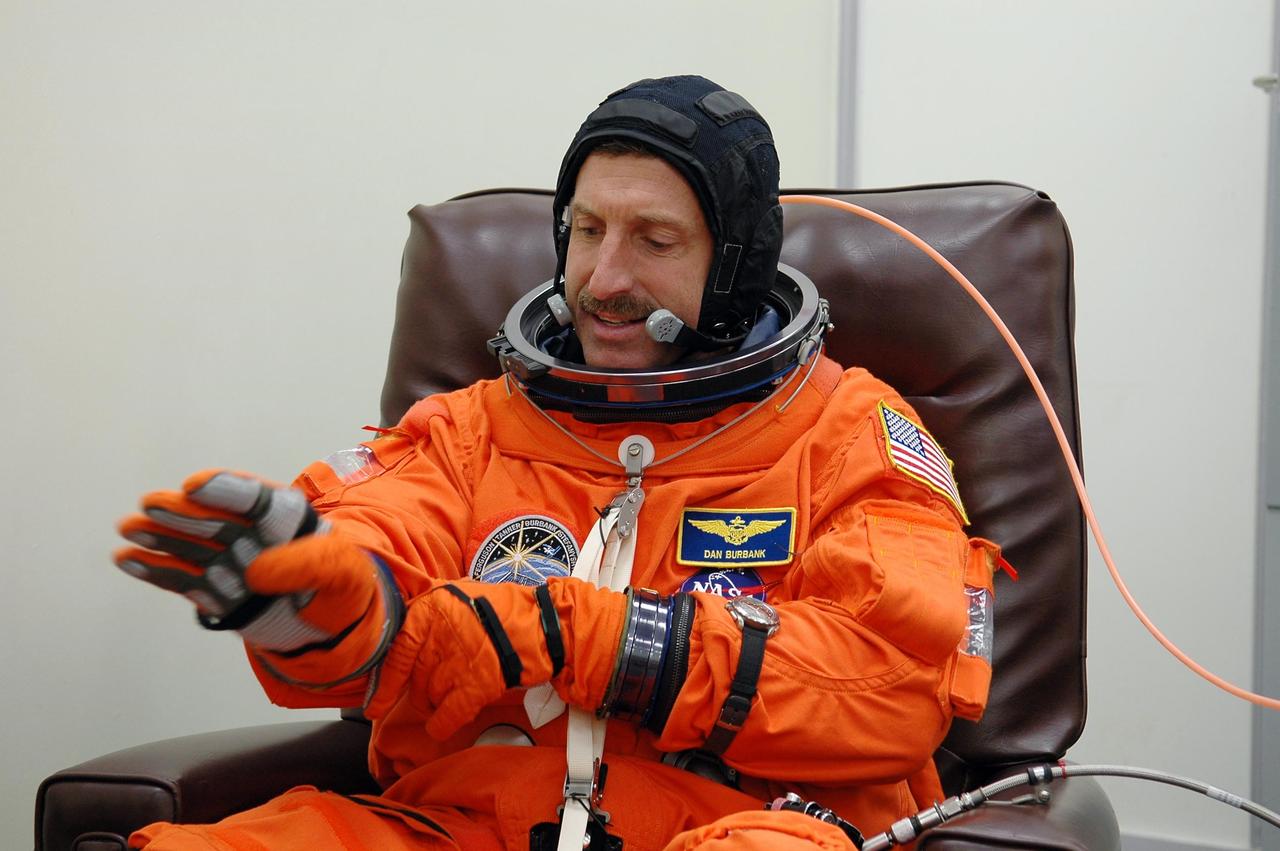
KENNEDY SPACE CENTER, FLA. - In the Operations and Checkout Building at NASA Kennedy Space Center, STS-115 Mission Specialist Daniel Burbank adjusts his glove during suitup before heading to the launch pad. Burbank is making his second shuttle flight on this mission to the International Space Station aboard Space Shuttle Atlantis. On its second attempt for launch, Atlantis is scheduled to lift off at 11:41 a.m. EDT today from Launch Pad 39B. During the STS-115 mission, Atlantis' astronauts will deliver and install the 17.5-ton, bus-sized P3/P4 integrated truss segment on the station. The girder-like truss includes a set of giant solar arrays, batteries and associated electronics and will provide one-fourth of the total power-generation capability for the completed station. This mission is the 116th space shuttle flight, the 27th flight for orbiter Atlantis, and the 19th U.S. flight to the ISS. STS-115 is scheduled to last 11 days with a planned landing at KSC. Photo credit: NASA/Kim Shiflett
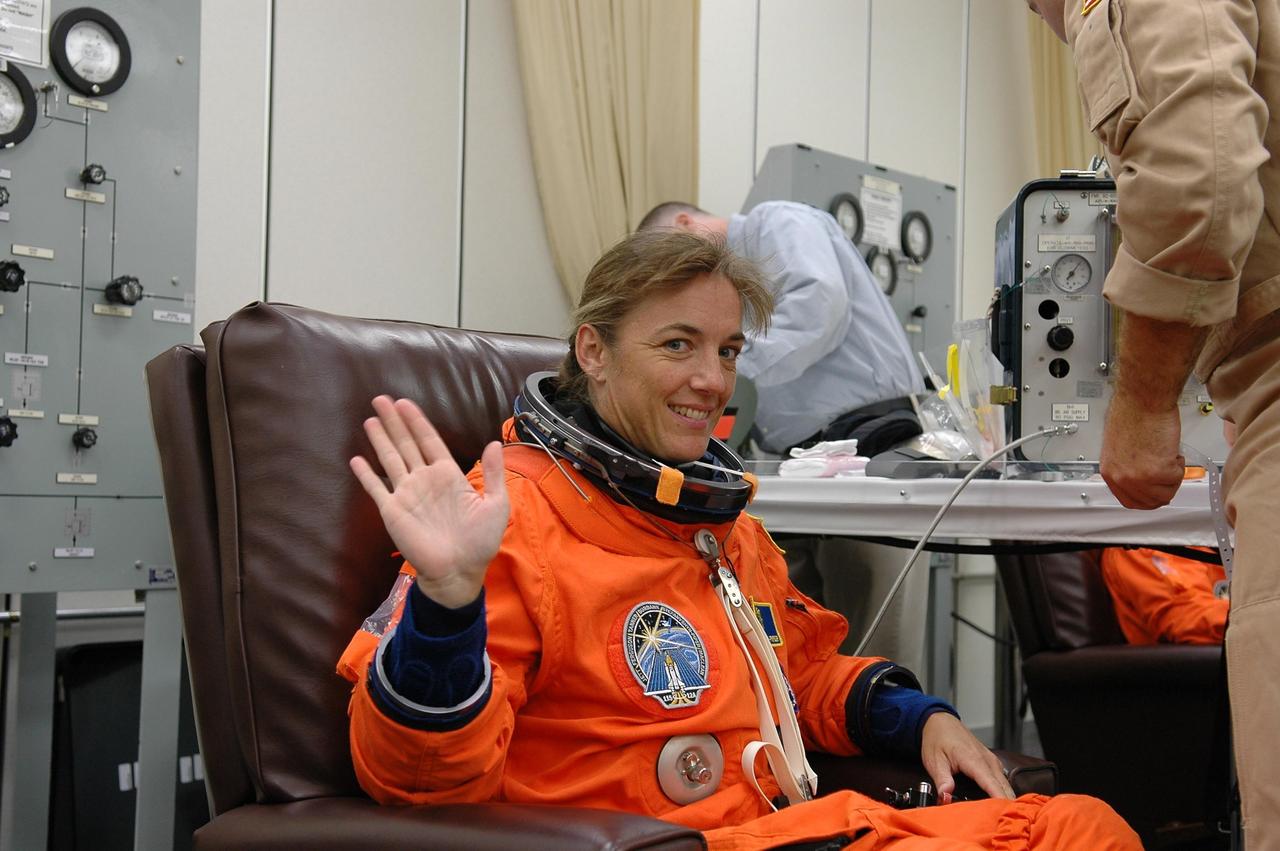
KENNEDY SPACE CENTER, FLA. - STS-115 Mission Specialist Heidemarie Stefanyshyn-Piper waves during suitup in the Operations and Checkout Building at NASA Kennedy Space Center. She is making her first shuttle flight on this mission to the International Space Station aboard Space Shuttle Atlantis. On its second attempt for launch, Atlantis is scheduled to lift off at 11:41 a.m. EDT today from Launch Pad 39B. During the STS-115 mission, Atlantis' astronauts will deliver and install the 17.5-ton, bus-sized P3/P4 integrated truss segment on the station. The girder-like truss includes a set of giant solar arrays, batteries and associated electronics and will provide one-fourth of the total power-generation capability for the completed station. This mission is the 116th space shuttle flight, the 27th flight for orbiter Atlantis, and the 19th U.S. flight to the ISS. STS-115 is scheduled to last 11 days with a planned landing at KSC. Photo credit: NASA/Kim Shiflett
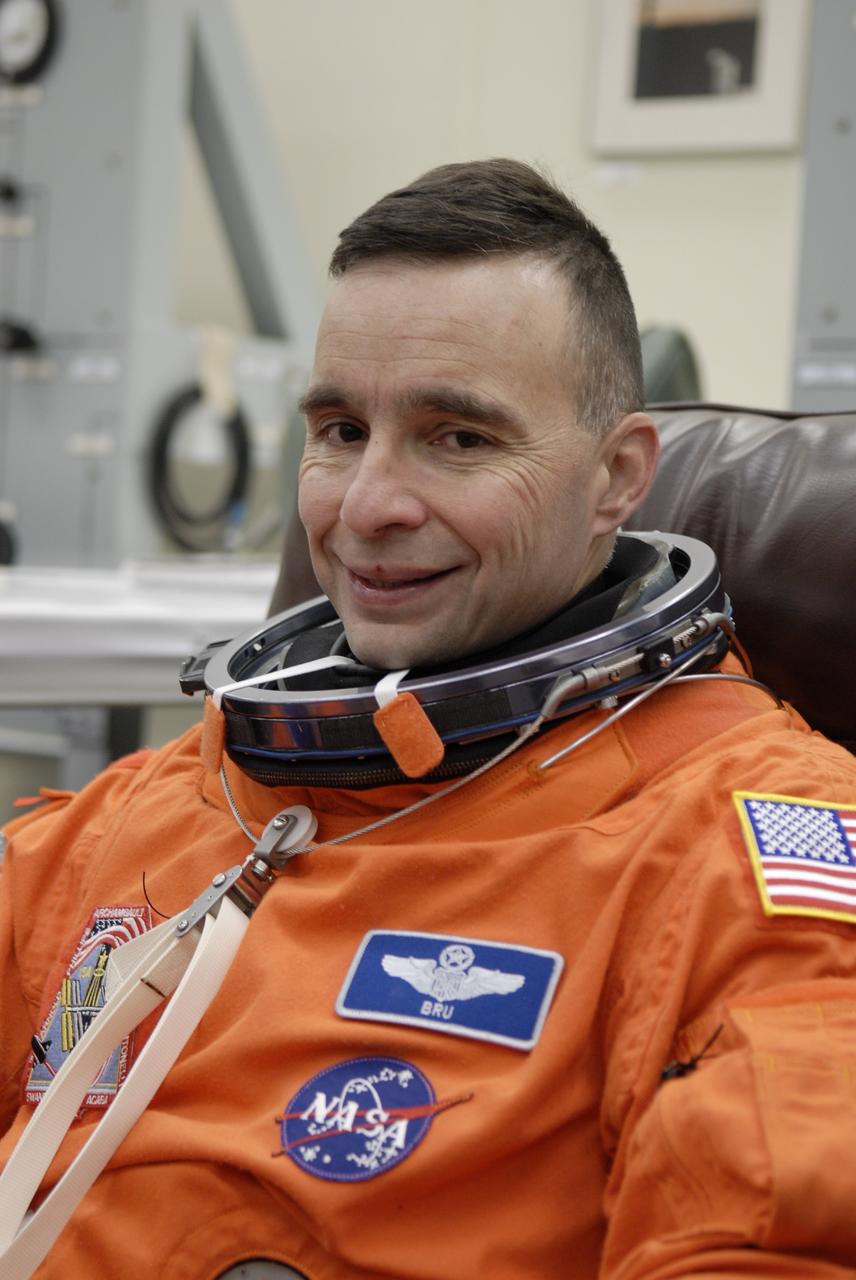
CAPE CANAVERAL, Fla. – At NASA's Kennedy Space Center in Florida, STS-119 Commander Lee Archambault dons his launch-and-entry suit before heading to Launch Pad 39A for a simulated launch countdown. The astronauts are at Kennedy to prepare for launch through Terminal Countdown Demonstration Test activities. The TCDT includes equipment familiarization and emergency egress training. The crew is targeted to launch on the STS-119 mission Feb. 12 on space shuttle Discovery. During the 14-day mission, the crew will install the S6 truss segment and solar arrays to the starboard side of the International Space Station, completing the station's truss, or backbone. Photo credit: NASA/Kim Shiflett
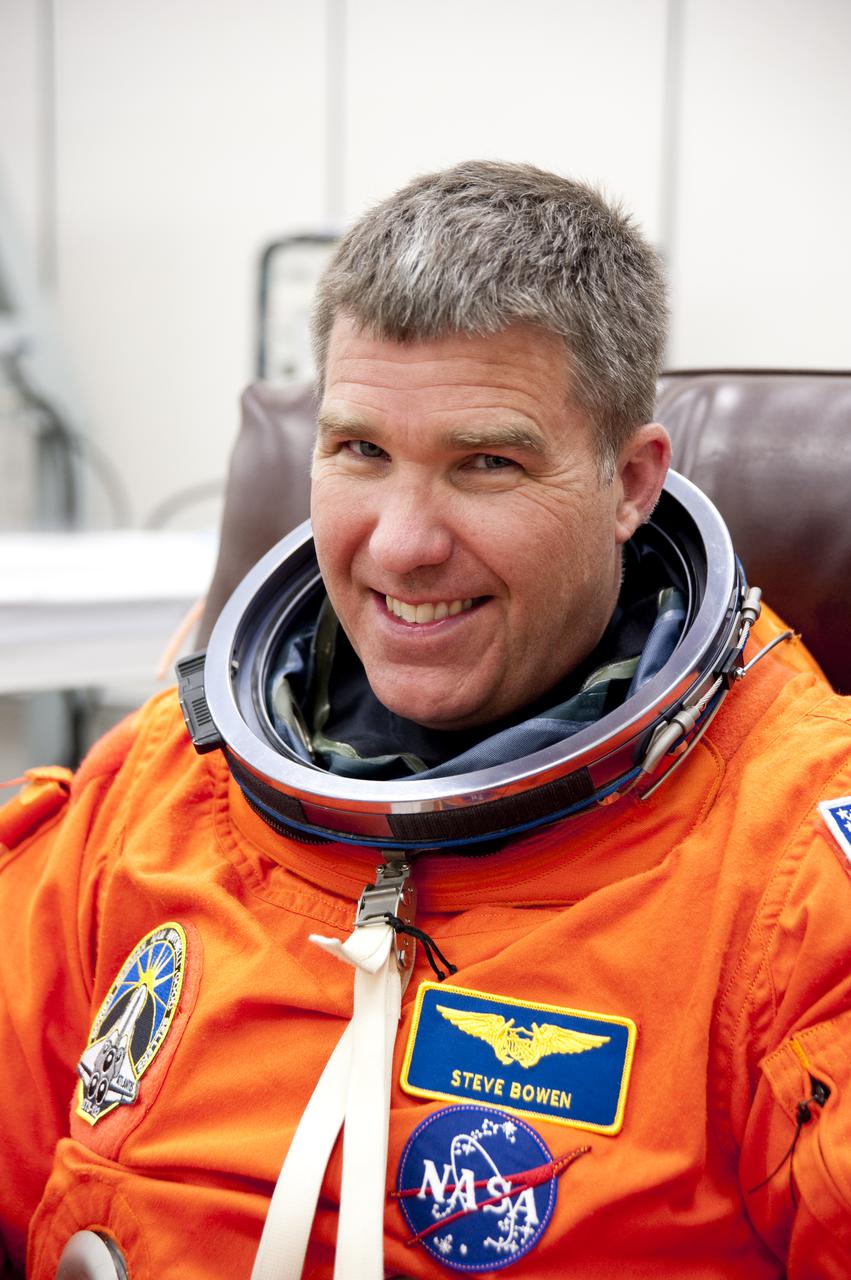
CAPE CANAVERAL, Fla. - In the Operations and Checkout Building at NASA's Kennedy Space Center in Florida, the astronauts of space shuttle Atlantis' STS-132 crew put on their launch-and-entry suits before heading to the Astrovan for the ride to Launch Pad 39A. Mission Specialist Steve Bowen, seen here, is making his second spaceflight. Liftoff of the STS-132 mission is set for 2:20 p.m. EDT on May 14. The six-member STS-132 crew will deliver the Russian-built Mini Research Module-1 to the International Space Station. Named Rassvet, Russian for 'dawn,' the module is the second in a series of new pressurized components for Russia and will be permanently attached to the Earth-facing port of the Zarya control module. Rassvet will be used for cargo storage and will provide an additional docking port to the station. Also aboard Atlantis is an Integrated Cargo Carrier, or ICC, an unpressurized flat bed pallet and keel yoke assembly used to support the transfer of exterior cargo from the shuttle to the station. STS-132 is the 34th mission to the station and the last scheduled flight for Atlantis. For more information on the STS-132 mission objectives, payload and crew, visit http:__www.nasa.gov_mission_pages_shuttle_shuttlemissions_sts132_index.html. Photo Credit: NASA_Kim Shiflett
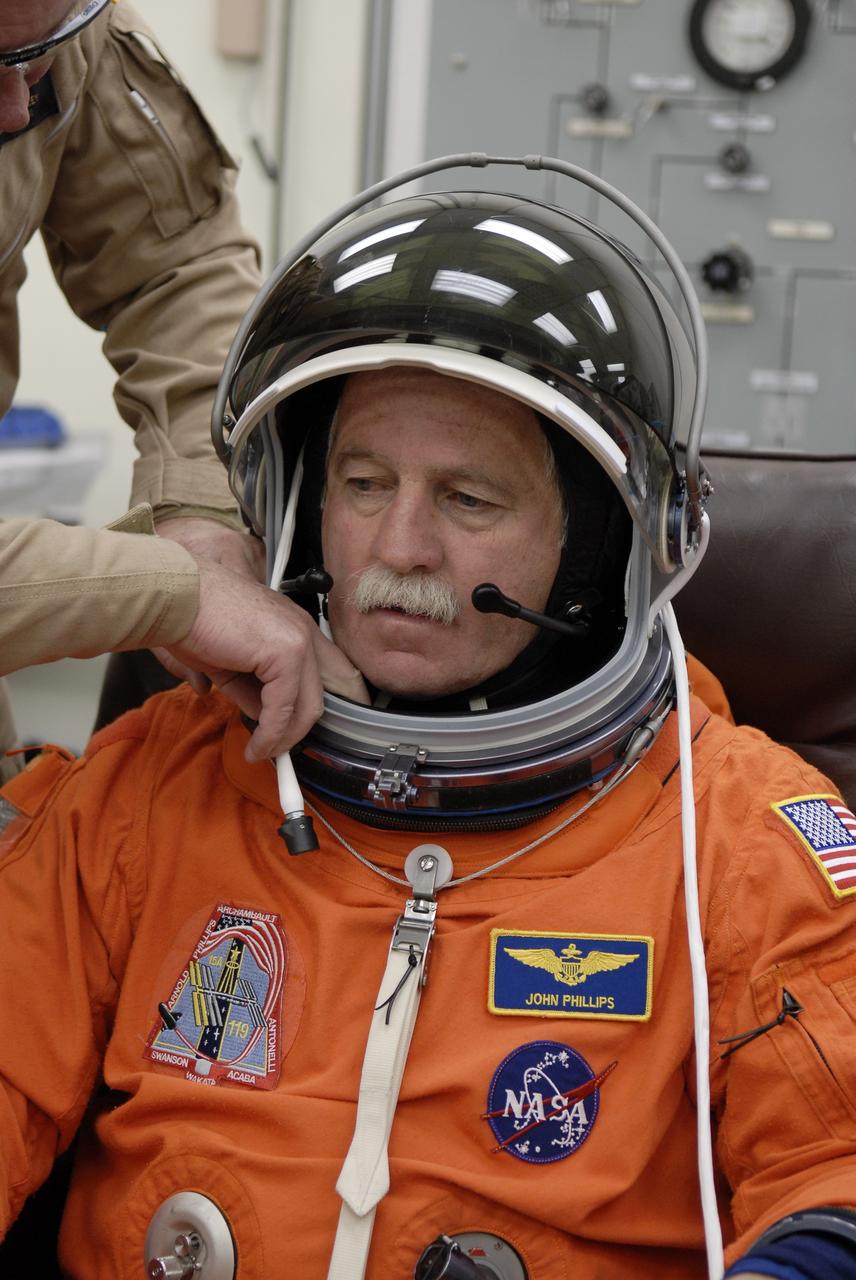
CAPE CANAVERAL, Fla. – At NASA's Kennedy Space Center in Florida, STS-119 Mission Specialist John Phillips is fitted with the helmet for his launch-and-entry suit before heading to Launch Pad 39A for a simulated launch countdown. The astronauts are at Kennedy to prepare for launch through Terminal Countdown Demonstration Test activities. The TCDT includes equipment familiarization and emergency egress training. The crew is targeted to launch on the STS-119 mission Feb. 12 on space shuttle Discovery. During the 14-day mission, the crew will install the S6 truss segment and solar arrays to the starboard side of the International Space Station, completing the station's truss, or backbone. Photo credit: NASA/Kim Shiflett
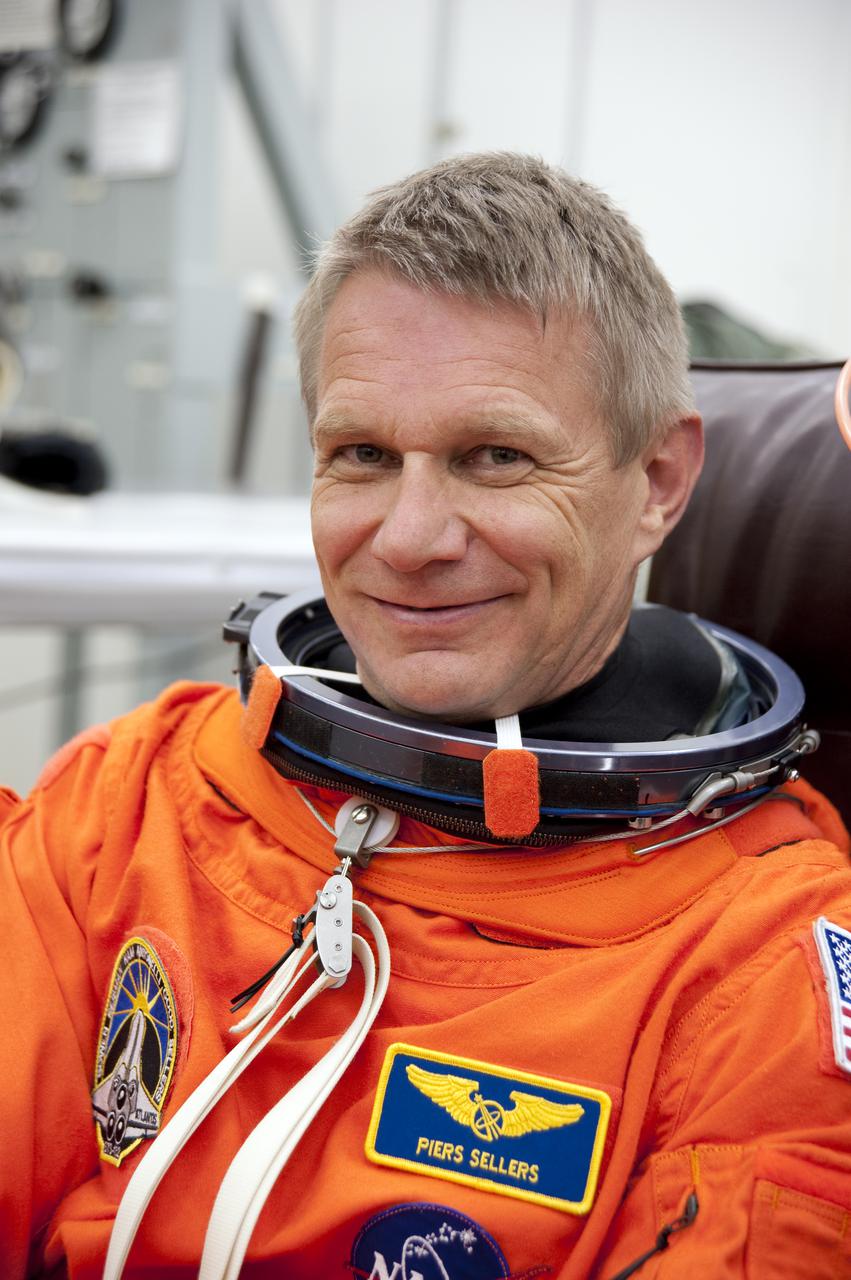
CAPE CANAVERAL, Fla. - In the Operations and Checkout Building at NASA's Kennedy Space Center in Florida, the astronauts of space shuttle Atlantis' STS-132 crew put on their launch-and-entry suits before heading to the Astrovan for the ride to Launch Pad 39A. Mission Specialist Piers Sellers, seen here, is making his third spaceflight. Liftoff of the STS-132 mission is set for 2:20 p.m. EDT on May 14. The six-member STS-132 crew will deliver the Russian-built Mini Research Module-1 to the International Space Station. Named Rassvet, Russian for 'dawn,' the module is the second in a series of new pressurized components for Russia and will be permanently attached to the Earth-facing port of the Zarya control module. Rassvet will be used for cargo storage and will provide an additional docking port to the station. Also aboard Atlantis is an Integrated Cargo Carrier, or ICC, an unpressurized flat bed pallet and keel yoke assembly used to support the transfer of exterior cargo from the shuttle to the station. STS-132 is the 34th mission to the station and the last scheduled flight for Atlantis. For more information on the STS-132 mission objectives, payload and crew, visit http:__www.nasa.gov_mission_pages_shuttle_shuttlemissions_sts132_index.html. Photo Credit: NASA_Kim Shiflett
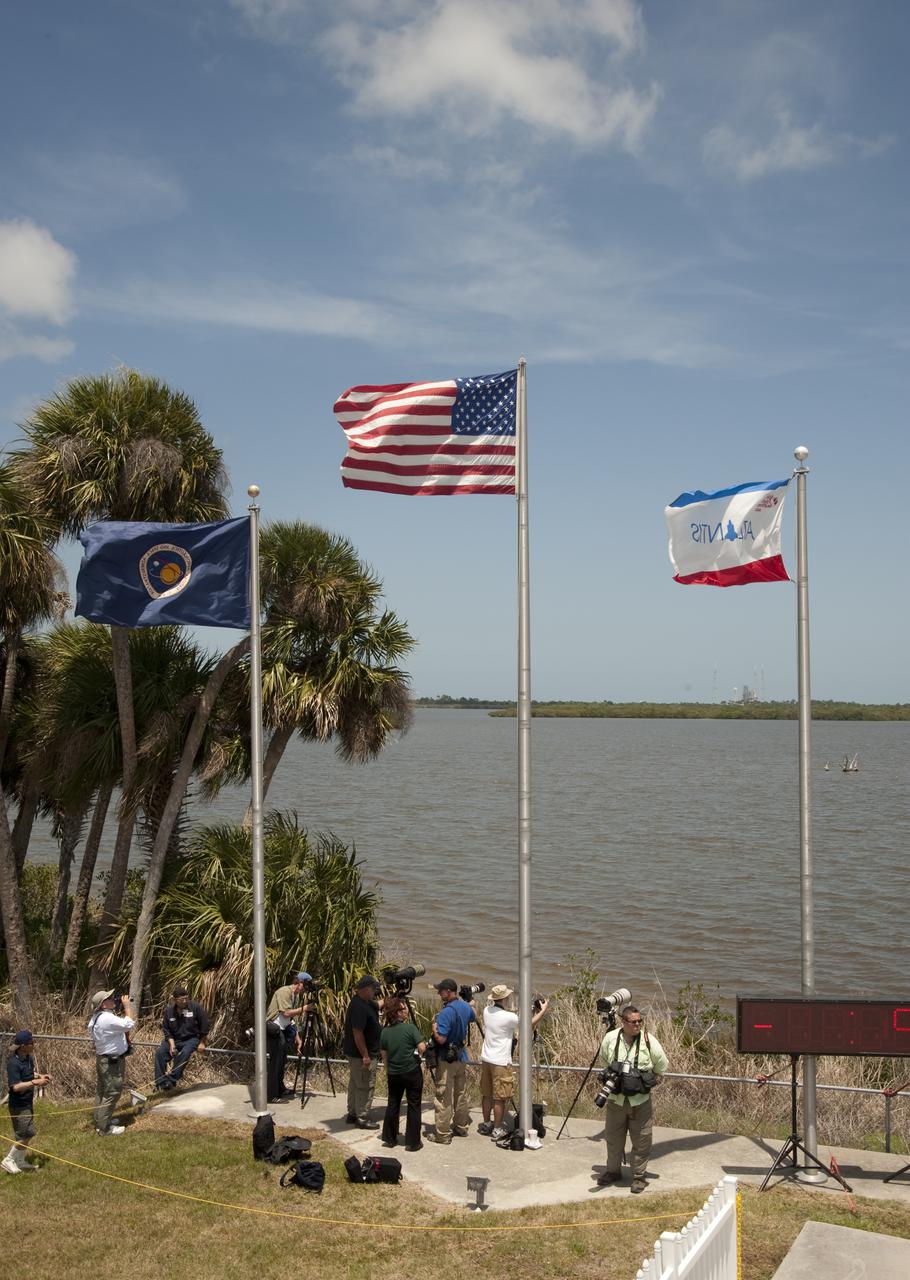
CAPE CANAVERAL, Fla. - Spectators at the Banana Creek Viewing Site near the Saturn V Center at NASA's Kennedy Space Center in Florida set their cameras up for the launch of space shuttle Atlantis from Launch Pad 39A. Liftoff of the STS-132 mission to the International Space Station occurred on time at 2:20 p.m. EDT on May 14. The Russian-built Mini Research Module-1 known as Rassvet, or 'dawn,' is inside the shuttle's cargo bay. It will provide additional storage space and a new docking port for Russian Soyuz and Progress spacecraft. The laboratory will be attached to the bottom port of the station's Zarya module. The mission's three spacewalks will focus on storing spare components outside the station, including six batteries, a communications antenna and parts for the Canadian Dextre robotic arm. STS-132 is the 132nd shuttle flight, the 32nd for Atlantis and the 34th shuttle mission dedicated to station assembly and maintenance. For more information on the STS-132 mission objectives, payload and crew, visit www.nasa.gov_mission_pages_shuttle_shuttlemissions_sts132_index.html. Photo Credit: NASA_Ben Cooper
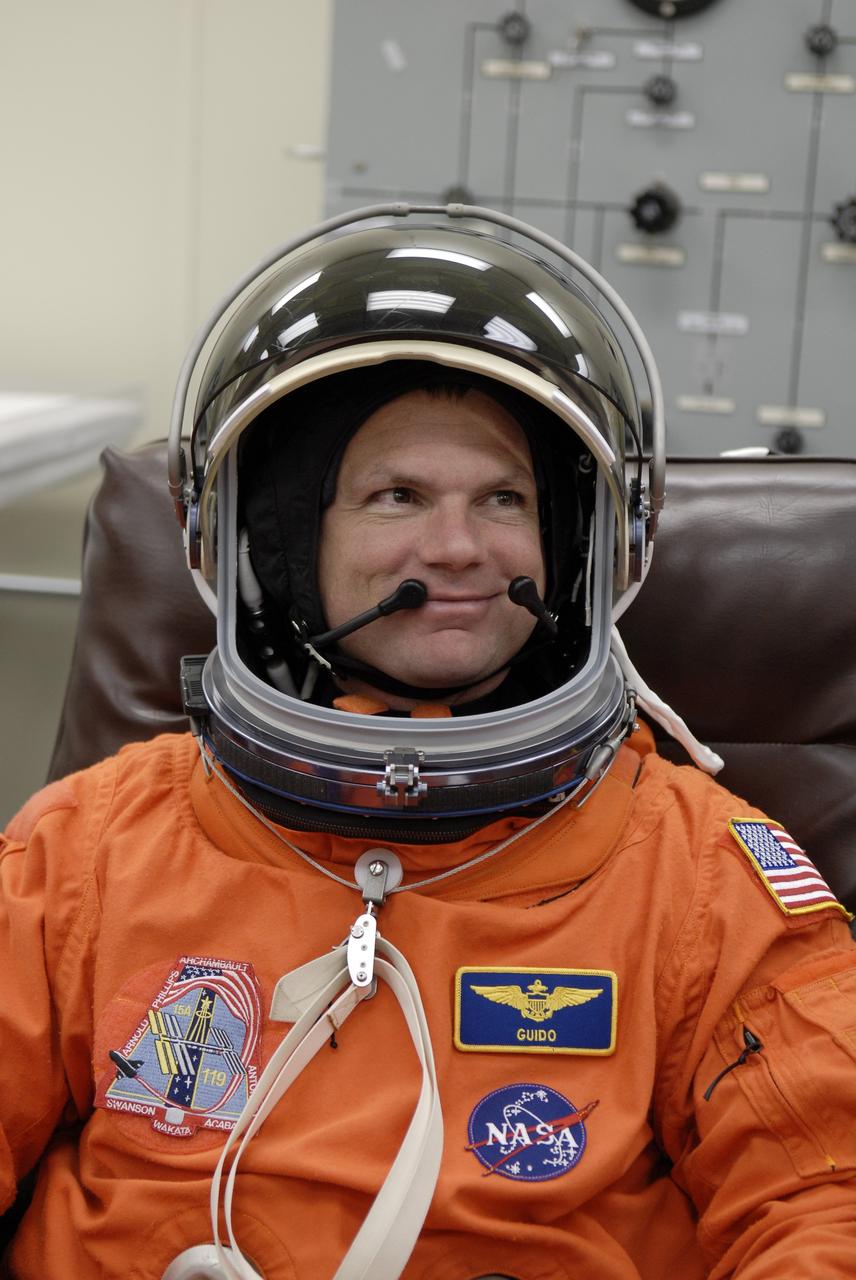
CAPE CANAVERAL, Fla. – At NASA's Kennedy Space Center in Florida, STS-119 Pilot Tony Antonelli tries on his helmet to complete the launch-and-entry suit before heading to Launch Pad 39A for a simulated launch countdown. The astronauts are at Kennedy to prepare for launch through Terminal Countdown Demonstration Test activities. The TCDT includes equipment familiarization and emergency egress training. The crew is targeted to launch on the STS-119 mission Feb. 12 on space shuttle Discovery. During the 14-day mission, the crew will install the S6 truss segment and solar arrays to the starboard side of the International Space Station, completing the station's truss, or backbone. Photo credit: NASA/Kim Shiflett
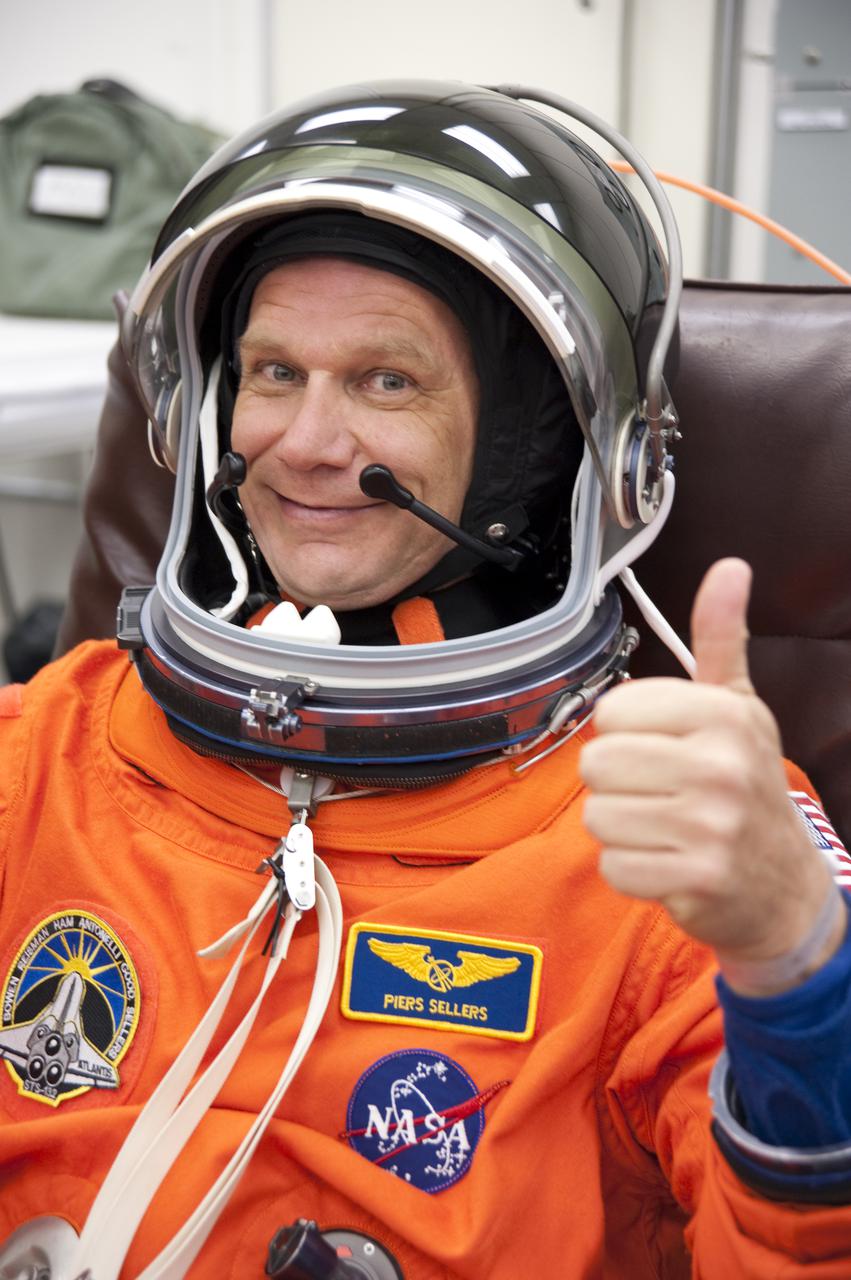
CAPE CANAVERAL, Fla. - In the Operations and Checkout Building at NASA's Kennedy Space Center in Florida, the astronauts of space shuttle Atlantis' STS-132 crew put on their launch-and-entry suits before heading to the Astrovan for the ride to Launch Pad 39A. Mission Specialist Piers Sellers, seen here checking out his helmet, is making his third spaceflight. Liftoff of the STS-132 mission is set for 2:20 p.m. EDT on May 14. The six-member STS-132 crew will deliver the Russian-built Mini Research Module-1 to the International Space Station. Named Rassvet, Russian for 'dawn,' the module is the second in a series of new pressurized components for Russia and will be permanently attached to the Earth-facing port of the Zarya control module. Rassvet will be used for cargo storage and will provide an additional docking port to the station. Also aboard Atlantis is an Integrated Cargo Carrier, or ICC, an unpressurized flat bed pallet and keel yoke assembly used to support the transfer of exterior cargo from the shuttle to the station. STS-132 is the 34th mission to the station and the last scheduled flight for Atlantis. For more information on the STS-132 mission objectives, payload and crew, visit http:__www.nasa.gov_mission_pages_shuttle_shuttlemissions_sts132_index.html. Photo Credit: NASA_Kim Shiflett
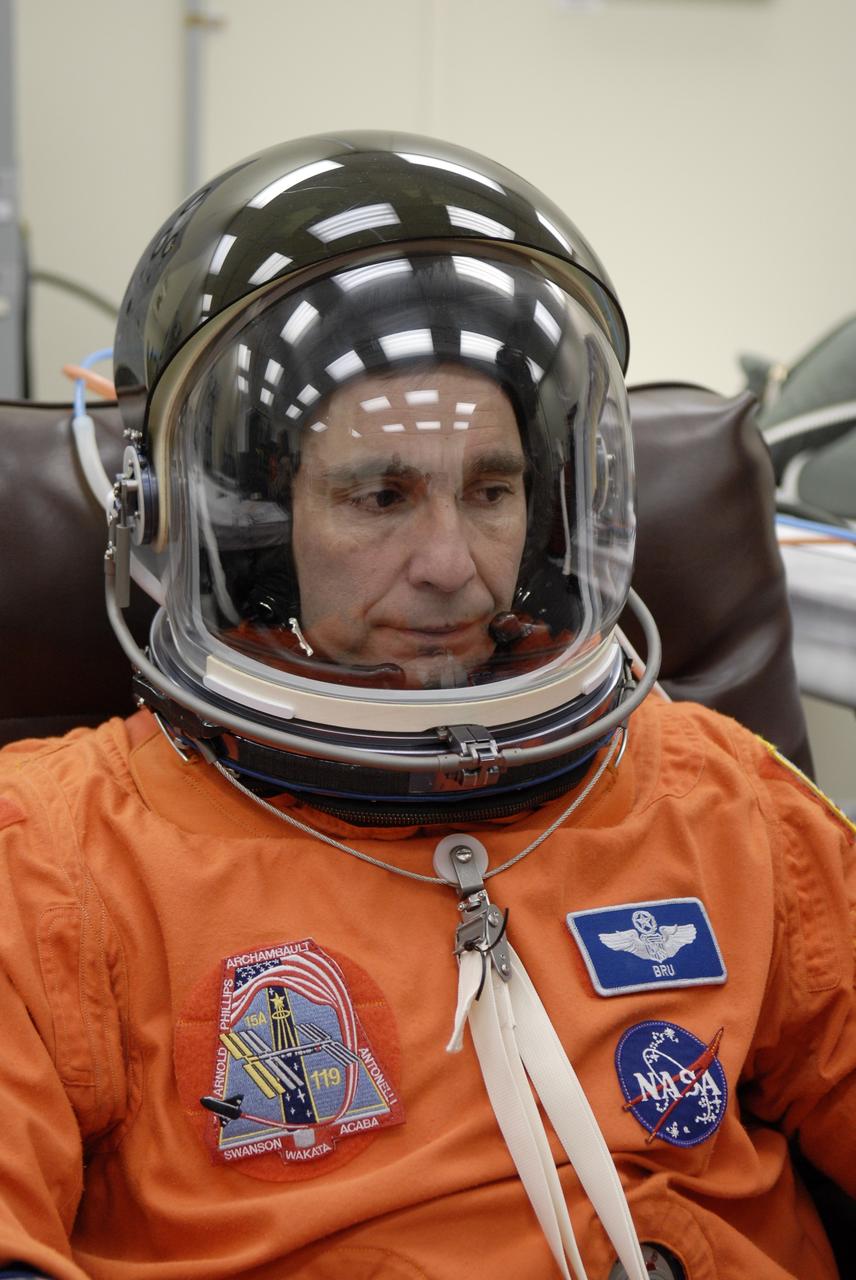
CAPE CANAVERAL, Fla. – At NASA's Kennedy Space Center in Florida, STS-119 Commander Lee Archambault tries on his helmet to complete the launch-and-entry suit before heading to Launch Pad 39A for a simulated launch countdown. The astronauts are at Kennedy to prepare for launch through Terminal Countdown Demonstration Test activities. The TCDT includes equipment familiarization and emergency egress training. The crew is targeted to launch on the STS-119 mission Feb. 12 on space shuttle Discovery. During the 14-day mission, the crew will install the S6 truss segment and solar arrays to the starboard side of the International Space Station, completing the station's truss, or backbone. Photo credit: NASA/Kim Shiflett
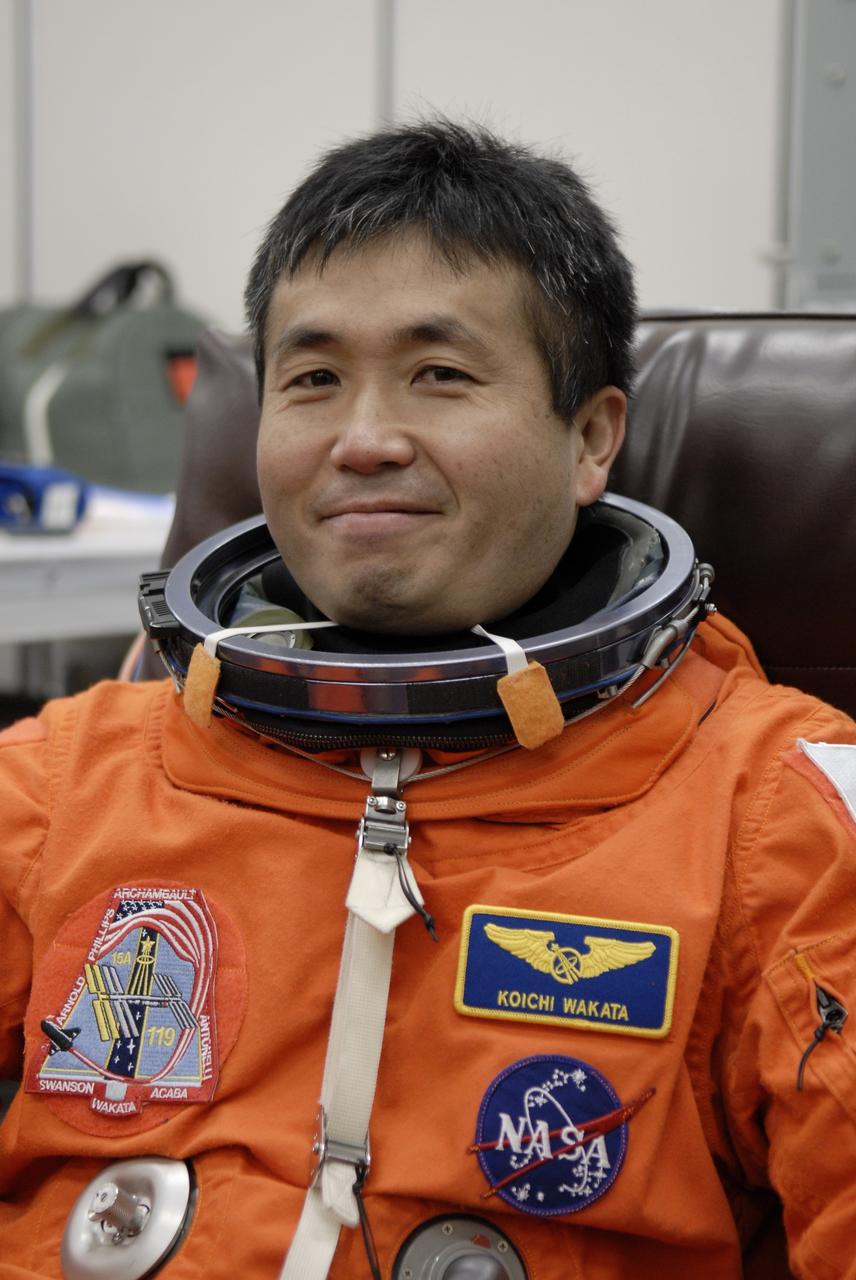
CAPE CANAVERAL, Fla. – At NASA's Kennedy Space Center in Florida, STS-119 Mission Specialist Koichi Wakata is donning his launch-and-entry suit before heading to Launch Pad 39A for a simulated launch countdown. The astronauts are at Kennedy to prepare for launch through Terminal Countdown Demonstration Test activities. The TCDT includes equipment familiarization and emergency egress training. The crew is targeted to launch on the STS-119 mission Feb. 12 on space shuttle Discovery. During the 14-day mission, the crew will install the S6 truss segment and solar arrays to the starboard side of the International Space Station, completing the station's truss, or backbone. Photo credit: NASA/Kim Shiflett
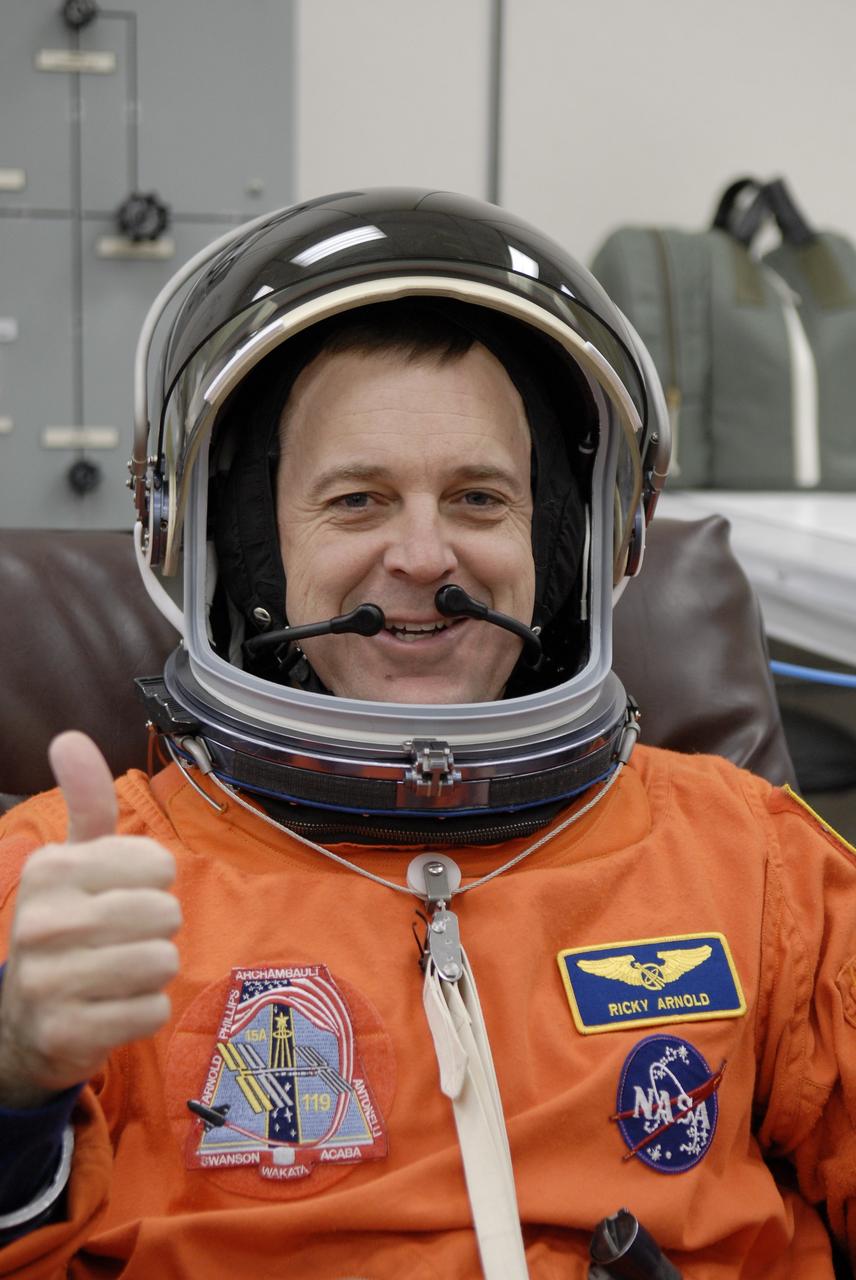
CAPE CANAVERAL, Fla. – At NASA's Kennedy Space Center in Florida, STS-119 Mission Specialist Richard Arnold is fitted with the helmet for his launch-and-entry suit before heading to Launch Pad 39A for a simulated launch countdown. The astronauts are at Kennedy to prepare for launch through Terminal Countdown Demonstration Test activities. The TCDT includes equipment familiarization and emergency egress training. The crew is targeted to launch on the STS-119 mission Feb. 12 on space shuttle Discovery. During the 14-day mission, the crew will install the S6 truss segment and solar arrays to the starboard side of the International Space Station, completing the station's truss, or backbone. Photo credit: NASA/Kim Shiflett
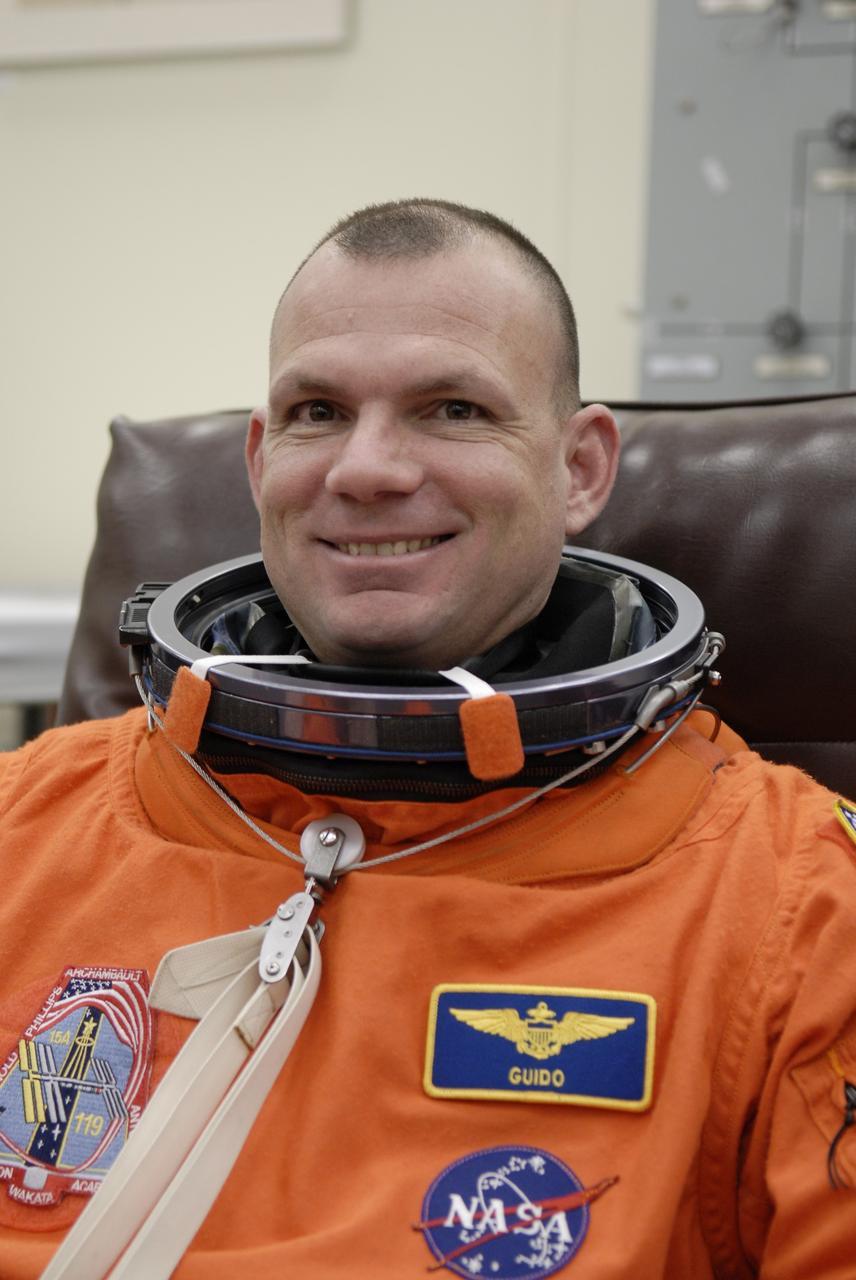
CAPE CANAVERAL, Fla. – At NASA's Kennedy Space Center in Florida, STS-119 Pilot Tony Antonelli dons his launch-and-entry suit before heading to Launch Pad 39A for a simulated launch countdown. The astronauts are at Kennedy to prepare for launch through Terminal Countdown Demonstration Test activities. The TCDT includes equipment familiarization and emergency egress training. The crew is targeted to launch on the STS-119 mission Feb. 12 on space shuttle Discovery. During the 14-day mission, the crew will install the S6 truss segment and solar arrays to the starboard side of the International Space Station, completing the station's truss, or backbone. Photo credit: NASA/Kim Shiflett
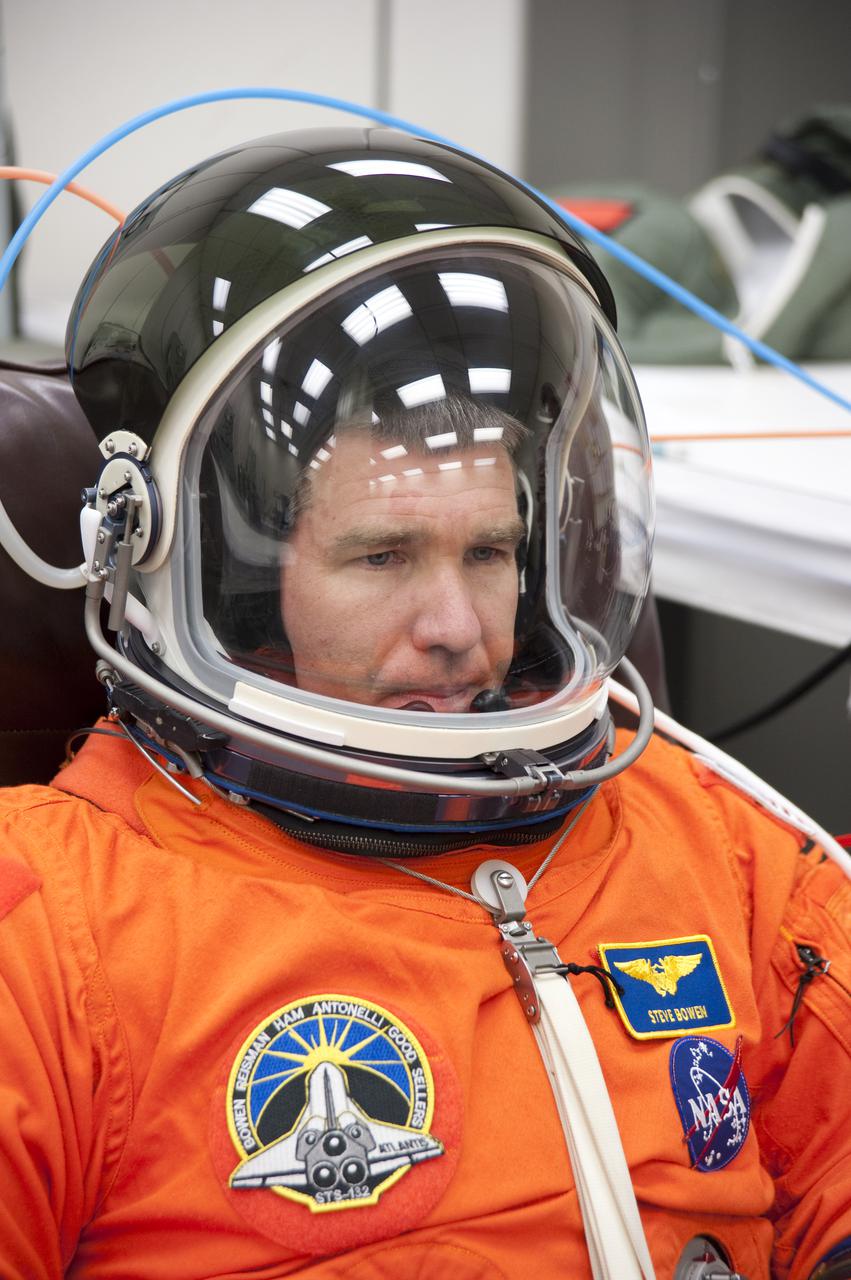
CAPE CANAVERAL, Fla. - In the Operations and Checkout Building at NASA's Kennedy Space Center in Florida, the astronauts of space shuttle Atlantis' STS-132 crew put on their launch-and-entry suits before heading to the Astrovan for the ride to Launch Pad 39A. Mission Specialist Steve Bowen, seen here checking out his helmet, is making his second spaceflight. Liftoff of the STS-132 mission is set for 2:20 p.m. EDT on May 14. The six-member STS-132 crew will deliver the Russian-built Mini Research Module-1 to the International Space Station. Named Rassvet, Russian for 'dawn,' the module is the second in a series of new pressurized components for Russia and will be permanently attached to the Earth-facing port of the Zarya control module. Rassvet will be used for cargo storage and will provide an additional docking port to the station. Also aboard Atlantis is an Integrated Cargo Carrier, or ICC, an unpressurized flat bed pallet and keel yoke assembly used to support the transfer of exterior cargo from the shuttle to the station. STS-132 is the 34th mission to the station and the last scheduled flight for Atlantis. For more information on the STS-132 mission objectives, payload and crew, visit http:__www.nasa.gov_mission_pages_shuttle_shuttlemissions_sts132_index.html. Photo Credit: NASA_Kim Shiflett
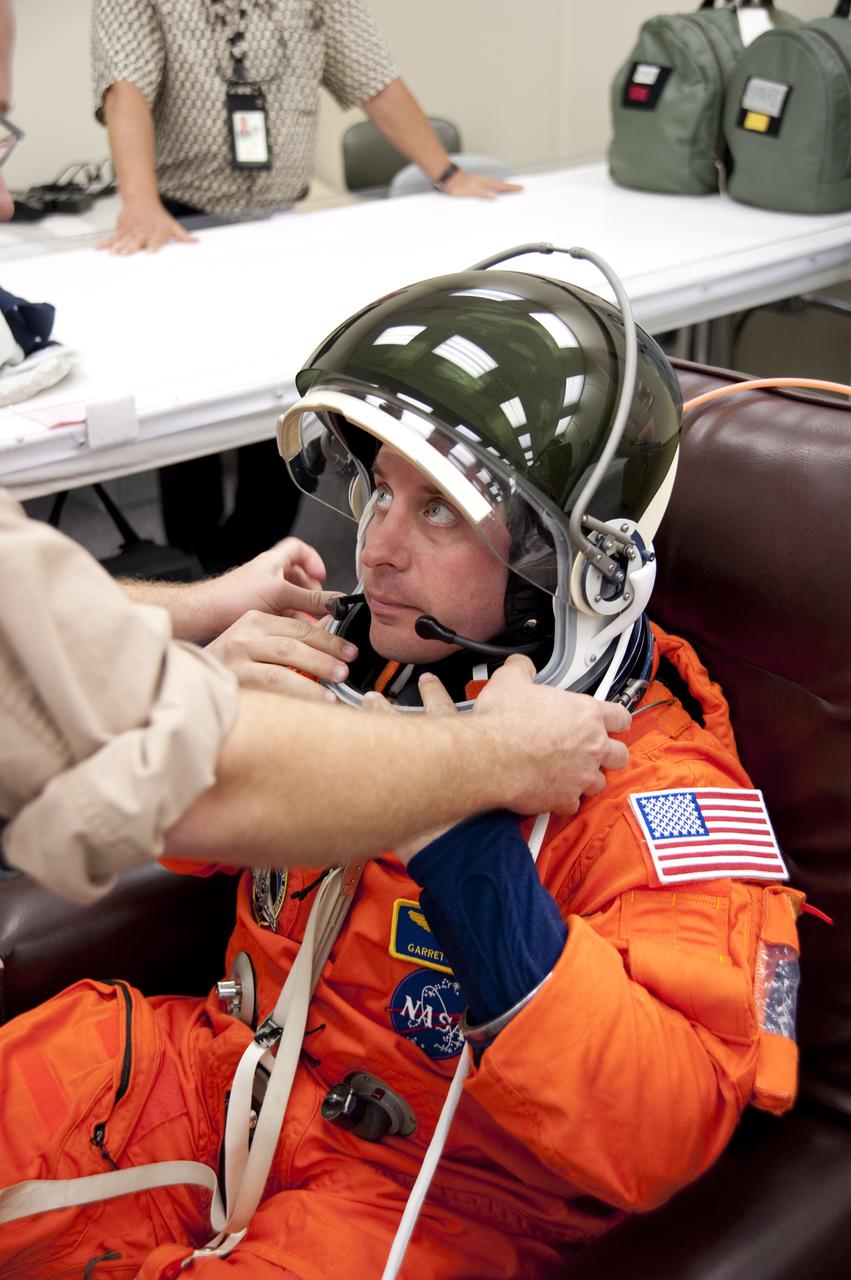
CAPE CANAVERAL, Fla. - In the Operations and Checkout Building at NASA's Kennedy Space Center in Florida, the astronauts of space shuttle Atlantis' STS-132 crew put on their launch-and-entry suits before heading to the Astrovan for the ride to Launch Pad 39A. Mission Specialist Garrett Reisman, seen here checking out his helmet, was a flight engineer on the International Space Station's Expedition 16 and 17. Liftoff of the STS-132 mission is set for 2:20 p.m. EDT on May 14. The six-member STS-132 crew will deliver the Russian-built Mini Research Module-1 to the International Space Station. Named Rassvet, Russian for 'dawn,' the module is the second in a series of new pressurized components for Russia and will be permanently attached to the Earth-facing port of the Zarya control module. Rassvet will be used for cargo storage and will provide an additional docking port to the station. Also aboard Atlantis is an Integrated Cargo Carrier, or ICC, an unpressurized flat bed pallet and keel yoke assembly used to support the transfer of exterior cargo from the shuttle to the station. STS-132 is the 34th mission to the station and the last scheduled flight for Atlantis. For more information on the STS-132 mission objectives, payload and crew, visit http:__www.nasa.gov_mission_pages_shuttle_shuttlemissions_sts132_index.html. Photo Credit: NASA_Kim Shiflett
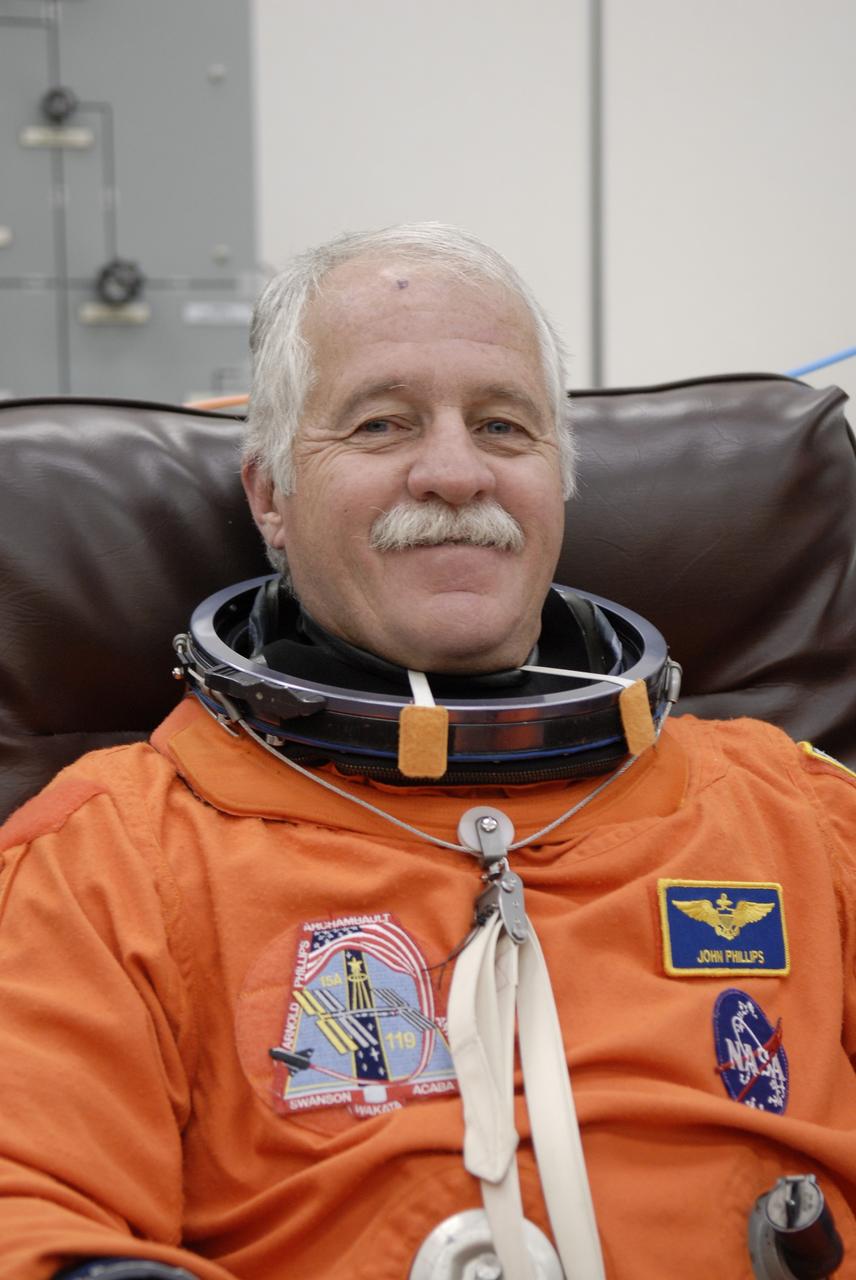
CAPE CANAVERAL, Fla. – At NASA's Kennedy Space Center in Florida, STS-119 Mission Specialist John Phillips is donning his launch-and-entry suit before heading to Launch Pad 39A for a simulated launch countdown. The astronauts are at Kennedy to prepare for launch through Terminal Countdown Demonstration Test activities. The TCDT includes equipment familiarization and emergency egress training. The crew is targeted to launch on the STS-119 mission Feb. 12 on space shuttle Discovery. During the 14-day mission, the crew will install the S6 truss segment and solar arrays to the starboard side of the International Space Station, completing the station's truss, or backbone. Photo credit: NASA/Kim Shiflett
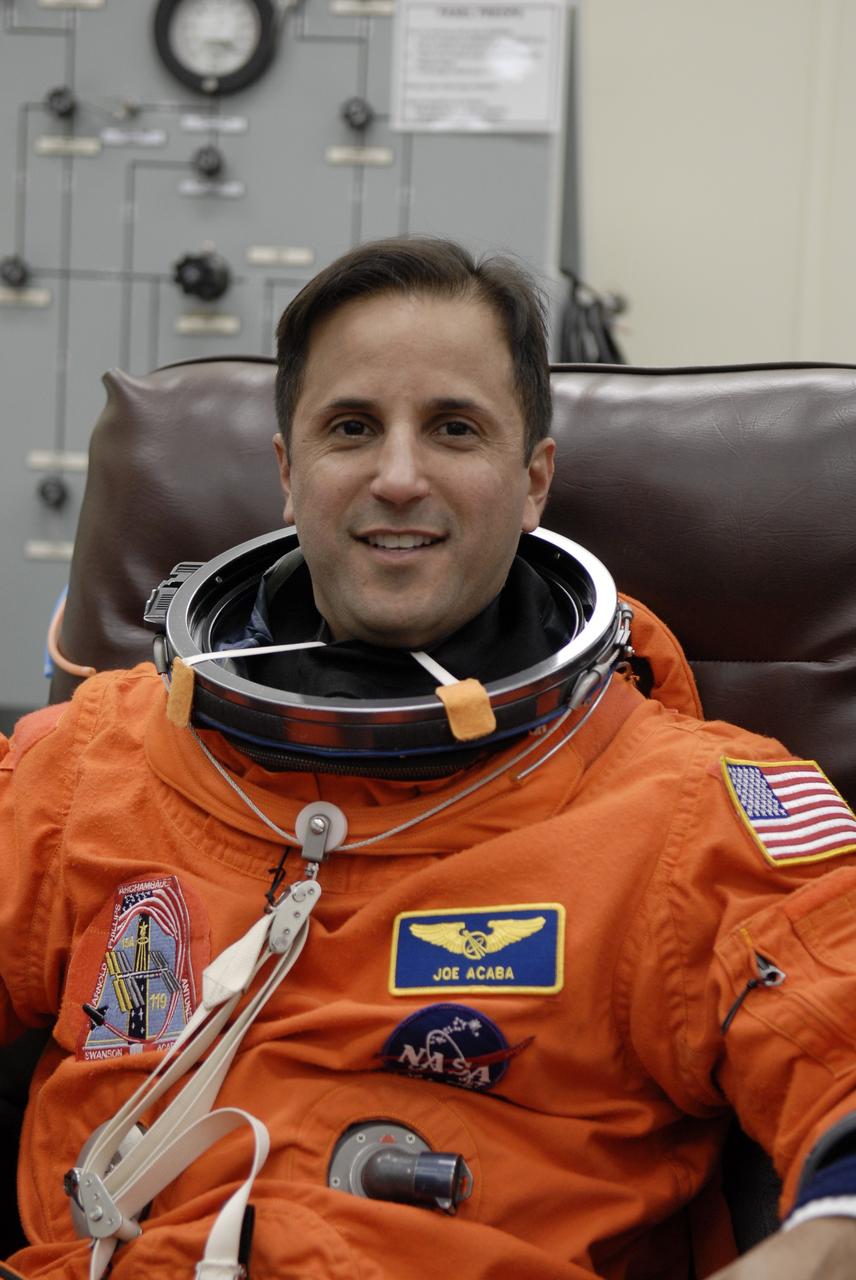
CAPE CANAVERAL, Fla. – At NASA's Kennedy Space Center in Florida, STS-119 Mission Specialist Joseph Acaba is donning his launch-and-entry suit before heading to Launch Pad 39A for a simulated launch countdown. The astronauts are at Kennedy to prepare for launch through Terminal Countdown Demonstration Test activities. The TCDT includes equipment familiarization and emergency egress training. The crew is targeted to launch on the STS-119 mission Feb. 12 on space shuttle Discovery. During the 14-day mission, the crew will install the S6 truss segment and solar arrays to the starboard side of the International Space Station, completing the station's truss, or backbone. Photo credit: NASA/Kim Shiflett
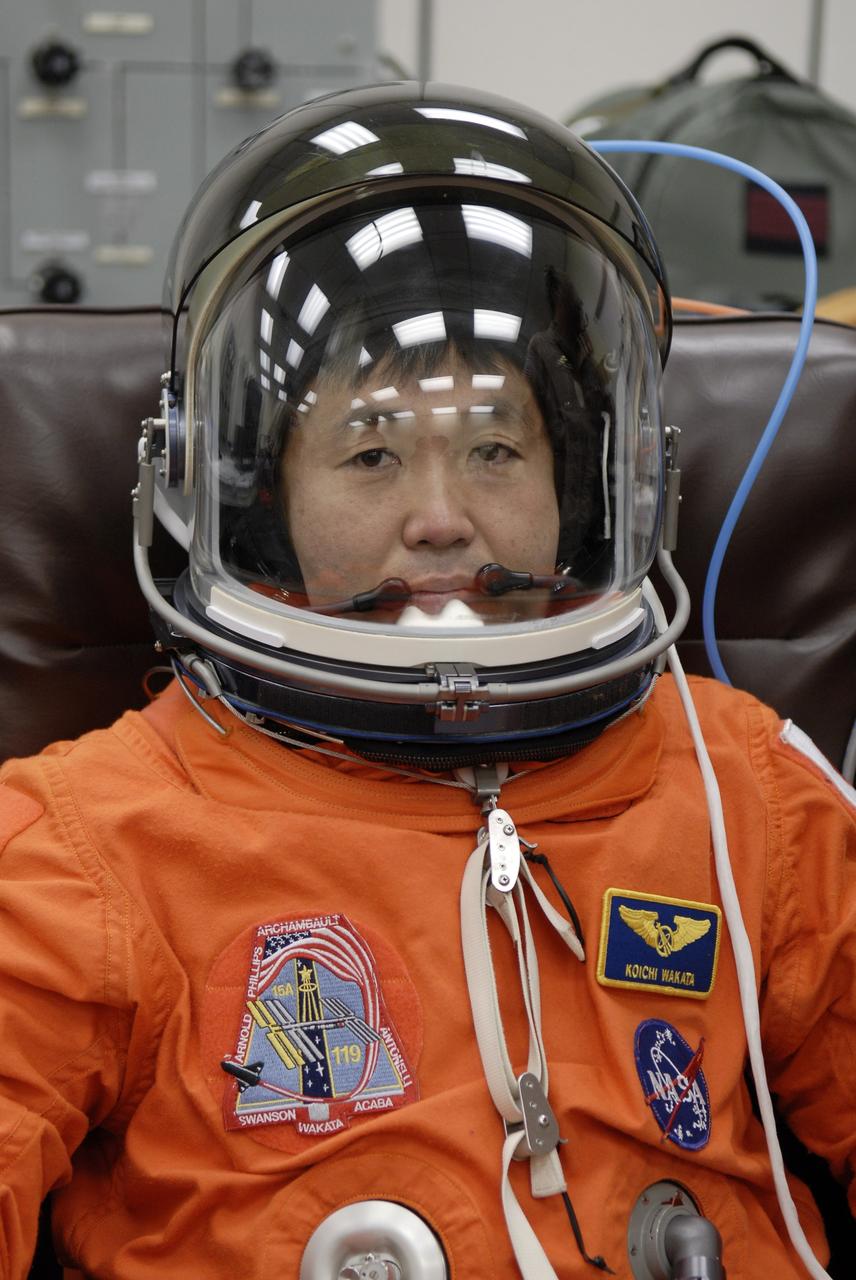
CAPE CANAVERAL, Fla. – At NASA's Kennedy Space Center in Florida, STS-119 Mission Specialist Koichi Wakata is fitted with the helmet for his launch-and-entry suit before heading to Launch Pad 39A for a simulated launch countdown. The astronauts are at Kennedy to prepare for launch through Terminal Countdown Demonstration Test activities. The TCDT includes equipment familiarization and emergency egress training. The crew is targeted to launch on the STS-119 mission Feb. 12 on space shuttle Discovery. During the 14-day mission, the crew will install the S6 truss segment and solar arrays to the starboard side of the International Space Station, completing the station's truss, or backbone. Photo credit: NASA/Kim Shiflett
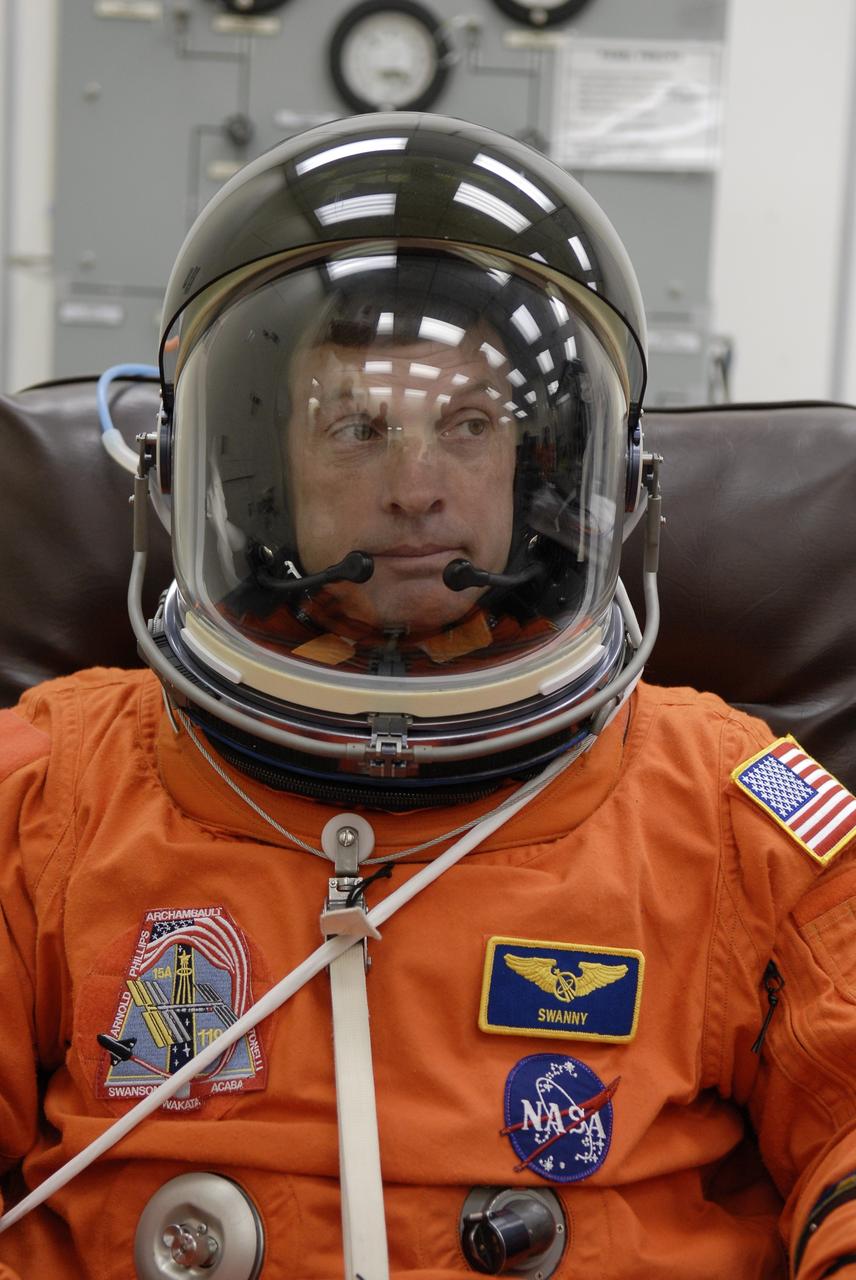
CAPE CANAVERAL, Fla. – At NASA's Kennedy Space Center in Florida, STS-119 Mission Specialist Steve Swanson tries on his helmet to complete the launch-and-entry suit before heading to Launch Pad 39A for a simulated launch countdown. The astronauts are at Kennedy to prepare for launch through Terminal Countdown Demonstration Test activities. The TCDT includes equipment familiarization and emergency egress training. The crew is targeted to launch on the STS-119 mission Feb. 12 on space shuttle Discovery. During the 14-day mission, the crew will install the S6 truss segment and solar arrays to the starboard side of the International Space Station, completing the station's truss, or backbone. Photo credit: NASA/Kim Shiflett
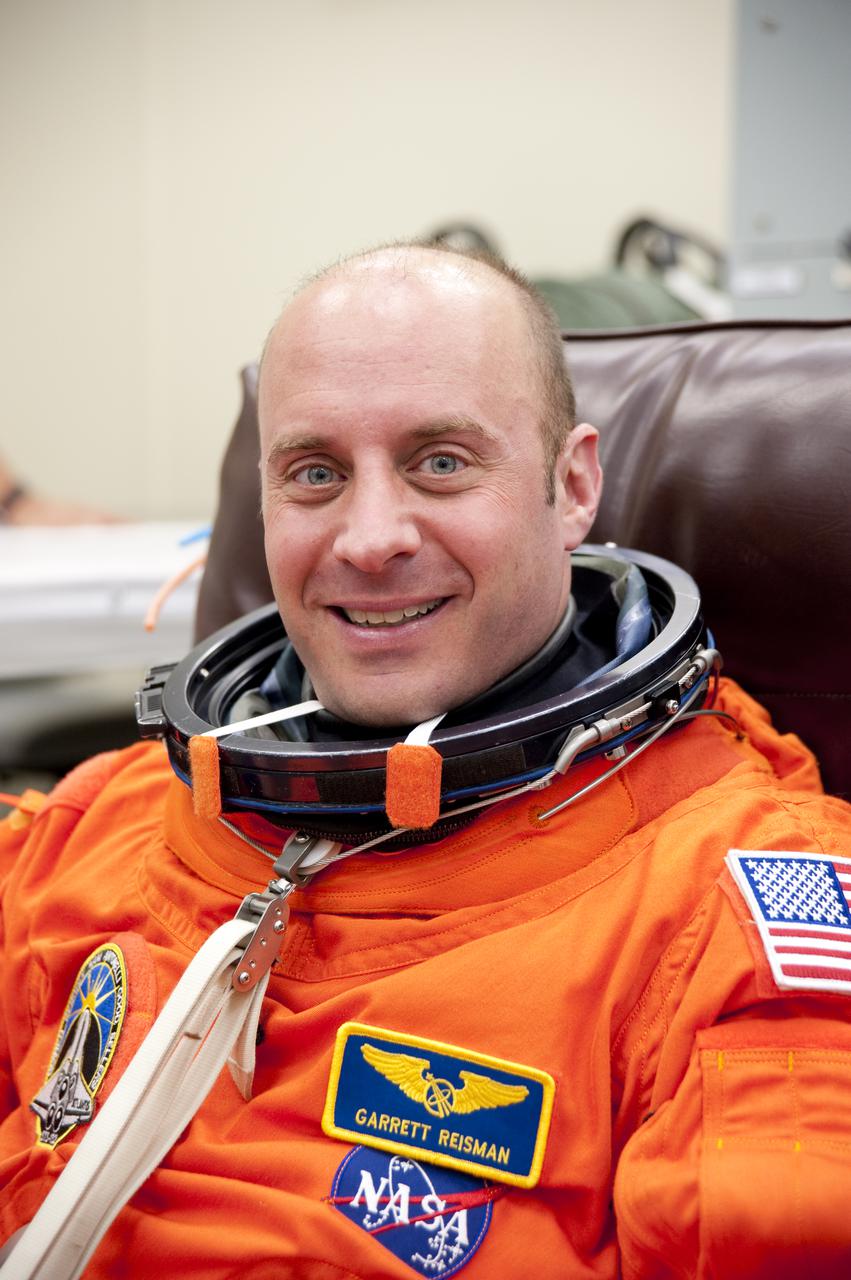
CAPE CANAVERAL, Fla. - In the Operations and Checkout Building at NASA's Kennedy Space Center in Florida, the astronauts of space shuttle Atlantis' STS-132 crew put on their launch-and-entry suits before heading to the Astrovan for the ride to Launch Pad 39A. Mission Specialist Garrett Reisman, seen here, was a flight engineer on the International Space Station's Expedition 16 and 17. Liftoff of the STS-132 mission is set for 2:20 p.m. EDT on May 14. The six-member STS-132 crew will deliver the Russian-built Mini Research Module-1 to the International Space Station. Named Rassvet, Russian for 'dawn,' the module is the second in a series of new pressurized components for Russia and will be permanently attached to the Earth-facing port of the Zarya control module. Rassvet will be used for cargo storage and will provide an additional docking port to the station. Also aboard Atlantis is an Integrated Cargo Carrier, or ICC, an unpressurized flat bed pallet and keel yoke assembly used to support the transfer of exterior cargo from the shuttle to the station. STS-132 is the 34th mission to the station and the last scheduled flight for Atlantis. For more information on the STS-132 mission objectives, payload and crew, visit http:__www.nasa.gov_mission_pages_shuttle_shuttlemissions_sts132_index.html. Photo Credit: NASA_Kim Shiflett
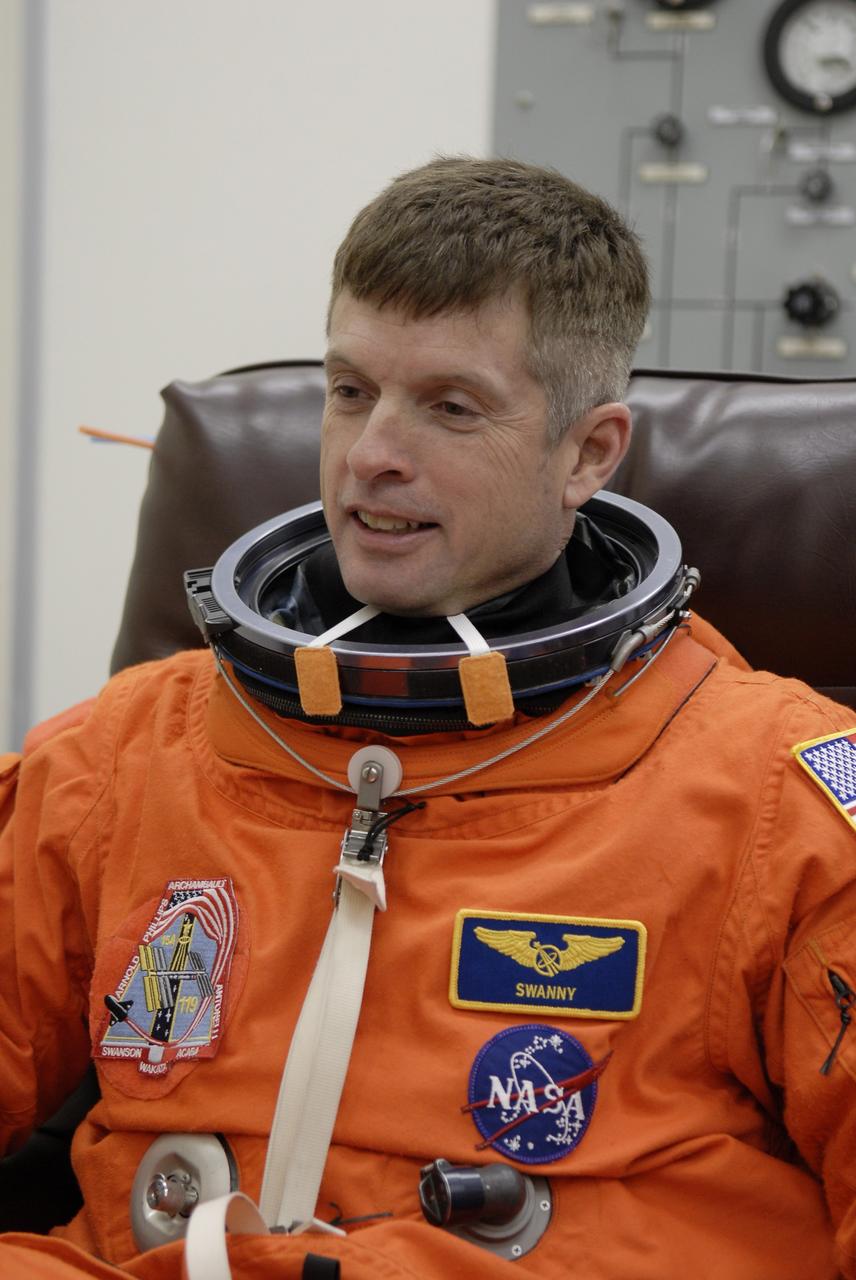
CAPE CANAVERAL, Fla. – At NASA's Kennedy Space Center in Florida, STS-119 Mission Specialist Steve Swanson dons his launch-and-entry suit before heading to Launch Pad 39A for a simulated launch countdown. The astronauts are at Kennedy to prepare for launch through Terminal Countdown Demonstration Test activities. The TCDT includes equipment familiarization and emergency egress training. The crew is targeted to launch on the STS-119 mission Feb. 12 on space shuttle Discovery. During the 14-day mission, the crew will install the S6 truss segment and solar arrays to the starboard side of the International Space Station, completing the station's truss, or backbone. Photo credit: NASA/Kim Shiflett
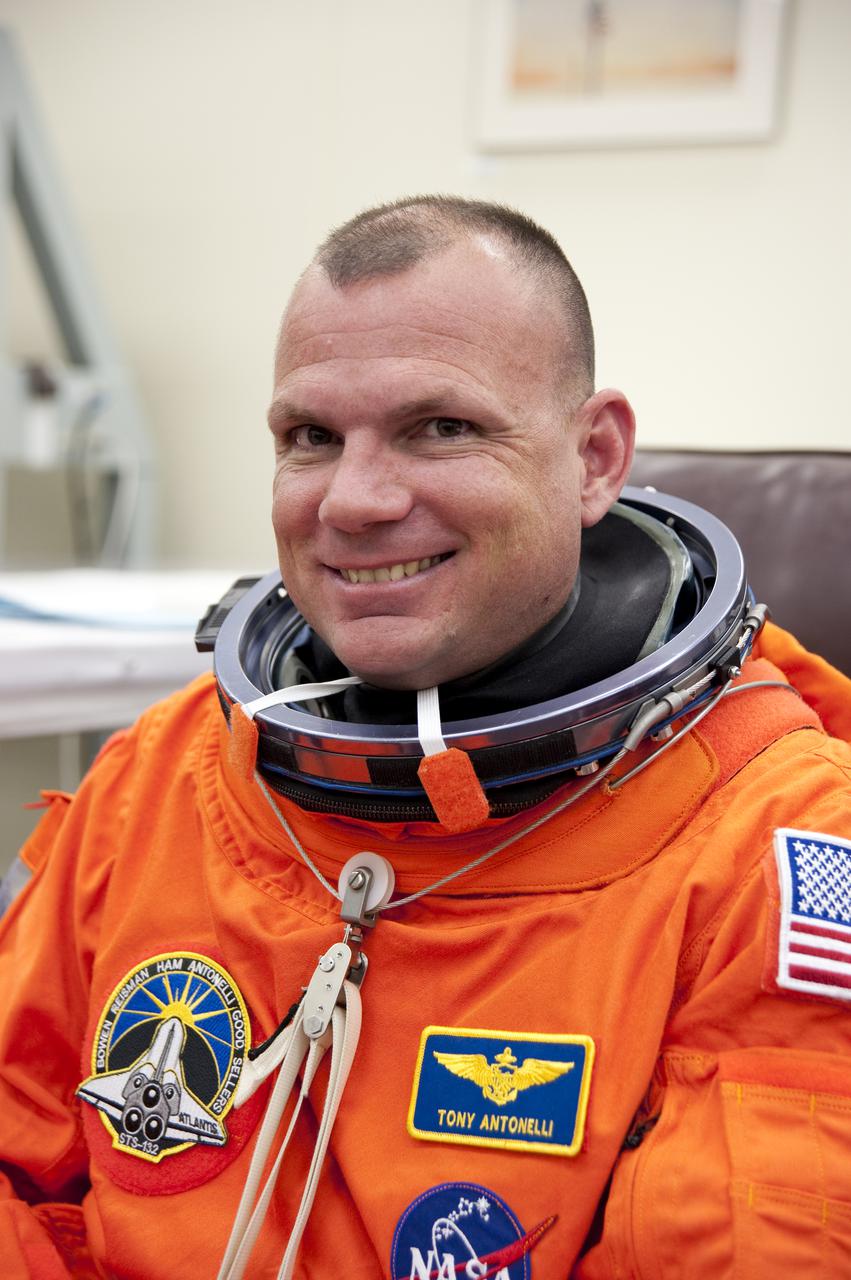
CAPE CANAVERAL, Fla. - In the Operations and Checkout Building at NASA's Kennedy Space Center in Florida, the astronauts of space shuttle Atlantis' STS-132 crew put on their launch-and-entry suits before heading to the Astrovan for the ride to Launch Pad 39A. Pilot Tony Antonelli, seen here, is making his second spaceflight. Liftoff of the STS-132 mission is set for 2:20 p.m. EDT on May 14. The six-member STS-132 crew will deliver the Russian-built Mini Research Module-1 to the International Space Station. Named Rassvet, Russian for 'dawn,' the module is the second in a series of new pressurized components for Russia and will be permanently attached to the Earth-facing port of the Zarya control module. Rassvet will be used for cargo storage and will provide an additional docking port to the station. Also aboard Atlantis is an Integrated Cargo Carrier, or ICC, an unpressurized flat bed pallet and keel yoke assembly used to support the transfer of exterior cargo from the shuttle to the station. STS-132 is the 34th mission to the station and the last scheduled flight for Atlantis. For more information on the STS-132 mission objectives, payload and crew, visit http:__www.nasa.gov_mission_pages_shuttle_shuttlemissions_sts132_index.html. Photo Credit: NASA_Kim Shiflett
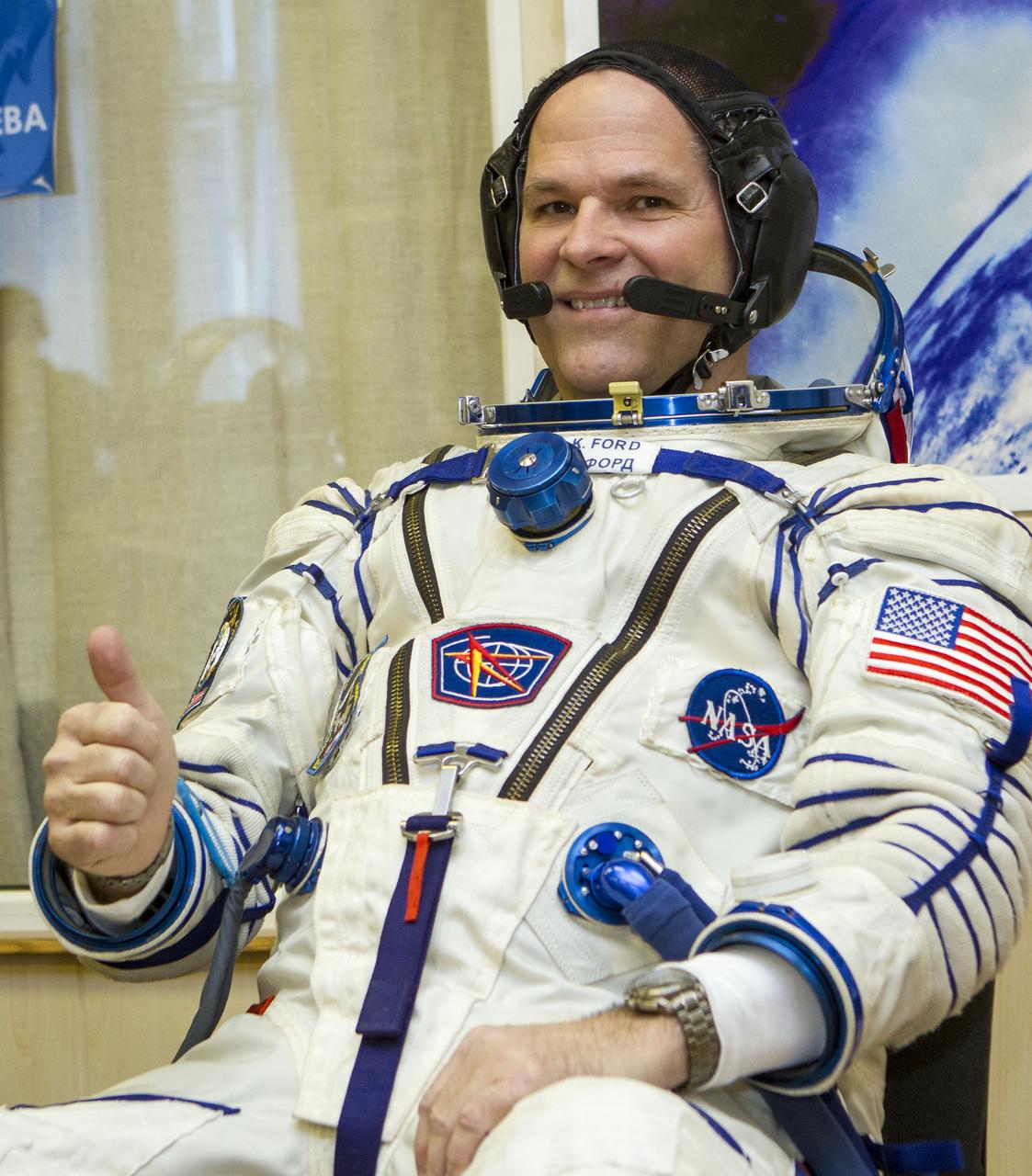
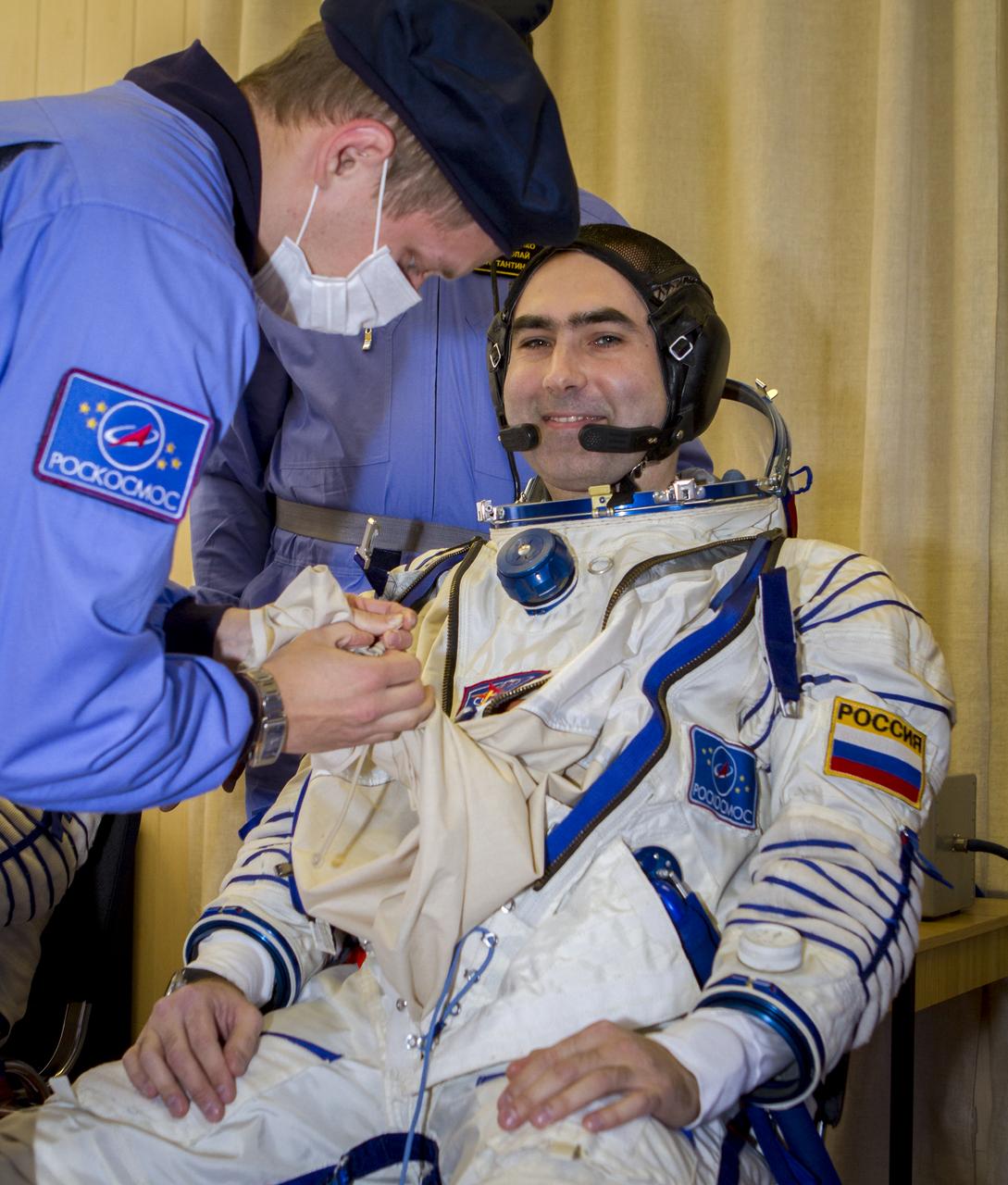
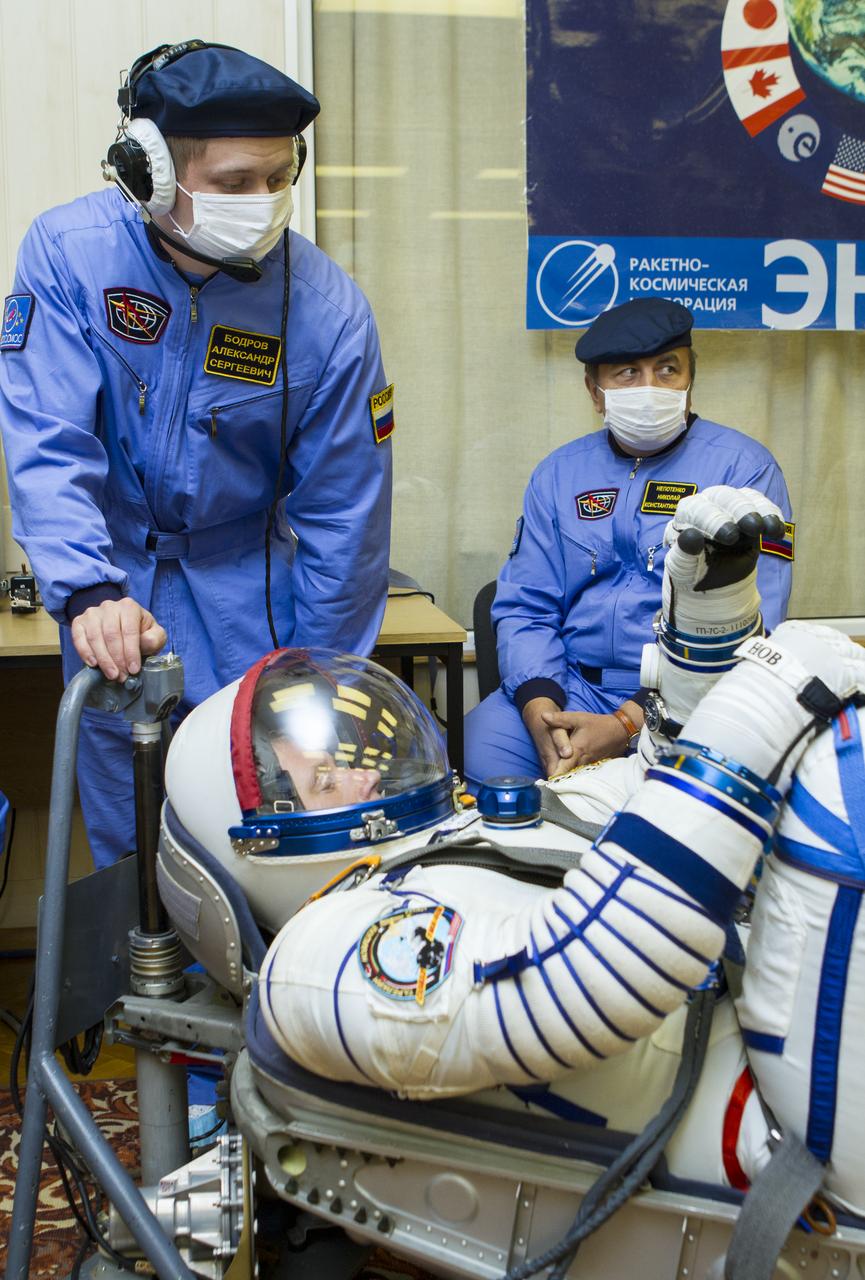
Expedition 33/34 Flight Engineer Kevin Ford gives a thumbs up as he waits to have his Russian Sokol suit pressure checked ahead of his launch to the International Space Station with fellow cremates, Soyuz Commander Oleg Novitskiy, and Flight Engineer Evgeny Tarelkin , on Tuesday, October 23, 2012, in Baikonur, Kazakhstan. Launch of the Soyuz rocket will send Ford, Novitskiy and Tarelkin on a five-month mission aboard the International Space Station. Photo Credit: (NASA/GCTC/Andrey Shelepin)
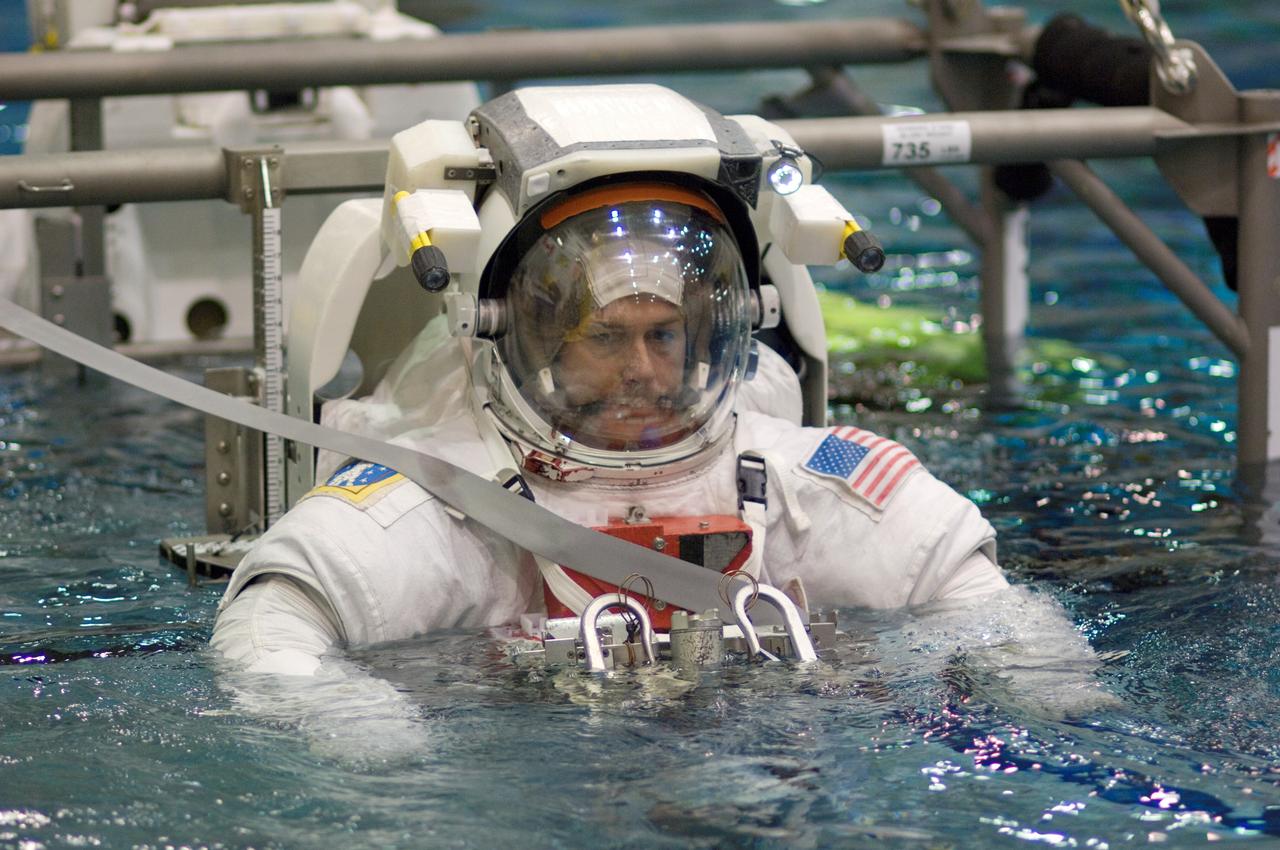
JSC2008-E-015735 (26 Feb. 2008) --- Astronauts Robert S. (Shane) Kimbrough and Stephen G. Bowen (partially obscured), both STS-126 mission specialists, are submerged in the waters of the Neutral Buoyancy Laboratory (NBL) near Johnson Space Center. Kimbrough and Bowen are attired in training versions of the Extravehicular Mobility Unit (EMU) spacesuit. SCUBA-equipped divers (out of frame) are in the water to assist the crewmembers in their rehearsal, intended to help prepare them for work on the exterior of the International Space Station.
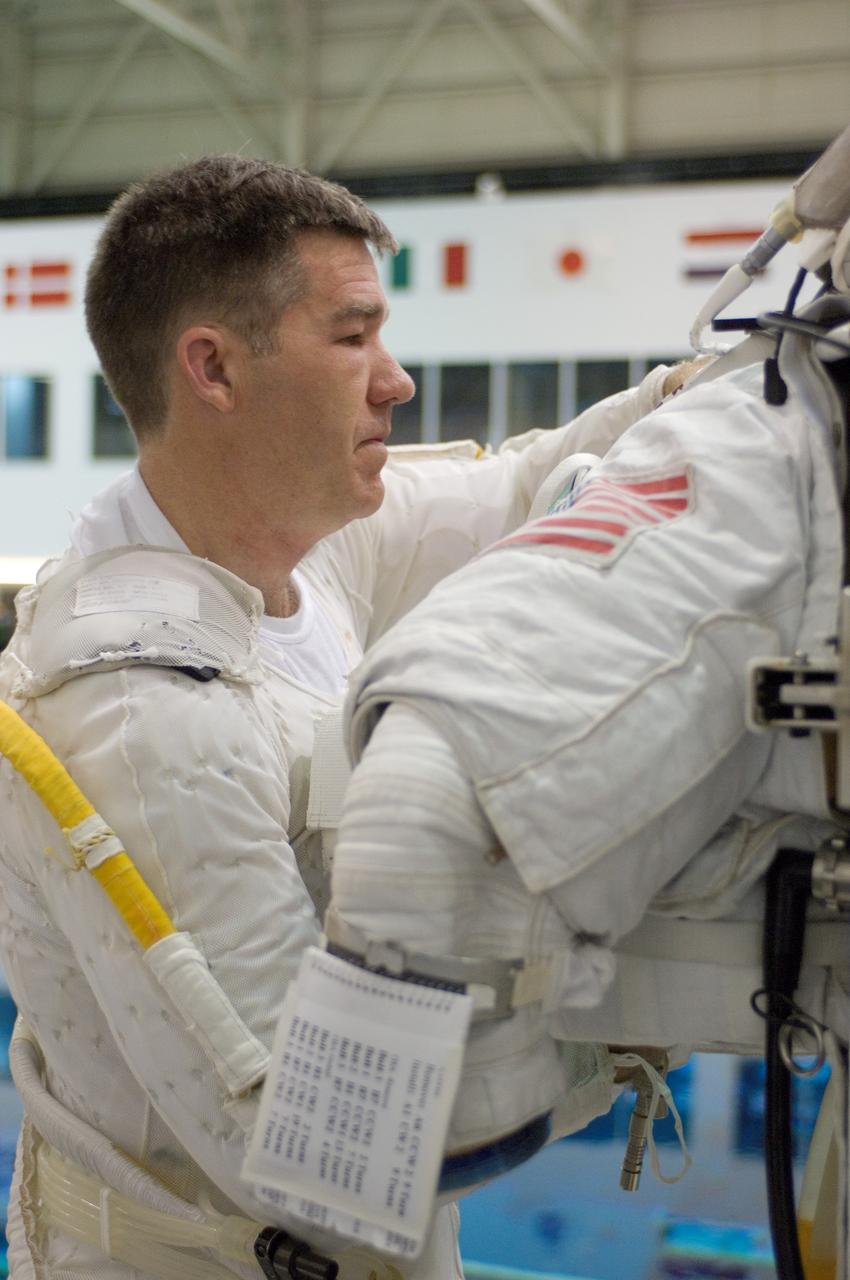
JSC2008-E-015704 (26 Feb. 2008) --- Astronaut Stephen G. Bowen, STS-126 mission specialist, works with a training version of the Extravehicular Mobility Unit (EMU) spacesuit in preparation for a training session in the waters of the Neutral Buoyancy Laboratory (NBL) near Johnson Space Center.
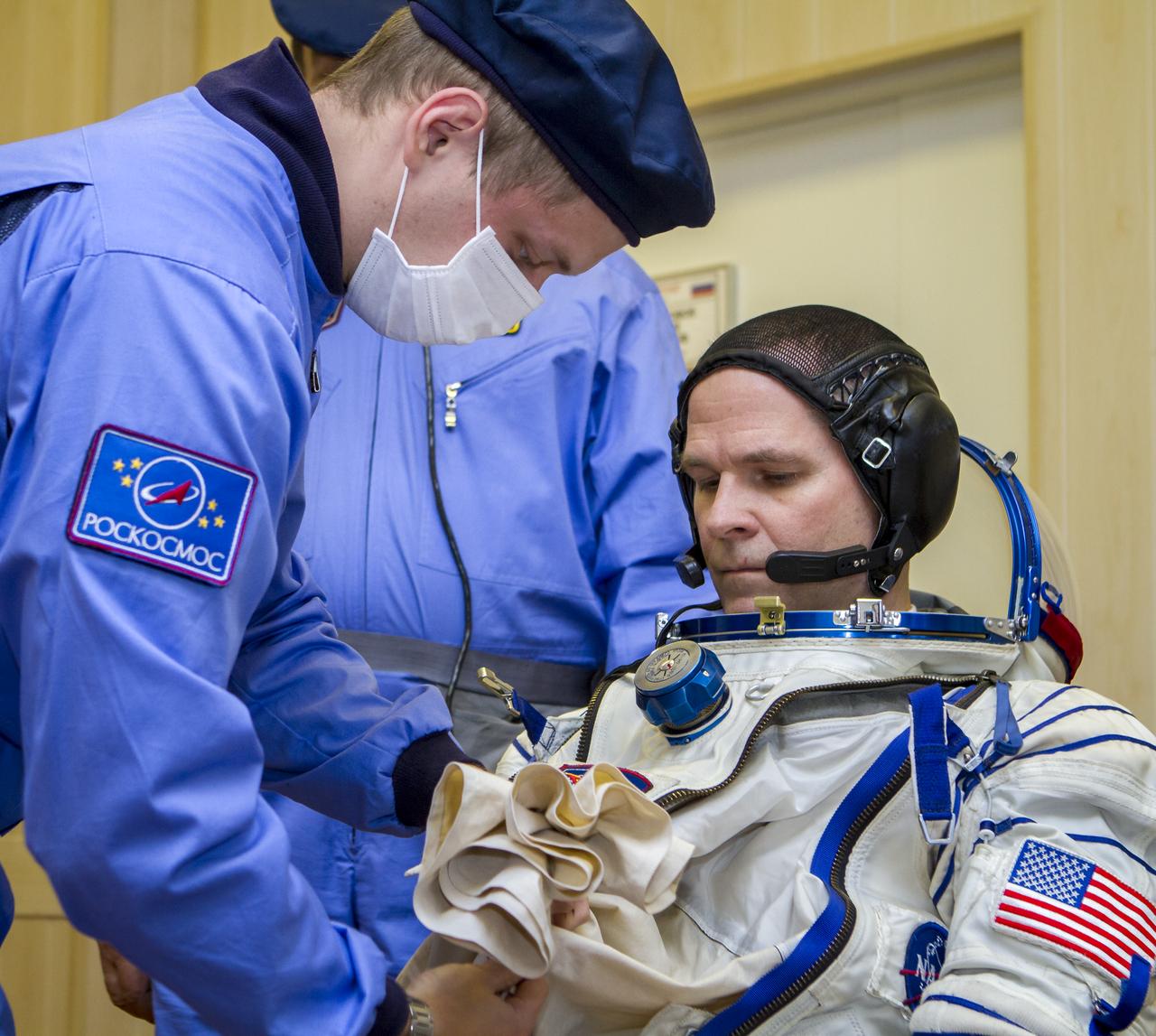
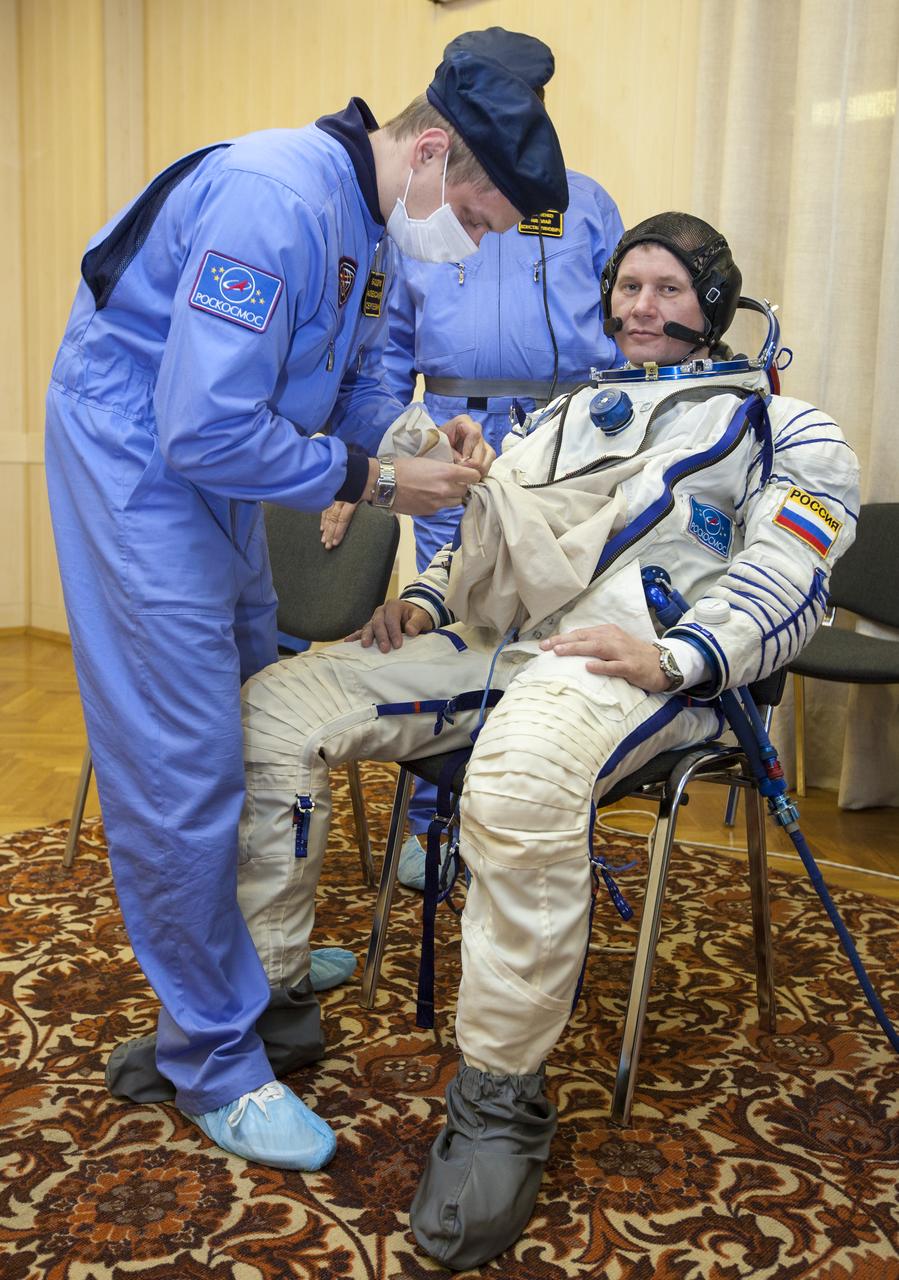
Expedition 33/34 Flight Engineer Kevin Ford is helped into his Russian Sokol suit as he and fellow cremates, Soyuz Commander Oleg Novitskiy, and Flight Engineer Evgeny Tarelkin prepare for their Soyuz launch to the International Space Station, on Tuesday, October 23, 2012, in Baikonur, Kazakhstan. Launch of the Soyuz rocket will send Ford, Novitskiy and Tarelkin on a five-month mission aboard the International Space Station. Photo Credit: (NASA/GCTC/Andrey Shelepin)
Expedition 33/34 Soyuz Commander Oleg Novitskiy is helped into his Russian Sokol suit as he and fellow cremates, Flight Engineer Kevin Ford, and Flight Engineer Evgeny Tarelkin prepare for their Soyuz launch to the International Space Station, on Tuesday, October 23, 2012, in Baikonur, Kazakhstan. Launch of the Soyuz rocket will send Ford, Novitskiy and Tarelkin on a five-month mission aboard the International Space Station. Photo Credit: (NASA/GCTC/Andrey Shelepin)
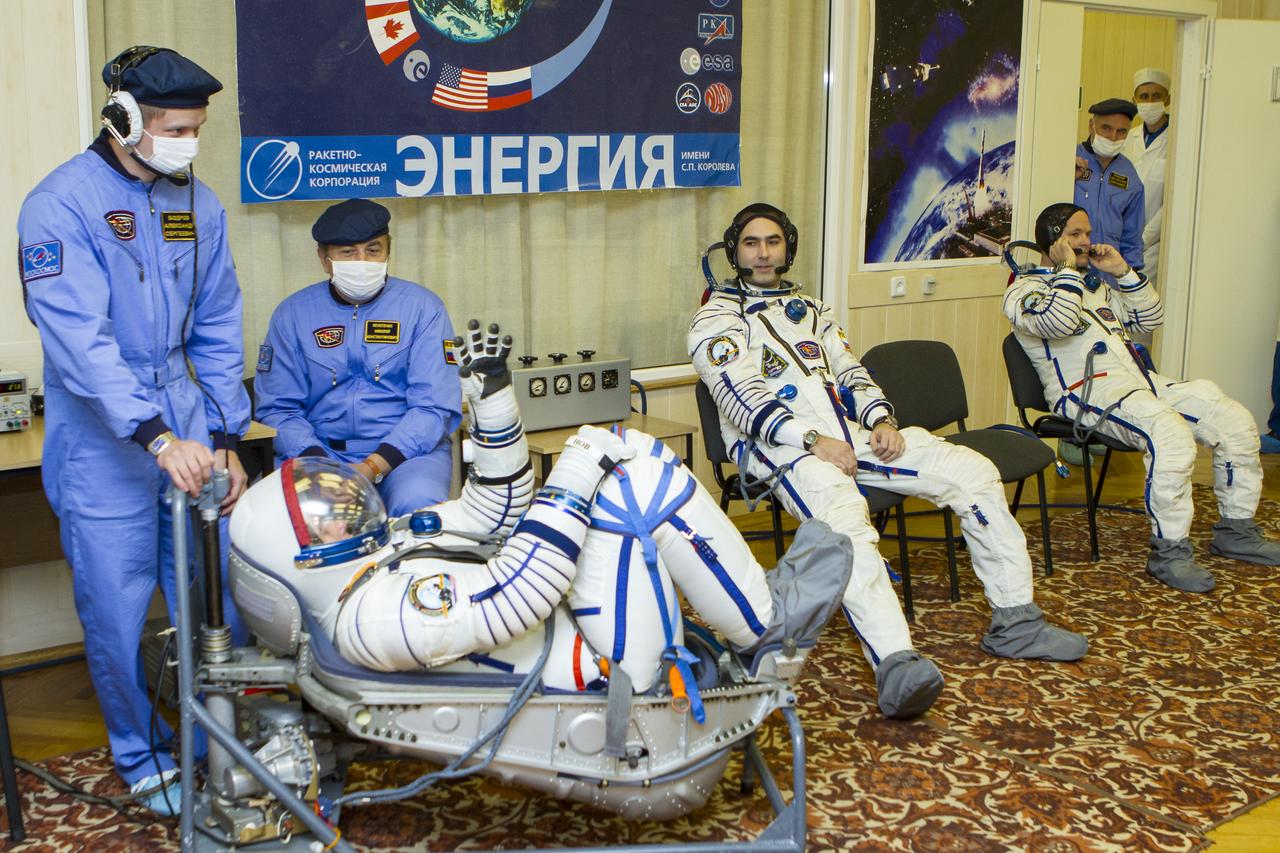
Expedition 33/34 Soyuz Commander Oleg Novitskiy has his Russian Sokol suit pressure checked ahead of his launch onboard a Soyuz TMA-06M spacecraft to the International Space Station with fellow cremates, Flight Engineer Kevin Ford, and Flight Engineer Evgeny Tarelkin, on Tuesday, October 23, 2012, in Baikonur, Kazakhstan. Launch of the Soyuz rocket will send Ford, Novitskiy and Tarelkin on a five-month mission aboard the International Space Station. Photo Credit: (NASA/GCTC/Andrey Shelepin)
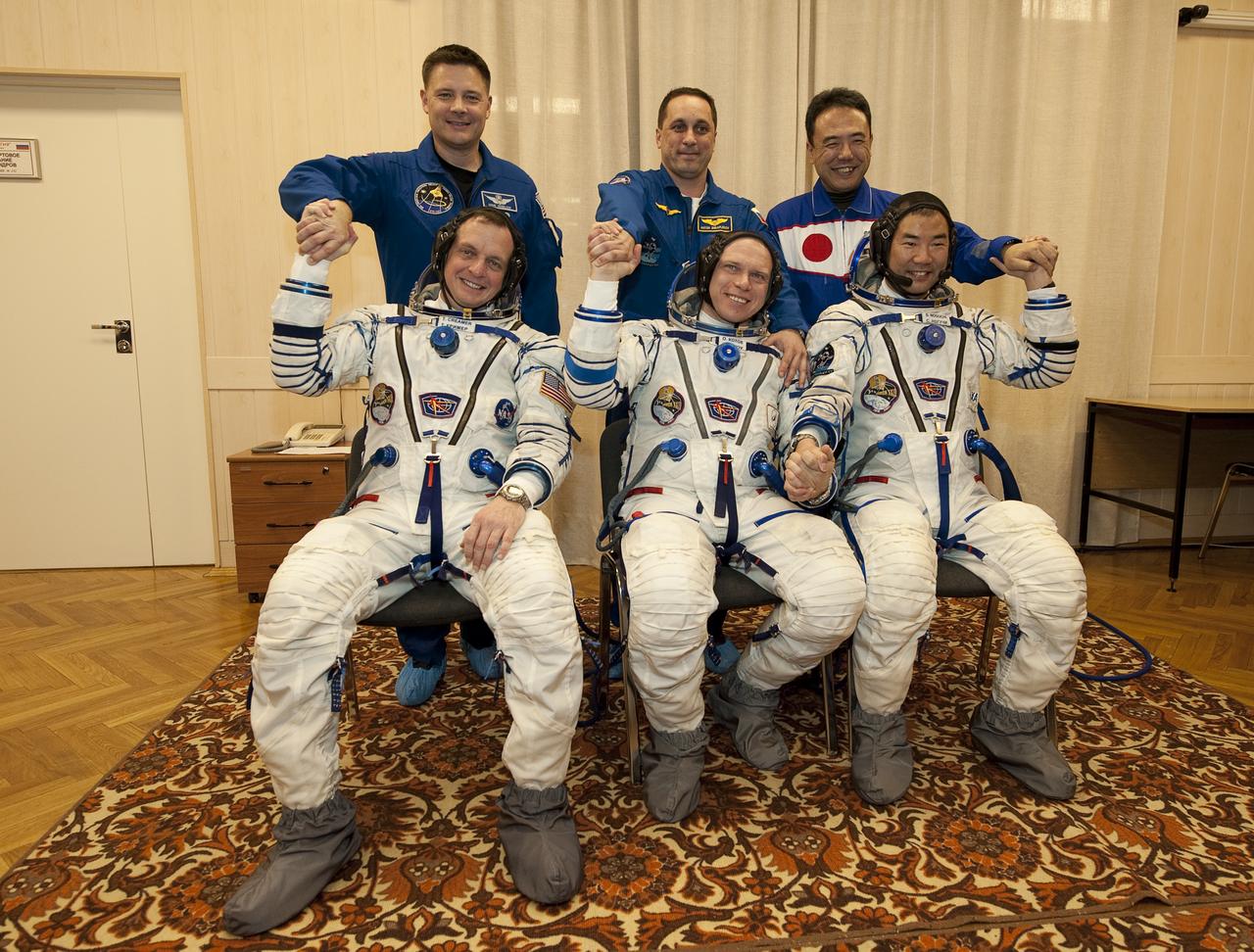
Expedition 22 crew members, seated from left, NASA Flight Engineer Timothy J. Creamer of the U.S., Soyuz Commander Oleg Kotov of Russia, and Flight Engineer Soichi Noguchi of Japan and their backup crew members, standing from left, NASA’s Doug Wheelock, Russian Anton Shkaplerov and Japan’s Satoshi Furakawa, pose for a group photo shortly after donning their flight suits a few hours before the scheduled launch of the Soyuz TMA-17 spacecraft from the Baikonur Cosmodrome in Kazakhstan, Sunday Dec. 20, 2009. Photo Credit: (NASA/Bill Ingalls)
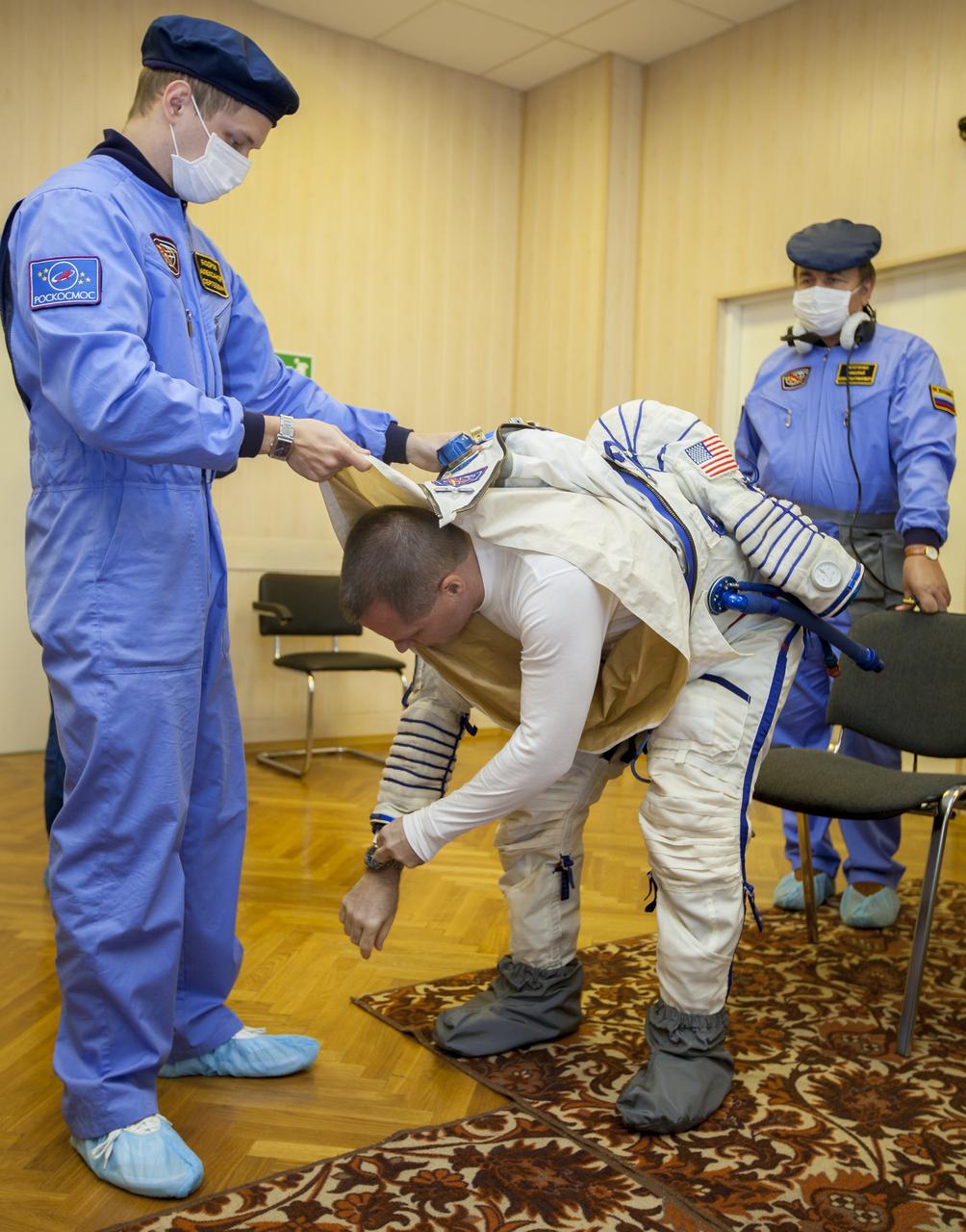
Expedition 33/34 Flight Engineer Kevin Ford is helped into his Russian Sokol suit as he and fellow cremates, Soyuz Commander Oleg Novitskiy, and Flight Engineer Evgeny Tarelkin prepare for their Soyuz launch to the International Space Station, on Tuesday, October 23, 2012, in Baikonur, Kazakhstan. Launch of the Soyuz rocket will send Ford, Novitskiy and Tarelkin on a five-month mission aboard the International Space Station. Photo Credit: (NASA/GCTC/Andrey Shelepin)
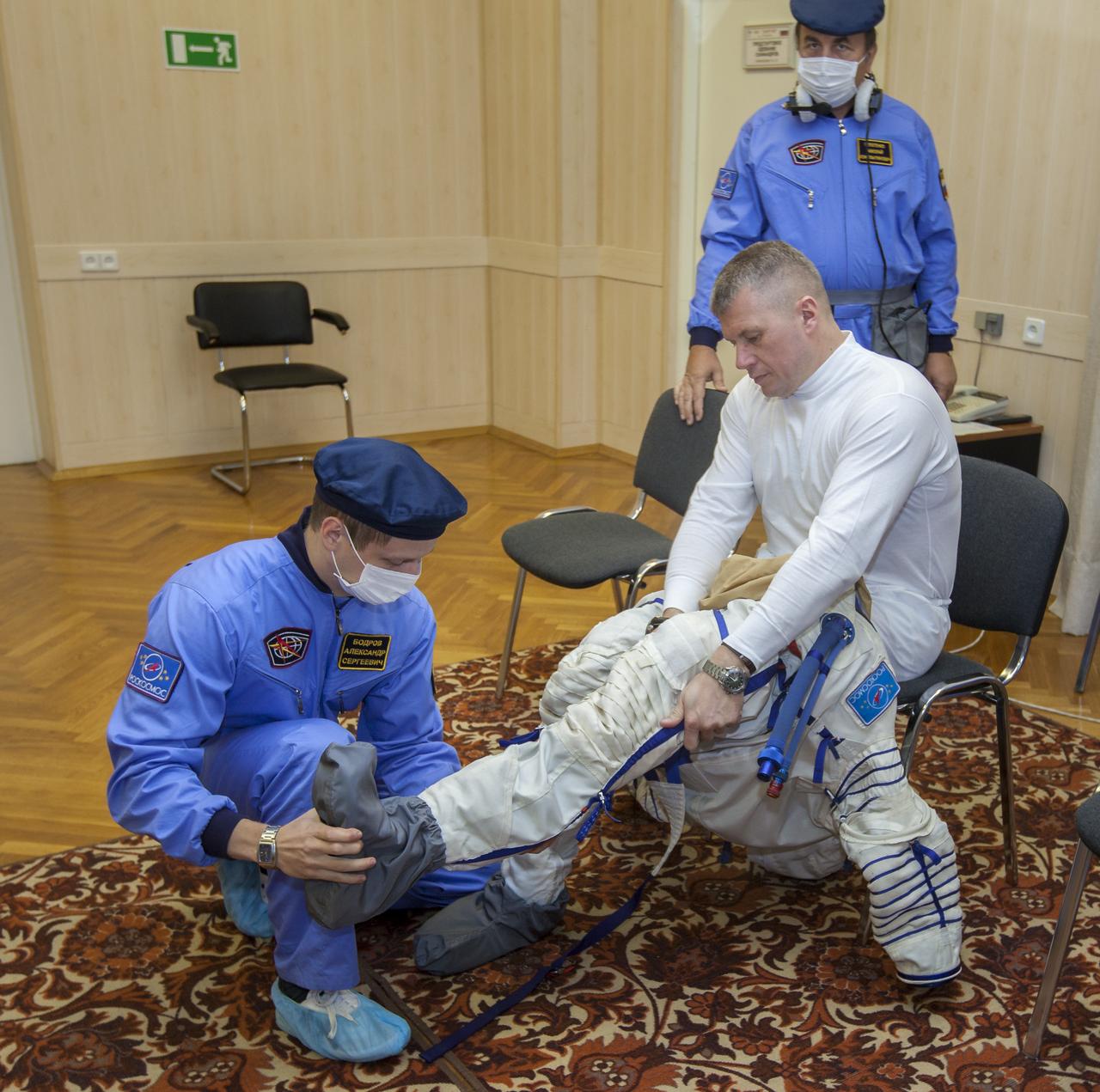
Expedition 33/34 Soyuz Commander Oleg Novitskiy is helped into his Russian Sokol suit as he and fellow cremates, Flight Engineer Kevin Ford, and Flight Engineer Evgeny Tarelkin prepare for their Soyuz launch to the International Space Station, on Tuesday, October 23, 2012, in Baikonur, Kazakhstan. Launch of the Soyuz rocket will send Ford, Novitskiy and Tarelkin on a five-month mission aboard the International Space Station. Photo Credit: (NASA/GCTC/Andrey Shelepin)
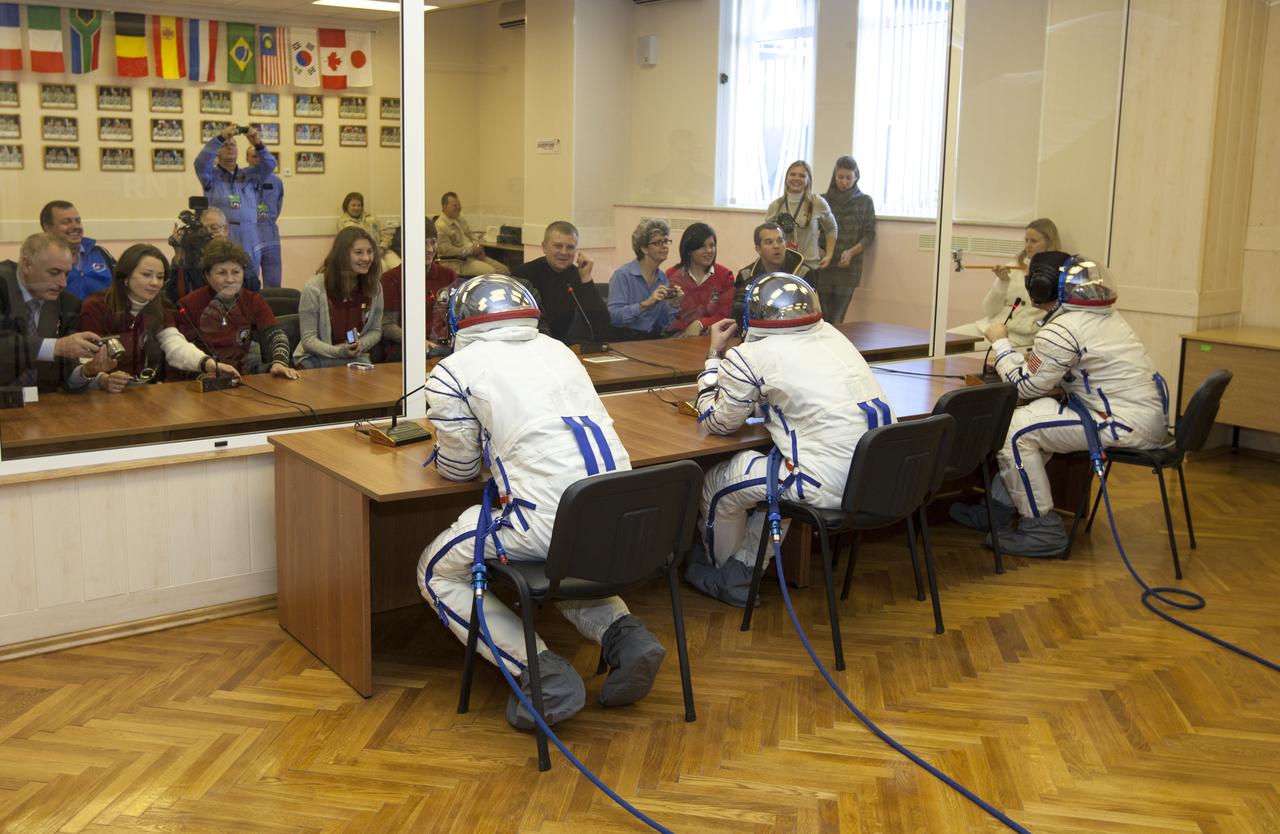
Expedition 33/34 crew members, Russian Cosmonaut and Soyuz Commander Oleg Novitskiy, left, Russian Cosmonaut and Flight Engineer Evgeny Tarelkin, and NASA Astronaut and Flight Engineer Kevin Ford, talk to family members through glass from the room where they just had their Russian Sokol suits pressure checked ahead of their launch onboard a Soyuz TMA-06M spacecraft to the International Space Station, Tuesday, October 23, 2012, in Baikonur, Kazakhstan. Launch of the Soyuz rocket will send Ford, Novitskiy and Tarelkin on a five-month mission aboard the International Space Station. Photo Credit: (NASA/GCTC/Andrey Shelepin)
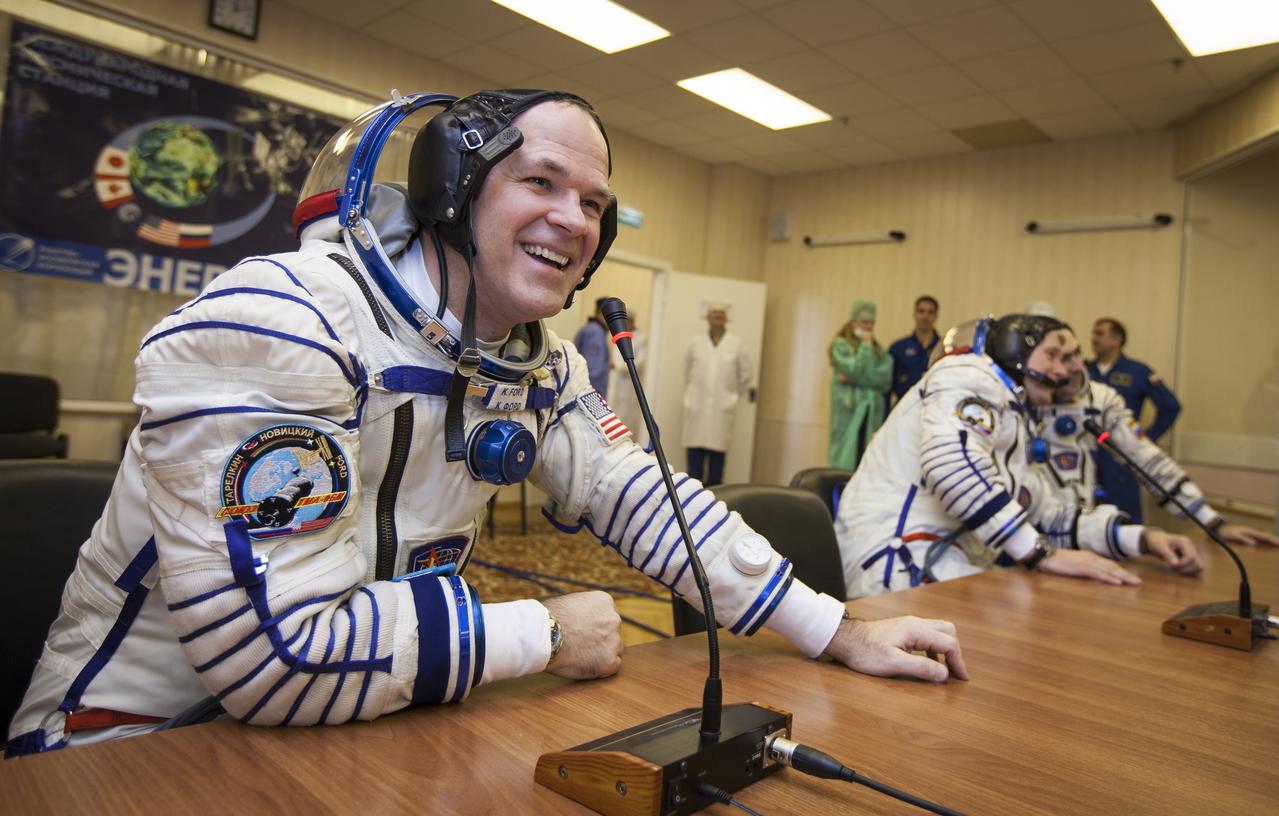
Expedition 33/34 crew members, NASA Astronaut and Flight Engineer Kevin Ford, left, Russian Cosmonaut and Soyuz Commander Oleg Novitskiy, and Russian Cosmonaut and Flight Engineer Evgeny Tarelkin, far right, talk to family members through glass from the room where they just had their Russian Sokol suits pressure checked ahead of their launch onboard a Soyuz TMA-06M spacecraft to the International Space Station, Tuesday, October 23, 2012, in Baikonur, Kazakhstan. Launch of the Soyuz rocket will send Ford, Novitskiy and Tarelkin on a five-month mission aboard the International Space Station. Photo Credit: (NASA/GCTC/Andrey Shelepin)
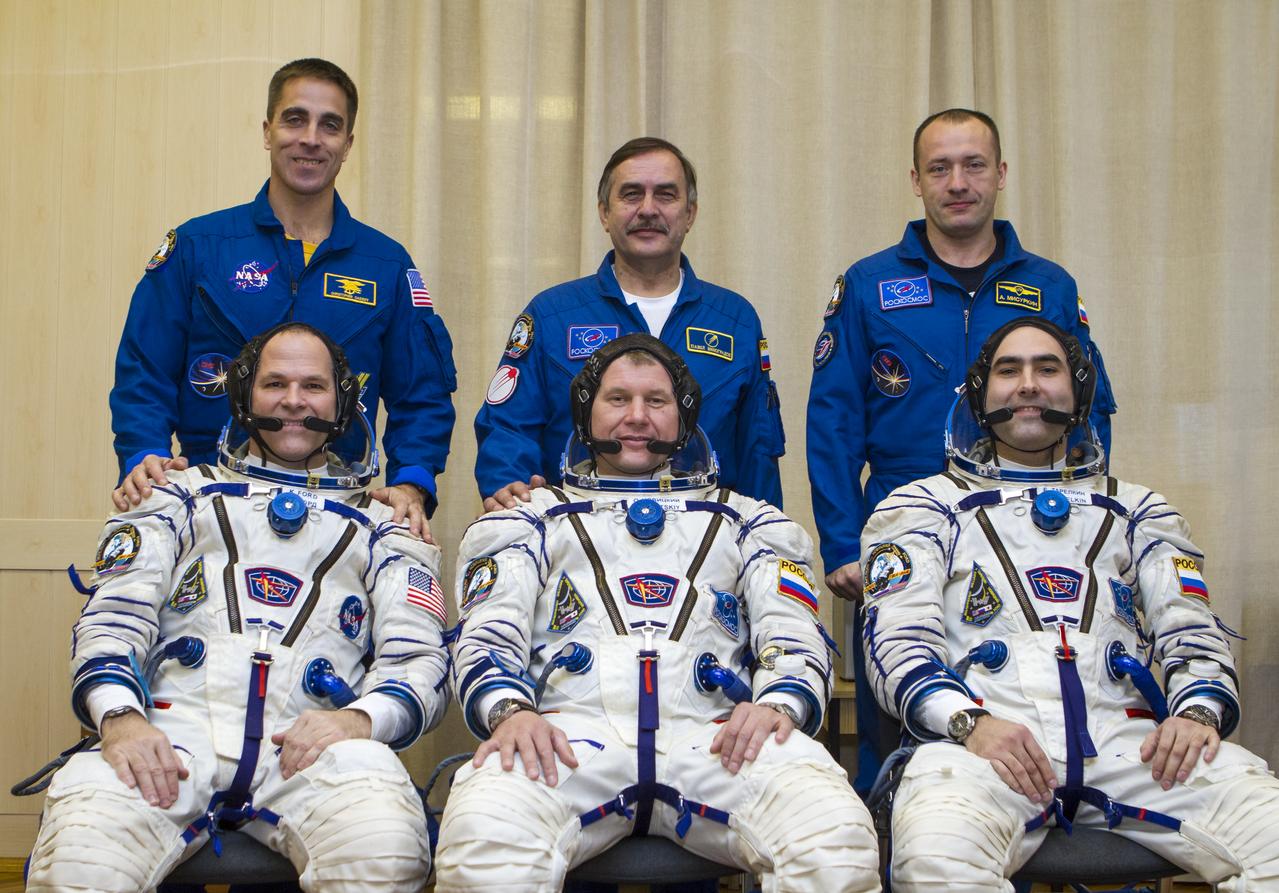
Expedition 33/34 crew members, NASA Astronaut and Flight Engineer Kevin Ford, seated left, Russian Cosmonaut and Soyuz Commander Oleg Novitskiy, and Russian Cosmonaut and Flight Engineer Evgeny Tarelkin, seated right, pose for a photograph with backup crew members, NASA astronaut Chris Cassidy, standing left, Russian cosmonaut Pavel Vinogradov and Russian cosmonaut Alexander Misurkin, standing right shortly after having had their Russian Sokol suits pressure checked ahead of their launch onboard a Soyuz TMA-06M spacecraft to the International Space Station, Tuesday, October 23, 2012, in Baikonur, Kazakhstan. Launch of the Soyuz rocket will send Ford, Novitskiy and Tarelkin on a five-month mission aboard the International Space Station. Photo Credit: (NASA/GCTC/Andrey Shelepin)
Expedition 33/34 Flight Engineer Evgeny Tarelkin is helped into his Russian Sokol suit as he and fellow cremates, Soyuz Commander Oleg Novitskiy, and Flight Engineer Kevin Ford prepare for their Soyuz launch to the International Space Station, on Tuesday, October 23, 2012, in Baikonur, Kazakhstan. Launch of the Soyuz rocket will send Ford, Novitskiy and Tarelkin on a five-month mission aboard the International Space Station. Photo Credit: (NASA/GCTC/Andrey Shelepin)
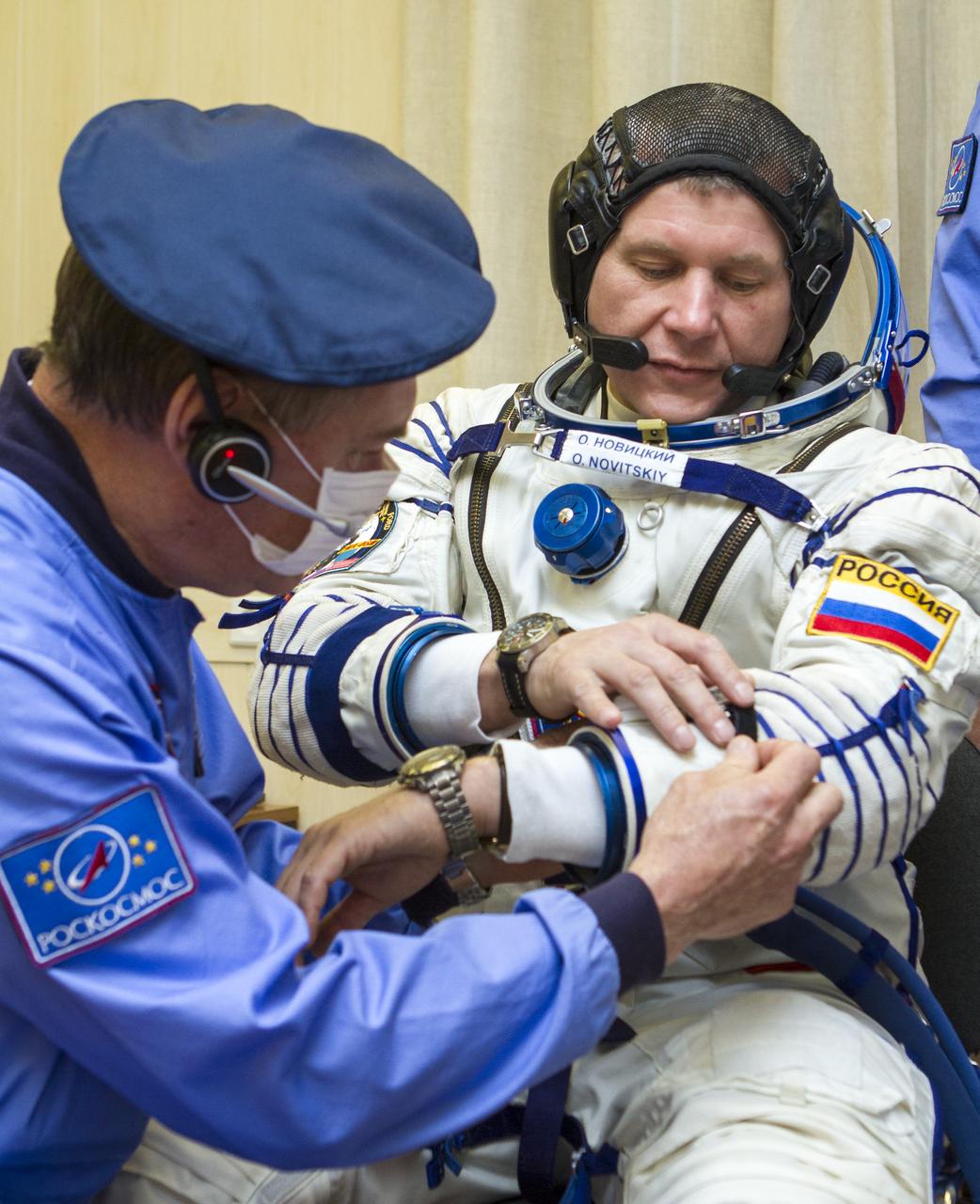
Expedition 33/34 Soyuz Commander Oleg Novitskiy is helped into his Russian Sokol suit as he and fellow cremates, Flight Engineer Kevin Ford, and Flight Engineer Evgeny Tarelkin prepare for their Soyuz launch to the International Space Station, on Tuesday, October 23, 2012, in Baikonur, Kazakhstan. Launch of the Soyuz rocket will send Ford, Novitskiy and Tarelkin on a five-month mission aboard the International Space Station. Photo Credit: (NASA/GCTC/Andrey Shelepin)
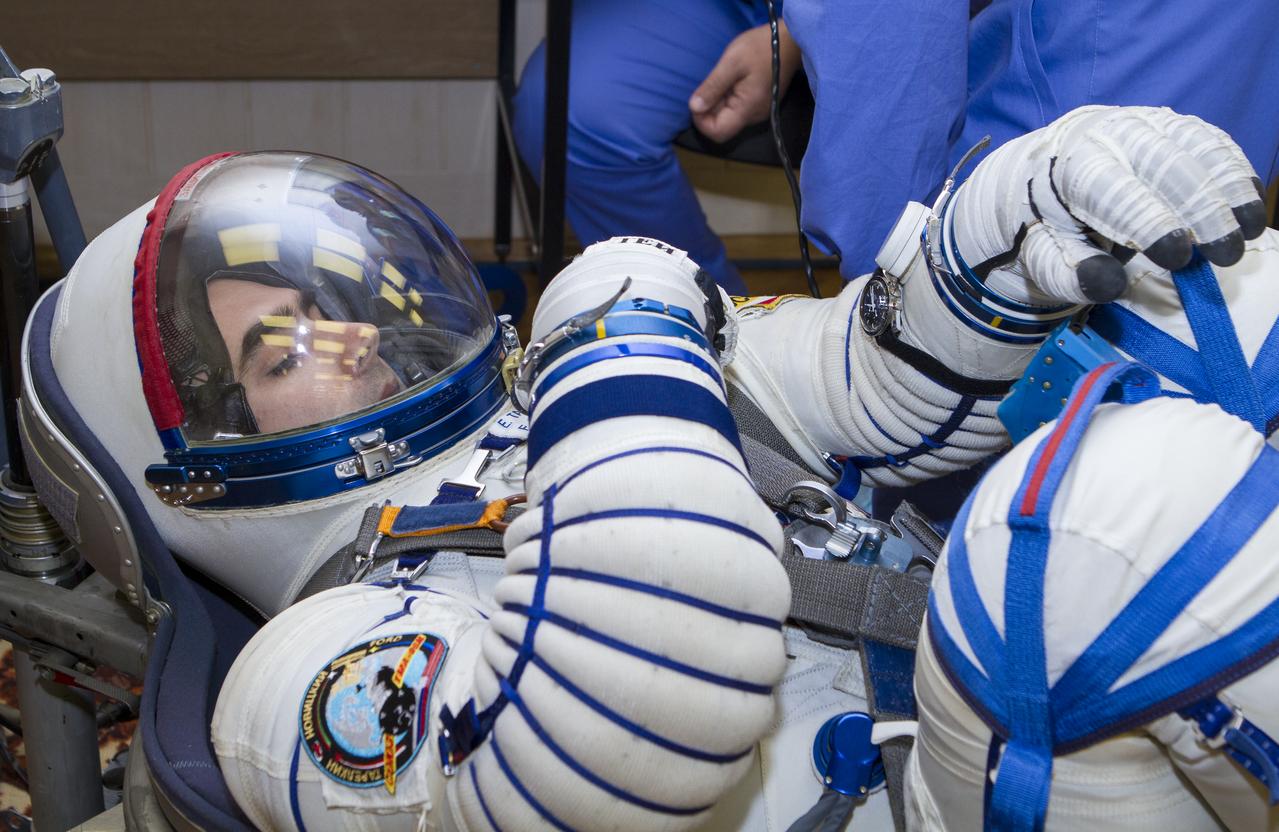
Expedition 33/34 Flight Engineer Evgeny Tarelkin has his Russian Sokol suit pressure checked ahead of his launch onboard a Soyuz TMA-06M spacecraft to the International Space Station with fellow cremates, Flight Engineer Kevin Ford, and Soyuz Commander Oleg Novitskiy, on Tuesday, October 23, 2012, in Baikonur, Kazakhstan. Launch of the Soyuz rocket will send Ford, Novitskiy and Tarelkin on a five-month mission aboard the International Space Station. Photo Credit: (NASA/GCTC/Andrey Shelepin)
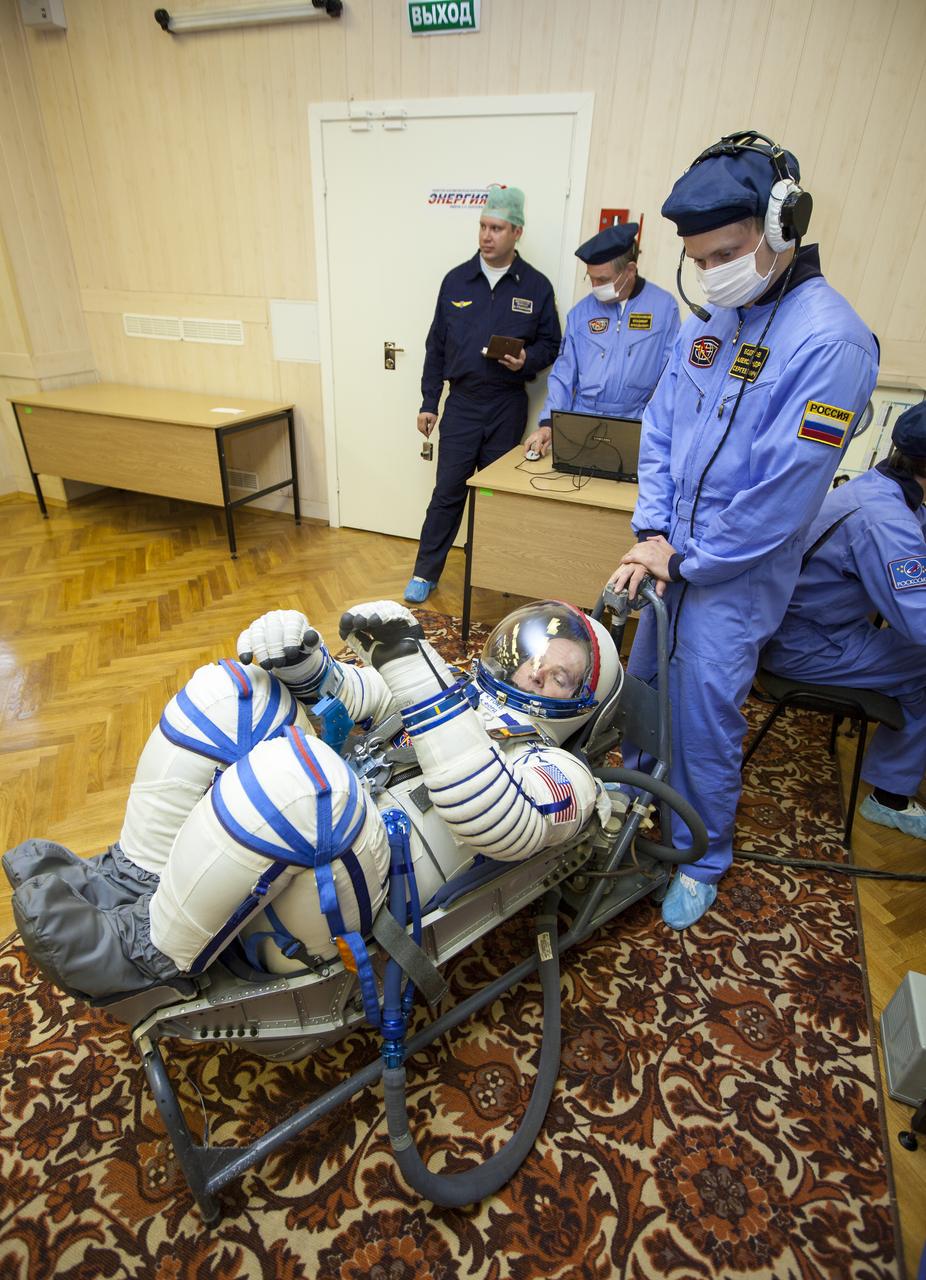
Expedition 33/34 Flight Engineer Kevin Ford has his Russian Sokol suit pressure checked ahead of his launch onboard a Soyuz TMA-06M spacecraft to the International Space Station with fellow cremates, Flight Engineer Evgeny Tarelkin, and Soyuz Commander Oleg Novitskiy, on Tuesday, October 23, 2012, in Baikonur, Kazakhstan. Launch of the Soyuz rocket will send Ford, Novitskiy and Tarelkin on a five-month mission aboard the International Space Station. Photo Credit: (NASA/GCTC/Andrey Shelepin)
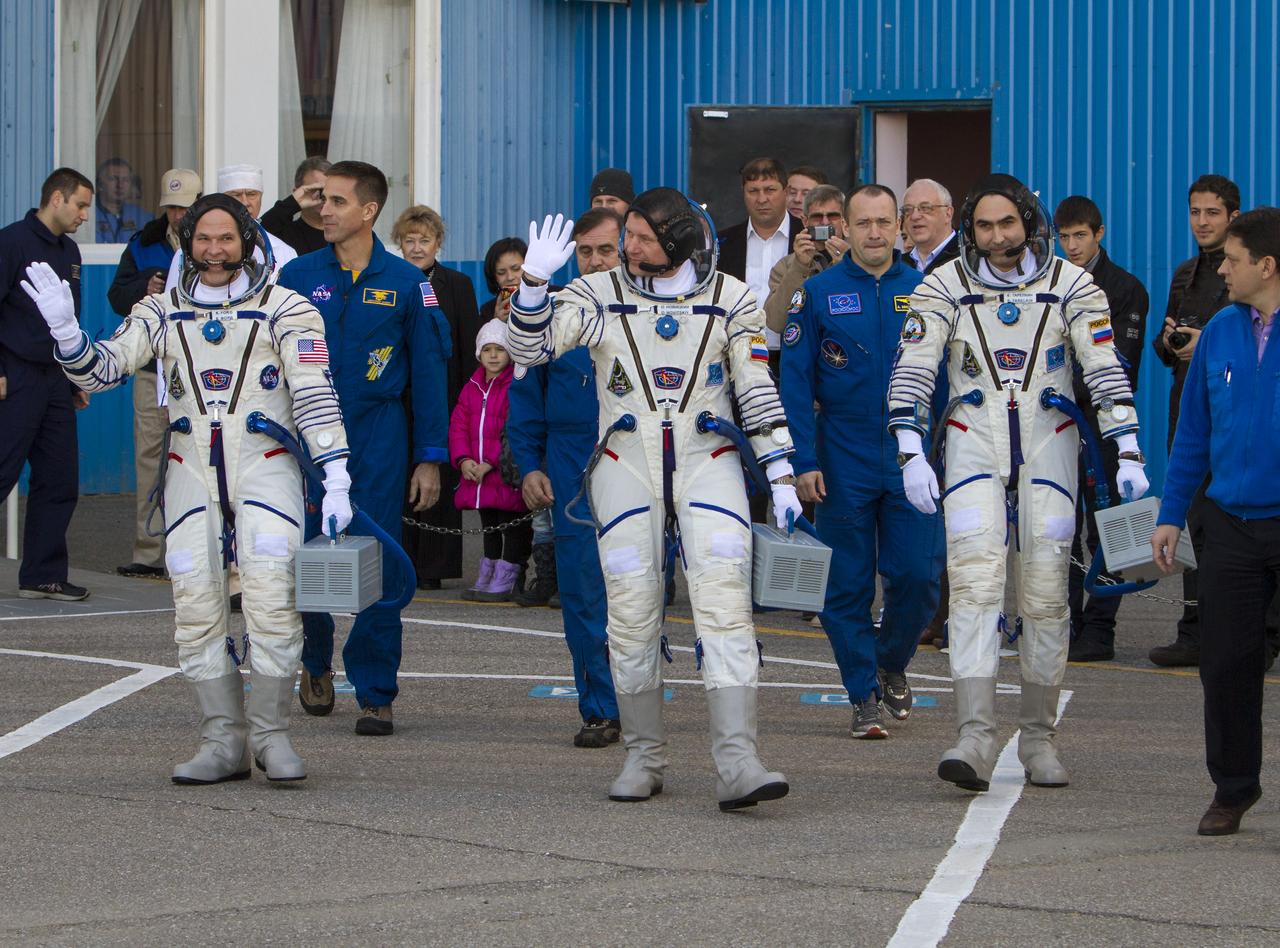
Expedition 33/34 crew members, NASA Astronaut and Flight Engineer Kevin Ford, left, Russian Cosmonaut and Soyuz Commander Oleg Novitskiy, and Russian Cosmonaut and Flight Engineer Evgeny Tarelkin, right, walk out of building 254 of the Baikonur Cosmodrome to board a bus that will take them to launch site 31 for their launch onboard a Soyuz TMA-06M spacecraft to the International Space Station, Tuesday, October 23, 2012, in Baikonur, Kazakhstan. Launch of the Soyuz rocket will send Ford, Novitskiy and Tarelkin on a five-month mission aboard the International Space Station. Photo Credit: (NASA/GCTC/Andrey Shelepin)
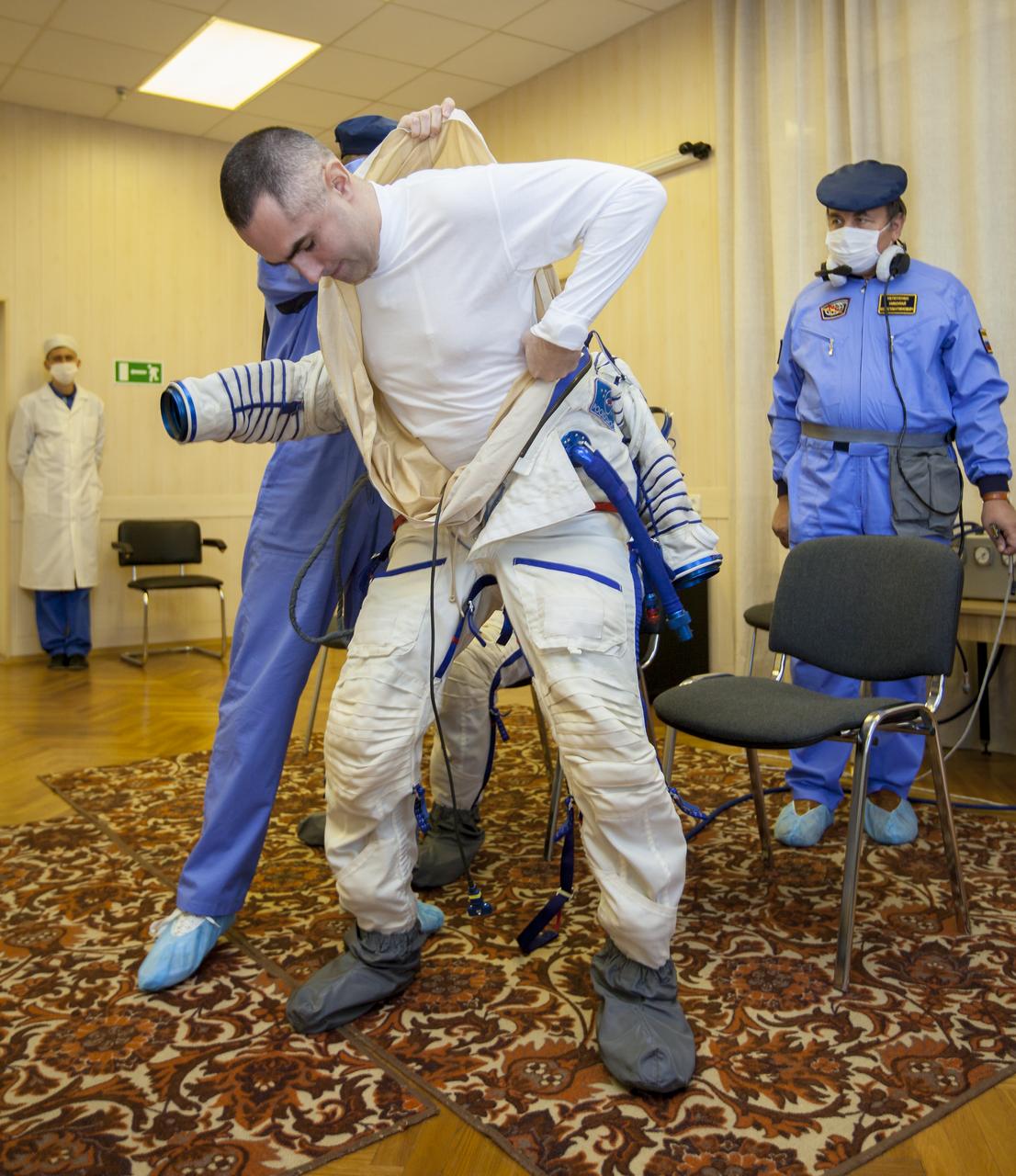
Expedition 33/34 Flight Engineer Evgeny Tarelkin is helped into his Russian Sokol suit as he and fellow cremates, Soyuz Commander Oleg Novitskiy, and Flight Engineer Kevin Ford prepare for their Soyuz launch to the International Space Station, on Tuesday, October 23, 2012, in Baikonur, Kazakhstan. Launch of the Soyuz rocket will send Ford, Novitskiy and Tarelkin on a five-month mission aboard the International Space Station. Photo Credit: (NASA/GCTC/Andrey Shelepin)
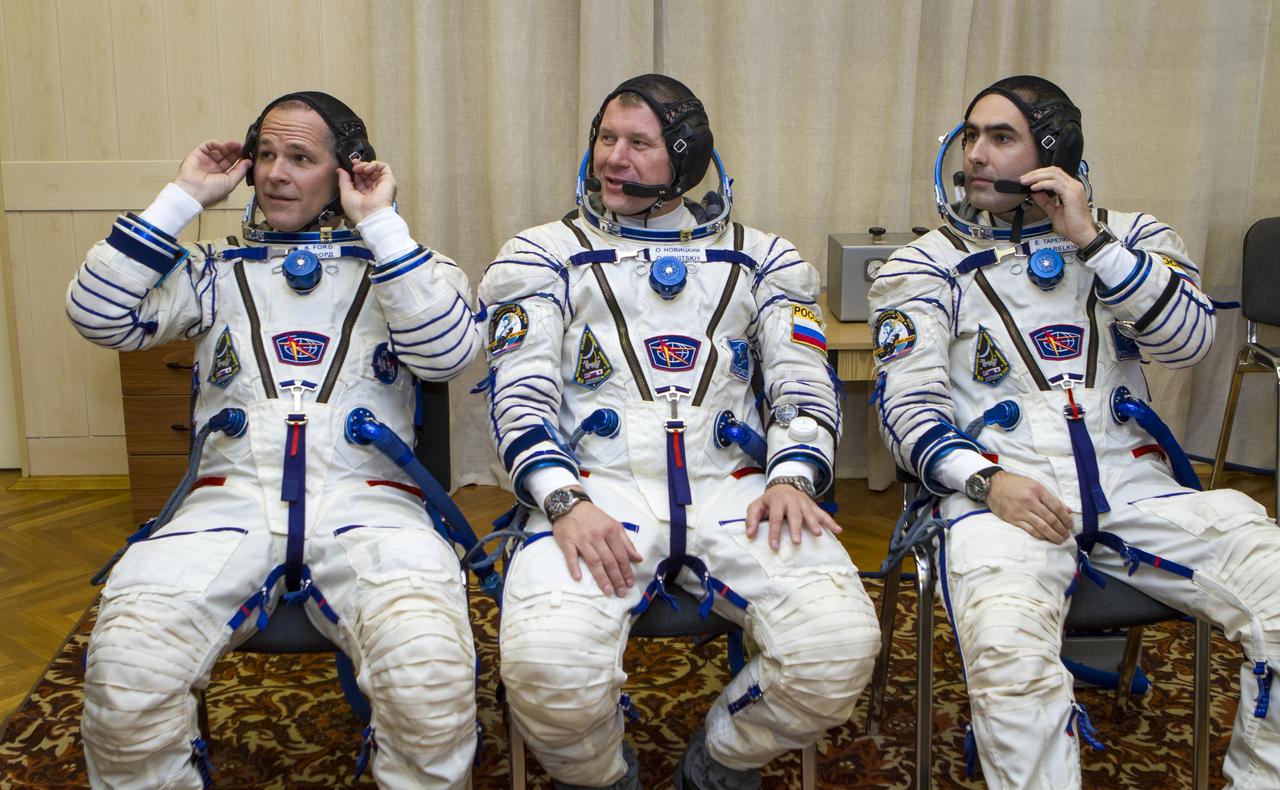
Expedition 33/34 crew members, NASA Astronaut and Flight Engineer Kevin Ford, left, Russian Cosmonaut and Soyuz Commander Oleg Novitskiy, and Russian Cosmonaut and Flight Engineer Evgeny Tarelkin, right, talk with colleagues shortly after having had their Russian Sokol suits pressure checked ahead of their launch onboard a Soyuz TMA-06M spacecraft to the International Space Station, Tuesday, October 23, 2012, in Baikonur, Kazakhstan. Launch of the Soyuz rocket will send Ford, Novitskiy and Tarelkin on a five-month mission aboard the International Space Station. Photo Credit: (NASA/GCTC/Andrey Shelepin)
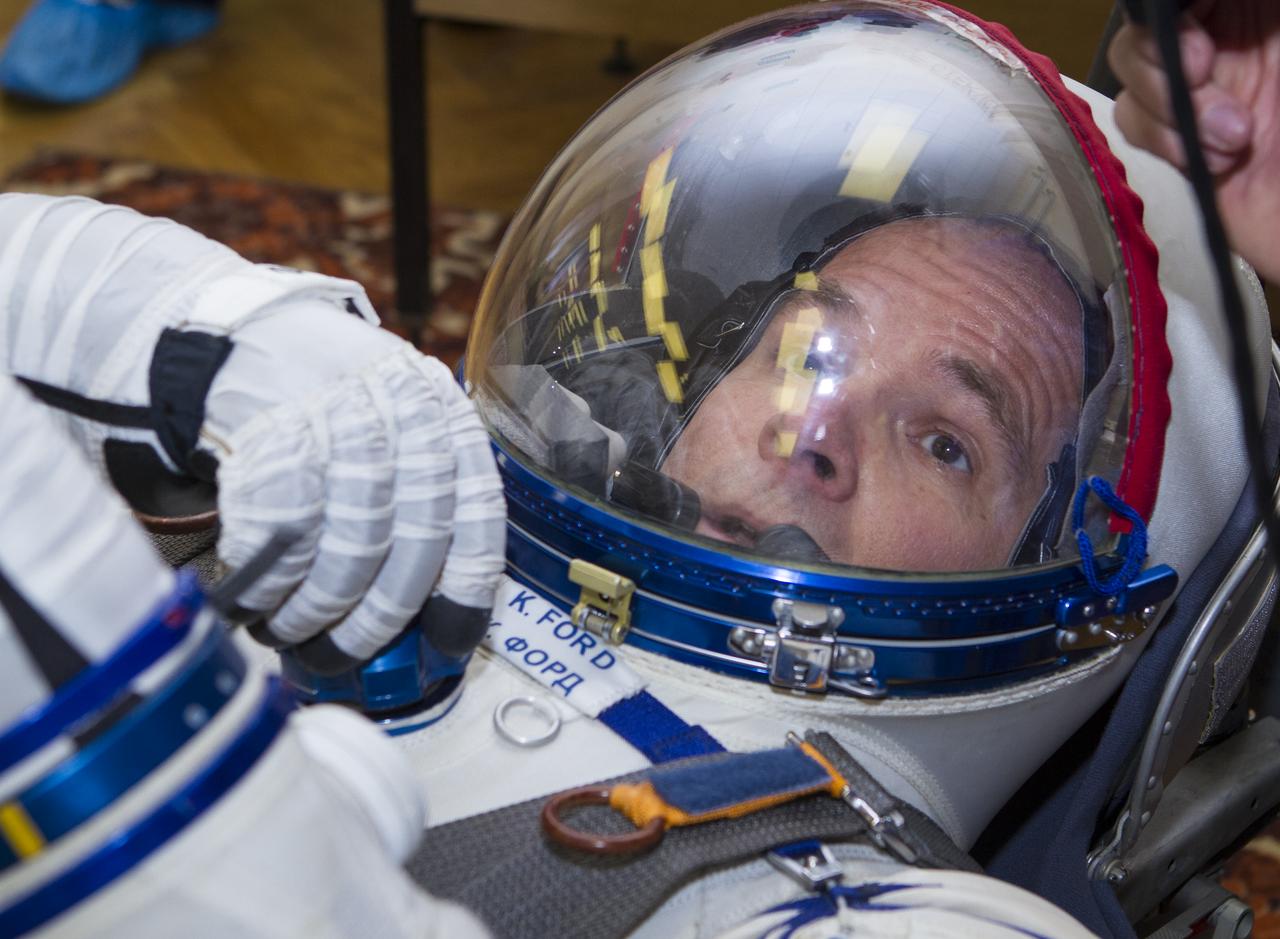
Expedition 33/34 Flight Engineer Kevin Ford has his Russian Sokol suit pressure checked ahead of his launch onboard a Soyuz TMA-06M spacecraft to the International Space Station with fellow cremates, Flight Engineer Evgeny Tarelkin, and Soyuz Commander Oleg Novitskiy, on Tuesday, October 23, 2012, in Baikonur, Kazakhstan. Launch of the Soyuz rocket will send Ford, Novitskiy and Tarelkin on a five-month mission aboard the International Space Station. Photo Credit: (NASA/GCTC/Andrey Shelepin)
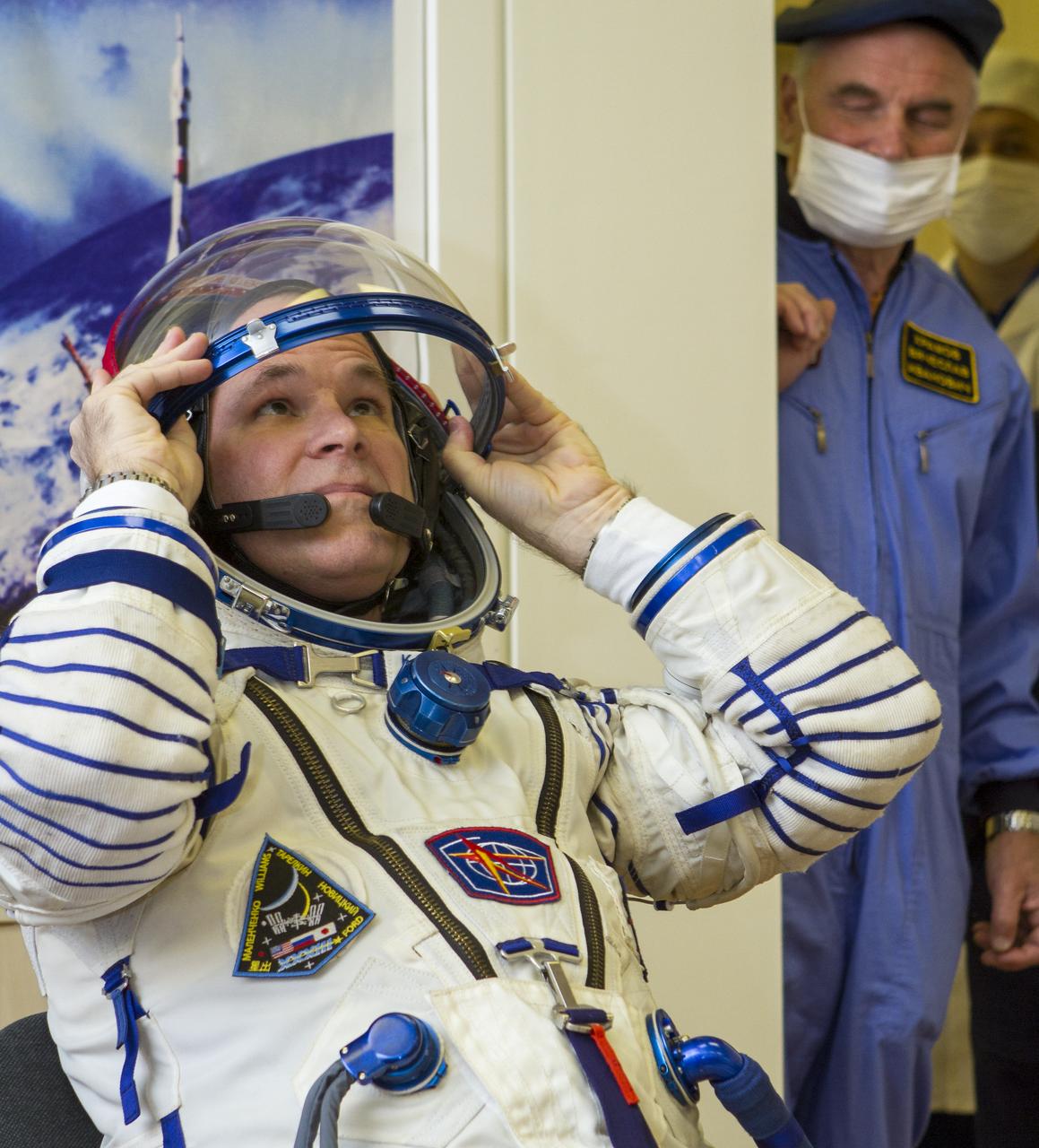
Expedition 33/34 Soyuz Commander Oleg Novitskiy has his Russian Sokol suit pressure checked ahead of his launch onboard a Soyuz TMA-06M spacecraft to the International Space Station with fellow cremates, Flight Engineer Kevin Ford, and Flight Engineer Evgeny Tarelkin, on Tuesday, October 23, 2012, in Baikonur, Kazakhstan. Launch of the Soyuz rocket will send Ford, Novitskiy and Tarelkin on a five-month mission aboard the International Space Station. Photo Credit: (NASA/GCTC/Andrey Shelepin)
Expedition 33/34 Flight Engineer Kevin Ford waits to have his Russian Sokol suit pressure checked ahead of his launch to the International Space Station with fellow cremates, Soyuz Commander Oleg Novitskiy, and Flight Engineer Evgeny Tarelkin , on Tuesday, October 23, 2012, in Baikonur, Kazakhstan. Launch of the Soyuz rocket will send Ford, Novitskiy and Tarelkin on a five-month mission aboard the International Space Station. Photo Credit: (NASA/GCTC/Andrey Shelepin)
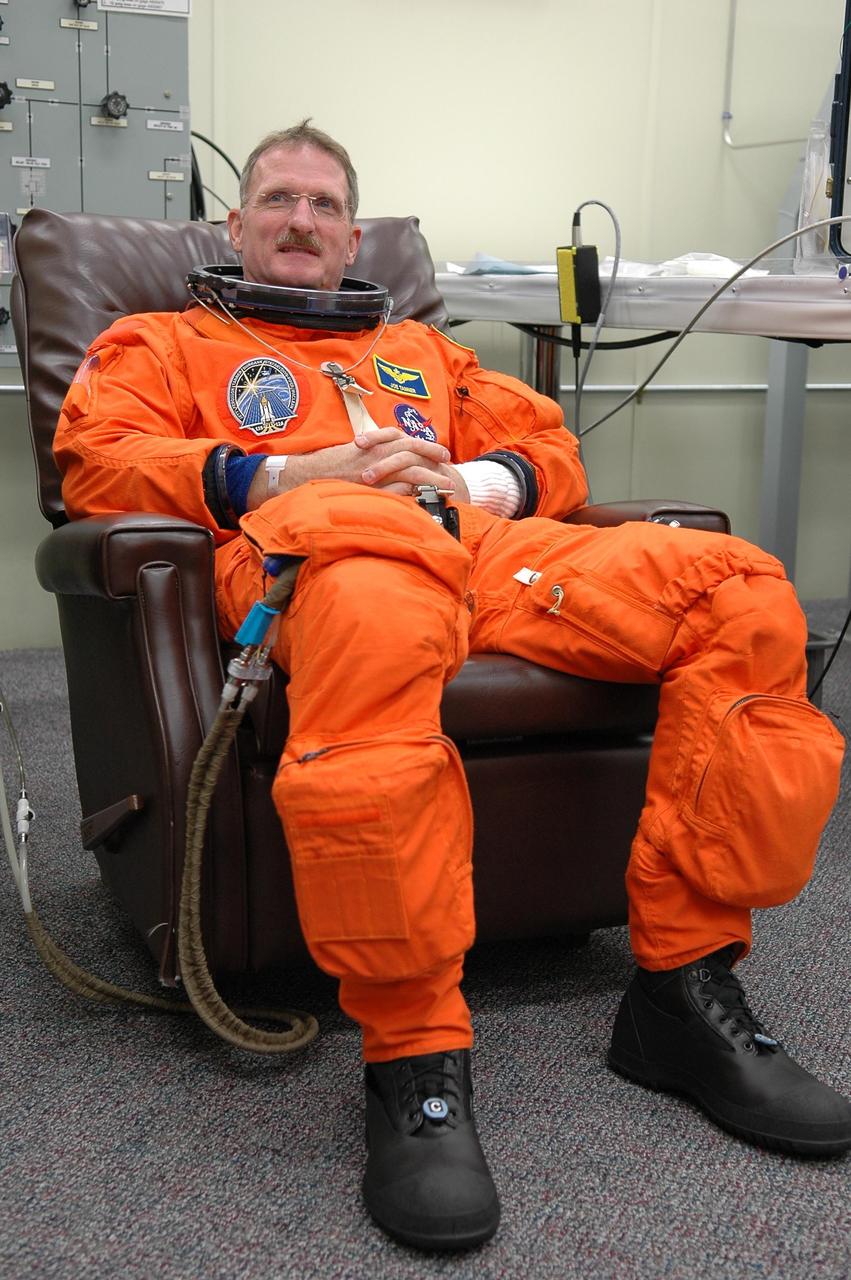
KENNEDY SPACE CENTER, FLA. - In the Operations and Checkout Building at NASA Kennedy Space Center, STS-115 Mission Specialist Joseph Tanner dons his launch and re-entry suit before heading to the launch pad. Tanner is making his fourth shuttle flight on this mission to the International Space Station aboard Space Shuttle Atlantis. On its second attempt for launch, Atlantis is scheduled to lift off at 11:41 a.m. EDT today from Launch Pad 39B. During the STS-115 mission, Atlantis' astronauts will deliver and install the 17.5-ton, bus-sized P3/P4 integrated truss segment on the station. The girder-like truss includes a set of giant solar arrays, batteries and associated electronics and will provide one-fourth of the total power-generation capability for the completed station. This mission is the 116th space shuttle flight, the 27th flight for orbiter Atlantis, and the 19th U.S. flight to the ISS. STS-115 is scheduled to last 11 days with a planned landing at KSC. Photo credit: NASA/Kim Shiflett
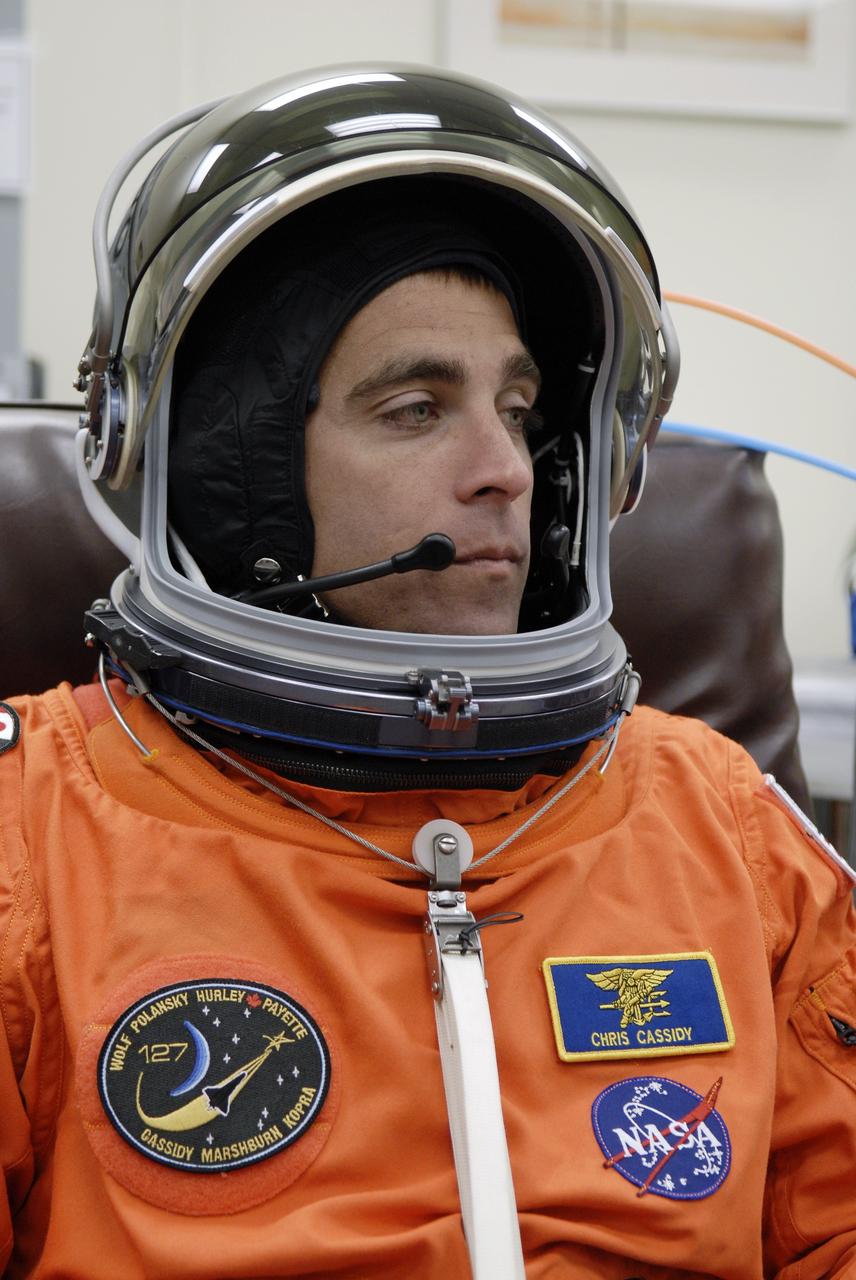
CAPE CANAVERAL, Fla. – In the Operations and Checkout Building at NASA's Kennedy Space Center in Florida, STS-127 Mission Specialist Christopher Cassidy checks the communication system in his helmet. He and other crew members will be heading for Launch Pad 39A for a simulated launch countdown. The crew is at Kennedy for a launch dress rehearsal called the terminal countdown demonstration test, or TCDT, which includes emergency exit training and equipment familiarization. Endeavour's STS-127 mission is the final of three flights dedicated to the assembly of the Japanese Kibo laboratory complex on the International Space Station. Endeavour's launch is scheduled for June 13 at 7:17 a.m. EDT. Photo credit: NASA/Kim Shiflett
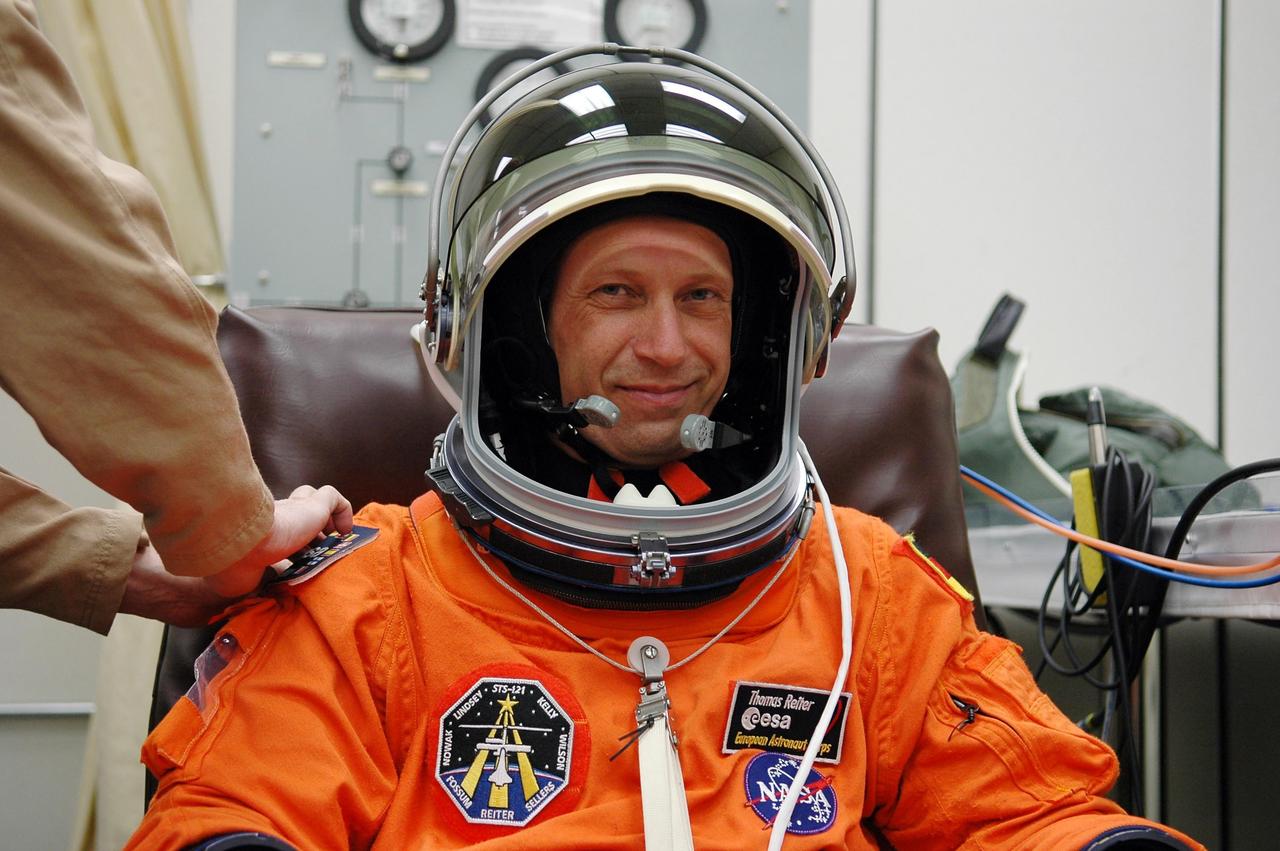
KENNEDY SPACE CENTER, FLA. - Prior to the third launch attempt on mission STS-121, Mission Specialist Thomas Reiter is suiting up before heading to Launch Pad 39B. The July 2 launch attempt was scrubbed due to the presence of showers and thunderstorms within the surrounding area of the launch site. The launch of Space Shuttle Discovery on mission STS-121 is the 115th shuttle flight and the 18th U.S. flight to the International Space Station. During the 12-day mission, the STS-121 crew will test new equipment and procedures to improve shuttle safety, as well as deliver supplies and make repairs to the International Space Station. Photo credit: NASA/Kim Shiflett
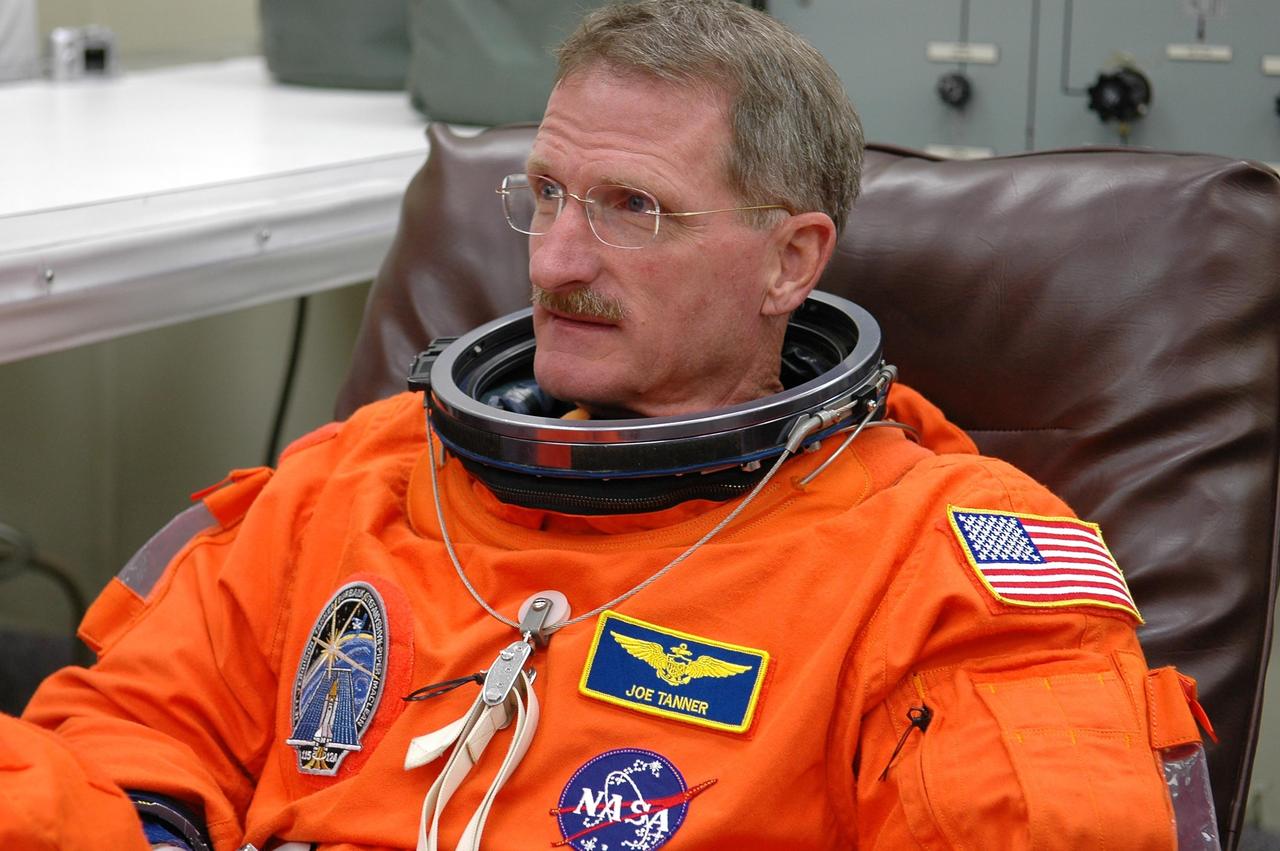
KENNEDY SPACE CENTER, FLA. - In the Operations and Checkout Building at NASA Kennedy Space Center, STS-115 Mission Specialist Joseph Tanner waits to complete suiting up before heading to the launch pad. Tanner is making his fourth shuttle flight on this mission to the International Space Station aboard Space Shuttle Atlantis. On its second attempt for launch, Atlantis is scheduled to lift off at 11:41 a.m. EDT today from Launch Pad 39B. During the STS-115 mission, Atlantis' astronauts will deliver and install the 17.5-ton, bus-sized P3/P4 integrated truss segment on the station. The girder-like truss includes a set of giant solar arrays, batteries and associated electronics and will provide one-fourth of the total power-generation capability for the completed station. This mission is the 116th space shuttle flight, the 27th flight for orbiter Atlantis, and the 19th U.S. flight to the ISS. STS-115 is scheduled to last 11 days with a planned landing at KSC. Photo credit: NASA/Kim Shiflett
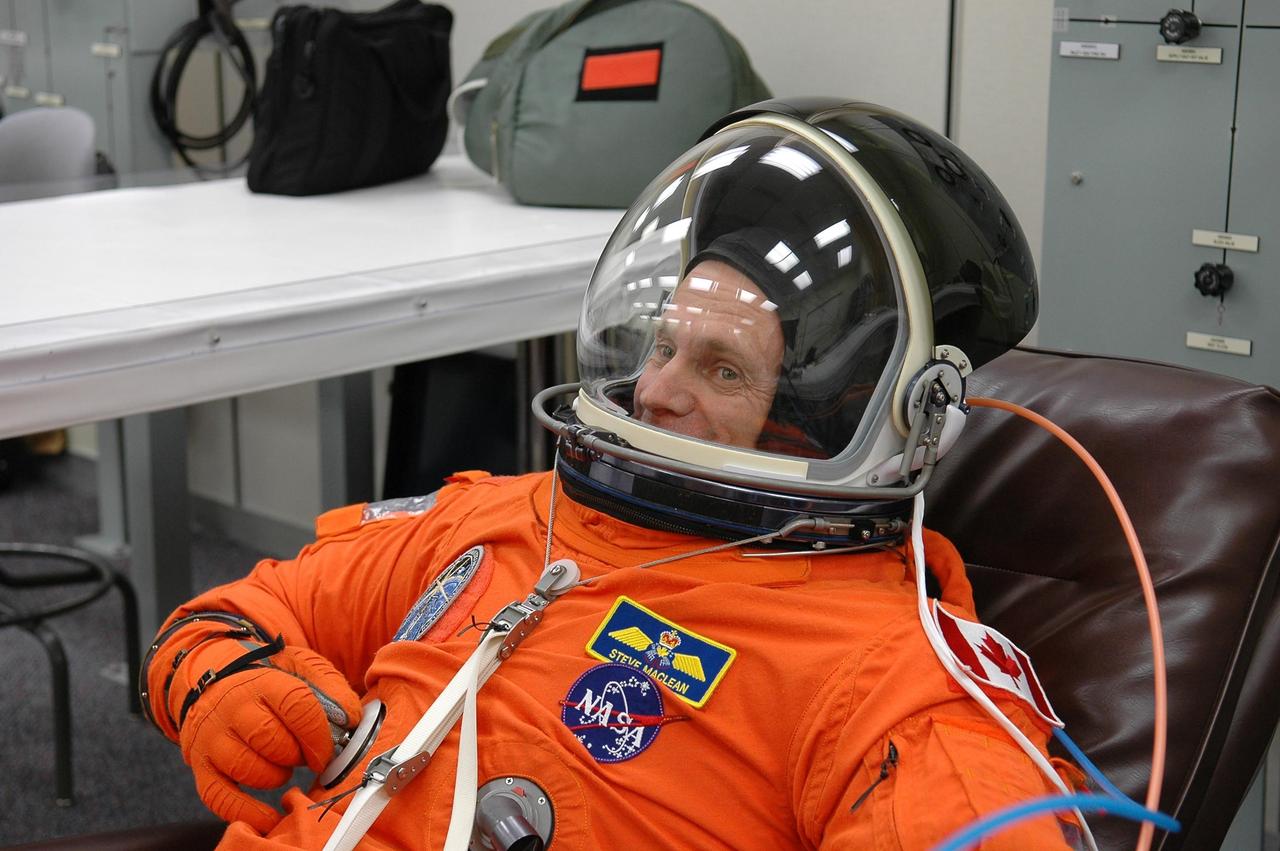
KENNEDY SPACE CENTER, FLA. - In the Operations and Checkout Building at NASA Kennedy Space Center, STS-115 Mission Specialist Steven MacLean dons his launch and re-entry suit before heading to the launch pad. MacLean is with the Canadian Space Agency. MacLean is making his second shuttle flight on this mission to the International Space Station aboard Space Shuttle Atlantis. On its second attempt for launch, Atlantis is scheduled to lift off at 11:41 a.m. EDT today from Launch Pad 39B. During the STS-115 mission, Atlantis' astronauts will deliver and install the 17.5-ton, bus-sized P3/P4 integrated truss segment on the station. The girder-like truss includes a set of giant solar arrays, batteries and associated electronics and will provide one-fourth of the total power-generation capability for the completed station. This mission is the 116th space shuttle flight, the 27th flight for orbiter Atlantis, and the 19th U.S. flight to the ISS. STS-115 is scheduled to last 11 days with a planned landing at KSC. Photo credit: NASA/Kim Shiflett
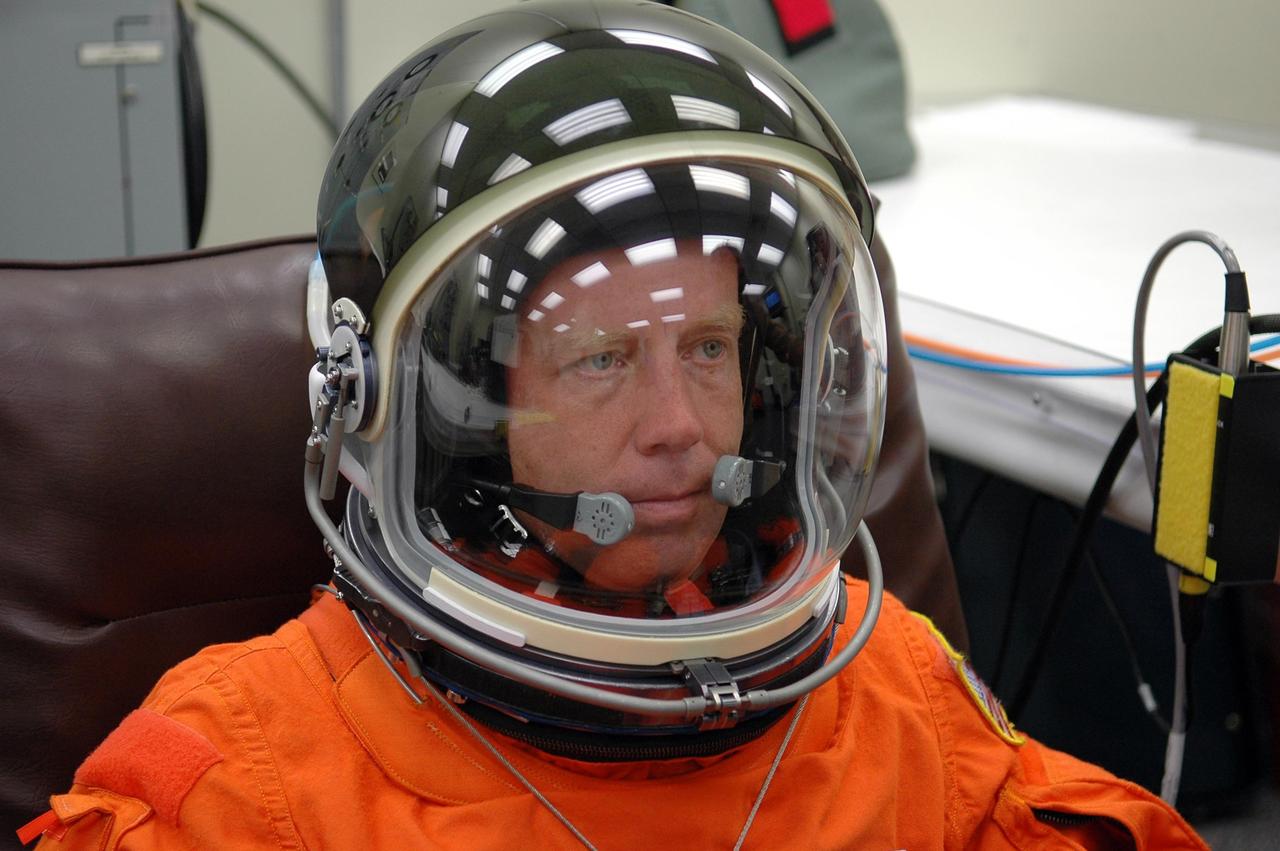
KENNEDY SPACE CENTER, FLA. - Prior to the third launch attempt on mission STS-121, Commander Steven Lindsey looks thoughtful as he completes suiting up before heading to Launch Pad 39B. The July 2 launch attempt was scrubbed due to the presence of showers and thunderstorms within the surrounding area of the launch site. The launch of Space Shuttle Discovery on mission STS-121 is the 115th shuttle flight and the 18th U.S. flight to the International Space Station. During the 12-day mission, the STS-121 crew will test new equipment and procedures to improve shuttle safety, as well as deliver supplies and make repairs to the International Space Station. Photo credit: NASA/Kim Shiflett
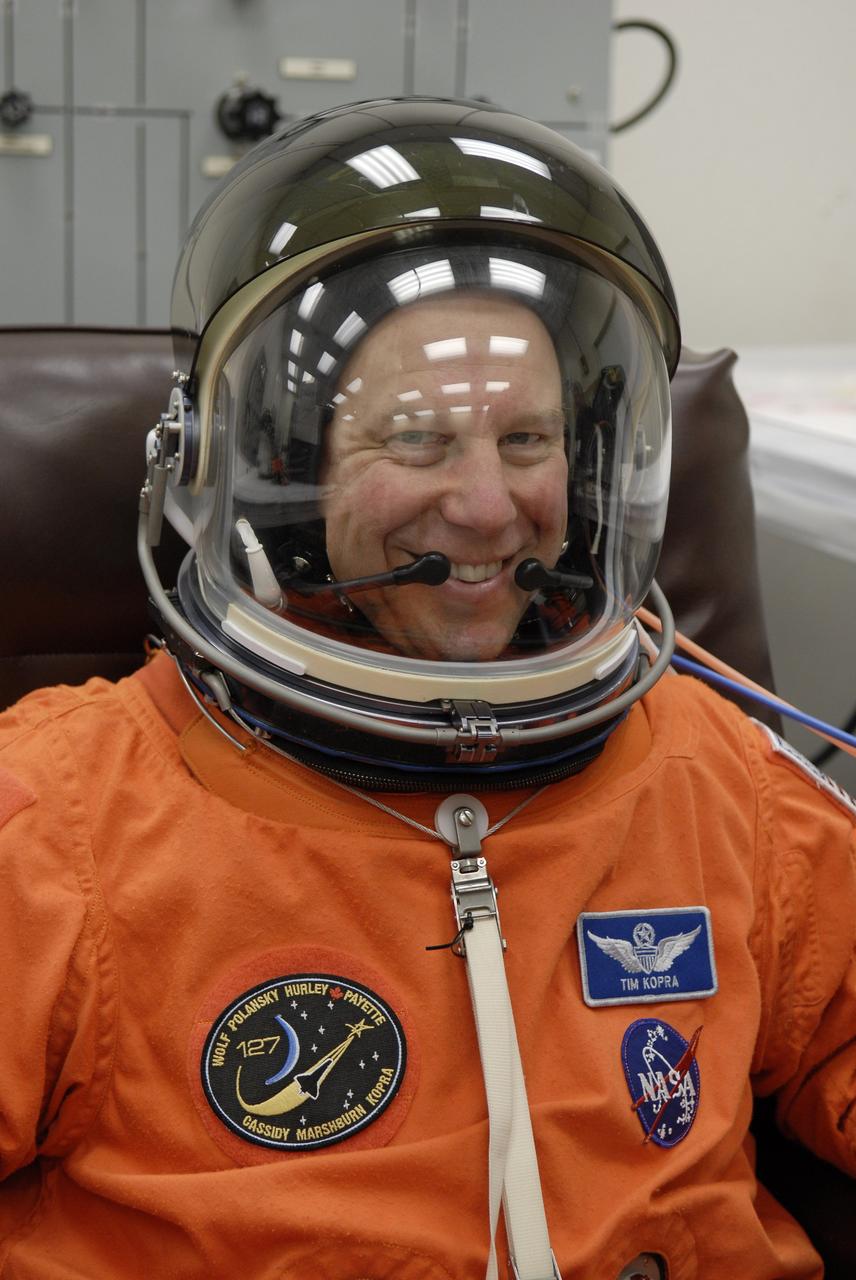
CAPE CANAVERAL, Fla. – In the Operations and Checkout Building at NASA's Kennedy Space Center in Florida, STS-127 Mission Specialist Tim Kopra checks the communication system in his helmet. He and other crew members will be heading for Launch Pad 39A for a simulated launch countdown. The crew is at Kennedy for a launch dress rehearsal called the terminal countdown demonstration test, or TCDT, which includes emergency exit training and equipment familiarization. Endeavour's STS-127 mission is the final of three flights dedicated to the assembly of the Japanese Kibo laboratory complex on the International Space Station. Endeavour's launch is scheduled for June 13 at 7:17 a.m. EDT. Photo credit: NASA/Kim Shiflett
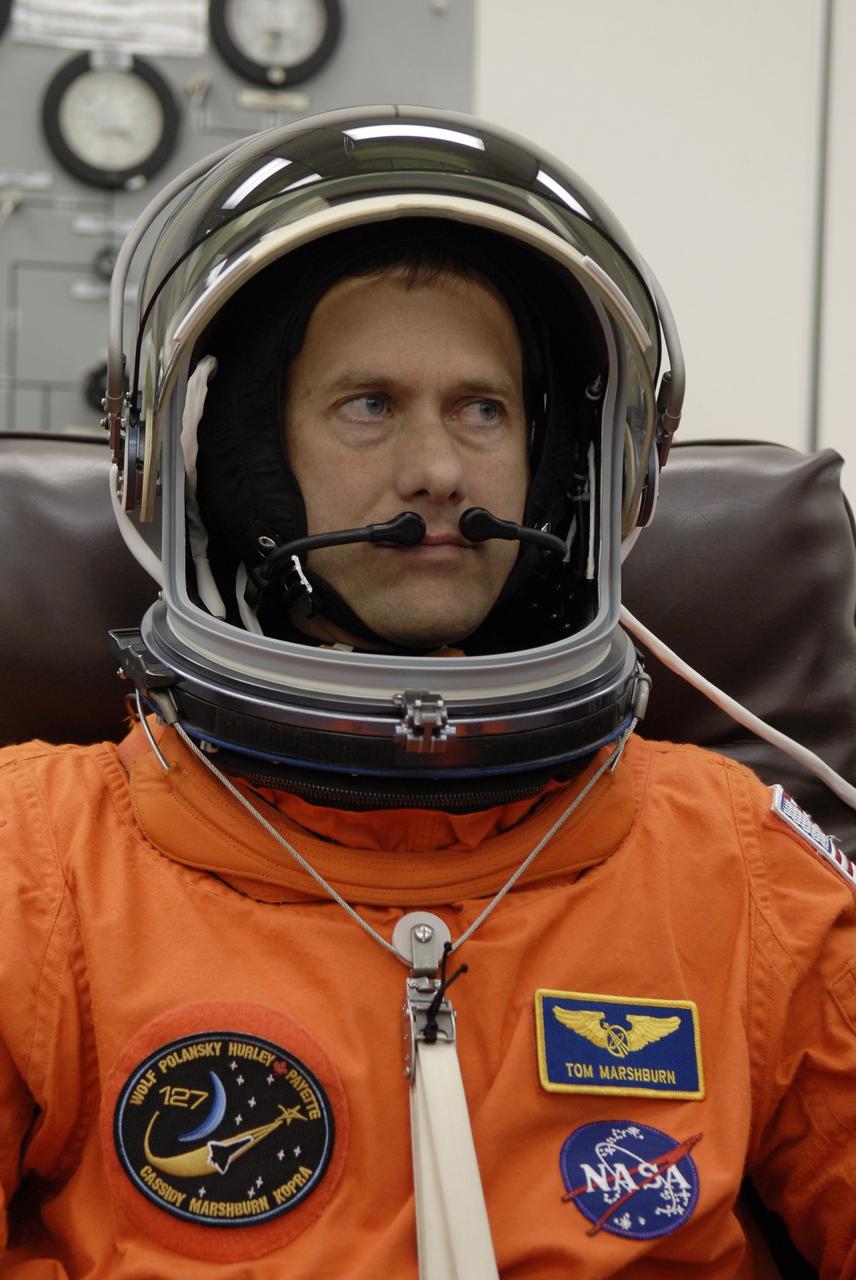
CAPE CANAVERAL, Fla. – In the Operations and Checkout Building at NASA's Kennedy Space Center in Florida, STS-127 Mission Specialist Tom Marshburn checks the communication system in his helmet. He and other crew members will be heading for Launch Pad 39A for a simulated launch countdown. The crew is at Kennedy for a launch dress rehearsal called the terminal countdown demonstration test, or TCDT, which includes emergency exit training and equipment familiarization. Endeavour's STS-127 mission is the final of three flights dedicated to the assembly of the Japanese Kibo laboratory complex on the International Space Station. Endeavour's launch is scheduled for June 13 at 7:17 a.m. EDT. Photo credit: NASA/Kim Shiflett
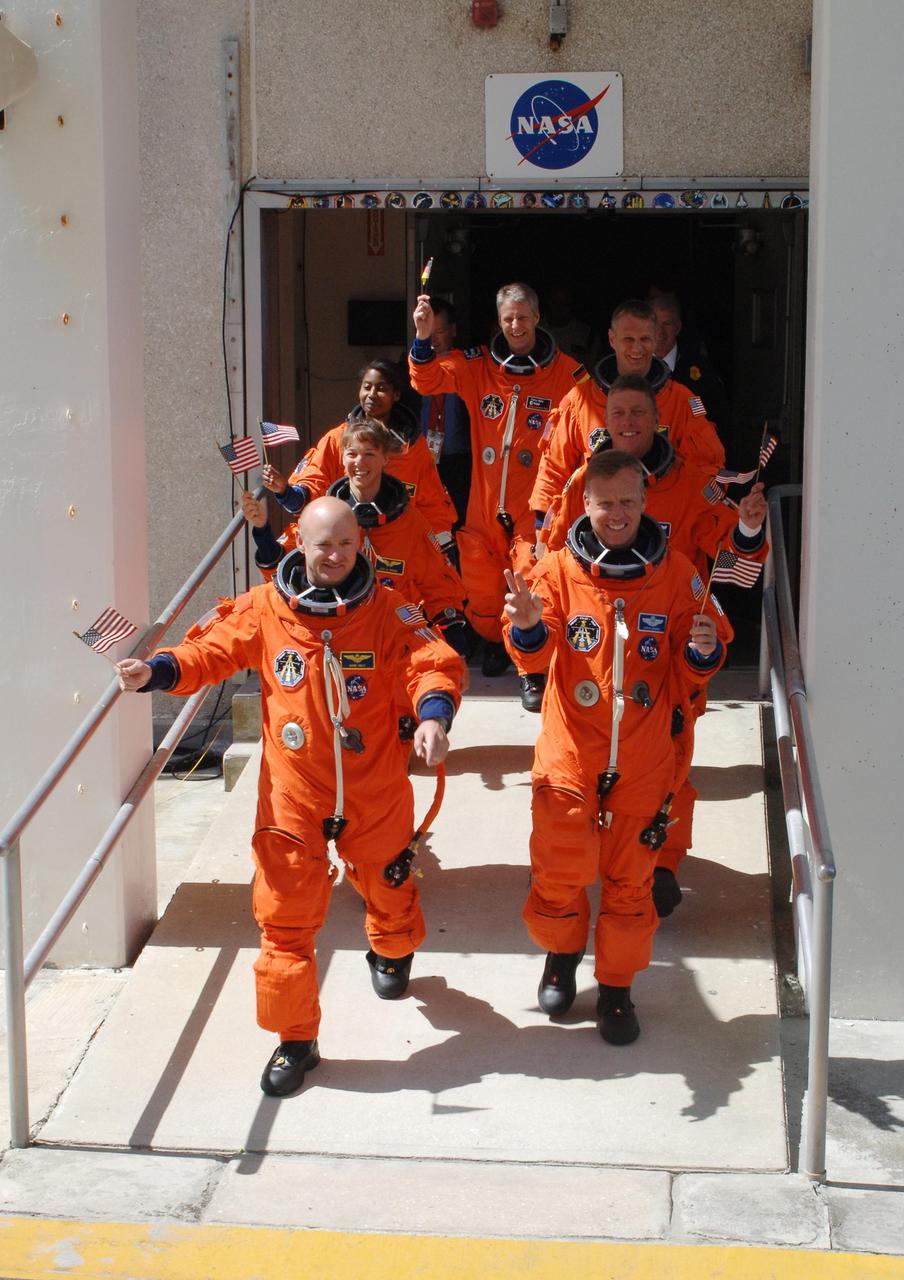
KENNEDY SPACE CENTER, FLA. - The STS-121 crew displays the spirit of the Fourth of July holiday with their flags and their eagerness to launch as they stride out of the Operations and Checkout Building. Leading the way are Pilot Mark Kelly (left) and Commander Steven Lindsey (right). Behind them are Mission Specialists (second row) Lisa Nowak and Michael Fossum; (third row) Stephanie Wilson and Piers Sellers; and (at the rear) Thomas Reiter, who represents the European Space Agency. The July 2 launch attempt was scrubbed due to the presence of showers and thunderstorms within the surrounding area of the launch site. The launch of Space Shuttle Discovery on mission STS-121 is the 115th shuttle flight and the 18th U.S. flight to the International Space Station. During the 12-day mission, the STS-121 crew will test new equipment and procedures to improve shuttle safety, as well as deliver supplies and make repairs to the International Space Station. Photo credit: NASA/Kim Shiflett
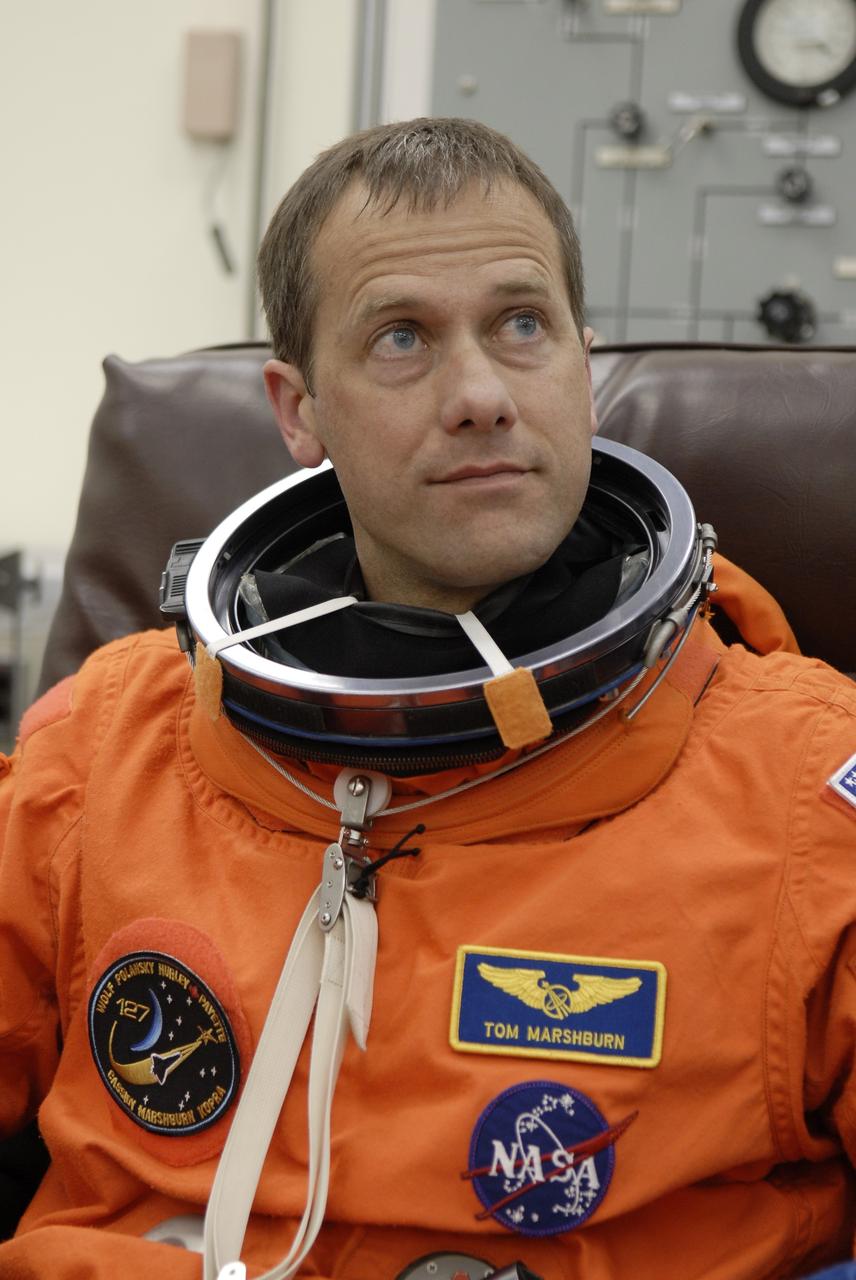
CAPE CANAVERAL, Fla. – In the Operations and Checkout Building at NASA's Kennedy Space Center in Florida, STS-127 Mission Specialist Tom Marshburn puts on his launch-and-entry suit. He and other crew members will be heading for Launch Pad 39A for a simulated launch countdown. The crew is at Kennedy for a launch dress rehearsal called the terminal countdown demonstration test, or TCDT, which includes emergency exit training and equipment familiarization. Endeavour's STS-127 mission is the final of three flights dedicated to the assembly of the Japanese Kibo laboratory complex on the International Space Station. Endeavour's launch is scheduled for June 13 at 7:17 a.m. EDT. Photo credit: NASA/Kim Shiflett
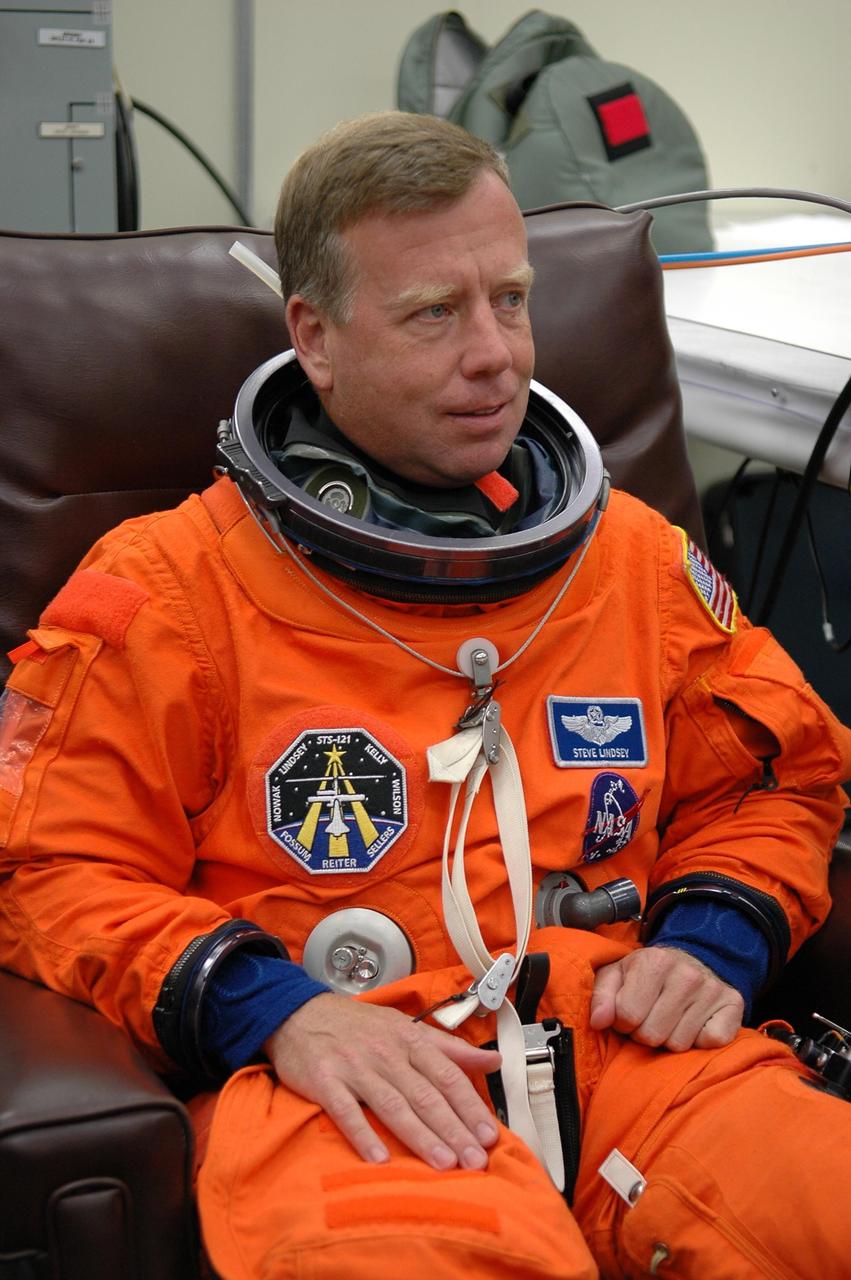
KENNEDY SPACE CENTER, FLA. - STS-121 Commander Steven Lindsey is eager for a third launch attempt on the mission. Here, he is donning his launch suit before heading to Launch Pad 39B. The July 2 launch attempt was scrubbed due to the presence of showers and thunderstorms within the surrounding area of the launch site. The launch of Space Shuttle Discovery on mission STS-121 is the 115th shuttle flight and the 18th U.S. flight to the International Space Station. During the 12-day mission, the STS-121 crew will test new equipment and procedures to improve shuttle safety, as well as deliver supplies and make repairs to the International Space Station. Photo credit: NASA/Kim Shiflett
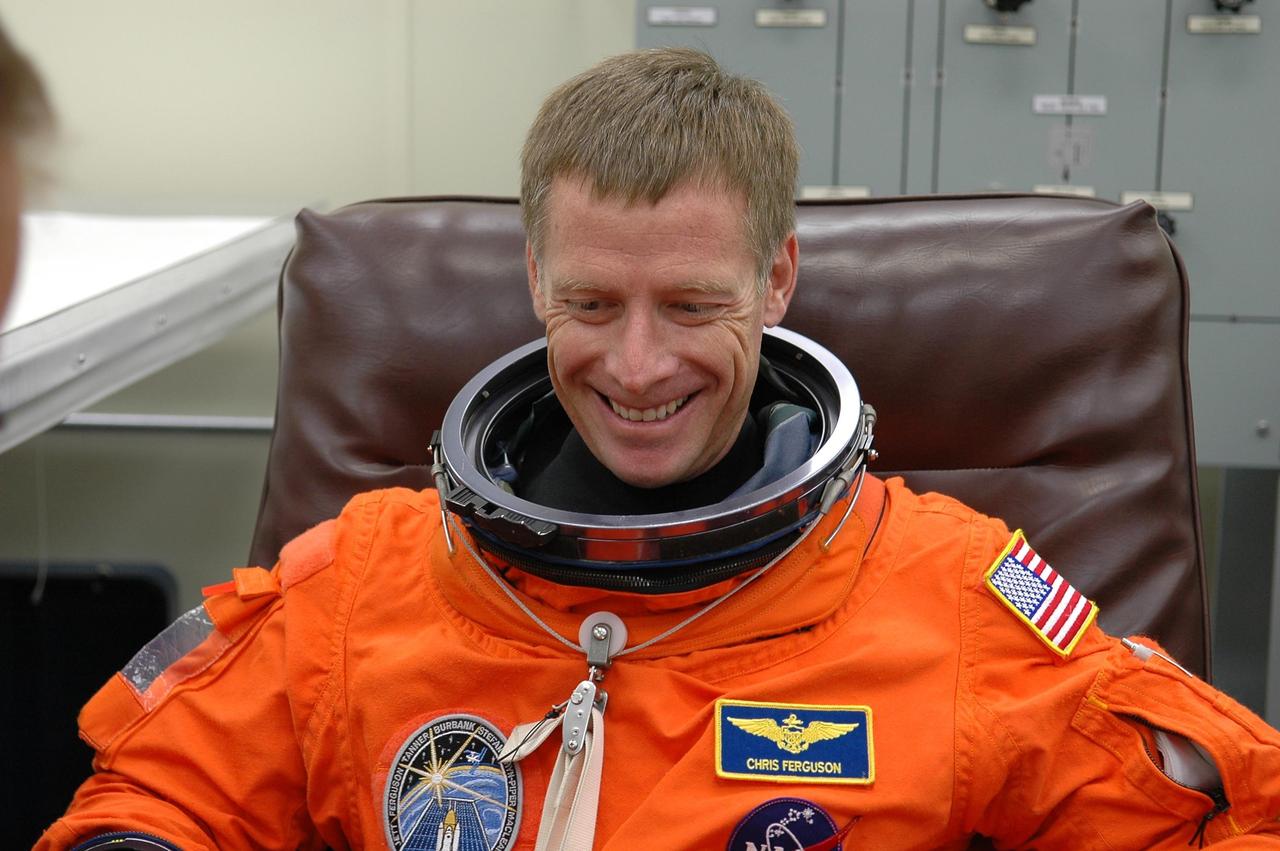
KENNEDY SPACE CENTER, FLA. - In the Operations and Checkout Building at NASA Kennedy Space Center, STS-115 Pilot Christopher Ferguson dons his launch and re-entry suit before heading to the launch pad. Ferguson is making his first shuttle flight on this mission to the International Space Station aboard Space Shuttle Atlantis. On its second attempt for launch, Atlantis is scheduled to lift off at 11:41 a.m. EDT today from Launch Pad 39B. During the STS-115 mission, Atlantis' astronauts will deliver and install the 17.5-ton, bus-sized P3/P4 integrated truss segment on the station. The girder-like truss includes a set of giant solar arrays, batteries and associated electronics and will provide one-fourth of the total power-generation capability for the completed station. This mission is the 116th space shuttle flight, the 27th flight for orbiter Atlantis, and the 19th U.S. flight to the ISS. STS-115 is scheduled to last 11 days with a planned landing at KSC. Photo credit: NASA/Kim Shiflett
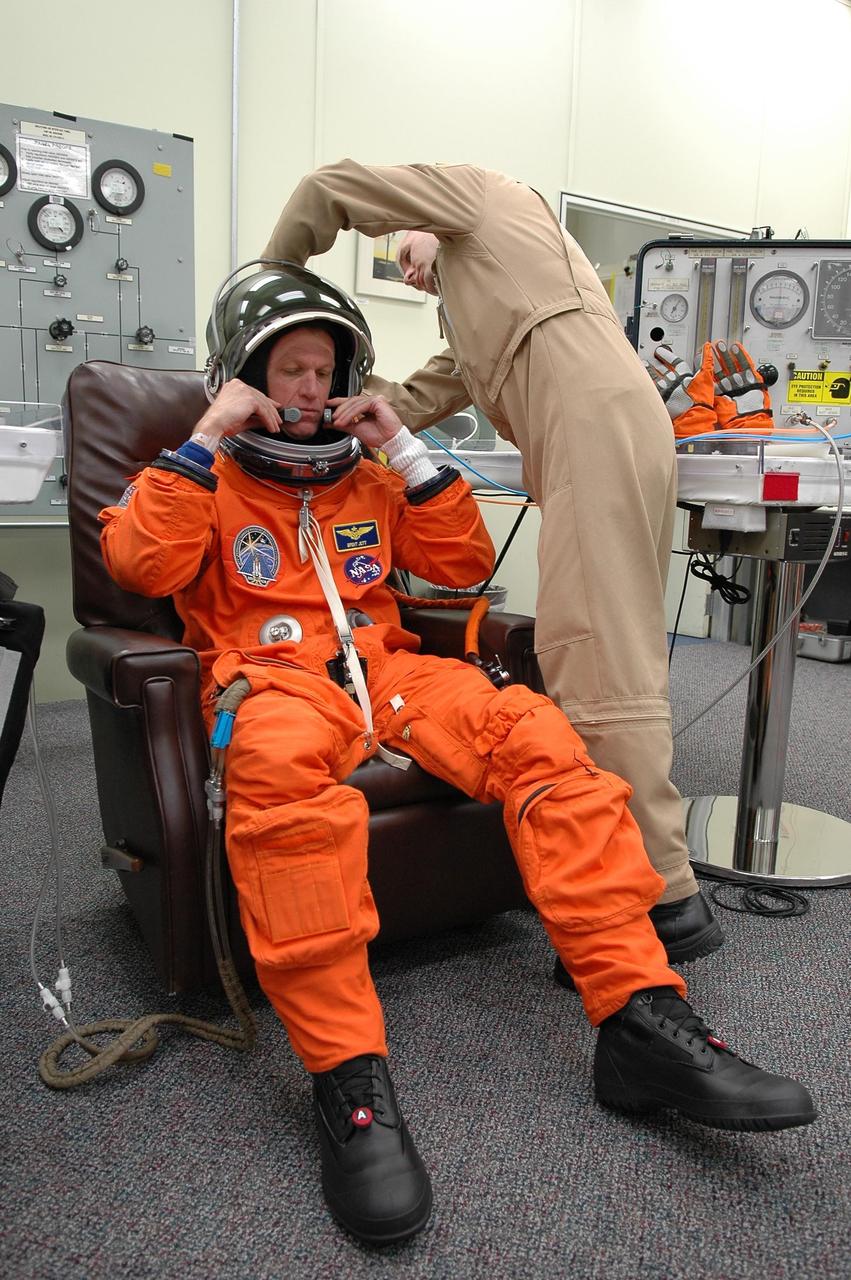
KENNEDY SPACE CENTER, FLA. - In the Operations and Checkout Building at NASA Kennedy Space Center, STS-115 Commander Brent Jett dons his launch and re-entry suit before heading to the launch pad. Jett is making his fourth shuttle flight on this mission to the International Space Station aboard Space Shuttle Atlantis. On its second attempt for launch, Atlantis is scheduled to lift off at 11:41 a.m. EDT today from Launch Pad 39B. During the STS-115 mission, Atlantis' astronauts will deliver and install the 17.5-ton, bus-sized P3/P4 integrated truss segment on the station. The girder-like truss includes a set of giant solar arrays, batteries and associated electronics and will provide one-fourth of the total power-generation capability for the completed station. This mission is the 116th space shuttle flight, the 27th flight for orbiter Atlantis, and the 19th U.S. flight to the ISS. STS-115 is scheduled to last 11 days with a planned landing at KSC. Photo credit: NASA/Kim Shiflett
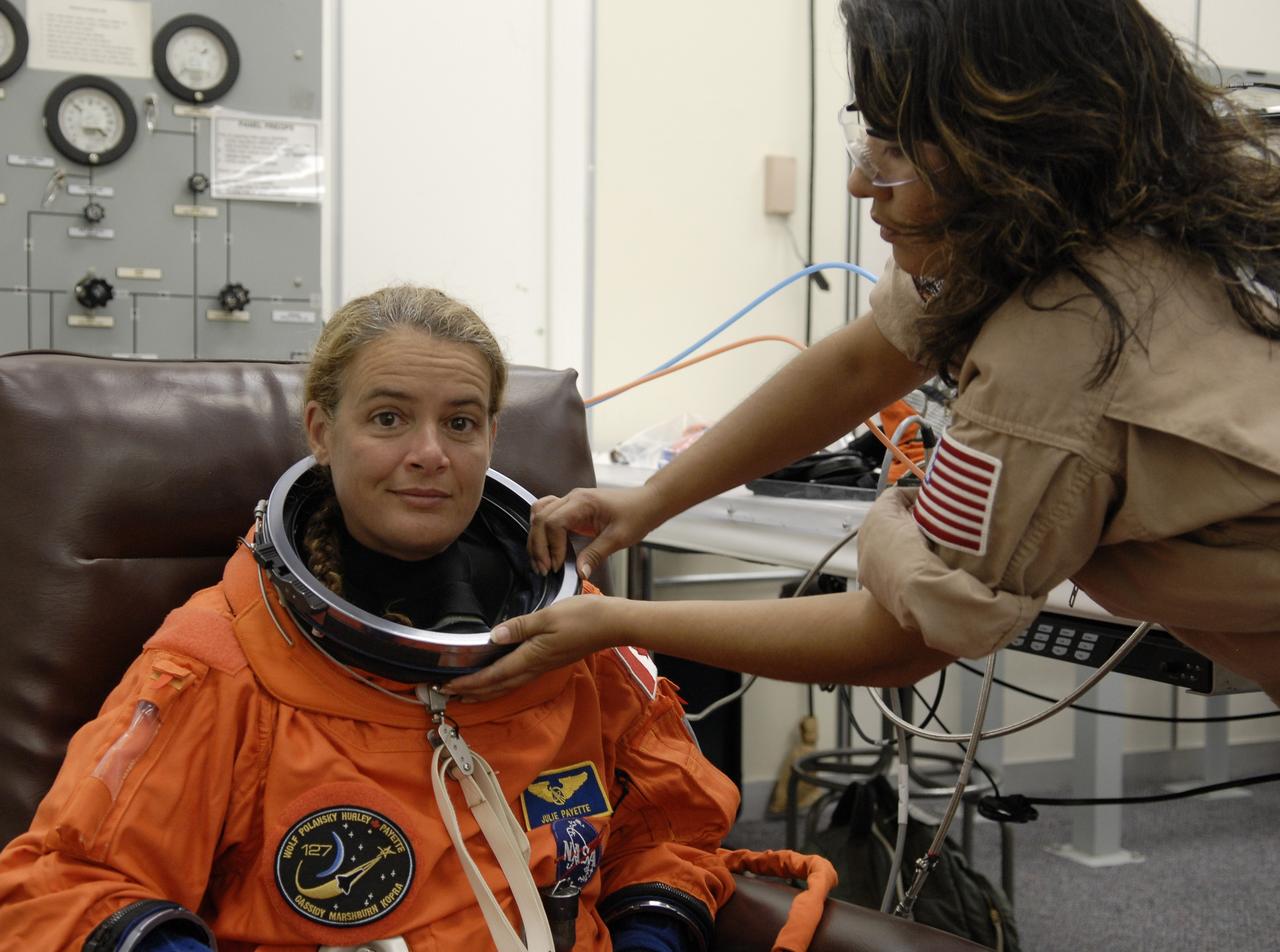
CAPE CANAVERAL, Fla. – In the Operations and Checkout Building at NASA's Kennedy Space Center in Florida, STS-127 Mission Specialist Julie Payette is helped with her launch-and-entry suit. She and other crew members will be heading for Launch Pad 39A for a simulated launch countdown. The crew is at Kennedy for a launch dress rehearsal called the terminal countdown demonstration test, or TCDT, which includes emergency exit training and equipment familiarization. Endeavour's STS-127 mission is the final of three flights dedicated to the assembly of the Japanese Kibo laboratory complex on the International Space Station. Endeavour's launch is scheduled for June 13 at 7:17 a.m. EDT. Photo credit: NASA/Kim Shiflett
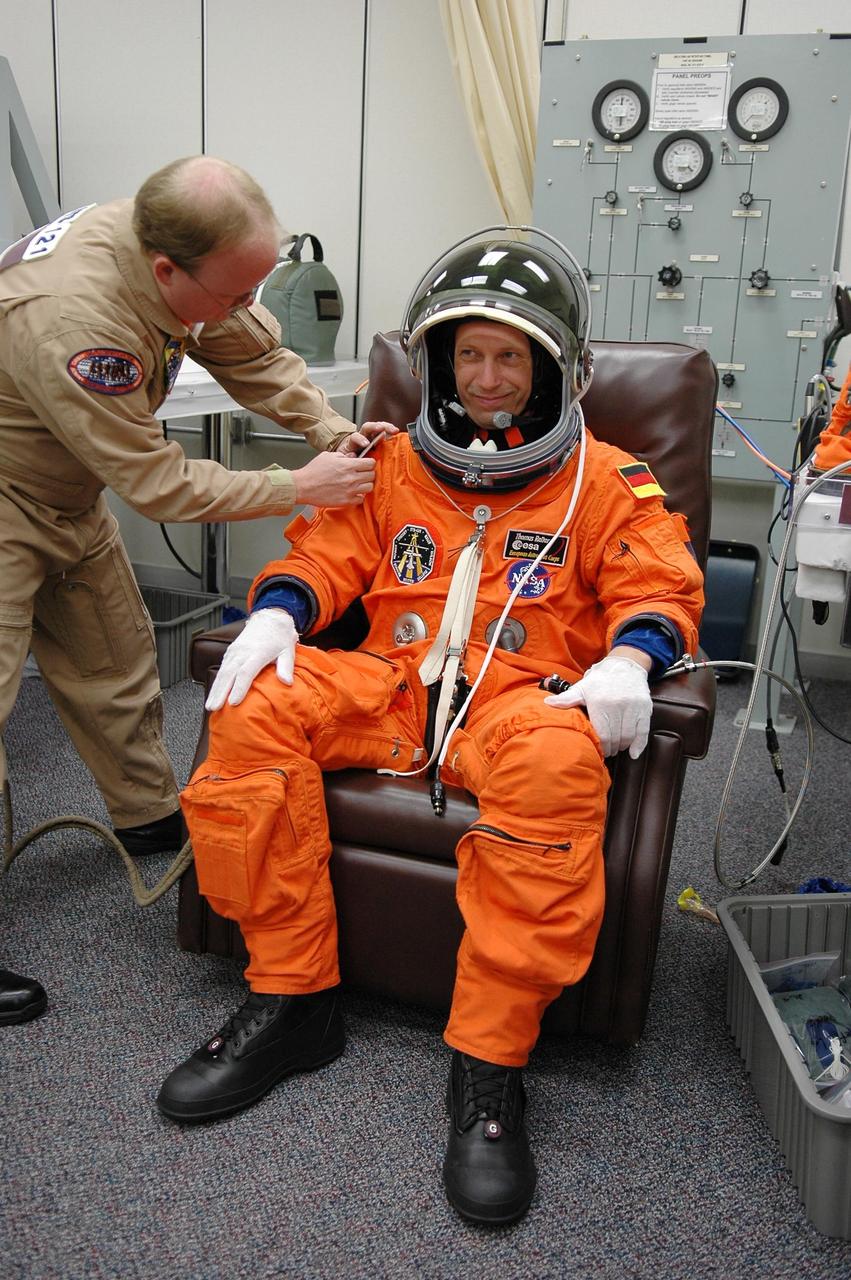
KENNEDY SPACE CENTER, FLA. - Prior to the third launch attempt on mission STS-121, Mission Specialist Thomas Reiter is helped with his launch suit before heading to Launch Pad 39B. The July 2 launch attempt was scrubbed due to the presence of showers and thunderstorms within the surrounding area of the launch site. The launch of Space Shuttle Discovery on mission STS-121 is the 115th shuttle flight and the 18th U.S. flight to the International Space Station. During the 12-day mission, the STS-121 crew will test new equipment and procedures to improve shuttle safety, as well as deliver supplies and make repairs to the International Space Station. Photo credit: NASA/Kim Shiflett
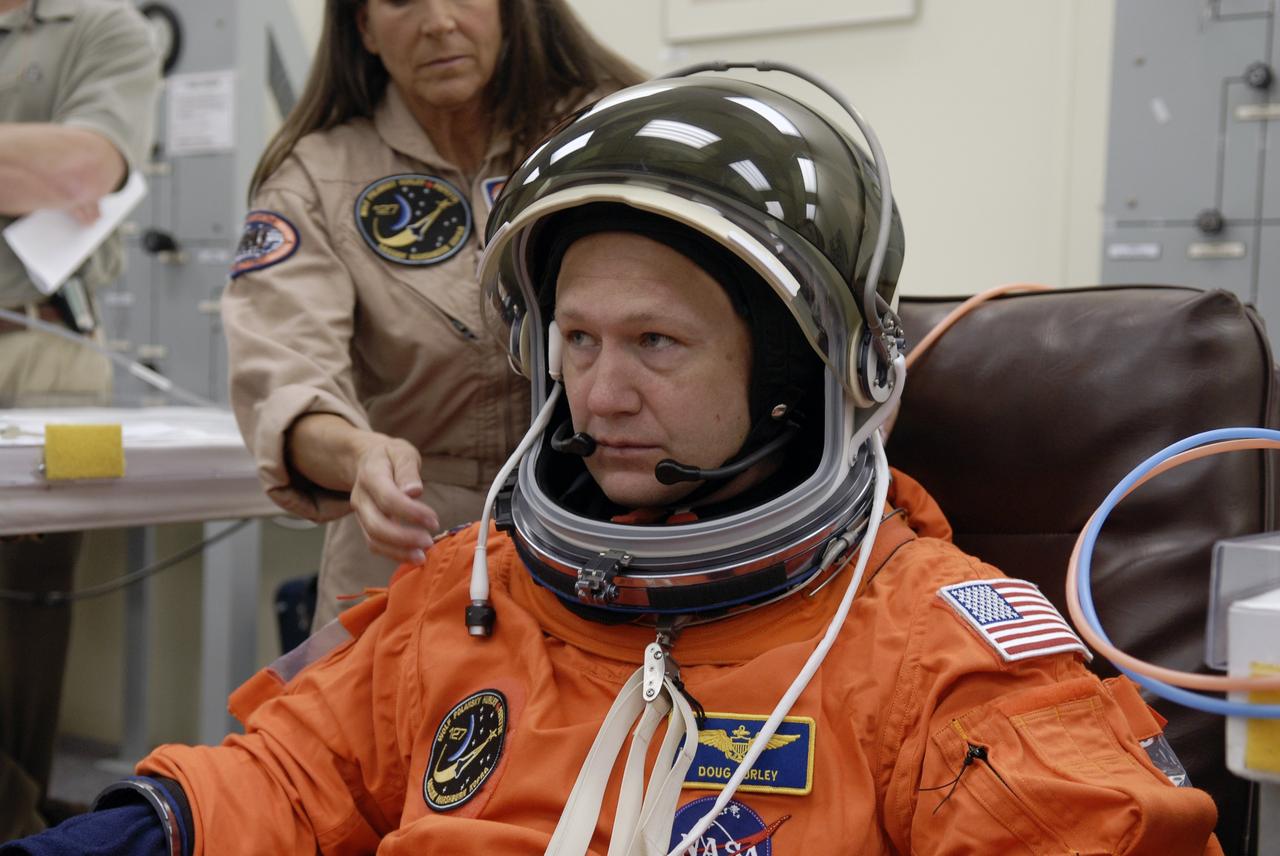
CAPE CANAVERAL, Fla. – In the Operations and Checkout Building at NASA's Kennedy Space Center in Florida, STS-127 Pilot Doug Hurley checks the communication system in his helmet. He and other crew members will be heading for Launch Pad 39A for a simulated launch countdown. The crew is at Kennedy for a launch dress rehearsal called the terminal countdown demonstration test, or TCDT, which includes emergency exit training and equipment familiarization. Endeavour's STS-127 mission is the final of three flights dedicated to the assembly of the Japanese Kibo laboratory complex on the International Space Station. Endeavour's launch is scheduled for June 13 at 7:17 a.m. EDT. Photo credit: NASA/Kim Shiflett
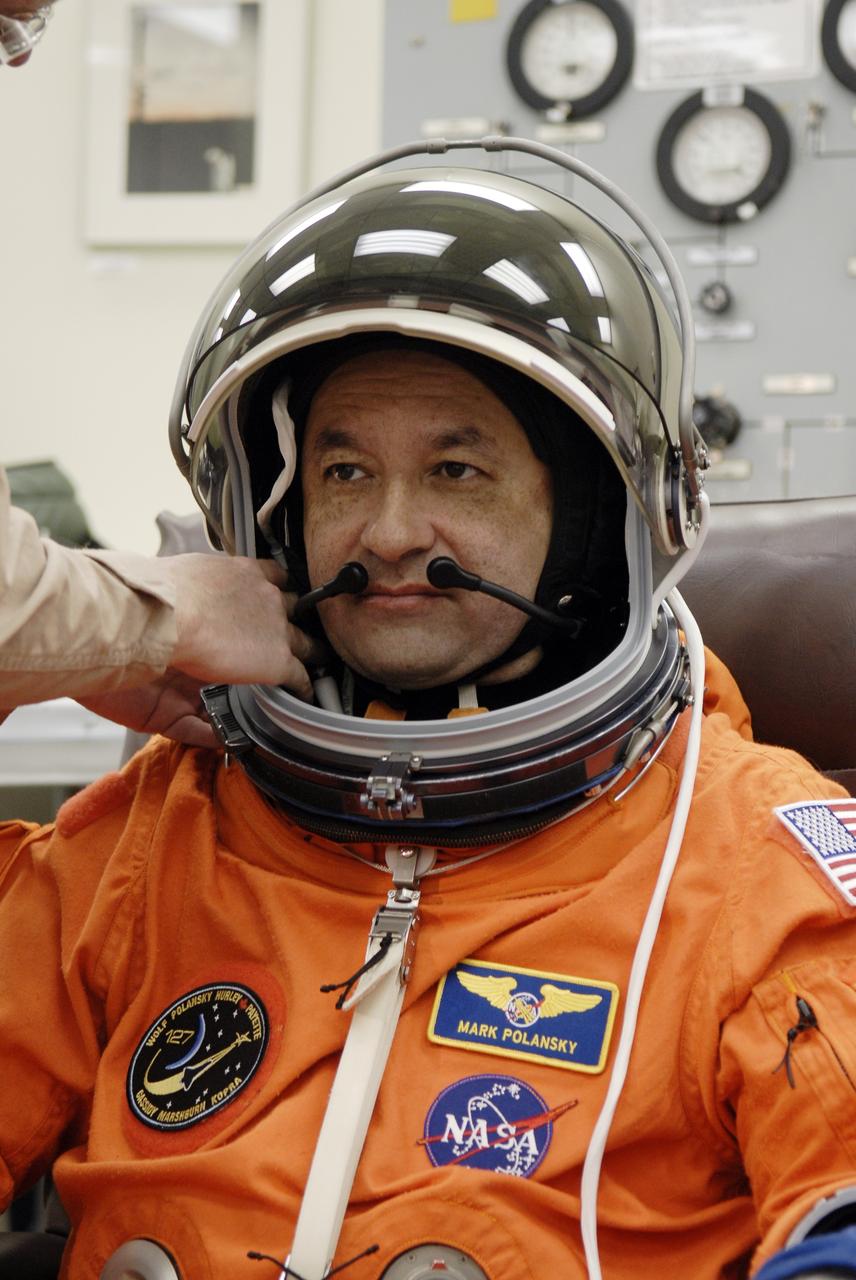
CAPE CANAVERAL, Fla. – In the Operations and Checkout Building at NASA's Kennedy Space Center in Florida, STS-127 Commander Mark Polansky checks the communication system in his helmet. He and other crew members will be heading for Launch Pad 39A for a simulated launch countdown. The crew is at Kennedy for a launch dress rehearsal called the terminal countdown demonstration test, or TCDT, which includes emergency exit training and equipment familiarization. Endeavour's STS-127 mission is the final of three flights dedicated to the assembly of the Japanese Kibo laboratory complex on the International Space Station. Endeavour's launch is scheduled for June 13 at 7:17 a.m. EDT. Photo credit: NASA/Kim Shiflett
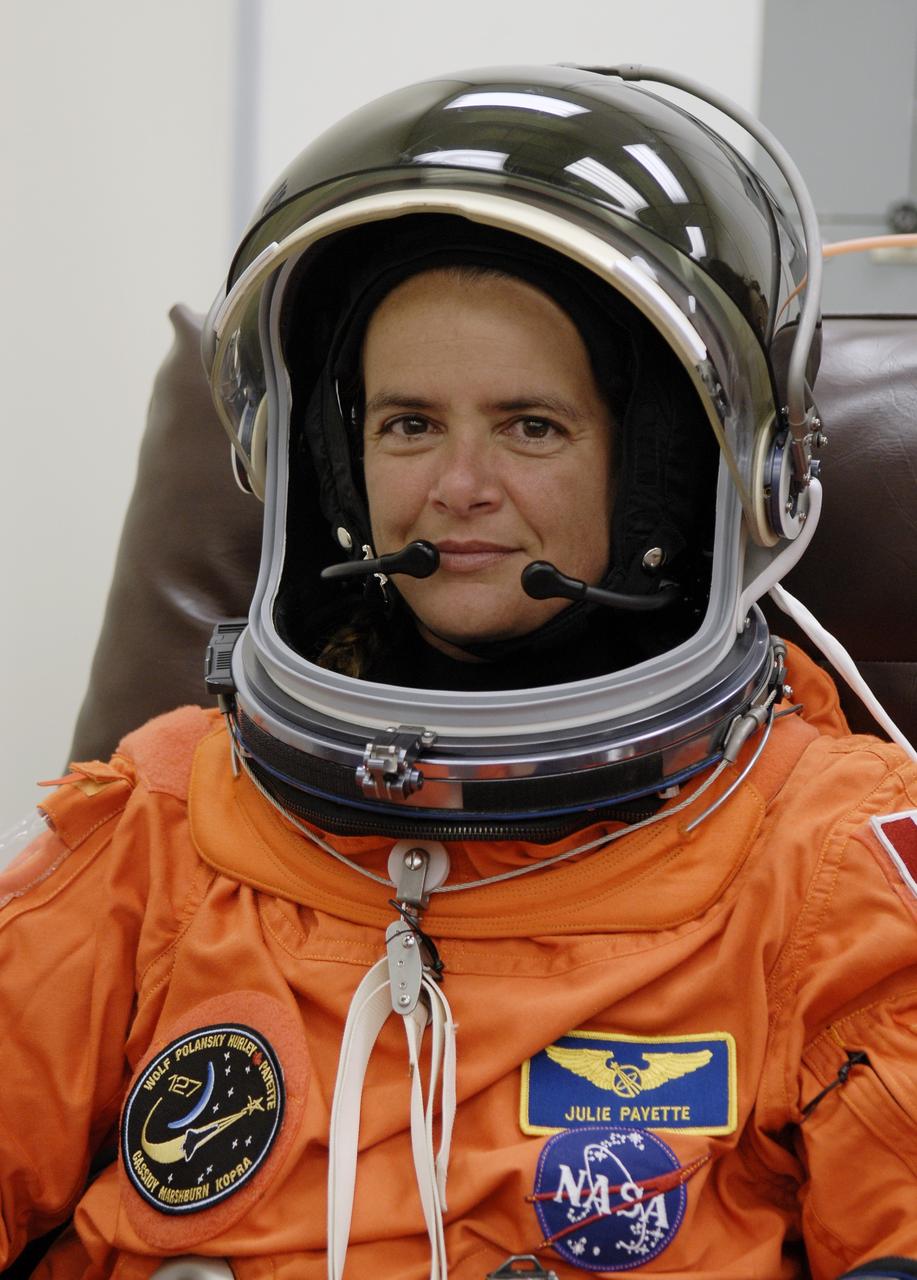
CAPE CANAVERAL, Fla. – In the Operations and Checkout Building at NASA's Kennedy Space Center in Florida, STS-127 Mission Specialist Julie Payette checks the communication system in her helmet. She and other crew members will be heading for Launch Pad 39A for a simulated launch countdown. The crew is at Kennedy for a launch dress rehearsal called the terminal countdown demonstration test, or TCDT, which includes emergency exit training and equipment familiarization. Endeavour's STS-127 mission is the final of three flights dedicated to the assembly of the Japanese Kibo laboratory complex on the International Space Station. Endeavour's launch is scheduled for June 13 at 7:17 a.m. EDT. Photo credit: NASA/Kim Shiflett
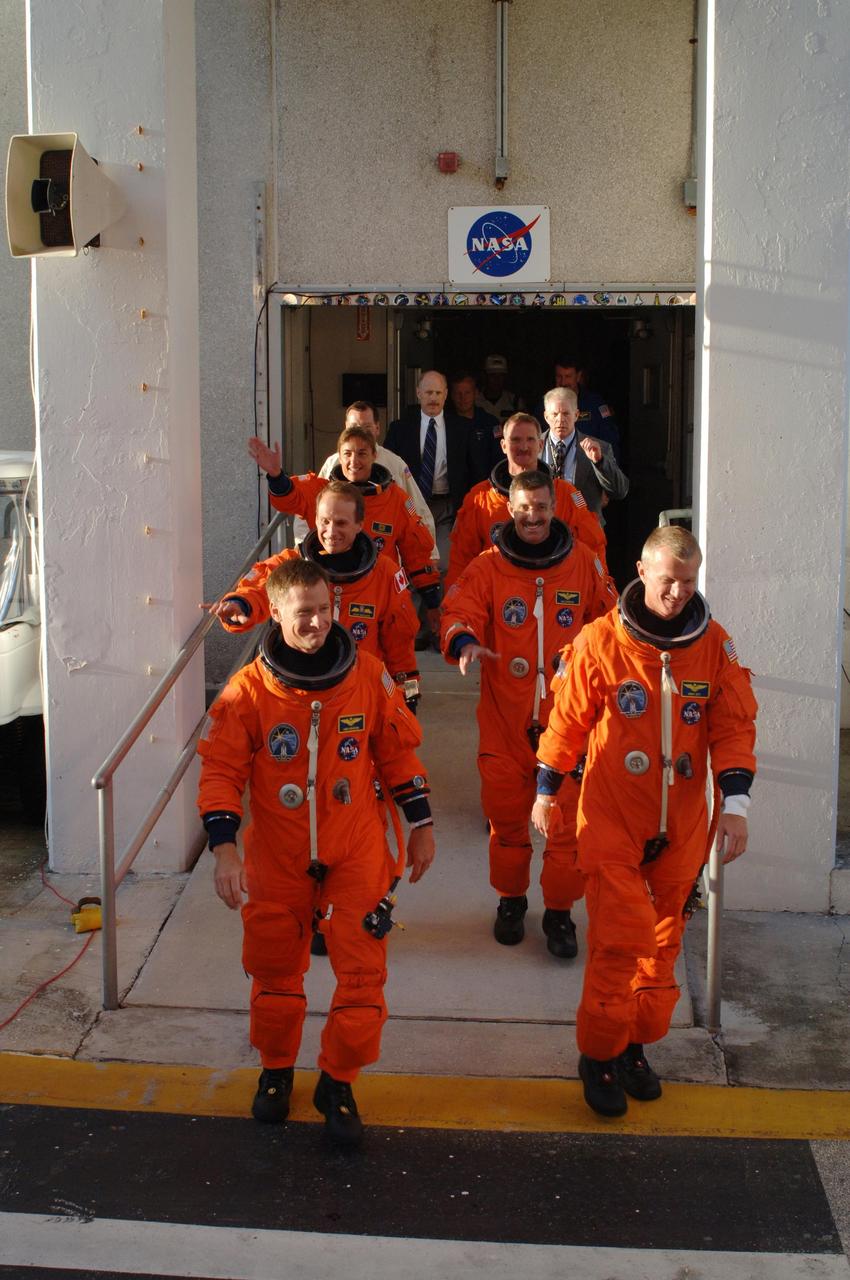
KENNEDY SPACE CENTER, FLA. - The STS-115 crew members stride out of the Operations and Checkout Building eager to get to Launch Pad 39B and the start of their mission to the International Space Station. This is the second attempt at launch after a week's postponement due to weather and technical concerns. On the left side, front to back, are Pilot Christopher Ferguson and Mission Specialists Steven MacLean and Heidemarie Stefanyshyn-Piper. On the right side, front to back, are Commander Brent Jett and Mission Specialists Daniel Burbank and Joseph Tanner. On its second attempt for launch, Atlantis is scheduled to lift off at 11:41 a.m. EDT today from Launch Pad 39B. During the STS-115 mission, Atlantis' astronauts will deliver and install the 17.5-ton, bus-sized P3/P4 integrated truss segment on the station. The girder-like truss includes a set of giant solar arrays, batteries and associated electronics and will provide one-fourth of the total power-generation capability for the completed station. This mission is the 116th space shuttle flight, the 27th flight for orbiter Atlantis, and the 19th U.S. flight to the ISS. STS-115 is scheduled to last 11 days with a planned landing at KSC. Photo credit: NASA/Kim Shiflett

KENNEDY SPACE CENTER, FLA. - STS-121 Commander Steven Lindsey is eager for a third launch attempt on the mission. Here, he is donning his launch suit before heading to Launch Pad 39B. The July 2 launch attempt was scrubbed due to the presence of showers and thunderstorms within the surrounding area of the launch site. The launch of Space Shuttle Discovery on mission STS-121 is the 115th shuttle flight and the 18th U.S. flight to the International Space Station. During the 12-day mission, the STS-121 crew will test new equipment and procedures to improve shuttle safety, as well as deliver supplies and make repairs to the International Space Station. Photo credit: NASA/Kim Shiflett
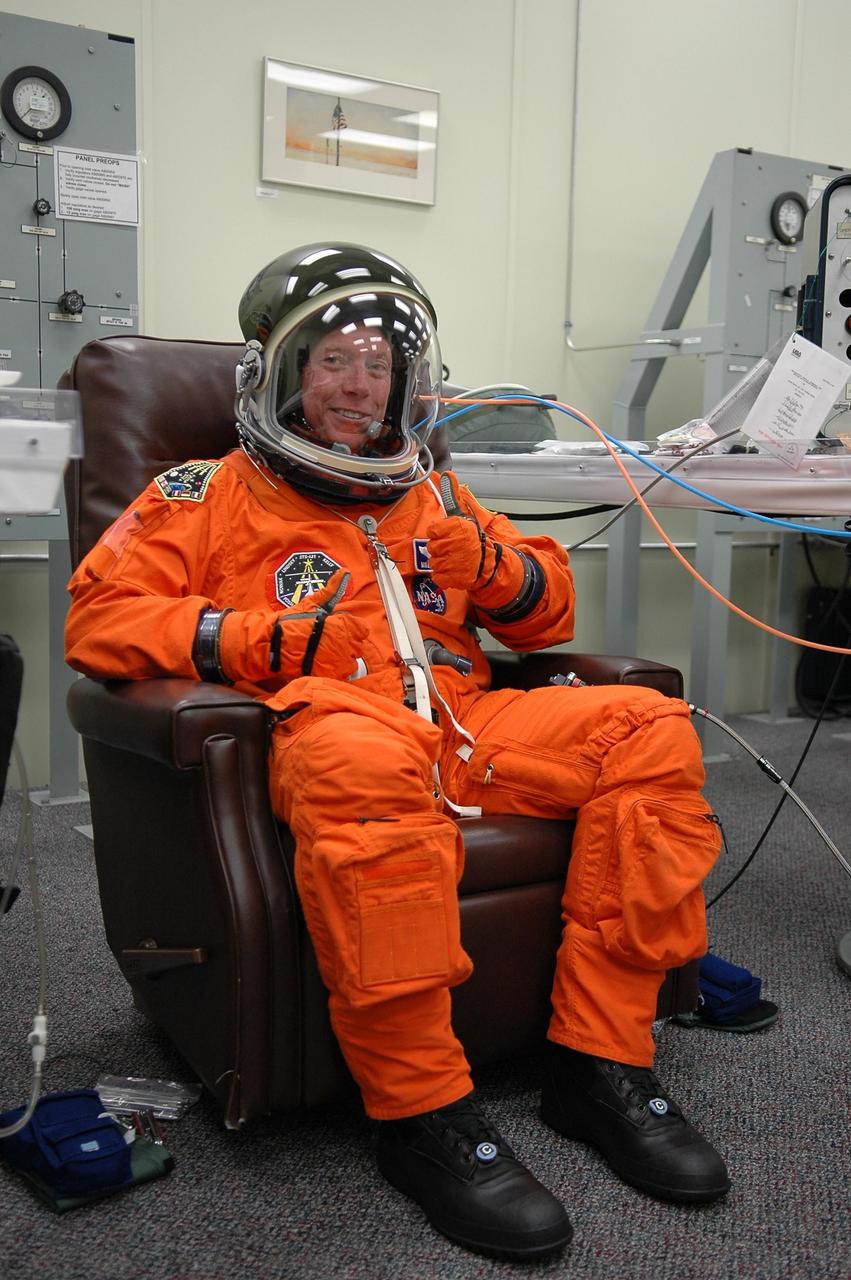
KENNEDY SPACE CENTER, FLA. - After suiting up in his launch suit, Mission Specialist Michael Fossum gives a thumbs up for a third launch attempt on mission STS-121. The July 2 launch attempt was scrubbed due to the presence of showers and thunderstorms within the surrounding area of the launch site. The launch of Space Shuttle Discovery on mission STS-121 is the 115th shuttle flight and the 18th U.S. flight to the International Space Station. During the 12-day mission, the STS-121 crew will test new equipment and procedures to improve shuttle safety, as well as deliver supplies and make repairs to the International Space Station. Photo credit: NASA/Kim Shiflett
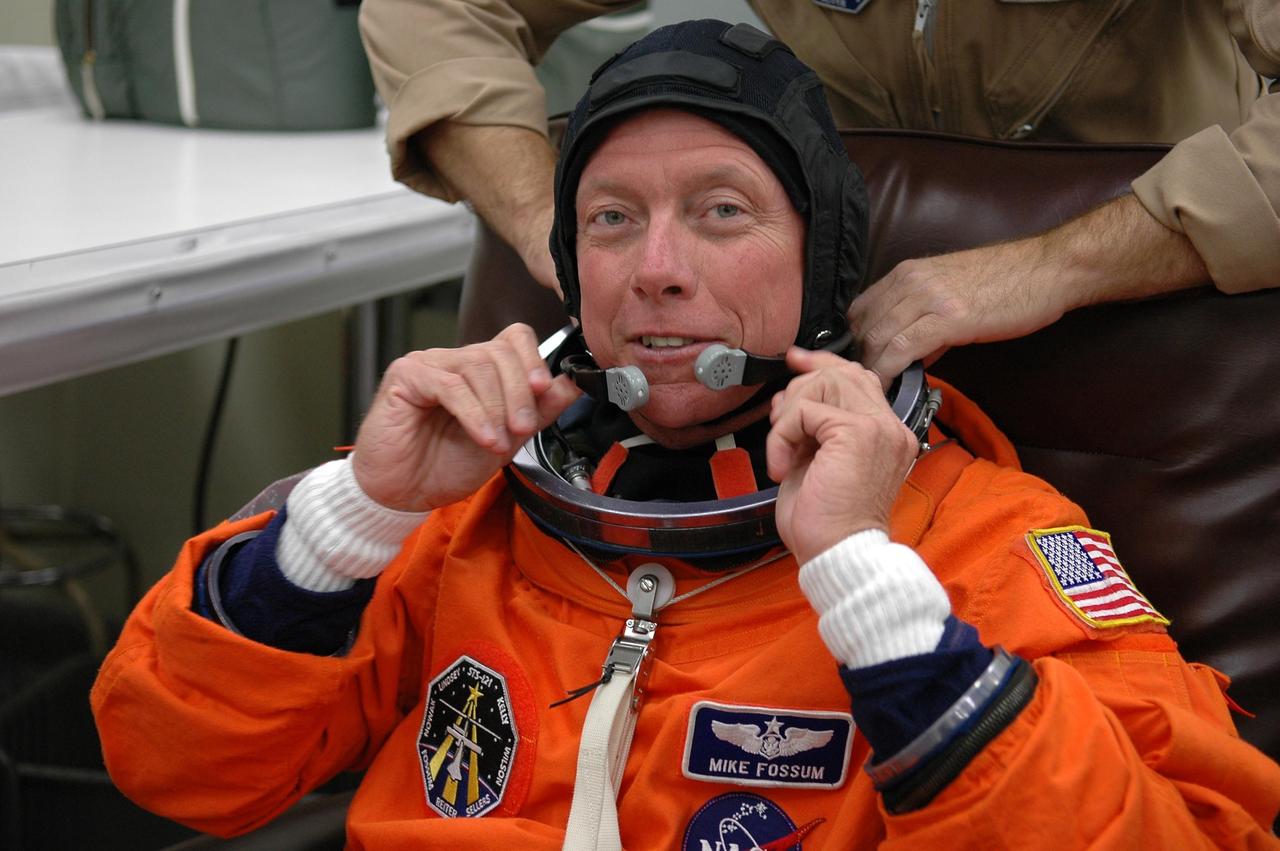
KENNEDY SPACE CENTER, FLA. - Prior to the third launch attempt on mission STS-121, Mission Specialist Michael Fossum is helped with his launch suit before heading to Launch Pad 39B. The July 2 launch attempt was scrubbed due to the presence of showers and thunderstorms within the surrounding area of the launch site. The launch of Space Shuttle Discovery on mission STS-121 is the 115th shuttle flight and the 18th U.S. flight to the International Space Station. During the 12-day mission, the STS-121 crew will test new equipment and procedures to improve shuttle safety, as well as deliver supplies and make repairs to the International Space Station. Photo credit: NASA/Kim Shiflett
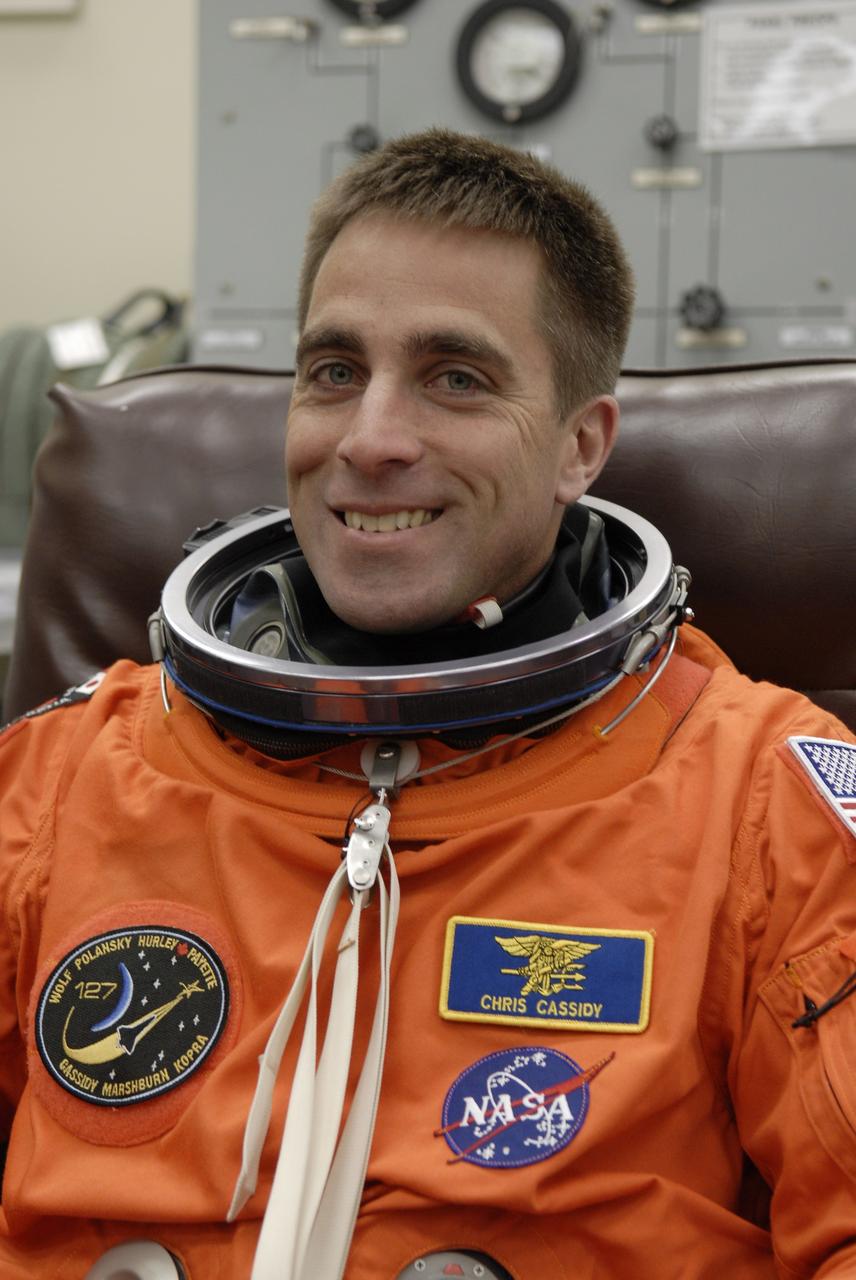
CAPE CANAVERAL, Fla. – In the Operations and Checkout Building at NASA's Kennedy Space Center in Florida, STS-127 Mission Specialist Christopher Cassidy puts on his launch-and-entry suit. He and other crew members will be heading for Launch Pad 39A for a simulated launch countdown. The crew is at Kennedy for a launch dress rehearsal called the terminal countdown demonstration test, or TCDT, which includes emergency exit training and equipment familiarization. Endeavour's STS-127 mission is the final of three flights dedicated to the assembly of the Japanese Kibo laboratory complex on the International Space Station. Endeavour's launch is scheduled for June 13 at 7:17 a.m. EDT. Photo credit: NASA/Kim Shiflett
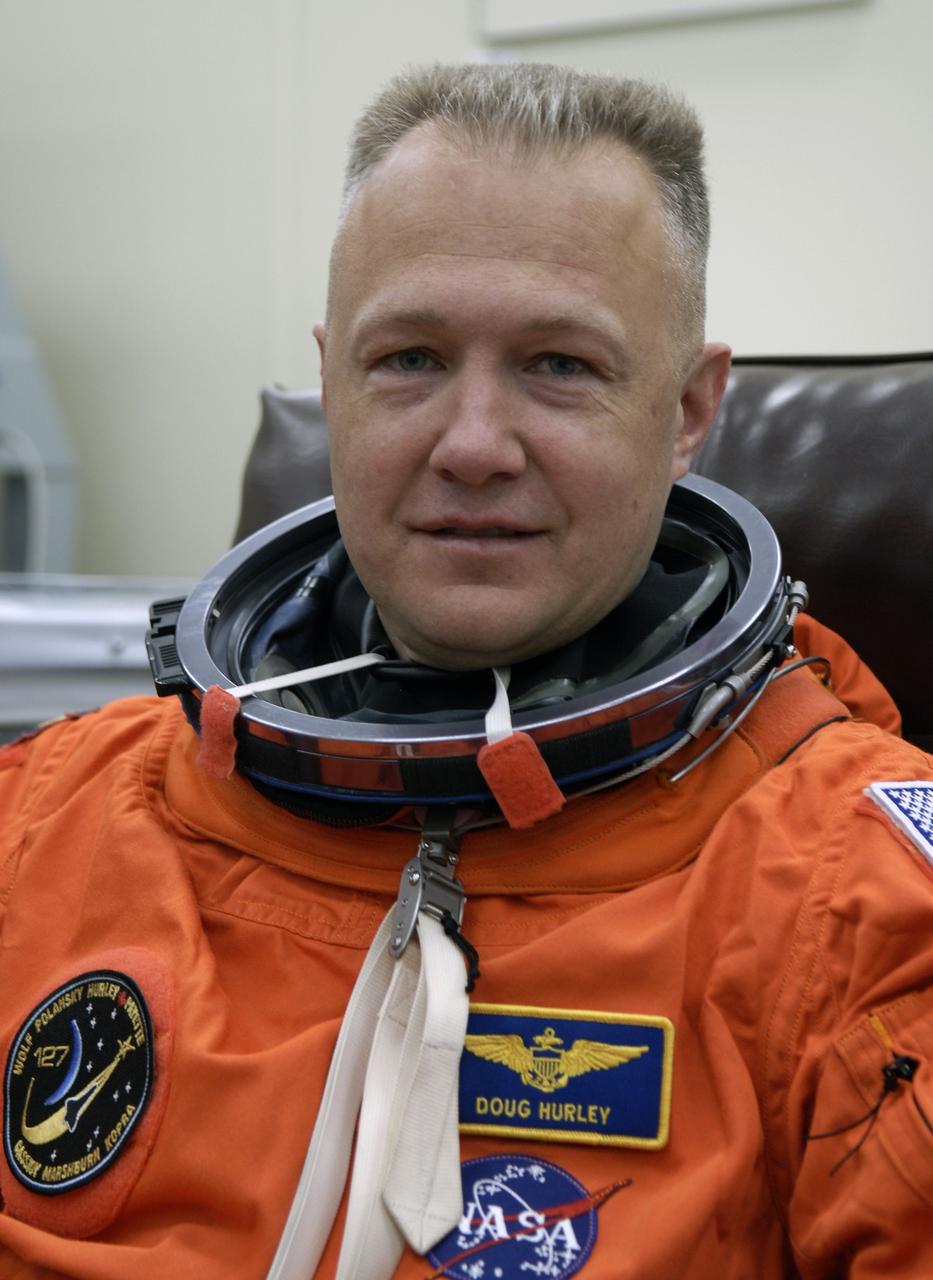
CAPE CANAVERAL, Fla. – In the Operations and Checkout Building at NASA's Kennedy Space Center in Florida, STS-127 Pilot Doug Hurley puts on his launch-and-entry suit. He and other crew members will be heading for Launch Pad 39A for a simulated launch countdown. The crew is at Kennedy for a launch dress rehearsal called the terminal countdown demonstration test, or TCDT, which includes emergency exit training and equipment familiarization. Endeavour's STS-127 mission is the final of three flights dedicated to the assembly of the Japanese Kibo laboratory complex on the International Space Station. Endeavour's launch is scheduled for June 13 at 7:17 a.m. EDT. Photo credit: NASA/Kim Shiflett
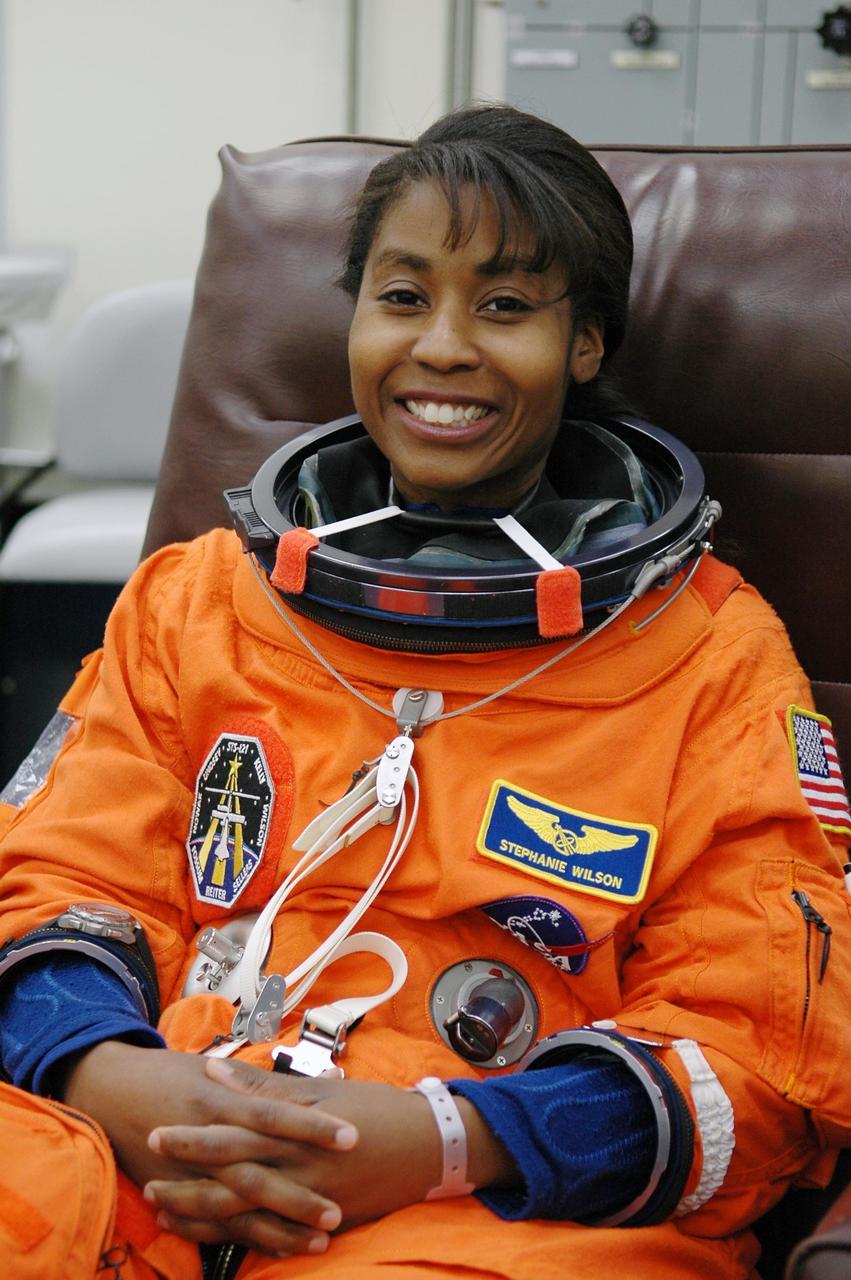
KENNEDY SPACE CENTER, FLA. - Getting ready for a third launch attempt on mission STS-121, Mission Specialist Stephanie Wilson is suiting up before heading to Launch Pad 39B. The July 2 launch attempt was scrubbed due to the presence of showers and thunderstorms within the surrounding area of the launch site. The launch of Space Shuttle Discovery on mission STS-121 is the 115th shuttle flight and the 18th U.S. flight to the International Space Station. During the 12-day mission, the STS-121 crew will test new equipment and procedures to improve shuttle safety, as well as deliver supplies and make repairs to the International Space Station. Photo credit: NASA/Kim Shiflett
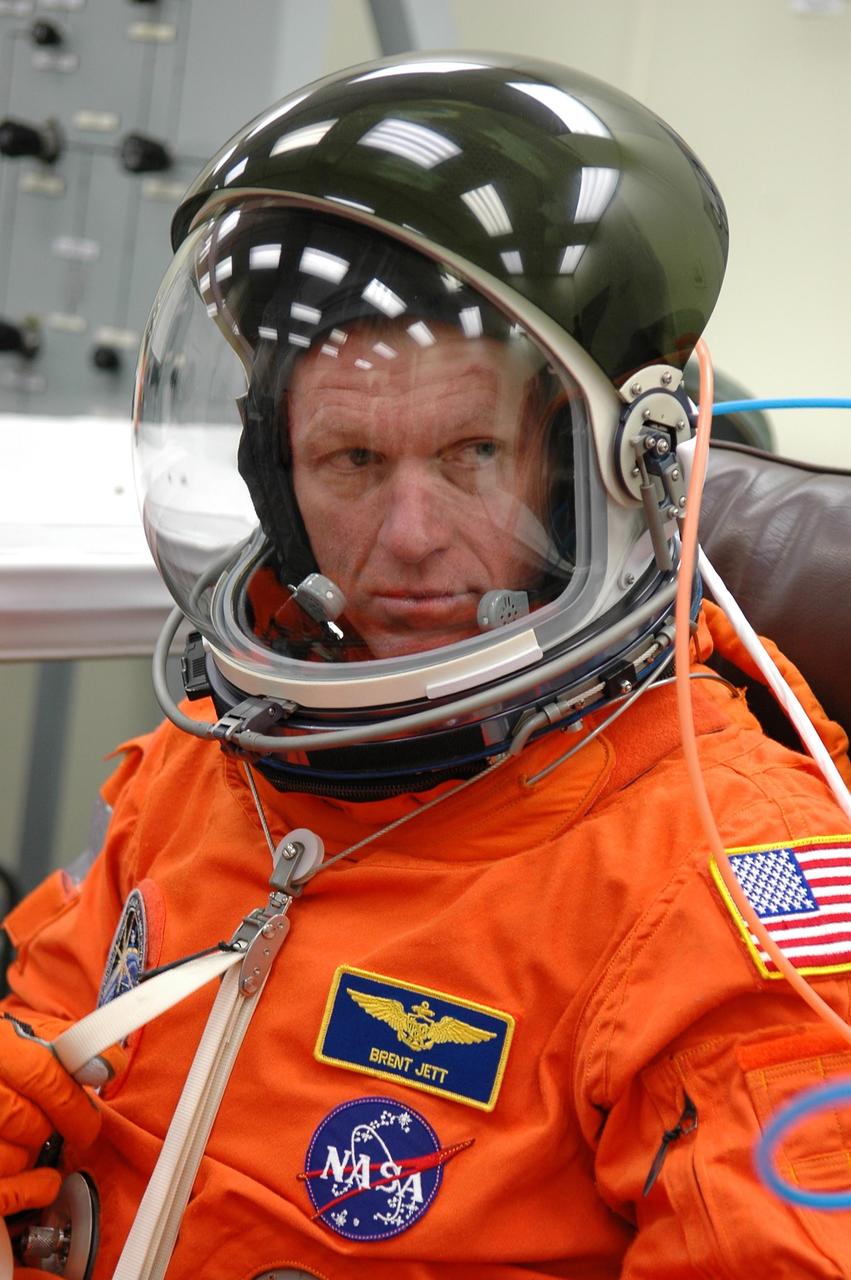
KENNEDY SPACE CENTER, FLA. - In the Operations and Checkout Building at NASA Kennedy Space Center, STS-115 Commander Brent Jett looks reflective as he suits up for launch before heading to the launch pad. Jett is making his fourth shuttle flight on this mission to the International Space Station aboard Space Shuttle Atlantis. On its second attempt for launch, Atlantis is scheduled to lift off at 11:41 a.m. EDT today from Launch Pad 39B. During the STS-115 mission, Atlantis' astronauts will deliver and install the 17.5-ton, bus-sized P3/P4 integrated truss segment on the station. The girder-like truss includes a set of giant solar arrays, batteries and associated electronics and will provide one-fourth of the total power-generation capability for the completed station. This mission is the 116th space shuttle flight, the 27th flight for orbiter Atlantis, and the 19th U.S. flight to the ISS. STS-115 is scheduled to last 11 days with a planned landing at KSC. Photo credit: NASA/Kim Shiflett
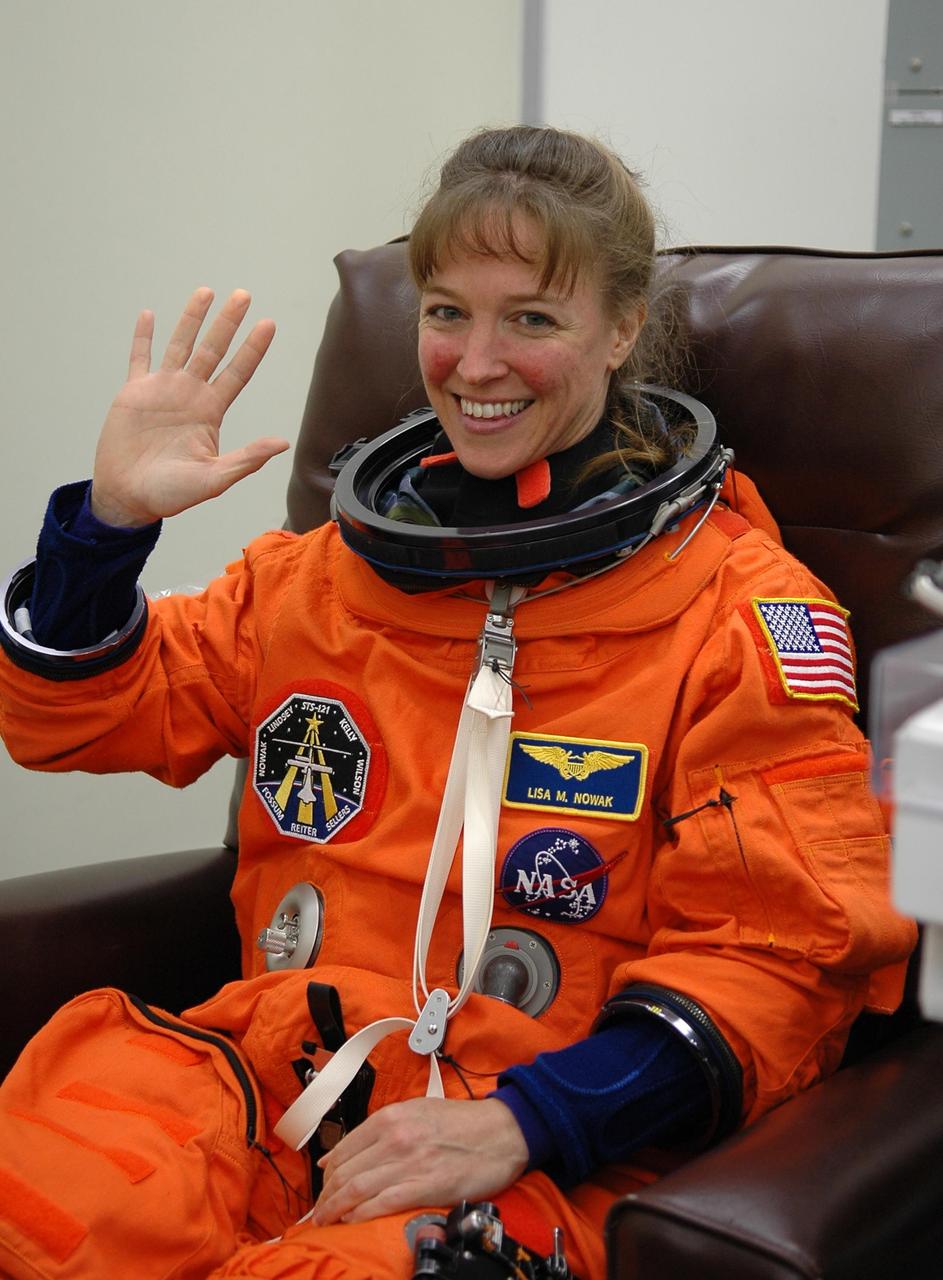
KENNEDY SPACE CENTER, FLA. - STS-121 Mission Specialist Lisa Nowak is happy to be making a third launch attempt on the mission. She is suiting up before heading to Launch Pad 39B. The July 2 launch attempt was scrubbed due to the presence of showers and thunderstorms within the surrounding area of the launch site. The launch of Space Shuttle Discovery on mission STS-121 is the 115th shuttle flight and the 18th U.S. flight to the International Space Station. During the 12-day mission, the STS-121 crew will test new equipment and procedures to improve shuttle safety, as well as deliver supplies and make repairs to the International Space Station. Photo credit: NASA/Kim Shiflett
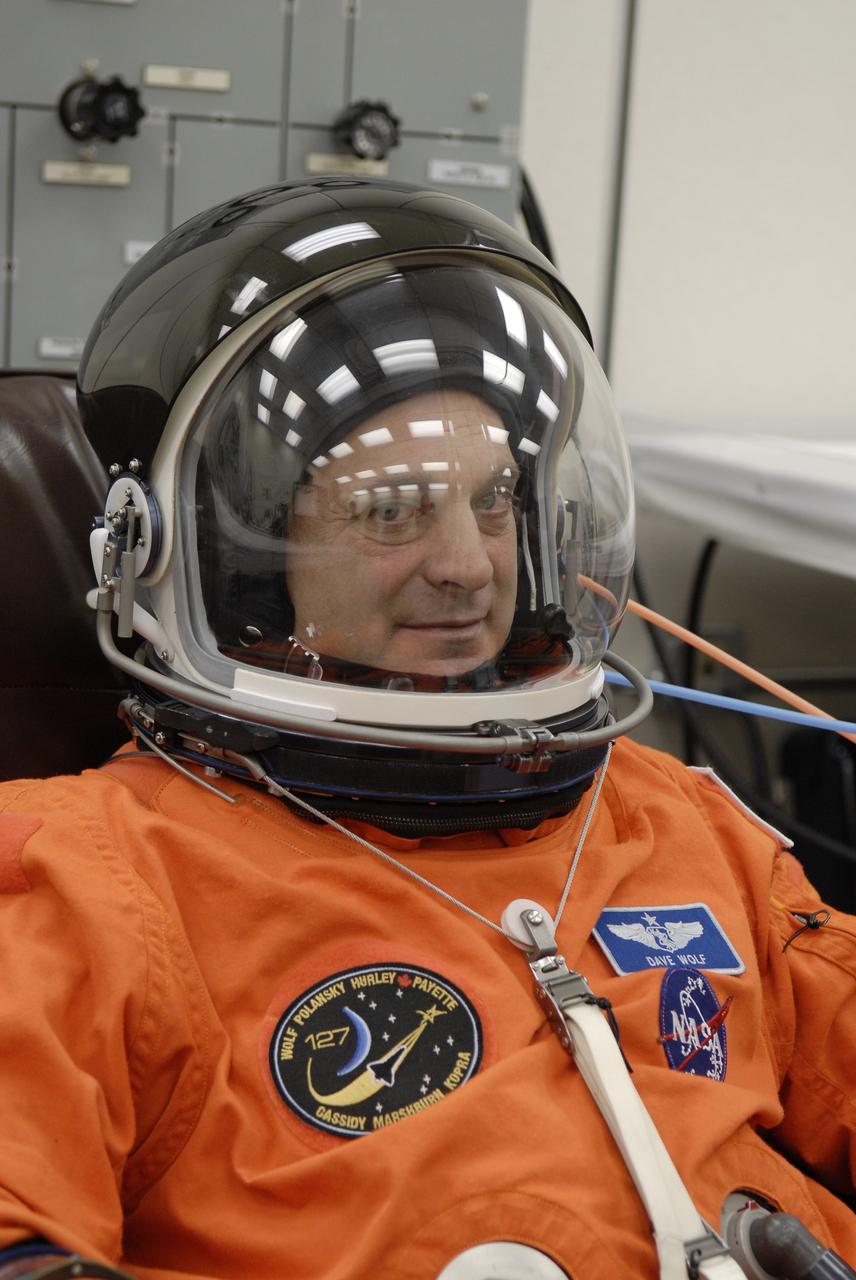
CAPE CANAVERAL, Fla. – In the Operations and Checkout Building at NASA's Kennedy Space Center in Florida, STS-127 Mission Specialist Dave Wolf checks the communication system in his helmet. He and other crew members will be heading for Launch Pad 39A for a simulated launch countdown. The crew is at Kennedy for a launch dress rehearsal called the terminal countdown demonstration test, or TCDT, which includes emergency exit training and equipment familiarization. Endeavour's STS-127 mission is the final of three flights dedicated to the assembly of the Japanese Kibo laboratory complex on the International Space Station. Endeavour's launch is scheduled for June 13 at 7:17 a.m. EDT. Photo credit: NASA/Kim Shiflett
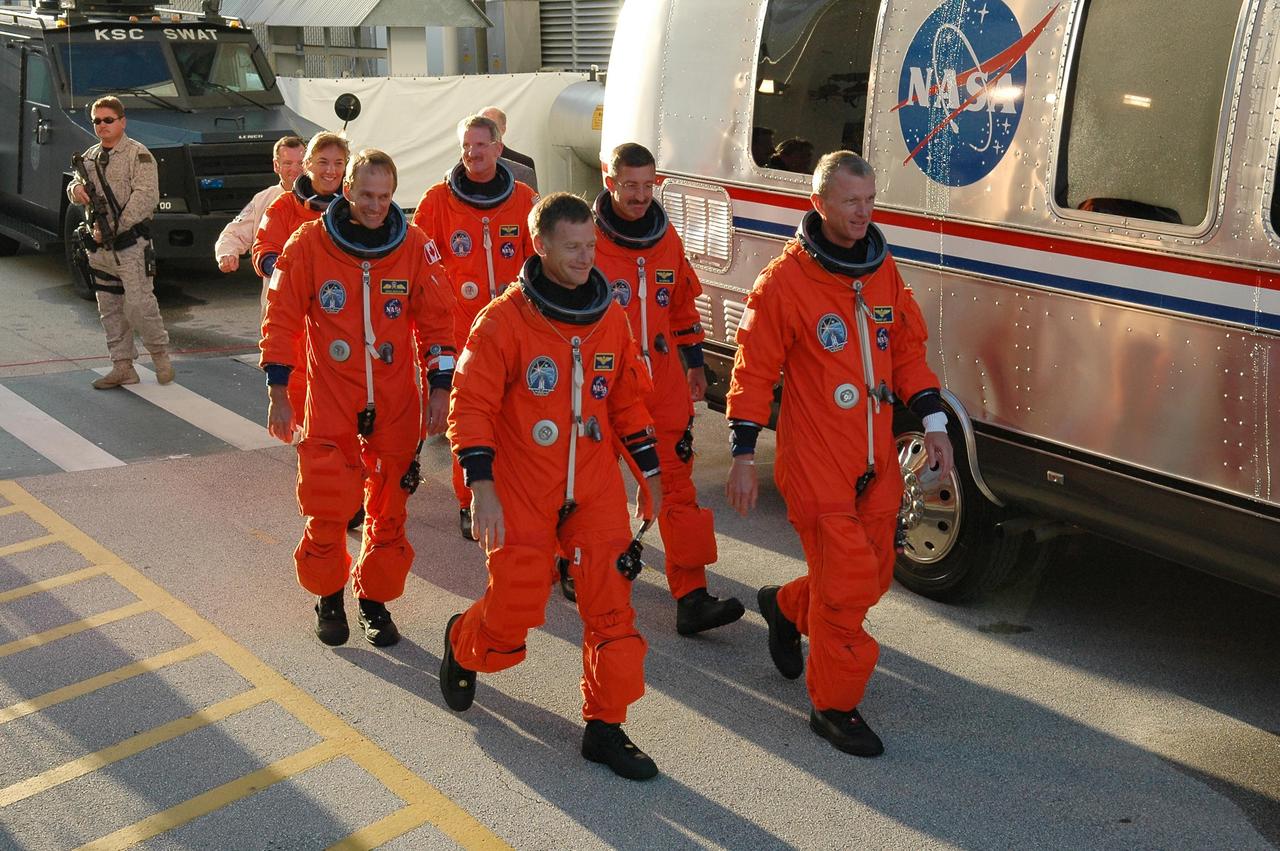
KENNEDY SPACE CENTER, FLA. - The STS-115 crew members walk toward the Astrovan that will take them to Launch Pad 39B. Seen left to right are Mission Specialists Heidemarie Stefanyshyn-Piper, Steven MacLean, Joseph Tanner and Daniel Burbank; Pilot Christopher Ferguson; and Commander Brent Jett. This is the second attempt at launch after a week's postponement due to weather and technical concerns. Atlantis is scheduled to lift off at 11:41 a.m. EDT on this date from Launch Pad 39B. During the STS-115 mission, Atlantis' astronauts will deliver and install the 17.5-ton, bus-sized P3/P4 integrated truss segment on the station. The girder-like truss includes a set of giant solar arrays, batteries and associated electronics and will provide one-fourth of the total power-generation capability for the completed station. This mission is the 116th space shuttle flight, the 27th flight for orbiter Atlantis, and the 19th U.S. flight to the ISS. STS-115 is scheduled to last 11 days with a planned landing at KSC. Photo credit: NASA/Kim Shiflett
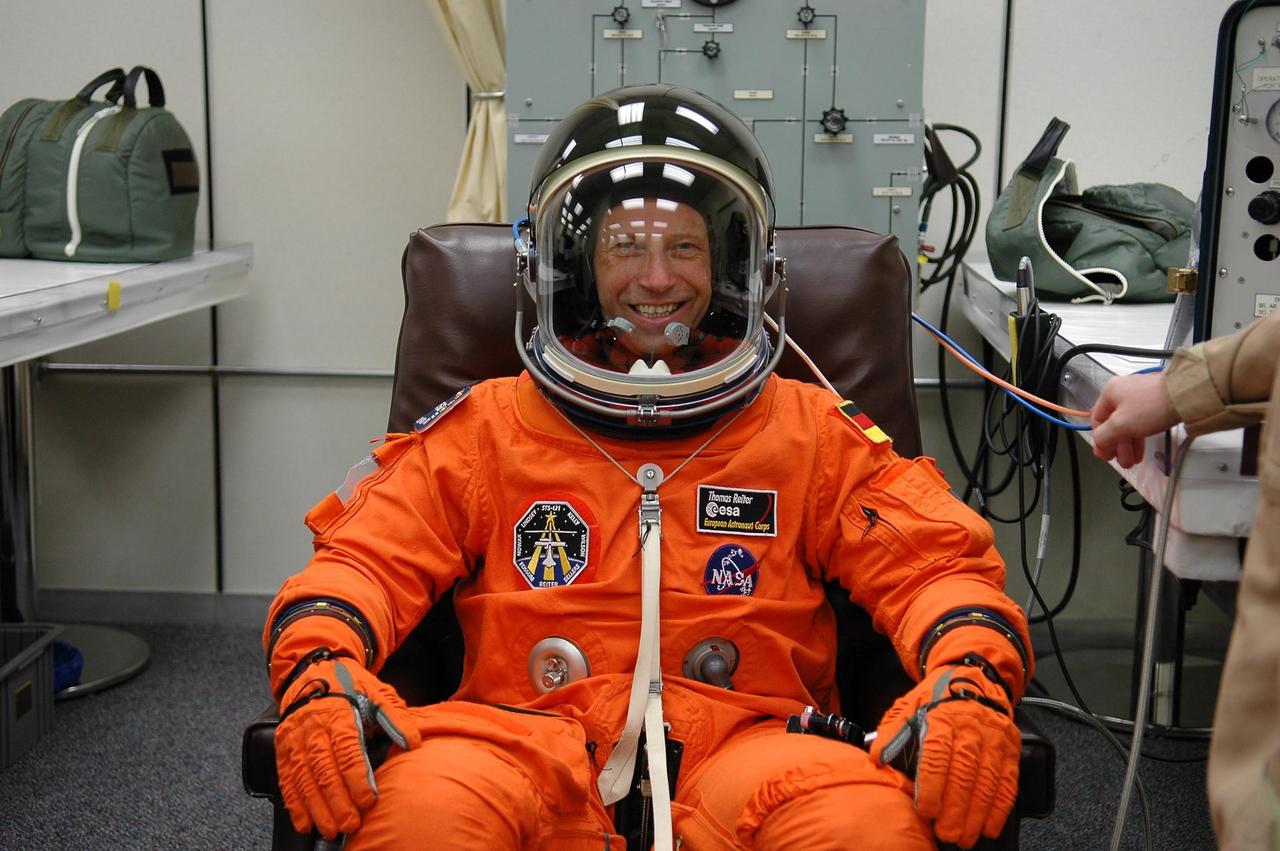
KENNEDY SPACE CENTER, FLA. - Mission Specialist Thomas Reiter, happy to be making a third launch attempt on mission STS-121, is suited up before heading to Launch Pad 39B. The July 2 launch attempt was scrubbed due to the presence of showers and thunderstorms within the surrounding area of the launch site. The launch of Space Shuttle Discovery on mission STS-121 is the 115th shuttle flight and the 18th U.S. flight to the International Space Station. During the 12-day mission, the STS-121 crew will test new equipment and procedures to improve shuttle safety, as well as deliver supplies and make repairs to the International Space Station. Photo credit: NASA/Kim Shiflett
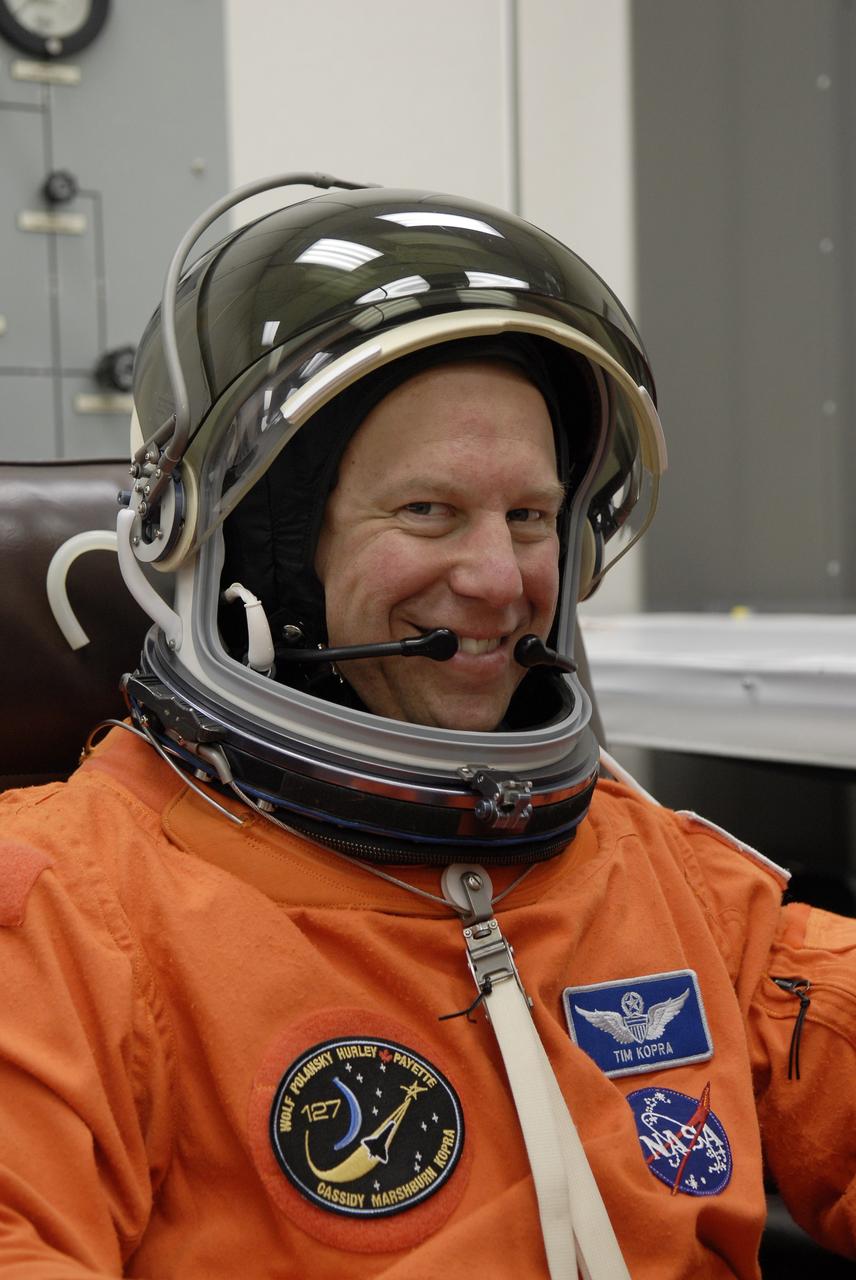
CAPE CANAVERAL, Fla. – In the Operations and Checkout Building at NASA's Kennedy Space Center in Florida, STS-127 Mission Specialist Tim Kopra puts on the helmet for his launch-and-entry suit. He and other crew members will be heading for Launch Pad 39A for a simulated launch countdown. The crew is at Kennedy for a launch dress rehearsal called the terminal countdown demonstration test, or TCDT, which includes emergency exit training and equipment familiarization. Endeavour's STS-127 mission is the final of three flights dedicated to the assembly of the Japanese Kibo laboratory complex on the International Space Station. Endeavour's launch is scheduled for June 13 at 7:17 a.m. EDT. Photo credit: NASA/Kim Shiflett
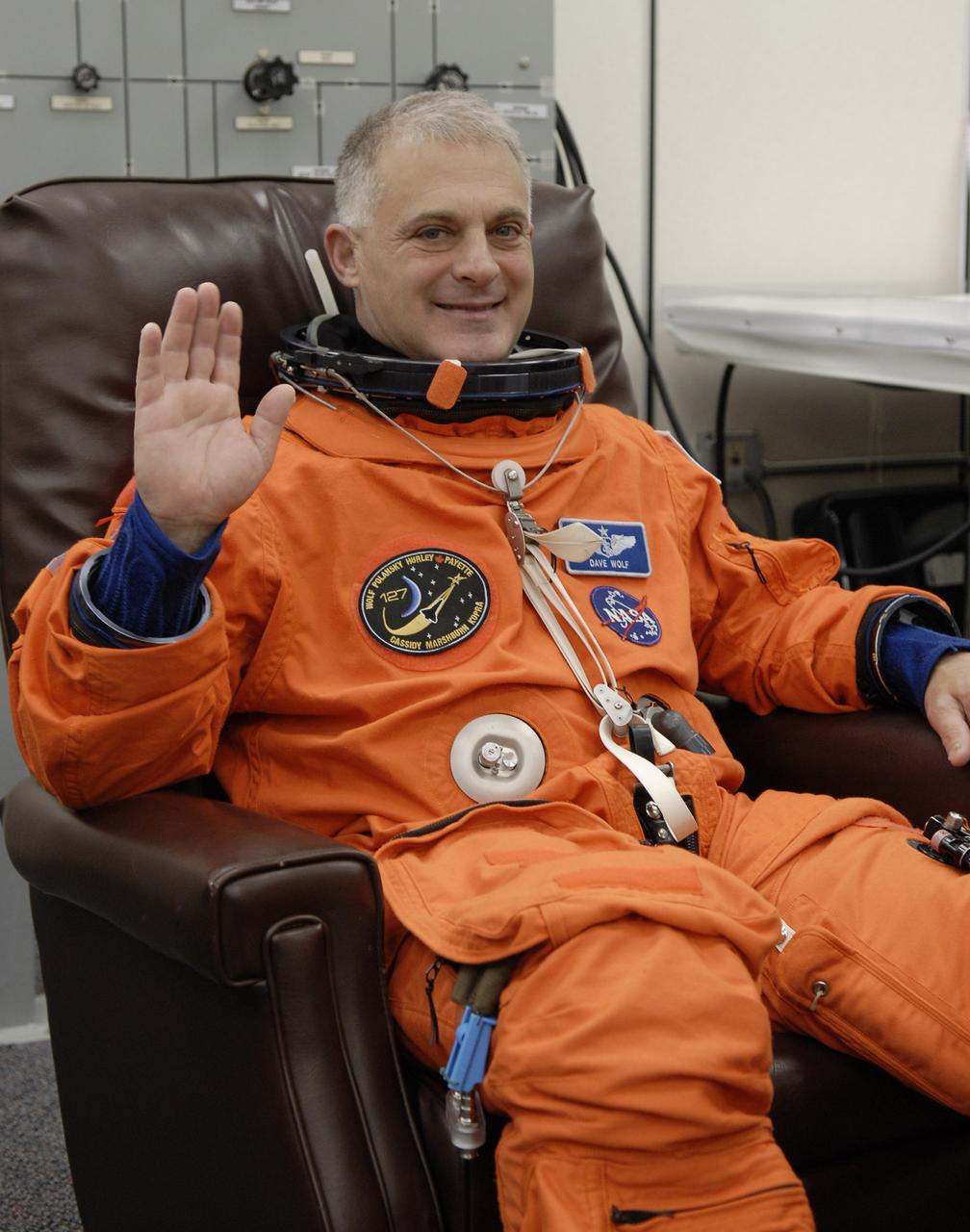
CAPE CANAVERAL, Fla. – In the Operations and Checkout Building at NASA's Kennedy Space Center in Florida, STS-127 Mission Specialist Dave Wolf puts on his launch-and-entry suit. He and other crew members will be heading for Launch Pad 39A for a simulated launch countdown. The crew is at Kennedy for a launch dress rehearsal called the terminal countdown demonstration test, or TCDT, which includes emergency exit training and equipment familiarization. Endeavour's STS-127 mission is the final of three flights dedicated to the assembly of the Japanese Kibo laboratory complex on the International Space Station. Endeavour's launch is scheduled for June 13 at 7:17 a.m. EDT. Photo credit: NASA/Kim Shiflett
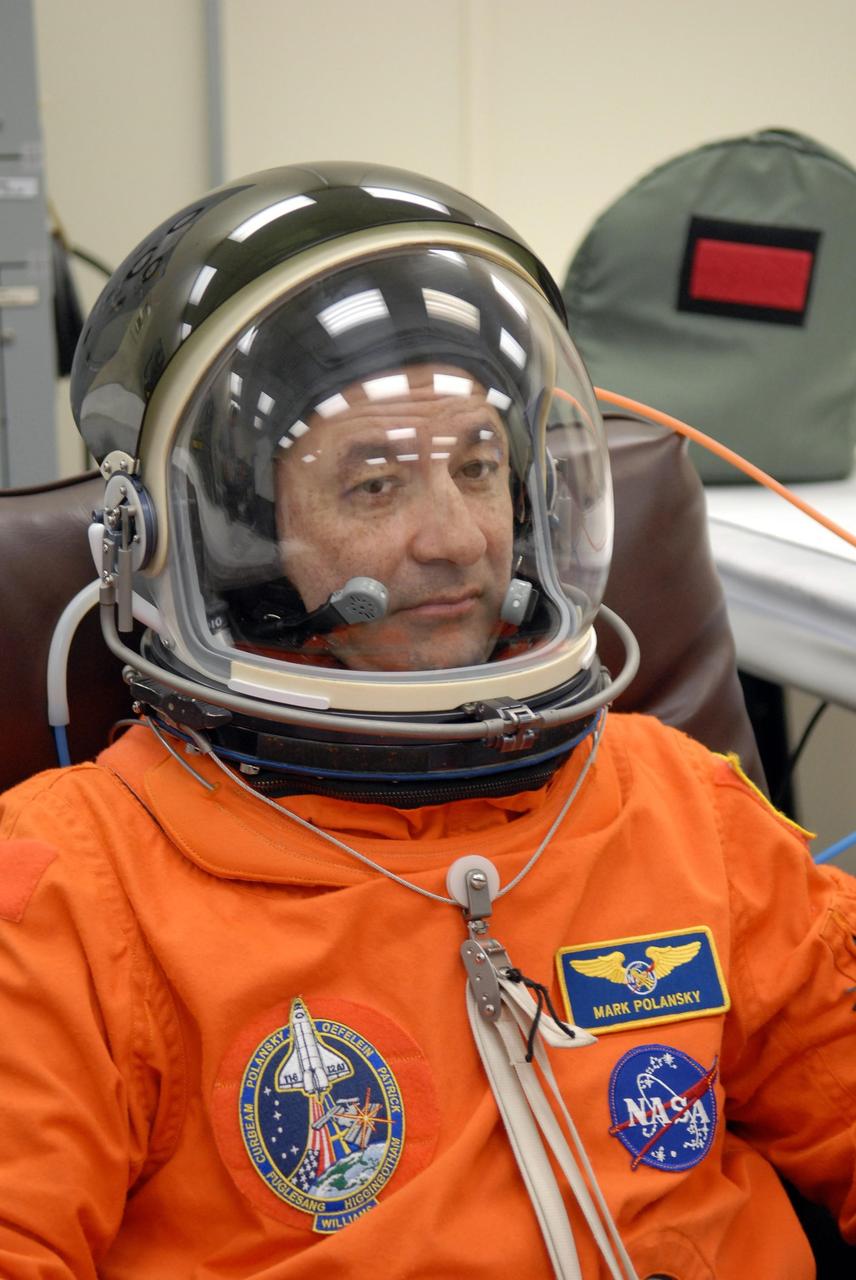
KENNEDY SPACE CENTER, FLA. -- The crew members of mission STS-116 are suiting up for launch at 9:35 p.m. EST from Launch Pad 39B aboard Space Shuttle Discovery. Pictured here is Commander Mark Polansky, after donning his helmet. Polansky will be making his second shuttle flight. This is Discovery's 33rd mission and the first night launch since 2003. The 20th shuttle mission to the International Space Station, STS-116 carries another truss segment, P5. It will serve as a spacer, mated to the P4 truss that was attached in September. After installing the P5, the crew will reconfigure and redistribute the power generated by two pairs of U.S. solar arrays. Landing is expected Dec. 19 at KSC. Photo credit: NASA/Kim Shiflett
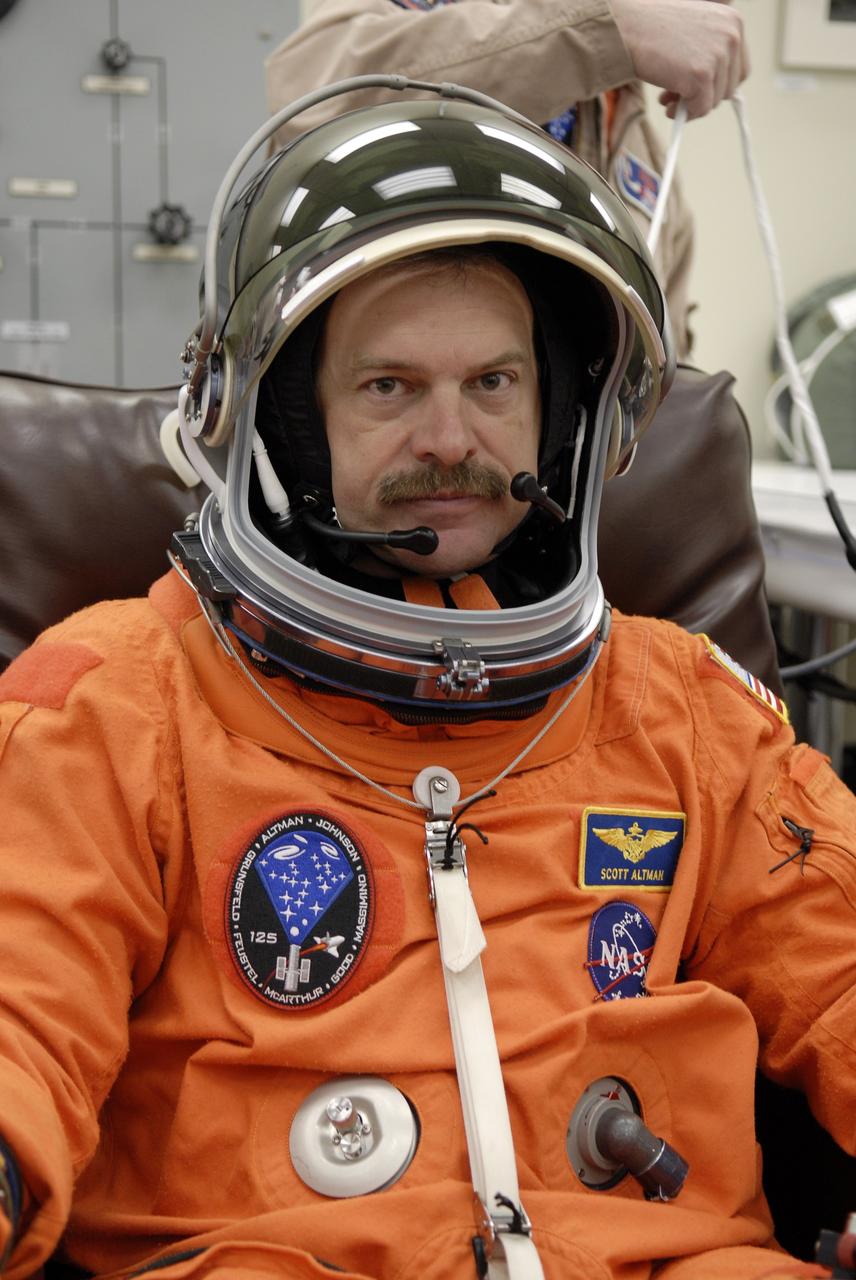
CAPE CANAVERAL, Fla. – STS-125 Commander Scott Altman fits his helmet to his launch-and-entry suit before heading for Launch Pad 39A at NASA's Kennedy Space Center in Florida. This launch will be Altman's fourth space shuttle flight. Liftoff is scheduled for 2:01 p.m. May 11 EDT. Atlantis' 11-day flight will include five spacewalks to refurbish and upgrade NASA's Hubble Space Telescope with state-of-the-art science instruments that will expand Hubble's capabilities and extend its operational lifespan through at least 2014. The payload includes a Wide Field Camera 3, fine guidance sensor and the Cosmic Origins Spectrograph. Photo credit: NASA/Kim Shiflett
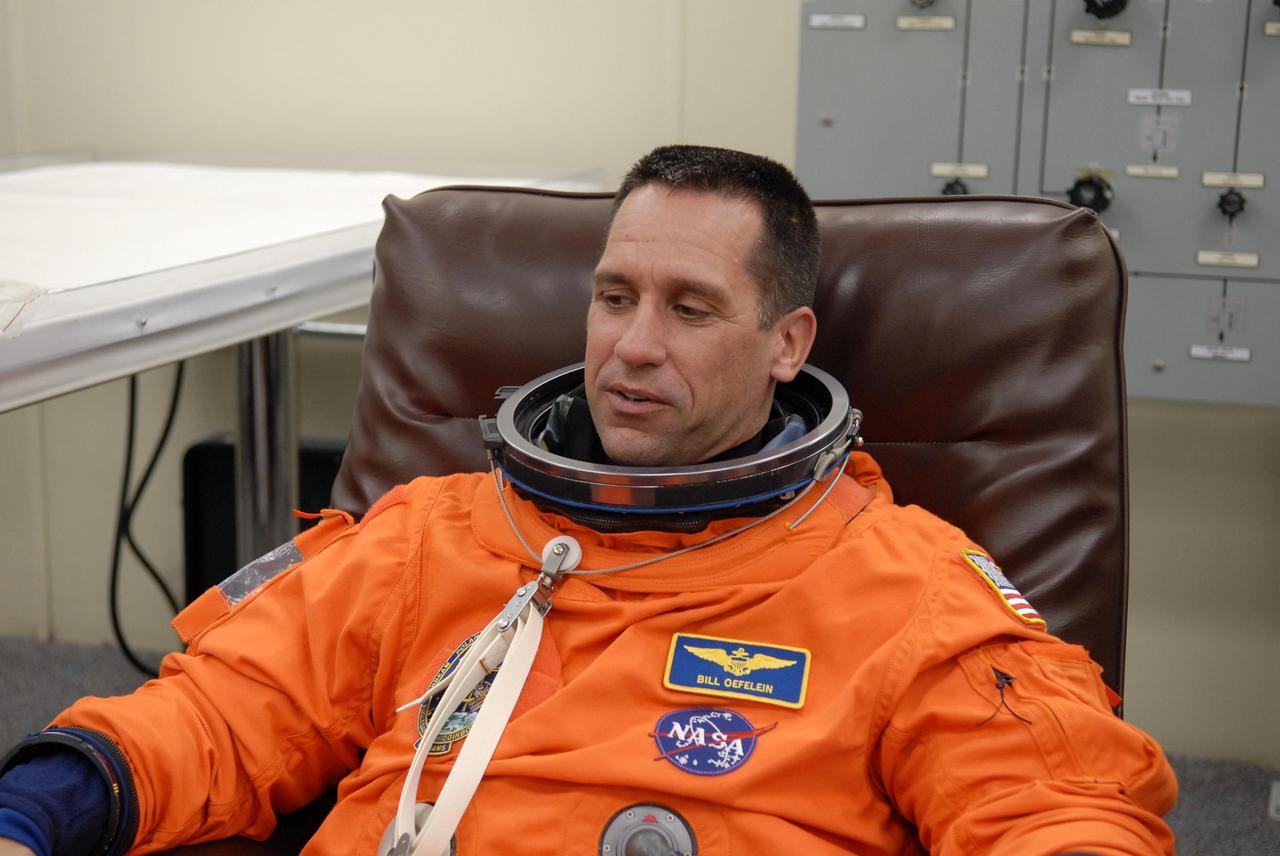
KENNEDY SPACE CENTER, FLA. -- The crew members of mission STS-116 are suiting up for launch at 9:35 p.m. EST from Launch Pad 39B aboard Space Shuttle Discovery. Pictured here is Pilot William Oefelein, who will be making his first shuttle flight. This is Discovery's 33rd mission and the first night launch since 2003. The 20th shuttle mission to the International Space Station, STS-116 carries another truss segment, P5. It will serve as a spacer, mated to the P4 truss that was attached in September. After installing the P5, the crew will reconfigure and redistribute the power generated by two pairs of U.S. solar arrays. Landing is expected Dec. 19 at KSC. Photo credit: NASA/Kim Shiflett
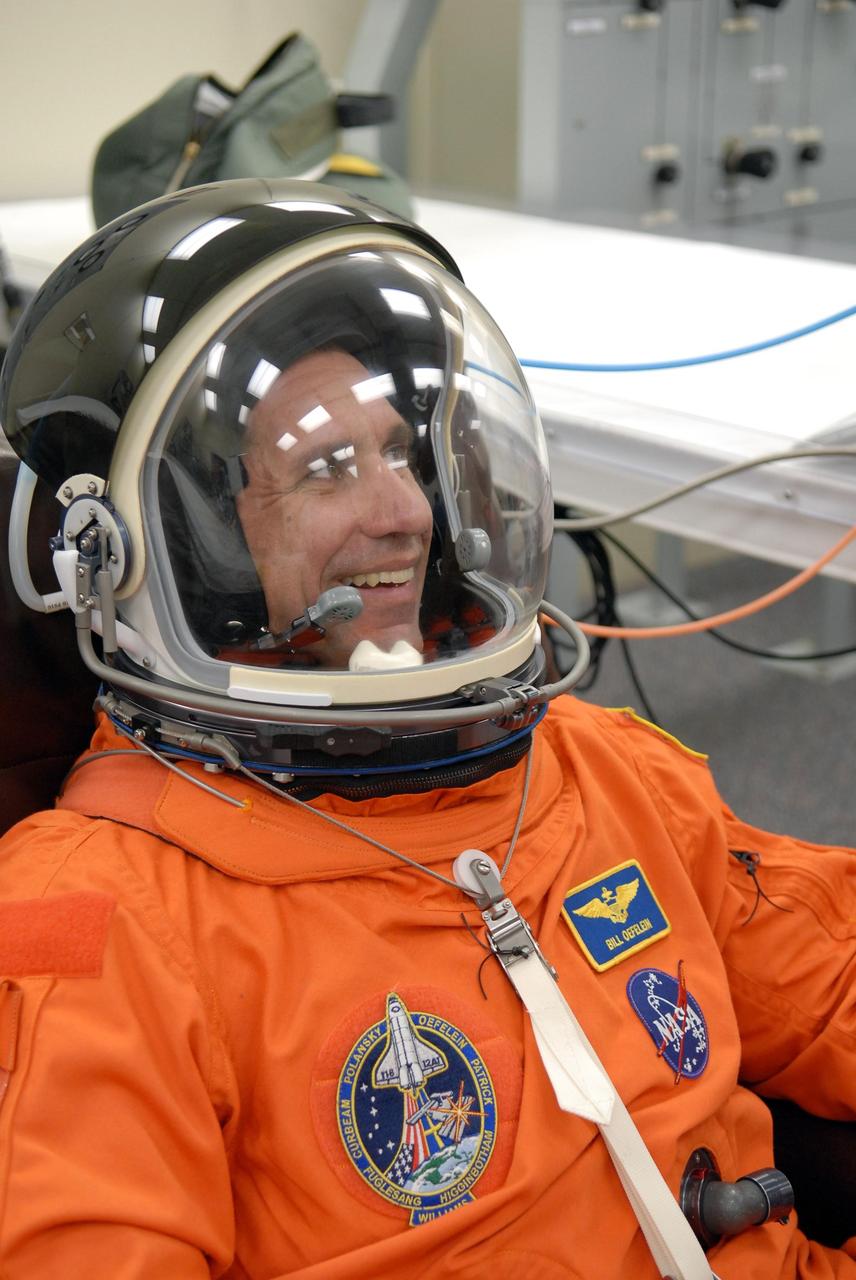
KENNEDY SPACE CENTER, FLA. -- The crew members of mission STS-116 are suiting up for launch at 9:35 p.m. EST from Launch Pad 39B aboard Space Shuttle Discovery. Pictured here is Pilot William Oefelein, who will be making his first shuttle flight. This is Discovery's 33rd mission and the first night launch since 2003. The 20th shuttle mission to the International Space Station, STS-116 carries another truss segment, P5. It will serve as a spacer, mated to the P4 truss that was attached in September. After installing the P5, the crew will reconfigure and redistribute the power generated by two pairs of U.S. solar arrays. Landing is expected Dec. 19 at KSC. Photo credit: NASA/Kim Shiflett
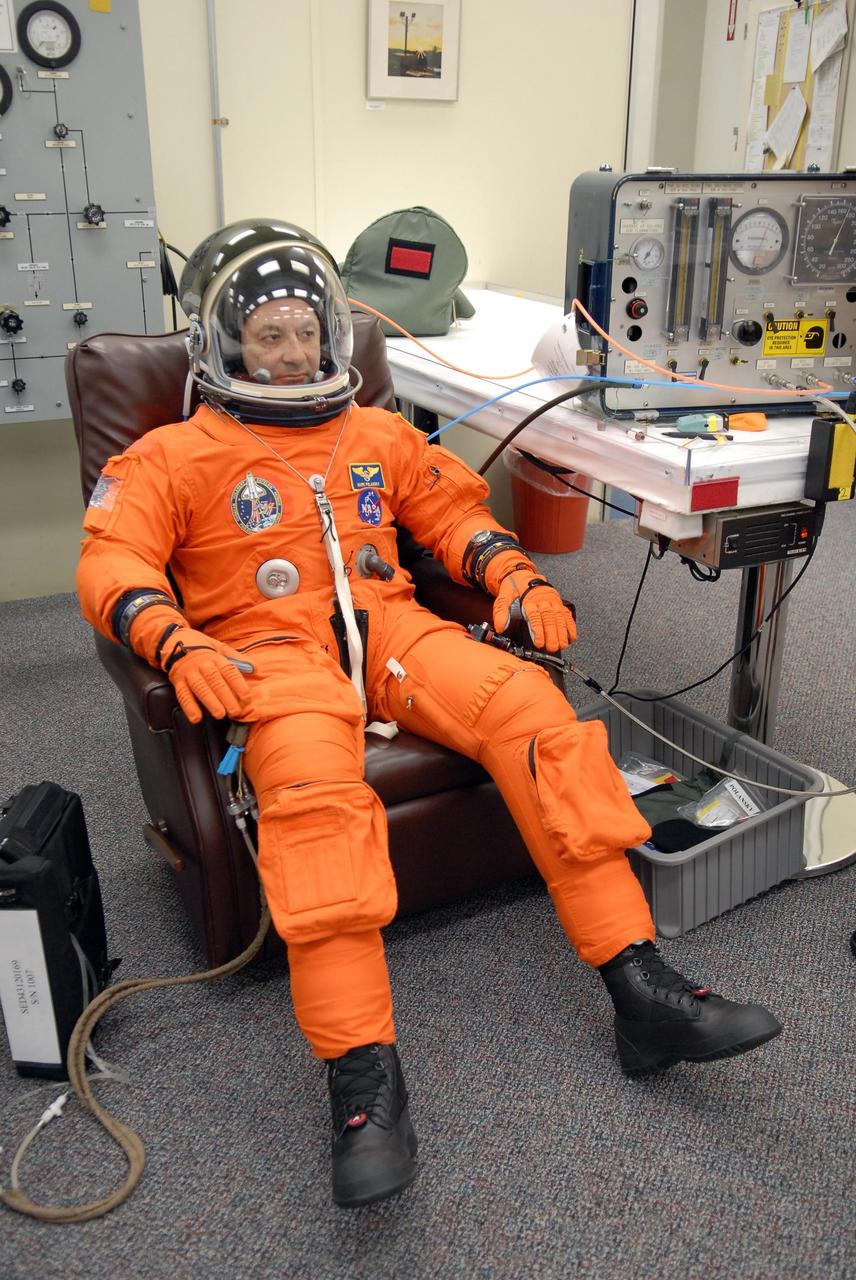
KENNEDY SPACE CENTER, FLA. -- The crew members of mission STS-116 are suiting up for launch at 9:35 p.m. EST from Launch Pad 39B aboard Space Shuttle Discovery. Here, Commander Mark Polansky has completed donning all the elements, from boots to helmet. Polansky will be making his second shuttle flight. This is Discovery's 33rd mission and the first night launch since 2003. The 20th shuttle mission to the International Space Station, STS-116 carries another truss segment, P5. It will serve as a spacer, mated to the P4 truss that was attached in September. After installing the P5, the crew will reconfigure and redistribute the power generated by two pairs of U.S. solar arrays. Landing is expected Dec. 19 at KSC. Photo credit: NASA/Kim Shiflett
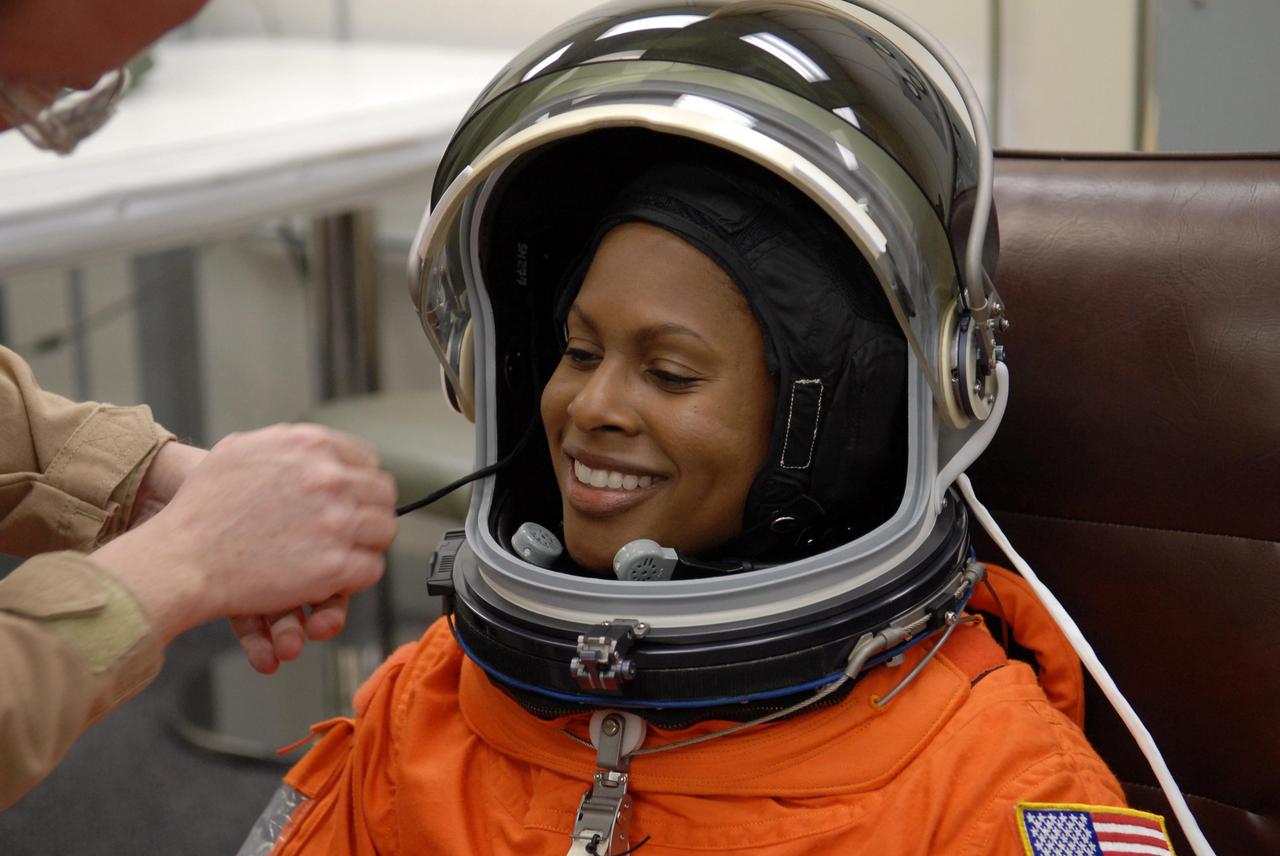
KENNEDY SPACE CENTER, FLA. -- The crew members of mission STS-116 are suiting up for launch at 9:35 p.m. EST from Launch Pad 39B aboard Space Shuttle Discovery. Pictured here, Mission Specialist Joan Higginbotham is helped with her helmet. Higginbotham will be making her first shuttle flight. This is Discovery's 33rd mission and the first night launch since 2003. The 20th shuttle mission to the International Space Station, STS-116 carries another truss segment, P5. It will serve as a spacer, mated to the P4 truss that was attached in September. After installing the P5, the crew will reconfigure and redistribute the power generated by two pairs of U.S. solar arrays. Landing is expected Dec. 19 at KSC. Photo credit: NASA/Kim Shiflett
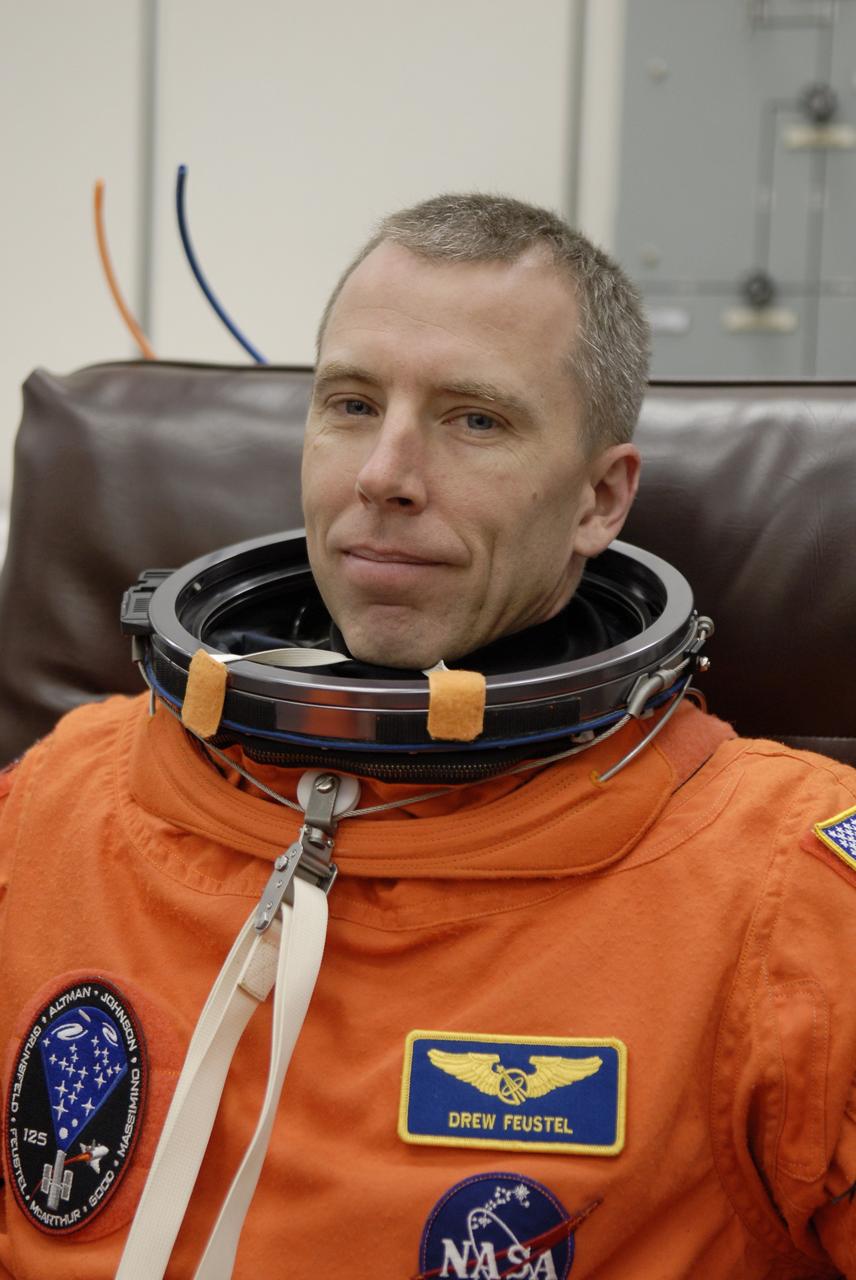
CAPE CANAVERAL, Fla. – STS-125 Mission Specialist Andrew Feustel puts on his launch-and-entry suit before heading for Launch Pad 39A at NASA's Kennedy Space Center in Florida. This launch will be Feustel's first space shuttle flight. Liftoff is scheduled for 2:01 p.m. May 11 EDT. Atlantis' 11-day flight will include five spacewalks to refurbish and upgrade NASA's Hubble Space Telescope with state-of-the-art science instruments that will expand Hubble's capabilities and extend its operational lifespan through at least 2014. The payload includes a Wide Field Camera 3, fine guidance sensor and the Cosmic Origins Spectrograph. Photo credit: NASA/Kim Shiflett
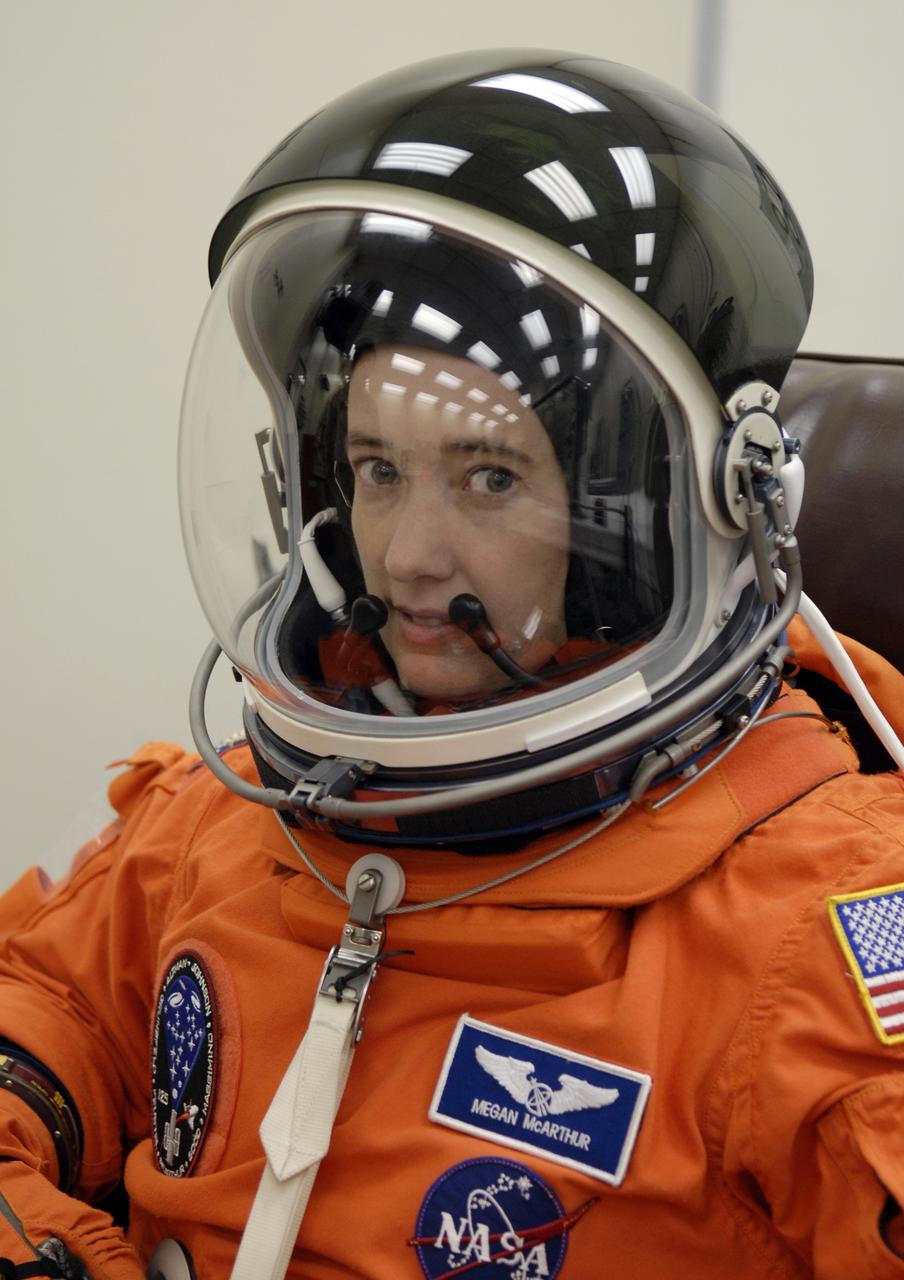
CAPE CANAVERAL, Fla. – STS-125 Mission Specialist Megan McArthur fits the helmet on her launch-and-entry suit before heading for Launch Pad 39A at NASA's Kennedy Space Center in Florida. This launch will be McArthur's first space shuttle flight. Liftoff is scheduled for 2:01 p.m. May 11 EDT. Atlantis' 11-day flight will include five spacewalks to refurbish and upgrade NASA's Hubble Space Telescope with state-of-the-art science instruments that will expand Hubble's capabilities and extend its operational lifespan through at least 2014. The payload includes a Wide Field Camera 3, fine guidance sensor and the Cosmic Origins Spectrograph. Photo credit: NASA/Kim Shiflett
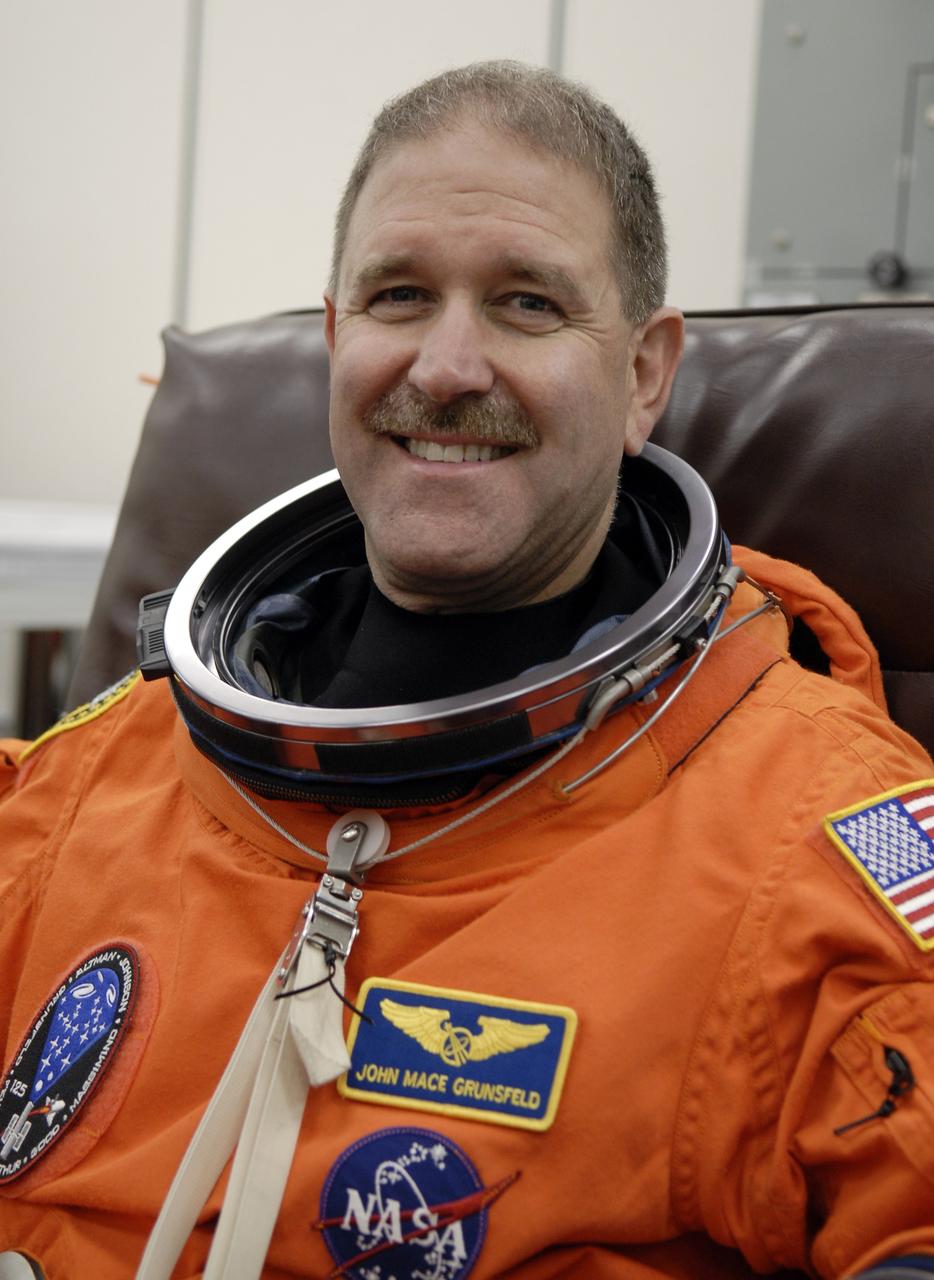
CAPE CANAVERAL, Fla. – STS-125 Mission Specialist John Grunsfeld puts on his launch-and-entry suit before heading for Launch Pad 39A at NASA's Kennedy Space Center in Florida. This launch will be Grunsfeld's fifth space shuttle flight. Liftoff is scheduled for 2:01 p.m. May 11 EDT. Atlantis' 11-day flight will include five spacewalks to refurbish and upgrade NASA's Hubble Space Telescope with state-of-the-art science instruments that will expand Hubble's capabilities and extend its operational lifespan through at least 2014. The payload includes a Wide Field Camera 3, fine guidance sensor and the Cosmic Origins Spectrograph. Photo credit: NASA/Kim Shiflett
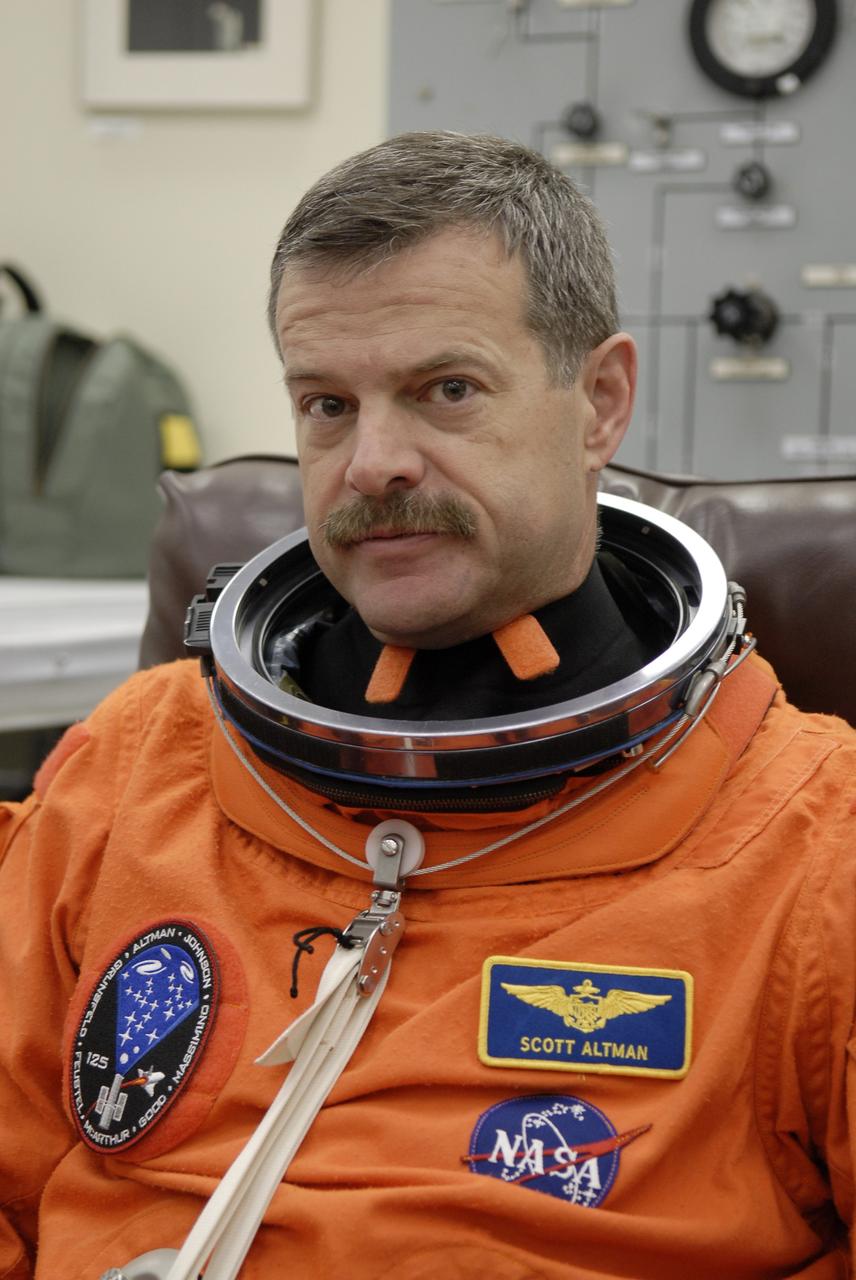
CAPE CANAVERAL, Fla. – STS-125 Commander Scott Altman puts on his launch-and-entry suit before heading for Launch Pad 39A at NASA's Kennedy Space Center in Florida. This launch will be Altman's fourth space shuttle flight. Liftoff is scheduled for 2:01 p.m. May 11 EDT. Atlantis' 11-day flight will include five spacewalks to refurbish and upgrade NASA's Hubble Space Telescope with state-of-the-art science instruments that will expand Hubble's capabilities and extend its operational lifespan through at least 2014. The payload includes a Wide Field Camera 3, fine guidance sensor and the Cosmic Origins Spectrograph. Photo credit: NASA/Kim Shiflett
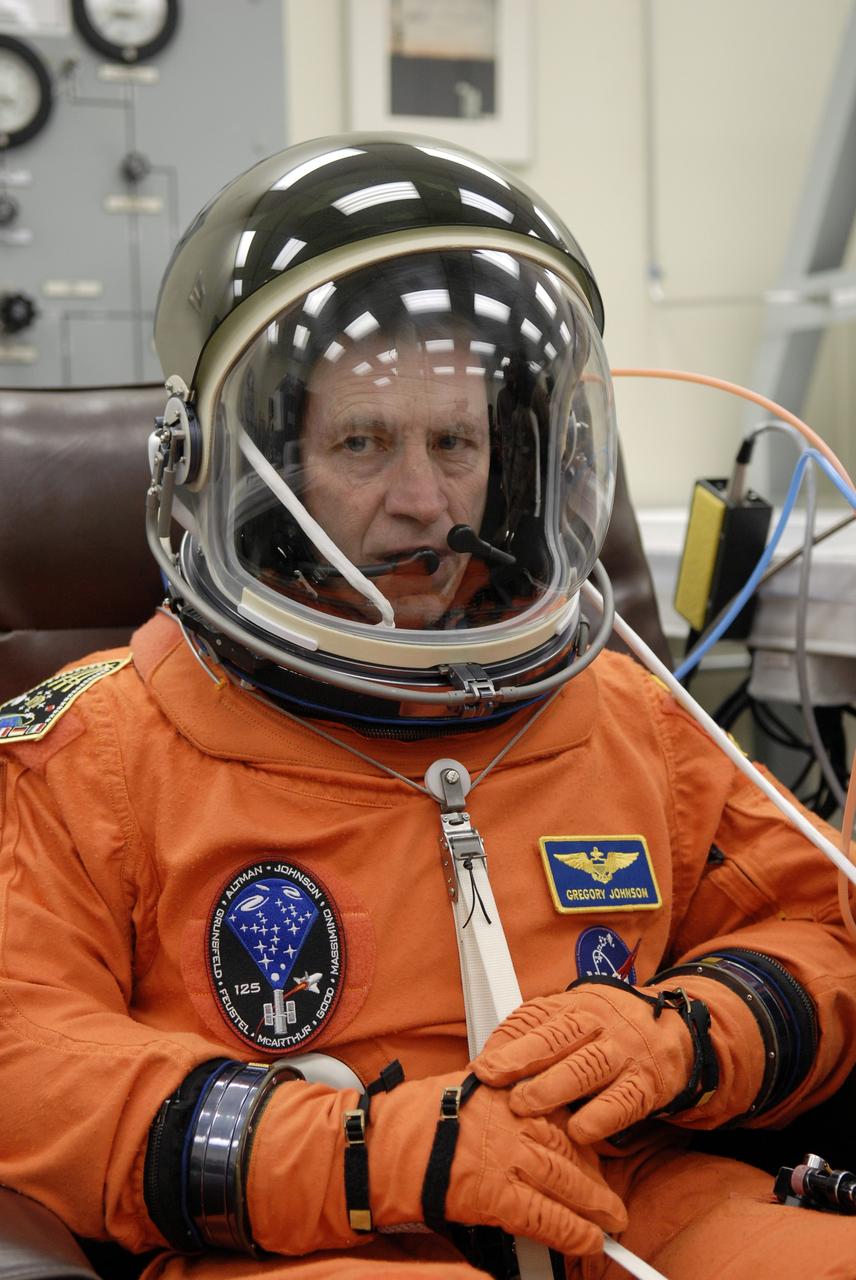
CAPE CANAVERAL, Fla. – STS-125 Pilot Gregory C. Johnson fits his helmet and gloves on his launch-and-entry suit before heading for Launch Pad 39A at NASA's Kennedy Space Center in Florida. This launch will be Johnson's first space shuttle flight. Liftoff is scheduled for 2:01 p.m. May 11 EDT. Atlantis' 11-day flight will include five spacewalks to refurbish and upgrade NASA's Hubble Space Telescope with state-of-the-art science instruments that will expand Hubble's capabilities and extend its operational lifespan through at least 2014. The payload includes a Wide Field Camera 3, fine guidance sensor and the Cosmic Origins Spectrograph. Photo credit: NASA/Kim Shiflett
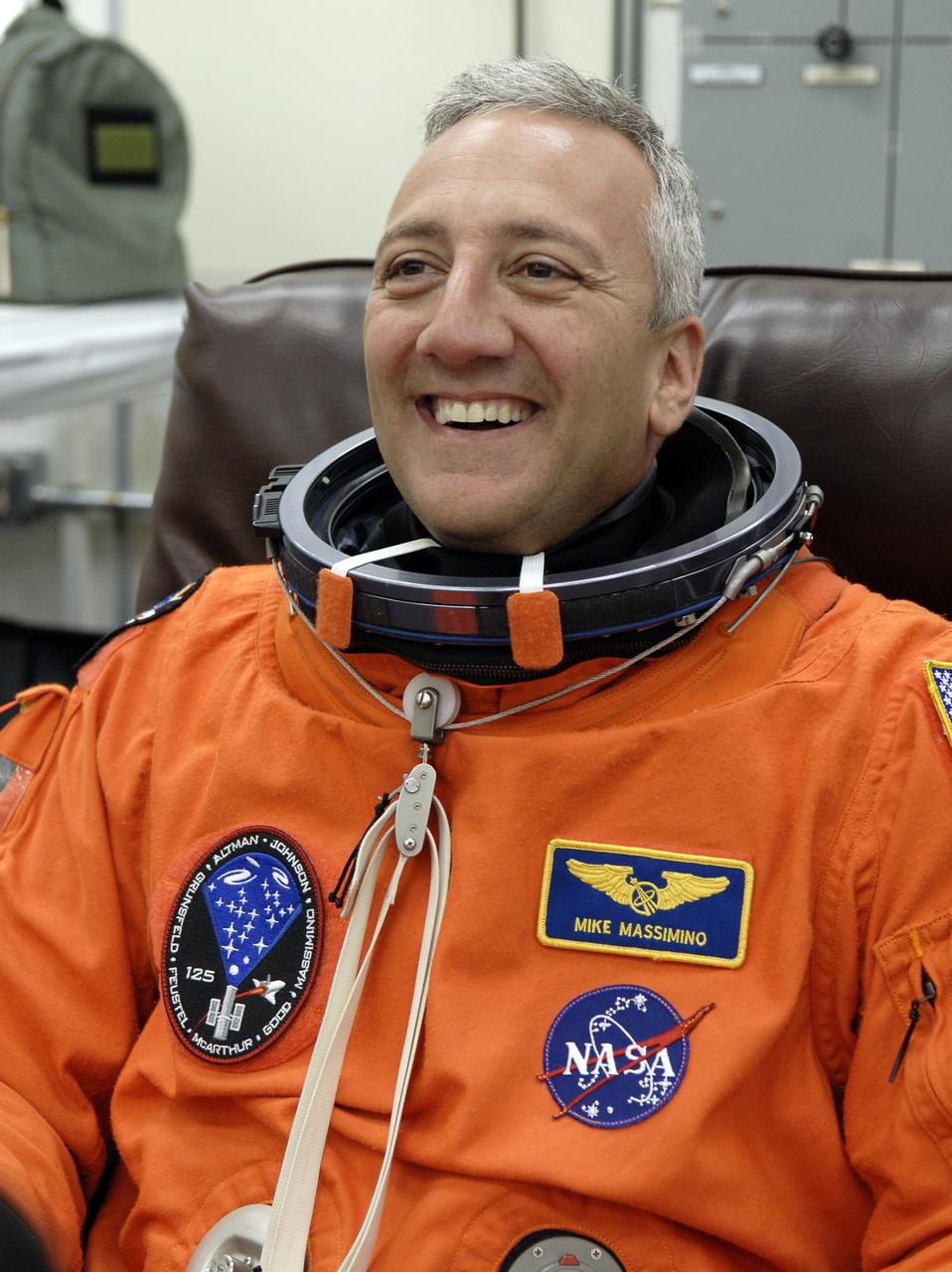
CAPE CANAVERAL, Fla. – STS-125 Mission Specialist Mike Massimino puts on his launch-and-entry suit before heading for Launch Pad 39A at NASA's Kennedy Space Center in Florida. This launch will be Massimino's second space shuttle flight. Liftoff is scheduled for 2:01 p.m. May 11 EDT. Atlantis' 11-day flight will include five spacewalks to refurbish and upgrade NASA's Hubble Space Telescope with state-of-the-art science instruments that will expand Hubble's capabilities and extend its operational lifespan through at least 2014. The payload includes a Wide Field Camera 3, fine guidance sensor and the Cosmic Origins Spectrograph. Photo credit: NASA/Kim Shiflett
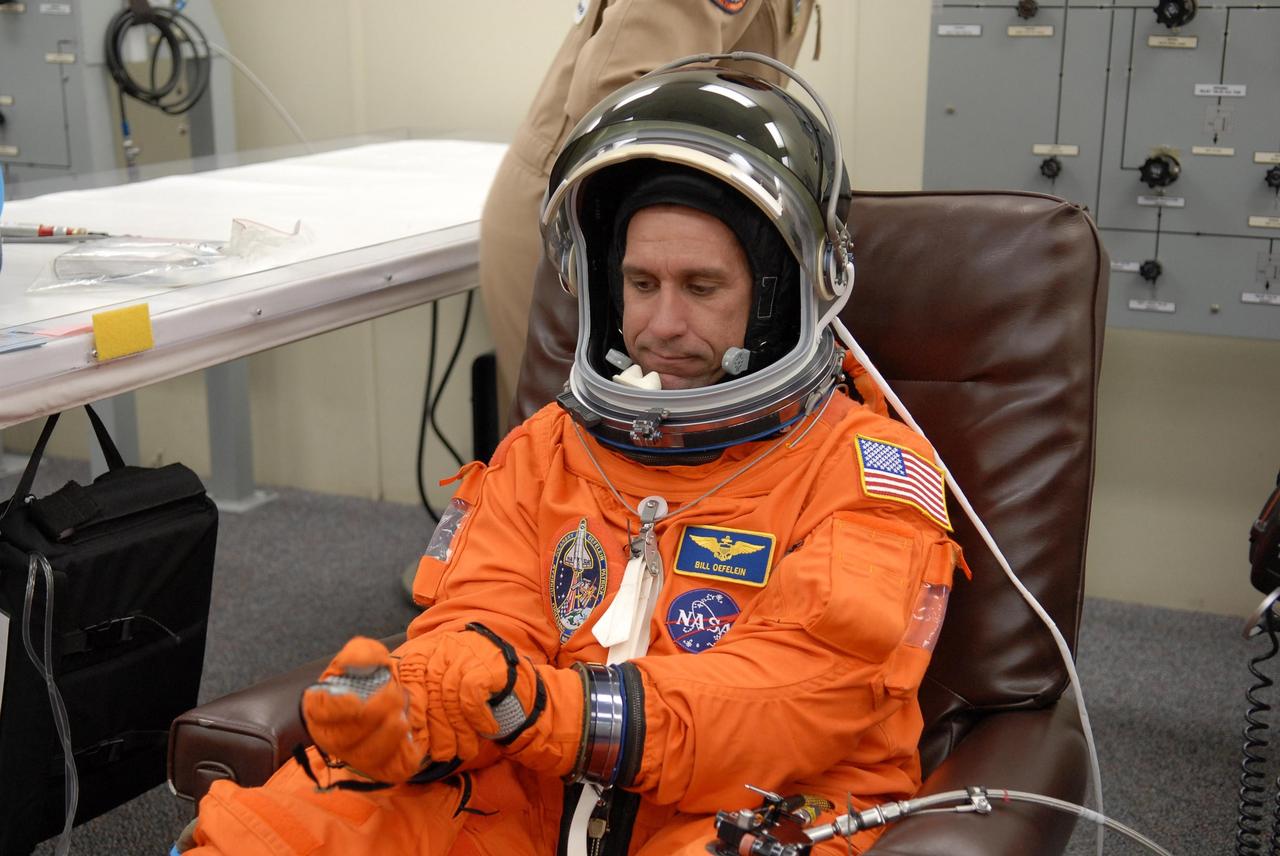
KENNEDY SPACE CENTER, FLA. -- The crew members of mission STS-116 are suiting up for launch at 9:35 p.m. EST from Launch Pad 39B aboard Space Shuttle Discovery. Pictured here is Pilot William Oefelein, adjusting his gloves. Oefelein will be making his first shuttle flight. This is Discovery's 33rd mission and the first night launch since 2003. The 20th shuttle mission to the International Space Station, STS-116 carries another truss segment, P5. It will serve as a spacer, mated to the P4 truss that was attached in September. After installing the P5, the crew will reconfigure and redistribute the power generated by two pairs of U.S. solar arrays. Landing is expected Dec. 19 at KSC. Photo credit: NASA/Kim Shiflett