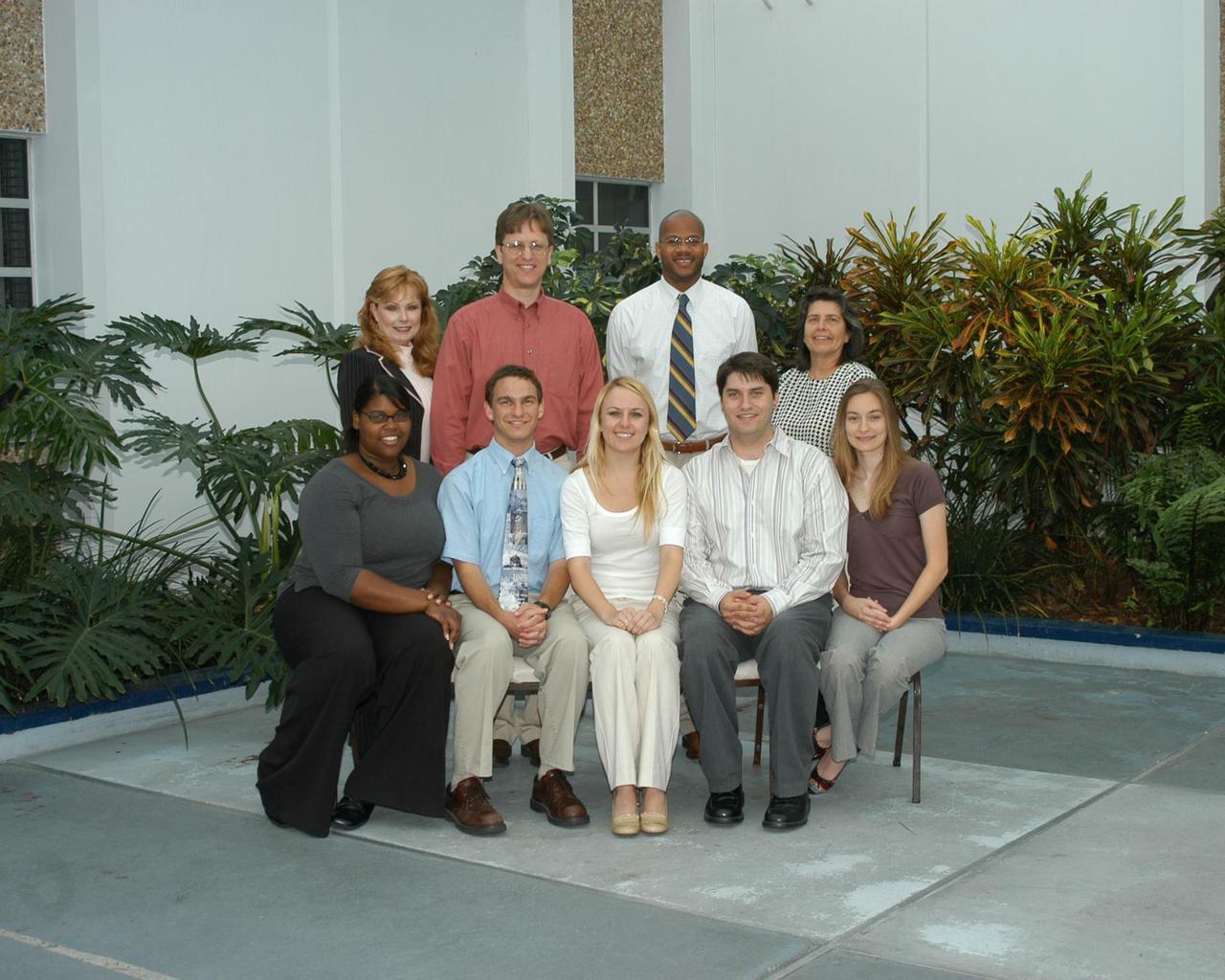
DEVELOP team members at Stennis Space Center for the summer 2007 term are (from left): front row, students Deirdra Boley, Jason Jones, Lauren Childs, Craig Matthews and Denise Spindel; back row, advisers Cheri Miller of NASA, Kenton Ross of Science Systems and Applications Inc., Andra Johnson of Southern University and Roxzana Moore, SSAI.
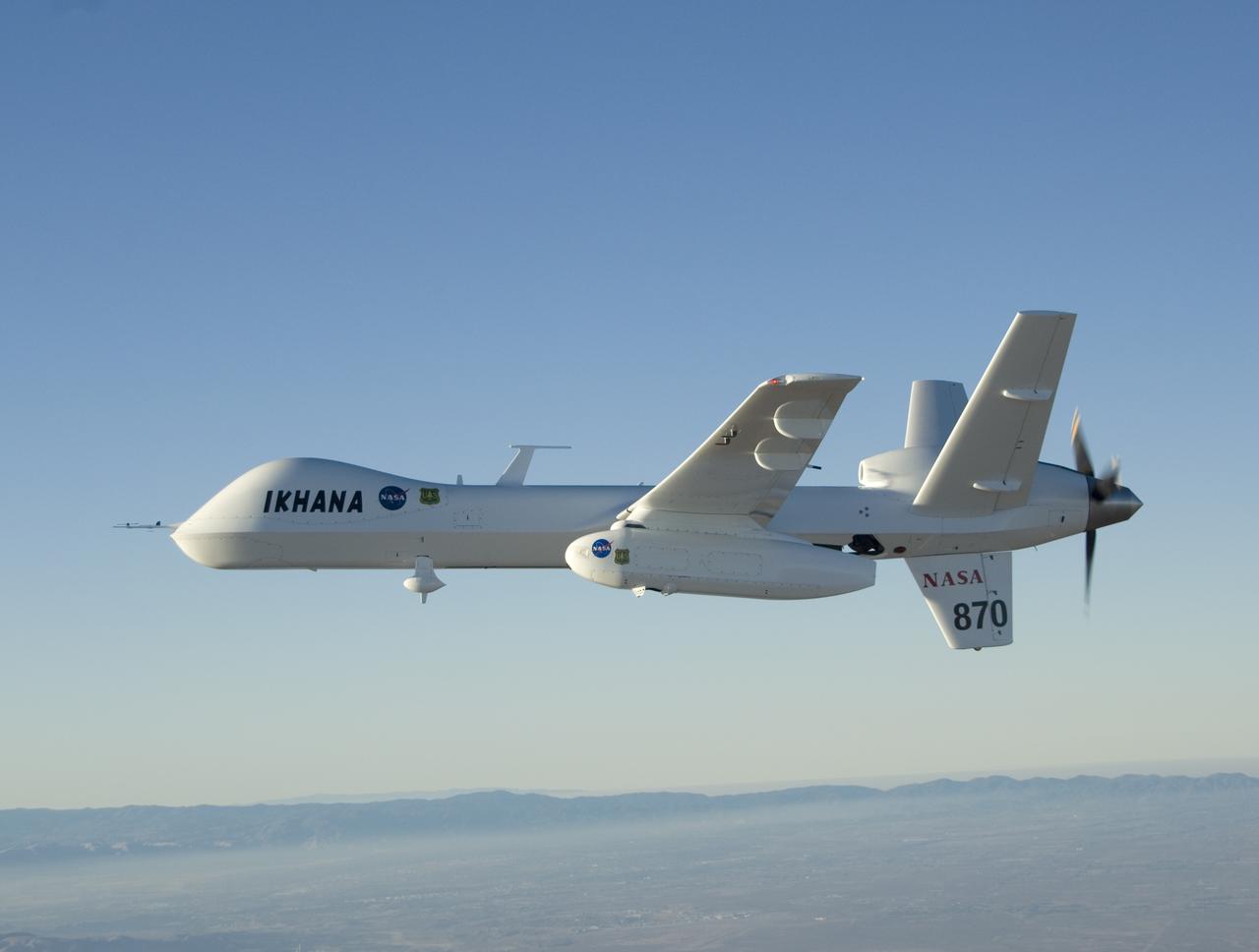
NASA's Ikhana remotely piloted aircraft soars over smoky terrain during a wildfire imaging demonstration mission in the late summer of 2007.
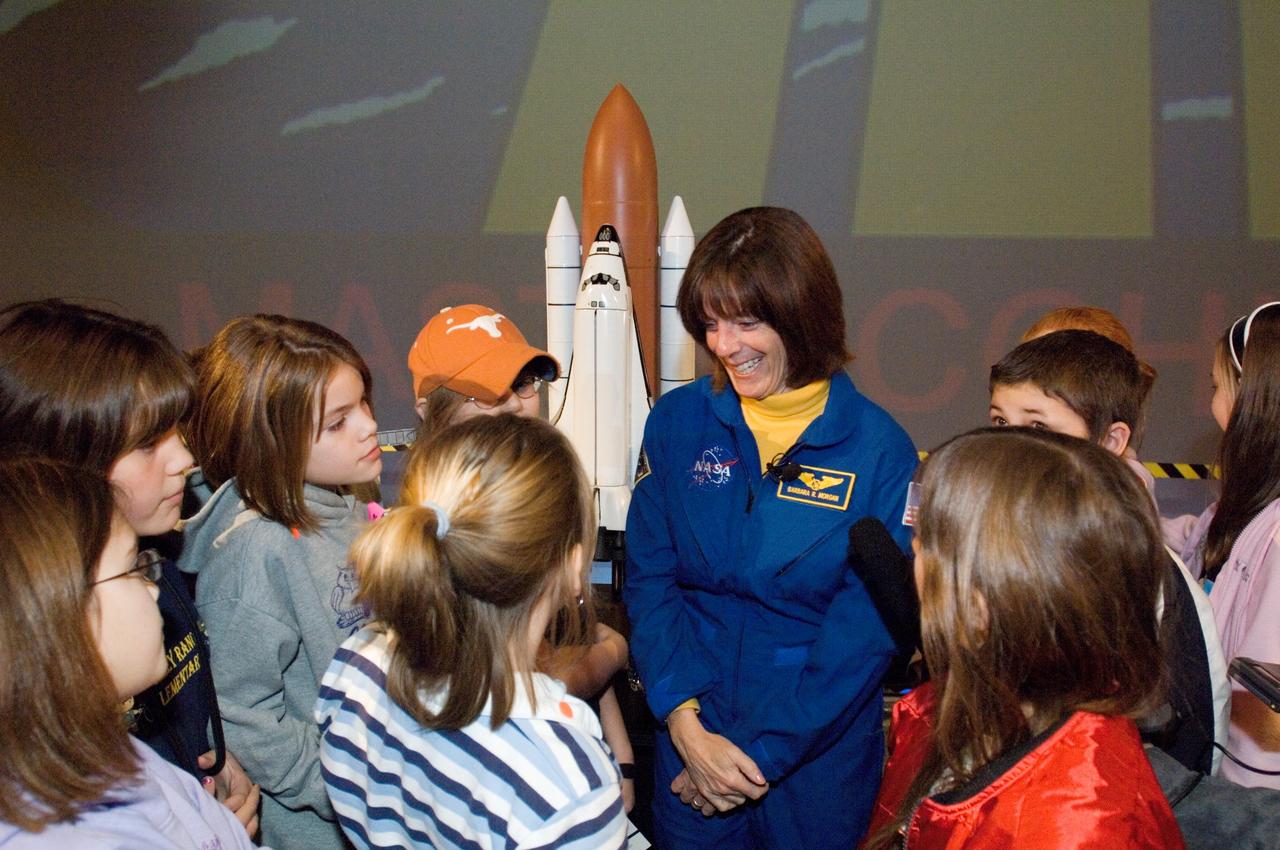
JSC2007-E-03715 (19 Jan. 2007) --- Barbara R. Morgan, educator astronaut, is pictured with a number of students during a demonstration at Space Center Houston. Morgan has been named as a crew member for the STS-118 mission, scheduled to launch in the summer of 2007.
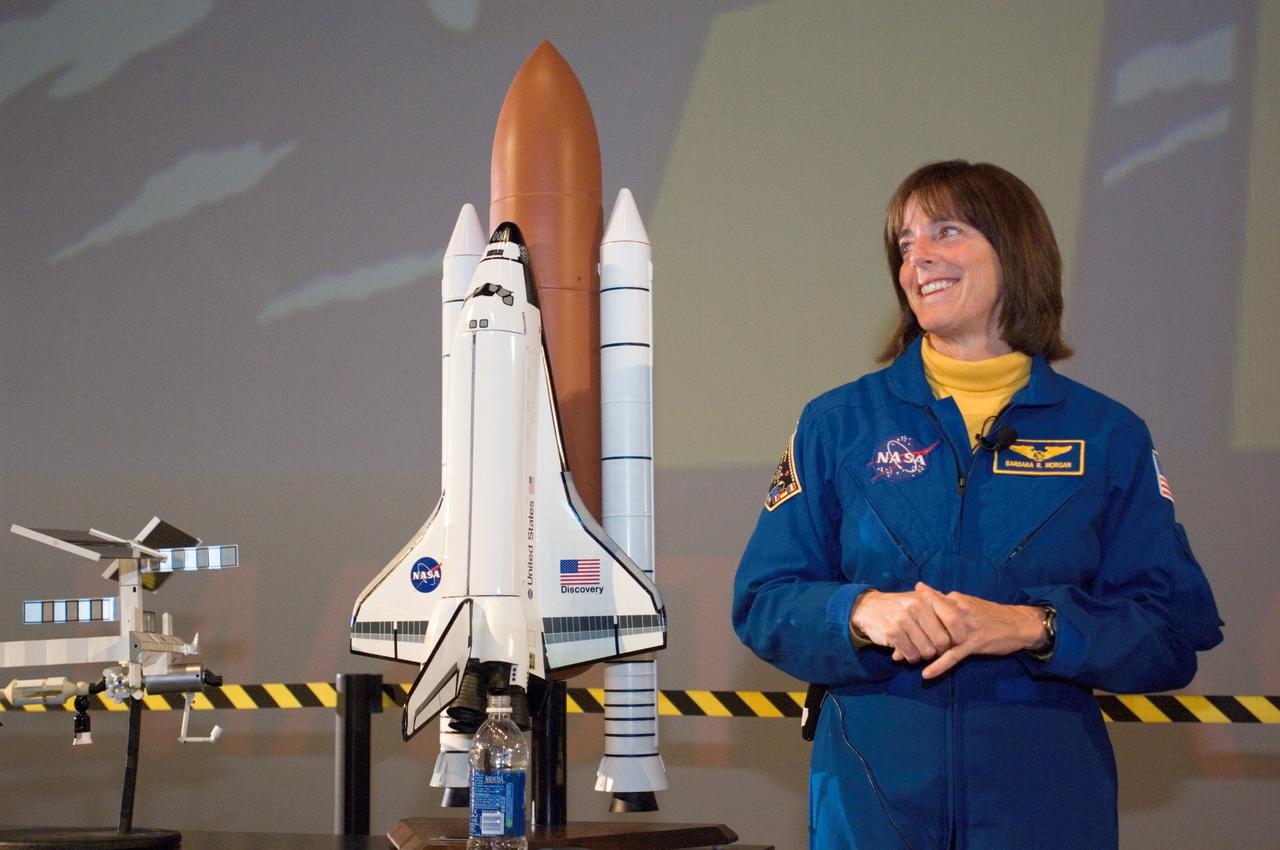
JSC2007-E-03703 (19 Jan. 2007) --- Barbara R. Morgan, educator astronaut, is pictured during a demonstration at Space Center Houston. Morgan has been named as a crew member for the STS-118 mission, scheduled to launch in the summer of 2007.
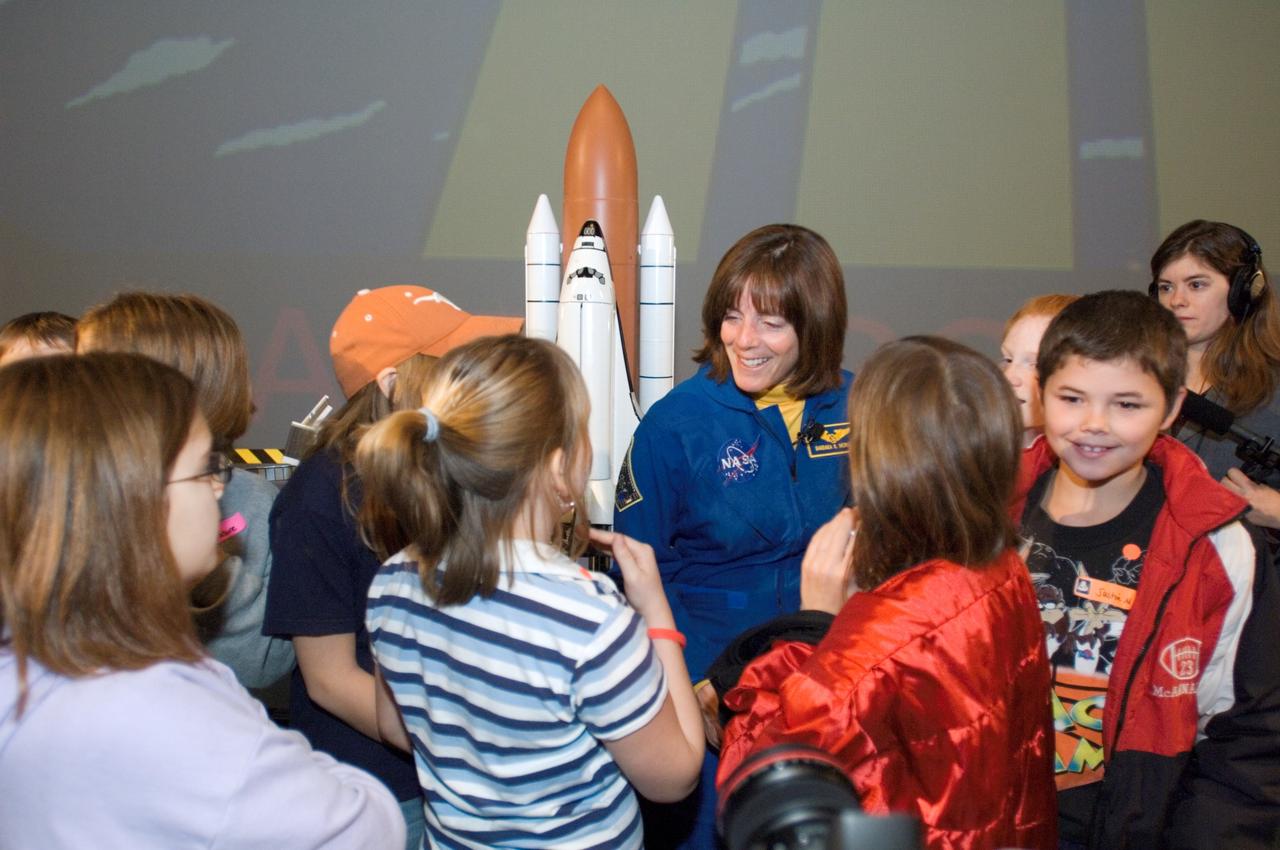
JSC2007-E-03712 (19 Jan. 2007) --- Educator astronaut Barbara R. Morgan speaks with students during Space Center Houston's "Meet an Astronaut Day" on Jan. 19. Morgan has been named as a crew member for the STS-118 mission, scheduled to launch in the summer of 2007.
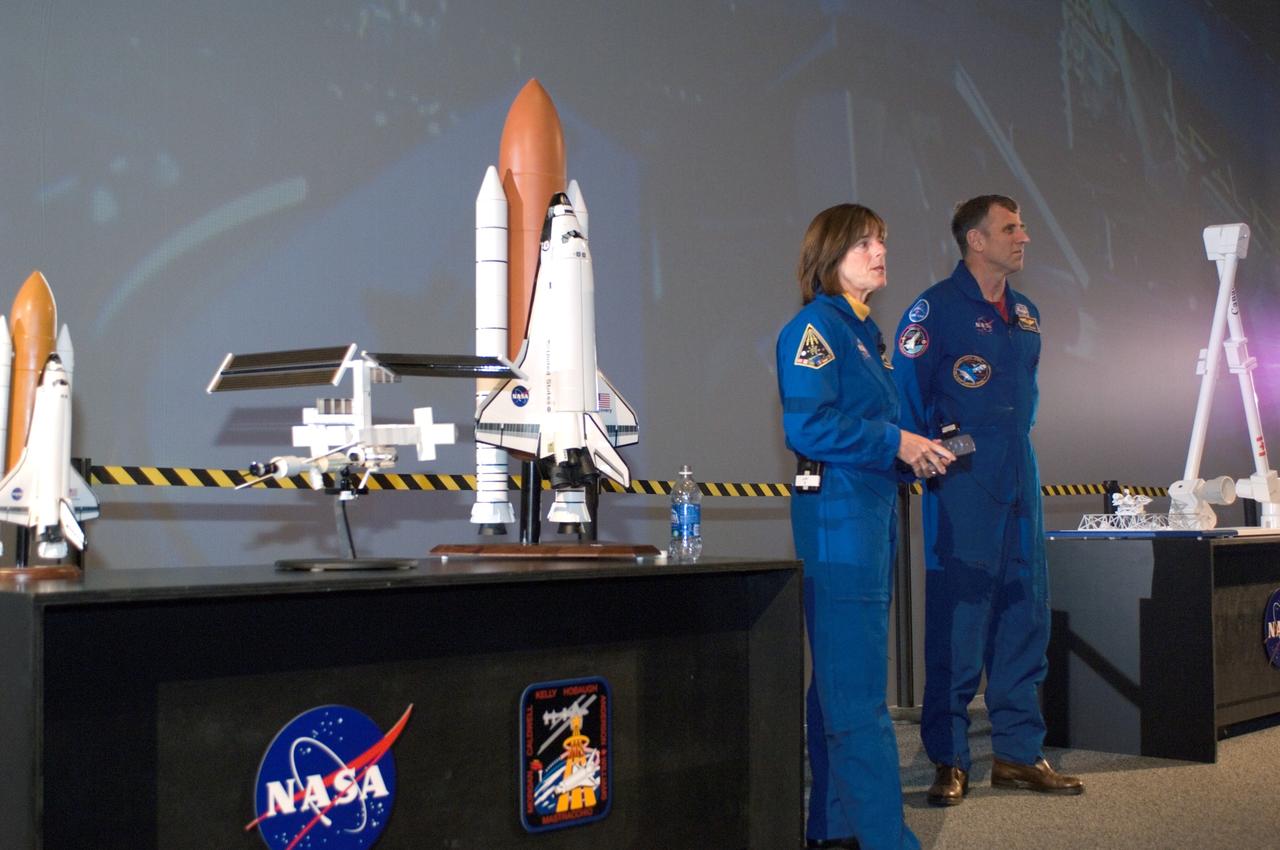
JSC2007-E-03676 (19 Jan. 2007) --- Educator astronaut Barbara R. Morgan (left) and Canadian Space Agency astronaut Dafydd R. (Dave) Williams speak to an audience of students and media during a demonstration at Space Center Houston. Morgan has been named as a crew member for the STS-118 mission, scheduled to launch in the summer of 2007.
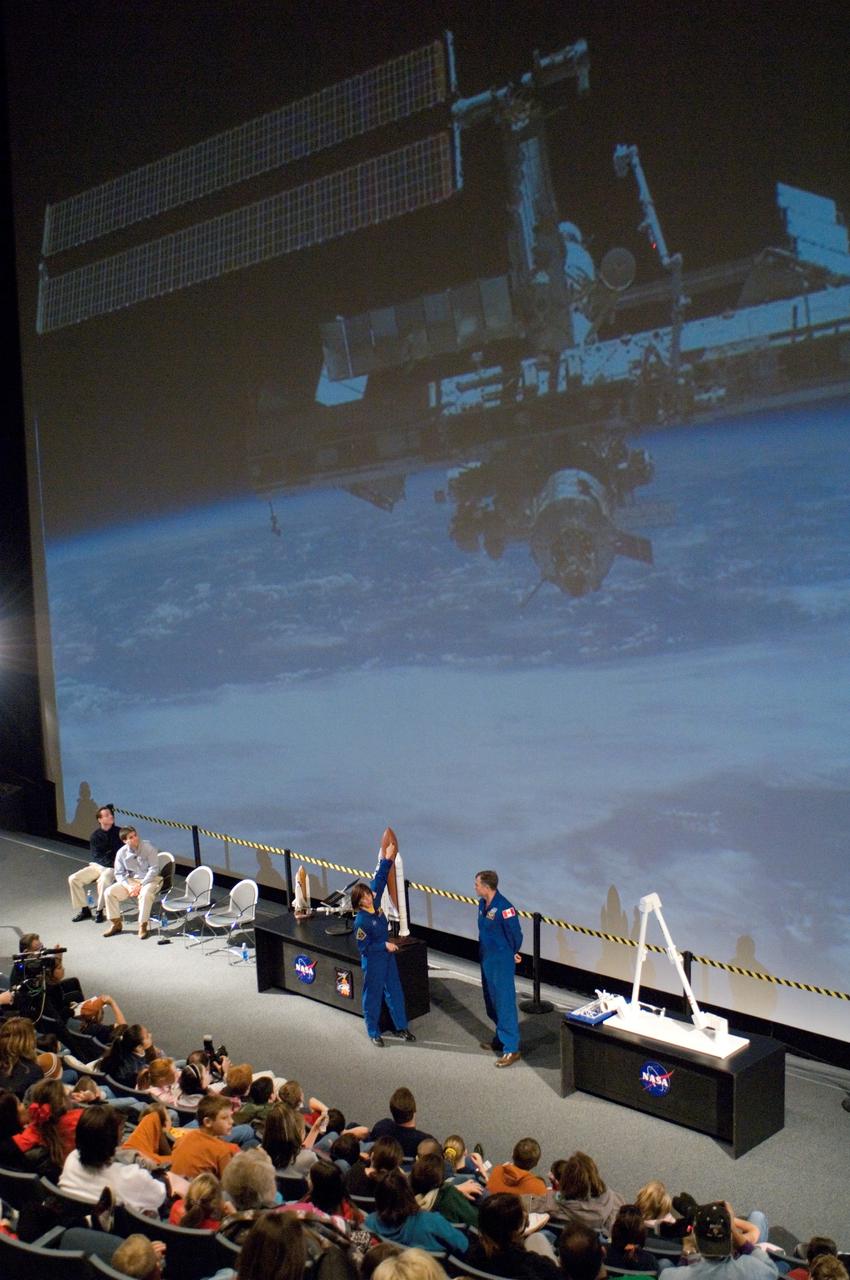
JSC2007-E-03779 (19 Jan. 2007) --- Educator astronaut Barbara R. Morgan and Canadian Space Agency astronaut Dafydd R. (Dave) Williams speak to an audience of students and media during a demonstration at Space Center Houston. Morgan has been named as a crew member for the STS-118 mission, scheduled to launch in the summer of 2007.
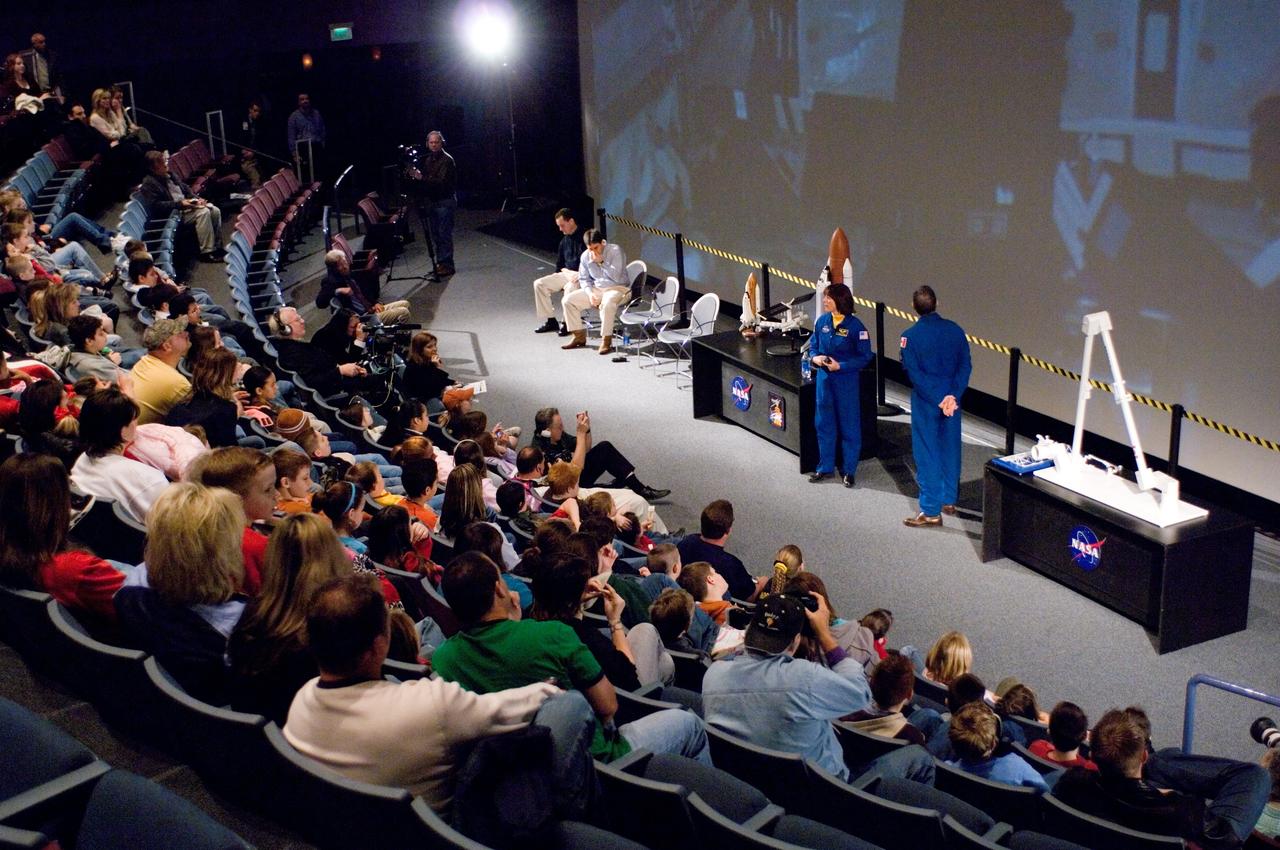
JSC2007-E-03775 (19 Jan. 2007) --- Educator astronaut Barbara R. Morgan and Canadian Space Agency astronaut Dafydd R. (Dave) Williams speak to an audience of students and media during a demonstration at Space Center Houston. Morgan has been named as a crew member for the STS-118 mission, scheduled to launch in the summer of 2007.
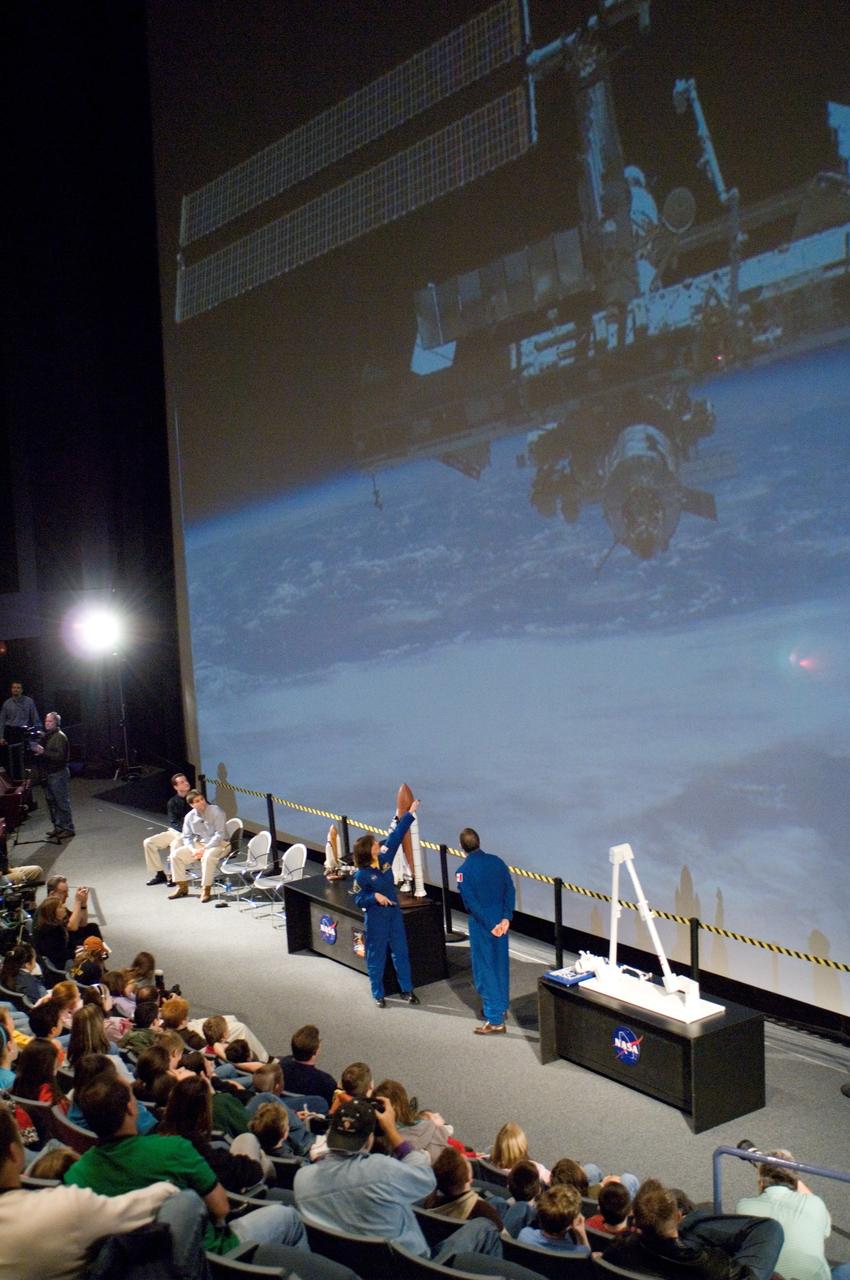
JSC2007-E-03777 (19 Jan. 2007) --- Educator astronaut Barbara R. Morgan and Canadian Space Agency astronaut Dafydd R. (Dave) Williams speak to an audience of students and media during a demonstration at Space Center Houston. Morgan and Williams have been named as crew members for the STS-118 mission, scheduled to launch in the summer of 2007.
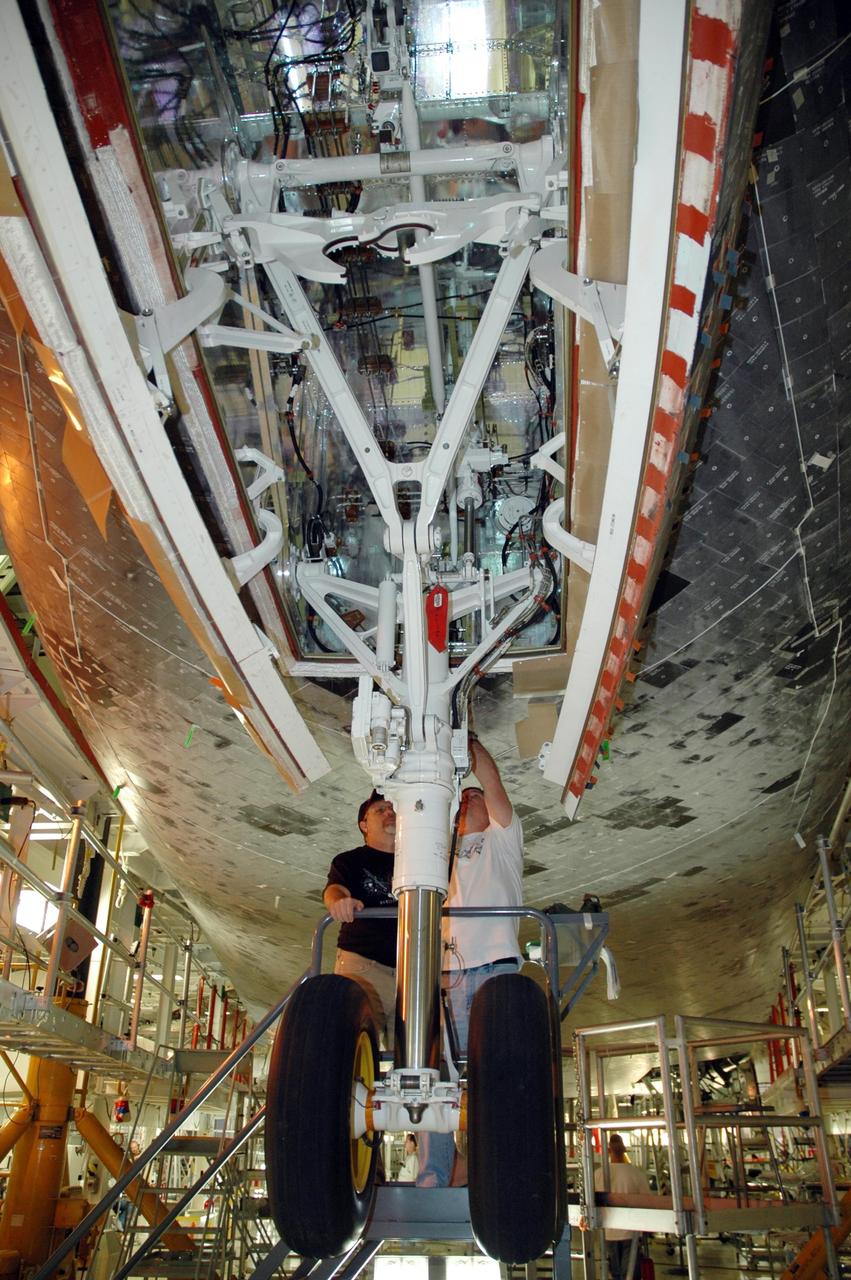
KENNEDY SPACE CENTER, FLA. -- In the Orbiter Processing Facility bay 2, technicians work around the attach point for the external tank near Endeavour's landing gear. The orbiter is scheduled to fly on mission STS-118 to the International Space Station in the summer of 2007. Photo credit: NASA/Jack Pfaller
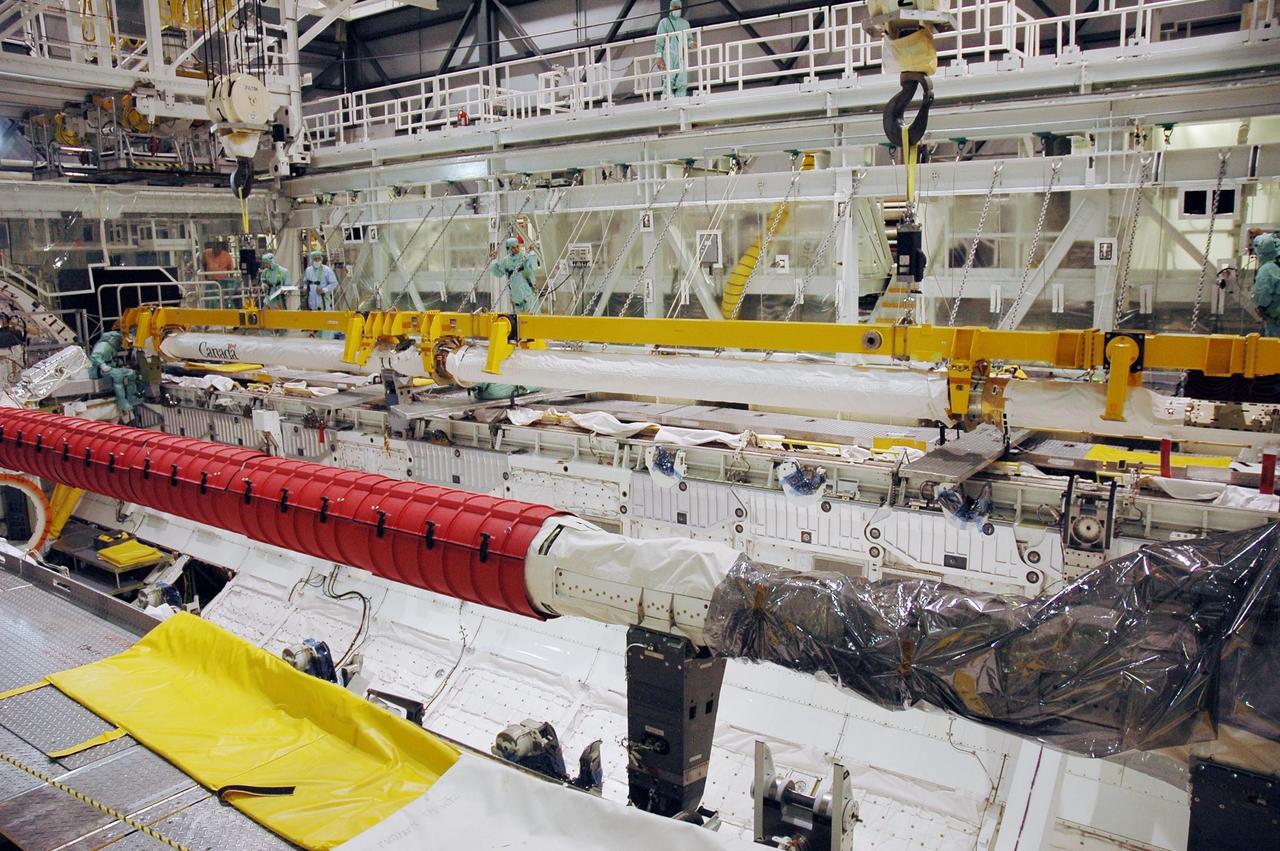
KENNEDY SPACE CENTER, FLA. -- In Orbiter Processing Facility bay 2, workers secure the orbiter boom sensor system in Endeavour's payload bay. The orbiter is scheduled to fly on mission STS-118 to the International Space Station in the summer of 2007. It will deliver the third starboard truss segment, S5. Photo credit: NASA/Troy Cryder
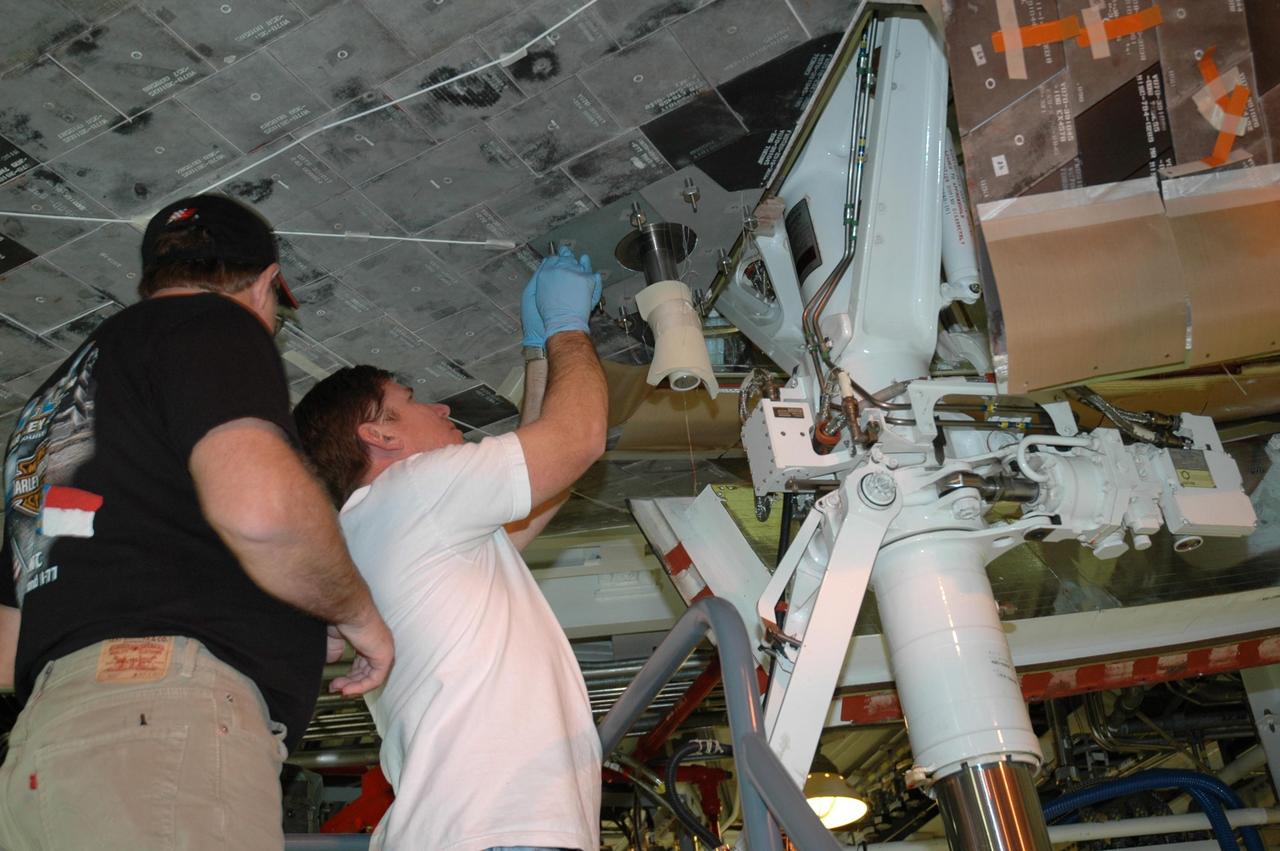
KENNEDY SPACE CENTER, FLA. -- In the Orbiter Processing Facility bay 2, technicians work around the attach point for the external tank near Endeavour's landing gear. The orbiter is scheduled to fly on mission STS-118 to the International Space Station in the summer of 2007. Photo credit: NASA/Jack Pfaller
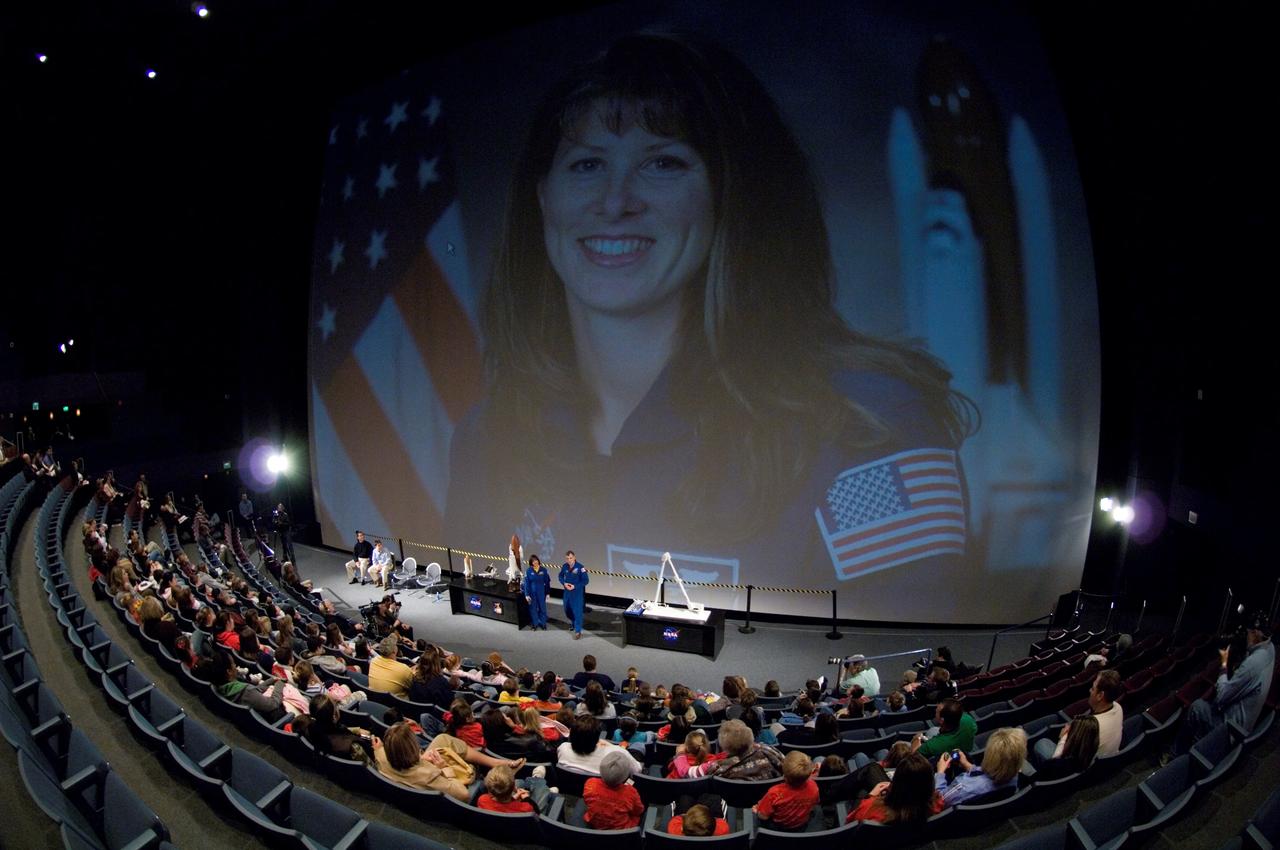
JSC2007-E-03769 (19 Jan. 2007) --- Educator astronaut Barbara R. Morgan and Canadian Space Agency astronaut Dafydd R. (Dave) Williams speak to an audience of students and media during a demonstration at Space Center Houston. Morgan and Williams have been named as crew members for the STS-118 mission, scheduled to launch in the summer of 2007. Introducing their fellow crew mates through photographs, Morgan and Williams touched briefly upon each crew member's educational background. The portrait of astronaut Tracy E. Caldwell is visible on the big screen.
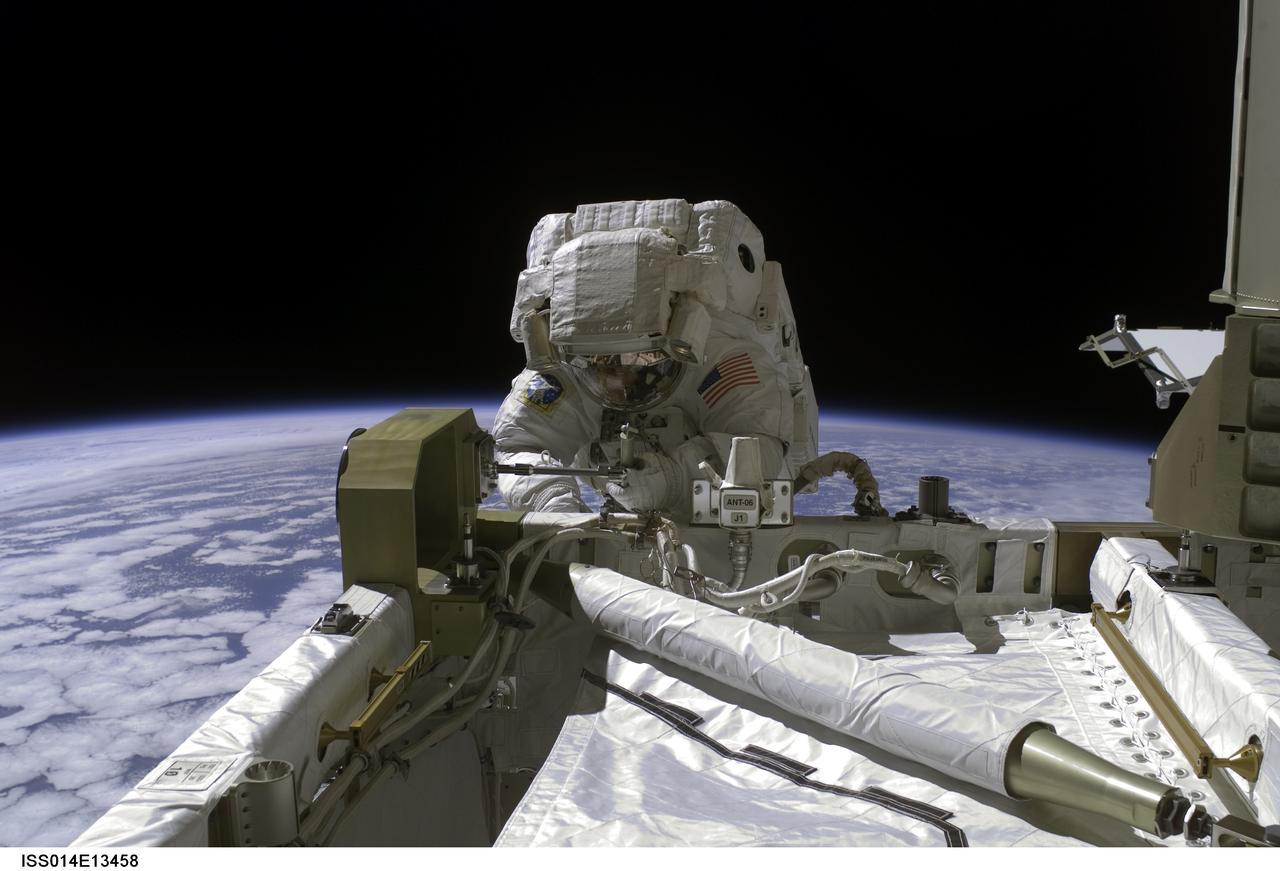
ISS014-E-13458 (8 Feb. 2007) --- Astronaut Sunita L. Williams, Expedition 14 flight engineer, participates in the final of three sessions of extravehicular activity (EVA) in nine days, as construction continues on the International Space Station. During the 6-hour, 40-minute spacewalk, Williams and Michael E. Lopez-Alegria (out of frame), commander, completed tasks that will allow for the attachment of a cargo platform during the STS-118 mission this summer and relocation of the P6 truss during STS-120 later this year.
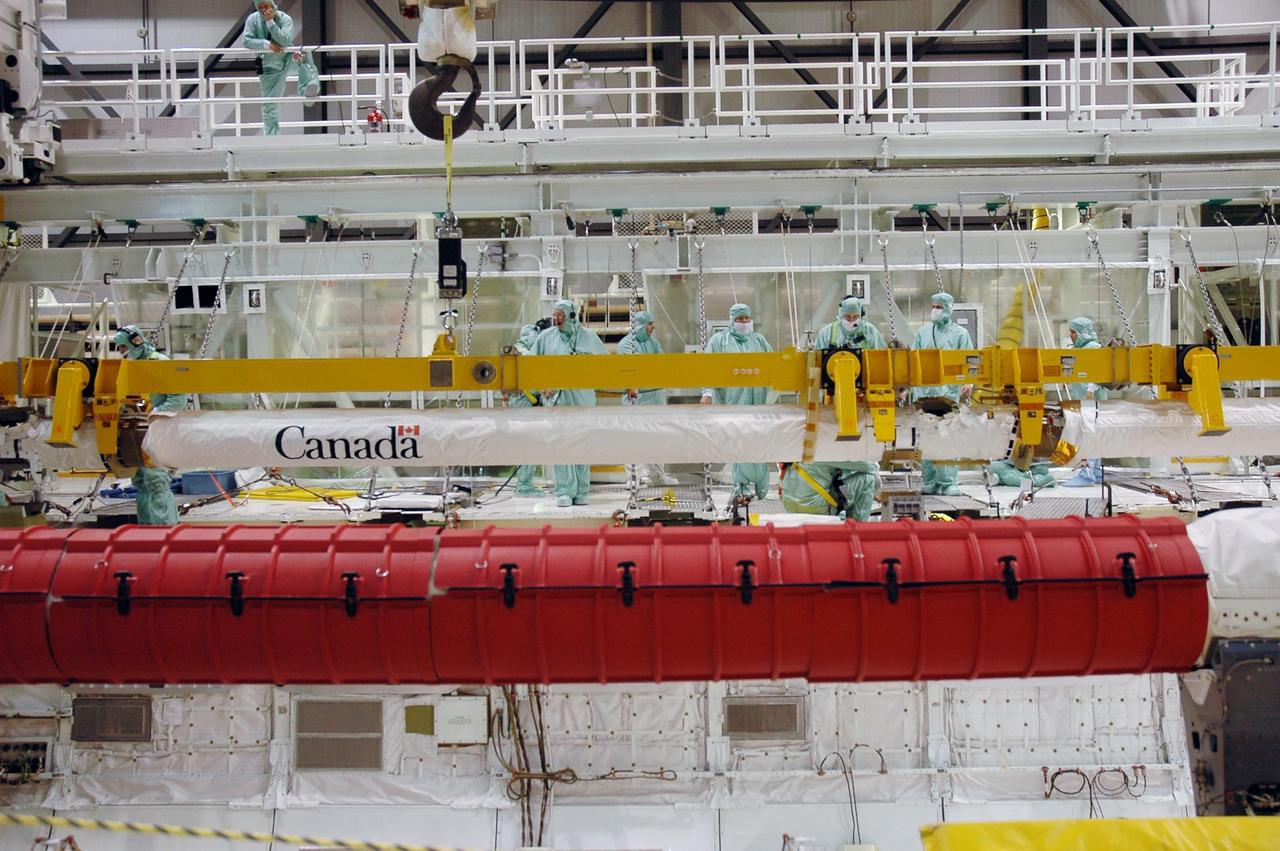
KENNEDY SPACE CENTER, FLA. -- In Orbiter Processing Facility bay 2, the orbiter boom sensor system (in the background) is lowered into the open payload bay of Endeavour. The boom will be installed in the payload bay for launch. The orbiter is scheduled to fly on mission STS-118 to the International Space Station in the summer of 2007. It will deliver the third starboard truss segment, S5. Photo credit: NASA/Troy Cryder
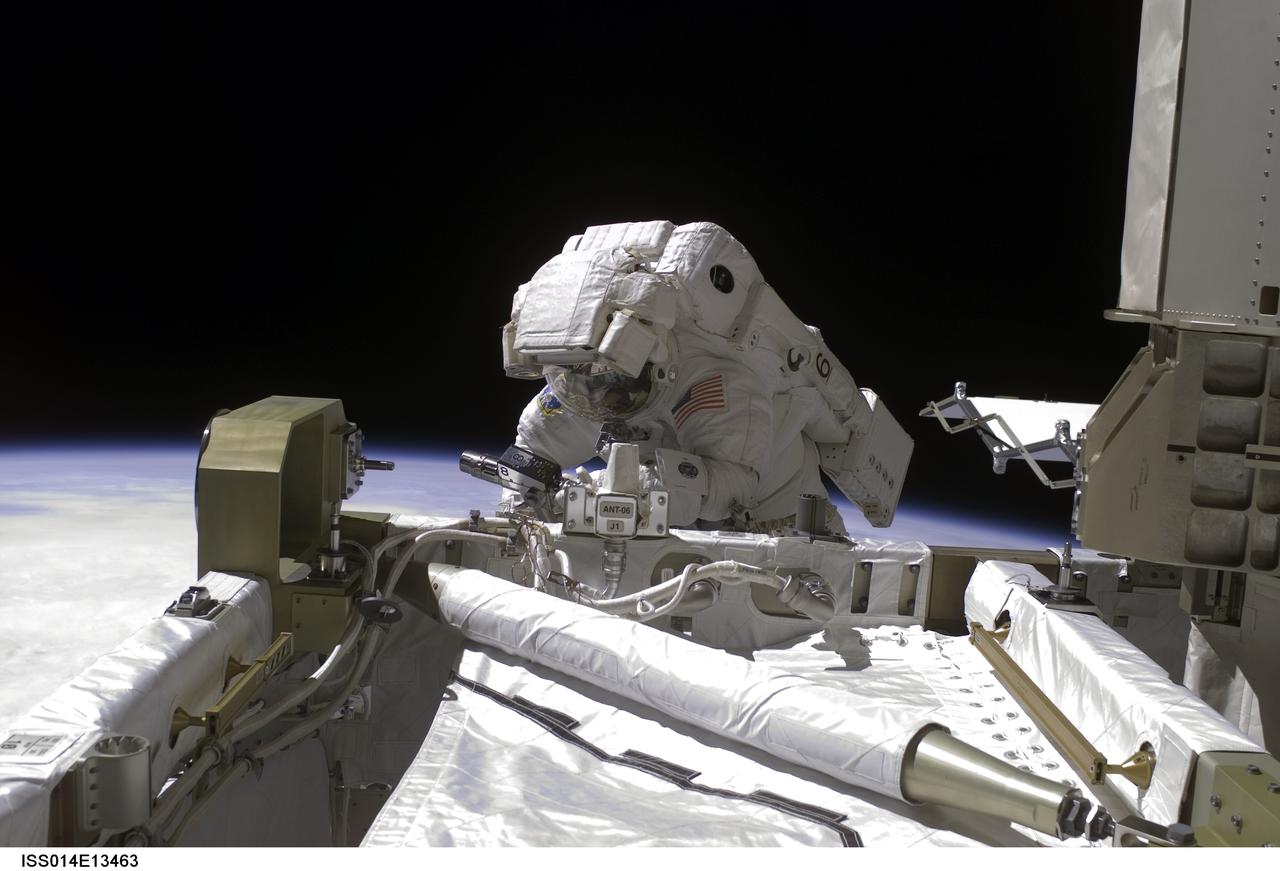
ISS014-E-13463 (8 Feb. 2007) --- Astronaut Sunita L. Williams, Expedition 14 flight engineer, participates in the final of three sessions of extravehicular activity (EVA) in nine days, as construction continues on the International Space Station. During the 6-hour, 40-minute spacewalk, Williams and Michael E. Lopez-Alegria (out of frame), commander, completed tasks that will allow for the attachment of a cargo platform during the STS-118 mission this summer and relocation of the P6 truss during STS-120 later this year.
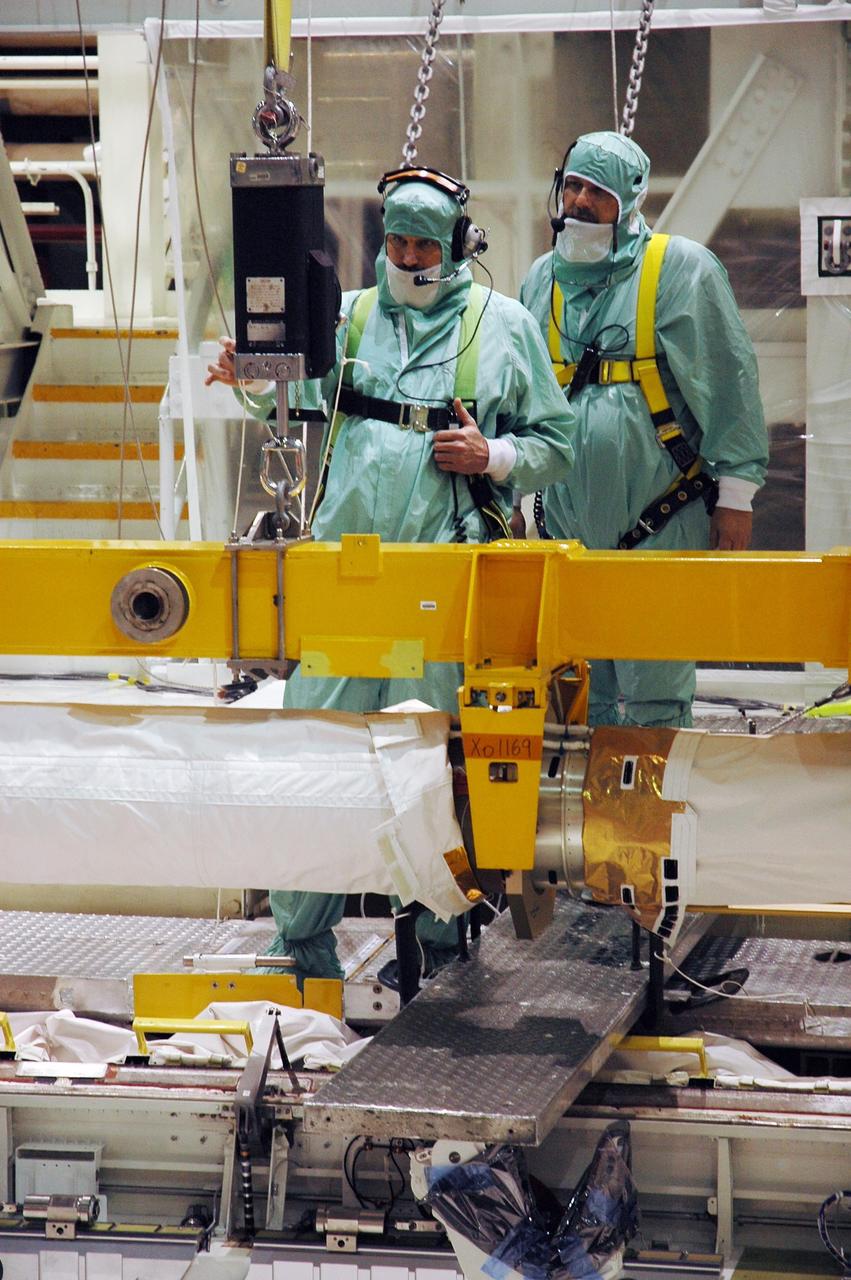
KENNEDY SPACE CENTER, FLA. -- In Orbiter Processing Facility bay 2, workers monitor the placement of the orbiter boom sensor system in Endeavour's payload bay. The orbiter is scheduled to fly on mission STS-118 to the International Space Station in the summer of 2007. It will deliver the third starboard truss segment, S5. Photo credit: NASA/Troy Cryder

KENNEDY SPACE CENTER, FLA. -- In Orbiter Processing Facility bay 2, workers secure the overhead lifting device that will lift the orbiter boom sensor system for installation in Endeavour. Endeavour is scheduled to fly on mission STS-118 to the International Space Station in the summer of 2007. It will deliver the third starboard truss segment, S5. Photo credit: NASA/Troy Cryder
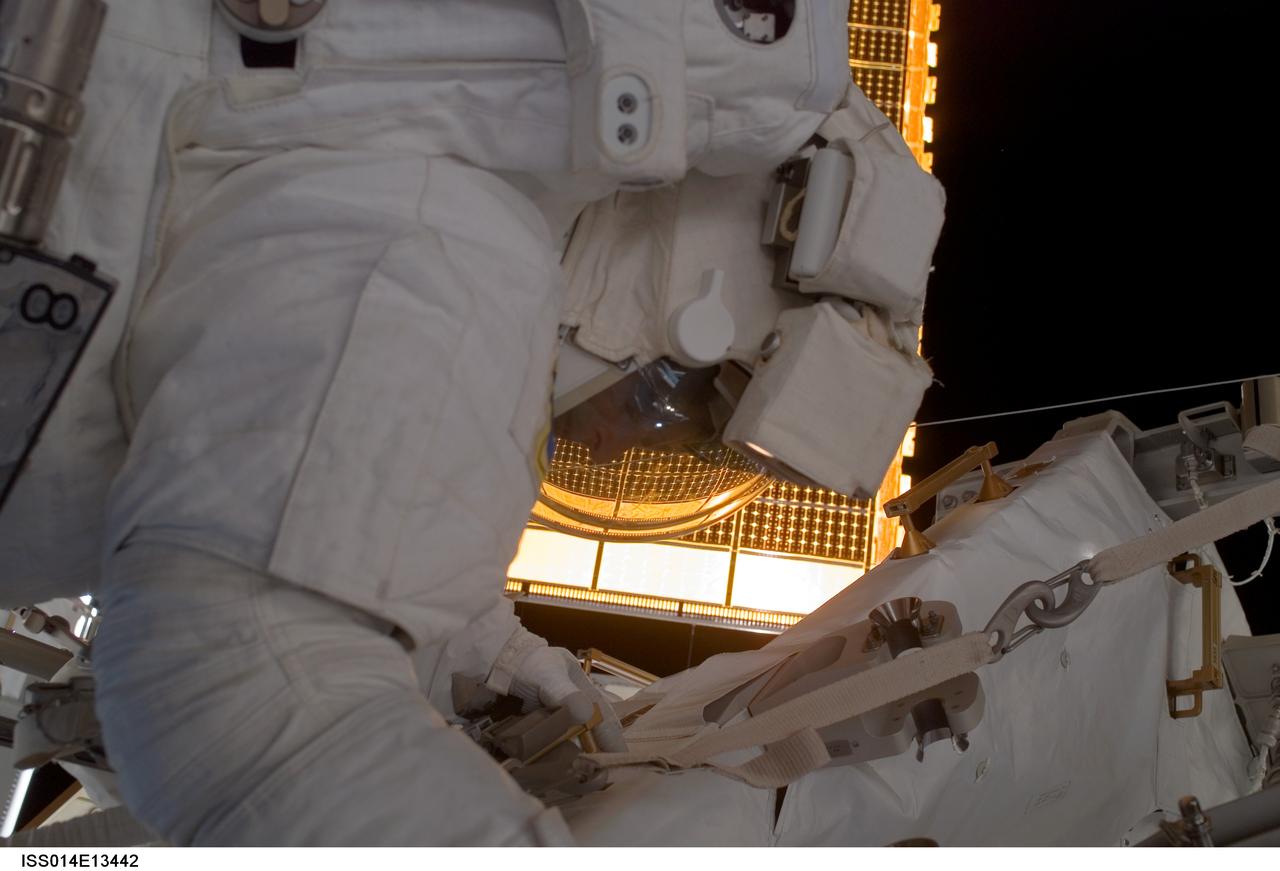
ISS014-E-13442 (8 Feb. 2007) --- Astronaut Sunita L. Williams, Expedition 14 flight engineer, participates in the final of three sessions of extravehicular activity (EVA) in nine days, as construction continues on the International Space Station. During the 6-hour, 40-minute spacewalk, Williams and Michael E. Lopez-Alegria (out of frame), commander, completed tasks that will allow for the attachment of a cargo platform during the STS-118 mission this summer and relocation of the P6 truss during STS-120 later this year.
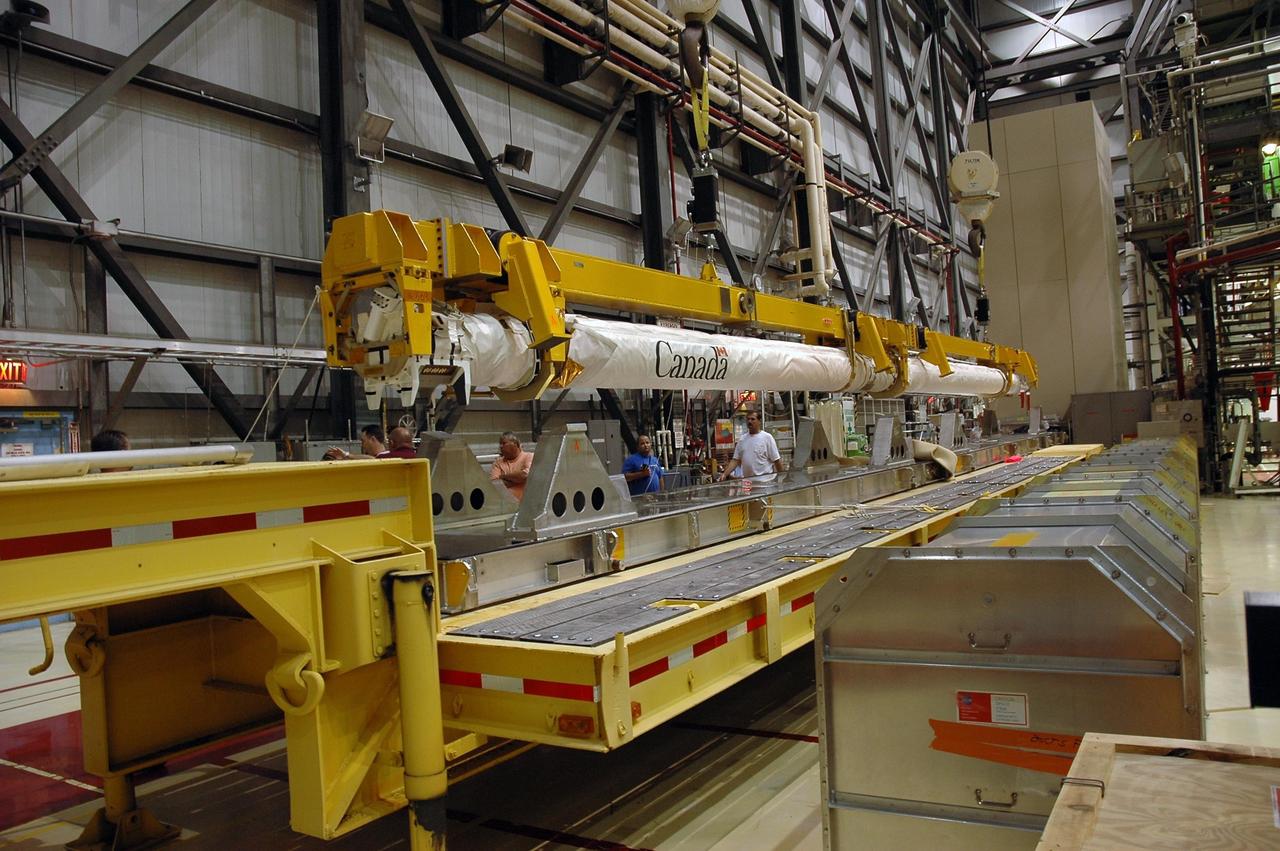
KENNEDY SPACE CENTER, FLA. -- In Orbiter Processing Facility bay 2, the orbiter boom sensor system is lifted from its stand for installation in Endeavour. The orbiter is scheduled to fly on mission STS-118 to the International Space Station in the summer of 2007. It will deliver the third starboard truss segment, S5. Photo credit: NASA/Troy Cryder
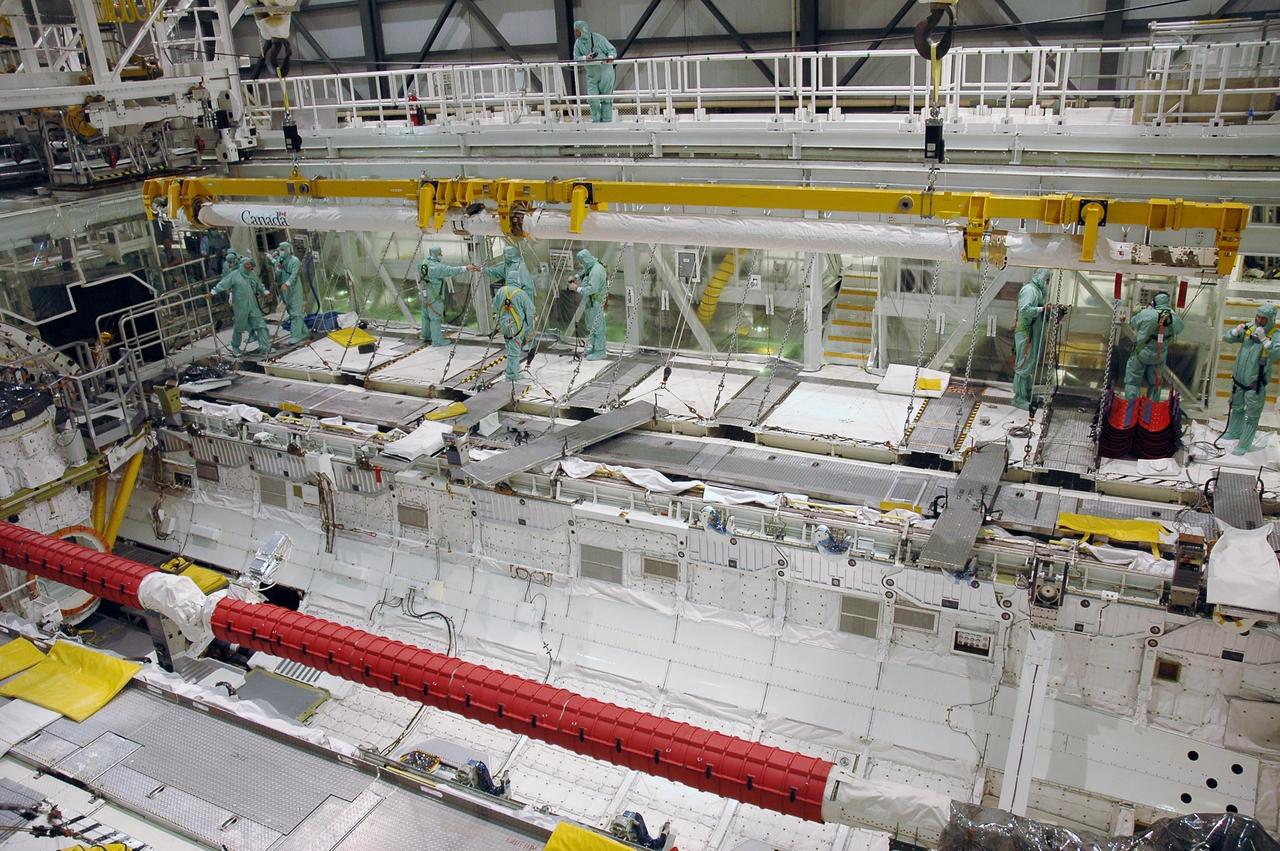
KENNEDY SPACE CENTER, FLA. -- In Orbiter Processing Facility bay 2, the orbiter boom sensor system (in the background) is moved toward the open payload bay of Endeavour. The boom will be installed in the payload bay for launch. The orbiter is scheduled to fly on mission STS-118 to the International Space Station in the summer of 2007. It will deliver the third starboard truss segment, S5. Photo credit: NASA/Troy Cryder
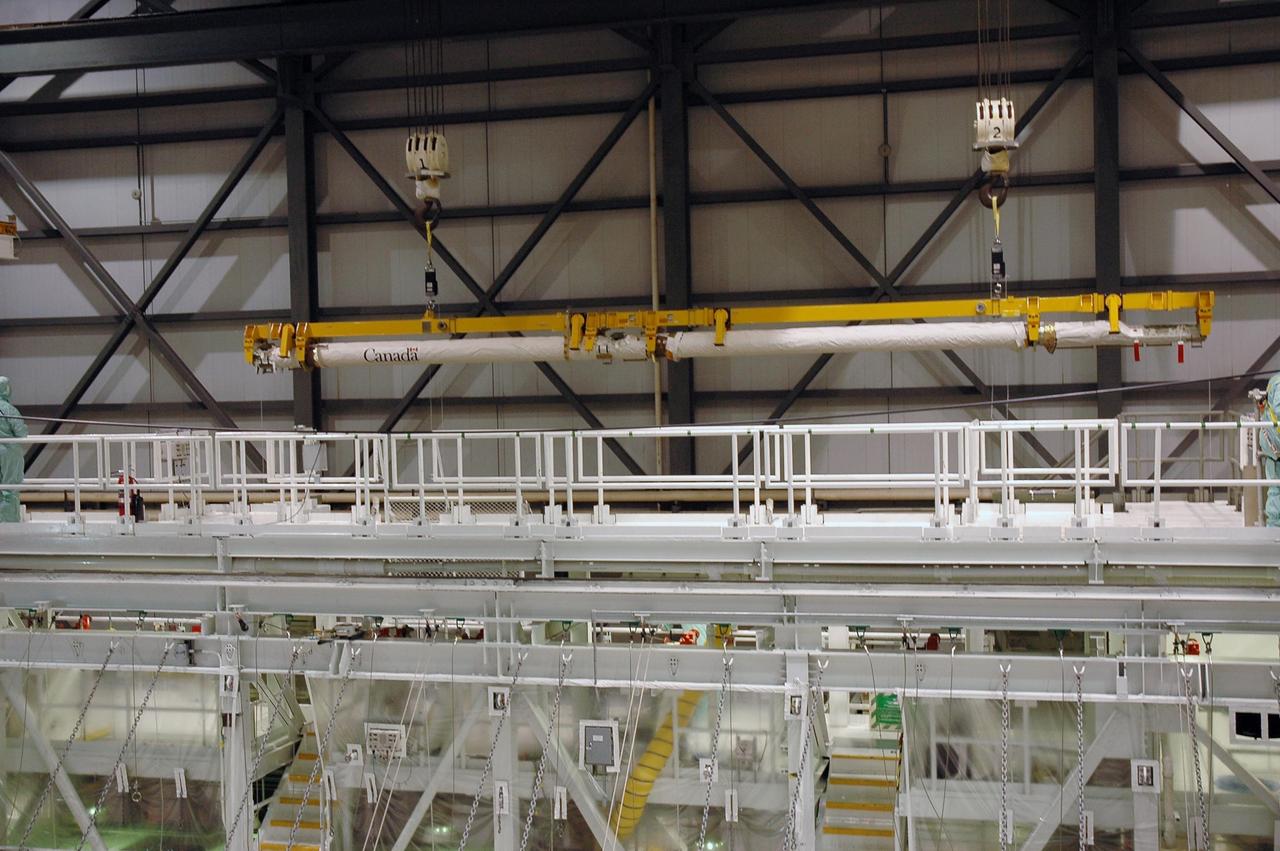
KENNEDY SPACE CENTER, FLA. -- In Orbiter Processing Facility bay 2, the orbiter boom sensor system is lifted above the work platforms prior to installation in Endeavour. The orbiter is scheduled to fly on mission STS-118 to the International Space Station in the summer of 2007. It will deliver the third starboard truss segment, S5. Photo credit: NASA/Troy Cryder
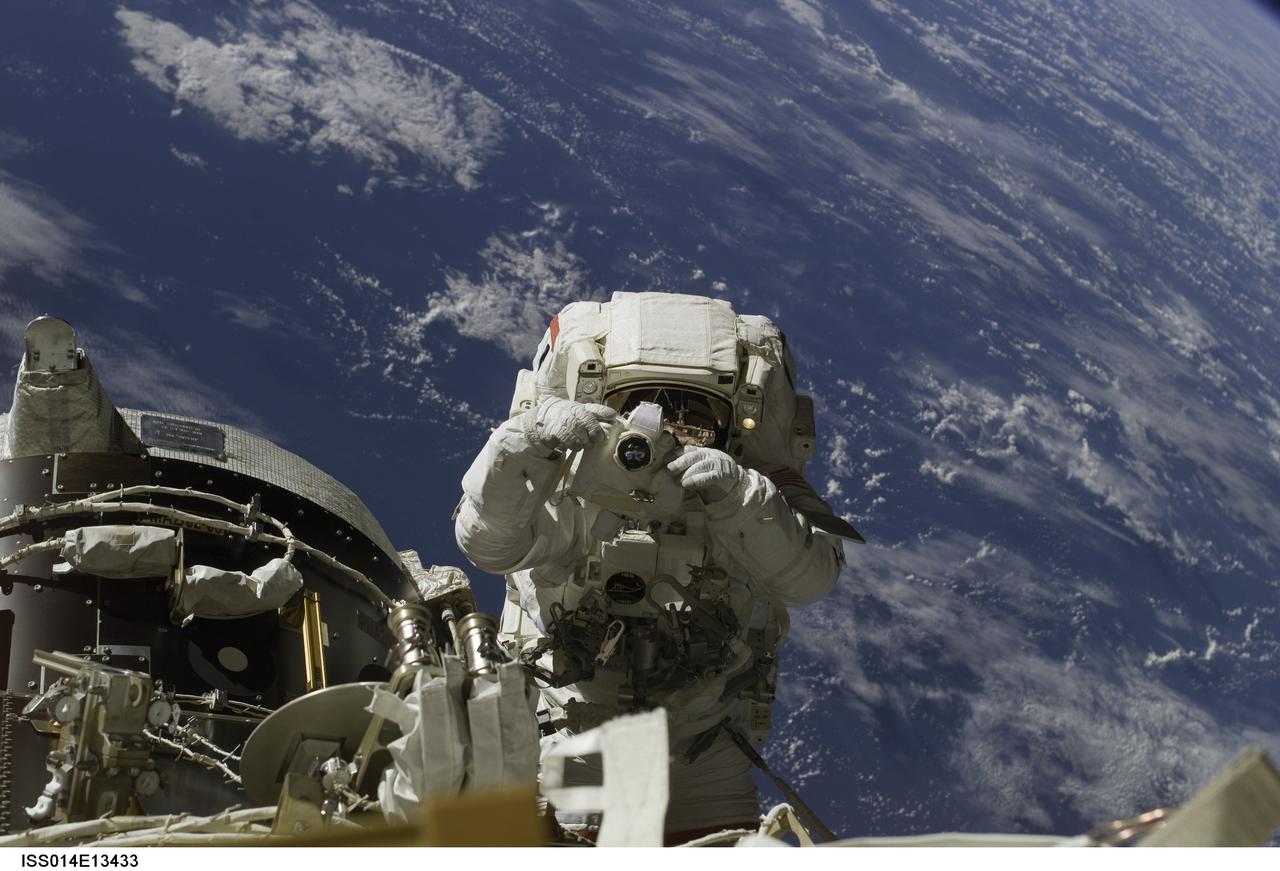
ISS014-E-13433 (8 Feb. 2007) --- Astronaut Michael E. Lopez-Alegria, Expedition 14 commander and NASA space station science officer, uses a digital still camera during the final of three sessions of extravehicular activity (EVA) in nine days, as construction continues on the International Space Station. During the 6-hour, 40-minute spacewalk, Lopez-Alegria and Sunita L. Williams (out of frame), flight engineer, completed tasks that will allow for the attachment of a cargo platform during the STS-118 mission this summer and relocation of the P6 truss during STS-120 later this year. A blue and white Earth provides the backdrop for the image.
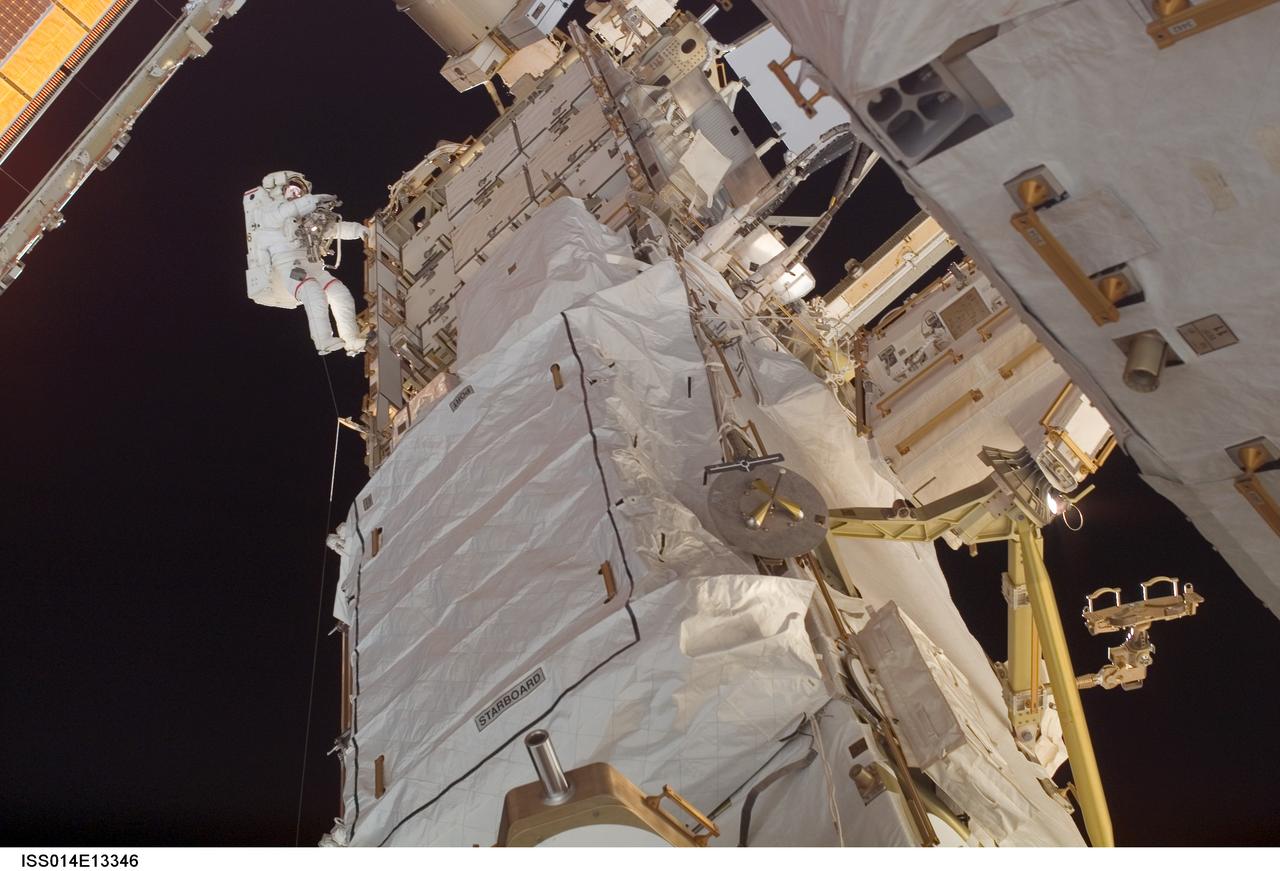
ISS014-E-13346 (4 Feb. 2007) --- Astronaut Michael E. Lopez-Alegria, Expedition 14 commander and NASA space station science officer, participates in the second of three sessions of extravehicular activity (EVA) in nine days, as construction continues on the International Space Station. During the spacewalk, Lopez-Alegria and Sunita L. Williams (out of frame), flight engineer, reconfigured the second of two cooling loops for the Destiny laboratory module, secured the aft radiator of the P6 truss after retraction and prepared the obsolete Early Ammonia Servicer (EAS) for removal this summer.
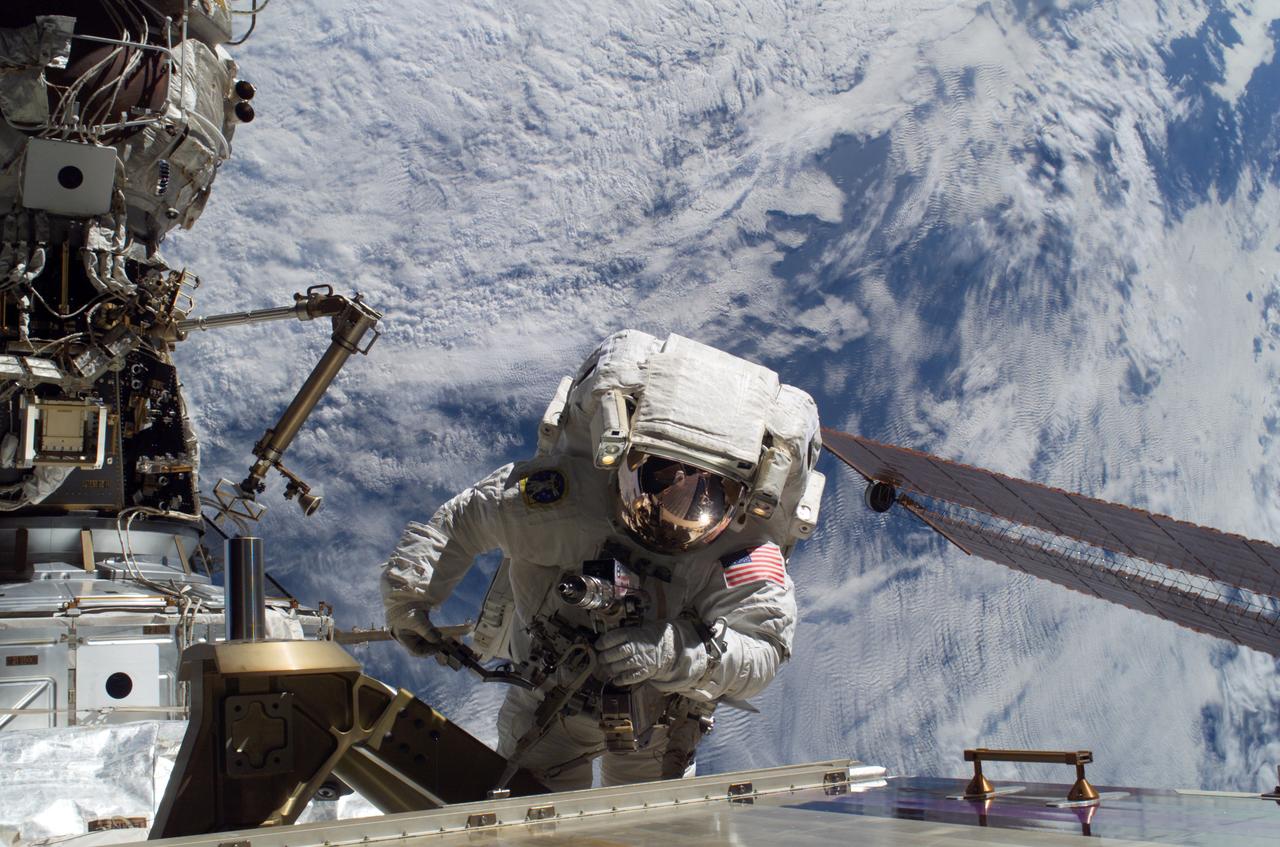
ISS014-E-13301 (4 Feb. 2007) --- Astronaut Sunita L. Williams, Expedition 14 flight engineer, participates in the second of three sessions of extravehicular activity (EVA) in nine days, as construction continues on the International Space Station. During the spacewalk, Williams and Michael E. Lopez-Alegria (out of frame), commander and NASA space station science officer, reconfigured the second of two cooling loops for the Destiny laboratory module, secured the aft radiator of the P6 truss after retraction and prepared the obsolete Early Ammonia Servicer (EAS) for removal this summer.
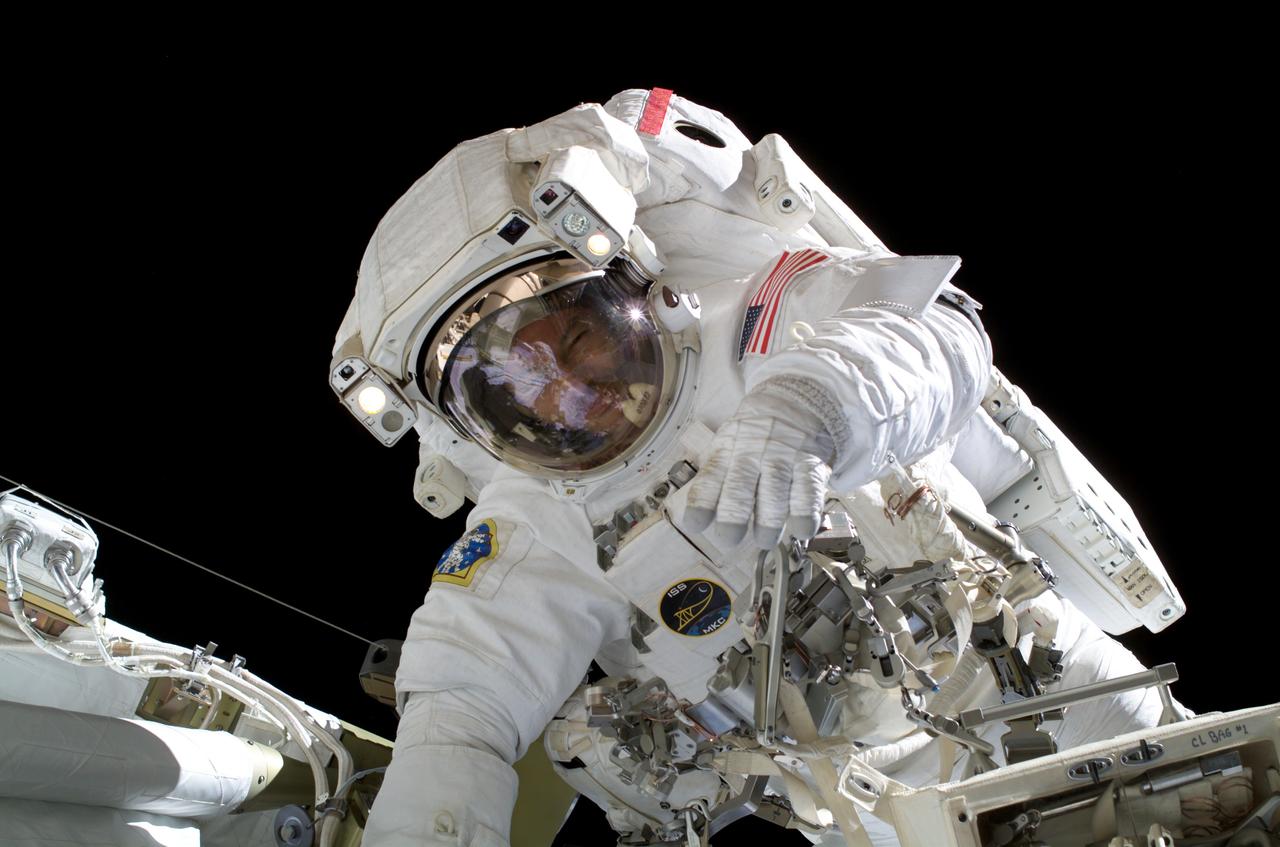
ISS014-E-13416 (8 Feb. 2007) --- Astronaut Michael E. Lopez-Alegria, Expedition 14 commander and NASA space station science officer, participates in the final of three sessions of extravehicular activity (EVA) in nine days, as construction continues on the International Space Station. During the 6-hour, 40-minute spacewalk, Lopez-Alegria and Sunita L. Williams (out of frame), flight engineer, completed tasks that will allow for the attachment of a cargo platform during the STS-118 mission this summer and relocation of the P6 truss during STS-120 later this year.
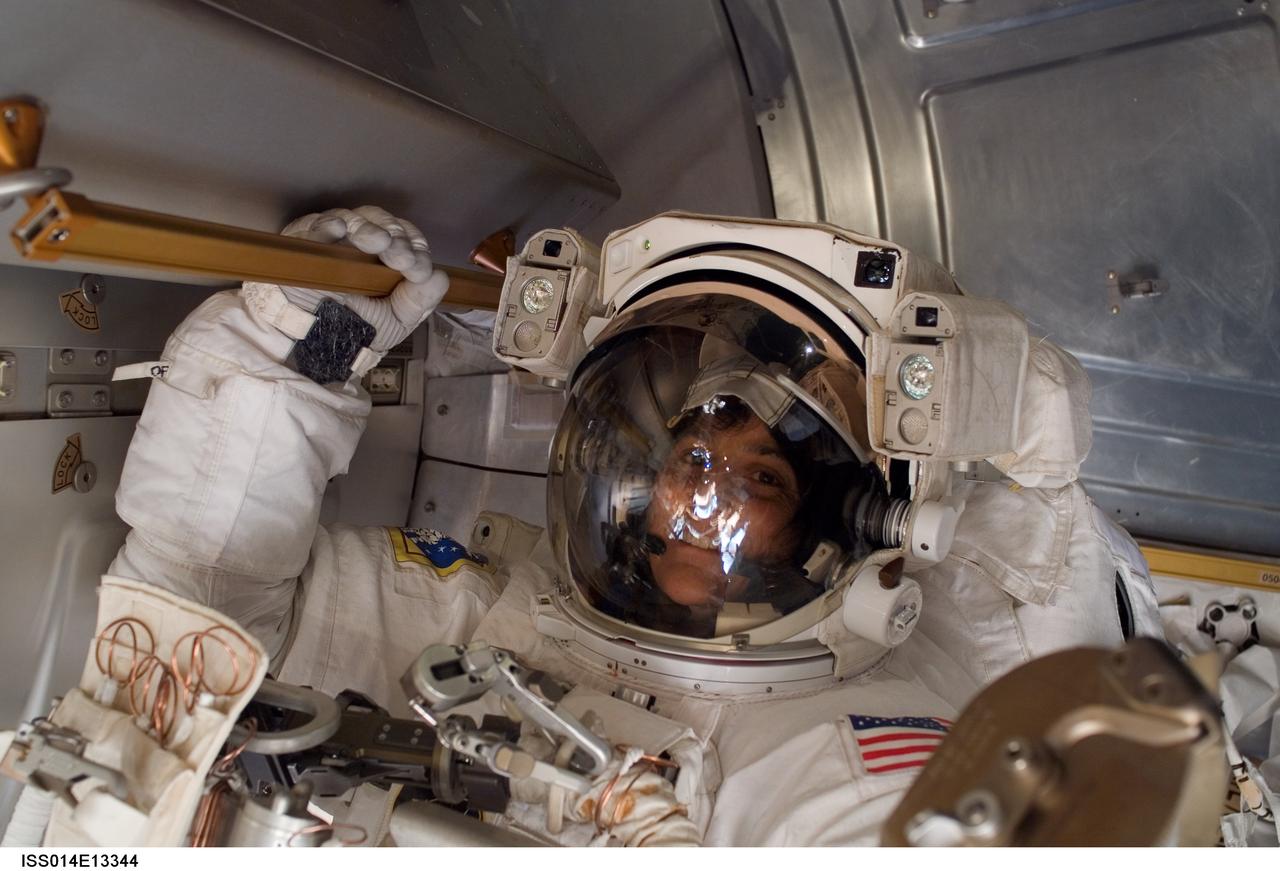
ISS014-E-13344 (4 Feb. 2007) --- Astronaut Sunita L. Williams, Expedition 14 flight engineer, participates in the second of three sessions of extravehicular activity (EVA) in nine days, as construction continues on the International Space Station. During the spacewalk, Williams and Michael E. Lopez-Alegria (out of frame), commander and NASA space station science officer, reconfigured the second of two cooling loops for the Destiny laboratory module, secured the aft radiator of the P6 truss after retraction and prepared the obsolete Early Ammonia Servicer (EAS) for removal this summer.
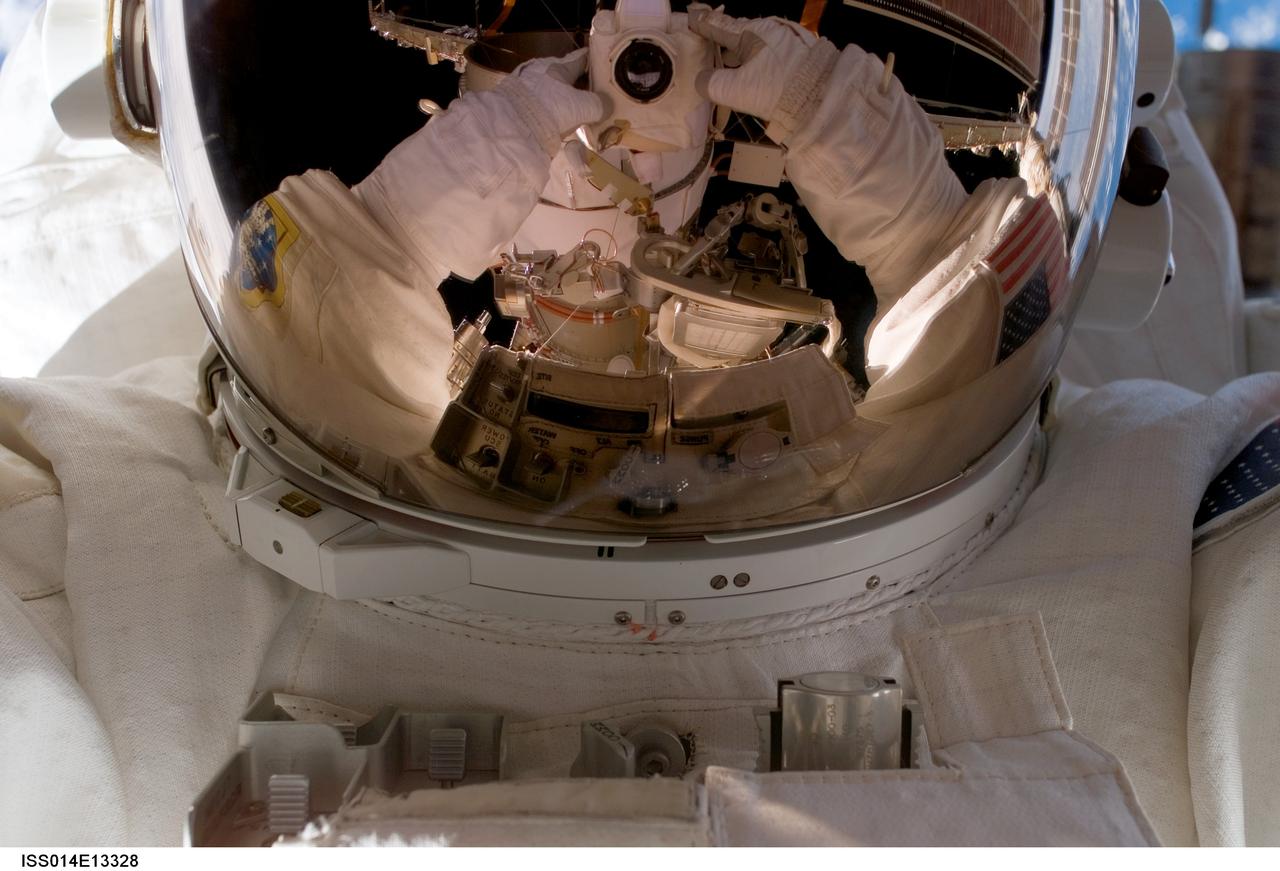
ISS014-E-13328 (4 Feb. 2007) --- Astronaut Sunita L. Williams, Expedition 14 flight engineer, uses a digital still camera to expose a photo of her helmet visor during today's session of extravehicular activity (EVA) as construction continues on the International Space Station. During the spacewalk, Williams and Michael E. Lopez-Alegria (out of frame), commander and NASA space station science officer, reconfigured the second of two cooling loops for the Destiny laboratory module, secured the aft radiator of the P6 truss after retraction and prepared the obsolete Early Ammonia Servicer (EAS) for removal this summer.
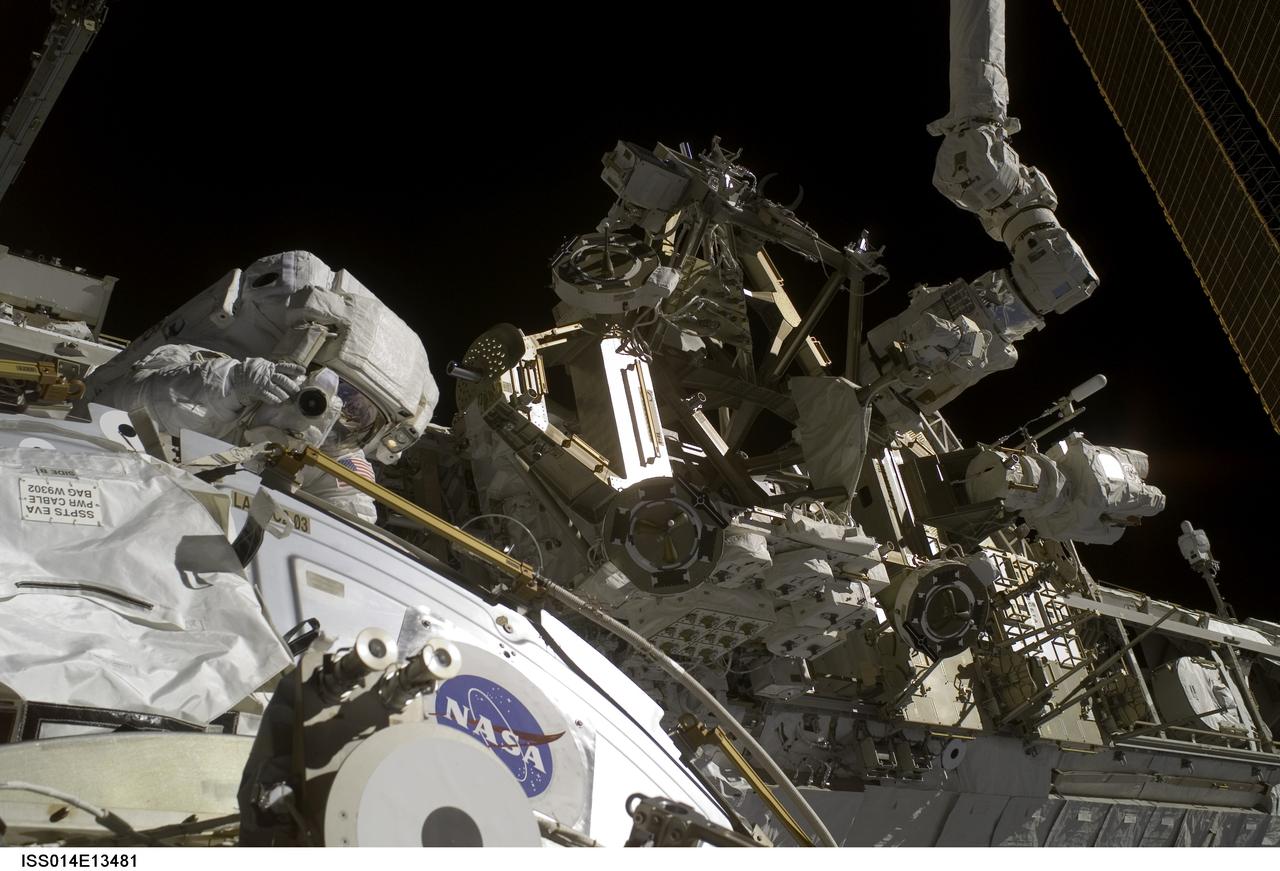
ISS014-E-13481 (8 Feb. 2007) --- Astronaut Sunita L. Williams, Expedition 14 flight engineer, uses a digital still camera during the final of three sessions of extravehicular activity (EVA) in nine days, as construction continues on the International Space Station. During the 6-hour, 40-minute spacewalk, Williams and Michael E. Lopez-Alegria (out of frame), commander and NASA space station science officer, completed tasks that will allow for the attachment of a cargo platform during the STS-118 mission this summer and relocation of the P6 truss during STS-120 later this year.
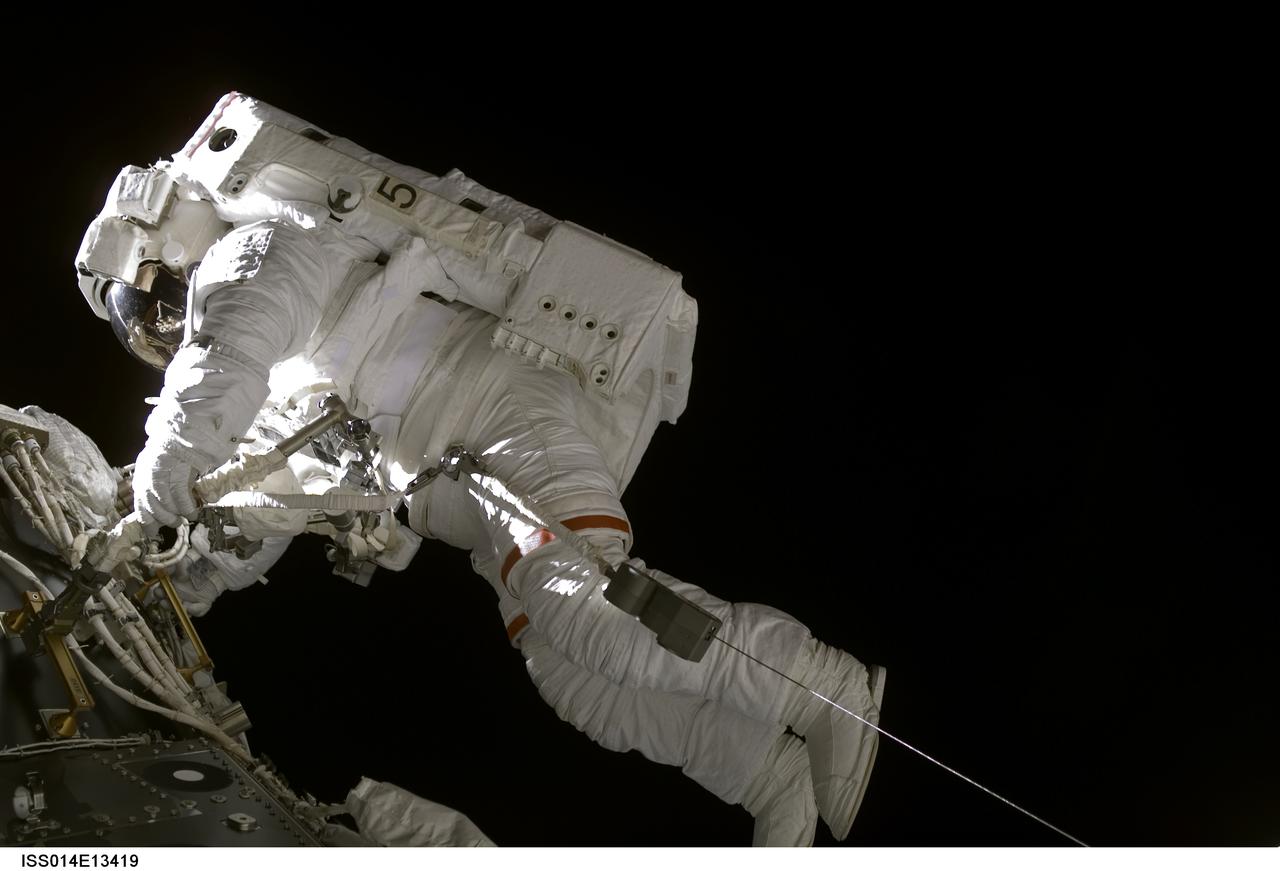
ISS014-E-13419 (8 Feb. 2007) --- Astronaut Michael E. Lopez-Alegria, Expedition 14 commander and NASA space station science officer, participates in the final of three sessions of extravehicular activity (EVA) in nine days, as construction continues on the International Space Station. During the 6-hour, 40-minute spacewalk, Lopez-Alegria and Sunita L. Williams (out of frame), flight engineer, completed tasks that will allow for the attachment of a cargo platform during the STS-118 mission this summer and relocation of the P6 truss during STS-120 later this year.

ISS014-E-13293 (4 Feb. 2007) --- The partially retracted aft radiator of the P6 truss of the International Space Station is featured in this image photographed during the second of three sessions of extravehicular activity (EVA) in nine days by astronauts Michael E. Lopez-Alegria (out of frame), Expedition 14 commander and NASA space station science officer; and Sunita L. Williams (out of frame), flight engineer. The Zvezda Service Module and the Zarya module are visible at left. During the spacewalk, Williams and Lopez-Alegria reconfigured the second of two cooling loops for the Destiny laboratory module, secured the aft radiator of the P6 truss after retraction and prepared the obsolete Early Ammonia Servicer (EAS) for removal this summer.

ISS014-E-13296 (4 Feb. 2007) --- The partially retracted aft radiator of the P6 truss of the International Space Station is featured in this image photographed during the second of three sessions of extravehicular activity (EVA) in nine days by astronauts Michael E. Lopez-Alegria (out of frame), Expedition 14 commander and NASA space station science officer; and Sunita L. Williams (out of frame), flight engineer. The Zvezda Service Module and the Zarya module are visible at left. During the spacewalk, Williams and Lopez-Alegria reconfigured the second of two cooling loops for the Destiny laboratory module, secured the aft radiator of the P6 truss after retraction and prepared the obsolete Early Ammonia Servicer (EAS) for removal this summer.
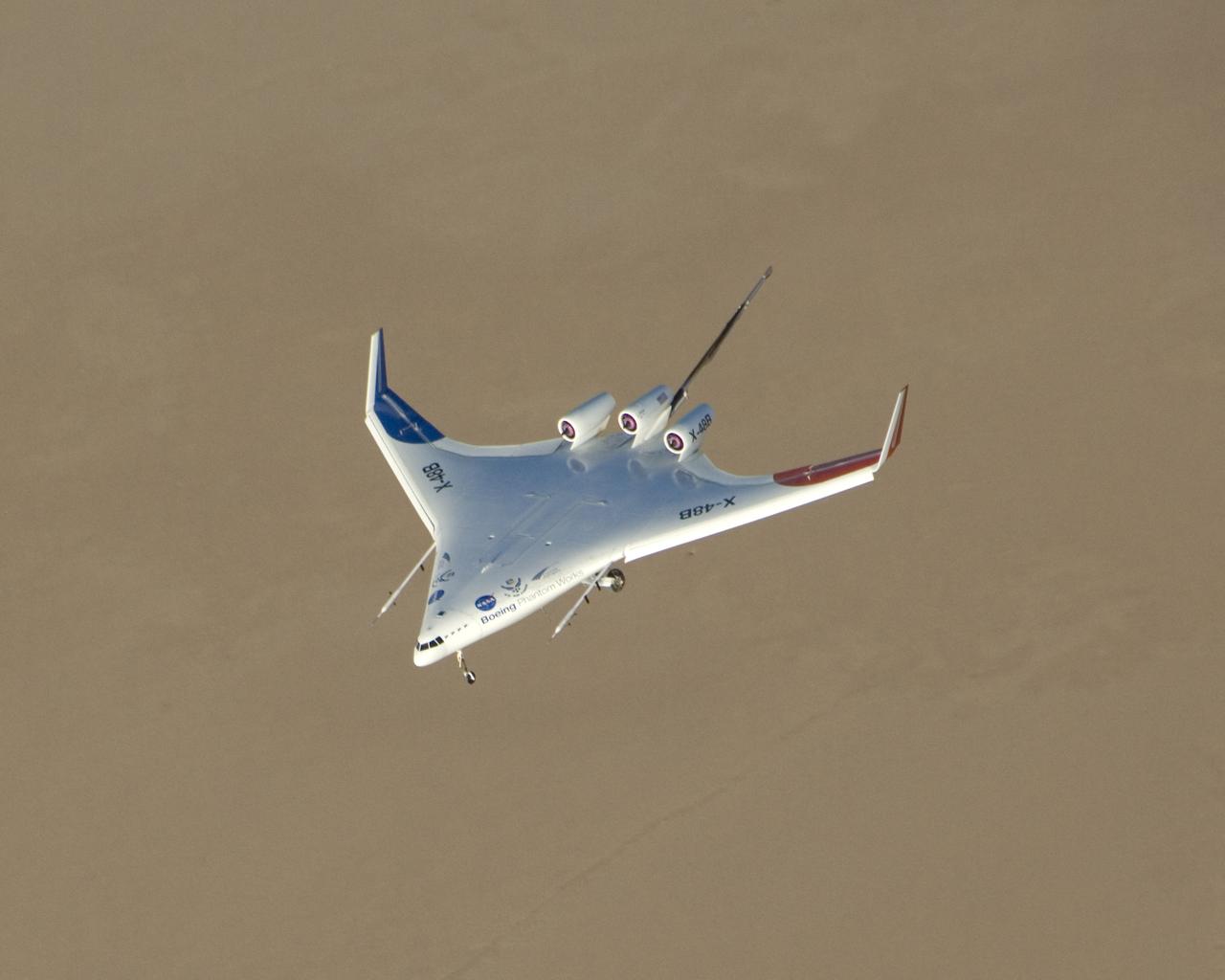
Boeing Phantom Works' subscale Blended Wing Body technology demonstration aircraft began its initial flight tests from NASA's Dryden Flight Research Center at Edwards Air Force Base, Calif. in the summer of 2007. The 8.5 percent dynamically scaled unmanned aircraft, designated the X-48B by the Air Force, is designed to mimic the aerodynamic characteristics of a full-scale large cargo transport aircraft with the same blended wing body shape. The initial flight tests focused on evaluation of the X-48B's low-speed flight characteristics and handling qualities. About 25 flights were planned to gather data in these low-speed flight regimes. Based on the results of the initial flight test series, a second set of flight tests was planned to test the aircraft's low-noise and handling characteristics at transonic speeds.
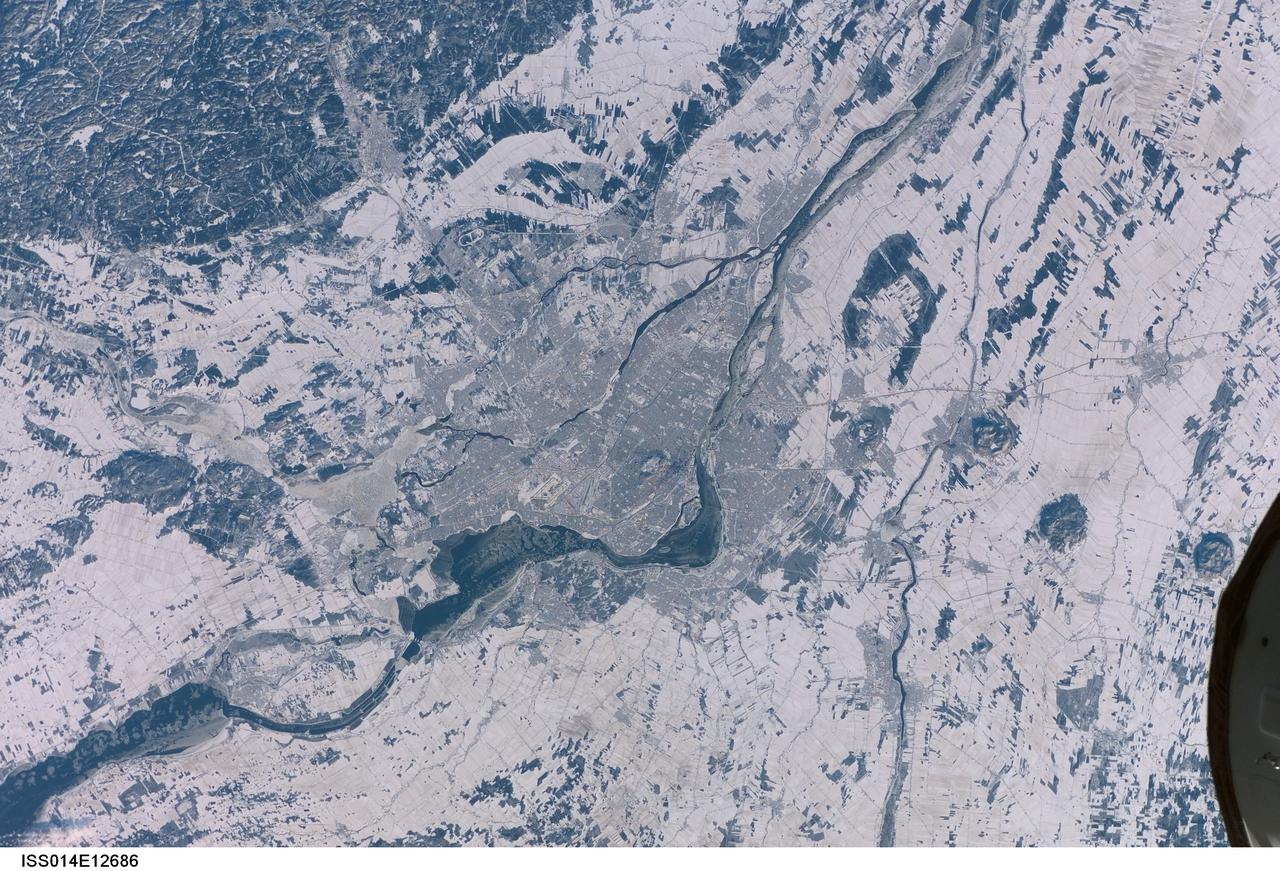
ISS014-E-12686 (21 Jan. 2007) --- This wintry scene of Quebec Province in Canada was photographed by one of the Expedition 14 crew members aboard the Earth-orbiting International Space Station. In 1535 Jacques Cartier landed on an island in the St. Lawrence River and named a 233 meter-high mountain Mount Royal. Montreal is a city on that island that grew up around the mountain. The city of Montreal (near center frame) is located on the Ile de Montreal to the northwest of the St. Lawrence river (the wider body of water). It was not until 1642 that Ville Marie, founded by missionaries, would officially become the city of Montreal. The cityscape contrasts well with the farmland and natural forests in this summer view. Today Montreal is the largest city in the province of Quebec, and is the second most populous metropolitan area in Canada -- in 1991 the population was just more than one million in the city and 3,127,242 in the metropolitan area. While owing its early growth to the fur trade, the city is a leading producer of aircraft, chemical and pharmaceutical products, and is a major petroleum production center. Nearly half of Canada's .8 billion aerospace industry is located in the Montreal area.
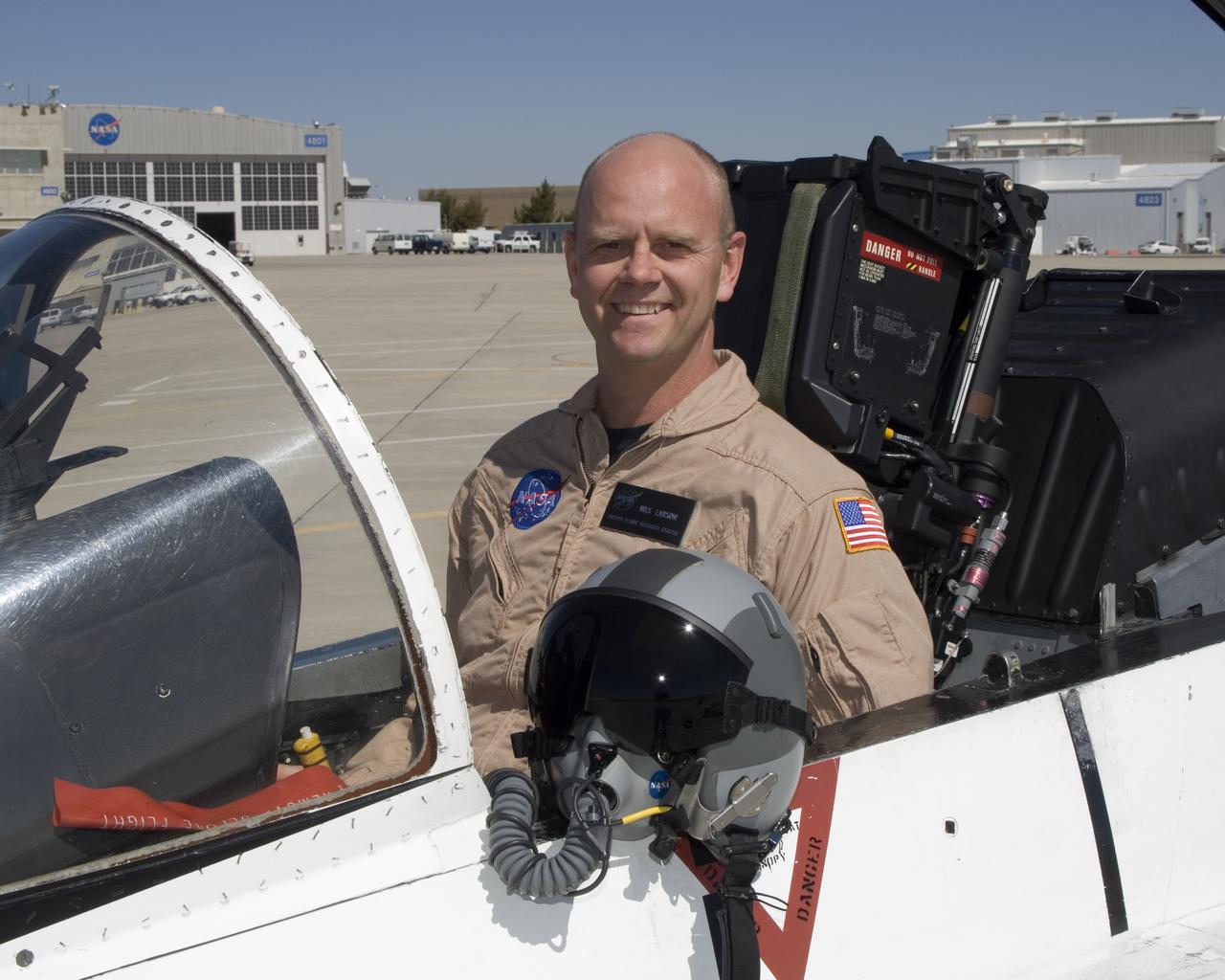
Nils Larson is a research pilot in the Flight Crew Branch of NASA's Dryden Flight Research Center, Edwards, Calif. Larson joined NASA in February 2007 and will fly the F-15, F-18, T-38 and ER-2. Prior to joining NASA, Larson was on active duty with the U.S. Air Force. He has accumulated more that 4,900 hours of military and civilian flight experience in more than 70 fixed and rotary winged aircraft. Larson completed undergraduate pilot training at Williams Air Force Base, Chandler, Ariz., in 1987. He remained at Williams as a T-37 instructor pilot. In 1991, Larson was assigned to Beale Air Force Base, Calif., as a U-2 pilot. He flew 88 operational missions from Korea, Saudi Arabia, the United Kingdom, Panama and other locations. Larson graduated from the U.S. Air Force Test Pilot School at Edwards Air Force Base, Calif., in Class 95A. He became a flight commander and assistant operations officer for the 445th squadron at Edwards. He flew the radar, avionics integration and engine tests in F-15 A-D, the early flights of the glass cockpit T-38C and airworthiness flights of the Coast Guard RU-38. He was selected to serve as an Air Force exchange instructor at the U.S. Naval Test Pilot School, Patuxent River, Md. He taught systems and fixed-wing flight test and flew as an instructor pilot in the F-18, T-2, U-6A Beaver and X-26 Schweizer sailplane. Larson commanded U-2 operations for Warner Robins Air Logistics Center's Detachment 2 located in Palmdale, Calif. In addition to flying the U-2, Larson supervised the aircraft's depot maintenance and flight test. He was the deputy group commander for the 412th Operations Group at Edwards before retiring from active duty in 2007 with the rank of lieutenant colonel. His first experience with NASA was at the Glenn Research Center, Cleveland, where he served a college summer internship working on arcjet engines. Larson is a native of Bethany, W.Va,, and received his commission from the U.S. Air Force Academy in 1986 with a
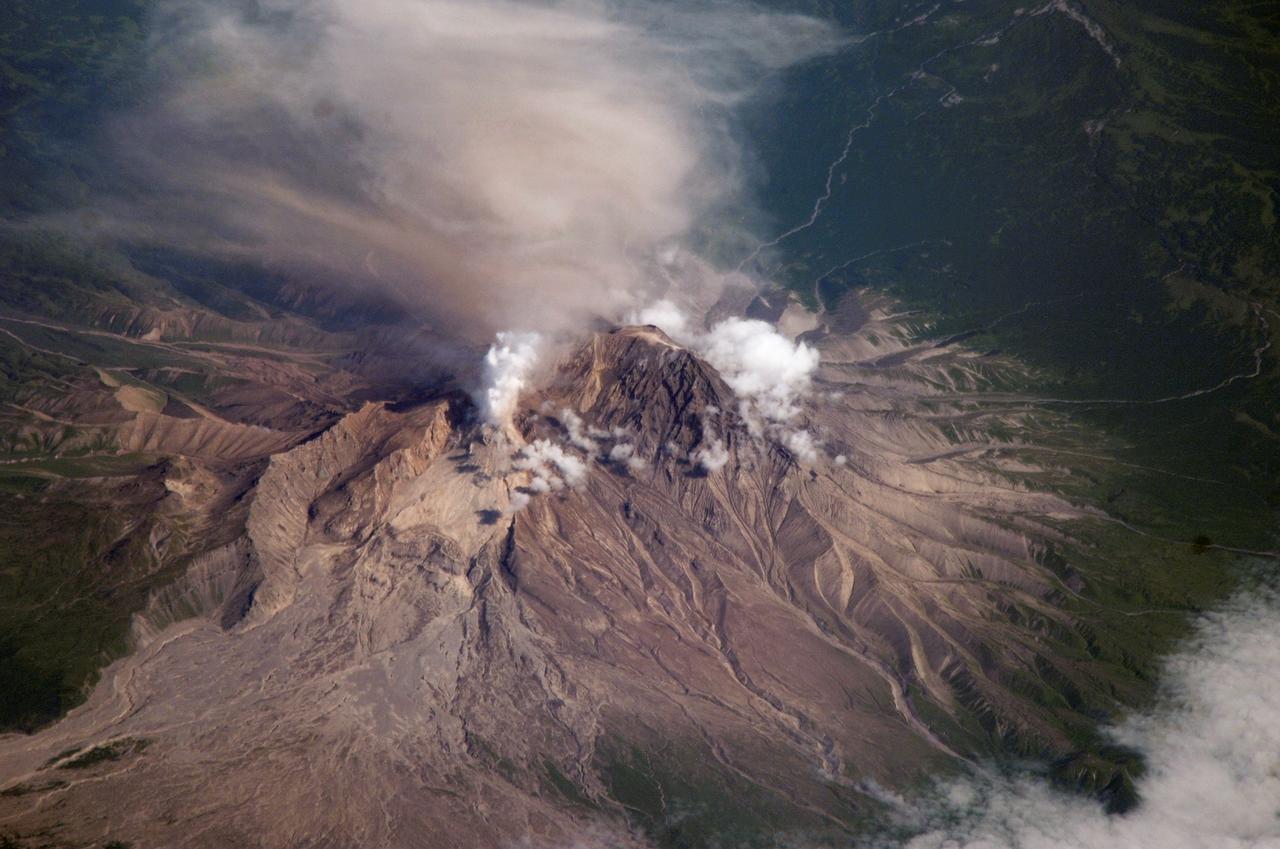
ISS015-E-16913 (10 July 2007) --- Shiveluch Volcano, Kamchatka, Russian Far East is featured in this image photographed by an Expedition 15 crewmember on the International Space Station. Shiveluch is one of the biggest and most active of a line of volcanoes along the spine of the Kamchatka peninsula in easternmost Russia. In turn the volcanoes and peninsula are part of the tectonically active "Ring of Fire" that almost surrounds the Pacific Ocean, denoted by active volcanoes and frequent earthquakes. Shiveluch occupies the point where the northeast-trending Kamchatka volcanic line intersects the northwest-trending Aleutian volcanic line. Junctions such as this are typically points of intense volcanic activity. According to scientists, the summit rocks of Shiveluch have been dated at approximately 65,000 years old. Lava layers on the sides of the volcano reveal at least 60 major eruptions in the last 10,000 years, making it the most active volcano in the 2,200 kilometer distance that includes the Kamchatka peninsula and the Kuril island chain. Shiveluch rises from almost sea level to well above 3,200 miles (summit altitude 3,283 miles) and is often capped with snow. In this summer image however, the full volcano is visible, actively erupting ash and steam in late June or early July, 2007. The dull brown plume extending from the north of the volcano summit is most likely a combination of ash and steam (top). The two larger white plumes near the summit are dominantly steam, a common adjunct to eruptions, as rain and melted snow percolate down to the hot interior of the volcano. The sides of the volcano show many eroded stream channels. The south slope also reveals a long sloping apron of collapsed material, or pyroclastic flows. Such debris flows have repeatedly slid down and covered the south side of the volcano during major eruptions when the summit lava domes explode and collapse (this occurred during major eruptions in 1854 and 1964). Regrowth of the forest on the south slope (note the contrast with the eastern slope) has been foiled by the combined effects of continued volcanic activity, instability of the debris flows and the short growing season.
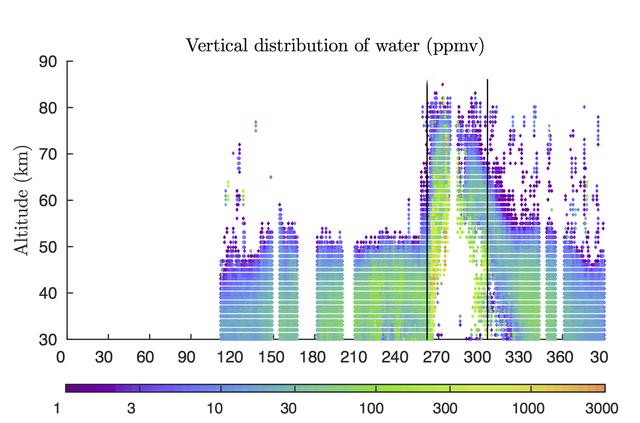
Rising air during a 2007 global dust storm on Mars lofted water vapor into the planet's middle atmosphere, researchers learned from data graphed here, derived from observations by the Mars Climate Sounder instrument on NASA's Mars Reconnaissance Orbiter. The two vertical black lines in the right half of the graph (at about 260 and 310 on the horizontal scale) mark the beginning and end of the most recent global dust storm on Mars, which burst from regional scale to globe-encircling scale in July 2007. The presence of more colored dots, particularly green ones, in the upper portion of the graph between those lines, compared to the upper portion of the graph outside those lines, documents the uplift of water vapor in connection with the global dust storm. The vertical scale is altitude, labeled at left in kilometers above the surface of Mars (50 kilometers is about 30 miles; 80 kilometers is about 50 miles). The color bar below the graph gives the key to how much water vapor each dot represents, in parts per million, by volume, in Mars' atmosphere. Note that green to yellow represents about 100 times as much water as purple does. The horizontal axis of the graph is time, from January 2006 to February 2008. It is labeled with numbers representing the 360 degrees of Mars' orbit around the Sun, from zero to 360 degrees and then further on to include the first 30 degrees of the following Martian year. (The zero point is autumnal equinox -- end of summer -- in Mars' northern hemisphere.) This graph, based on Mars Reconnaissance Orbiter observations, was used in a January 2018 paper in Nature Astronomy by Nicholas Heavens of Hampton University in Hampton, Virginia, and co-authors. The paper presents Martian dust storms' uplifting effect on water vapor as a factor in seasonal patterns that other spacecraft have detected in the rate of hydrogen escaping from the top of Mars' atmosphere. https://photojournal.jpl.nasa.gov/catalog/PIA22080
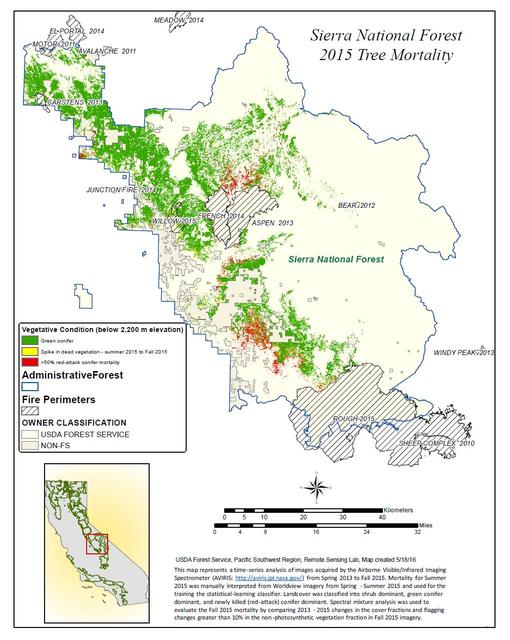
California, reveals the devastating effect of California's ongoing drought on Sierra Nevada conifer forests. The map will be used to help the U.S. Forest Service assess and respond to the impacts of increased tree mortality caused by the drought, particularly where wildlands meet urban areas within the Sierra National Forest. After several years of extreme drought, the highly stressed conifers (trees or bushes that produce cones and are usually green year-round) of the Sierra Nevada are now more susceptible to bark beetles (Dendroctonus spp.). While bark beetles killing trees in the Sierra Nevada is a natural phenomenon, the scale of mortality in the last couple of years is far greater than previously observed. The U.S. Forest Service is using recent airborne spectroscopic measurements from NASA's Airborne Visible/Infrared Imaging Spectrometer (AVIRIS) instrument aboard NASA's ER-2 aircraft, together with new advanced algorithms, to quantify this impact over this large region of rugged terrain. The high-altitude ER-2 aircraft is based at NASA's Armstrong Flight Research Center, Edwards, California. The image was created by scientists at the USFS's Pacific Southwest Region Remote Sensing Lab, McClellan, California, by performing a time series analysis of AVIRIS images. Scientists evaluated baseline tree mortality on public lands in the summer of 2015 using a machine learning algorithm called "random forest." This algorithm classifies the AVIRIS measurements as dominated by either shrubs, healthy trees or newly dead conifer trees. To quantify how much the amount of dead vegetation increased during the fall of 2015, the Forest Service scientists conducted an advanced spectral mixture analysis. This analysis evaluates each spectrum to determine the fraction of green vegetation, dead vegetation and soil. The full spectral range of AVIRIS is important to separate the signatures of soil and dead vegetation. To produce this comprehensive Sierra National Forest tree mortality map, the result from the summer of 2015 was evaluated to look for increases of more than 10 percent in dead vegetation during the fall of 2015. AVIRIS measures spectra of the Earth system to conduct advanced science research. These western U.S. AVIRIS measurements were acquired as part of NASA's Hyperspectral Infrared Imager (HyspIRI) preparatory airborne campaign. HyspIRI was one of the space missions suggested to NASA by the National Academy of Sciences in its 2007 decadal survey for Earth Science. In the future, HyspIRI could provide spectral and thermal measurements of this type globally for ecosystem research and additional science objectives. http://photojournal.jpl.nasa.gov/catalog/PIA20717
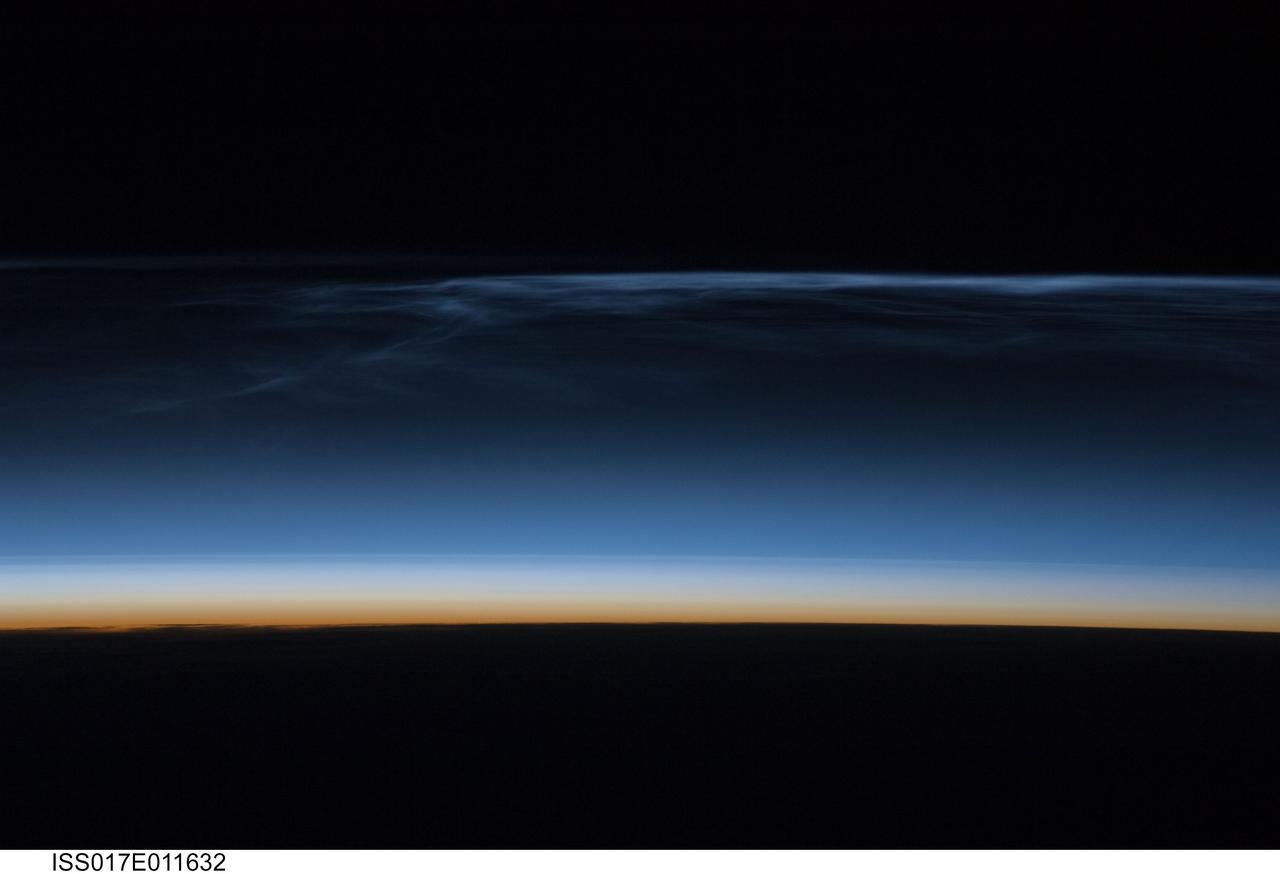
ISS017-E-011632 (22 July 2008) --- Polar Mesospheric Clouds (also known as noctilucent clouds) are transient, upper atmospheric phenomena observed usually in the summer months at high latitudes (greater than 50 degrees) of both the Northern and Southern Hemispheres. They are bright and cloudlike in appearance while in deep twilight. They are illuminated by sunlight when the lower layers of the atmosphere are in the darkness of the Earth's shadow. This image was acquired at an altitude of just over 200 miles in the pre-dawn hours of July 22, 2008 as the International Space Station was passing over western Mongolia in central Asia. The dark horizon of the Earth appears below with some layers of the lower atmosphere already illuminated. The higher, bluish-colored clouds look much like wispy cirrus clouds which can be found in the troposphere as high as 60,000 feet. However noctilucent clouds, as seen here, are observed in the mesosphere at altitudes of 250,000 to 280,000 feet. Astronaut observations of Polar Mesospheric Clouds (PMC) over northern Asia in June and July are not uncommon. The Expedition 17 crew of the International Space Station acquired this image, and more, in support of research for the International Polar Year. Some researchers link increased observations of PMC to changes in global climate; PMC have been the subject of extensive observation and research from space by the Swedish satellite Odin launched in 2001 and more recently by NASA's Aeronomy of Ice in the Mesosphere (AIM) satellite system beginning in 2007.