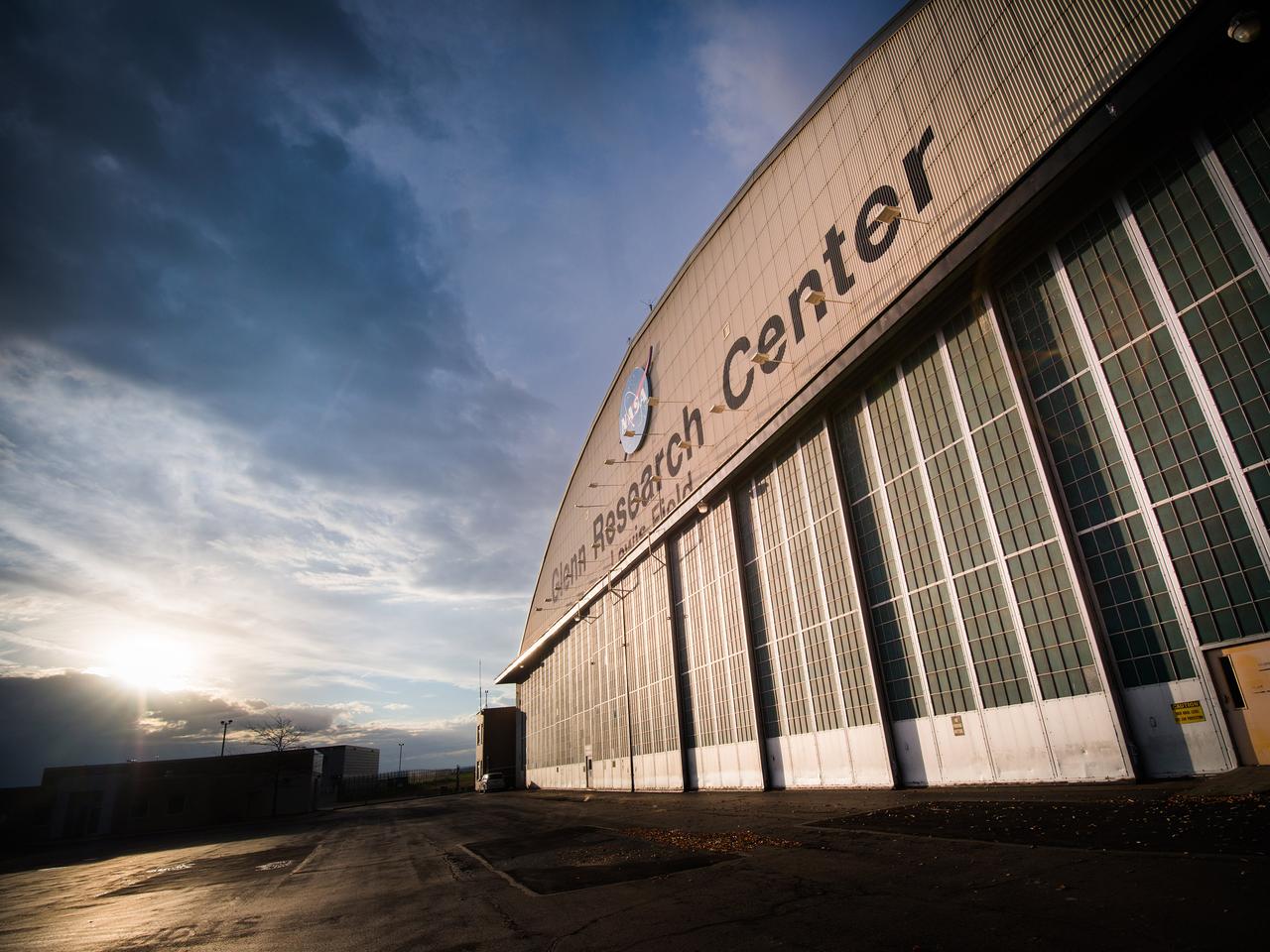
Sunrise in late September illuminates the front of the Hangar at NASA Glenn Research Center.
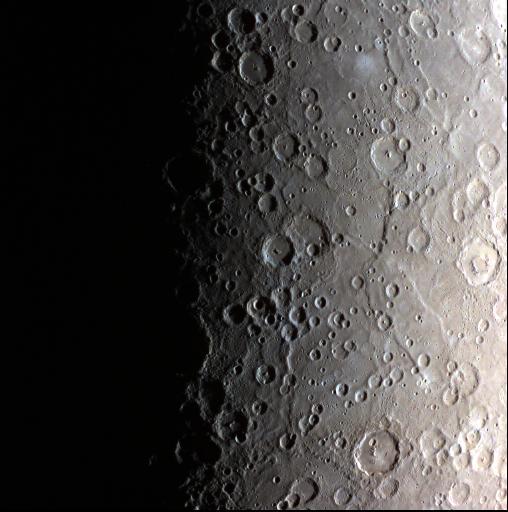
Sunrise on Mercury
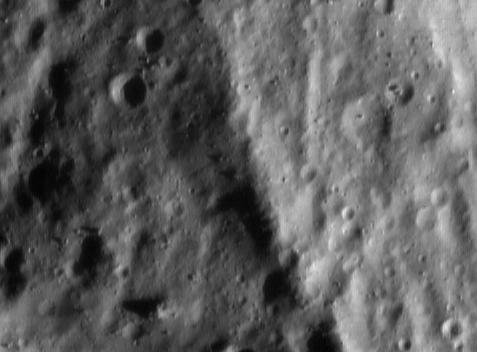
The Ridge at Sunrise
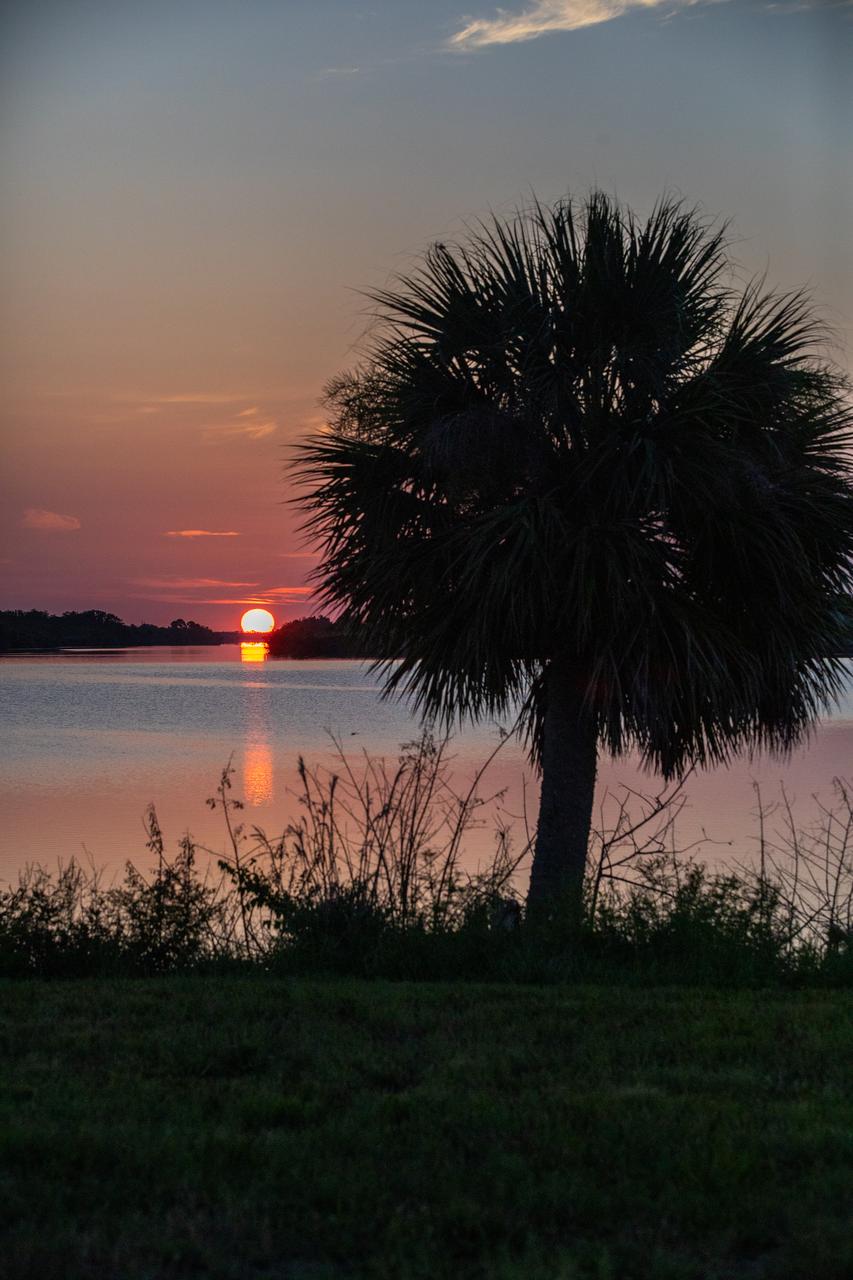
A sunrise over NASA’s Kennedy Space Center in Florida is captured on July 15, 2020. A multi-user spaceport, Kennedy has partnerships with both government and commercial entities, providing the facilities and infrastructure necessary for venturing to space.
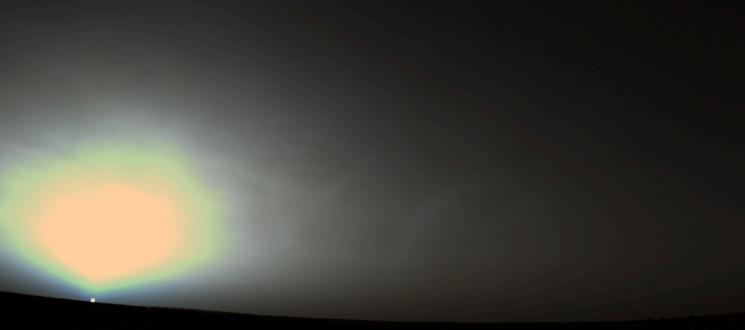
Martian Sunrise at Utopia Planitia
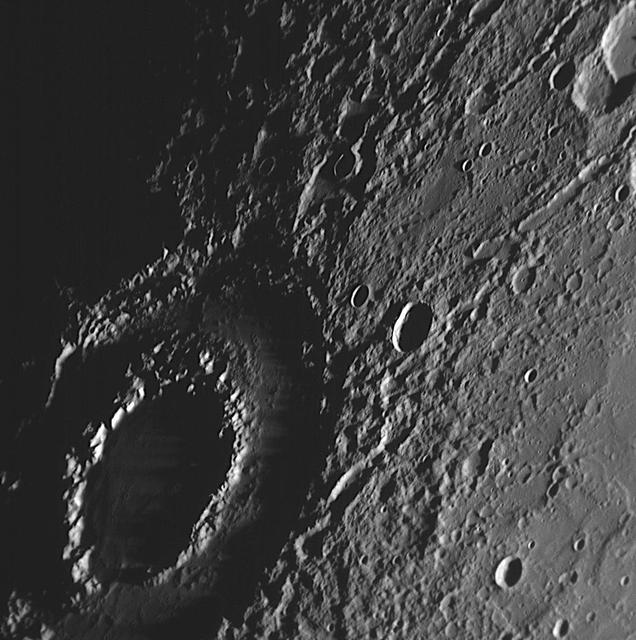
Vivaldi: At Sunset and Now at Sunrise
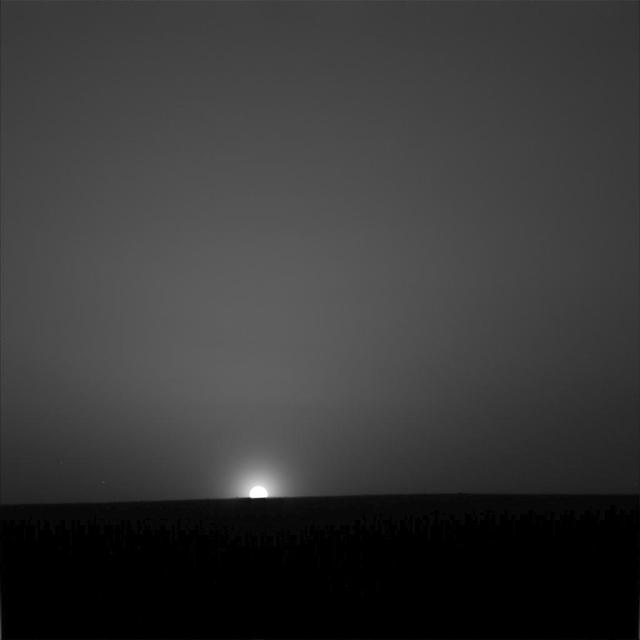
Ice Cold Sunrise on Mars
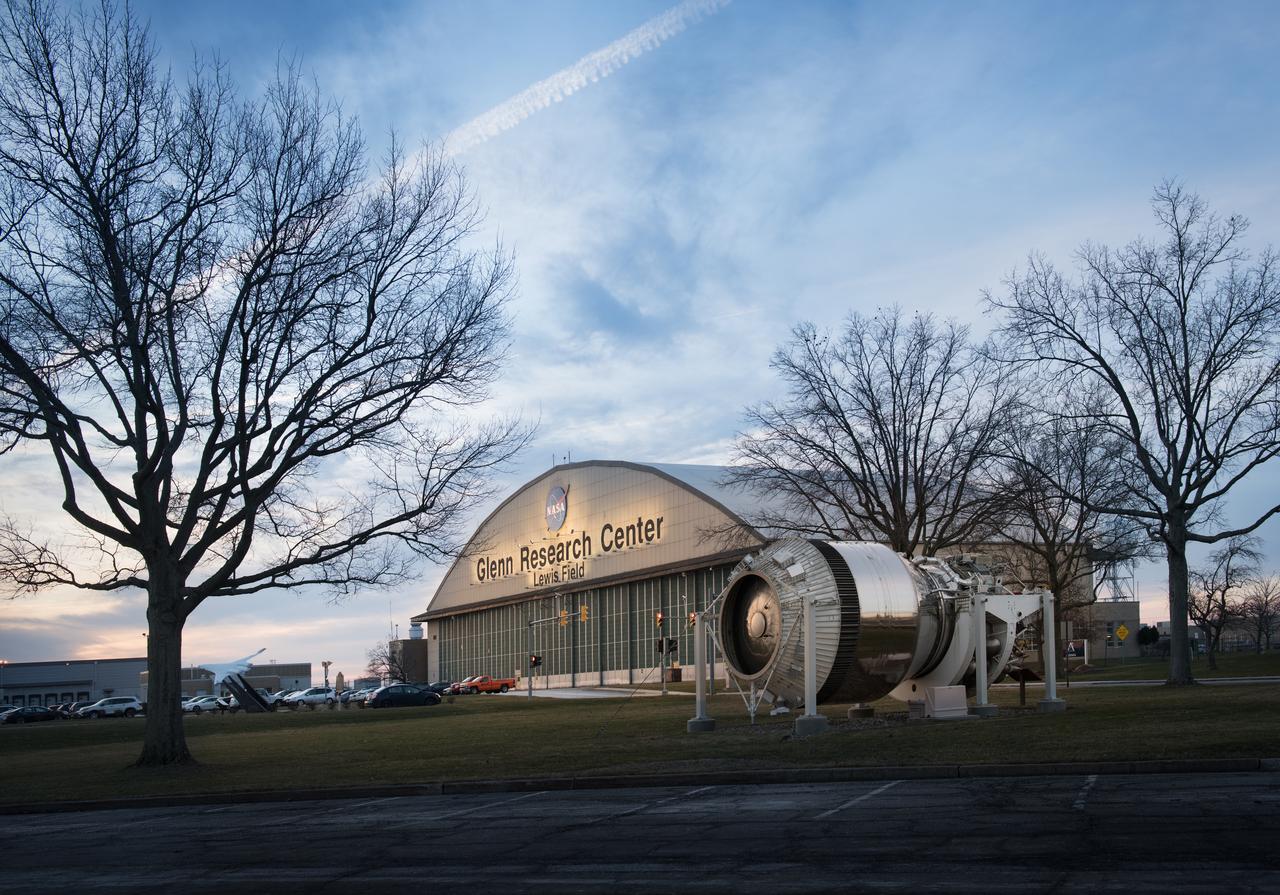
Glenn Research Center Hangar at Sunrise
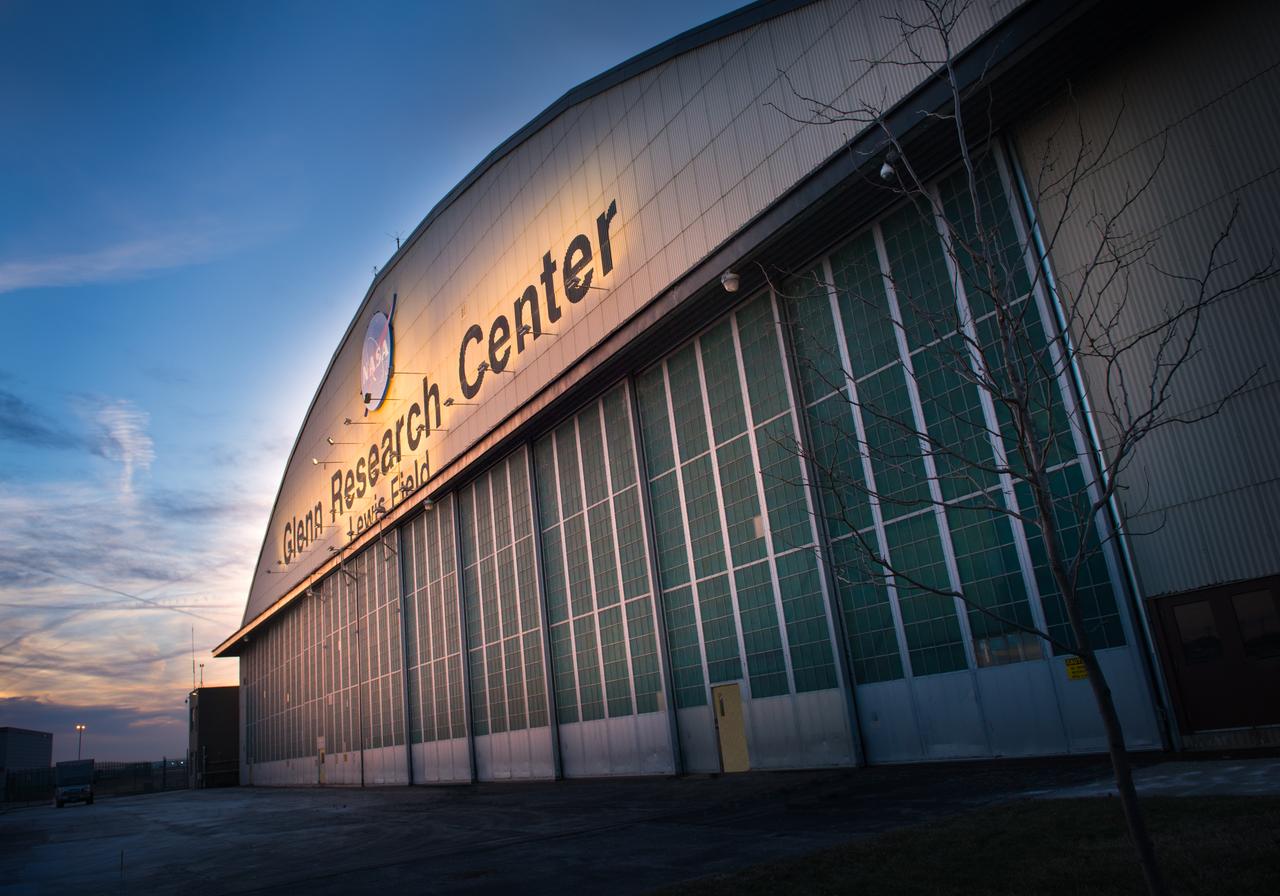
Glenn Research Center Hangar at Sunrise
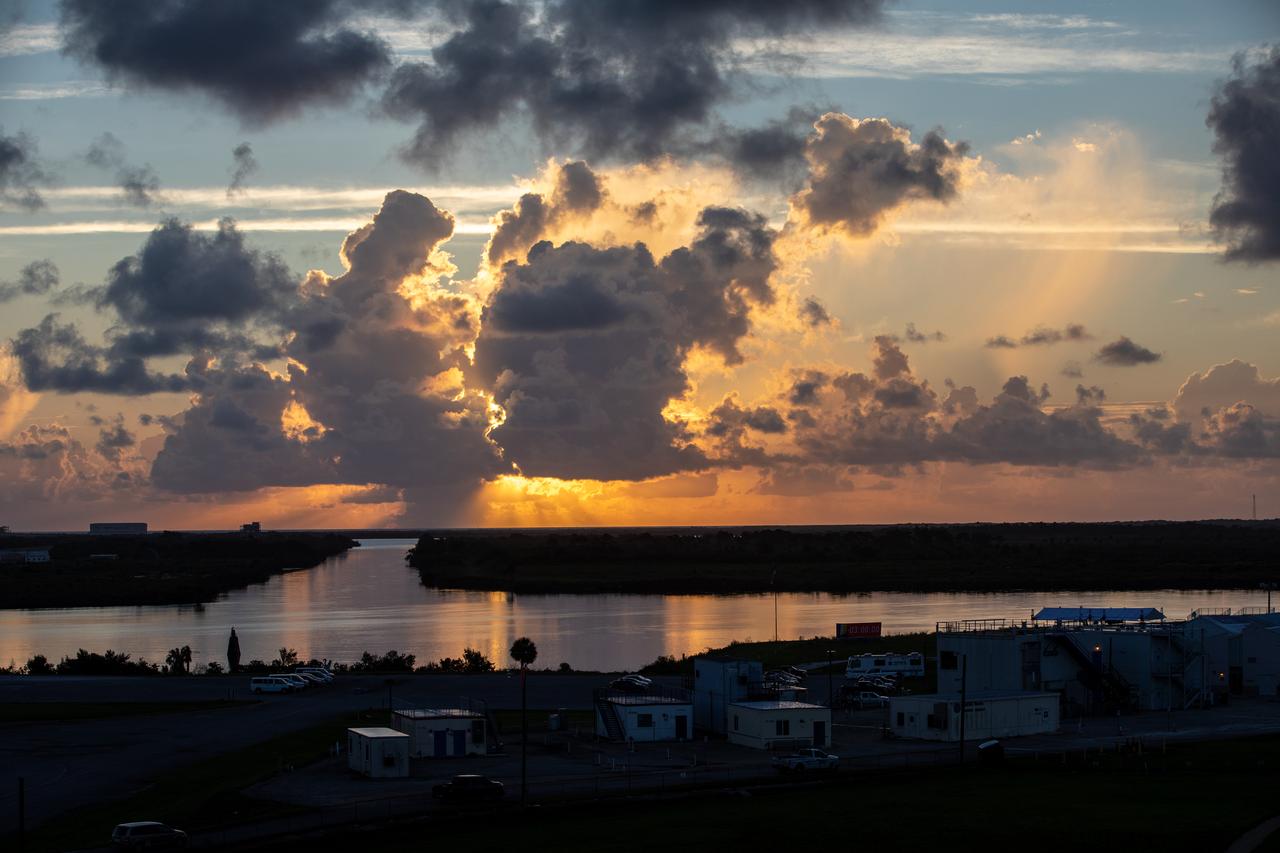
An early sunrise view of a waterway surrounding Launch Complex 39 at NASA's Kennedy Space Center in Florida on July 25, 2020. NASA’s Space Launch System and Orion spacecraft will lift off from Launch Complex 39B on Artemis I, an uncrewed mission around the Moon.
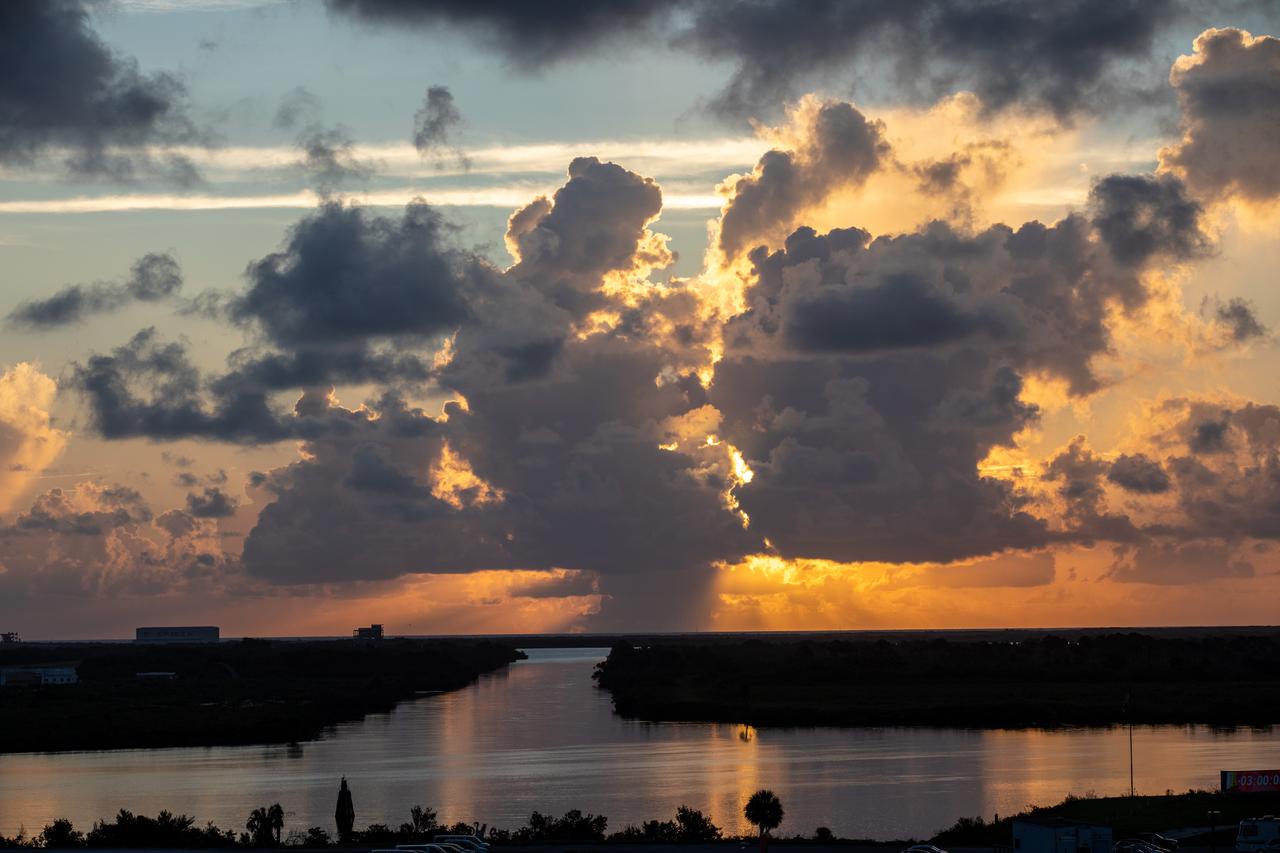
An early sunrise view of a waterway surrounding Launch Complex 39 at NASA's Kennedy Space Center in Florida on July 25, 2020. NASA’s Space Launch System and Orion spacecraft will lift off from Launch Complex 39B on Artemis I, an uncrewed mission around the Moon.
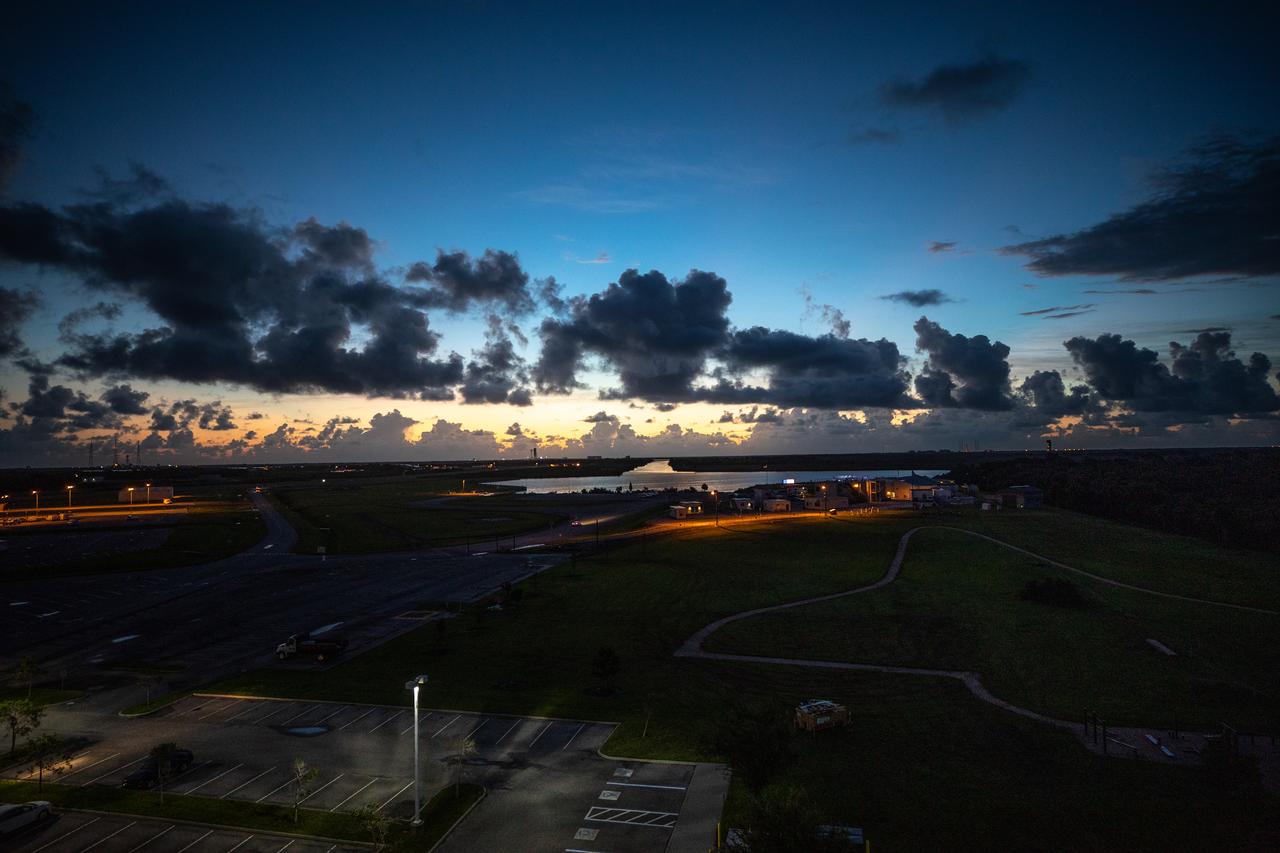
An early sunrise view of a waterway surrounding Launch Complex 39 at NASA's Kennedy Space Center in Florida on July 25, 2020. NASA’s Space Launch System and Orion spacecraft will lift off from Launch Complex 39B on Artemis I, an uncrewed mission around the Moon.
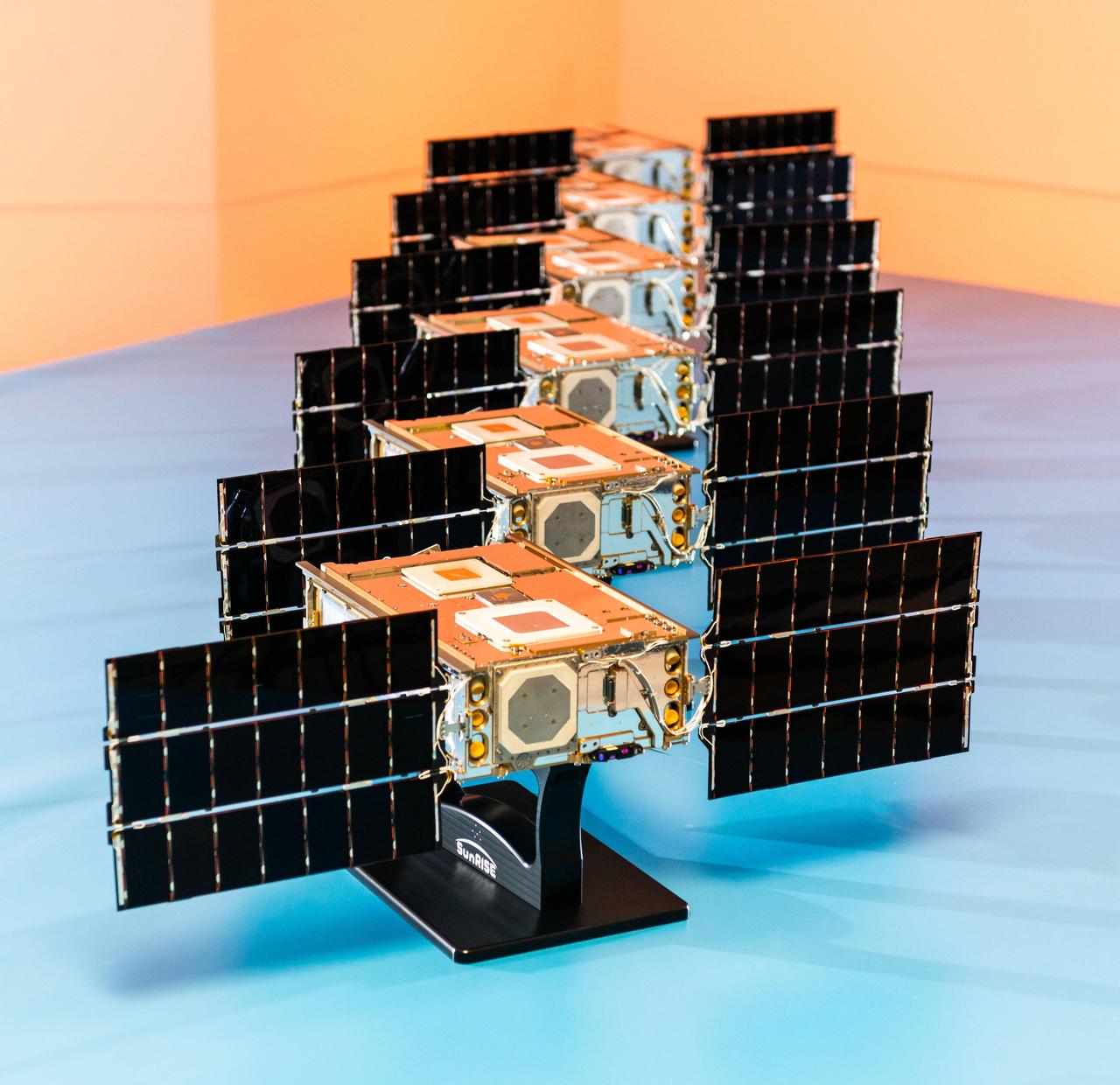
Shown here at Utah State University's Space Dynamics Laboratory in Logan, Utah, in November, 2023, the six satellites that make up NASA's Sun Radio Interferometer Space Experiment (SunRISE) mission are each only about the size of a cereal box, flanked by small solar panels. Once in space, the six SmallSats fly about 6 miles (10 kilometers) apart and each deploy four radio antennas that extend 10 feet (2.5 meters). Using a technique called interferometry, the six satellites will effectively act like one big radio receiver and detect solar radio bursts, or eruptions of radio waves in the outer atmosphere of the Sun. In the places where these radio bursts arise, scientists also see eruptions of accelerated particles, which can damage spacecraft electronics, including on communications satellites in Earth orbit, and pose a health threat to astronauts. Keeping track of solar radio bursts and pinpointing their location could help warn humans of approaching accelerated particles. https://photojournal.jpl.nasa.gov/catalog/PIA25789

An early morning sunrise serves as the backdrop for the countdown clock near the News Center at NASA's Kennedy Space Center in Florida.

An early morning sunrise serves as the backdrop for the countdown clock near the News Center at NASA's Kennedy Space Center in Florida.
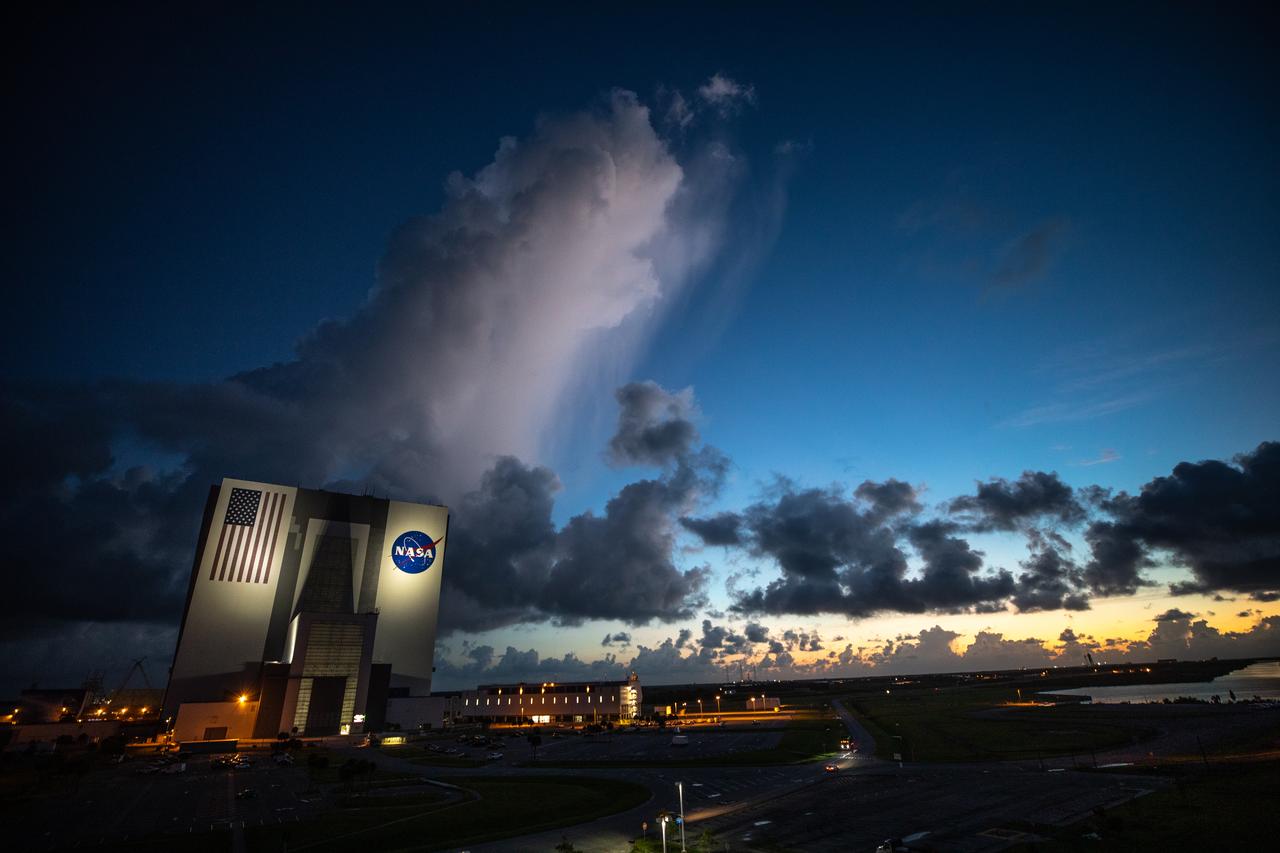
An early sunrise view of the iconic Vehicle Assembly Building (VAB) at NASA's Kennedy Space Center in Florida on July 25, 2020. Repainting of the NASA meatball and American flag recently was completed on the 525-foot tall facility. Inside the VAB, 10 new work platforms, 20 platform halves altogether, have been installed in High Bay 3 for the agency's Space Launch System (SLS) rocket and Orion spacecraft. Exploration Ground Systems is overseeing upgrades to the VAB.

A spider web hangs in the forefront of a sunrise at Kennedy Space Center on March 15, 2021. Kennedy shares space with the Merritt Island National Wildlife Refuge on Florida’s east coast. The refuge includes about 140,000 acres on land and water and provides a wide variety of habitats.

A spider web hangs in the forefront of a sunrise at Kennedy Space Center on March 15, 2021. Kennedy shares space with the Merritt Island National Wildlife Refuge on Florida’s east coast. The refuge includes about 140,000 acres on land and water and provides a wide variety of habitats.
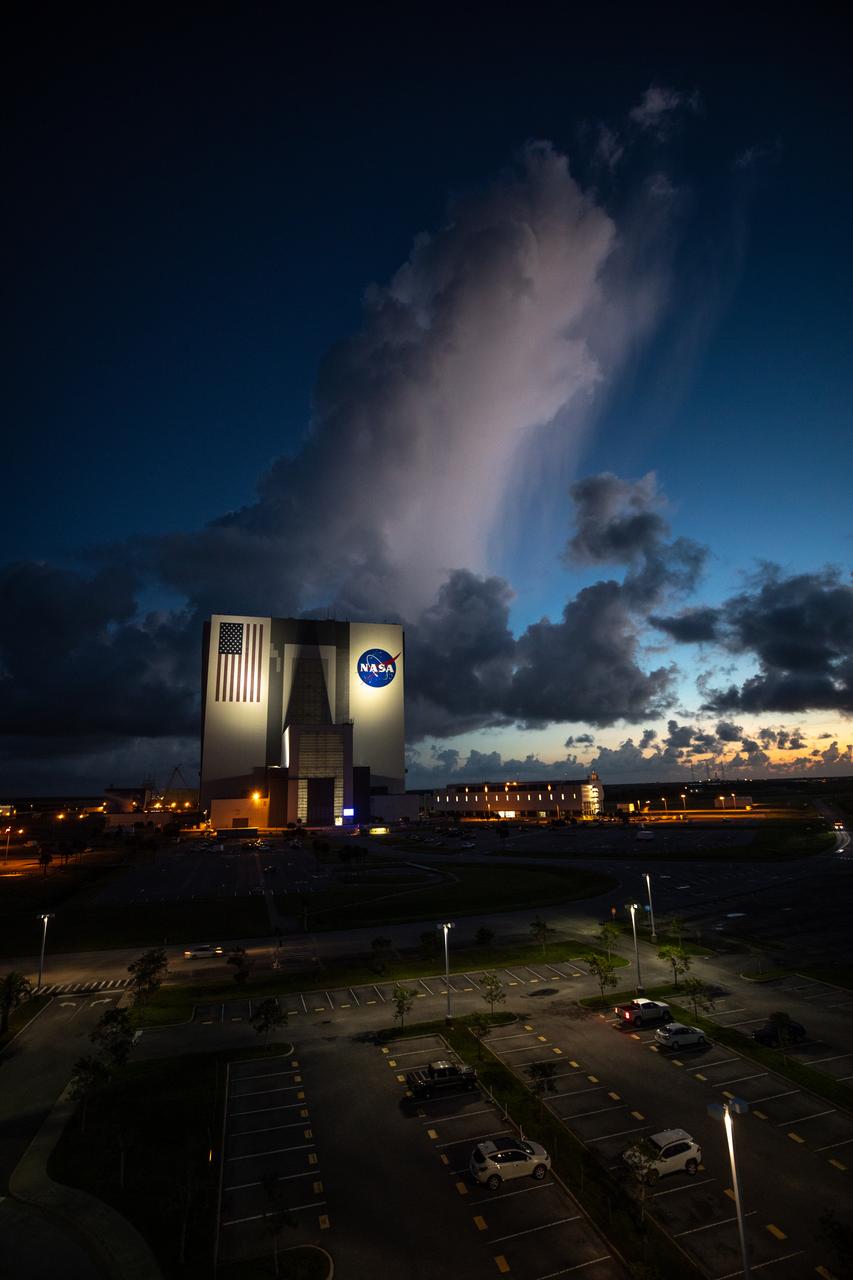
An early sunrise view of the iconic Vehicle Assembly Building (VAB) at NASA's Kennedy Space Center in Florida on July 25, 2020. Repainting of the NASA meatball and American flag recently was completed on the 525-foot-tall facility. Inside the VAB, 10 new work platforms, 20 platform halves altogether, have been installed in High Bay 3 for the agency's Space Launch System (SLS) rocket and Orion spacecraft. Exploration Ground Systems is overseeing upgrades to the VAB.
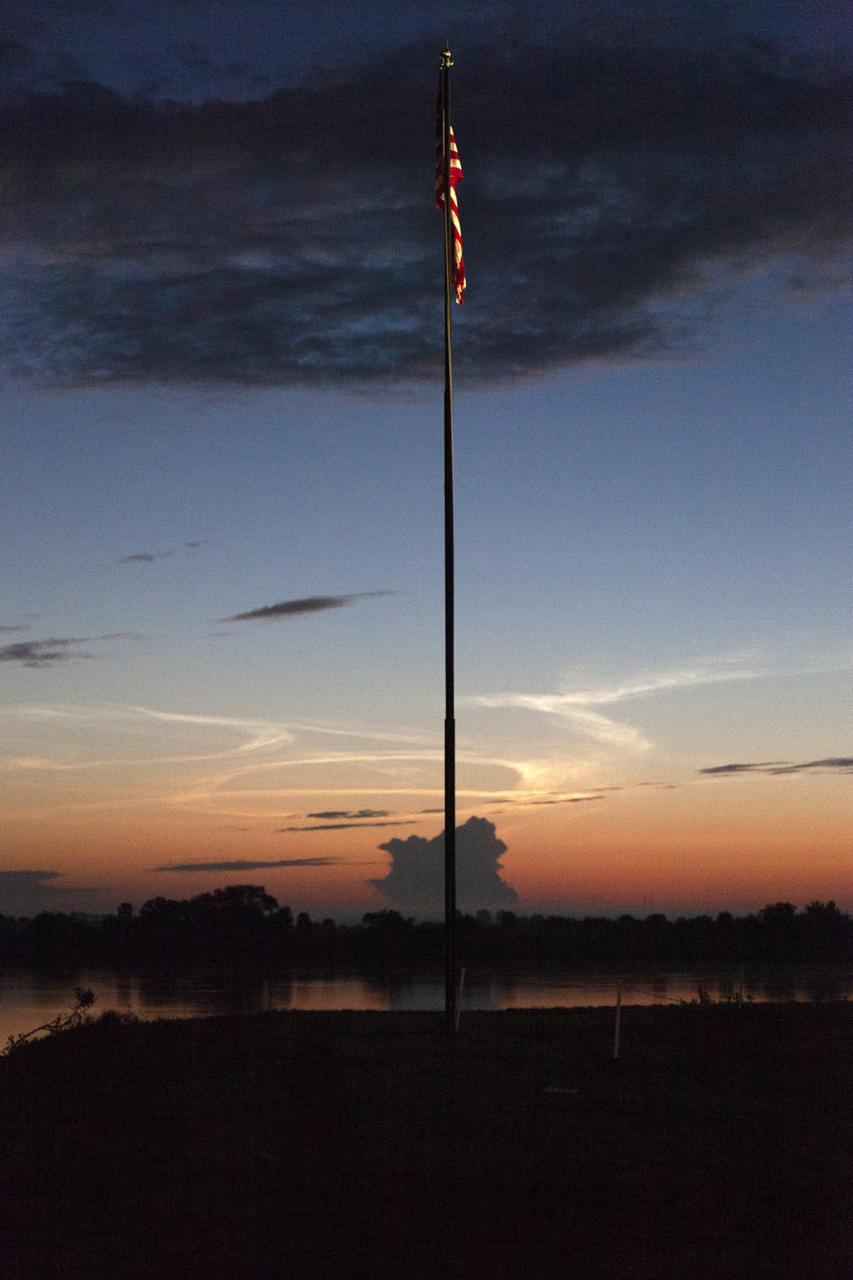
A sunrise serves as the backdrop for the American Flag near the Press Site at NASA’s Kennedy Space Center in Florida following the successful launch of SpaceX’s uncrewed Demo-1 flight test from Launch Complex 39A on March 2, 2019. The company’s Crew Dragon spacecraft lifted off atop a Falcon 9 rocket and traveled to the International Space Station, where it validated end-to-end systems and capabilities in preparation for certification to fly crew.
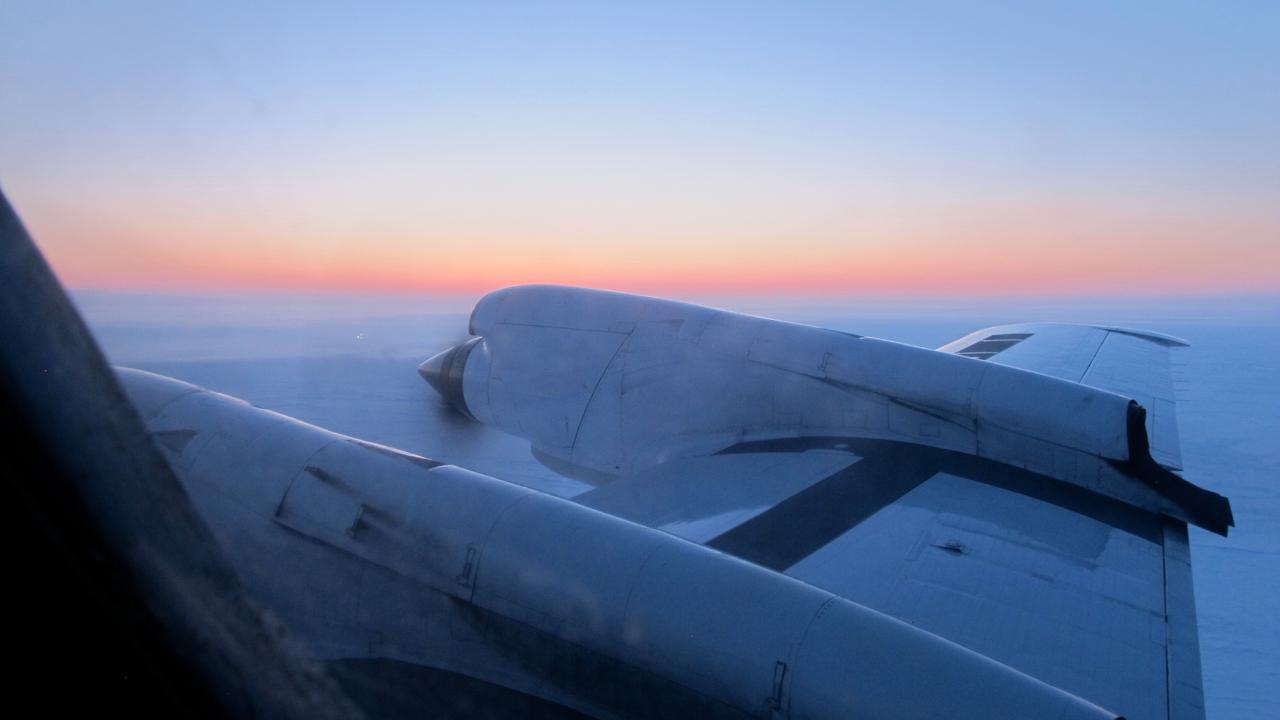
View just before sunrise over the Arctic Ocean during IceBridge's transit flight from Fairbanks to Thule on Mar. 26, 2013. IceBridge has flown the same path across the Arctic Basin in each Arctic campaign, allowing researchers to measure differences in ice thickness the entire way and build a reliable year-to-year record of change. NASA's Operation IceBridge is an airborne science mission to study Earth's polar ice. For more information about IceBridge, visit: <a href="http://www.nasa.gov/icebridge" rel="nofollow">www.nasa.gov/icebridge</a> Credit: NASA/Jim Yungel <b><a href="http://www.nasa.gov/audience/formedia/features/MP_Photo_Guidelines.html" rel="nofollow">NASA image use policy.</a></b> <b><a href="http://www.nasa.gov/centers/goddard/home/index.html" rel="nofollow">NASA Goddard Space Flight Center</a></b> enables NASA’s mission through four scientific endeavors: Earth Science, Heliophysics, Solar System Exploration, and Astrophysics. Goddard plays a leading role in NASA’s accomplishments by contributing compelling scientific knowledge to advance the Agency’s mission. <b>Follow us on <a href="http://twitter.com/NASA_GoddardPix" rel="nofollow">Twitter</a></b> <b>Like us on <a href="http://www.facebook.com/pages/Greenbelt-MD/NASA-Goddard/395013845897?ref=tsd" rel="nofollow">Facebook</a></b> <b>Find us on <a href="http://instagram.com/nasagoddard?vm=grid" rel="nofollow">Instagram</a></b>
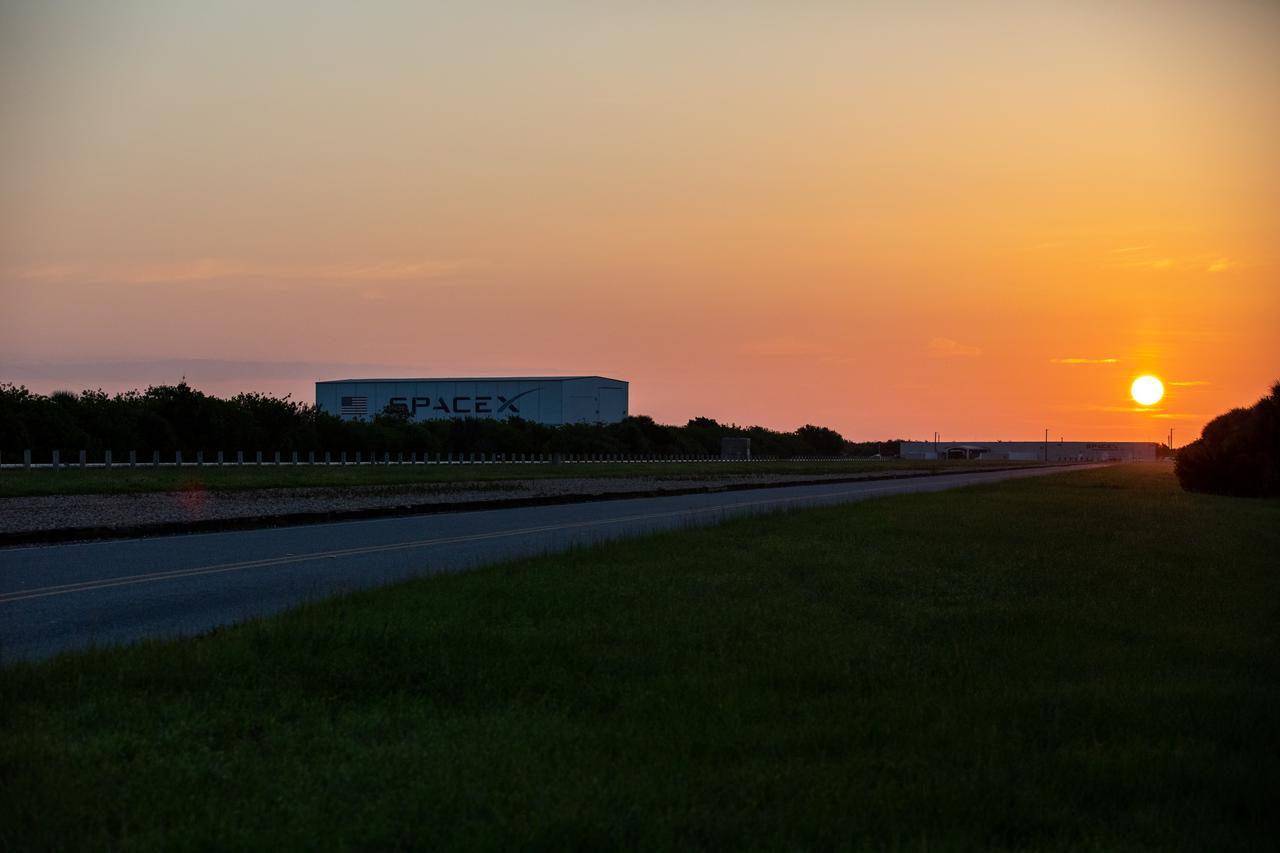
A magnificent sunrise is captured over SpaceX’s processing facility at NASA’s Kennedy Space Center in Florida on July 15, 2020. Under the agency’s Commercial Crew Program, NASA and SpaceX have returned human spaceflight capability to the U.S. NASA astronauts Robert Behnken and Douglas Hurley launched to the International Space Station on May 30, 2020, for the agency’s SpaceX Demo-2 mission, becoming the first time astronauts had launched from American soil since 2011. The mission, concluding on Aug. 2 with Behnken and Hurley’s safe return to Earth, was the final flight test for SpaceX under the program, paving the way for NASA to fully certify the company’s crew transportation for rotational missions to the orbiting laboratory.

A beautiful sunrise is captured over sand dunes at the beach at NASA’s Kennedy Space Center in Florida on July 15, 2020. Teams at Kennedy are working on dune restoration efforts, which has included bringing about 450,000 cubic yards of beach-quality sand in to Kennedy’s beaches to build up dunes that have been affected by beach erosion and storm surges. Once the dunes were built up, native coastal vegetation was replanted to help stabilize the dunes and provide a habitat for wildlife at the Florida spaceport. The first phase of dune restoration efforts are now complete, and the second phase is scheduled to be completed by March 2021.
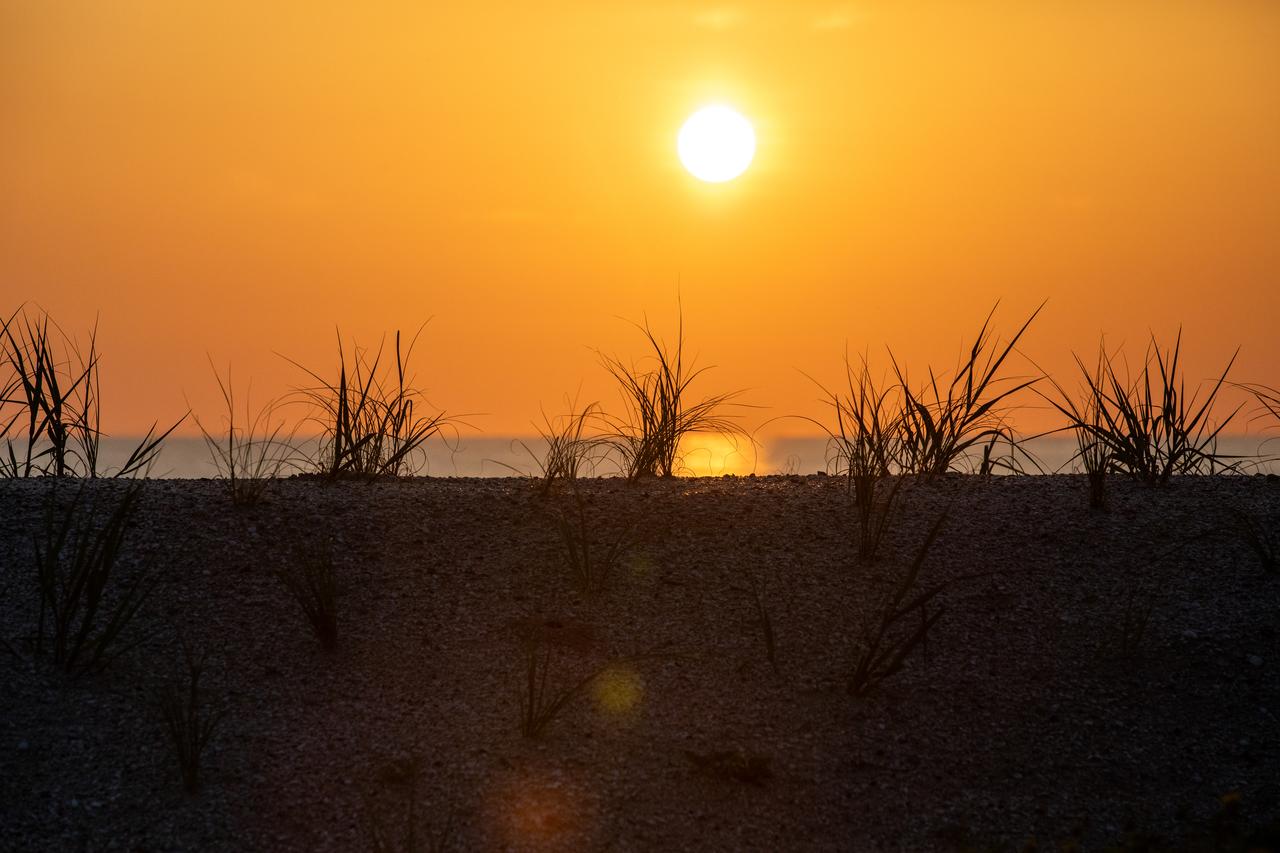
A beautiful sunrise is captured over sand dunes at the beach at NASA’s Kennedy Space Center in Florida on July 15, 2020. Teams at Kennedy are working on dune restoration efforts, which has included bringing about 450,000 cubic yards of beach-quality sand in to Kennedy’s beaches to build up dunes that have been affected by beach erosion and storm surges. Once the dunes were built up, native coastal vegetation was replanted to help stabilize the dunes and provide a habitat for wildlife at the Florida spaceport. The first phase of dune restoration efforts are now complete, and the second phase is scheduled to be completed by March 2021.
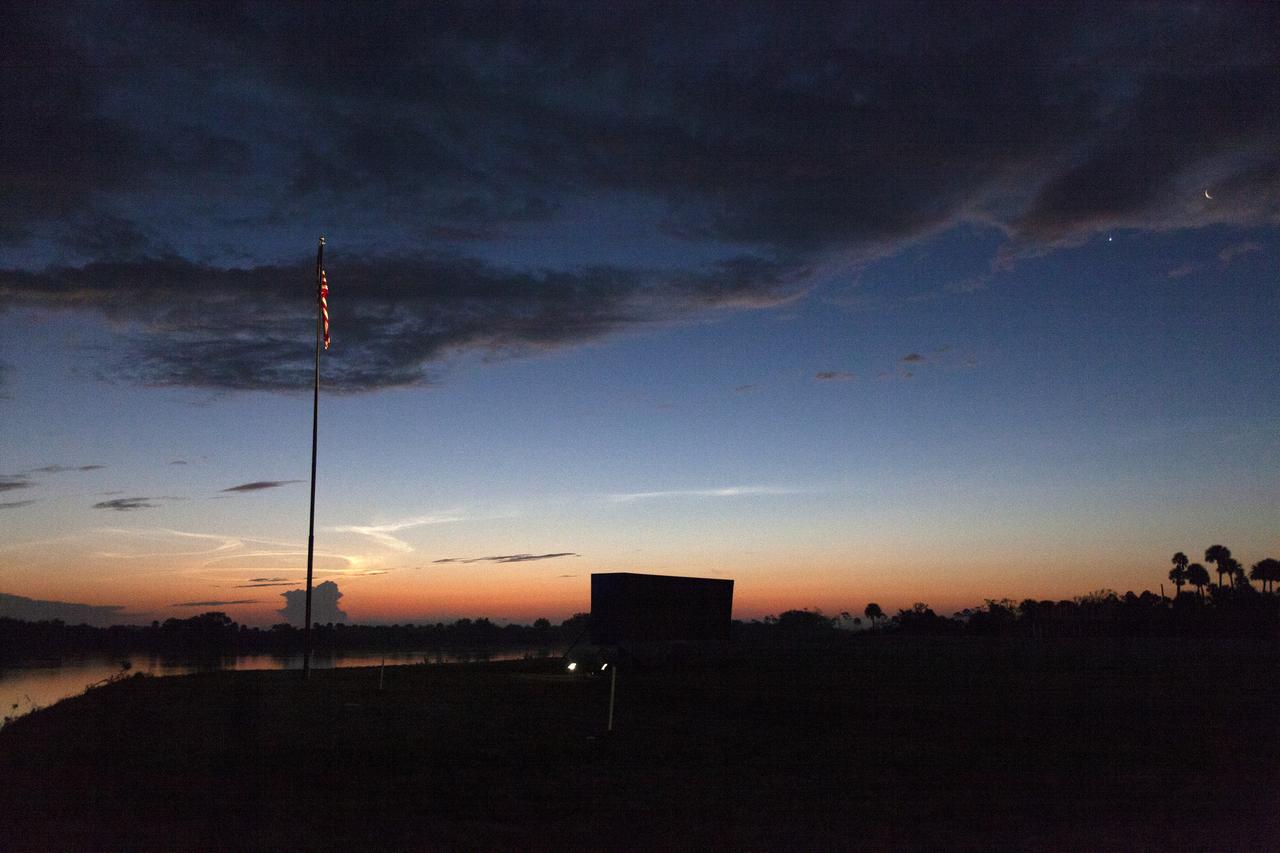
A sunrise serves as the backdrop for the countdown clock and American Flag near the Press Site at NASA’s Kennedy Space Center in Florida following the successful launch of SpaceX’s uncrewed Demo-1 flight test from Launch Complex 39A on March 2, 2019. The company’s Crew Dragon spacecraft lifted off atop a Falcon 9 rocket and traveled to the International Space Station, where it validated end-to-end systems and capabilities in preparation for certification to fly crew.
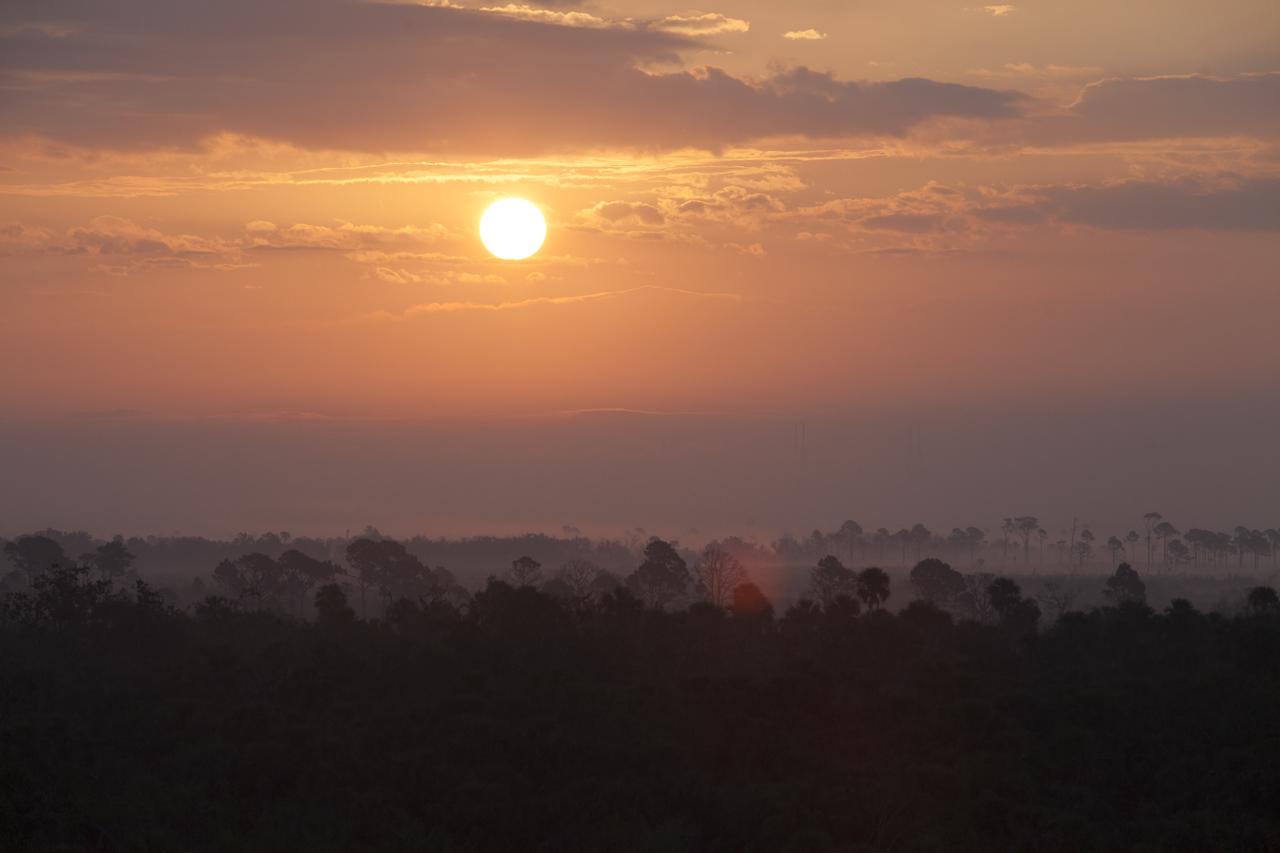
A sunrise view from the observation deck of the Operations and Support Building II at NASA's Kennedy Space Center in Florida, as a SpaceX Falcon 9 rocket awaits launch from Launch Complex 39A. It is the company's 10th commercial resupply services mission to the International Space Station. The Dragon spacecraft will deliver about 5,500 pounds of supplies to the space station.
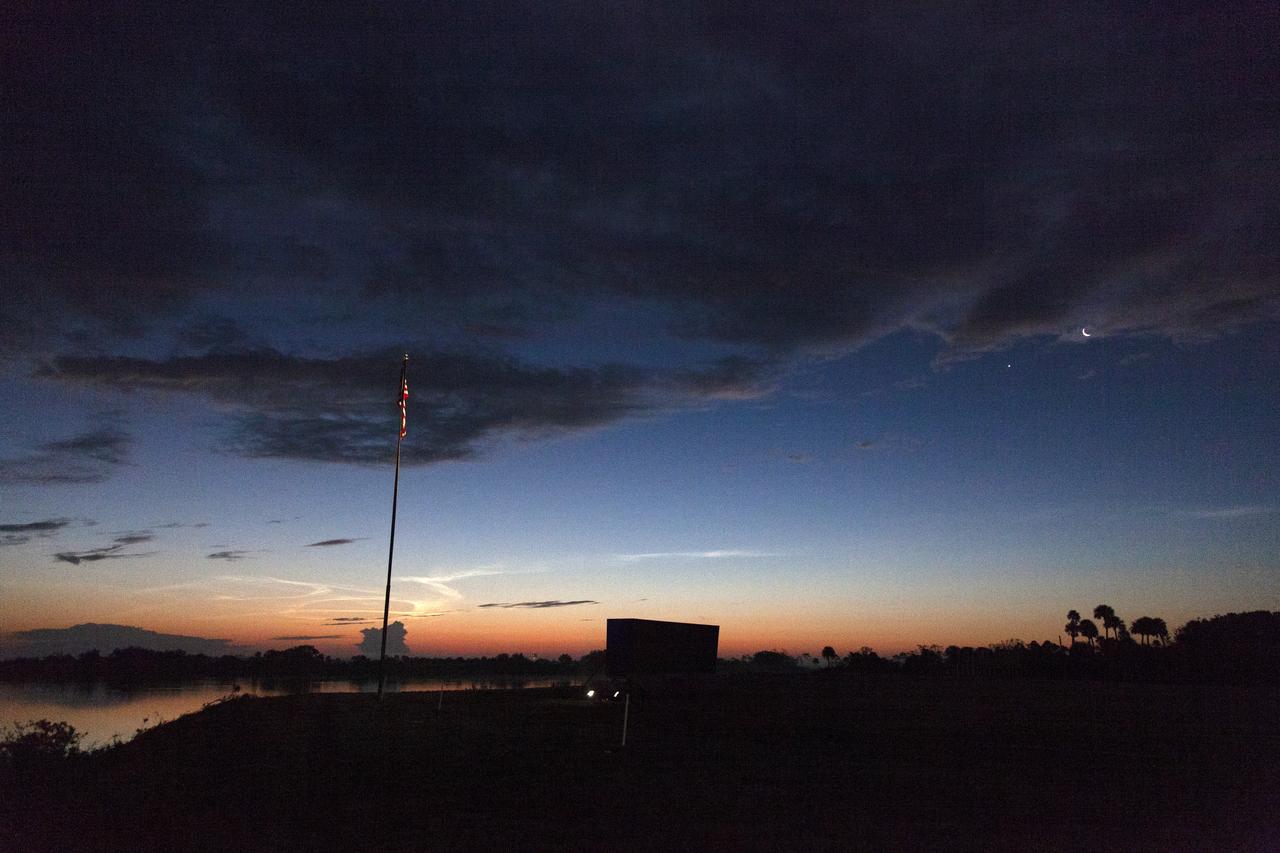
A sunrise serves as the backdrop for the countdown clock and American Flag near the Press Site at NASA’s Kennedy Space Center in Florida following the successful launch of SpaceX’s uncrewed Demo-1 flight test from Launch Complex 39A on March 2, 2019. The company’s Crew Dragon spacecraft lifted off atop a Falcon 9 rocket and traveled to the International Space Station, where it validated end-to-end systems and capabilities in preparation for certification to fly crew.
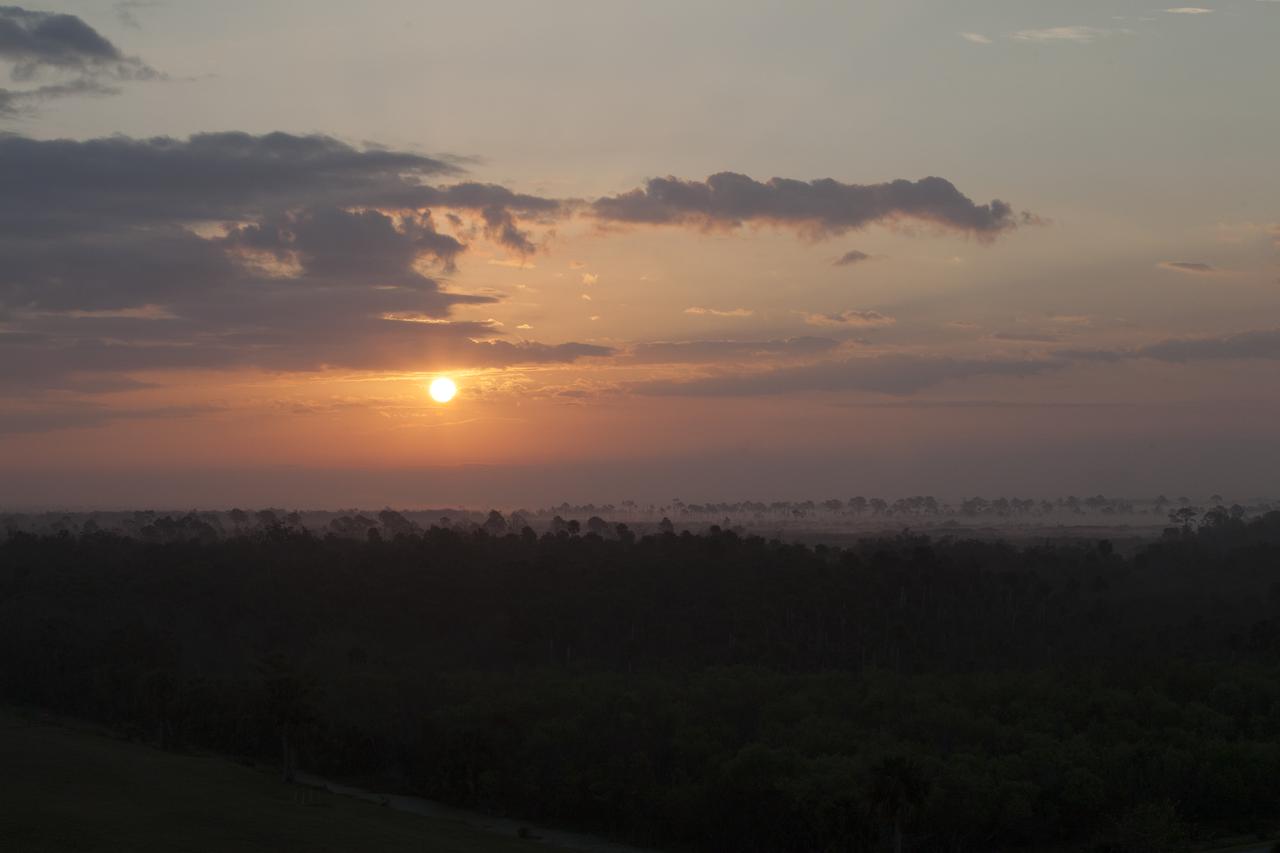
A sunrise view from the observation deck of the Operations and Support Building II at NASA's Kennedy Space Center in Florida, as a SpaceX Falcon 9 rocket awaits launch from Launch Complex 39A. It is the company's 10th commercial resupply services mission to the International Space Station. The Dragon spacecraft will deliver about 5,500 pounds of supplies to the space station.
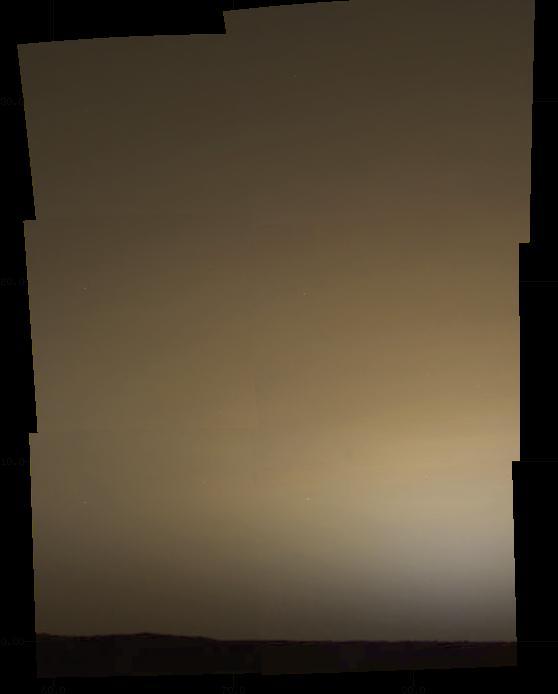
True Color of Mars - Pathfinder Sol 39 Sunrise
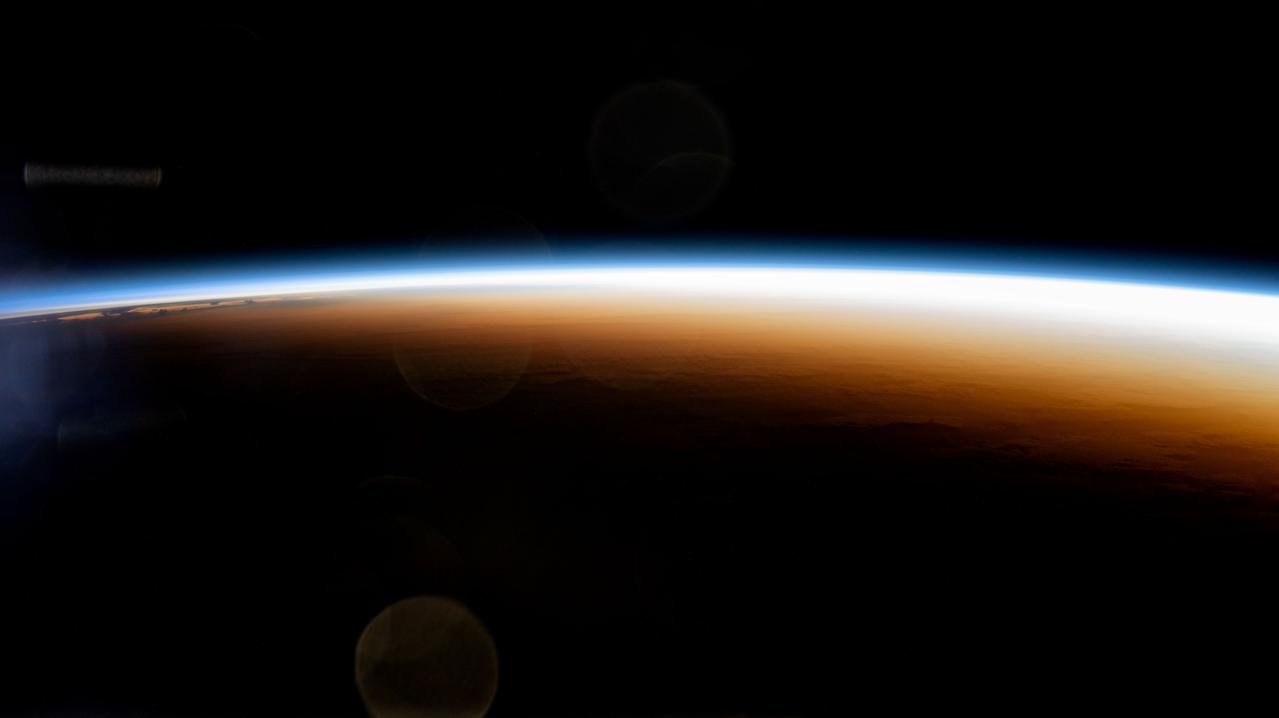
iss071e439624 (Aug. 6, 2024) --- An orbital sunrise colorfully illuminates the Earth's atmosphere and highlights the boundary between night and day, also known as the terminator, in this photograph from the International Space Station as it orbited 267 miles above the Pacific Ocean north of Auckland, New Zealand.
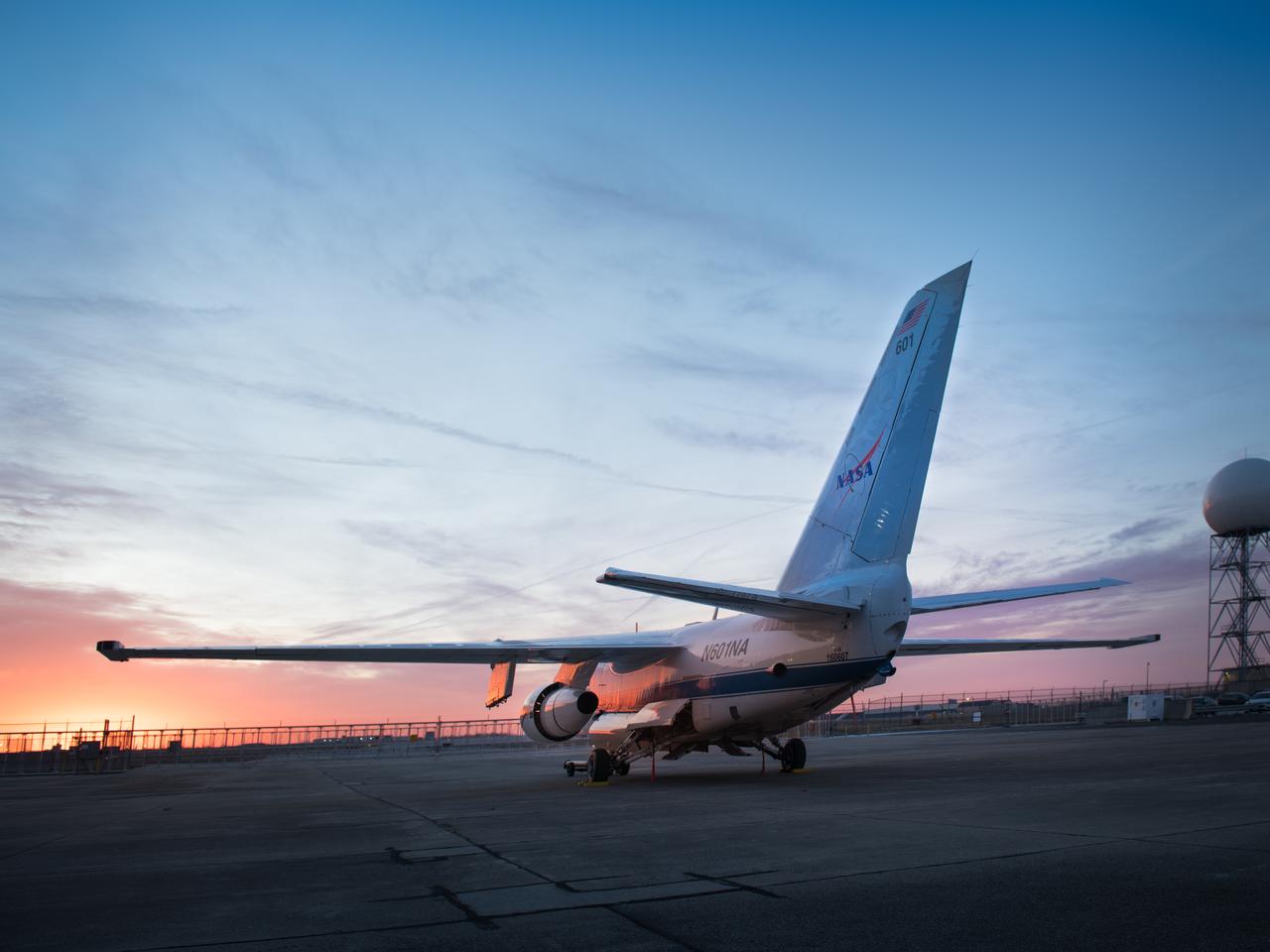
Glenn Research Center, Lockheed S-3 Viking Research Aircraft, N601NA at Sunrise
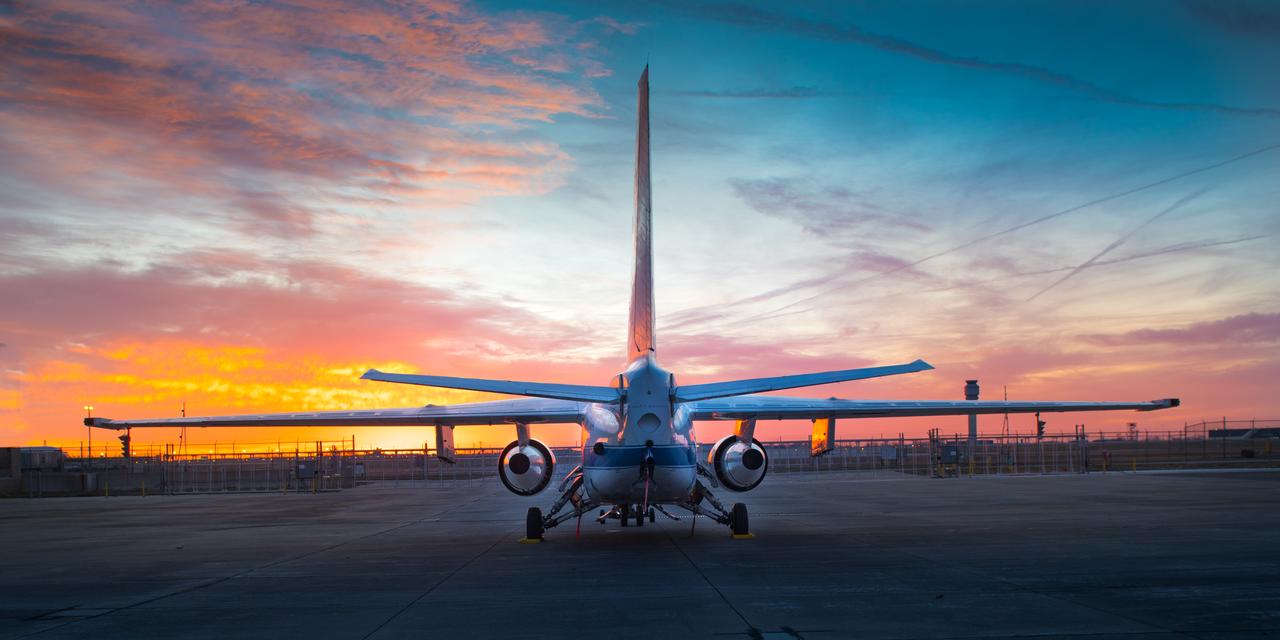
Lockheed S-3B Viking, N601NA at Sunrise on the Glenn Research Center Hangar Apron
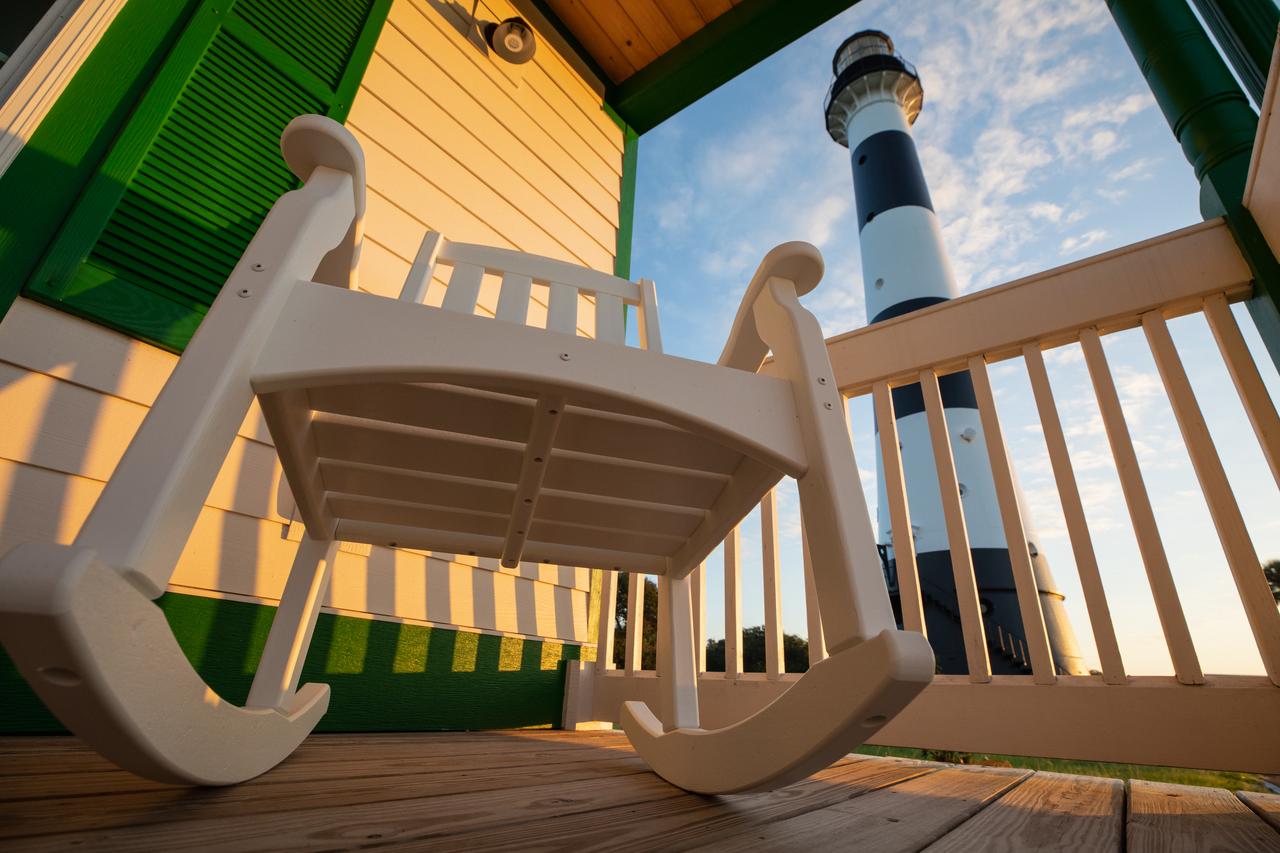
The Cape Canaveral Lighthouse at Cape Canaveral Air Force Station in Florida stands tall during an Oct. 13, 2020, sunrise.
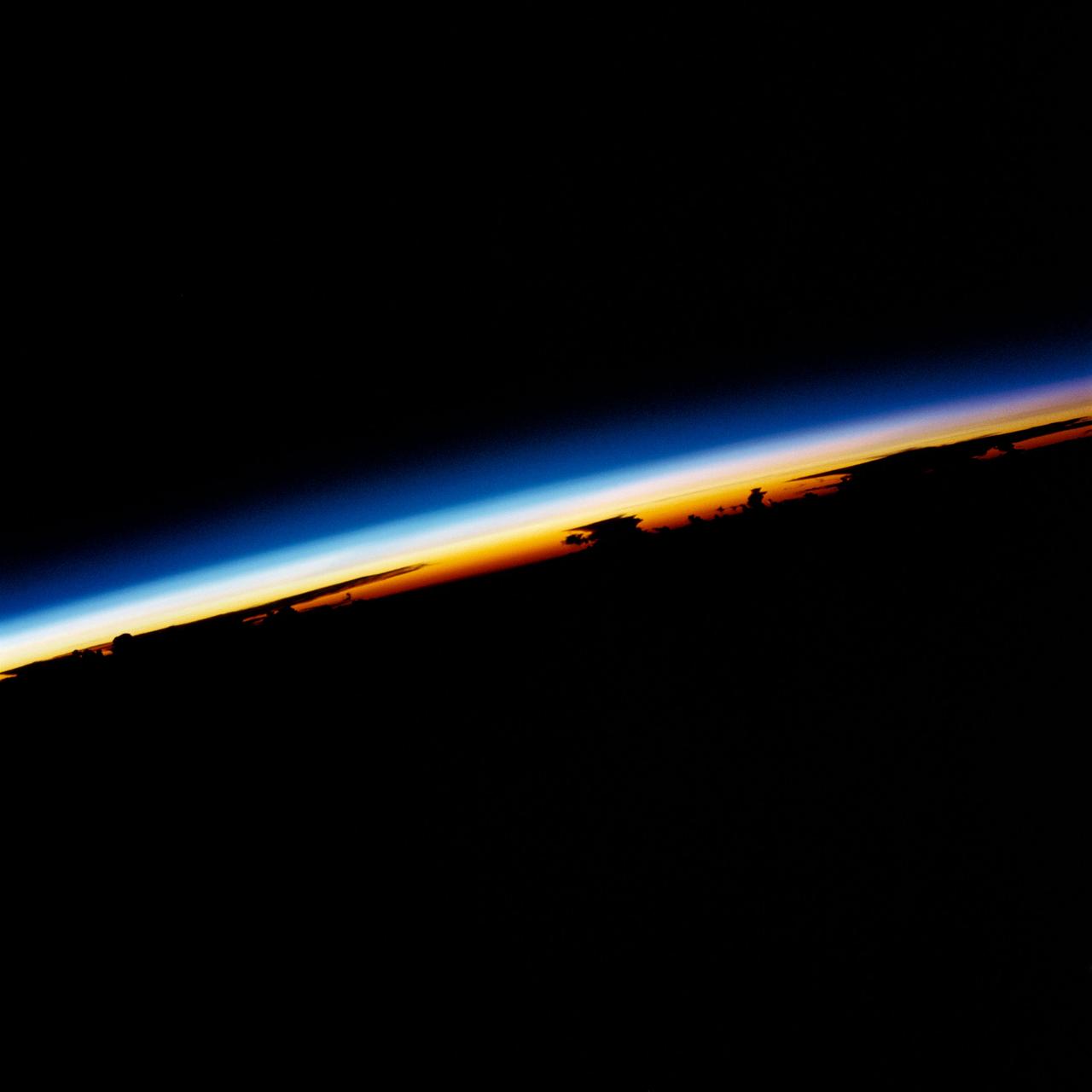
41D-32-14 (30 Aug 1984) --- A rainbow-like sunrise over the Philippine Sea greeted the six crew members aboard the Earth-orbiting Space Shuttle Discovery on its first day in space. A 70mm camera was used to record the scene at 3:08:14 p.m. (CDT), August 30, 1984, during Discovery's sixth orbit of a six-day mission. The spacecraft was above a position on Earth centered at 21.1 degrees north and 12.9 degrees east (about 250 miles north - northeast of the Philippine Islands). The scene was shown as one of the Post-Flight Press Conference (PFPC) visuals by the crew on September 12, 1984.
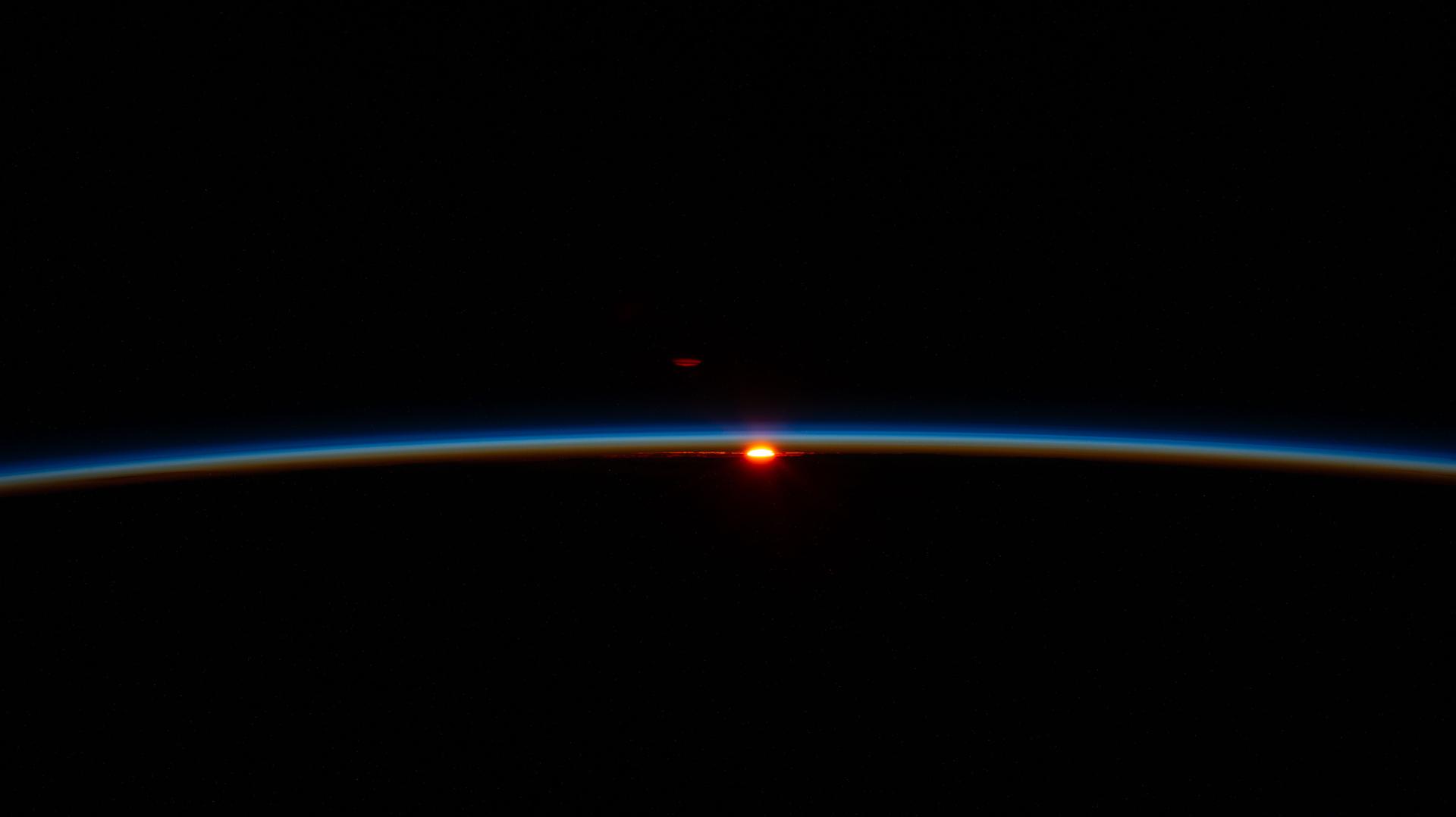
iss074e0089802 (Jan. 16, 2026) --- The first rays of an orbital sunrise illuminate Earth’s atmosphere in this photograph taken from the International Space Station as it orbited 268 miles above French Polynesia in the Pacific Ocean at approximately 2:52 a.m. local time.
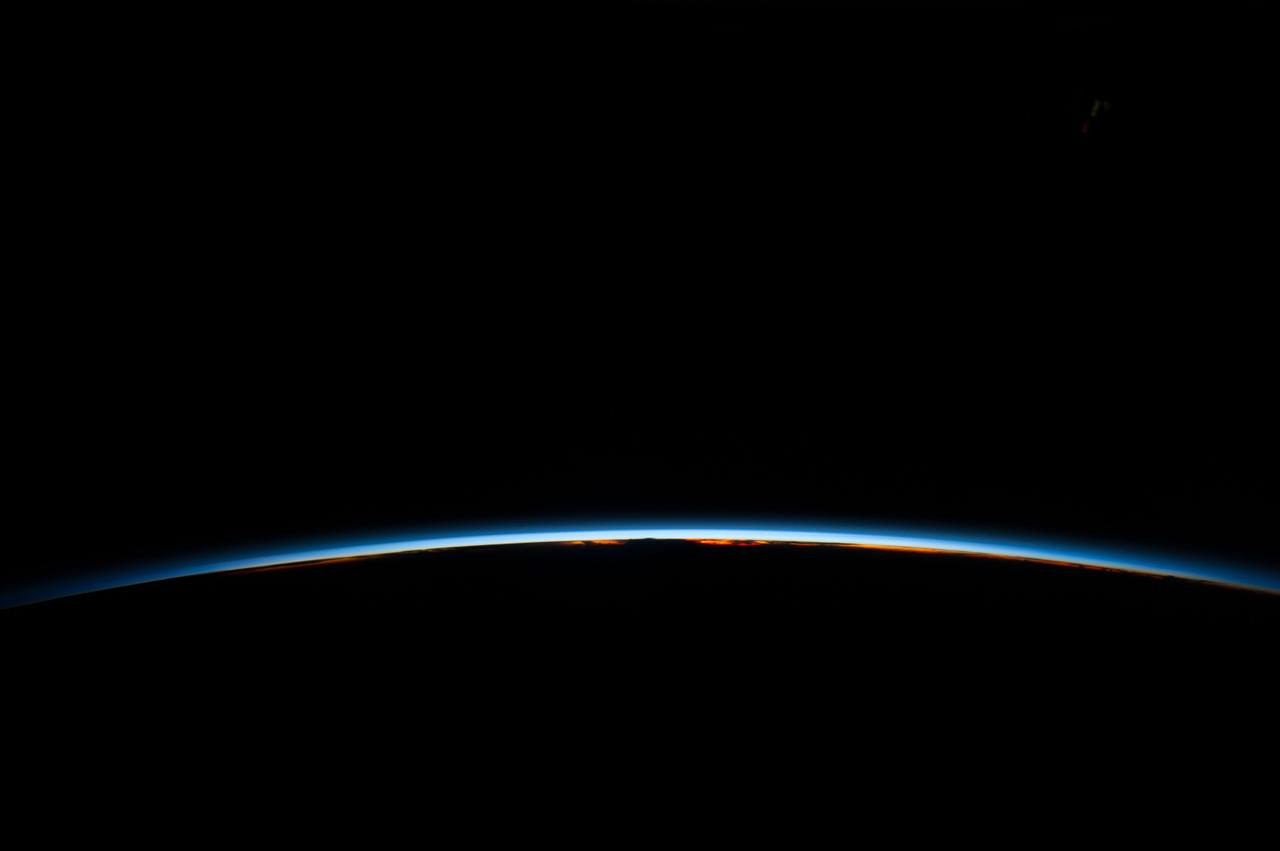
ISS040-E-006303 (31 May 2014) --- An orbital sunrise is featured in this image photographed by an Expedition 40 crew member on the International Space Station. Crew members onboard the space station see, on average, sixteen sunrises and sunsets during a 24-hour orbital period.
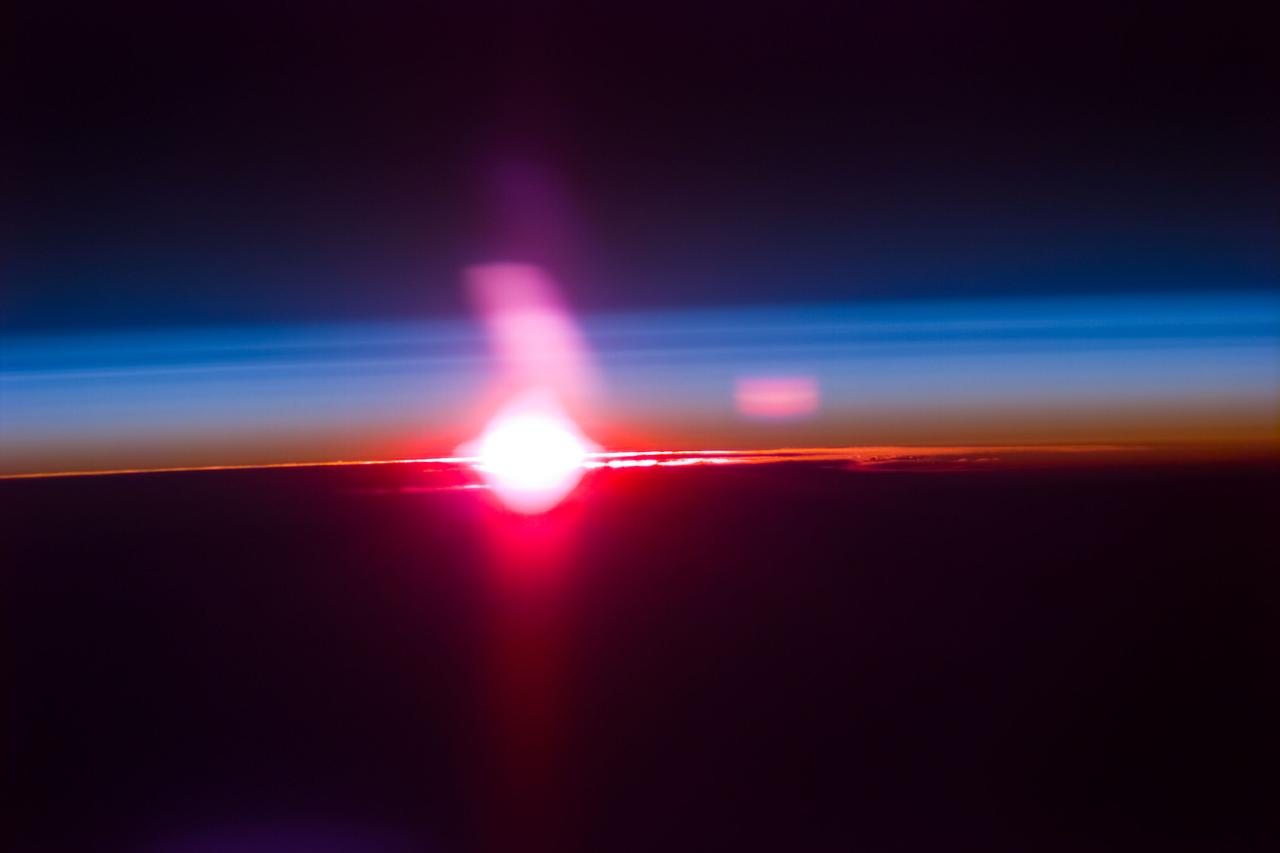
S77-E-5073 (22 May 1996) --- From its position at 175 statute miles above Earth, the Space Shuttle Endeavour has encountered some colorful and attractive scenes heading into sunsets and sunrises. This particular encounter, captured with an Electronic Still Camera (ESC), occurred on flight day four, during which the six-member crew deployed the Passive Aerodynamically Stabilized Magnetically Damped Satellite (PAMS) - Satellite Test Unit (STU).
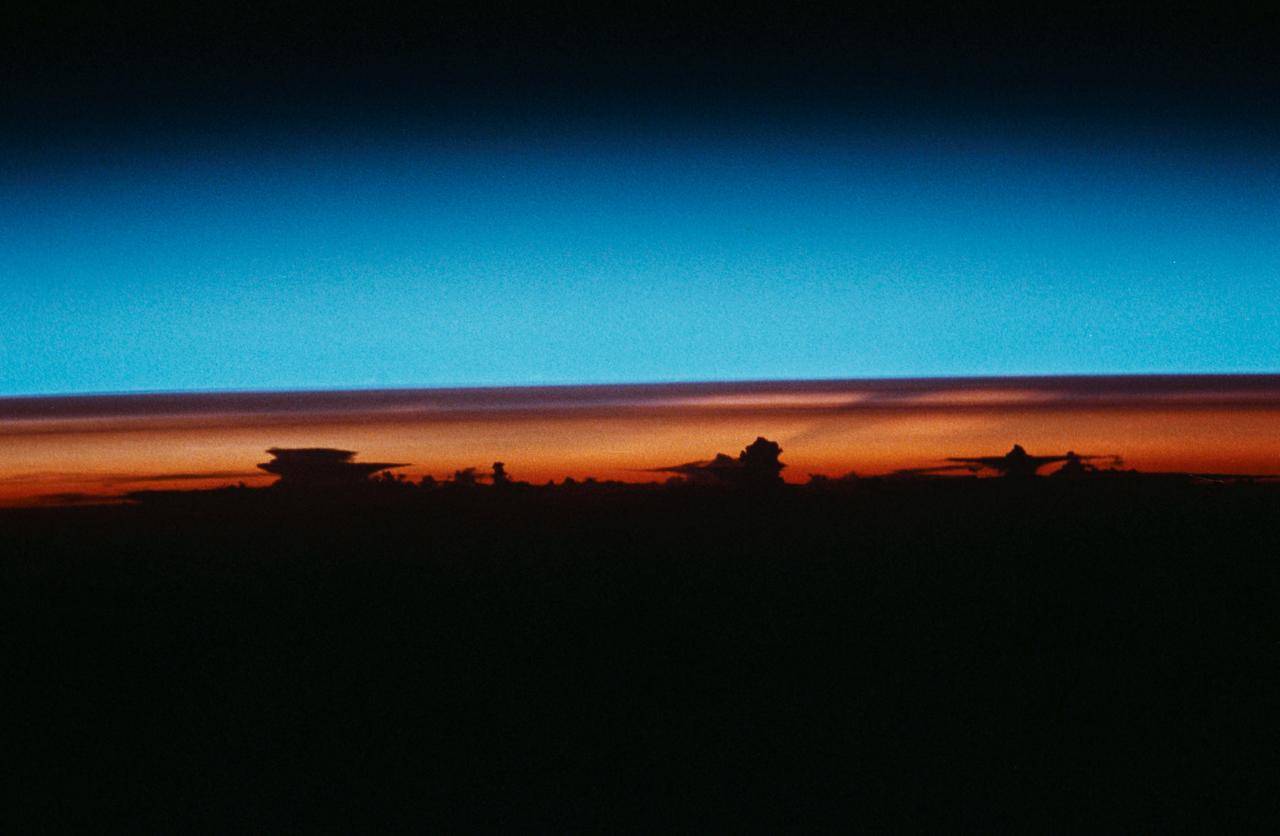
STS-43 Earth observation taken aboard Atlantis, Orbiter Vehicle (OV) 104, captures the Earth's limb at sunrise with unusual cloud patterns silhouetted by the sunlight and rising into the terminator lines.
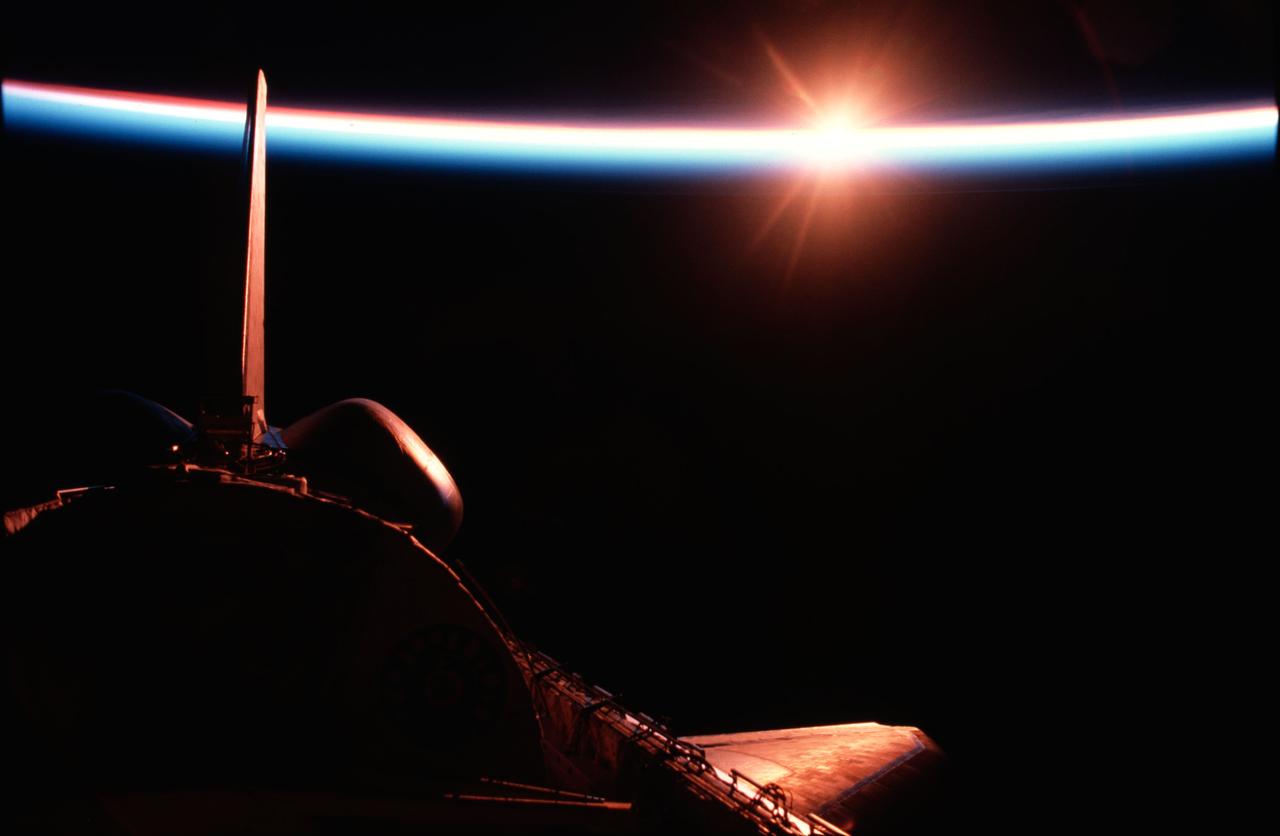
STS009-11-675 (December 1983) --- The Space Shuttle Columbia passes into a brilliant sunrise scene during the STS-9\Spacelab 1 mission. The photograph was taken with a 35mm camera aimed through Columbia's aft flight deck windows. Part of the science module, which hosted more than a week's scientific experimentation, is silhouetted against the scene.
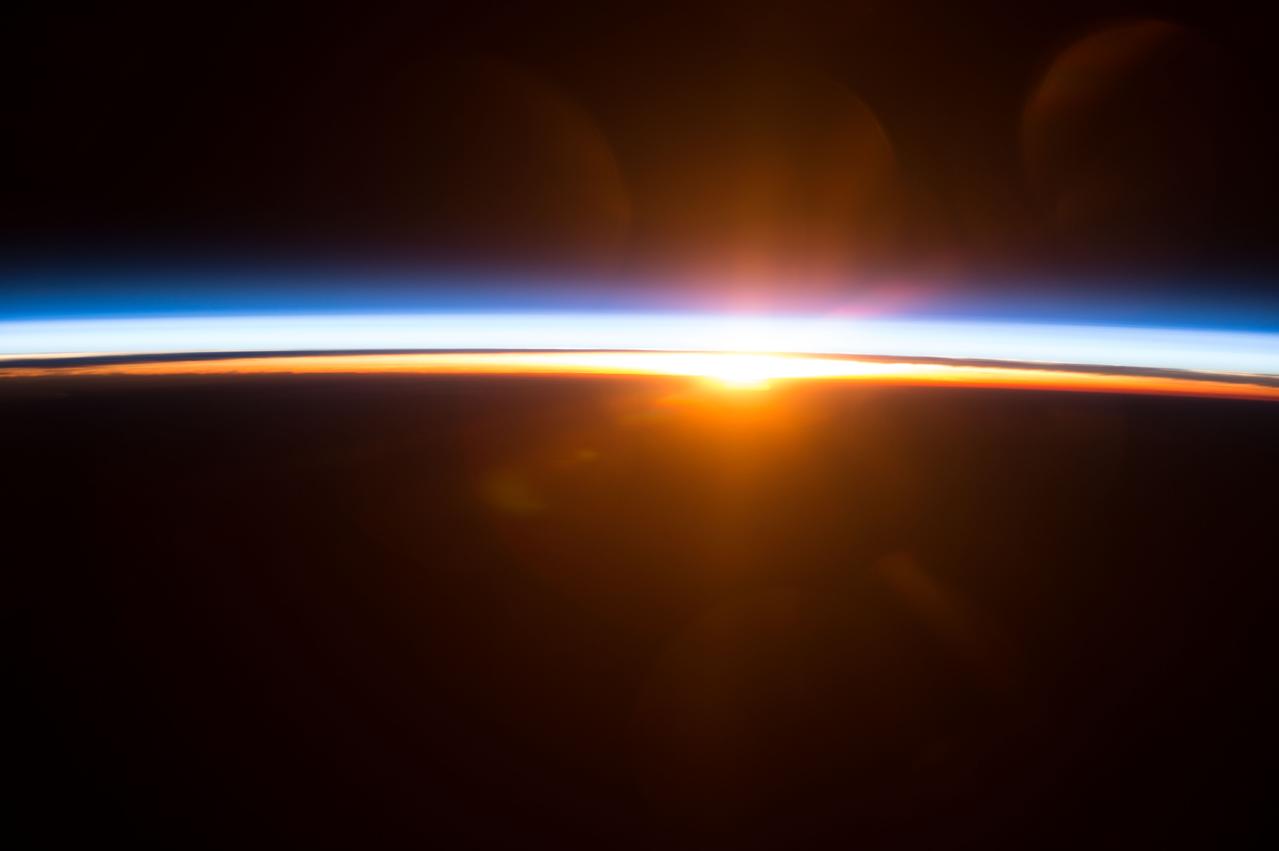
ISS043093710 (04/08/2015) --- Another beautiful Earth sunrise to greet our astronauts aboard the International Space Station on Apr. 8, 2015.
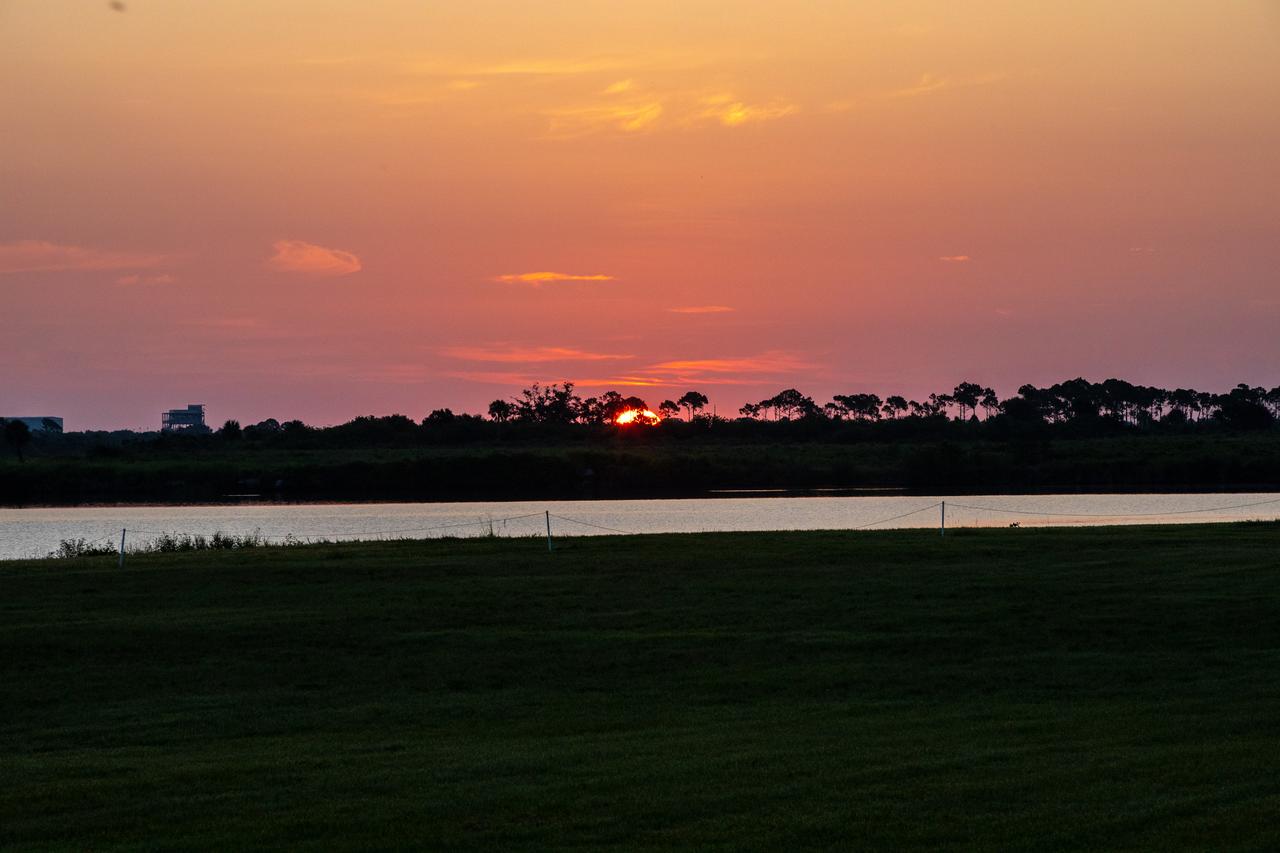
The Sun just begins to rise over NASA’s Kennedy Space Center in Florida on July 15, 2020. A multi-user spaceport, Kennedy has partnerships with both government and commercial entities, providing the facilities and infrastructure necessary for venturing to space.
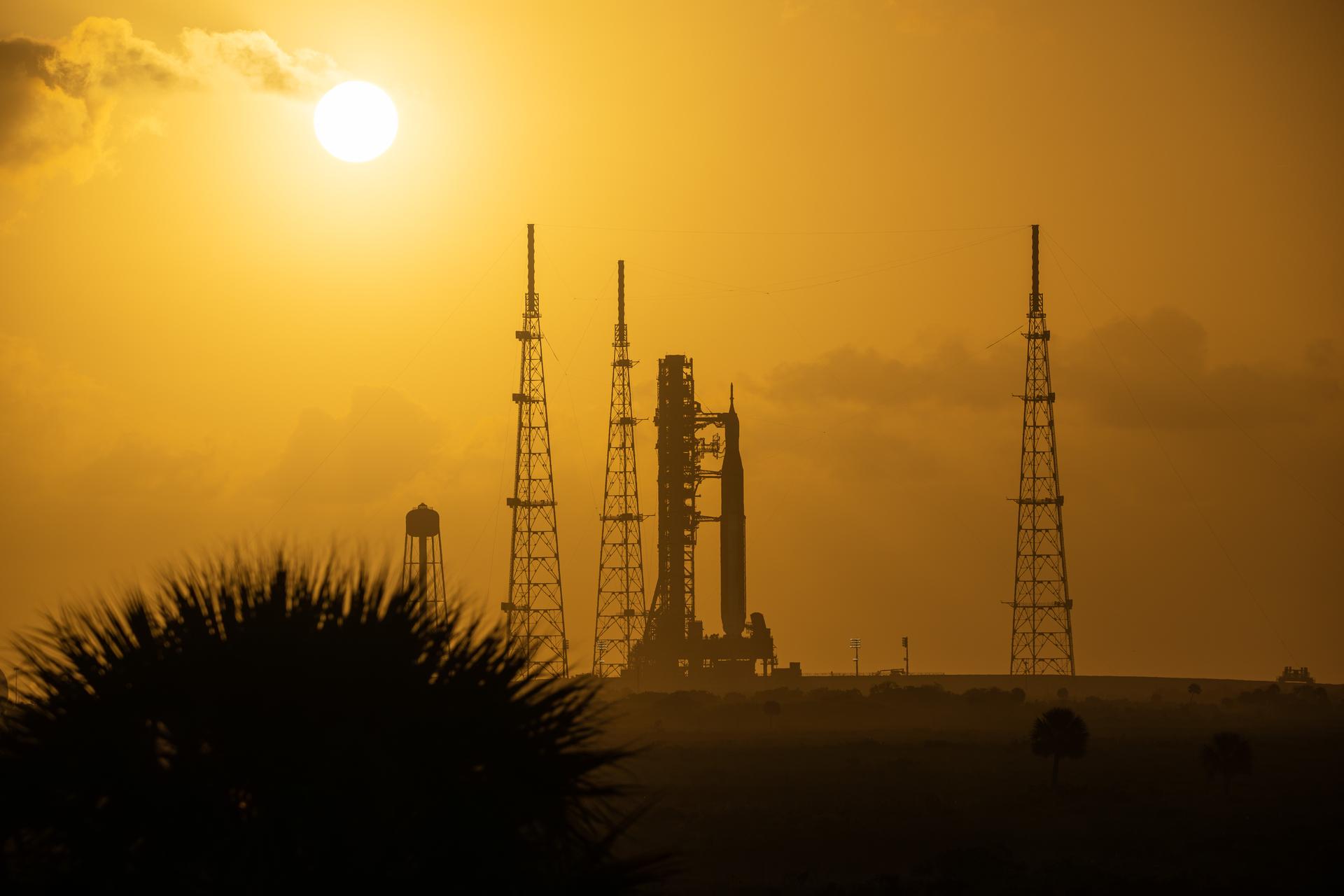
This image shows a sunset of NASA’s SLS (Space Launch System) and Orion spacecraft at NASA’s Kennedy Space Center. NASA's massive Crawler-Transporter, upgraded for the Artemis program, carried the powerful SLS rocket and Orion spacecraft on the Mobile Launcher from the Vehicle Assembly Building to Launch Pad 39B at Kennedy Space Center in preparation for the Artemis II mission.
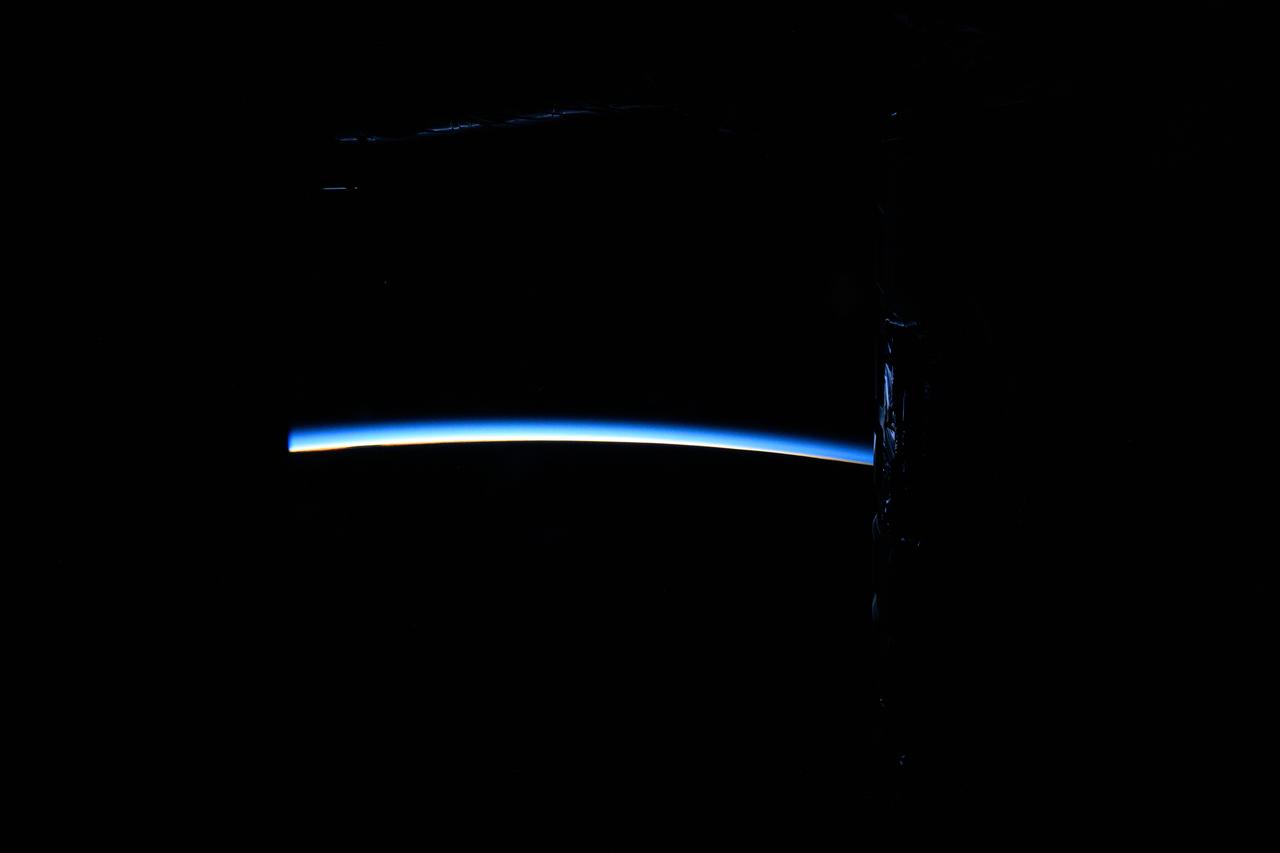
iss071e000922 (April 6, 2024) -- The first moments of an orbital sunrise crown Earth's horizon as the International Space Station soared 268 miles above the Pacific Ocean. Astronauts aboard the orbiting laboratory experience 16 sunrises and sunsets per day.
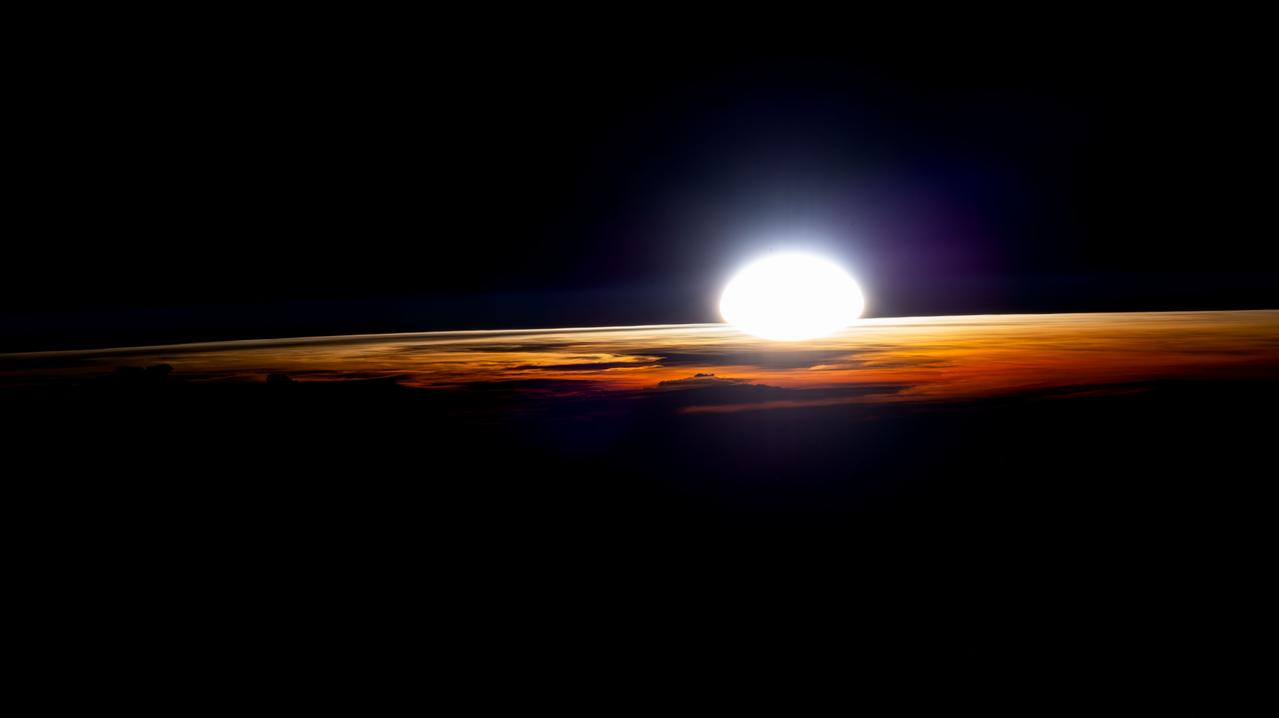
An orbital sunrise illuminates the cloud tops in this photograph from the International Space Station as it soared 262 miles above Namibia near the Atlantic coast.
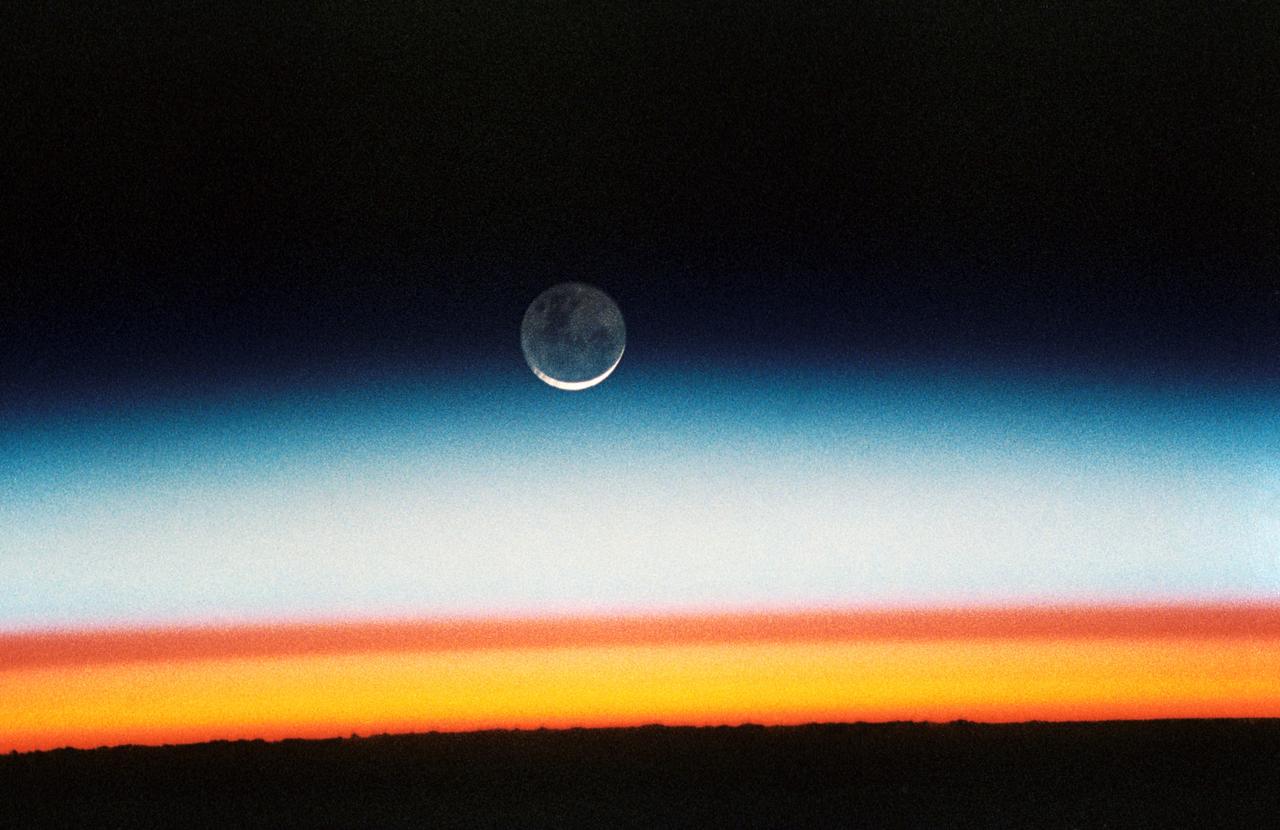
STS052-23-022 (22 Oct.-1 Nov. 1992) --- As the Space Shuttle Columbia orbited Earth in an easterly direction over the Indian Ocean, moonrise was followed quickly by sunrise. The photograph was taken from an altitude of 285 kilometers (154 nautical miles), over Lake Tanganyika in central Africa. The Sun was still 28 degrees below the horizon and not yet illuminating the dark band of low-level clouds on the limb 1,850 kilometers (l,000 nautical miles) away. Ranging from 13--18 kilometers above these low-level clouds is a brown layer at the tropical tropopause. A tropopause is a major atmospheric temperature inversion which isolates the troposphere from the stratosphere and effectively concentrates particulate from both above and below this level.
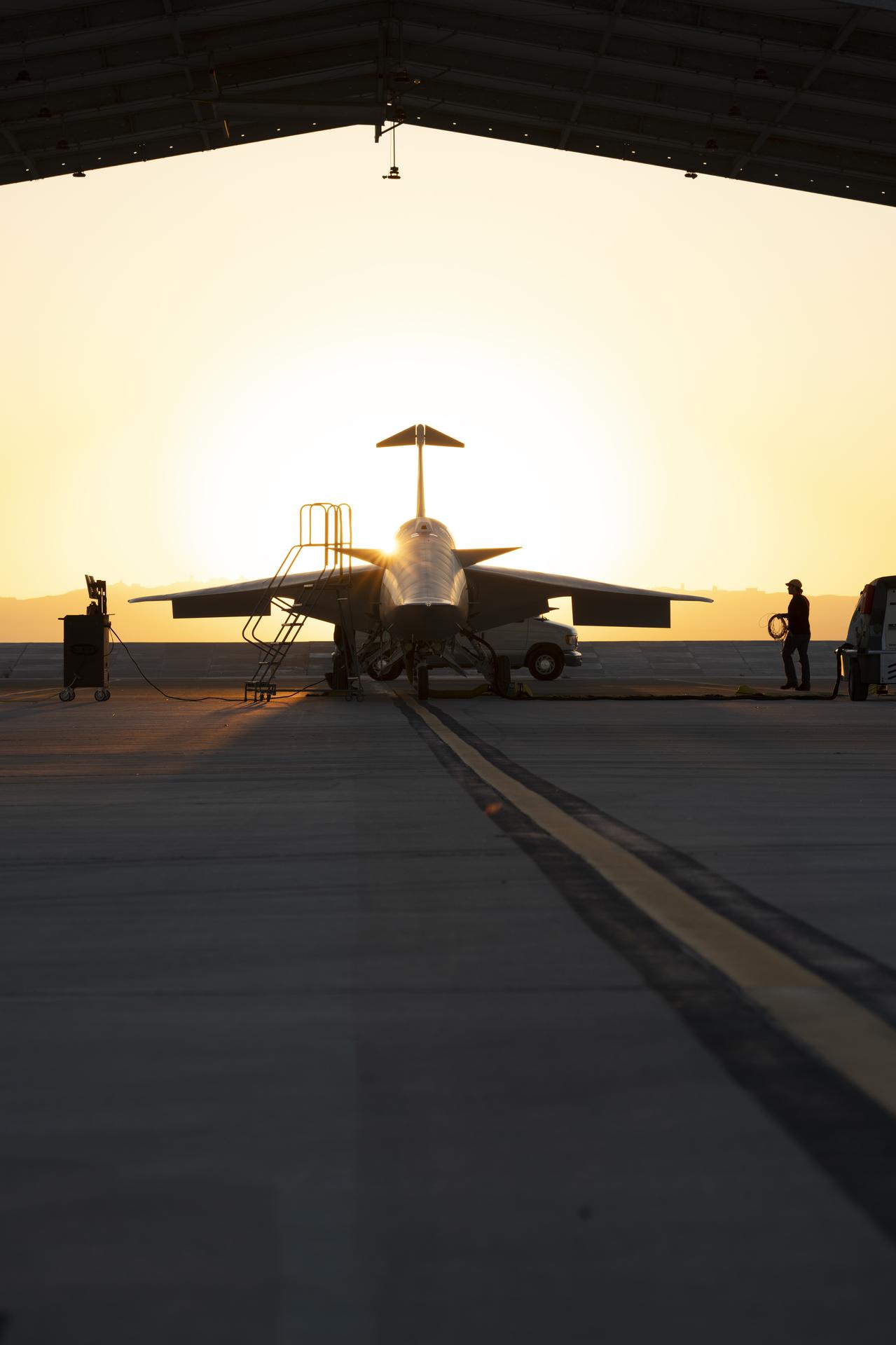
NASA’s X-59 quiet supersonic research aircraft sits in a run stall during sunrise on Tuesday, March 20, 2026, near NASA’s Armstrong Flight Research Center in Edwards, California, ahead of its second flight.
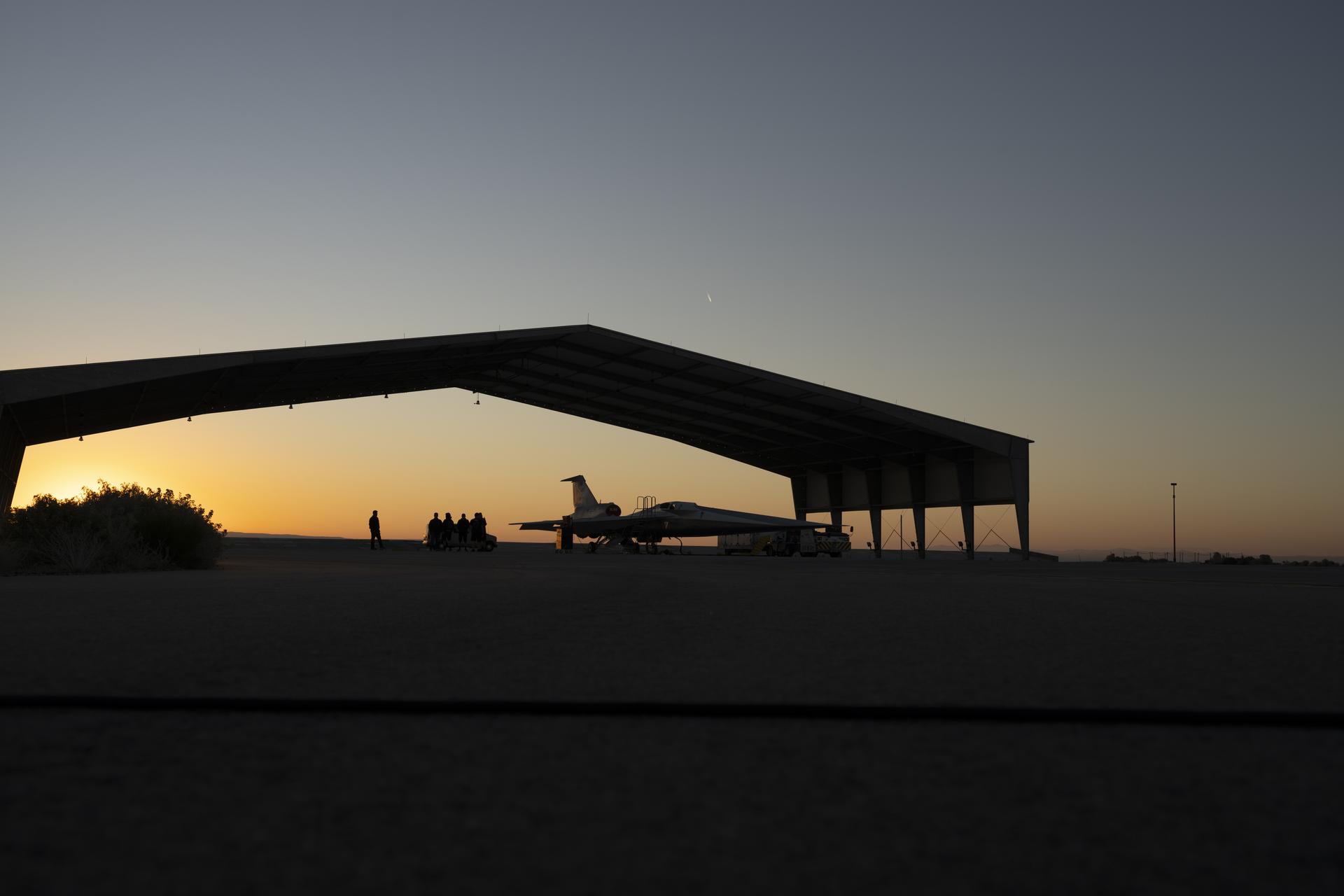
NASA’s X-59 quiet supersonic research aircraft sits in a run stall during sunrise on Tuesday, March 20, 2026, near NASA’s Armstrong Flight Research Center in Edwards, California, ahead of its second flight.
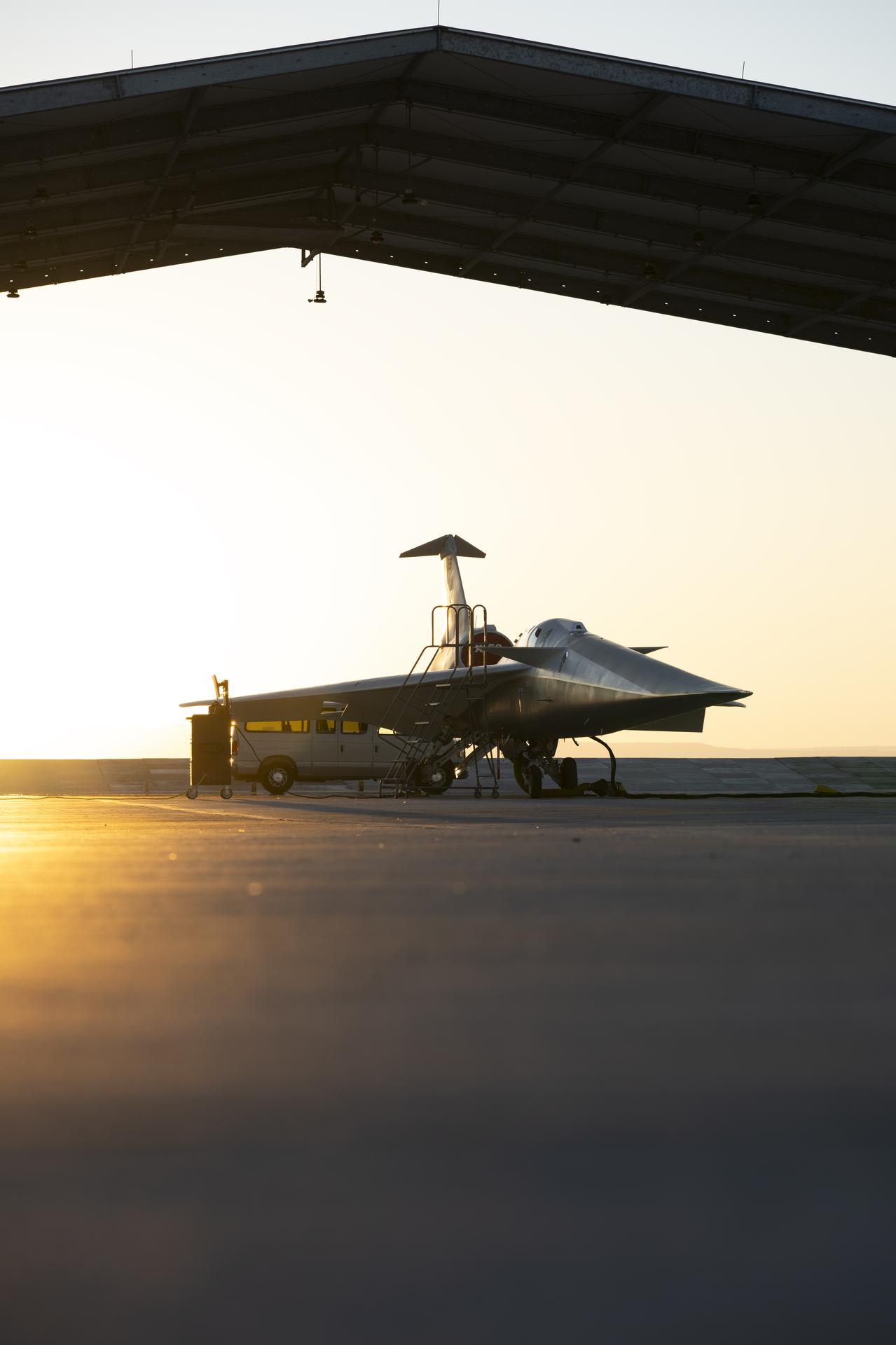
NASA’s X-59 quiet supersonic research aircraft sits in a run stall during sunrise on Tuesday, March 20, 2026, near NASA’s Armstrong Flight Research Center in Edwards, California, ahead of its second flight.
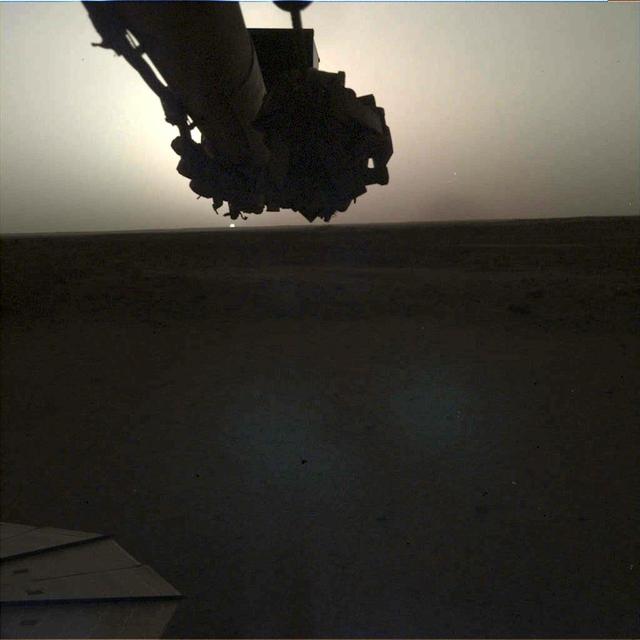
NASA's InSight lander used its Instrument Deployment Camera (IDC) on the spacecraft's robotic arm to image this sunrise on Mars on April 24, 2019, the 145th Martian day (or sol) of the mission. This was taken around 5:30 a.m. Mars local time. https://photojournal.jpl.nasa.gov/catalog/PIA23201
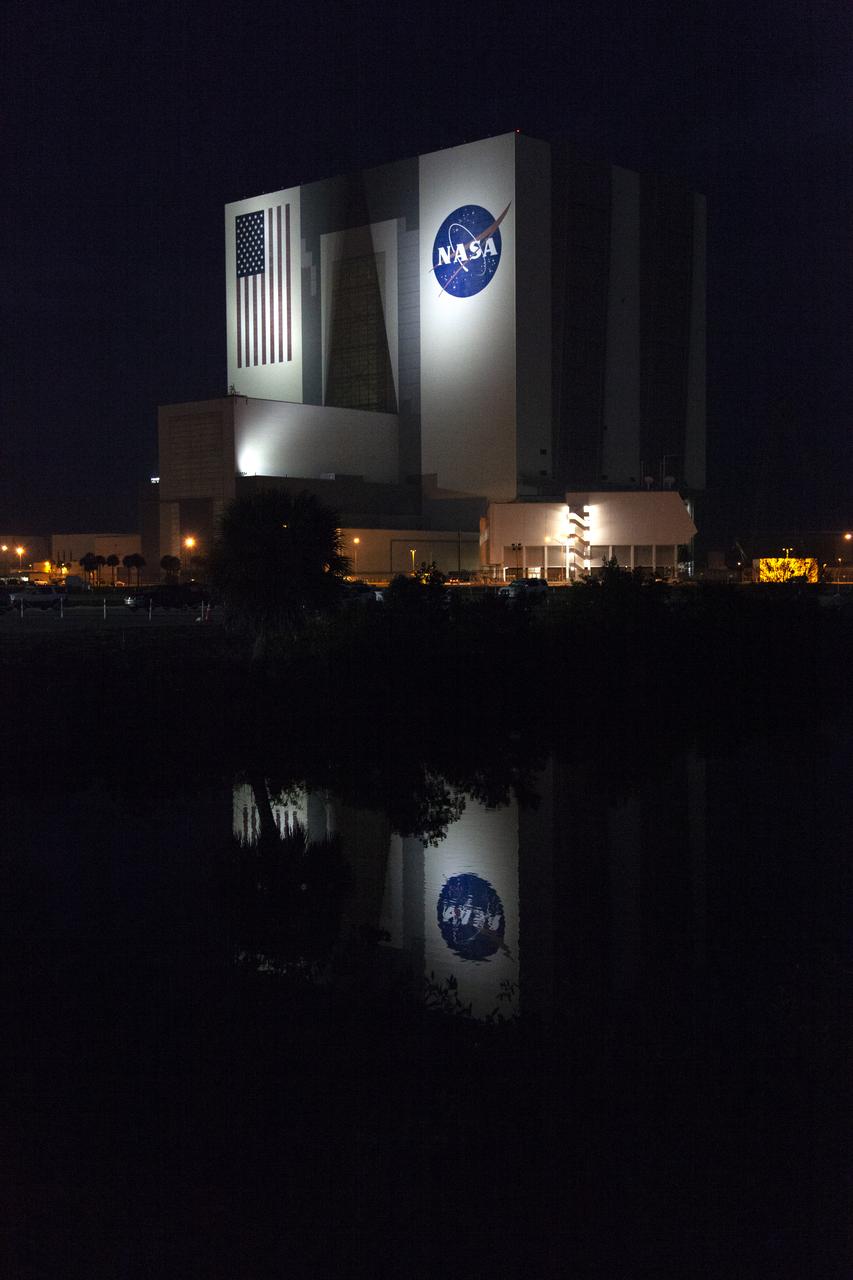
The iconic Vehicle Assembly Building (VAB) and Launch Control Center cast reflections on the surface of a nearby waterway at NASA’s Kennedy Space Center in Florida. The lights illuminating the VAB provided a splendid nighttime view.
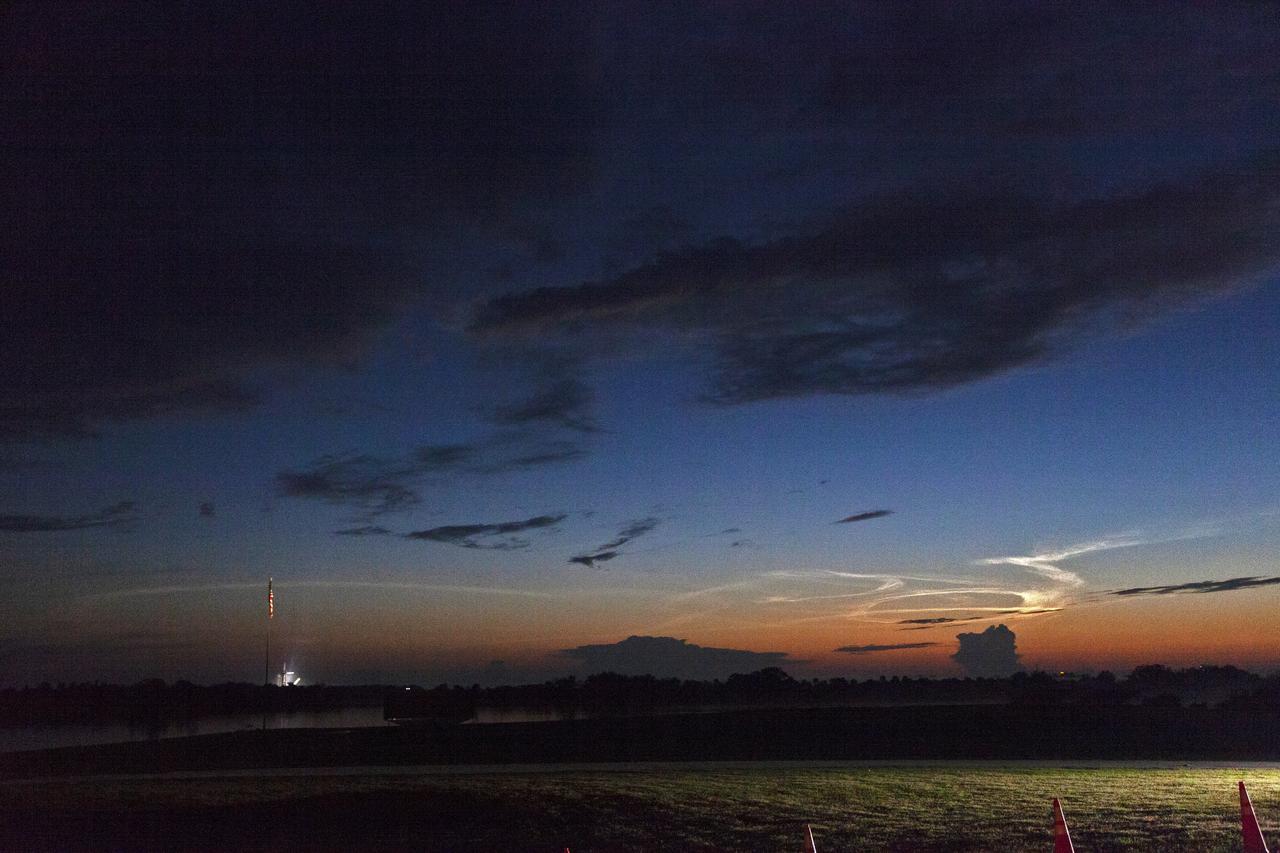
The sun begins to rise at NASA’s Kennedy Space Center in Florida following a successful launch of SpaceX’s uncrewed Demo-1 flight test from Launch Complex 39A on March 2, 2019. The company’s Crew Dragon spacecraft lifted off atop a Falcon 9 rocket and traveled to the International Space Station, where it validated end-to-end systems and capabilities in preparation for certification to fly crew.
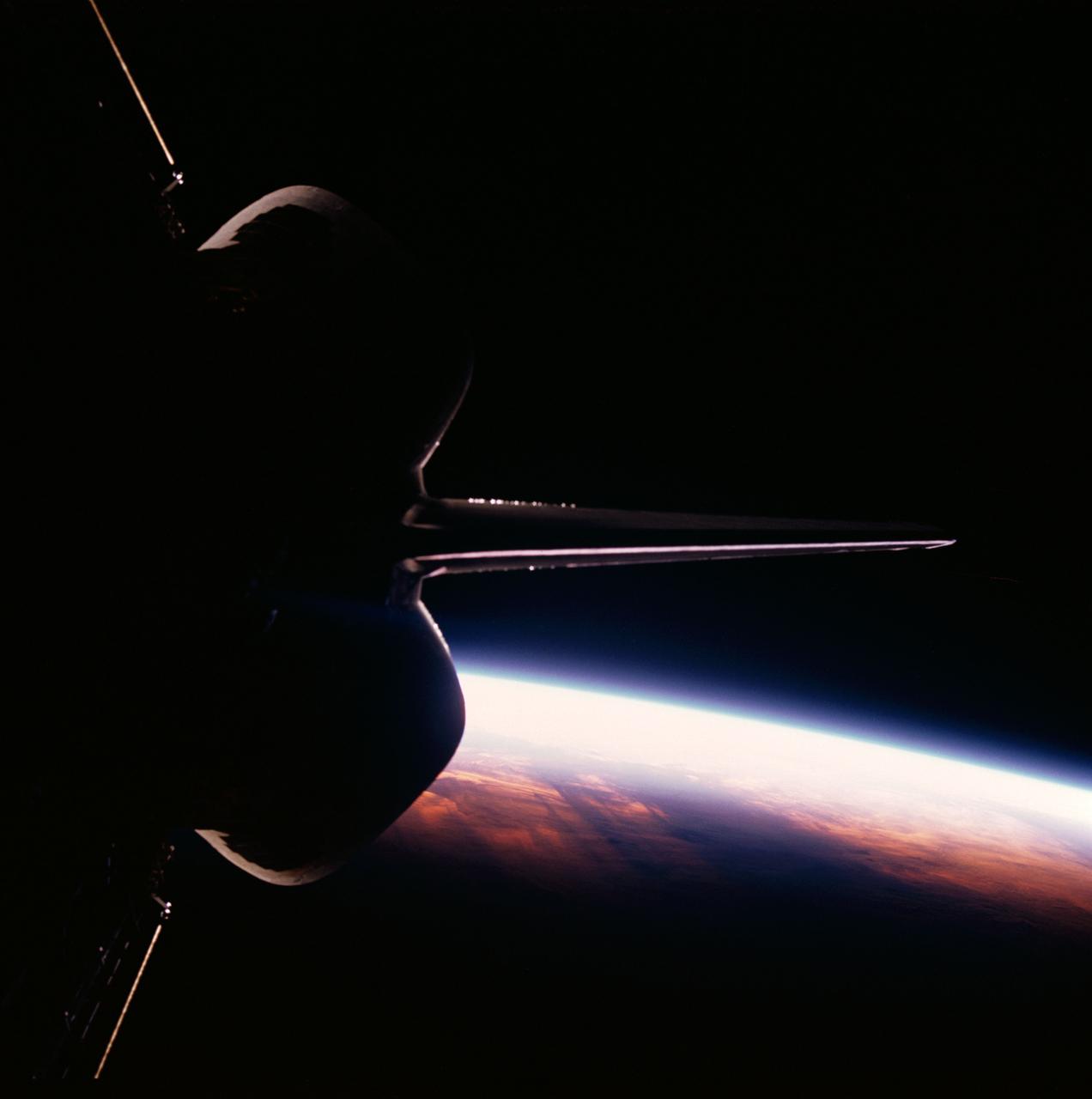
Discovery's, Orbiter Vehicle (OV) 103's, vertical stabilizer and orbital maneuvering system (OMS) pods are backdropped against the contrasted blackness of space illuminated by a colorful Earth / sunrise panorama. View was taken through the aft flight deck viewing windows during STS-26.
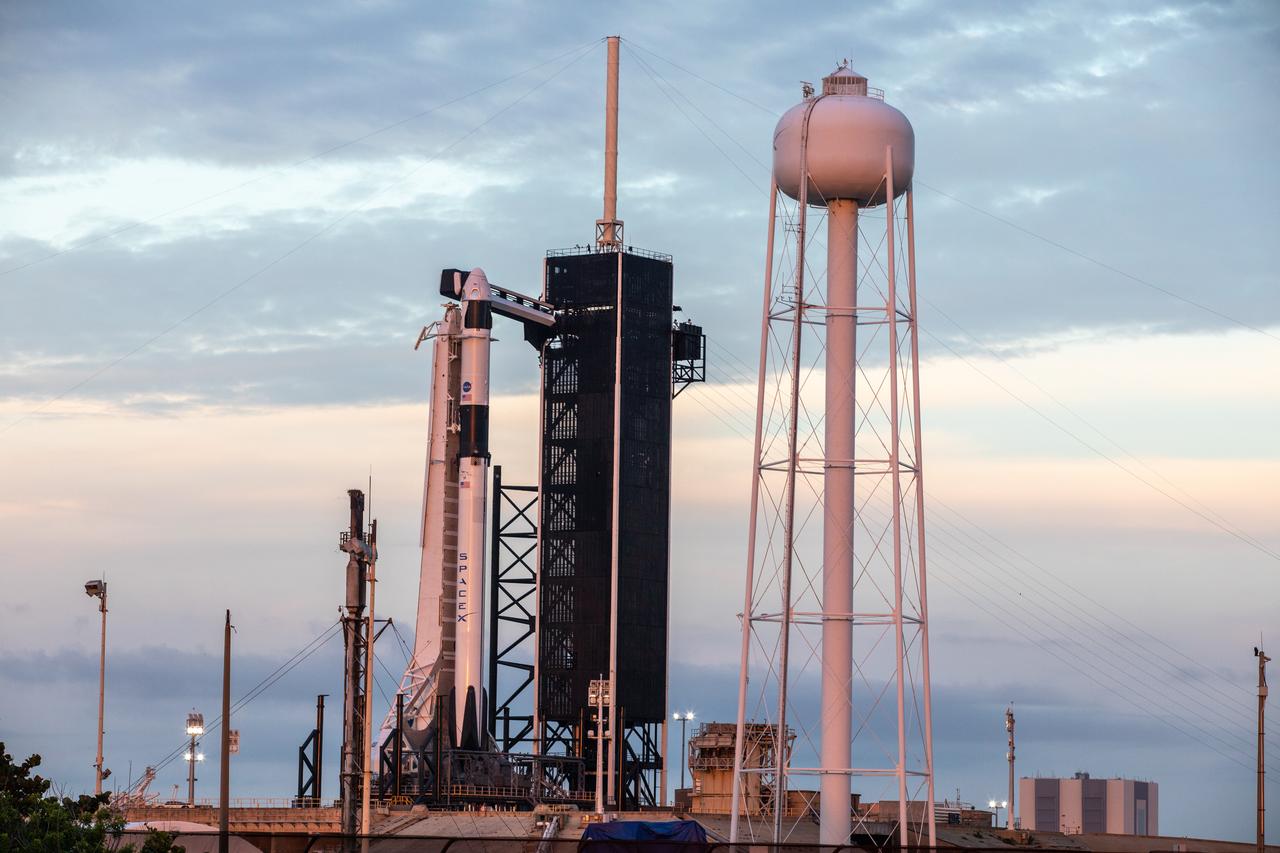
SpaceX Demo-2 at Launch Complex 39A during sunrise.
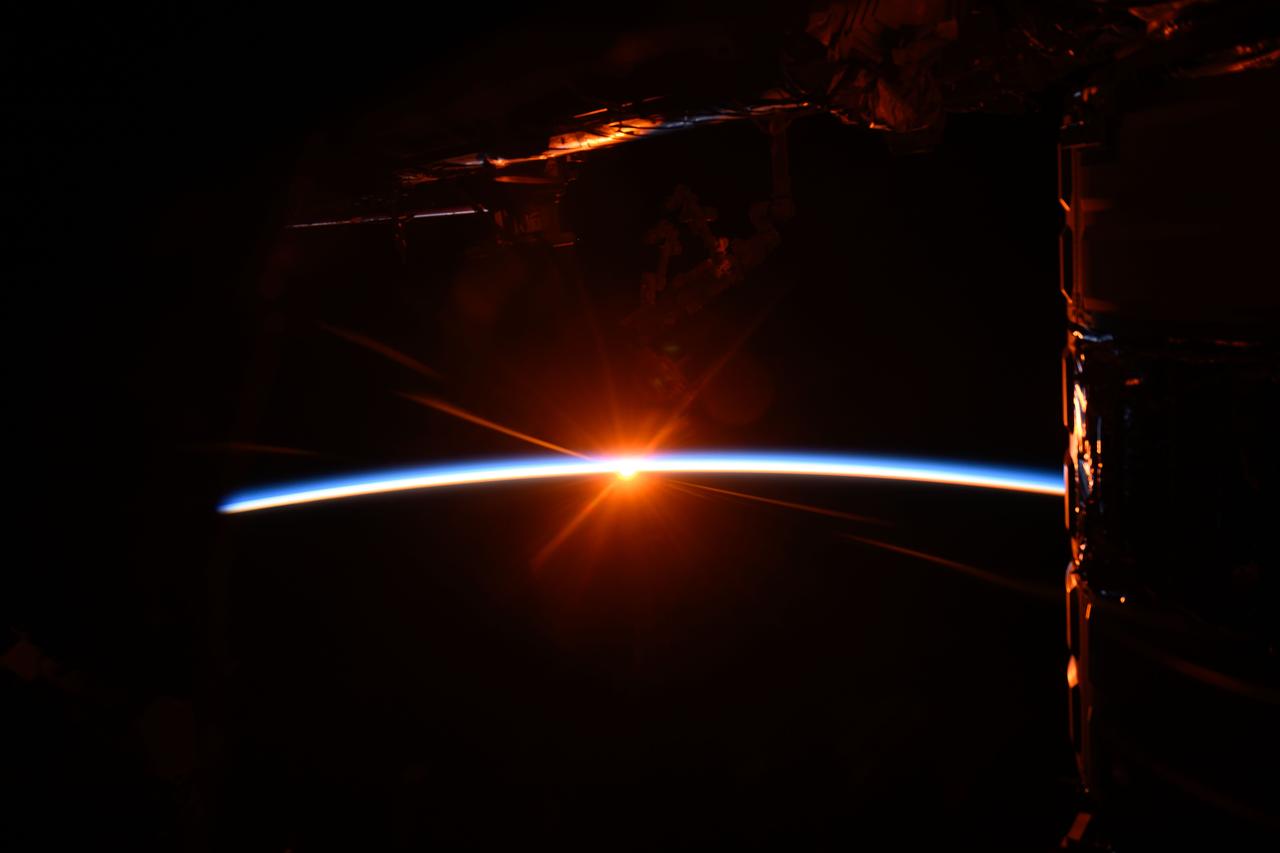
iss071e001425 (April 7, 2024) -- Orbital sunrise begins illuminating Earth's atmosphere as the Expedition 71 crew aboard the International Space Station orbited 266 miles over the Indian Ocean.
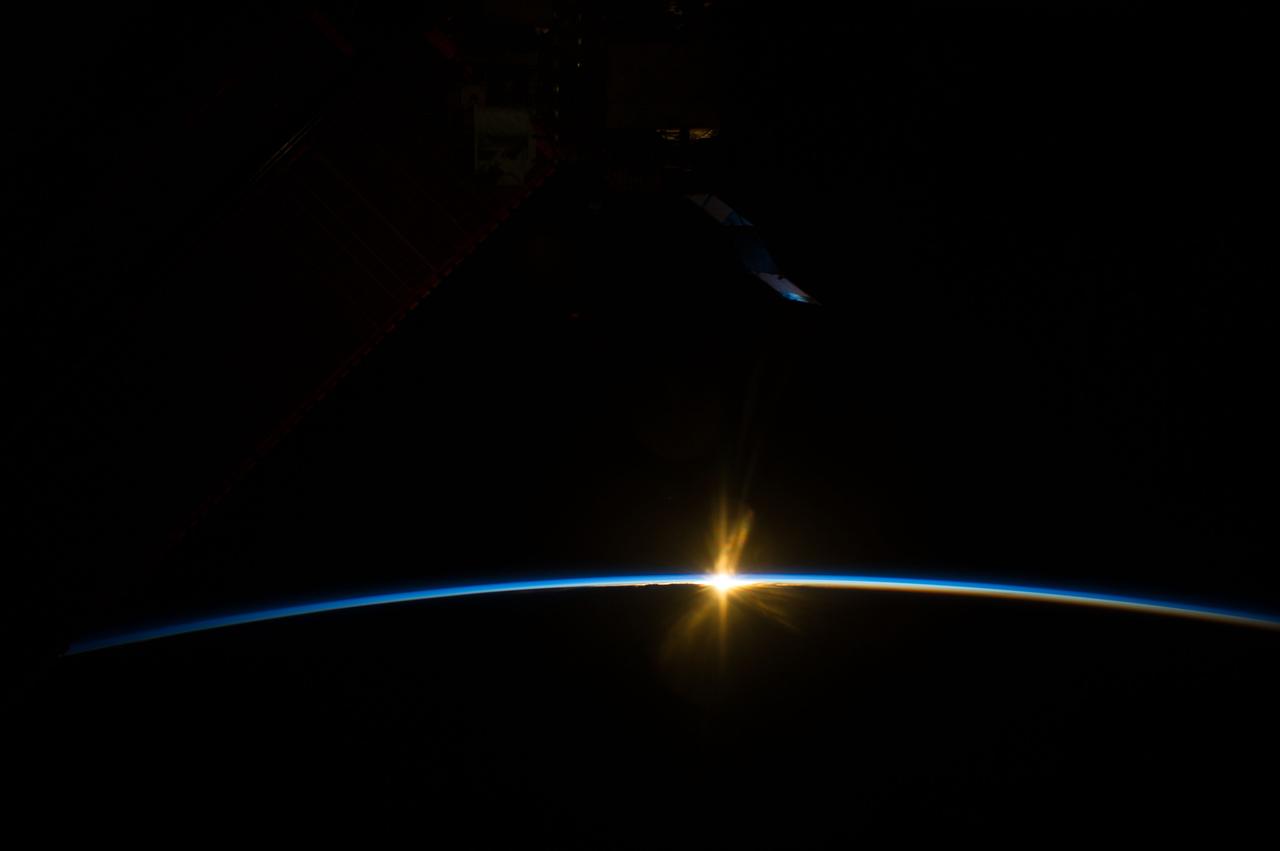
ISS040-E-008351 (8 June 2014) --- During a crew member's typical stay time aboard the Earth-orbiting International Space Station, he or she will see thousands of sunsets and sunrises aboard the orbital outpost, which moves at 17,500 miles per hour. Not all of them get photographed and not all of the photographed ones are as scenic as this image, photographed by one of the Expedition 40 crew members on June 8, 2014. The image shows the sun in the center of the blue line of atmosphere on the home planet.
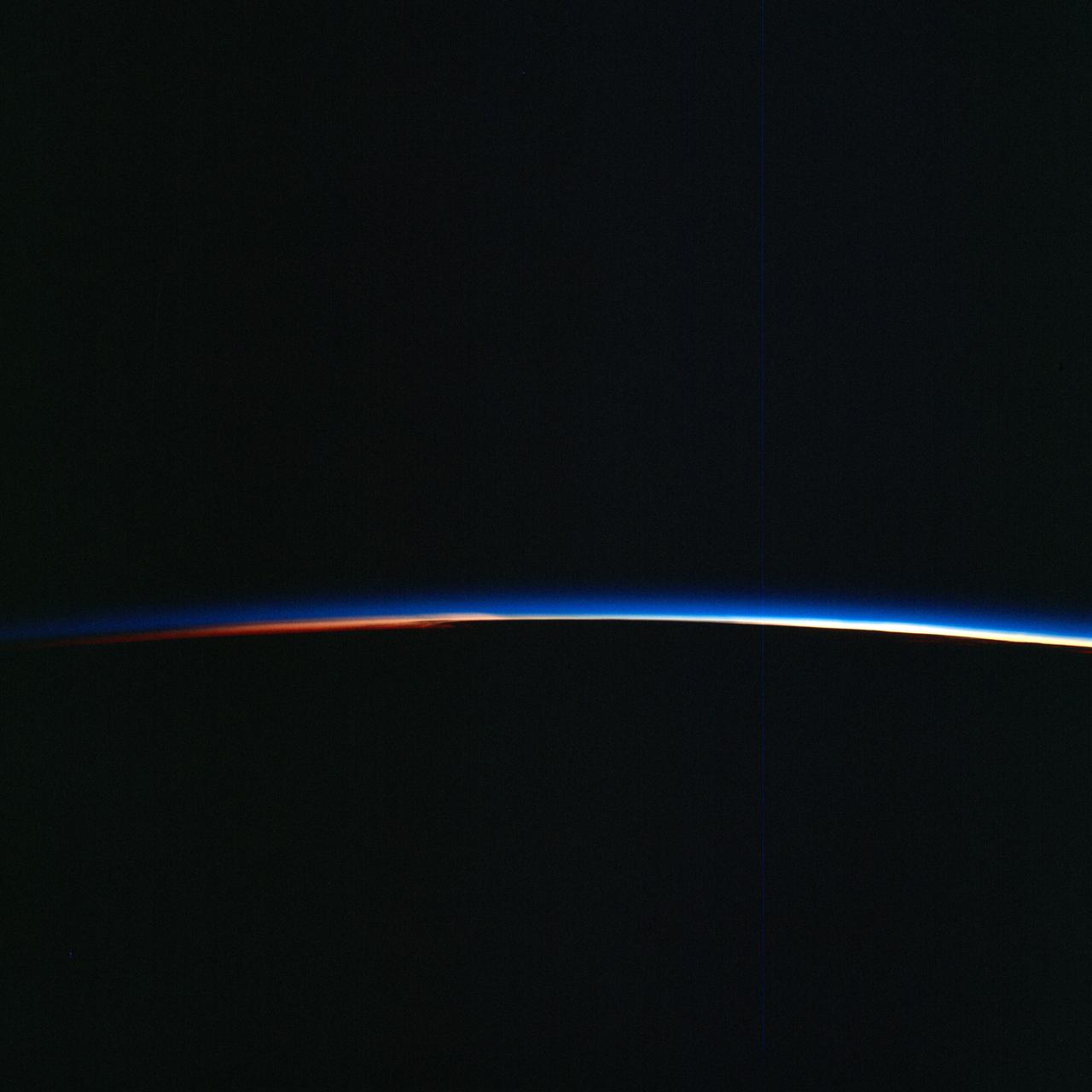
S66-38275 (3-6 June 1966) --- Earth's limb at sunrise as seen from the orbiting Gemini-9 spacecraft during its three-day mission in space. Taken with a modified 70mm Hasselblad camera, using Eastman Kodak, Ektachrome MS (S.O. 217) color film. Photo credit: NASA
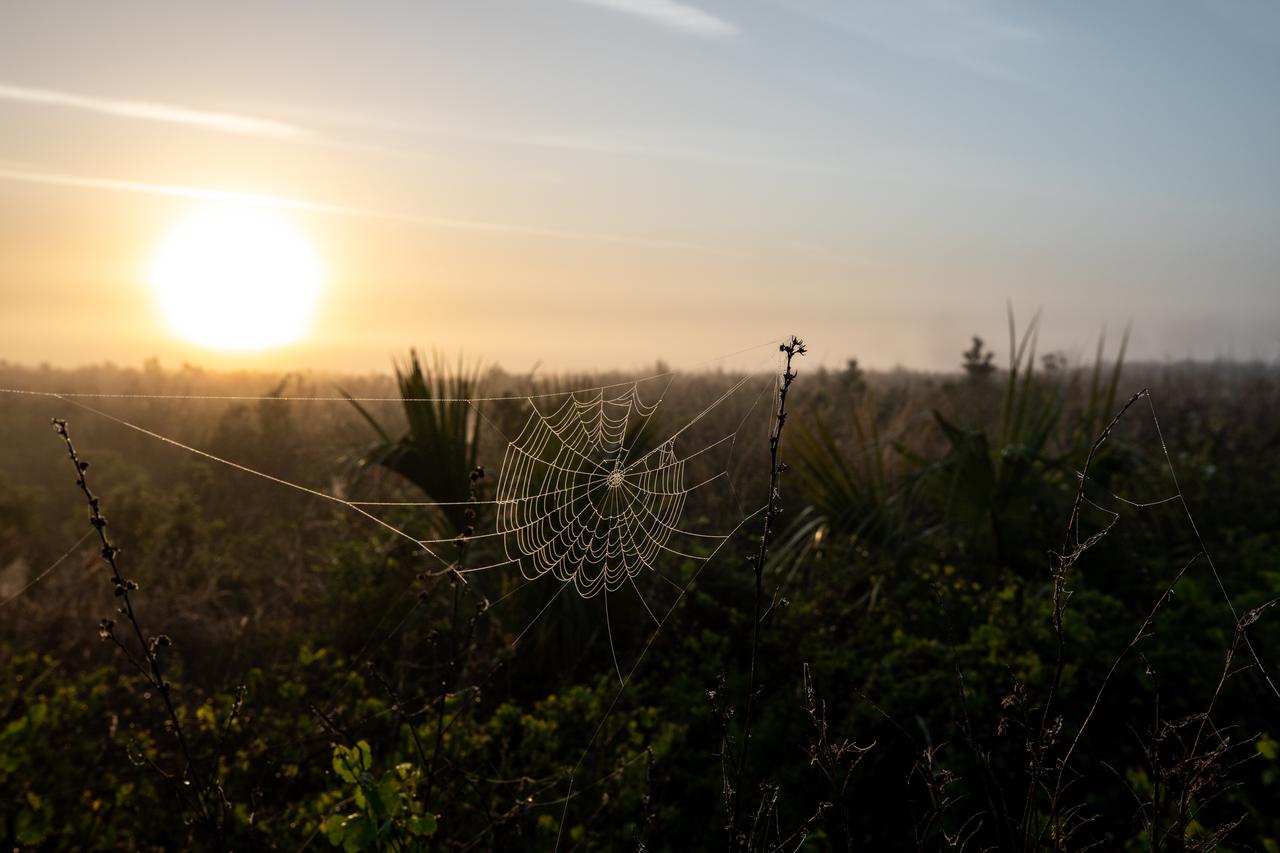
A spider web hangs in the forefront of a sunrise at Kennedy Space Center on March 15, 2021. Kennedy shares space with the Merritt Island National Wildlife Refuge on Florida’s east coast. The refuge includes about 140,000 acres on land and water and provides a wide variety of habitats.
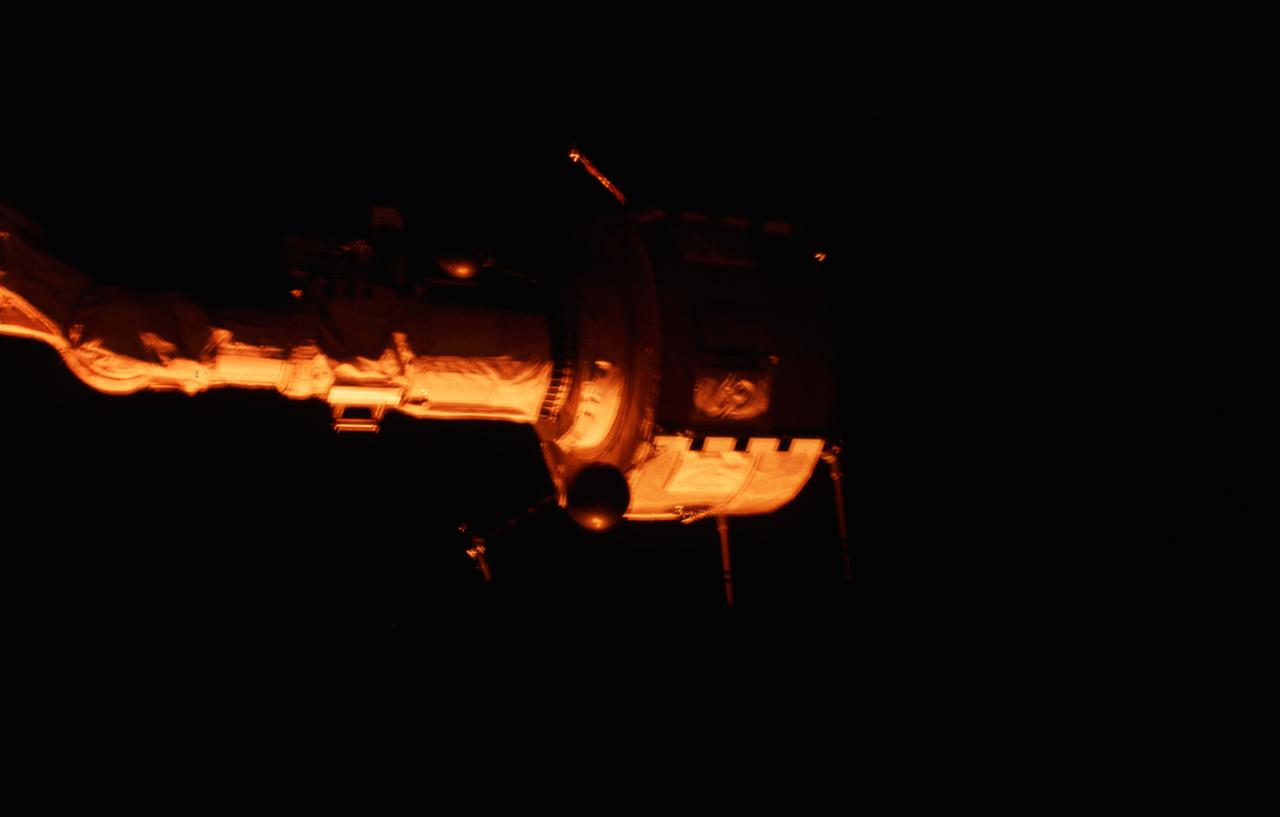
STS003-21-080 (22-30 March 1982) --- Plasma Diagnostics Package (PDP) grappled by remote manipulator system (RMS) end effector is positioned above payload bay (PLB) at sunrise. Photo credit: NASA
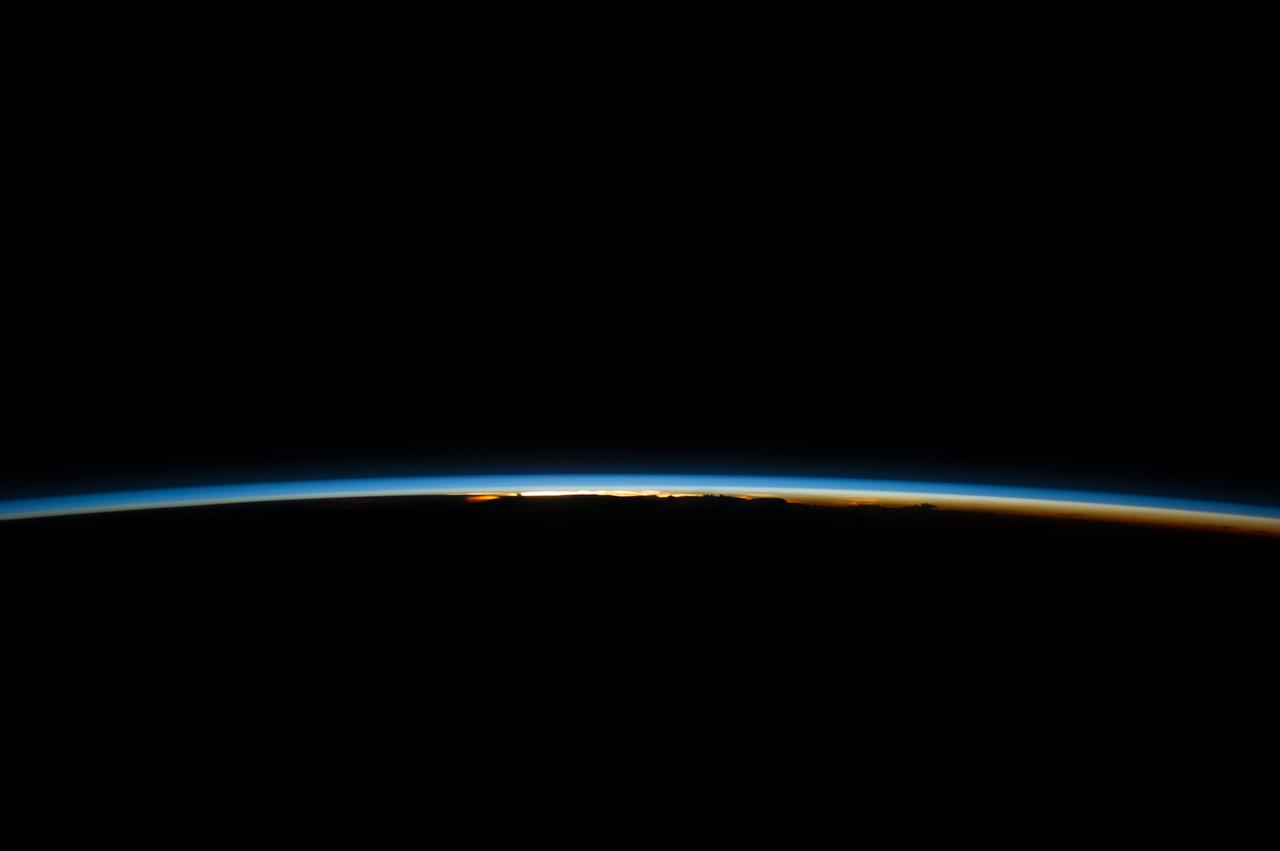
ISS040-E-008344 (8 June 2014) --- The thin line of Earth's atmosphere and the blackness of space are featured in this image photographed by an Expedition 40 crew member on the International Space Station.
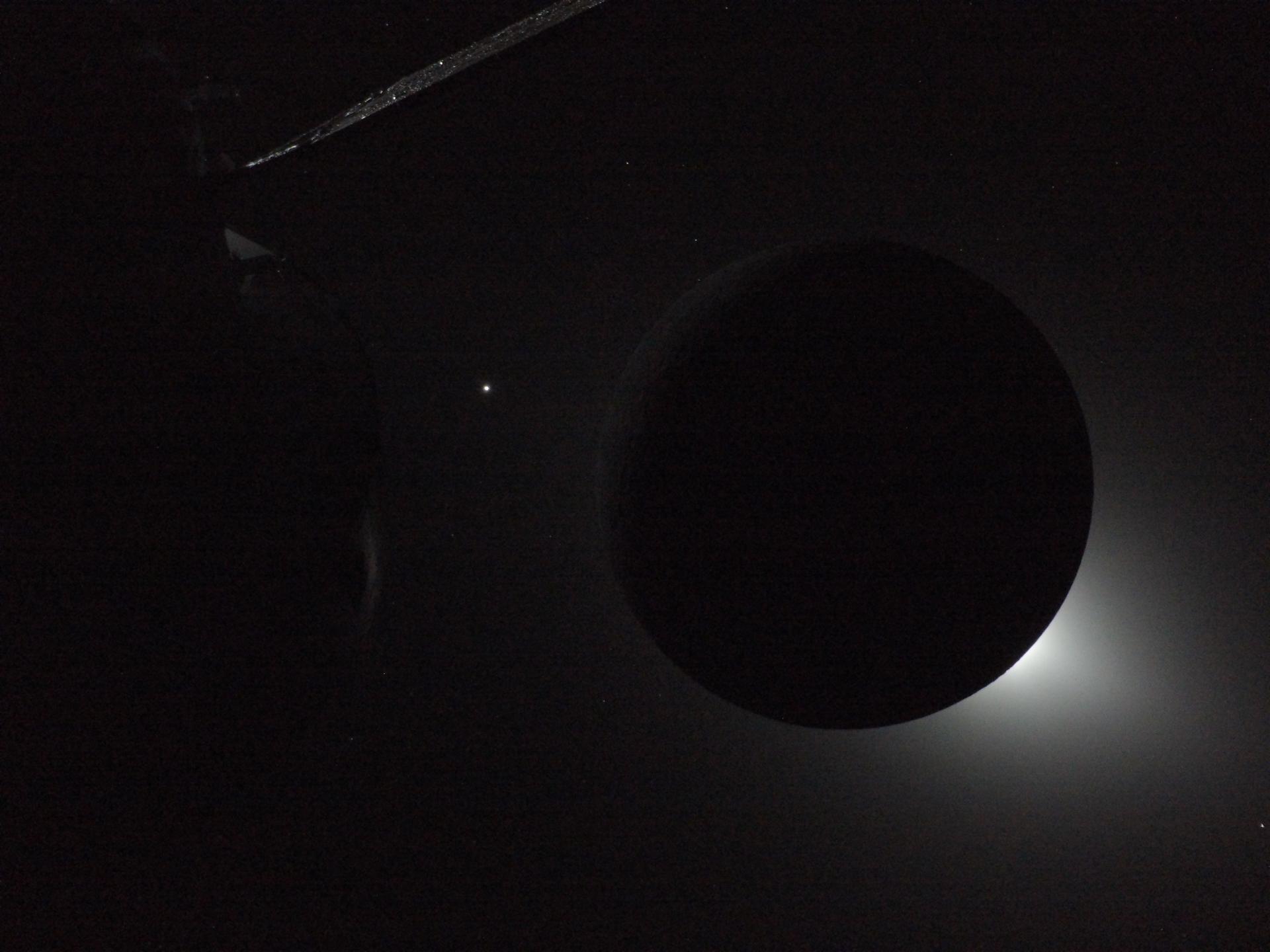
art002e016312 (April 7, 2026) – A vehicle camera mounted on NASA’s Orion spacecraft captured this view of lunar sunrise as the Sun emerged from behind the Moon. The Moon appears in silhouette as sunlight and the faint solar corona extend from behind its edge. The image was captured as part of a time-lapse sequence documenting the changing view during sunrise.
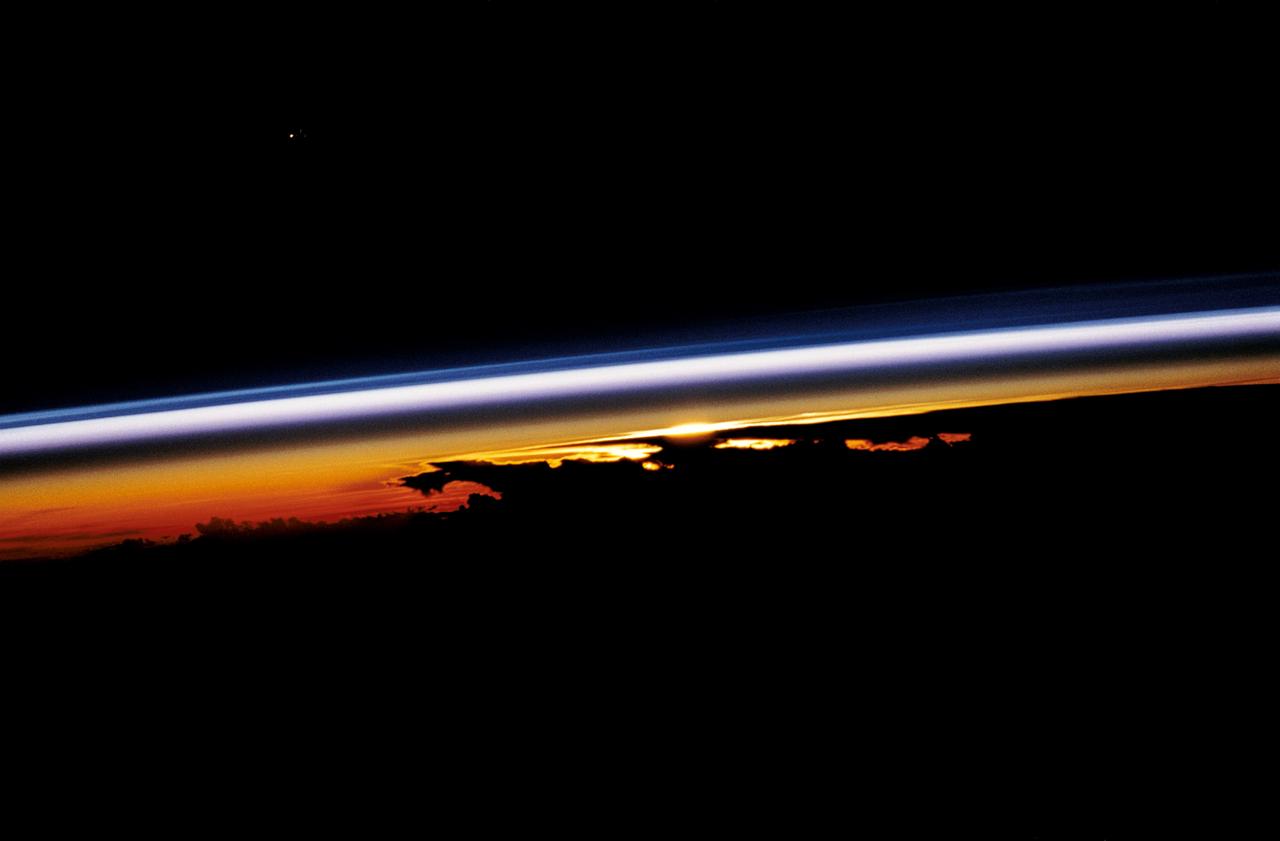
STS047-54-018 (12-20 Sept. 1992) --- The colors in this photograph provide insight into the relative density of the atmosphere. The crew members had many opportunities to witness sunrises and sunsets, considering they orbit the Earth every 90 minutes, but few, they said, compared to this scene. It captures the silhouette of several mature thunderstorms with their cirrus anvil tops spreading out against the tropopause (the top of the lowest layer of Earth's atmosphere) at sunset. The lowest layer (troposphere) is the densest and refracts light at the red end of the visible spectrum (7,400 Angstroms), while the blues (4,000 Angstroms) are separated in the least dense portion of the atmosphere (middle and upper atmosphere, or stratosphere and mesosphere). Several layers of blue can be seen. NASA scientists studying the photos believe this stratification to be caused by the scattering of light by particulate trapped in the stratosphere and mesosphere particulate that generally originate from volcanic eruptions, such as those of Mt. Pinatubo in the Philippines and, most recently, Mt. Spurr in Alaska.
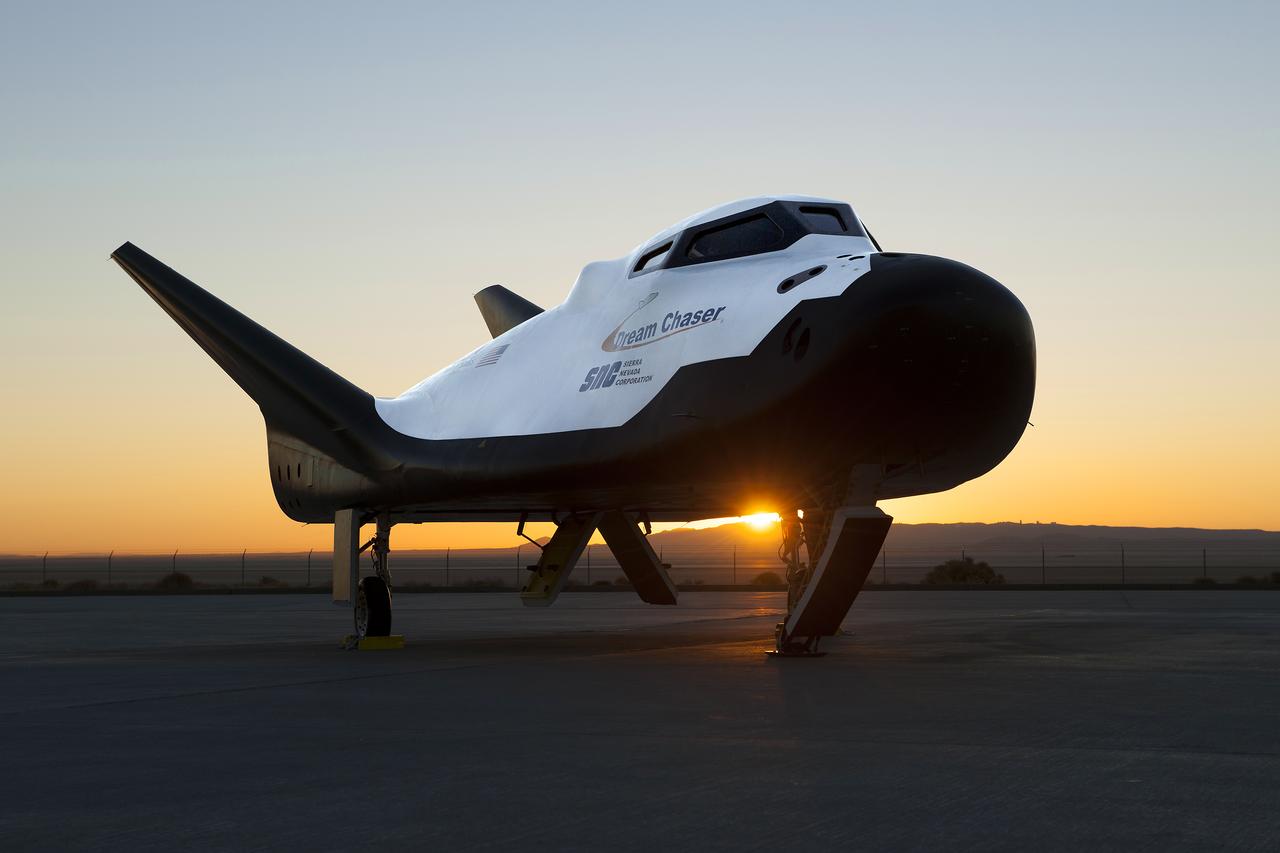
Sierra Nevada Corp’s Dream Chaser posed on ramp at sunrise at NASA Armstrong Flight Research Center in California where the aircraft has gone through a series of tests in preparation for flight.
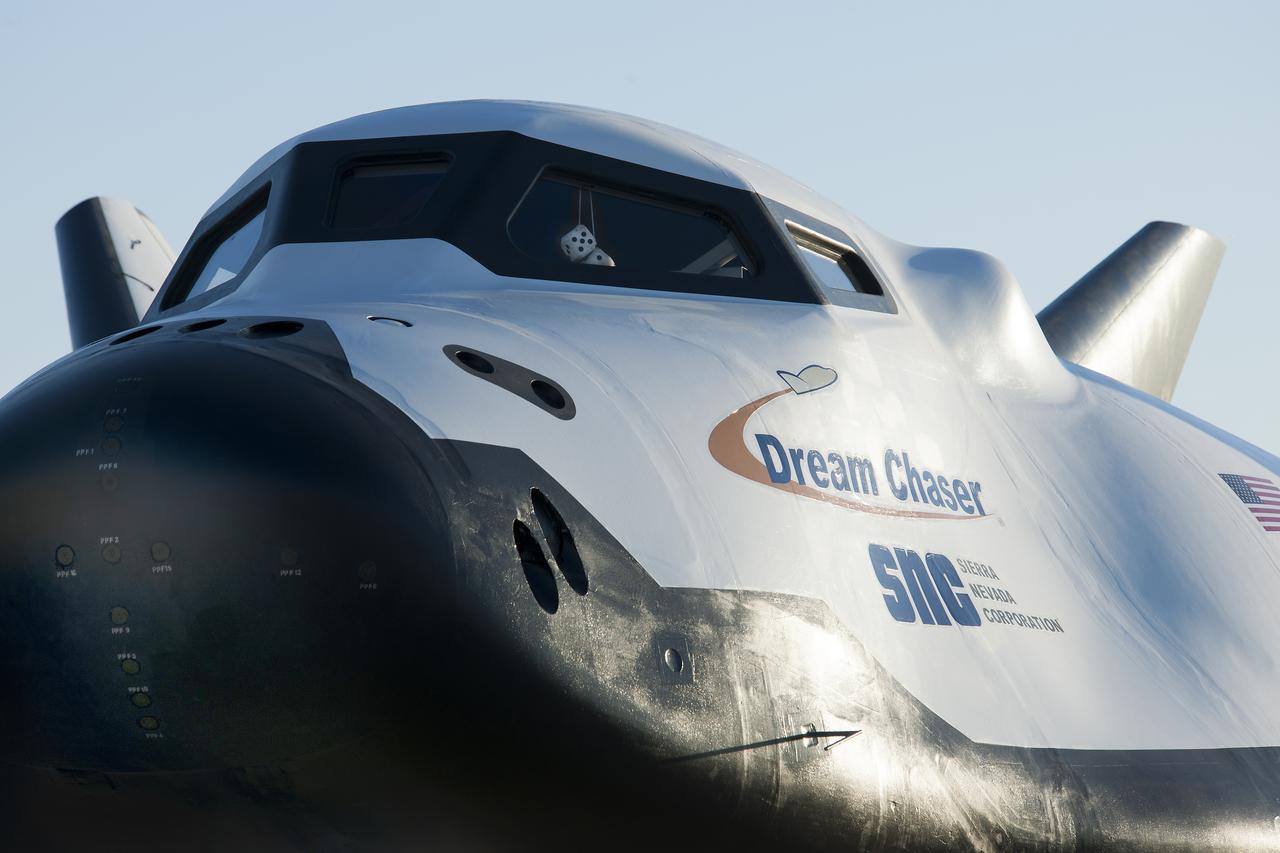
Sierra Nevada Corp’s Dream Chaser posed on ramp at sunrise at NASA Armstrong Flight Research Center in California where the aircraft has gone through a series of tests in preparation for flight.
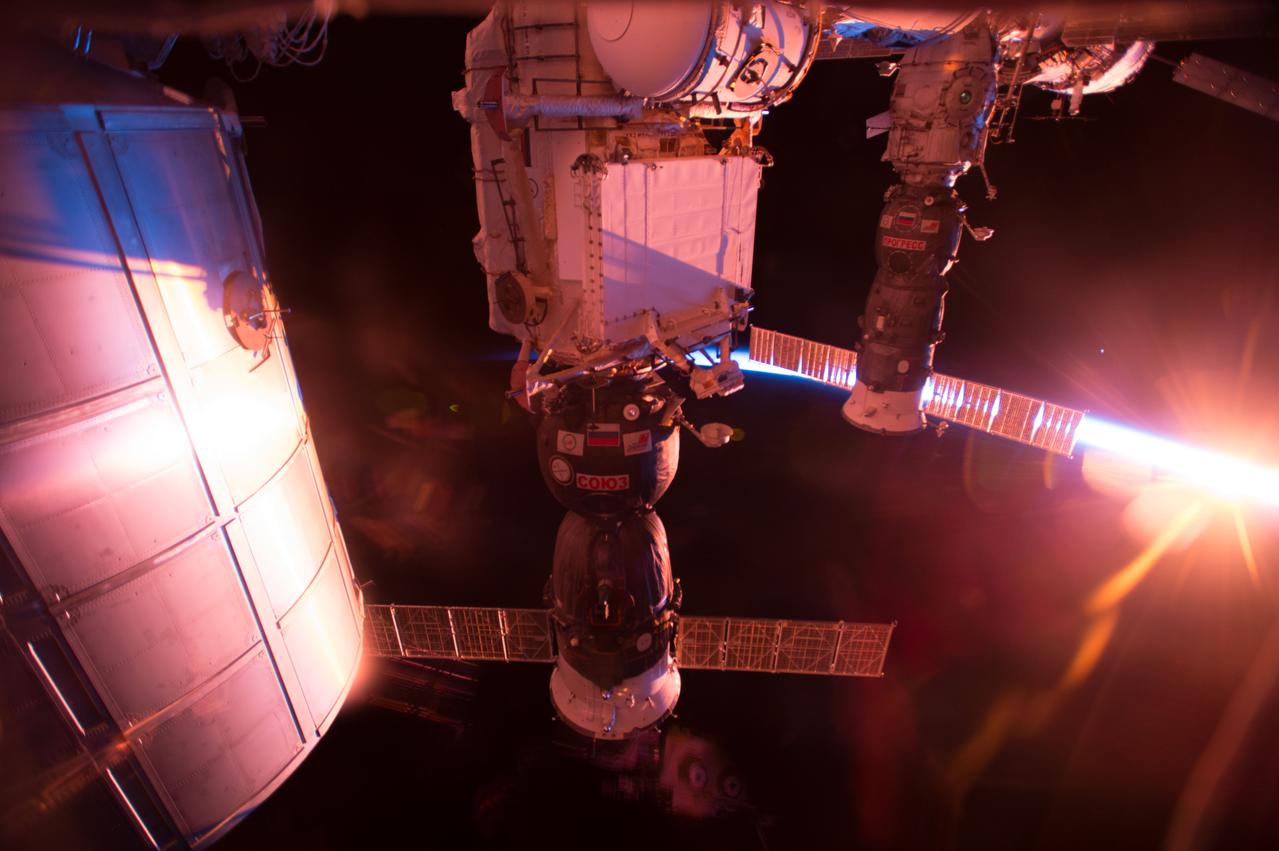
ISS042E036158 (12/14/2014) --- Sunrise on the International Space Station is a constantly changing play of light from Earth and our nearest Star. This image was captured Dec. 14, 2014.

Sierra Nevada Corp’s Dream Chaser posed on ramp at sunrise at NASA Armstrong Flight Research Center in California where the aircraft has gone through a series of tests in preparation for flight.

A sunrise at NASA's Kennedy Space Center in Florida, on June 21, from the Saturn V center at nearby Kennedy Space Center Visitor Complex.
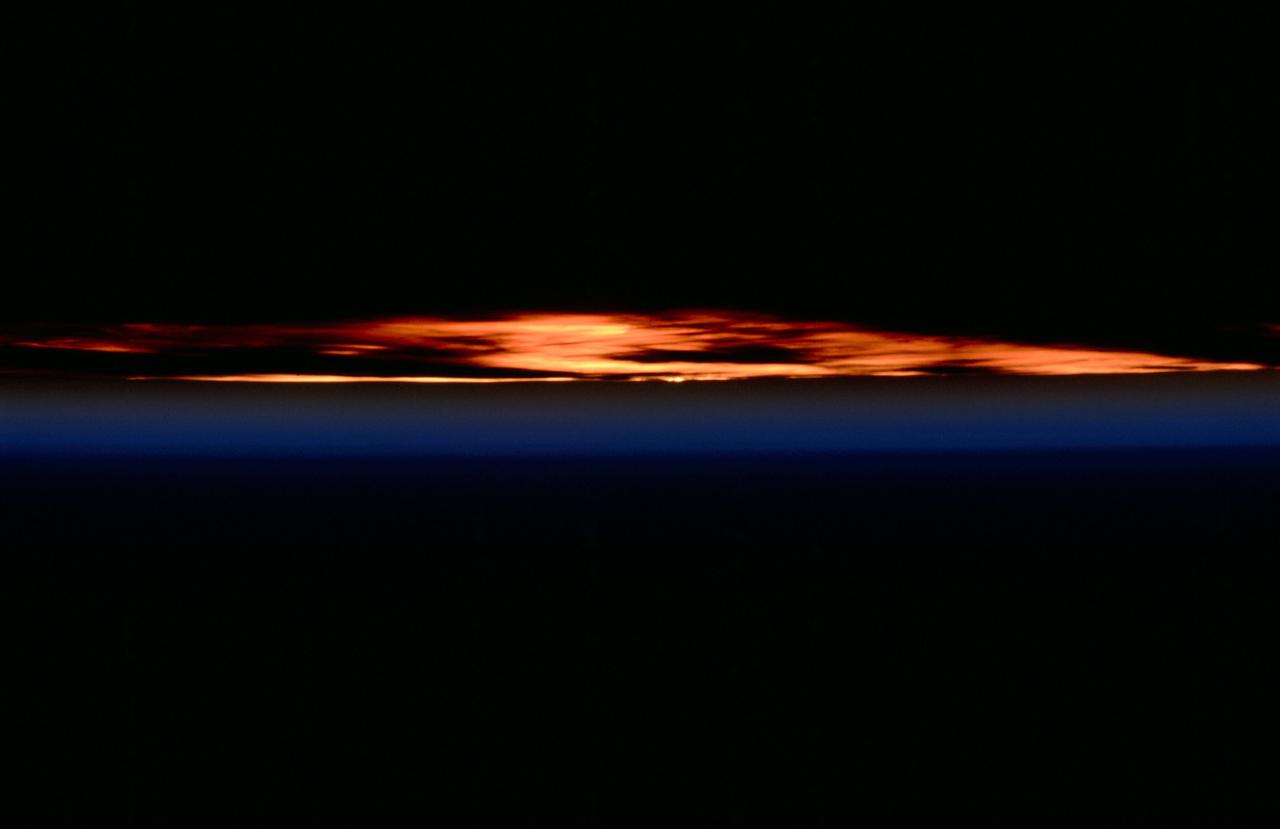
STS088-301-017 (4-15 December 1998) --- This Earth view shows a sunrise photographed by the astronaut crew members onboard the Space Shuttle Endeavour. The astronauts experience either a sunrise or sunsets every 45 minutes while orbiting the Earth. A full orbit takes approximately 90 minutes.
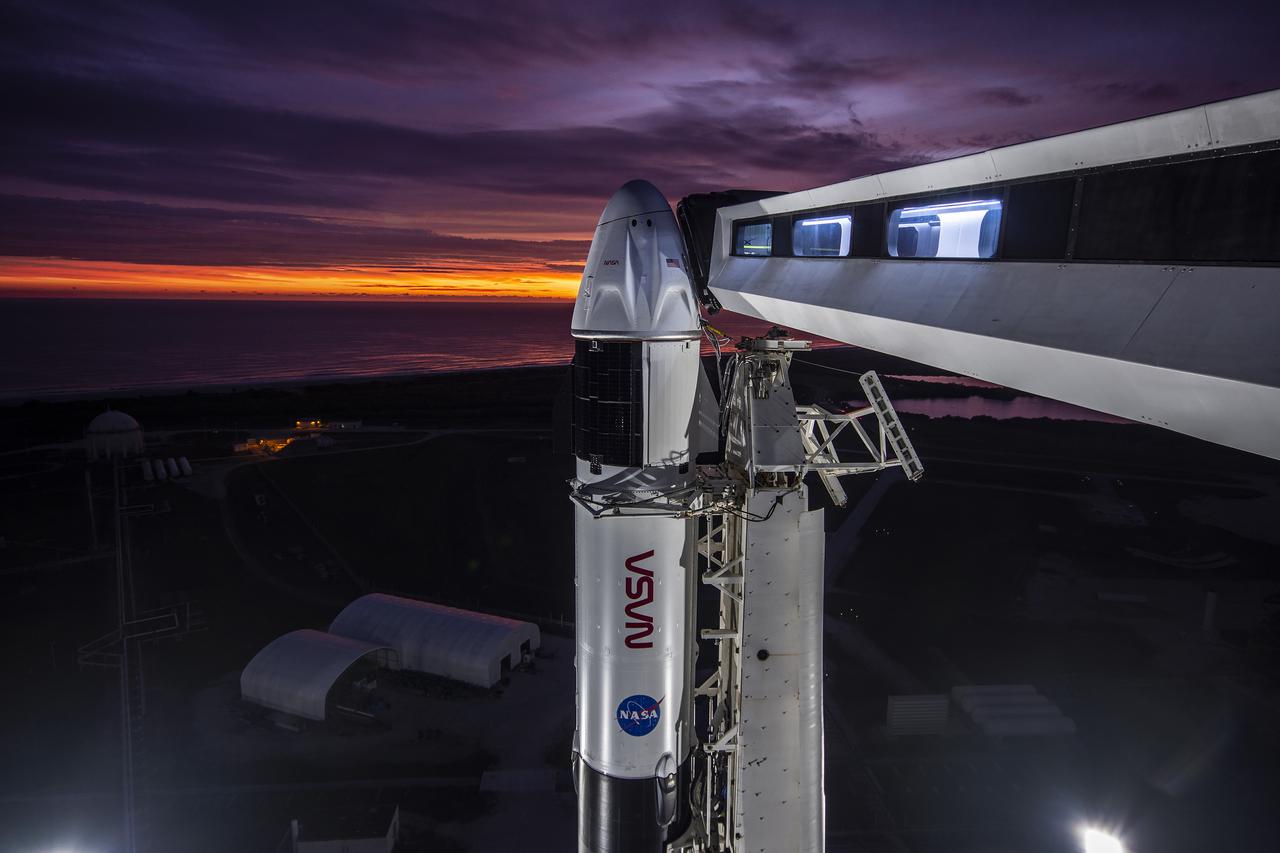
A close-up view of the SpaceX Falcon 9 rocket vertical with the Crew Dragon atop for the Crew-3 mission at Launch Pad 39A at NASA’s Kennedy Space Center in Florida during sunrise on Oct. 28, 2021. Also in view is the crew access arm. A four-person crew will launch aboard the Crew Dragon atop the Falcon 9 on Oct. 31 to the International Space Station. Launch is targeted for 2:21 a.m. EDT from Pad 39A. Crew 3 is the third crew rotation flight to the space station for NASA’s Commercial Crew Program, and the first flight of a new Crew Dragon spacecraft.
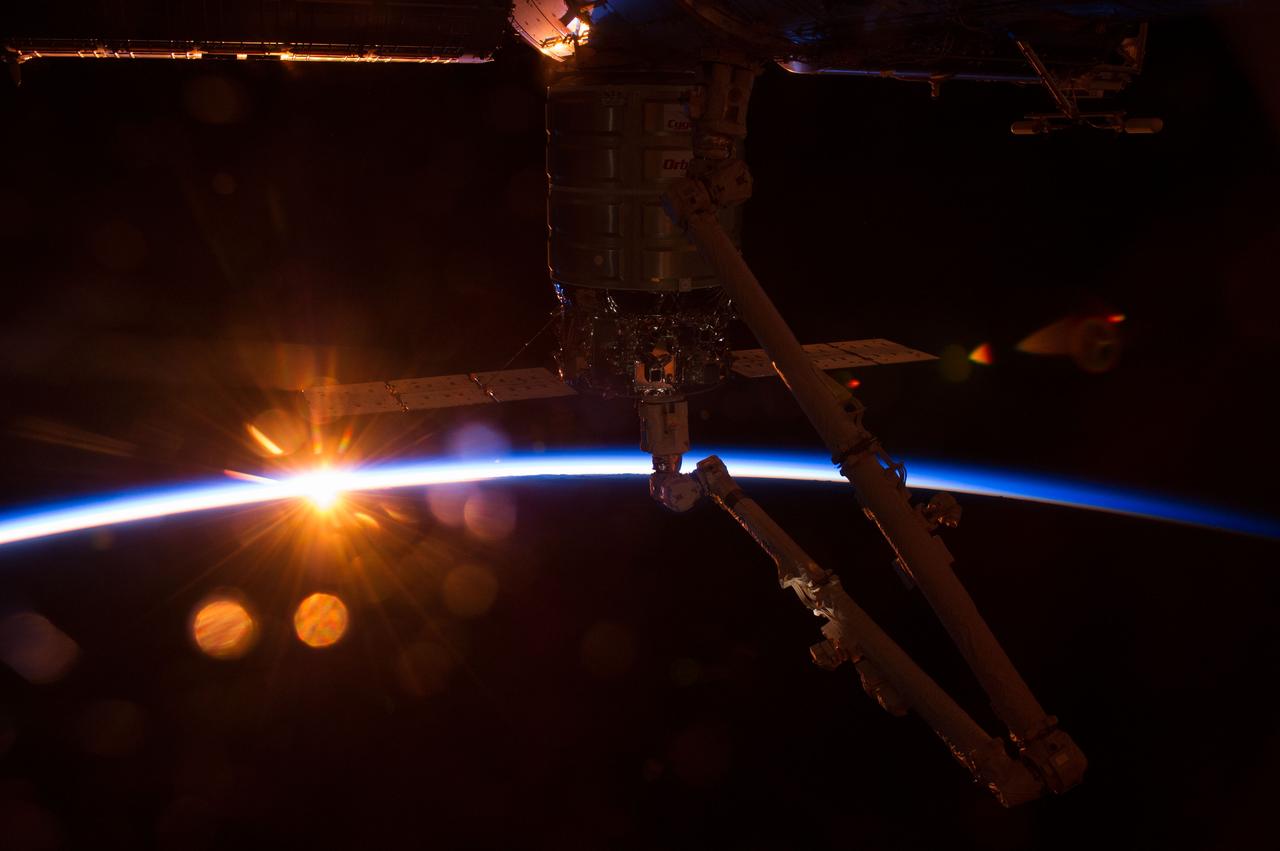
ISS040-E-069192 (16 July 2014) --- Intersecting the thin line of Earth’s atmosphere during an orbital sunrise, the Orbital Sciences’ Cygnus cargo craft attached to the end of the Canadarm2 robotic arm is berthed to the nadir port of the Harmony node of the International Space Station.
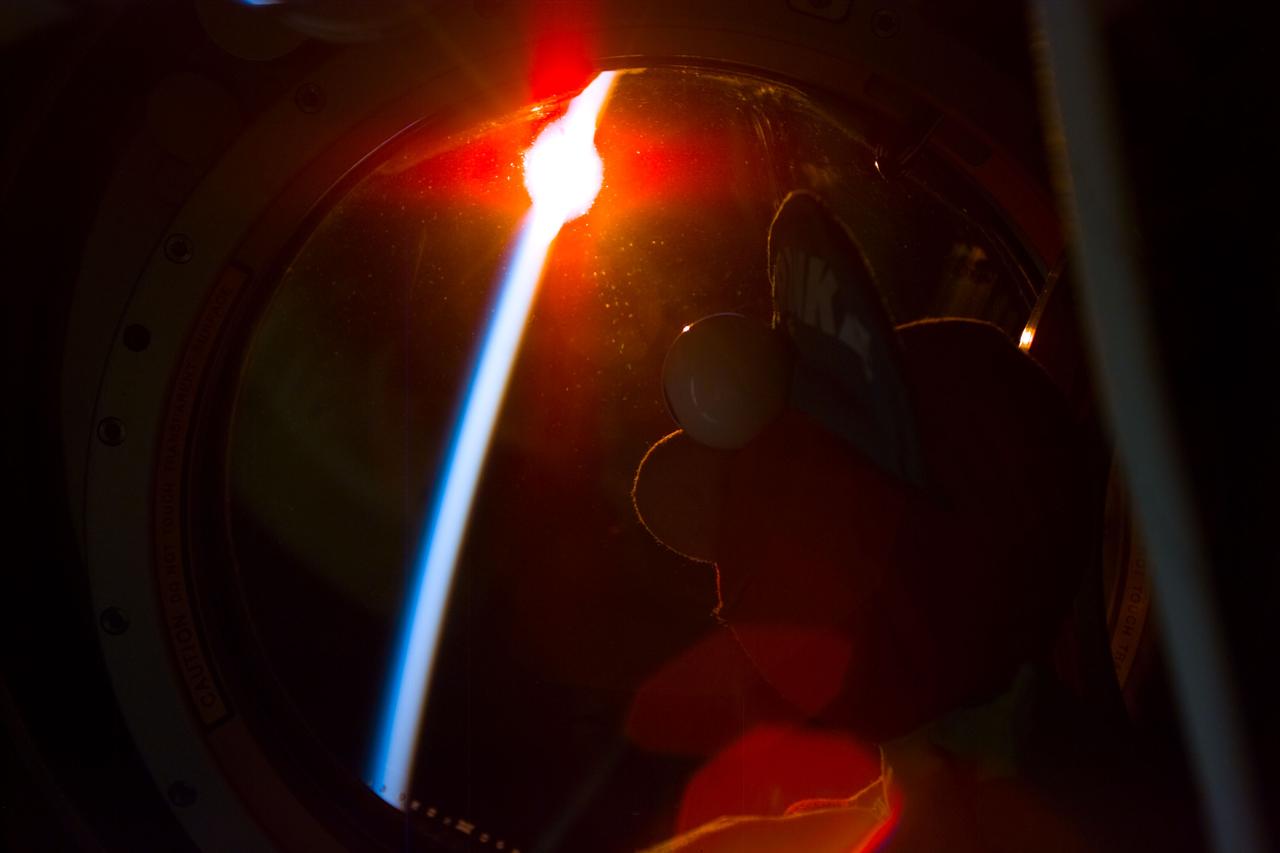
STS095-E-5145 (2 Nov. 1998) --- View of sunrise from Discovery's side hatch was captured with an electronic still camera (ESC) at 18:18:14 GMT, Nov. 2.
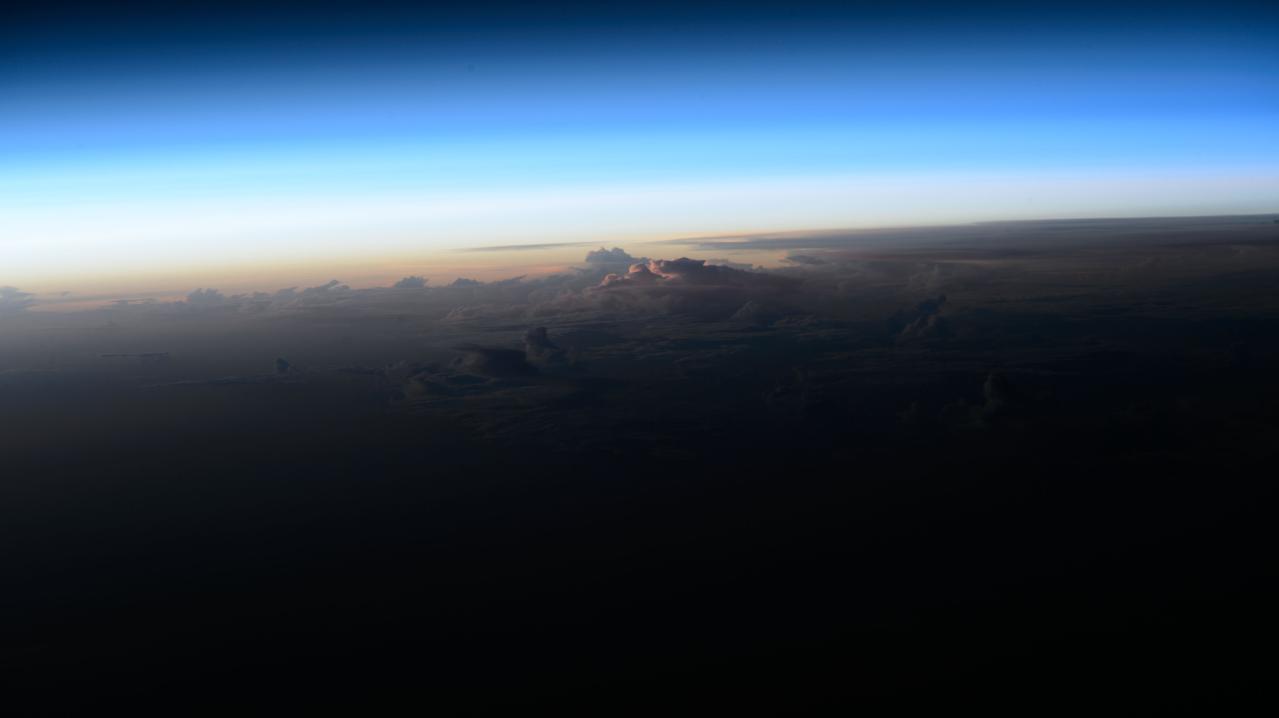
iss073e0028091 (May 11, 2025) --- An orbital sunrise breaks above the clouds in this photograph from the International Space Station as it soared 259 miles over the Atlantic Ocean due west of the African island nation of Cabo Verde.
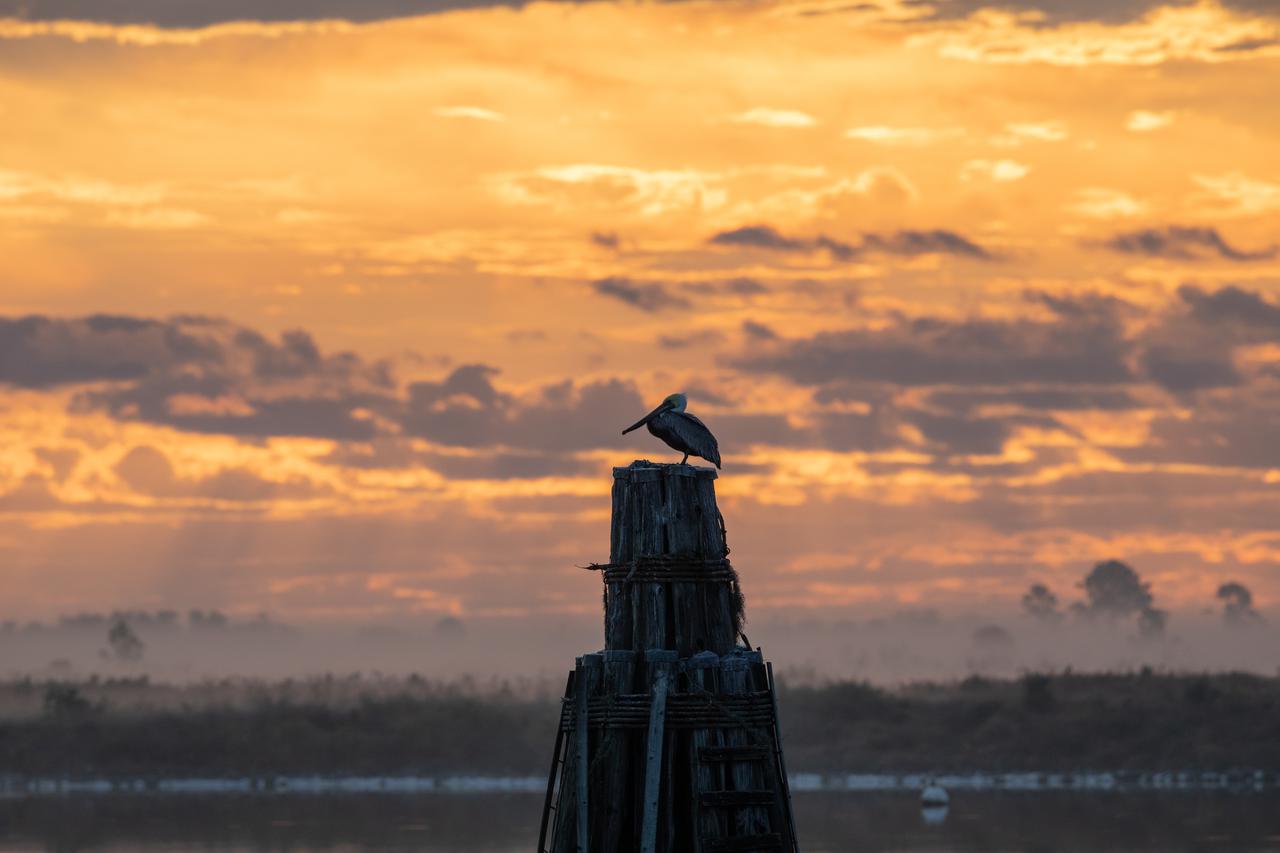
A colorful sunrise serves as the backdrop for a pelican perched on a support beam for a dock on a waterway at NASA's Kennedy Space Center in Florida on Jan. 11, 2021. The center shares a border with the Merritt Island National Wildlife Refuge. More than 330 native and migratory bird species, along with 25 mammal, 117 fish, and 65 amphibian and reptile species call Kennedy and the wildlife refuge home.
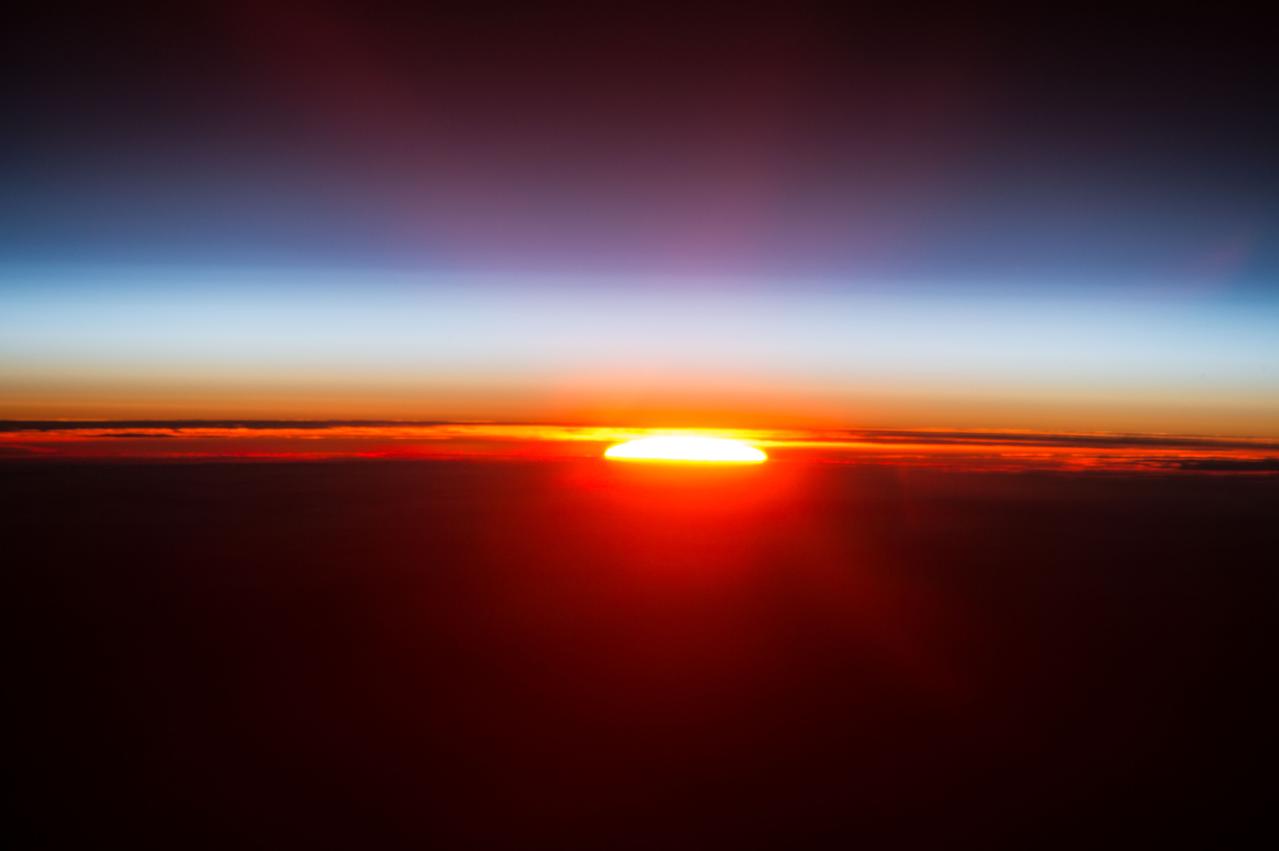
ISS044E025484 (07/30/2015) --- NASA astronaut Scott Kelly of Expedition 44 aboard the International Space Station on July 30, 2015 captured this sunrise while in his "year in space" .
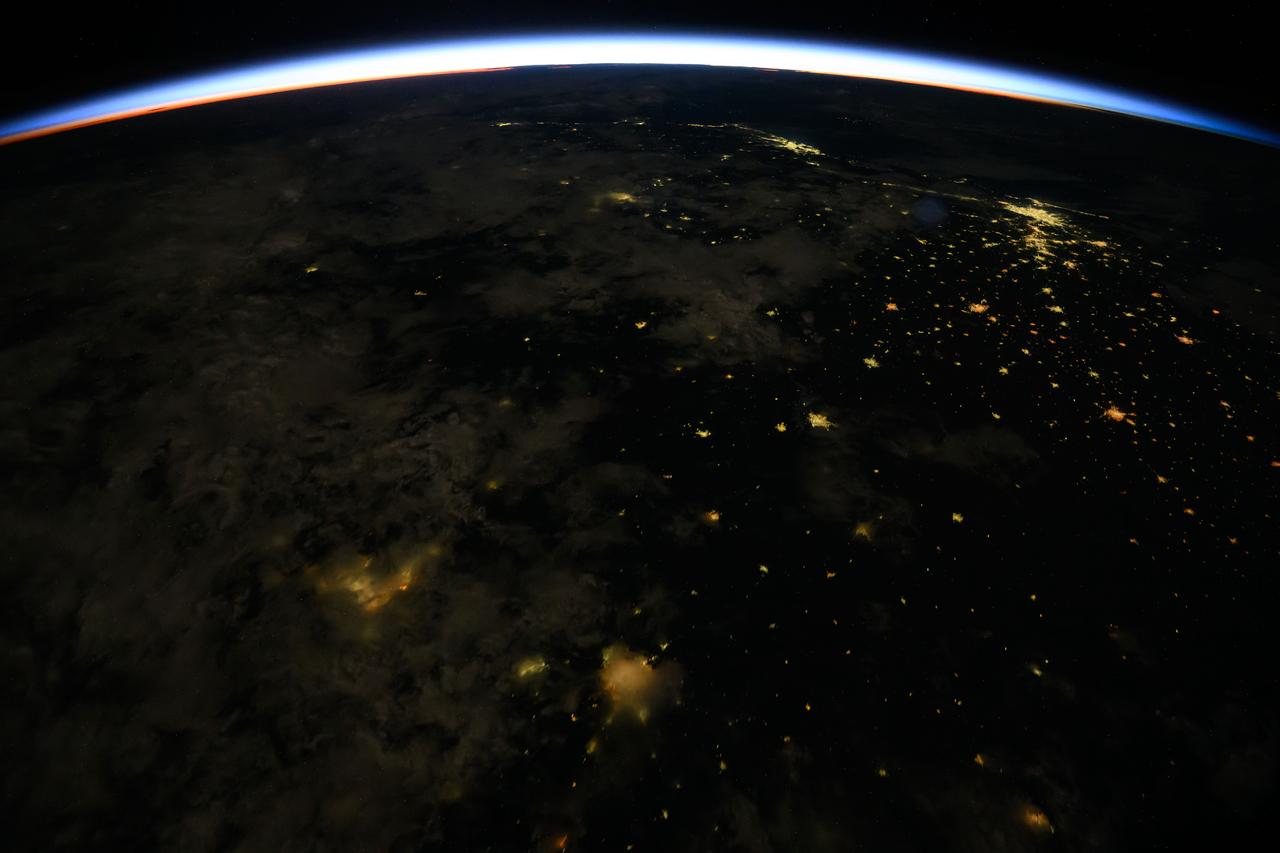
iss072e340644 (Nov., 18, 2024) --- An orbital sunrise crowns Earth's horizon in this photograph from the International Space Station as it orbited 261 miles above Brazil. At top right, the city lights of Rio de Janiero and Sao Paulo on the Atlantic coast are visible from the orbital outpost.
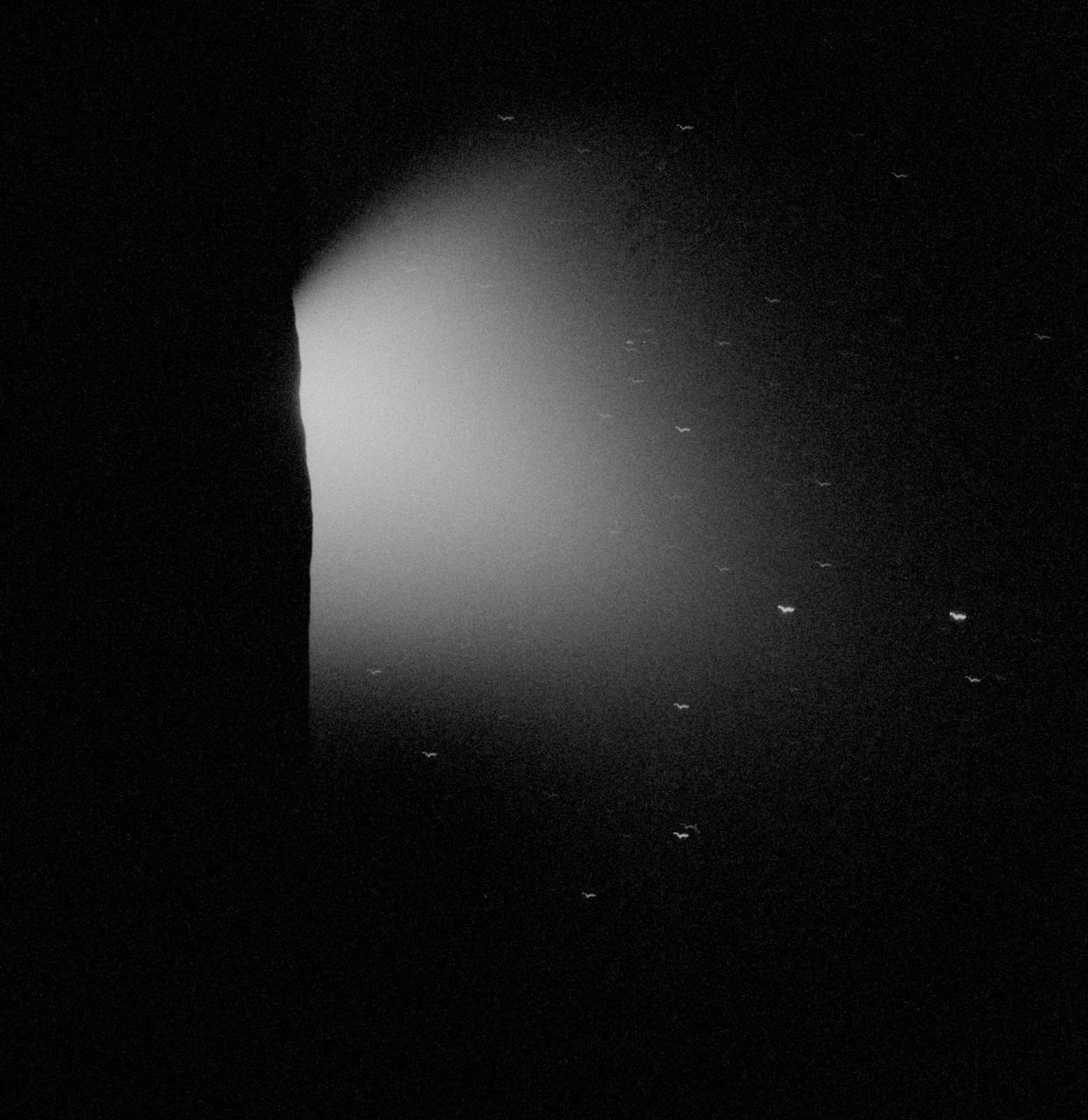
AS15-98-13311 (31 July 1971) --- The solar corona, as photographed from the Apollo 15 spacecraft about one minute prior to sunrise on July 31, 1971, is seen just beyond the lunar horizon. The bright object on the opposite of the frame is the planet Mercury. The bright star near the frame center is Regulus, and the lesser stars form the head of the constellation Leo. Mercury is approximately 28 degrees from the center of the sun. The solar coronal streamers, therefore, appear to extend about eight degrees from the sun's center. This solar corona photograph was the second in a series of seven. Three such series were obtained by astronaut Alfred M. Worden, command module pilot, during the solo part of his lunar orbital flight. They represent man's first view of this part of the sun's light. While astronauts David R. Scott, commander, and James B. Irwin, lunar module pilot, descended in the Lunar Module (LM) "Falcon" to explore the Hadley-Apennine area of the moon, astronaut Worden remained with the Command and Service Modules (CSM) in lunar orbit.
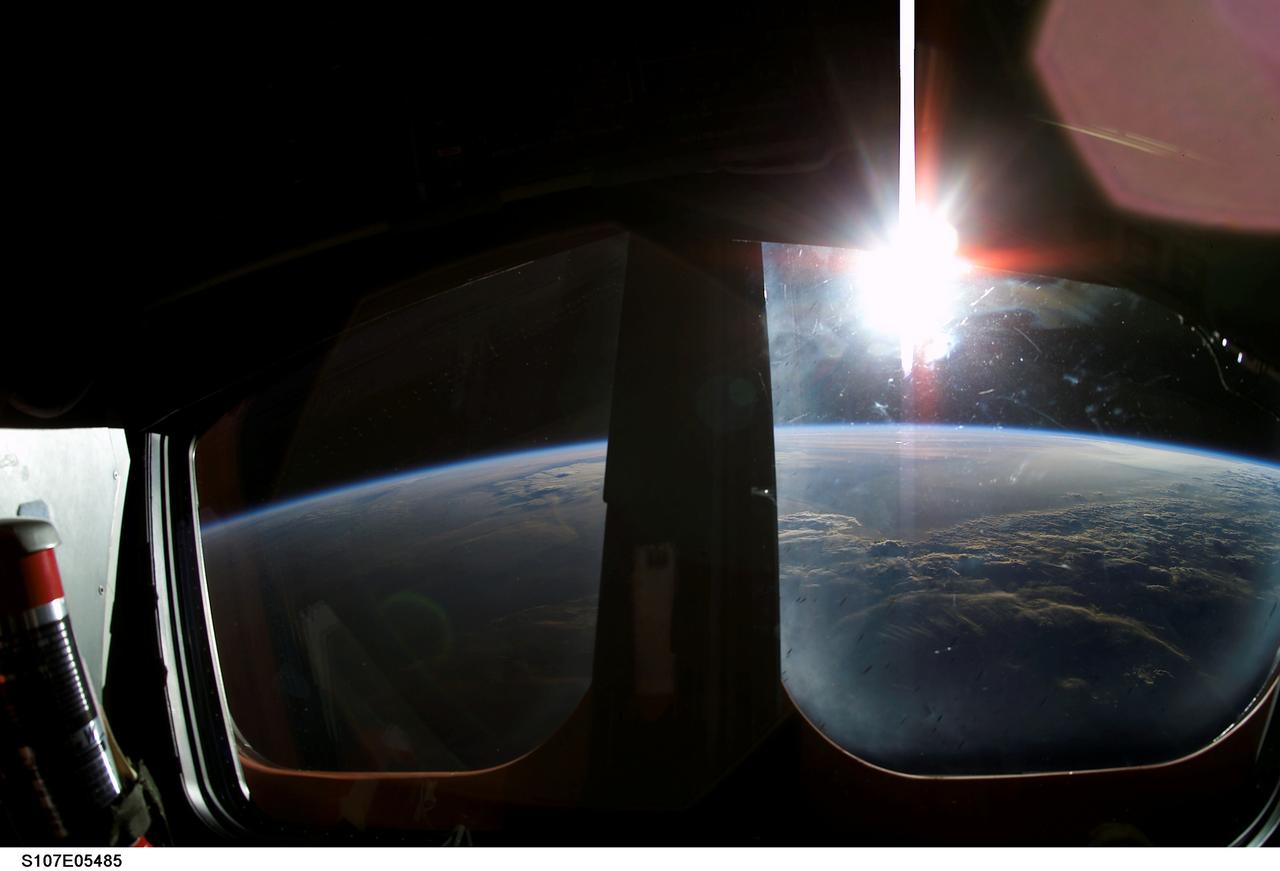
This sunrise was captured from the crew cabin of the Space Shuttle Orbiter Columbia on the STS-107 mission. Launched January 16, 2003, STS-107 was strictly a multidiscipline microgravity and Earth science research mission involving 80-plus International experiments performed during 16-days, many of which were managed by the Marshall Space Flight Center in Huntsville, Alabama. The majority of the research was conducted in the Shuttle's mid deck, the area directly under the cockpit, in the new SPACEHAB Research Double Module. This was the first flight for that module, which doubled the volume available for experiments and significantly increased the amount and complexity of research from the last dedicated Shuttle science mission, STS-95, flown in 1998 with a single SPACEHAB module. The pressurized module was carried in Columbia's payload bay and was accessible to the crew via a turnel from the Shuttle's mid deck.
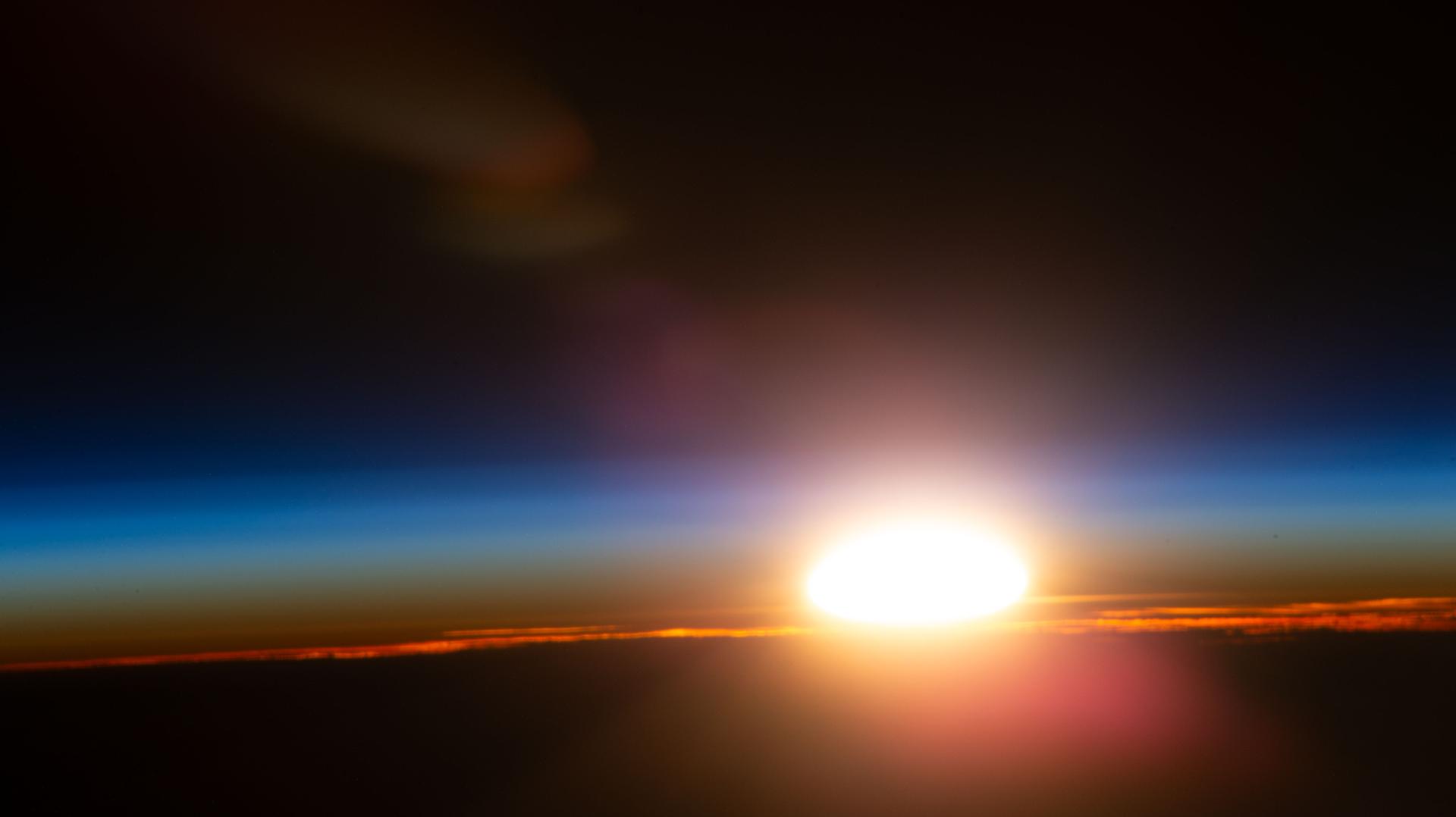
iss073e0988954 (Oct. 30, 2025) --- An orbital sunrise illuminates Earth's atmosphere and cloud tops in this photograph captured from the International Space Station as it orbited 264 miles above the Czech Republic in Eastern Europe.
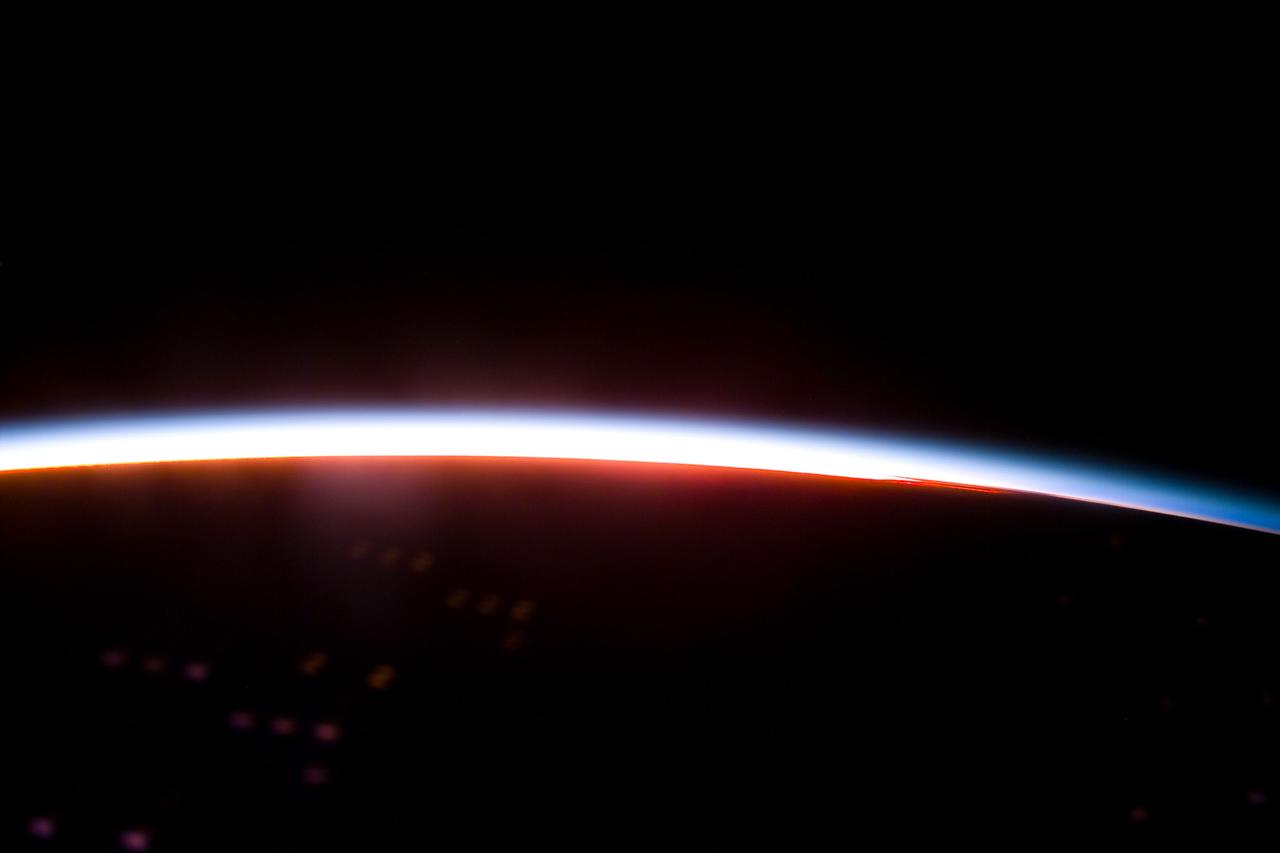
S85-E-5052 (12 August 1997) --- Sunrise over the continental United States, as seen from the Space Shuttle Discovery, on flight day six. The photograph was taken with the Electronic Still Camera (ESC).
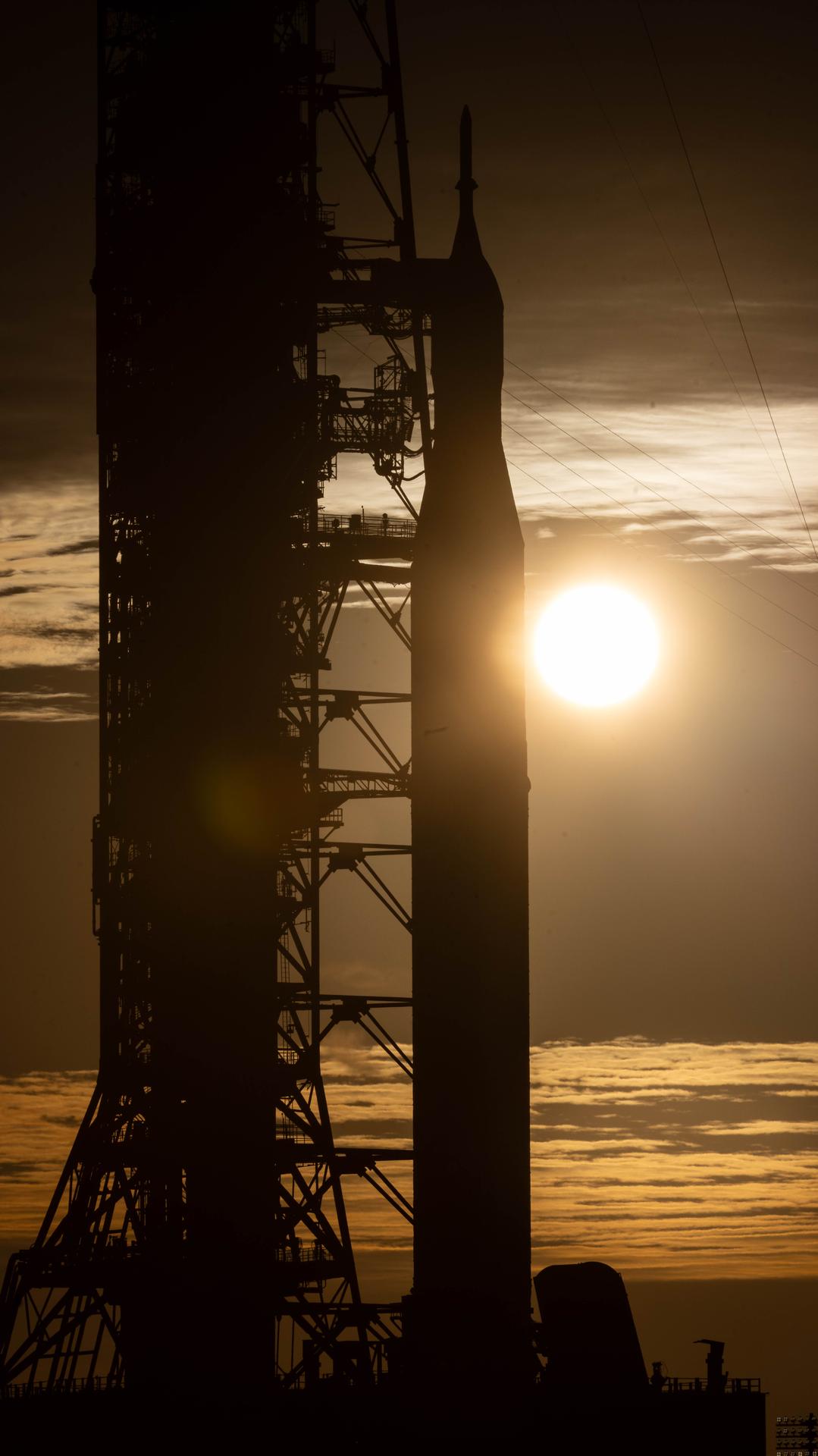
The sunrise peeks between NASA’s Artemis II SLS (Space Launch System) rocket with the Orion spacecraft atop and the mobile launcher at Launch Complex 39B at NASA’s Kennedy Space Center in Florida on Wednesday, Jan. 28, 2026. The Artemis II test flight will take Commander Reid Wiseman, Pilot Victor Glover, and Mission Specialist Christina Koch from NASA and Mission Specialist Jeremy Hansen from the CSA (Canadian Space Agency), around the Moon and back to Earth no later than April 2026.
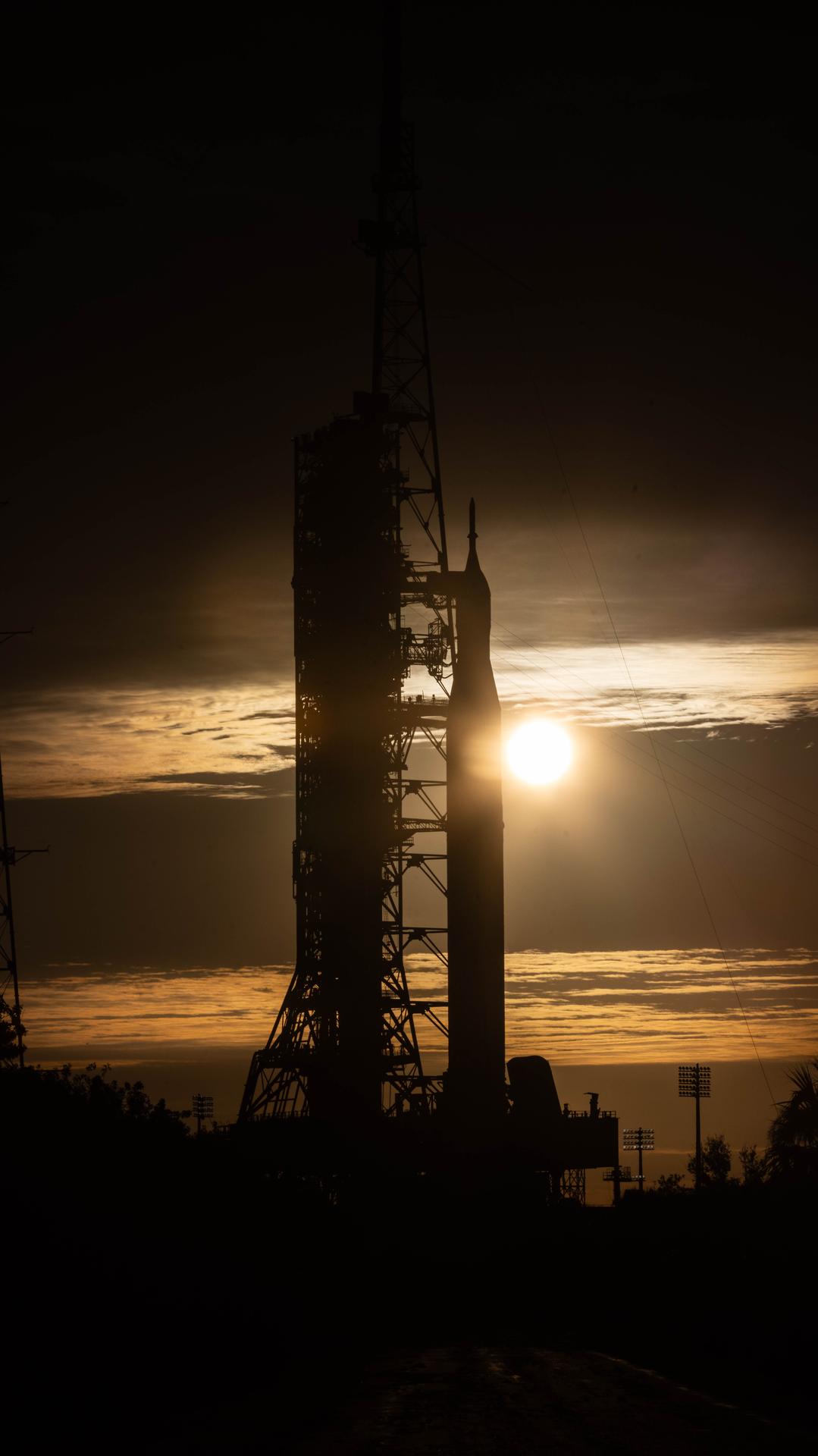
The sunrise peeks between NASA’s Artemis II SLS (Space Launch System) rocket with the Orion spacecraft atop and the mobile launcher at Launch Complex 39B at NASA’s Kennedy Space Center in Florida on Wednesday, Jan. 28, 2026. The Artemis II test flight will take Commander Reid Wiseman, Pilot Victor Glover, and Mission Specialist Christina Koch from NASA and Mission Specialist Jeremy Hansen from the CSA (Canadian Space Agency), around the Moon and back to Earth no later than April 2026.
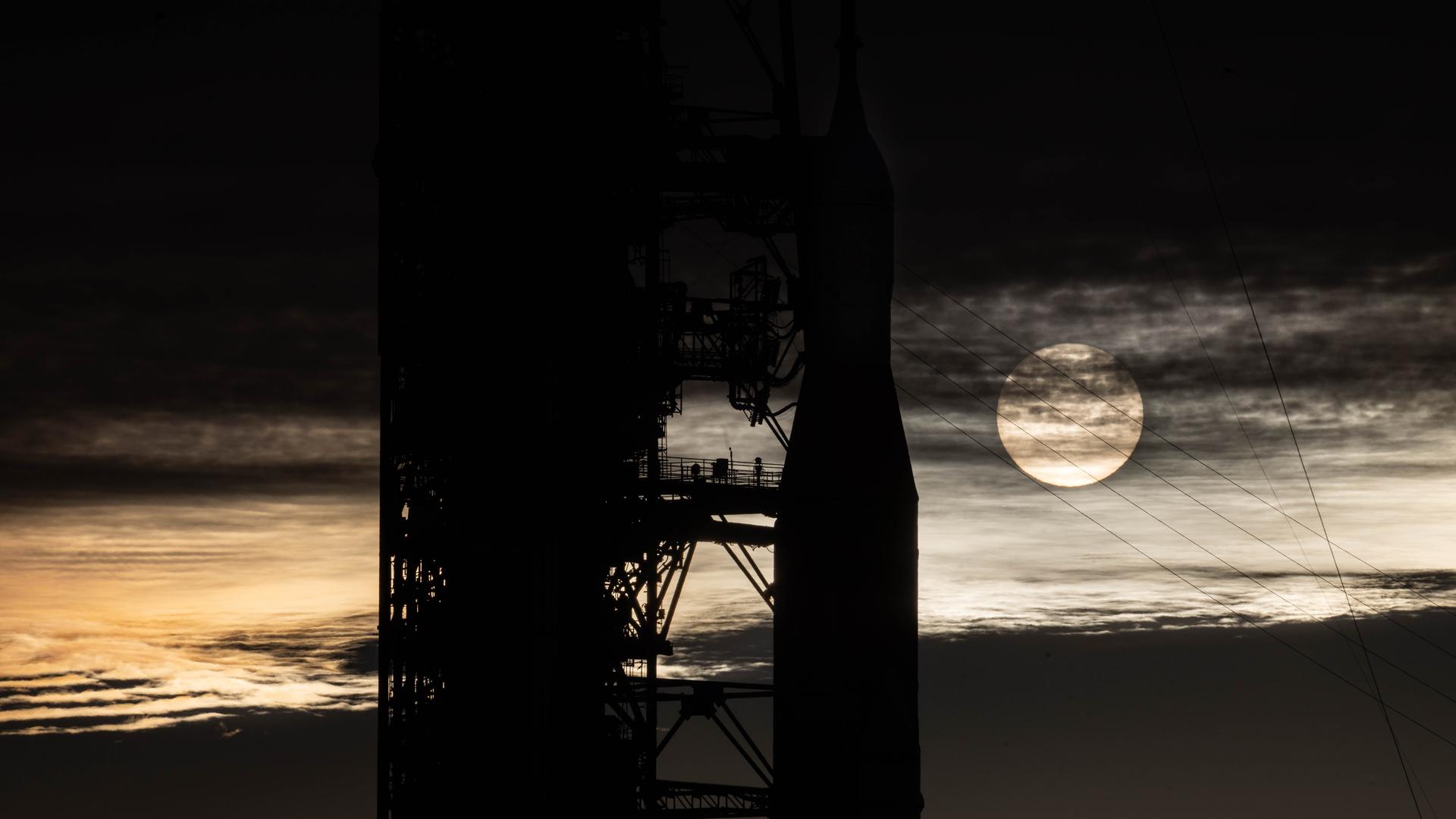
The sunrise peeks between NASA’s Artemis II SLS (Space Launch System) rocket with the Orion spacecraft atop and the mobile launcher at Launch Complex 39B at NASA’s Kennedy Space Center in Florida on Wednesday, Jan. 28, 2026. The Artemis II test flight will take Commander Reid Wiseman, Pilot Victor Glover, and Mission Specialist Christina Koch from NASA and Mission Specialist Jeremy Hansen from the CSA (Canadian Space Agency), around the Moon and back to Earth no later than April 2026.
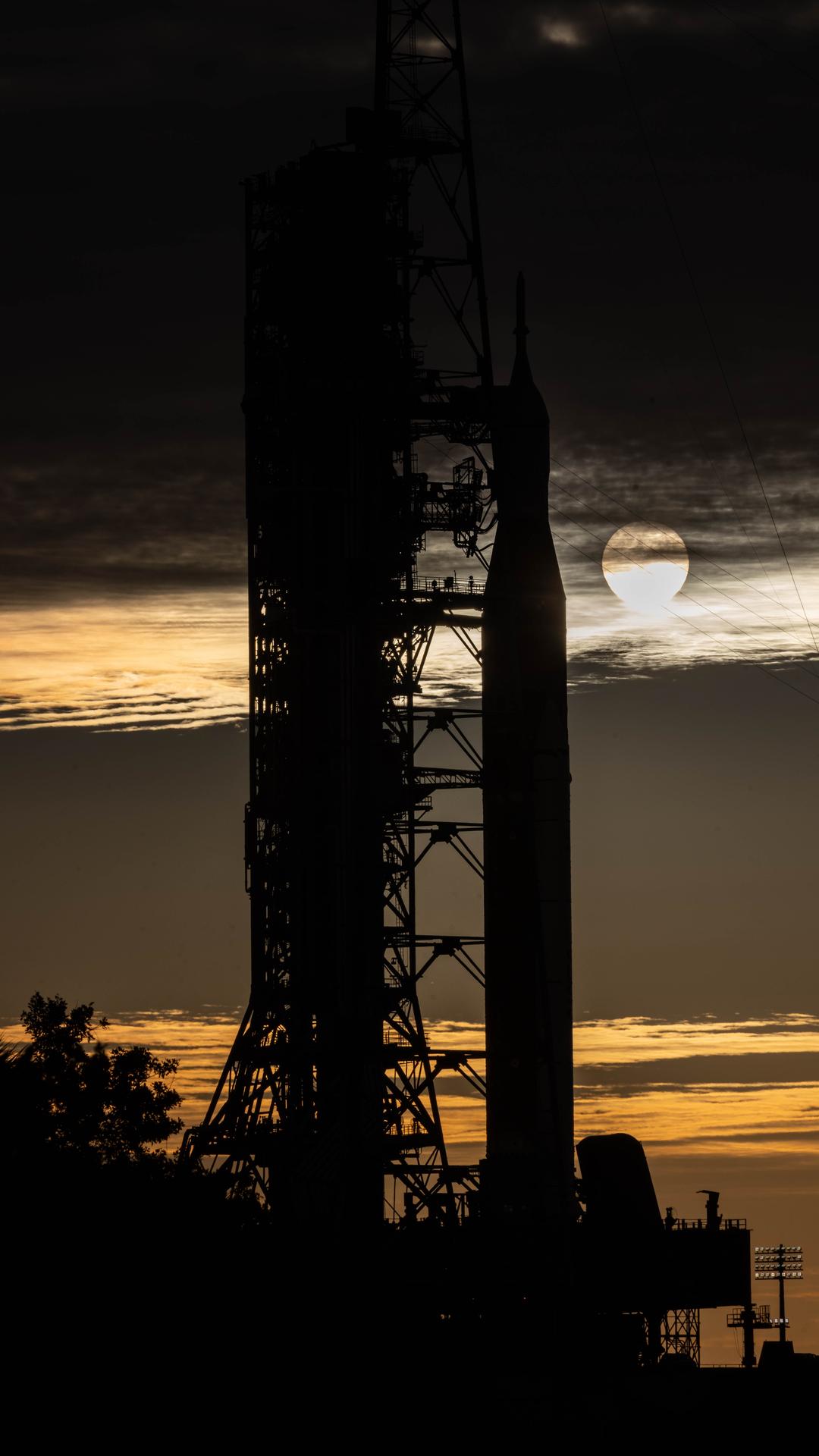
The sunrise peeks between NASA’s Artemis II SLS (Space Launch System) rocket with the Orion spacecraft atop and the mobile launcher at Launch Complex 39B at NASA’s Kennedy Space Center in Florida on Wednesday, Jan. 28, 2026. The Artemis II test flight will take Commander Reid Wiseman, Pilot Victor Glover, and Mission Specialist Christina Koch from NASA and Mission Specialist Jeremy Hansen from the CSA (Canadian Space Agency), around the Moon and back to Earth no later than April 2026.
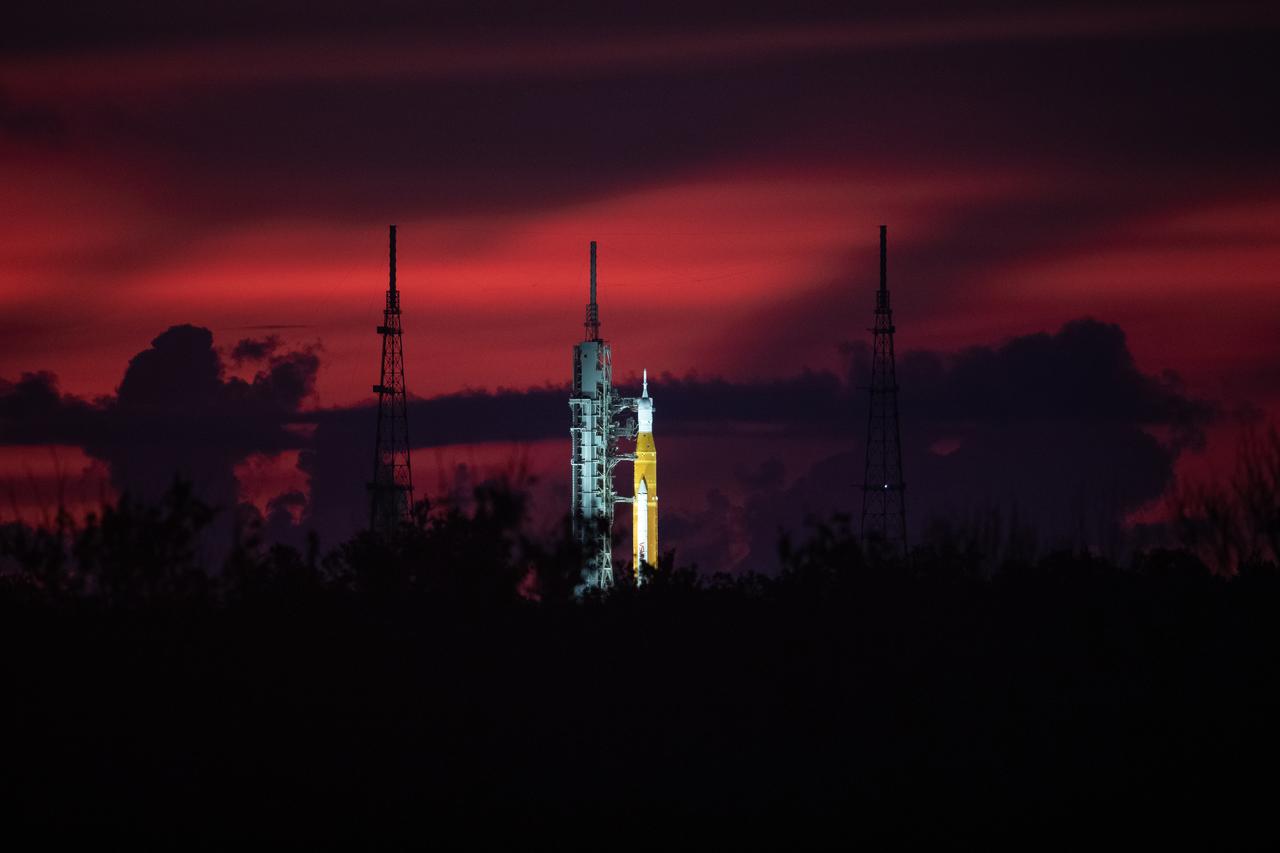
A sunrise view of NASA’s Space Launch System and Orion spacecraft for Artemis I on the pad at Launch Complex 39B at NASA’s Kennedy Space Center in Florida on Aug. 22, 2022. Launch of Artemis I is scheduled for no earlier than Aug. 29, 2022, at 8:33 a.m. EDT. The first in a series of increasingly complex missions, Artemis I will provide a foundation for human deep space exploration and demonstrate our commitment and capability to extend human presence to the Moon and beyond. The primary goal of Artemis I is to thoroughly test the integrated systems before crewed missions by operating the spacecraft in a deep space environment, testing Orion’s heat shield, and recovering the crew module after reentry, descent, and splashdown.
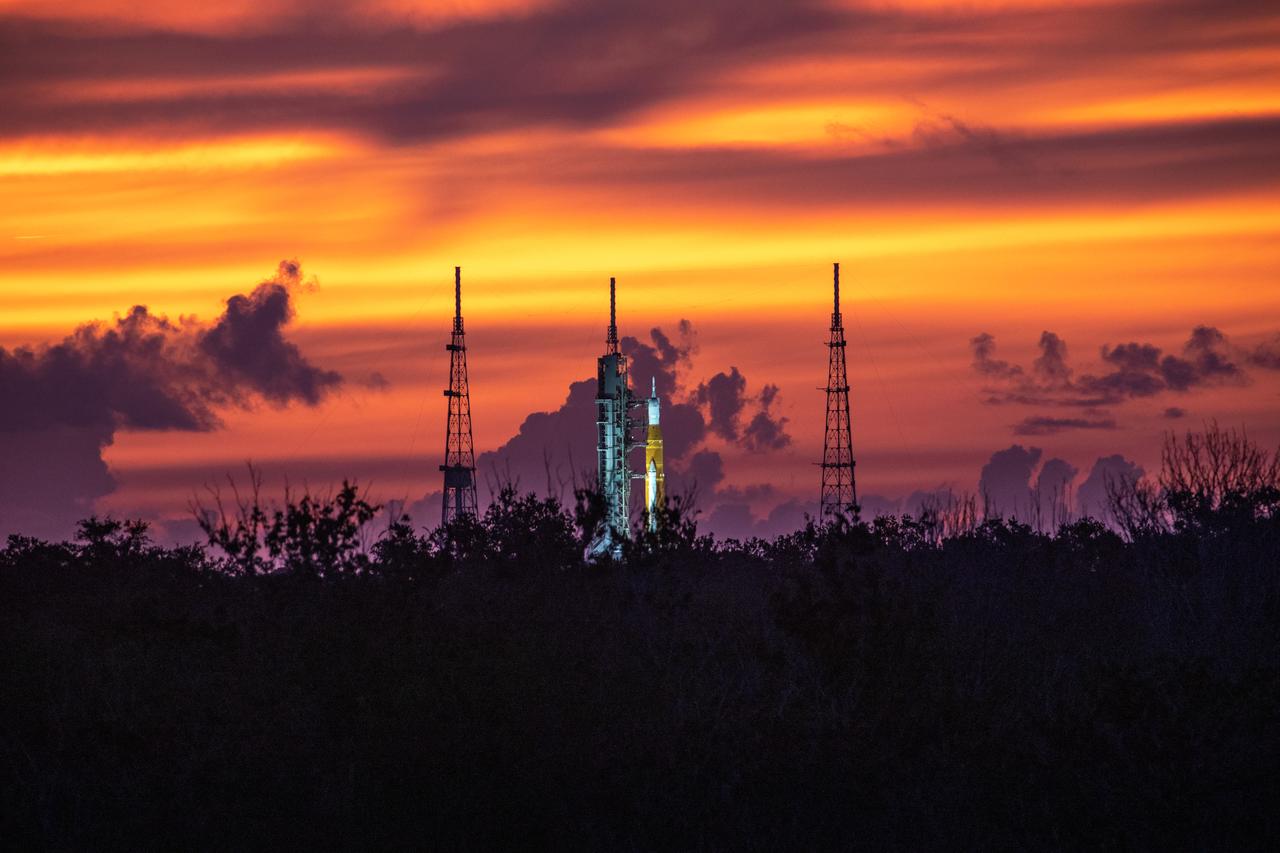
A golden sunrise surrounds NASA’s Space Launch System and Orion spacecraft for Artemis I on the pad at Launch Complex 39B at NASA’s Kennedy Space Center in Florida on Aug. 22, 2022. Launch of Artemis I is scheduled for no earlier than Aug. 29, 2022, at 8:33 a.m. EDT. The first in a series of increasingly complex missions, Artemis I will provide a foundation for human deep space exploration and demonstrate our commitment and capability to extend human presence to the Moon and beyond. The primary goal of Artemis I is to thoroughly test the integrated systems before crewed missions by operating the spacecraft in a deep space environment, testing Orion’s heat shield, and recovering the crew module after reentry, descent, and splashdown.
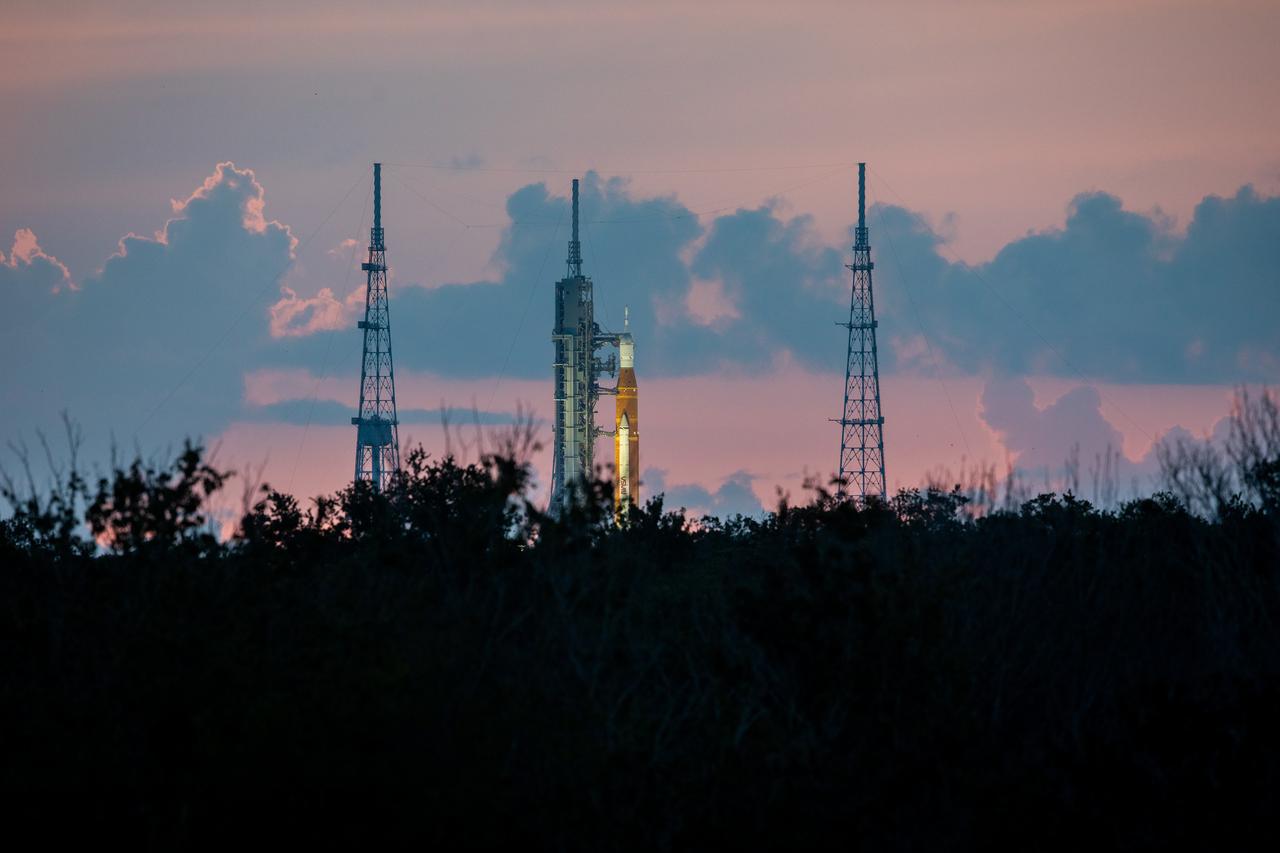
A sunrise view of NASA’s Space Launch System and Orion spacecraft for Artemis I on the pad at Launch Complex 39B at NASA’s Kennedy Space Center in Florida on Aug. 22, 2022. Launch of Artemis I is scheduled for no earlier than Aug. 29, 2022, at 8:33 a.m. EDT. The first in a series of increasingly complex missions, Artemis I will provide a foundation for human deep space exploration and demonstrate our commitment and capability to extend human presence to the Moon and beyond. The primary goal of Artemis I is to thoroughly test the integrated systems before crewed missions by operating the spacecraft in a deep space environment, testing Orion’s heat shield, and recovering the crew module after reentry, descent, and splashdown.

NASA's P-3B airborne laboratory on the ramp at Thule Air Base in Greenland early on the morning of Mar. 21, 2013. Credit: NASA/Goddard/Christy Hansen NASA's Operation IceBridge is an airborne science mission to study Earth's polar ice. For more information about IceBridge, visit: <a href="http://www.nasa.gov/icebridge" rel="nofollow">www.nasa.gov/icebridge</a> <b><a href="http://www.nasa.gov/audience/formedia/features/MP_Photo_Guidelines.html" rel="nofollow">NASA image use policy.</a></b> <b><a href="http://www.nasa.gov/centers/goddard/home/index.html" rel="nofollow">NASA Goddard Space Flight Center</a></b> enables NASA’s mission through four scientific endeavors: Earth Science, Heliophysics, Solar System Exploration, and Astrophysics. Goddard plays a leading role in NASA’s accomplishments by contributing compelling scientific knowledge to advance the Agency’s mission. <b>Follow us on <a href="http://twitter.com/NASA_GoddardPix" rel="nofollow">Twitter</a></b> <b>Like us on <a href="http://www.facebook.com/pages/Greenbelt-MD/NASA-Goddard/395013845897?ref=tsd" rel="nofollow">Facebook</a></b> <b>Find us on <a href="http://instagram.com/nasagoddard?vm=grid" rel="nofollow">Instagram</a></b>
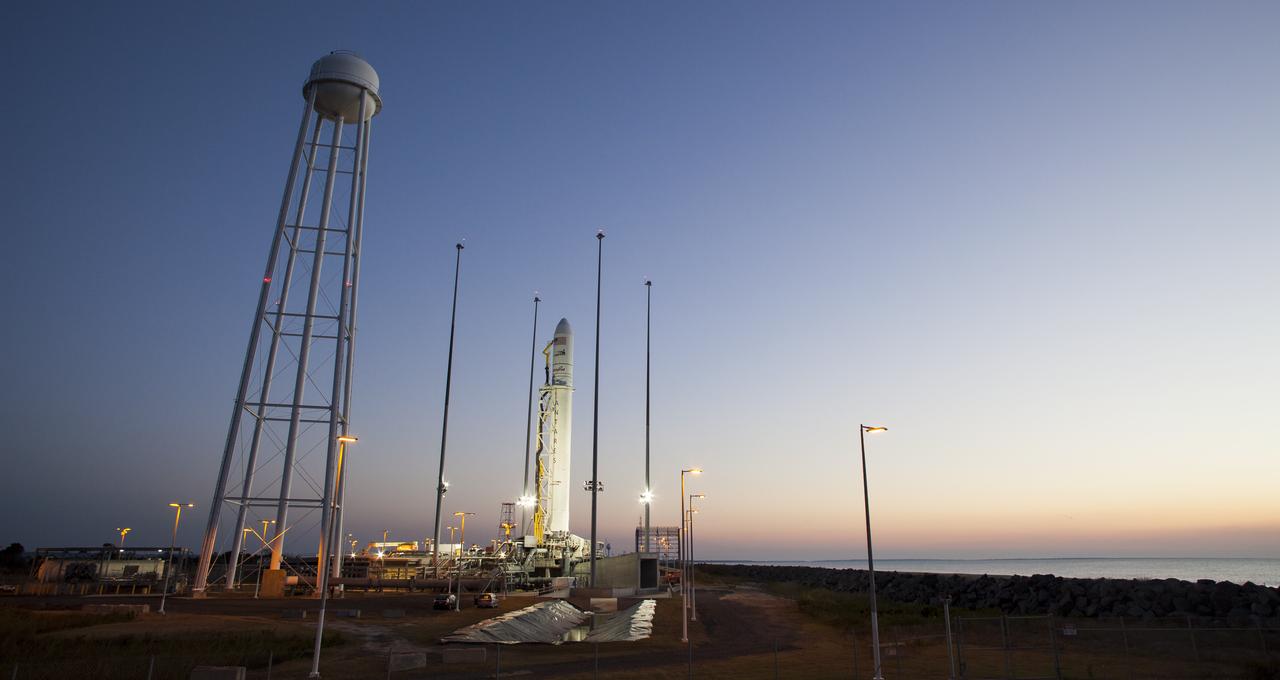
The Orbital Sciences Corporation Antares rocket, with the Cygnus spacecraft onboard, is seen on launch Pad-0A during sunrise, Sunday, Oct. 26, 2014, at NASA's Wallops Flight Facility in Virginia. The Antares will launch with the Cygnus spacecraft filled with over 5,000 pounds of supplies for the International Space Station, including science experiments, experiment hardware, spare parts, and crew provisions. The Orbital-3 mission is Orbital Sciences' third contracted cargo delivery flight to the space station for NASA. Launch is scheduled for Monday, Oct. 27 at 6:45 p.m. EDT. Photo Credit: (NASA/Joel Kowsky)
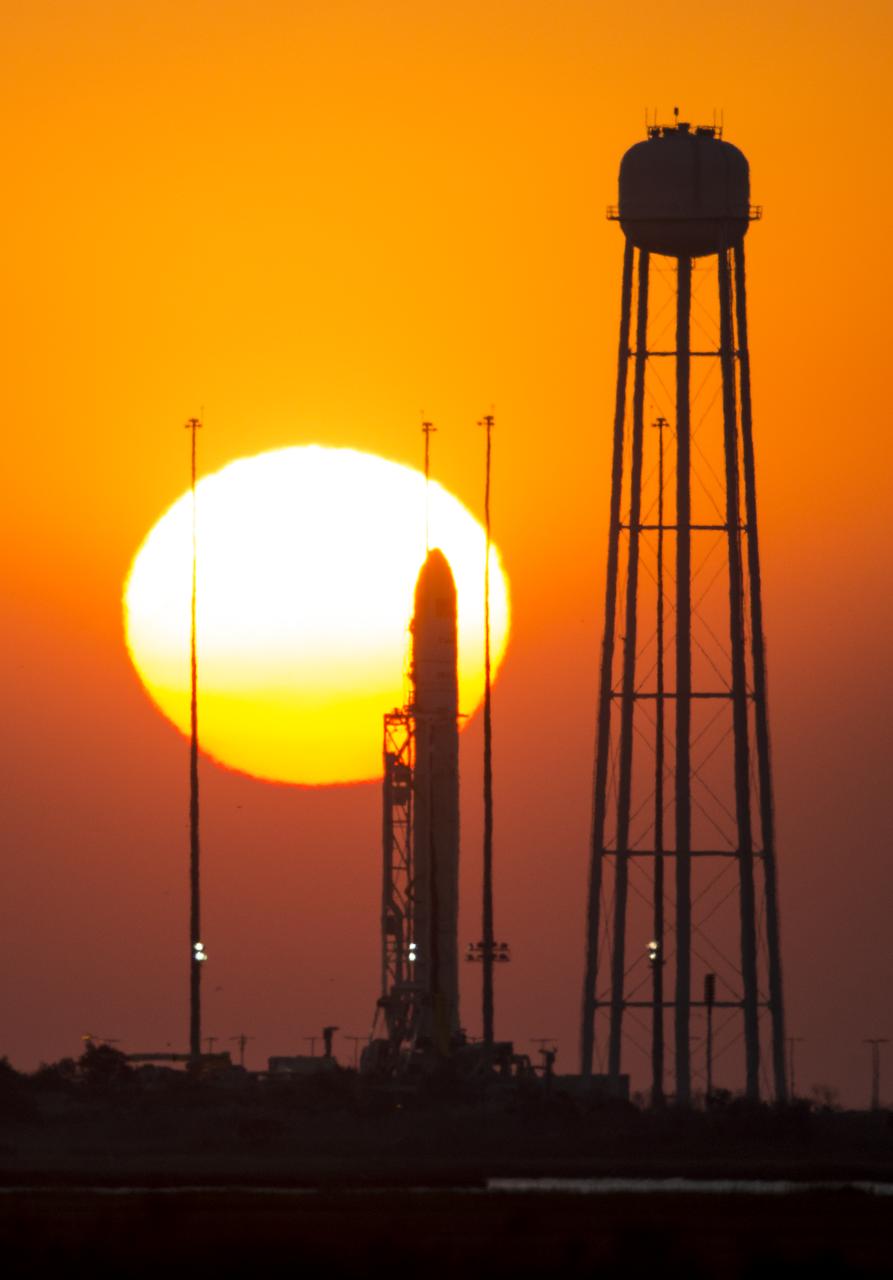
The Orbital Sciences Corporation Antares rocket, with the Cygnus spacecraft onboard, is seen on launch Pad-0A during sunrise, Sunday, Oct. 26, 2014, at NASA's Wallops Flight Facility in Virginia. The Antares will launch with the Cygnus spacecraft filled with over 5,000 pounds of supplies for the International Space Station, including science experiments, experiment hardware, spare parts, and crew provisions. The Orbital-3 mission is Orbital Sciences' third contracted cargo delivery flight to the space station for NASA. Launch is scheduled for Monday, Oct. 27 at 6:45 p.m. EDT. Photo Credit: (NASA/Joel Kowsky)
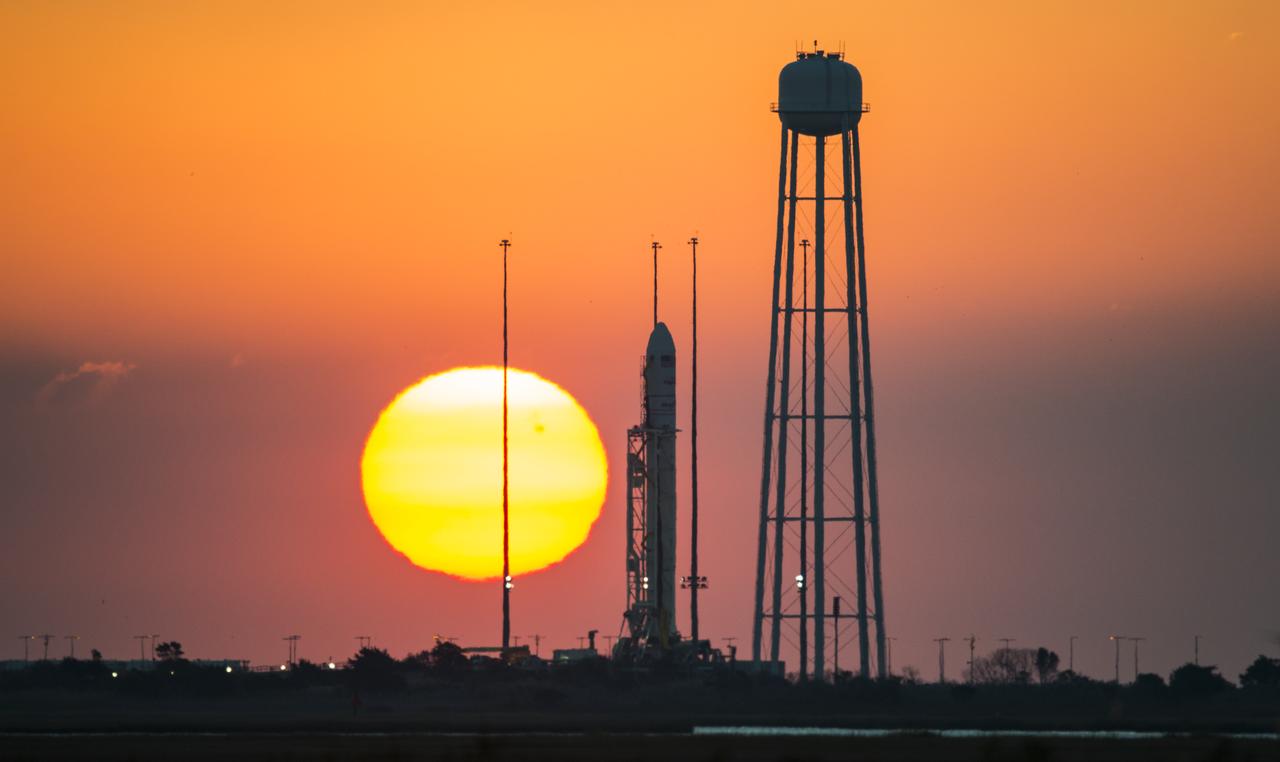
The Orbital Sciences Corporation Antares rocket, with the Cygnus spacecraft onboard, is seen on launch Pad-0A during sunrise, Sunday, Oct. 26, 2014, at NASA's Wallops Flight Facility in Virginia. The Antares will launch with the Cygnus spacecraft filled with over 5,000 pounds of supplies for the International Space Station, including science experiments, experiment hardware, spare parts, and crew provisions. The Orbital-3 mission is Orbital Sciences' third contracted cargo delivery flight to the space station for NASA. Launch is scheduled for Monday, Oct. 27 at 6:45 p.m. EDT. Photo Credit: (NASA/Joel Kowsky)
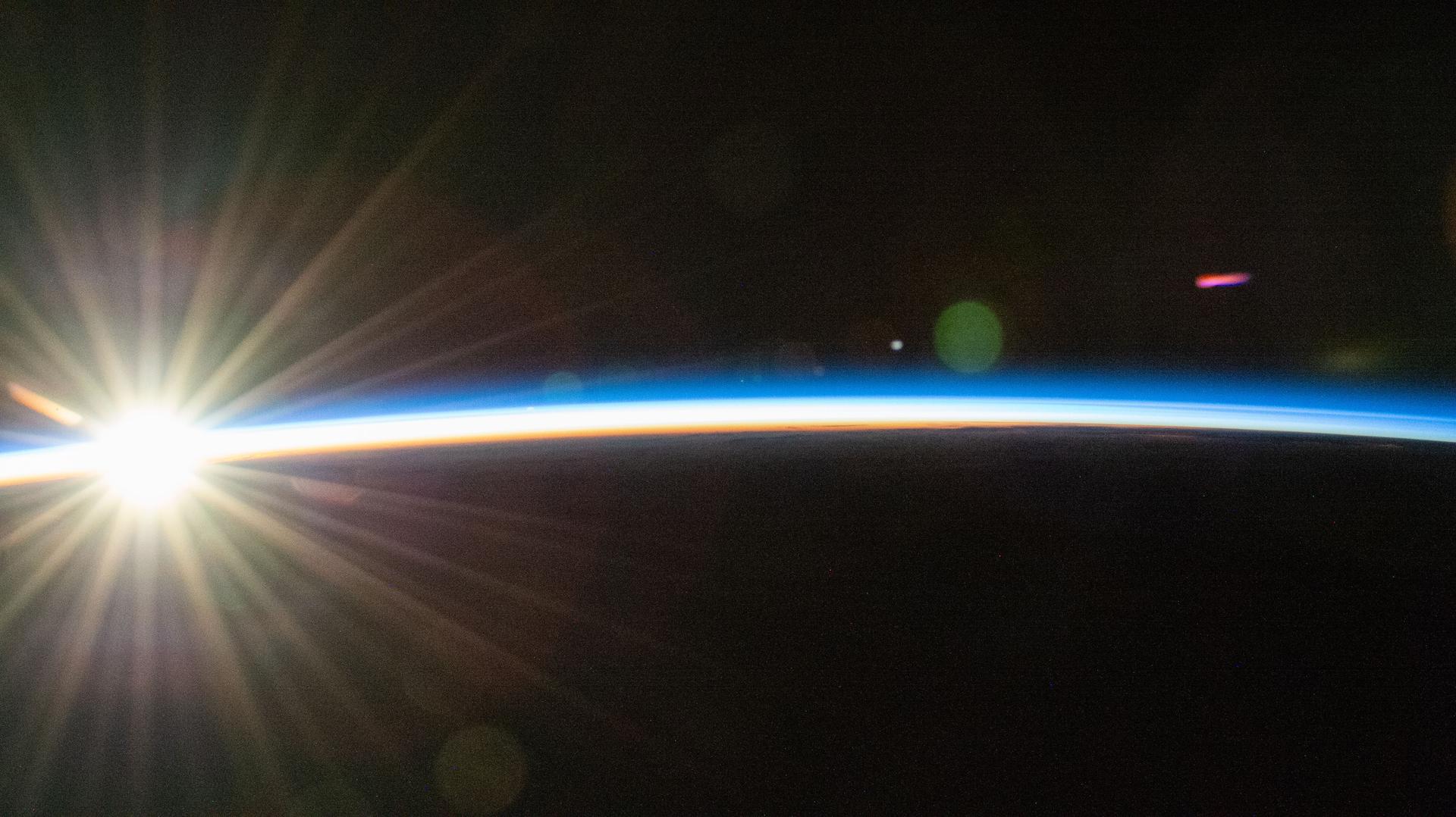
iss073e1068530 (Nov. 13, 2025) --- An orbital sunrise bursts above Earth's horizon and begins to illuminate the atmosphere in this photograph taken at approximately 4:11 a.m. local time from the International Space Station as it orbited 262 miles above the Pacific Ocean.
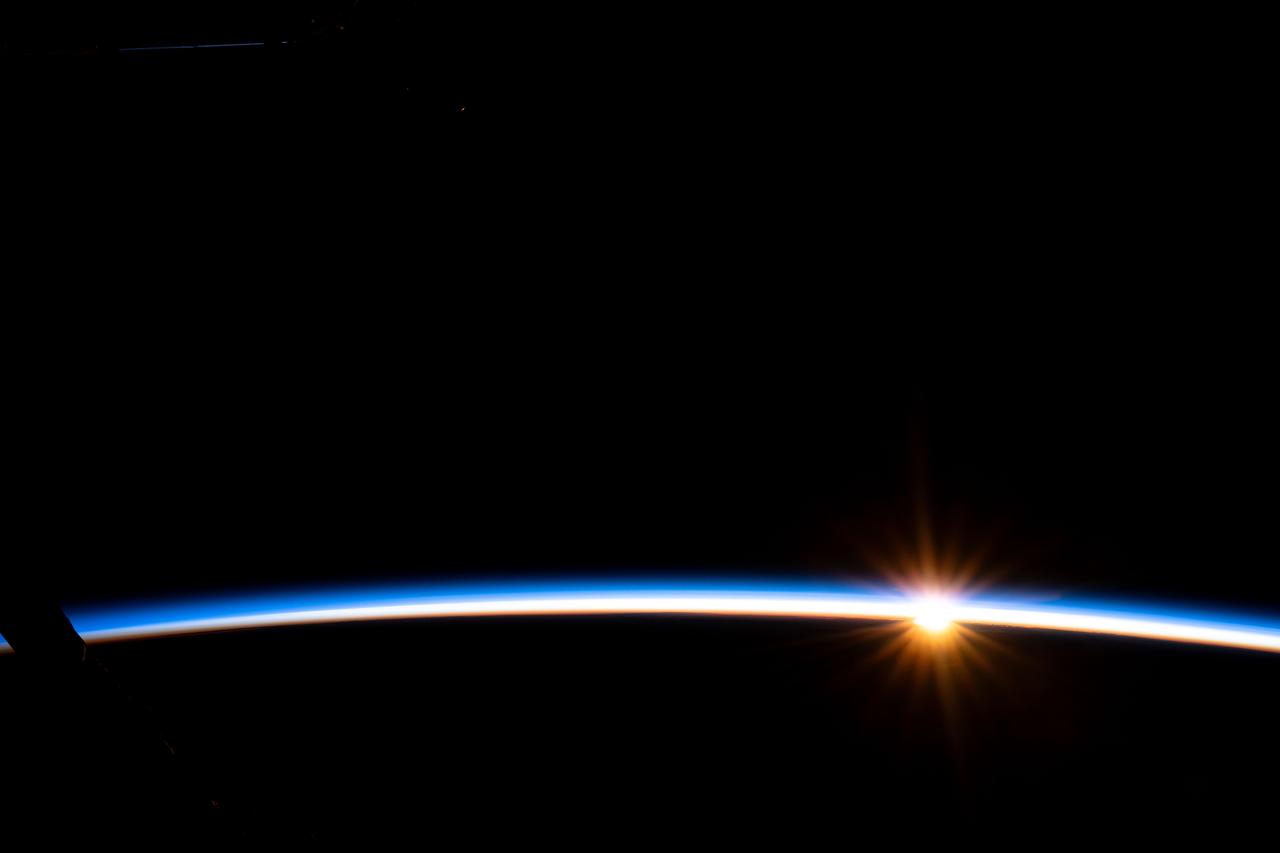
iss072e030246 (Oct. 7, 2024) --- The first rays of an orbital sunrise illuminate Earth's atmosphere in this photograph from the International Space Station as it orbited 269 miles above the Pacific Ocean near Chile's Patagonia coast on the South American continent.
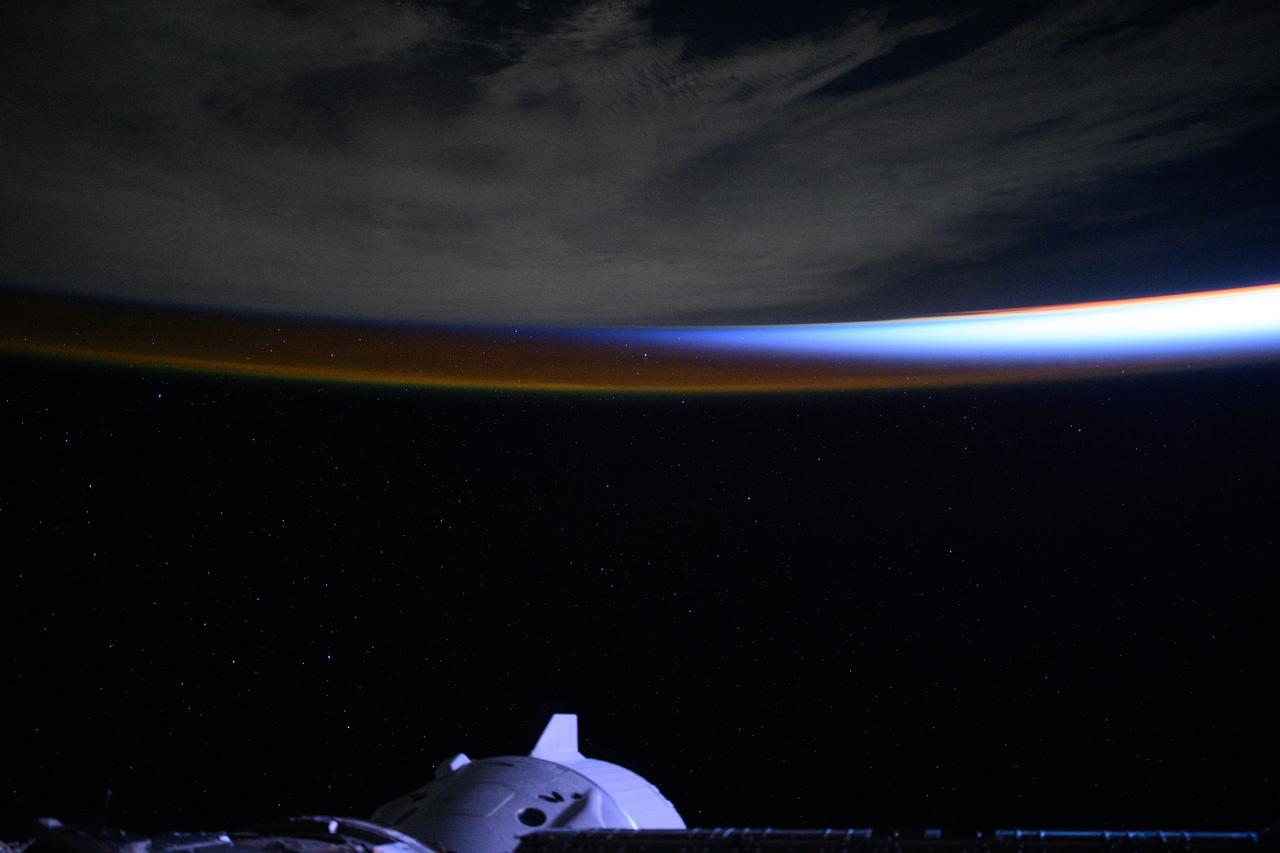
iss073e0203873 (May 19, 2025) --- An orbital sunrise breaks above a cloudy Atlantic Ocean and intersects with Earth's atmospheric glow in this photograph from the International Space Station as it orbited 268 miles overhead. At bottom, is the SpaceX Dragon crew spacecraft docked to the orbital outpost's forward port on the Harmony module.
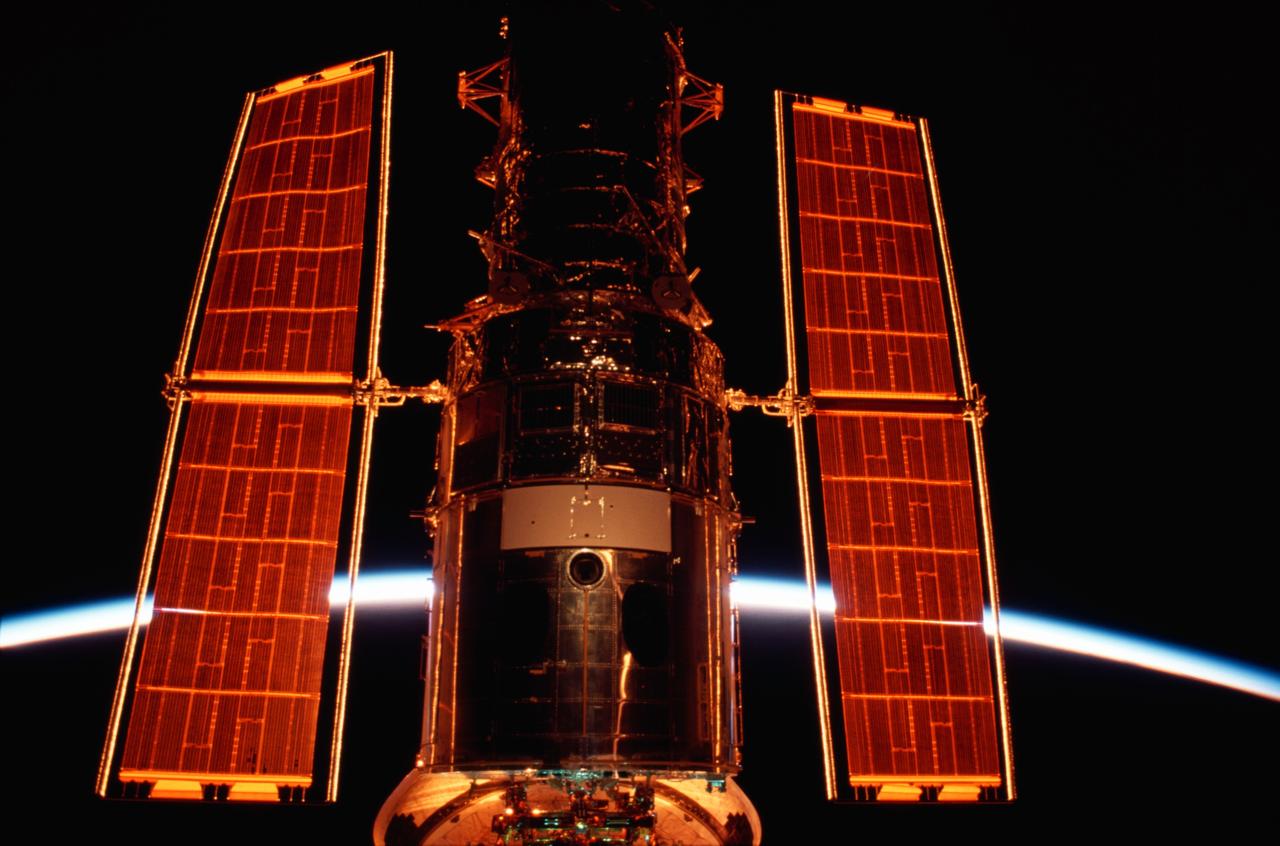
STS109-348-004 (3 March 2002) --- The Hubble Space Telescope (HST), with its normal routine temporarily interrupted, is berthed in the cargo bay of the Space Shuttle Columbia prior to a week of servicing and upgrading by the STS-109 astronaut crew. A thin blue line of airglow pin-points Earth's horizon at sunrise.
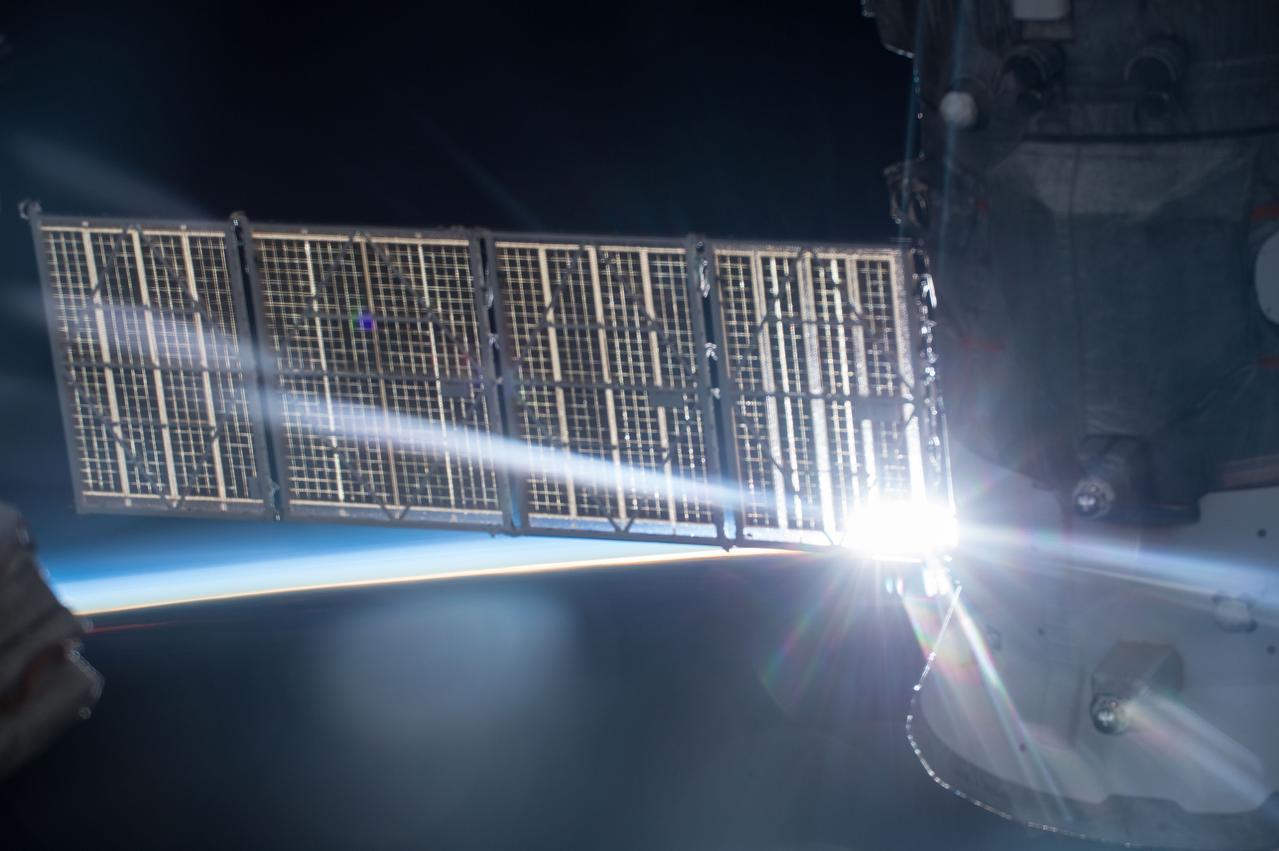
ISS042E282716 (02/19/2015) --- Astronauts of Expedition 42 took this intriguing picture of sunrise in space Feb. 19, 2015. The rising sun creates sparkling glints off the solar panels that provide electricity to the International Space Station as it speeds around the Earth at 17200 miles per hour.
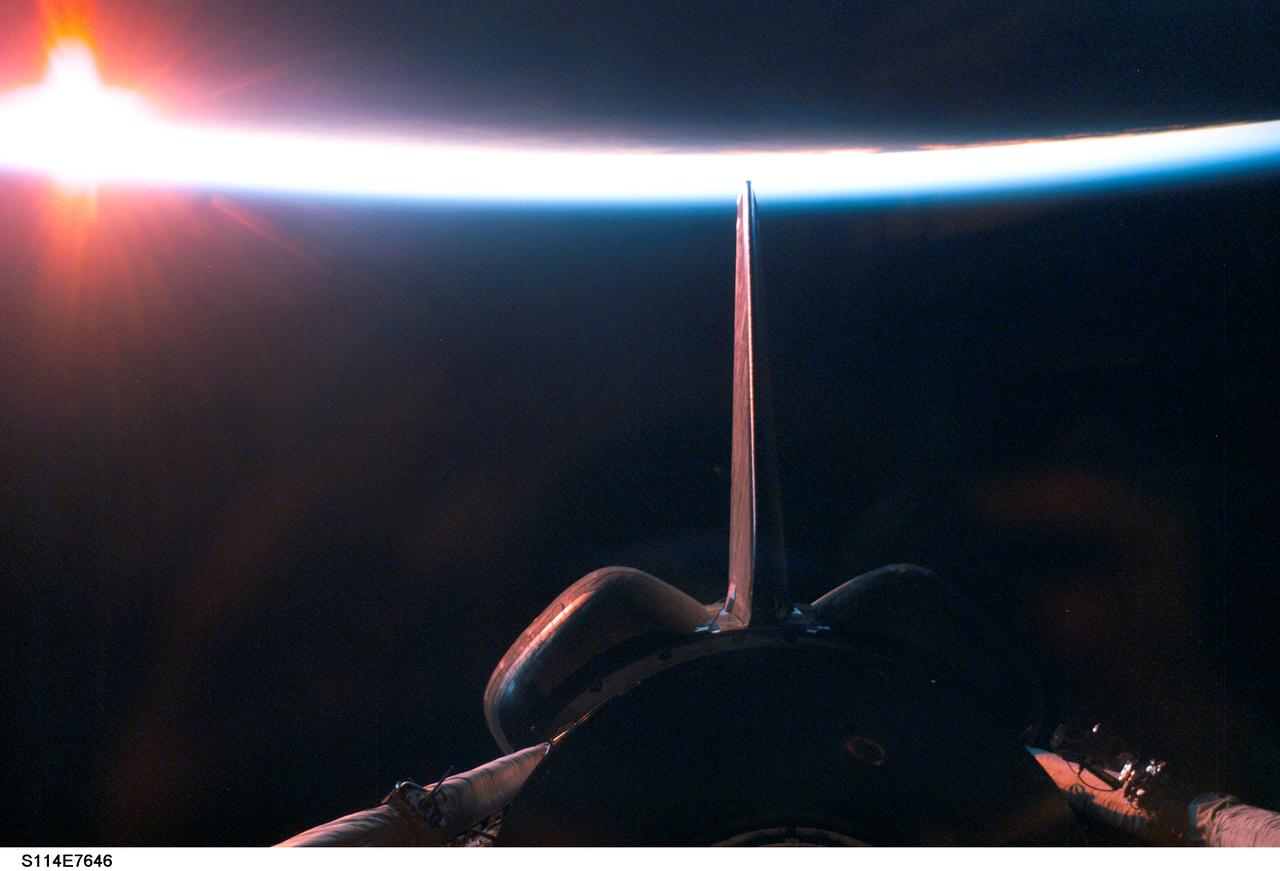
S114-E-7646 (6 August 2005) --- A sunrise dissecting a line of airglow of Earth's atmosphere provides the backdrop for this image featuring a portion of the Space Shuttle Discovery’s aft cargo bay, its vertical stabilizer and orbital maneuvering system (OMS) pods after departure from the International Space Station. The image was photographed by an STS-114 crewmember onboard the Shuttle.

An early morning view of the iconic Vehicle Assembly Building (VAB) at NASA's Kennedy Space Center in Florida. To the right is the Launch Control Center. In the background is the mobile launcher. All 10 levels of new work platforms, 20 platform halves altogether, have been installed in VAB High Bay 3 for the agency's Space Launch System (SLS) rocket and Orion spacecraft. The Ground Systems Development and Operations Program is overseeing upgrades to the VAB, including installation of the new platforms to prepare for the first test flight of Orion atop the SLS from Launch Pad 39B.
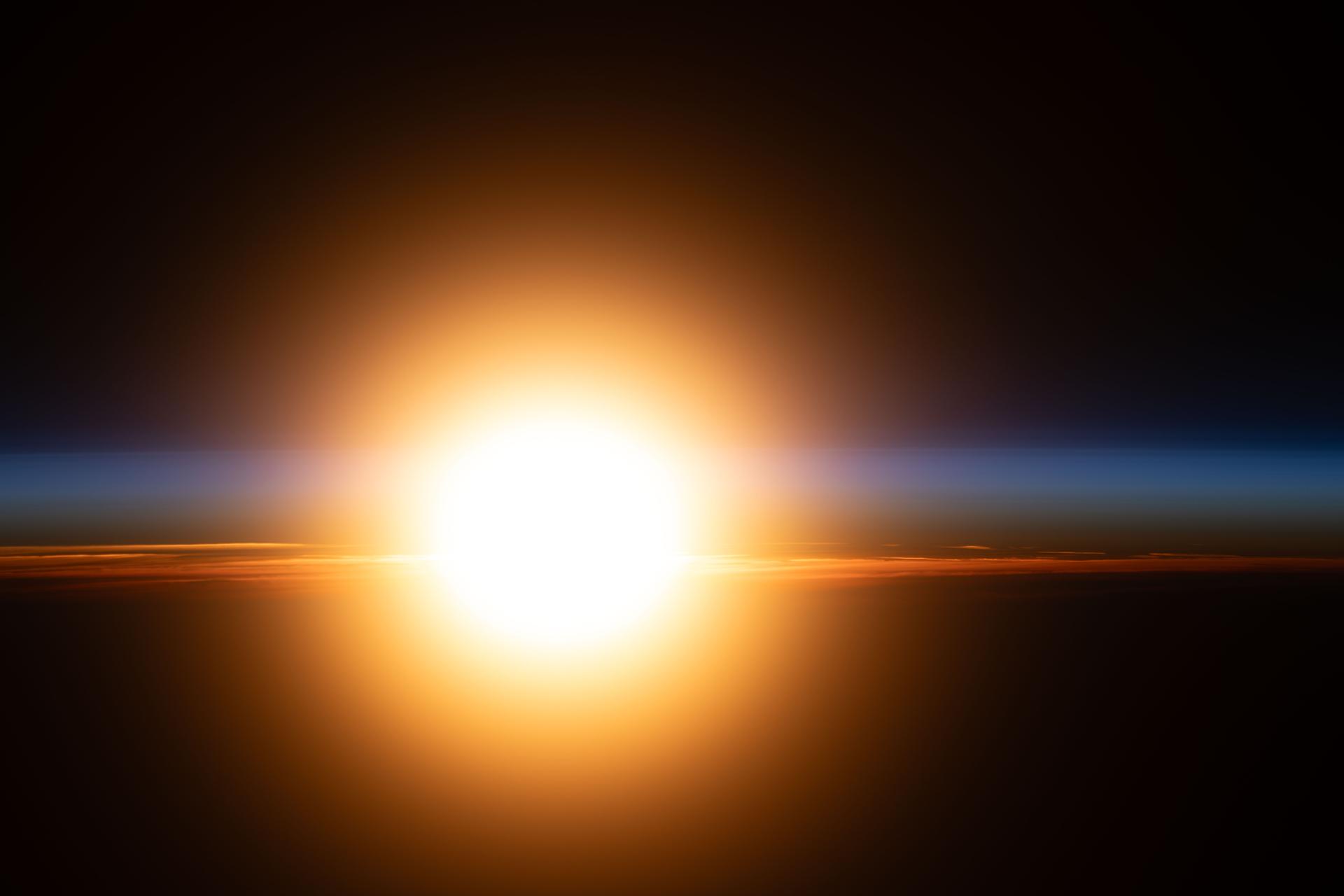
iss074e0779393 (June 26, 2026) --- A bright orange sunburst illuminates Earth's atmosphere during an orbital sunrise in this photograph from the International Space Station as it orbited 264 miles above the Caucasus Mountains. Credit: NASA/Chris Williams
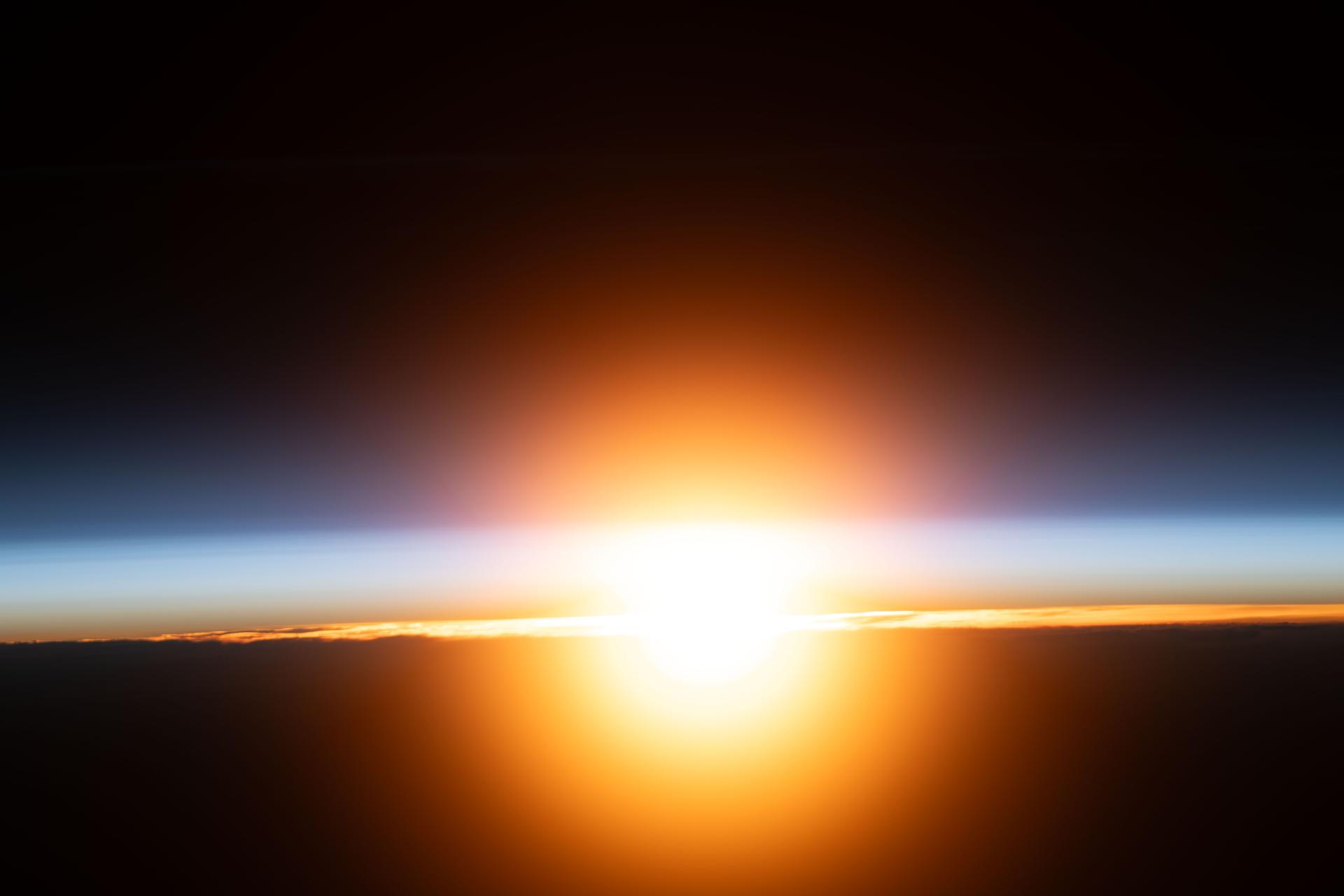
iss074e0784492 (June 29, 2026) --- A bright orange sunburst illuminates Earth's atmosphere during an orbital sunrise in this photograph from the International Space Station as it orbited 265 miles above western Mongolia. Credit: NASA/Chris Williams
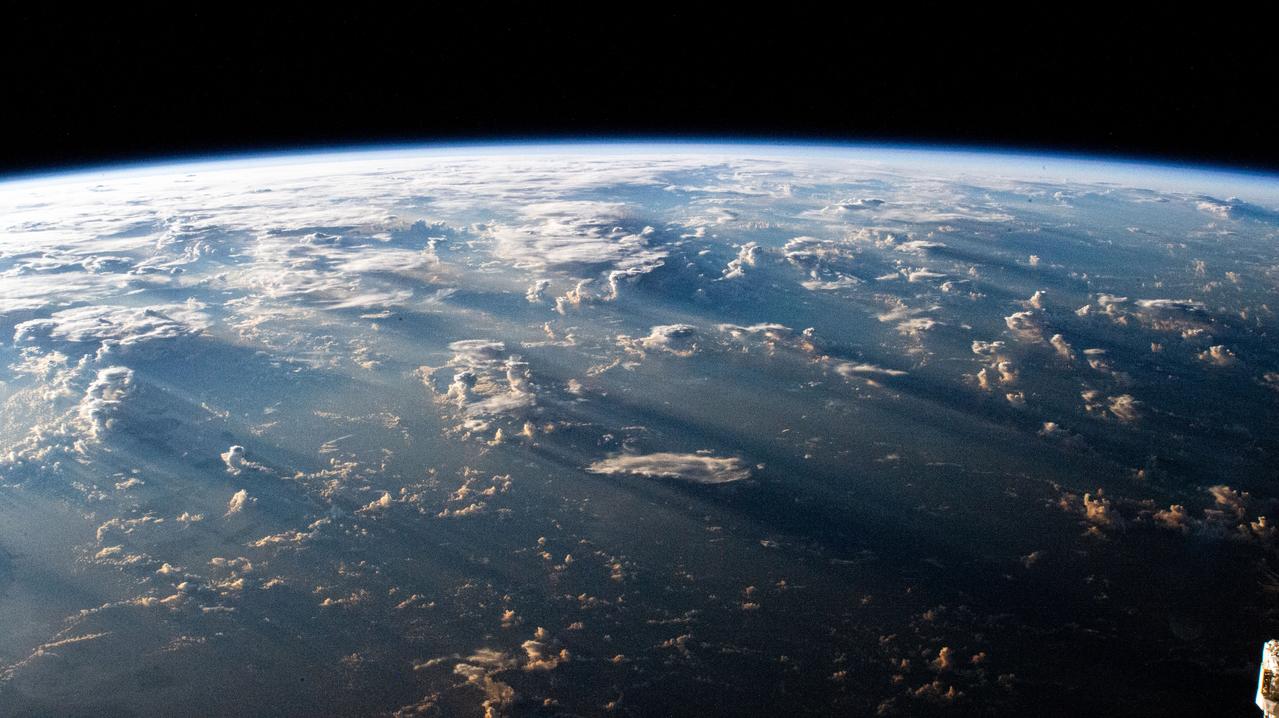
iss072e742575 (March 10, 2025) --- A Southeast Asian sunrise casts long shadows behind clouds in this photograph from the International Space Station as it orbited 263 miles above the Bismarck Sea.
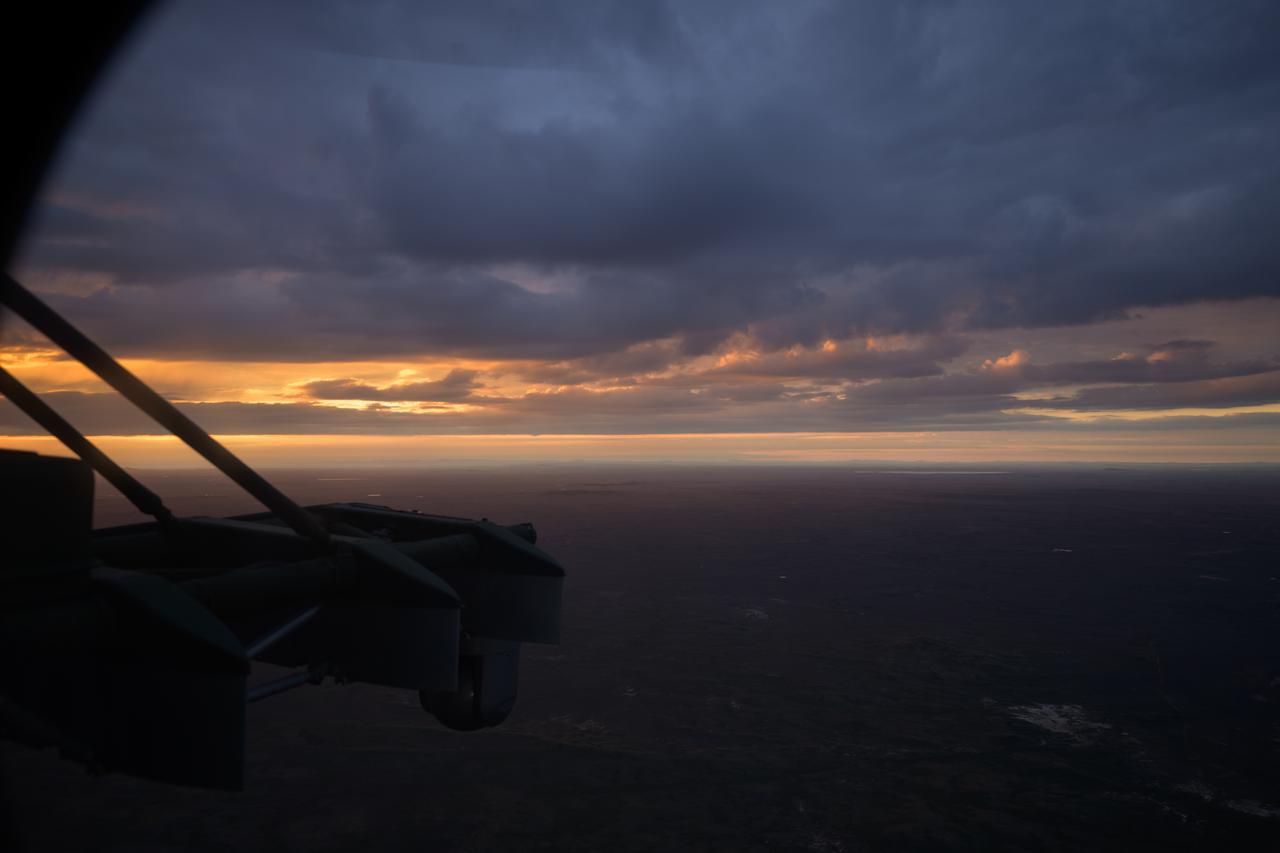
Sunrise is seen from a Russian MI-8 helicopter as teams support the landing of Expedition 72 NASA astronaut Don Pettit, and Roscosmos cosmonauts Alexey Ovchinin and Ivan Vagner, Sunday, April 20, 2025. The trio are returning to Earth after logging 220 days in space as members of Expeditions 71 and 72 aboard the International Space Station. Photo Credit: (NASA/Bill Ingalls)