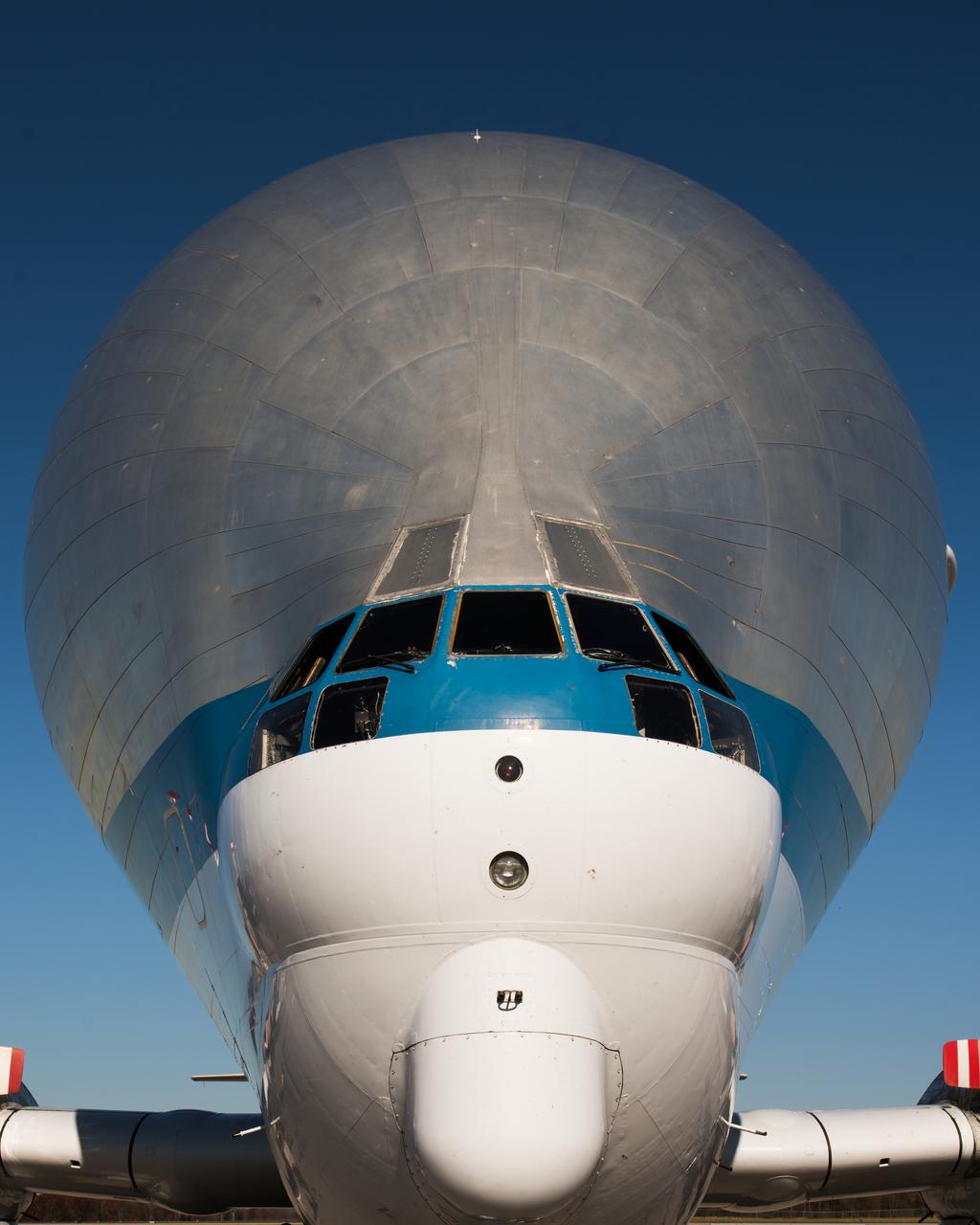
Front view of NASA’s Super Guppy aircraft after it touched down at Mansfield’s Lahm Airport in November, 2015. The crew delivered the crew module adaptor for Orion’s testing at NASA's Plum Brook Station next year.
The Super Position
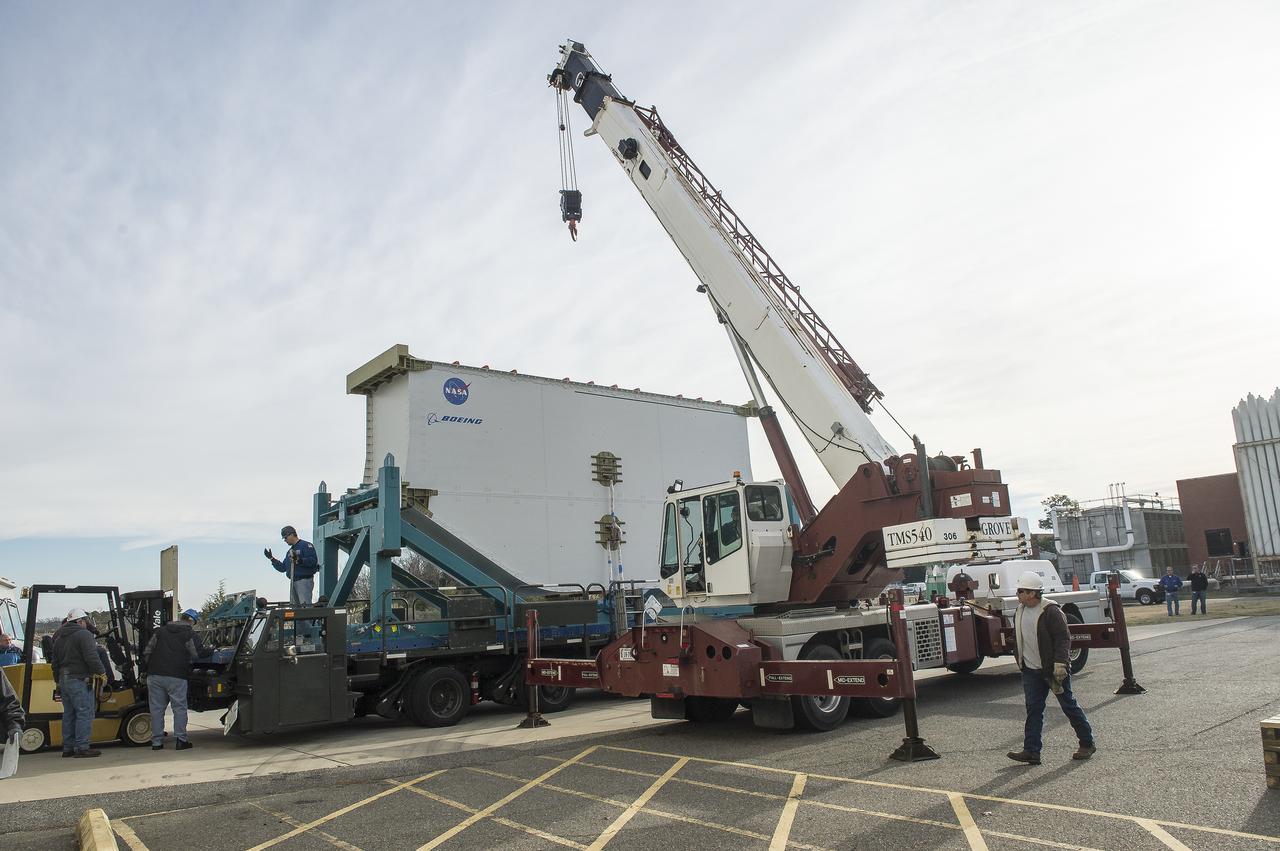
Super Guppy arrival and (MBB) Multi-Bay Box Delivery ; Super Guppy arrival and MBB Delivery: super Guppy arrival at NASA Langley hangar, and unloading of (MBB) multi-bay box, transport of MBB to COLTS and move into building 1256.
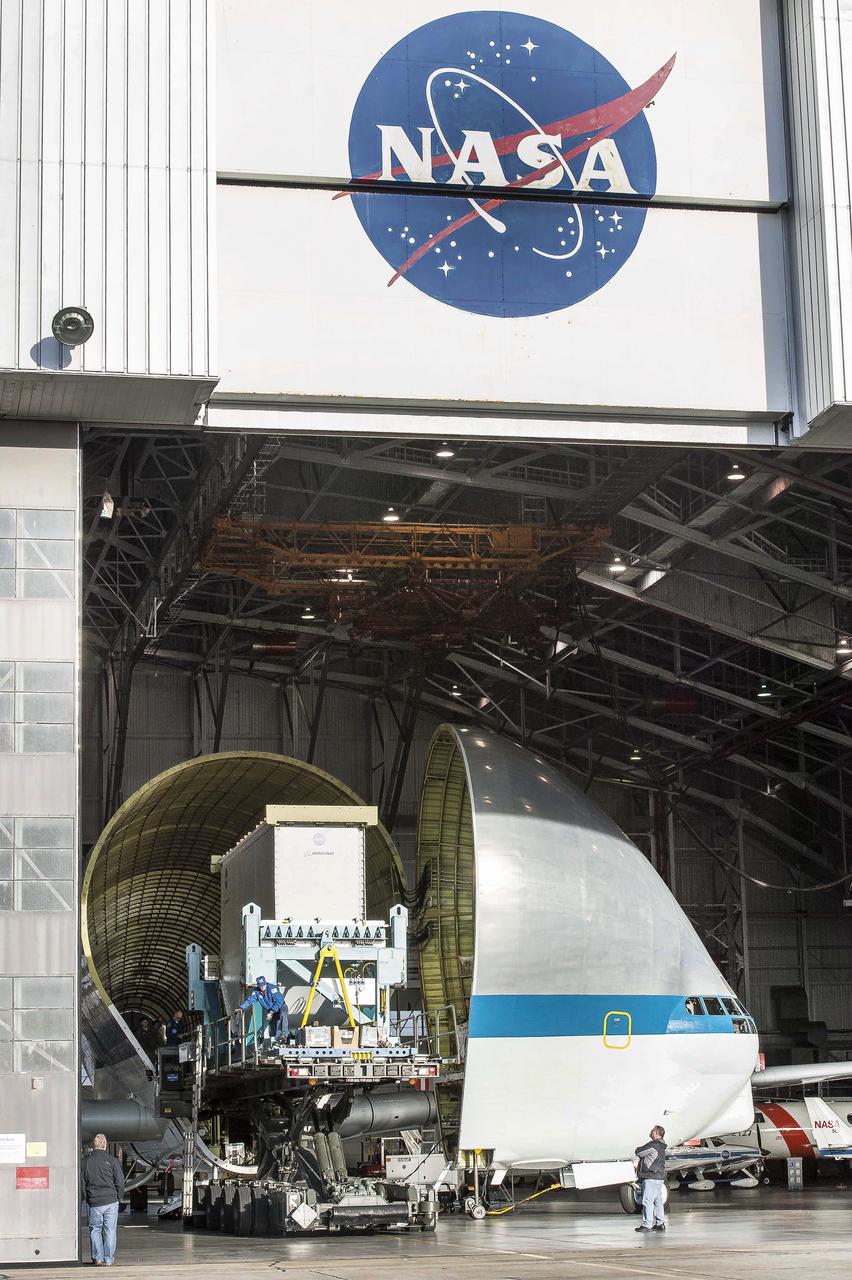
Super Guppy arrival and (MBB) Multi-Bay Box Delivery ; Super Guppy arrival and MBB Delivery: super Guppy arrival at NASA Langley hangar, and unloading of (MBB) multi-bay box, transport of MBB to COLTS and move into building 1256.
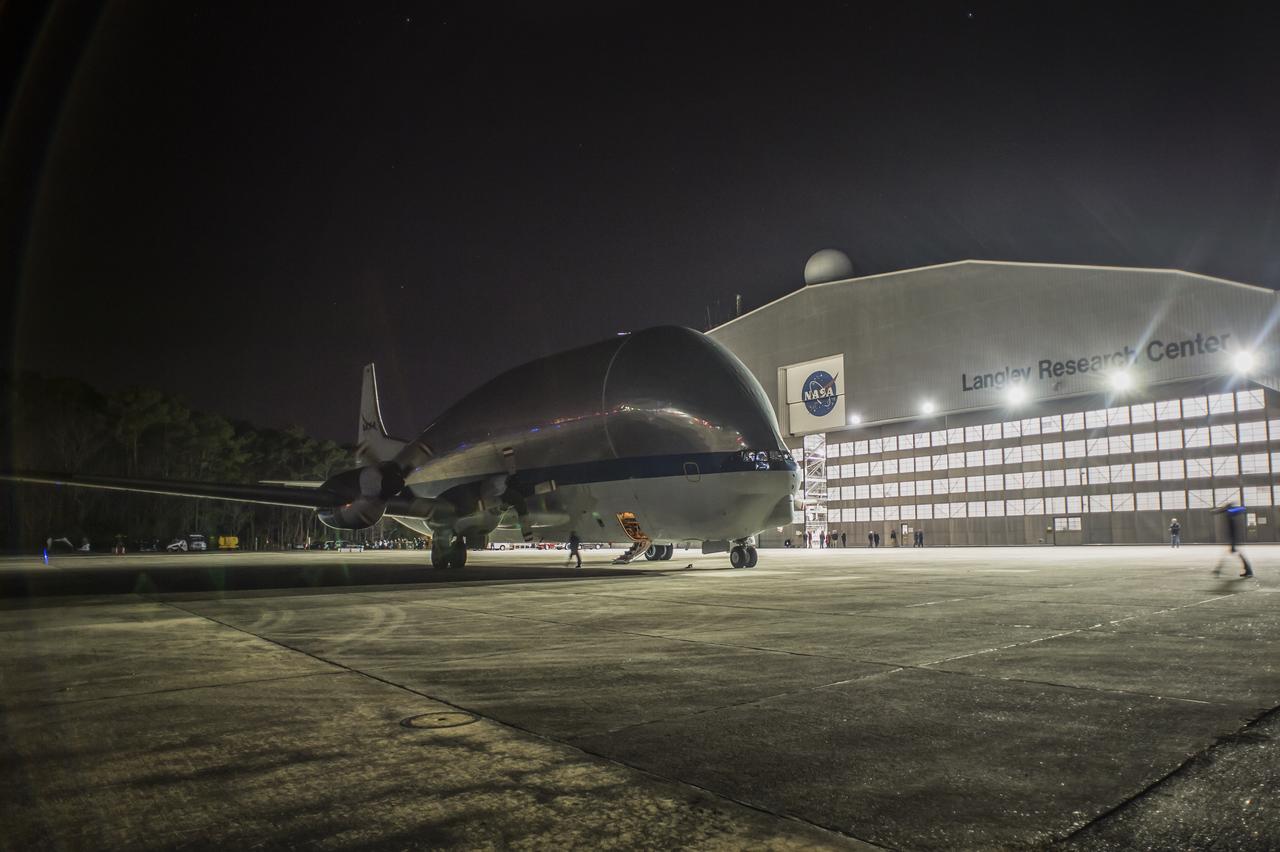
Super Guppy arrival and (MBB) Multi-Bay Box Delivery ; Super Guppy arrival and MBB Delivery: super Guppy arrival at NASA Langley hangar, and unloading of (MBB) multi-bay box, transport of MBB to COLTS and move into building 1256.
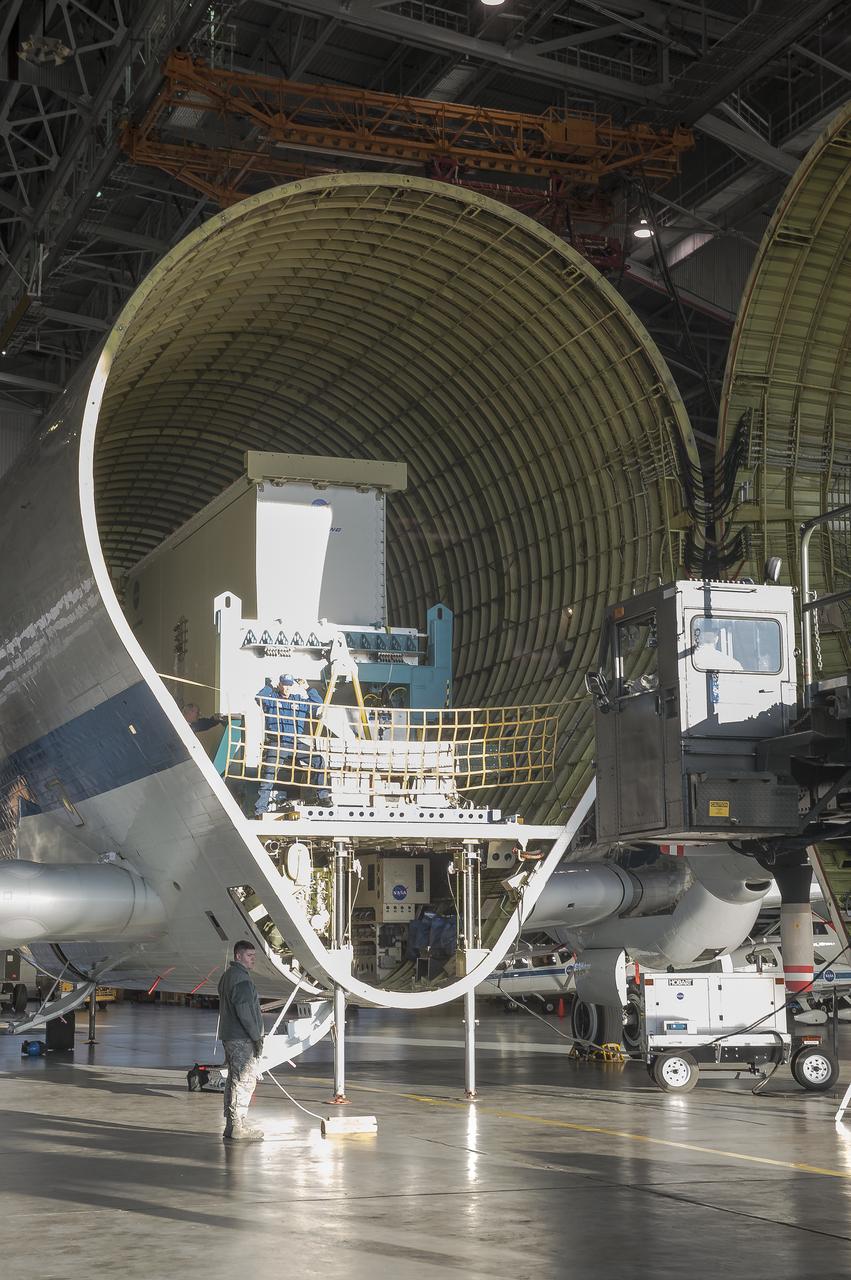
Super Guppy arrival and (MBB) Multi-Bay Box Delivery ; Super Guppy arrival and MBB Delivery: super Guppy arrival at NASA Langley hangar, and unloading of (MBB) multi-bay box, transport of MBB to COLTS and move into building 1256.
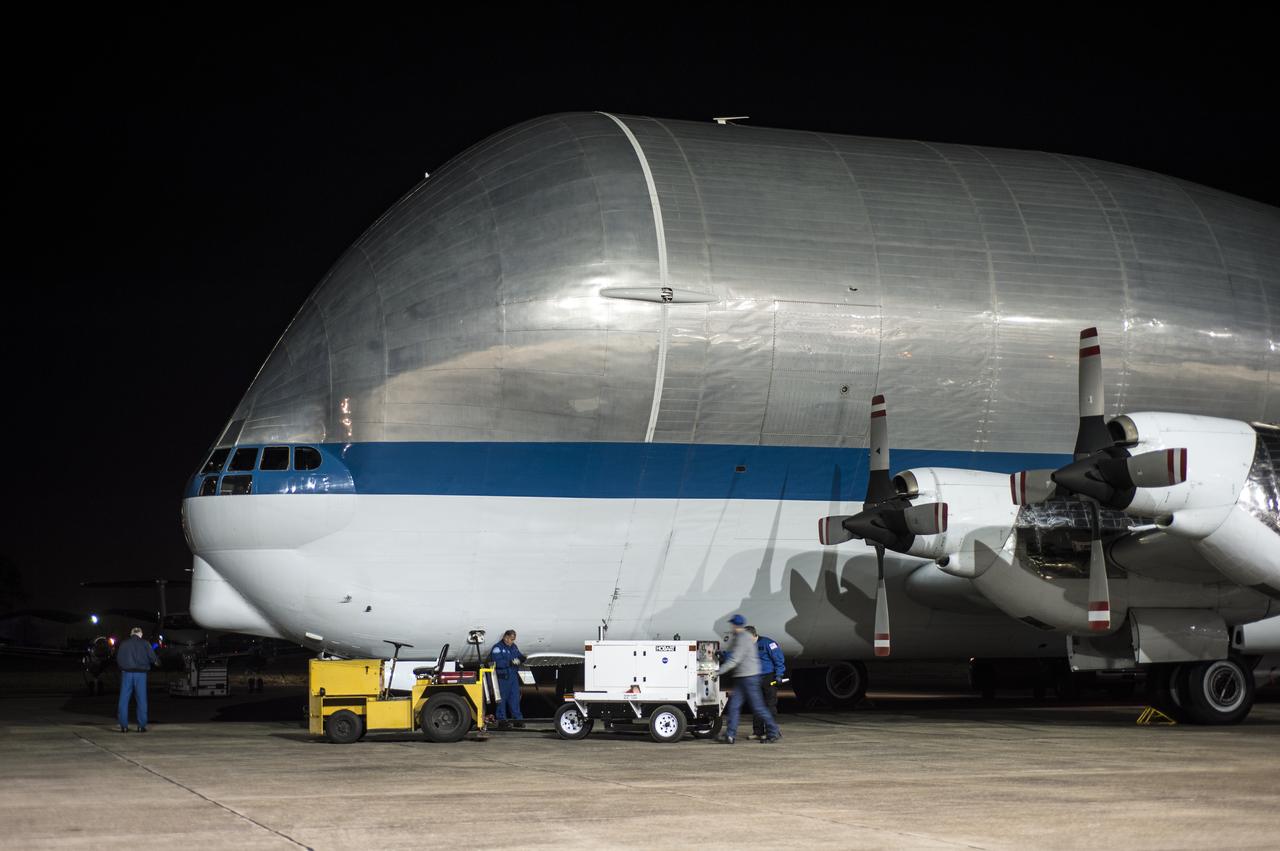
Super Guppy arrival and (MBB) Multi-Bay Box Delivery ; Super Guppy arrival and MBB Delivery: super Guppy arrival at NASA Langley hangar, and unloading of (MBB) multi-bay box, transport of MBB to COLTS and move into building 1256.
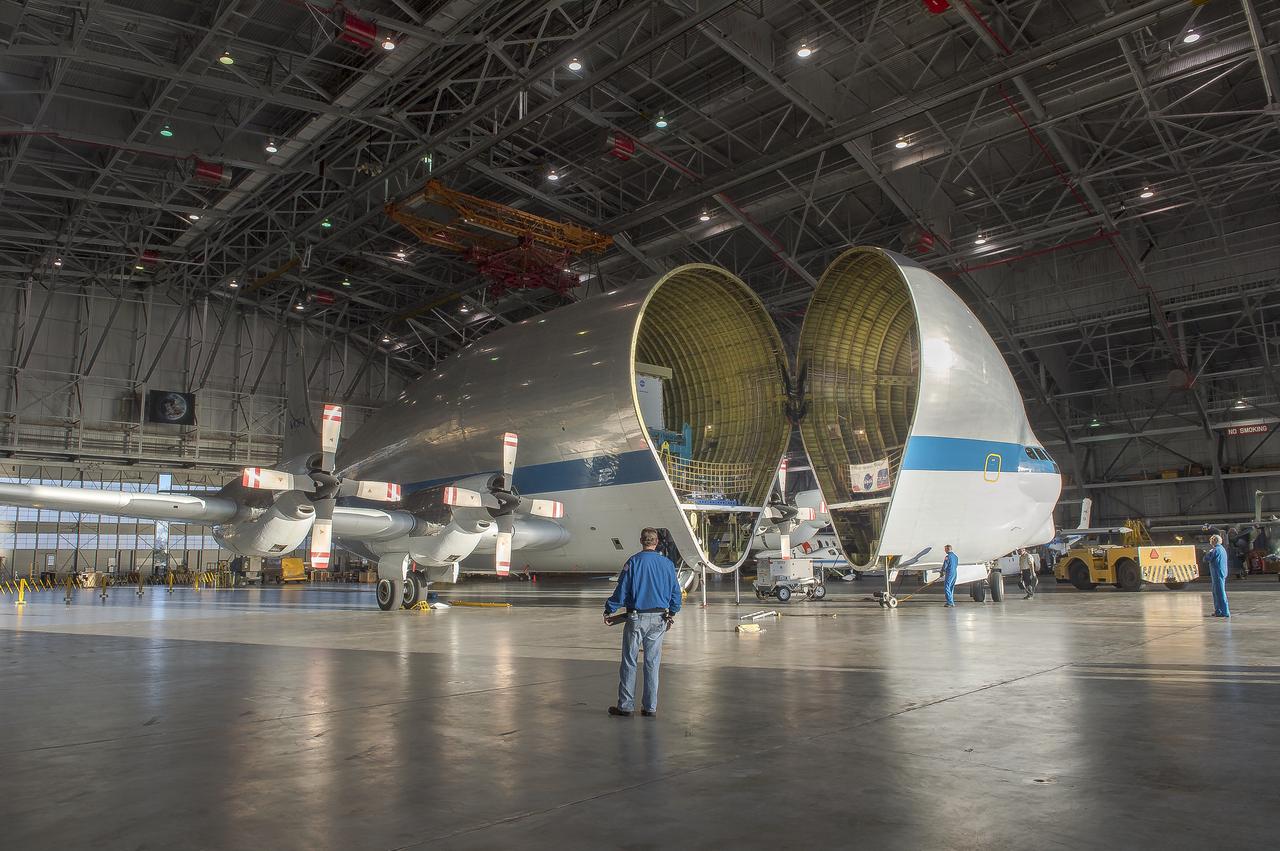
Super Guppy arrival and (MBB) Multi-Bay Box Delivery ; Super Guppy arrival and MBB Delivery: super Guppy arrival at NASA Langley hangar, and unloading of (MBB) multi-bay box, transport of MBB to COLTS and move into building 1256.
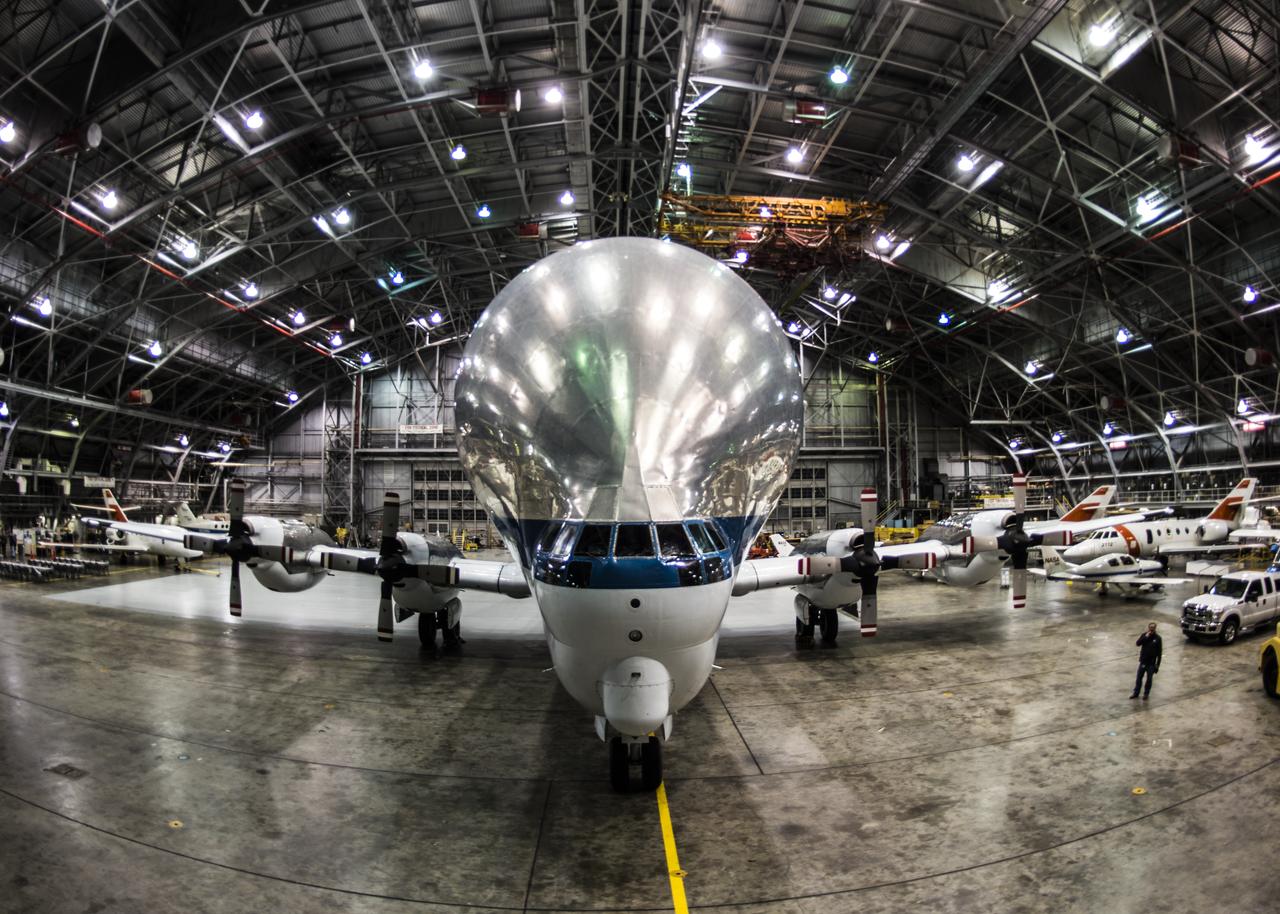
Super Guppy arrival and (MBB) Multi-Bay Box Delivery ; Super Guppy arrival and MBB Delivery: super Guppy arrival at NASA Langley hangar, and unloading of (MBB) multi-bay box, transport of MBB to COLTS and move into building 1256.
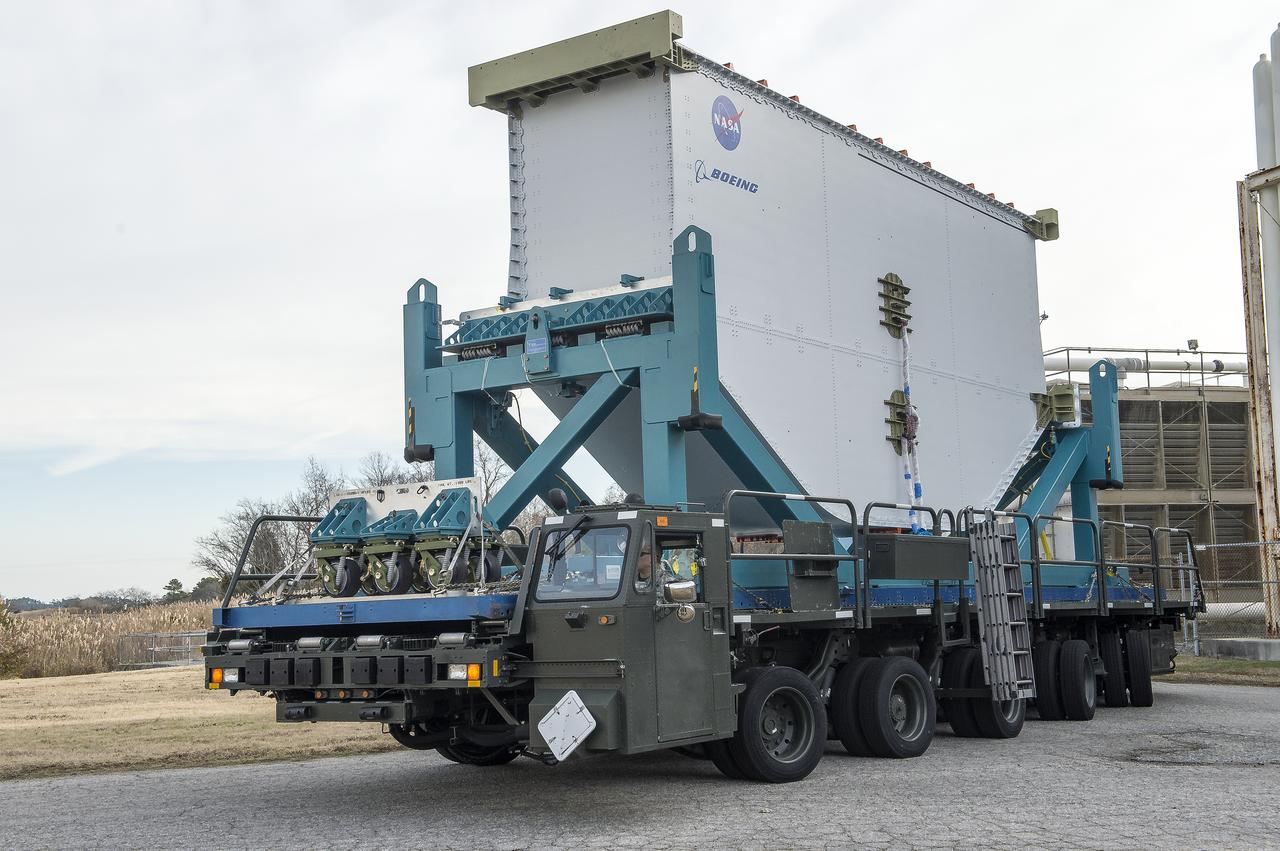
Super Guppy arrival and (MBB) Multi-Bay Box Delivery ; Super Guppy arrival and MBB Delivery: super Guppy arrival at NASA Langley hangar, and unloading of (MBB) multi-bay box, transport of MBB to COLTS and move into building 1256.
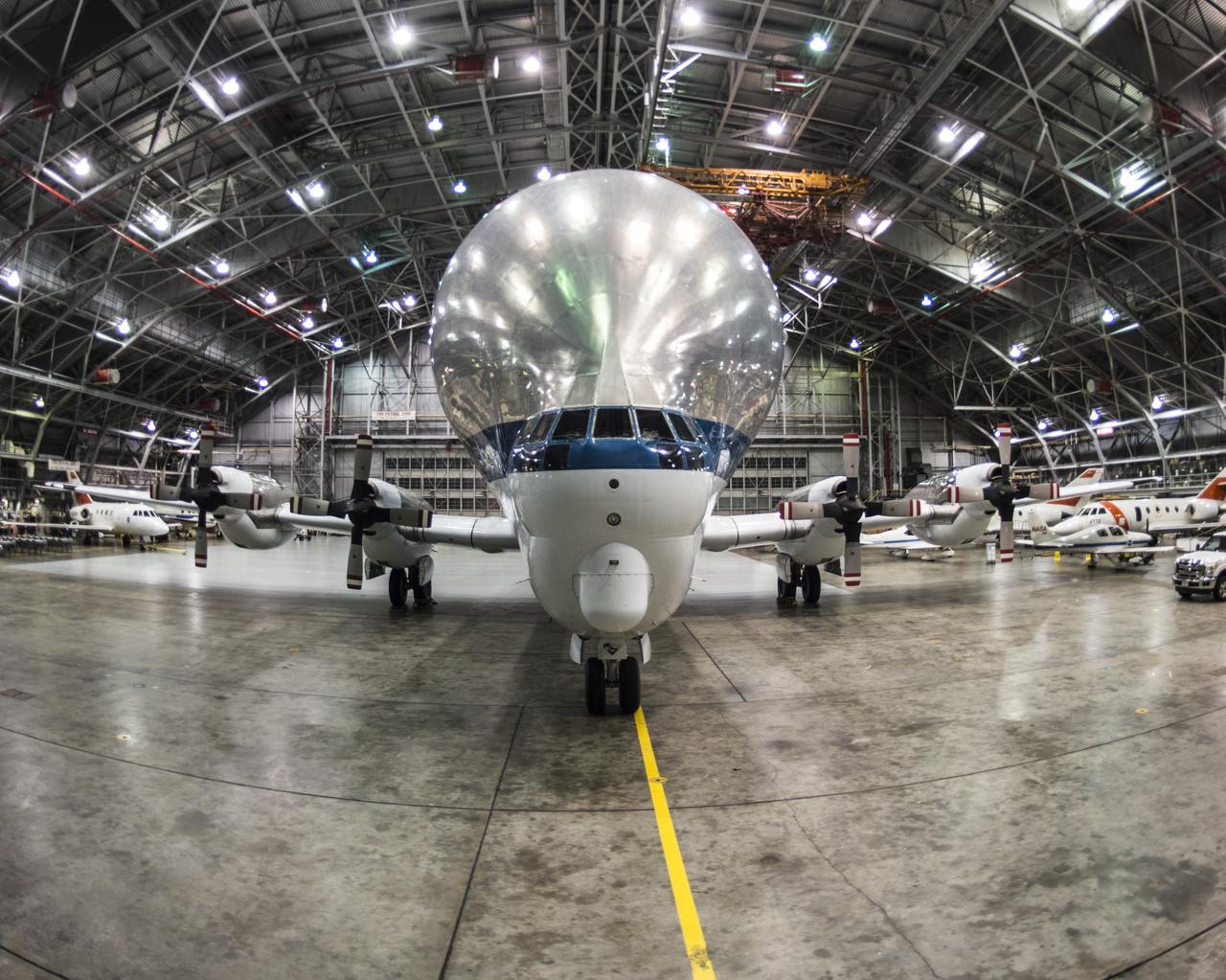
Super Guppy arrival and (MBB) Multi-Bay Box Delivery ; Super Guppy arrival and MBB Delivery: super Guppy arrival at NASA Langley hangar, and unloading of (MBB) multi-bay box, transport of MBB to COLTS and move into building 1256.
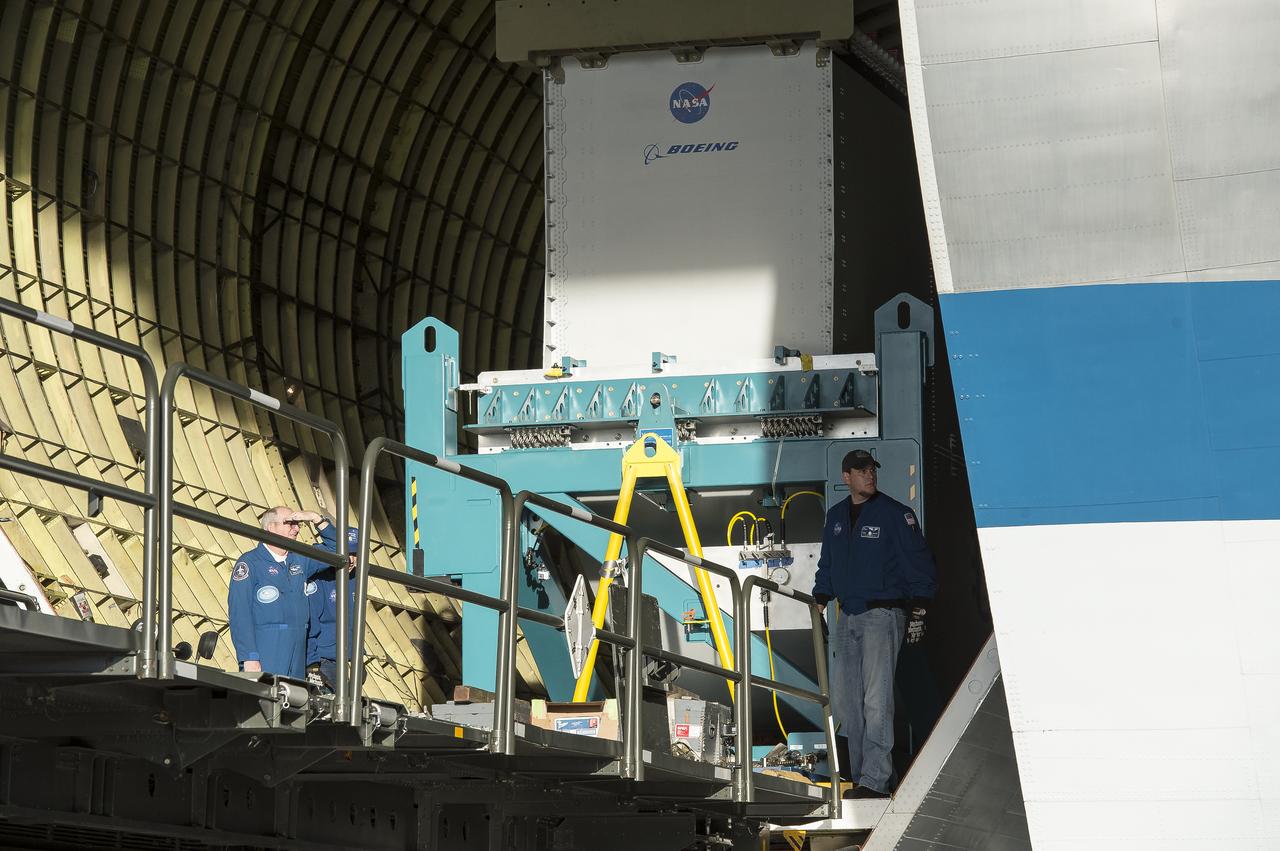
Super Guppy arrival and (MBB) Multi-Bay Box Delivery ; Super Guppy arrival and MBB Delivery: super Guppy arrival at NASA Langley hangar, and unloading of (MBB) multi-bay box, transport of MBB to COLTS and move into building 1256.
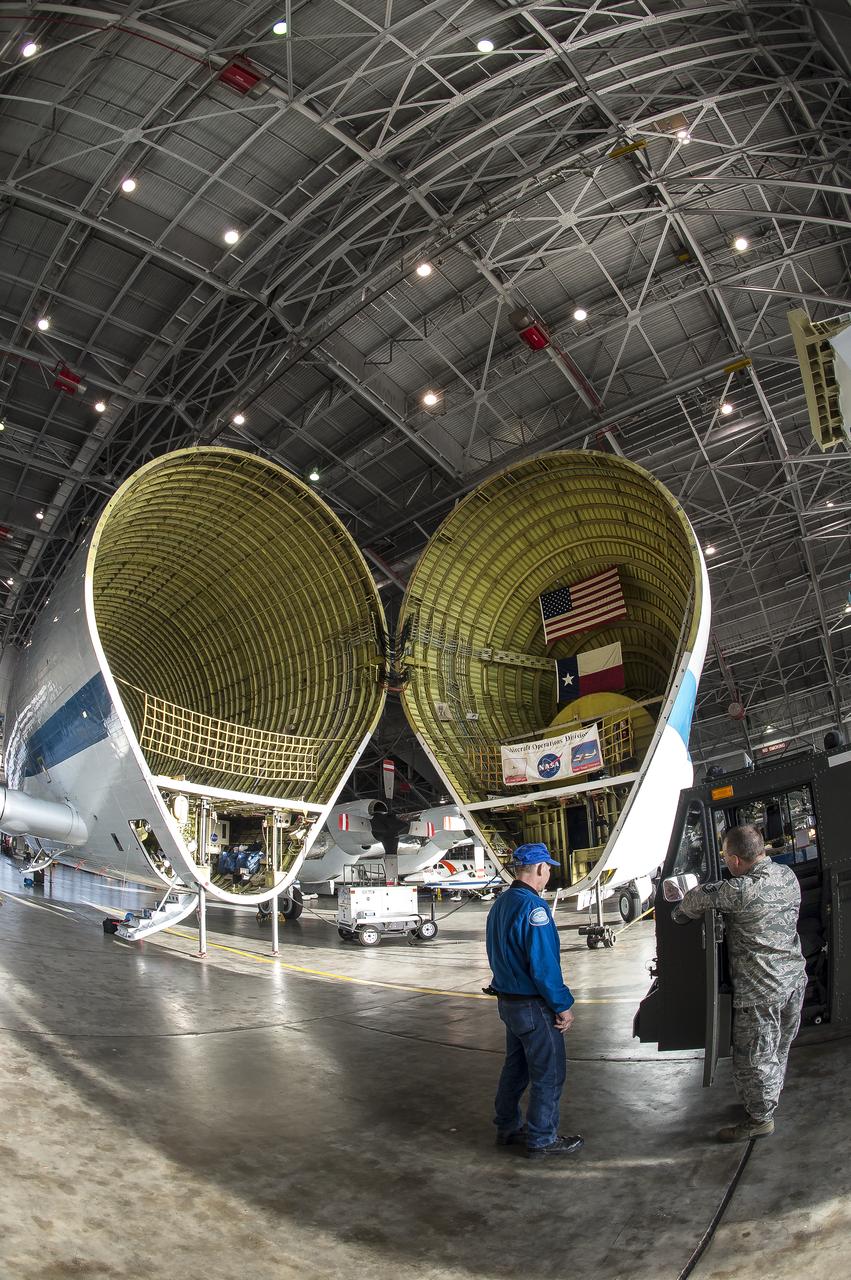
Super Guppy arrival and (MBB) Multi-Bay Box Delivery ; Super Guppy arrival and MBB Delivery: super Guppy arrival at NASA Langley hangar, and unloading of (MBB) multi-bay box, transport of MBB to COLTS and move into building 1256.
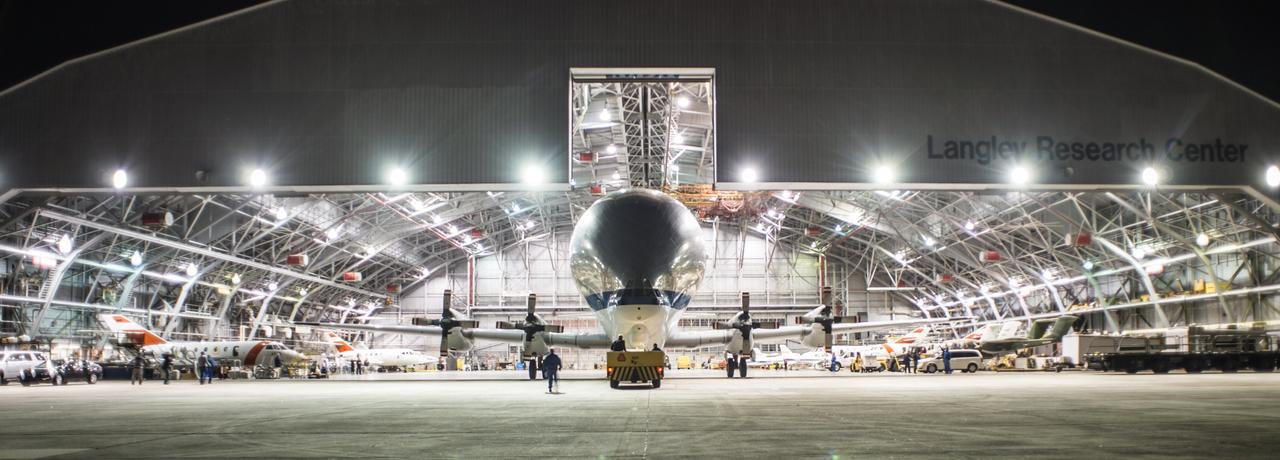
Super Guppy arrival and (MBB) Multi-Bay Box Delivery ; Super Guppy arrival and MBB Delivery: super Guppy arrival at NASA Langley hangar, and unloading of (MBB) multi-bay box, transport of MBB to COLTS and move into building 1256.
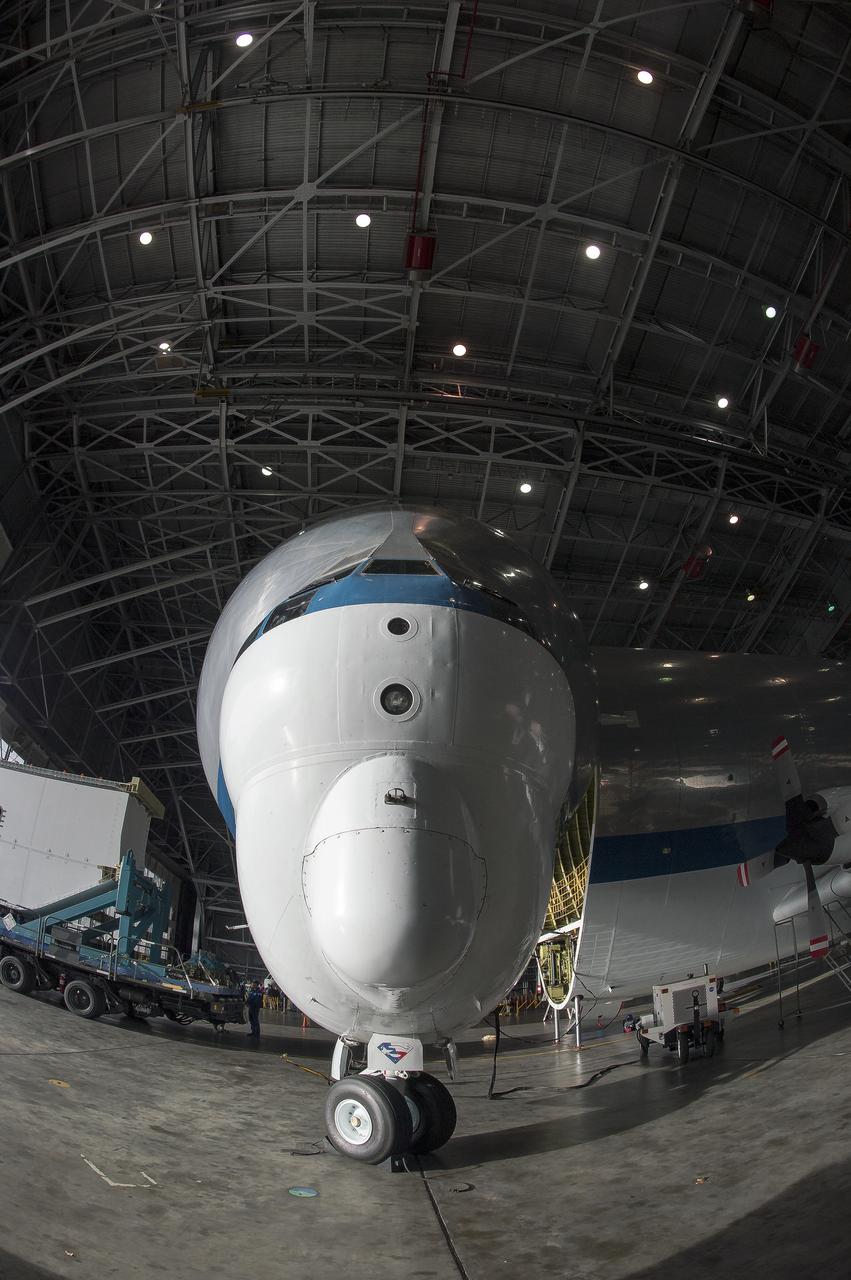
Super Guppy arrival and (MBB) Multi-Bay Box Delivery ; Super Guppy arrival and MBB Delivery: super Guppy arrival at NASA Langley hangar, and unloading of (MBB) multi-bay box, transport of MBB to COLTS and move into building 1256.
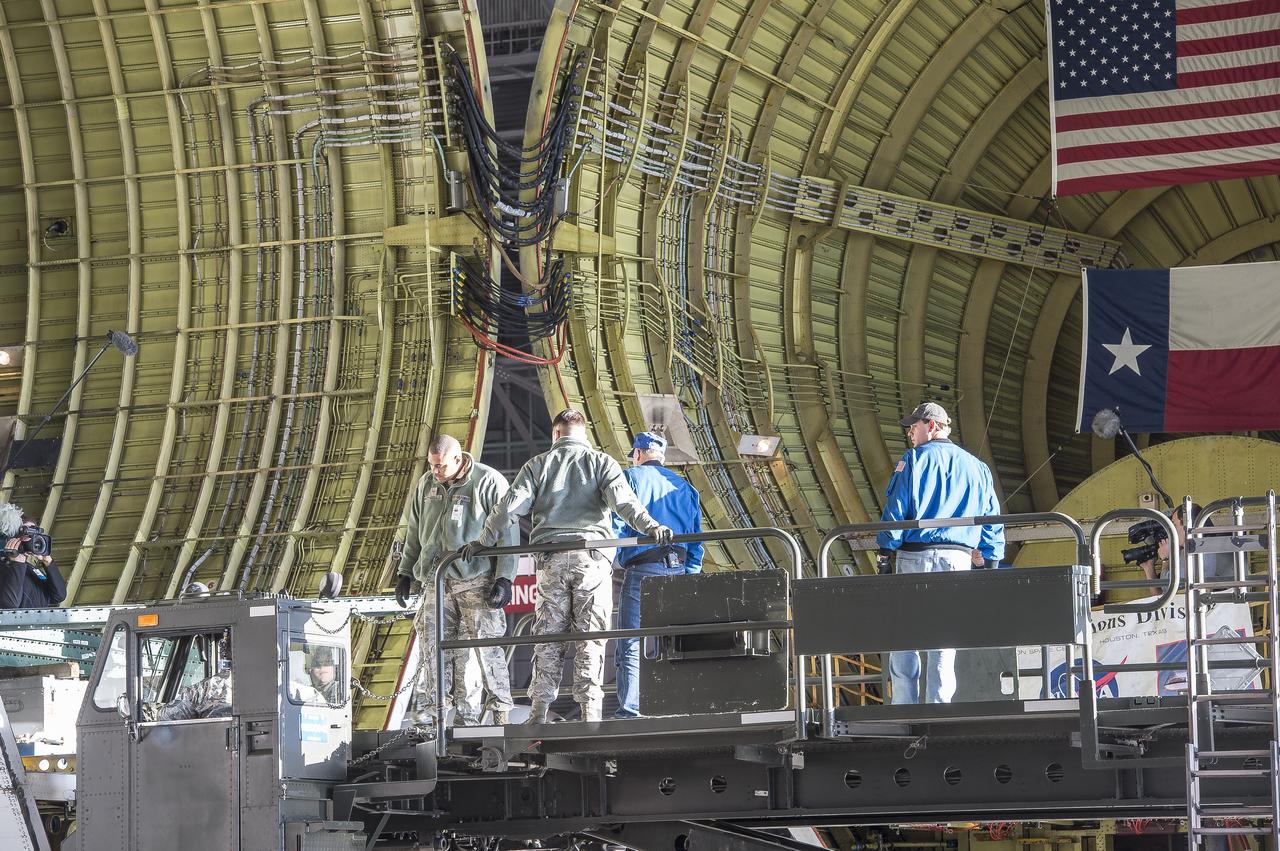
Super Guppy arrival and (MBB) Multi-Bay Box Delivery ; Super Guppy arrival and MBB Delivery: super Guppy arrival at NASA Langley hangar, and unloading of (MBB) multi-bay box, transport of MBB to COLTS and move into building 1256.
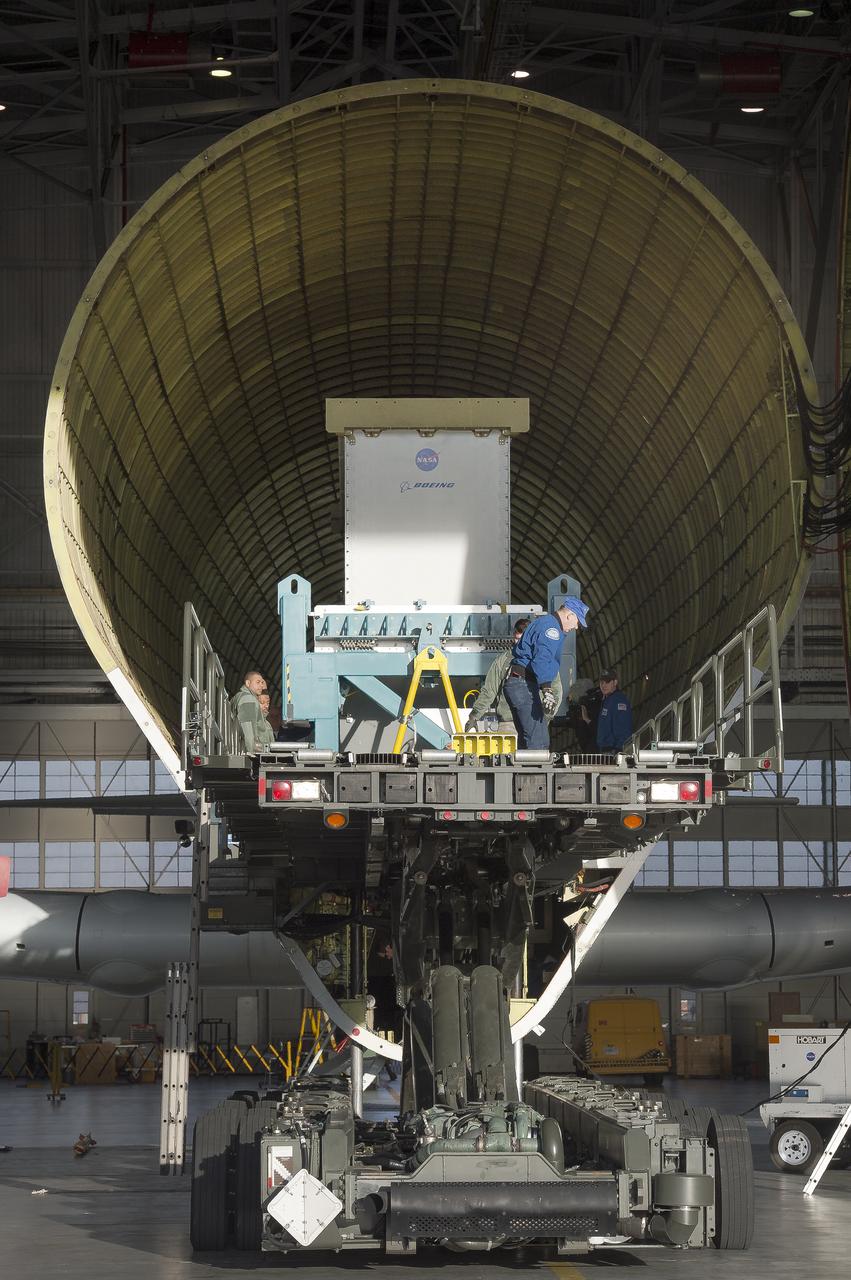
Super Guppy arrival and (MBB) Multi-Bay Box Delivery ; Super Guppy arrival and MBB Delivery: super Guppy arrival at NASA Langley hangar, and unloading of (MBB) multi-bay box, transport of MBB to COLTS and move into building 1256.
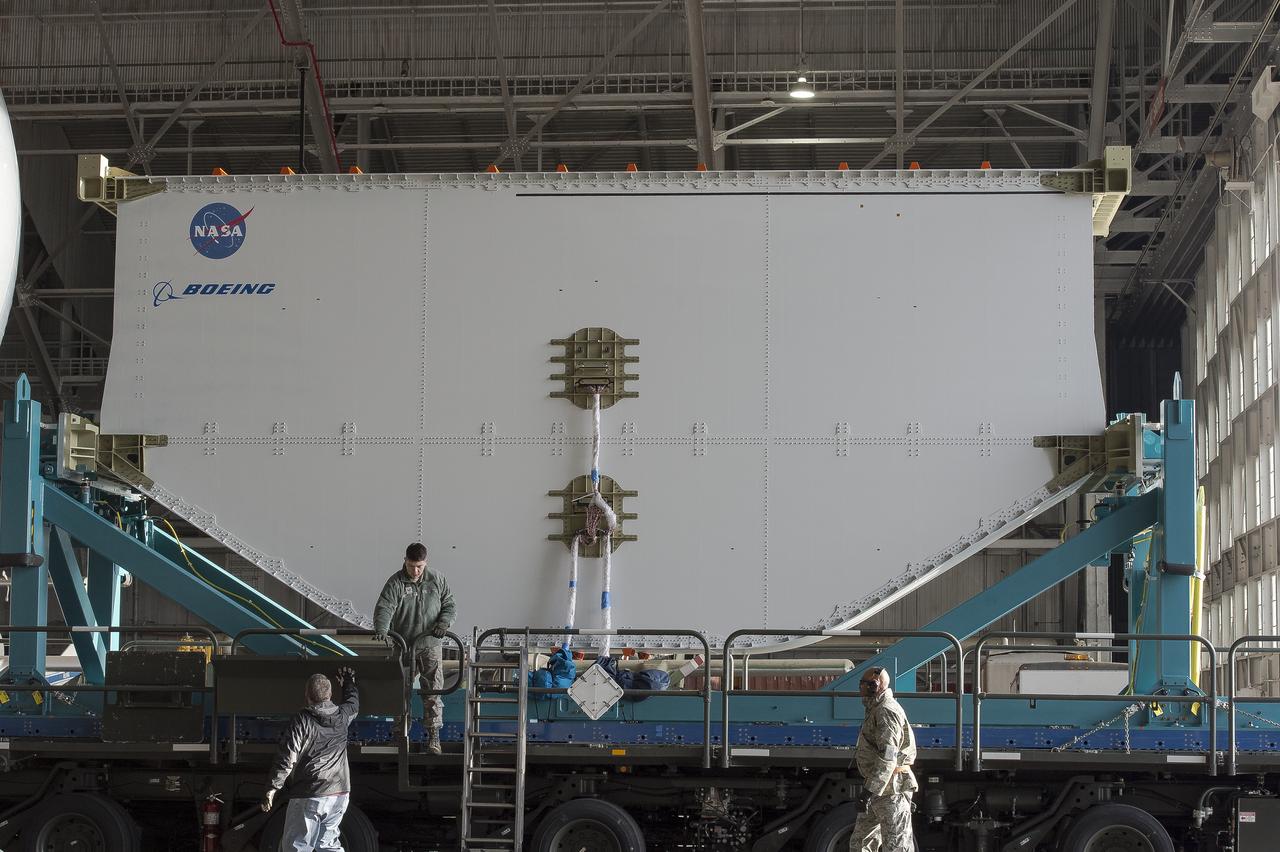
Super Guppy arrival and (MBB) Multi-Bay Box Delivery ; Super Guppy arrival and MBB Delivery: super Guppy arrival at NASA Langley hangar, and unloading of (MBB) multi-bay box, transport of MBB to COLTS and move into building 1256.
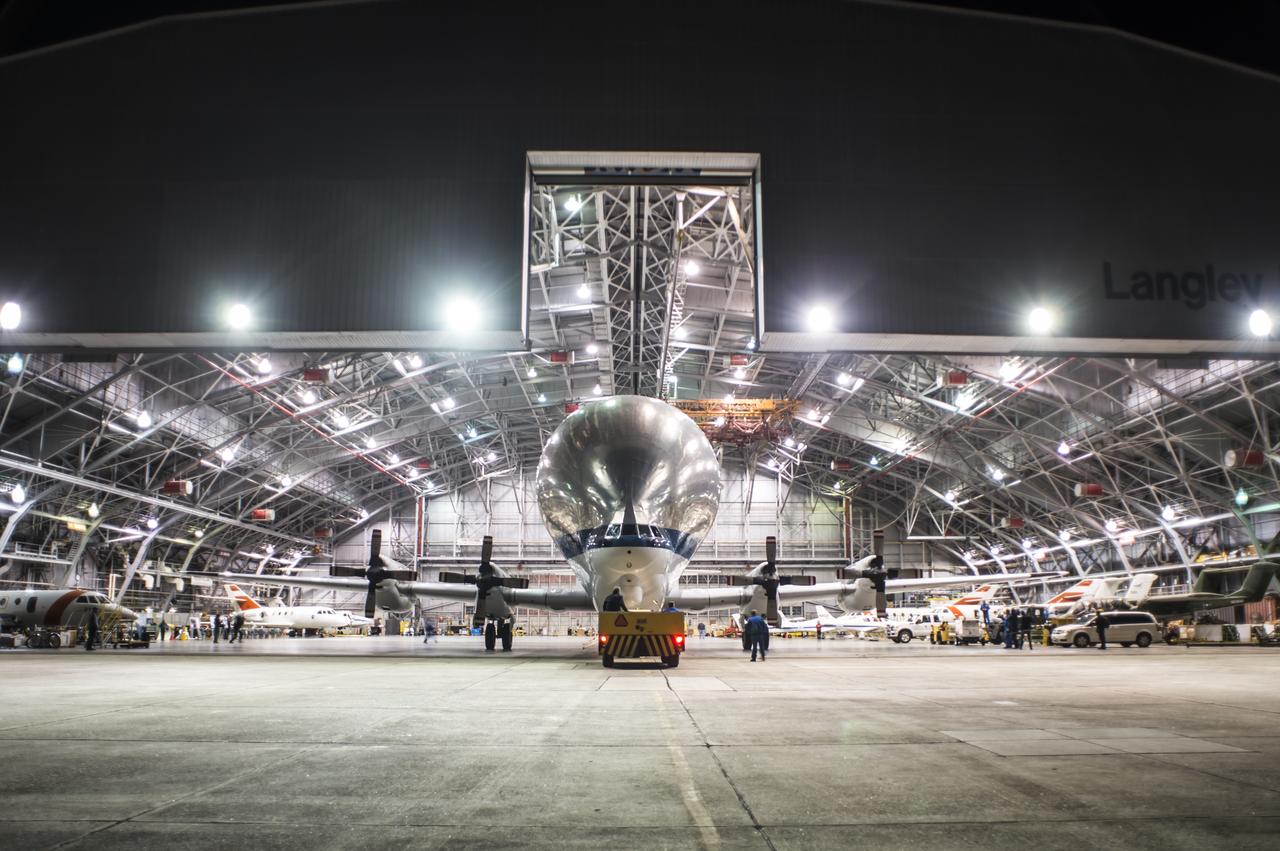
Super Guppy arrival and (MBB) Multi-Bay Box Delivery ; Super Guppy arrival and MBB Delivery: super Guppy arrival at NASA Langley hangar, and unloading of (MBB) multi-bay box, transport of MBB to COLTS and move into building 1256.
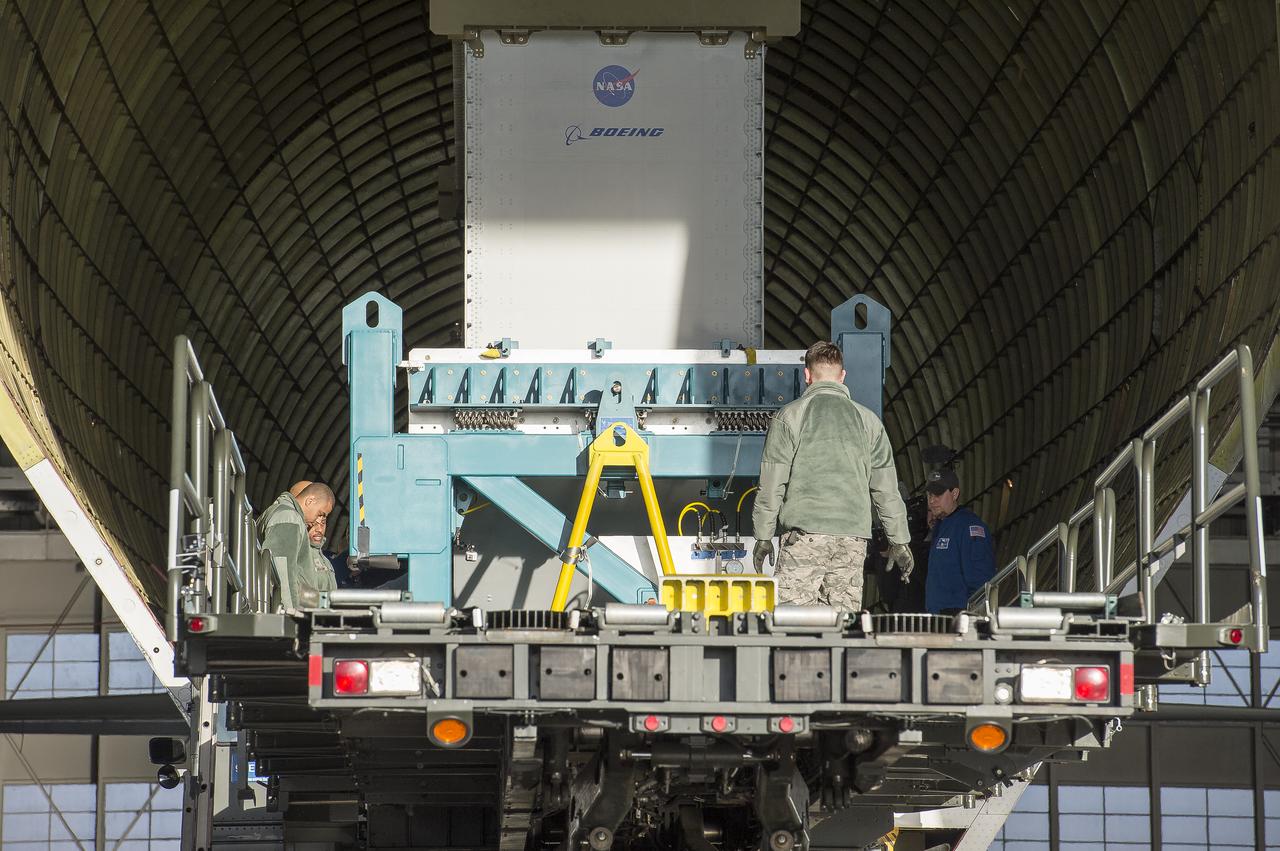
Super Guppy arrival and (MBB) Multi-Bay Box Delivery ; Super Guppy arrival and MBB Delivery: super Guppy arrival at NASA Langley hangar, and unloading of (MBB) multi-bay box, transport of MBB to COLTS and move into building 1256.
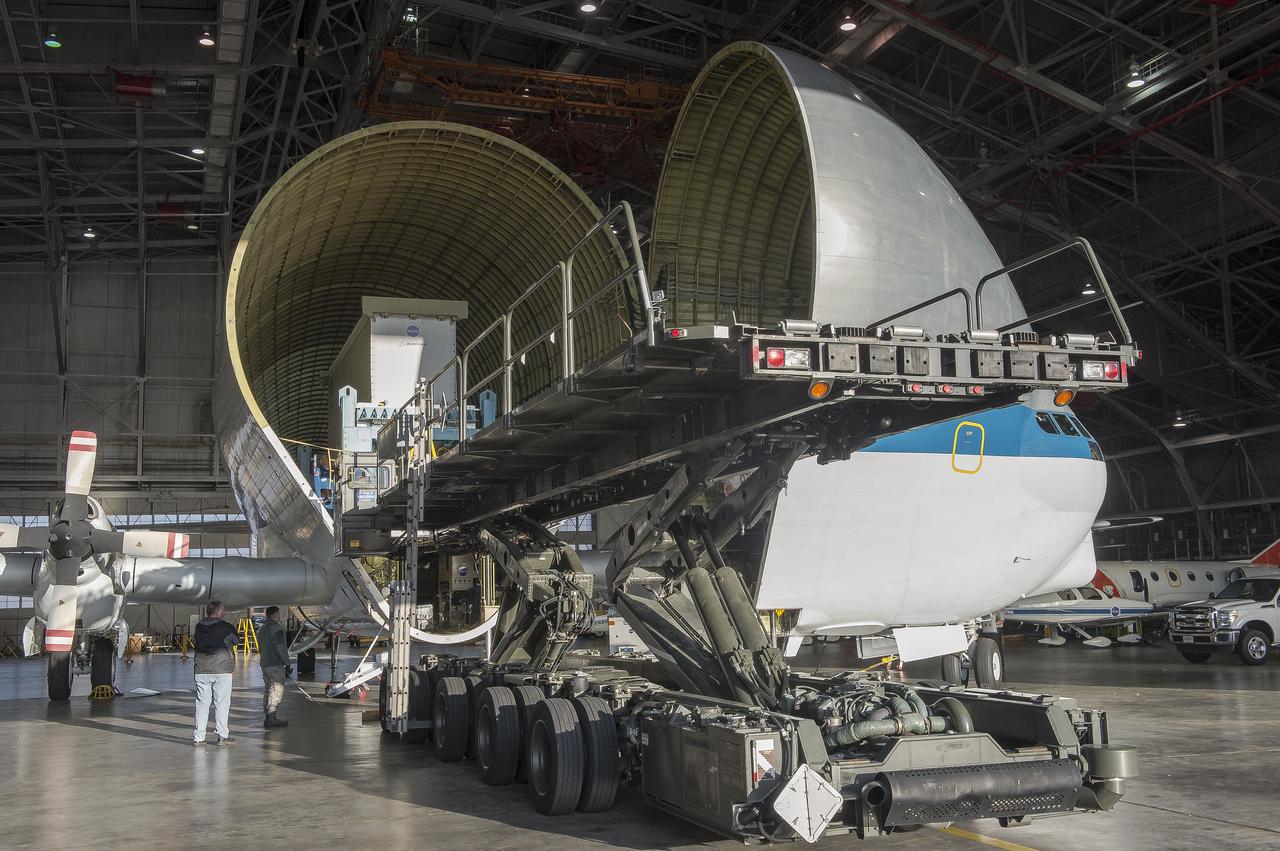
Super Guppy arrival and (MBB) Multi-Bay Box Delivery ; Super Guppy arrival and MBB Delivery: super Guppy arrival at NASA Langley hangar, and unloading of (MBB) multi-bay box, transport of MBB to COLTS and move into building 1256.
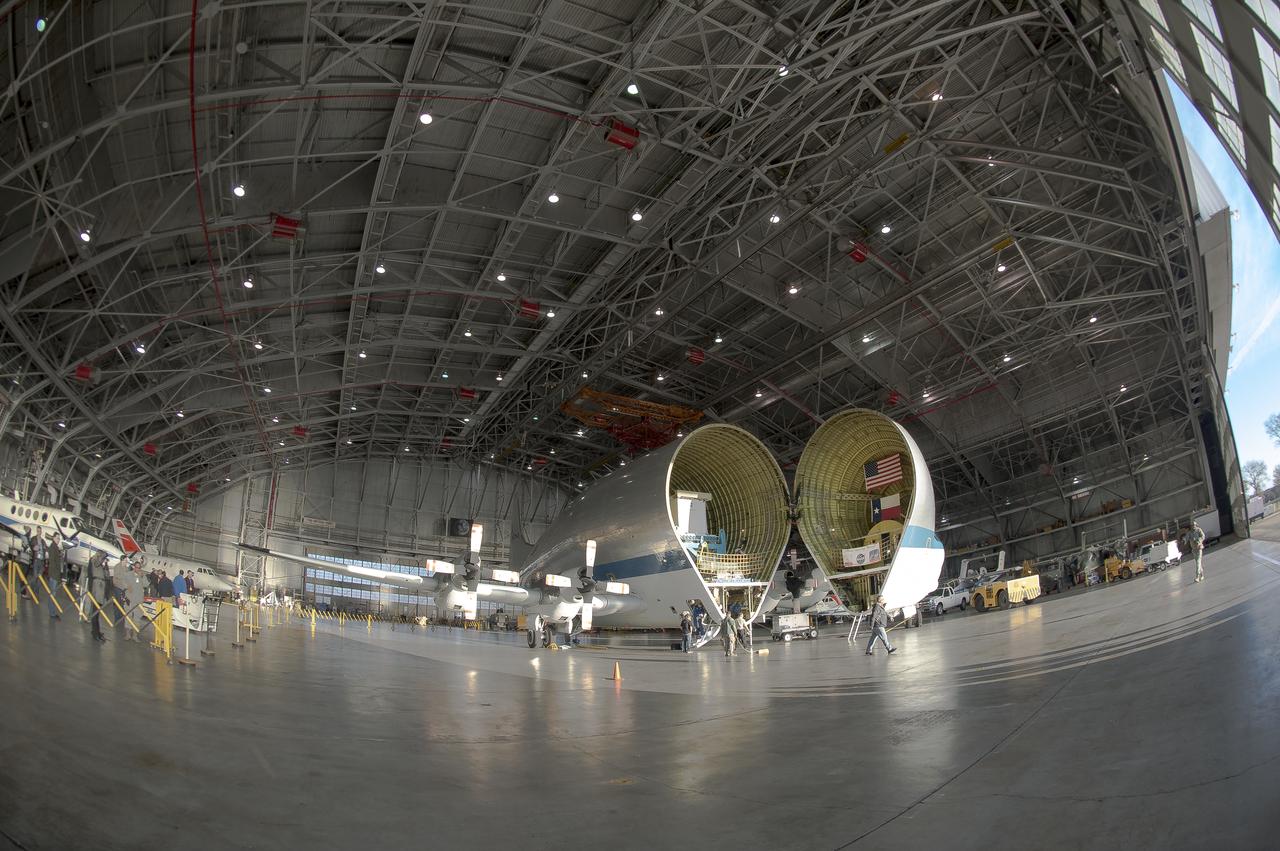
Super Guppy arrival and (MBB) Multi-Bay Box Delivery ; Super Guppy arrival and MBB Delivery: super Guppy arrival at NASA Langley hangar, and unloading of (MBB) multi-bay box, transport of MBB to COLTS and move into building 1256.
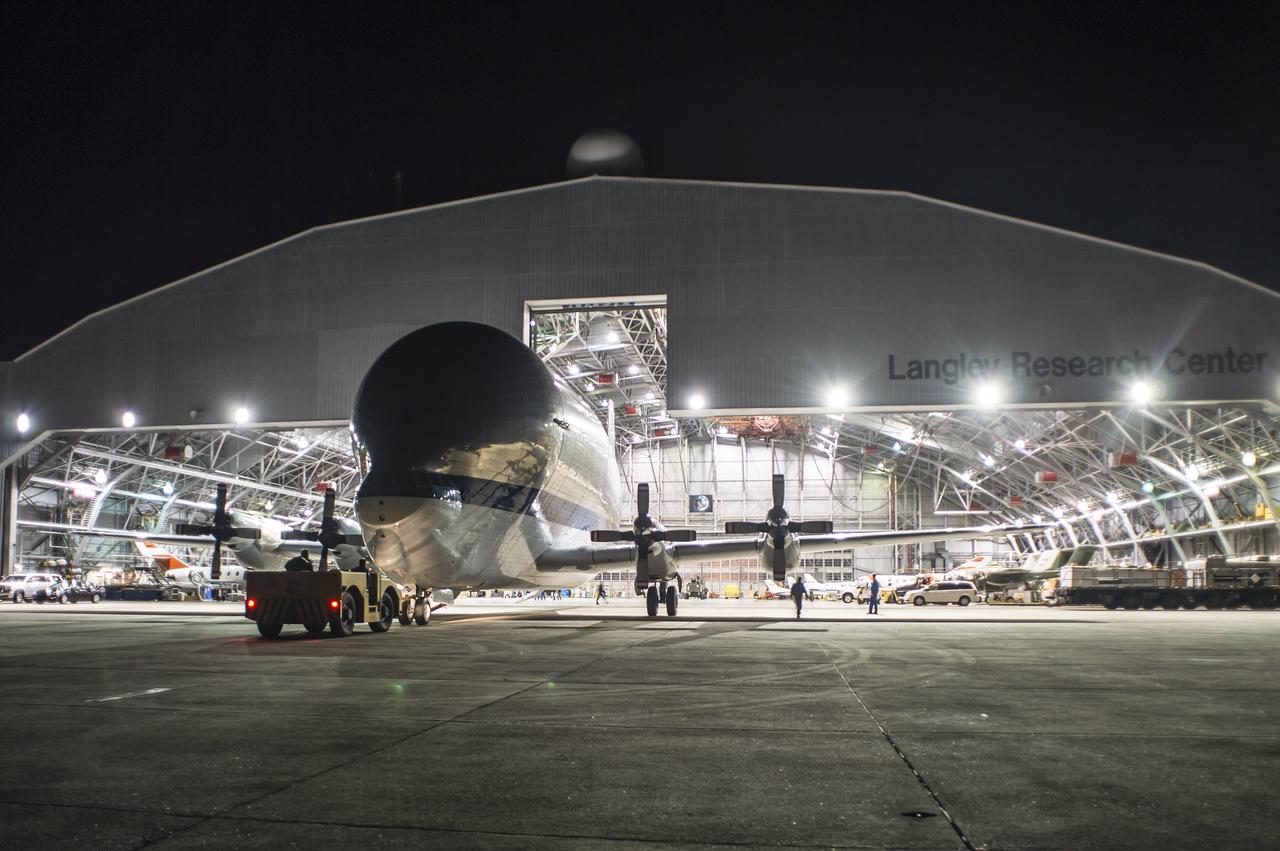
Super Guppy arrival and (MBB) Multi-Bay Box Delivery ; Super Guppy arrival and MBB Delivery: super Guppy arrival at NASA Langley hangar, and unloading of (MBB) multi-bay box, transport of MBB to COLTS and move into building 1256.
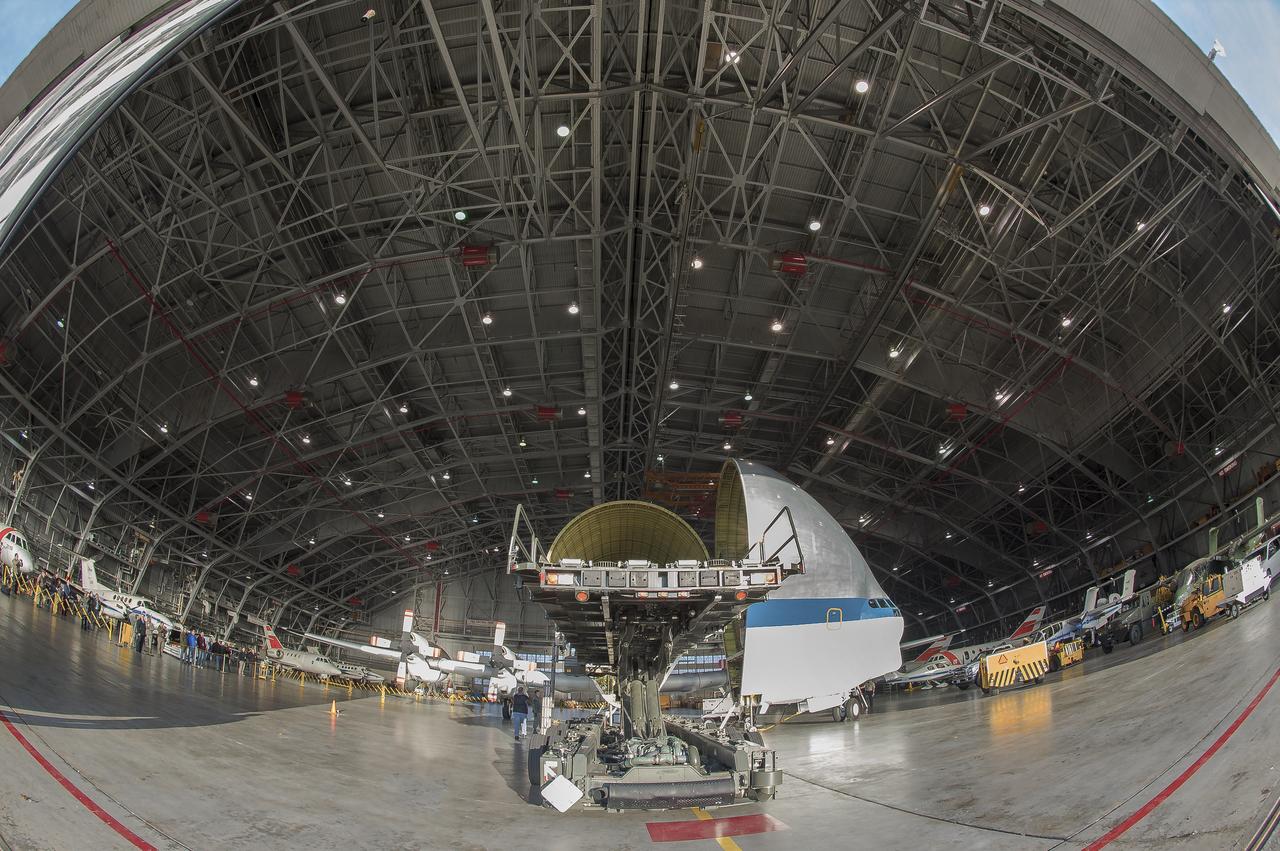
Super Guppy arrival and (MBB) Multi-Bay Box Delivery ; Super Guppy arrival and MBB Delivery: super Guppy arrival at NASA Langley hangar, and unloading of (MBB) multi-bay box, transport of MBB to COLTS and move into building 1256.
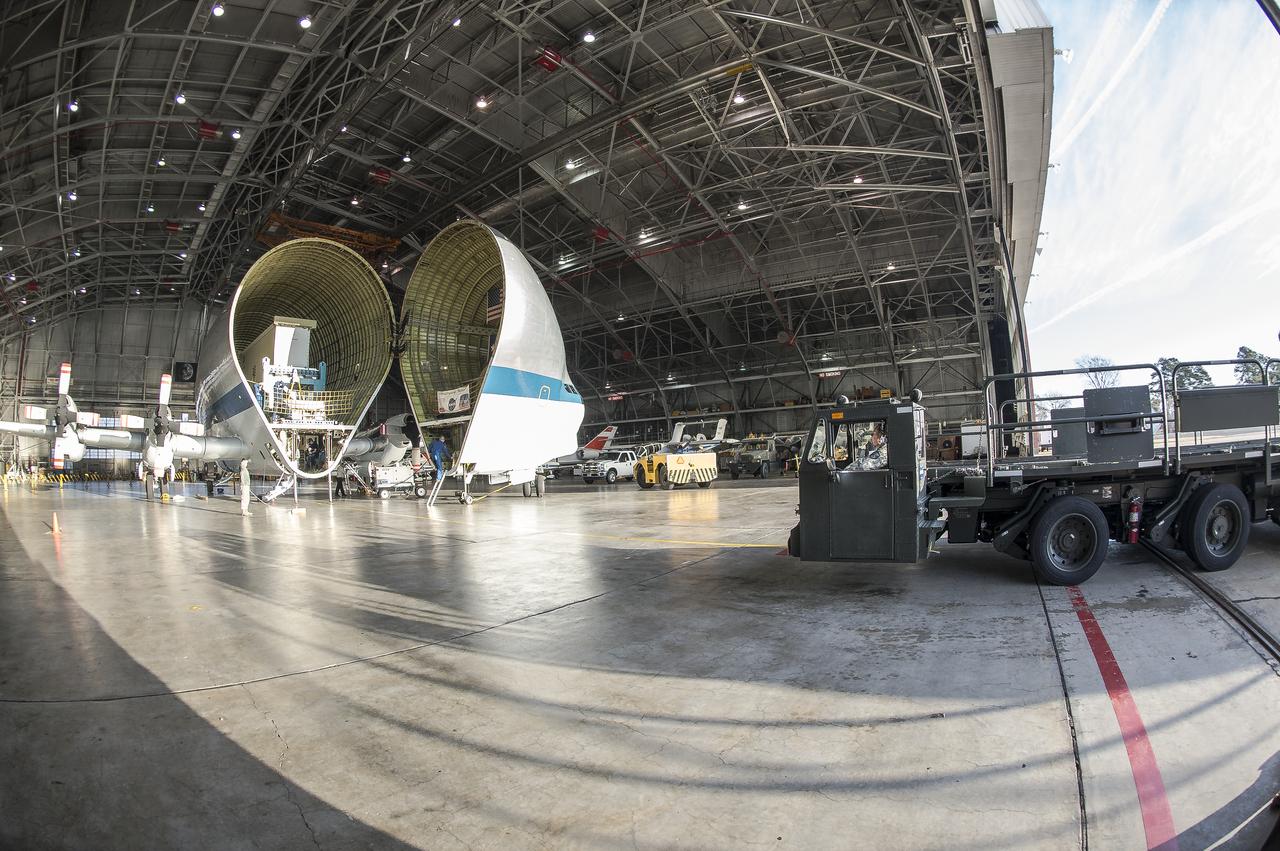
Super Guppy arrival and (MBB) Multi-Bay Box Delivery ; Super Guppy arrival and MBB Delivery: super Guppy arrival at NASA Langley hangar, and unloading of (MBB) multi-bay box, transport of MBB to COLTS and move into building 1256.
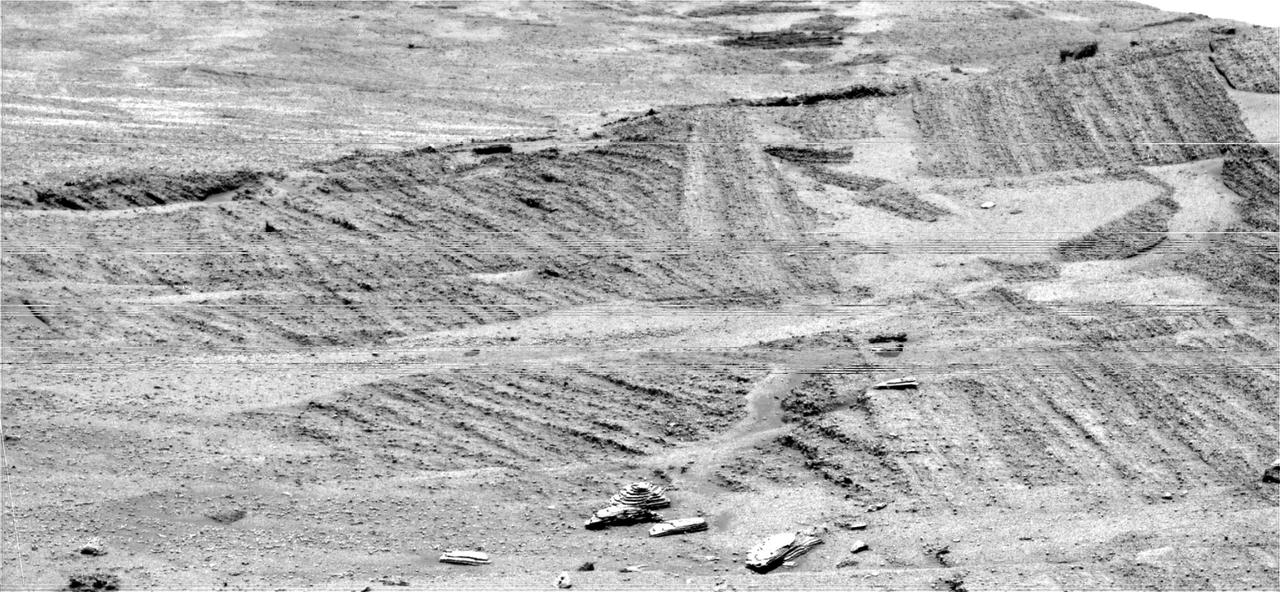
Angled Layers in Super Resolution
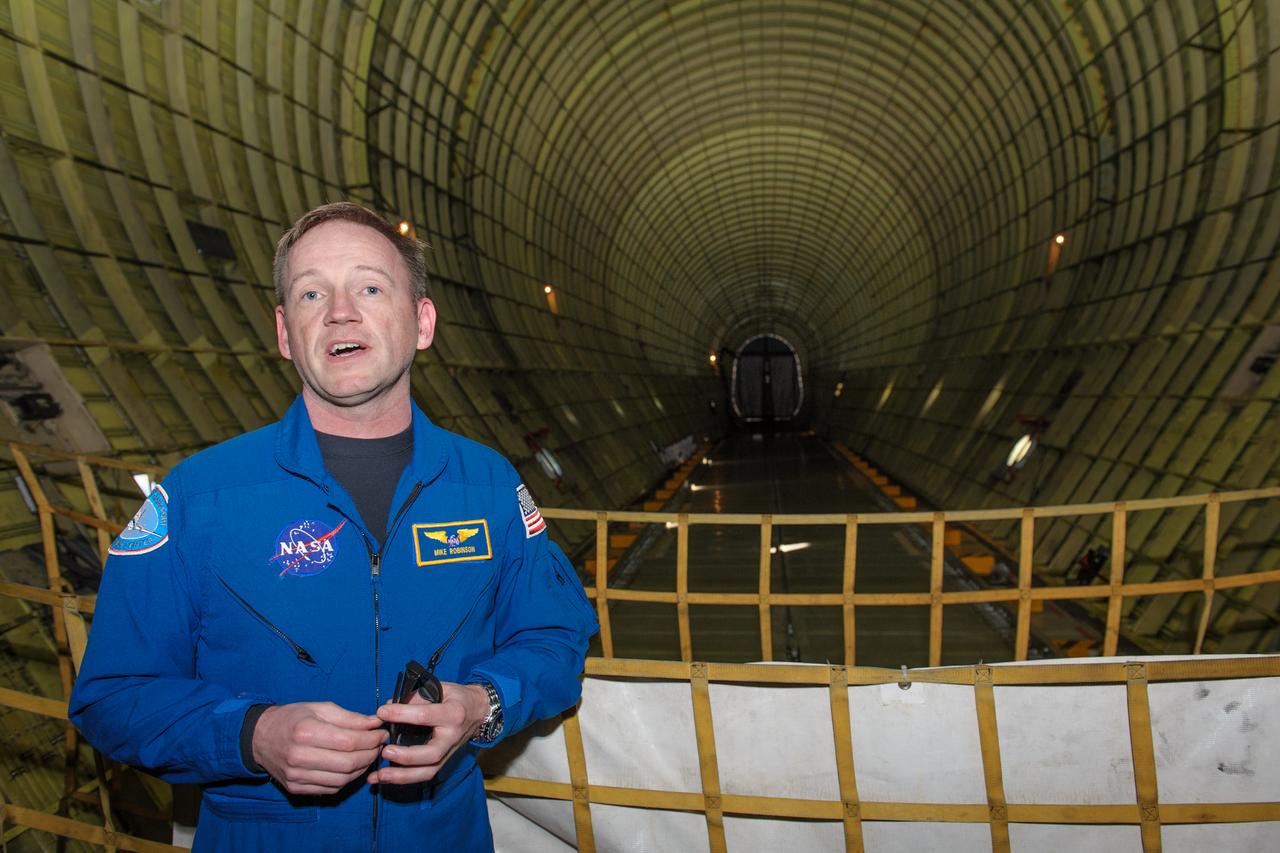
Super Guppy Flight Engineer Michael Robinson inside the Cargo Hold. The Super Guppy's cargo hold has a useable volume of 39,000 cubic feet and can fly up to 52,000 pounds as far as 564 miles and has a cruising speed of 290 MPH.
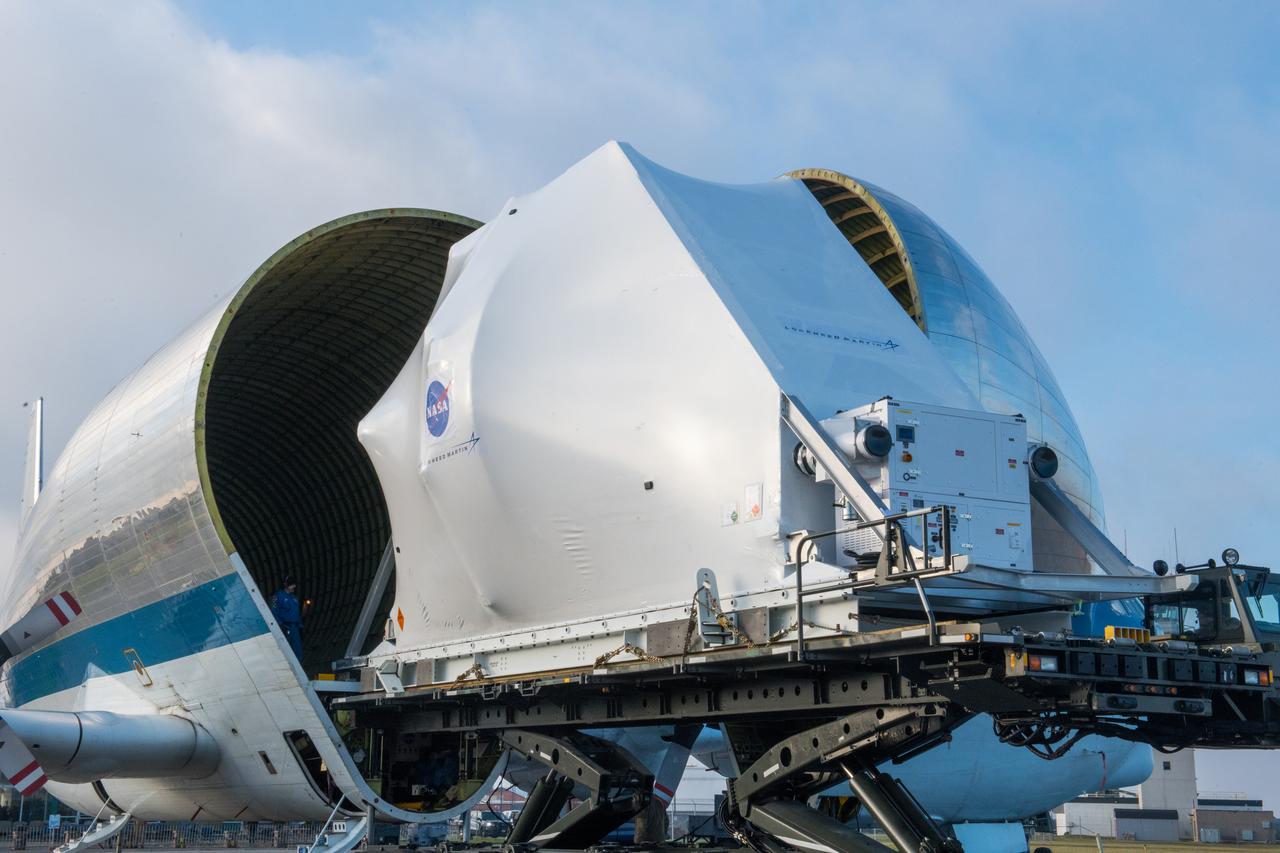
Orion Spacecraft Arrives in Ohio Aboard the Super Guppy at Mansfield Lahm Airport
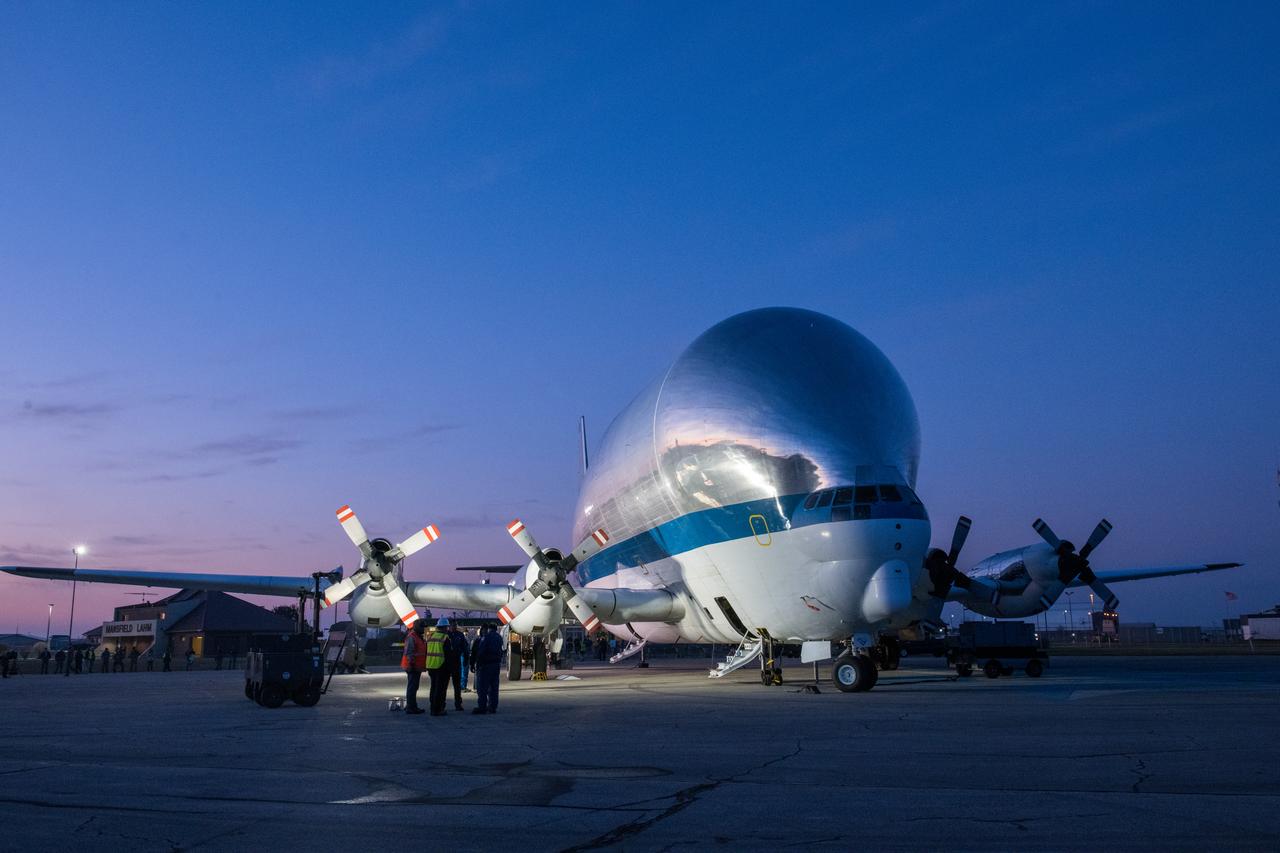
Orion Spacecraft Arrives in Ohio Aboard the Super Guppy at Mansfield Lahm Airport
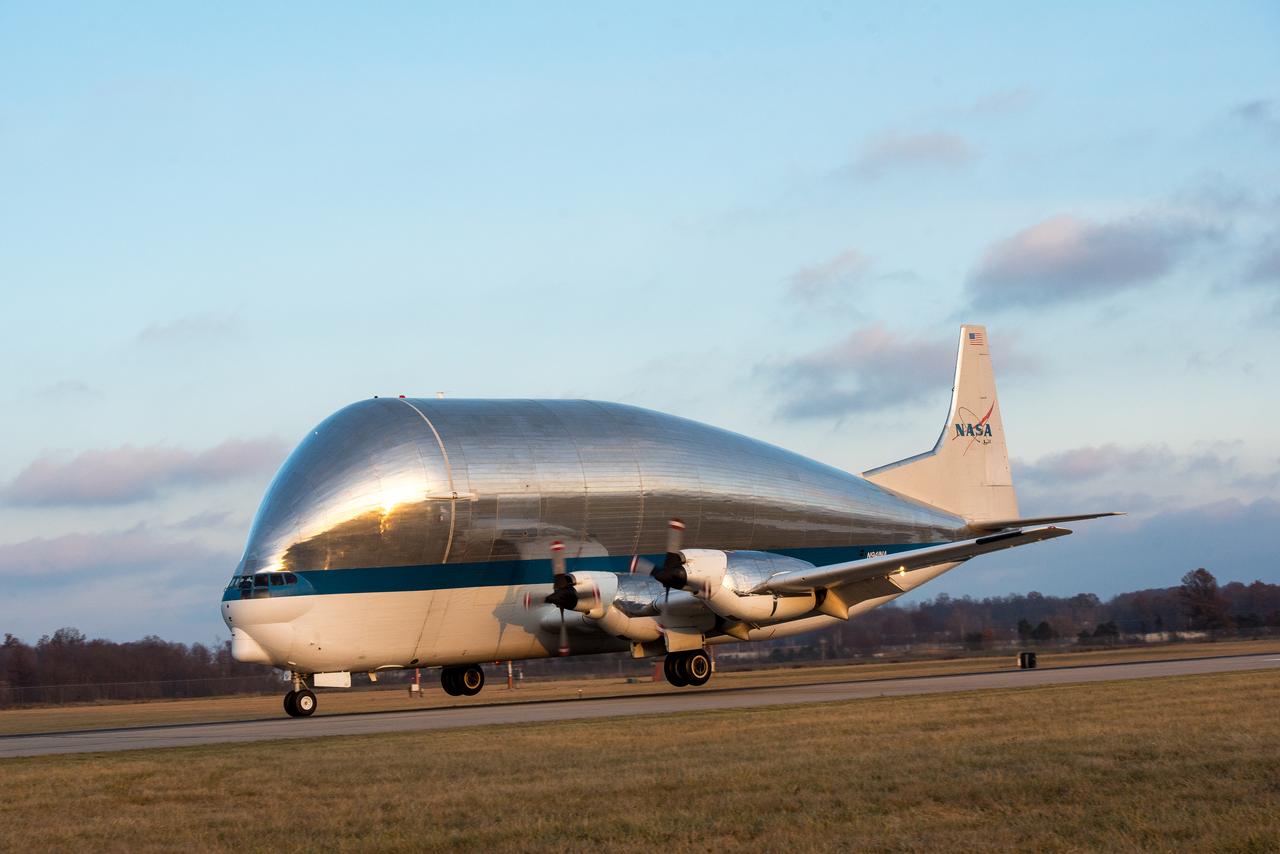
Orion Spacecraft Arrives in Ohio Aboard the Super Guppy at Mansfield Lahm Airport
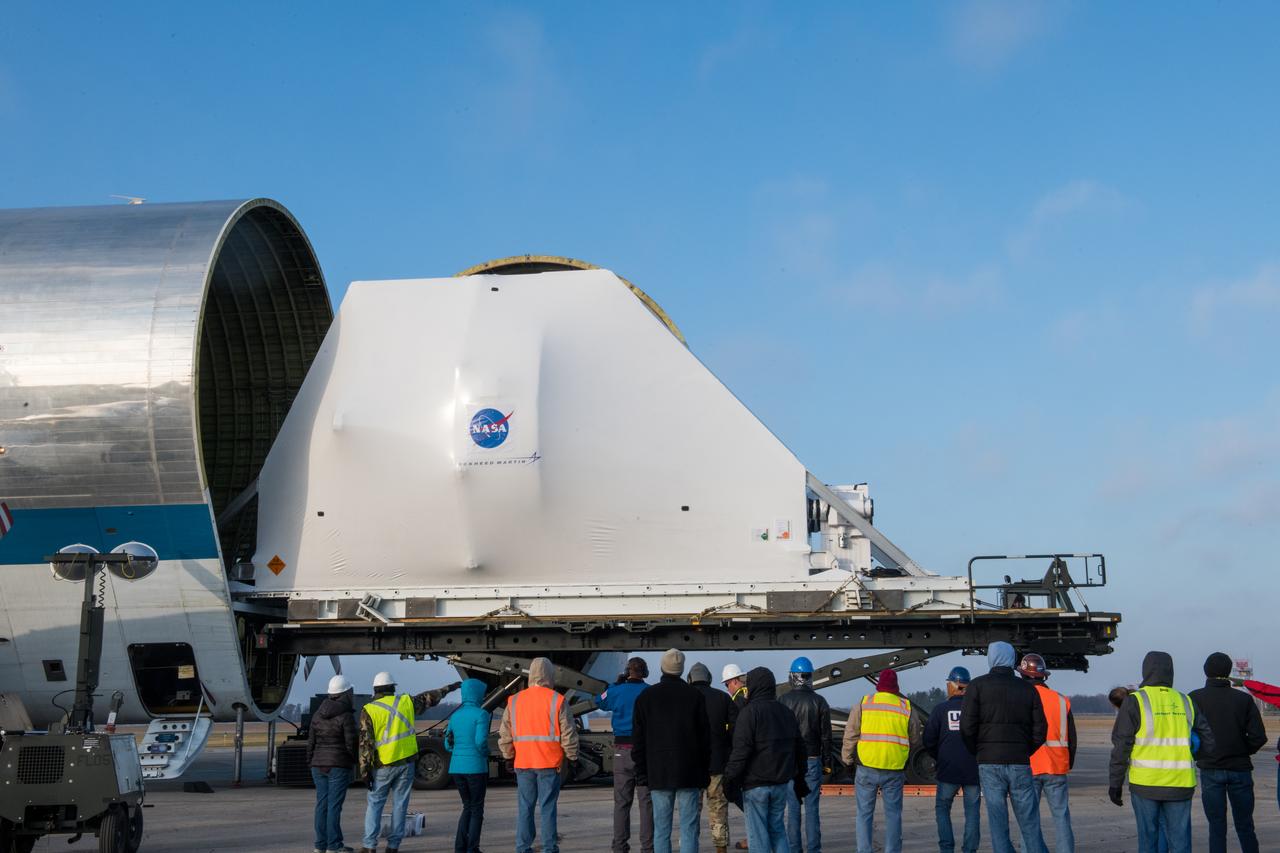
Orion Spacecraft Arrives in Ohio Aboard the Super Guppy at Mansfield Lahm Airport
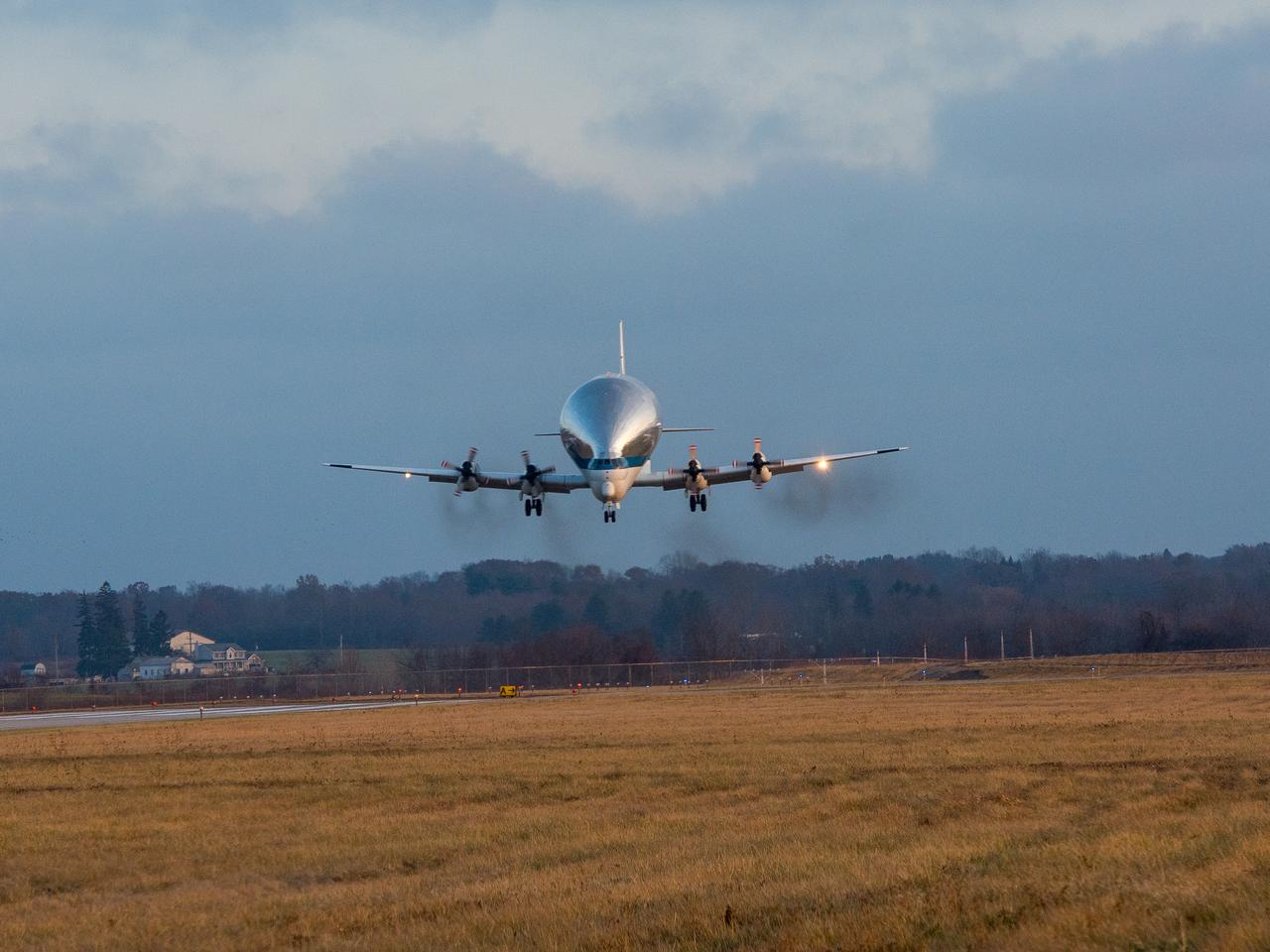
Orion Spacecraft Arrives in Ohio Aboard the Super Guppy at Mansfield Lahm Airport
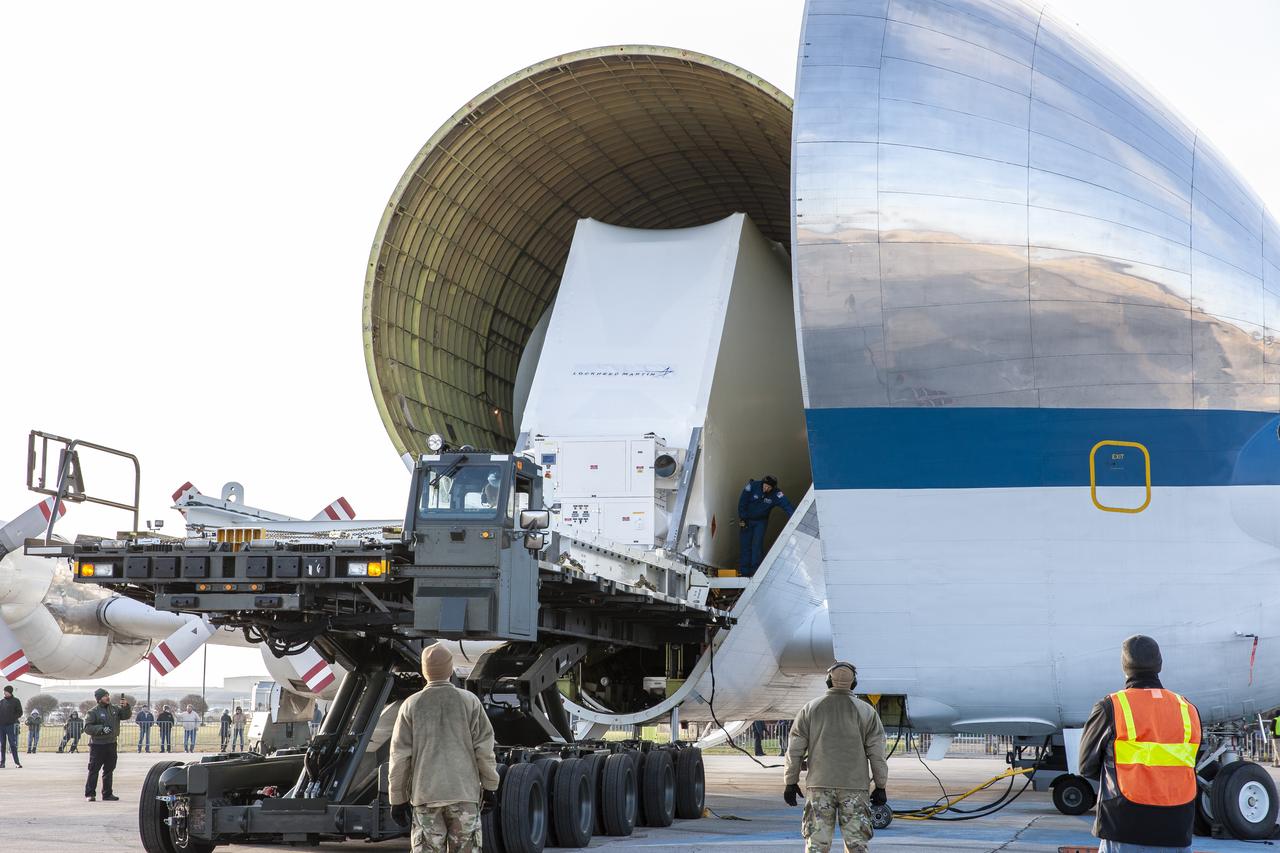
Orion Spacecraft Arrives in Ohio Aboard the Super Guppy at Mansfield Lahm Airport
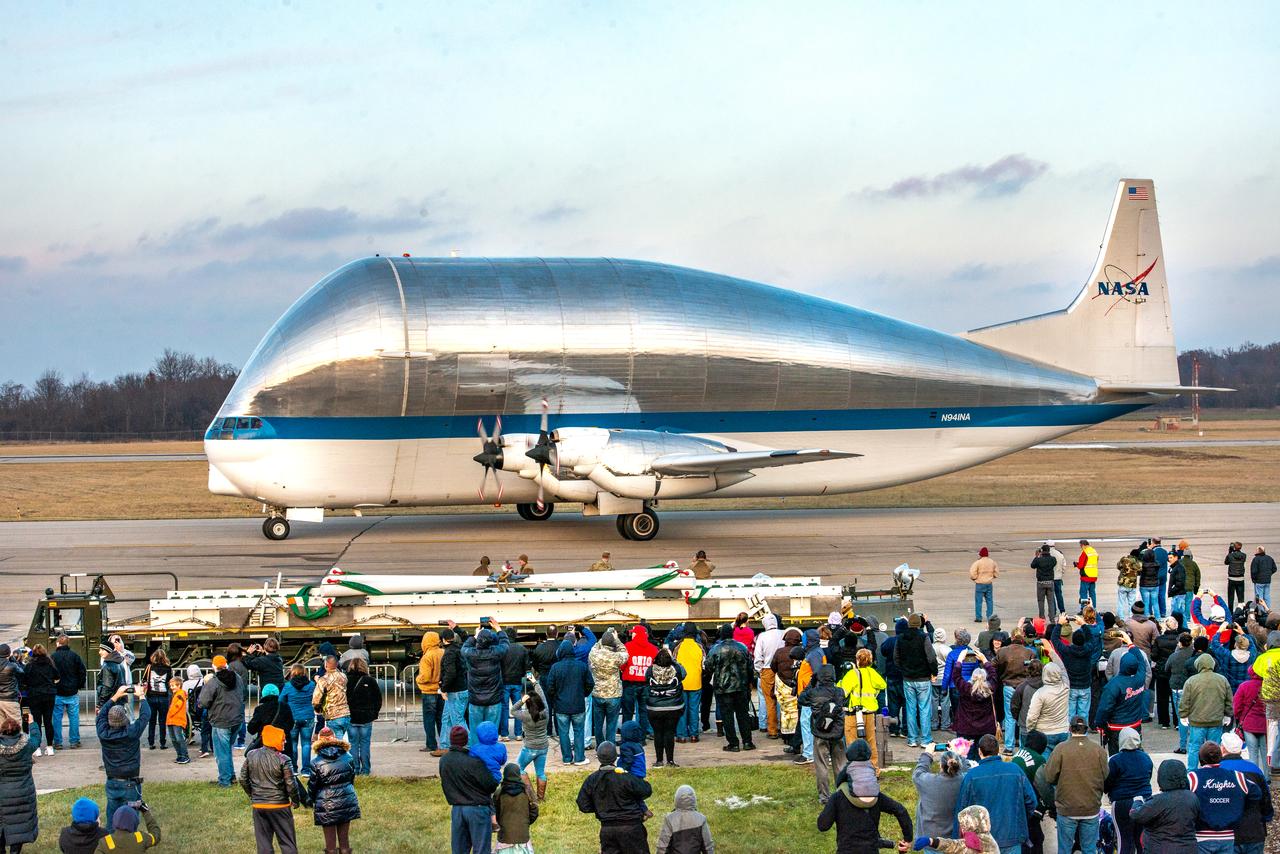
Orion Spacecraft Arrives in Ohio Aboard the Super Guppy at Mansfield Lahm Airport
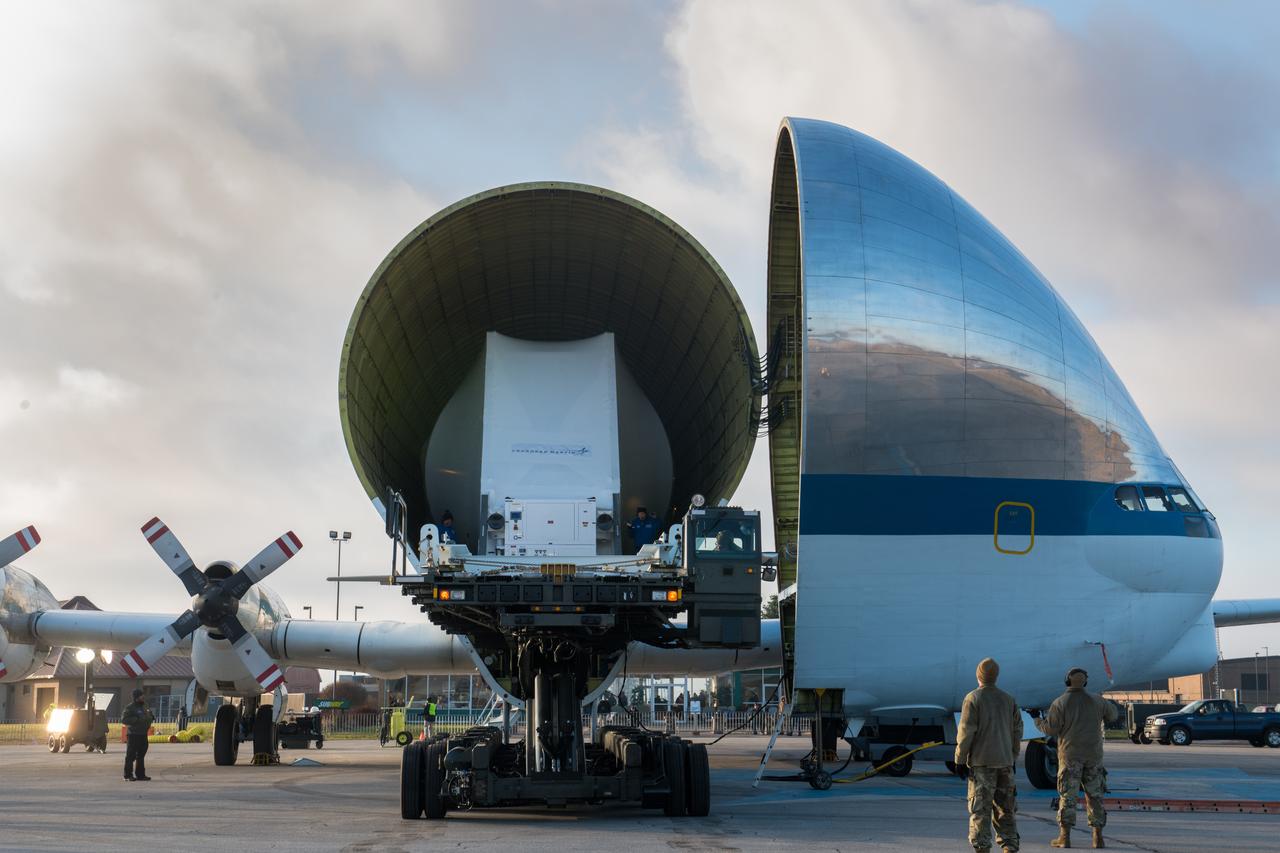
Orion Spacecraft Arrives in Ohio Aboard the Super Guppy at Mansfield Lahm Airport
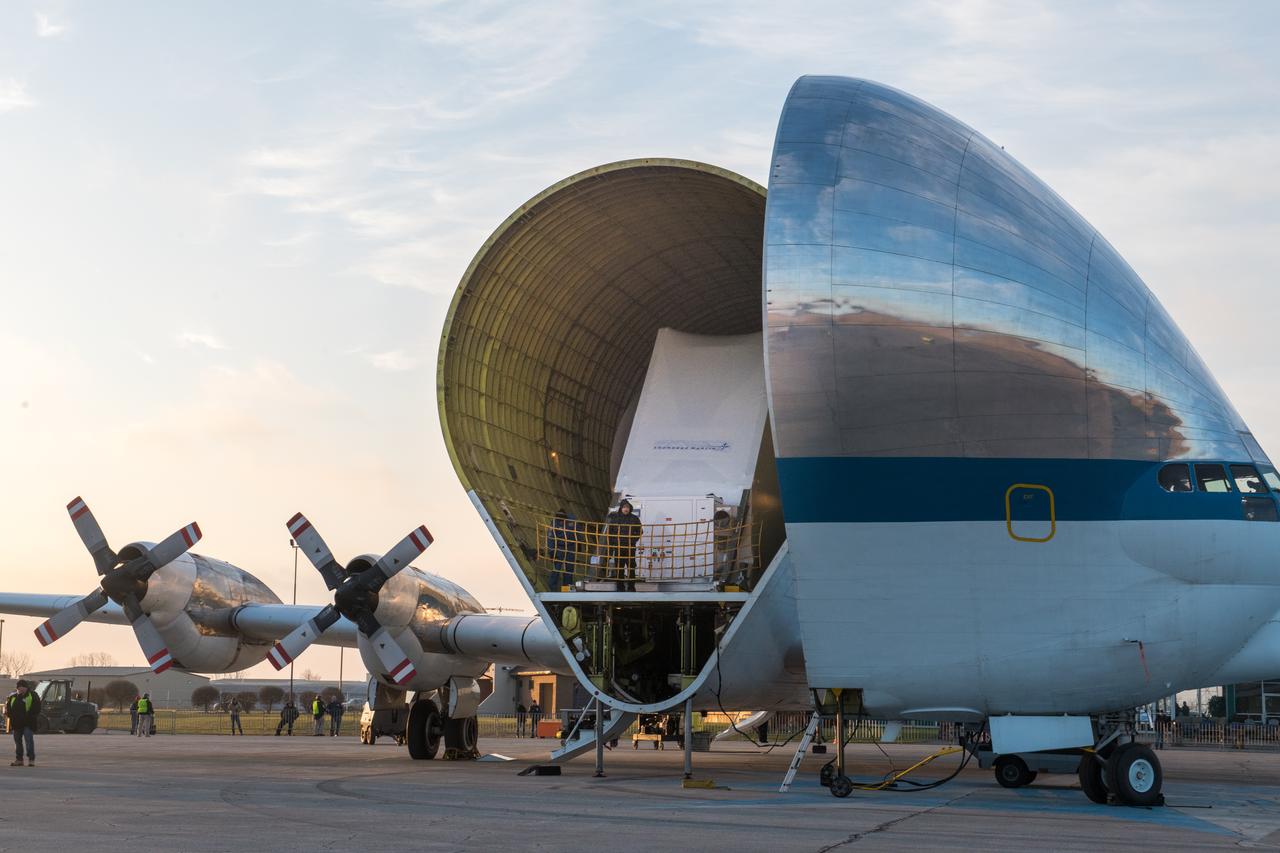
Orion Spacecraft Arrives in Ohio Aboard the Super Guppy at Mansfield Lahm Airport
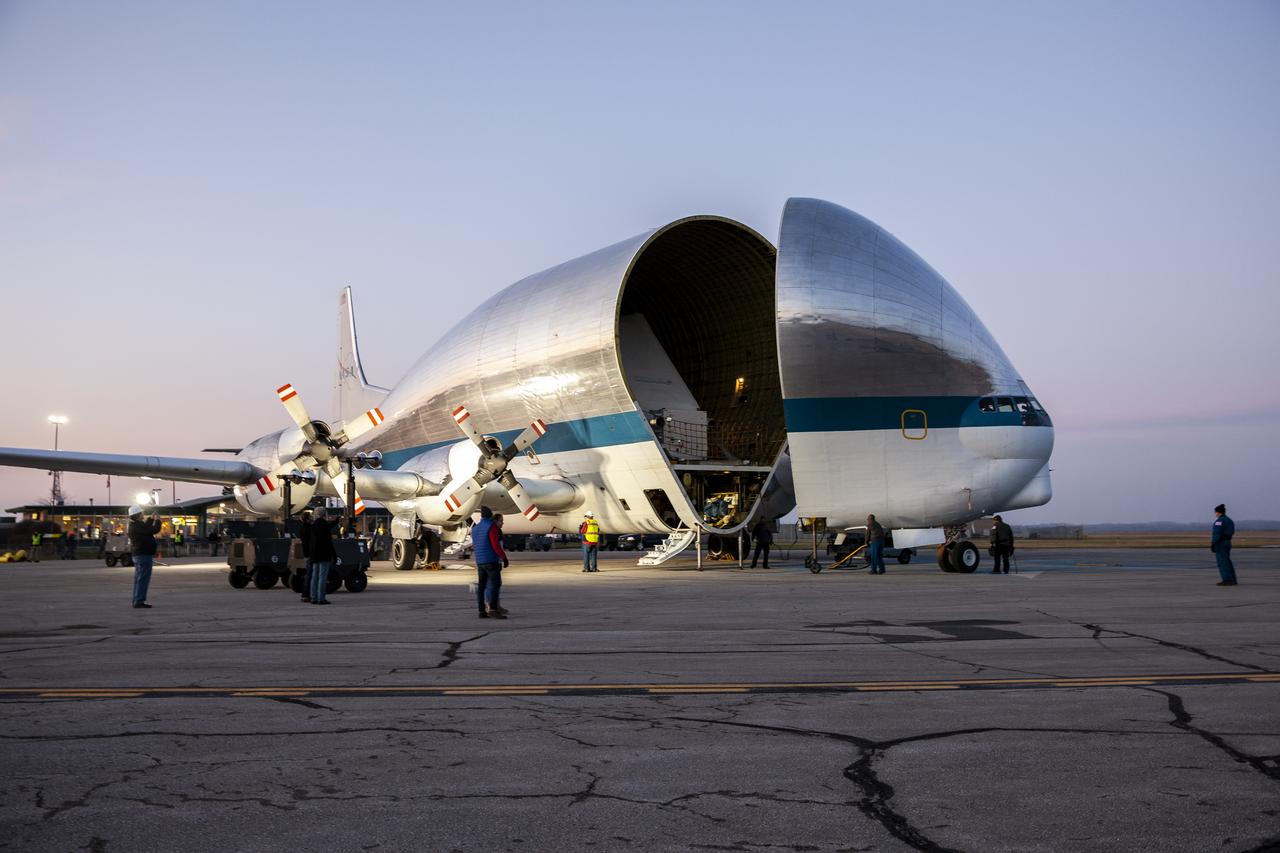
Orion Spacecraft Arrives in Ohio Aboard the Super Guppy at Mansfield Lahm Airport
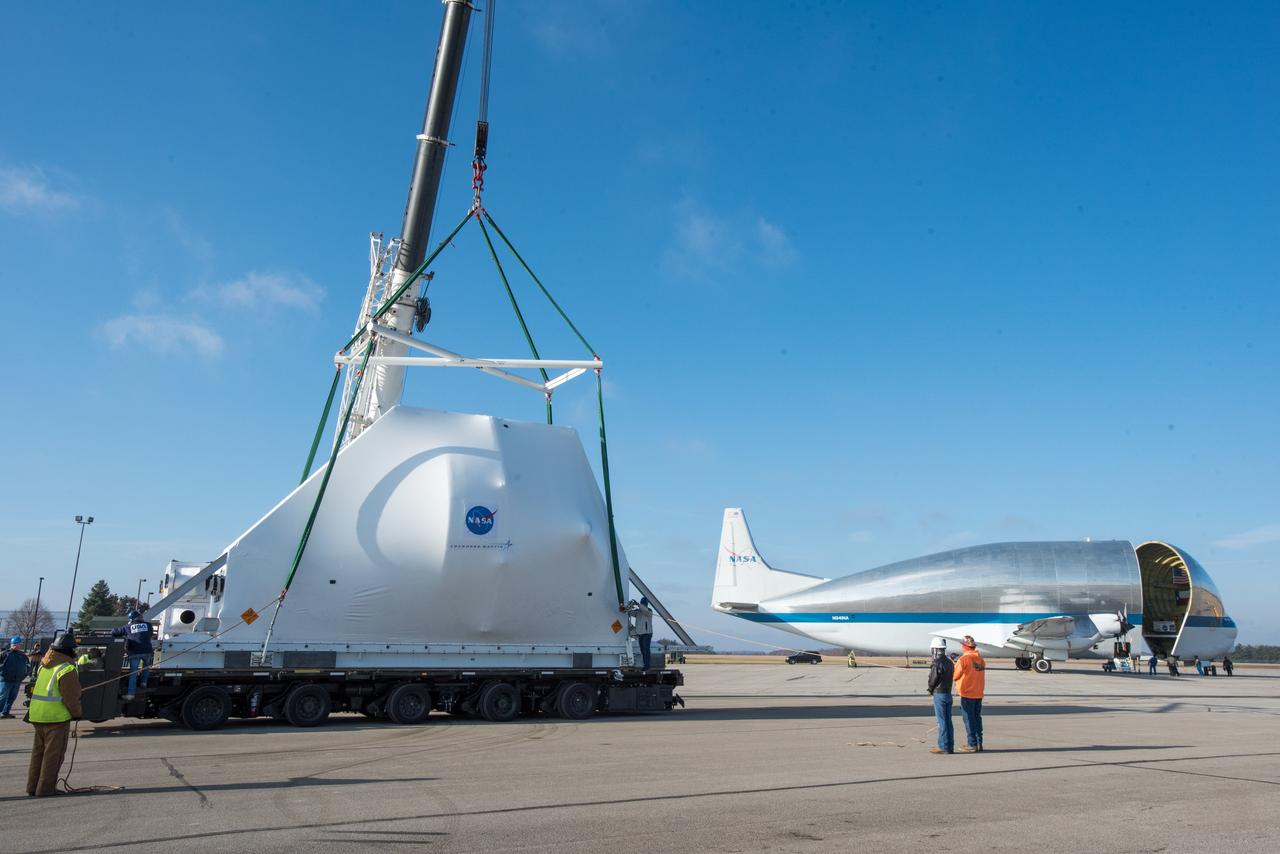
Orion Spacecraft Arrives in Ohio Aboard the Super Guppy at Mansfield Lahm Airport
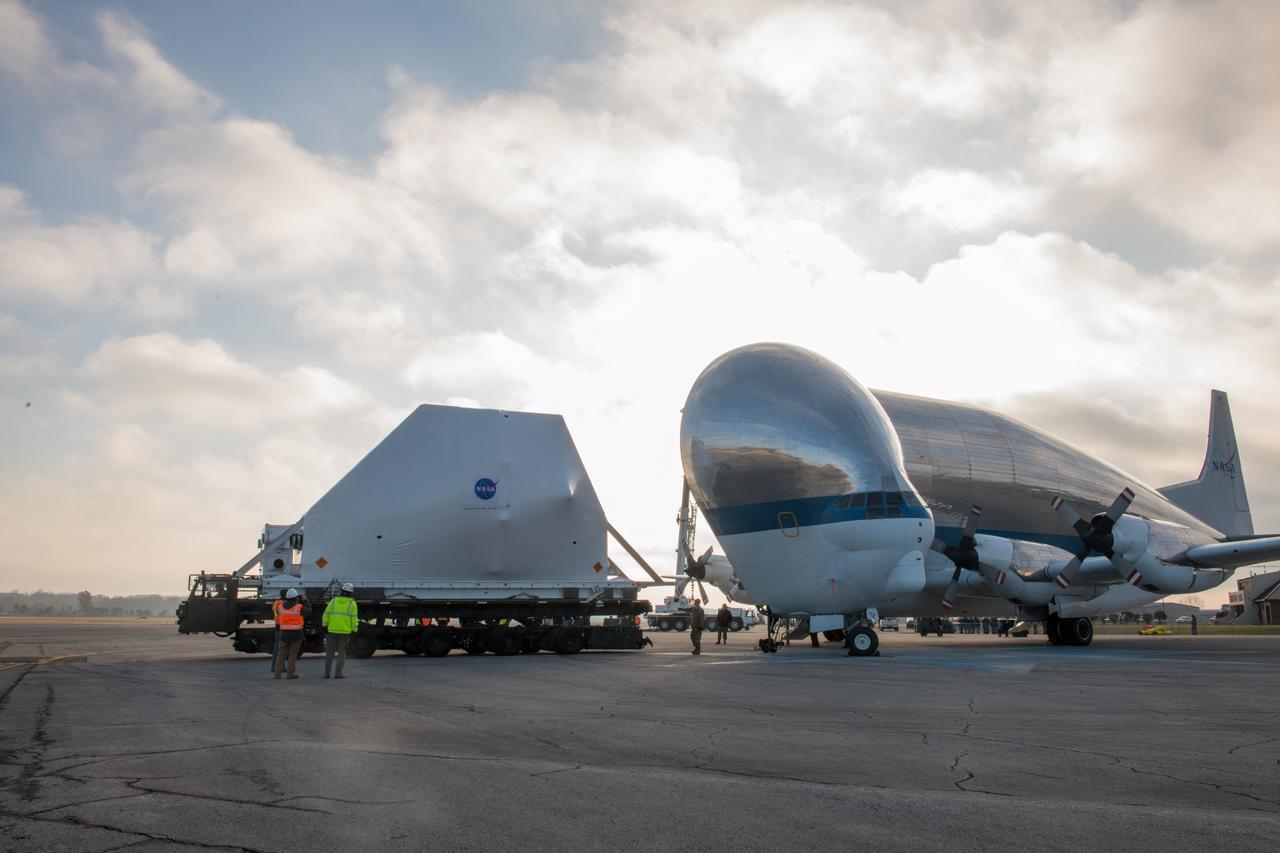
Orion Spacecraft Arrives in Ohio Aboard the Super Guppy at Mansfield Lahm Airport
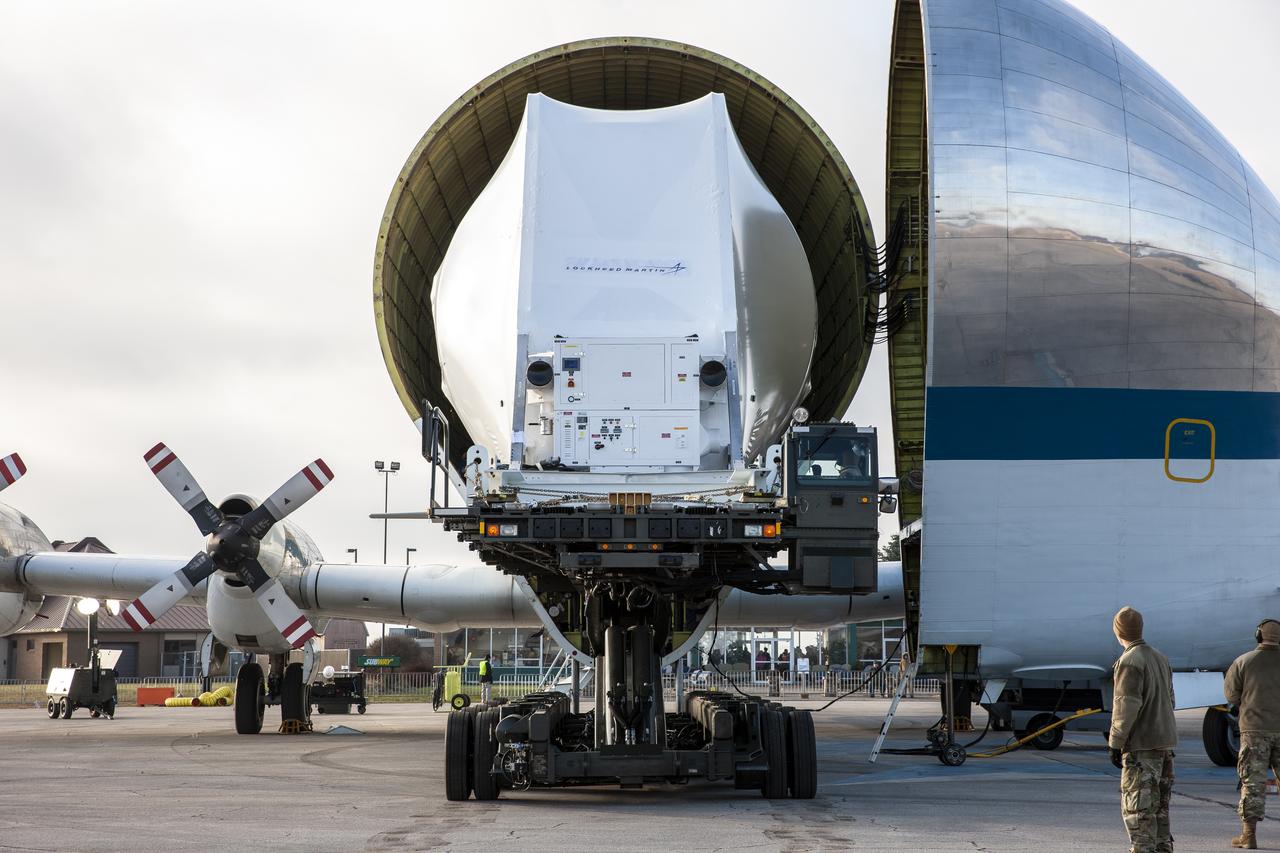
Orion Spacecraft Arrives in Ohio Aboard the Super Guppy at Mansfield Lahm Airport
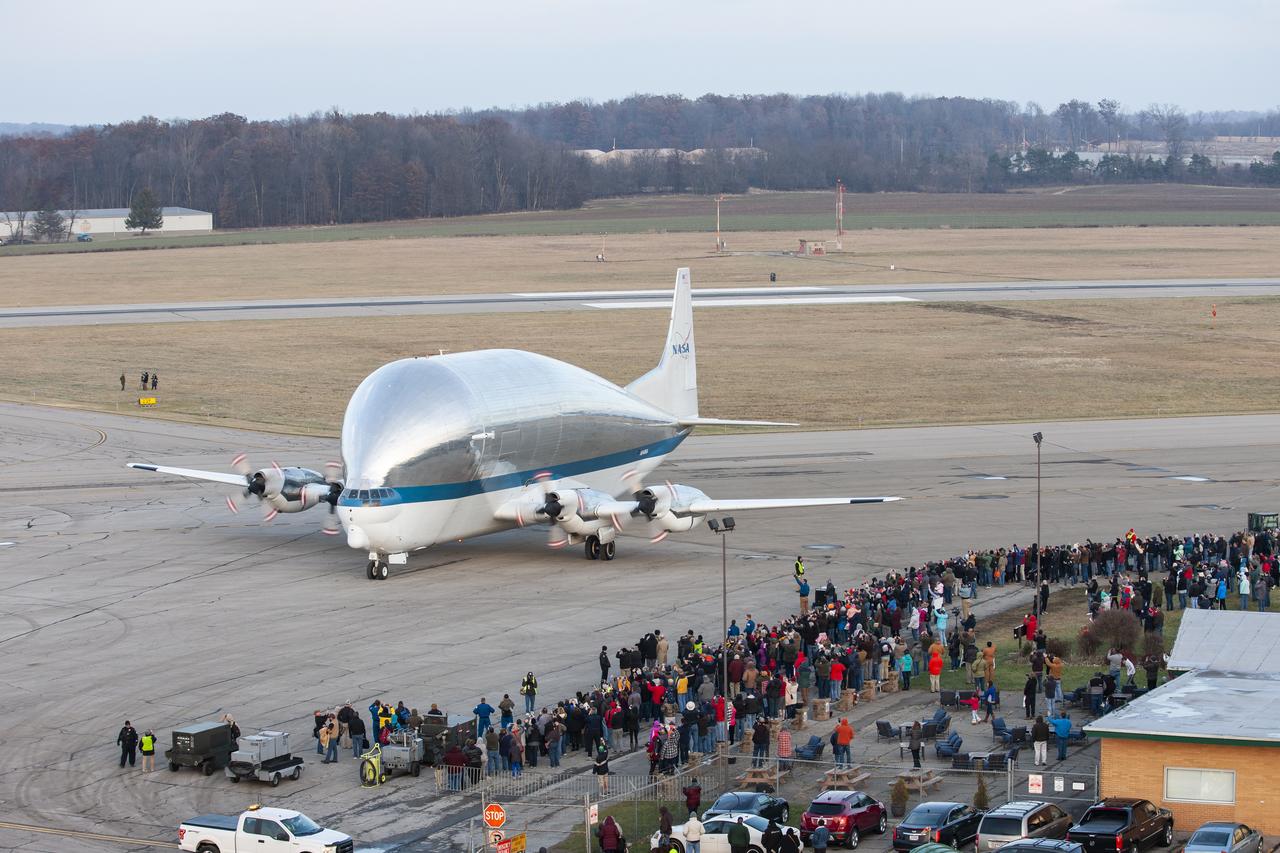
Orion Spacecraft Arrives in Ohio Aboard the Super Guppy at Mansfield Lahm Airport
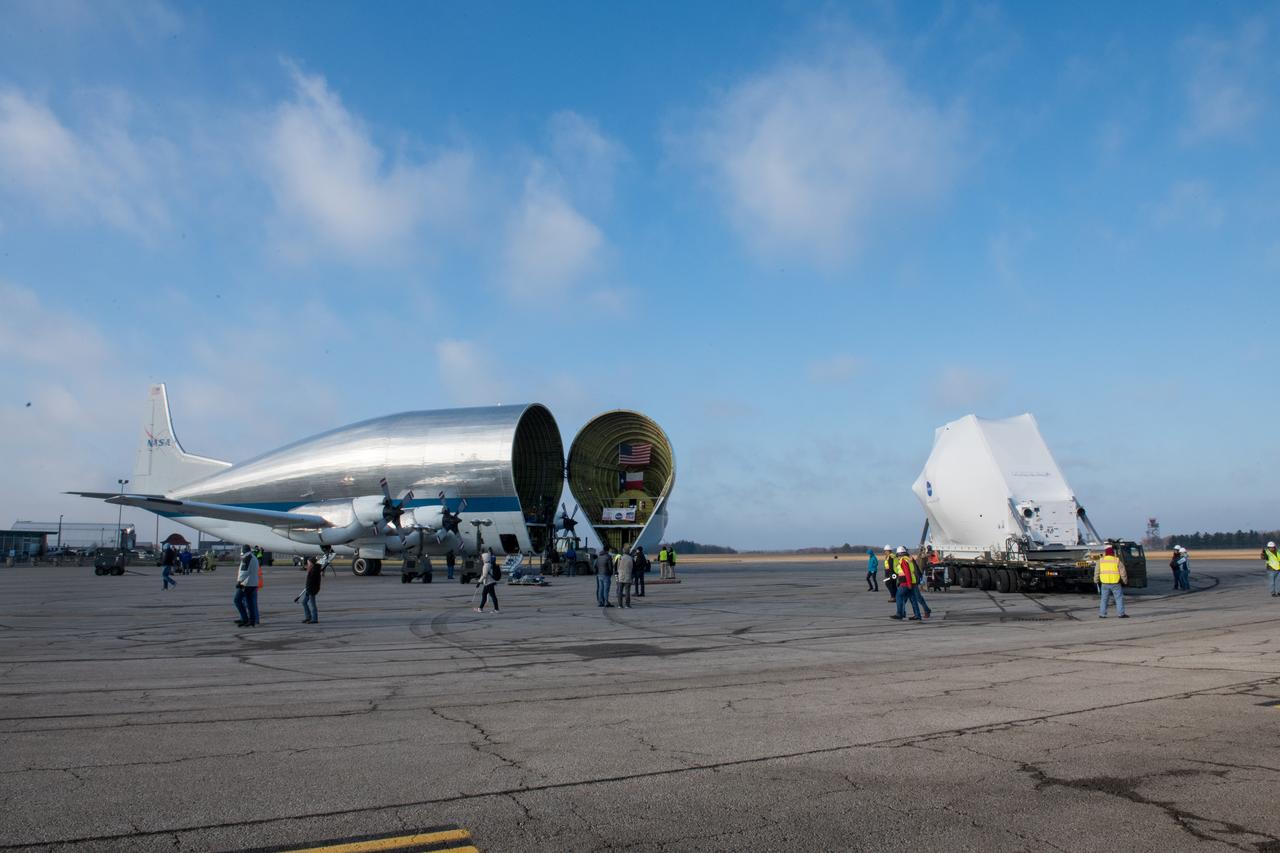
Orion Spacecraft Arrives in Ohio Aboard the Super Guppy at Mansfield Lahm Airport
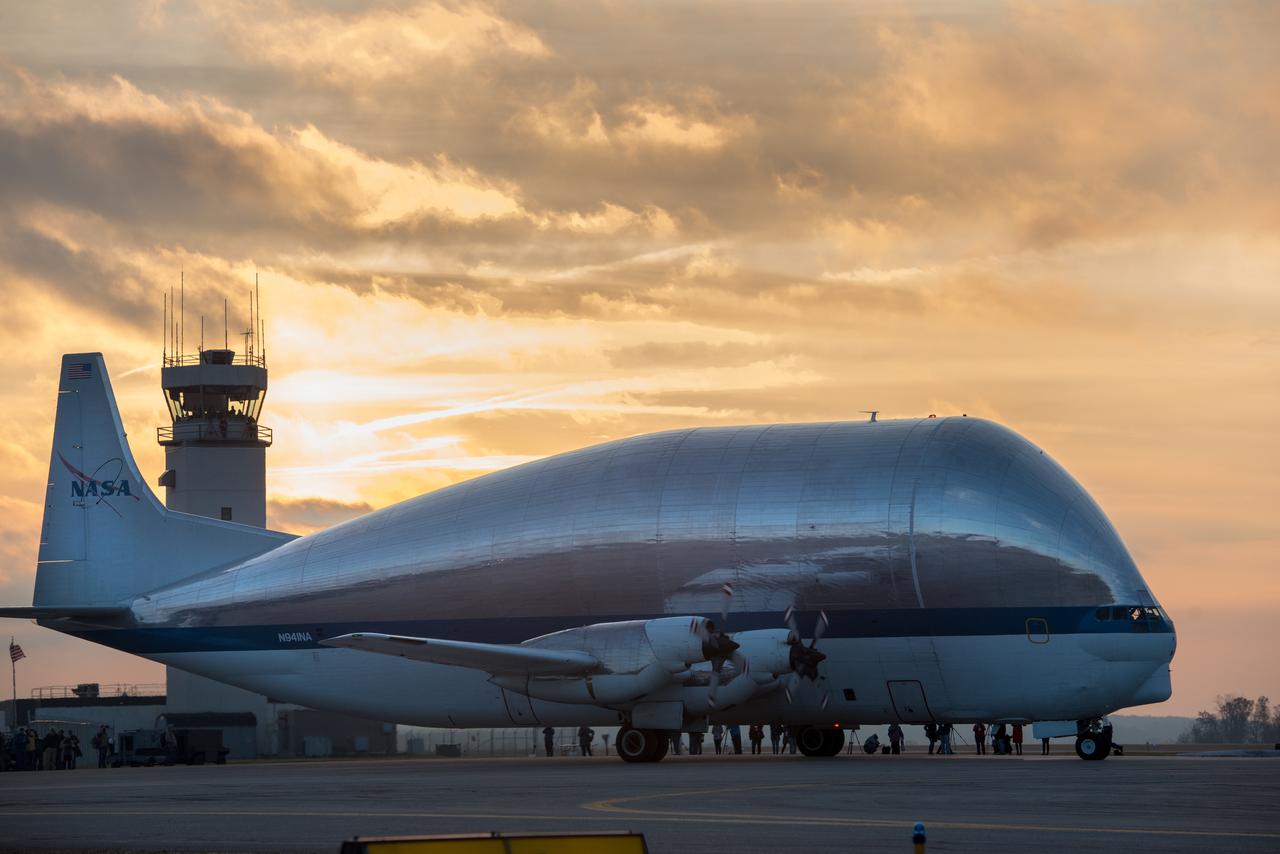
Orion Spacecraft Arrives in Ohio Aboard the Super Guppy at Mansfield Lahm Airport
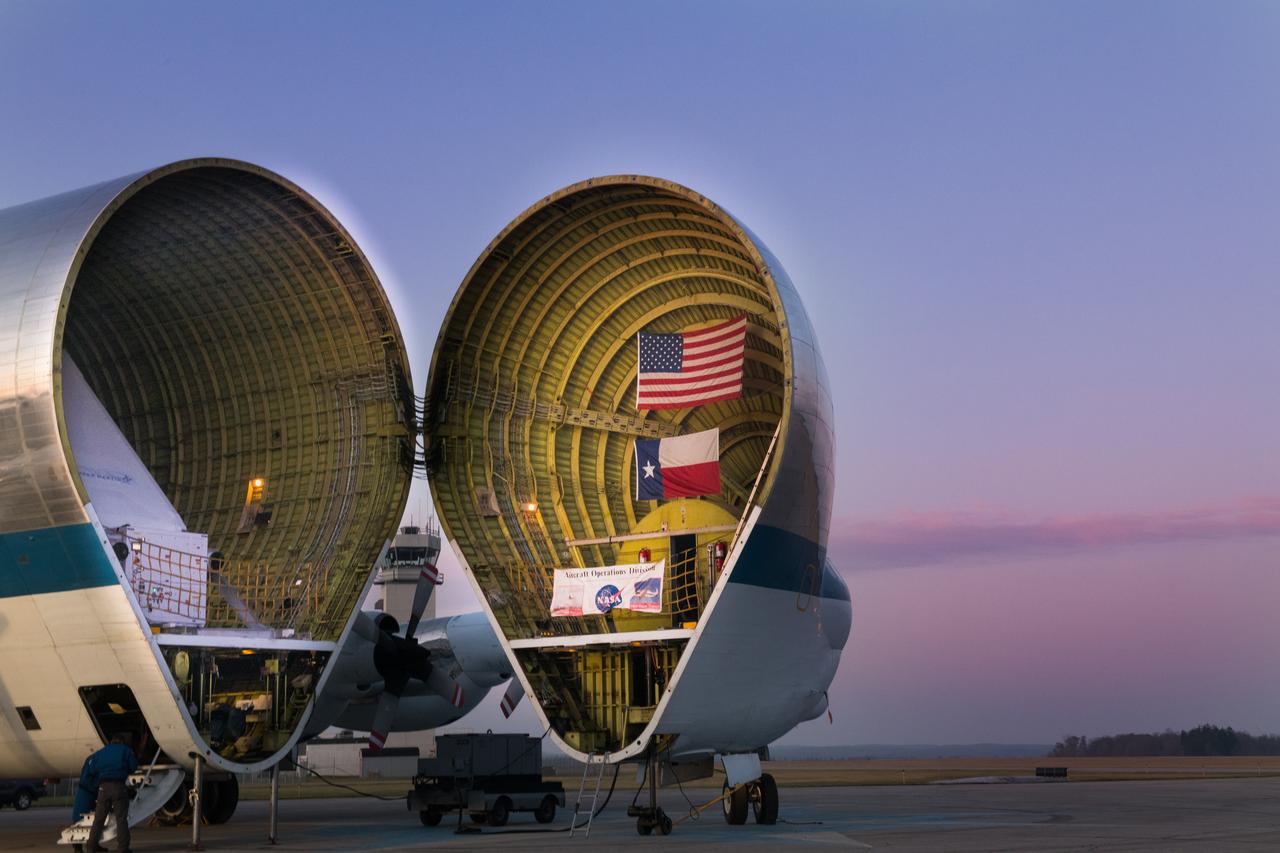
Orion Spacecraft Arrives in Ohio Aboard the Super Guppy at Mansfield Lahm Airport
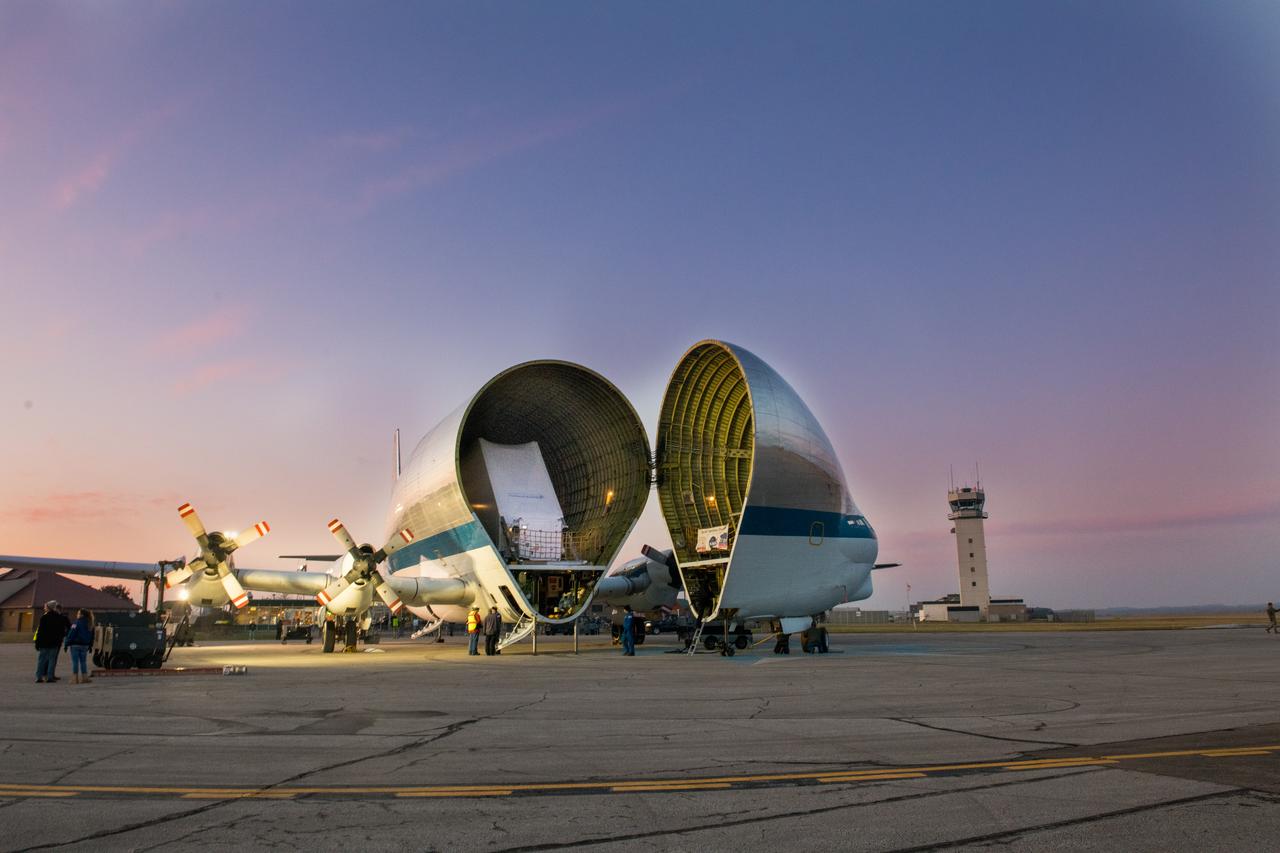
Orion Spacecraft Arrives in Ohio Aboard the Super Guppy at Mansfield Lahm Airport
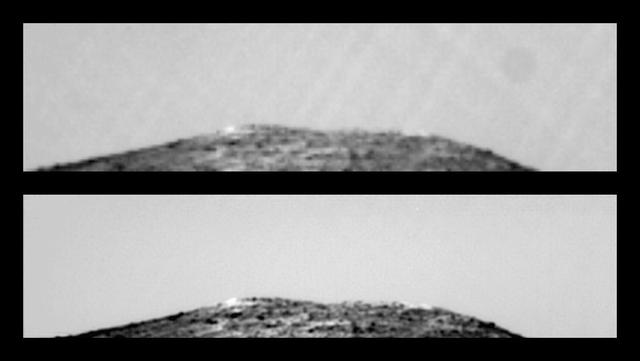
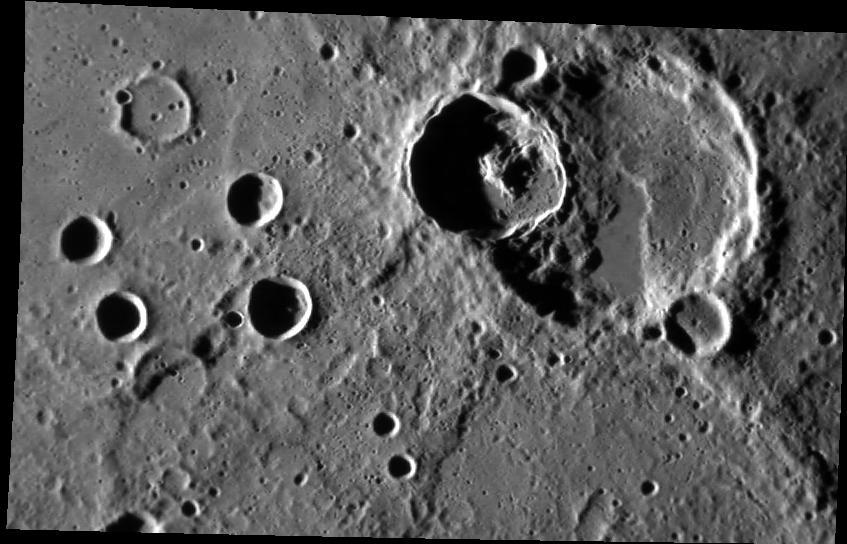
North Twin Peak in Super Resolution
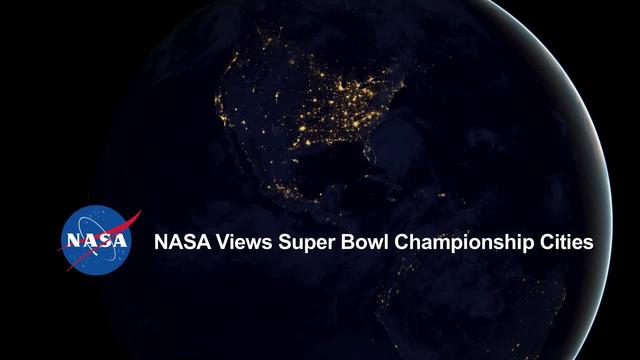
It can't always be about space, right? Well, technically this still is about space...and the Super Bowl. Take a look at how NASA sees all the Super Bowl Championship Cities! Enjoy the game! <b><a href="http://www.nasa.gov/audience/formedia/features/MP_Photo_Guidelines.html" rel="nofollow">NASA image use policy.</a></b> <b><a href="http://www.nasa.gov/centers/goddard/home/index.html" rel="nofollow">NASA Goddard Space Flight Center</a></b> enables NASA’s mission through four scientific endeavors: Earth Science, Heliophysics, Solar System Exploration, and Astrophysics. Goddard plays a leading role in NASA’s accomplishments by contributing compelling scientific knowledge to advance the Agency’s mission. <b>Follow us on <a href="http://twitter.com/NASAGoddardPix" rel="nofollow">Twitter</a></b> <b>Like us on <a href="http://www.facebook.com/pages/Greenbelt-MD/NASA-Goddard/395013845897?ref=tsd" rel="nofollow">Facebook</a></b> <b>Find us on <a href="http://instagrid.me/nasagoddard/?vm=grid" rel="nofollow">Instagram</a></b>
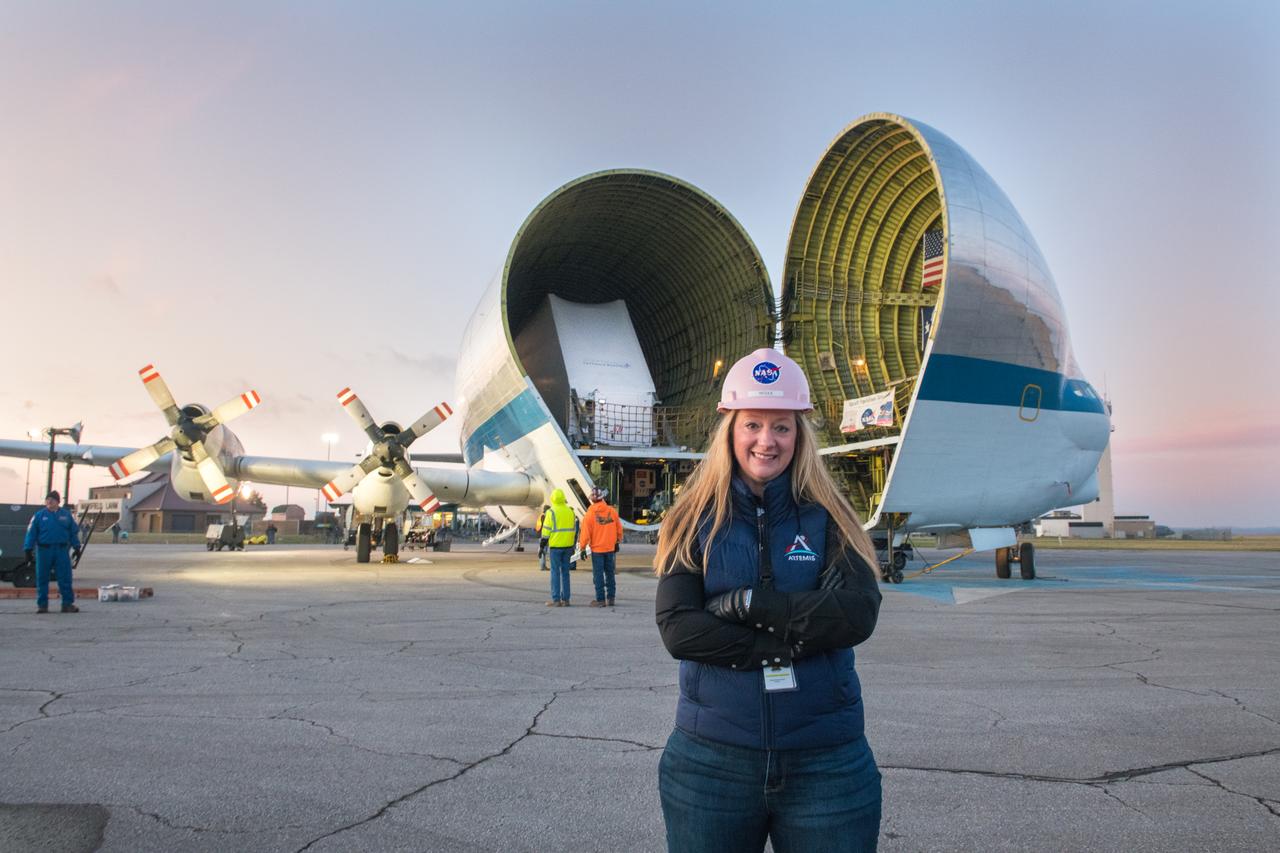
Orion Spacecraft Arrives in Ohio Aboard the Super Guppy at Mansfield Lahm Airport
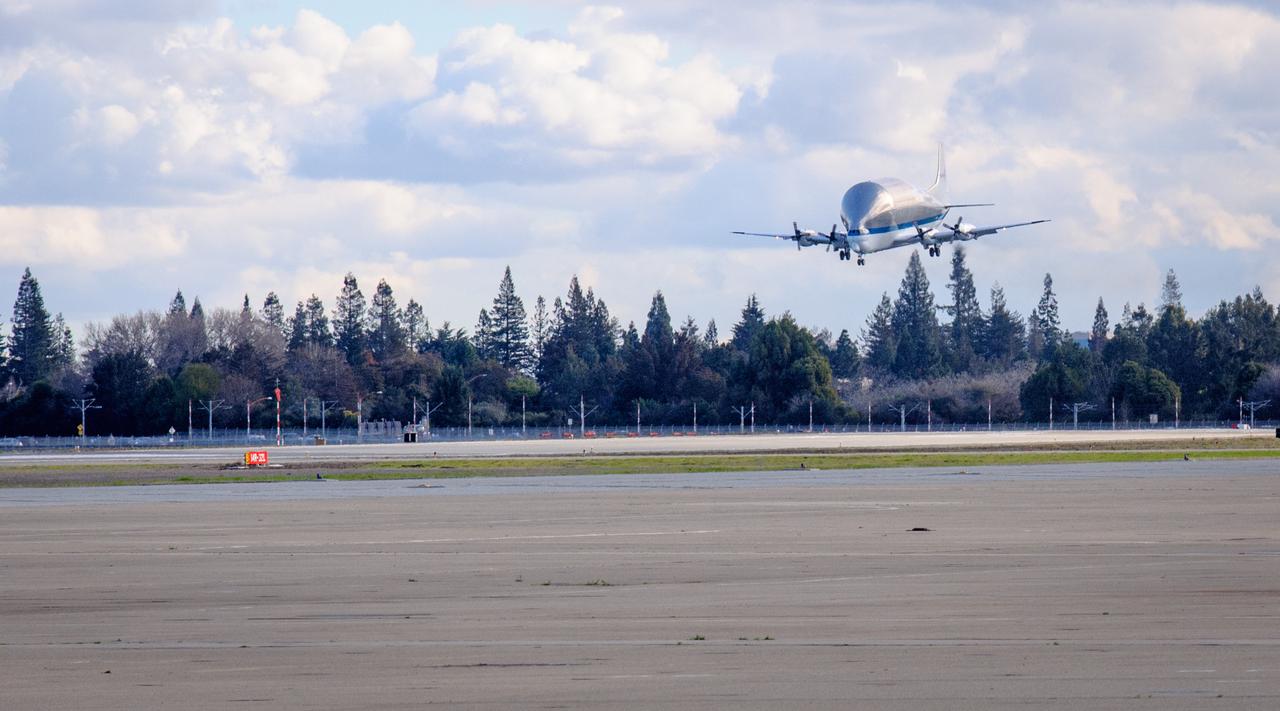
NASA N941NA is the last Super Guppy Turbine Cargo Airplane in service.
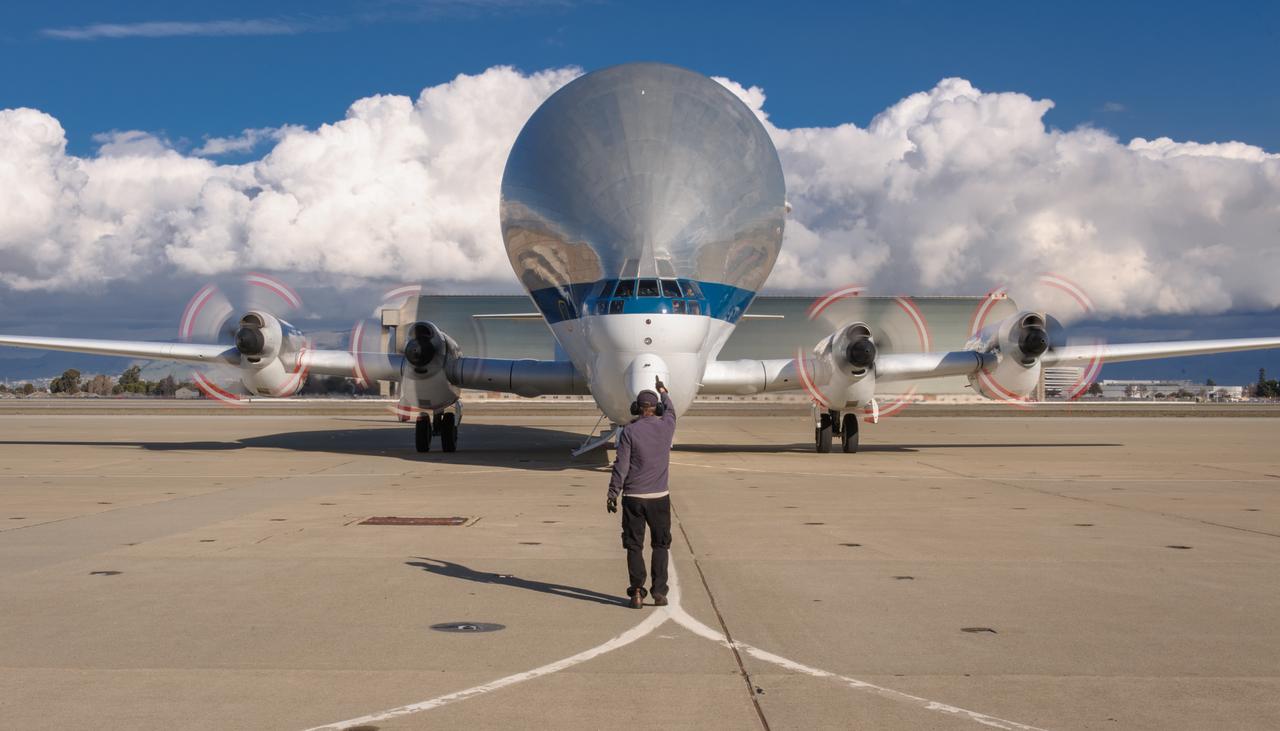
NASA N941NA is the last Super Guppy Turbine Cargo Airplane in service.
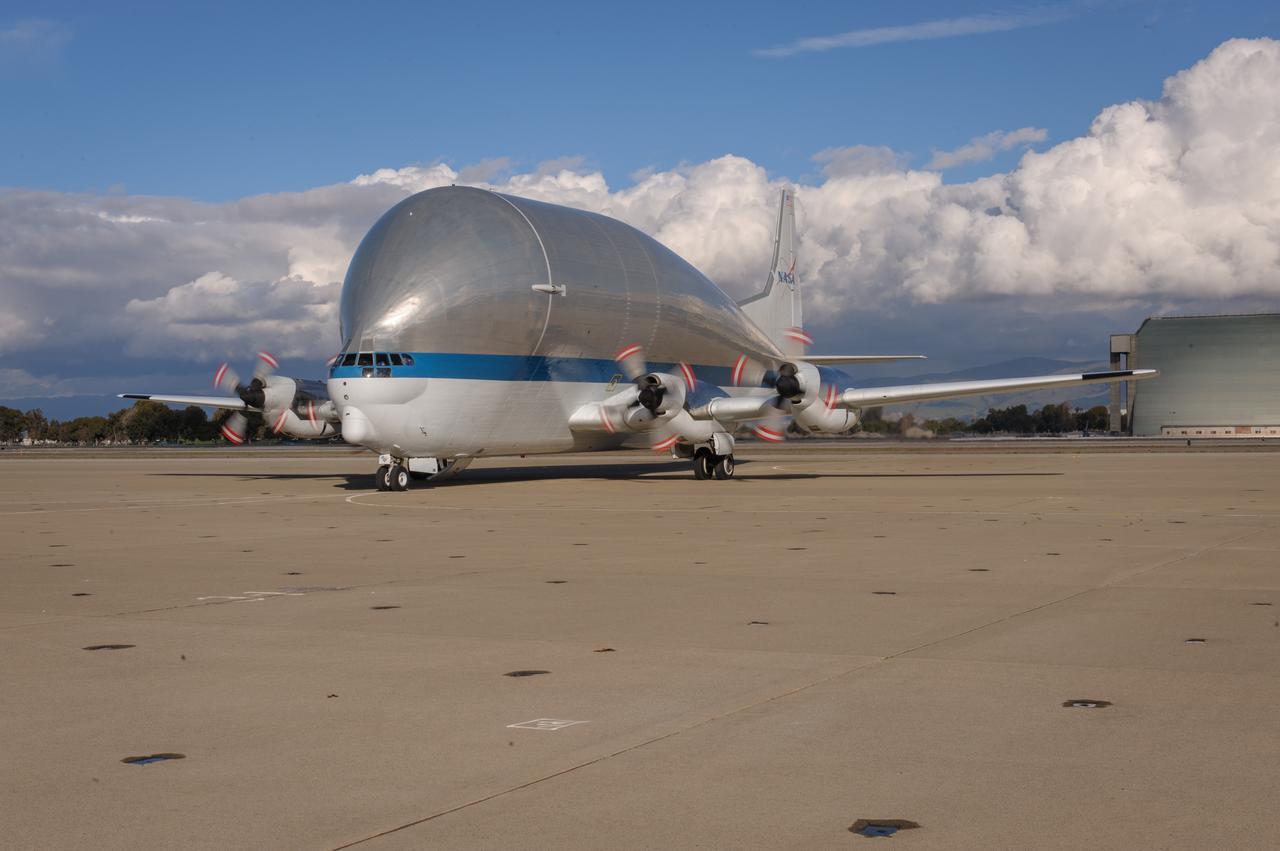
NASA N941NA is the last Super Guppy Turbine Cargo Airplane in service.
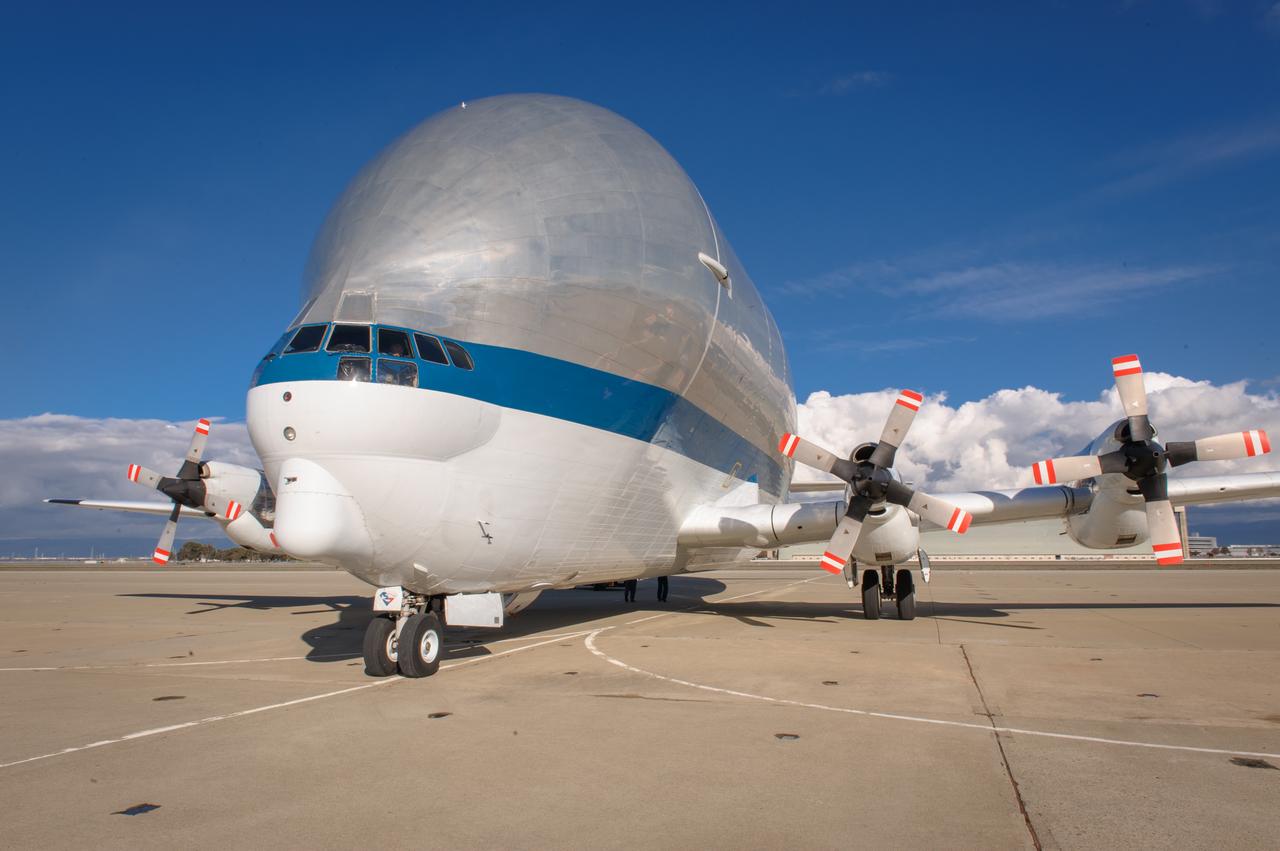
NASA N941NA is the last Super Guppy Turbine Cargo Airplane in service.
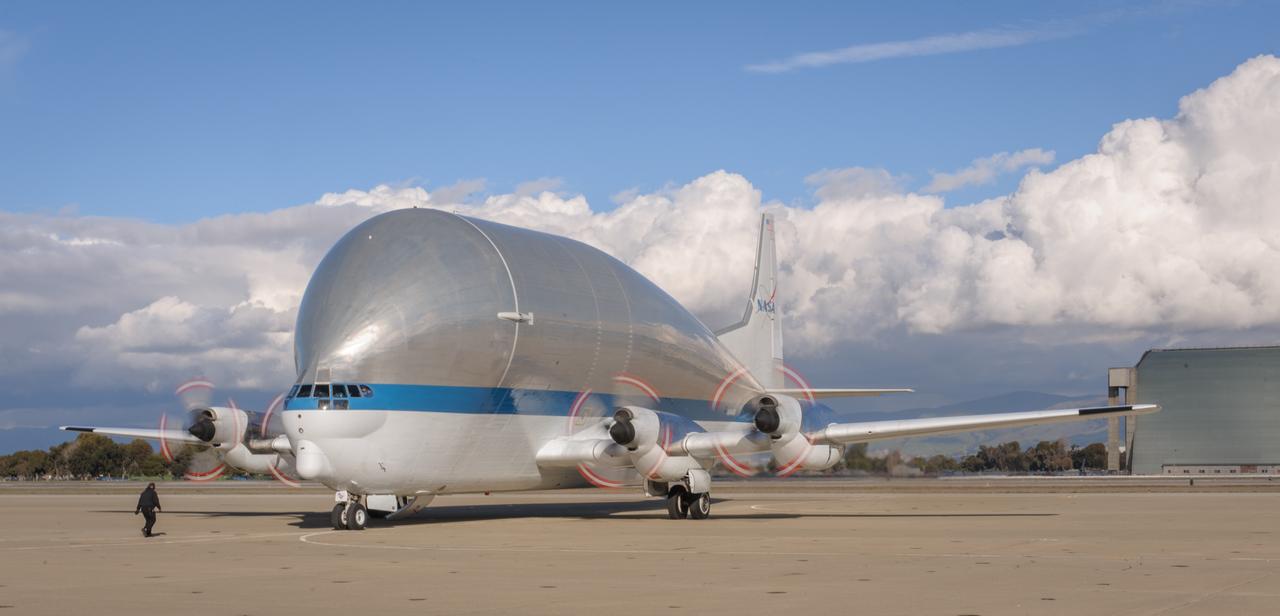
NASA N941NA is the last Super Guppy Turbine Cargo Airplane in service.
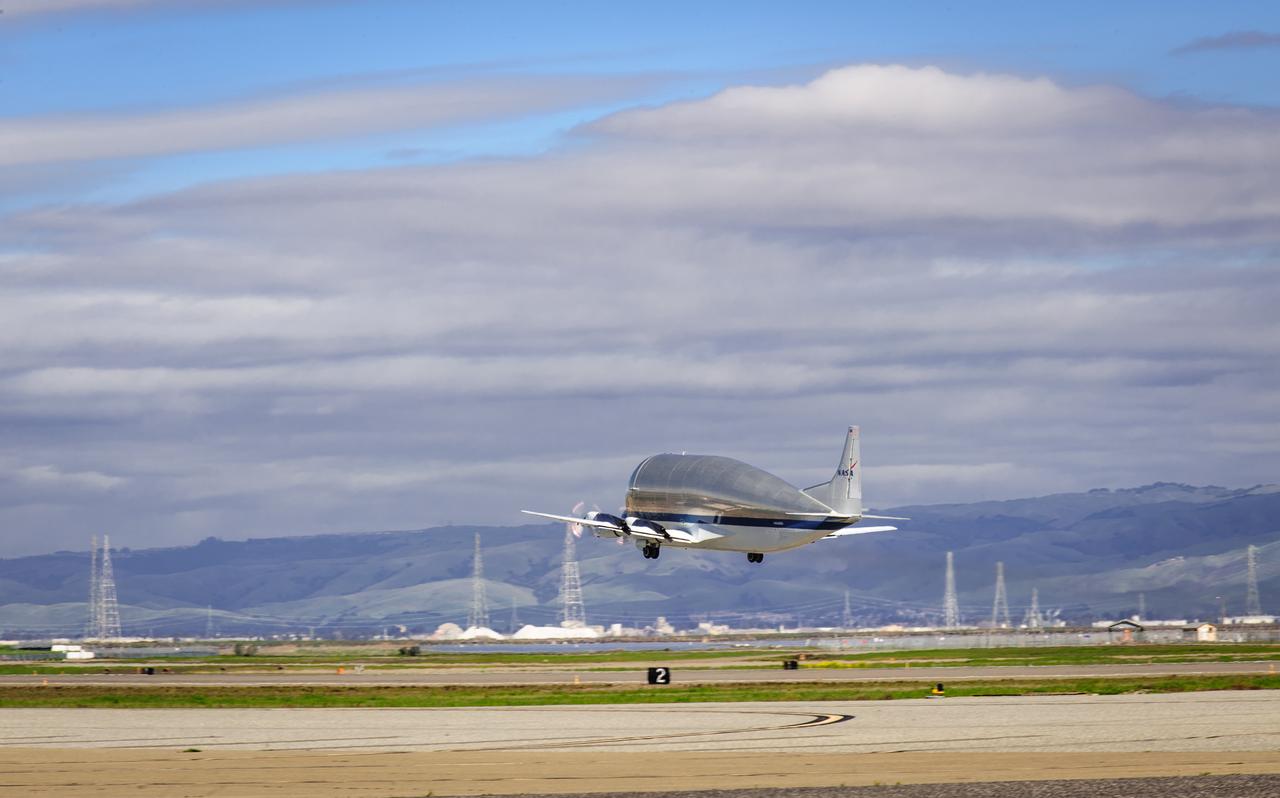
NASA N941NA lift off from Ames Research Center at Moffett Field, it is the last Super Guppy still flying.
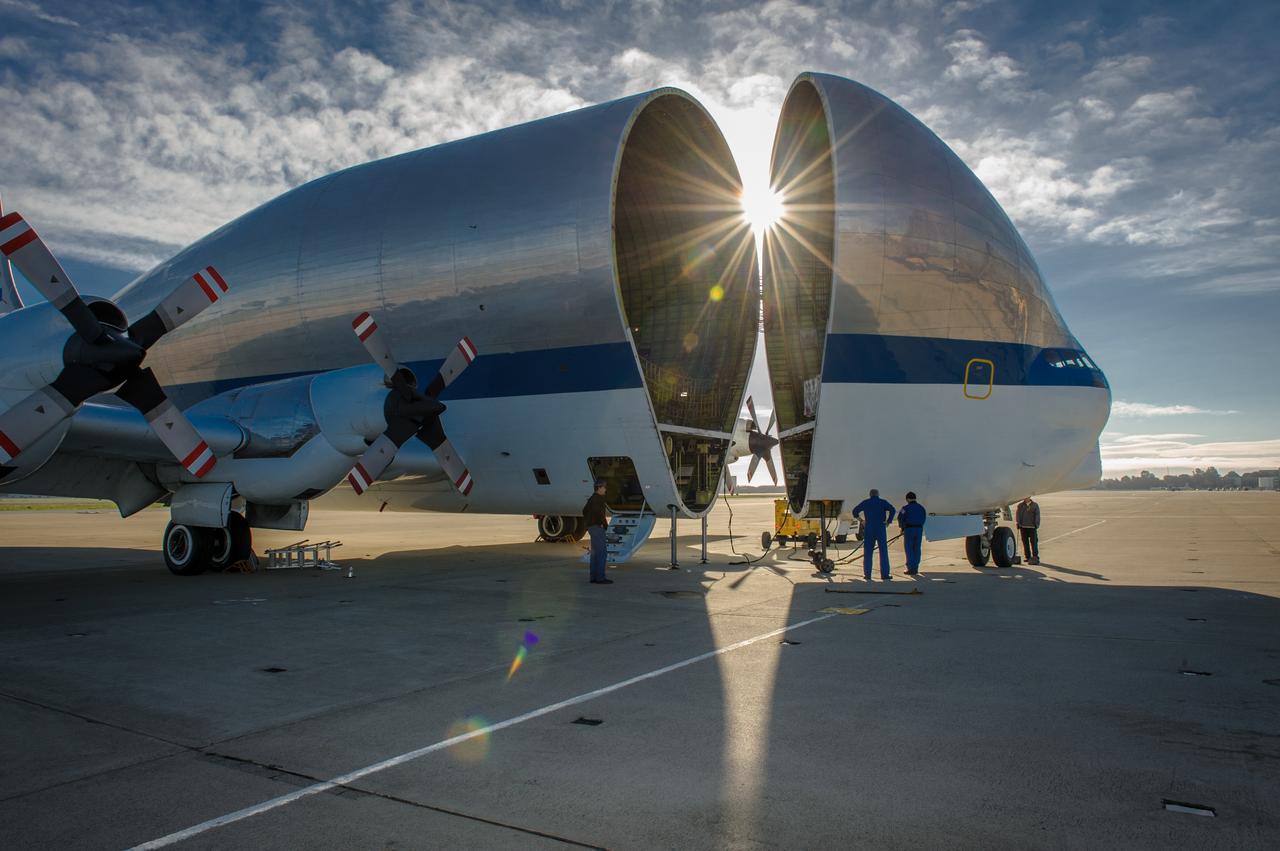
NASA N941NA Superguppy at Moffett Field. Cargo is loaded into the Super Guppy when the aircraft's "fold-away" nose rotates 110 degrees to the left, allowing unobstructed access to the 25 foot diameter fuselage.
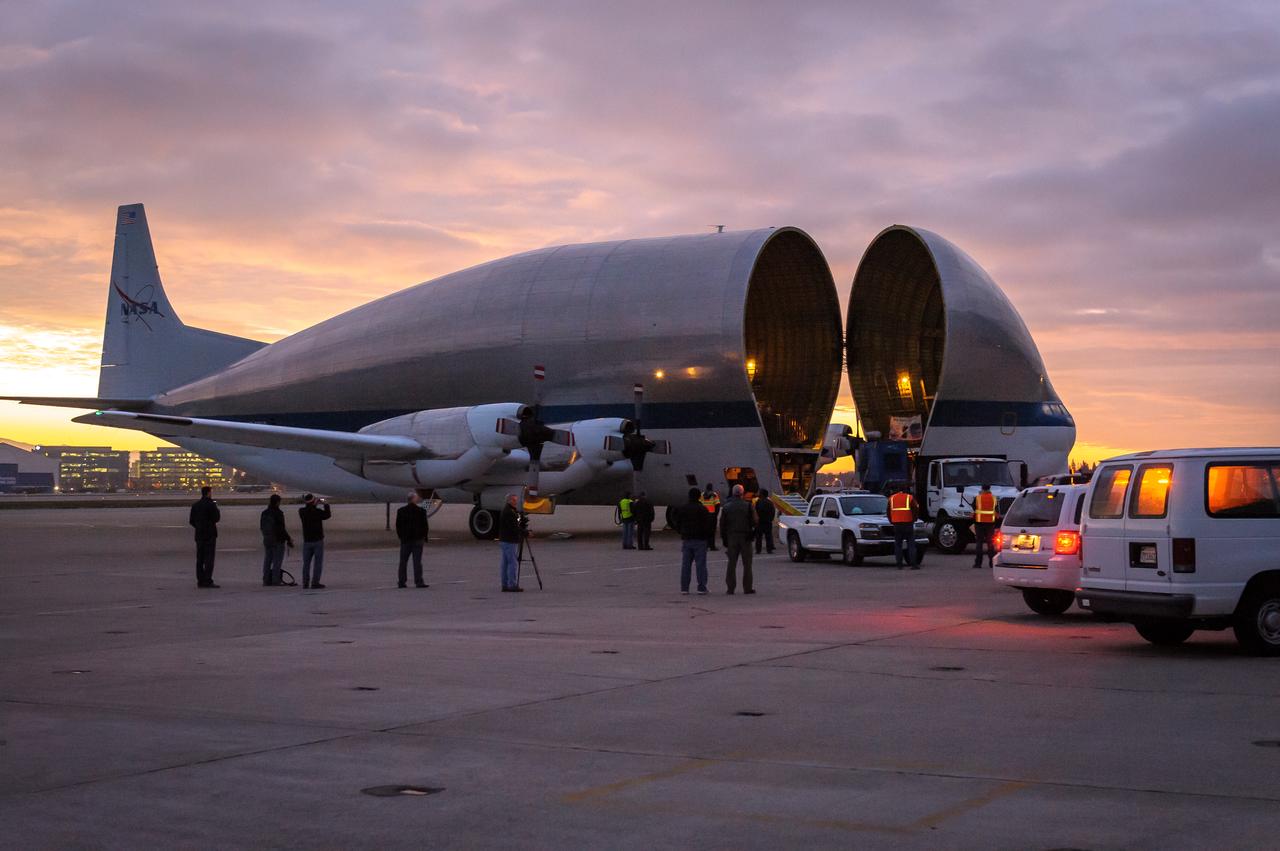
NASA N941NA Superguppy lands at the Moffett Field. Cargo is loaded into the Super Guppy when the aircraft's "fold-away" nose rotates 110 degrees to the left, allowing unobstructed access to the 25 foot diameter fuselage.
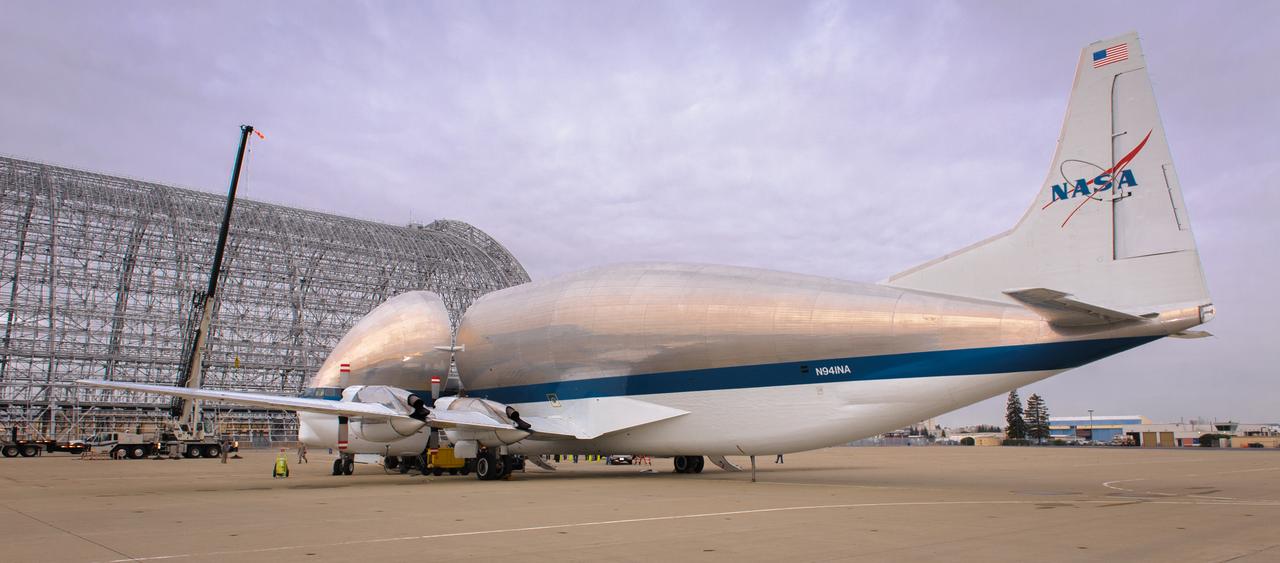
NASA N941NA parked in front of Hangar 1 at Moffett Field. Cargo is loaded into the Super Guppy when the aircraft's "fold-away" nose rotates 110 degrees to the left, allowing unobstructed access to the 25 foot diameter fuselage.
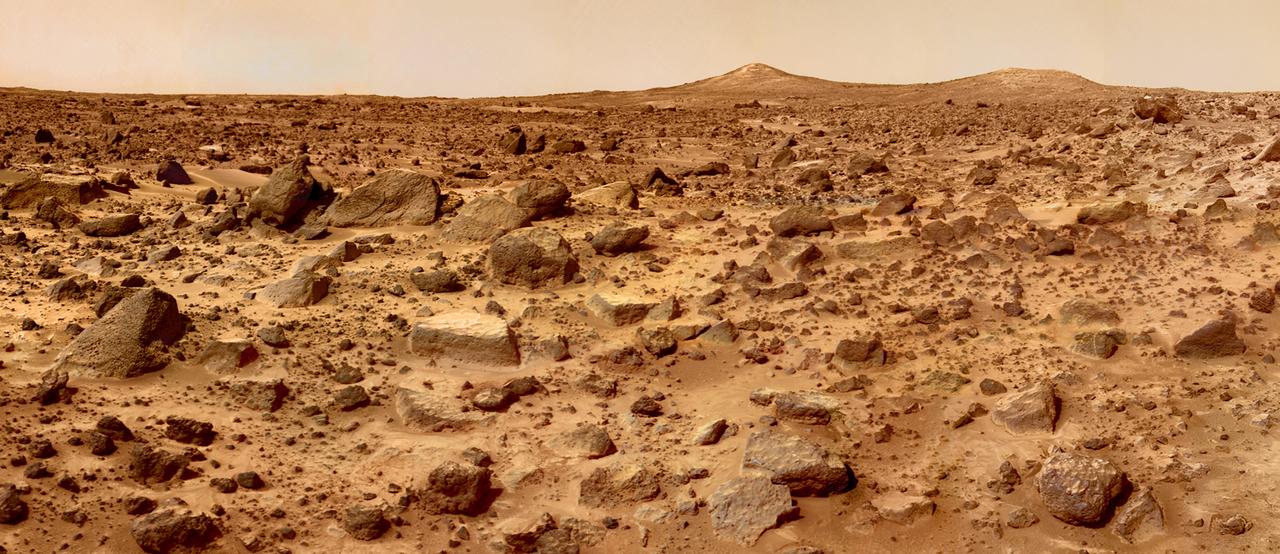
Twin Peaks in Super Resolution - Left Eye
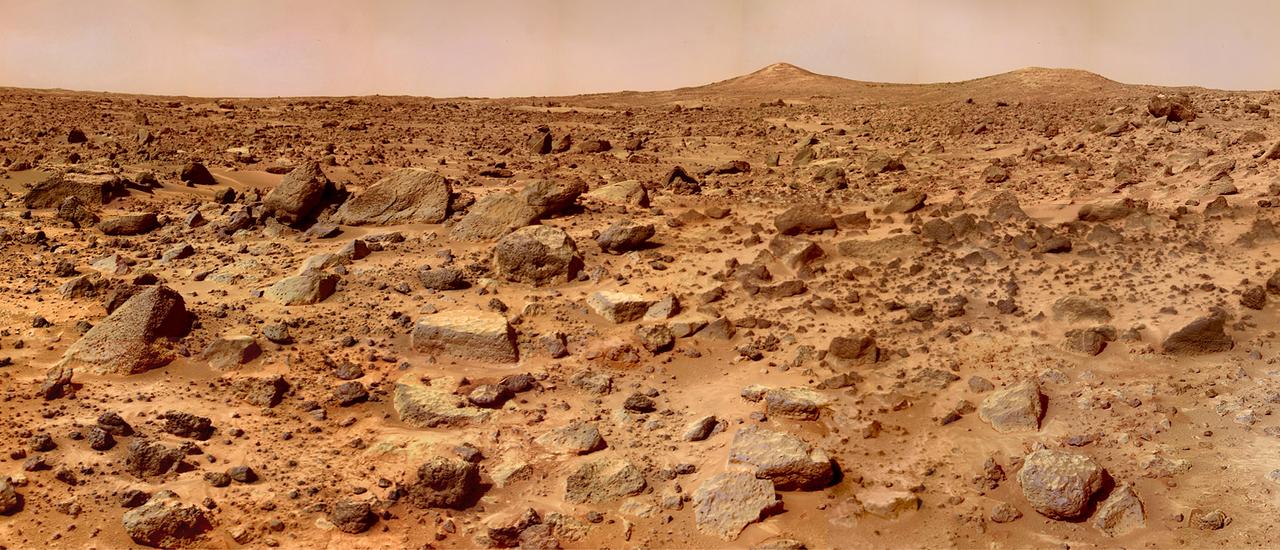
Twin Peaks in Super Resolution - Right Eye
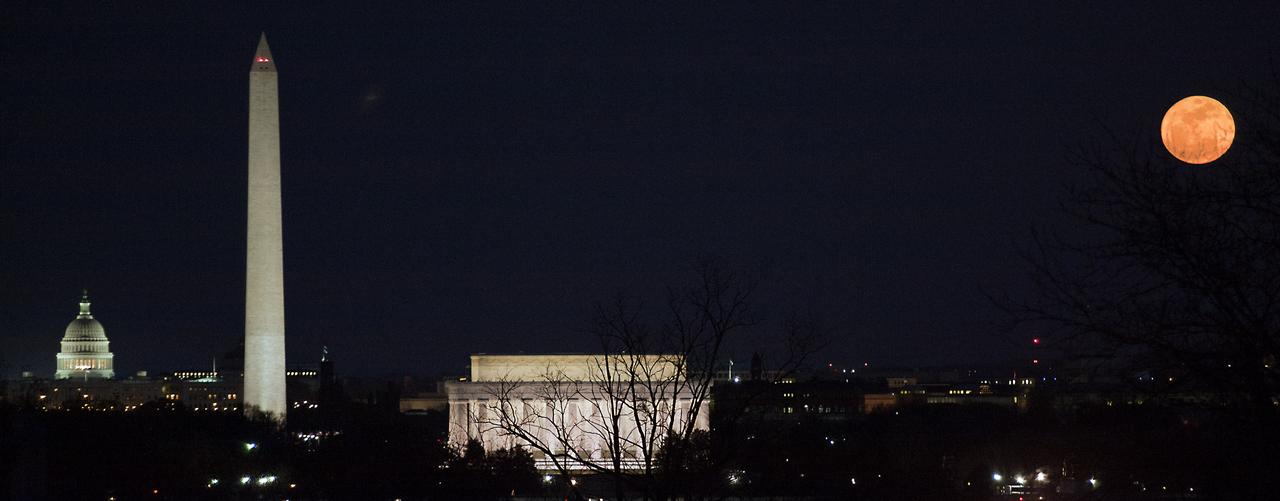
The full moon is seen as it rises near the National Mall, Saturday, March 19, 2011, in Washington. The full moon tonight is called a "Super Moon" since it is at its closest to Earth. Photo Credit: (NASA/Paul E. Alers)
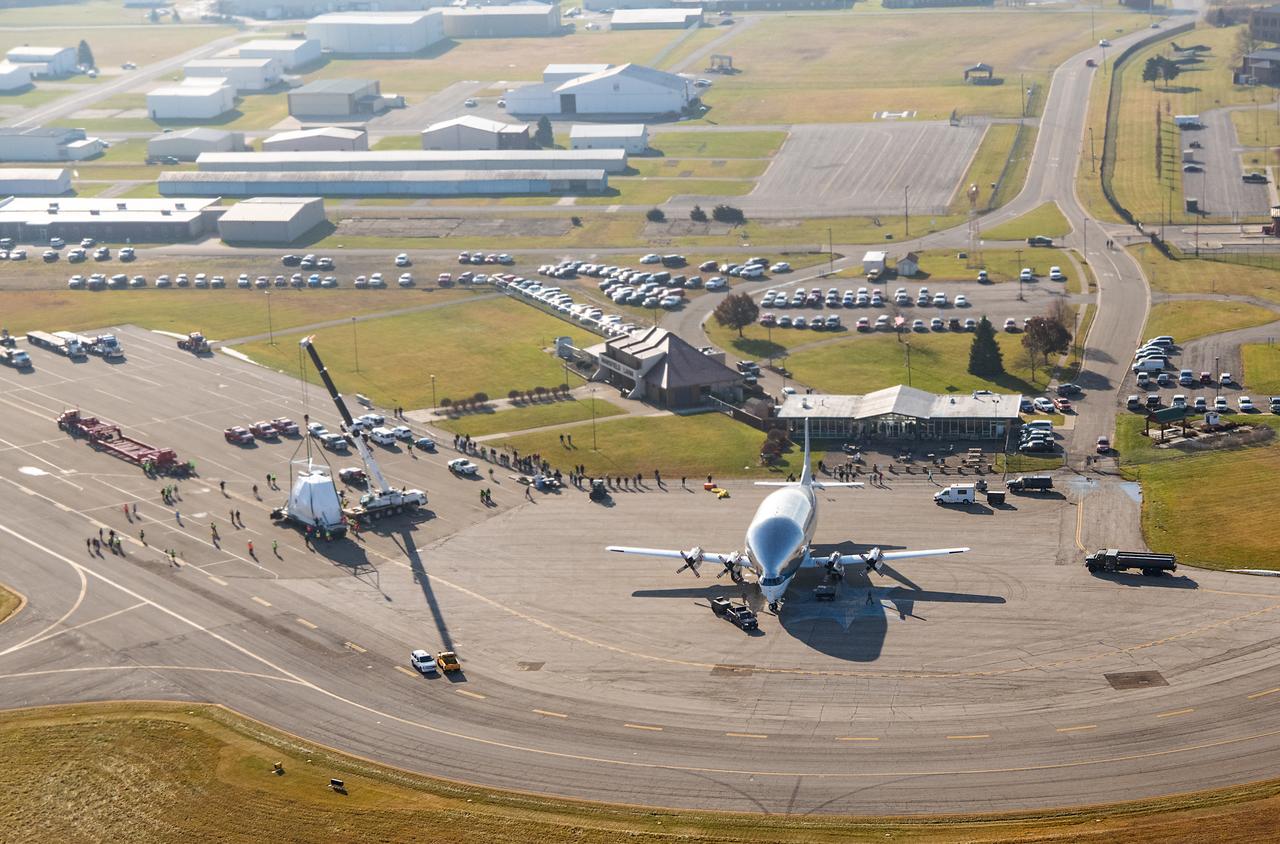
Orion Spacecraft Arrives in Ohio Aboard the Super Guppy at Mansfield Lahm Airport
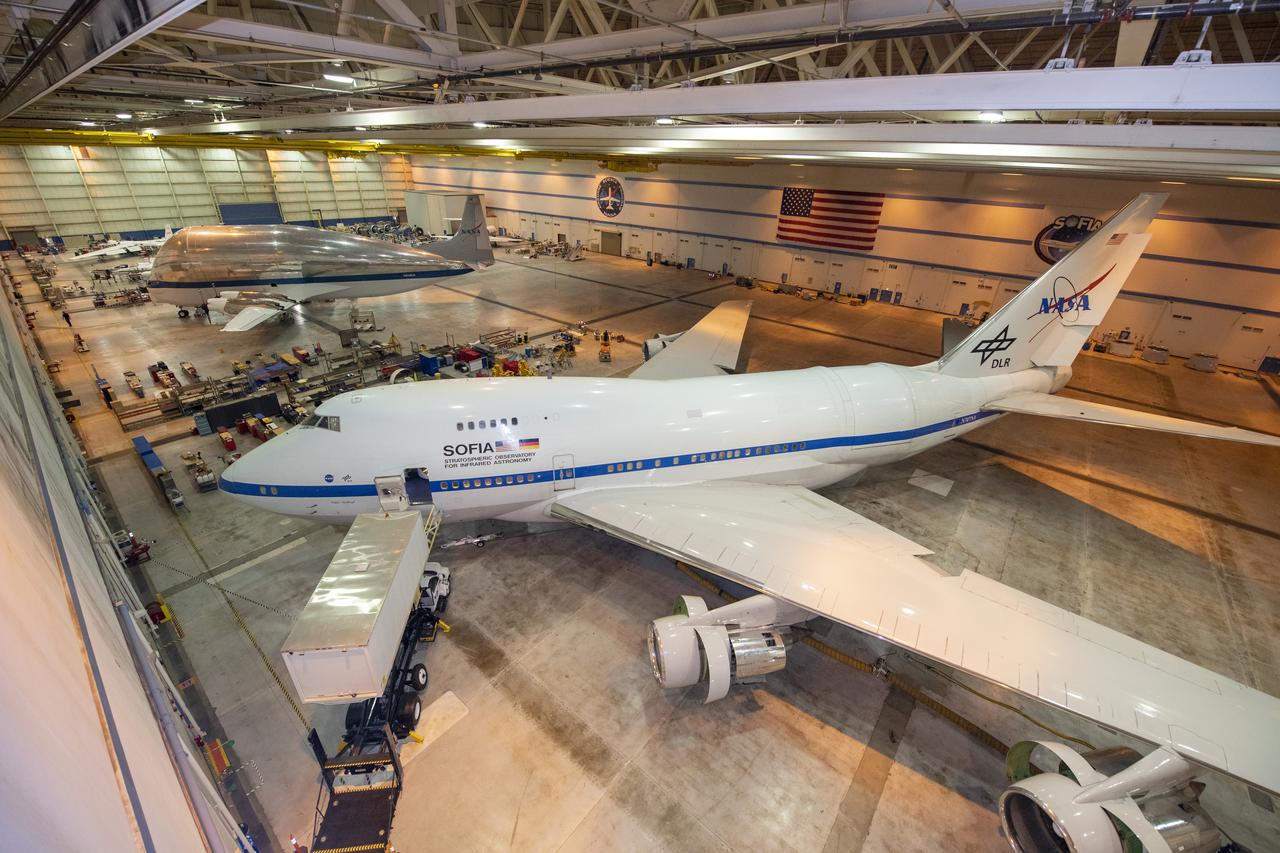
NASA's Super Guppy Turbine cargo aircraft in the hangar with SOFIA at NASA's Armstrong Flight Research Center on August 24, 2021. The Super Guppy aircraft, operated by NASA's Johnson Space Center, aids in the transportation of oversized aerospace cargo in a practical and economical way. NASA's Stratospheric Observatory for Infrared Astronomy (SOFIA), maintained and operated by NASA's Armstrong Flight Research Center, is the world's largest airborne astronomical observatory, complementing NASA's space telescopes as well as major Earth-based telescopes.

With maximum sustained wind speeds of 140 mph, Super Typhoon Utor made landfall in the Philippines on August 11, 2013 around 18:00z. The storm crossed over the island of Luzon and into the South China Sea. The Joint Typhoon Warning Center predicts Utor will head for the Chinese mainland and make landfall again around 12:00z on the 14th about 200 miles southwest of Hong Kong. This colorized infrared image from the Suomi NPP satellite shows the storm on August 11th at 4:30z. NASA/NOAA <b><a href="http://www.nasa.gov/audience/formedia/features/MP_Photo_Guidelines.html" rel="nofollow">NASA image use policy.</a></b> <b><a href="http://www.nasa.gov/centers/goddard/home/index.html" rel="nofollow">NASA Goddard Space Flight Center</a></b> enables NASA’s mission through four scientific endeavors: Earth Science, Heliophysics, Solar System Exploration, and Astrophysics. Goddard plays a leading role in NASA’s accomplishments by contributing compelling scientific knowledge to advance the Agency’s mission. <b>Follow us on <a href="http://twitter.com/NASA_GoddardPix" rel="nofollow">Twitter</a></b> <b>Like us on <a href="http://www.facebook.com/pages/Greenbelt-MD/NASA-Goddard/395013845897?ref=tsd" rel="nofollow">Facebook</a></b> <b>Find us on <a href="http://instagram.com/nasagoddard?vm=grid" rel="nofollow">Instagram</a></b>
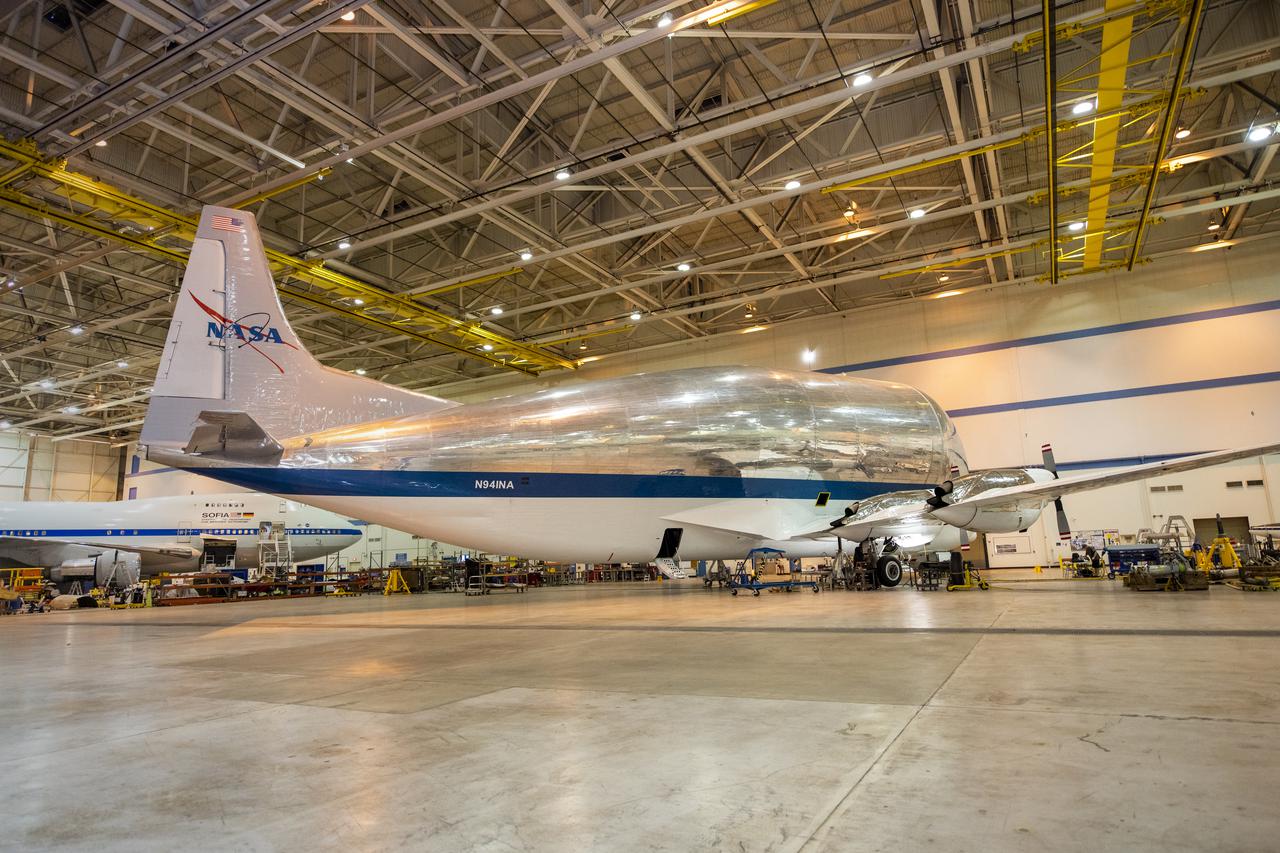
NASA's Super Guppy Turbine cargo aircraft in the hangar at NASA's Armstrong Flight Research Center on August 24, 2021. This unique whale-like aircraft arrived at the center's Building 703 in Palmdale, CA to support crews in the performance of routine maintenance. The Super Guppy aircraft, operated by NASA's Johnson Space Center, aids in the transportation of oversized aerospace cargo in a practical and economical way.
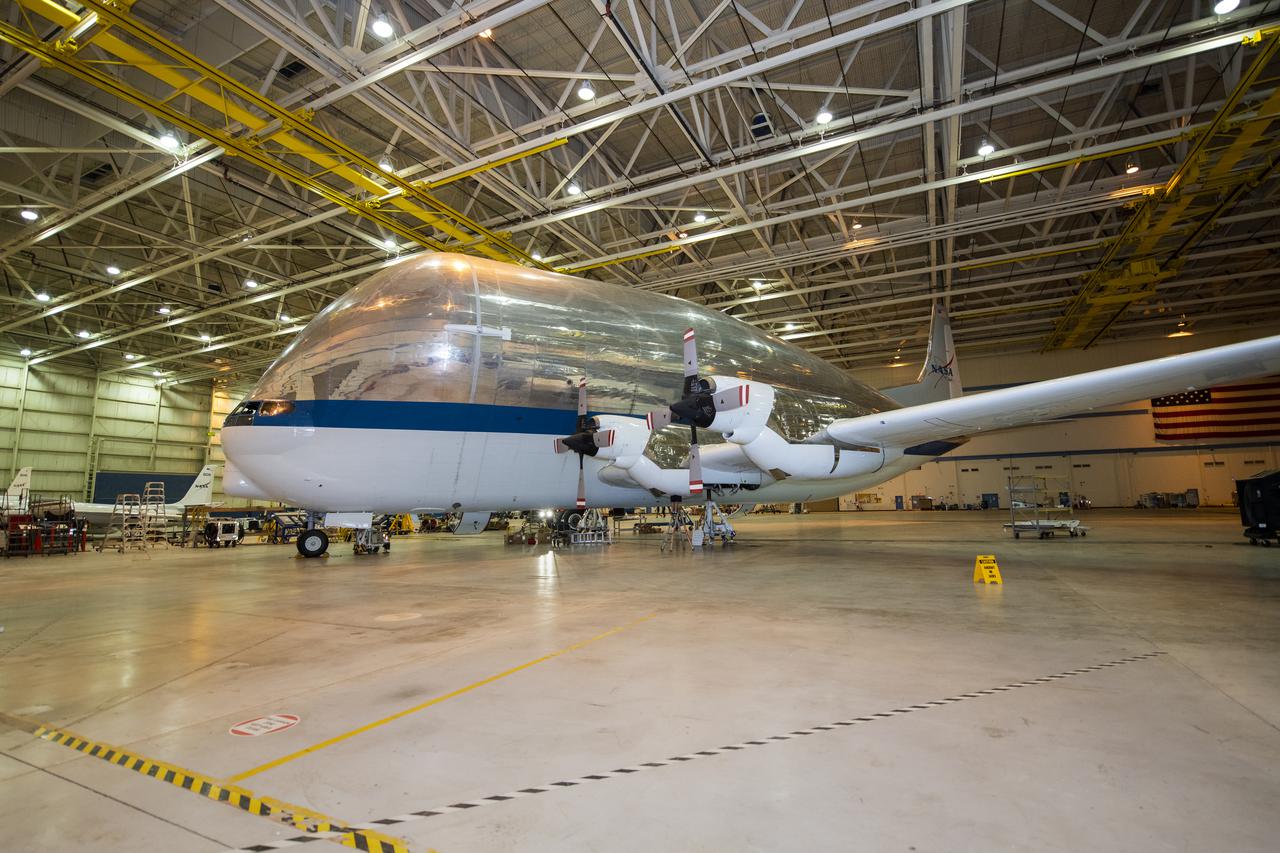
NASA's Super Guppy Turbine cargo aircraft in the hangar at NASA's Armstrong Flight Research Center on August 24, 2021. This unique whale-like aircraft arrived at the center's Building 703 in Palmdale, CA to support crews in the performance of routine maintenance. The Super Guppy aircraft, operated by NASA's Johnson Space Center, aids in the transportation of oversized aerospace cargo in a practical and economical way.
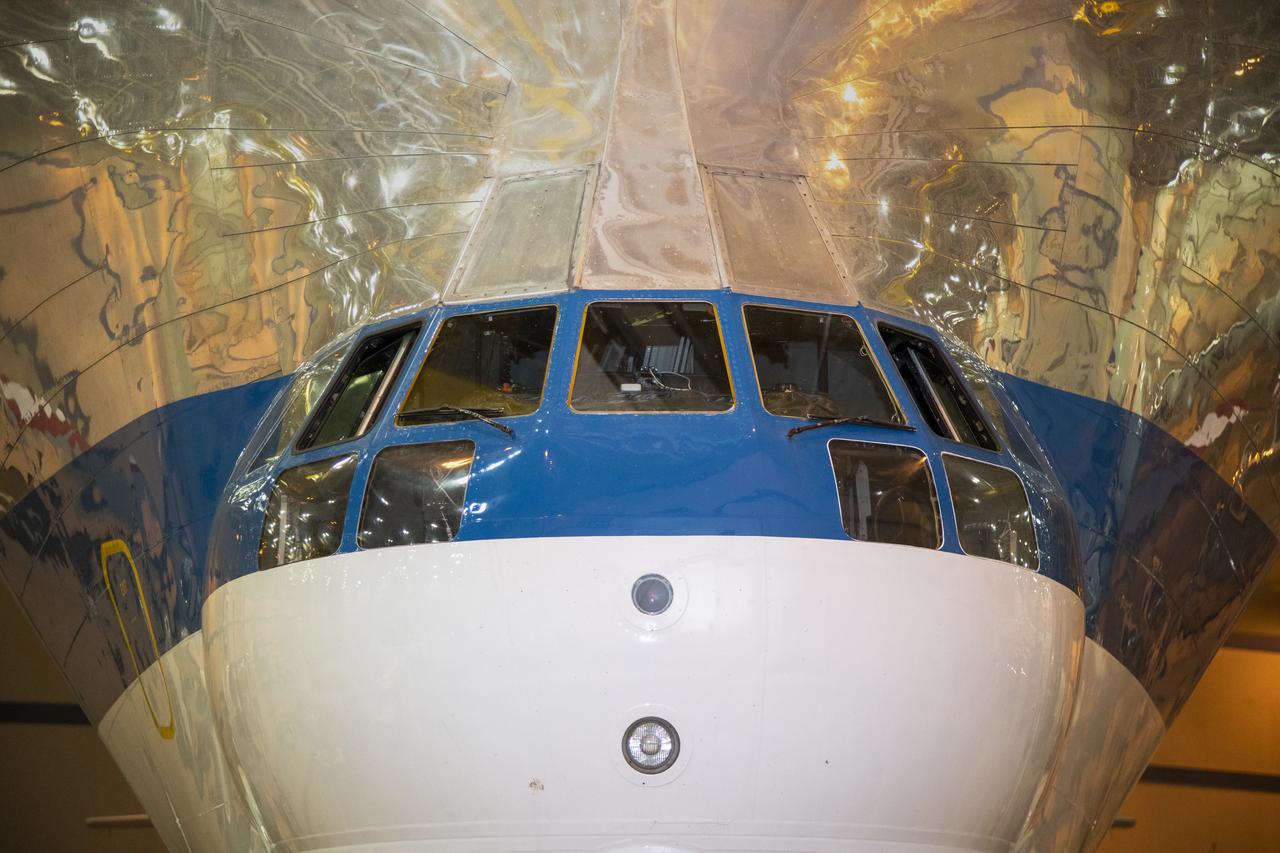
NASA's Super Guppy Turbine cargo aircraft in the hangar at NASA's Armstrong Flight Research Center on August 24, 2021. This unique whale-like aircraft arrived at the center's Building 703 in Palmdale, CA to support crews in the performance of routine maintenance. The Super Guppy aircraft, operated by NASA's Johnson Space Center, aids in the transportation of oversized aerospace cargo in a practical and economical way.
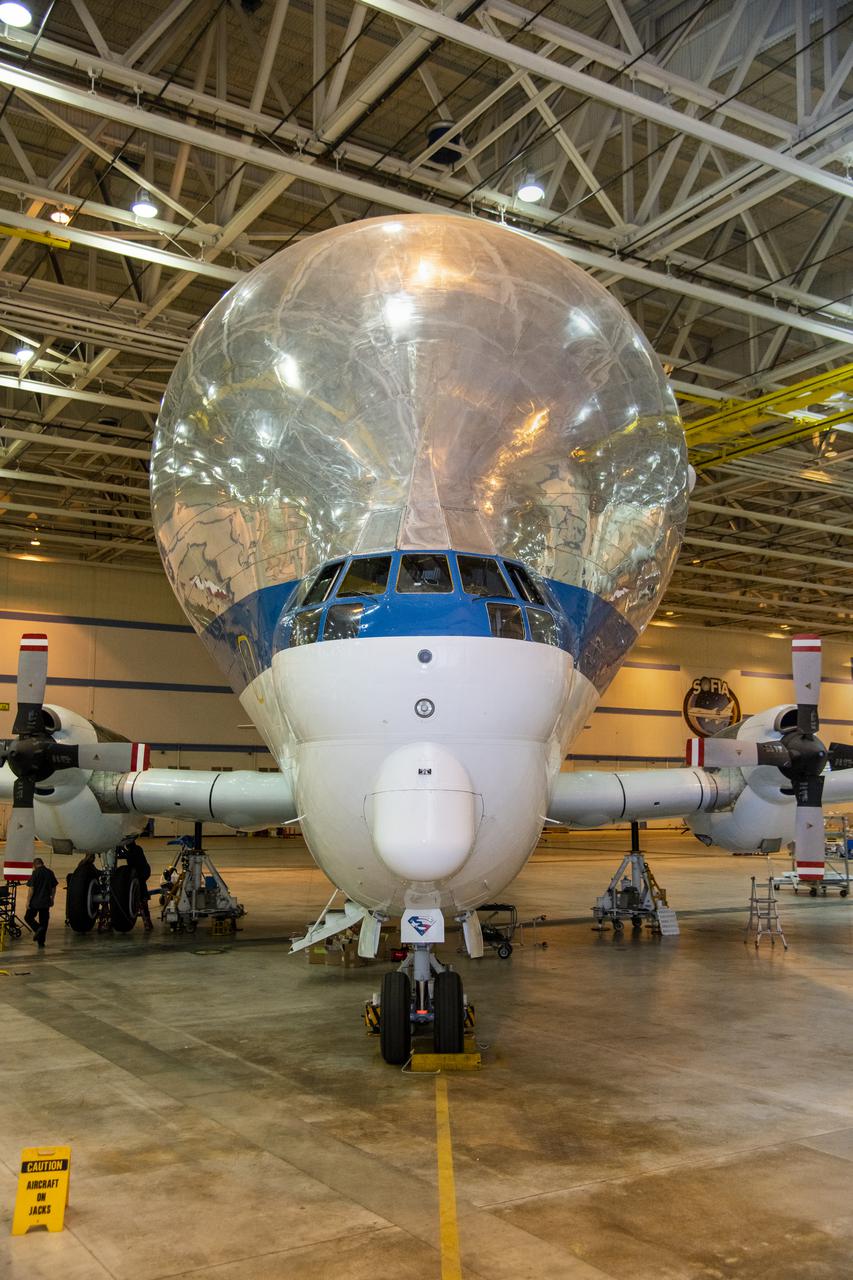
NASA’s Super Guppy Turbine cargo aircraft in the hangar at NASA’s Armstrong Flight Research Center on August 24, 2021. This unique whale-like aircraft arrived at the center’s Building 703 in Palmdale, CA to support crews in the performance of routine maintenance. The Super Guppy aircraft, operated by NASA’s Johnson Space Center, aids in the transportation of oversized aerospace cargo in a practical and economical way.
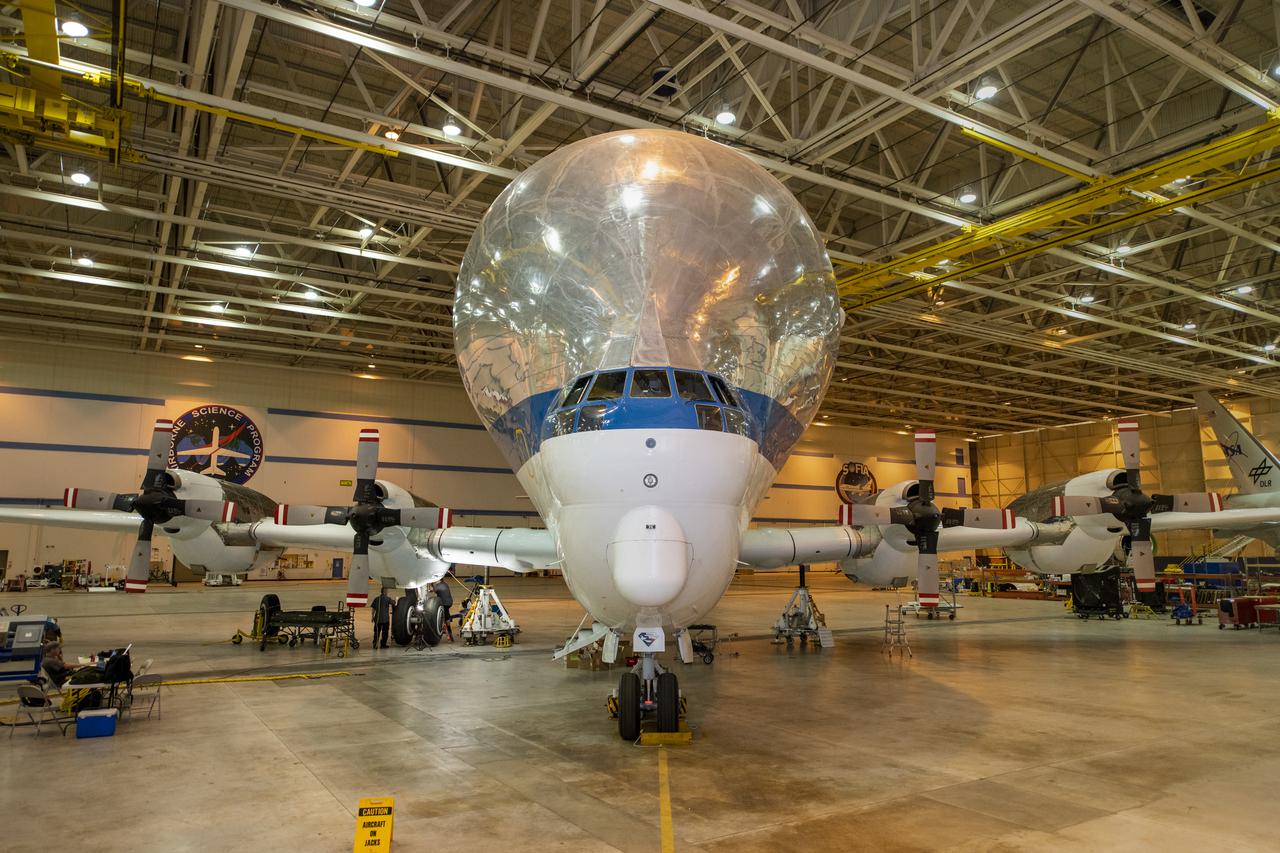
NASA's Super Guppy Turbine cargo aircraft in the hangar at NASA's Armstrong Flight Research Center on August 24, 2021. This unique whale-like aircraft arrived at the center's Building 703 in Palmdale, CA to support crews in the performance of routine maintenance. The Super Guppy aircraft, operated by NASA's Johnson Space Center, aids in the transportation of oversized aerospace cargo in a practical and economical way.
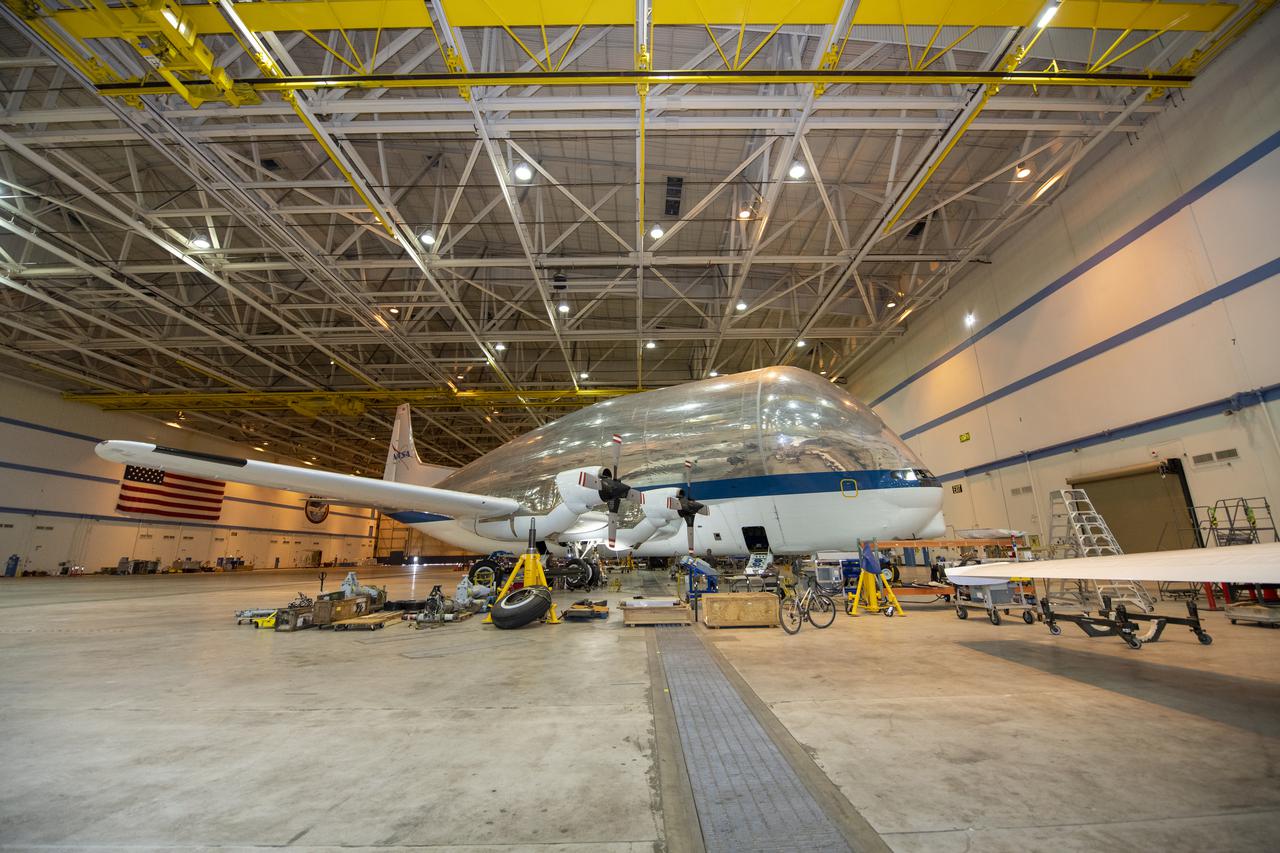
NASA's Super Guppy Turbine cargo aircraft in the hangar at NASA's Armstrong Flight Research Center on August 24, 2021. This unique whale-like aircraft arrived at the center's Building 703 in Palmdale, CA to support crews in the performance of routine maintenance. The Super Guppy aircraft, operated by NASA's Johnson Space Center, aids in the transportation of oversized aerospace cargo in a practical and economical way.
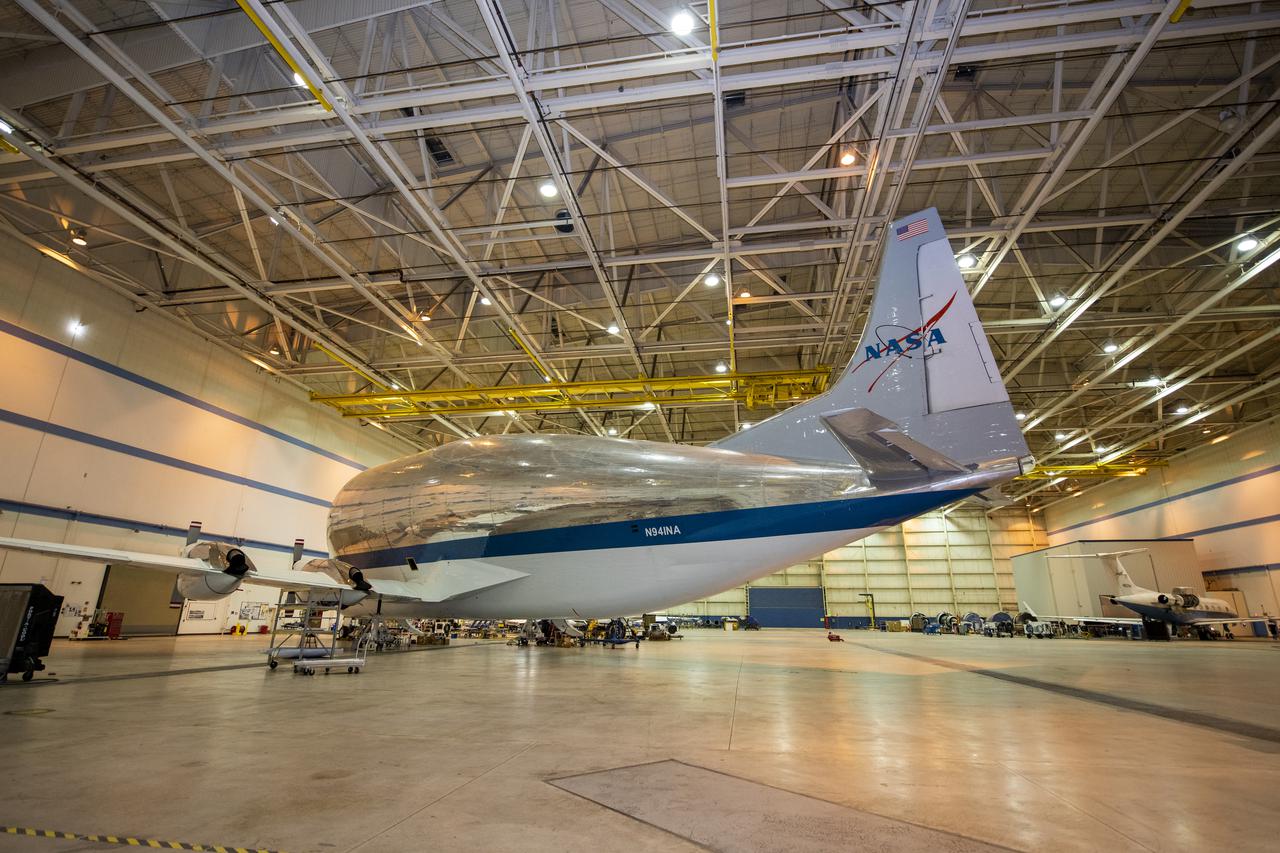
NASA’s Super Guppy Turbine cargo aircraft in the hangar at NASA’s Armstrong Flight Research Center on August 24, 2021. This unique whale-like aircraft arrived at the center’s Building 703 in Palmdale, CA to support crews in the performance of routine maintenance. The Super Guppy aircraft, operated by NASA’s Johnson Space Center, aids in the transportation of oversized aerospace cargo in a practical and economical way.
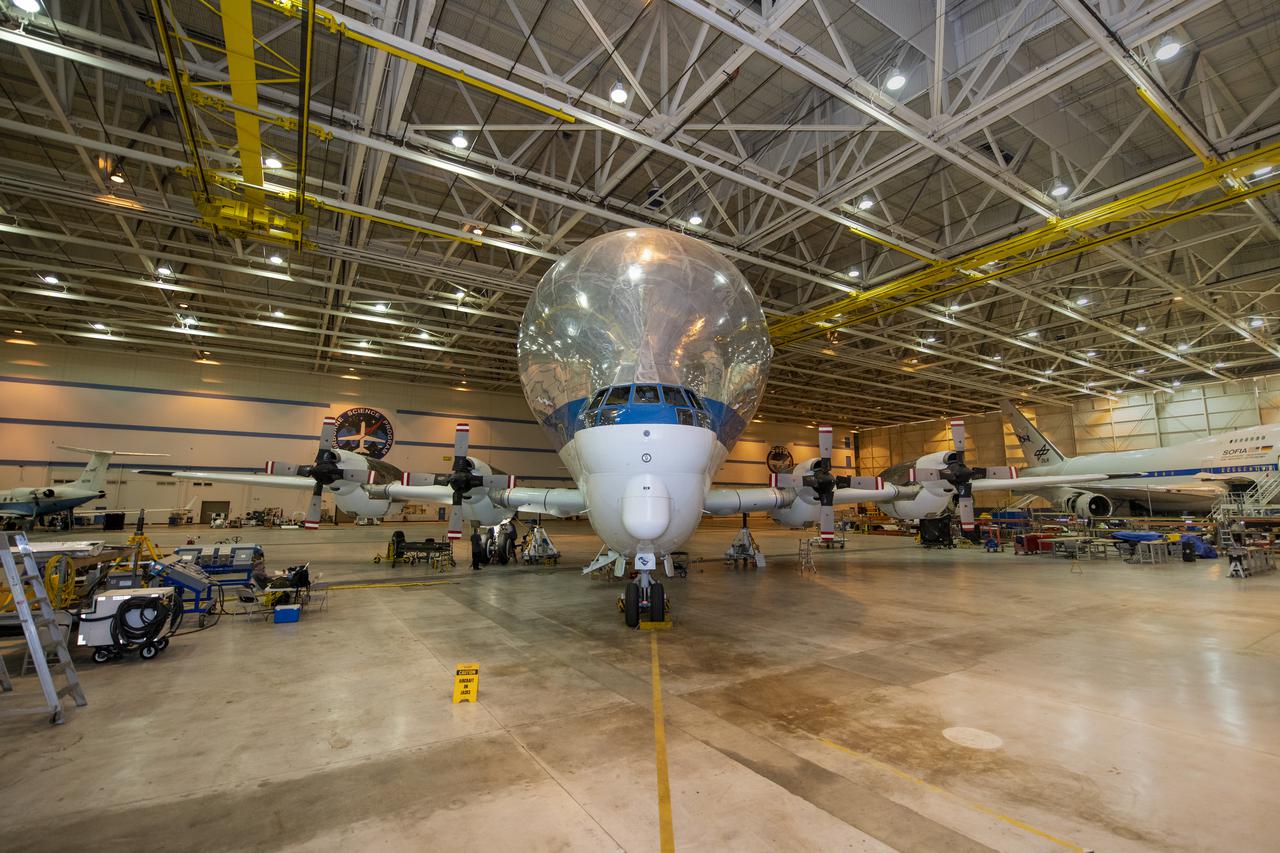
NASA’s Super Guppy Turbine cargo aircraft in the hangar at NASA’s Armstrong Flight Research Center on August 24, 2021. This unique whale-like aircraft arrived at the center’s Building 703 in Palmdale, CA to support crews in the performance of routine maintenance. The Super Guppy aircraft, operated by NASA’s Johnson Space Center, aids in the transportation of oversized aerospace cargo in a practical and economical way.
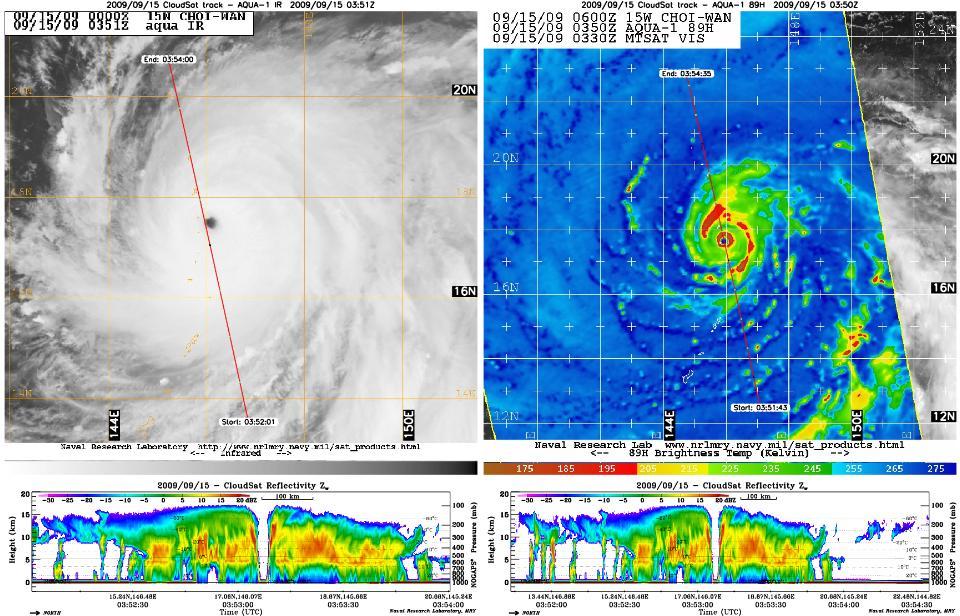
NASA CloudSat satellite captured an eye overpass of Super Typhoon Choi-Wan in the Western Pacific on September 15, 2009 at 0352Z.
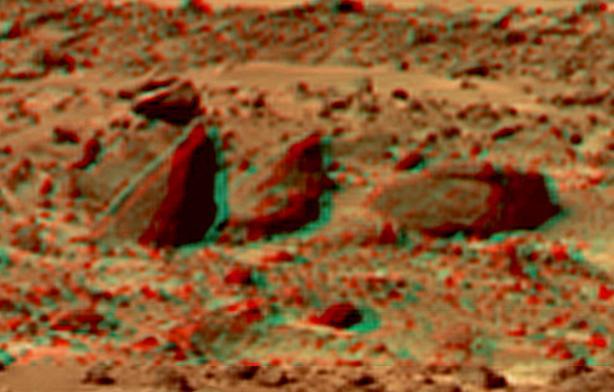
This view of Bookshelf Two was produced by combining the Super Panorama frames from the IMP camera from NASA Mars Pathfinder lander. 3D glasses are necessary to identify surface detail.
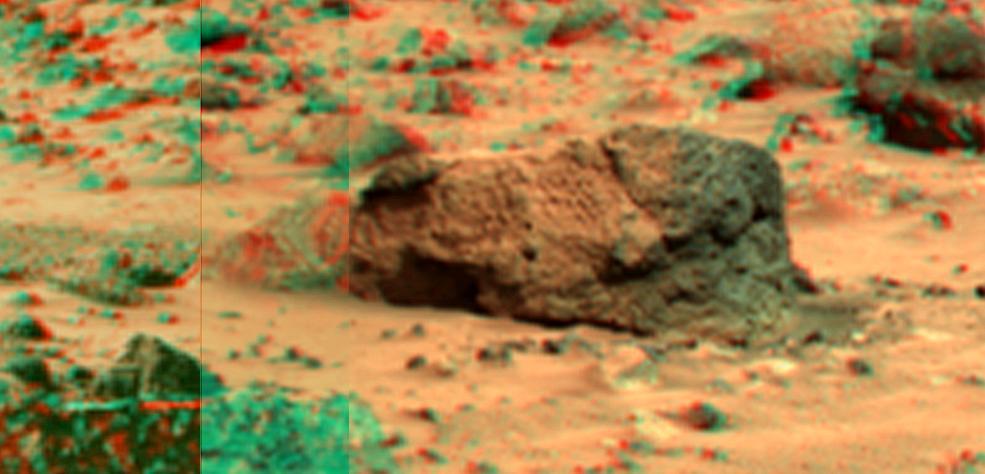
This view of Boo Boo was produced by combining the Super Panorama frames from the IMP camera from NASA Mars Pathfinder lander. 3D glasses are necessary to identify surface detail.
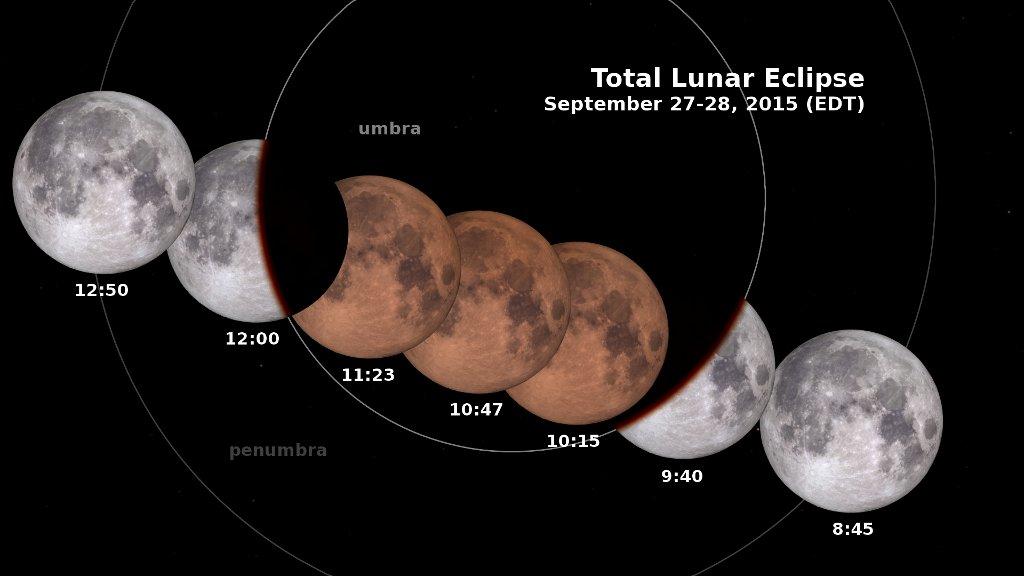
What time will you be able to view the Super Moon Eclipse? The images below show times to view it for Eastern Daylight Time (EDT), Central Daylight Time (CDT), Mountain Daylight Time (MDT) and Pacific Daylight Time (PDT). All of South America and most of North and Central America will see the entire eclipse, while those west of roughly 120°W will see it in progress at moonrise. You won’t need special equipment to see it. Just go outside and look up! <b><a href="http://www.nasa.gov/audience/formedia/features/MP_Photo_Guidelines.html" rel="nofollow">NASA image use policy.</a></b> <b><a href="http://www.nasa.gov/centers/goddard/home/index.html" rel="nofollow">NASA Goddard Space Flight Center</a></b> enables NASA’s mission through four scientific endeavors: Earth Science, Heliophysics, Solar System Exploration, and Astrophysics. Goddard plays a leading role in NASA’s accomplishments by contributing compelling scientific knowledge to advance the Agency’s mission. <b>Follow us on <a href="http://twitter.com/NASAGoddardPix" rel="nofollow">Twitter</a></b> <b>Like us on <a href="http://www.facebook.com/pages/Greenbelt-MD/NASA-Goddard/395013845897?ref=tsd" rel="nofollow">Facebook</a></b> <b>Find us on <a href="http://instagrid.me/nasagoddard/?vm=grid" rel="nofollow">Instagram</a></b>
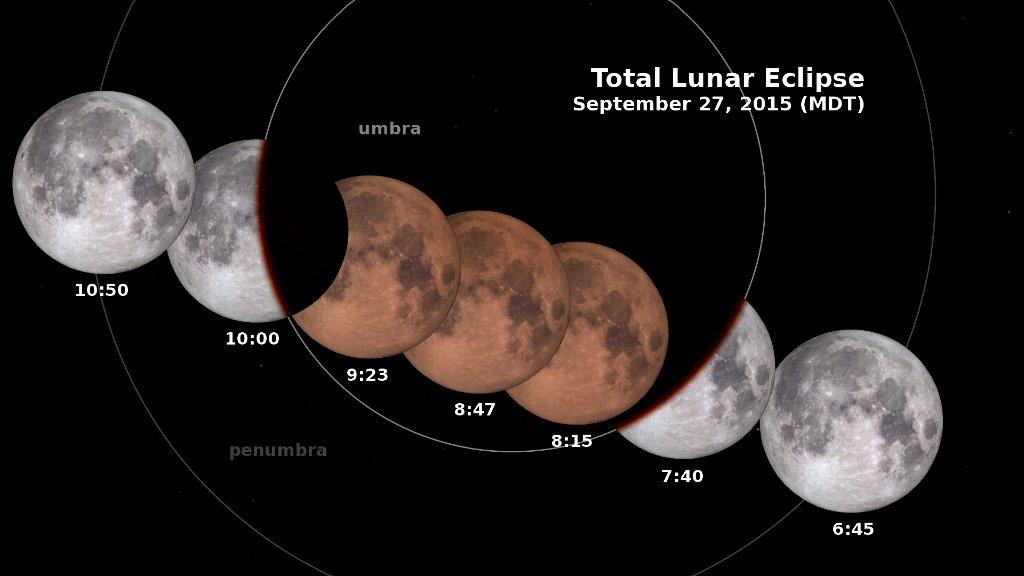
What time will you be able to view the Super Moon Eclipse? The images below show times to view it for Eastern Daylight Time (EDT), Central Daylight Time (CDT), Mountain Daylight Time (MDT) and Pacific Daylight Time (PDT). All of South America and most of North and Central America will see the entire eclipse, while those west of roughly 120°W will see it in progress at moonrise. You won’t need special equipment to see it. Just go outside and look up! <b><a href="http://www.nasa.gov/audience/formedia/features/MP_Photo_Guidelines.html" rel="nofollow">NASA image use policy.</a></b> <b><a href="http://www.nasa.gov/centers/goddard/home/index.html" rel="nofollow">NASA Goddard Space Flight Center</a></b> enables NASA’s mission through four scientific endeavors: Earth Science, Heliophysics, Solar System Exploration, and Astrophysics. Goddard plays a leading role in NASA’s accomplishments by contributing compelling scientific knowledge to advance the Agency’s mission. <b>Follow us on <a href="http://twitter.com/NASAGoddardPix" rel="nofollow">Twitter</a></b> <b>Like us on <a href="http://www.facebook.com/pages/Greenbelt-MD/NASA-Goddard/395013845897?ref=tsd" rel="nofollow">Facebook</a></b> <b>Find us on <a href="http://instagrid.me/nasagoddard/?vm=grid" rel="nofollow">Instagram</a></b>
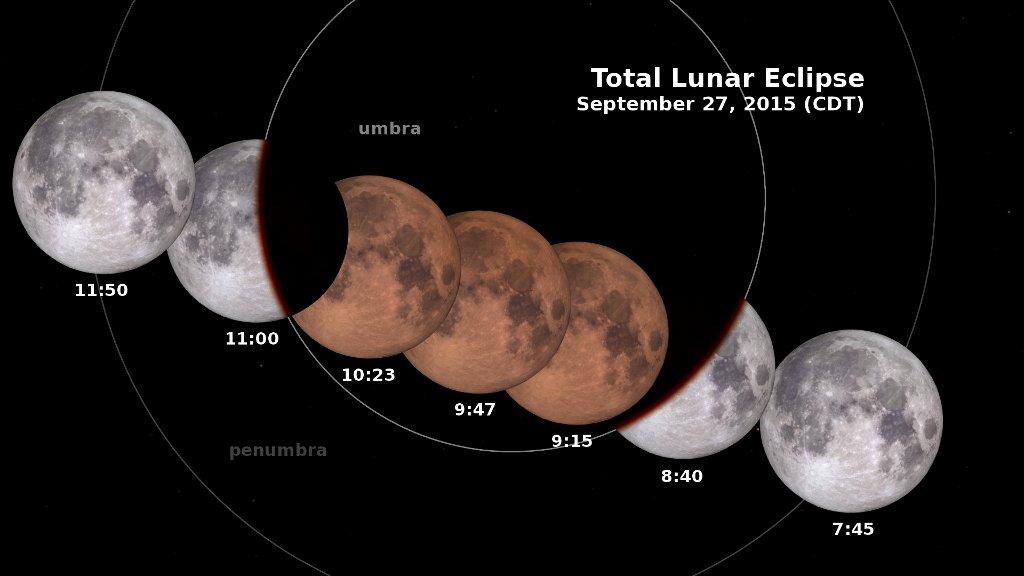
What time will you be able to view the Super Moon Eclipse? The images below show times to view it for Eastern Daylight Time (EDT), Central Daylight Time (CDT), Mountain Daylight Time (MDT) and Pacific Daylight Time (PDT). All of South America and most of North and Central America will see the entire eclipse, while those west of roughly 120°W will see it in progress at moonrise. You won’t need special equipment to see it. Just go outside and look up! <b><a href="http://www.nasa.gov/audience/formedia/features/MP_Photo_Guidelines.html" rel="nofollow">NASA image use policy.</a></b> <b><a href="http://www.nasa.gov/centers/goddard/home/index.html" rel="nofollow">NASA Goddard Space Flight Center</a></b> enables NASA’s mission through four scientific endeavors: Earth Science, Heliophysics, Solar System Exploration, and Astrophysics. Goddard plays a leading role in NASA’s accomplishments by contributing compelling scientific knowledge to advance the Agency’s mission. <b>Follow us on <a href="http://twitter.com/NASAGoddardPix" rel="nofollow">Twitter</a></b> <b>Like us on <a href="http://www.facebook.com/pages/Greenbelt-MD/NASA-Goddard/395013845897?ref=tsd" rel="nofollow">Facebook</a></b> <b>Find us on <a href="http://instagrid.me/nasagoddard/?vm=grid" rel="nofollow">Instagram</a></b>
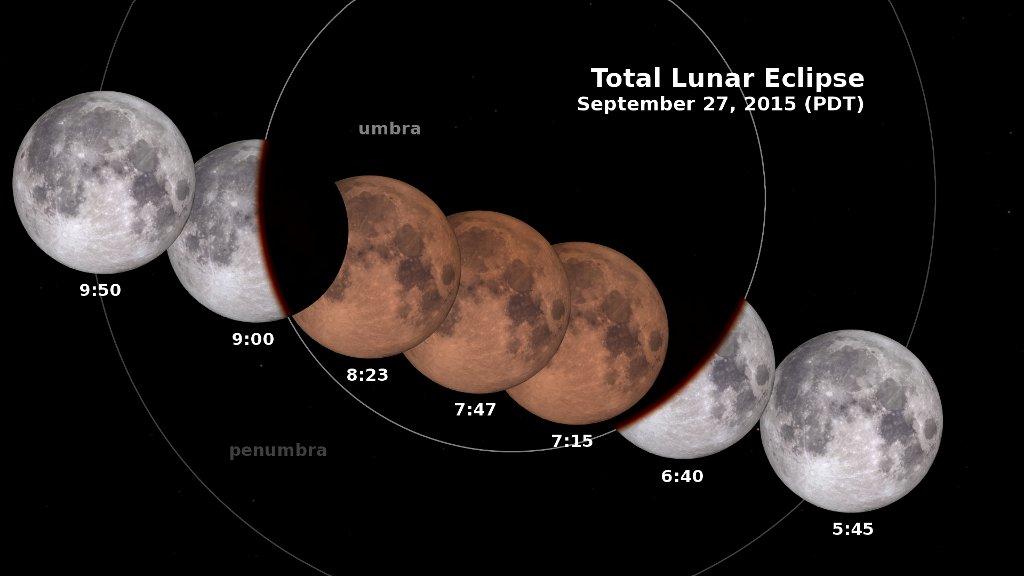
What time will you be able to view the Super Moon Eclipse? The images below show times to view it for Eastern Daylight Time (EDT), Central Daylight Time (CDT), Mountain Daylight Time (MDT) and Pacific Daylight Time (PDT). All of South America and most of North and Central America will see the entire eclipse, while those west of roughly 120°W will see it in progress at moonrise. You won’t need special equipment to see it. Just go outside and look up! <b><a href="http://www.nasa.gov/audience/formedia/features/MP_Photo_Guidelines.html" rel="nofollow">NASA image use policy.</a></b> <b><a href="http://www.nasa.gov/centers/goddard/home/index.html" rel="nofollow">NASA Goddard Space Flight Center</a></b> enables NASA’s mission through four scientific endeavors: Earth Science, Heliophysics, Solar System Exploration, and Astrophysics. Goddard plays a leading role in NASA’s accomplishments by contributing compelling scientific knowledge to advance the Agency’s mission. <b>Follow us on <a href="http://twitter.com/NASAGoddardPix" rel="nofollow">Twitter</a></b> <b>Like us on <a href="http://www.facebook.com/pages/Greenbelt-MD/NASA-Goddard/395013845897?ref=tsd" rel="nofollow">Facebook</a></b> <b>Find us on <a href="http://instagrid.me/nasagoddard/?vm=grid" rel="nofollow">Instagram</a></b>
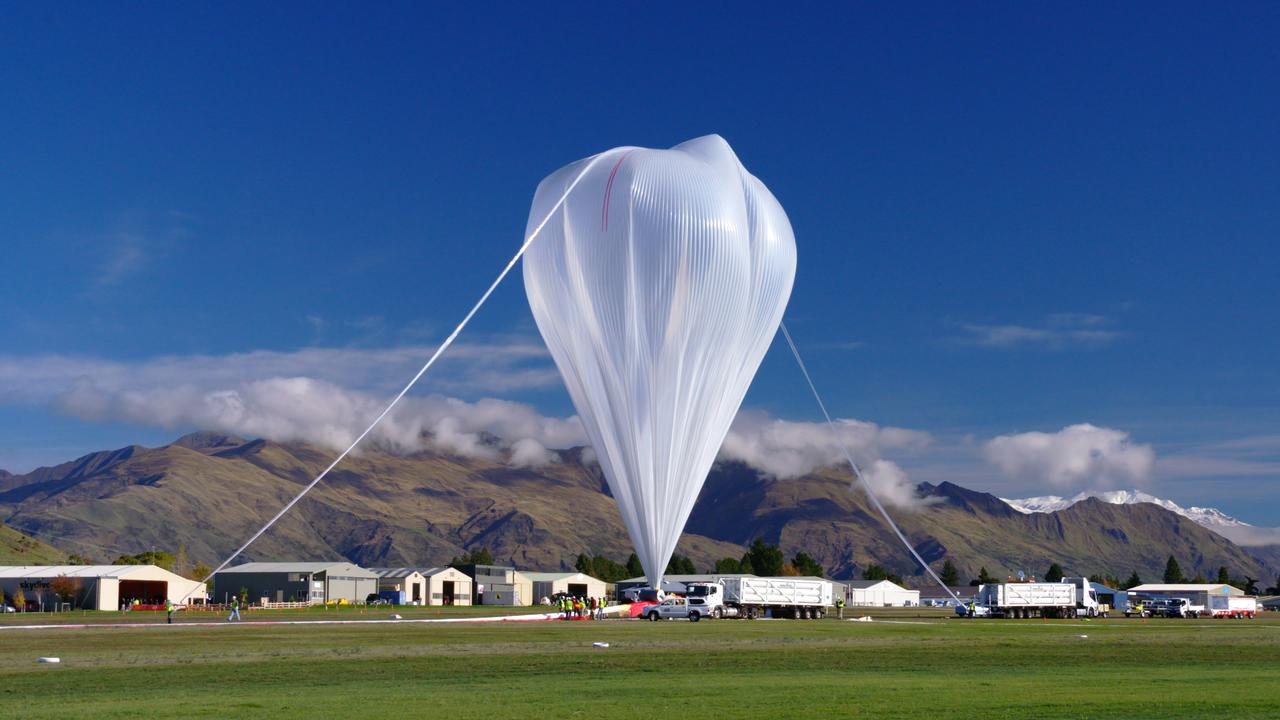
NASA successfully launched a super pressure balloon from Wanaka Airport, New Zealand, on Tuesday, May 17, on a potentially record-breaking, around-the-world test flight! The purpose of the flight is to test and validate the super pressure balloon technology with the goal of long-duration flight (100+ days) at mid-latitudes. In addition, the gondola is carrying the Compton Spectrometer and Imager (COSI) gamma-ray telescope as a mission of opportunity. Two hours and 8 minutes after lift-off, the 532,000-cubic-meter (18.8-million-cubic-foot) balloon reached its operational float altitude of 33.5 kilometers (110,000 feet) flying a trajectory taking it initially westward through southern Australia before entering into the eastward flowing winter stratospheric cyclone. NASA estimates the balloon will circumnavigate the globe about the southern hemisphere’s mid-latitudes once every one to three weeks, depending on wind speeds in the stratosphere. Credit: NASA/Bill Rodman <b><a href="http://www.nasa.gov/audience/formedia/features/MP_Photo_Guidelines.html" rel="nofollow">NASA image use policy.</a></b> <b><a href="http://www.nasa.gov/centers/goddard/home/index.html" rel="nofollow">NASA Goddard Space Flight Center</a></b> enables NASA’s mission through four scientific endeavors: Earth Science, Heliophysics, Solar System Exploration, and Astrophysics. Goddard plays a leading role in NASA’s accomplishments by contributing compelling scientific knowledge to advance the Agency’s mission. <b>Follow us on <a href="http://twitter.com/NASAGoddardPix" rel="nofollow">Twitter</a></b> <b>Like us on <a href="http://www.facebook.com/pages/Greenbelt-MD/NASA-Goddard/395013845897?ref=tsd" rel="nofollow">Facebook</a></b> <b>Find us on <a href="http://instagrid.me/nasagoddard/?vm=grid" rel="nofollow">Instagram</a></b> Read more: <a href="http://go.nasa.gov/1rRvmv8" rel="nofollow">go.nasa.gov/1rRvmv8</a>
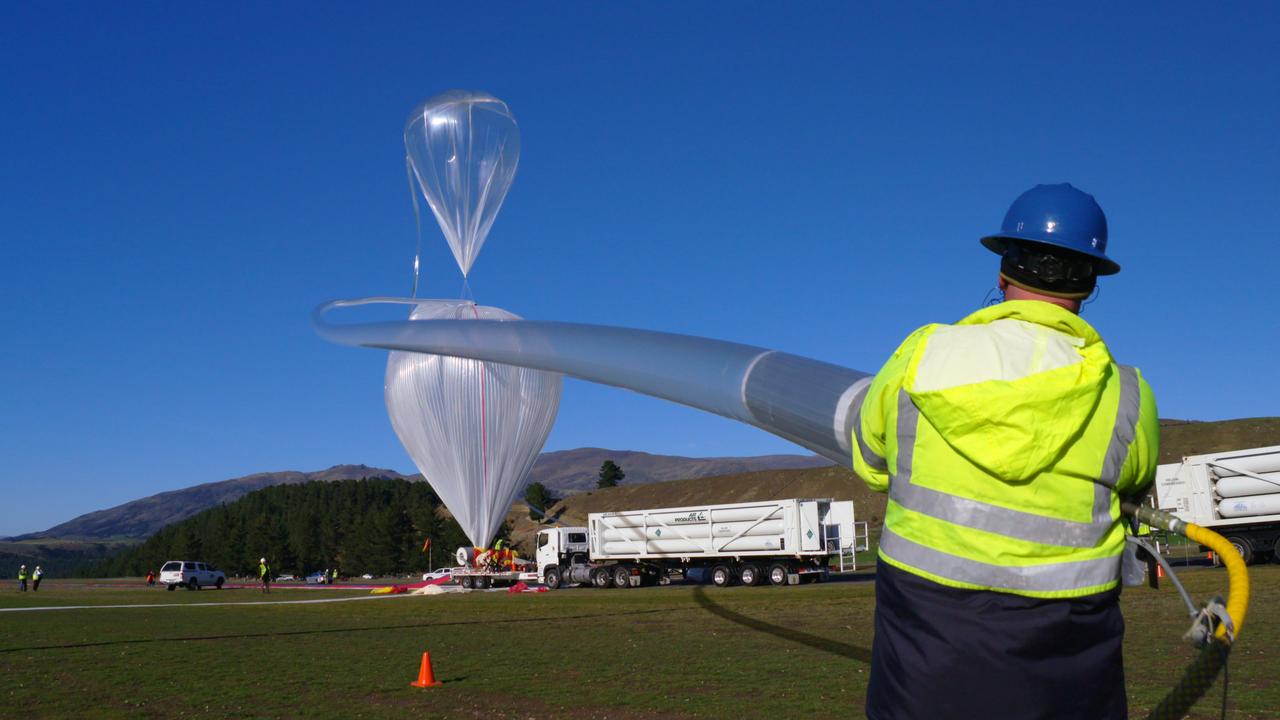
NASA successfully launched a super pressure balloon from Wanaka Airport, New Zealand, on Tuesday, May 17, on a potentially record-breaking, around-the-world test flight! The purpose of the flight is to test and validate the super pressure balloon technology with the goal of long-duration flight (100+ days) at mid-latitudes. In addition, the gondola is carrying the Compton Spectrometer and Imager (COSI) gamma-ray telescope as a mission of opportunity. Two hours and 8 minutes after lift-off, the 532,000-cubic-meter (18.8-million-cubic-foot) balloon reached its operational float altitude of 33.5 kilometers (110,000 feet) flying a trajectory taking it initially westward through southern Australia before entering into the eastward flowing winter stratospheric cyclone. NASA estimates the balloon will circumnavigate the globe about the southern hemisphere’s mid-latitudes once every one to three weeks, depending on wind speeds in the stratosphere. Credit: NASA/Bill Rodman <b><a href="http://www.nasa.gov/audience/formedia/features/MP_Photo_Guidelines.html" rel="nofollow">NASA image use policy.</a></b> <b><a href="http://www.nasa.gov/centers/goddard/home/index.html" rel="nofollow">NASA Goddard Space Flight Center</a></b> enables NASA’s mission through four scientific endeavors: Earth Science, Heliophysics, Solar System Exploration, and Astrophysics. Goddard plays a leading role in NASA’s accomplishments by contributing compelling scientific knowledge to advance the Agency’s mission. <b>Follow us on <a href="http://twitter.com/NASAGoddardPix" rel="nofollow">Twitter</a></b> <b>Like us on <a href="http://www.facebook.com/pages/Greenbelt-MD/NASA-Goddard/395013845897?ref=tsd" rel="nofollow">Facebook</a></b> <b>Find us on <a href="http://instagrid.me/nasagoddard/?vm=grid" rel="nofollow">Instagram</a></b> Read more: <a href="http://go.nasa.gov/1rRvmv8" rel="nofollow">go.nasa.gov/1rRvmv8</a>
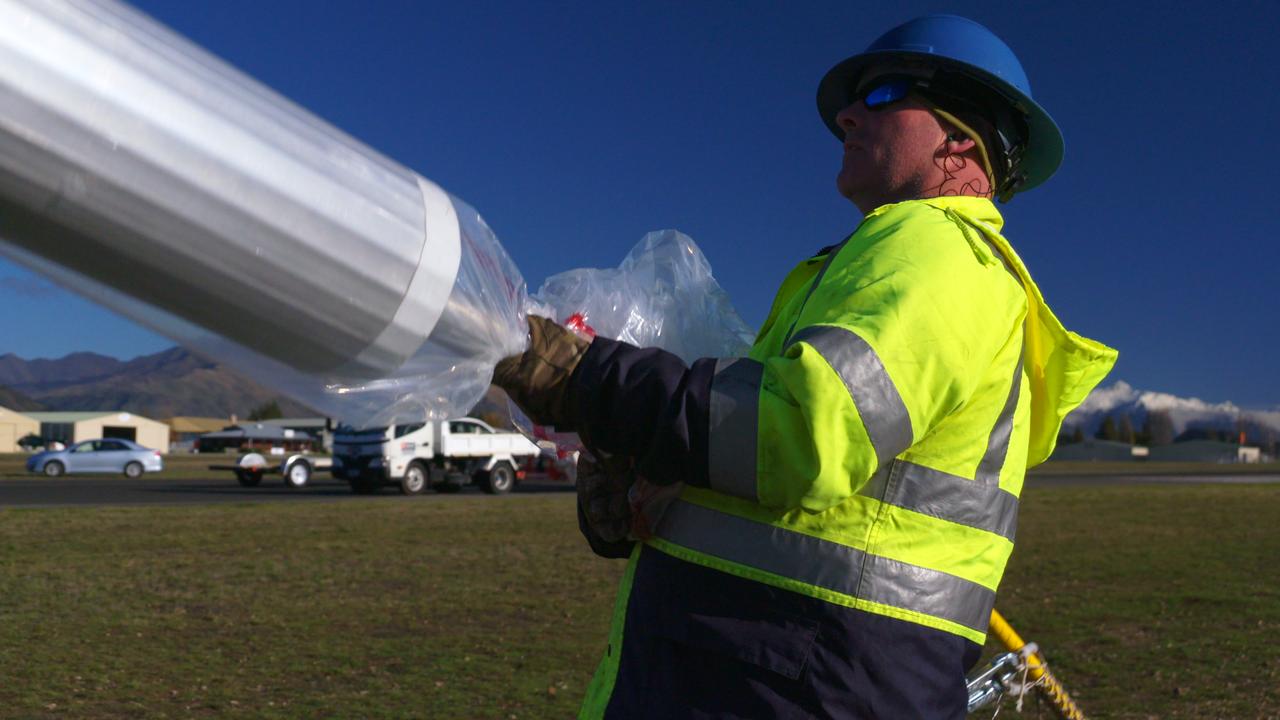
NASA successfully launched a super pressure balloon from Wanaka Airport, New Zealand, on Tuesday, May 17, on a potentially record-breaking, around-the-world test flight! The purpose of the flight is to test and validate the super pressure balloon technology with the goal of long-duration flight (100+ days) at mid-latitudes. In addition, the gondola is carrying the Compton Spectrometer and Imager (COSI) gamma-ray telescope as a mission of opportunity. Two hours and 8 minutes after lift-off, the 532,000-cubic-meter (18.8-million-cubic-foot) balloon reached its operational float altitude of 33.5 kilometers (110,000 feet) flying a trajectory taking it initially westward through southern Australia before entering into the eastward flowing winter stratospheric cyclone. NASA estimates the balloon will circumnavigate the globe about the southern hemisphere’s mid-latitudes once every one to three weeks, depending on wind speeds in the stratosphere. Credit: NASA/Bill Rodman <b><a href="http://www.nasa.gov/audience/formedia/features/MP_Photo_Guidelines.html" rel="nofollow">NASA image use policy.</a></b> <b><a href="http://www.nasa.gov/centers/goddard/home/index.html" rel="nofollow">NASA Goddard Space Flight Center</a></b> enables NASA’s mission through four scientific endeavors: Earth Science, Heliophysics, Solar System Exploration, and Astrophysics. Goddard plays a leading role in NASA’s accomplishments by contributing compelling scientific knowledge to advance the Agency’s mission. <b>Follow us on <a href="http://twitter.com/NASAGoddardPix" rel="nofollow">Twitter</a></b> <b>Like us on <a href="http://www.facebook.com/pages/Greenbelt-MD/NASA-Goddard/395013845897?ref=tsd" rel="nofollow">Facebook</a></b> <b>Find us on <a href="http://instagrid.me/nasagoddard/?vm=grid" rel="nofollow">Instagram</a></b> Read more: <a href="http://go.nasa.gov/1rRvmv8" rel="nofollow">go.nasa.gov/1rRvmv8</a>

NASA successfully launched a super pressure balloon from Wanaka Airport, New Zealand, on Tuesday, May 17, on a potentially record-breaking, around-the-world test flight! The purpose of the flight is to test and validate the super pressure balloon technology with the goal of long-duration flight (100+ days) at mid-latitudes. In addition, the gondola is carrying the Compton Spectrometer and Imager (COSI) gamma-ray telescope as a mission of opportunity. Two hours and 8 minutes after lift-off, the 532,000-cubic-meter (18.8-million-cubic-foot) balloon reached its operational float altitude of 33.5 kilometers (110,000 feet) flying a trajectory taking it initially westward through southern Australia before entering into the eastward flowing winter stratospheric cyclone. NASA estimates the balloon will circumnavigate the globe about the southern hemisphere’s mid-latitudes once every one to three weeks, depending on wind speeds in the stratosphere. Credit: NASA/Bill Rodman <b><a href="http://www.nasa.gov/audience/formedia/features/MP_Photo_Guidelines.html" rel="nofollow">NASA image use policy.</a></b> <b><a href="http://www.nasa.gov/centers/goddard/home/index.html" rel="nofollow">NASA Goddard Space Flight Center</a></b> enables NASA’s mission through four scientific endeavors: Earth Science, Heliophysics, Solar System Exploration, and Astrophysics. Goddard plays a leading role in NASA’s accomplishments by contributing compelling scientific knowledge to advance the Agency’s mission. <b>Follow us on <a href="http://twitter.com/NASAGoddardPix" rel="nofollow">Twitter</a></b> <b>Like us on <a href="http://www.facebook.com/pages/Greenbelt-MD/NASA-Goddard/395013845897?ref=tsd" rel="nofollow">Facebook</a></b> <b>Find us on <a href="http://instagrid.me/nasagoddard/?vm=grid" rel="nofollow">Instagram</a></b> Read more: <a href="http://go.nasa.gov/1rRvmv8" rel="nofollow">go.nasa.gov/1rRvmv8</a>
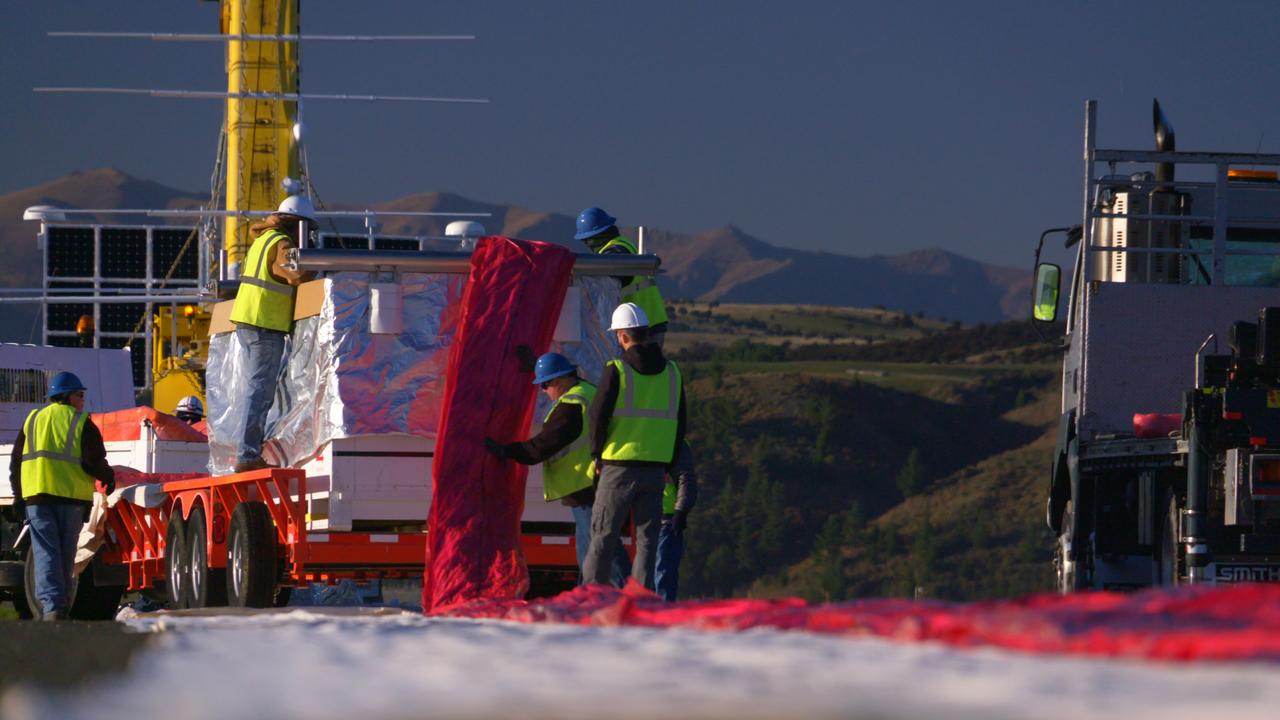
NASA successfully launched a super pressure balloon from Wanaka Airport, New Zealand, on Tuesday, May 17, on a potentially record-breaking, around-the-world test flight! The purpose of the flight is to test and validate the super pressure balloon technology with the goal of long-duration flight (100+ days) at mid-latitudes. In addition, the gondola is carrying the Compton Spectrometer and Imager (COSI) gamma-ray telescope as a mission of opportunity. Two hours and 8 minutes after lift-off, the 532,000-cubic-meter (18.8-million-cubic-foot) balloon reached its operational float altitude of 33.5 kilometers (110,000 feet) flying a trajectory taking it initially westward through southern Australia before entering into the eastward flowing winter stratospheric cyclone. NASA estimates the balloon will circumnavigate the globe about the southern hemisphere’s mid-latitudes once every one to three weeks, depending on wind speeds in the stratosphere. Credit: NASA/Bill Rodman <b><a href="http://www.nasa.gov/audience/formedia/features/MP_Photo_Guidelines.html" rel="nofollow">NASA image use policy.</a></b> <b><a href="http://www.nasa.gov/centers/goddard/home/index.html" rel="nofollow">NASA Goddard Space Flight Center</a></b> enables NASA’s mission through four scientific endeavors: Earth Science, Heliophysics, Solar System Exploration, and Astrophysics. Goddard plays a leading role in NASA’s accomplishments by contributing compelling scientific knowledge to advance the Agency’s mission. <b>Follow us on <a href="http://twitter.com/NASAGoddardPix" rel="nofollow">Twitter</a></b> <b>Like us on <a href="http://www.facebook.com/pages/Greenbelt-MD/NASA-Goddard/395013845897?ref=tsd" rel="nofollow">Facebook</a></b> <b>Find us on <a href="http://instagrid.me/nasagoddard/?vm=grid" rel="nofollow">Instagram</a></b> Read more: <a href="http://go.nasa.gov/1rRvmv8" rel="nofollow">go.nasa.gov/1rRvmv8</a>
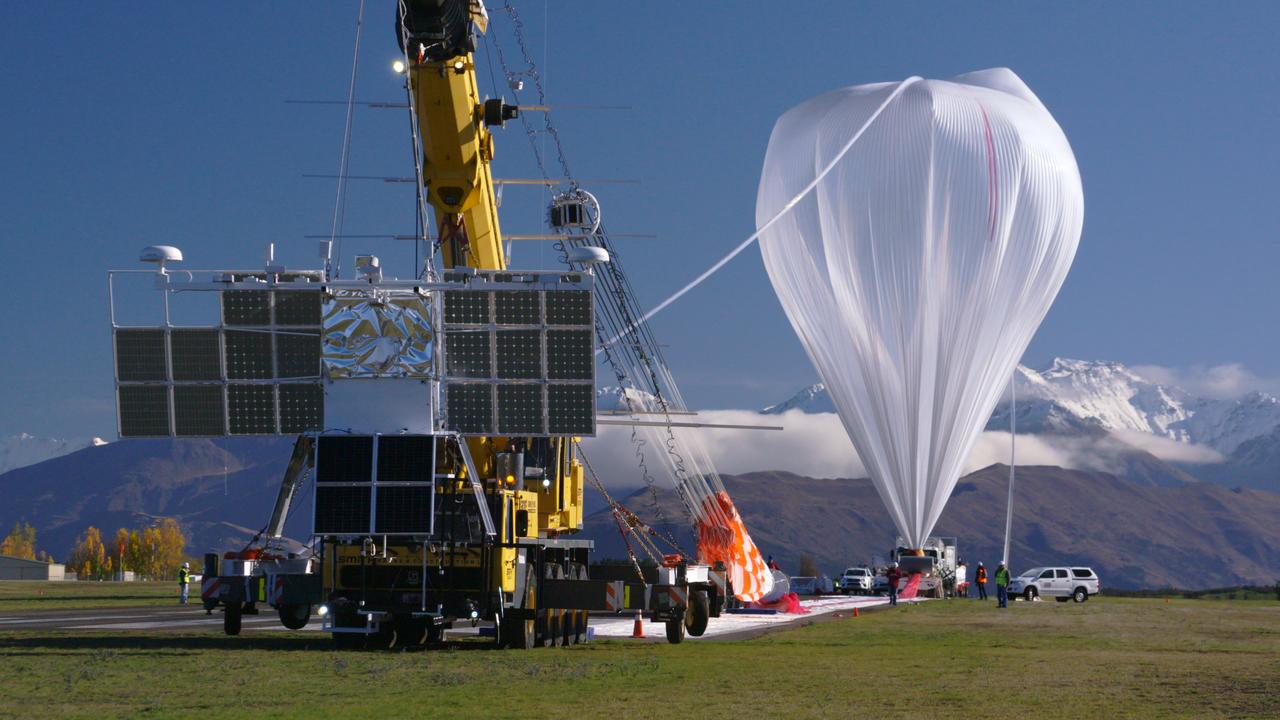
NASA successfully launched a super pressure balloon from Wanaka Airport, New Zealand, on Tuesday, May 17, on a potentially record-breaking, around-the-world test flight! The purpose of the flight is to test and validate the super pressure balloon technology with the goal of long-duration flight (100+ days) at mid-latitudes. In addition, the gondola is carrying the Compton Spectrometer and Imager (COSI) gamma-ray telescope as a mission of opportunity. Two hours and 8 minutes after lift-off, the 532,000-cubic-meter (18.8-million-cubic-foot) balloon reached its operational float altitude of 33.5 kilometers (110,000 feet) flying a trajectory taking it initially westward through southern Australia before entering into the eastward flowing winter stratospheric cyclone. NASA estimates the balloon will circumnavigate the globe about the southern hemisphere’s mid-latitudes once every one to three weeks, depending on wind speeds in the stratosphere. Credit: NASA/Bill Rodman <b><a href="http://www.nasa.gov/audience/formedia/features/MP_Photo_Guidelines.html" rel="nofollow">NASA image use policy.</a></b> <b><a href="http://www.nasa.gov/centers/goddard/home/index.html" rel="nofollow">NASA Goddard Space Flight Center</a></b> enables NASA’s mission through four scientific endeavors: Earth Science, Heliophysics, Solar System Exploration, and Astrophysics. Goddard plays a leading role in NASA’s accomplishments by contributing compelling scientific knowledge to advance the Agency’s mission. <b>Follow us on <a href="http://twitter.com/NASAGoddardPix" rel="nofollow">Twitter</a></b> <b>Like us on <a href="http://www.facebook.com/pages/Greenbelt-MD/NASA-Goddard/395013845897?ref=tsd" rel="nofollow">Facebook</a></b> <b>Find us on <a href="http://instagrid.me/nasagoddard/?vm=grid" rel="nofollow">Instagram</a></b> Read more: <a href="http://go.nasa.gov/1rRvmv8" rel="nofollow">go.nasa.gov/1rRvmv8</a>
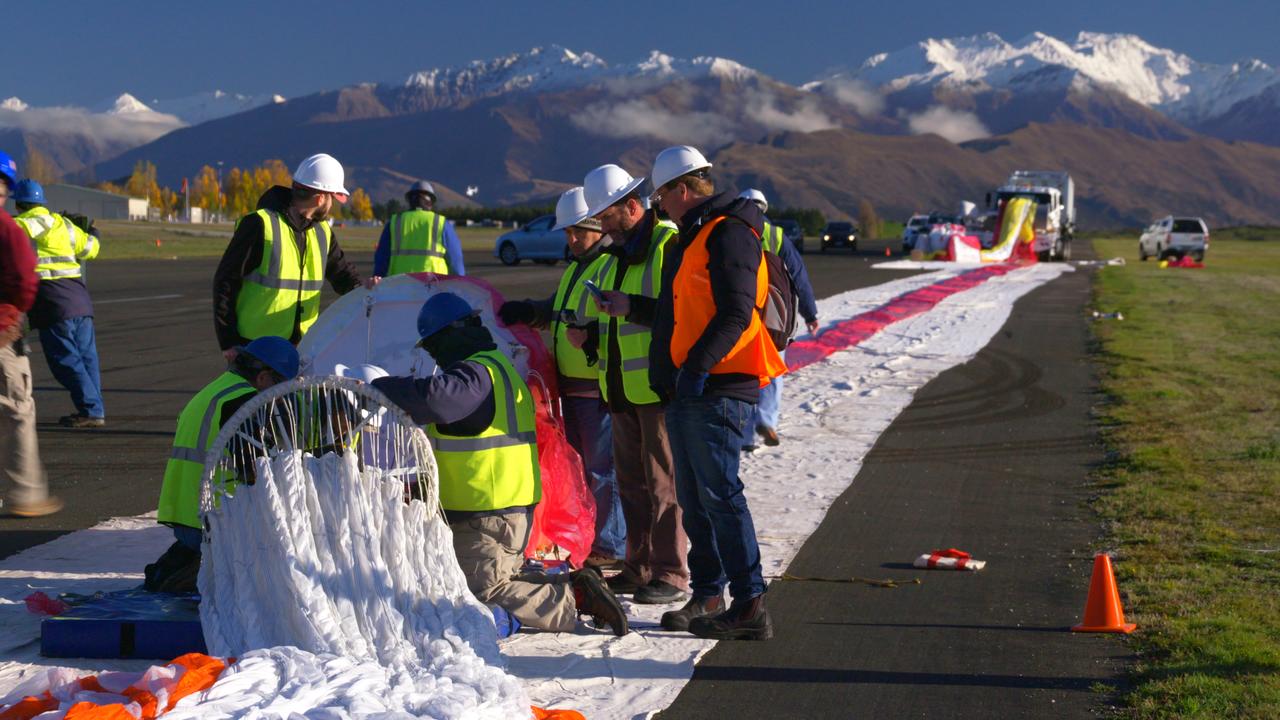
NASA successfully launched a super pressure balloon from Wanaka Airport, New Zealand, on Tuesday, May 17, on a potentially record-breaking, around-the-world test flight! The purpose of the flight is to test and validate the super pressure balloon technology with the goal of long-duration flight (100+ days) at mid-latitudes. In addition, the gondola is carrying the Compton Spectrometer and Imager (COSI) gamma-ray telescope as a mission of opportunity. Two hours and 8 minutes after lift-off, the 532,000-cubic-meter (18.8-million-cubic-foot) balloon reached its operational float altitude of 33.5 kilometers (110,000 feet) flying a trajectory taking it initially westward through southern Australia before entering into the eastward flowing winter stratospheric cyclone. NASA estimates the balloon will circumnavigate the globe about the southern hemisphere’s mid-latitudes once every one to three weeks, depending on wind speeds in the stratosphere. Credit: NASA/Bill Rodman <b><a href="http://www.nasa.gov/audience/formedia/features/MP_Photo_Guidelines.html" rel="nofollow">NASA image use policy.</a></b> <b><a href="http://www.nasa.gov/centers/goddard/home/index.html" rel="nofollow">NASA Goddard Space Flight Center</a></b> enables NASA’s mission through four scientific endeavors: Earth Science, Heliophysics, Solar System Exploration, and Astrophysics. Goddard plays a leading role in NASA’s accomplishments by contributing compelling scientific knowledge to advance the Agency’s mission. <b>Follow us on <a href="http://twitter.com/NASAGoddardPix" rel="nofollow">Twitter</a></b> <b>Like us on <a href="http://www.facebook.com/pages/Greenbelt-MD/NASA-Goddard/395013845897?ref=tsd" rel="nofollow">Facebook</a></b> <b>Find us on <a href="http://instagrid.me/nasagoddard/?vm=grid" rel="nofollow">Instagram</a></b> Read more: <a href="http://go.nasa.gov/1rRvmv8" rel="nofollow">go.nasa.gov/1rRvmv8</a>

This NASA/ESA Hubble Space Telescope image shows the spiral galaxy NGC 4845, located over 65 million light-years away in the constellation of Virgo (The Virgin). The galaxy’s orientation clearly reveals the galaxy’s striking spiral structure: a flat and dust-mottled disc surrounding a bright galactic bulge. NGC 4845’s glowing centre hosts a gigantic version of a black hole, known as a supermassive black hole. The presence of a black hole in a distant galaxy like NGC 4845 can be inferred from its effect on the galaxy’s innermost stars; these stars experience a strong gravitational pull from the black hole and whizz around the galaxy’s centre much faster than otherwise. From investigating the motion of these central stars, astronomers can estimate the mass of the central black hole — for NGC 4845 this is estimated to be hundreds of thousands times heavier than the Sun. This same technique was also used to discover the supermassive black hole at the centre of our own Milky Way — Sagittarius A* — which hits some four million times the mass of the Sun (potw1340a). The galactic core of NGC 4845 is not just supermassive, but also super-hungry. In 2013 researchers were observing another galaxy when they noticed a violent flare at the centre of NGC 4845. The flare came from the central black hole tearing up and feeding off an object many times more massive than Jupiter. A brown dwarf or a large planet simply strayed too close and was devoured by the hungry core of NGC 4845.
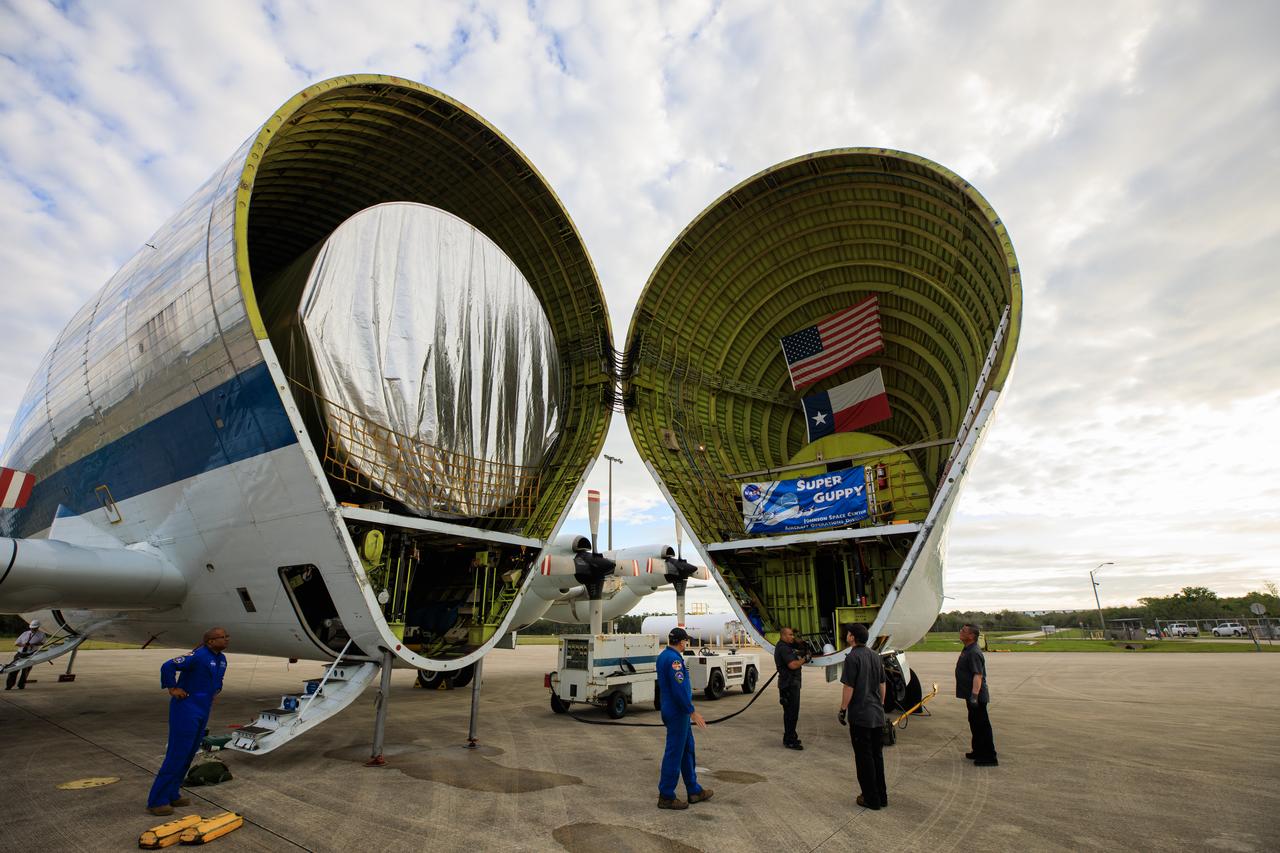
The Multi-Purpose Logistics Module (MPLM), used during the Space Shuttle Program to transfer cargo to and from the International Space Station, is loaded into NASA's Super Guppy aircraft at the Launch and Landing Facility runway at Kennedy Space Center in Florida on April 25, 2023. The MPLM will be transported to Ellington Field in Houston, where it will then be transported by road to Axiom’s facility near Ellington to be utilized to further commercialization of space. Three MPLMs were built by Thales Alenia Space Italia (TASI) for the Italian Space Agency (ASI) and named after Italian masters (Leonardo, Raffaello, and Donatello). Only two ever flew to the space station, Leonardo and Raffaello, with Axiom intending to use the Raffaello module as a future element that will attach to a segment being built by the company for addition to the station.
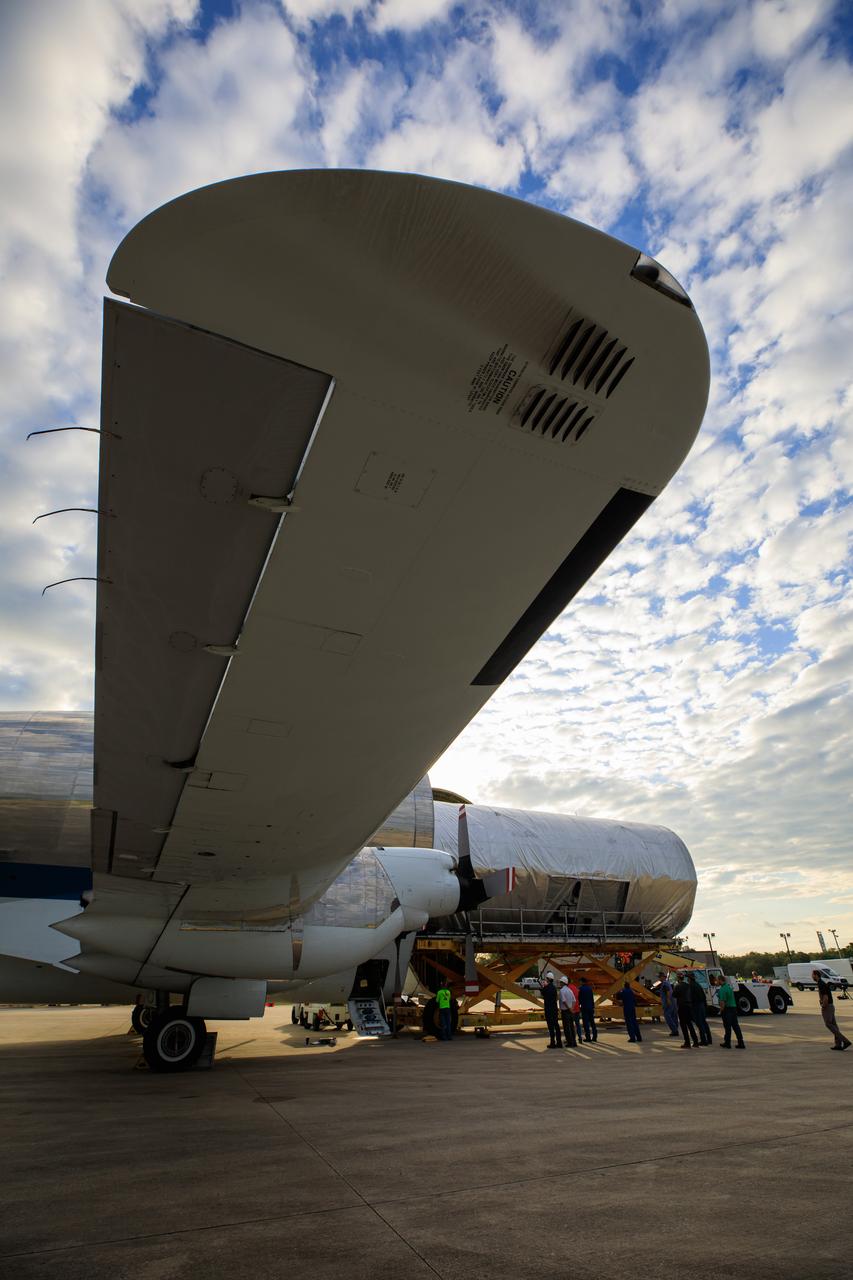
The Multi-Purpose Logistics Module (MPLM), used during the Space Shuttle Program to transfer cargo to and from the International Space Station, is loaded into NASA's Super Guppy aircraft at the Launch and Landing Facility runway at Kennedy Space Center in Florida on April 25, 2023. The MPLM will be transported to Ellington Field in Houston, where it will then be transported by road to Axiom’s facility near Ellington to be utilized to further commercialization of space. Three MPLMs were built by Thales Alenia Space Italia (TASI) for the Italian Space Agency (ASI) and named after Italian masters (Leonardo, Raffaello, and Donatello). Only two ever flew to the space station, Leonardo and Raffaello, with Axiom intending to use the Raffaello module as a future element that will attach to a segment being built by the company for addition to the station.
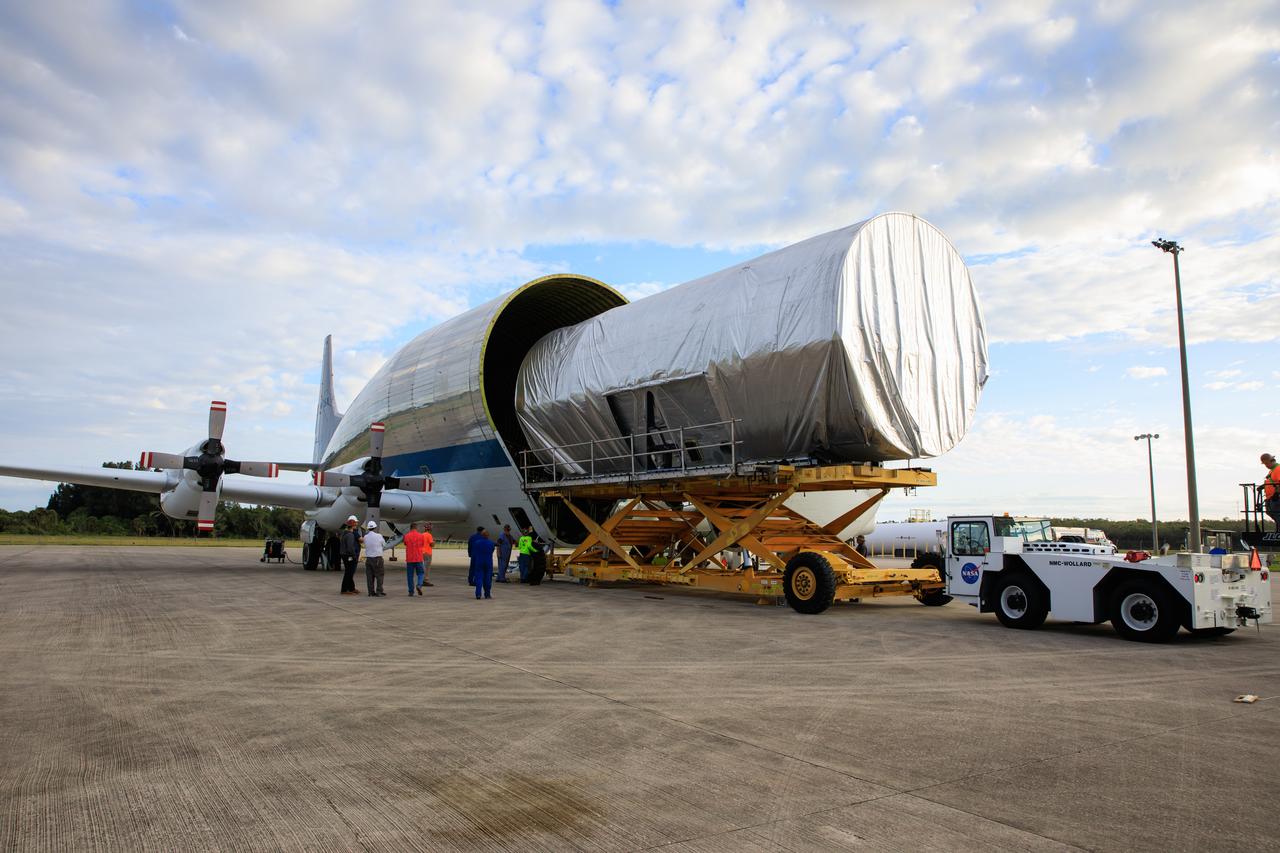
The Multi-Purpose Logistics Module (MPLM), used during the Space Shuttle Program to transfer cargo to and from the International Space Station, is loaded into NASA's Super Guppy aircraft at the Launch and Landing Facility runway at Kennedy Space Center in Florida on April 25, 2023. The MPLM will be transported to Ellington Field in Houston, where it will then be transported by road to Axiom’s facility near Ellington to be utilized to further commercialization of space. Three MPLMs were built by Thales Alenia Space Italia (TASI) for the Italian Space Agency (ASI) and named after Italian masters (Leonardo, Raffaello, and Donatello). Only two ever flew to the space station, Leonardo and Raffaello, with Axiom intending to use the Raffaello module as a future element that will attach to a segment being built by the company for addition to the station.
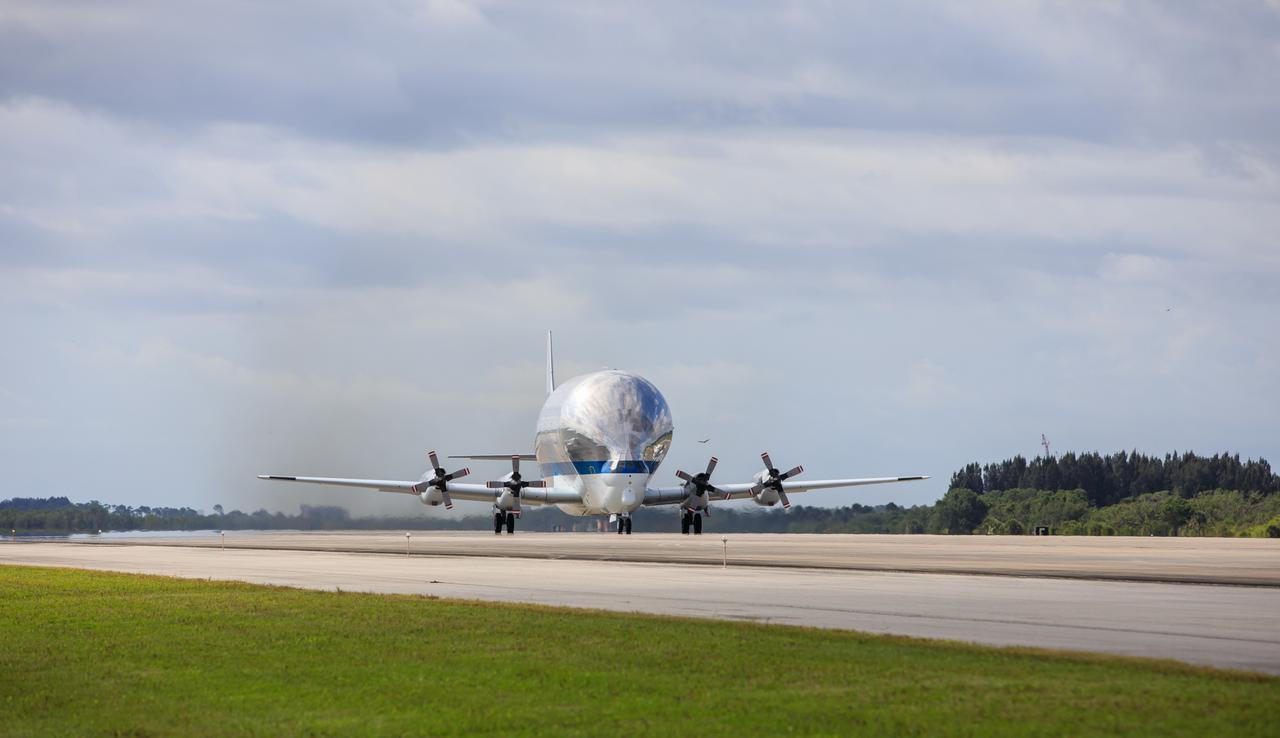
NASA's Super Guppy aircraft lifts off from the Launch and Landing Facility runway at Kennedy Space Center in Florida on April 25, 2023. Carrying the Multi-Purpose Logistics Module (MPLM), used during the Space Shuttle Program to transfer cargo to and from the International Space Station, the aircraft is transporting the module to Ellington Field in Houston, where it will then be transported by road to Axiom’s facility near Ellington to be utilized to further commercialization of space. Three MPLMs were built by Thales Alenia Space Italia (TASI) for the Italian Space Agency (ASI) and named after Italian masters (Leonardo, Raffaello, and Donatello). Only two ever flew to the space station, Leonardo and Raffaello, with Axiom intending to use the Raffaello module as a future element that will attach to a segment being built by the company for addition to the station.
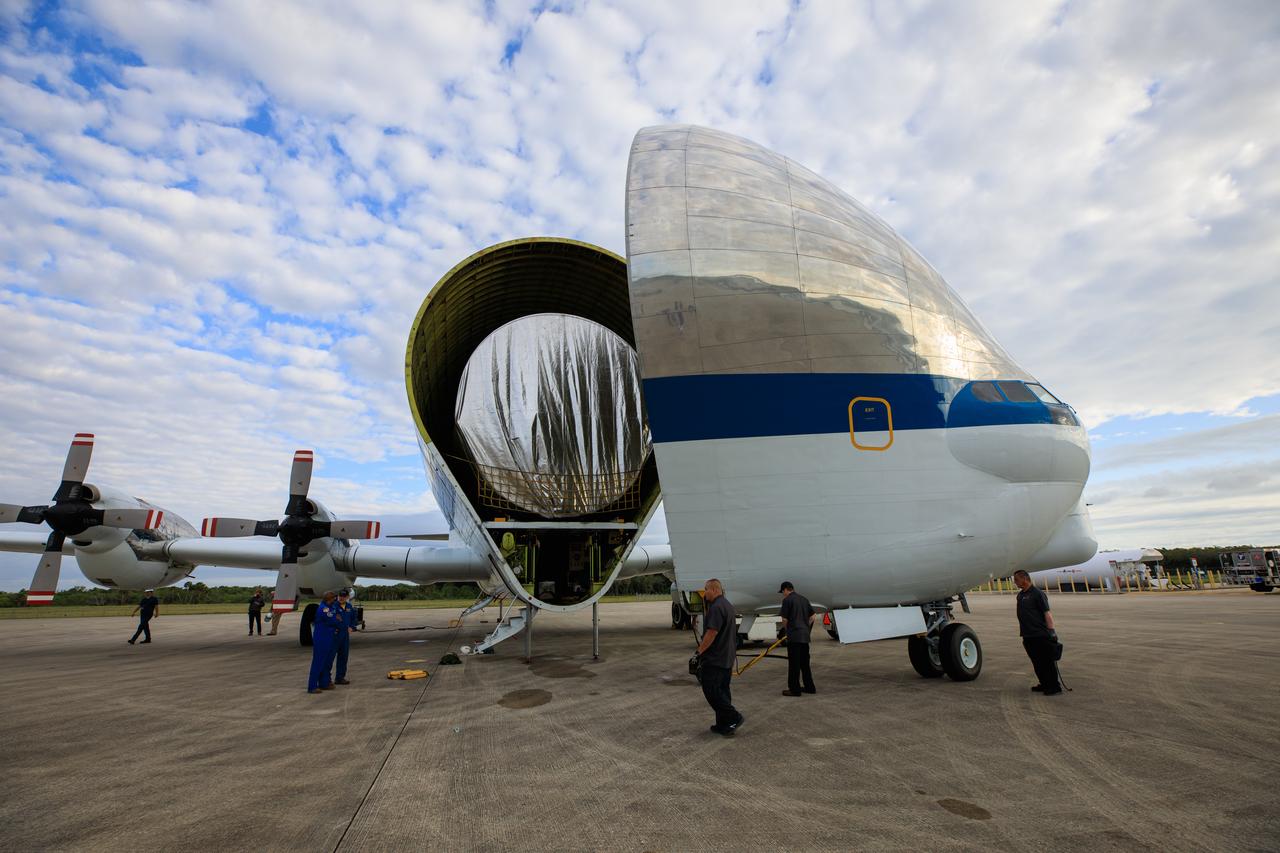
The Multi-Purpose Logistics Module (MPLM), used during the Space Shuttle Program to transfer cargo to and from the International Space Station, is loaded into NASA's Super Guppy aircraft at the Launch and Landing Facility runway at Kennedy Space Center in Florida on April 25, 2023. The MPLM will be transported to Ellington Field in Houston, where it will then be transported by road to Axiom’s facility near Ellington to be utilized to further commercialization of space. Three MPLMs were built by Thales Alenia Space Italia (TASI) for the Italian Space Agency (ASI) and named after Italian masters (Leonardo, Raffaello, and Donatello). Only two ever flew to the space station, Leonardo and Raffaello, with Axiom intending to use the Raffaello module as a future element that will attach to a segment being built by the company for addition to the station.

NASA's Super Guppy aircraft lifts off from the Launch and Landing Facility runway at Kennedy Space Center in Florida on April 25, 2023. Carrying the Multi-Purpose Logistics Module (MPLM), used during the Space Shuttle Program to transfer cargo to and from the International Space Station, the aircraft is transporting the module to Ellington Field in Houston, where it will then be transported by road to Axiom’s facility near Ellington to be utilized to further commercialization of space. Three MPLMs were built by Thales Alenia Space Italia (TASI) for the Italian Space Agency (ASI) and named after Italian masters (Leonardo, Raffaello, and Donatello). Only two ever flew to the space station, Leonardo and Raffaello, with Axiom intending to use the Raffaello module as a future element that will attach to a segment being built by the company for addition to the station.
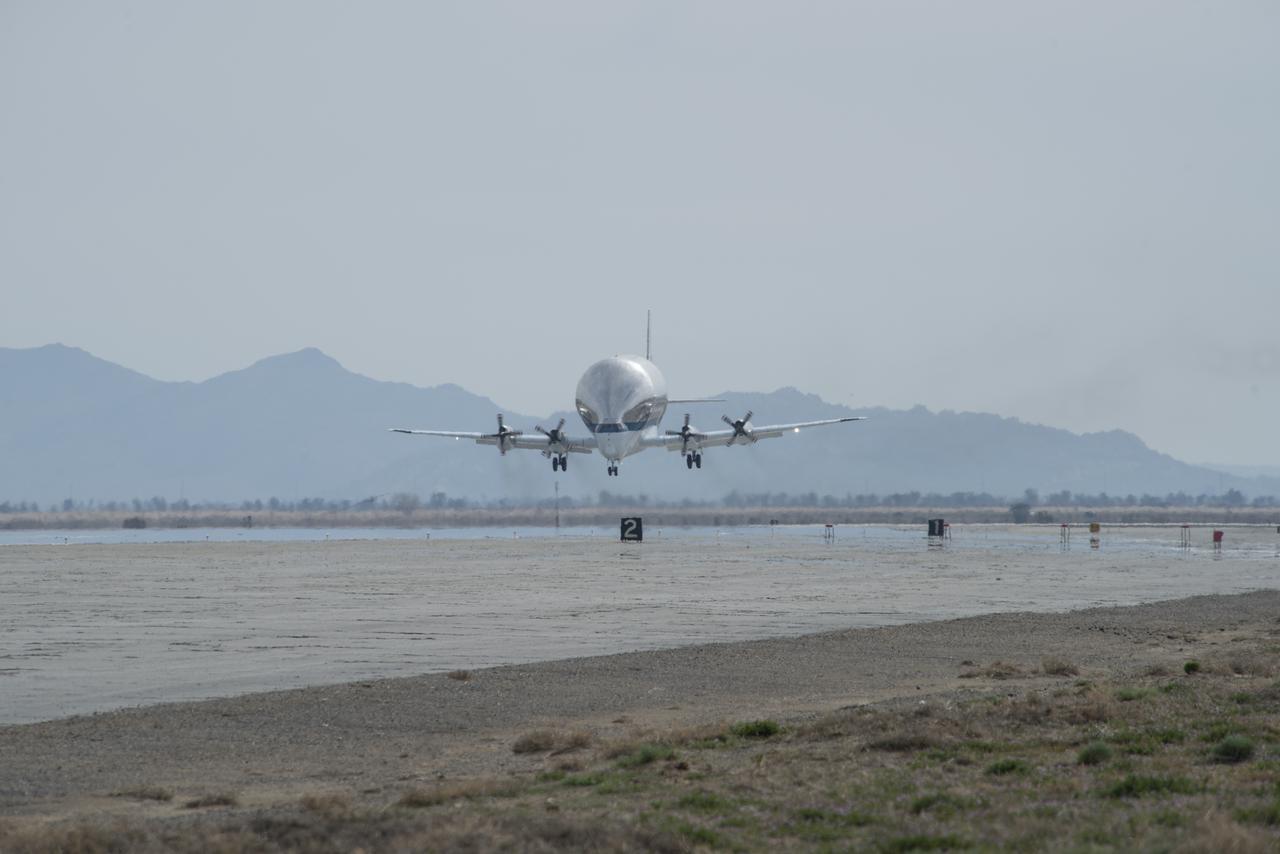
NASA's Super Guppy cargo transport aircraft coming in for landing at Plant 42 in Palmdale, California on April 1, 2019.
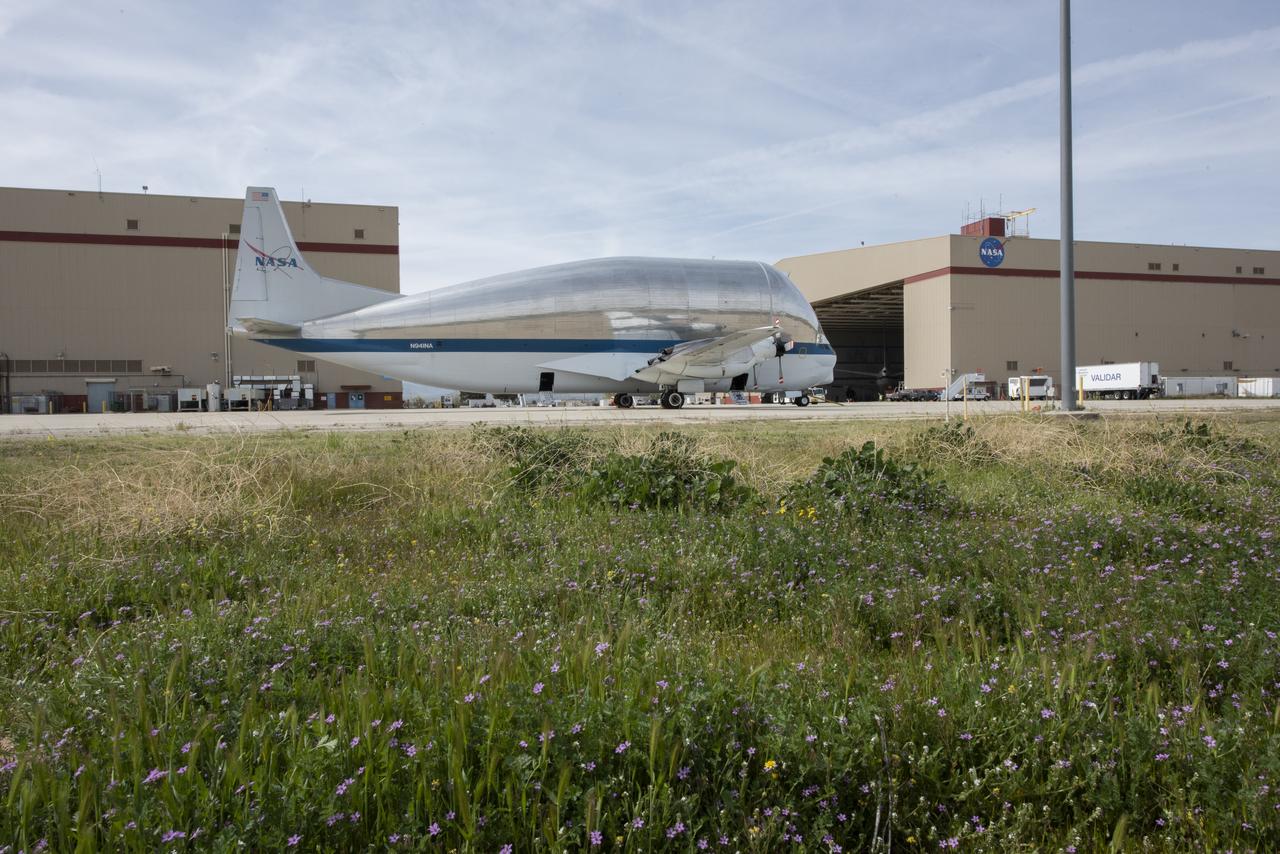
NASA’s Super Guppy cargo transport aircraft parked on the ramp in front of NASA’s Armstrong Flight Research Center Building 703.
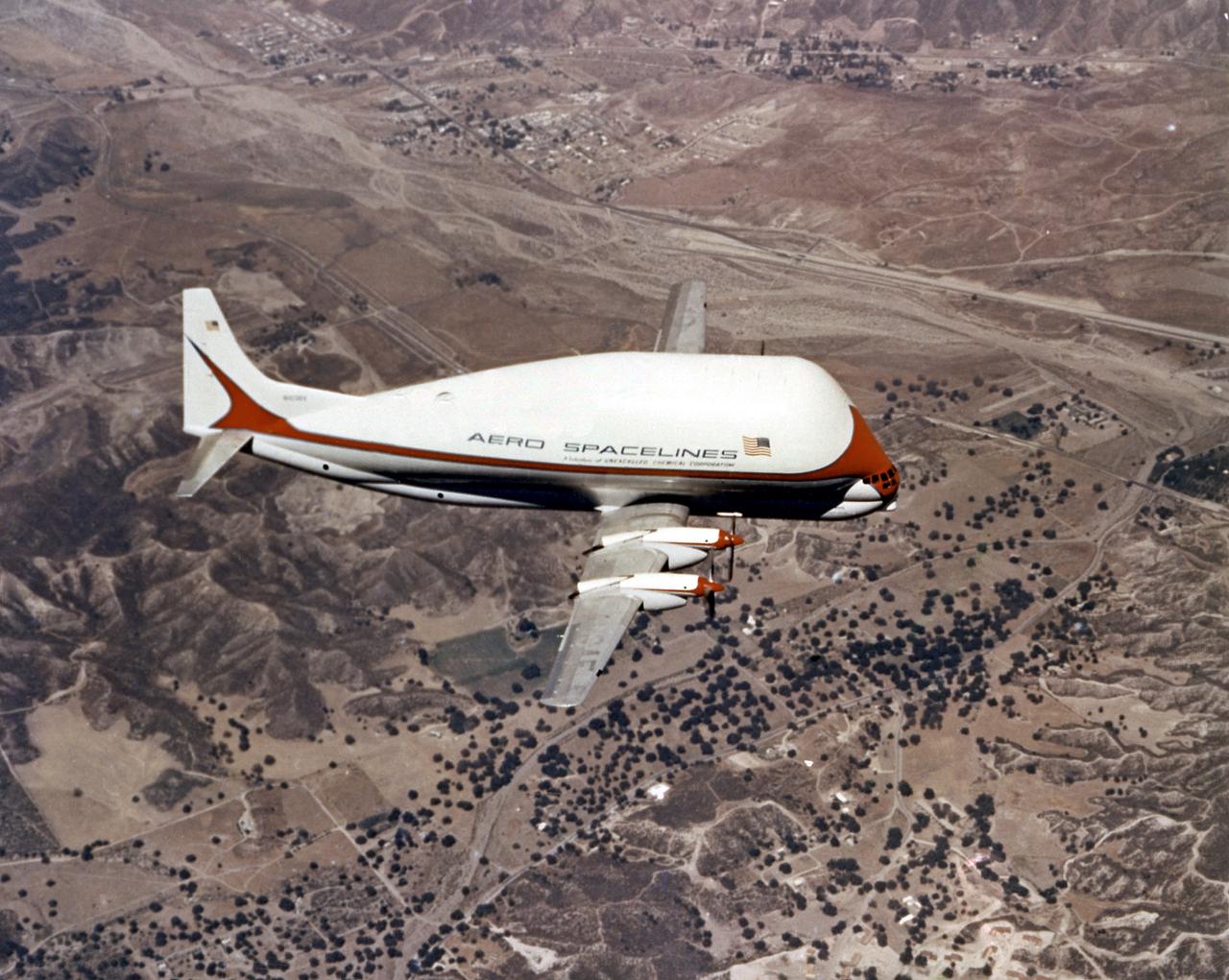
Super Guppy, bigger sister of the aptly named Pregnant Guppy, was the only airplane in the world capable of carrying a complete S-IVB stage. This aircraft was built by John M. Conroy of Aero Spaceliners, Incorporated, who started with the fuselages of a surplus Boeing C-97 Stratocruiser, ballooned out the upper decks enormously, and hinged the front sections so that they could be folded back 110 degrees. The Super Guppy flew smoothly at a 250-mph cruising speed, and its cargo deck provided a 25-foot clear diameter.
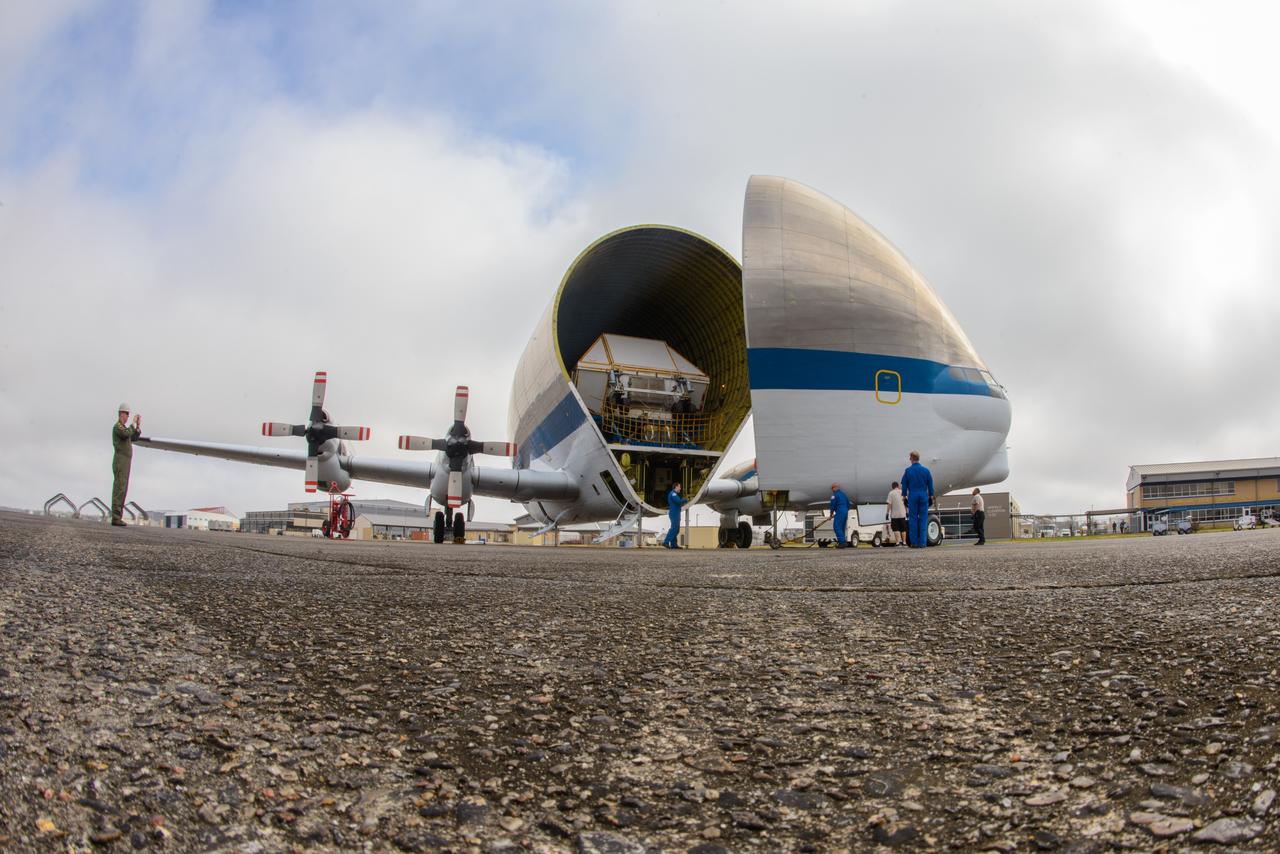
Artemis I Orion departs Michoud Assembly Facility for Kennedy Space Center in Florida on Feb. 1, 2016. The vessel was loaded onto NASA's Super Guppy cargo aircraft. Part of Batch image transfer from Flickr.

CLOUDY with a chance of NOT SEEING the Super Blood Moon Lunar Eclipse? WATCH Live here: <a href="http://bit.ly/1LfspfW" rel="nofollow">bit.ly/1LfspfW</a> No worries, we've got you've covered. Click on over to the live stream starting at 8:00 p.m. until at least 11:30 p.m. EDT broadcast from NASA's Marshall Space Flight Center in Huntsville, Ala., with a live feed from the Griffith Observatory, Los Angeles, Calif. Mitzi Adams, a NASA solar physicist at Marshall will discuss the eclipse and answer questions on Twitter. To ask a question, use #askNASA. <b><a href="http://www.nasa.gov/audience/formedia/features/MP_Photo_Guidelines.html" rel="nofollow">NASA image use policy.</a></b> <b><a href="http://www.nasa.gov/centers/goddard/home/index.html" rel="nofollow">NASA Goddard Space Flight Center</a></b> enables NASA’s mission through four scientific endeavors: Earth Science, Heliophysics, Solar System Exploration, and Astrophysics. Goddard plays a leading role in NASA’s accomplishments by contributing compelling scientific knowledge to advance the Agency’s mission. <b>Follow us on <a href="http://twitter.com/NASAGoddardPix" rel="nofollow">Twitter</a></b> <b>Like us on <a href="http://www.facebook.com/pages/Greenbelt-MD/NASA-Goddard/395013845897?ref=tsd" rel="nofollow">Facebook</a></b> <b>Find us on <a href="http://instagrid.me/nasagoddard/?vm=grid" rel="nofollow">Instagram</a></b>
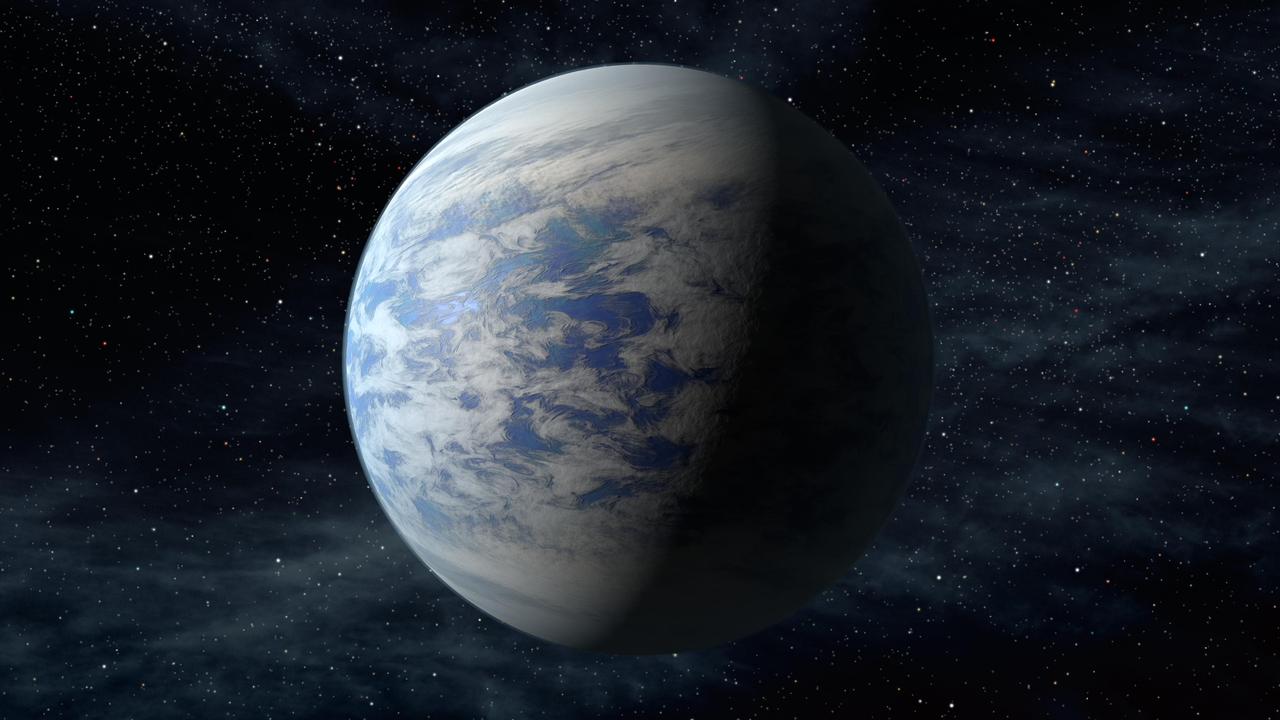
The artist concept depicts Kepler-69c, a super-Earth-size planet in the habitable zone of a star like our sun, located about 2,700 light-years from Earth in the constellation Cygnus.
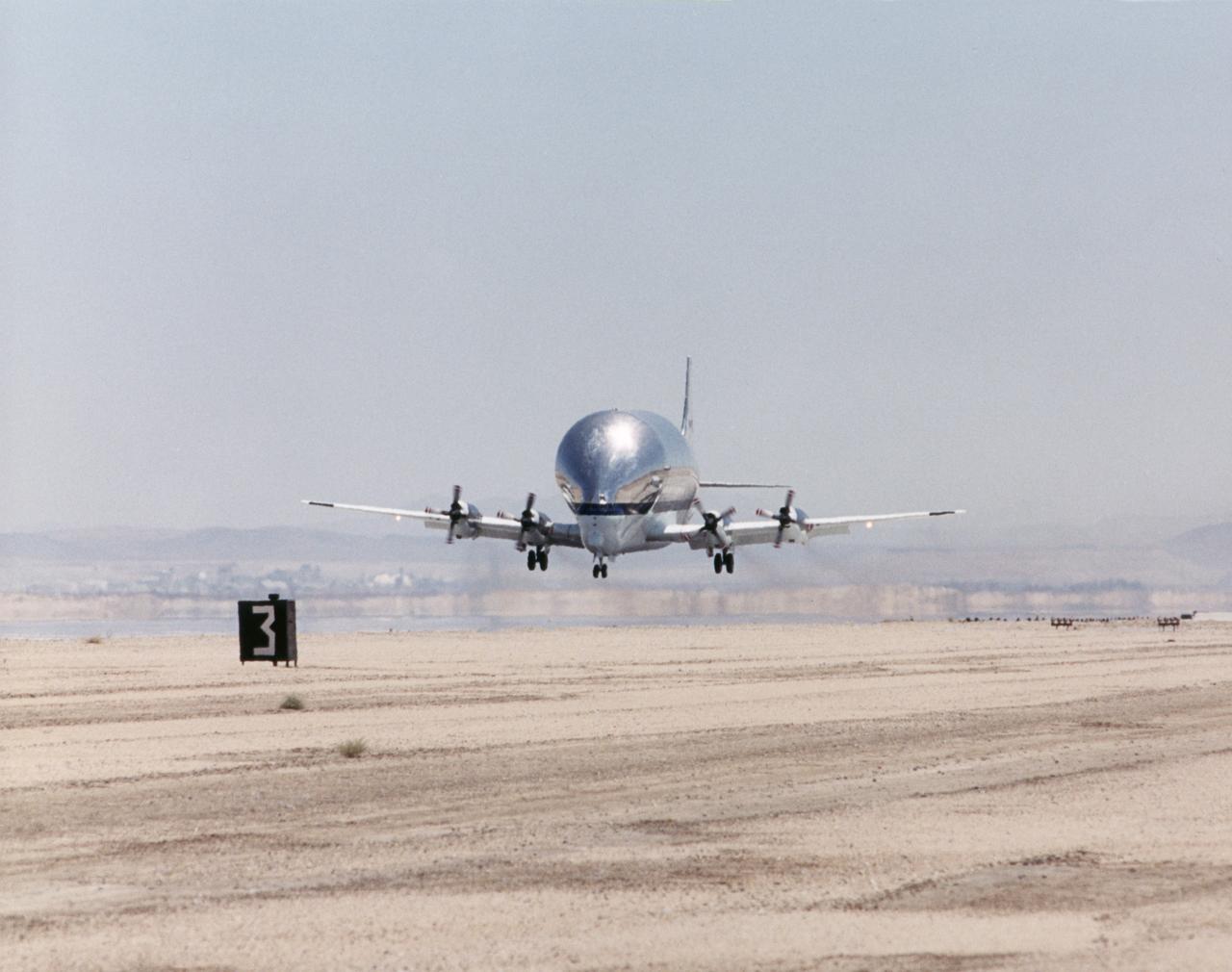
NASA's Super Guppy transport aircraft landed at Edwards Air Force Base, Calif. on July 11, 2000, to deliver the latest version of the X-38 drop vehicle to Dryden. The X-38s are intended as prototypes for a possible "crew lifeboat" for the International Space Station. The X-38 vehicle 131R will demonstrate a huge 7,500 square-foot parafoil that will that will enable the potential crew return vehicle to land on the length of a football field after returning from space. The crew return vehicle is intended to serve as a possible emergency transport to carry a crew to safety in the event of problems with the International Space Station. The Super Guppy evolved from the 1960s-vintage Pregnant Guppy, used for transporting outsized sections of the Apollo moon rocket. The Super Guppy was modified from 1950s-vintage Boeing C-97. NASA acquired its Super Guppy from the European Space Agency in 1997.
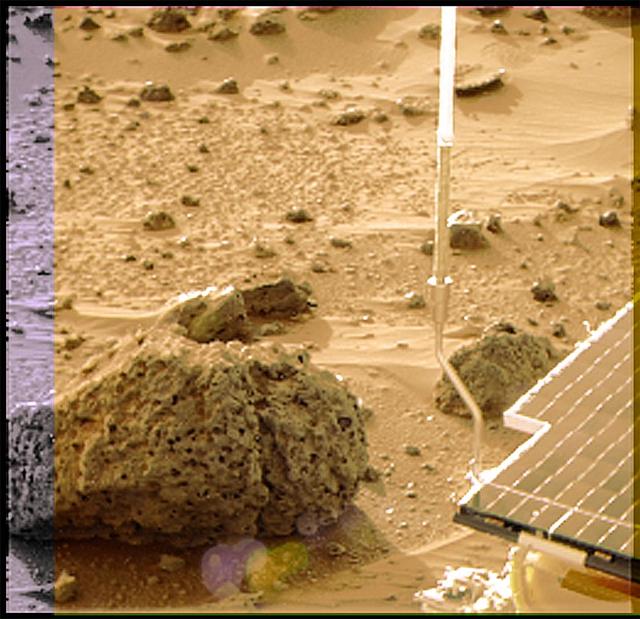
Super Resolution View of Barnacle