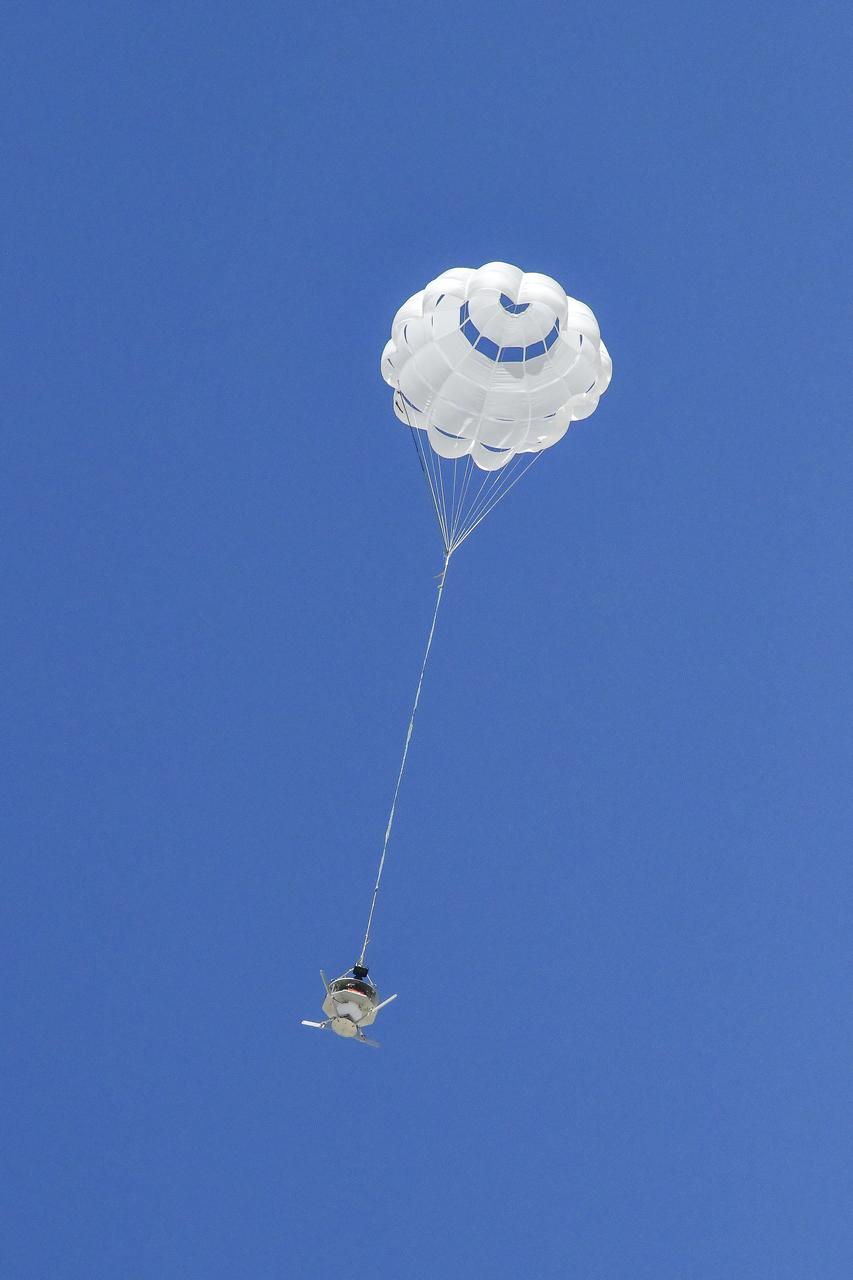
The parachute of the Enhancing Parachutes by Instrumenting the Canopy test experiment deploys following an air launch from an Alta X drone on June 4, 2025, at NASA’s Armstong Flight Research Center in Edwards, California. NASA researchers are developing technology to make supersonic parachutes safer and more reliable for delivering science instruments and payloads to Mars.
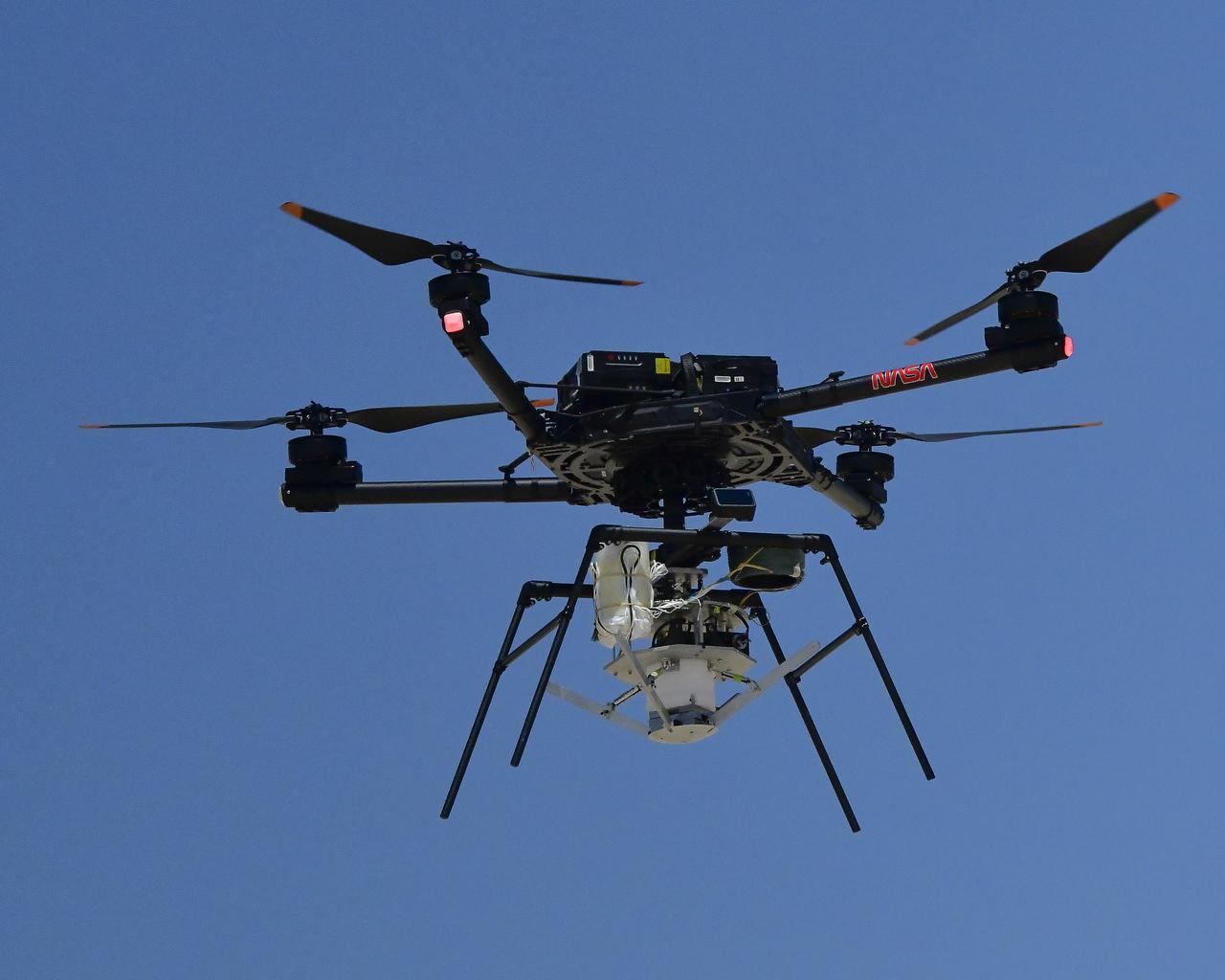
An Alta X drone is positioned at altitude for an air launch of the Enhancing Parachutes by Instrumenting the Canopy test experiment on June 4, 2025, at NASA’s Armstong Flight Research Center in Edwards, California. NASA researchers are developing technology to make supersonic parachutes safer and more reliable for delivering science instruments and payloads to Mars.
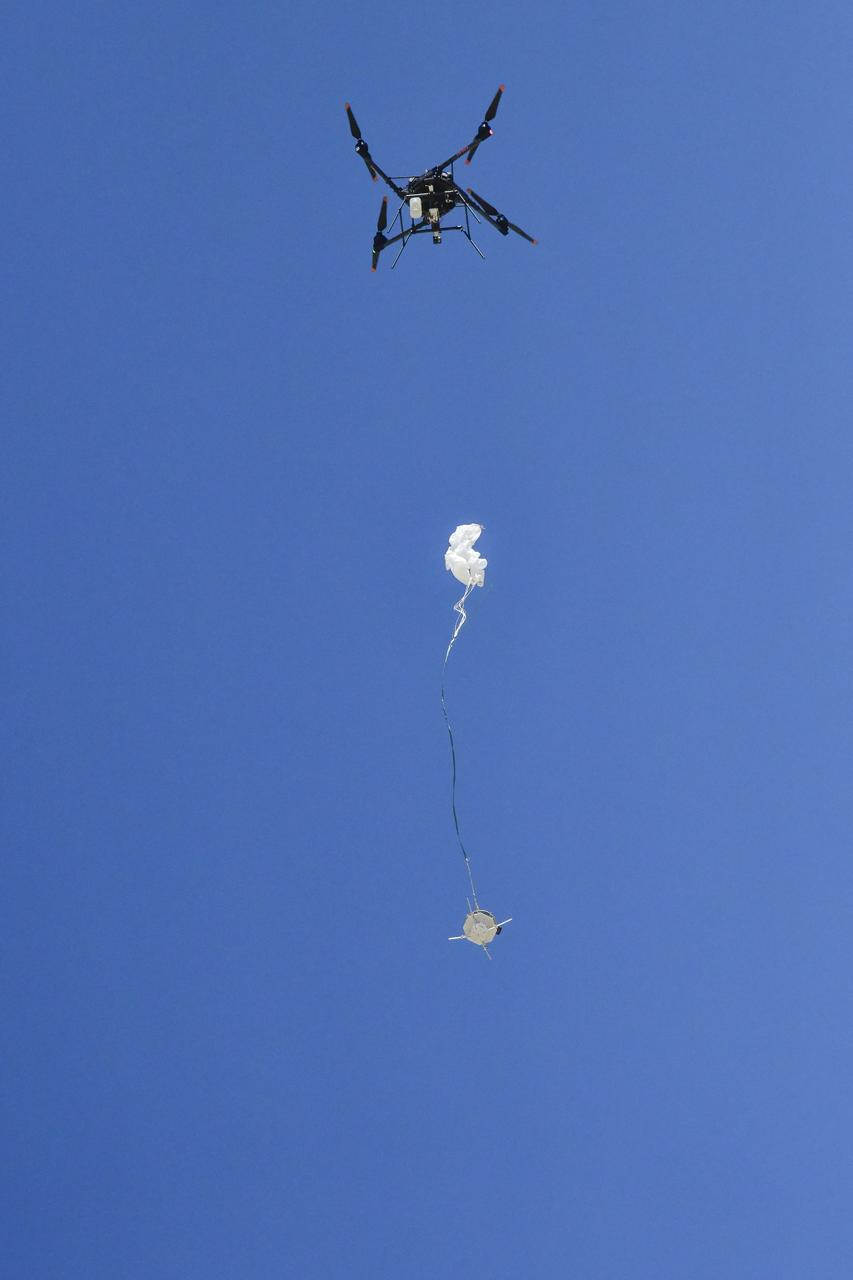
An Alta X drone air launches the Enhancing Parachutes by Instrumenting the Canopy test experiment on June 4, 2025, at NASA’s Armstong Flight Research Center in Edwards, California. NASA researchers are developing technology to make supersonic parachutes safer and more reliable for delivering science instruments and payloads to Mars.
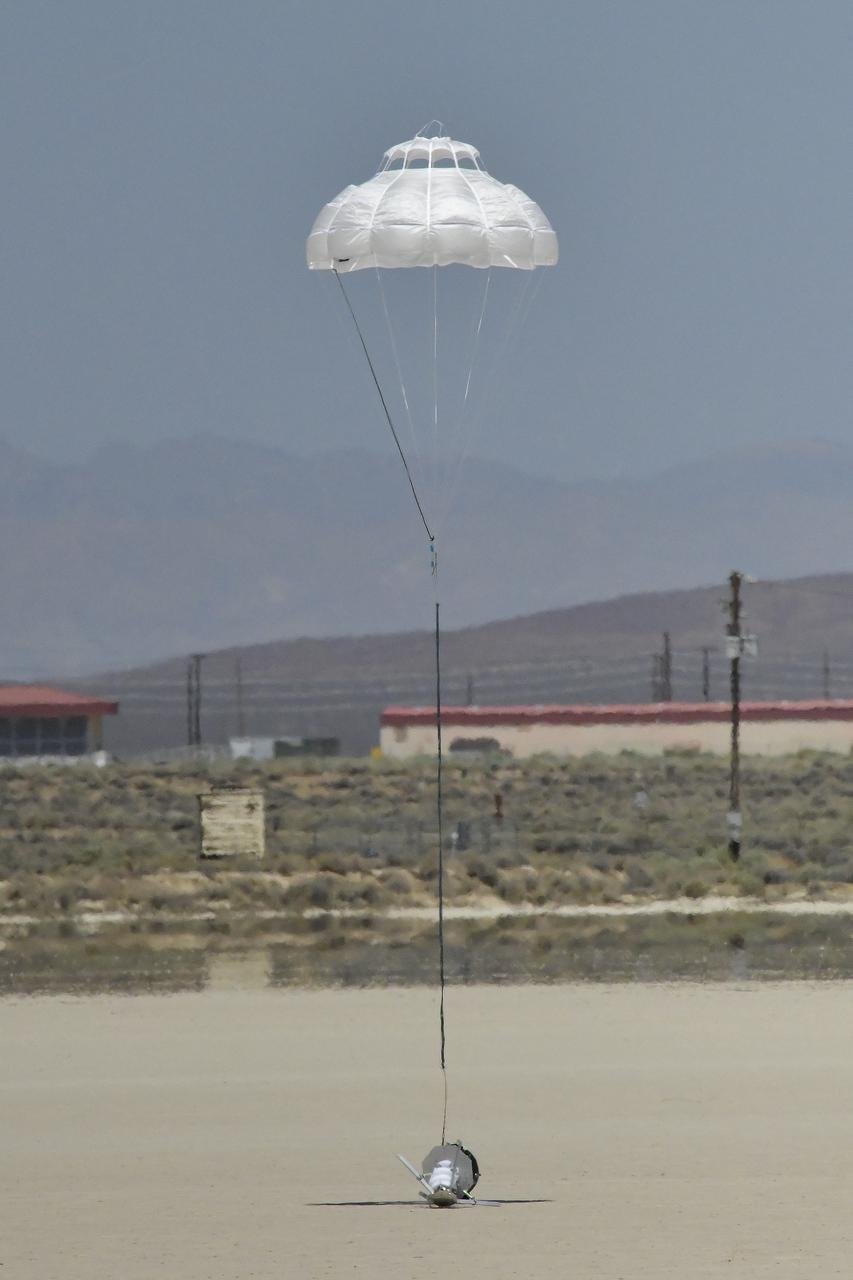
The Enhancing Parachutes by Instrumenting the Canopy test experiment lands following an air launch from an Alta X drone on June 4, 2025, at NASA’s Armstong Flight Research Center in Edwards, California. NASA researchers are developing technology to make supersonic parachutes safer and more reliable for delivering science instruments and payloads to Mars.
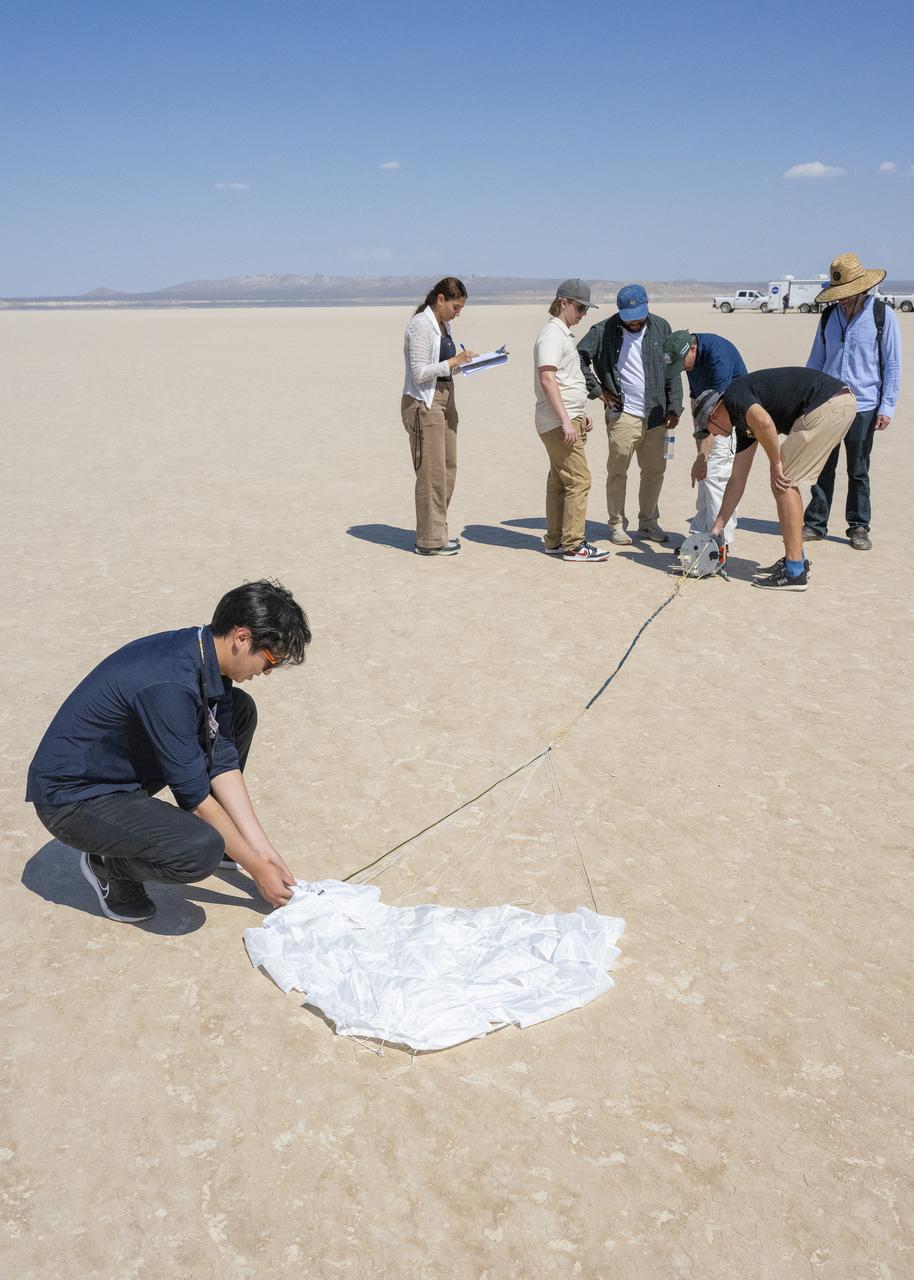
The Enhancing Parachutes by Instrumenting the Canopy project team examines a capsule and parachute following an air launch from an Alta X drone on June 4, 2025, at NASA’s Armstong Flight Research Center in Edwards, California. NASA researchers are developing technology to make supersonic parachutes safer and more reliable for delivering science instruments and payloads to Mars.
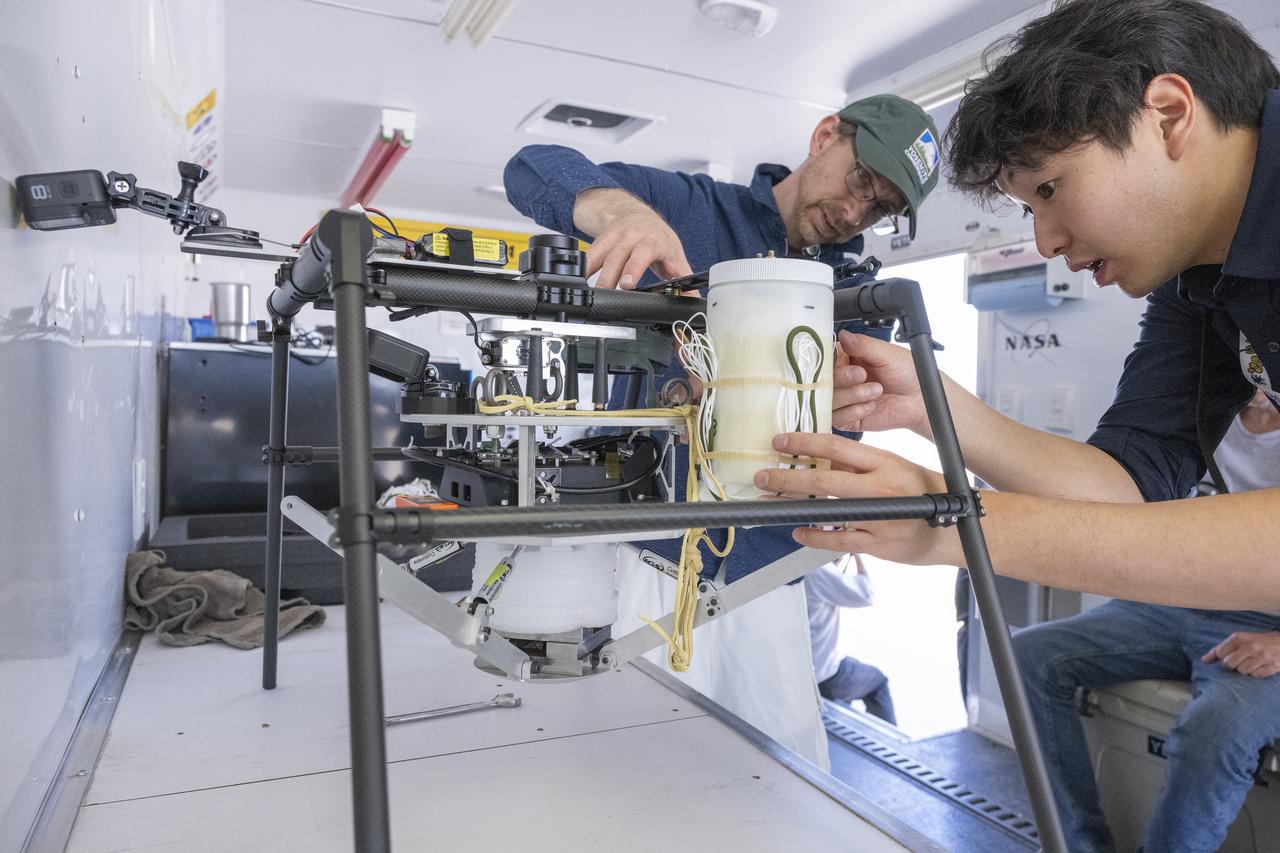
NASA researchers Paul Bean, center, and Mark Hagiwara, right, attach the capsule with parachute system to the Enhancing Parachutes by Instrumenting the Canopy test experiment on June 4, 2025, at NASA’s Armstong Flight Research Center in Edwards, California. NASA researchers are developing technology to make supersonic parachutes safer and more reliable for delivering science instruments and payloads to Mars.
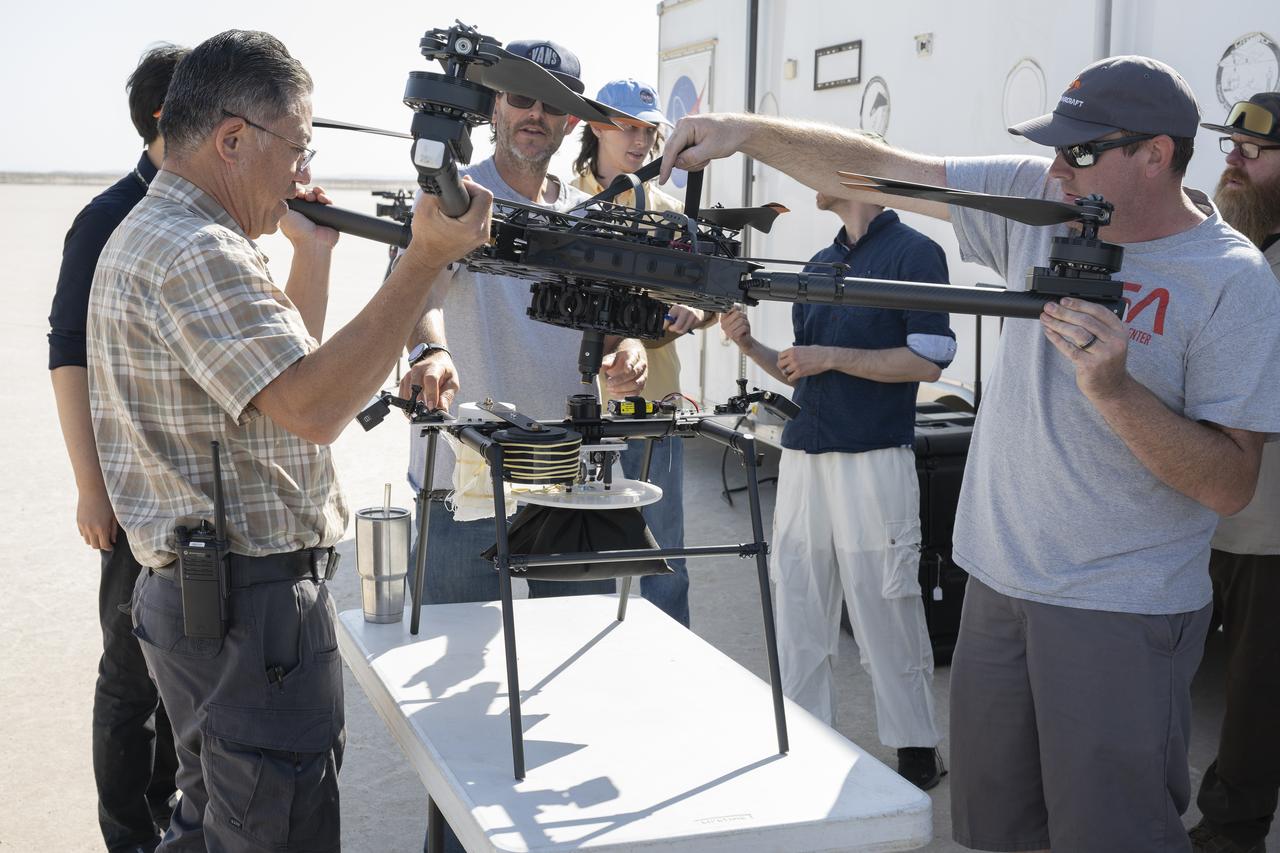
Derek Abramson, left, and Justin Link, right, attach an Alta X drone to the Enhancing Parachutes by Instrumenting the Canopy test experiment on June 4, 2025, at NASA’s Armstong Flight Research Center in Edwards, California. Abramson is NASA chief engineer at the center’s Dale Reed Subscale Flight Research Laboratory, where Link also works as a pilot for small uncrewed aircraft systems. NASA researchers are developing technology to make supersonic parachutes safer and more reliable for delivering science instruments and payloads to Mars.
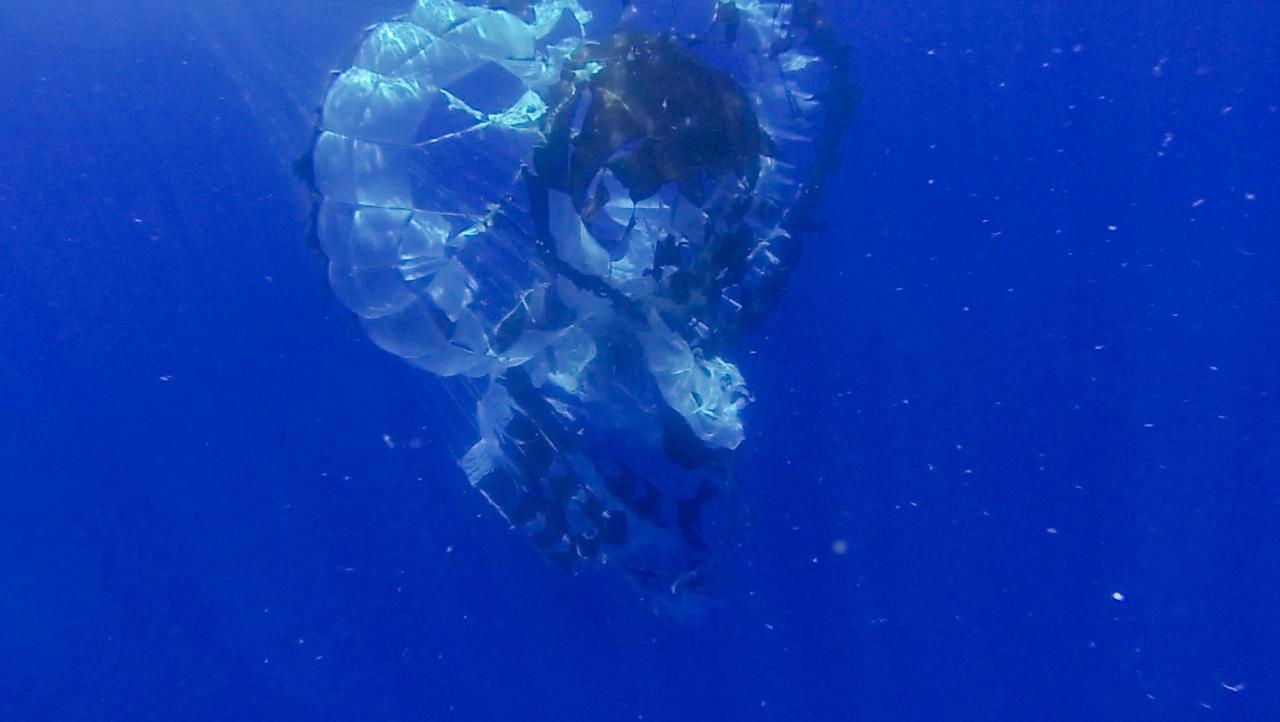
Tears are visible in the parachute from NASA Supersonic Disk Sail Parachute, which did not deploy as expected. The photo was obtained by Navy divers during recovery of the LDSD test vehicle and parachute.
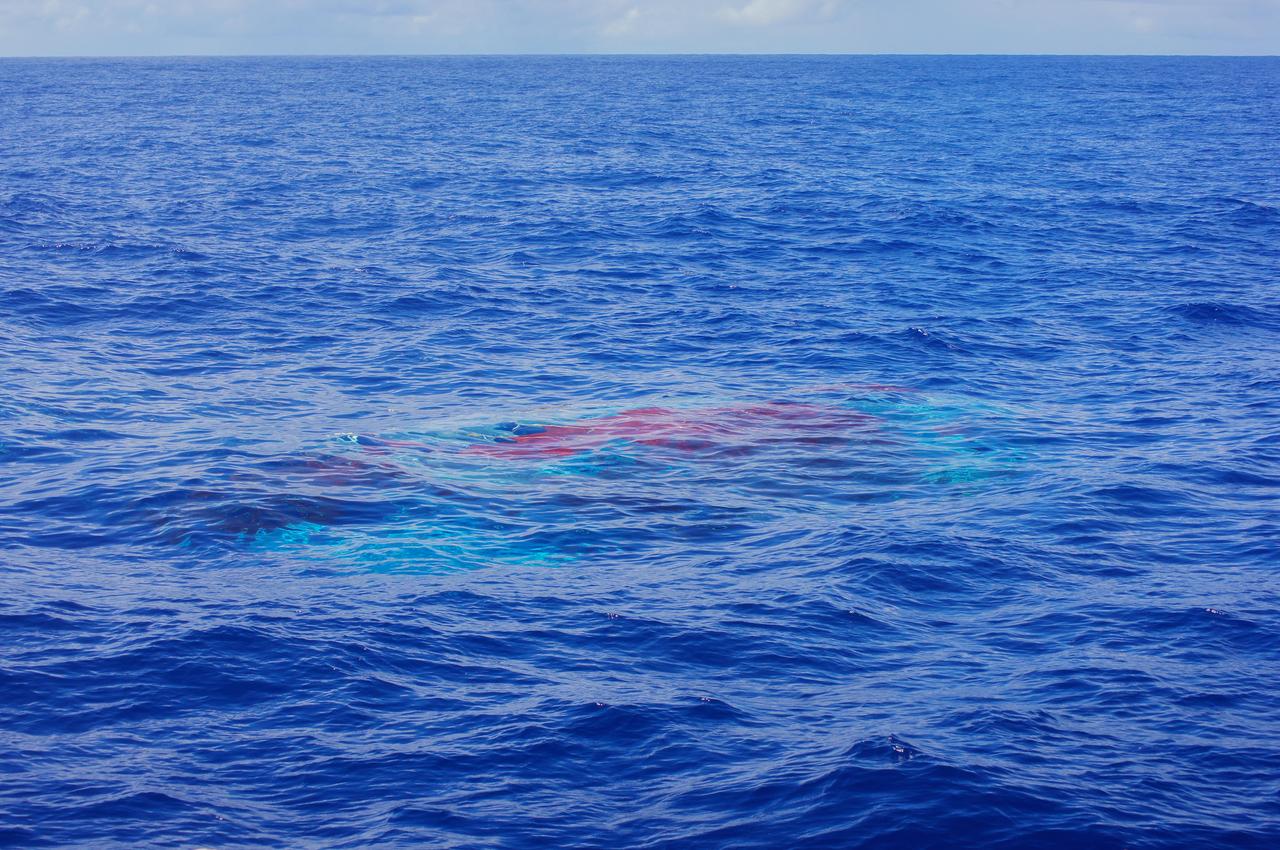
NASA Supersonic Disk Sail Parachute, one of the new technologies being developed as part of NASA Low-Density Supersonic Decelerator LDSD project, floats just below the surface of the Pacific Ocean on June 28, 2014.
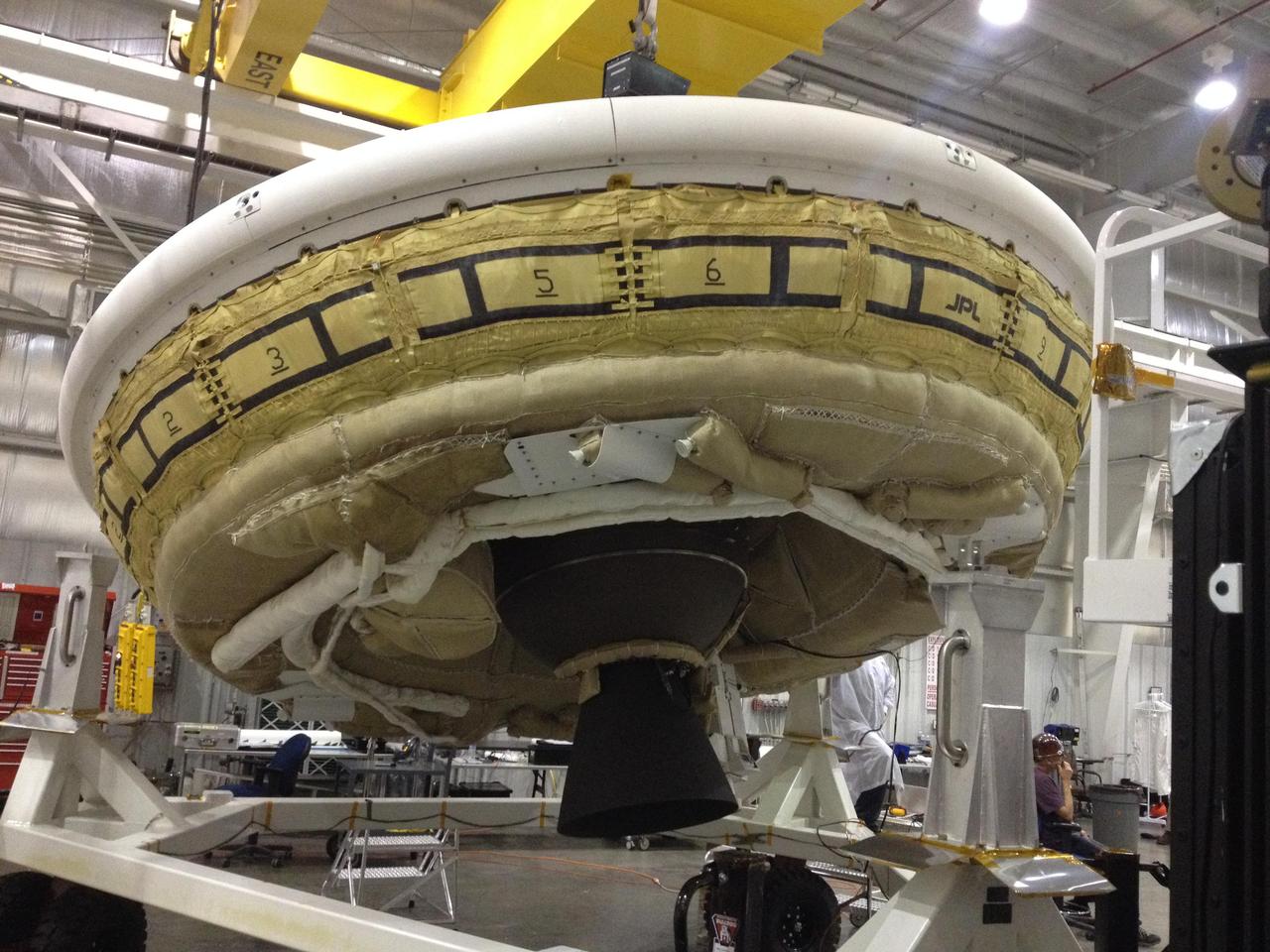
NASA Low-Density Supersonic Decelerator project, will test an inflatable decelerator and a parachute at high altitudes and speeds over the Pacific Missile Range this June.

Sled tests will allow NASA Low-Density Supersonic Decelerator Project, or LDSD, to test inflatable and parachute decelerators to slow spacecraft prior to landing.
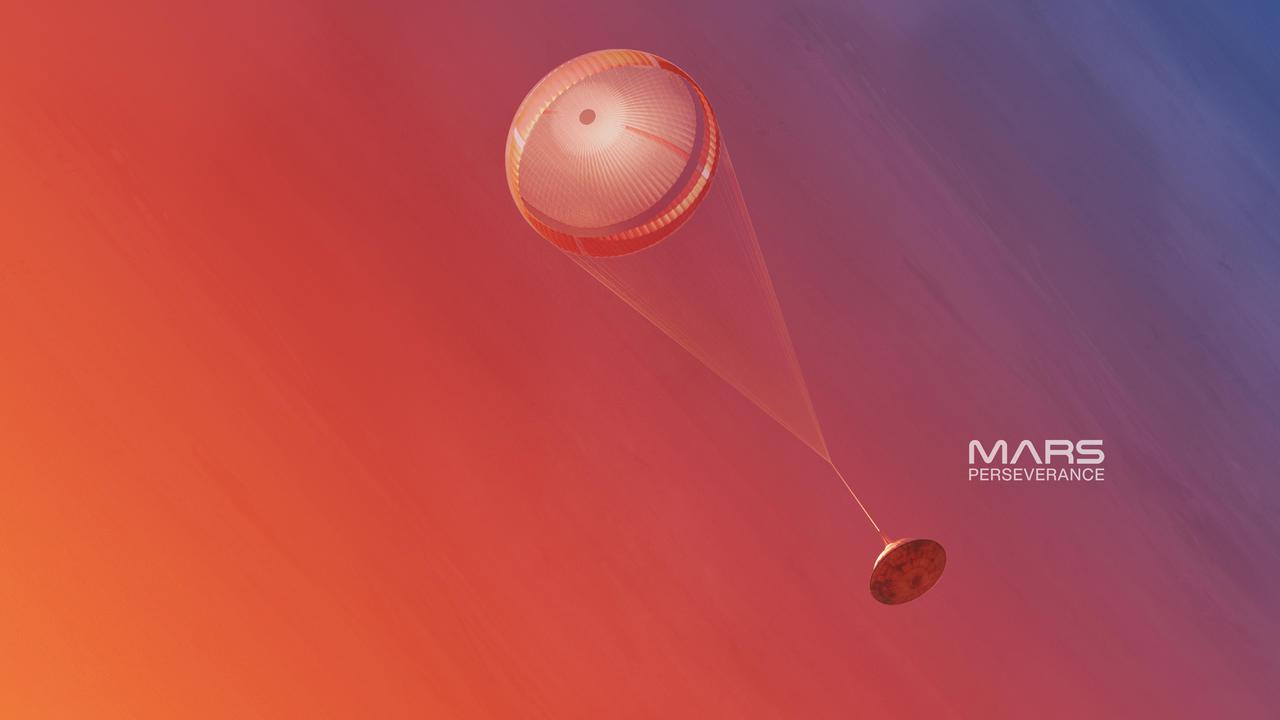
An illustration of NASA's Mars Perseverance rover deploying its supersonic parachute from its aeroshell as it slows down before landing. Hundreds of critical events must execute perfectly and exactly on time for the rover to land safely on Feb. 18, 2021. https://photojournal.jpl.nasa.gov/catalog/PIA24344
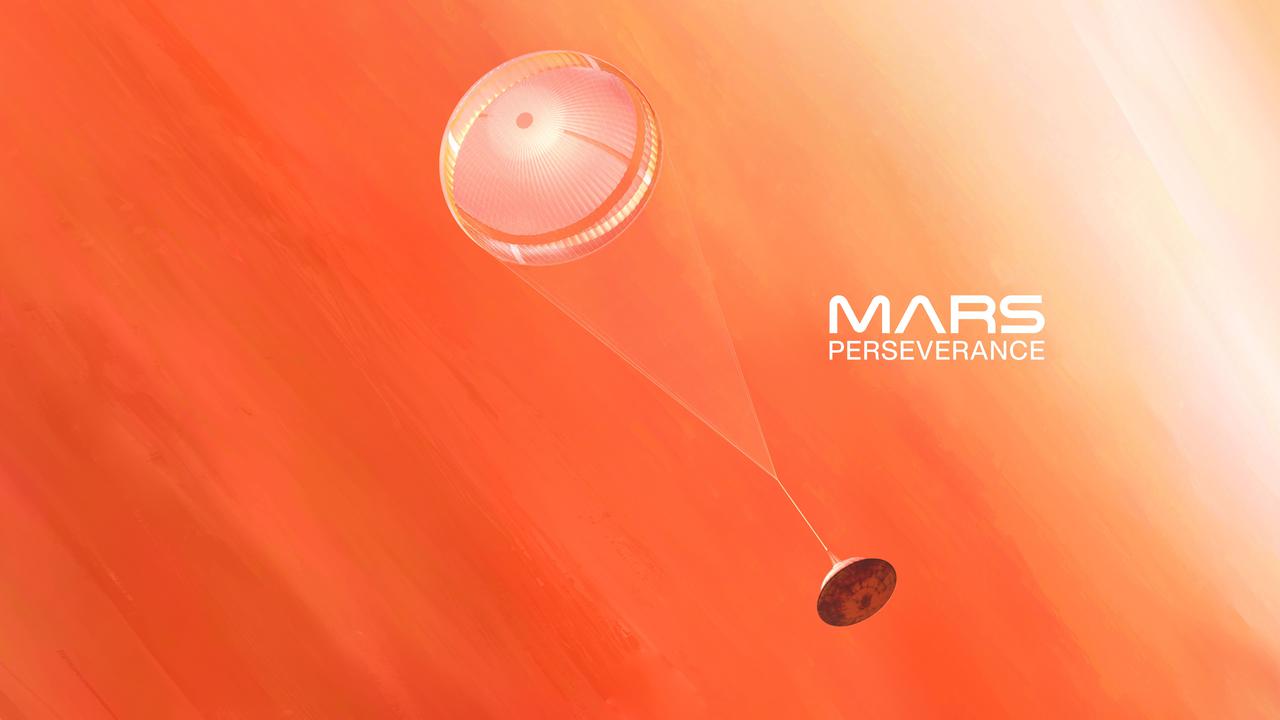
An illustration of NASA's Mars Perseverance rover deploying its supersonic parachute from its aeroshell as it slows down before landing. Hundreds of critical events must execute perfectly and exactly on time for the rover to land safely on Feb. 18, 2021. https://photojournal.jpl.nasa.gov/catalog/PIA24341

An engineer works on the Parachute Deployment Device of the Low-Density Supersonic Decelerator test vehicle in this image taken at the Missile Assembly Building at the U.S. Navy Pacific Missile Range Facility in Kauai, Hawaii.
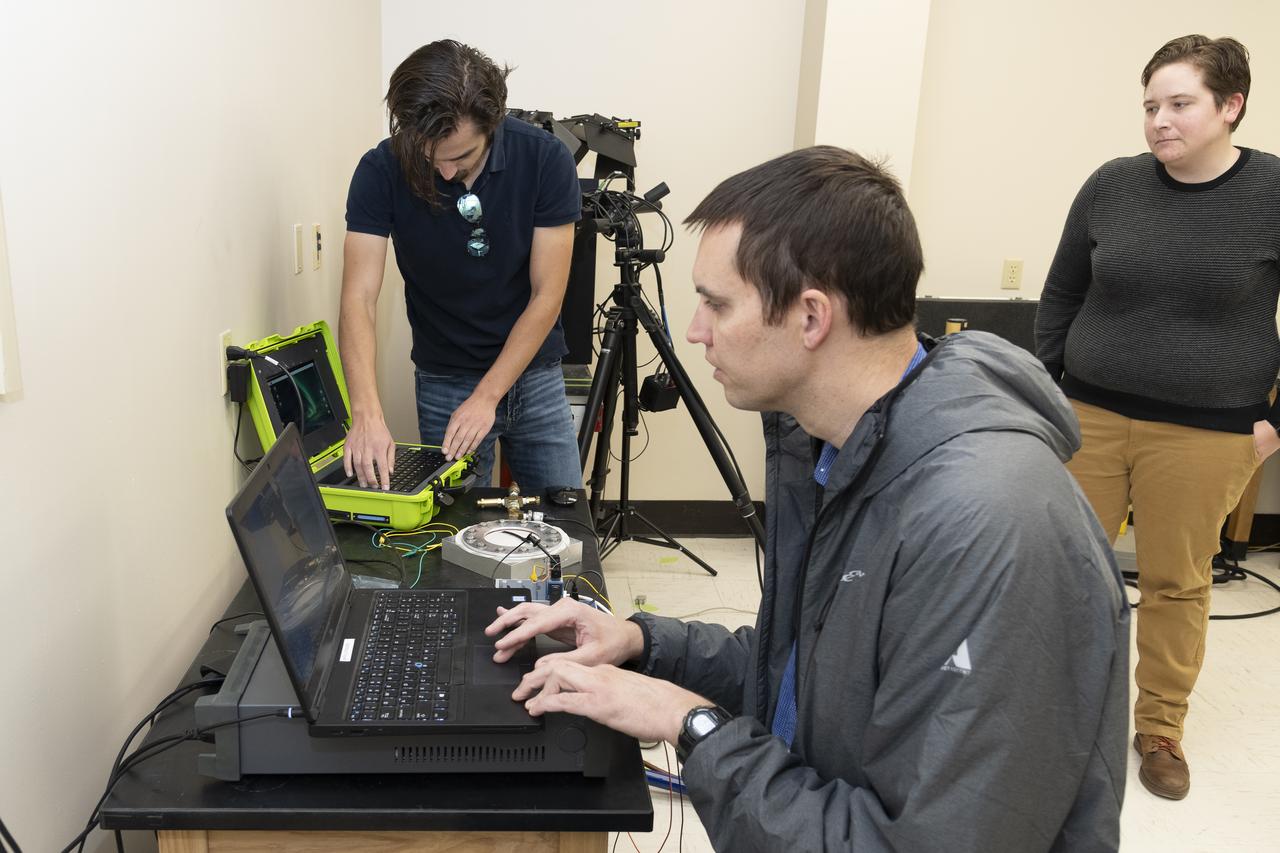
Coby Asselin, from left, Adam Curry, and L. J. Hantsche set up the data acquisition systems used during testing of a senor to determine parachute canopy material strength at NASA’s Armstrong Flight Research Center in Edwards, California. The sensor tests seek to quantify the limits of the material to improve computer models and make more reliable supersonic parachutes.
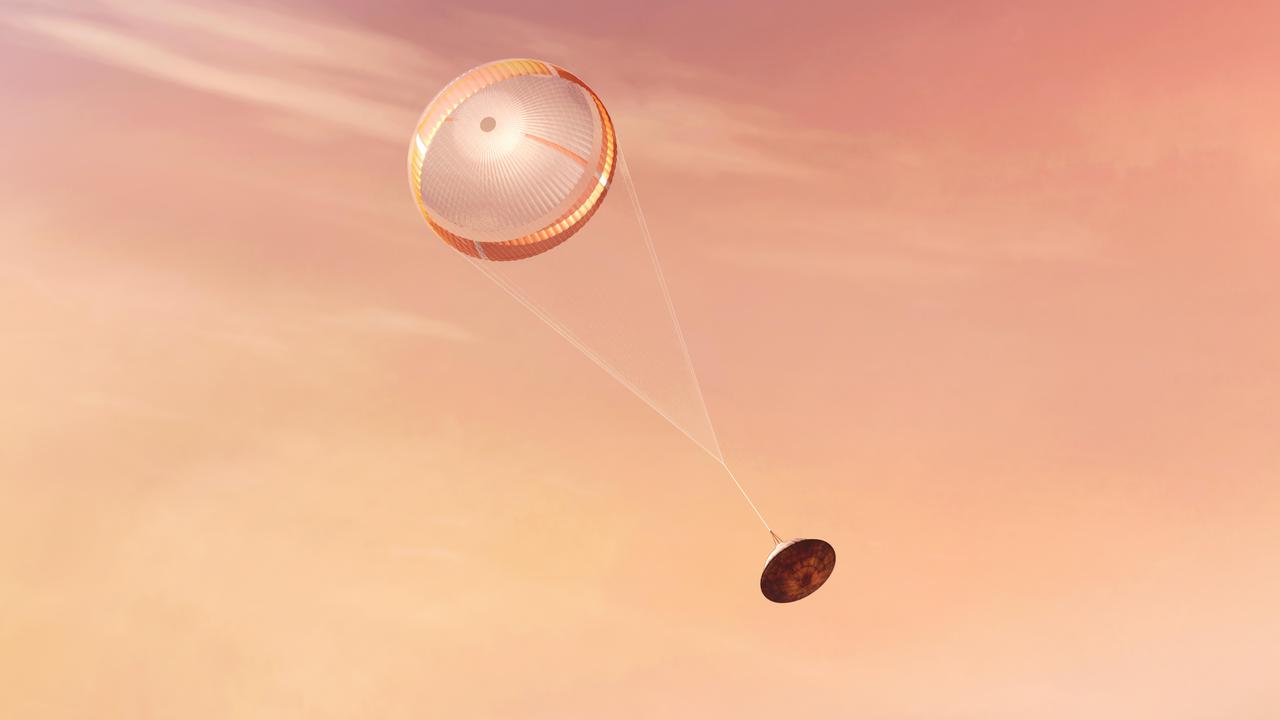
NASA's Perseverance rover deploys a supersonic parachute from its aeroshell as it slows down before landing, in this artist's illustration. Hundreds of critical events must execute perfectly and exactly on time for the rover to land safely on Feb. 18, 2021. Entry, Descent, and Landing, or "EDL," begins when the spacecraft reaches the top of the Martian atmosphere, traveling nearly 12,500 mph (20,000 kph). EDL ends about seven minutes after atmospheric entry, with Perseverance stationary on the Martian surface. The parachute, 70.5 feet (21.5 meters) in diameter, deploys about 240 seconds after entry into the Martian atmosphere, at an altitude of about 7 miles (11 kilometers) and a velocity of about 940 mph (1,512 kph). The parachute slows the vehicle to about 200 mph (320 kph). https://photojournal.jpl.nasa.gov/catalog/PIA24316
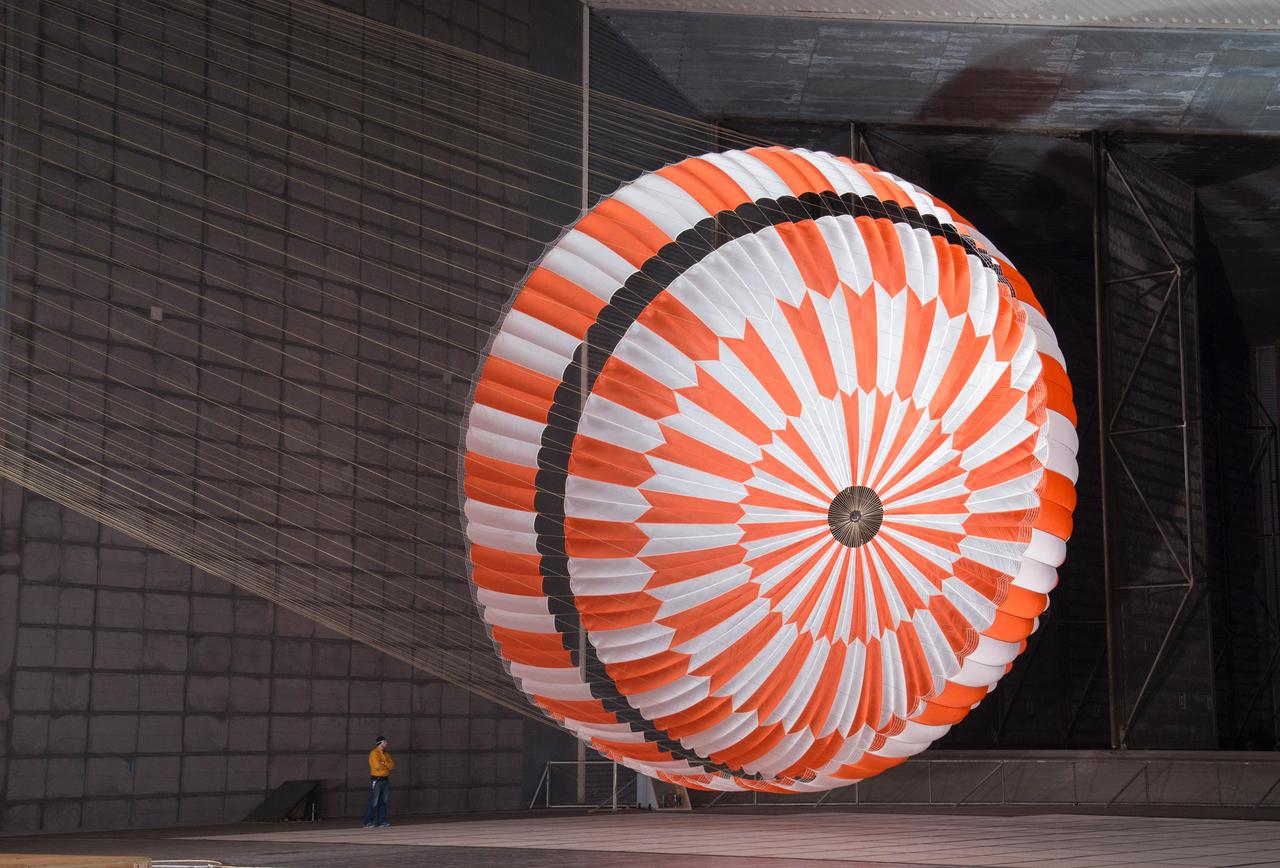
In this June 2017 photo, the supersonic parachute design that will land NASA's Perseverance rover on Mars on Feb. 18, 2021, undergoes testing in a wind tunnel at NASA's Ames Research Center in California's Silicon Valley. https://photojournal.jpl.nasa.gov/catalog/PIA23916
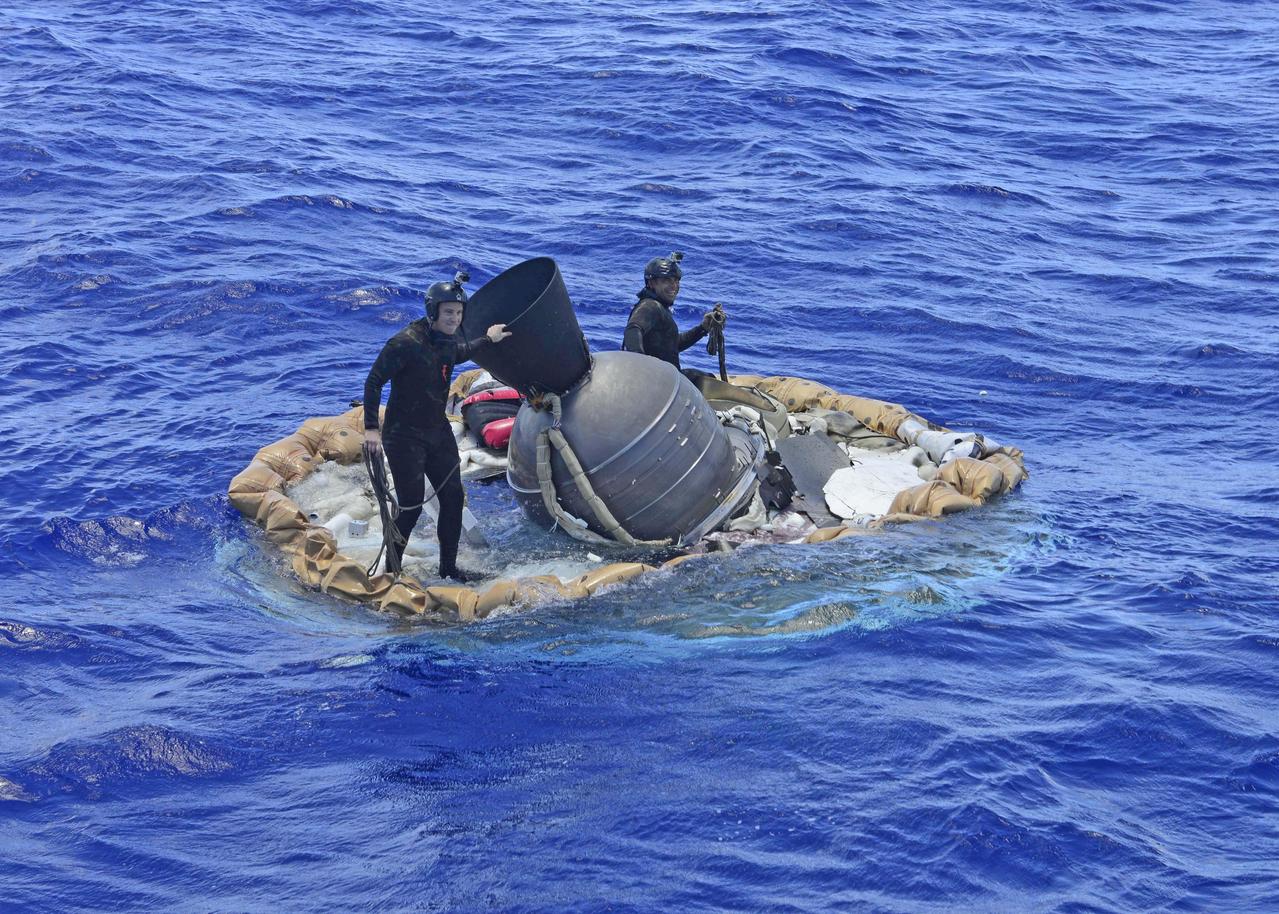
Two members of the U.S. Navy's Mobile Diving Salvage Unit (MDSU) 1 Explosive Ordnance Detachment work on recovering the test vehicle for NASA's Low-Density Supersonic Decelerator (LDSD) project. The saucer-shaped LDSD craft splashed down at 11:49 a.m. HST (2:49 PDT/5:49 p.m. EDT) Monday, June 8, 2015, in the Pacific Ocean off the west coast of the Kauai, Hawaii, after a four-hour experimental flight test that investigated new technologies for landing future robotic and human Mars missions. During the flight test, a Supersonic Inflatable Aerodynamic Decelerator (SIAD) and a supersonic parachute were deployed. The SIAD operated as expected, dramatically slowing the test vehicle's velocity. When the parachute was deployed into the supersonic slipstream, it appeared to blossom to full inflation prior to the emergence of a tear which then propagated and destroyed the parachute's canopy. As a result, the saucer's splashdown in the Pacific Ocean was hard, resulting in fracturing parts of the structure. Memory cards containing comprehensive test data -- including high-speed, high-resolution imagery recorded during the flight -- were successfully recovered. Also recovered were the test vehicle and its components, the supersonic parachute, the ballute used to deploy the parachute, and a large weather balloon that initially carried the saucer to an altitude of 120,000 feet. http://photojournal.jpl.nasa.gov/catalog/PIA19684
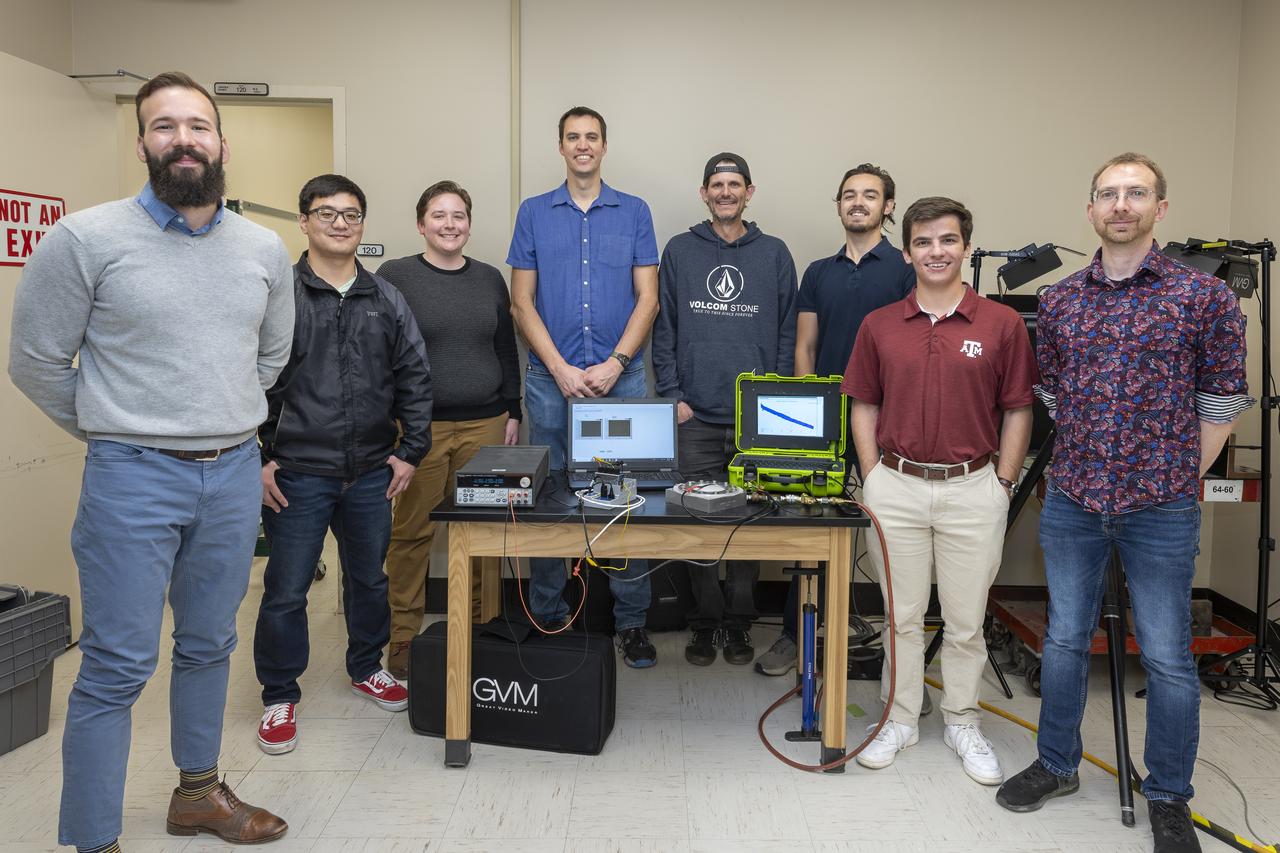
Erick Rossi De La Fuente, from left, John Rudy, L. J. Hantsche, Adam Curry, Jeff Howell, Coby Asselin, Benjamin Mayeux, and Paul Bean pose with a test fixture, material, sensor, and data acquisition systems at NASA’s Armstrong Flight Research Center in Edwards, California. The sensor tests seek to quantify the limits of the material to improve computer models and make more reliable supersonic parachutes.
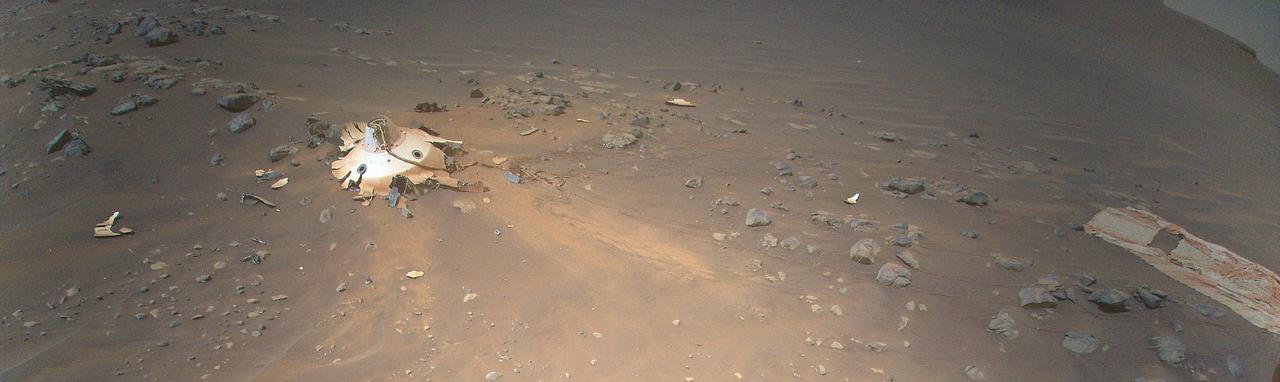
This image of Perseverance's backshell (left of center), supersonic parachute (far right), was collected from an altitude of 26 feet (8 meters) by NASA's Ingenuity Mars Helicopter during its 26th flight on Mars on April 19, 2022. During the Feb. 18, 2021, landing of Perseverance, the parachute and backshell were jettisoned at about 1.3 miles (2.1 km) altitude. The parachute and backshell continued to descend and impacted the ground at approximately 78 mph (126 kph). Engineers working on the Mars Sample Return program requested images be taken from an aerial perspective of the components because they may provide insight into the components' performance during the rover's entry, descent, and landing. The image has been cropped and processed from the original version. https://photojournal.jpl.nasa.gov/catalog/PIA25218
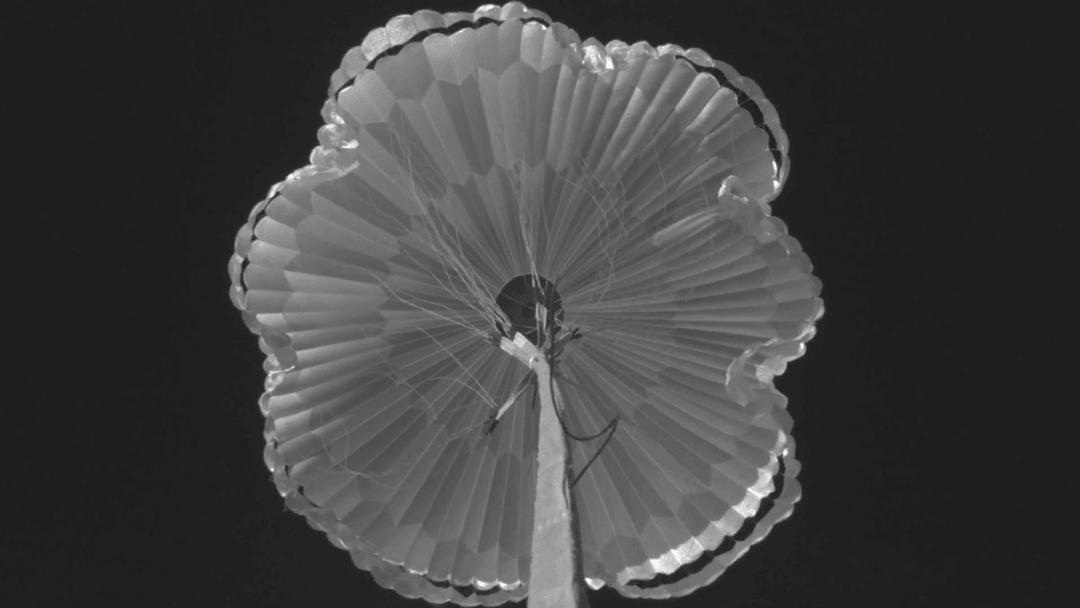
This animated GIF shows a successful test of the parachute that will be used to land NASA's Perseverance rover on Mars. The images were taken on Sept. 7, 2018, during the third and final flight of the Advanced Supersonic Parachute Inflation Research Experiment (ASPIRE) project. Movie available at https://photojournal.jpl.nasa.gov/catalog/PIA23890
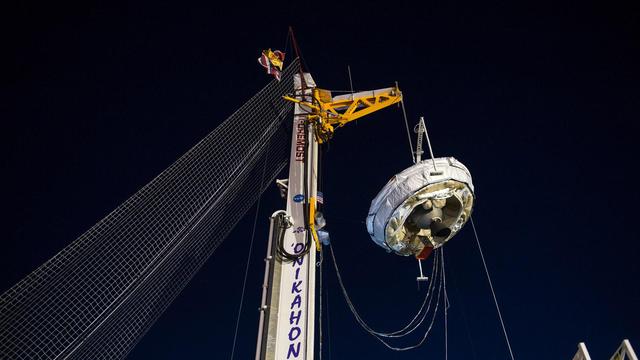
NASA's Low-Density Supersonic Decelerator (LDSD) hangs from a launch tower at U.S. Navy's Pacific Missile Range Facility in Kauai, Hawaii. The saucer-shaped vehicle will test two devices for landing heavy payloads on Mars: an inflatable donut-shaped device and a supersonic parachute. The launch tower helps link the vehicle to a balloon; once the balloon floats up, the vehicle is released from the tower and the balloon carries it to high altitudes. The vehicle's rocket takes it to even higher altitudes, to the top of the stratosphere, where the supersonic test begins. http://photojournal.jpl.nasa.gov/catalog/PIA19342
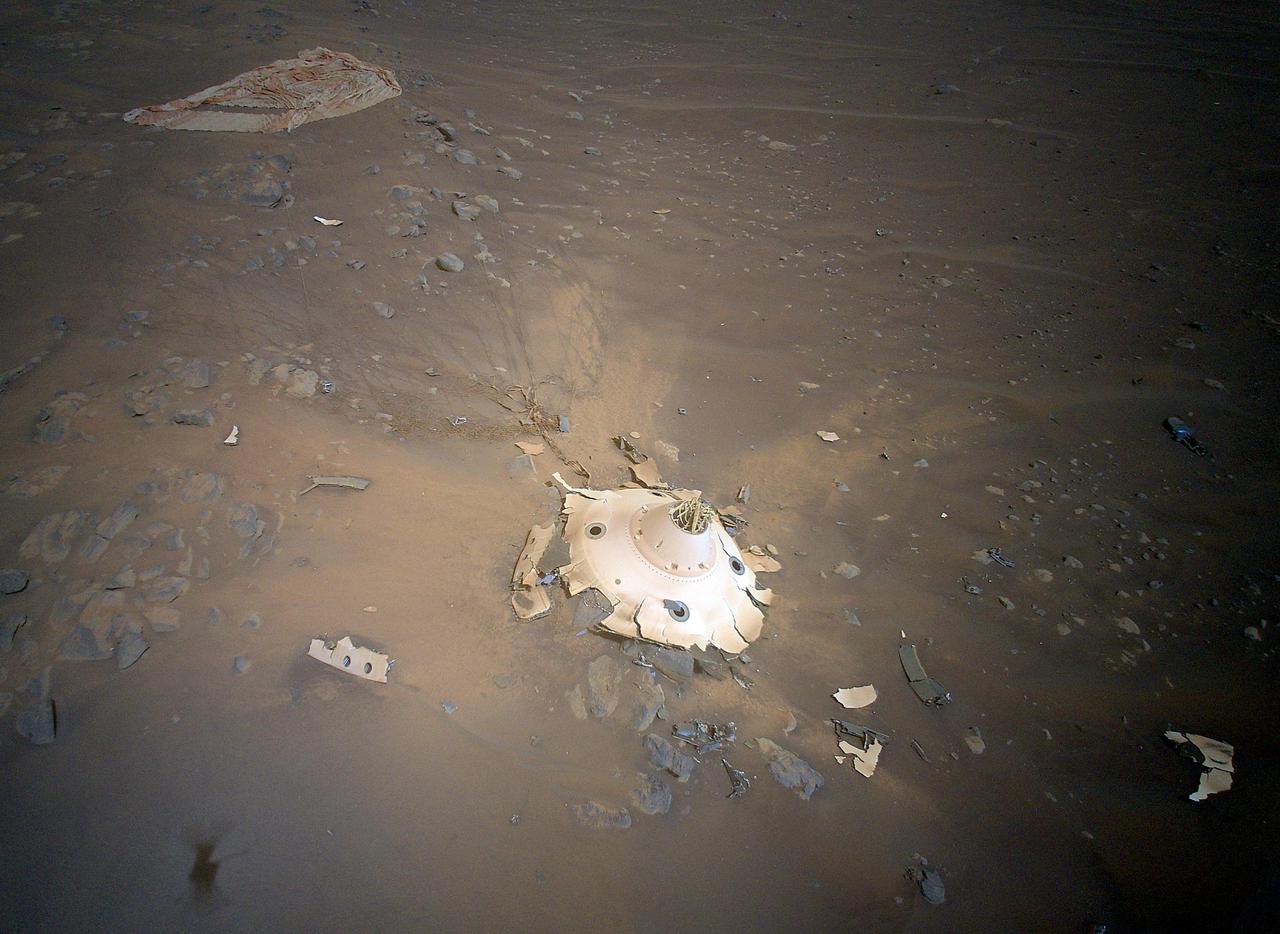
This image of Perseverance's backshell sitting upright on the surface of Jezero Crater was collected from an altitude of 26 feet (8 meters) by NASA's Ingenuity Mars Helicopter during its 26th flight at Mars on April 19, 2022. Engineers working on the Mars Sample Return program requested images be taken from an aerial perspective of the components because they may provide insight into the components' performance during the rover's entry, descent, and landing on Feb. 18, 2021. The tangle of cables seen streaming out from the top of the backshell, and coated with Martian dust on the surface, are high-strength suspension lines that connect the backshell to Perseverance's supersonic parachute (upper left). The backshell and parachute helped protect the rover in deep space and during its fiery descent toward the Martian surface. https://photojournal.jpl.nasa.gov/catalog/PIA25219
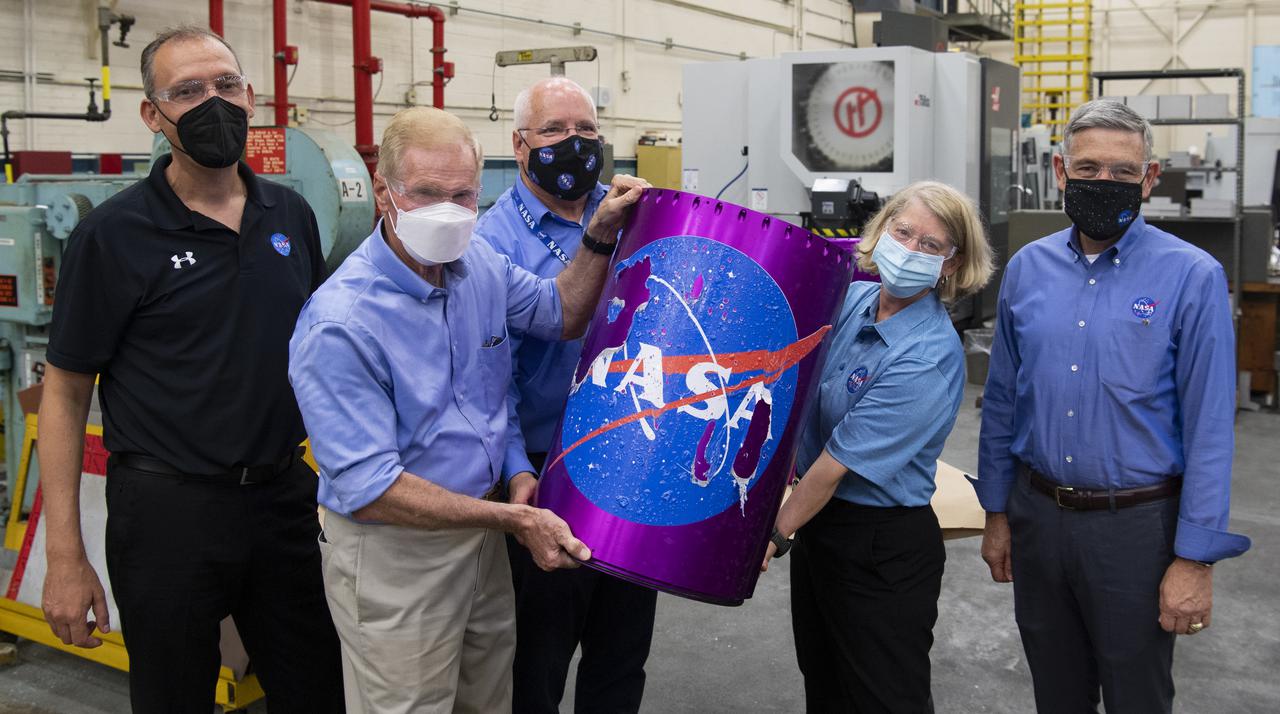
Thomas Zurbuchen, associate administrator for NASA’s Science Mission Directorate, left, NASA Administrator Bill Nelson second from left, Dennis Andrucyk, director of NASA's Goddard Space Flight Center, center, NASA Deputy Administrator Pam Melroy, second from right, and Bob Cabana, NASA associate administrator, right, hold a recovered portion of the Black Brant IX sounding rocket used for the Advanced Supersonic Parachute Inflation Research Experiment (ASPIRE), during a tour of the Sounding Rockets Machine Shop, Test and Evaluation Facility, Tuesday, Aug. 10, 2021, at NASA’s Wallops Flight Facility in Virginia. Photo Credit: (NASA/Joel Kowsky)
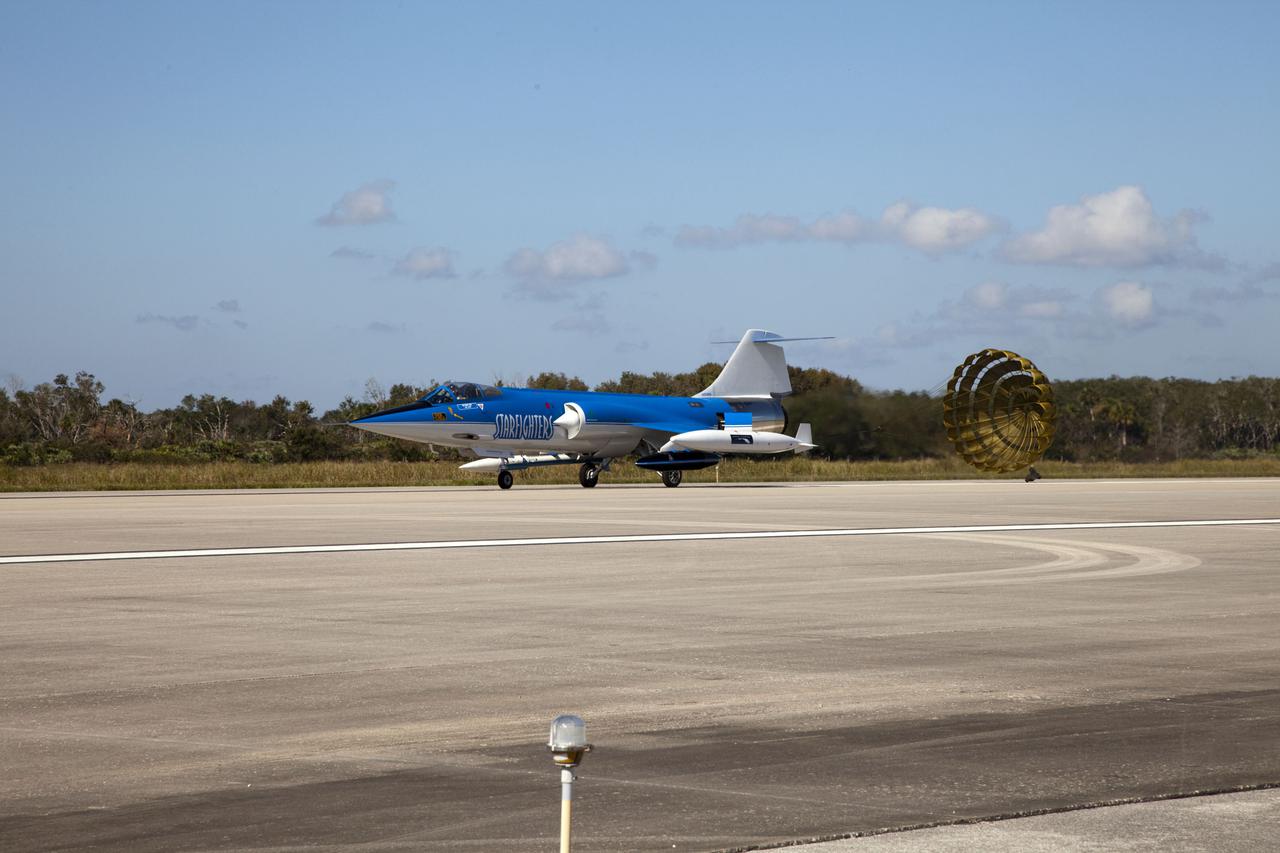
CAPE CANAVERAL, Fla. – On the runway at the Shuttle Landing Facility (SLF) at NASA’s Kennedy Space Center in Florida, the parachute on a Starfighters, Inc. F-104 supersonic jet, piloted by Rick Svetkoff, deploys after conducting a high speed taxi test. The Star Lab suborbital launch vehicle developed by 4Frontiers Corporation can be seen just above the front wheel. 4Frontiers is testing the Star Lab suborbital launch vehicle which has the potential to carry payloads into low earth orbit. Tests are being conducted to verify the aeronautical conditions of the Star Lab suborbital launch vehicle. This is the first of eight tests the launch vehicle will undergo. 4Frontiers Corporation is aiming for testing to be completed by early 2012, with commercial flights starting mid-2012. Starfighters, Inc. has signed a Space Act Agreement with NASA for the use of the SLF facilities at Kennedy Space Center. Photo credit: NASA_Gianni M. Woods
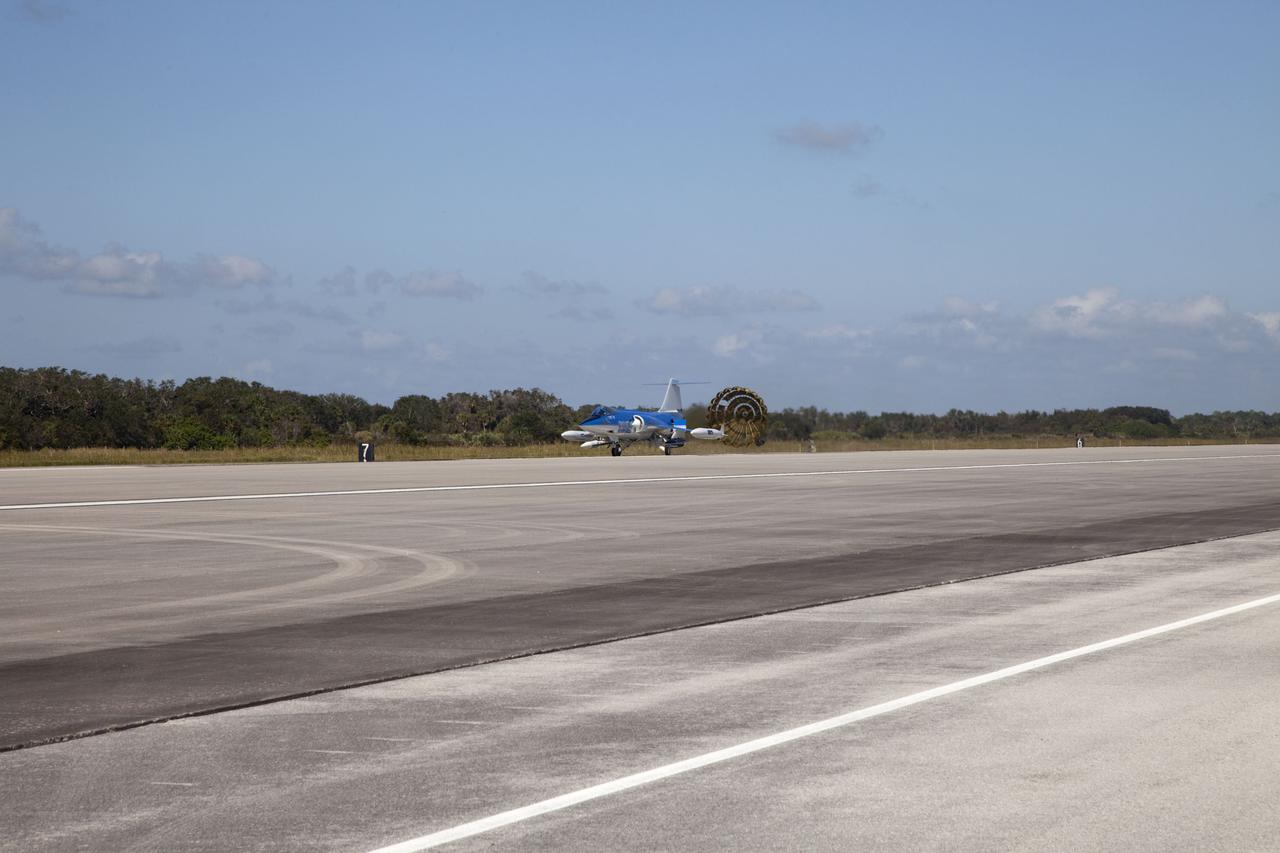
CAPE CANAVERAL, Fla. – On the runway at the Shuttle Landing Facility (SLF) at NASA’s Kennedy Space Center in Florida, the parachute on a Starfighters, Inc. F-104 supersonic jet, piloted by Rick Svetkoff, deploys after conducting a high speed taxi test. Hidden from the camera on the right side of the jet is the Star Lab suborbital launch vehicle developed by 4Frontiers Corporation. 4Frontiers is testing the Star Lab suborbital launch vehicle which has the potential to carry payloads into low earth orbit. Tests are being conducted to verify the aeronautical conditions of the Star Lab suborbital launch vehicle. This is the first of eight tests the launch vehicle will undergo. 4Frontiers Corporation is aiming for testing to be completed by early 2012, with commercial flights starting mid-2012. Starfighters, Inc. has signed a Space Act Agreement with NASA for the use of the SLF facilities at Kennedy Space Center. Photo credit: NASA_Gianni M. Woods
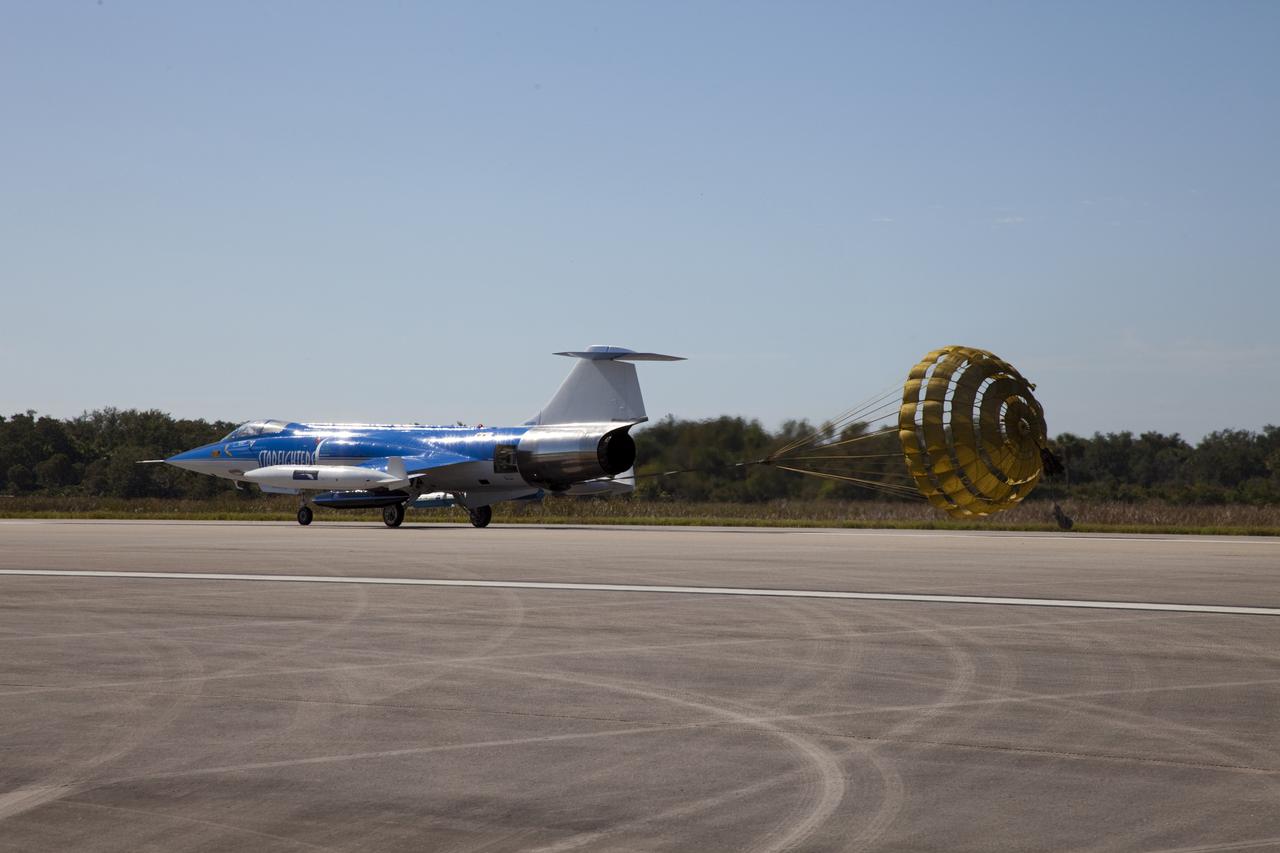
CAPE CANAVERAL, Fla. – On the runway at the Shuttle Landing Facility (SLF) at NASA’s Kennedy Space Center in Florida, the parachute on a Starfighters, Inc. F-104 supersonic jet, piloted by Rick Svetkoff, deploys after conducting a high speed taxi test. Hidden from the camera on the right side of the jet is the Star Lab suborbital launch vehicle developed by 4Frontiers Corporation. 4Frontiers is testing the Star Lab suborbital launch vehicle which has the potential to carry payloads into low earth orbit. Tests are being conducted to verify the aeronautical conditions of the Star Lab suborbital launch vehicle. This is the first of eight tests the launch vehicle will undergo. 4Frontiers Corporation is aiming for testing to be completed by early 2012, with commercial flights starting mid-2012. Starfighters, Inc. has signed a Space Act Agreement with NASA for the use of the SLF facilities at Kennedy Space Center. Photo credit: NASA_Gianni M. Woods
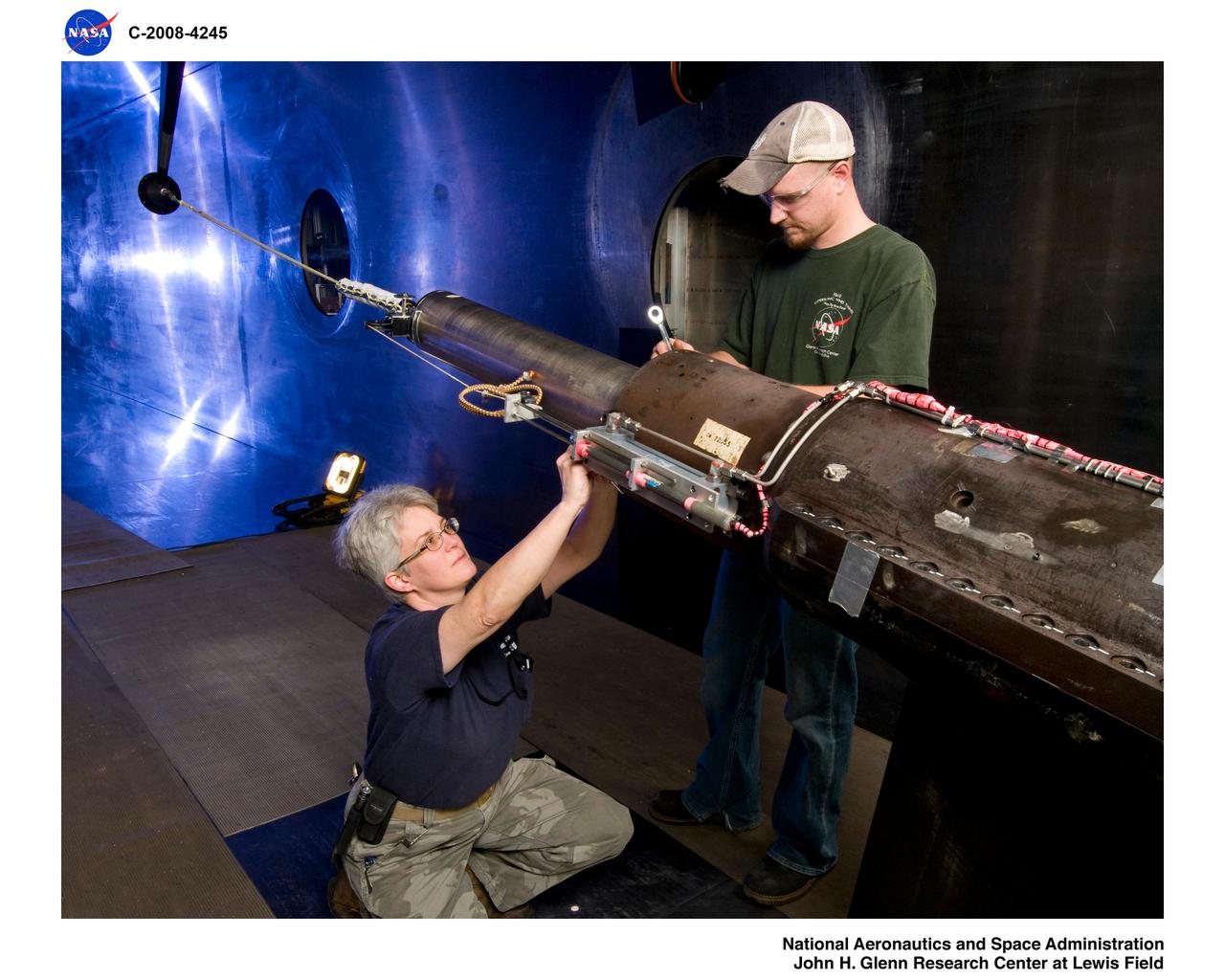
Mars Science Laboratory (MSL) Flexible Canopy Test
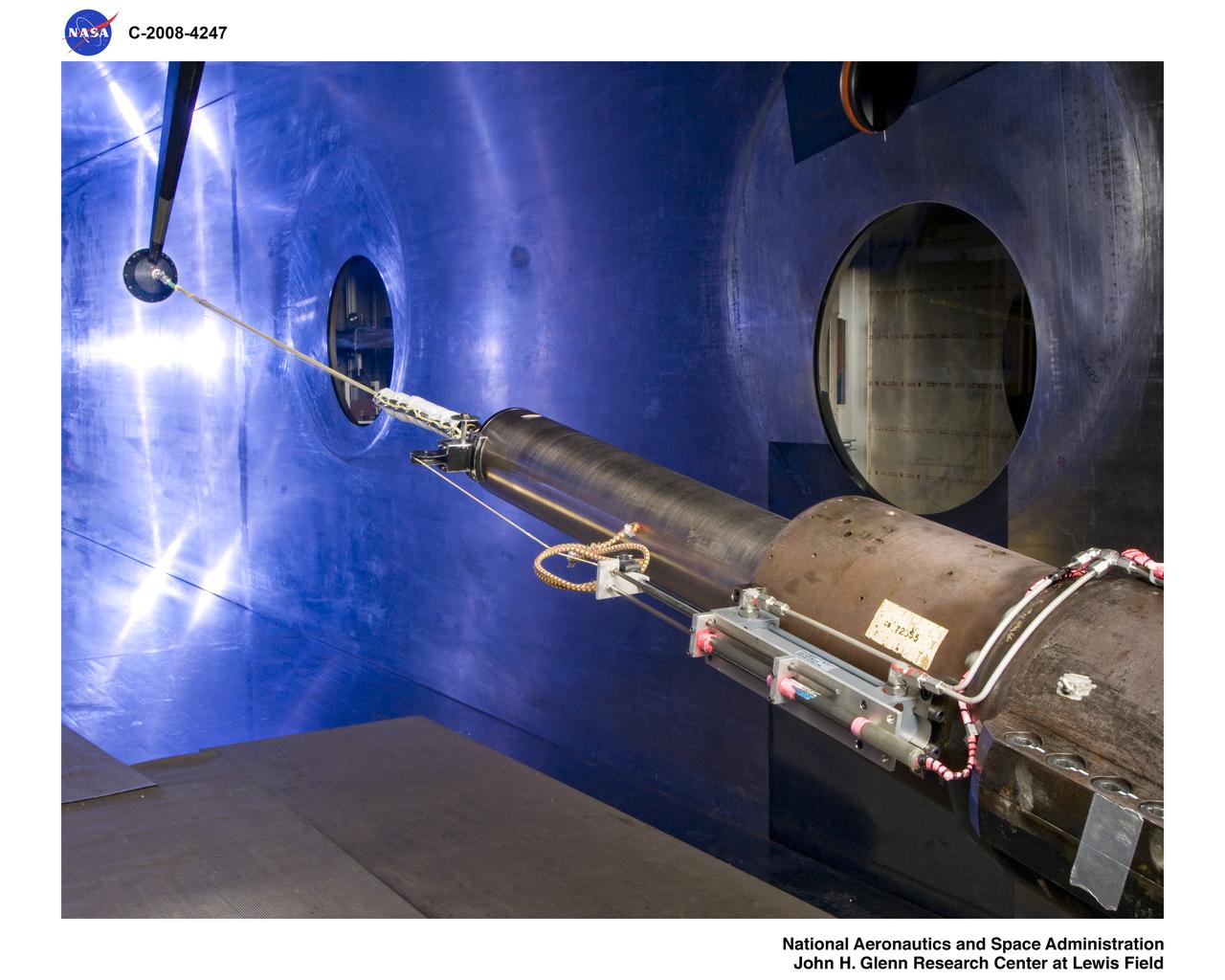
Mars Science Laboratory (MSL) Flexible Canopy Test
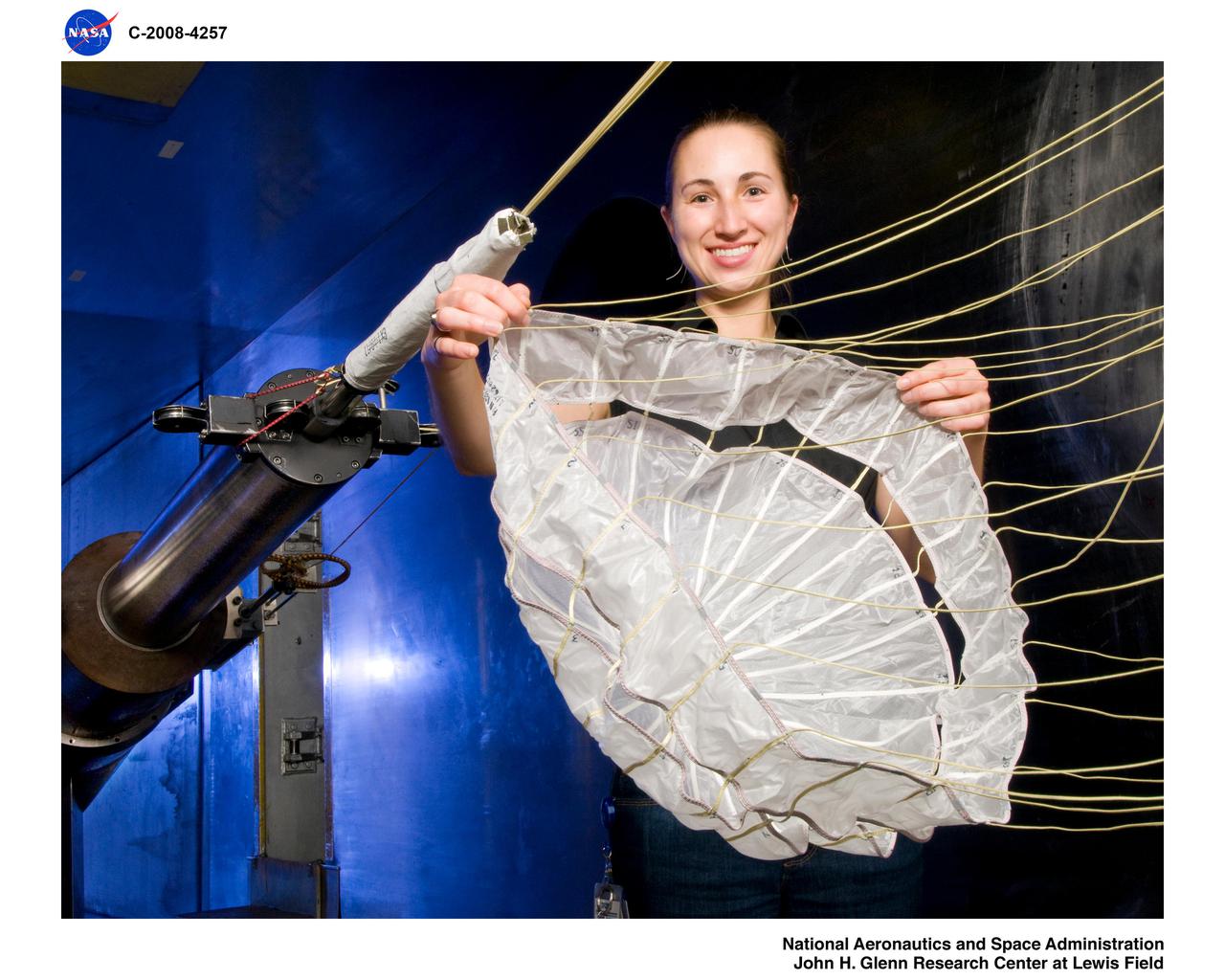
Mars Science Laboratory, MSL Flexible Canopy Test in the Glenn Research Center, 10x10 Supersonic Wind Tunnel

Mars Science Laboratory (MSL) Flexible Canopy Testing in the Glenn Research Center, 10x10 Supersonic Wind Tunnel
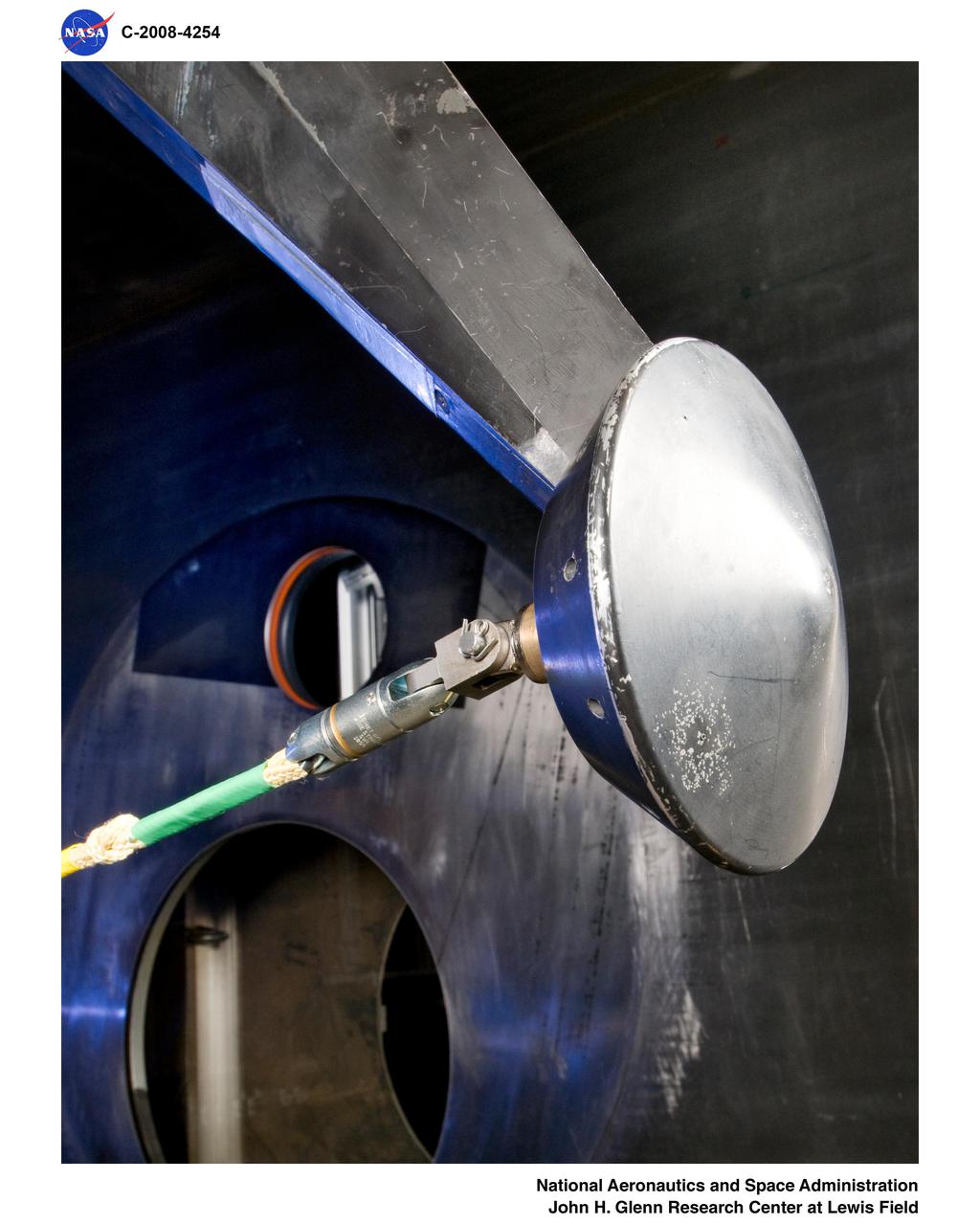
Mars Science Laboratory, MSL Flexible Canopy Test in the Glenn Research Center, 10x10 Supersonic Wind Tunnel

Mars Science Laboratory (MSL) Flexible Canopy Test
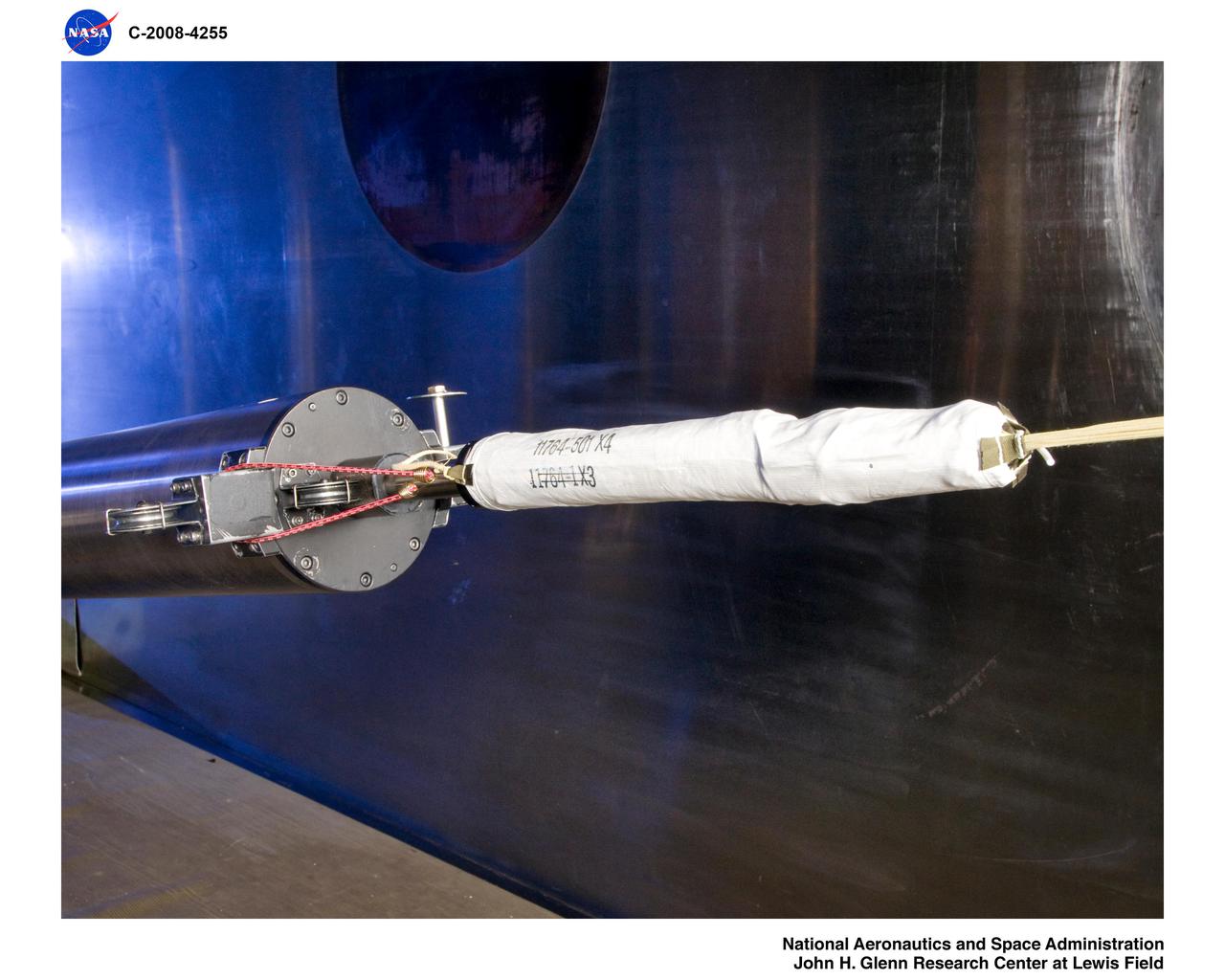
Mars Science Laboratory, MSL Flexible Canopy Test in the Glenn Research Center, 10x10 Supersonic Wind Tunnel
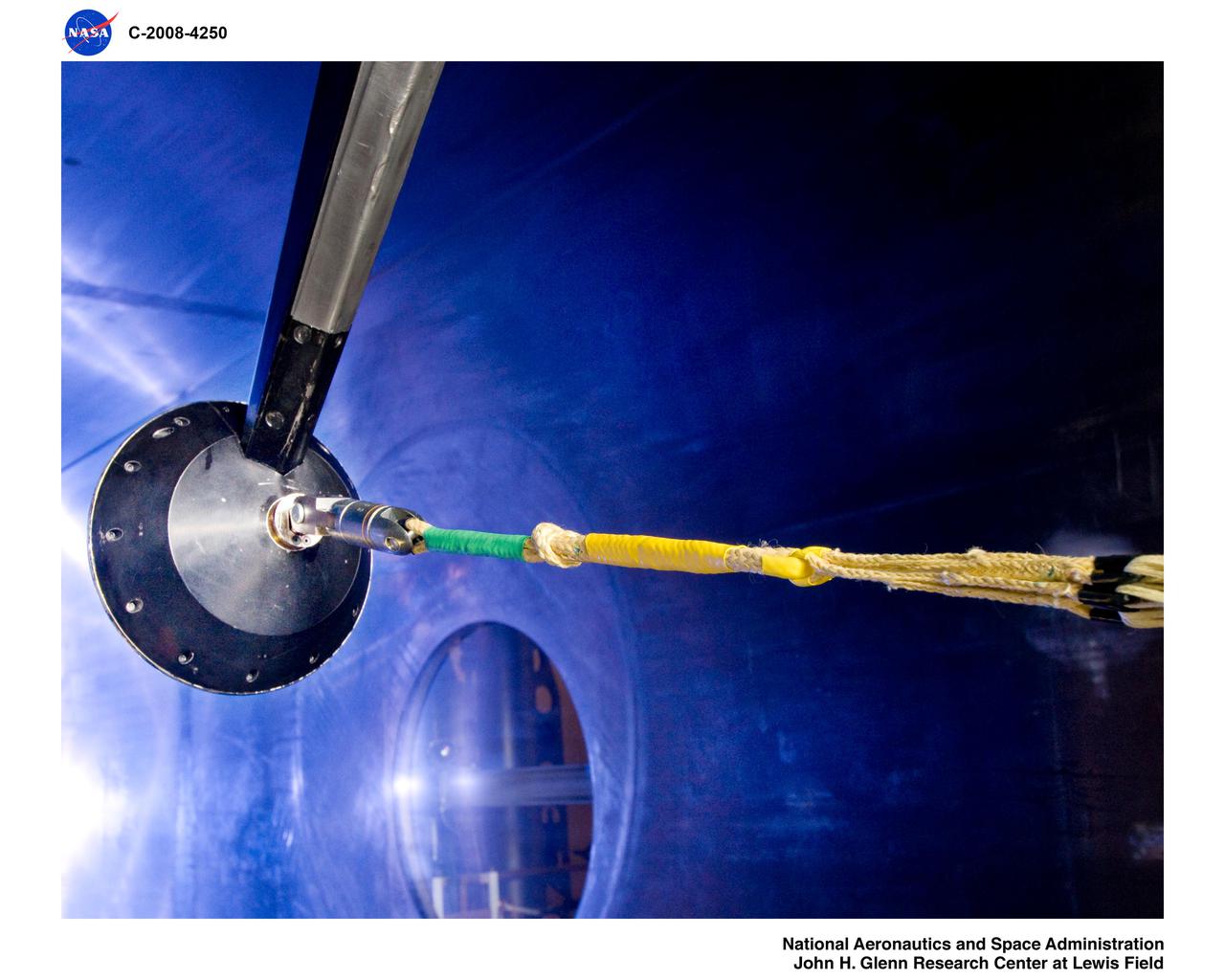
Mars Science Laboratory, MSL Flexible Canopy Test in the Glenn Research Center, 10x10 Supersonic Wind Tunnel
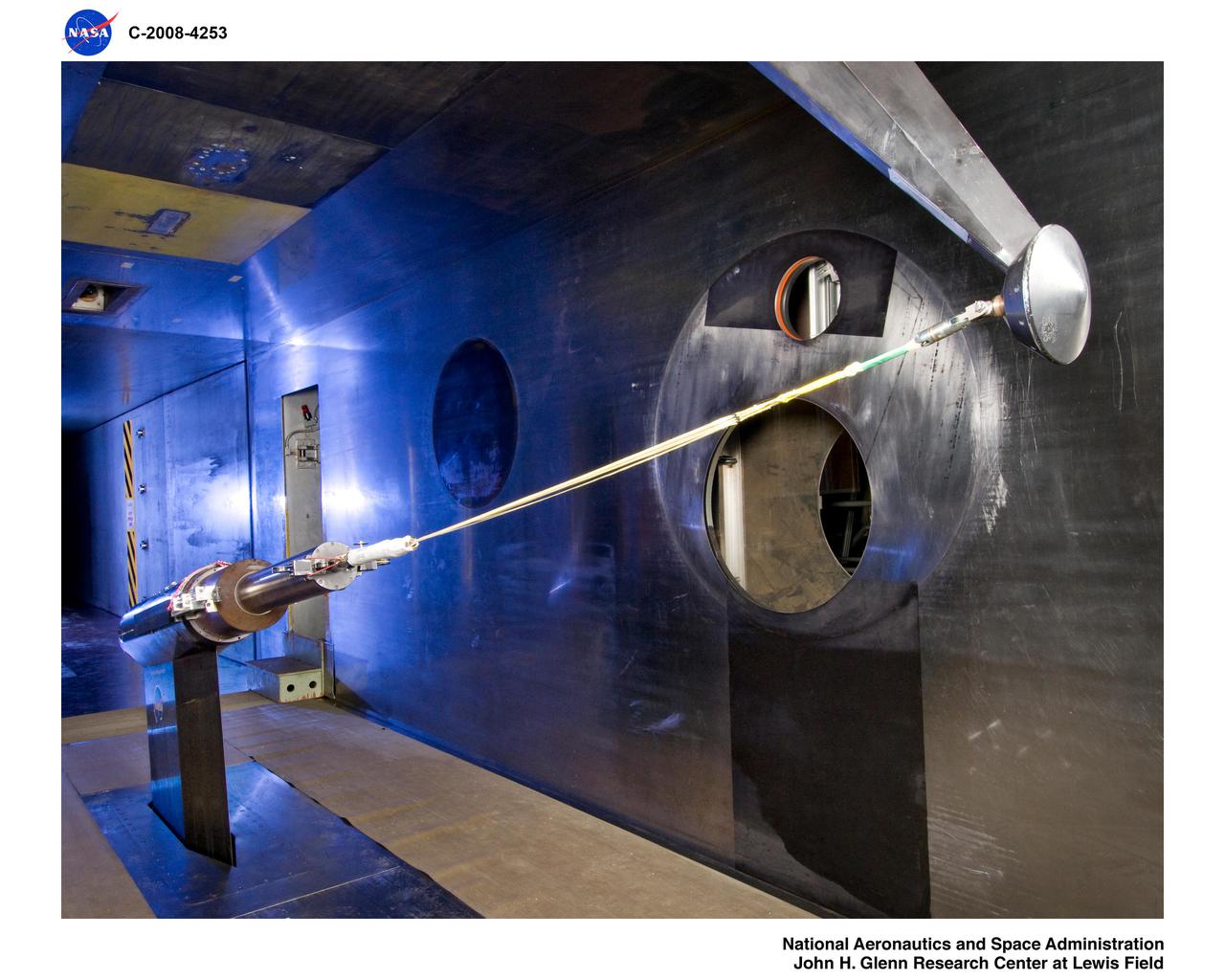
Mars Science Laboratory, MSL Flexible Canopy Test in the Glenn Research Center, 10x10 Supersonic Wind Tunnel
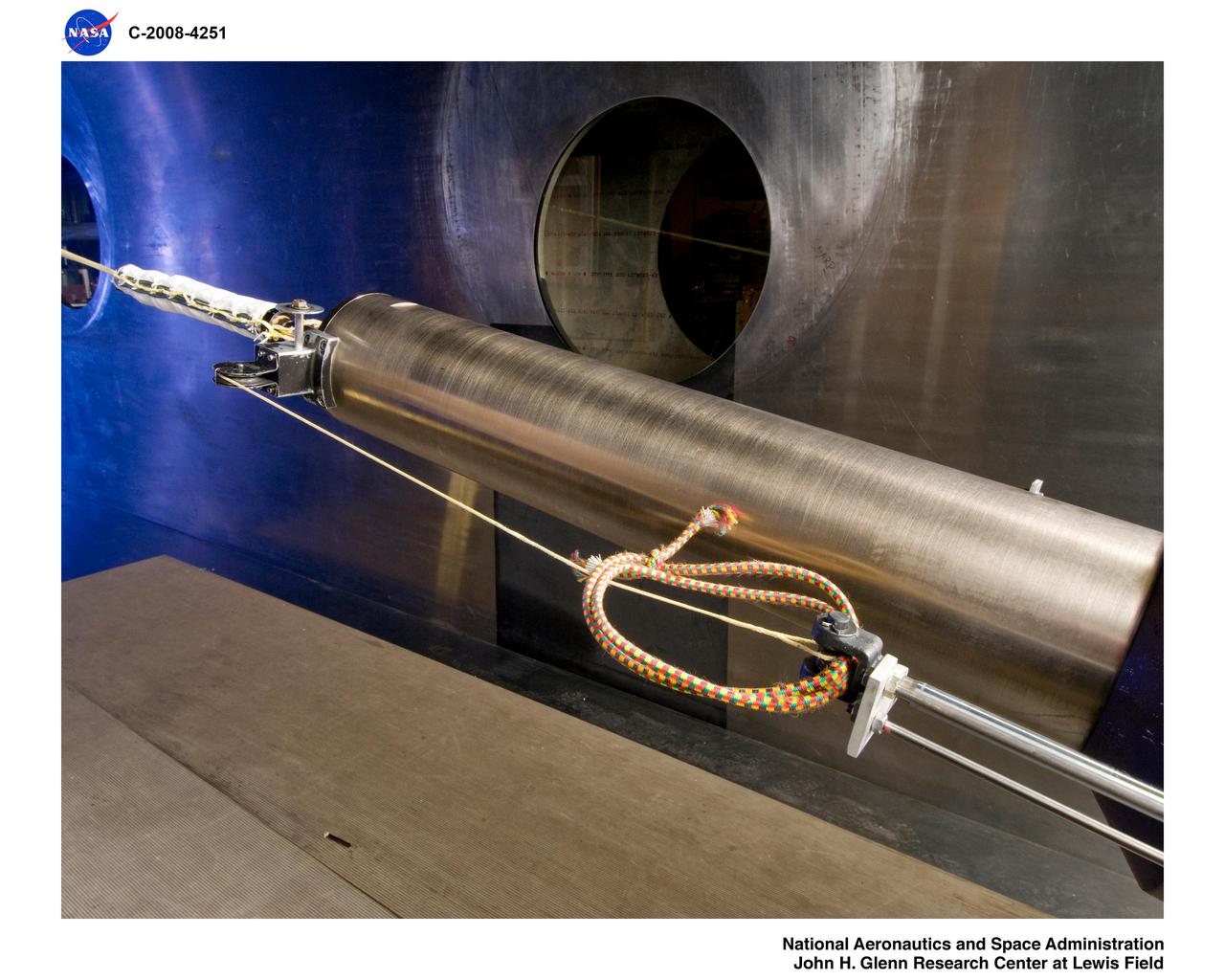
Mars Science Laboratory, MSL Flexible Canopy Test
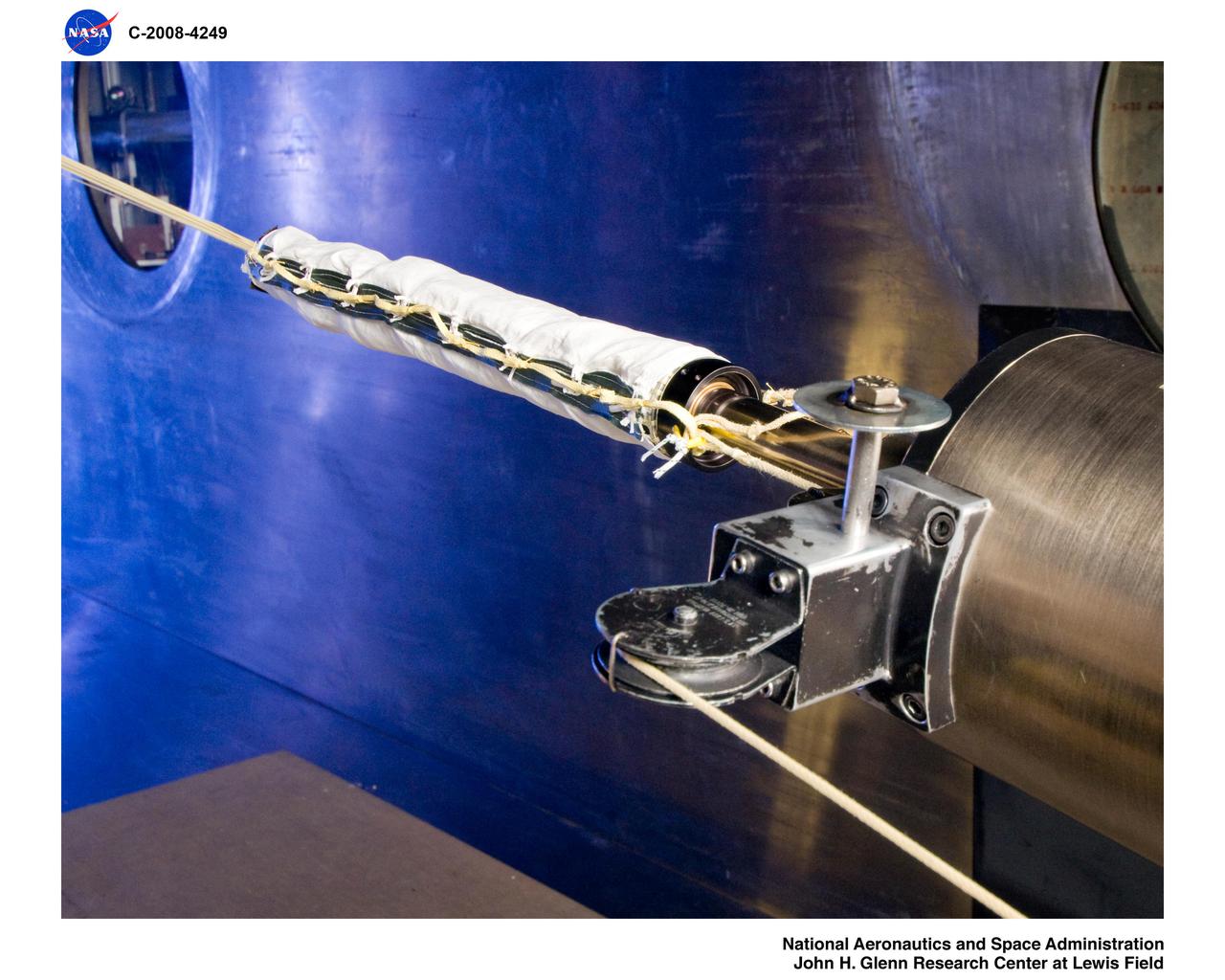
Mars Science Laboratory, MSL Flexible Canopy Test
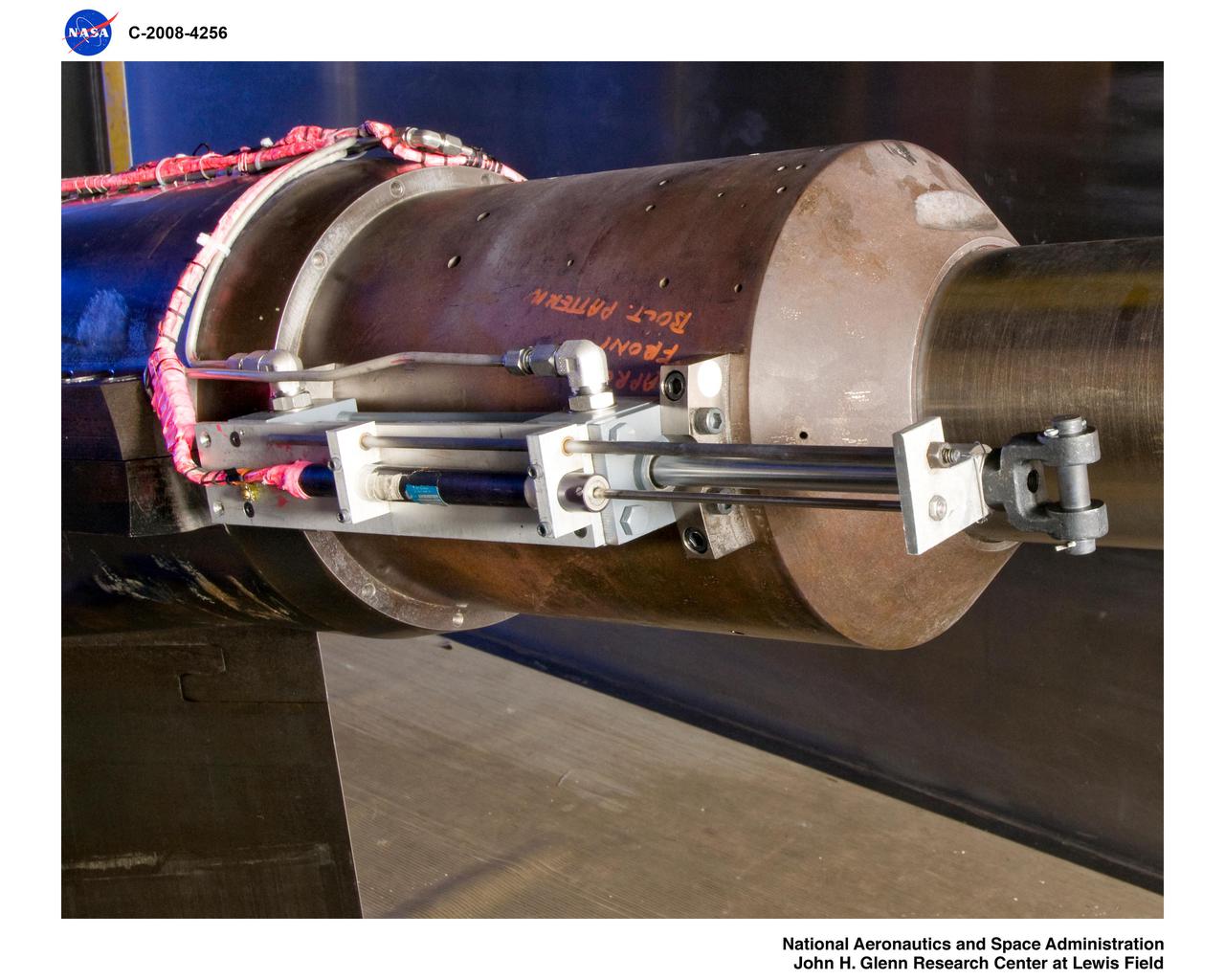
Mars Science Laboratory, MSL Flexible Canopy Test in the Glenn Research Center, 10x10 Supersonic Wind Tunnel
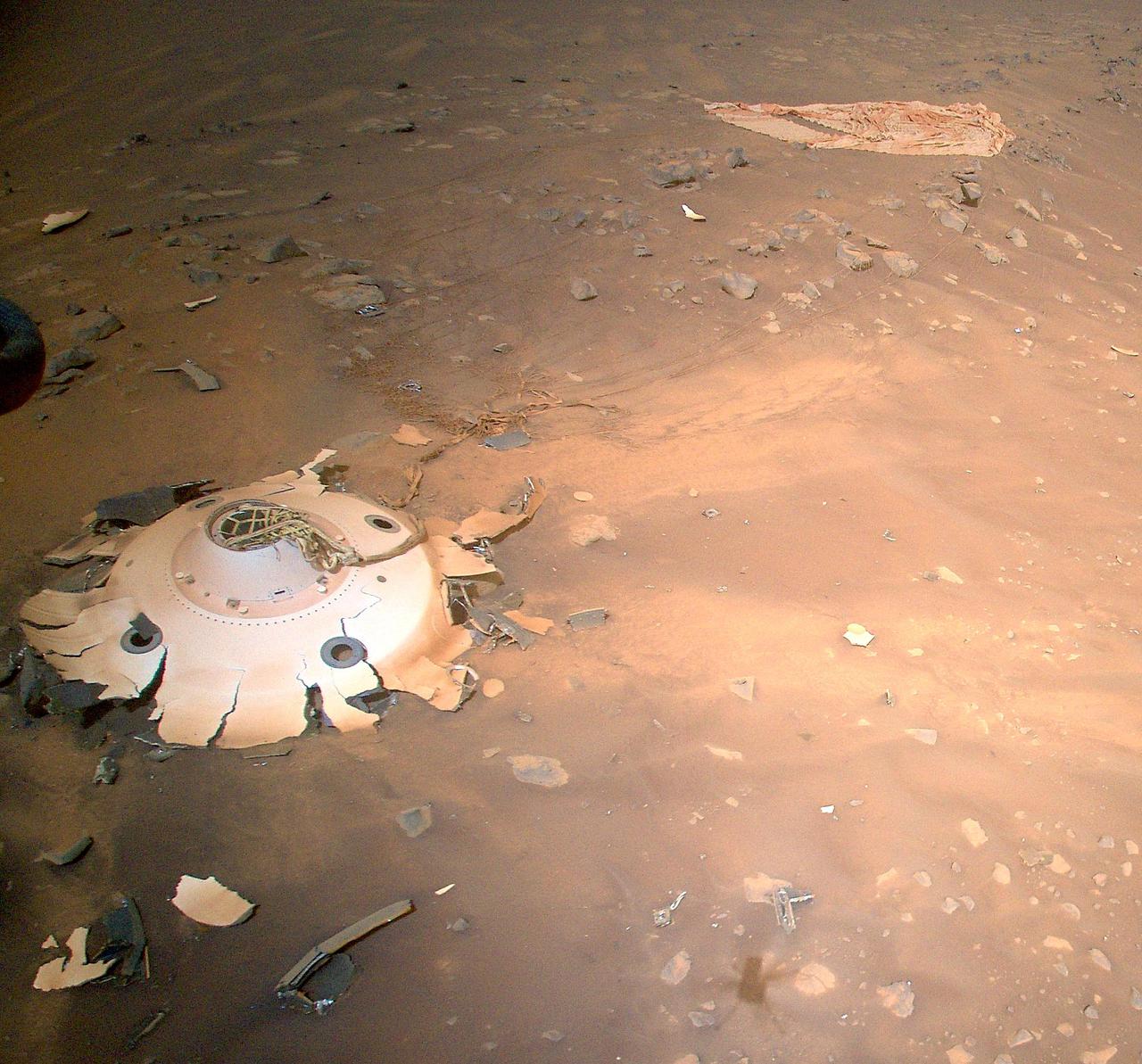
This image of Perseverance's backshell and parachute was collected from an altitude of 26 feet (8 meters) by the NASA's Ingenuity Mars Helicopter during its 26th flight on Mars on April 19, 2022. The parachute and cone-shaped backshell protected the rover during its fiery descent toward the Martian surface on Feb. 18, 2021. Engineers working on the Mars Sample Return program requested images be taken of the components from an aerial perspective because they may provide insight into the components' performance during the rover's entry, descent, and landing. https://photojournal.jpl.nasa.gov/catalog/PIA25217
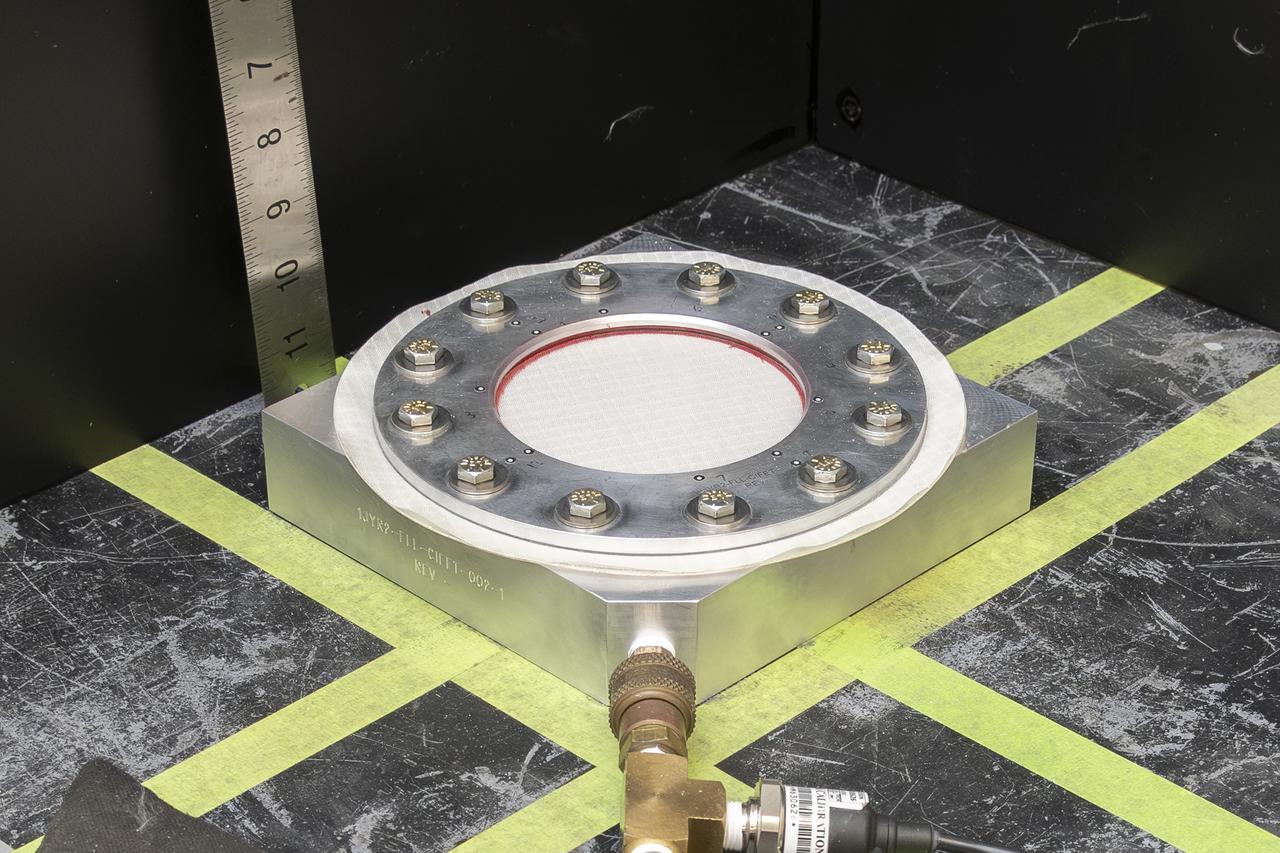
The test team prepares a test fixture with a nylon fabric sample at NASA’s Armstrong Flight Research Center in Edwards, California. The fabric in the test fixture forms a bubble when pressure is applied to the silicone bladder underneath. A similar test can be performed with a sensor on the fabric to verify the sensor will work when stretched in three dimensions.
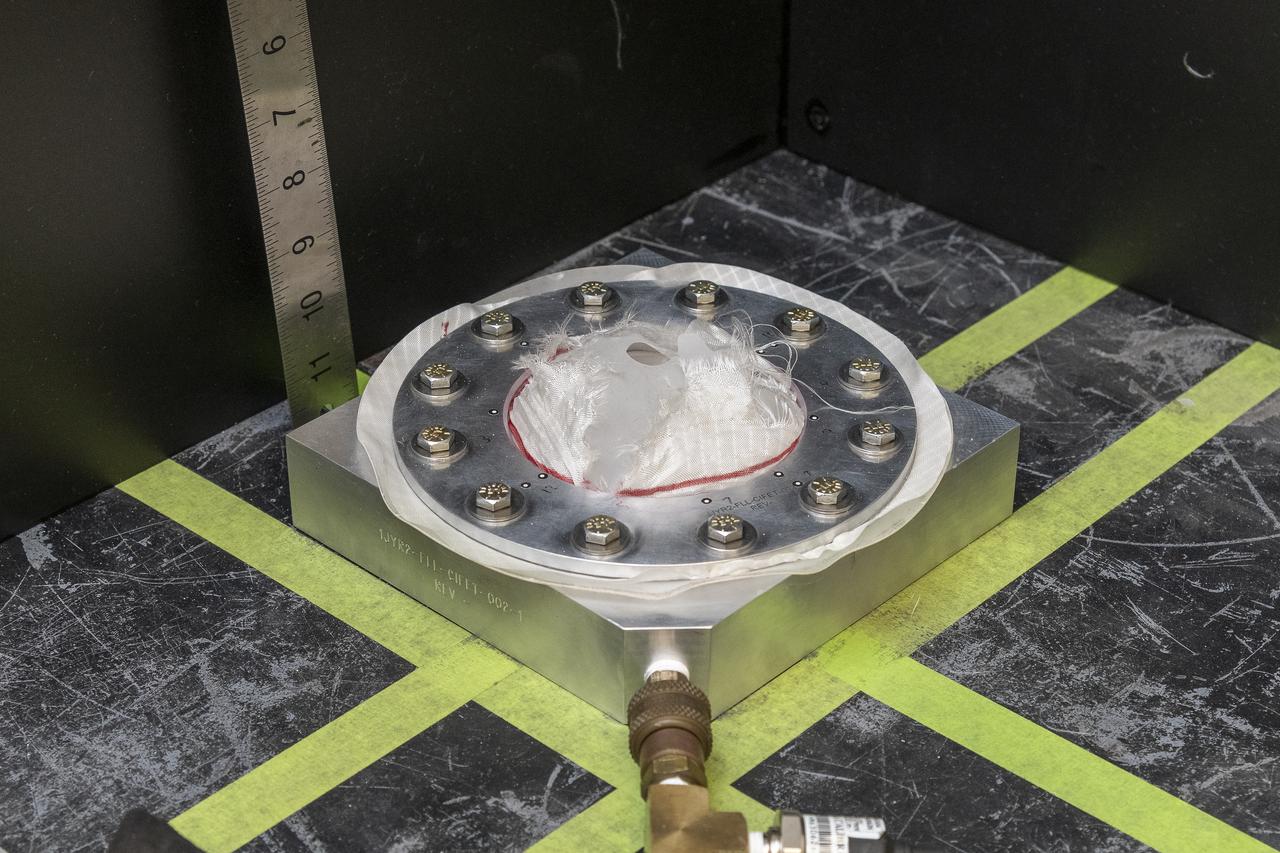
Pressure is applied to a test fixture with a nylon fabric sample until it fails at NASA’s Armstrong Flight Research Center in Edwards, California. The fabric in the test fixture forms a bubble when pressure is applied to the silicone bladder underneath. In this frame, the silicone bladder is visible underneath the torn fabric after it was inflated to failure. A similar test can be performed with a sensor on the fabric to verify the sensor will work when stretched in three dimensions.