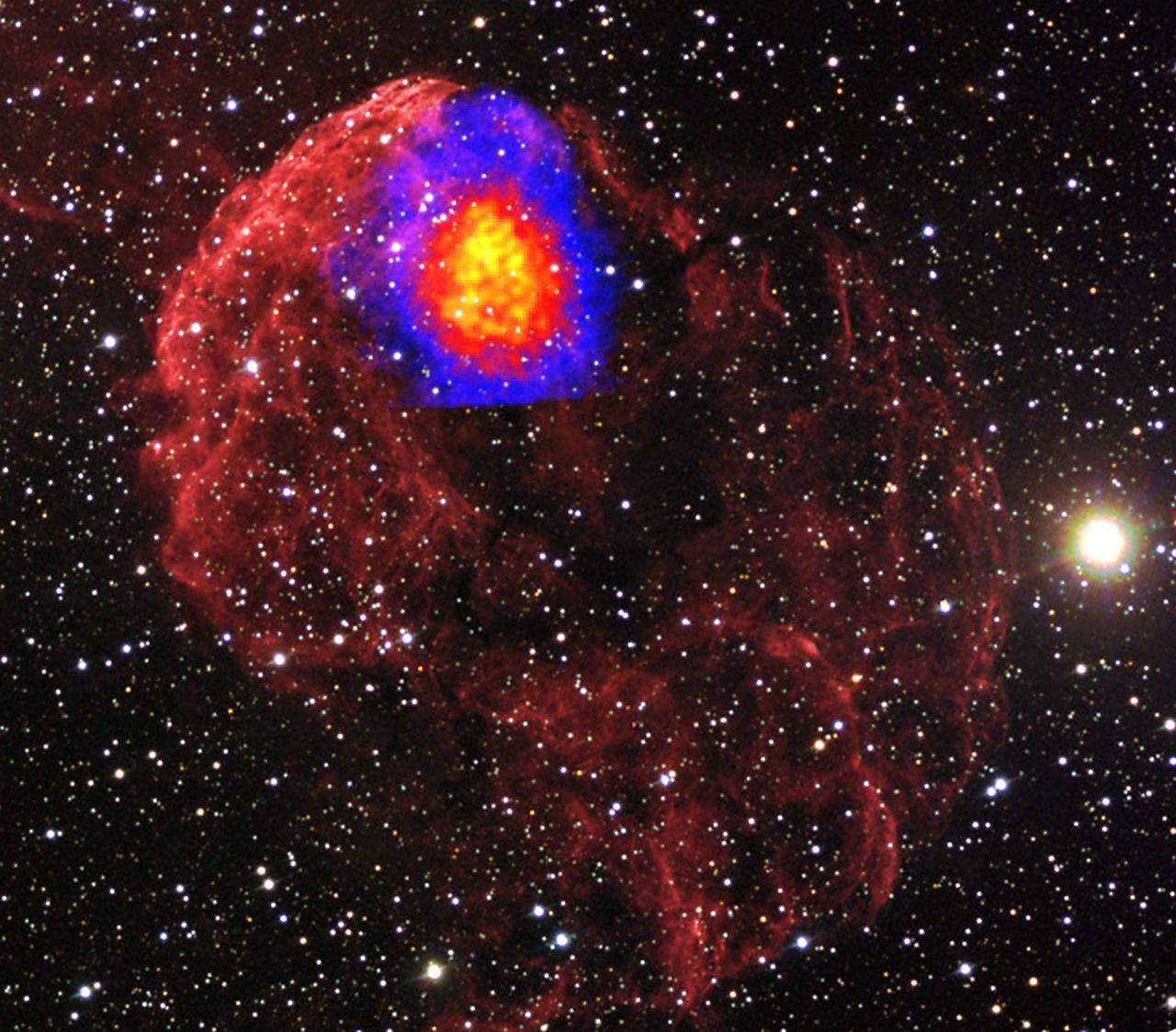
Suzaku Finds "Fossil" Fireballs from Supernovae In a supernova remnant known as the Jellyfish Nebula, Suzaku detected X-rays from fully ionized silicon and sulfur -- an imprint of higher-temperature conditions immediately following the star's explosion. The nebula is about 65 light-years across. (12/30/2009) Credit: JAXA/NASA/Suzaku To learn more go to: <a href="http://www.nasa.gov/mission_pages/astro-e2/news/fossil-fireballs.html" rel="nofollow">www.nasa.gov/mission_pages/astro-e2/news/fossil-fireballs...</a>
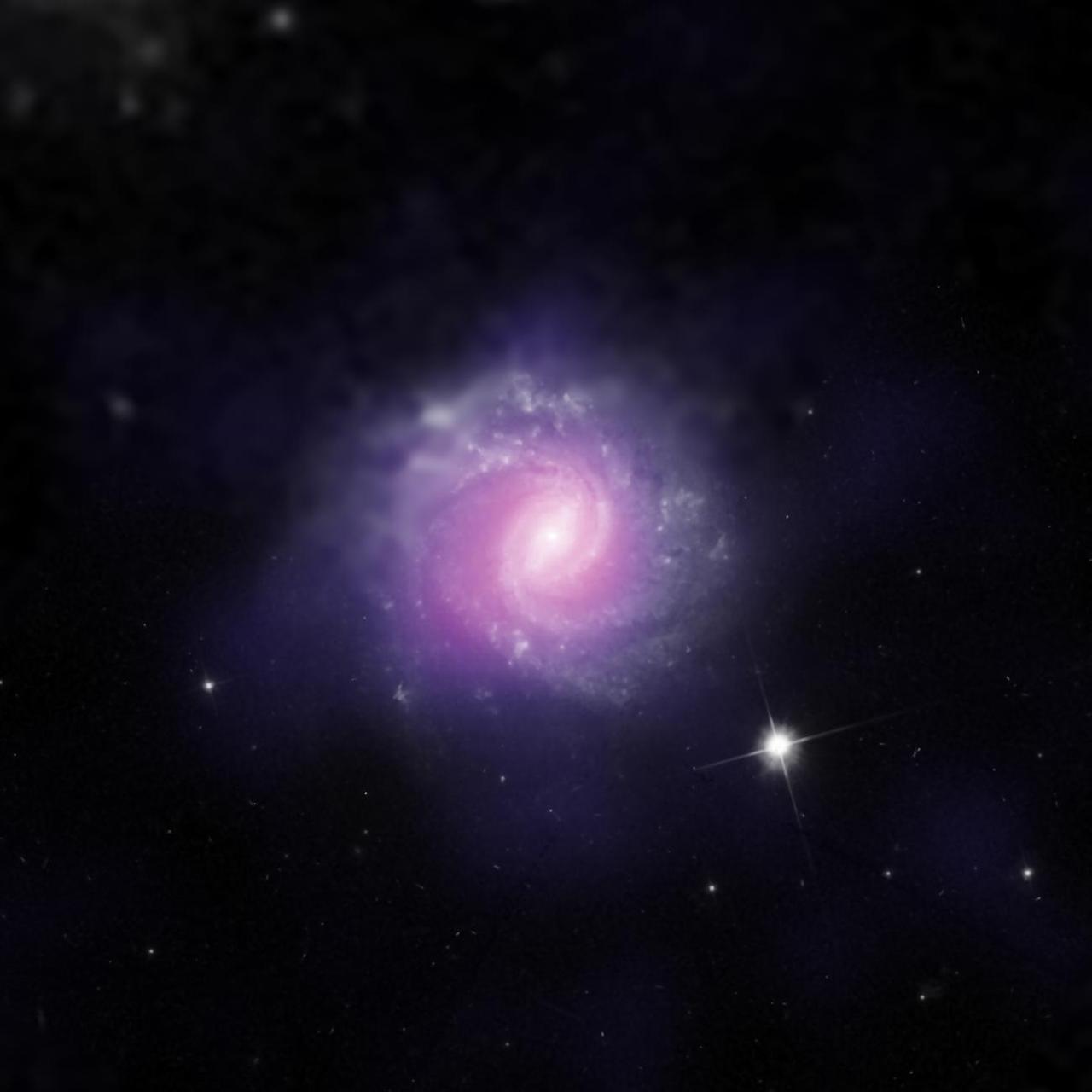
IC 3639, a galaxy with an active galactic nucleus, is seen in this image combining data from the Hubble Space Telescope and the European Southern Observatory. This galaxy contains an example of a supermassive black hole hidden by gas and dust. Researchers analyzed NuSTAR data from this object and compared them with previous observations from NASA's Chandra X-Ray Observatory and the Japanese-led Suzaku satellite. The findings from NuSTAR, which is more sensitive to higher energy X-rays than these observatories, confirm the nature of IC 3639 as an active galactic nucleus that is heavily obscured, and intrinsically much brighter than observed. http://photojournal.jpl.nasa.gov/catalog/PIA21087

Release date Dec. 30, 2009 In the supernova remnant W49B, Suzaku found another fossil fireball. It detected X-rays produced when heavily ionized iron atoms recapture an electron. This view combines infrared images from the ground (red, green) with X-ray data from NASA's Chandra X-Ray Observatory (blue). Credit: Caltech/SSC/J. Rho and T. Jarrett and NASA/CXC/SSC/J. Keohane et al. To learn more about this image go to: <a href="http://www.nasa.gov/mission_pages/astro-e2/news/fossil-fireballs.html" rel="nofollow">www.nasa.gov/mission_pages/astro-e2/news/fossil-fireballs...</a> <b><a href="http://www.nasa.gov/centers/goddard/home/index.html" rel="nofollow">NASA Goddard Space Flight Center</a></b> is home to the nation's largest organization of combined scientists, engineers and technologists that build spacecraft, instruments and new technology to study the Earth, the sun, our solar system, and the universe.