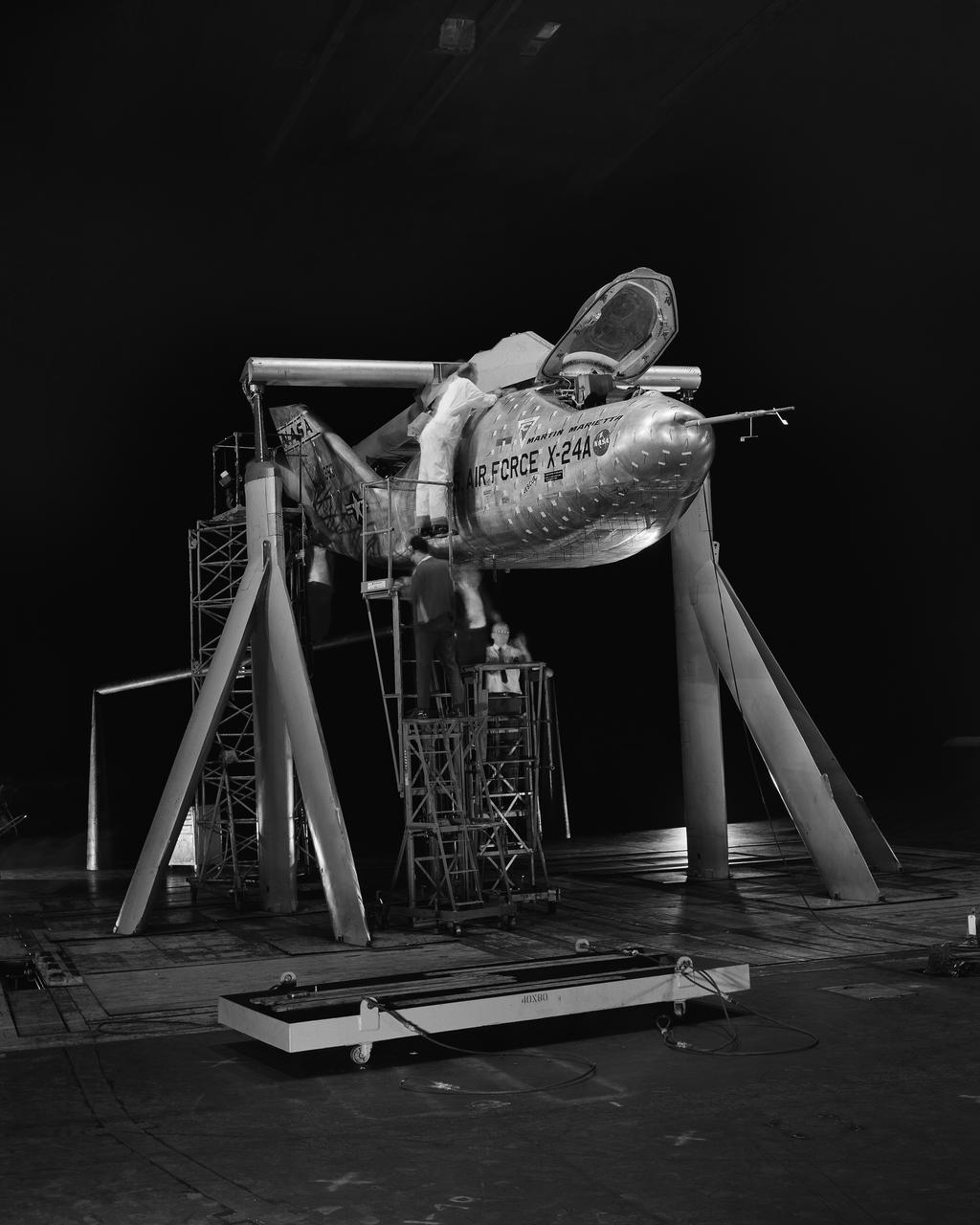
3/4 front view of Martin X-24A lifting body, mounted on B-52 mount.
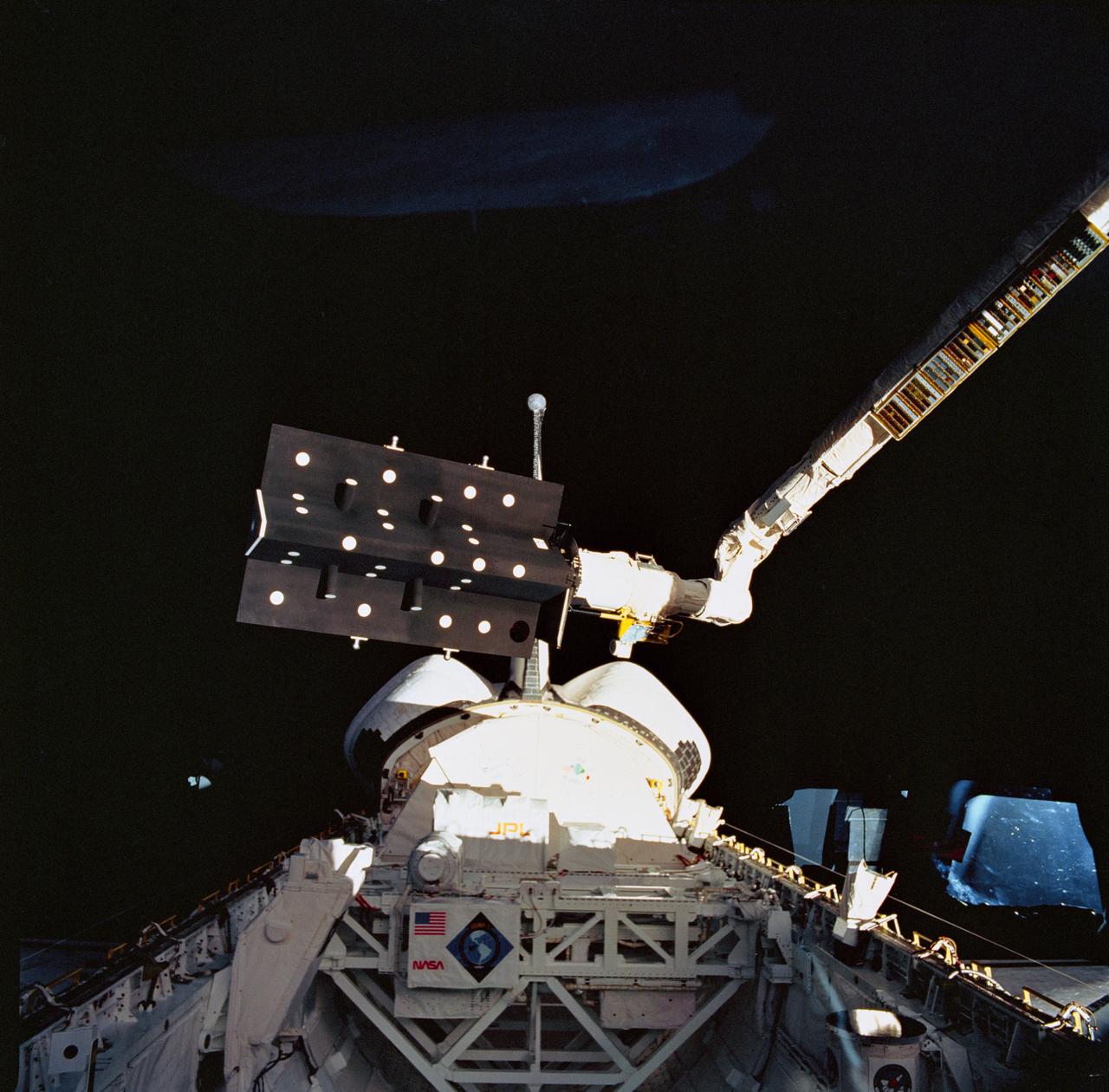
STS052-71-057 (22 Oct-1 Nov 1992) --- This 70mm frame, photographed with a handheld Hasselblad camera aimed through Columbia's aft flight deck windows, captures the operation of the Space Vision System (SVS) experiment above the cargo bay. Target dots have been placed on the Canadian Target Assembly (CTA), a small satellite, in the grasp of the Canadian-built remote manipulator system (RMS) arm. SVS utilized a Shuttle TV camera to monitor the dots strategically arranged on the satellite, to be tracked. As the satellite moved via the arm, the SVS computer measured the changing position of the dots and provided real-time television display of the location and orientation of the CTA. This type of displayed information is expected to help an operator guide the RMS or the Mobile Servicing System (MSS) of the future when berthing or deploying satellites. Also visible in the frame is the U.S. Microgravity Payload (USMP-01).

In this image, the NASA/ESA Hubble Space Telescope has captured the smoking gun of a newborn star, the Herbig–Haro objects numbered 7 to 11 (HH 7–11). These five objects, visible in blue in the top center of the image, lie within NGC 1333, a reflection nebula full of gas and dust found about a thousand light-years away from Earth. Bright patches of nebulosity near newborn stars, Herbig-Haro objects like HH 7–11 are transient phenomena. Traveling away from the star that created them at a speed of up to about 150,000 miles per hour, they disappear into nothingness within a few tens of thousands of years. The young star that is the source of HH 7–11 is called SVS 13, and all five objects are moving away from SVS 13 toward the upper left. The current distance between HH 7 and SVS 13 is about 20,000 times the distance between Earth and the Sun. Herbig–Haro objects are formed when jets of ionized gas ejected by a young star collide with nearby clouds of gas and dust at high speeds. The Herbig-Haro objects visible in this image are no exception to this and were formed when the jets from the newborn star SVS 13 collided with the surrounding clouds. These collisions created the five brilliant clumps of light within the reflection nebula.
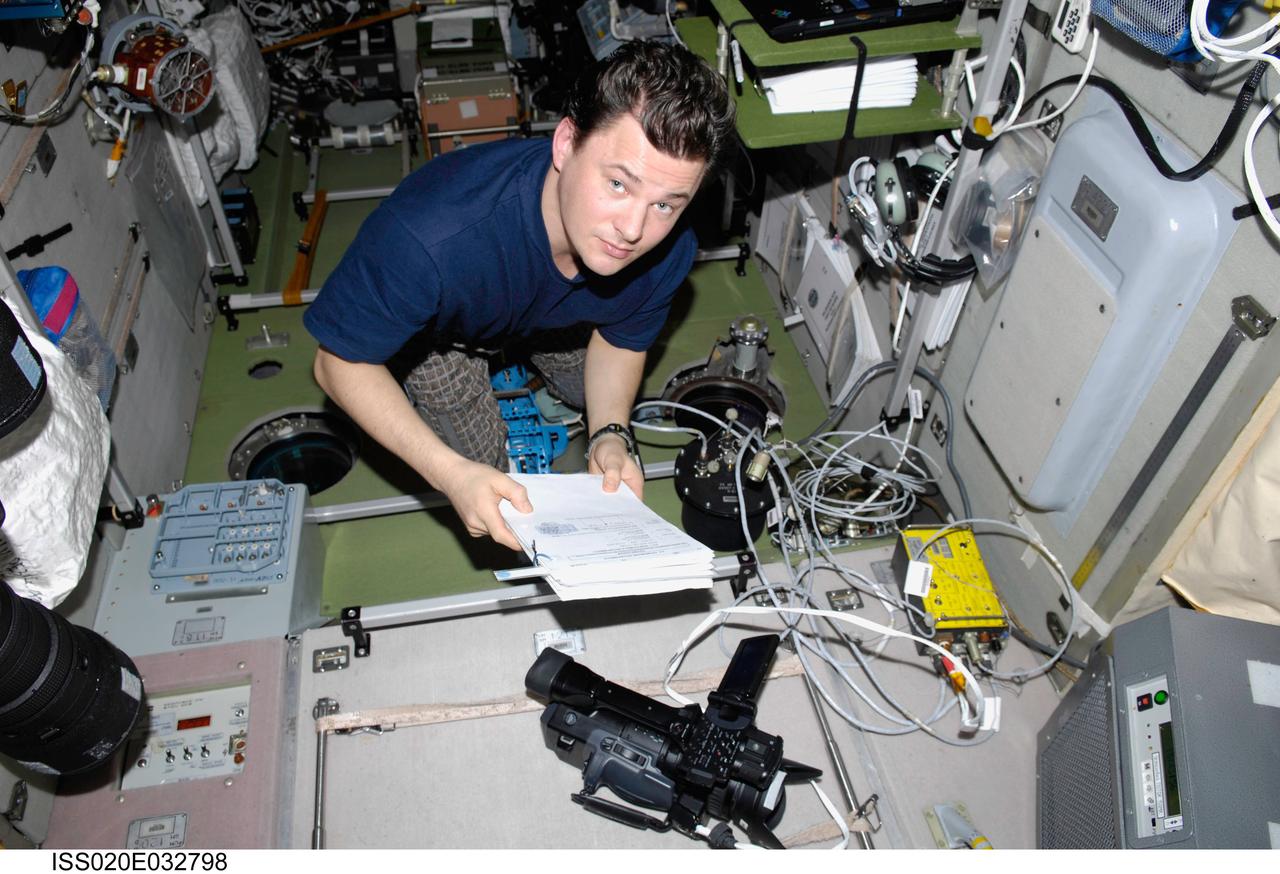
ISS020-E-032798 (21 Aug. 2009) --- Cosmonaut Roman Romanenko, Expedition 20 flight engineer, works with video equipment and a Russian payload TkhN-7 Self-Propagating High-Temperature Synthesis in the Zvezda Service Module of the International Space Station.
![CAPE CANAVERAL, Fla. – In the Astrotech payload processing facility in Titusville, Fla. , the STSS Demonstrator SV-1 spacecraft is lowered toward the orbital insertion system. The spacecraft is a midcourse tracking technology demonstrator, part of an evolving ballistic missile defense system. STSS is capable of tracking objects after boost phase and provides trajectory information to other sensors. It will be launched by NASA for the Missile Defense Agency in late summer. Photo credit: NASA/Tim Jacobs (Approved for Public Release 09-MDA-4800 [30 July 09] )](https://images-assets.nasa.gov/image/KSC-2009-4625/KSC-2009-4625~medium.jpg)
CAPE CANAVERAL, Fla. – In the Astrotech payload processing facility in Titusville, Fla. , the STSS Demonstrator SV-1 spacecraft is lowered toward the orbital insertion system. The spacecraft is a midcourse tracking technology demonstrator, part of an evolving ballistic missile defense system. STSS is capable of tracking objects after boost phase and provides trajectory information to other sensors. It will be launched by NASA for the Missile Defense Agency in late summer. Photo credit: NASA/Tim Jacobs (Approved for Public Release 09-MDA-4800 [30 July 09] )
![CAPE CANAVERAL, Fla. – In the Astrotech payload processing facility in Titusville, Fla. , the STSS Demonstrator SV-1 spacecraft is lifted from its shipping crate. The spacecraft is a midcourse tracking technology demonstrator, part of an evolving ballistic missile defense system. STSS is capable of tracking objects after boost phase and provides trajectory information to other sensors. It will be launched by NASA for the Missile Defense Agency in late summer. Photo credit: NASA/Tim Jacobs (Approved for Public Release 09-MDA-4800 [30 July 09] )](https://images-assets.nasa.gov/image/KSC-2009-4620/KSC-2009-4620~medium.jpg)
CAPE CANAVERAL, Fla. – In the Astrotech payload processing facility in Titusville, Fla. , the STSS Demonstrator SV-1 spacecraft is lifted from its shipping crate. The spacecraft is a midcourse tracking technology demonstrator, part of an evolving ballistic missile defense system. STSS is capable of tracking objects after boost phase and provides trajectory information to other sensors. It will be launched by NASA for the Missile Defense Agency in late summer. Photo credit: NASA/Tim Jacobs (Approved for Public Release 09-MDA-4800 [30 July 09] )
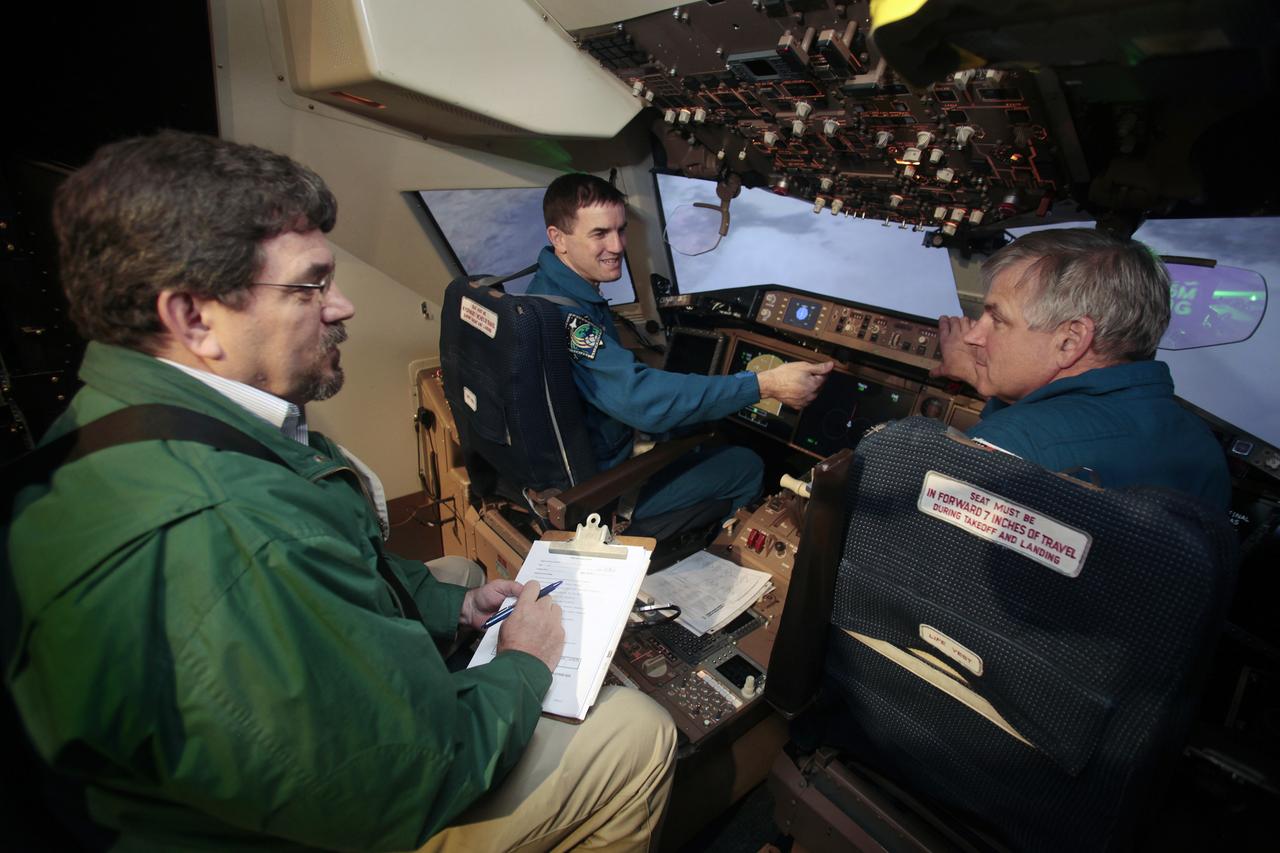
(left to right) NASA Langley aerospace engineer Bruce Jackson briefs astronauts Rex Walheim and Gregory Johnson about the Synthetic Vision (SV) and Enhanced Vision (EV) systems in a flight simulator at the center's Cockpit Motion Facility. The astronauts were training to land the Dream Chaser spacecraft May 15th 2013. credit NASA/David C. Bowman
![CAPE CANAVERAL, Fla. – In the Astrotech payload processing facility in Titusville, Fla. , the STSS Demonstrator SV-1 spacecraft is lowered onto a stand. The spacecraft is a midcourse tracking technology demonstrator, part of an evolving ballistic missile defense system. STSS is capable of tracking objects after boost phase and provides trajectory information to other sensors. It will be launched by NASA for the Missile Defense Agency in late summer. Photo credit: NASA/Tim Jacobs (Approved for Public Release 09-MDA-4800 [30 July 09] )](https://images-assets.nasa.gov/image/KSC-2009-4623/KSC-2009-4623~medium.jpg)
CAPE CANAVERAL, Fla. – In the Astrotech payload processing facility in Titusville, Fla. , the STSS Demonstrator SV-1 spacecraft is lowered onto a stand. The spacecraft is a midcourse tracking technology demonstrator, part of an evolving ballistic missile defense system. STSS is capable of tracking objects after boost phase and provides trajectory information to other sensors. It will be launched by NASA for the Missile Defense Agency in late summer. Photo credit: NASA/Tim Jacobs (Approved for Public Release 09-MDA-4800 [30 July 09] )
![CAPE CANAVERAL, Fla. – The shipping crate is being removed from the STSS Demonstrator SV-1 spacecraft in the Astrotech payload processing facility in Titusville, Fla. The spacecraft is a midcourse tracking technology demonstrator, part of an evolving ballistic missile defense system. STSS is capable of tracking objects after boost phase and provides trajectory information to other sensors. It will be launched by NASA for the Missile Defense Agency in late summer. Photo credit: NASA/Tim Jacobs (Approved for Public Release 09-MDA-4800 [30 July 09] )](https://images-assets.nasa.gov/image/KSC-2009-4619/KSC-2009-4619~medium.jpg)
CAPE CANAVERAL, Fla. – The shipping crate is being removed from the STSS Demonstrator SV-1 spacecraft in the Astrotech payload processing facility in Titusville, Fla. The spacecraft is a midcourse tracking technology demonstrator, part of an evolving ballistic missile defense system. STSS is capable of tracking objects after boost phase and provides trajectory information to other sensors. It will be launched by NASA for the Missile Defense Agency in late summer. Photo credit: NASA/Tim Jacobs (Approved for Public Release 09-MDA-4800 [30 July 09] )
![CAPE CANAVERAL, Fla. – The STSS Demonstrator SV-2spacecraft arrives at the Astrotech payload processing facility in Titusville, Fla. The spacecraft is a midcourse tracking technology demonstrator, part of an evolving ballistic missile defense system. STSS is capable of tracking objects after boost phase and provides trajectory information to other sensors. It will be launched by NASA for the Missile Defense Agency in late summer. Photo credit: NASA/Jack Pfaller (Approved for Public Release 09-MDA-4616 [27 May 09])](https://images-assets.nasa.gov/image/KSC-2009-3667/KSC-2009-3667~medium.jpg)
CAPE CANAVERAL, Fla. – The STSS Demonstrator SV-2spacecraft arrives at the Astrotech payload processing facility in Titusville, Fla. The spacecraft is a midcourse tracking technology demonstrator, part of an evolving ballistic missile defense system. STSS is capable of tracking objects after boost phase and provides trajectory information to other sensors. It will be launched by NASA for the Missile Defense Agency in late summer. Photo credit: NASA/Jack Pfaller (Approved for Public Release 09-MDA-4616 [27 May 09])
![CAPE CANAVERAL, Fla. – A flatbed truck carrying the STSS Demonstrator SV-2spacecraft arrives at the Astrotech payload processing facility in Titusville, Fla. The spacecraft is a midcourse tracking technology demonstrator, part of an evolving ballistic missile defense system. STSS is capable of tracking objects after boost phase and provides trajectory information to other sensors. It will be launched by NASA for the Missile Defense Agency in late summer. Photo credit: NASA/Jack Pfaller (Approved for Public Release 09-MDA-4616 [27 May 09])](https://images-assets.nasa.gov/image/KSC-2009-3666/KSC-2009-3666~medium.jpg)
CAPE CANAVERAL, Fla. – A flatbed truck carrying the STSS Demonstrator SV-2spacecraft arrives at the Astrotech payload processing facility in Titusville, Fla. The spacecraft is a midcourse tracking technology demonstrator, part of an evolving ballistic missile defense system. STSS is capable of tracking objects after boost phase and provides trajectory information to other sensors. It will be launched by NASA for the Missile Defense Agency in late summer. Photo credit: NASA/Jack Pfaller (Approved for Public Release 09-MDA-4616 [27 May 09])
![CAPE CANAVERAL, Fla. – In the Astrotech payload processing facility in Titusville, Fla. , the STSS Demonstrator SV-1 spacecraft is being moved to a stand. The spacecraft is a midcourse tracking technology demonstrator, part of an evolving ballistic missile defense system. STSS is capable of tracking objects after boost phase and provides trajectory information to other sensors. It will be launched by NASA for the Missile Defense Agency in late summer. Photo credit: NASA/Tim Jacobs (Approved for Public Release 09-MDA-4800 [30 July 09] )](https://images-assets.nasa.gov/image/KSC-2009-4622/KSC-2009-4622~medium.jpg)
CAPE CANAVERAL, Fla. – In the Astrotech payload processing facility in Titusville, Fla. , the STSS Demonstrator SV-1 spacecraft is being moved to a stand. The spacecraft is a midcourse tracking technology demonstrator, part of an evolving ballistic missile defense system. STSS is capable of tracking objects after boost phase and provides trajectory information to other sensors. It will be launched by NASA for the Missile Defense Agency in late summer. Photo credit: NASA/Tim Jacobs (Approved for Public Release 09-MDA-4800 [30 July 09] )
![CAPE CANAVERAL, Fla. – In the Astrotech payload processing facility in Titusville, Fla. , the STSS Demonstrator SV-1 spacecraft is lifted clear from its shipping crate. The spacecraft is a midcourse tracking technology demonstrator, part of an evolving ballistic missile defense system. STSS is capable of tracking objects after boost phase and provides trajectory information to other sensors. It will be launched by NASA for the Missile Defense Agency in late summer. Photo credit: NASA/Tim Jacobs (Approved for Public Release 09-MDA-4800 [30 July 09] )](https://images-assets.nasa.gov/image/KSC-2009-4621/KSC-2009-4621~medium.jpg)
CAPE CANAVERAL, Fla. – In the Astrotech payload processing facility in Titusville, Fla. , the STSS Demonstrator SV-1 spacecraft is lifted clear from its shipping crate. The spacecraft is a midcourse tracking technology demonstrator, part of an evolving ballistic missile defense system. STSS is capable of tracking objects after boost phase and provides trajectory information to other sensors. It will be launched by NASA for the Missile Defense Agency in late summer. Photo credit: NASA/Tim Jacobs (Approved for Public Release 09-MDA-4800 [30 July 09] )
![CAPE CANAVERAL, Fla. – The flatbed truck with the SV-1 cargo of the STSS Demonstrator spacecraft arrives at the Astrotech payload processing facility in Titusville, Fla. The spacecraft is a midcourse tracking technology demonstrator, part of an evolving ballistic missile defense system. STSS is capable of tracking objects after boost phase and provides trajectory information to other sensors. It will be launched by NASA for the Missile Defense Agency in late summer. Photo credit: NASA/Kim Shiflett (Approved for Public Release 09-MDA-4804 [4 Aug 09] )](https://images-assets.nasa.gov/image/KSC-2009-4616/KSC-2009-4616~medium.jpg)
CAPE CANAVERAL, Fla. – The flatbed truck with the SV-1 cargo of the STSS Demonstrator spacecraft arrives at the Astrotech payload processing facility in Titusville, Fla. The spacecraft is a midcourse tracking technology demonstrator, part of an evolving ballistic missile defense system. STSS is capable of tracking objects after boost phase and provides trajectory information to other sensors. It will be launched by NASA for the Missile Defense Agency in late summer. Photo credit: NASA/Kim Shiflett (Approved for Public Release 09-MDA-4804 [4 Aug 09] )
![CAPE CANAVERAL, Fla. – The SV-1 cargo of the STSS Demonstrator spacecraft is moved into the Astrotech payload processing facility in Titusville, Fla. The spacecraft is a midcourse tracking technology demonstrator, part of an evolving ballistic missile defense system. STSS is capable of tracking objects after boost phase and provides trajectory information to other sensors. It will be launched by NASA for the Missile Defense Agency in late summer. Photo credit: NASA/Kim Shiflett (Approved for Public Release 09-MDA-4804 [4 Aug 09] )](https://images-assets.nasa.gov/image/KSC-2009-4618/KSC-2009-4618~medium.jpg)
CAPE CANAVERAL, Fla. – The SV-1 cargo of the STSS Demonstrator spacecraft is moved into the Astrotech payload processing facility in Titusville, Fla. The spacecraft is a midcourse tracking technology demonstrator, part of an evolving ballistic missile defense system. STSS is capable of tracking objects after boost phase and provides trajectory information to other sensors. It will be launched by NASA for the Missile Defense Agency in late summer. Photo credit: NASA/Kim Shiflett (Approved for Public Release 09-MDA-4804 [4 Aug 09] )
![CAPE CANAVERAL, Fla. – In the Astrotech payload processing facility in Titusville, Fla. , technicians monitor the STSS Demonstrator SV-1 spacecraft as it is lowered to the orbital insertion system. The spacecraft is a midcourse tracking technology demonstrator, part of an evolving ballistic missile defense system. STSS is capable of tracking objects after boost phase and provides trajectory information to other sensors. It will be launched by NASA for the Missile Defense Agency in late summer. Photo credit: NASA/Tim Jacobs (Approved for Public Release 09-MDA-4800 [30 July 09] )](https://images-assets.nasa.gov/image/KSC-2009-4627/KSC-2009-4627~medium.jpg)
CAPE CANAVERAL, Fla. – In the Astrotech payload processing facility in Titusville, Fla. , technicians monitor the STSS Demonstrator SV-1 spacecraft as it is lowered to the orbital insertion system. The spacecraft is a midcourse tracking technology demonstrator, part of an evolving ballistic missile defense system. STSS is capable of tracking objects after boost phase and provides trajectory information to other sensors. It will be launched by NASA for the Missile Defense Agency in late summer. Photo credit: NASA/Tim Jacobs (Approved for Public Release 09-MDA-4800 [30 July 09] )
![CAPE CANAVERAL, Fla. – The STSS Demonstrator SV-2spacecraft is moved inside a building at the Astrotech payload processing facility in Titusville, Fla. The spacecraft is a midcourse tracking technology demonstrator, part of an evolving ballistic missile defense system. STSS is capable of tracking objects after boost phase and provides trajectory information to other sensors. It will be launched by NASA for the Missile Defense Agency in late summer. Photo credit: NASA/Jack Pfaller (Approved for Public Release 09-MDA-4616 [27 May 09])](https://images-assets.nasa.gov/image/KSC-2009-3668/KSC-2009-3668~medium.jpg)
CAPE CANAVERAL, Fla. – The STSS Demonstrator SV-2spacecraft is moved inside a building at the Astrotech payload processing facility in Titusville, Fla. The spacecraft is a midcourse tracking technology demonstrator, part of an evolving ballistic missile defense system. STSS is capable of tracking objects after boost phase and provides trajectory information to other sensors. It will be launched by NASA for the Missile Defense Agency in late summer. Photo credit: NASA/Jack Pfaller (Approved for Public Release 09-MDA-4616 [27 May 09])
![CAPE CANAVERAL, Fla. – In the Astrotech payload processing facility in Titusville, Fla. , technicians monitor the STSS Demonstrator SV-1 spacecraft as it is lowered to the orbital insertion system. The spacecraft is a midcourse tracking technology demonstrator, part of an evolving ballistic missile defense system. STSS is capable of tracking objects after boost phase and provides trajectory information to other sensors. It will be launched by NASA for the Missile Defense Agency in late summer. Photo credit: NASA/Tim Jacobs (Approved for Public Release 09-MDA-4800 [30 July 09] )](https://images-assets.nasa.gov/image/KSC-2009-4626/KSC-2009-4626~medium.jpg)
CAPE CANAVERAL, Fla. – In the Astrotech payload processing facility in Titusville, Fla. , technicians monitor the STSS Demonstrator SV-1 spacecraft as it is lowered to the orbital insertion system. The spacecraft is a midcourse tracking technology demonstrator, part of an evolving ballistic missile defense system. STSS is capable of tracking objects after boost phase and provides trajectory information to other sensors. It will be launched by NASA for the Missile Defense Agency in late summer. Photo credit: NASA/Tim Jacobs (Approved for Public Release 09-MDA-4800 [30 July 09] )
![CAPE CANAVERAL, Fla. – In the Astrotech payload processing facility in Titusville, Fla. , the STSS Demonstrator SV-1 spacecraft is moved toward the orbital insertion system. The spacecraft is a midcourse tracking technology demonstrator, part of an evolving ballistic missile defense system. STSS is capable of tracking objects after boost phase and provides trajectory information to other sensors. It will be launched by NASA for the Missile Defense Agency in late summer. Photo credit: NASA/Tim Jacobs (Approved for Public Release 09-MDA-4800 [30 July 09] )](https://images-assets.nasa.gov/image/KSC-2009-4624/KSC-2009-4624~medium.jpg)
CAPE CANAVERAL, Fla. – In the Astrotech payload processing facility in Titusville, Fla. , the STSS Demonstrator SV-1 spacecraft is moved toward the orbital insertion system. The spacecraft is a midcourse tracking technology demonstrator, part of an evolving ballistic missile defense system. STSS is capable of tracking objects after boost phase and provides trajectory information to other sensors. It will be launched by NASA for the Missile Defense Agency in late summer. Photo credit: NASA/Tim Jacobs (Approved for Public Release 09-MDA-4800 [30 July 09] )
![CAPE CANAVERAL, Fla. – In the Astrotech payload processing facility in Titusville, Fla. , the STSS Demonstrator SV-1 spacecraft is lowered to the orbital insertion system. The spacecraft is a midcourse tracking technology demonstrator, part of an evolving ballistic missile defense system. STSS is capable of tracking objects after boost phase and provides trajectory information to other sensors. It will be launched by NASA for the Missile Defense Agency in late summer. Photo credit: NASA/Tim Jacobs (Approved for Public Release 09-MDA-4800 [30 July 09] )](https://images-assets.nasa.gov/image/KSC-2009-4628/KSC-2009-4628~medium.jpg)
CAPE CANAVERAL, Fla. – In the Astrotech payload processing facility in Titusville, Fla. , the STSS Demonstrator SV-1 spacecraft is lowered to the orbital insertion system. The spacecraft is a midcourse tracking technology demonstrator, part of an evolving ballistic missile defense system. STSS is capable of tracking objects after boost phase and provides trajectory information to other sensors. It will be launched by NASA for the Missile Defense Agency in late summer. Photo credit: NASA/Tim Jacobs (Approved for Public Release 09-MDA-4800 [30 July 09] )
![CAPE CANAVERAL, Fla. – The flatbed truck with the SV-1 cargo of the STSS Demonstrator spacecraft arrives at the Astrotech payload processing facility in Titusville, Fla. The spacecraft is a midcourse tracking technology demonstrator, part of an evolving ballistic missile defense system. STSS is capable of tracking objects after boost phase and provides trajectory information to other sensors. It will be launched by NASA for the Missile Defense Agency in late summer. Photo credit: NASA/Kim Shiflett (Approved for Public Release 09-MDA-4804 [4 Aug 09] )](https://images-assets.nasa.gov/image/KSC-2009-4617/KSC-2009-4617~medium.jpg)
CAPE CANAVERAL, Fla. – The flatbed truck with the SV-1 cargo of the STSS Demonstrator spacecraft arrives at the Astrotech payload processing facility in Titusville, Fla. The spacecraft is a midcourse tracking technology demonstrator, part of an evolving ballistic missile defense system. STSS is capable of tracking objects after boost phase and provides trajectory information to other sensors. It will be launched by NASA for the Missile Defense Agency in late summer. Photo credit: NASA/Kim Shiflett (Approved for Public Release 09-MDA-4804 [4 Aug 09] )
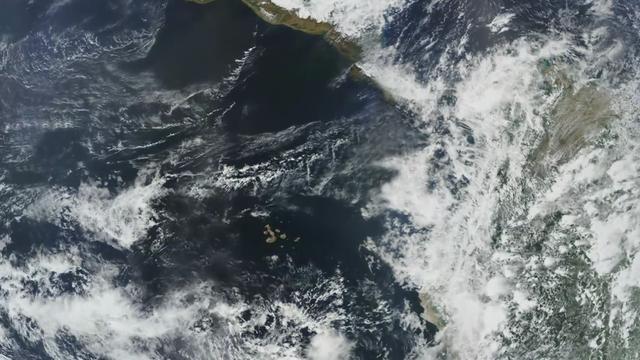
Completed: 07-16-2009 Straddling the equator approximately 1000 kilometers to the west of the South American mainland, the Galapagos Islands lie within the heart of the equatorial current system. Rising from the sea floor, the volcanic islands of the Galapagos are set on top of a large submarine platform. The main portion of the Galapagos platform is relatively flat and less than 1000 meters in depth. The steepest slopes are found along the western and southern flanks of the platform with a gradual slope towards the east. The interactions of the Galapagos and the oceanic currents create vastly different environmental regimes which not only isolates one part of the Archipelago from the other but allows penguins to live along the equator on the western part of the Archipelago and tropical corals around the islands to the north. The islands are relatively new in geologic terms with the youngest islands in the west still exhibiting periodic eruptions from their massive volcanic craters. Please give credit for this item to: NASA/Goddard Space Flight Center, The SeaWiFS Project and GeoEye, Scientific Visualization Studio. NOTE: All SeaWiFS images and data presented on this web site are for research and educational use only. All commercial use of SeaWiFS data must be coordinated with GeoEye (http://www.geoeye.com). To download this video go to: <a href="http://svs.gsfc.nasa.gov/goto?3628" rel="nofollow">svs.gsfc.nasa.gov/goto?3628</a> <b><a href="http://www.nasa.gov/centers/goddard/home/index.html" rel="nofollow">NASA Goddard Space Flight Center</a></b> is home to the nation's largest organization of combined scientists, engineers and technologists that build spacecraft, instruments and new technology to study the Earth, the sun, our solar system, and the universe.
![CAPE CANAVERAL, Fla. – In the Astrotech payload processing facility in Titusville, Fla. , technicians check equipment on the STSS Demonstrator SV-1 spacecraft after it was lowered onto the orbital insertion system. The spacecraft is a midcourse tracking technology demonstrator, part of an evolving ballistic missile defense system. STSS is capable of tracking objects after boost phase and provides trajectory information to other sensors. It will be launched by NASA for the Missile Defense Agency in late summer. Photo credit: NASA/Tim Jacobs (Approved for Public Release 09-MDA-4800 [30 July 09] )](https://images-assets.nasa.gov/image/KSC-2009-4629/KSC-2009-4629~medium.jpg)
CAPE CANAVERAL, Fla. – In the Astrotech payload processing facility in Titusville, Fla. , technicians check equipment on the STSS Demonstrator SV-1 spacecraft after it was lowered onto the orbital insertion system. The spacecraft is a midcourse tracking technology demonstrator, part of an evolving ballistic missile defense system. STSS is capable of tracking objects after boost phase and provides trajectory information to other sensors. It will be launched by NASA for the Missile Defense Agency in late summer. Photo credit: NASA/Tim Jacobs (Approved for Public Release 09-MDA-4800 [30 July 09] )
![CAPE CANAVERAL, Fla. – At NASA Kennedy Space Center's Shuttle Landing Facility, the SV-1 cargo of the STSS Demonstrator spacecraft moves out of the U.S. Air Force C-17. The cargo will be transferred to the Astrotech payload processing facility in Titusville, Fla. The spacecraft is a midcourse tracking technology demonstrator, part of an evolving ballistic missile defense system. STSS is capable of tracking objects after boost phase and provides trajectory information to other sensors. It will be launched by NASA for the Missile Defense Agency in late summer. Photo credit: NASA/Kim Shiflett (Approved for Public Release 09-MDA-4804 [4 Aug 09] )](https://images-assets.nasa.gov/image/KSC-2009-4613/KSC-2009-4613~medium.jpg)
CAPE CANAVERAL, Fla. – At NASA Kennedy Space Center's Shuttle Landing Facility, the SV-1 cargo of the STSS Demonstrator spacecraft moves out of the U.S. Air Force C-17. The cargo will be transferred to the Astrotech payload processing facility in Titusville, Fla. The spacecraft is a midcourse tracking technology demonstrator, part of an evolving ballistic missile defense system. STSS is capable of tracking objects after boost phase and provides trajectory information to other sensors. It will be launched by NASA for the Missile Defense Agency in late summer. Photo credit: NASA/Kim Shiflett (Approved for Public Release 09-MDA-4804 [4 Aug 09] )
![CAPE CANAVERAL, Fla. – At NASA Kennedy Space Center's Shuttle Landing Facility, the shipping container with the STSS Demonstrator SV-2spacecraft is secured on a trailer for transfer to the Astrotech payload processing facility in Titusville, Fla. The spacecraft is a midcourse tracking technology demonstrator, part of an evolving ballistic missile defense system. STSS is capable of tracking objects after boost phase and provides trajectory information to other sensors. It will be launched by NASA for the Missile Defense Agency in late summer. Photo credit: NASA/Jack Pfaller (Approved for Public Release 09-MDA-4616 [27 May 09])](https://images-assets.nasa.gov/image/KSC-2009-3665/KSC-2009-3665~medium.jpg)
CAPE CANAVERAL, Fla. – At NASA Kennedy Space Center's Shuttle Landing Facility, the shipping container with the STSS Demonstrator SV-2spacecraft is secured on a trailer for transfer to the Astrotech payload processing facility in Titusville, Fla. The spacecraft is a midcourse tracking technology demonstrator, part of an evolving ballistic missile defense system. STSS is capable of tracking objects after boost phase and provides trajectory information to other sensors. It will be launched by NASA for the Missile Defense Agency in late summer. Photo credit: NASA/Jack Pfaller (Approved for Public Release 09-MDA-4616 [27 May 09])
![CAPE CANAVERAL, Fla. – At NASA Kennedy Space Center's Shuttle Landing Facility, more equipment for the STSS Demonstrator SV-2 spacecraft is offloaded from the U.S. Air Force C-17 aircraft. The spacecraft will be transferred to the Astrotech payload processing facility in Titusville, Fla.The spacecraft is a midcourse tracking technology demonstrator, part of an evolving ballistic missile defense system. STSS is capable of tracking objects after boost phase and provides trajectory information to other sensors. It will be launched by NASA for the Missile Defense Agency in late summer. Photo credit: NASA/Jack Pfaller (Approved for Public Release 09-MDA-4616 [27 May 09])](https://images-assets.nasa.gov/image/KSC-2009-3660/KSC-2009-3660~medium.jpg)
CAPE CANAVERAL, Fla. – At NASA Kennedy Space Center's Shuttle Landing Facility, more equipment for the STSS Demonstrator SV-2 spacecraft is offloaded from the U.S. Air Force C-17 aircraft. The spacecraft will be transferred to the Astrotech payload processing facility in Titusville, Fla.The spacecraft is a midcourse tracking technology demonstrator, part of an evolving ballistic missile defense system. STSS is capable of tracking objects after boost phase and provides trajectory information to other sensors. It will be launched by NASA for the Missile Defense Agency in late summer. Photo credit: NASA/Jack Pfaller (Approved for Public Release 09-MDA-4616 [27 May 09])
![CAPE CANAVERAL, Fla. – At NASA Kennedy Space Center's Shuttle Landing Facility, the shipping container with the STSS Demonstrator SV-2spacecraft waits to be offloaded from the U.S. Air Force C-17 aircraft. The spacecraft will be transferred to the Astrotech payload processing facility in Titusville, Fla. The spacecraft is a midcourse tracking technology demonstrator, part of an evolving ballistic missile defense system. STSS is capable of tracking objects after boost phase and provides trajectory information to other sensors. It will be launched by NASA for the Missile Defense Agency in late summer. Photo credit: NASA/Jack Pfaller (Approved for Public Release 09-MDA-4616 [27 May 09])](https://images-assets.nasa.gov/image/KSC-2009-3661/KSC-2009-3661~medium.jpg)
CAPE CANAVERAL, Fla. – At NASA Kennedy Space Center's Shuttle Landing Facility, the shipping container with the STSS Demonstrator SV-2spacecraft waits to be offloaded from the U.S. Air Force C-17 aircraft. The spacecraft will be transferred to the Astrotech payload processing facility in Titusville, Fla. The spacecraft is a midcourse tracking technology demonstrator, part of an evolving ballistic missile defense system. STSS is capable of tracking objects after boost phase and provides trajectory information to other sensors. It will be launched by NASA for the Missile Defense Agency in late summer. Photo credit: NASA/Jack Pfaller (Approved for Public Release 09-MDA-4616 [27 May 09])
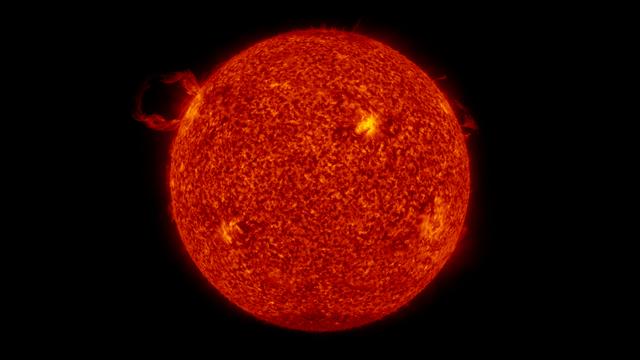
Full disk view of a filament launch in the SDO AIA 304 band. Credit: NASA/GSFC/SVS/SDO To read more about this animation go to: <a href="http://www.nasa.gov/mission_pages/sdo/news/first-light.html" rel="nofollow">www.nasa.gov/mission_pages/sdo/news/first-light.html</a> <b><a href="http://www.nasa.gov/centers/goddard/home/index.html" rel="nofollow">NASA Goddard Space Flight Center</a></b> is home to the nation's largest organization of combined scientists, engineers and technologists that build spacecraft, instruments and new technology to study the Earth, the sun, our solar system, and the universe.
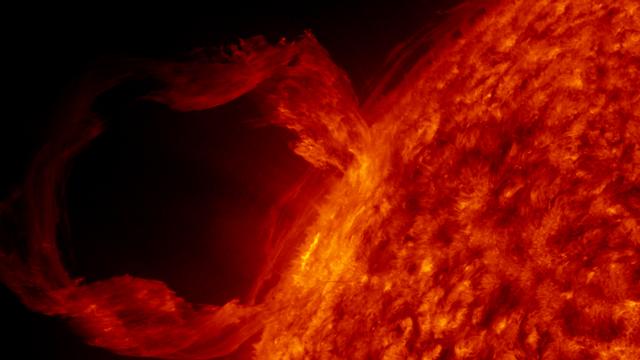
A detail view of a filament launch in the SDO AIA 304 band. Credit: NASA/GSFC/SVS/SDO To read more about this animation go to: <a href="http://www.nasa.gov/mission_pages/sdo/news/first-light.html" rel="nofollow">www.nasa.gov/mission_pages/sdo/news/first-light.html</a> <b><a href="http://www.nasa.gov/centers/goddard/home/index.html" rel="nofollow">NASA Goddard Space Flight Center</a></b> is home to the nation's largest organization of combined scientists, engineers and technologists that build spacecraft, instruments and new technology to study the Earth, the sun, our solar system, and the universe.
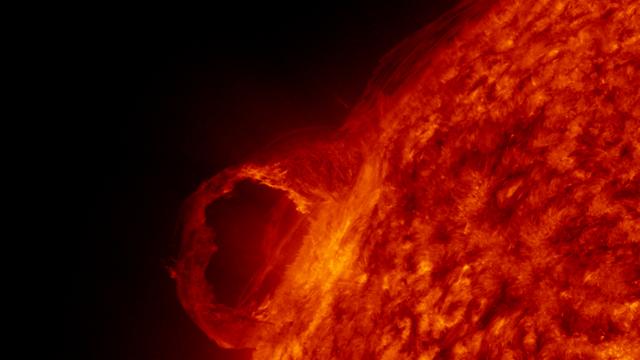
A detail view of a filament launch in the SDO AIA 304 band. Credit: NASA/GSFC/SVS/SDO To read more about this animation go to: <a href="http://www.nasa.gov/mission_pages/sdo/news/first-light.html" rel="nofollow">www.nasa.gov/mission_pages/sdo/news/first-light.html</a> <b><a href="http://www.nasa.gov/centers/goddard/home/index.html" rel="nofollow">NASA Goddard Space Flight Center</a></b> is home to the nation's largest organization of combined scientists, engineers and technologists that build spacecraft, instruments and new technology to study the Earth, the sun, our solar system, and the universe.
![CAPE CANAVERAL, Fla. – The U.S. Air Force C-17 aircraft arrives at NASA Kennedy Space Center's Shuttle Landing Facility with its cargo of the STSS Demonstrator SV-2 spacecraft. The spacecraft will be transferred to the Astrotech payload processing facility in Titusville, Fla. The spacecraft is a midcourse tracking technology demonstrator, part of an evolving ballistic missile defense system. STSS is capable of tracking objects after boost phase and provides trajectory information to other sensors. It will be launched by NASA for the Missile Defense Agency in late summer. Photo credit: NASA/Jack Pfaller (Approved for Public Release 09-MDA-4616 [27 May 09])](https://images-assets.nasa.gov/image/KSC-2009-3658/KSC-2009-3658~medium.jpg)
CAPE CANAVERAL, Fla. – The U.S. Air Force C-17 aircraft arrives at NASA Kennedy Space Center's Shuttle Landing Facility with its cargo of the STSS Demonstrator SV-2 spacecraft. The spacecraft will be transferred to the Astrotech payload processing facility in Titusville, Fla. The spacecraft is a midcourse tracking technology demonstrator, part of an evolving ballistic missile defense system. STSS is capable of tracking objects after boost phase and provides trajectory information to other sensors. It will be launched by NASA for the Missile Defense Agency in late summer. Photo credit: NASA/Jack Pfaller (Approved for Public Release 09-MDA-4616 [27 May 09])
![CAPE CANAVERAL, Fla. – At NASA Kennedy Space Center's Shuttle Landing Facility, the shipping container with the STSS Demonstrator SV-2spacecraft has been moved out of the U.S. Air Force C-17 aircraft. The spacecraft will be transferred to the Astrotech payload processing facility in Titusville, Fla. The spacecraft is a midcourse tracking technology demonstrator, part of an evolving ballistic missile defense system. STSS is capable of tracking objects after boost phase and provides trajectory information to other sensors. It will be launched by NASA for the Missile Defense Agency in late summer. Photo credit: NASA/Jack Pfaller (Approved for Public Release 09-MDA-4616 [27 May 09])](https://images-assets.nasa.gov/image/KSC-2009-3663/KSC-2009-3663~medium.jpg)
CAPE CANAVERAL, Fla. – At NASA Kennedy Space Center's Shuttle Landing Facility, the shipping container with the STSS Demonstrator SV-2spacecraft has been moved out of the U.S. Air Force C-17 aircraft. The spacecraft will be transferred to the Astrotech payload processing facility in Titusville, Fla. The spacecraft is a midcourse tracking technology demonstrator, part of an evolving ballistic missile defense system. STSS is capable of tracking objects after boost phase and provides trajectory information to other sensors. It will be launched by NASA for the Missile Defense Agency in late summer. Photo credit: NASA/Jack Pfaller (Approved for Public Release 09-MDA-4616 [27 May 09])
![CAPE CANAVERAL, Fla. – At NASA Kennedy Space Center's Shuttle Landing Facility, workers move STSS Demonstrator SV-2 spacecraft equipment out of the cargo hold of the U.S. Air Force C-17 aircraft. The spacecraft will be transferred to the Astrotech payload processing facility in Titusville, Fla. The spacecraft is a midcourse tracking technology demonstrator, part of an evolving ballistic missile defense system. STSS is capable of tracking objects after boost phase and provides trajectory information to other sensors. It will be launched by NASA for the Missile Defense Agency in late summer. Photo credit: NASA/Jack Pfaller (Approved for Public Release 09-MDA-4616 [27 May 09])](https://images-assets.nasa.gov/image/KSC-2009-3659/KSC-2009-3659~medium.jpg)
CAPE CANAVERAL, Fla. – At NASA Kennedy Space Center's Shuttle Landing Facility, workers move STSS Demonstrator SV-2 spacecraft equipment out of the cargo hold of the U.S. Air Force C-17 aircraft. The spacecraft will be transferred to the Astrotech payload processing facility in Titusville, Fla. The spacecraft is a midcourse tracking technology demonstrator, part of an evolving ballistic missile defense system. STSS is capable of tracking objects after boost phase and provides trajectory information to other sensors. It will be launched by NASA for the Missile Defense Agency in late summer. Photo credit: NASA/Jack Pfaller (Approved for Public Release 09-MDA-4616 [27 May 09])
![CAPE CANAVERAL, Fla. – In the Astrotech payload processing facility in Titusville, Fla. , technicians get ready to remove the overhead crane from the STSS Demonstrator SV-1 spacecraft. The spacecraft is a midcourse tracking technology demonstrator, part of an evolving ballistic missile defense system. STSS is capable of tracking objects after boost phase and provides trajectory information to other sensors. It will be launched by NASA for the Missile Defense Agency in late summer. Photo credit: NASA/Tim Jacobs (Approved for Public Release 09-MDA-4800 [30 July 09] )](https://images-assets.nasa.gov/image/KSC-2009-4630/KSC-2009-4630~medium.jpg)
CAPE CANAVERAL, Fla. – In the Astrotech payload processing facility in Titusville, Fla. , technicians get ready to remove the overhead crane from the STSS Demonstrator SV-1 spacecraft. The spacecraft is a midcourse tracking technology demonstrator, part of an evolving ballistic missile defense system. STSS is capable of tracking objects after boost phase and provides trajectory information to other sensors. It will be launched by NASA for the Missile Defense Agency in late summer. Photo credit: NASA/Tim Jacobs (Approved for Public Release 09-MDA-4800 [30 July 09] )
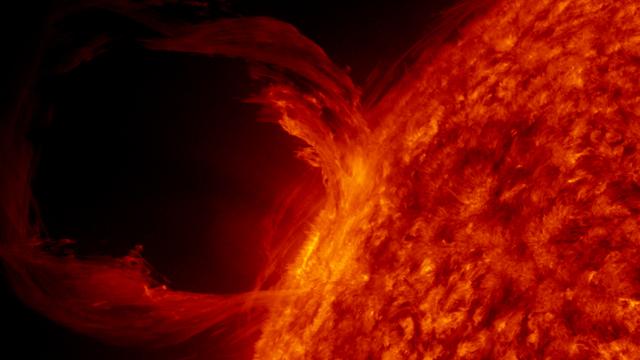
A detail view of a filament launch in the SDO AIA 304 band. Credit: NASA/GSFC/SVS/SDO To read more about this animation go to: <a href="http://www.nasa.gov/mission_pages/sdo/news/first-light.html" rel="nofollow">www.nasa.gov/mission_pages/sdo/news/first-light.html</a> <b><a href="http://www.nasa.gov/centers/goddard/home/index.html" rel="nofollow">NASA Goddard Space Flight Center</a></b> is home to the nation's largest organization of combined scientists, engineers and technologists that build spacecraft, instruments and new technology to study the Earth, the sun, our solar system, and the universe.
![CAPE CANAVERAL, Fla. – At NASA Kennedy Space Center's Shuttle Landing Facility, the SV-1 cargo of the STSS Demonstrator spacecraft is moved onto a flatbed truck for transfer to the Astrotech payload processing facility in Titusville, Fla. The spacecraft is a midcourse tracking technology demonstrator, part of an evolving ballistic missile defense system. STSS is capable of tracking objects after boost phase and provides trajectory information to other sensors. It will be launched by NASA for the Missile Defense Agency in late summer. Photo credit: NASA/Kim Shiflett (Approved for Public Release 09-MDA-4804 [4 Aug 09] )](https://images-assets.nasa.gov/image/KSC-2009-4614/KSC-2009-4614~medium.jpg)
CAPE CANAVERAL, Fla. – At NASA Kennedy Space Center's Shuttle Landing Facility, the SV-1 cargo of the STSS Demonstrator spacecraft is moved onto a flatbed truck for transfer to the Astrotech payload processing facility in Titusville, Fla. The spacecraft is a midcourse tracking technology demonstrator, part of an evolving ballistic missile defense system. STSS is capable of tracking objects after boost phase and provides trajectory information to other sensors. It will be launched by NASA for the Missile Defense Agency in late summer. Photo credit: NASA/Kim Shiflett (Approved for Public Release 09-MDA-4804 [4 Aug 09] )
![CAPE CANAVERAL, Fla. – At NASA Kennedy Space Center's Shuttle Landing Facility, the flatbed truck with the SV-1 cargo of the STSS Demonstrator spacecraft begins moving to the Astrotech payload processing facility in Titusville, Fla. The spacecraft is a midcourse tracking technology demonstrator, part of an evolving ballistic missile defense system. STSS is capable of tracking objects after boost phase and provides trajectory information to other sensors. It will be launched by NASA for the Missile Defense Agency in late summer. Photo credit: NASA/Kim Shiflett (Approved for Public Release 09-MDA-4804 [4 Aug 09] )](https://images-assets.nasa.gov/image/KSC-2009-4615/KSC-2009-4615~medium.jpg)
CAPE CANAVERAL, Fla. – At NASA Kennedy Space Center's Shuttle Landing Facility, the flatbed truck with the SV-1 cargo of the STSS Demonstrator spacecraft begins moving to the Astrotech payload processing facility in Titusville, Fla. The spacecraft is a midcourse tracking technology demonstrator, part of an evolving ballistic missile defense system. STSS is capable of tracking objects after boost phase and provides trajectory information to other sensors. It will be launched by NASA for the Missile Defense Agency in late summer. Photo credit: NASA/Kim Shiflett (Approved for Public Release 09-MDA-4804 [4 Aug 09] )
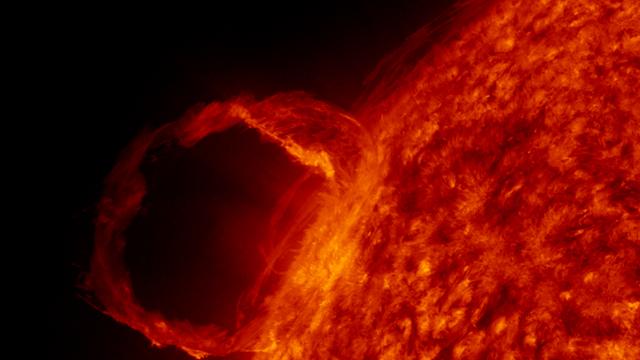
A detail view of a filament launch in the SDO AIA 304 band. Credit: NASA/GSFC/SVS/SDO To read more about this animation go to: <a href="http://www.nasa.gov/mission_pages/sdo/news/first-light.html" rel="nofollow">www.nasa.gov/mission_pages/sdo/news/first-light.html</a> <b><a href="http://www.nasa.gov/centers/goddard/home/index.html" rel="nofollow">NASA Goddard Space Flight Center</a></b> is home to the nation's largest organization of combined scientists, engineers and technologists that build spacecraft, instruments and new technology to study the Earth, the sun, our solar system, and the universe.
![CAPE CANAVERAL, Fla. – At NASA Kennedy Space Center's Shuttle Landing Facility, the shipping container with the STSS Demonstrator SV-2spacecraft moves out of the U.S. Air Force C-17 aircraft. The spacecraft will be transferred to the Astrotech payload processing facility in Titusville, Fla. The spacecraft is a midcourse tracking technology demonstrator, part of an evolving ballistic missile defense system. STSS is capable of tracking objects after boost phase and provides trajectory information to other sensors. It will be launched by NASA for the Missile Defense Agency in late summer. Photo credit: NASA/Jack Pfaller (Approved for Public Release 09-MDA-4616 [27 May 09])](https://images-assets.nasa.gov/image/KSC-2009-3662/KSC-2009-3662~medium.jpg)
CAPE CANAVERAL, Fla. – At NASA Kennedy Space Center's Shuttle Landing Facility, the shipping container with the STSS Demonstrator SV-2spacecraft moves out of the U.S. Air Force C-17 aircraft. The spacecraft will be transferred to the Astrotech payload processing facility in Titusville, Fla. The spacecraft is a midcourse tracking technology demonstrator, part of an evolving ballistic missile defense system. STSS is capable of tracking objects after boost phase and provides trajectory information to other sensors. It will be launched by NASA for the Missile Defense Agency in late summer. Photo credit: NASA/Jack Pfaller (Approved for Public Release 09-MDA-4616 [27 May 09])
![CAPE CANAVERAL, Fla. – At NASA Kennedy Space Center's Shuttle Landing Facility, the shipping container with the STSS Demonstrator SV-2spacecraft is secured on a trailer for transfer to the Astrotech payload processing facility in Titusville, Fla. The spacecraft is a midcourse tracking technology demonstrator, part of an evolving ballistic missile defense system. STSS is capable of tracking objects after boost phase and provides trajectory information to other sensors. It will be launched by NASA for the Missile Defense Agency in late summer. Photo credit: NASA/Jack Pfaller (Approved for Public Release 09-MDA-4616 [27 May 09])](https://images-assets.nasa.gov/image/KSC-2009-3664/KSC-2009-3664~medium.jpg)
CAPE CANAVERAL, Fla. – At NASA Kennedy Space Center's Shuttle Landing Facility, the shipping container with the STSS Demonstrator SV-2spacecraft is secured on a trailer for transfer to the Astrotech payload processing facility in Titusville, Fla. The spacecraft is a midcourse tracking technology demonstrator, part of an evolving ballistic missile defense system. STSS is capable of tracking objects after boost phase and provides trajectory information to other sensors. It will be launched by NASA for the Missile Defense Agency in late summer. Photo credit: NASA/Jack Pfaller (Approved for Public Release 09-MDA-4616 [27 May 09])
![CAPE CANAVERAL, Fla. – The U.S. Air Force C-17 aircraft arrives at NASA Kennedy Space Center's Shuttle Landing Facility with its SV-1 cargo of the STSS Demonstrator spacecraft. The cargo will be transferred to the Astrotech payload processing facility in Titusville, Fla. The spacecraft is a midcourse tracking technology demonstrator, part of an evolving ballistic missile defense system. STSS is capable of tracking objects after boost phase and provides trajectory information to other sensors. It will be launched by NASA for the Missile Defense Agency in late summer. Photo credit: NASA/Kim Shiflett (Approved for Public Release 09-MDA-4804 [4 Aug 09] )](https://images-assets.nasa.gov/image/KSC-2009-4611/KSC-2009-4611~medium.jpg)
CAPE CANAVERAL, Fla. – The U.S. Air Force C-17 aircraft arrives at NASA Kennedy Space Center's Shuttle Landing Facility with its SV-1 cargo of the STSS Demonstrator spacecraft. The cargo will be transferred to the Astrotech payload processing facility in Titusville, Fla. The spacecraft is a midcourse tracking technology demonstrator, part of an evolving ballistic missile defense system. STSS is capable of tracking objects after boost phase and provides trajectory information to other sensors. It will be launched by NASA for the Missile Defense Agency in late summer. Photo credit: NASA/Kim Shiflett (Approved for Public Release 09-MDA-4804 [4 Aug 09] )
![CAPE CANAVERAL, Fla. – At NASA Kennedy Space Center's Shuttle Landing Facility, the SV-1 cargo of the STSS Demonstrator spacecraft moves out of the U.S. Air Force C-17. The cargo will be transferred to the Astrotech payload processing facility in Titusville, Fla. The spacecraft is a midcourse tracking technology demonstrator, part of an evolving ballistic missile defense system. STSS is capable of tracking objects after boost phase and provides trajectory information to other sensors. It will be launched by NASA for the Missile Defense Agency in late summer. Photo credit: NASA/Kim Shiflett (Approved for Public Release 09-MDA-4804 [4 Aug 09] )](https://images-assets.nasa.gov/image/KSC-2009-4612/KSC-2009-4612~medium.jpg)
CAPE CANAVERAL, Fla. – At NASA Kennedy Space Center's Shuttle Landing Facility, the SV-1 cargo of the STSS Demonstrator spacecraft moves out of the U.S. Air Force C-17. The cargo will be transferred to the Astrotech payload processing facility in Titusville, Fla. The spacecraft is a midcourse tracking technology demonstrator, part of an evolving ballistic missile defense system. STSS is capable of tracking objects after boost phase and provides trajectory information to other sensors. It will be launched by NASA for the Missile Defense Agency in late summer. Photo credit: NASA/Kim Shiflett (Approved for Public Release 09-MDA-4804 [4 Aug 09] )