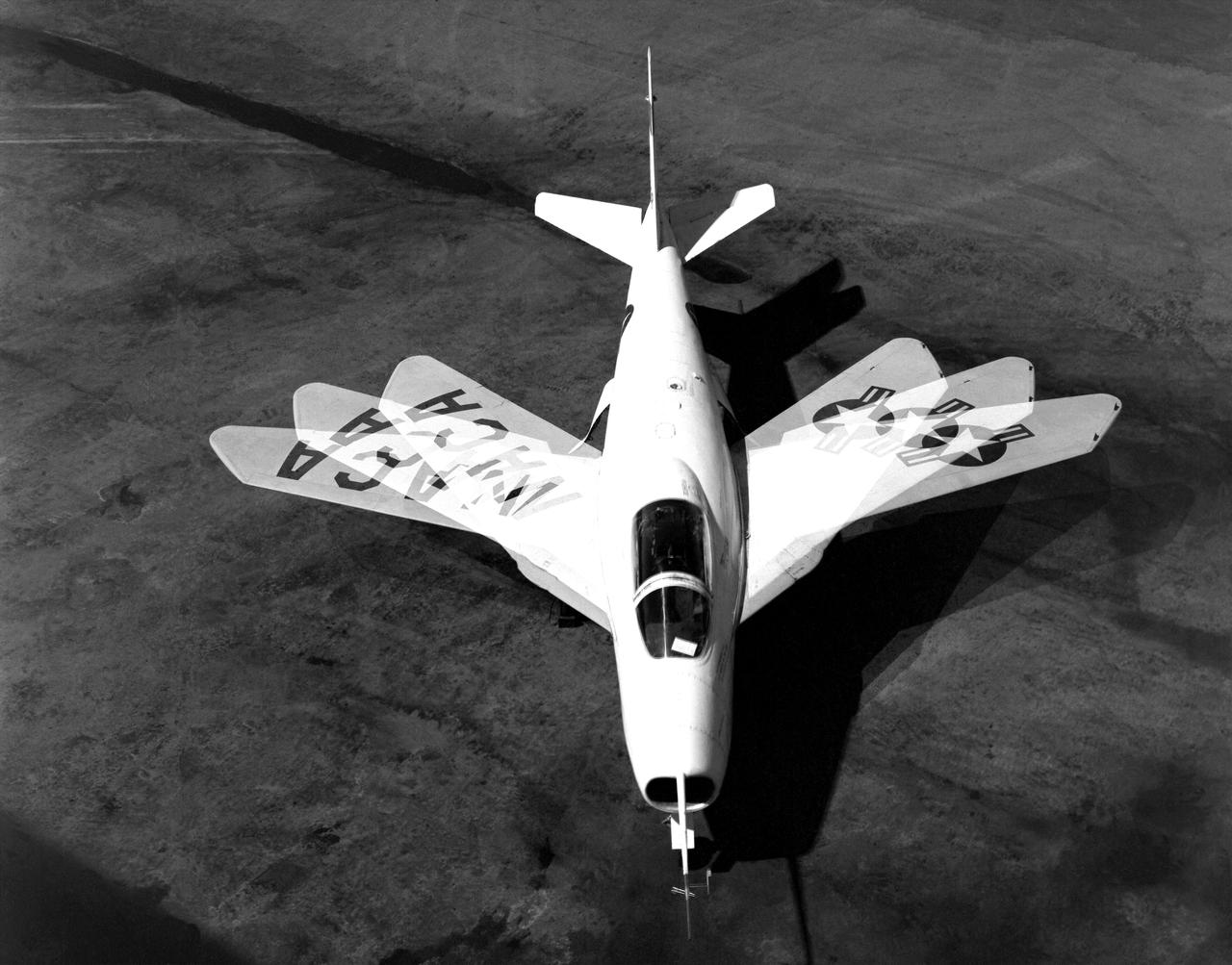
The Bell X-5 swings its wings in this multiple exposure photograph. Variable-sweep wing technology later appeared on the F-111, F-14 and B-1.
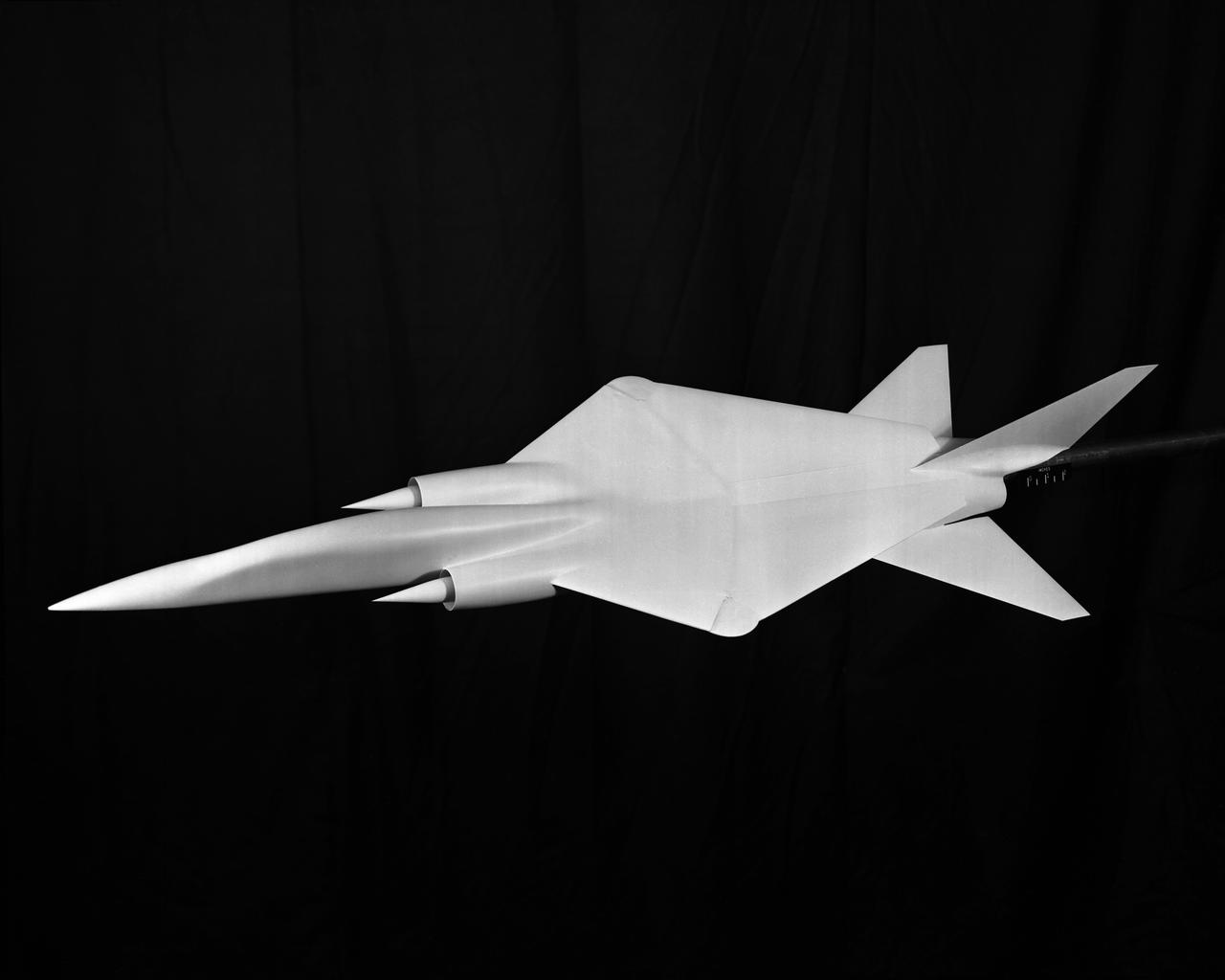
Project: Wing Sweep Range Series TAC Variable Sweep Model configure 8 A. Taken at 8 foot tunnels building 641. L60-3412 through 3416 Model of proposed military supersonic attack airplane shows wing sweep range. TAC Models taken at the 8 Foot Tunnel. Photograph published in Sixty Years of Aeronautical Research 1917-1977 By David A. Anderton. A NASA publication. Page 53.
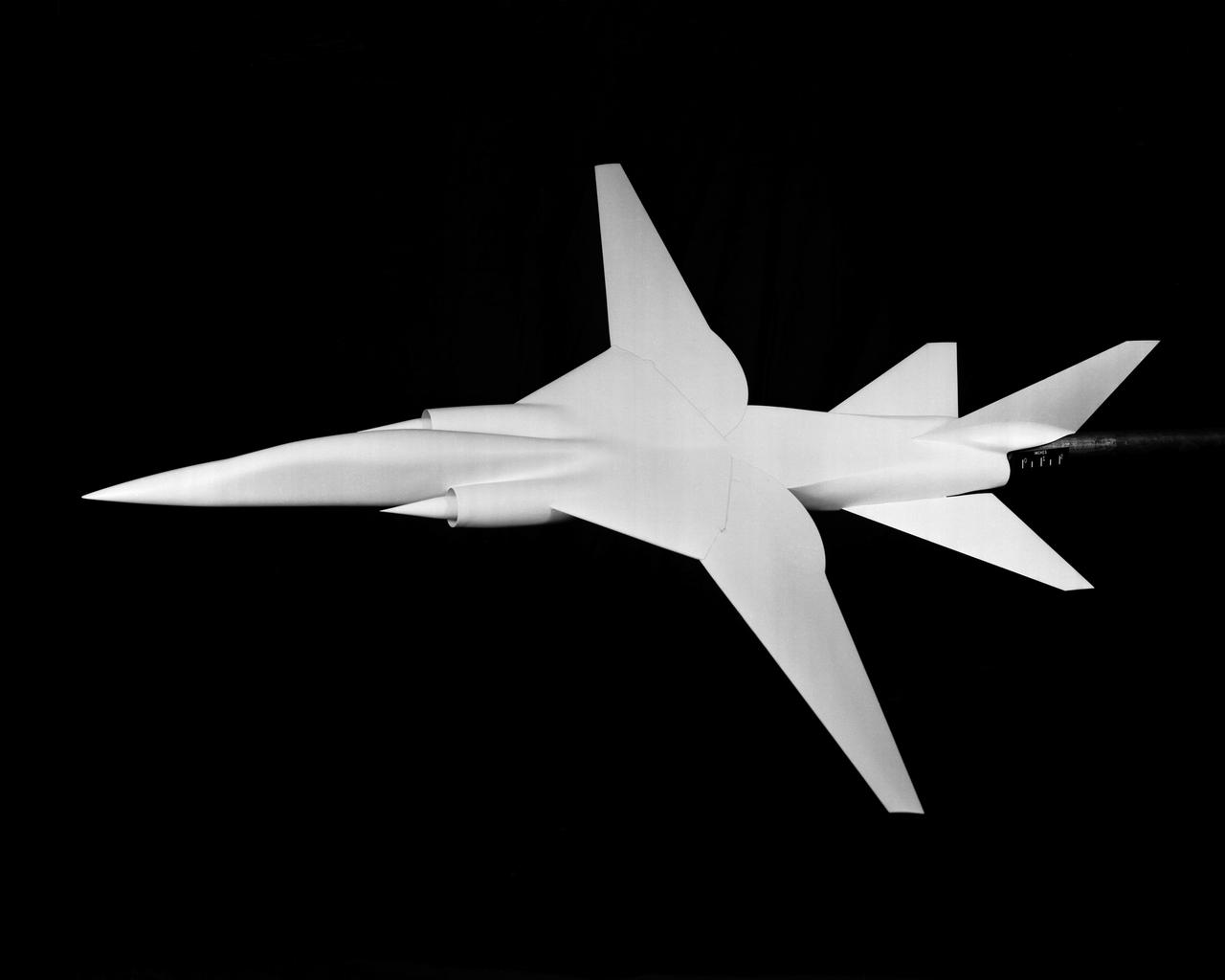
Project: Wing Sweep Range Series TAC Variable Sweep Model configure 8 A. Taken at 8 foot tunnels building 641. L60-3412 through 3416 Model of proposed military supersonic attack airplane shows wing sweep range. TAC Models taken at the 8 Foot Tunnel. Photograph published in Sixty Years of Aeronautical Research 1917-1977 By David A. Anderton. A NASA publication. Page 53.
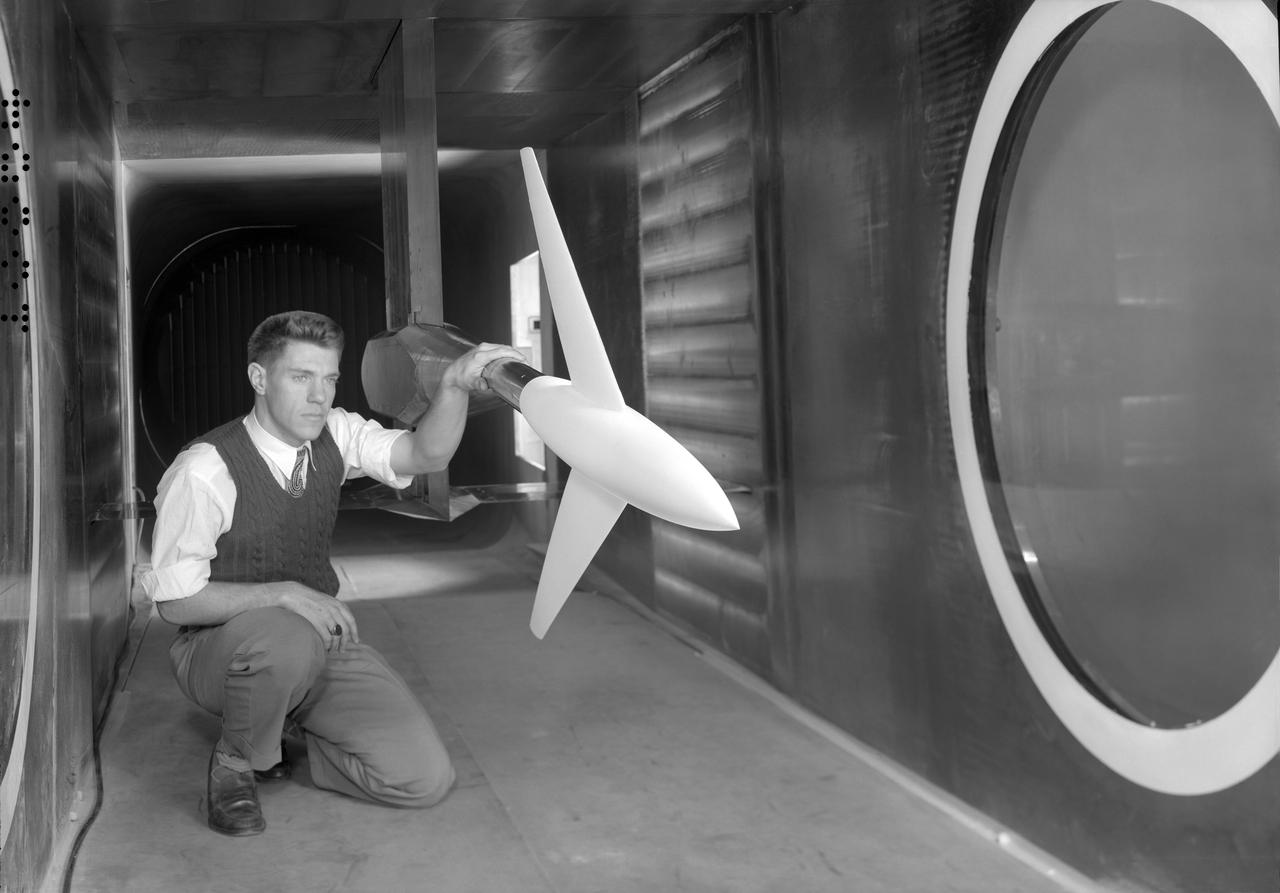
6x6 wind tunnel test on the effects of wing sweep.
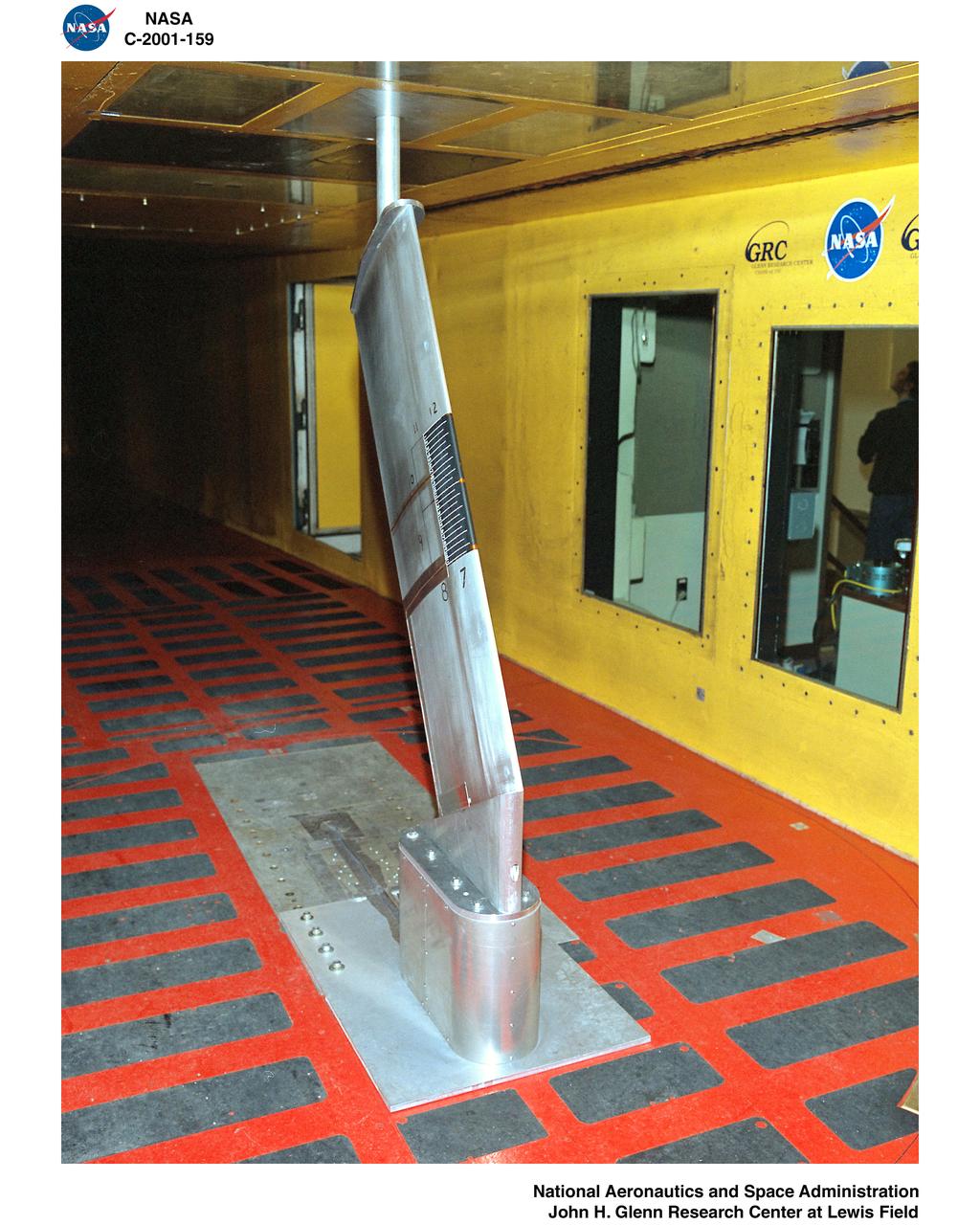
SWEPT WING ICING FUNDAMENTALS MODEL NUMBER 2D GLC305 18 INCH CORD SET AT 28 DEGREE SWEEP ANGLE
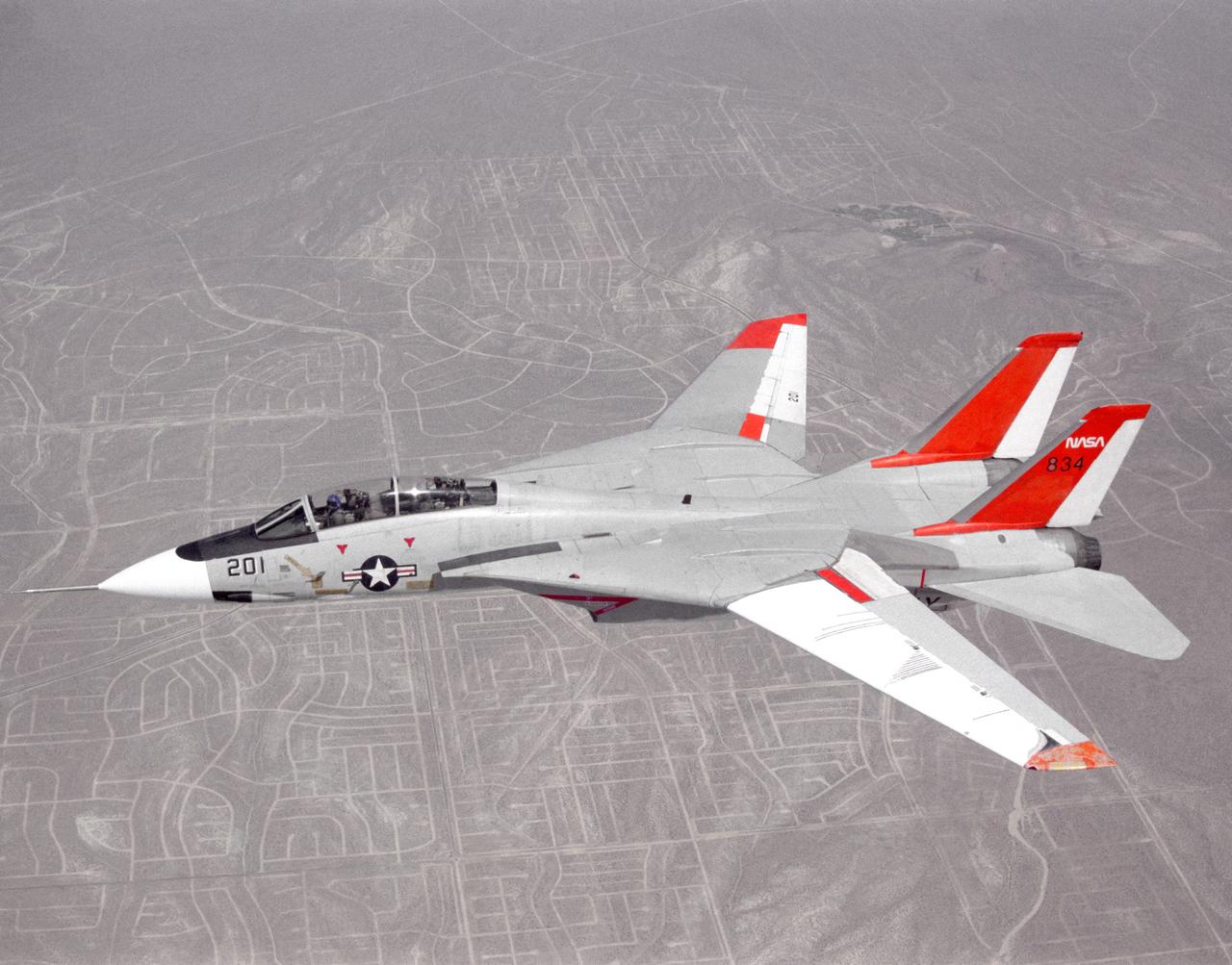
NASA 834, an F-14 Navy Tomcat, seen here in flight, was used at Dryden in 1986 and 1987 in a program known as the Variable-Sweep Transition Flight Experiment (VSTFE). This program explored laminar flow on variable sweep aircraft at high subsonic speeds. An F-14 aircraft was chosen as the carrier vehicle for the VSTFE program primarily because of its variable-sweep capability, Mach and Reynolds number capability, availability, and favorable wing pressure distribution. The variable sweep outer-panels of the F-14 aircraft were modified with natural laminar flow gloves to provide not only smooth surfaces but also airfoils that can produce a wide range of pressure distributions for which transition location can be determined at various flight conditions and sweep angles. Glove I, seen here installed on the upper surface of the left wing, was a "cleanup" or smoothing of the basic F-14 wing, while Glove II was designed to provide specific pressure distributions at Mach 0.7. Laminar flow research continued at Dryden with a research program on the NASA 848 F-16XL, a laminar flow experiment involving a wing-mounted panel with millions of tiny laser cut holes drawing off turbulent boundary layer air with a suction pump.
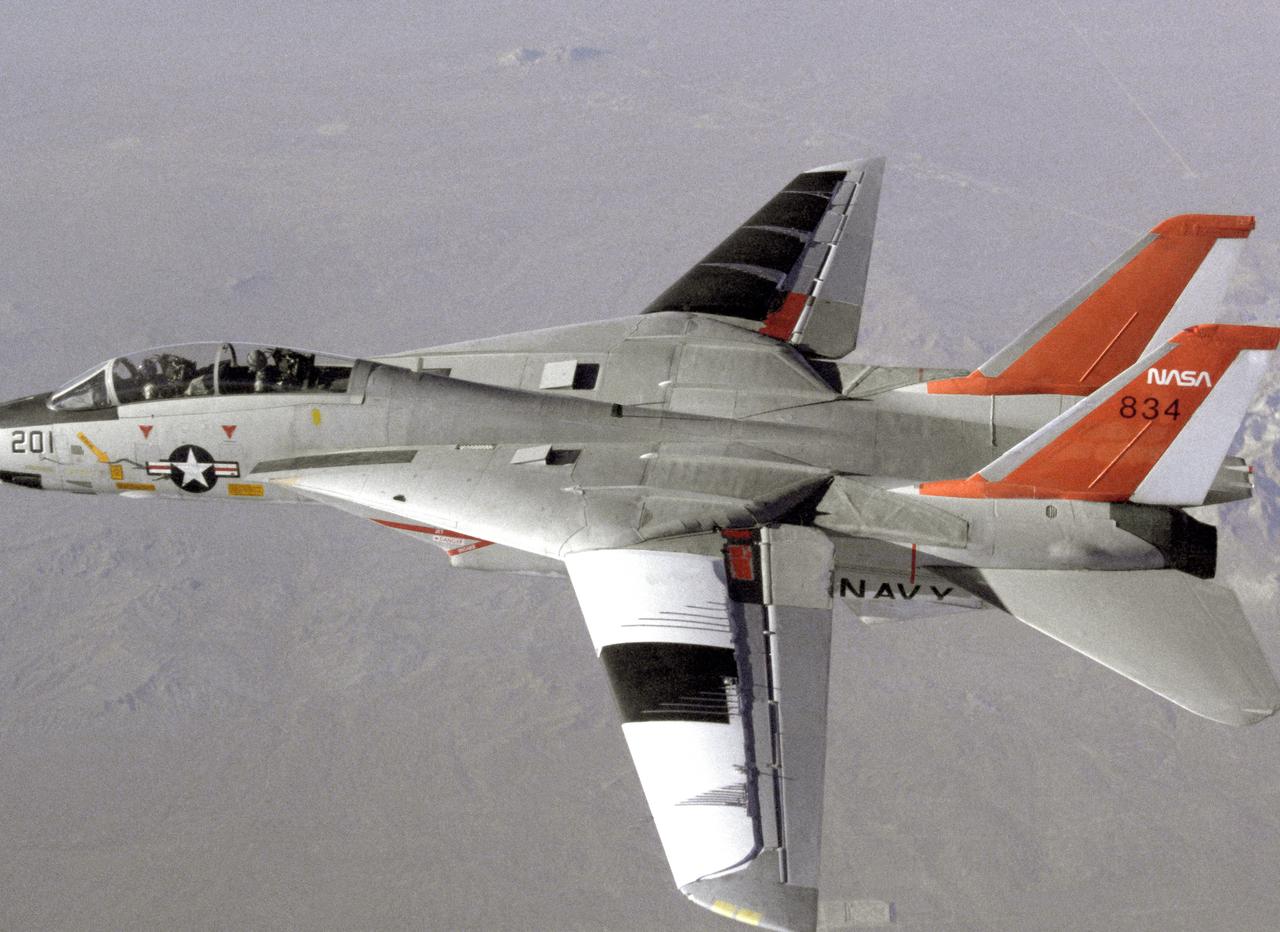
NASA 834, an F-14 Navy Tomcat, seen here in flight, was used at Dryden in 1986 and 1987 in a program known as the Variable-Sweep Transition Flight Experiment (VSTFE). This program explored laminar flow on variable sweep aircraft at high subsonic speeds. An F-14 aircraft was chosen as the carrier vehicle for the VSTFE program primarily because of its variable-sweep capability, Mach and Reynolds number capability, availability, and favorable wing pressure distribution. The variable sweep outer-panels of the F-14 aircraft were modified with natural laminar flow gloves to provide not only smooth surfaces but also airfoils that can produce a wide range of pressure distributions for which transition location can be determined at various flight conditions and sweep angles. Glove I, seen here installed on the upper surface of the left wing, was a "cleanup" or smoothing of the basic F-14 wing, while Glove II was designed to provide specific pressure distributions at Mach 0.7. Laminar flow research continued at Dryden with a research program on the NASA 848 F-16XL, a laminar flow experiment involving a wing-mounted panel with millions of tiny laser cut holes drawing off turbulent boundary layer air with a suction pump.
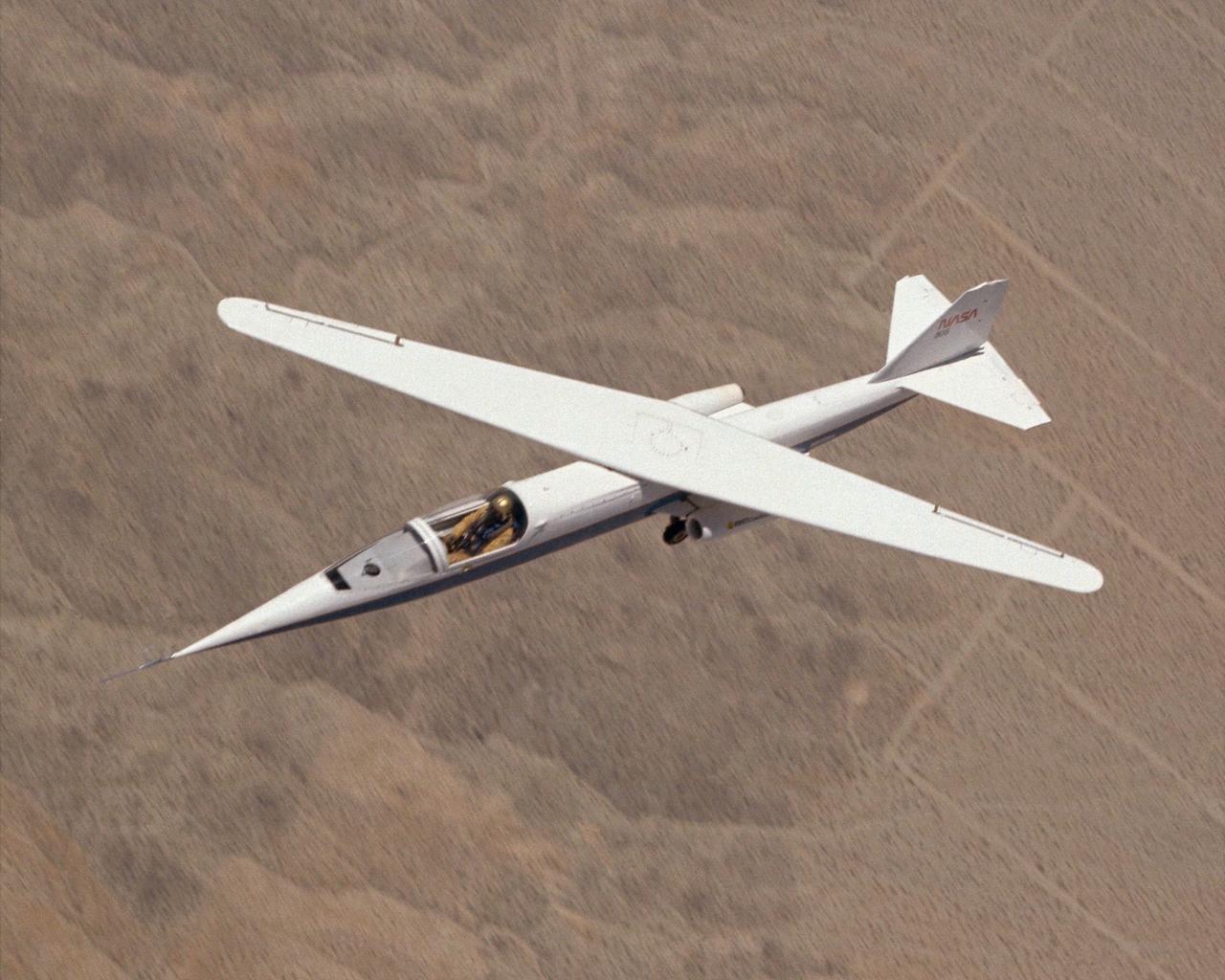
AD-1 in flight. Flight #30. The AD-1 aircraft in flight with its wing swept at 60 degrees, the maximum sweep angle.
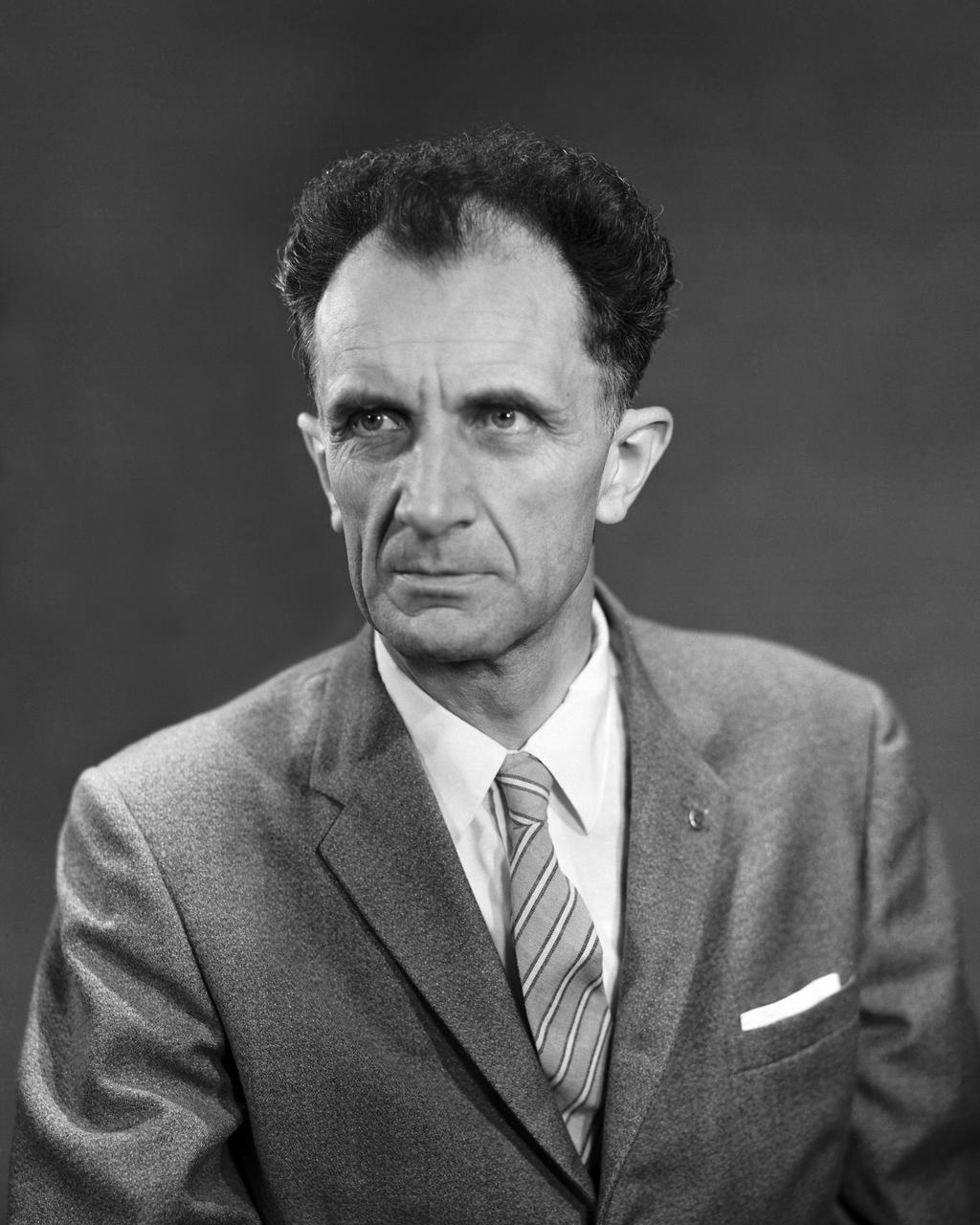
Adolf Busemann, the German aerodynamicist who first expressed the advantages of wing sweep in a 1935 theoretical paper, came to work at Langley in May 1947 as a result of Operation Paperclip. Photograph published in Engineer in Charge: A History of the Langley Aeronautical Laboratory, 1917-1958 by James R. Hansen. Page 283.

F-111B Fighter, Variable Sweep wings, wings swept forward, landing gear down. Slat experiments. The General Dynamics/Grumman F-111B was a long-range carrier-based interceptor aircraft that was planned to be a follow-on to the F-4 Phantom II. The F-111B was developed in the 1960s by General Dynamics in conjunction with Grumman for the United States Navy (USN) as part of the joint Tactical Fighter Experimental (TFX) with the United States Air Force (USAF) to produce a common fighter for the services that could perform a variety of missions.
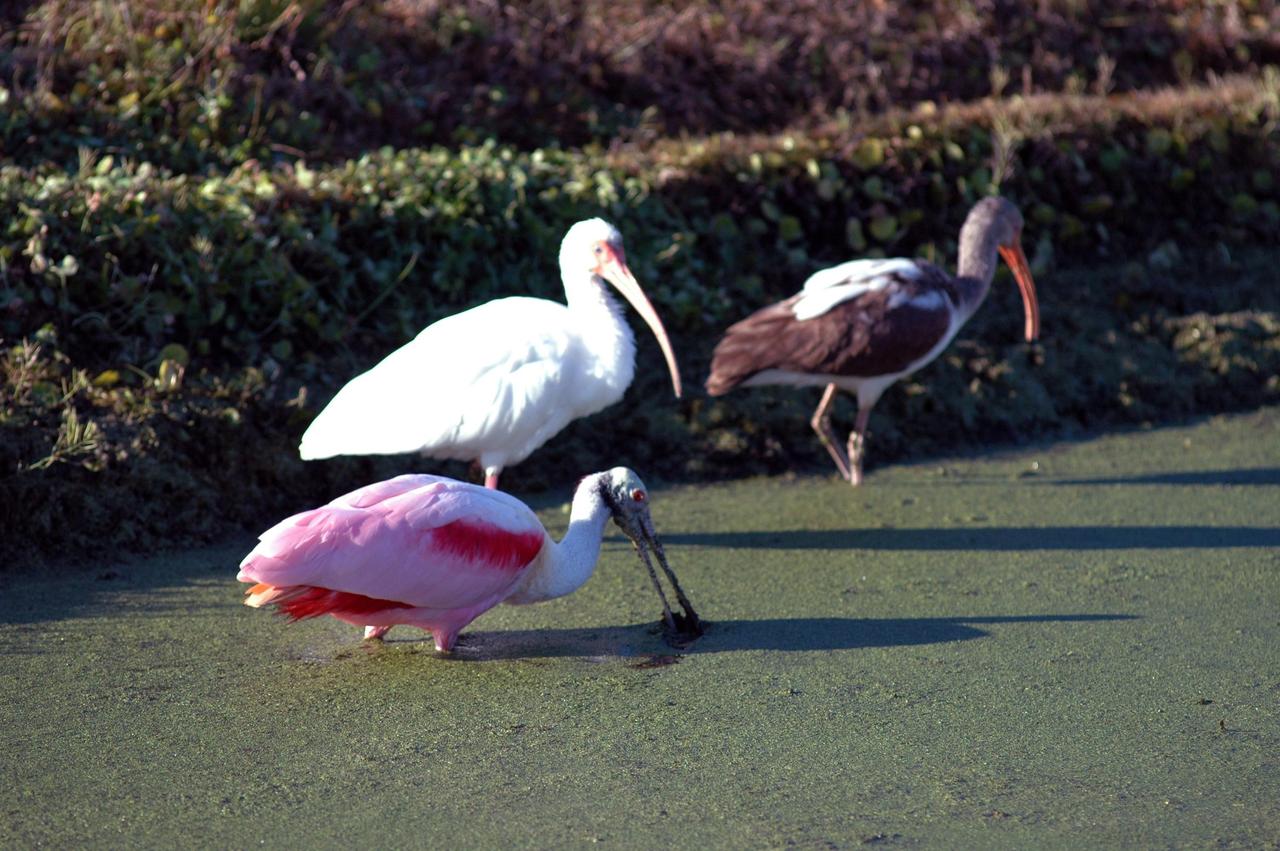
KENNEDY SPACE CENTER, FLA. - At NASA Kennedy Space Center, a roseate spoonbill (front) and white ibis search the murky canal for food. Spoonbills inhabit areas of mangrove such as on the coasts of southern Florida and Texas. These birds feed on shrimps and fish in the shallow water, sweeping their bills from side to side. White ibis inhabit marshy sloughs, mud flats, lagoons and swamp forests along the coast from South Carolina to Florida and Texas and south to northern South America. The ibis with the brown wings is an immature ibis. The Center shares a boundary with the Merritt Island National Wildlife Refuge, which is a habitat for more than 310 species of birds, 25 mammals, 117 fishes and 65 amphibians and reptiles. In addition, the Refuge supports 19 endangered or threatened wildlife species on Federal or State lists, more than any other single refuge in the U.S. Photo credit: NASA/Jim Grossmann