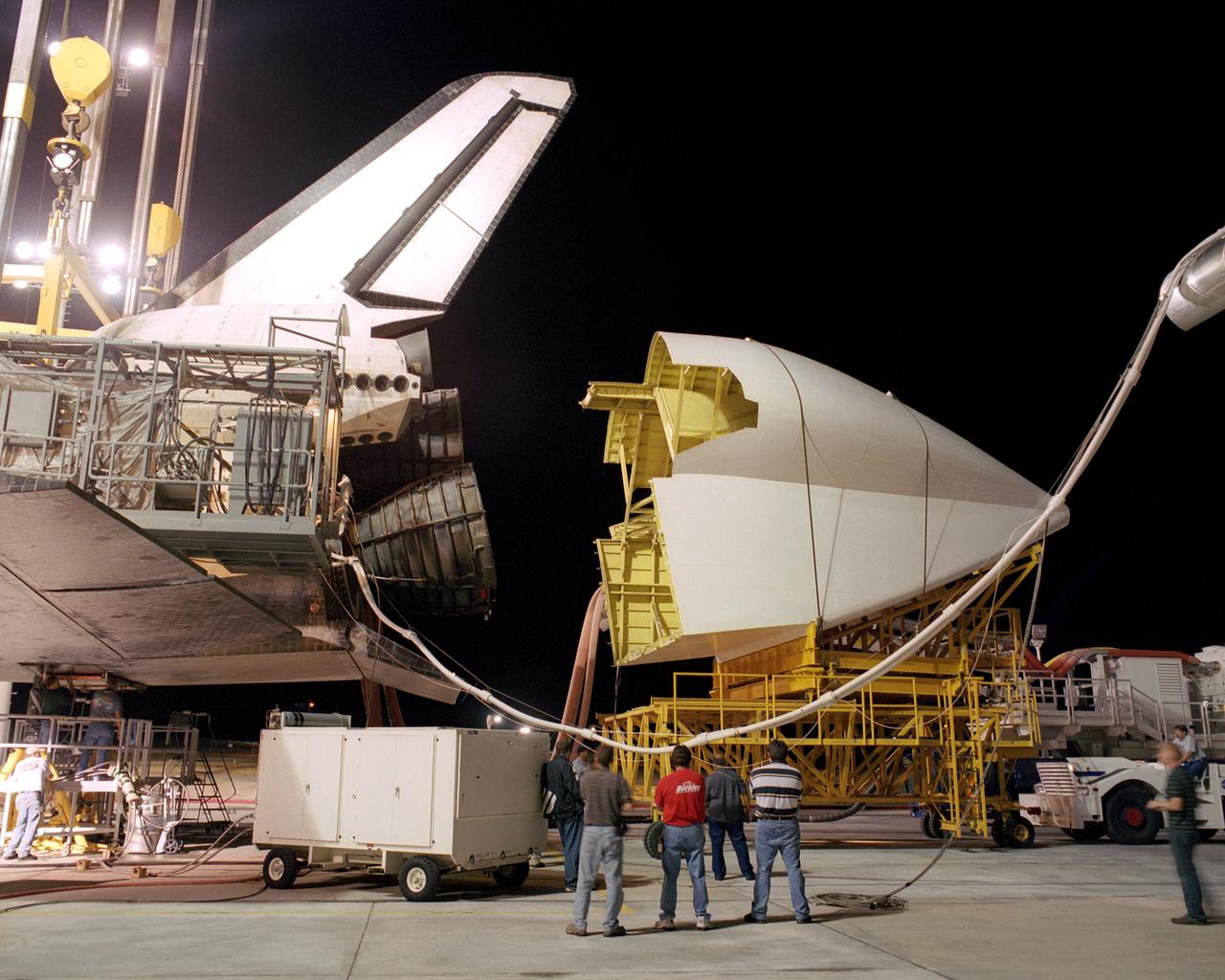
Workers position the tail cone on the Space Shuttle Discovery in preparation for its return to NASA's Kennedy Space Center in Florida. After the tail-cone is installed, Discovery will be mounted on NASA's modified Boeing 747 Shuttle Carrier Aircraft, or SCA, for the return flight. The tail cone is a fitting that helps reduce aerodynamic drag and turbulence during its ferry flight. Space Shuttle Discovery landed safely at NASA's Dryden Flight Research Center at Edwards Air Force Base in California at 5:11:22 a.m. PDT, August 9, 2005, following the very successful 14-day STS-114 return to flight mission. During their two weeks in space, Commander Eileen Collins and her six crewmates tested out new safety procedures and delivered supplies and equipment the International Space Station. Discovery spent two weeks in space, where the crew demonstrated new methods to inspect and repair the Shuttle in orbit. The crew also delivered supplies, outfitted and performed maintenance on the International Space Station. A number of these tasks were conducted during three spacewalks. In an unprecedented event, spacewalkers were called upon to remove protruding gap fillers from the heat shield on Discovery's underbelly. In other spacewalk activities, astronauts installed an external platform onto the Station's Quest Airlock and replaced one of the orbital outpost's Control Moment Gyroscopes. Inside the Station, the STS-114 crew conducted joint operations with the Expedition 11 crew. They unloaded fresh supplies from the Shuttle and the Raffaello Multi-Purpose Logistics Module. Before Discovery undocked, the crews filled Raffeallo with unneeded items and returned to Shuttle payload bay. Discovery launched on July 26 and spent almost 14 days on orbit.
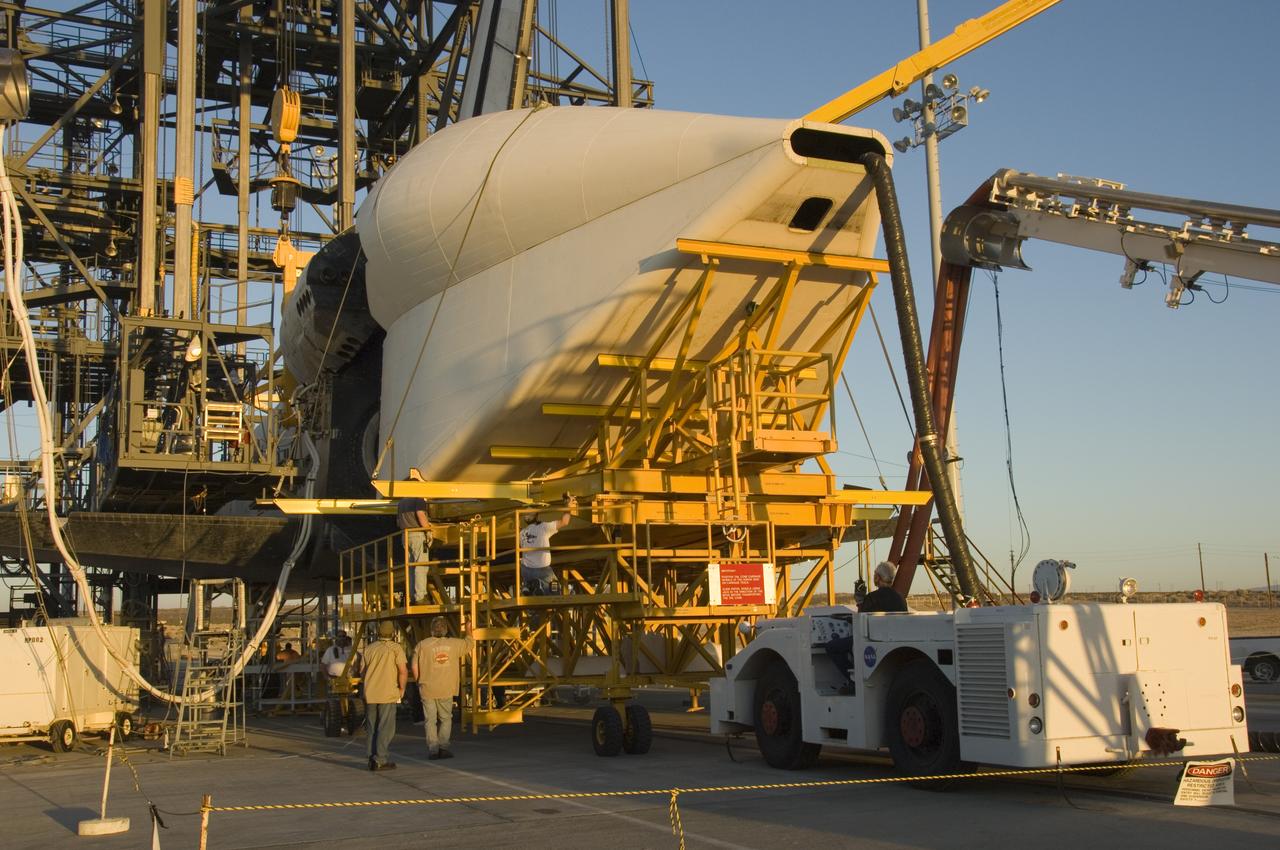
Technicians attach the tail cone, which helps reduce aerodynamic drag and turbulence during its ferry flight, to the Space Shuttle Atlantis in preparation for its return to NASA's Kennedy Space Center in Florida. After the tail-cone is installed, Discovery will be mounted on NASA's modified Boeing 747 Shuttle Carrier Aircraft, or SCA, for the return flight.
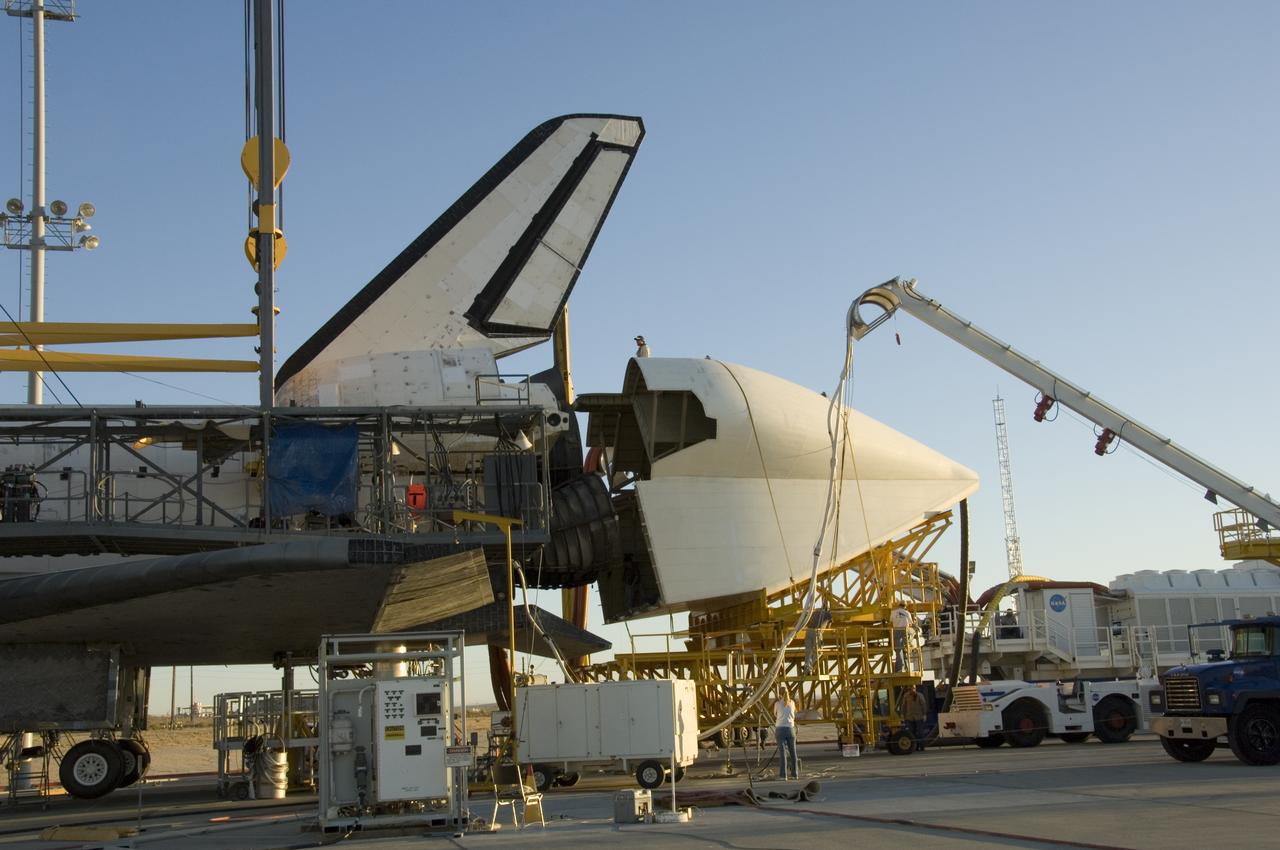
Technicians attach the tail cone, which helps reduce aerodynamic drag and turbulence during its ferry flight, to the Space Shuttle Atlantis in preparation for its return to NASA's Kennedy Space Center in Florida. After the tail-cone is installed, Discovery will be mounted on NASA's modified Boeing 747 Shuttle Carrier Aircraft, or SCA, for the return flight.
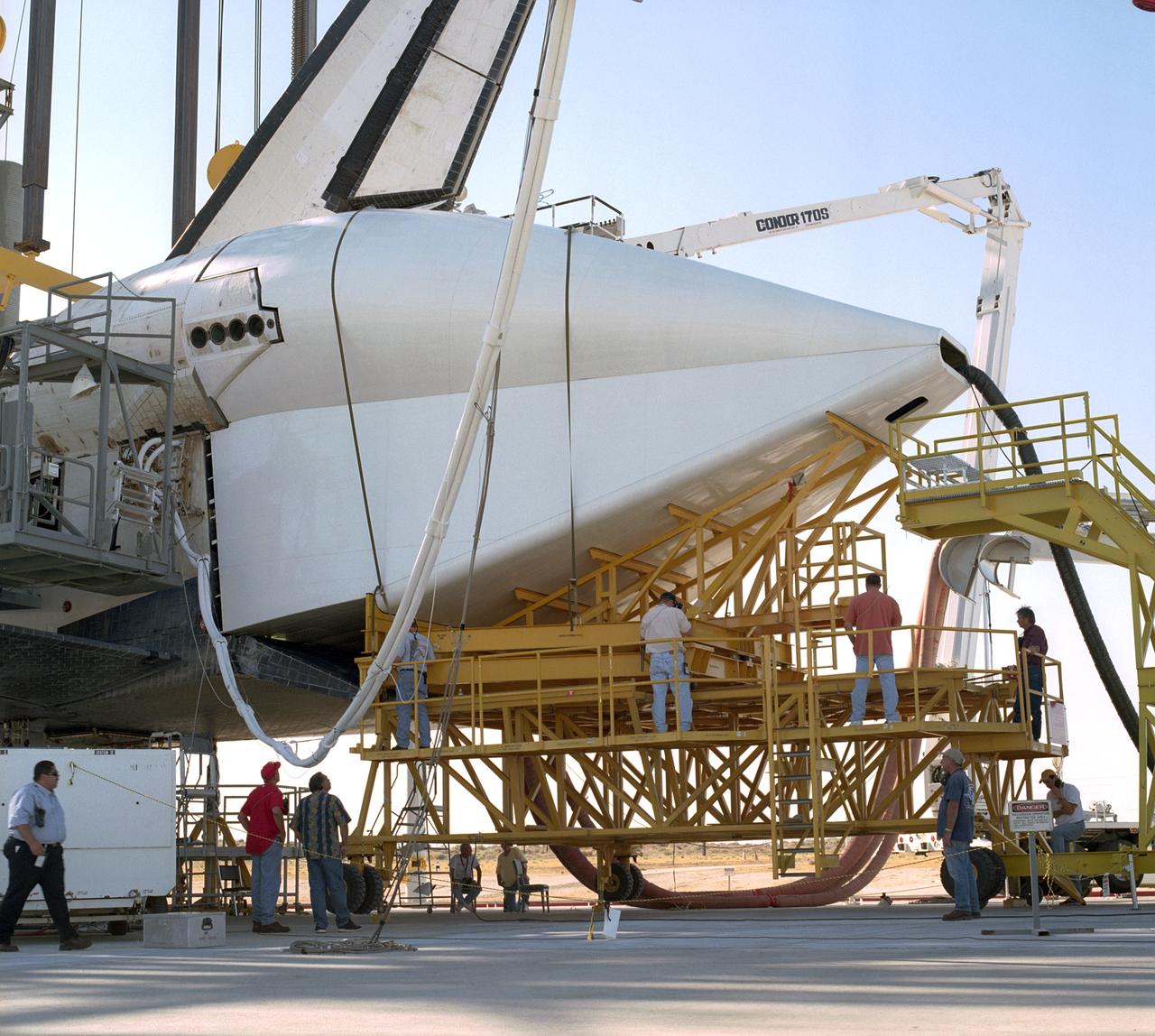
Technicians attach the tail cone, which helps reduce aerodynamic drag and turbulence during its ferry flight, to the Space Shuttle Discovery in preparation for its return to NASA's Kennedy Space Center in Florida. After the tail-cone is installed, Discovery will be mounted on NASA's modified Boeing 747 Shuttle Carrier Aircraft, or SCA, for the return flight. Space Shuttle Discovery landed safely at NASA's Dryden Flight Research Center at Edwards Air Force Base in California at 5:11:22 a.m. PDT, August 9, 2005, following the very successful 14-day STS-114 return to flight mission. During their two weeks in space, Commander Eileen Collins and her six crewmates tested out new safety procedures and delivered supplies and equipment the International Space Station. Discovery spent two weeks in space, where the crew demonstrated new methods to inspect and repair the Shuttle in orbit. The crew also delivered supplies, outfitted and performed maintenance on the International Space Station. A number of these tasks were conducted during three spacewalks. In an unprecedented event, spacewalkers were called upon to remove protruding gap fillers from the heat shield on Discovery's underbelly. In other spacewalk activities, astronauts installed an external platform onto the Station's Quest Airlock and replaced one of the orbital outpost's Control Moment Gyroscopes. Inside the Station, the STS-114 crew conducted joint operations with the Expedition 11 crew. They unloaded fresh supplies from the Shuttle and the Raffaello Multi-Purpose Logistics Module. Before Discovery undocked, the crews filled Raffeallo with unneeded items and returned to Shuttle payload bay. Discovery launched on July 26 and spent almost 14 days on orbit.
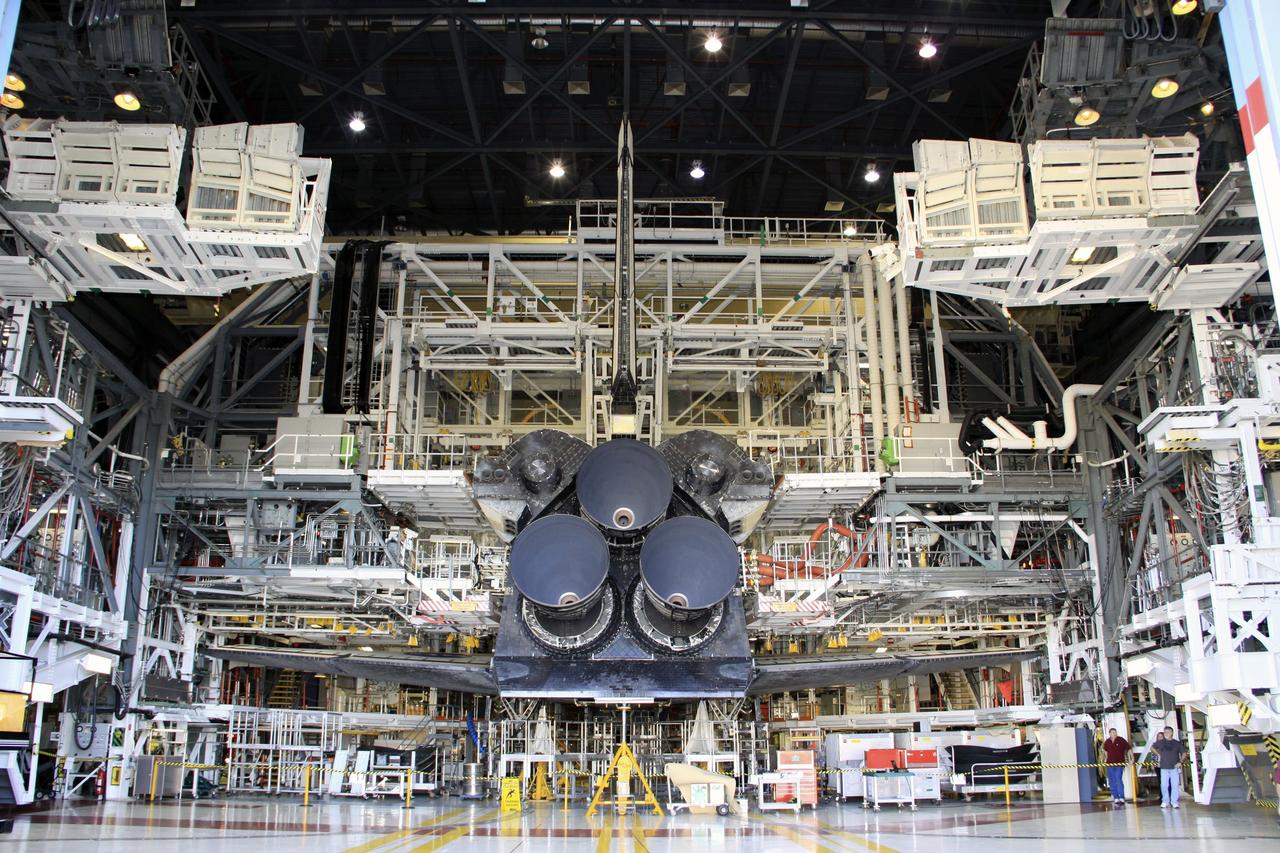
CAPE CANAVERAL, Fla. -- Inside Orbiter Processing Facility-1 at NASA’s Kennedy Space Center in Florida, space shuttle Discovery’s three replica shuttle main engines (RSMEs) are in view as technicians await the arrival of the tail cone. The tail cone will be installed around Discovery’s RSMEs for protection. The work is part of the Space Shuttle Program’s transition and retirement processing of shuttle Discovery. Discovery is being prepared for display at the Smithsonian’s National Air and Space Museum, Steven F. Udvar-Hazy Center in Chantilly, Va. For more information, visit http://www.nasa.gov/shuttle. Photo credit: NASA/Jim Grossmann

CAPE CANAVERAL, Fla. -- Inside Orbiter Processing Facility-1 at NASA’s Kennedy Space Center in Florida, technicians monitor the progress as the tail cone for space shuttle Discovery’s three replica shuttle main engines (RSMEs) arrives. The tail cone will be installed around Discovery’s RSMEs for protection. The work is part of the Space Shuttle Program’s transition and retirement processing of shuttle Discovery. Discovery is being prepared for display at the Smithsonian’s National Air and Space Museum, Steven F. Udvar-Hazy Center in Chantilly, Va. For more information, visit http://www.nasa.gov/shuttle. Photo credit: NASA/Jim Grossmann

CAPE CANAVERAL, Fla. -- The tail cone for space shuttle Discovery’s three replica shuttle main engines (RSMEs) arrives at Orbiter Processing Facility-1 at NASA’s Kennedy Space Center in Florida. The tail cone will be installed around Discovery’s RSMEs for protection. The work is part of the Space Shuttle Program’s transition and retirement processing of shuttle Discovery. Discovery is being prepared for display at the Smithsonian’s National Air and Space Museum, Steven F. Udvar-Hazy Center in Chantilly, Va. For more information, visit http://www.nasa.gov/shuttle. Photo credit: NASA/Jim Grossmann
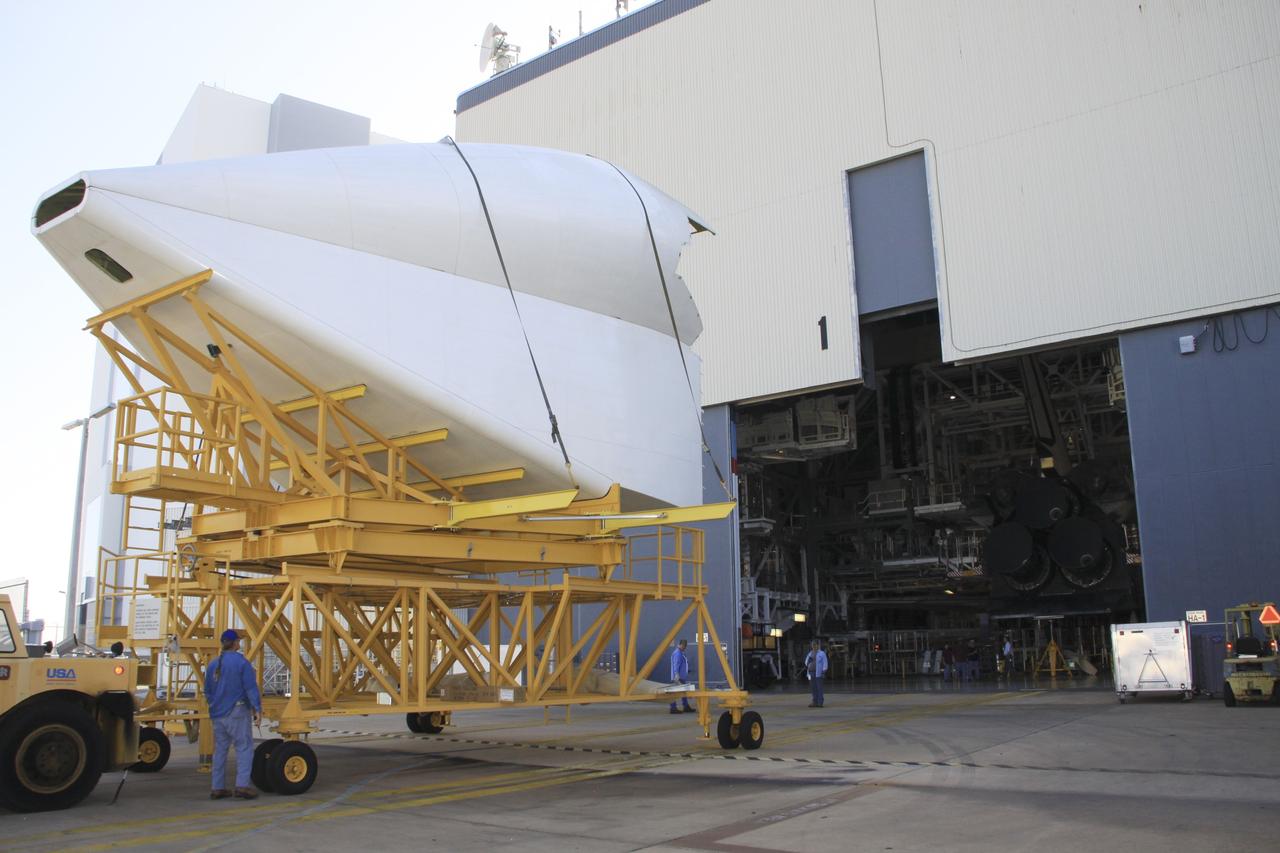
CAPE CANAVERAL, Fla. -- The tail cone for space shuttle Discovery’s three replica shuttle main engines (RSMEs) arrives at Orbiter Processing Facility-1 at NASA’s Kennedy Space Center in Florida. The tail cone will be installed around Discovery’s RSMEs for protection. The work is part of the Space Shuttle Program’s transition and retirement processing of shuttle Discovery. Discovery is being prepared for display at the Smithsonian’s National Air and Space Museum, Steven F. Udvar-Hazy Center in Chantilly, Va. For more information, visit http://www.nasa.gov/shuttle. Photo credit: NASA/Jim Grossmann
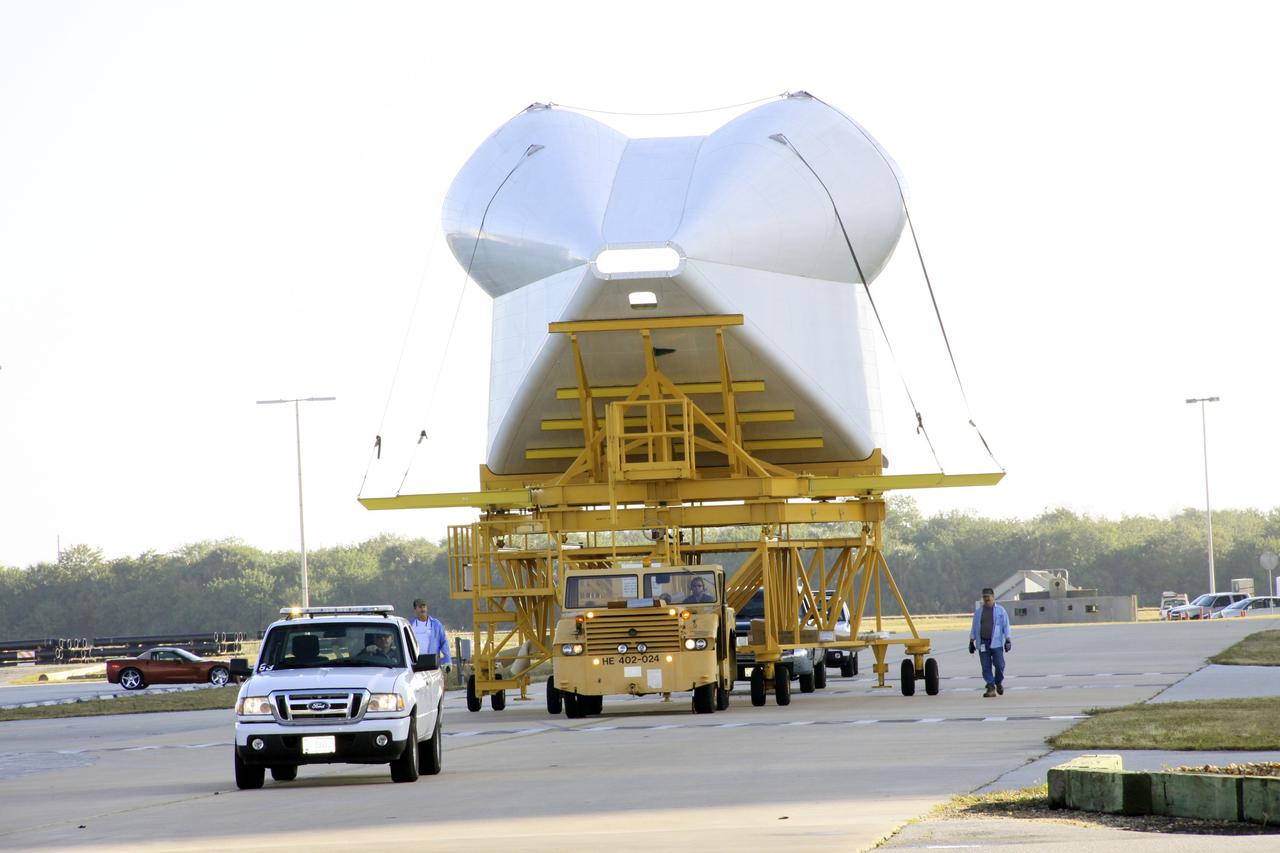
CAPE CANAVERAL, Fla. -- The tail cone for space shuttle Discovery’s three replica shuttle main engines (RSMEs) is being transported to Orbiter processing Facility-1 at NASA’s Kennedy Space Center in Florida. The tail cone will be installed around Discovery’s RSMEs for protection. The work is part of the Space Shuttle Program’s transition and retirement processing of shuttle Discovery. Discovery is being prepared for display at the Smithsonian’s National Air and Space Museum, Steven F. Udvar-Hazy Center in Chantilly, Va. For more information, visit http://www.nasa.gov/shuttle. Photo credit: NASA/Jim Grossmann
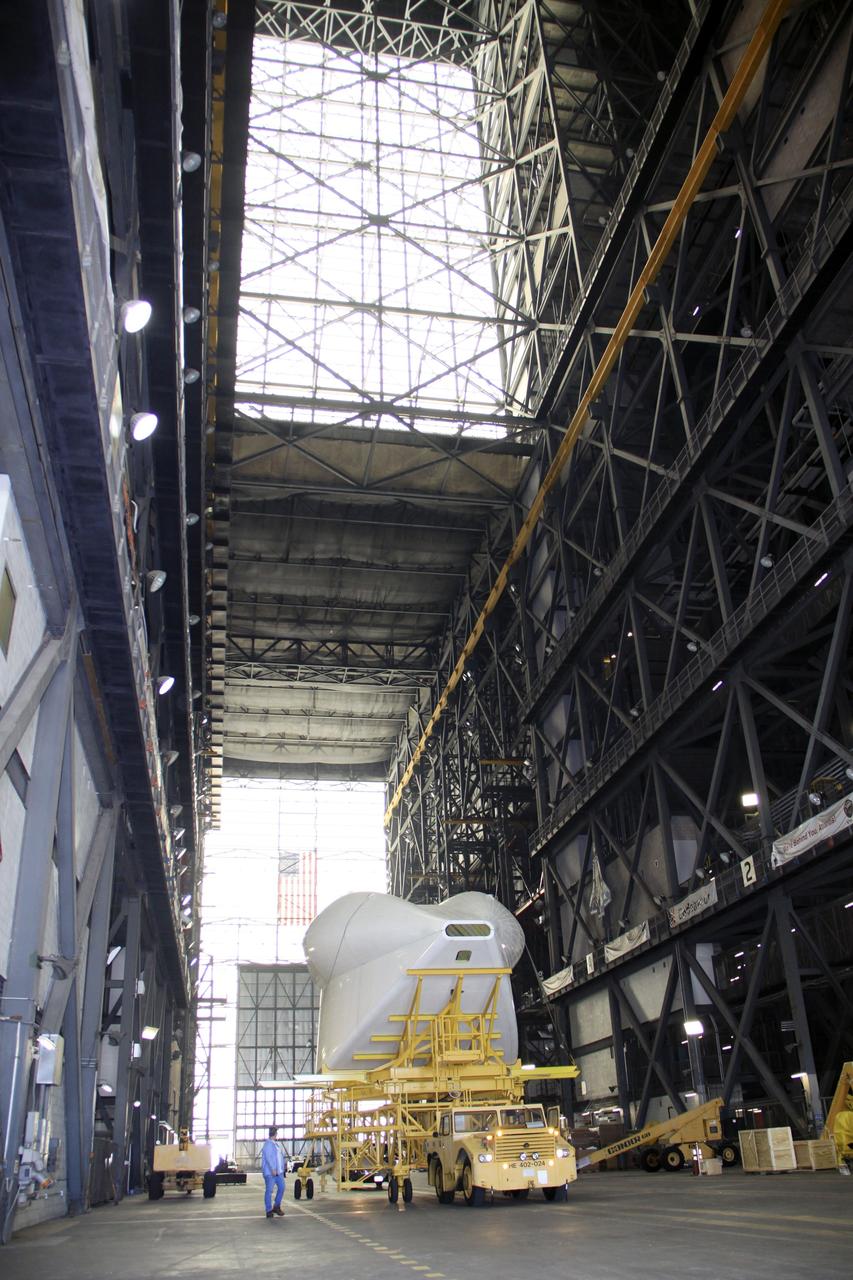
CAPE CANAVERAL, Fla. -- In the transfer aisle of the Vehicle Assembly Building at NASA’s Kennedy Space Center in Florida, the tail cone for space shuttle Discovery’s three replica shuttle main engines (RSMEs) is being transported to Orbiter Processing Facility-1. The tail cone will be installed around Discovery’s RSMEs for protection. The work is part of the Space Shuttle Program’s transition and retirement processing of shuttle Discovery. Discovery is being prepared for display at the Smithsonian’s National Air and Space Museum, Steven F. Udvar-Hazy Center in Chantilly, Va. For more information, visit http://www.nasa.gov/shuttle. Photo credit: NASA/Jim Grossmann

CAPE CANAVERAL, Fla. -- Inside Orbiter Processing Facility-1 at NASA’s Kennedy Space Center in Florida, a view from inside the tail cone reveals space shuttle Discovery’s three replica shuttle main engines (RSMEs). The tail cone is being installed around the RSMEs for protection. The work is part of the Space Shuttle Program’s transition and retirement processing of shuttle Discovery. Discovery is being prepared for display at the Smithsonian’s National Air and Space Museum, Steven F. Udvar-Hazy Center in Chantilly, Va. For more information, visit http://www.nasa.gov/shuttle. Photo credit: NASA/Jim Grossmann
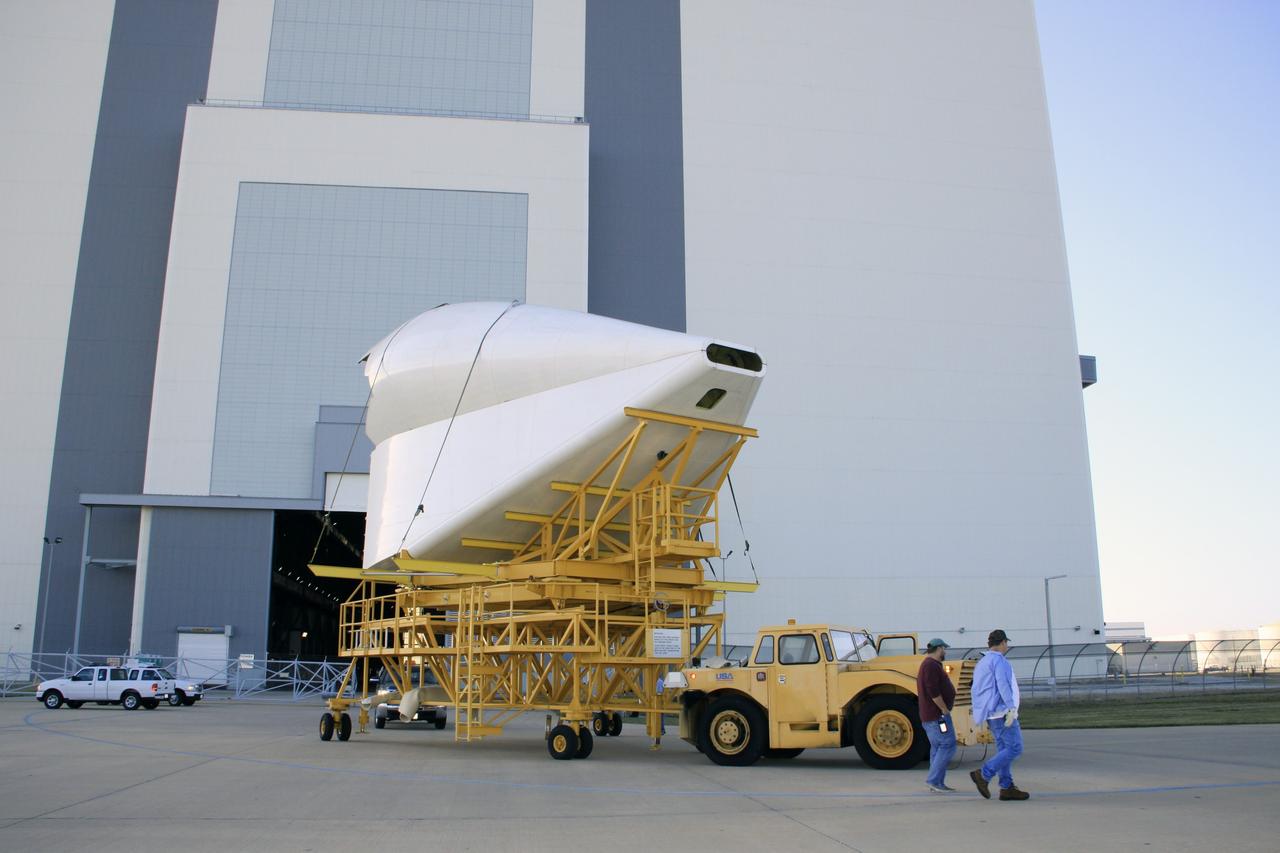
CAPE CANAVERAL, Fla. -- The tail cone for space shuttle Discovery’s three replica shuttle main engines (RSMEs) is being transported from the Vehicle Assembly Building to Orbiter Processing Facility-1 at NASA’s Kennedy Space Center in Florida. The tail cone will be installed around Discovery’s RSMEs for protection. The work is part of the Space Shuttle Program’s transition and retirement processing of shuttle Discovery. Discovery is being prepared for display at the Smithsonian’s National Air and Space Museum, Steven F. Udvar-Hazy Center in Chantilly, Va. For more information, visit http://www.nasa.gov/shuttle. Photo credit: NASA/Jim Grossmann
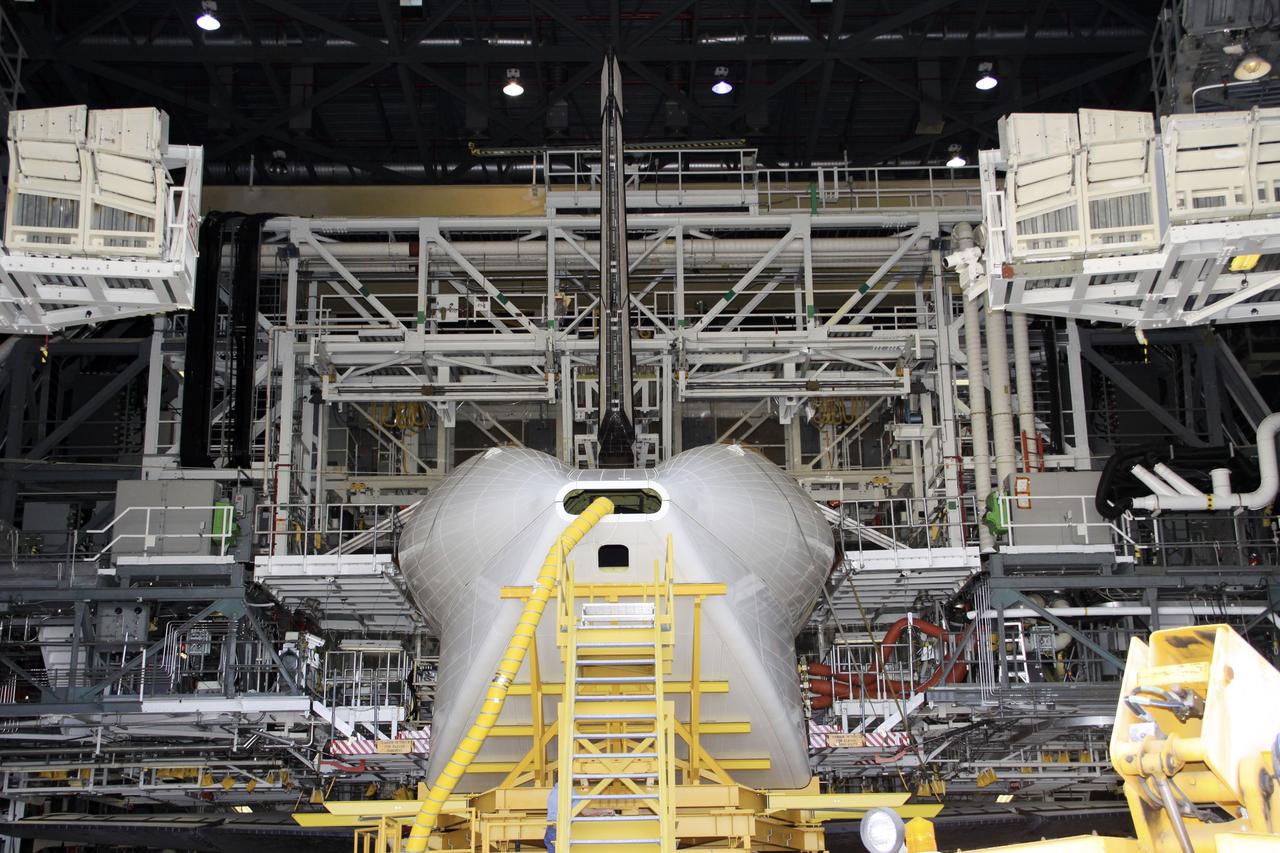
CAPE CANAVERAL, Fla. -- Inside Orbiter Processing Facility-1 at NASA’s Kennedy Space Center in Florida, the tail cone is installed around space shuttle Discovery’s three replica shuttle main engines for protection. The work is part of the Space Shuttle Program’s transition and retirement processing of shuttle Discovery. Discovery is being prepared for display at the Smithsonian’s National Air and Space Museum, Steven F. Udvar-Hazy Center in Chantilly, Va. For more information, visit http://www.nasa.gov/shuttle. Photo credit: NASA/Jim Grossmann
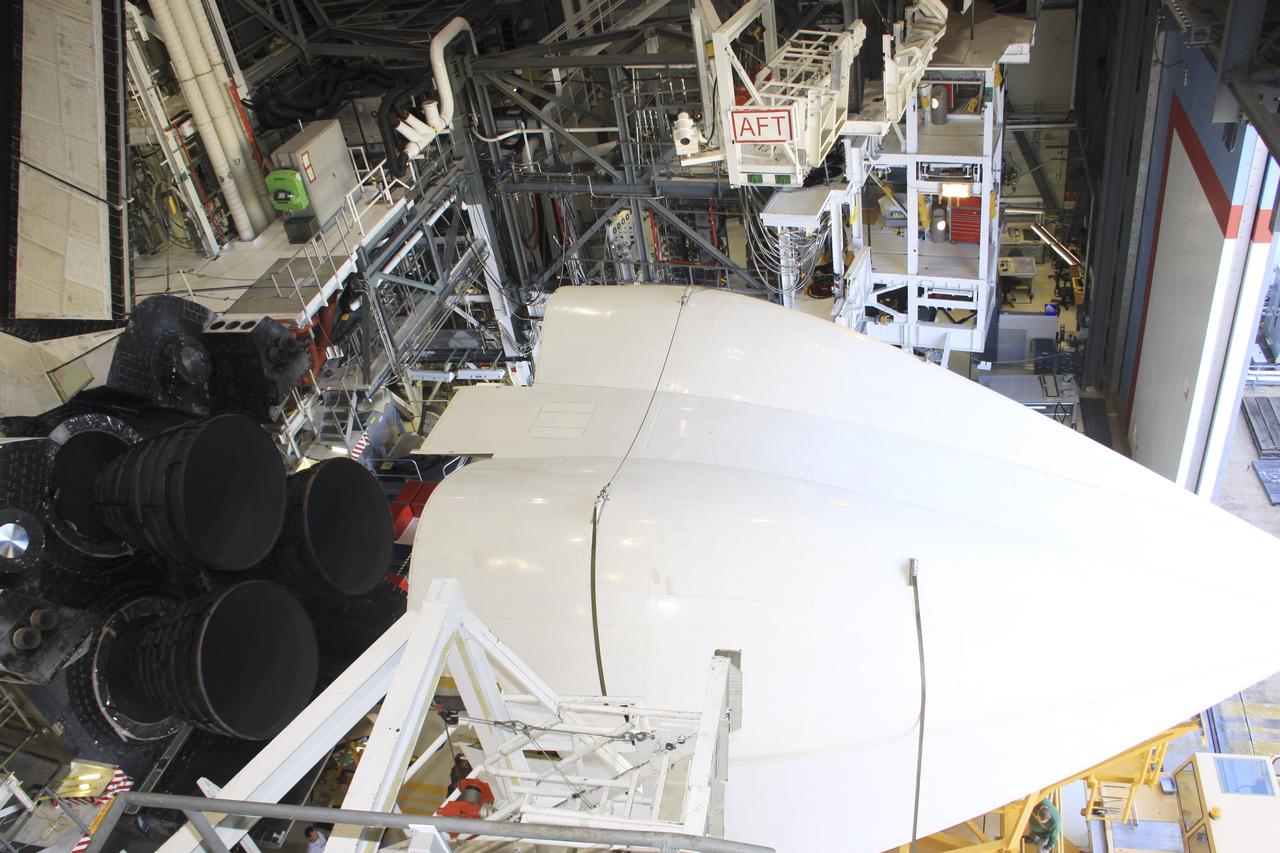
CAPE CANAVERAL, Fla. -- Inside Orbiter Processing Facility-1 at NASA’s Kennedy Space Center in Florida, the tail cone is being installed around Discovery’s three replica shuttle main engines for protection. The work is part of the Space Shuttle Program’s transition and retirement processing of shuttle Discovery. Discovery is being prepared for display at the Smithsonian’s National Air and Space Museum, Steven F. Udvar-Hazy Center in Chantilly, Va. For more information, visit http://www.nasa.gov/shuttle. Photo credit: NASA/Jim Grossmann
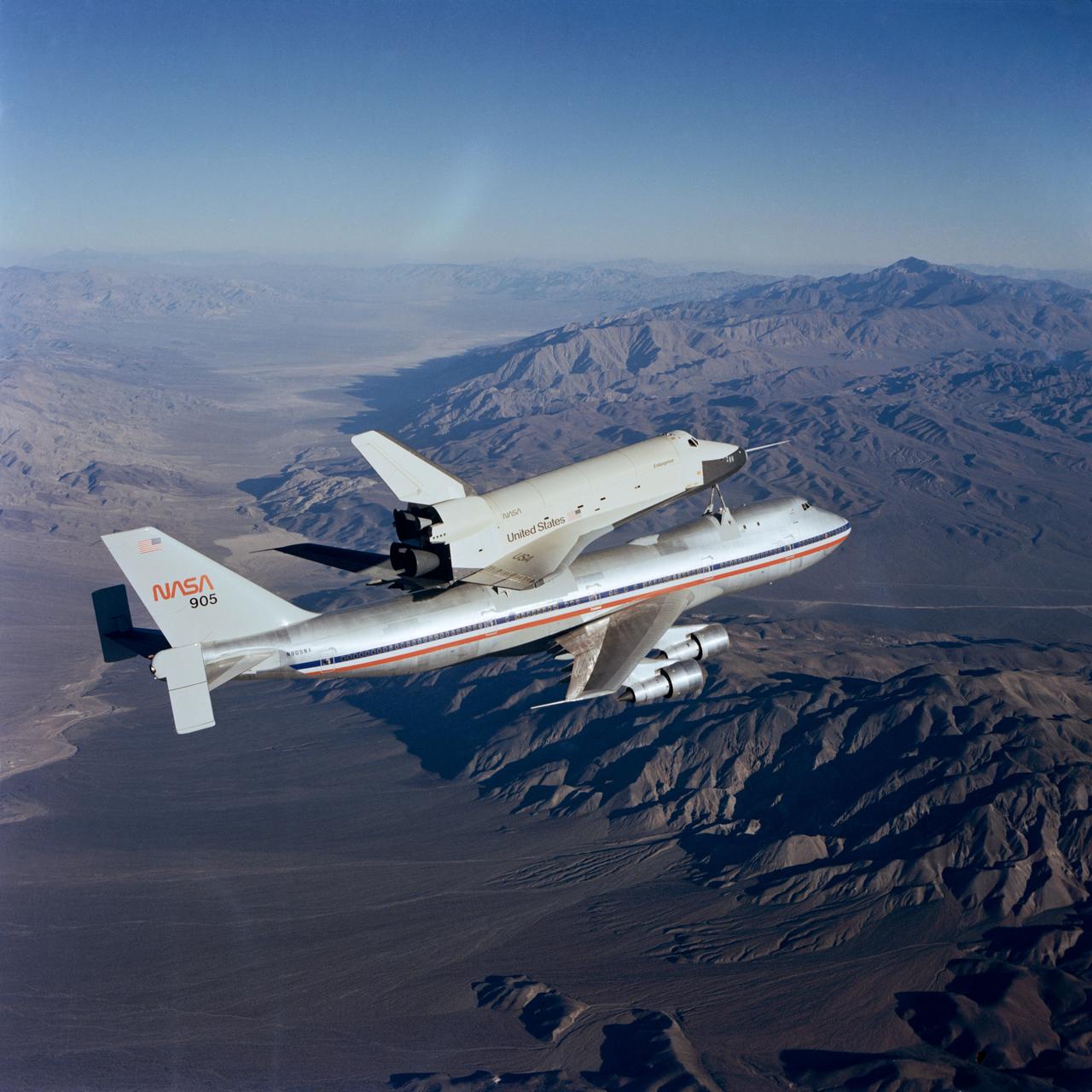
Frame of color news-released stills. This was a Tail Cone Off Mission. Stack Enterprise and 747 in flight.
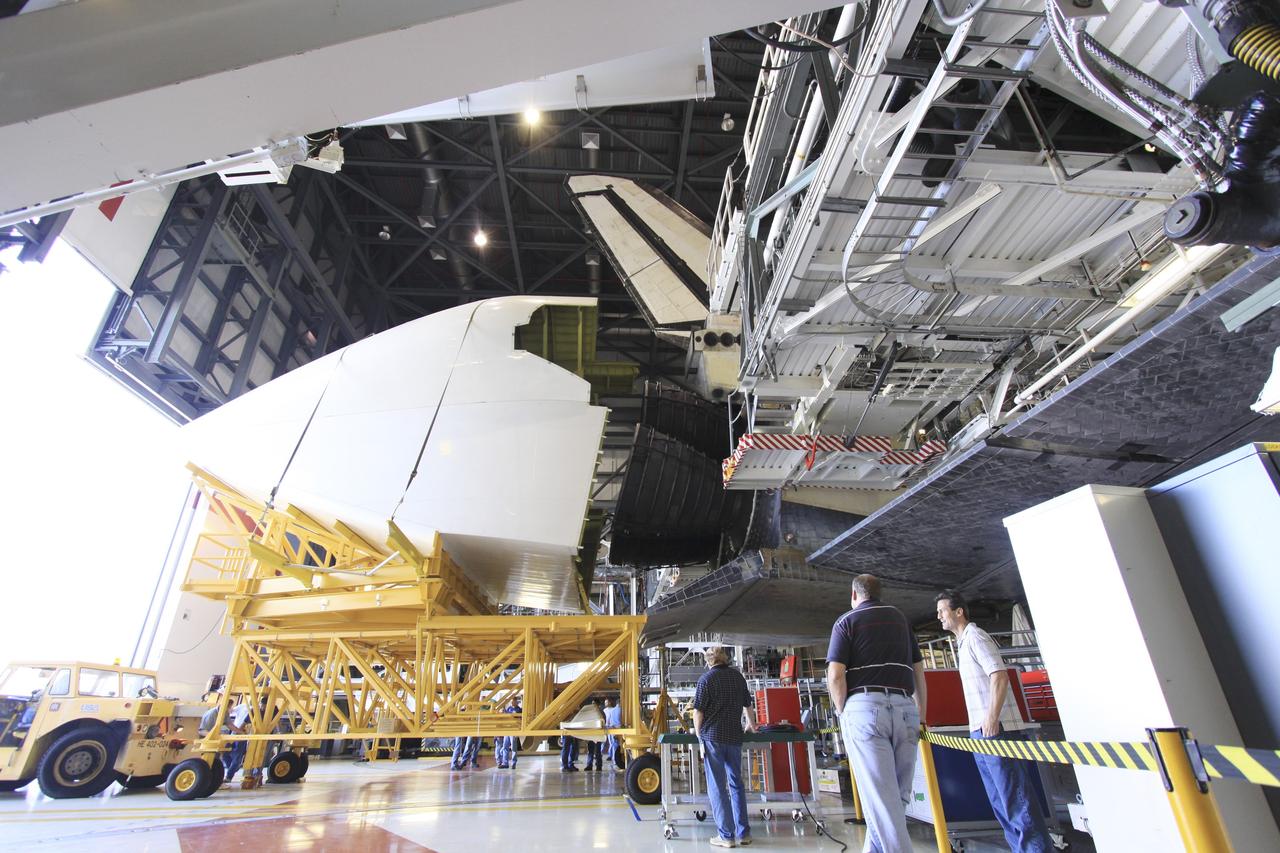
CAPE CANAVERAL, Fla. -- Inside Orbiter Processing Facility-1 at NASA’s Kennedy Space Center in Florida, technicians monitor the progress as the tail cone is installed around space shuttle Discovery’s three replica shuttle main engines for protection. The work is part of the Space Shuttle Program’s transition and retirement processing of shuttle Discovery. Discovery is being prepared for display at the Smithsonian’s National Air and Space Museum, Steven F. Udvar-Hazy Center in Chantilly, Va. For more information, visit http://www.nasa.gov/shuttle. Photo credit: NASA/Jim Grossmann
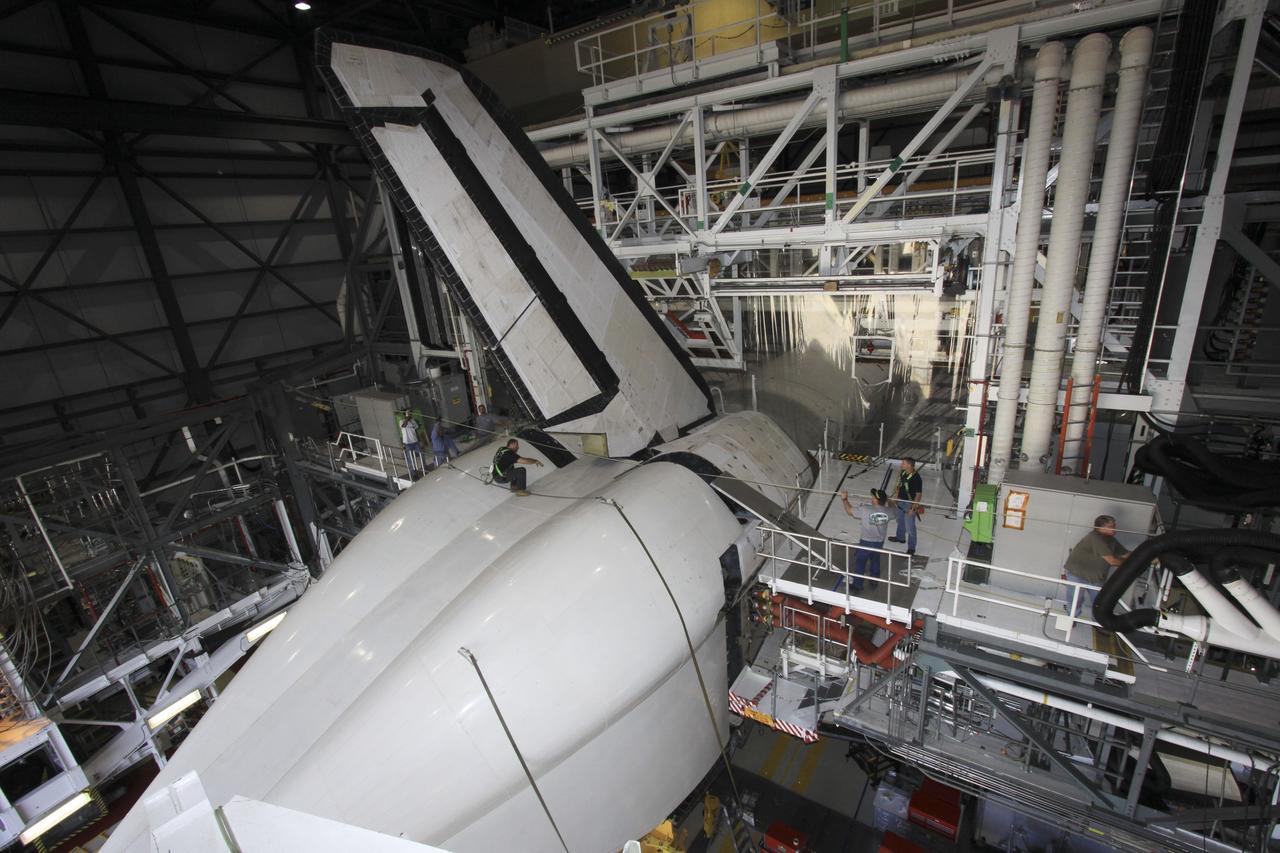
CAPE CANAVERAL, Fla. -- Inside Orbiter Processing Facility-1 at NASA’s Kennedy Space Center in Florida, technicians help secure the tail cone around space shuttle Discovery’s three replica shuttle main engines for protection. The work is part of the Space Shuttle Program’s transition and retirement processing of shuttle Discovery. Discovery is being prepared for display at the Smithsonian’s National Air and Space Museum, Steven F. Udvar-Hazy Center in Chantilly, Va. For more information, visit http://www.nasa.gov/shuttle. Photo credit: NASA/Jim Grossmann
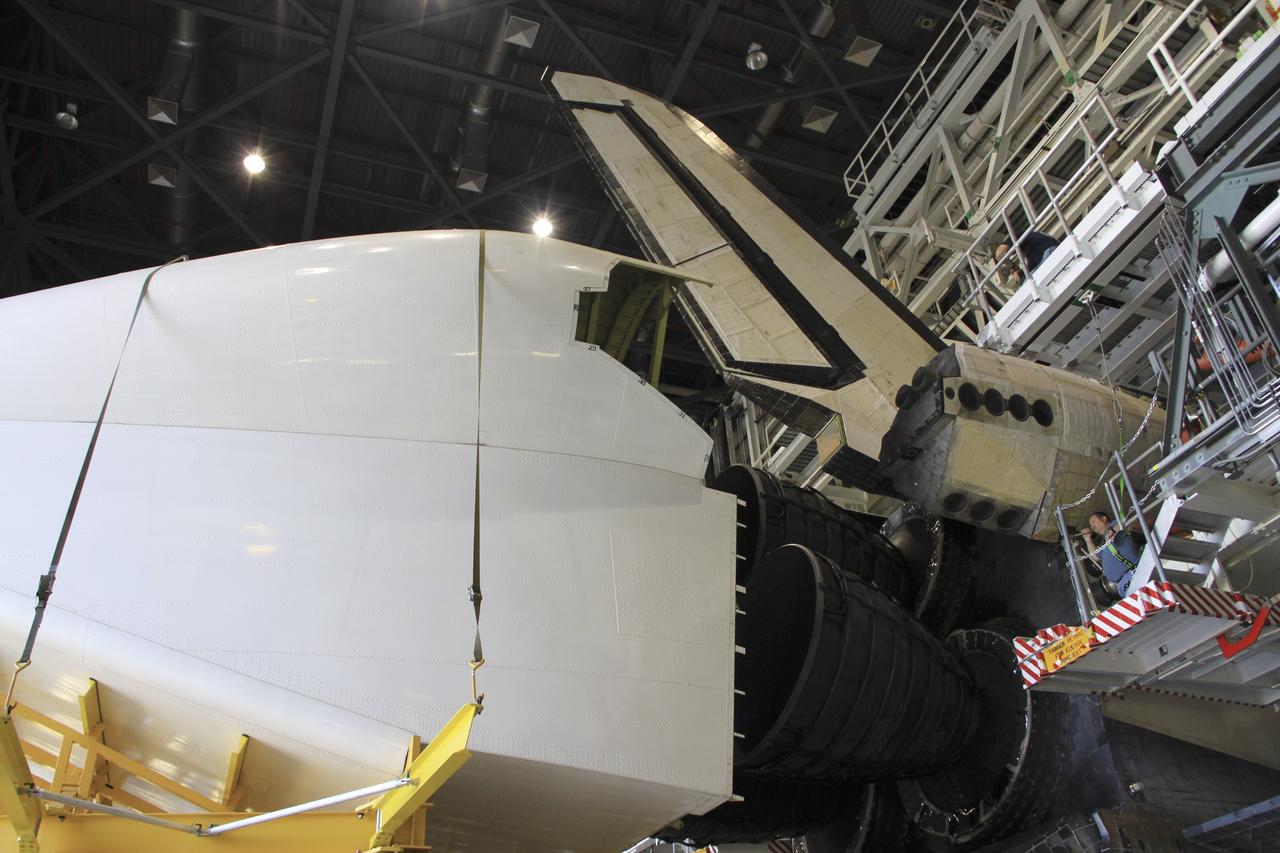
CAPE CANAVERAL, Fla. -- Inside Orbiter Processing Facility-1 at NASA’s Kennedy Space Center in Florida, a technician monitors the progress as the tail cone is installed around space shuttle Discovery’s three replica shuttle main engines for protection. The work is part of the Space Shuttle Program’s transition and retirement processing of shuttle Discovery. Discovery is being prepared for display at the Smithsonian’s National Air and Space Museum, Steven F. Udvar-Hazy Center in Chantilly, Va. For more information, visit http://www.nasa.gov/shuttle. Photo credit: NASA/Jim Grossmann
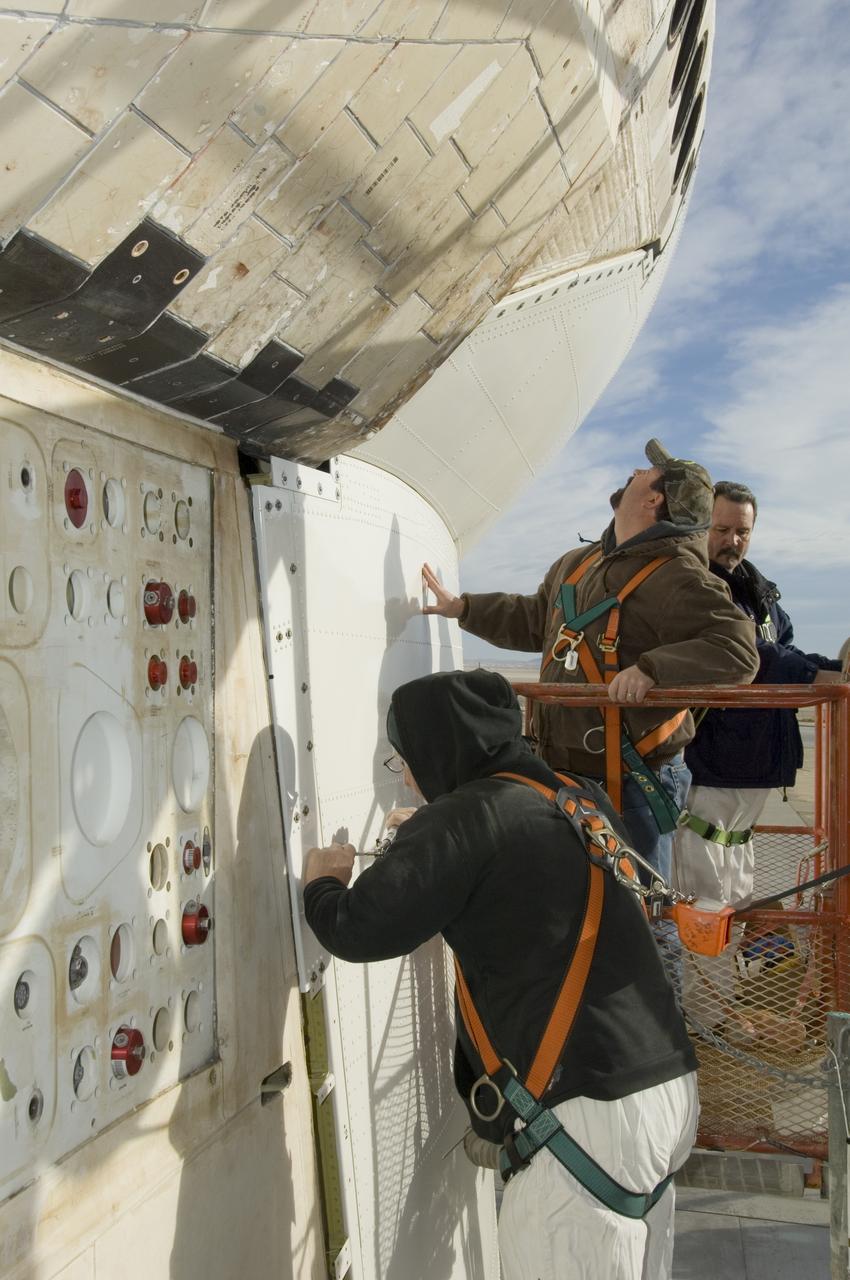
Technicians fasten down the flanges of the aerodynamic tail cone after installation on NASA's Space Shuttle Endeavour prior to its ferry flight from NASA's Dryden Flight Research Center to NASA's Kennedy Space Center in Florida.

Frame of color news-released stills. This was a Tail Cone Off Mission. Crew was made up of Astronauts Engle and Truly. Astronauts Engle, Truly egress Orbiter following flt. DFRC, CA
T&R Endeavour Right Side Tail Cone Buildup
T&R Endeavour Left Side Tail Cone Buildup
T&R Endeavour Right Side Tail Cone Buildup
T&R Endeavour Left Side Tail Cone Buildup
T&R Endeavour Left Side Tail Cone Buildup
T&R Endeavour Right Side Tail Cone Buildup
T&R Endeavour Left Side Tail Cone Buildup
T&R Endeavour Left Side Tail Cone Buildup
T&R Endeavour Right Side Tail Cone Buildup
T&R Endeavour Left Side Tail Cone Buildup
T&R Endeavour Left Side Tail Cone Buildup
T&R Endeavour Right Side Tail Cone Buildup
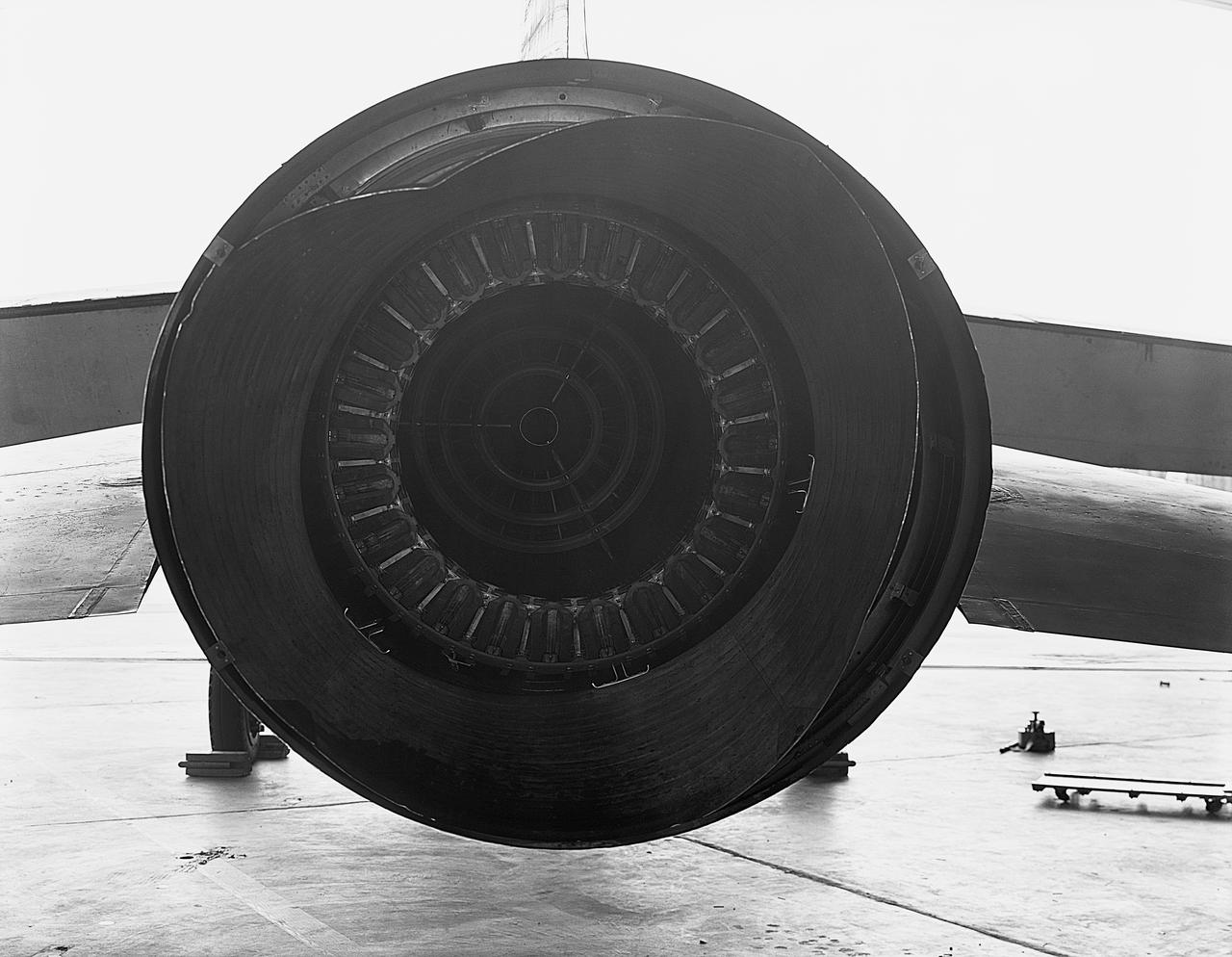
Exhaust cone damage.
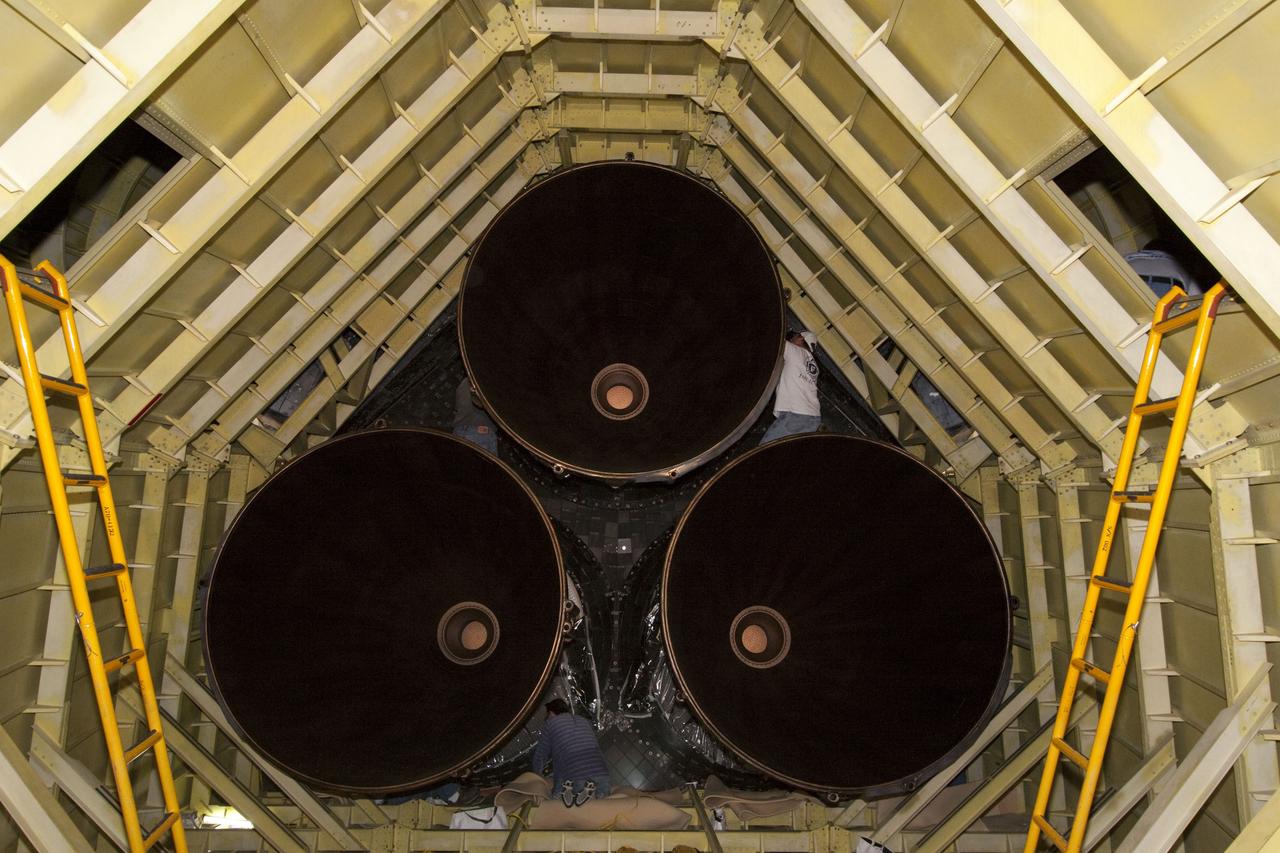
CAPE CANAVERAL, Fla. – This view inside the tail cone shows how it surrounds the replica main engines on the space shuttle Endeavour as a United Space Alliance technician checks the fittings. The cone has been placed in position covering the aft section of the shuttle Orbiter Processing Facility Bay 2 at NASA’s Kennedy Space Center in Florida. The tail cone provides aerodynamic stability during the cross-country ferry flight. The work is part of Transition and Retirement of the remaining space shuttles, Endeavour and Atlantis. Endeavour is being prepared for public display at the California Science Center in Los Angeles. Its ferry flight to California is targeted for mid-September. Endeavour was the last space shuttle added to NASA’s orbiter fleet. Over the course of its 19-year career, Endeavour spent 299 days in space during 25 missions. For more information, visit http://www.nasa.gov/transition Photo credit: NASA/ Jim Grossmann
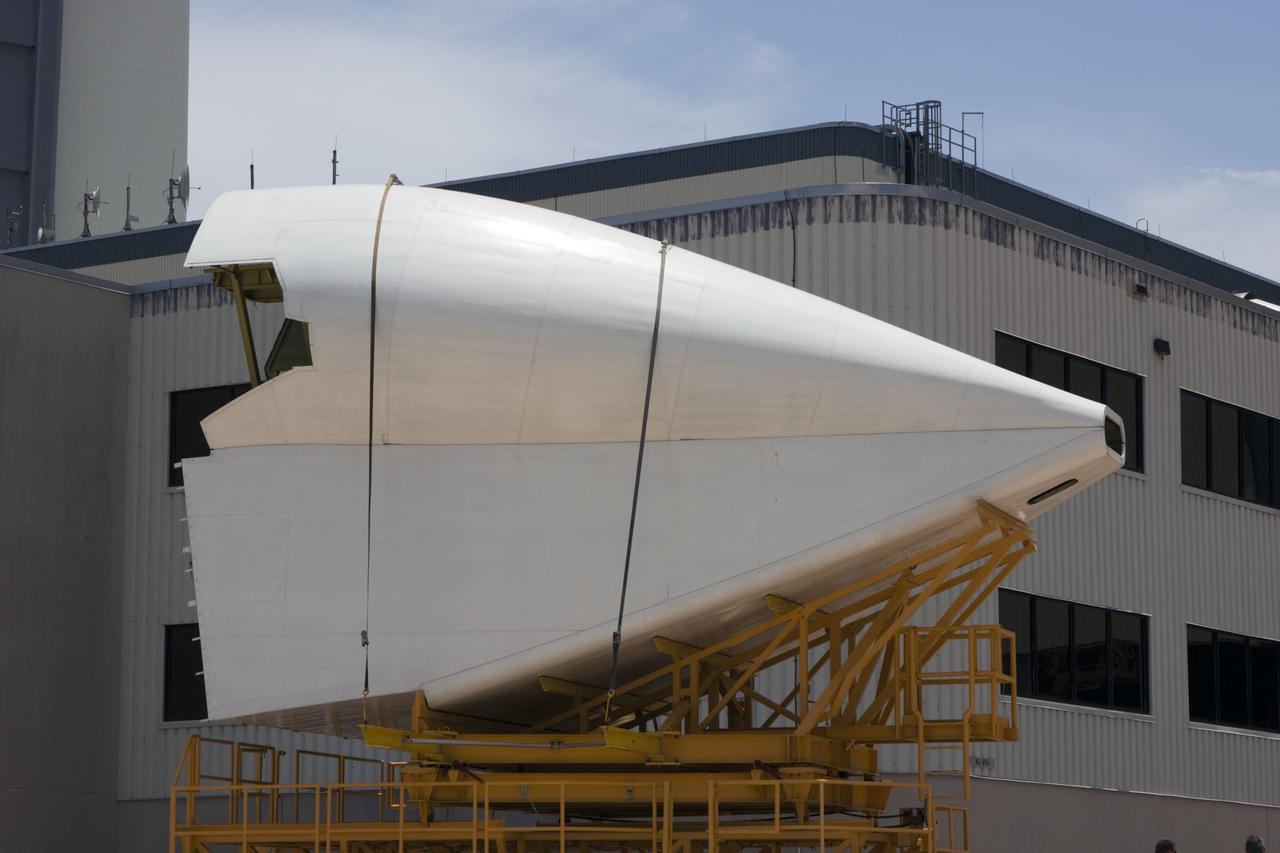
CAPE CANAVERAL, Fla. -- The tail cone that will cover space shuttle Endeavour’s replica shuttle main engines arrives at Orbiter Processing Facility-2, or OPF-2, from the Vehicle Assembly Building at NASA’s Kennedy Space Center in Florida. Inside OPF-2, the tail cone will be installed on Endeavour. The work is part of Transition and Retirement of the remaining space shuttles, Endeavour and Atlantis. Endeavour is being prepared for public display at the California Science Center in Los Angeles. Its ferry flight to California is targeted for mid-September. Endeavour was the last space shuttle added to NASA’s orbiter fleet. Over the course of its 19-year career, Endeavour spent 299 days in space during 25 missions. For more information, visit http://www.nasa.gov/shuttle. Photo credit: NASA/Jim Grossmann
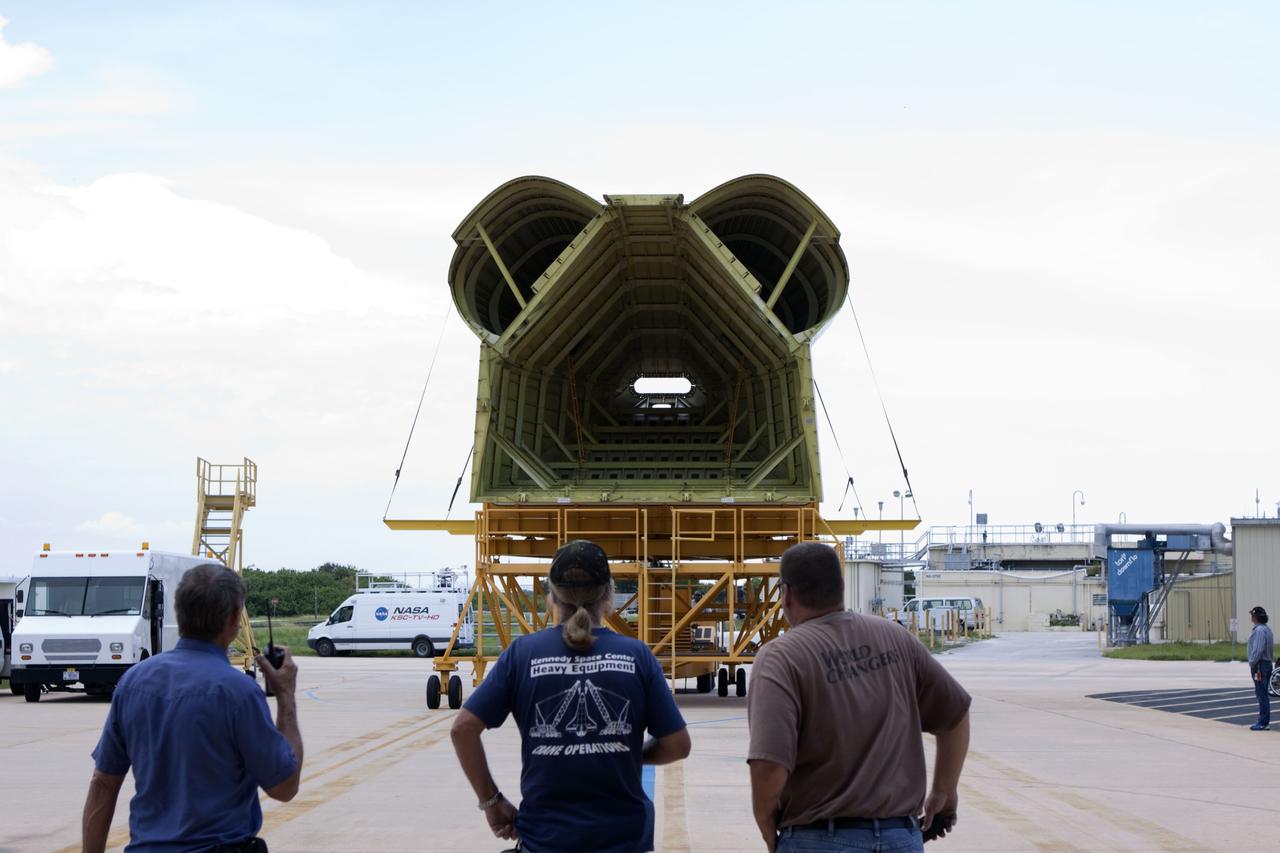
CAPE CANAVERAL, Fla. -- United Space Alliance technicians monitor the progress as the tail cone that will cover space shuttle Endeavour’s replica shuttle main engines arrives at Orbiter Processing Facility-2, or OPF-2, from the Vehicle Assembly Building at NASA’s Kennedy Space Center in Florida. Inside OPF-2, the tail cone will be installed on Endeavour. The work is part of Transition and Retirement of the remaining space shuttles, Endeavour and Atlantis. Endeavour is being prepared for public display at the California Science Center in Los Angeles. Its ferry flight to California is targeted for mid-September. Endeavour was the last space shuttle added to NASA’s orbiter fleet. Over the course of its 19-year career, Endeavour spent 299 days in space during 25 missions. For more information, visit http://www.nasa.gov/shuttle. Photo credit: NASA/Jim Grossmann
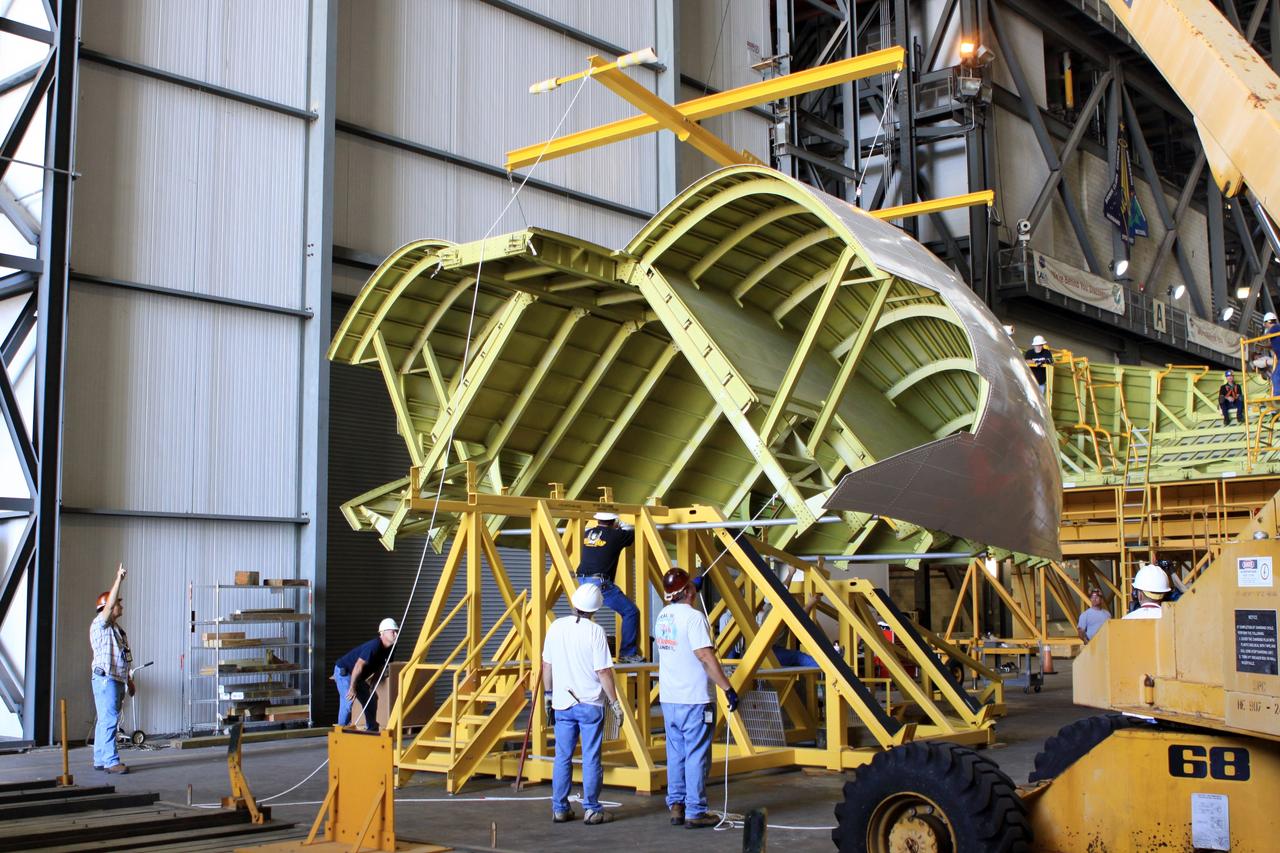
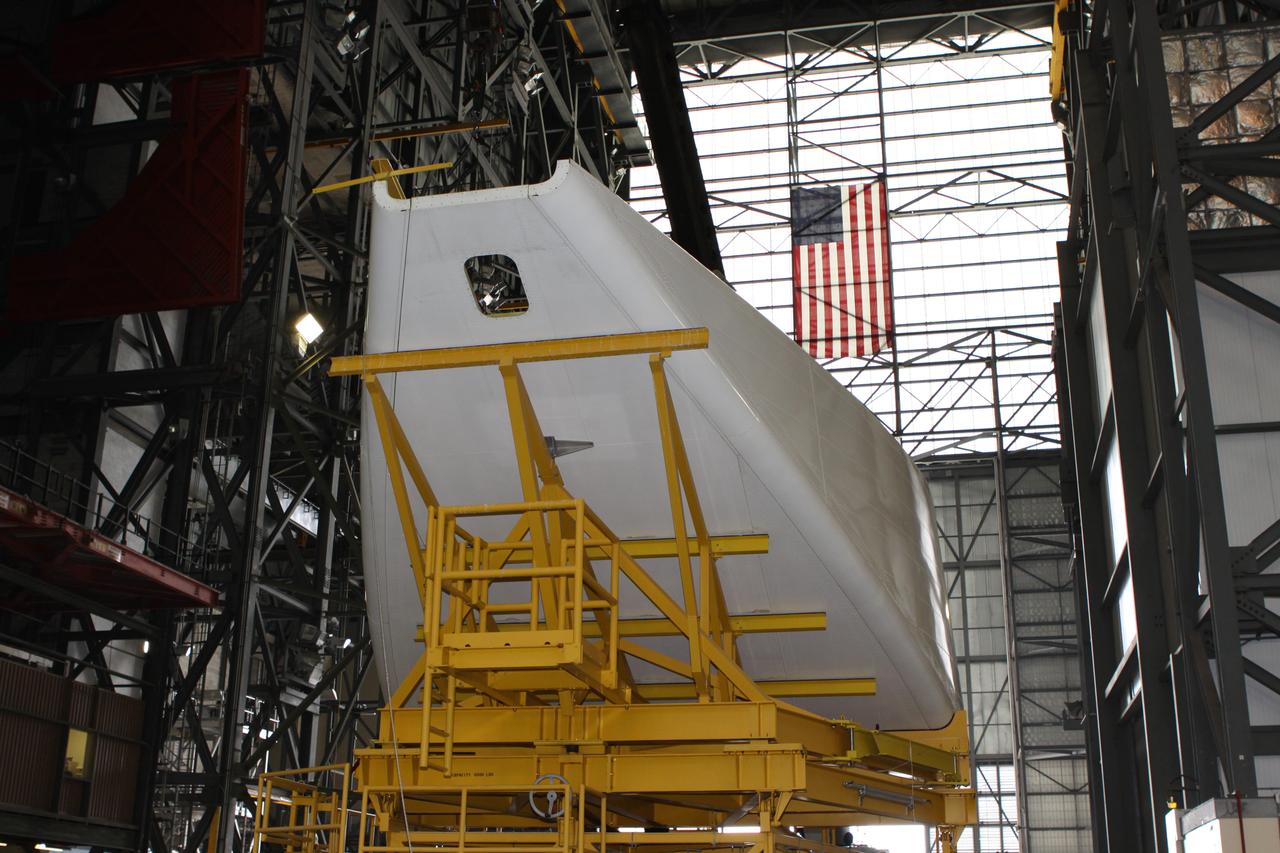
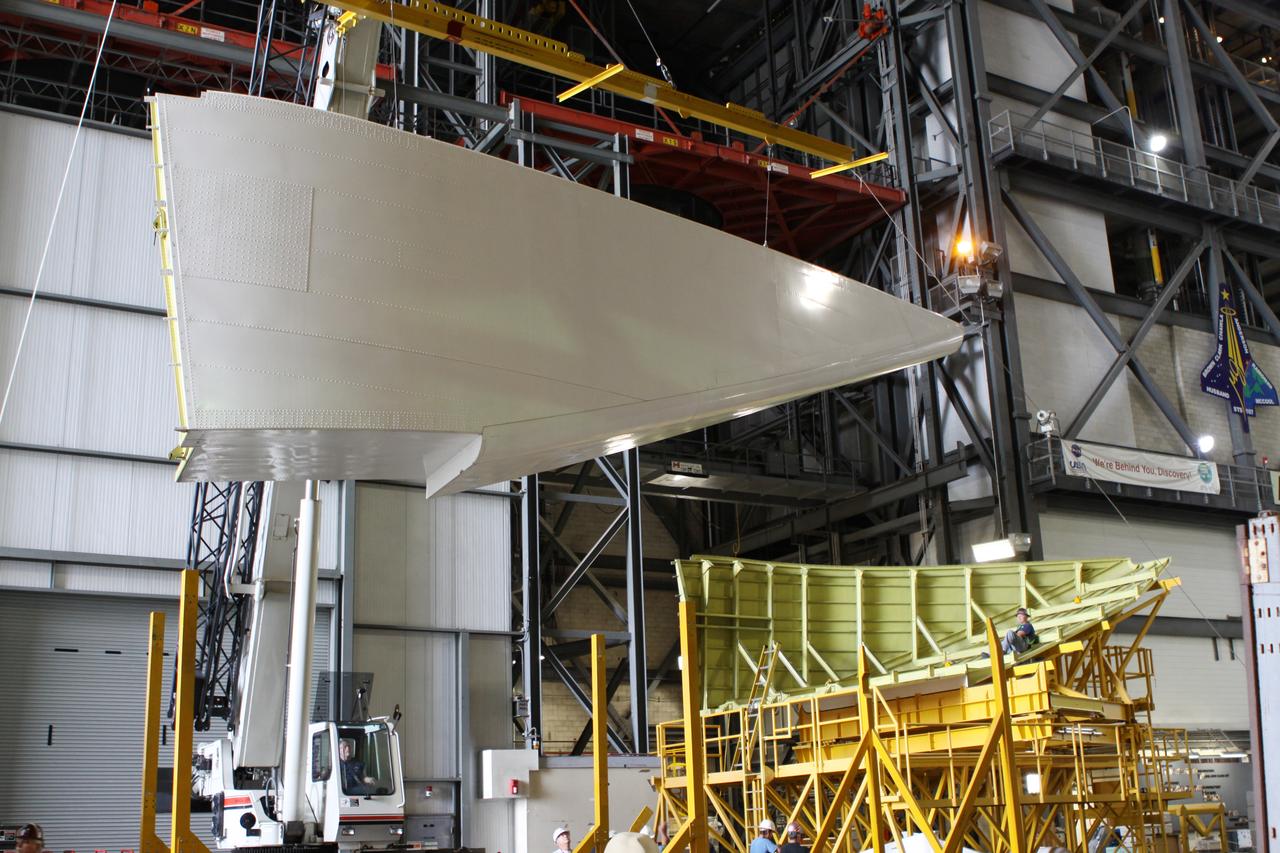
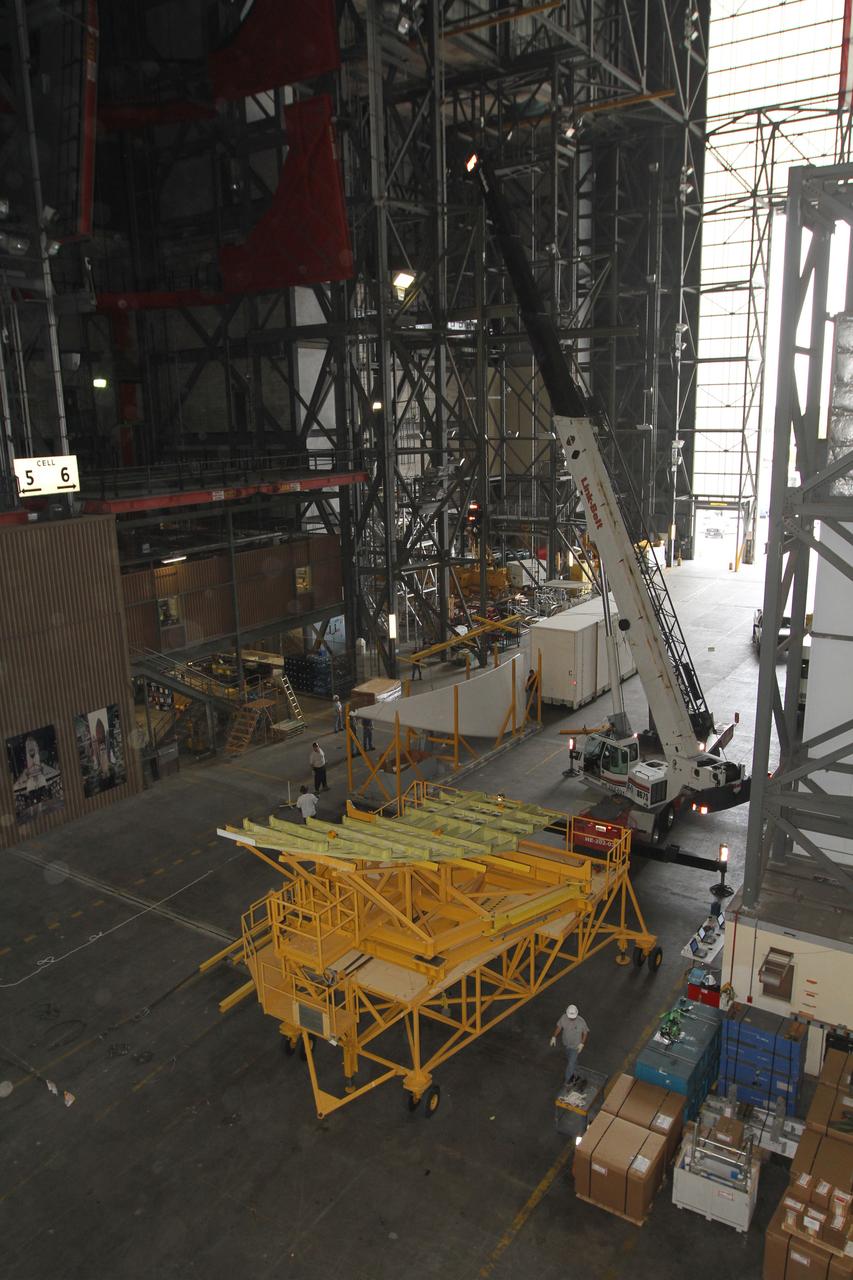
CAPE CANAVERAL, Fla. – In the transfer isle of the Vehicle Assembly Building at NASA’s Kennedy Space Center in Florida, technicians finish building the tail cone that will be installed around space shuttle Endeavour’s three replica shuttle main engines for protection. The tail cone protects the main engines during ferry flights on top of the Shuttle Carrier Aircraft, or SCA. The work is part of the Space Shuttle Program’s transition and retirement processing of shuttle Endeavour. Endeavour is being prepared for public display at the California Science Center in Los Angeles. Its ferry flight to California is targeted for mid-September. Endeavour was the last space shuttle added to NASA’s orbiter fleet. Over the course of its 19-year career, Endeavour spent 299 days in space during 25 missions. For more information, visit http://www.nasa.gov/shuttle. Photo credit: NASA/Jim Grossmann
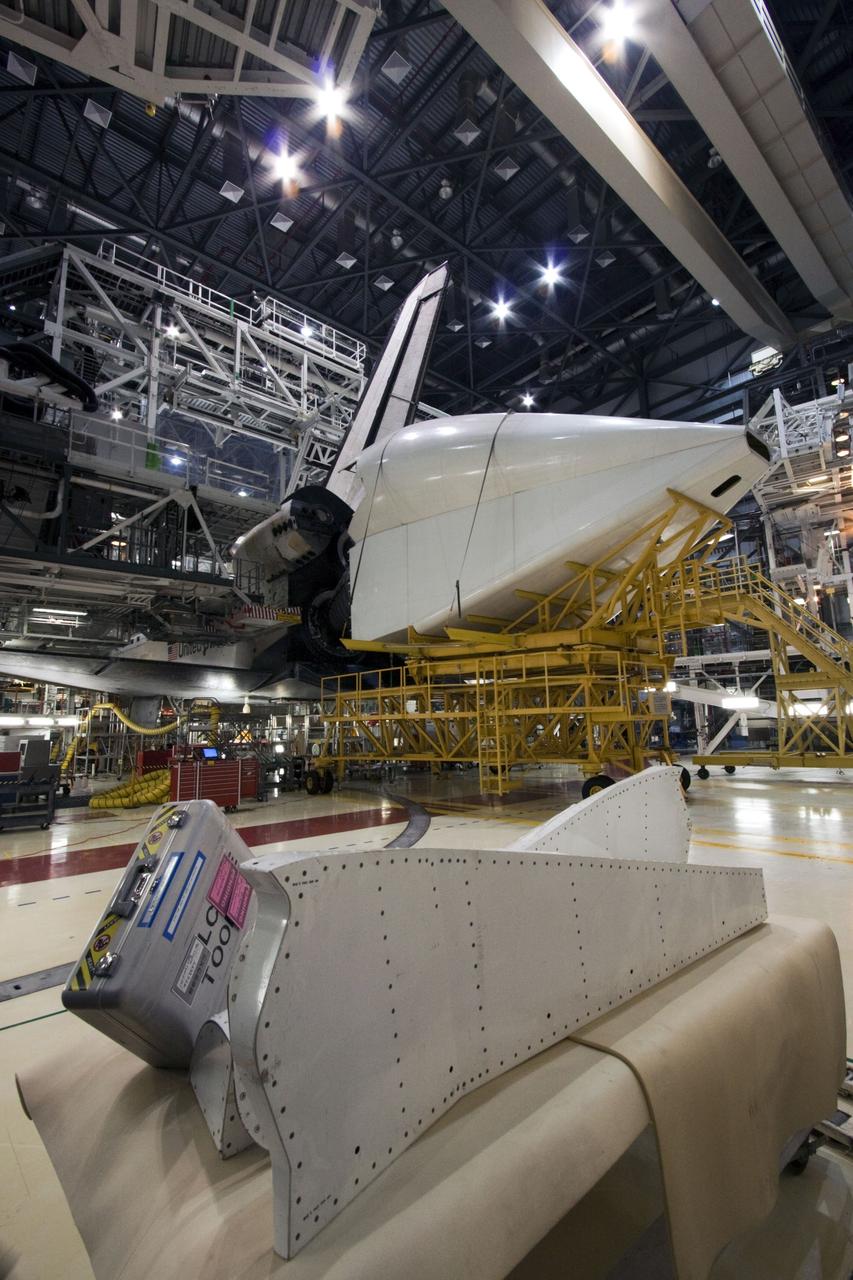
CAPE CANAVERAL, Fla. – In Orbiter Processing Facility Bay 2 at NASA’s Kennedy Space Center in Florida, the tail cone is moved into position for attachment to the space shuttle Endeavour. The tail cone covers the main engines in the aft providing aerodynamic stability during the cross-country ferry flight. The work is part of Transition and Retirement of the remaining space shuttles, Endeavour and Atlantis. Endeavour is being prepared for public display at the California Science Center in Los Angeles. Its ferry flight to California is targeted for mid-September. Endeavour was the last space shuttle added to NASA’s orbiter fleet. Over the course of its 19-year career, Endeavour spent 299 days in space during 25 missions. For more information, visit http://www.nasa.gov/transition Photo credit: NASA/ Jim Grossmann
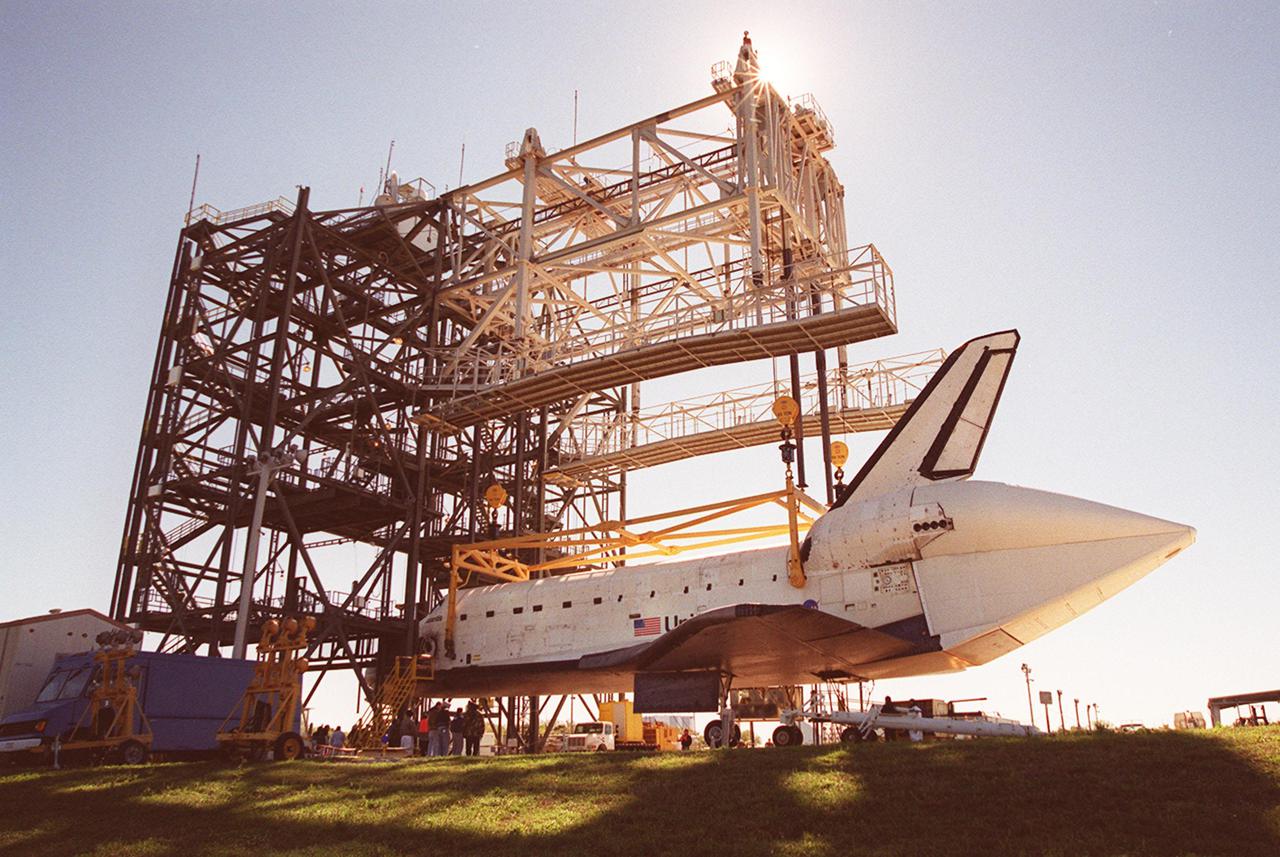
At the mate_demate device at KSC’s Shuttle Landing Facility, Atlantis is lowered onto its wheels in preparation for being towed to the Orbiter Processing Facility. This view of Atlantis shows the tail cone that orbiters use when being carried piggyback on ferry flights atop a Shuttle Carrier Aircraft. The tail cone protects the aft engine area and provides a more efficient aeronautical dimension during flight. Atlantis returned from California atop the SCA after its Feb. 19 landing at Edwards Air Force Base concluding mission STS-98. The ferry flight began March 1; unfavorable weather conditions kept it on the ground at Altus AFB, Okla., until it could return to Florida. In the Orbiter Processing Facility, Atlantis will be prepared for mission STS-104, the 10th construction flight to the International Space Station, scheduled to launch June 8
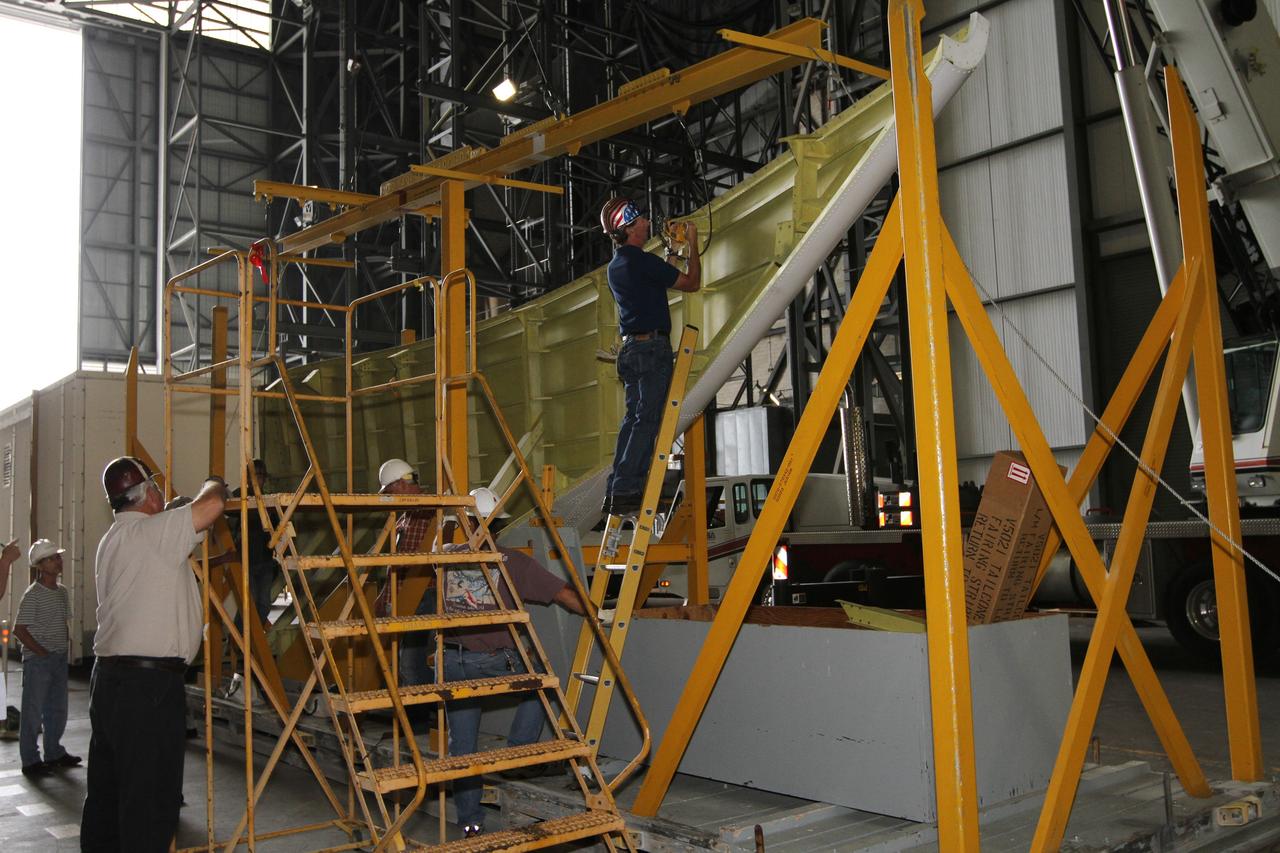
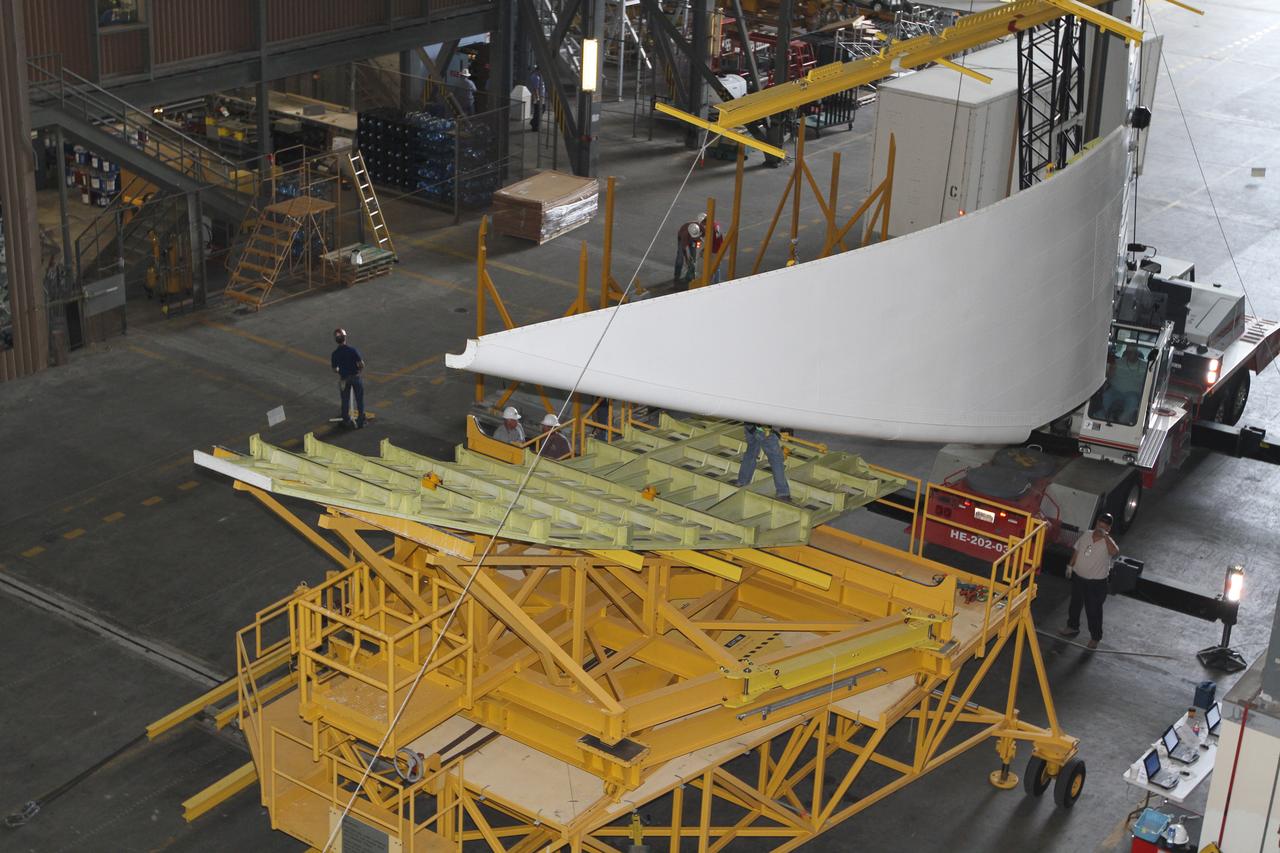
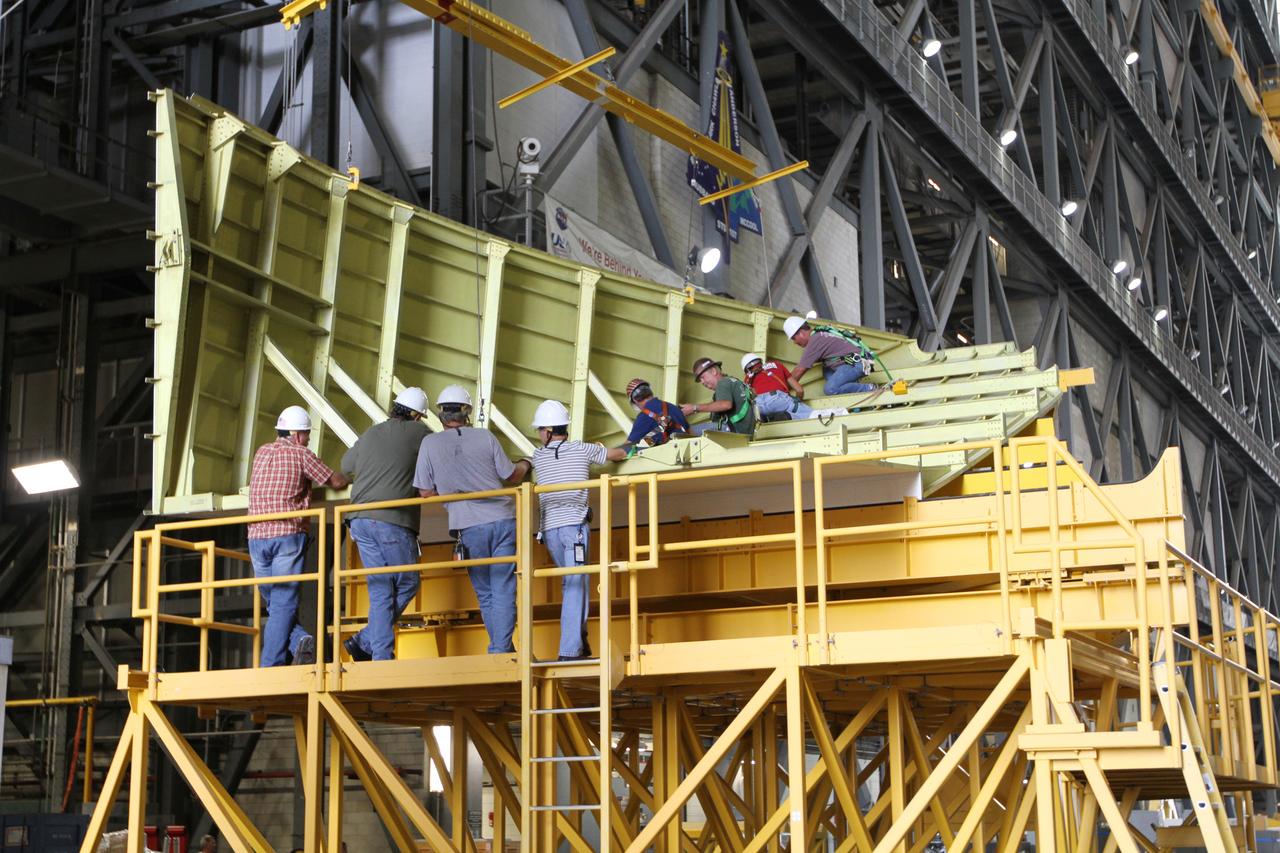
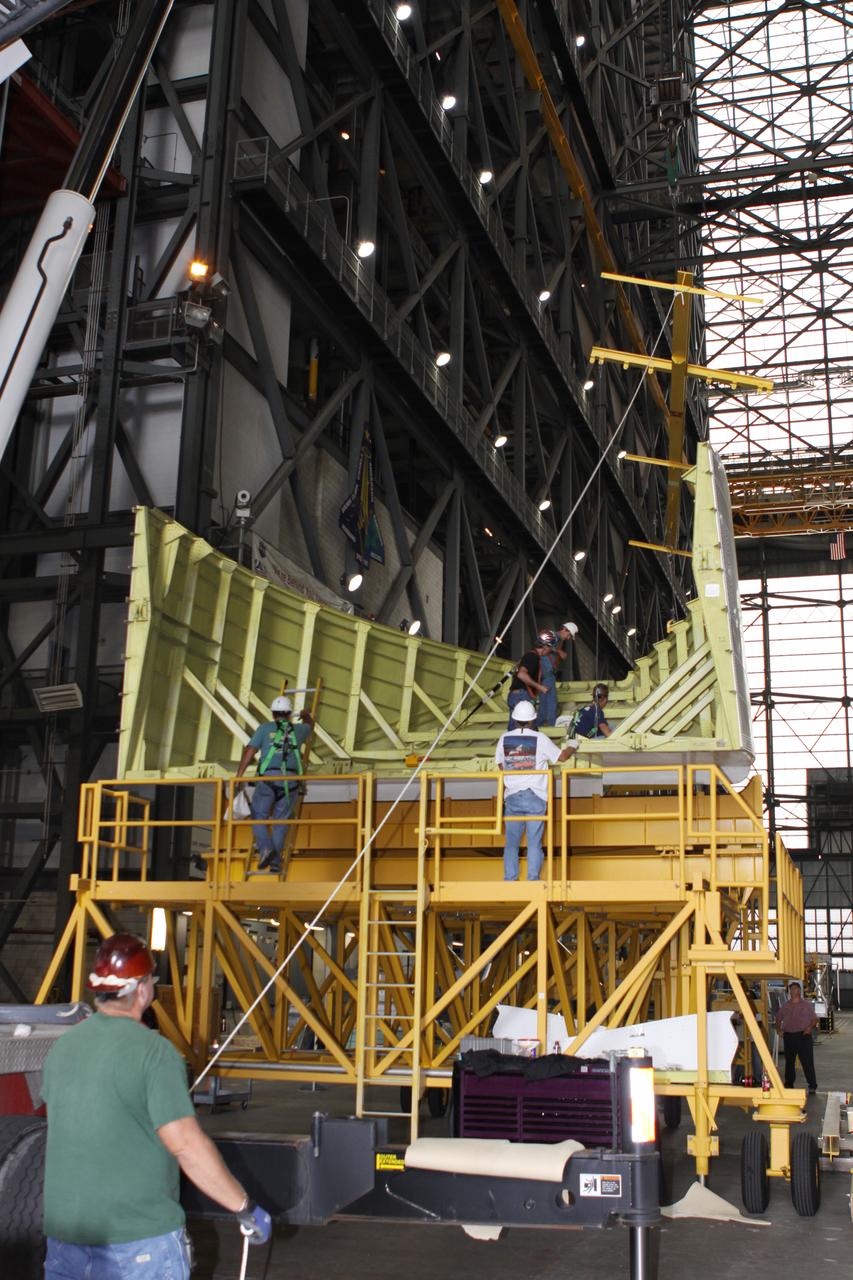
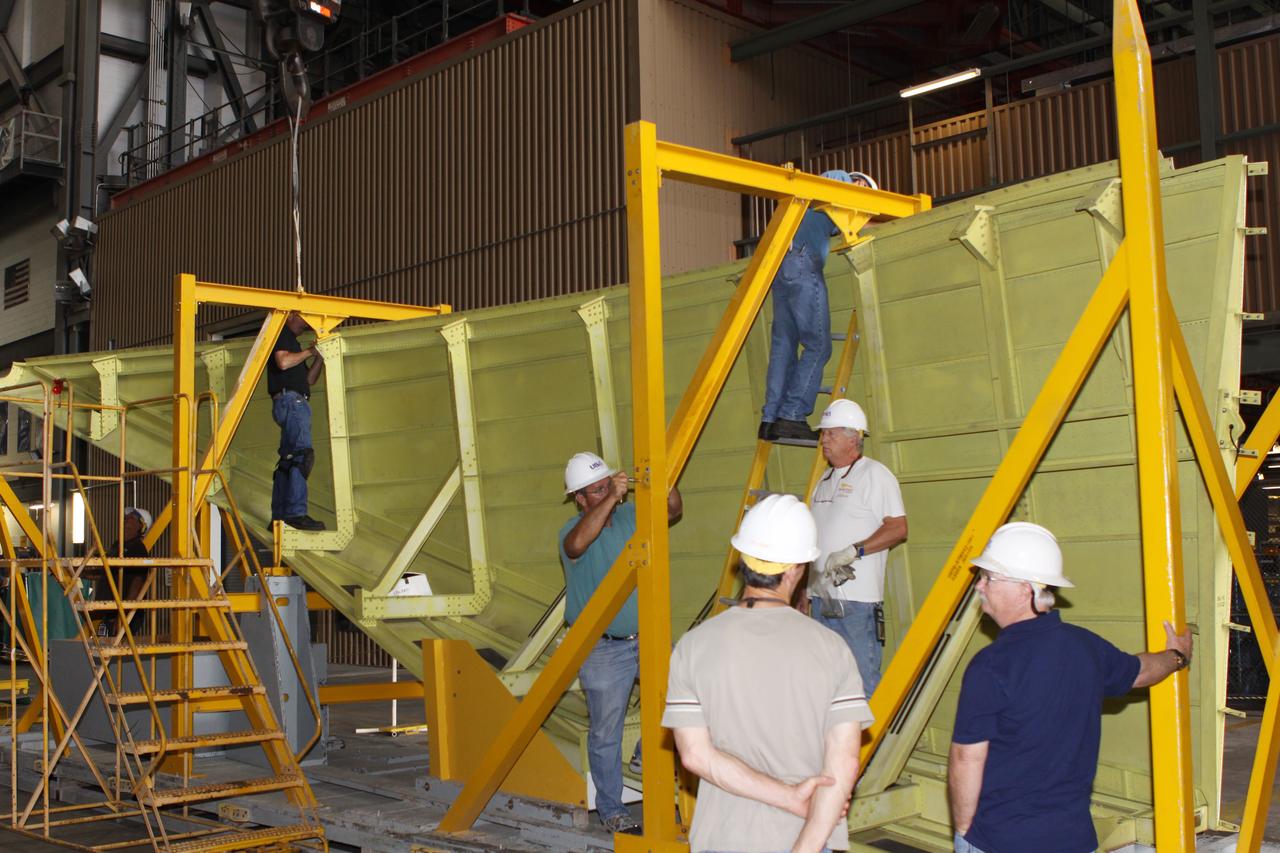
CAPE CANAVERAL, Fla. – Inside the Vehicle Assembly Building at NASA’s Kennedy Space Center in Florida, United Space Alliance technicians prepare the right side tail cone for buildup on space shuttle Endeavour. The tail cone protects space shuttle main engines during ferry flights on top of the Shuttle Carrier Aircraft, or SCA. The work is part of Transition and Retirement of the remaining space shuttles, Endeavour and Atlantis. Endeavour is being prepared for public display at the California Science Center in Los Angeles. Its ferry flight to California is targeted for mid-September. Endeavour was the last space shuttle added to NASA’s orbiter fleet. Over the course of its 19-year career, Endeavour spent 299 days in space during 25 missions. For more information, visit http://www.nasa.gov/shuttle. Photo credit: NASA/Kim Shiflett
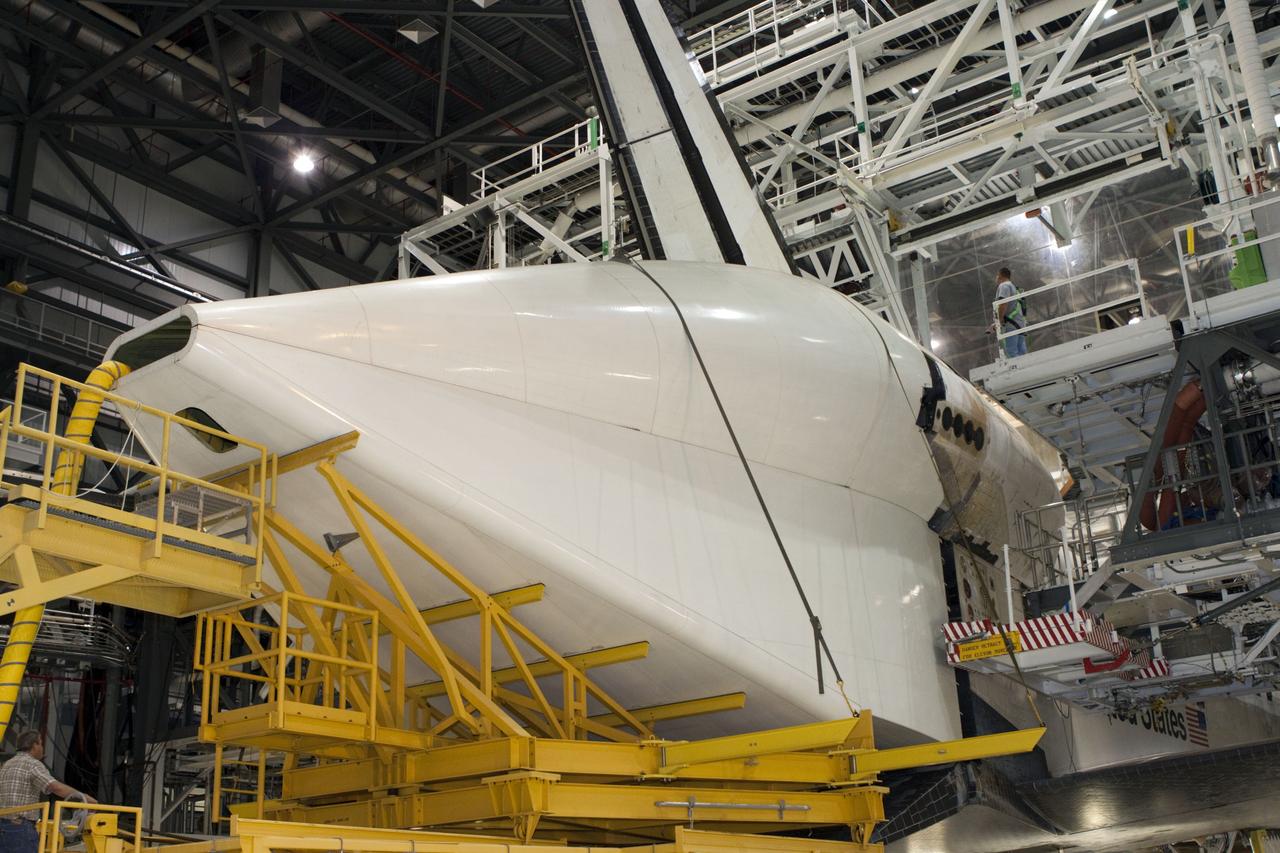
CAPE CANAVERAL, Fla. – In Orbiter Processing Facility Bay 2 at NASA’s Kennedy Space Center in Florida, the tail cone has been placed in position surrounding the replica main engines on the space shuttle Endeavour. The tail cone covers the main engines in the aft providing aerodynamic stability during the cross-country ferry flight. The work is part of Transition and Retirement of the remaining space shuttles, Endeavour and Atlantis. Endeavour is being prepared for public display at the California Science Center in Los Angeles. Its ferry flight to California is targeted for mid-September. Endeavour was the last space shuttle added to NASA’s orbiter fleet. Over the course of its 19-year career, Endeavour spent 299 days in space during 25 missions. For more information, visit http://www.nasa.gov/transition Photo credit: NASA/ Jim Grossmann

CAPE CANAVERAL, Fla. – Inside the Vehicle Assembly Building at NASA’s Kennedy Space Center in Florida, United Space Alliance technicians prepare the right side tail cone for buildup on space shuttle Endeavour. The tail cone protects space shuttle main engines during ferry flights on top of the Shuttle Carrier Aircraft, or SCA. The work is part of Transition and Retirement of the remaining space shuttles, Endeavour and Atlantis. Endeavour is being prepared for public display at the California Science Center in Los Angeles. Its ferry flight to California is targeted for mid-September. Endeavour was the last space shuttle added to NASA’s orbiter fleet. Over the course of its 19-year career, Endeavour spent 299 days in space during 25 missions. For more information, visit http://www.nasa.gov/shuttle. Photo credit: NASA/Jim Grossmann
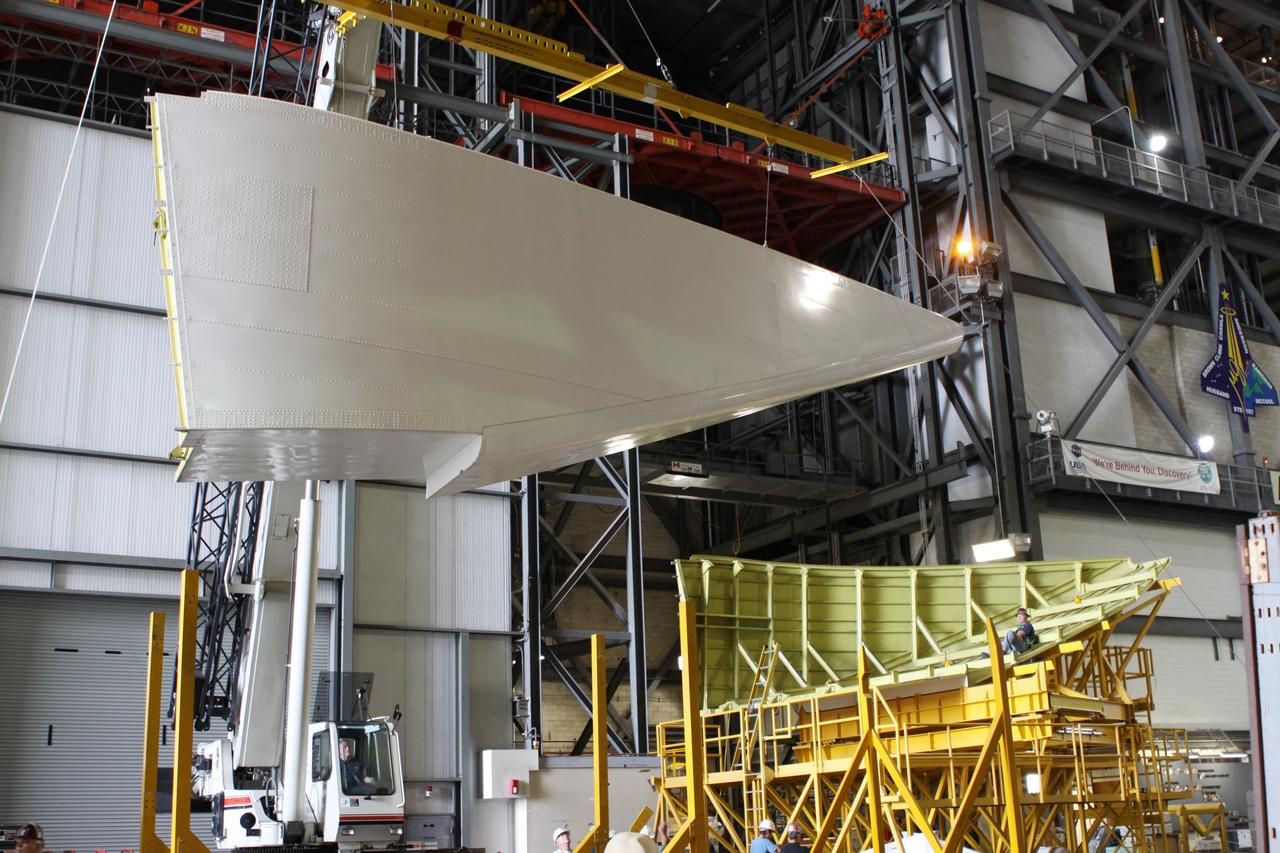
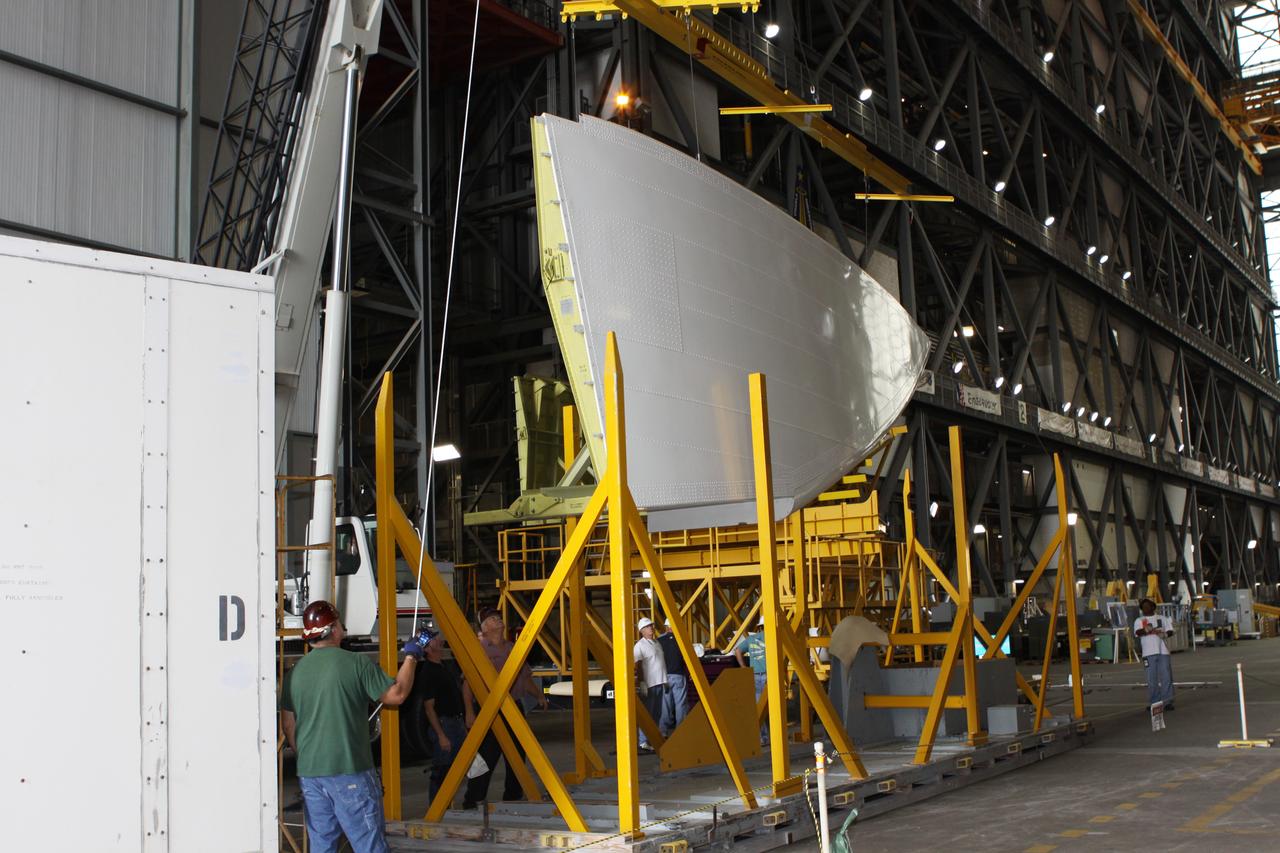
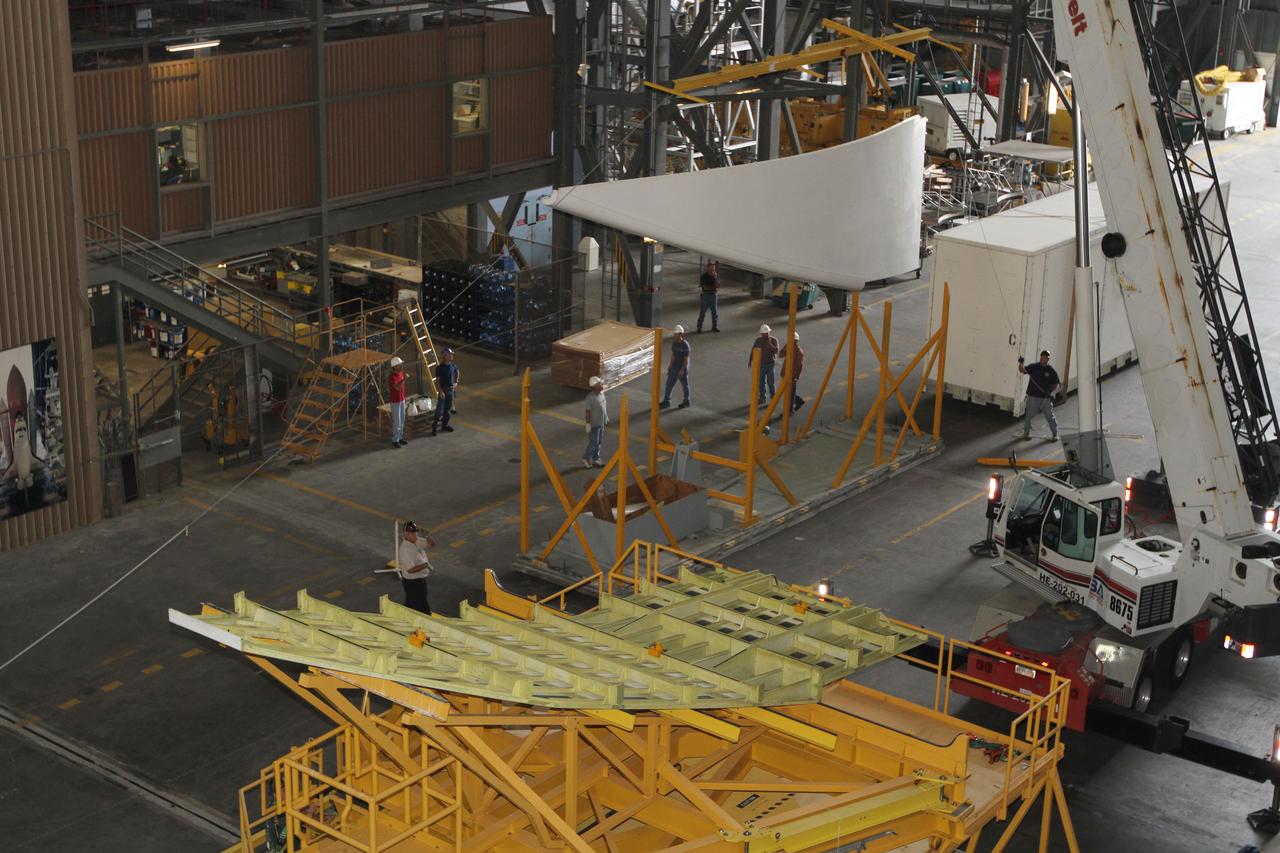
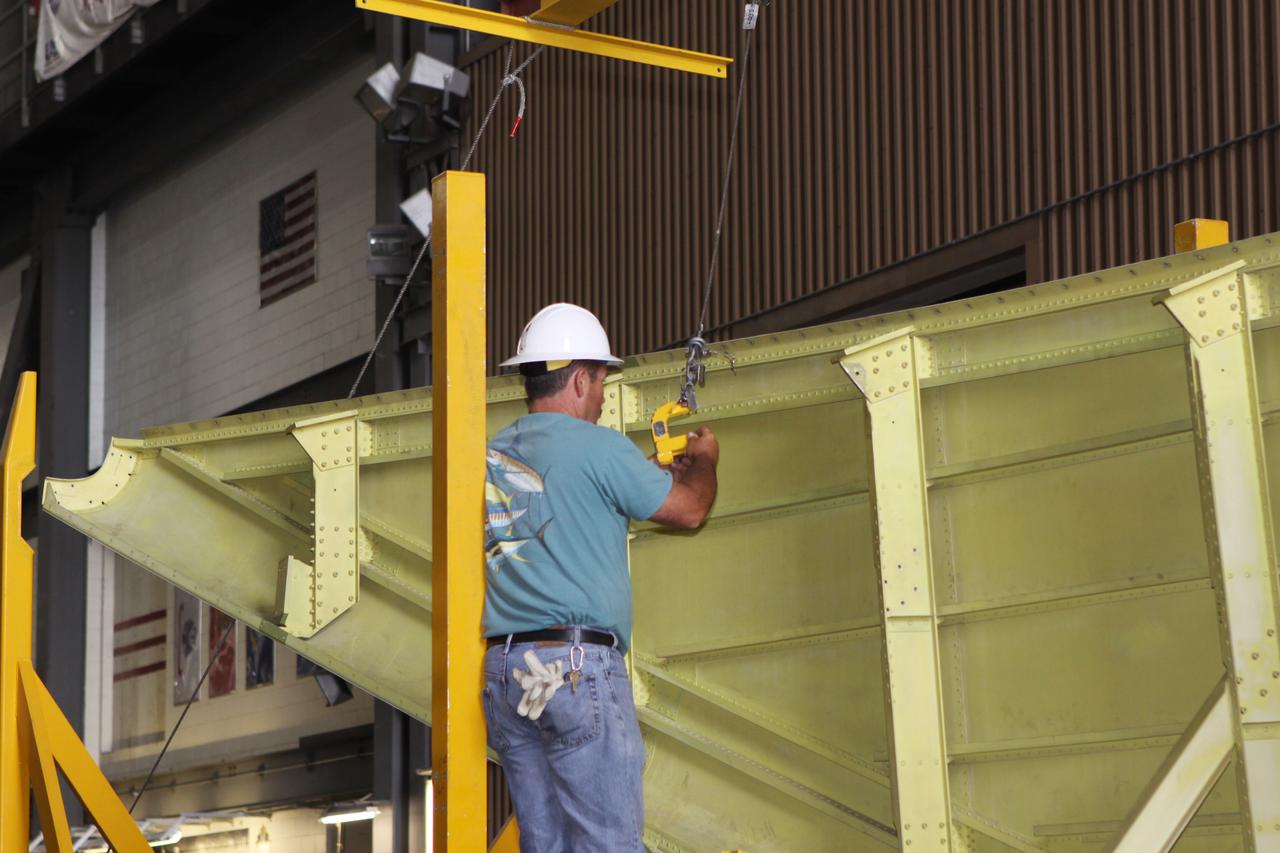
CAPE CANAVERAL, Fla. – Inside the Vehicle Assembly Building at NASA’s Kennedy Space Center in Florida, United Space Alliance technicians use a crane to pick up the right side tail cone for buildup on space shuttle Endeavour. The tail cone protects space shuttle main engines during ferry flights on top of the Shuttle Carrier Aircraft, or SCA. The work is part of Transition and Retirement of the remaining space shuttles, Endeavour and Atlantis. Endeavour is being prepared for public display at the California Science Center in Los Angeles. Its ferry flight to California is targeted for mid-September. Endeavour was the last space shuttle added to NASA’s orbiter fleet. Over the course of its 19-year career, Endeavour spent 299 days in space during 25 missions. For more information, visit http://www.nasa.gov/shuttle. Photo credit: NASA/Jim Grossmann
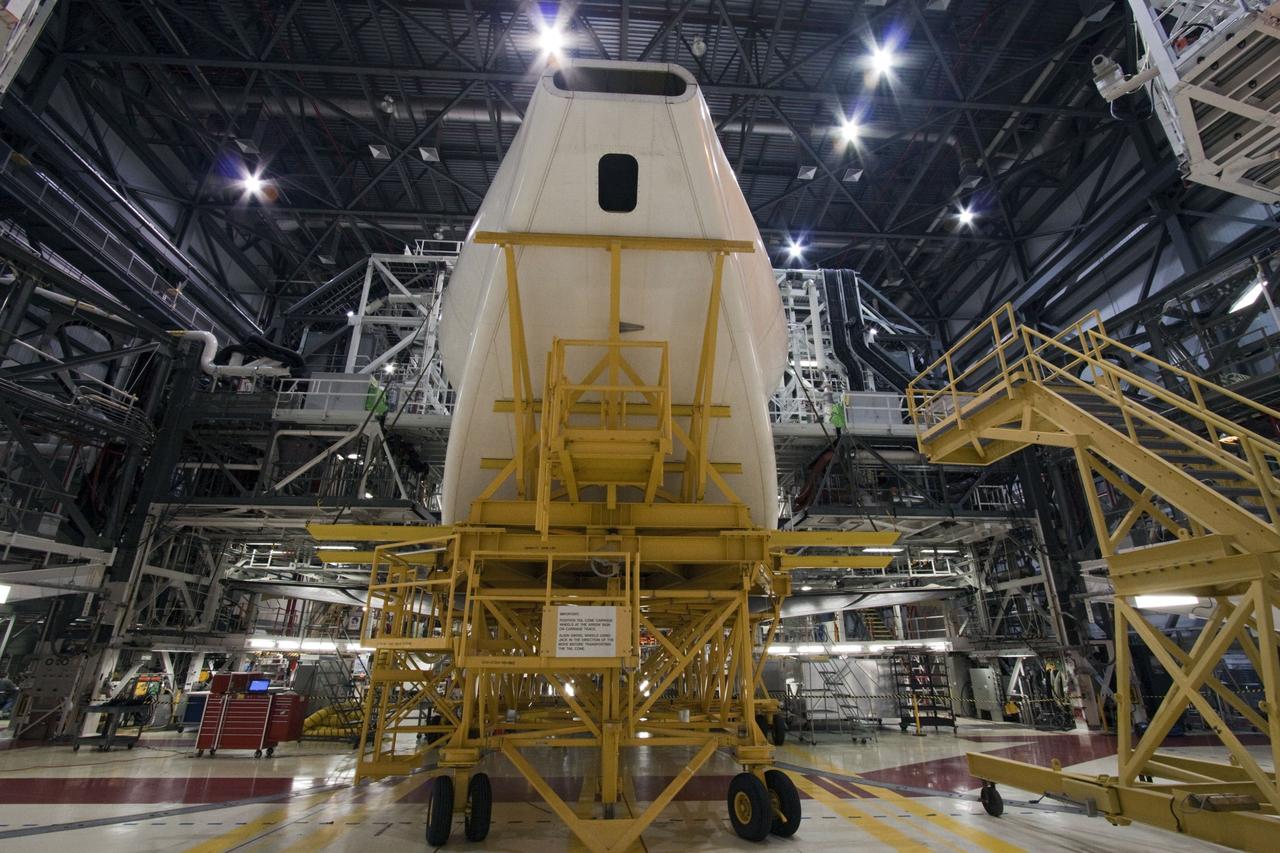
CAPE CANAVERAL, Fla. – In Orbiter Processing Facility Bay 2 at NASA’s Kennedy Space Center in Florida, the tail cone is moved into position for attachment to the space shuttle Endeavour. The tail cone covers the main engines in the aft providing aerodynamic stability during the cross-country ferry flight. The work is part of Transition and Retirement of the remaining space shuttles, Endeavour and Atlantis. Endeavour is being prepared for public display at the California Science Center in Los Angeles. Its ferry flight to California is targeted for mid-September. Endeavour was the last space shuttle added to NASA’s orbiter fleet. Over the course of its 19-year career, Endeavour spent 299 days in space during 25 missions. For more information, visit http://www.nasa.gov/transition Photo credit: NASA/ Jim Grossmann
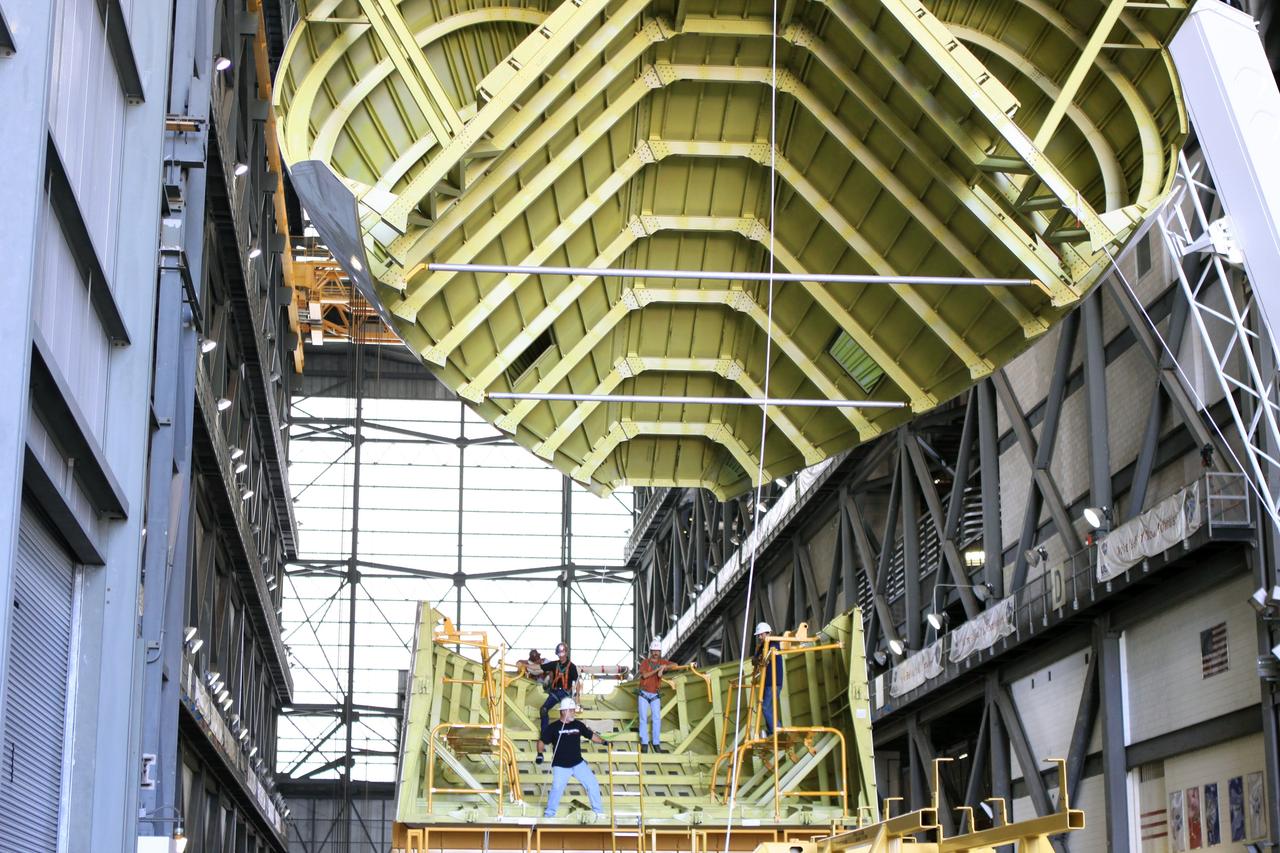
CAPE CANAVERAL, Fla. – In the transfer isle of the Vehicle Assembly Building at NASA’s Kennedy Space Center in Florida, technicians finish building the tail cone that will be installed around space shuttle Endeavour’s three replica shuttle main engines for protection. The tail cone protects the main engines during ferry flights on top of the Shuttle Carrier Aircraft, or SCA. The work is part of the Space Shuttle Program’s transition and retirement processing of shuttle Endeavour. Endeavour is being prepared for public display at the California Science Center in Los Angeles. Its ferry flight to California is targeted for mid-September. Endeavour was the last space shuttle added to NASA’s orbiter fleet. Over the course of its 19-year career, Endeavour spent 299 days in space during 25 missions. For more information, visit http://www.nasa.gov/shuttle. Photo credit: NASA/Jim Grossmann
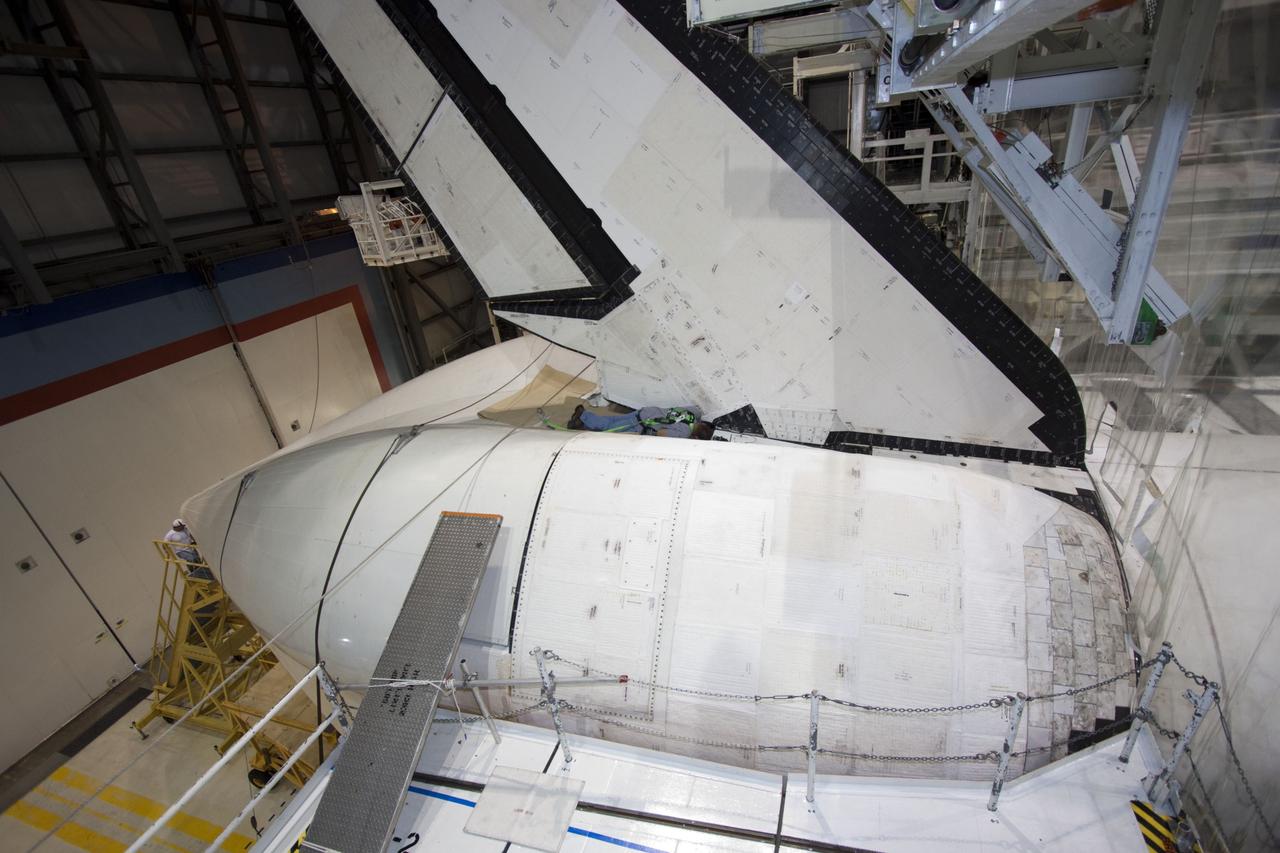
CAPE CANAVERAL, Fla. – In Orbiter Processing Facility Bay 2 at NASA’s Kennedy Space Center in Florida, the tail cone has been placed in position surrounding the replica main engines on the space shuttle Endeavour. The tail cone covers the main engines in the aft providing aerodynamic stability during the cross-country ferry flight. The work is part of Transition and Retirement of the remaining space shuttles, Endeavour and Atlantis. Endeavour is being prepared for public display at the California Science Center in Los Angeles. Its ferry flight to California is targeted for mid-September. Endeavour was the last space shuttle added to NASA’s orbiter fleet. Over the course of its 19-year career, Endeavour spent 299 days in space during 25 missions. For more information, visit http://www.nasa.gov/transition Photo credit: NASA/ Jim Grossmann
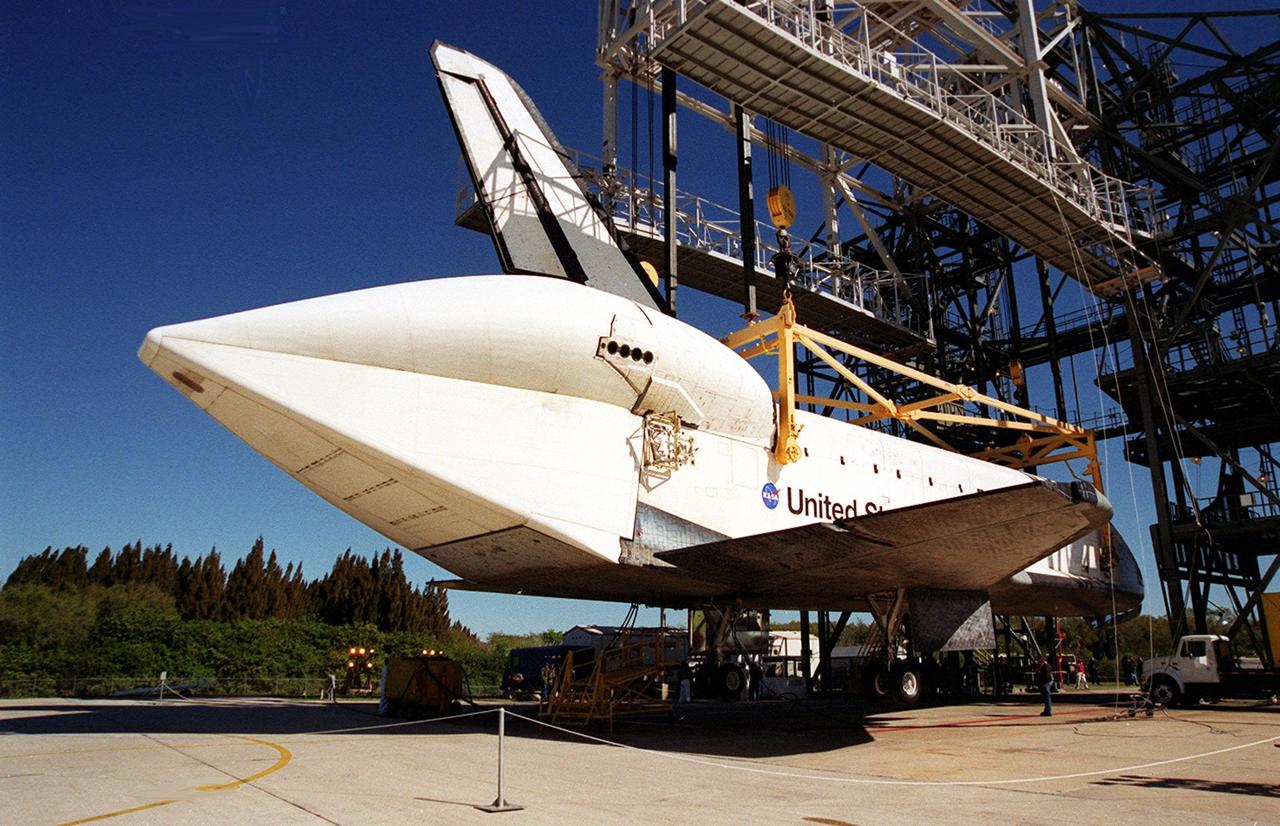
This view of Atlantis at the mate/demate device at KSC’s Shuttle Landing Facility shows the tail cone that orbiters use when being carried piggyback on ferry flights atop a Shuttle Carrier Aircraft. The tail cone protects the aft engine area and provides a more efficient aeronautical dimension during flight. Atlantis returned from California atop the SCA after its Feb. 19 landing at Edwards Air Force Base concluding mission STS-98. The ferry flight began March 1; unfavorable weather conditions kept it on the ground at Altus AFB, Okla., until it could return to Florida. Atlantis will be transported to the Orbiter Processing Facility to prepare it for mission STS-104, the 10th construction flight to the International Space Station, scheduled to launch June 8
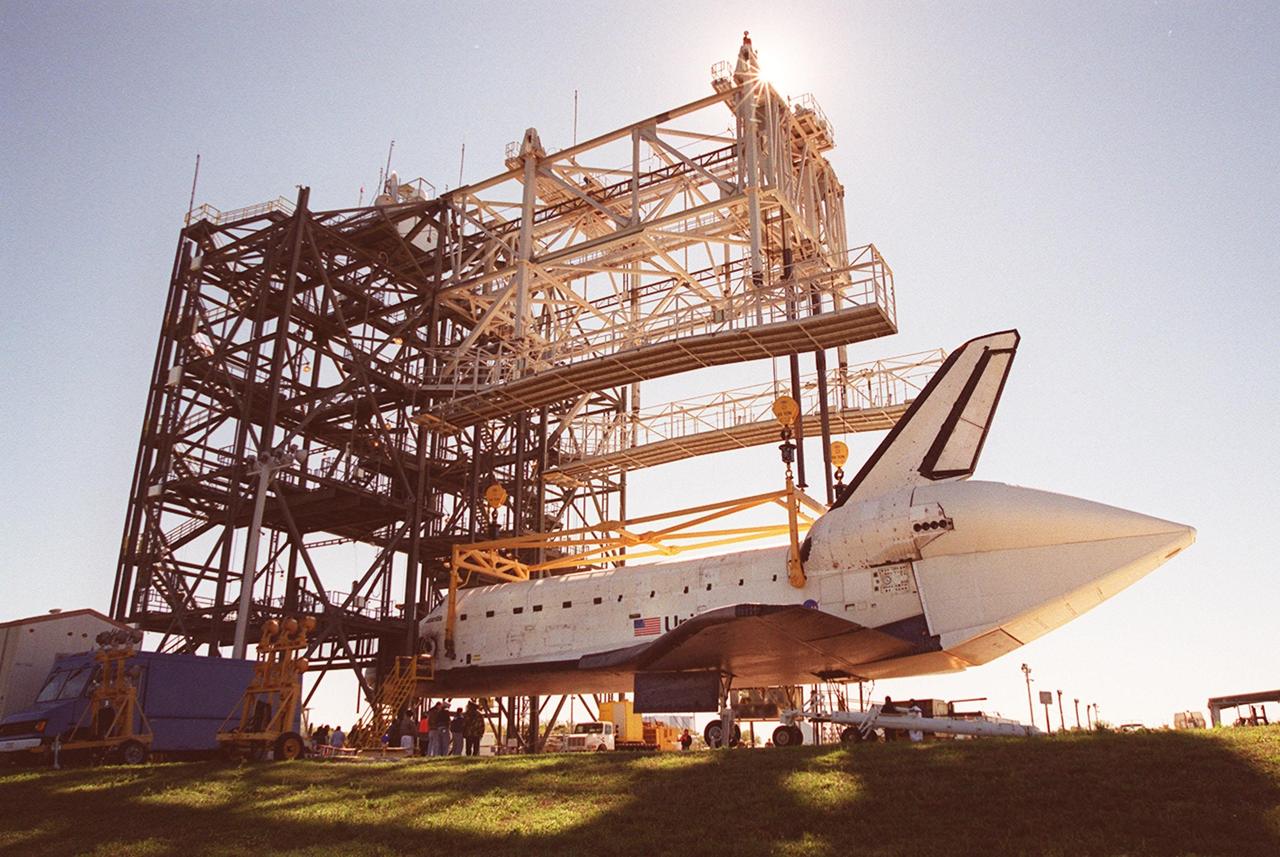
At the mate/demate device at KSC’s Shuttle Landing Facility, Atlantis is lowered onto its wheels in preparation for being towed to the Orbiter Processing Facility. This view of Atlantis shows the tail cone that orbiters use when being carried piggyback on ferry flights atop a Shuttle Carrier Aircraft. The tail cone protects the aft engine area and provides a more efficient aeronautical dimension during flight. Atlantis returned from California atop the SCA after its Feb. 19 landing at Edwards Air Force Base concluding mission STS-98. The ferry flight began March 1; unfavorable weather conditions kept it on the ground at Altus AFB, Okla., until it could return to Florida. In the Orbiter Processing Facility, Atlantis will be prepared for mission STS-104, the 10th construction flight to the International Space Station, scheduled to launch June 8
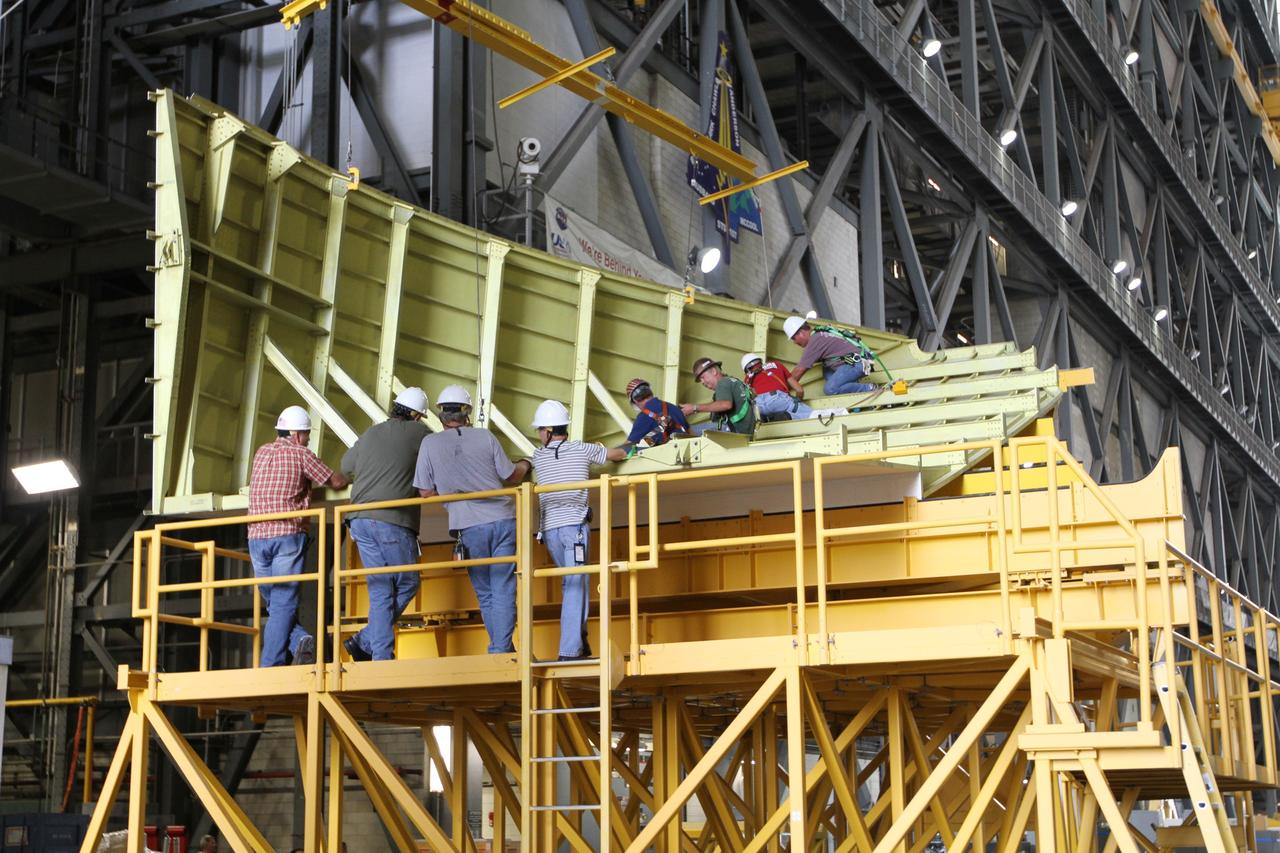
CAPE CANAVERAL, Fla. – Inside the Vehicle Assembly Building at NASA’s Kennedy Space Center in Florida, United Space Alliance technicians prepare the right side tail cone for buildup on space shuttle Endeavour. The tail cone protects space shuttle main engines during ferry flights on top of the Shuttle Carrier Aircraft, or SCA. The work is part of Transition and Retirement of the remaining space shuttles, Endeavour and Atlantis. Endeavour is being prepared for public display at the California Science Center in Los Angeles. Its ferry flight to California is targeted for mid-September. Endeavour was the last space shuttle added to NASA’s orbiter fleet. Over the course of its 19-year career, Endeavour spent 299 days in space during 25 missions. For more information, visit http://www.nasa.gov/shuttle. Photo credit: NASA/Kim Shiflett
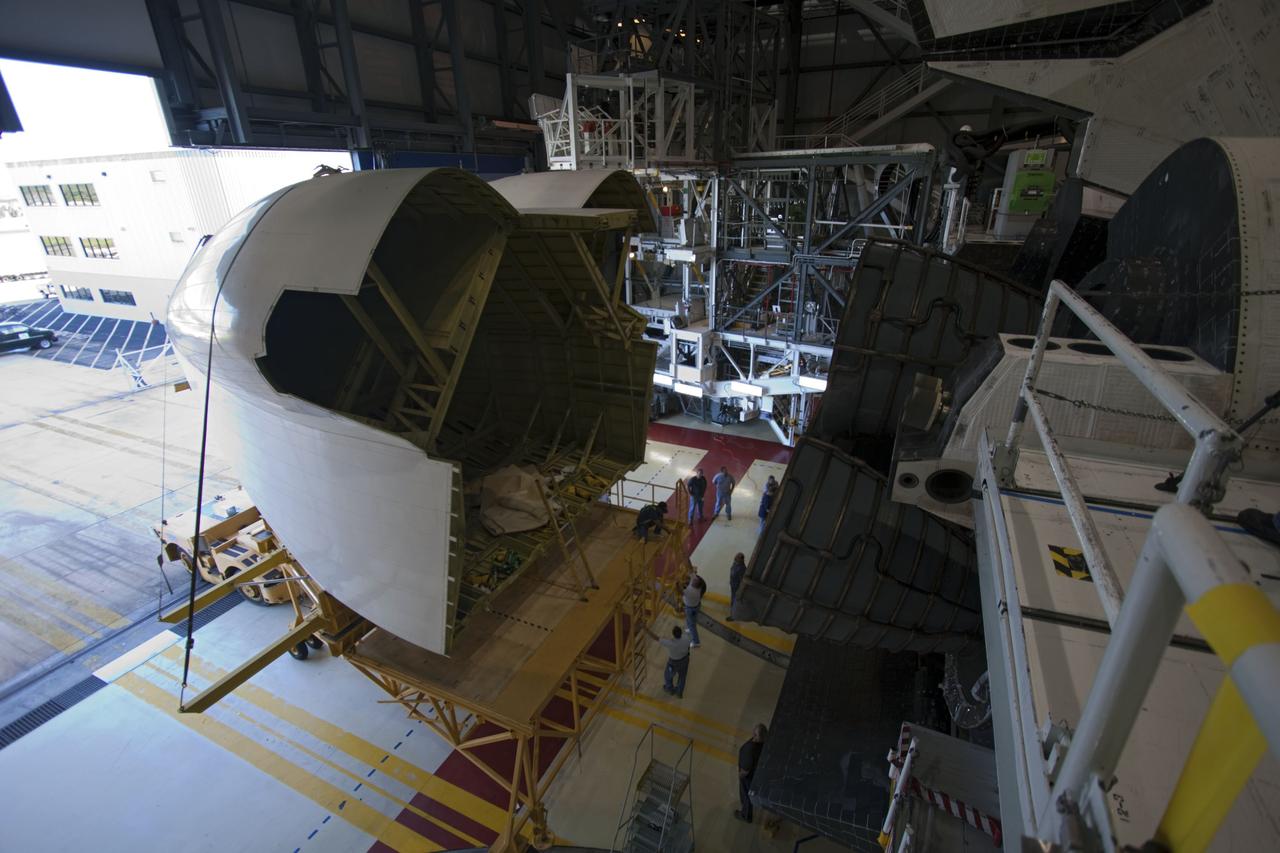
CAPE CANAVERAL, Fla. – In Orbiter Processing Facility Bay 2 at NASA’s Kennedy Space Center in Florida, the tail cone is moved into position for attachment to the space shuttle Endeavour. The tail cone covers the main engines in the aft providing aerodynamic stability during the cross-country ferry flight. The work is part of Transition and Retirement of the remaining space shuttles, Endeavour and Atlantis. Endeavour is being prepared for public display at the California Science Center in Los Angeles. Its ferry flight to California is targeted for mid-September. Endeavour was the last space shuttle added to NASA’s orbiter fleet. Over the course of its 19-year career, Endeavour spent 299 days in space during 25 missions. For more information, visit http://www.nasa.gov/transition Photo credit: NASA/ Jim Grossmann
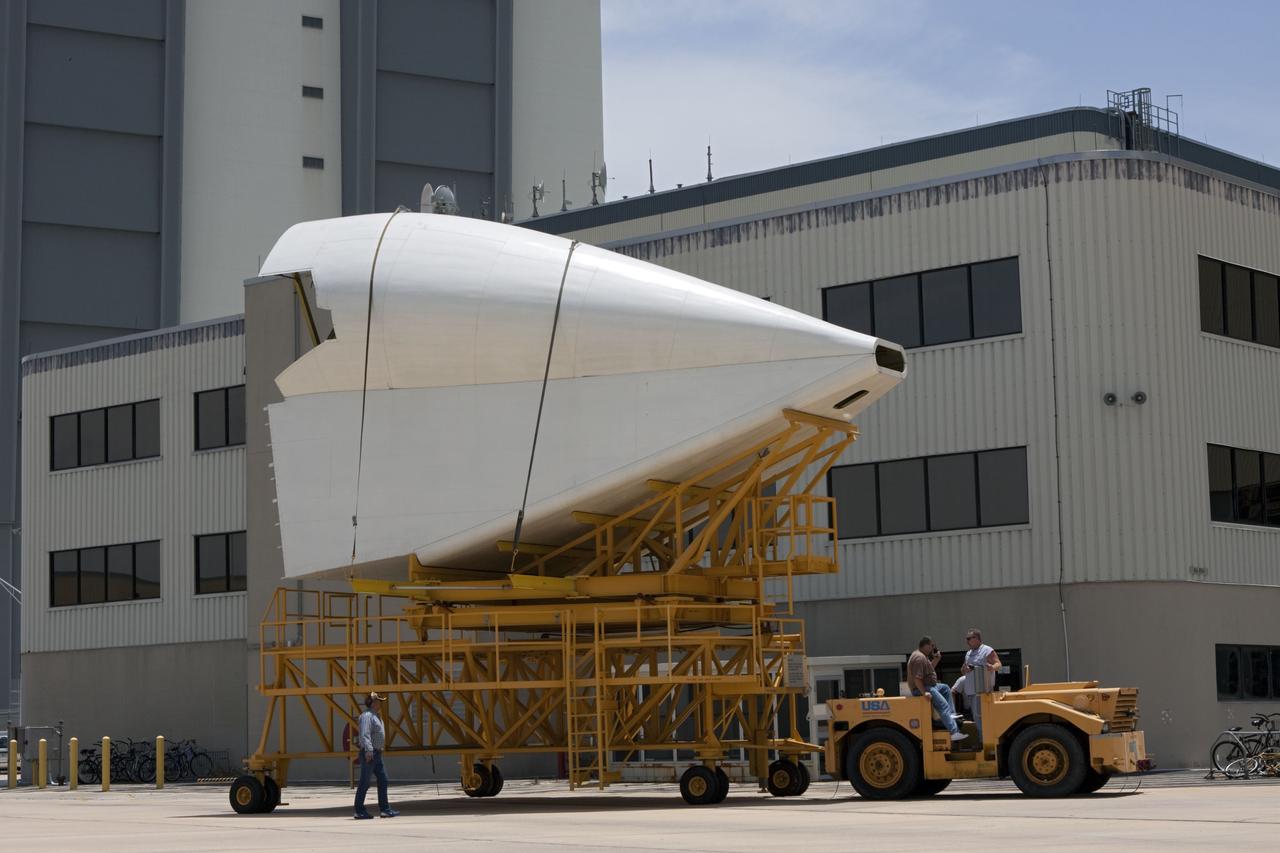
CAPE CANAVERAL, Fla. -- The tail cone that will cover space shuttle Endeavour’s replica shuttle main engines arrives at Orbiter Processing Facility-2, or OPF-2, from the Vehicle Assembly Building at NASA’s Kennedy Space Center in Florida. Inside OPF-2, the tail cone will be installed on Endeavour. The work is part of Transition and Retirement of the remaining space shuttles, Endeavour and Atlantis. Endeavour is being prepared for public display at the California Science Center in Los Angeles. Its ferry flight to California is targeted for mid-September. Endeavour was the last space shuttle added to NASA’s orbiter fleet. Over the course of its 19-year career, Endeavour spent 299 days in space during 25 missions. For more information, visit http://www.nasa.gov/shuttle. Photo credit: NASA/Jim Grossmann
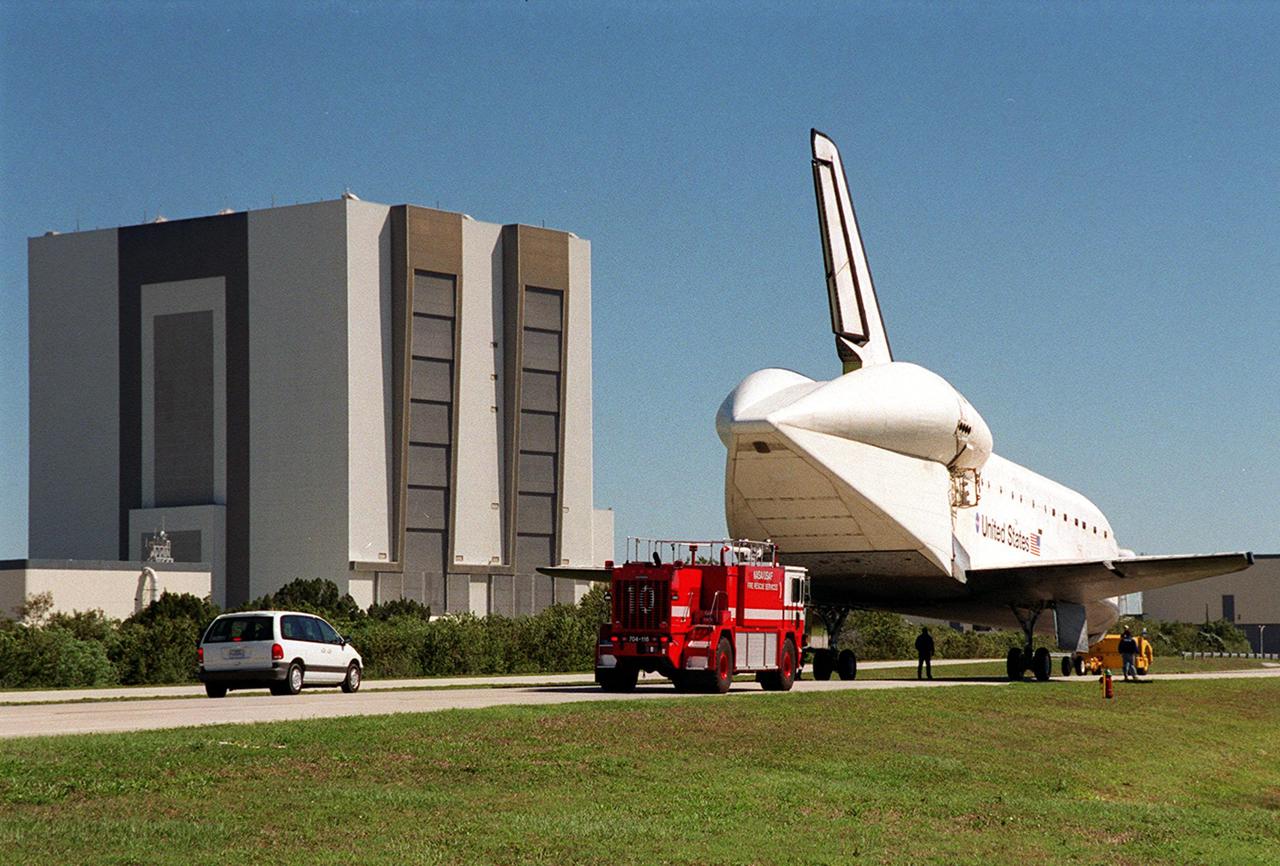
Towed from the Shuttle Landing Facility, Atlantis heads for the Orbiter Processing Facility (far right), accompanied by a KSC_CCAFS rescue vehicle. In view is the tail cone that orbiters use when being carried piggyback on ferry flights atop a Shuttle Carrier Aircraft. The tail cone protects the aft engine area and provides a more efficient aeronautical dimension during flight. Atlantis returned from California atop a Shuttle Carrier Aircraft after its Feb. 19 landing at Edwards Air Force Base, concluding mission STS-98. The ferry flight began March 1; unfavorable weather conditions kept it on the ground at Altus AFB, Okla., until it could return to Florida. In the Orbiter Processing Facility, Atlantis will be prepared for mission STS-104, the 10th construction flight to the International Space Station, scheduled to launch June 8
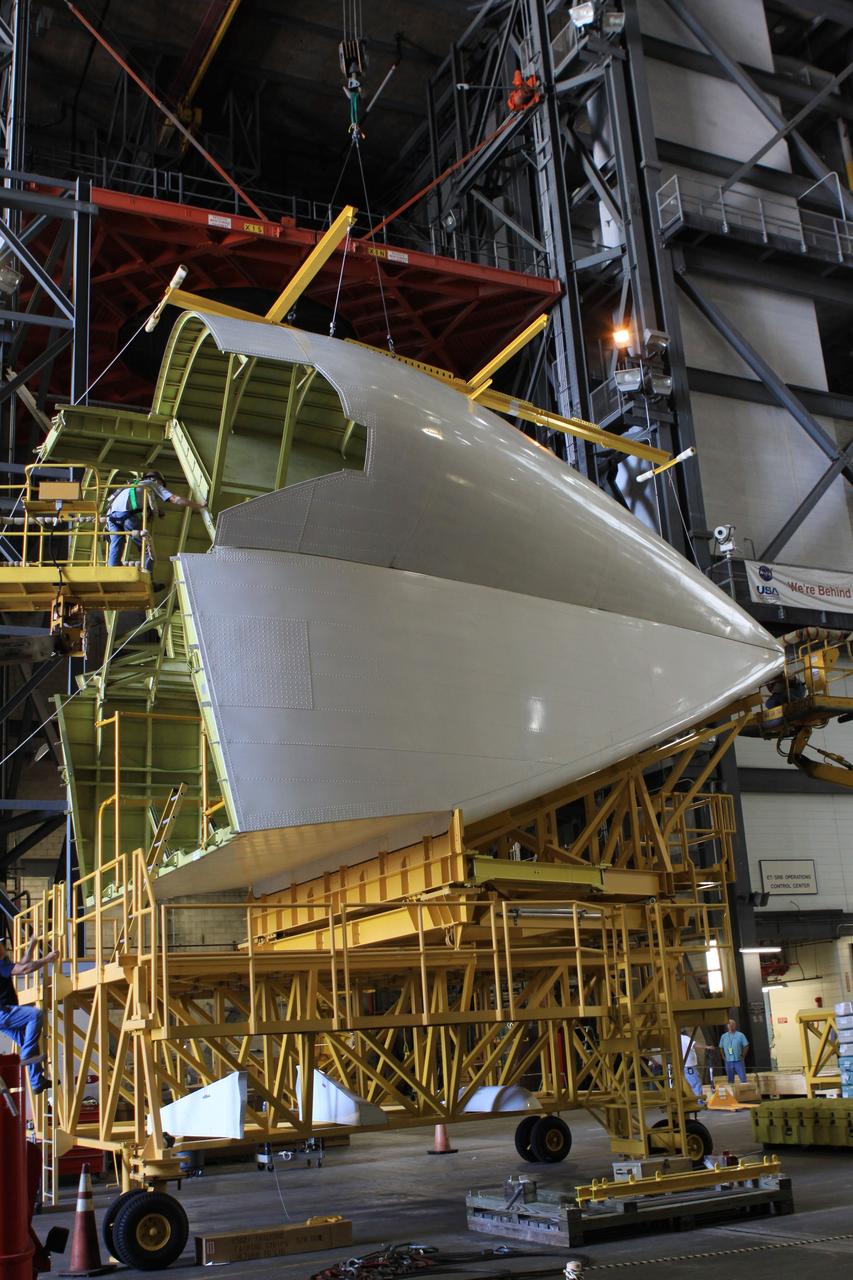
CAPE CANAVERAL, Fla. – In the transfer isle of the Vehicle Assembly Building at NASA’s Kennedy Space Center in Florida, technicians finish building the tail cone that will be installed around space shuttle Endeavour’s three replica shuttle main engines for protection. The tail cone protects the main engines during ferry flights on top of the Shuttle Carrier Aircraft, or SCA. The work is part of the Space Shuttle Program’s transition and retirement processing of shuttle Endeavour. Endeavour is being prepared for public display at the California Science Center in Los Angeles. Its ferry flight to California is targeted for mid-September. Endeavour was the last space shuttle added to NASA’s orbiter fleet. Over the course of its 19-year career, Endeavour spent 299 days in space during 25 missions. For more information, visit http://www.nasa.gov/shuttle. Photo credit: NASA/Jim Grossmann
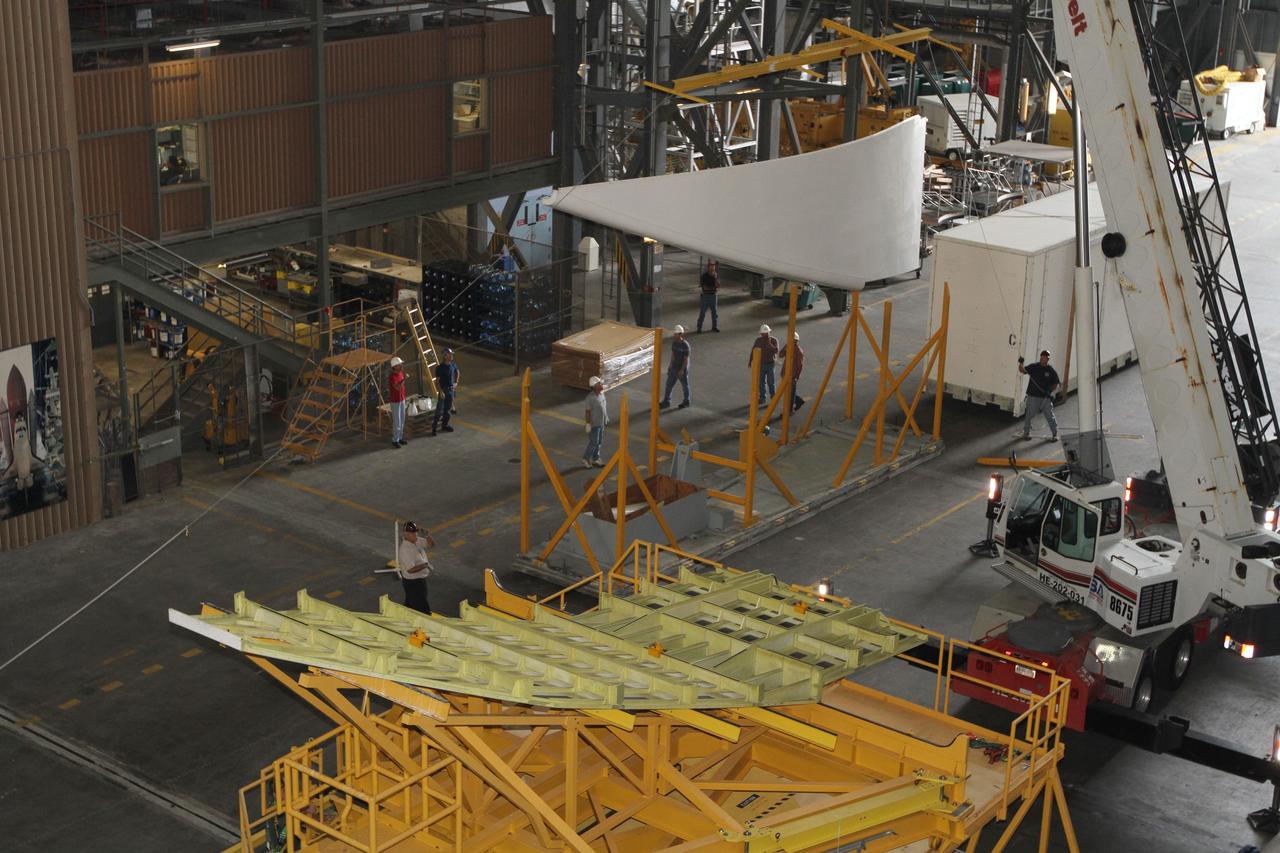
CAPE CANAVERAL, Fla. – Inside the Vehicle Assembly Building at NASA’s Kennedy Space Center in Florida, United Space Alliance technicians use a crane to pick up the right side tail cone for buildup on space shuttle Endeavour. The tail cone protects space shuttle main engines during ferry flights on top of the Shuttle Carrier Aircraft, or SCA. The work is part of Transition and Retirement of the remaining space shuttles, Endeavour and Atlantis. Endeavour is being prepared for public display at the California Science Center in Los Angeles. Its ferry flight to California is targeted for mid-September. Endeavour was the last space shuttle added to NASA’s orbiter fleet. Over the course of its 19-year career, Endeavour spent 299 days in space during 25 missions. For more information, visit http://www.nasa.gov/shuttle. Photo credit: NASA/Kim Shiflett
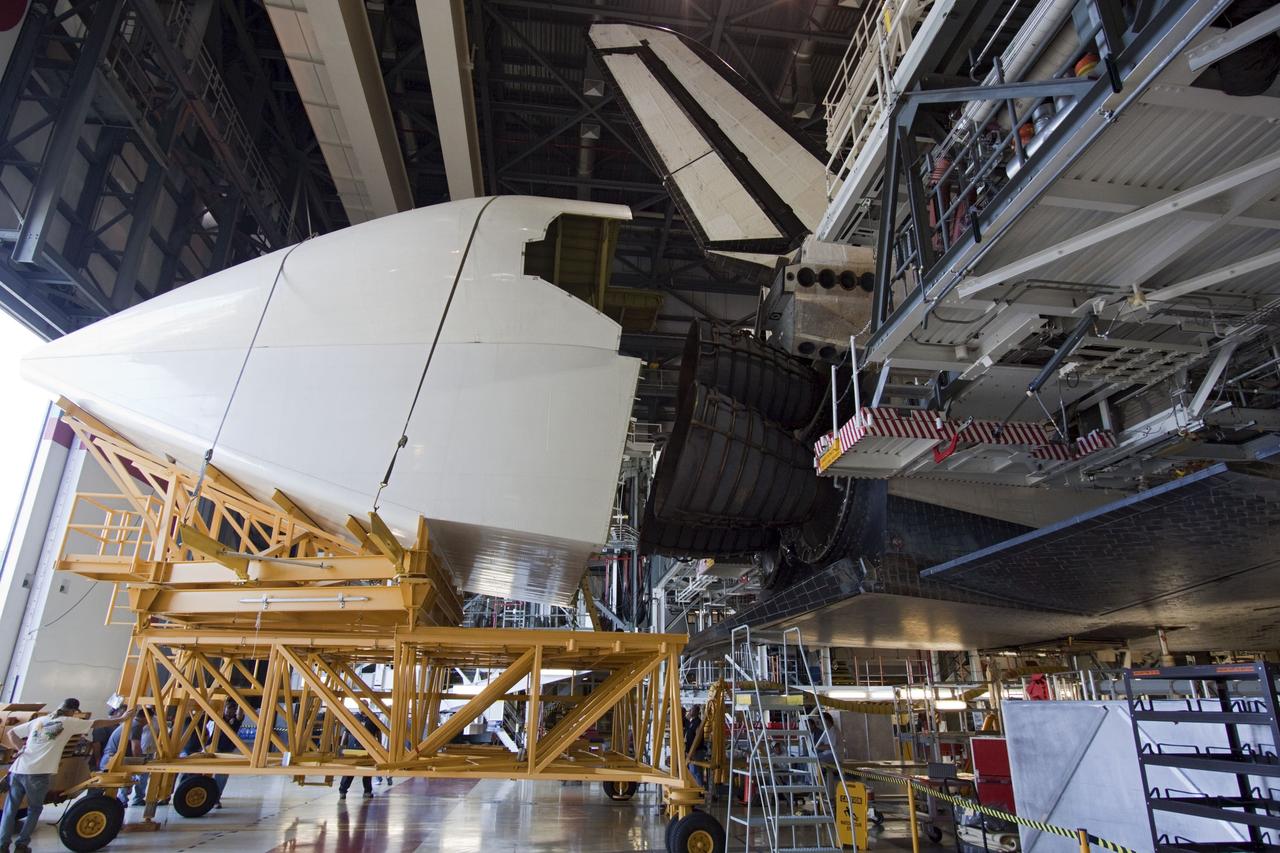
CAPE CANAVERAL, Fla. – In Orbiter Processing Facility Bay 2 at NASA’s Kennedy Space Center in Florida, United Space Alliance technicians move the tail cone into position for attachment to the space shuttle Endeavour. The tail cone covers the main engines in the aft providing aerodynamic stability during the cross-country ferry flight. The work is part of Transition and Retirement of the remaining space shuttles, Endeavour and Atlantis. Endeavour is being prepared for public display at the California Science Center in Los Angeles. Its ferry flight to California is targeted for mid-September. Endeavour was the last space shuttle added to NASA’s orbiter fleet. Over the course of its 19-year career, Endeavour spent 299 days in space during 25 missions. For more information, visit http://www.nasa.gov/transition Photo credit: NASA/ Jim Grossmann
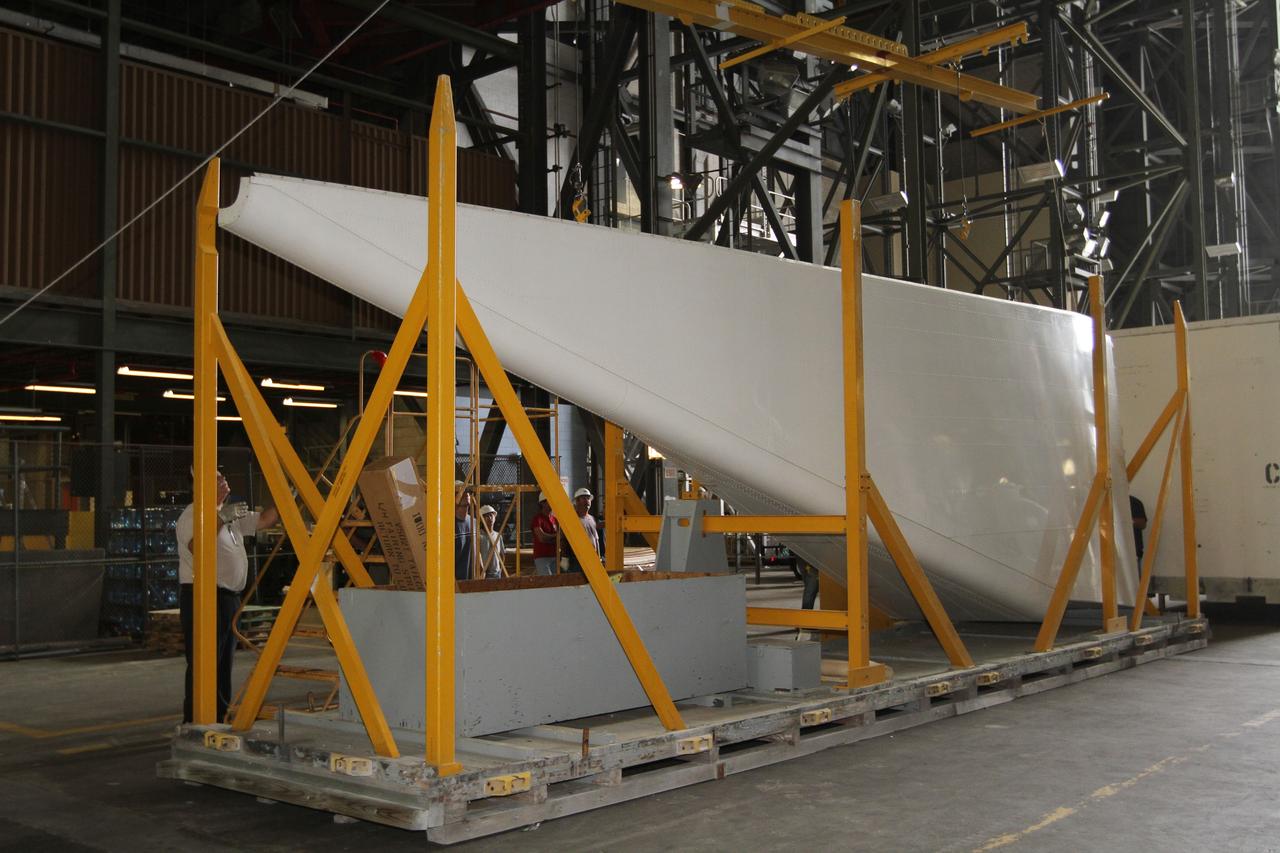
CAPE CANAVERAL, Fla. – Inside the Vehicle Assembly Building at NASA’s Kennedy Space Center in Florida, United Space Alliance technicians prepare the right side tail cone for buildup on space shuttle Endeavour. The tail cone protects space shuttle main engines during ferry flights on top of the Shuttle Carrier Aircraft, or SCA. The work is part of Transition and Retirement of the remaining space shuttles, Endeavour and Atlantis. Endeavour is being prepared for public display at the California Science Center in Los Angeles. Its ferry flight to California is targeted for mid-September. Endeavour was the last space shuttle added to NASA’s orbiter fleet. Over the course of its 19-year career, Endeavour spent 299 days in space during 25 missions. For more information, visit http://www.nasa.gov/shuttle. Photo credit: NASA/Kim Shiflett
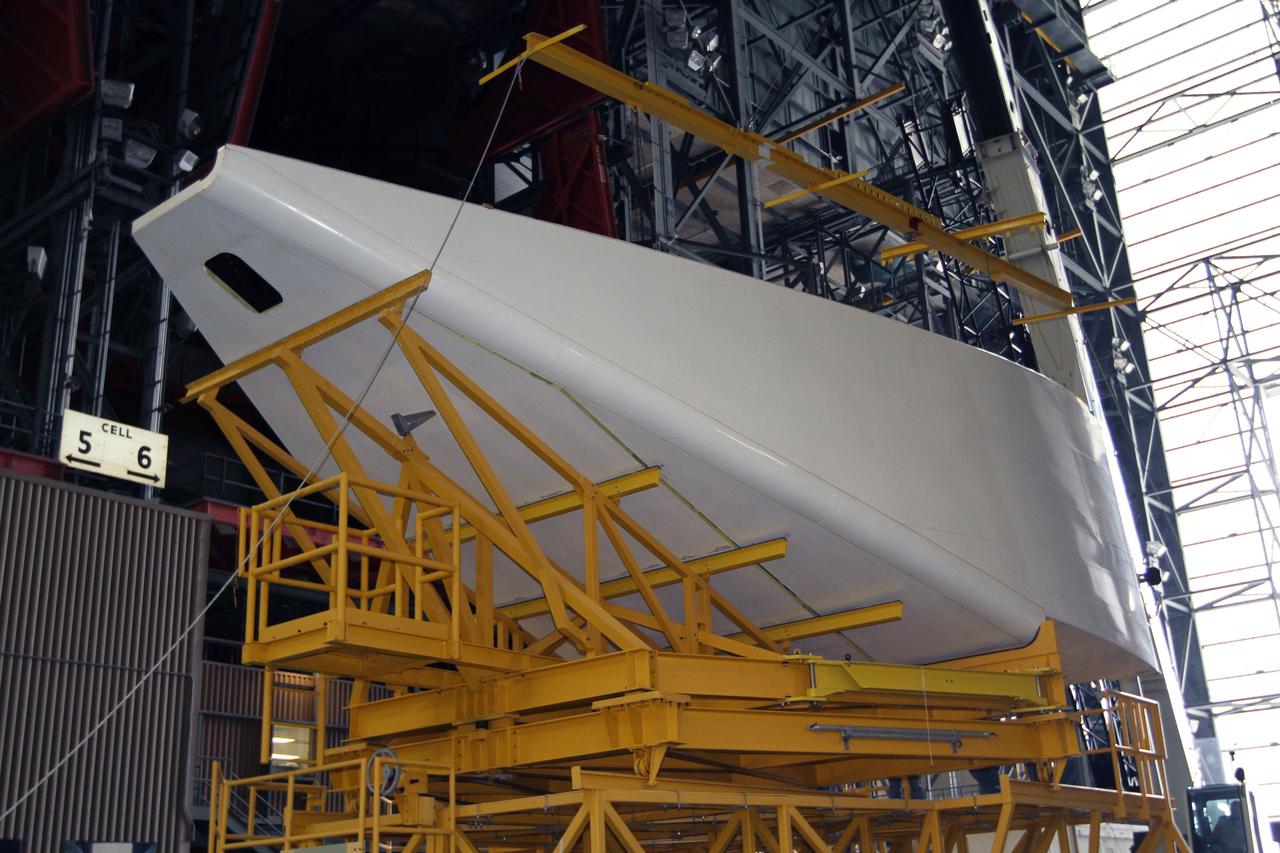
CAPE CANAVERAL, Fla. – Inside the Vehicle Assembly Building at NASA’s Kennedy Space Center in Florida, United Space Alliance technicians use a crane to pick up the right side tail cone for buildup on space shuttle Endeavour. The tail cone protects space shuttle main engines during ferry flights on top of the Shuttle Carrier Aircraft, or SCA. The work is part of Transition and Retirement of the remaining space shuttles, Endeavour and Atlantis. Endeavour is being prepared for public display at the California Science Center in Los Angeles. Its ferry flight to California is targeted for mid-September. Endeavour was the last space shuttle added to NASA’s orbiter fleet. Over the course of its 19-year career, Endeavour spent 299 days in space during 25 missions. For more information, visit http://www.nasa.gov/shuttle. Photo credit: NASA/Kim Shiflett
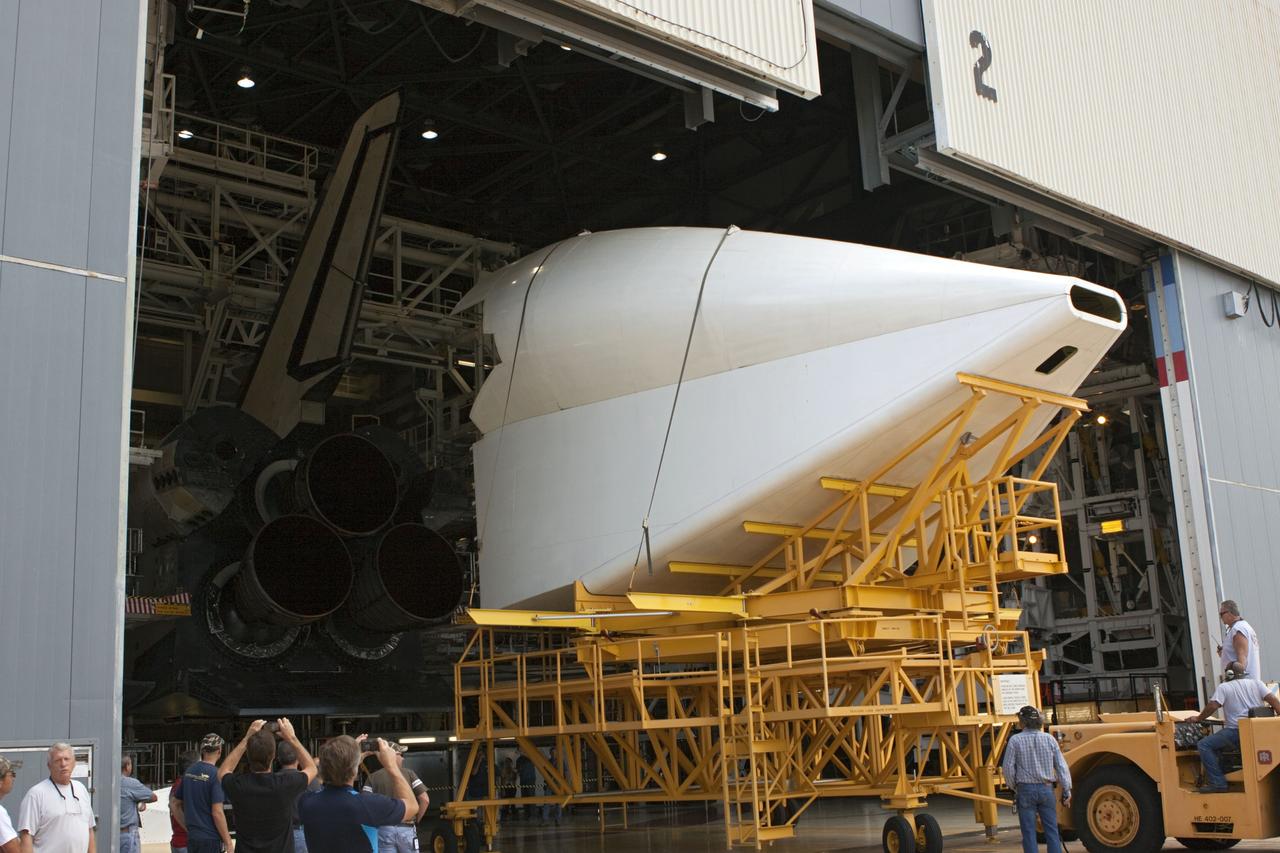
CAPE CANAVERAL, Fla. -- The tail cone that will cover space shuttle Endeavour’s replica shuttle main engines arrives at Orbiter Processing Facility-2, or OPF-2, from the Vehicle Assembly Building at NASA’s Kennedy Space Center in Florida. Inside OPF-2, the tail cone will be installed on Endeavour. The work is part of Transition and Retirement of the remaining space shuttles, Endeavour and Atlantis. Endeavour is being prepared for public display at the California Science Center in Los Angeles. Its ferry flight to California is targeted for mid-September. Endeavour was the last space shuttle added to NASA’s orbiter fleet. Over the course of its 19-year career, Endeavour spent 299 days in space during 25 missions. For more information, visit http://www.nasa.gov/shuttle. Photo credit: NASA/Jim Grossmann
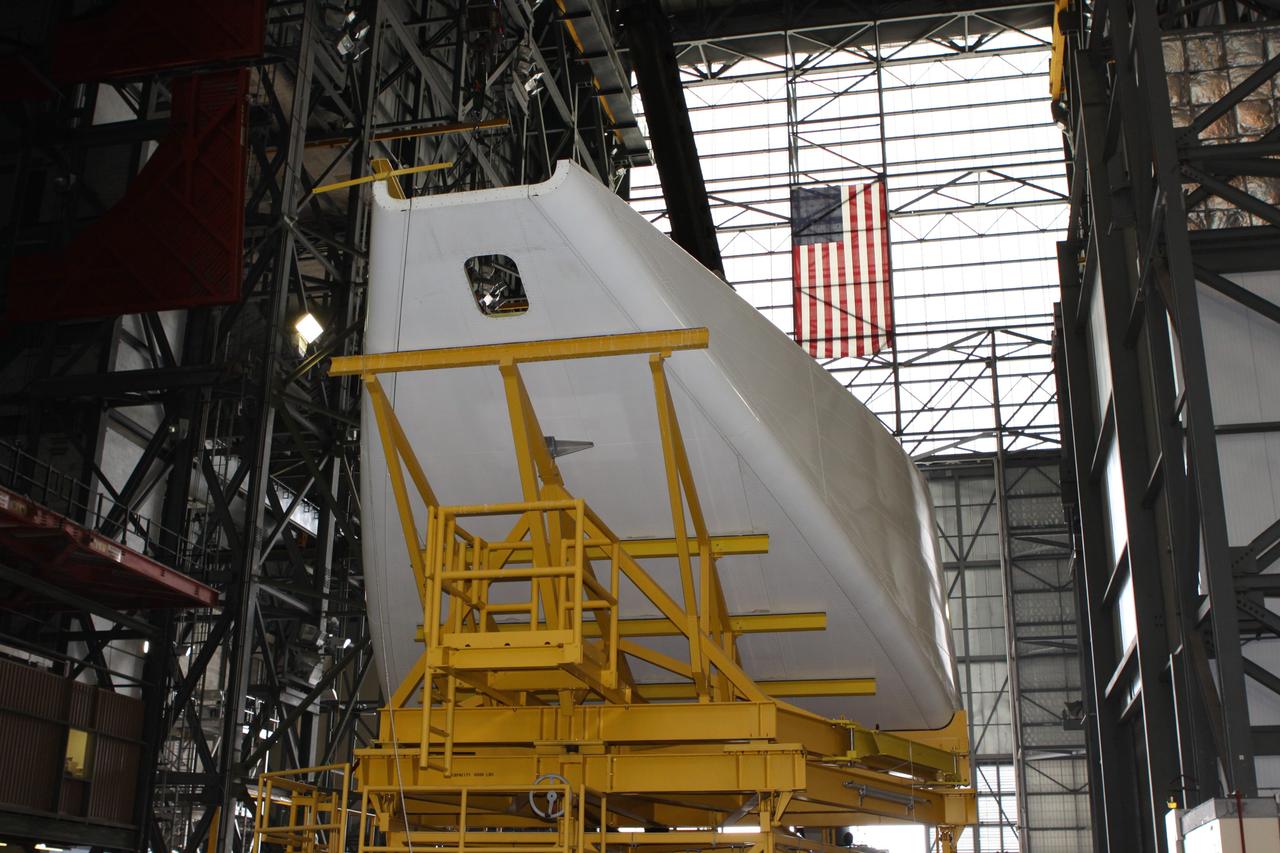
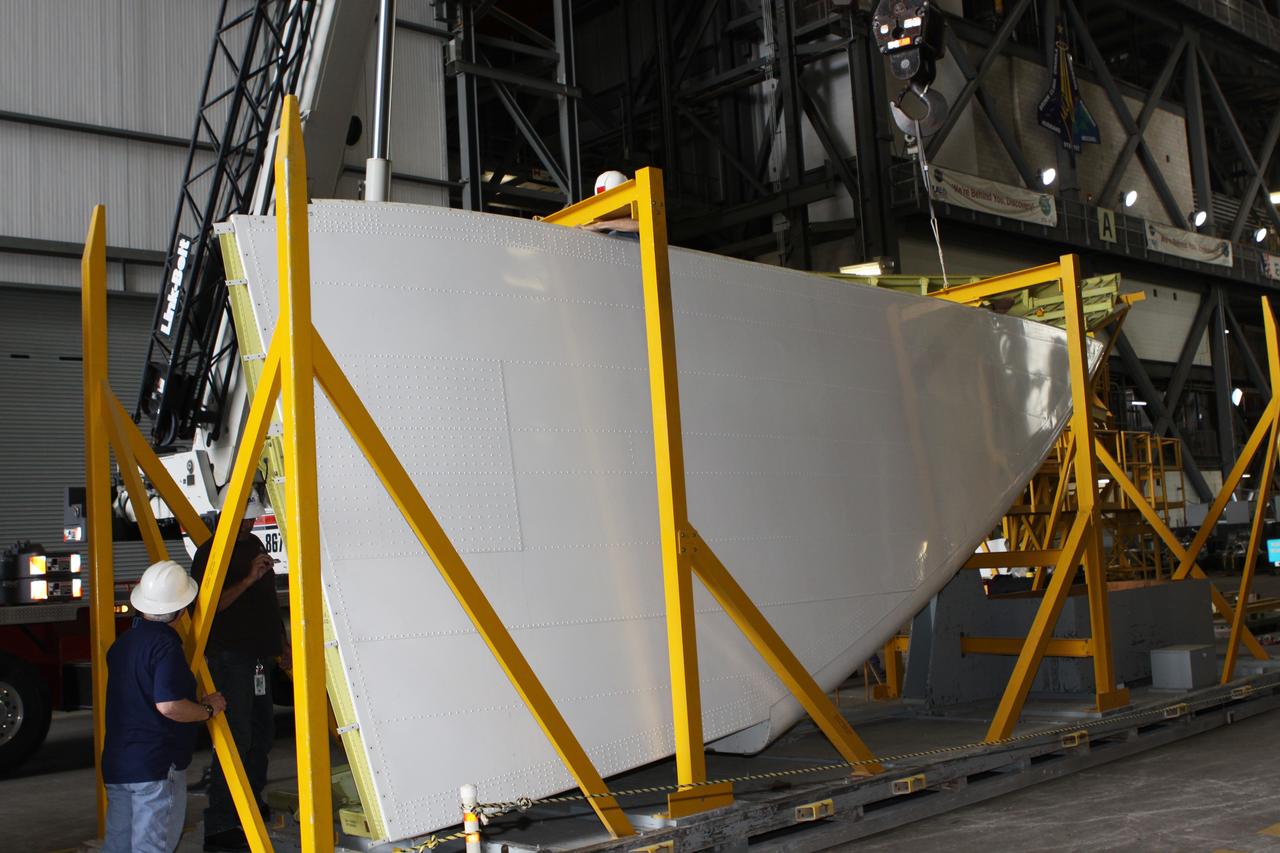
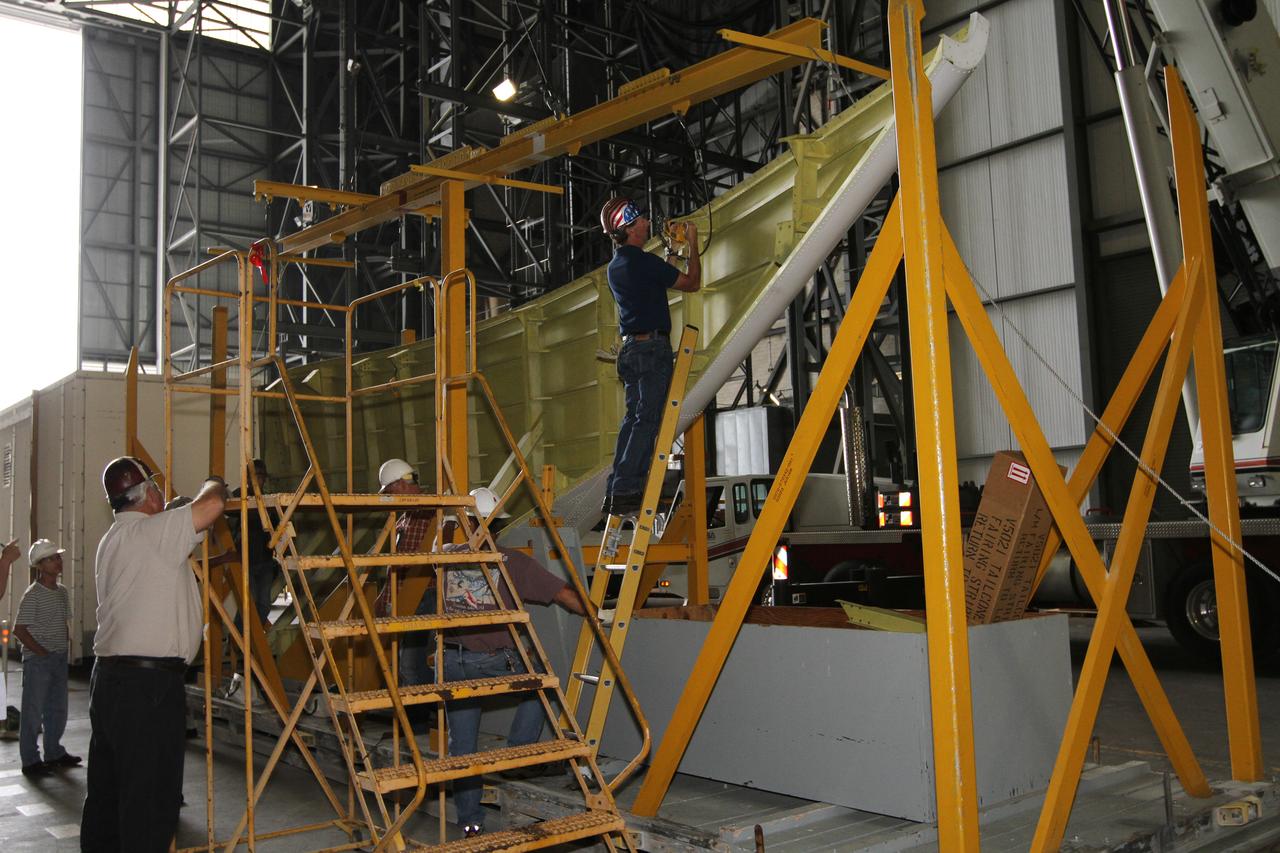
CAPE CANAVERAL, Fla. – Inside the Vehicle Assembly Building at NASA’s Kennedy Space Center in Florida, the tail cone is being built up for installation on space shuttle Endeavour. The tail cone protects space shuttle main engines during ferry flights on top of the Shuttle Carrier Aircraft, or SCA. The work is part of Transition and Retirement of the remaining space shuttles, Endeavour and Atlantis. Endeavour is being prepared for public display at the California Science Center in Los Angeles. Its ferry flight to California is targeted for mid-September. Endeavour was the last space shuttle added to NASA’s orbiter fleet. Over the course of its 19-year career, Endeavour spent 299 days in space during 25 missions. For more information, visit http://www.nasa.gov/shuttle. Photo credit: NASA/Jim Grossmann
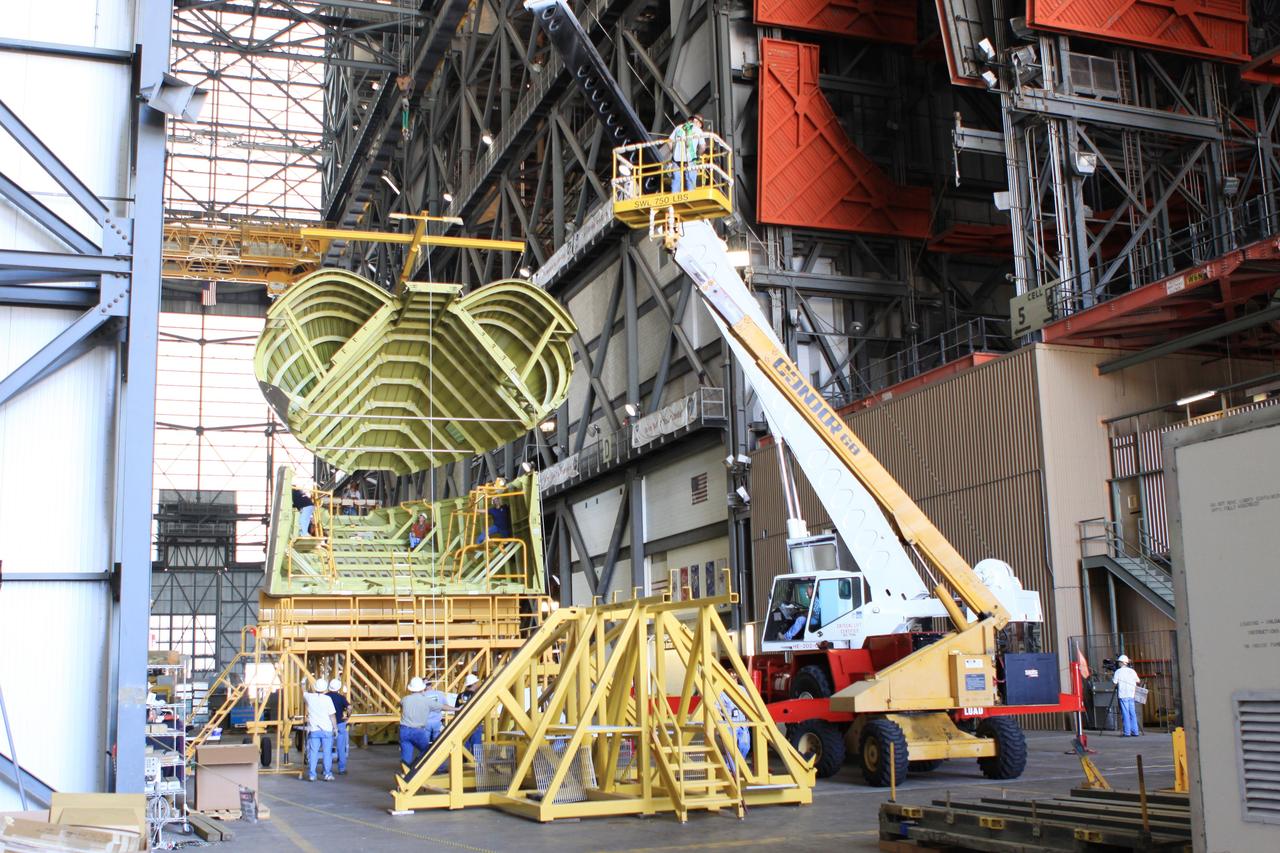
CAPE CANAVERAL, Fla. – In the transfer isle of the Vehicle Assembly Building at NASA’s Kennedy Space Center in Florida, technicians finish building the tail cone that will be installed around space shuttle Endeavour’s three replica shuttle main engines for protection. The tail cone protects the main engines during ferry flights on top of the Shuttle Carrier Aircraft, or SCA. The work is part of the Space Shuttle Program’s transition and retirement processing of shuttle Endeavour. Endeavour is being prepared for public display at the California Science Center in Los Angeles. Its ferry flight to California is targeted for mid-September. Endeavour was the last space shuttle added to NASA’s orbiter fleet. Over the course of its 19-year career, Endeavour spent 299 days in space during 25 missions. For more information, visit http://www.nasa.gov/shuttle. Photo credit: NASA/Jim Grossmann
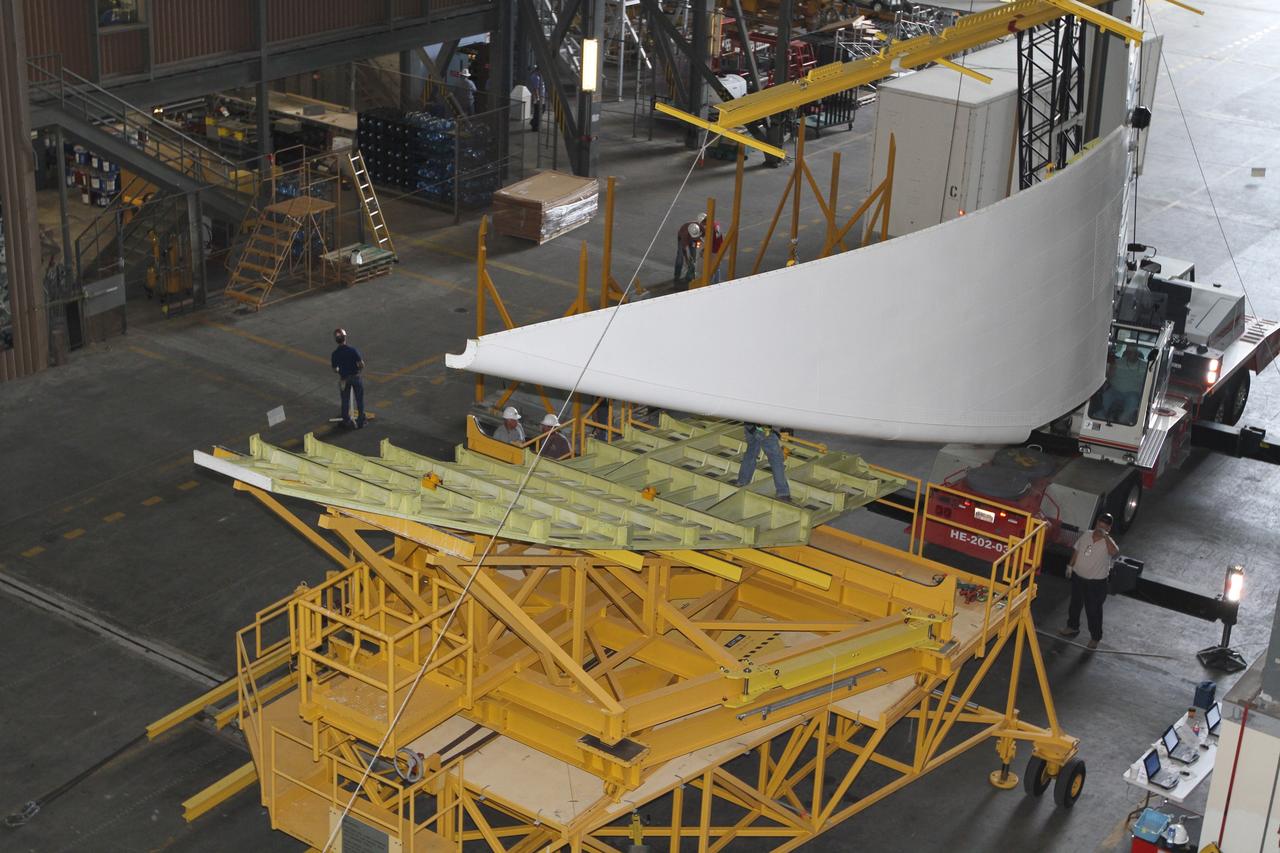
CAPE CANAVERAL, Fla. – Inside the Vehicle Assembly Building at NASA’s Kennedy Space Center in Florida, United Space Alliance technicians use a crane to pick up the right side tail cone for buildup on space shuttle Endeavour. The tail cone protects space shuttle main engines during ferry flights on top of the Shuttle Carrier Aircraft, or SCA. The work is part of Transition and Retirement of the remaining space shuttles, Endeavour and Atlantis. Endeavour is being prepared for public display at the California Science Center in Los Angeles. Its ferry flight to California is targeted for mid-September. Endeavour was the last space shuttle added to NASA’s orbiter fleet. Over the course of its 19-year career, Endeavour spent 299 days in space during 25 missions. For more information, visit http://www.nasa.gov/shuttle. Photo credit: NASA/Kim Shiflett
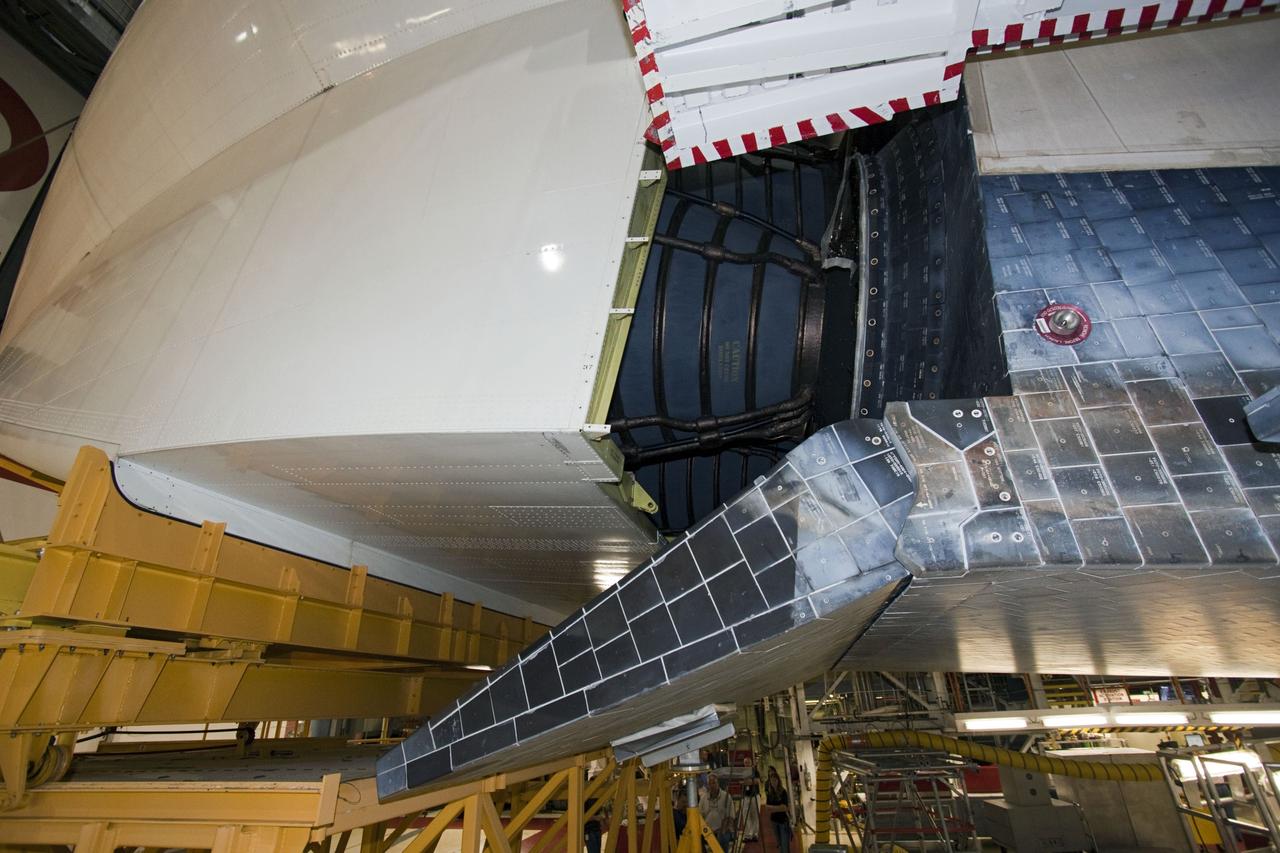
CAPE CANAVERAL, Fla. – In Orbiter Processing Facility Bay 2 at NASA’s Kennedy Space Center in Florida, the tail cone is moved into position surrounding the replica main engines on the space shuttle Endeavour. The tail cone covers the main engines in the aft providing aerodynamic stability during the cross-country ferry flight. The work is part of Transition and Retirement of the remaining space shuttles, Endeavour and Atlantis. Endeavour is being prepared for public display at the California Science Center in Los Angeles. Its ferry flight to California is targeted for mid-September. Endeavour was the last space shuttle added to NASA’s orbiter fleet. Over the course of its 19-year career, Endeavour spent 299 days in space during 25 missions. For more information, visit http://www.nasa.gov/transition Photo credit: NASA/ Jim Grossmann
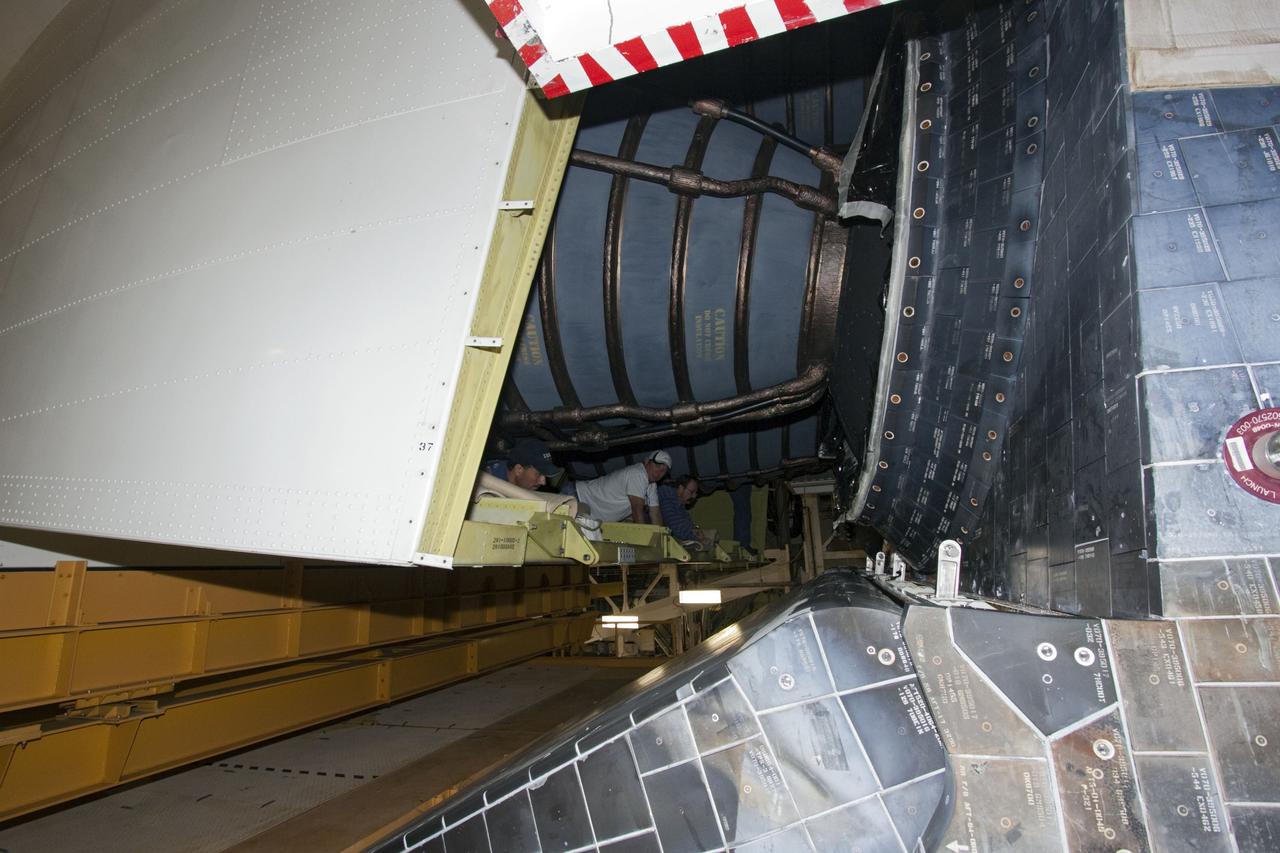
CAPE CANAVERAL, Fla. – In Orbiter Processing Facility Bay 2 at NASA’s Kennedy Space Center in Florida, United Space Alliance technicians monitor progress as the tail cone moves into position for attachment to the space shuttle Endeavour. The tail cone covers the engines in the aft providing aerodynamic stability during the cross-country ferry flight. The work is part of Transition and Retirement of the remaining space shuttles, Endeavour and Atlantis. Endeavour is being prepared for public display at the California Science Center in Los Angeles. Its ferry flight to California is targeted for mid-September. Endeavour was the last space shuttle added to NASA’s orbiter fleet. Over the course of its 19-year career, Endeavour spent 299 days in space during 25 missions. For more information, visit http://www.nasa.gov/transition Photo credit: NASA/ Jim Grossmann
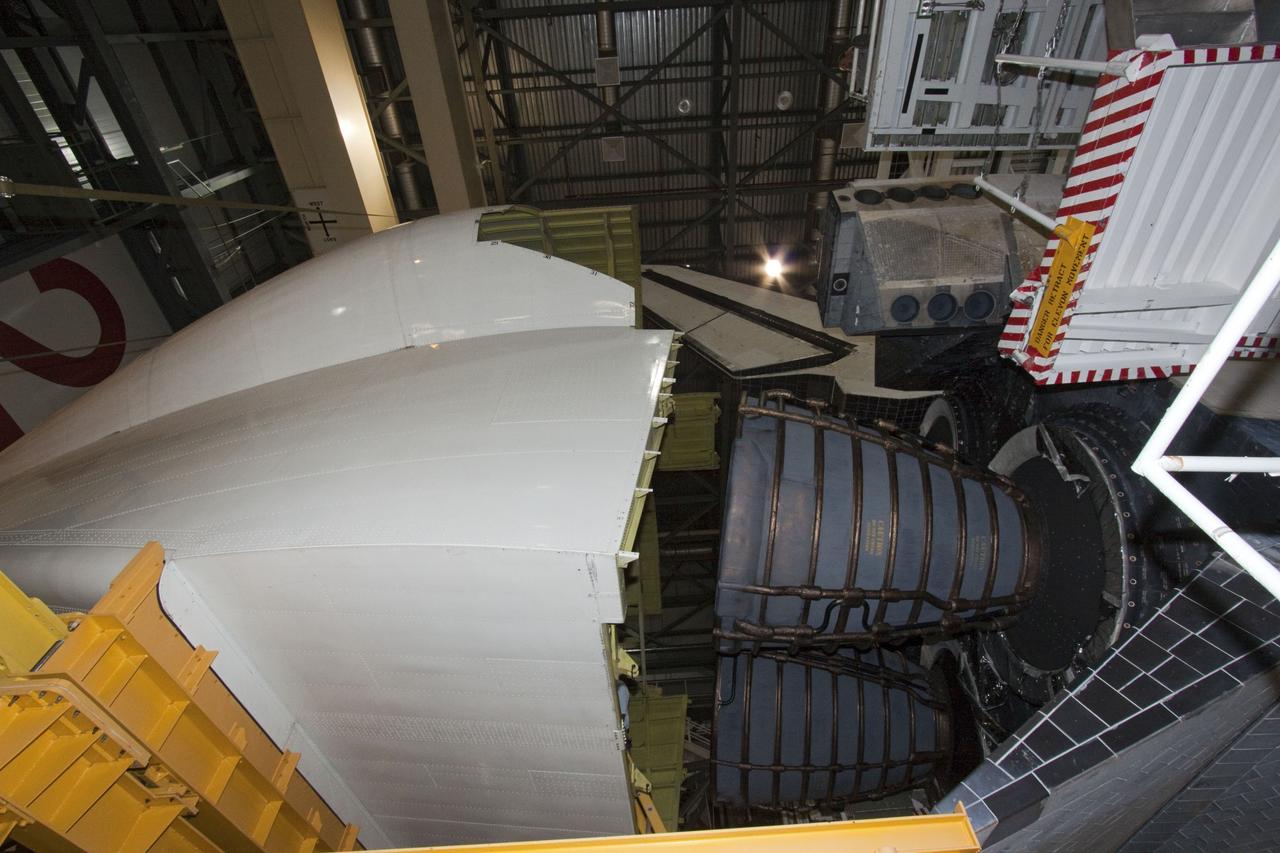
CAPE CANAVERAL, Fla. – In Orbiter Processing Facility Bay 2 at NASA’s Kennedy Space Center in Florida, the tail cone approaches the replica main engines at it is moved into position for attachment to the space shuttle Endeavour. The tail cone covers the main engines in the aft providing aerodynamic stability during the cross-country ferry flight. The work is part of Transition and Retirement of the remaining space shuttles, Endeavour and Atlantis. Endeavour is being prepared for public display at the California Science Center in Los Angeles. Its ferry flight to California is targeted for mid-September. Endeavour was the last space shuttle added to NASA’s orbiter fleet. Over the course of its 19-year career, Endeavour spent 299 days in space during 25 missions. For more information, visit http://www.nasa.gov/transition Photo credit: NASA/ Jim Grossmann
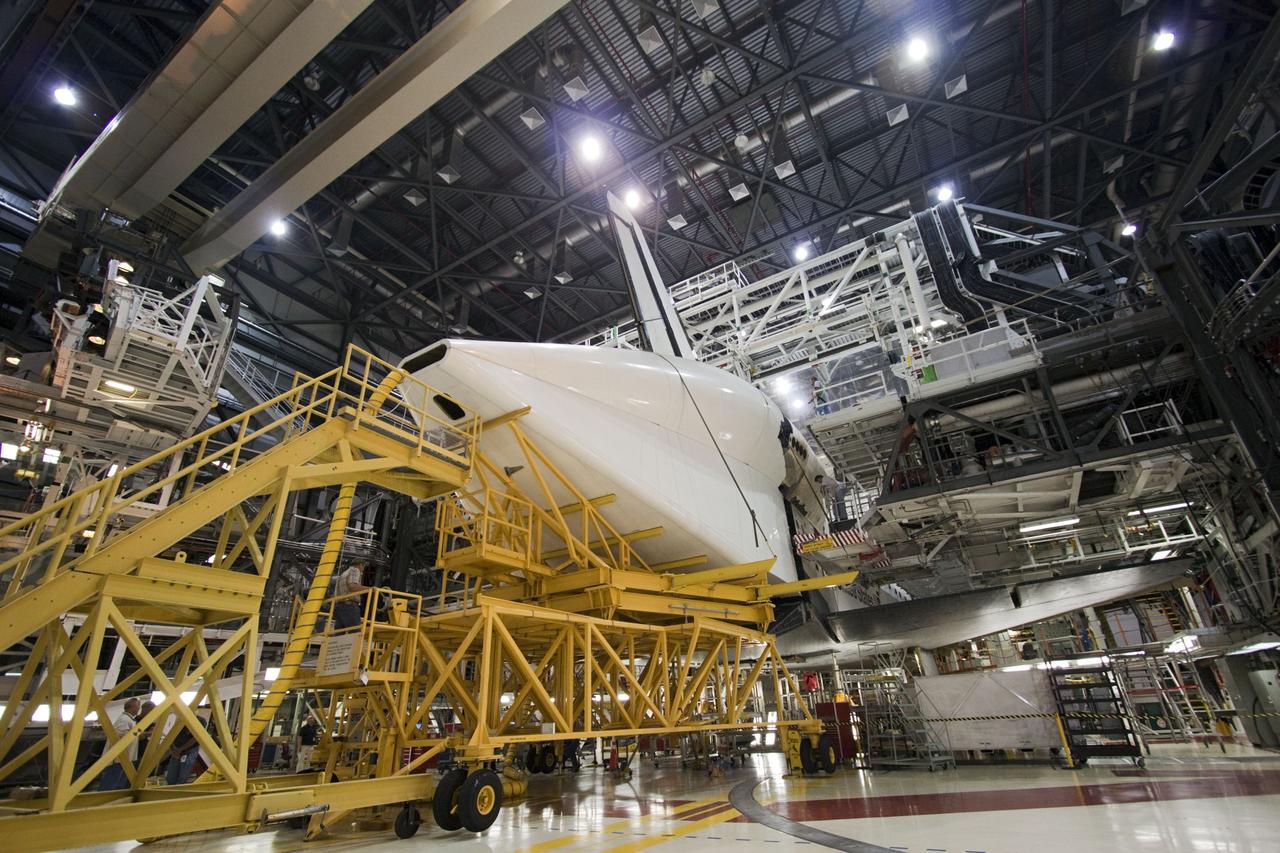
CAPE CANAVERAL, Fla. – In Orbiter Processing Facility Bay 2 at NASA’s Kennedy Space Center in Florida, the tail cone is moved into position surrounding the replica main engines on the space shuttle Endeavour. The tail cone covers the main engines in the aft providing aerodynamic stability during the cross-country ferry flight. The work is part of Transition and Retirement of the remaining space shuttles, Endeavour and Atlantis. Endeavour is being prepared for public display at the California Science Center in Los Angeles. Its ferry flight to California is targeted for mid-September. Endeavour was the last space shuttle added to NASA’s orbiter fleet. Over the course of its 19-year career, Endeavour spent 299 days in space during 25 missions. For more information, visit http://www.nasa.gov/transition Photo credit: NASA/ Jim Grossmann
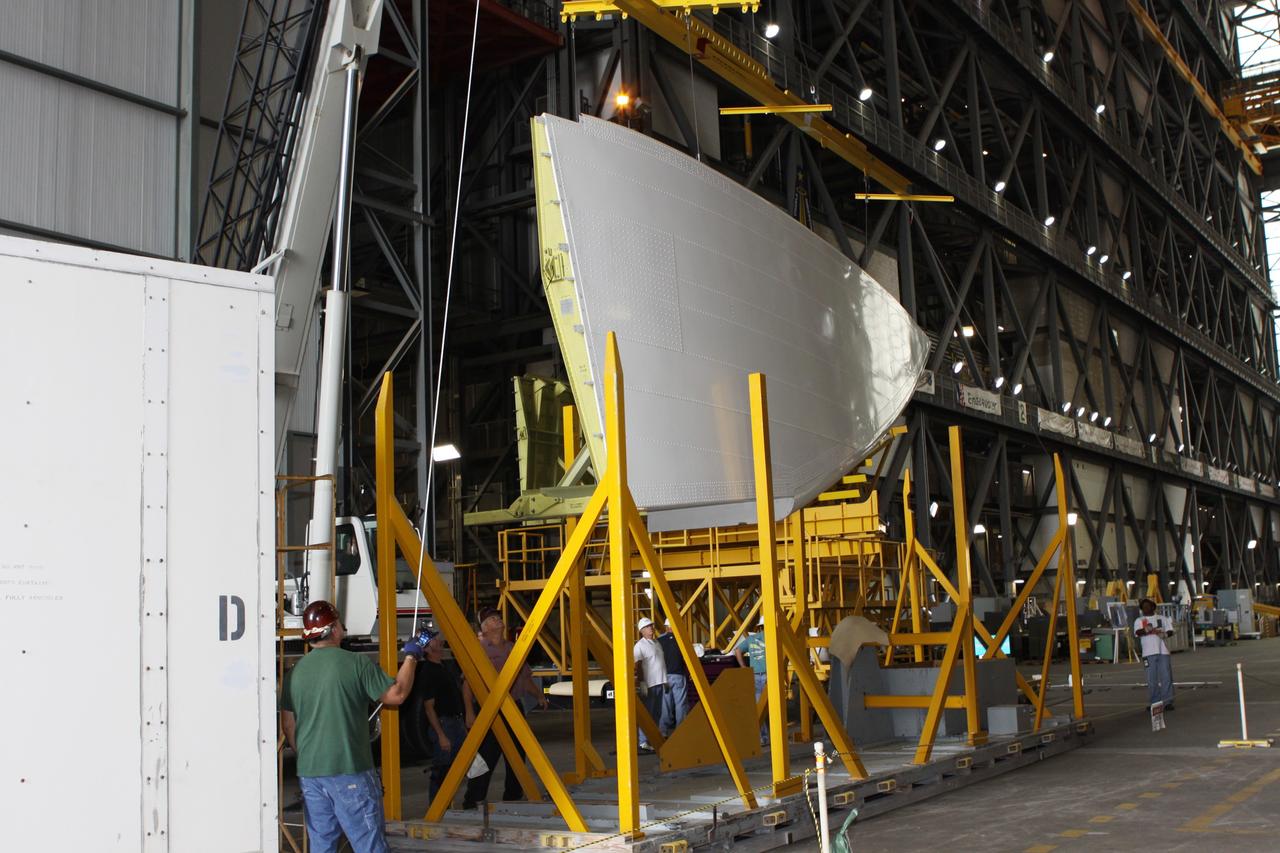
CAPE CANAVERAL, Fla. – Inside the Vehicle Assembly Building at NASA’s Kennedy Space Center in Florida, United Space Alliance technicians prepare the right side tail cone for buildup on space shuttle Endeavour. The tail cone protects space shuttle main engines during ferry flights on top of the Shuttle Carrier Aircraft, or SCA. The work is part of Transition and Retirement of the remaining space shuttles, Endeavour and Atlantis. Endeavour is being prepared for public display at the California Science Center in Los Angeles. Its ferry flight to California is targeted for mid-September. Endeavour was the last space shuttle added to NASA’s orbiter fleet. Over the course of its 19-year career, Endeavour spent 299 days in space during 25 missions. For more information, visit http://www.nasa.gov/shuttle. Photo credit: NASA/Jim Grossmann

CAPE CANAVERAL, Fla. – In the transfer isle of the Vehicle Assembly Building at NASA’s Kennedy Space Center in Florida, technicians finish building the tail cone that will be installed around space shuttle Endeavour’s three replica shuttle main engines for protection. The tail cone protects the main engines during ferry flights on top of the Shuttle Carrier Aircraft, or SCA. The work is part of the Space Shuttle Program’s transition and retirement processing of shuttle Endeavour. Endeavour is being prepared for public display at the California Science Center in Los Angeles. Its ferry flight to California is targeted for mid-September. Endeavour was the last space shuttle added to NASA’s orbiter fleet. Over the course of its 19-year career, Endeavour spent 299 days in space during 25 missions. For more information, visit http://www.nasa.gov/shuttle. Photo credit: NASA/Jim Grossmann
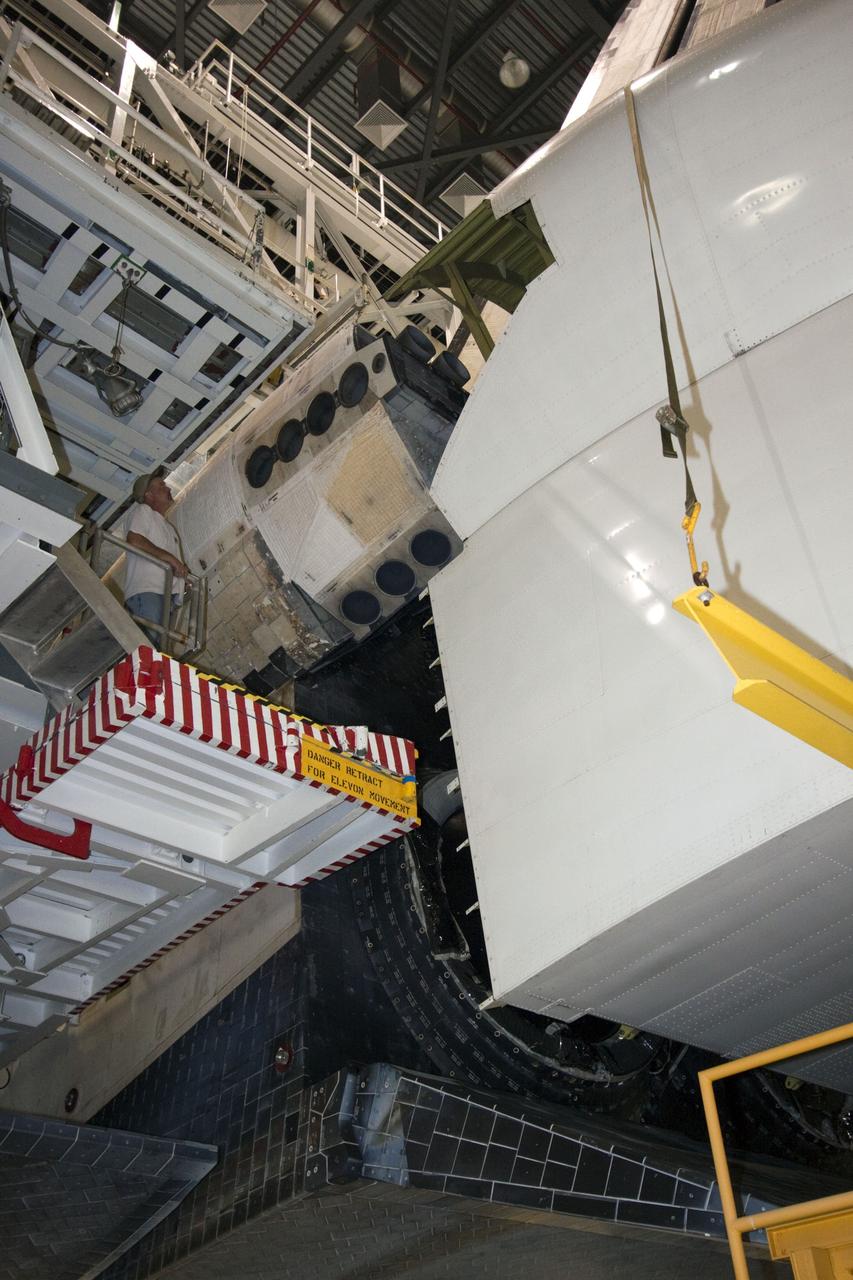
CAPE CANAVERAL, Fla. – In Orbiter Processing Facility Bay 2 at NASA’s Kennedy Space Center in Florida, the tail cone is moved into position surrounding the replica main engines on the space shuttle Endeavour. The tail cone covers the main engines in the aft providing aerodynamic stability during the cross-country ferry flight. The work is part of Transition and Retirement of the remaining space shuttles, Endeavour and Atlantis. Endeavour is being prepared for public display at the California Science Center in Los Angeles. Its ferry flight to California is targeted for mid-September. Endeavour was the last space shuttle added to NASA’s orbiter fleet. Over the course of its 19-year career, Endeavour spent 299 days in space during 25 missions. For more information, visit http://www.nasa.gov/transition Photo credit: NASA/ Jim Grossmann
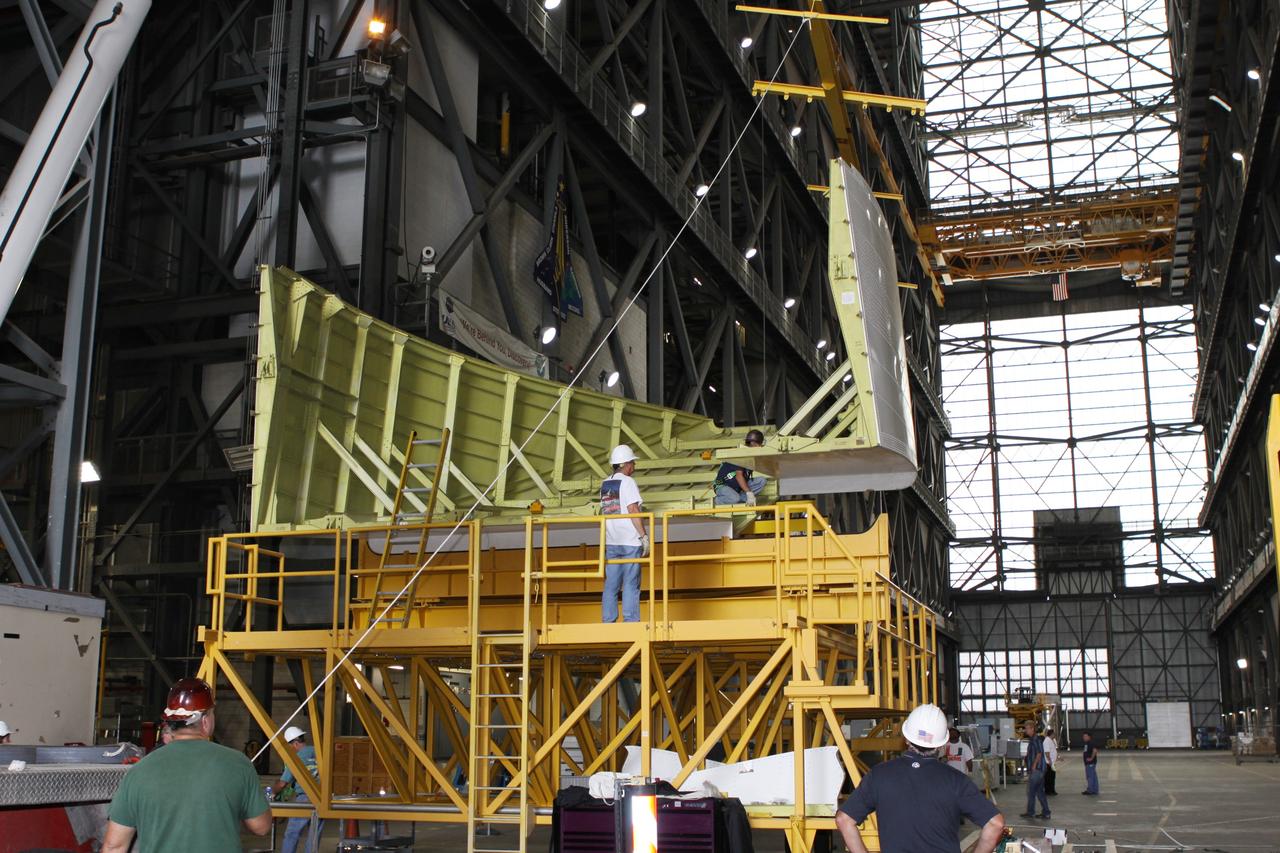
CAPE CANAVERAL, Fla. – Inside the Vehicle Assembly Building at NASA’s Kennedy Space Center in Florida, United Space Alliance technicians prepare the right side tail cone for buildup on space shuttle Endeavour. The tail cone protects space shuttle main engines during ferry flights on top of the Shuttle Carrier Aircraft, or SCA. The work is part of Transition and Retirement of the remaining space shuttles, Endeavour and Atlantis. Endeavour is being prepared for public display at the California Science Center in Los Angeles. Its ferry flight to California is targeted for mid-September. Endeavour was the last space shuttle added to NASA’s orbiter fleet. Over the course of its 19-year career, Endeavour spent 299 days in space during 25 missions. For more information, visit http://www.nasa.gov/shuttle. Photo credit: NASA/Jim Grossmann
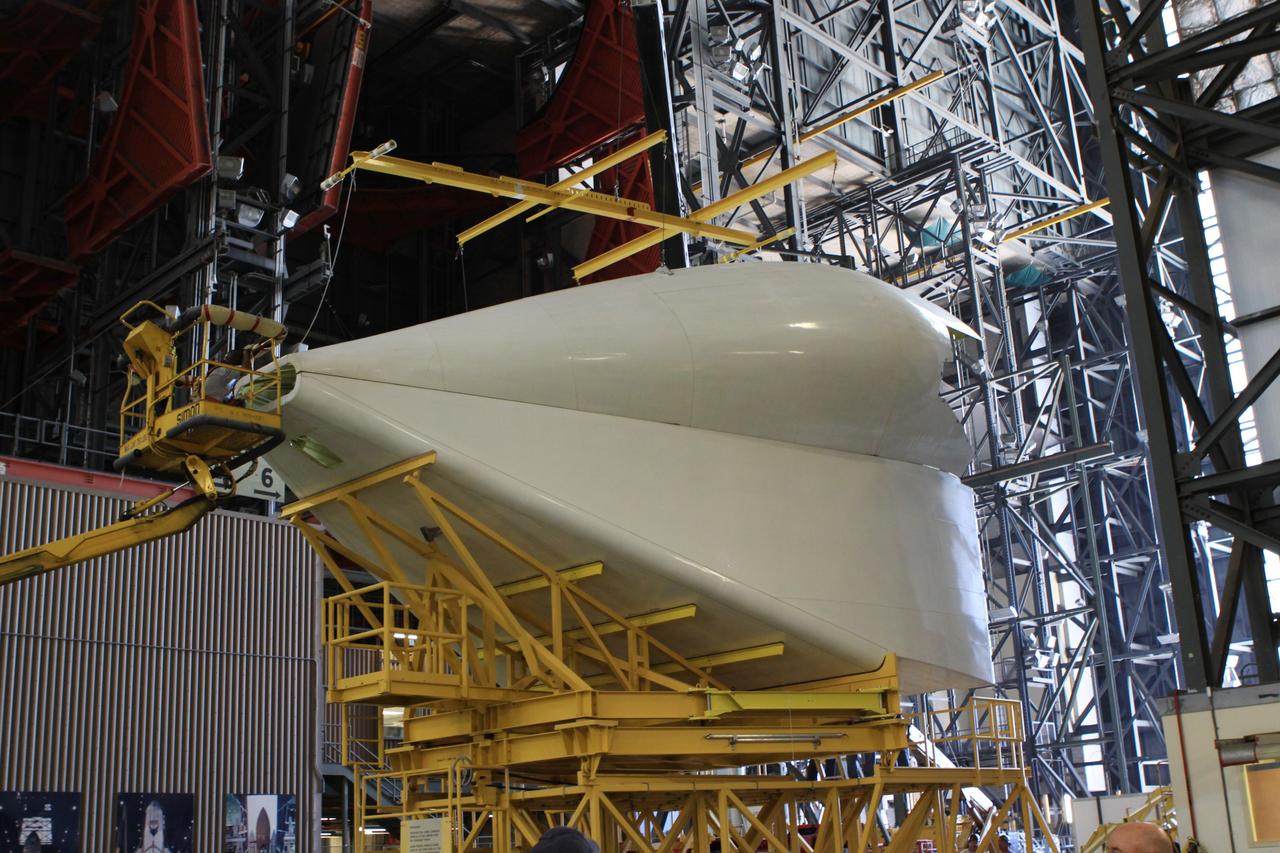
CAPE CANAVERAL, Fla. – In the transfer isle of the Vehicle Assembly Building at NASA’s Kennedy Space Center in Florida, technicians finish building the tail cone that will be installed around space shuttle Endeavour’s three replica shuttle main engines for protection. The tail cone protects the main engines during ferry flights on top of the Shuttle Carrier Aircraft, or SCA. The work is part of the Space Shuttle Program’s transition and retirement processing of shuttle Endeavour. Endeavour is being prepared for public display at the California Science Center in Los Angeles. Its ferry flight to California is targeted for mid-September. Endeavour was the last space shuttle added to NASA’s orbiter fleet. Over the course of its 19-year career, Endeavour spent 299 days in space during 25 missions. For more information, visit http://www.nasa.gov/shuttle. Photo credit: NASA/Jim Grossmann
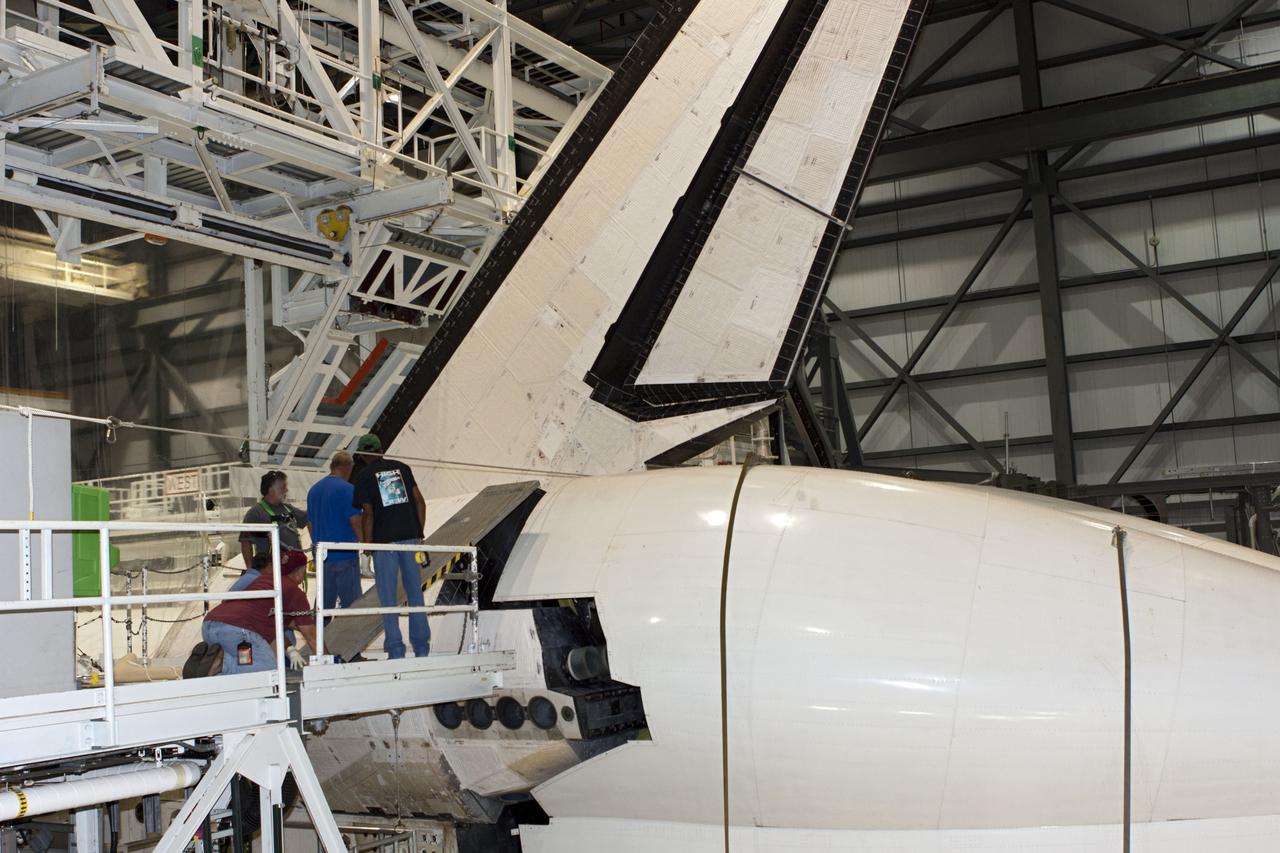
CAPE CANAVERAL, Fla. – In Orbiter Processing Facility Bay 2 at NASA’s Kennedy Space Center in Florida, United Space Alliance technicians monitor progress as the tail cone is fitted to the space shuttle Endeavour. The tail cone covers the engines in the aft providing aerodynamic stability during the cross-country ferry flight. The work is part of Transition and Retirement of the remaining space shuttles, Endeavour and Atlantis. Endeavour is being prepared for public display at the California Science Center in Los Angeles. Its ferry flight to California is targeted for mid-September. Endeavour was the last space shuttle added to NASA’s orbiter fleet. Over the course of its 19-year career, Endeavour spent 299 days in space during 25 missions. For more information, visit http://www.nasa.gov/transition Photo credit: NASA/ Jim Grossmann
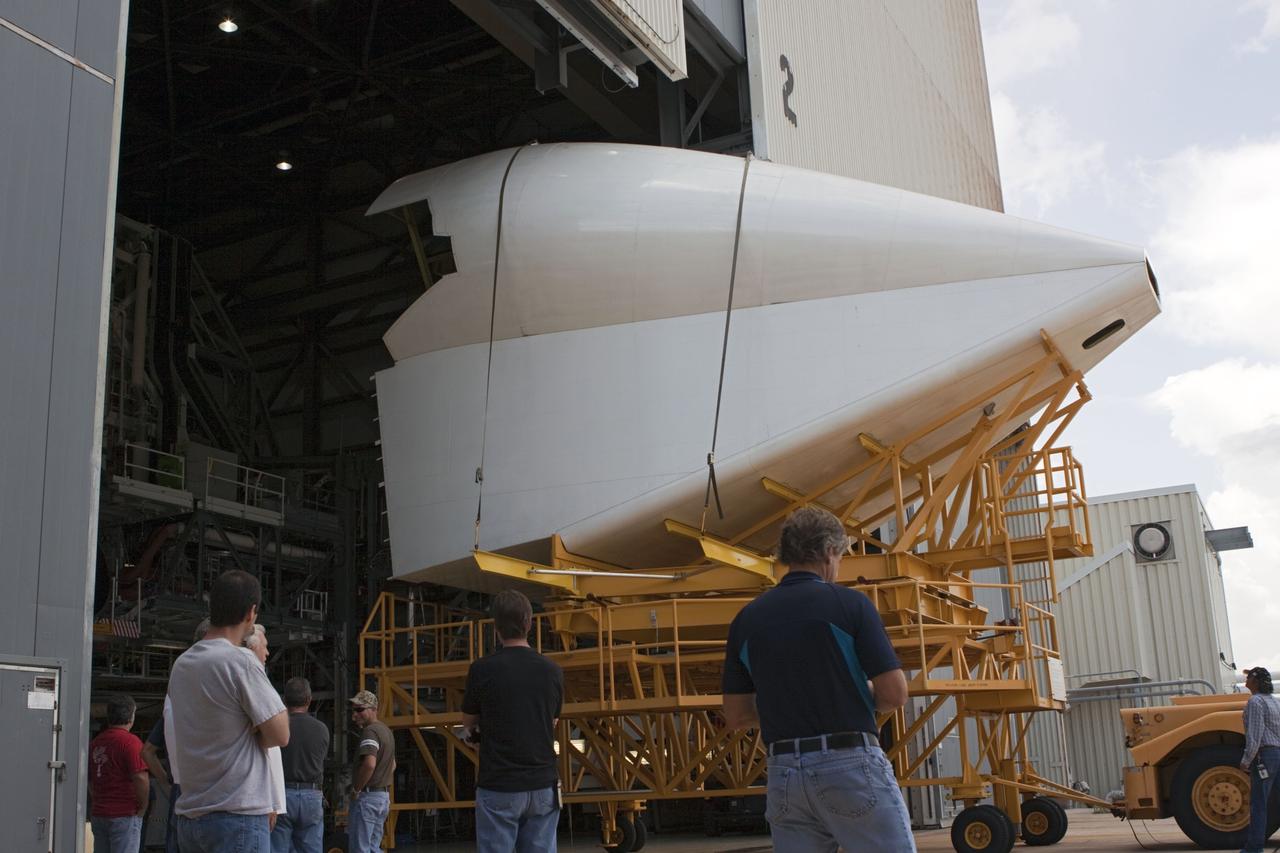
CAPE CANAVERAL, Fla. -- The tail cone that will cover space shuttle Endeavour’s replica shuttle main engines arrives at Orbiter Processing Facility-2, or OPF-2, from the Vehicle Assembly Building at NASA’s Kennedy Space Center in Florida. Inside OPF-2, the tail cone will be installed on Endeavour. The work is part of Transition and Retirement of the remaining space shuttles, Endeavour and Atlantis. Endeavour is being prepared for public display at the California Science Center in Los Angeles. Its ferry flight to California is targeted for mid-September. Endeavour was the last space shuttle added to NASA’s orbiter fleet. Over the course of its 19-year career, Endeavour spent 299 days in space during 25 missions. For more information, visit http://www.nasa.gov/shuttle. Photo credit: NASA/Jim Grossmann
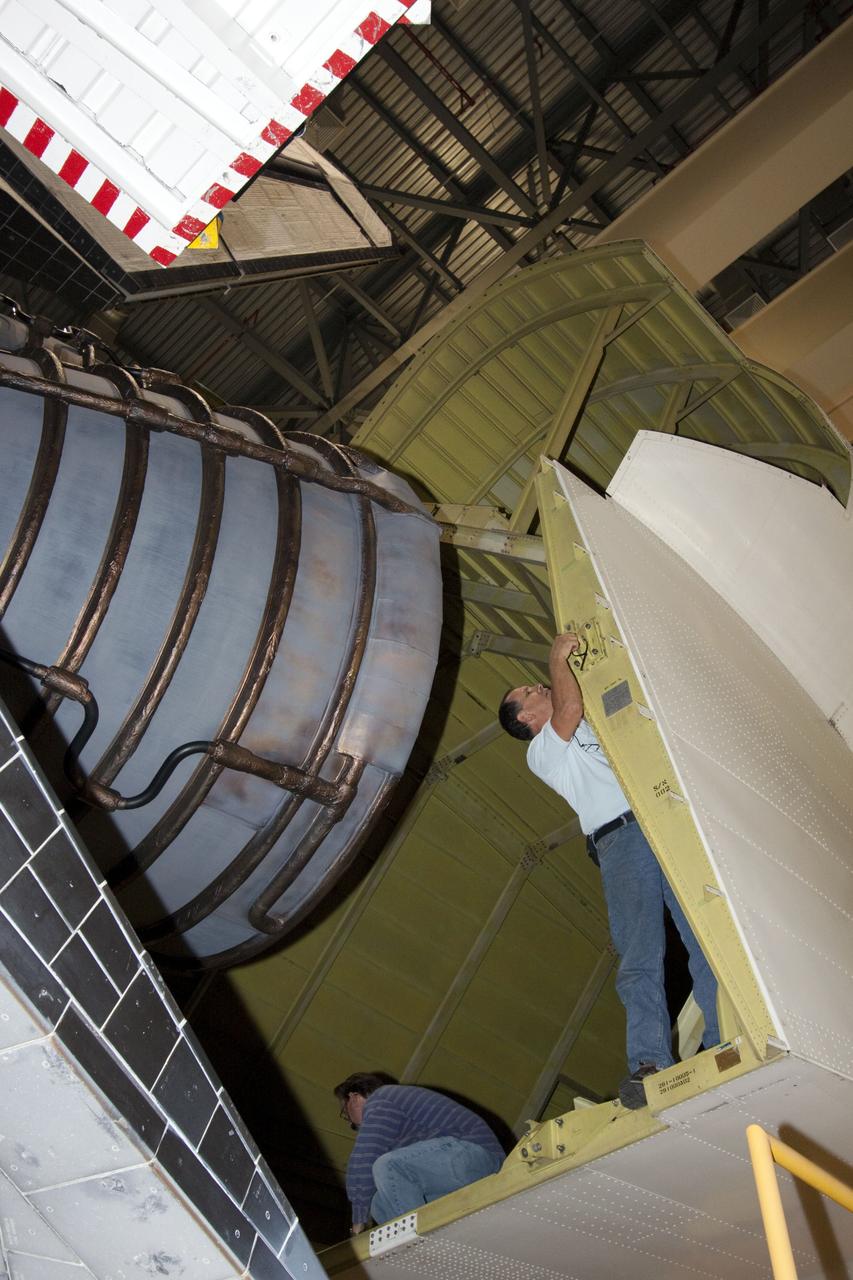
CAPE CANAVERAL, Fla. – In Orbiter Processing Facility Bay 2 at NASA’s Kennedy Space Center in Florida, United Space Alliance technicians monitor progress as the tail cone moves into position for attachment to the space shuttle Endeavour. The tail cone covers the engines in the aft providing aerodynamic stability during the cross-country ferry flight. The work is part of Transition and Retirement of the remaining space shuttles, Endeavour and Atlantis. Endeavour is being prepared for public display at the California Science Center in Los Angeles. Its ferry flight to California is targeted for mid-September. Endeavour was the last space shuttle added to NASA’s orbiter fleet. Over the course of its 19-year career, Endeavour spent 299 days in space during 25 missions. For more information, visit http://www.nasa.gov/transition Photo credit: NASA/ Jim Grossmann
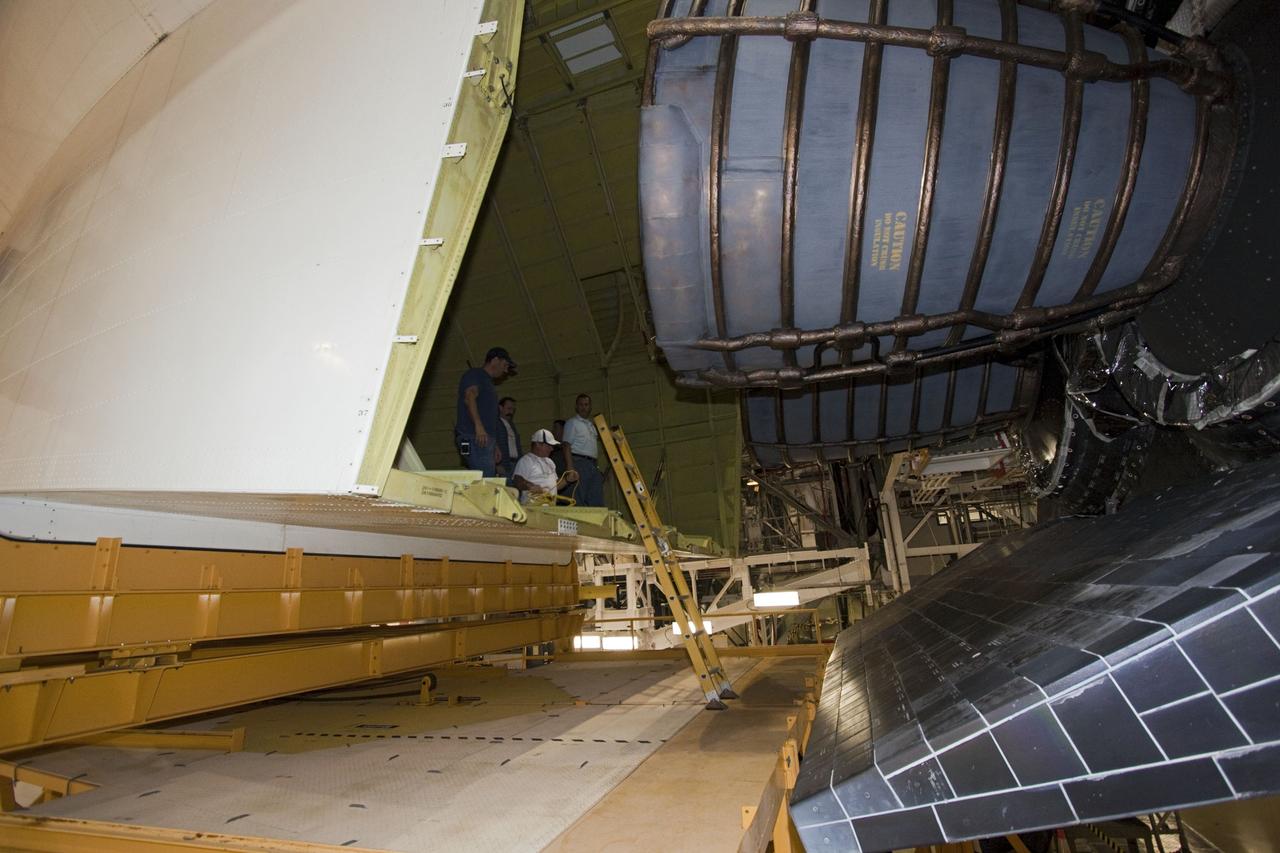
CAPE CANAVERAL, Fla. – In Orbiter Processing Facility Bay 2 at NASA’s Kennedy Space Center in Florida, United Space Alliance technicians move the tail cone into position for attachment to the space shuttle Endeavour. The tail cone covers the main engines in the aft providing aerodynamic stability during the cross-country ferry flight. The work is part of Transition and Retirement of the remaining space shuttles, Endeavour and Atlantis. Endeavour is being prepared for public display at the California Science Center in Los Angeles. Its ferry flight to California is targeted for mid-September. Endeavour was the last space shuttle added to NASA’s orbiter fleet. Over the course of its 19-year career, Endeavour spent 299 days in space during 25 missions. For more information, visit http://www.nasa.gov/transition Photo credit: NASA/ Jim Grossmann
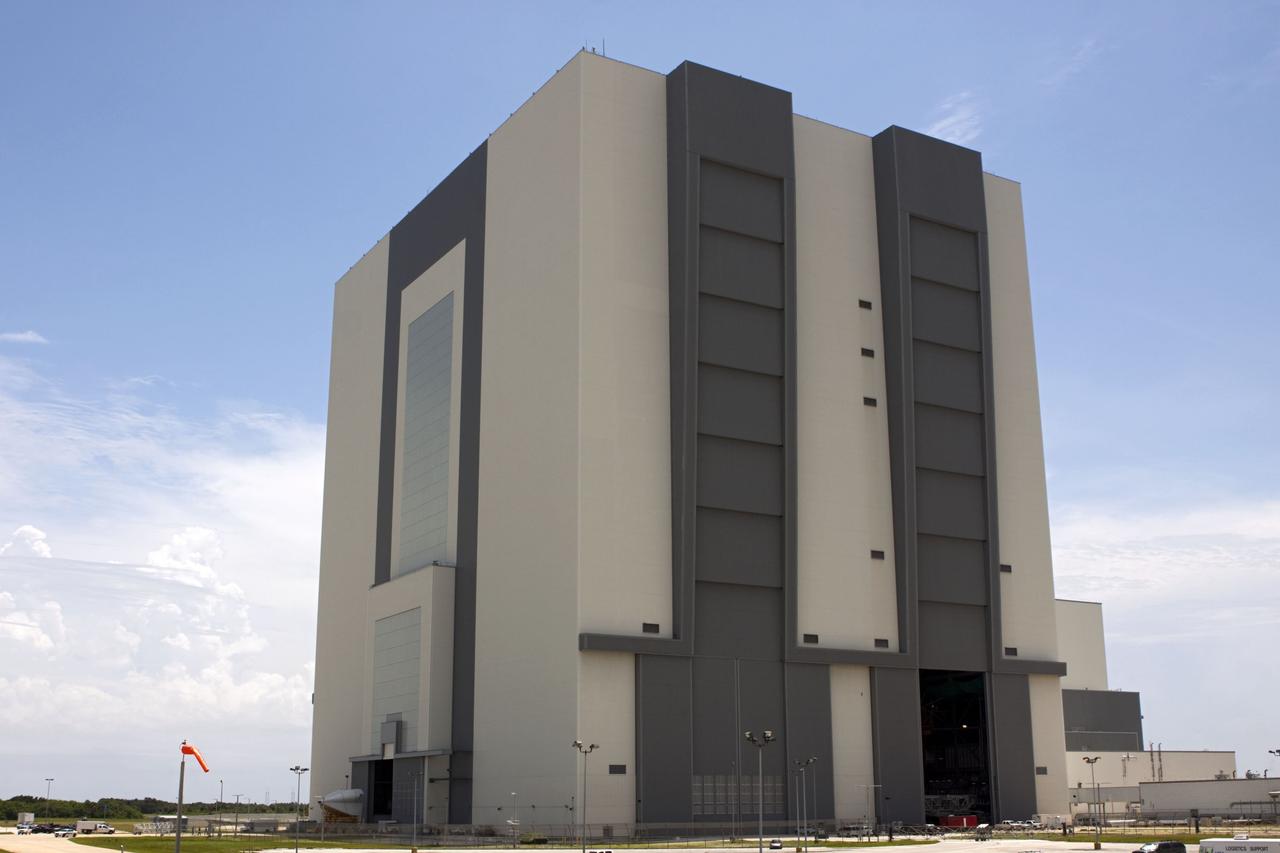
CAPE CANAVERAL, Fla. -- The tail cone that will cover space shuttle Endeavour’s replica shuttle main engines sits outside of the Vehicle Assembly Building at NASA’s Kennedy Space Center in Florida. The tail cone will be transported to Orbiter Processing Facility-2 for installation on Endeavour. The work is part of Transition and Retirement of the remaining space shuttles, Endeavour and Atlantis. Endeavour is being prepared for public display at the California Science Center in Los Angeles. Its ferry flight to California is targeted for mid-September. Endeavour was the last space shuttle added to NASA’s orbiter fleet. Over the course of its 19-year career, Endeavour spent 299 days in space during 25 missions. For more information, visit http://www.nasa.gov/shuttle. Photo credit: NASA/Jim Grossmann
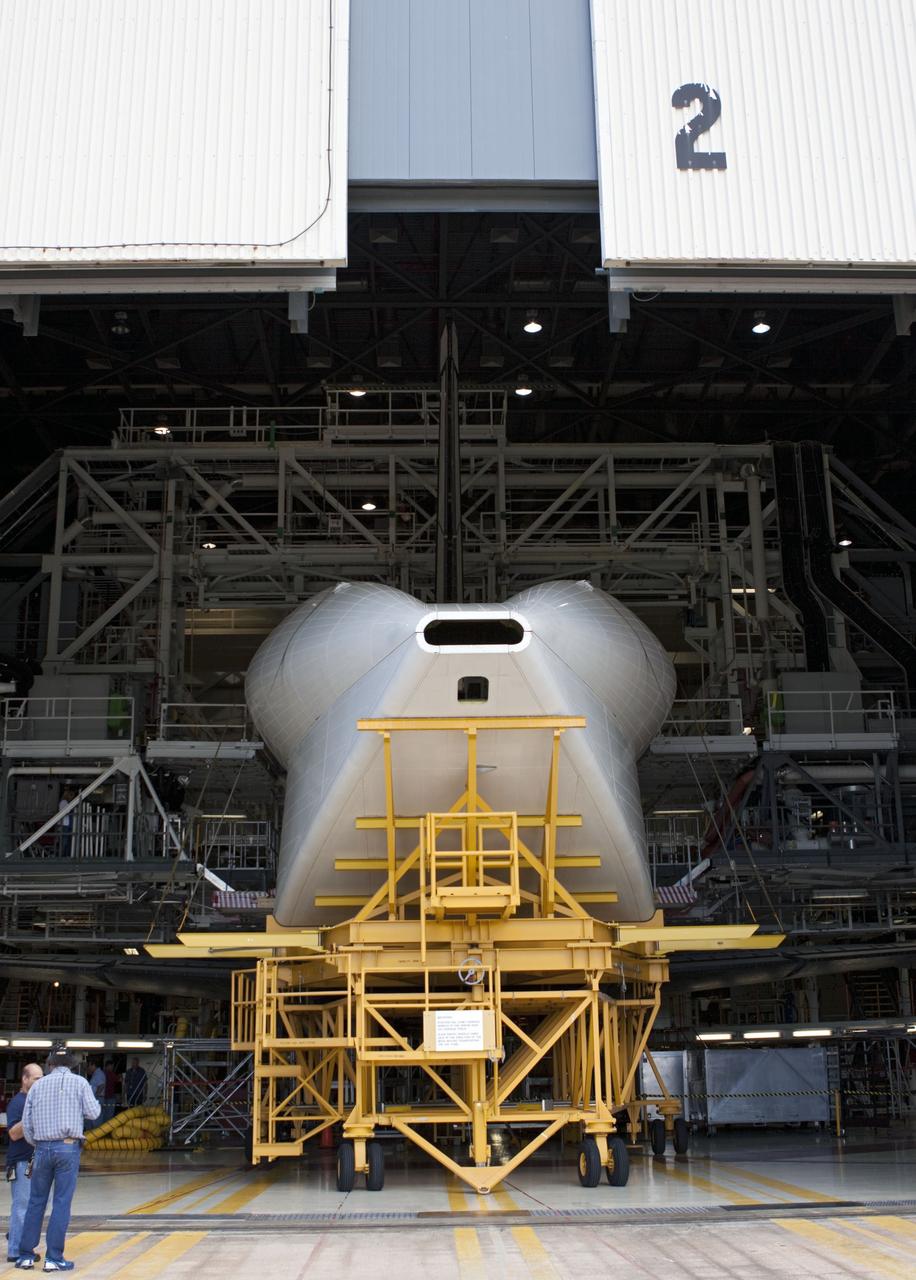
CAPE CANAVERAL, Fla. -- The tail cone that will cover space shuttle Endeavour’s replica shuttle main engines arrives at Orbiter Processing Facility-2, or OPF-2, from the Vehicle Assembly Building at NASA’s Kennedy Space Center in Florida. Inside OPF-2, the tail cone will be installed on Endeavour. The work is part of Transition and Retirement of the remaining space shuttles, Endeavour and Atlantis. Endeavour is being prepared for public display at the California Science Center in Los Angeles. Its ferry flight to California is targeted for mid-September. Endeavour was the last space shuttle added to NASA’s orbiter fleet. Over the course of its 19-year career, Endeavour spent 299 days in space during 25 missions. For more information, visit http://www.nasa.gov/shuttle. Photo credit: NASA/Jim Grossmann
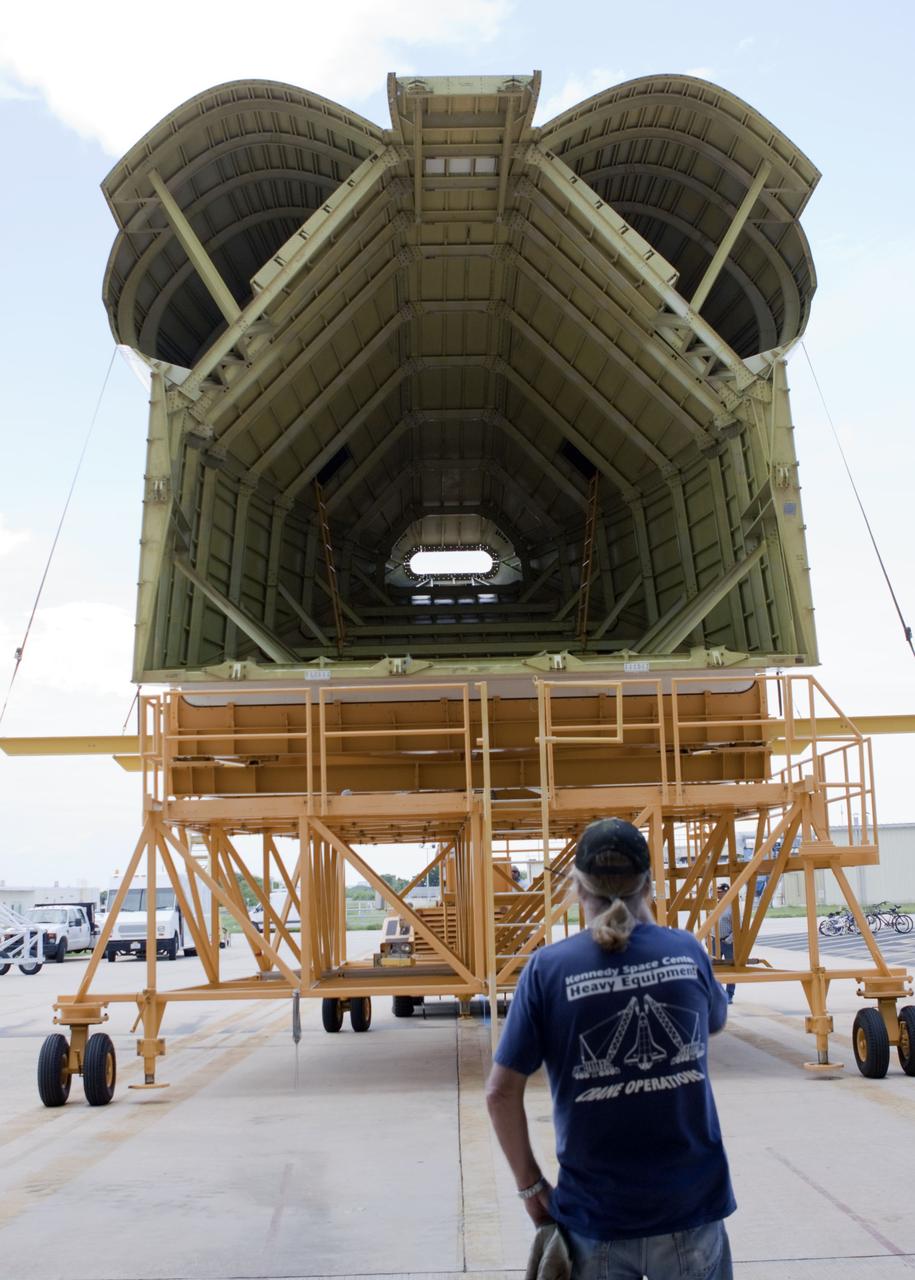
CAPE CANAVERAL, Fla. -- A United Space Alliance technician monitors the progress as the tail cone that will cover space shuttle Endeavour’s replica shuttle main engines arrives at Orbiter Processing Facility-2, or OPF-2, from the Vehicle Assembly Building at NASA’s Kennedy Space Center in Florida. Inside OPF-2, the tail cone will be installed on Endeavour. The work is part of Transition and Retirement of the remaining space shuttles, Endeavour and Atlantis. Endeavour is being prepared for public display at the California Science Center in Los Angeles. Its ferry flight to California is targeted for mid-September. Endeavour was the last space shuttle added to NASA’s orbiter fleet. Over the course of its 19-year career, Endeavour spent 299 days in space during 25 missions. For more information, visit http://www.nasa.gov/shuttle. Photo credit: NASA/Jim Grossmann

Towed from the Shuttle Landing Facility, Atlantis heads for the Orbiter Processing Facility (far right), accompanied by a KSC/CCAFS rescue vehicle. In view is the tail cone that orbiters use when being carried piggyback on ferry flights atop a Shuttle Carrier Aircraft. The tail cone protects the aft engine area and provides a more efficient aeronautical dimension during flight. Atlantis returned from California atop a Shuttle Carrier Aircraft after its Feb. 19 landing at Edwards Air Force Base, concluding mission STS-98. The ferry flight began March 1; unfavorable weather conditions kept it on the ground at Altus AFB, Okla., until it could return to Florida. In the Orbiter Processing Facility, Atlantis will be prepared for mission STS-104, the 10th construction flight to the International Space Station, scheduled to launch June 8
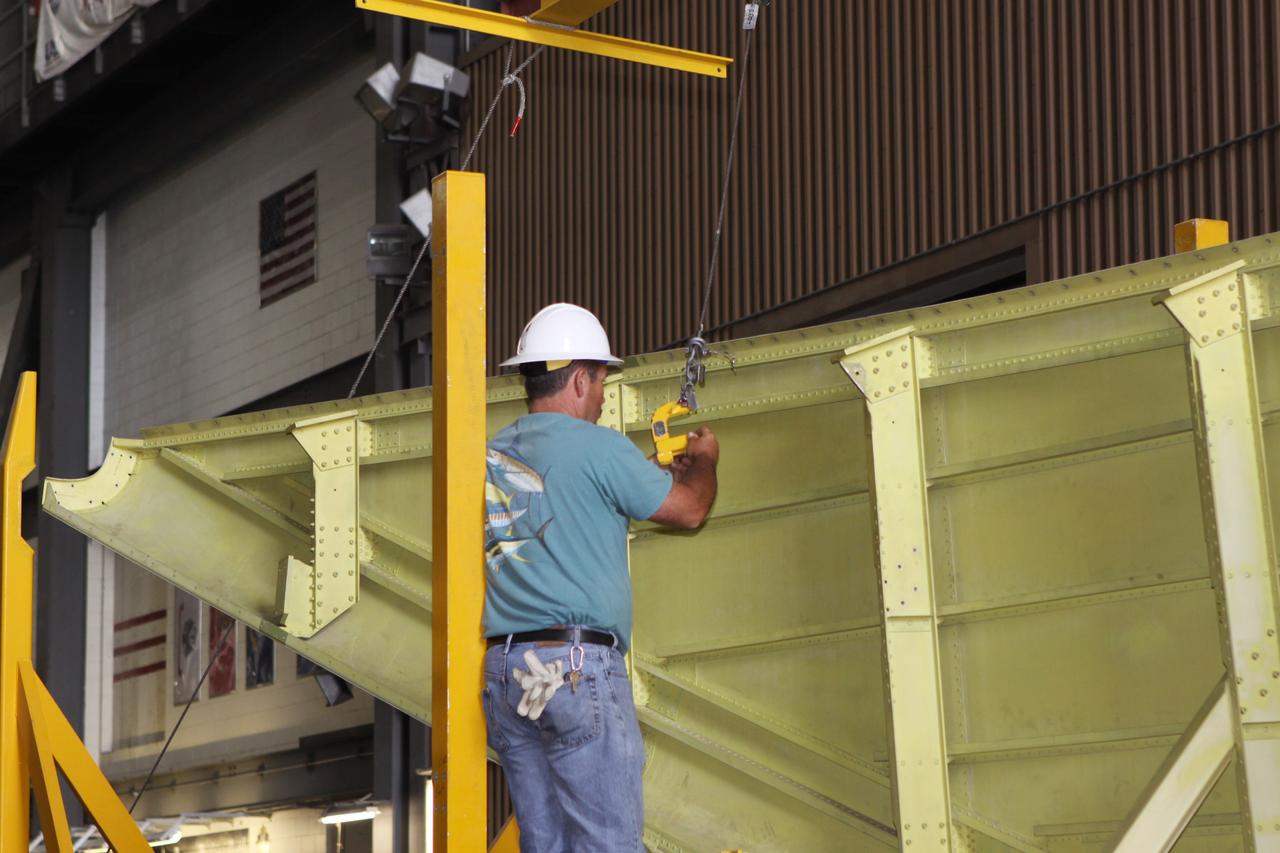
CAPE CANAVERAL, Fla. – Inside the Vehicle Assembly Building at NASA’s Kennedy Space Center in Florida, a United Space Alliance technician helps prepare the right side tail cone for buildup on space shuttle Endeavour. The tail cone protects space shuttle main engines during ferry flights on top of the Shuttle Carrier Aircraft, or SCA. The work is part of Transition and Retirement of the remaining space shuttles, Endeavour and Atlantis. Endeavour is being prepared for public display at the California Science Center in Los Angeles. Its ferry flight to California is targeted for mid-September. Endeavour was the last space shuttle added to NASA’s orbiter fleet. Over the course of its 19-year career, Endeavour spent 299 days in space during 25 missions. For more information, visit http://www.nasa.gov/shuttle. Photo credit: NASA/Jim Grossmann
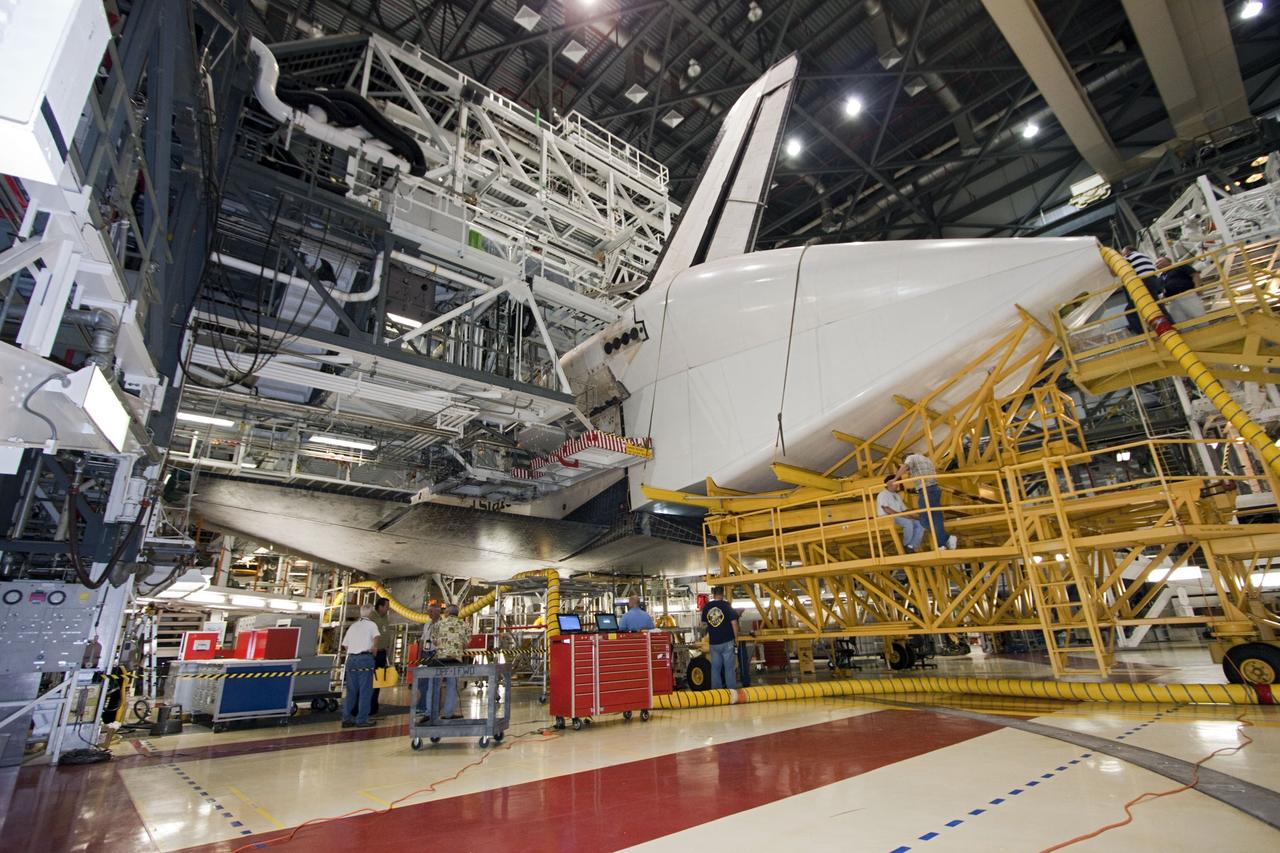
CAPE CANAVERAL, Fla. – In Orbiter Processing Facility Bay 2 at NASA’s Kennedy Space Center in Florida, the tail cone has been placed in position surrounding the replica main engines on the space shuttle Endeavour. The tail cone covers the main engines in the aft providing aerodynamic stability during the cross-country ferry flight. The work is part of Transition and Retirement of the remaining space shuttles, Endeavour and Atlantis. Endeavour is being prepared for public display at the California Science Center in Los Angeles. Its ferry flight to California is targeted for mid-September. Endeavour was the last space shuttle added to NASA’s orbiter fleet. Over the course of its 19-year career, Endeavour spent 299 days in space during 25 missions. For more information, visit http://www.nasa.gov/transition Photo credit: NASA/ Jim Grossmann
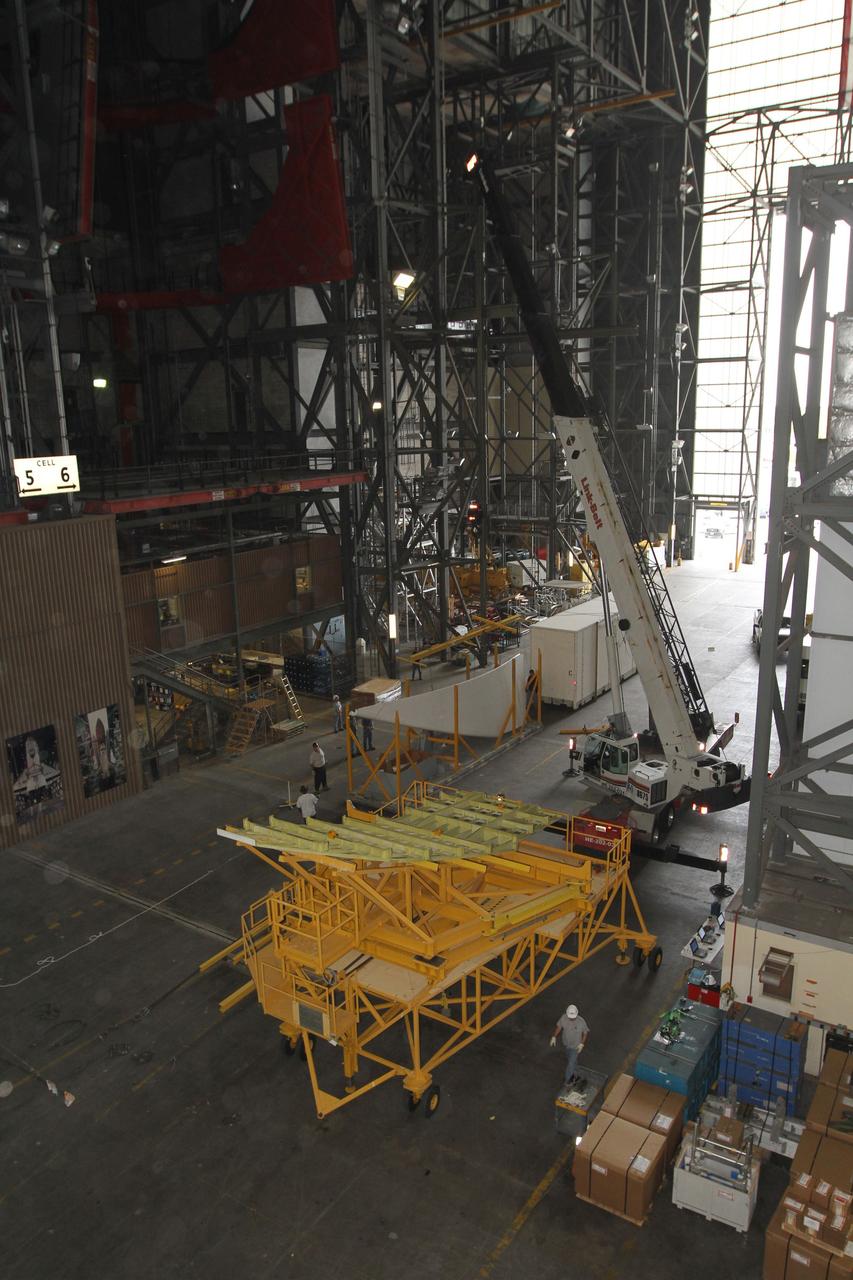
CAPE CANAVERAL, Fla. – Inside the Vehicle Assembly Building at NASA’s Kennedy Space Center in Florida, United Space Alliance technicians use a crane to pick up the right side tail cone for buildup on space shuttle Endeavour. The tail cone protects space shuttle main engines during ferry flights on top of the Shuttle Carrier Aircraft, or SCA. The work is part of Transition and Retirement of the remaining space shuttles, Endeavour and Atlantis. Endeavour is being prepared for public display at the California Science Center in Los Angeles. Its ferry flight to California is targeted for mid-September. Endeavour was the last space shuttle added to NASA’s orbiter fleet. Over the course of its 19-year career, Endeavour spent 299 days in space during 25 missions. For more information, visit http://www.nasa.gov/shuttle. Photo credit: NASA/Kim Shiflett
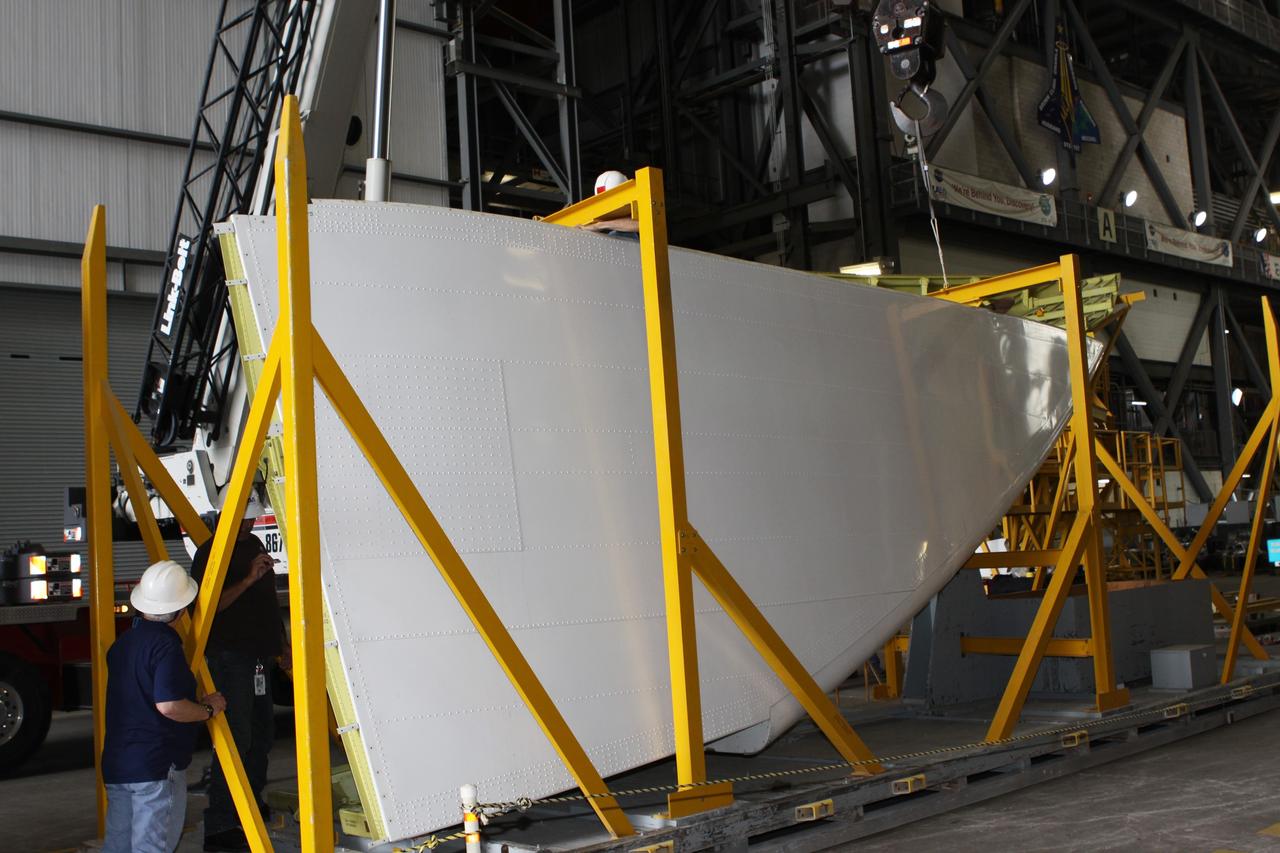
CAPE CANAVERAL, Fla. – Inside the Vehicle Assembly Building at NASA’s Kennedy Space Center in Florida, United Space Alliance technicians prepare the right side tail cone for buildup on space shuttle Endeavour. The tail cone protects space shuttle main engines during ferry flights on top of the Shuttle Carrier Aircraft, or SCA. The work is part of Transition and Retirement of the remaining space shuttles, Endeavour and Atlantis. Endeavour is being prepared for public display at the California Science Center in Los Angeles. Its ferry flight to California is targeted for mid-September. Endeavour was the last space shuttle added to NASA’s orbiter fleet. Over the course of its 19-year career, Endeavour spent 299 days in space during 25 missions. For more information, visit http://www.nasa.gov/shuttle. Photo credit: NASA/Jim Grossmann
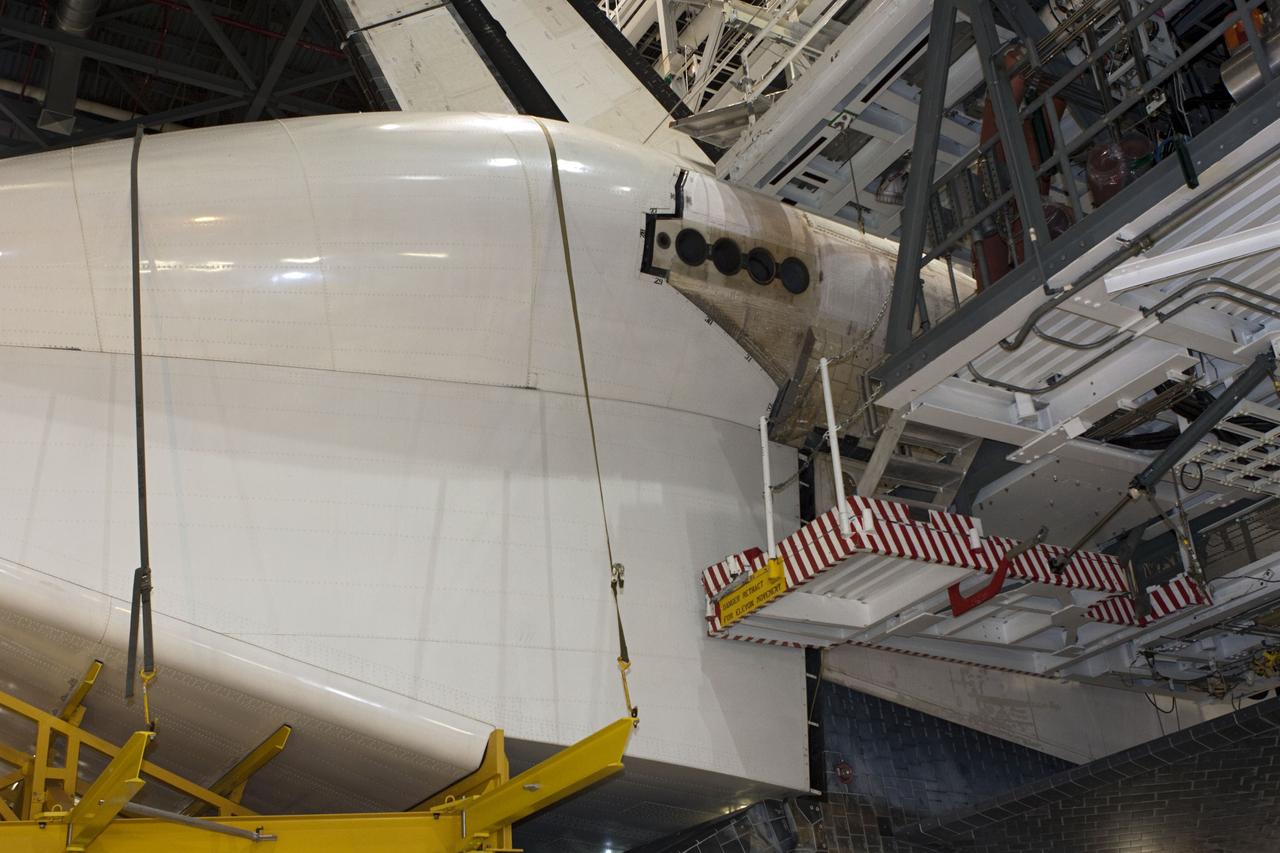
CAPE CANAVERAL, Fla. – In Orbiter Processing Facility Bay 2 at NASA’s Kennedy Space Center in Florida, the tail cone has been placed in position surrounding the replica main engines on the space shuttle Endeavour. The tail cone covers the main engines in the aft providing aerodynamic stability during the cross-country ferry flight. The work is part of Transition and Retirement of the remaining space shuttles, Endeavour and Atlantis. Endeavour is being prepared for public display at the California Science Center in Los Angeles. Its ferry flight to California is targeted for mid-September. Endeavour was the last space shuttle added to NASA’s orbiter fleet. Over the course of its 19-year career, Endeavour spent 299 days in space during 25 missions. For more information, visit http://www.nasa.gov/transition Photo credit: NASA/ Jim Grossmann
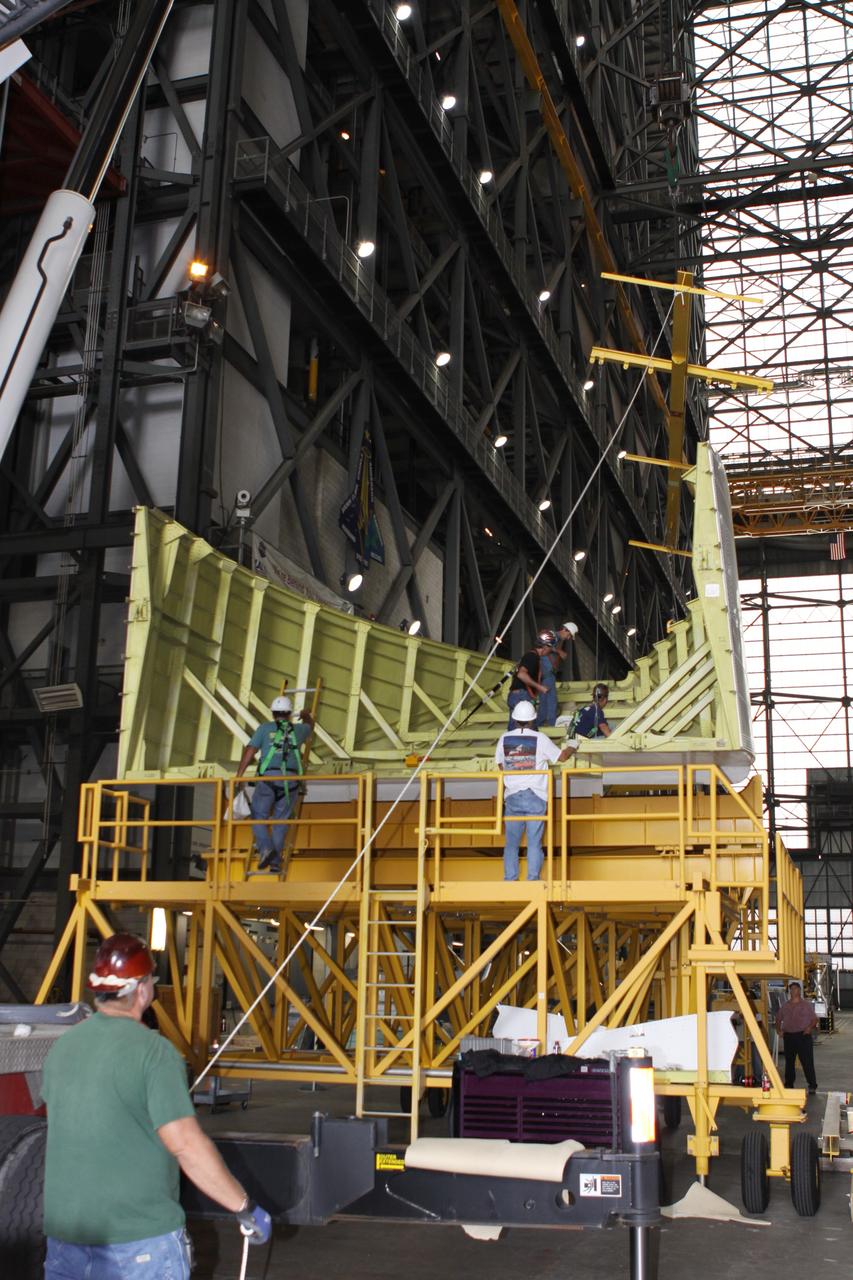
CAPE CANAVERAL, Fla. – Inside the Vehicle Assembly Building at NASA’s Kennedy Space Center in Florida, United Space Alliance technicians prepare the right side tail cone for buildup on space shuttle Endeavour. The tail cone protects space shuttle main engines during ferry flights on top of the Shuttle Carrier Aircraft, or SCA. The work is part of Transition and Retirement of the remaining space shuttles, Endeavour and Atlantis. Endeavour is being prepared for public display at the California Science Center in Los Angeles. Its ferry flight to California is targeted for mid-September. Endeavour was the last space shuttle added to NASA’s orbiter fleet. Over the course of its 19-year career, Endeavour spent 299 days in space during 25 missions. For more information, visit http://www.nasa.gov/shuttle. Photo credit: NASA/Jim Grossmann
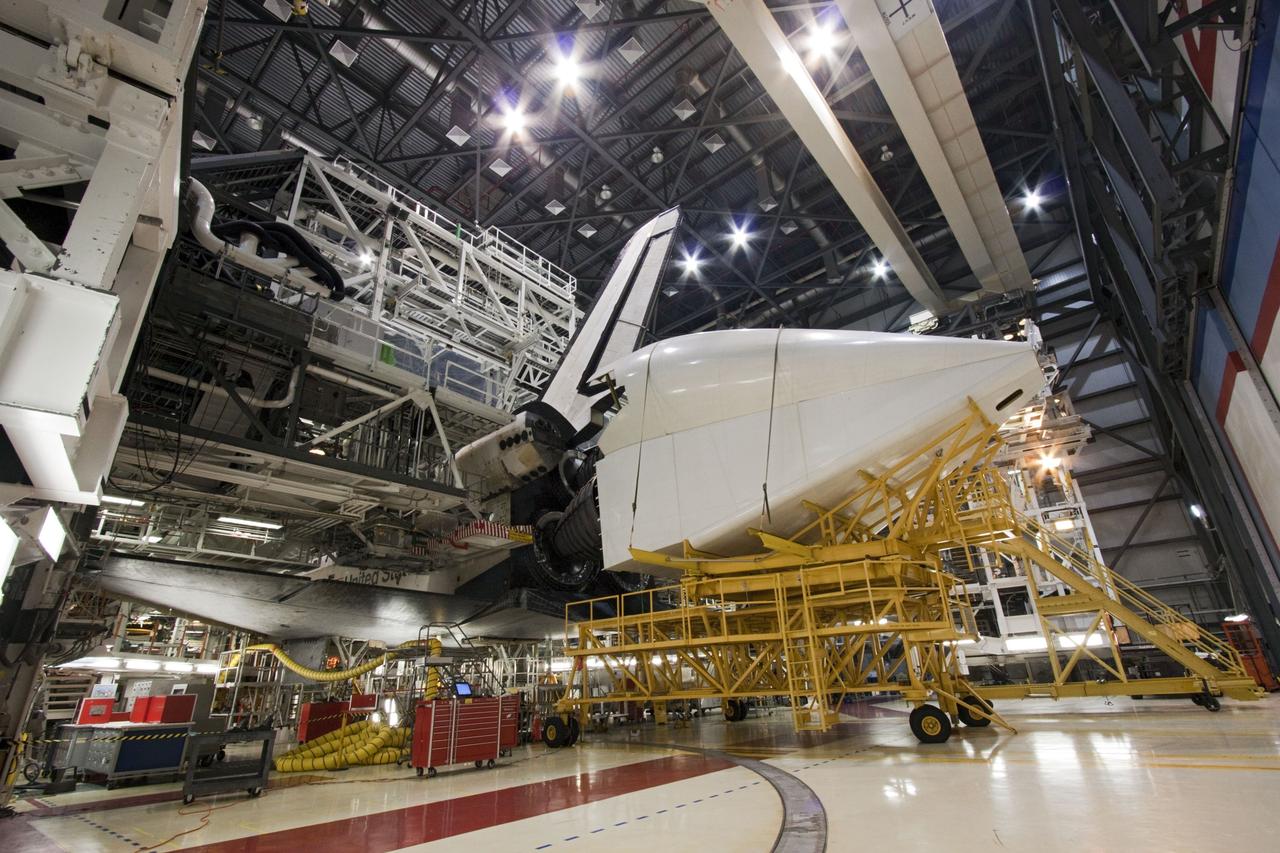
CAPE CANAVERAL, Fla. – In Orbiter Processing Facility Bay 2 at NASA’s Kennedy Space Center in Florida, the tail cone is moved into position for attachment to the space shuttle Endeavour. The tail cone covers the main engines in the aft providing aerodynamic stability during the cross-country ferry flight. The work is part of Transition and Retirement of the remaining space shuttles, Endeavour and Atlantis. Endeavour is being prepared for public display at the California Science Center in Los Angeles. Its ferry flight to California is targeted for mid-September. Endeavour was the last space shuttle added to NASA’s orbiter fleet. Over the course of its 19-year career, Endeavour spent 299 days in space during 25 missions. For more information, visit http://www.nasa.gov/transition Photo credit: NASA/ Jim Grossmann
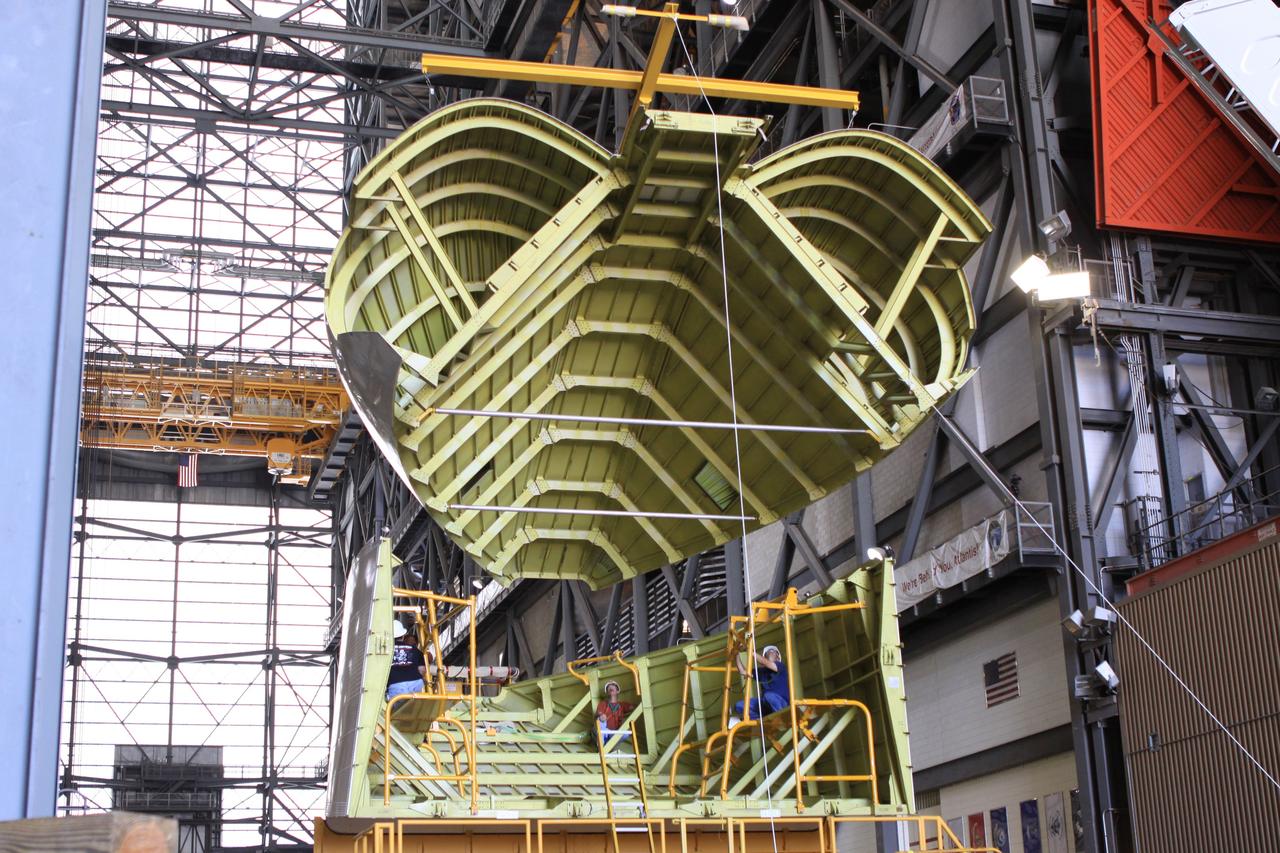
CAPE CANAVERAL, Fla. – In the transfer isle of the Vehicle Assembly Building at NASA’s Kennedy Space Center in Florida, technicians finish building the tail cone that will be installed around space shuttle Endeavour’s three replica shuttle main engines for protection. The tail cone protects the main engines during ferry flights on top of the Shuttle Carrier Aircraft, or SCA. The work is part of the Space Shuttle Program’s transition and retirement processing of shuttle Endeavour. Endeavour is being prepared for public display at the California Science Center in Los Angeles. Its ferry flight to California is targeted for mid-September. Endeavour was the last space shuttle added to NASA’s orbiter fleet. Over the course of its 19-year career, Endeavour spent 299 days in space during 25 missions. For more information, visit http://www.nasa.gov/shuttle. Photo credit: NASA/Jim Grossmann
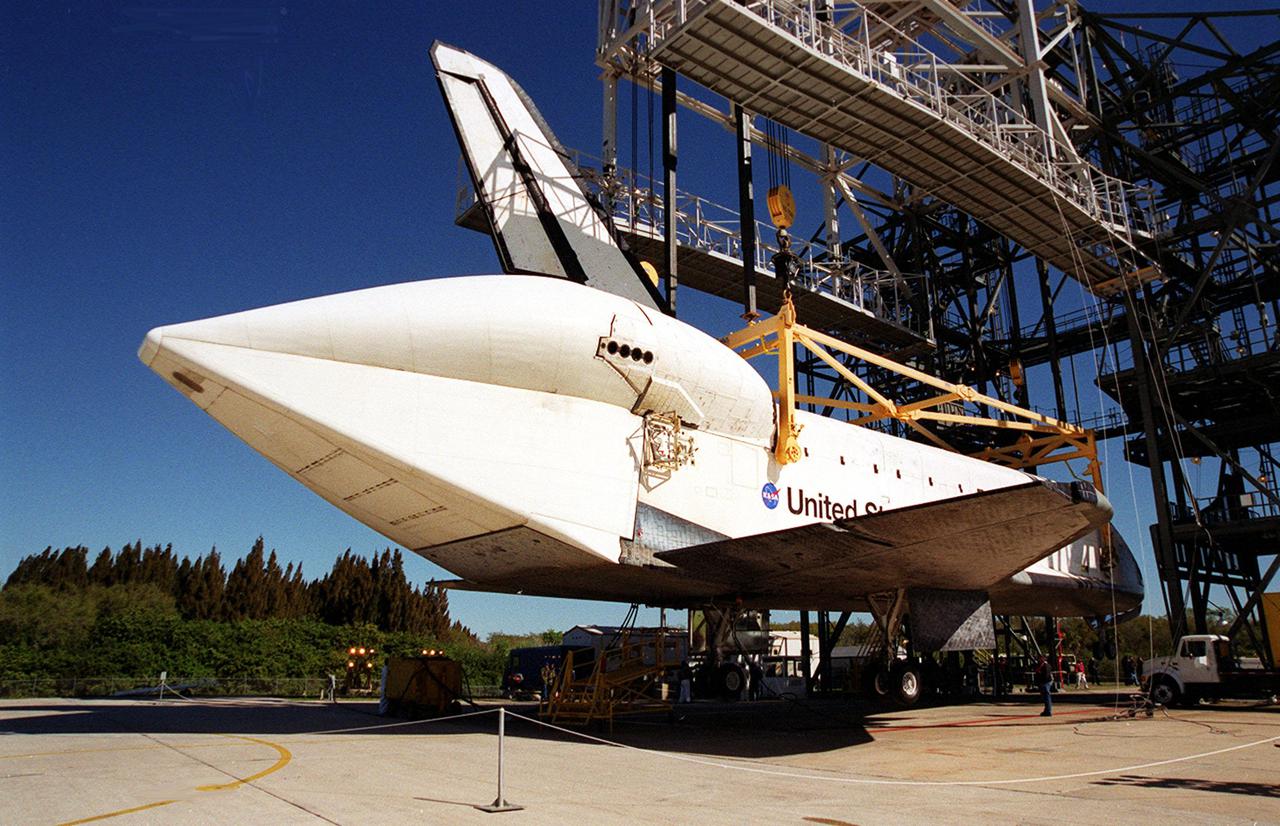
This view of Atlantis at the mate_demate device at KSC’s Shuttle Landing Facility shows the tail cone that orbiters use when being carried piggyback on ferry flights atop a Shuttle Carrier Aircraft. The tail cone protects the aft engine area and provides a more efficient aeronautical dimension during flight. Atlantis returned from California atop the SCA after its Feb. 19 landing at Edwards Air Force Base concluding mission STS-98. The ferry flight began March 1; unfavorable weather conditions kept it on the ground at Altus AFB, Okla., until it could return to Florida. Atlantis will be transported to the Orbiter Processing Facility to prepare it for mission STS-104, the 10th construction flight to the International Space Station, scheduled to launch June 8
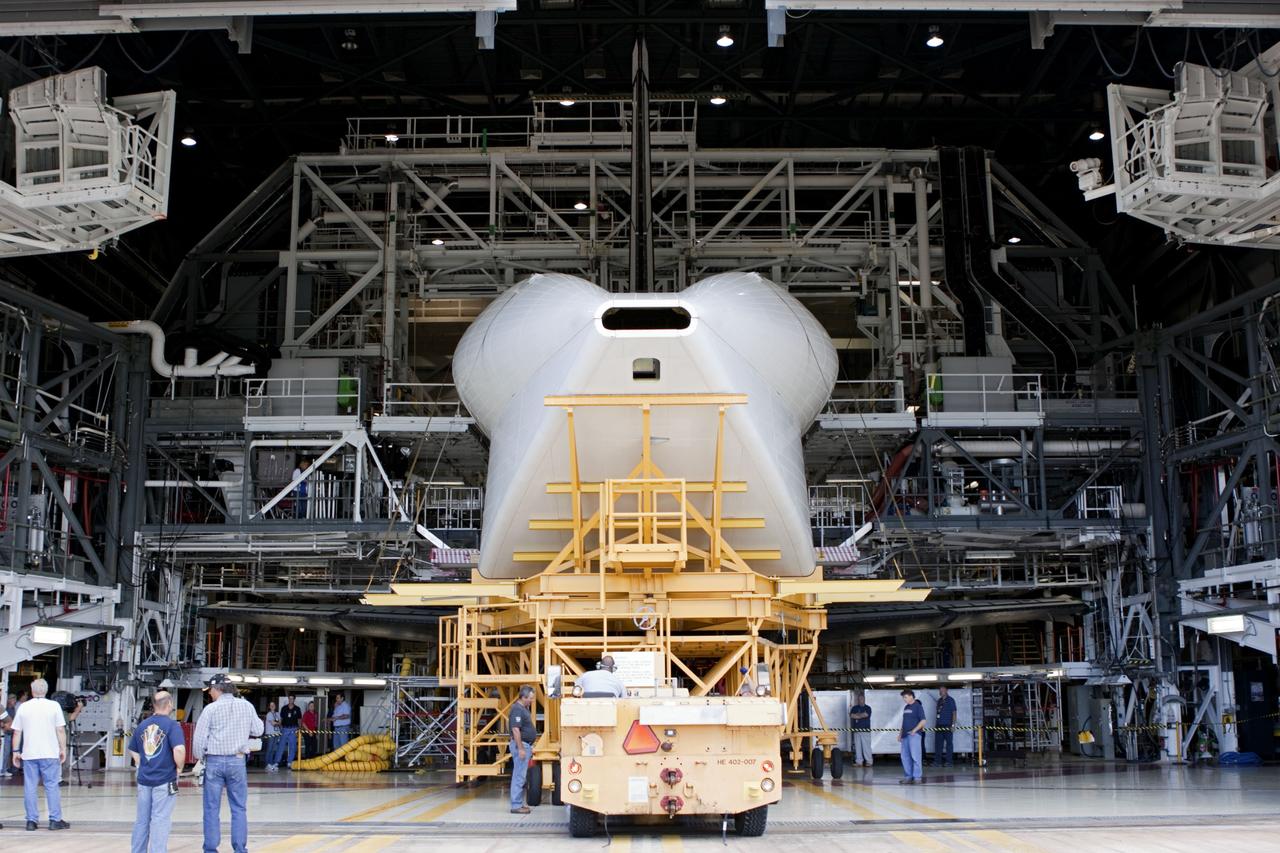
CAPE CANAVERAL, Fla. -- The tail cone that will cover space shuttle Endeavour’s replica shuttle main engines arrives at Orbiter Processing Facility-2, or OPF-2, from the Vehicle Assembly Building at NASA’s Kennedy Space Center in Florida. Inside OPF-2, the tail cone will be installed on Endeavour. The work is part of Transition and Retirement of the remaining space shuttles, Endeavour and Atlantis. Endeavour is being prepared for public display at the California Science Center in Los Angeles. Its ferry flight to California is targeted for mid-September. Endeavour was the last space shuttle added to NASA’s orbiter fleet. Over the course of its 19-year career, Endeavour spent 299 days in space during 25 missions. For more information, visit http://www.nasa.gov/shuttle. Photo credit: NASA/Jim Grossmann
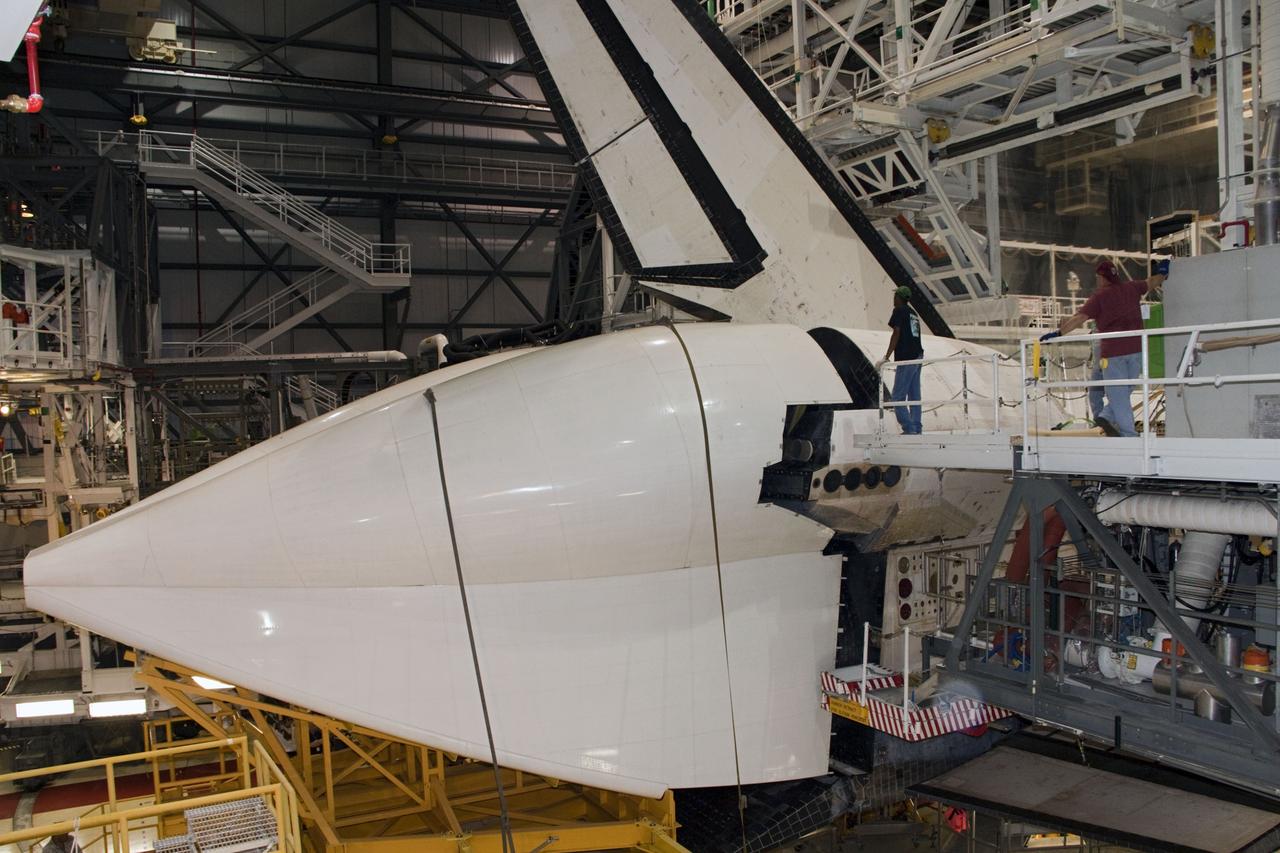
CAPE CANAVERAL, Fla. – In Orbiter Processing Facility Bay 2 at NASA’s Kennedy Space Center in Florida, the tail cone is moved into position surrounding the replica main engines on the space shuttle Endeavour. The tail cone covers the main engines in the aft providing aerodynamic stability during the cross-country ferry flight. The work is part of Transition and Retirement of the remaining space shuttles, Endeavour and Atlantis. Endeavour is being prepared for public display at the California Science Center in Los Angeles. Its ferry flight to California is targeted for mid-September. Endeavour was the last space shuttle added to NASA’s orbiter fleet. Over the course of its 19-year career, Endeavour spent 299 days in space during 25 missions. For more information, visit http://www.nasa.gov/transition Photo credit: NASA/ Jim Grossmann
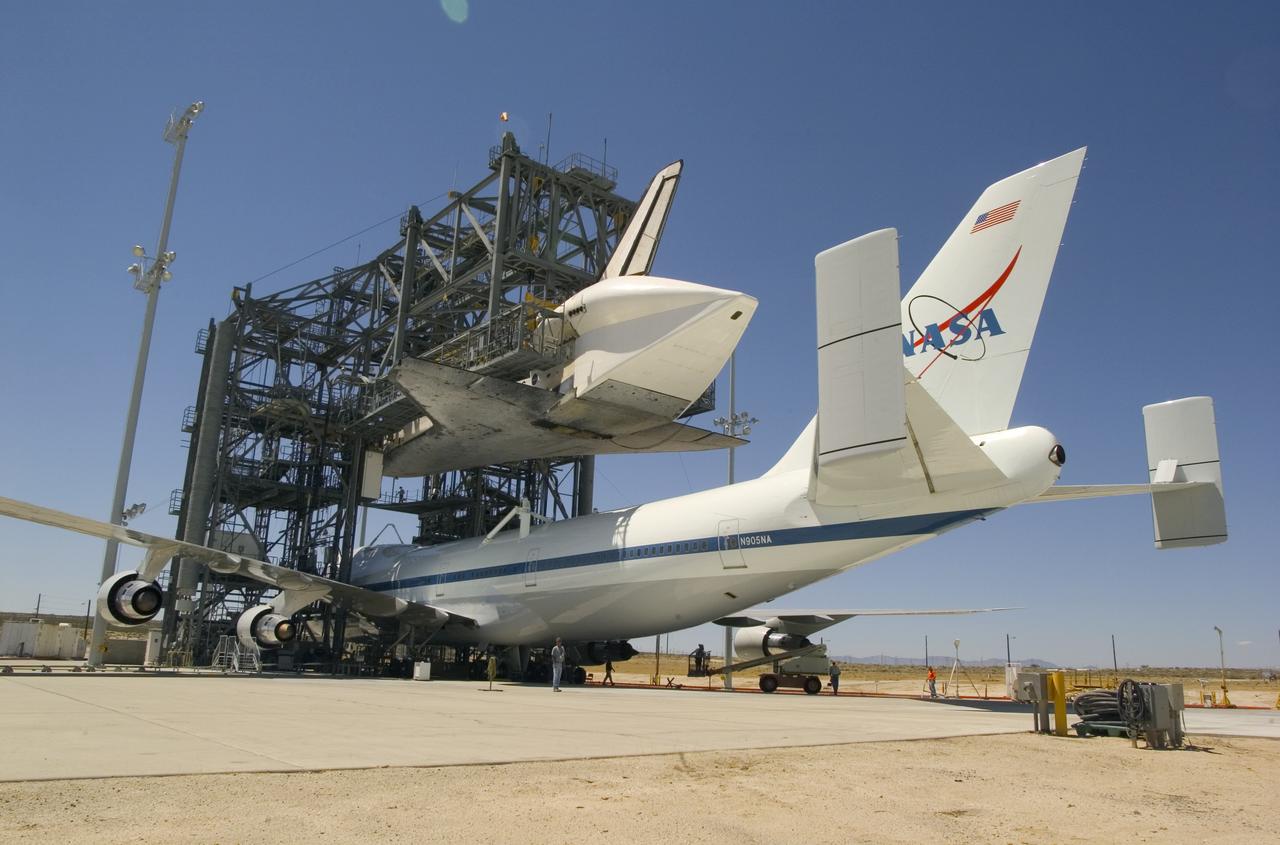
NASA's specially modified 747 Shuttle Carrier Aircraft, or SCA, is positioned under the Space Shuttle Discovery to be attached for their ferry flight to the Kennedy Space Center in Florida. After its post-flight servicing and preparation at NASA Dryden in California, Discovery's return flight to Kennedy aboard the 747 will take approximately 2 days, with stops at several intermediate points for refueling. Space Shuttle Discovery landed safely at NASA's Dryden Flight Research Center at Edwards Air Force Base at 5:11:22 a.m. PDT, August 9, 2005, following the very successful 14-day STS-114 return to flight mission. During their two weeks in space, Commander Eileen Collins and her six crewmates tested out new safety procedures and delivered supplies and equipment the International Space Station. Discovery spent two weeks in space, where the crew demonstrated new methods to inspect and repair the Shuttle in orbit. The crew also delivered supplies, outfitted and performed maintenance on the International Space Station. A number of these tasks were conducted during three spacewalks. In an unprecedented event, spacewalkers were called upon to remove protruding gap fillers from the heat shield on Discovery's underbelly. In other spacewalk activities, astronauts installed an external platform onto the Station's Quest Airlock and replaced one of the orbital outpost's Control Moment Gyroscopes. Inside the Station, the STS-114 crew conducted joint operations with the Expedition 11 crew. They unloaded fresh supplies from the Shuttle and the Raffaello Multi-Purpose Logistics Module. Before Discovery undocked, the crews filled Raffeallo with unneeded items and returned to Shuttle payload bay. Discovery launched on July 26 and spent almost 14 days on orbit.
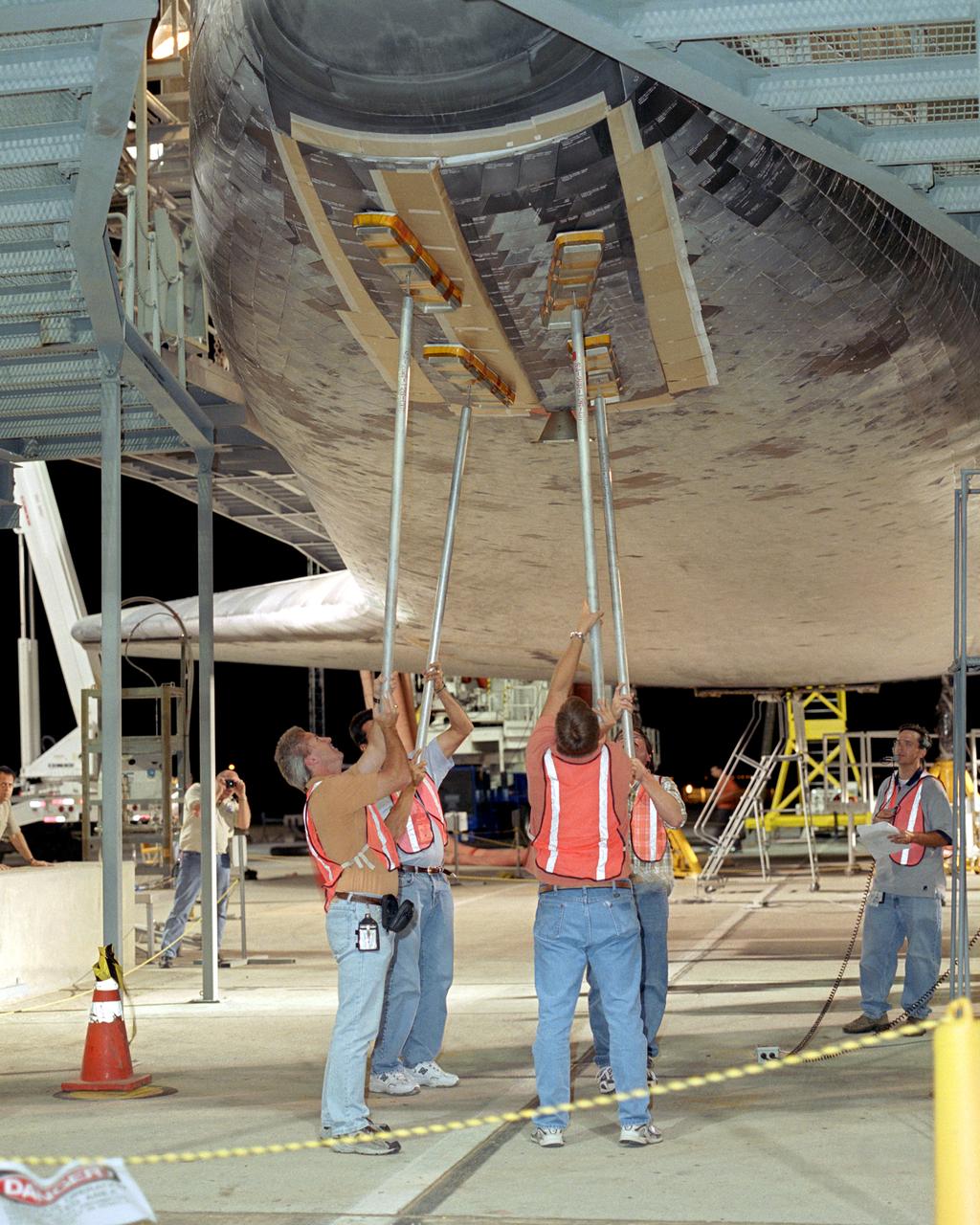
Closing the landing gear doors is one of the final servicing steps before lifting of the Space Shuttle Discovery and mating it to NASA's 747 can begin. After being raised in the gantry-like Mate-Demate Device (MDD), Discovery will be mounted on NASA's modified Boeing 747 Shuttle Carrier Aircraft, or SCA, for the return flight to the Kennedy Space Center in Florida. Space Shuttle Discovery landed safely at NASA's Dryden Flight Research Center at Edwards Air Force Base in California at 5:11:22 a.m. PDT, August 9, 2005, following the very successful 14-day STS-114 return to flight mission. During their two weeks in space, Commander Eileen Collins and her six crewmates tested out new safety procedures and delivered supplies and equipment the International Space Station. Discovery spent two weeks in space, where the crew demonstrated new methods to inspect and repair the Shuttle in orbit. The crew also delivered supplies, outfitted and performed maintenance on the International Space Station. A number of these tasks were conducted during three spacewalks. In an unprecedented event, spacewalkers were called upon to remove protruding gap fillers from the heat shield on Discovery's underbelly. In other spacewalk activities, astronauts installed an external platform onto the Station's Quest Airlock and replaced one of the orbital outpost's Control Moment Gyroscopes. Inside the Station, the STS-114 crew conducted joint operations with the Expedition 11 crew. They unloaded fresh supplies from the Shuttle and the Raffaello Multi-Purpose Logistics Module. Before Discovery undocked, the crews filled Raffeallo with unneeded items and returned to Shuttle payload bay. Discovery launched on July 26 and spent almost 14 days on orbit.
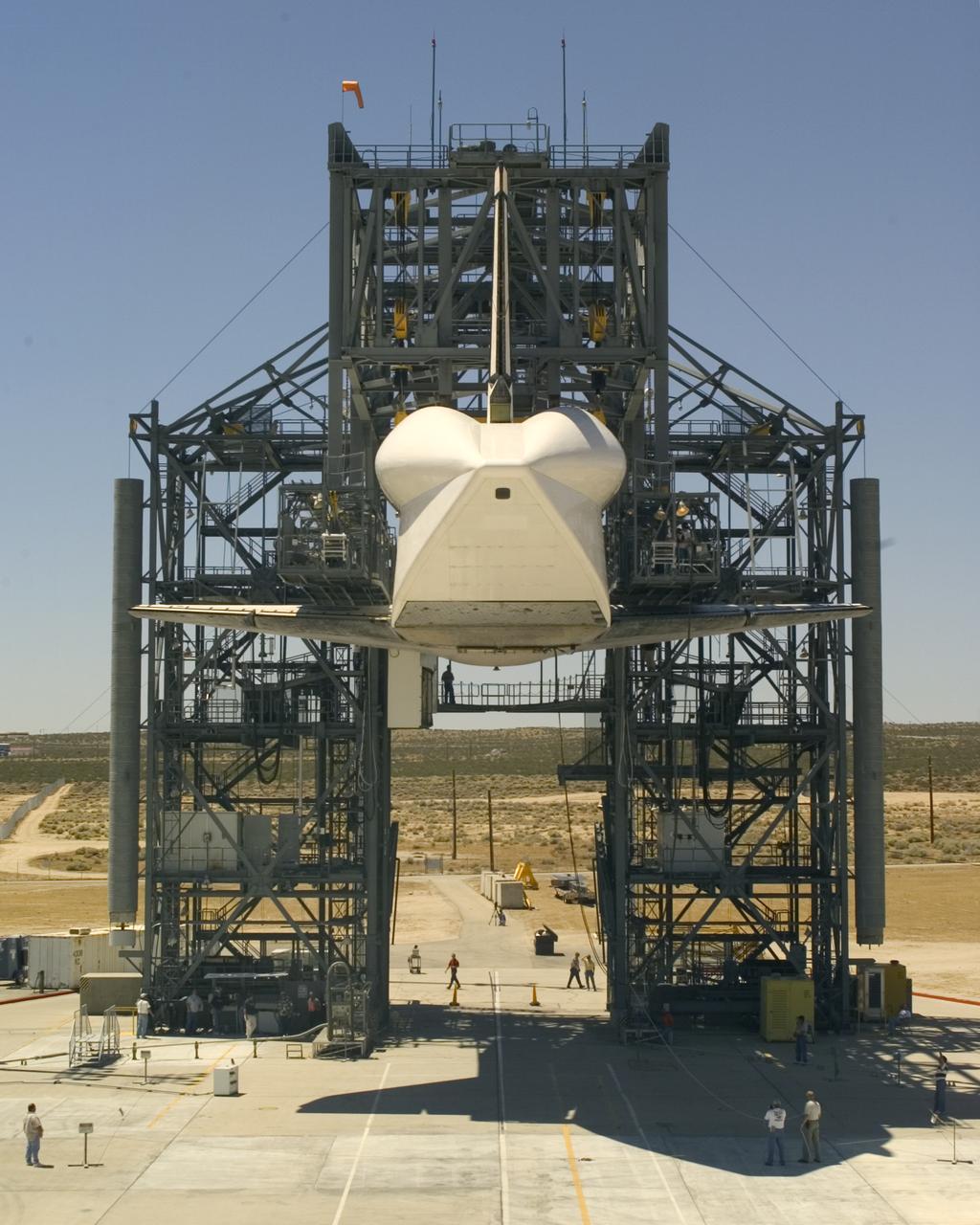
NASA's specially modified 747 Shuttle Carrier Aircraft, or SCA, is positioned under the Space Shuttle Discovery to be attached for their ferry flight to the Kennedy Space Center in Florida. After its post-flight servicing and preparation at NASA Dryden in California, Discovery's return flight to Kennedy aboard the 747 will take approximately 2 days, with stops at several intermediate points for refueling. Space Shuttle Discovery landed safely at NASA's Dryden Flight Research Center at Edwards Air Force Base at 5:11:22 a.m. PDT, August 9, 2005, following the very successful 14-day STS-114 return to flight mission. During their two weeks in space, Commander Eileen Collins and her six crewmates tested out new safety procedures and delivered supplies and equipment the International Space Station. Discovery spent two weeks in space, where the crew demonstrated new methods to inspect and repair the Shuttle in orbit. The crew also delivered supplies, outfitted and performed maintenance on the International Space Station. A number of these tasks were conducted during three spacewalks. In an unprecedented event, spacewalkers were called upon to remove protruding gap fillers from the heat shield on Discovery's underbelly. In other spacewalk activities, astronauts installed an external platform onto the Station's Quest Airlock and replaced one of the orbital outpost's Control Moment Gyroscopes. Inside the Station, the STS-114 crew conducted joint operations with the Expedition 11 crew. They unloaded fresh supplies from the Shuttle and the Raffaello Multi-Purpose Logistics Module. Before Discovery undocked, the crews filled Raffeallo with unneeded items and returned to Shuttle payload bay. Discovery launched on July 26 and spent almost 14 days on orbit.
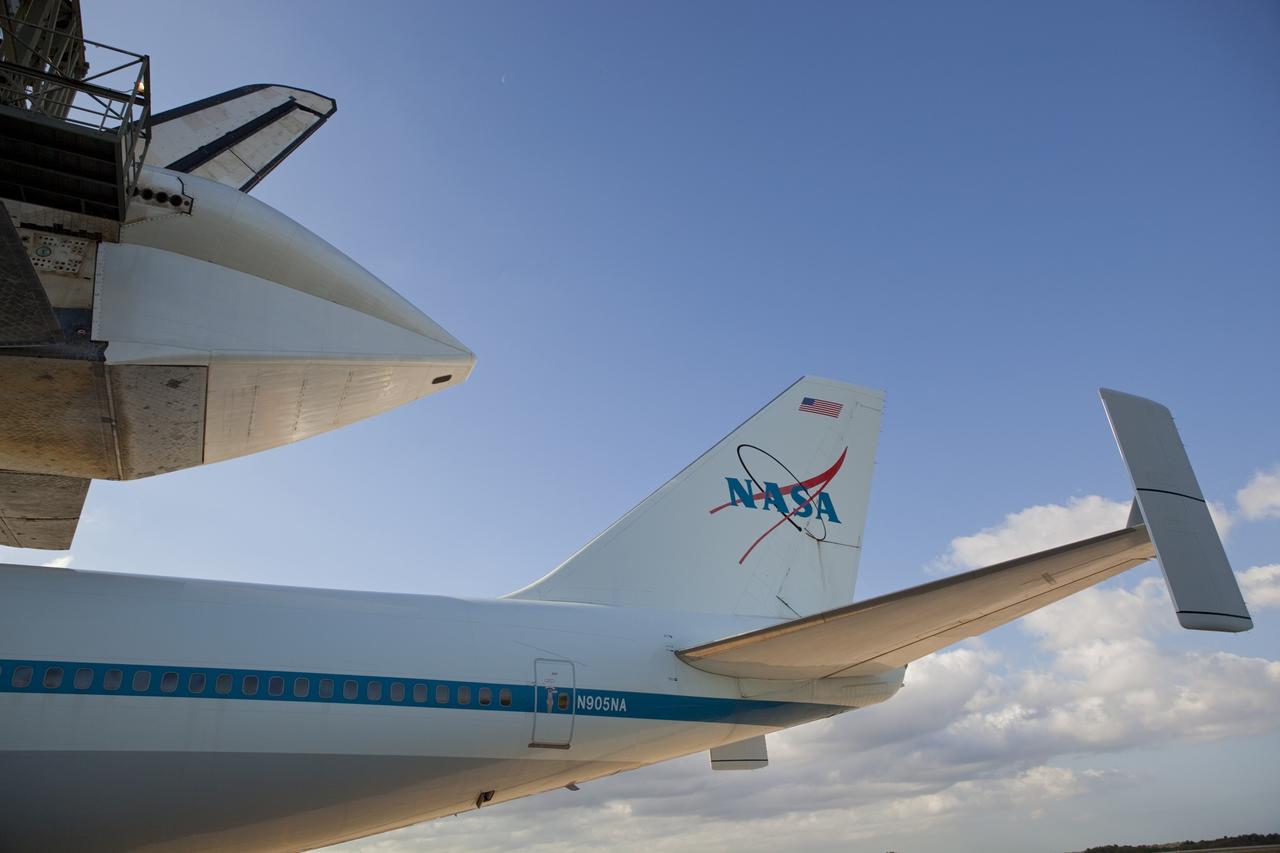
CAPE CANAVERAL, Fla. – At the Shuttle Landing Facility at NASA’s Kennedy Space Center in Florida, the tail cone on space shuttle Discovery and the tail of the Shuttle Carrier Aircraft are aligned in the mate-demate device as mating operations get under way. The tail cone has been installed over Discovery’s three replica shuttle main engines to reduce aerodynamic drag and turbulence during the ferry flight. The device, known as the MDD, is a large gantry-like steel structure used to hoist a shuttle off the ground and position it onto the back of the aircraft, or SCA. The SCA is a Boeing 747 jet, originally manufactured for commercial use, which was modified by NASA to transport the shuttles between destinations on Earth. This SCA, designated NASA 905, is assigned to the remaining ferry missions, delivering the shuttles to their permanent public display sites. NASA 905 is scheduled to ferry Discovery to the Washington Dulles International Airport in Virginia on April 17, after which the shuttle will be placed on display in the Smithsonian's National Air and Space Museum Steven F. Udvar-Hazy Center. For more information on the SCA, visit http://www.nasa.gov/centers/dryden/news/FactSheets/FS-013-DFRC.html. For more information on shuttle transition and retirement activities, visit http://www.nasa.gov/transition. Photo credit: NASA/Dimitri Gerondidakis
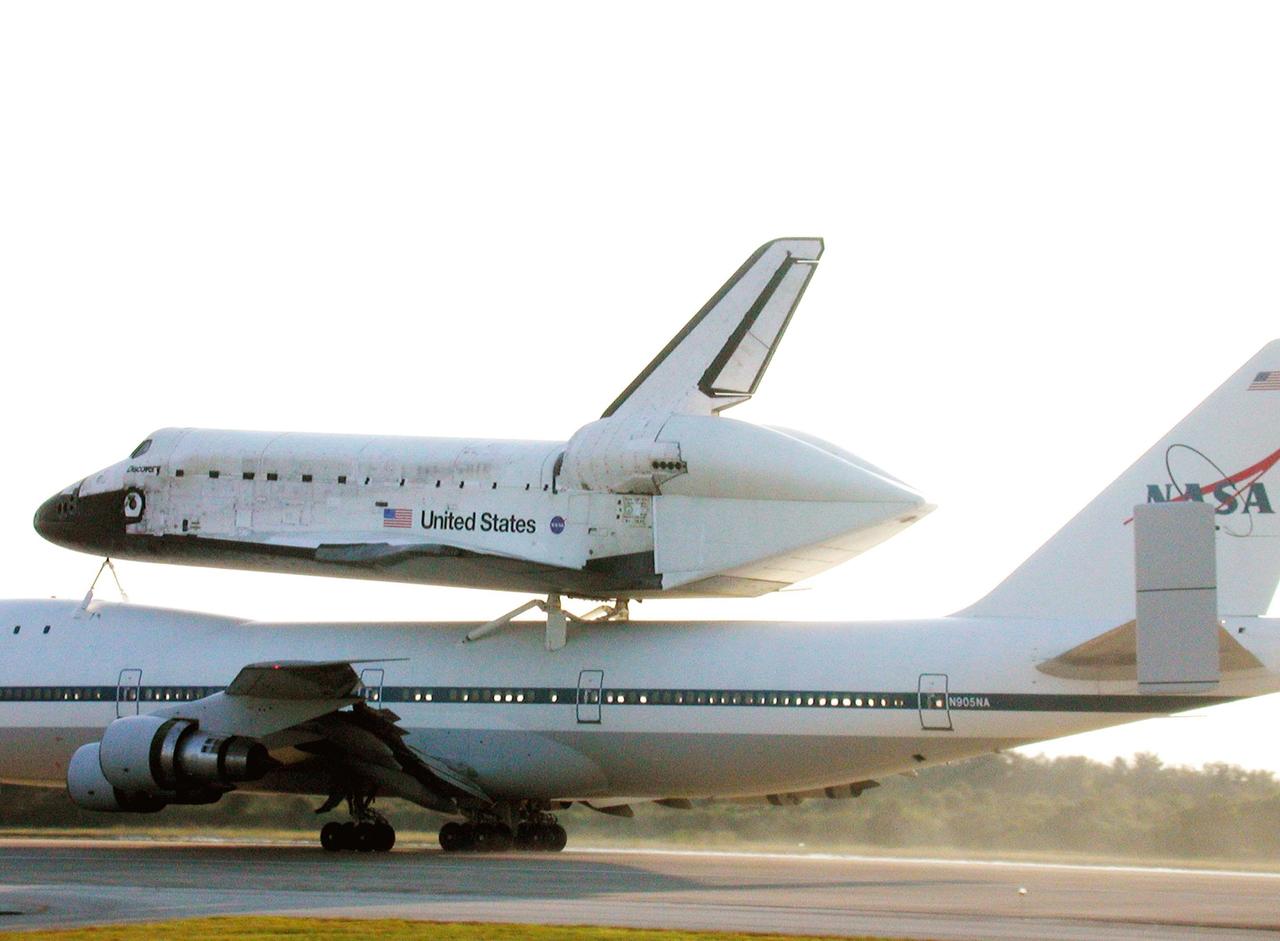
In the glow of a late afternoon sun, the Shuttle Carrier Aircraft (SCA) returns the orbiter Discovery to KSC after the orbiter’s California landing at Edwards Air Force Base at the end of mission STS-92. Discovery wears a tail cone protecting its aft nozzles for the ferry flight. Discovery will be demated from the SCA via the mate/demate device at the SLF and transported to the Orbiter Processing Facility bay 1. There it will undergo preparations for its next launch, STS-102, scheduled for February 2001
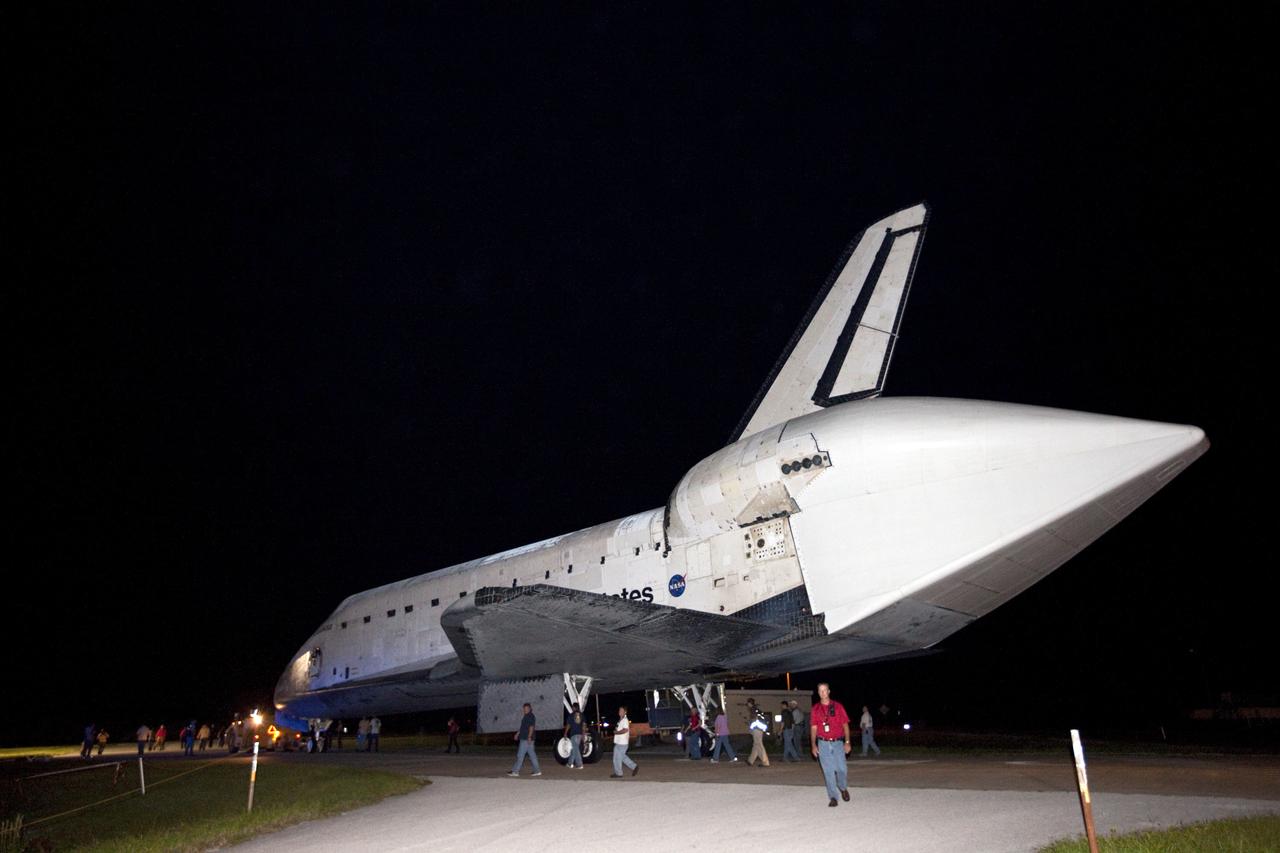
CAPE CANAVERAL, Fla. – Space shuttle Endeavour, fitted with an aerodynamic tail cone, leaves the processing facilities of Launch Complex 39 behind as it moves toward the Shuttle Landing Facility at NASA's Kennedy Space Center in Florida. The spacecraft will be lifted in the gantry-like Mate-Demate Device and placed atop NASA's modified 747 Shuttle Carrier Aircraft for the final ferry flight of the Space Shuttle Program. Endeavour will be placed on permanent public display at the California Science Center in Los Angeles. Photo credit: NASA/Kim Shiflett
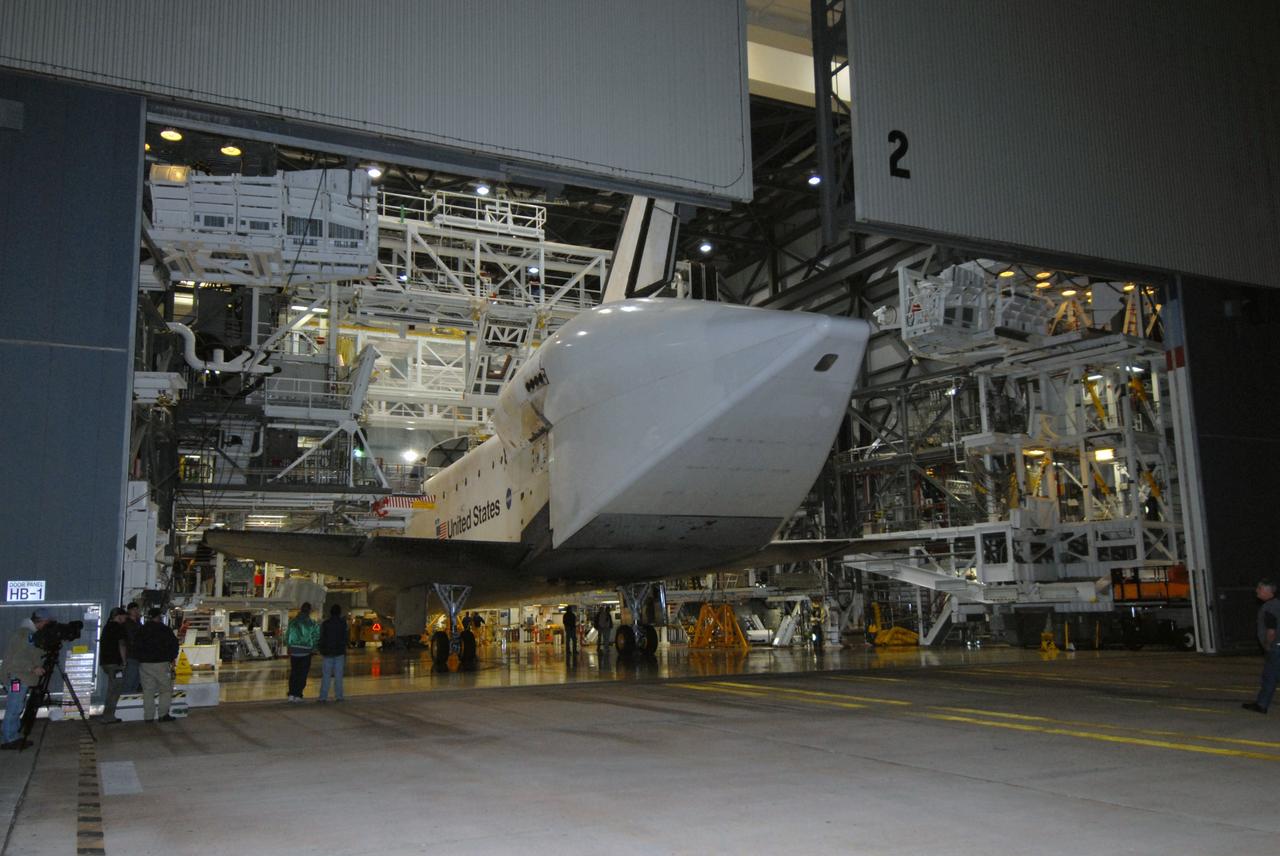
CAPE CANAVERAL, Fla. -- Space shuttle Endeavour is towed by a diesel-powered tractor into the Orbiter Processing Facility, or OPF, at NASA's Kennedy Space Center in Florida. Visible on Endeavour is the tail cone that covers and protects the main engines during the ferry flight. After landing in California to end the STS-126 mission, Endeavour returned to Kennedy on a piggyback flight atop a shuttle carrier aircraft. In the OPF, Endeavour will begin preparations for its next mission, STS-127, targeted for May 2009. Photo credit: NASA/Jack Pfaller
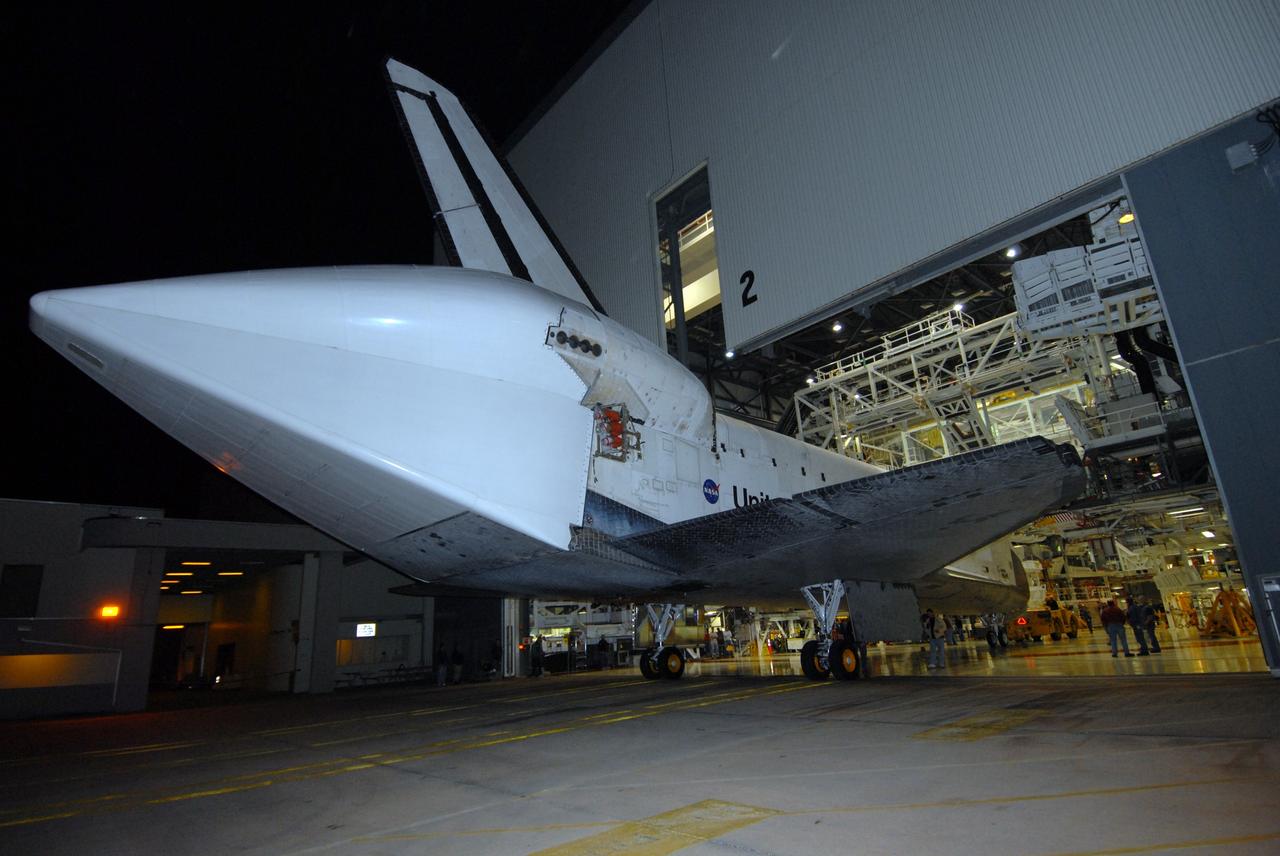
CAPE CANAVERAL, Fla. -- Space shuttle Endeavour is towed by a diesel-powered tractor into the Orbiter Processing Facility, or OPF, at NASA's Kennedy Space Center in Florida. Visible on Endeavour is the tail cone that covers and protects the main engines during the ferry flight. After landing in California to end the STS-126 mission, Endeavour returned to Kennedy on a piggyback flight atop a shuttle carrier aircraft. In the OPF, Endeavour will begin preparations for its next mission, STS-127, targeted for May 2009. Photo credit: NASA/Jack Pfaller
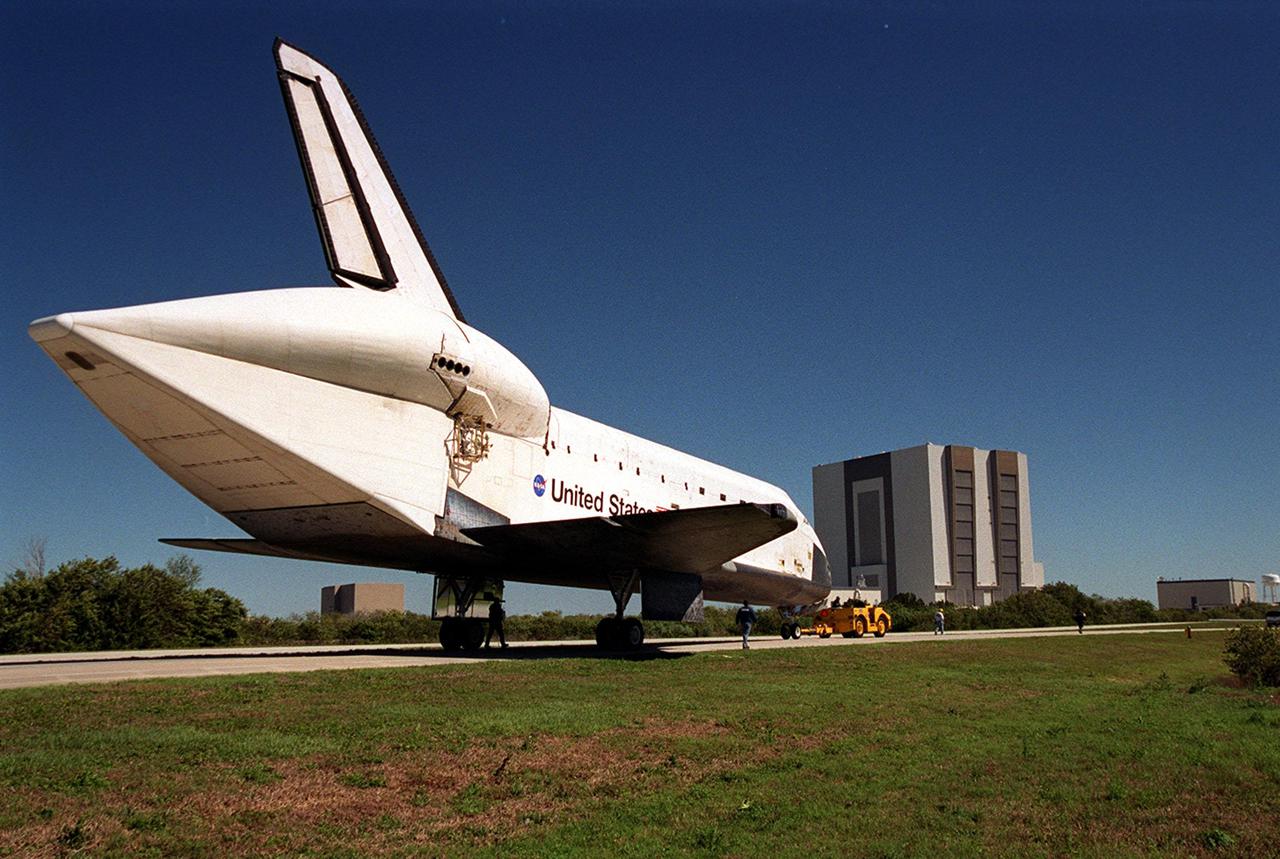
Towed from the Shuttle Landing Facility, Atlantis heads for the Orbiter Processing Facility (far right). The large building is the Vehicle Assembly Building, where orbiters are mated to their solid rocket booster-external tank stack prior to rollout to the launch pad. In view is the tail cone that orbiters use when being carried piggyback on ferry flights atop a Shuttle Carrier Aircraft. The tail cone protects the aft engine area and provides a more efficient aeronautical dimension during flight. Atlantis returned from California atop a Shuttle Carrier Aircraft after its Feb. 19 landing at Edwards Air Force Base, concluding mission STS-98. The ferry flight began March 1; unfavorable weather conditions kept it on the ground at Altus AFB, Okla., until it could return to Florida. In the Orbiter Processing Facility, Atlantis will be prepared for mission STS-104, the 10th construction flight to the International Space Station, scheduled to launch June 8
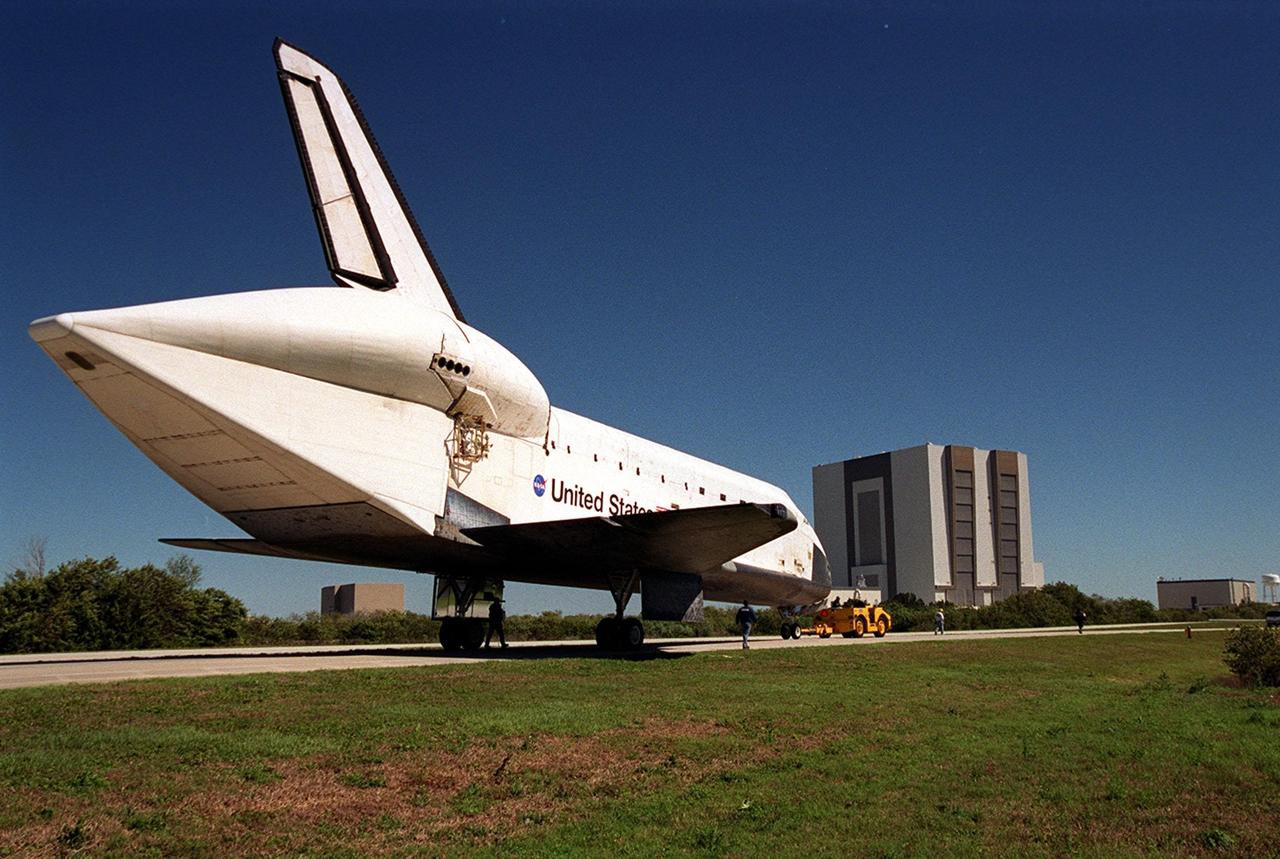
Towed from the Shuttle Landing Facility, Atlantis heads for the Orbiter Processing Facility (far right). The large building is the Vehicle Assembly Building, where orbiters are mated to their solid rocket booster-external tank stack prior to rollout to the launch pad. In view is the tail cone that orbiters use when being carried piggyback on ferry flights atop a Shuttle Carrier Aircraft. The tail cone protects the aft engine area and provides a more efficient aeronautical dimension during flight. Atlantis returned from California atop a Shuttle Carrier Aircraft after its Feb. 19 landing at Edwards Air Force Base, concluding mission STS-98. The ferry flight began March 1; unfavorable weather conditions kept it on the ground at Altus AFB, Okla., until it could return to Florida. In the Orbiter Processing Facility, Atlantis will be prepared for mission STS-104, the 10th construction flight to the International Space Station, scheduled to launch June 8
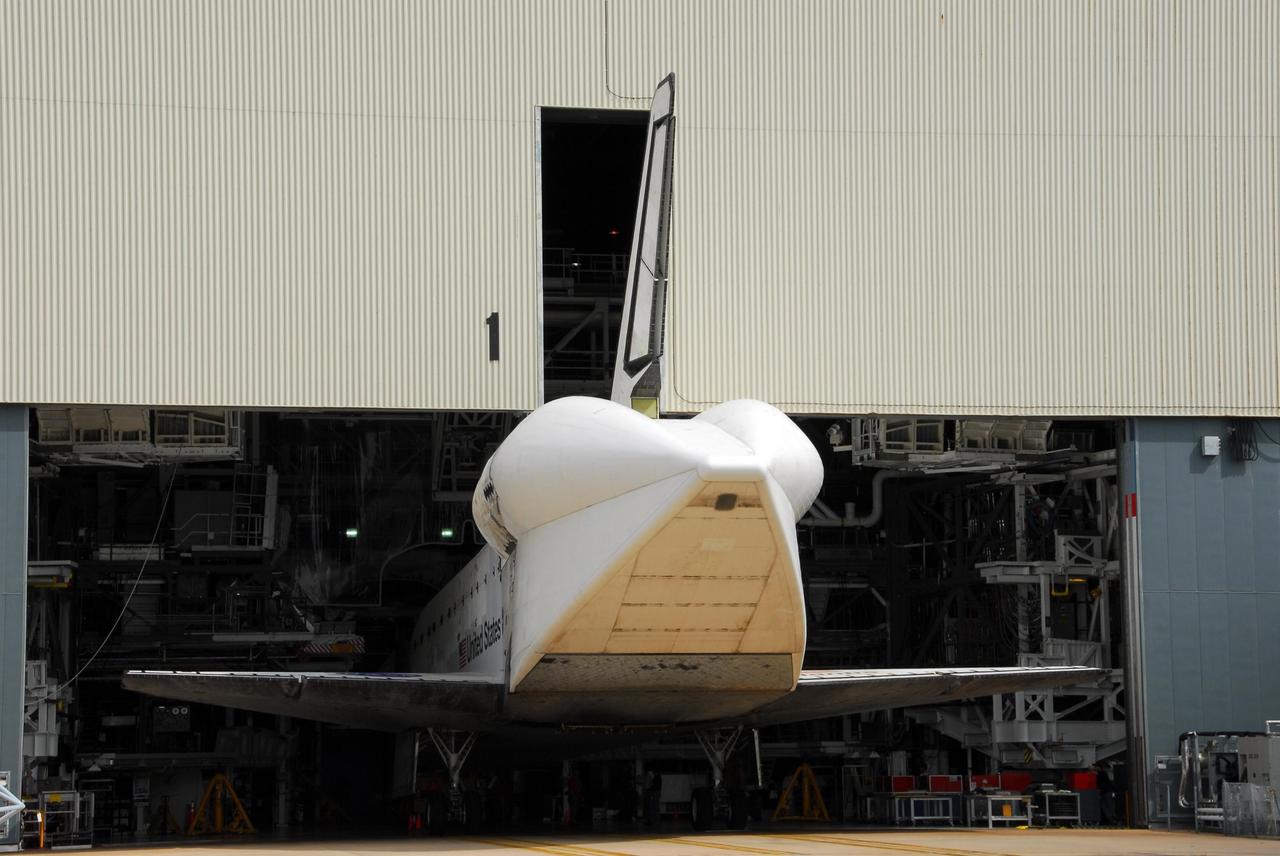
KENNEDY SPACE CENTER, FLA. -- Atlantis is towed into the Orbiter Processing Facility, completing its journey from the Shuttle Landing Facility. The orbiter will undergo processing for its next launch, mission STS-122 in December. Visible on Atlantis is the tail cone that covers and protects the main engines during the ferry flight. Atlantis arrived at Kennedy Space Center atop the SCA on July 3 after a three-day, cross-country flight due to fuel stops and weather delays. Touchdown was at 8:27 a.m. EDT. Atlantis landed at Edwards Air Force Base in California on June 22 to end mission STS-117. Photo credit: NASA/George Shelton.