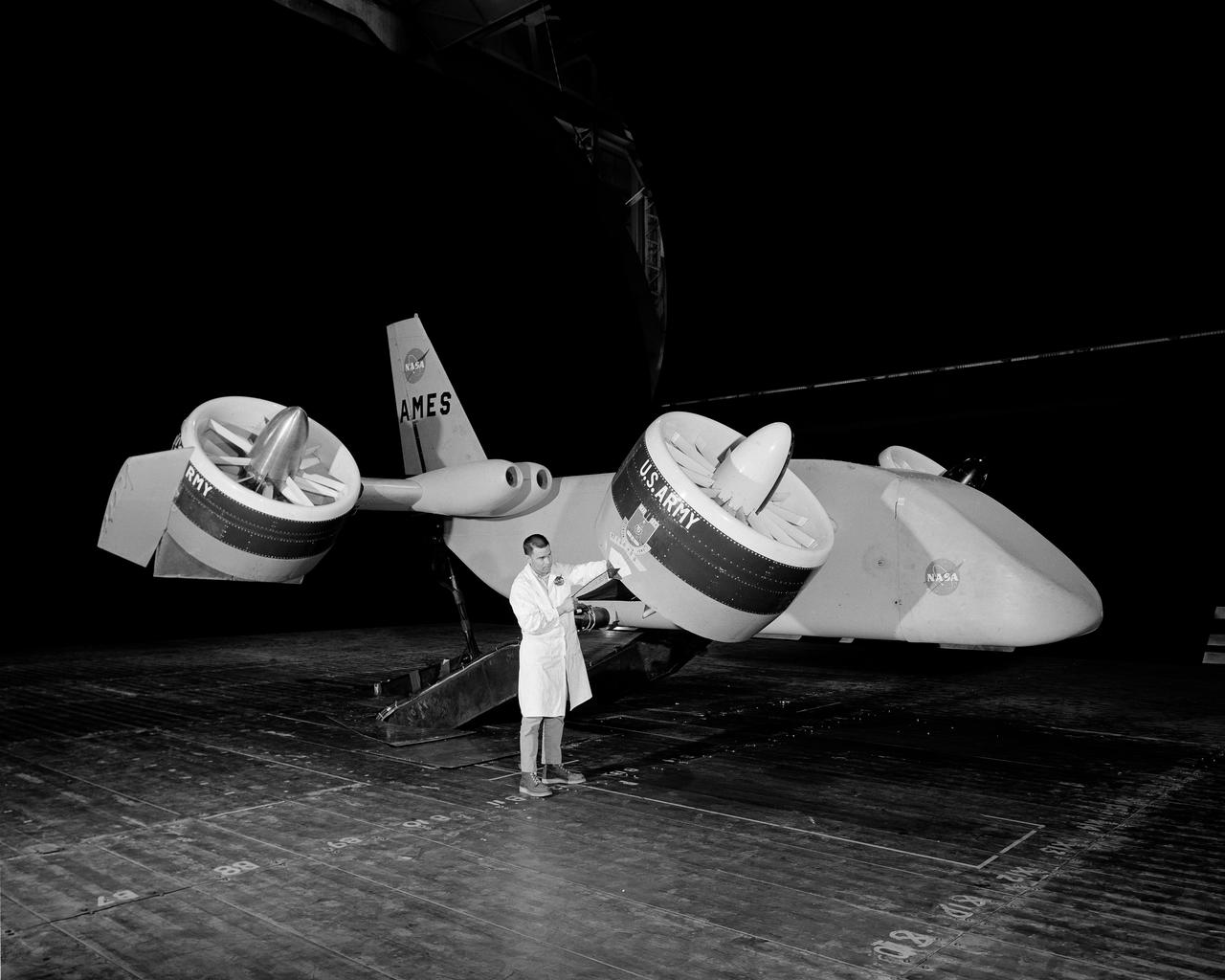
Tandem dual ducted fan mounted on ground plane on varriable height struts, 3/4 front view
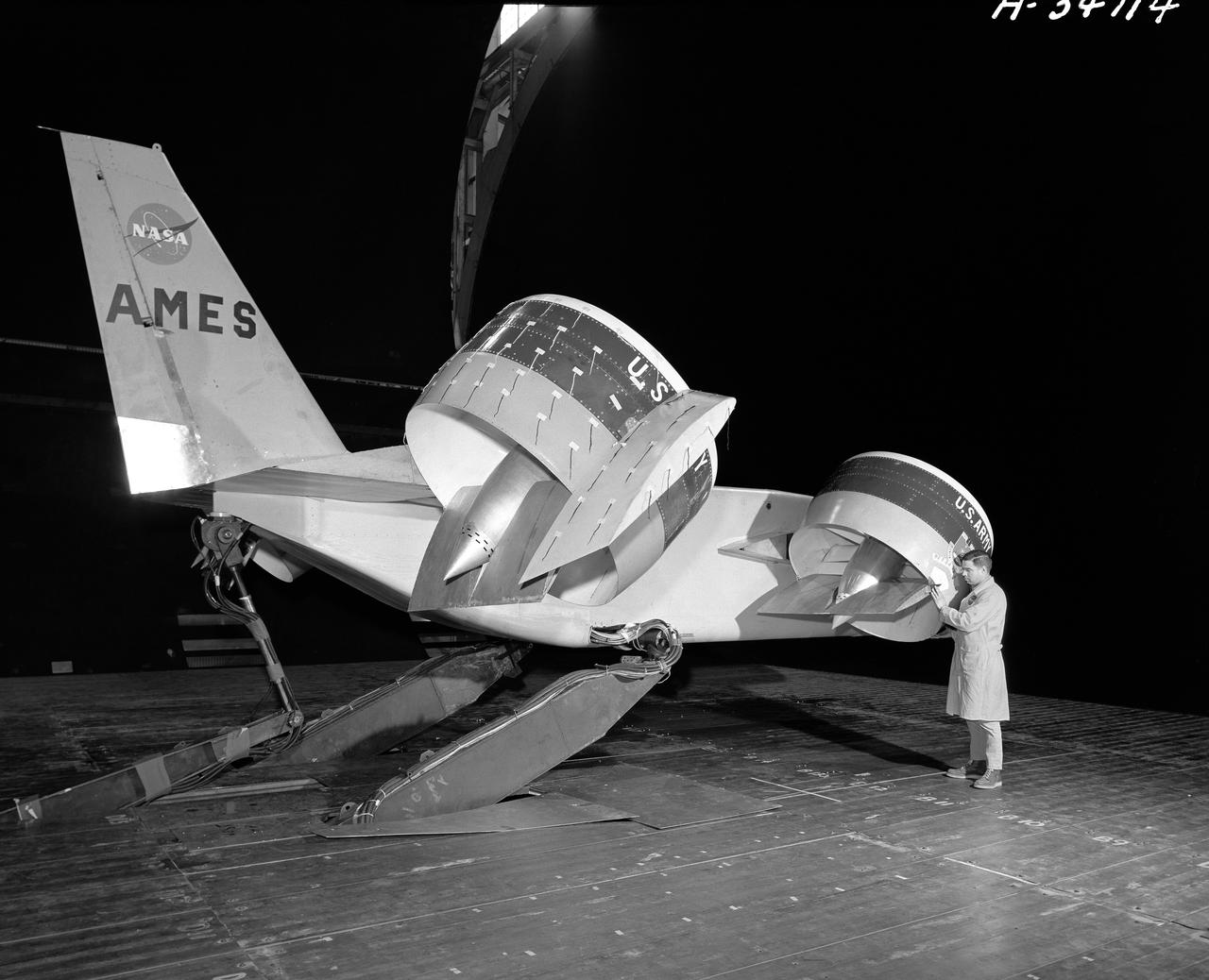
Tandem dual ducted fan mounted on ground plate. 3/4 rear view. Testing for recirculation decrease in performance of lift fans varies with ground effect.
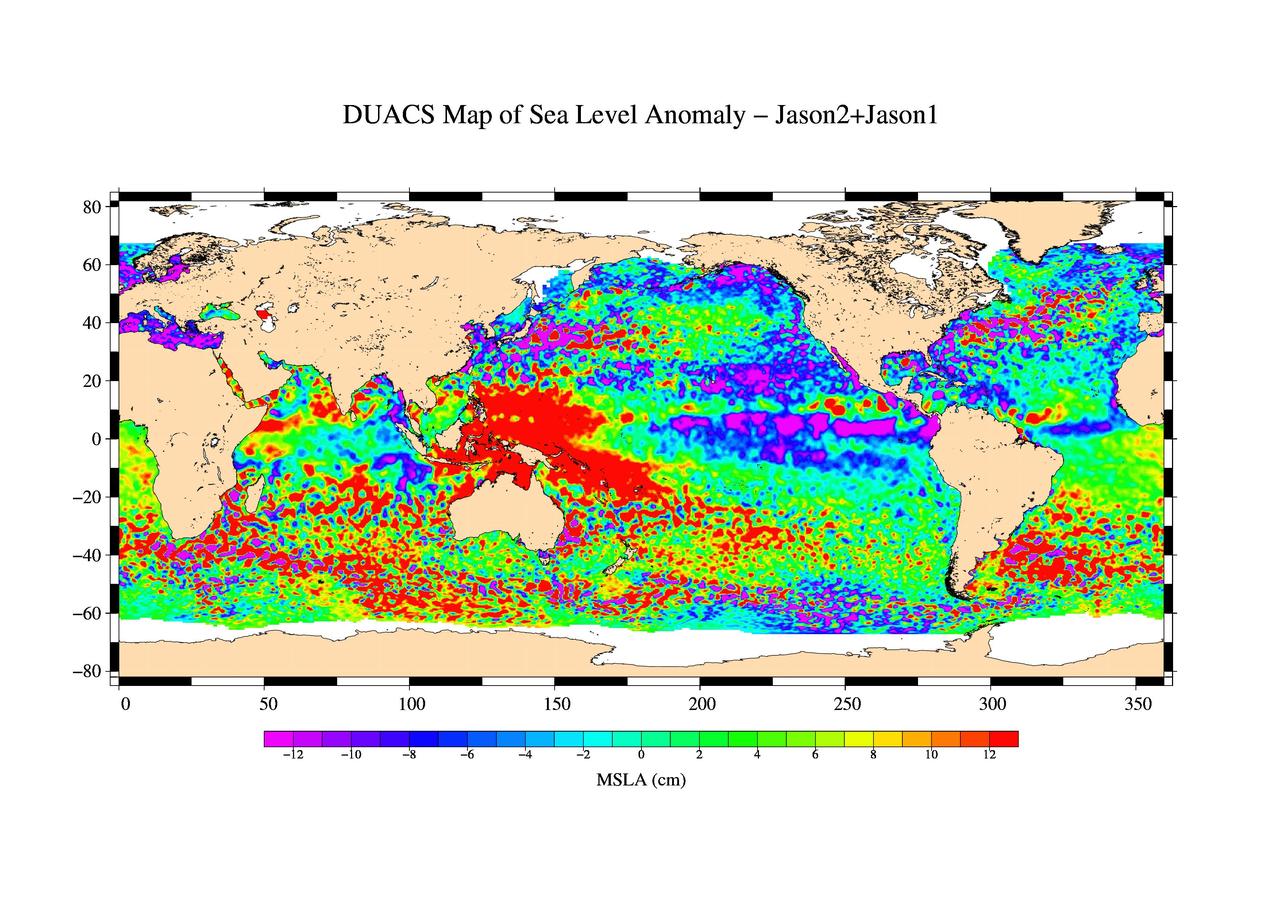
This is the first global map of ocean surface topography produced with data from the new interleaved tandem mission of NASA Jason-1 and Ocean Surface Topography Mission OSTM/Jason-2 satellites.
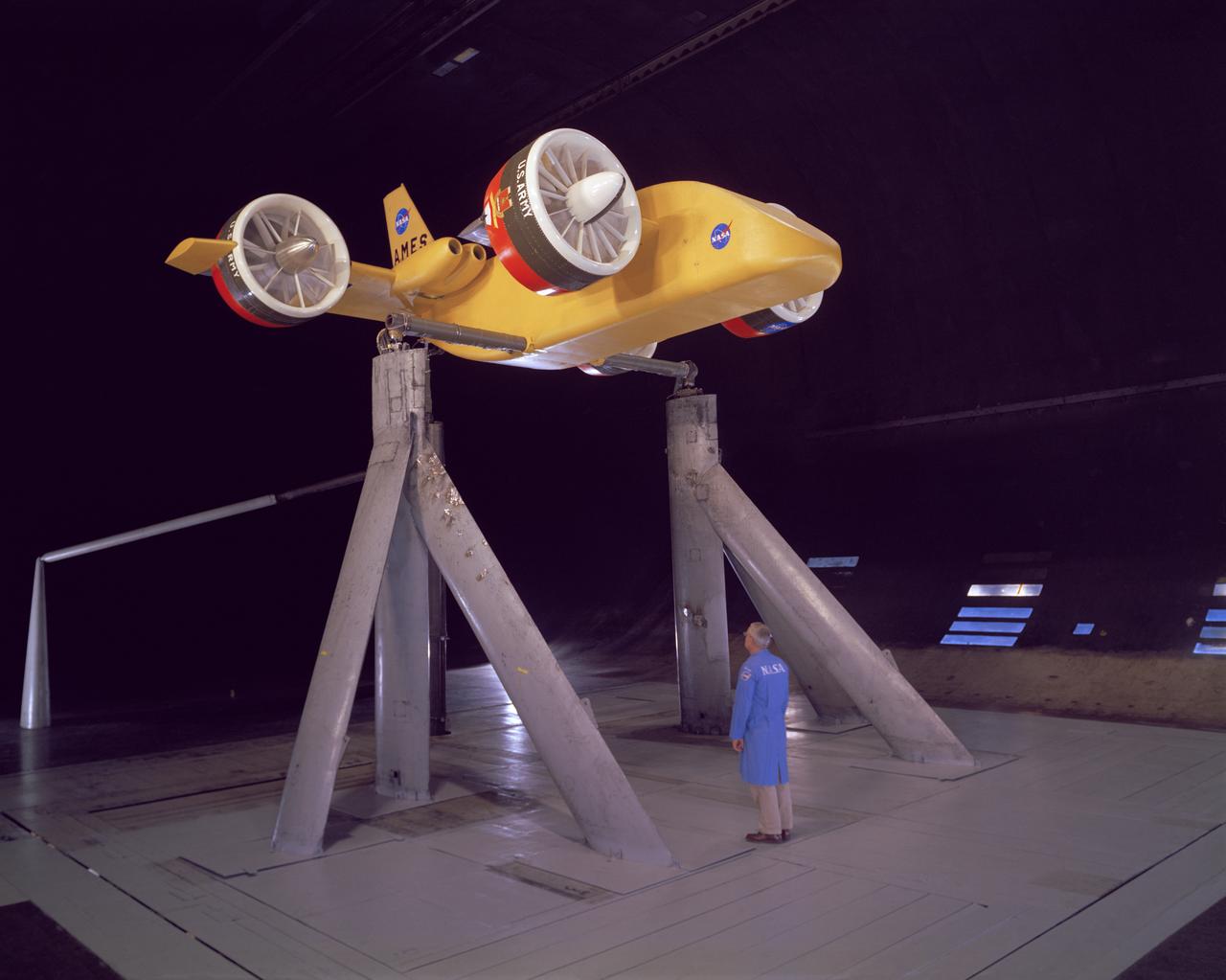
3/4 front view from below, showing Pods and Fan Rotating. March A. Zeiger standing in front. Tandem Dual Ducted Fan V/STOL Model in Ames 40x80 foot Wind Tunnel
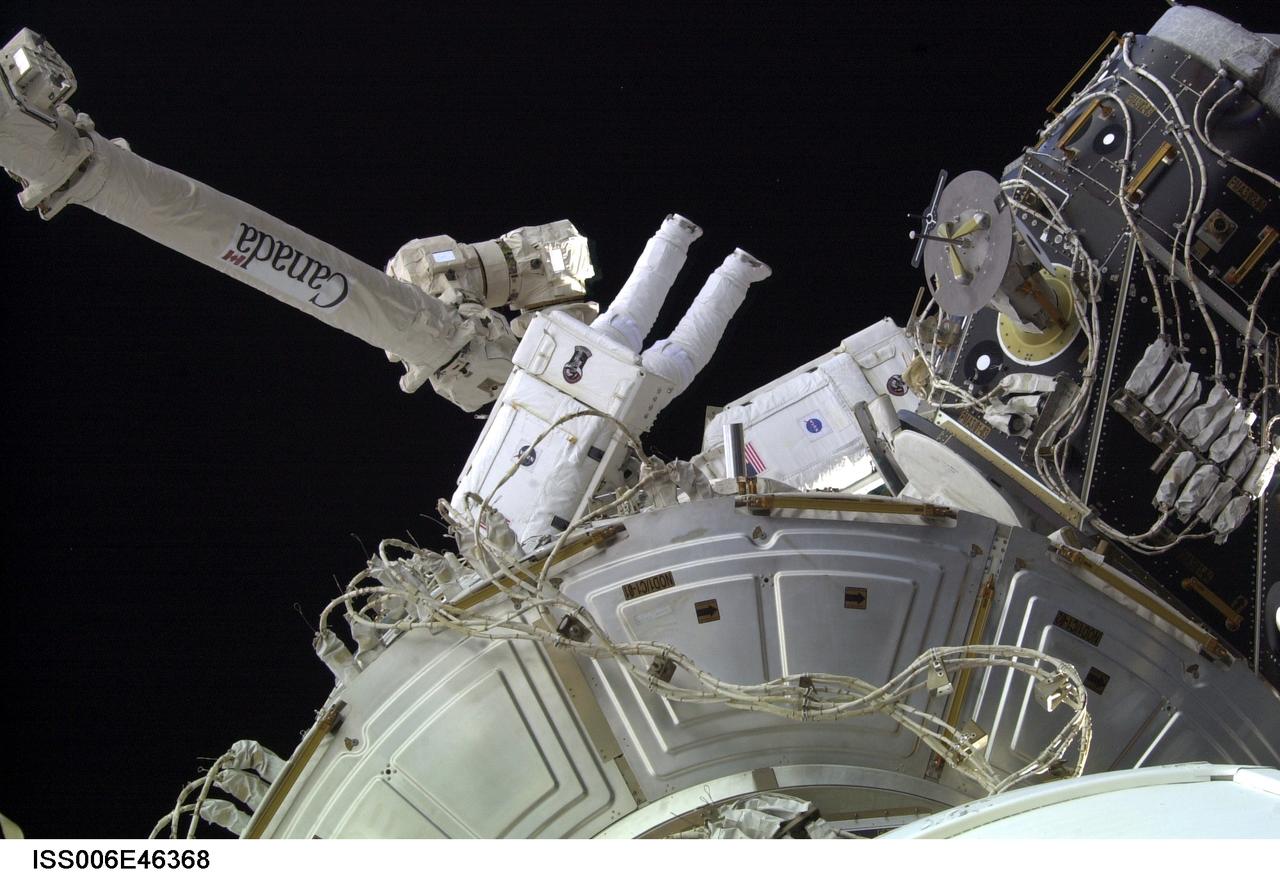
ISS006-E-46368 (8 April 2003) --- Astronauts Donald R. Pettit (left), Expedition Six NASA ISS science officer, and Kenneth D. Bowersox, mission commander, work in tandem on a session of extravehicular activity (EVA) as they perform a variety of maintenance tasks on the International Space Station (ISS). The spacewalk began at 7:40 a.m. (CDT) and ended at 2:06 p.m. (CDT) on April 8, 2003.
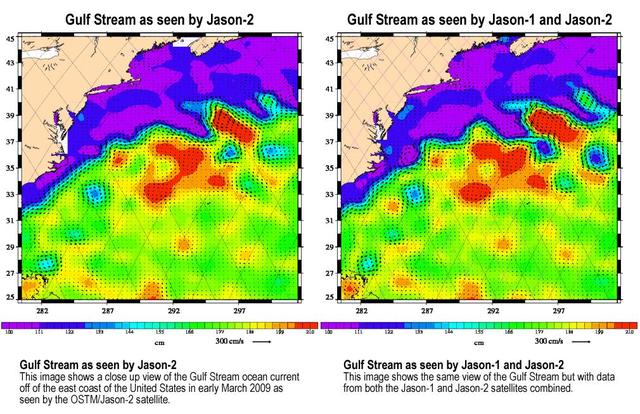
Created with altimeter data from NASA's Ocean Surface Topography Mission (OSTM)/Jason-2 satellite and the Jason-1 satellite, this image shows a portion of the Gulf Stream off the east coast of the United States. It demonstrates how much more detail is visible in the ocean surface when measured by two satellites than by one alone. The image on the left was created with data from OSTM/Jason-2. The image on the right is the same region but made with combined data from OSTM/Jason-2 and Jason-1.It shows the Gulf Stream's eddies and rings much more clearly. This image is a product of the new interleaved tandem mission of the Jason-1 and Ocean Surface Topography Mission (OSTM)/Jason-2 satellites. (The first global map from this tandem mission is available at PIA11859.) In January 2009, Jason-1 was maneuvered into orbit on the opposite side of Earth from its successor, OSTM/Jason-2 satellite. It takes 10 days for the satellites to cover the globe and return to any one place over the ocean. So, in this new tandem configuration, Jason-1 flies over the same region of the ocean that OSTM/Jason-2 flew over five days earlier. Its ground tracks fall mid-way between those of Jason-2, which are about 315 kilometers (195 miles) apart at the equator. Working together, the two spacecraft measure the surface topography of the ocean twice as often as would be possible with one satellite, and over a 10-day period, they return twice the amount of detailed measurements. Combining data from the two satellites makes it possible to map smaller, more rapidly changing features than one satellite could alone. These images show sea-level anomaly data from the first 14 days of the interleaved orbit of Jason-1 and OSTM/Jason-2, the period beginning on Feb. 20, 2009. An anomaly is a departure from a value averaged over a long period of time. Red and yellow are regions where sea levels are higher than normal. Purple and dark blue show where sea levels are lower. A higher-than-normal sea surface is usually a sign of warm waters below, while lower sea levels indicate cooler than normal temperatures. http://photojournal.jpl.nasa.gov/catalog/PIA11997
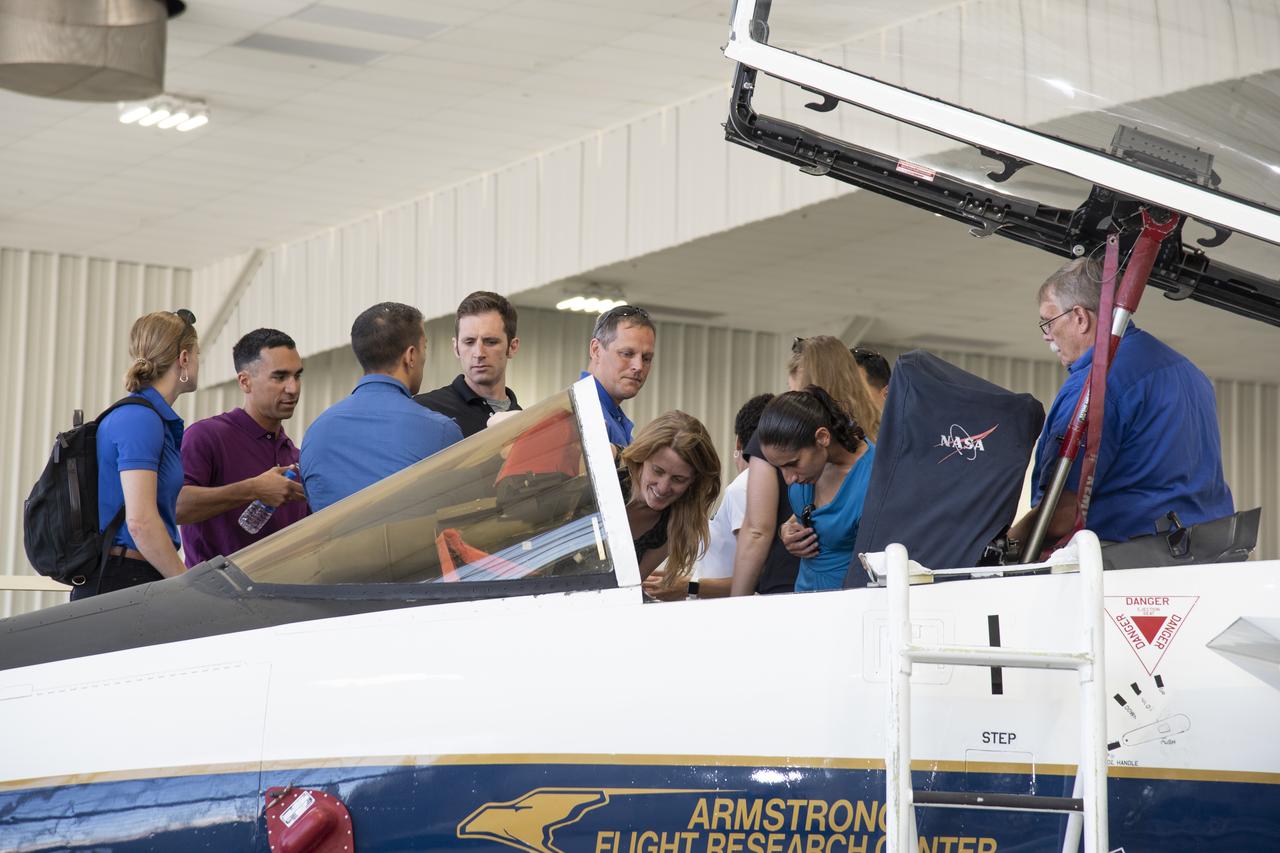
NASA's 2017 astronaut candidates toured aircraft hangar at Armstrong Flight Research Center, in Southern California where they checked out a F-15 cockpit. The center is using its fleet of supersonic research support aircraft for sonic boom research, including the F-15, which will fly in tandem with the X-59 QueSST during early flight test stages, and the F-18, which is conducting supersonic research in support of the overall mission.
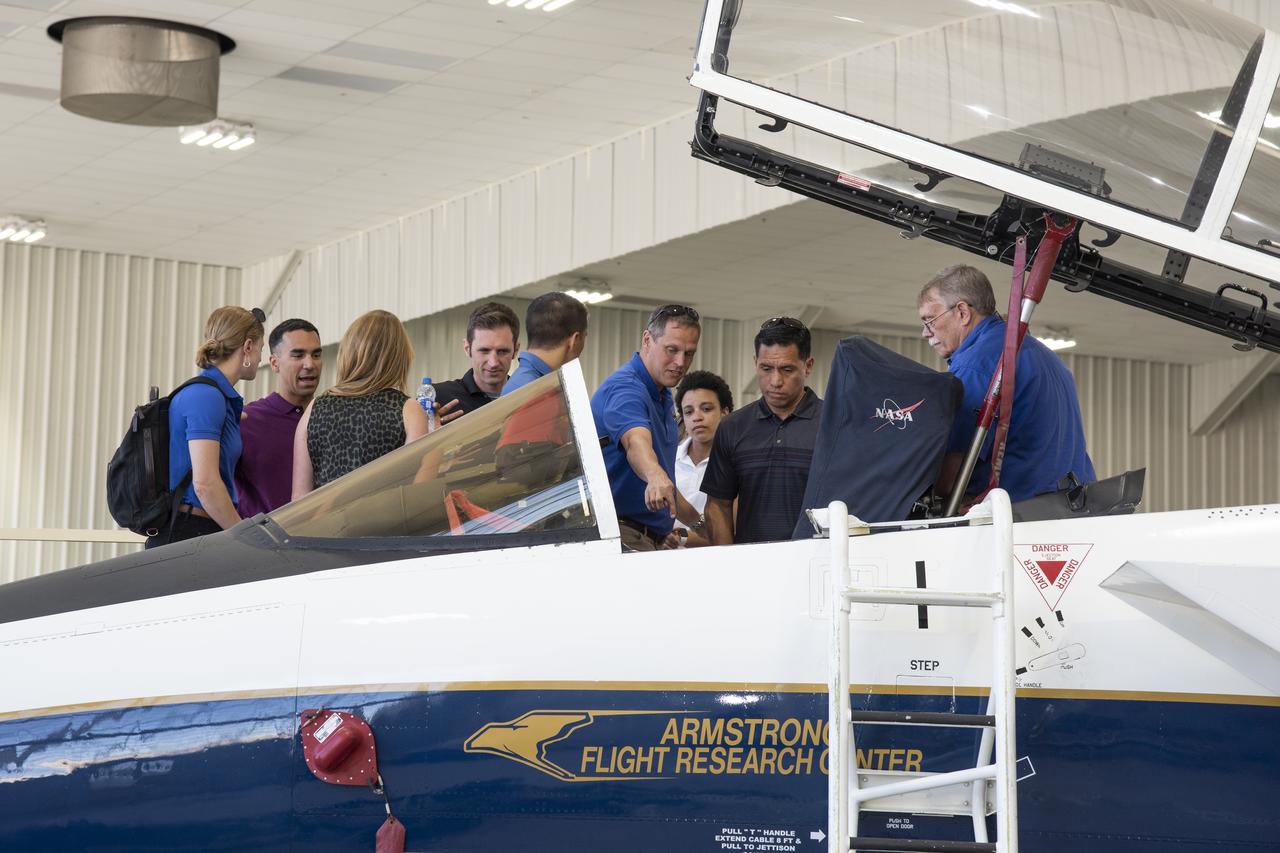
NASA’s 2017 astronaut candidates toured aircraft hangar at Armstrong Flight Research Center, in Southern California where they checked out a F-15 cockpit. The center is using its fleet of supersonic research support aircraft for sonic boom research, including the F-15, which will fly in tandem with the X-59 QueSST during early flight test stages, and the F-18, which is conducting supersonic research in support of the overall mission.
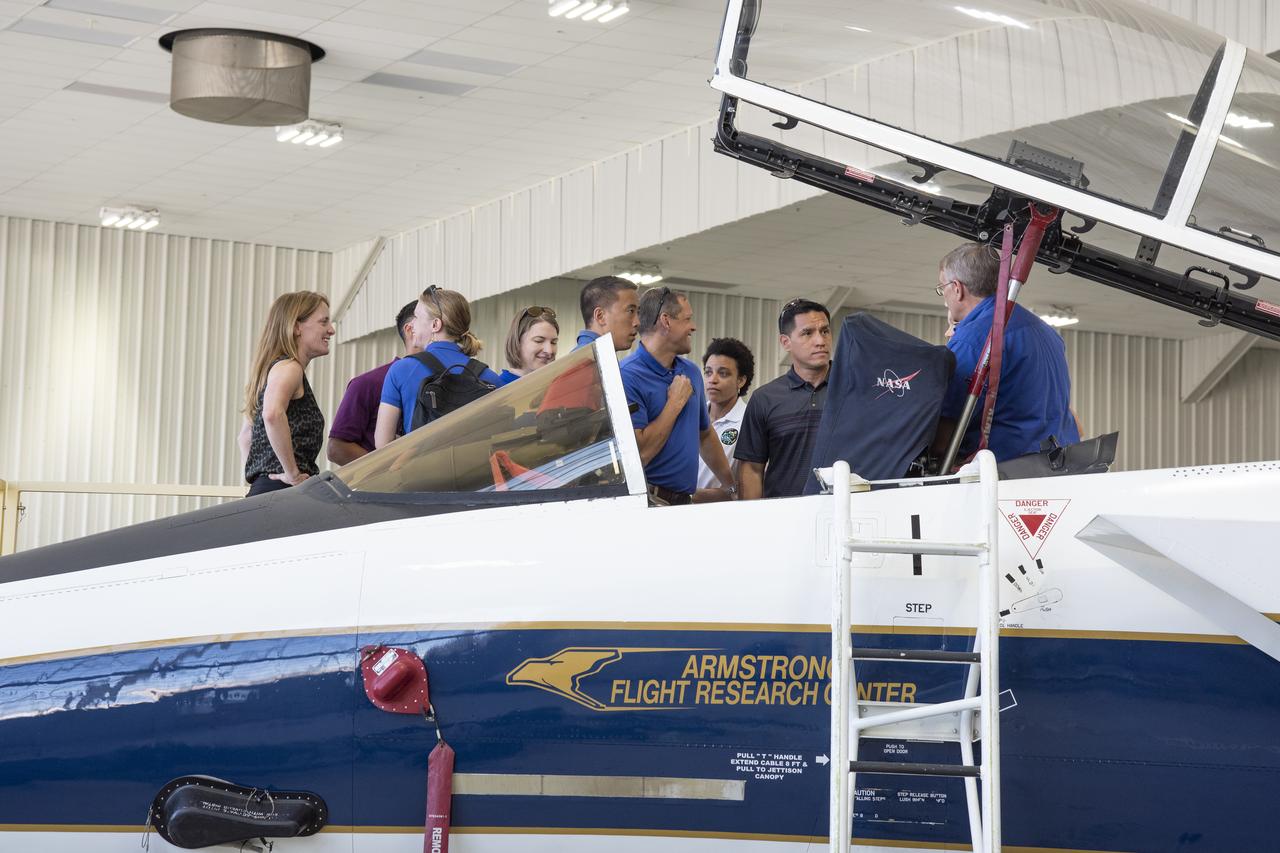
NASA's 2017 astronaut candidates toured aircraft hangar at Armstrong Flight Research Center, in Southern California where they checked out a F-15 cockpit. The center is using its fleet of supersonic research support aircraft for sonic boom research, including the F-15, which will fly in tandem with the X-59 QueSST during early flight test stages, and the F-18, which is conducting supersonic research in support of the overall mission.

This infographic explains how NASA Spitzer Space Telescope can be used in tandem with a telescope on the ground to measure the distances to planets discovered using the microlensing technique. http://photojournal.jpl.nasa.gov/catalog/PIA19332

NASA’s TRACERS (Tandem Reconnection and Cusp Electrodynamics Reconnaissance Satellites) mission launches at 11:13 a.m. PDT (2:13 p.m. EDT) on Wednesday, July 23, 2025, atop a SpaceX Falcon 9 rocket at Space Launch Complex 4 East at Vandenberg Space Force Base in California. The TRACERS mission will study magnetic reconnection around Earth — a process in which electrically charged plasmas exchange energy in the atmosphere — to understand how the Sun’s solar wind interacts with the magnetosphere, Earth’s protective magnetic shield.
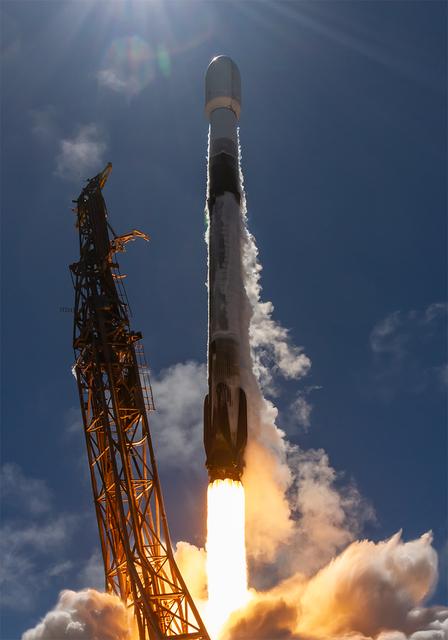
NASA’s TRACERS (Tandem Reconnection and Cusp Electrodynamics Reconnaissance Satellites) mission launches at 11:13 a.m. PDT (2:13 p.m. EDT) on Wednesday, July 23, 2025, atop a SpaceX Falcon 9 rocket at Space Launch Complex 4 East at Vandenberg Space Force Base in California. The TRACERS mission will study magnetic reconnection around Earth — a process in which electrically charged plasmas exchange energy in the atmosphere — to understand how the Sun’s solar wind interacts with the magnetosphere, Earth’s protective magnetic shield.
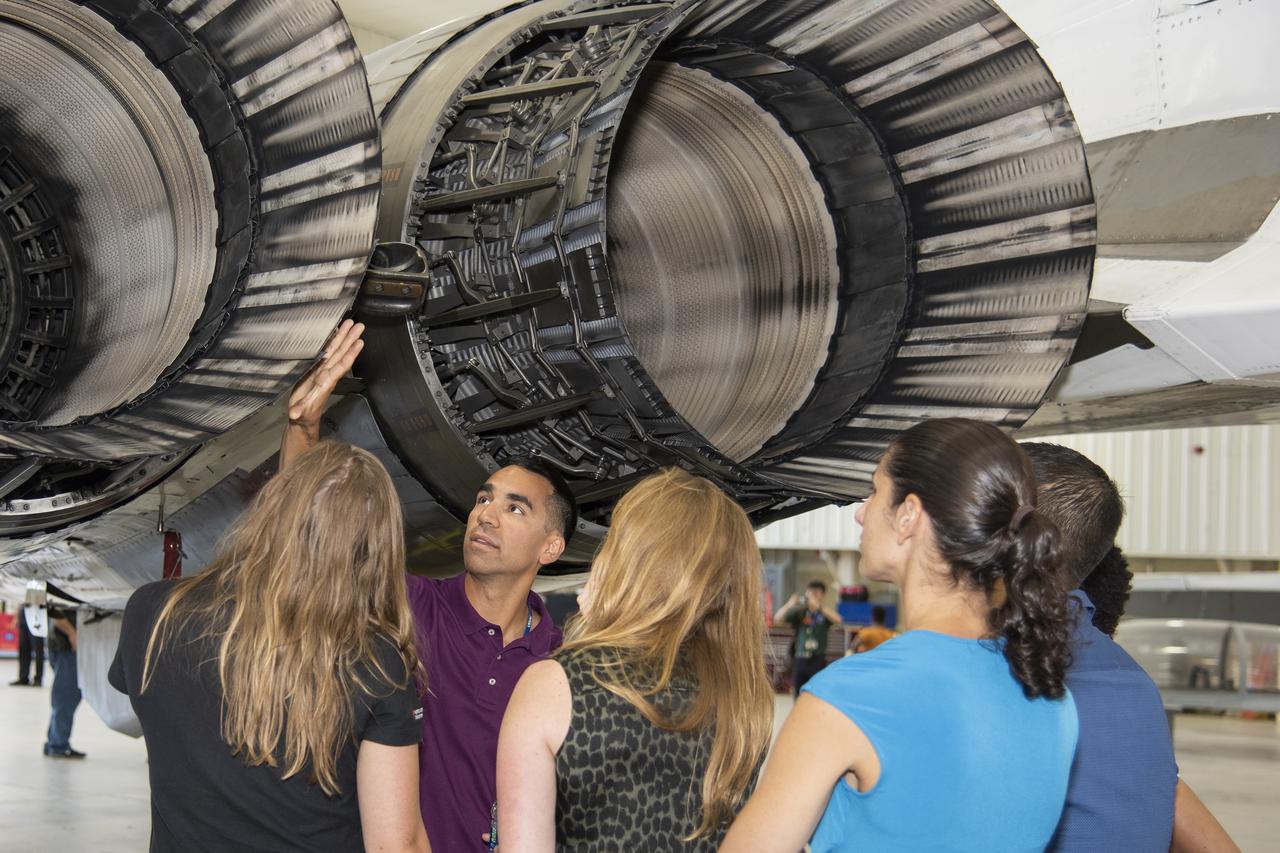
NASA's 2017 astronaut candidates toured aircraft hangar at Armstrong Flight Research Center, in Southern California (L to R) Jenni Sidey-Gibbons, Raja Chari, Loral O'Hara, Jasmin Moghbeli, Jonny Kim and Jessica Watkins look inside the engine nozzle of an F-15 jet. The F-15 will fly in tandem with the X-59 QueSST during early flight test stages for the X-59 development.

A SpaceX Falcon 9 rocket carrying NASA’s TRACERS (Tandem Reconnection and Cusp Electrodynamics Reconnaissance Satellites) mission stands vertical Tuesday, July 22, 2025, at Space Launch Complex 4 East at Vandenberg Space Force Base in California. The TRACERS mission will study magnetic reconnection around Earth — a process in which electrically charged plasmas exchange energy in the atmosphere — to understand how the Sun’s solar wind interacts with the magnetosphere, Earth’s protective magnetic shield.
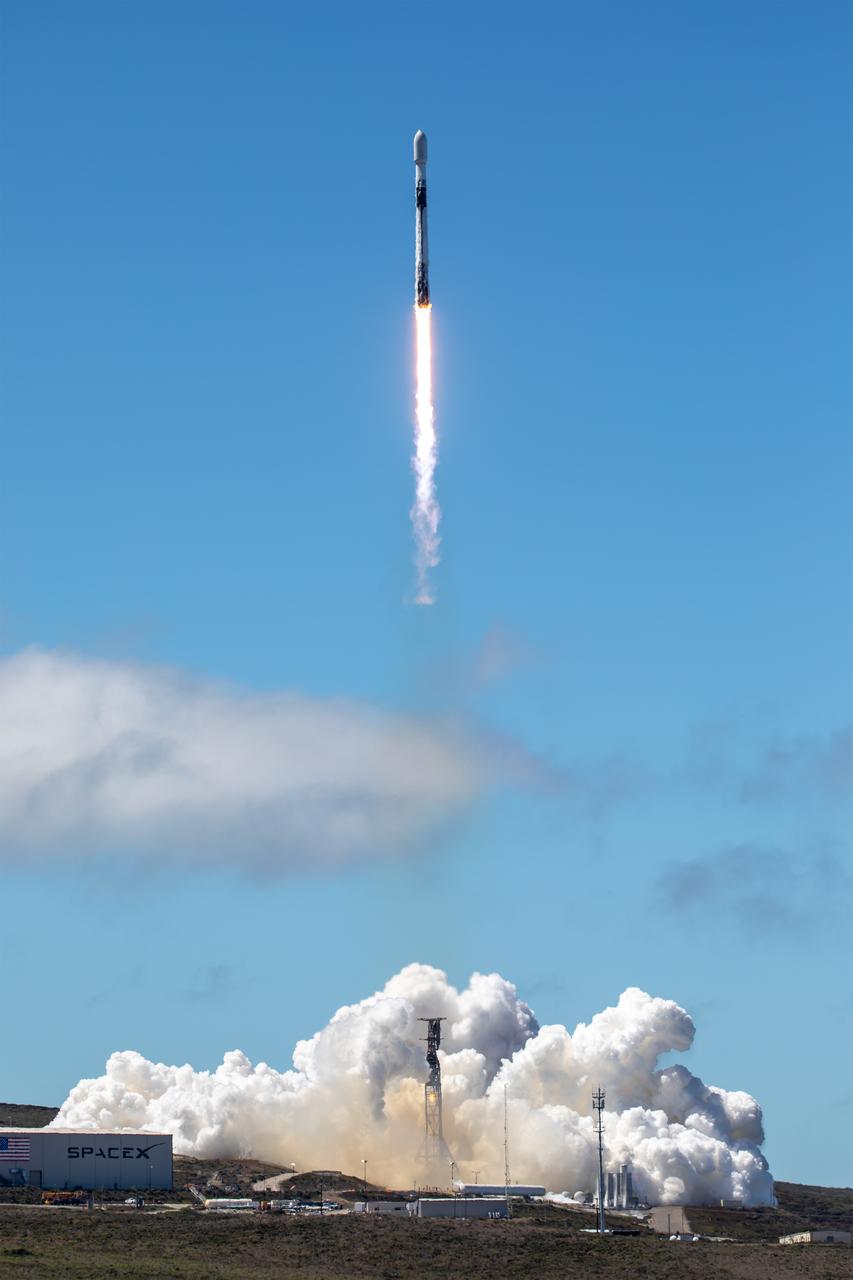
NASA’s TRACERS (Tandem Reconnection and Cusp Electrodynamics Reconnaissance Satellites) mission launches at 11:13 a.m. PDT (2:13 p.m. EDT) on Wednesday, July 23, 2025, atop a SpaceX Falcon 9 rocket at Space Launch Complex 4 East at Vandenberg Space Force Base in California. The TRACERS mission will study magnetic reconnection around Earth — a process in which electrically charged plasmas exchange energy in the atmosphere — to understand how the Sun’s solar wind interacts with the magnetosphere, Earth’s protective magnetic shield.
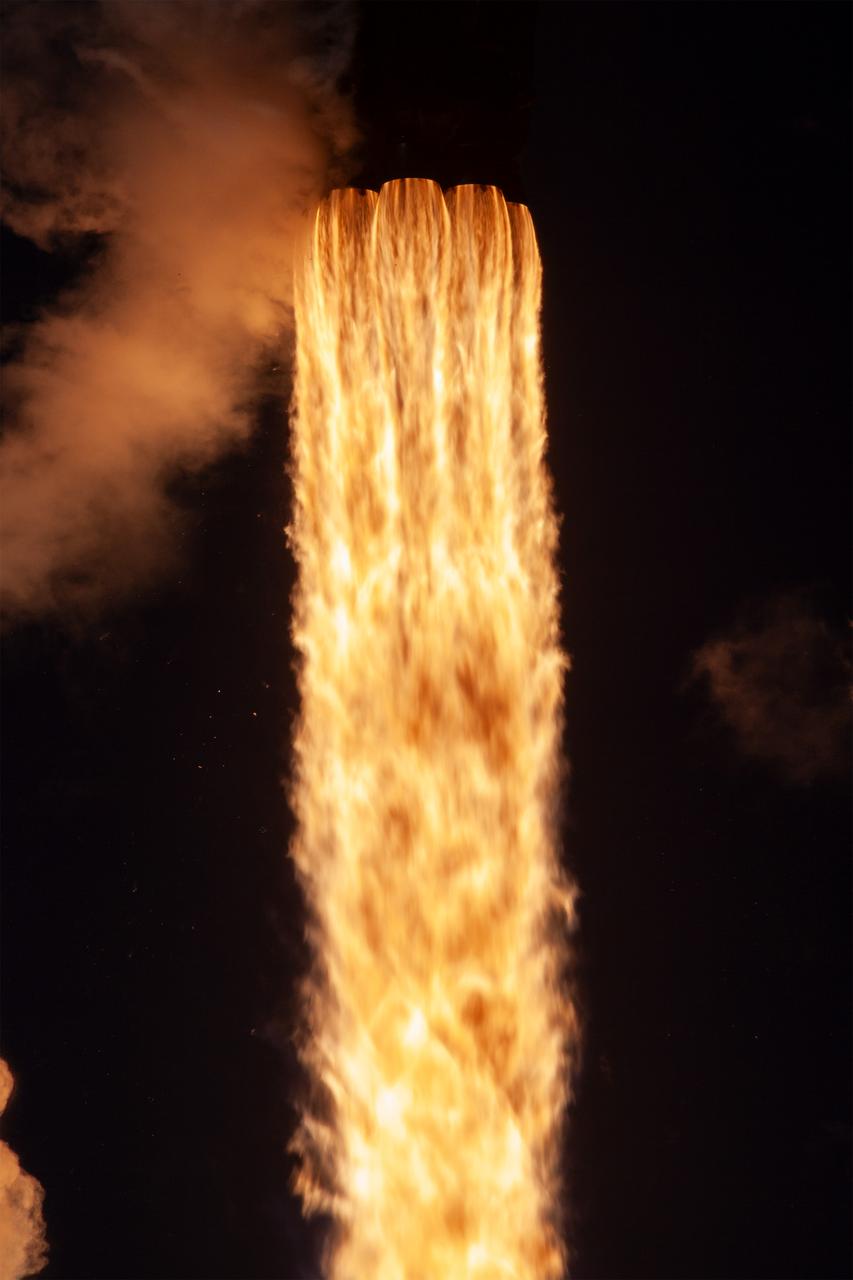
NASA’s TRACERS (Tandem Reconnection and Cusp Electrodynamics Reconnaissance Satellites) mission launches at 11:13 a.m. PDT (2:13 p.m. EDT) on Wednesday, July 23, 2025, atop a SpaceX Falcon 9 rocket at Space Launch Complex 4 East at Vandenberg Space Force Base in California. The TRACERS mission will study magnetic reconnection around Earth — a process in which electrically charged plasmas exchange energy in the atmosphere — to understand how the Sun’s solar wind interacts with the magnetosphere, Earth’s protective magnetic shield.
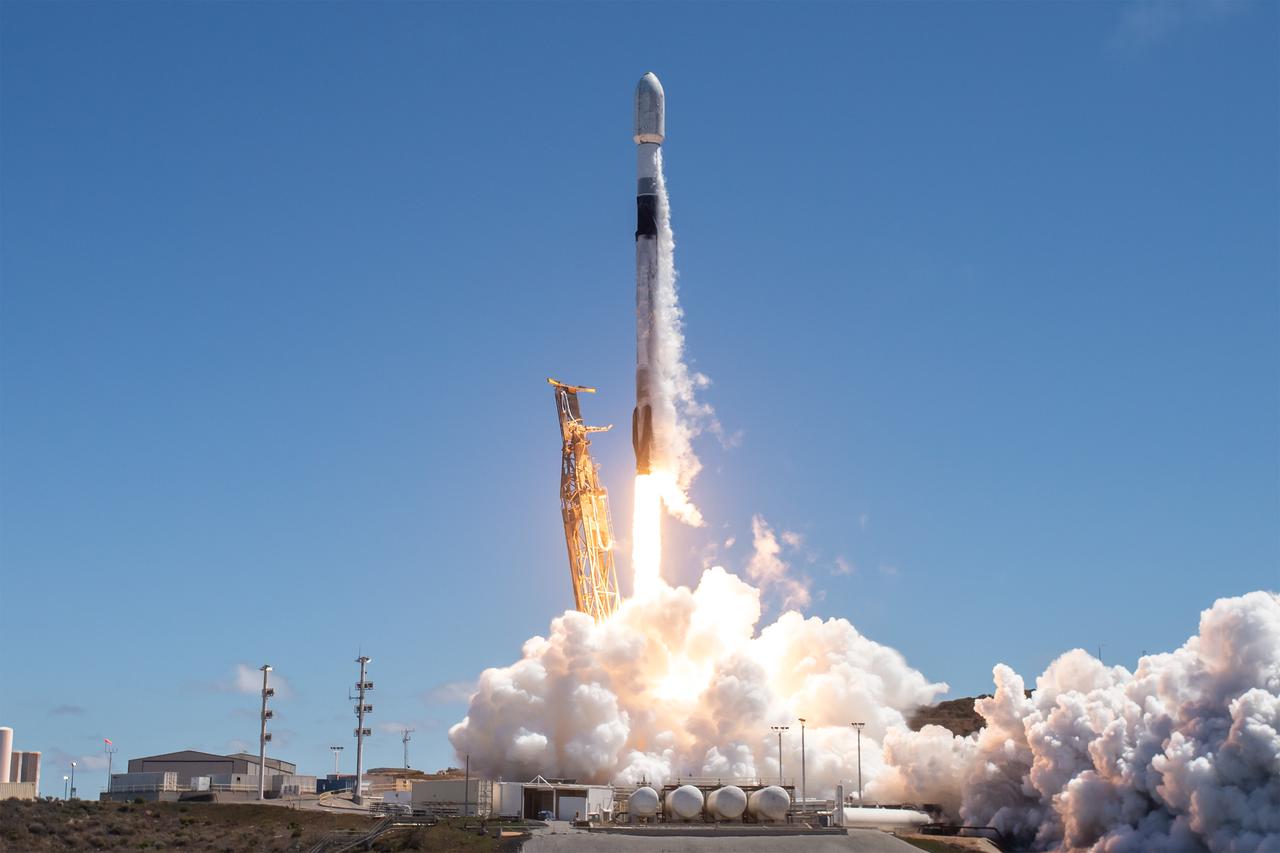
NASA’s TRACERS (Tandem Reconnection and Cusp Electrodynamics Reconnaissance Satellites) mission launches at 11:13 a.m. PDT (2:13 p.m. EDT) on Wednesday, July 23, 2025, atop a SpaceX Falcon 9 rocket at Space Launch Complex 4 East at Vandenberg Space Force Base in California. The TRACERS mission will study magnetic reconnection around Earth — a process in which electrically charged plasmas exchange energy in the atmosphere — to understand how the Sun’s solar wind interacts with the magnetosphere, Earth’s protective magnetic shield.
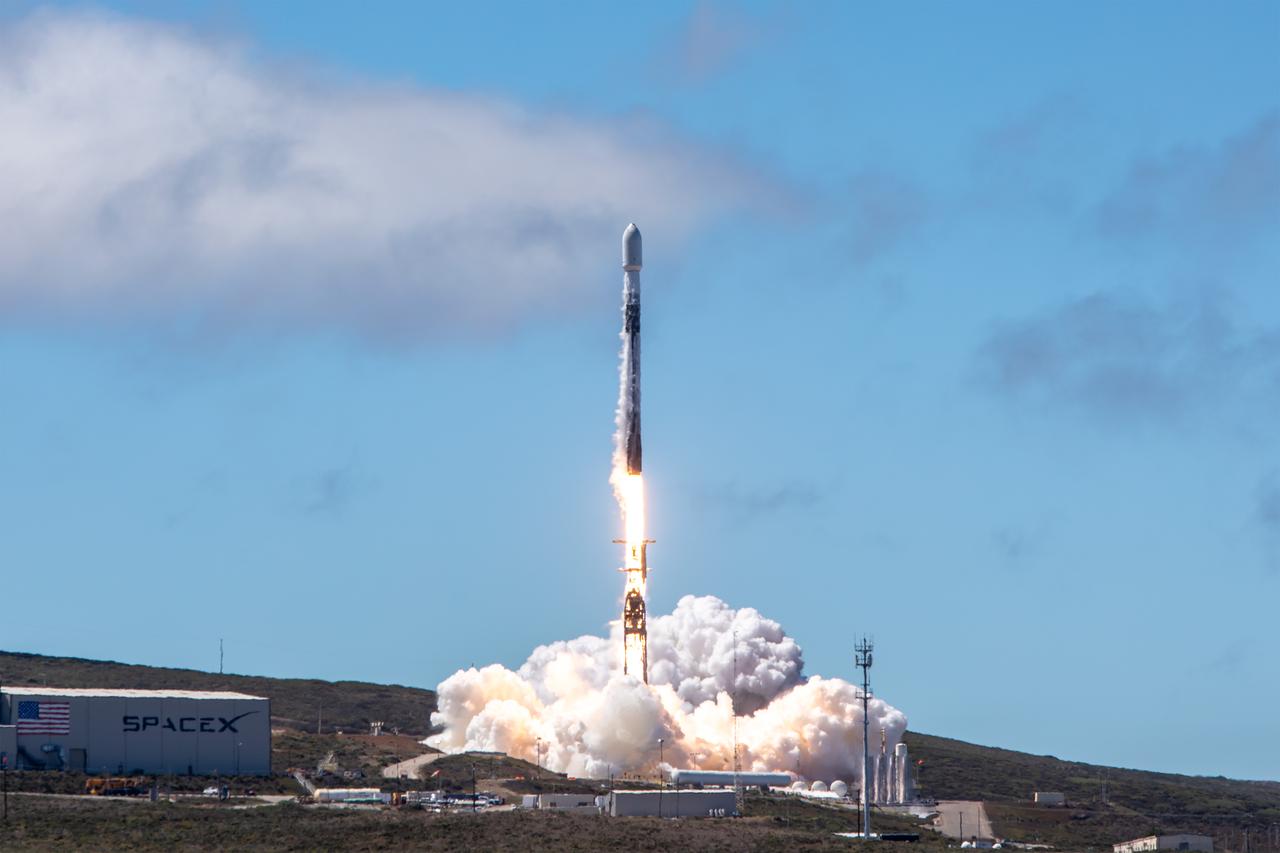
NASA’s TRACERS (Tandem Reconnection and Cusp Electrodynamics Reconnaissance Satellites) mission launches at 11:13 a.m. PDT (2:13 p.m. EDT) on Wednesday, July 23, 2025, atop a SpaceX Falcon 9 rocket at Space Launch Complex 4 East at Vandenberg Space Force Base in California. The TRACERS mission will study magnetic reconnection around Earth — a process in which electrically charged plasmas exchange energy in the atmosphere — to understand how the Sun’s solar wind interacts with the magnetosphere, Earth’s protective magnetic shield.
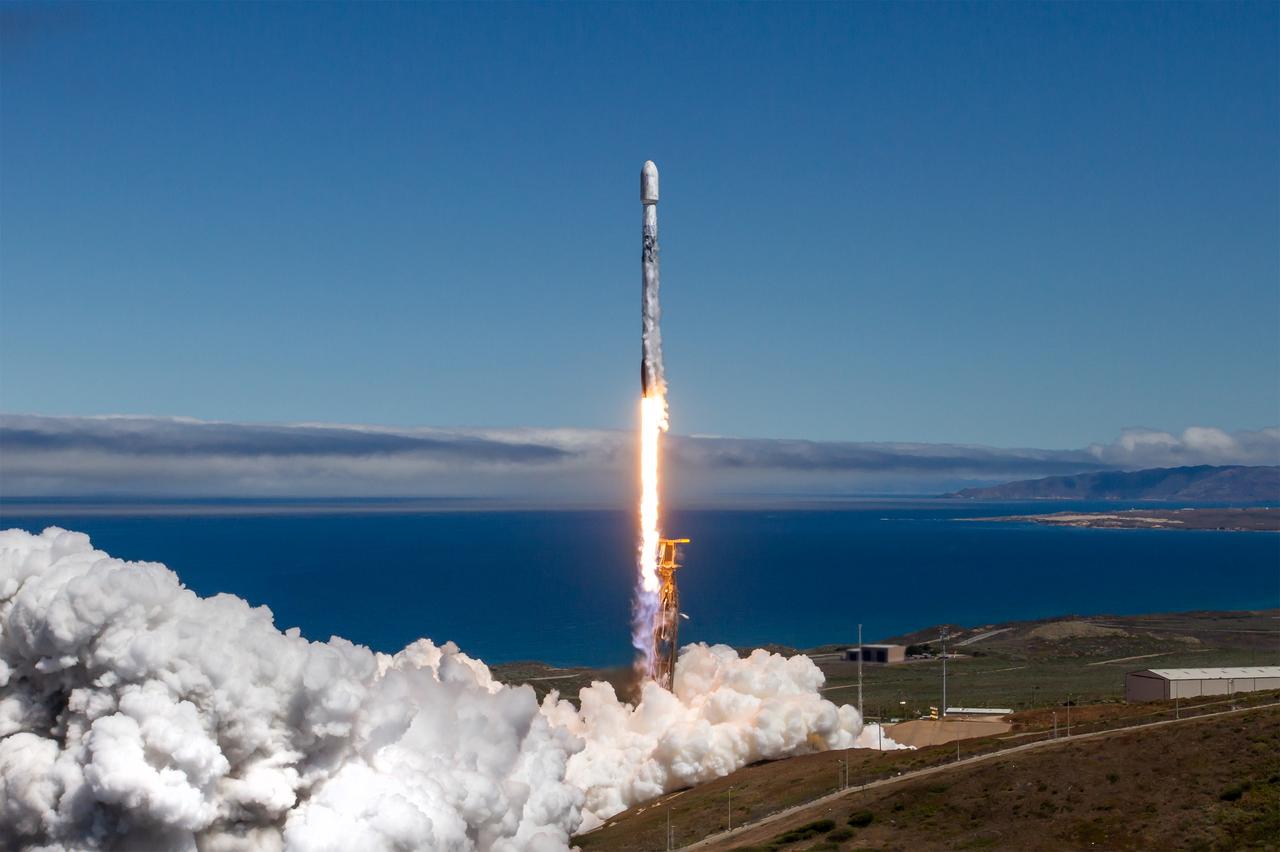
NASA’s TRACERS (Tandem Reconnection and Cusp Electrodynamics Reconnaissance Satellites) mission launches at 11:13 a.m. PDT (2:13 p.m. EDT) on Wednesday, July 23, 2025, atop a SpaceX Falcon 9 rocket at Space Launch Complex 4 East at Vandenberg Space Force Base in California. The TRACERS mission will study magnetic reconnection around Earth — a process in which electrically charged plasmas exchange energy in the atmosphere — to understand how the Sun’s solar wind interacts with the magnetosphere, Earth’s protective magnetic shield.
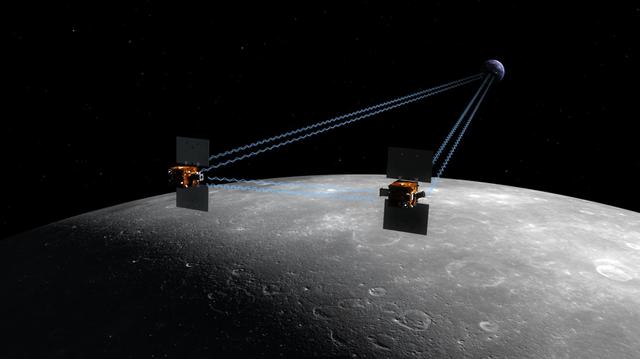
The Gravity Recovery and Interior Laboratory, or GRAIL, mission will fly twin spacecraft in tandem orbits around the moon to measure its gravity field in unprecedented detail. GRAIL is a part of NASA Discovery Program.
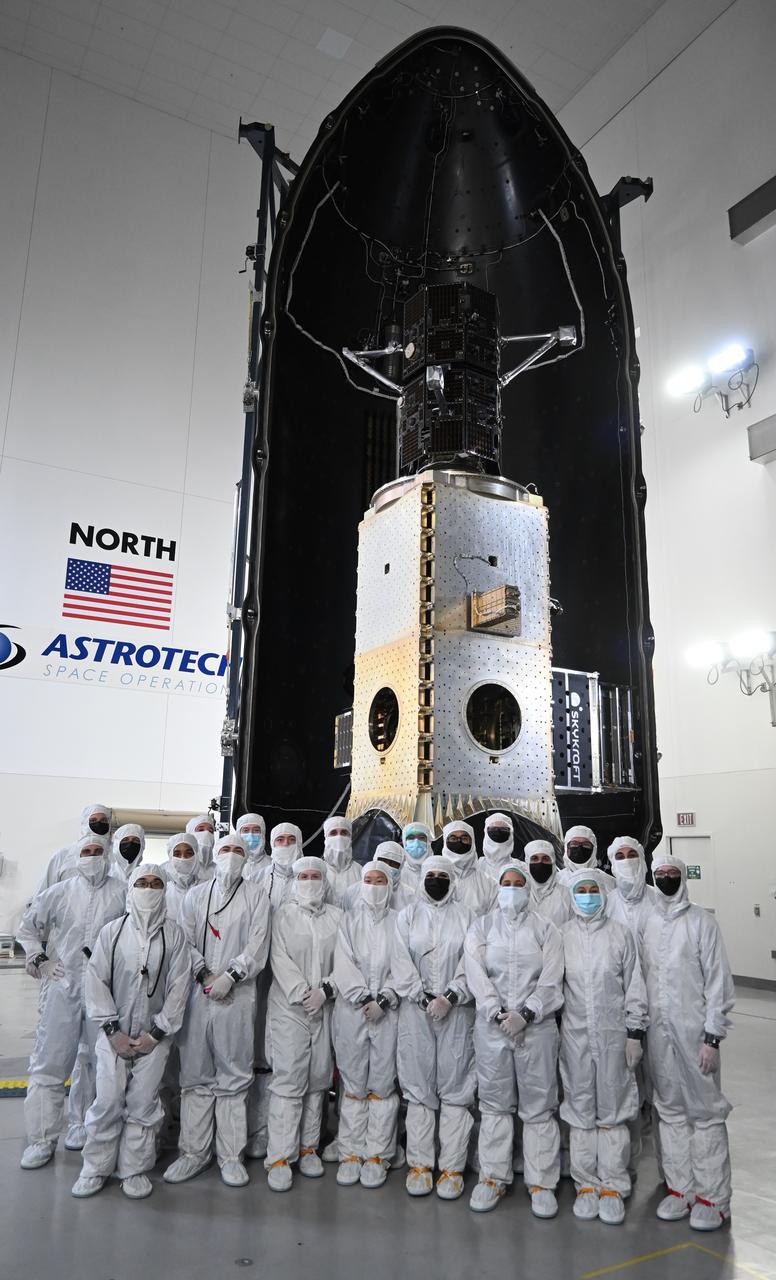
Technicians encapsulate the black twin satellites of NASA’s TRACERS (Tandem Reconnection and Cusp Electrodynamics Reconnaissance Satellites) mission within a payload fairing atop a shiny metallic stack of several other rideshare payloads at the Astrotech Space Operations facility at Vandenberg Space Force Base in California. The TRACERS mission is a pair of twin satellites that will study how Earth’s magnetic shield — the magnetosphere — protects our planet from the supersonic stream of material from the Sun called solar wind.
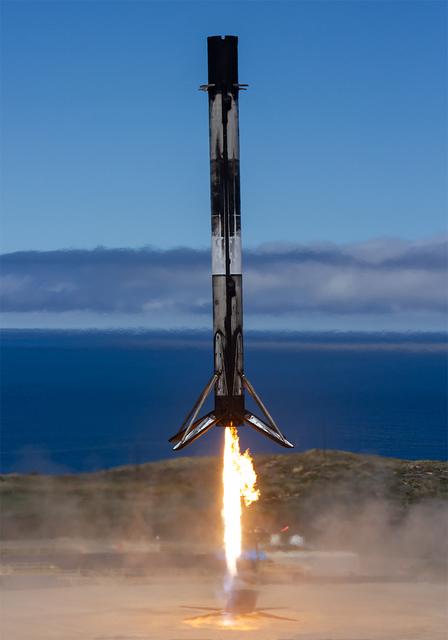
A SpaceX Falcon 9 first stage booster lands on Landing Zone 4 following liftoff of NASA’s TRACERS (Tandem Reconnection and Cusp Electrodynamics Reconnaissance Satellites) mission at Space Launch Complex 4 East at Vandenberg Space Force Base in California on Wednesday, July 23, 2025. This was the 16th flight for the first stage booster, which has previously launched these NASA missions - PACE (Plankton, Aerosol, Cloud, ocean Ecosystem, NASA’s SpaceX Crew-7, and Commercial Resupply Services-29. The TRACERS mission will study magnetic reconnection around Earth — a process in which electrically charged plasmas exchange energy in the atmosphere — to understand how the Sun’s solar wind interacts with the magnetosphere, Earth’s protective magnetic shield.
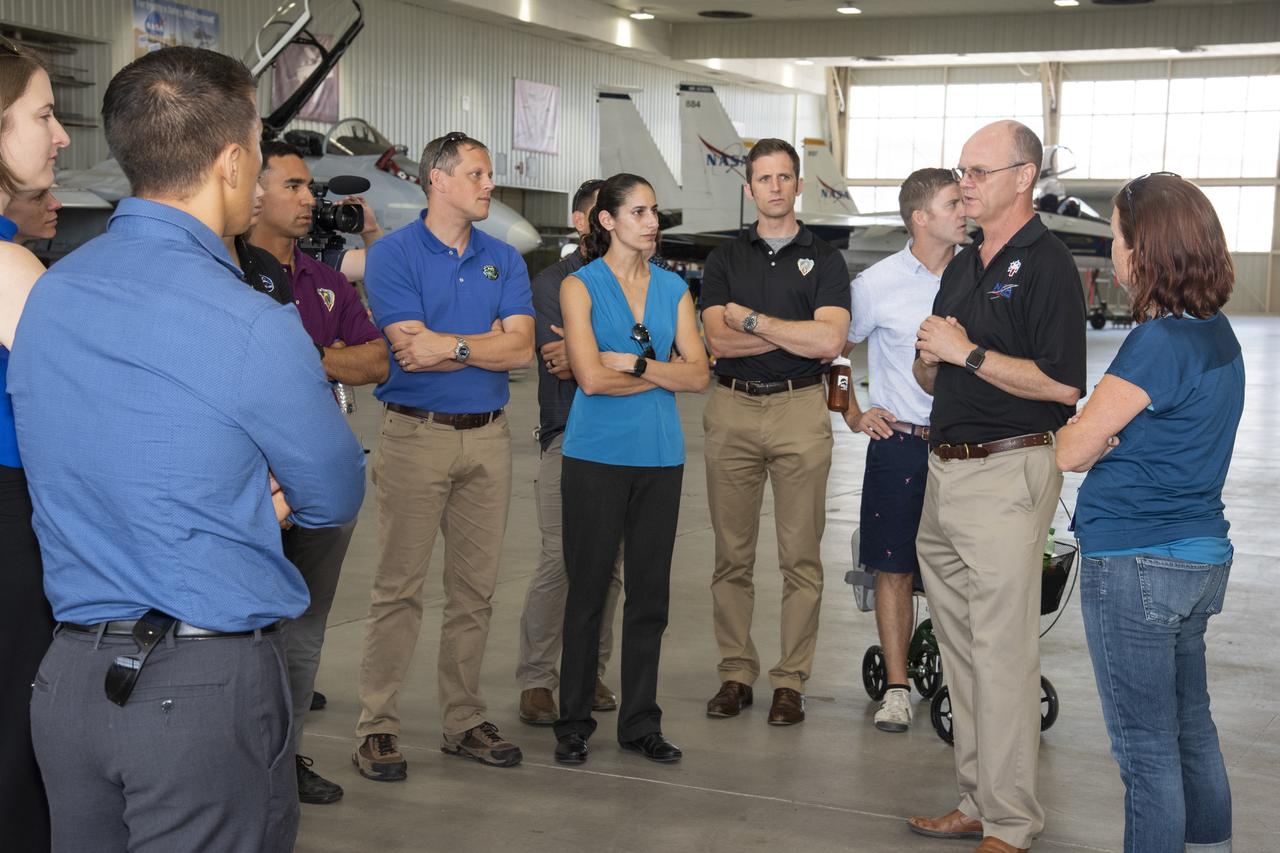
NASA’s 2017 astronaut candidates toured aircraft hangar at Armstrong Flight Research Center, in Southern California. On the right, NASA’s, X-59 pilot Nils Larsen, briefs the astronauts as they look at Armstrong’s fleet of supersonic research support aircraft, including the F-15, which will fly in tandem with the X-59 QueSST during early flight test stages, and the F-18, which is conducting supersonic research in support of the overall mission.
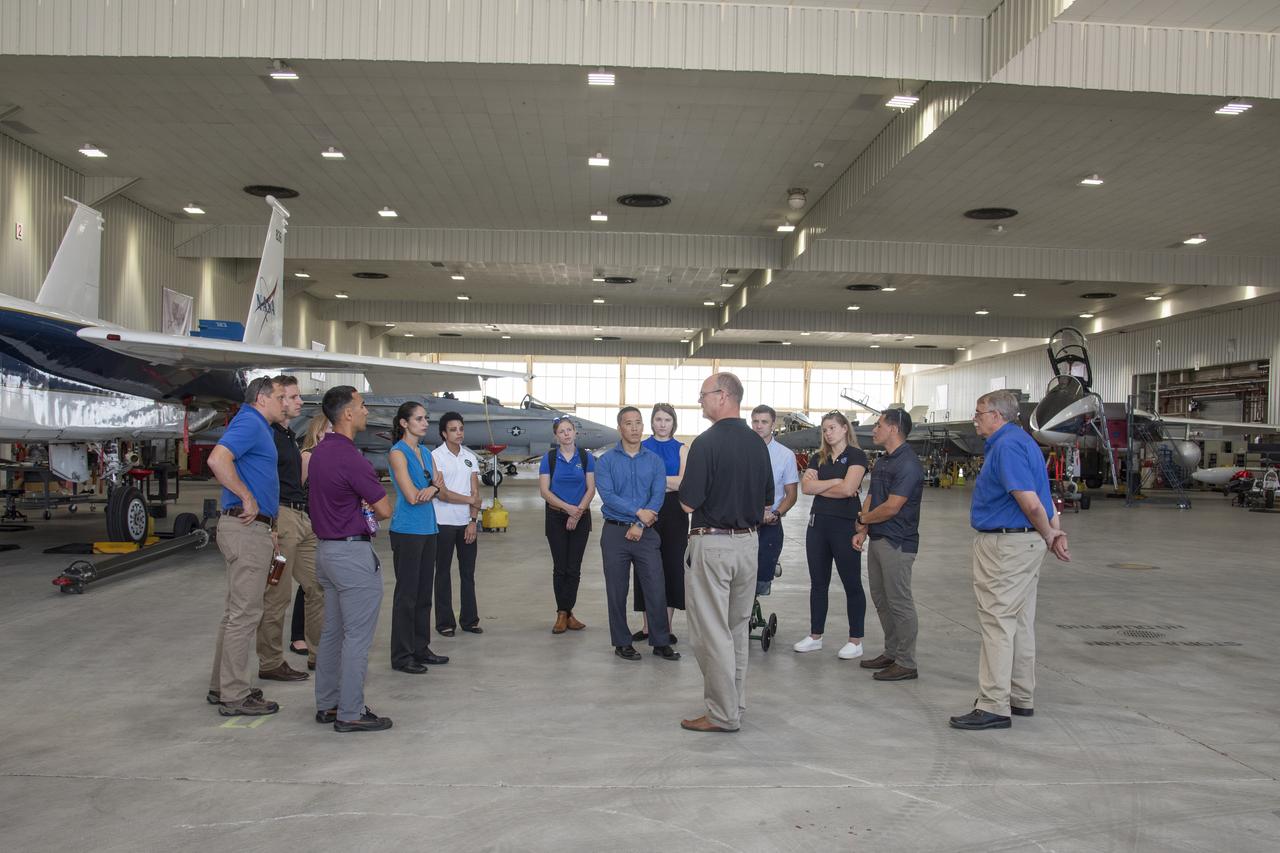
NASA's 2017 astronaut candidates toured aircraft hangar at Armstrong Flight Research Center, in Southern California. On the right, NASA's, X-59 pilot Nils Larsen, briefs the astronauts as they look at Armstrong's fleet of supersonic research support aircraft, including the F-15, which will fly in tandem with the X-59 QueSST during early flight test stages, and the F-18, which is conducting supersonic research in support of the overall mission.
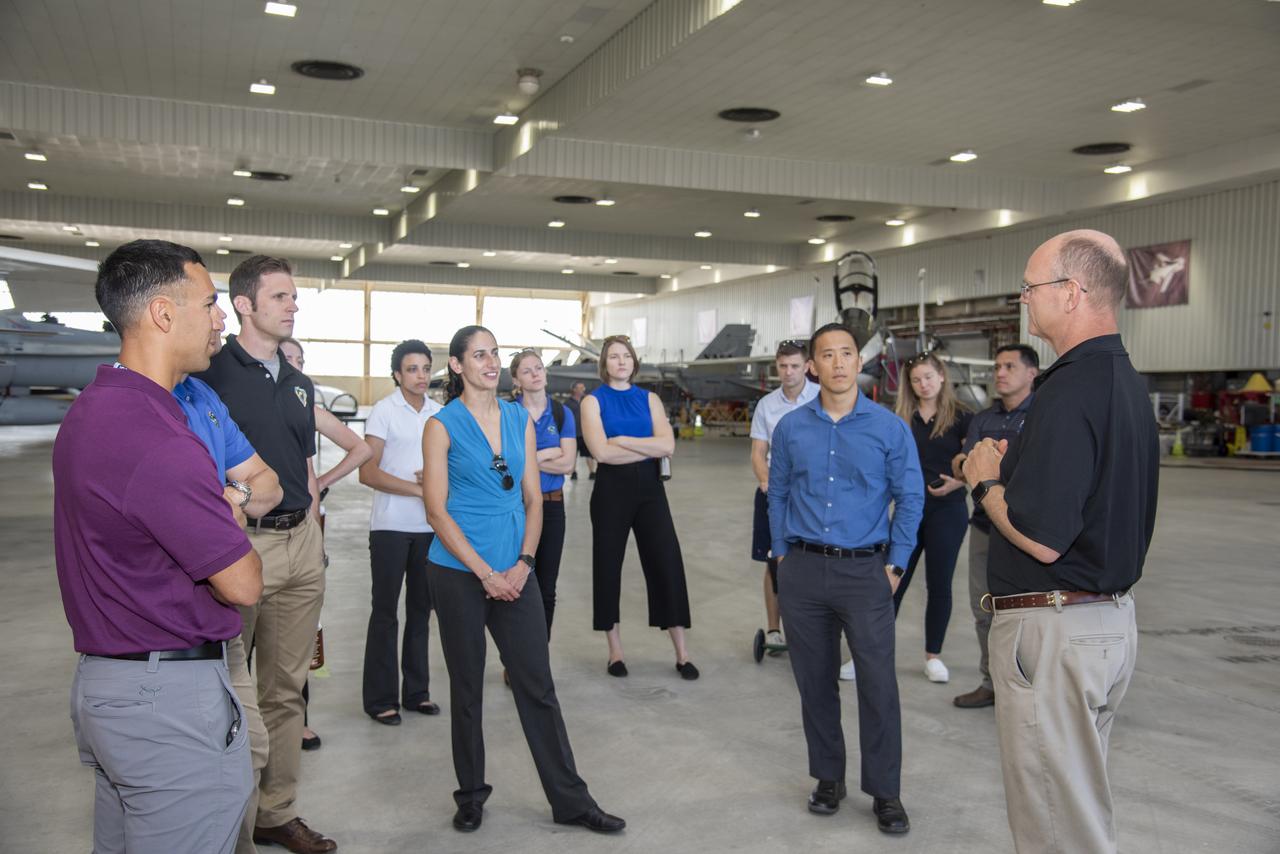
NASA's 2017 astronaut candidates toured aircraft hangar at Armstrong Flight Research Center, in Southern California. On the right, NASA's, X-59 pilot Nils Larsen, briefs the astronauts as they look at Armstrong's fleet of supersonic research support aircraft, including the F-15, which will fly in tandem with the X-59 QueSST during early flight test stages, and the F-18, which is conducting supersonic research in support of the overall mission.
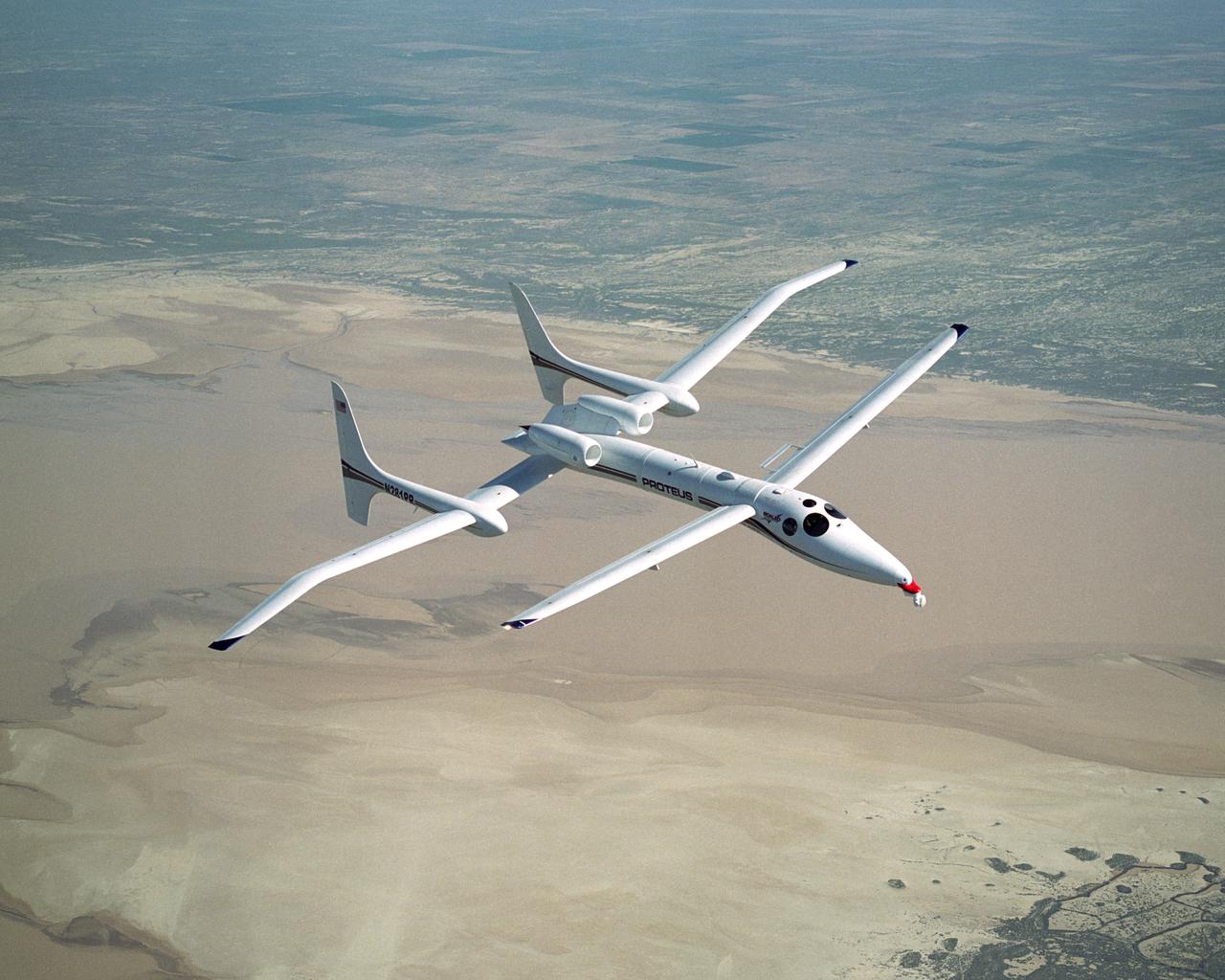
Scaled Composites' unique tandem-wing Proteus was the testbed for a series of UAV collision-avoidance flight demonstrations. An Amphitech 35GHz radar unit installed below Proteus' nose was the primary sensor for the Detect, See and Avoid tests.
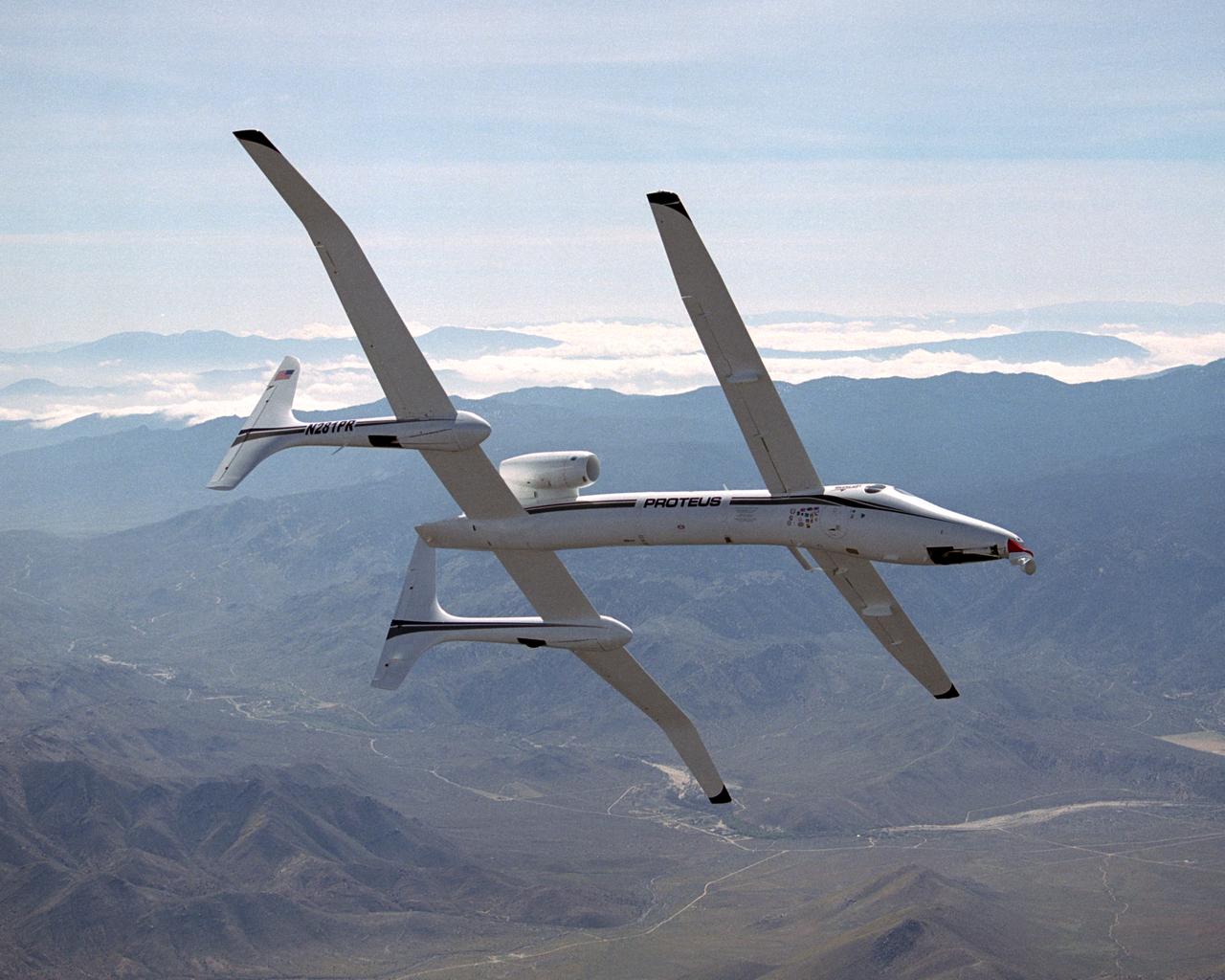
Scaled Composites' unique tandem-wing Proteus was the testbed for a series of UAV collision-avoidance flight demonstrations. An Amphitech 35GHz radar unit installed below Proteus' nose was the primary sensor for the Detect, See and Avoid tests.
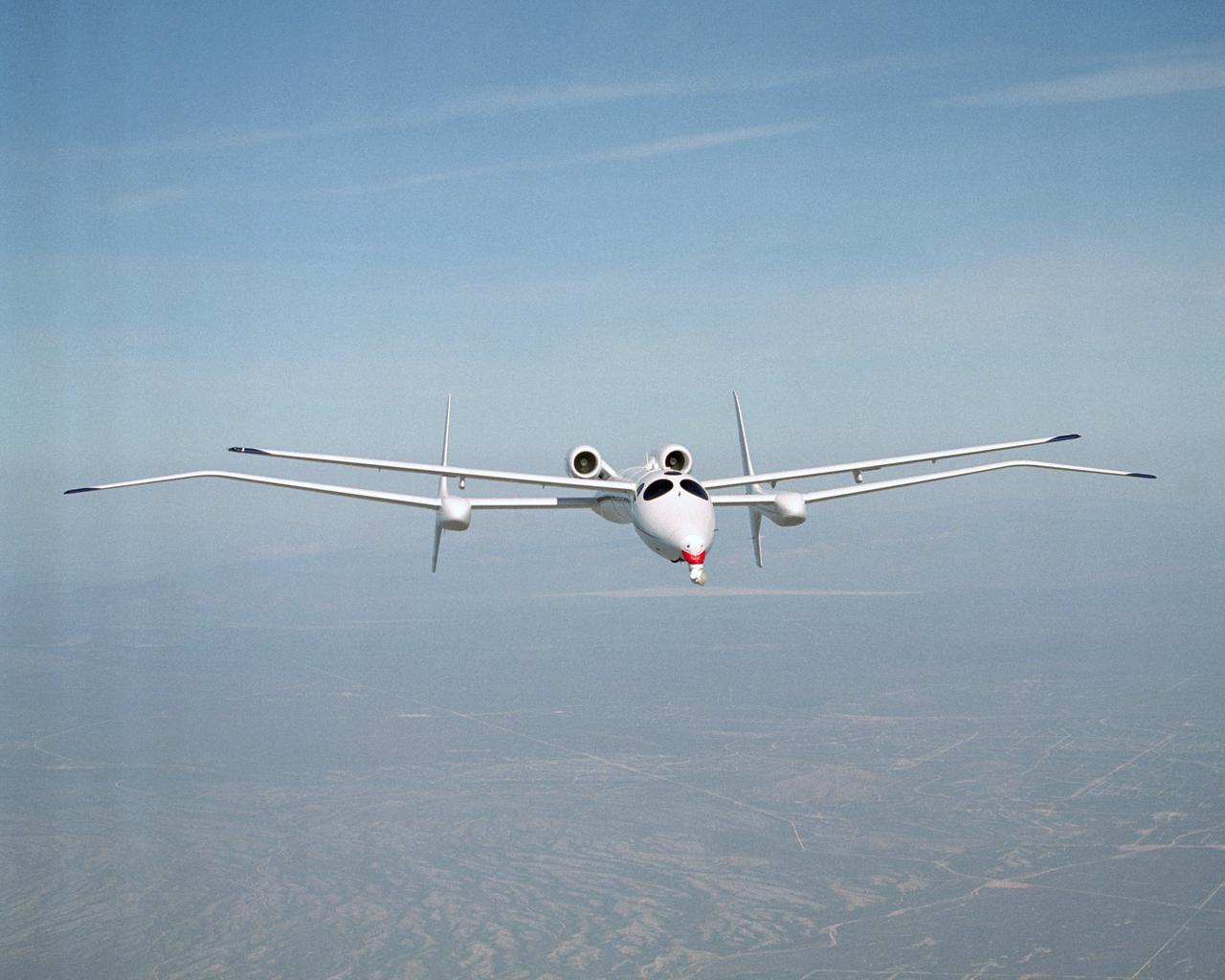
Scaled Composites' unique tandem-wing Proteus was the testbed for a series of UAV collision-avoidance flight demonstrations. An Amphitech 35GHz radar unit installed below Proteus' nose was the primary sensor for the Detect, See and Avoid tests.
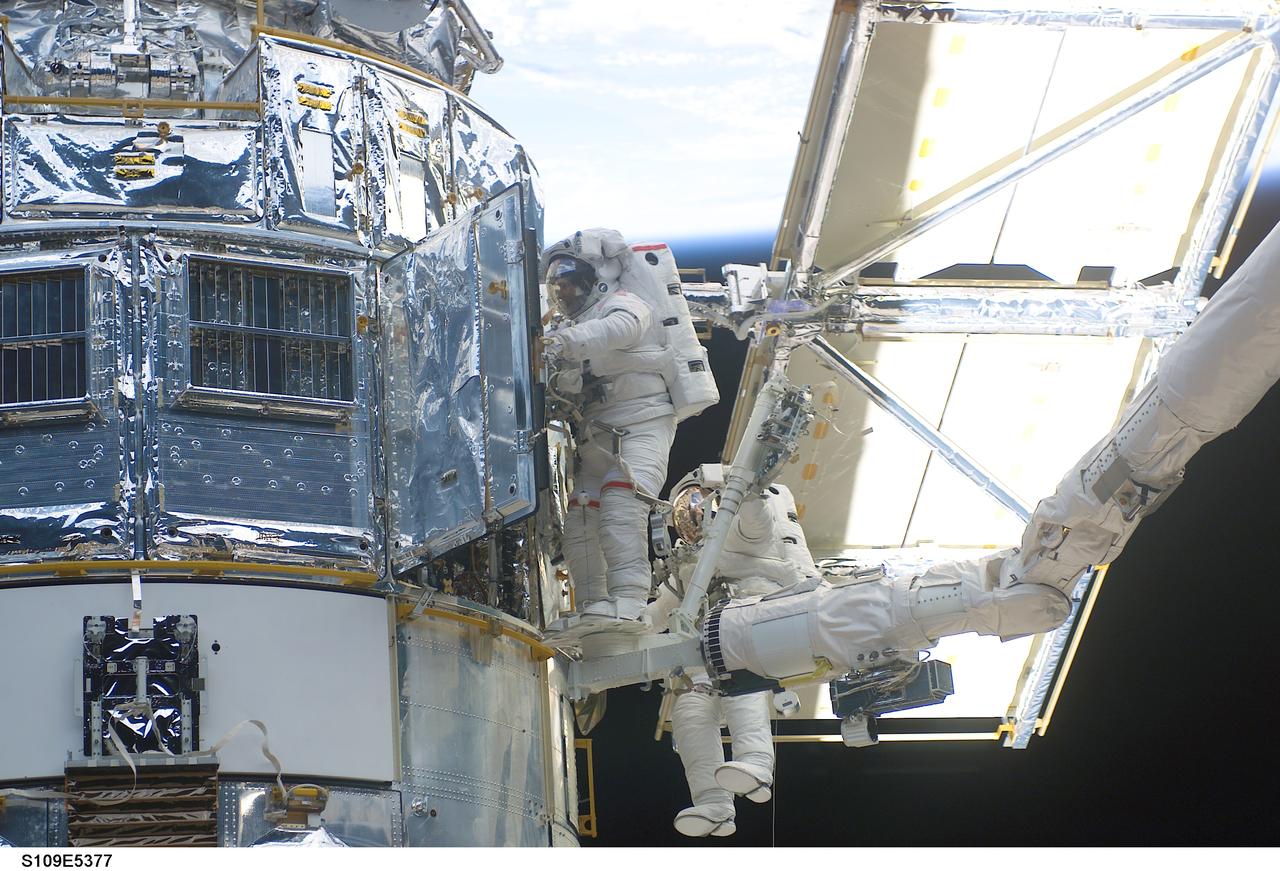
STS109-E-5377 (6 March 2002) --- Astronaut John M. Grunsfeld, payload commander, works in tandem with astronaut Richard M. Linnehan, mission specialist, as the two devote their attention to the Power Control Unit replacement task on the giant Hubble Space Telescope (HST). Grunsfeld stands on a foot restraint on the end of the Space Shuttle Columbia's Remote Manipulator System (RMS). This marked the third of five scheduled STS-109 space walks and the mission's second extravehicular activity (EVA) for the tandem of Grunsfeld and Linnehan. It was completed at 9:16 a.m. CST (1516 GMT), Mar. 6, 2002. The image was recorded with a digital still camera.
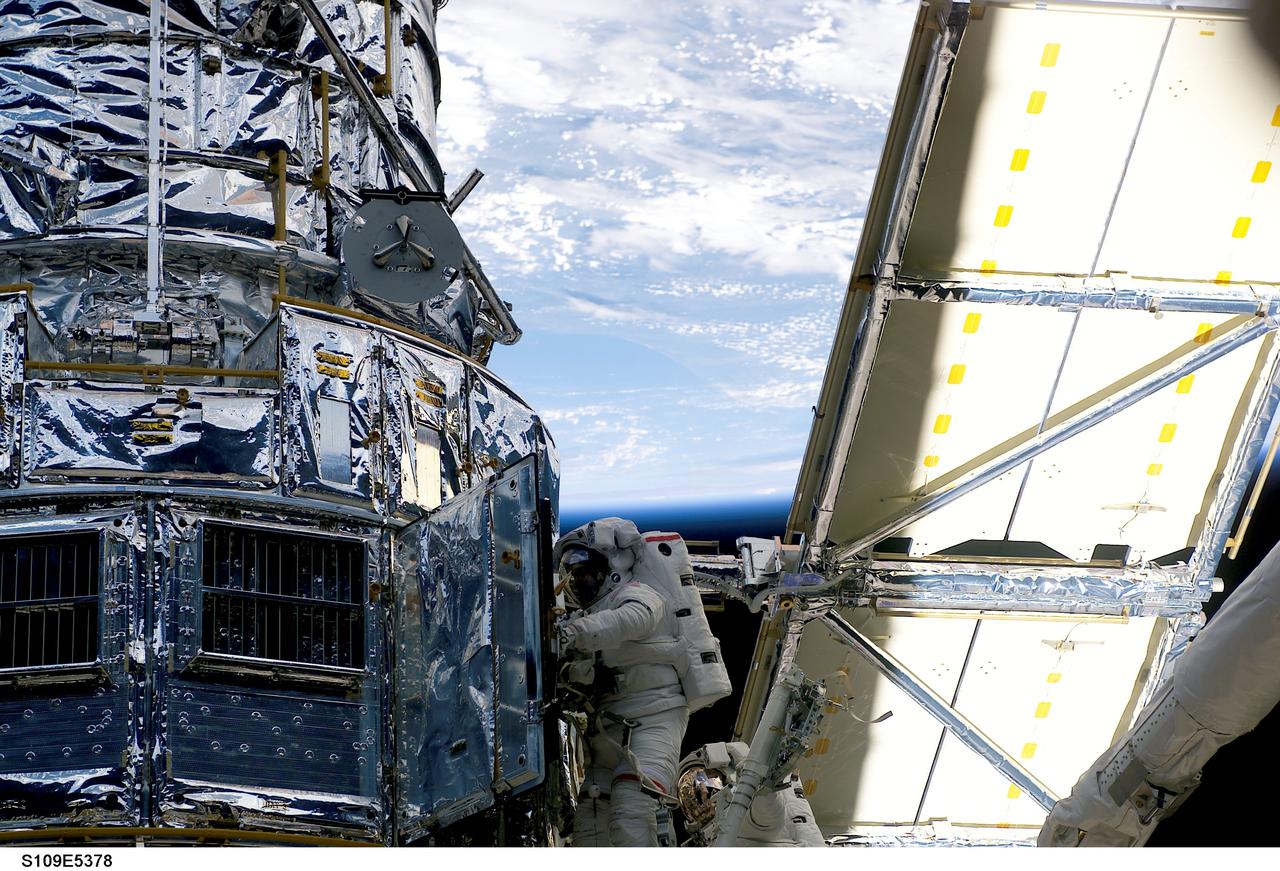
STS109-E-5378 (6 March 2002) --- Astronaut John M. Grunsfeld, payload commander, works in tandem with astronaut Richard M. Linnehan, mission specialist, as the two devote their attention to the Power Control Unit replacement task on the giant Hubble Space Telescope (HST). Grunsfeld stands on a foot restraint on the end of the Space Shuttle Columbia's Remote Manipulator System (RMS). This marked the third of five scheduled STS-109 space walks and the mission's second extravehicular activity (EVA) for the tandem of Grunsfeld and Linnehan. It was completed at 9:16 a.m. CST (1516 GMT), Mar. 6, 2002. The image was recorded with a digital still camera.
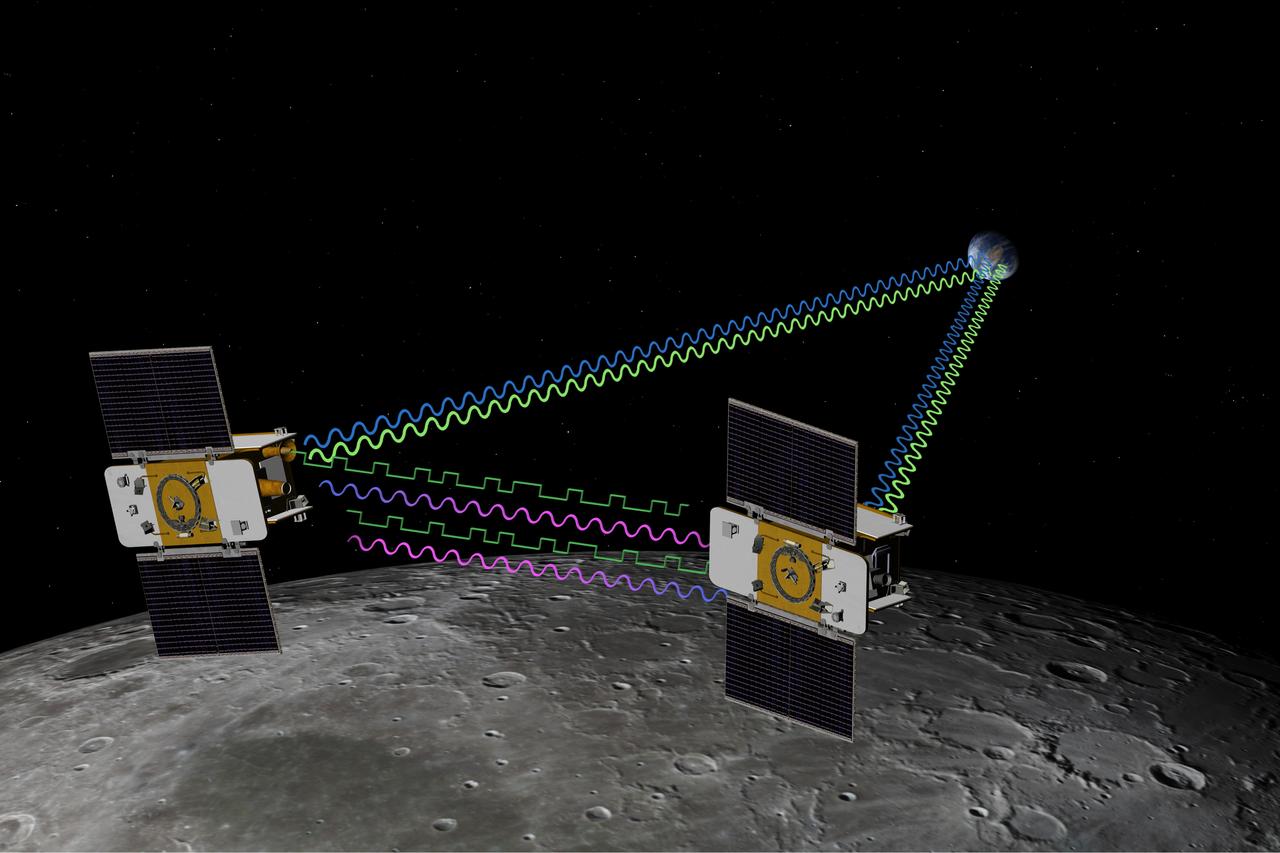
The Gravity Recovery and Interior Laboratory GRAIL mission utilizes the technique of twin spacecraft flying in formation with a known altitude above the lunar surface and known separation distance to investigate the gravity field of the moon.
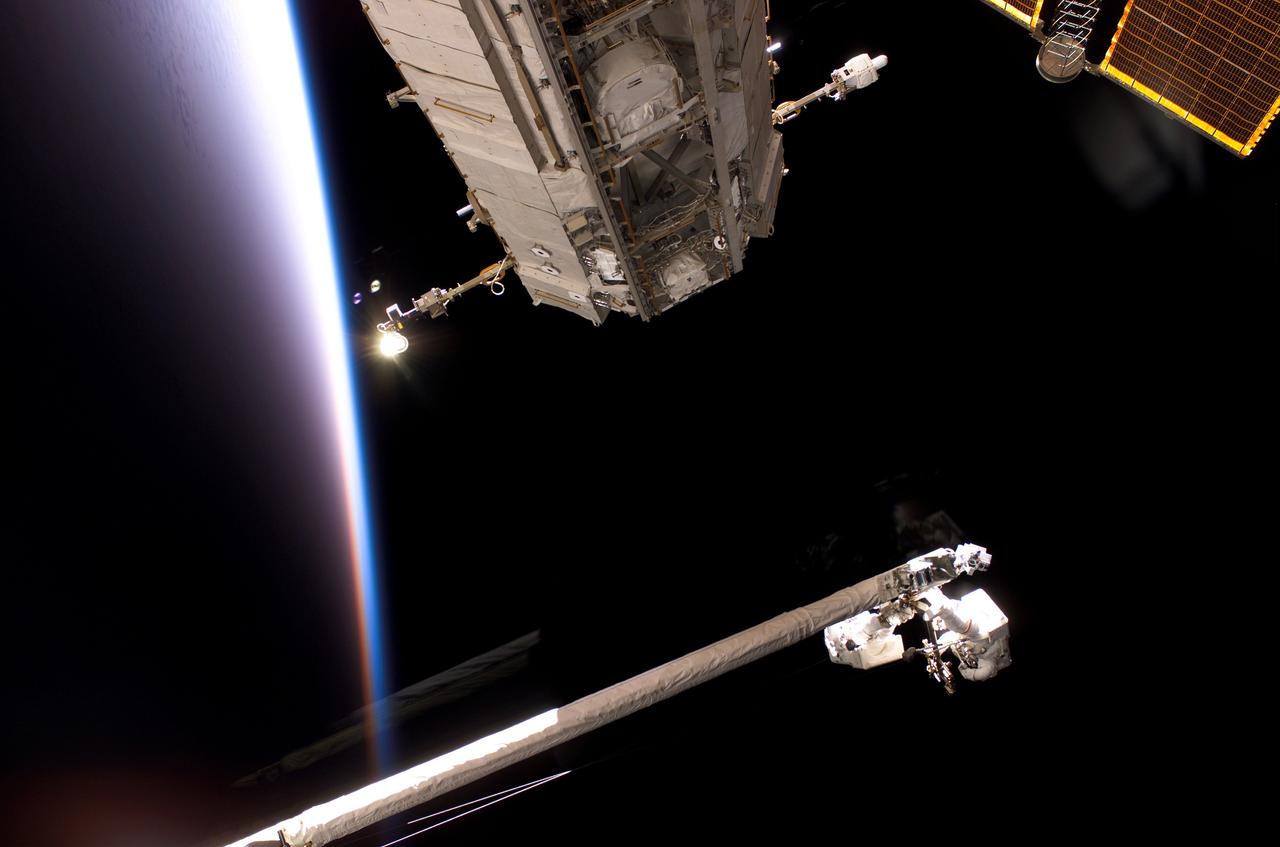
S121-E-06040 (8 July 2006) --- Astronauts Piers J. Sellers (red stripes) and Michael E. Fossum, STS-121 mission specialists, work in tandem on the shuttle's Remote Manipulator System/Orbiter Boom Sensor System (RMS/OBSS) during the mission's first scheduled session of extravehicular activity (EVA).
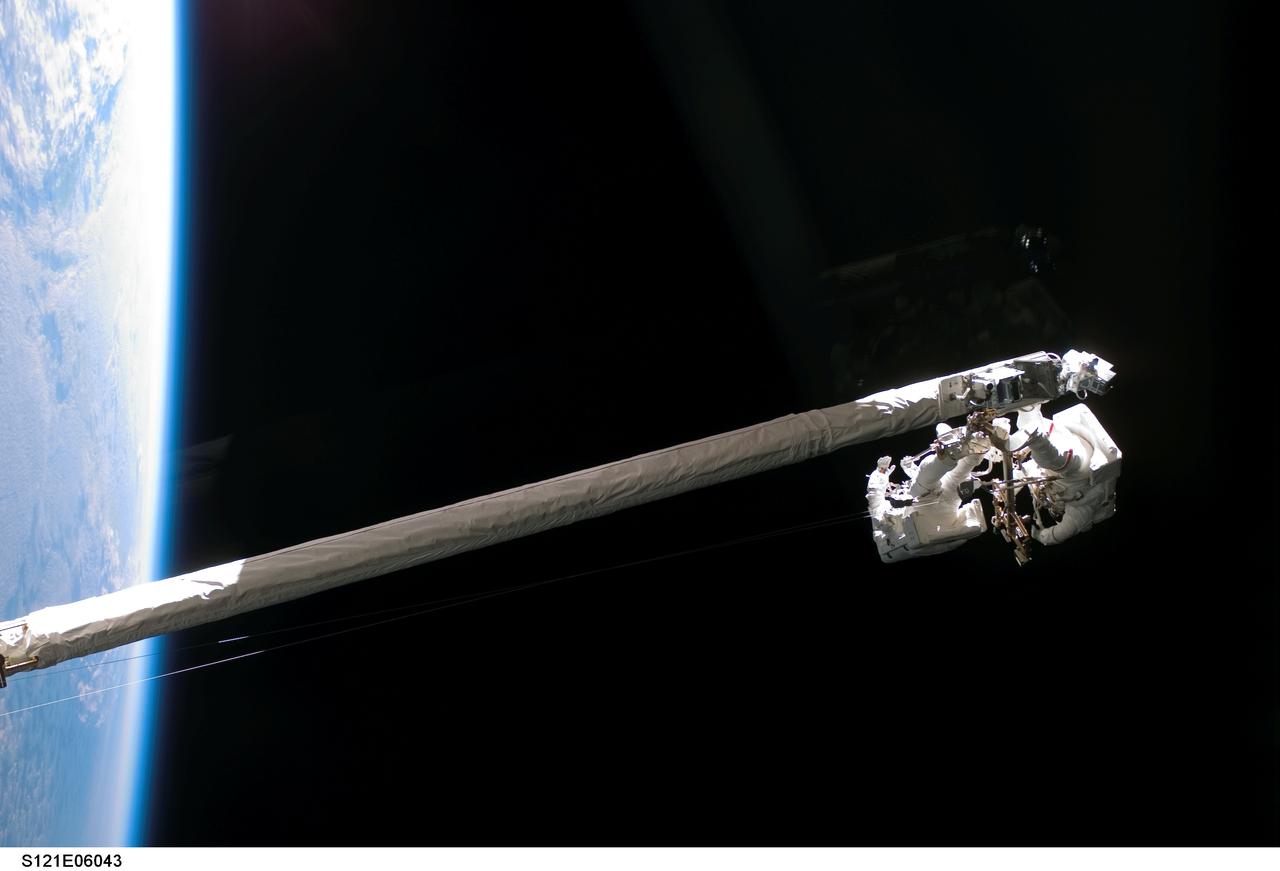
S121-E-06043 (8 July 2006) --- Astronauts Piers J. Sellers (red stripes) and Michael E. Fossum, STS-121 mission specialists, work in tandem on the shuttle's Remote Manipulator System/Orbiter Boom Sensor System (RMS/OBSS) during the mission's first scheduled session of extravehicular activity (EVA).
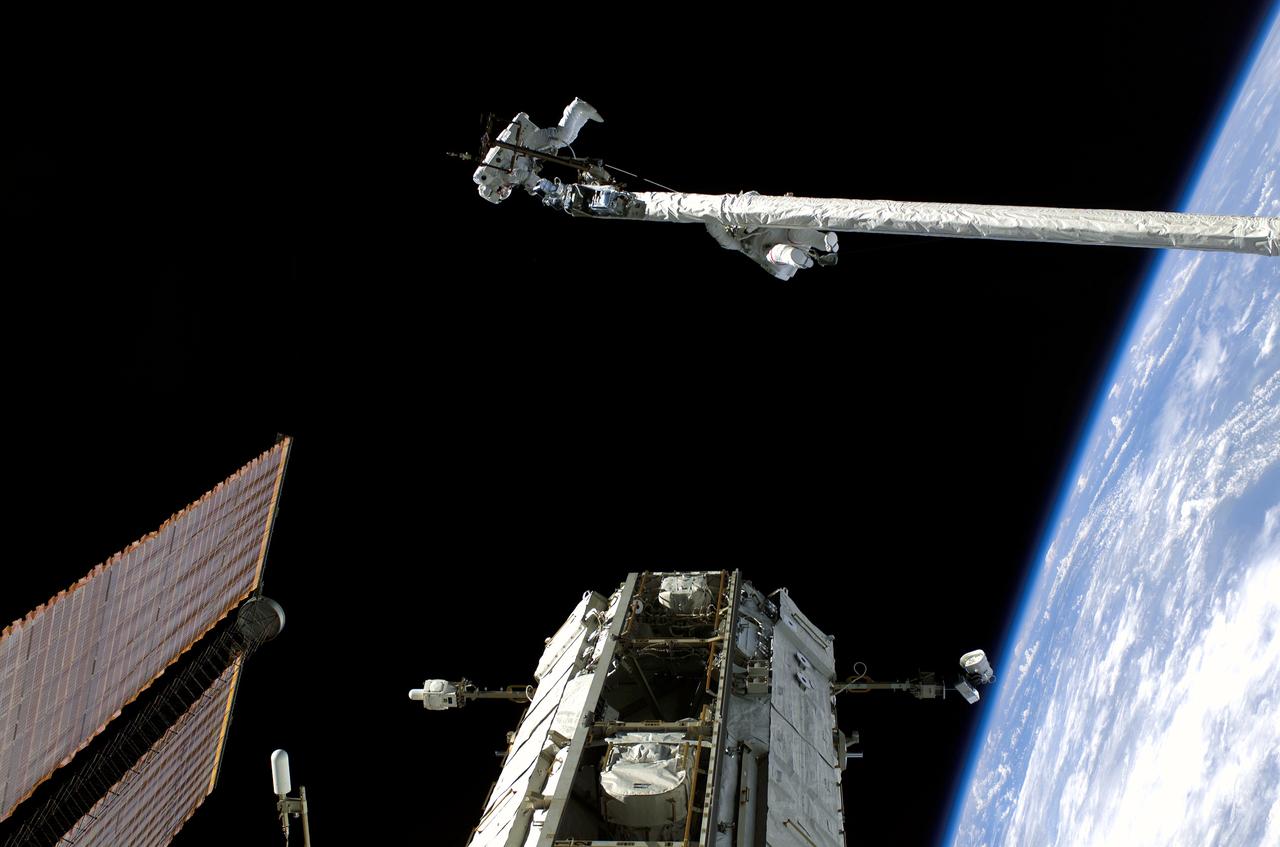
S121-E-06058 (8 July 2006) --- Astronauts Piers J. Sellers (red stripes) and Michael E. Fossum, STS-121 mission specialists, work in tandem on the shuttle's Remote Manipulator System/Orbiter Boom Sensor System (RMS/OBSS) during the mission's first scheduled session of extravehicular activity (EVA).
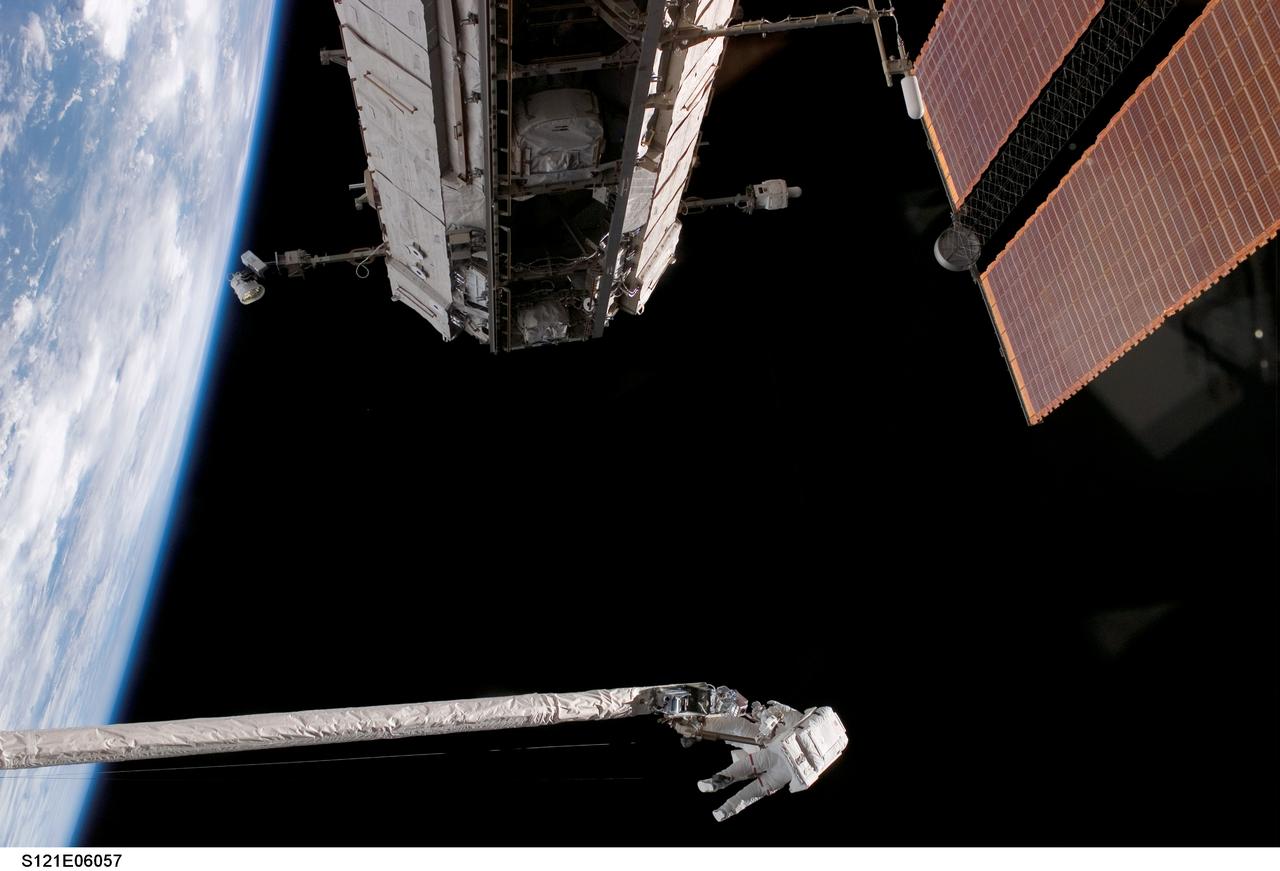
S121-E-06057 (8 July 2006) --- Astronauts Piers J. Sellers (red stripes) and Michael E. Fossum, STS-121 mission specialists, work in tandem on the shuttle's Remote Manipulator System/Orbiter Boom Sensor System (RMS/OBSS) during the mission's first scheduled session of extravehicular activity (EVA).
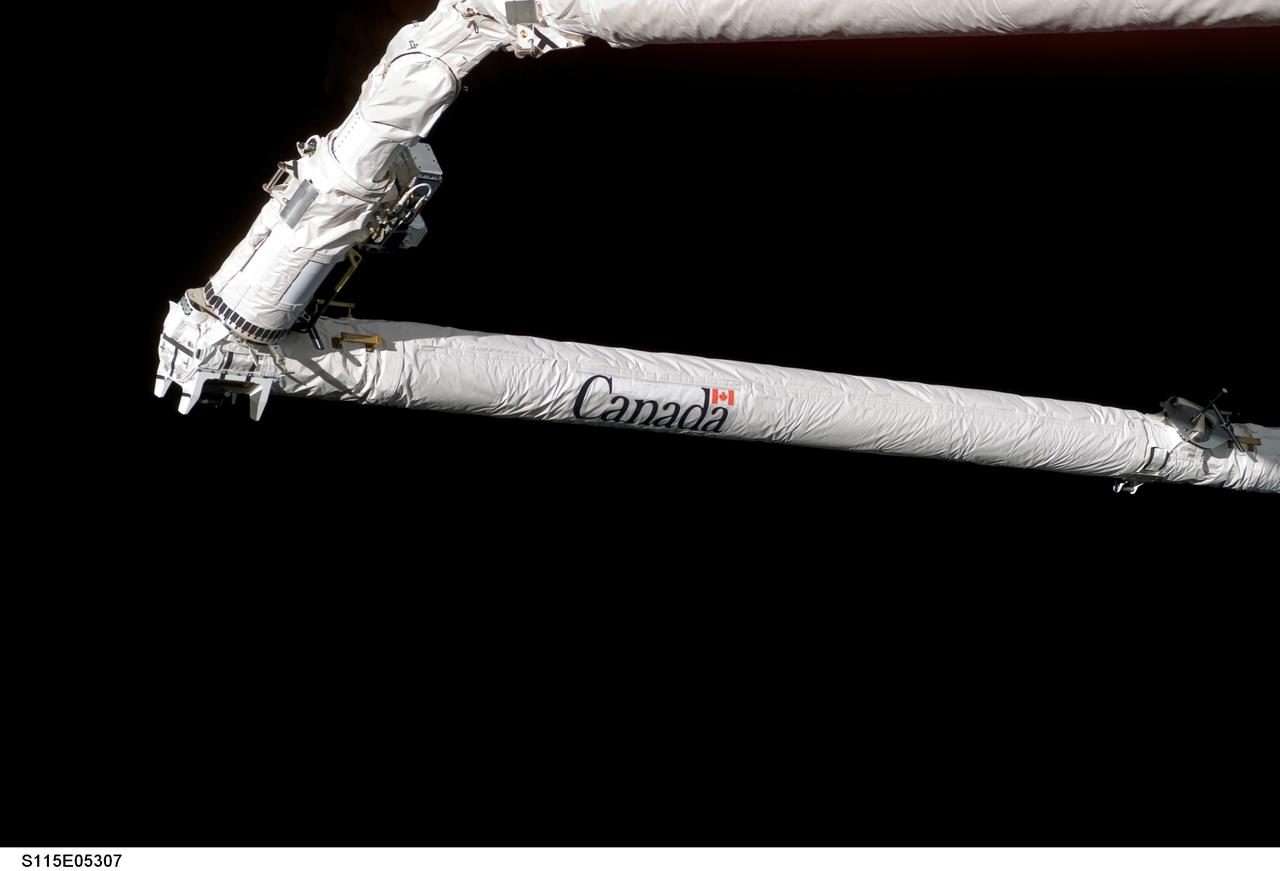
S115-E-05307 (10 Sept. 2006) --- As in the case of the previous two shuttle missions, a tandem of the orbiter boom sensor system (OBSS) and the remote manipulator system (RMS) arm conducts a survey of the thermal protection system on the Space Shuttle Atlantis.
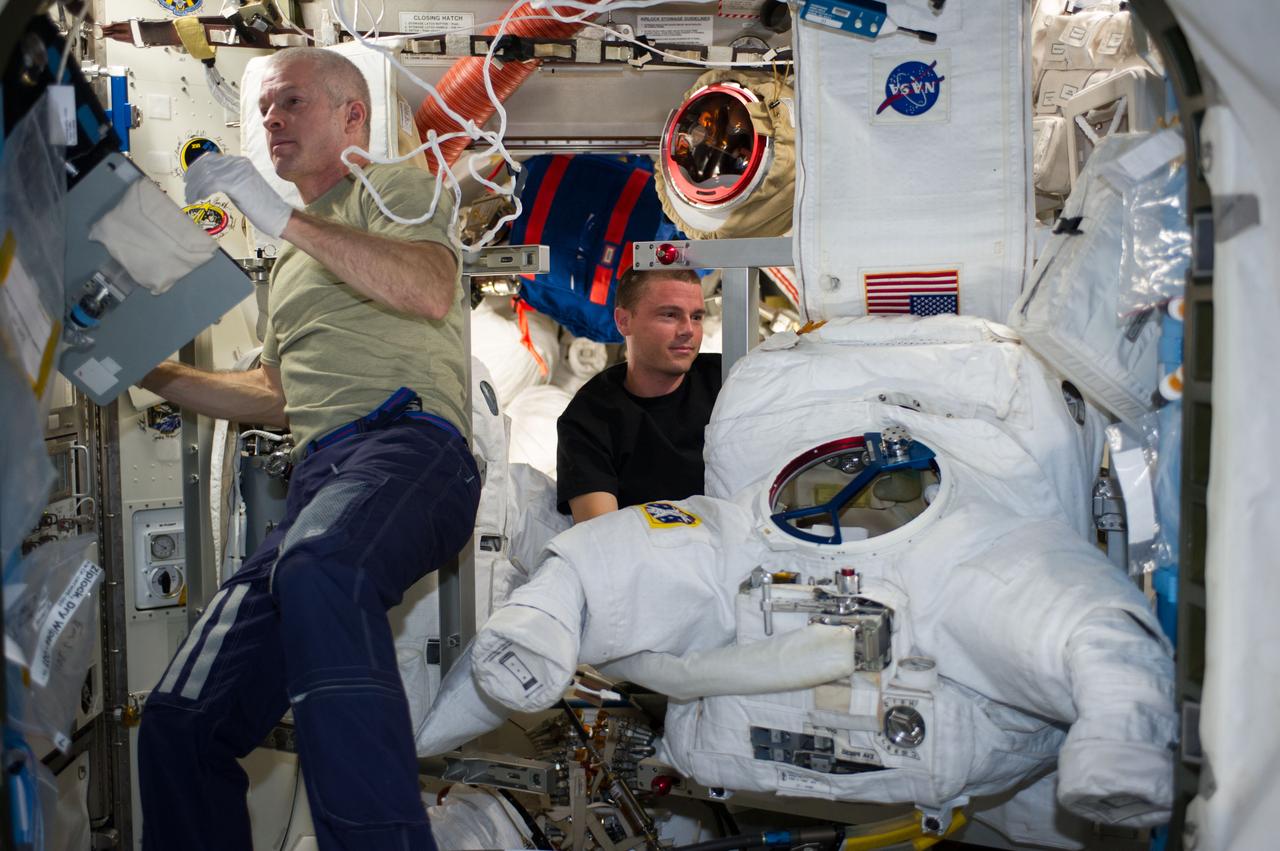
ISS040-E-080767 (28 July 2014) --- NASA astronauts Steve Swanson (left), Expedition 40 commander, and Reid Wiseman, flight engineer, work in tandem to perform in-flight maintenance on an Extravehicular Mobility Unit (EMU) spacesuit in the Quest airlock of the International Space Station.
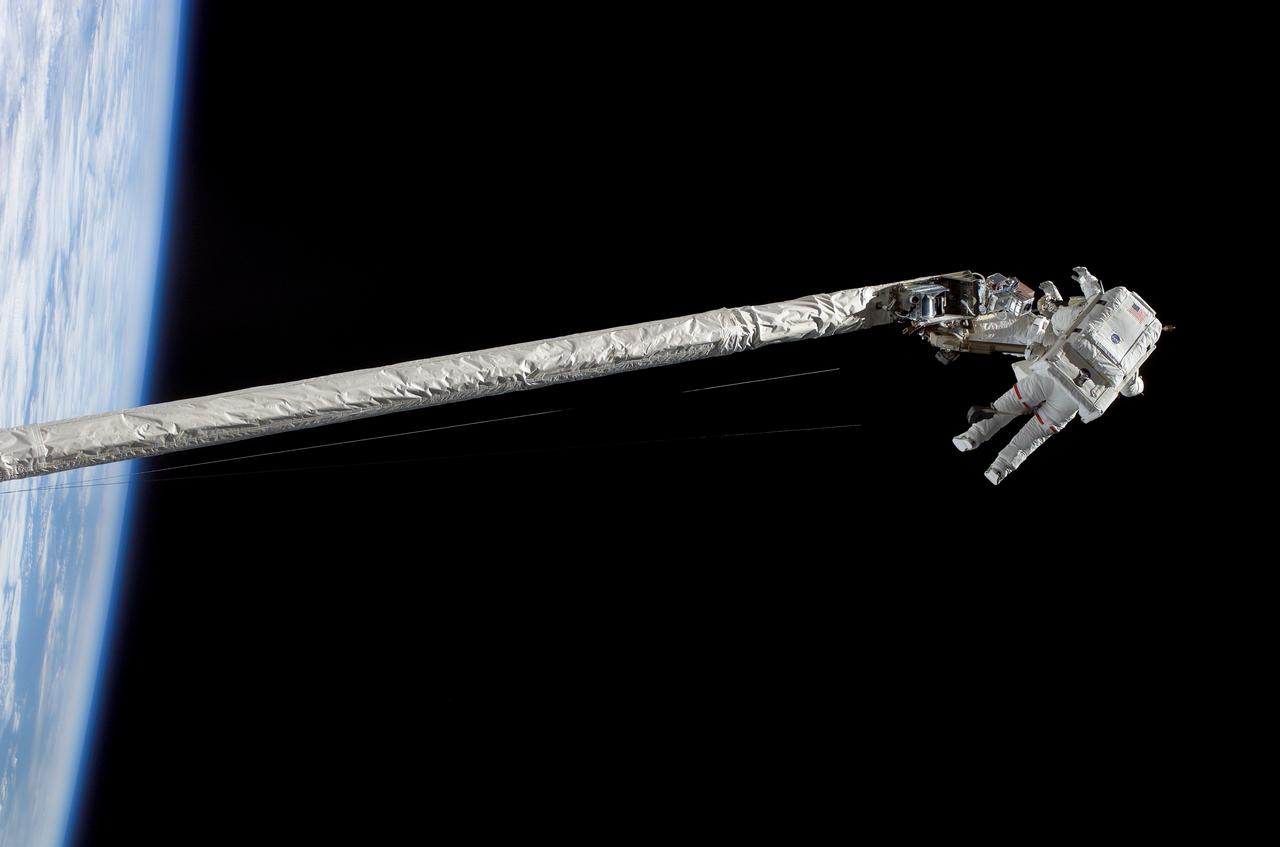
S121-E-06056 (8 July 2006) --- Astronauts Piers J. Sellers (red stripes) and Michael E. Fossum, STS-121 mission specialists, work in tandem on the shuttle's Remote Manipulator System/Orbiter Boom Sensor System (RMS/OBSS) during the mission's first scheduled session of extravehicular activity (EVA).
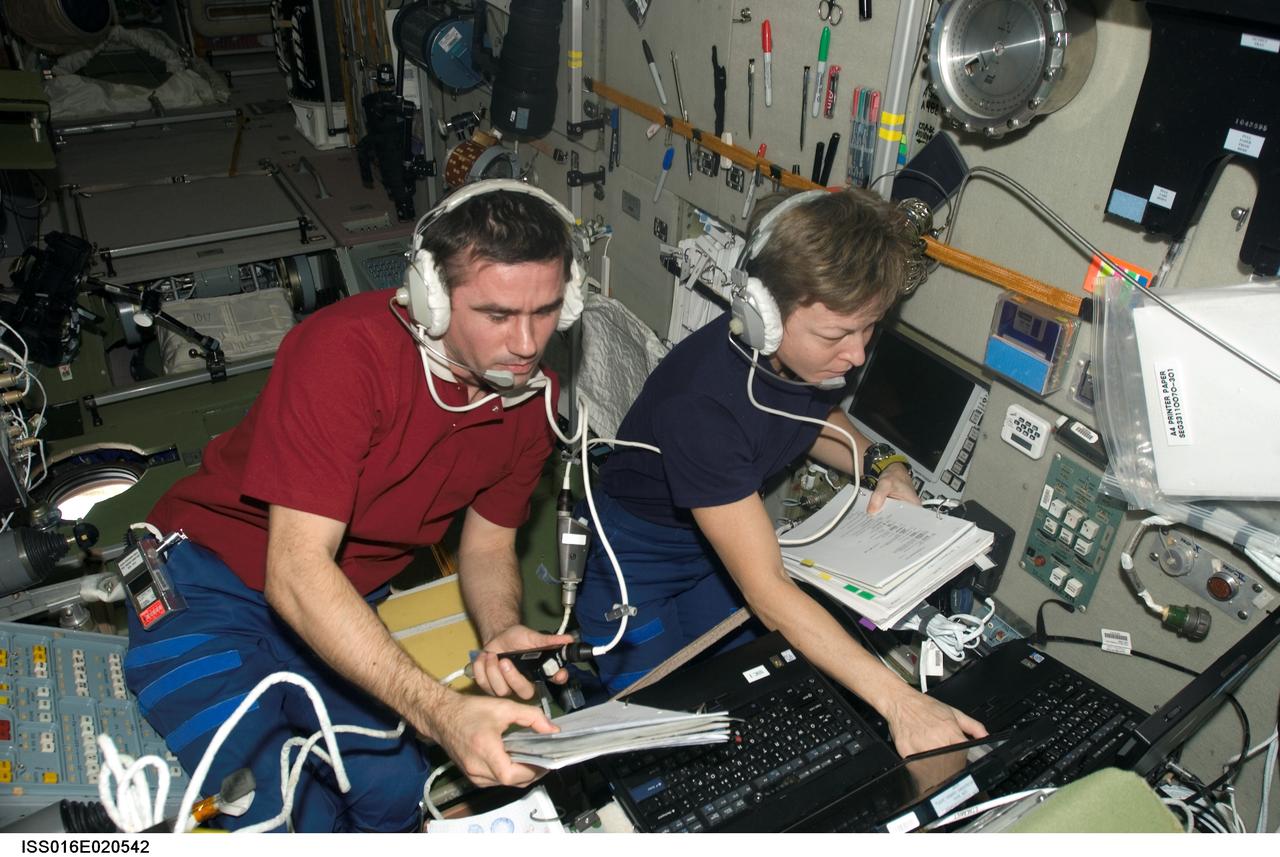
ISS016-E-020542 (26 Dec. 2007) --- NASA astronaut Peggy A. Whitson (right), Expedition 16 commander, and cosmonaut Yuri I. Malenchenko, flight engineer representing Russia's Federal Space Agency, work in tandem in the Zvezda Service Module of the International Space Station during the rendezvous and docking of the unpiloted Progress 27 spacecraft.
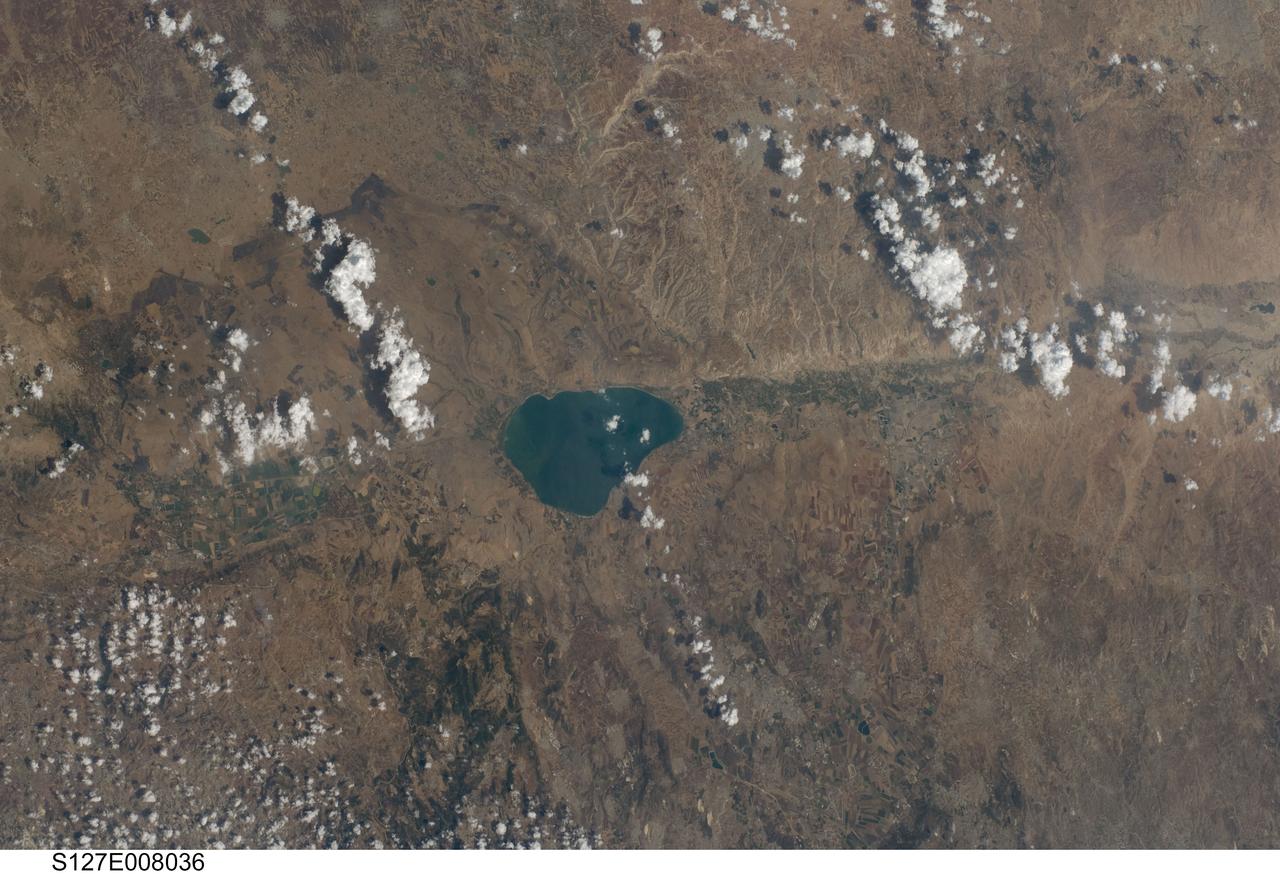
S127-E-008036 (23 July 2009) -- This is a view of the Sea of Galilee as photographed from the shuttle-station tandem 220 miles above Earth. An internatioal crew of astronauts and cosmonauts is spending more than a week together to continue work on the orbital outpost.
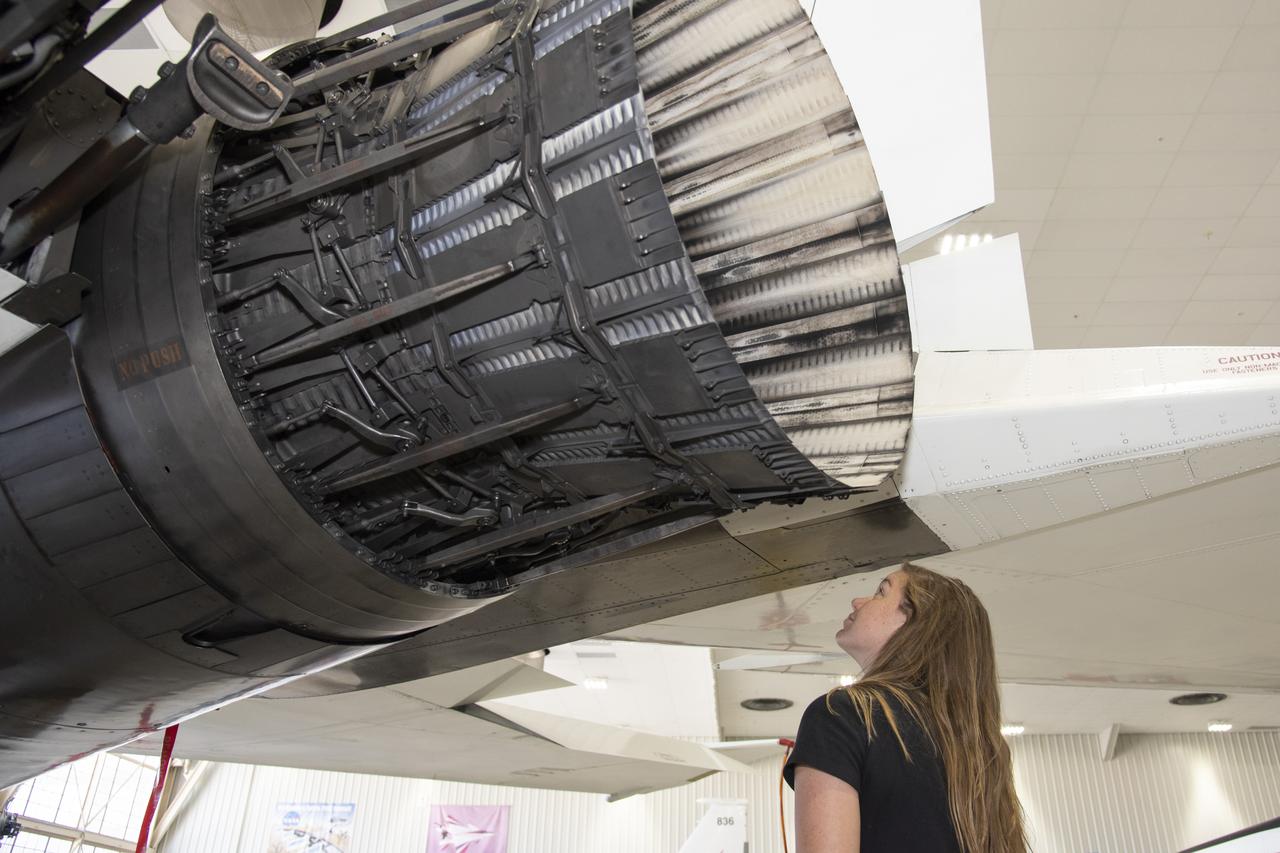
NASA’s 2017 astronaut candidates toured aircraft hangar at Armstrong Flight Research Center, in Southern California where Jenni Sidey-Gibbons looks inside engine nozzle of F-15 jet. The F-15 will fly in tandem with the X-59 QueSST during early flight test stages for the X-59 development.
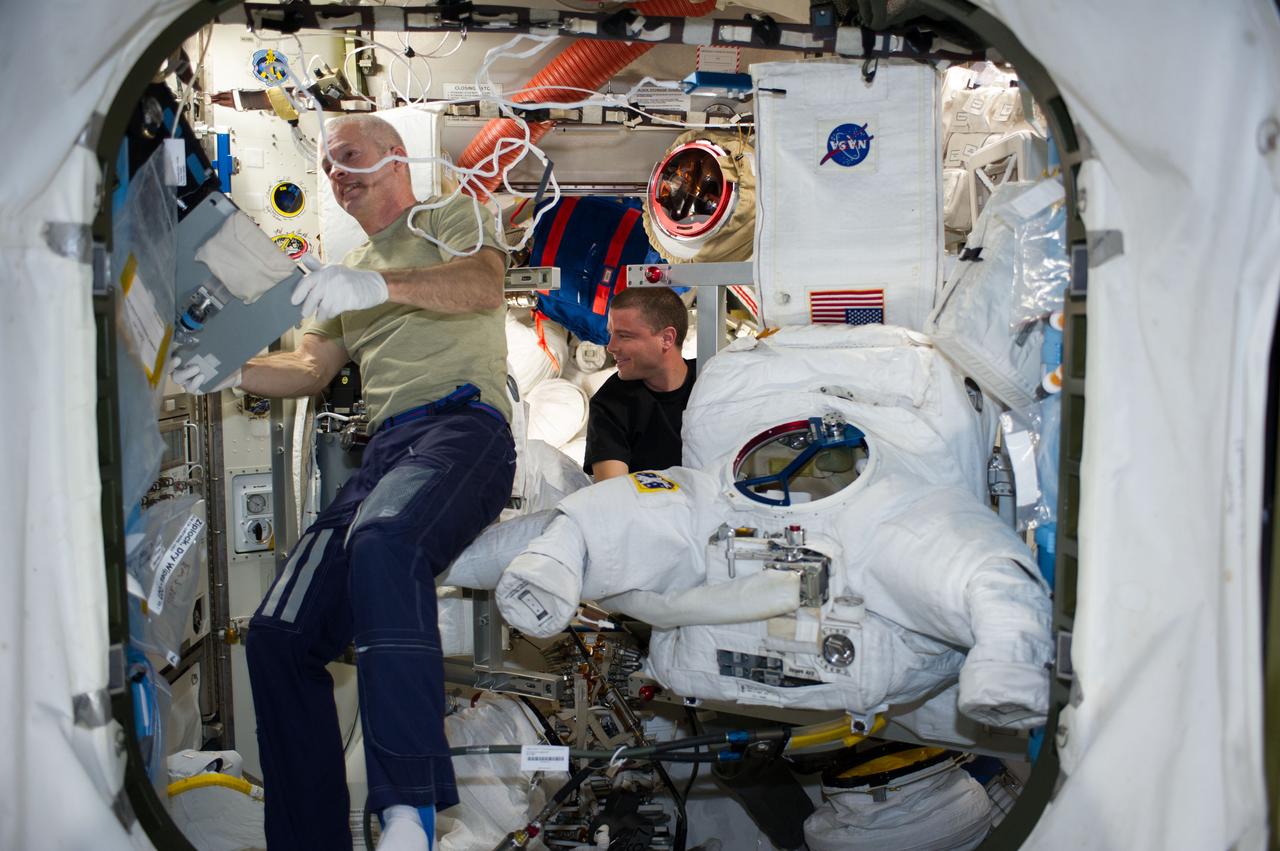
ISS040-E-080769 (28 July 2014) --- NASA astronauts Steve Swanson (left), Expedition 40 commander, and Reid Wiseman, flight engineer, work in tandem to perform in-flight maintenance on an Extravehicular Mobility Unit (EMU) spacesuit in the Quest airlock of the International Space Station.
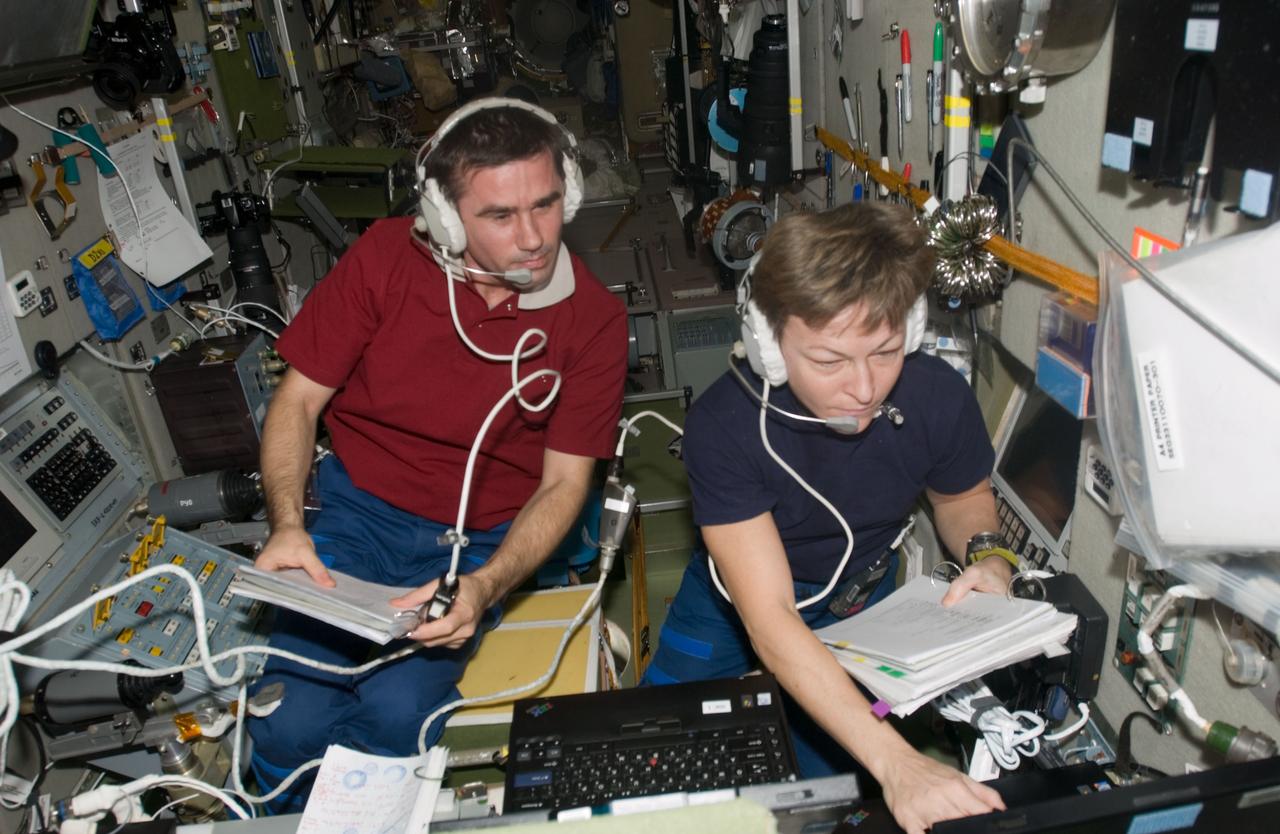
ISS016-E-020536 (26 Dec. 2007) --- NASA astronaut Peggy A. Whitson (right), Expedition 16 commander, and cosmonaut Yuri I. Malenchenko, flight engineer representing Russia's Federal Space Agency, work in tandem in the Zvezda Service Module of the International Space Station during the rendezvous and docking of the unpiloted Progress 27 spacecraft.
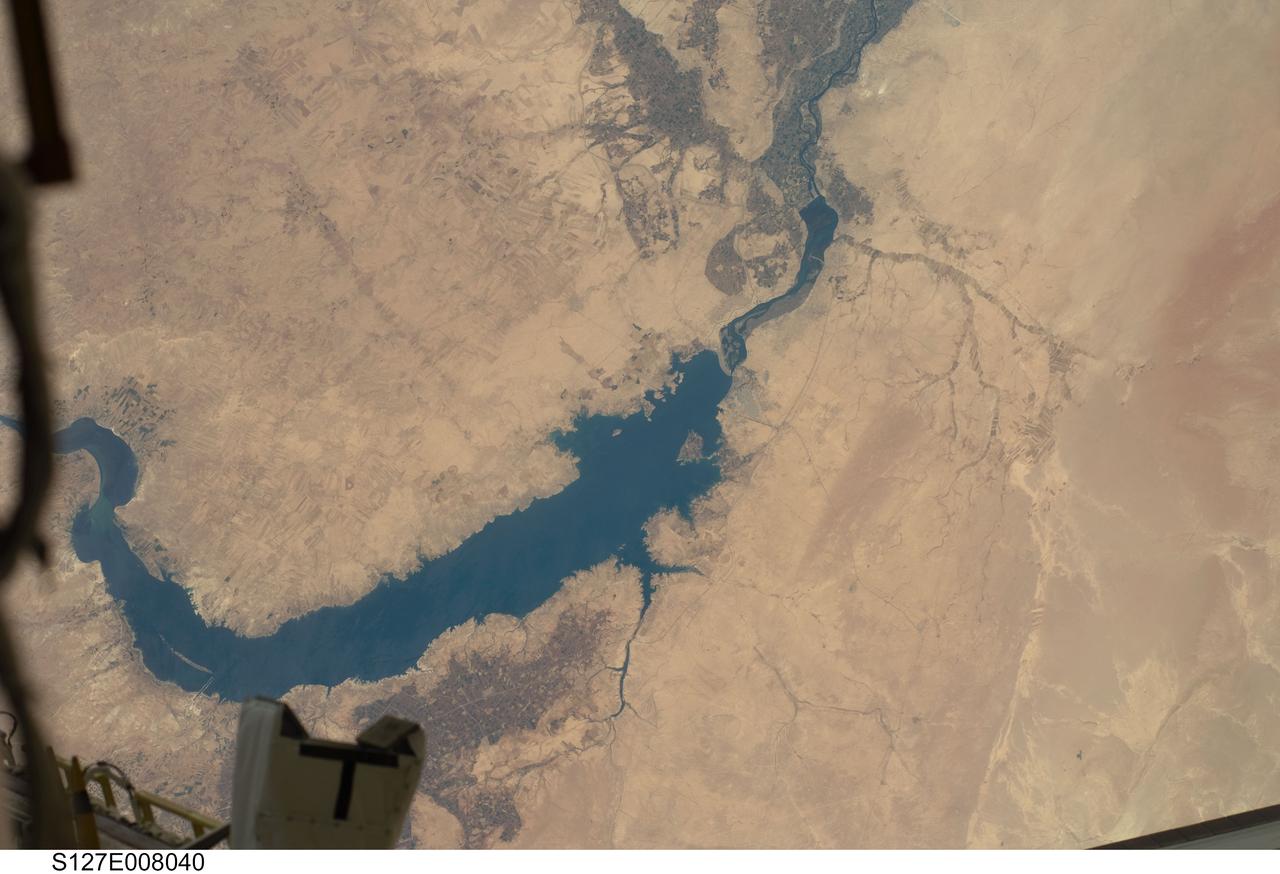
S127-E-008040 (23 July 2009) --- This is a view of Egypt's Lake Nasser from the shuttle-station tandem currently flying 220 miles above Earth. An international crew of thirteen astronauts and cosmonaut are working together to continue work on the orbital outpost

STS109-E-5735 (8 March 2002) --- Astronaut John M. Grunsfeld, STS-109 payload commander, works in tandem with astronaut Richard M. Linnehan, mission specialist, as the two devote their attention to the Near-Infrared Camera and Multi-Object Spectrometer (NICMOS) on the giant Hubble Space Telescope (HST). Grunsfeld stands on a foot restraint on the end of the Space Shuttle Columbia’s Remote Manipulator System (RMS). This marked the fifth and final scheduled STS-109 space walk and the mission’s third extravehicular activity (EVA) for the tandem of Grunsfeld and Linnehan. It was completed at 10:06 a.m. CST (1606 GMT), March 8, 2002. The image was recorded with a digital still camera.
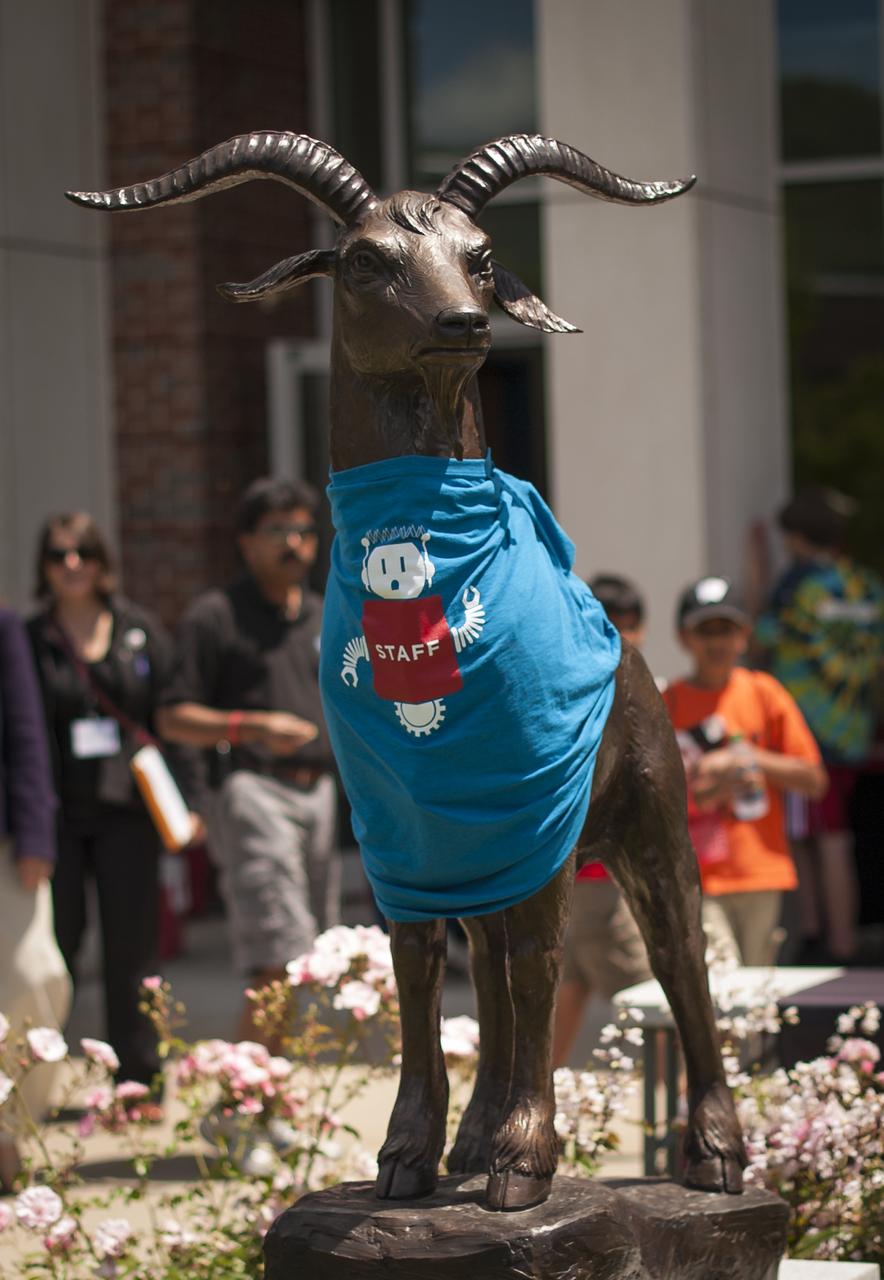
The bronze statue of the goat mascot for Worcester Polytechnic Institute (WPI) named "Gompei" is seen wearing a staff t-shirt for the "TouchTomorrow" education and outreach event that was held in tandem with the NASA-WPI Sample Return Robot Centennial Challenge on Saturday, June 16, 2012 in Worcester, Mass. The challenge tasked robotic teams to build autonomous robots that can identify, collect and return samples. NASA needs autonomous robotic capability for future planetary exploration. Photo Credit: (NASA/Bill Ingalls)
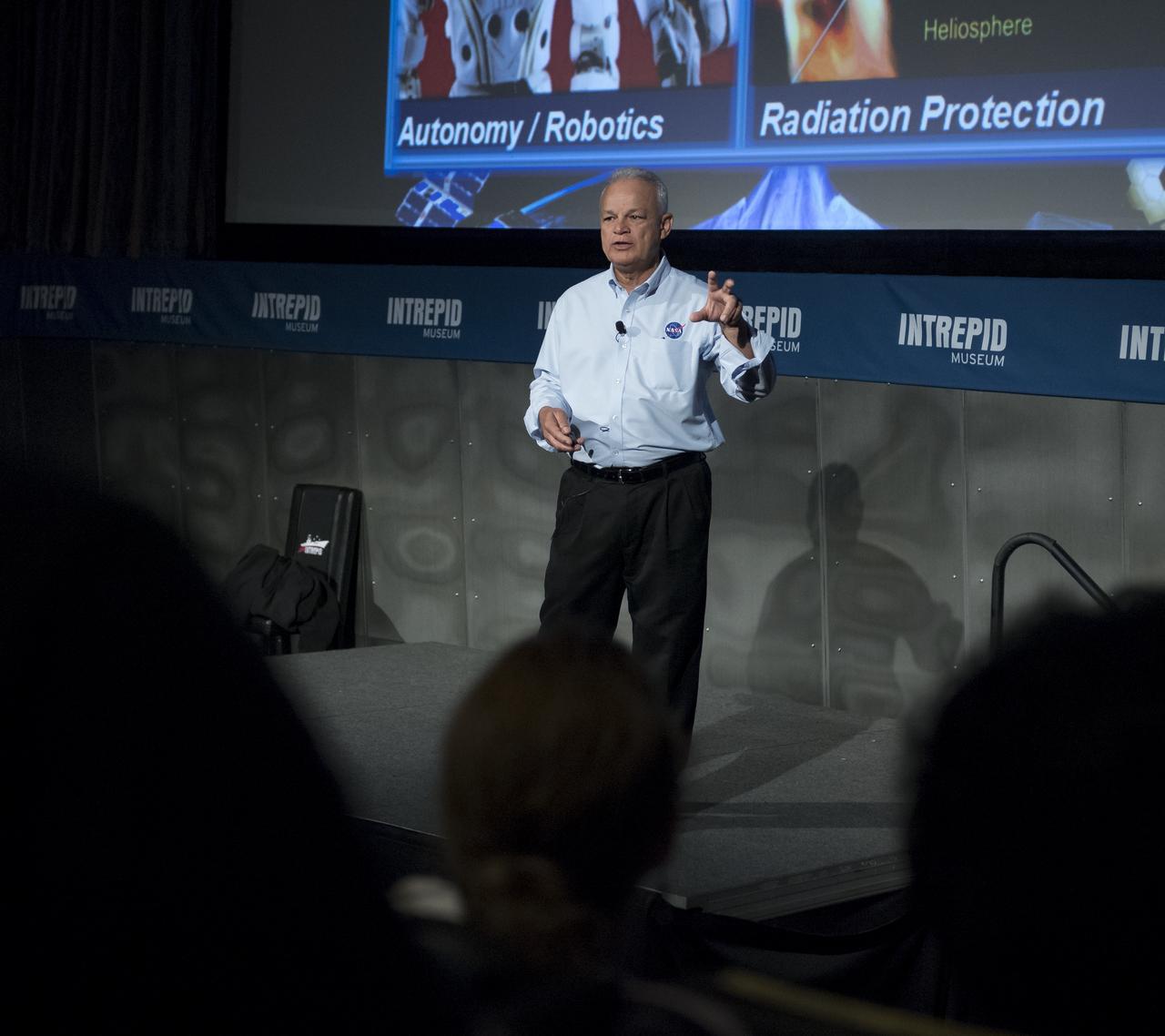
NASA Acting Chief Technologist Douglas Terrier gives a talk to teachers attending a professional development workshop held in tandem with the Intrepid Space & Science Festival, Saturday, Aug. 5, 2017 at the Intrepid Sea, Air & Space Museum in New York City. The week-long festival featured talks, films and cutting-edge displays showcasing NASA technology. Photo Credit: (NASA/Bill Ingalls)
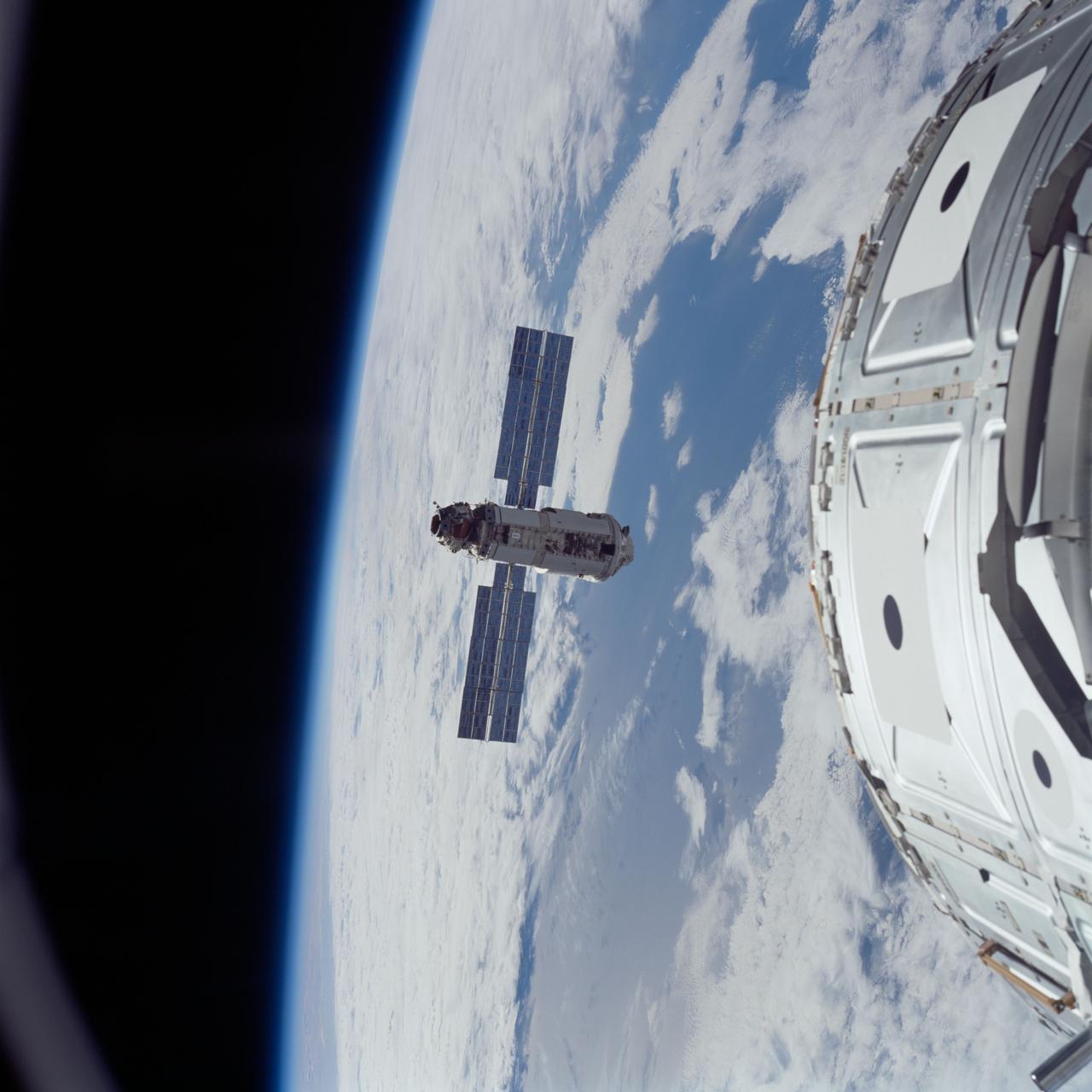
STS088-737-056 (4-15 Dec. 1998) --- With the U.S.-built Unity module in the foreground, the Space Shuttle Endeavour approaches the Russian-built FGB (Zarya) module in Earth-orbit. Once the two spacecraft were docked, three extravehicular activities (EVA) and a great deal of interior, shirt-sleeve environment work was accomplished by the crew to ready the tandem for its International Space Station (ISS) duty.
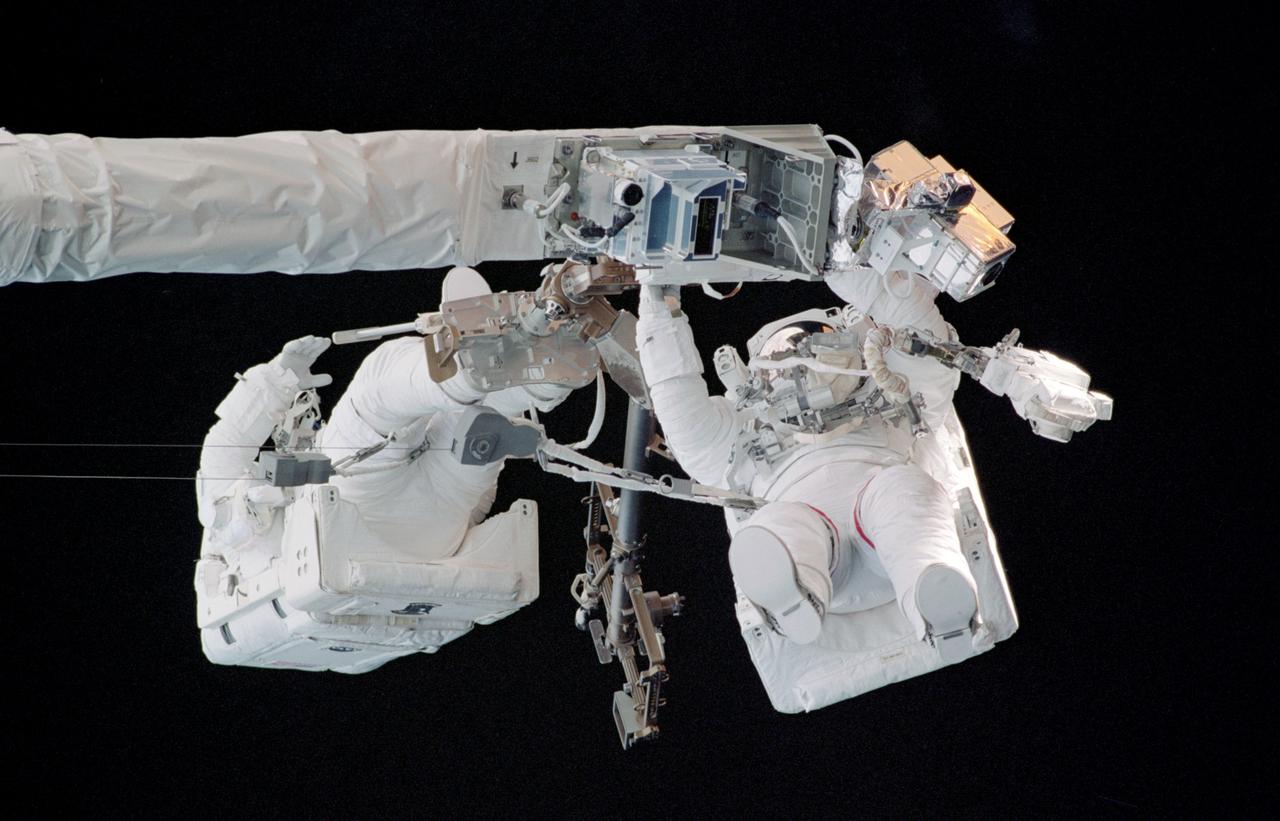
STS121-323-011 (8 July 2006) --- Astronauts Piers J. Sellers and Michael E. Fossum, STS-121 mission specialists, work in tandem on Space Shuttle Discovery's Remote Manipulator System/Orbiter Boom Sensor System (RMS/OBSS) during the mission's first scheduled session of extravehicular activity (EVA). Also visible on the OBSS are the Laser Dynamic Range Imager (LDRI), Intensified Television Camera (ITVC) and Laser Camera System (LCS).
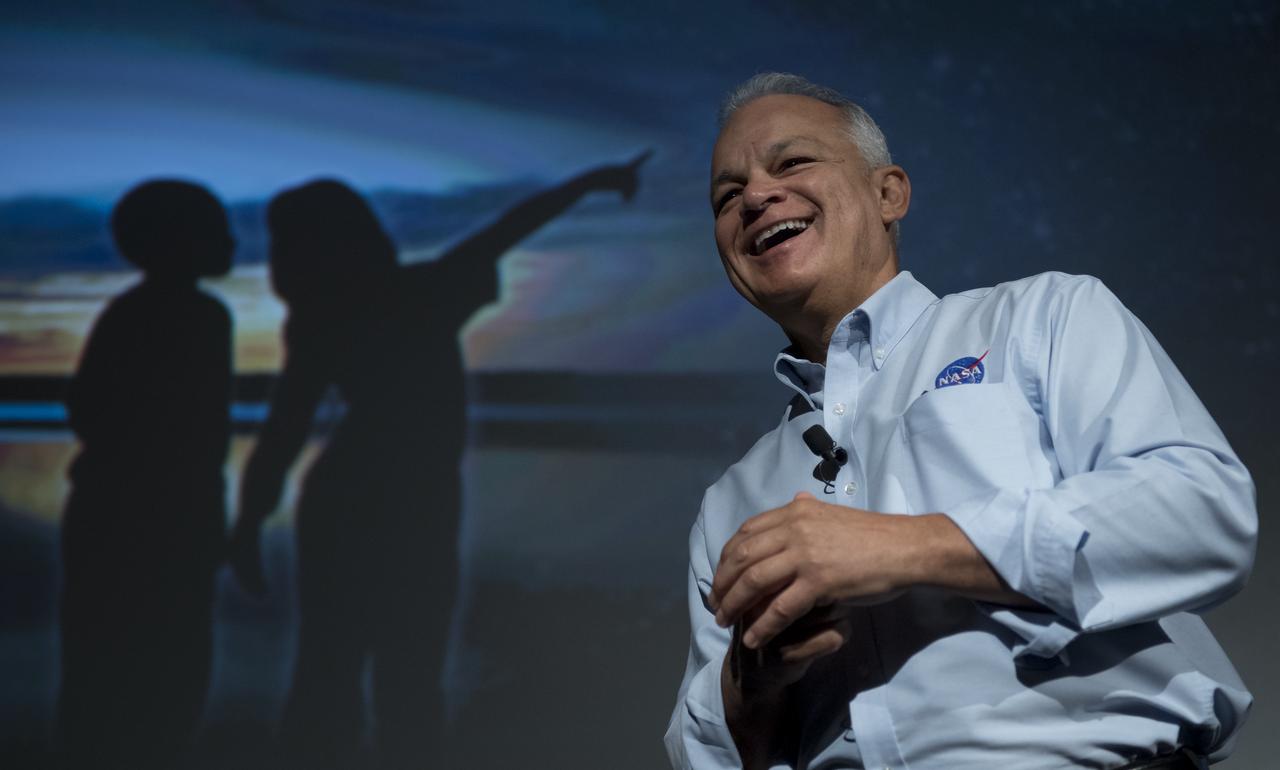
NASA Acting Chief Technologist Douglas Terrier gives a talk to teachers attending a professional development workshop held in tandem with the Intrepid Space & Science Festival, Saturday, Aug. 5, 2017 at the Intrepid Sea, Air & Space Museum in New York City. The week-long festival featured talks, films and cutting-edge displays showcasing NASA technology. Photo Credit: (NASA/Bill Ingalls)
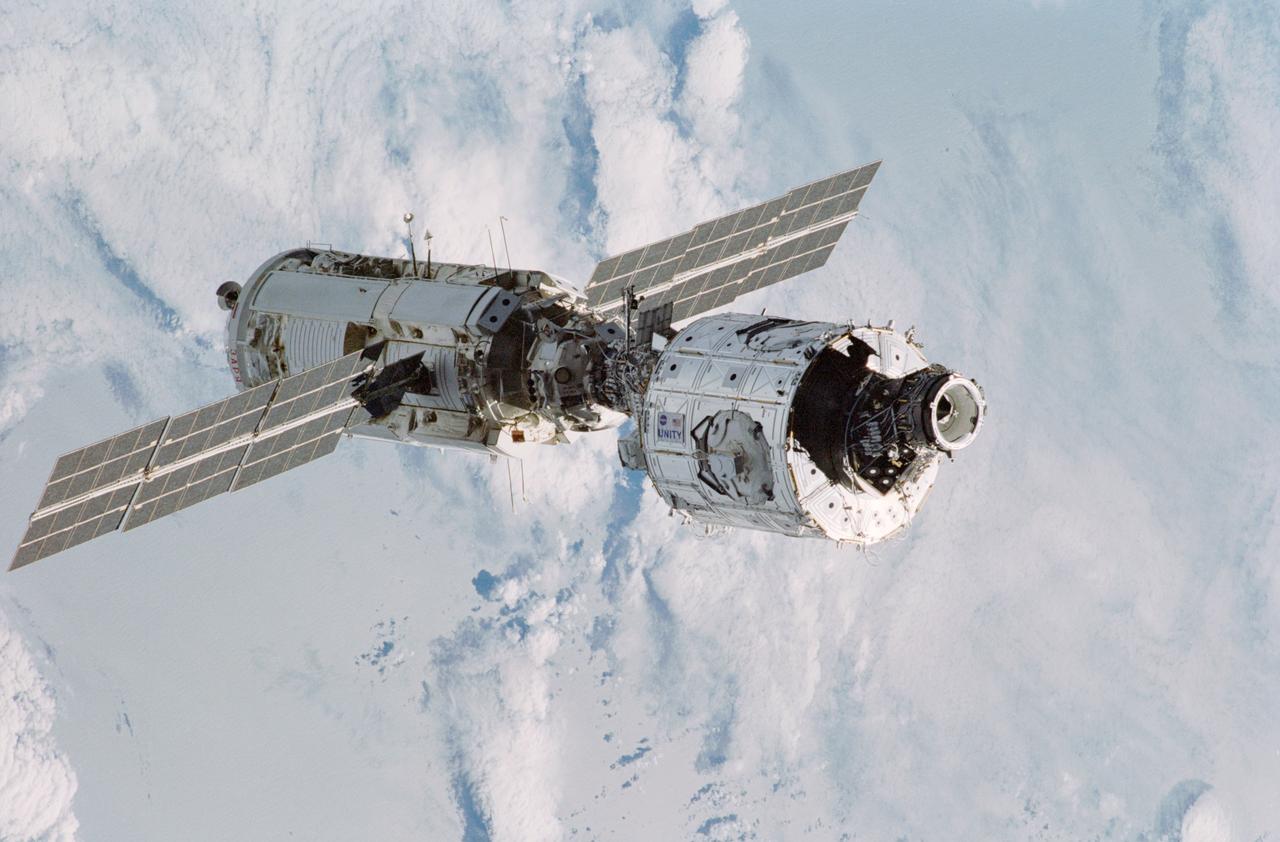
STS088-365-020 (4-15 Dec. 1998) --- A variety of white and gray clouds form the backdrop for this 35mm scene of the connected Zarya and Unity modules floating in space after having been released from Endeavour's cargo bay a bit earlier. Six crew members, who had earlier spent the majority of their on-duty mission time working on the tandem of space hardware, watched from Endeavour as the joined modules moved away from the shuttle.
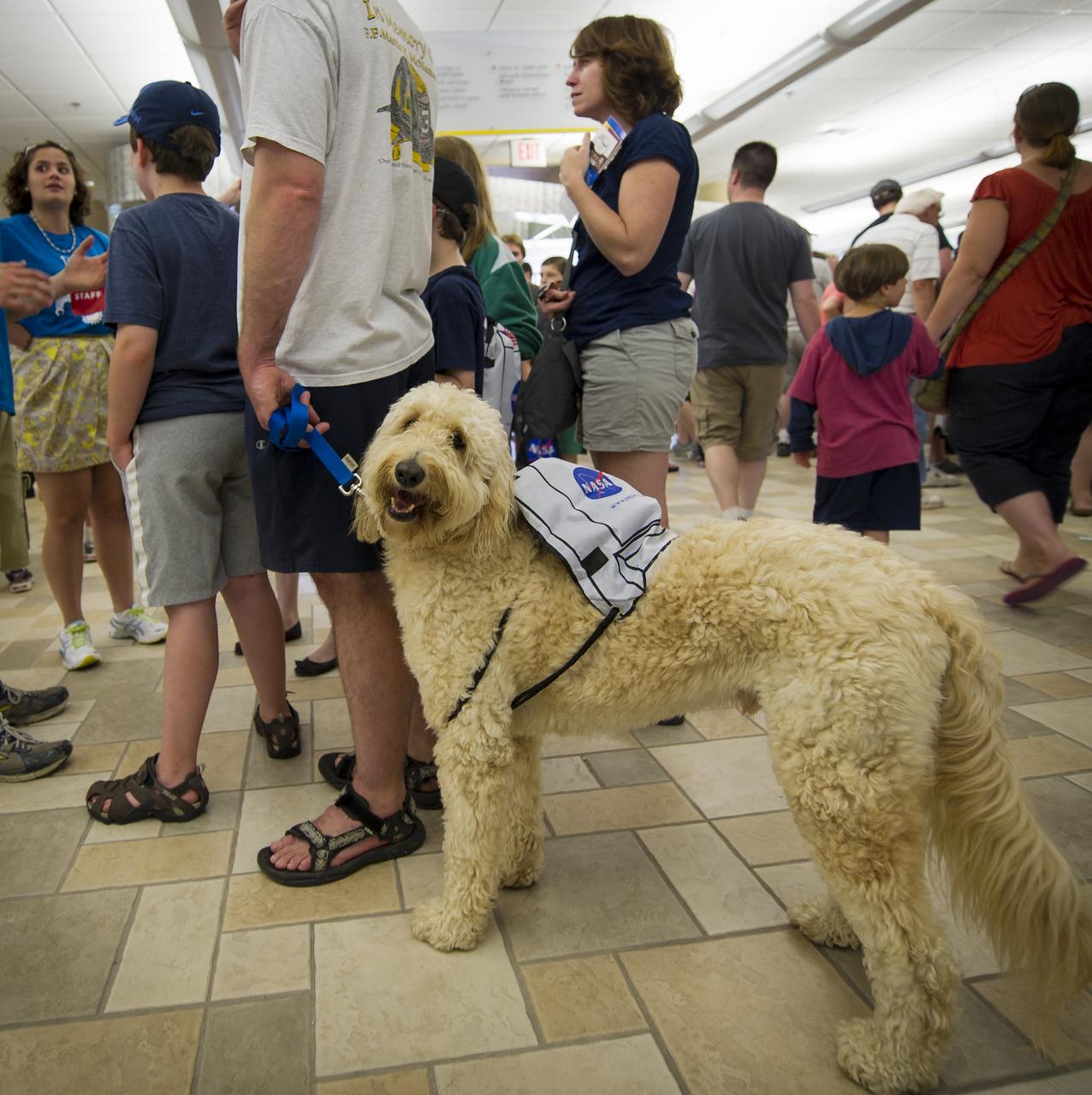
"Harry" a Goldendoodle is seen wearing a NASA backpack during the Worcester Polytechnic Institute (WPI) "TouchTomorrow" education and outreach event that was held in tandem with the NASA-WPI Sample Return Robot Centennial Challenge on Saturday, June 16, 2012 in Worcester, Mass. The challenge tasked robotic teams to build autonomous robots that can identify, collect and return samples. NASA needs autonomous robotic capability for future planetary exploration. Photo Credit: (NASA/Bill Ingalls)
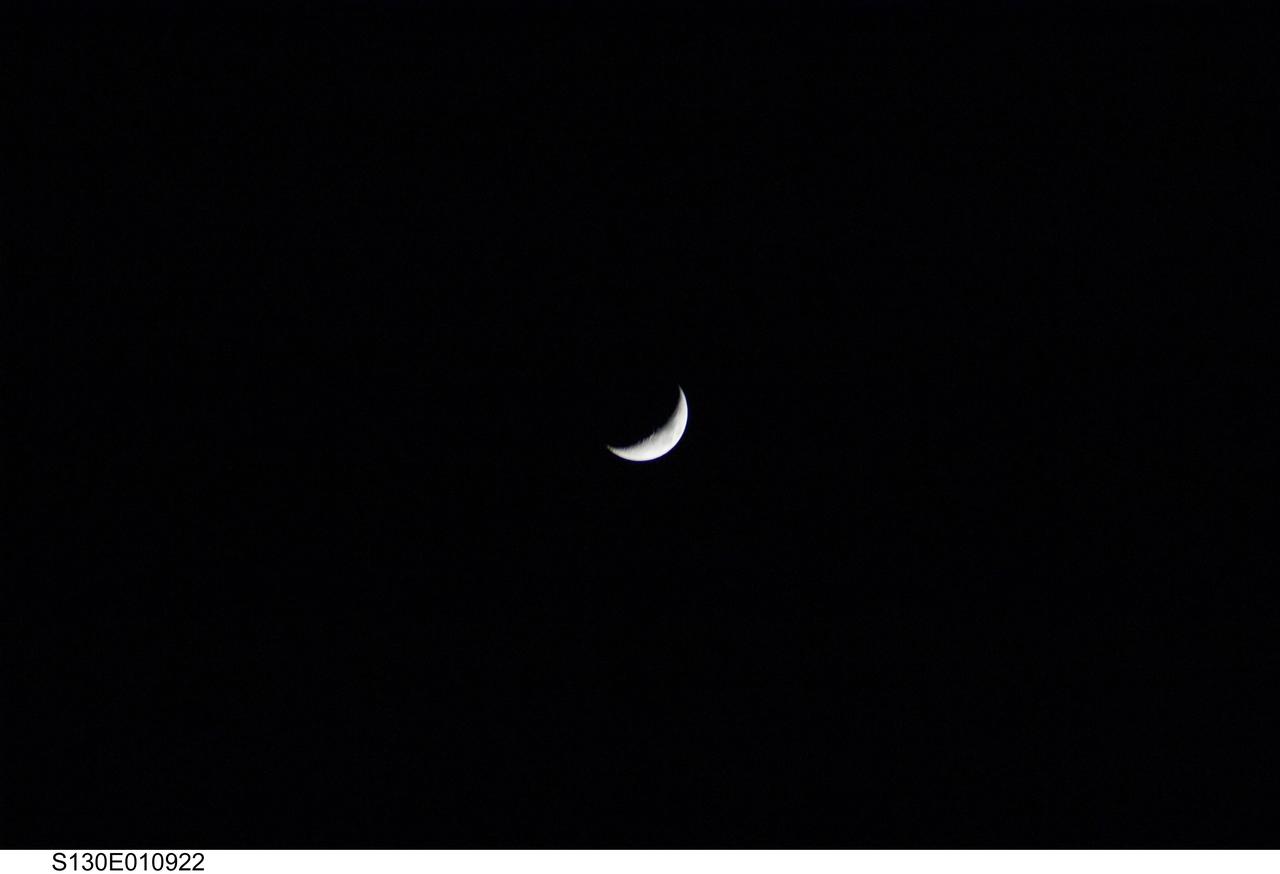
S130-E-010922 (20 Feb. 2010) --- After several days of seeing out-the-window close-up views of the various elements of the International Space Station, the STS-130 crewmembers aboard the space shuttle Endeavour aimed one of their cameras at the waxing crescent moon following separation from the orbital outpost. Eleven astronauts and cosmonauts worked together to continue construction on the orbital outpost and perform other tasks in tandem.
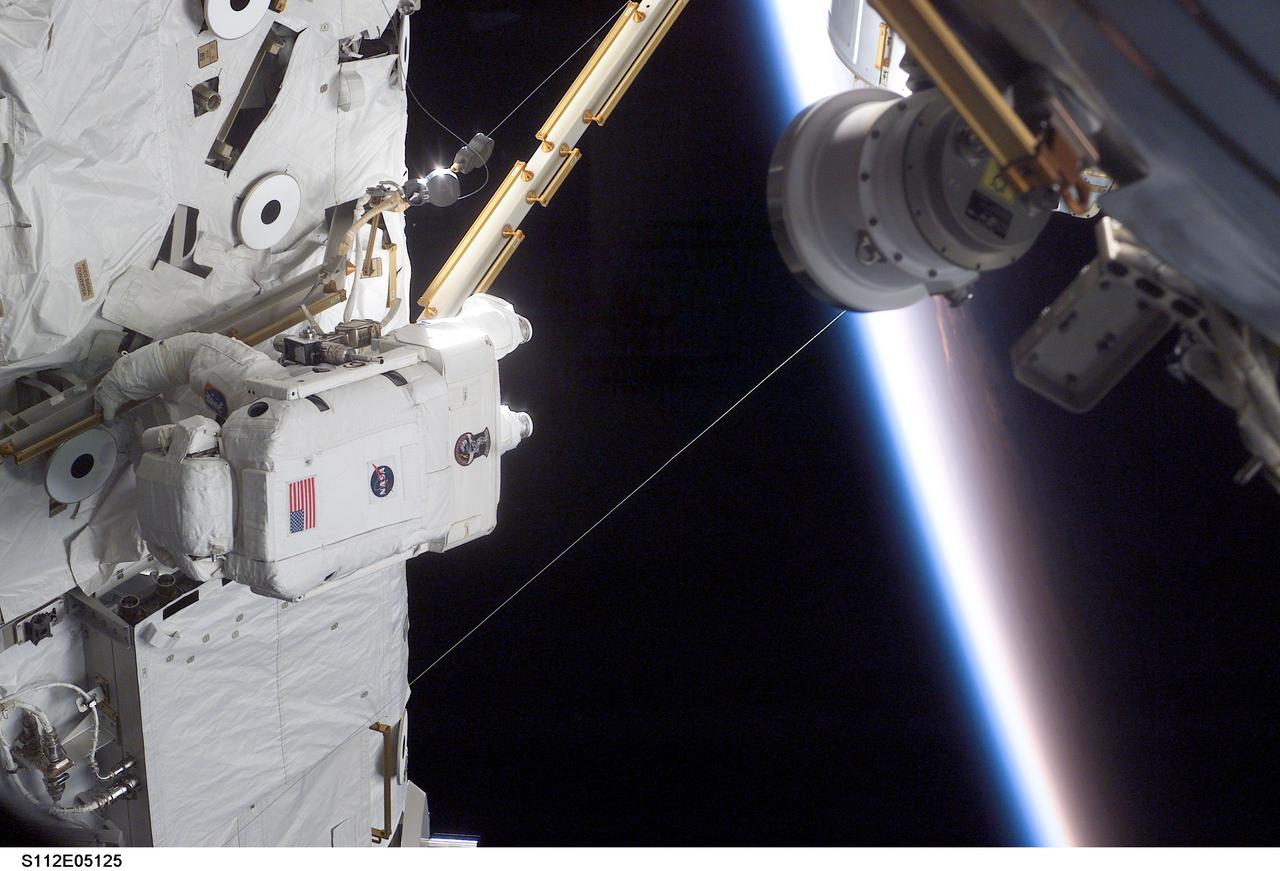
STS112-E-05125 (10 October 2002) --- Astronaut Piers J. Sellers, STS-112 mission specialist, works on the Starboard One (S1) Truss, newly installed on the International Space Station (ISS). Astronaut David A. Wolf (out of frame), mission specialist, worked in tandem with Sellers during the spacewalk. STS-112’s first session of extravehicular activity (EVA) lasted 7 hours and 1 minute.
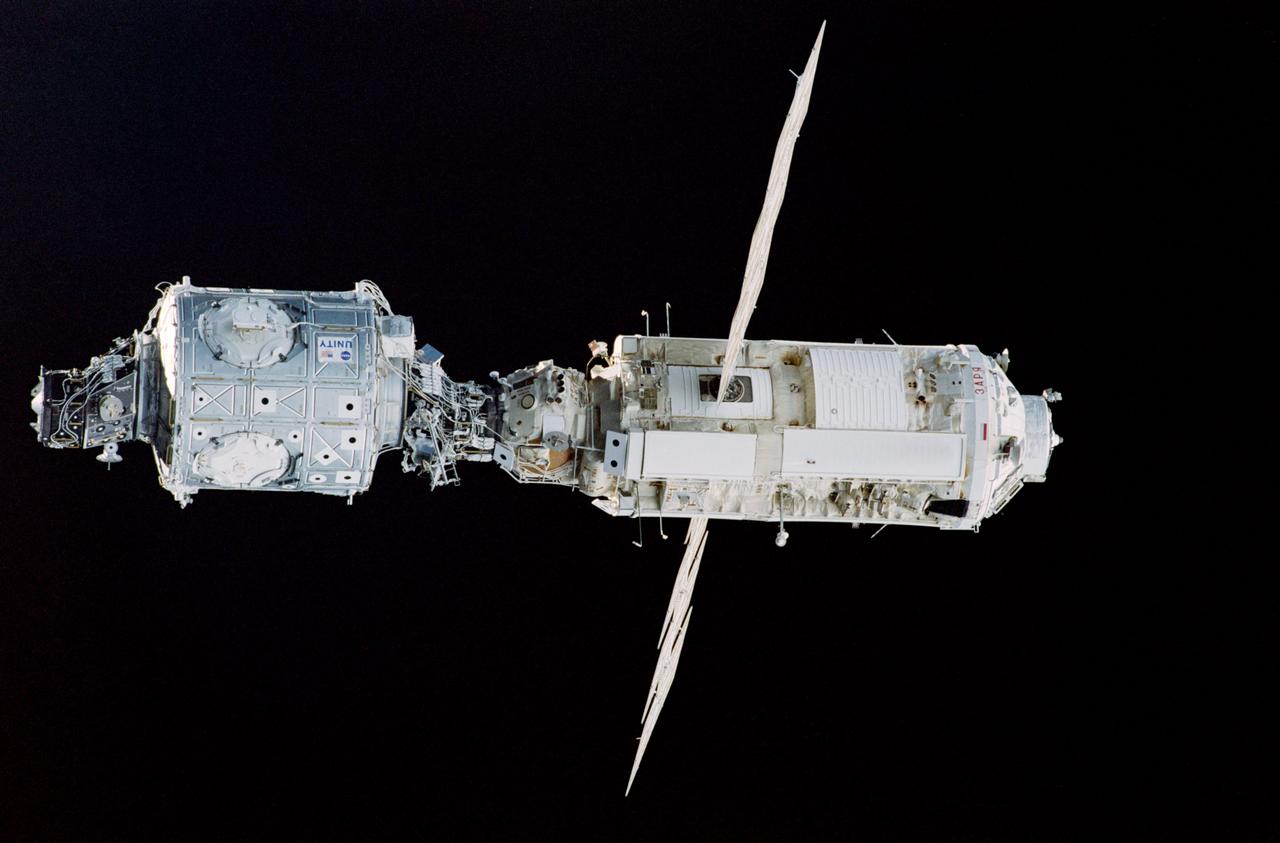
STS088-365-004 (4-15 Dec. 1998) --- The U.S.-built Unity Connecting Module and the Russian-built FGB (Zarya, with solar panels deployed) are backdropped against the blackness of space in this 35mm photograph taken from the Space Shuttle Endeavour. After devoting the major portion of its mission time to various tasks to ready the two docked modules for their International Space Station (ISS) roles, the six-member crew released the tandem and performed a fly-around survey of the hardware.
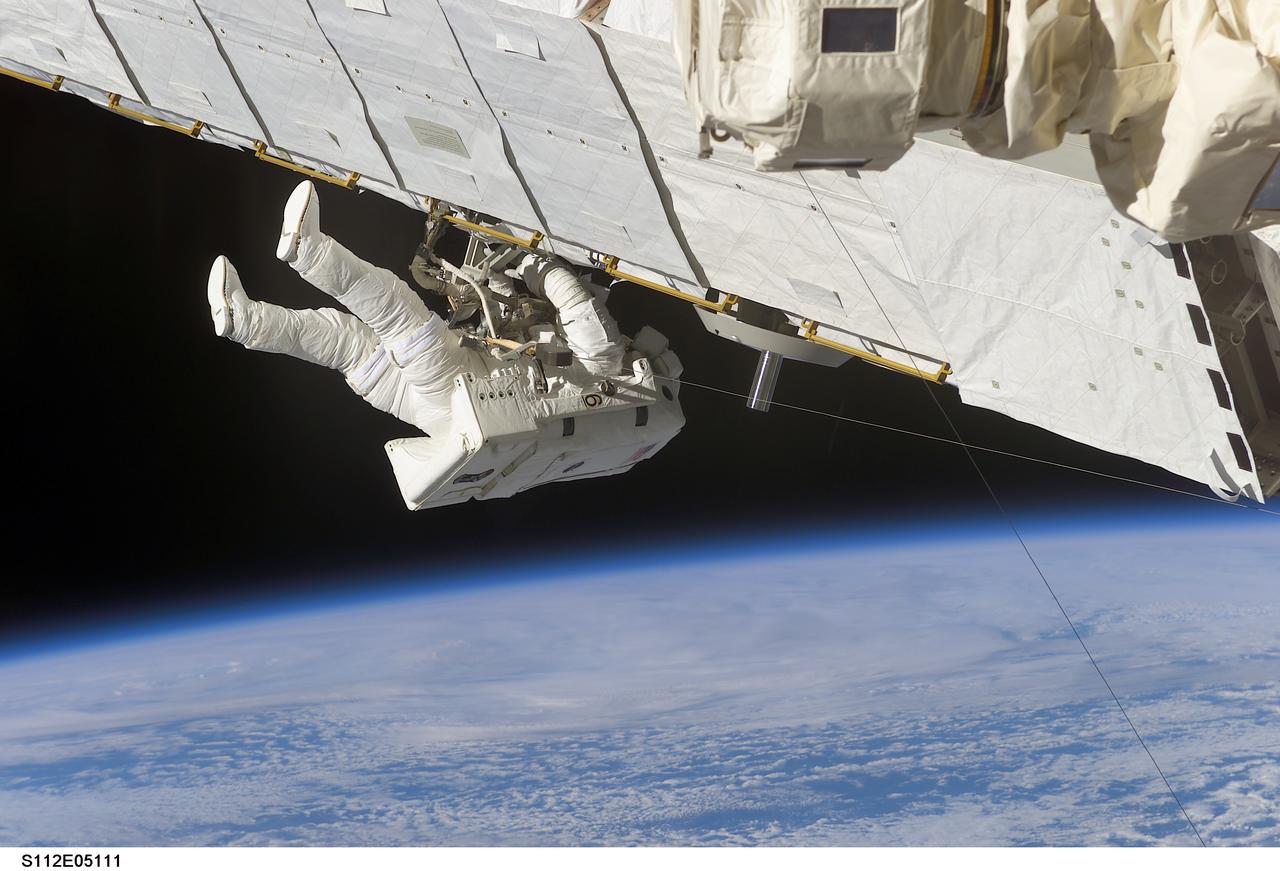
STS112-E-05111 (10 October 2002) --- Astronaut Piers J. Sellers, STS-112 mission specialist, works on the Starboard One (S1) Truss, newly installed on the International Space Station (ISS). Astronaut David A. Wolf (out of frame), mission specialist, worked in tandem with Sellers during the spacewalk. STS-112’s first session of extravehicular activity (EVA) lasted 7 hours and 1 minute.
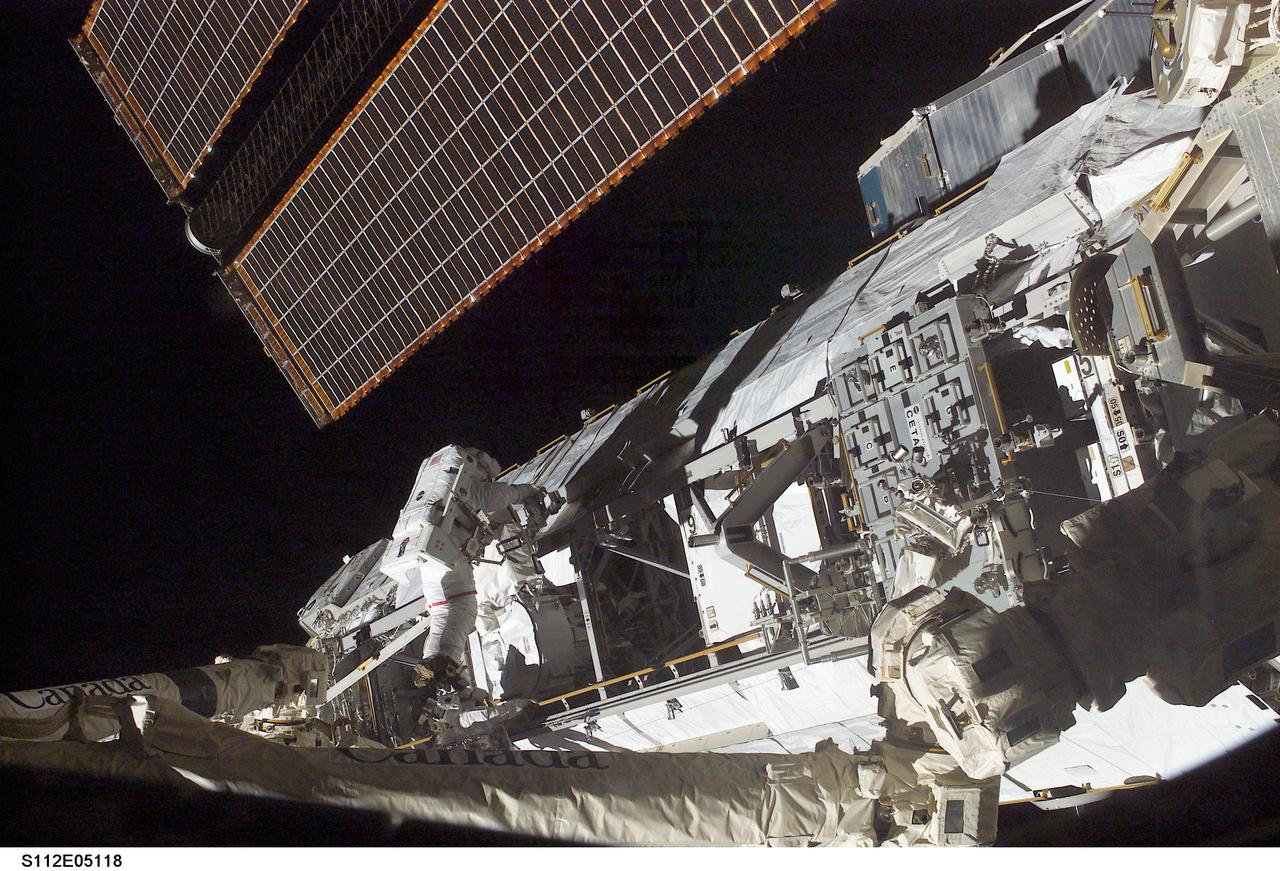
STS112-E-05118 (10 October 2002) --- Astronaut David A. Wolf, STS-112 mission specialist, works on the Starboard One (S1) Truss, newly installed on the International Space Station (ISS). Astronaut Piers J. Sellers (out of frame), mission specialist, worked in tandem with Wolf during the spacewalk. STS-112’s first session of extravehicular activity (EVA) lasted 7 hours and 1 minute.
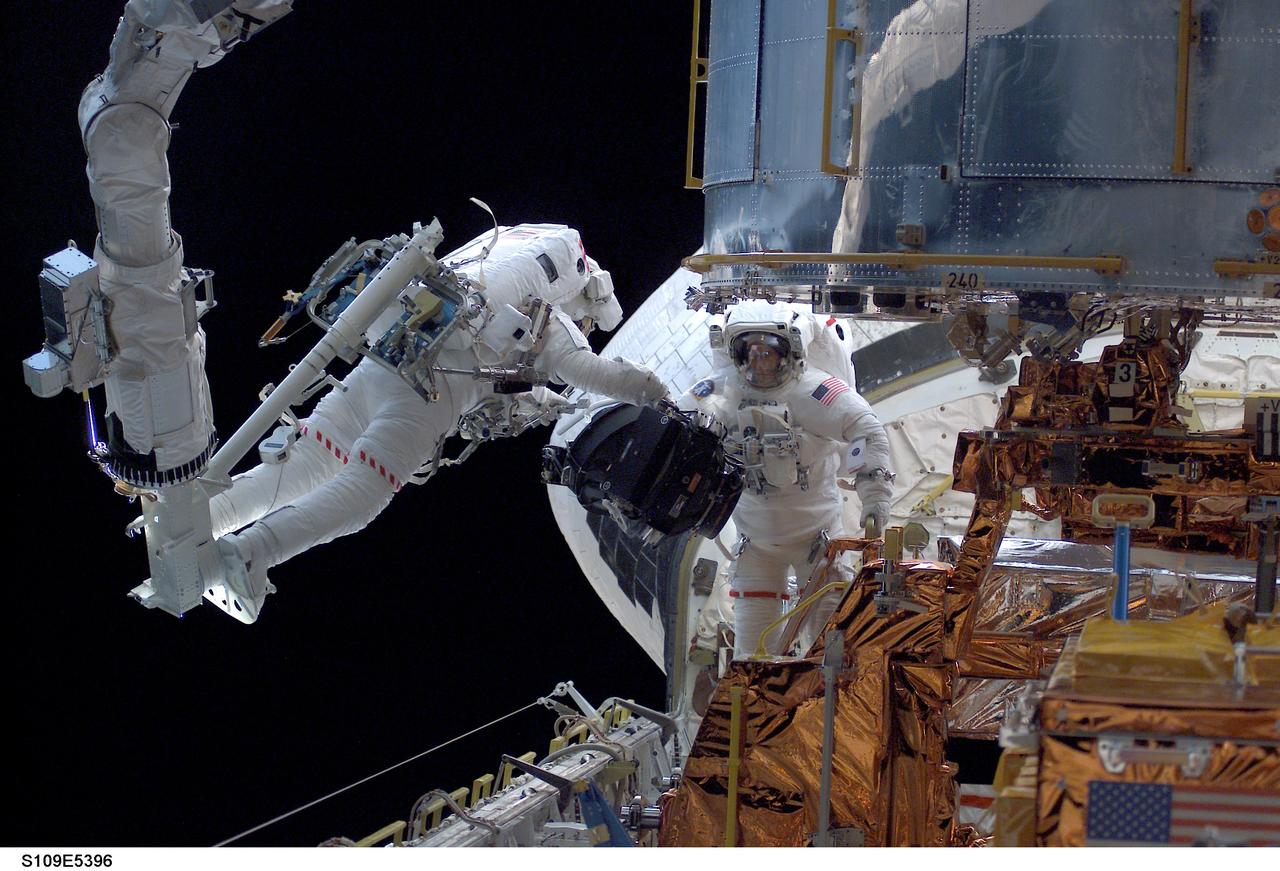
With his feet secured on a platform connected to the remote manipulator system (RMS) robotic arm of the Space Shuttle Columbia, astronaut Michael J. Massimino, mission specialist, hovers over the shuttle's cargo bay while working in tandem with astronaut James H. Newman, mission specialist, to replace the Reaction Wheel Assembly in the Hubble Space Telescope (HST) during the STS-109 mission's second day of extravehicular activity (EVA).
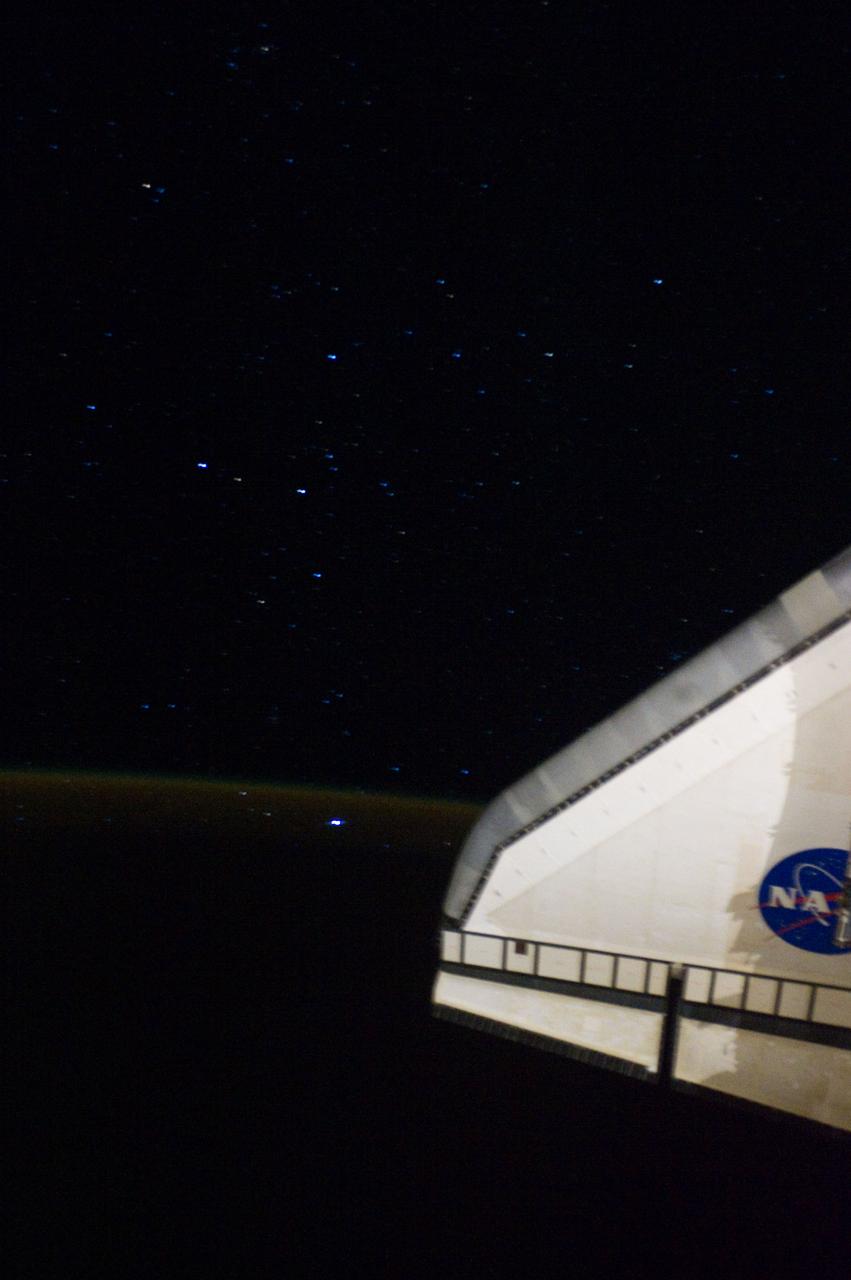
S134-E-009505 (27 May 2011) --- This is a view of the night sky of the Southern Hemisphere just off the port wing of Endeavour as the shuttle/space station tandem track northeastward over the South Atlantic Ocean about 1400 miles southeast of Rio de Janeiro, Brazil. The faint ?airglow? of the Earth?s atmosphere is visible just left of the wing. Photo credit: NASA
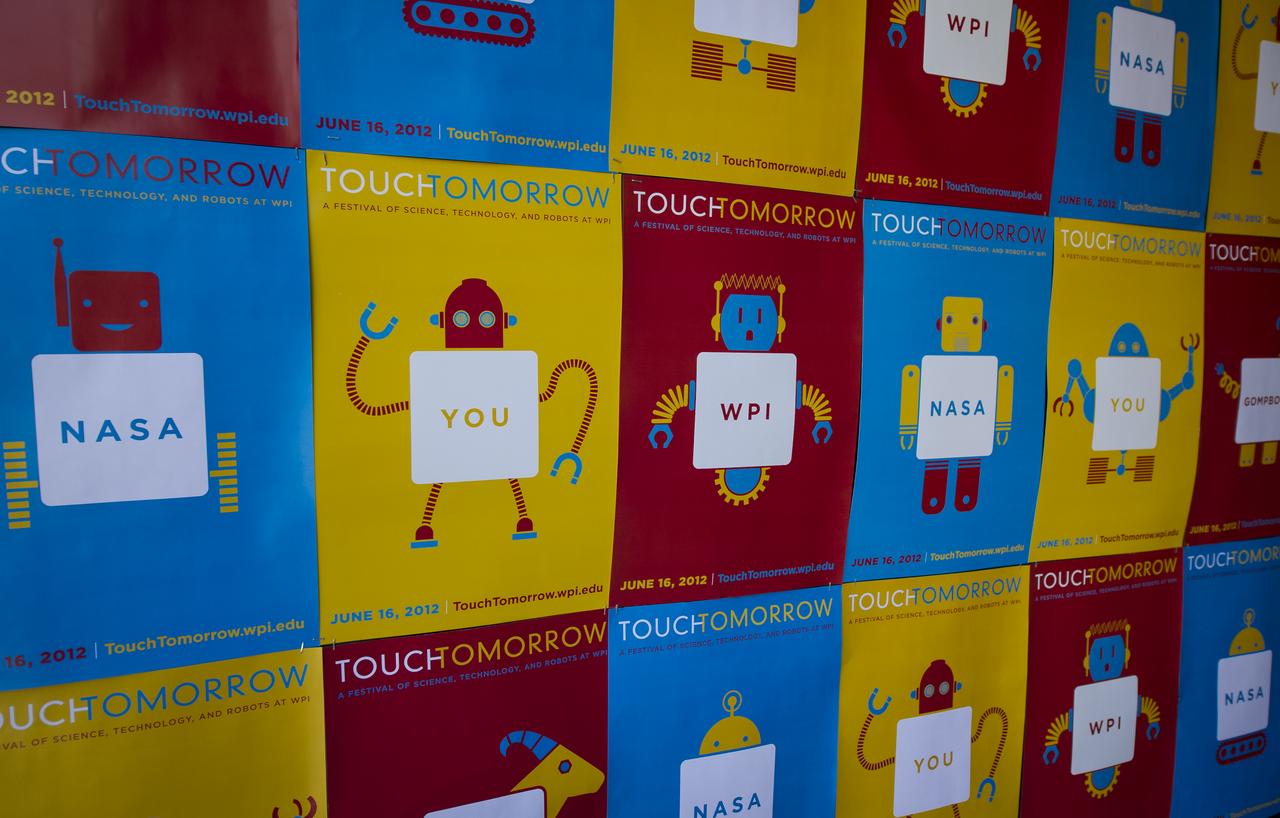
Posters for the Worcester Polytechnic Institute (WPI) "TouchTomorrow" education and outreach event are seen posted around the campus on Saturday, June 16, 2012 at WPI in Worcester, Mass. The TouchTomorrow event was held in tandem with the NASA-WPI Sample Return Robot Centennial Challenge. The NASA-WPI challenge tasked robotic teams to build autonomous robots that can identify, collect and return samples. NASA needs autonomous robotic capability for future planetary exploration. Photo Credit: (NASA/Bill Ingalls)
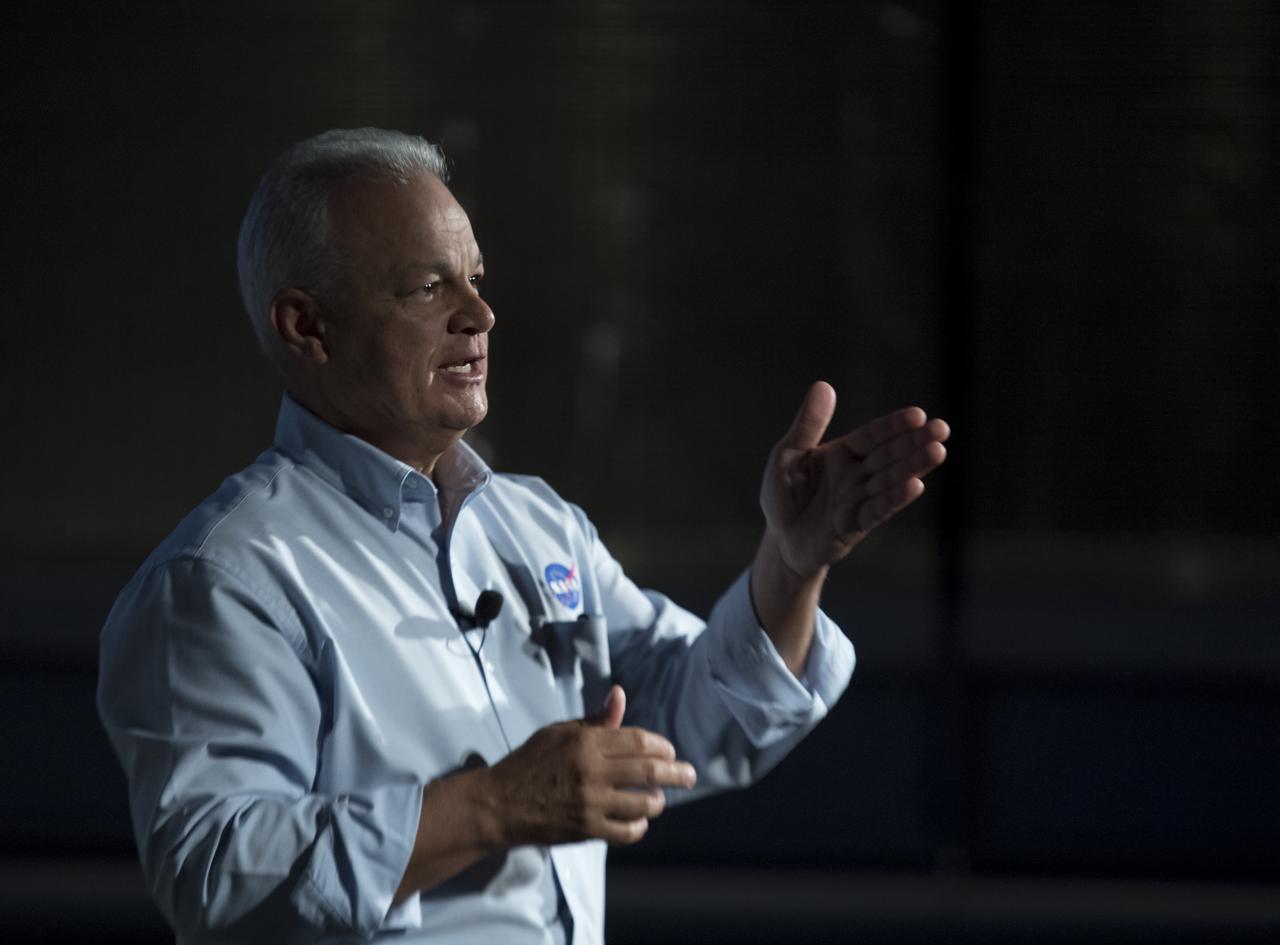
NASA Acting Chief Technologist Douglas Terrier gives a talk to teachers attending a professional development workshop held in tandem with the Intrepid Space & Science Festival, Saturday, Aug. 5, 2017 at the Intrepid Sea, Air & Space Museum in New York City. The week-long festival featured talks, films and cutting-edge displays showcasing NASA technology. Photo Credit: (NASA/Bill Ingalls)
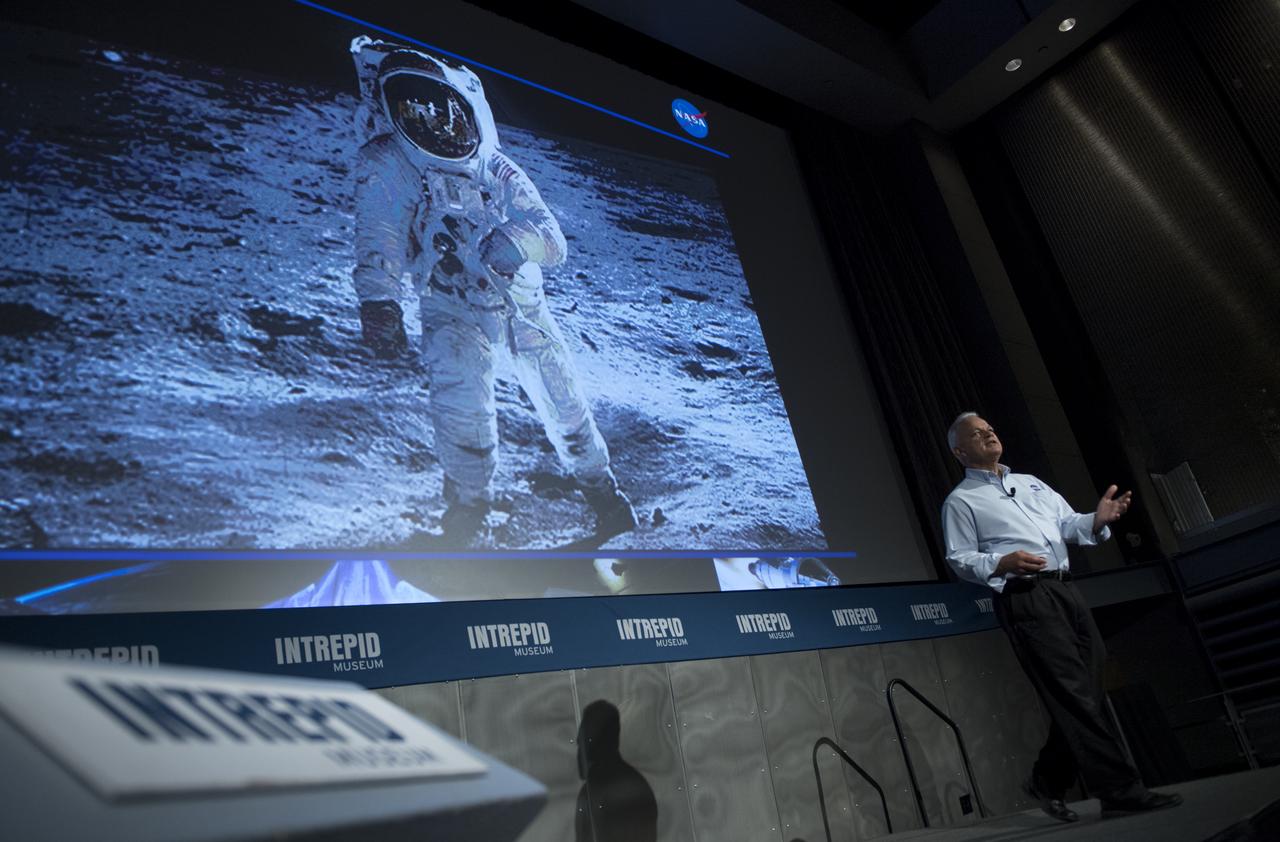
NASA Acting Chief Technologist Douglas Terrier gives a talk to teachers attending a professional development workshop held in tandem with the Intrepid Space & Science Festival, Saturday, Aug. 5, 2017 at the Intrepid Sea, Air & Space Museum in New York City. The week-long festival featured talks, films and cutting-edge displays showcasing NASA technology. Photo Credit: (NASA/Bill Ingalls)
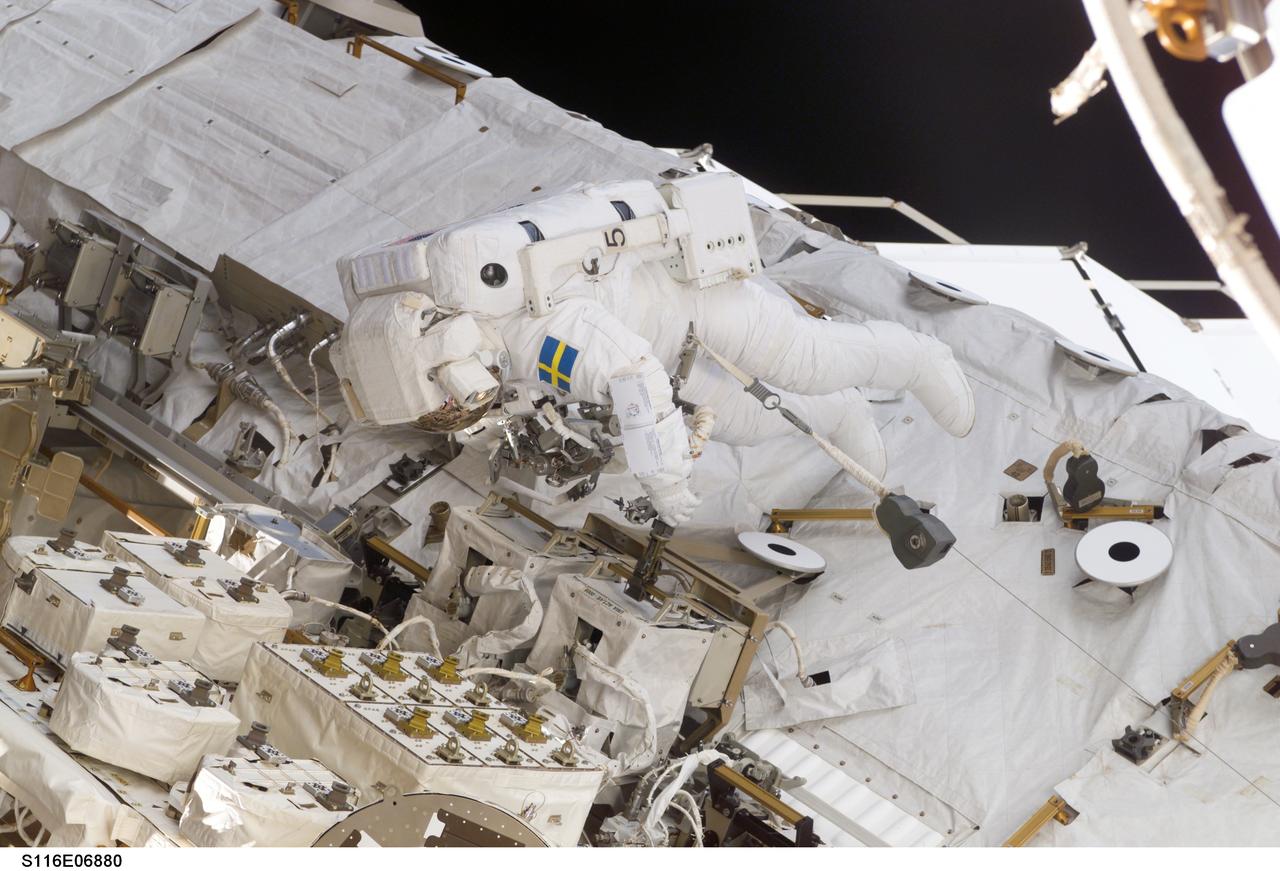
S116-E-06880 (18 Dec. 2006) --- European Space Agency (ESA) astronaut Christer Fuglesang, STS-116 mission specialist, participates in the mission's fourth session of extravehicular activity (EVA) while Space Shuttle Discovery was docked with the International Space Station. Astronaut Robert L. Curbeam Jr. (out of frame), mission specialist, worked in tandem with Fuglesang, using specially-prepared, tape-insulated tools, to guide the array wing neatly inside its blanket box during the 6-hour, 38-minute spacewalk.
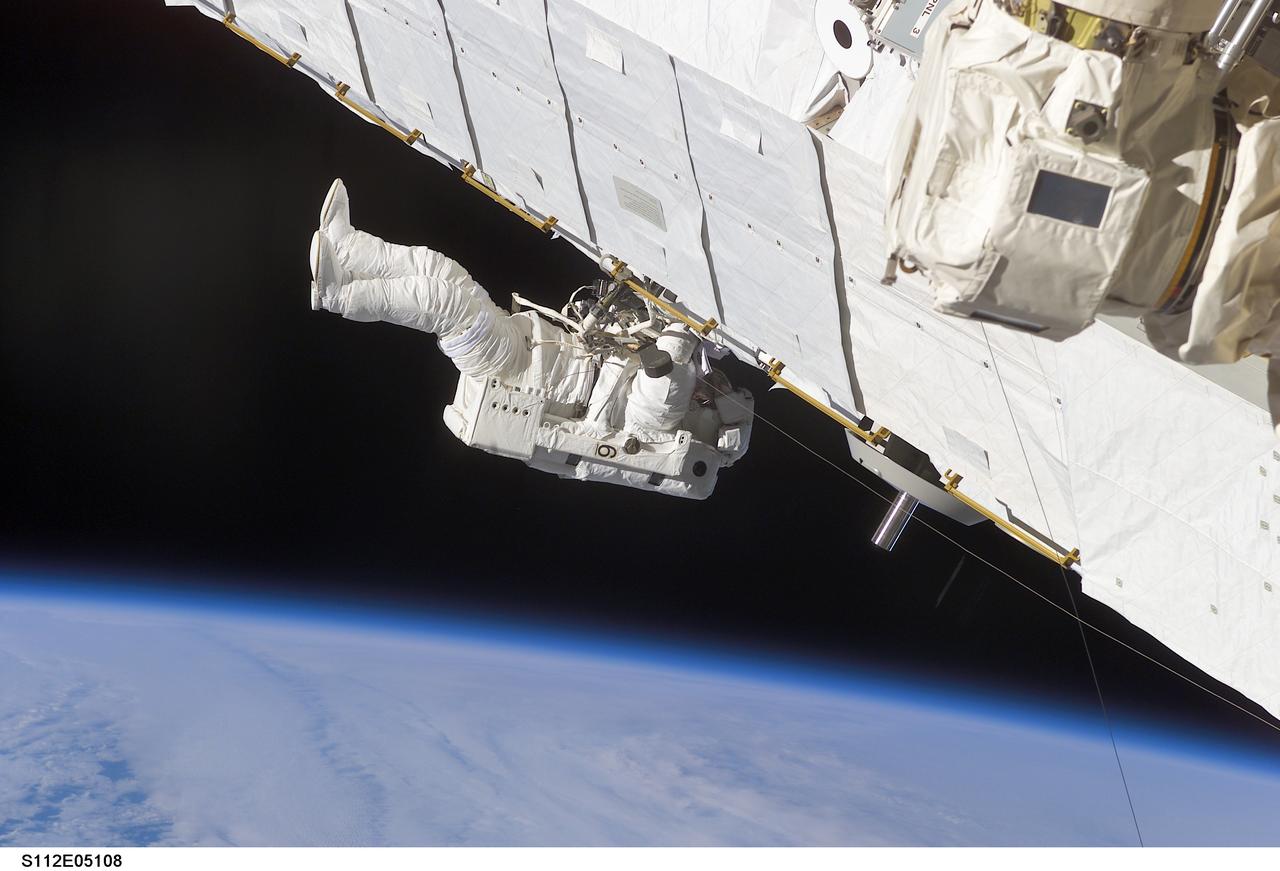
STS112-E-05108 (10 October 2002) --- Astronaut Piers J. Sellers, STS-112 mission specialist, works on the Starboard One (S1) Truss, newly installed on the International Space Station (ISS). Astronaut David A. Wolf (out of frame), mission specialist, worked in tandem with Sellers during the spacewalk. STS-112’s first session of extravehicular activity (EVA) lasted 7 hours and 1 minute.
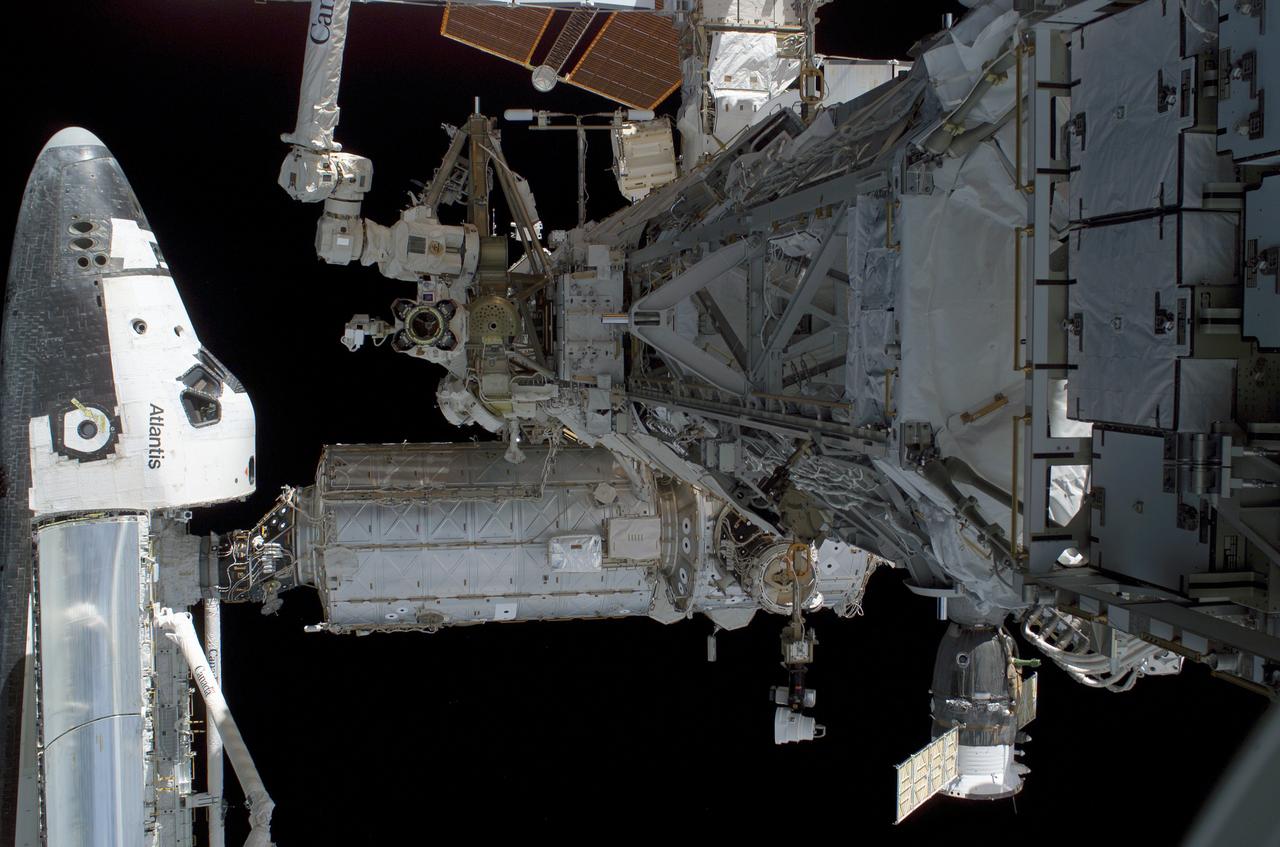
S115-E-05689 (12 Sept. 2006) --- Although no astronauts are visible in this picture, action was brisk outside the space shuttle/space station tandem when this digital still image was recorded on Sept. 12. Astronauts Joseph R. Tanner and Heidemarie M. Stefanyshyn-Piper participated in the first of three scheduled STS-115 extravehicular activity (EVA) sessions as the Atlantis astronauts and the Expedition 13 crewmembers join efforts this week to resume construction of the International Space Station.
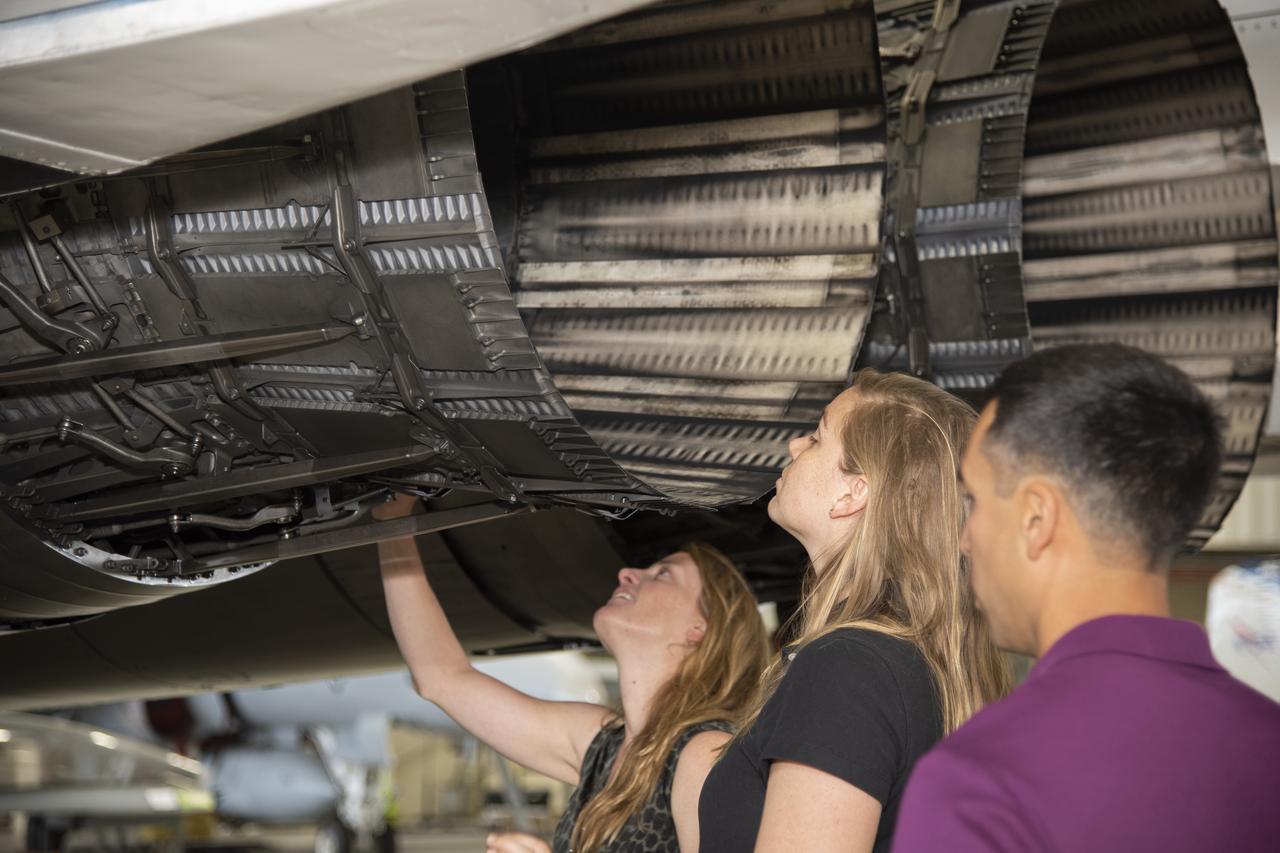
NASA's 2017 astronaut candidates toured aircraft hangar at Armstrong Flight Research Center, in Southern California where (L to R) Loral O'Hara, Jenni Sidey-Gibbons and Raja Chari look inside the engine nozzle of an F-15 jet. The F-15 will fly in tandem with the X-59 QueSST during early flight test stages for the X-59 development.
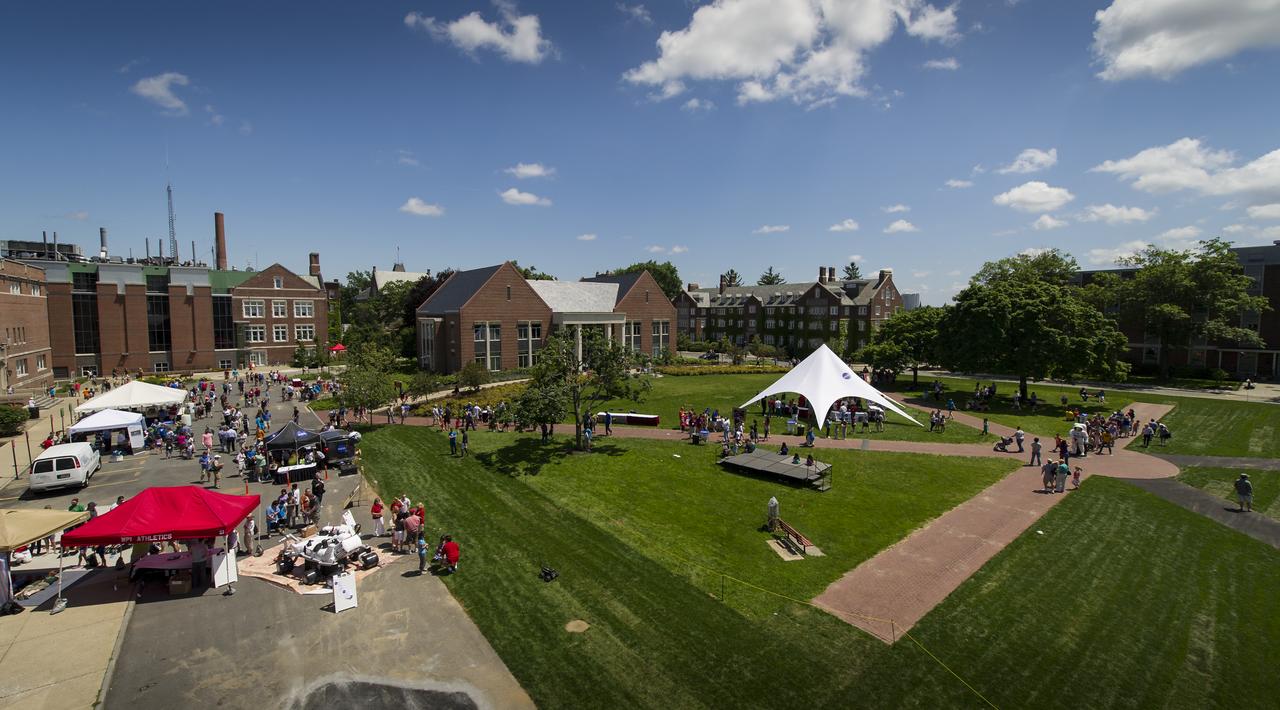
Panoramic of some of the exhibits available on the campus of the Worcester Polytechnic Institute (WPI) during their "TouchTomorrow" education and outreach event that was held in tandem with the NASA-WPI Sample Return Robot Centennial Challenge on Saturday, June 16, 2012 in Worcester, Mass. The NASA-WPI challenge tasked robotic teams to build autonomous robots that can identify, collect and return samples. NASA needs autonomous robotic capability for future planetary exploration. Photo Credit: (NASA/Anthony Shrout)
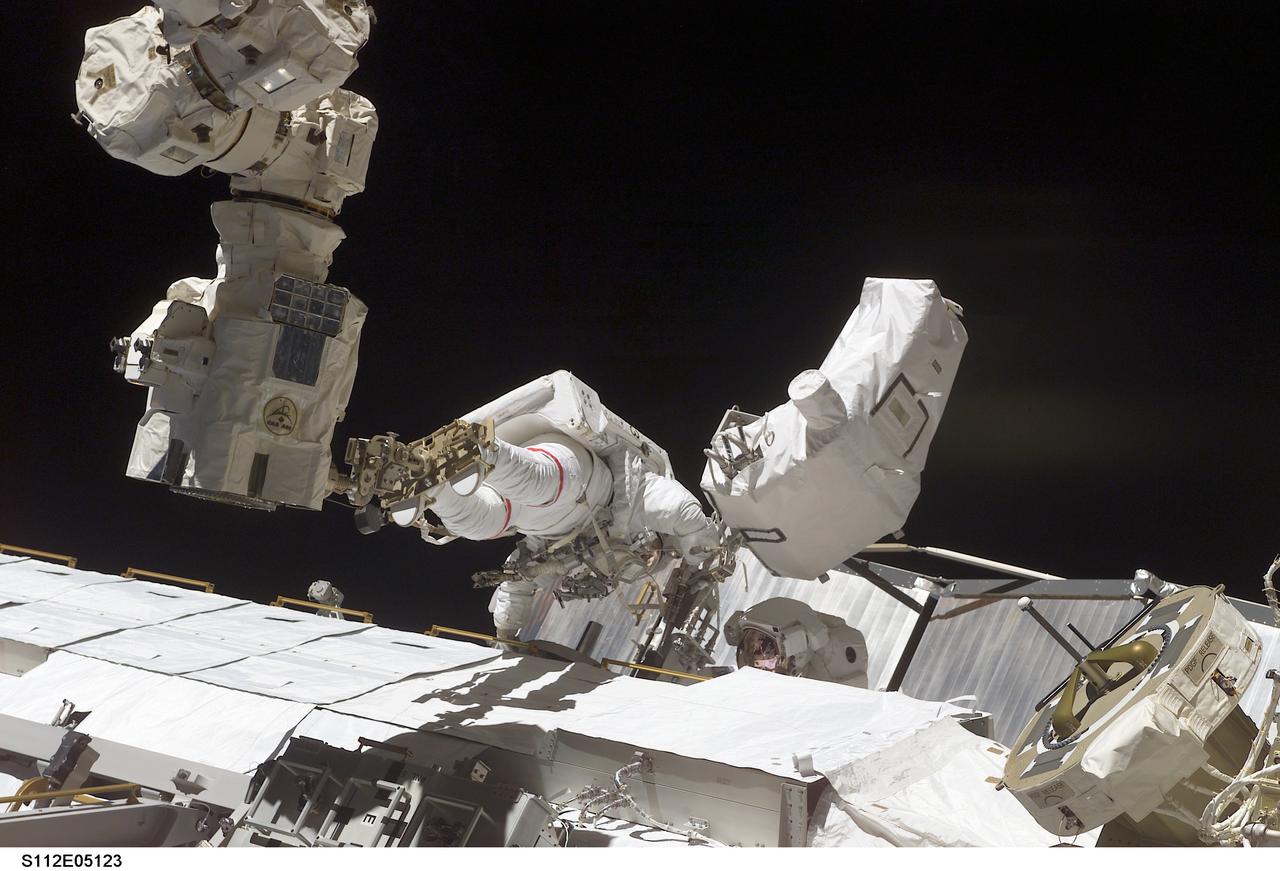
STS112-E-05123 (10 October 2002) --- Astronaut David A. Wolf, STS-112 mission specialist, anchored to the end of the Canadarm2, works on the Starboard One (S1) Truss, newly installed on the International Space Station (ISS). Astronaut Piers J. Sellers (partially obscured), mission specialist, worked in tandem with Wolf during the spacewalk. STS-112’s first session of extravehicular activity (EVA) lasted 7 hours and 1 minute.
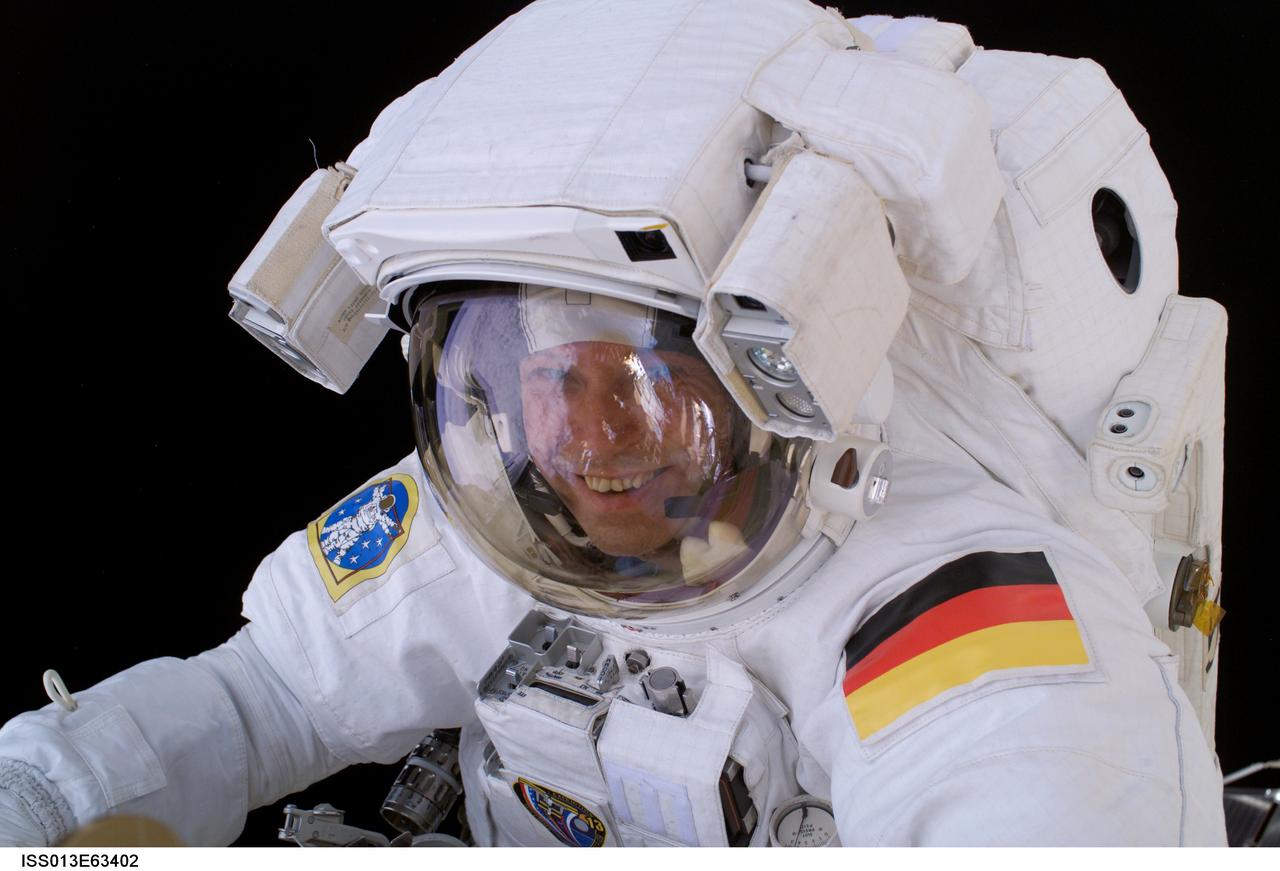
ISS013-E-63402 (3 August 2006) --- Astronaut Thomas Reiter, who represents the European Space Agency on the Expedition 13 crew, is photographed during a 5-hour, 54-minute excursion which he shared with astronaut Jeffrey N. Williams (out of frame). For part of the spacewalk, the pair worked closely in tandem, and then worked separately, getting ahead of their timeline, thus enabling the two to tack on extra tasks.
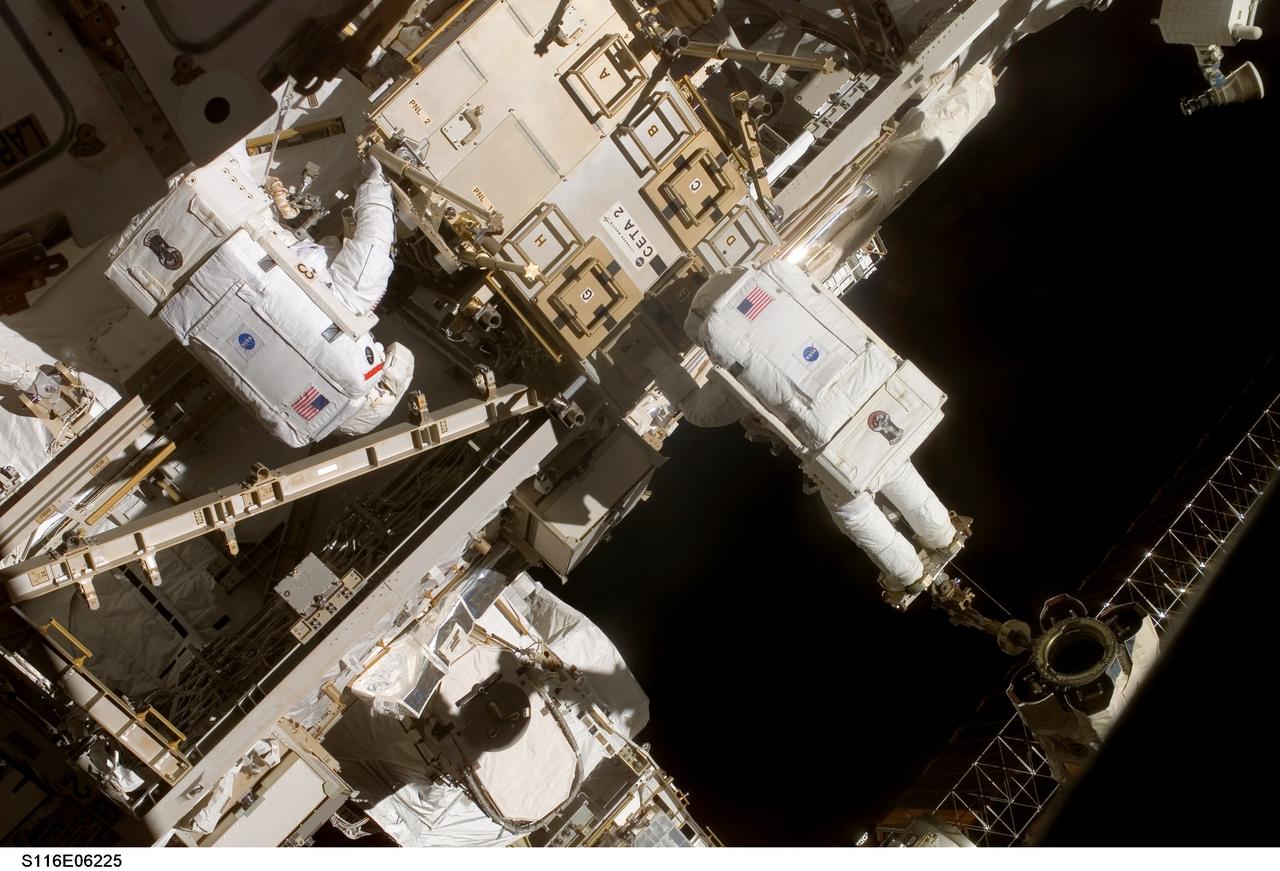
S116-E-06225 (14 Dec. 2006) --- Anchored to the International Space Station's Canadarm2 foot restraint, European Space Agency (ESA) astronaut Christer Fuglesang (right), STS-116 mission specialist, works in tandem with astronaut Robert L. Curbeam, Jr., mission specialist, during the mission's second of three planned sessions of extravehicular activity (EVA) as construction resumes on the station.
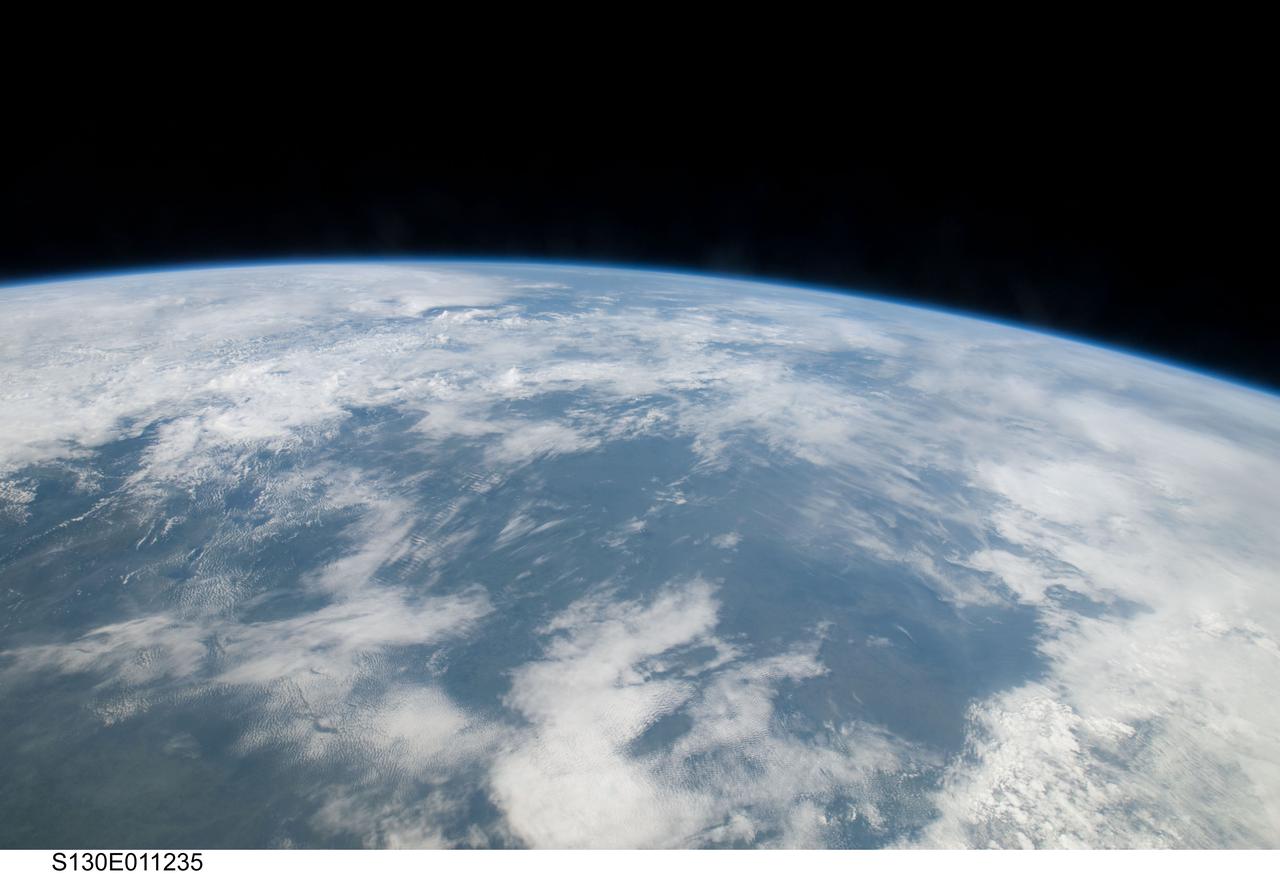
S130-E-011235 (20 Feb. 2010) --- After several days of seeing out-the-window close-up views of the various elements of the International Space Station, the STS-130 crewmembers aboard the space shuttle Endeavour got a fresh look at the home planet after separating from the orbital outpost. Eleven astronauts and cosmonauts worked together to continue construction on the orbital outpost and perform other tasks in tandem.
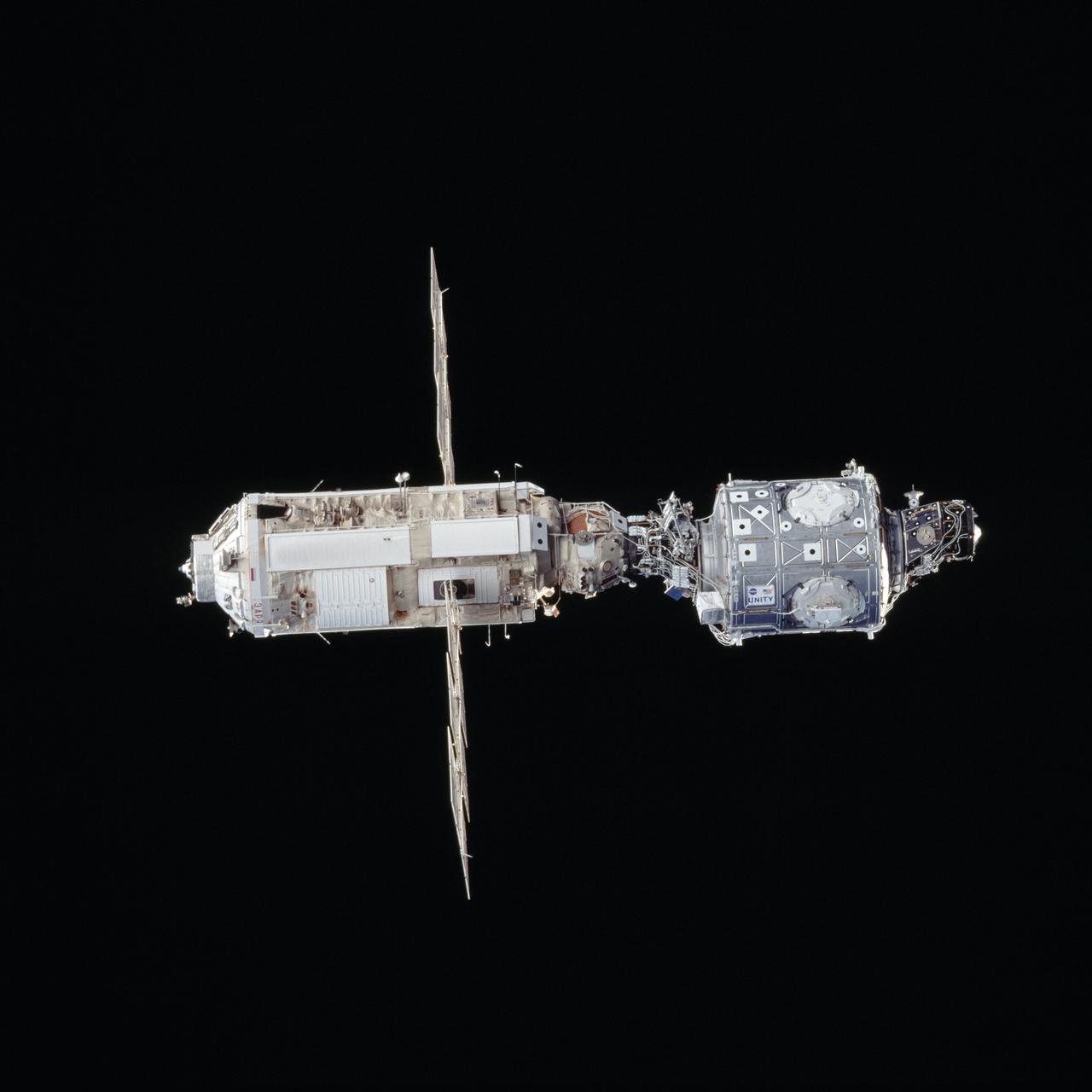
STS088-703-019 (4-15 Dec. 1998) --- The U.S.-built Unity connecting module (bottom) and the Russian-built Zarya module are backdropped against the blackness of space in this 70mm photograph taken from the Space Shuttle Endeavour. After devoting the major portion of its mission time to various tasks to ready the two docked modules for their International Space Station (ISS) roles, the six-member STS-88 crew released the tandem and performed a fly-around survey of the hardware.
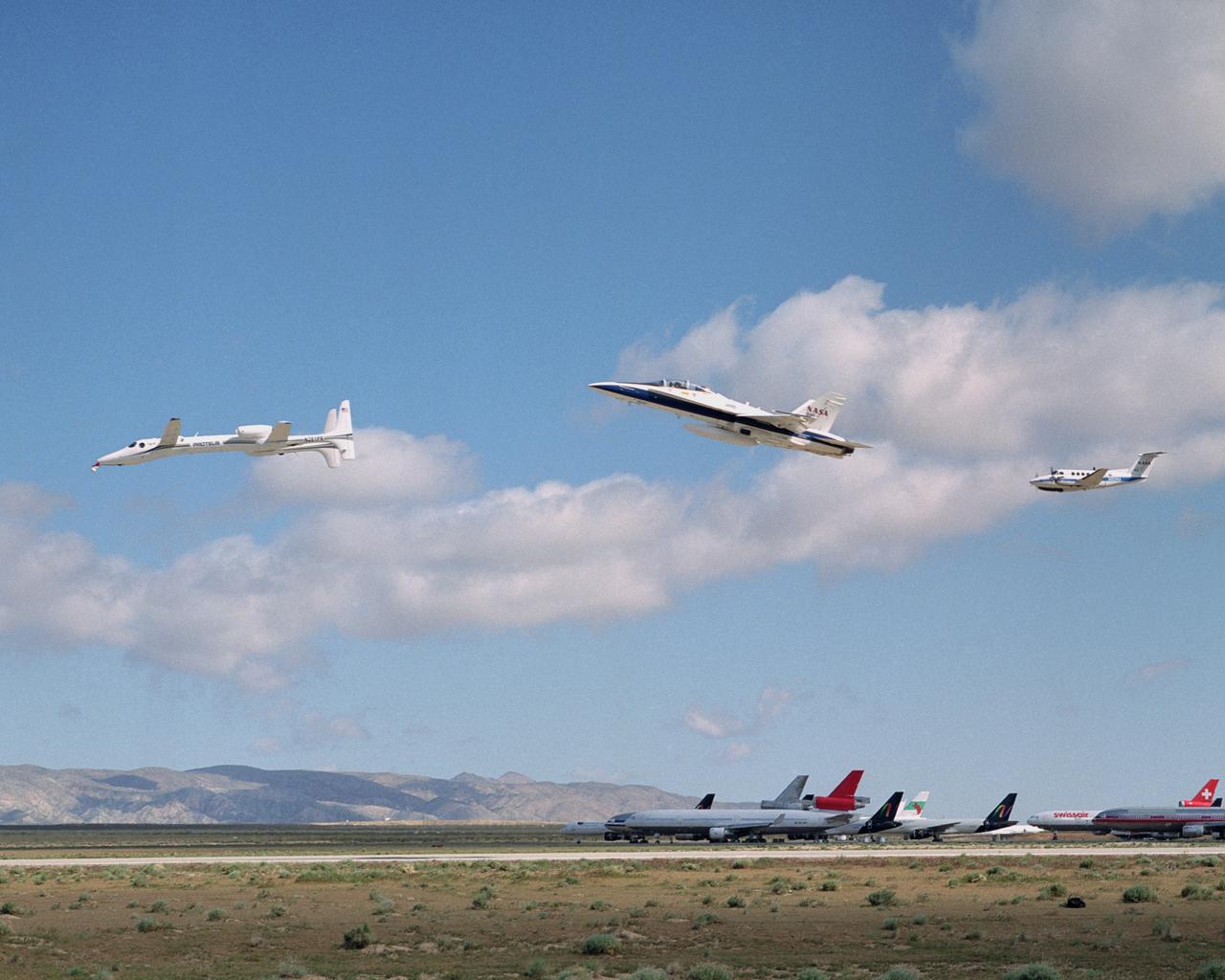
Scaled Composites' Proteus aircraft with an F/A-18 Hornet and a Beechcraft KingAir from NASA's Dryden Flight Research Center during a low-level flyby at Mojave Airport in Southern California. The unique tandem-wing Proteus was the testbed for a series of UAV collision-avoidance flight demonstrations. An Amphitech 35GHz radar unit installed below Proteus' nose was the primary sensor for the Detect, See and Avoid tests.
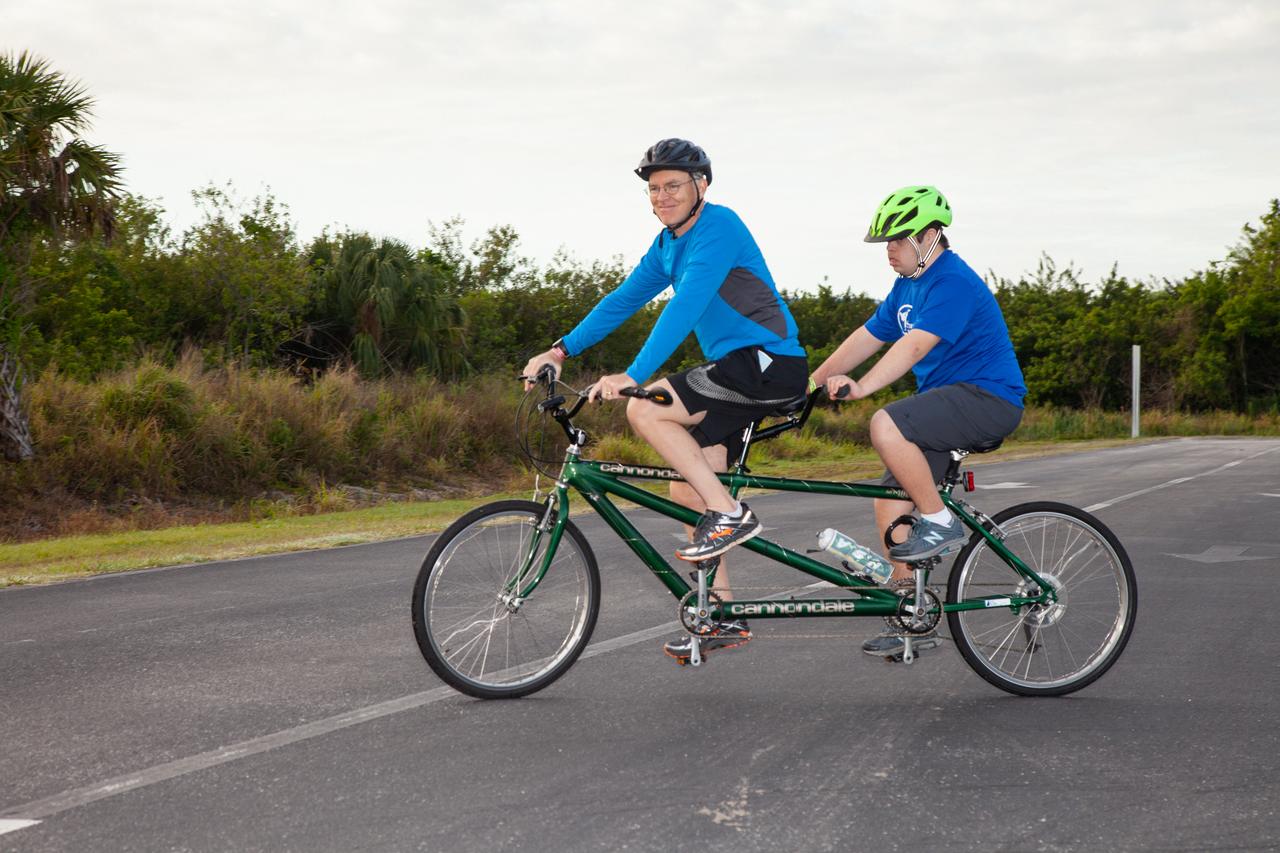
Participants riding a tandem bicycle take part in Kennedy Space Center’s annual Tour de KSC. The bicycle tour took place March 30, giving Kennedy employees and guests the opportunity to choose from three different routes that ranged from seven to 33 miles along some of the Florida spaceport’s most notable facilities such as the Vehicle Assembly Building, the Shuttle Landing Facility and historic Launch Pad 39A, among others.
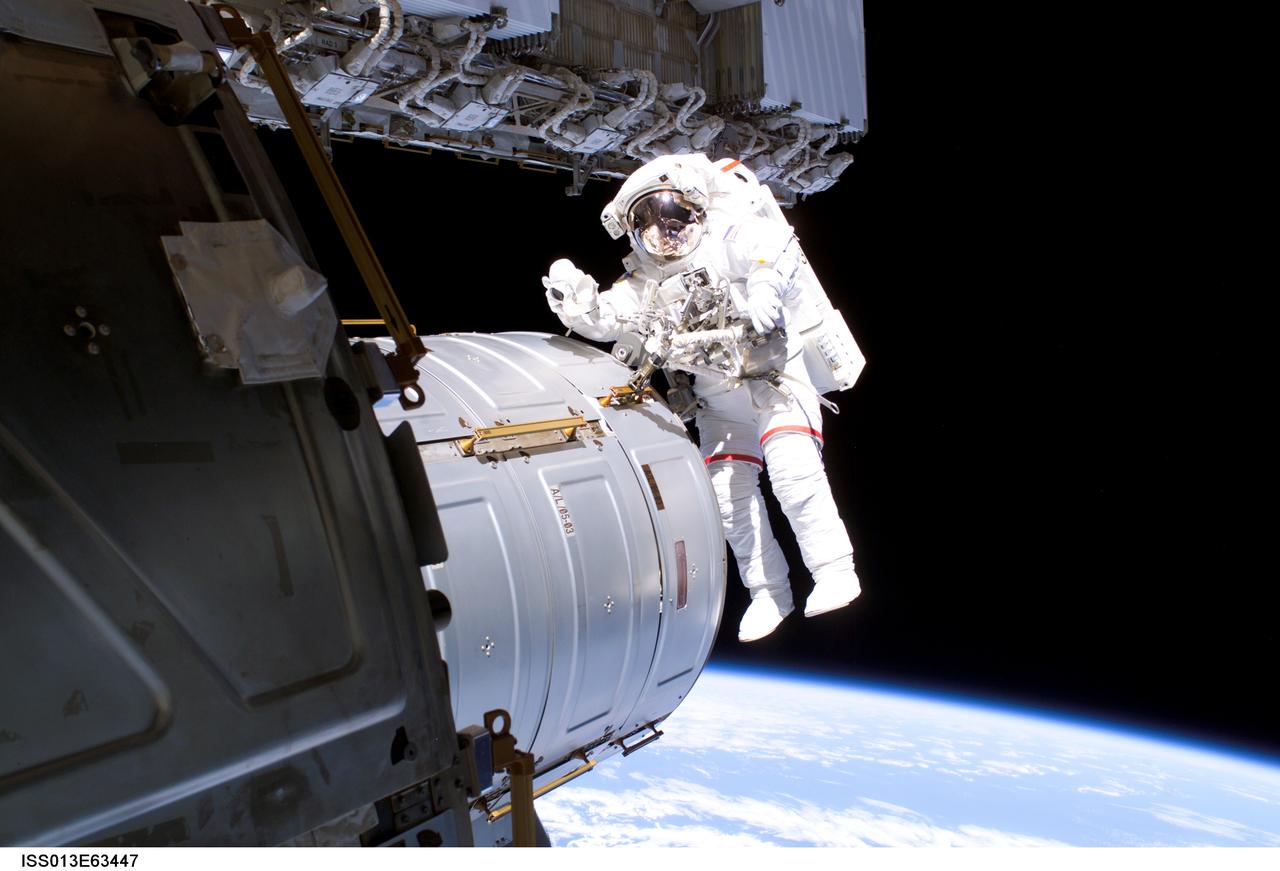
ISS013-E-63447 (3 August 2006) --- Astronaut Jeffrey N. Williams, Expedition 13 NASA space station science officer and flight engineer, is photographed during an individualized portion of a 5-hour, 54-minute excursion which he shared with European Space Agency astronaut Thomas Reiter (out of frame). For part of the spacewalk, the pair worked closely in tandem, and then worked separately, getting ahead of their timeline, thus enabling the two to tack on extra tasks.
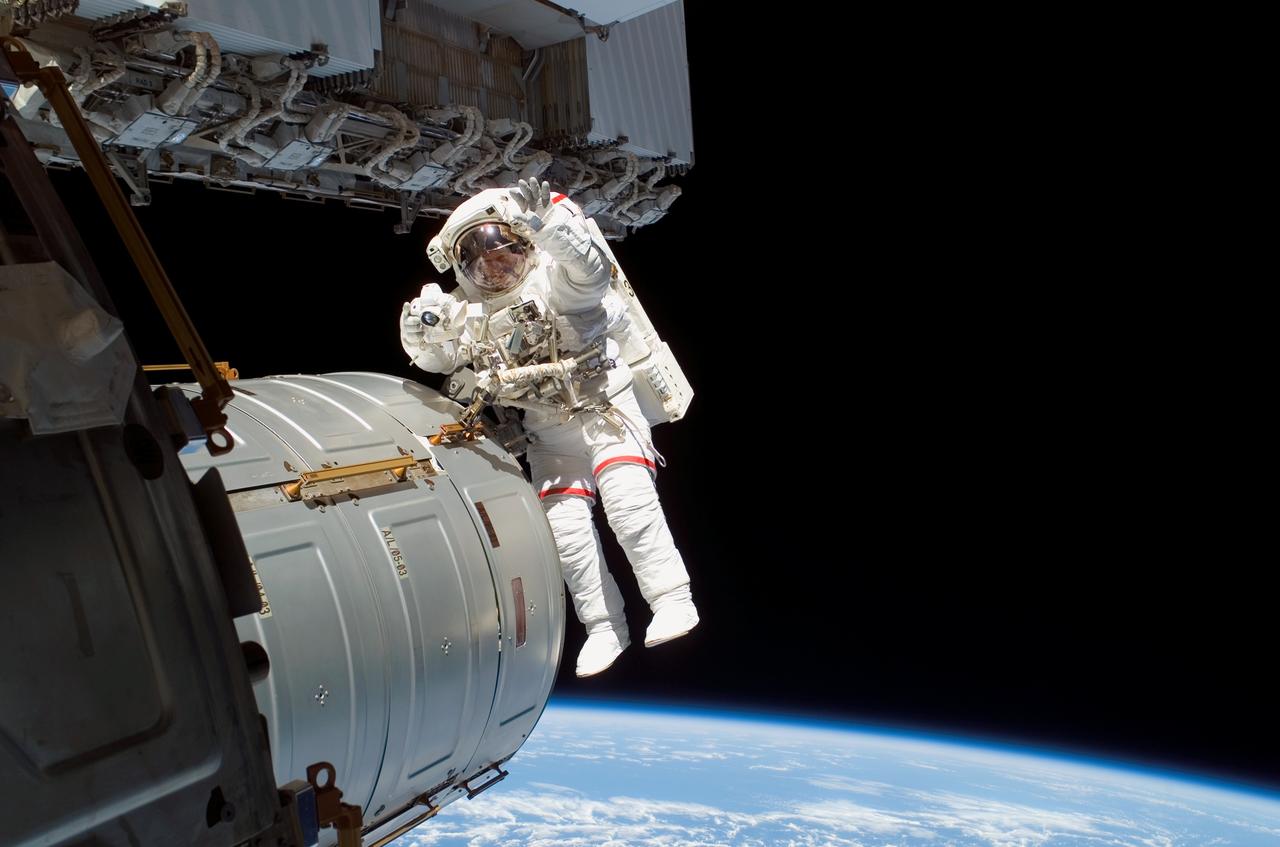
ISS013-E-63440 (3 Aug. 2006) --- Astronaut Jeffrey N. Williams, Expedition 13 NASA space station science officer and flight engineer, is photographed during an individualized portion of a productive 5-hour, 54-minute excursion which he shared with European Space Agency astronaut Thomas Reiter (out of frame). For part of the spacewalk, the pair worked closely in tandem, and then worked separately, getting ahead of their timeline, thus enabling the two to tack on extra tasks.
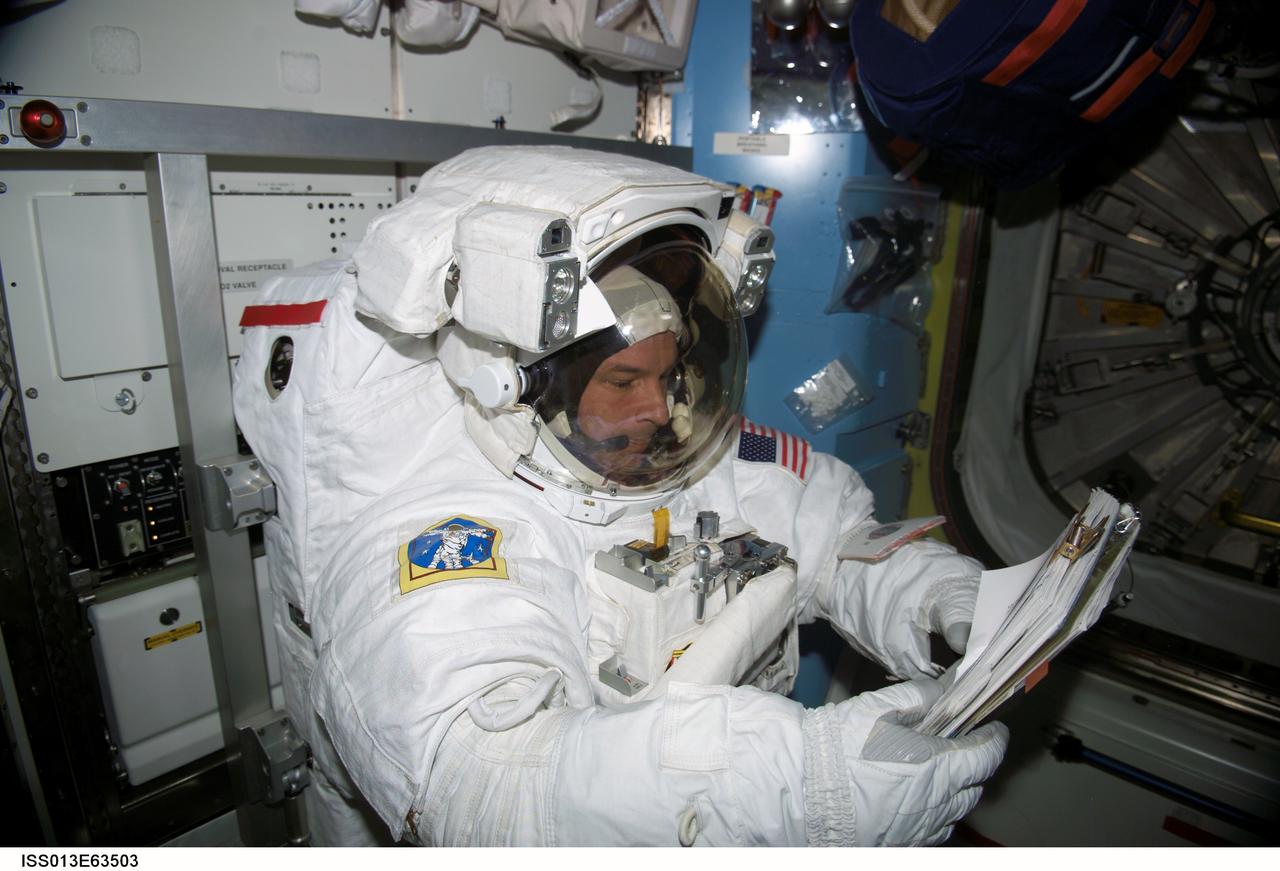
ISS013-E-63503 (3 August 2006) --- Astronaut Jeffrey N. Williams, Expedition 13 NASA space station science officer and flight engineer, brushes up on a task list prior to egressing a station airlock to go on to perform a 5-hour, 54-minute excursion which he shared with European Space Agency astronaut Thomas Reiter (out of frame). For part of the spacewalk, the pair worked closely in tandem, and then worked separately, getting ahead of their timeline, thus enabling the two to tack on extra tasks.
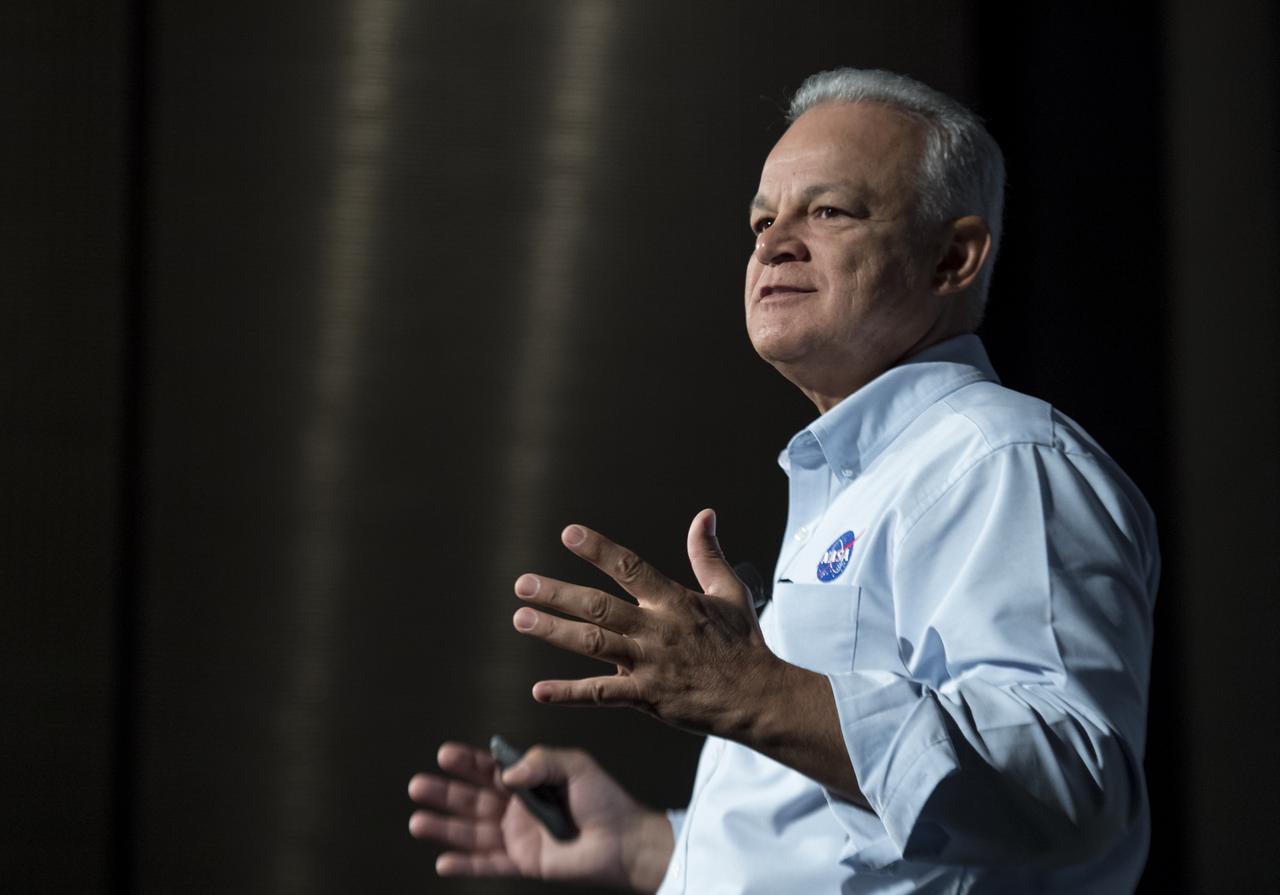
NASA Acting Chief Technologist Douglas Terrier gives a talk to teachers attending a professional development workshop held in tandem with the Intrepid Space & Science Festival, Saturday, Aug. 5, 2017 at the Intrepid Sea, Air & Space Museum in New York City. The week-long festival featured talks, films and cutting-edge displays showcasing NASA technology. Photo Credit: (NASA/Bill Ingalls)
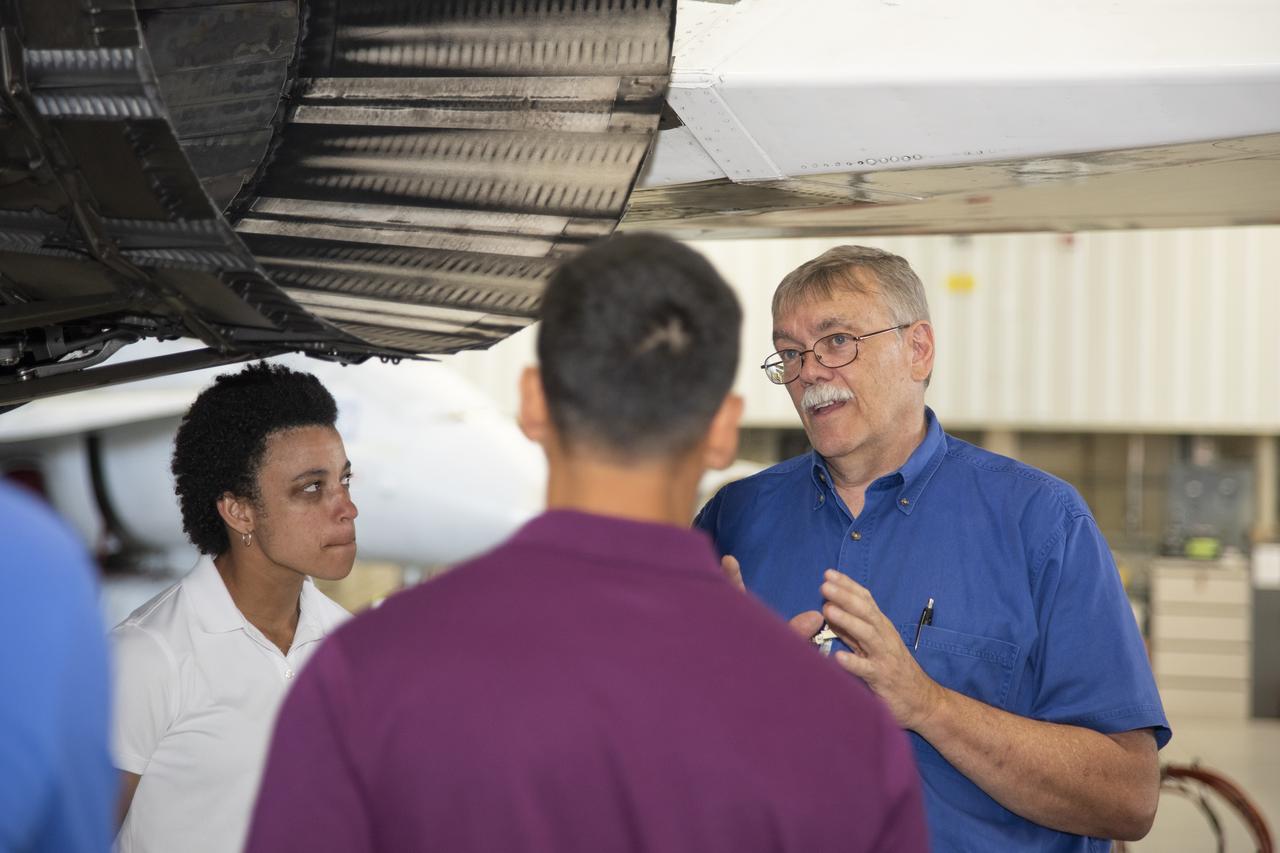
NASA's 2017 astronaut candidates toured aircraft hangar at Armstrong Flight Research Center, in Southern California where Crew Chief Tom Grindle talks with (L to R) Jessica Watkins and Raja Chari near engine nozzle of F-15 jet. The F-15 will fly in tandem with the X-59 QueSST during early flight test stages for the X-59 development.
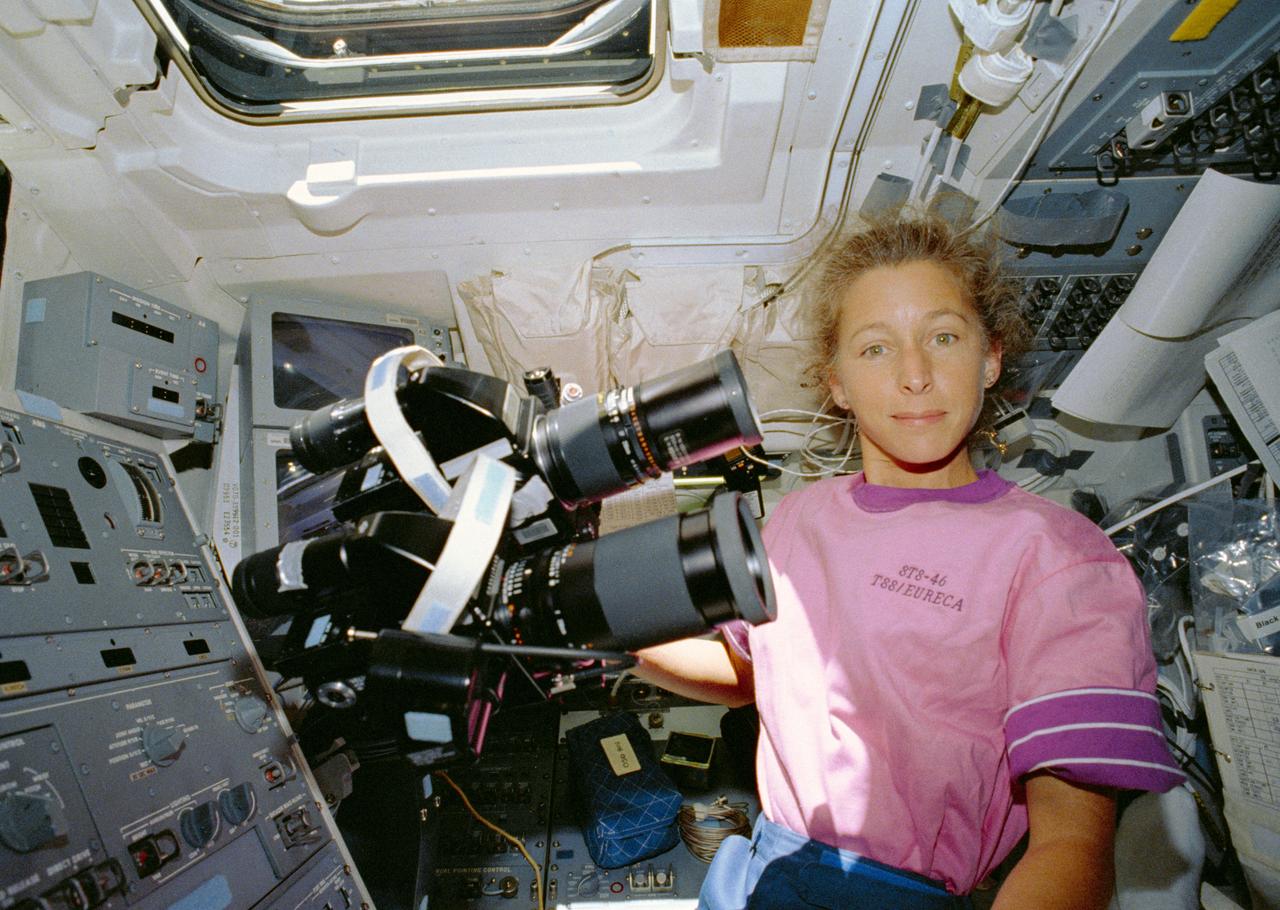
STS046-03-032 (31 July-8 Aug 1992) --- Astronaut Marsha S. Ivins, mission specialist, prepares to operate a tandem of 70mm Hasselblad cameras on the Space Shuttle Atlantis' aft flight deck. The cameras share a common mount, allowing for various tests to be run as the cameras record the same Earth-observations type imagery. Ivins was joined by four other NASA astronauts and two Europeans for an eight-day stay in Earth-orbit.
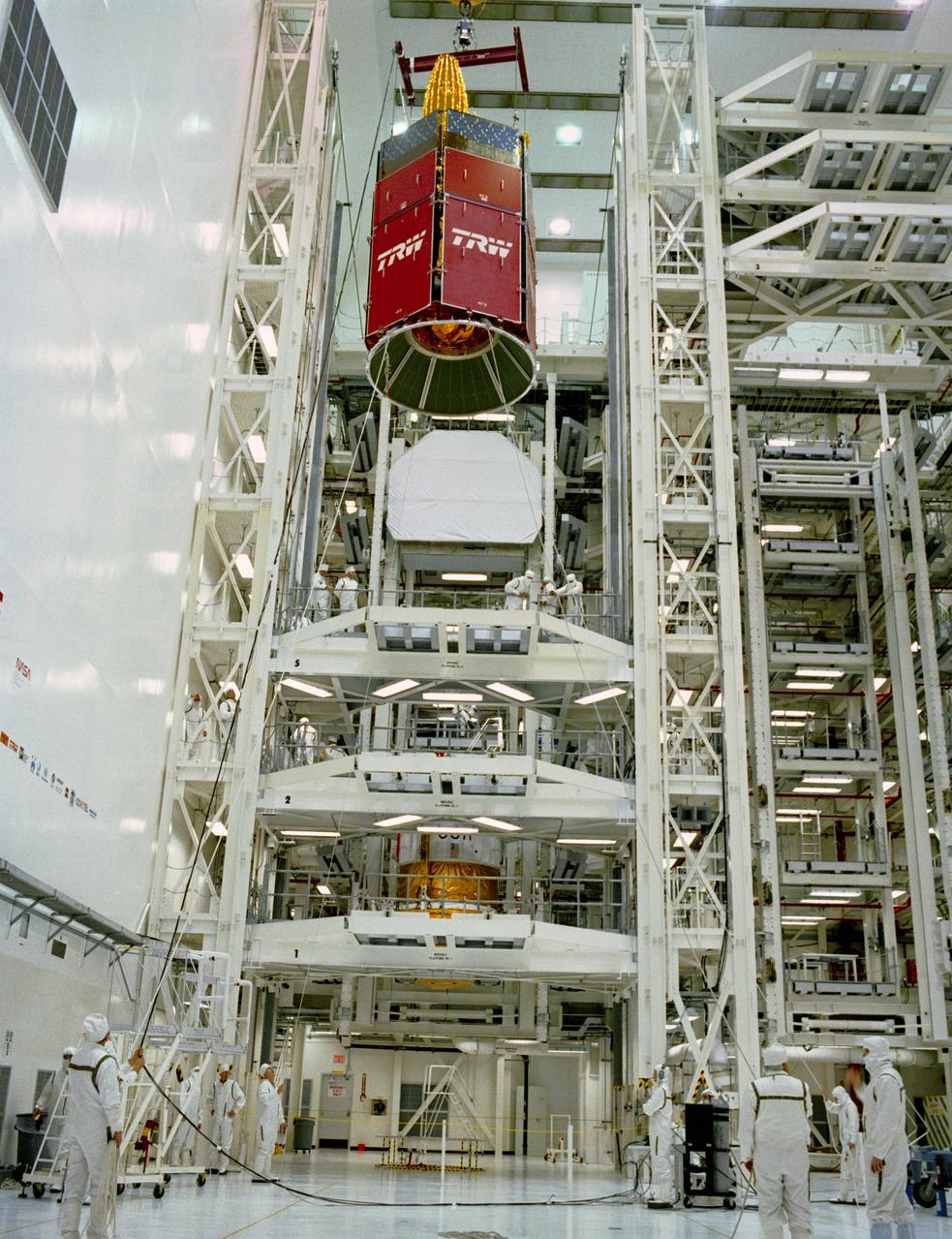
S89-27383 (29 Dec 1988) --- This wide shot of a test cell in KSC's Vertical Processing Facility affords an overall scene of the mating process of the STS 29 tracking and data relay satellite (TDRS-D, in foreground) with its inertial upper stage (IUS-9, in lower part of frame). Later the tandem will be loaded into the cargo bay of Discovery.
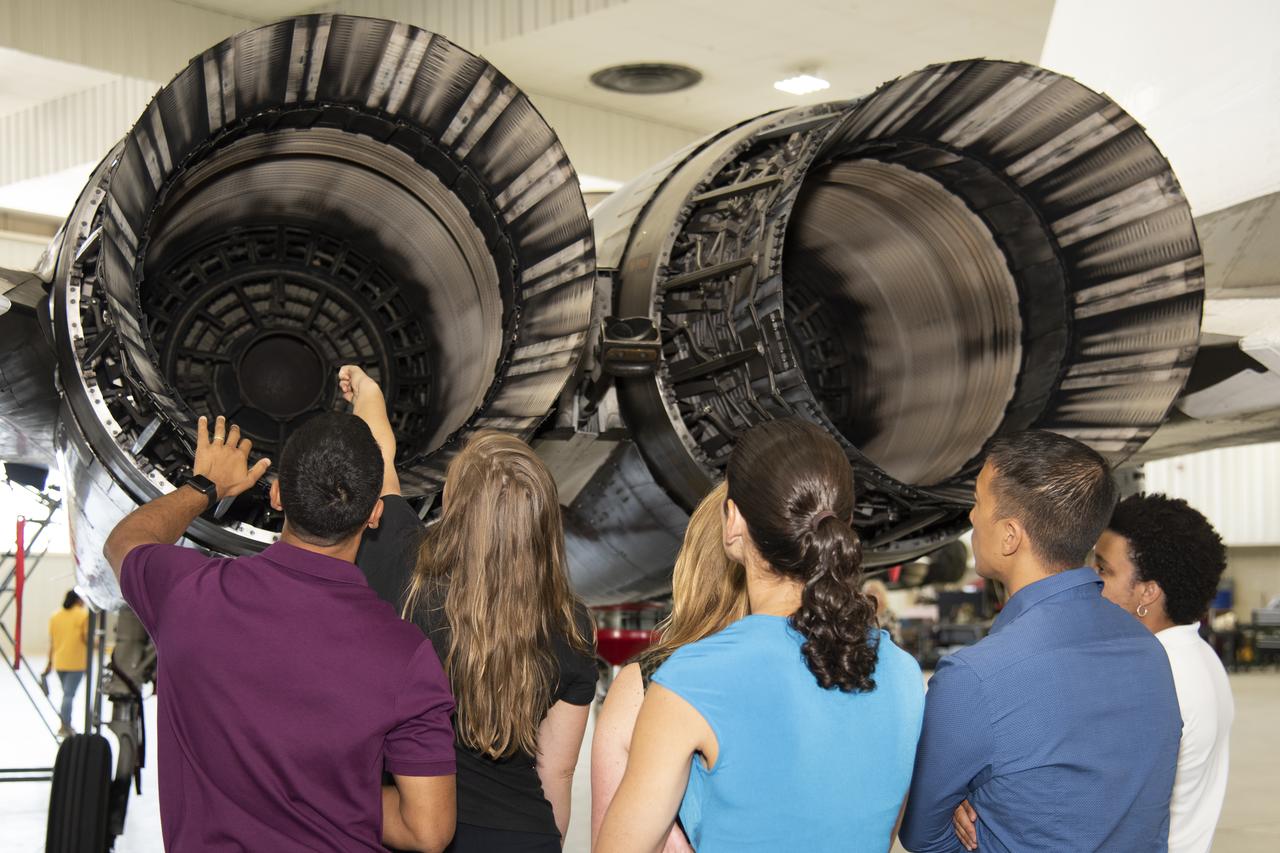
NASA's 2017 astronaut candidates toured aircraft hangar at Armstrong Flight Research Center, in Southern California (L to R) Raja Chari, Jenni Sidey-Gibbons, Loral O'Hara, Jasmin Moghbeli, Jonny Kim and Jessica Watkins look inside the engine nozzle of an F-15 jet. The F-15 will fly in tandem with the X-59 QueSST during early flight test stages for the X-59 development.

NASA Acting Chief Technologist Douglas Terrier gives a talk to teachers attending a professional development workshop held in tandem with the Intrepid Space & Science Festival, Saturday, Aug. 5, 2017 at the Intrepid Sea, Air & Space Museum in New York City. The week-long festival featured talks, films and cutting-edge displays showcasing NASA technology. Photo Credit: (NASA/Bill Ingalls)

Scaled Composites' Proteus aircraft and an F/A-18 Hornet from NASA's Dryden Flight Research Center at Mojave Airport in Southern California. The unique tandem-wing Proteus was the testbed for a series of UAV collision-avoidance flight demonstrations. An Amphitech 35GHz radar unit installed below Proteus' nose was the primary sensor for the Detect, See and Avoid tests. NASA Dryden's F/A-18 Hornet was one of many different aircraft used in the tests.
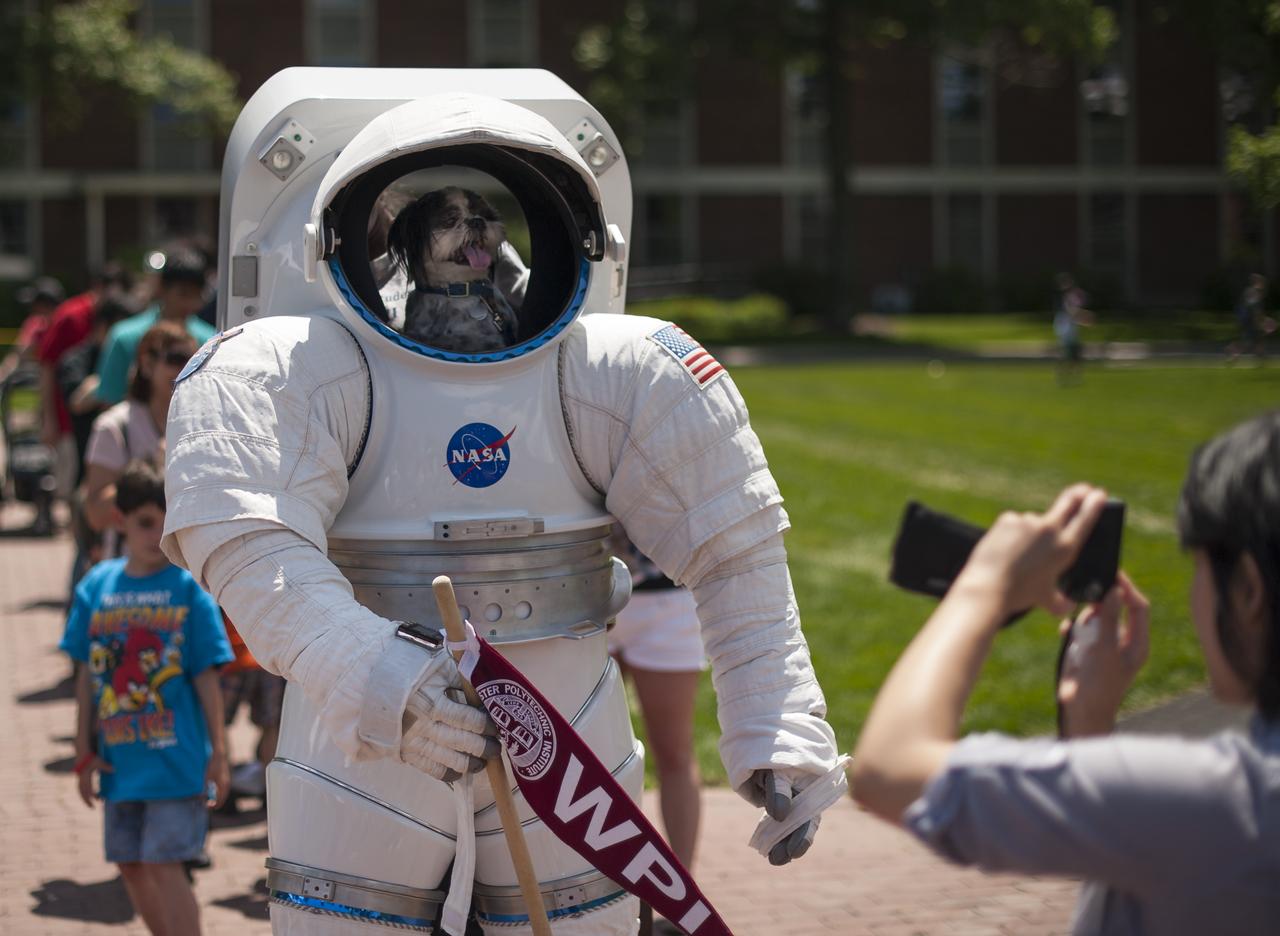
Visitors, some with their dogs, line up to make their photo inside a space suit exhibit during the Worcester Polytechnic Institute (WPI) "TouchTomorrow" education and outreach event that was held in tandem with the NASA-WPI Sample Return Robot Centennial Challenge on Saturday, June 16, 2012 in Worcester, Mass. The NASA-WPI challenge tasked robotic teams to build autonomous robots that can identify, collect and return samples. NASA needs autonomous robotic capability for future planetary exploration. Photo Credit: (NASA/Bill Ingalls)
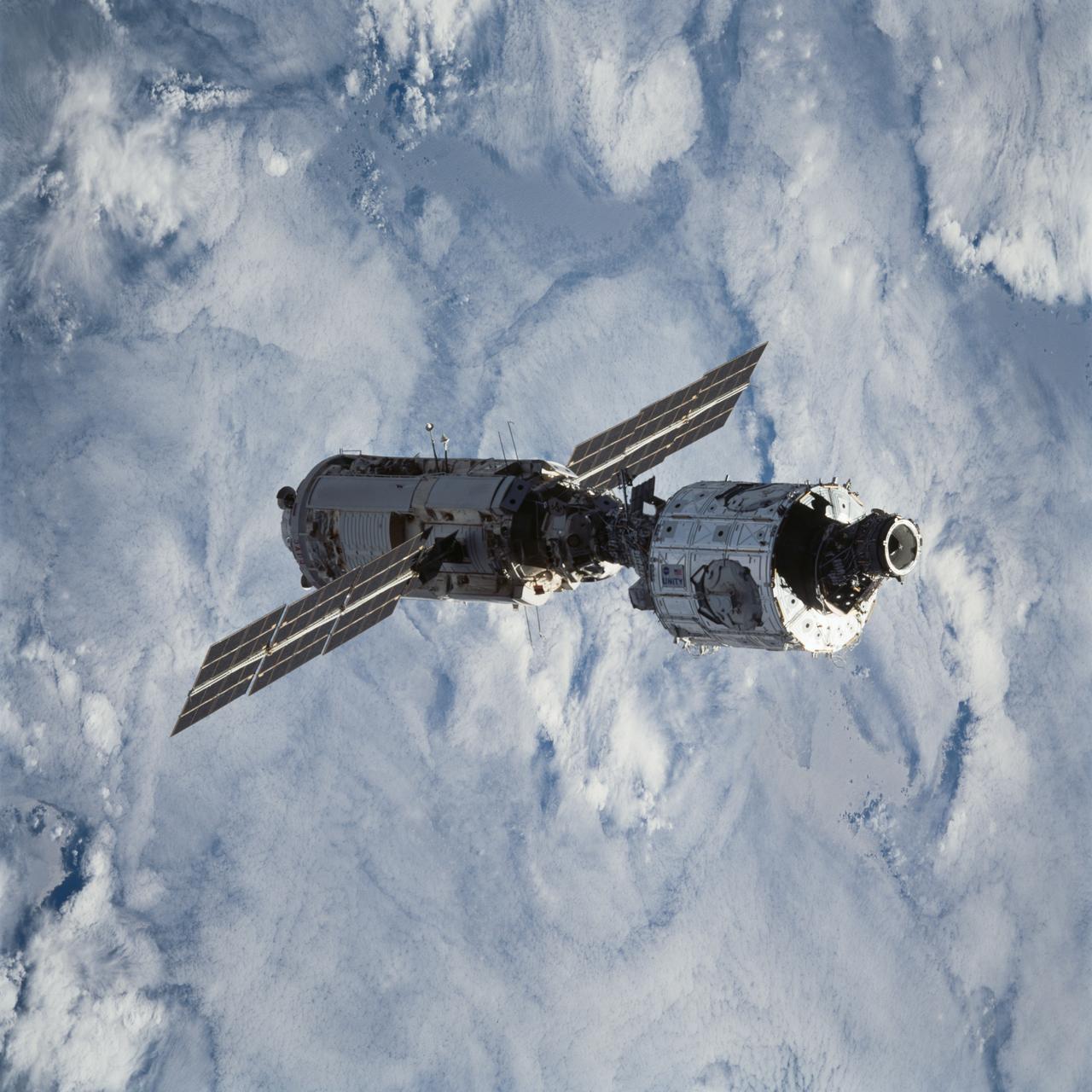
STS088-703-032 (4-15 Dec. 1998) --- Blanketing clouds form the backdrop for this 70mm scene of the connected Zarya and Unity modules after having been released from Endeavour's cargo bay a bit earlier. Six crew members, who had earlier spent the majority of their on-duty mission time working on the tandem of space hardware, watched the joined modules from Endeavour in a survey and fly-around mode.
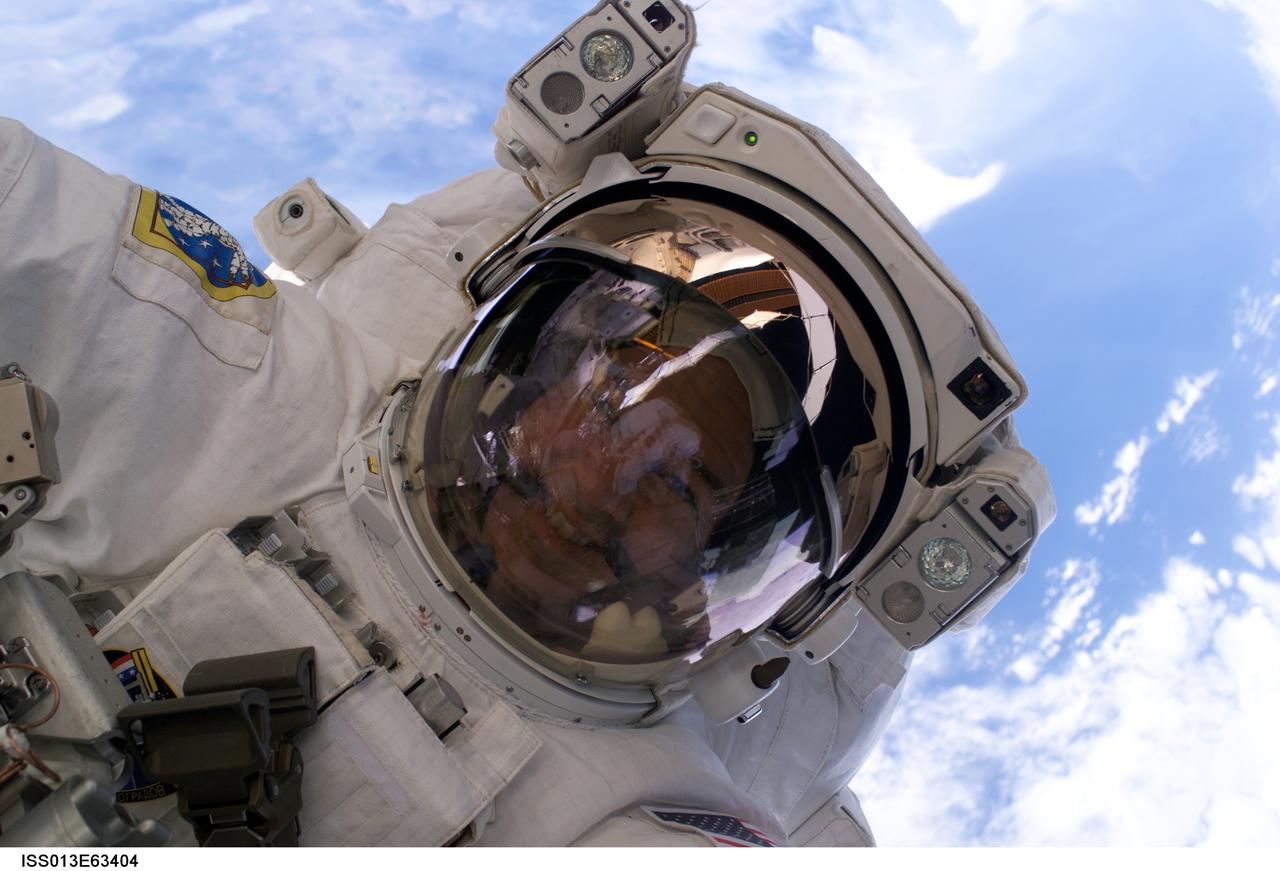
ISS013-E-63404 (3 August 2006) --- Astronaut Jeffrey N. Williams, Expedition 13 NASA space station science officer and flight engineer, is photographed during a 5-hour, 54-minute excursion which he shared with European Space Agency astronaut Thomas Reiter (out of frame). For part of the spacewalk, the pair worked closely in tandem, and then worked separately, getting ahead of their timeline, thus enabling the two to tack on extra tasks.
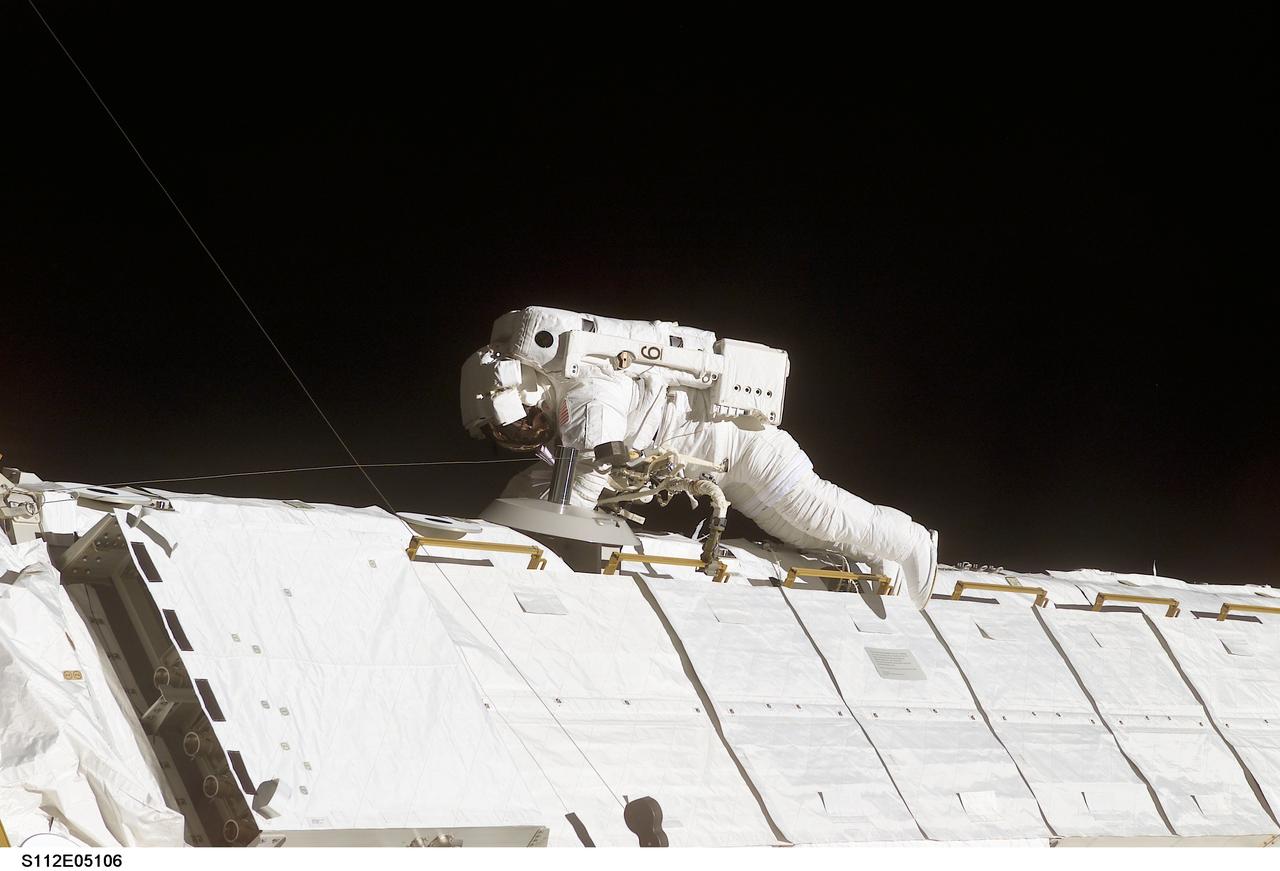
STS112-E-05106 (10 October 2002) --- Astronaut Piers J. Sellers, STS-112 mission specialist, works on the Starboard One (S1) Truss, newly installed on the International Space Station (ISS). Astronaut David A. Wolf (out of frame), mission specialist, worked in tandem with Sellers during the spacewalk. STS-112’s first session of extravehicular activity (EVA) lasted 7 hours and 1 minute.
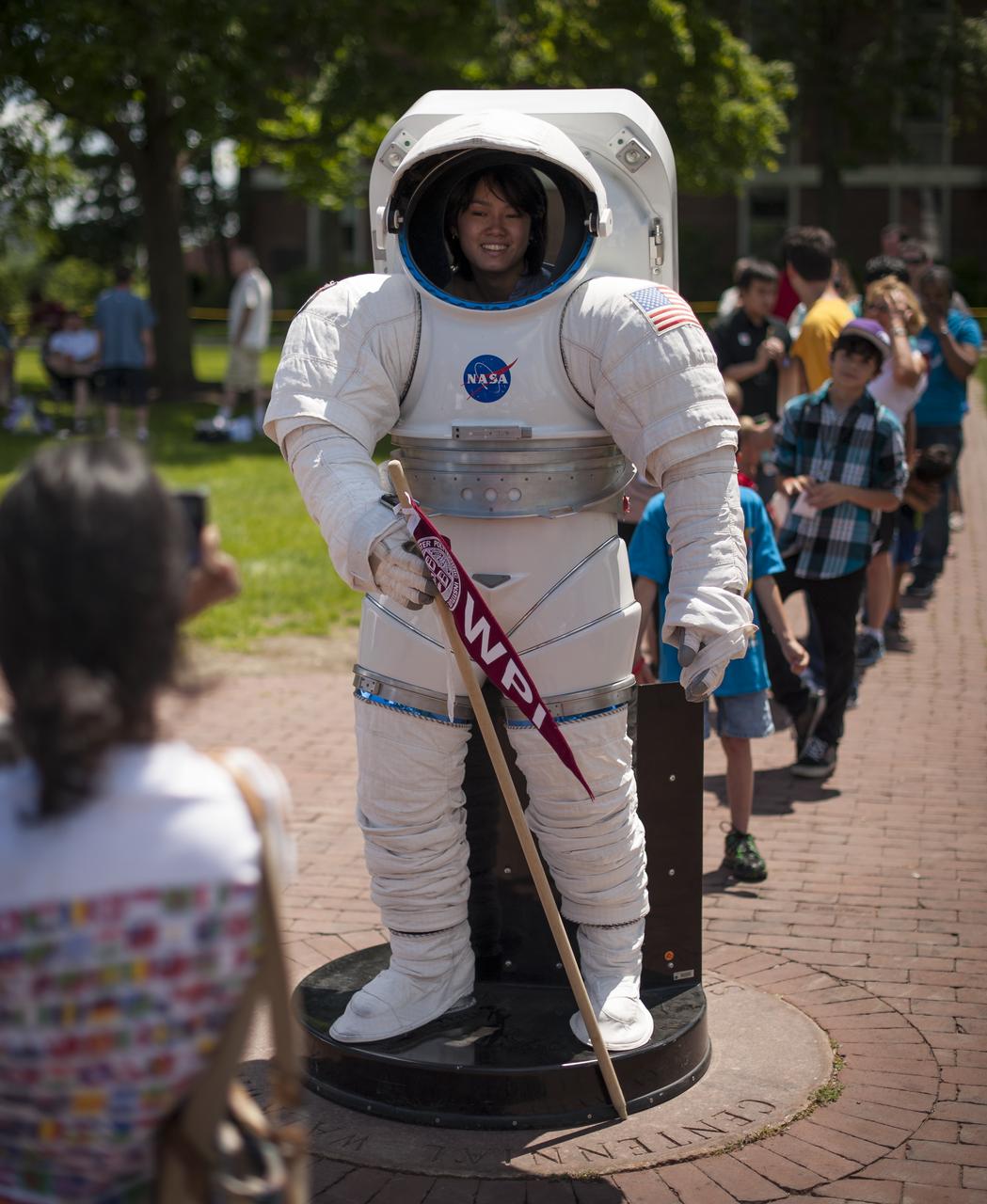
Visitors, some with their dogs, line up to make their photo inside a space suit exhibit during the Worcester Polytechnic Institute (WPI) "TouchTomorrow" education and outreach event that was held in tandem with the NASA-WPI Sample Return Robot Centennial Challenge on Saturday, June 16, 2012 in Worcester, Mass. The NASA-WPI challenge tasked robotic teams to build autonomous robots that can identify, collect and return samples. NASA needs autonomous robotic capability for future planetary exploration. Photo Credit: (NASA/Bill Ingalls)
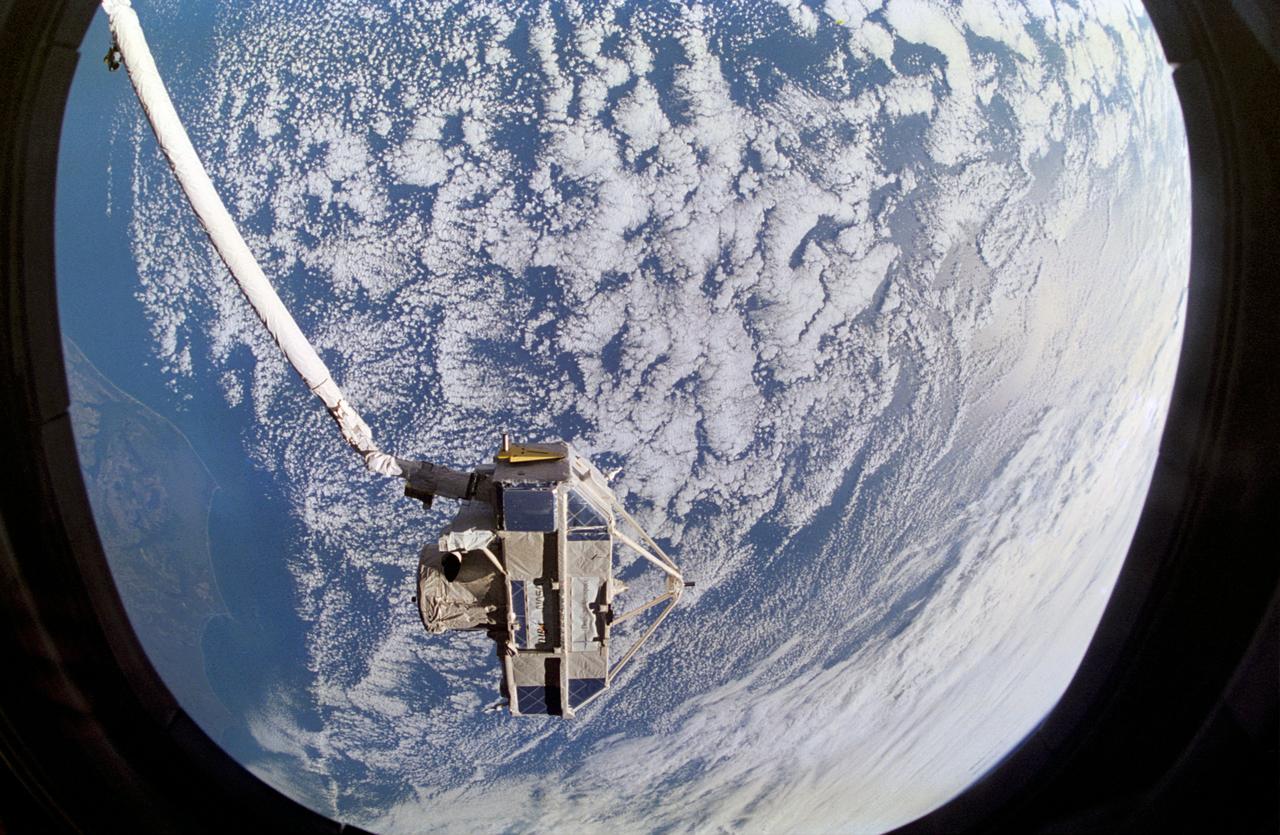
Clouds over the Atlantic Ocean serve as the backdrop for this 70mm scene of the Cryogenic Infrared Spectrometers and Telescopes for the Atmosphere (CRISTA), attached to the Shuttle Pallet System (SPAS). CRISTA-SPAS was in the grasp of the Space Shuttle Atlantis Remote Manipulator System (RMS) arm. The crew deployed the Crista-SPAS on November 4, 1994 and the tandem remained in free-flight until November 12, 1994 when it was retrieved by the Canadian-built RMS, controlled by payload commander Ellen Ochoa.
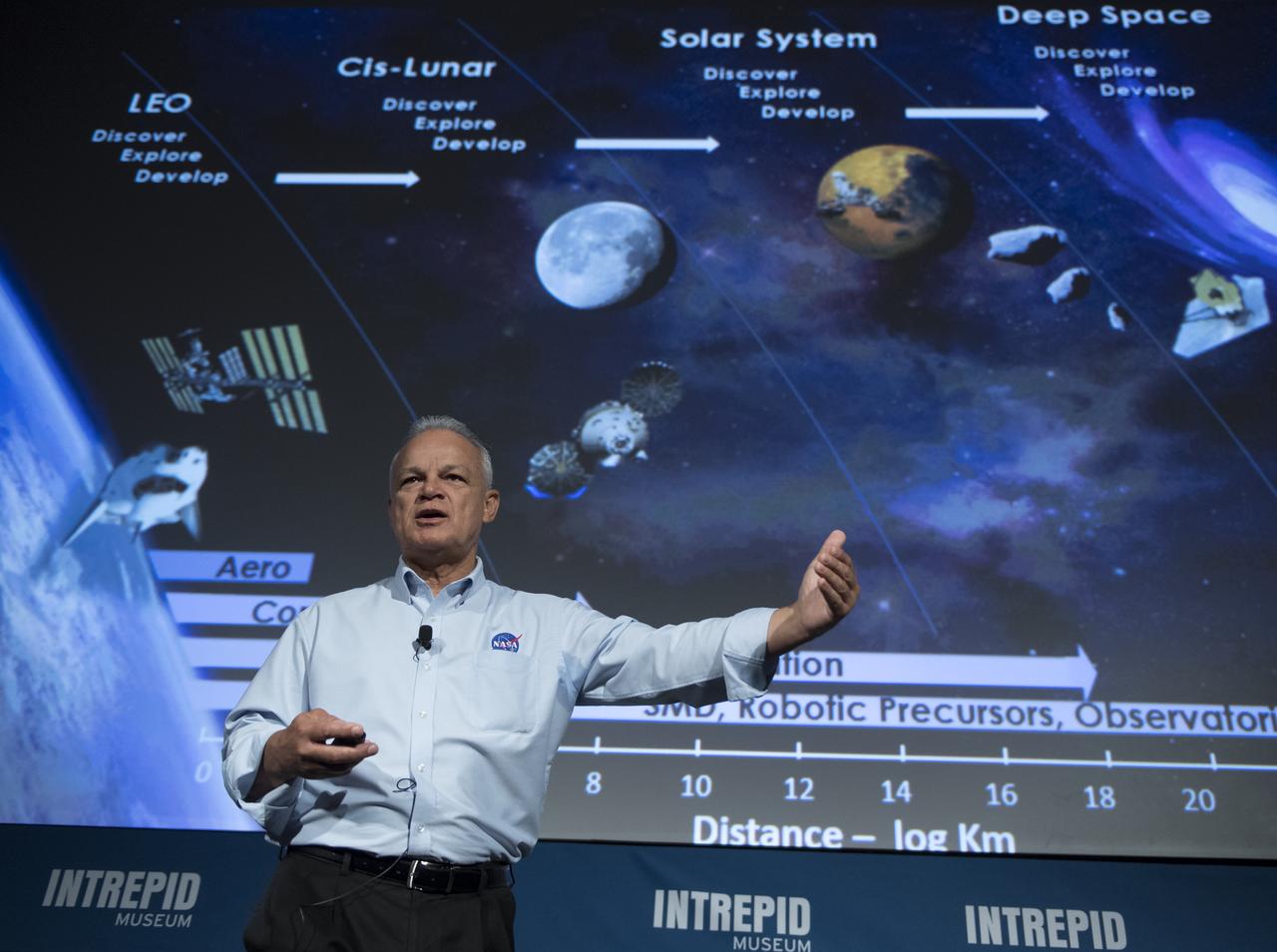
NASA Acting Chief Technologist Douglas Terrier gives a talk to teachers attending a professional development workshop held in tandem with the Intrepid Space & Science Festival, Saturday, Aug. 5, 2017 at the Intrepid Sea, Air & Space Museum in New York City. The week-long festival featured talks, films and cutting-edge displays showcasing NASA technology. Photo Credit: (NASA/Bill Ingalls)
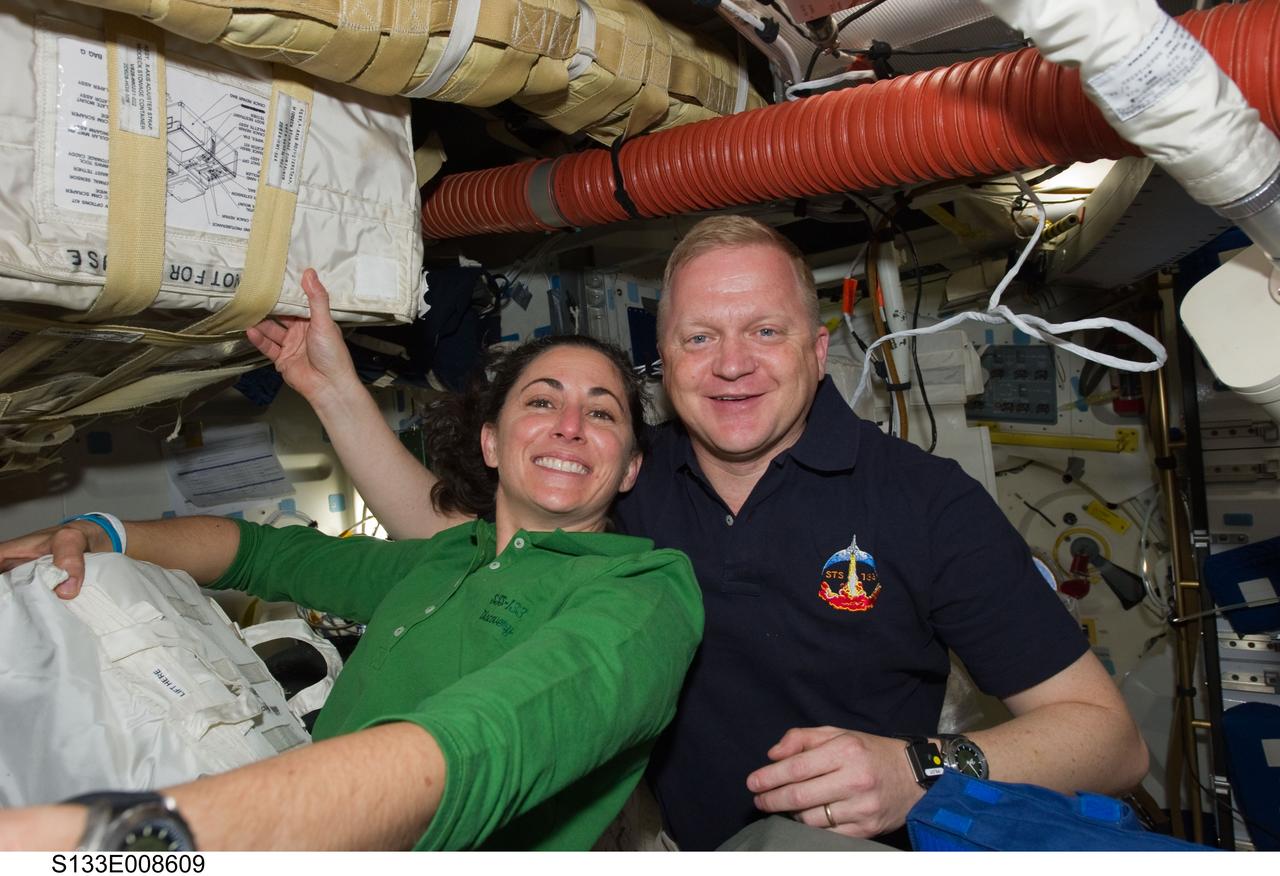
S133-E-008609 (3 March 2011) --- On Discovery's middeck, while the shuttle was docked to the International Space Station, NASA astronauts Nicole Stott, STS-133 mission specialist, and Eric Boe, pilot, appear joyous at the progress of a series of moving days onboard the tandem of orbital spacecraft. Photo credit: NASA or National Aeronautics and Space Administration.
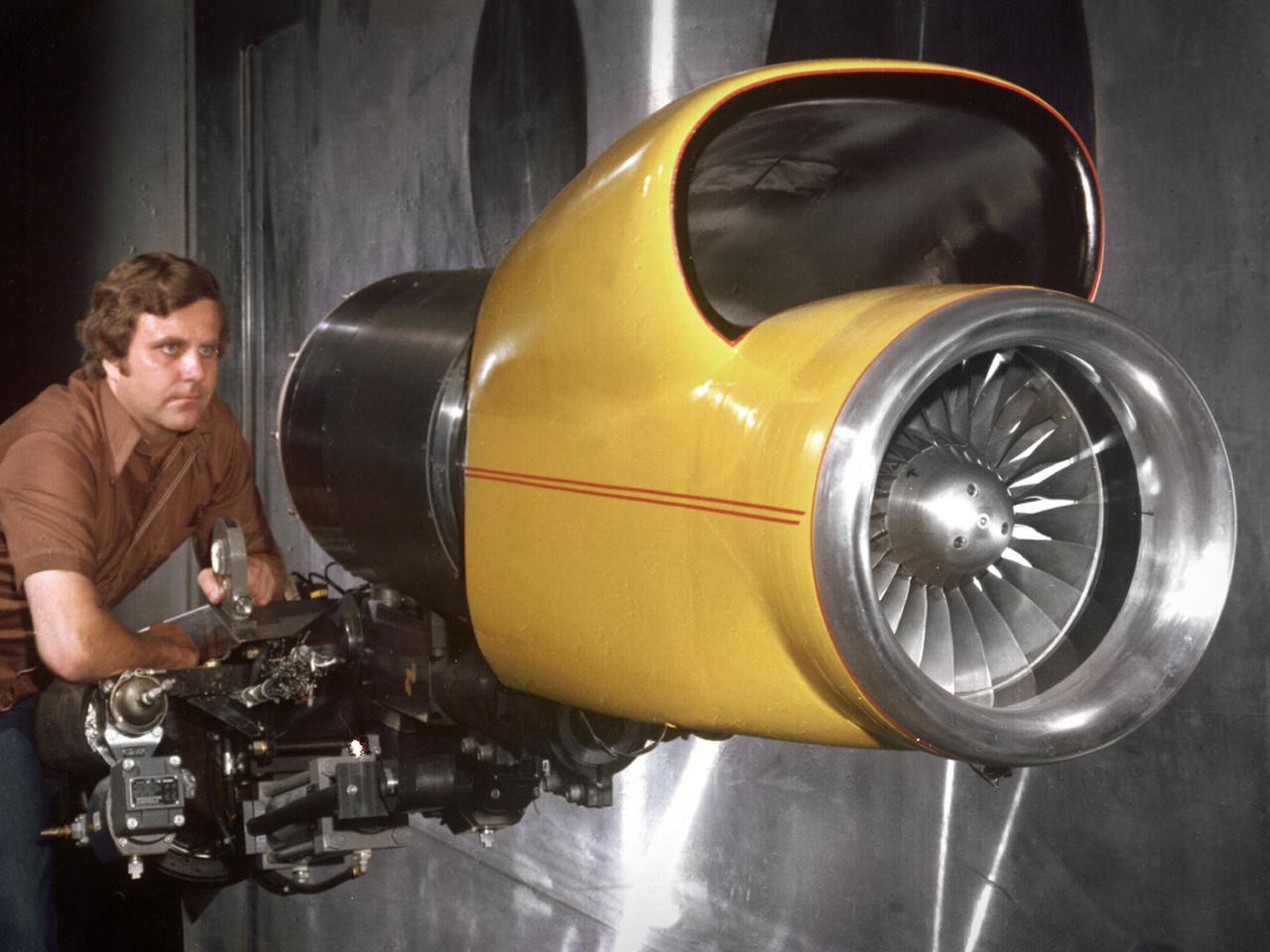
A technician checks a 0.25-scale engine model of a Vought Corporation V-530 engine in the test section of the 10- by 10-Foot Supersonic Wind Tunnel at the National Aeronautics and Space Administration (NASA) Lewis Research Center. Vought created a low-drag tandem-fan Vertical/Short and Takeoff and Landing (V/STOL) engine in the mid-1970s, designated as the V-530. The first fan on the tandem-fan engine was supplied with air through a traditional subsonic inlet, seen on the lower front of the engine. The air was exhausted through the nacelle during normal flight and directed down during takeoffs. The rear fan was supplied by the oval-shaped top inlet during all phases of the flight. The second fan exhausted its air through a rear vectorable nozzle. NASA Lewis and Vought partnered in the late 1970s to collect an array of inlet and nozzle design information on the tandem fan engines for the Navy. Vought created this .25-scale model of the V-530 for extensive testing in Lewis' 10- by 10-foot tunnel. During an early series of tests, the front fan was covered, and a turbofan simulator was used to supply air to the rear fan. The researchers then analyzed the performance of only the front fan inlet. During the final series of tests, the flow from the front fan was used to supply airflow to the rear fan. The researchers studied the inlet's recovery, distortion, and angle-of-attack limits over various flight conditions.
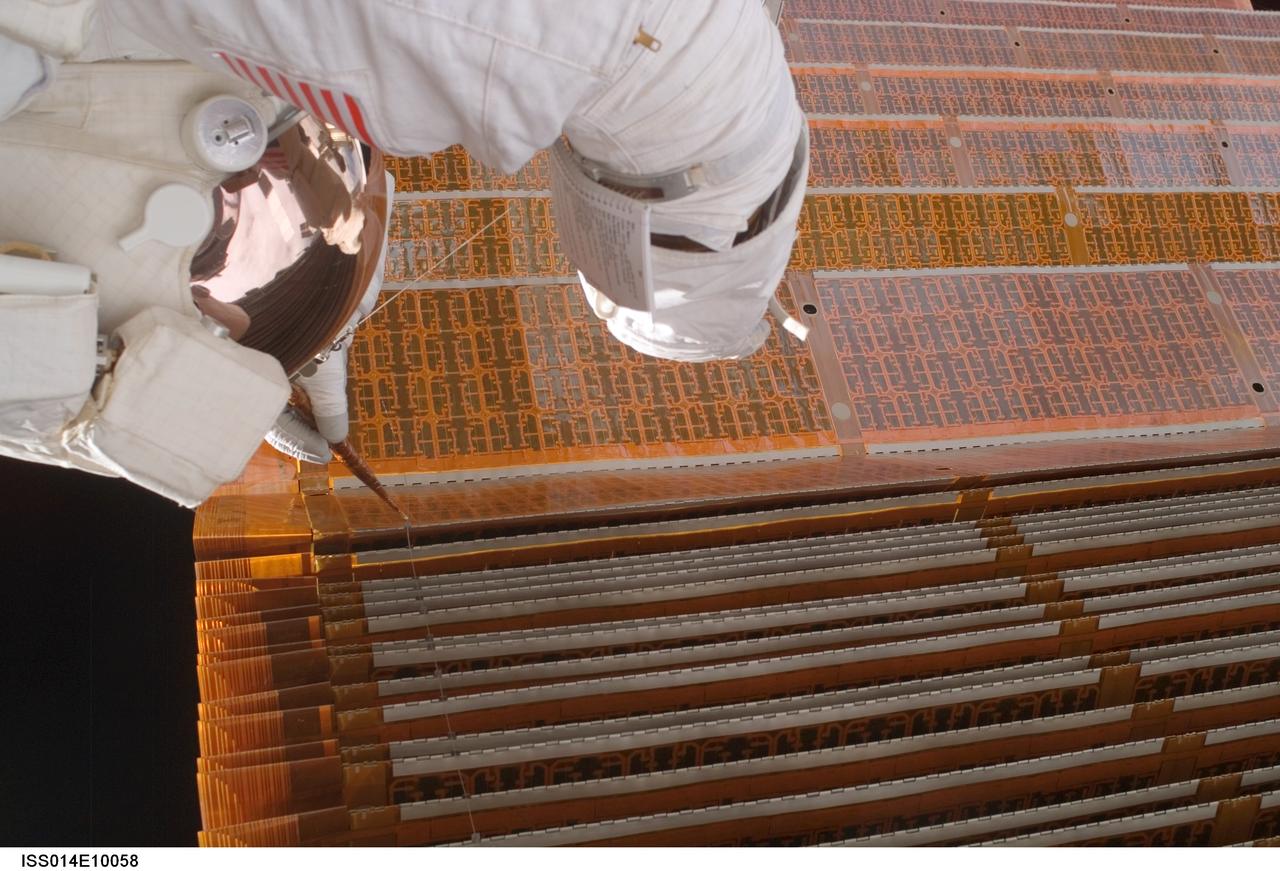
ISS014-E-10058 (18 Dec. 2006) --- Astronaut Robert L. Curbeam Jr., STS-116 mission specialist, works with the port overhead solar array wing on the International Space Station's P6 truss during the mission's fourth session of extravehicular activity (EVA). European Space Agency (ESA) astronaut Christer Fuglesang (out of frame), mission specialist, worked in tandem with Curbeam, using specially prepared, tape-insulated tools, to guide the array wing neatly inside its blanket box during the 6-hour, 38-minute spacewalk.
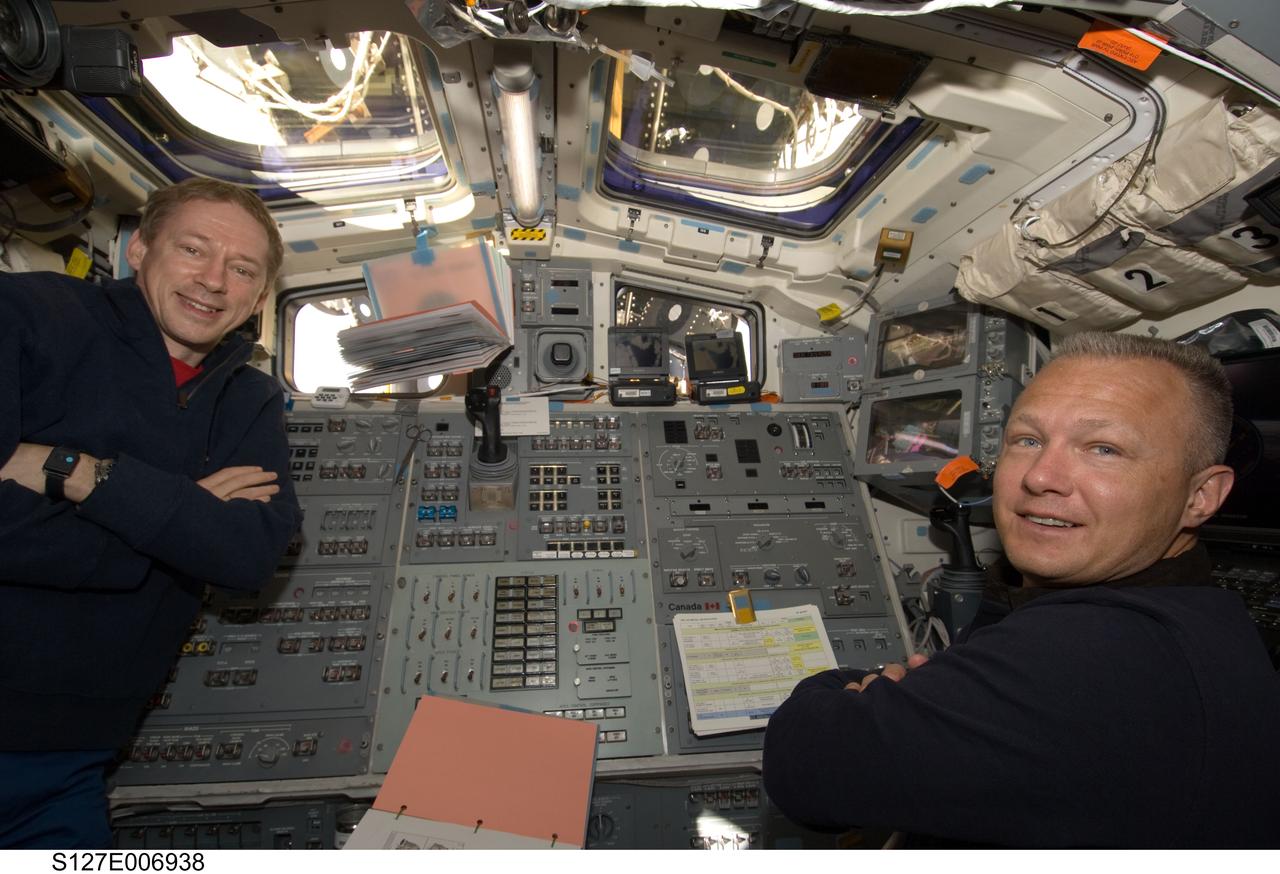
S127-E-006938 (19 July 2009) --- European Space Agency astronaut Frank De Winne (left), Expedition 20 flight engineer, and Doug Hurley, STS-127 pilot, are pictured at Endeavour's aft flight deck controls during flight day five operations with hardware on the International Space Station. The hardware moves conducted by astronauts Mark Polansky (out of frame), commander, and Hurley, in tandem with crew members onboard the station, will enable the second pair of spacewalkers--mission specialists Dave Wolf and Tom Marshburn--to perform its spacewalk assignment on July 20.
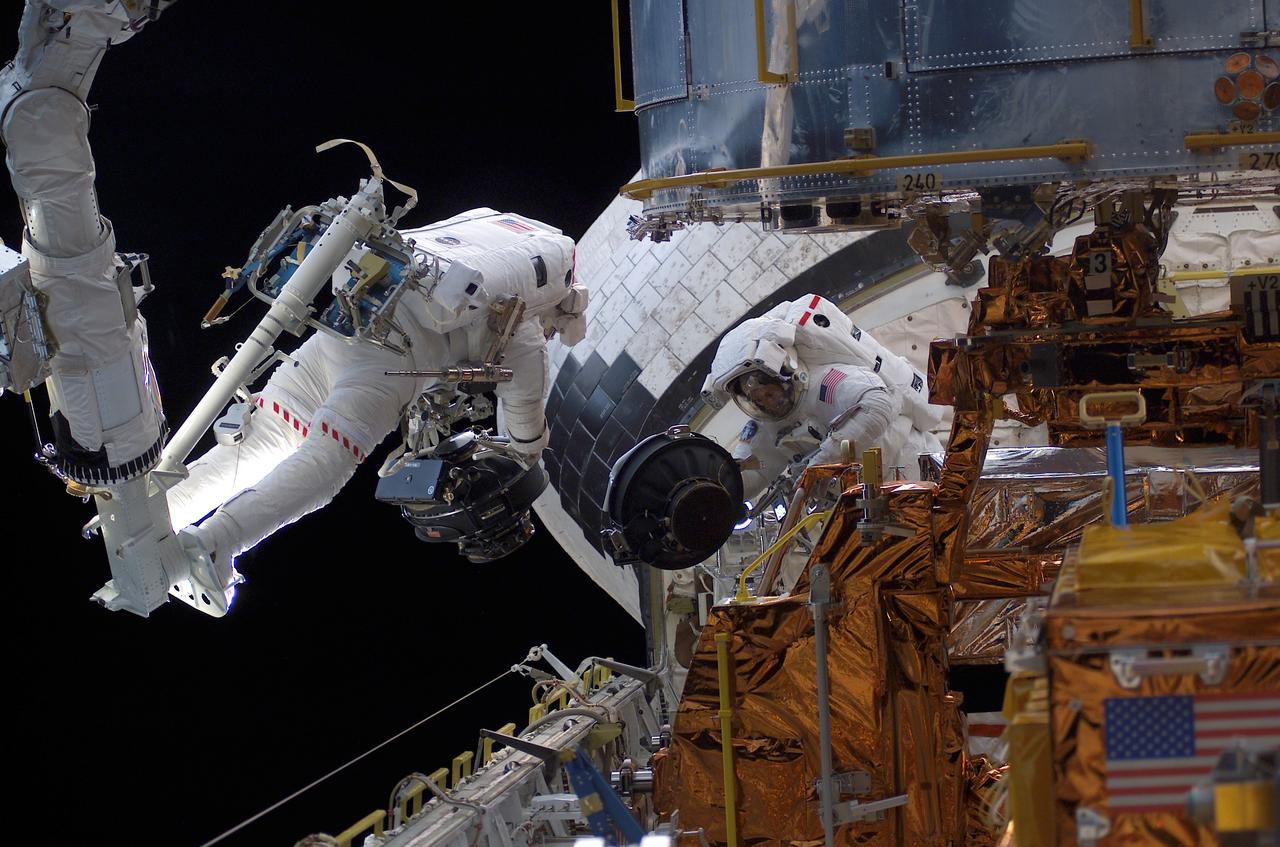
STS109-E-5402 (5 March 2002) --- With his feet secured on a platform connected to the remote manipulator system (RMS) robotic arm of the Space Shuttle Columbia, astronaut Michael J. Massimino, mission specialist, hovers over the shuttle's cargo bay while working in tandem with astronaut James H. Newman, mission specialist, during the STS-109 mission's second day of extravehicular activity (EVA). Inside Columbia's cabin, astronaut Nancy J. Currie, mission specialist, controlled the RMS. The image was recorded with a digital still camera.
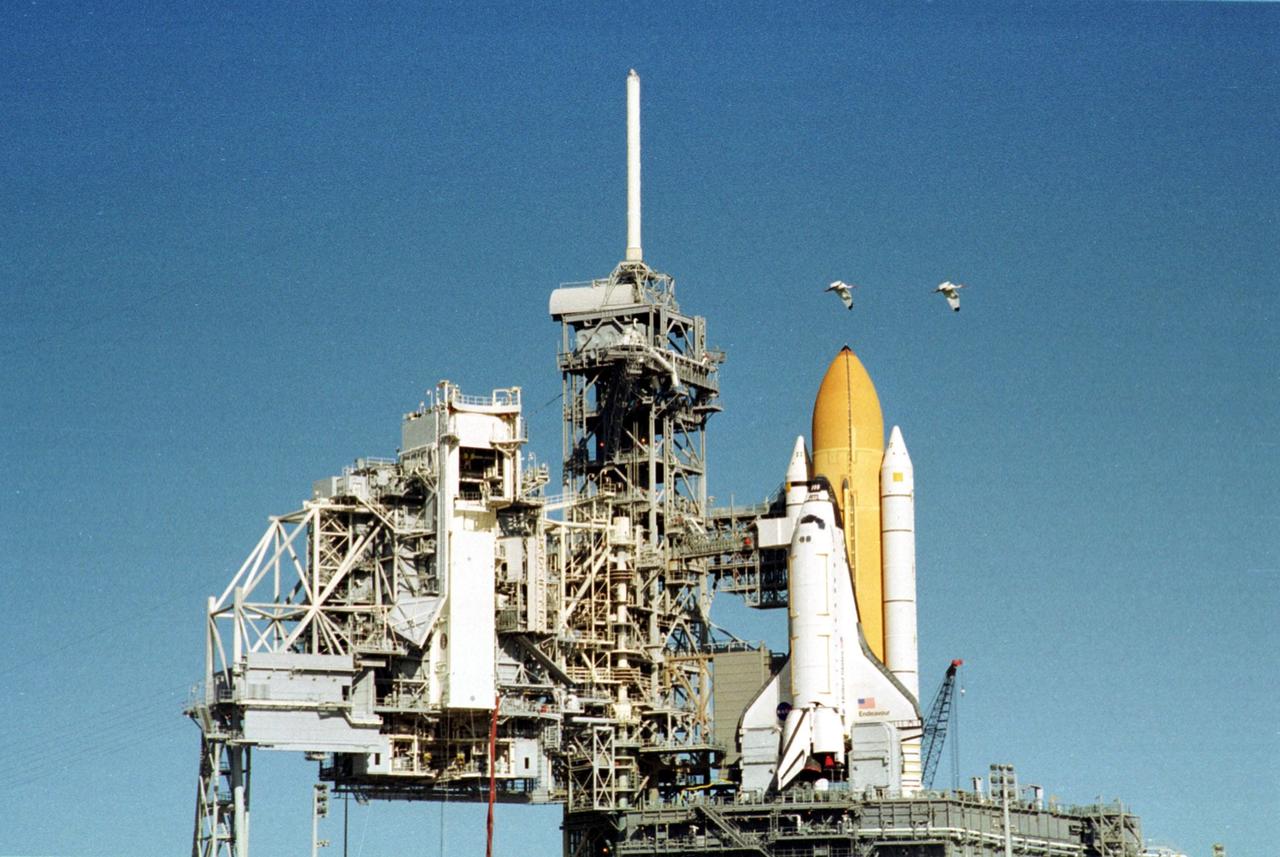
KENNEDY SPACE CENTER, Fla. -- Storks fly in tandem over the Space Shuttle Endeavour on the launch pad. Endeavour is scheduled to launch Nov. 29 on the first Utilization Flight to the International Space Station. At left is the Rotating Service Structure. A payload canister carrying the Multi-Purpose Logistics Module Raffaello is being lifted up the RSS to the Payload Changeout Room. From there the MPLM will be moved into Space Shuttle Endeavour's payload bay. Raffaello is filled with supplies and equipment for the Station. Endeavour will also carry the replacement Expedition 4 crew to the Station and return to Earth with the Expedition 3 crew
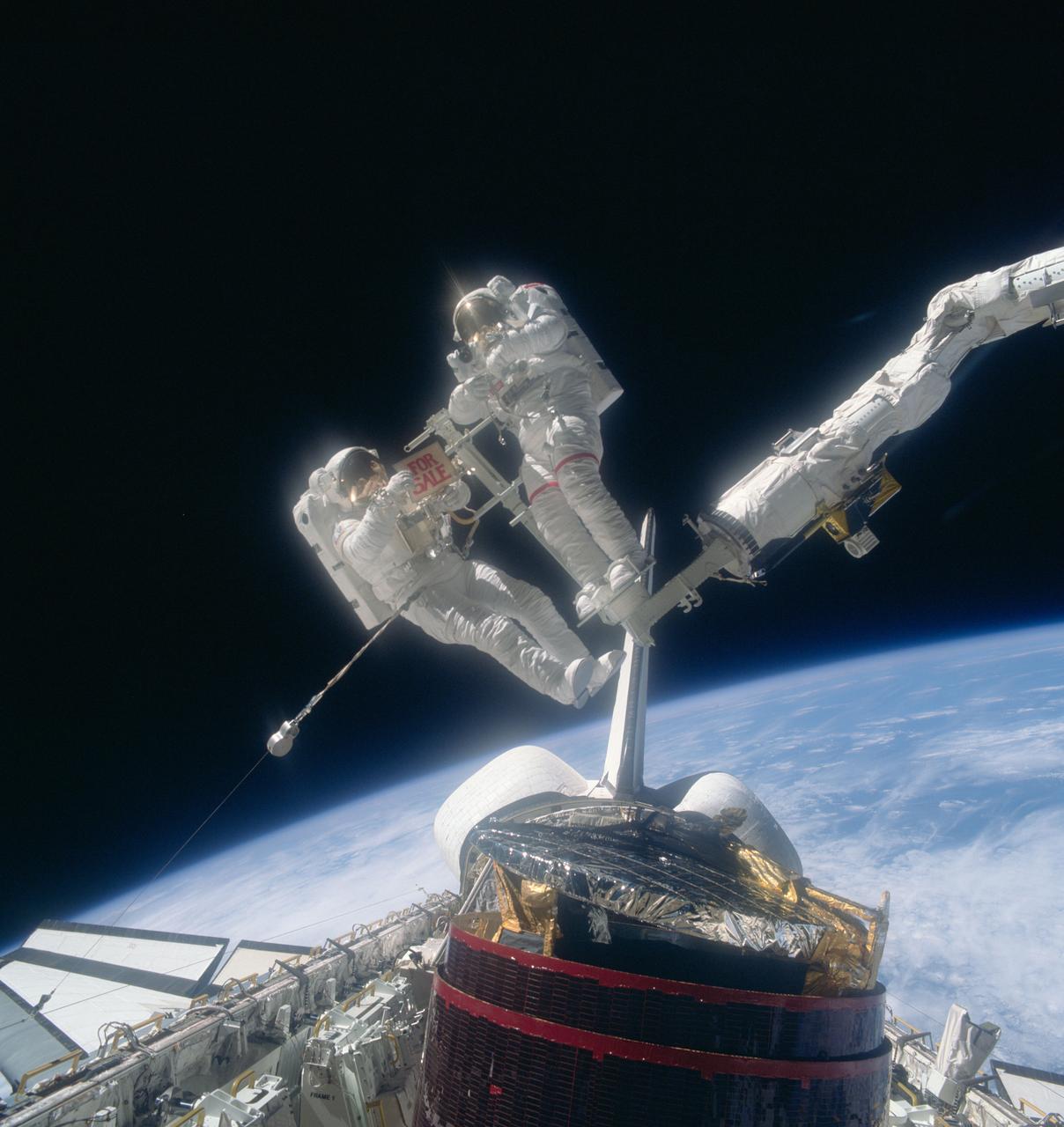
51A-39-063 (14 Nov 1984) --- A 70mm frame of WESTAR VI post-retrieval activity. Astronaut Dale A. Gardner (left), STS-51A mission specialist, holds a "For Sale" sign, making light reference to the status of the re-captured communications spacecraft, which has been stranded since its initial deployment. Astronaut Joseph P. Allen IV stands on the Mobile Foot Restraint (MFR), which in tandem with the Remote Manipulator System (RMS) arm, controlled by Dr. Anna L. Fisher inside the space shuttle Discovery's cabin, served as a cherry-picker for capture efforts. Photo credit: NASA
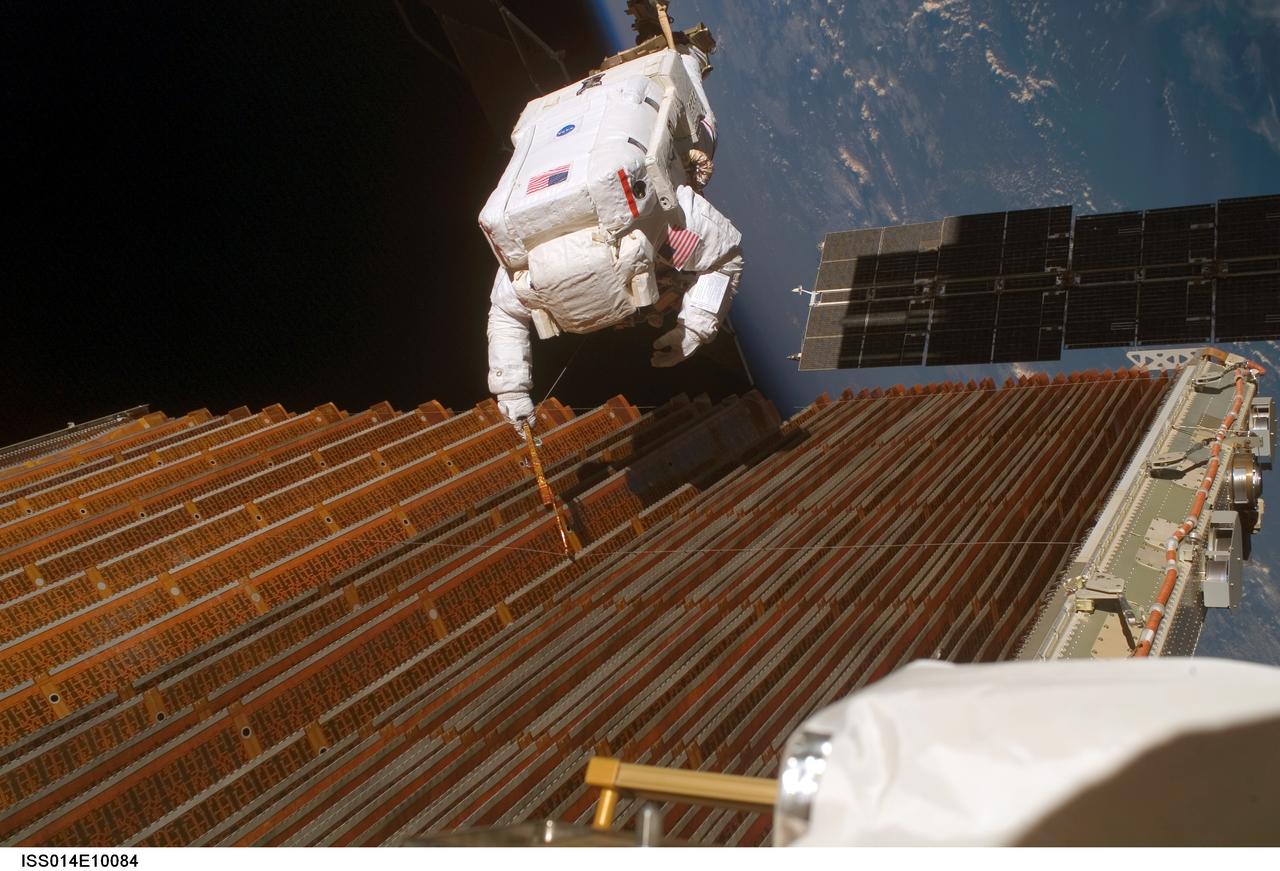
ISS014-E-10084 (18 Dec. 2006) --- Astronaut Robert L. Curbeam Jr., STS-116 mission specialist, works with the port overhead solar array wing on the International Space Station's P6 truss during the mission's fourth session of extravehicular activity (EVA). European Space Agency (ESA) astronaut Christer Fuglesang (out of frame), mission specialist, worked in tandem with Curbeam, using specially prepared, tape-insulated tools, to guide the array wing neatly inside its blanket box during the 6-hour, 38-minute spacewalk.

NASA Program Manager for Centennial Challenges Sam Ortega help show a young visitor how to drive a rover as part of the interactive NASA Mars rover exhibit during the Worcester Polytechnic Institute (WPI) "TouchTomorrow" education and outreach event that was held in tandem with the NASA-WPI Sample Return Robot Centennial Challenge on Saturday, June 16, 2012 in Worcester, Mass. The NASA-WPI challenge tasked robotic teams to build autonomous robots that can identify, collect and return samples. NASA needs autonomous robotic capability for future planetary exploration. Photo Credit: (NASA/Bill Ingalls)