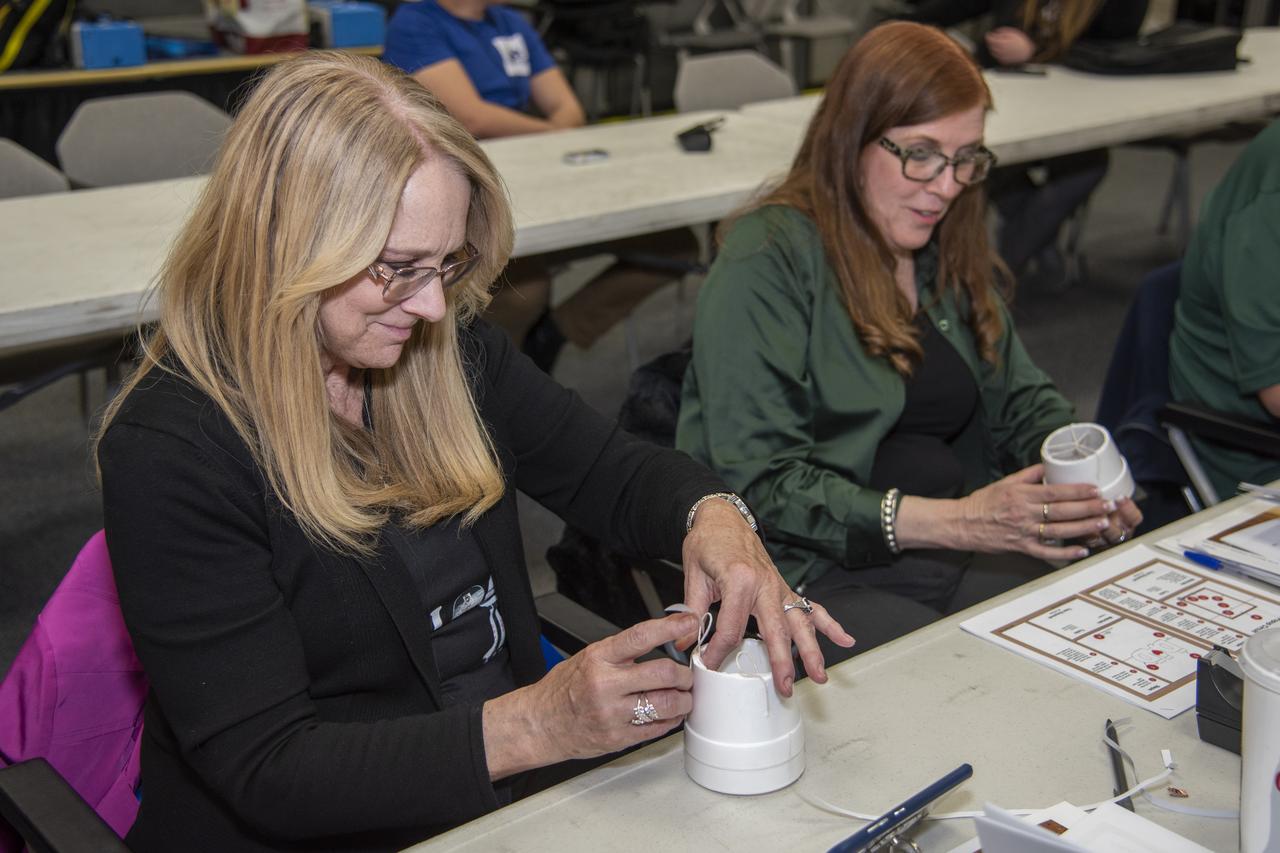
Teacher Kristen Deckner learns how to build a Remote Manipulator (Robotic) Arm during the Educational Technology Institute hosted by NASA Armstrong's Office of STEM Engagement.
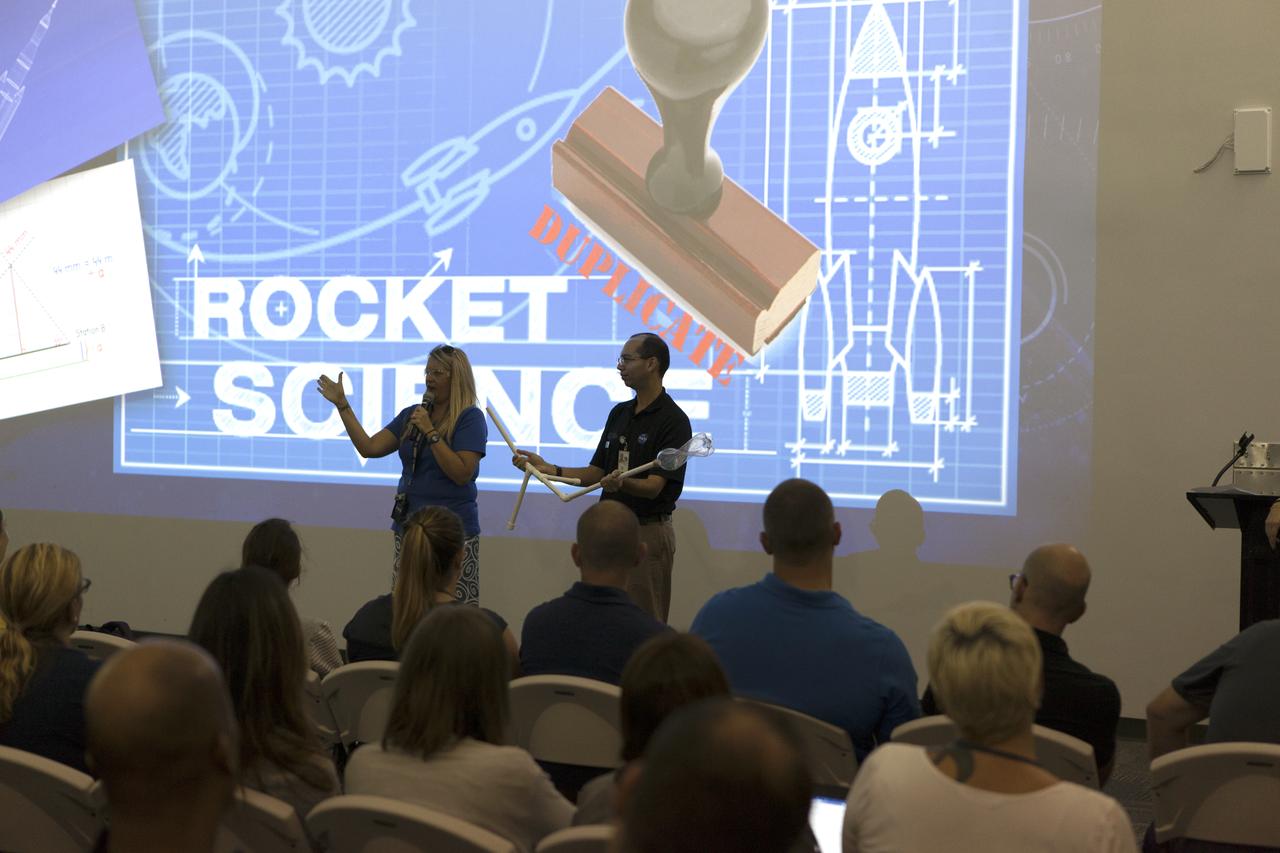
Education Specialists Lynn Dotson, left, of the NASA Public Engagement Center, and Lester Morales, right, of Texas State University's NASA STEM Educator Professional Development Collaborative, explain the Rocketry Engineering Design Challenge to teachers participating in the 2017 GE Foundation High School STEM Integration Conference at the Center for Space Education at NASA's Kennedy Space Center. High school teachers from across the country took part in the week-long conference, which is designed to explore effective ways for teachers, schools and districts from across the country to integrate STEM throughout the curriculum. The conference is a partnership between GE Foundation and the National Science Teachers Association.
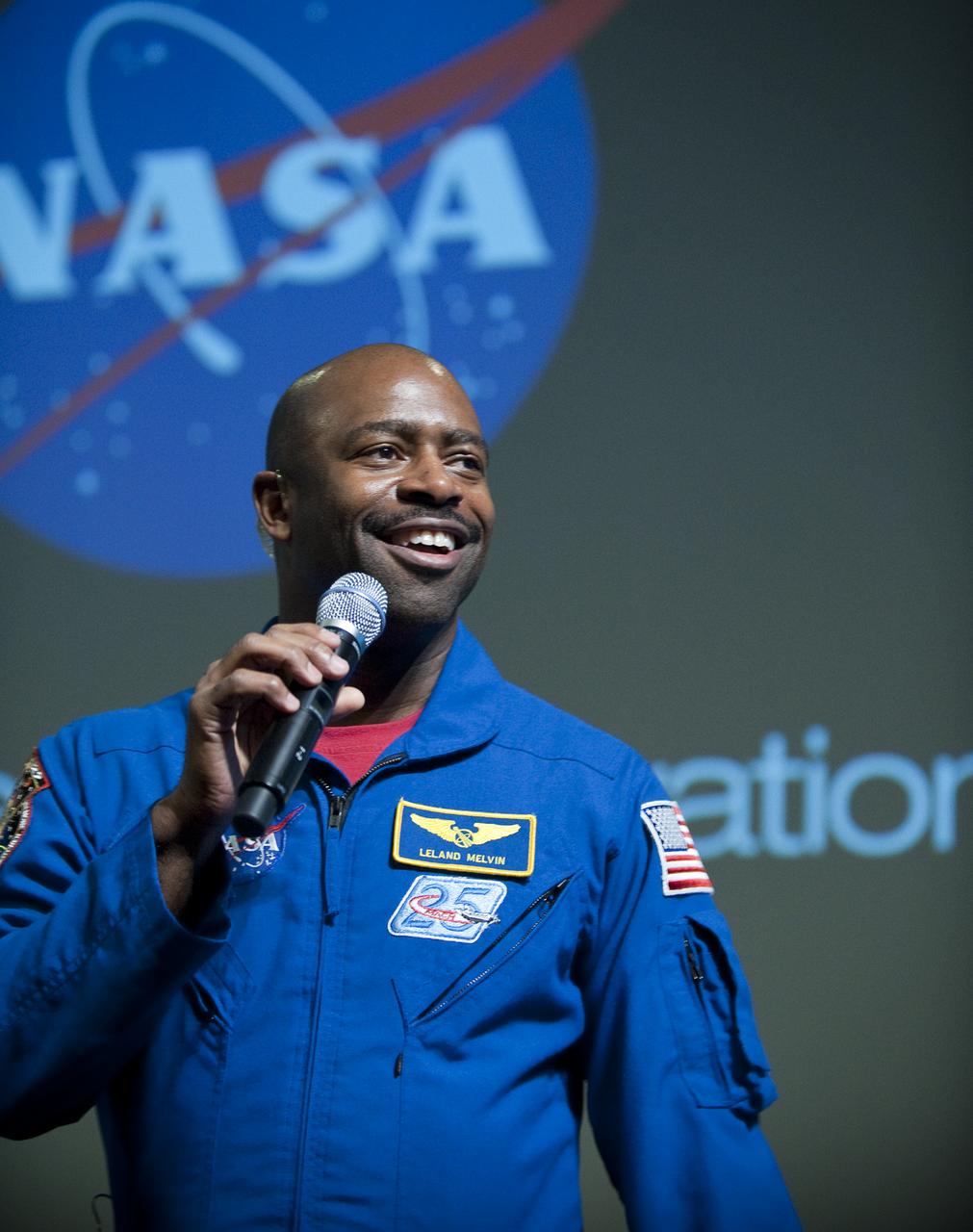
NASA astronaut Leland Melvin welcomes teachers and middle school students to the kick off of NASA's Summer of Innovation program at the Jet Propulsion Laboratory in Pasadena, Calif., Thursday, June 10, 2010. Through the program, NASA will engage thousands of middle school students and teachers in stimulating math and science-based education programs with the goal of increasing the number of future scientists, mathematicians, and engineers. Photo Credit: (NASA/Bill Ingalls)
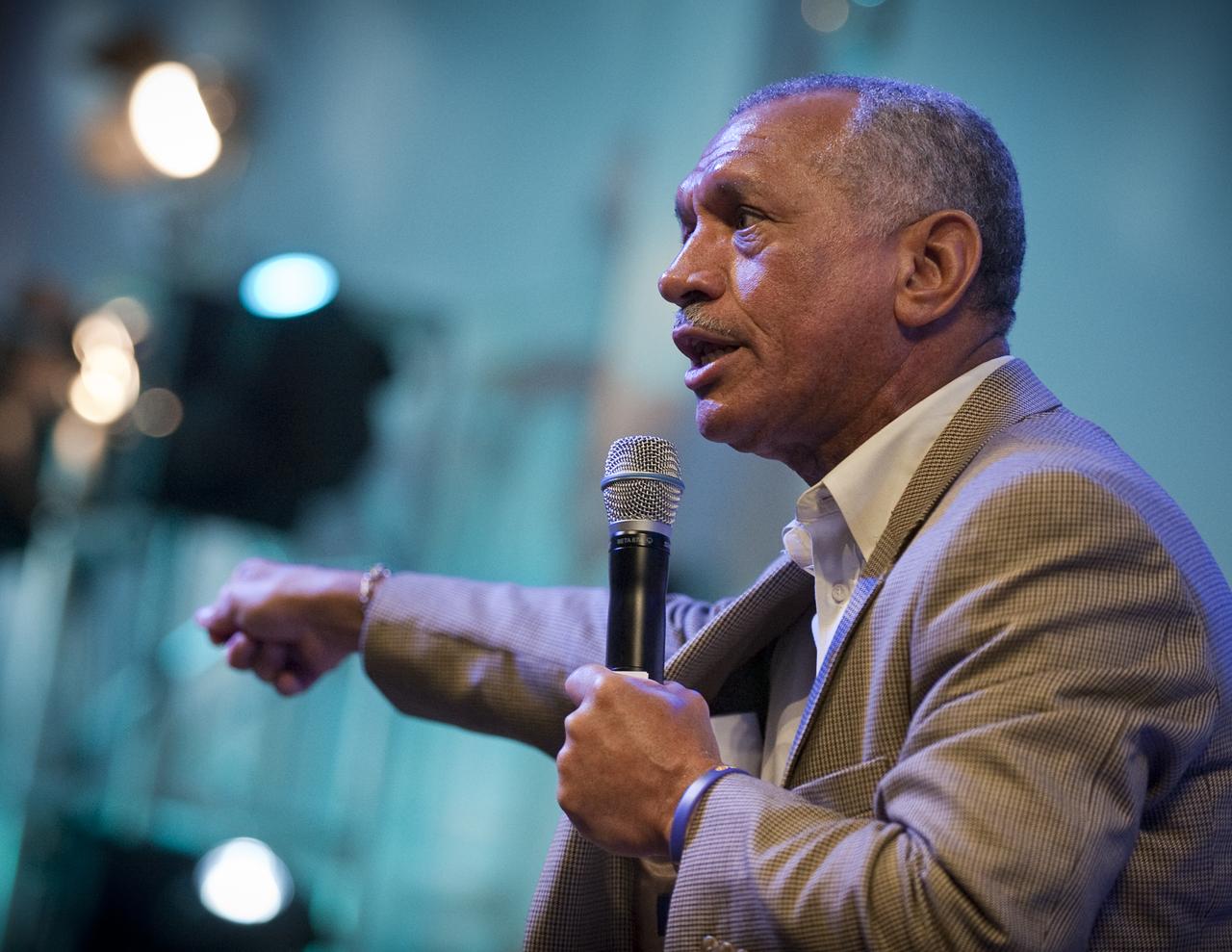
NASA Administrator Charles Bolden speaks with teachers and middle school students during the kick off of NASA's Summer of Innovation program at the Jet Propulsion Laboratory in Pasadena, Calif., Thursday, June 10, 2010. Through the program, NASA will engage thousands of middle school students and teachers in stimulating math and science-based education programs with the goal of increasing the number of future scientists, mathematicians, and engineers. Photo Credit: (NASA/Bill Ingalls)
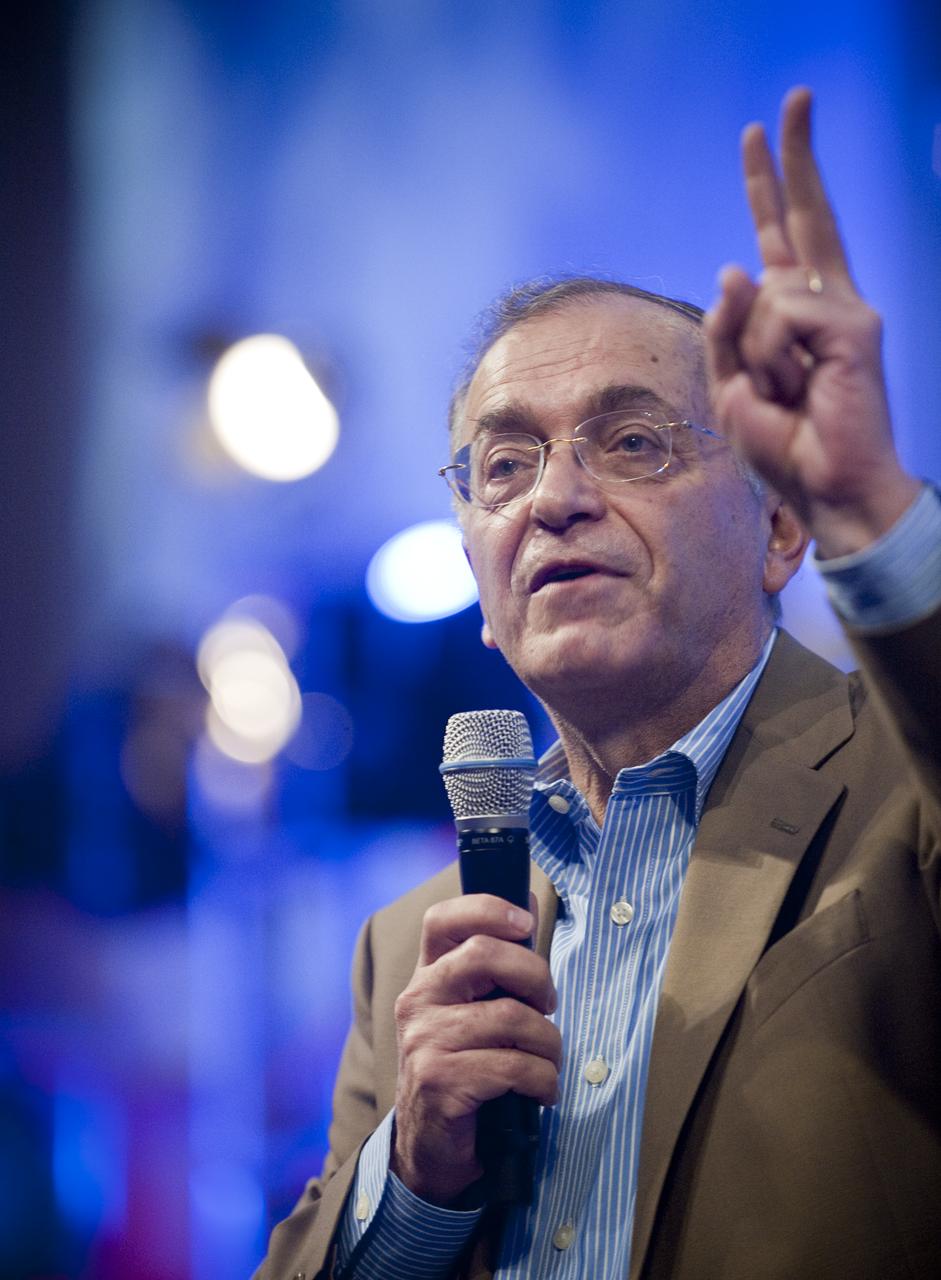
Jet Propulsion Laboratory Director Dr. Charles Elachi speaks with teachers and middle school students during the kick off of NASA's Summer of Innovation program at JPL in Pasadena, Calif., Thursday, June 10, 2010. Through the program, NASA will engage thousands of middle school students and teachers in stimulating math and science-based education programs with the goal of increasing the number of future scientists, mathematicians, and engineers. Photo Credit: (NASA/Bill Ingalls)

Performers from Los Angeles Hamilton High School's Kid Tribe entertain teachers and middle school students during the kick off of NASA's Summer of Innovation program at the Jet Propulsion Laboratory in Pasadena, Calif., Thursday, June 10, 2010. Through the program, NASA will engage thousands of middle school students and teachers in stimulating math and science-based education programs with the goal of increasing the number of future scientists, mathematicians, and engineers. Photo Credit: (NASA/Bill Ingalls)
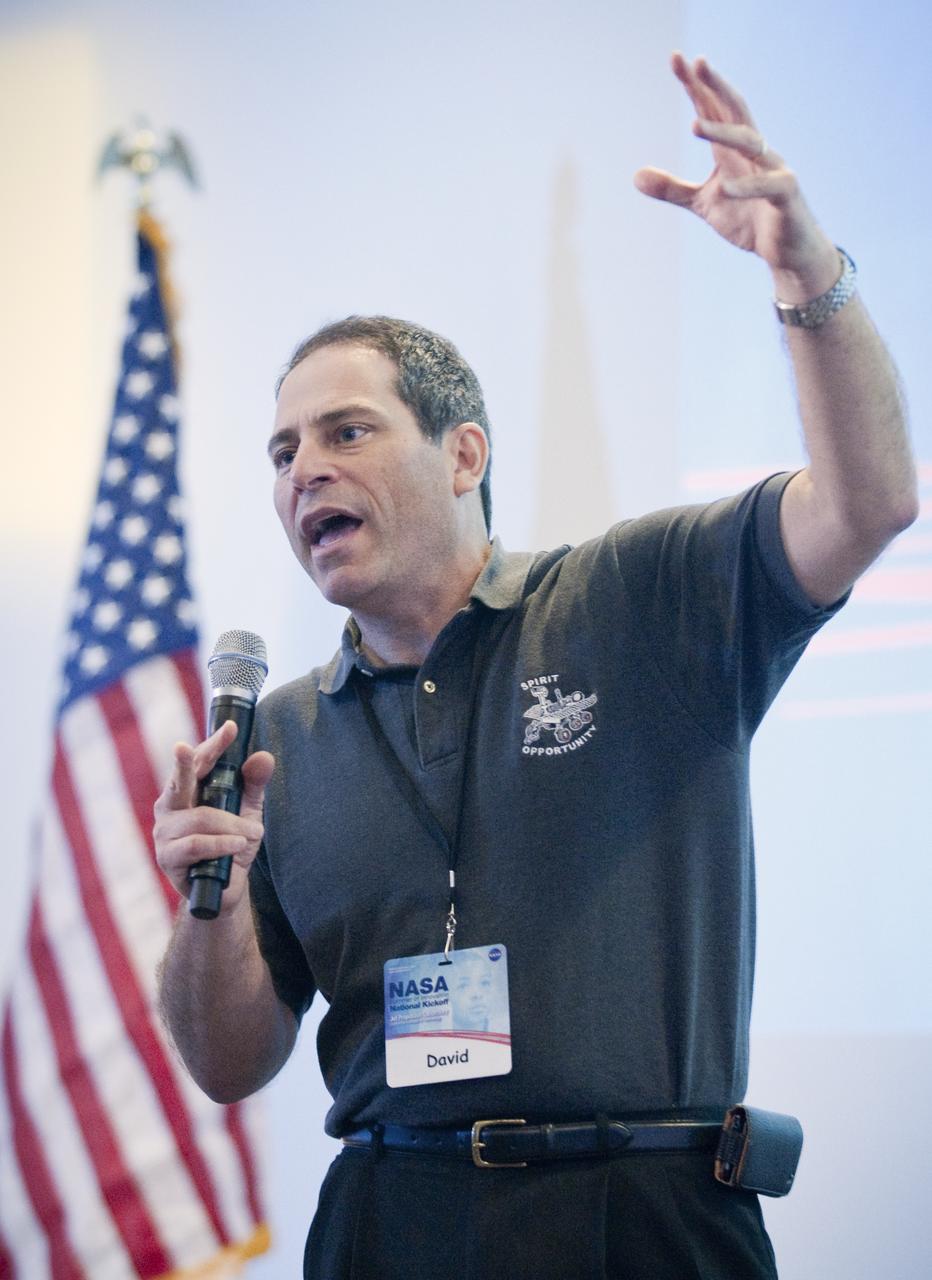
Jet Propulsion Laboratory Manager of Elementary and Secondary Education David Seidel motivates teachers and middle school students during the kick off of NASA's Summer of Innovation program at the Jet Propulsion Laboratory in Pasadena, Calif., Thursday, June 10, 2010. Through the program, NASA will engage thousands of middle school students and teachers in stimulating math and science-based education programs with the goal of increasing the number of future scientists, mathematicians, and engineers. Photo Credit: (NASA/Bill Ingalls)
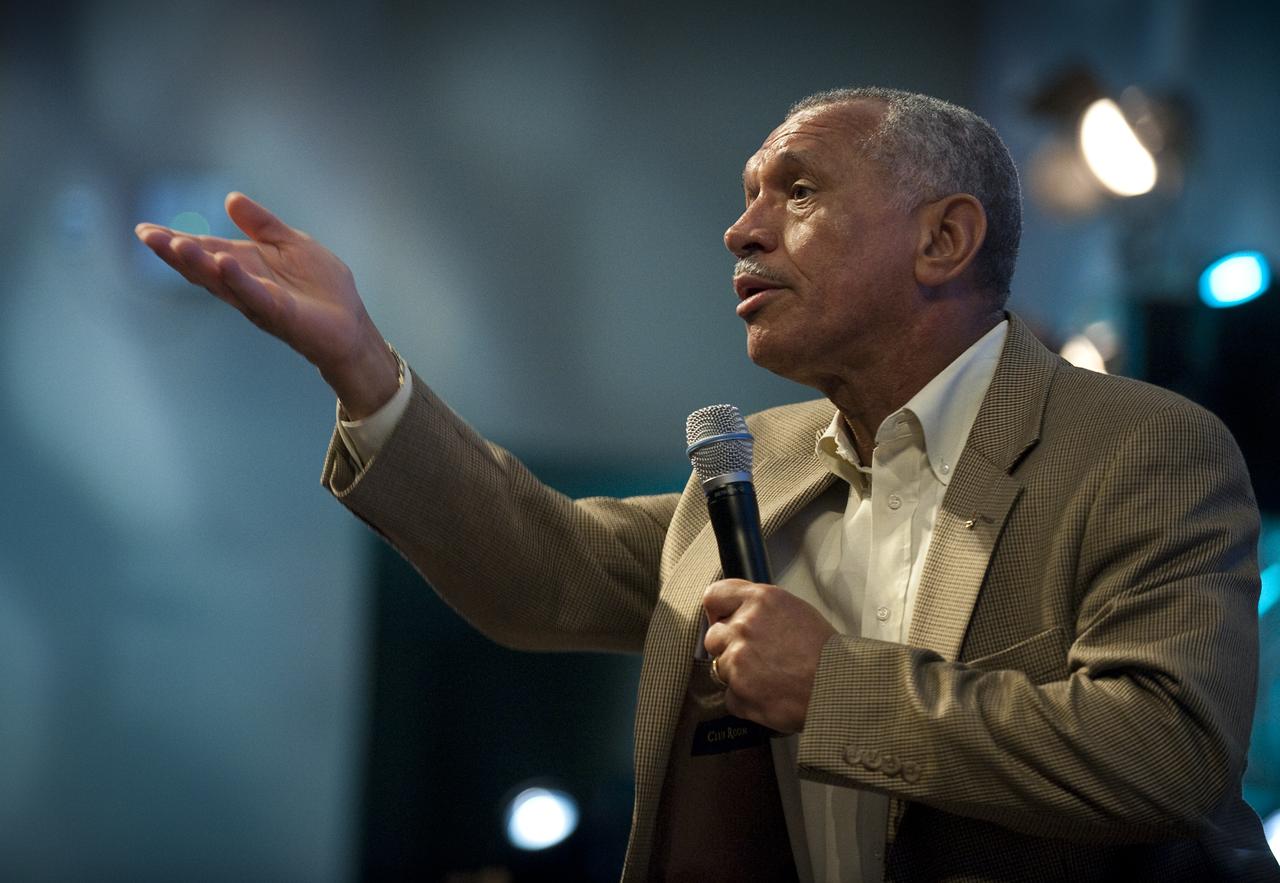
NASA Administrator Charles Bolden speaks with teachers and middle school students during the kick off of NASA's Summer of Innovation program at the Jet Propulsion Laboratory in Pasadena, Calif., Thursday, June 10, 2010. Through the program, NASA will engage thousands of middle school students and teachers in stimulating math and science-based education programs with the goal of increasing the number of future scientists, mathematicians, and engineers. Photo Credit: (NASA/Bill Ingalls)

Teachers and middle school students react to performers from Los Angeles Hamilton High School's Kid Tribe during the kick off of NASA's Summer of Innovation program at the Jet Propulsion Laboratory in Pasadena, Calif., Thursday, June 10, 2010. Through the program, NASA will engage thousands of middle school students and teachers in stimulating math and science-based education programs with the goal of increasing the number of future scientists, mathematicians, and engineers. Photo Credit: (NASA/Bill Ingalls)
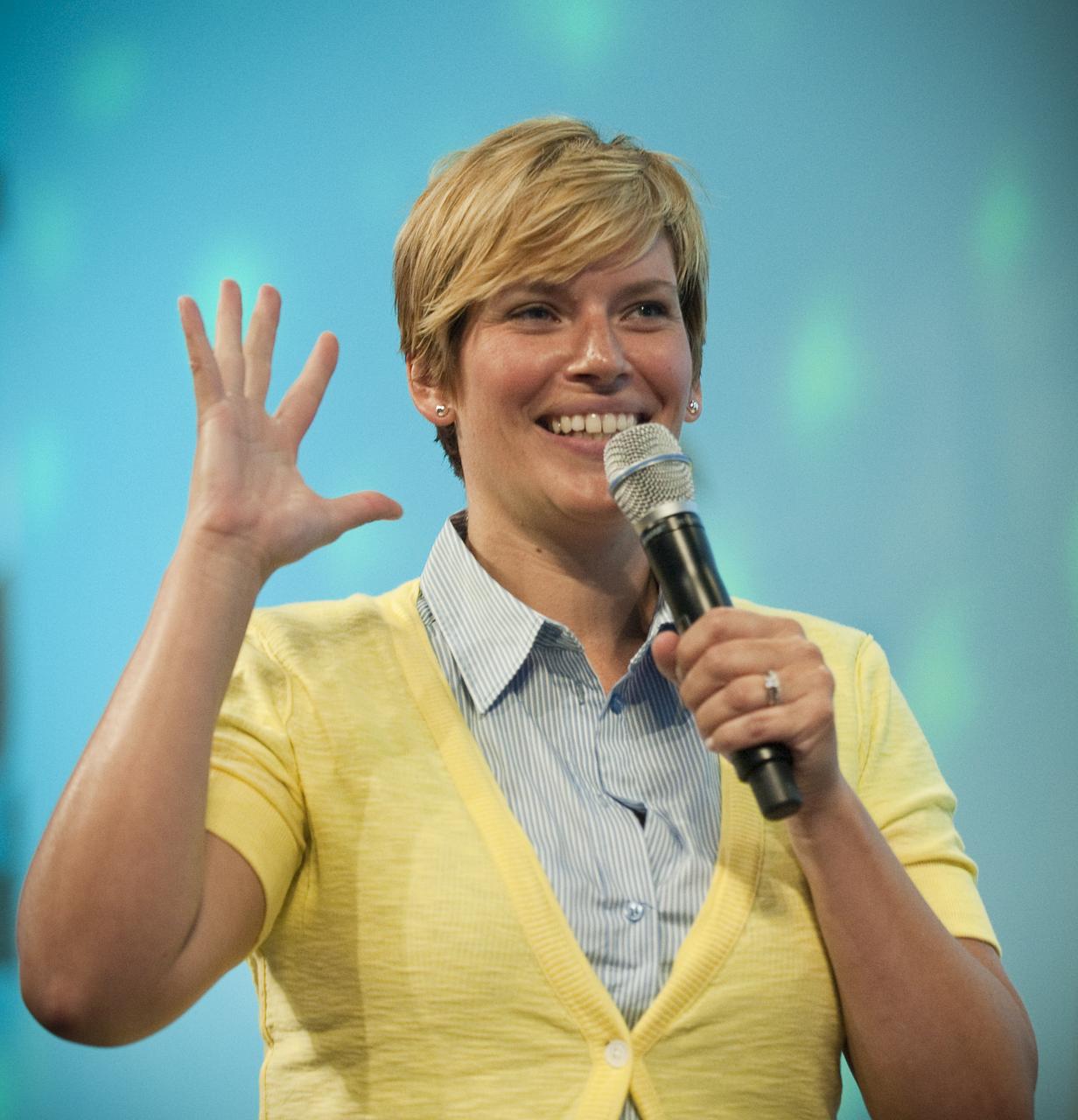
Erin Gilbert, Director of Professional Development from the National Summer Learning Associations, motivates teachers and middle school students during the kick off of NASA's Summer of Innovation program at the Jet Propulsion Laboratory in Pasadena, Calif., Thursday, June 10, 2010. Through the program, NASA will engage thousands of middle school students and teachers in stimulating math and science-based education programs with the goal of increasing the number of future scientists, mathematicians, and engineers. Photo Credit: (NASA/Bill Ingalls)

A performer from Los Angeles Hamilton High School's Kid Tribe entertains teachers and middle school students during the kick off of NASA's Summer of Innovation program at the Jet Propulsion Laboratory in Pasadena, Calif., Thursday, June 10, 2010. Through the program, NASA will engage thousands of middle school students and teachers in stimulating math and science-based education programs with the goal of increasing the number of future scientists, mathematicians, and engineers. Photo Credit: (NASA/Bill Ingalls)
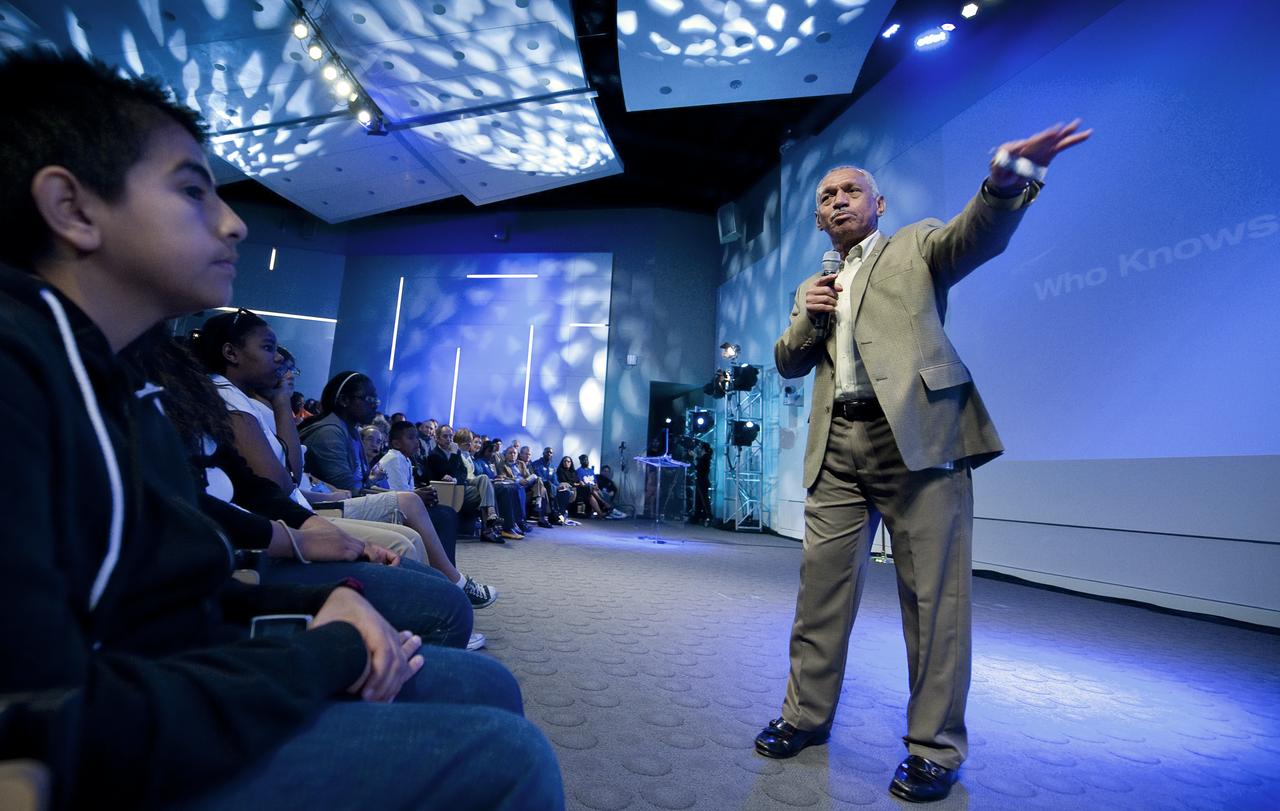
NASA Administrator Charles Bolden speaks with teachers and middle school students during the kick off of NASA's Summer of Innovation program at the Jet Propulsion Laboratory in Pasadena, Calif., Thursday, June 10, 2010. Through the program, NASA will engage thousands of middle school students and teachers in stimulating math and science-based education programs with the goal of increasing the number of future scientists, mathematicians, and engineers. Photo Credit: (NASA/Bill Ingalls)
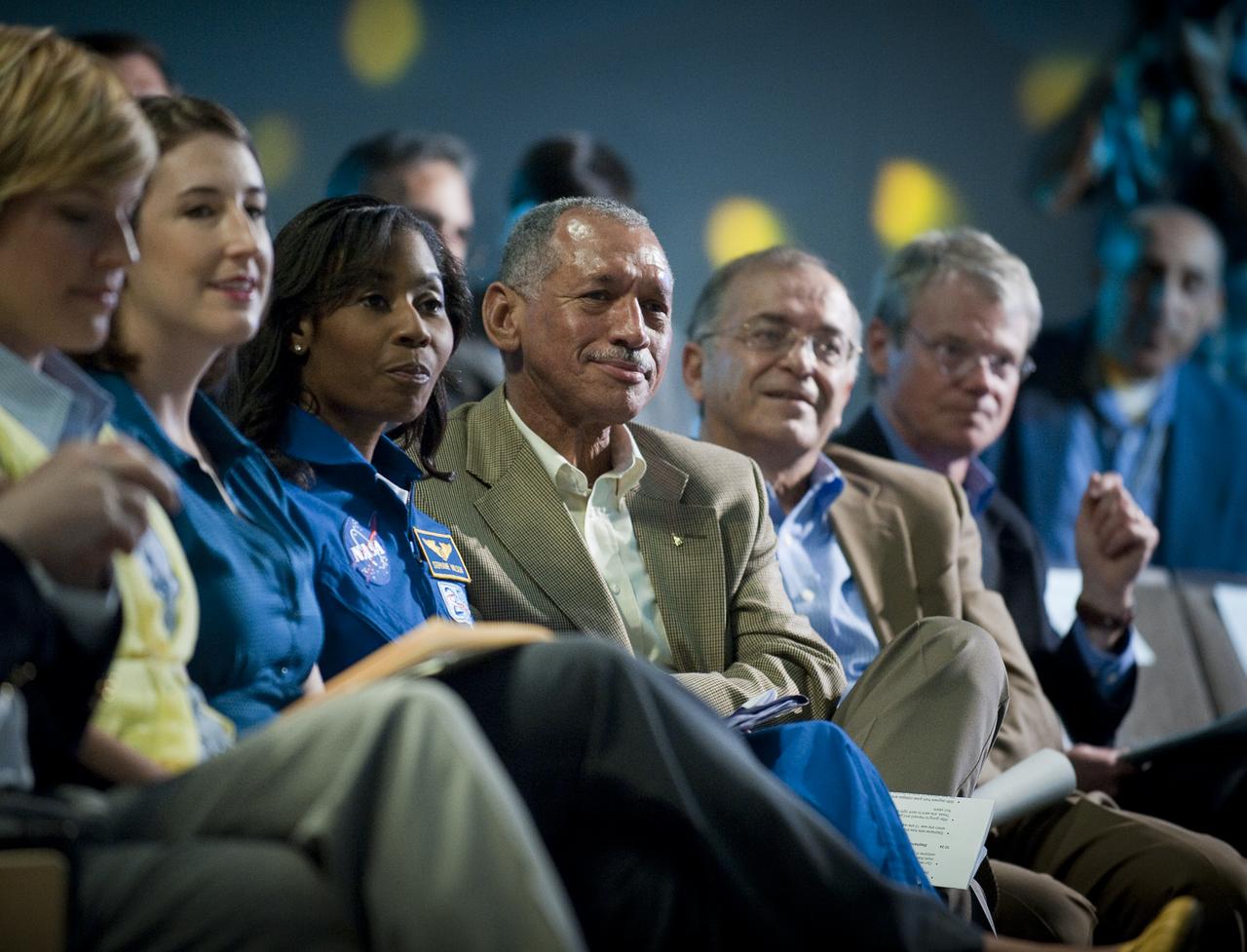
NASA Administrator Charles Bolden, center, listens as NASA astronaut Leland Melvin welcomes teachers and middle school students to the kick off of NASA's Summer of Innovation program at the Jet Propulsion Laboratory in Pasadena, Calif., Thursday, June 10, 2010. Through the program, NASA will engage thousands of middle school students and teachers in stimulating math and science-based education programs with the goal of increasing the number of future scientists, mathematicians, and engineers. Photo Credit: (NASA/Bill Ingalls)

Performers from Los Angeles Hamilton High School's Kid Tribe entertain teachers and middle school students during the kick off of NASA's Summer of Innovation program at the Jet Propulsion Laboratory in Pasadena, Calif., Thursday, June 10, 2010. Through the program, NASA will engage thousands of middle school students and teachers in stimulating math and science-based education programs with the goal of increasing the number of future scientists, mathematicians, and engineers. Photo Credit: (NASA/Bill Ingalls)
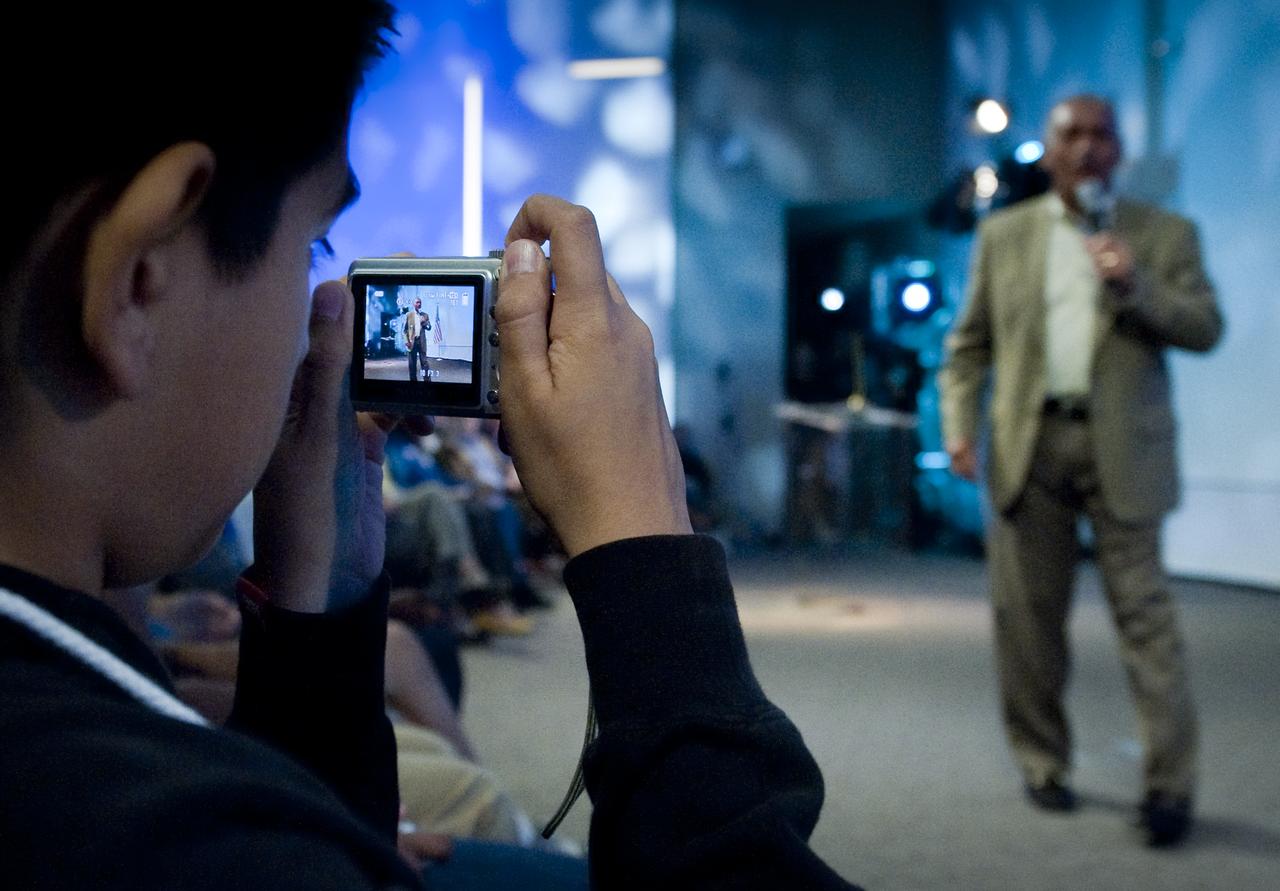
NASA Administrator Charles Bolden speaks with teachers and middle school students during the kick off of NASA's Summer of Innovation program at the Jet Propulsion Laboratory in Pasadena, Calif., Thursday, June 10, 2010. Through the program, NASA will engage thousands of middle school students and teachers in stimulating math and science-based education programs with the goal of increasing the number of future scientists, mathematicians, and engineers. Photo Credit: (NASA/Bill Ingalls)
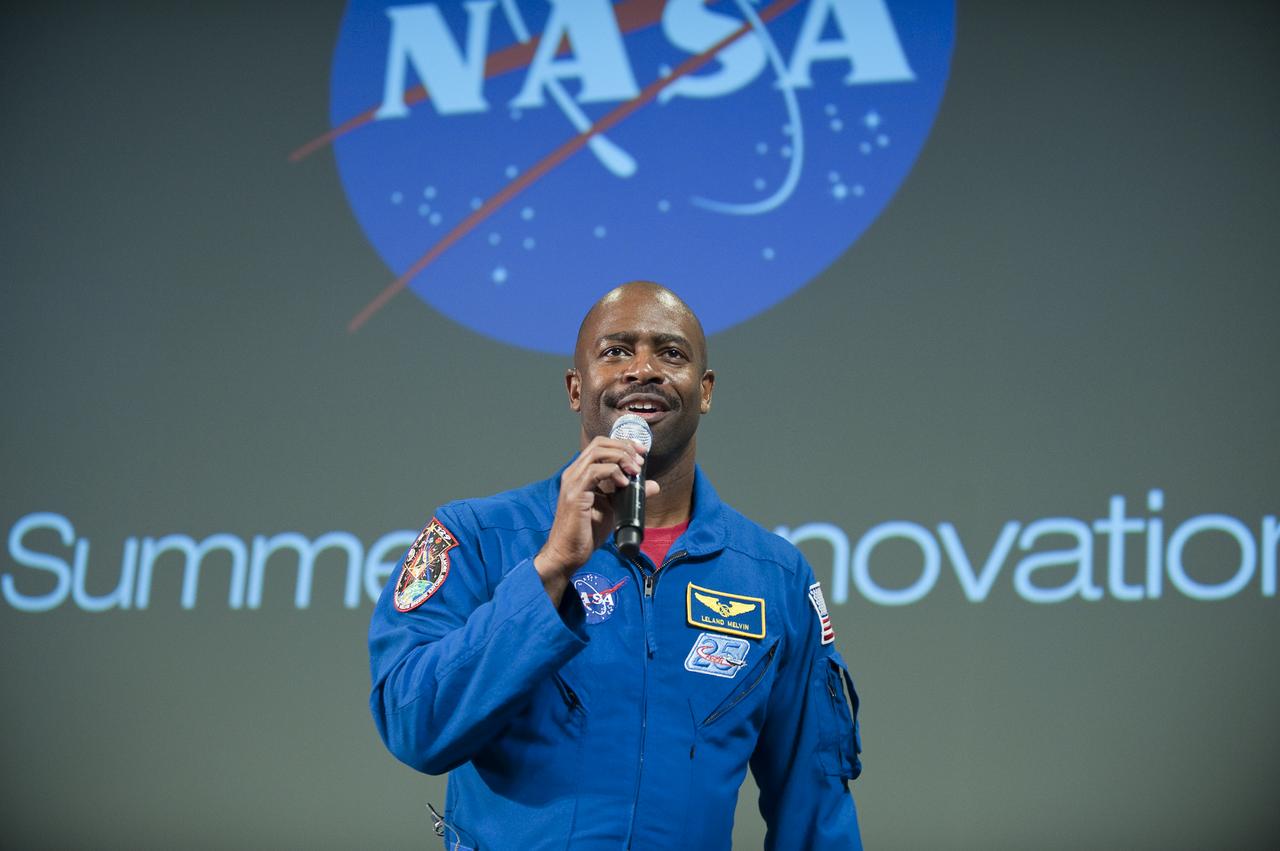
NASA astronaut Leland Melvin welcomes teachers and middle school students to the kick off of NASA's Summer of Innovation program at the Jet Propulsion Laboratory in Pasadena, Calif., Thursday, June 10, 2010. Through the program, NASA will engage thousands of middle school students and teachers in stimulating math and science-based education programs with the goal of increasing the number of future scientists, mathematicians, and engineers. Photo Credit: (NASA/Bill Ingalls)
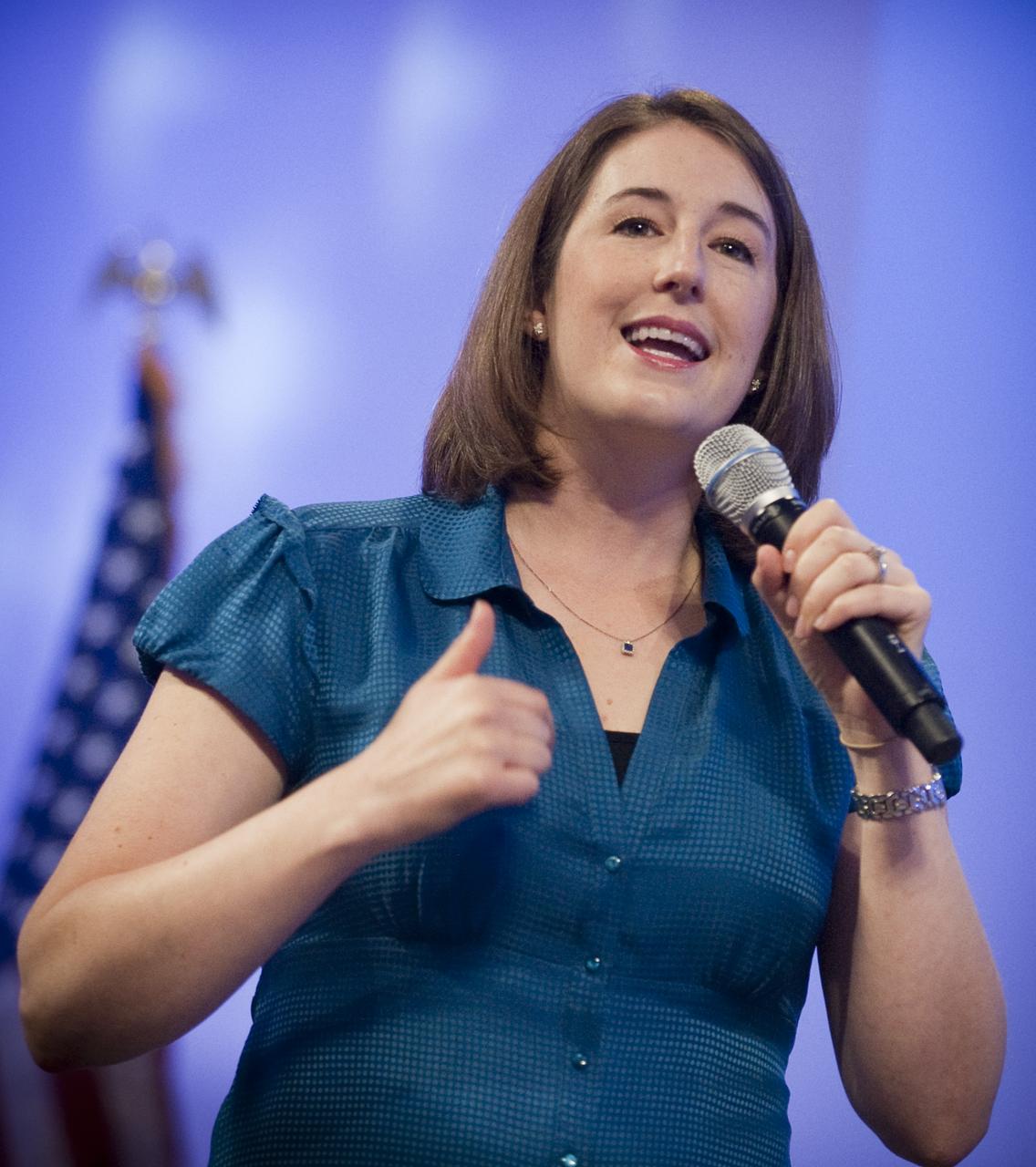
Julie Townsend, JPL Engineer, talks about her experiences to teachers and middle school students during the kick off of NASA's Summer of Innovation program at the Jet Propulsion Laboratory in Pasadena, Calif., Thursday, June 10, 2010. Through the program, NASA will engage thousands of middle school students and teachers in stimulating math and science-based education programs with the goal of increasing the number of future scientists, mathematicians, and engineers. Photo Credit: (NASA/Bill Ingalls)
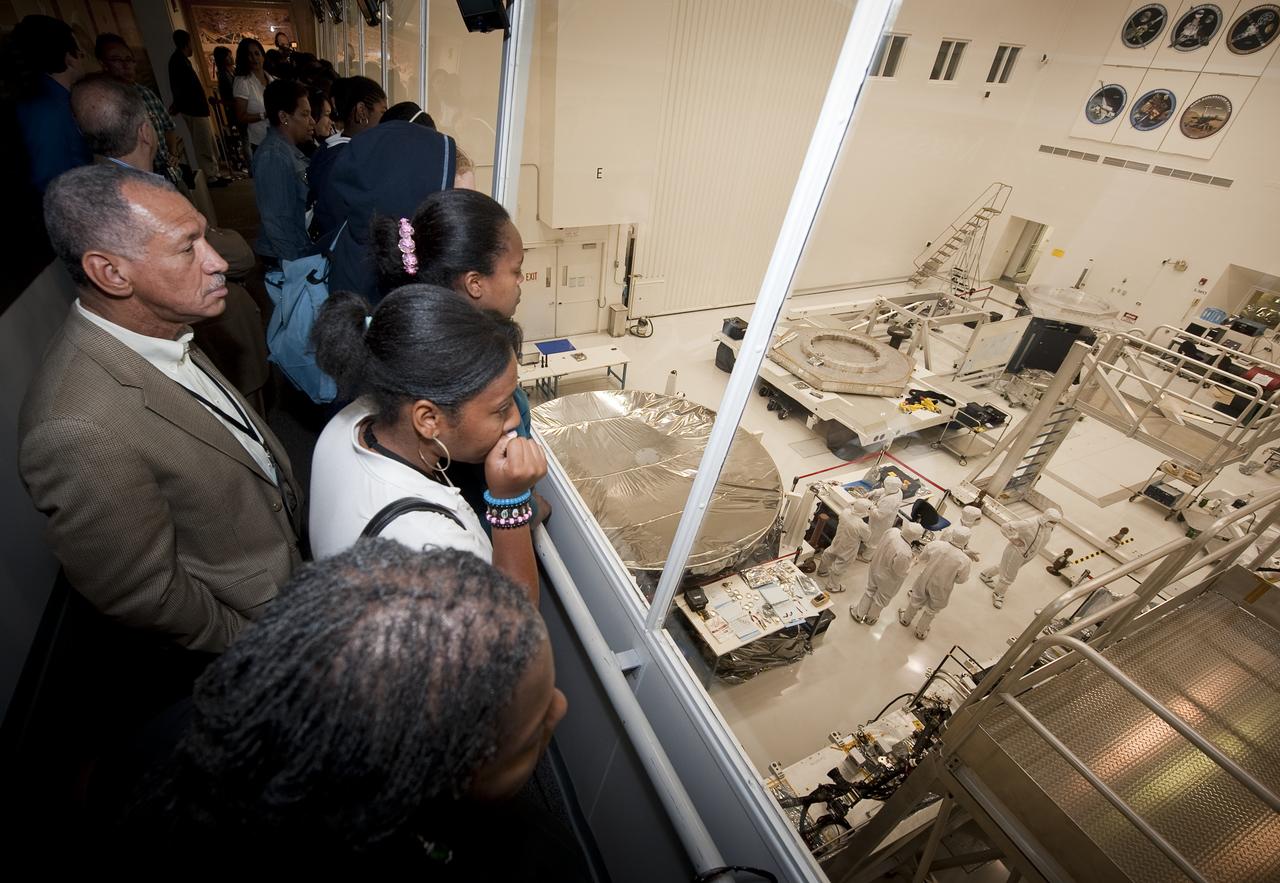
NASA Administrator Charles Bolden, left, along with teachers and middle school students visit High Bay One in the Spacecraft Assembly Building as part of the kick off to NASA's Summer of Innovation program at the Jet Propulsion Laboratory in Pasadena, Calif., Thursday, June 10, 2010. Through the program, NASA will engage thousands of middle school students and teachers in stimulating math and science-based education programs with the goal of increasing the number of future scientists, mathematicians, and engineers. Photo Credit: (NASA/Bill Ingalls)
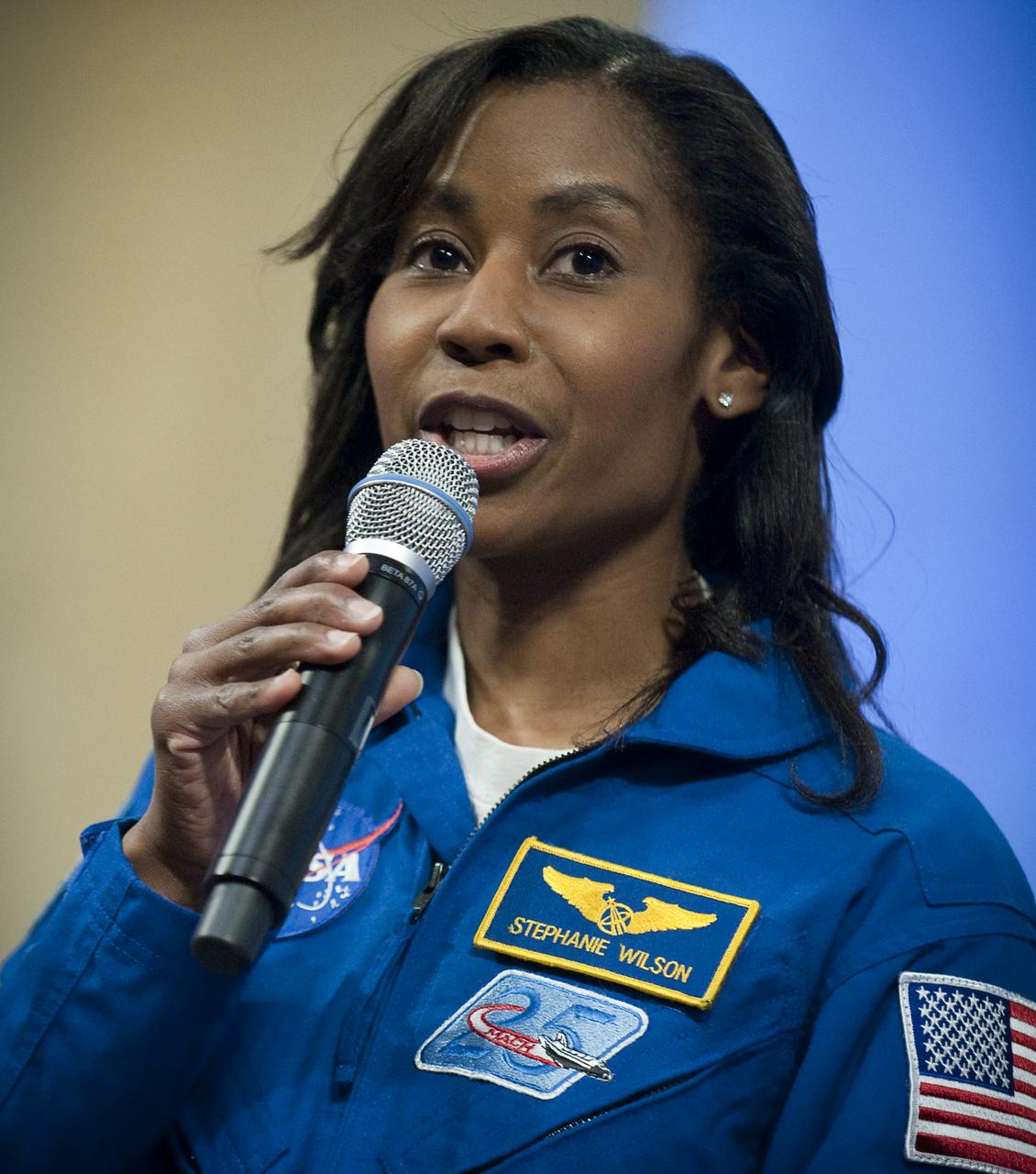
NASA astronaut Stephanie Wilson talks about her experiences to teachers and middle school students during the kick off of NASA's Summer of Innovation program at the Jet Propulsion Laboratory in Pasadena, Calif., Thursday, June 10, 2010. Through the program, NASA will engage thousands of middle school students and teachers in stimulating math and science-based education programs with the goal of increasing the number of future scientists, mathematicians, and engineers. Photo Credit: (NASA/Bill Ingalls)

A performer from Los Angeles Hamilton High School's Kid Tribe entertains teachers and middle school students during the kick off of NASA's Summer of Innovation program at the Jet Propulsion Laboratory in Pasadena, Calif., Thursday, June 10, 2010. Through the program, NASA will engage thousands of middle school students and teachers in stimulating math and science-based education programs with the goal of increasing the number of future scientists, mathematicians, and engineers. Photo Credit: (NASA/Bill Ingalls)
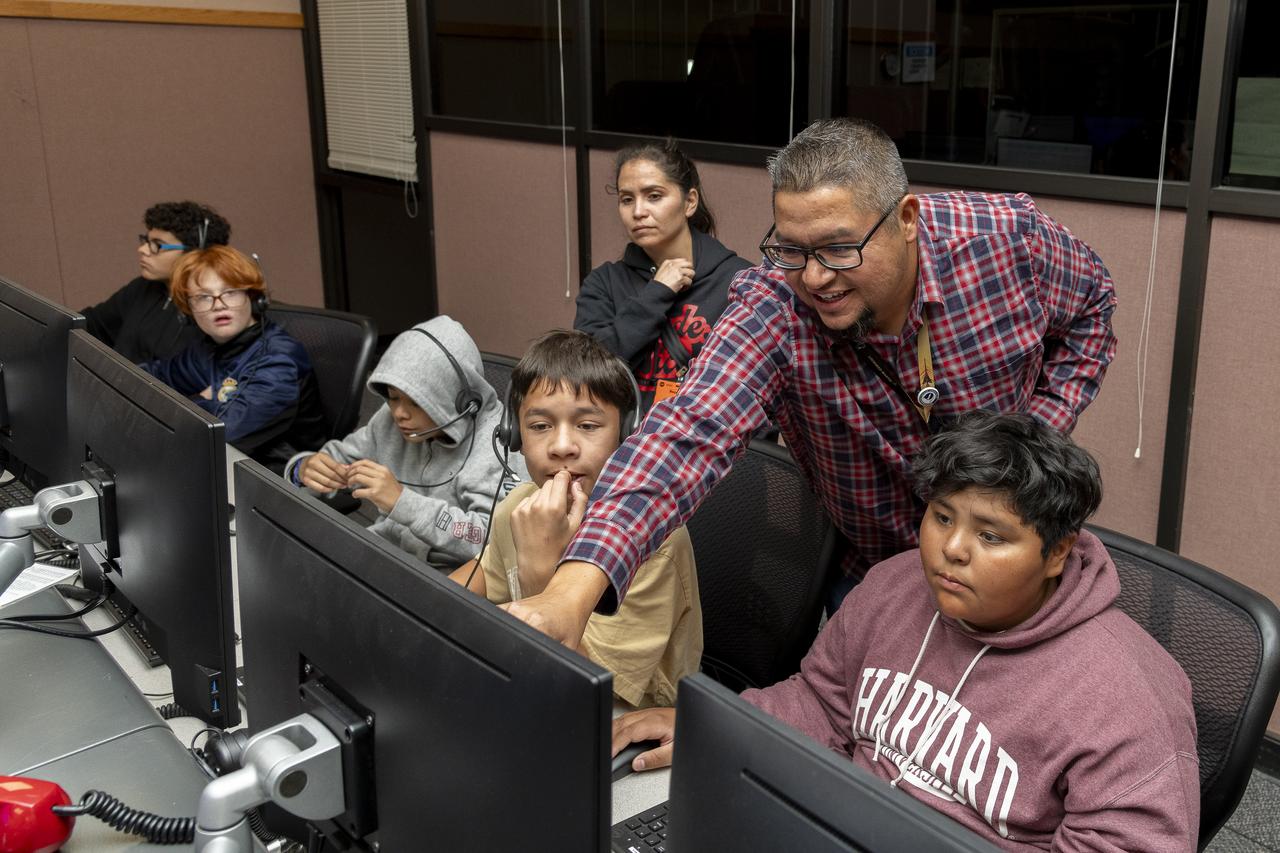
A group of middle school students and their teachers sit in the control room for a hands-on experience at NASA’s Armstrong Flight Research Center in Edwards, California during an event hosted by NASA’s California Office of STEM Engagement for National Aviation History Month.
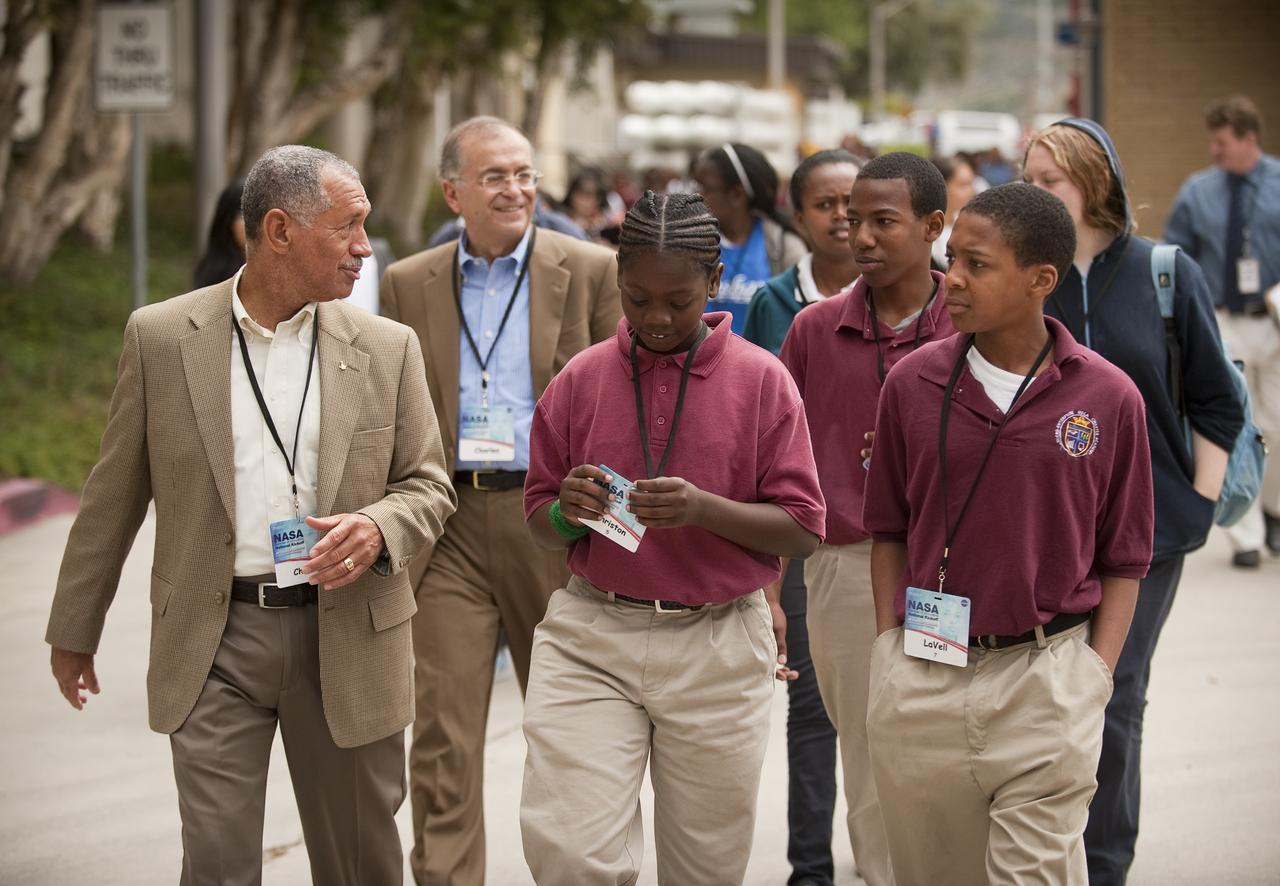
NASA Administrator Charles Bolden, left, and Jet Propulsion Laboratory Director Dr. Charles Elachi lead school students to High Bay One at JPL during the kick off of NASA's Summer of Innovation program at the Jet Propulsion Laboratory in Pasadena, Calif., Thursday, June 10, 2010. Through the program, NASA will engage thousands of middle school students and teachers in stimulating math and science-based education programs with the goal of increasing the number of future scientists, mathematicians, and engineers. Photo Credit: (NASA/Bill Ingalls)
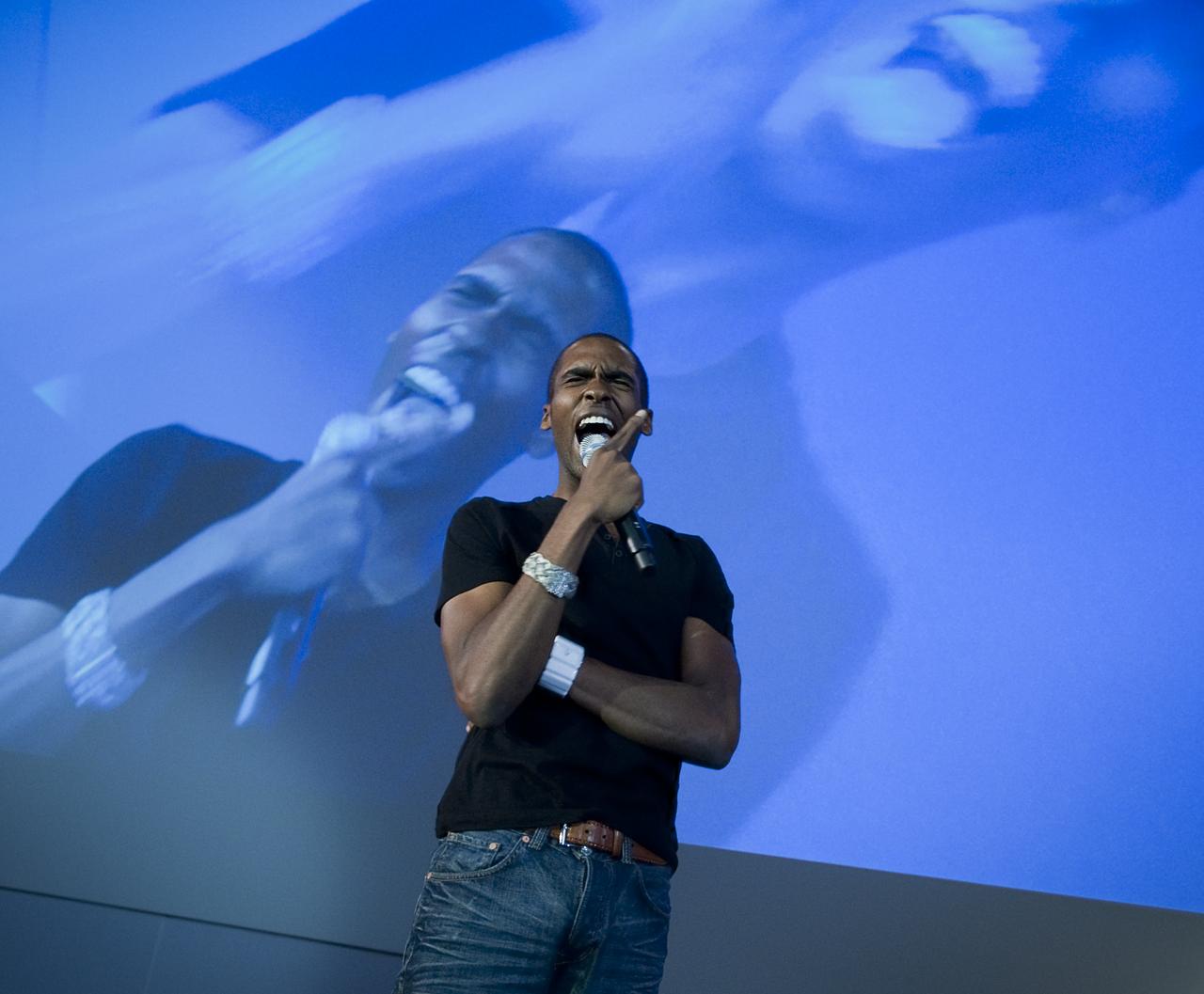
Rapper and Actor Daniel Curtis Lee performs during the kick off of NASA's Summer of Innovation program at the Jet Propulsion Laboratory in Pasadena, Calif., Thursday, June 10, 2010. Through the program, NASA will engage thousands of middle school students and teachers in stimulating math and science-based education programs with the goal of increasing the number of future scientists, mathematicians, and engineers. Photo Credit: (NASA/Bill Ingalls)
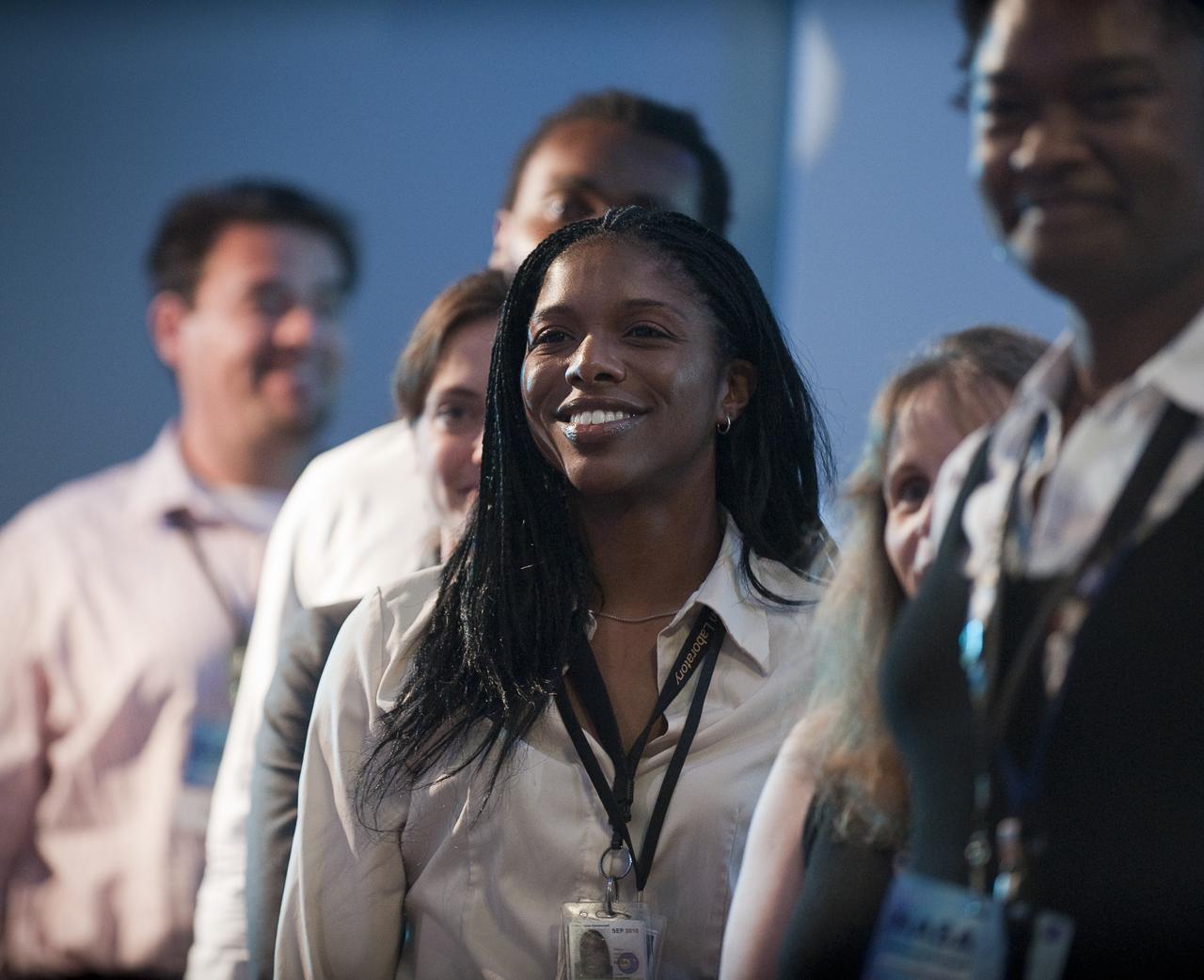
A group of Jet Propulsion Laboratory (JPL) engineers are recognized during the kick off of NASA's Summer of Innovation program at JPL in Pasadena, Calif., Thursday, June 10, 2010. Through the program, NASA will engage thousands of middle school students and teachers in stimulating math and science-based education programs with the goal of increasing the number of future scientists, mathematicians, and engineers. Photo Credit: (NASA/Bill Ingalls)
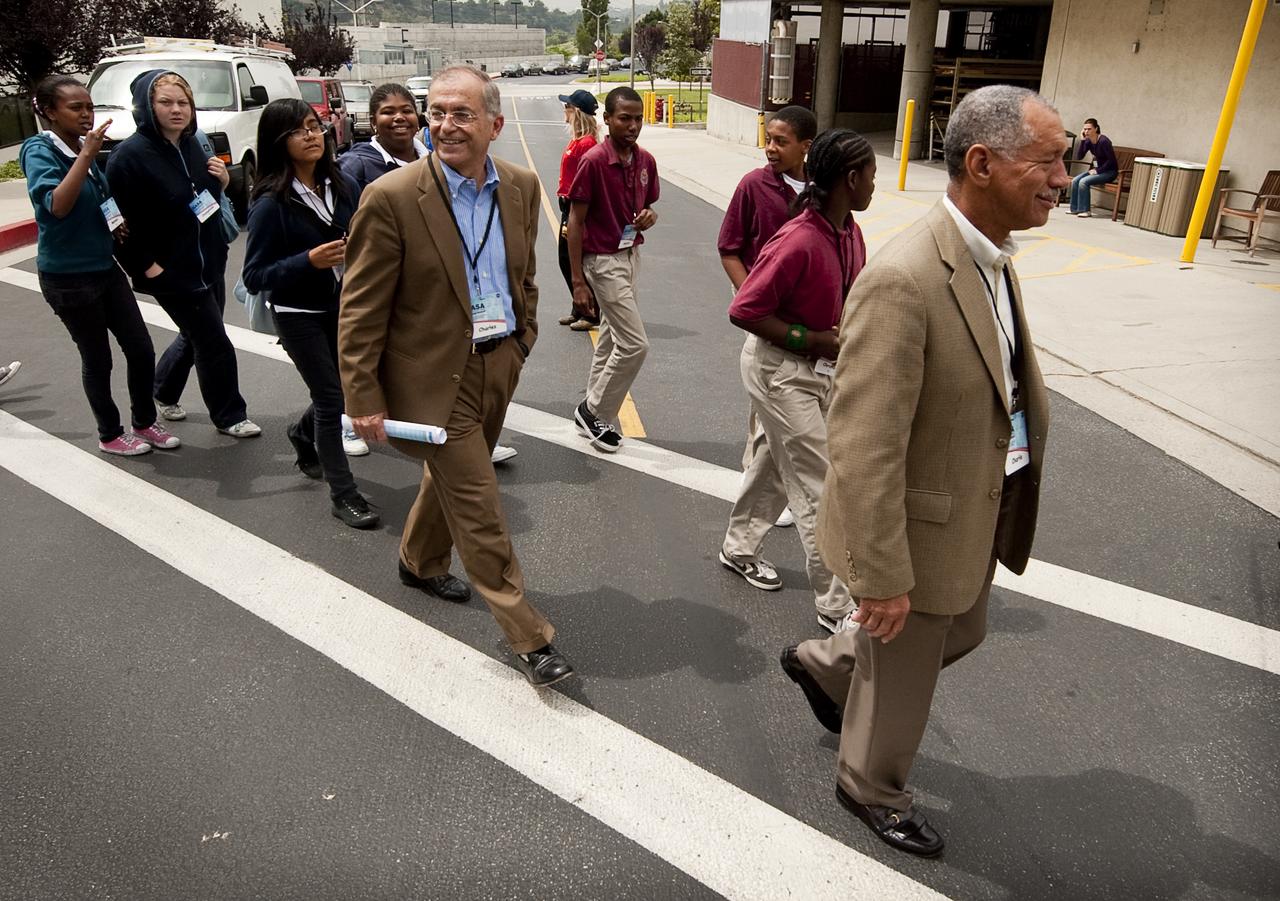
Jet Propulsion Laboratory Director Dr. Charles Elachi, center, and NASA Administrator Charles Bolden, right, lead school students to High Bay One at JPL during the kick off of NASA's Summer of Innovation program at the Jet Propulsion Laboratory in Pasadena, Calif., Thursday, June 10, 2010. Through the program, NASA will engage thousands of middle school students and teachers in stimulating math and science-based education programs with the goal of increasing the number of future scientists, mathematicians, and engineers. Photo Credit: (NASA/Bill Ingalls)
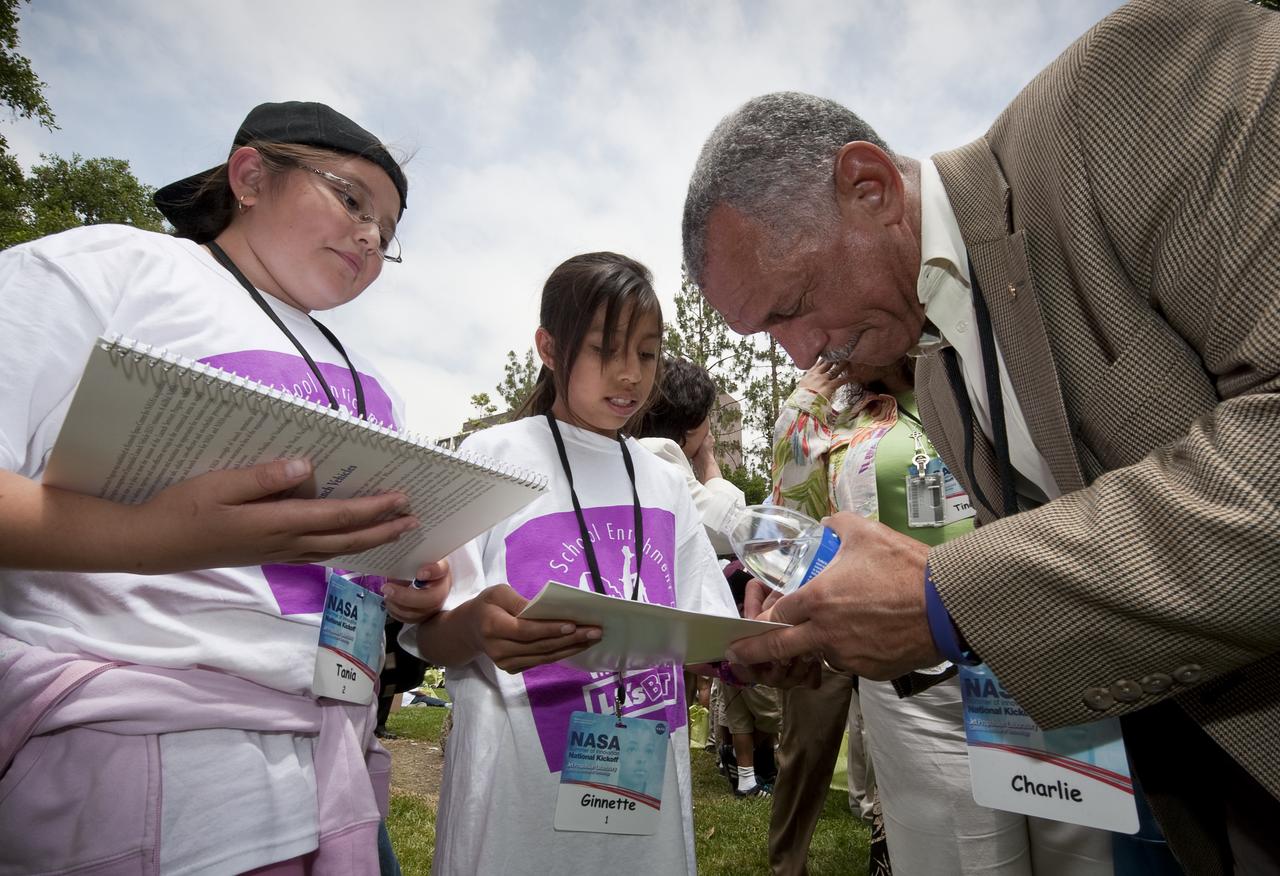
NASA Administrator Charles Bolden signs autographs to middle school students during the kick off of NASA's Summer of Innovation program at the Jet Propulsion Laboratory in Pasadena, Calif., Thursday, June 10, 2010. Through the program, NASA will engage thousands of middle school students and teachers in stimulating math and science-based education programs with the goal of increasing the number of future scientists, mathematicians, and engineers. Photo Credit: (NASA/Bill Ingalls)
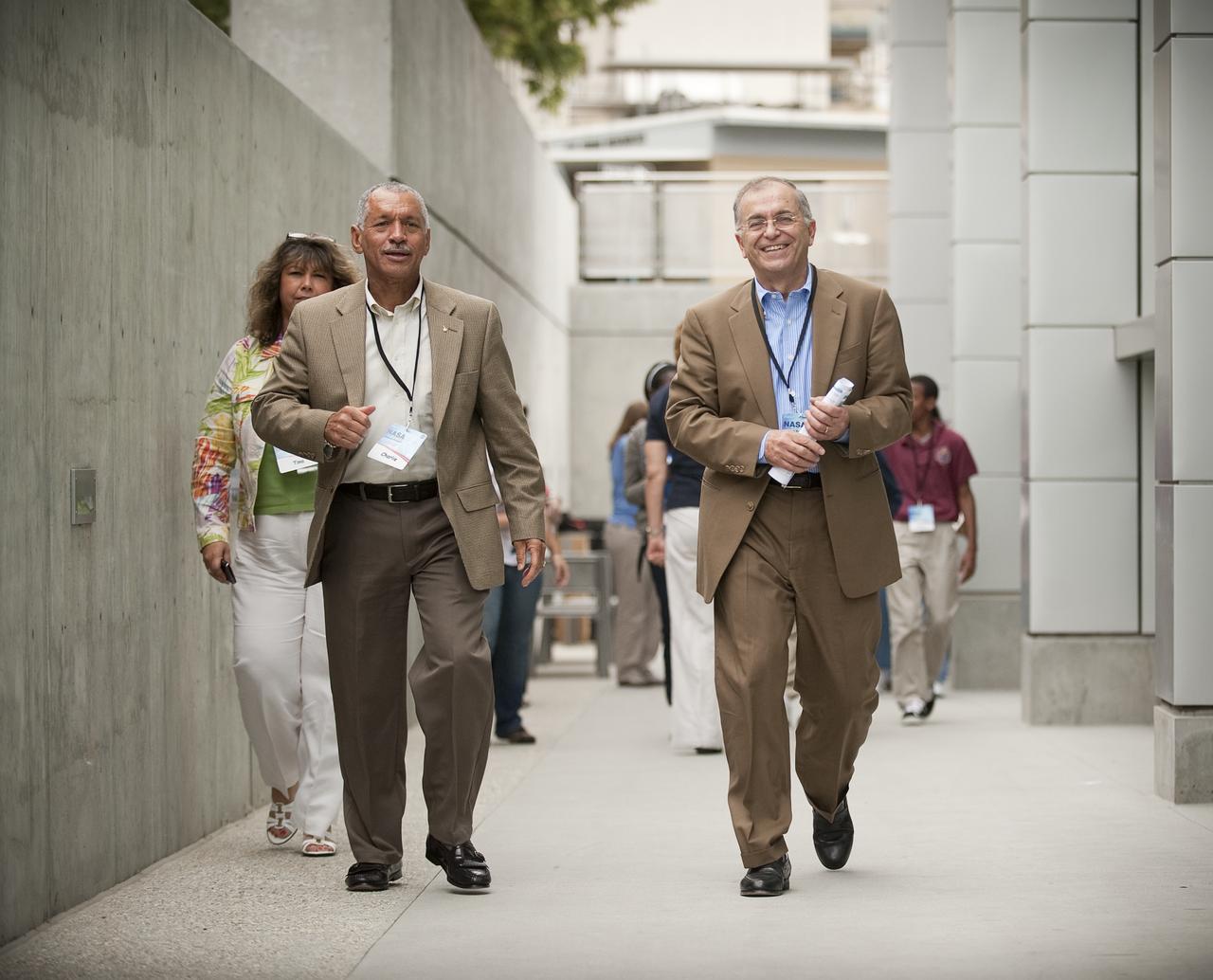
NASA Administrator Charles Bolden, left, and Jet Propulsion Laboratory Director Dr. Charles Elachi lead school students to High Bay One at JPL during the kick off of NASA's Summer of Innovation program at the Jet Propulsion Laboratory in Pasadena, Calif., Thursday, June 10, 2010. Through the program, NASA will engage thousands of middle school students and teachers in stimulating math and science-based education programs with the goal of increasing the number of future scientists, mathematicians, and engineers. Photo Credit: (NASA/Bill Ingalls)
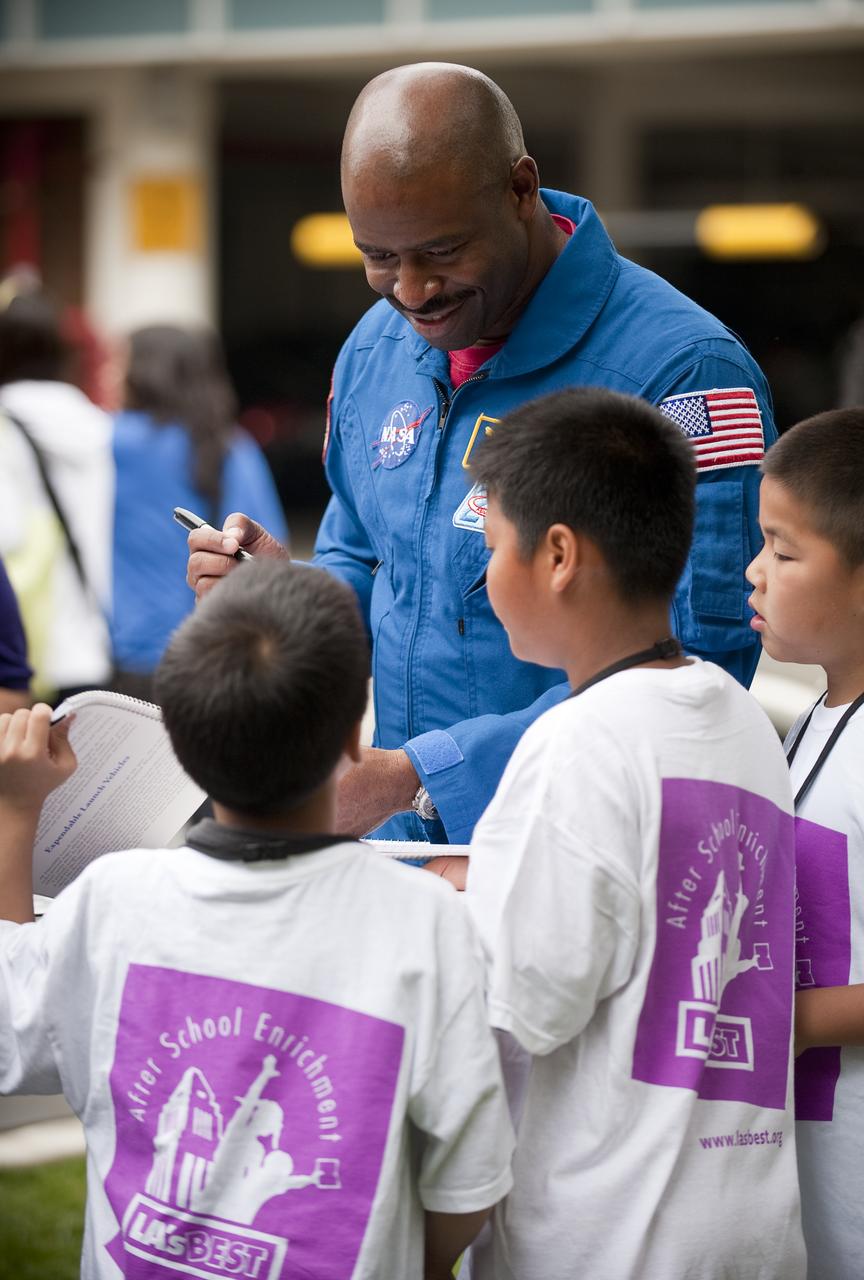
NASA astronaut Leland Melvin signs autographs to middle school students during the kick off of NASA's Summer of Innovation program at the Jet Propulsion Laboratory in Pasadena, Calif., Thursday, June 10, 2010. Through the program, NASA will engage thousands of middle school students and teachers in stimulating math and science-based education programs with the goal of increasing the number of future scientists, mathematicians, and engineers. Photo Credit: (NASA/Bill Ingalls)
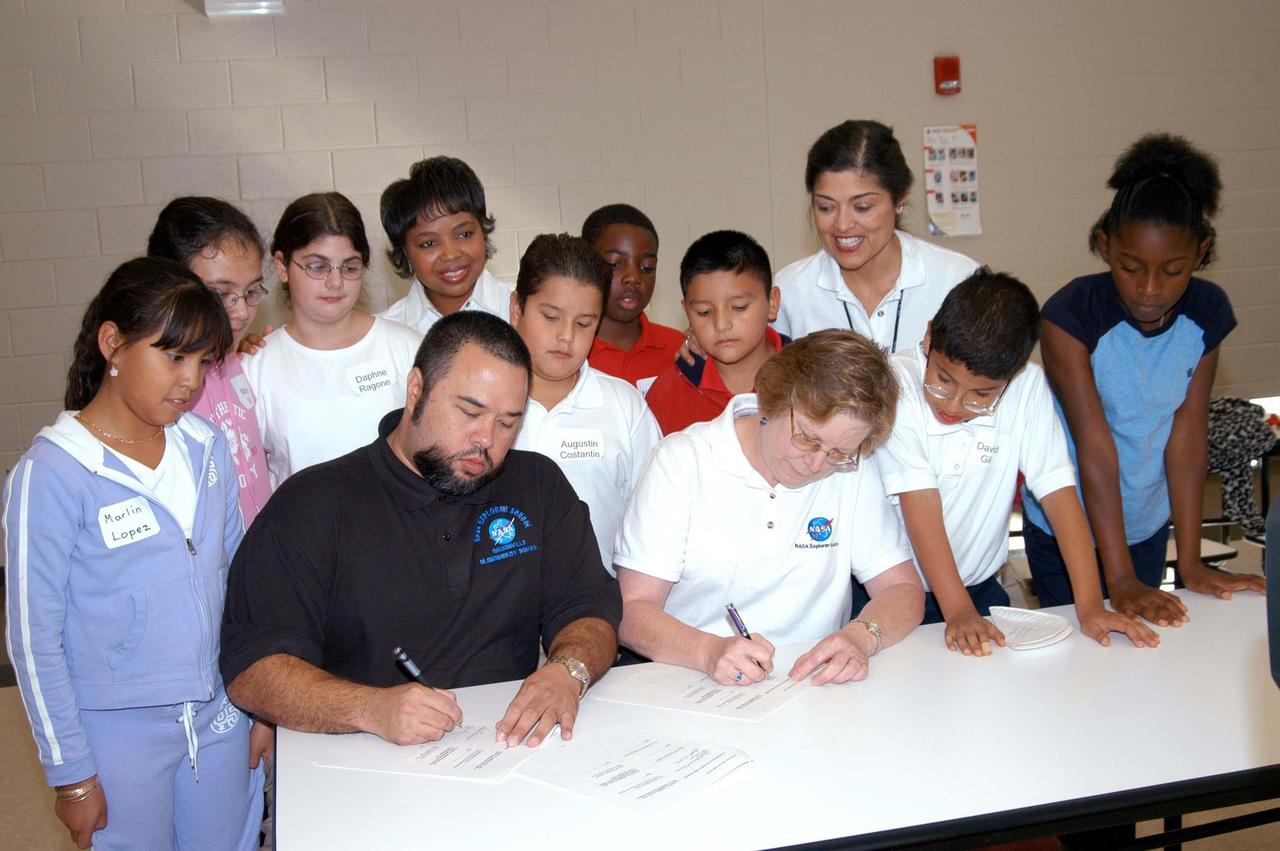
KENNEDY SPACE CENTER, FLA. - Shawn McCollough, principal of Gainesville Elementary School, a NASA Explorer School (NES) in Gainesville, Ga., and a teacher sign a Memorandum of Understanding between KSC and the school for the NES program. Schools from across the country are eligible to apply online for an opportunity to partner with NASA in a program designed to bring engaging mathematics, science and technology learning to educators, students and families.
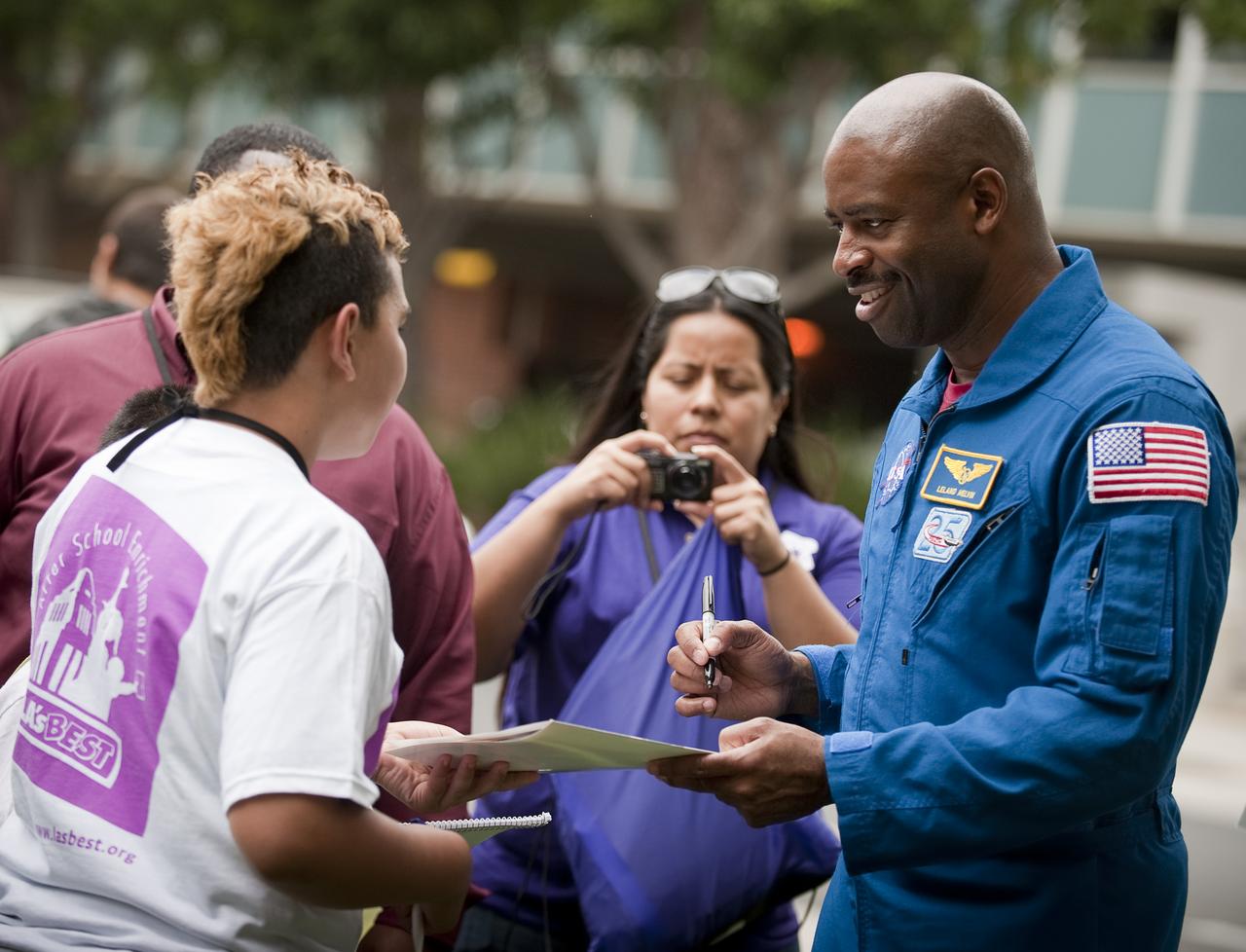
NASA astronaut Leland Melvin signs autographs to middle school students during the kick off of NASA's Summer of Innovation program at the Jet Propulsion Laboratory in Pasadena, Calif., Thursday, June 10, 2010. Through the program, NASA will engage thousands of middle school students and teachers in stimulating math and science-based education programs with the goal of increasing the number of future scientists, mathematicians, and engineers. Photo Credit: (NASA/Bill Ingalls)
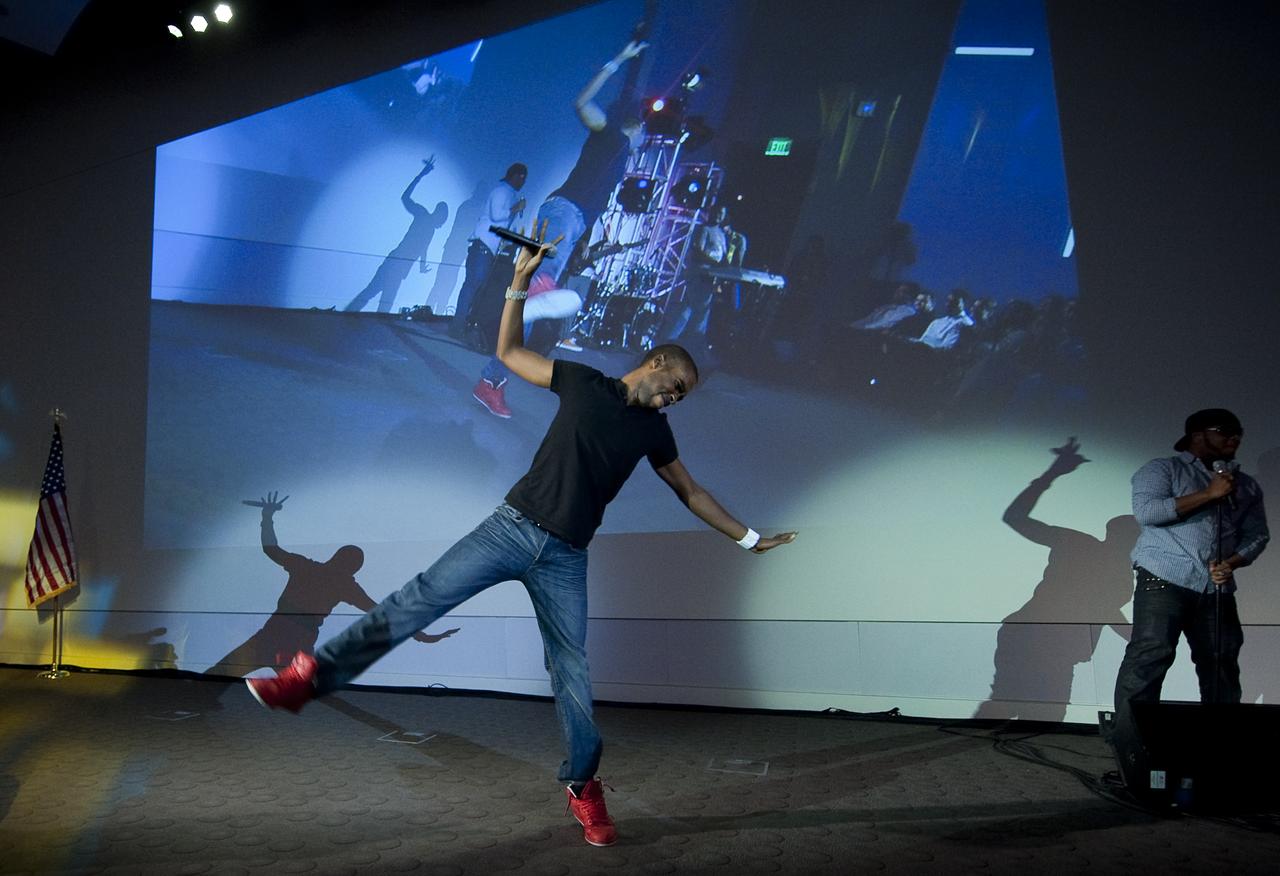
Rapper and Actor Daniel Curtis Lee performs during the kick off of NASA's Summer of Innovation program at the Jet Propulsion Laboratory in Pasadena, Calif., Thursday, June 10, 2010. Through the program, NASA will engage thousands of middle school students and teachers in stimulating math and science-based education programs with the goal of increasing the number of future scientists, mathematicians, and engineers. Photo Credit: (NASA/Bill Ingalls)
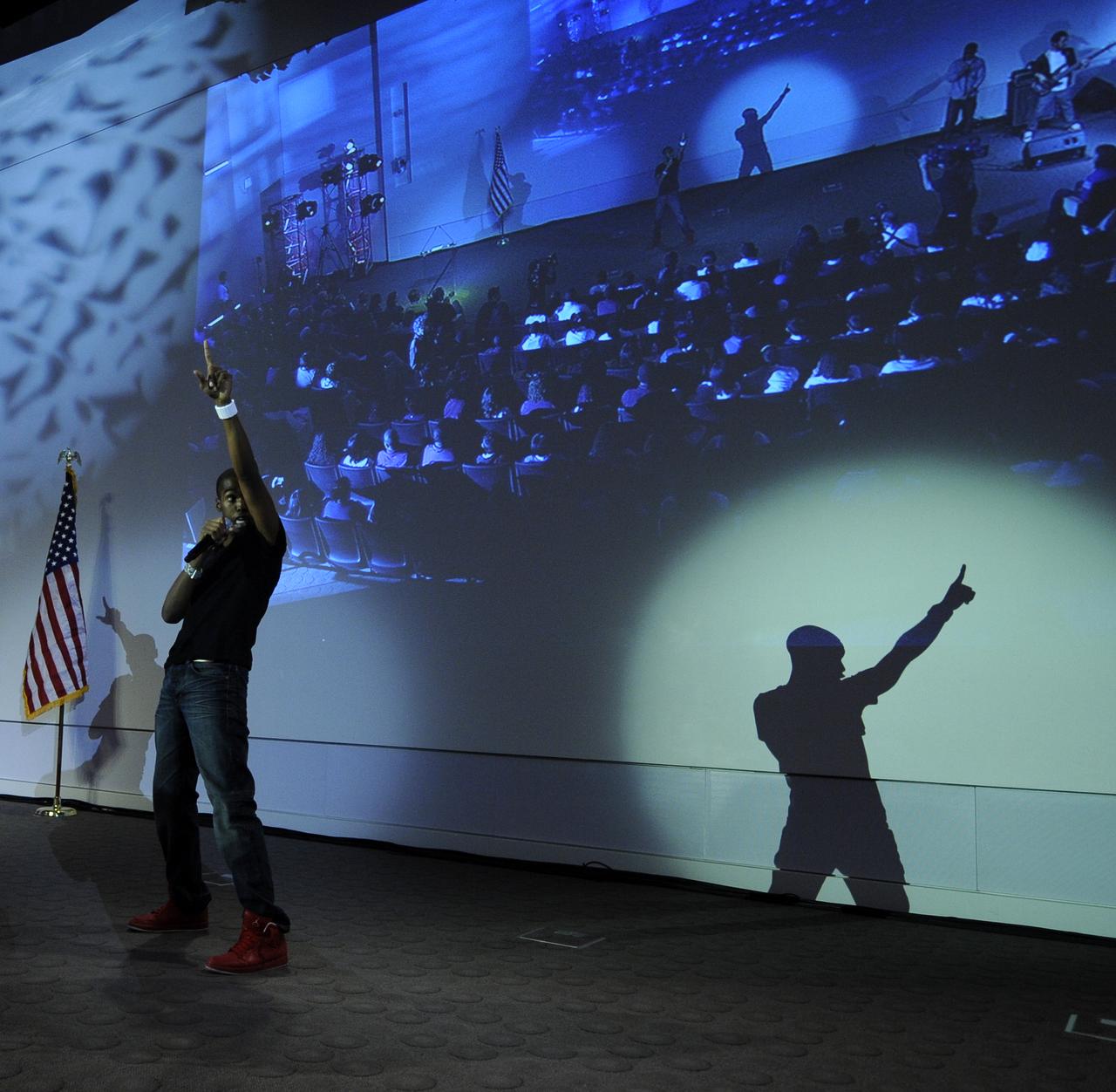
Rapper and Actor Daniel Curtis Lee performs during the kick off of NASA's Summer of Innovation program at the Jet Propulsion Laboratory in Pasadena, Calif., Thursday, June 10, 2010. Through the program, NASA will engage thousands of middle school students and teachers in stimulating math and science-based education programs with the goal of increasing the number of future scientists, mathematicians, and engineers. Photo Credit: (NASA/Bill Ingalls)
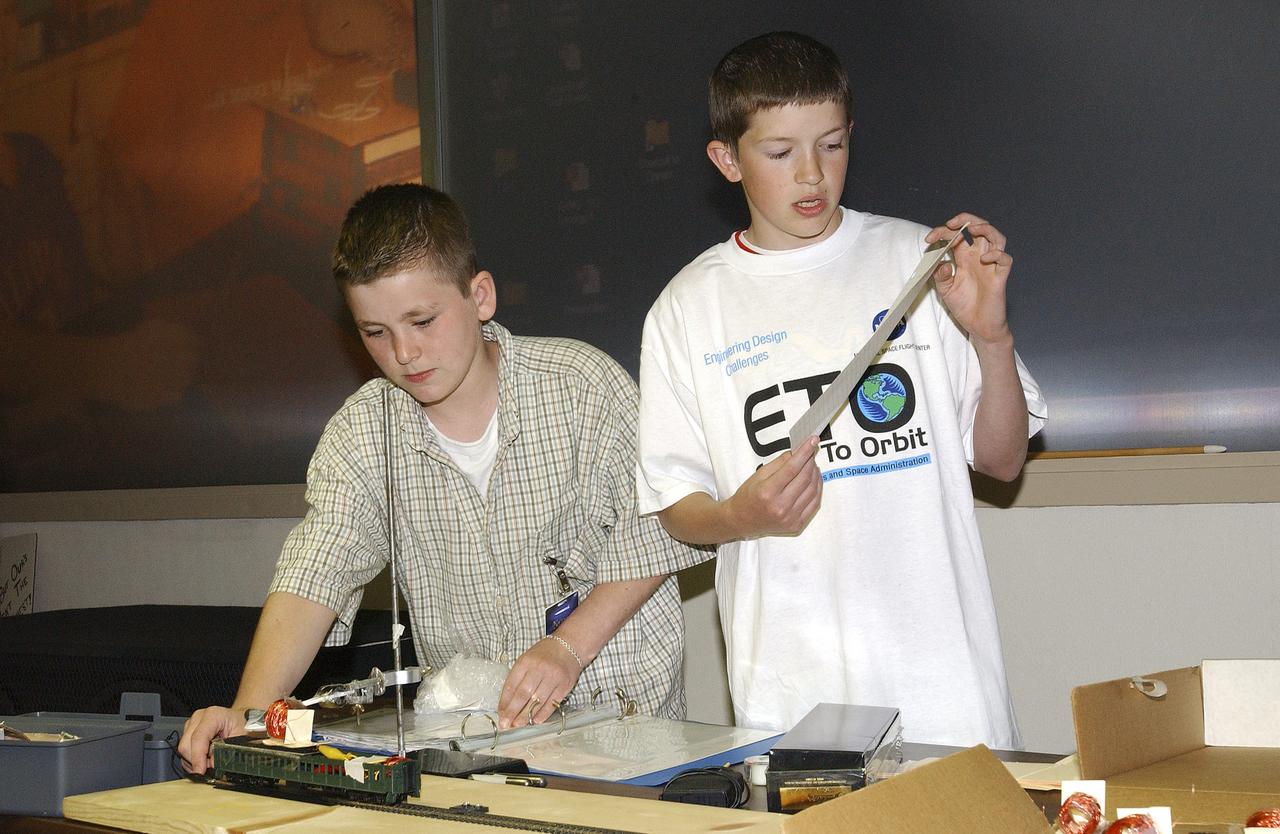
In this photograph, Jeff Alden (left) and Justin O'Cornor, two middle school students at Lane Middle School in Portland, Oregon are demonstrating their Earth-to-Orbit (ETO) Design Challenge project at NASA Marshall Space Flight Center (MSFC) in Huntsville, Alabama. Jeff and Justin, who are just a couple of "typical teens," have been spending their time tackling some of the same challenges NASA engineers face when designing propulsion systems at MSFC. The ETO Design Challenge is a hands-on educational program, targeted to middle school students, in which students are assigned a project engaging in related design challenges in their classrooms under the supervision of their teachers. The project is valuable because it can be used by any student and any teacher, even those without technical backgrounds. Students in 12 states: Alabama, Arkansas, California, Colorado, Illinois, Missouri, Montana, New York, Ohio, Tennessee, Virginia, and Washington, are taking part in the MSFC's Earth-to-Orbit program. NASA uses such programs to support educational excellence while participating in educational outreach programs through centers around the country. The Oregon students' teacher, Joanne Fluvog, commented, "the biggest change I've seen is in the students' motivation and their belief in their ability to think." Both Justin and Jeff said being involved in a real engineering project has made them realize that "science is cool."
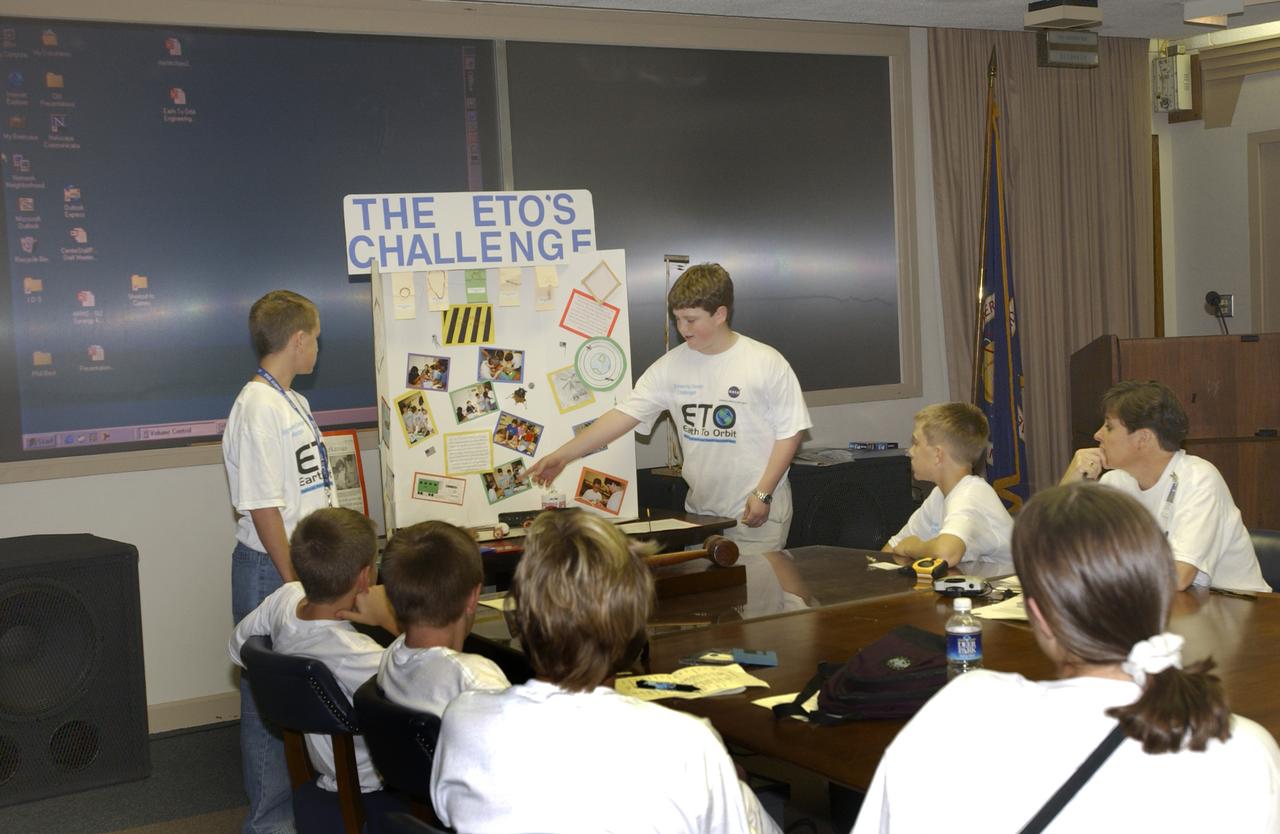
In this photograph, students from all over the country gathered and discussed their Earth-to-Orbit (ETO) Design Challenge project at NASA Marshall Space Flight Center in Huntsville, Alabama. These students who are just "typical teens," have been spending their time tackling some of the same challenges NASA engineers face when designing propulsion systems at MSFC. The ETO Design Challenge is a hands-on educational program, targeted to middle school students, in which students are assigned a project engaging in related design challenges in their classrooms under the supervision of their teachers. The project is valuable because it can be used by any student, and any teacher, even those without technical backgrounds. Student in 12 states: Alabama, Arkansas, California, Colorado, Illinois, Missouri, Montana, New York, Ohio, Ternessee, Virginia, and Washington, are taking part in MSFC's Earth-to-Orbit program. NASA uses such programs to support educational excellence while participating in educational outreach programs through centers around the country. One of the students' teachers, Joanne Fluvog, commented, "the biggest change I've seen is in the students' motivation and their belief in their ability to think." Justin O'Connor and Jeff Alden, students of Lane Middle School in Portland, Oregon, participated in the ETO program and said being involved in a real engineering project has made them realize that "science is cool."
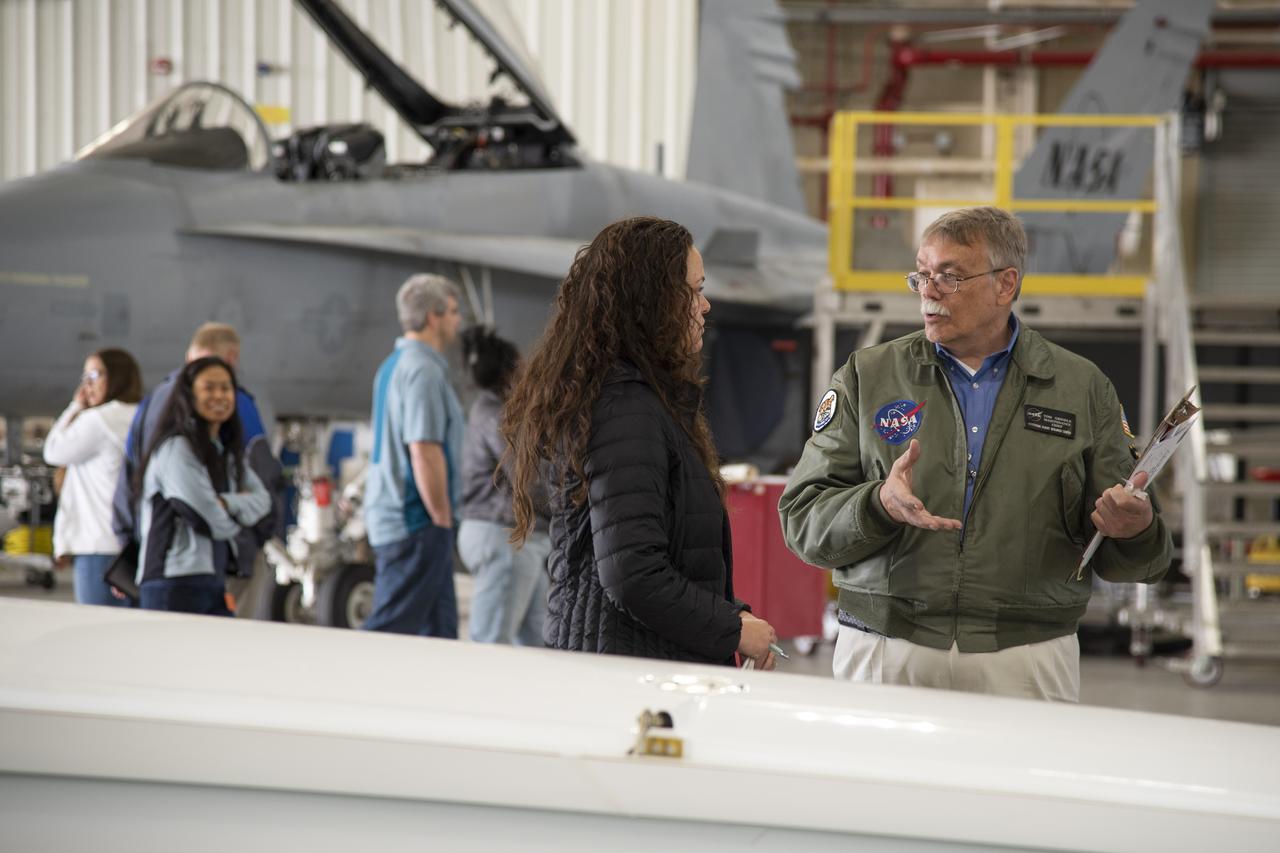
NASA Armstrong’s Chief of Maintenance, Tom Grindle, leads a tour inside the hangar with a group of teachers.
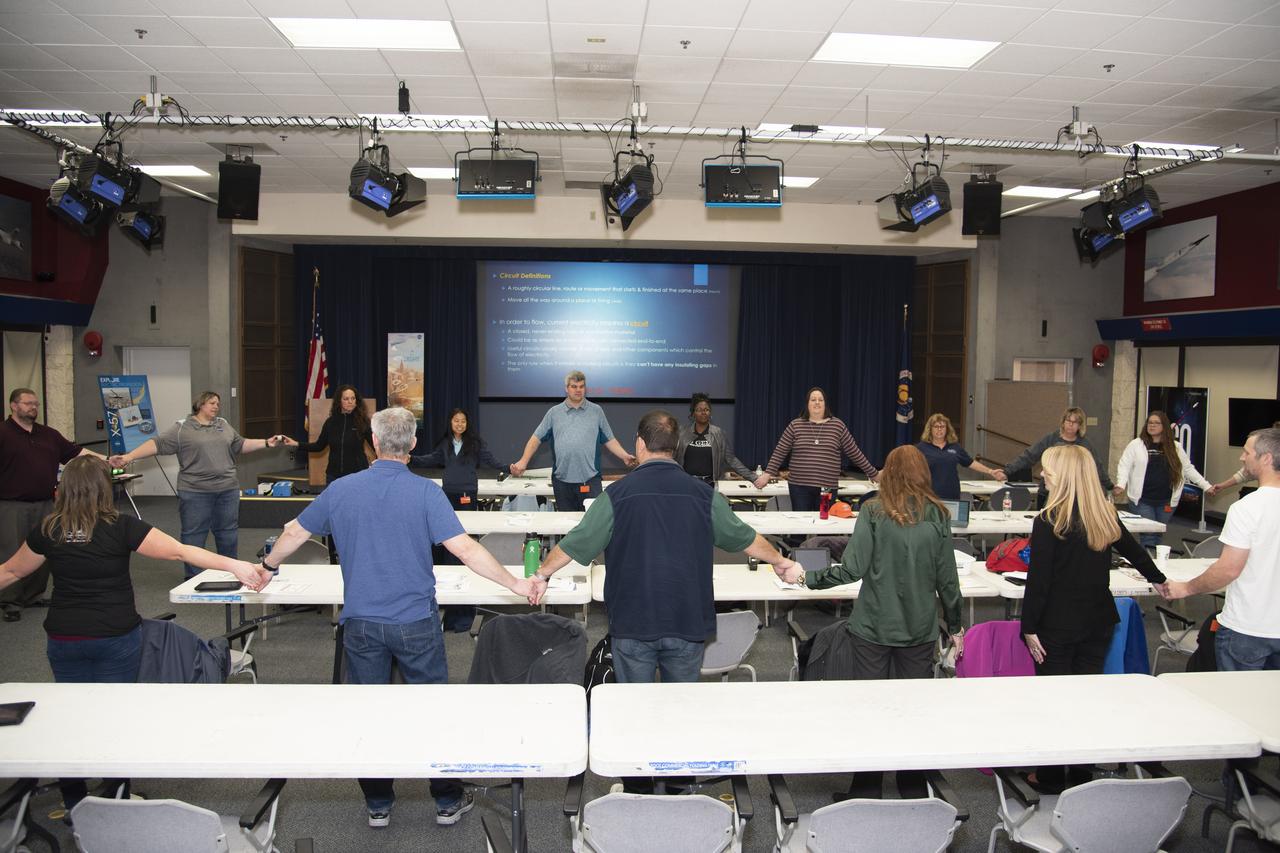
Barbara Buckner, NASA Armstrong's educator professional development specialist, leads a group exercise to form a human circuit to power an electric ball.
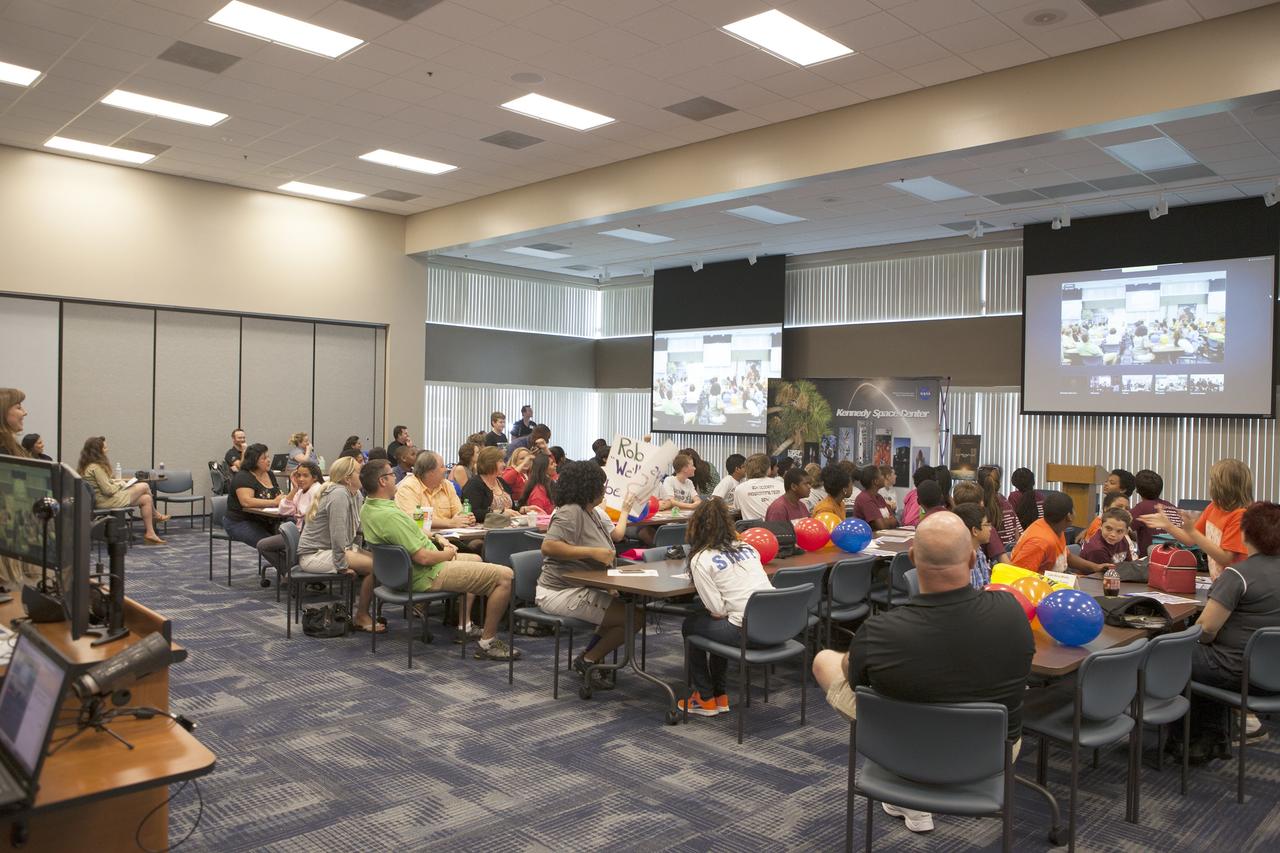
CAPE CANAVERAL, Fla. – Florida middle school students and their teachers greet students from other locations via webex before the start of the Zero Robotics finals competition. The Florida teams are at the Space Station Processing Facility at NASA's Kennedy Space Center in Florida. Students designed software to control Synchronized Position Hold Engage and Reorient Experimental Satellites, or SPHERES, and competed with other teams locally. The Zero Robotics is a robotics programming competition where the robots are SPHERES. The competition starts online, where teams program the SPHERES to solve an annual challenge. After several phases of virtual competition in a simulation environment that mimics the real SPHERES, finalists are selected to compete in a live championship aboard the space station. Students compete to win a technically challenging game by programming their strategies into the SPHERES satellites. The programs are autonomous and the students cannot control the satellites during the test. Photo credit: NASA/Daniel Casper
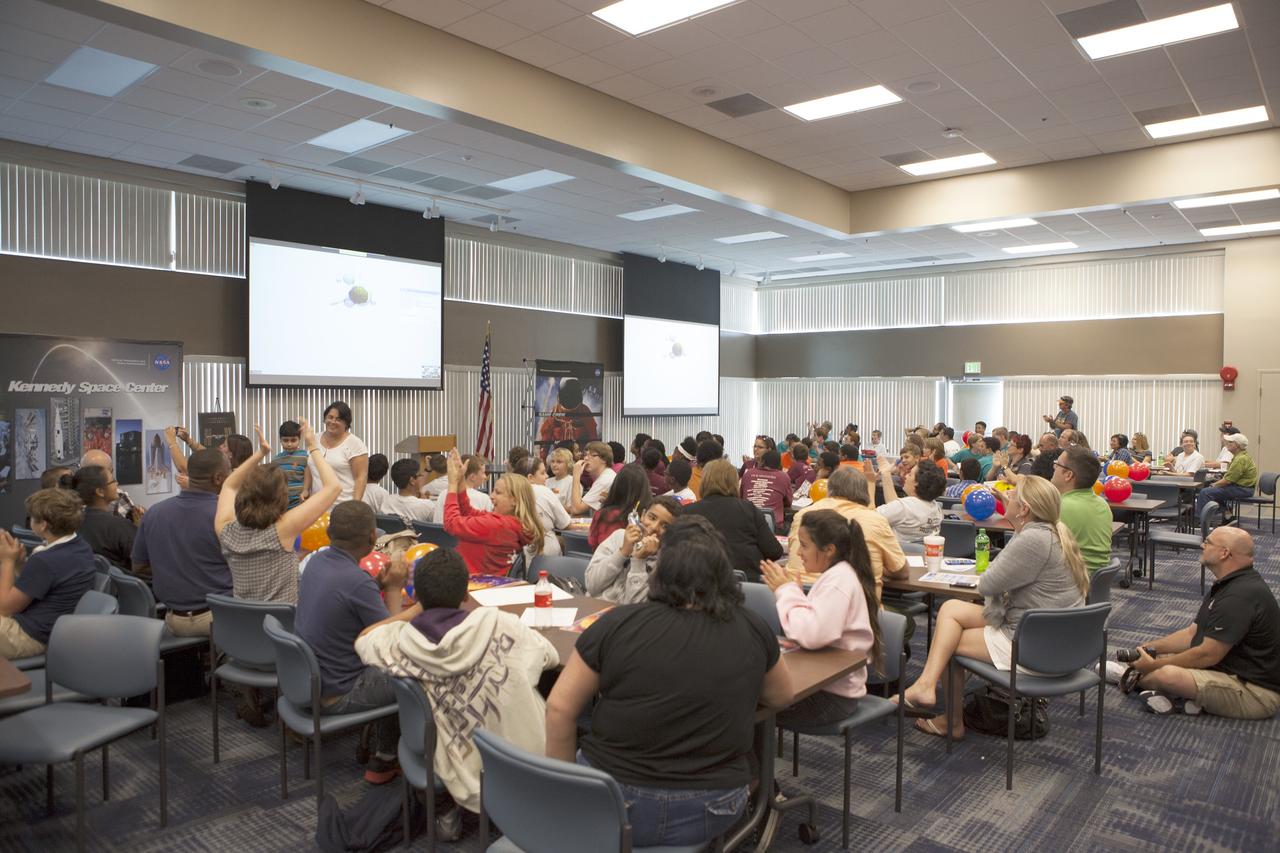
CAPE CANAVERAL, Fla. – Florida middle school students and their teachers watch the Zero Robotics finals competition broadcast live via webex from the International Space Station. The Florida teams are at the Space Station Processing Facility at NASA's Kennedy Space Center in Florida. Students designed software to control Synchronized Position Hold Engage and Reorient Experimental Satellites, or SPHERES, and competed with other teams locally. The Zero Robotics is a robotics programming competition where the robots are SPHERES. The competition starts online, where teams program the SPHERES to solve an annual challenge. After several phases of virtual competition in a simulation environment that mimics the real SPHERES, finalists are selected to compete in a live championship aboard the space station. Students compete to win a technically challenging game by programming their strategies into the SPHERES satellites. The programs are autonomous and the students cannot control the satellites during the test. Photo credit: NASA/Daniel Casper
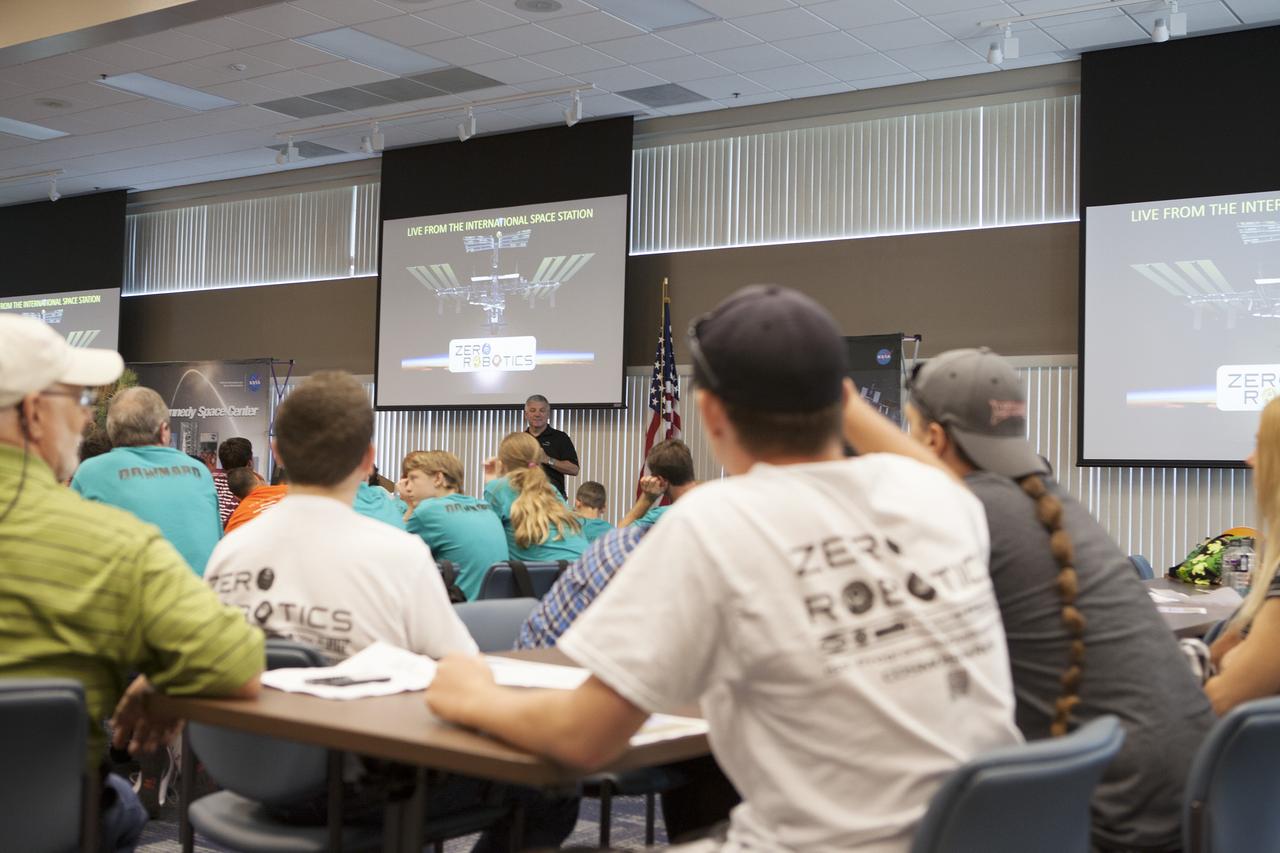
CAPE CANAVERAL, Fla. – Former astronaut Greg Johnson, executive director of the Center for the Advancement of Science in Space, talks to Florida middle school students and their teachers before the start of the Zero Robotics finals competition at NASA Kennedy Space Center's Space Station Processing Facility in Florida. Students designed software to control Synchronized Position Hold Engage and Reorient Experimental Satellites, or SPHERES, and competed with other teams locally. The Zero Robotics is a robotics programming competition where the robots are SPHERES. The competition starts online, where teams program the SPHERES to solve an annual challenge. After several phases of virtual competition in a simulation environment that mimics the real SPHERES, finalists are selected to compete in a live championship aboard the space station. Students compete to win a technically challenging game by programming their strategies into the SPHERES satellites. The programs are autonomous and the students cannot control the satellites during the test. Photo credit: NASA/Daniel Casper
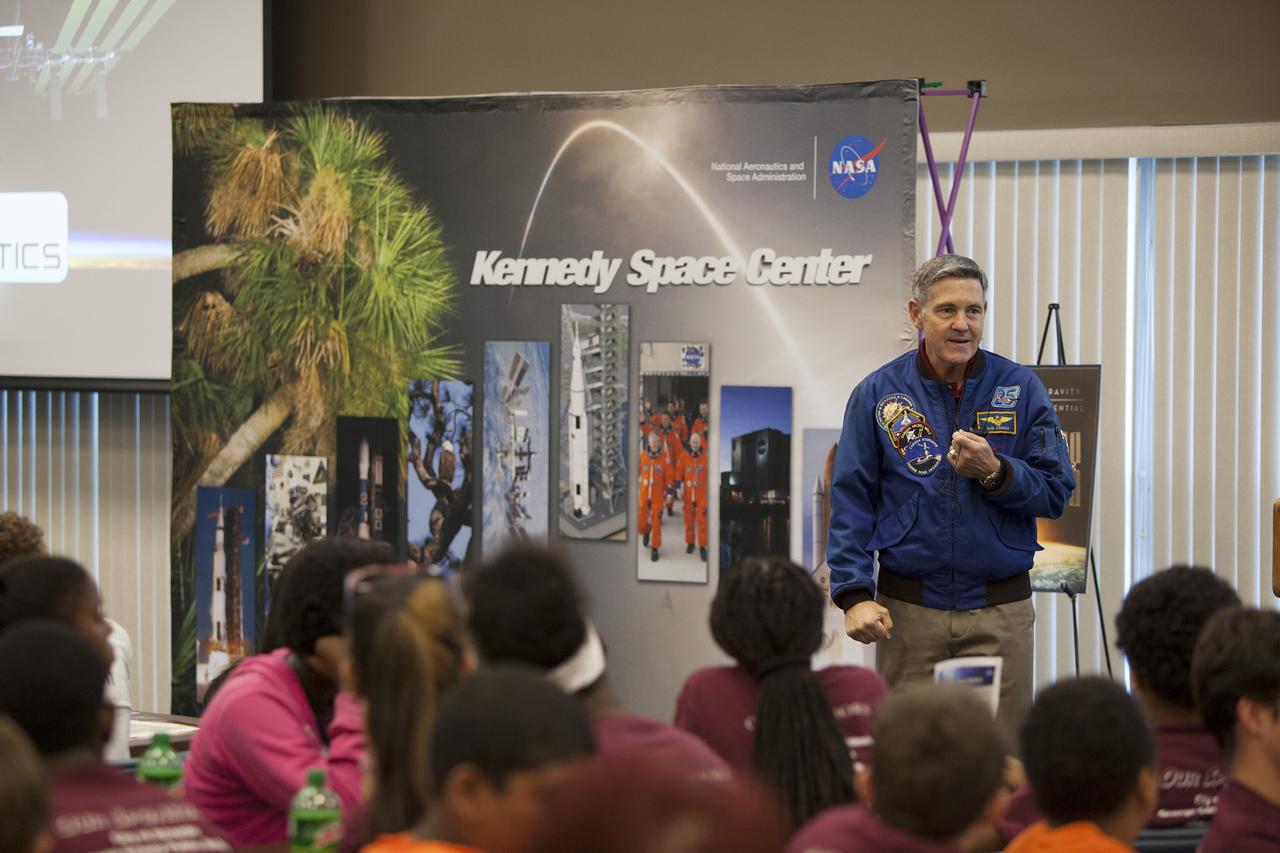
CAPE CANAVERAL, Fla. – Kennedy Space Center Director and former astronaut Bob Cabana, talks to Florida middle school students and their teachers during the Zero Robotics finals competition at the center's Space Station Processing Facility in Florida. Students designed software to control Synchronized Position Hold Engage and Reorient Experimental Satellites, or SPHERES, and competed with other teams locally. The Zero Robotics is a robotics programming competition where the robots are SPHERES. The competition starts online, where teams program the SPHERES to solve an annual challenge. After several phases of virtual competition in a simulation environment that mimics the real SPHERES, finalists are selected to compete in a live championship aboard the space station. Students compete to win a technically challenging game by programming their strategies into the SPHERES satellites. The programs are autonomous and the students cannot control the satellites during the test. Photo credit: NASA/Daniel Casper
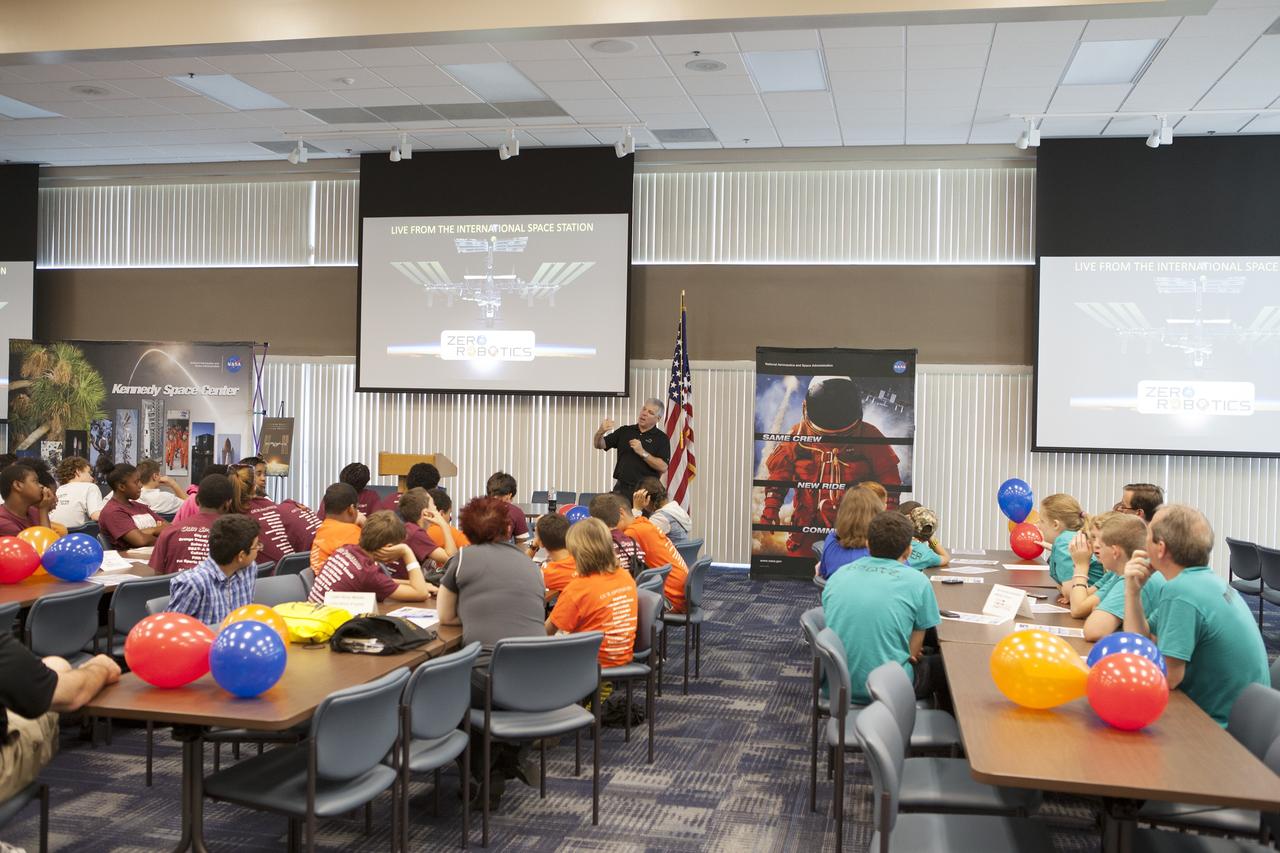
CAPE CANAVERAL, Fla. – Former astronaut Greg Johnson, executive director of the Center for the Advancement of Science in Space, talks to Florida middle school students and their teachers before the start of the Zero Robotics finals competition at NASA Kennedy Space Center's Space Station Processing Facility in Florida. Students designed software to control Synchronized Position Hold Engage and Reorient Experimental Satellites, or SPHERES, and competed with other teams locally. The Zero Robotics is a robotics programming competition where the robots are SPHERES. The competition starts online, where teams program the SPHERES to solve an annual challenge. After several phases of virtual competition in a simulation environment that mimics the real SPHERES, finalists are selected to compete in a live championship aboard the space station. Students compete to win a technically challenging game by programming their strategies into the SPHERES satellites. The programs are autonomous and the students cannot control the satellites during the test. Photo credit: NASA/Daniel Casper
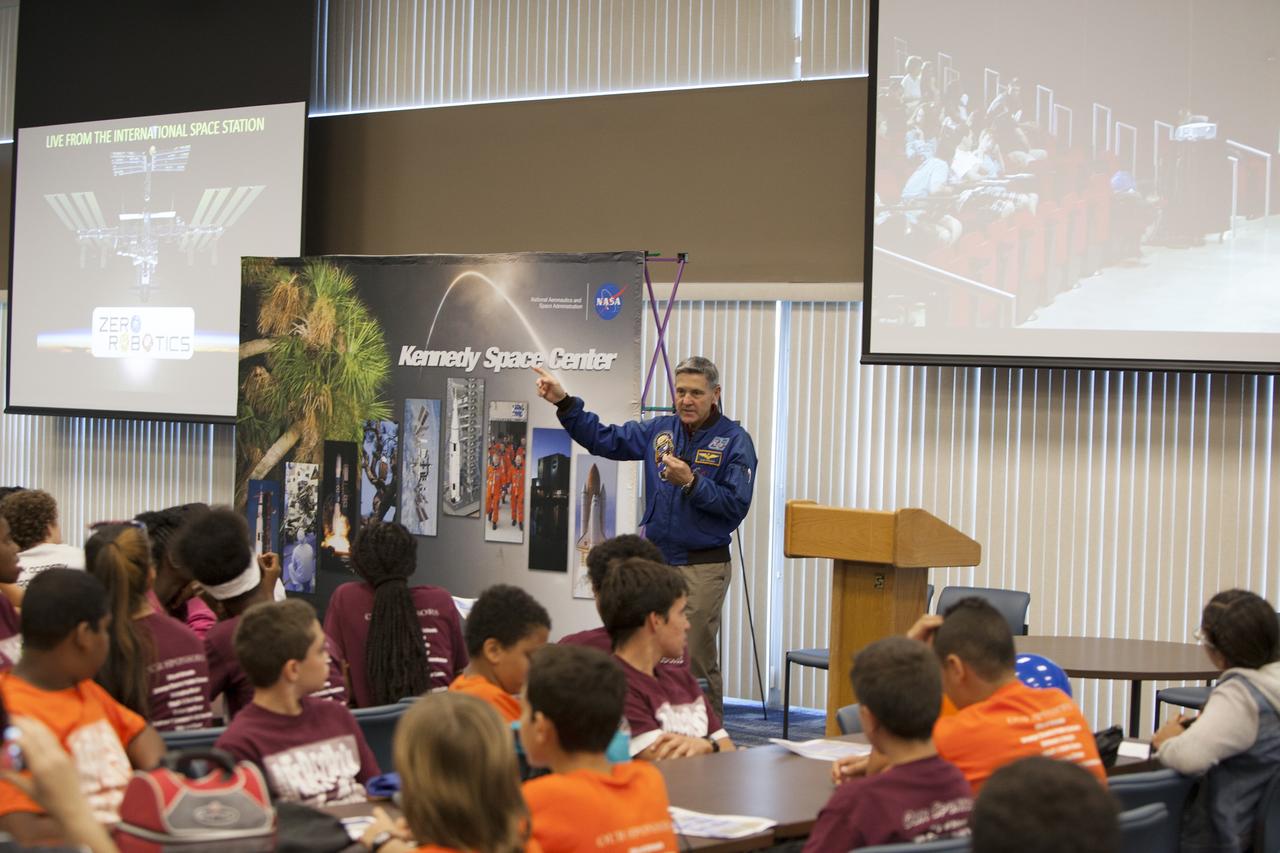
CAPE CANAVERAL, Fla. – Kennedy Space Center Director and former astronaut Bob Cabana, talks to Florida middle school students and their teachers during the Zero Robotics finals competition at the center's Space Station Processing Facility in Florida. Students designed software to control Synchronized Position Hold Engage and Reorient Experimental Satellites, or SPHERES, and competed with other teams locally. The Zero Robotics is a robotics programming competition where the robots are SPHERES. The competition starts online, where teams program the SPHERES to solve an annual challenge. After several phases of virtual competition in a simulation environment that mimics the real SPHERES, finalists are selected to compete in a live championship aboard the space station. Students compete to win a technically challenging game by programming their strategies into the SPHERES satellites. The programs are autonomous and the students cannot control the satellites during the test. Photo credit: NASA/Daniel Casper
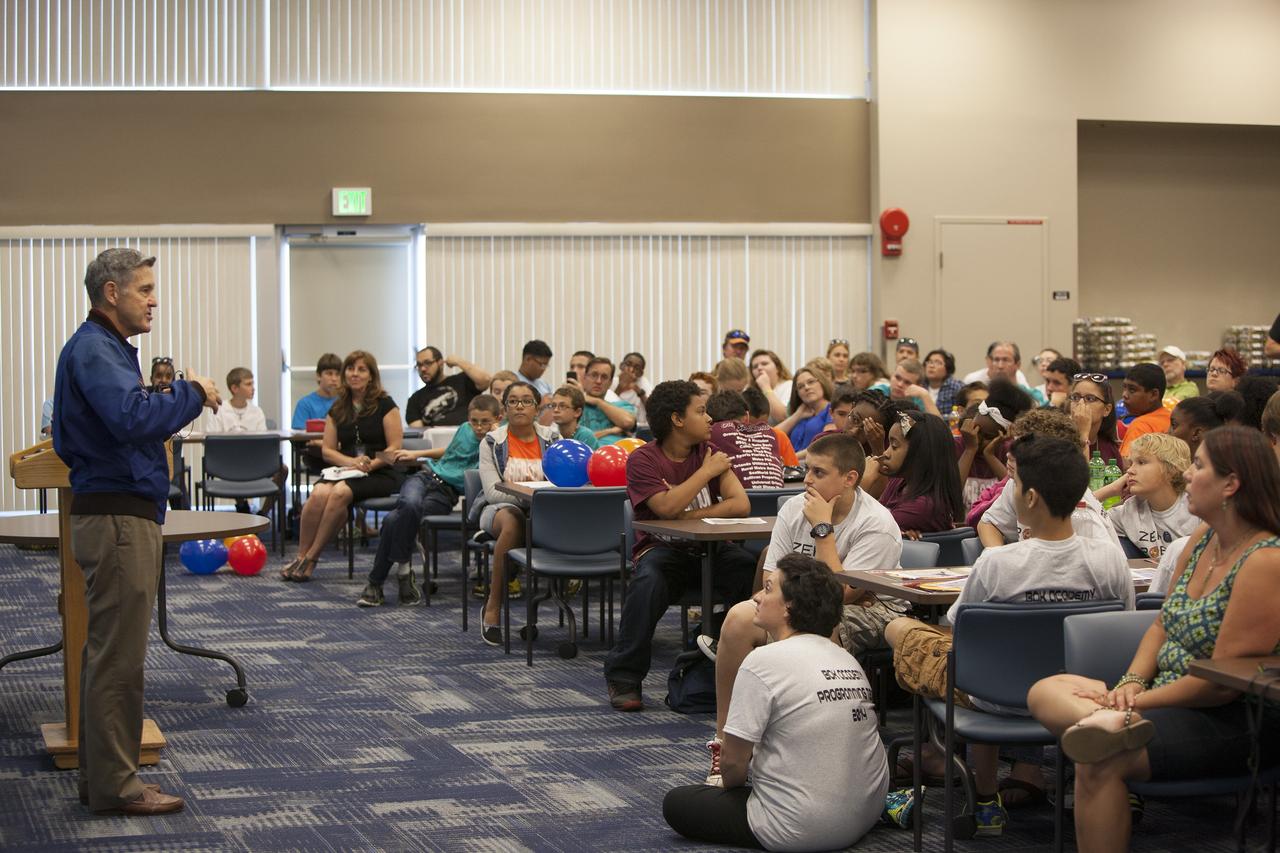
CAPE CANAVERAL, Fla. – Kennedy Space Center Director and former astronaut Bob Cabana, talks to Florida middle school students and their teachers during the Zero Robotics finals competition at the center's Space Station Processing Facility in Florida. Students designed software to control Synchronized Position Hold Engage and Reorient Experimental Satellites, or SPHERES, and competed with other teams locally. The Zero Robotics is a robotics programming competition where the robots are SPHERES. The competition starts online, where teams program the SPHERES to solve an annual challenge. After several phases of virtual competition in a simulation environment that mimics the real SPHERES, finalists are selected to compete in a live championship aboard the space station. Students compete to win a technically challenging game by programming their strategies into the SPHERES satellites. The programs are autonomous and the students cannot control the satellites during the test. Photo credit: NASA/Daniel Casper
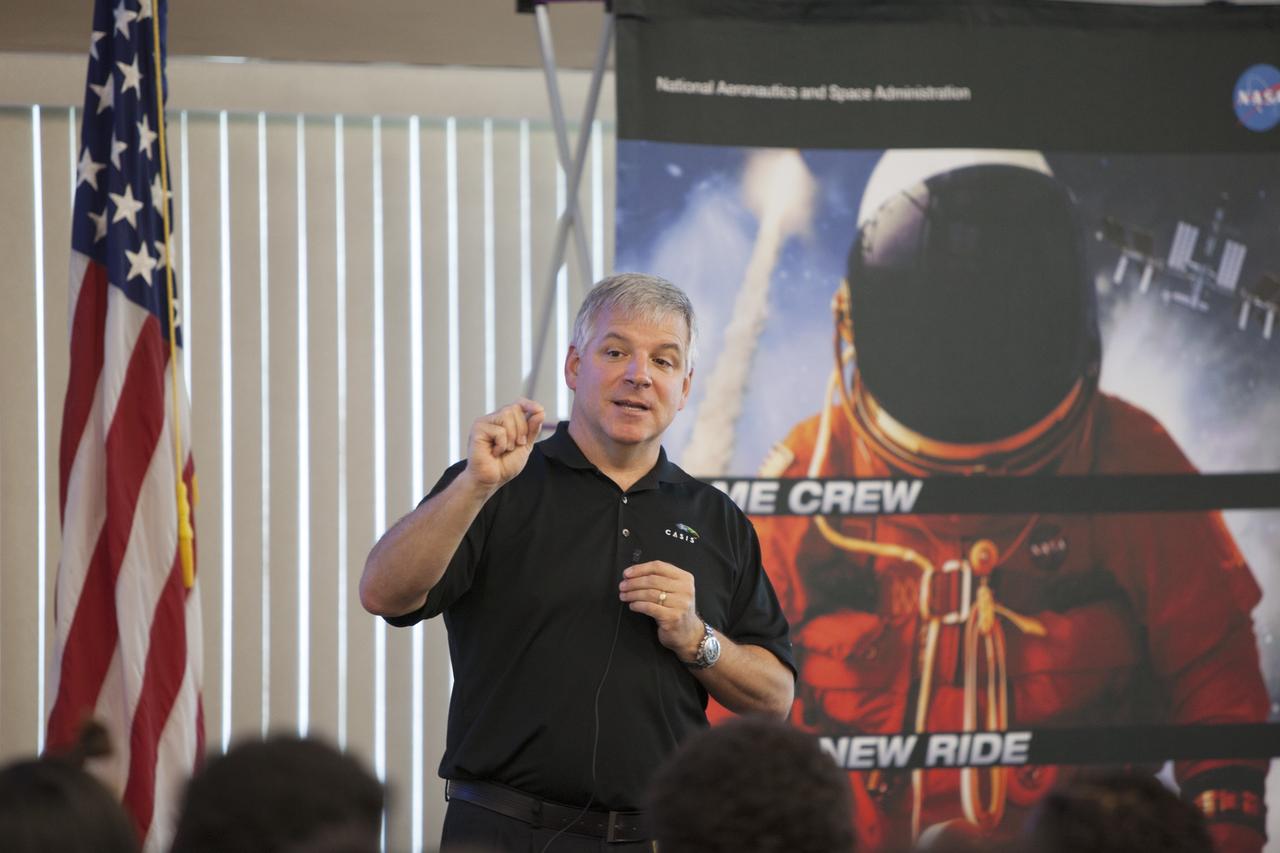
CAPE CANAVERAL, Fla. – Former astronaut Greg Johnson, executive director of the Center for the Advancement of Science in Space, talks to Florida middle school students and their teachers before the start of the Zero Robotics finals competition at NASA Kennedy Space Center's Space Station Processing Facility in Florida. Students designed software to control Synchronized Position Hold Engage and Reorient Experimental Satellites, or SPHERES, and competed with other teams locally. The Zero Robotics is a robotics programming competition where the robots are SPHERES. The competition starts online, where teams program the SPHERES to solve an annual challenge. After several phases of virtual competition in a simulation environment that mimics the real SPHERES, finalists are selected to compete in a live championship aboard the space station. Students compete to win a technically challenging game by programming their strategies into the SPHERES satellites. The programs are autonomous and the students cannot control the satellites during the test. Photo credit: NASA/Daniel Casper
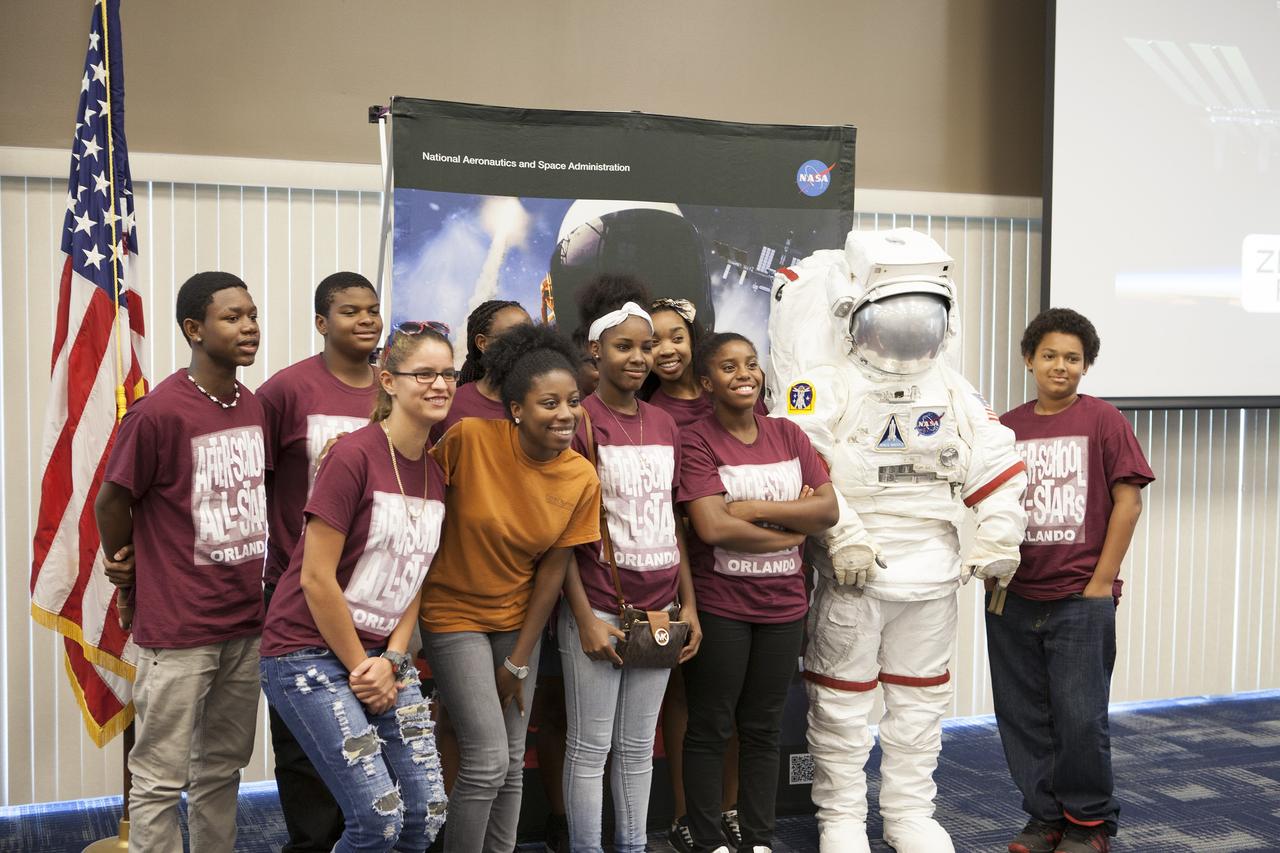
CAPE CANAVERAL, Fla. – The Kennedy Space Center Visitor Complex Spaceperson poses for a photo with Carver Middle School students and their teacher from Orlando, Florida, during the Zero Robotics finals competition at NASA Kennedy Space Center's Space Station Processing Facility in Florida. The team, members of the After School All-Stars, were regional winners and advanced to the final competition. For the competition, students designed software to control Synchronized Position Hold Engage and Reorient Experimental Satellites, or SPHERES, and competed with other teams locally. The Zero Robotics is a robotics programming competition where the robots are SPHERES. The competition starts online, where teams program the SPHERES to solve an annual challenge. After several phases of virtual competition in a simulation environment that mimics the real SPHERES, finalists are selected to compete in a live championship aboard the space station. Students compete to win a technically challenging game by programming their strategies into the SPHERES satellites. The programs are autonomous and the students cannot control the satellites during the test. Photo credit: NASA/Daniel Casper
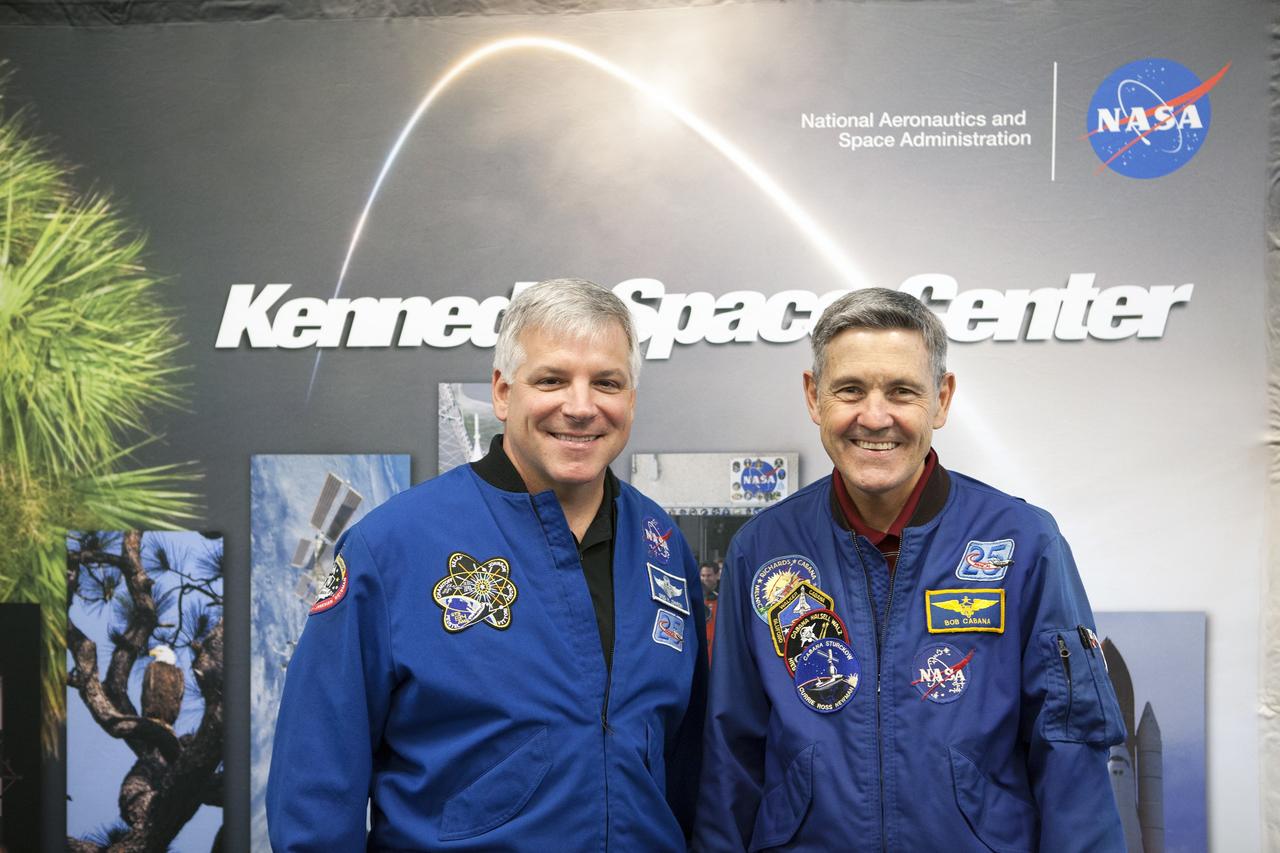
CAPE CANAVERAL, Fla. – Former astronaut Greg Johnson, at left, executive director of the Center for the Advancement of Science in Space, and NASA Kennedy Space Center Director Bob Cabana, visit with Florida middle school students and their teachers before the start of the Zero Robotics finals competition at NASA Kennedy Space Center's Space Station Processing Facility in Florida. Students designed software to control Synchronized Position Hold Engage and Reorient Experimental Satellites, or SPHERES, and competed with other teams locally. The Zero Robotics is a robotics programming competition where the robots are SPHERES. The competition starts online, where teams program the SPHERES to solve an annual challenge. After several phases of virtual competition in a simulation environment that mimics the real SPHERES, finalists are selected to compete in a live championship aboard the space station. Students compete to win a technically challenging game by programming their strategies into the SPHERES satellites. The programs are autonomous and the students cannot control the satellites during the test. Photo credit: NASA/Daniel Casper