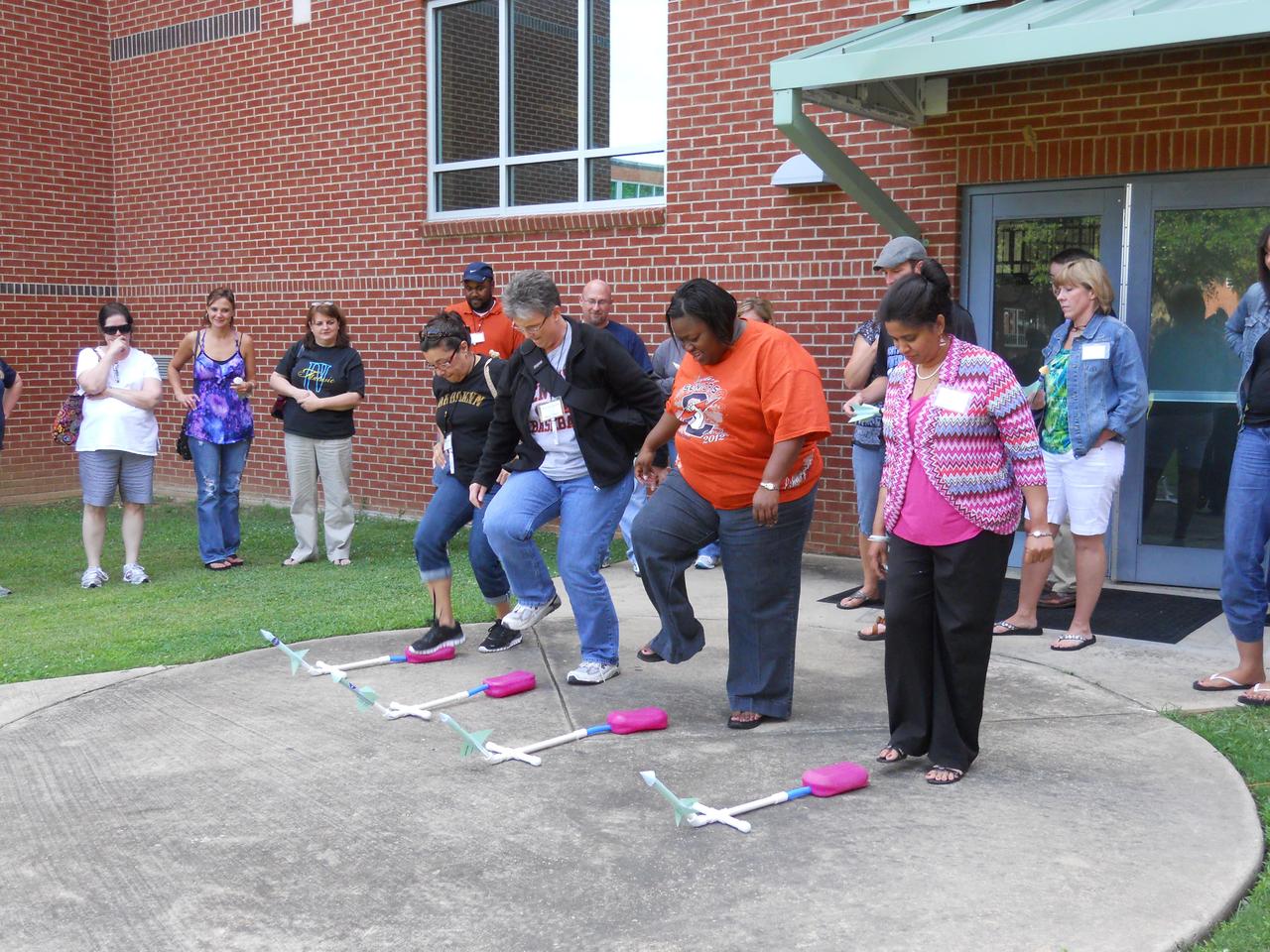
Mississippi educators participated in a variety of hands-on activities, including rocketry, robotics, and NASA's BEST (Beginning Engineering, Science, and Technology) during a pair of during a pair of professional development workshops conducted by Stennis Space Center educators in June. On June 14, Stennis educators presented workshops to 96 kindergarten-through-12th-grade science teachers and eight Jackson State University faculty, as part of JSU's Project MAST (Mississippi Academy for Science Teaching) Project. On June 21, educators presented workshops in Starkville to 43 fourth-through-eighth-grade science teachers as part of Mississippi State University's Advancing Teachers of Middle School Science initiative.
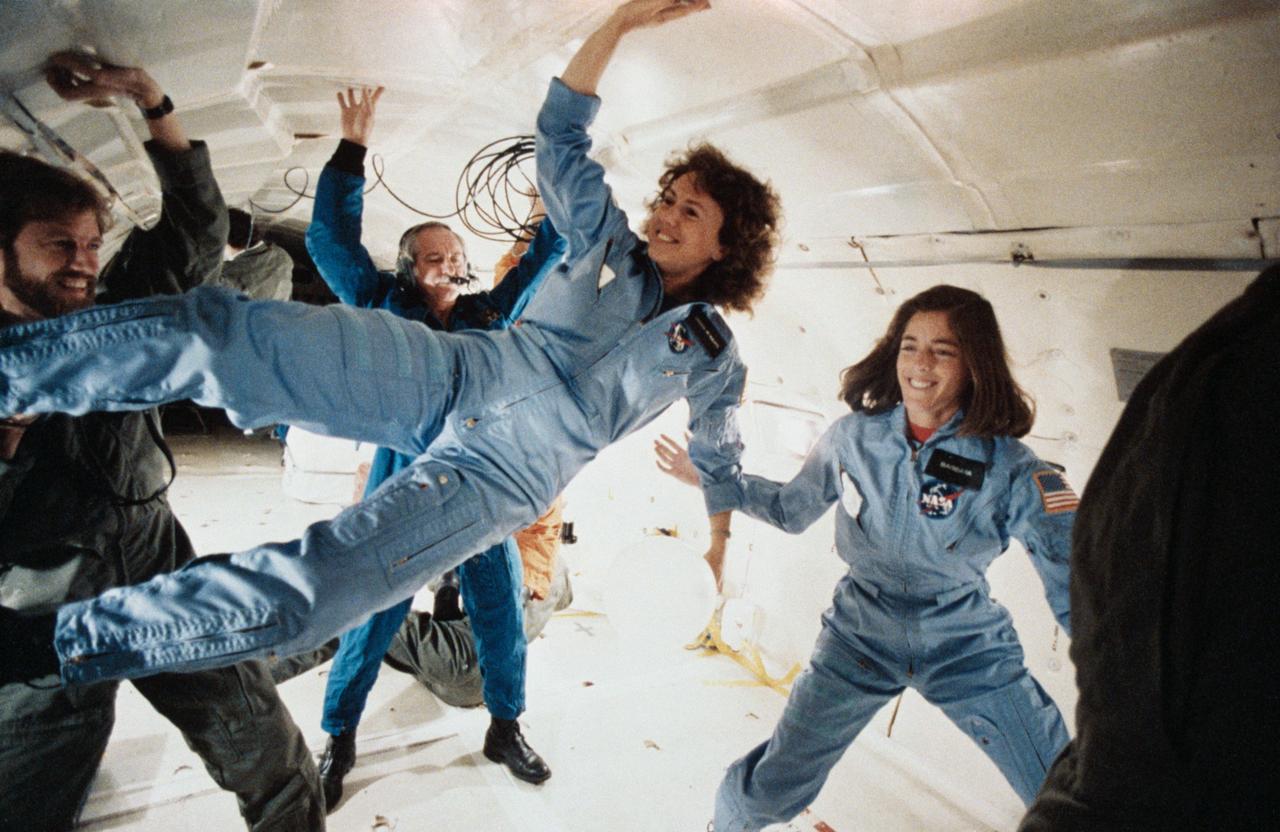
S86-25191 (for release January 1986) --- The two representatives of the Teacher-in-Space Project continue their training program at the Johnson Space Center with an additional flight aboard NASA?s KC-135 ?zero gravity? aircraft. Sharon Christa McAuliffe, left, is prime crew payload specialist, and Barbara R. Morgan is in training as backup payload specialist. The photo was taken by Keith Meyers of New York Times. Photo credit: NASA
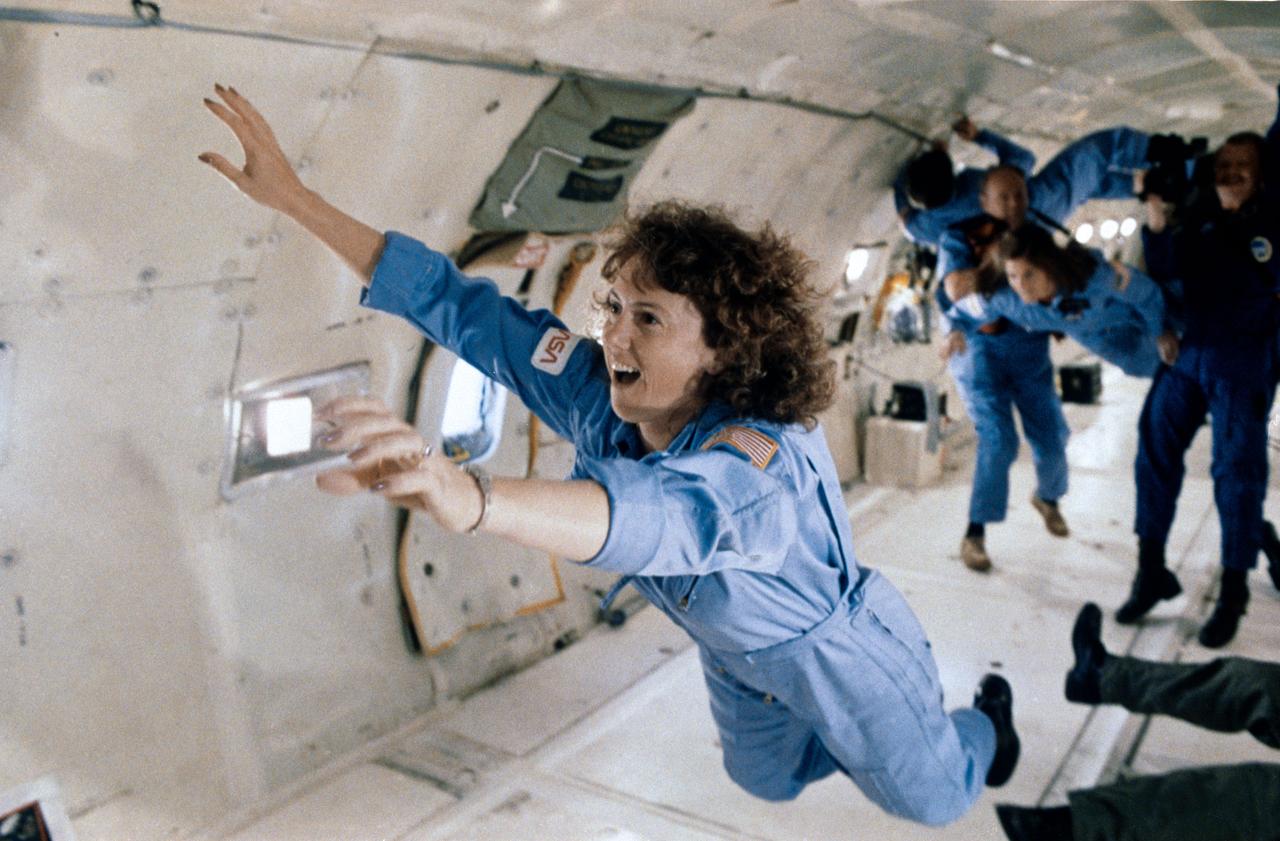
S86-25180 (October 1985) --- Sharon Christa McAuliffe, STS-51L citizen observer/payload specialist, representing the Teacher-in-Space Project, floats forward and upward during a few moments of weightlessness aboard a KC-135 aircraft. The flight is part of her training for the scheduled five-day flight aboard the Challenger in January of next year. Barbara R. Morgan, backup payload specialist for STS-51L, is partially visible in the background. The photo was taken by Keith Meyers of the New York Times. Photo credit: NASA
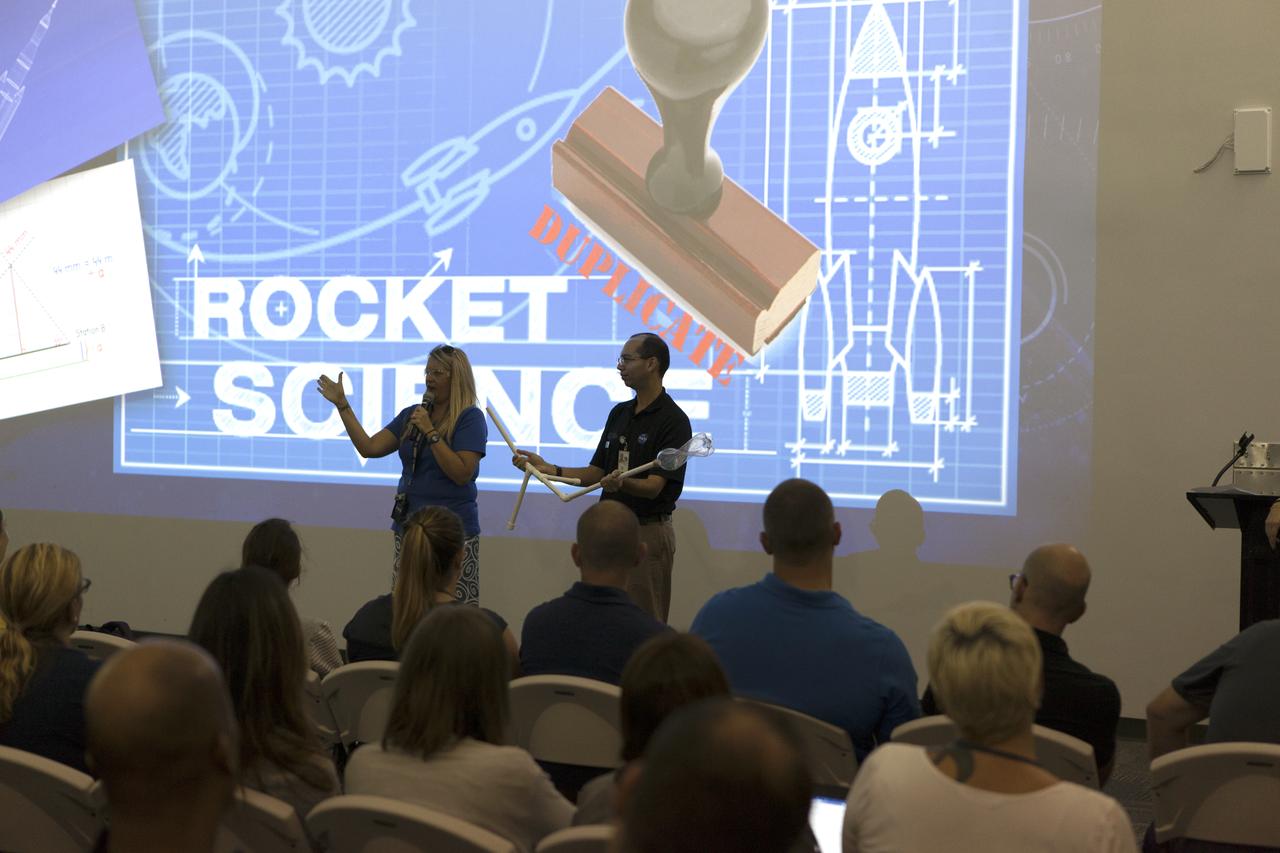
Education Specialists Lynn Dotson, left, of the NASA Public Engagement Center, and Lester Morales, right, of Texas State University's NASA STEM Educator Professional Development Collaborative, explain the Rocketry Engineering Design Challenge to teachers participating in the 2017 GE Foundation High School STEM Integration Conference at the Center for Space Education at NASA's Kennedy Space Center. High school teachers from across the country took part in the week-long conference, which is designed to explore effective ways for teachers, schools and districts from across the country to integrate STEM throughout the curriculum. The conference is a partnership between GE Foundation and the National Science Teachers Association.
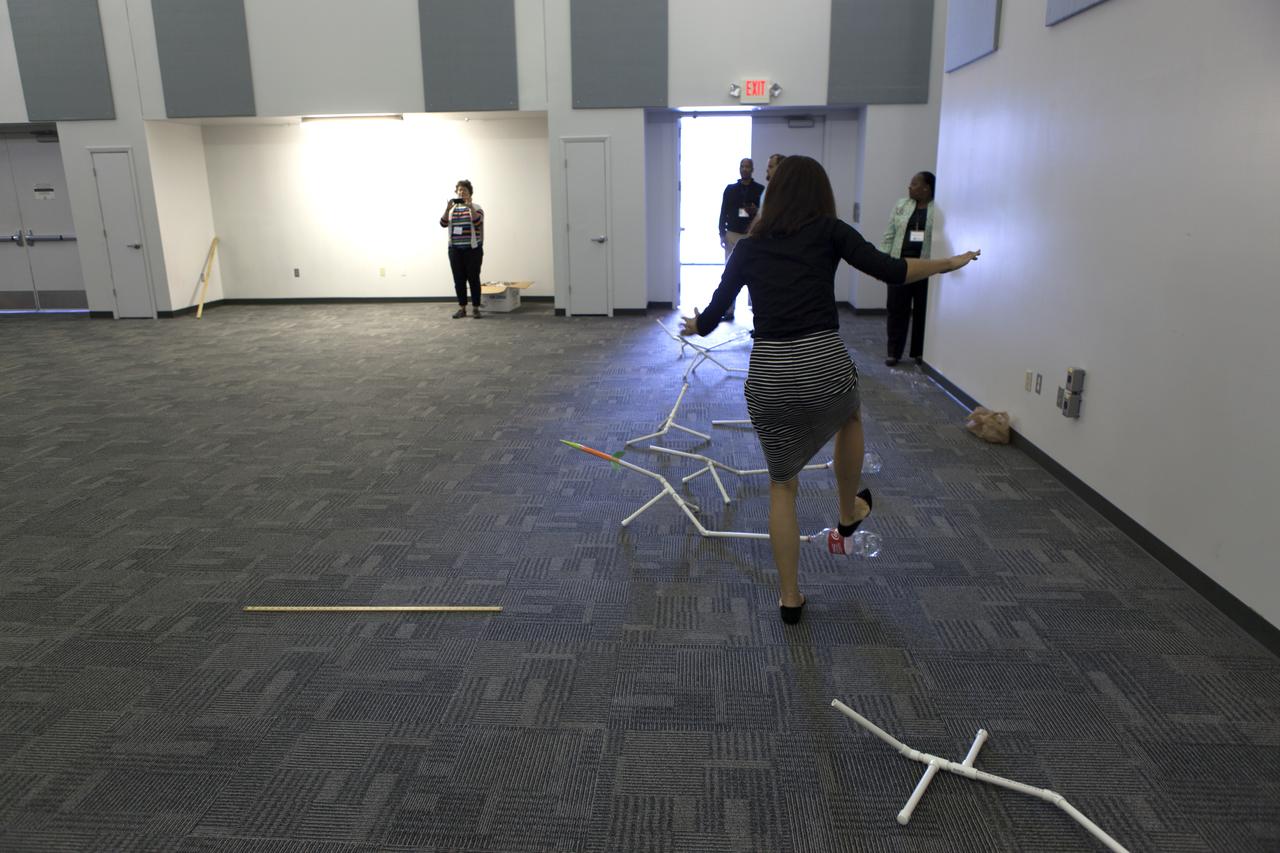
Teachers prepare to demonstrate the projects they built for the Rocketry Engineering Design Challenge during the 2017 GE Foundation High School STEM Integration Conference at the Center for Space Education at NASA's Kennedy Space Center. High school teachers from across the country took part in the week-long conference, which is designed to explore effective ways for teachers, schools and districts from across the country to integrate STEM throughout the curriculum. The conference is a partnership between GE Foundation and the National Science Teachers Association.
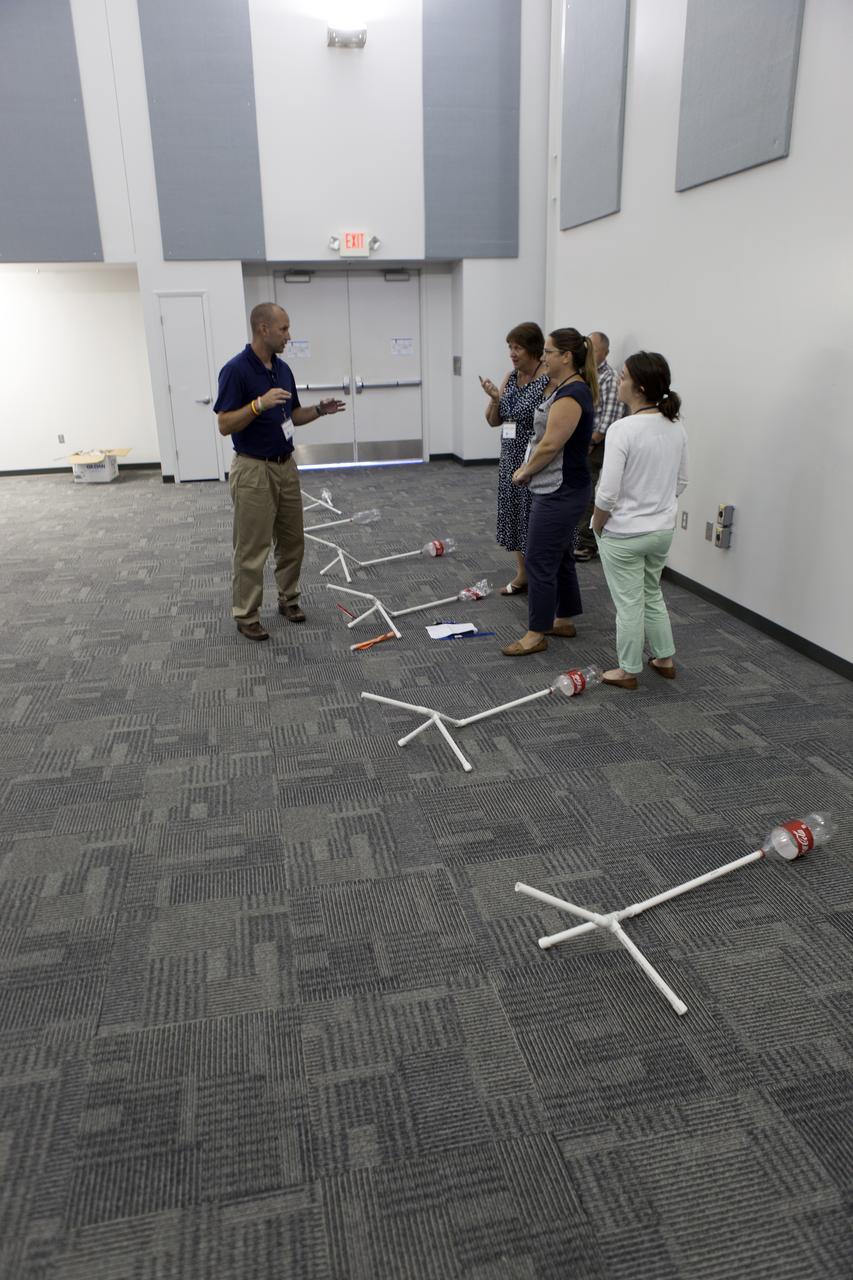
Teachers prepare to demonstrate the projects they built for the Rocketry Engineering Design Challenge during the 2017 GE Foundation High School STEM Integration Conference at the Center for Space Education at NASA's Kennedy Space Center. High school teachers from across the country took part in the week-long conference, which is designed to explore effective ways for teachers, schools and districts from across the country to integrate STEM throughout the curriculum. The conference is a partnership between GE Foundation and the National Science Teachers Association.
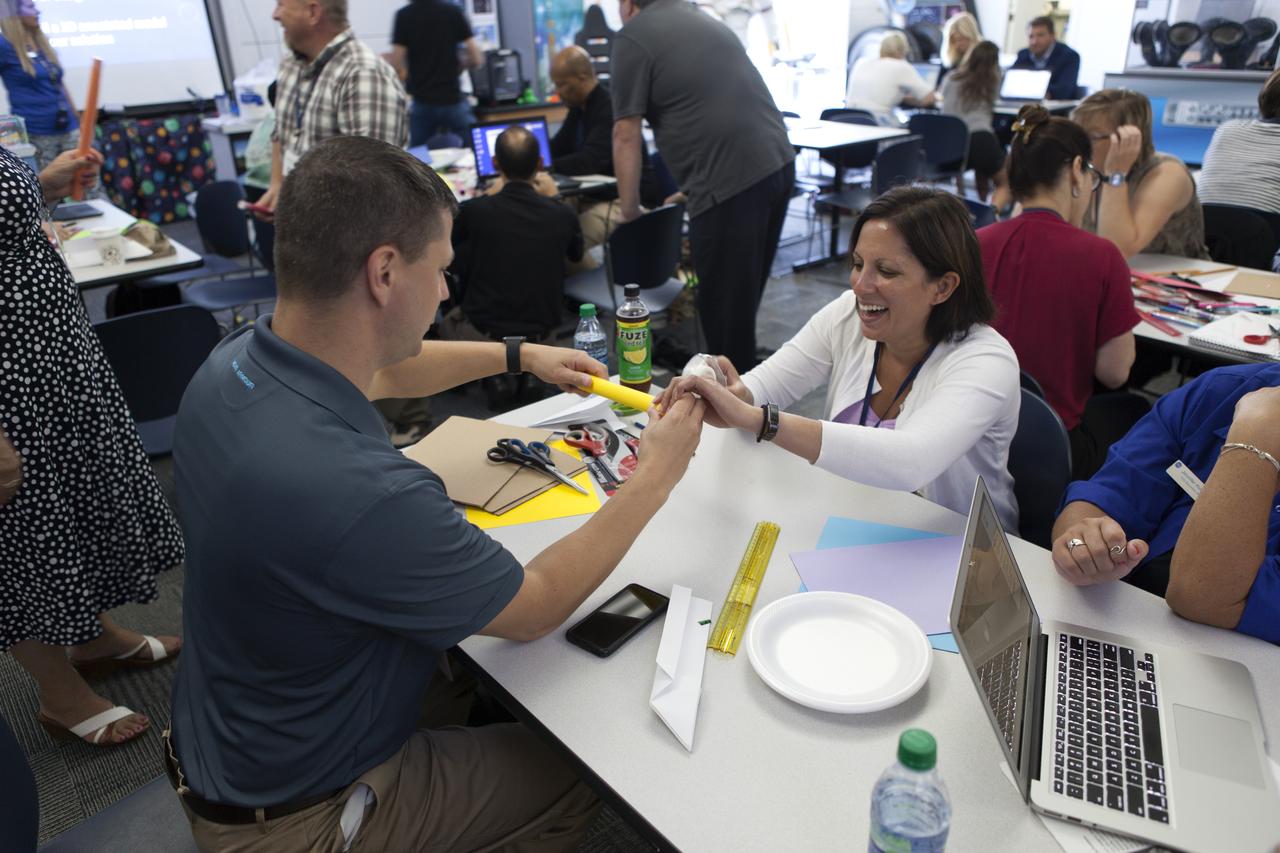
Teachers participate in the Rocketry Engineering Design Challenge during the 2017 GE Foundation High School STEM Integration Conference at the Center for Space Education at NASA's Kennedy Space Center. High school teachers from across the country took part in the week-long conference, which is designed to explore effective ways for teachers, schools and districts from across the country to integrate STEM throughout the curriculum. The conference is a partnership between GE Foundation and the National Science Teachers Association.
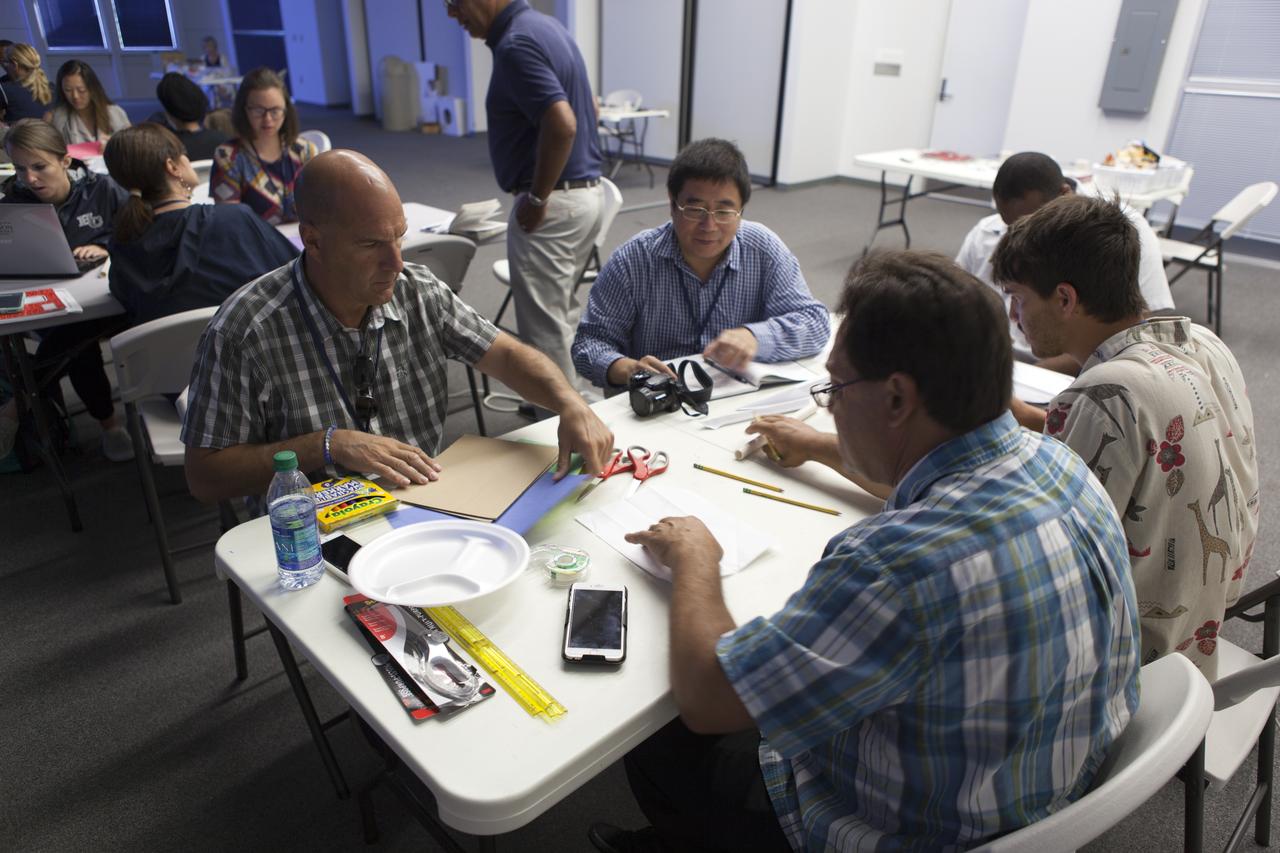
Teachers participate in the Rocketry Engineering Design Challenge during the 2017 GE Foundation High School STEM Integration Conference at the Center for Space Education at NASA's Kennedy Space Center. High school teachers from across the country took part in the week-long conference, which is designed to explore effective ways for teachers, schools and districts from across the country to integrate STEM throughout the curriculum. The conference is a partnership between GE Foundation and the National Science Teachers Association.
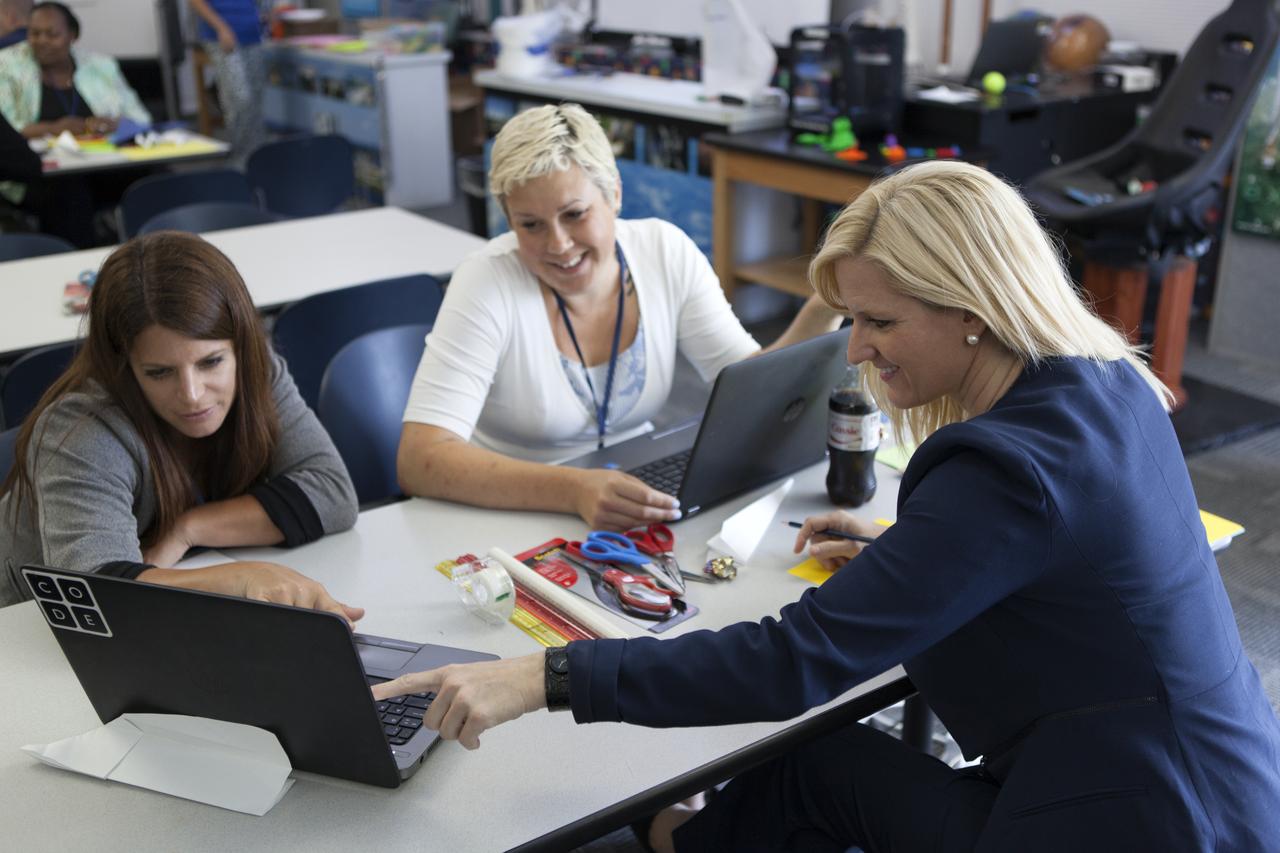
Teachers participate in the Rocketry Engineering Design Challenge during the 2017 GE Foundation High School STEM Integration Conference at the Center for Space Education at NASA's Kennedy Space Center. High school teachers from across the country took part in the week-long conference, which is designed to explore effective ways for teachers, schools and districts from across the country to integrate STEM throughout the curriculum. The conference is a partnership between GE Foundation and the National Science Teachers Association.
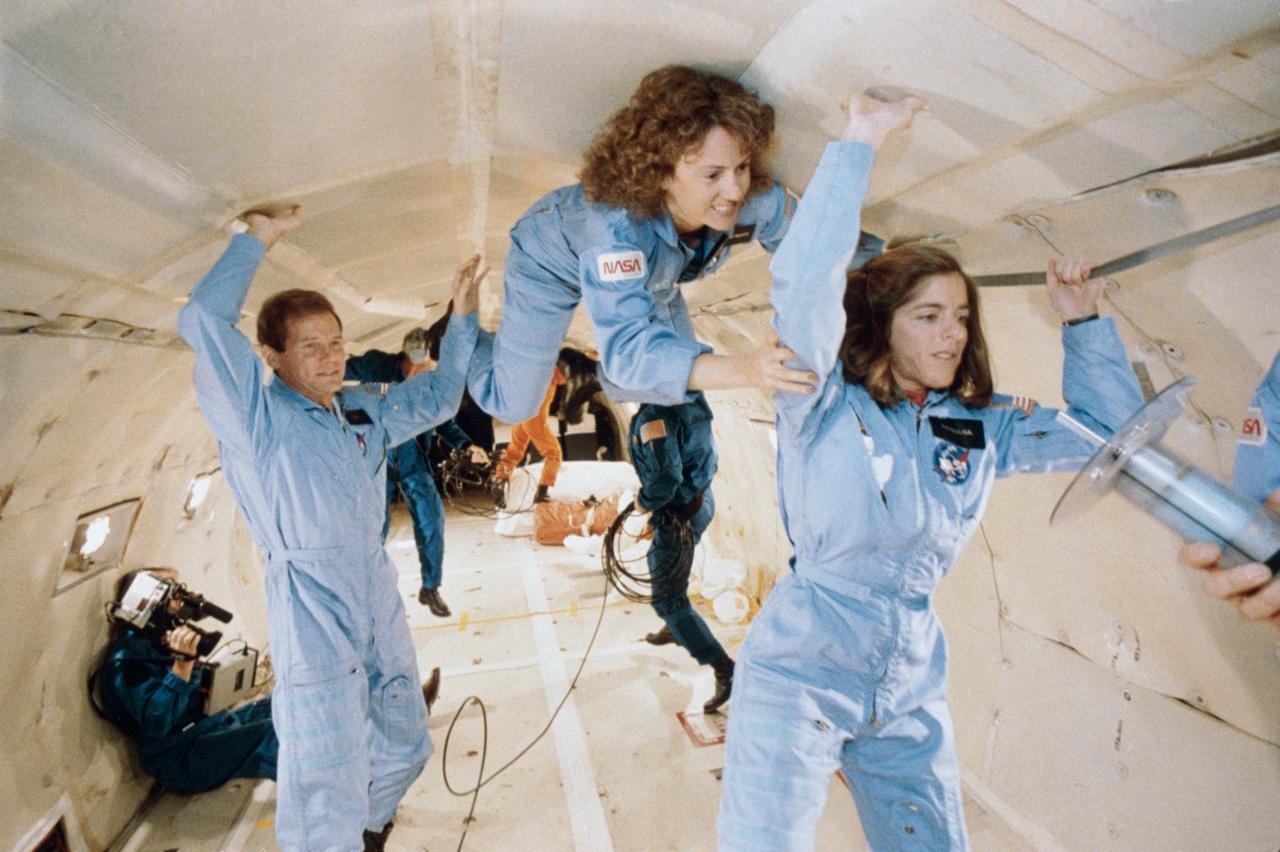
S86-25192 (January 1986) --- Two payload specialists in training for the STS-51L mission, and a payload specialist from STS-61C share a ?zero-gravity? flight aboard a KC-135 aircraft over the Gulf of Mexico. Left to right are United States Representative Bill Nelson (Democrat, Florida), Sharon Christa McAuliffe, and Barbara R. Morgan. The congressman is a payload specialist for the STS-61C mission. McAuliffe is the prime payload specialist for the Teacher-in-Space Project aboard the STS-51L mission; and Morgan is her backup. The photo was taken by Keith meyers of the New York Times. EDITOR?S NOTE: The STS-51L crew members lost their lives in the space shuttle Challenger accident moments after launch on Jan. 28, 1986 from the Kennedy Space Center (KSC). Photo credit: NASA
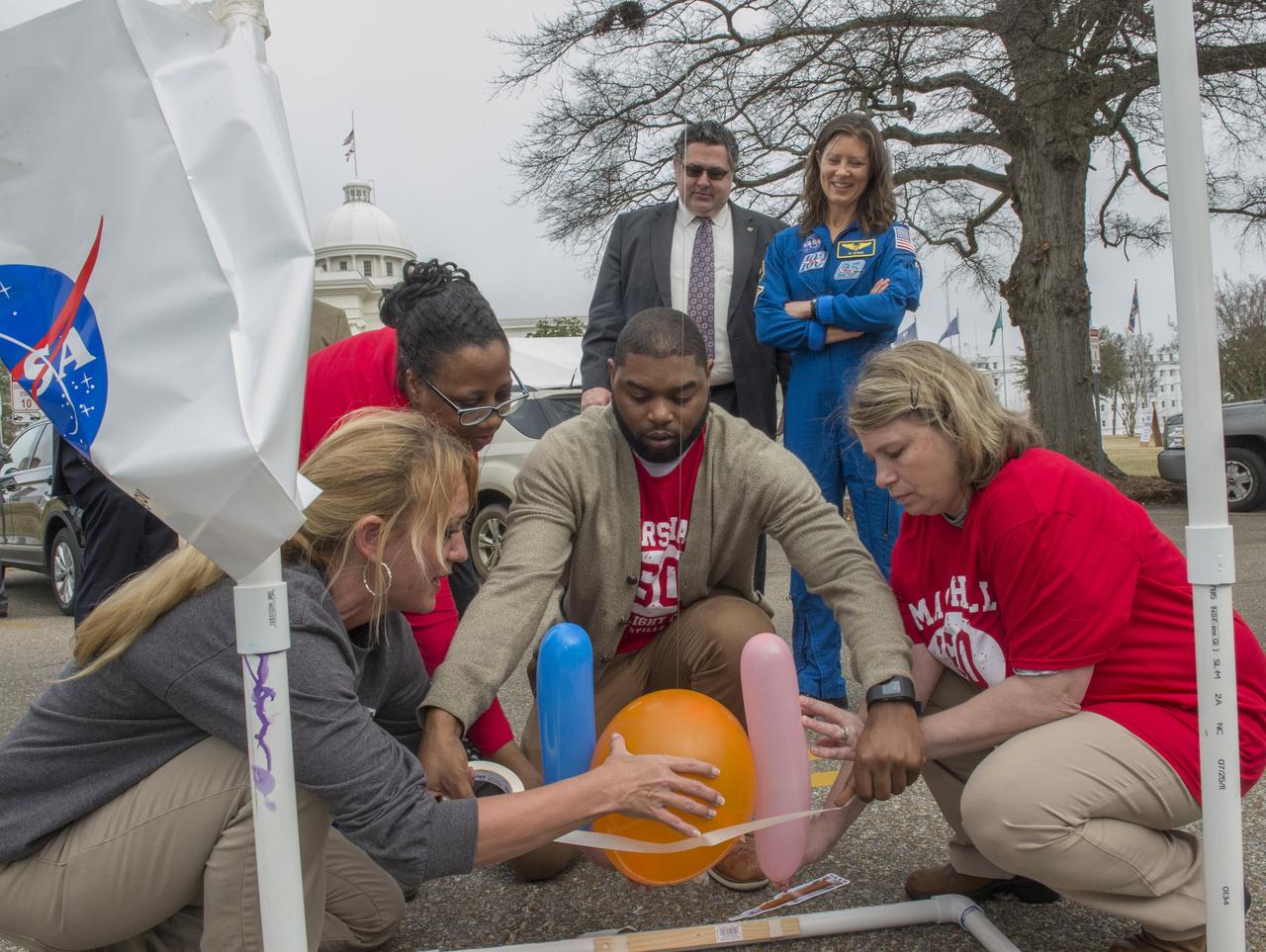
Officials from Marshall Space Flight Center discussed the state's role in leading America back to the Moon and on to Mars with elected officials, industry leaders, students and the public during the Aerospace States Association’s Alabama Aerospace Week in Montgomery, Ala. NASA was honored by the Alabama legislature with a resolution and proclamation from Gov. Kay Ivey recognizing the agency's achievements. NASA Trained Alabama Lead Teachers, (LtoR) Jacquelyn Adams, Arlinda Davis,Timothy Johnson,Laura Crowe demonstrate how rocket boosters work.
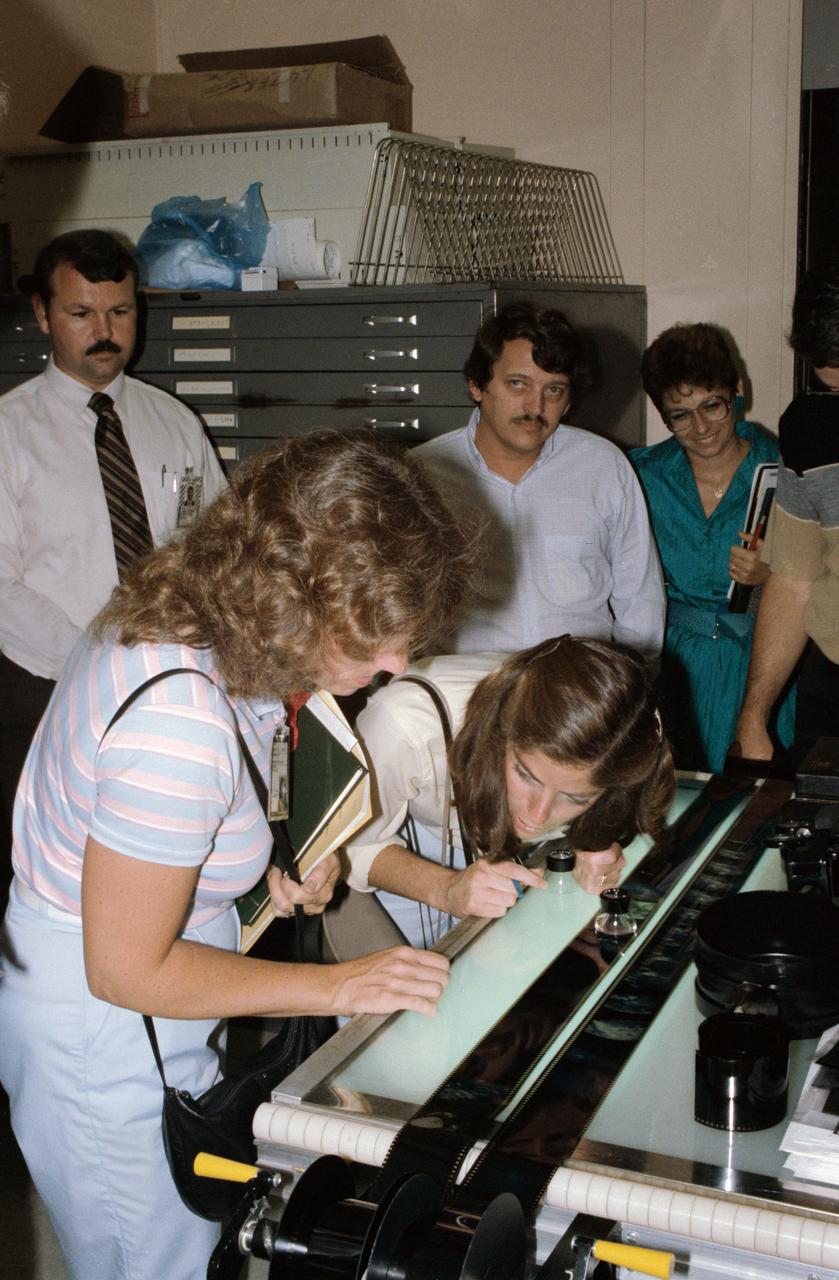
View of STS-33/51L Prime Teacher, Christa McAuliffe (left foreground) and Barbara Morgan (second left), both "Teacher in Space" Trainees, review film shot while training with Arriflex camera. 1. McAuliffe, S. Christa - Photography 2. Morgan, Barbara - Photography
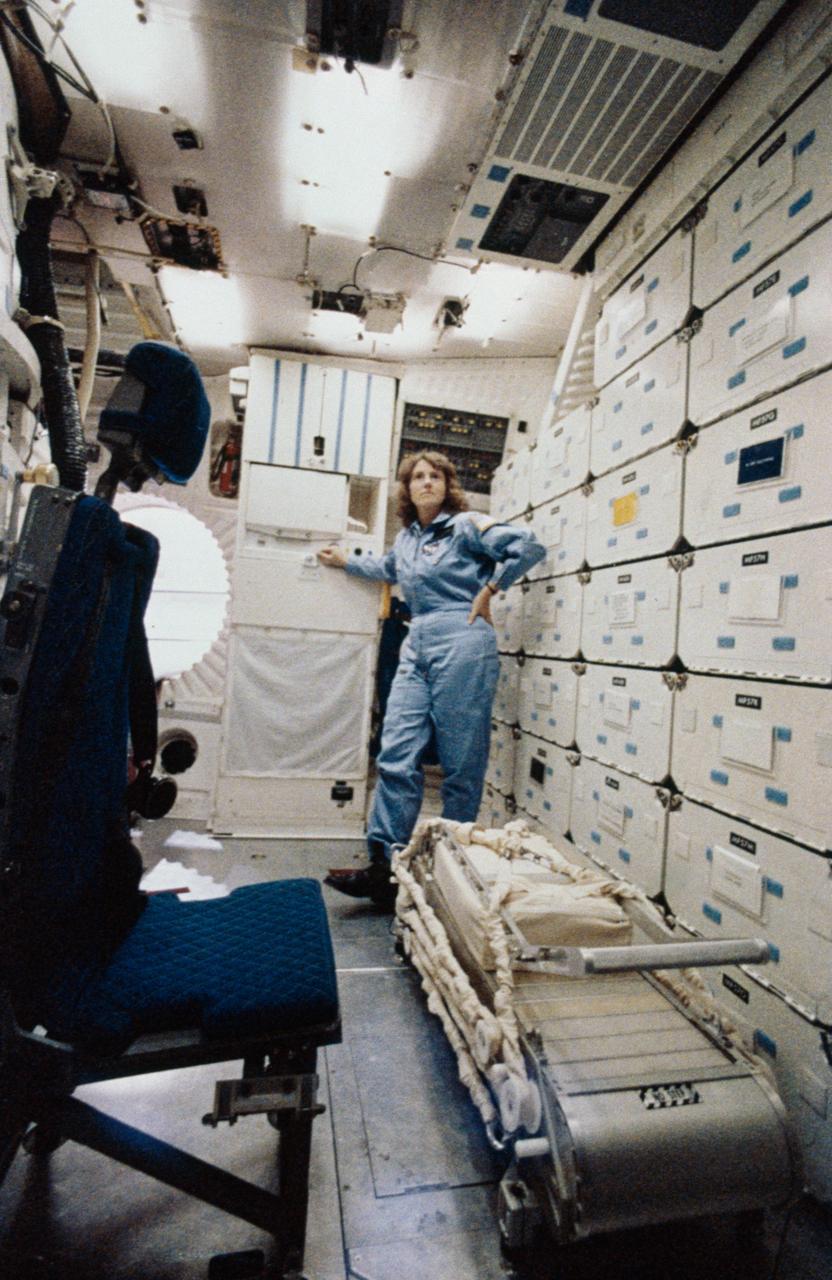
S86-25188 (December 1985) --- Sharon Christa McAuliffe, a school teacher Concord New Hampshire, surveys a ground training replica of the quarters she?ll be using in space when the space shuttle Challenger taxis two women and five men into space in January of 1986. The STS-51L citizen observer/payload specialist is in training at the Johnson Space Center, representing the Teacher-in-Space Project. The photo was taken by Keith Meyers of the New York Times. Photo credit: NASA
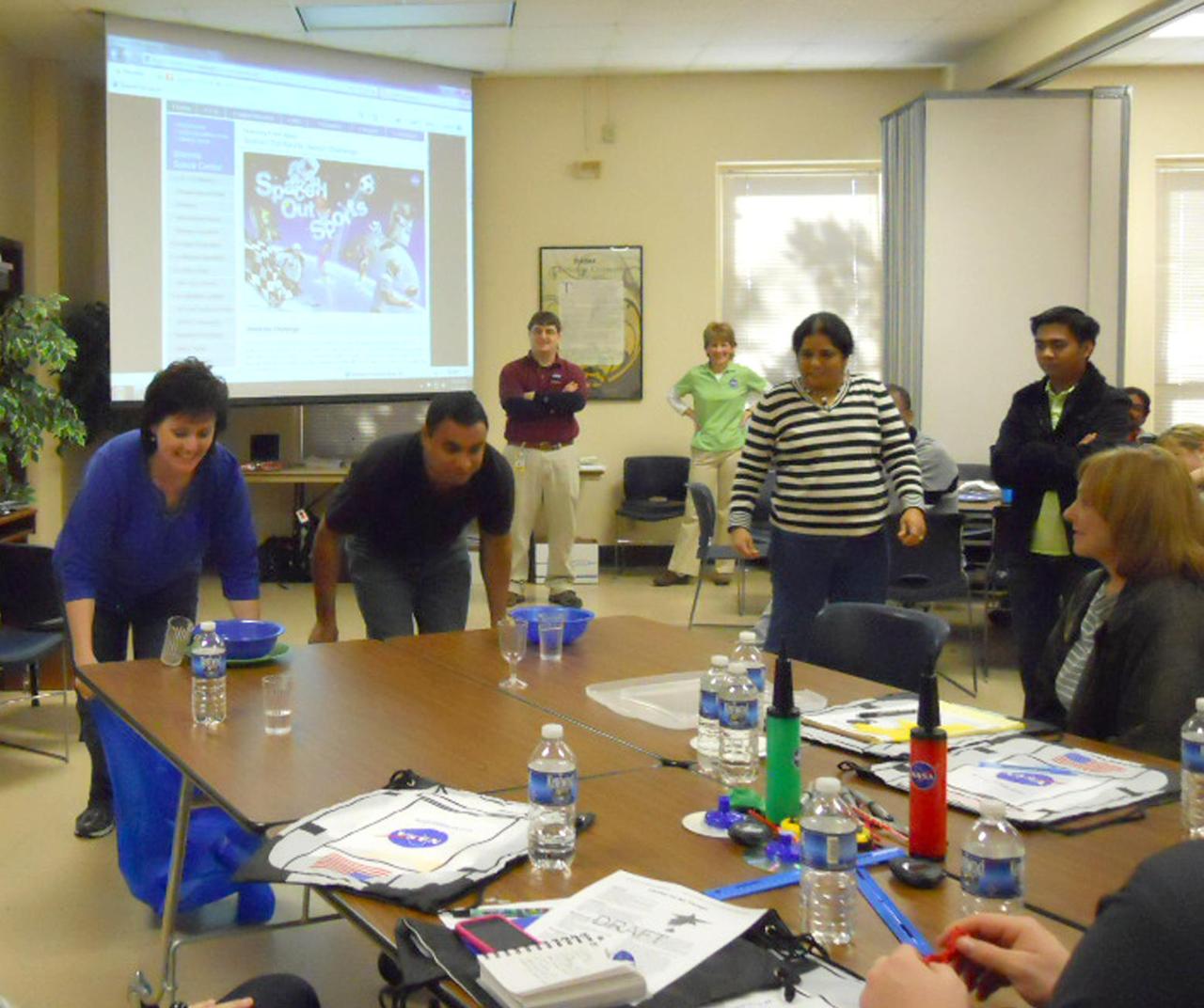
Middle school teachers from across Louisiana participate in a hands-on activity during a professional development workshop at Louisiana State University in Baton Rouge on Jan. 22, 2011. Fifty-five teachers participated in the workshop, which was hosted by the Stennis Education Office. During the workshop, Stennis specialists presented hands-on, problem-based learning and technology-based activities teachers can use in their classrooms to promote interest in areas of science, technology, engineering and mathematics.
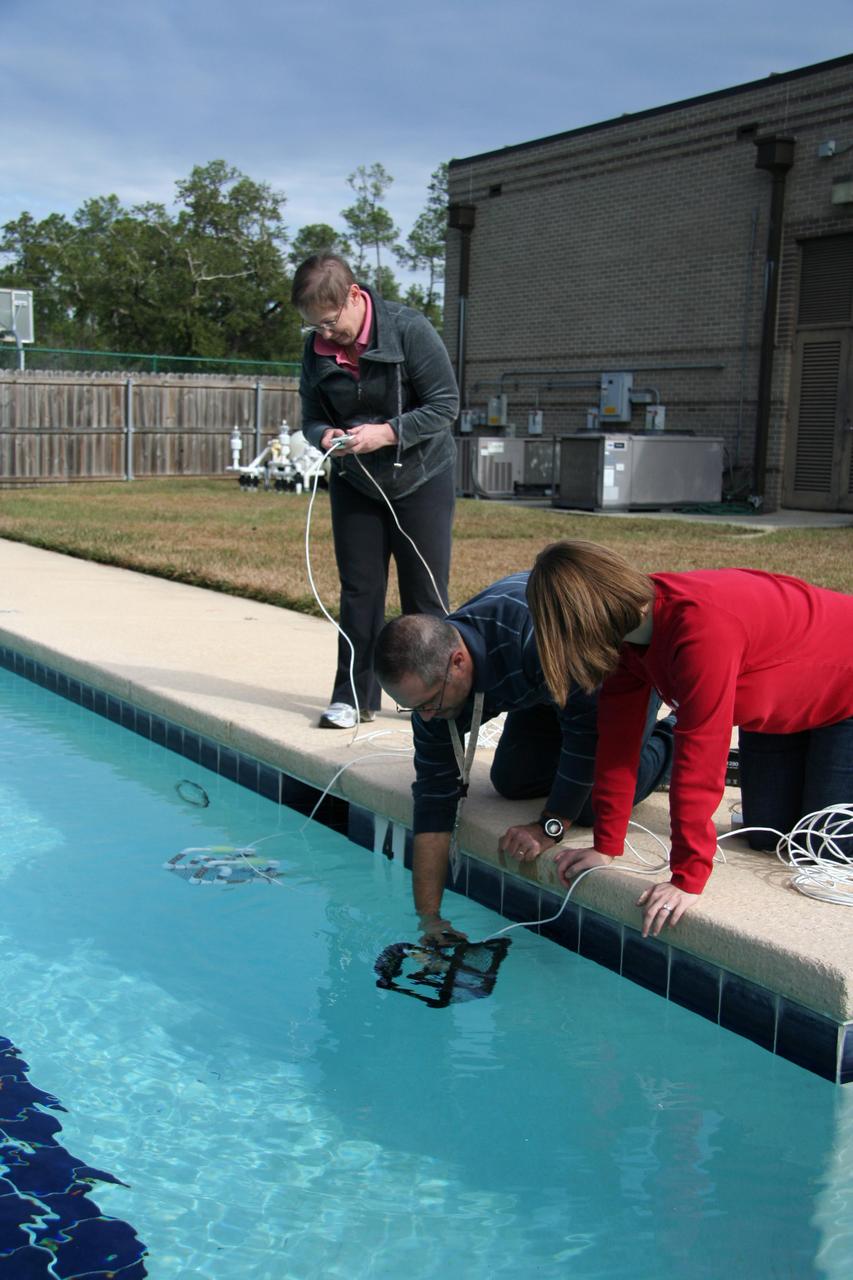
David Lalejini, an employee of the Naval Research Laboratory at NASA's John C. Stennis Space Center, helps a pair of teachers deploy a remotely-operated underwater Sea Perch robot during workshop activities Dec. 11. The Stennis Education Office teamed with Naval Research Laboratory counterparts to conduct a two-day workshop Dec. 10-11 for Louisiana and Mississippi teachers. During the no-cost workshop, teachers learned to build and operate Sea Perch robots. The teachers now can take the Sea Perch Program back to students.
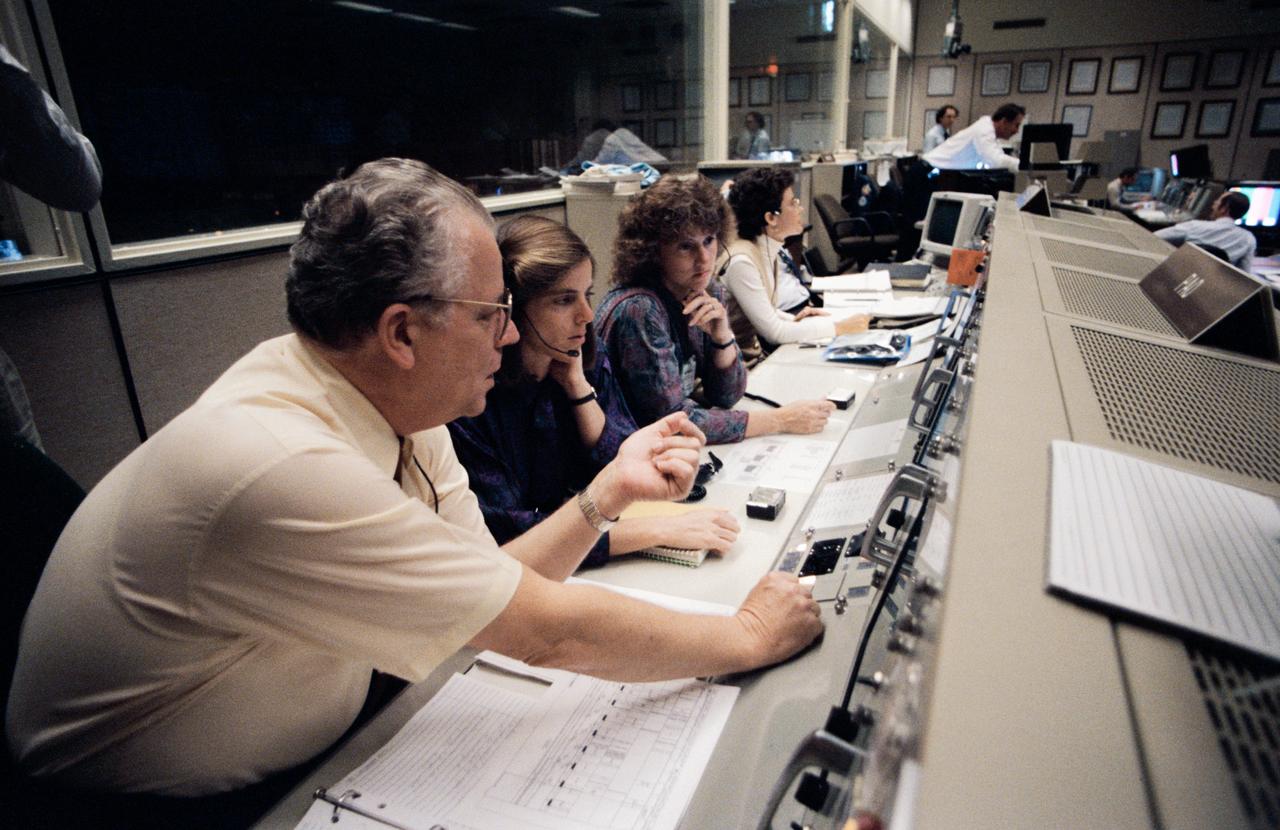
61A-S-135 (5 Nov 1985) --- Two school teachers in training at the Johnson Space Center got their first ?real time? exposure to a Space Shuttle mission as they monitor activity aboard the Spacelab D-1 science module from the mission control center. Sharon Christa McAuliffe (frame center) and Barbara R. Morgan are briefed by Terry White at the Public Affairs console during a television downlink from the Earth-orbiting Space Shuttle Challenger. McAuliffe is scheduled to fly as teacher/citizen observer on the STS 51-L mission early next year; and Morgan is in training as her backup.
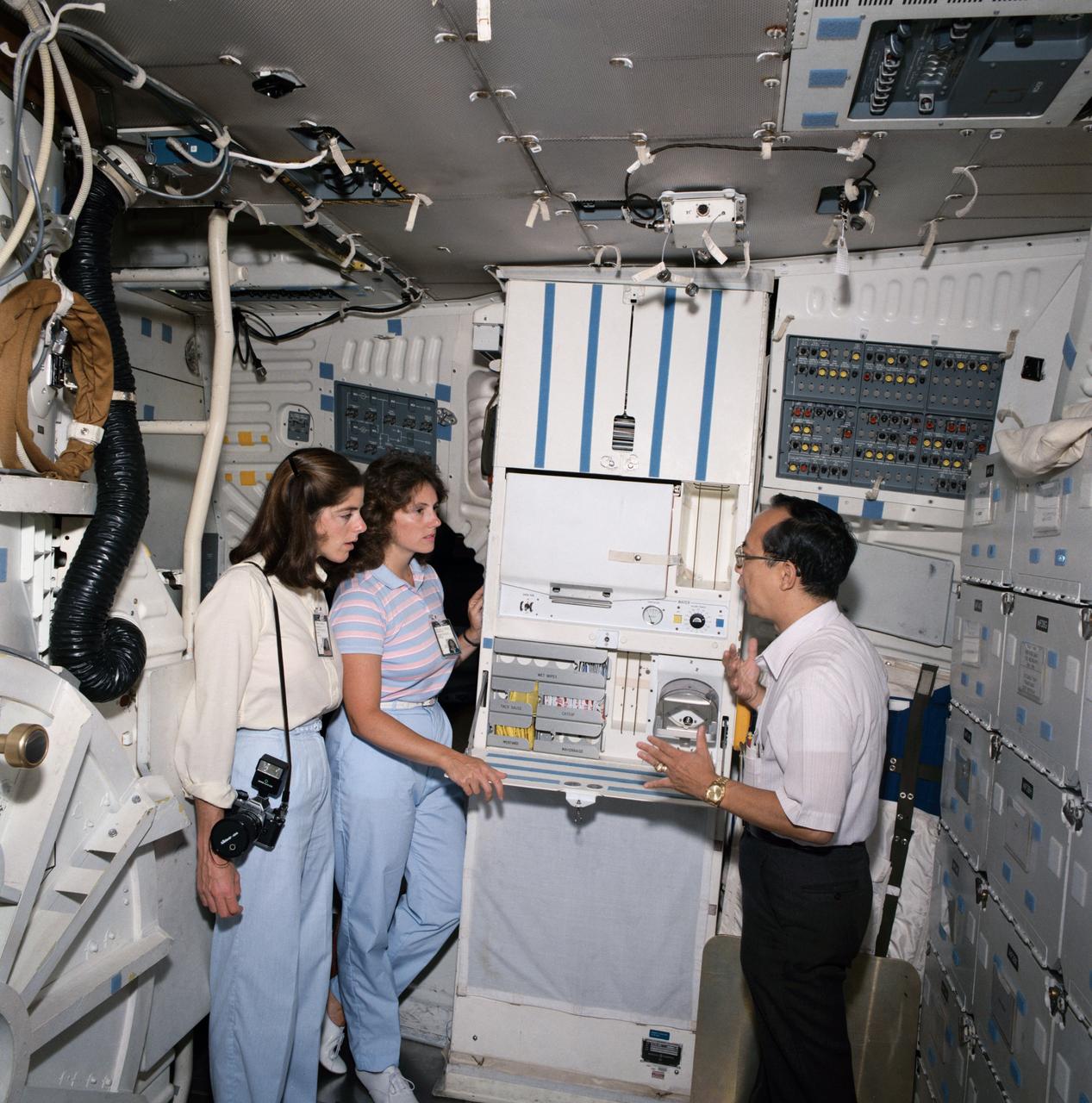
S85-40509 (23 Sept. 1985) --- Two women representing the Teacher-in-Space project undergo training in preparation for the STS-51L mission in two photographs made in Johnson Space Center trainers. Barbara R. Morgan (left), 51-L’s backup teacher, and McAuliffe are briefed by L.W. Lew on the space shuttle galley, located on the middeck. Photo credit: NASA
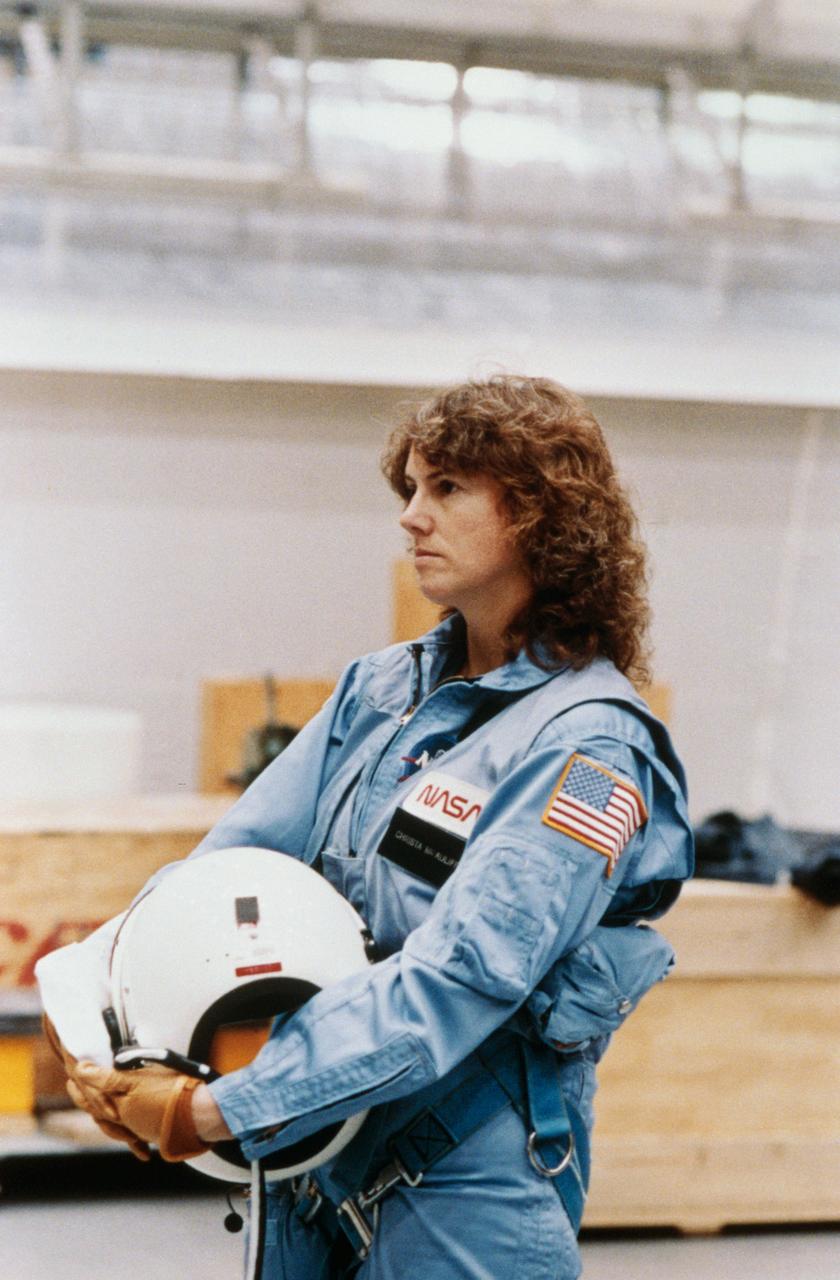
S86-25251 (January 1986) --- Sharon Christa McAuliffe, payload specialist for STS-51L, takes a breather following a busy day?s training in the Johnson Space Center?s Shuttle Mock-up and Integration Laboratory. McAuliffe, a New Hampshire school teacher, was chosen from among ten finalists in the Teacher-in-Space Project to serve as citizen observer aboard the Challenger. This photo was taken by Keith Meyers of the New York Times. Photo credit: NASA
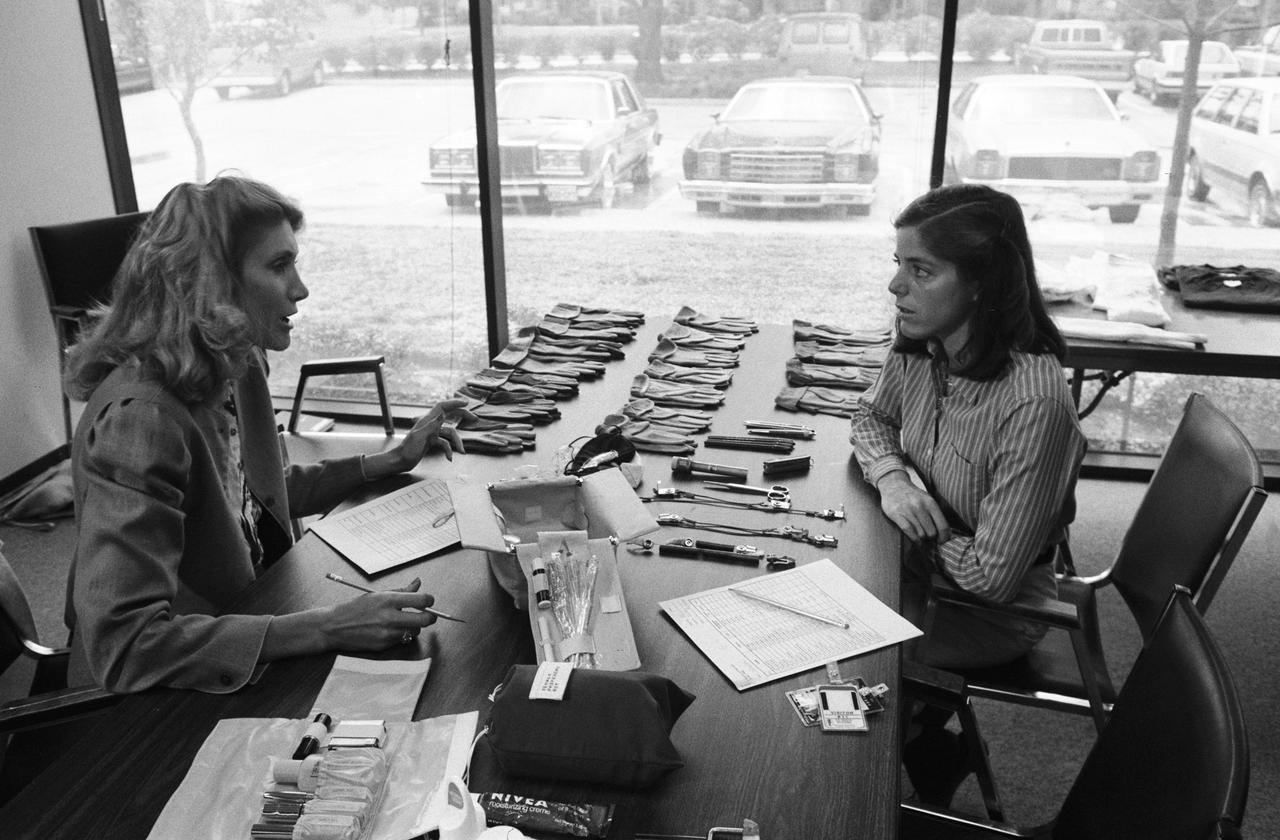
Views of STS-33/51L crew personnel Prime McAuliffe and Backup Morgan at the ILC Facility during clothing selection and Building #37 during food sampling, and with the rest of the STS-33/51L crew. 40074: "Teacher-in-Space" Participant Barbara Morgan (right) is briefed on her suit and on personal hygiene equipment to be used on the STS-51L Mission. 1. JSC - Education Program (Teacher in Space) 2. Barbara Morgan 3. Christa McAuliffe 4. STS-33/51L - Crew Training (Uniforms/Food/Crew)
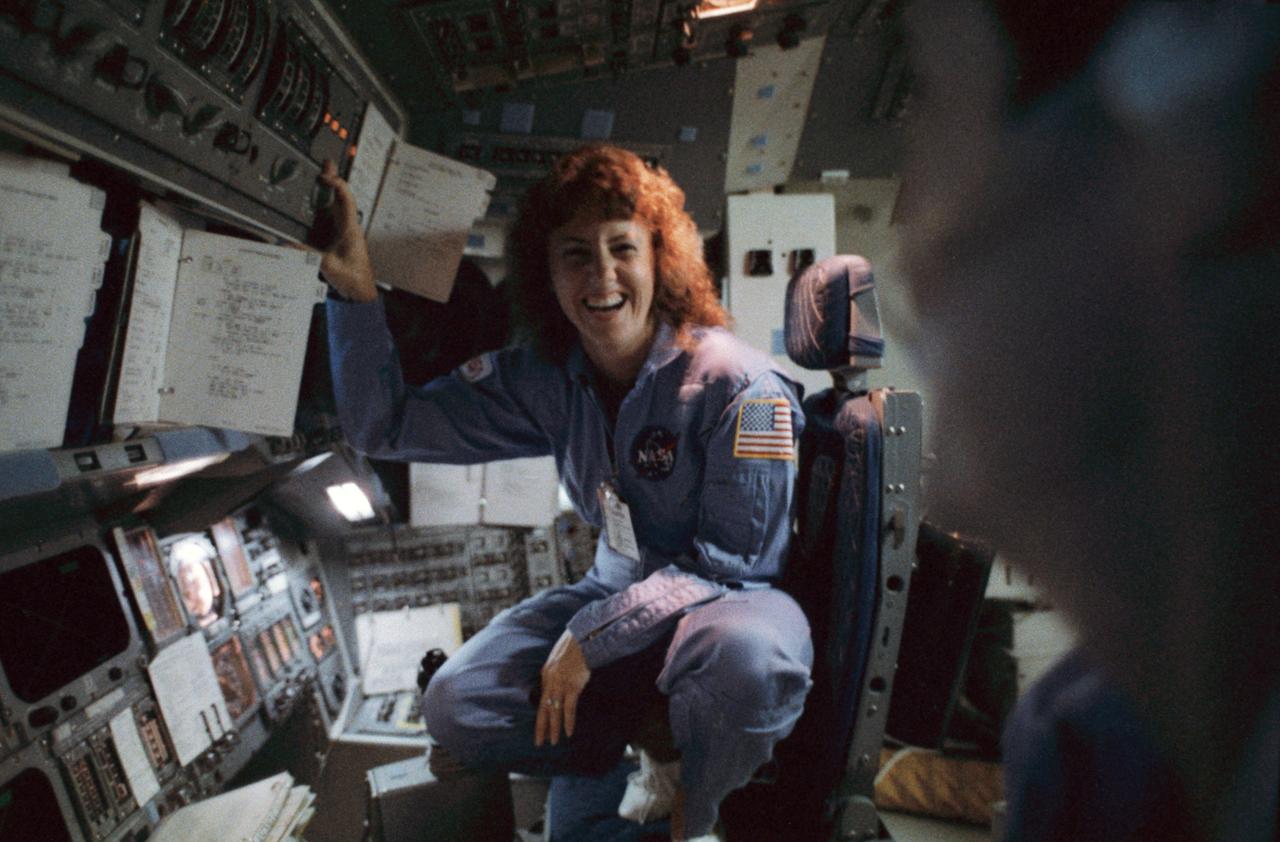
S85-44507 (October 1985) --- Sharon Christa McAuliffe, a teacher from Concord, New Hampshire, trains for the January 1986 mission of the space shuttle Challenger in the Johnson Space Center’s shuttle mission simulator (SMS). Learning about the overall spacecraft systems, McAuliffe is pictured here in the pilot’s station. For actual launch and landing phases, the Teacher-in-Space Project payload specialist would sit on the middeck. The photograph was taken by Michael O’Brien of Life Magazine. Photo credit: NASA
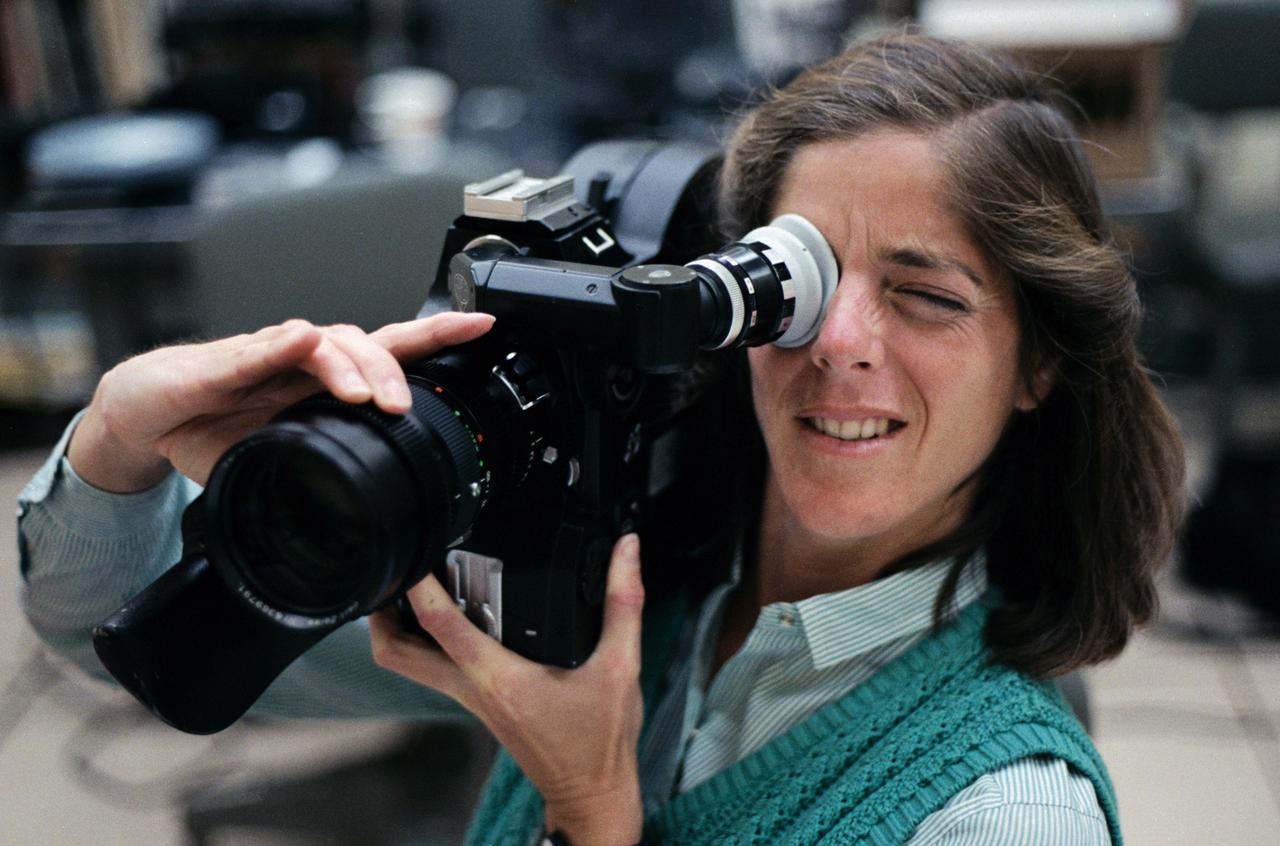
S85-40671 (18 Sept. 1985) --- The two teachers, Barbara R. Morgan and Sharon Christa McAuliffe (out of frame) have hands-on experience with an Arriflex motion picture camera following a briefing on space photography. The two began training Sept. 10, 1985 with the STS-51L crew and learning basic procedures for space travelers. The second week of training included camera training, aircraft familiarization and other activities. Morgan zeroes in on a test subject during a practice session with the Arriflex. Photo credit: NASA
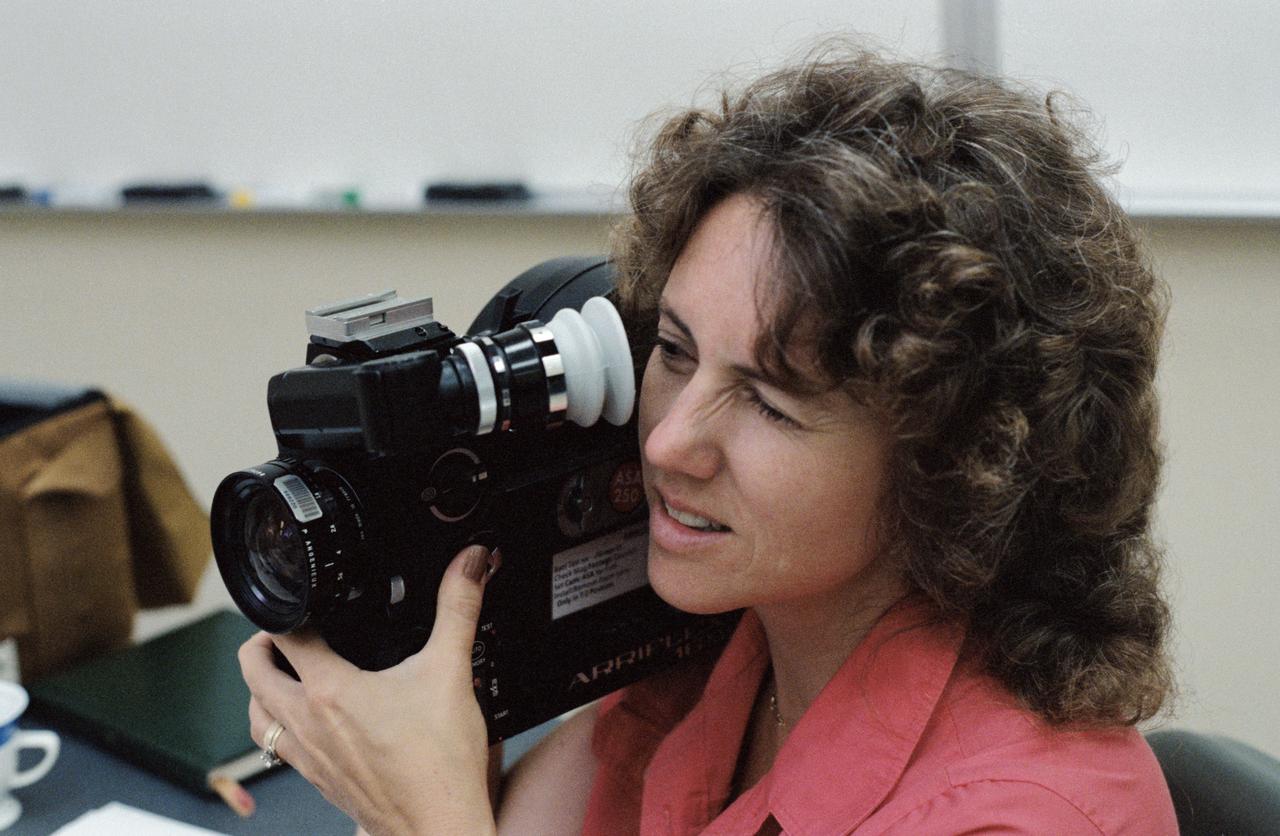
S85-40670 (18 Sept. 1985) --- The two teachers, Sharon Christa McAuliffe and Barbara R. Morgan (out of frame) have hands-on experience with an Arriflex motion picture camera following a briefing on space photography. The two began training Sept. 10, 1985 with the STS-51L crew and learning basic procedures for space travelers. The second week of training included camera training, aircraft familiarization and other activities. McAuliffe zeroes in on a test subject during a practice session with the Arriflex. Photo credit: NASA
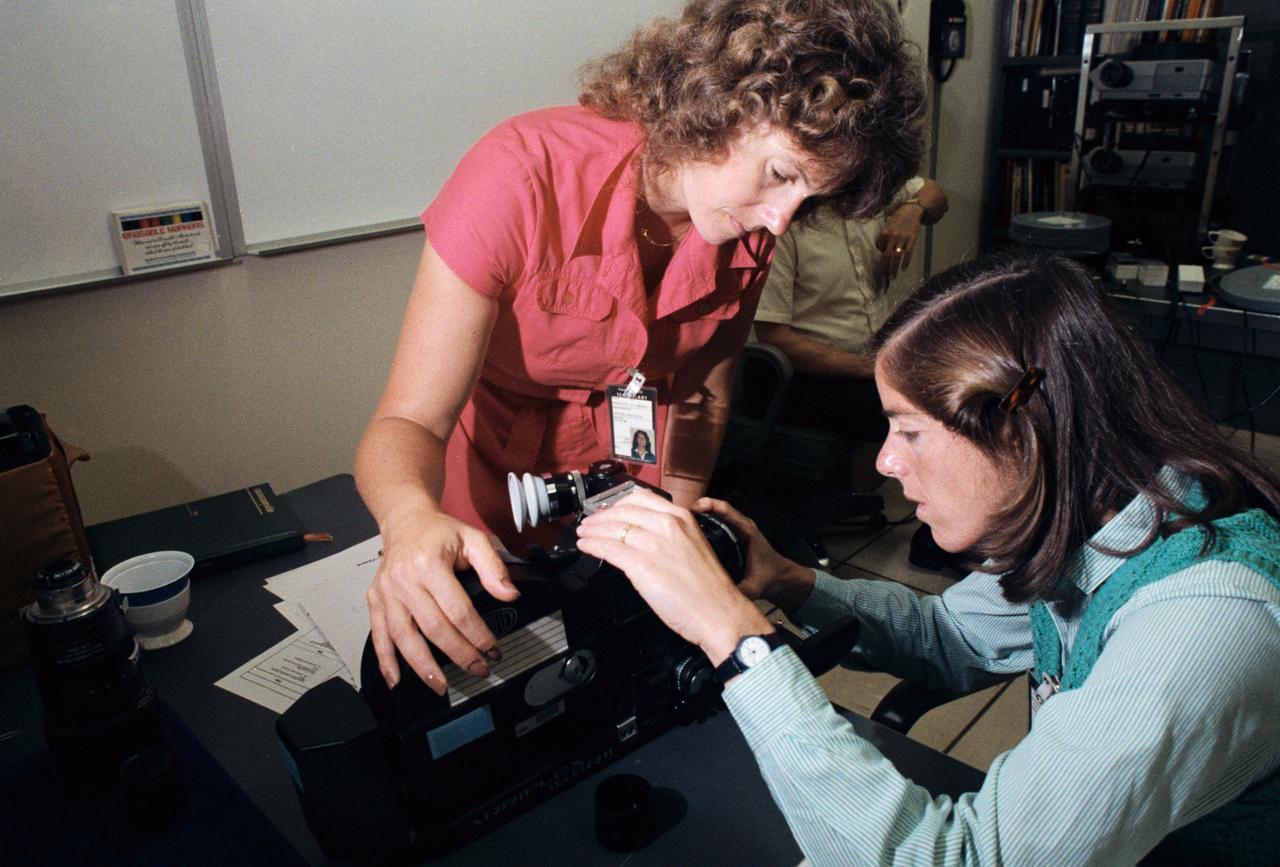
S85-40669 (18 Sept. 1985) --- The two teachers, Sharon Christa McAuliffe (left) and Barbara R. Morgan have hands-on experience with an Arriflex motion picture camera following a briefing on space photography. The two began training Sept. 10, 1985 with the STS-51L crew and learning basic procedure for space travelers. The second week of training included camera training, aircraft familiarization and other activities. Morgan adjusts a lens as a studious McAuliffe looks on. Photo credit: NASA
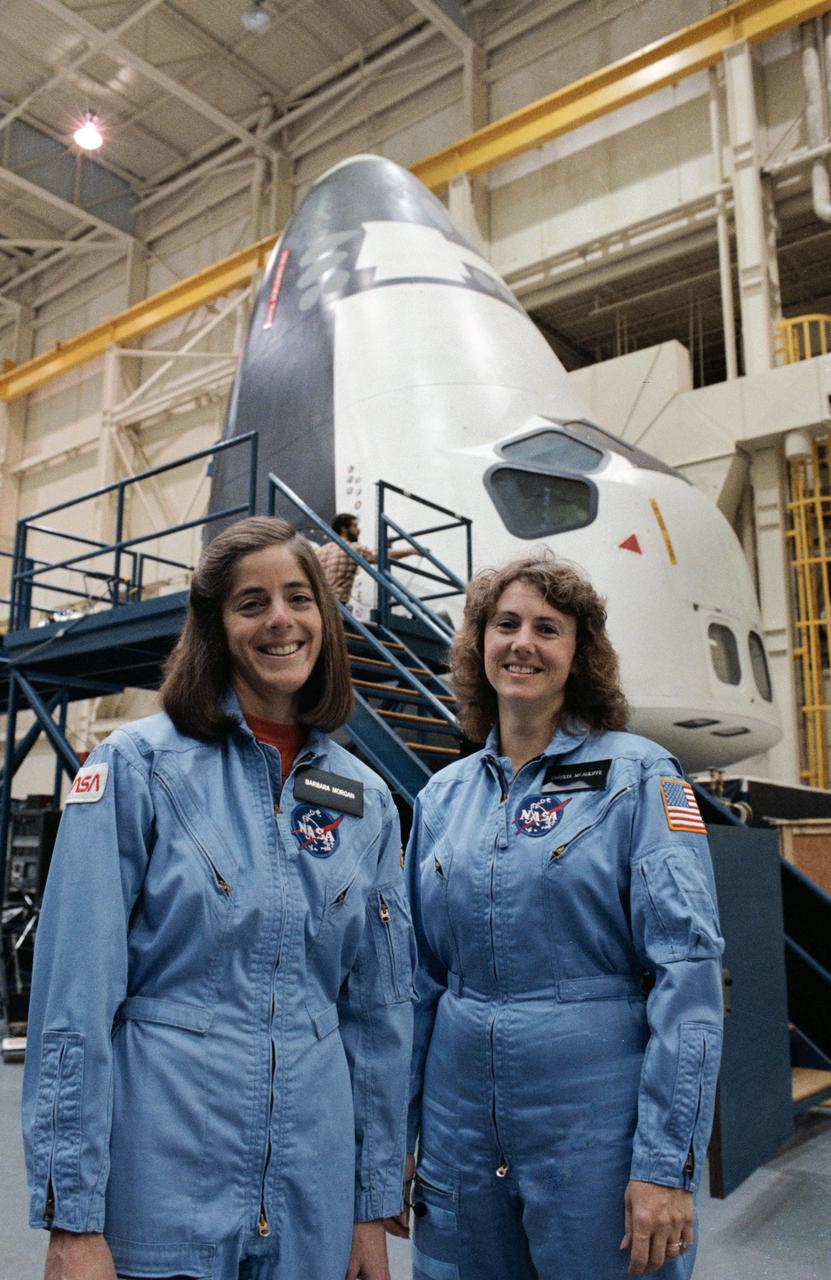
S85-46694 (26 Dec. 1985) --- Sharon Christa McAuliffe (right) and Barbara R. Morgan, Teacher-in-Space payload specialist and backup, respectively, pause from a break in launch and entry readiness training to pose for NASA photographer. The crew compartment trainer (CCT) is in a vertical position (background) to accommodate that training. Astronauts use the shuttle mock-up and integration laboratory to train for a variety of activities. Photo credit: NASA
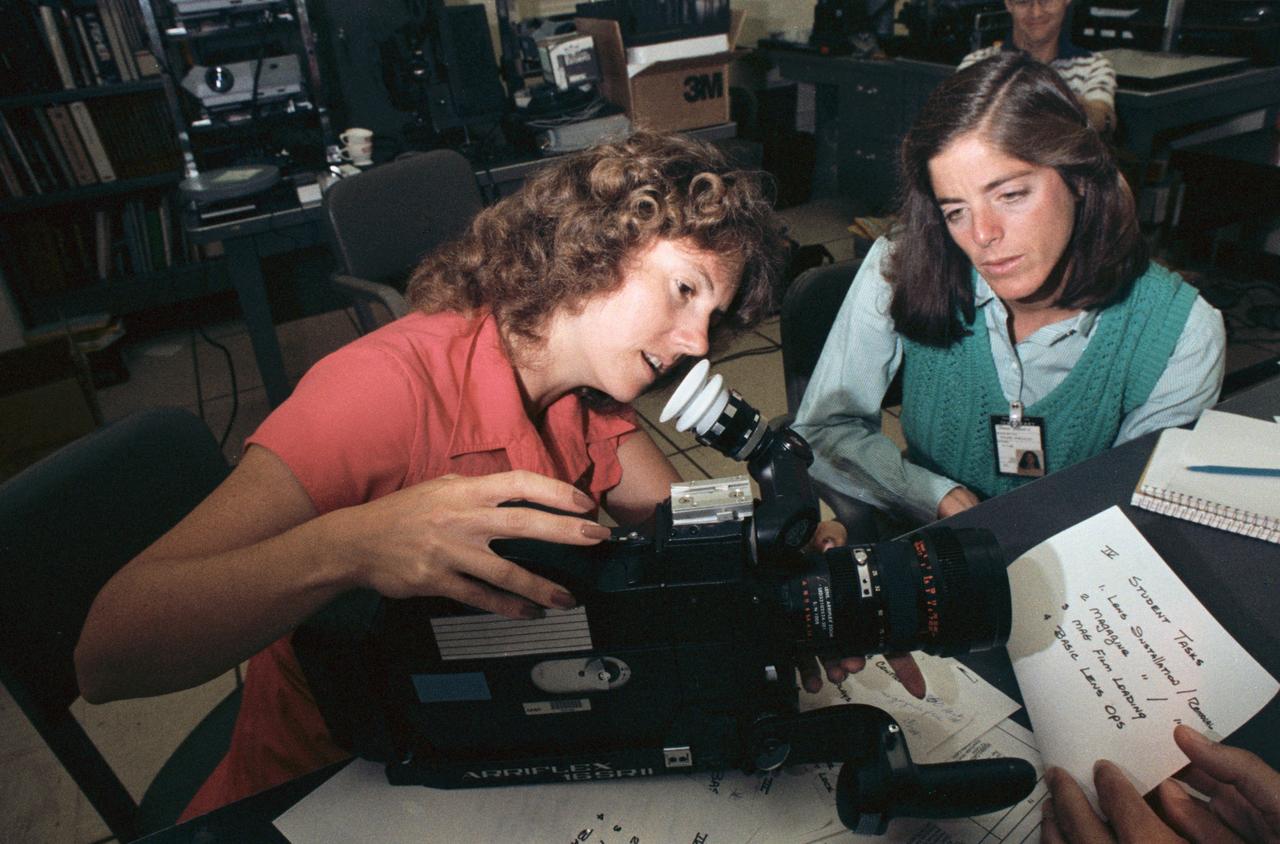
S85-40668 (18 Sept. 1985) --- The two teachers, Sharon Christa McAuliffe (left) and Barbara R. Morgan have hands-on experience with an Arriflex motion picture camera following a briefing on space photography. The two began training Sept. 10, 1985 with the STS-51L crew and learning basic procedures for space travelers. The second week of training included camera training, aircraft familiarization and other activities. Photo credit: NASA
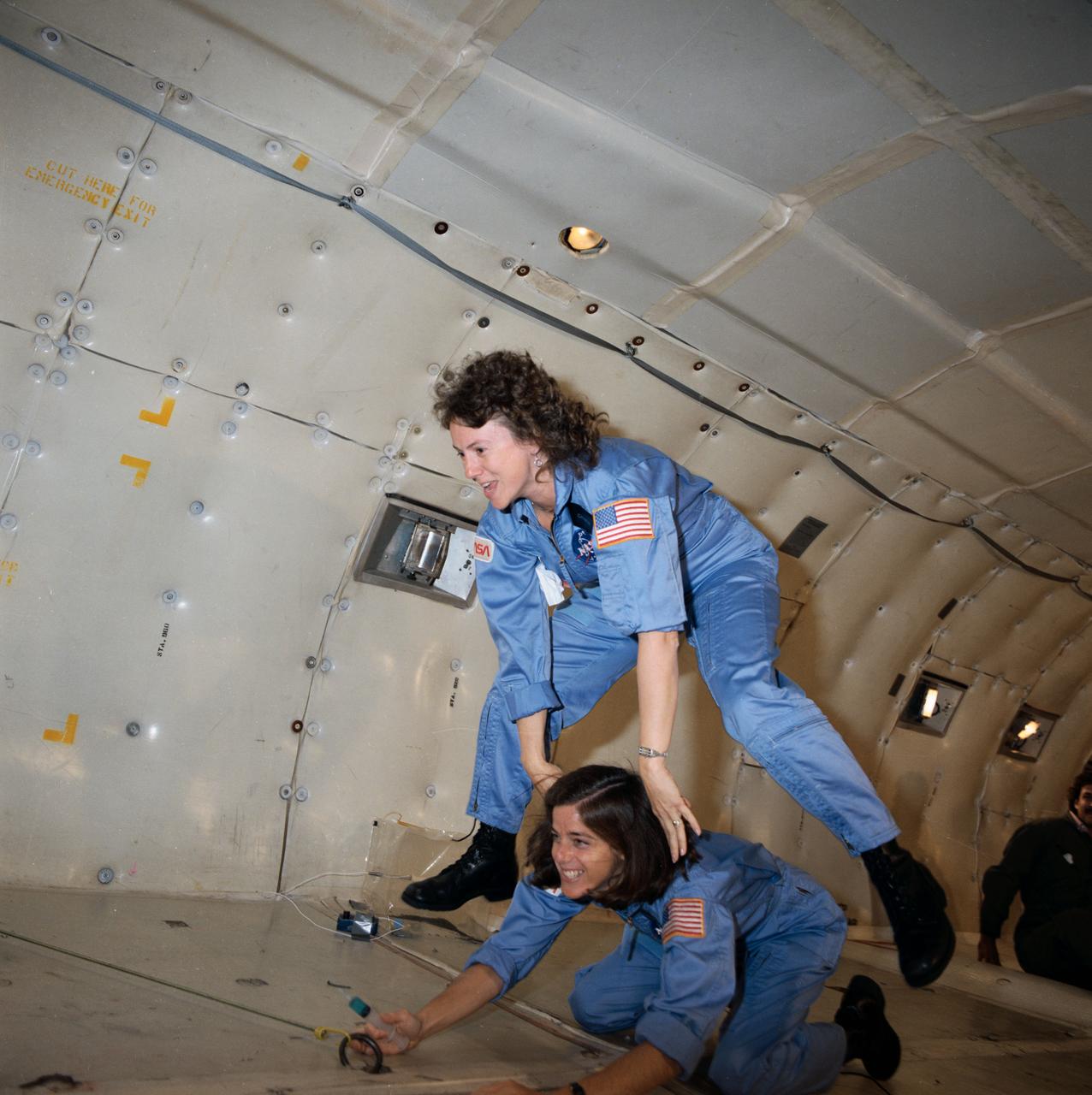
S85-42472 (16 Oct. 1985) --- Teacher-in-Space trainees on the KC-135 for zero-G training. Sharon Christa McAuliffe, right, and Barbara R. Morgan, play leap-frog in the temporary weightlessness of the KC-135. Photo credit: NASA
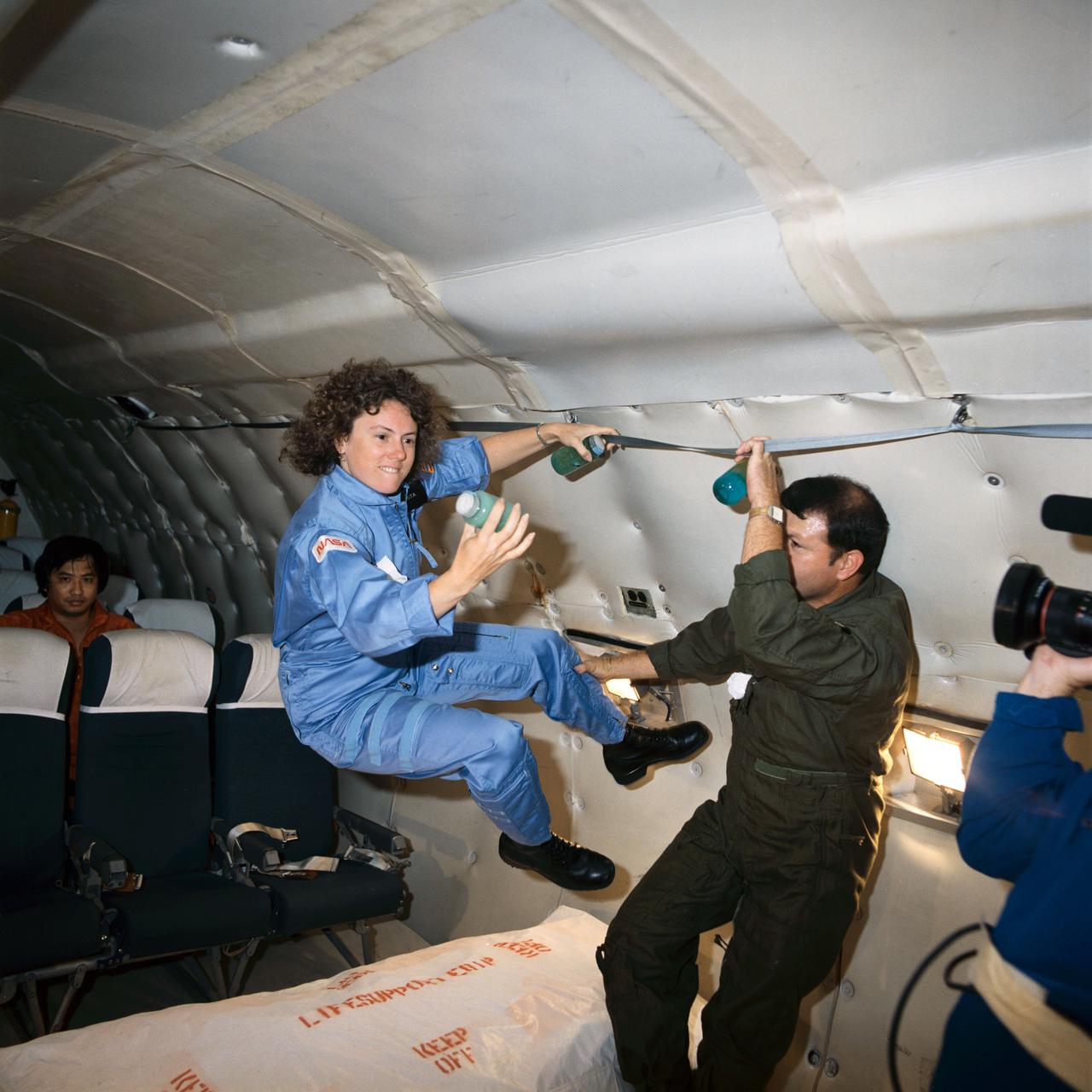
Teacher-in-Space trainees on the KC-135 for Zero-G training. Sharon Christa McAuliffe experiences a few moments of weightlessness provided by the KC-135. She and Bob Mayfield, a JSC Aerospace Education Specialist, are previewing a Molecular Mixing Experiment which was designed to demonstrate differences of separation process in 1-G and Zero-G.
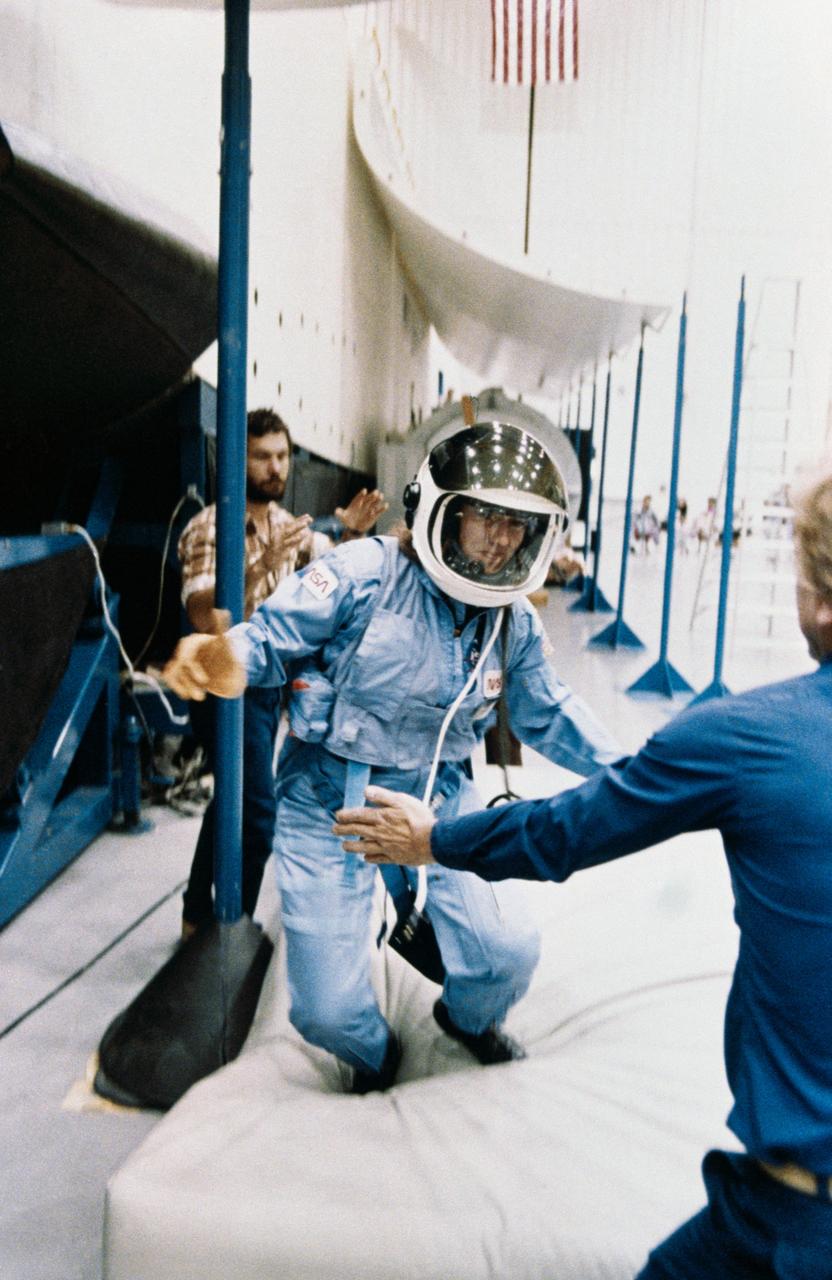
Sharon Christa McAuliffe, 51-L payload specialist representing the Teacher in Space project, jumps down onto a cushion during an emergency egress training session in JSC's mockup and integration laboratory. She had been descending from the mockup using a Sky-genie.
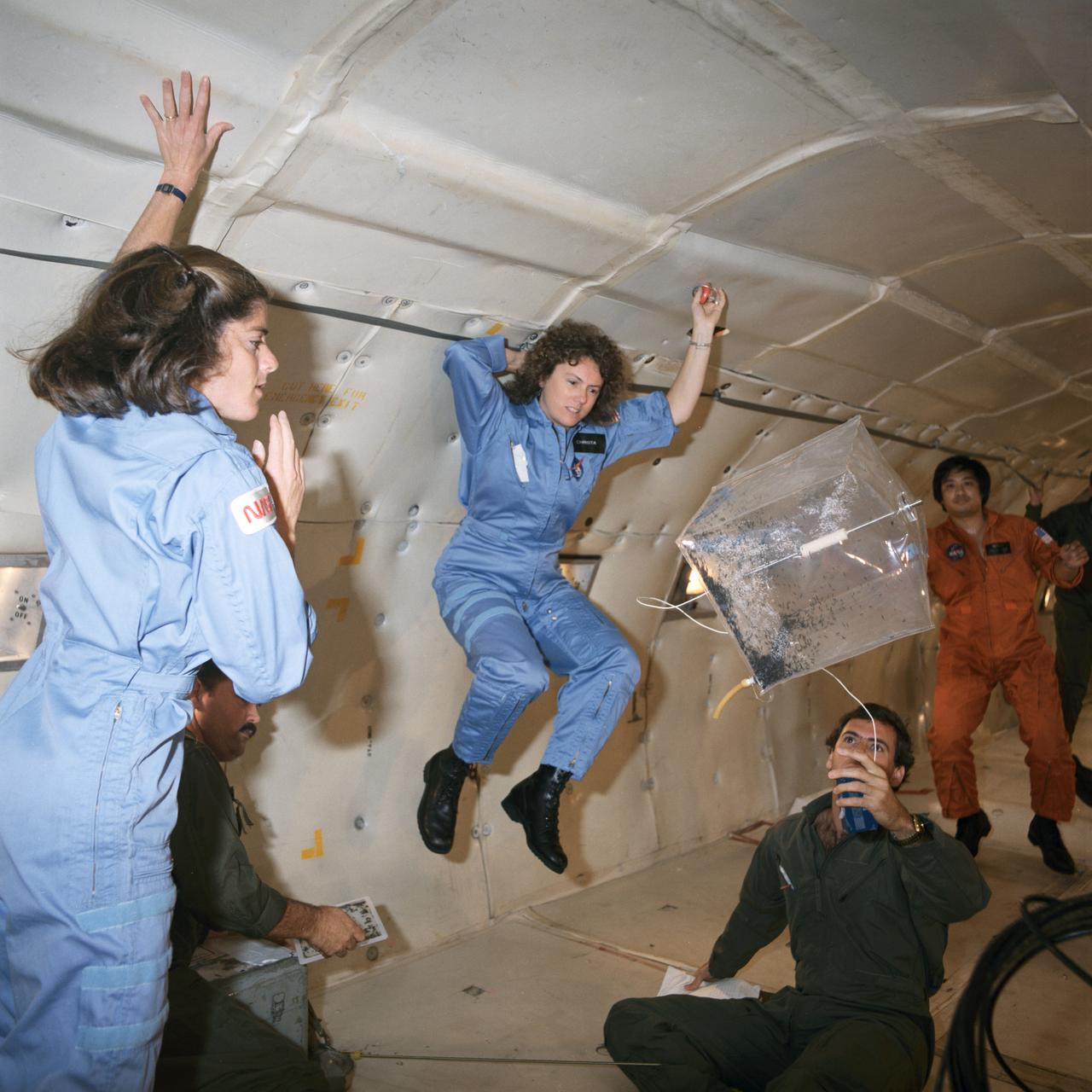
S85-42474 (16 Oct. 1985) --- A KC-135 aircraft provides a brief period of weightlessness as a preview for a teacher, in training to fly onboard a space shuttle for the Teacher-in-Space Project, and her backup. Sharon Christa McAuliffe (center frame), STS-51L prime crew member, and Barbara Morgan, her backup, monitor an experiment involving magnetic effects - one of the tests to be performed on the STS-51L flight. The experiment uses a control box, a square receptacle containing rubber tubing, stainless steel rod, a filter with desiccant, soft iron wire and a magnet. Photo credit: NASA
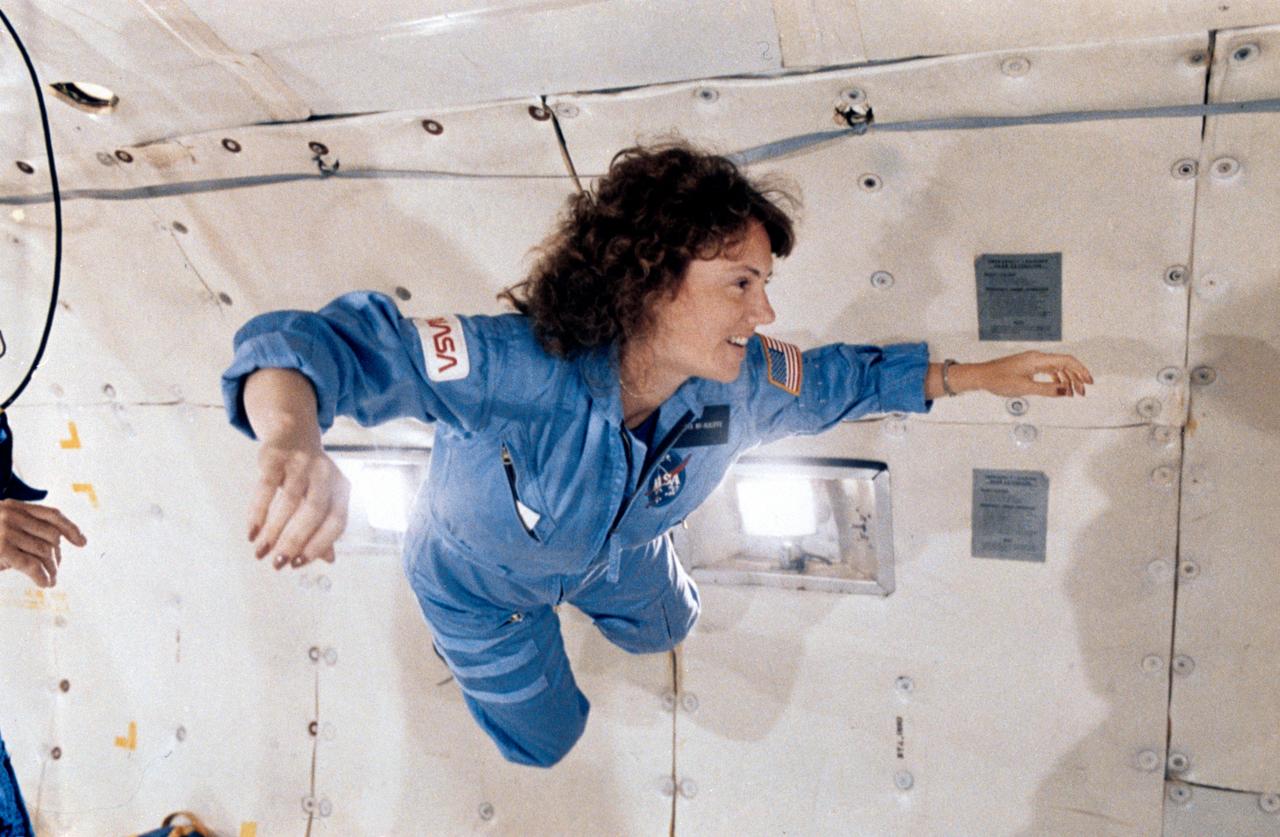
S86-25196 (January 1986) --- Sharon Christa McAuliffe, STS-51L citizen observer/payload specialist, gets a preview of microgravity during a special flight aboard NASA?s KC-135 ?zero gravity? aircraft. McAuliffe will represent the Teacher-in-Space Project aboard the space shuttle Challenger when it launches later this month. This photograph was taken by Keith Meyers of the New York Times. EDITOR?S NOTE: The STS-51L crew members lost their lives in the space shuttle Challenger accident moments after launch on Jan. 28, 1986 from the Kennedy Space Center (KSC). Photo credit: NASA
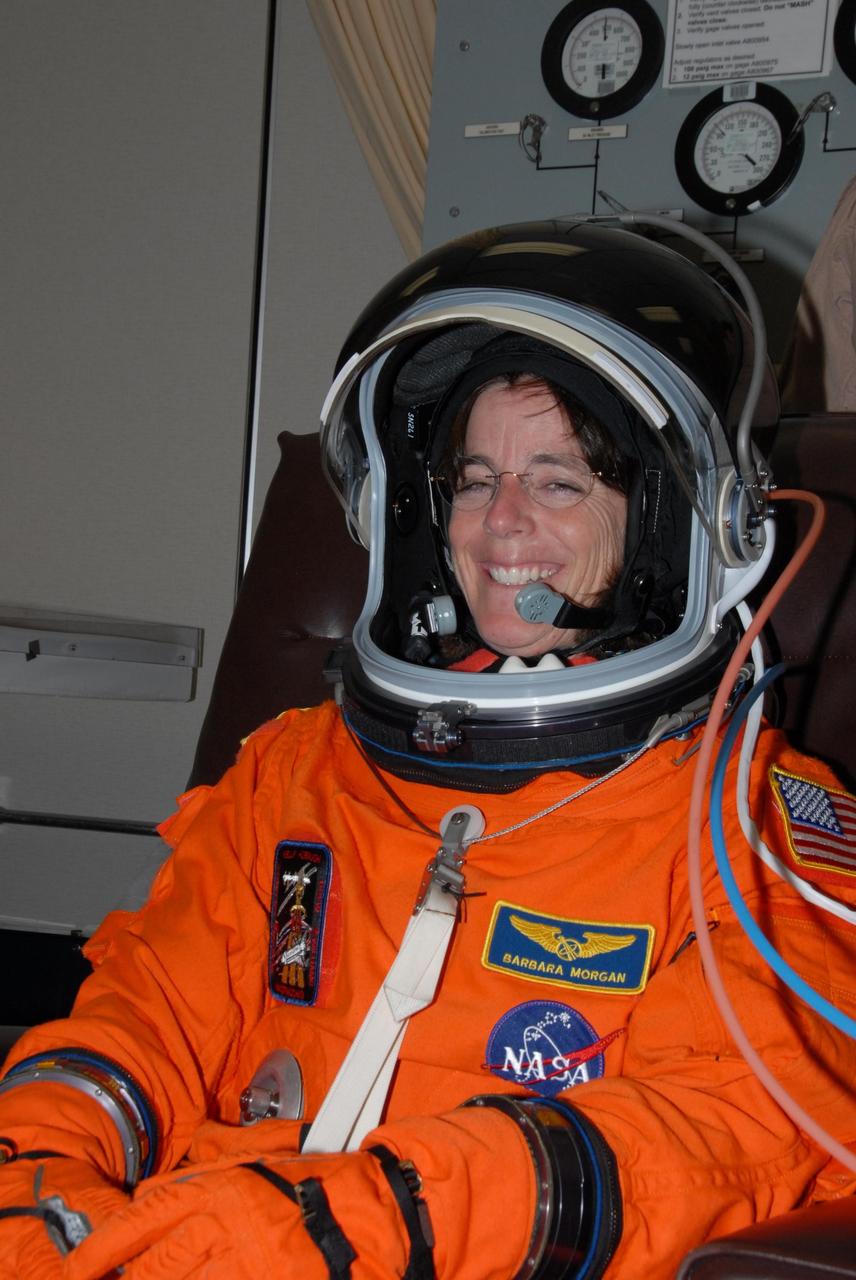
KENNEDY SPACE CENTER, Fla. -- STS-118 Mission Specialist Barbara R. Morgan finishes suitup for the simulated launch countdown that concludes the terminal countdown demonstration test, or TCDT. Morgan joined NASA's Teacher in Space program in 1985 and was selected as an astronaut in 1998. The STS-118 crew has been at Kennedy for the TCDT activities that also include M-113 training, payload familiarization and emergency egress training at the pad. The mission is the 22nd flight to the International Space Station and Space Shuttle Endeavour will carry a payload including the S5 truss, a SPACEHAB module and external stowage platform 3. STS-118 is targeted for launch on Aug. 7. Photo credit: NASA/George Shelton
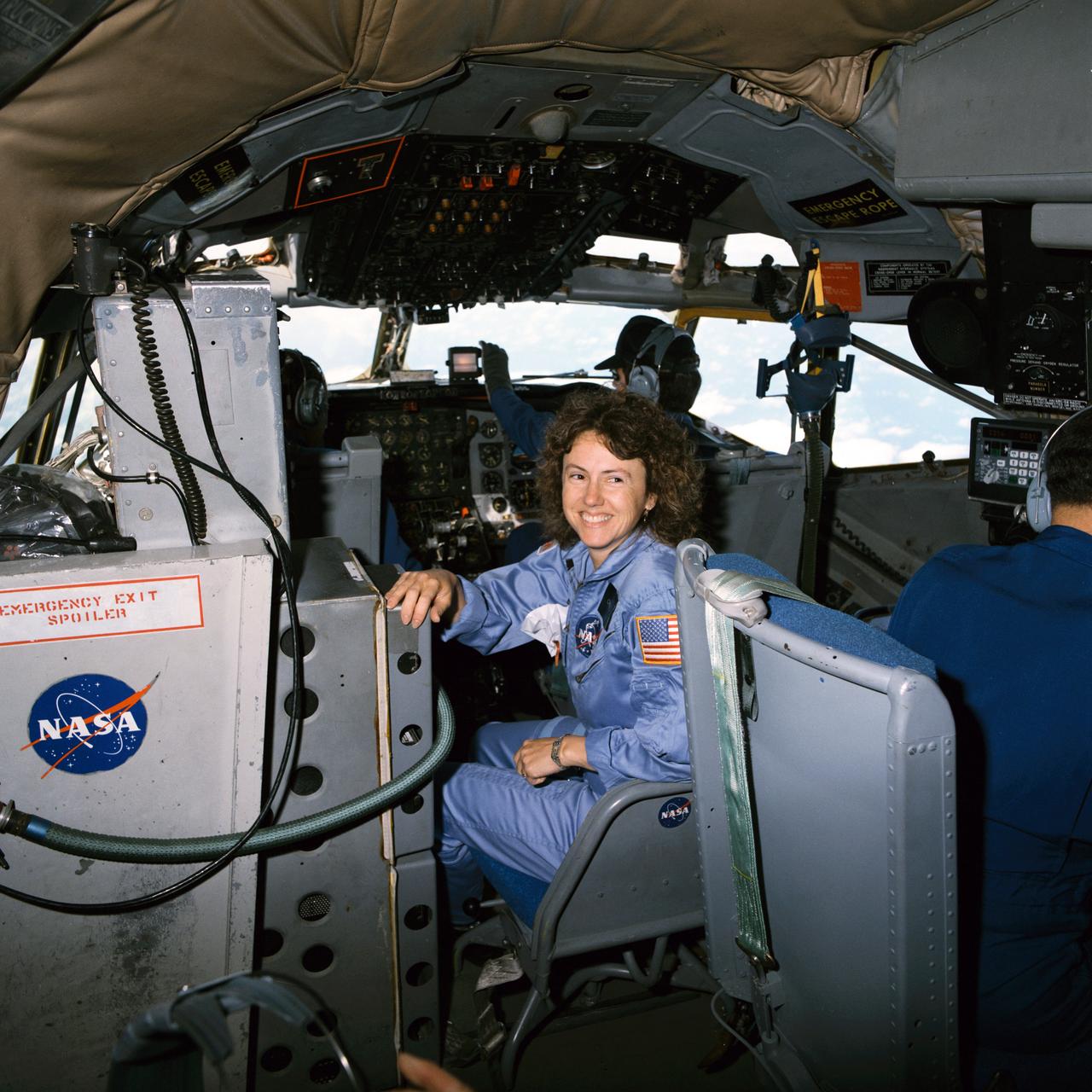
S85-42473 (16 Oct. 1985) --- Sharon Christa McAuliffe, a teacher-citizen observer on STS-51L, smiles before participating in some zero-G rehearsals for her upcoming flight. She is seated near the controls of the KC-135 aircraft, flying for the Johnson Space Center from Ellington Air Field. Referred to as the ?zero-gravity? aircraft, the KC-135 provides brief moments of weightlessness for shuttle crew members in training. Photo credit: NASA
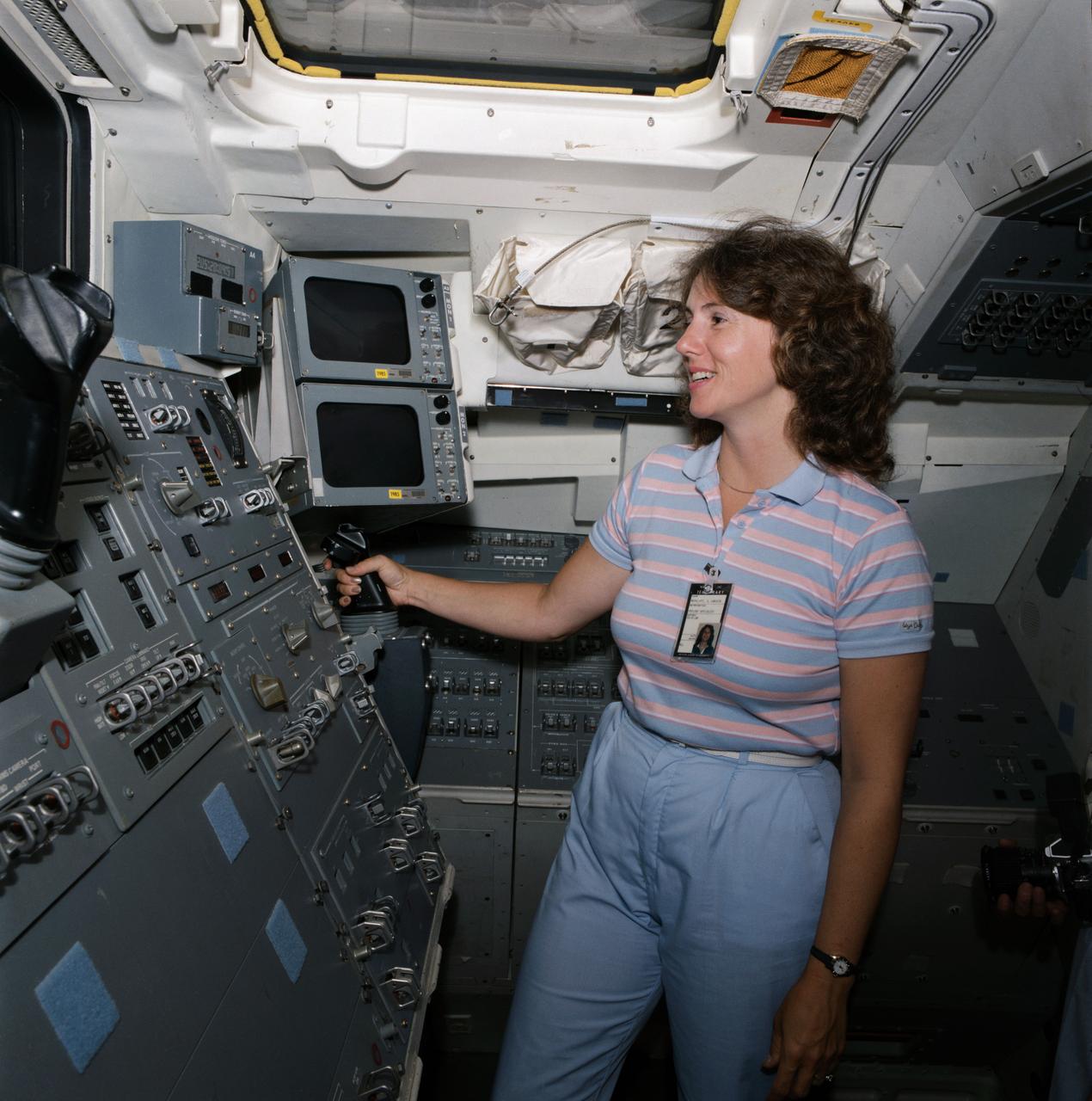
S85-40508 (23 Sept. 1985) --- Two women representing the Teacher-in-Space project undergo training in preparation for the STS-51L mission in two photographs made in Johnson Space Center trainers. Sharon Christa McAuliffe, named as prime crew citizen observer on the spaceflight, studies the console on the aft flight deck, which contains controls for the remote manipulator system (RMS) and other important functions. Photo credit: NASA
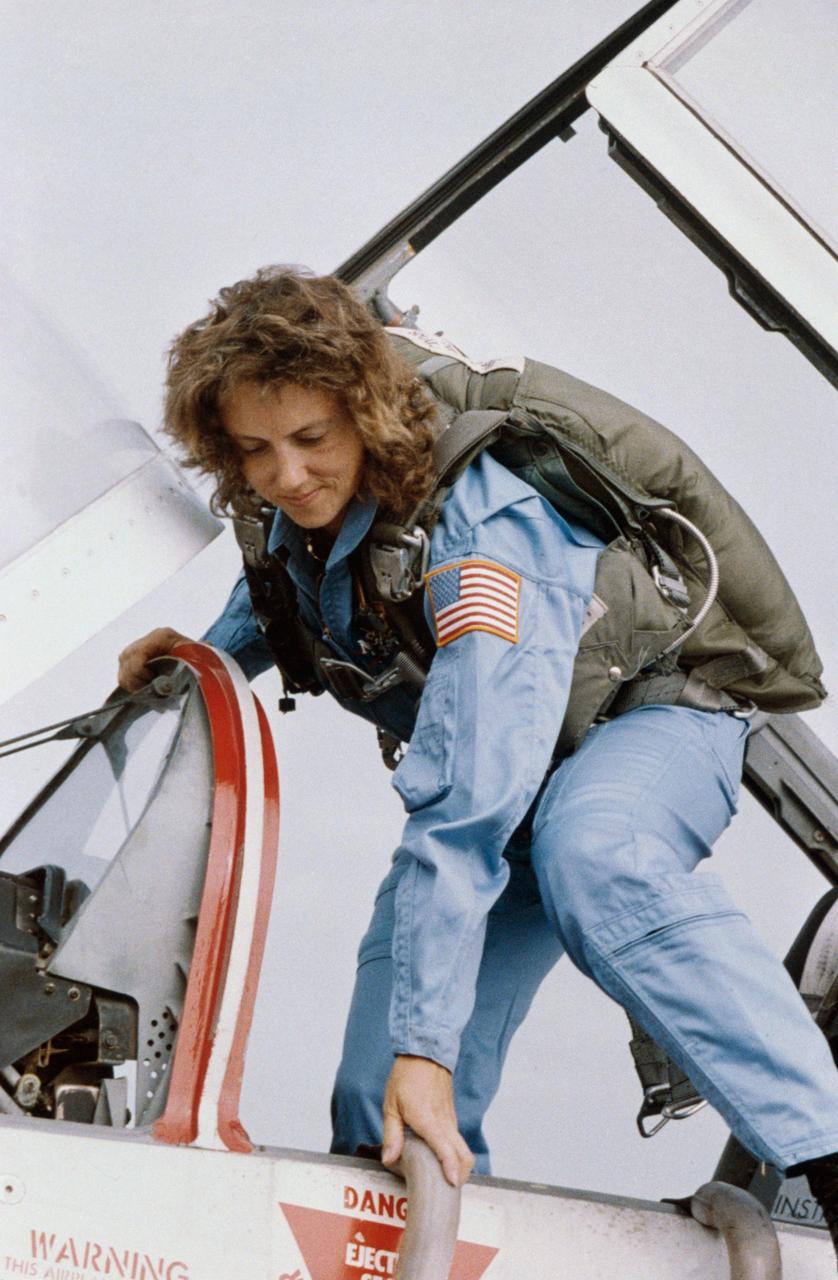
S86-25234 (January 1986) --- STS-51L Payload Specialist Sharon Christa McAuliffe egresses the rear station of a NASA T-38 jet trainer at Ellington Base near the Johnson Space Center, where the Teacher-in-Space Project top finalist is in training for the January mission. The photo was taken by Keith Meyers of the New York Times. Photo credit: NASA
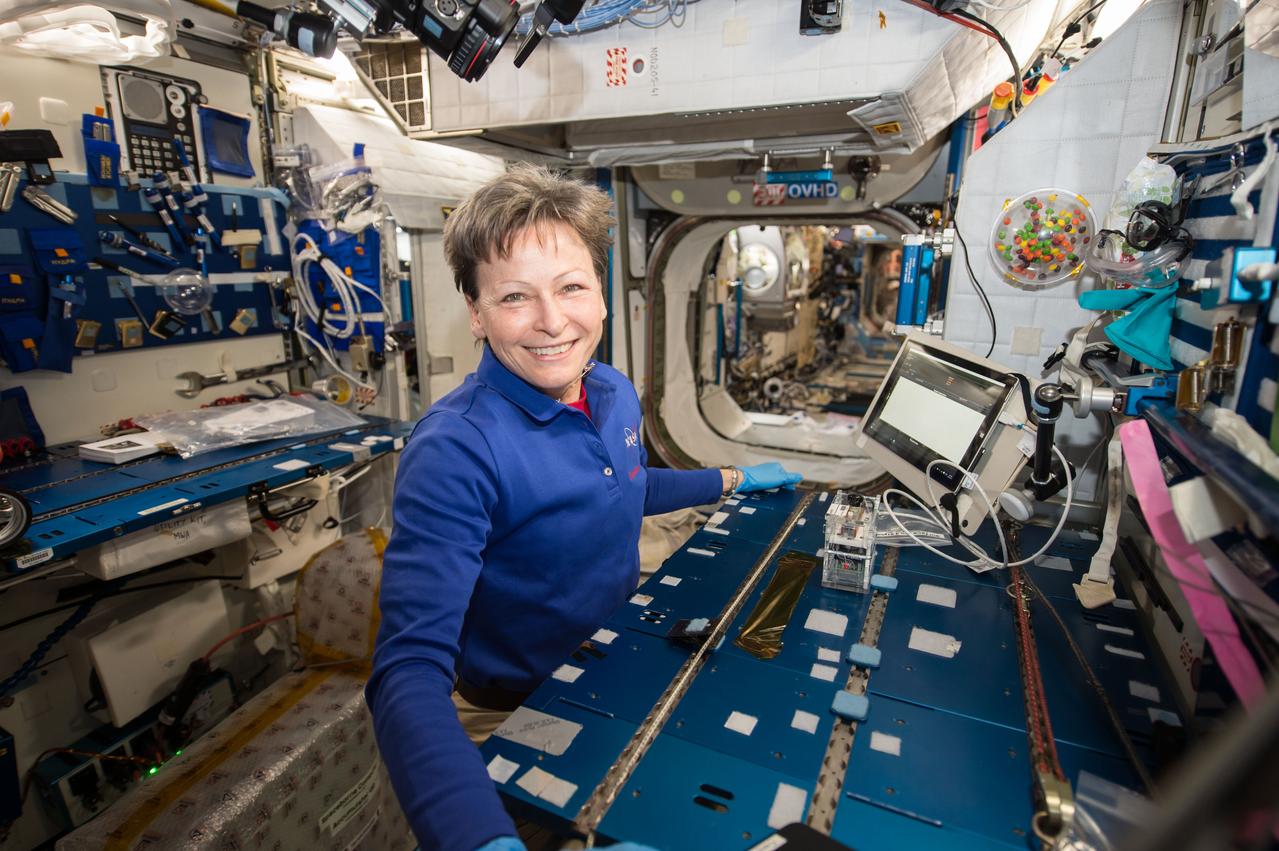
iss052e061925 (8/21/2017) --- NASA astronaut Peggy Whitson is photographed working with the Genes In Space experiment in the Node 2 module. Genes in Space is an innovation challenge including students and teachers across the United States from grades 7 through 12. Students design a pioneering DNA-related experiment to fly on the ISS, providing real-world training in science, technology, engineering and math (STEM) fields and connecting students to the space program.
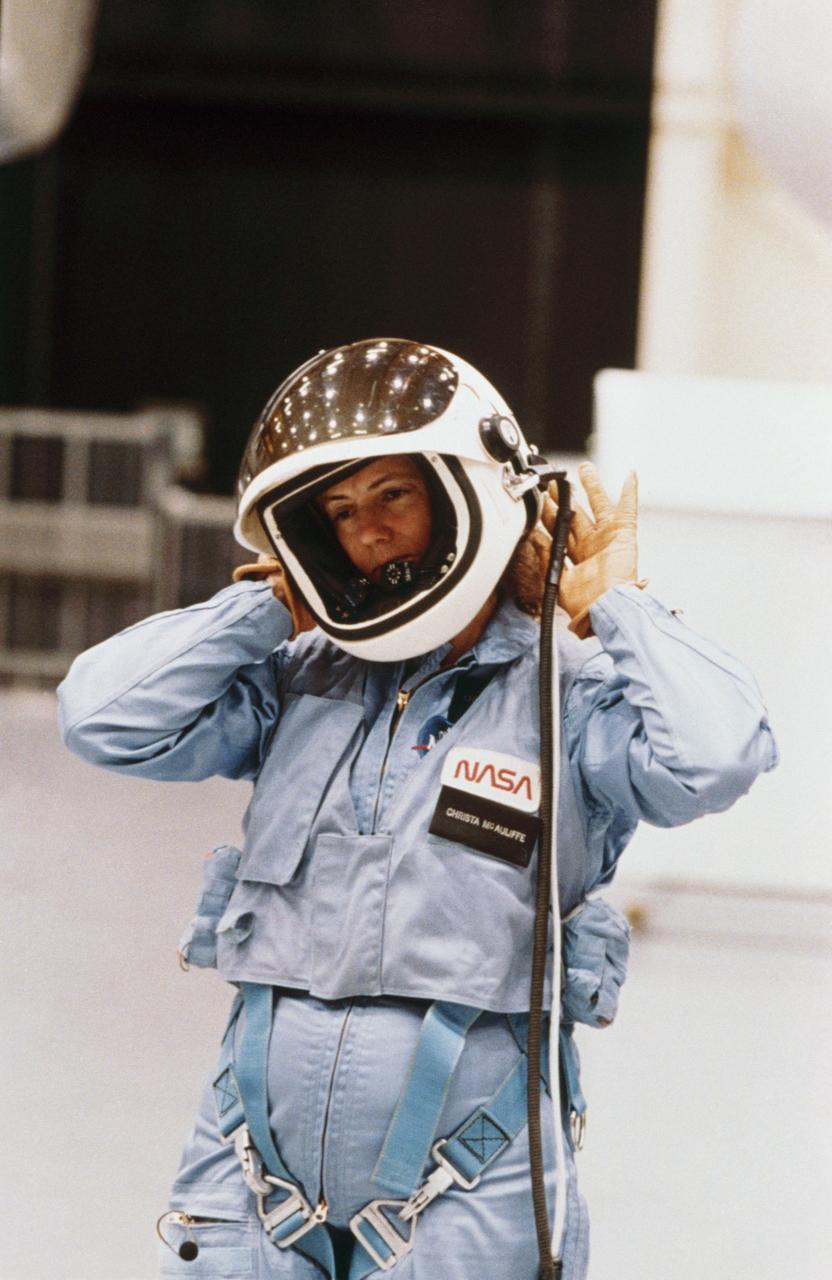
S86-25182 (for release January 1986) --- Sharon Christa McAuliffe, STS-51L citizen observer/payload specialist, prepares to remove her helmet after participating in emergency egress training in the shuttle mock-up and integration lab at the Johnson Space Center. McAuliffe will represent the Teacher-in-Space Project aboard the Challenger when it launches in late January. The photo was taken by Keith Meyers of the New York Times. Photo credit: NASA
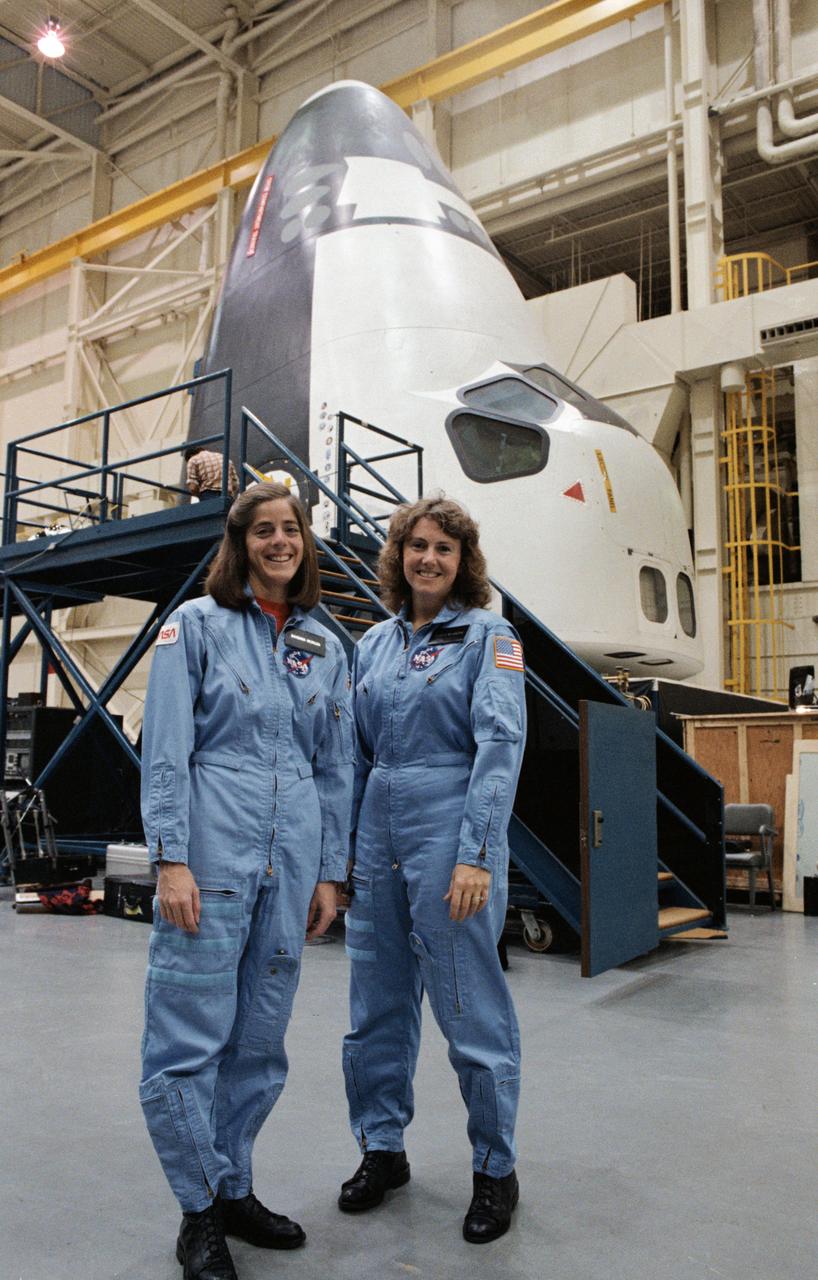
S85-46693 (26 Dec. 1985) --- Sharon Christa McAuliffe (right), the Teacher-in-Space payload specialist assigned to the STS-51L mission, and her backup, Barbara R. Morgan pose for photos after training in the shuttle mock-up and integration laboratory at JSC. The shuttle crew compartment, in a launch mode, can be seen in the background. Photo credit: NASA
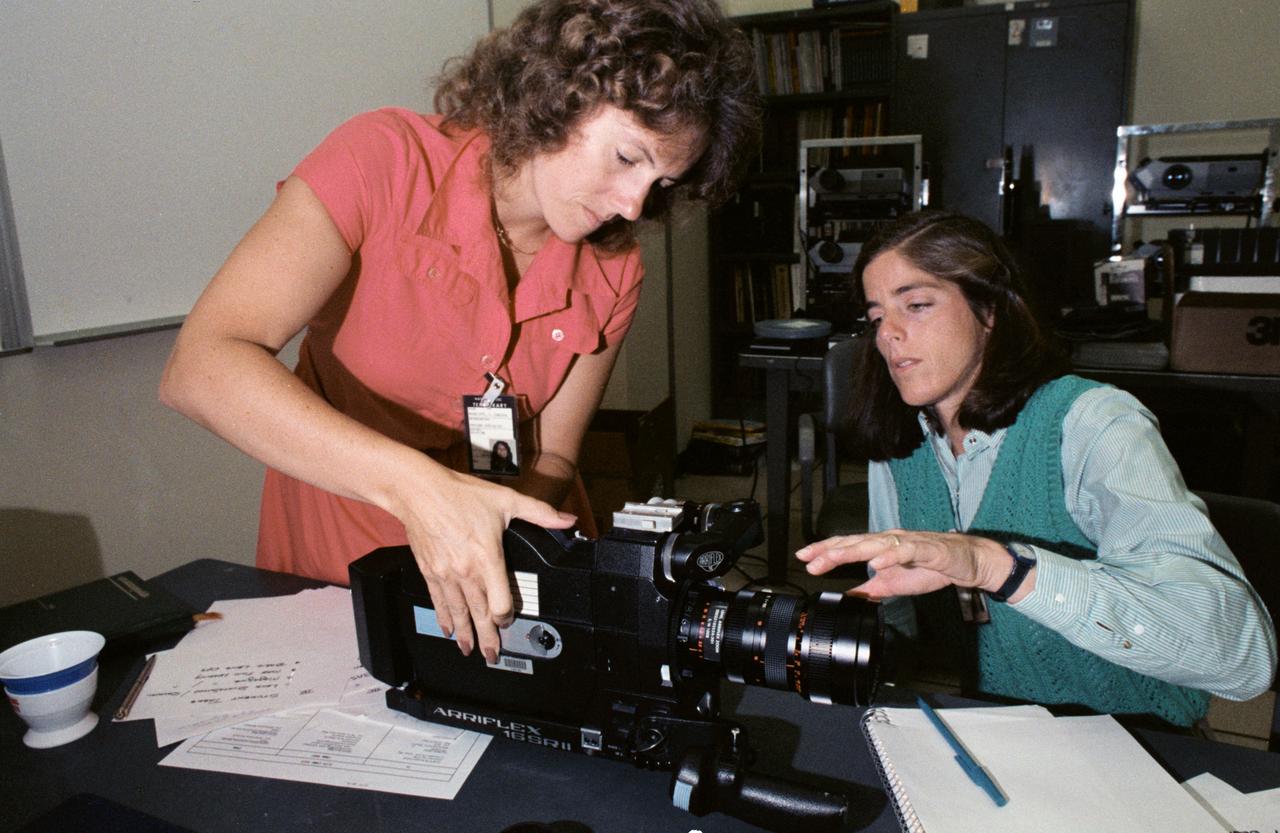
S85-41033 (18 Sept. 1985) --- Two women in training at JSC as part of the Teacher-in-Space Project and a position on NASA’s STS-51L mission learn handling of the Arriflex motion picture camera used on shuttle flights. Sharon Christa McAuliffe (left) was recently named as prime crew member for the 51-L flight; and Barbara R. Morgan, here lending help with camera’s lens, will serve as backup. The photograph was taken by Otis Imboden. Photo credit: NASA
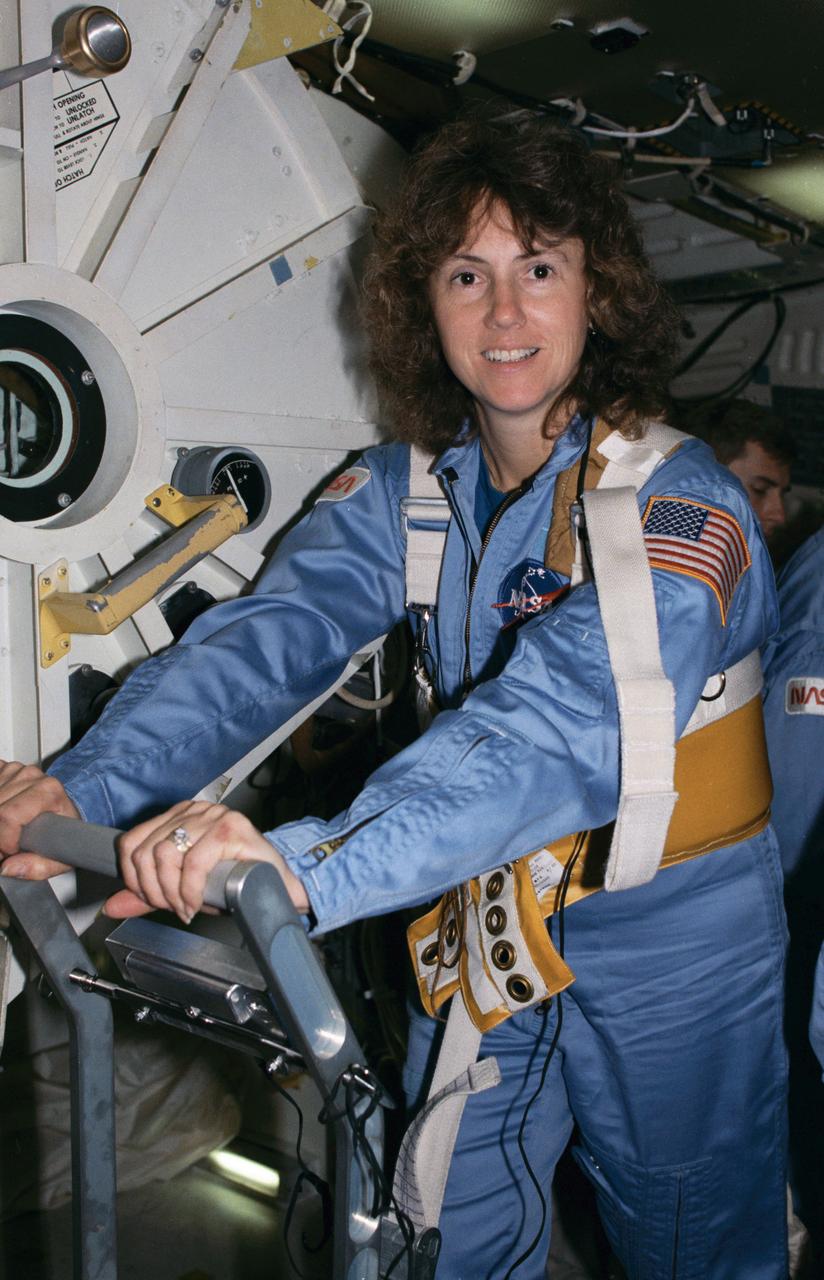
S85-46206 (December 1985) --- Sharon Christa McAuliffe, STS-51L payload specialist representing the Teacher-in-Space Project, uses a treadmill exercising device during a training session at the Johnson Space Center in preparation for January?s week-long mission aboard the space shuttle Challenger. This photo was taken by Bill Bower. Photo credit: NASA
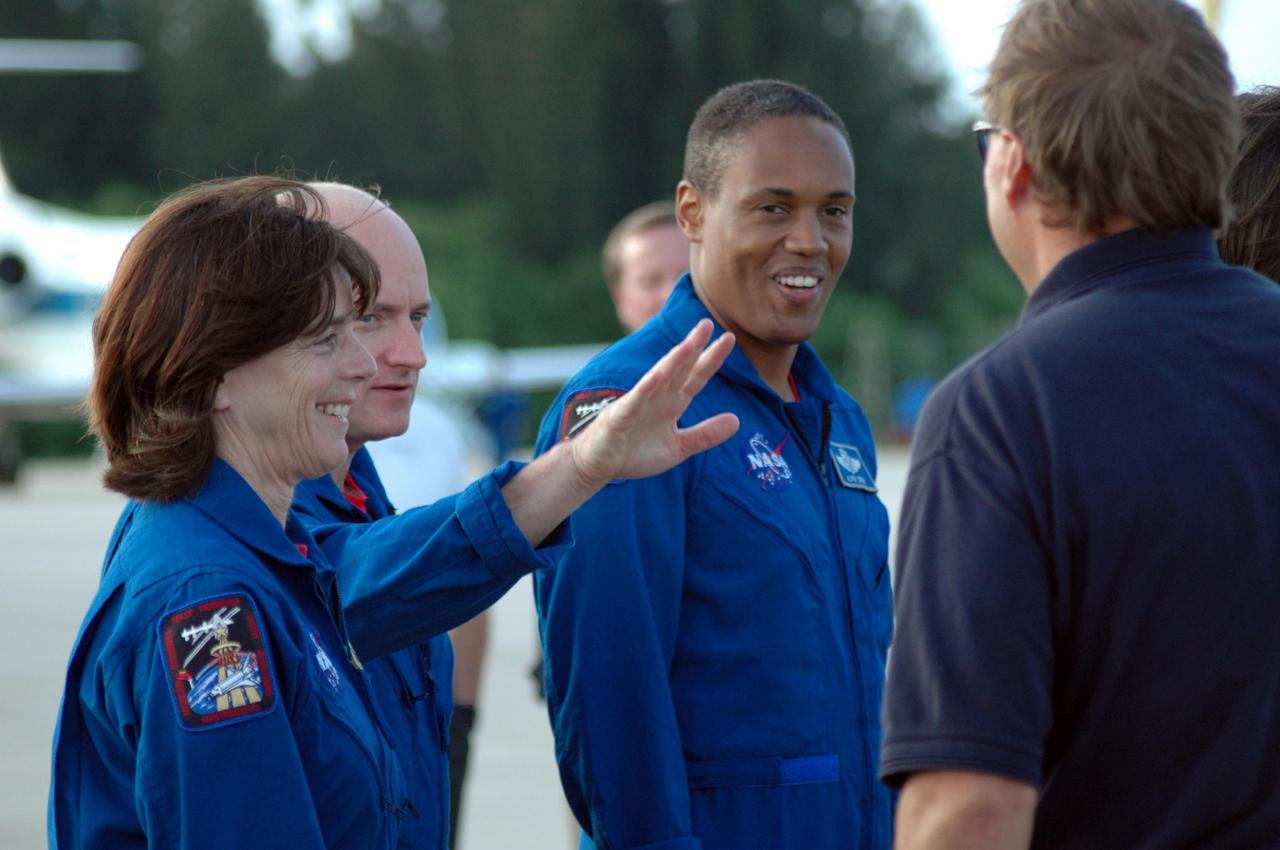
KENNEDY SPACE CENTER, Fla. -- The STS-118 crew arrives at Kennedy's Shuttle Landing Facility aboard a Shuttle Training Aircraft to take part in the Terminal Countdown Demonstration Test (TCDT), a dress rehearsal for launch. From left are Mission Specialist Barbara R. Morgan, Commander Scott Kelly and Mission Specialist Alvin Drew. Morgan joined NASA's Teacher in Space program in 1985 and was selected as an astronaut in 1998. DT activities include M-113 armored personnel carrier training, payload familiarization, emergency egress training at the pad and a simulated launch countdown. The STS-118 payload aboard Space Shuttle Endeavour includes the S5 truss, a SPACEHAB module and external stowage platform 3. The mission is the 22nd flight to the International Space Station and is targeted for launch on Aug.7. Photo credit: NASA/Ken Thornsley
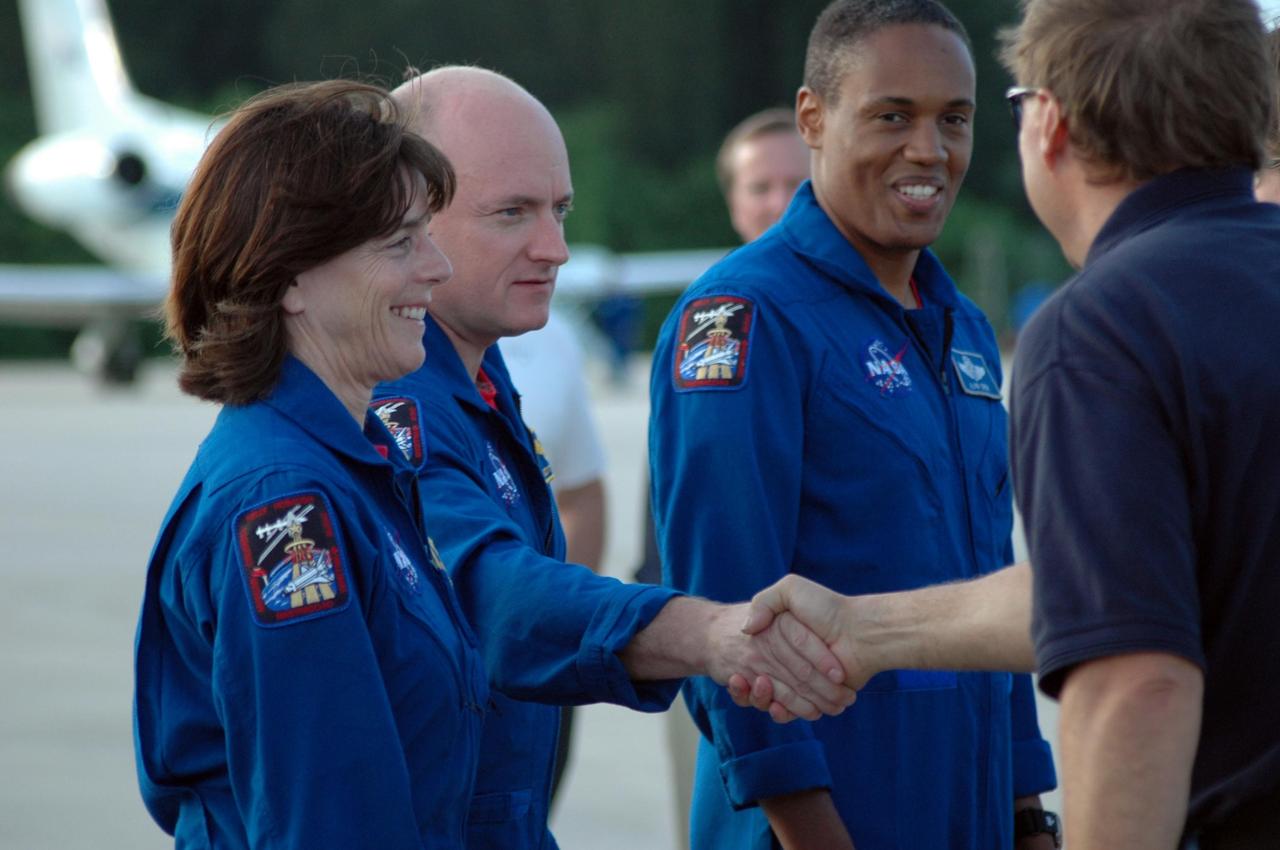
KENNEDY SPACE CENTER, Fla. -- The STS-118 crew arrives at Kennedy's Shuttle Landing Facility aboard a Shuttle Training Aircraft to take part in the Terminal Countdown Demonstration Test (TCDT), a dress rehearsal for launch. From left are Mission Specialist Barbara R. Morgan, Commander Scott Kelly and Mission Specialist Alvin Drew. Morgan joined NASA's Teacher in Space program in 1985 and was selected as an astronaut in 1998. TCDT activities include M-113 armored personnel carrier training, payload familiarization, emergency egress training at the pad and a simulated launch countdown. The STS-118 payload aboard Space Shuttle Endeavour includes the S5 truss, a SPACEHAB module and external stowage platform 3. The mission is the 22nd flight to the International Space Station and is targeted for launch on Aug.7. Photo credit: NASA/Ken Thornsley
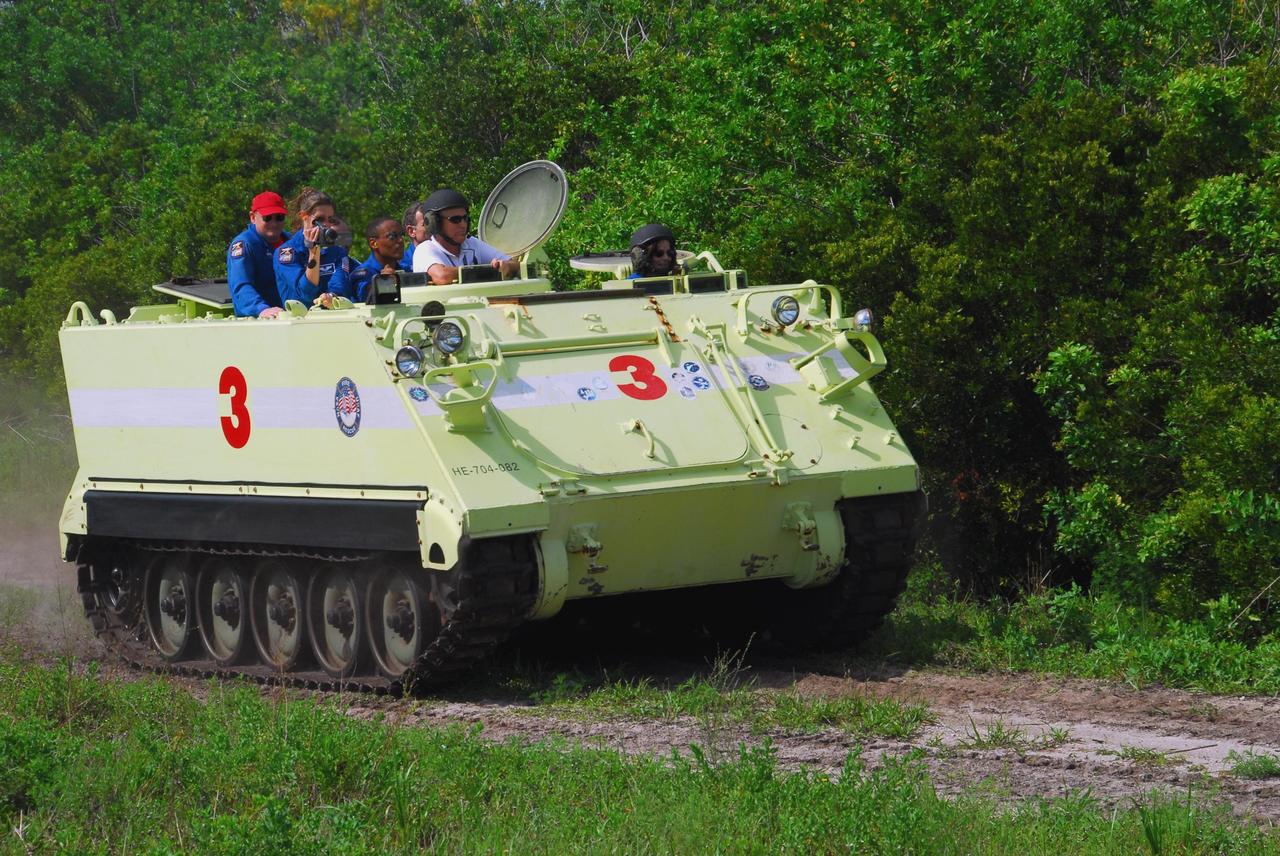
KENNEDY SPACE CENTER, Fla. -- STS-118 Mission Specialist Barbara R. Morgan practices driving an M-113 armored personnel carrier as part of emergency exit training. Seen in the back, at left, are Commander Scott Kelly and Mission Specialists Tracy Caldwell and Alvin Drew. Morgan joined NASA's Teacher in Space program in 1985 and was selected as an astronaut in 1998. She and other crew members are at Kennedy for the Terminal Countdown Demonstration Test (TCDT), a dress rehearsal for launch. TCDT activities include the M-113 training, payload familiarization, emergency egress training at the pad and a simulated launch countdown. The STS-118 payload aboard Space Shuttle Endeavour includes the S5 truss, a SPACEHAB module and external stowage platform 3. The mission is the 22nd flight to the International Space Station and is targeted for launch on Aug.7. NASA/George Shelton
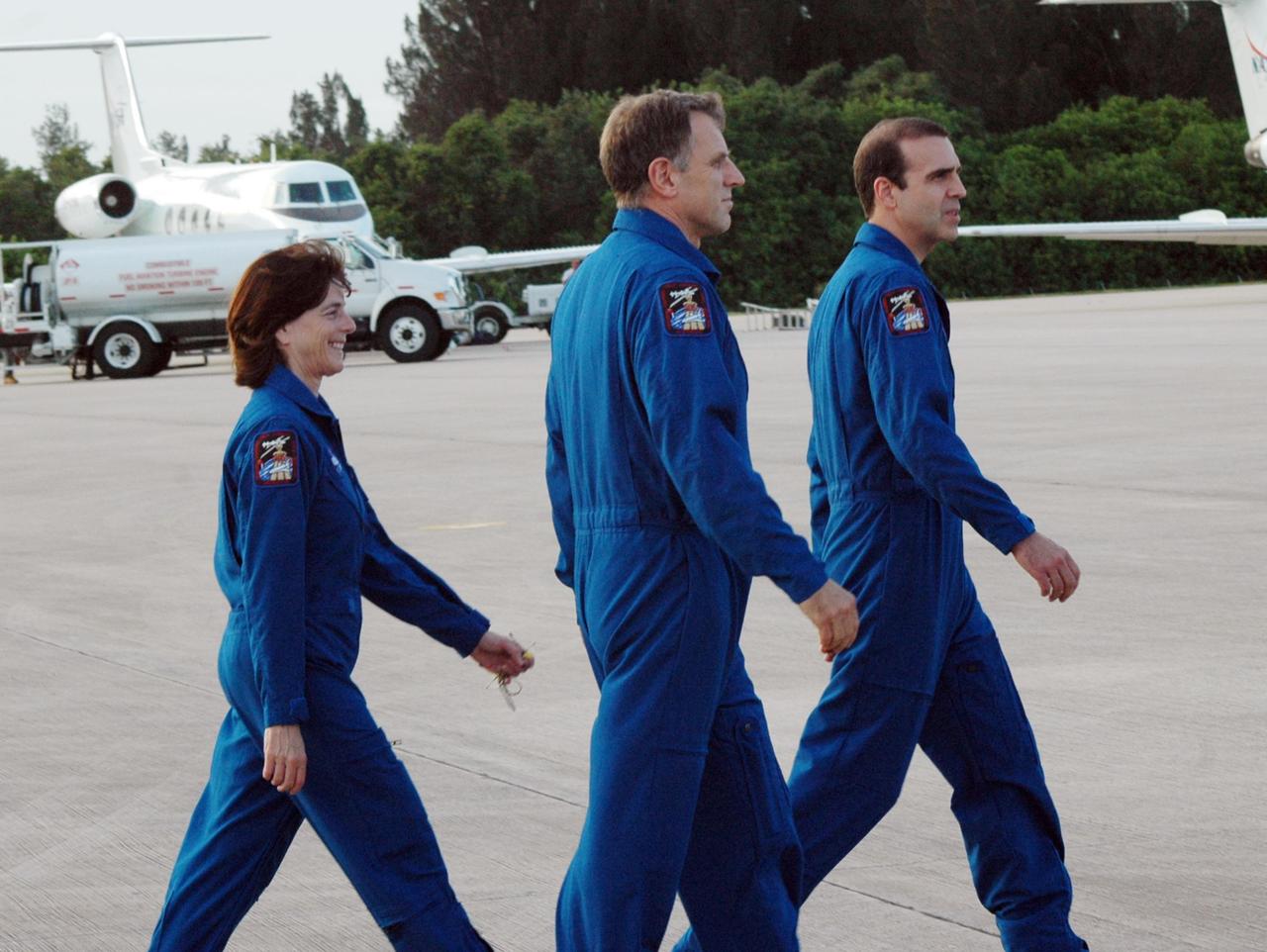
KENNEDY SPACE CENTER, Fla. -- The STS-118 crew arrives at Kennedy's Shuttle Landing Facility aboard a Shuttle Training Aircraft to take part in the Terminal Countdown Demonstration Test (TCDT), a dress rehearsal for launch. From left are Mission Specialists Barbara R. Morgan, Dave Williams and Rick Mastracchio. Williams represents the Canadian Space Agency. Morgan joined NASA's Teacher in Space program in 1985 and was selected as an astronaut in 1998. TCDT activities include M-113 armored personnel carrier training, payload familiarization, emergency egress training at the pad and a simulated launch countdown. The STS-118 payload aboard Space Shuttle Endeavour includes the S5 truss, a SPACEHAB module and external stowage platform 3. The mission is the 22nd flight to the International Space Station and is targeted for launch on Aug.7. Photo credit: NASA/Ken Thornsley
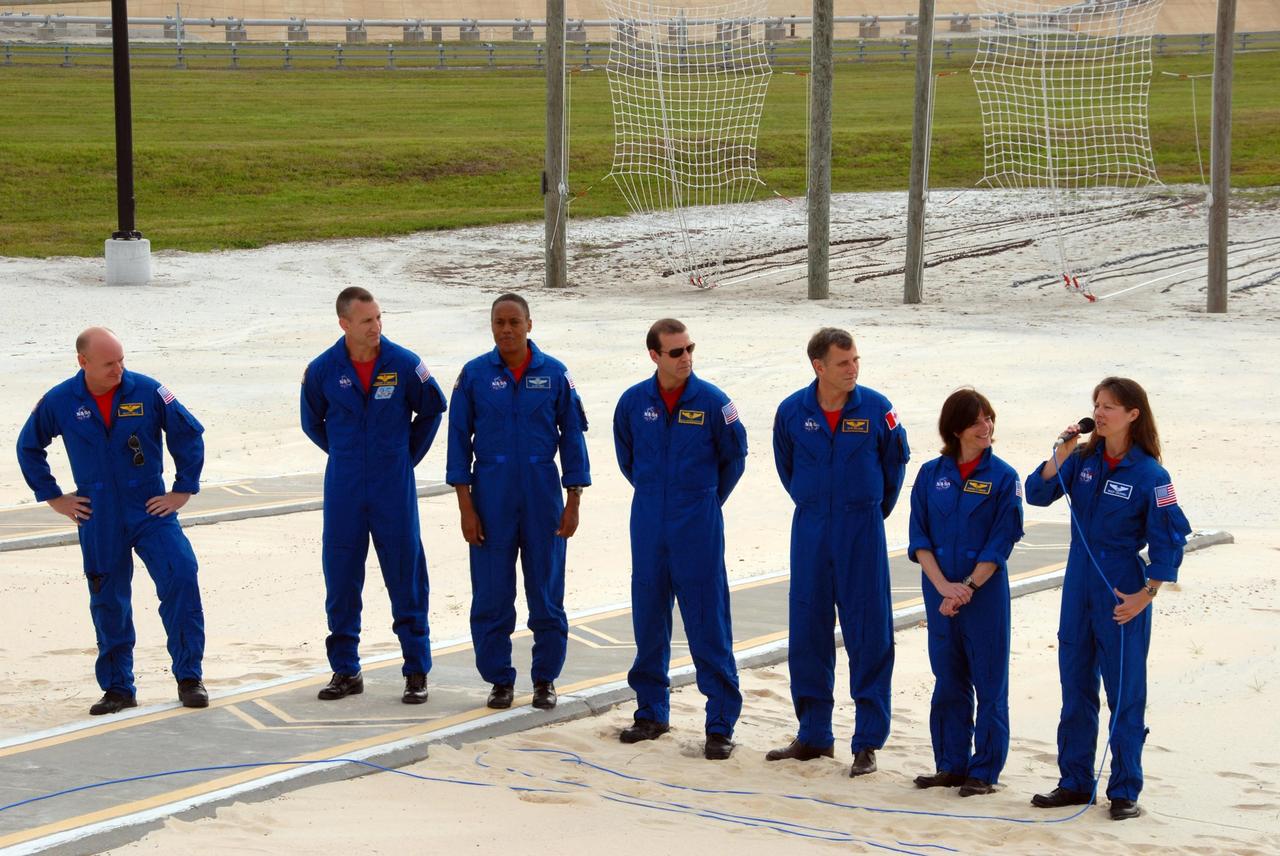
KENNEDY SPACE CENTER, Fla. -- On the slidewire basket bunker area of Launch Pad 39A, the STS-118 crew talks to the media before the crew's morning training activities in the terminal countdown demonstration test, or TCDT. At right, Mission Specialist Tracy Caldwell has the microphone. The others, from left, are Commander Scott Kelly, Pilot Charlie Hobaugh and Mission Specialists Alvin Drew, Rick Mastracchio, Dave Williams and Barbara Morgan. Williams represents the Canadian Space Agency. Morgan joined NASA's Teacher in Space program in 1985 and was selected as an astronaut in 1998. TCDT activities include M-113 training, payload familiarization, the emergency egress training at the pad and a simulated launch countdown. The mission is the 22nd flight to the International Space Station and Space Shuttle Endeavour will carry a payload including the S5 truss, a SPACEHAB module and external stowage platform 3. STS-118 is targeted for launch on Aug. 7. NASA/George Shelton
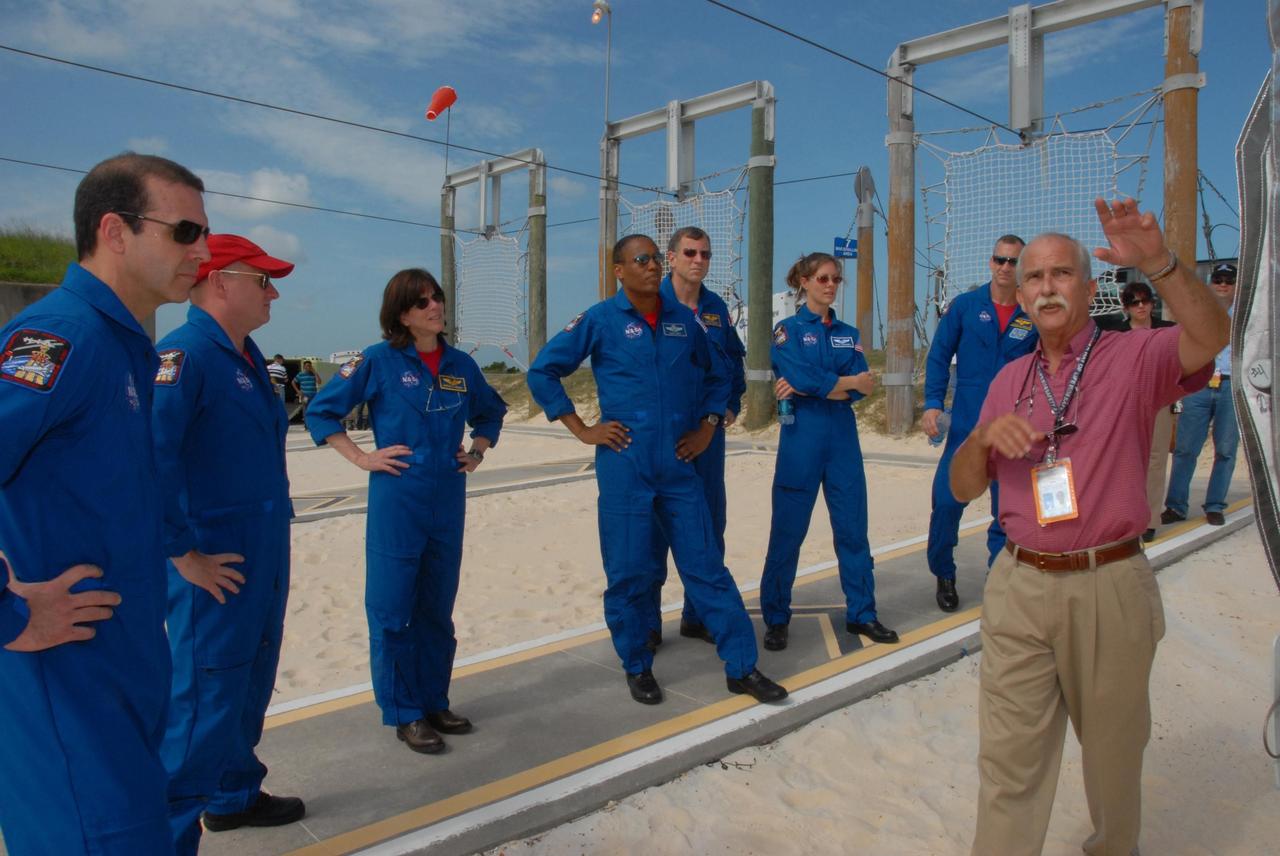
KENNEDY SPACE CENTER, Fla. -- Back on the slidewire landing area of Pad 39A, the STS-118 crew learns about landing in the baskets in the event of an emergency. From left are Mission Specialist Rick Mastracchio, Commander Scott Kelly, Mission Specialists Barbara R. Morgan, Alvin Drew, Dave Williams and Tracy Caldwell, and Pilot Charlie Hobaugh. Morgan joined NASA's Teacher in Space program in 1985 and was selected as an astronaut in 1998. Williams represents the Canadian Space Agency. The crew is at Kennedy for training activities in the terminal countdown demonstration test, or TCDT. TCDTactivities include M-113 training, payload familiarization, the emergency egress training at the pad and a simulated launch countdown. The mission is the 22nd flight to the International Space Station and Space Shuttle Endeavour will carry a payload including the S5 truss, a SPACEHAB module and external stowage platform 3. STS-118 is targeted for launch on Aug. 7. NASA/George Shelton
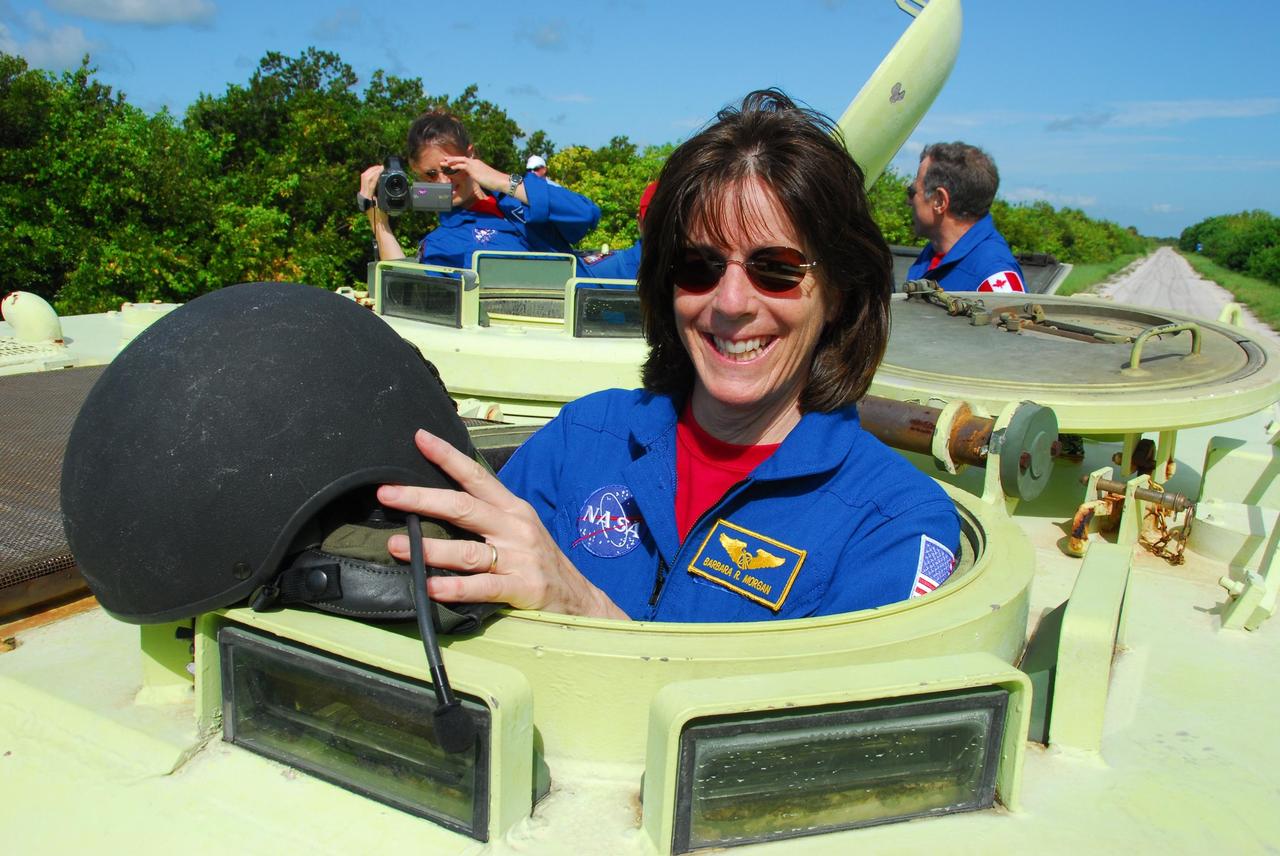
KENNEDY SPACE CENTER, Fla. -- STS-118 Mission Specialist Barbara R. Morgan is ready to practice driving an M-113 armored personnel carrier as part of emergency exit training. Behind her at the rear are Mission Specialists (left) Tracy Caldwell and Dave Williams. Morgan joined NASA's Teacher in Space program in 1985 and was selected as an astronaut in 1998. She and other crew members are at Kennedy for the Terminal Countdown Demonstration Test (TCDT), a dress rehearsal for launch. TCDT activities include the M-113 training, payload familiarization, emergency egress training at the pad and a simulated launch countdown. The STS-118 payload aboard Space Shuttle Endeavour includes the S5 truss, a SPACEHAB module and external stowage platform 3. The mission is the 22nd flight to the International Space Station and is targeted for launch on Aug.7. NASA/George Shelton
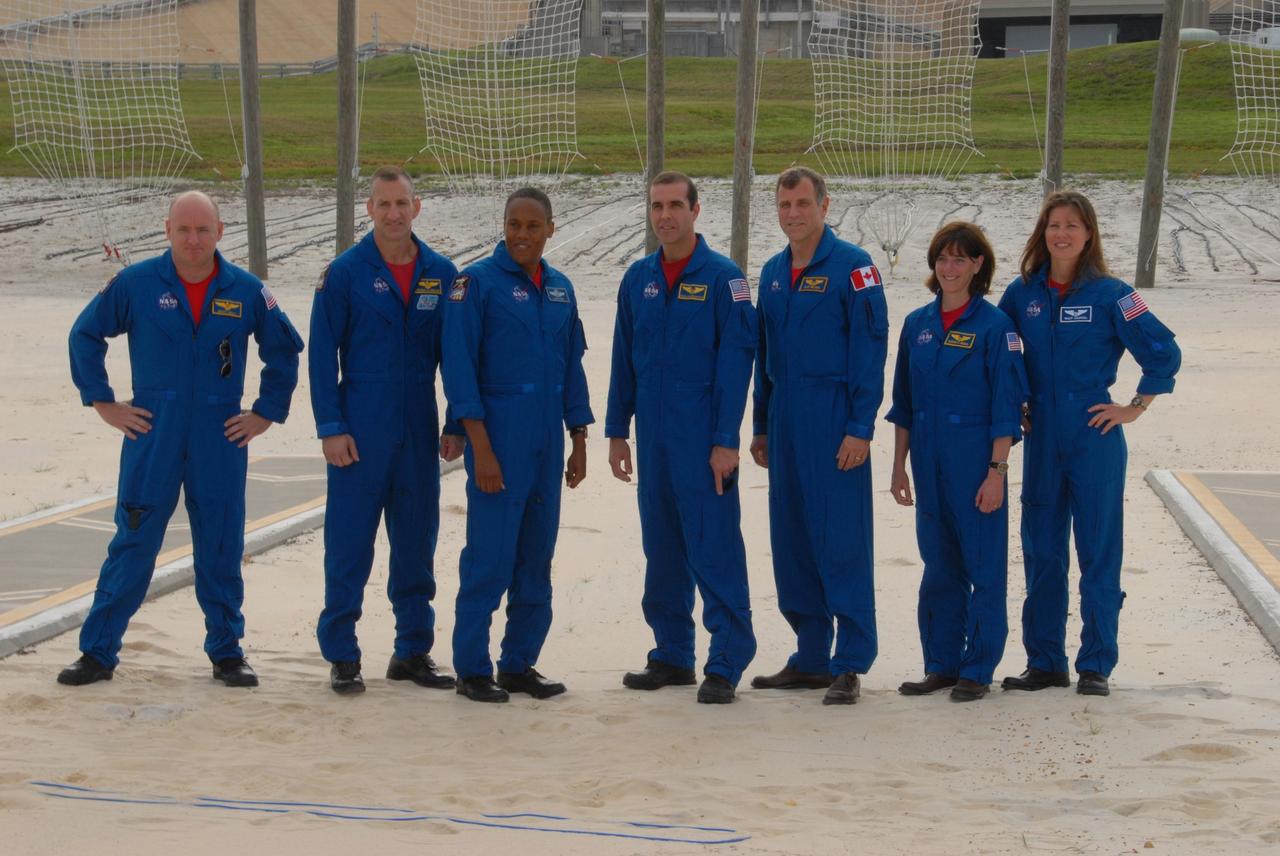
KENNEDY SPACE CENTER, Fla. -- On the slidewire basket bunker area of Launch Pad 39A, the STS-118 crew greets the media before the crew's morning training activities in the terminal countdown demonstration test, or TCDT. From left are Commander Scott Kelly, Pilot Charlie Hobaugh and Mission Specialists Alvin Drew, Rick Mastracchio, Dave Williams, Barbara R. Morgan and Tracy Caldwell. Williams represents the Canadian Space Agency. Morgan joined NASA's Teacher in Space program in 1985 and was selected as an astronaut in 1998. TCDT activities include M-113 training, payload familiarization, the emergency egress training at the pad and a simulated launch countdown. The mission is the 22nd flight to the International Space Station and Space Shuttle Endeavour will carry a payload including the S5 truss, a SPACEHAB module and external stowage platform 3. STS-118 is targeted for launch on Aug. 7. NASA/George Shelton
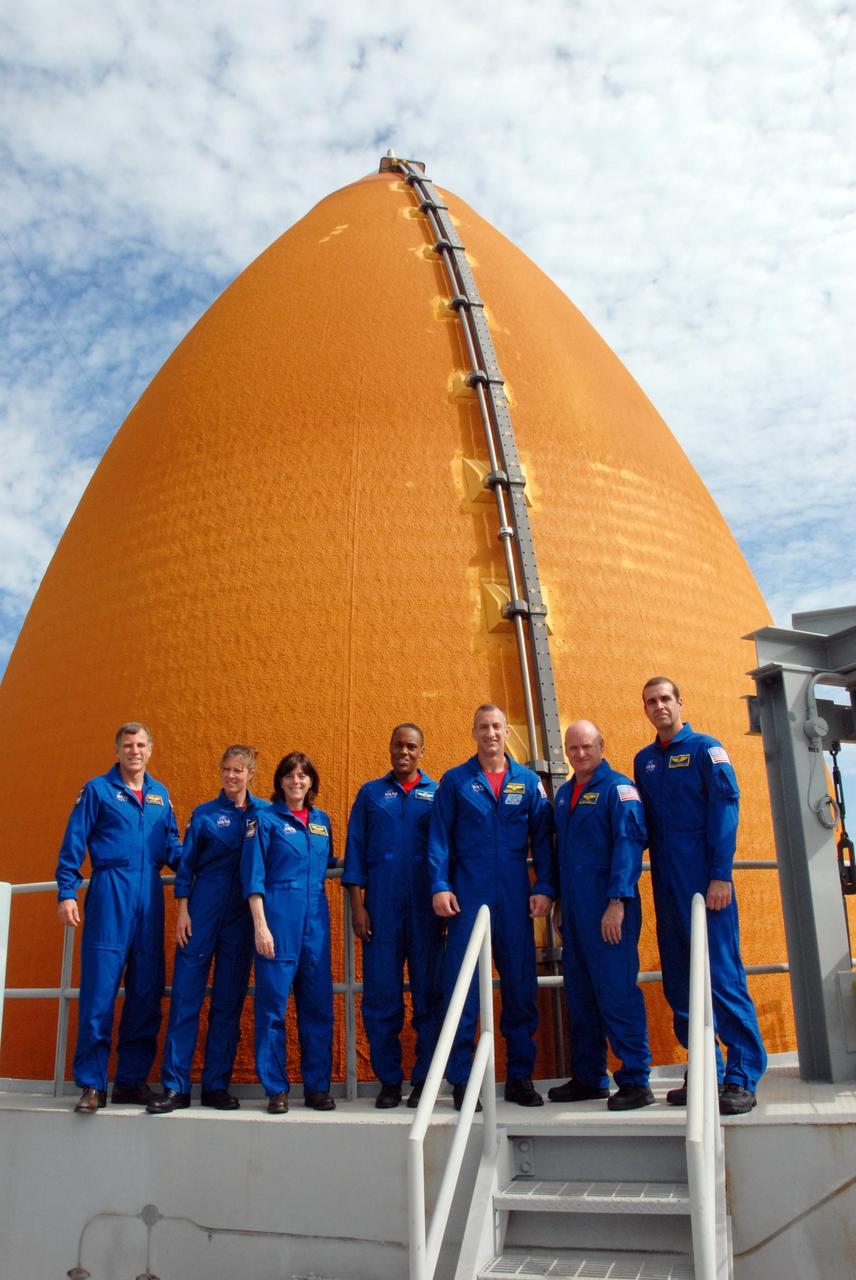
KENNEDY SPACE CENTER, Fla. -- On the top level of the Pad 39A fixed service structure, the STS-118 crew takes a break from training activities in the terminal countdown demonstration test, or TCDT. From left are Mission Specialists Dave Williams, Tracy Caldwell, Barbara R. Morgan and Alvin Drew, Pilot Charlie Hobaugh, Commander Scott Kelly and Mission Specialist Rick Mastracchio. Williams represents the Canadian Space Agency. Morgan joined NASA's Teacher in Space program in 1985 and was selected as an astronaut in 1998. Behind them is the top of the external tank. TCDTactivities include M-113 training, payload familiarization, the emergency egress training at the pad and a simulated launch countdown. The mission is the 22nd flight to the International Space Station and Space Shuttle Endeavour will carry a payload including the S5 truss, a SPACEHAB module and external stowage platform 3. STS-118 is targeted for launch on Aug. 7. NASA/George Shelton
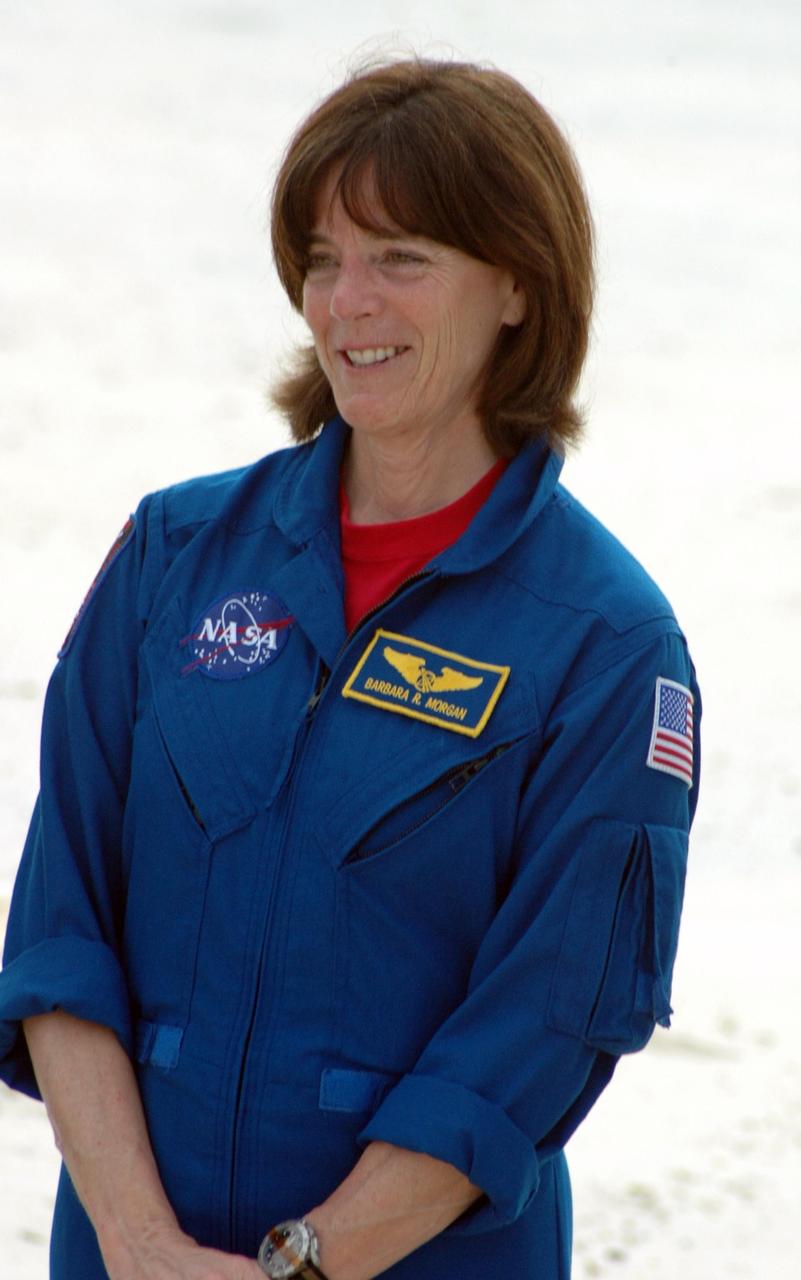
KENNEDY SPACE CENTER, Fla. -- In the slidewire basket bunker area of Launch Pad 39A, STS-118 Mission Specialist Barbara R. Morgan is introduced to the press during a media interview before the crew's morning training activities in the terminal countdown demonstration test, or TCDT. Morgan is a teacher-turned-astronaut whose association with NASA began more than 20 years ago. TCDT activities include M-113 training, payload familiarization, the emergency egress training at the pad and a simulated launch countdown. The mission is the 22nd flight to the International Space Station and Space Shuttle Endeavour will carry a payload including the S5 truss, a SPACEHAB module and external stowage platform 3. STS-118 is targeted for launch on Aug. 7. Photo credit: NASA/Ken Thornsley
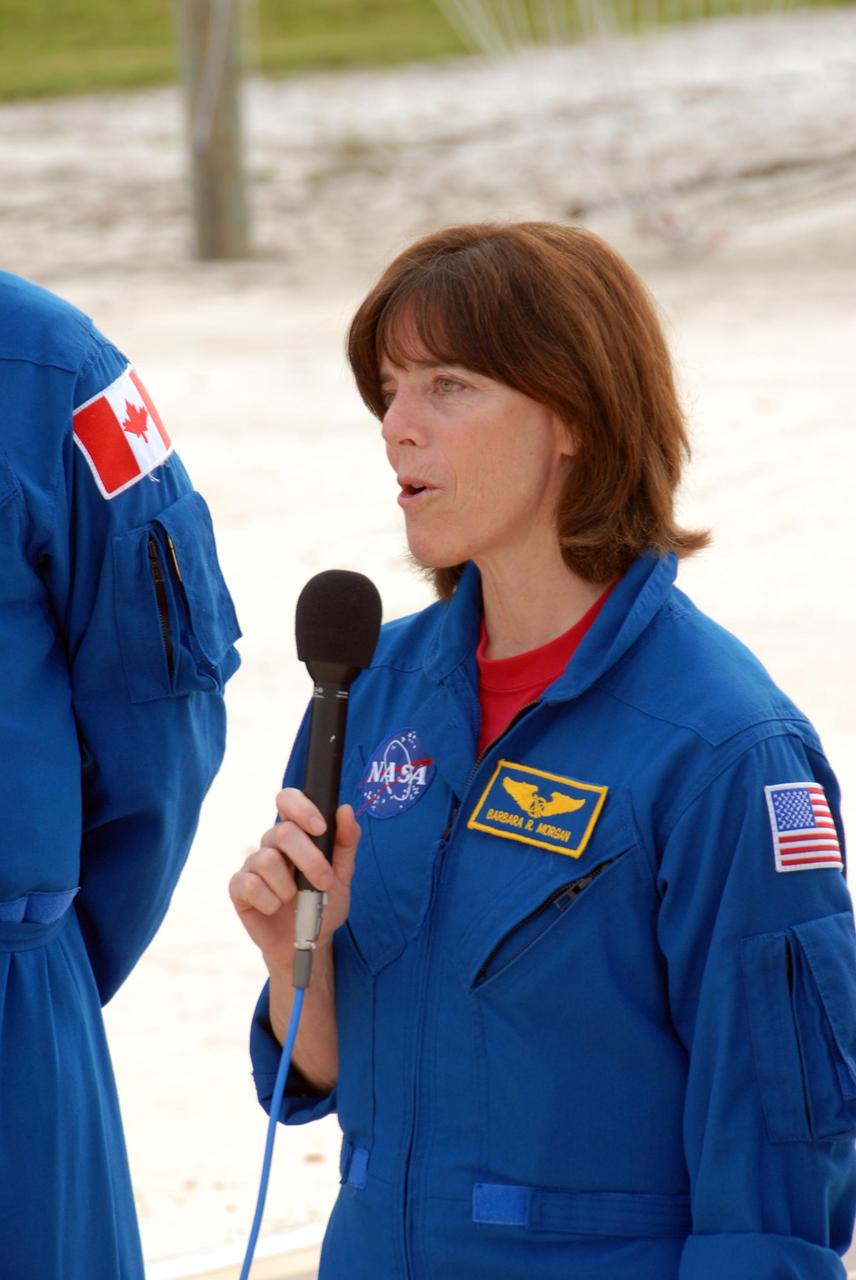
KENNEDY SPACE CENTER, Fla. -- On the slidewire basket bunker area of Launch Pad 39A, STS-118 educator astronaut and Mission Specialist Barbara R. Morgan responds to a question from the media before the crew's morning training activities in the terminal countdown demonstration test, or TCDT. Morgan joined NASA's Teacher in Space program in 1985 and was selected as an astronaut in 1998. TCDT activities include M-113 training, payload familiarization, the emergency egress training at the pad and a simulated launch countdown. The mission is the 22nd flight to the International Space Station and Space Shuttle Endeavour will carry a payload including the S5 truss, a SPACEHAB module and external stowage platform 3. STS-118 is targeted for launch on Aug. 7. NASA/George Shelton
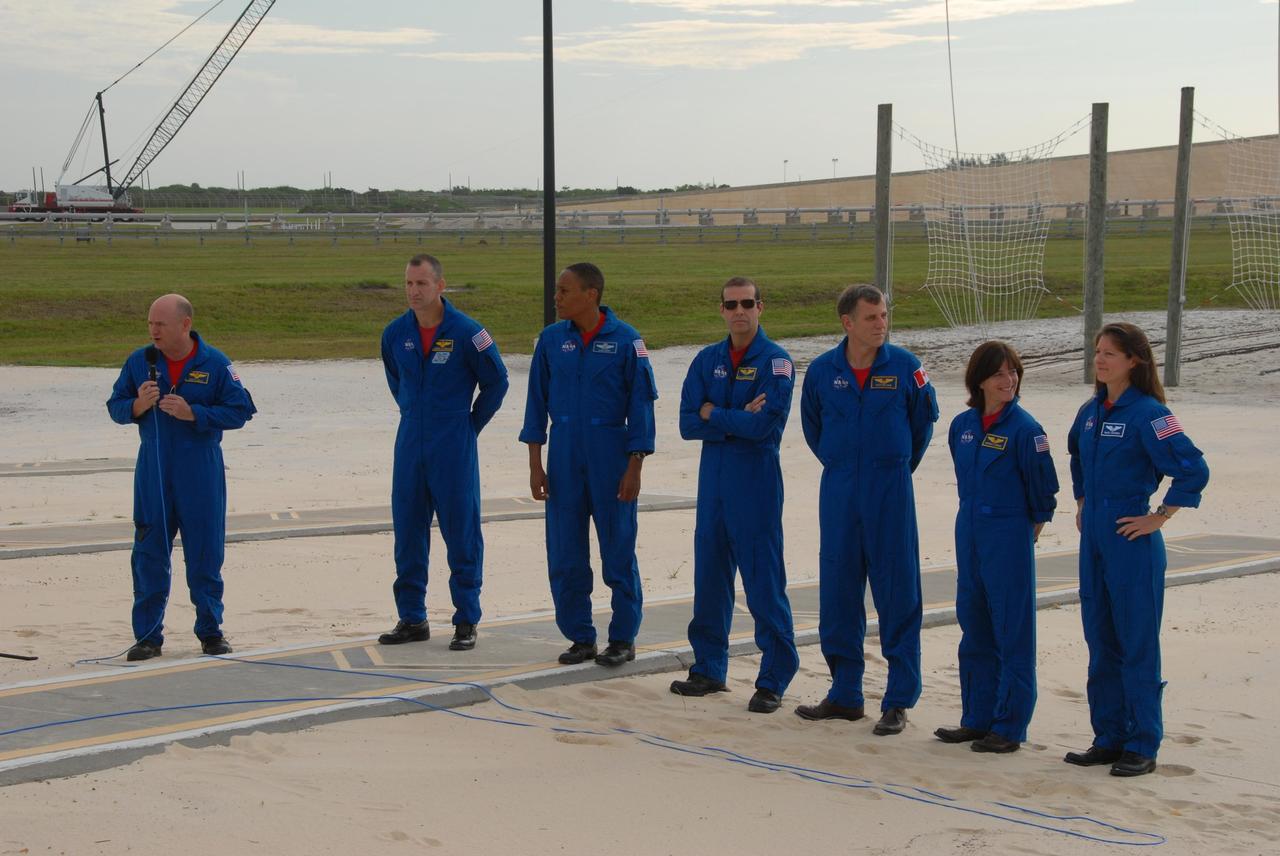
KENNEDY SPACE CENTER, Fla. -- On the slidewire basket bunker area of Launch Pad 39A, the STS-118 crew talks to the media before the crew's morning training activities in the terminal countdown demonstration test, or TCDT. At left is Commander Scott Kelly, with the microphone. The others, from left, are Pilot Charlie Hobaugh and Mission Specialists Alvin Drew, Rick Mastracchio, Dave Williams, Barbara R. Morgan and Tracy Caldwell. Williams represents the Canadian Space Agency. Morgan joined NASA's Teacher in Space program in 1985 and was selected as an astronaut in 1998. TCDT activities include M-113 training, payload familiarization, the emergency egress training at the pad and a simulated launch countdown. The mission is the 22nd flight to the International Space Station and Space Shuttle Endeavour will carry a payload including the S5 truss, a SPACEHAB module and external stowage platform 3. STS-118 is targeted for launch on Aug. 7. NASA/George Shelton
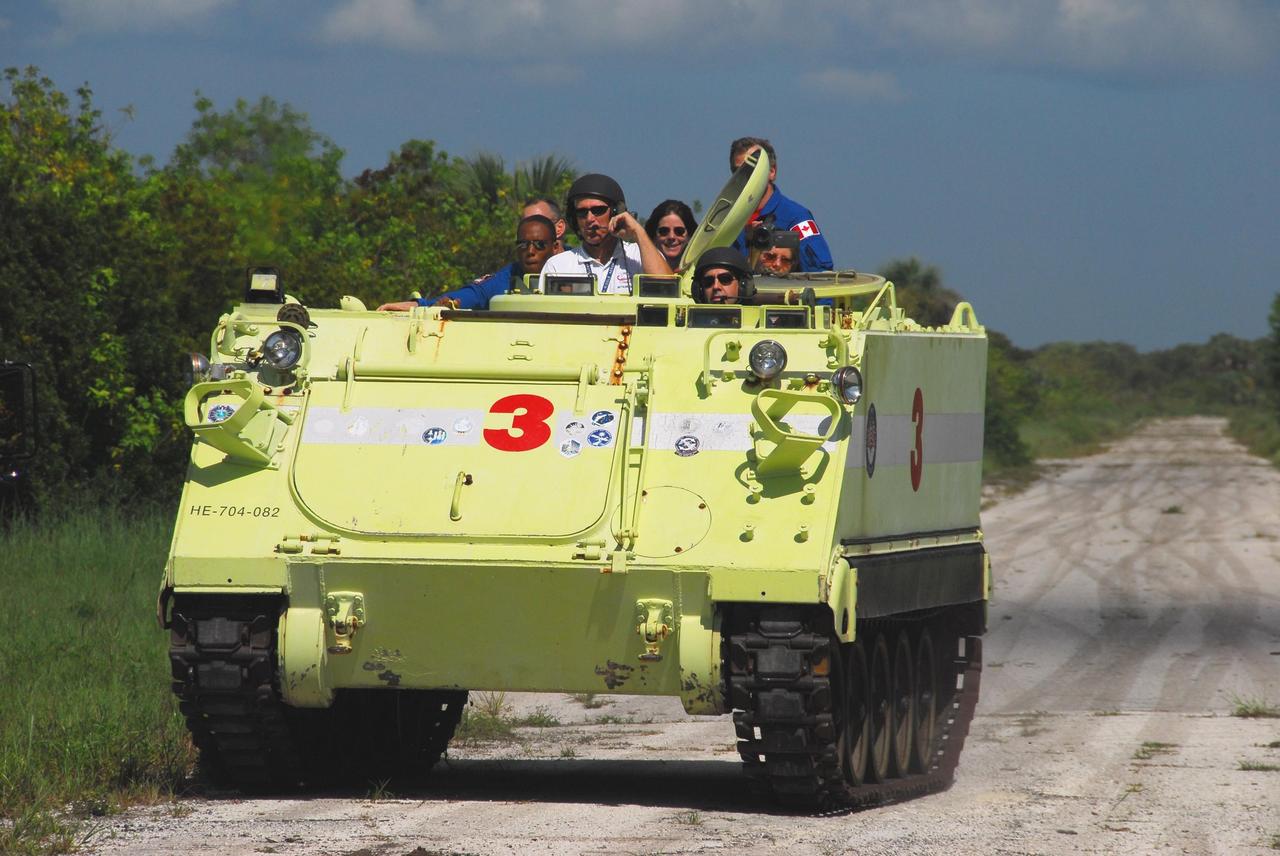
KENNEDY SPACE CENTER, Fla. -- STS-118 Mission Specialist Rick Mastracchio practices driving an M-113 armored personnel carrier as part of emergency exit training. The astronauts seen behind him are Mission Specialists Alvin Drew, Barbara R. Morgan, Dave Williams (standing) and Tracy Caldwell. Morgan joined NASA's Teacher in Space program in 1985 and was selected as an astronaut in 1998. Williams represents the Canadian Space Agency. The crew is at Kennedy for the Terminal Countdown Demonstration Test (TCDT), a dress rehearsal for launch. TCDT activities include the M-113 training, payload familiarization, emergency egress training at the pad and a simulated launch countdown. The STS-118 payload aboard Space Shuttle Endeavour includes the S5 truss, a SPACEHAB module and external stowage platform 3. The mission is the 22nd flight to the International Space Station and is targeted for launch on Aug.7. NASA/George Shelton
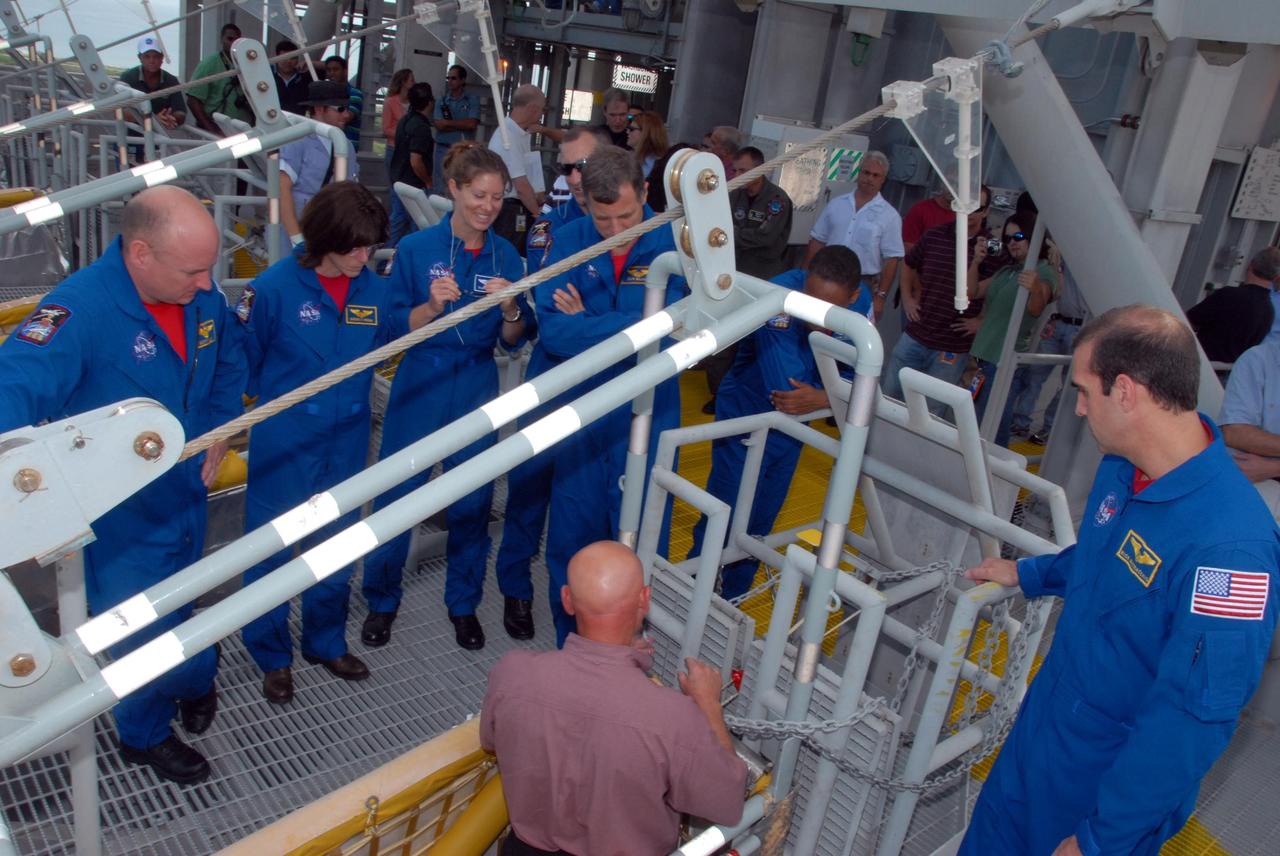
KENNEDY SPACE CENTER, Fla. -- On an upper level of the Pad 39A fixed service structure, the STS-118 crew members look at the slidewire basket that is part of the emergency egress system. On the left are Commander Scott Kelly and Mission Specialists Barbara R. Morgan, Tracy Caldwell, Dave Williams and Alvin Drew. On the right is Mission Specialist Rick Mastracchio. Morgan joined NASA's Teacher in Space program in 1985 and was selected as an astronaut in 1998. Williams represents the Canadian Space Agency. The crew is at Kennedy for training activities in the terminal countdown demonstration test, or TCDT. TCDT activities include M-113 training, payload familiarization, the emergency egress training at the pad and a simulated launch countdown. The mission is the 22nd flight to the International Space Station and Space Shuttle Endeavour will carry a payload including the S5 truss, a SPACEHAB module and external stowage platform 3. STS-118 is targeted for launch on Aug. 7. NASA/George Shelton
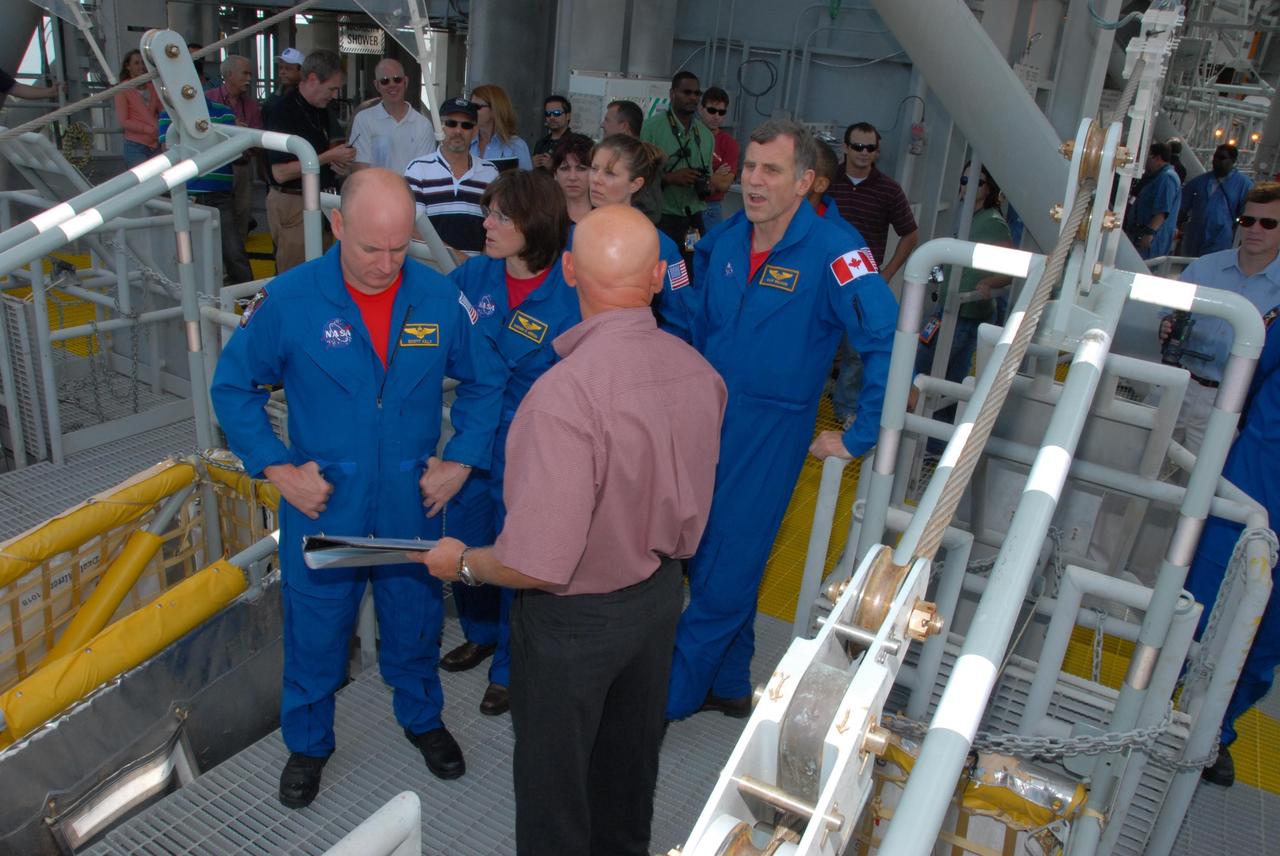
KENNEDY SPACE CENTER, Fla. -- On an upper level of the Pad 39A fixed service structure, the STS-118 crew get instructions from a trainer about using the emergency egress system. The crew members seen here are, from left, Commander Scott Kelly and Mission Specialists Barbara R. Morgan, Tracy Caldwell and Dave Williams. Morgan joined NASA's Teacher in Space program in 1985 and was selected as an astronaut in 1998. Williams represents the Canadian Space Agency. The crew is at Kennedy for training activities in the terminal countdown demonstration test, or TCDT. TCDT activities include M-113 training, payload familiarization, the emergency egress training at the pad and a simulated launch countdown. The mission is the 22nd flight to the International Space Station and Space Shuttle Endeavour will carry a payload including the S5 truss, a SPACEHAB module and external stowage platform 3. STS-118 is targeted for launch on Aug. 7. NASA/George Shelton
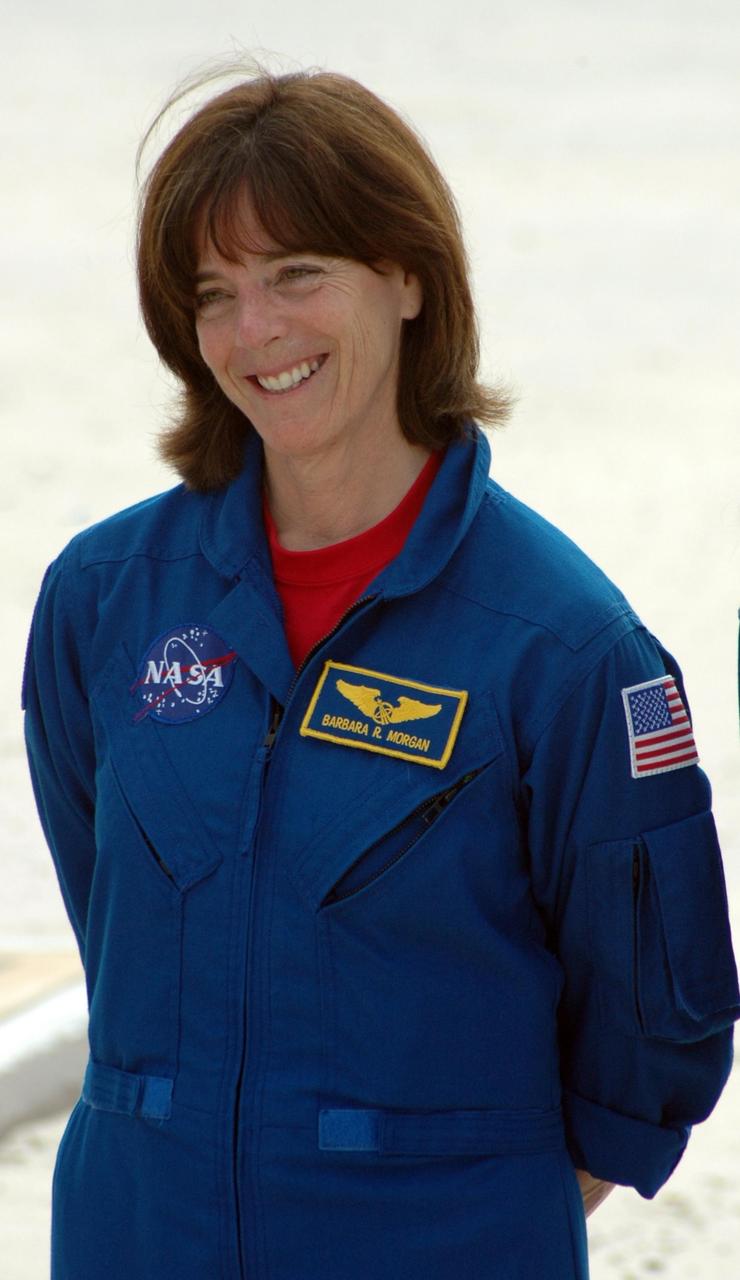
KENNEDY SPACE CENTER, Fla. -- In the slidewire basket bunker area of Launch Pad 39A, STS-118 Mission Specialist Barbara R. Morgan reacts to the waiting press during a media interview before the crew's morning training activities in the terminal countdown demonstration test, or TCDT. Morgan is a teacher-turned-astronaut whose association with NASA began more than 20 years ago. TCDT activities include M-113 training, payload familiarization, the emergency egress training at the pad and a simulated launch countdown. The mission is the 22nd flight to the International Space Station and Space Shuttle Endeavour will carry a payload including the S5 truss, a SPACEHAB module and external stowage platform 3. STS-118 is targeted for launch on Aug. 7. Photo credit: NASA/Ken Thornsley
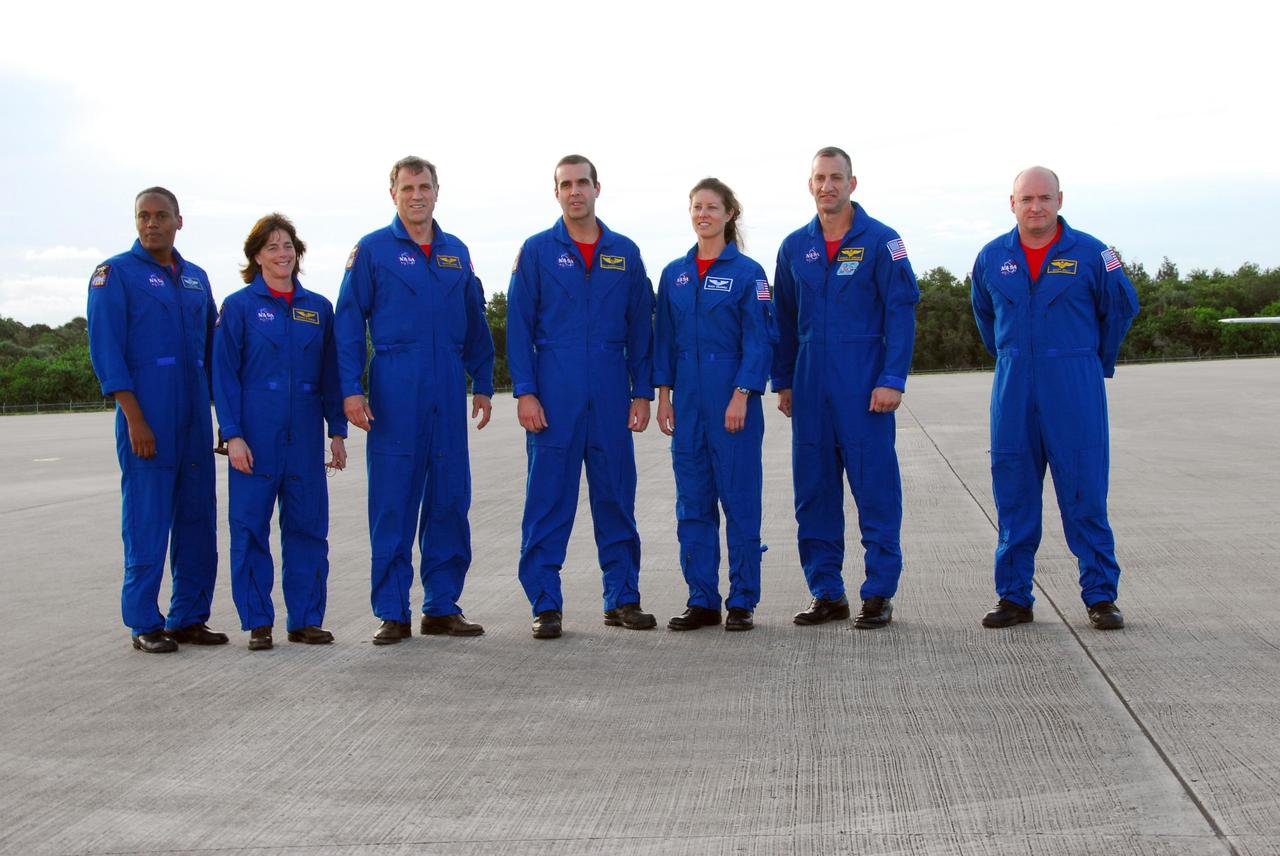
KENNEDY SPACE CENTER, Fla. -- The STS-118 crew arrives at Kennedy's Shuttle Landing Facility aboard a Shuttle Training Aircraft to take part in the Terminal Countdown Demonstration Test (TCDT), a dress rehearsal for launch. From left are Mission Specialists Alvin Drew; Barbara R. Morgan; Dave Williams, representing the Canadian Space Agency; Rick Mastracchio; Tracy Caldwell; Pilot Charlie Hobaugh and Commander Scott Kelly. Morgan joined NASA's Teacher in Space program in 1985 and was selected as an astronaut in 1998. TCDT activities include M-113 armored personnel carrier training, payload familiarization, emergency egress training at the pad and a simulated launch countdown. The STS-118 payload aboard Space Shuttle Endeavour includes the S5 truss, a SPACEHAB module and external stowage platform 3. The mission is the 22nd flight to the International Space Station and is targeted for launch on Aug.7. Photo credit: NASA/George Shelton

CAPE CANAVERAL, Fla. – Inside the Educator Resource Center at NASA’s Kennedy Space Center Visitor Complex in Florida, science teacher April Lanotte displays materials used for the Museum in a Box activities for K-12 students. Lanotte, who is an Albert Einstein Distinguished Educator Fellow working in NASA’s Aeronautics Research Mission Directorate, was at Kennedy to train education specialists and Kennedy Educate to Innovate program volunteers in the new series of lessons and activities. The Museum in a Box is a program designed to teach physical science through aeronautics using hands-on activities and experiments. Photo credit: NASA_Jim Grossmann
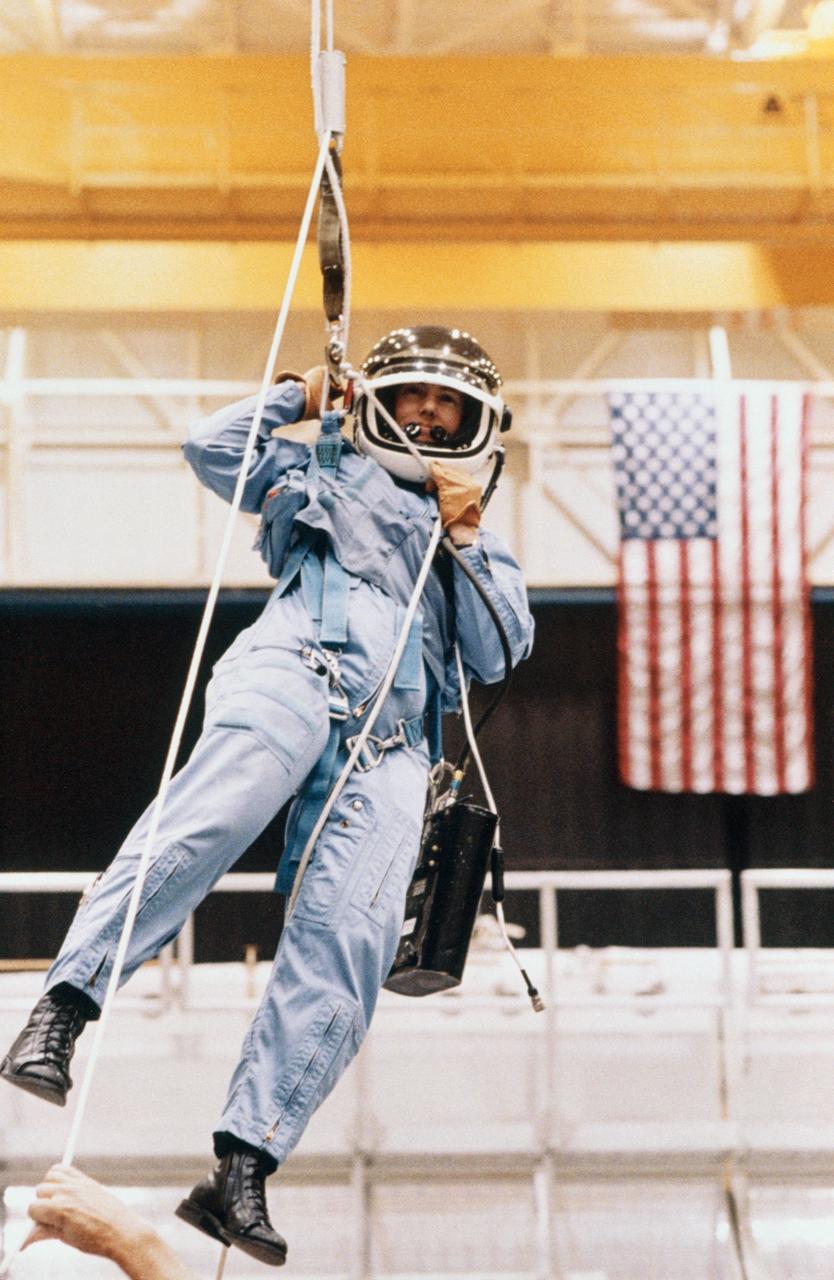
S86-25183 (for release January 1986) --- Sharon Christa McAuliffe, STS-51L payload specialist representing the Teacher-in-Space Project, descends from a mock-up of the space shuttle using a sky-genie device during an emergency training session in the Johnson Space Center?s (JSC) Shuttle Mock-up and Integration Laboratory. The photograph was taken by Keith Meyers of the New York Times. EDITOR?S NOTE: The STS-51L crew members lost their lives in the space shuttle Challenger accident moments after launch on Jan. 28, 1986 from the Kennedy Space Center (KSC). Photo credit: NASA
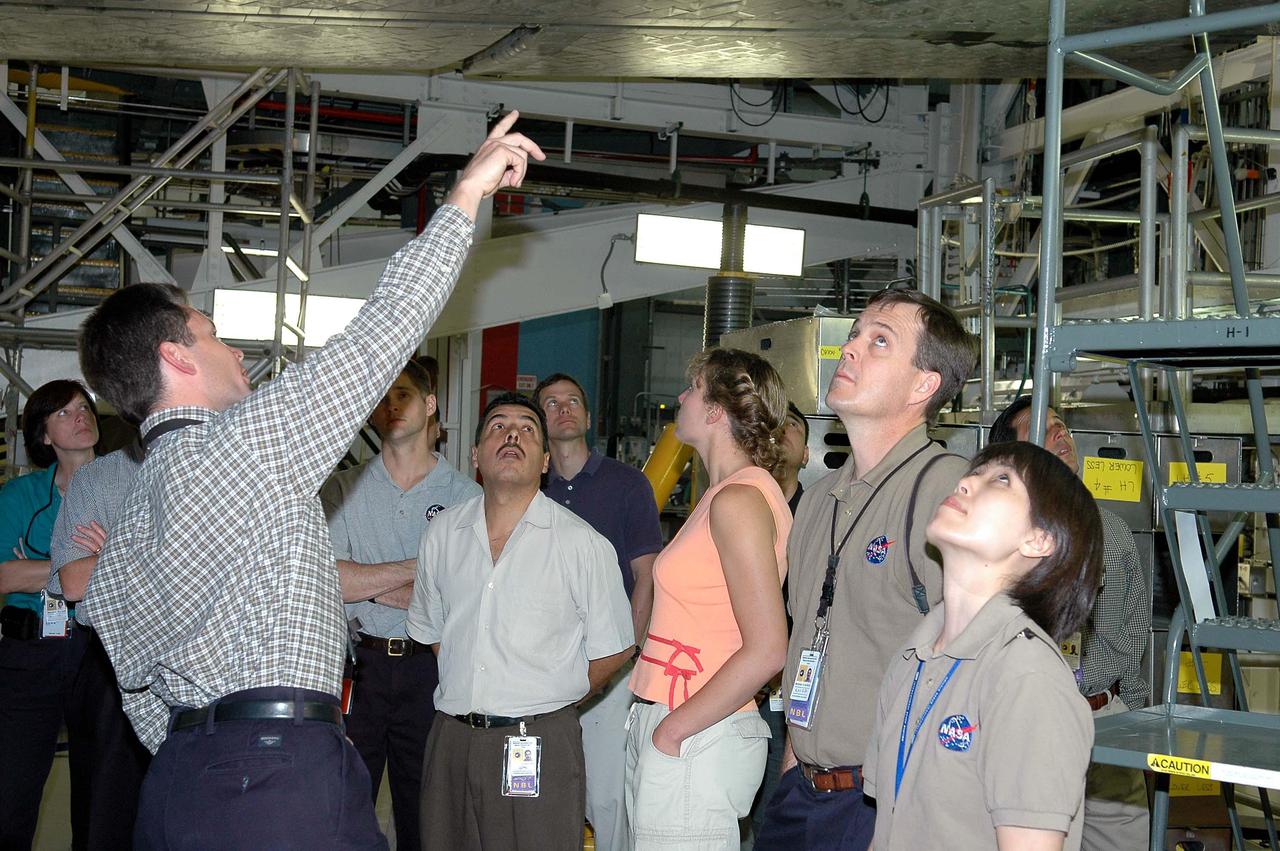
KENNEDY SPACE CENTER, FLA. - At NASA’s Kennedy Space Center, the 2004 class of astronaut candidates tour the Orbiter Processing Facility bay 1 where Atlantis (overhead) is being processed for Return to Flight mission STS-121 in July. NASA Vehicle Manager for Atlantis, Scott Thurston talks to them about the orbiter. The astronaut candidates are at KSC to participate in firefighting training and familiarization tours. The class of 14 candidates includes three candidates from the Japan Aerospace Exploration Agency as well as three educator astronauts, who were school teachers chosen from thousands of applicants.
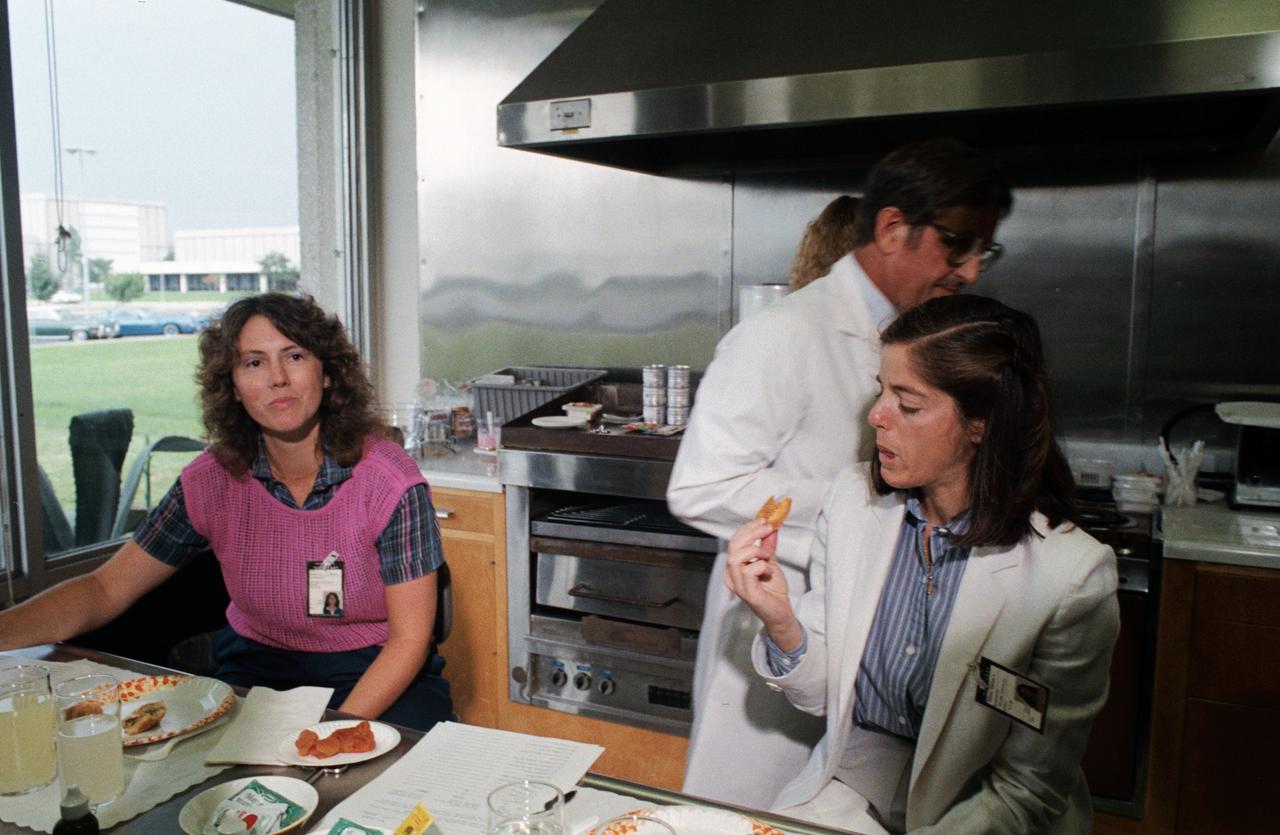
S85-39978 (10 Sept. 1985) --- Sharon Christa McAuliffe, left, appears to be deciding what she thinks of a piece of space food she tastes during a session of interfacing with space shuttle life sciences. Barbara R. Morgan samples an apricot. The two are in early training at the Johnson Space Center (JSC) in preparation for the STS-51L spaceflight early next year. McAuliffe is prime payload specialist representing the Teacher in Space Project, and Morgan is her backup. Dr. C.T. Bourland, a dietitian specialist, assists the two. Photo credit: NASA
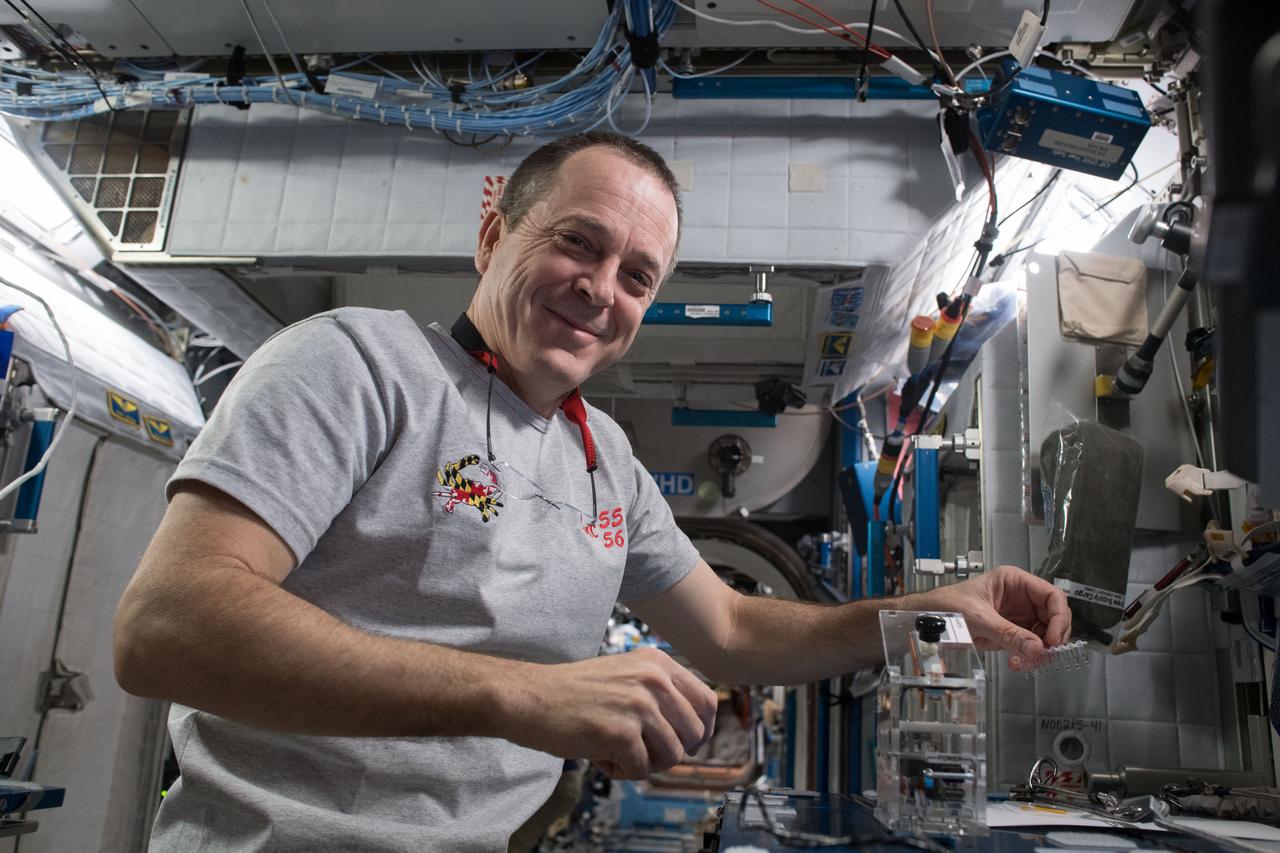
iss055e016053 (4/11/2018) --- NASA astronaut Ricky Arnold works with the student-designed Genes in Space-5 experiment inside the Harmony module. The genetic research is helping scientists understand the relationship between DNA alterations and weakened immune systems possibly caused by living in space. Genes in Space is an innovation challenge including students and teachers across the United States from grades 7 through 12. Students design a pioneering DNA-related experiment to fly on the ISS, providing real-world training in science, technology, engineering and math (STEM) fields and connecting students to the space program.

CAPE CANAVERAL, Fla. – Inside the Educator Resource Center at NASA’s Kennedy Space Center Visitor Complex in Florida, science teacher April Lanotte displays the Museum in a Box that contains activities and learning materials for K-12 students. Lanotte, who is an Albert Einstein Distinguished Educator Fellow working in NASA’s Aeronautics Research Mission Directorate, was at Kennedy to train education specialists and Kennedy Educate to Innovate program volunteers in the new series of lessons and activities. The Museum in a Box is a program designed to teach physical science through aeronautics using hands-on activities and experiments. Photo credit: NASA_Jim Grossmann
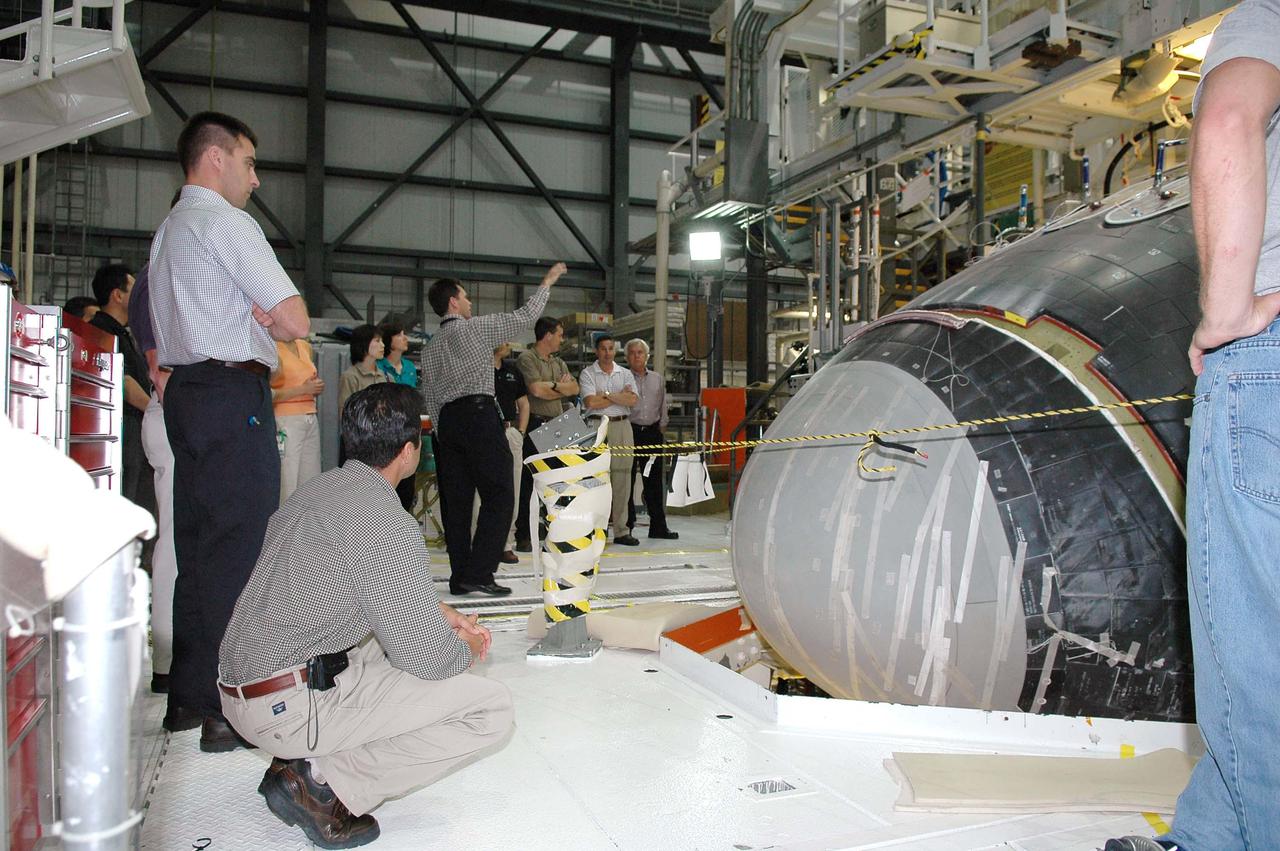
KENNEDY SPACE CENTER, FLA. - At NASA’s Kennedy Space Center, the 2004 class of astronaut candidates get a close look at the nose of Atlantis while touring the Orbiter Processing Facility bay 1. Atlantis is being processed for Return to Flight mission STS-121 in July. At center, in the background, is the NASA Vehicle Manager for Atlantis, Scott Thurston, talking about the orbiter. The astronaut candidates are at KSC to participate in firefighting training and familiarization tours. The class of 14 candidates includes three candidates from the Japan Aerospace Exploration Agency as well as three educator astronauts, who were school teachers chosen from thousands of applicants.
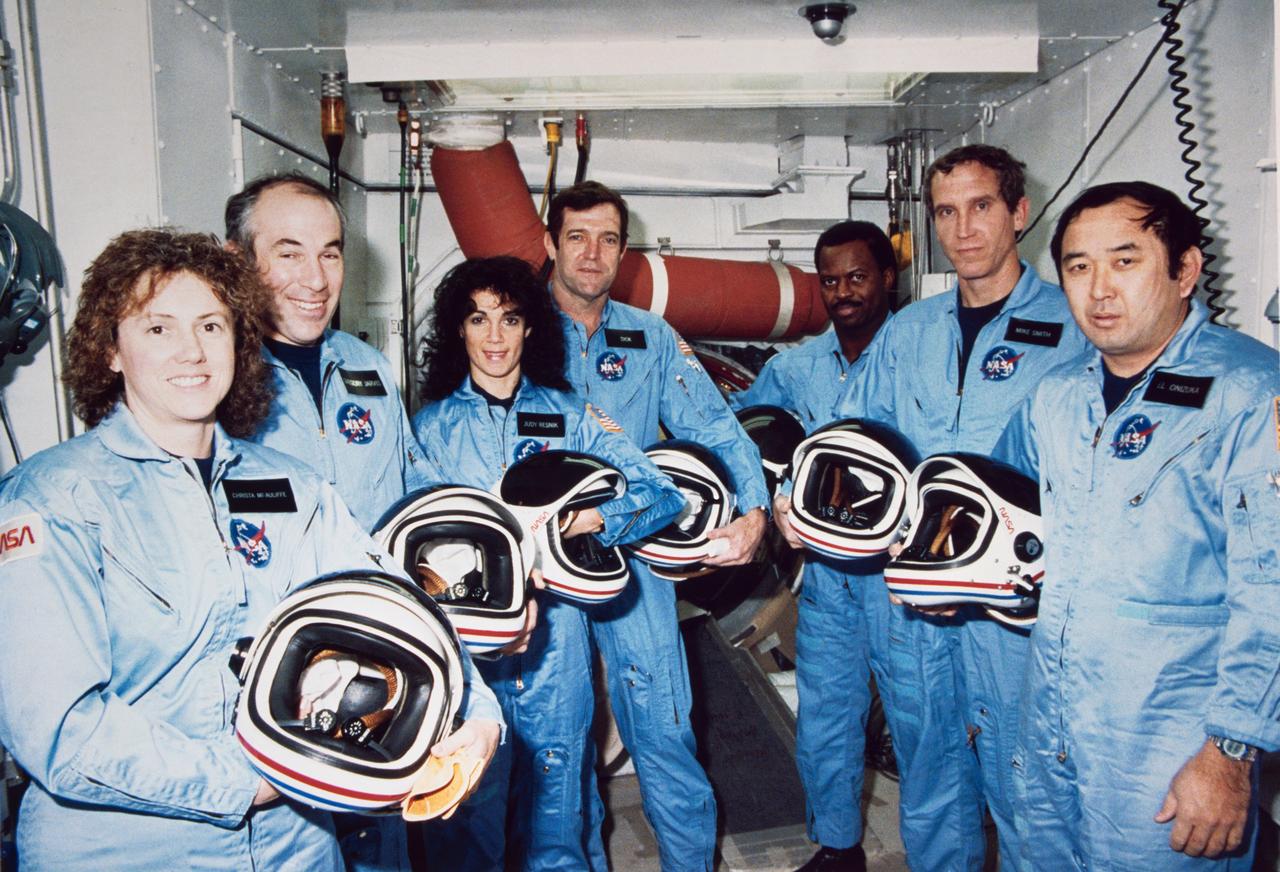
S86-30460 (9 Jan. 1986) --- NASA's STS-51L crew members pose for photographs during a break in countdown training at the White Room, Launch Complex 39, Pad B. Left to right are Teacher-in-Space payload specialist Sharon Christa McAuliffe; payload specialist Gregory Jarvis; and astronauts Judith A. Resnik, mission specialist; Francis R. (Dick) Scobee, mission commander; Ronald E. McNair, mission specialist; Mike J. Smith, pilot; and Ellison S. Onizuka, mission specialist. EDITOR'S NOTE: The STS-51L crew lost their lives in an explosion, onboard the space shuttle Challenger, following launch Jan. 28, 1986. Photo credit: NASA

CAPE CANAVERAL, Fla. – Inside the Educator Resource Center at NASA’s Kennedy Space Center Visitor Complex in Florida, science teacher April Lanotte demonstrates one of the Museum in a Box experiments designed for K-12 students. Lanotte, who is an Albert Einstein Distinguished Educator Fellow working in NASA’s Aeronautics Research Mission Directorate, was at Kennedy to train education specialists and Kennedy Educate to Innovate program volunteers in the new series of lessons and activities. The Museum in a Box is a program designed to teach physical science through aeronautics using hands-on activities and experiments. Photo credit: NASA_Jim Grossmann
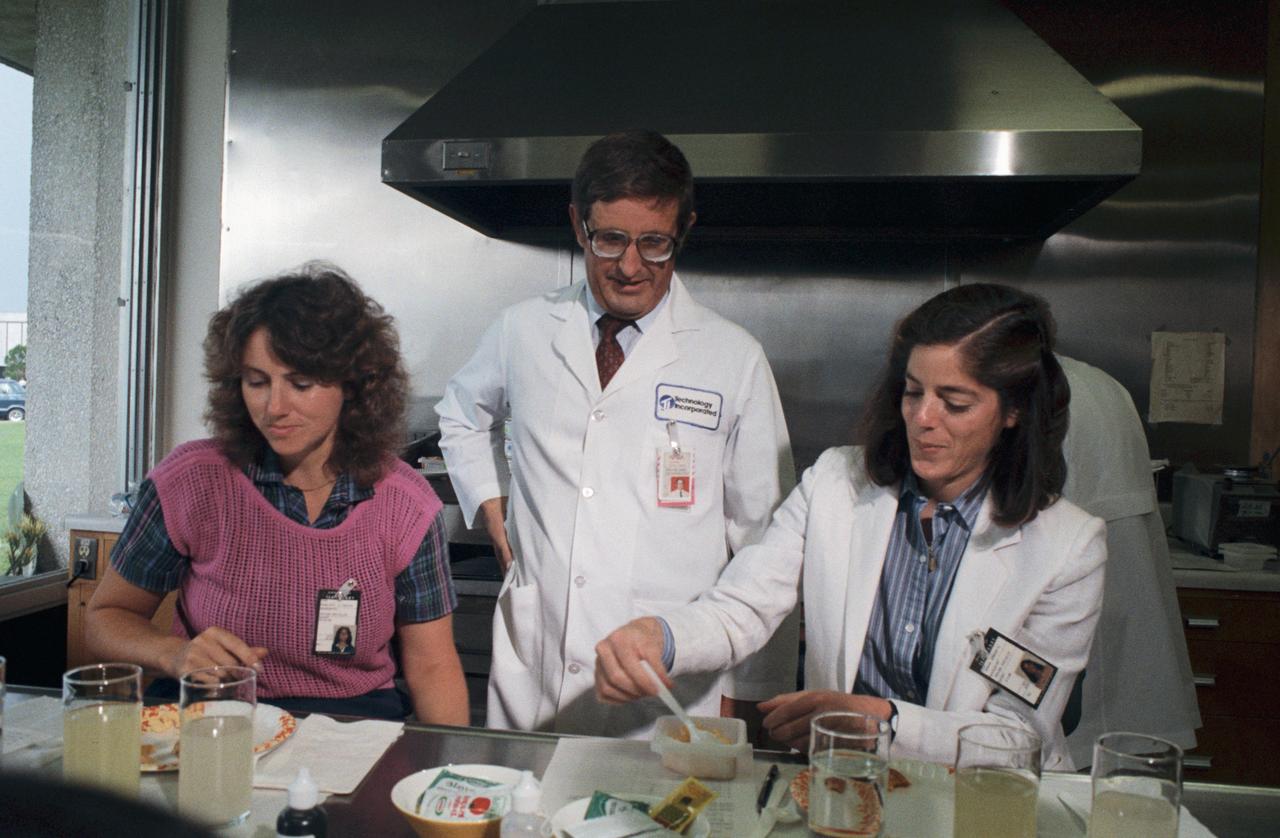
S85-39979 (10 Sept. 1985) --- Two teachers training for participation in the STS-51L flight get their first introduction to space food during an orientation session in the life sciences building at the Johnson Space Center (JSC). Sharon Christa McAuliffe (left) chews on a morsel while Barbara R. Morgan reaches for a bite. Dr. C.T. Bourland of Technology, Incorporated, looks on. McAuliffe was chosen from among ten finalists as prime citizen observer payload specialist and Morgan was named as backup for the STS-51L flight. Photo credit: NASA
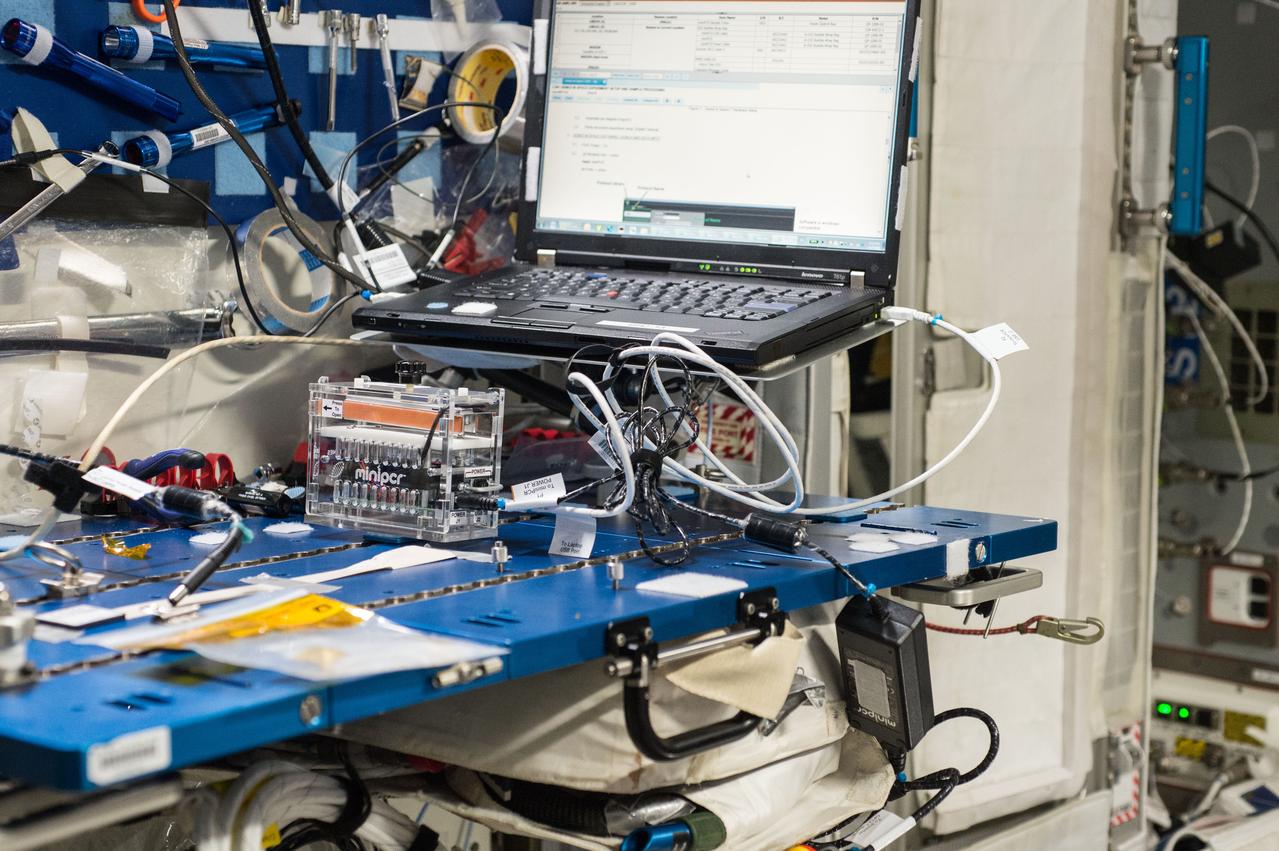
iss047e083547 (4/27/2016) --- Photographic documentation during the Genes in Space experiment showing the polymerase chain reaction (PCR) and miniPCR system as a way to amplify deoxyribonucleic acid (DNA) in space and make it possible to measure and monitor telomere changes during spaceflight. Genes in Space is an innovation challenge including students and teachers across the United States from grades 7 through 12. Students design a pioneering DNA-related experiment to fly on the ISS, providing real-world training in science, technology, engineering and math (STEM) fields and connecting students to the space program.
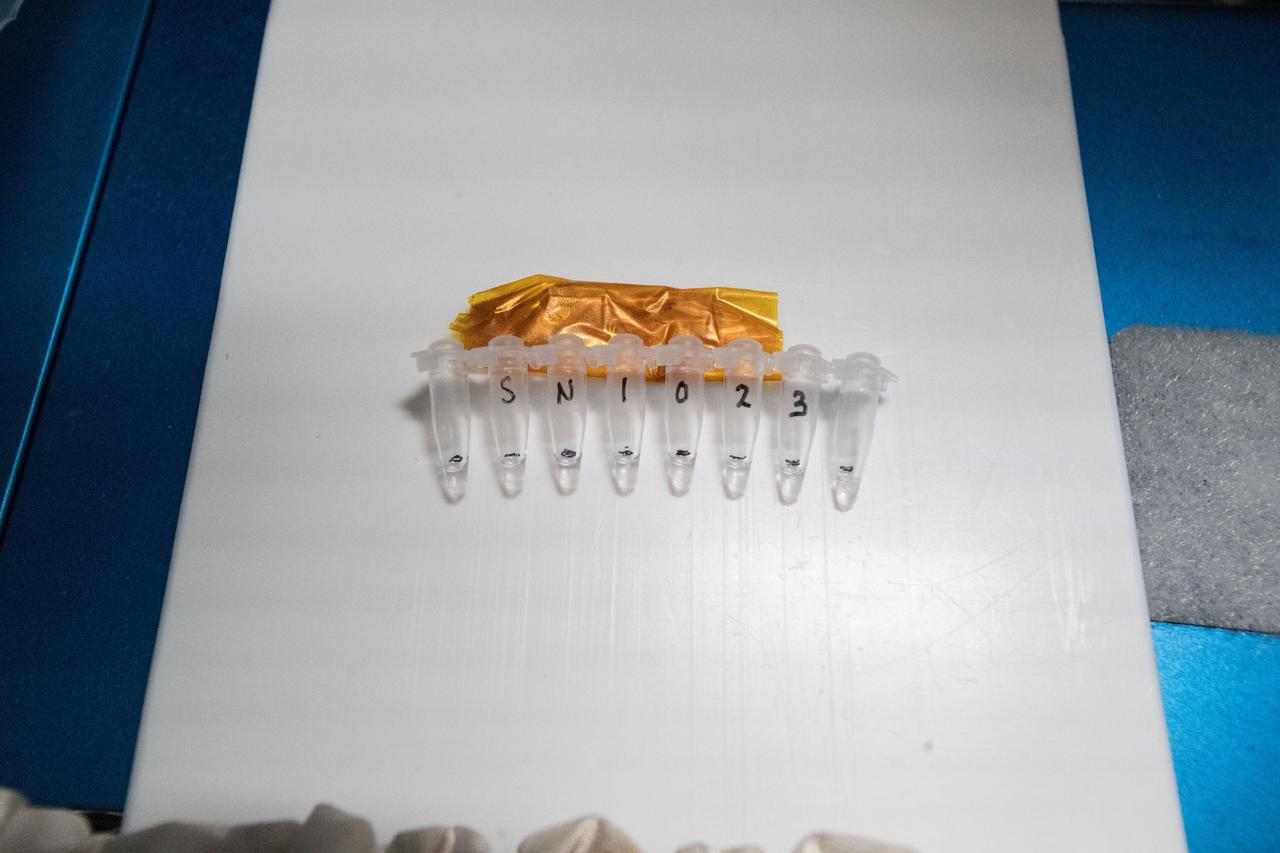
iss055e020316 (4/13/2018) --- Photographic documentation taken during processing of samples in the Miniature Polymerase Chain Reaction (miniPCR) for the Genes In Space-5 experiment onboard the International Space Station (ISS). The genetic research is helping scientists understand the relationship between DNA alterations and weakened immune systems possibly caused by living in space. Genes in Space is an innovation challenge including students and teachers across the United States from grades 7 through 12. Students design a pioneering DNA-related experiment to fly on the ISS, providing real-world training in science, technology, engineering and math (STEM) fields and connecting students to the space program.
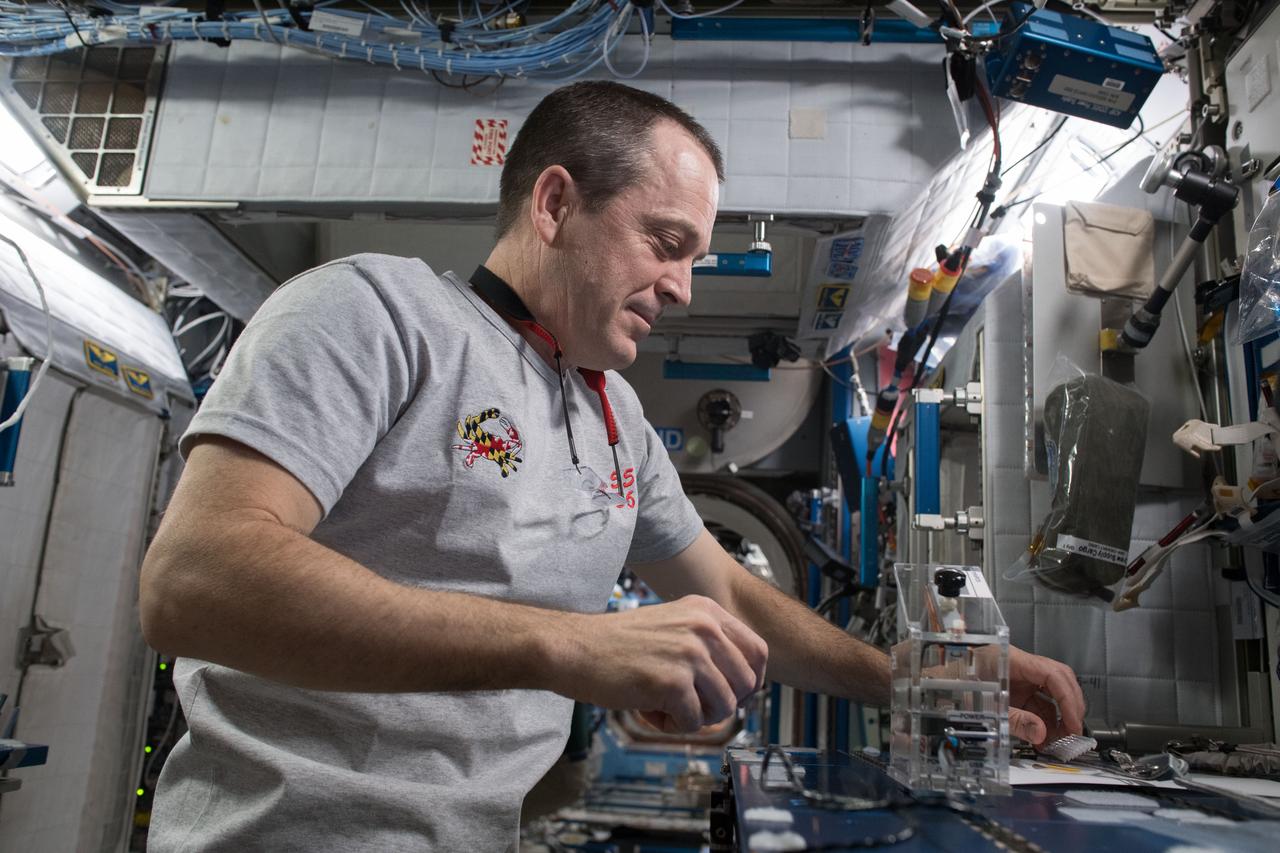
iss055e016052 (4/11/2018) --- NASA astronaut Ricky Arnold works with the student-designed Genes in Space-5 experiment inside the Harmony module. The genetic research is helping scientists understand the relationship between DNA alterations and weakened immune systems possibly caused by living in space. Genes in Space is an innovation challenge including students and teachers across the United States from grades 7 through 12. Students design a pioneering DNA-related experiment to fly on the ISS, providing real-world training in science, technology, engineering and math (STEM) fields and connecting students to the space program.
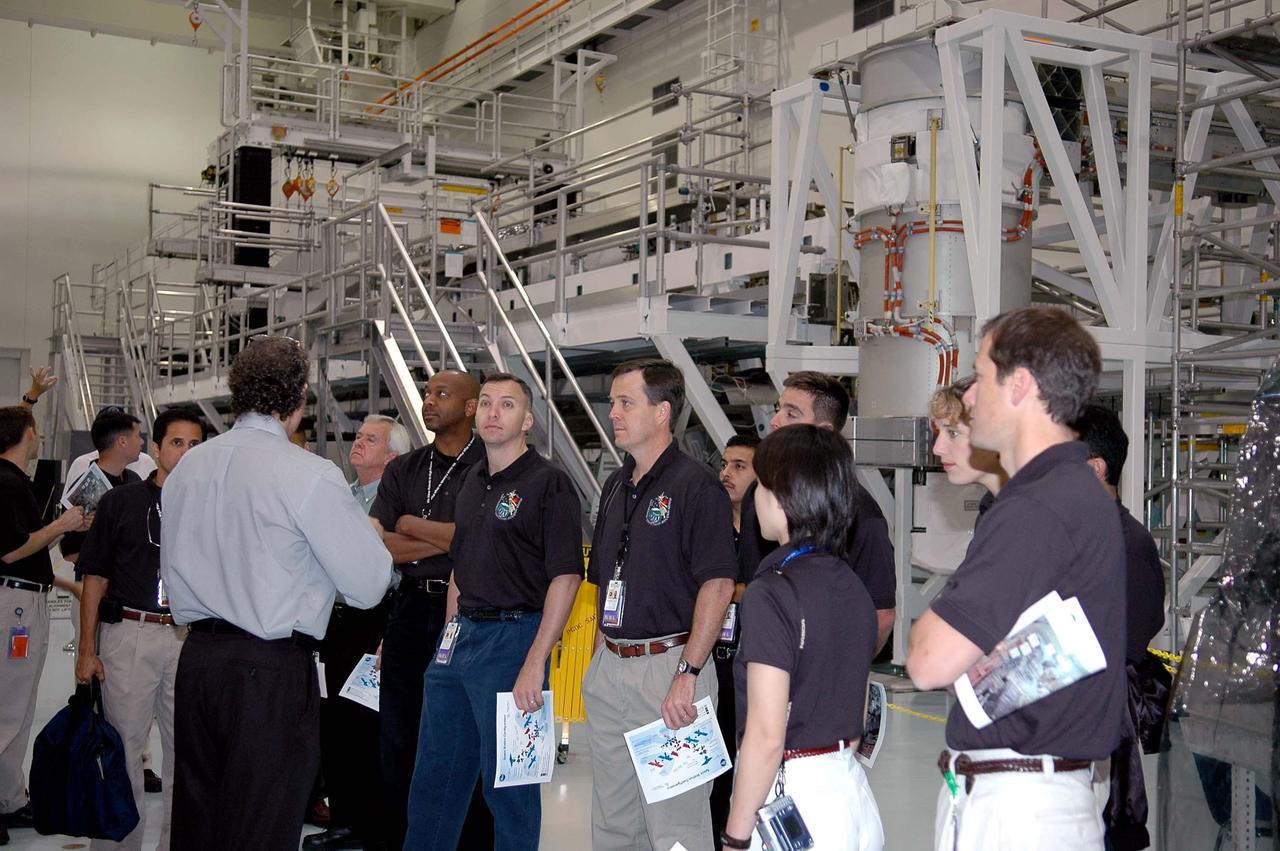
KENNEDY SPACE CENTER, FLA. - At NASA’s Kennedy Space Center, the 2004 class of astronaut candidates tour the Space Station Processing Facility (SSPF). At left (back to camera) is Russell Romanella, deputy director of ISS and Payload Processing, who is talking about the program and the elements in the SSPF. The astronaut candidates are at KSC to participate in firefighting training and familiarization tours. The class of 14 candidates includes three candidates from the Japan Aerospace Exploration Agency as well as three educator astronauts, who were school teachers chosen from thousands of applicants.
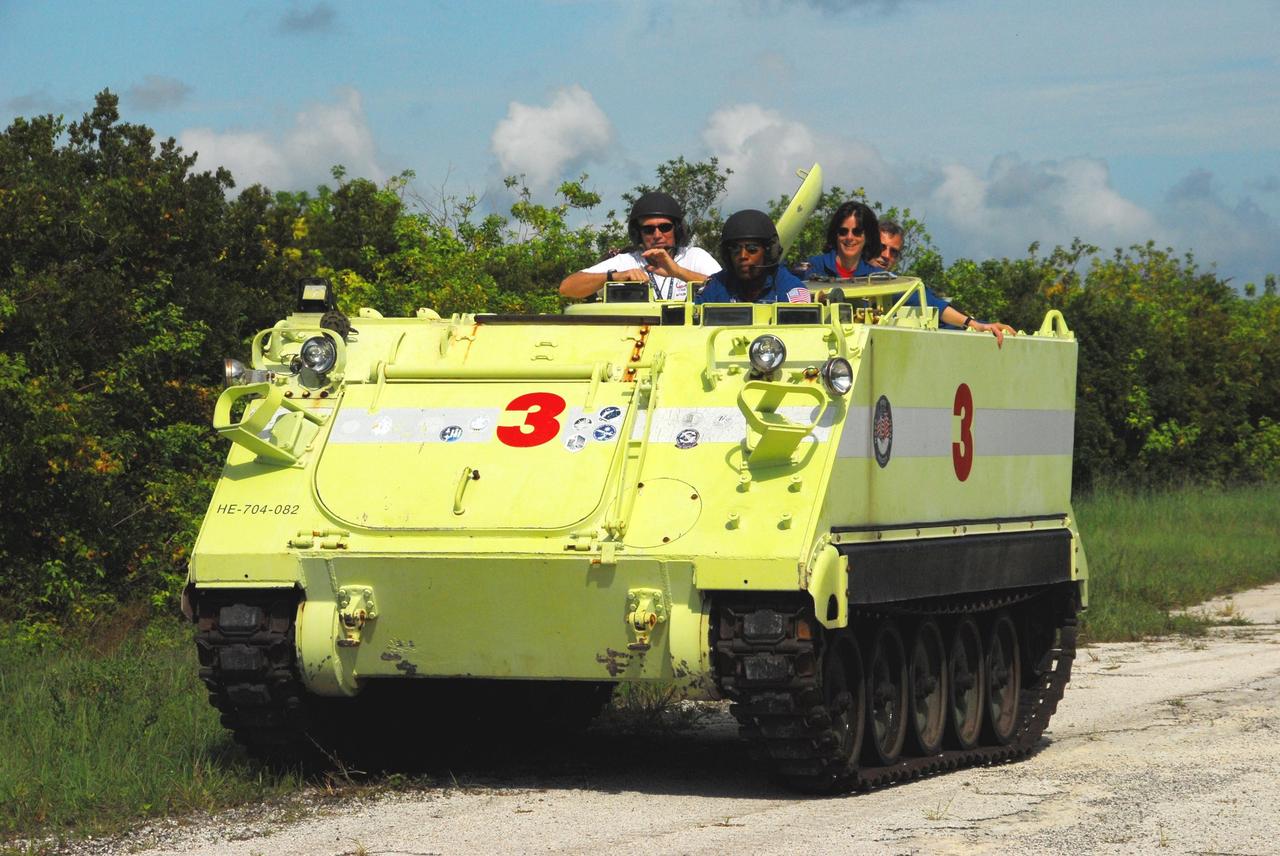
KENNEDY SPACE CENTER, Fla. -- STS-118 Mission Specialist Alvin Drew practices driving an M-113 armored personnel carrier, with (at right) Mission Specialists Barbara R. Morgan and Dave Williams as passengers. Morgan joined NASA's Teacher in Space program in 1985 and was selected as an astronaut in 1998. Williams represents the Canadian Space Agency. They and other crew members are at Kennedy for the Terminal Countdown Demonstration Test (TCDT), a dress rehearsal for launch. TCDT activities include the M-113 training, payload familiarization, emergency egress training at the pad and a simulated launch countdown. The STS-118 payload aboard Space Shuttle Endeavour includes the S5 truss, a SPACEHAB module and external stowage platform 3. The mission is the 22nd flight to the International Space Station and is targeted for launch on Aug.7. NASA/George Shelton
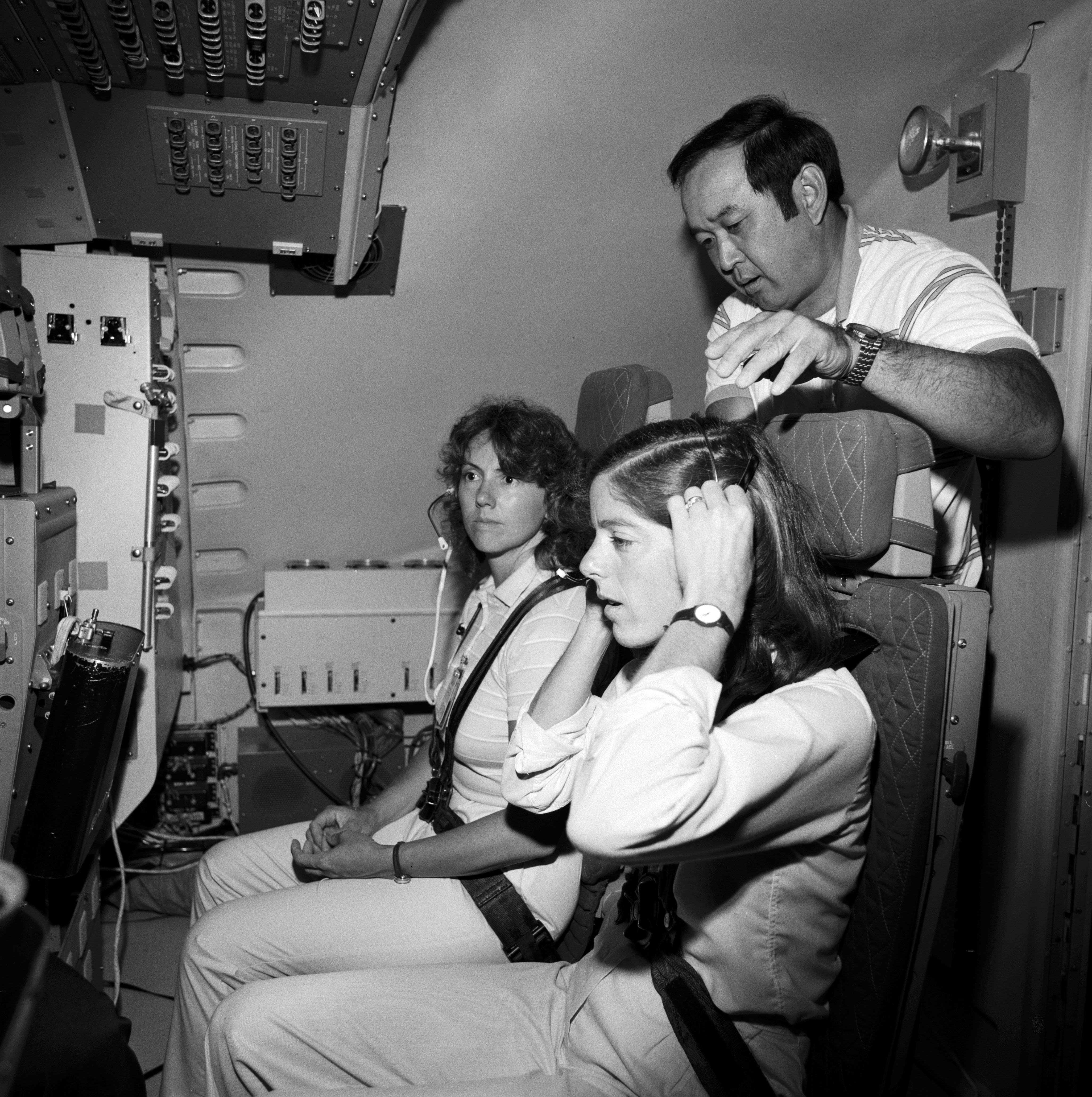
S85-40510 & S85-40511 (23 Sept. 1985) --- Two women representing the Teacher-in-Space Project undergo training in preparation for the 51-L mission in two photographs made in the Johnson Space Center’s mission simulation and training facility. In S85-40510, Sharon Christa McAuliffe (second right), prime crew member; and Barbara R. Morgan (second left), backup, are briefed in the shuttle mission simulator’s instruction station by Jerry Swain, right, instruction team leader. Others pictured are Michelle Brekke (far left) of the payload specialists’ office and Patricia A. Lawson (lower left foreground). Astronaut Ellison S. Onizuka, in S85-40511, assists Morgan with a head set as the two trainees are familiarized with launch and entry stations in the motion base shuttle mission simulator (SMS). The citizen observer (McAuliffe) is scheduled to be seated on the middeck. This picture, however, was taken at the mission specialists’ station on the flight deck. Photo credit: NASA
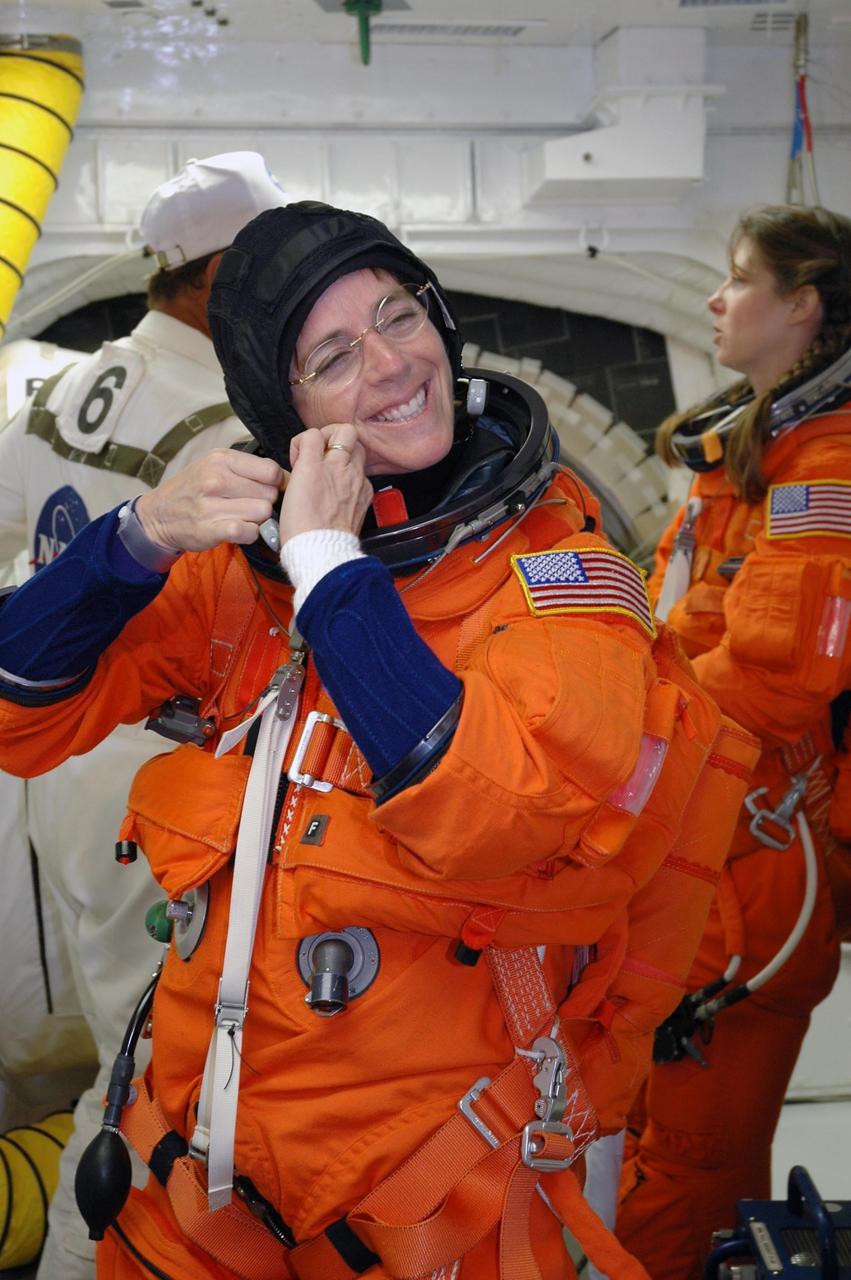
KENNEDY SPACE CENTER, Fla. -- In the White Room on Launch Pad 39A, Mission Specialist Barbara R. Morgan adjusts the collar of her launch and entry suit before she enters Space Shuttle Endeavour. Morgan, the teacher-turned-astronaut, and the rest of the crew are taking part in a simulated launch countdown, the culmination of terminal countdown demonstration test activities. The White Room is situated at the end of the orbiter access arm and provides entry into the orbiter. TCDT activities also include M-113 training, payload familiarization and emergency egress training at the pad. The mission is the 22nd flight to the International Space Station and Space Shuttle Endeavour will carry a payload including the S5 truss, a SPACEHAB module and external stowage platform 3. STS-118 is targeted for launch on Aug. 7. Photo credit: NASA/Amanda Diller
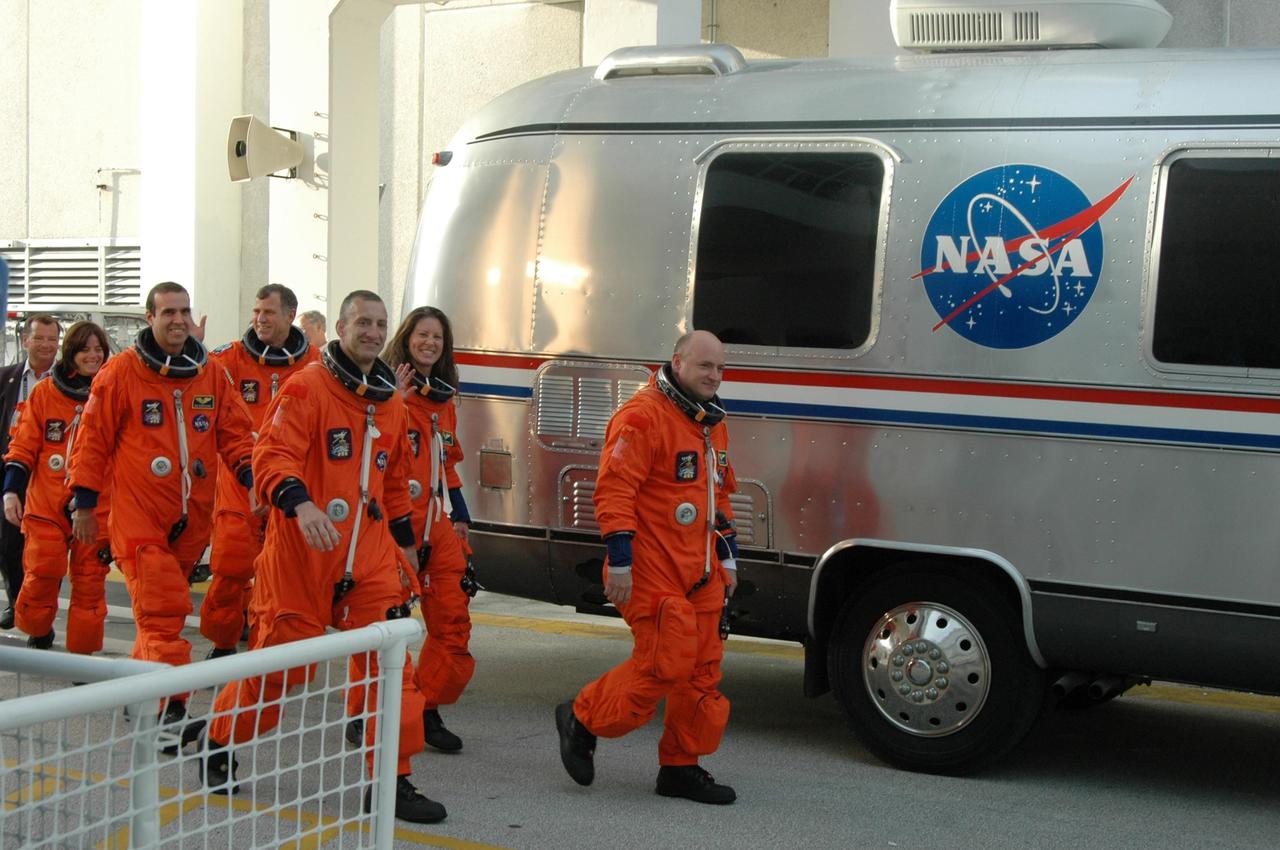
KENNEDY SPACE CENTER, Fla. -- The smiling STS-118 crew walks toward the Astrovan that will take them to Launch Pad 39A for a simulated launch countdown. From left are Mission Specialists Barbara R. Morgan and Rick Mastracchio, Pilot Charlie Hobaugh, Mission Specialists Dave Williams and Tracy Caldwell, and Commander Scott Kelly. Morgan joined NASA's Teacher in Space program in 1985 and was selected as an astronaut in 1998. The countdown concludes the terminal countdown demonstration test, or TCDT. The STS-118 crew has been at Kennedy for the TCDT activities that also include M-113 training, payload familiarization and emergency egress training at the pad. The mission is the 22nd flight to the International Space Station and Space Shuttle Endeavour will carry a payload including the S5 truss, a SPACEHAB module and external stowage platform 3. STS-118 is targeted for launch on Aug. 7. Photo credit: NASA/George Shelton
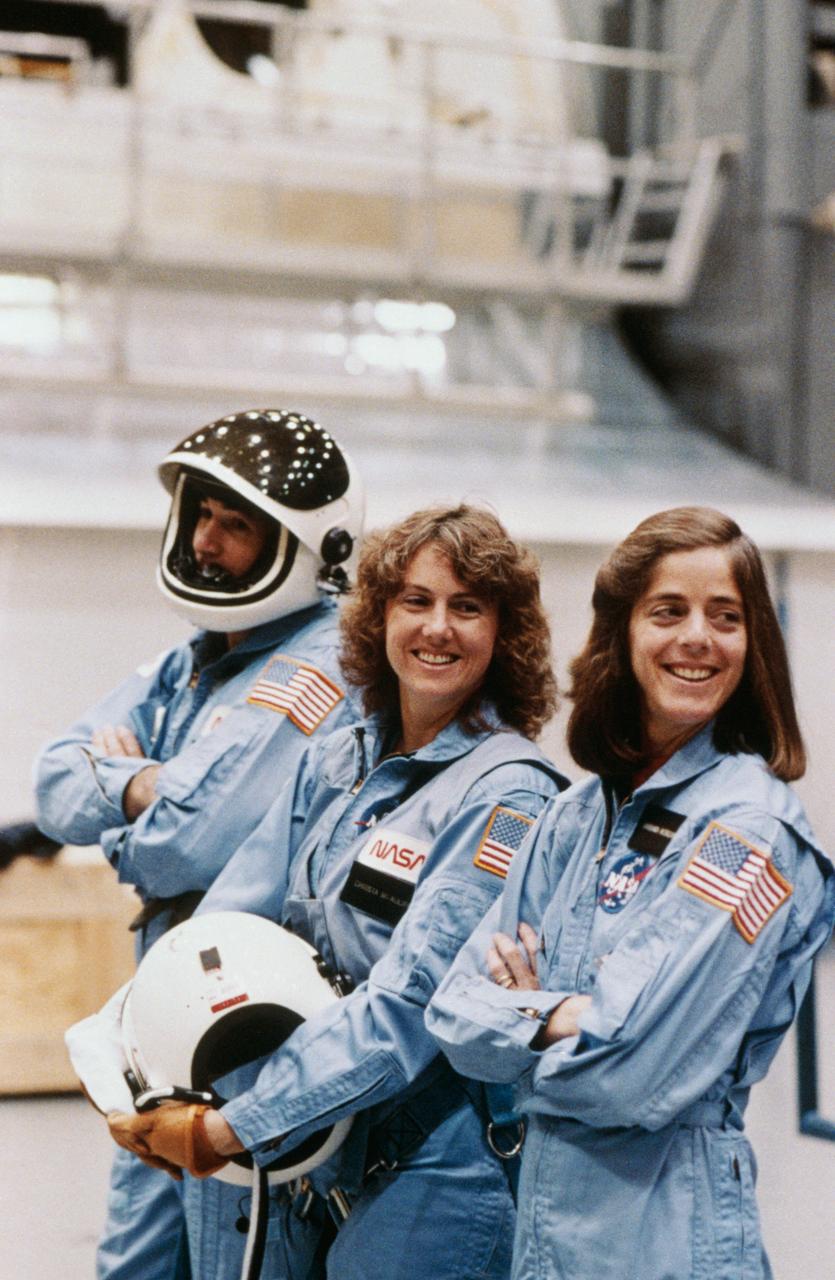
S86-25254 (January 1986) --- Payload specialists in training for STS-51L take a break in shuttle emergency egress training at the Johnson Space Center's (JSC) Shuttle Mock-up and Integration Laboratory. Left to right are Gregory Jarvis of Hughes, Sharon Christa McAuliffe and Barbara Morgan of the Teacher-in-Space Project. McAuliffe was selected as NASA's first citizen observer in the Space Shuttle Program and Morgan was named her backup. The photo was taken by Keith Meyers of the New York Times. EDITOR?S NOTE: The STS-51L crew members lost their lives in the space shuttle Challenger accident moments after launch on Jan. 28, 1986 from the Kennedy Space Center (KSC). Photo credit: NASA
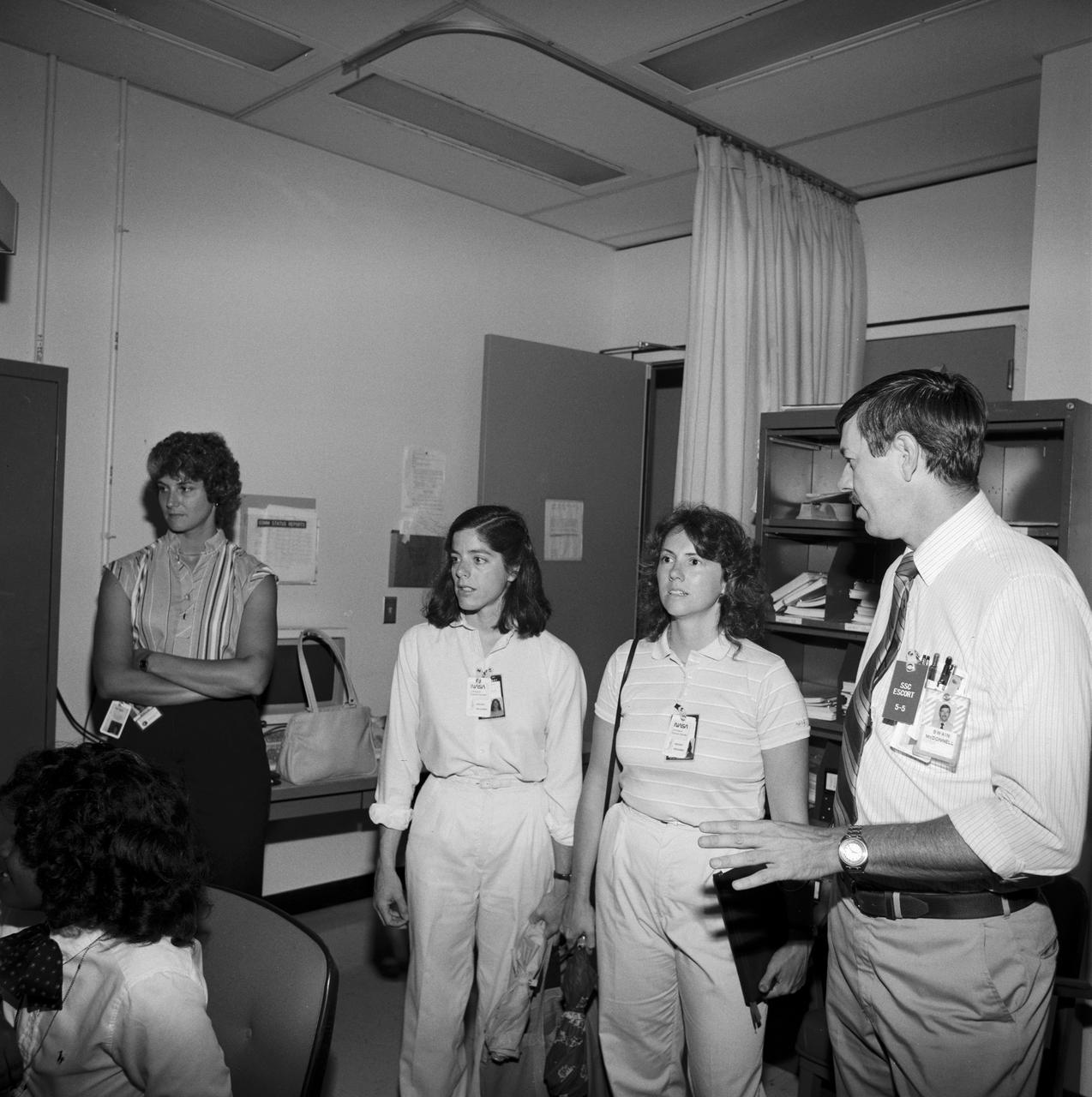
S85-40510 & S85-40511 (23 Sept. 1985) --- Two women representing the Teacher-in-Space Project undergo training in preparation for the 51-L mission in two photographs made in the Johnson Space Center’s mission simulation and training facility. In S85-40510, Sharon Christa McAuliffe (second right), prime crew member; and Barbara R. Morgan (second left), backup, are briefed in the shuttle mission simulator’s instruction station by Jerry Swain, right, instruction team leader. Others pictured are Michelle Brekke (far left) of the payload specialists’ office and Patricia A. Lawson (lower left foreground). Astronaut Ellison S. Onizuka, in S85-40511, assists Morgan with a head set as the two trainees are familiarized with launch and entry stations in the motion base shuttle mission simulator (SMS). The citizen observer (McAuliffe) is scheduled to be seated on the middeck. This picture, however, was taken at the mission specialists’ station on the flight deck. Photo credit: NASA
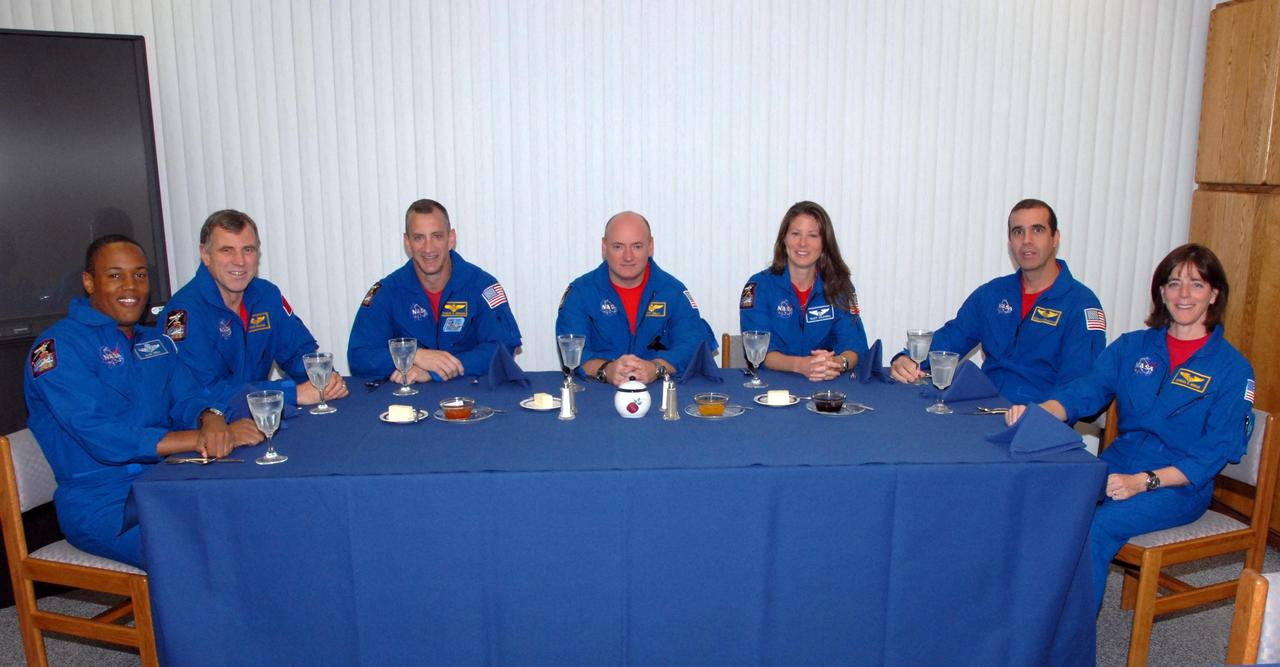
KENNEDY SPACE CENTER, Fla. -- Members of the STS-118 crew enjoy breakfast together before the next event in their Terminal Countdown Demonstration Test (TCDT), a dress rehearsal for launch. Following the meal, the crew will don their flight suits and board Space Shuttle Endeavour for a simulated countdown. From left are Mission Specialists Alvin Drew and the Canadian Space Agency's Dave Williams, Pilot Charlie Hobaugh, Commander Scott Kelly, and Mission Specialists Tracy Caldwell, Rick Mastracchio and teacher-turned-astronaut Barbara R. Morgan. TCDT activities also include M-113 armored personnel carrier training, payload familiarization, and emergency egress training at the pad. The STS-118 payload includes the S5 truss, a SPACEHAB module and external stowage platform 3. The mission is the 22nd flight to the International Space Station and is targeted for launch on Aug.7. Photo credit: NASA/George Shelton
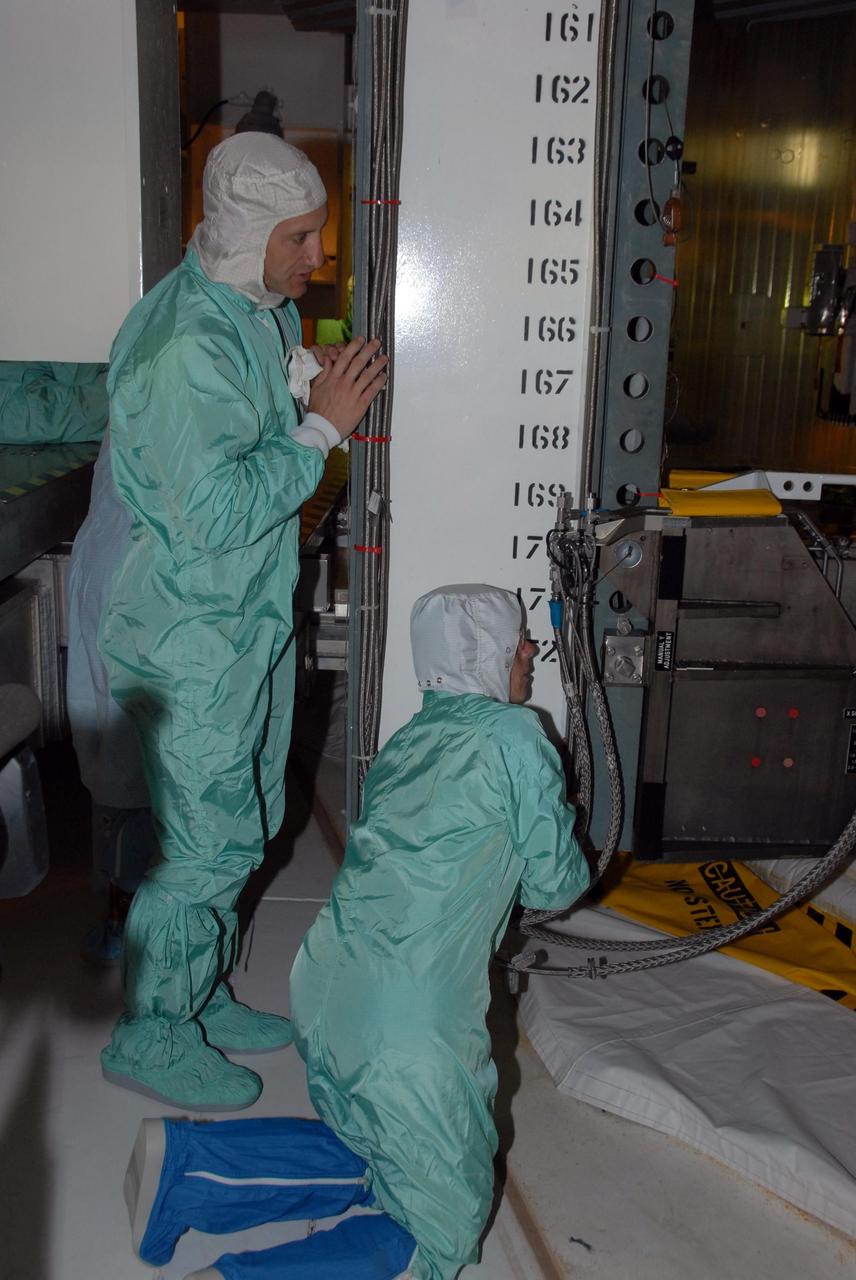
KENNEDY SPACE CENTER, Fla. -- STS-118 crew members get a close look at the payloads installed in Space Shuttle Endeavour. Seen here are Pilot Charlie Hobaugh (left) and Mission Specialist Barbara R. Morgan, who joined NASA's Teacher in Space program in 1985 and was selected as an astronaut in 1998. The STS-118 crew has been at Kennedy for terminal countdown demonstration test activities that also include M-113 training, emergency egress training at the pad and a simulated launch countdown. The mission is the 22nd flight to the International Space Station and Space Shuttle Endeavour will carry a payload including the S5 truss, a SPACEHAB module and external stowage platform 3. STS-118 is targeted for launch on Aug. 7. Photo credit: NASA/George Shelton
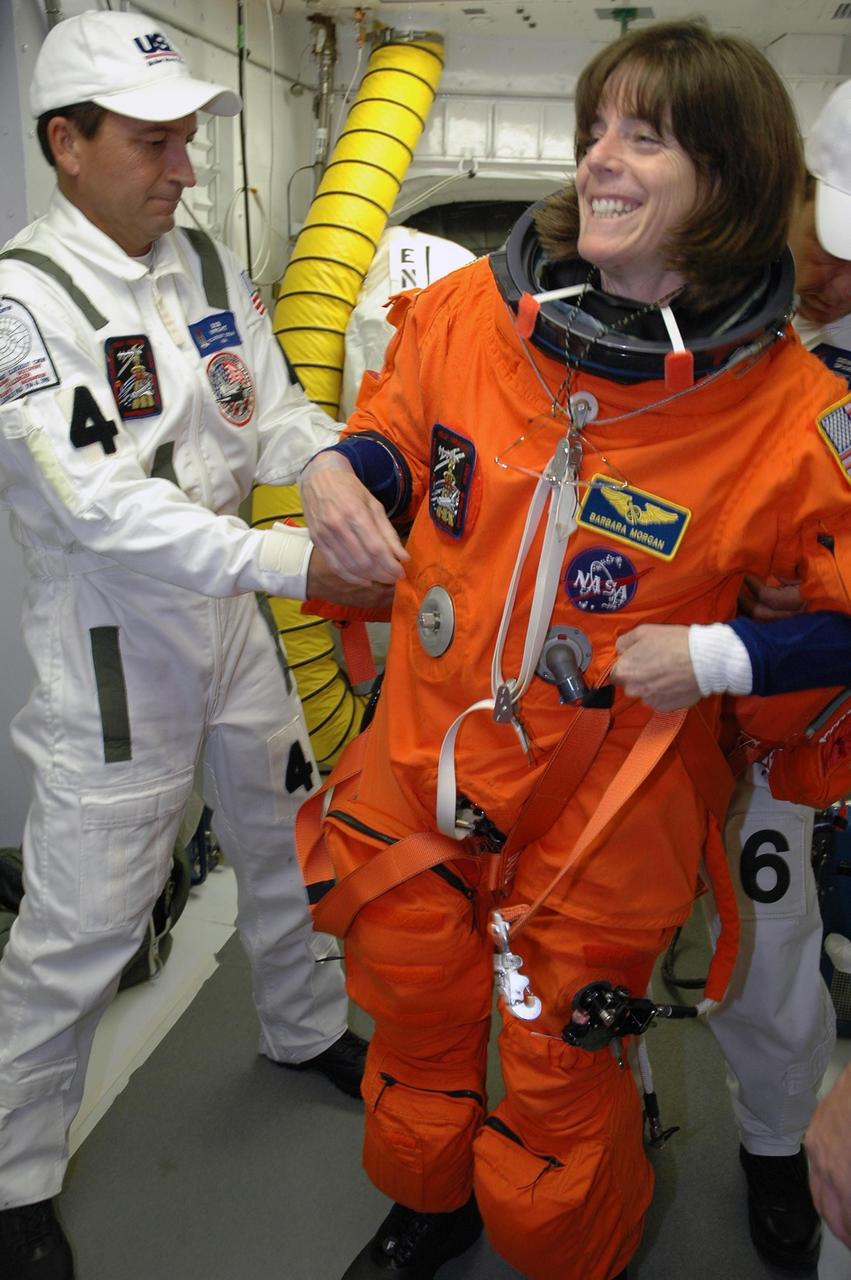
KENNEDY SPACE CENTER, Fla. -- In the White Room on Launch Pad 39A, the closeout crew prepares the launch and entry suit on STS-118 Mission Specialist Barbara R. Morgan before she enters Space Shuttle Endeavour. Morgan, the teacher-turned-astronaut, and the rest of the crew are taking part in a simulated launch countdown, the culmination of terminal countdown demonstration test activities. The White Room is situated at the end of the orbiter access arm and provides entry into the orbiter. TCDT activities also include M-113 training, payload familiarization and emergency egress training at the pad. The mission is the 22nd flight to the International Space Station and Space Shuttle Endeavour will carry a payload including the S5 truss, a SPACEHAB module and external stowage platform 3. STS-118 is targeted for launch on Aug. 7. Photo credit: NASA/Amanda Diller
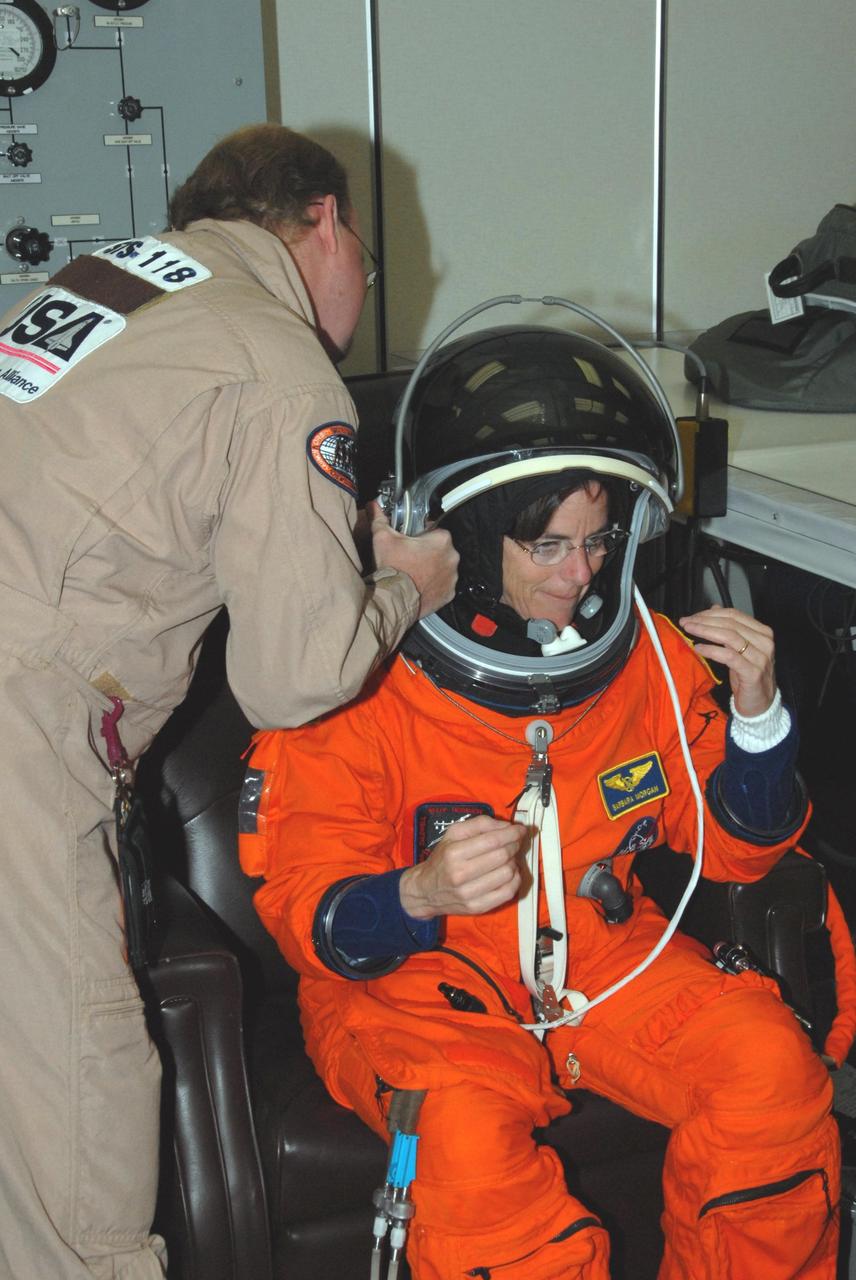
KENNEDY SPACE CENTER, Fla. -- STS-118 Mission Specialist Barbara R. Morgan is helped with her helmet during suitup for the simulated launch countdown that concludes the terminal countdown demonstration test, or TCDT. Teacher-turn-astronaut Morgan is making her first space flight. The STS-118 crew has been at Kennedy for the TCDT activities that also include M-113 training, payload familiarization and emergency egress training at the pad. The mission is the 22nd flight to the International Space Station and Space Shuttle Endeavour will carry a payload including the S5 truss, a SPACEHAB module and external stowage platform 3. STS-118 is targeted for launch on Aug. 7. Photo credit: NASA/George Shelton
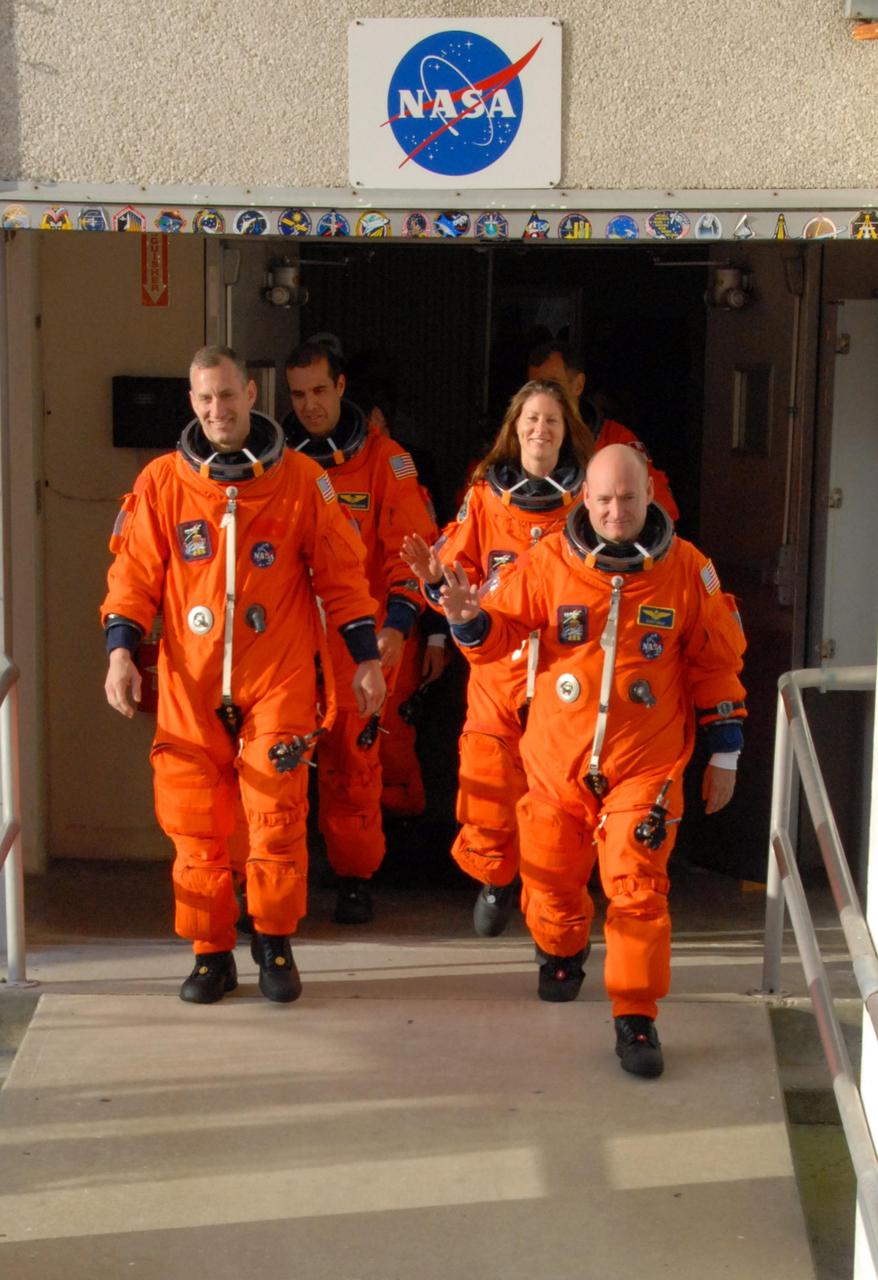
KENNEDY SPACE CENTER, Fla. -- The STS-118 crew walks out of the Operations and Checkout Building, heading for Launch Pad 39A and a simulated launch countdown. On the left, Pilot Charlie Hobaugh leads one column, with Mission Specialist Rick Mastracchio behind him. On the right, Commander Scott Kelly leads, with Mission Specialists Tracy Caldwell and Dave Williams behind. Not pictured are Mission Specialists Alvin Drew and teacher-turned-astronaut Barbara R. Morgan. The countdown concludes the terminal countdown demonstration test, or TCDT. The STS-118 crew has been at Kennedy for the TCDT activities that also include M-113 training, payload familiarization and emergency egress training at the pad. The mission is the 22nd flight to the International Space Station and Space Shuttle Endeavour will carry a payload including the S5 truss, a SPACEHAB module and external stowage platform 3. STS-118 is targeted for launch on Aug. 7. Photo credit: NASA/George Shelton
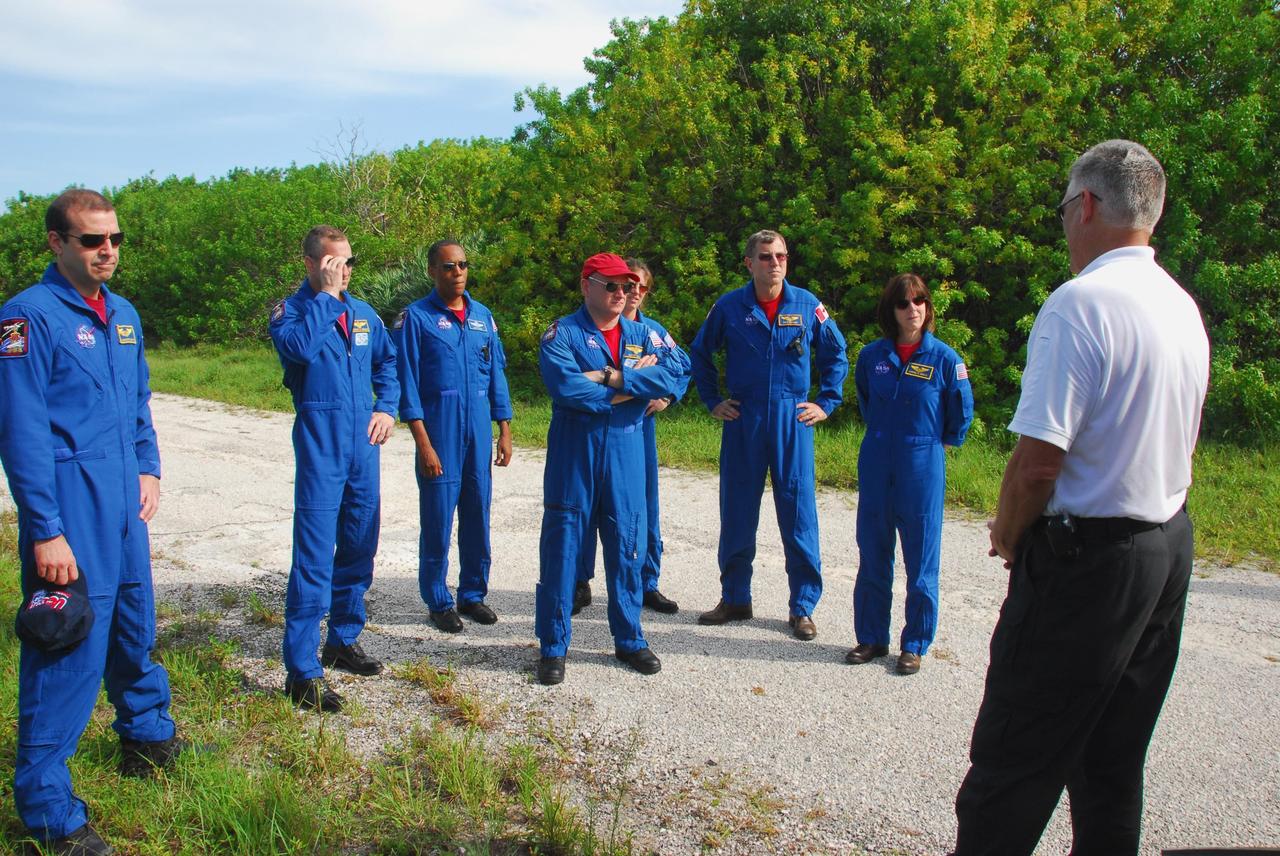
KENNEDY SPACE CENTER, Fla. -- The STS-118 crew gets instructions on emergency exit procedures from Launch Pad 39A. From left are Mission Specialist Rick Mastracchio, Pilot Charlie Hobaugh, Mission Specialist Alvin Drew, Commander Scott Kelly, and Mission Specialists Tracy Caldwell, Dave Williams and Barbara R. Morgan, whojoined NASA's Teacher in Space program in 1985. She was selected as an astronaut in 1998. TCDT activities include the M-113 training, payload familiarization, emergency egress training at the pad and a simulated launch countdown. The STS-118 payload aboard Space Shuttle Endeavour includes the S5 truss, a SPACEHAB module and external stowage platform 3. The mission is the 22nd flight to the International Space Station and is targeted for launch on Aug.7. NASA/George Shelton
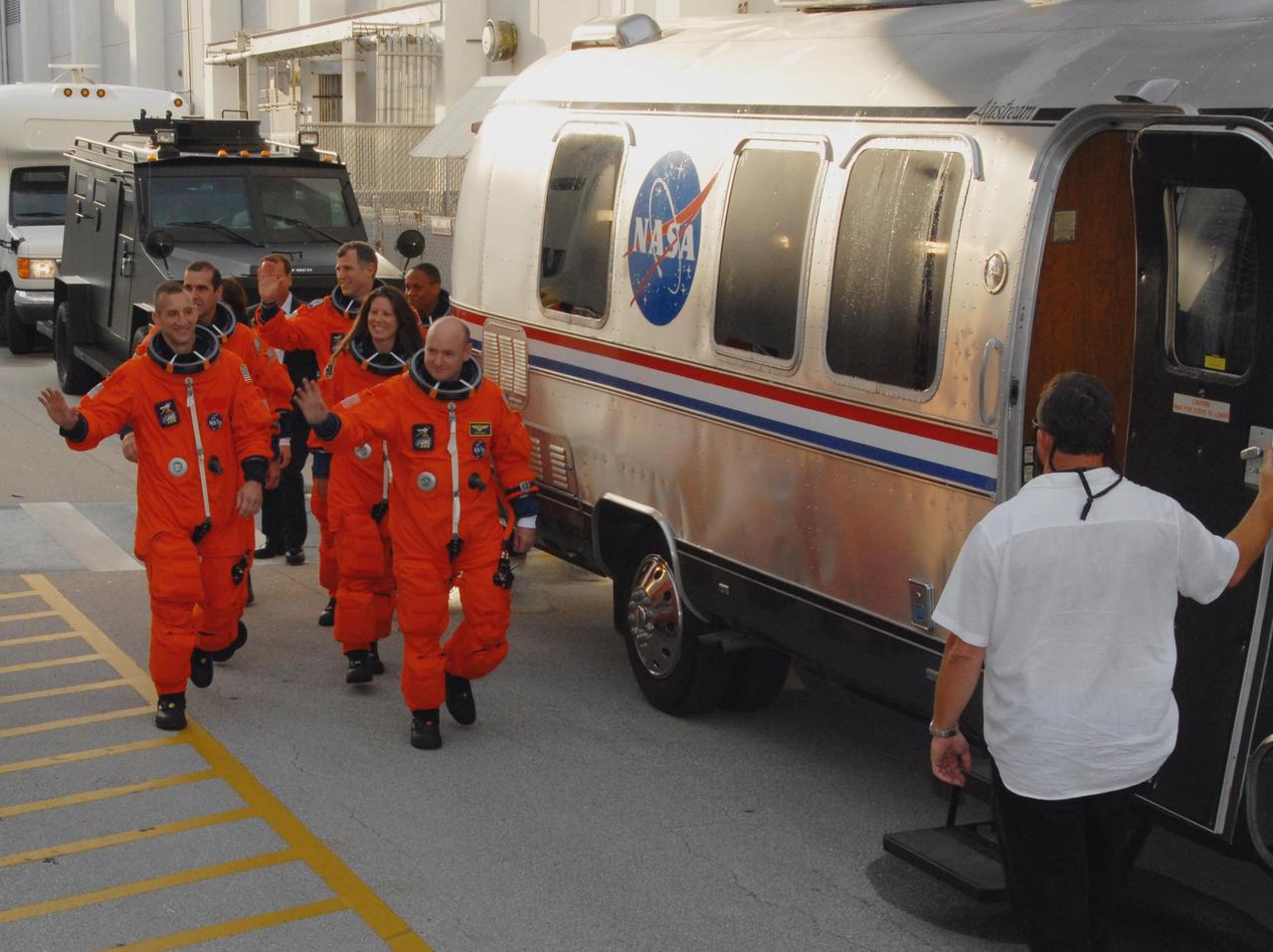
KENNEDY SPACE CENTER, Fla. -- The STS-118 crew walks toward the Astrovan that will take them to Launch Pad 39A for a simulated launch countdown. On the left are Pilot Charlie Hobaugh leading the way and Mission Specialist Rick Mastracchio. ON the right, Commander Scott Kelly leads with (front to back) Mission Specialists Tracy Caldwell, Dave Williams and Alvin Drew. Not visible is teacher-turned-astronaut Barbara R. Morgan, also a mission specialist. The countdown concludes the terminal countdown demonstration test, or TCDT. The STS-118 crew has been at Kennedy for the TCDT activities that also include M-113 training, payload familiarization and emergency egress training at the pad. The mission is the 22nd flight to the International Space Station and Space Shuttle Endeavour will carry a payload including the S5 truss, a SPACEHAB module and external stowage platform 3. STS-118 is targeted for launch on Aug. 7. Photo credit: NASA/George Shelton
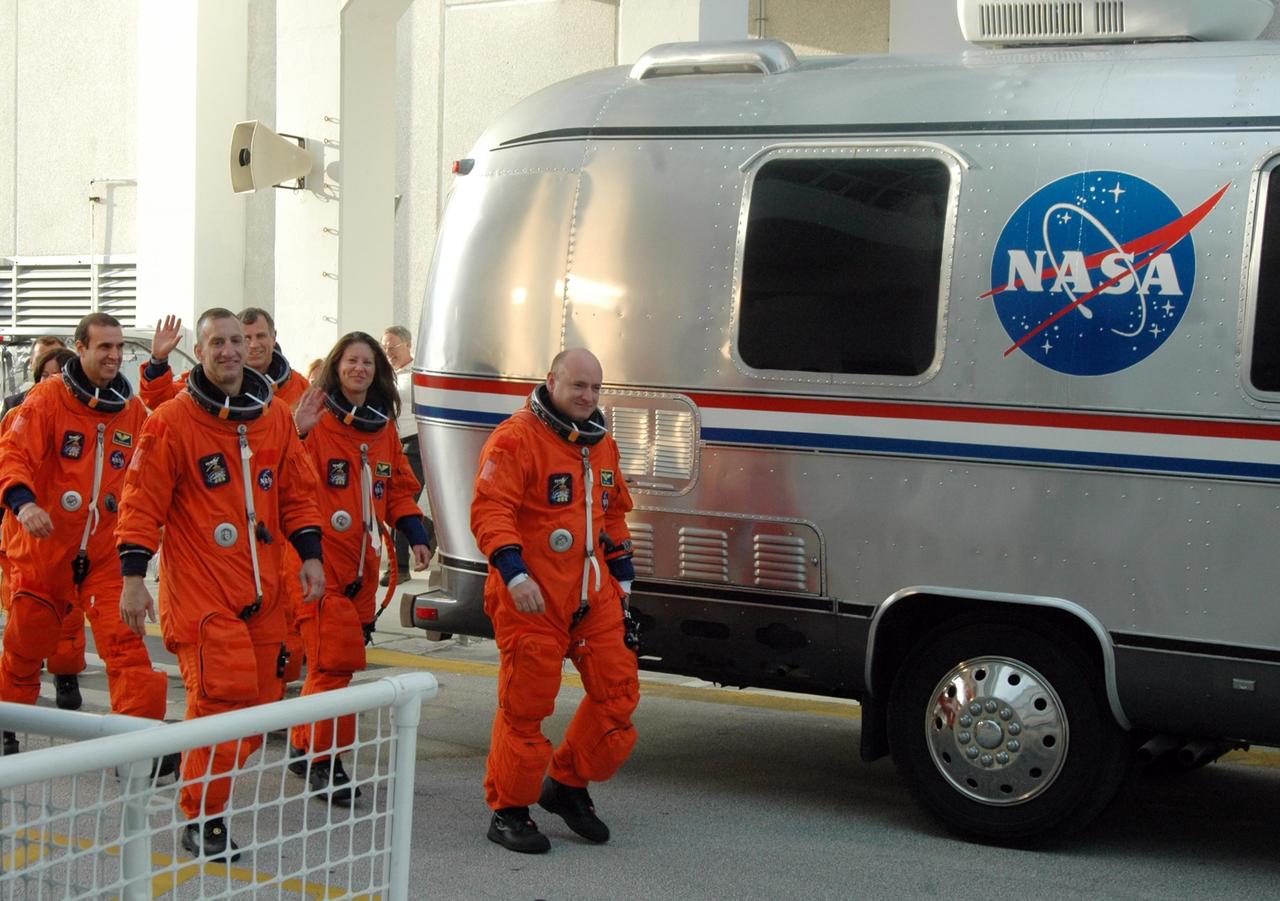
KENNEDY SPACE CENTER, Fla. -- The STS-118 crew walks toward the Astrovan that will take them to Launch Pad 39A for a simulated launch countdown. From left are Mission Specialists Barbara R. Morgan and Rick Mastracchio, Pilot Charlie Hobaugh, Mission Specialists Dave Williams and Tracy Caldwell, and Commander Scott Kelly. Morgan joined NASA's Teacher in Space program in 1985 and was selected as an astronaut in 1998. The countdown concludes the terminal countdown demonstration test, or TCDT. The STS-118 crew has been at Kennedy for the TCDT activities that also include M-113 training, payload familiarization and emergency egress training at the pad. The mission is the 22nd flight to the International Space Station and Space Shuttle Endeavour will carry a payload including the S5 truss, a SPACEHAB module and external stowage platform 3. STS-118 is targeted for launch on Aug. 7. Photo credit: NASA/George Shelton
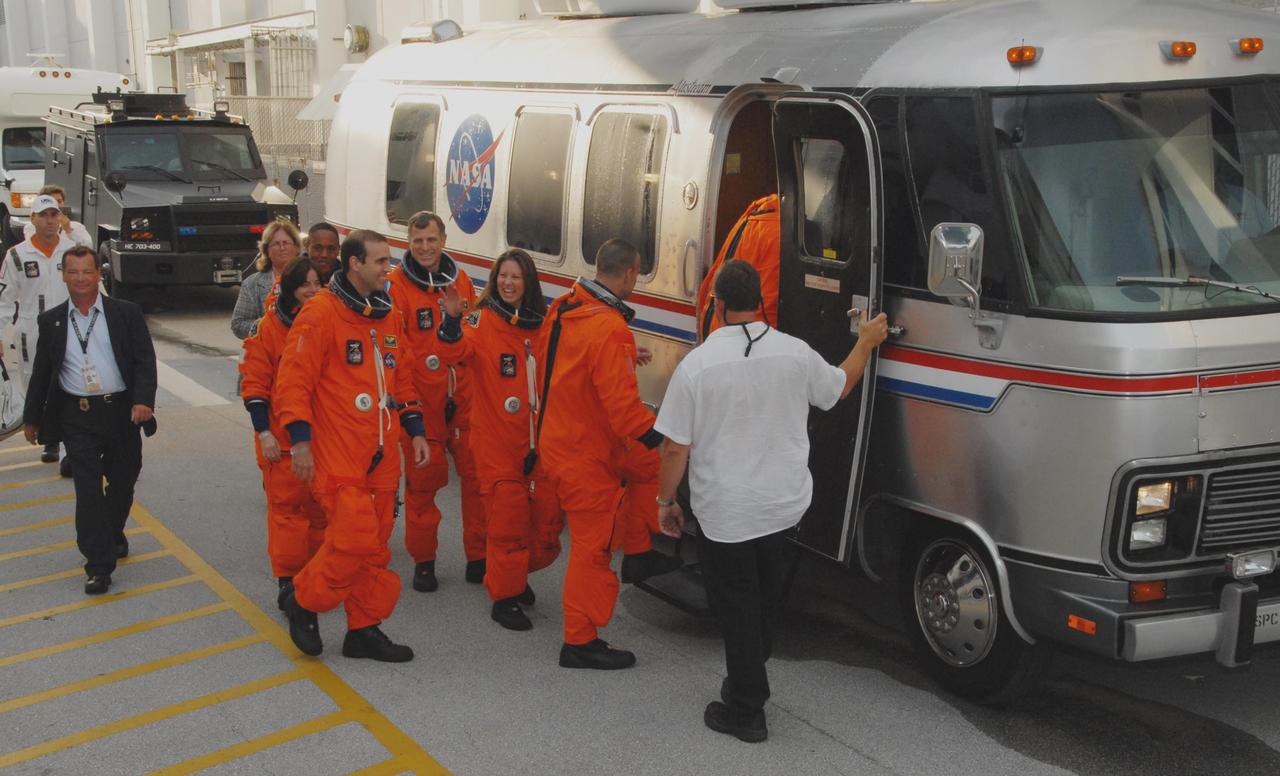
KENNEDY SPACE CENTER, Fla. -- The STS-118 crew heads into the Astrovan that will take them to Launch Pad 39A for a simulated launch countdown. First in is Commander Scott Kelly. Following, right to left, are Pilot Charlie Hobaugh and Mission Specialists Tracy Caldwell, Dave Williams, Rick Mastracchio, teacher-turned-astronaut Barbara R. Morgan and Alvin Drew. The countdown concludes the terminal countdown demonstration test, or TCDT. The STS-118 crew has been at Kennedy for the TCDT activities that also include M-113 training, payload familiarization and emergency egress training at the pad. The mission is the 22nd flight to the International Space Station and Space Shuttle Endeavour will carry a payload including the S5 truss, a SPACEHAB module and external stowage platform 3. STS-118 is targeted for launch on Aug. 7. Photo credit: NASA/George Shelton
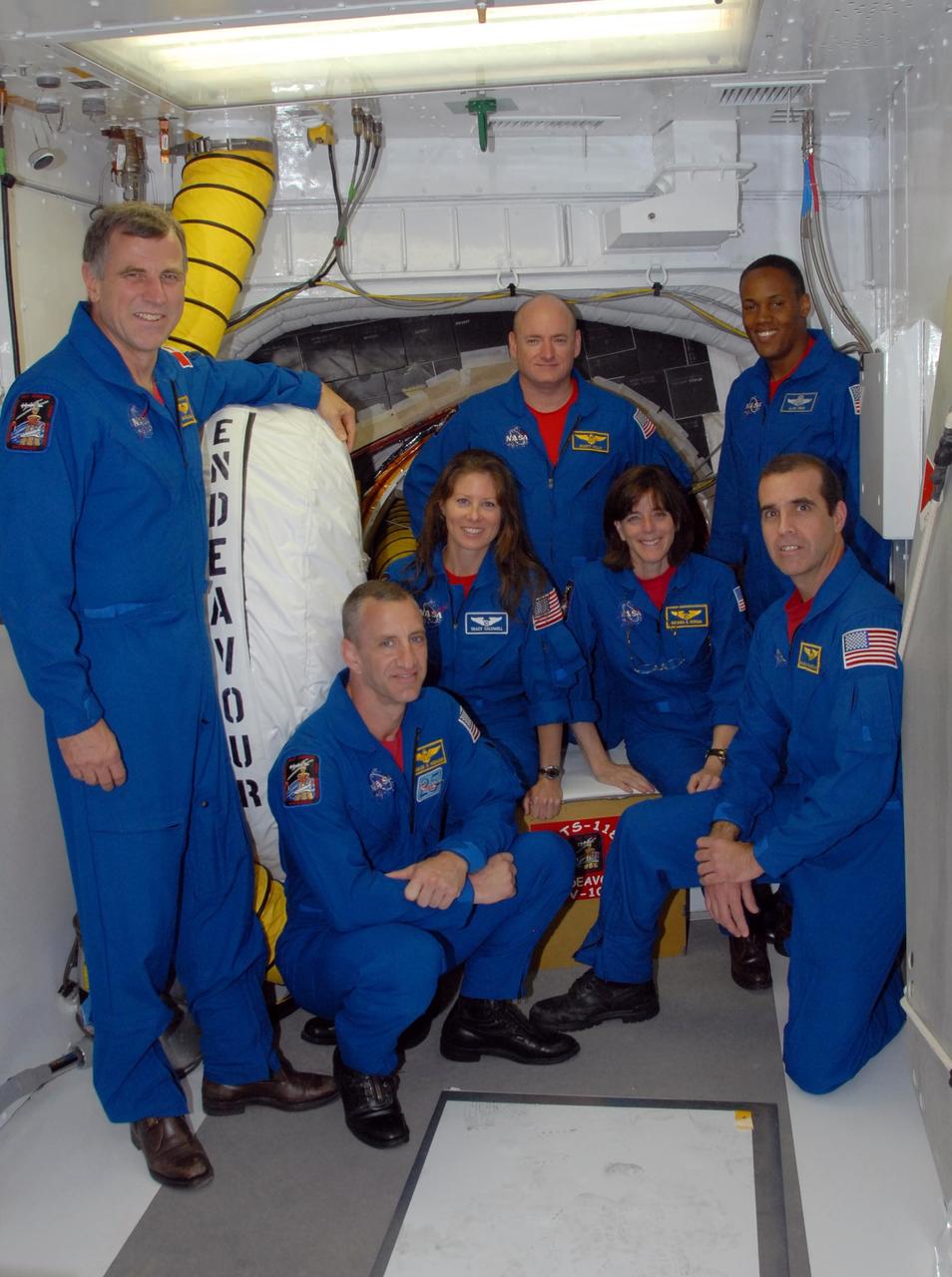
KENNEDY SPACE CENTER, Fla. -- The STS-118 crew poses in front of the hatch opening on Space Shuttle Endeavour before the crew's morning training activities in the terminal countdown demonstration test, or TCDT. Standing at left is Mission Specialist Dave Williams. Standing in the back are Commander Scott Kelly (left) and Mission Specialist Alvin Drew; seated in the middle are Mission Specialists Tracy Caldwell (left) and Barbara R. Morgan; kneeling in front are Pilot Charlie Hobaugh (left) and Mission Specialist Rick Mastracchio. Williams represents the Canadian Space Agency. Morgan joined NASA's Teacher in Space program in 1985 and was selected as an astronaut in 1998. TCDT activities include M-113 training, payload familiarization, the emergency egress training at the pad and a simulated launch countdown. The mission is the 22nd flight to the International Space Station and Space Shuttle Endeavour will carry a payload including the S5 truss, a SPACEHAB module and external stowage platform 3. STS-118 is targeted for launch on Aug. 7. NASA/George Shelton
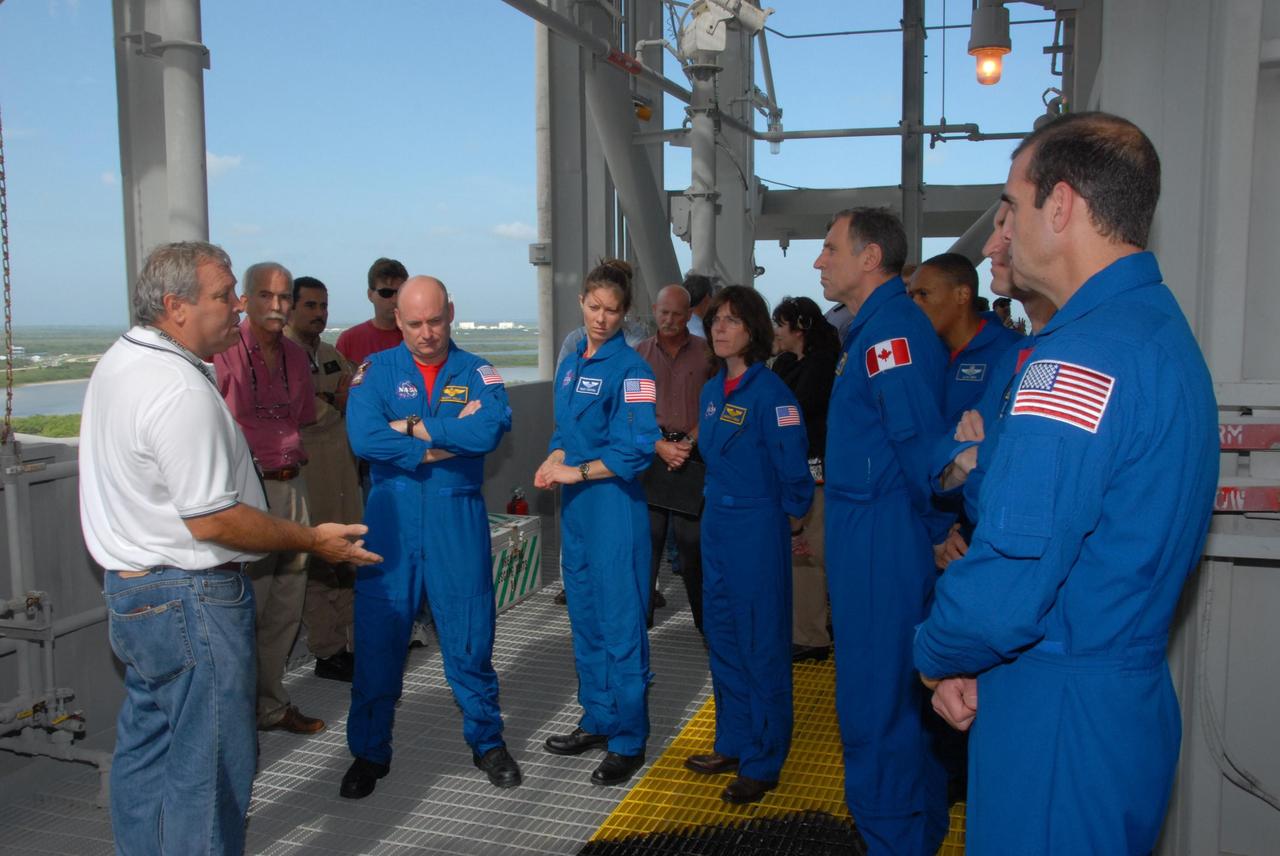
KENNEDY SPACE CENTER, Fla. -- On an upper level of the Pad 39A fixed service structure, the STS-118 crew listen to a trainer, at left, about using the emergency egress system. The crew members are, from left, Commander Scott Kelly, Mission Specialists Tracy Caldwell, Barbara R. Morgan, Dave Williams and Alvin Drew, Pilot Charlie Hobaugh and Mission Specialist Rick Mastracchio. Williams represents the Canadian Space Agency. Morgan joined NASA's Teacher in Space program in 1985 and was selected as an astronaut in 1998. The crew is at Kennedy for training activities in the terminal countdown demonstration test, or TCDT. TCDT activities include M-113 training, payload familiarization, the emergency egress training at the pad and a simulated launch countdown. The mission is the 22nd flight to the International Space Station and Space Shuttle Endeavour will carry a payload including the S5 truss, a SPACEHAB module and external stowage platform 3. STS-118 is targeted for launch on Aug. 7. NASA/George Shelton
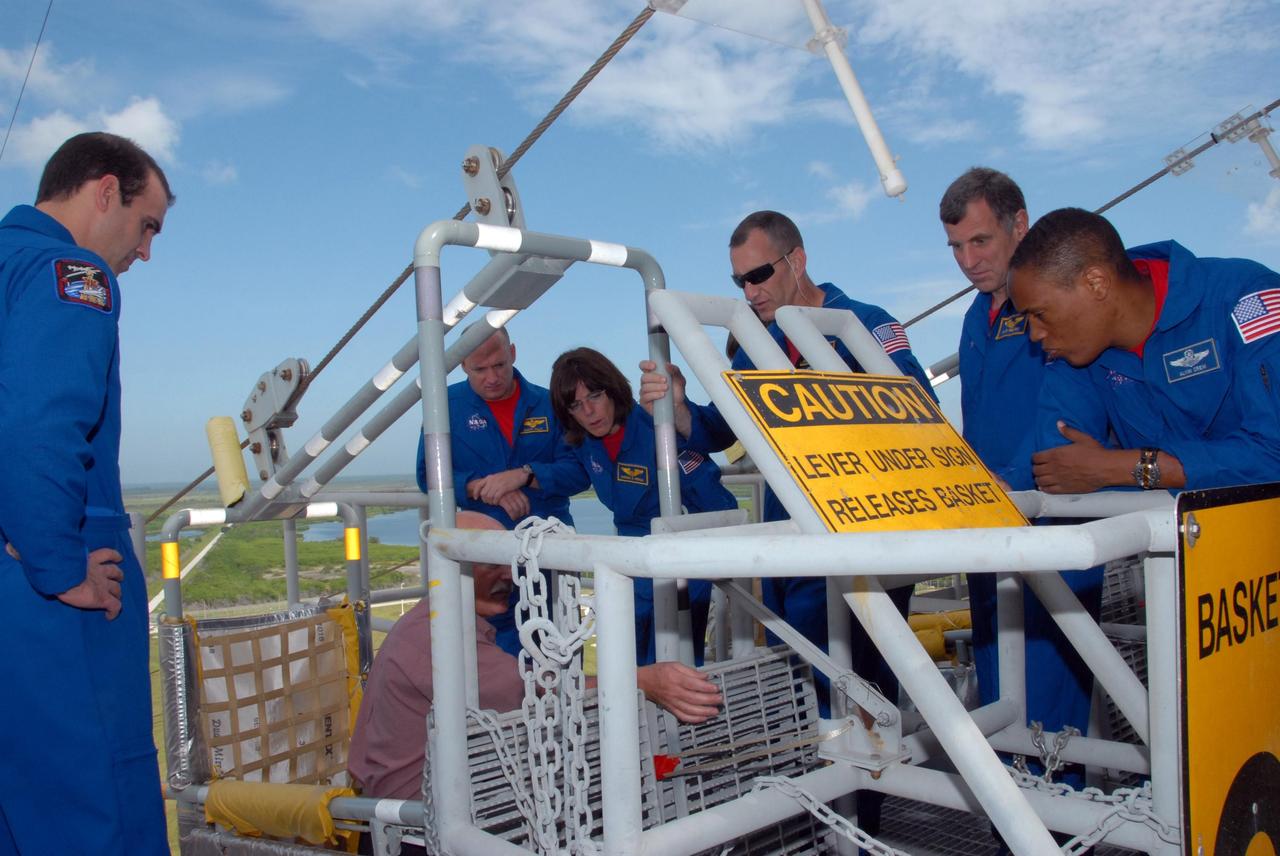
KENNEDY SPACE CENTER, Fla. -- On an upper level of the Pad 39A fixed service structure, the STS-118 crew members get directions about using the slidewire basket that is part of the emergency egress system. At left is Mission Specialist Rick Mastracchio. At right are (from the left) Commander Scott Kelly, Mission Specialist Barbara R. Morgan, Pilot Charlie Hobaugh and Mission Specialists Dave Williams and Alvin Drew. Morgan joined NASA's Teacher in Space program in 1985 and was selected as an astronaut in 1998. Williams represents the Canadian Space Agency. The crew is at Kennedy for training activities in the terminal countdown demonstration test, or TCDT. TCDT activities include M-113 training, payload familiarization, the emergency egress training at the pad and a simulated launch countdown. The mission is the 22nd flight to the International Space Station and Space Shuttle Endeavour will carry a payload including the S5 truss, a SPACEHAB module and external stowage platform 3. STS-118 is targeted for launch on Aug. 7. NASA/George Shelton
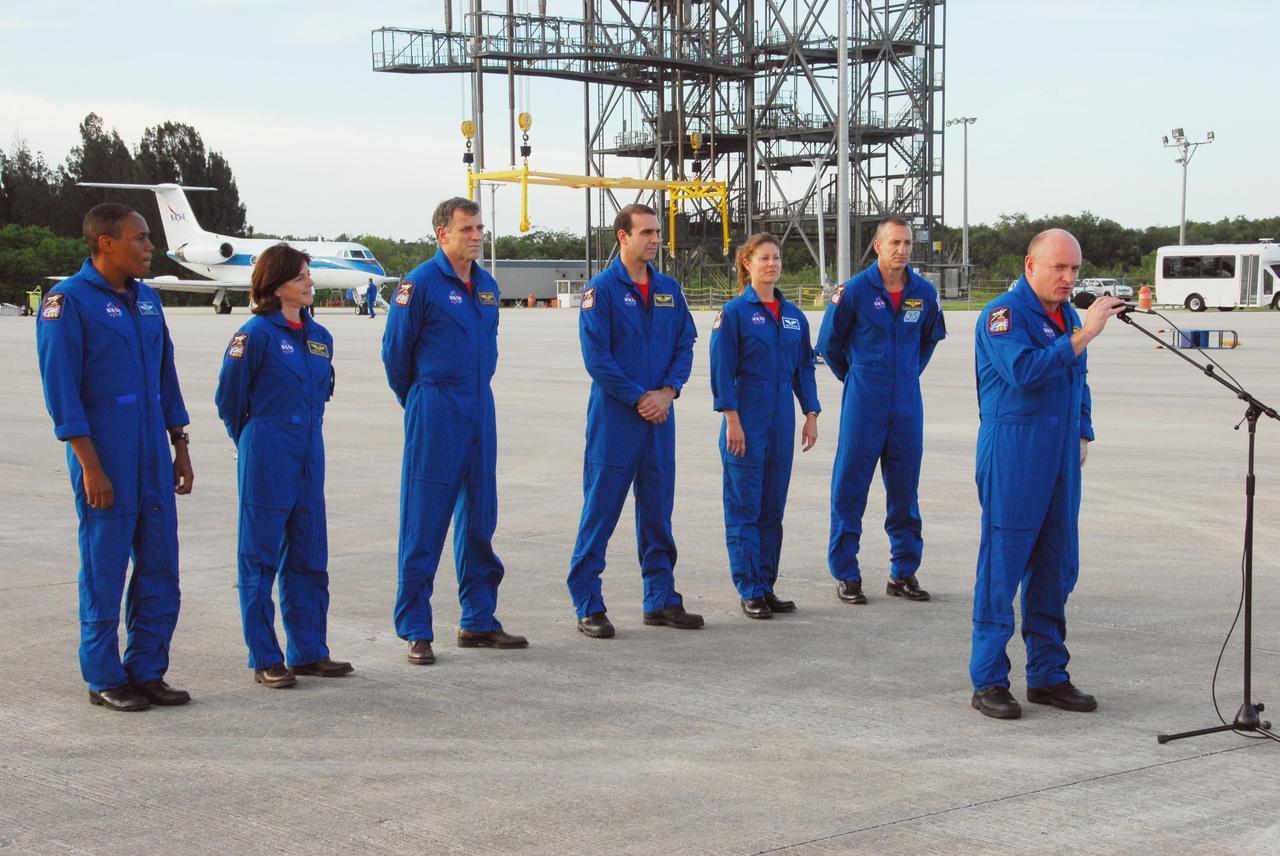
KENNEDY SPACE CENTER, Fla. -- The STS-118 crew arrives at Kennedy's Shuttle Landing Facility aboard a Shuttle Training Aircraft to take part in the Terminal Countdown Demonstration Test (TCDT), a dress rehearsal for launch. Commander Scott Kelly (at microphone) introduces his crew to media representatives on site to welcome them. From left are Mission Specialists Alvin Drew; Barbara R. Morgan; Dave Williams, representing the Canadian Space Agency; Rick Mastracchio; Tracy Caldwell; and Pilot Charlie Hobaugh. Morgan joined NASA's Teacher in Space program in 1985 and was selected as an astronaut in 1998. TCDT activities include M-113 armored personnel carrier training, payload familiarization, emergency egress training at the pad and a simulated launch countdown. The STS-118 payload aboard Space Shuttle Endeavour includes the S5 truss, a SPACEHAB module and external stowage platform 3. The mission is the 22nd flight to the International Space Station and is targeted for launch on Aug.7. Photo credit: NASA/George Shelton
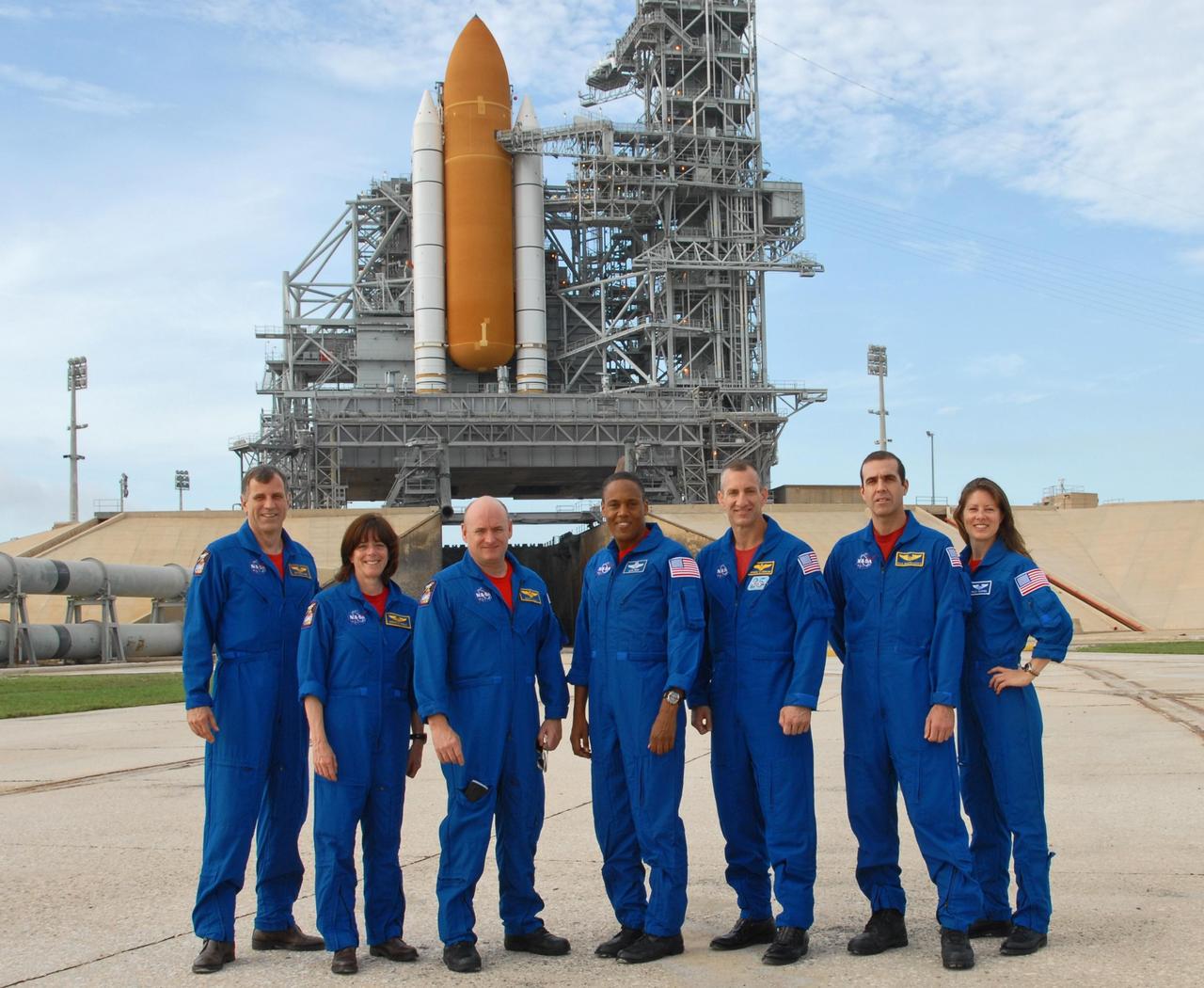
KENNEDY SPACE CENTER, Fla. -- The STS-118 crew poses for a photo on Launch Pad 39A during training activities in the terminal countdown demonstration test, or TCDT. From left are Mission Specialists Dave Williams and Barbara R. Morgan, Commander Scott Kelly, Mission Specialist Alvin Drew, Pilot Charlie Hobaugh, and Mission Specialists Rick Mastracchio and Tracy Caldwell. Williams represents the Canadian Space Agency. Morgan joined NASA's Teacher in Space program in 1985 and was selected as an astronaut in 1998. Behind them can be seen the solid rocket boosters and external tank of Space Shuttle Endeavour atop the mobile launcher platform. TCDT activities include M-113 training, payload familiarization, the emergency egress training at the pad and a simulated launch countdown. The mission is the 22nd flight to the International Space Station and Space Shuttle Endeavour will carry a payload including the S5 truss, a SPACEHAB module and external stowage platform 3. STS-118 is targeted for launch on Aug. 7. Photo credit: NASA/George Shelton
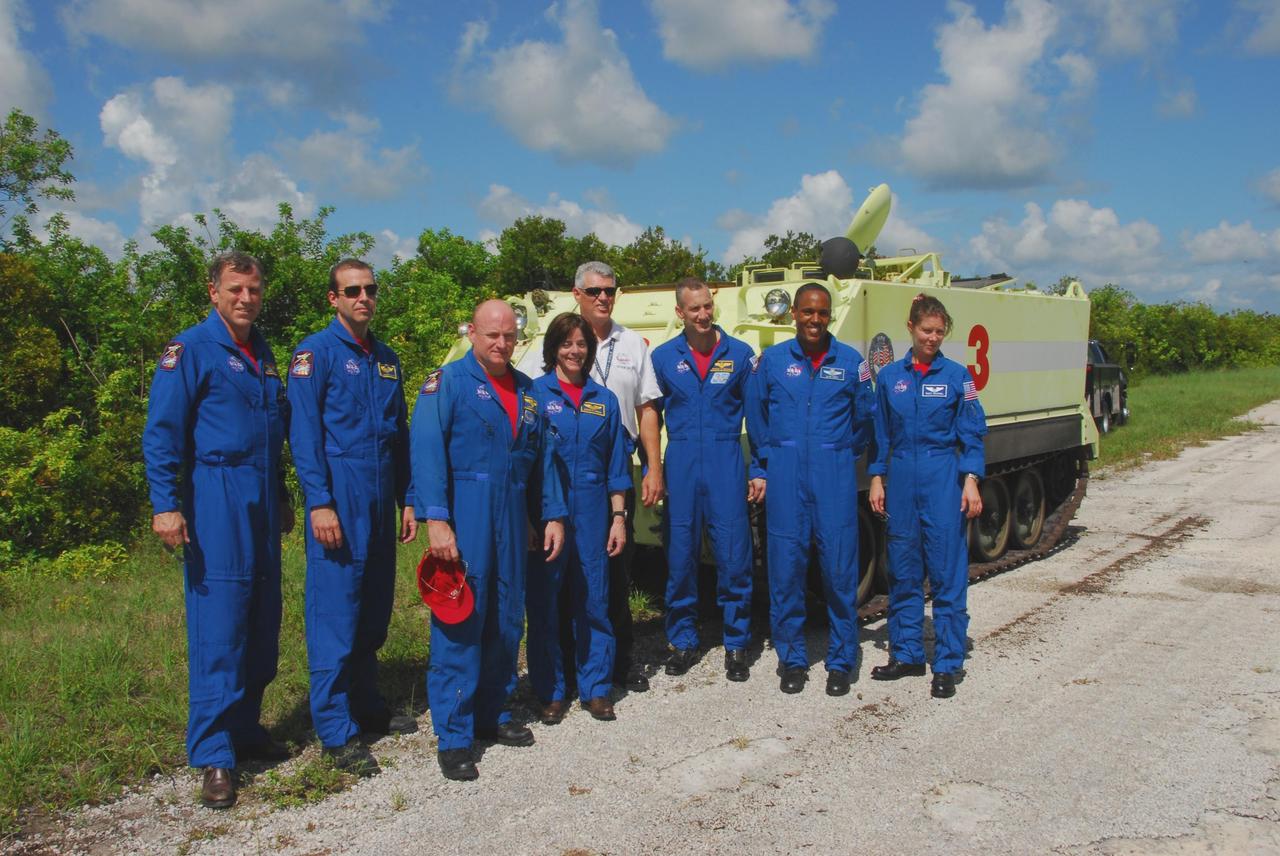
KENNEDY SPACE CENTER, Fla. -- After completing their driving training on the M-113 armored personnel carrier (behind them), the STS-118 crew take a break. From left are Mission Specialists Dave Williams and Rick Mastracchio, Commander Scott Kelly, Mission Specialist Barbara R. Morgan, Pilot Charlie Hobaugh, and Mission Specialists Alvin Drew and Tracy Caldwell. Williams represents the Canadian Space Agency. Morgan joined NASA's Teacher in Space program in 1985 and was selected as an astronaut in 1998. The crew is at Kennedy for the Terminal Countdown Demonstration Test (TCDT), a dress rehearsal for launch. TCDT activities include the M-113 training, payload familiarization, emergency egress training at the pad and a simulated launch countdown. The STS-118 payload aboard Space Shuttle Endeavour includes the S5 truss, a SPACEHAB module and external stowage platform 3. The mission is the 22nd flight to the International Space Station and is targeted for launch on Aug.7. NASA/George Shelton
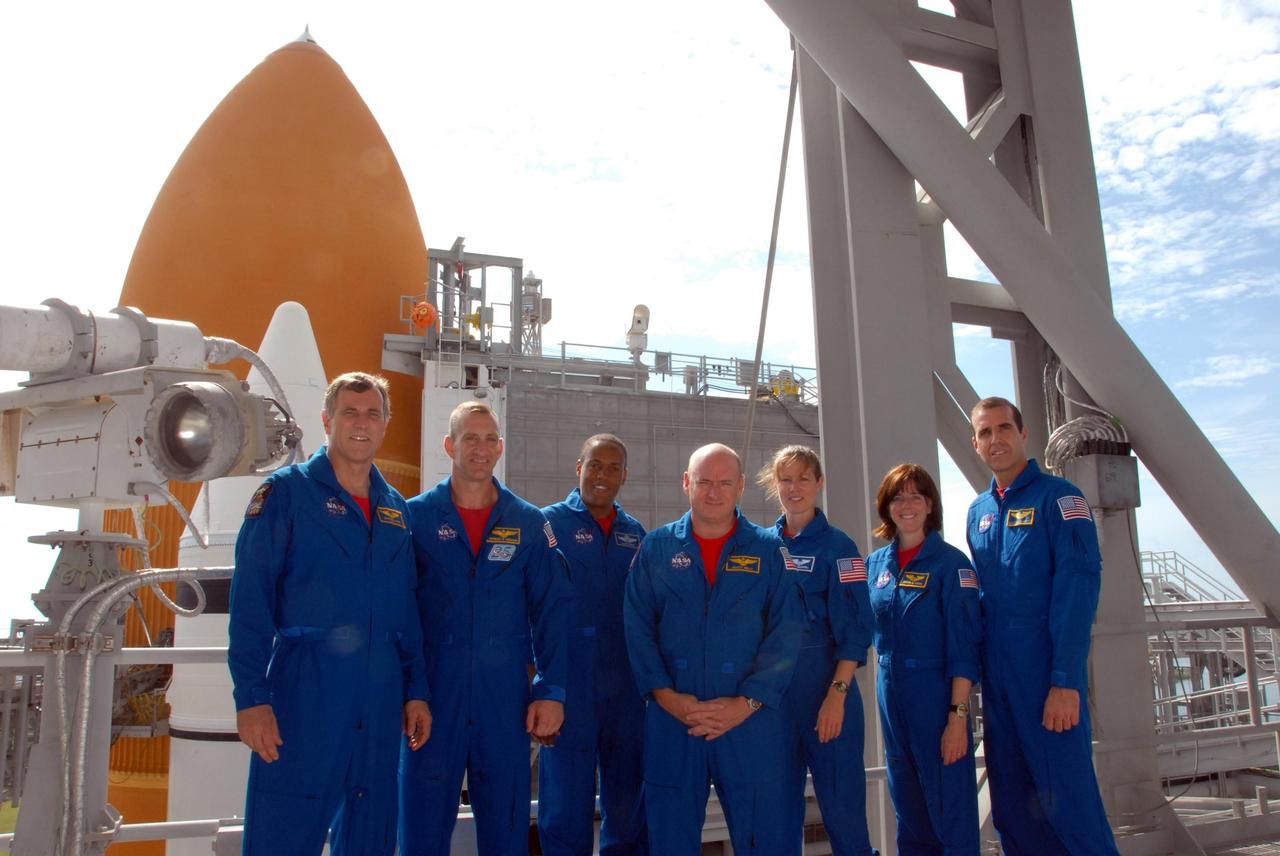
KENNEDY SPACE CENTER, Fla. -- On the top level of the Pad 39A fixed service structure, the STS-118 crew takes a break from training activities in the terminal countdown demonstration test, or TCDT. From left are Mission Specialist Dave Williams, Pilot Charlie Hobaugh, Mission Specialist Alvin Drew, Commander Scott Kelly and Mission Specialists Tracy Caldwell, Barbara R. Morgan and Rick Mastracchio. Williams represents the Canadian Space Agency. Morgan joined NASA's Teacher in Space program in 1985 and was selected as an astronaut in 1998. Behind them is the top of the external tank and a solid rocket booster. TCDTactivities include M-113 training, payload familiarization, the emergency egress training at the pad and a simulated launch countdown. The mission is the 22nd flight to the International Space Station and Space Shuttle Endeavour will carry a payload including the S5 truss, a SPACEHAB module and external stowage platform 3. STS-118 is targeted for launch on Aug. 7. NASA/George Shelton
S85-38312 (September 1985) --- Logo designed for use by the 10 finalists in NASA’s Teacher in Space Project, who were at JSC for training and orientation the week of July 8–12, 1985. They are David M. Marquart, Boise High, Boise, Idaho; Michael W. Metcalf, Hazen Union School, Hardwick, Vermont; Judith Marie Garcia, Thomas Jefferson School for Science and Technology, Alexandria, Virginia; Peggy J. Lathlaen, Westwood Elementary, Friendswood, Texas; Niki Mason Wenger, Vandevender Junior High, Parkersburg, West Virginia; Barbara R. Morgan, McCall-Donnelly Elementary, McCall, Idaho; Kathleen Anne Beres, Kenwood High, Baltimore, Maryland; Richard A. Methia, New Bedford High, New Bedford, Mass.; Sharon Christa McAuliffe, Concord High, Concord, New Hampshire; and Robert S. Foerster, Cumberland Elementary School, West Lafayette, Indiana. Photo credit: NASA
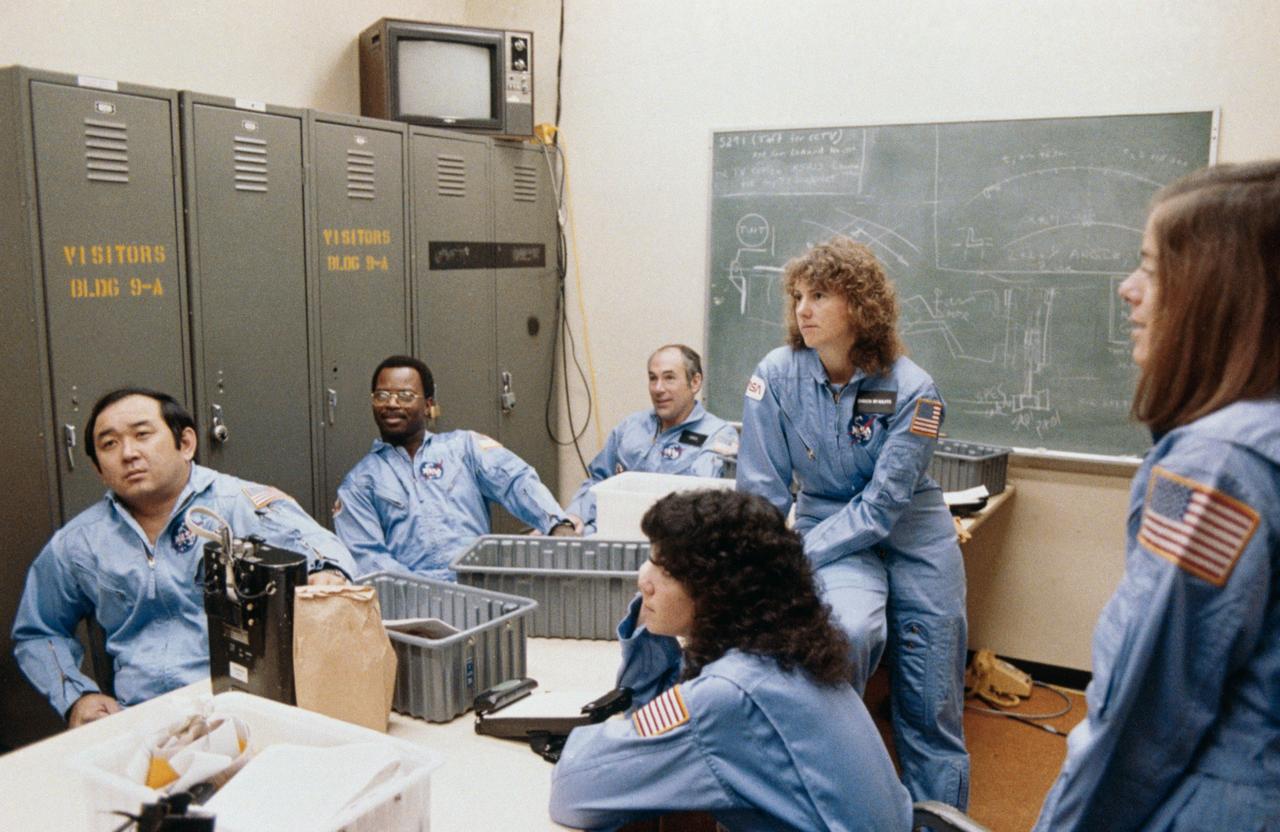
S86-25186 (December 1985) --- Five members of the prime crew for NASA?s STS-51L mission and a backup crew member are briefed during a training session in the Johnson Space Center?s (JSC) Shuttle Mock-up and Integration Laboratory. From left to right are astronaut Ellison S. Onizuka, mission specialist; Ronald E. McNair, mission specialist; Gregory D. Jarvis, Hughes payload specialist; Judith A. Resnik, mission specialist; Sharon Christa McAuliffe, citizen observer/payload specialist representing the Teacher-in-Space Project; and Barbara R. Morgan, backup payload specialist. The photograph was taken by Keith Meyers of the New York Times. EDITOR?S NOTE: The STS-51L crew members lost their lives in the space shuttle Challenger accident moments after launch on Jan. 28, 1986 from the Kennedy Space Center (KSC). Photo credit: NASA
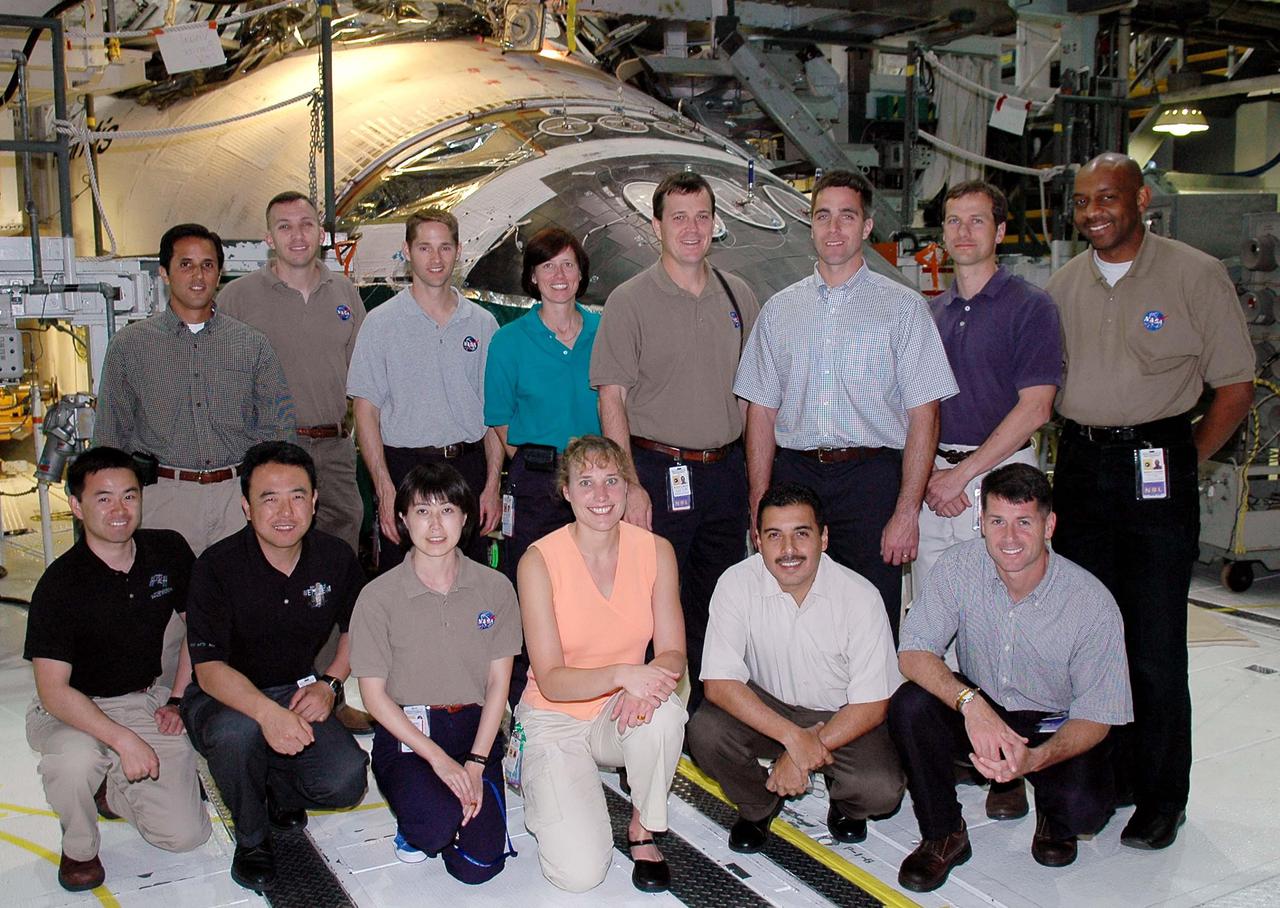
KENNEDY SPACE CENTER, FLA. - At NASA’s Kennedy Space Center, the 2004 class of astronaut candidates gather for a class photo in front of the nose of Atlantis in the Orbiter Processing Facility bay 1. In the back row, from left to right, are Joseph Acaba, Randolph Bresnik, James Dutton, Shannon Walker, Richard Arnold II, Christopher Cassidy, Thomas Marshburn and Robert Satcher. In the front row, left to right, are Akahiko Hoshide, Satoshi Furukawa, Naoko Yamazaki, Dorothy Metcalf-Lindenburger, Jose Hernandez and Robert Kimbrough. Atlantis is being processed for Return to Flight mission STS-121 in July. The astronaut candidates are at KSC to participate in firefighting training and familiarization tours. The class of 14 candidates includes three candidates from the Japan Aerospace Exploration Agency as well as three educator astronauts, who were school teachers chosen from thousands of applicants.
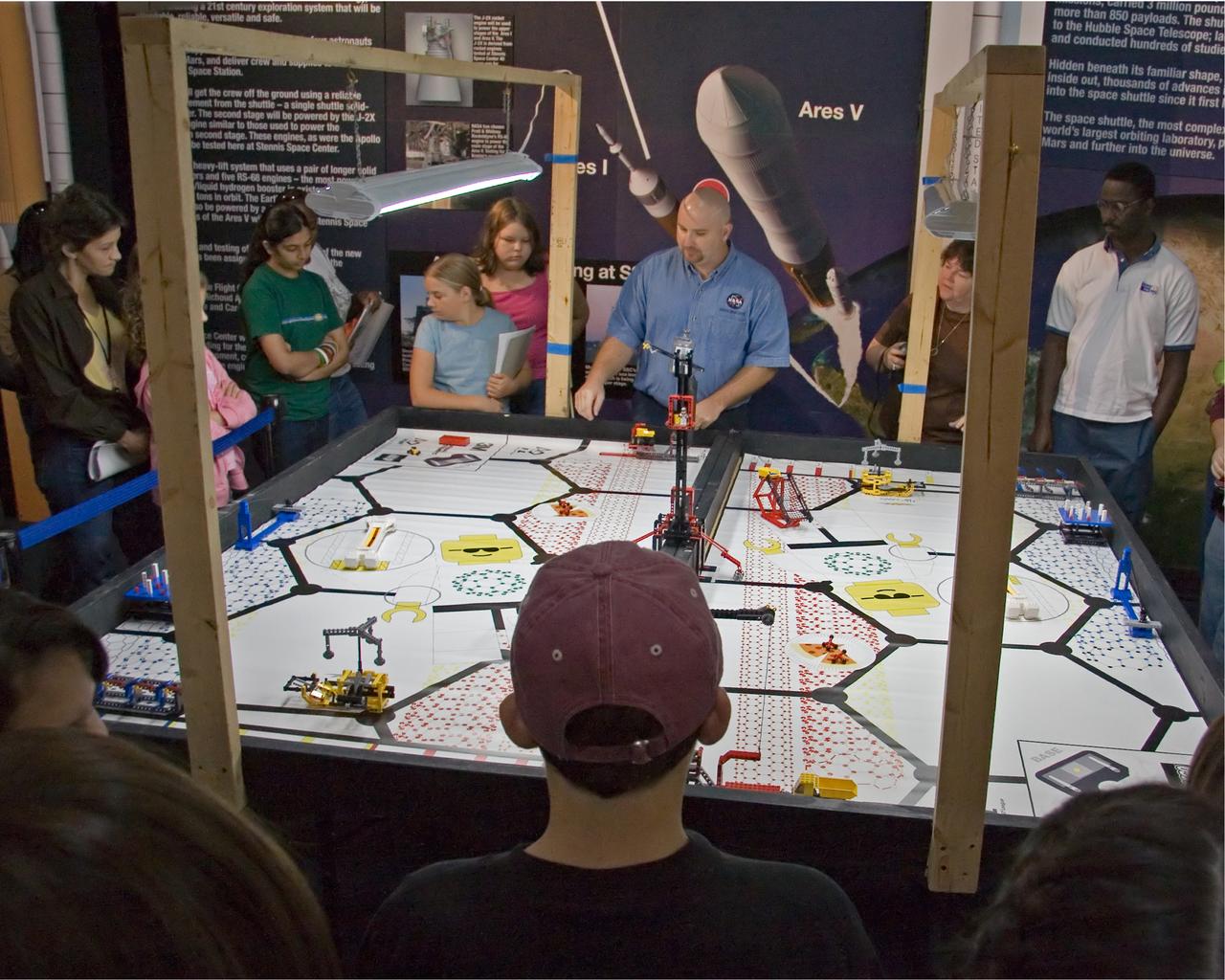
FIRST LEGO League participants listen to Aerospace Education Specialist Chris Copelan explain the playing field for 'Nano Quest' during a recent FLL kickoff event at StenniSphere, the visitor center at NASA Stennis Space Center. The kickoff began the 2006 FLL competition season. Eighty-five teachers, mentors, parents and 9- to 14-year-old students from southern and central Mississippi came to SSC to hear the rules for Nano Quest. The challenge requires teams to spend eight weeks building and programming robots from LEGO Mindstorms kits. They'll battle their creations in local and regional competitions. The Dec. 2 competition at Mississippi Gulf Coast Community College will involve about 200 students. FIRST LEGO League, considered the 'little league' of the FIRST (For Inspiration and Recognition of Science and Technology) Robotics Competition, partners FIRST and the LEGO Group. Competitions aim to inspire and celebrate science and technology using real-world context and hands-on experimentation, and to promote the principles of team play and gracious professionalism. Because NASA advocates robotics and science-technology education, the agency and SSC support FIRST by providing team coaches, mentors and training, as well as competition event judges, referees, audio-visual and other volunteer staff personnel. Two of Mississippi's NASA Explorer Schools, Bay-Waveland Middle and Hattiesburg's Lillie Burney Elementary, were in attendance. The following schools were also represented: Ocean Springs Middle, Pearl Upper Elementary, Long Beach Middle, Jackson Preparatory Academy, North Woolmarket Middle, D'Iberville Middle, West Wortham Middle, Picayune's Roseland Park Baptist Academy and Nicholson Elementary, as well as two home-school groups from McComb and Brandon. Gulfport and Picayune Memorial-Pearl River high schools' FIRST Robotics teams conducted robotics demonstrations for the FLL crowd.