
Aeronautics Technical Seminar: Dr. Elisabeth Pate-Cornell, Burt and Deedee McMurtry professor and chair of the Department of Management Science and Engineering at Stanford University presents 'Lessons Learned in Applying Engineering Risk Analysis'.

Aeronautics Technical Seminar: Dr. Elisabeth Pate-Cornell, Burt and Deedee McMurtry professor and chair of the Department of Management Science and Engineering at Stanford University presents 'Lessons Learned in Applying Engineering Risk Analysis'.
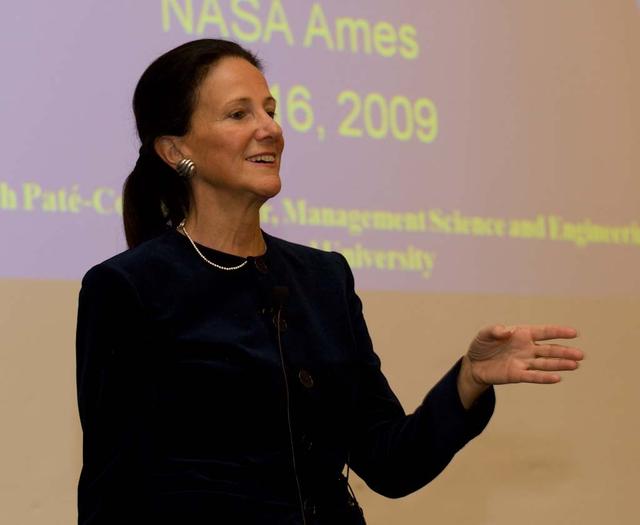
Aeronautics Technical Seminar: Dr. Elisabeth Pate-Cornell, Burt and Deedee McMurtry professor and chair of the Department of Management Science and Engineering at Stanford University presents 'Lessons Learned in Applying Engineering Risk Analysis'.

Aeronautics Technical Seminar: Dr. Elisabeth Pate-Cornell, Burt and Deedee McMurtry professor and chair of the Department of Management Science and Engineering at Stanford University presents 'Lessons Learned in Applying Engineering Risk Analysis'.

Aeronautics Technical Seminar: Dr. Elisabeth Pate-Cornell, Burt and Deedee McMurtry professor and chair of the Department of Management Science and Engineering at Stanford University presents 'Lessons Learned in Applying Engineering Risk Analysis'.
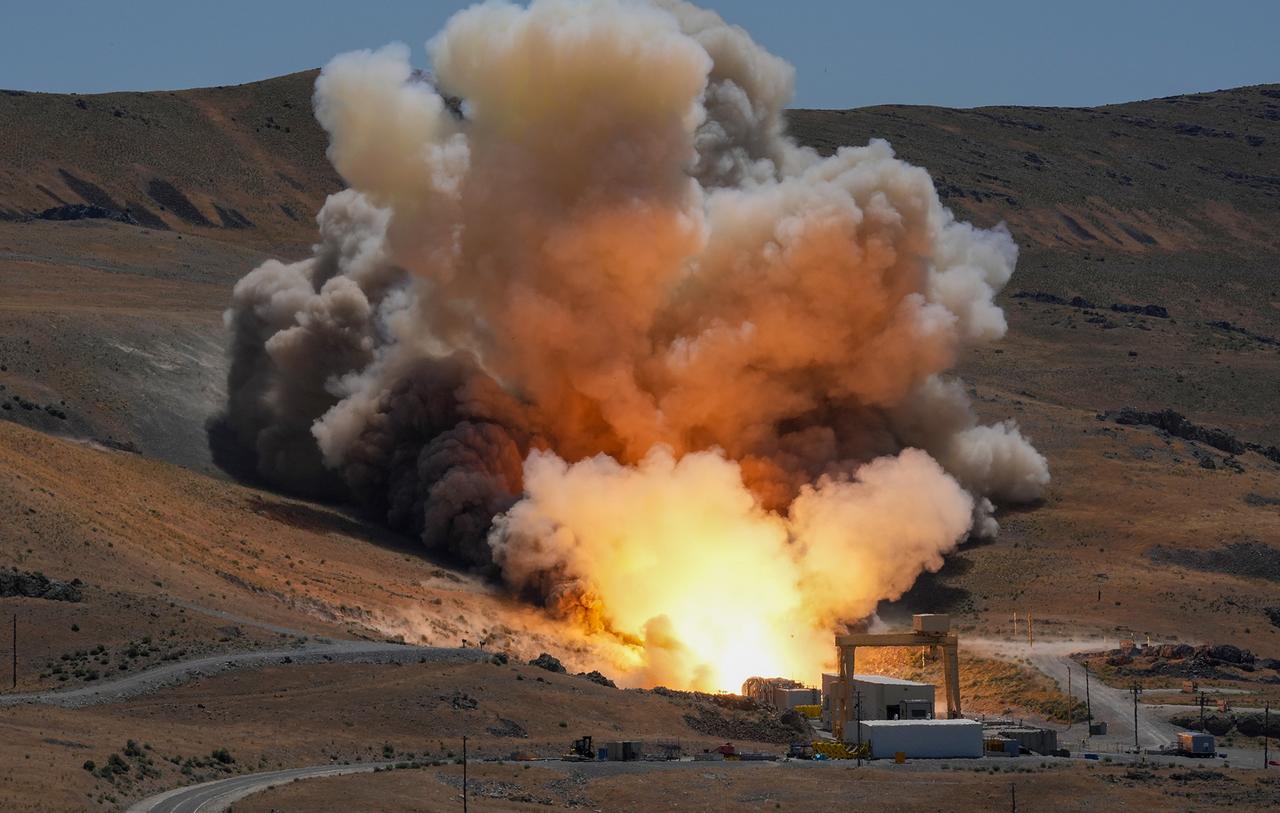
Teams from NASA and Northrop Grumman fire a ground-based version of a booster for the agency’s SLS (Space Launch System) rocket June 26. Secured horizontally in a test stand at Northrop Grumman’s test facility in Promontory, Utah, the single five-segment booster motor fired for more than two minutes and produced 3.9 million pounds of thrust. The booster for this test, known as Demonstration Motor-1 (DM-1), is the result of the Booster Obsolescence Life Extension (BOLE) project. This test was the first full-scale ground test of a new five-segment solid rocket motor. During the test, there was an abnormal event approximately 15 seconds before the end of the motor firing. Despite this event, NASA achieved several of the test’s primary objectives and received valuable data on technical risks identified ahead of the test. Testing this evolved booster for the SLS will help evaluate improvements and new materials in the boosters. The BOLE effort was launched to transition to a more efficient, lower cost commercial solution for the boosters for the SLS rocket. Through the Artemis campaign, NASA will send astronauts to explore the Moon for scientific discovery, economic benefits, and to build the foundation for the first crewed missions to Mars – for the benefit of all. For more information, contact NASA Marshall’s Office of Communications at 256-544-0034.
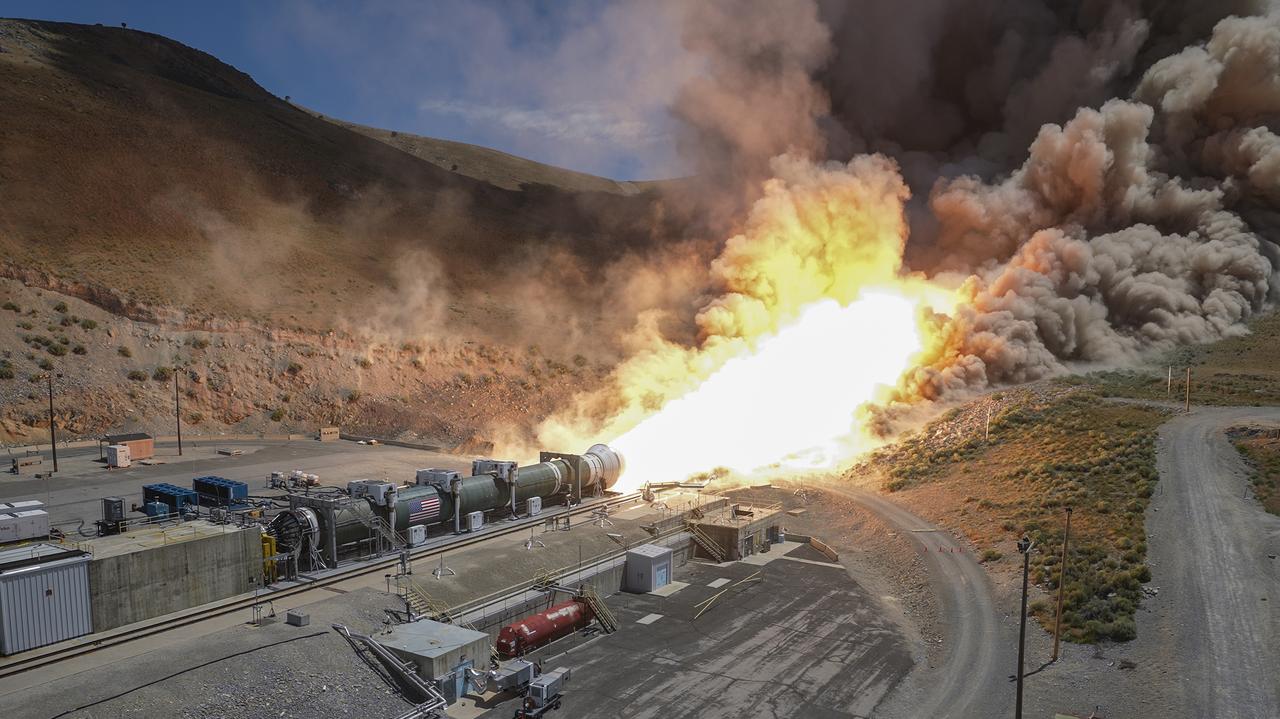
Teams from NASA and Northrop Grumman fire a ground-based version of a booster for the agency’s SLS (Space Launch System) rocket June 26. Secured horizontally in a test stand at Northrop Grumman’s test facility in Promontory, Utah, the single five-segment booster motor fired for more than two minutes and produced 3.9 million pounds of thrust. The booster for this test, known as Demonstration Motor-1 (DM-1), is the result of the Booster Obsolescence Life Extension (BOLE) project. This test was the first full-scale ground test of a new five-segment solid rocket motor. During the test, there was an abnormal event approximately 15 seconds before the end of the motor firing. Despite this event, NASA achieved several of the test’s primary objectives and received valuable data on technical risks identified ahead of the test. Testing this evolved booster for the SLS will help evaluate improvements and new materials in the boosters. The BOLE effort was launched to transition to a more efficient, lower cost commercial solution for the boosters for the SLS rocket. Through the Artemis campaign, NASA will send astronauts to explore the Moon for scientific discovery, economic benefits, and to build the foundation for the first crewed missions to Mars – for the benefit of all. For more information, contact NASA Marshall’s Office of Communications at 256-544-0034.
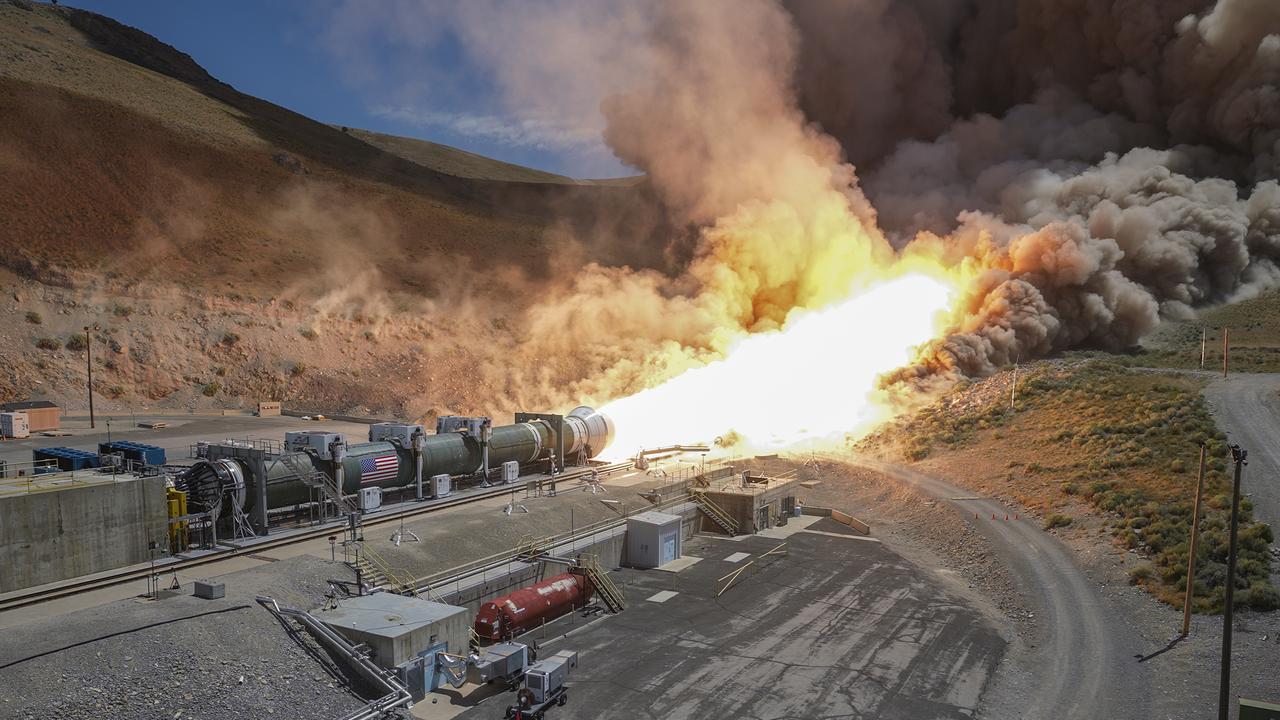
Teams from NASA and Northrop Grumman fire a ground-based version of a booster for the agency’s SLS (Space Launch System) rocket June 26. Secured horizontally in a test stand at Northrop Grumman’s test facility in Promontory, Utah, the single five-segment booster motor fired for more than two minutes and produced 3.9 million pounds of thrust. The booster for this test, known as Demonstration Motor-1 (DM-1), is the result of the Booster Obsolescence Life Extension (BOLE) project. This test was the first full-scale ground test of a new five-segment solid rocket motor. Teams from NASA and Northrop Grumman fire a ground-based version of a booster for the agency’s SLS (Space Launch System) rocket June 26. Secured horizontally in a test stand at Northrop Grumman’s test facility in Promontory, Utah, the single five-segment booster motor fired for more than two minutes and produced 3.9 million pounds of thrust. The booster for this test, known as Demonstration Motor-1 (DM-1), is the result of the Booster Obsolescence Life Extension (BOLE) project. This test was the first full-scale ground test of a new five-segment solid rocket motor. During the test, there was an abnormal event approximately 15 seconds before the end of the motor firing. Despite this event, NASA achieved several of the test’s primary objectives and received valuable data on technical risks identified ahead of the test. Testing this evolved booster for the SLS will help evaluate improvements and new materials in the boosters. The BOLE effort was launched to transition to a more efficient, lower cost commercial solution for the boosters for the SLS rocket. Through the Artemis campaign, NASA will send astronauts to explore the Moon for scientific discovery, economic benefits, and to build the foundation for the first crewed missions to Mars – for the benefit of all. For more information, contact NASA Marshall’s Office of Communications at 256-544-0034.
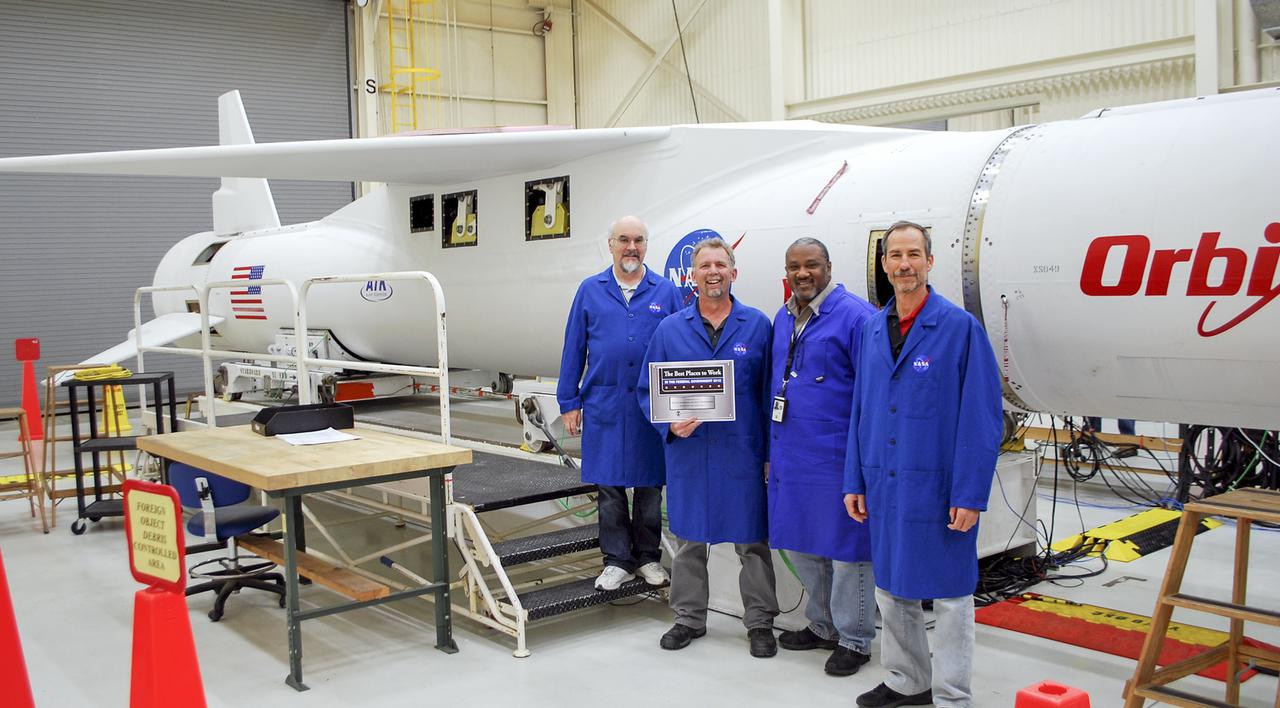
VANDENBERG AIR FORCE BASE, Calif. – Kennedy Space Center Resident Office personnel representing the NASA Launch Services Program at Vandenberg Air Force Base in California, display the Best Places to Work in the Federal Government plaque. NASA ranked No. 1 the “large” category, those which have more than 15,000 employees. From the left are Bob Rasmison, Randy Beaudoin, Kevin Monette, and Jeff Ehrsam. Rasmison and Ehrsam work together in integration and engineering as the spacecraft's liaison at the processing facility and pre-launch site locations. Beaudoin is an electrical engineer that follows manufacturing, assembly and integration of electrical systems and components to insure compliance with technical specifications and standards. Monette is the Safety and Mission Assurance representative providing independent assessment to help determine residual risk associated with launch vehicle flight readiness. They are standing next to the Orbital Sciences Corporation's Pegasus rocket which will launch the Interface Region Imaging Spectrograph IRIS spacecraft. Scheduled for launch from Vandenberg Air Force Base no earlier than June 26, 2013, IRIS will open a new window of discovery by tracing the flow of energy and plasma through the chromospheres and transition region into the sun’s corona using spectrometry and imaging. IRIS fills a crucial gap in our ability to advance studies of the sun-to-Earth connection by tracing the flow of energy and plasma through the foundation of the corona and the region around the sun known as the heliosphere. For more information, visit http:__iris.gsfc.nasa.gov Photo credit: NASA_Randy Beaudoin
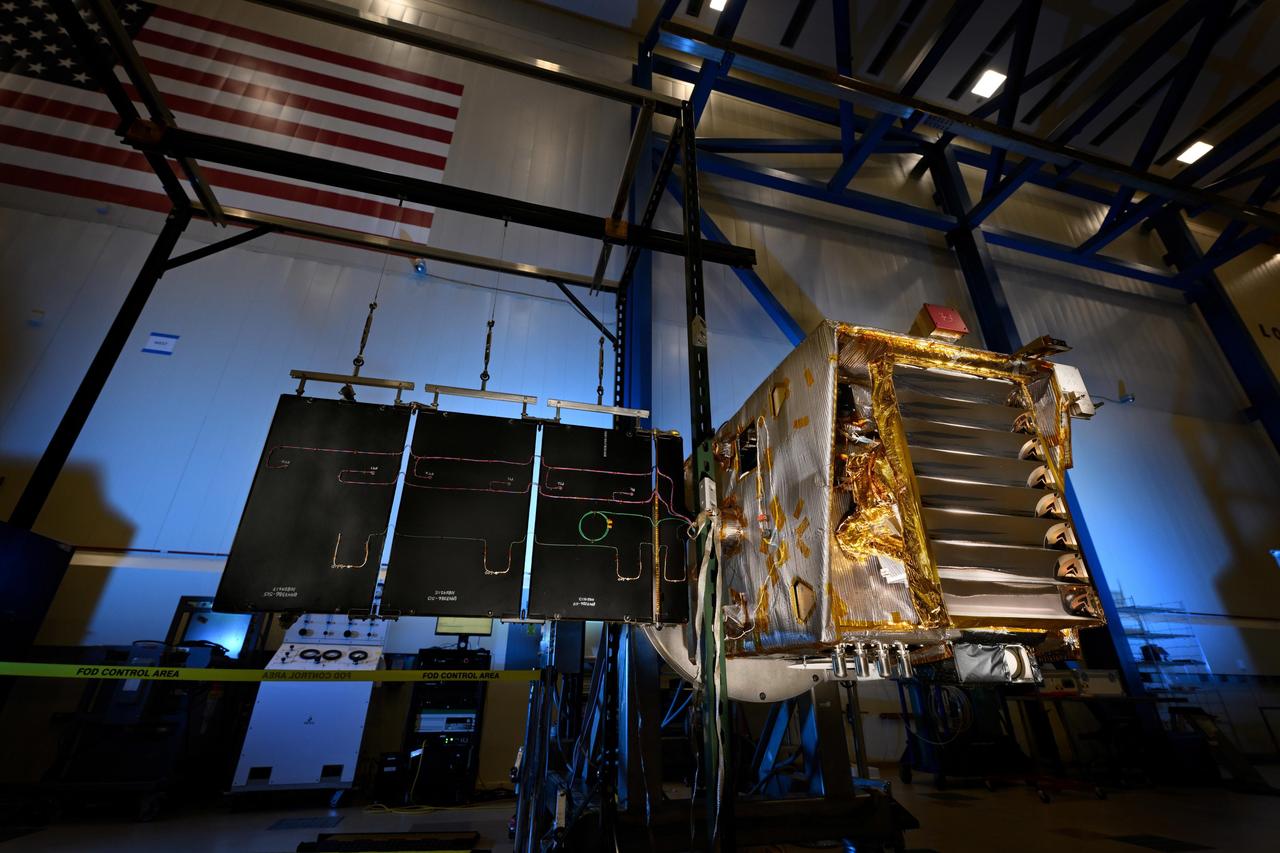
NASA's Lunar Trailblazer spacecraft sits in a clean room in August 2024 after undergoing environmental testing at Lockheed Martin Space in Littleton, Colorado. Now that those tests are done, the orbiter and its science instruments will go through flight system software tests that simulate key aspects of launch, maneuvers, and the science mission while in orbit around the Moon. This photo shows Lunar Trailblazer with a solar array deployed. The large silver grate attached to the spacecraft is the radiator for the High-resolution Volatiles and Minerals Moon Mapper (HVM³) instrument. HVM³ is one of two instruments that will be used by the mission to detect and map water on the Moon's surface to determine its abundance, location, form, and how it changes over time. This data will be key to our understanding of this crucial resource on the Moon for future exploration. The spacecraft is just 440 pounds (200 kilograms) and 11.5 feet (3.5 meters) wide with its solar panels fully deployed. The project is led by Principal Investigator Bethany Ehlmann of Caltech and managed by NASA's Jet Propulsion Laboratory in Southern California, which is also providing systems engineering, navigation, and mission assurance. Caltech manages JPL for the agency. Lunar Trailblazer is part of NASA's Small Innovative Missions for Planetary Exploration (SIMPLEx) program, which provides opportunities for low-cost, high-risk science missions that are responsive to requirements for flexibility. These lower-cost missions serve as an ideal platform for technical and architecture innovation, contributing to NASA's science research and technology development objectives. SIMPLEx mission investigations are managed by the Planetary Missions Program Office at NASA's Marshall Space Flight Center in Huntsville, Alabama, as part of the Discovery Program at NASA Headquarters in Washington. IPAC leads mission operations, including planning, scheduling, and sequencing all science and spacecraft activities. https://photojournal.jpl.nasa.gov/catalog/PIA26390
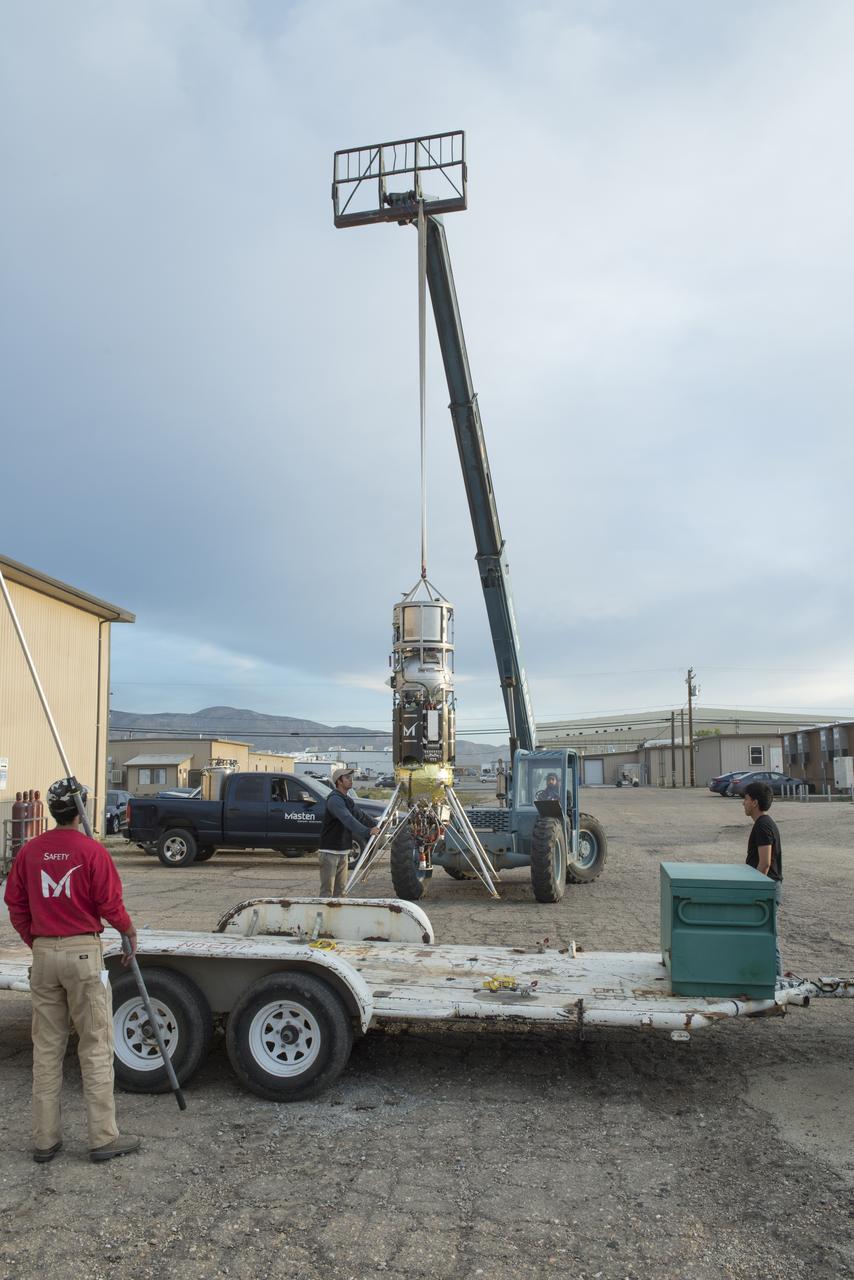
Masten Space Systems’ technician making adjustments to NASA’s autonomous landing technologies payload on Masten’s Xodiac rocket.