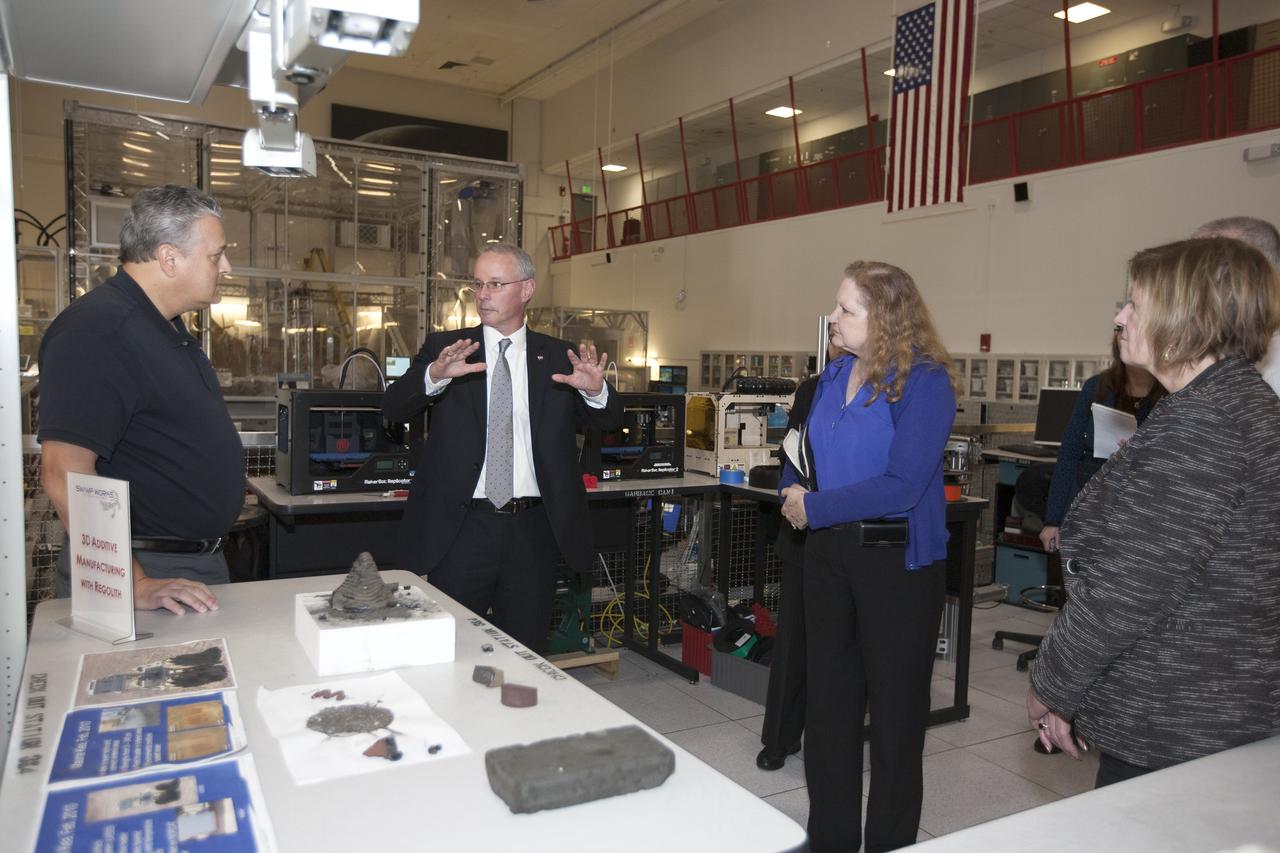
CAPE CANAVERAL, Fla. -- During a visit to NASA's Kennedy Space Center in Florida, NASA Chief Technologist David Miller, second from left, tours laboratories inside the Swamp Works facility. Miller is briefed on technology developments in the lab by Jack Fox, chief of the Surface Systems Office in the Engineering and Technology Directorate. At right is Karen Thompson, Kennedy's chief technologist. Photo credit: NASA/Kim Shiflett
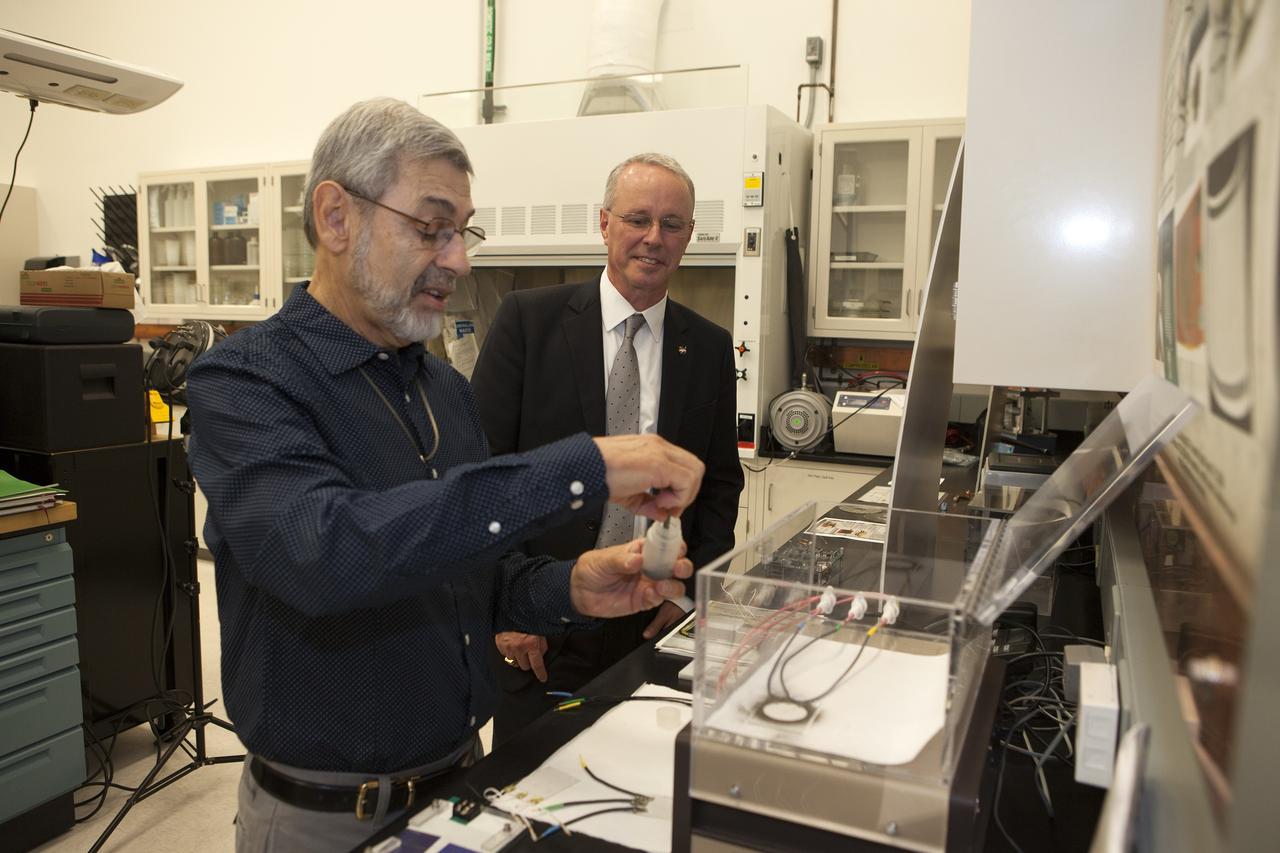
CAPE CANAVERAL, Fla. -- During a visit to NASA's Kennedy Space Center in Florida, NASA Chief Technologist David Miller, right, tours laboratories inside the Swamp Works facility. At left, Dr. Carlos Calle, lead in the Electrostatics and Surface Physics Laboratory, demonstrates a system that uses an electric field wave to move simulated moon dust away from surfaces. Photo credit: NASA/Kim Shiflett
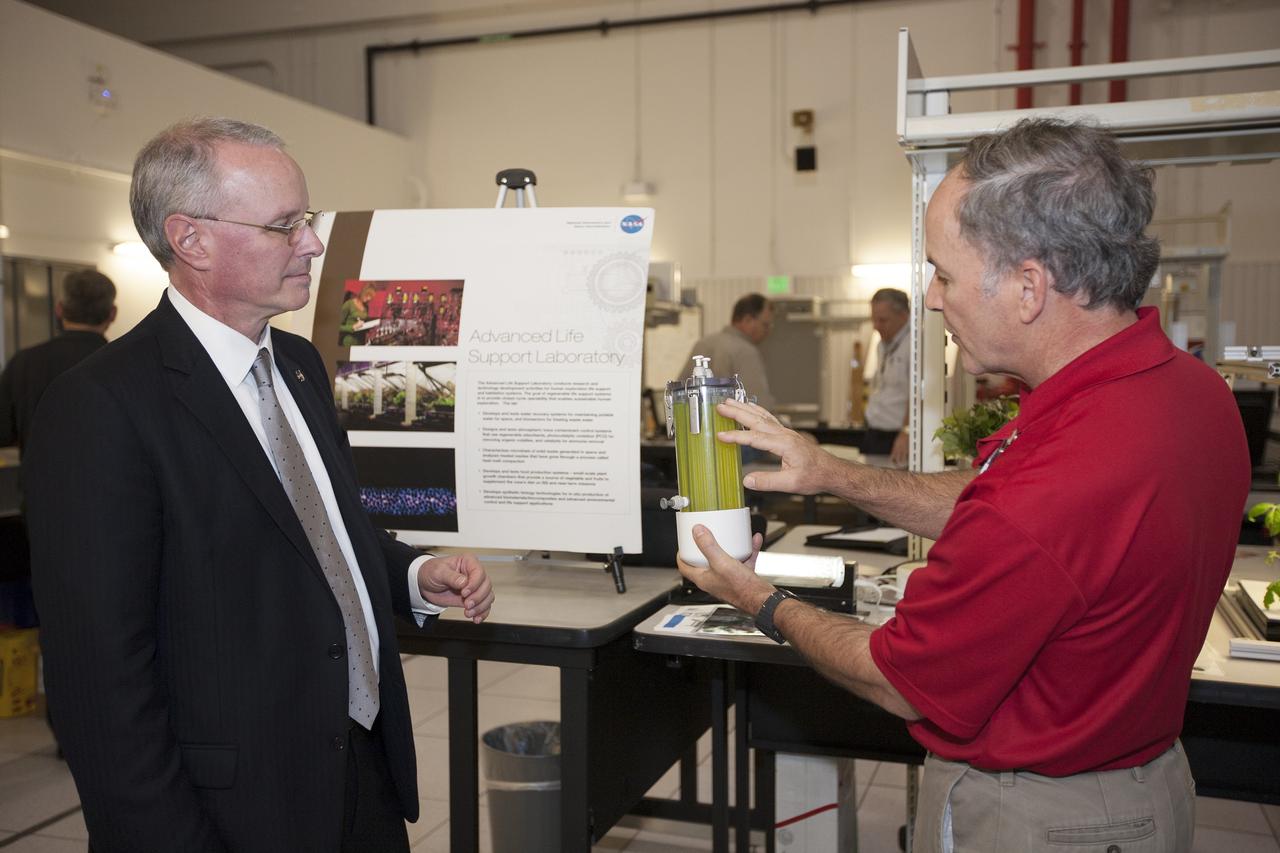
CAPE CANAVERAL, Fla. -- During a visit to NASA's Kennedy Space Center in Florida, NASA Chief Technologist David Miller, left, tours laboratories inside the Swamp Works facility. At right, Dr. Ray Wheeler, a plant physiologist in the Engineering and Technology Directorate discusses a wastewater treatment experiment with Miller. Photo credit: NASA/Kim Shiflett
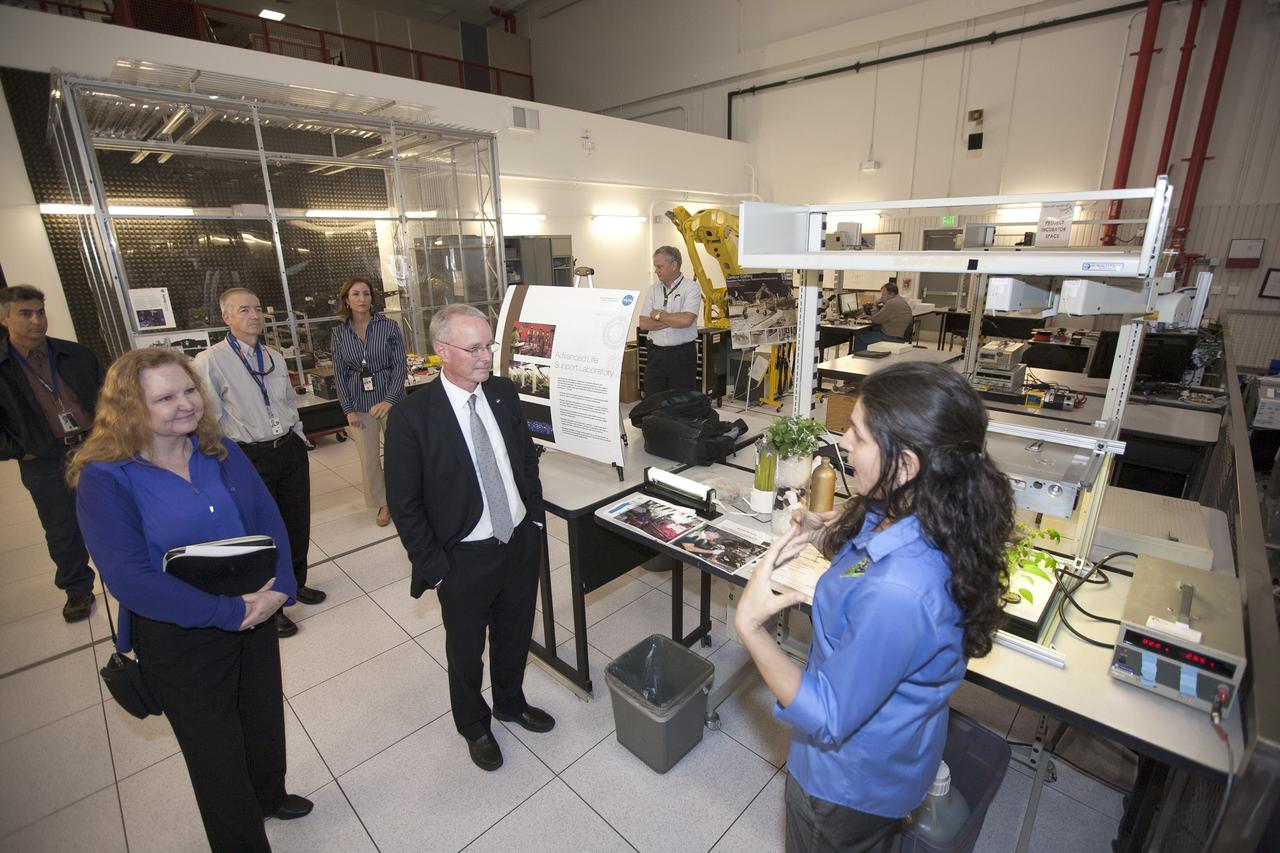
CAPE CANAVERAL, Fla. -- During a visit to NASA's Kennedy Space Center in Florida, NASA Chief Technologist David Miller, center, tours laboratories inside the Swamp Works facility. At right, Dr. Gioia Massa, NASA project scientist in the Engineering and Technology Directorate, discusses the VEGGIE plant growth system. At left is Karen Thompson, Kennedy's chief technologist. Photo credit: NASA/Kim Shiflett
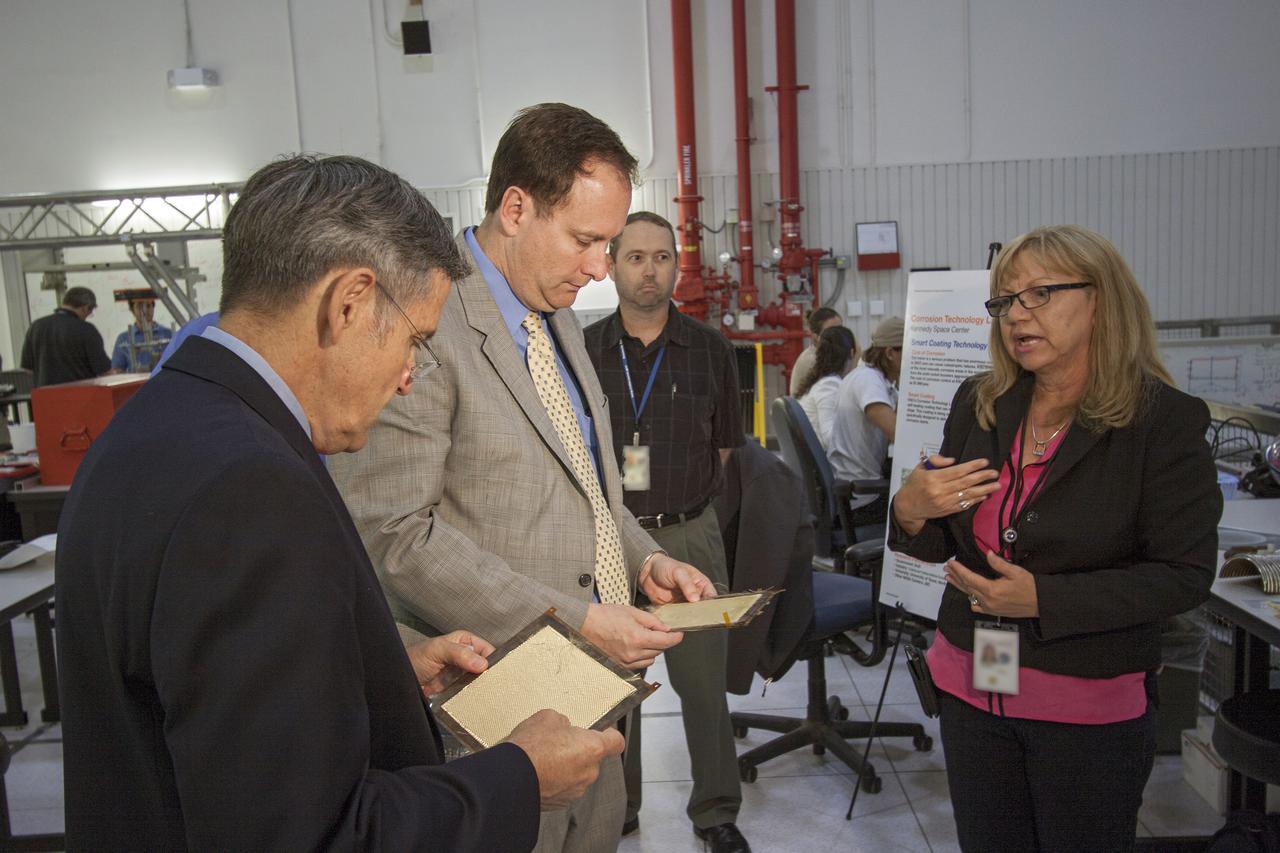
CAPE CANAVERAL, Fla. – At NASA’s Kennedy Space Center in Florida, Robert Lightfoot, NASA associate director, second from left, learns about smart coatings technology in the Corrosion Lab during a tour of the Swamp Works laboratories. Kennedy’s Swamp Works provides rapid, innovative and cost-effective exploration mission solutions, leveraging partnerships across NASA, industry and academia. Kennedy’s research and technology mission is to improve spaceports on Earth, as well as lay the groundwork for establishing spaceports at destinations in space. For more information, visit http:__www.nasa.gov_centers_kennedy_exploration_researchtech_index.html. Photo credit: NASA_Jim Grossmann

Jose Nunez of NASA Kennedy Space Center’s Exploration Research and Technology Programs talks to students in the My Brother’s Keeper program outside the Florida spaceport’s Swamp Works Lab. Kennedy is one of six NASA centers that participated in My Brother’s Keeper National Lab Week. The event is a nationwide effort to bring youth from underrepresented communities into federal labs and centers for hands-on activities, tours and inspirational speakers. Sixty students from the nearby cities of Orlando and Sanford visited Kennedy, where they toured the Vehicle Assembly Building, the Space Station Processing Facility and the center’s innovative Swamp Works Labs. The students also had a chance to meet and ask questions of a panel of subject matter experts from across Kennedy.
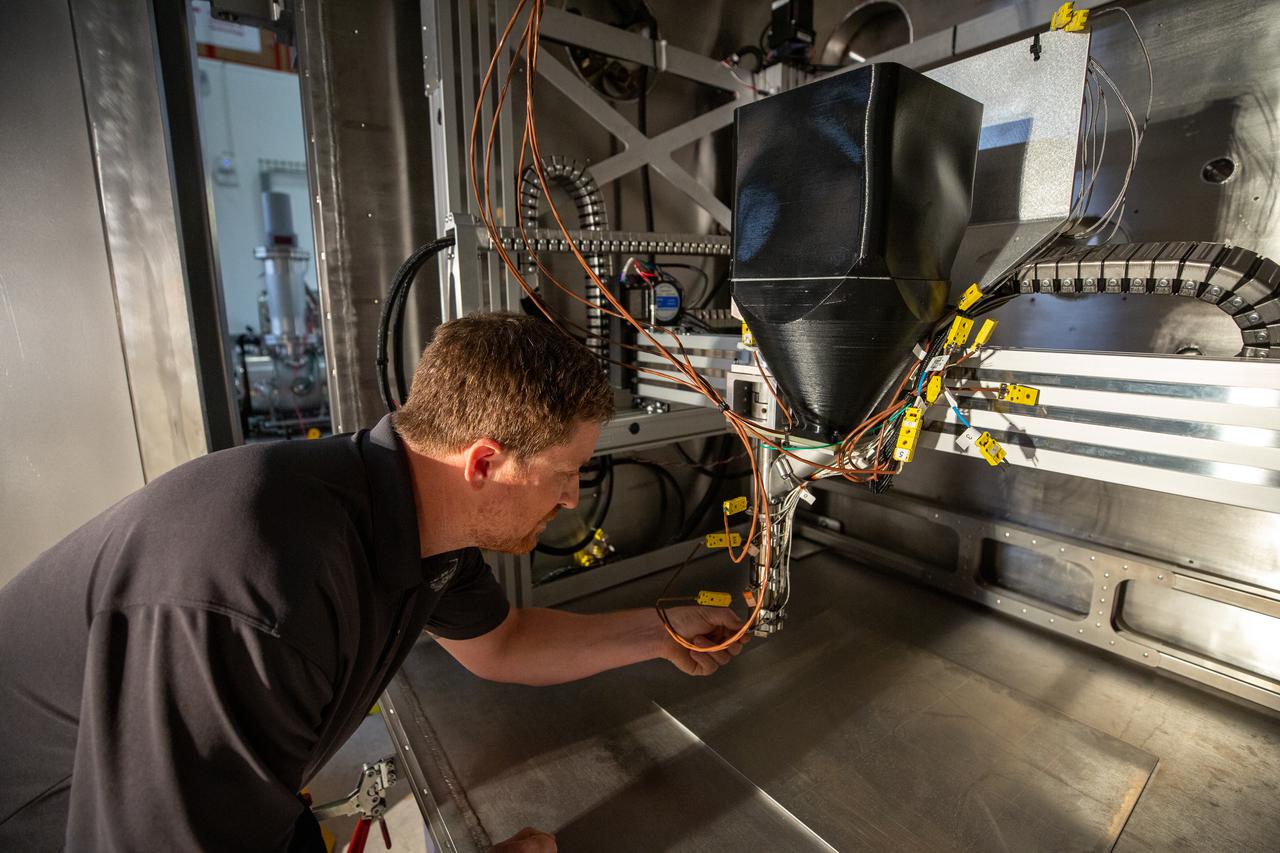
Nathan Gelino, a principal investigator with the Exploration Research and Technology programs at Kennedy Space Center in Florida, prepares a vacuum chamber for testing 3D printing inside the Granular Mechanics and Regolith Operations (GMRO) lab at Kennedy’s Swamp Works on April 5, 2022. The testing is part of the Relevant Environment Additive Construction Technology (REACT) project, which derives from NASA’s 2020 Announcement of Collaboration Opportunity, with AI SpaceFactory – an architectural and construction technology company and winner of NASA’s 3D Printed Habitat Challenge – collaborating with Kennedy teams to build 3D-printed test structures using a composite made from polymers and a regolith simulant in a vacuum chamber that mimics environmental conditions on the Moon.
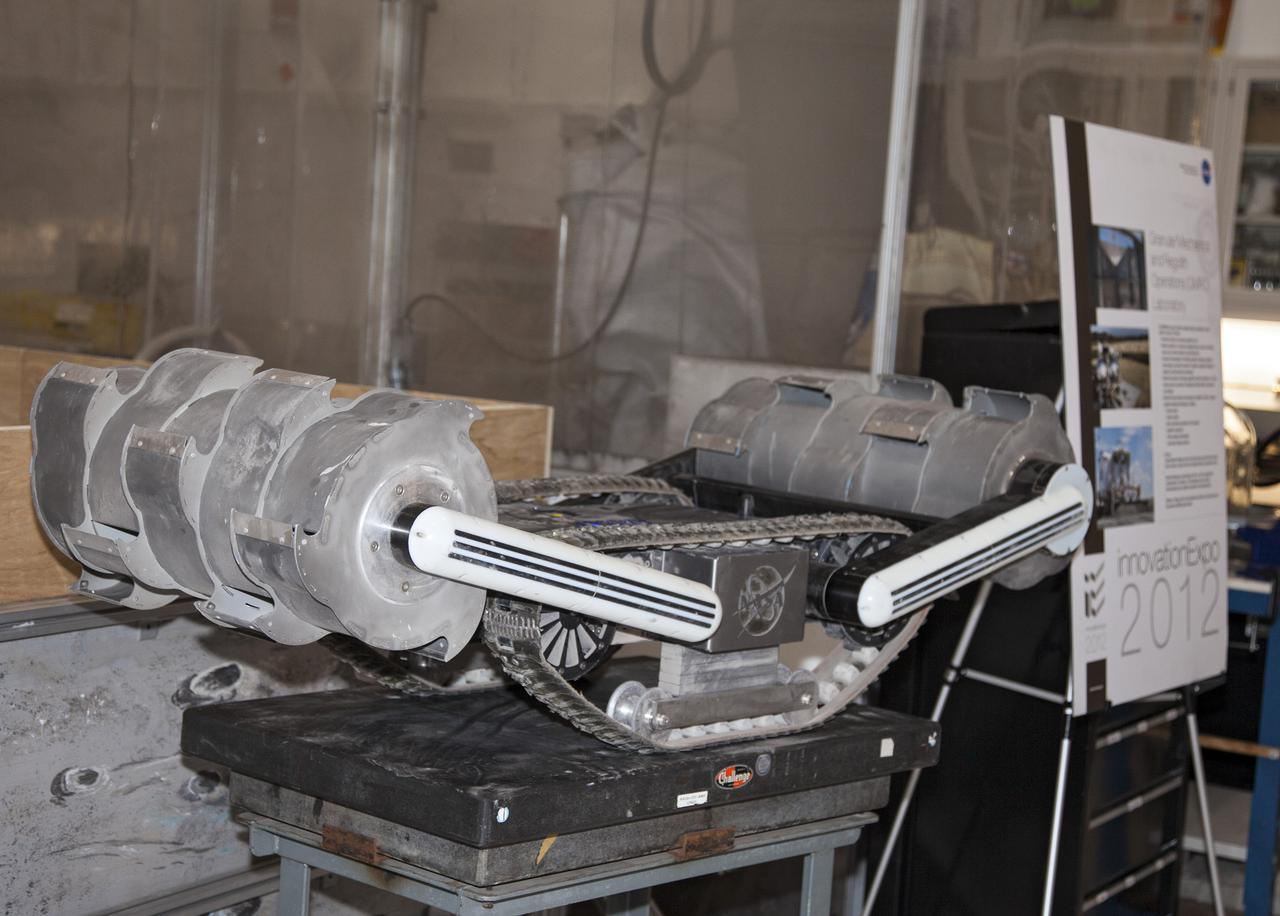
CAPE CANAVERAL, Fla. -- NASA's Regolith Advanced Surface Systems Operations Robot, or RASSOR, is ready to demonstrate its unique skills during a media tour of the Granular Mechanics and Regolith Operations, or GMRO, Lab in the Swamp Works at NASA's Kennedy Space Center in Florida. RASSOR, lunar soil excavator, resembles a small tank chassis with a drum at either end, each attached with arms. The drums, one of the robot's most innovative feature, are mounted on moving arms, allowing the robot to step and climb over obstacles. Kennedy's Swamp Works provides rapid, innovative and cost-effective exploration mission solutions, leveraging partnerships across NASA, industry and academia. Kennedy's research and technology mission is to improve spaceports on Earth, as well as lay the groundwork for establishing spaceports at destinations in space. For more information, visit http:__www.nasa.gov_centers_kennedy_exploration_researchtech_index.html. Photo credit: NASA_Frankie Martin
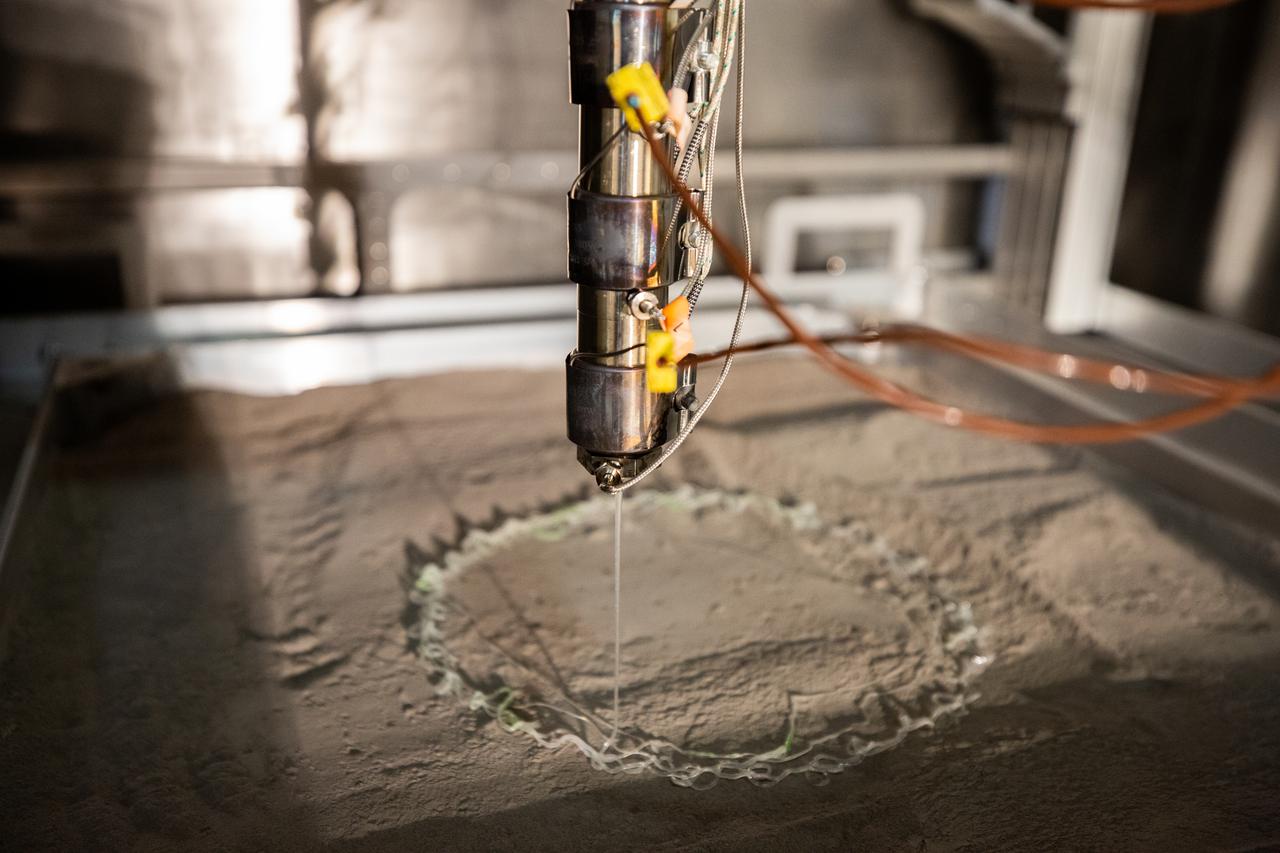
A team at NASA’s Kennedy Space Center in Florida test a 3D printer inside a vacuum chamber at the Granular Mechanics and Regolith Operations (GMRO) lab inside the spaceport’s Swamp Works, as part of the Relevant Environment Additive Construction Technology (REACT) project on April 5, 2022. Testing REACT derives from NASA’s 2020 Announcement of Collaboration Opportunity, with AI SpaceFactory – an architectural and construction technology company and winner of NASA’s 3D Printed Habitat Challenge – collaborating with Kennedy teams to build 3D-printed test structures using a composite made from polymers and a regolith simulant in a vacuum chamber that mimics environmental conditions on the Moon.
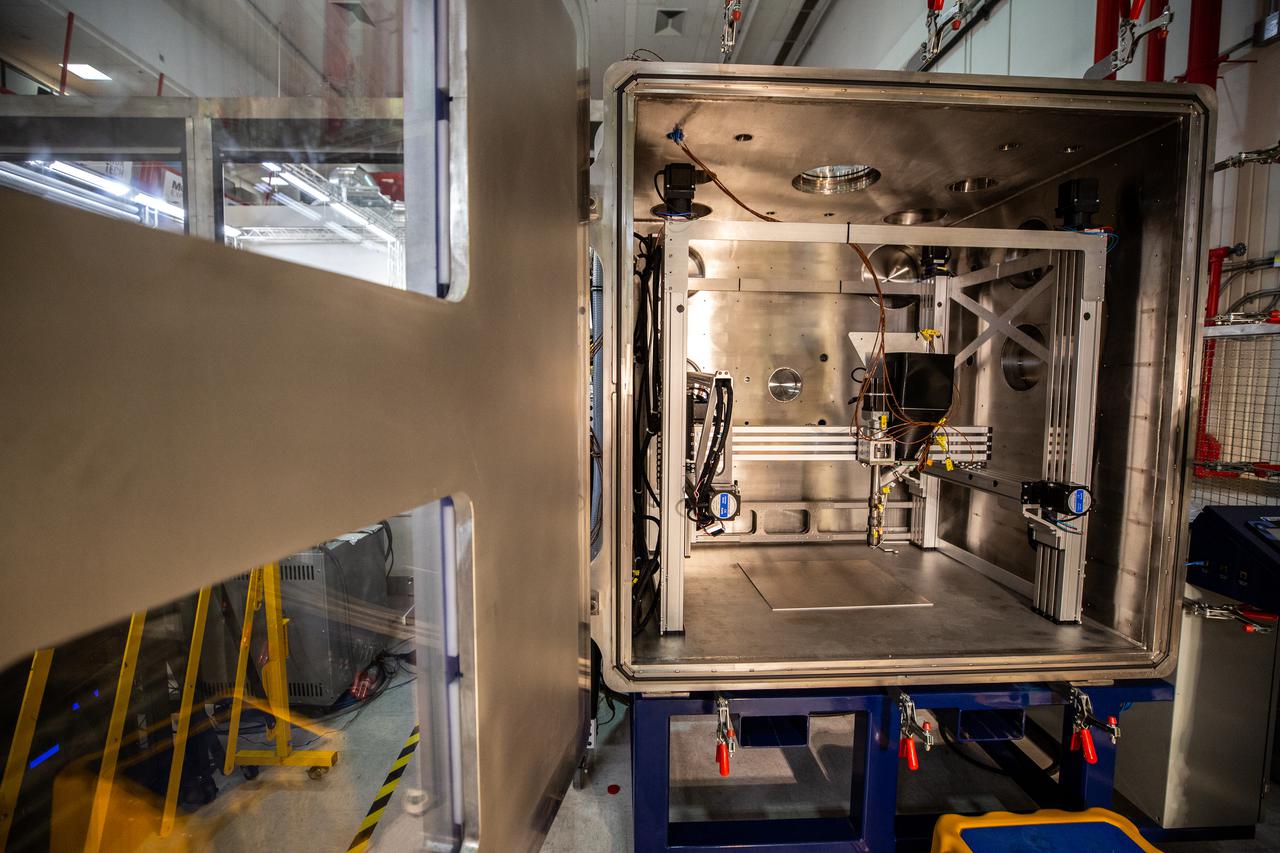
A team of engineers and researchers prepares a vacuum chamber in the Granular Mechanics and Regolith Operations (GMRO) lab inside NASA Kennedy Space Center’s Swamp Works for testing 3D printing, as part of the Relevant Environment Additive Construction Technology (REACT) project at the Florida spaceport on April 5, 2022. The project derives from NASA’s 2020 Announcement of Collaboration Opportunity, with AI SpaceFactory – an architectural and construction technology company and winner of NASA’s 3D Printed Habitat Challenge – collaborating with Kennedy teams to build 3D-printed test structures using a composite made from polymers and a regolith simulant in a vacuum chamber that mimics environmental conditions on the Moon.
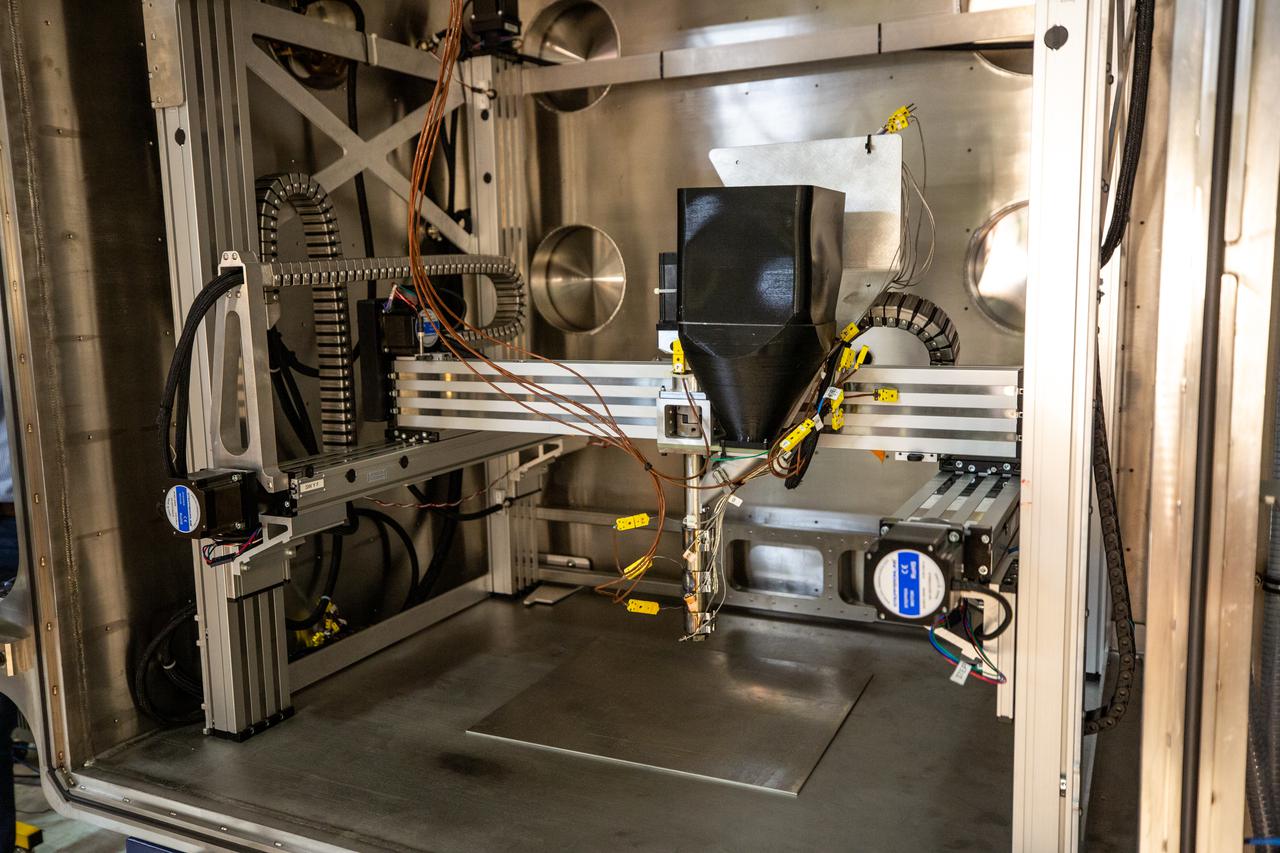
A team of engineers and researchers prepares a vacuum chamber in the Granular Mechanics and Regolith Operations (GMRO) lab inside NASA Kennedy Space Center’s Swamp Works for testing 3D printing, as part of the Relevant Environment Additive Construction Technology (REACT) project at the Florida spaceport on April 5, 2022. The project derives from NASA’s 2020 Announcement of Collaboration Opportunity, with AI SpaceFactory – an architectural and construction technology company and winner of NASA’s 3D Printed Habitat Challenge – collaborating with Kennedy teams to build 3D-printed test structures using a composite made from polymers and a regolith simulant in a vacuum chamber that mimics environmental conditions on the Moon.
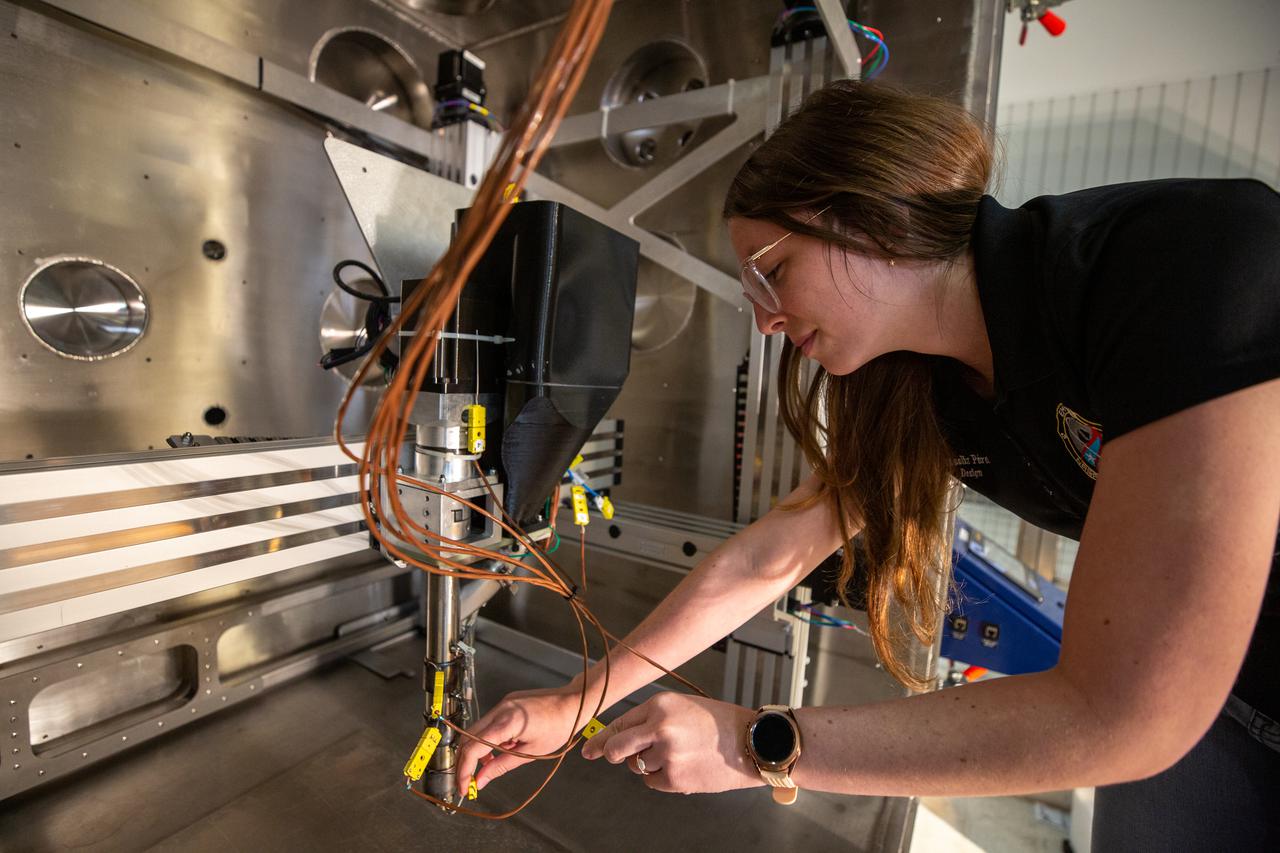
Joseliz Perez, a NASA intern at Kennedy Space Center in Florida, prepares a vacuum chamber for testing 3D printing inside the Granular Mechanics and Regolith Operations (GMRO) lab at the spaceport’s Swamp Works on April 5, 2022. The testing is part of the Relevant Environment Additive Construction Technology (REACT) project, which derives from NASA’s 2020 Announcement of Collaboration Opportunity, with AI SpaceFactory – an architectural and construction technology company and winner of NASA’s 3D Printed Habitat Challenge – collaborating with Kennedy teams to build 3D-printed test structures using a composite made from polymers and a regolith simulant in a vacuum chamber that mimics environmental conditions on the Moon.
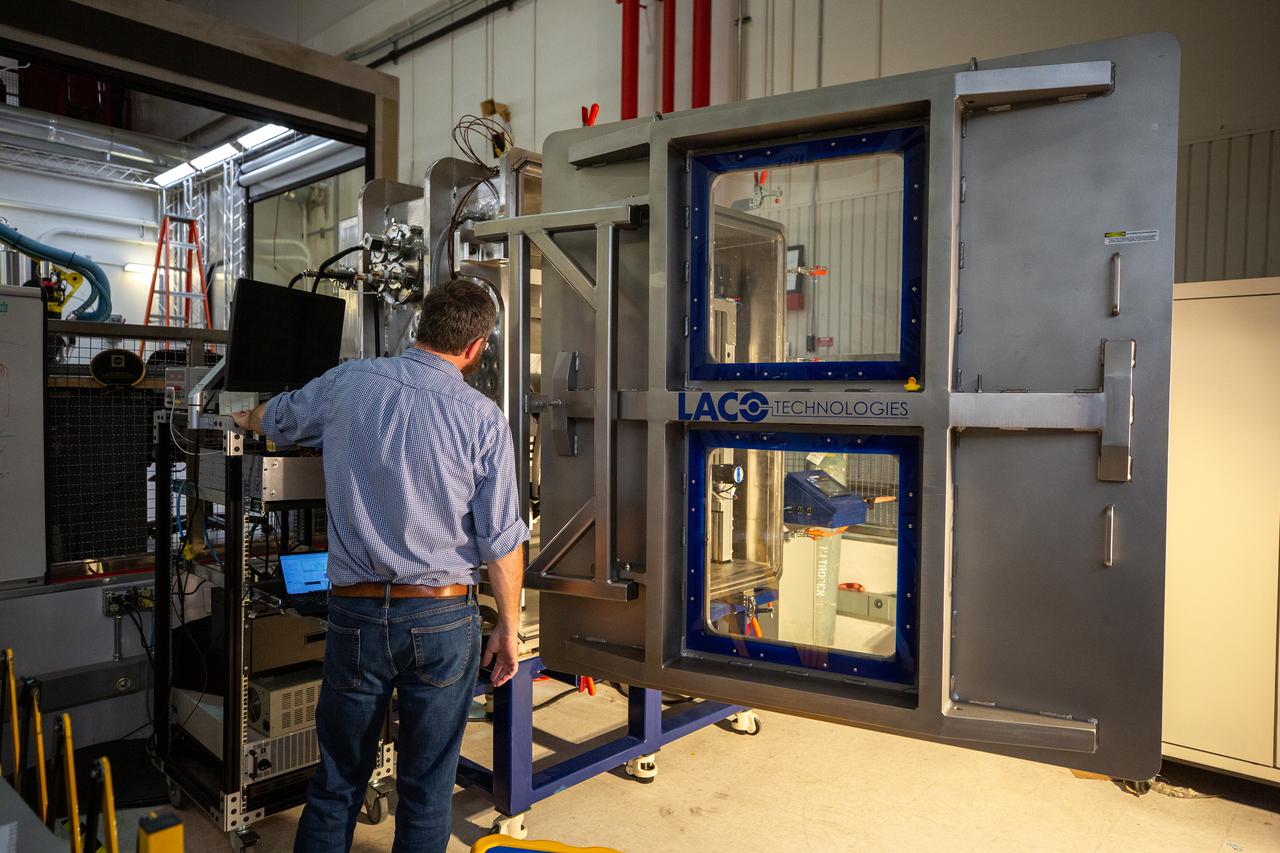
Engineer Matt Nugent prepares a vacuum chamber for testing 3D printing inside the Granular Mechanics and Regolith Operations (GMRO) lab at NASA Kennedy Space Center’s Swamp Works in Florida on April 5, 2022. The testing is part of the Relevant Environment Additive Construction Technology (REACT) project, which derives from NASA’s 2020 Announcement of Collaboration Opportunity, with AI SpaceFactory – an architectural and construction technology company and winner of NASA’s 3D Printed Habitat Challenge – collaborating with Kennedy teams to build 3D-printed test structures using a composite made from polymers and a regolith simulant in a vacuum chamber that mimics environmental conditions on the Moon.
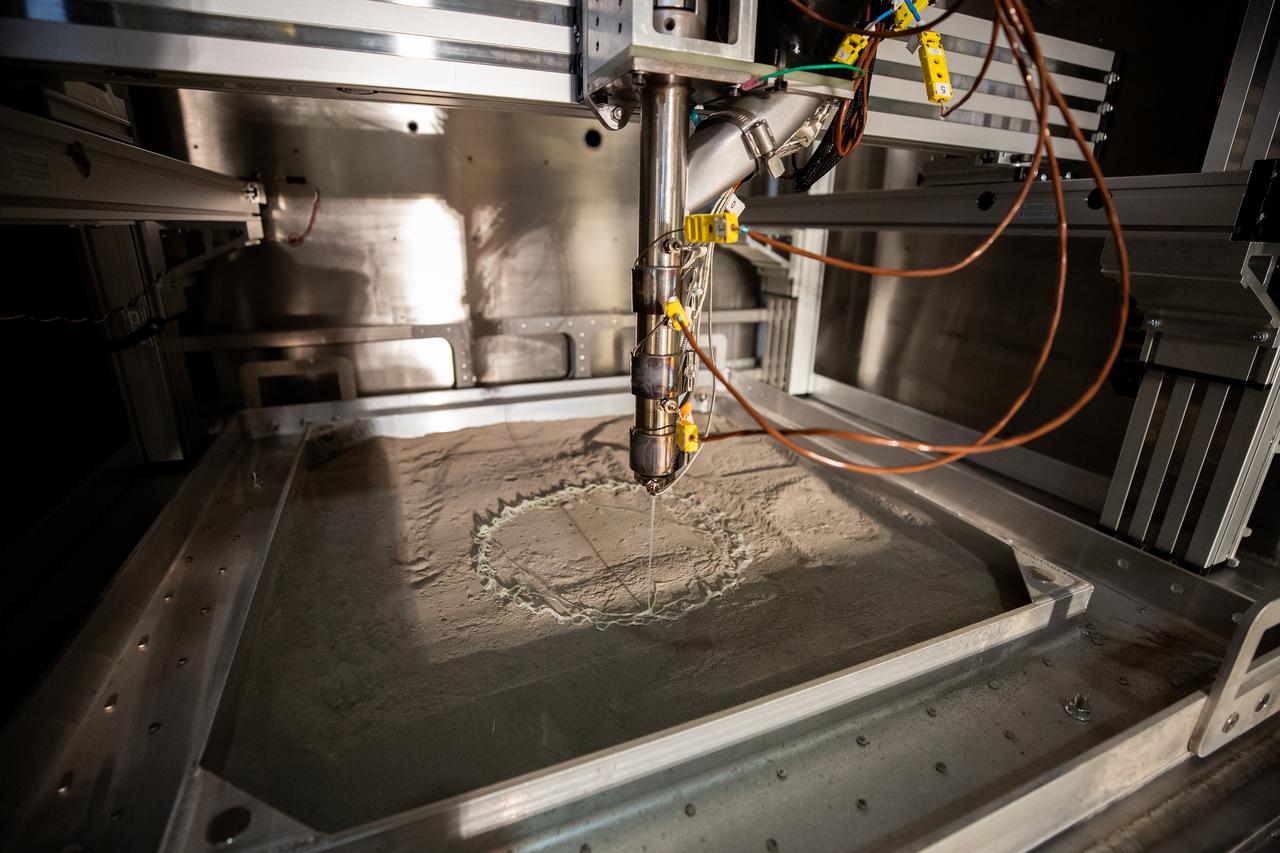
A team at NASA’s Kennedy Space Center in Florida test a 3D printer inside a vacuum chamber at the Granular Mechanics and Regolith Operations (GMRO) lab inside the spaceport’s Swamp Works, as part of the Relevant Environment Additive Construction Technology (REACT) project on April 5, 2022. Testing REACT derives from NASA’s 2020 Announcement of Collaboration Opportunity, with AI SpaceFactory – an architectural and construction technology company and winner of NASA’s 3D Printed Habitat Challenge – collaborating with Kennedy teams to build 3D-printed test structures using a composite made from polymers and a regolith simulant in a vacuum chamber that mimics environmental conditions on the Moon.
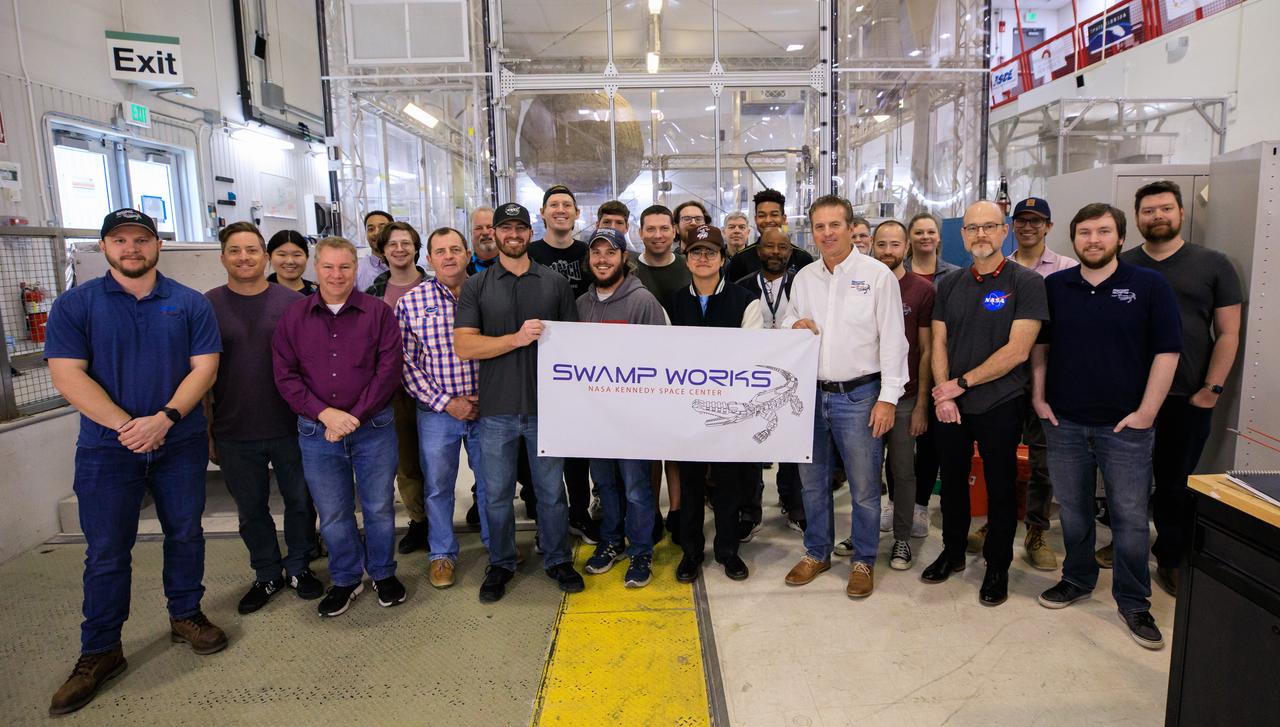
Groups from the Granular Mechanics and Regolith Operations (GMRO) laboratory and the Electrostatics and Surface Physics Laboratory (ESPL) gather for a photograph to celebrate the 10th anniversary of Swamp Works at NASA’s Kennedy Space Center in Florida on Feb. 13, 2023. Studies of the mechanics of materials in a launch pad environment are performed in the GMRO lab. The team also develops technologies for handling lunar and Martian regolith, including excavator technologies, pneumatic transport of soil, and magnetic handling of soil. The ESPL group performs scientific investigations to protect flight hardware and launch equipment from the phenomenon of electrostatic discharges, commonly known as sparks.
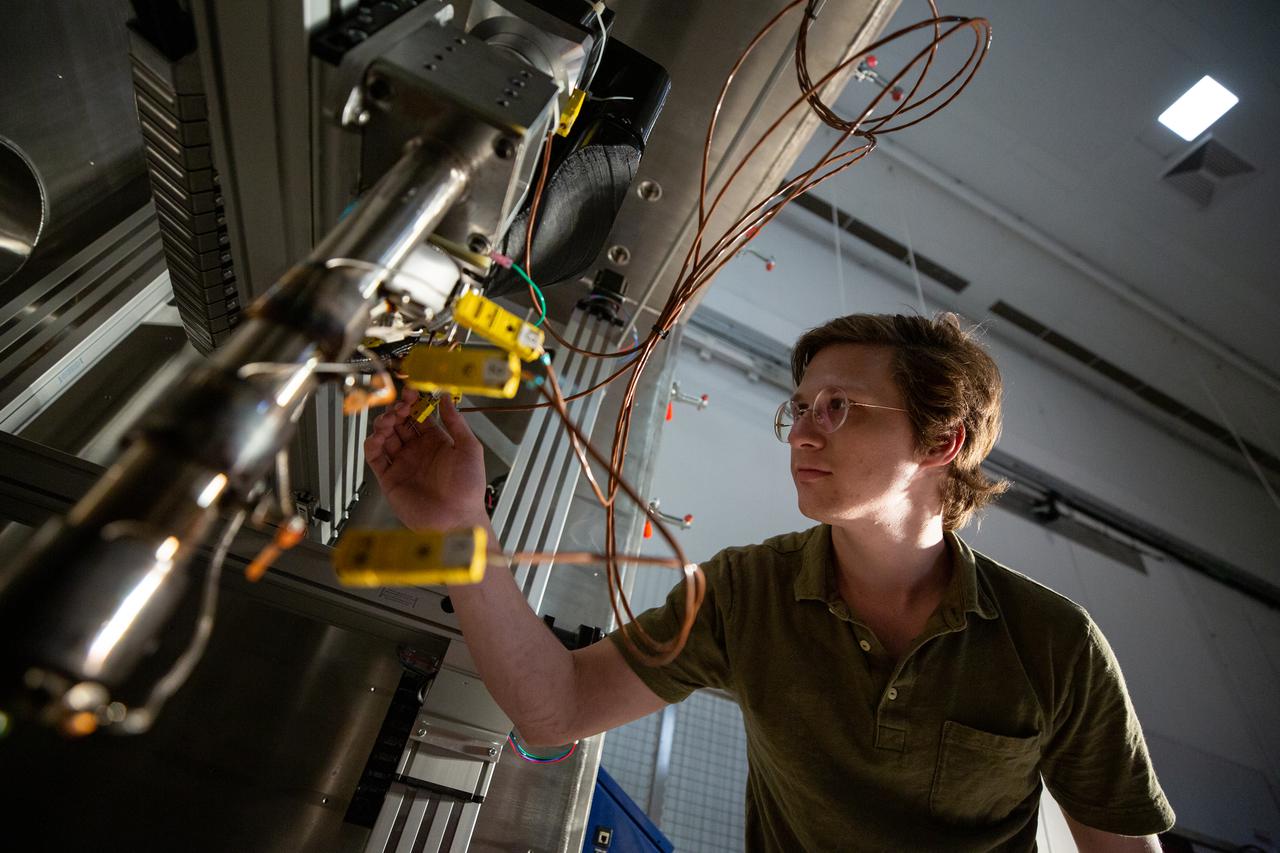
Thomas Lipscomb, a materials engineer at NASA’s Kennedy Space Center in Florida, prepares a vacuum chamber for testing 3D printing inside the Granular Mechanics and Regolith Operations (GMRO) lab at the spaceport’s Swamp Works on April 5, 2022. The testing is part of the Relevant Environment Additive Construction Technology (REACT) project, which derives from NASA’s 2020 Announcement of Collaboration Opportunity, with AI SpaceFactory – an architectural and construction technology company and winner of NASA’s 3D Printed Habitat Challenge – collaborating with Kennedy teams to build 3D-printed test structures using a composite made from polymers and a regolith simulant in a vacuum chamber that mimics environmental conditions on the Moon.
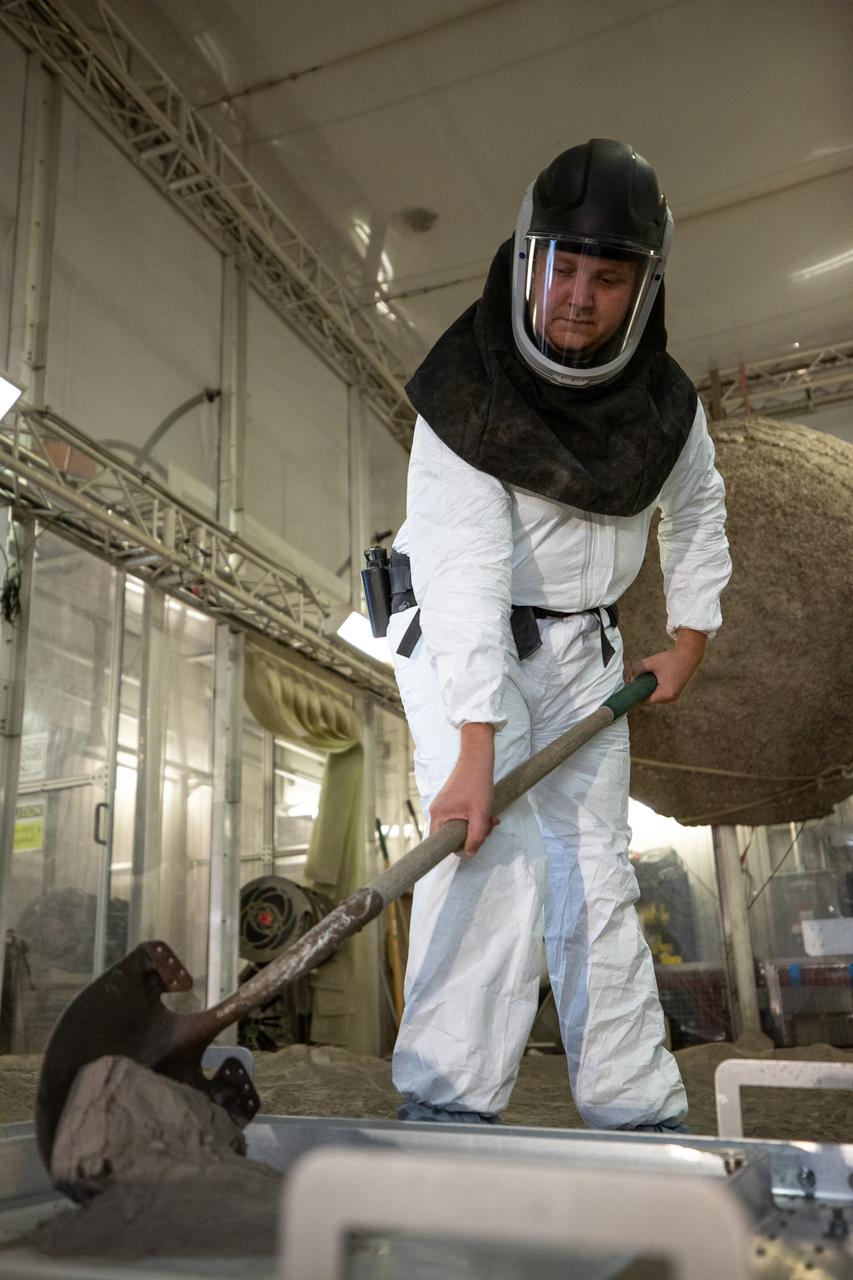
NASA engineer Evan Bell prepares a vacuum chamber for testing 3D printing inside the Granular Mechanics and Regolith Operations (GMRO) lab at Kennedy Space Center’s Swamp Works in Florida on April 5, 2022. The testing is part of the Relevant Environment Additive Construction Technology (REACT) project, which derives from NASA’s 2020 Announcement of Collaboration Opportunity, with AI SpaceFactory – an architectural and construction technology company and winner of NASA’s 3D Printed Habitat Challenge – collaborating with Kennedy teams to build 3D-printed test structures using a composite made from polymers and a regolith simulant in a vacuum chamber that mimics environmental conditions on the Moon.
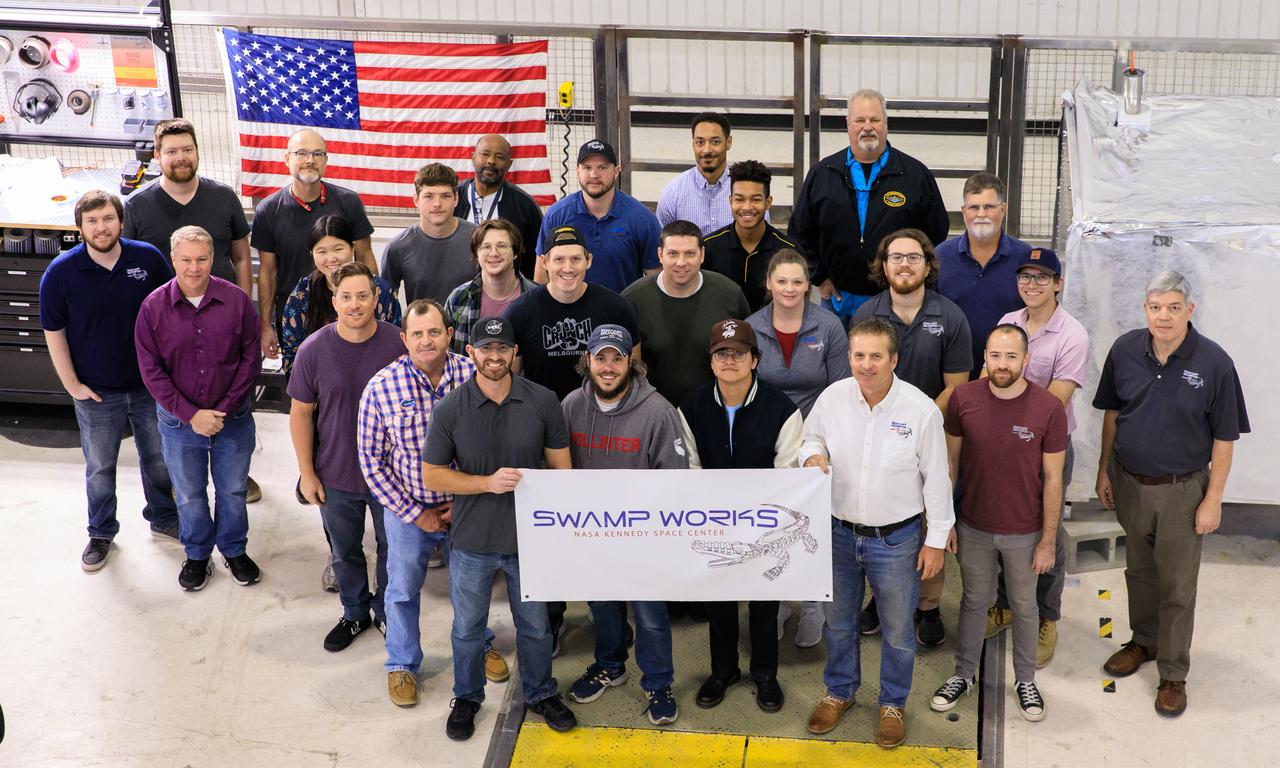
Groups from the Granular Mechanics and Regolith Operations (GMRO) laboratory and the Electrostatics and Surface Physics Laboratory (ESPL) gather for a photograph to celebrate the 10th anniversary of Swamp Works at NASA’s Kennedy Space Center in Florida on Feb. 13, 2023. Studies of the mechanics of materials in a launch pad environment are performed in the GMRO lab. The team also develops technologies for handling lunar and Martian regolith, including excavator technologies, pneumatic transport of soil, and magnetic handling of soil. The ESPL group performs scientific investigations to protect flight hardware and launch equipment from the phenomenon of electrostatic discharges, commonly known as sparks.
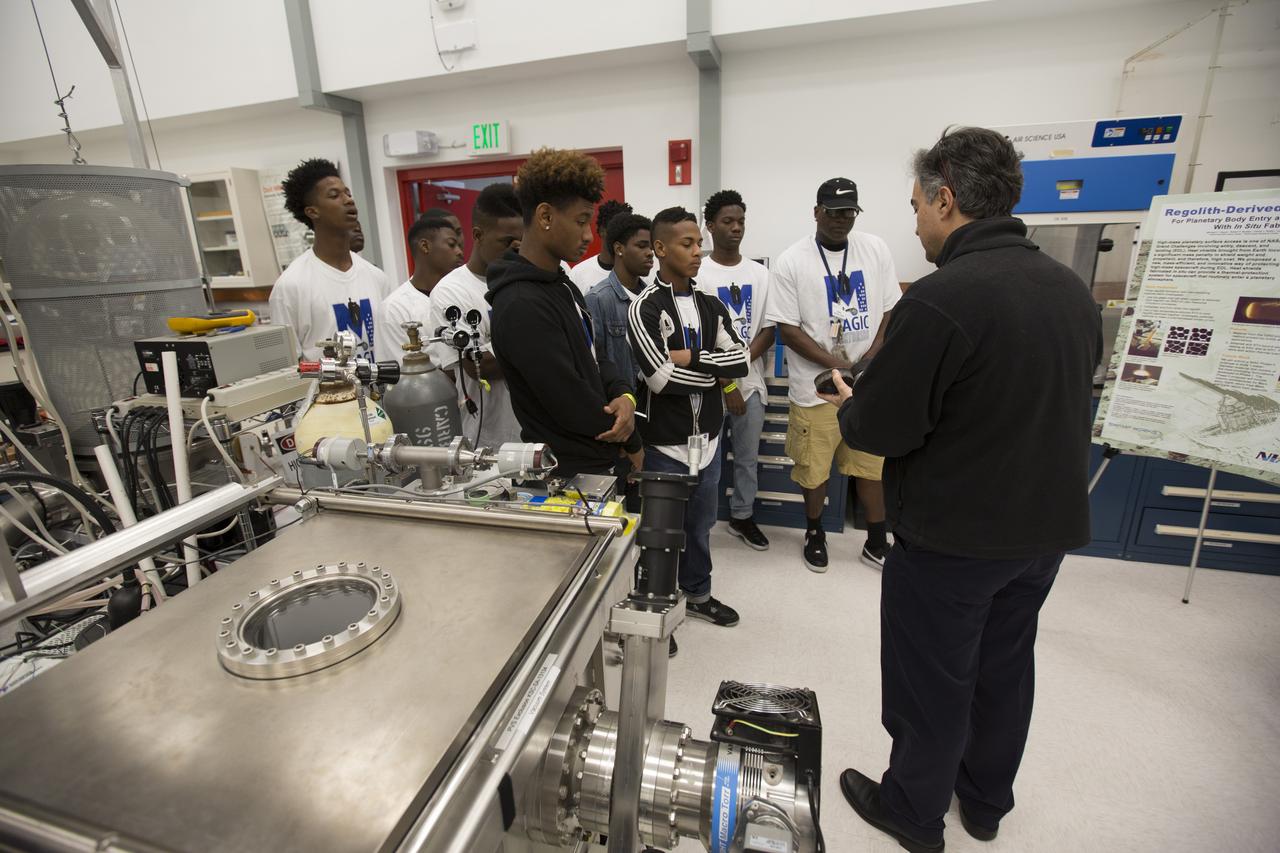
Students in the My Brother’s Keeper program watch as Jose Nunez of NASA Kennedy Space Center’s Exploration Research and Technology Programs demonstrates some of the hardware in the Electrostatic and Surface Physics Lab at the Florida spaceport. Kennedy is one of six NASA centers that participated in My Brother’s Keeper National Lab Week. The event is a nationwide effort to bring youth from underrepresented communities into federal labs and centers for hands-on activities, tours and inspirational speakers. Sixty students from the nearby cities of Orlando and Sanford visited Kennedy, where they toured the Vehicle Assembly Building, the Space Station Processing Facility and the center’s innovative Swamp Works Labs. The students also had a chance to meet and ask questions of a panel of subject matter experts from across Kennedy.
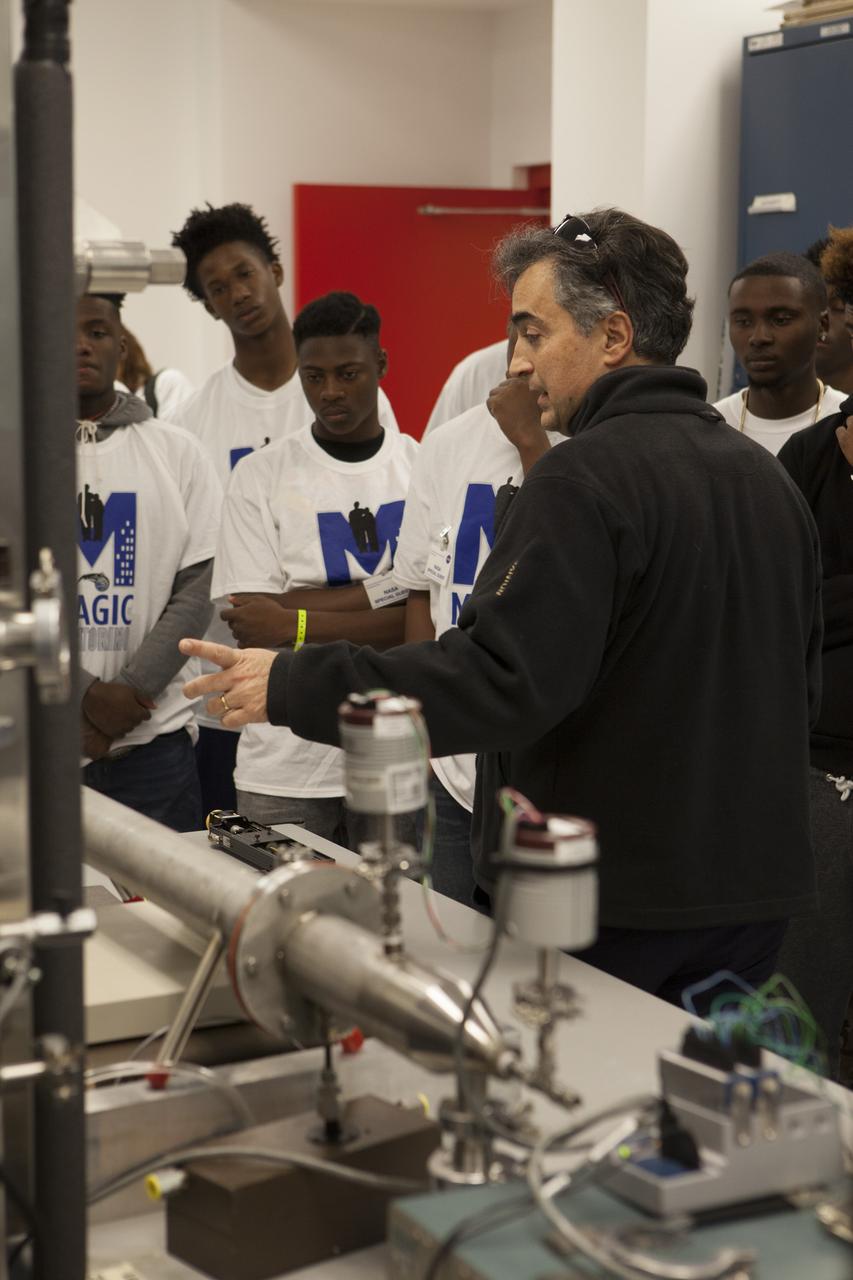
Students in the My Brother’s Keeper program listen as Jose Nunez of NASA Kennedy Space Center’s Exploration Research and Technology Programs explains some of the hardware in the Electrostatic and Surface Physics Lab at the Florida spaceport. Kennedy is one of six NASA centers that participated in My Brother’s Keeper National Lab Week. The event is a nationwide effort to bring youth from underrepresented communities into federal labs and centers for hands-on activities, tours and inspirational speakers. Sixty students from the nearby cities of Orlando and Sanford visited Kennedy, where they toured the Vehicle Assembly Building, the Space Station Processing Facility and the center’s innovative Swamp Works Labs. The students also had a chance to meet and ask questions of a panel of subject matter experts from across Kennedy.
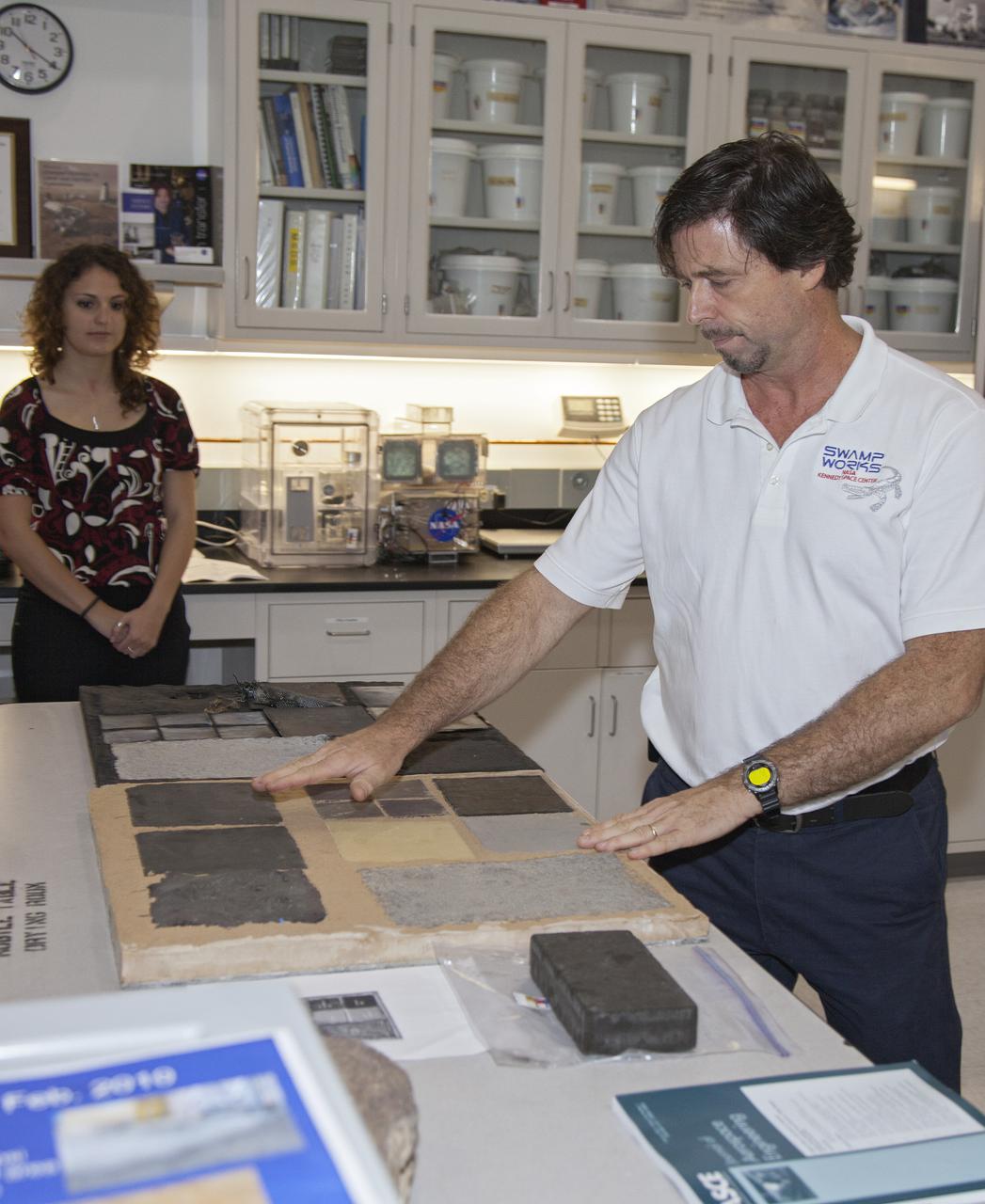
CAPE CANAVERAL, Fla. -- Dr. Phil Metzger, at right, a principal investigator in the Surface Systems Office, discusses some of NASA's cutting-edge projects with media representatives touring the Granular Mechanics and Regolith Operations, or GMRO, Lab in the Swamp Works at NASA's Kennedy Space Center in Florida. The GMRO team develops robotics to excavate regolith and ice as resources and to prepare berms, roads and landing pads. The laboratory also studies the physics of blowing rego¬lith and other materials in a rocket exhaust plume to predict and mitigate the blast effects of launches and landings. The team performed a demonstration of the Regolith Advanced Surface Systems Operations Robot, or RASSOR, for the media. Kennedy's Swamp Works provides rapid, innovative and cost-effective exploration mission solutions, leveraging partnerships across NASA, industry and academia. Kennedy's research and technology mission is to improve spaceports on Earth, as well as lay the groundwork for establishing spaceports at destinations in space. For more information, visit http:__www.nasa.gov_centers_kennedy_exploration_researchtech_index.html. Photo credit: NASA_Frankie Martin