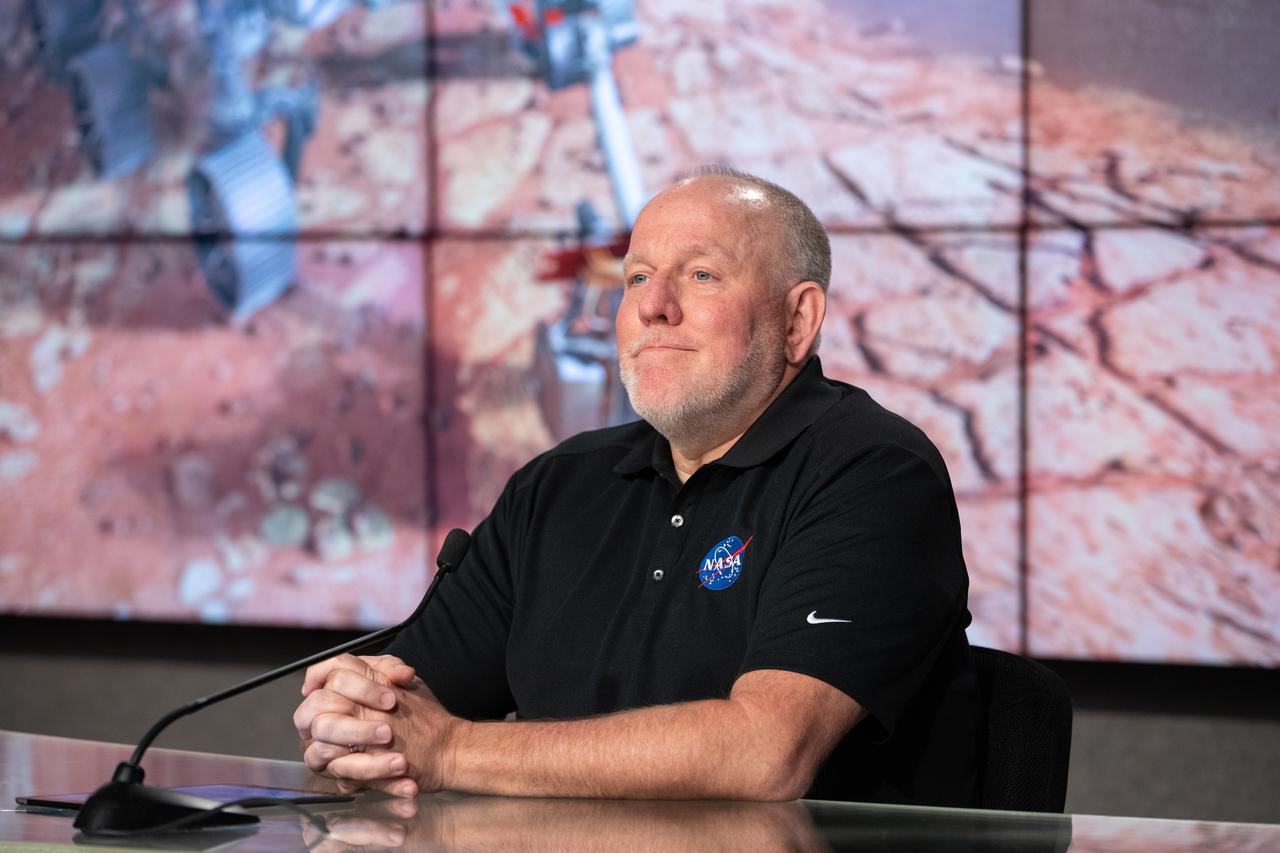
Jeff Sheehy, Space Technology Mission Directorate, NASA Headquarters, participates in a Mars 2020 Mission Tech and Humans to Mars Briefing at NASA’s Kennedy Space Center in Florida on July 28, 2020. The Mars Perseverance rover is scheduled to launch July 30, on a United Launch Alliance Atlas V 541 rocket from Space Launch Complex 41 at nearby Cape Canaveral Air Force Station. The rover is part of NASA’s Mars Exploration Program, a long-term effort of robotic exploration of the Red Planet. The rover will search for habitable conditions in the ancient past and signs of past microbial life on Mars. The Launch Services Program at Kennedy is responsible for launch management.
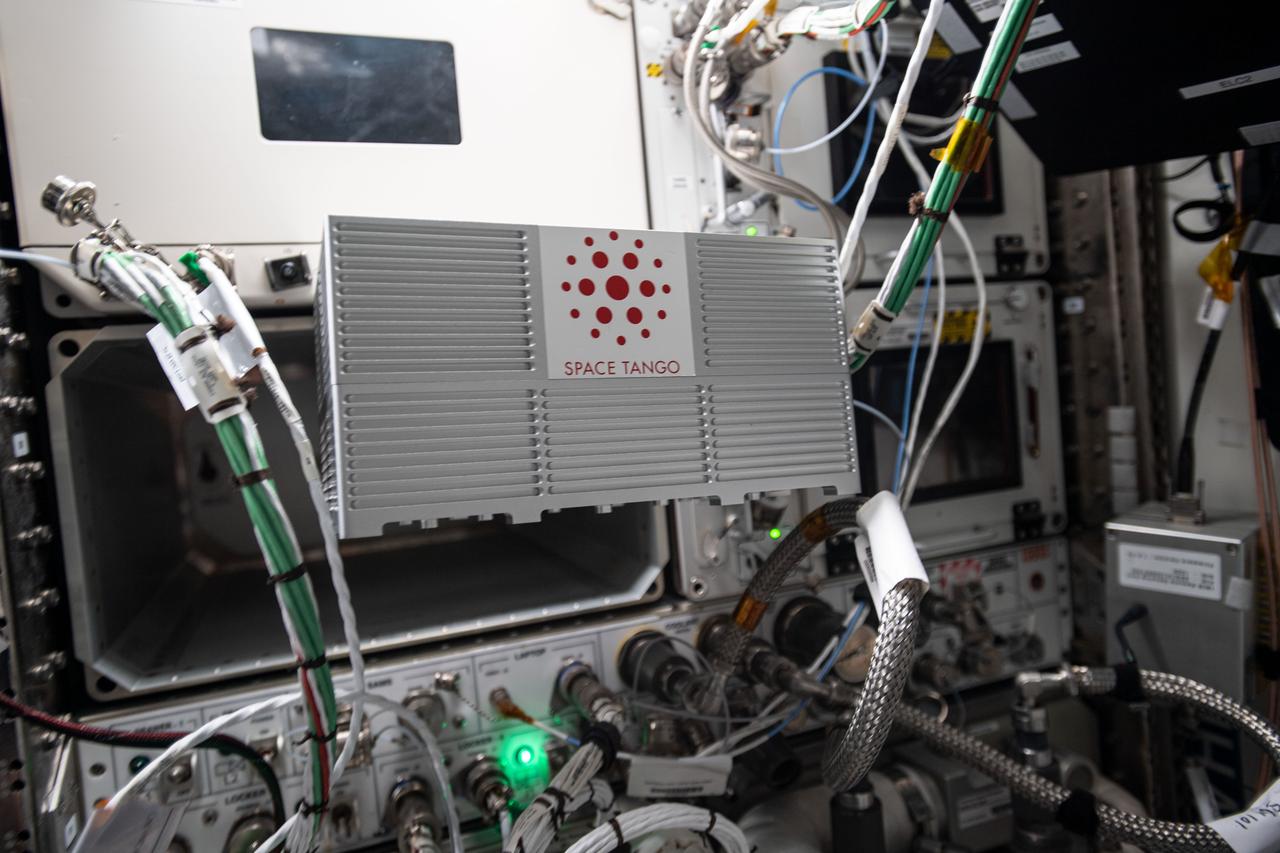
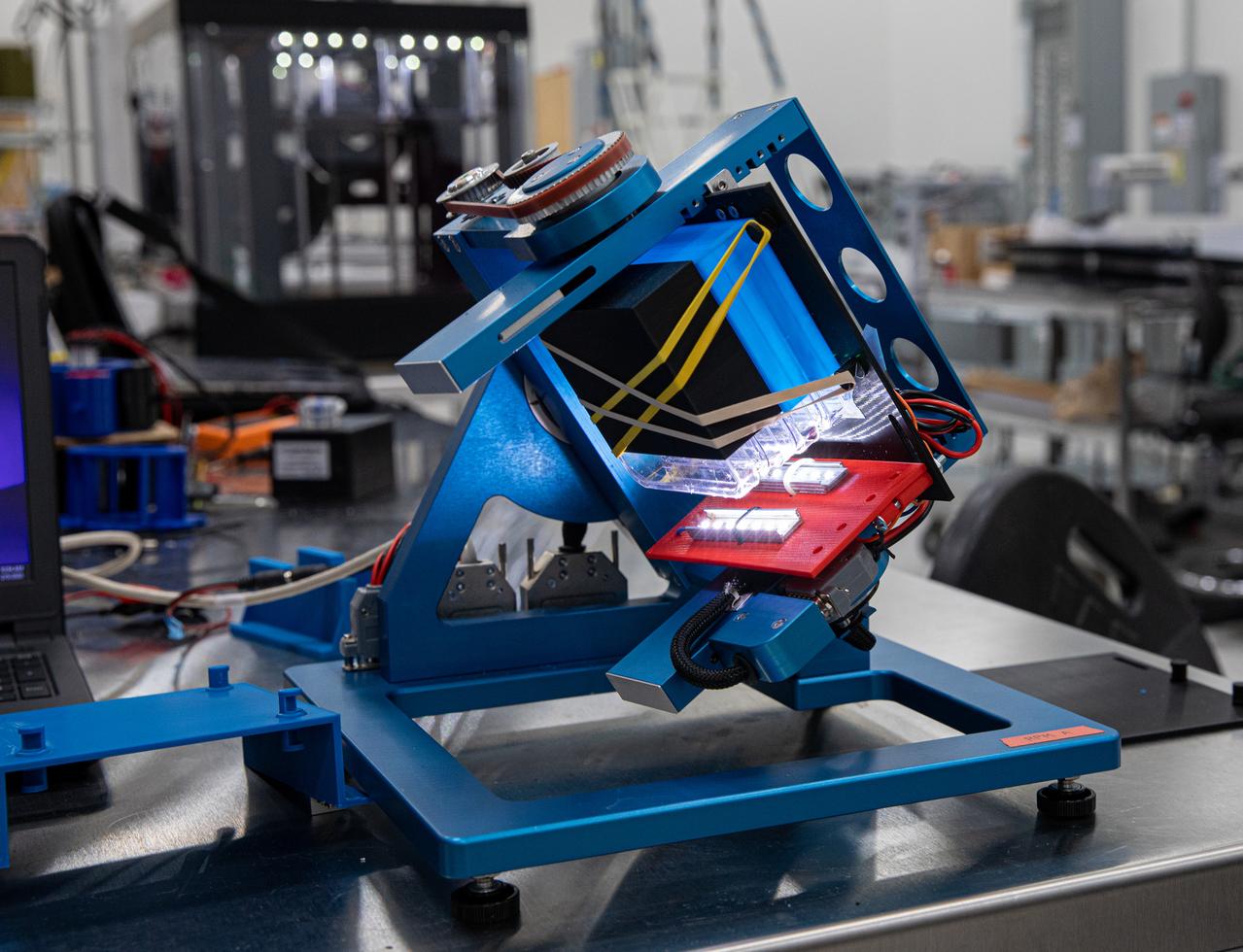
iss063e113776 (10/20/2020) --- A view of the CubeLab Microscope Imagery Tech Demo aboard the International Space Station (ISS). The CubeLab Microscope Imagery Technology Demonstration (CubeLab Microscope Imagery Tech Demo) tests enhanced microscope imagery capabilities for experiments aboard the space station. Images provide a primary way to document and analyze many microgravity investigations, and better quality images could lead to better results.
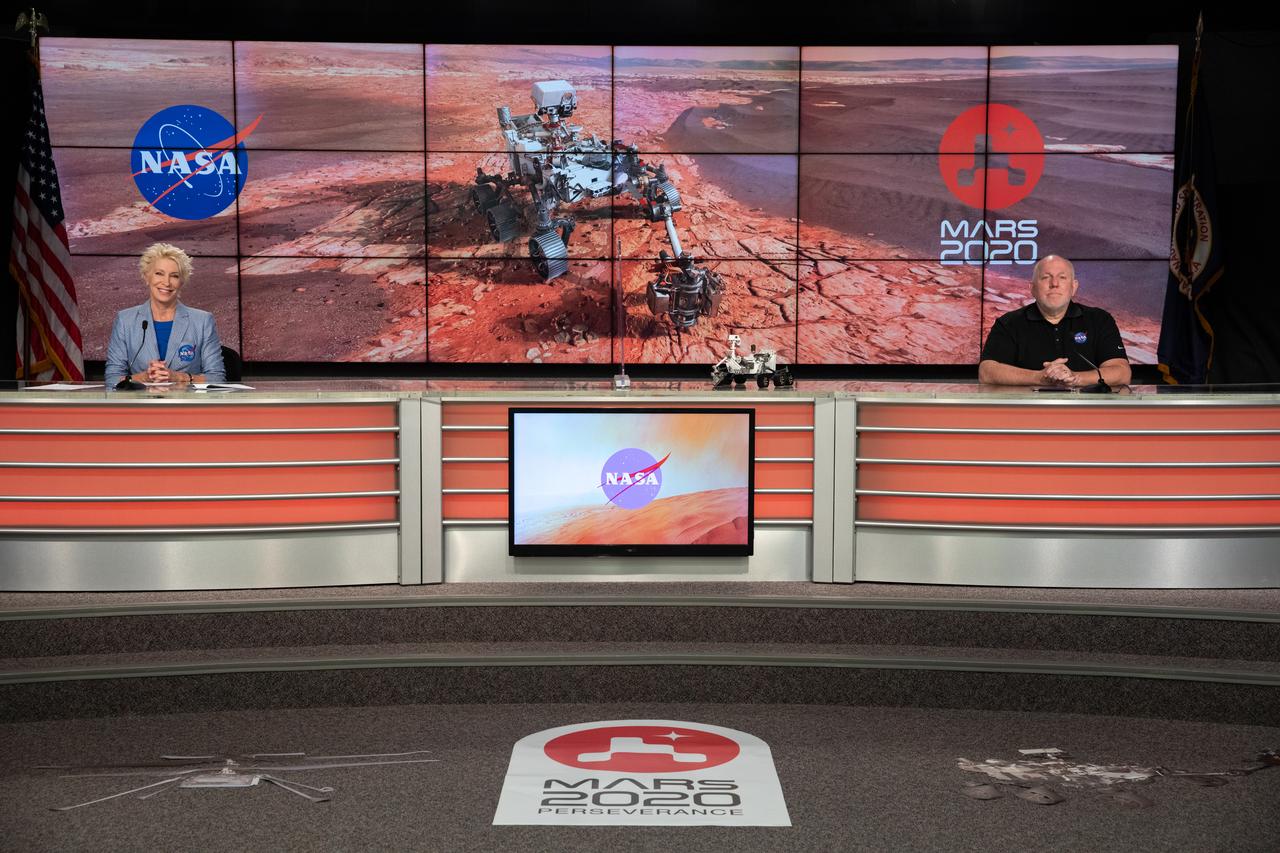
A Mars 2020 Mission Tech and Humans to Mars Briefing is held at NASA’s Kennedy Space Center in Florida on July 28, 2020. Participating in the briefing from left, are Tammy Long, moderator, NASA Communications, and Jeff Sheehy, Space Technology Mission Directorate, NASA Headquarters. The Mars Perseverance rover is scheduled to launch July 30, on a United Launch Alliance Atlas V 541 rocket from Space Launch Complex 41 at nearby Cape Canaveral Air Force Station. The rover is part of NASA’s Mars Exploration Program, a long-term effort of robotic exploration of the Red Planet. The rover will search for habitable conditions in the ancient past and signs of past microbial life on Mars. The Launch Services Program at Kennedy is responsible for launch management.

NMTSat is a student-built satellite built by undergraduate and graduates students primarily from New Mexico Tech. NMTSat is designed to operate five sensors in four experiments in space for 3 months of data collection. The experiments will provide data on earth’s magnetic field, high altitude plasma density, atmospheric weather measurements, and an optical beacon experiment. Approximately 50 students have contributed to NMTSat and its design not including the students and groups who have developed the science instruments. NMTSat CubeSat is providing the opportunity for these science experiments to be conducted on orbit and demonstrates the collaborative nature of the Educational Launch of Nano Satellite (ELaNa) Program at NASA. The instruments have been contributed by New Mexico Tech, Turabo University in Puerto Rico, Los Alamos National Laboratory, and Atmospheric and Space Technology Research Associates (ASTRA) in Boulder, CO. Dr. Anders M. Jorgensen, Associate Professor at New Mexico Tech is the PI and Dr. Hien Vo from Vietnamese-German University in Ho Chi Minh University in Vietnam is a Co-Investigator. NMTSat is funded by the New Mexico NASA EPSCoR program as well as New Mexico Tech.

NMTSat is a student-built satellite built by undergraduate and graduates students primarily from New Mexico Tech. NMTSat is designed to operate five sensors in four experiments in space for 3 months of data collection. The experiments will provide data on earth’s magnetic field, high altitude plasma density, atmospheric weather measurements, and an optical beacon experiment. Approximately 50 students have contributed to NMTSat and its design not including the students and groups who have developed the science instruments. NMTSat CubeSat is providing the opportunity for these science experiments to be conducted on orbit and demonstrates the collaborative nature of the Educational Launch of Nano Satellite (ELaNa) Program at NASA. The instruments have been contributed by New Mexico Tech, Turabo University in Puerto Rico, Los Alamos National Laboratory, and Atmospheric and Space Technology Research Associates (ASTRA) in Boulder, CO. Dr. Anders M. Jorgensen, Associate Professor at New Mexico Tech is the PI and Dr. Hien Vo from Vietnamese-German University in Ho Chi Minh University in Vietnam is a Co-Investigator. NMTSat is funded by the New Mexico NASA EPSCoR program as well as New Mexico Tech.

NMTSat is a student-built satellite built by undergraduate and graduates students primarily from New Mexico Tech. NMTSat is designed to operate five sensors in four experiments in space for 3 months of data collection. The experiments will provide data on earth’s magnetic field, high altitude plasma density, atmospheric weather measurements, and an optical beacon experiment. Approximately 50 students have contributed to NMTSat and its design not including the students and groups who have developed the science instruments. NMTSat CubeSat is providing the opportunity for these science experiments to be conducted on orbit and demonstrates the collaborative nature of the Educational Launch of Nano Satellite (ELaNa) Program at NASA. The instruments have been contributed by New Mexico Tech, Turabo University in Puerto Rico, Los Alamos National Laboratory, and Atmospheric and Space Technology Research Associates (ASTRA) in Boulder, CO. Dr. Anders M. Jorgensen, Associate Professor at New Mexico Tech is the PI and Dr. Hien Vo from Vietnamese-German University in Ho Chi Minh University in Vietnam is a Co-Investigator. NMTSat is funded by the New Mexico NASA EPSCoR program as well as New Mexico Tech.
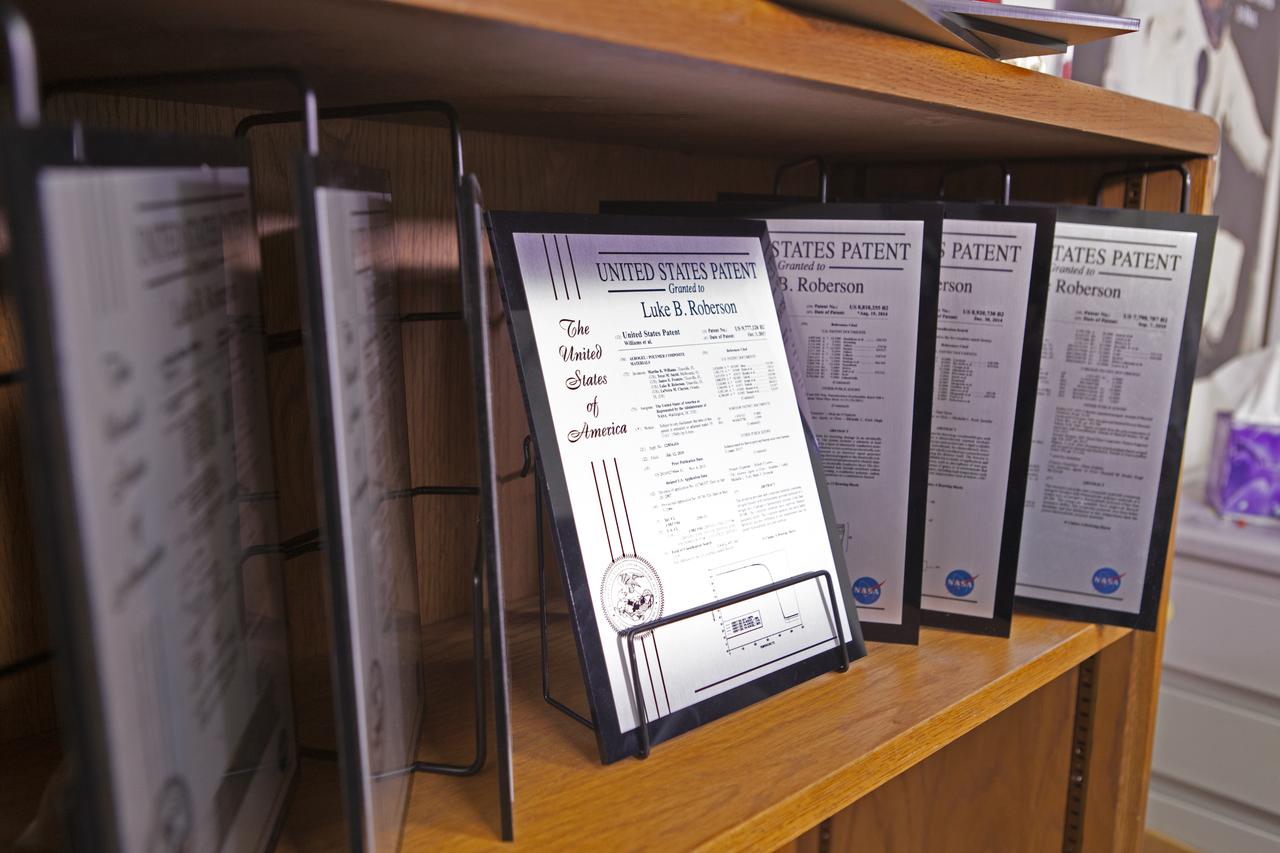
Kennedy Space Center’s Luke Roberson, a principal investigator with the flight technology branch, has received several patents from the United States Patent and Trademark Office. Certificates recognizing those patents are on display in his office at the Florida spaceport’s Space Station Processing Facility.
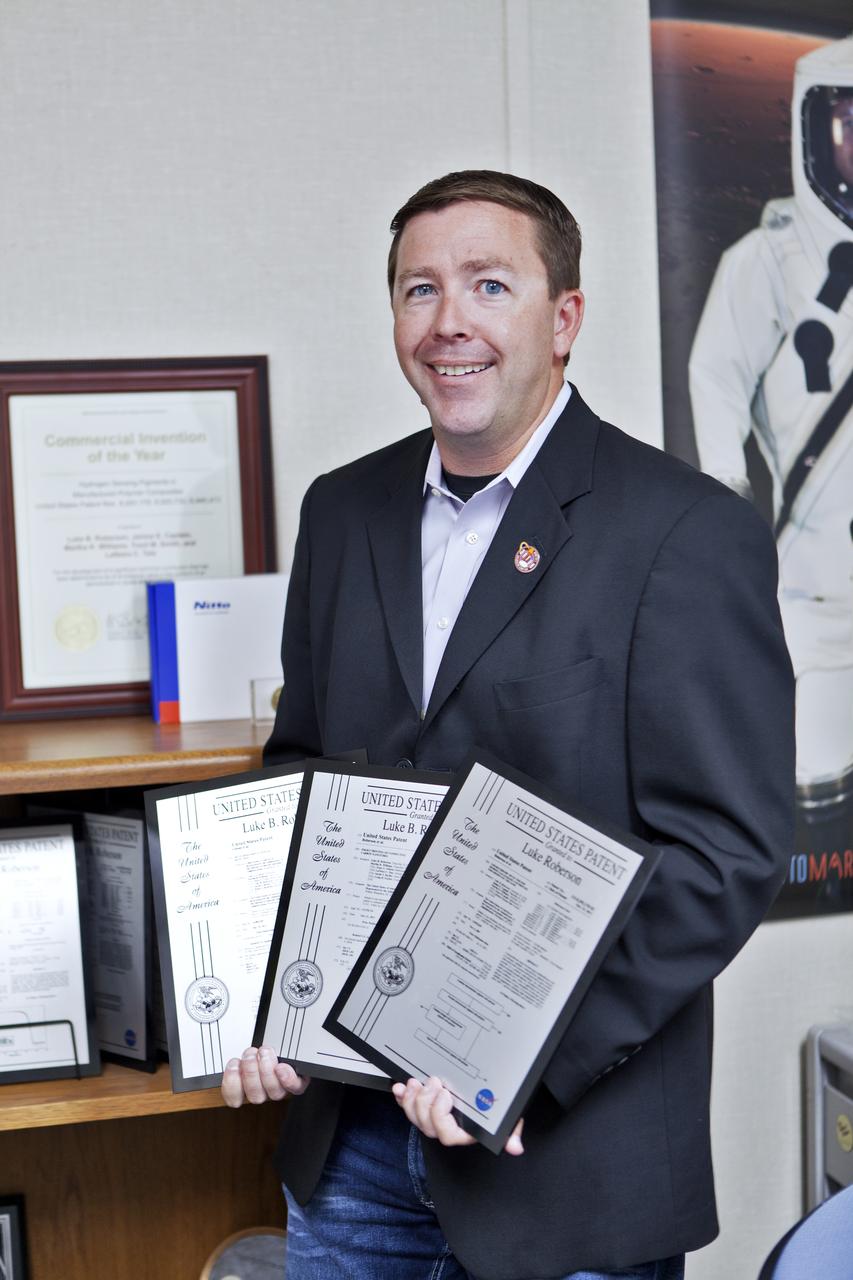
Luke Roberson, a principal investigator with the flight technology branch at NASA’s Kennedy Space Center in Florida, discusses patents and new technology reports for a video that targets internal audiences at NASA. Roberson’s contributions are reflected in multiple U.S. patents.
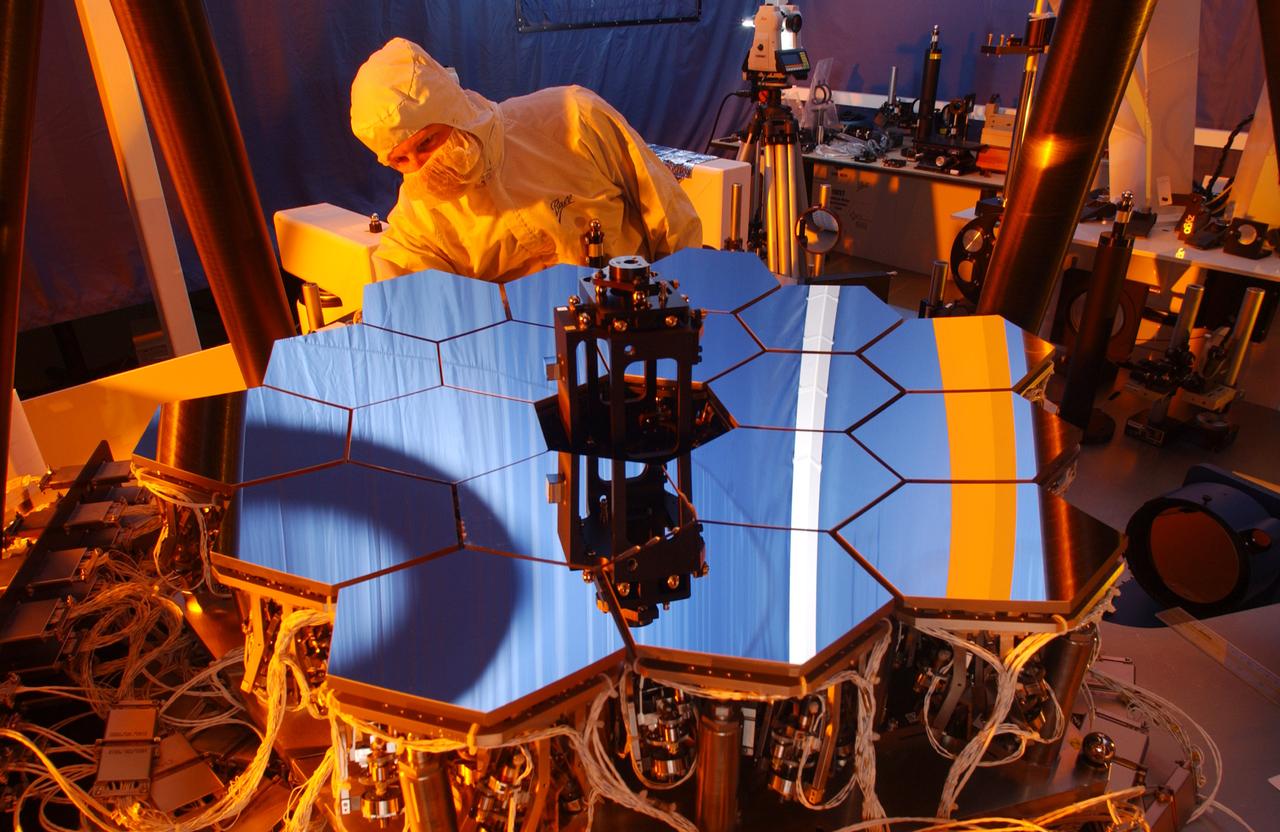
When the James Webb Space Telescope (JWST) reaches its orbit about a million miles (1.5 kilometers) from Earth and begins studying the distant reaches of the universe, the event will mark an unprecedented triumph on several technological fronts. Photo Credit: Chris Gunn For more information go to the Goddard Tech Trends Archive: Spring 2007 (http://gsfctechnology.gsfc.nasa.gov/TechTrendsArchive.html)
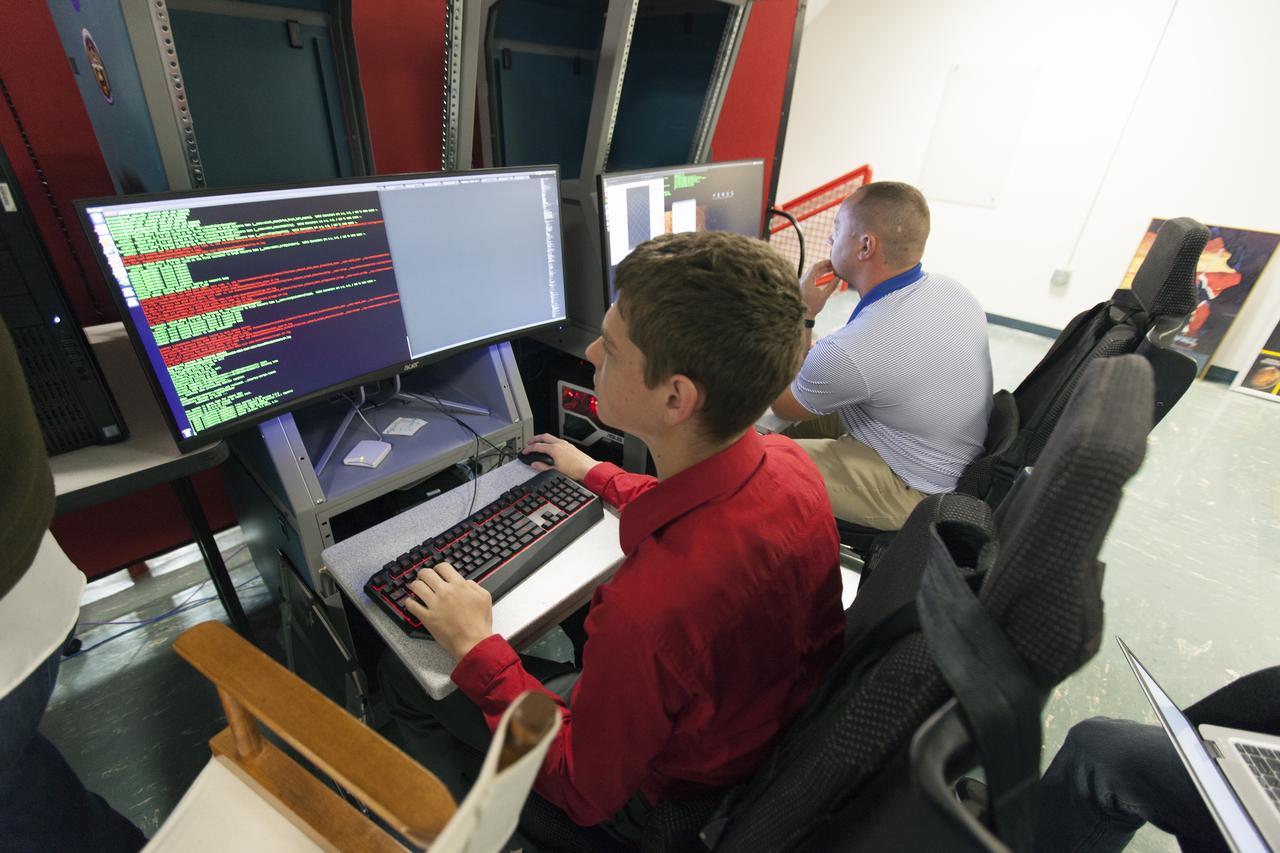
In the Swamp Works laboratory at NASA's Kennedy Space Center in Florida, student interns such as Thomas Muller, left, and Austin Langdon are joining agency scientists, contributing in the area of Exploration Research and Technology. Muller is pursuing a degree in computer engineering and control systems and Florida Tech. Langdon is an electrical engineering major at the University of Kentucky. The agency attracts its future workforce through the NASA Internship, Fellowships and Scholarships, or NIFS, Program.
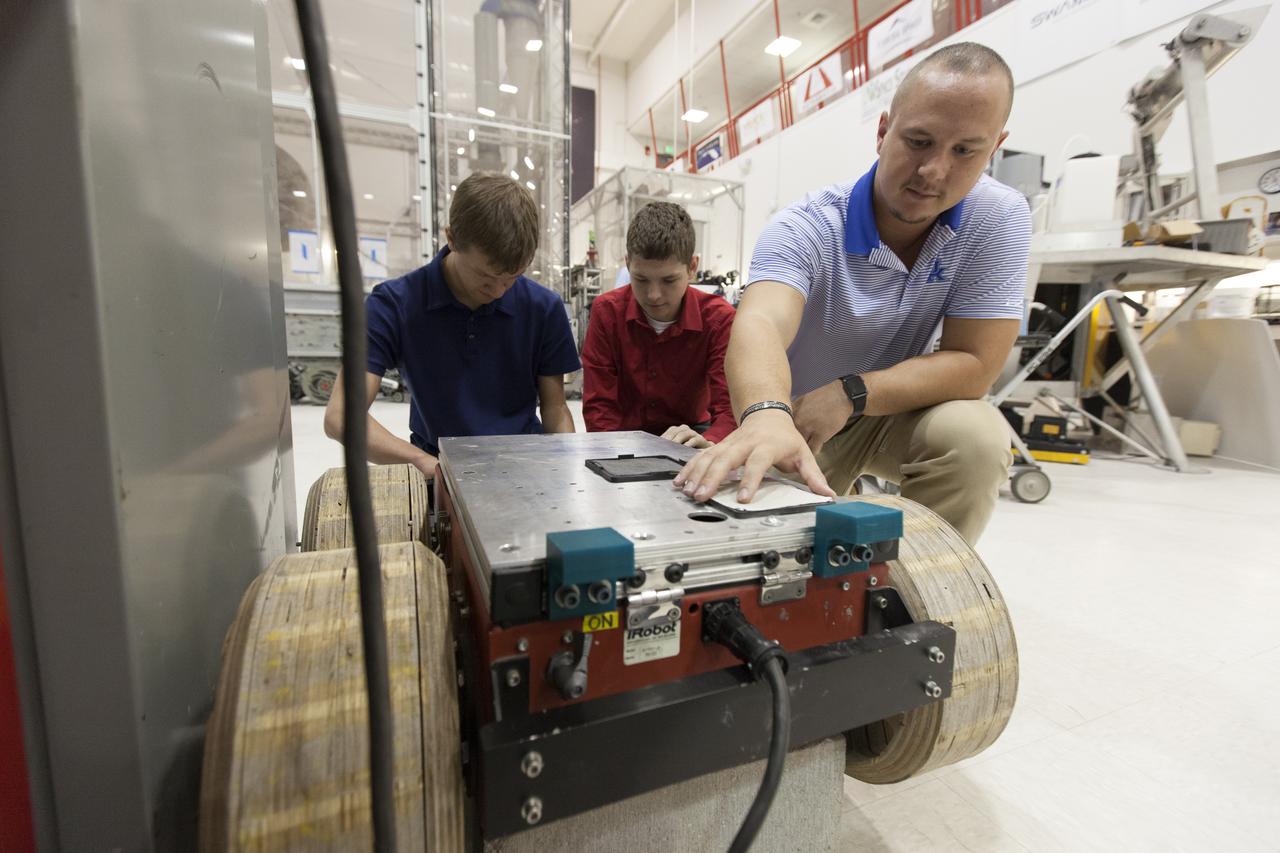
In the Swamp Works laboratory at NASA's Kennedy Space Center in Florida, student interns, from the left, Jeremiah House, Thomas Muller and Austin Langdon are joining agency scientists, contributing in the area of Exploration Research and Technology. House is studying computer/electrical engineering at John Brown University in Siloam Springs, Arkansas. Muller is pursuing a degree in computer engineering and control systems and Florida Tech. Langdon is an electrical engineering major at the University of Kentucky. The agency attracts its future workforce through the NASA Internship, Fellowships and Scholarships, or NIFS, Program.
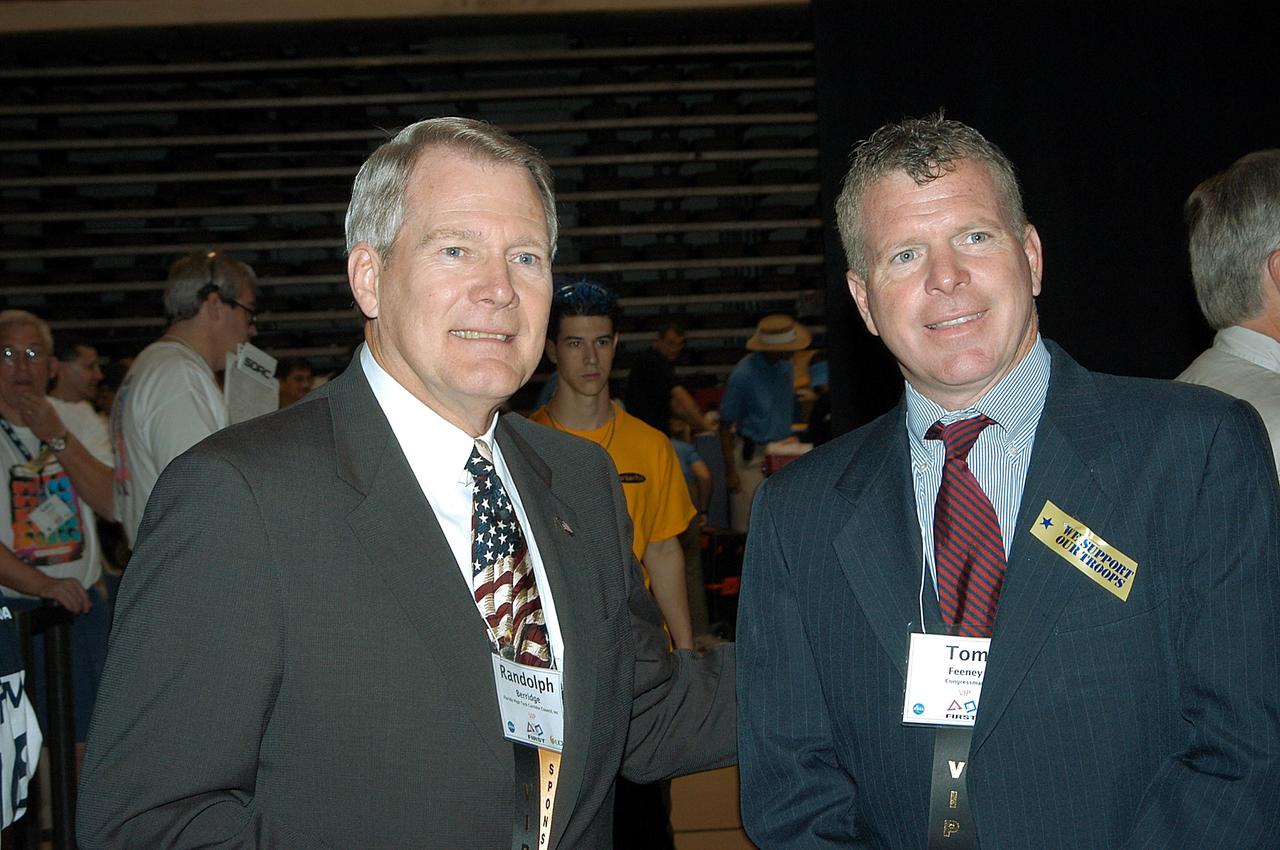
KENNEDY SPACE CENTER, FLA. - Randolph E. Berridge, president of the Florida High Tech Corridor Council, and Tom Feeney, Florida Representative from the 24th District, attend the 2003 Southeastern Regional FIRST Robotic Competition. The competition is being held at the University of Central Florida (UCF) in Orlando, March 20-23. Forty student teams from around the country are participating in the event that pits team-built gladiator robots against each other in an athletic-style competition. The teams are sponsored by NASA/Kennedy Space Center, The Boeing Company/Brevard Community College, and Lockheed Martin Space Operations/Mission Systems for the nonprofit organization For Inspiration and Recognition of Science and Technology, known as FIRST. The vision of FIRST is to inspire in the youth of our nation an appreciation of science and technology and an understanding that mastering these disciplines can enrich the lives of all mankind.
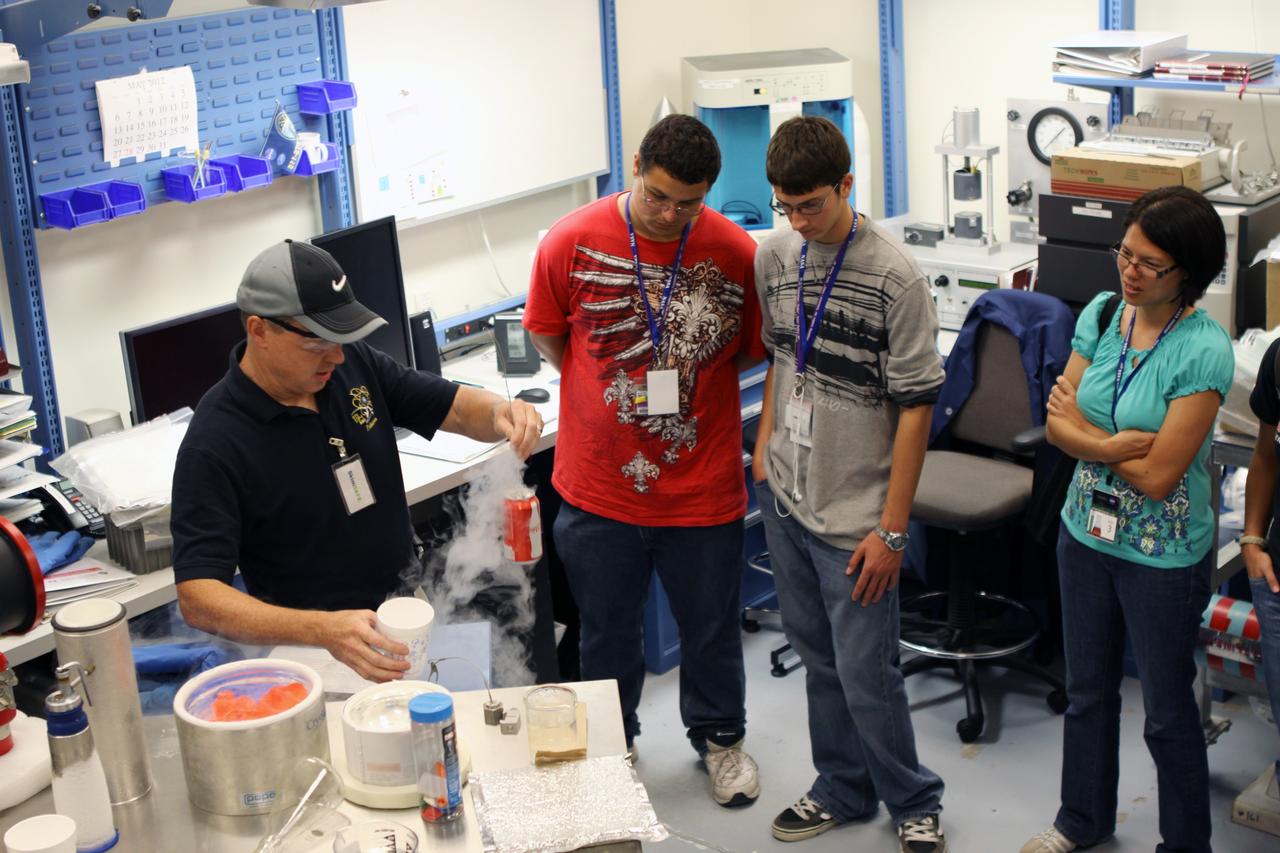
CAPE CANAVERAL, Fla. – Students view a demonstration by Dr. James Fesmire inside the cryogenics lab in the Operations and Checkout Building. The 26 honor students in chemistry and biology and their teachers got a chance to visit a number of high-tech labs at Kennedy Space Center as part of an effort to encourage students in the areas of science, technology, engineering and math. The tenth and eleventh grade students from Terry Parker High School in Jacksonville, Fla., visited a number of vastly different labs during their one-day tour. The group's visit to Kennedy was hosted by the Education Office as part of a nationwide effort by the National Lab Network to help introduce the nation's students to science careers. Photo credit: NASA/Jim Grossmann
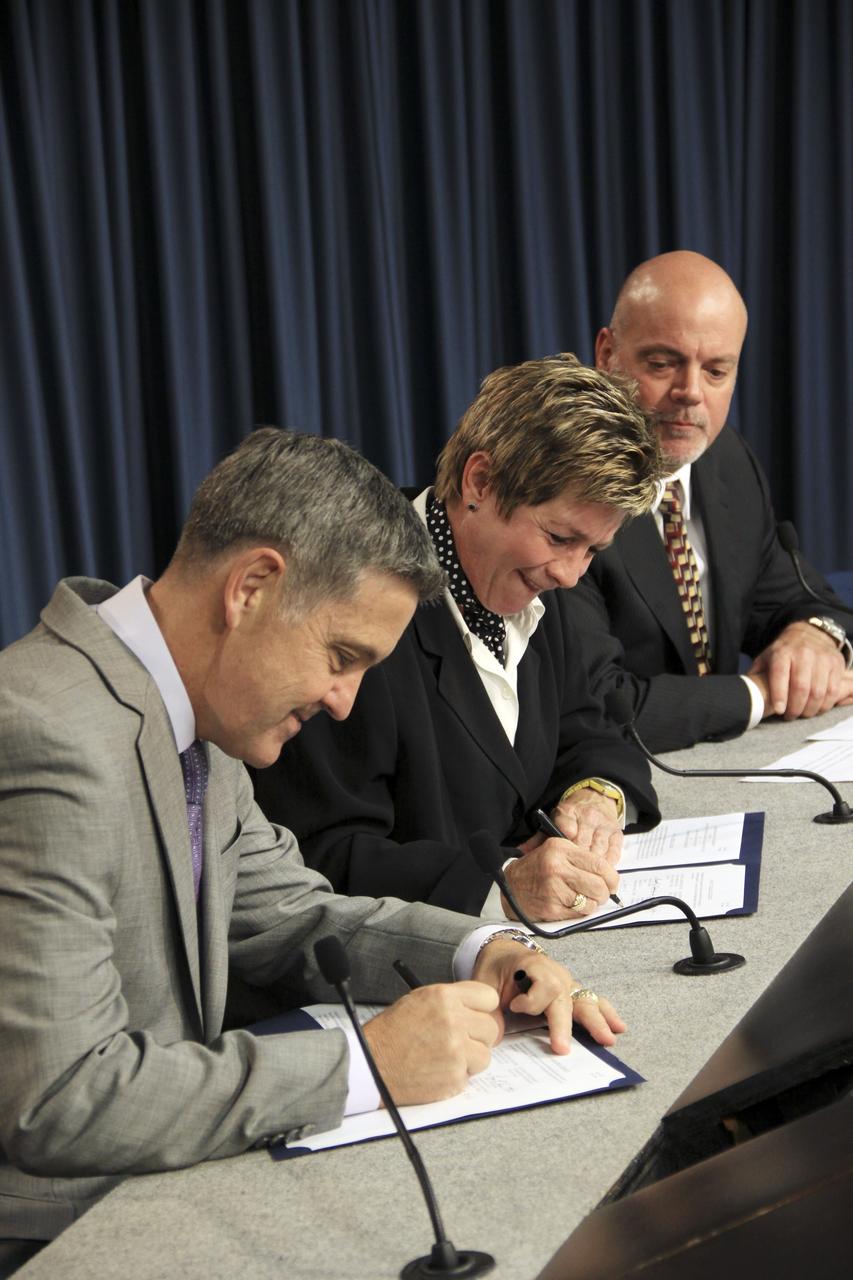
CAPE CANAVERAL, Fla. -- In the Press Site auditorium at NASA's Kennedy Space Center in Florida, Lynda Weatherman (center), Economic Development Commission (EDC) of Florida’s Space Coast president and CEO, shows her enthusiasm for the new five-year Space Act Agreement she is signing. Also signing the agreement, at left, is Kennedy Space Center Director Robert Cabana. Bob Whelen, chairman of the board of the EDC, looks on at right. The agreement calls for NASA and EDC senior leadership to meet regularly to discuss economic development matters of mutual interest. Managers from Kennedy’s Center Planning and Development Office will work with the EDC on potential business partnerships and meet with business leaders and committees to address space-related and high-tech economic development. EDC officials will assist NASA with disseminating information about potential partnership opportunities, as well as space-related and high-tech economic development, and increase awareness of Kennedy’s Engineering and Technology Directorate collaboration initiatives. They also will promote the commercial use of underutilized facilities at Kennedy. NASA and the EDC entered into their first economic cooperation agreement in 2005. For more information about the Economic Development Commission (EDC) of Florida’s Space Coast, visit http://www.spacecoastedc.org/. Photo credit: NASA/Jim Grossmann
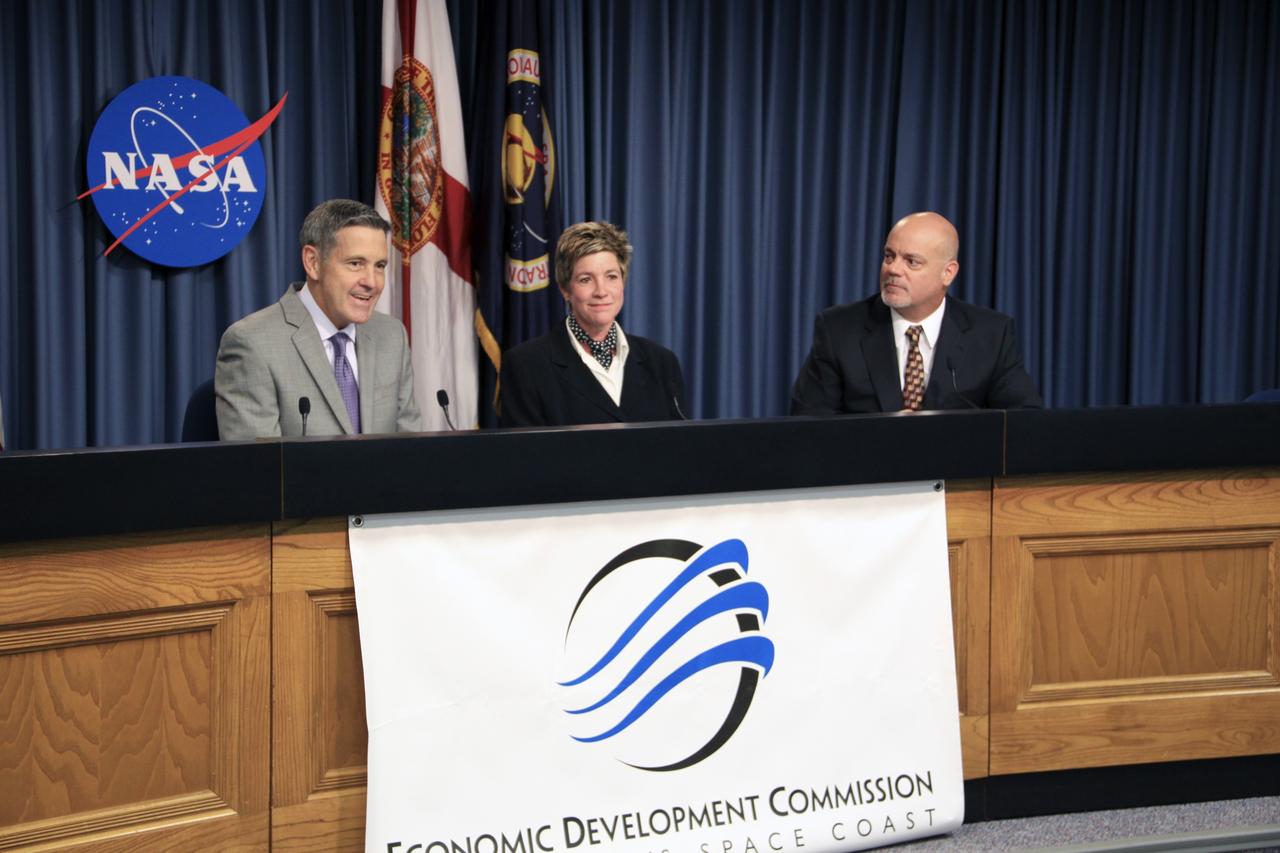
CAPE CANAVERAL, Fla. -- In the Press Site auditorium at NASA's Kennedy Space Center in Florida, managers from NASA and the Economic Development Commission (EDC) of Florida’s Space Coast discuss a new five-year Space Act Agreement reaffirming the partnership of the two organizations. From left are Kennedy Space Center Director Robert Cabana, EDC President and CEO Lynda Weatherman, and Chairman of the Board of the EDC Bob Whelen. The agreement calls for NASA and EDC senior leadership to meet regularly to discuss economic development matters of mutual interest. Managers from Kennedy’s Center Planning and Development Office will work with the EDC on potential business partnerships and meet with business leaders and committees to address space-related and high-tech economic development. EDC officials will assist NASA with disseminating information about potential partnership opportunities, as well as space-related and high-tech economic development, and increase awareness of Kennedy’s Engineering and Technology Directorate collaboration initiatives. They also will promote the commercial use of underutilized facilities at Kennedy. NASA and the EDC entered into their first economic cooperation agreement in 2005. For more information about the Economic Development Commission (EDC) of Florida’s Space Coast, visit http://www.spacecoastedc.org/. Photo credit: NASA/Jim Grossmann
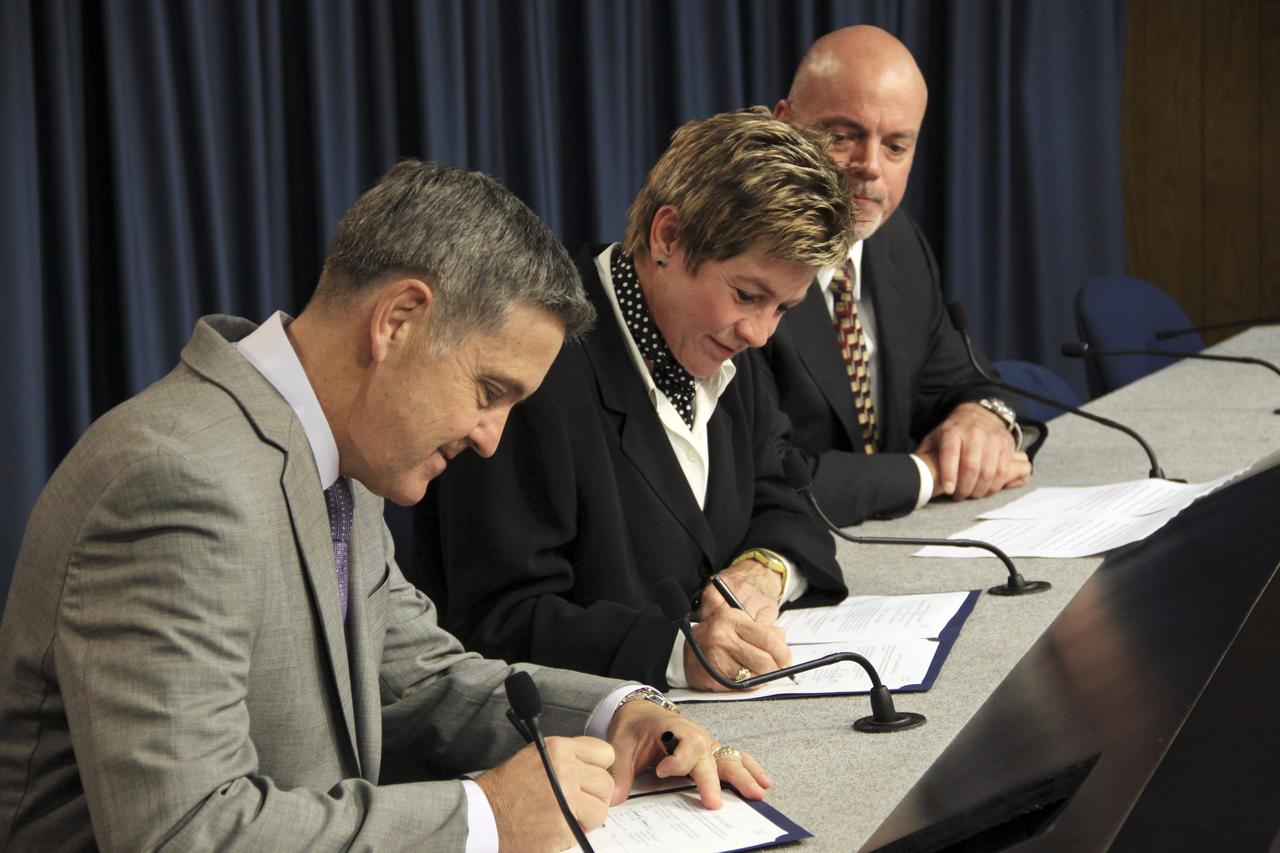
CAPE CANAVERAL, Fla. -- In the Press Site auditorium at NASA's Kennedy Space Center in Florida, representatives of NASA and the Economic Development Commission (EDC) of Florida’s Space Coast sign a new five-year Space Act Agreement. From left are Kennedy Space Center Director Director Robert Cabana and EDC President and CEO Lynda Weatherman, with Chairman of the Board of the EDC Bob Whelen looking on. The agreement calls for NASA and EDC senior leadership to meet regularly to discuss economic development matters of mutual interest. Managers from Kennedy’s Center Planning and Development Office will work with the EDC on potential business partnerships and meet with business leaders and committees to address space-related and high-tech economic development. EDC officials will assist NASA with disseminating information about potential partnership opportunities, as well as space-related and high-tech economic development, and increase awareness of Kennedy’s Engineering and Technology Directorate collaboration initiatives. They also will promote the commercial use of underutilized facilities at Kennedy. NASA and the EDC entered into their first economic cooperation agreement in 2005. For more information about the Economic Development Commission (EDC) of Florida’s Space Coast, visit http://www.spacecoastedc.org/. Photo credit: NASA/Jim Grossmann
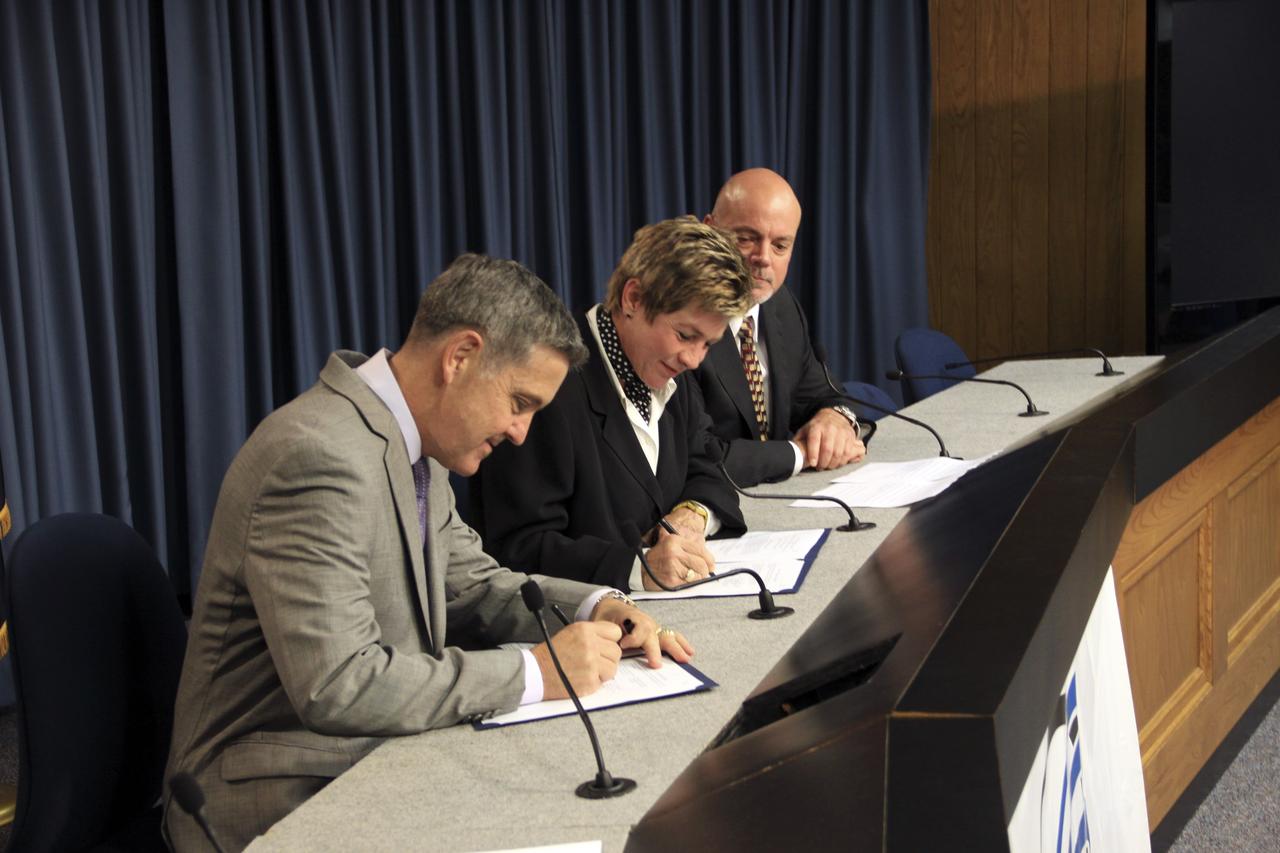
CAPE CANAVERAL, Fla. -- In the Press Site auditorium at NASA's Kennedy Space Center in Florida, representatives of NASA and the Economic Development Commission (EDC) of Florida’s Space Coast sign a new five-year Space Act Agreement. From left are Kennedy Space Center Director Robert Cabana and EDC President and CEO Lynda Weatherman, with Chairman of the Board of the EDC Bob Whelen looking on. The agreement calls for NASA and EDC senior leadership to meet regularly to discuss economic development matters of mutual interest. Managers from Kennedy’s Center Planning and Development Office will work with the EDC on potential business partnerships and meet with business leaders and committees to address space-related and high-tech economic development. EDC officials will assist NASA with disseminating information about potential partnership opportunities, as well as space-related and high-tech economic development, and increase awareness of Kennedy’s Engineering and Technology Directorate collaboration initiatives. They also will promote the commercial use of underutilized facilities at Kennedy. NASA and the EDC entered into their first economic cooperation agreement in 2005. For more information about the Economic Development Commission (EDC) of Florida’s Space Coast, visit http://www.spacecoastedc.org/. Photo credit: NASA/Jim Grossmann
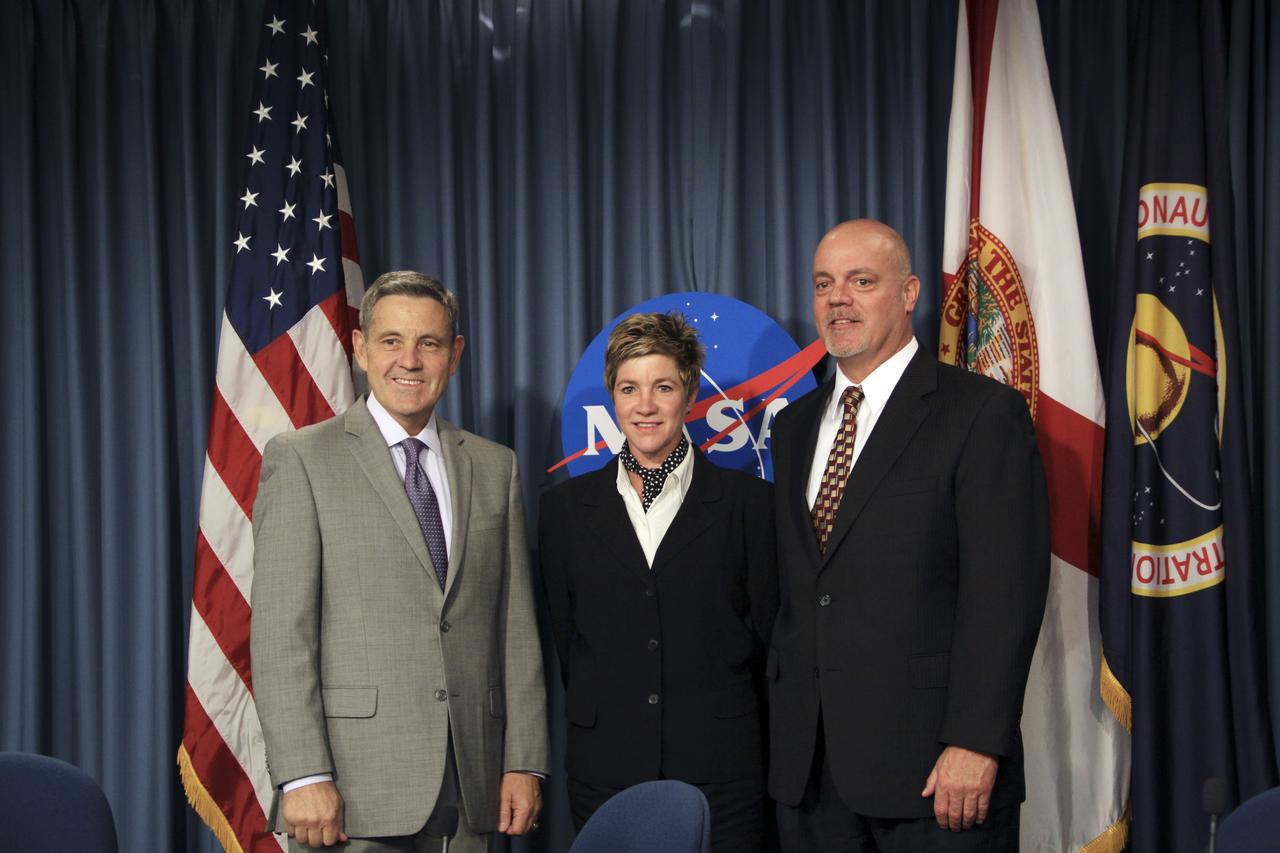
CAPE CANAVERAL, Fla. -- In the Press Site auditorium at NASA's Kennedy Space Center in Florida, managers from NASA and the Economic Development Commission (EDC) of Florida’s Space Coast pose for a portrait following the signing of a new five-year Space Act Agreement reaffirming the partnership of the two organizations. From left are Kennedy Space Center Director Robert Cabana, EDC President and CEO Lynda Weatherman, and Chairman of the Board of the EDC Bob Whelen. The agreement calls for NASA and EDC senior leadership to meet regularly to discuss economic development matters of mutual interest. Managers from Kennedy’s Center Planning and Development Office will work with the EDC on potential business partnerships and meet with business leaders and committees to address space-related and high-tech economic development. EDC officials will assist NASA with disseminating information about potential partnership opportunities, as well as space-related and high-tech economic development, and increase awareness of Kennedy’s Engineering and Technology Directorate collaboration initiatives. They also will promote the commercial use of underutilized facilities at Kennedy. NASA and the EDC entered into their first economic cooperation agreement in 2005. For more information about the Economic Development Commission (EDC) of Florida’s Space Coast, visit http://www.spacecoastedc.org/. Photo credit: NASA/Jim Grossmann
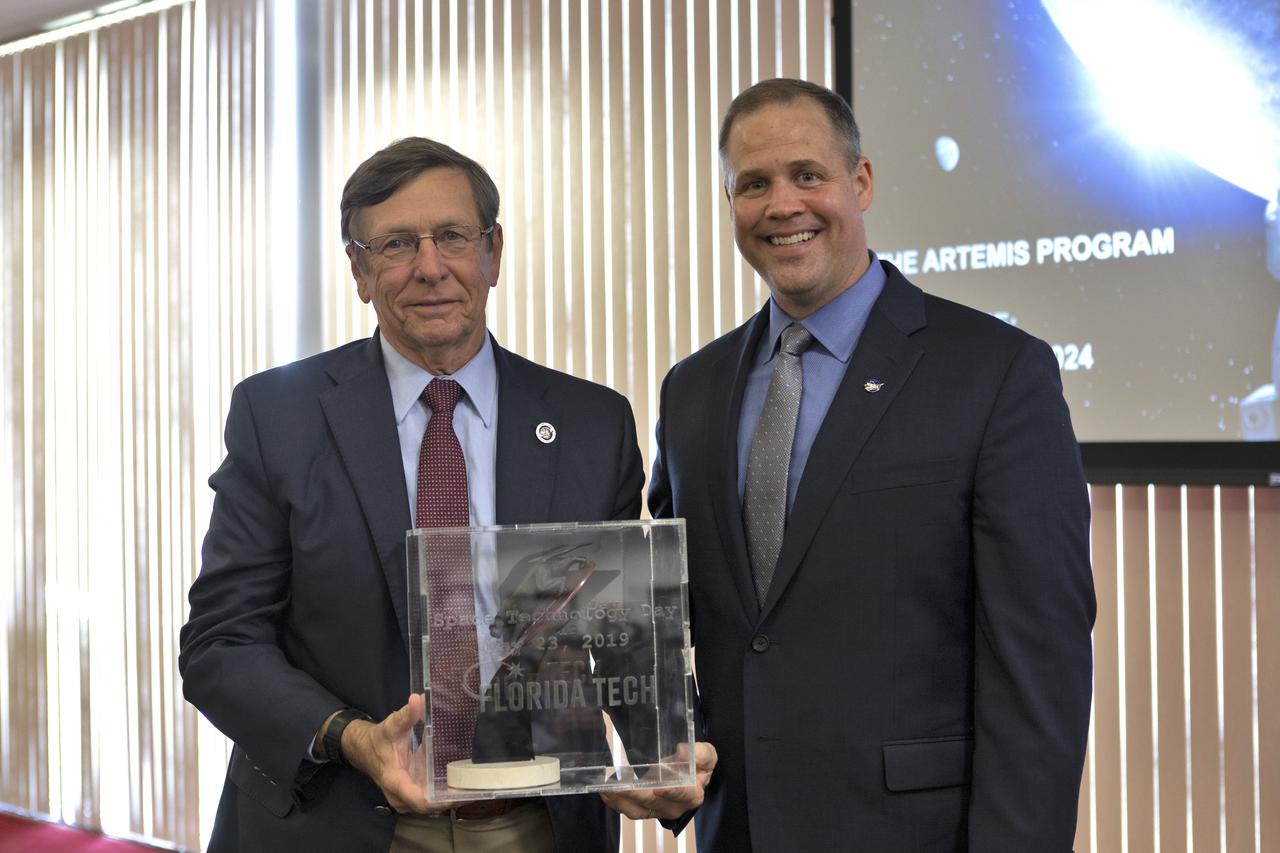
NASA Administrator Jim Bridenstine, right, poses with Florida Institute of Technology President T. Dwayne McCay on Thursday, May 23, 2019 at the Melbourne, FL campus. Bridenstine delivered the keynote address during the university’s Space Technology Day. Among the key topics Bridenstine discussed was NASA’s Artemis missions to the Moon, including the lunar Gateway, which will serve as an orbiting outpost for astronauts.
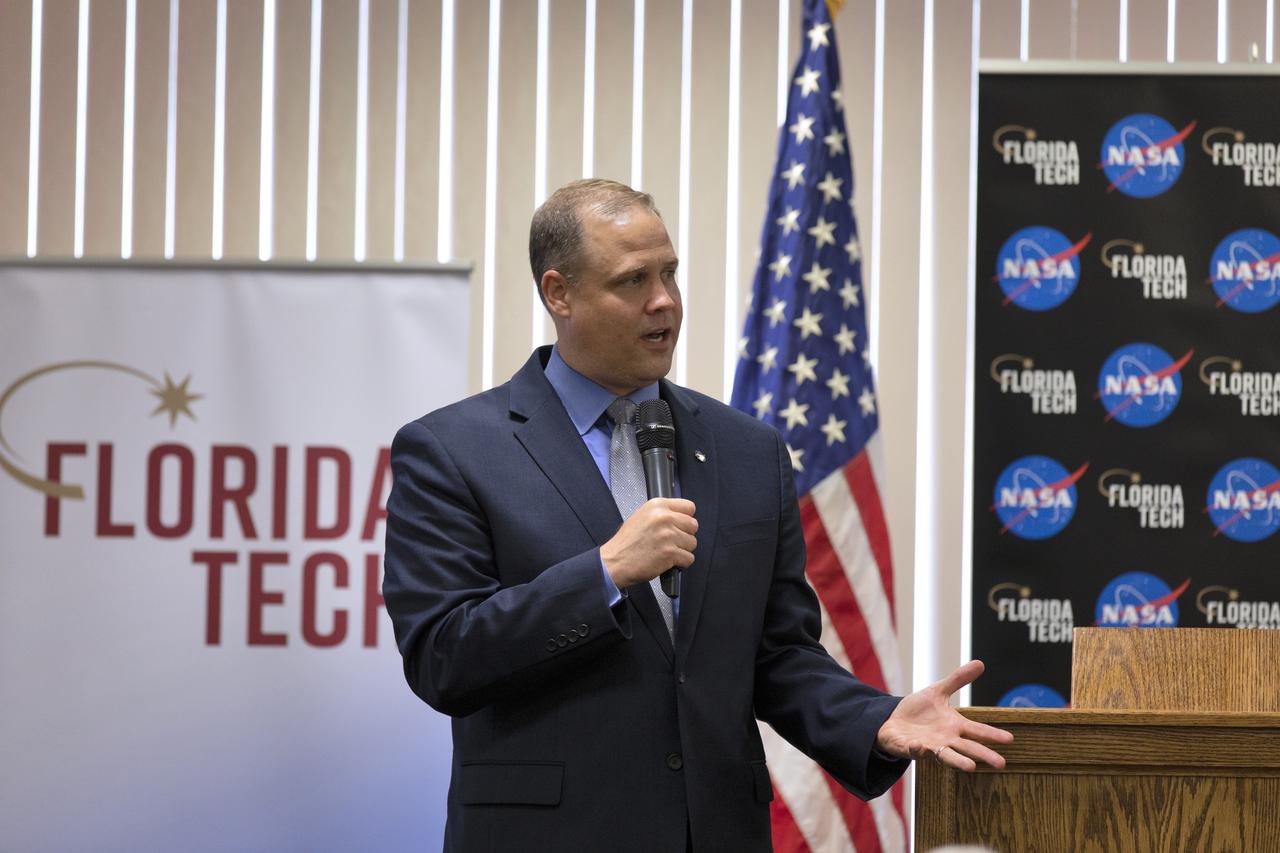
NASA Administrator Jim Bridenstine speaks to students, faculty, engineers and area business leaders at Florida Institute of Technology on Thursday, May 23, 2019. Bridenstine delivered the keynote address at the Melbourne, FL campus during the university’s Space Technology Day. Among the key topics Bridenstine discussed was NASA’s Artemis missions to the Moon, including the lunar Gateway, which will serve as an orbiting outpost for astronauts.
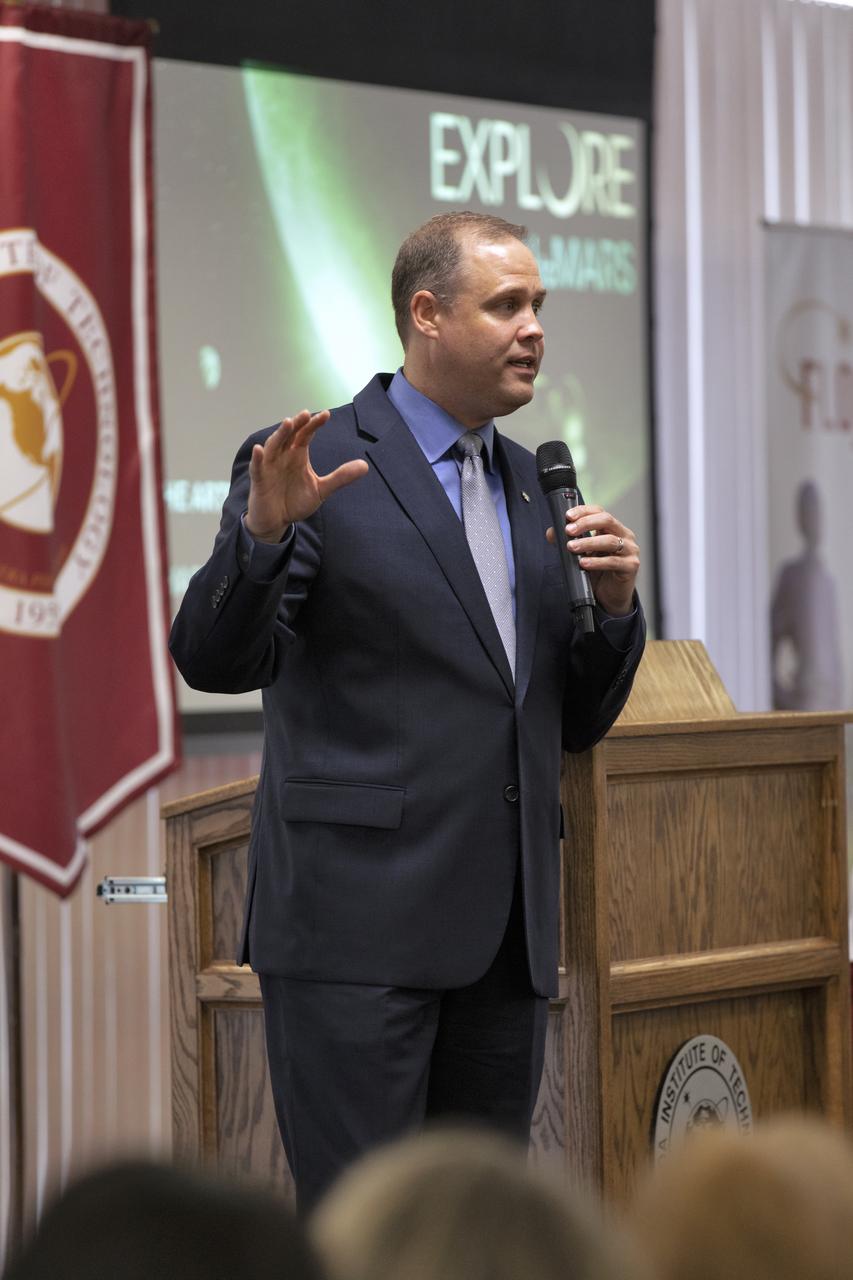
NASA Administrator Jim Bridenstine speaks to students, faculty, engineers and area business leaders at Florida Institute of Technology on Thursday, May 23, 2019. Bridenstine delivered the keynote address at the Melbourne, FL campus during the university’s Space Technology Day. Among the key topics Bridenstine discussed was NASA’s Artemis missions to the Moon, including the lunar Gateway, which will serve as an orbiting outpost for astronauts.
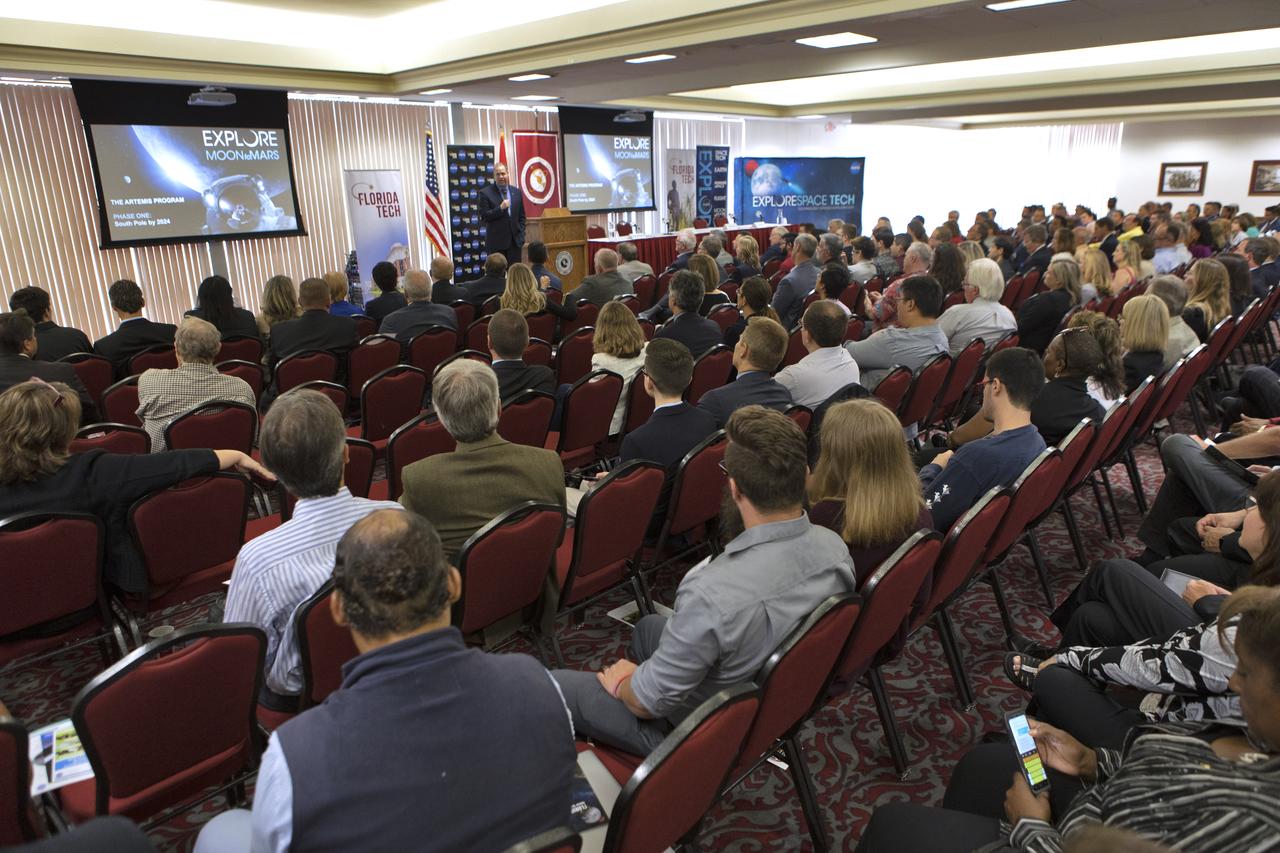
NASA Administrator Jim Bridenstine speaks to students, faculty, engineers and area business leaders at Florida Institute of Technology on Thursday, May 23, 2019. Bridenstine delivered the keynote address at the Melbourne, FL campus during the university’s Space Technology Day. Among the key topics Bridenstine discussed was NASA’s Artemis missions to the Moon, including the lunar Gateway, which will serve as an orbiting outpost for astronauts.
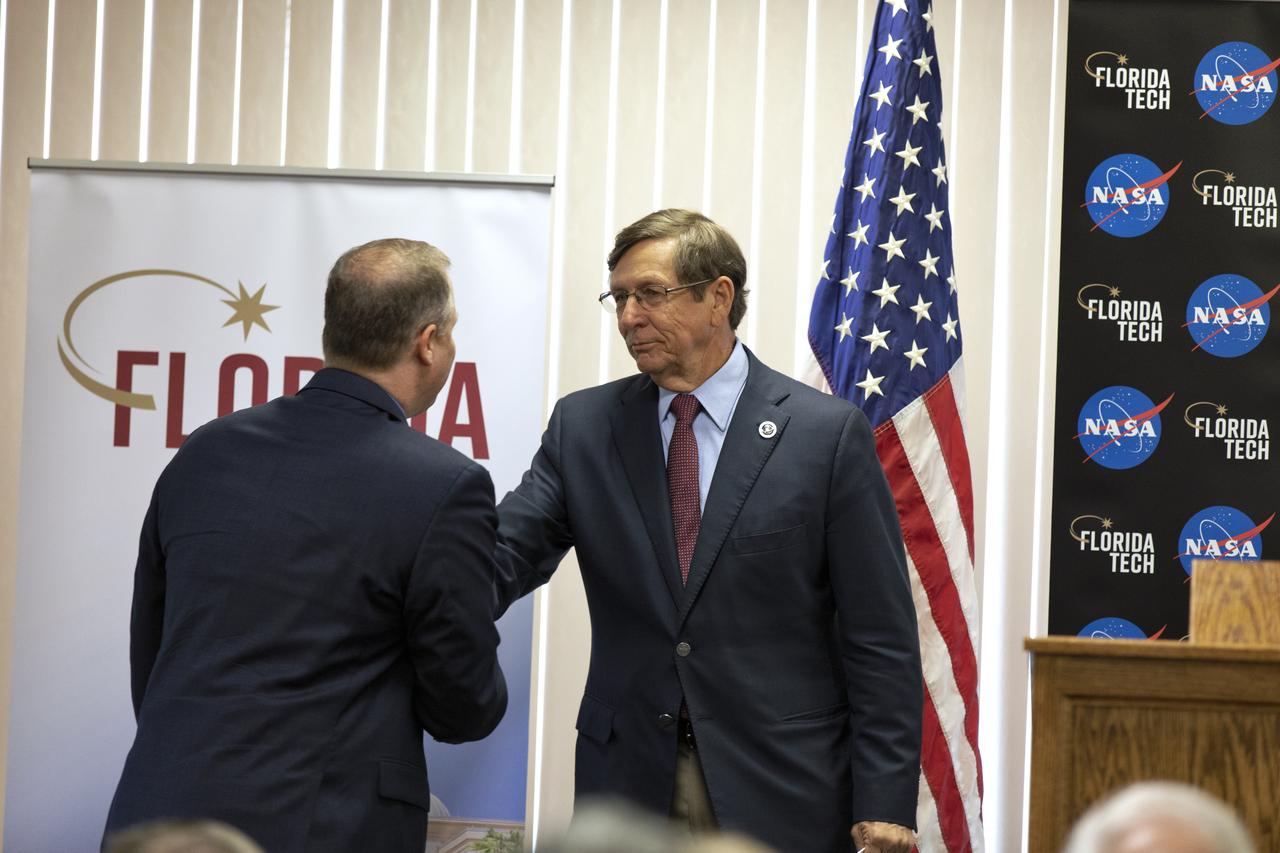
NASA Administrator Jim Bridenstine, left, shakes hands with Florida Institute of Technology President T. Dwayne McCay on Thursday, May 23, 2019 at the Melbourne, FL campus. Bridenstine delivered the keynote address during the university’s Space Technology Day. Among the key topics Bridenstine discussed was NASA’s Artemis missions to the Moon, including the lunar Gateway, which will serve as an orbiting outpost for astronauts.
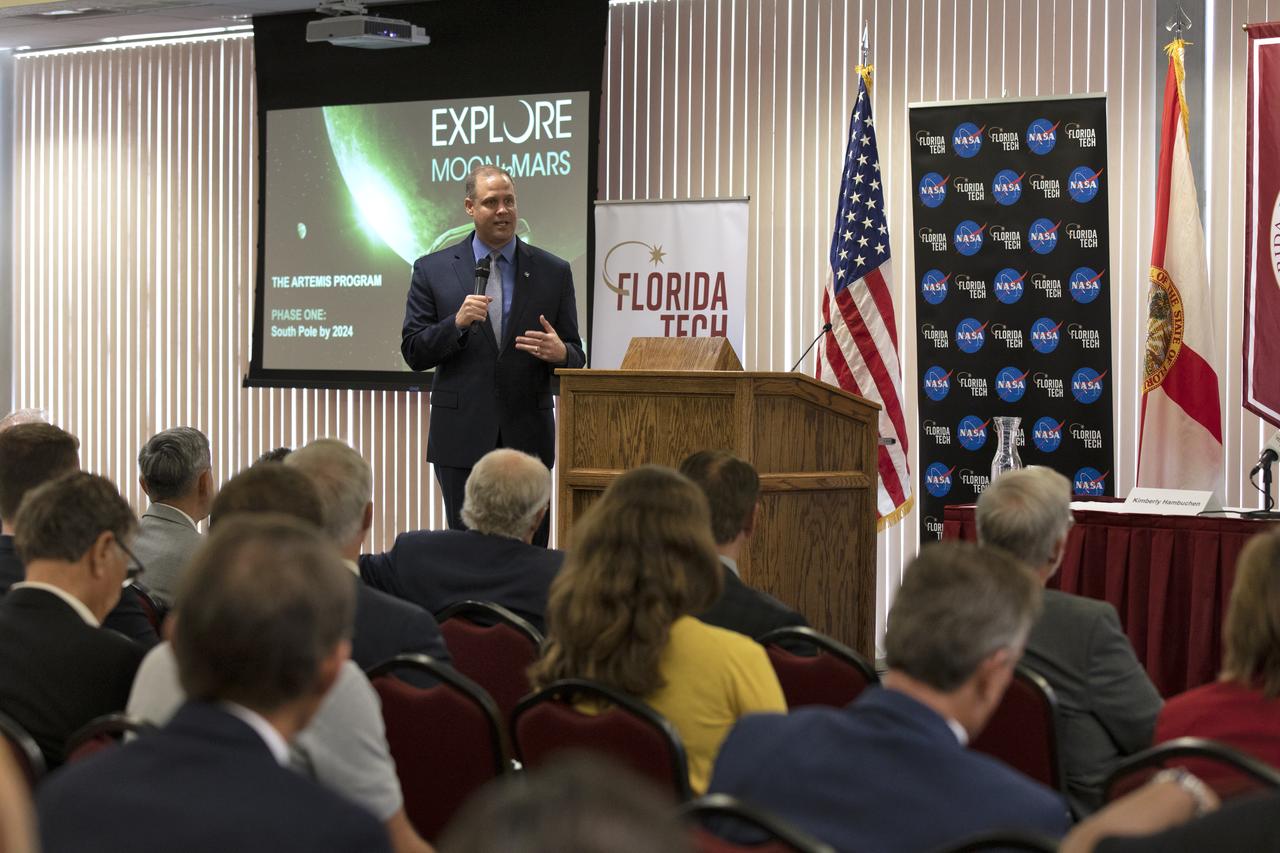
NASA Administrator Jim Bridenstine speaks to students, faculty, engineers and area business leaders at Florida Institute of Technology on Thursday, May 23, 2019. Bridenstine delivered the keynote address at the Melbourne, FL campus during the university’s Space Technology Day. Among the key topics Bridenstine discussed was NASA’s Artemis missions to the Moon, including the lunar Gateway, which will serve as an orbiting outpost for astronauts.
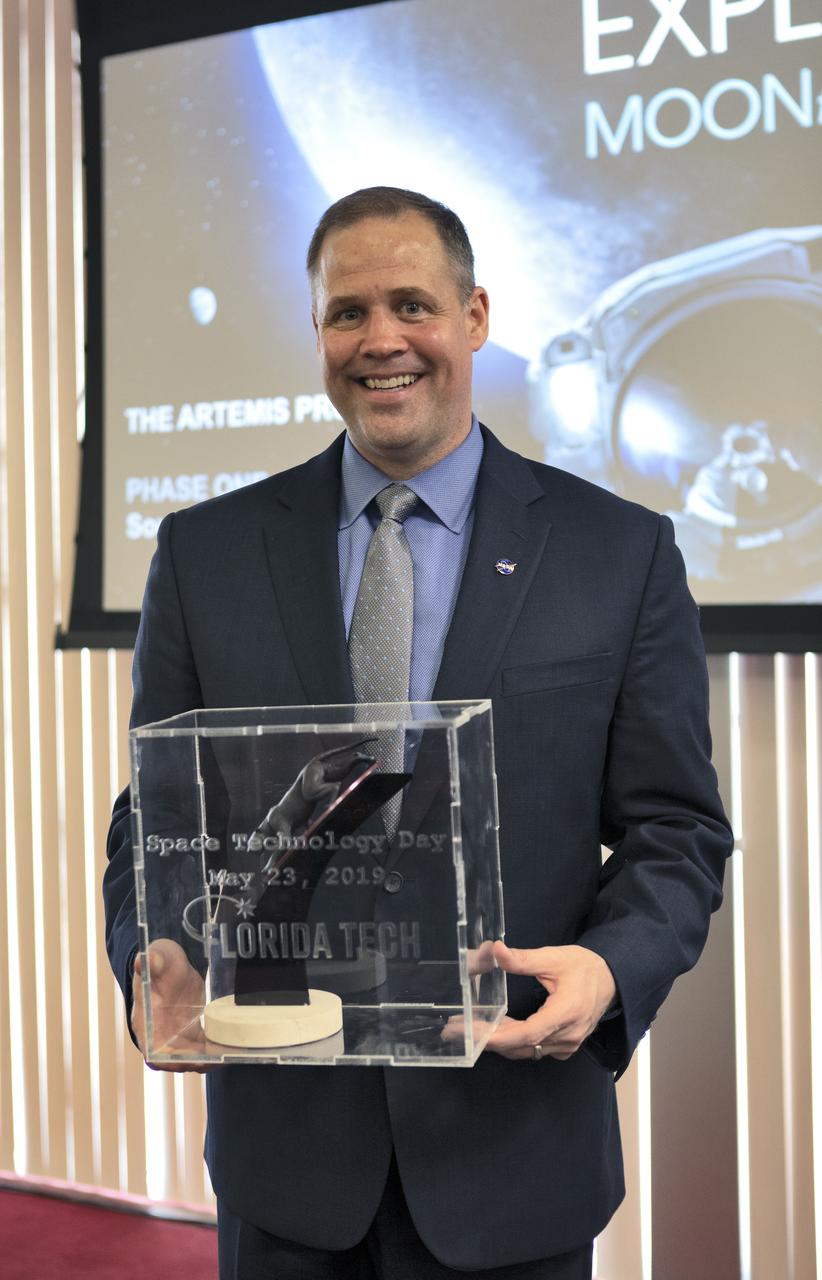
NASA Administrator Jim Bridenstine poses at Florida Institute of Technology on Thursday, May 23, 2019. Bridenstine delivered the keynote address at the Melbourne, FL campus during the university’s Space Technology Day. Among the key topics Bridenstine discussed was NASA’s Artemis missions to the Moon, including the lunar Gateway, which will serve as an orbiting outpost for astronauts.
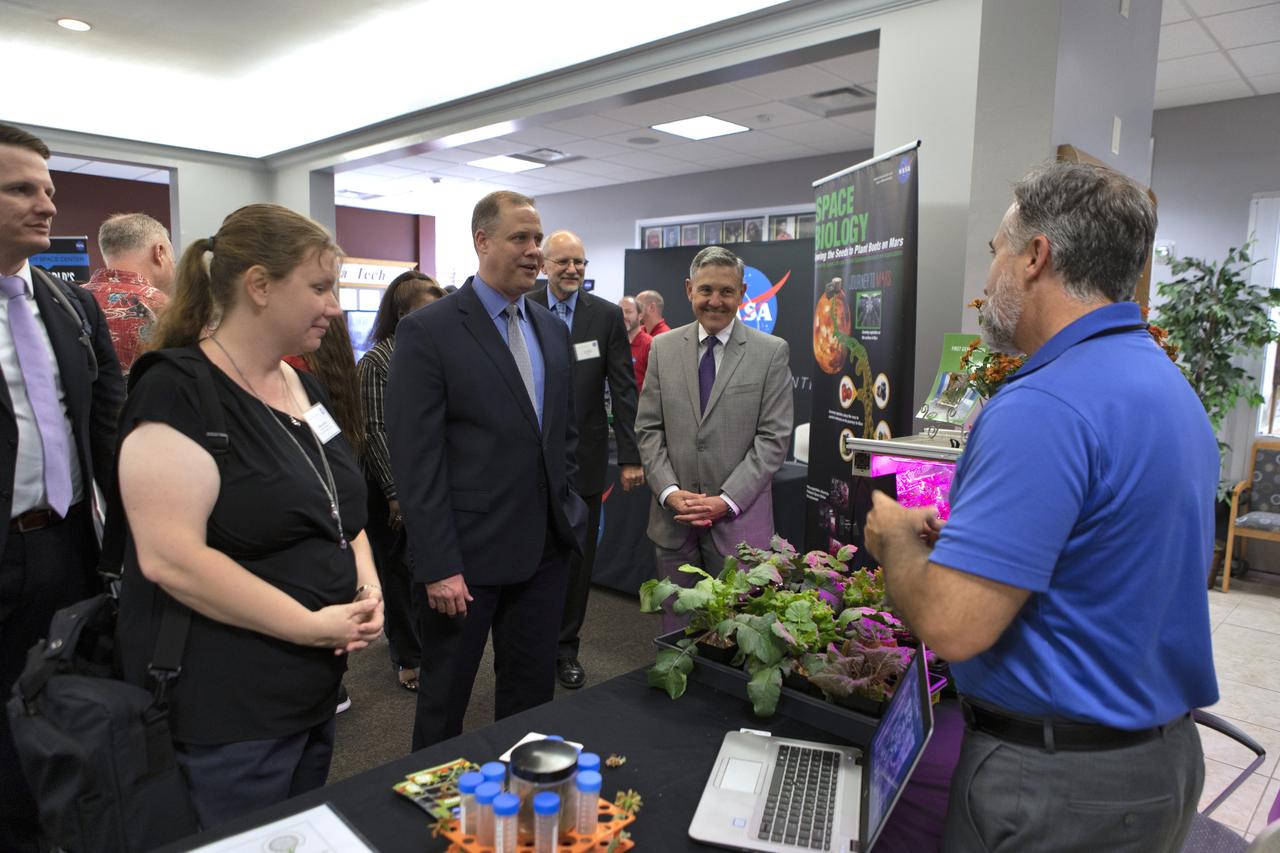
NASA Administrator Jim Bridenstine, center, and Kennedy Space Center Director Bob Cabana, right, visit Florida Institute of Technology on Thursday, May 23, 2019. Bridenstine delivered the keynote address at the Melbourne, FL campus during the university’s Space Technology Day. Among the key topics Bridenstine discussed was NASA’s Artemis missions to the Moon, including the lunar Gateway, which will serve as an orbiting outpost for astronauts.
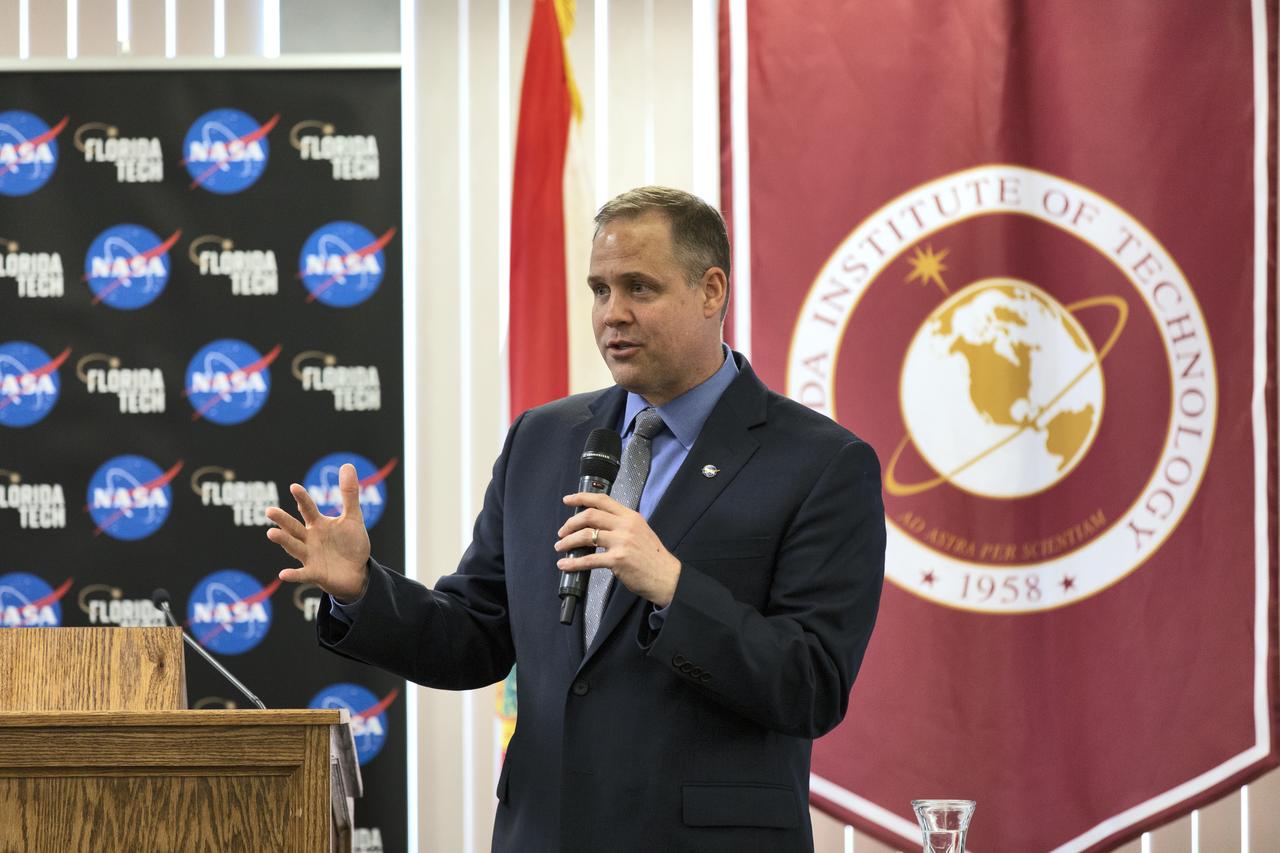
NASA Administrator Jim Bridenstine speaks to students, faculty, engineers and area business leaders at Florida Institute of Technology on Thursday, May 23, 2019. Bridenstine delivered the keynote address at the Melbourne, FL campus during the university’s Space Technology Day. Among the key topics Bridenstine discussed was NASA’s Artemis missions to the Moon, including the lunar Gateway, which will serve as an orbiting outpost for astronauts.
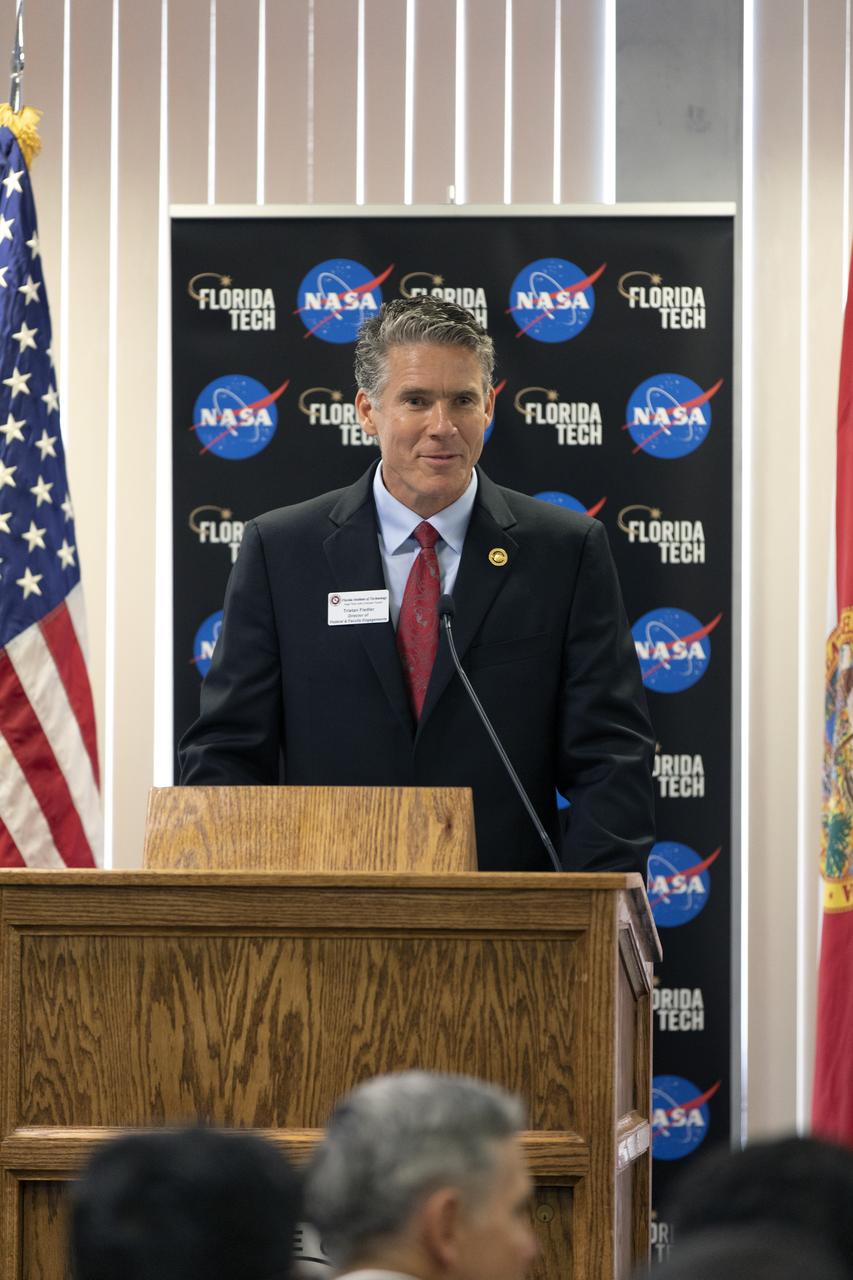
Tristan Fiedler, director of federal and faculty engagements at Florida Institute of Technology, speaks during the university’s Space Technology Day on Thursday, May 23, 2019. NASA Administrator Jim Bridenstine delivered the keynote address at the Melbourne, FL campus, which included students, faculty, engineers and area business leaders in attendance. Among the key topics Bridenstine discussed was NASA’s Artemis missions to the Moon, including the lunar Gateway, which will serve as an orbiting outpost for astronauts.
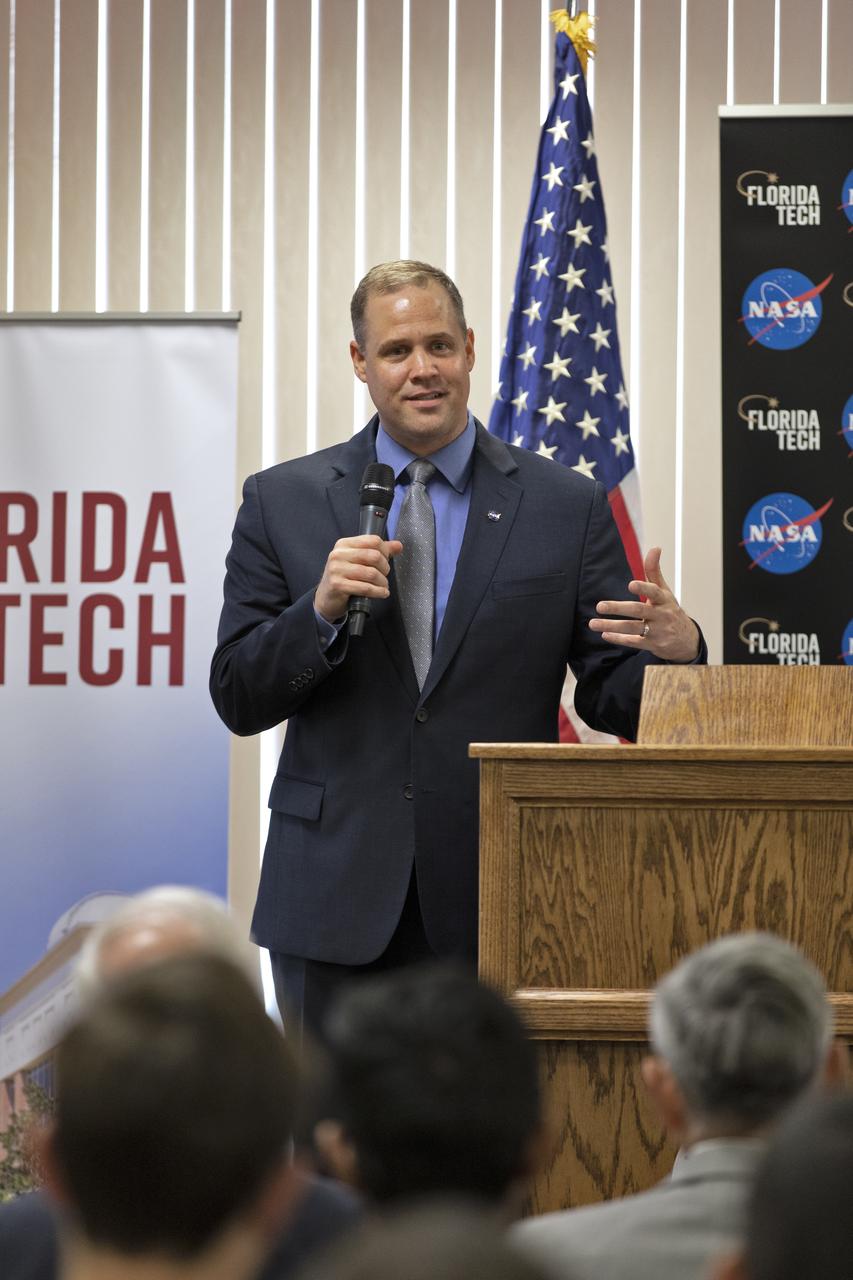
NASA Administrator Jim Bridenstine speaks to students, faculty, engineers and area business leaders at Florida Institute of Technology on Thursday, May 23, 2019. Bridenstine delivered the keynote address at the Melbourne, FL campus during the university’s Space Technology Day. Among the key topics Bridenstine discussed was NASA’s Artemis missions to the Moon, including the lunar Gateway, which will serve as an orbiting outpost for astronauts.
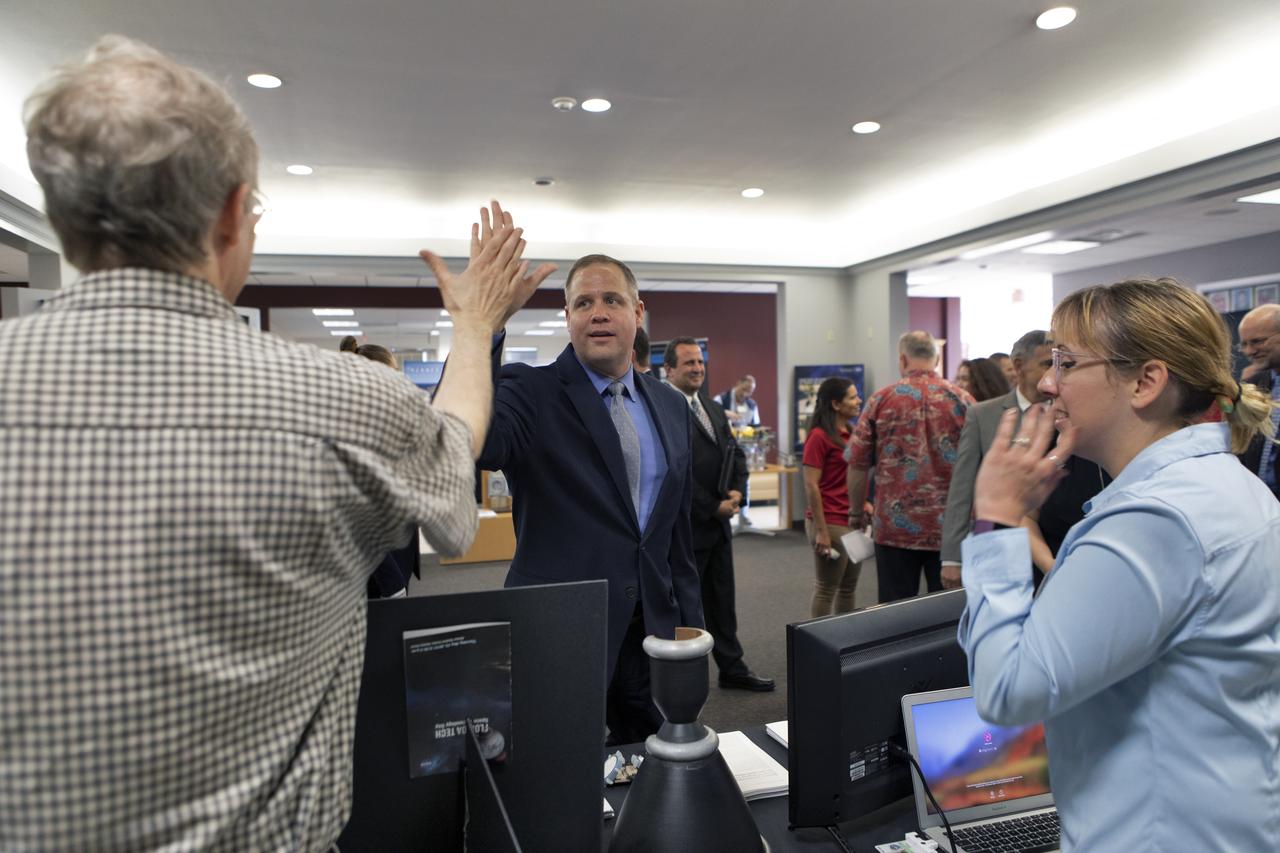
NASA Administrator Jim Bridenstine, center, speaks to students, faculty, engineers and area business leaders at Florida Institute of Technology on Thursday, May 23, 2019. Bridenstine delivered the keynote address at the Melbourne, FL campus during the university’s Space Technology Day. Among the key topics Bridenstine discussed was NASA’s Artemis missions to the Moon, including the lunar Gateway, which will serve as an orbiting outpost for astronauts.
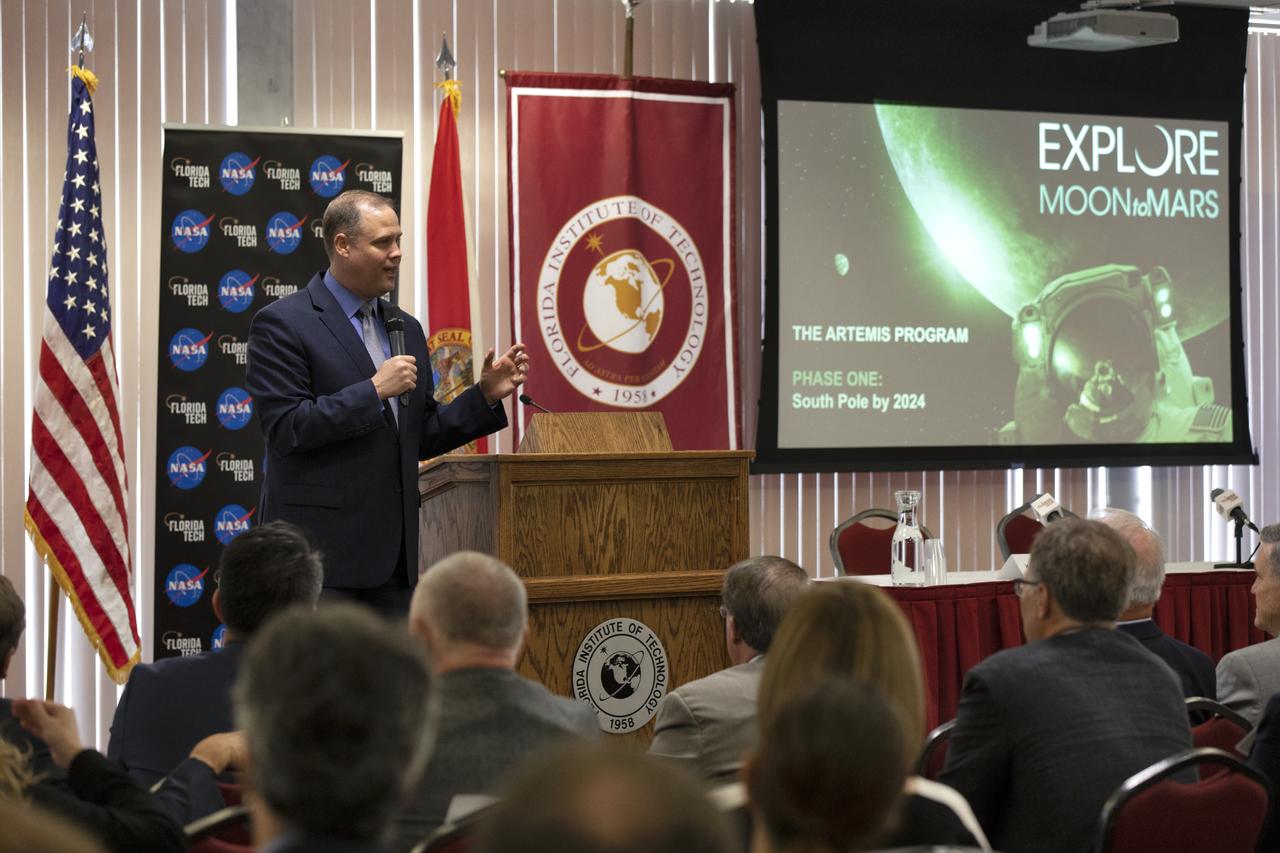
NASA Administrator Jim Bridenstine speaks to students, faculty, engineers and area business leaders at Florida Institute of Technology on Thursday, May 23, 2019. Bridenstine delivered the keynote address at the Melbourne, FL campus during the university’s Space Technology Day. Among the key topics Bridenstine discussed was NASA’s Artemis missions to the Moon, including the lunar Gateway, which will serve as an orbiting outpost for astronauts.
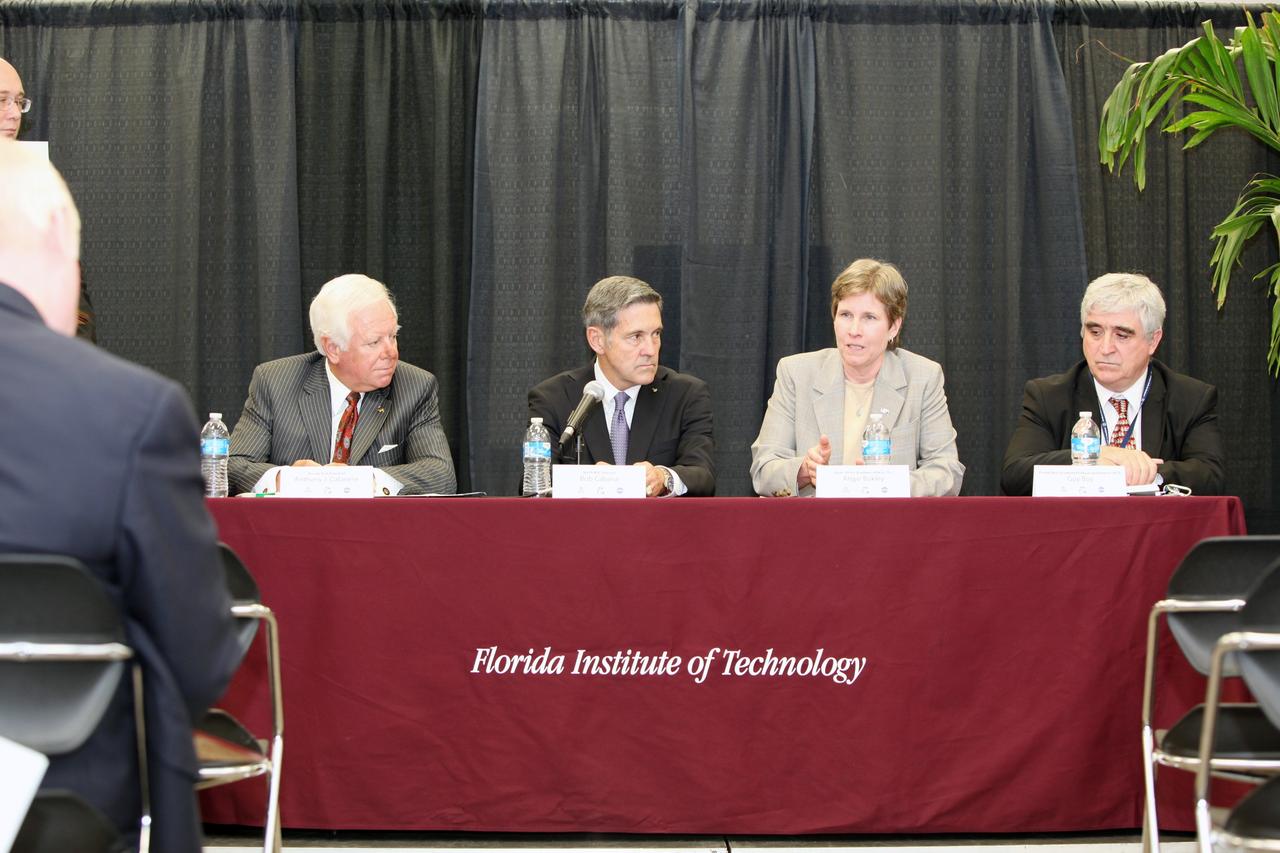
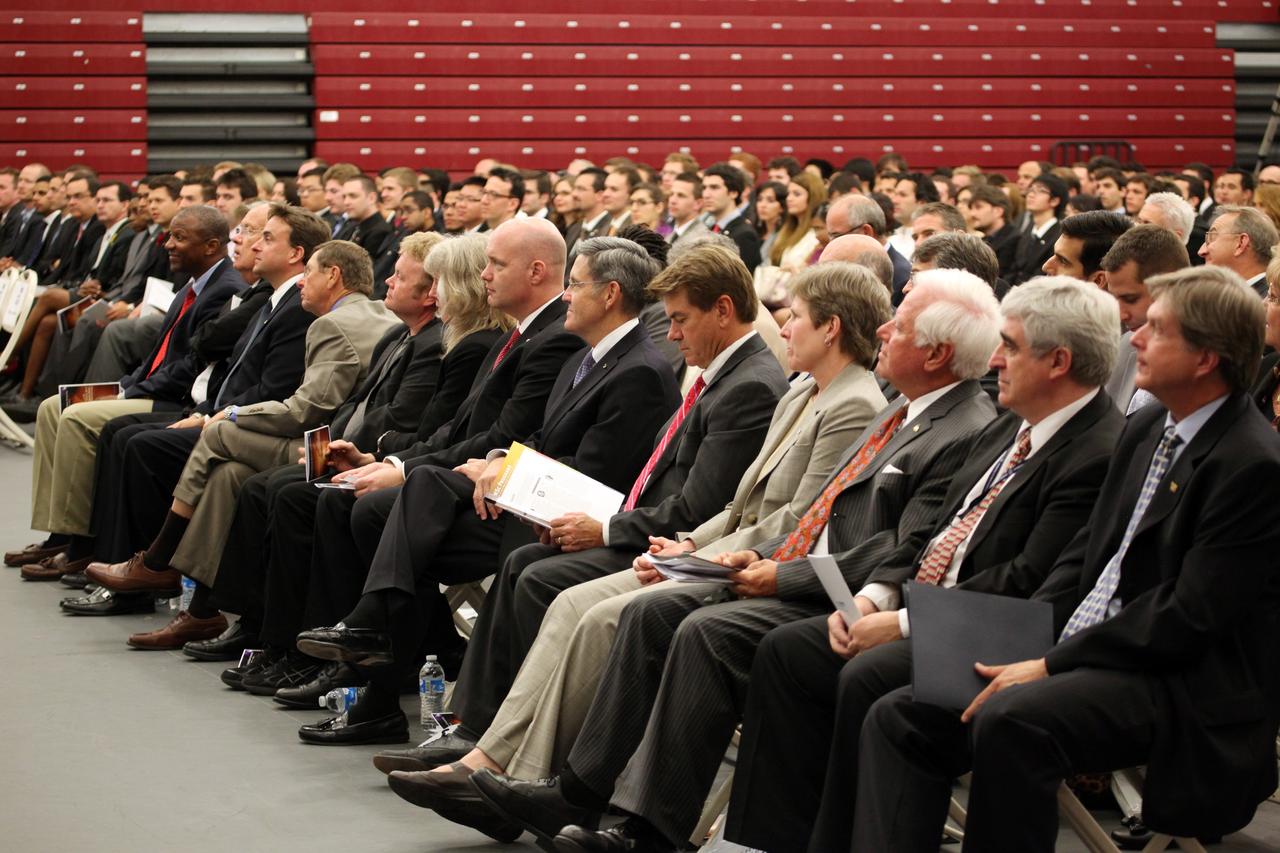
MELBOURNE, Fla. – Professor Angie Bukley, dean and vice president for Academic Affairs, International Space University, addresses the audience during opening ceremonies for the university's 25th annual Space Studies Program session at the Florida Institute of Technology in Melbourne, Fla. Seated from left are Anthony J. Catanese, president of Florida Tech NASA Kennedy Space Center Director Bob Cabana Bukley and Dr. Guy A. Boy, chair of the Space Studies Program’s local organizing committee. The nine-week intensive course is designed for post-graduate university students and professionals during the summer. The program is hosted by a different country each year, providing a unique educational experience for participants from around the globe. NASA Kennedy Space Center and Florida Tech are co-hosting this year's event which runs from June 4 to Aug. 3. This year, there are about 125 participants representing 31 countries. For more information, visit http://www.isunet.edu. Photo credit: NASA/Dimitri Gerondidakis
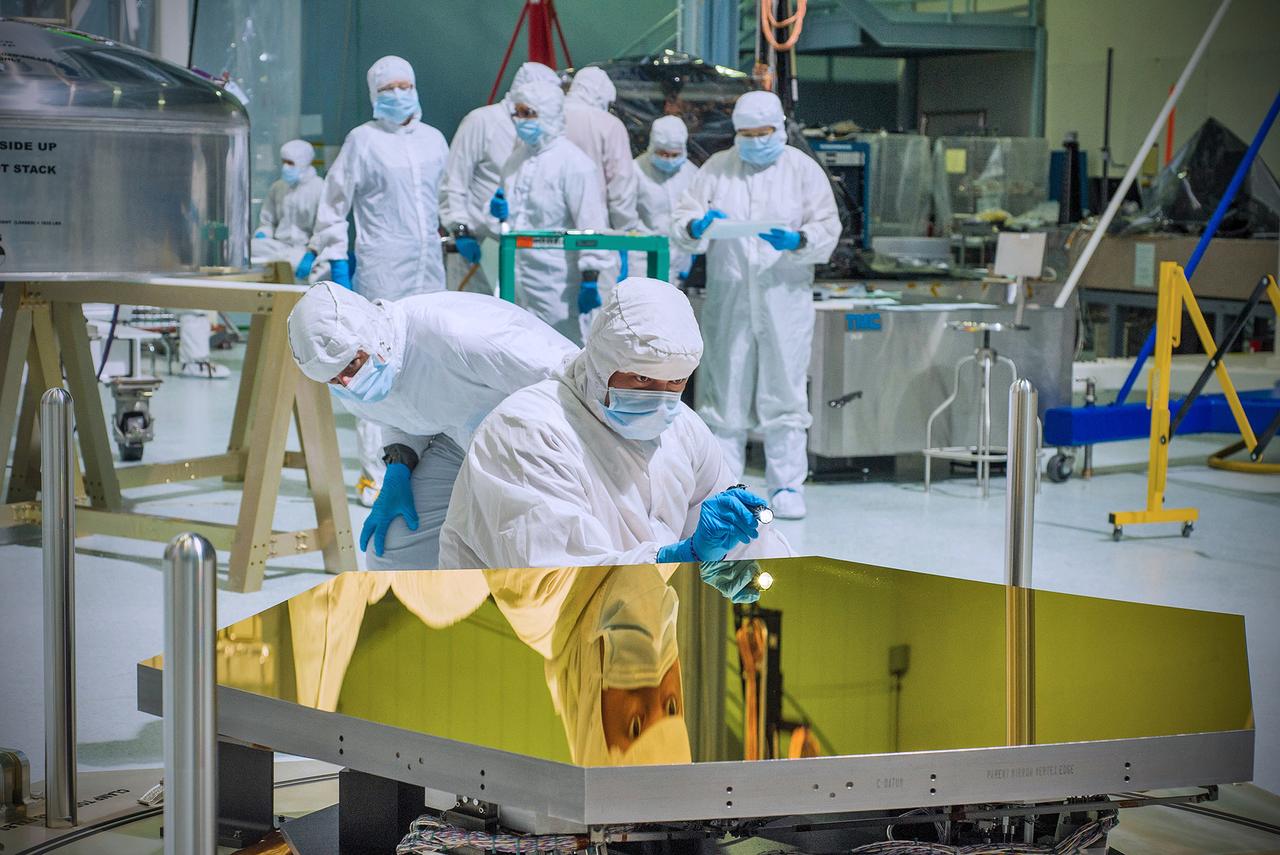
Technicians and scientists check out one of the Webb telescope's first two flight mirrors in the clean room at NASA's Goddard Space Flight Center in Greenbelt, Md. Credit: NASA/Chris Gunn ----- The first two of the 18 primary mirrors to fly aboard NASA’s James Webb Space Telescope arrived at NASA’s Goddard Space Flight Center in Greenbelt, Md. The mirrors are going through receiving and inspection and will then be stored in the Goddard cleanroom until engineers are ready to assemble them onto the telescope's backplane structure that will support them. Ball Aerospace, Boulder, Colo., under contract to Northrop Grumman, is responsible for the Webb’s optical technology and lightweight mirror system. On September 17, 2012, Ball Aerospace shipped the first two mirrors in custom containers designed specifically for the multiple trips the mirrors made through eight U.S. states while completing their manufacturing. The remaining 16 mirrors will make their way from Ball Aerospace to Goddard over the next 12 months as they await telescope integration in 2015. To read more go to: <a href="http://www.nasa.gov/topics/technology/features/webb-tech-mirrors-delivered.html" rel="nofollow">www.nasa.gov/topics/technology/features/webb-tech-mirrors...</a> <b><a href="http://www.nasa.gov/audience/formedia/features/MP_Photo_Guidelines.html" rel="nofollow">NASA image use policy.</a></b> <b><a href="http://www.nasa.gov/centers/goddard/home/index.html" rel="nofollow">NASA Goddard Space Flight Center</a></b> enables NASA’s mission through four scientific endeavors: Earth Science, Heliophysics, Solar System Exploration, and Astrophysics. Goddard plays a leading role in NASA’s accomplishments by contributing compelling scientific knowledge to advance the Agency’s mission. <b>Follow us on <a href="http://twitter.com/NASA_GoddardPix" rel="nofollow">Twitter</a></b> <b>Like us on <a href="http://www.facebook.com/pages/Greenbelt-MD/NASA-Goddard/395013845897?ref=tsd" rel="nofollow">Facebook</a></b> <b>Find us on <a href="http://instagrid.me/nasagoddard/?vm=grid" rel="nofollow">Instagram</a></b>
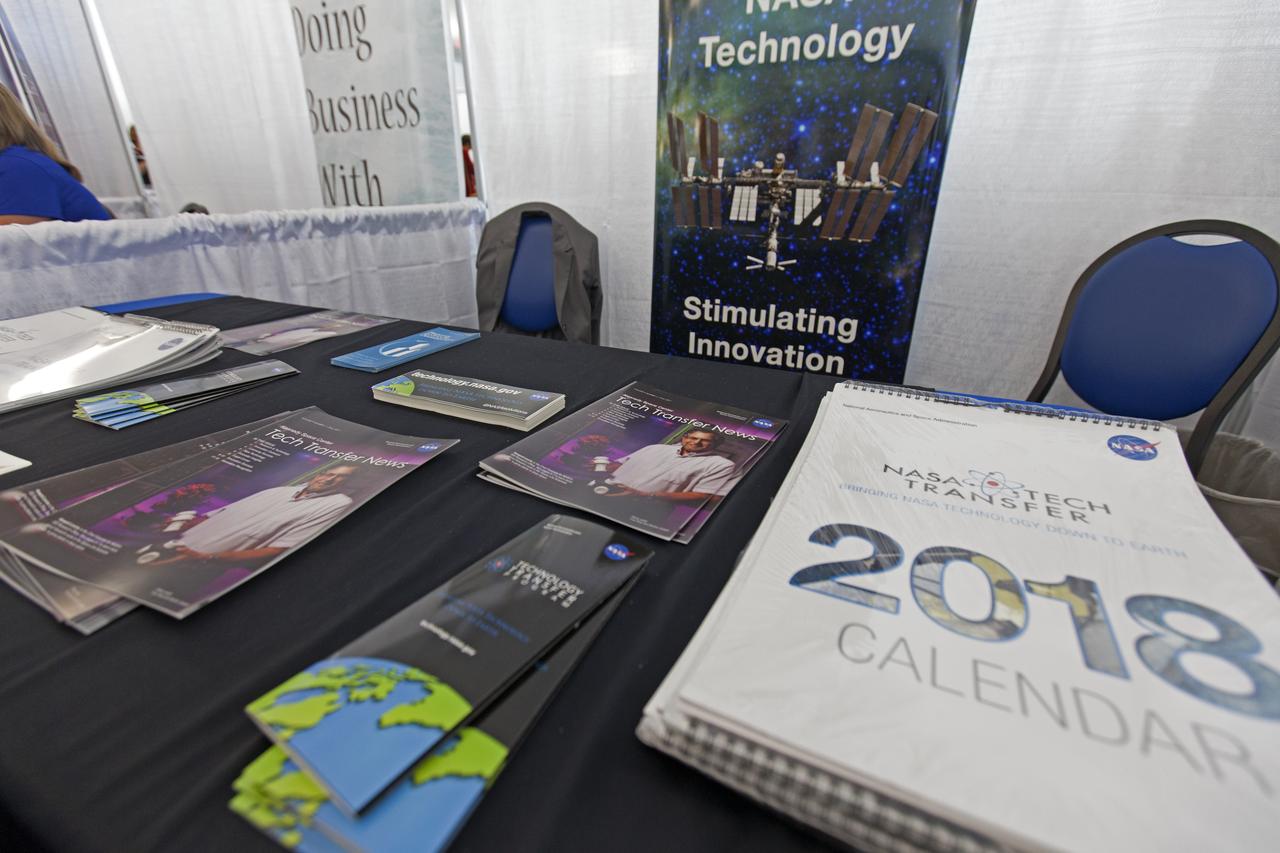
Information from NASA's Tech Transfer Office is on display at Kennedy Space Center's 27th Business Opportunities Expo held at Cruise Terminal 5 at Port Canaveral in Florida. The event featured more than 180 businesses, large and small, and government exhibitors from throughout the Space Coast and the nation. The Business Opportunities Expo is sponsored by the NASA KSC Prime Contractor Board, KSC Industry Assistance Office, 45th Space Wing and Canaveral Port Authority. Exhibitors included vendors from a variety of product and service areas, such as computer technology, engineering services, communication equipment and services, and construction and safety products, to name a few. Representatives from the 45th Space Wing, KSC prime contractors, NASA and many more agencies and organizations were on hand to provide information and answer questions.
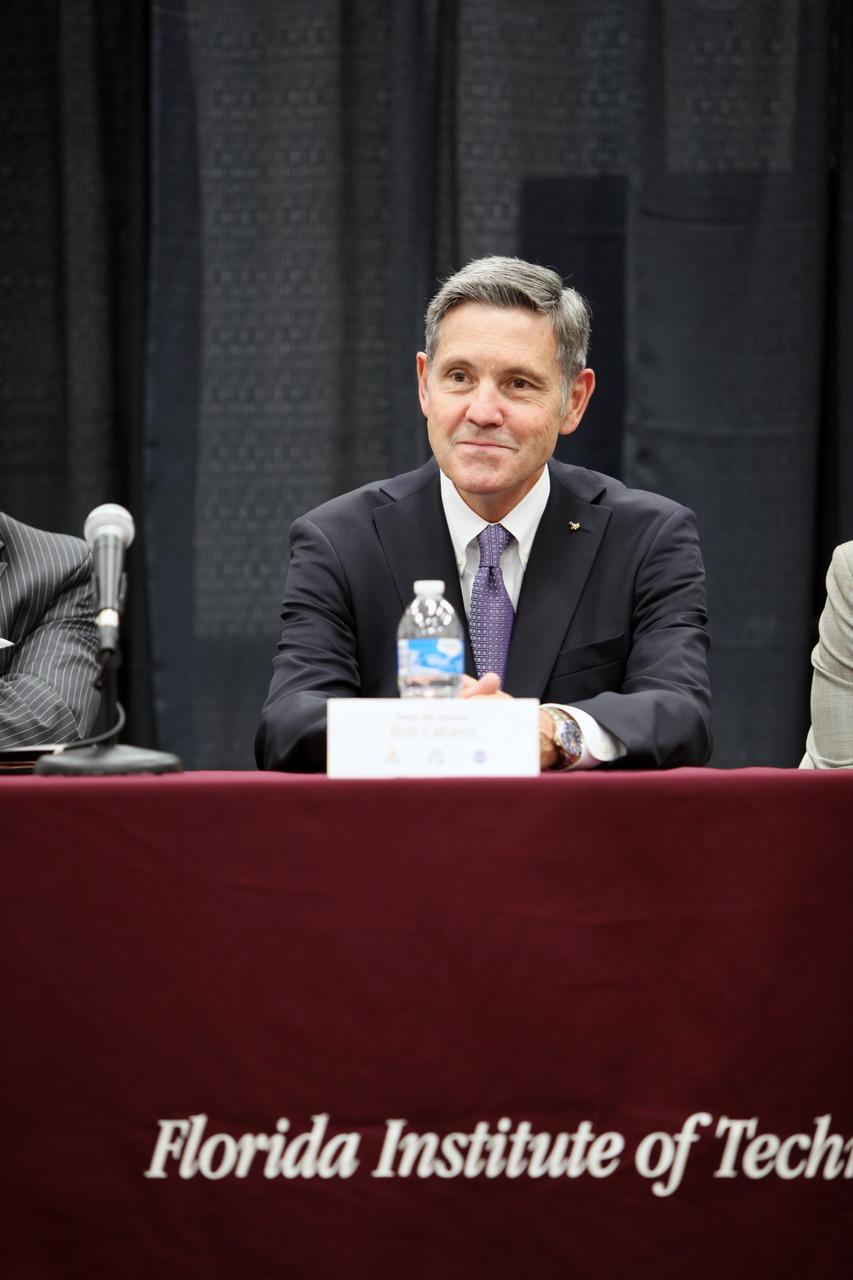
MELBOURNE, Fla. – NASA Kennedy Space Center Director Bob Cabana participates in the opening ceremonies for the International Space University's 25th annual Space Studies Program session at the Florida Institute of Technology in Melbourne, Fla. The nine-week intensive course is designed for post-graduate university students and professionals during the summer. The program is hosted by a different country each year, providing a unique educational experience for participants from around the globe. NASA Kennedy Space Center and Florida Tech are co-hosting this year's event which runs from June 4 to Aug. 3. This year, there are about 125 participants representing 31 countries. For more information, visit http://www.isunet.edu. Photo credit: NASA/Dimitri Gerondidakis
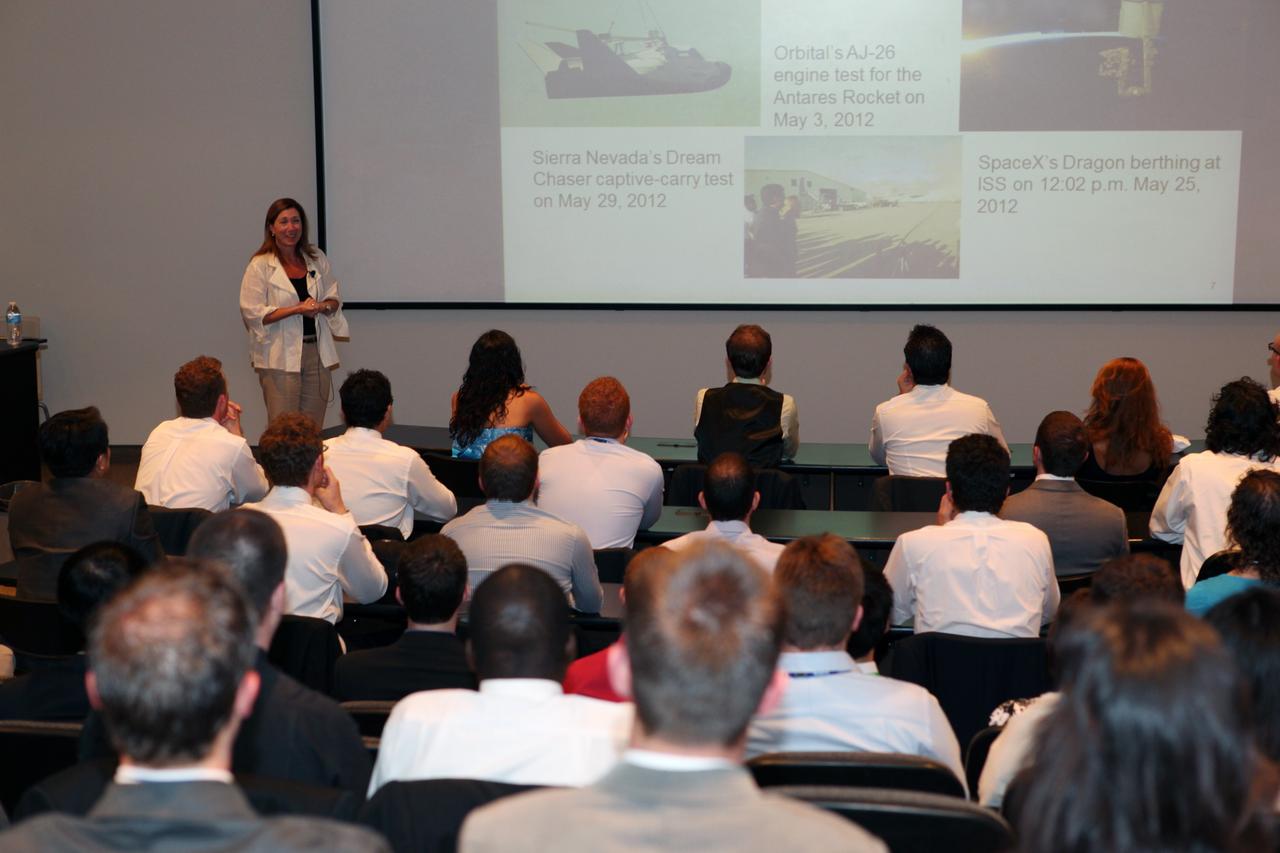
MELBOURNE, Fla. – NASA Deputy Administrator Lori Garver has a rapt audience of space program managers and students for her remarks during opening ceremonies for the International Space University's 25th annual Space Studies Program session at the Florida Institute of Technology in Melbourne, Fla. The nine-week intensive course is designed for post-graduate university students and professionals during the summer. The program is hosted by a different country each year, providing a unique educational experience for participants from around the globe. NASA Kennedy Space Center and Florida Tech are co-hosting this year's event which runs from June 4 to Aug. 3. This year, there are about 125 participants representing 31 countries. For more information, visit http://www.isunet.edu. Photo credit: NASA/Dimitri Gerondidakis
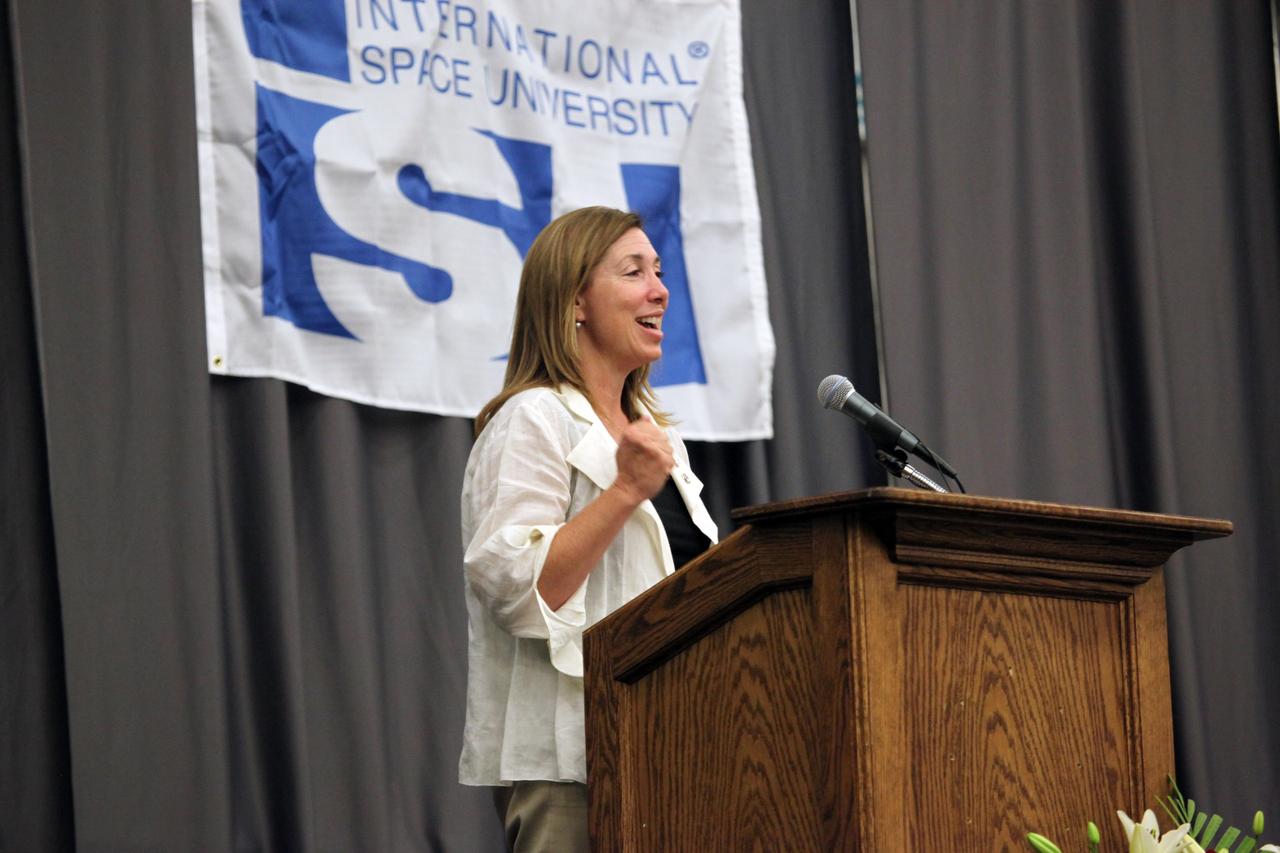
MELBOURNE, Fla. – NASA Deputy Administrator Lori Garver addresses students on the opening day of the International Space University's 25th annual Space Studies Program session at the Florida Institute of Technology in Melbourne, Fla. The nine-week intensive course is designed for post-graduate university students and professionals during the summer. The program is hosted by a different country each year, providing a unique educational experience for participants from around the globe. NASA Kennedy Space Center and Florida Tech are co-hosting this year's event which runs from June 4 to Aug. 3. This year, there are about 125 participants representing 31 countries. For more information, visit http://www.isunet.edu. Photo credit: NASA/Dimitri Gerondidakis
MELBOURNE, Fla. – NASA Deputy Administrator Lori Garver addresses the audience during opening ceremonies for the International Space University's 25th annual Space Studies Program session at the Florida Institute of Technology in Melbourne, Fla. The nine-week intensive course is designed for post-graduate university students and professionals during the summer. The program is hosted by a different country each year, providing a unique educational experience for participants from around the globe. NASA Kennedy Space Center and Florida Tech are co-hosting this year's event which runs from June 4 to Aug. 3. This year, there are about 125 participants representing 31 countries. For more information, visit http://www.isunet.edu. Photo credit: NASA/Dimitri Gerondidakis
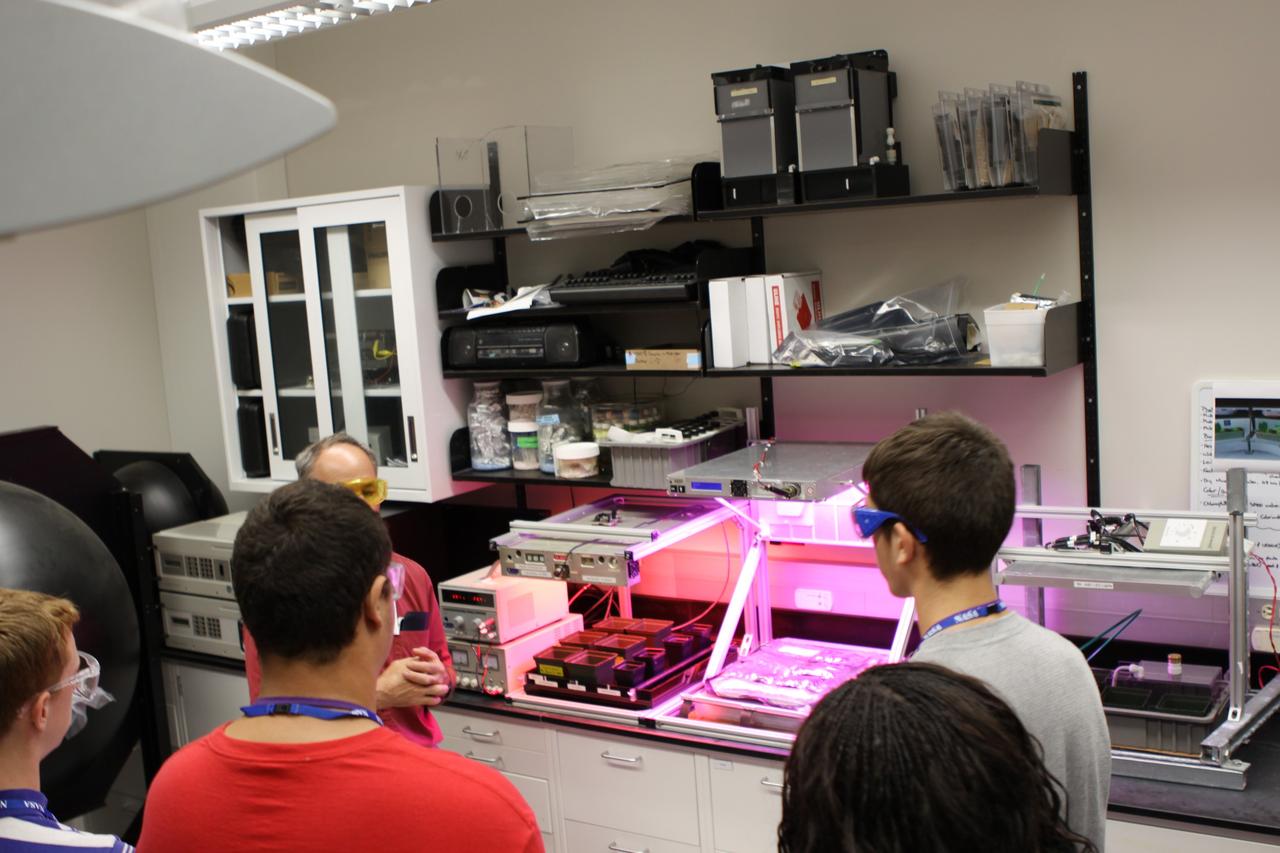
CAPE CANAVERAL, Fla. – Dr. Ray Wheeler explains a system for growing salad crops in space to students in the Life Support and Habitation Systems Lab at the Space Life Sciences Lab facility. The 26 honor students in chemistry and biology and their teachers got a chance to visit a number of high-tech labs at Kennedy Space Center as part of an effort to encourage students in the areas of science, technology, engineering and math. The tenth and eleventh grade students from Terry Parker High School in Jacksonville, Fla., visited a number of vastly different labs during their one-day tour. The group's visit to Kennedy was hosted by the Education Office as part of a nationwide effort by the National Lab Network to help introduce the nation's students to science careers. Photo credit: NASA/Jim Grossmann
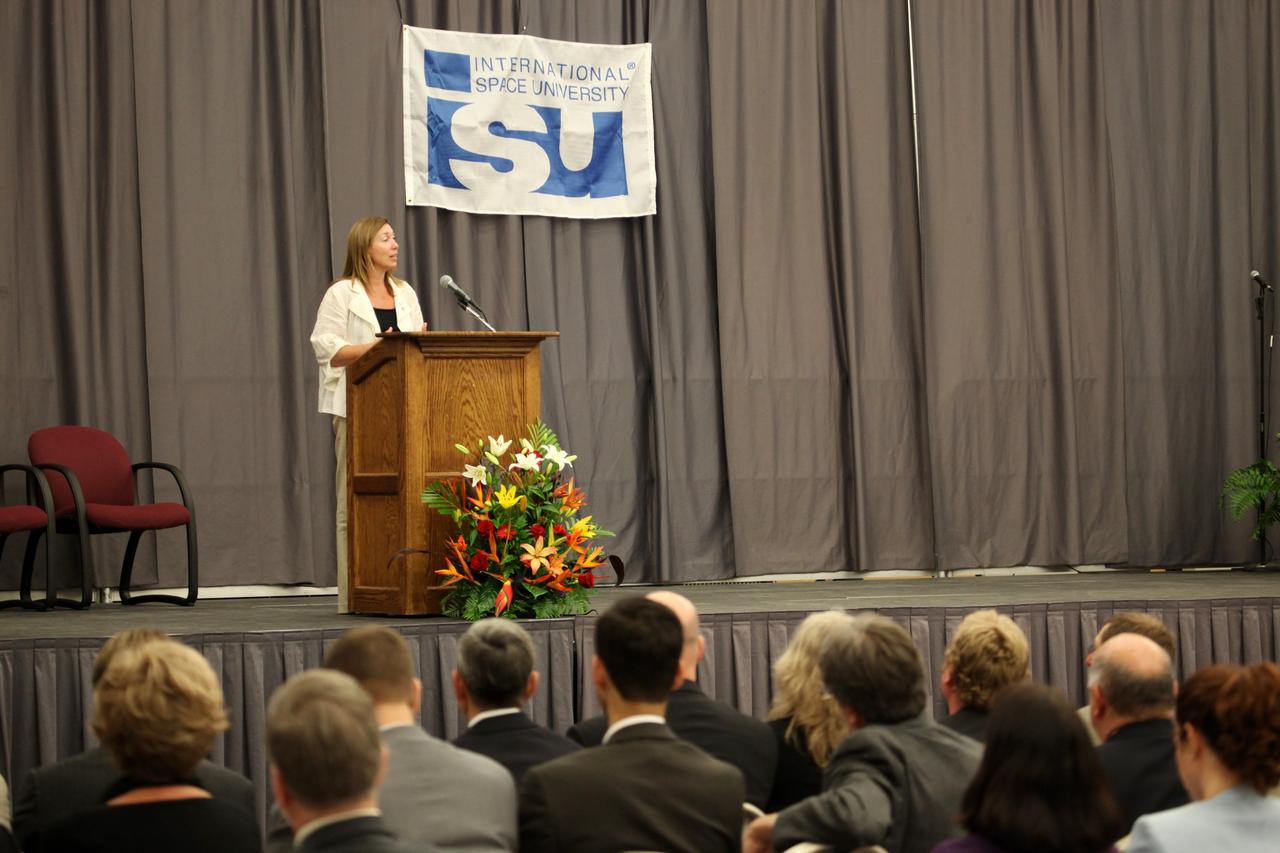
MELBOURNE, Fla. – NASA Deputy Administrator Lori Garver addresses the audience during opening ceremonies for the International Space University's 25th annual Space Studies Program session at the Florida Institute of Technology in Melbourne, Fla. The nine-week intensive course is designed for post-graduate university students and professionals during the summer. The program is hosted by a different country each year, providing a unique educational experience for participants from around the globe. NASA Kennedy Space Center and Florida Tech are co-hosting this year's event which runs from June 4 to Aug. 3. This year, there are about 125 participants representing 31 countries. For more information, visit http://www.isunet.edu. Photo credit: NASA/Dimitri Gerondidakis
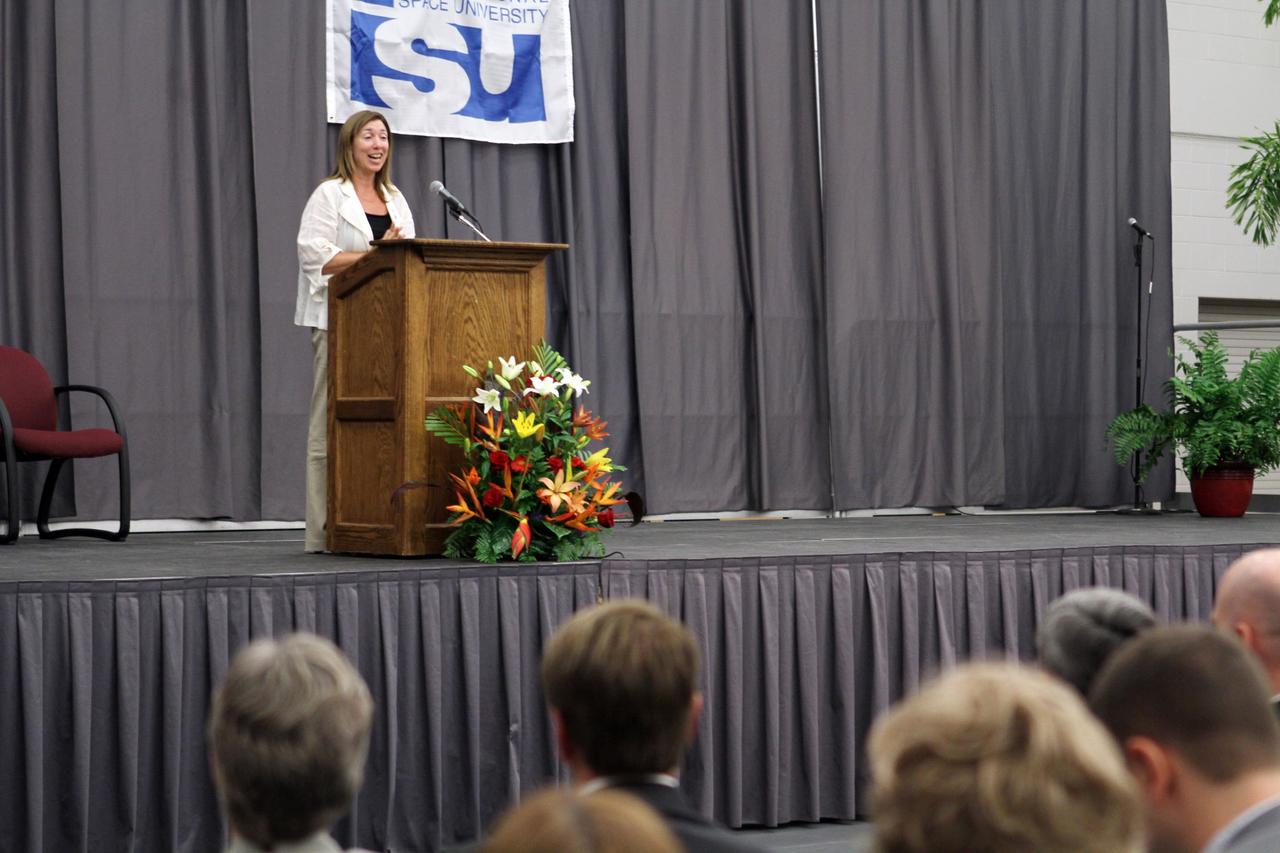
MELBOURNE, Fla. – NASA Deputy Administrator Lori Garver addresses the audience during opening ceremonies for the International Space University's 25th annual Space Studies Program session at the Florida Institute of Technology in Melbourne, Fla. The nine-week intensive course is designed for post-graduate university students and professionals during the summer. The program is hosted by a different country each year, providing a unique educational experience for participants from around the globe. NASA Kennedy Space Center and Florida Tech are co-hosting this year's event which runs from June 4 to Aug. 3. This year, there are about 125 participants representing 31 countries. For more information, visit http://www.isunet.edu. Photo credit: NASA/Kim Shiflett
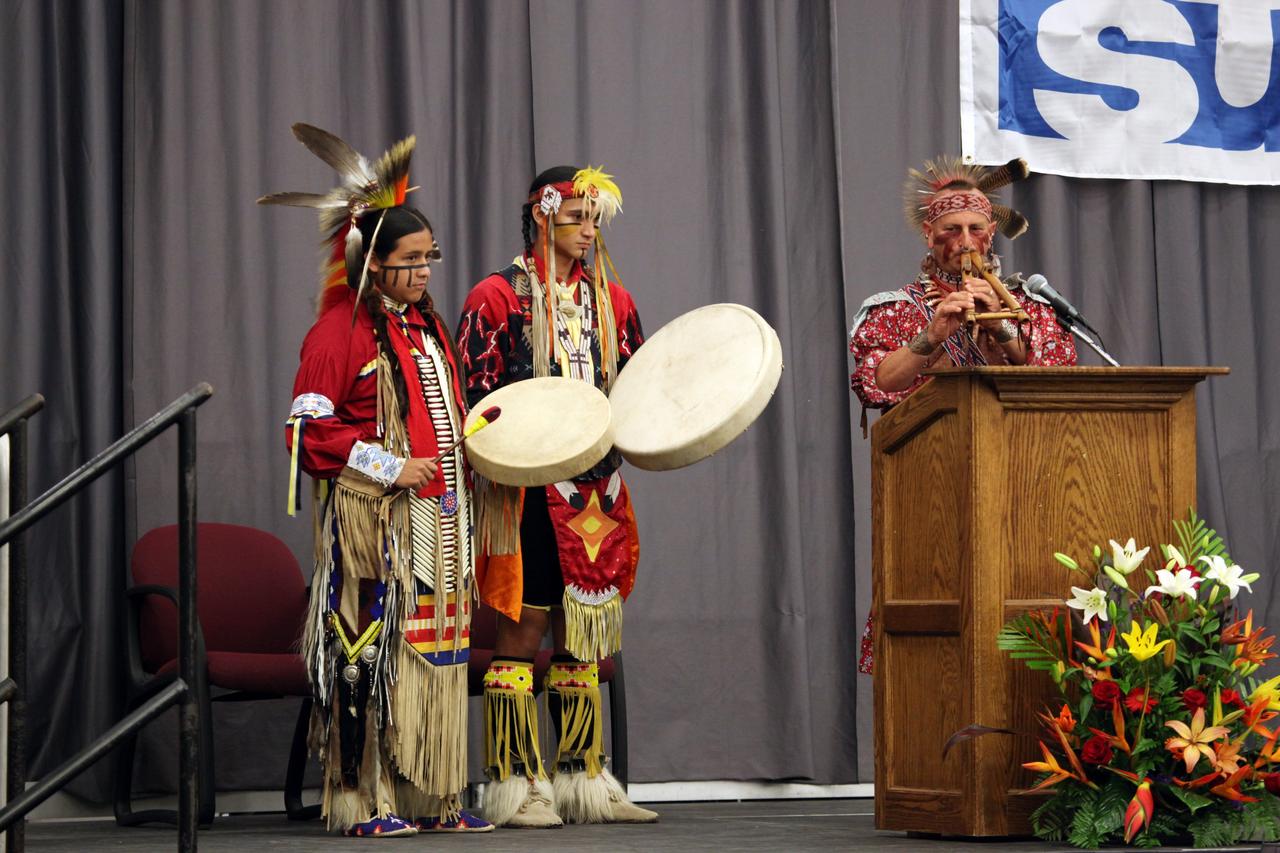
MELBOURNE, Fla. – Entertainment during the opening ceremonies for the International Space University's 25th annual Space Studies Program session at the Florida Institute of Technology in Melbourne, Fla., is provided by Jim Sawgrass and the Deep Forest Native American Indian Program dancers. The nine-week intensive course is designed for post-graduate university students and professionals during the summer. The program is hosted by a different country each year, providing a unique educational experience for participants from around the globe. NASA Kennedy Space Center and Florida Tech are co-hosting this year's event which runs from June 4 to Aug. 3. This year, there are about 125 participants representing 31 countries. For more information, visit http://www.isunet.edu. Photo credit: NASA/Dimitri Gerondidakis
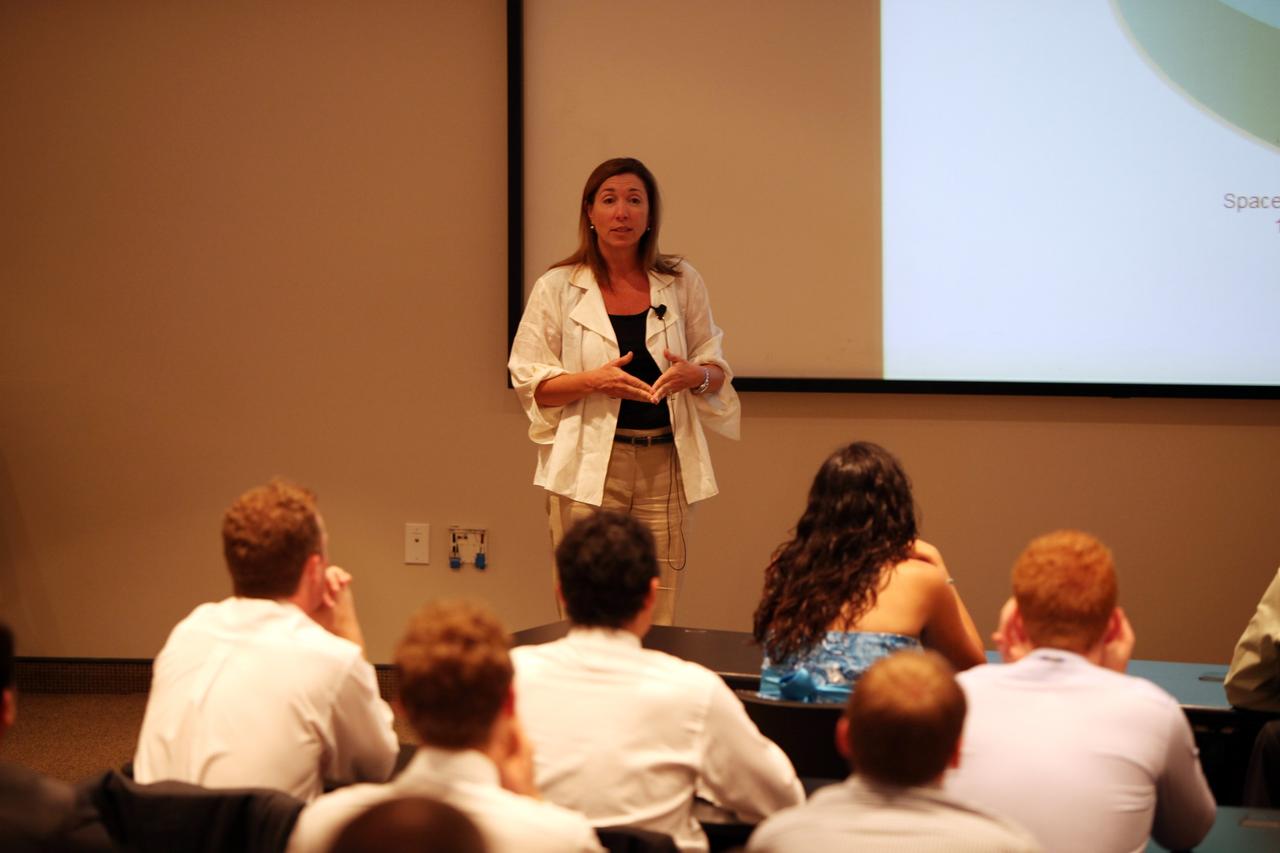
MELBOURNE, Fla. – NASA Deputy Administrator Lori Garver addresses students on the opening day of the International Space University's 25th annual Space Studies Program session at the Florida Institute of Technology in Melbourne, Fla. The nine-week intensive course is designed for post-graduate university students and professionals during the summer. The program is hosted by a different country each year, providing a unique educational experience for participants from around the globe. NASA Kennedy Space Center and Florida Tech are co-hosting this year's event which runs from June 4 to Aug. 3. This year, there are about 125 participants representing 31 countries. For more information, visit http://www.isunet.edu. Photo credit: NASA/Dimitri Gerondidakis
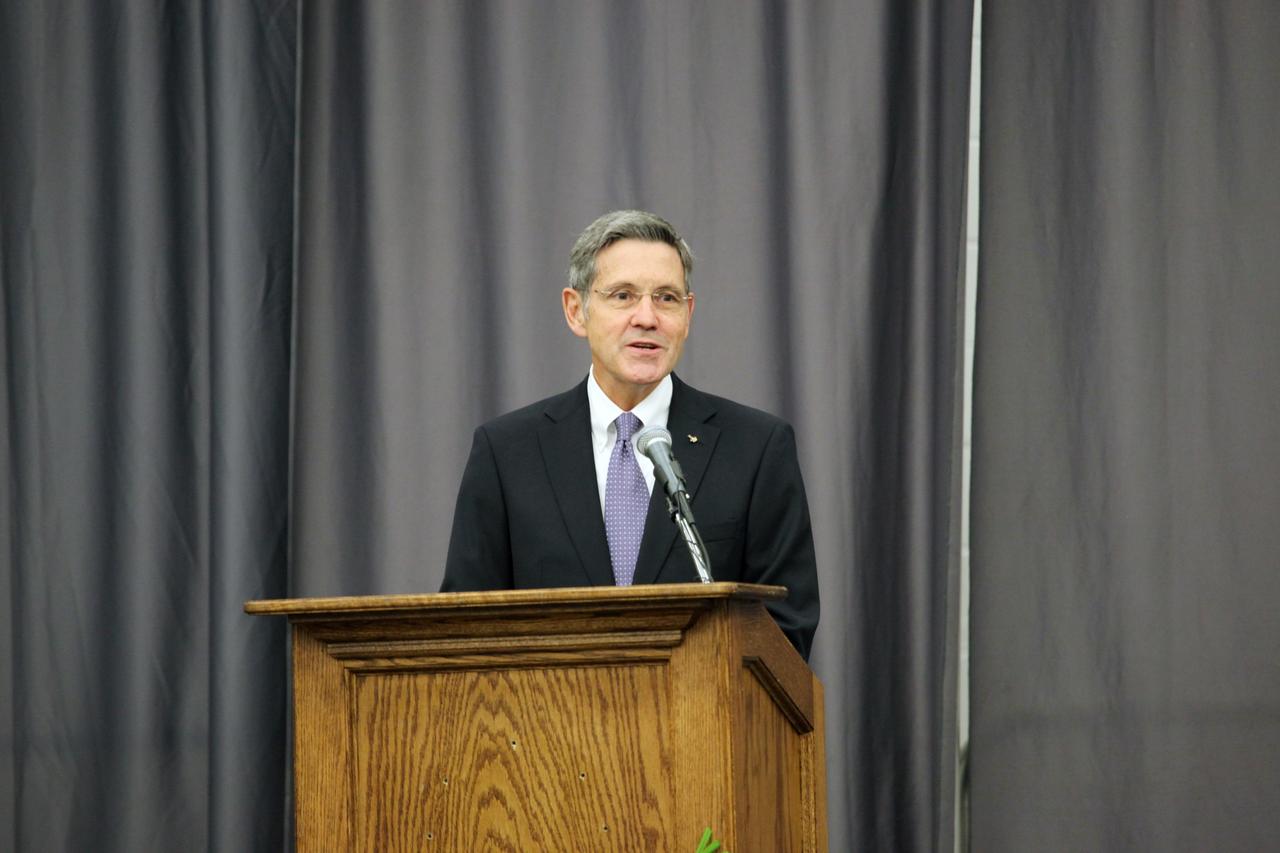
MELBOURNE, Fla. – NASA Kennedy Space Center Director and former astronaut Bob Cabana addresses the audience during opening ceremonies for the university's 25th annual Space Studies Program session at the Florida Institute of Technology in Melbourne, Fla. The nine-week intensive course is designed for post-graduate university students and professionals during the summer. The program is hosted by a different country each year, providing a unique educational experience for participants from around the globe. NASA Kennedy Space Center and Florida Tech are co-hosting this year's event which runs from June 4 to Aug. 3. This year, there are about 125 participants representing 31 countries. For more information, visit http://www.isunet.edu. Photo credit: NASA/Dimitri Gerondidakis
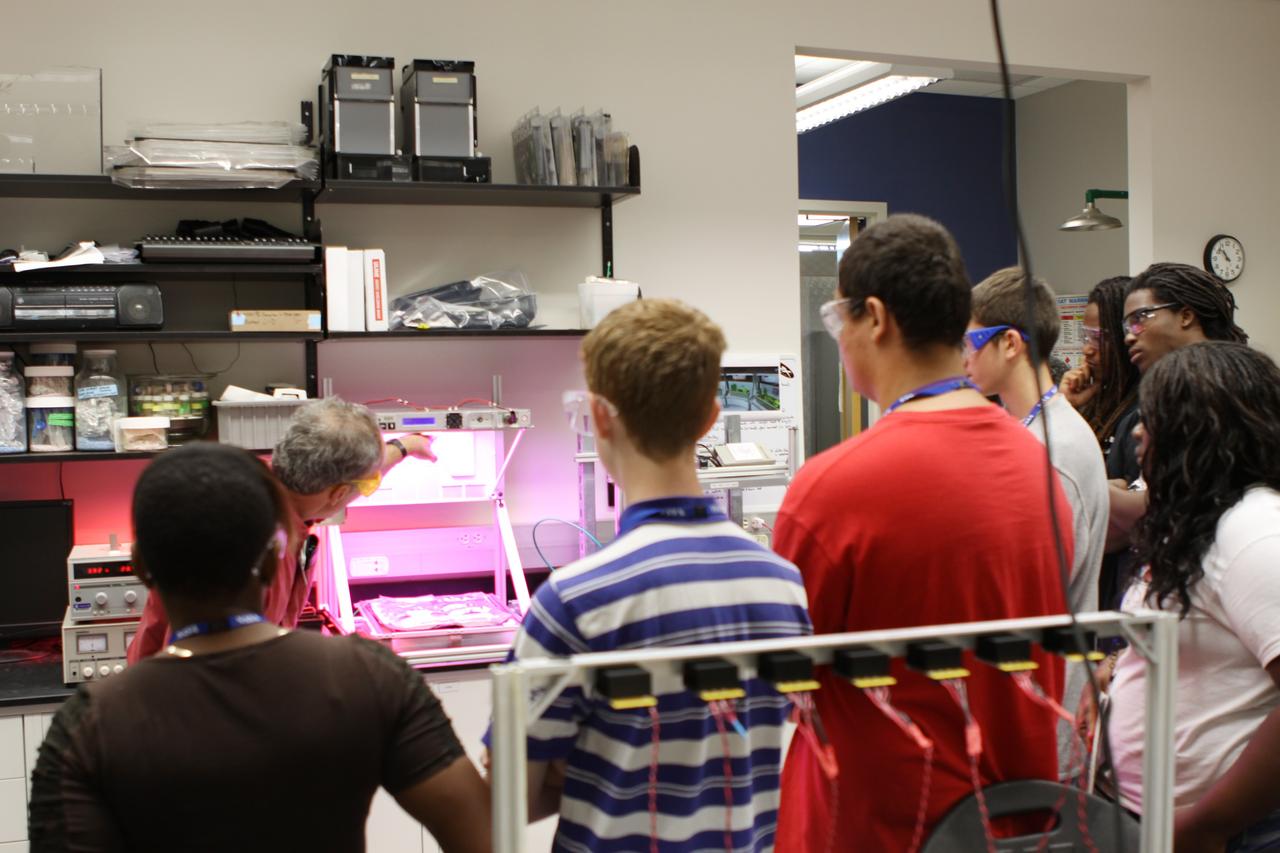
CAPE CANAVERAL, Fla. – Dr. Ray Wheeler explains a system for growing salad crops in space to students in the Life Support and Habitation Systems Lab at the Space Life Sciences Lab facility. The 26 honor students in chemistry and biology and their teachers got a chance to visit a number of high-tech labs at Kennedy Space Center as part of an effort to encourage students in the areas of science, technology, engineering and math. The tenth and eleventh grade students from Terry Parker High School in Jacksonville, Fla., visited a number of vastly different labs during their one-day tour. The group's visit to Kennedy was hosted by the Education Office as part of a nationwide effort by the National Lab Network to help introduce the nation's students to science careers. Photo credit: NASA/Jim Grossmann
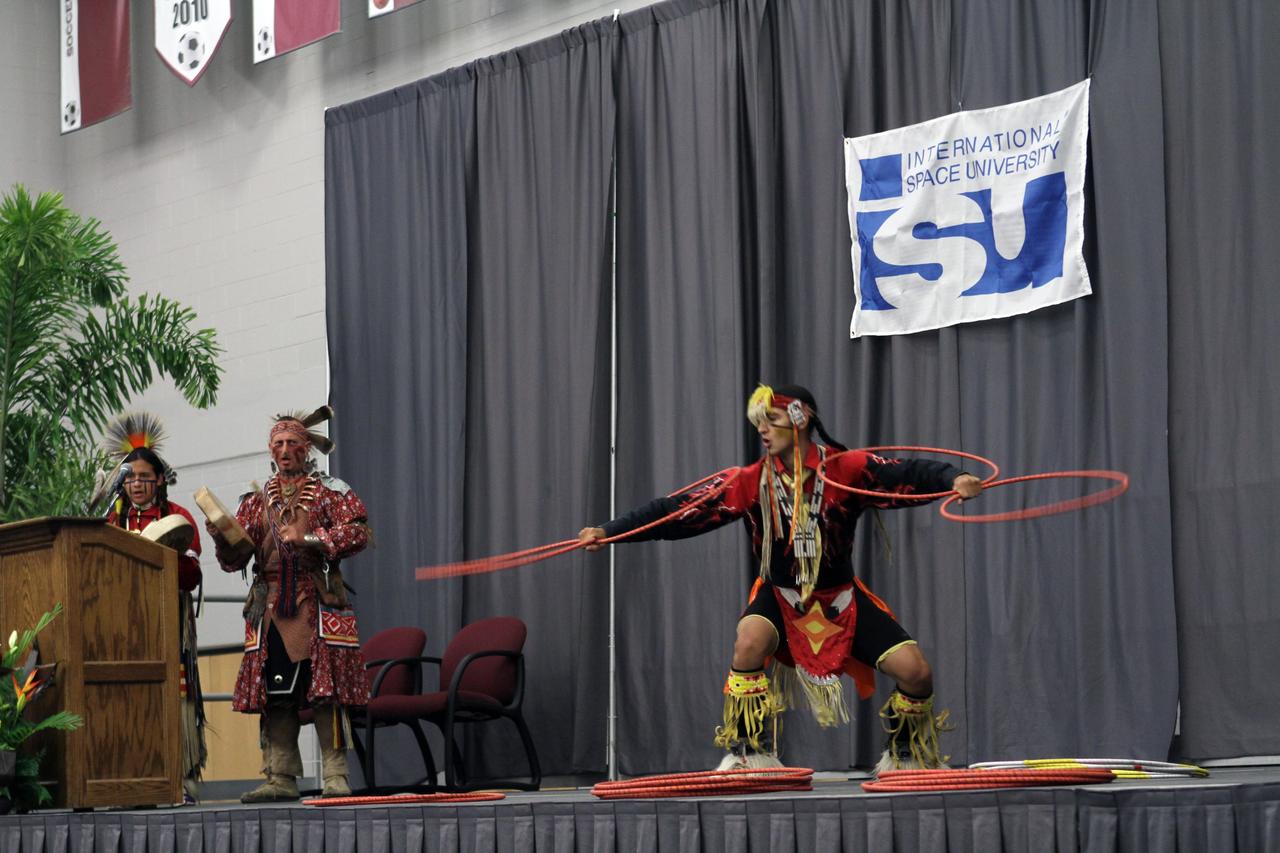
MELBOURNE, Fla. – Entertainment during the opening ceremonies for the International Space University's 25th annual Space Studies Program session at the Florida Institute of Technology in Melbourne, Fla., is provided by Jim Sawgrass and the Deep Forest Native American Indian Program dancers. The nine-week intensive course is designed for post-graduate university students and professionals during the summer. The program is hosted by a different country each year, providing a unique educational experience for participants from around the globe. NASA Kennedy Space Center and Florida Tech are co-hosting this year's event which runs from June 4 to Aug. 3. This year, there are about 125 participants representing 31 countries. For more information, visit http://www.isunet.edu. Photo credit: NASA/Kim Shiflett
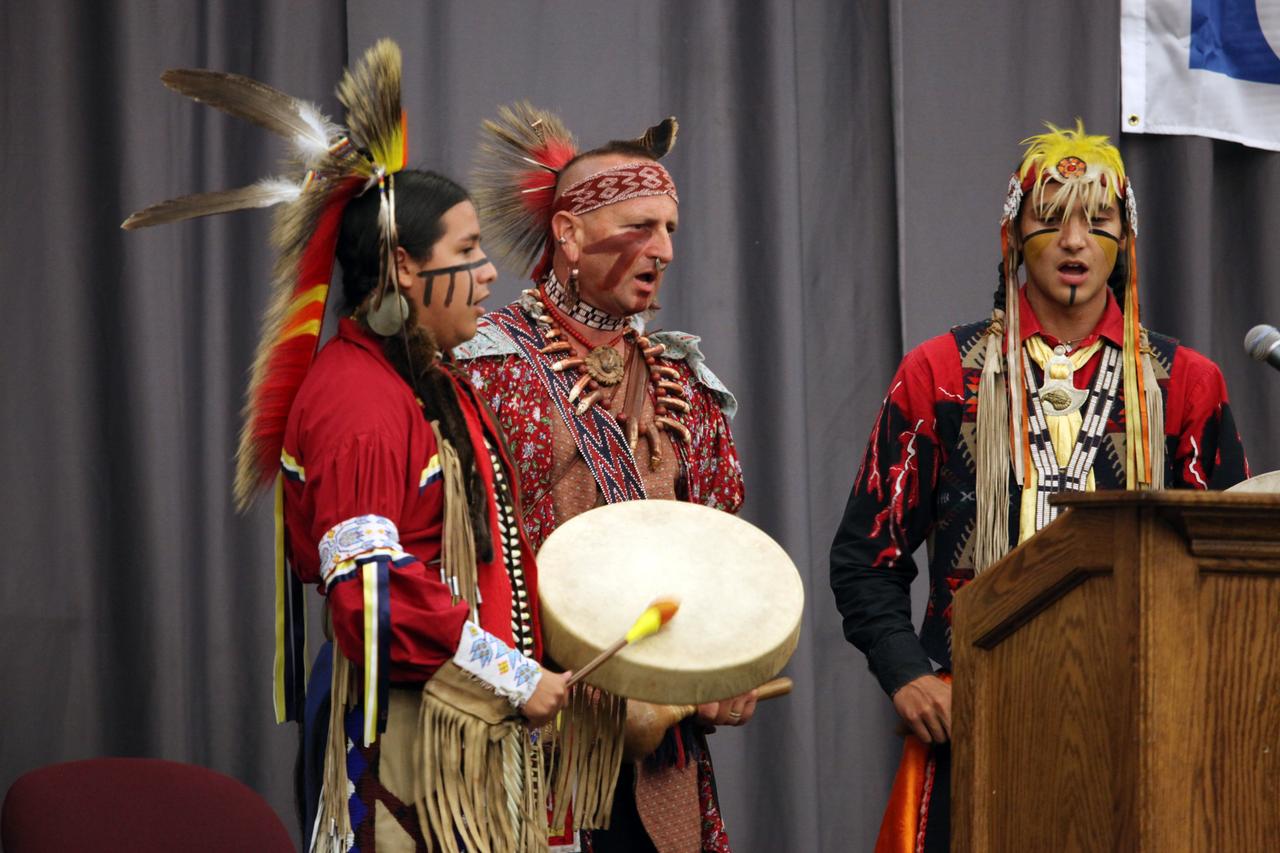
MELBOURNE, Fla. – Entertainment during the opening ceremonies for the International Space University's 25th annual Space Studies Program session at the Florida Institute of Technology in Melbourne, Fla., is provided by Jim Sawgrass and the Deep Forest Native American Indian Program dancers. The nine-week intensive course is designed for post-graduate university students and professionals during the summer. The program is hosted by a different country each year, providing a unique educational experience for participants from around the globe. NASA Kennedy Space Center and Florida Tech are co-hosting this year's event which runs from June 4 to Aug. 3. This year, there are about 125 participants representing 31 countries. For more information, visit http://www.isunet.edu. Photo credit: NASA/Dimitri Gerondidakis
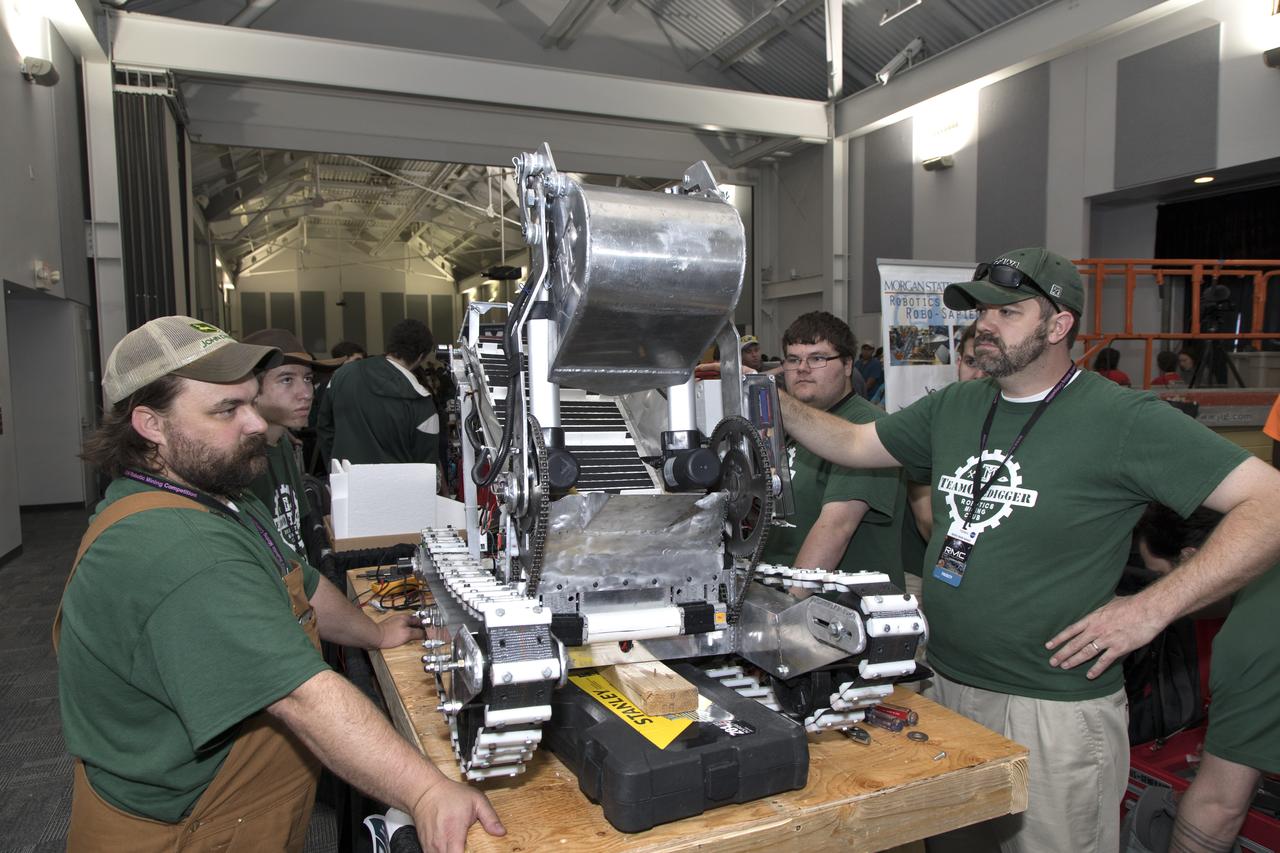
Team members and their advisor, far right, from Montana Tech of the University of Montana, prepare their robot miner on the second day of NASA's 9th Robotic Mining Competition, May 15, in the RobotPits in the Educator Resource Center at Kennedy Space Center Visitor Complex in Florida. More than 40 student teams from colleges and universities around the U.S. will use their mining robots to dig in a supersized sandbox filled with BP-1, or simulated Lunar soil, gravel and rocks, and participate in other competition requirements. The Robotic Mining Competition is a NASA Human Exploration and Operations Mission Directorate project designed to encourage students in science, technology, engineering and math, or STEM fields. The project provides a competitive environment to foster innovative ideas and solutions that could be used on NASA's deep space missions.
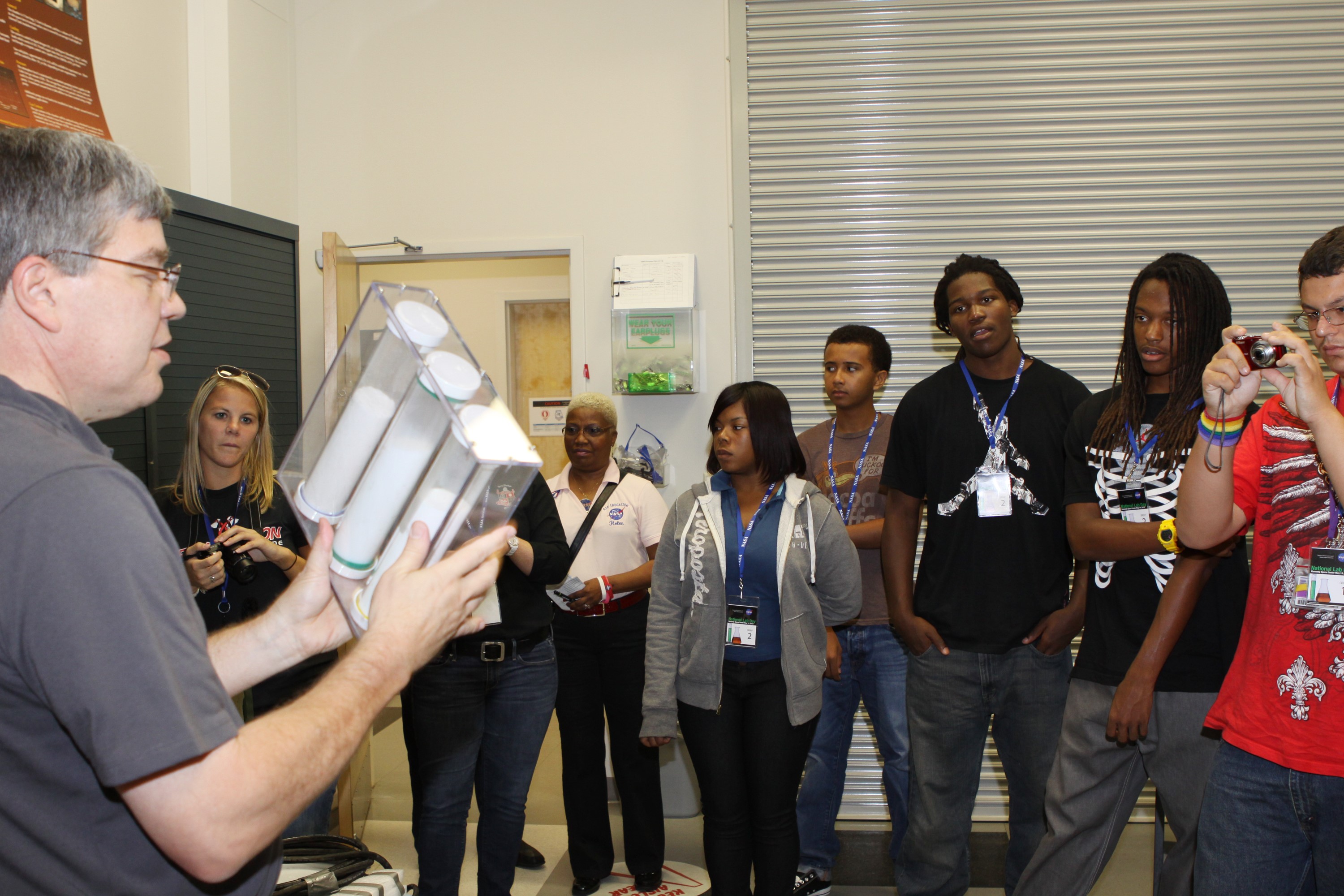
CAPE CANAVERAL, Fla. – Dr. Phil Metzger demonstrates an experiment to study the physics of granular materials to students in the Granular Physics and Regolith Operations Lab at the Space Life Sciences Lab facility. The 26 honor students in chemistry and biology and their teachers got a chance to visit a number of high-tech labs at Kennedy Space Center as part of an effort to encourage students in the areas of science, technology, engineering and math. The tenth and eleventh grade students from Terry Parker High School in Jacksonville, Fla., visited a number of vastly different labs during their one-day tour. The group's visit to Kennedy was hosted by the Education Office as part of a nationwide effort by the National Lab Network to help introduce the nation's students to science careers. Photo credit: NASA/Jim Grossmann
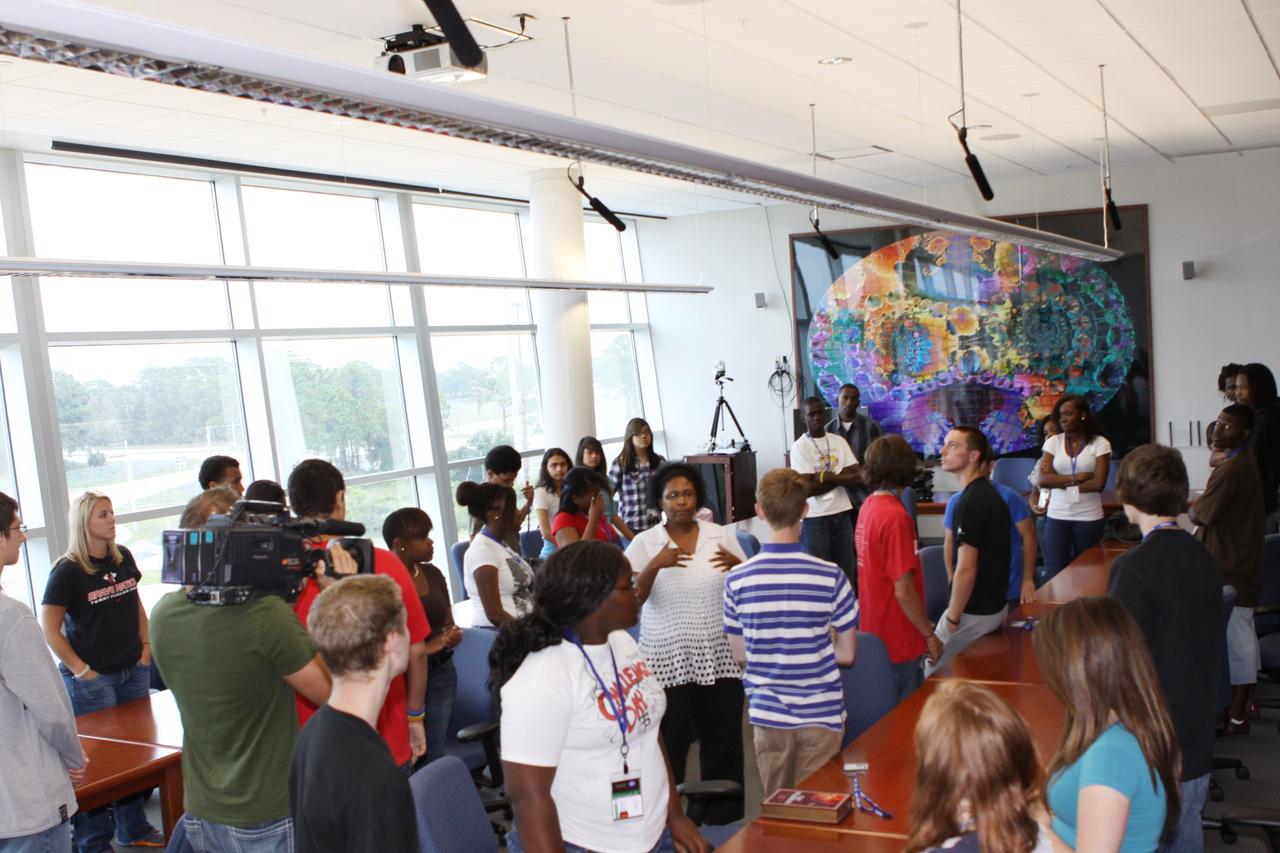
CAPE CANAVERAL, Fla. – Dr. LaNetra C. Tate, center, materials engineer at Kennedy Space Center, is surrounded by students as she welcomes them for their tour of the Space Life Sciences Lab facilities. The 26 honor students in chemistry and biology and their teachers got a chance to visit a number of high-tech labs at Kennedy as part of an effort to encourage students in the areas of science, technology, engineering and math. The tenth and eleventh grade students from Terry Parker High School in Jacksonville, Fla., visited a number of vastly different labs during their one-day tour. The group's visit to Kennedy was hosted by the Education Office as part of a nationwide effort by the National Lab Network to help introduce the nation's students to science careers. Photo credit: NASA/Jim Grossmann
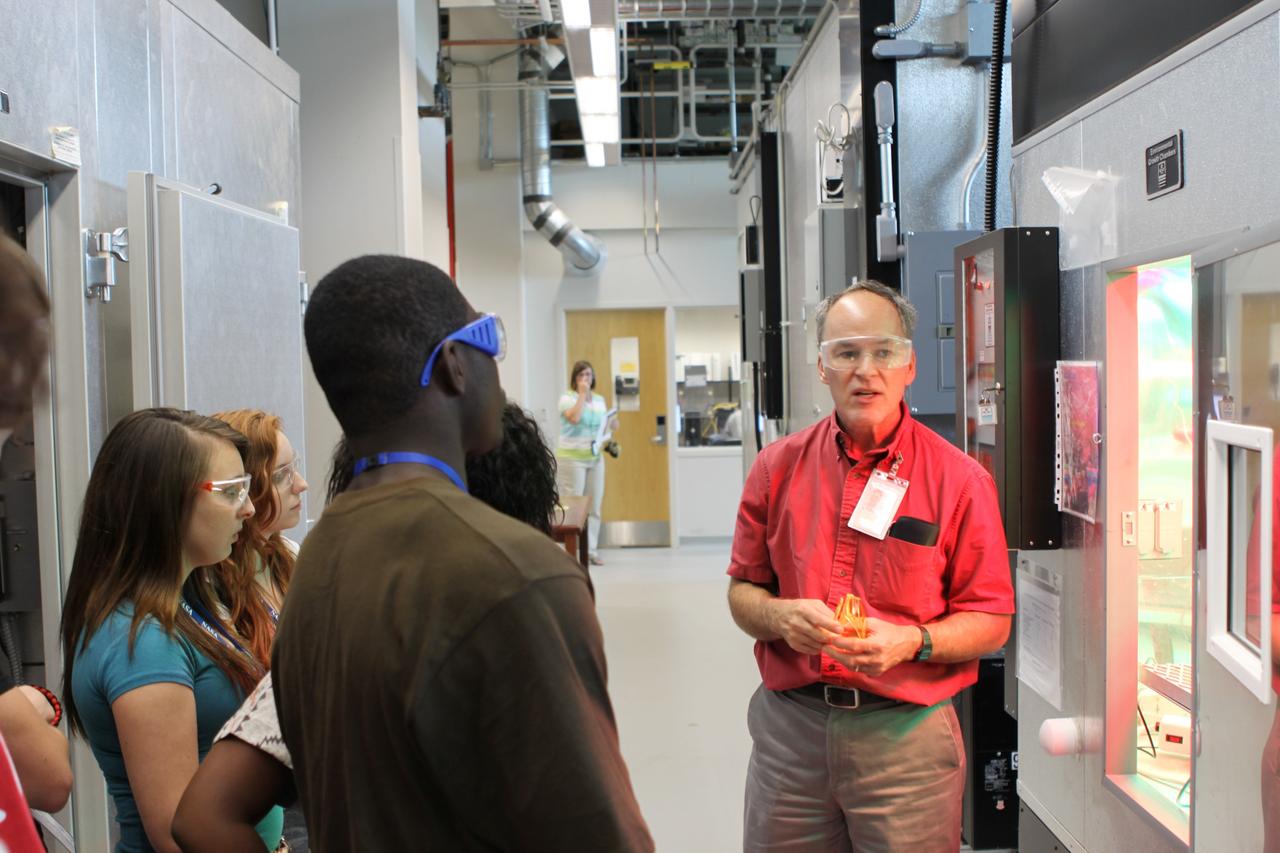
CAPE CANAVERAL, Fla. – Dr. Ray Wheeler explains a plant growth chamber to students in the Life Support and Habitation Systems Lab at the Space Life Sciences Lab facility. The 26 honor students in chemistry and biology and their teachers got a chance to visit a number of high-tech labs at Kennedy Space Center as part of an effort to encourage students in the areas of science, technology, engineering and math. The tenth and eleventh grade students from Terry Parker High School in Jacksonville, Fla., visited a number of vastly different labs during their one-day tour. The group's visit to Kennedy was hosted by the Education Office as part of a nationwide effort by the National Lab Network to help introduce the nation's students to science careers. Photo credit: NASA/Jim Grossmann
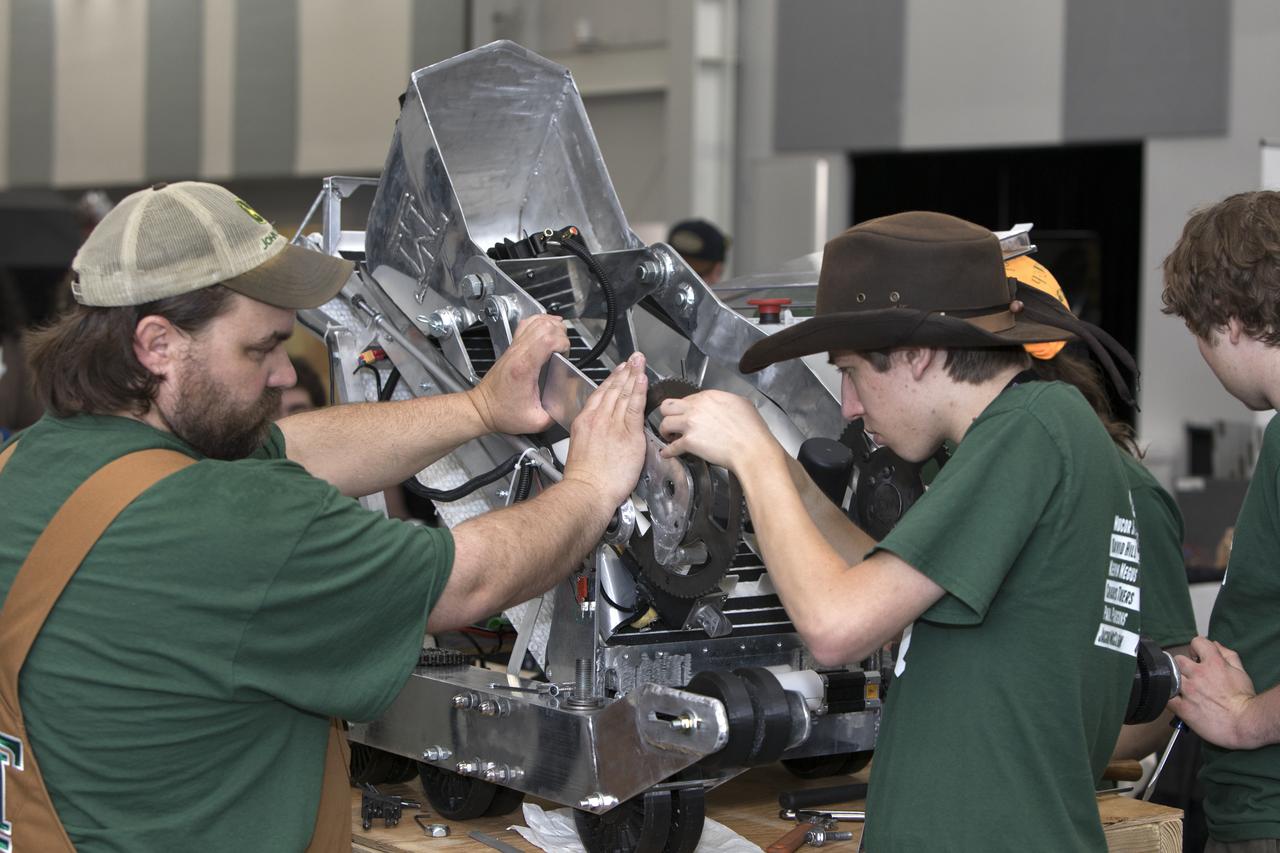
On the first day of NASA's 9th Robotic Mining Competition, set-up day on May 14, team members from Montana Tech of the University of Montana work on their robot miner in the RobotPits in the Educator Resource Center at Kennedy Space Center Visitor Complex in Florida. More than 40 student teams from colleges and universities around the U.S. will use their mining robots to dig in a supersized sandbox filled with BP-1, or simulated Lunar soil, gravel and rocks, and participate in other competition requirements. The Robotic Mining Competition is a NASA Human Exploration and Operations Mission Directorate project designed to encourage students in science, technology, engineering and math, or STEM fields. The project provides a competitive environment to foster innovative ideas and solutions that could be used on NASA's deep space missions.
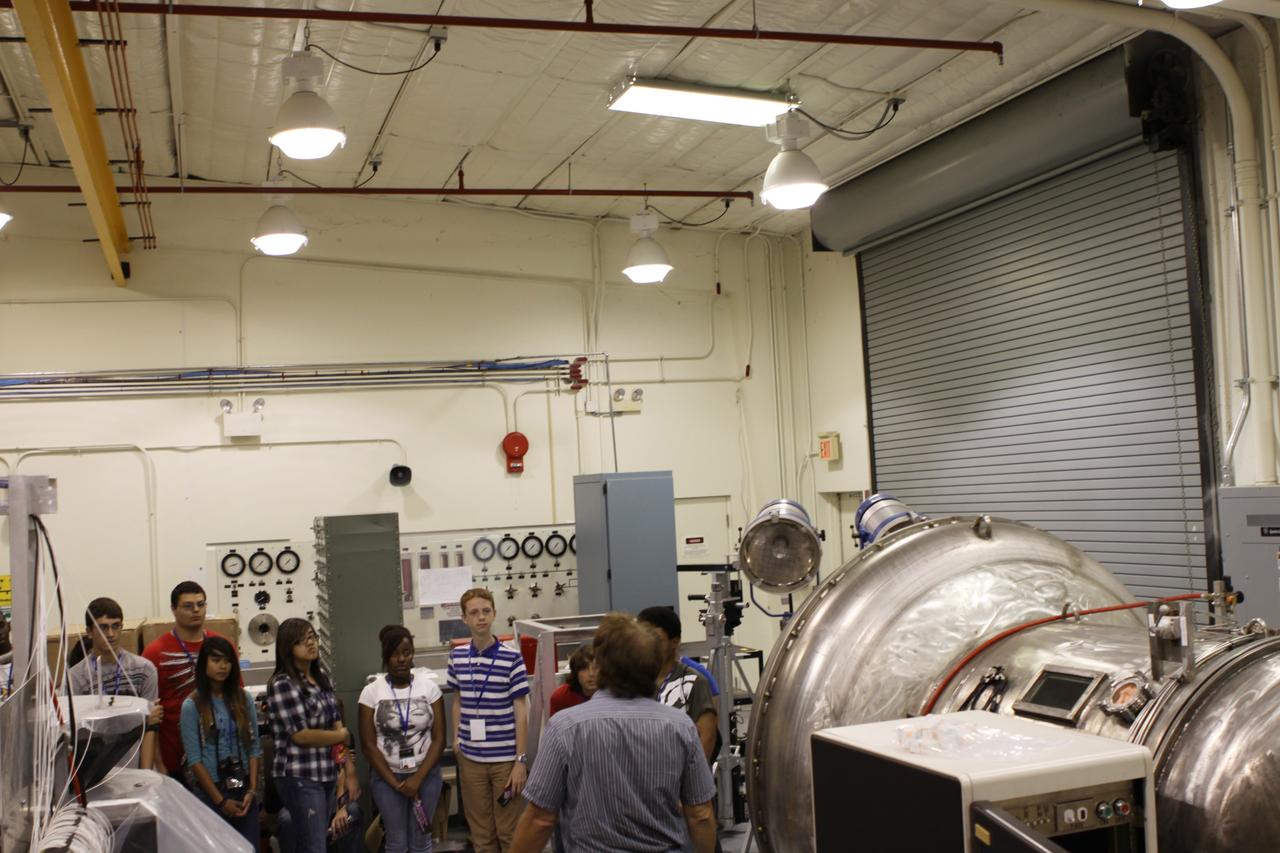
CAPE CANAVERAL, Fla. – Inside the Operations and Checkout Building, Rudy Werlink gives students a first-hand look at the workings of the sound testing area of cryogenics lab. The 26 honor students in chemistry and biology and their teachers got a chance to visit a number of high-tech labs at Kennedy Space Center as part of an effort to encourage students in the areas of science, technology, engineering and math. The tenth and eleventh grade students from Terry Parker High School in Jacksonville, Fla., visited a number of vastly different labs during their one-day tour. The group's visit to Kennedy was hosted by the Education Office as part of a nationwide effort by the National Lab Network to help introduce the nation's students to science careers. Photo credit: NASA/Jim Grossmann
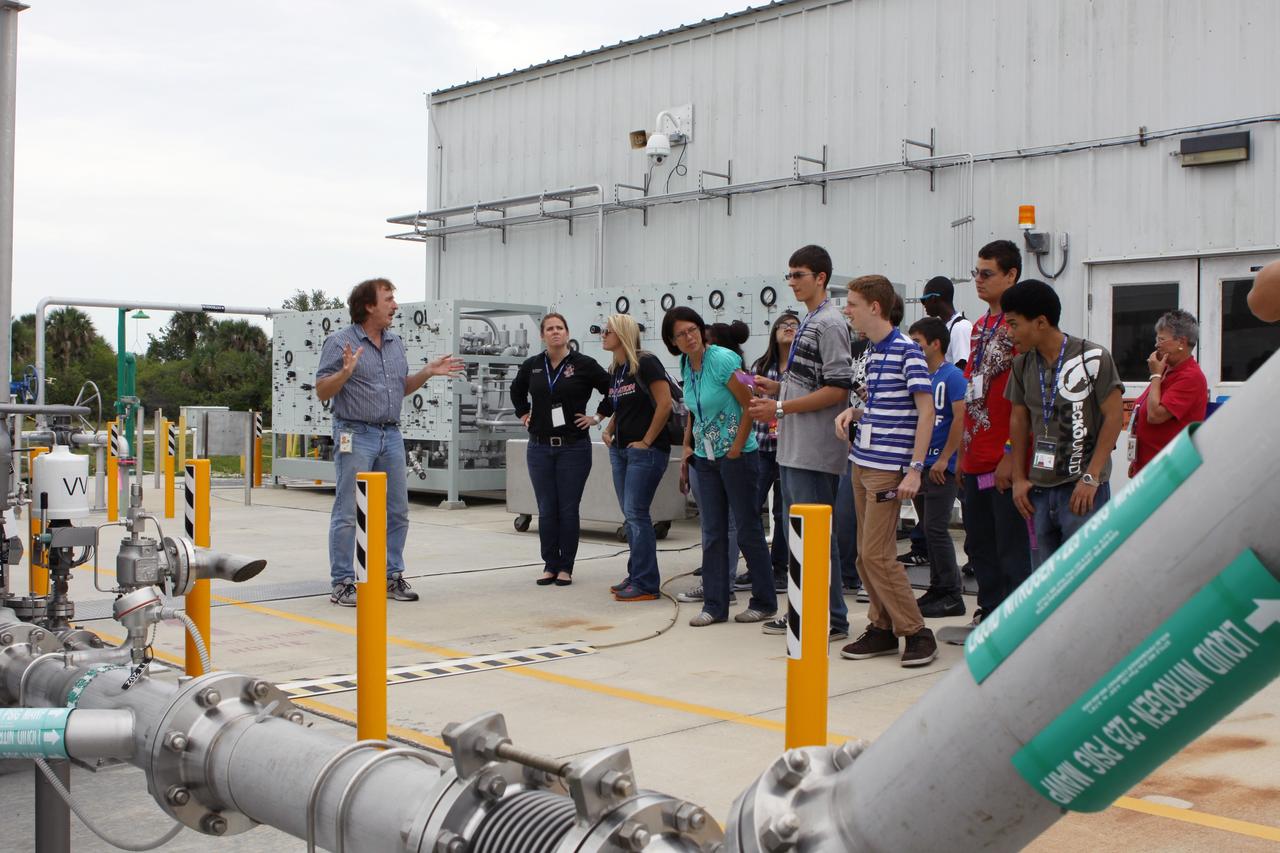
CAPE CANAVERAL, Fla. – Outside the Operations and Checkout Building, Rudy Werlink gives students a first-hand look at the workings of the cryogenics lab. The 26 honor students in chemistry and biology and their teachers got a chance to visit a number of high-tech labs at Kennedy Space Center as part of an effort to encourage students in the areas of science, technology, engineering and math. The tenth and eleventh grade students from Terry Parker High School in Jacksonville, Fla., visited a number of vastly different labs during their one-day tour. The group's visit to Kennedy was hosted by the Education Office as part of a nationwide effort by the National Lab Network to help introduce the nation's students to science careers. Photo credit: NASA/Jim Grossmann
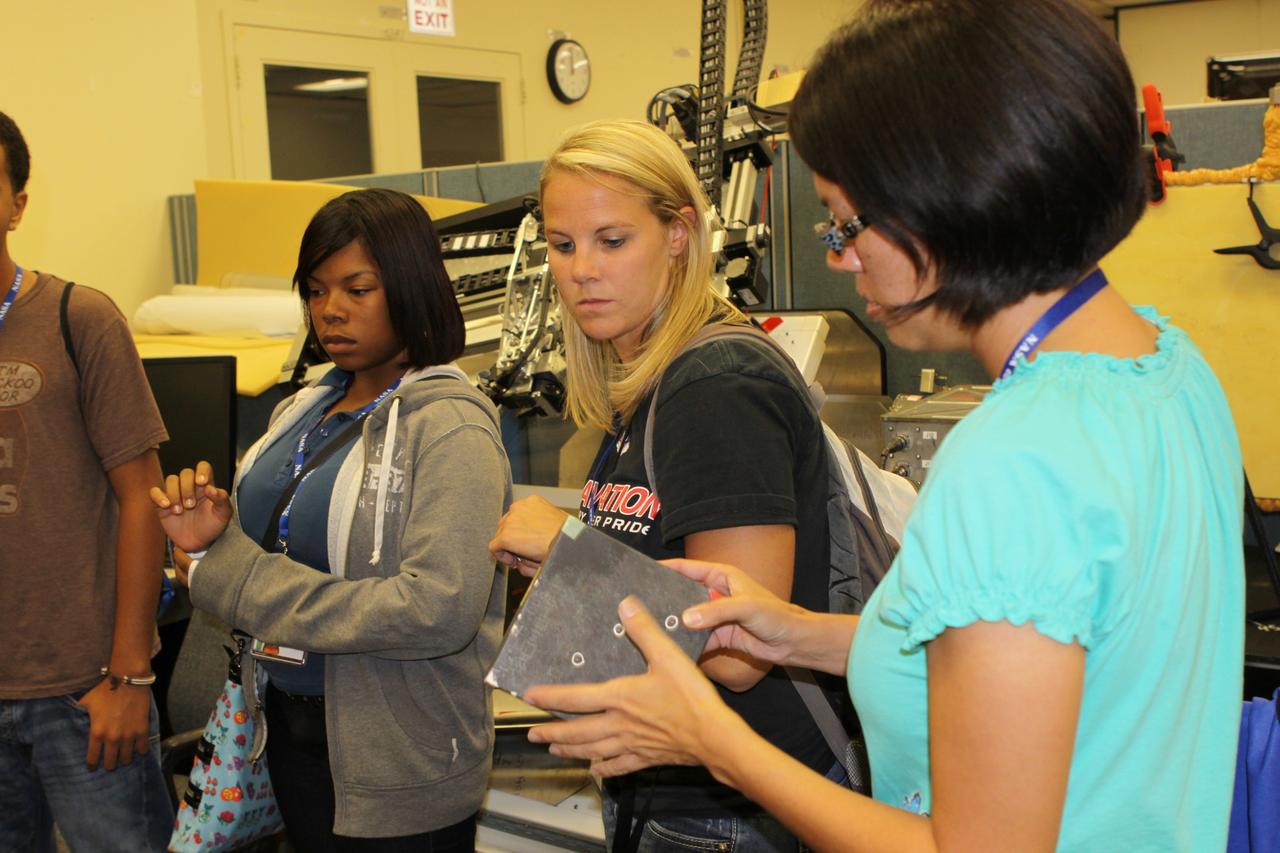
CAPE CANAVERAL, Fla. – Students and their teachers get some hands-on experience inside the applied physics lab in the Operations and Checkout Building. The 26 honor students in chemistry and biology and their teachers got a chance to visit a number of high-tech labs at Kennedy Space Center as part of an effort to encourage students in the areas of science, technology, engineering and math. The tenth and eleventh grade students from Terry Parker High School in Jacksonville, Fla., visited a number of vastly different labs during their one-day tour. The group's visit to Kennedy was hosted by the Education Office as part of a nationwide effort by the National Lab Network to help introduce the nation's students to science careers. Photo credit: NASA/Jim Grossmann

CAPE CANAVERAL, Fla. – Inside the Operations and Checkout Building, Rudy Werlink gives students a first-hand look at the workings of the sound testing area of cryogenics lab. The 26 honor students in chemistry and biology and their teachers got a chance to visit a number of high-tech labs at Kennedy Space Center as part of an effort to encourage students in the areas of science, technology, engineering and math. The tenth and eleventh grade students from Terry Parker High School in Jacksonville, Fla., visited a number of vastly different labs during their one-day tour. The group's visit to Kennedy was hosted by the Education Office as part of a nationwide effort by the National Lab Network to help introduce the nation's students to science careers. Photo credit: NASA/Jim Grossmann
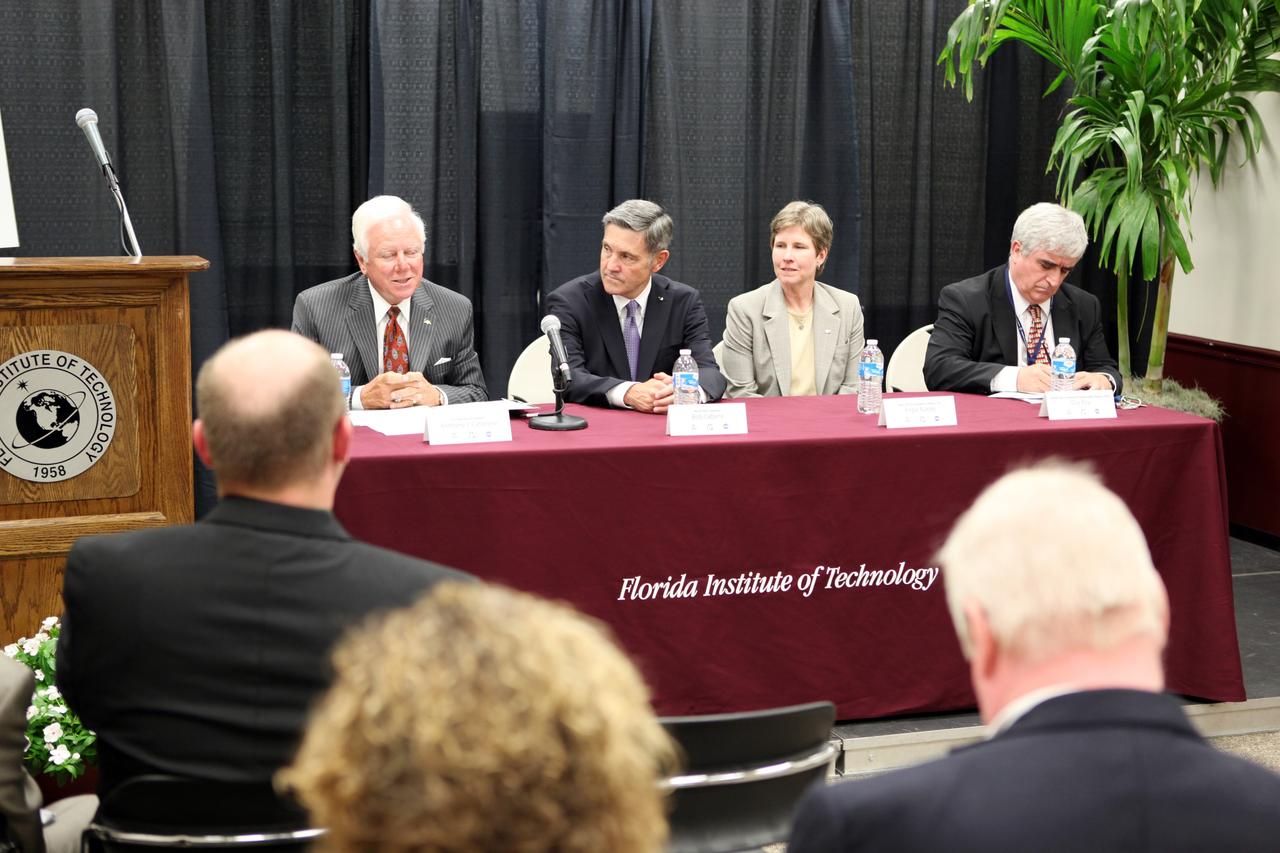
MELBOURNE, Fla. – Anthony J. Catanese, president of the Florida Institute of Technology, participates in the opening ceremonies for the International Space University's 25th annual Space Studies Program session at the Florida Institute of Technology in Melbourne, Fla. Seated from left are Catanese NASA Kennedy Space Center Director Bob Cabana Professor Angie Bukley, dean and vice president for Academic Affairs, International Space University and Dr. Guy A. Boy, chair of the Space Studies Program’s local organizing committee. The nine-week intensive course is designed for post-graduate university students and professionals during the summer. The program is hosted by a different country each year, providing a unique educational experience for participants from around the globe. NASA Kennedy Space Center and Florida Tech are co-hosting this year's event which runs from June 4 to Aug. 3. This year, there are about 125 participants representing 31 countries. For more information, visit http://www.isunet.edu. Photo credit: NASA/Dimitri Gerondidakis
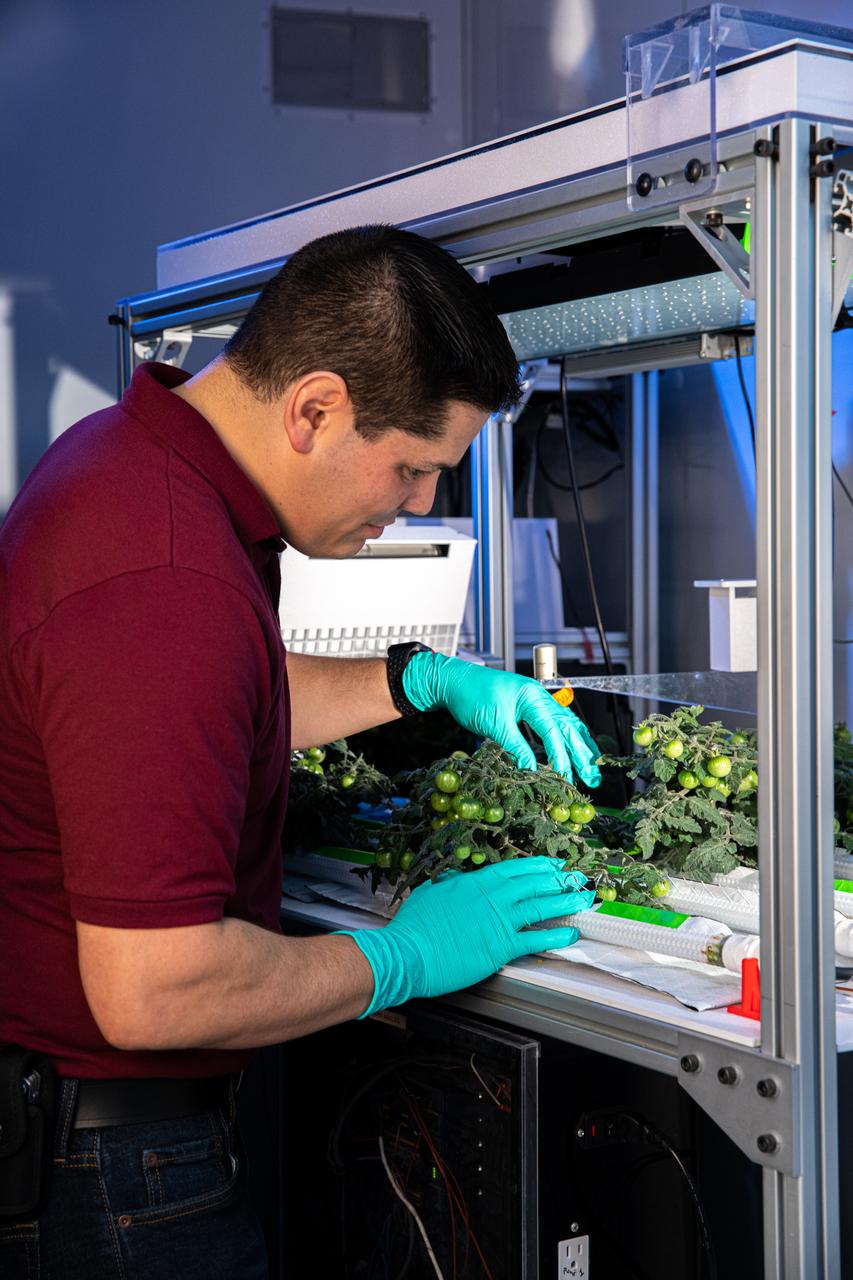
A multidisciplinary team of engineers, biologists, and horticulturalists working out of NASA's Kennedy Space Center in Florida supports the use of technology and automation in plant growth research that looks to supplement the diet of astronauts so they can undertake longer and more distant space exploration missions than ever before.
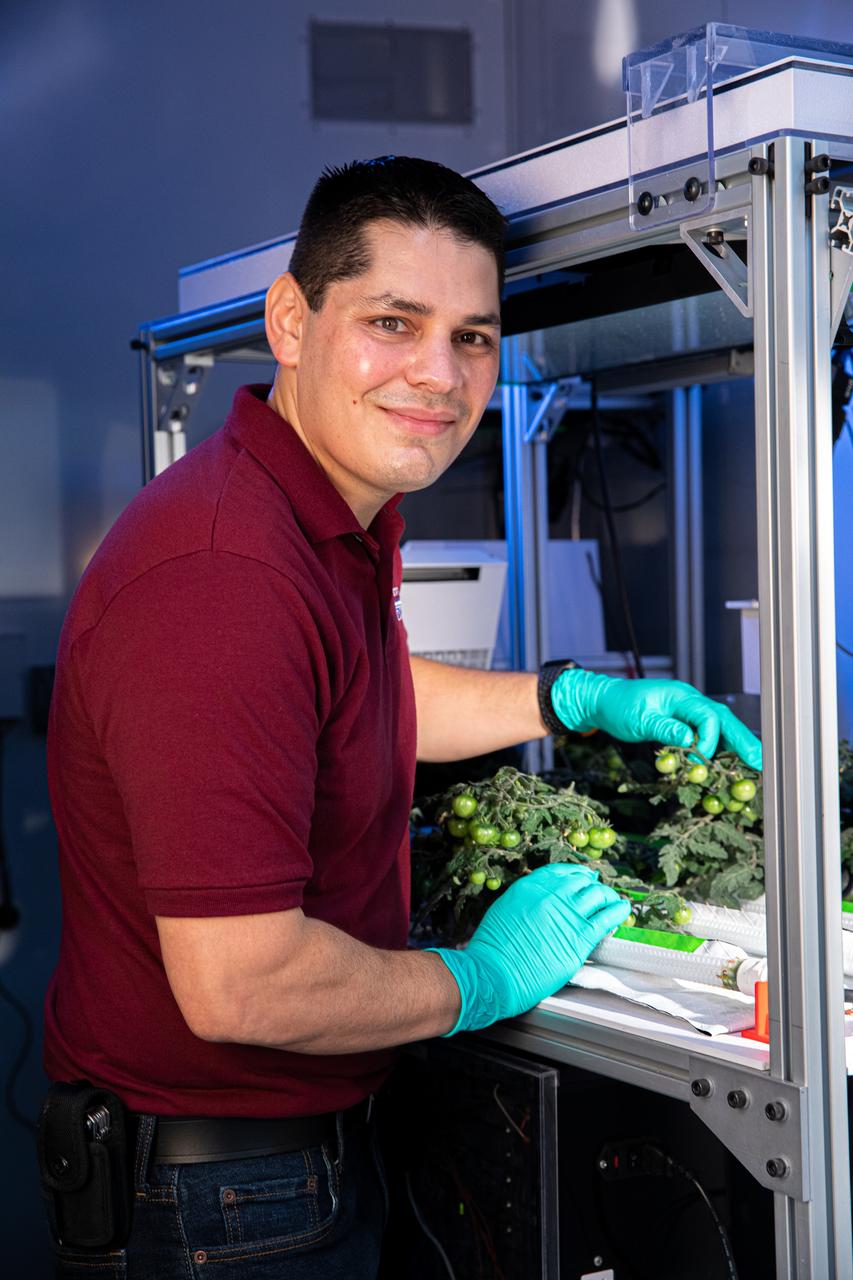
A multidisciplinary team of engineers, biologists, and horticulturalists working out of NASA's Kennedy Space Center in Florida supports the use of technology and automation in plant growth research that looks to supplement the diet of astronauts so they can undertake longer and more distant space exploration missions than ever before.
A multidisciplinary team of engineers, biologists, and horticulturalists working out of NASA's Kennedy Space Center in Florida supports the use of technology and automation in plant growth research that looks to supplement the diet of astronauts so they can undertake longer and more distant space exploration missions than ever before.
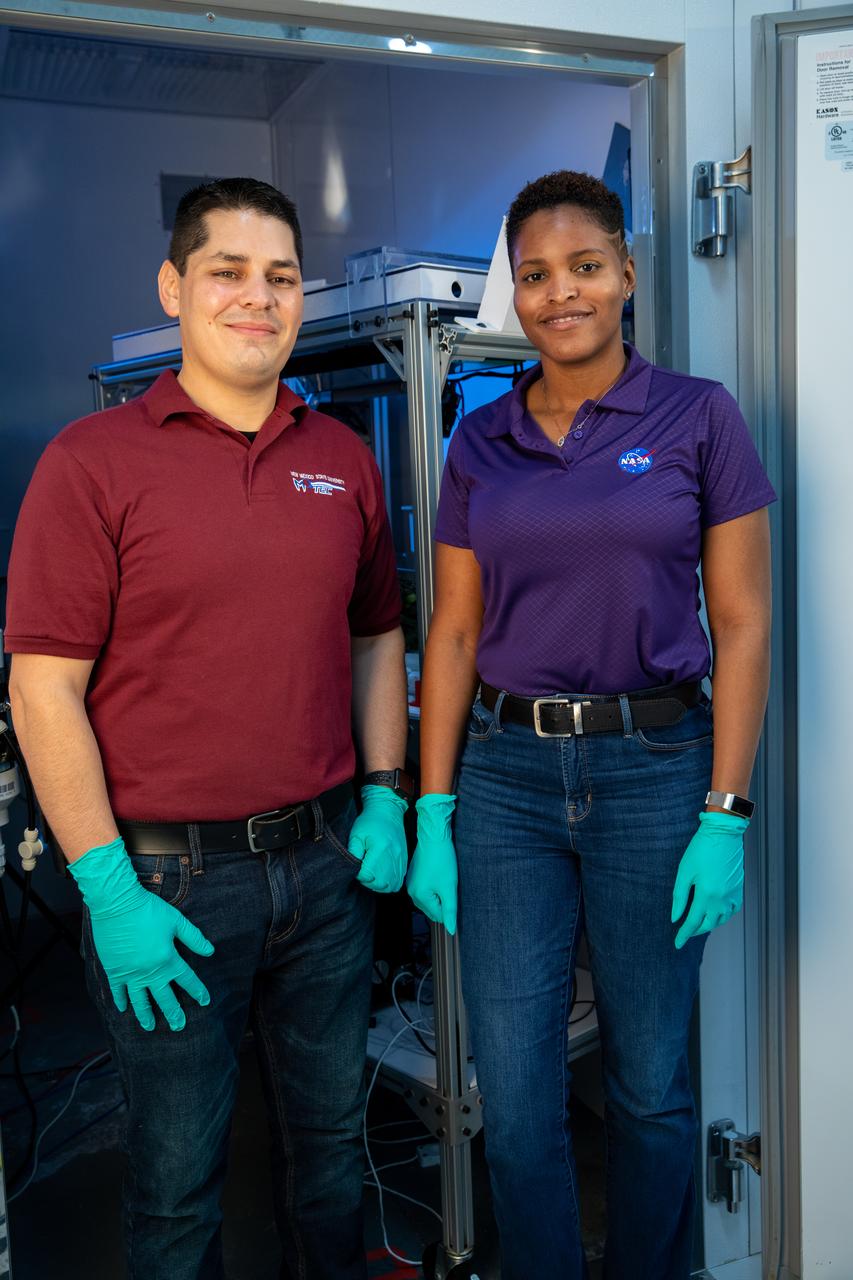
A multidisciplinary team of engineers, biologists, and horticulturalists working out of NASA's Kennedy Space Center in Florida supports the use of technology and automation in plant growth research that looks to supplement the diet of astronauts so they can undertake longer and more distant space exploration missions than ever before.
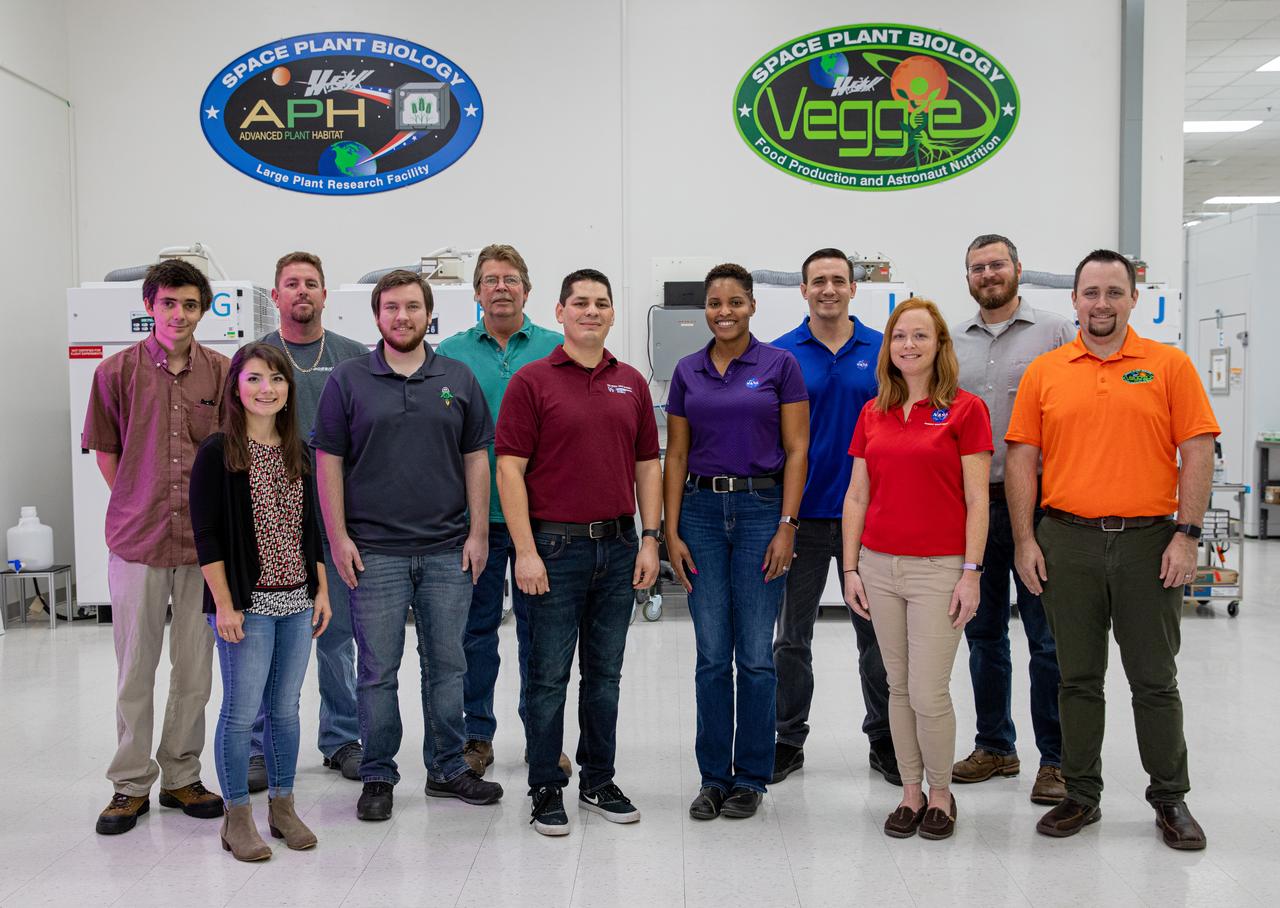
A multidisciplinary team of engineers, biologists, and horticulturalists working out of NASA's Kennedy Space Center in Florida supports the use of technology and automation in plant growth research that looks to supplement the diet of astronauts so they can undertake longer and more distant space exploration missions than ever before.
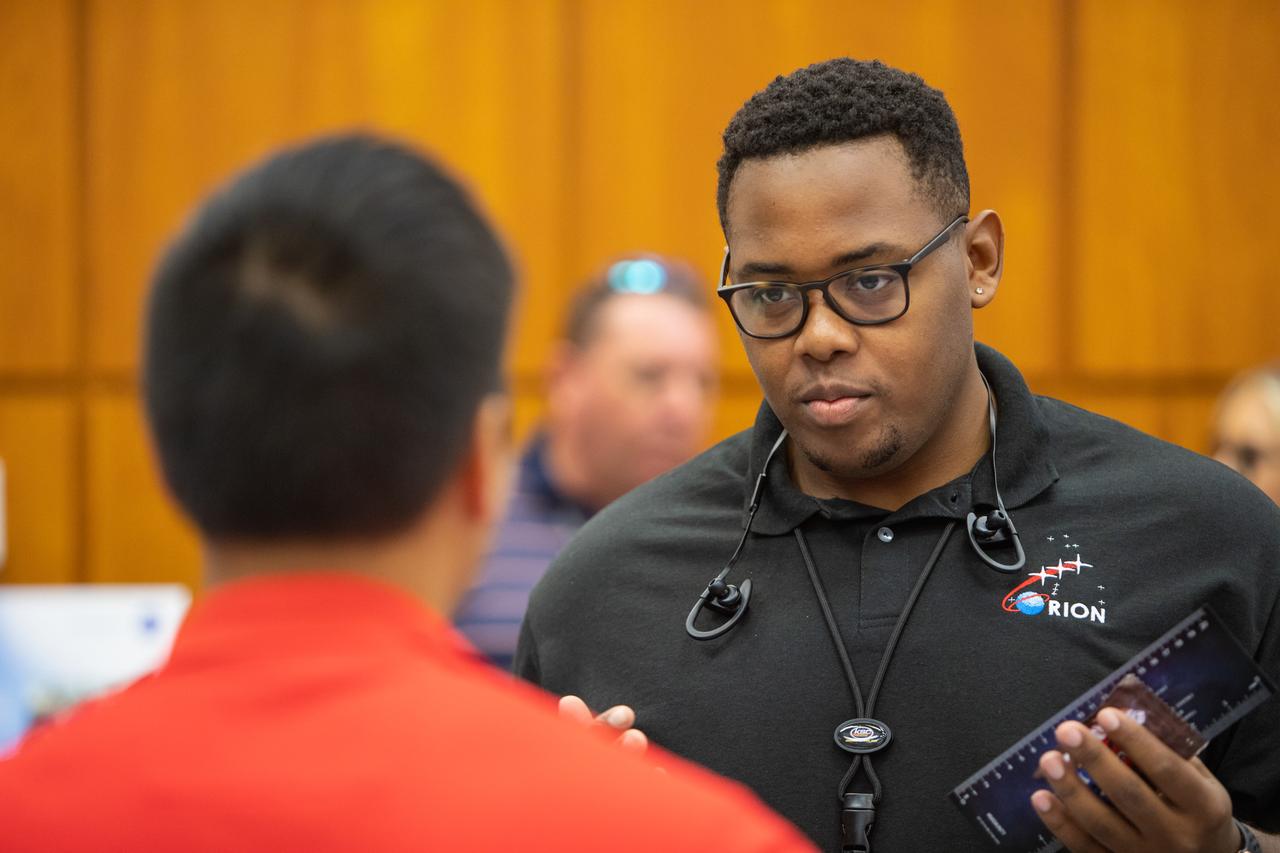
A Kennedy Space Center employee demonstrates a new technology during an innovation showcase on Nov. 19, 2019, in the Florida spaceport’s Neil Armstrong Operations and Checkout Building’s Mission Briefing Room. Nearly 50 exhibitors gathered to participate in the center’s Innovation Days – one of several events throughout the year aimed at fostering and encouraging an innovative culture at Kennedy. Showcase participants included individuals from multiple directorates, programs and organizations throughout Kennedy. In addition to the showcase, employees had the opportunity to attend an overview presentation on NASA’s Human Landing System (HLS), hosted by HLS Program Manager Lisa Watson-Morgan.

An interactive augmented reality sandbox, used by Swamp Works personnel to visually demonstrate the work being done in the Granular Mechanics and Regolith Operations laboratory at the Kennedy Space Center to produce high-fidelity models of rocket plume impingement on the lunar surface, is photographed during an innovation showcase on Nov. 19, 2019. Nearly 50 exhibitors gathered in the Florida spaceport’s Neil Armstrong Operations and Checkout Building’s Mission Briefing Room to participate in the center’s Innovation Days – one of several events throughout the year aimed at fostering an encouraging an innovative culture at Kennedy. Showcase participants included individuals from multiple directorates, programs and organizations throughout Kennedy. In addition to the showcase, employees had the opportunity to attend an overview presentation on NASA’s Human Landing System (HLS), hosted by HLS Program Manager Lisa Watson-Morgan.
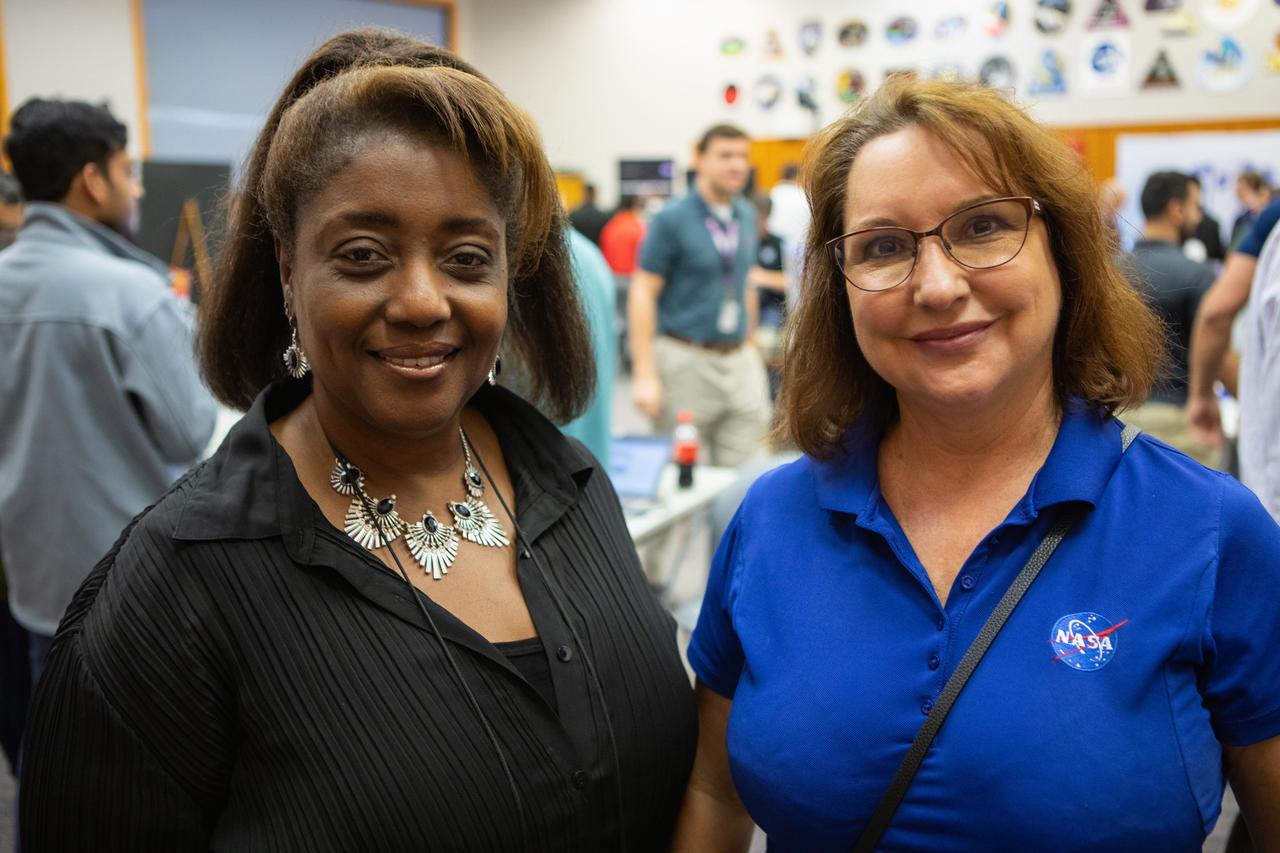
Kennedy Space Center Chief Technologist Barbara Brown, left, and Deputy Chief Technologist Kathy Loftin are photographed during an innovation showcase on Nov. 19, 2019, in the Florida spaceport’s Neil Armstrong Operations and Checkout Building’s Mission Briefing Room. Nearly 50 exhibitors gathered to demonstrate new technologies and innovations during the center’s Innovation Days – one of several events throughout the year aimed at fostering and encouraging an innovative culture at Kennedy. Showcase participants included individuals from multiple directorates, programs and organizations throughout Kennedy. In addition to the showcase, employees had the opportunity to attend an overview presentation on NASA’s Human Landing System (HLS), hosted by HLS Program Manager Lisa Watson-Morgan.
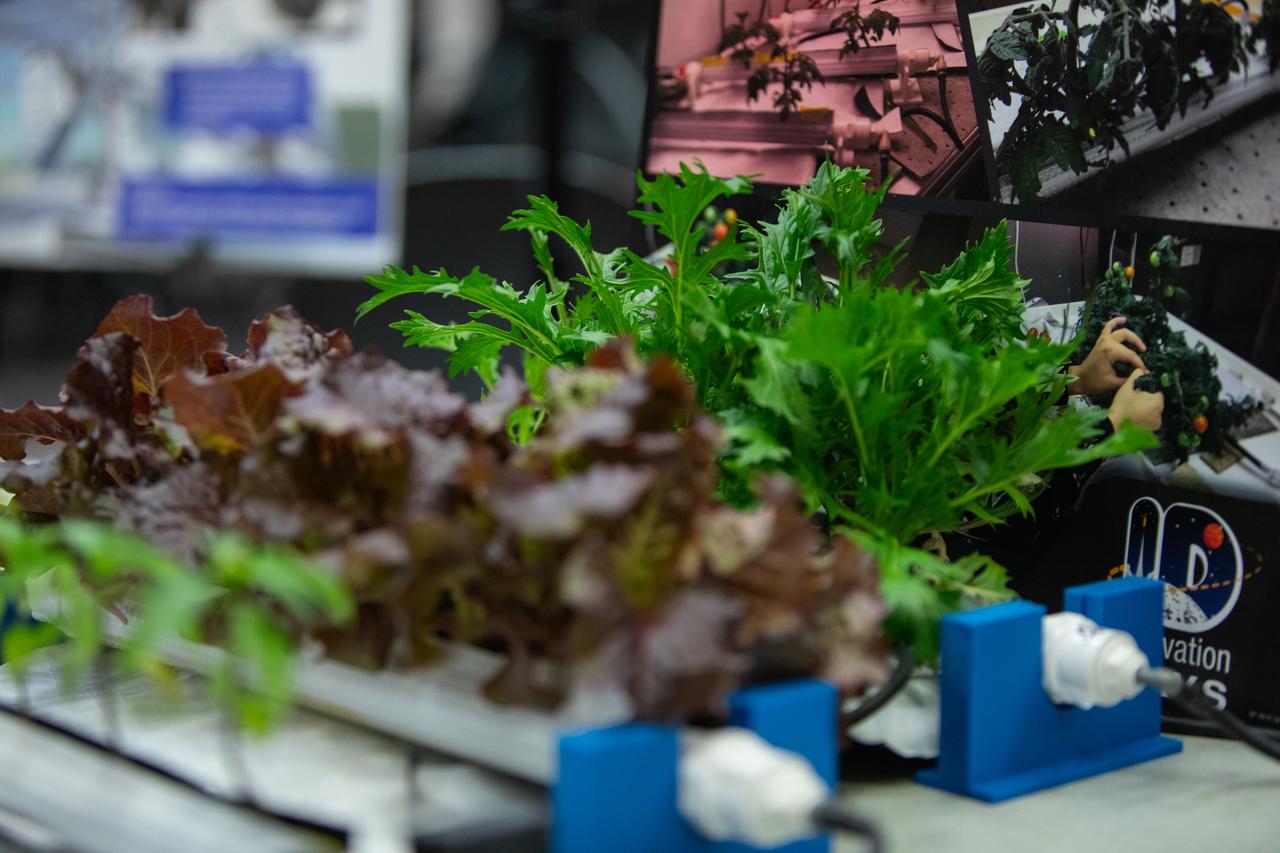
Plants utilized for ground experiments at NASA’s Kennedy Space Center in Florida that complement plant research on the International Space Station are photographed at an innovation showcase on Nov. 19, 2019. Nearly 50 exhibitors gathered in the Neil Armstrong Operations and Checkout Building’s Mission Briefing Room to participate in the center’s Innovation Days – one of several events throughout the year aimed at fostering an encouraging an innovative culture at Kennedy. Showcase participants included individuals from multiple directorates, programs and organizations throughout Kennedy. In addition to the showcase, employees had the opportunity to attend an overview presentation on NASA’s Human Landing System (HLS), hosted by HLS Program Manager Lisa Watson-Morgan.
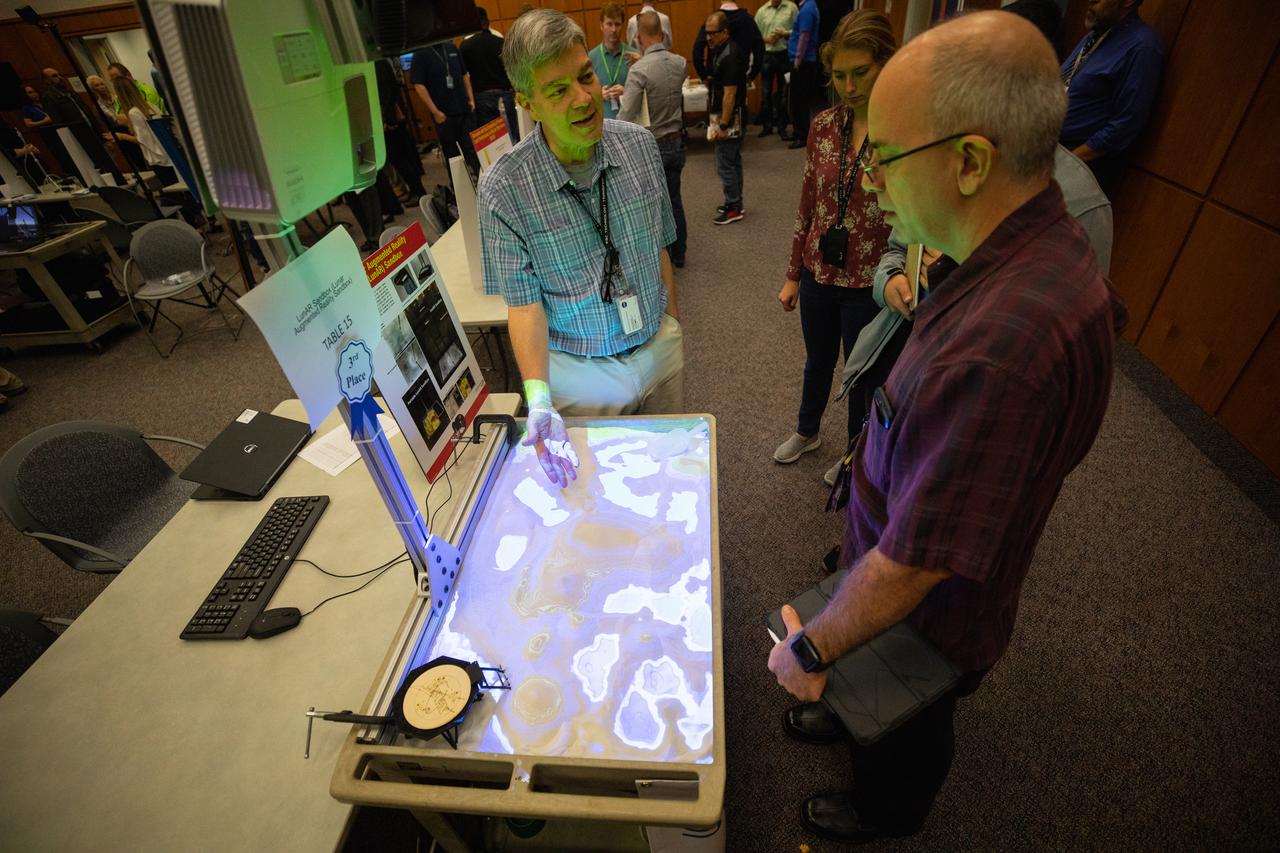
Kennedy Space Center employees participate in an innovation showcase on Nov. 19, 2019, in the Florida spaceport’s Neil Armstrong Operations and Checkout Building’s Mission Briefing Room. Nearly 50 exhibitors gathered to demonstrate new technologies and innovations during the center’s Innovation Days – one of several events throughout the year aimed at fostering and encouraging an innovative culture at Kennedy. Showcase participants included individuals from multiple directorates, programs and organizations throughout Kennedy. In addition to the showcase, employees had the opportunity to attend an overview presentation on NASA’s Human Landing System (HLS), hosted by HLS Program Manager Lisa Watson-Morgan.
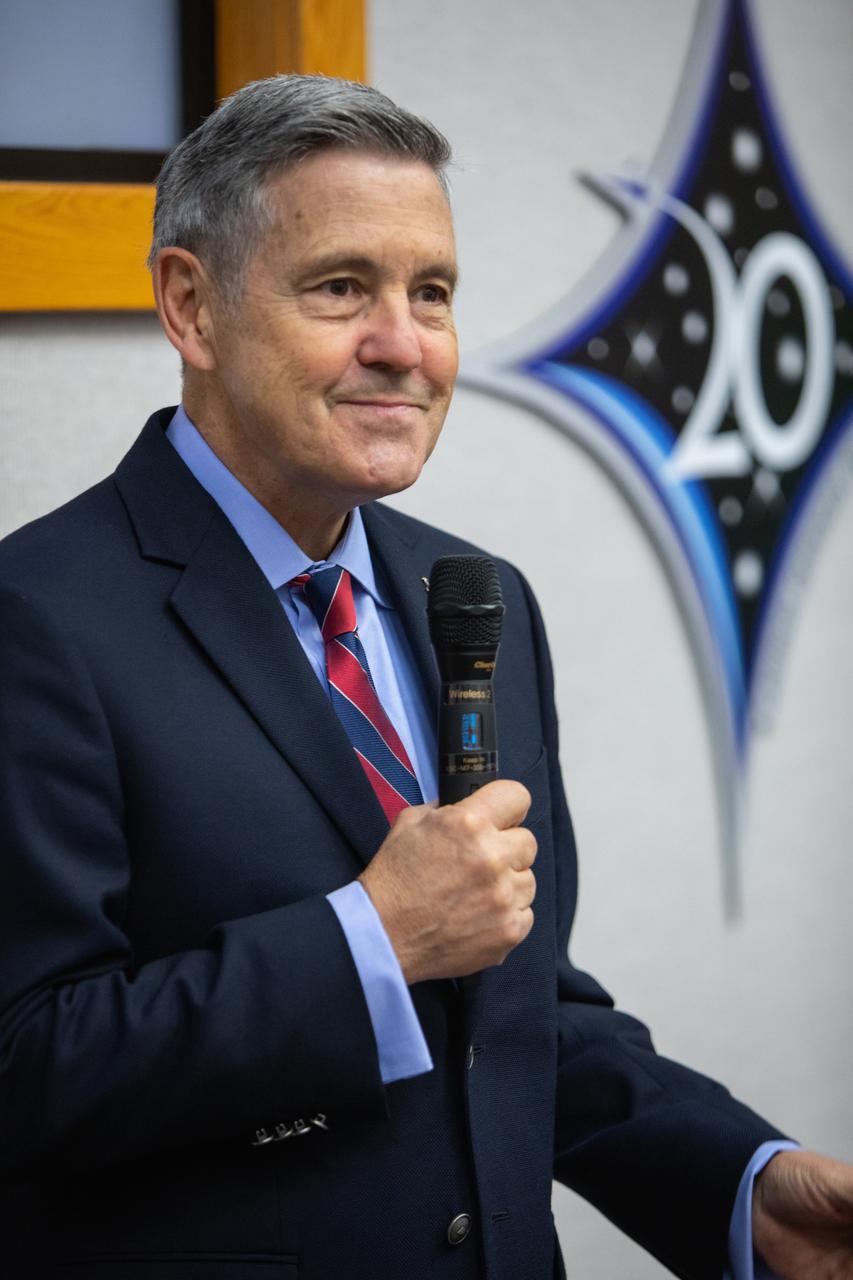
Kennedy Space Center Director Bob Cabana speaks to employees during an innovation showcase on Nov. 19, 2019, in the Florida spaceport’s Neil Armstrong Operations and Checkout Building’s Mission Briefing Room. Nearly 50 exhibitors gathered to participate in the center’s Innovation Days – one of several events throughout the year aimed at fostering and encouraging an innovative culture at Kennedy. Showcase participants included individuals from multiple directorates, programs and organizations throughout Kennedy. In addition to the showcase, employees had the opportunity to attend an overview presentation on NASA’s Human Landing System (HLS), hosted by HLS Program Manager Lisa Watson-Morgan.
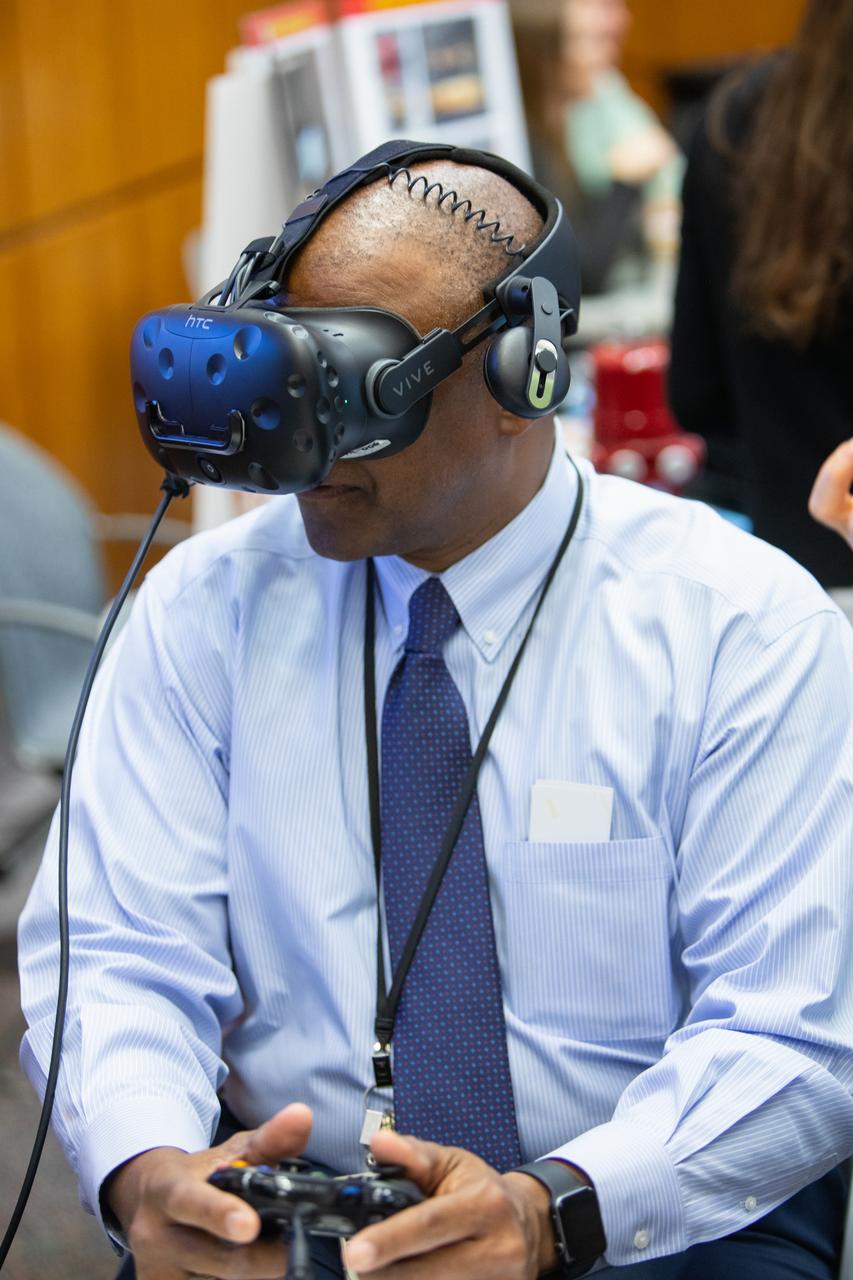
Kennedy Space Center Associate Director, Technical, Kelvin Manning tries out a virtual reality headset during an innovation showcase on Nov. 19, 2019, in the Florida spaceport’s Neil Armstrong Operations and Checkout Building’s Mission Briefing Room. Nearly 50 exhibitors gathered to demonstrate new technologies and innovations during the center’s Innovation Days – one of several events throughout the year aimed at fostering and encouraging an innovative culture at Kennedy. Showcase participants included individuals from multiple directorates, programs and organizations throughout Kennedy. In addition to the showcase, employees had the opportunity to attend an overview presentation on NASA’s Human Landing System (HLS), hosted by HLS Program Manager Lisa Watson-Morgan.
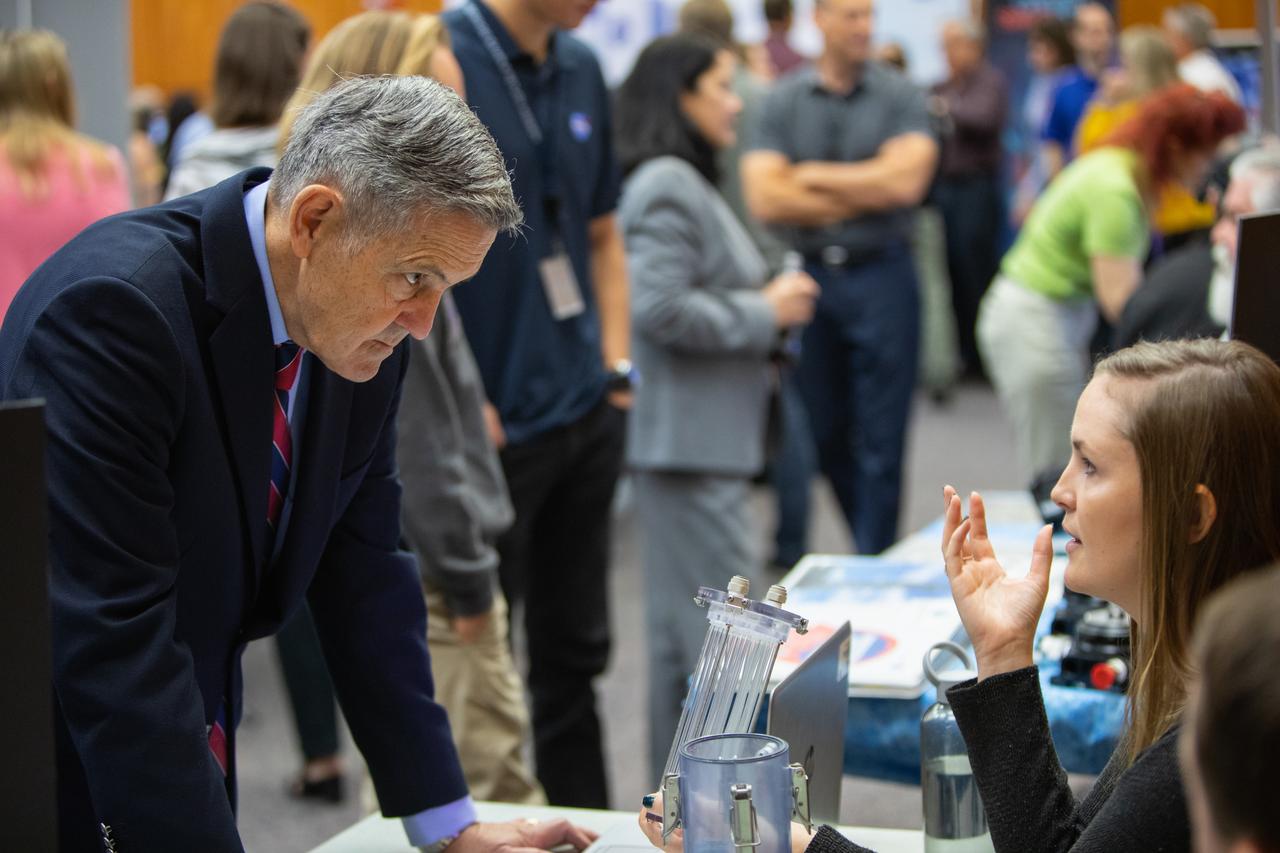
Melanie Pickett, right, a post-doctorate researcher at NASA’s Kennedy Space Center in Florida, speaks to Center Director Bob Cabana about an Algae Membrane Photobioreactor she and others are working on developing during an innovation showcase on Nov. 19, 2019, in the Neil Armstrong Operations and Checkout Building’s Mission Briefing Room. The bioreactor device would eliminate the need for sending pre-treated water – currently used to break down urine – to the International Space Station, reducing the amount of human exposure to toxic chemicals. Nearly 50 exhibitors gathered to demonstrate new technologies and innovations during the center’s Innovation Days – one of several events throughout the year aimed at fostering and encouraging an innovative culture at Kennedy. Showcase participants included individuals from multiple directorates, programs and organizations throughout Kennedy. In addition to the showcase, employees had the opportunity to attend an overview presentation on NASA’s Human Landing System (HLS), hosted by HLS Program Manager Lisa Watson-Morgan.
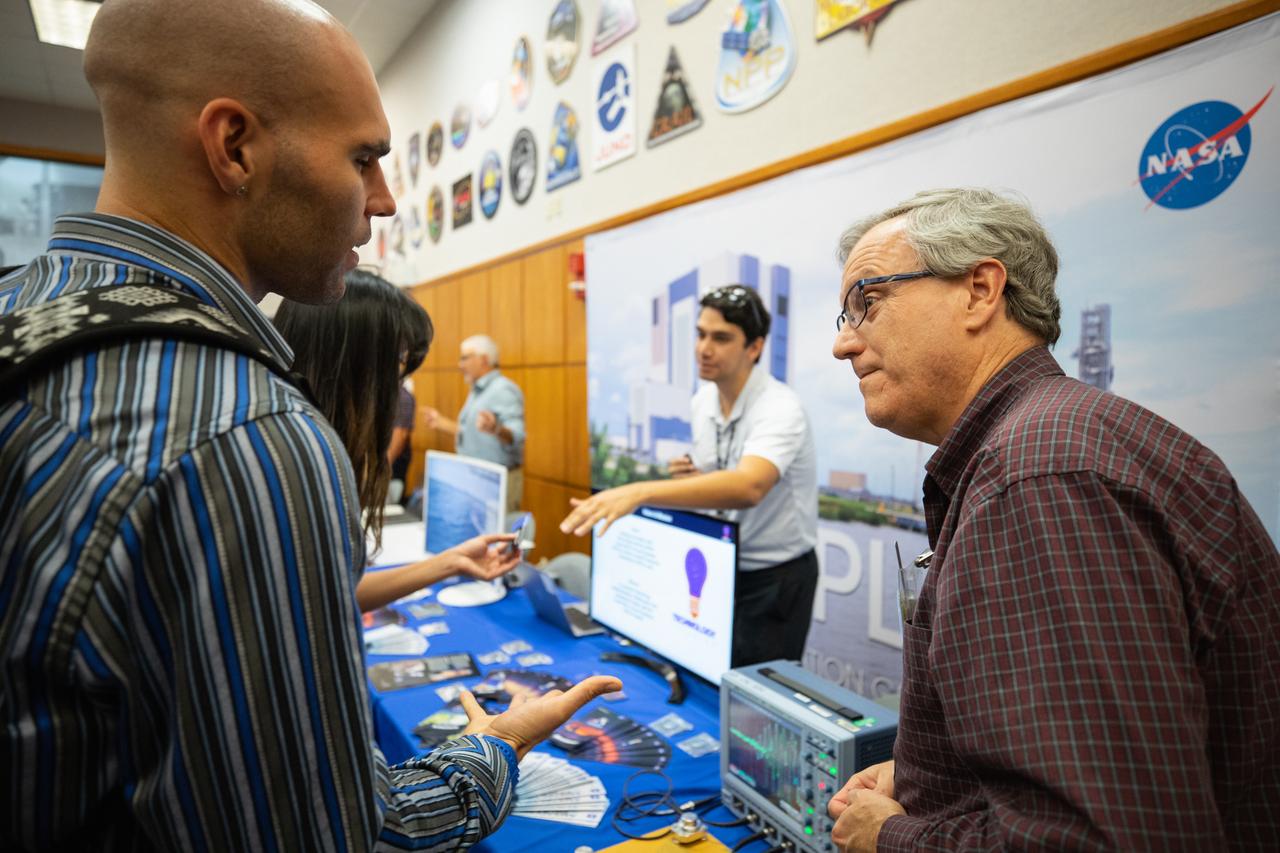
Two Kennedy Space Center employees engage in conversation during an innovation showcase on Nov. 19, 2019, in the Florida spaceport’s Neil Armstrong Operations and Checkout Building’s Mission Briefing Room. Nearly 50 exhibitors gathered to demonstrate new technologies and innovations during the center’s Innovation Days – one of several events throughout the year aimed at fostering and encouraging an innovative culture at Kennedy. Showcase participants included individuals from multiple directorates, programs and organizations throughout Kennedy. In addition to the showcase, employees had the opportunity to attend an overview presentation on NASA’s Human Landing System (HLS), hosted by HLS Program Manager Lisa Watson-Morgan.
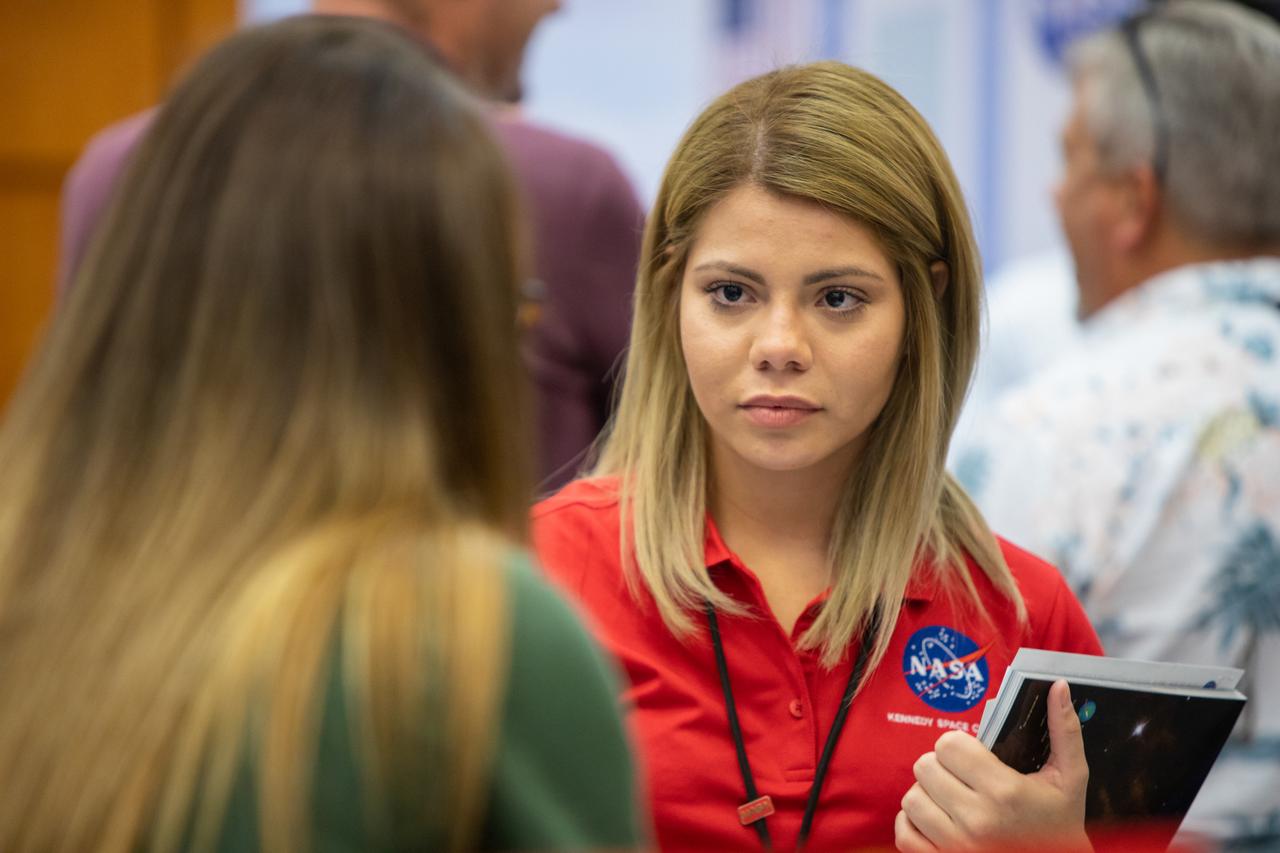
A Kennedy Space Center employee participates in an innovation showcase on Nov. 19, 2019, in the Florida spaceport’s Neil Armstrong Operations and Checkout Building’s Mission Briefing Room. Nearly 50 exhibitors gathered to demonstrate new technologies and innovations during the center’s Innovation Days – one of several events throughout the year aimed at fostering and encouraging an innovative culture at Kennedy. Showcase participants included individuals from multiple directorates, programs and organizations throughout Kennedy. In addition to the showcase, employees had the opportunity to attend an overview presentation on NASA’s Human Landing System (HLS), hosted by HLS Program Manager Lisa Watson-Morgan.
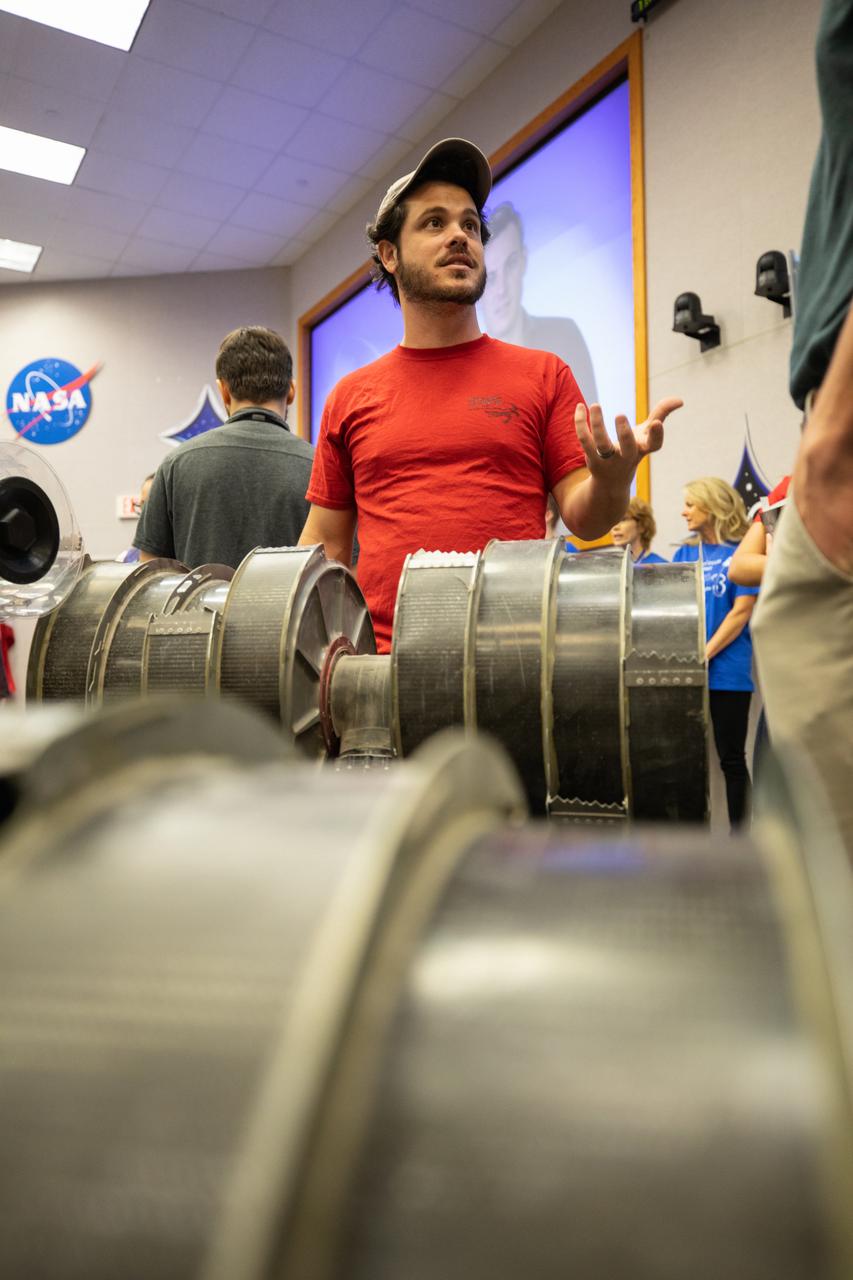
A Kennedy Space Center employee attends an innovation showcase on Nov. 19, 2019, in the Florida spaceport’s Neil Armstrong Operations and Checkout Building’s Mission Briefing Room. Nearly 50 exhibitors gathered to demonstrate new technologies and innovations during the center’s Innovation Days – one of several events throughout the year aimed at fostering and encouraging an innovative culture at Kennedy. Showcase participants included individuals from multiple directorates, programs and organizations throughout Kennedy. In addition to the showcase, employees had the opportunity to attend an overview presentation on NASA’s Human Landing System (HLS), hosted by HLS Program Manager Lisa Watson-Morgan.
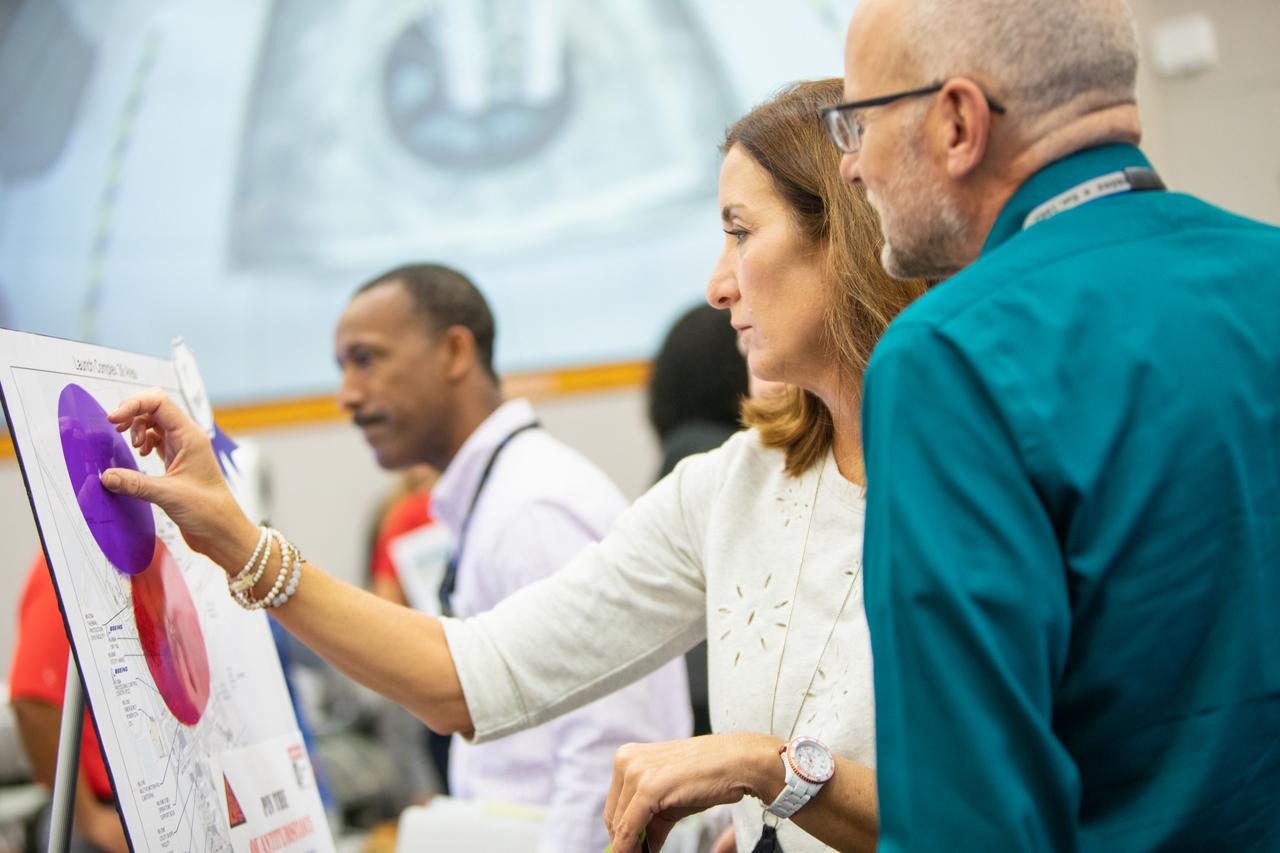
Kennedy Space Center employees participate in an innovation showcase on Nov. 19, 2019, in the Florida spaceport’s Neil Armstrong Operations and Checkout Building’s Mission Briefing Room. Nearly 50 exhibitors gathered to demonstrate new technologies and innovations during the center’s Innovation Days – one of several events throughout the year aimed at fostering and encouraging an innovative culture at Kennedy. Showcase participants included individuals from multiple directorates, programs and organizations throughout Kennedy. In addition to the showcase, employees had the opportunity to attend an overview presentation on NASA’s Human Landing System (HLS), hosted by HLS Program Manager Lisa Watson-Morgan.
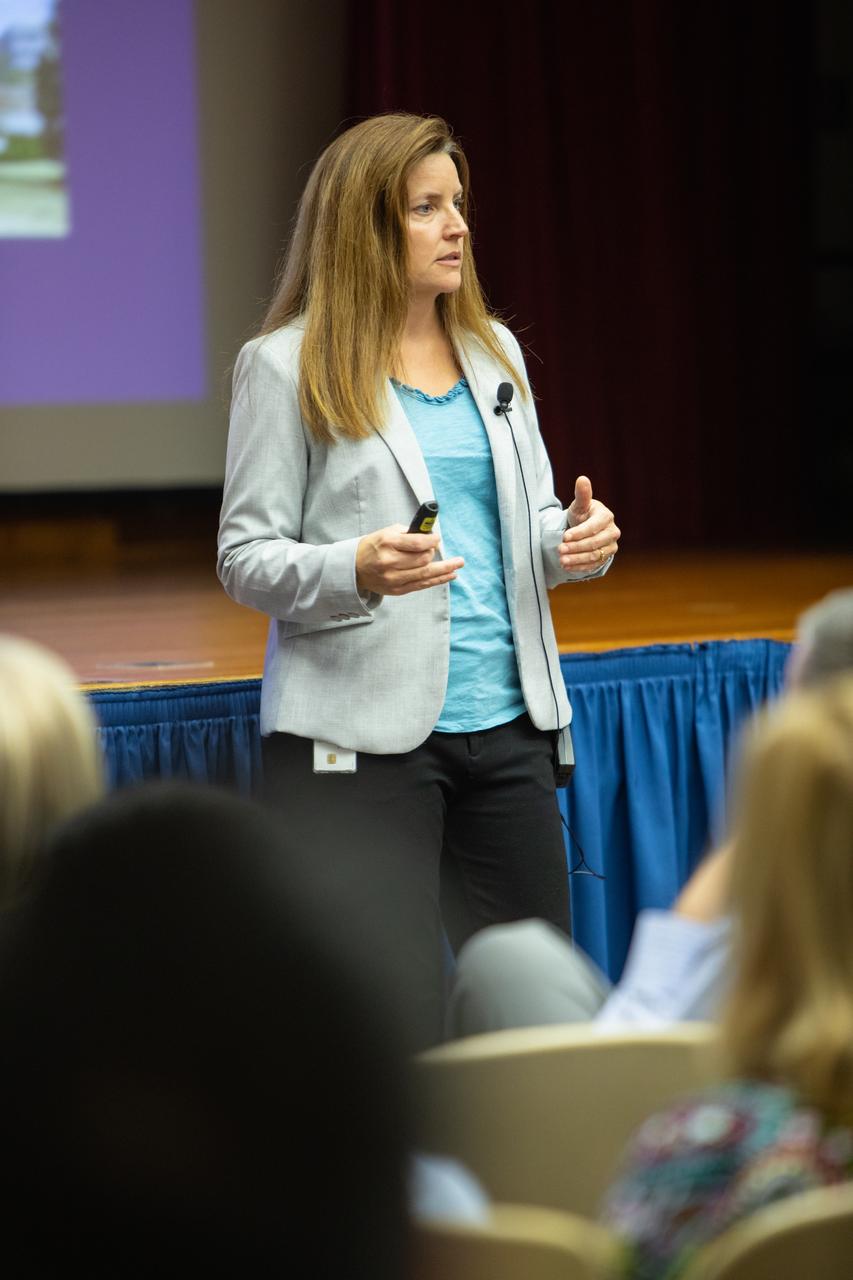
Lisa-Watson Morgan, NASA’s Human Landing System program manager, provides an overview of the program to Kennedy Space Center employees in the Florida spaceport’s Training Auditorium on Nov. 19, 2019. Watson-Morgan’s presentation was part of the center’s Innovation Days, one of several events throughout the year aimed at fostering and encouraging an innovative culture at Kennedy. In addition to the presentation, Kennedy employees had the opportunity to attend an innovation showcase, where nearly 50 exhibitors demonstrated new technologies and innovations. Showcase participants included individuals from multiple directorates, programs and organizations throughout Kennedy.
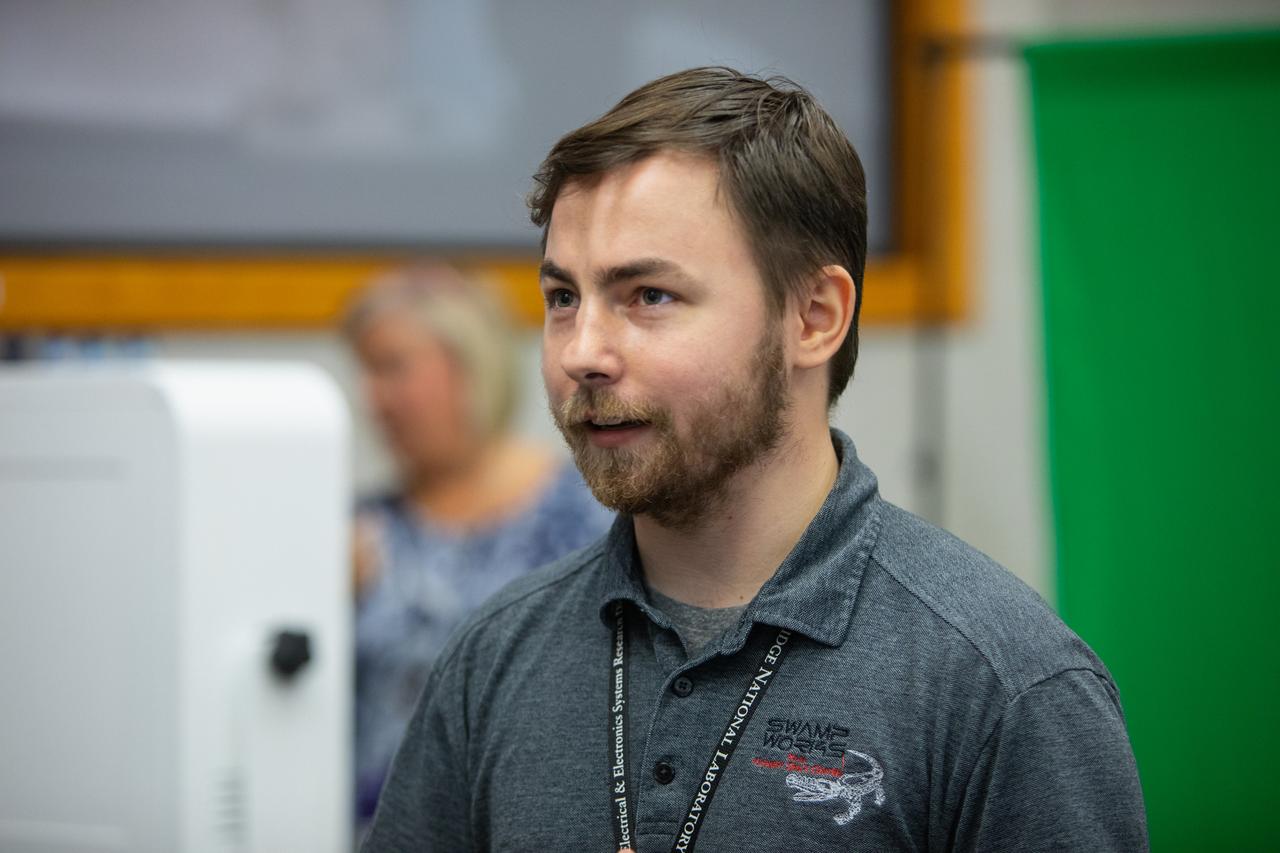
A Kennedy Space Center employee participates in an innovation showcase on Nov. 19, 2019, in the Florida spaceport’s Neil Armstrong Operations and Checkout Building’s Mission Briefing Room. Nearly 50 exhibitors gathered to demonstrate new technologies and innovations during the center’s Innovation Days – one of several events throughout the year aimed at fostering and encouraging an innovative culture at Kennedy. Showcase participants included individuals from multiple directorates, programs and organizations throughout Kennedy. In addition to the showcase, employees had the opportunity to attend an overview presentation on NASA’s Human Landing System (HLS), hosted by HLS Program Manager Lisa Watson-Morgan.
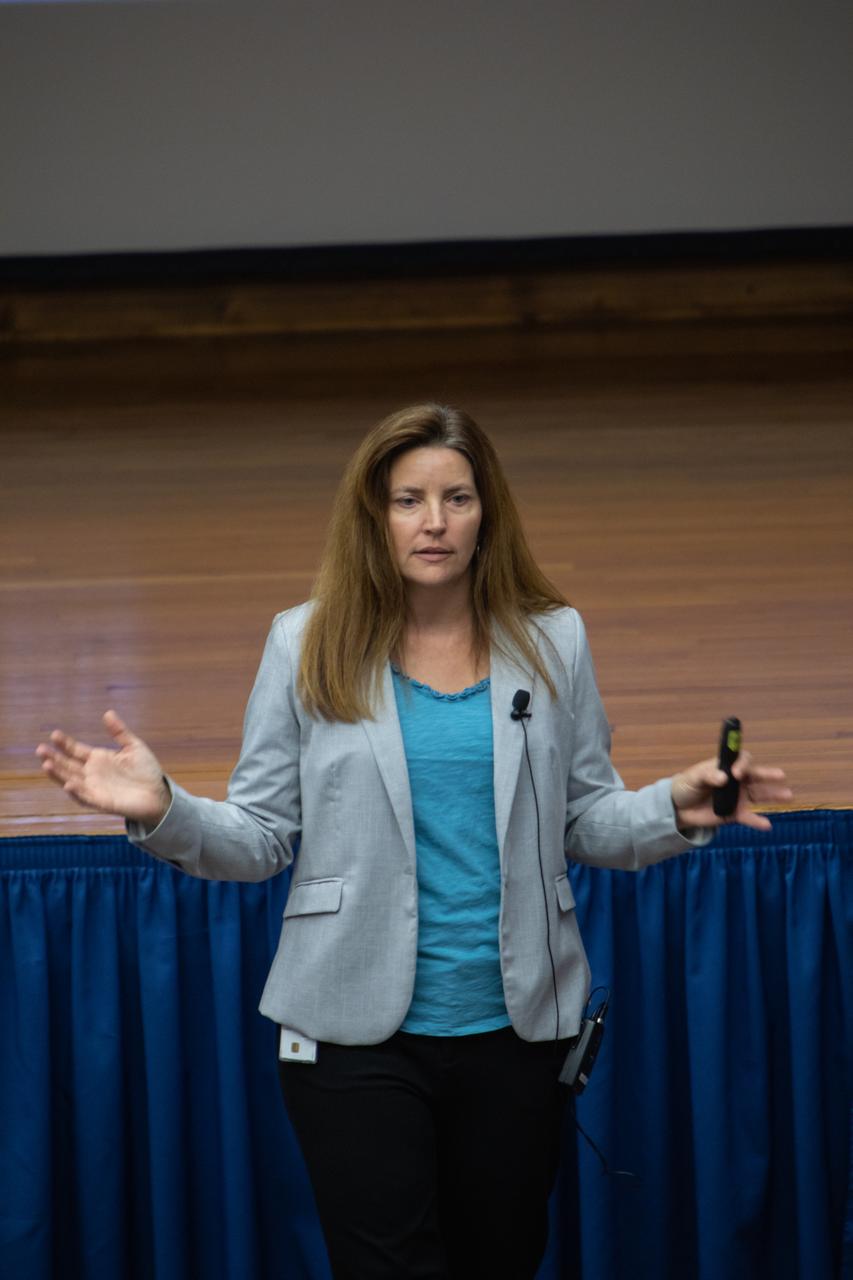
Lisa-Watson Morgan, NASA’s Human Landing System program manager, provides an overview of the program to Kennedy Space Center employees in the Florida spaceport’s Training Auditorium on Nov. 19, 2019. Watson-Morgan’s presentation was part of the center’s Innovation Days, one of several events throughout the year aimed at fostering and encouraging an innovative culture at Kennedy. In addition to the presentation, Kennedy employees had the opportunity to attend an innovation showcase, where nearly 50 exhibitors demonstrated new technologies and innovations. Showcase participants included individuals from multiple directorates, programs and organizations throughout Kennedy.
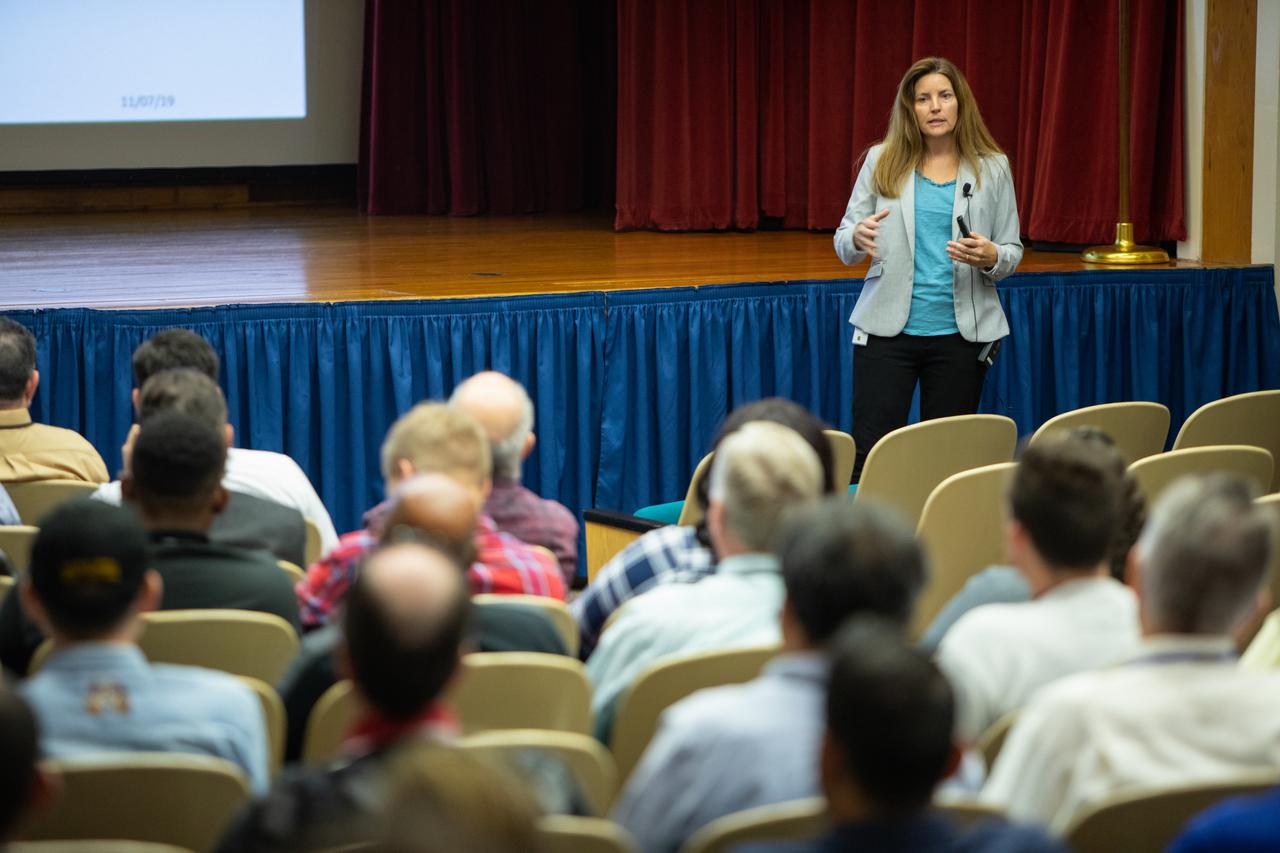
Lisa-Watson Morgan, NASA’s Human Landing System program manager, provides an overview of the program to Kennedy Space Center employees in the Florida spaceport’s Training Auditorium on Nov. 19, 2019. Watson-Morgan’s presentation was part of the center’s Innovation Days, one of several events throughout the year aimed at fostering and encouraging an innovative culture at Kennedy. In addition to the presentation, Kennedy employees had the opportunity to attend an innovation showcase, where nearly 50 exhibitors demonstrated new technologies and innovations. Showcase participants included individuals from multiple directorates, programs and organizations throughout Kennedy.
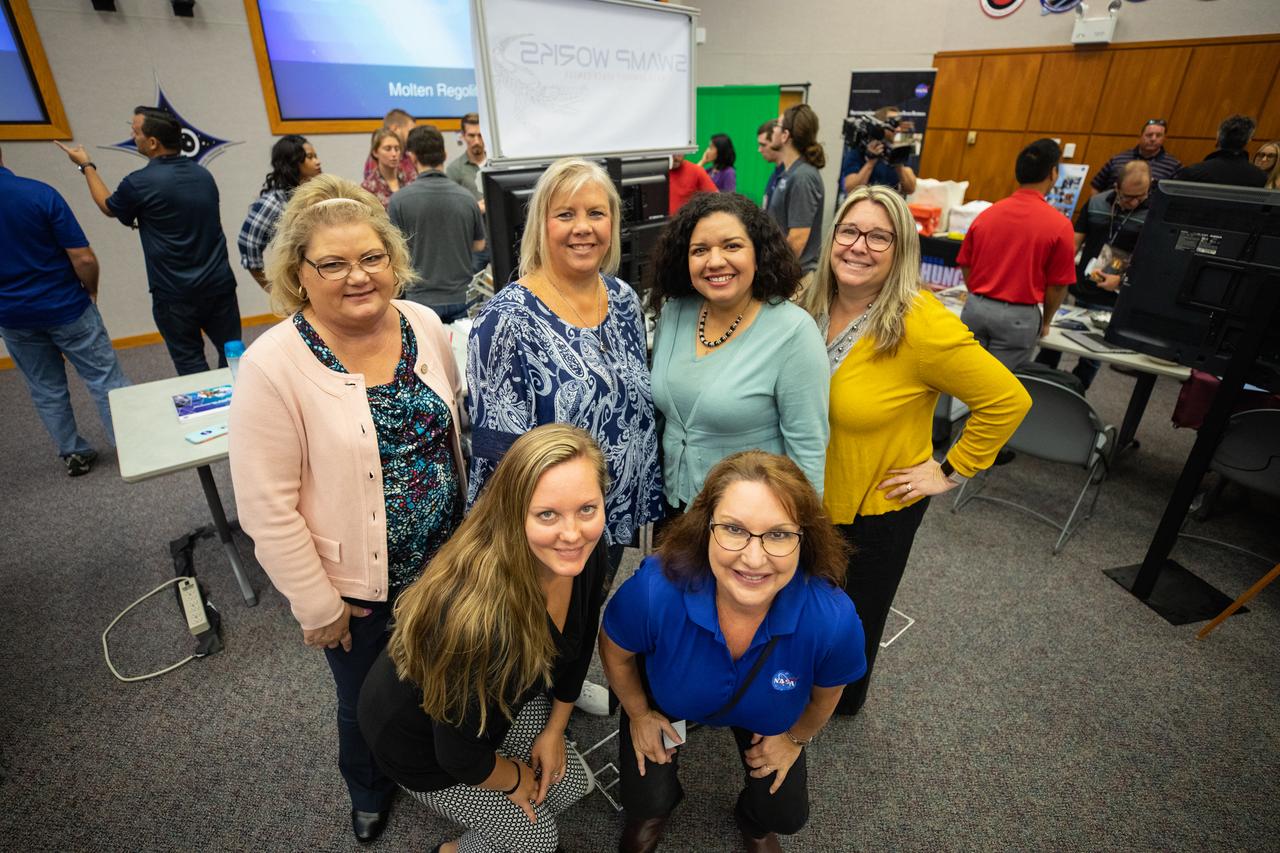
Kennedy Space Center employees are photographed at an innovation showcase, hosted by the Office of the Chief Technologist, on Nov. 19, 2019, in the Florida spaceport’s Neil Armstrong Operations and Checkout Building’s Mission Briefing Room. On the bottom right is Kathy Loftin, deputy chief technologist at Kennedy. Nearly 50 exhibitors gathered to participate in the center’s Innovation Days – one of several events throughout the year aimed at fostering and encouraging an innovative culture at Kennedy. Showcase participants included individuals from multiple directorates, programs and organizations throughout Kennedy. In addition to the showcase, employees had the opportunity to attend an overview presentation on NASA’s Human Landing System (HLS), hosted by HLS Program Manager Lisa Watson-Morgan.
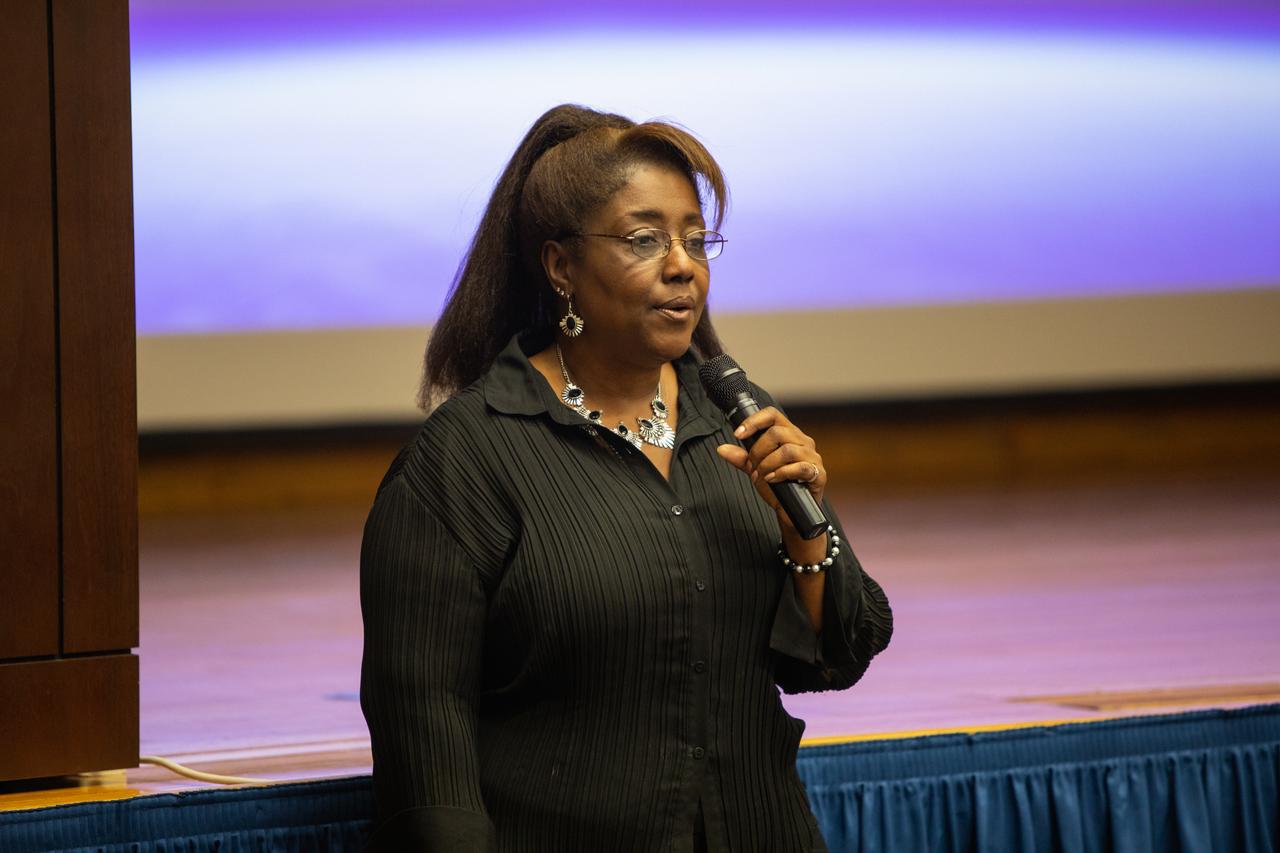
Barbara Brown, chief technologist at NASA’s Kennedy Space Center in Florida, speaks to Kennedy employees inside the Florida spaceport’s Training Auditorium on Nov. 19, 2019, during Innovation Days. One of several events throughout the year aimed at fostering and encouraging an innovative culture at Kennedy, Innovation Days highlights how employees at the multi-user spaceport are constantly looking for new solutions to challenges they face at work. Also part of Innovation Days was an innovation showcase, where nearly 50 exhibitors demonstrated new technologies and innovations. Showcase participants included individuals from multiple directorates, programs and organizations throughout Kennedy.
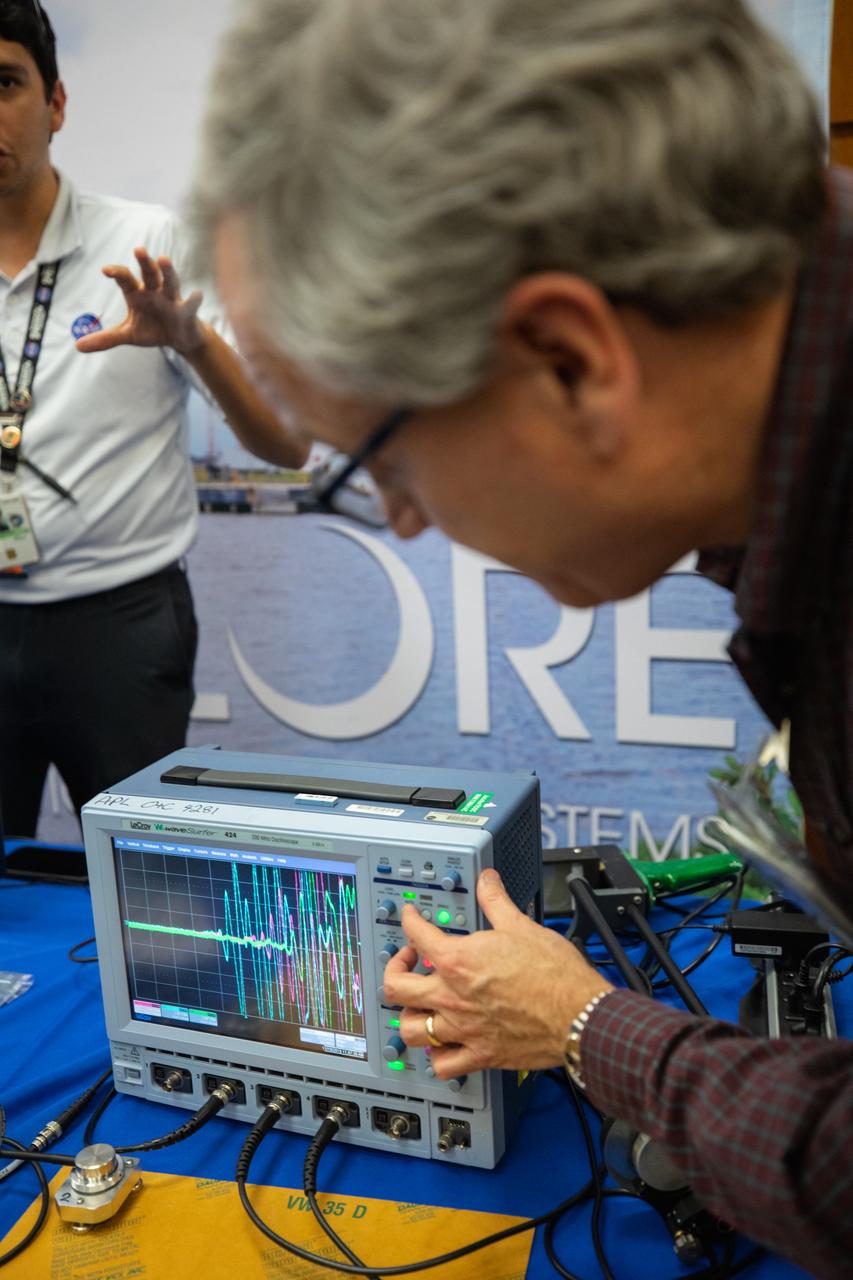
Applied Physics Laboratory Lead Physicist Dr. Bob Youngquist demonstrates technology recently used to resolve a technical challenge at Kennedy Space Center during an innovation showcase on Nov. 19, 2019, in the Florida spaceport’s Neil Armstrong Operations and Checkout Building’s Mission Briefing Room. Nearly 50 exhibitors gathered to participate in the center’s Innovation Days – one of several events throughout the year aimed at fostering and encouraging an innovative culture at Kennedy. Showcase participants included individuals from multiple directorates, programs and organizations throughout Kennedy. In addition to the showcase, employees had the opportunity to attend an overview presentation on NASA’s Human Landing System (HLS), hosted by HLS Program Manager Lisa Watson-Morgan.
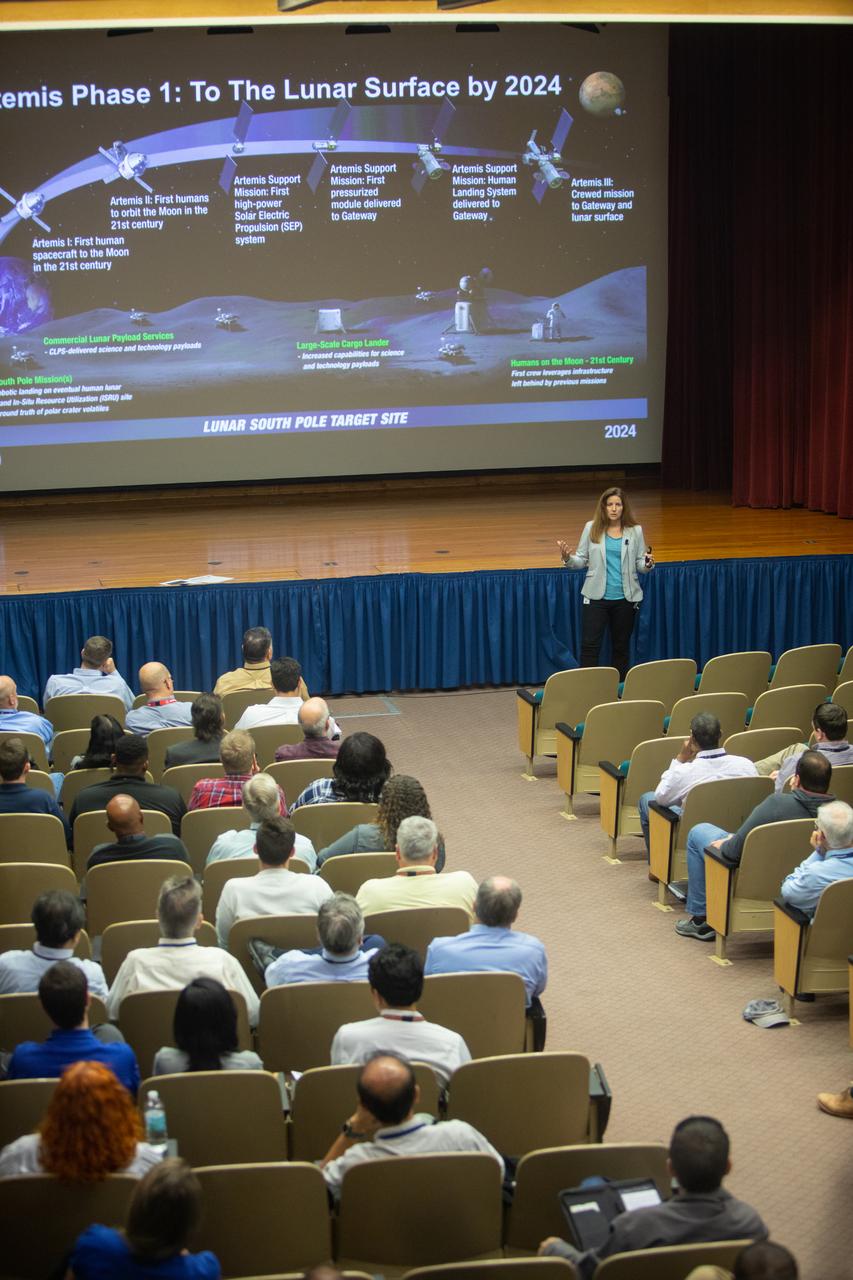
Lisa-Watson Morgan, NASA’s Human Landing System program manager, provides an overview of the program to Kennedy Space Center employees in the Florida spaceport’s Training Auditorium on Nov. 19, 2019. Watson-Morgan’s presentation was part of the center’s Innovation Days, one of several events throughout the year aimed at fostering and encouraging an innovative culture at Kennedy. In addition to the presentation, Kennedy employees had the opportunity to attend an innovation showcase, where nearly 50 exhibitors demonstrated new technologies and innovations. Showcase participants included individuals from multiple directorates, programs and organizations throughout Kennedy.
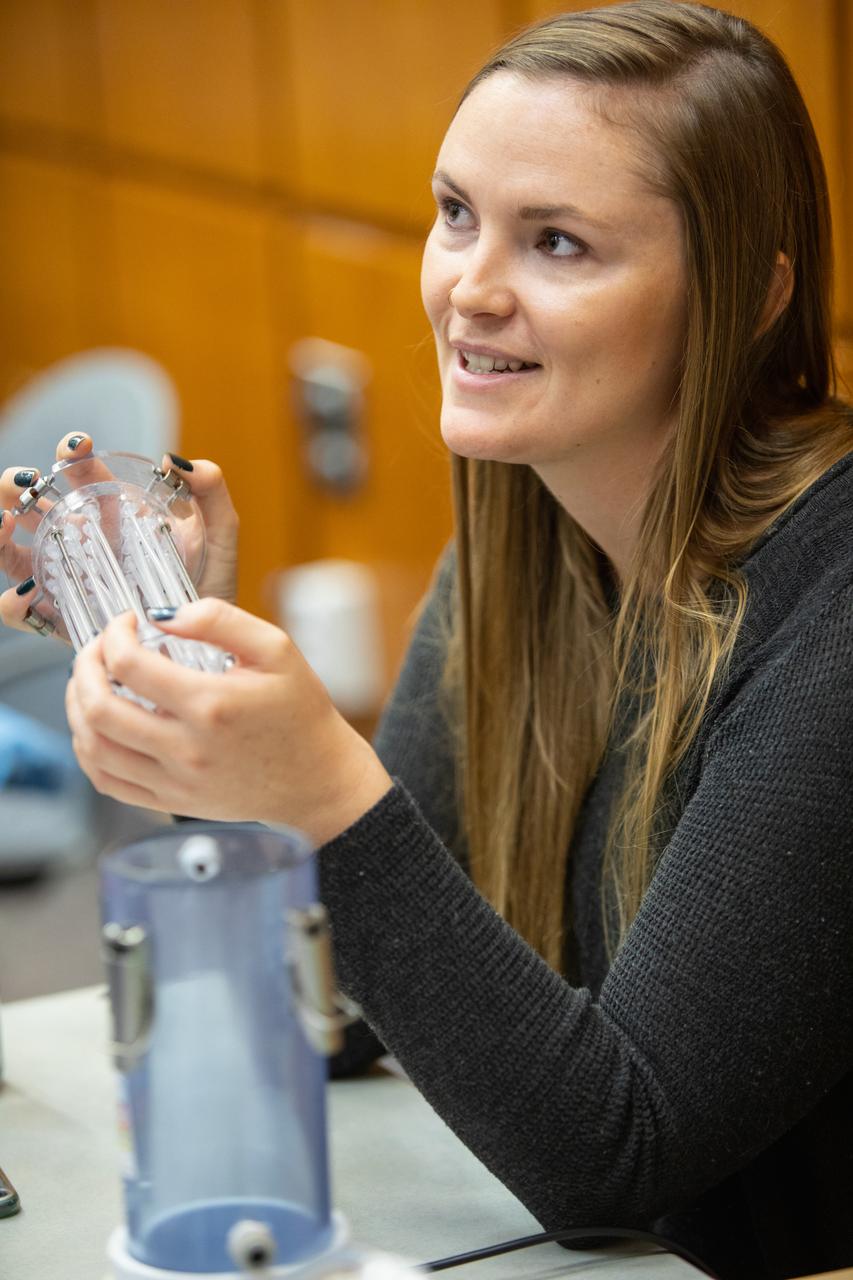
Melanie Pickett, a post-doctorate researcher at NASA’s Kennedy Space Center in Florida, participates in an innovation showcase on Nov. 19, 2019, in the Neil Armstrong Operations and Checkout Building’s Mission Briefing Room. A first-time participant, Pickett presented information on an Algae Membrane Photobioreactor she and others are developing that would eliminate the need for sending water treated with toxic chemicals – currently used to break down urine – to the International Space Station. Nearly 50 exhibitors gathered to demonstrate new technologies and innovations during the center’s Innovation Days – one of several events throughout the year aimed at fostering and encouraging an innovative culture at Kennedy. Showcase participants included individuals from multiple directorates, programs and organizations throughout Kennedy. In addition to the showcase, employees had the opportunity to attend an overview presentation on NASA’s Human Landing System (HLS), hosted by HLS Program Manager Lisa Watson-Morgan.
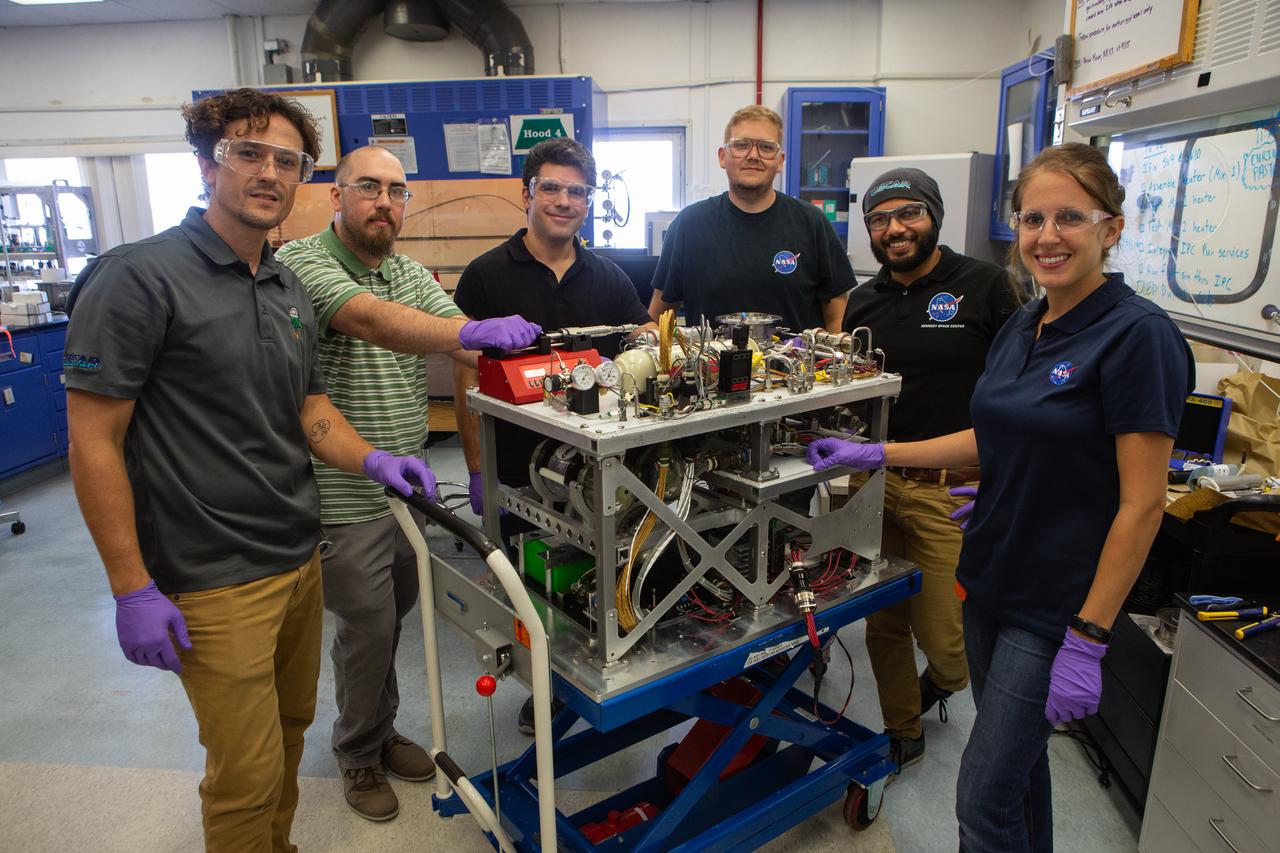
Members of NASA’s Orbital Syngas Commodity Augmentation Reactor, or OSCAR, team pause for a photo with the flight hardware on Oct. 10, 2019, in the Space Station Processing Facility at the agency’s Kennedy Space Center in Florida. From left are Gino Carro, Tom Cauvel, Jaime Toro, Evan Bell, Malay Shah and Annie Meier. OSCAR is an Early Career Initiative project at the spaceport that studies technology to convert trash and human waste into useful gasses such as methane, hydrogen and carbon dioxide. By processing small pieces of trash in a high-temperature reactor, OSCAR is advancing new and innovative technology for managing waste in space. A prototype has been developed, and the team is in the process of constructing a new rig for a suborbital flight test.
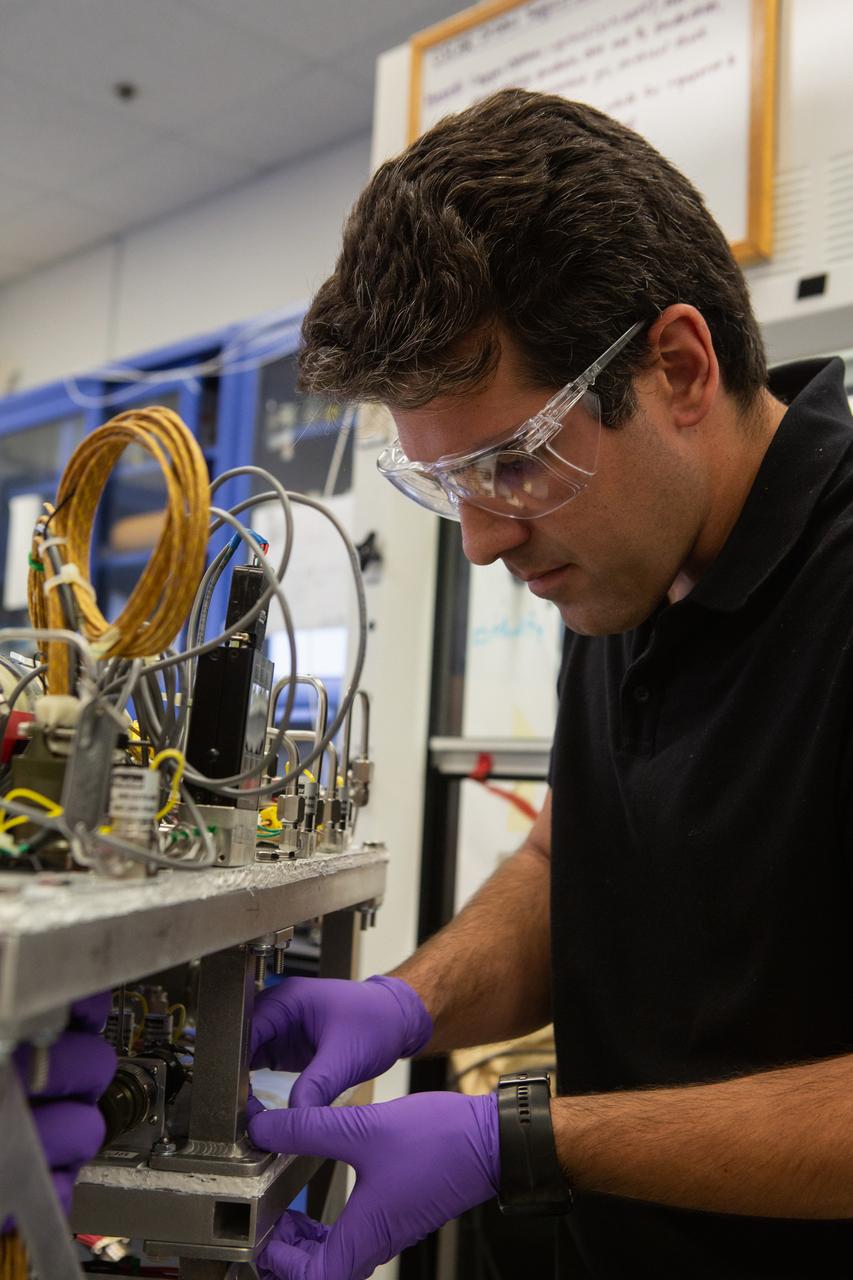
Jaime Toro assembles the flight hardware for NASA’s Orbital Syngas Commodity Augmentation Reactor, or OSCAR, on Oct. 10, 2019, in the Space Station Processing Facility at the agency’s Kennedy Space Center in Florida. OSCAR is an Early Career Initiative project at the spaceport that studies technology to convert trash and human waste into useful gasses such as methane, hydrogen and carbon dioxide. By processing small pieces of trash in a high-temperature reactor, OSCAR is advancing new and innovative technology for managing waste in space. A prototype has been developed, and the team is in the process of constructing a new rig for a suborbital flight test.
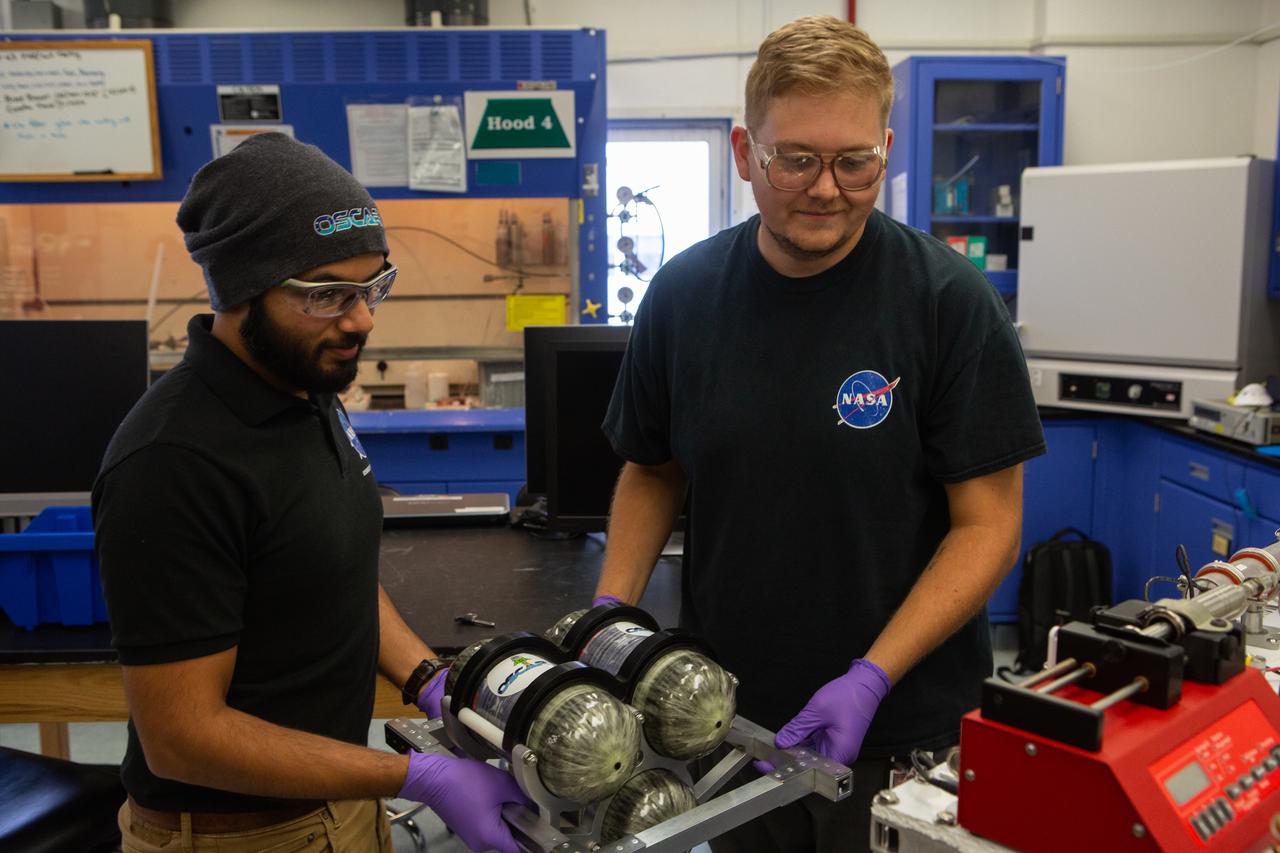
Team members Malay Shah, left, and Evan Bell assemble the flight hardware for NASA’s Orbital Syngas Commodity Augmentation Reactor, or OSCAR, on Oct. 10, 2019, in the Space Station Processing Facility at the agency’s Kennedy Space Center in Florida. OSCAR is an Early Career Initiative project at the spaceport that studies technology to convert trash and human waste into useful gasses such as methane, hydrogen and carbon dioxide. By processing small pieces of trash in a high-temperature reactor, OSCAR is advancing new and innovative technology for managing waste in space. A prototype has been developed, and the team is in the process of constructing a new rig for a suborbital flight test.
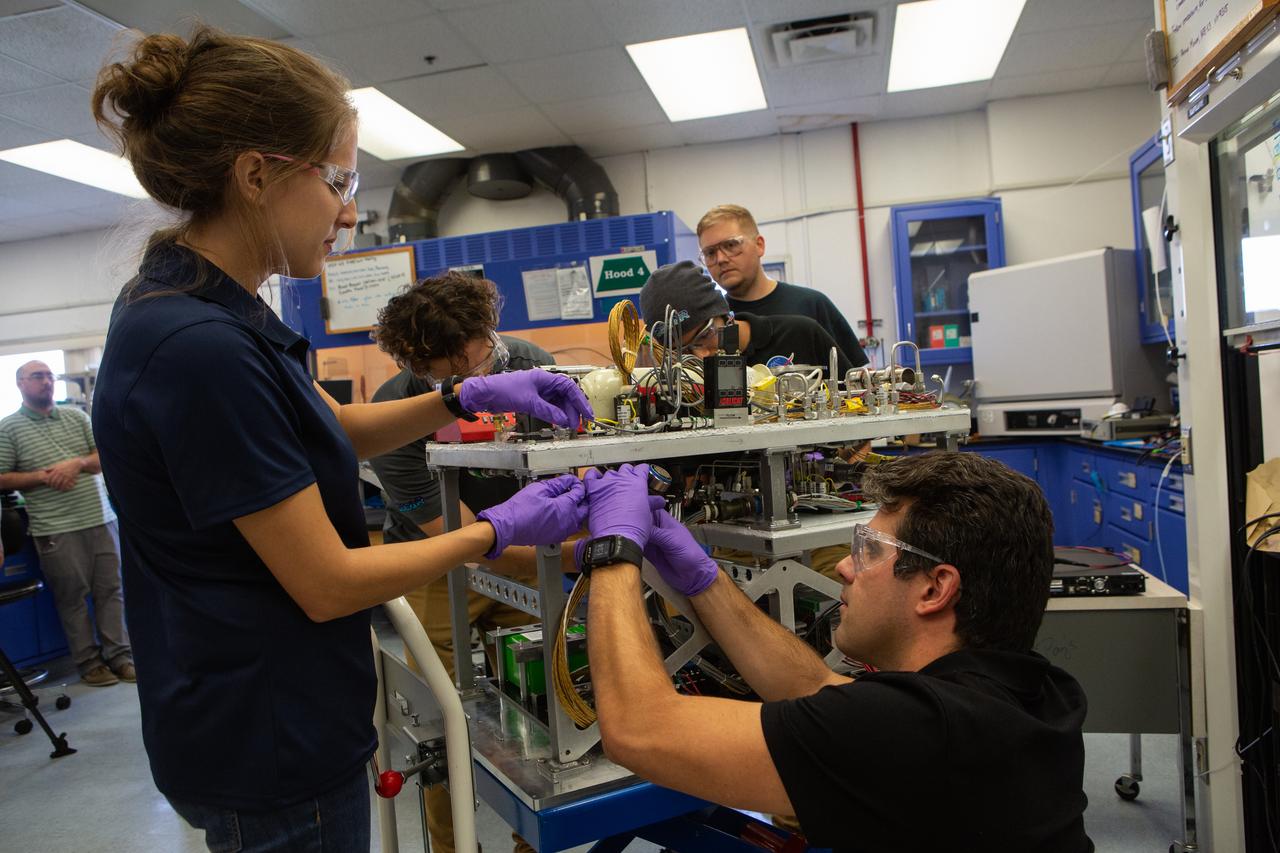
Team members assemble the flight hardware for NASA’s Orbital Syngas Commodity Augmentation Reactor, or OSCAR, on Oct. 10, 2019, in the Space Station Processing Facility at the agency’s Kennedy Space Center in Florida. From left are Annie Meier, Gino Carro, Evan Bell and Jamie Toro. OSCAR is an Early Career Initiative project at the spaceport that studies technology to convert trash and human waste into useful gasses such as methane, hydrogen and carbon dioxide. By processing small pieces of trash in a high-temperature reactor, OSCAR is advancing new and innovative technology for managing waste in space. A prototype has been developed, and the team is in the process of constructing a new rig for a suborbital flight test.
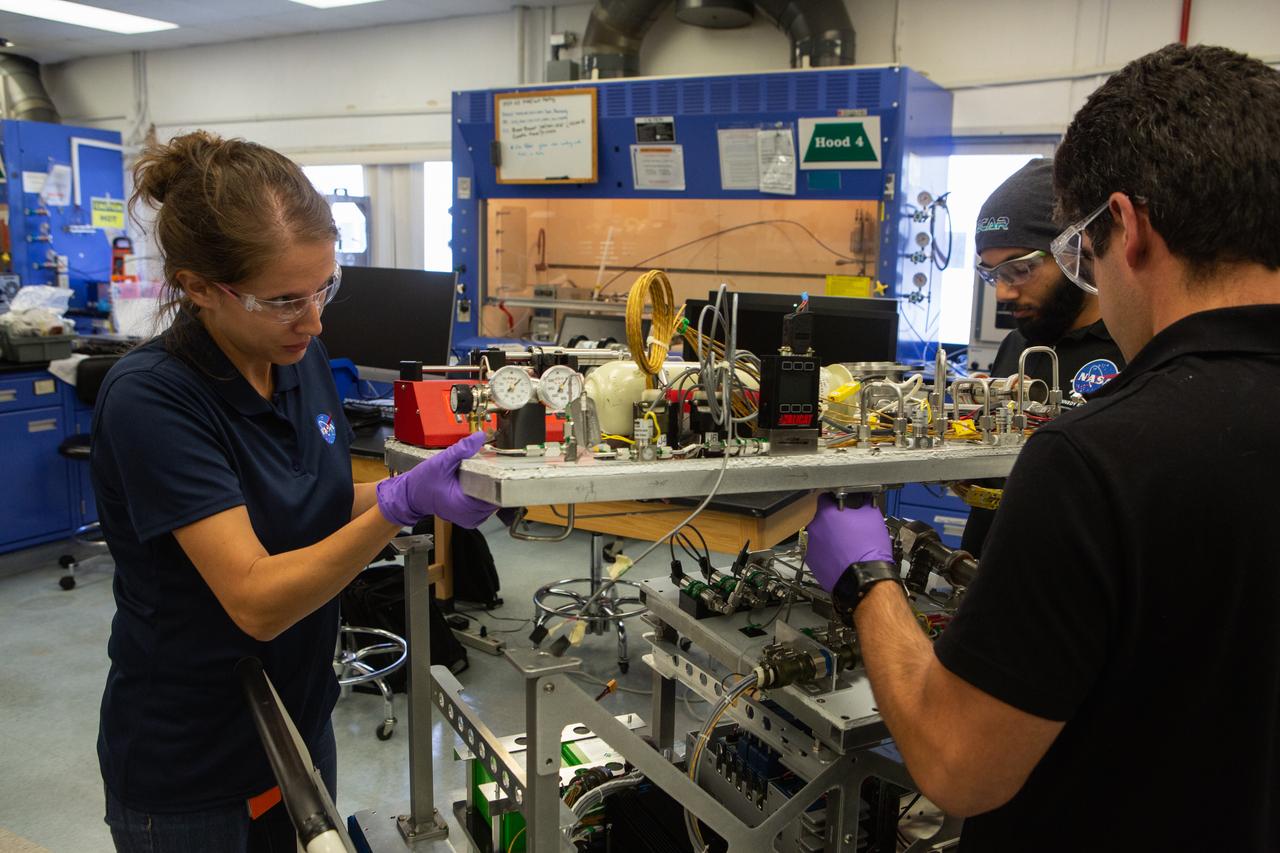
From left, team members Annie Meier, Malay Shah and Jamie Toro assemble the flight hardware for NASA’s Orbital Syngas Commodity Augmentation Reactor, or OSCAR, on Oct. 10, 2019, in the Space Station Processing Facility at the agency’s Kennedy Space Center in Florida. OSCAR is an Early Career Initiative project at the spaceport that studies technology to convert trash and human waste into useful gasses such as methane, hydrogen and carbon dioxide. By processing small pieces of trash in a high-temperature reactor, OSCAR is advancing new and innovative technology for managing waste in space. A prototype has been developed, and the team is in the process of constructing a new rig for a suborbital flight test.
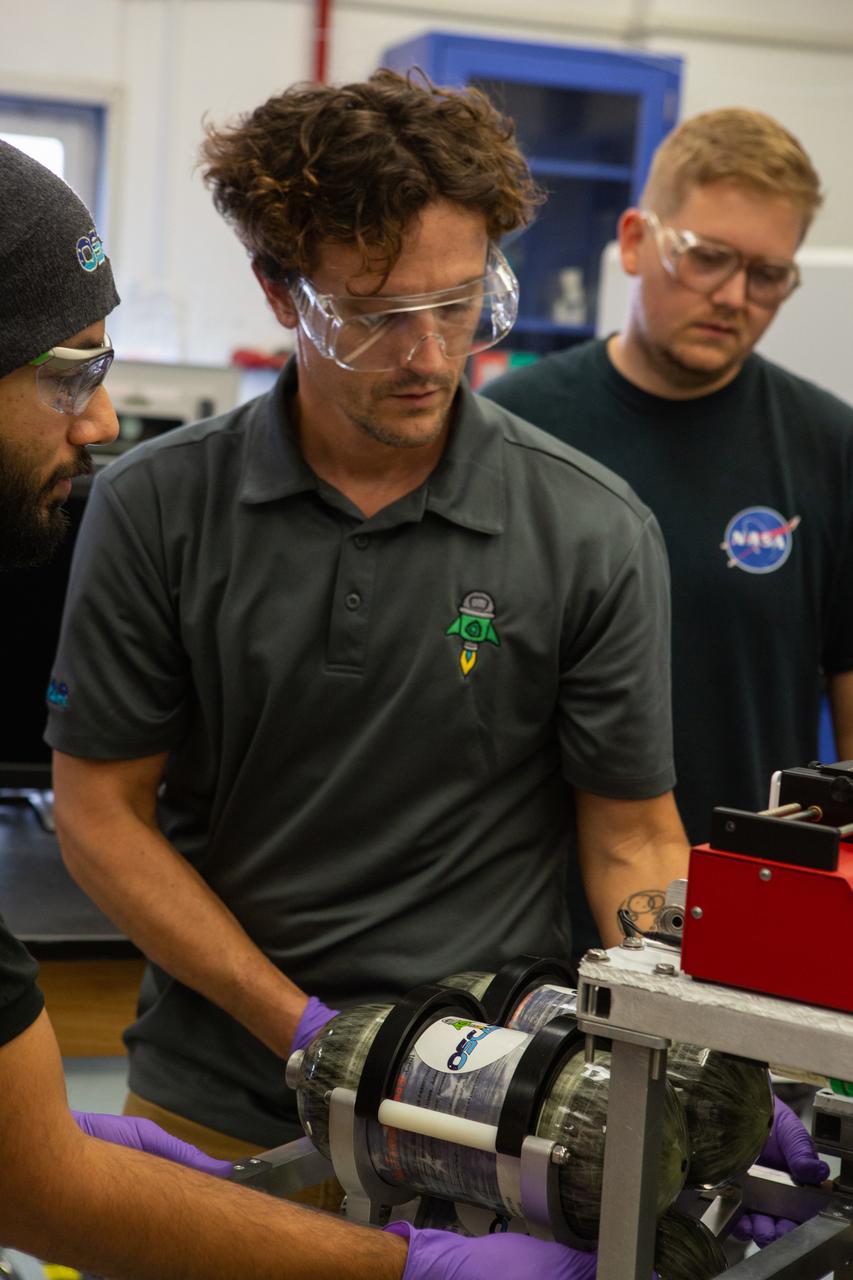
From left, team members Malay Shah, Gino Carro and Evan Bell assemble the flight hardware for NASA’s Orbital Syngas Commodity Augmentation Reactor, or OSCAR, on Oct. 10, 2019, in the Space Station Processing Facility at the agency’s Kennedy Space Center in Florida. OSCAR is an Early Career Initiative project at the spaceport that studies technology to convert trash and human waste into useful gasses such as methane, hydrogen and carbon dioxide. By processing small pieces of trash in a high-temperature reactor, OSCAR is advancing new and innovative technology for managing waste in space. A prototype has been developed, and the team is in the process of constructing a new rig for a suborbital flight test.
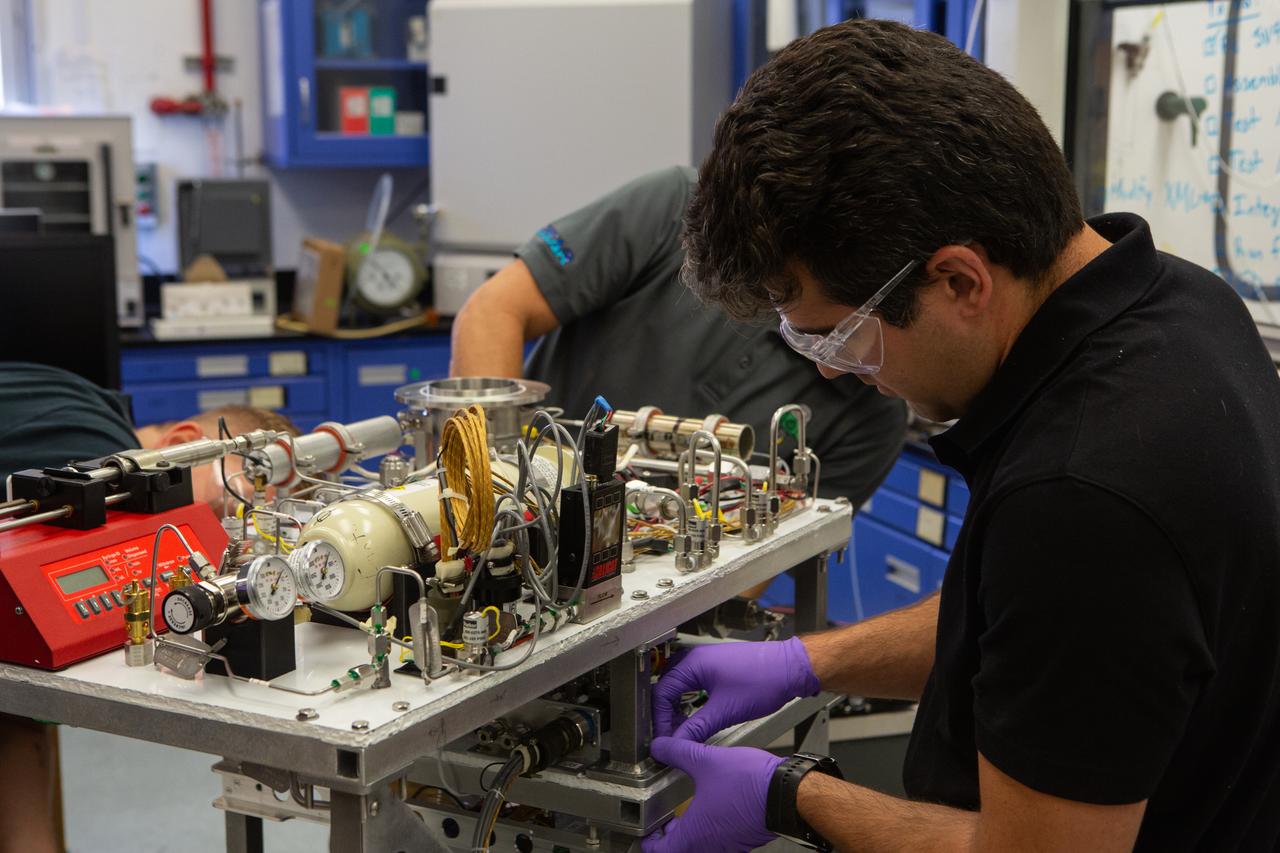
Jaime Toro assembles the flight hardware for NASA’s Orbital Syngas Commodity Augmentation Reactor, or OSCAR, on Oct. 10, 2019, in the Space Station Processing Facility at the agency’s Kennedy Space Center in Florida. OSCAR is an Early Career Initiative project at the spaceport that studies technology to convert trash and human waste into useful gasses such as methane, hydrogen and carbon dioxide. By processing small pieces of trash in a high-temperature reactor, OSCAR is advancing new and innovative technology for managing waste in space. A prototype has been developed, and the team is in the process of constructing a new rig for a suborbital flight test.
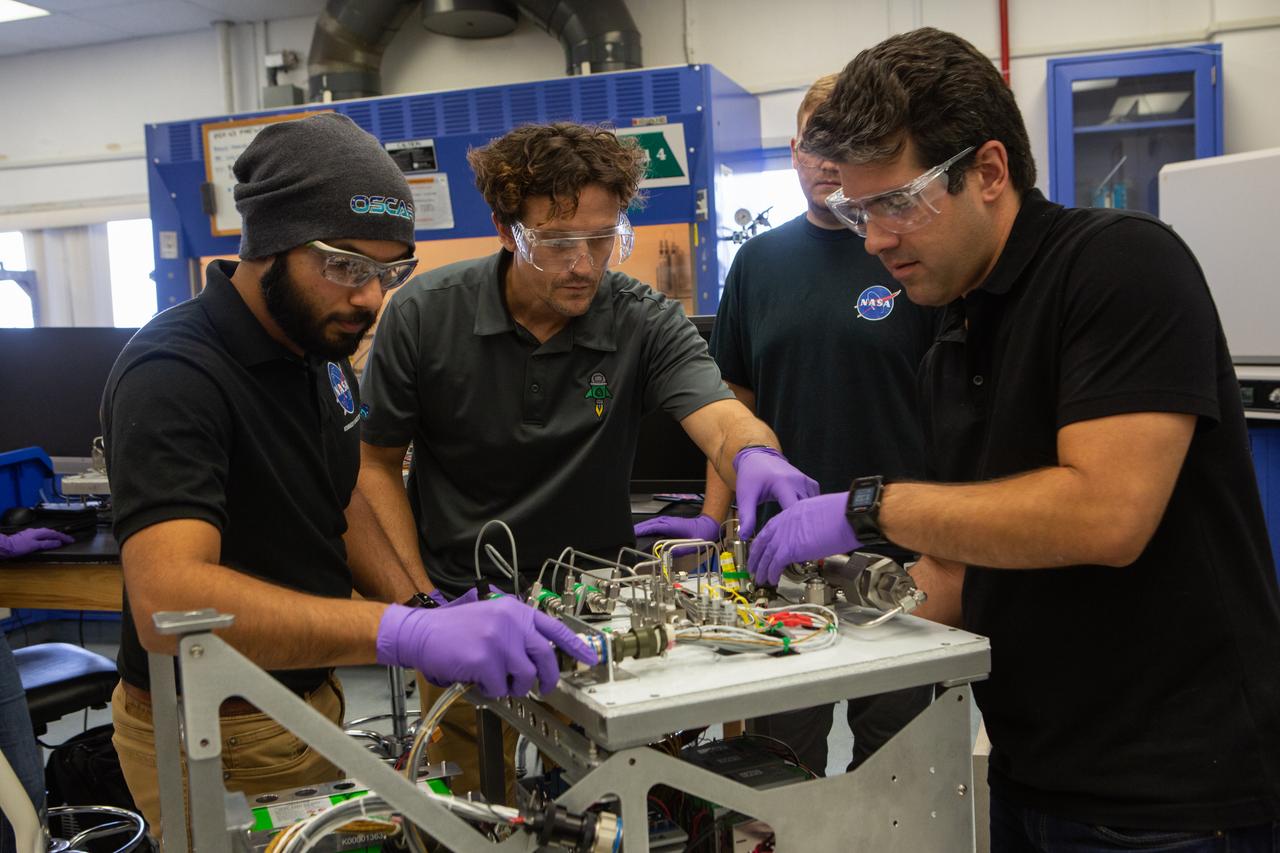
From left, team members Malay Shah, Gino Carro, Evan Bell and Jamie Toro assemble the flight hardware for NASA’s Orbital Syngas Commodity Augmentation Reactor, or OSCAR, on Oct. 10, 2019, in the Space Station Processing Facility at the agency’s Kennedy Space Center in Florida. OSCAR is an Early Career Initiative project at the spaceport that studies technology to convert trash and human waste into useful gasses such as methane, hydrogen and carbon dioxide. By processing small pieces of trash in a high-temperature reactor, OSCAR is advancing new and innovative technology for managing waste in space. A prototype has been developed, and the team is in the process of constructing a new rig for a suborbital flight test.
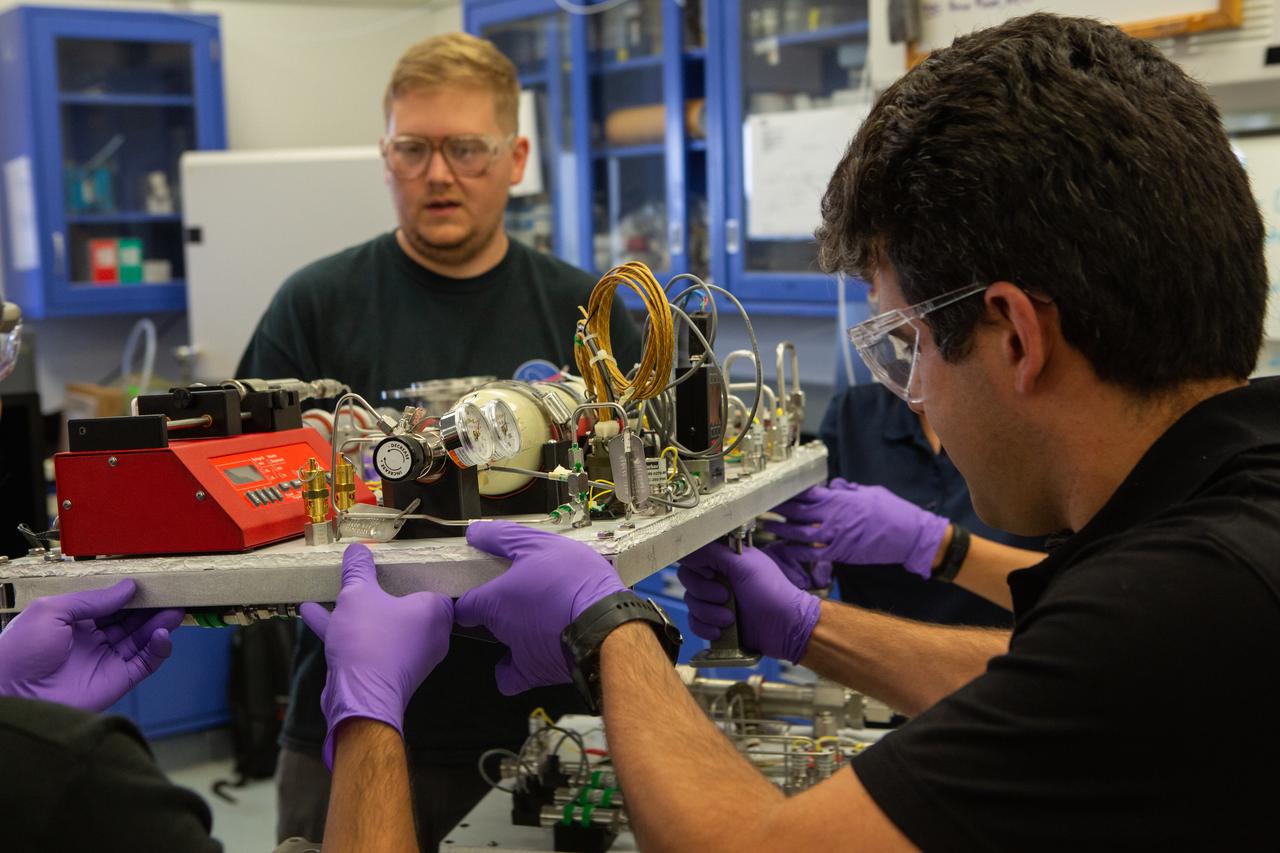
Team members Evan Bell, left, and Jaime Toro assemble the flight hardware for NASA’s Orbital Syngas Commodity Augmentation Reactor, or OSCAR, on Oct. 10, 2019, in the Space Station Processing Facility at the agency’s Kennedy Space Center in Florida. OSCAR is an Early Career Initiative project at the spaceport that studies technology to convert trash and human waste into useful gasses such as methane, hydrogen and carbon dioxide. By processing small pieces of trash in a high-temperature reactor, OSCAR is advancing new and innovative technology for managing waste in space. A prototype has been developed, and the team is in the process of constructing a new rig for a suborbital flight test.
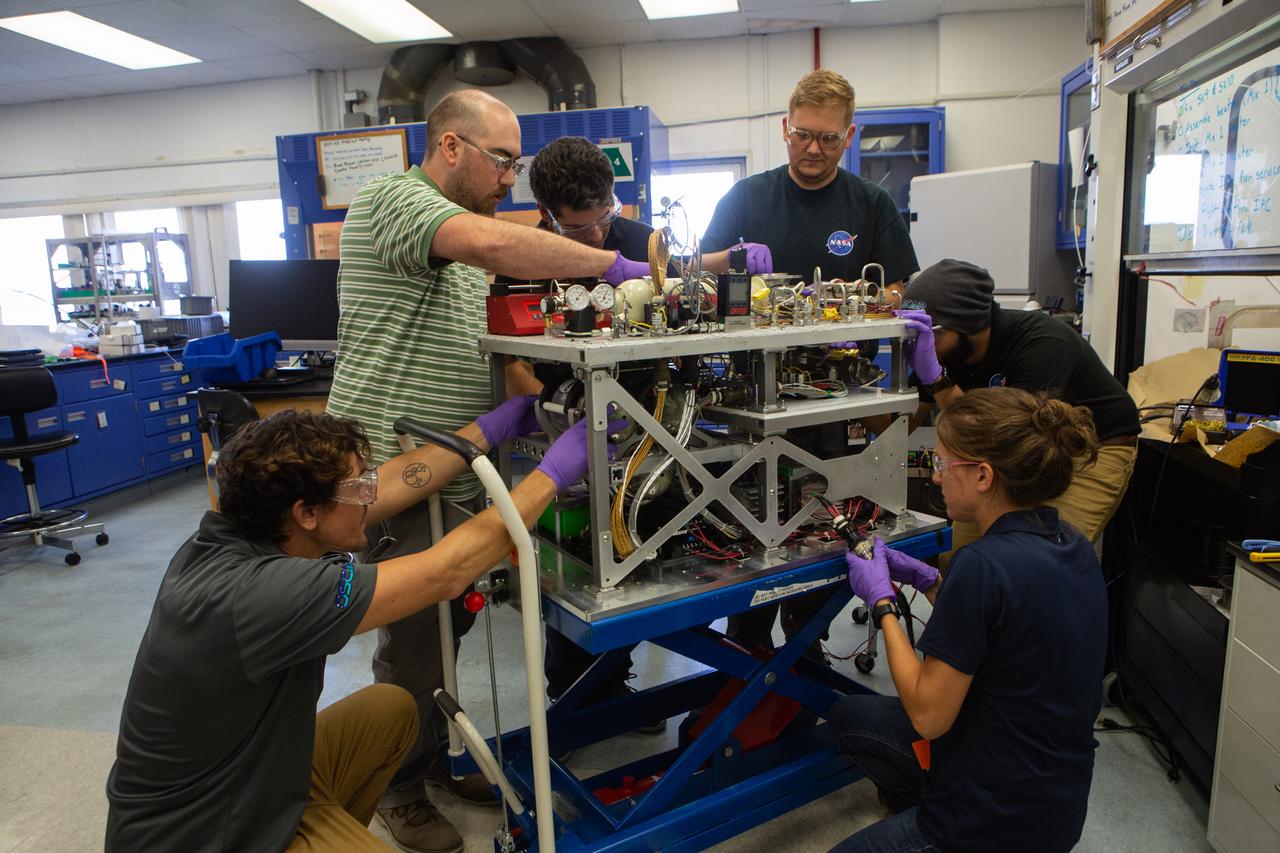
Team members assemble the flight hardware for NASA’s Orbital Syngas Commodity Augmentation Reactor, or OSCAR, on Oct. 10, 2019, in the Space Station Processing Facility at the agency’s Kennedy Space Center in Florida. From left are Gino Carro, Tom Cauvel, Jaime Toro, Evan Bell, Malay Shah and Annie Meier. OSCAR is an Early Career Initiative project at the spaceport that studies technology to convert trash and human waste into useful gasses such as methane, hydrogen and carbon dioxide. By processing small pieces of trash in a high-temperature reactor, OSCAR is advancing new and innovative technology for managing waste in space. A prototype has been developed, and the team is in the process of constructing a new rig for a suborbital flight test.
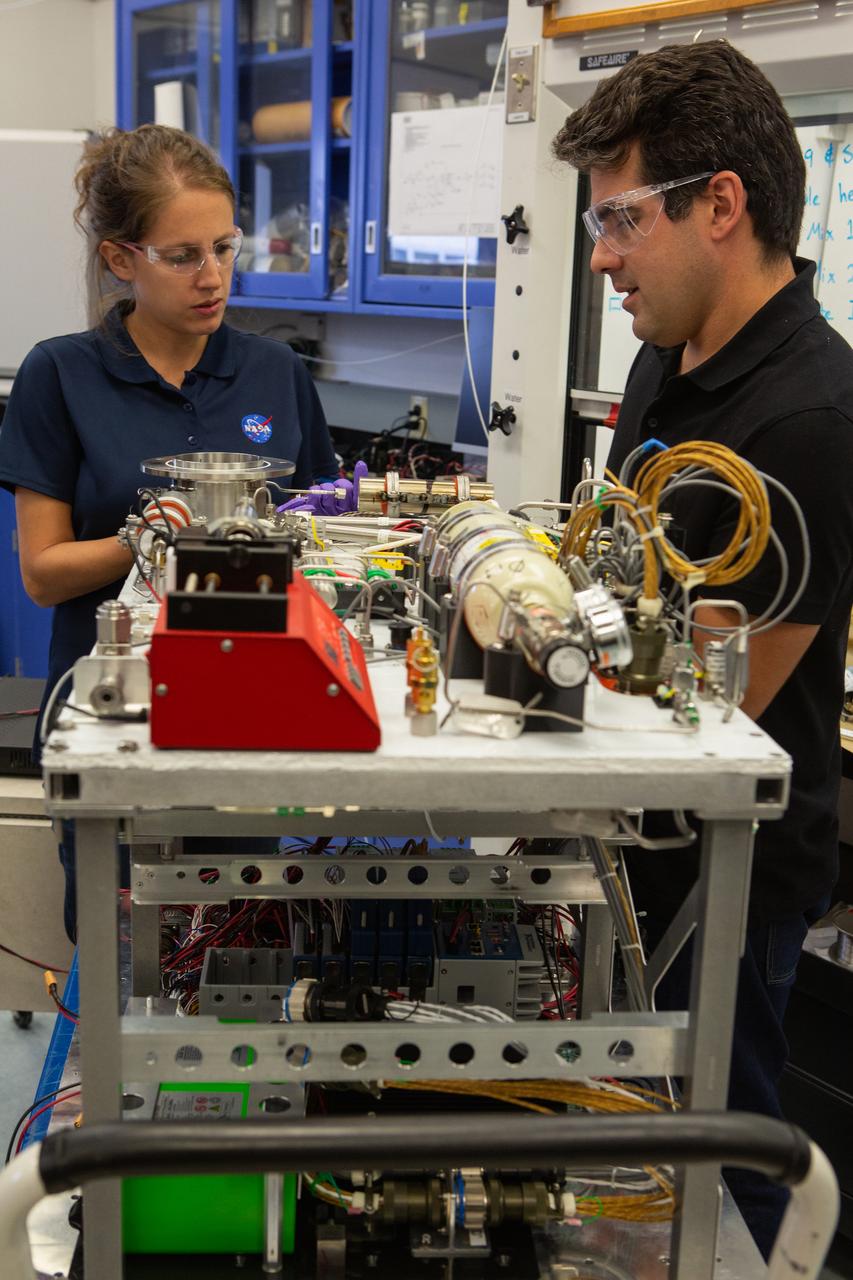
Team members Annie Meier, left, and Jamie Toro assemble the flight hardware for NASA’s Orbital Syngas Commodity Augmentation Reactor, or OSCAR, on Oct. 10, 2019, in the Space Station Processing Facility at the agency’s Kennedy Space Center in Florida. OSCAR is an Early Career Initiative project at the spaceport that studies technology to convert trash and human waste into useful gasses such as methane, hydrogen and carbon dioxide. By processing small pieces of trash in a high-temperature reactor, OSCAR is advancing new and innovative technology for managing waste in space. A prototype has been developed, and the team is in the process of constructing a new rig for a suborbital flight test.
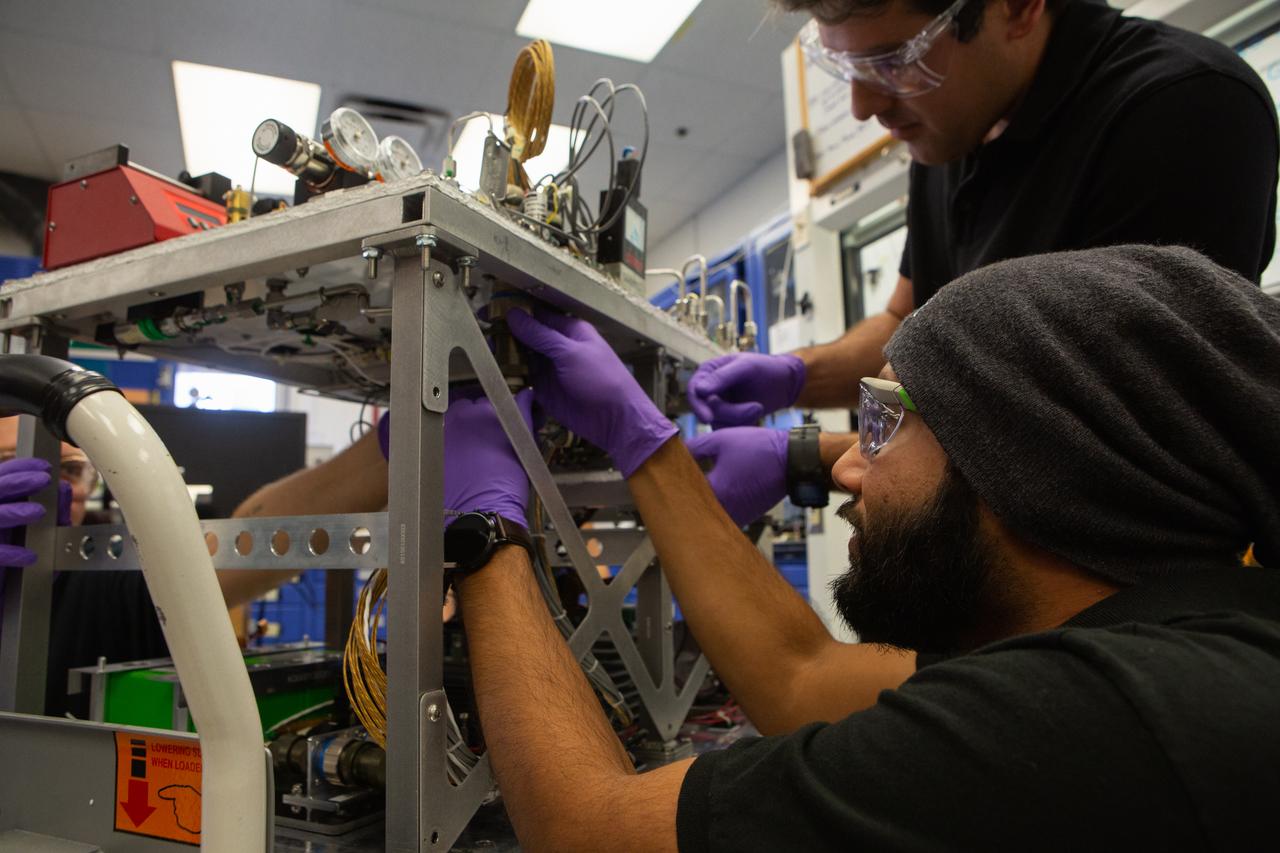
Team members Malay Shah, foreground, and Gino Carro assemble the flight hardware for NASA’s Orbital Syngas Commodity Augmentation Reactor, or OSCAR, on Oct. 10, 2019, in the Space Station Processing Facility at the agency’s Kennedy Space Center in Florida. OSCAR is an Early Career Initiative project at the spaceport that studies technology to convert trash and human waste into useful gasses such as methane, hydrogen and carbon dioxide. By processing small pieces of trash in a high-temperature reactor, OSCAR is advancing new and innovative technology for managing waste in space. A prototype has been developed, and the team is in the process of constructing a new rig for a suborbital flight test.
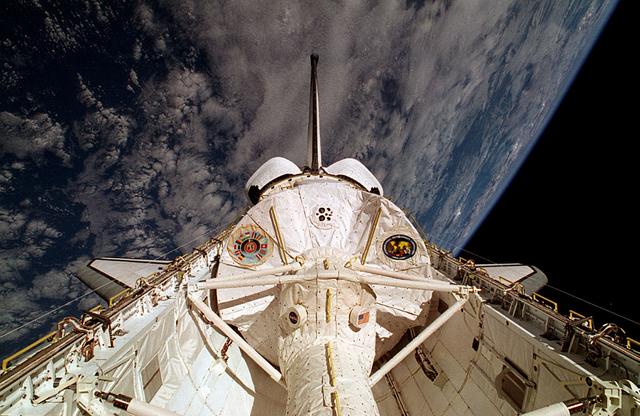
This is a Space Shuttle Columbia (STS-65) onboard photo of the second International Microgravity Laboratory (IML-2) in the cargo bay with Earth in the background. Mission objectives of IML-2 were to conduct science and technology investigations that required the low-gravity environment of space, with emphasis on experiments that studied the effects of microgravity on materials processes and living organisms. Materials science and life sciences are two of the most exciting areas of microgravity research because discoveries in these fields could greatly enhance the quality of life on Earth. If the structure of certain proteins can be determined by examining high-quality protein crystals grown in microgravity, advances can be made to improve the treatment of many human diseases. Electronic materials research in space may help us refine processes and make better products, such as computers, lasers, and other high-tech devices. The 14-nation European Space Agency (ESA), the Canadian Space Agency (SCA), the French National Center for Space Studies (CNES), the German Space Agency and the German Aerospace Research Establishment (DARA/DLR), and the National Space Development Agency of Japan (NASDA) participated in developing hardware and experiments for the IML missions. The missions were managed by NASA's Marshall Space Flight Center. The Orbiter Columbia was launched from the Kennedy Space Center on July 8, 1994 for the IML-2 mission.
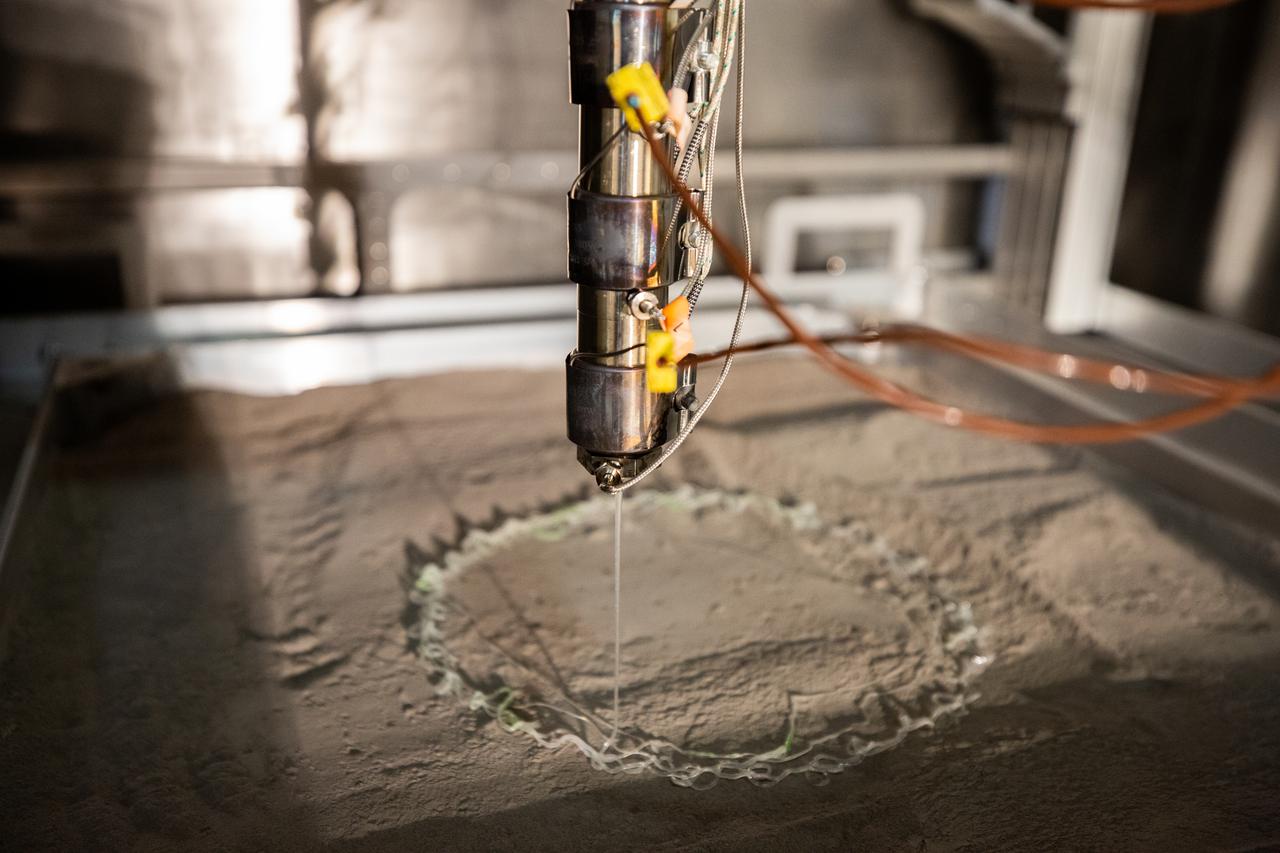
A team at NASA’s Kennedy Space Center in Florida test a 3D printer inside a vacuum chamber at the Granular Mechanics and Regolith Operations (GMRO) lab inside the spaceport’s Swamp Works, as part of the Relevant Environment Additive Construction Technology (REACT) project on April 5, 2022. Testing REACT derives from NASA’s 2020 Announcement of Collaboration Opportunity, with AI SpaceFactory – an architectural and construction technology company and winner of NASA’s 3D Printed Habitat Challenge – collaborating with Kennedy teams to build 3D-printed test structures using a composite made from polymers and a regolith simulant in a vacuum chamber that mimics environmental conditions on the Moon.
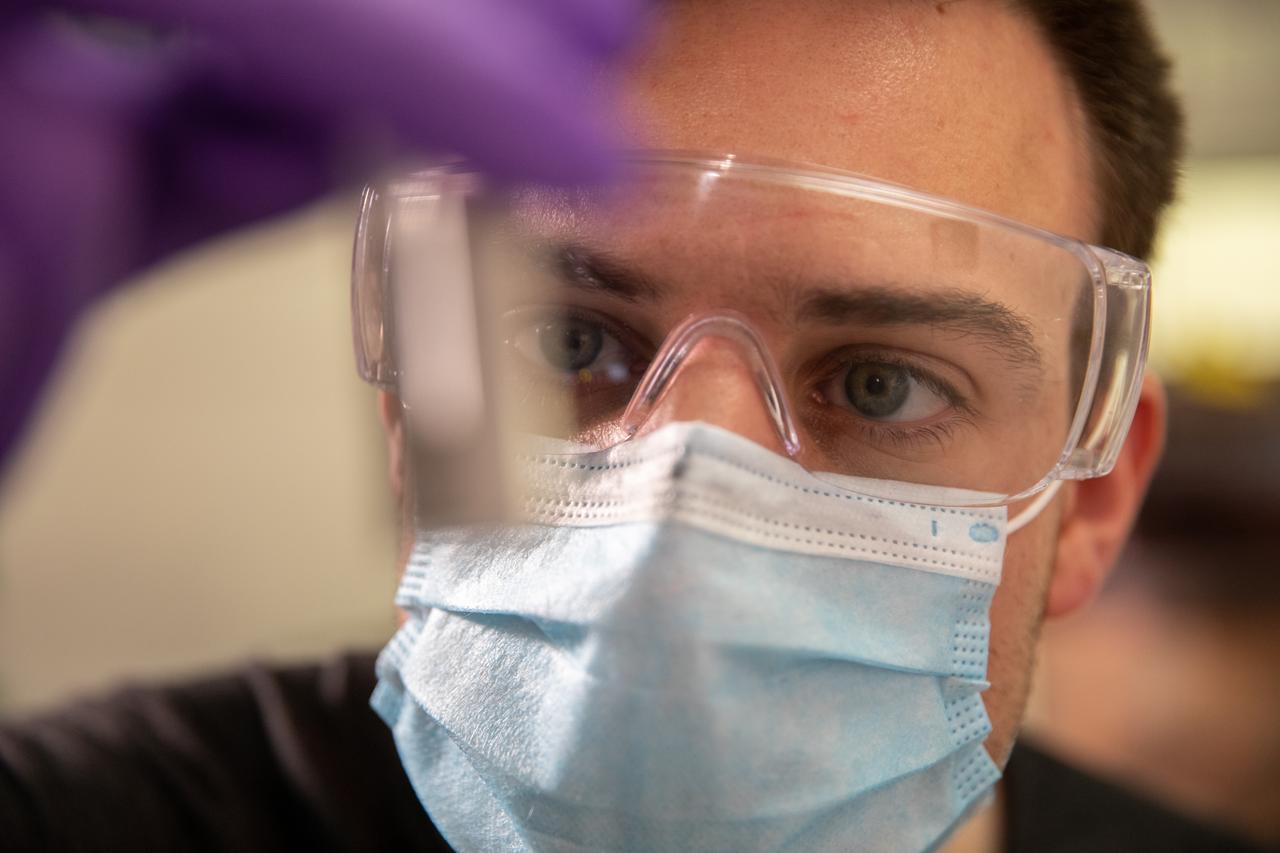
Kevin Grossman, project lead for the Gaseous Lunar Oxygen from Regolith Electrolysis (GaLORE) project at NASA Kennedy Space Center’s Swamp Works, inspects a piece of hardware for GaLORE on July 21, 2020, inside a laboratory at the center’s Neil Armstrong Operations and Checkout Building. Grossman is leading an Early Career Initiative project that is investing in turning lunar regolith into oxygen that could be used for life support for sustainable human lunar exploration on long-duration missions to Mars. GaLORE was selected as an Early Career Initiative project by NASA’s Space Technology Mission directorate.
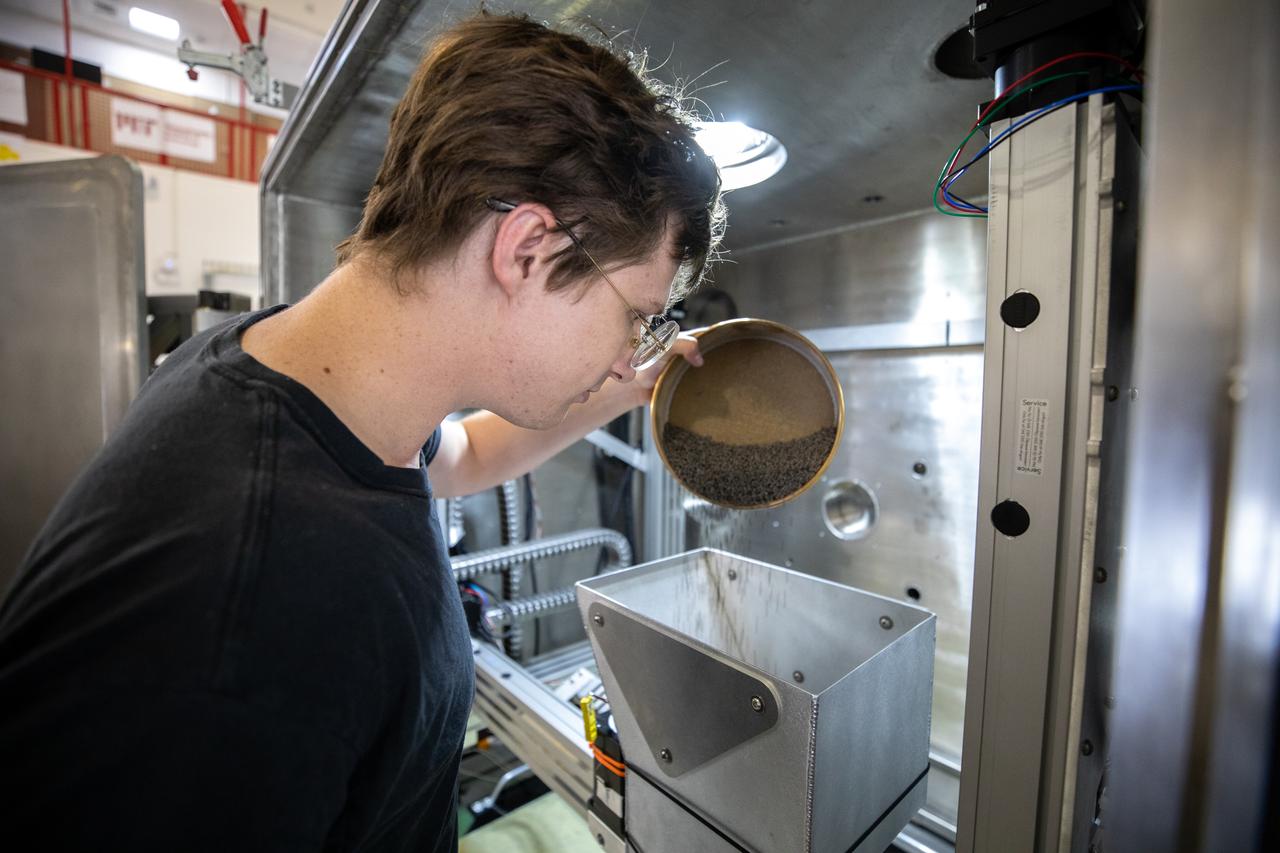
Materials engineer Thomas Lipscomb tests a 3D printer on July 28, 2022, at Swamp Works at NASA’s Kennedy Space Center in Florida, as part of the Relevant Environment Additive Construction Technology (REACT) project. Among the key objectives of the project is developing an architectural and structural design for a shelter that provides protection to habitable assets on the lunar surface. Testing REACT derives from NASA’s 2020 Announcement of Collaboration Opportunity with AI SpaceFactory – an architectural and construction technology company and winner of NASA’s 3D Printed Habitat Challenge.
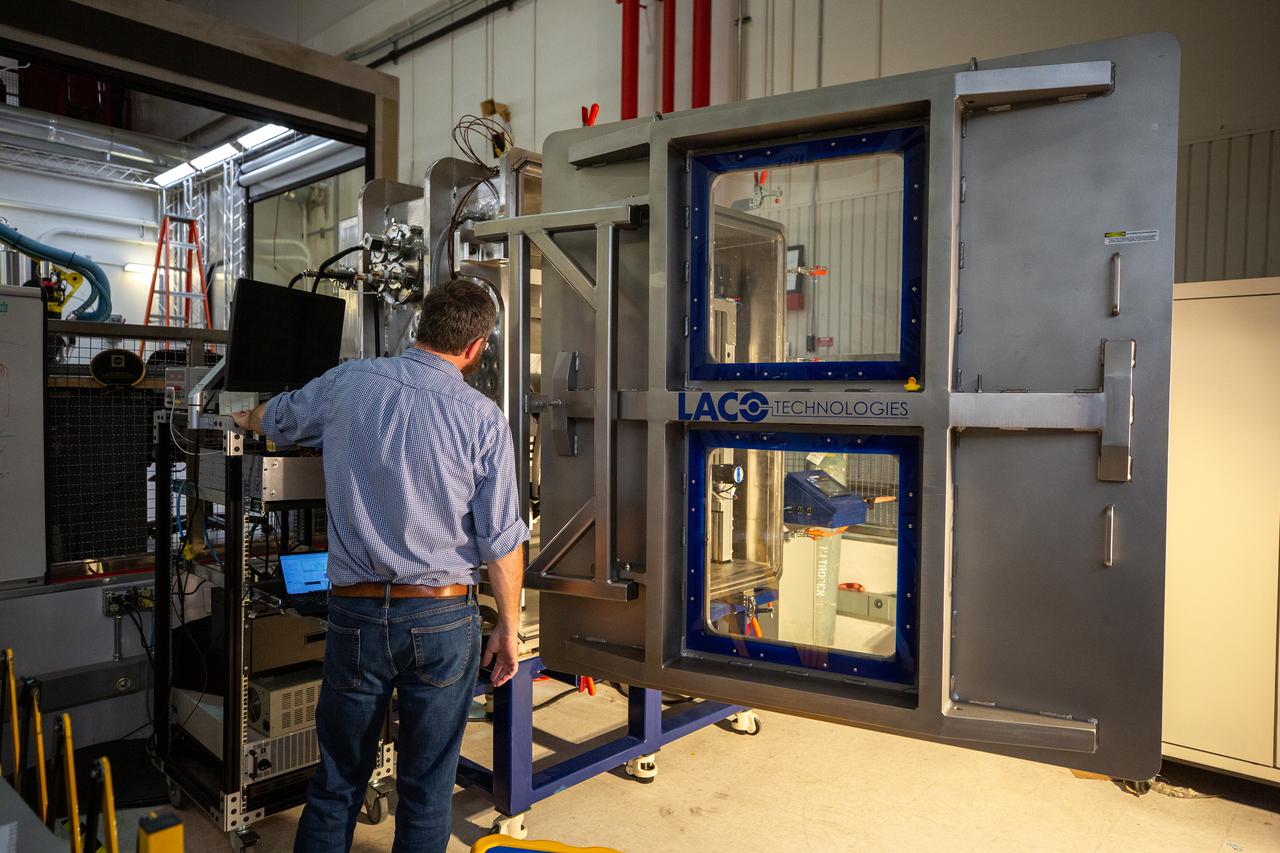
Engineer Matt Nugent prepares a vacuum chamber for testing 3D printing inside the Granular Mechanics and Regolith Operations (GMRO) lab at NASA Kennedy Space Center’s Swamp Works in Florida on April 5, 2022. The testing is part of the Relevant Environment Additive Construction Technology (REACT) project, which derives from NASA’s 2020 Announcement of Collaboration Opportunity, with AI SpaceFactory – an architectural and construction technology company and winner of NASA’s 3D Printed Habitat Challenge – collaborating with Kennedy teams to build 3D-printed test structures using a composite made from polymers and a regolith simulant in a vacuum chamber that mimics environmental conditions on the Moon.