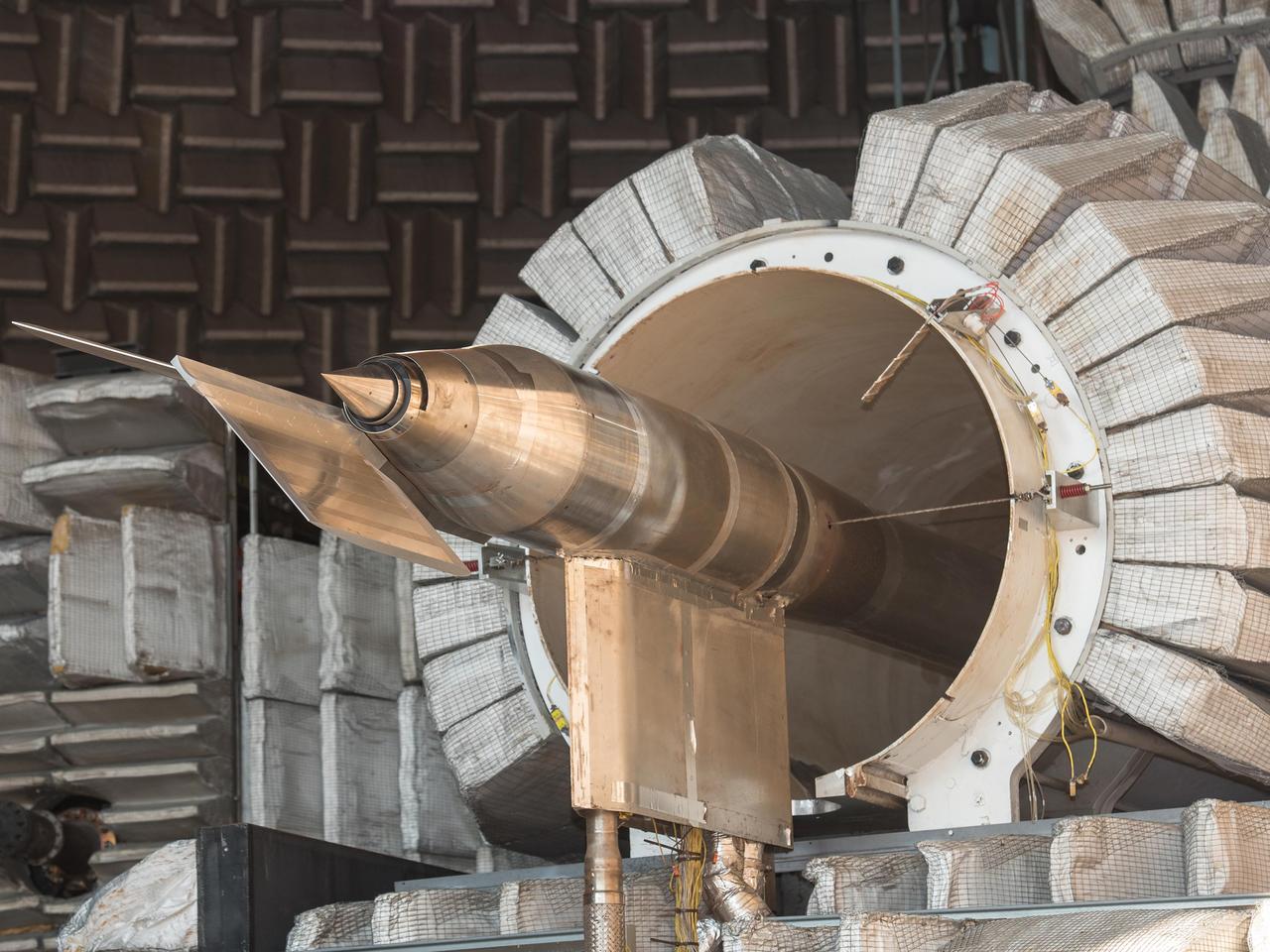
N+2 Nozzle in the Aero-Acoustic Propulsion Lab. As NASA works toward demonstrating low-sonic boom design, engineers at NASA Glenn have tested an engine nozzle that could make supersonic aircraft much quieter.
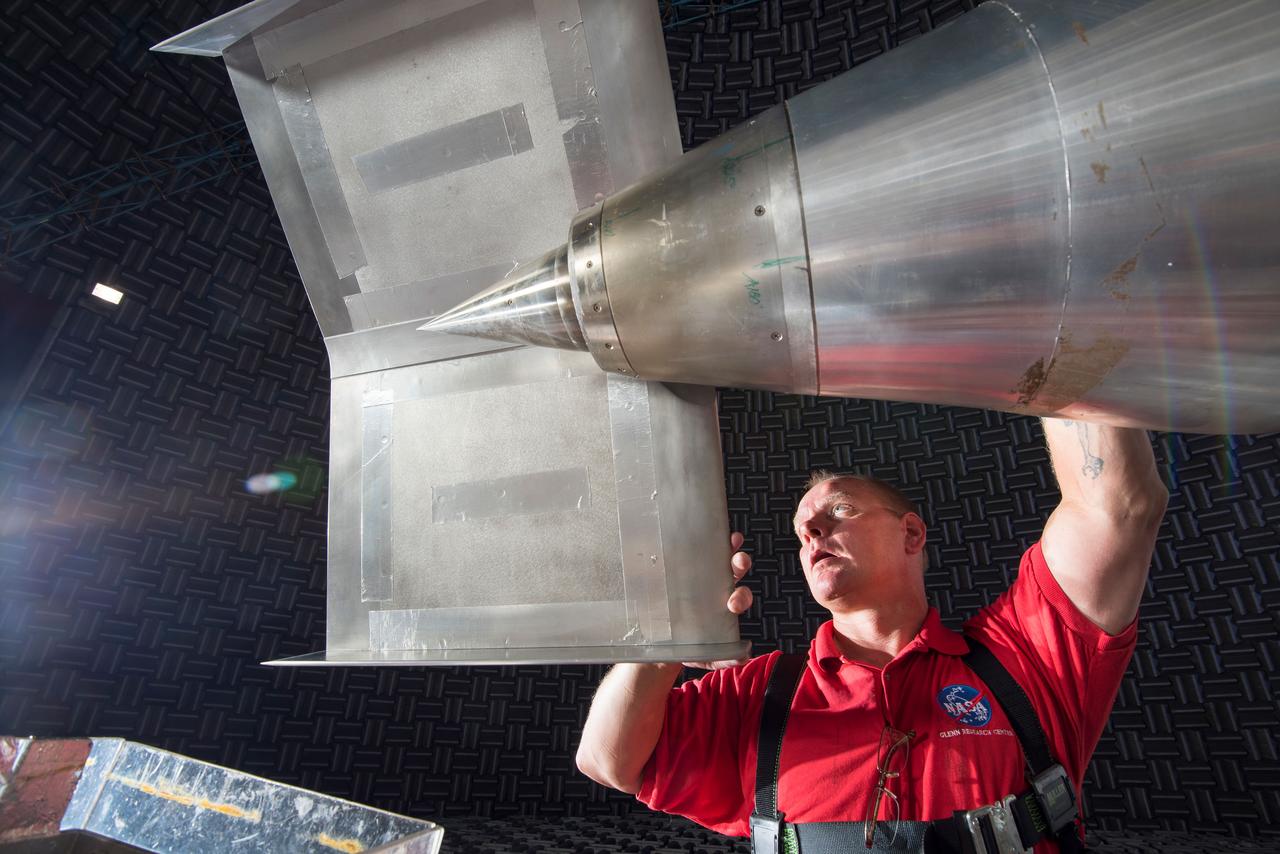
N+2 Nozzle in the Aero-Acoustic Propulsion Lab. As NASA works toward demonstrating low-sonic boom design, engineers at NASA Glenn have tested an engine nozzle that could make supersonic aircraft much quieter.
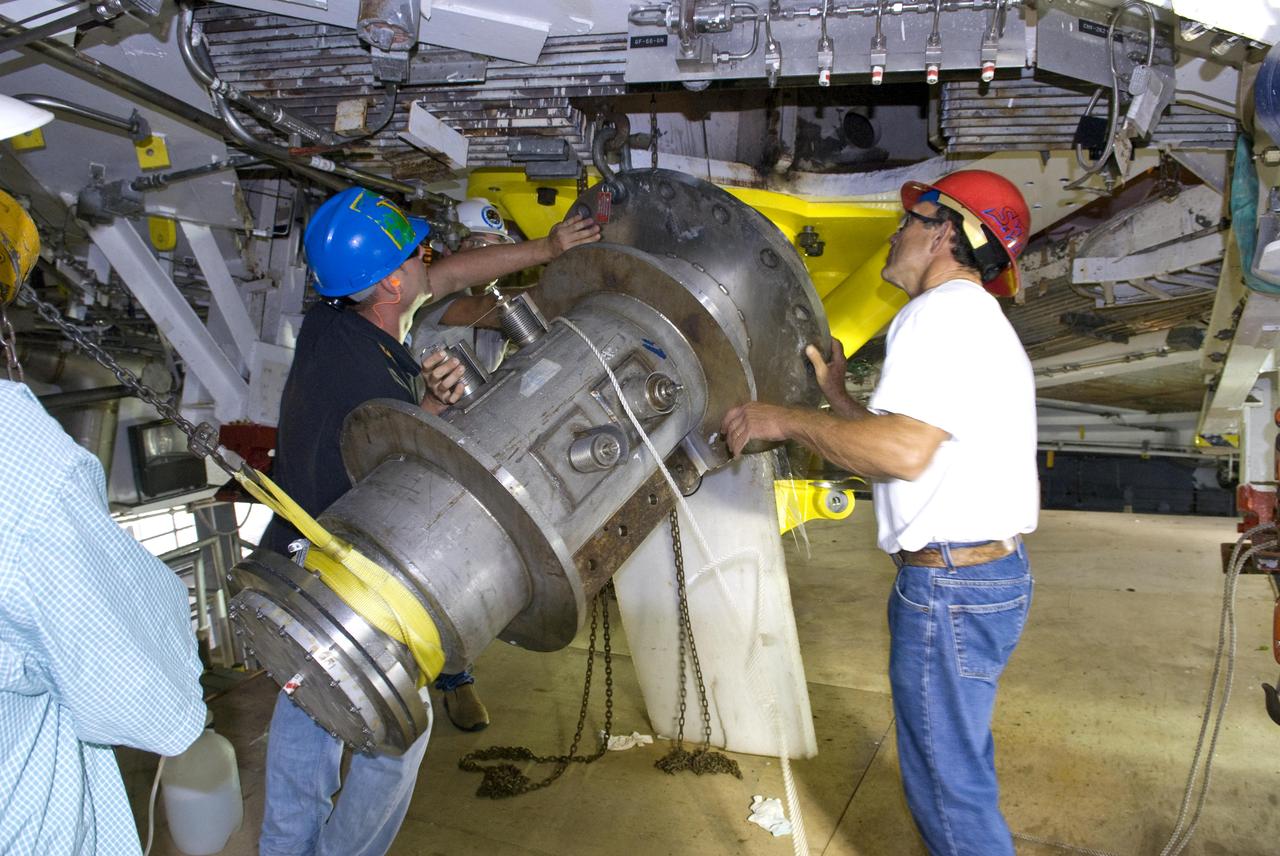
John C. Stennis Space Center employees remove space shuttle main engine run ducts from the A-2 Test Stand engine deck Oct. 25, 2010. Testing of space shuttle main engines concluded in July 2009. Stennis is preparing the A-2 Test Stand for testing the next-generation J-2X rocket engine being developed. Testing of the new engine is scheduled to begin in 2011.
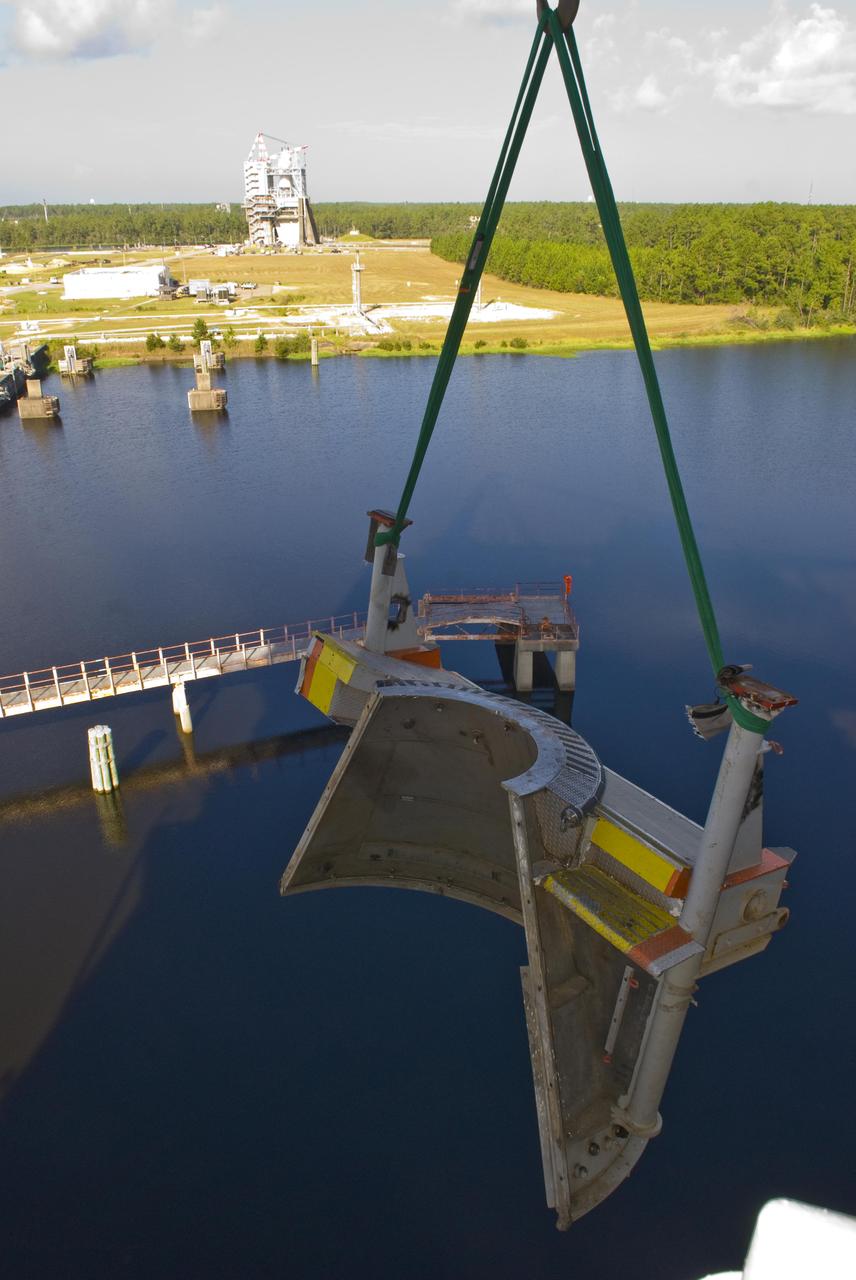
John C. Stennis Space Center employees remove one-half of the A-2 Test Stand clamshell used for testing space shuttle main engines. Space shuttle main engine testing concluded July 2009; the A-2 stand now is being prepared for testing the next-generation J-2X rocket engine in development. Testing of the J-2X engine is scheduled to begin in 2011.
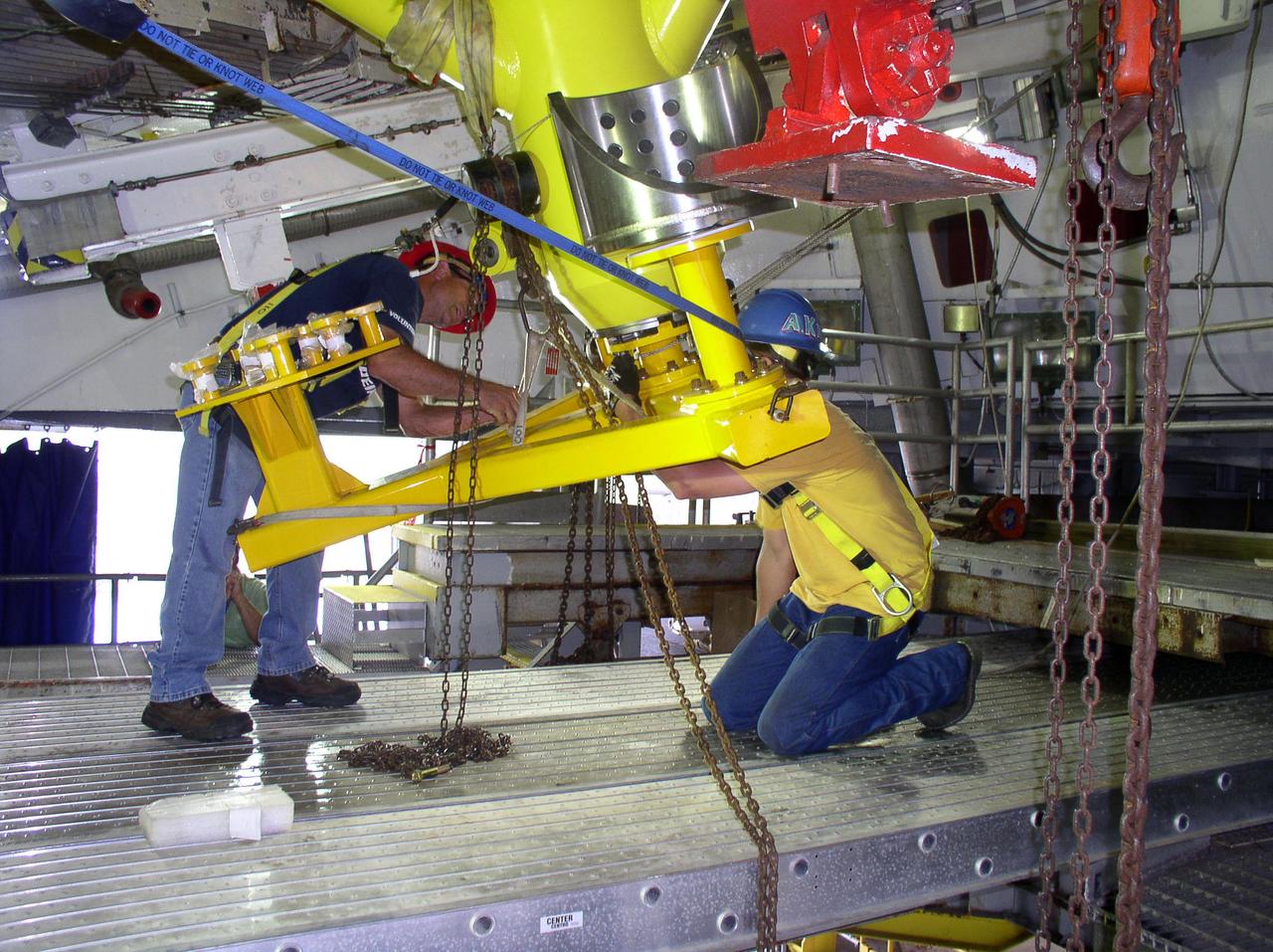
John C. Stennis Space Center employees install a new master interface tool on the A-2 Test Stand on Oct. 27, 2010. Until July 2009, the stand had been used for testing space shuttle main engines. With that test series complete, employees are preparing the stand for testing the next-generation J-2X rocket engine being developed. Testing of the new engine is scheduled to begin in 2011.
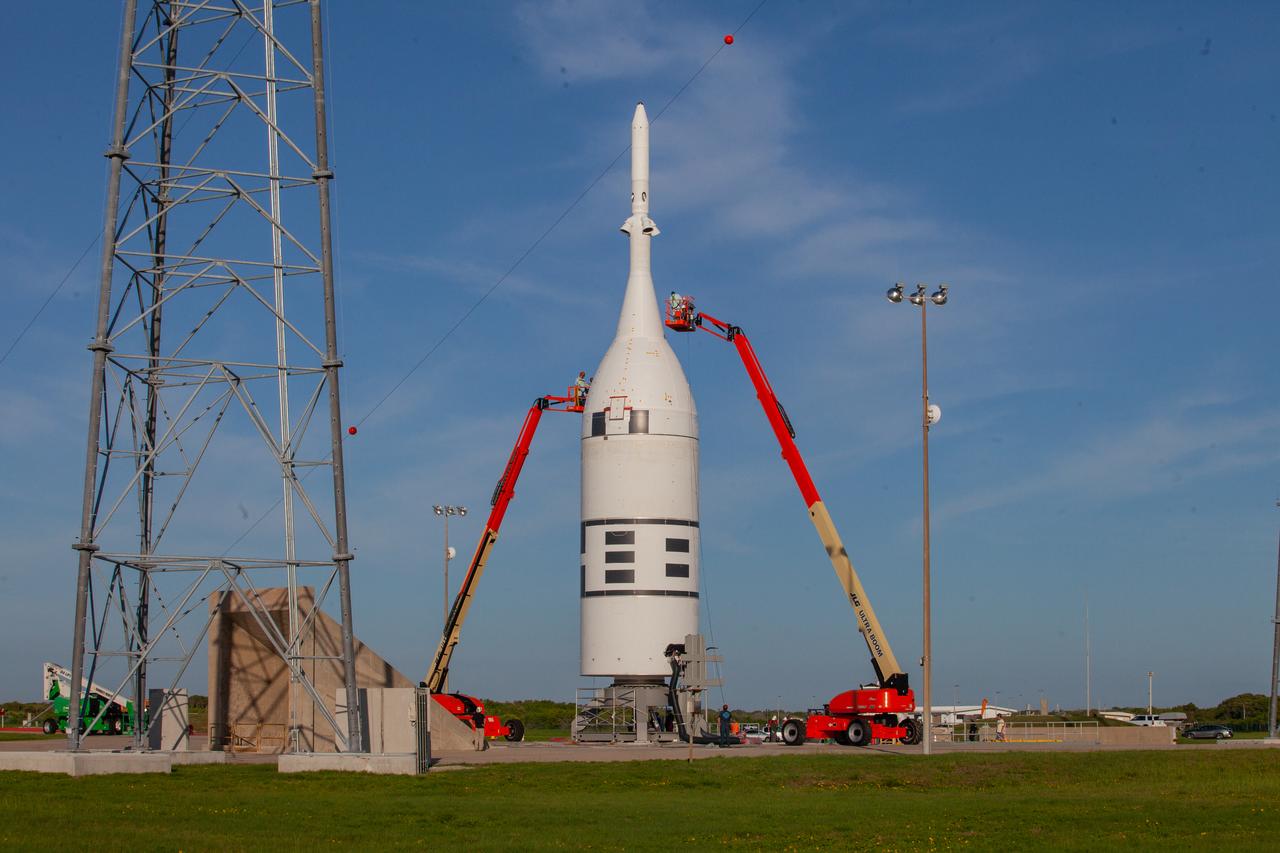
On July 1, 2019, workers prepare the Ascent Abort-2 (AA-2) test vehicle for launch at Launch Complex 46 at Cape Canaveral Air Force Station in Florida after rollback of the integration facility. A fully functional Launch Abort System (LAS) mated to a test version of the Orion spacecraft are on a Northrop Grumman provided booster on the pad for launch on NASA’s AA-2 flight test on July 2, 2019. During AA-2, the booster will send the LAS and Orion to an altitude of 31,000 feet, traveling at more than 1,000 mph. The LAS’ three motors will work together to pull the crew module away from the booster and prepare it for splashdown in the Atlantic Ocean. The flight test will prove that the abort system can pull crew to safety in the unlikely event of an emergency during ascent.
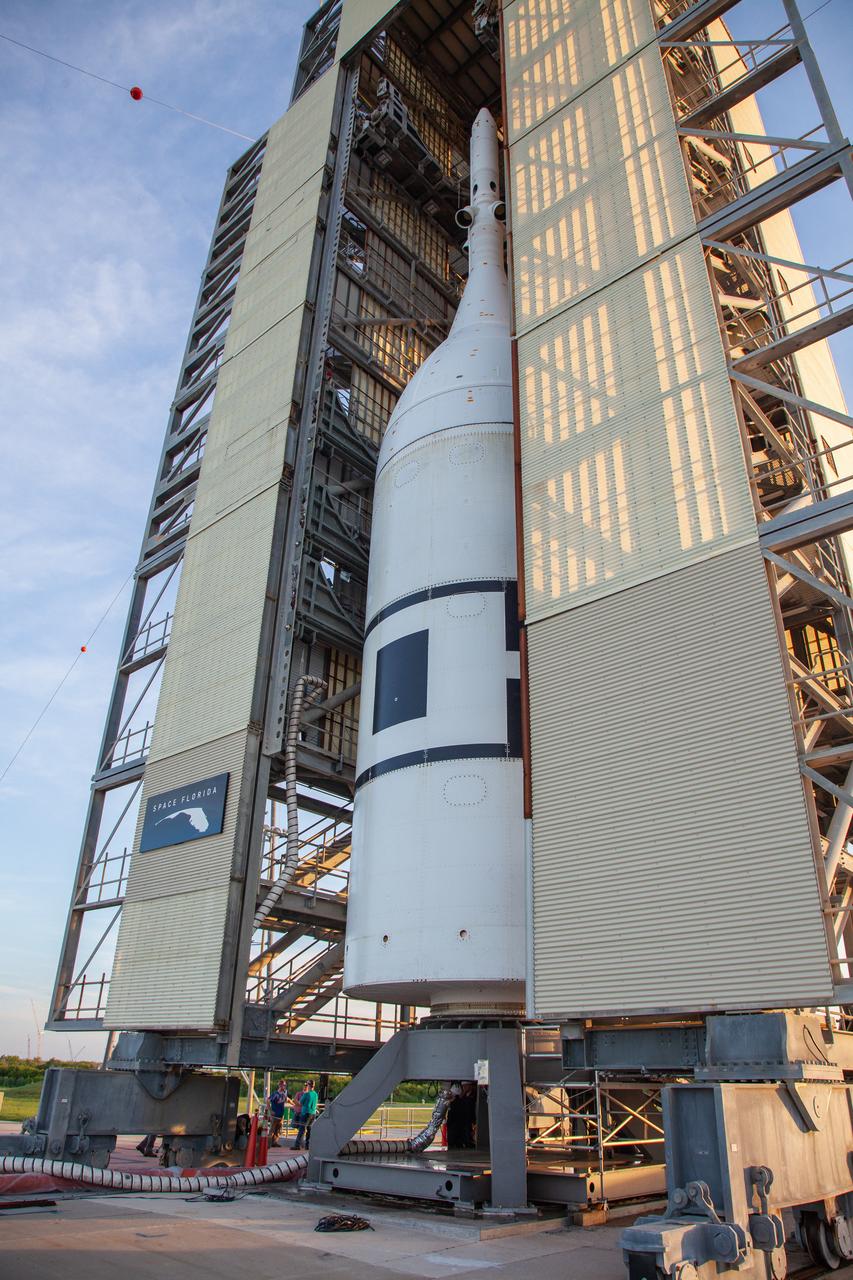
In the early morning on July 1, 2019, the vertical integration facility surrounding the Ascent Abort-2 (AA-2) test vehicle begins to rollback at Launch Pad 46 at Cape Canaveral Air Force Station in Florida. A fully functional Launch Abort System (LAS) mated to a test version of the Orion spacecraft are on a Northrop Grumman provided booster on the pad for launch on NASA’s AA-2 flight test on July 2, 2019. During AA-2, the booster will send the LAS and Orion to an altitude of 31,000 feet, traveling at more than 1,000 mph. The LAS’ three motors will work together to pull the crew module away from the booster and prepare it for splashdown in the Atlantic Ocean. The flight test will prove that the abort system can pull crew to safety in the unlikely event of an emergency during ascent.
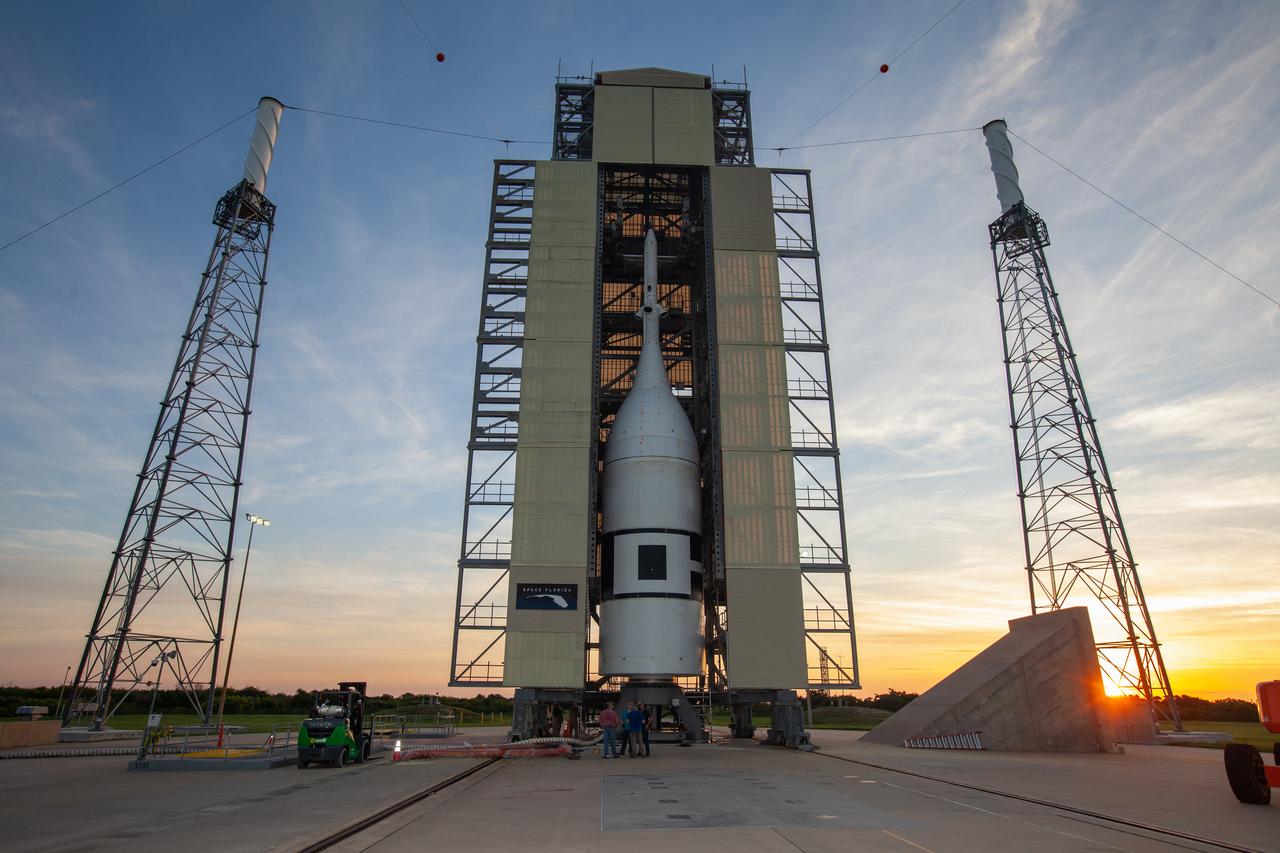
In the early morning on July 1, 2019, the vertical integration facility surrounding the Ascent Abort-2 (AA-2) test vehicle begins to rollback at Launch Pad 46 at Cape Canaveral Air Force Station in Florida. A fully functional Launch Abort System (LAS) mated to a test version of the Orion spacecraft are on a Northrop Grumman provided booster on the pad for launch on NASA’s AA-2 flight test on July 2, 2019. During AA-2, the booster will send the LAS and Orion to an altitude of 31,000 feet, traveling at more than 1,000 mph. The LAS’ three motors will work together to pull the crew module away from the booster and prepare it for splashdown in the Atlantic Ocean. The flight test will prove that the abort system can pull crew to safety in the unlikely event of an emergency during ascent.
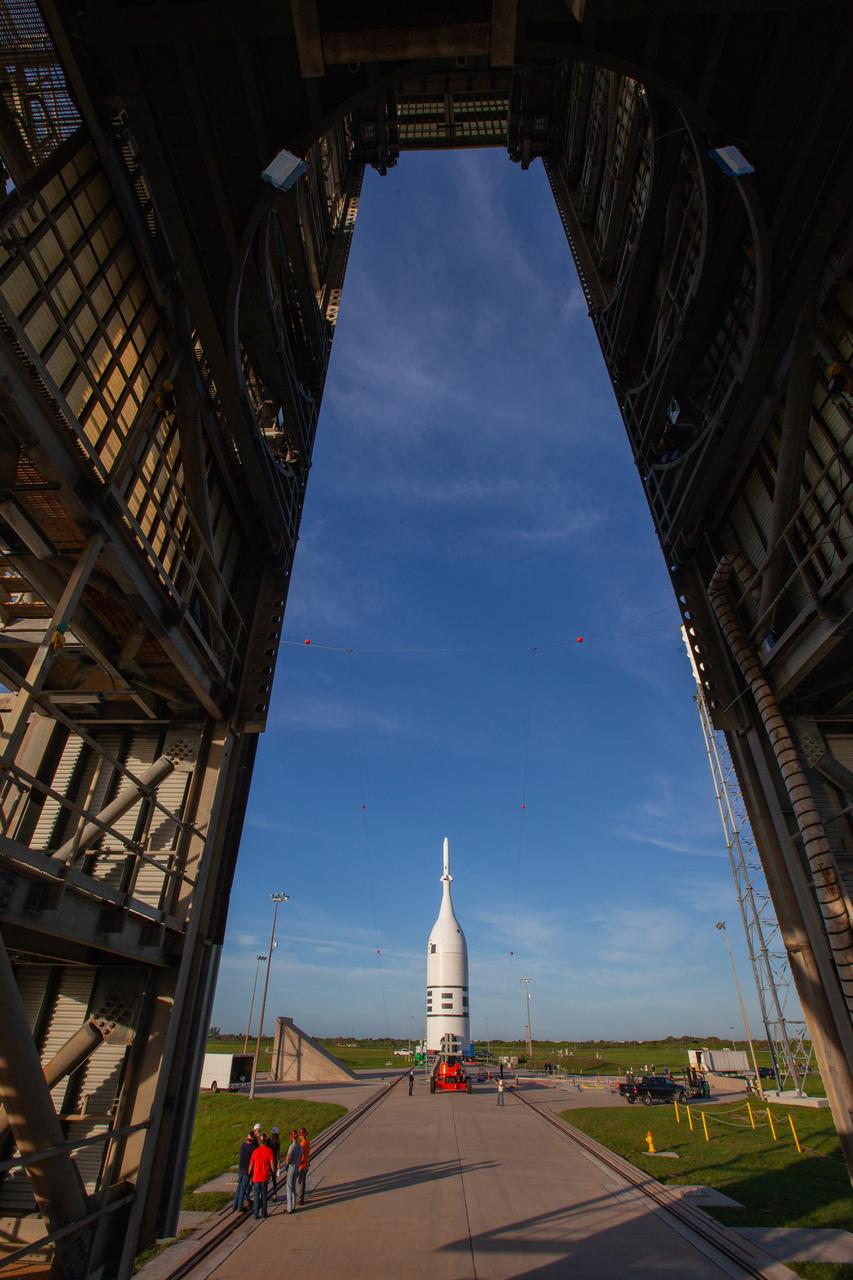
A view of the Ascent Abort-2 (AA-2) test vehicle from inside the vertical integration facility at Launch Complex 46 at Cape Canaveral Air Force Station in Florida after rollback of the integration facility on July 1, 2019. A fully functional Launch Abort System (LAS) mated to a test version of the Orion spacecraft are on a Northrop Grumman provided booster on the pad for launch on NASA’s AA-2 flight test on July 2, 2019. During AA-2, the booster will send the LAS and Orion to an altitude of 31,000 feet, traveling at more than 1,000 mph. The LAS’ three motors will work together to pull the crew module away from the booster and prepare it for splashdown in the Atlantic Ocean. The flight test will prove that the abort system can pull crew to safety in the unlikely event of an emergency during ascent.
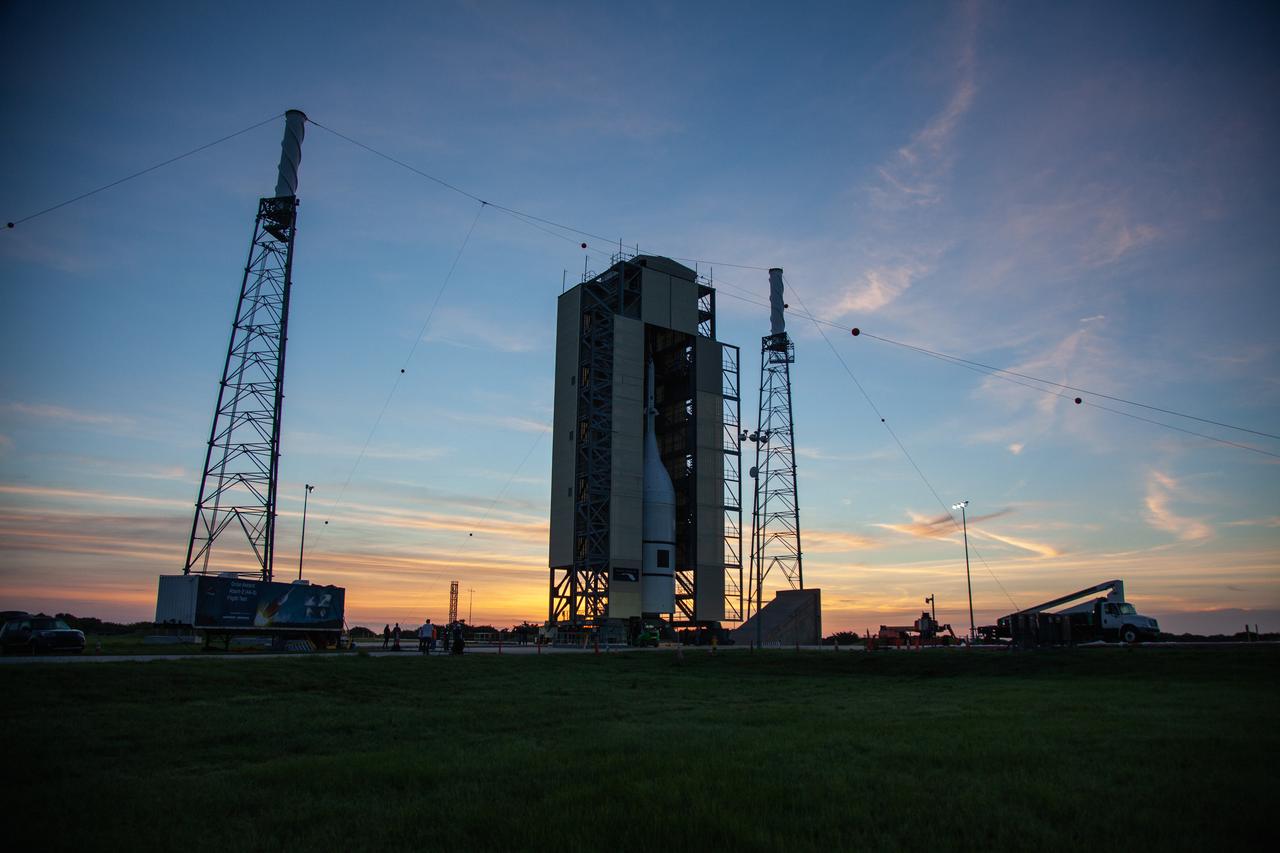
In the early morning on July 1, 2019, the vertical integration facility surrounding the Ascent Abort-2 (AA-2) test vehicle begins to rollback at Launch Pad 46 at Cape Canaveral Air Force Station in Florida. A fully functional Launch Abort System (LAS) mated to a test version of the Orion spacecraft are on a Northrop Grumman provided booster on the pad for launch on NASA’s AA-2 flight test on July 2, 2019. During AA-2, the booster will send the LAS and Orion to an altitude of 31,000 feet, traveling at more than 1,000 mph. The LAS’ three motors will work together to pull the crew module away from the booster and prepare it for splashdown in the Atlantic Ocean. The flight test will prove that the abort system can pull crew to safety in the unlikely event of an emergency during ascent.
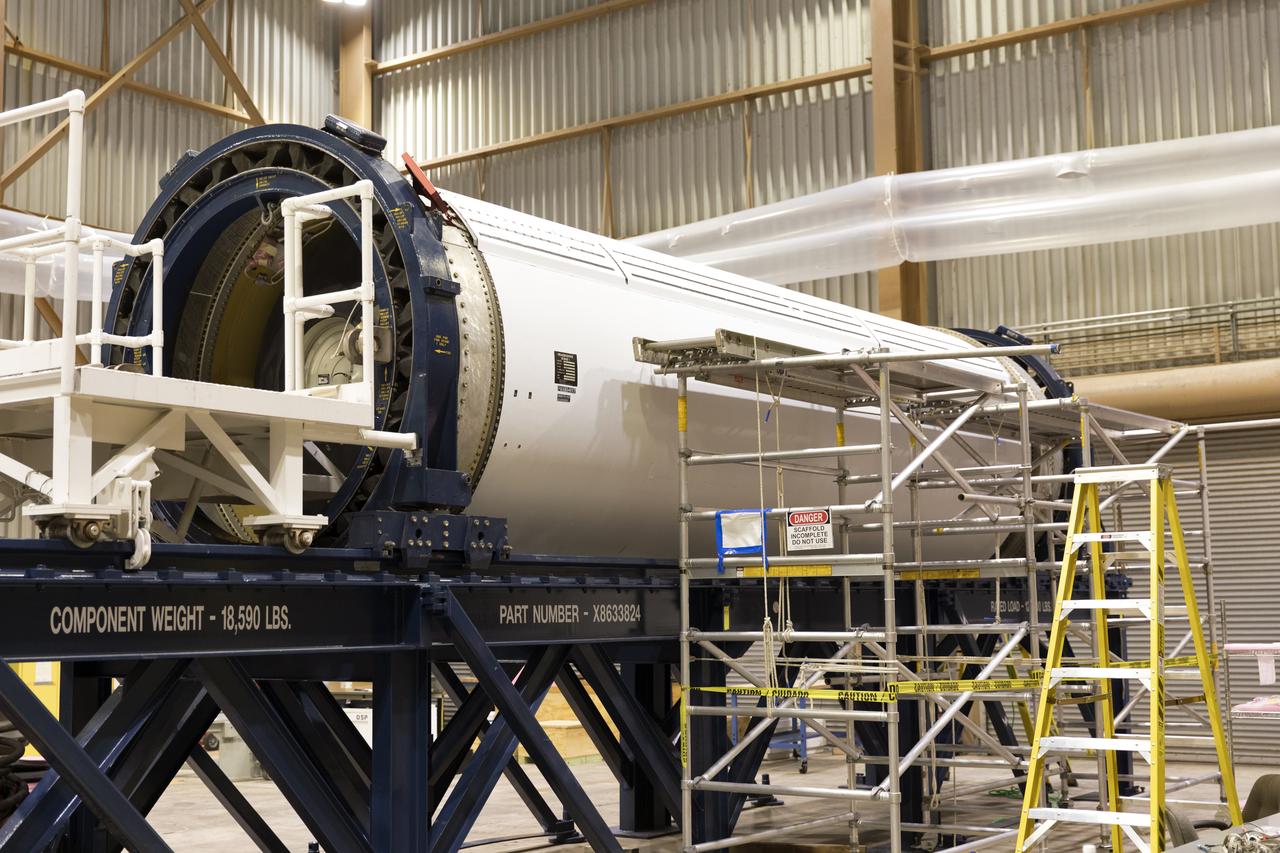
The ground test motor for Orion's Launch Abort System (LAS) is secured on a work stand inside the Rotation, Processing and Surge Facility on July 31, 2018, at NASA's Kennedy Space Center in Florida. It will be inspected and prepared for transport to Space Launch Complex 46 (SLC-46) at Cape Canaveral Air Force Station for mechanical fit testing. This inert motor will not be used for flight, but will be used to certify flight hardware assembly in preparation for a full-stress test of the LAS, called Ascent Abort-2 (AA-2) flight test, scheduled for April 2019. During the test, the booster will launch from SLC 46, carrying a fully functional LAS and a 22,000-pound Orion test vehicle to an altitude of 31,000 feet and traveling at more than 1,000 miles an hour. The test will verify the LAS can steer the crew module and astronauts aboard to safety in the event of an issue with the Space Launch System (SLS) rocket when the spacecraft is under the highest aerodynamic loads it will experience during a rapid climb into space. NASA's Orion and Exploration Ground Systems programs and their contractors from Jacob's and Northrup Grumman in conjunction with the Air Force Space and Missile Center's Launch Operations branch are performing the pathfinding exercises and flight operations for AA-2.
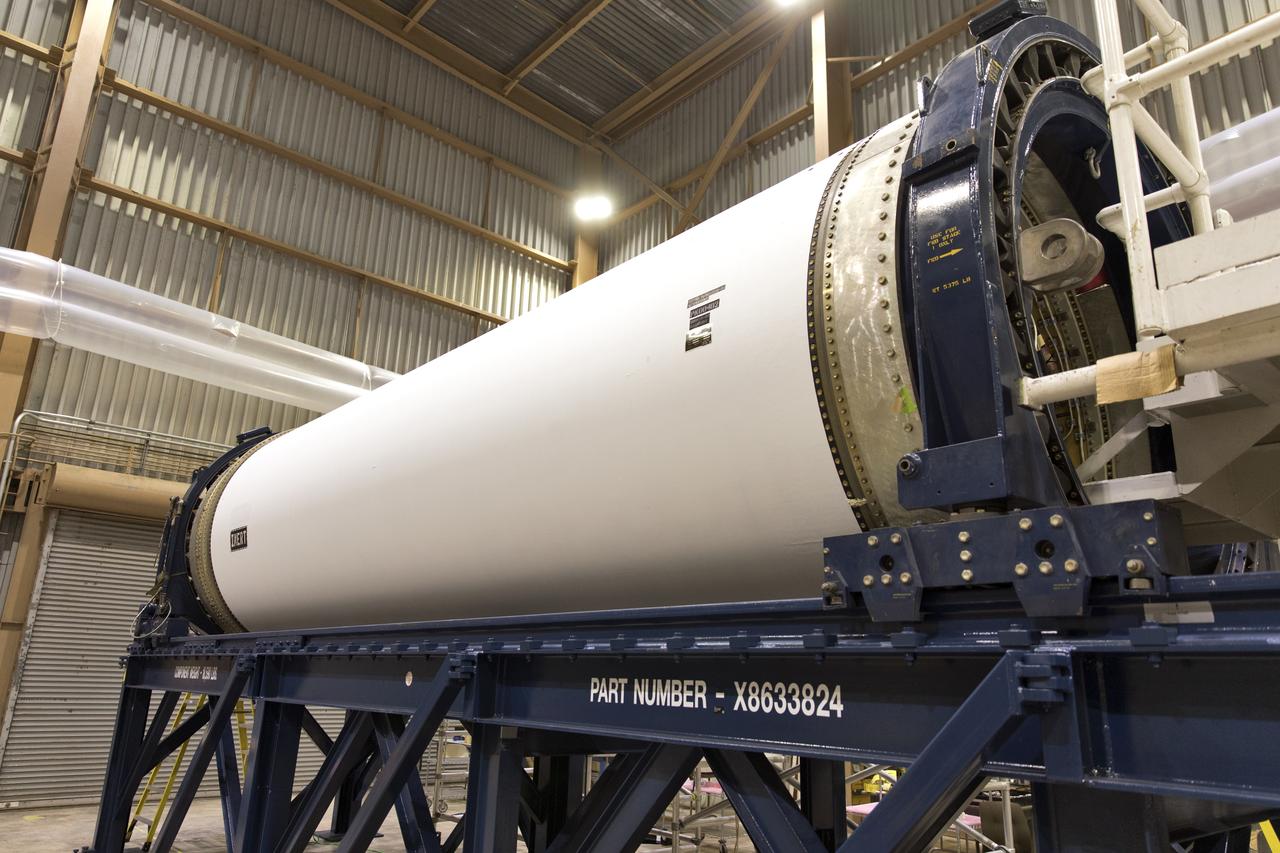
The ground test motor for Orion's Launch Abort System (LAS) is secured on a work stand inside the Rotation, Processing and Surge Facility on July 31, 2018, at NASA's Kennedy Space Center in Florida. It will be inspected and prepared for transport to Space Launch Complex 46 (SLC-46) at Cape Canaveral Air Force Station for mechanical fit testing. This inert motor will not be used for flight, but will be used to certify flight hardware assembly in preparation for a full-stress test of the LAS, called Ascent Abort-2 (AA-2) flight test, scheduled for April 2019. During the test, the booster will launch from SLC 46, carrying a fully functional LAS and a 22,000-pound Orion test vehicle to an altitude of 31,000 feet and traveling at more than 1,000 miles an hour. The test will verify the LAS can steer the crew module and astronauts aboard to safety in the event of an issue with the Space Launch System (SLS) rocket when the spacecraft is under the highest aerodynamic loads it will experience during a rapid climb into space. NASA's Orion and Exploration Ground Systems programs and their contractors from Jacob's and Northrup Grumman in conjunction with the Air Force Space and Missile Center's Launch Operations branch are performing the pathfinding exercises and flight operations for AA-2.
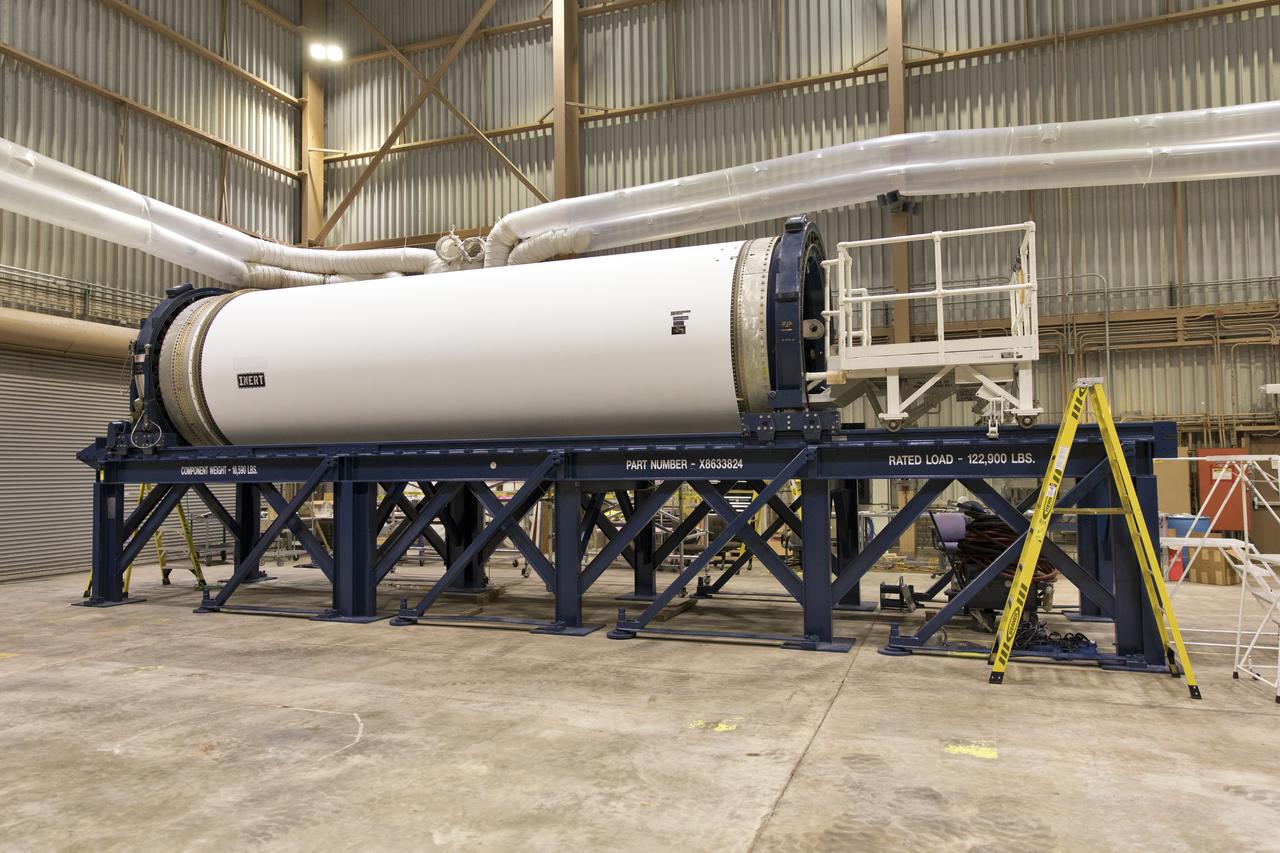
The ground test motor for Orion's Launch Abort System (LAS) is secured on a work stand inside the Rotation, Processing and Surge Facility on July 31, 2018, at NASA's Kennedy Space Center in Florida. It will be inspected and prepared for transport to Space Launch Complex 46 (SLC-46) at Cape Canaveral Air Force Station for mechanical fit testing. This inert motor will not be used for flight, but will be used to certify flight hardware assembly in preparation for a full-stress test of the LAS, called Ascent Abort-2 (AA-2) flight test, scheduled for April 2019. During the test, the booster will launch from SLC 46, carrying a fully functional LAS and a 22,000-pound Orion test vehicle to an altitude of 31,000 feet and traveling at more than 1,000 miles an hour. The test will verify the LAS can steer the crew module and astronauts aboard to safety in the event of an issue with the Space Launch System (SLS) rocket when the spacecraft is under the highest aerodynamic loads it will experience during a rapid climb into space. NASA's Orion and Exploration Ground Systems programs and their contractors from Jacob's and Northrup Grumman in conjunction with the Air Force Space and Missile Center's Launch Operations branch are performing the pathfinding exercises and flight operations for AA-2.
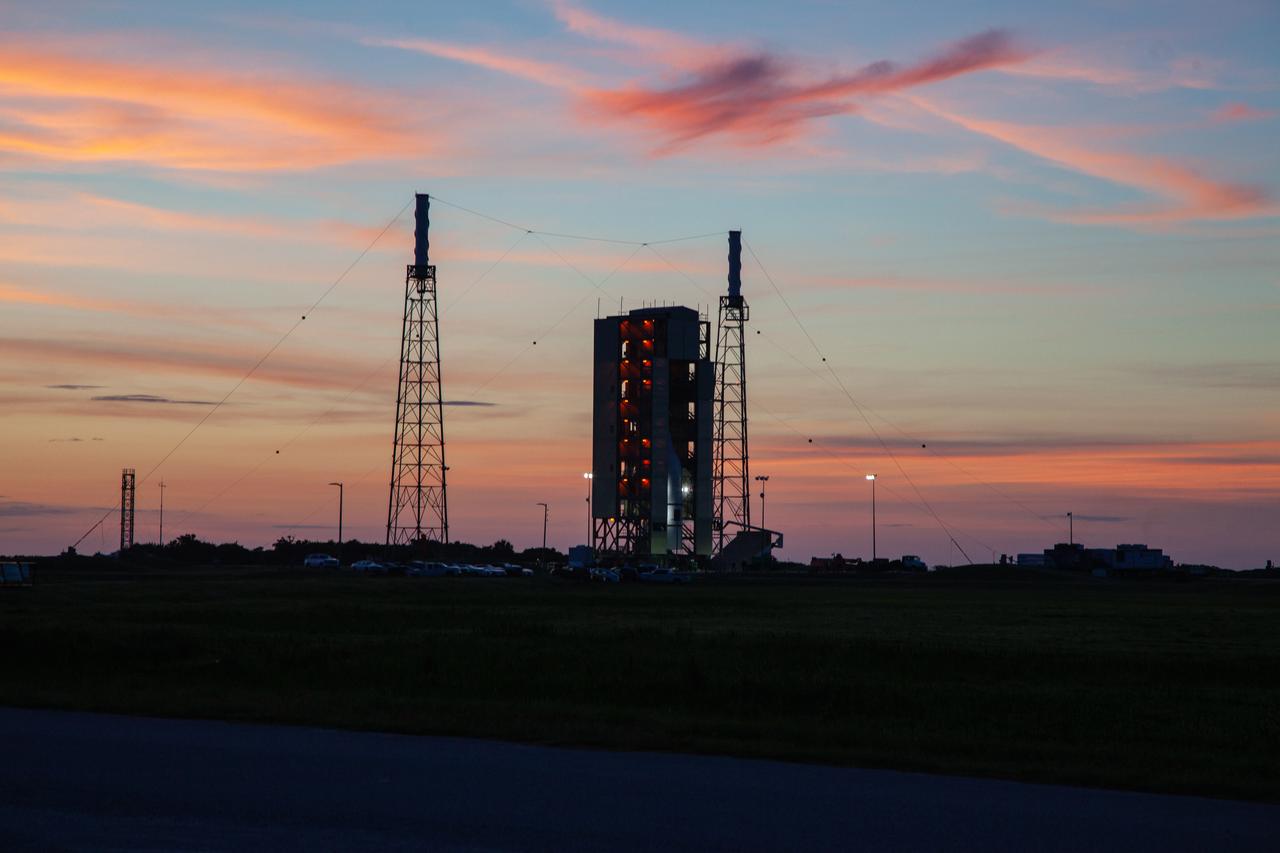
A sunrise view of Launch Complex 46 at Cape Canaveral Air Force Station in Florida on July 1, 2019. A fully functional Launch Abort System (LAS) mated to a test version of the Orion spacecraft are on a Northrop Grumman provided booster on the pad for launch on NASA’s Ascent Abort-2 (AA-2) flight test on July 2, 2019. The vertical integration facility surrounding the test vehicle will begin to roll back from the pad. During AA-2, the booster will send the LAS and Orion to an altitude of 31,000 feet, traveling at more than 1,000 mph. The LAS’ three motors will work together to pull the crew module away from the booster and prepare it for splashdown in the Atlantic Ocean. The flight test will prove that the abort system can pull crew to safety in the unlikely event of an emergency during ascent.
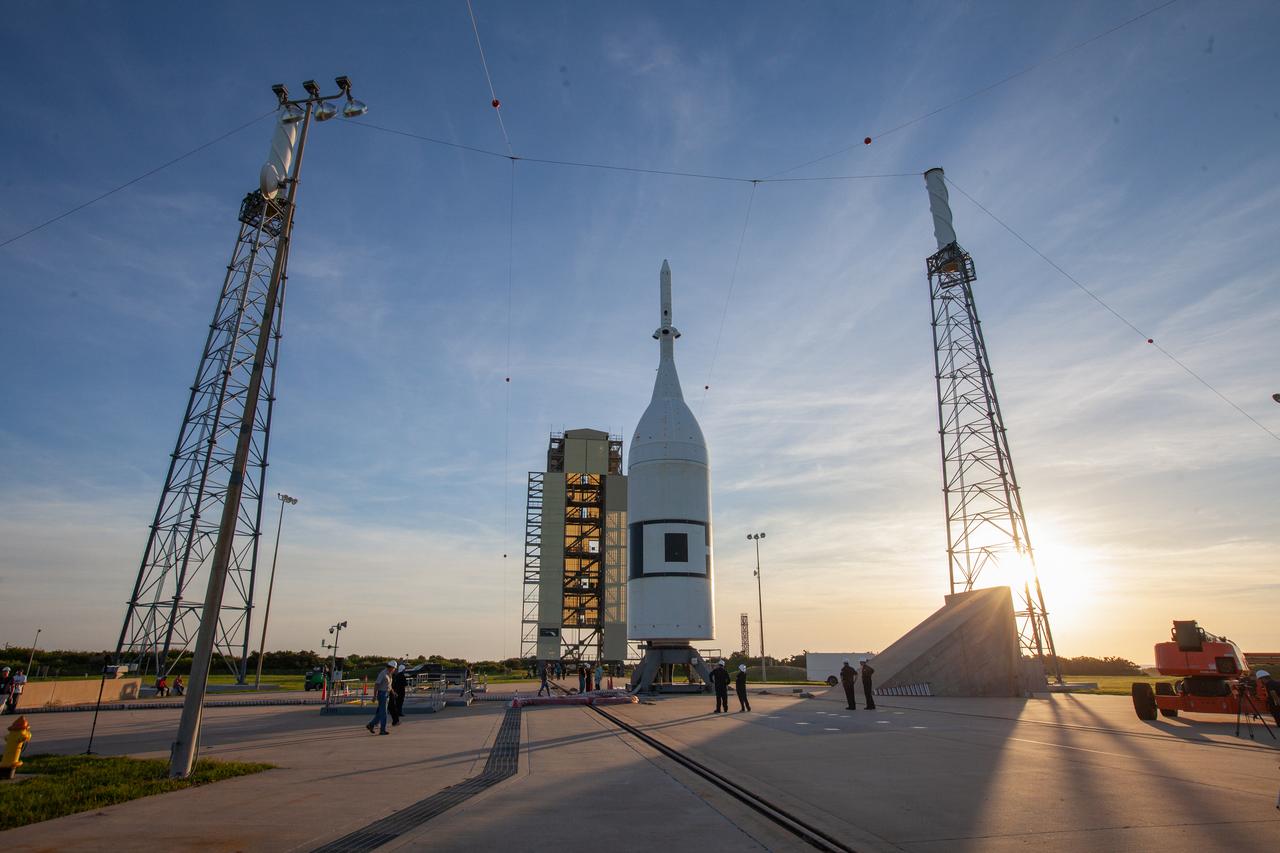
The Ascent Abort-2 test vehicle is secured on the pad at Launch Complex 46 at Cape Canaveral Air Force Station in Florida after rollback of the vertical integration facility on July 1, 2019. A fully functional Launch Abort System (LAS) mated to a test version of the Orion spacecraft are on a Northrop Grumman provided booster on the pad for launch on NASA’s AA-2 flight test on July 2, 2019. During AA-2, the booster will send the LAS and Orion to an altitude of 31,000 feet, traveling at more than 1,000 mph. The LAS’ three motors will work together to pull the crew module away from the booster and prepare it for splashdown in the Atlantic Ocean. The flight test will prove that the abort system can pull crew to safety in the unlikely event of an emergency during ascent.
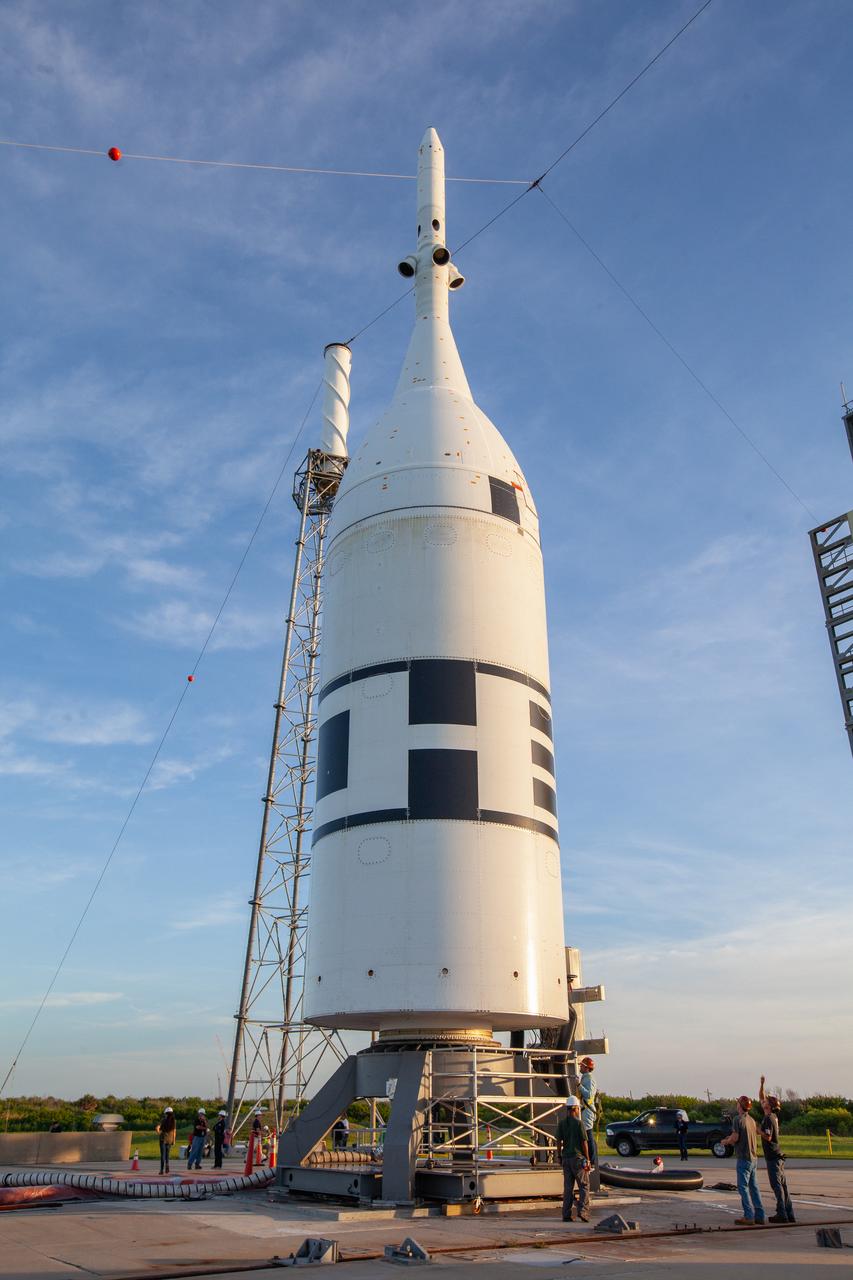
The Ascent Abort-2 test vehicle is secured on the pad at Launch Complex 46 at Cape Canaveral Air Force Station in Florida after rollback of the vertical integration facility on July 1, 2019. A fully functional Launch Abort System (LAS) mated to a test version of the Orion spacecraft are on a Northrop Grumman provided booster on the pad for launch on NASA’s AA-2 flight test on July 2, 2019. During AA-2, the booster will send the LAS and Orion to an altitude of 31,000 feet, traveling at more than 1,000 mph. The LAS’ three motors will work together to pull the crew module away from the booster and prepare it for splashdown in the Atlantic Ocean. The flight test will prove that the abort system can pull crew to safety in the unlikely event of an emergency during ascent.
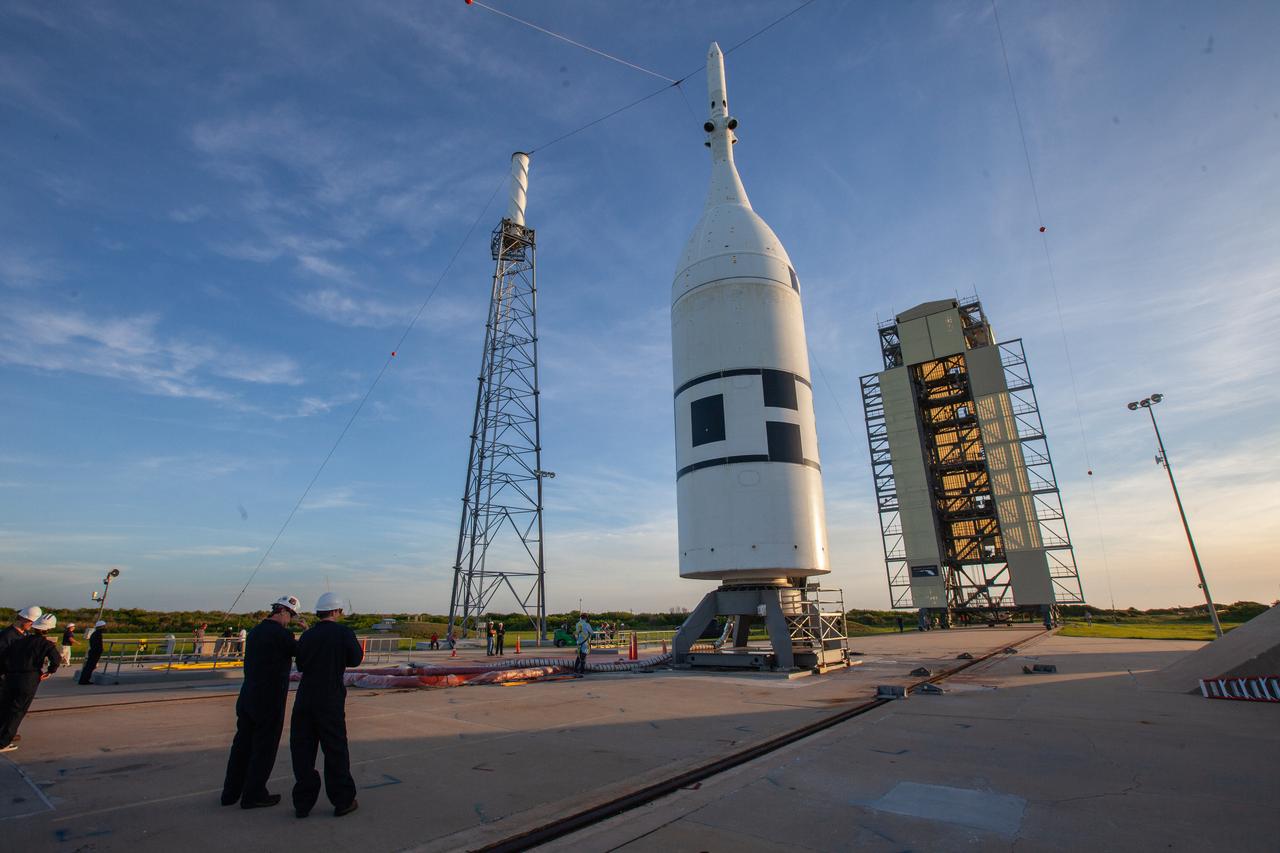
The Ascent Abort-2 test vehicle is secured on the pad at Launch Complex 46 at Cape Canaveral Air Force Station in Florida after rollback of the vertical integration facility on July 1, 2019. A fully functional Launch Abort System (LAS) mated to a test version of the Orion spacecraft are on a Northrop Grumman provided booster on the pad for launch on NASA’s AA-2 flight test on July 2, 2019. During AA-2, the booster will send the LAS and Orion to an altitude of 31,000 feet, traveling at more than 1,000 mph. The LAS’ three motors will work together to pull the crew module away from the booster and prepare it for splashdown in the Atlantic Ocean. The flight test will prove that the abort system can pull crew to safety in the unlikely event of an emergency during ascent.
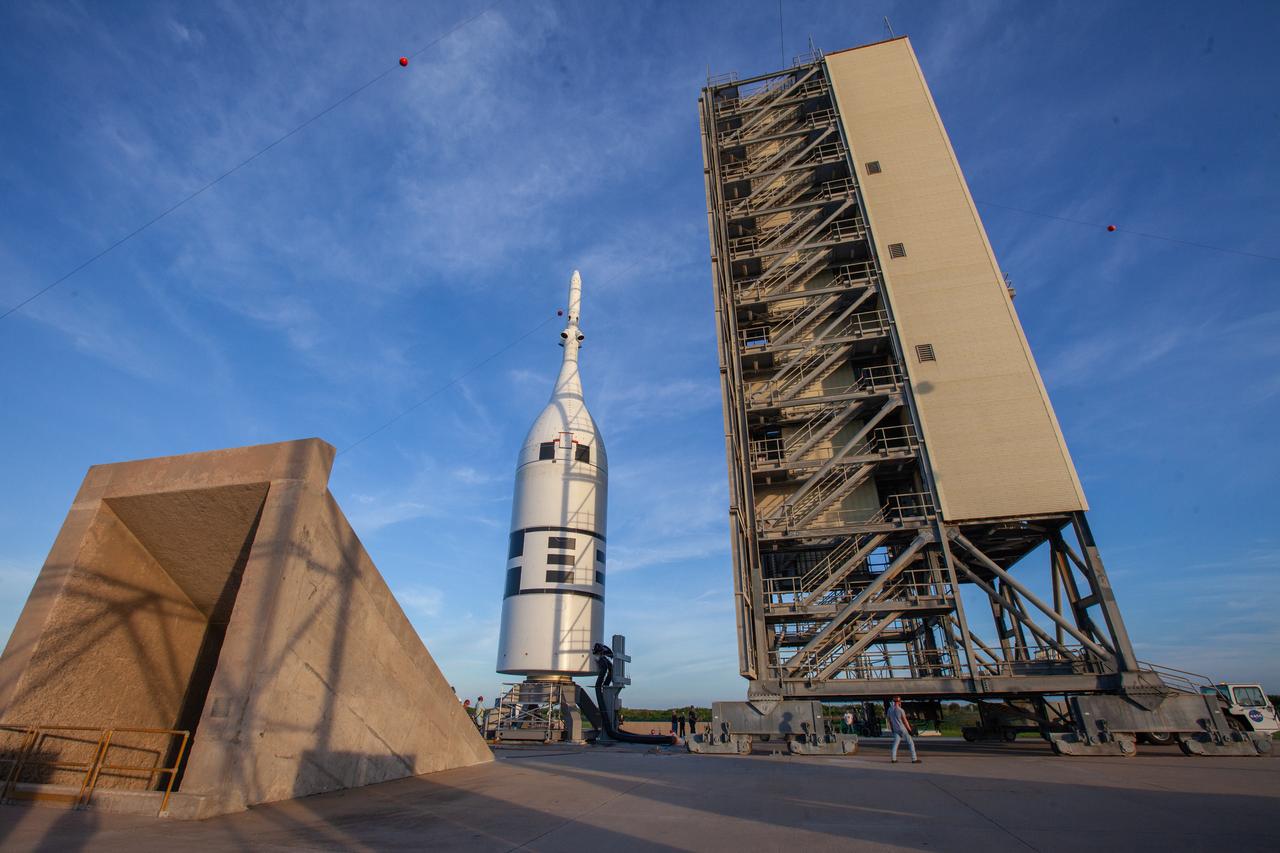
At Launch Complex 46 at Cape Canaveral Air Force Station in Florida, the vertical integration facility rolls back from the Ascent Abort-2 test vehicle on July 1, 2019. A fully functional Launch Abort System (LAS) mated to a test version of the Orion spacecraft are on a Northrop Grumman provided booster on the pad for launch on NASA’s AA-2 flight test on July 2, 2019. During AA-2, the booster will send the LAS and Orion to an altitude of 31,000 feet, traveling at more than 1,000 mph. The LAS’ three motors will work together to pull the crew module away from the booster and prepare it for splashdown in the Atlantic Ocean. The flight test will prove that the abort system can pull crew to safety in the unlikely event of an emergency during ascent.
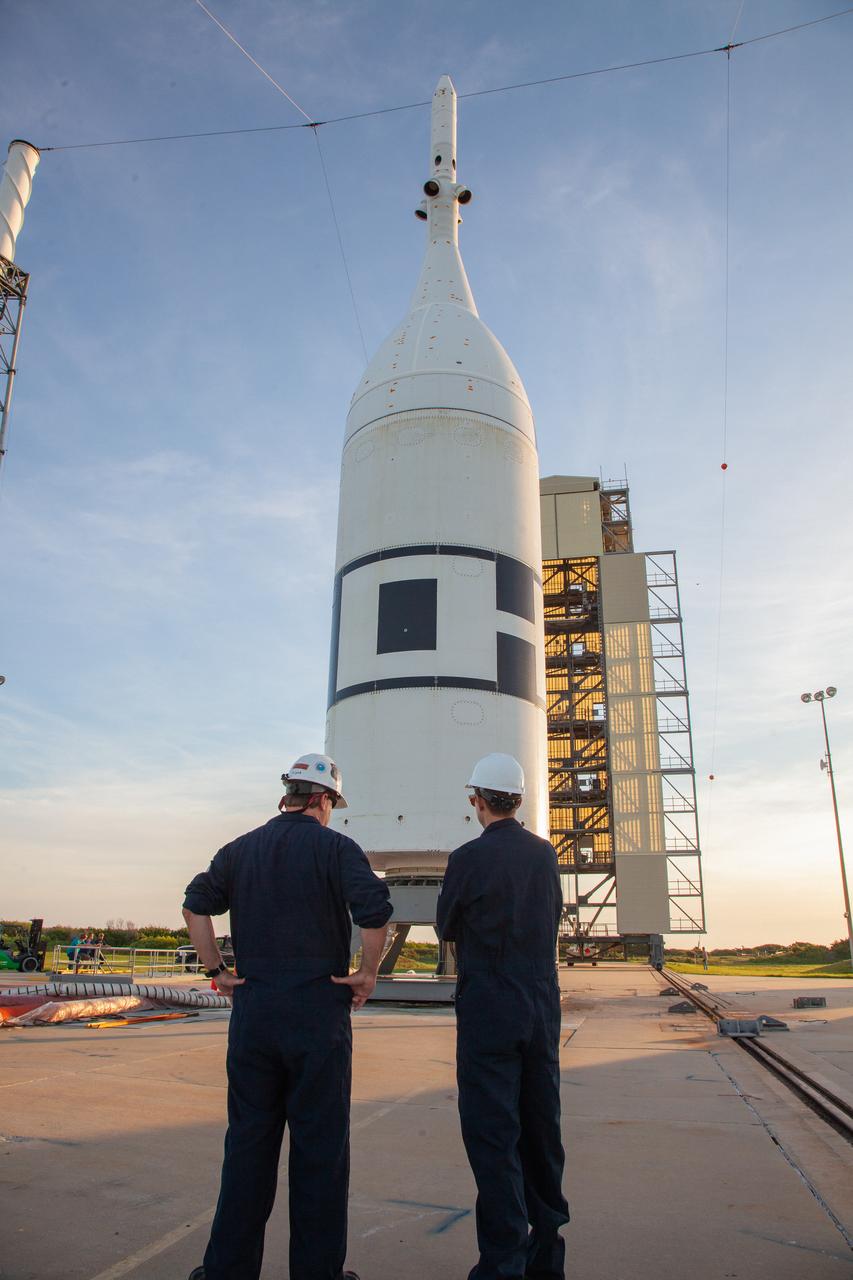
The Ascent Abort-2 test vehicle is secured on the pad at Launch Complex 46 at Cape Canaveral Air Force Station in Florida after rollback of the vertical integration facility on July 1, 2019. A fully functional Launch Abort System (LAS) mated to a test version of the Orion spacecraft are on a Northrop Grumman provided booster on the pad for launch on NASA’s AA-2 flight test on July 2, 2019. During AA-2, the booster will send the LAS and Orion to an altitude of 31,000 feet, traveling at more than 1,000 mph. The LAS’ three motors will work together to pull the crew module away from the booster and prepare it for splashdown in the Atlantic Ocean. The flight test will prove that the abort system can pull crew to safety in the unlikely event of an emergency during ascent.
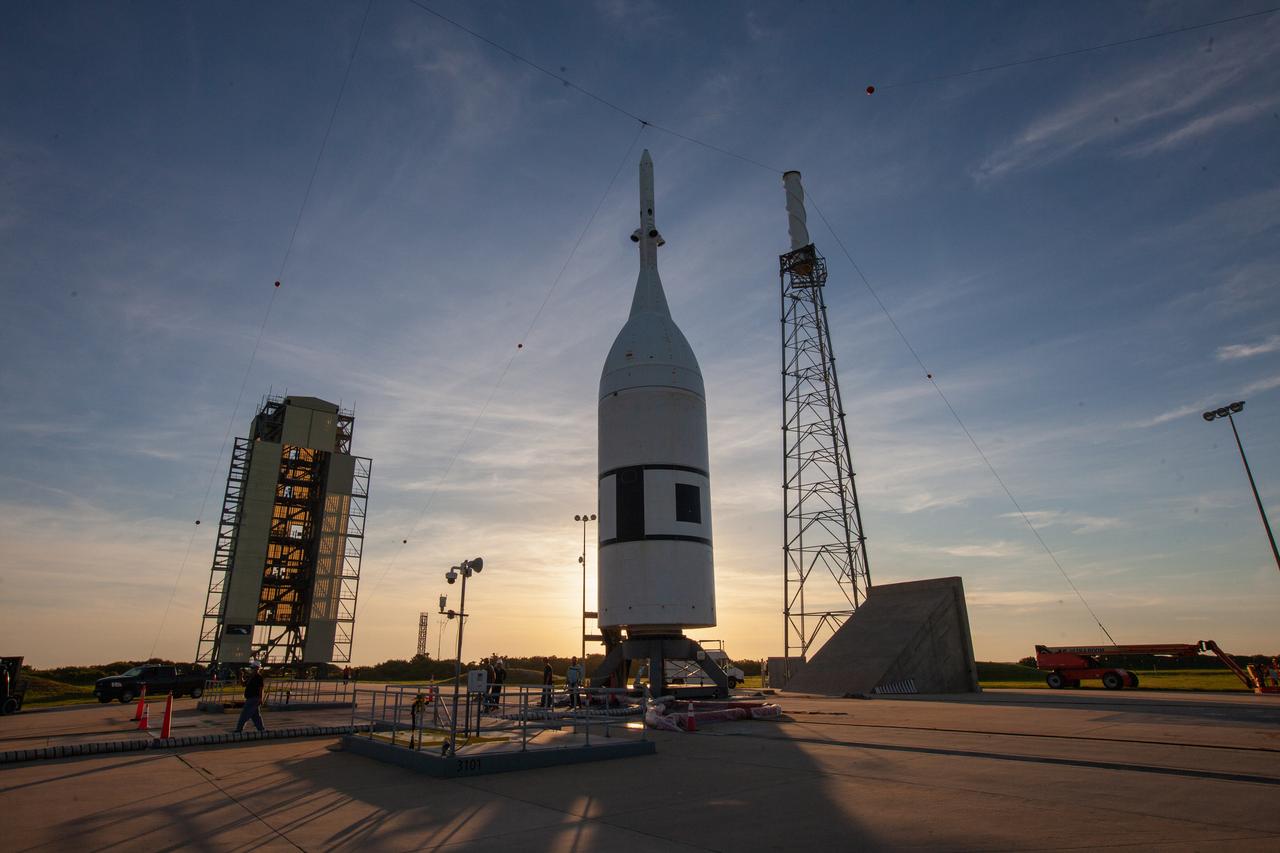
The Ascent Abort-2 test vehicle is secured on the pad at Launch Complex 46 at Cape Canaveral Air Force Station in Florida after rollback of the vertical integration facility on July 1, 2019. A fully functional Launch Abort System (LAS) mated to a test version of the Orion spacecraft are on a Northrop Grumman provided booster on the pad for launch on NASA’s AA-2 flight test on July 2, 2019. During AA-2, the booster will send the LAS and Orion to an altitude of 31,000 feet, traveling at more than 1,000 mph. The LAS’ three motors will work together to pull the crew module away from the booster and prepare it for splashdown in the Atlantic Ocean. The flight test will prove that the abort system can pull crew to safety in the unlikely event of an emergency during ascent.
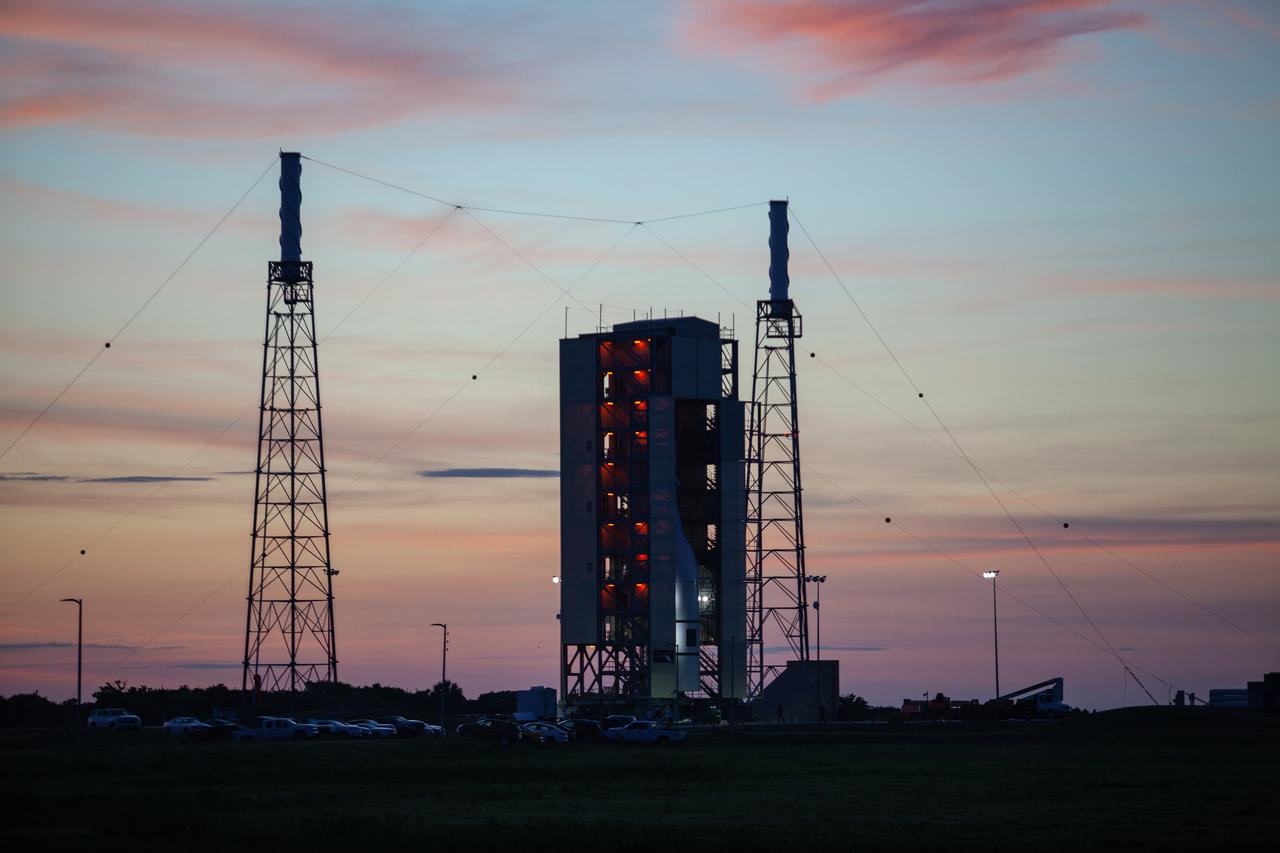
A sunrise view of Launch Complex 46 at Cape Canaveral Air Force Station in Florida on July 1, 2019. A fully functional Launch Abort System (LAS) mated to a test version of the Orion spacecraft are on a Northrop Grumman provided booster on the pad for launch on NASA’s Ascent Abort-2 (AA-2) flight test on July 2, 2019. The vertical integration facility surrounding the test vehicle begins to roll back from the pad. During AA-2, the booster will send the LAS and Orion to an altitude of 31,000 feet, traveling at more than 1,000 mph. The LAS’ three motors will work together to pull the crew module away from the booster and prepare it for splashdown in the Atlantic Ocean. The flight test will prove that the abort system can pull crew to safety in the unlikely event of an emergency during ascent.
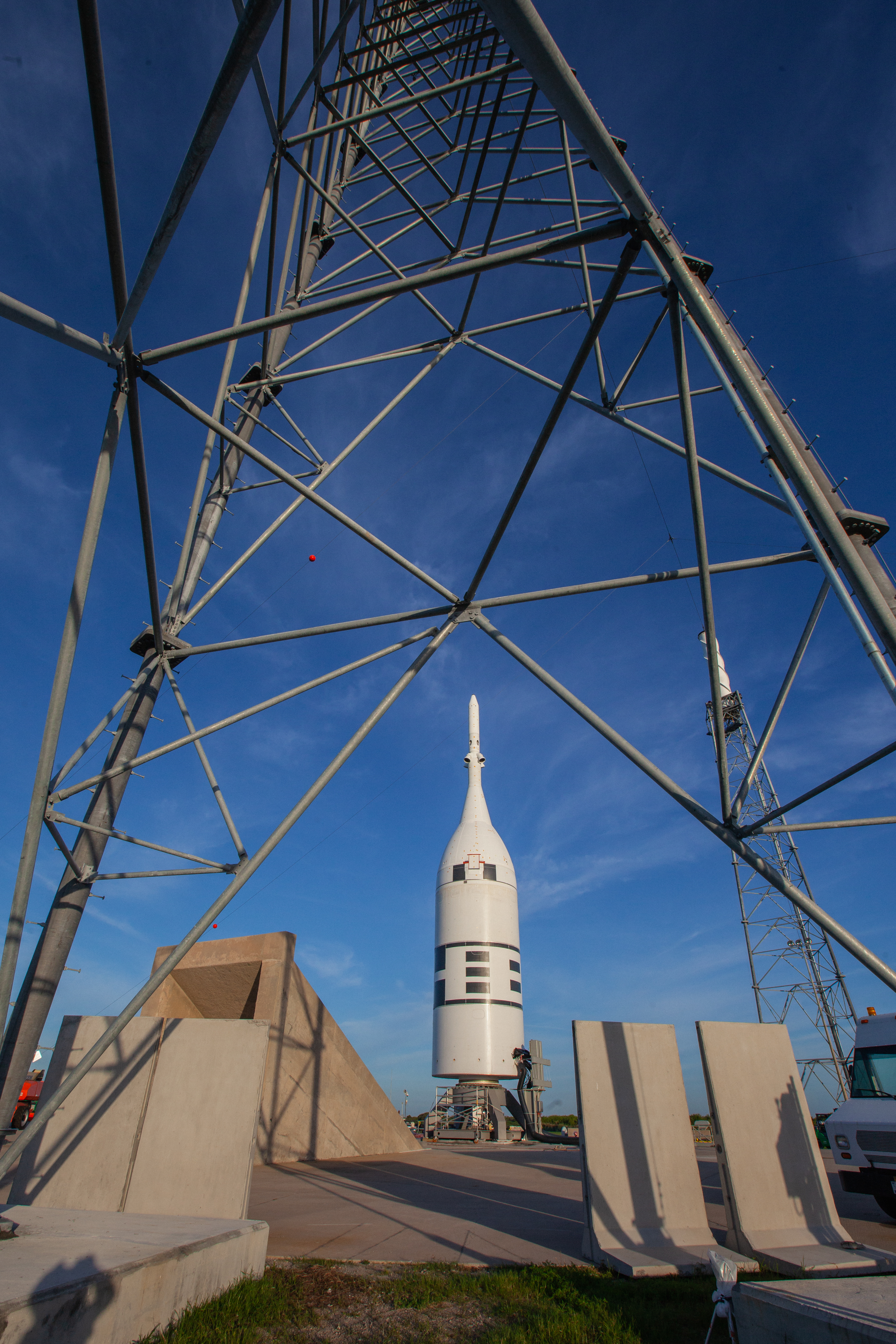
With a view of a lightning tower in the foreground, the Ascent Abort-2 test vehicle is in view on the pad at Launch Complex 46 at Cape Canaveral Air Force Station in Florida after rollback of the vertical integration facility on July 1, 2019. A fully functional Launch Abort System (LAS) mated to a test version of the Orion spacecraft are on a Northrop Grumman provided booster on the pad for launch on NASA’s AA-2 flight test on July 2, 2019. During AA-2, the booster will send the LAS and Orion to an altitude of 31,000 feet, traveling at more than 1,000 mph. The LAS’ three motors will work together to pull the crew module away from the booster and prepare it for splashdown in the Atlantic Ocean. The flight test will prove that the abort system can pull crew to safety in the unlikely event of an emergency during ascent.
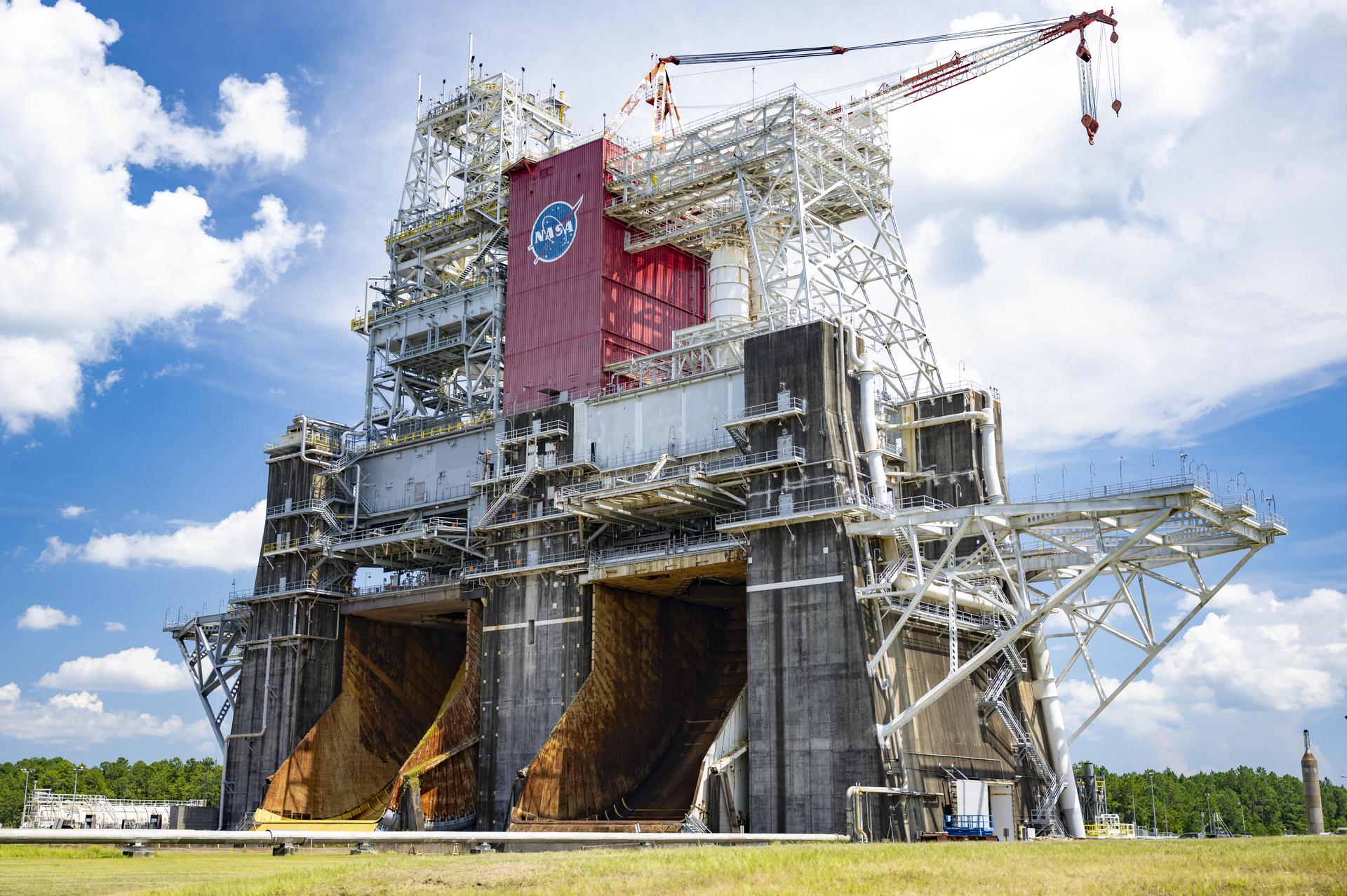
An image shows the Thad Cochran Test Stand (B-1/B-2) at NASA’s Stennis Space Center near Bay St. Louis, Mississippi, on July 7. The test stand features dual, vertical firing positions built in the 1960s to test Saturn V rocket stages that carried humans to the Moon during the Apollo program. The B 1 position, right, is equipped for single engine tests, while the B 2 position is designed to test full rocket stages.
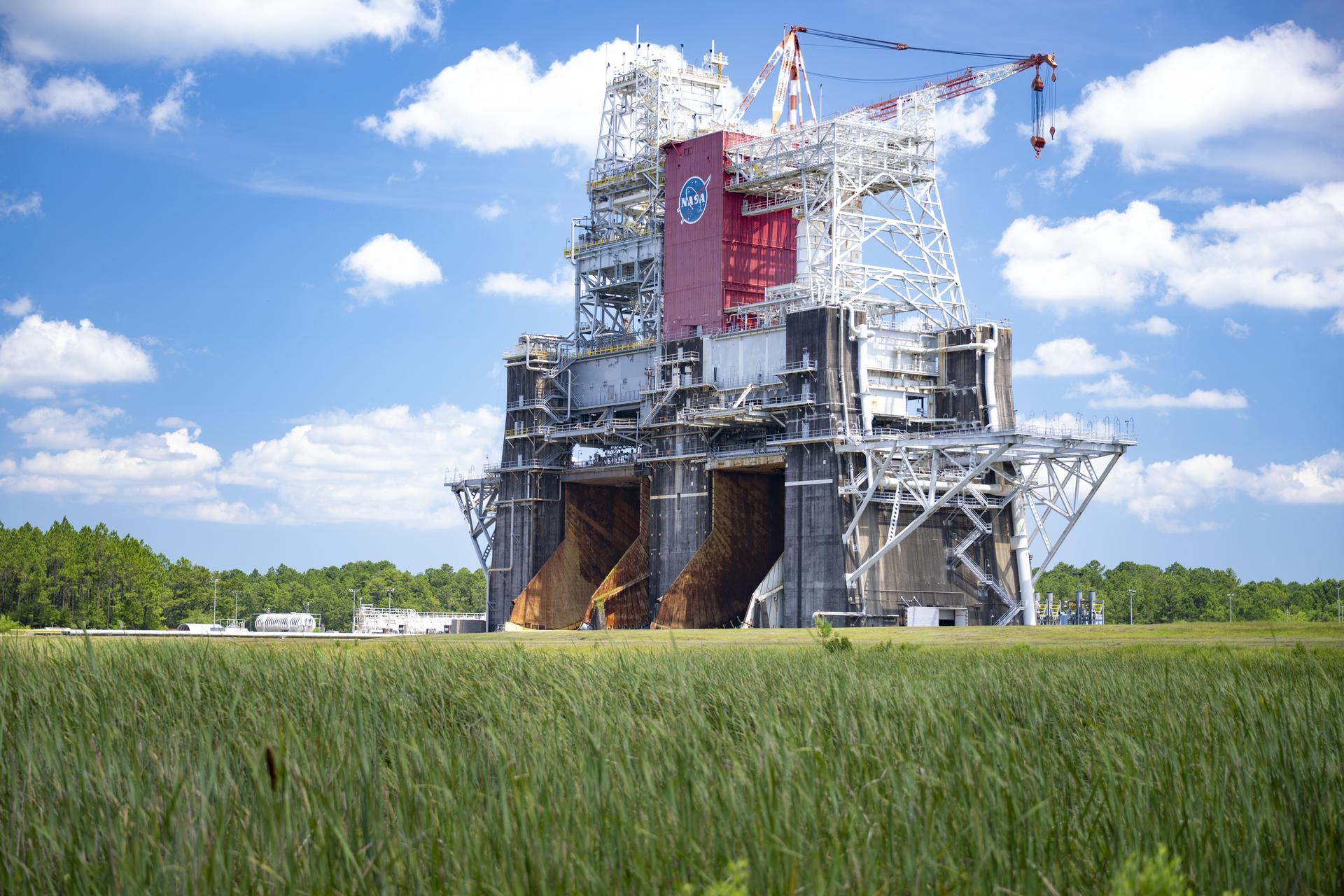
An image shows the Thad Cochran Test Stand (B-1/B-2) at NASA’s Stennis Space Center near Bay St. Louis, Mississippi, on July 7. The test stand features dual, vertical firing positions built in the 1960s to test Saturn V rocket stages that carried humans to the Moon during the Apollo program. The B 1 position, right, is equipped for single engine tests, while the B 2 position is designed to test full rocket stages.
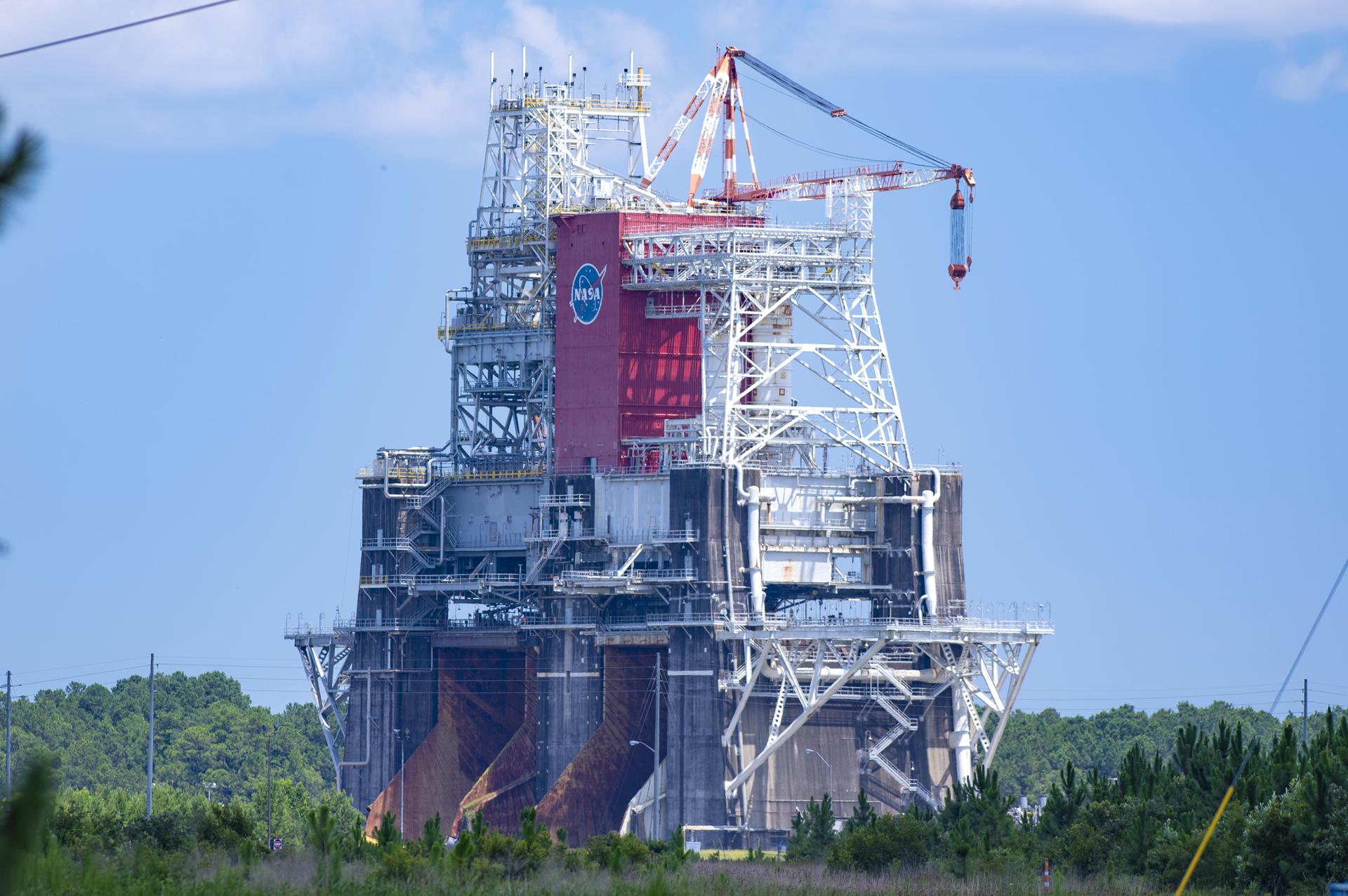
An image shows the Thad Cochran Test Stand (B-1/B-2) at NASA’s Stennis Space Center near Bay St. Louis, Mississippi, on July 7. The test stand features dual, vertical firing positions built in the 1960s to test Saturn V rocket stages that carried humans to the Moon during the Apollo program. The B 1 position, right, is equipped for single engine tests, while the B 2 position is designed to test full rocket stages.
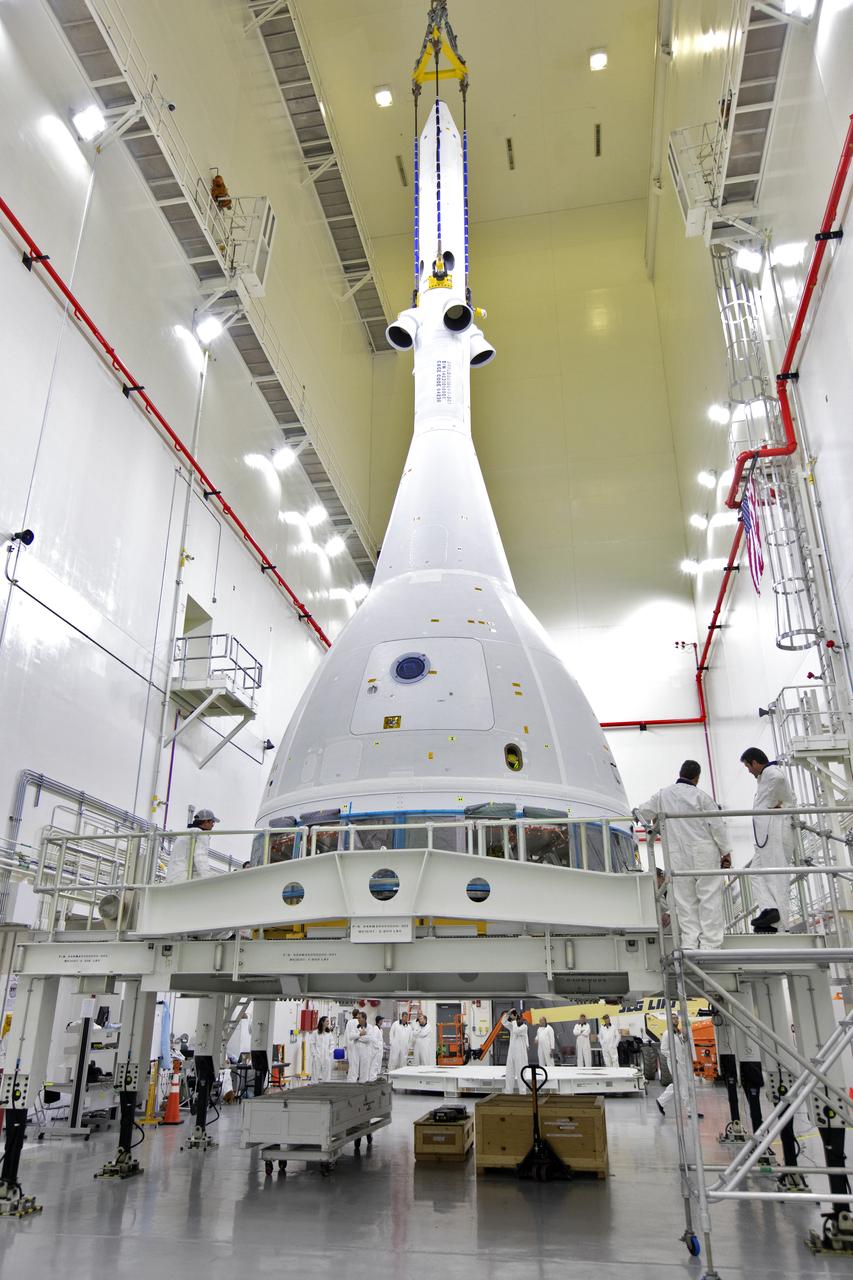
Inside the Launch Abort System Facility (LASF) at NASA’s Kennedy Space Center in Florida, a test version of the Orion crew module has been integrated with the Launch Abort System (LAS) on May 18, 2019. The test vehicle and the LAS will be used for the Orion Ascent Abort-2 (AA-2) Flight Test. AA-2 is a full-stress test of the LAS, planned for July 2. AA-2 will launch from Space Launch Complex 46, carrying a fully functional LAS and a 22,000-pound Orion test vehicle to an altitude of 31,000 feet and traveling at more than 1,000 miles an hour. The test will verify the LAS can steer the crew module and astronauts aboard to safety if an emergency occurs during ascent on the Space Launch System (SLS) rocket. NASA's Orion and Exploration Ground Systems programs, contractors Jacob's, Lockheed Martin and Northrop Grumman, in conjunction with the Air Force Space and Missile Center's Launch Operations branch and the 45th Space Wing are performing flight operations for AA-2.
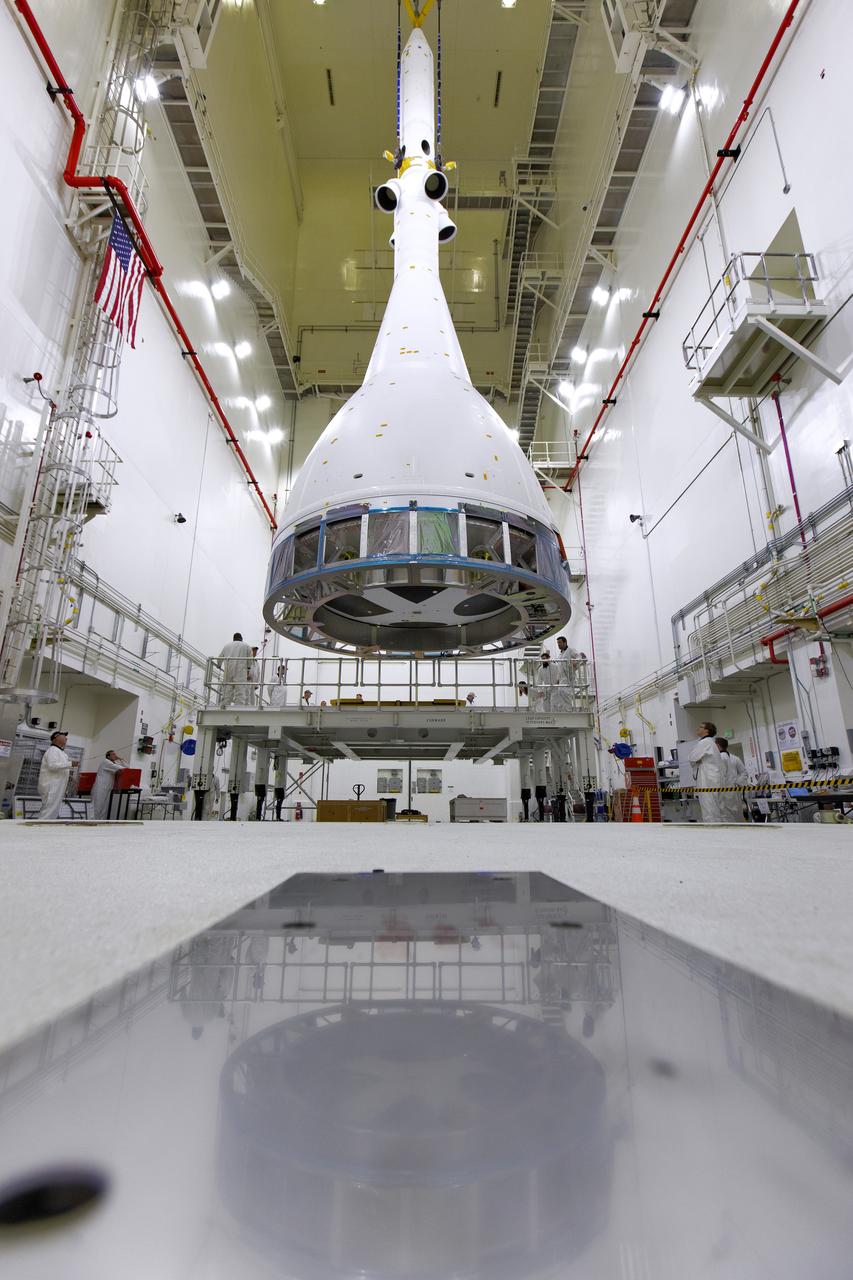
Inside the Launch Abort System Facility (LASF) at NASA’s Kennedy Space Center in Florida, a test version of the Orion crew module has been integrated with the Launch Abort System (LAS) on May 18, 2019. It is being lifted by crane for transfer to a KAMAG transporter. The test vehicle and the LAS will be used for the Orion Ascent Abort-2 (AA-2) Flight Test. AA-2 is a full-stress test of the LAS, planned for July 2. AA-2 will launch from Space Launch Complex 46, carrying a fully functional LAS and a 22,000-pound Orion test vehicle to an altitude of 31,000 feet and traveling at more than 1,000 miles an hour. The test will verify the LAS can steer the crew module and astronauts aboard to safety if an emergency occurs during ascent on the Space Launch System (SLS) rocket. NASA's Orion and Exploration Ground Systems programs, contractors Jacob's, Lockheed Martin and Northrop Grumman, in conjunction with the Air Force Space and Missile Center's Launch Operations branch and the 45th Space Wing are performing flight operations for AA-2.
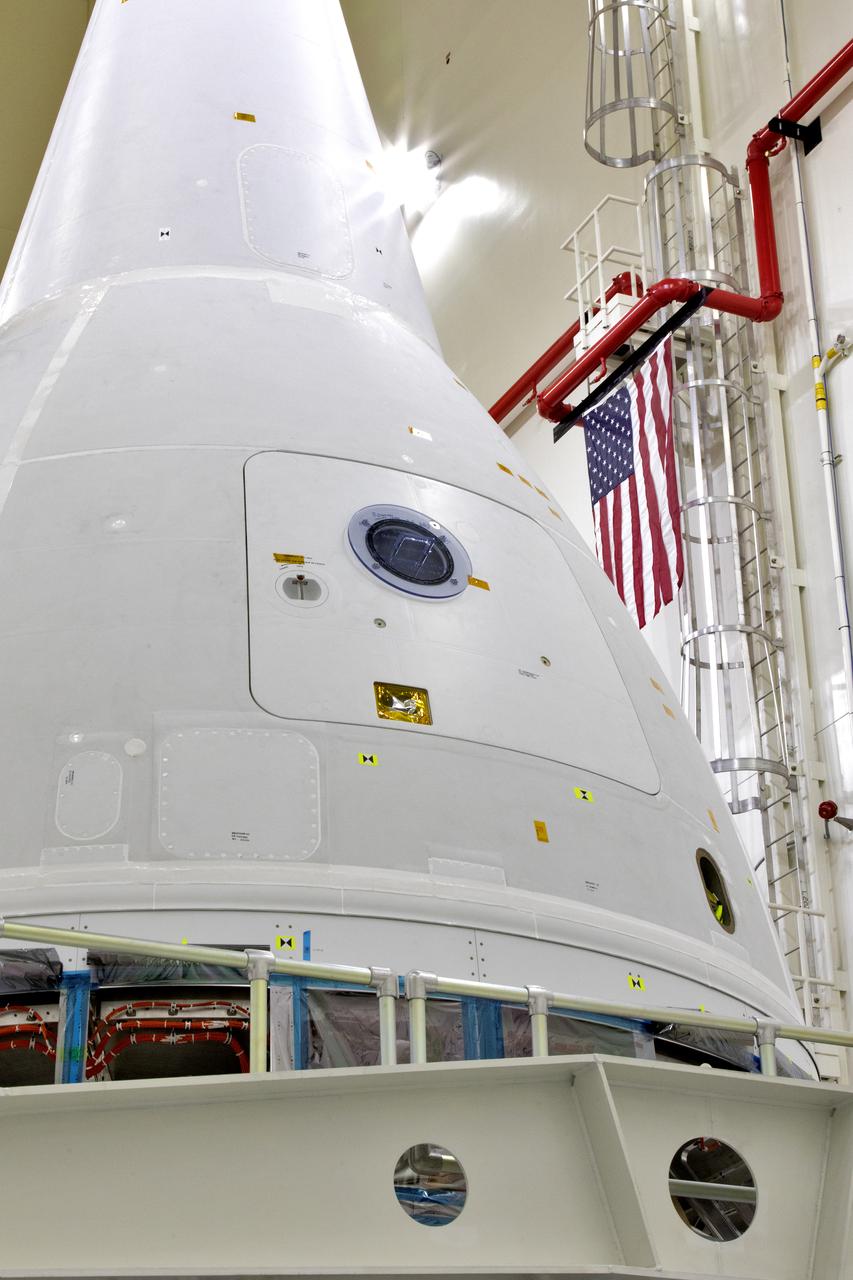
Inside the Launch Abort System Facility (LASF) at NASA’s Kennedy Space Center in Florida, a test version of the Orion crew module has been integrated with the Launch Abort System (LAS) on May 18, 2019. The test vehicle and the LAS will be used for the Orion Ascent Abort-2 (AA-2) Flight Test. AA-2 is a full-stress test of the LAS, planned for July 2. AA-2 will launch from Space Launch Complex 46, carrying a fully functional LAS and a 22,000-pound Orion test vehicle to an altitude of 31,000 feet and traveling at more than 1,000 miles an hour. The test will verify the LAS can steer the crew module and astronauts aboard to safety if an emergency occurs during ascent on the Space Launch System (SLS) rocket. NASA's Orion and Exploration Ground Systems programs, contractors Jacob's, Lockheed Martin and Northrop Grumman, in conjunction with the Air Force Space and Missile Center's Launch Operations branch and the 45th Space Wing are performing flight operations for AA-2.
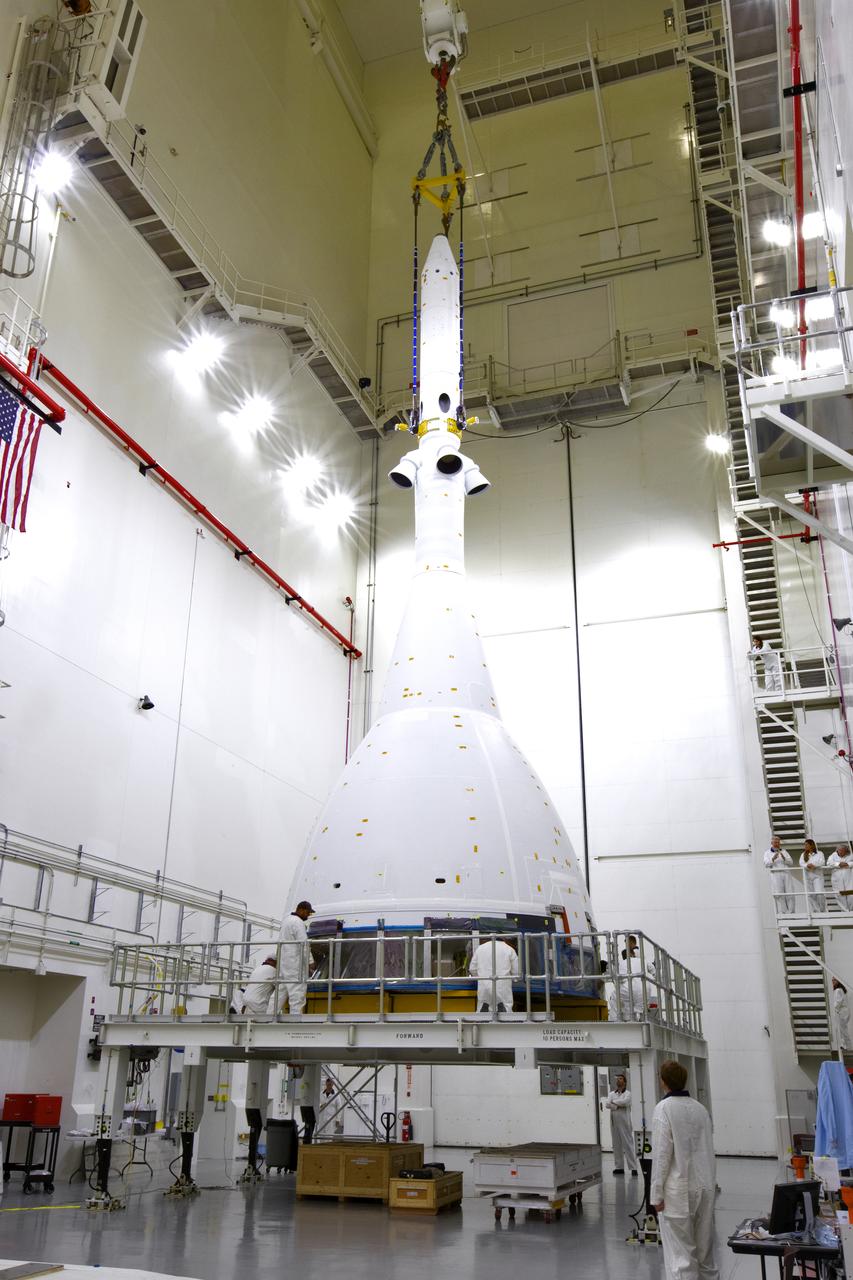
Inside the Launch Abort System Facility (LASF) at NASA’s Kennedy Space Center in Florida, a test version of the Orion crew module has been integrated with the Launch Abort System (LAS) on May 18, 2019. The test vehicle and the LAS will be used for the Orion Ascent Abort-2 (AA-2) Flight Test. AA-2 is a full-stress test of the LAS, planned for July 2. AA-2 will launch from Space Launch Complex 46, carrying a fully functional LAS and a 22,000-pound Orion test vehicle to an altitude of 31,000 feet and traveling at more than 1,000 miles an hour. The test will verify the LAS can steer the crew module and astronauts aboard to safety if an emergency occurs during ascent on the Space Launch System (SLS) rocket. NASA's Orion and Exploration Ground Systems programs, contractors Jacob's, Lockheed Martin and Northrop Grumman, in conjunction with the Air Force Space and Missile Center's Launch Operations branch and the 45th Space Wing are performing flight operations for AA-2.
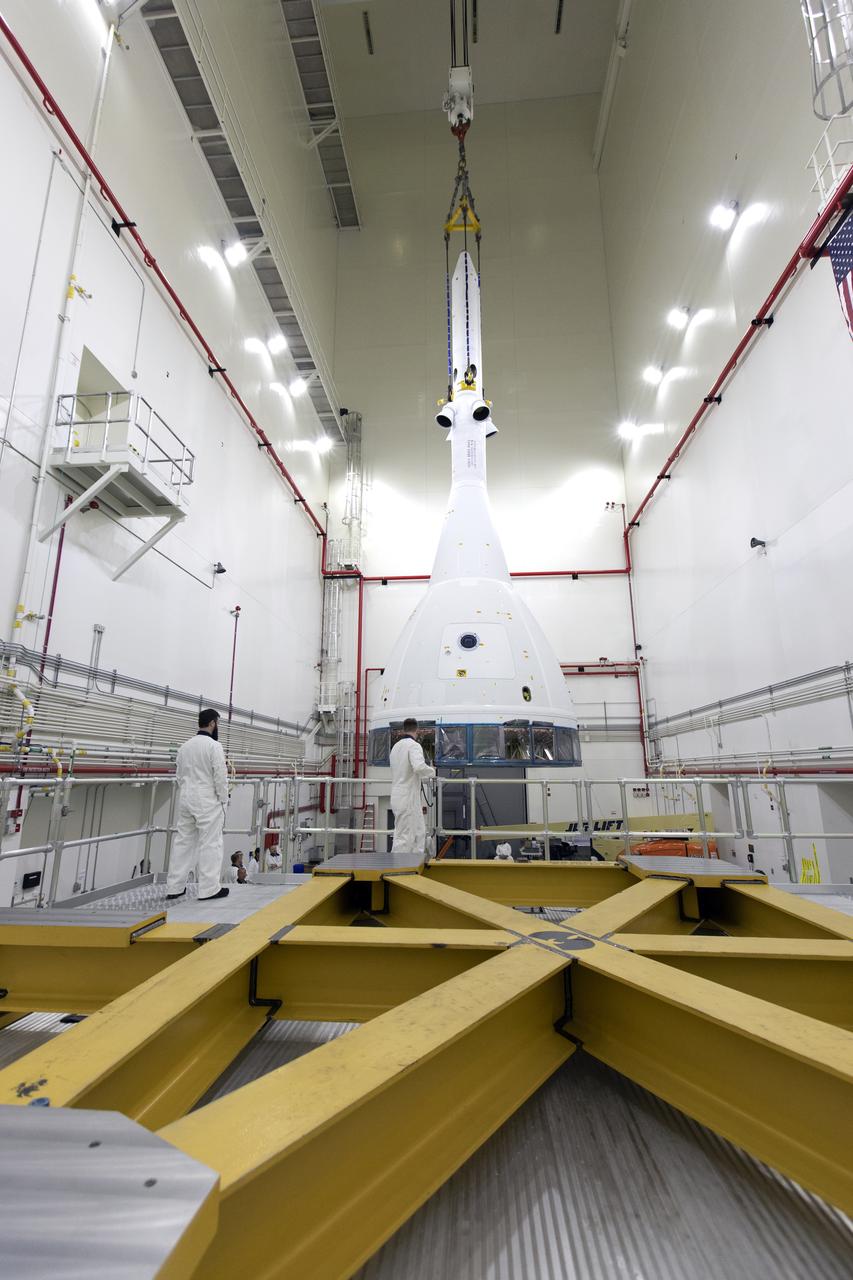
Inside the Launch Abort System Facility (LASF) at NASA’s Kennedy Space Center in Florida, workers are completing the integration of a test version of the Orion crew module with the Launch Abort System (LAS) on May 18, 2019. The test vehicle and the LAS will be used for the Orion Ascent Abort-2 (AA-2) Flight Test. AA-2 is a full-stress test of the LAS, planned for July 2. AA-2 will launch from Space Launch Complex 46, carrying a fully functional LAS and a 22,000-pound Orion test vehicle to an altitude of 31,000 feet and traveling at more than 1,000 miles an hour. The test will verify the LAS can steer the crew module and astronauts aboard to safety if an emergency occurs during ascent on the Space Launch System (SLS) rocket. NASA's Orion and Exploration Ground Systems programs, contractors Jacob's, Lockheed Martin and Northrop Grumman, in conjunction with the Air Force Space and Missile Center's Launch Operations branch and the 45th Space Wing are performing flight operations for AA-2.
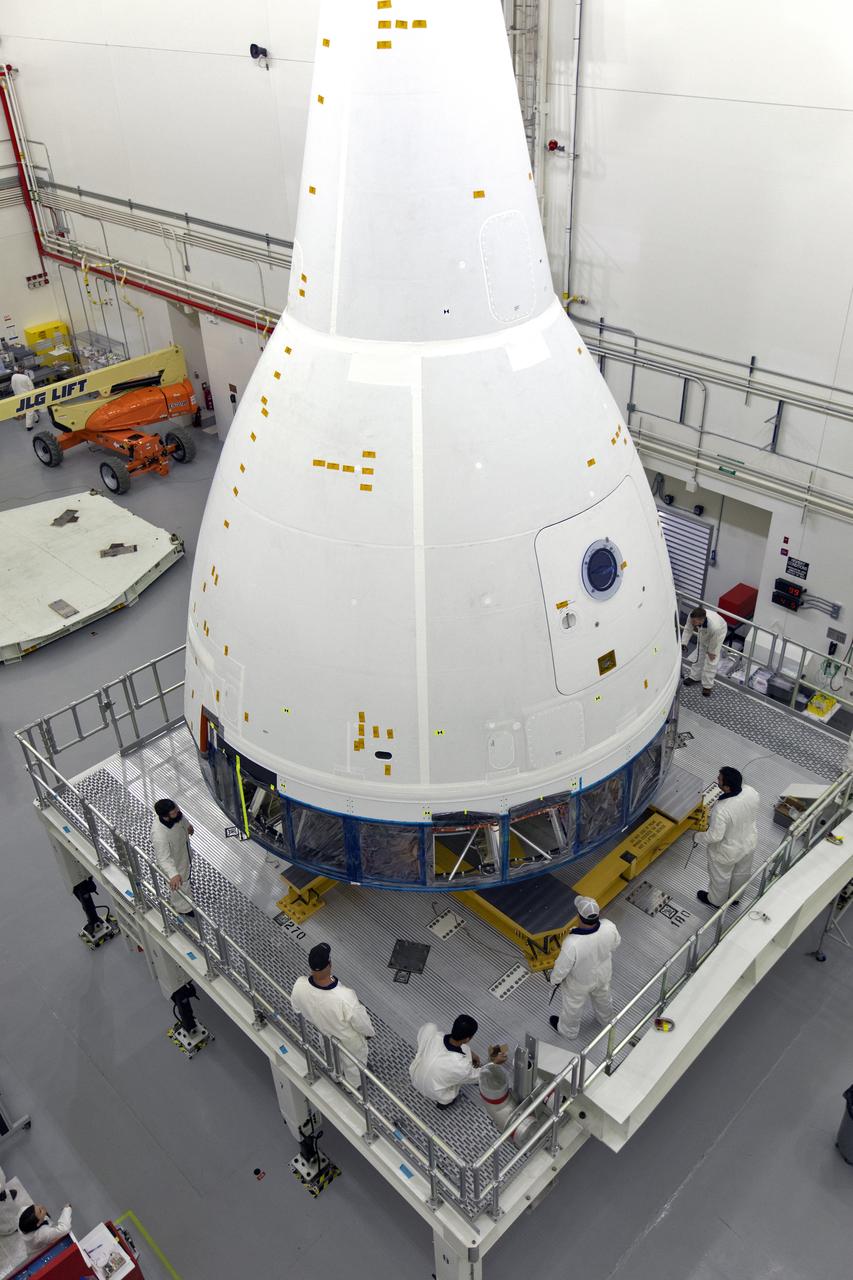
Inside the Launch Abort System Facility (LASF) at NASA’s Kennedy Space Center in Florida, workers are completing the integration of a test version of the Orion crew module with the Launch Abort System (LAS) on May 18, 2019. The test vehicle and the LAS will be used for the Orion Ascent Abort-2 (AA-2) Flight Test. AA-2 is a full-stress test of the LAS, planned for July 2. AA-2 will launch from Space Launch Complex 46, carrying a fully functional LAS and a 22,000-pound Orion test vehicle to an altitude of 31,000 feet and traveling at more than 1,000 miles an hour. The test will verify the LAS can steer the crew module and astronauts aboard to safety if an emergency occurs during ascent on the Space Launch System (SLS) rocket. NASA's Orion and Exploration Ground Systems programs, contractors Jacob's, Lockheed Martin and Northrop Grumman, in conjunction with the Air Force Space and Missile Center's Launch Operations branch and the 45th Space Wing are performing flight operations for AA-2.
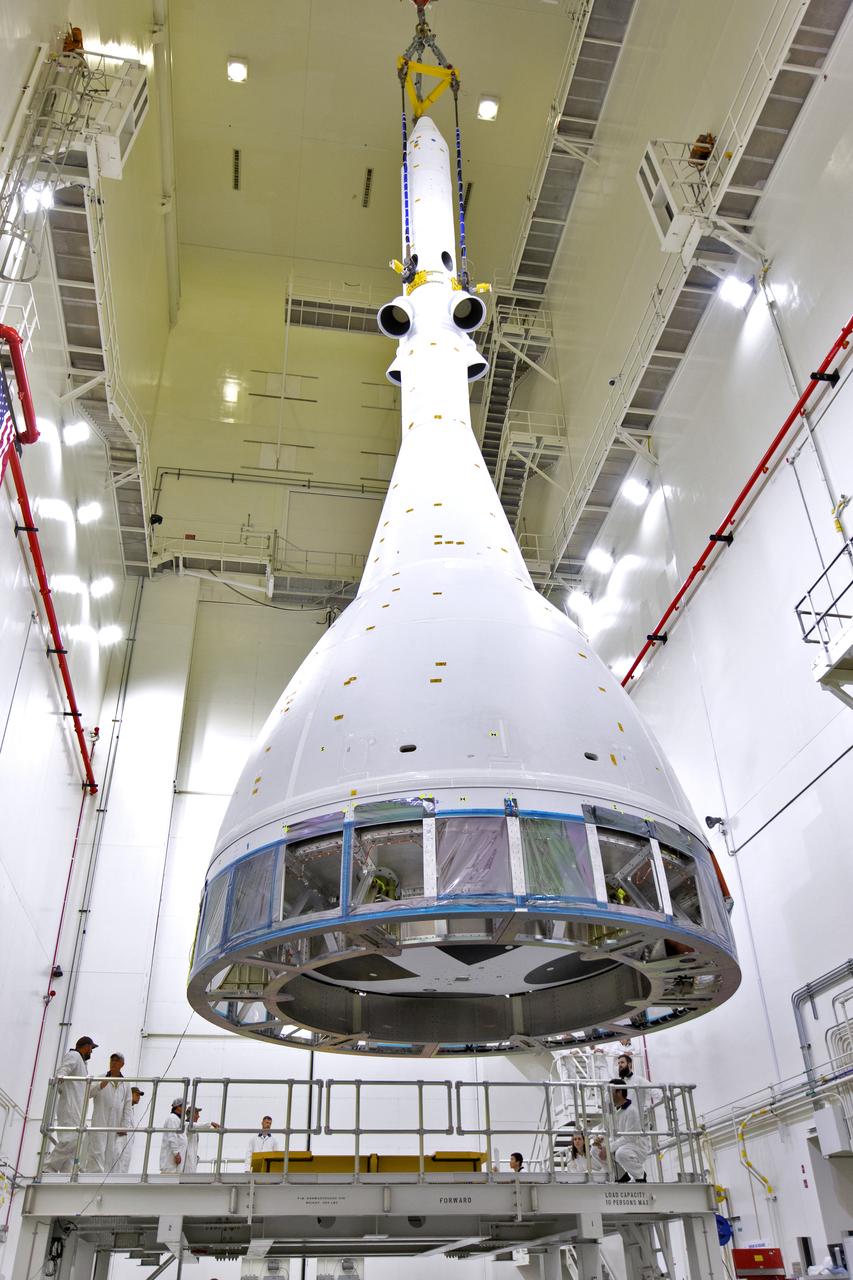
Inside the Launch Abort System Facility (LASF) at NASA’s Kennedy Space Center in Florida, a test version of the Orion crew module has been integrated with the Launch Abort System (LAS) on May 18, 2019. It is being lifted by crane for transfer to a KAMAG transporter. The test vehicle and the LAS will be used for the Orion Ascent Abort-2 (AA-2) Flight Test. AA-2 is a full-stress test of the LAS, planned for July 2. AA-2 will launch from Space Launch Complex 46, carrying a fully functional LAS and a 22,000-pound Orion test vehicle to an altitude of 31,000 feet and traveling at more than 1,000 miles an hour. The test will verify the LAS can steer the crew module and astronauts aboard to safety if an emergency occurs during ascent on the Space Launch System (SLS) rocket. NASA's Orion and Exploration Ground Systems programs, contractors Jacob's, Lockheed Martin and Northrop Grumman, in conjunction with the Air Force Space and Missile Center's Launch Operations branch and the 45th Space Wing are performing flight operations for AA-2.
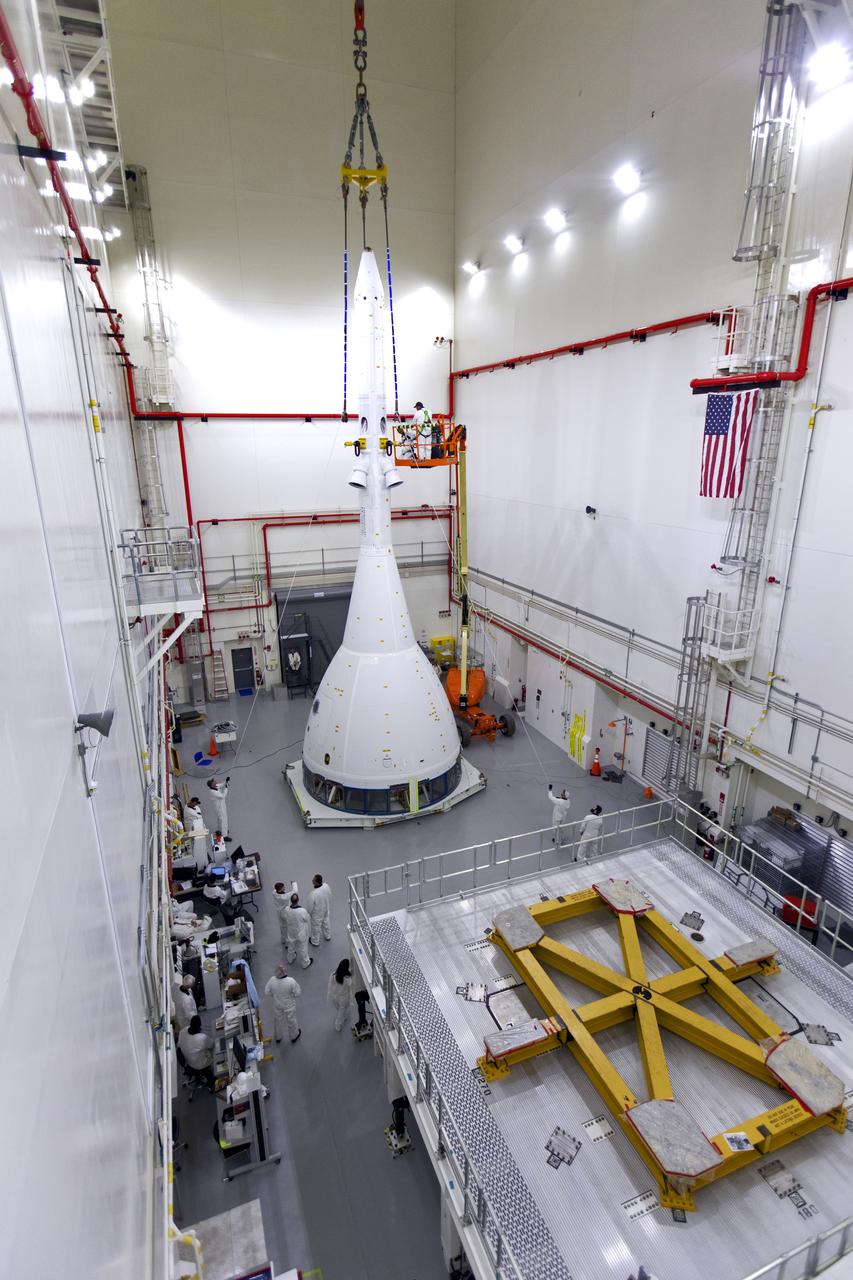
Inside the Launch Abort System Facility (LASF) at NASA’s Kennedy Space Center in Florida, workers are completing the integration of a test version of the Orion crew module with the Launch Abort System (LAS) on May 18, 2019. The test vehicle and the LAS will be used for the Orion Ascent Abort-2 (AA-2) Flight Test. AA-2 is a full-stress test of the LAS, planned for July 2. AA-2 will launch from Space Launch Complex 46, carrying a fully functional LAS and a 22,000-pound Orion test vehicle to an altitude of 31,000 feet and traveling at more than 1,000 miles an hour. The test will verify the LAS can steer the crew module and astronauts aboard to safety if an emergency occurs during ascent on the Space Launch System (SLS) rocket. NASA's Orion and Exploration Ground Systems programs, contractors Jacob's, Lockheed Martin and Northrop Grumman, in conjunction with the Air Force Space and Missile Center's Launch Operations branch and the 45th Space Wing are performing flight operations for AA-2.
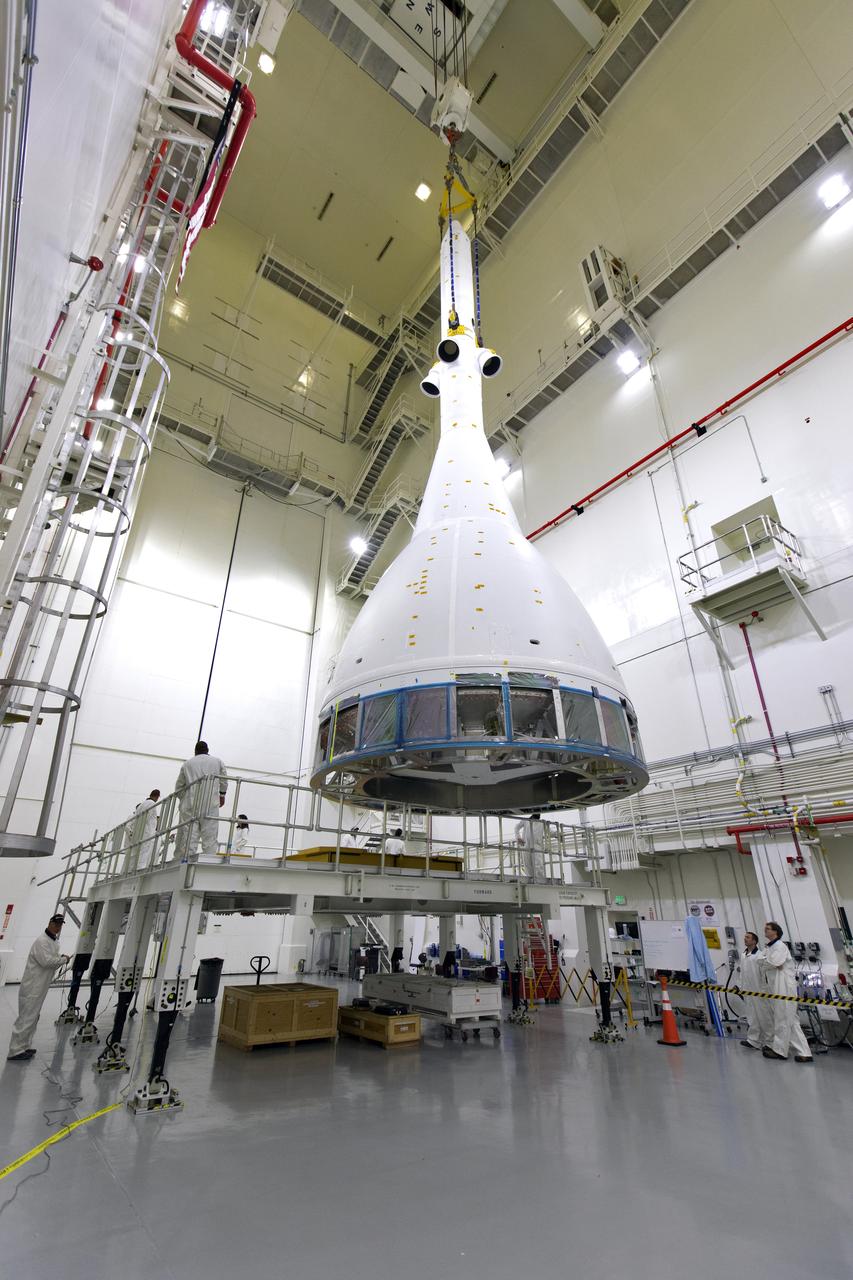
Inside the Launch Abort System Facility (LASF) at NASA’s Kennedy Space Center in Florida, a test version of the Orion crew module has been integrated with the Launch Abort System (LAS) on May 18, 2019. It is being lifted by crane for transfer to a KAMAG transporter. The test vehicle and the LAS will be used for the Orion Ascent Abort-2 (AA-2) Flight Test. AA-2 is a full-stress test of the LAS, planned for July 2. AA-2 will launch from Space Launch Complex 46, carrying a fully functional LAS and a 22,000-pound Orion test vehicle to an altitude of 31,000 feet and traveling at more than 1,000 miles an hour. The test will verify the LAS can steer the crew module and astronauts aboard to safety if an emergency occurs during ascent on the Space Launch System (SLS) rocket. NASA's Orion and Exploration Ground Systems programs, contractors Jacob's, Lockheed Martin and Northrop Grumman, in conjunction with the Air Force Space and Missile Center's Launch Operations branch and the 45th Space Wing are performing flight operations for AA-2.
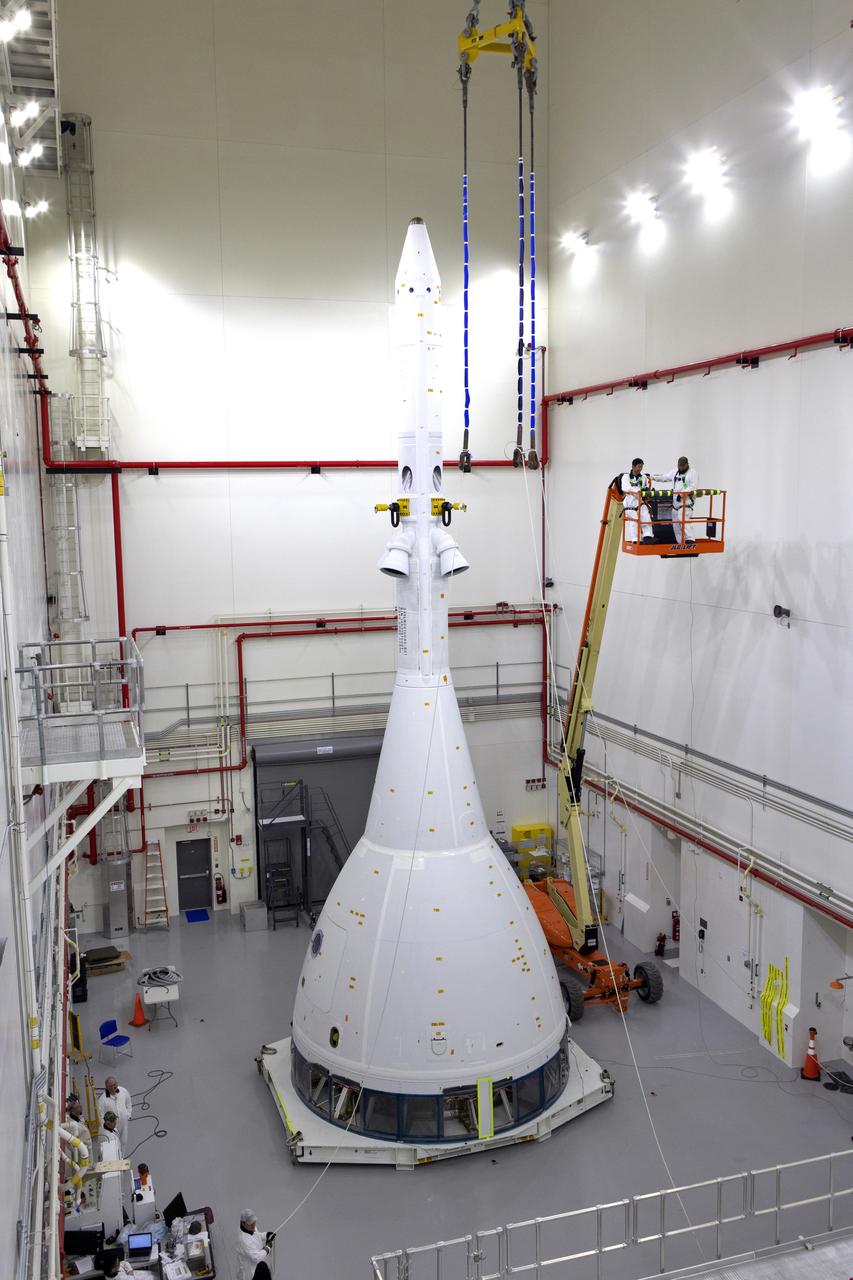
Inside the Launch Abort System Facility (LASF) at NASA’s Kennedy Space Center in Florida, workers are completing the integration of a test version of the Orion crew module with the Launch Abort System (LAS) on May 18, 2019. The test vehicle and the LAS will be used for the Orion Ascent Abort-2 (AA-2) Flight Test. AA-2 is a full-stress test of the LAS, planned for July 2. AA-2 will launch from Space Launch Complex 46, carrying a fully functional LAS and a 22,000-pound Orion test vehicle to an altitude of 31,000 feet and traveling at more than 1,000 miles an hour. The test will verify the LAS can steer the crew module and astronauts aboard to safety if an emergency occurs during ascent on the Space Launch System (SLS) rocket. NASA's Orion and Exploration Ground Systems programs, contractors Jacob's, Lockheed Martin and Northrop Grumman, in conjunction with the Air Force Space and Missile Center's Launch Operations branch and the 45th Space Wing are performing flight operations for AA-2.
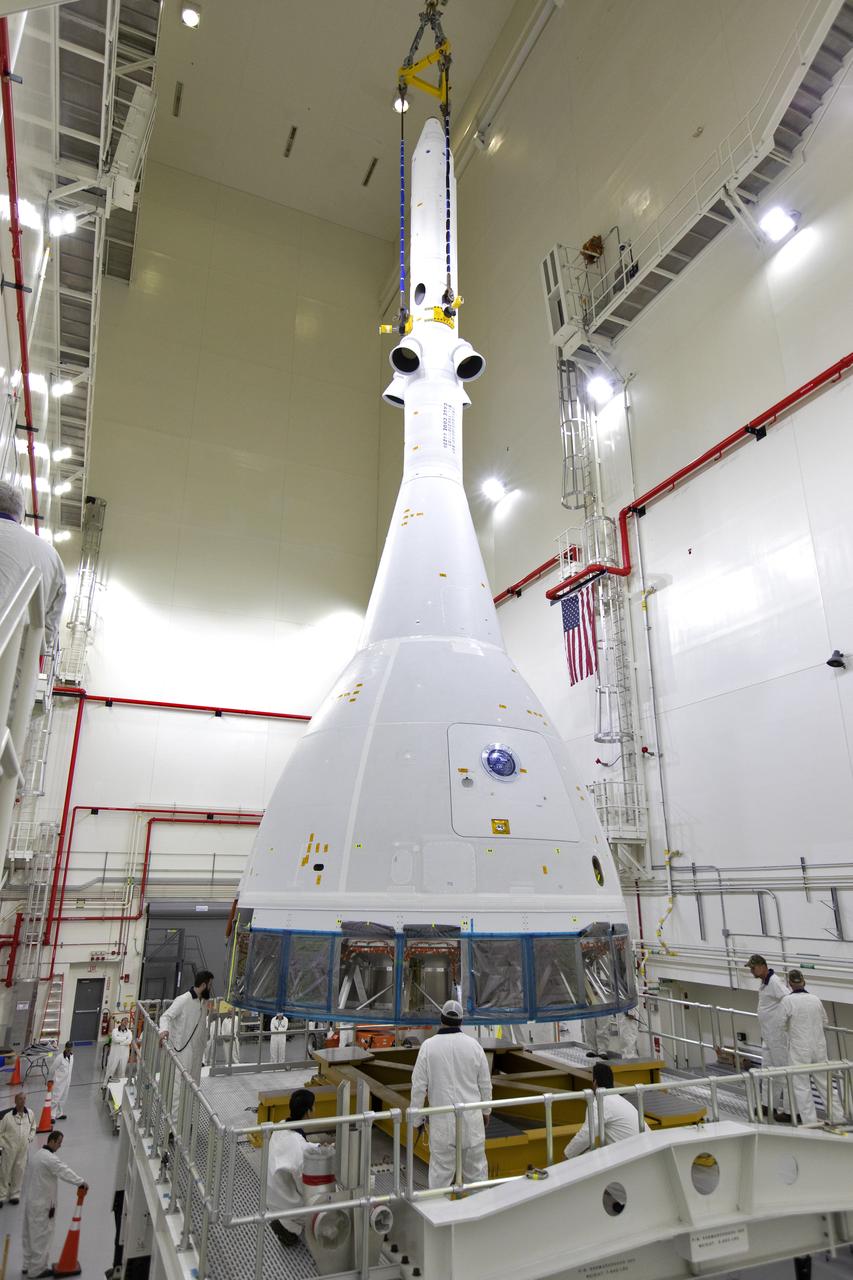
Inside the Launch Abort System Facility (LASF) at NASA’s Kennedy Space Center in Florida, workers are completing the integration of a test version of the Orion crew module with the Launch Abort System (LAS) on May 18, 2019. The test vehicle and the LAS will be used for the Orion Ascent Abort-2 (AA-2) Flight Test. AA-2 is a full-stress test of the LAS, planned for July 2. AA-2 will launch from Space Launch Complex 46, carrying a fully functional LAS and a 22,000-pound Orion test vehicle to an altitude of 31,000 feet and traveling at more than 1,000 miles an hour. The test will verify the LAS can steer the crew module and astronauts aboard to safety if an emergency occurs during ascent on the Space Launch System (SLS) rocket. NASA's Orion and Exploration Ground Systems programs, contractors Jacob's, Lockheed Martin and Northrop Grumman, in conjunction with the Air Force Space and Missile Center's Launch Operations branch and the 45th Space Wing are performing flight operations for AA-2.
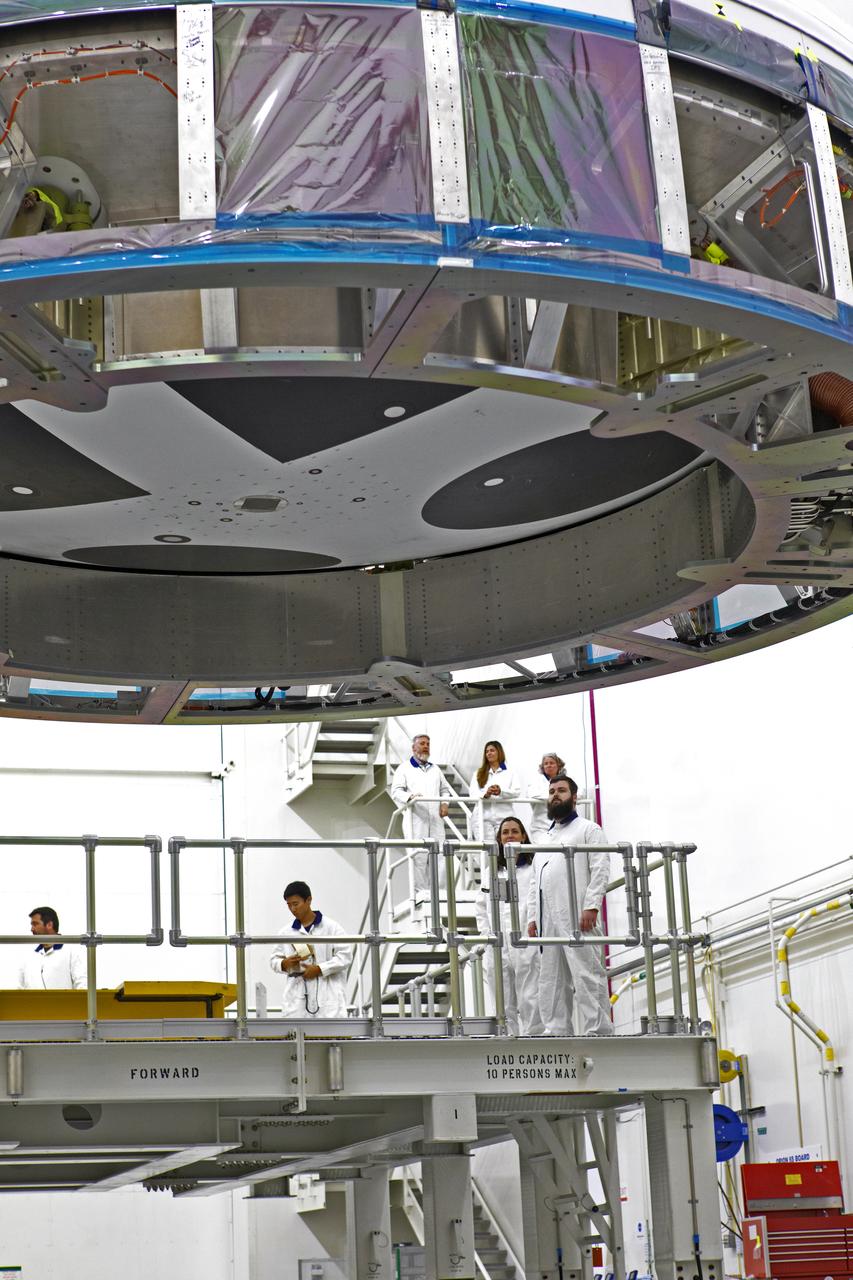
Inside the Launch Abort System Facility (LASF) at NASA’s Kennedy Space Center in Florida, workers are completing the integration of a test version of the Orion crew module with the Launch Abort System (LAS) on May 18, 2019. The test vehicle and the LAS will be used for the Orion Ascent Abort-2 (AA-2) Flight Test. AA-2 is a full-stress test of the LAS, planned for July 2. AA-2 will launch from Space Launch Complex 46, carrying a fully functional LAS and a 22,000-pound Orion test vehicle to an altitude of 31,000 feet and traveling at more than 1,000 miles an hour. The test will verify the LAS can steer the crew module and astronauts aboard to safety if an emergency occurs during ascent on the Space Launch System (SLS) rocket. NASA's Orion and Exploration Ground Systems programs, contractors Jacob's, Lockheed Martin and Northrop Grumman, in conjunction with the Air Force Space and Missile Center's Launch Operations branch and the 45th Space Wing are performing flight operations for AA-2.
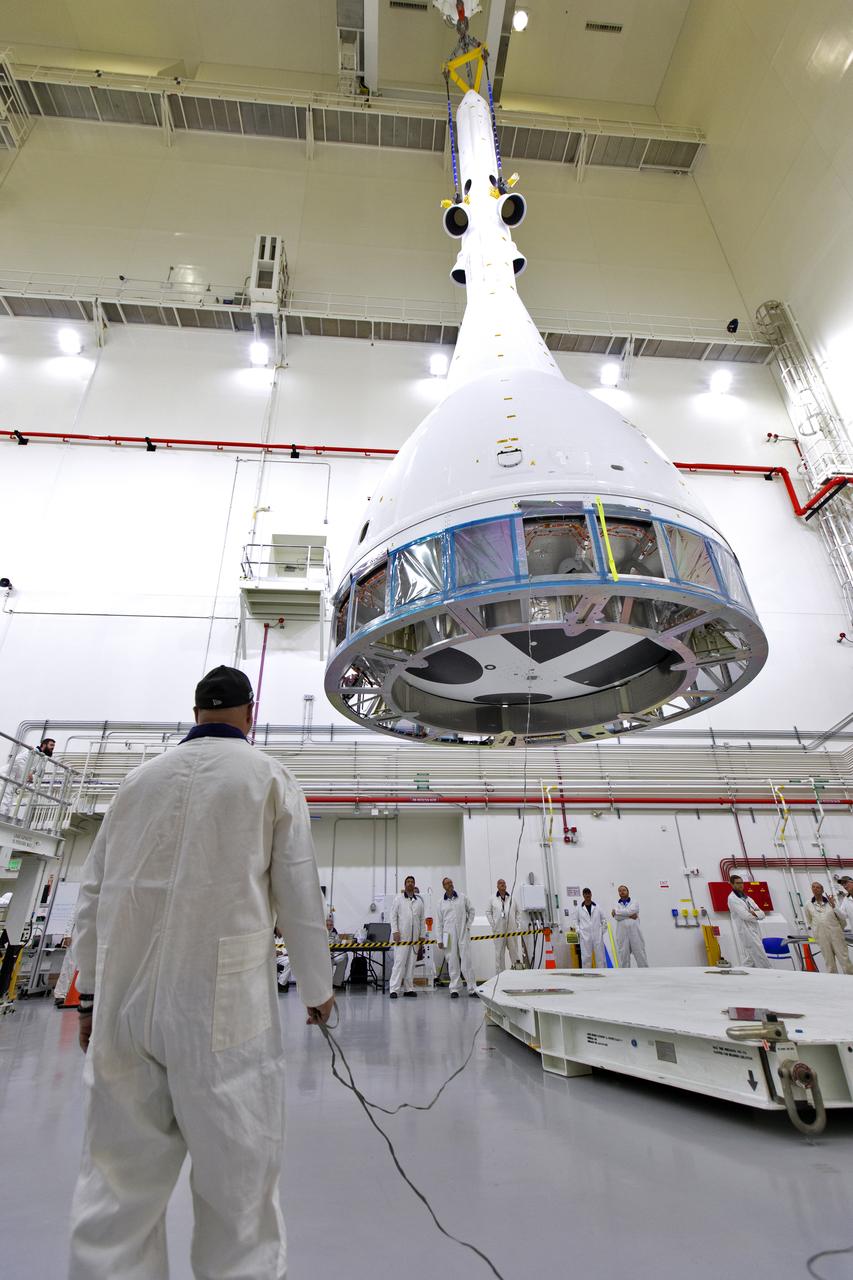
Inside the Launch Abort System Facility (LASF) at NASA’s Kennedy Space Center in Florida, a test version of the Orion crew module has been integrated with the Launch Abort System (LAS) on May 18, 2019. It is being lifted by crane for transfer to a KAMAG transporter. The test vehicle and the LAS will be used for the Orion Ascent Abort-2 (AA-2) Flight Test. AA-2 is a full-stress test of the LAS, planned for July 2. AA-2 will launch from Space Launch Complex 46, carrying a fully functional LAS and a 22,000-pound Orion test vehicle to an altitude of 31,000 feet and traveling at more than 1,000 miles an hour. The test will verify the LAS can steer the crew module and astronauts aboard to safety if an emergency occurs during ascent on the Space Launch System (SLS) rocket. NASA's Orion and Exploration Ground Systems programs, contractors Jacob's, Lockheed Martin and Northrop Grumman, in conjunction with the Air Force Space and Missile Center's Launch Operations branch and the 45th Space Wing are performing flight operations for AA-2.
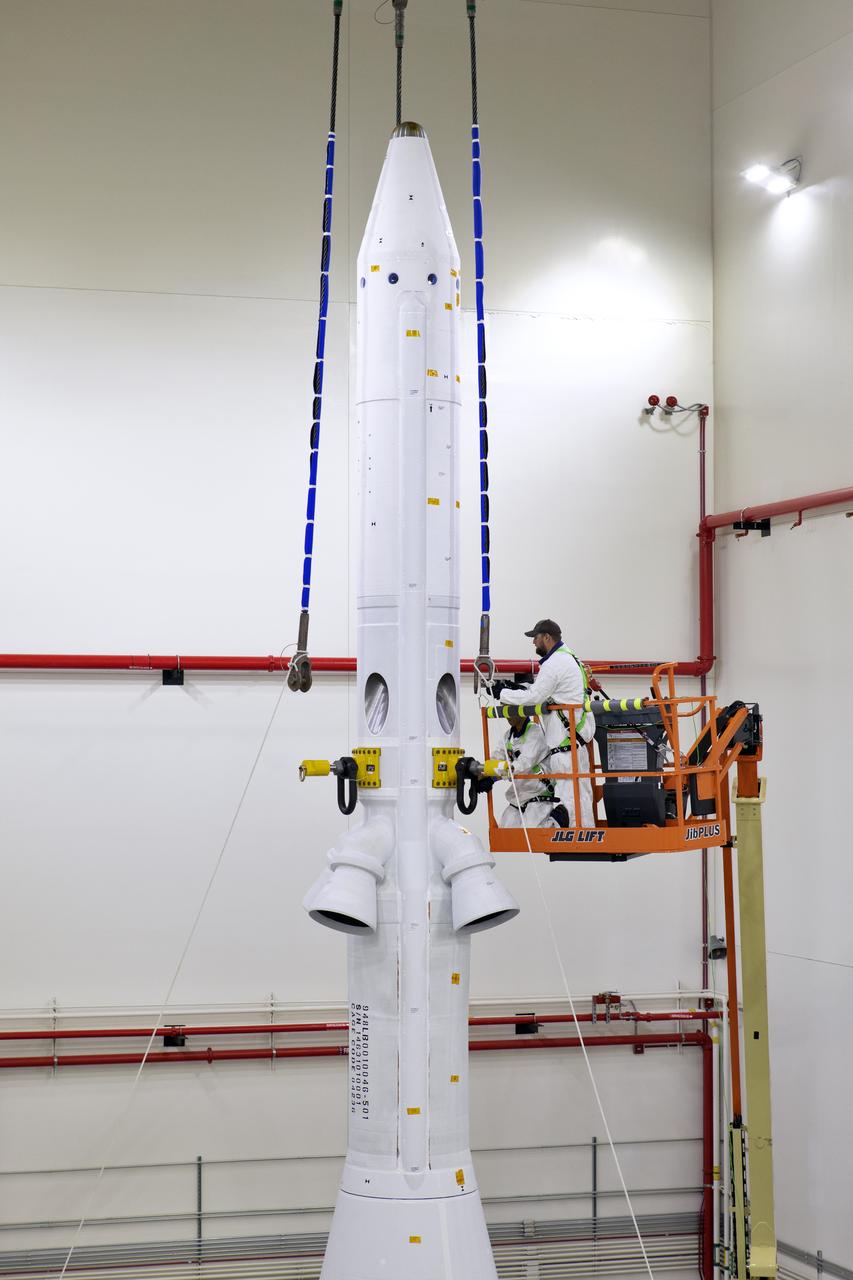
Inside the Launch Abort System Facility (LASF) at NASA’s Kennedy Space Center in Florida, workers are completing the integration of a test version of the Orion crew module with the Launch Abort System (LAS) on May 18, 2019. In view are the LAS attitude control motor, jettison motor and abort motor. The test vehicle and the LAS will be used for the Orion Ascent Abort-2 (AA-2) Flight Test. AA-2 is a full-stress test of the LAS, planned for July 2. AA-2 will launch from Space Launch Complex 46, carrying a fully functional LAS and a 22,000-pound Orion test vehicle to an altitude of 31,000 feet and traveling at more than 1,000 miles an hour. The test will verify the LAS can steer the crew module and astronauts aboard to safety if an emergency occurs during ascent on the Space Launch System (SLS) rocket. NASA's Orion and Exploration Ground Systems programs, contractors Jacob's, Lockheed Martin and Northrop Grumman, in conjunction with the Air Force Space and Missile Center's Launch Operations branch and the 45th Space Wing are performing flight operations for AA-2.
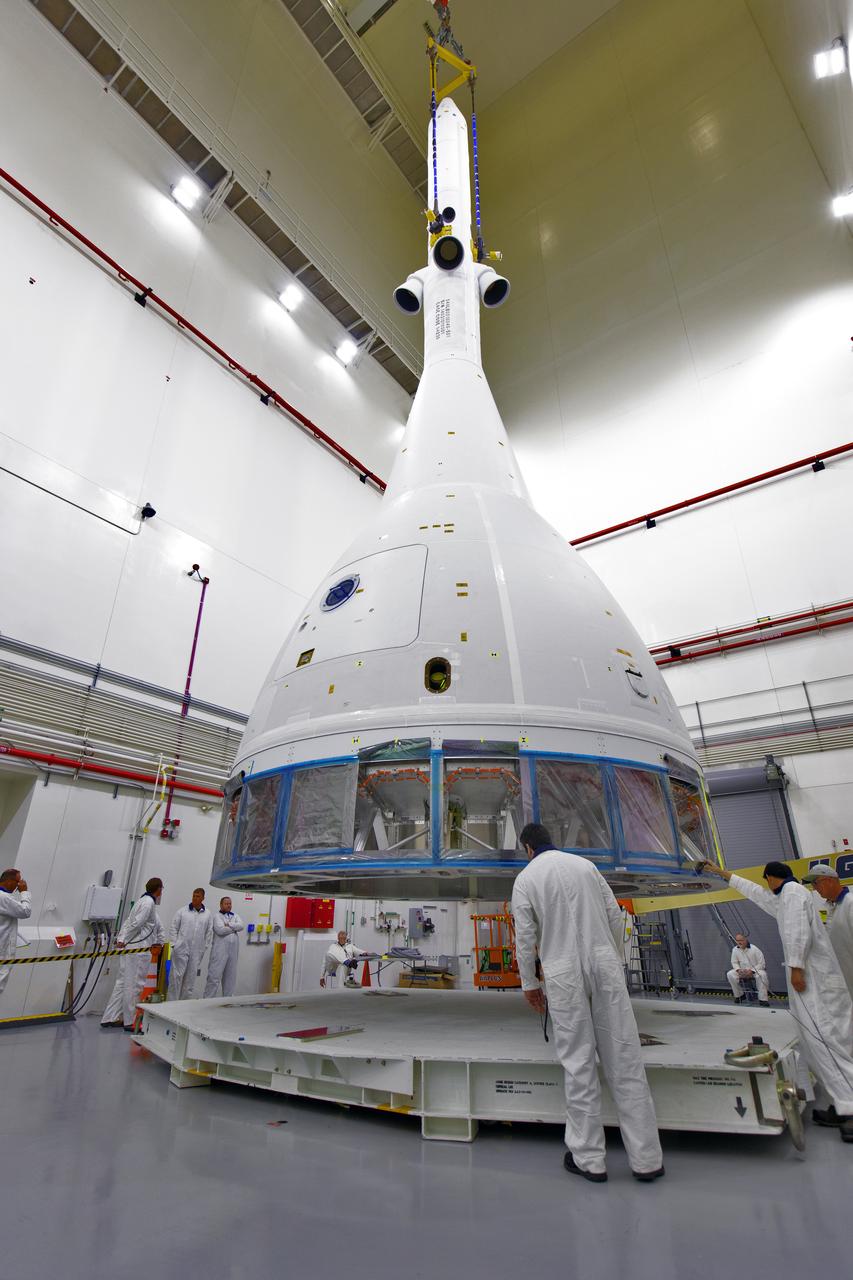
Inside the Launch Abort System Facility (LASF) at NASA’s Kennedy Space Center in Florida, workers are completing the integration of a test version of the Orion crew module with the Launch Abort System (LAS) on May 18, 2019. The test vehicle and the LAS will be used for the Orion Ascent Abort-2 (AA-2) Flight Test. AA-2 is a full-stress test of the LAS, planned for July 2. AA-2 will launch from Space Launch Complex 46, carrying a fully functional LAS and a 22,000-pound Orion test vehicle to an altitude of 31,000 feet and traveling at more than 1,000 miles an hour. The test will verify the LAS can steer the crew module and astronauts aboard to safety if an emergency occurs during ascent on the Space Launch System (SLS) rocket. NASA's Orion and Exploration Ground Systems programs, contractors Jacob's, Lockheed Martin and Northrop Grumman, in conjunction with the Air Force Space and Missile Center's Launch Operations branch and the 45th Space Wing are performing flight operations for AA-2.
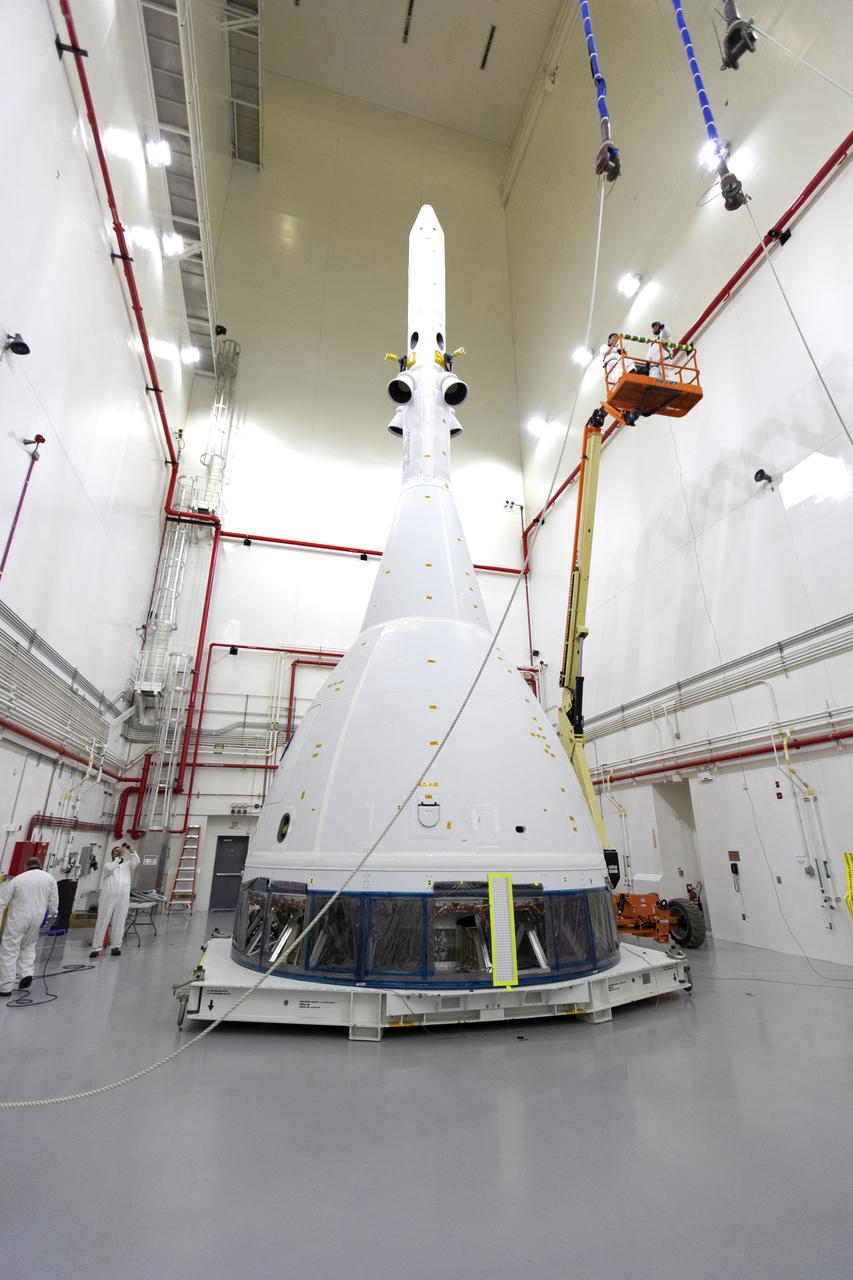
Inside the Launch Abort System Facility (LASF) at NASA’s Kennedy Space Center in Florida, workers are completing the integration of a test version of the Orion crew module with the Launch Abort System (LAS) on May 18, 2019. The test vehicle and the LAS will be used for the Orion Ascent Abort-2 (AA-2) Flight Test. AA-2 is a full-stress test of the LAS, planned for July 2. AA-2 will launch from Space Launch Complex 46, carrying a fully functional LAS and a 22,000-pound Orion test vehicle to an altitude of 31,000 feet and traveling at more than 1,000 miles an hour. The test will verify the LAS can steer the crew module and astronauts aboard to safety if an emergency occurs during ascent on the Space Launch System (SLS) rocket. NASA's Orion and Exploration Ground Systems programs, contractors Jacob's, Lockheed Martin and Northrop Grumman, in conjunction with the Air Force Space and Missile Center's Launch Operations branch and the 45th Space Wing are performing flight operations for AA-2.
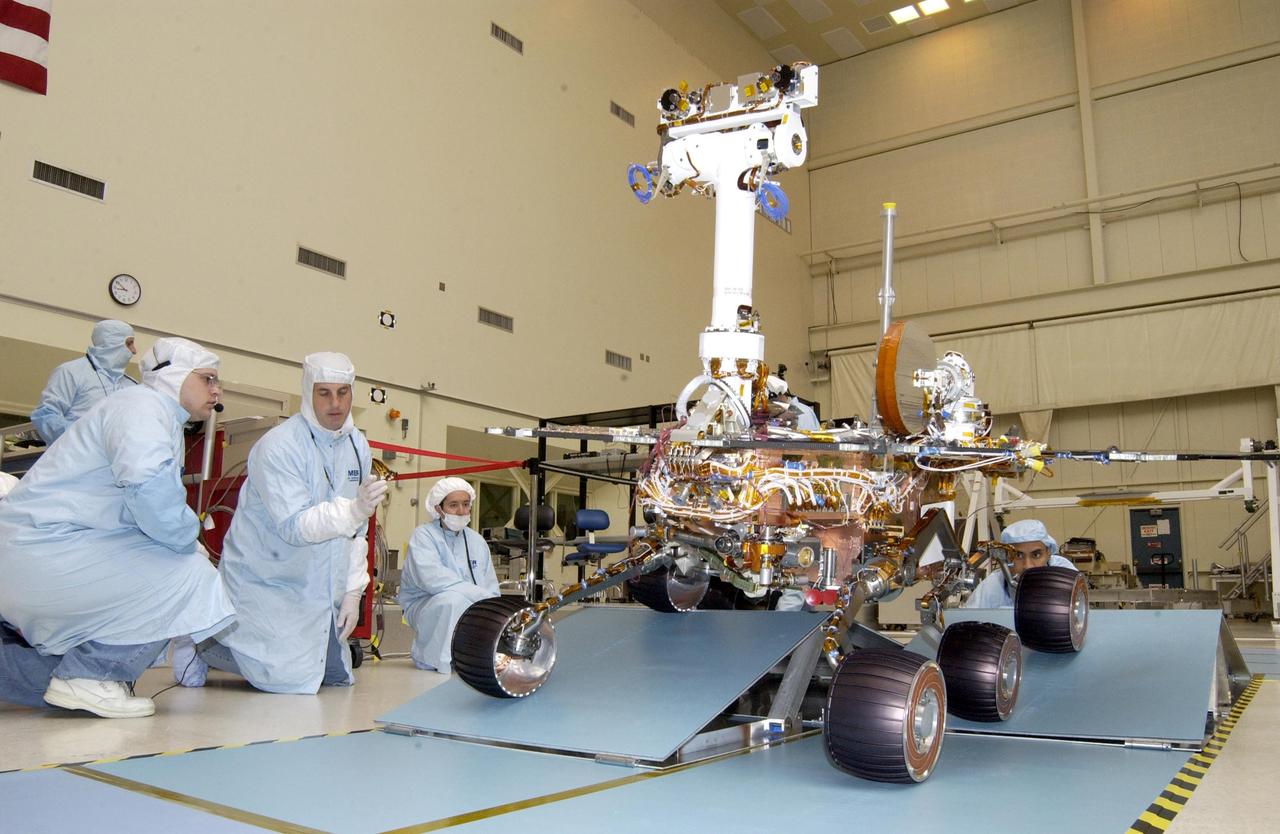
NASA Rover 2 is driven over staggered ramps to test the suspension range of motion.
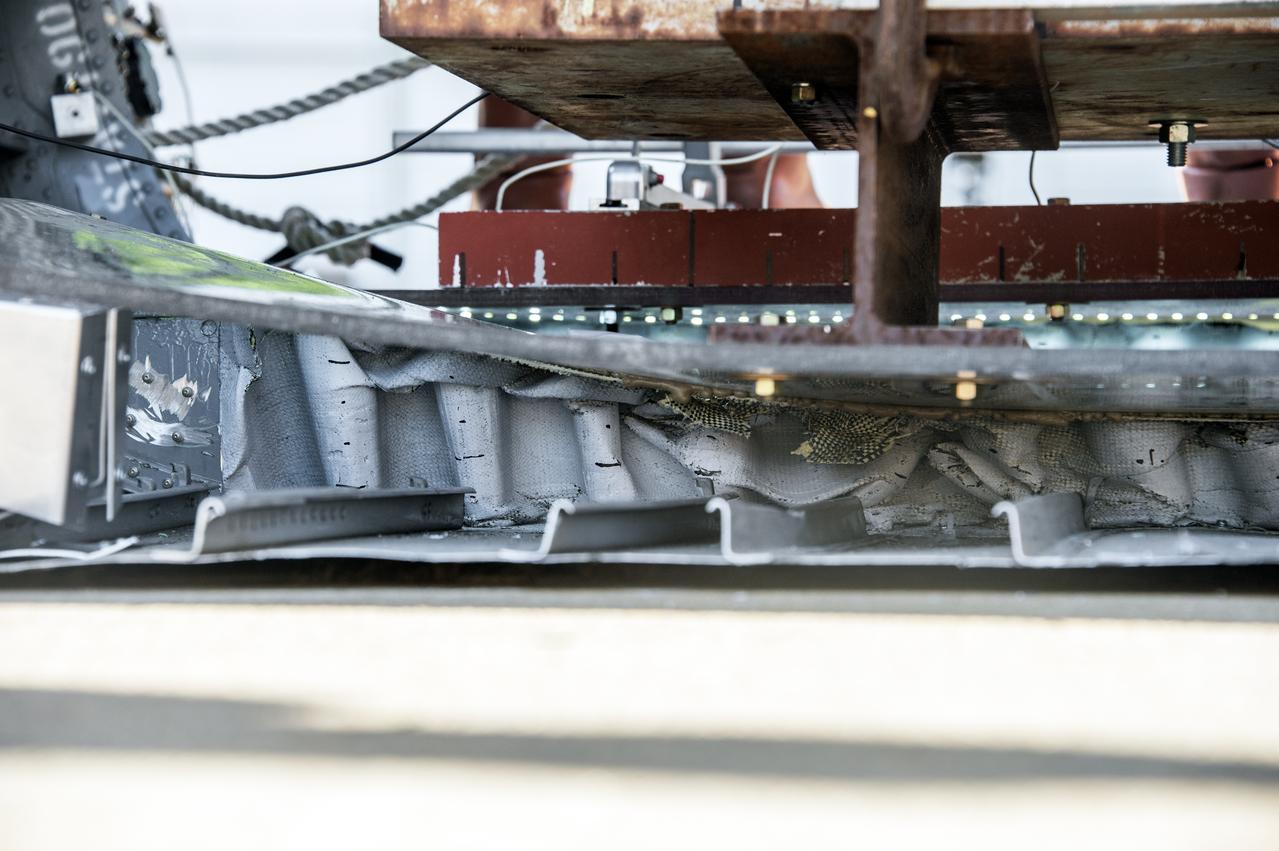
(Tract)2 Transport Rotorcraft Airframe Crash Testbed; Full Frame Drop Test: rotary wing crash worthiness, impact research at NASA Langley Research Center's Landing and Impact Research (LandIR) Facility Building 1297
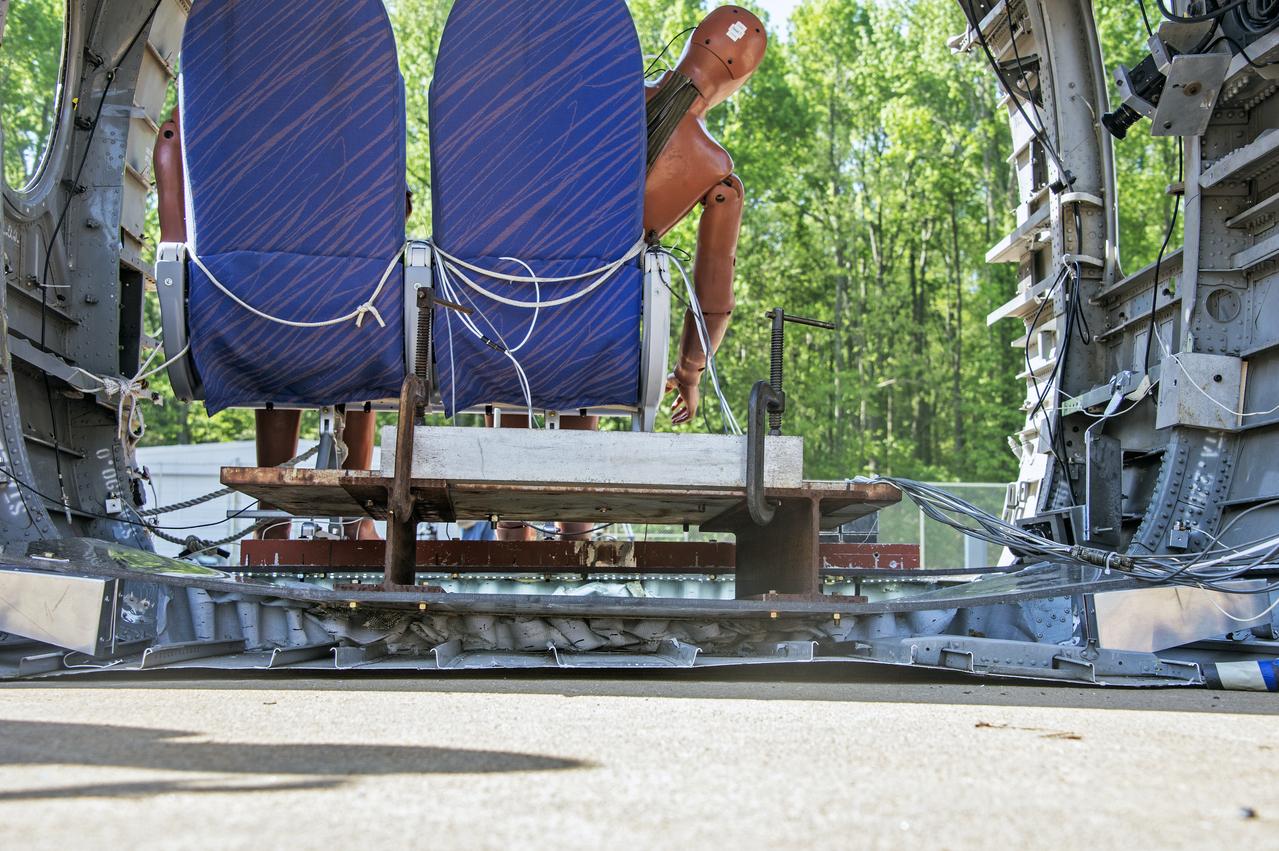
(Tract)2 Transport Rotorcraft Airframe Crash Testbed; Full Frame Drop Test: rotary wing crash worthiness, impact research at NASA Langley Research Center's Landing and Impact Research (LandIR) Facility Building 1297
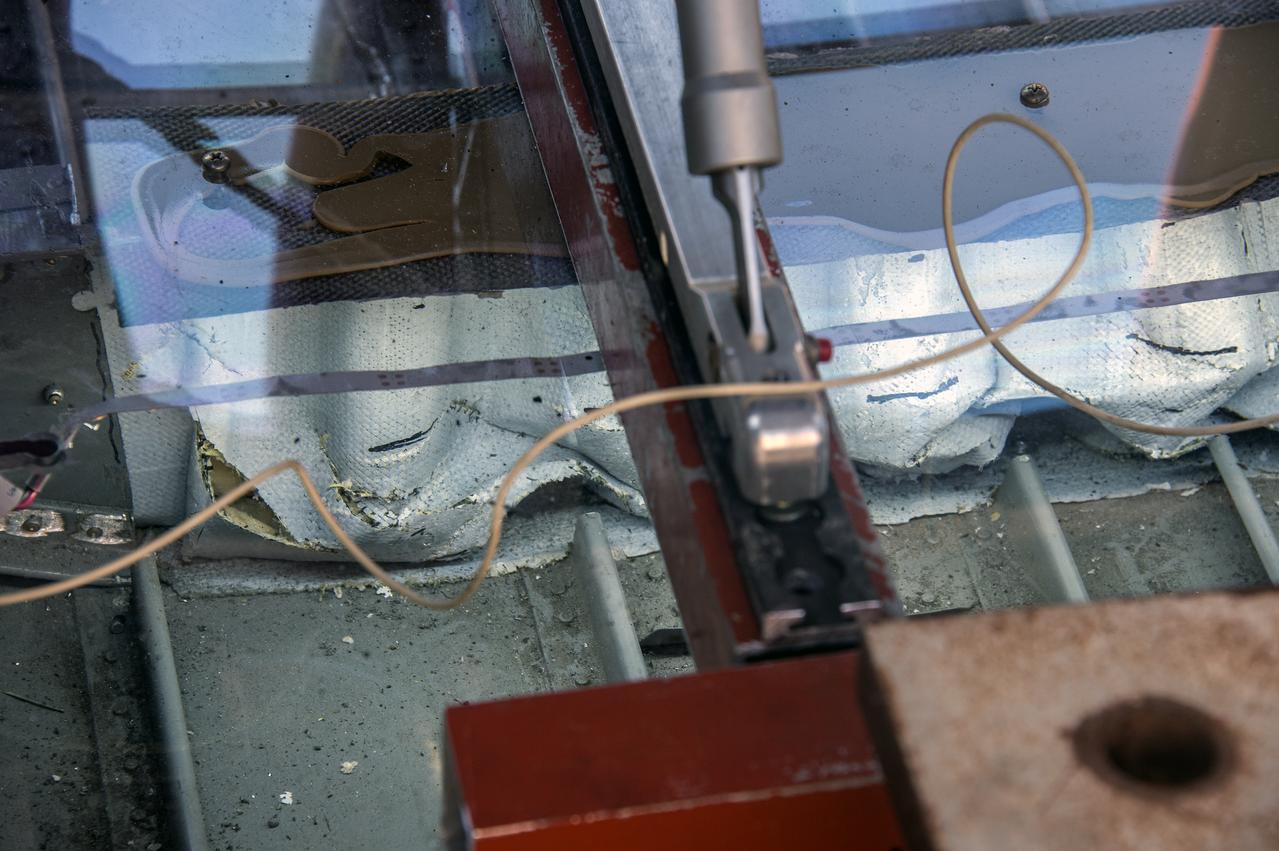
(Tract)2 Transport Rotorcraft Airframe Crash Testbed; Full Frame Drop Test: rotary wing crash worthiness, impact research at NASA Langley Research Center's Landing and Impact Research (LandIR) Facility Building 1297
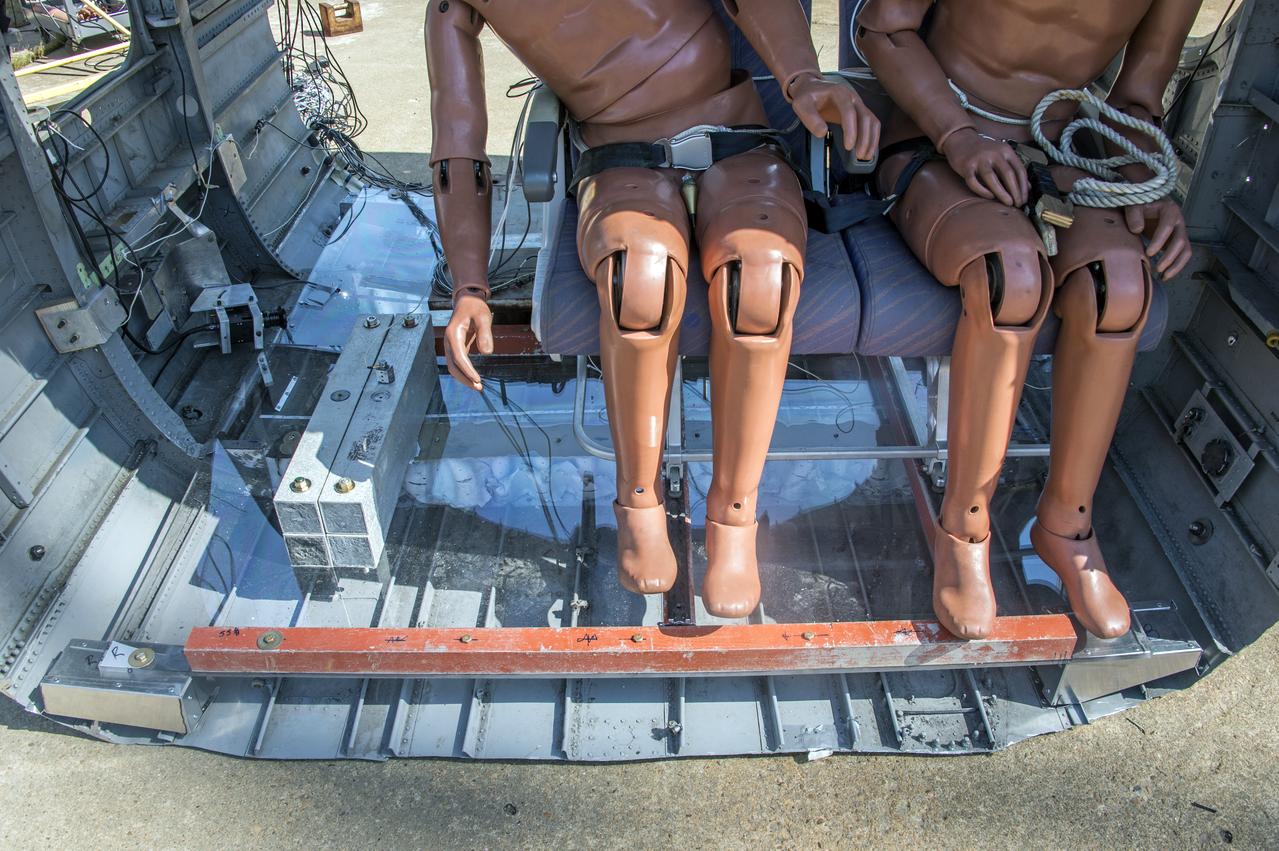
(Tract)2 Transport Rotorcraft Airframe Crash Testbed; Full Frame Drop Test: rotary wing crash worthiness, impact research at NASA Langley Research Center's Landing and Impact Research (LandIR) Facility Building 1297
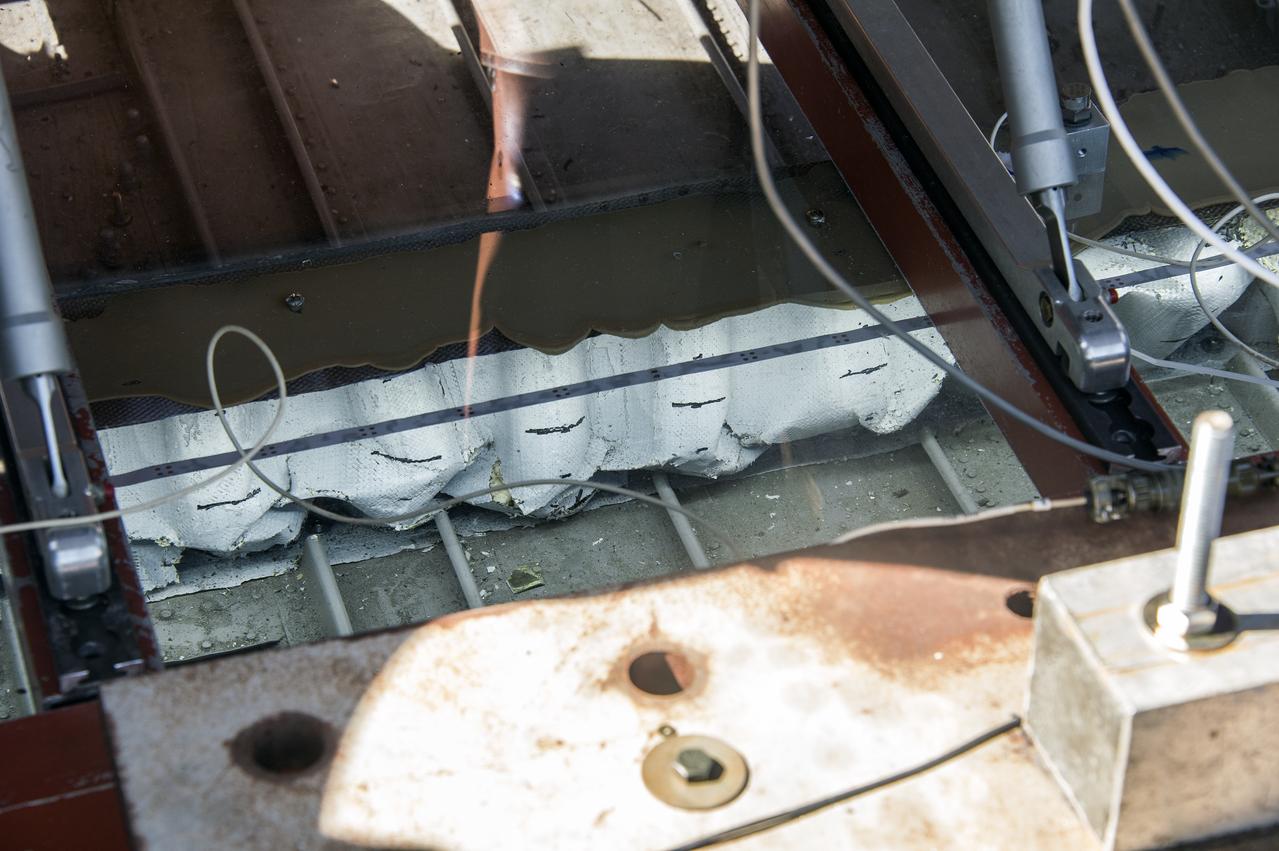
(Tract)2 Transport Rotorcraft Airframe Crash Testbed; Full Frame Drop Test: rotary wing crash worthiness, impact research at NASA Langley Research Center's Landing and Impact Research (LandIR) Facility Building 1297
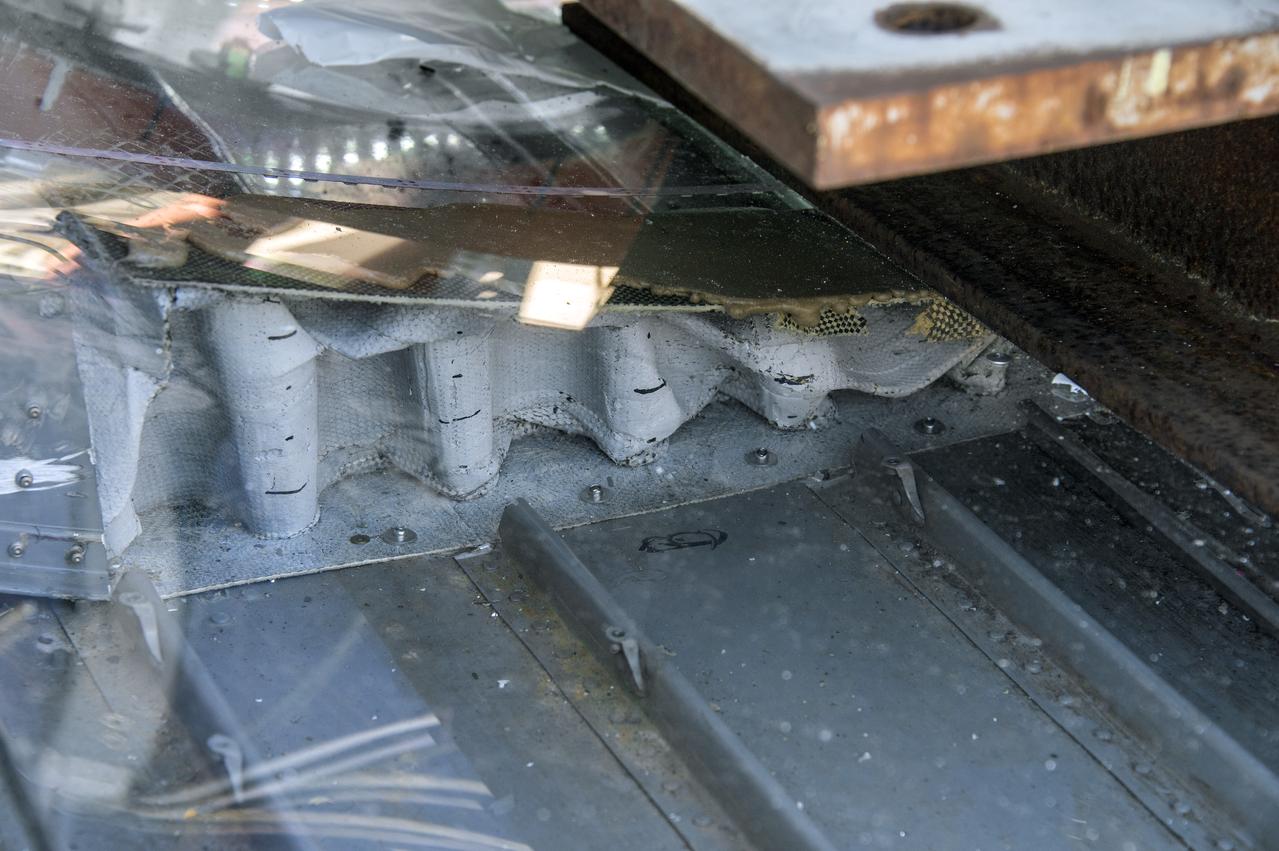
(Tract)2 Transport Rotorcraft Airframe Crash Testbed; Full Frame Drop Test: rotary wing crash worthiness, impact research at NASA Langley Research Center's Landing and Impact Research (LandIR) Facility Building 1297
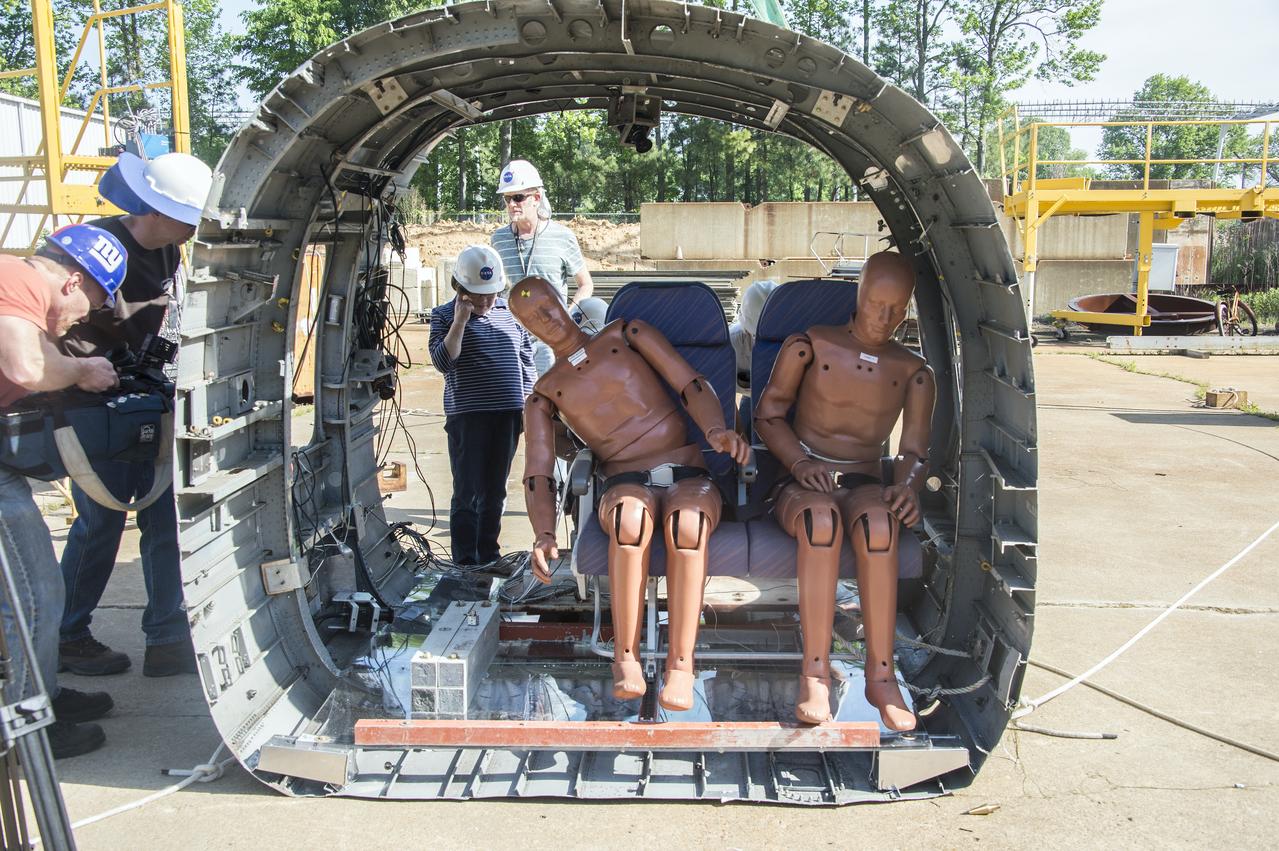
(Tract)2 Transport Rotorcraft Airframe Crash Testbed; Full Frame Drop Test: rotary wing crash worthiness, impact research at NASA Langley Research Center's Landing and Impact Research (LandIR) Facility Building 1297
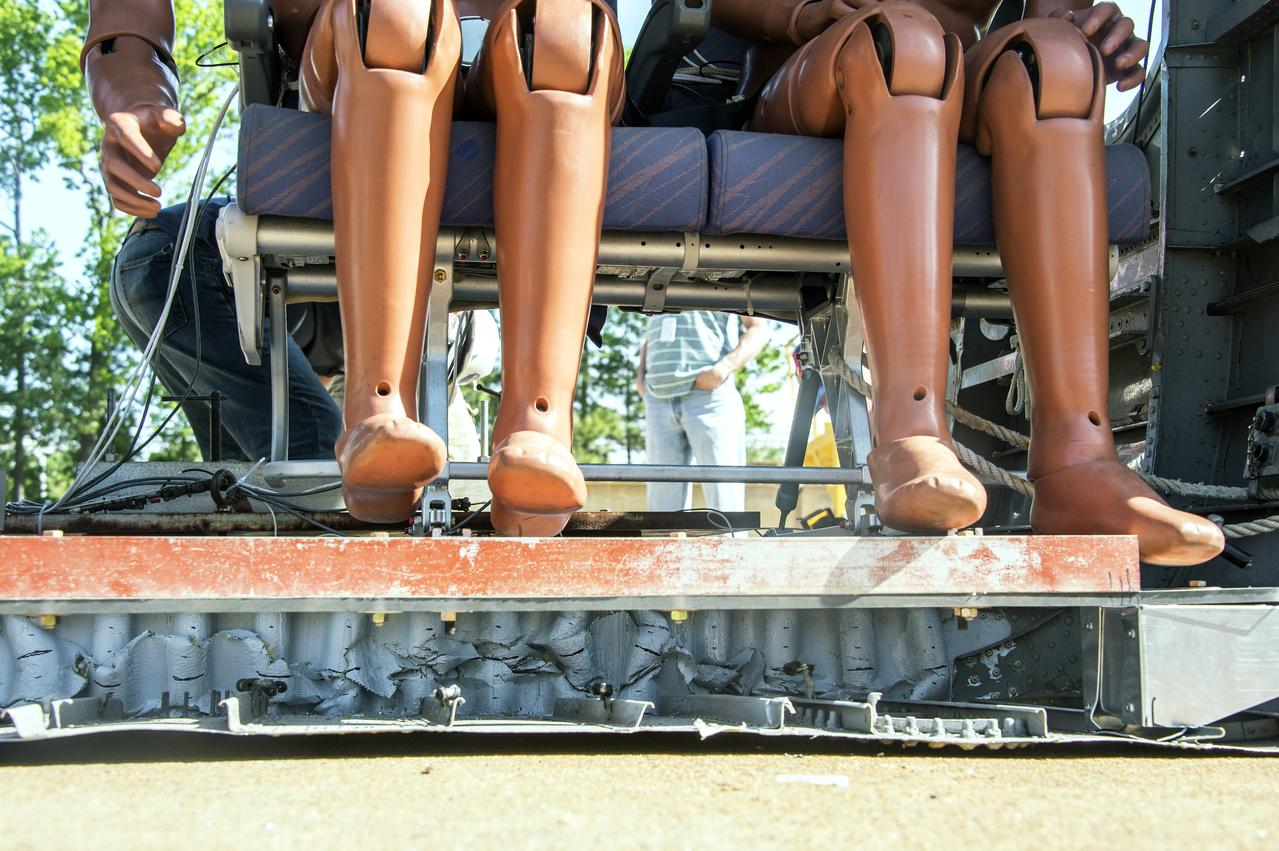
(Tract)2 Transport Rotorcraft Airframe Crash Testbed; Full Frame Drop Test: rotary wing crash worthiness, impact research at NASA Langley Research Center's Landing and Impact Research (LandIR) Facility Building 1297
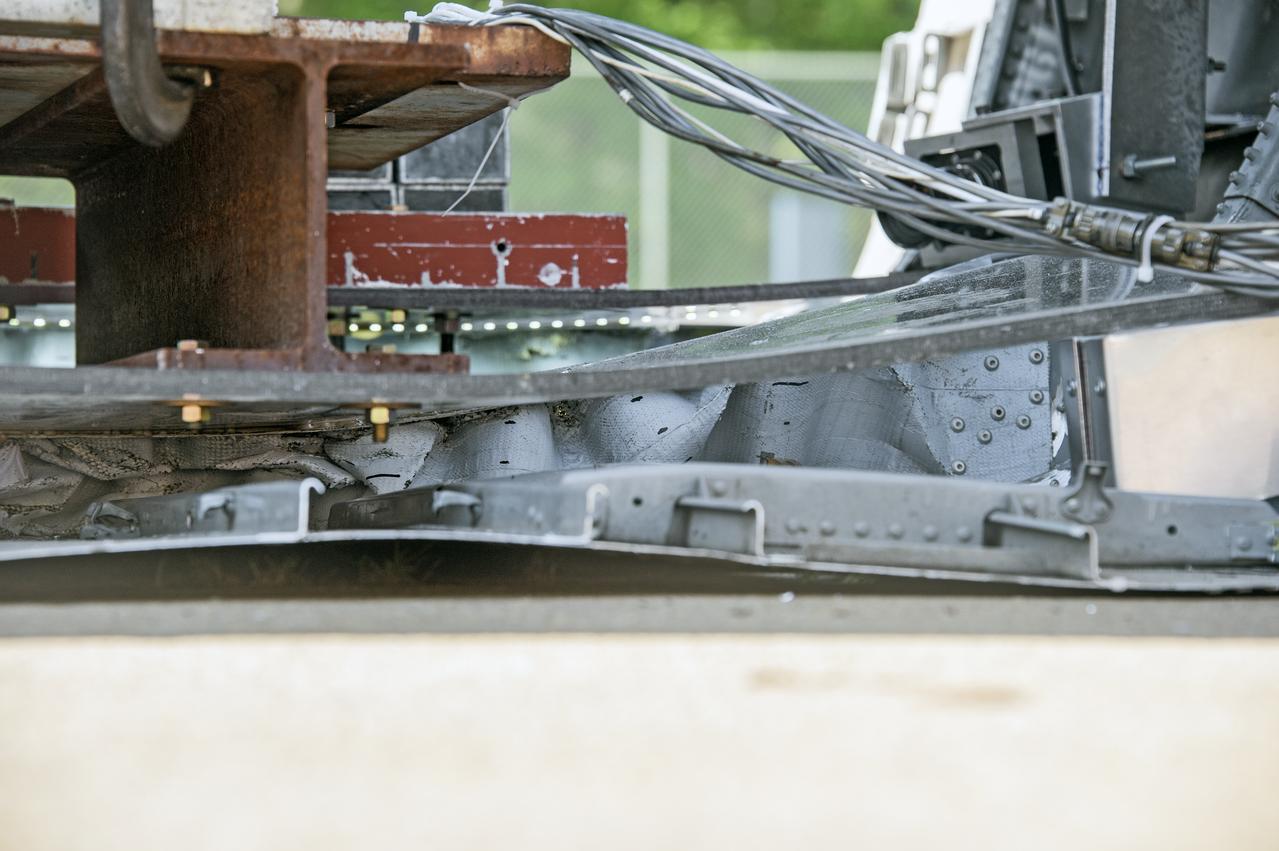
(Tract)2 Transport Rotorcraft Airframe Crash Testbed; Full Frame Drop Test: rotary wing crash worthiness, impact research at NASA Langley Research Center's Landing and Impact Research (LandIR) Facility Building 1297
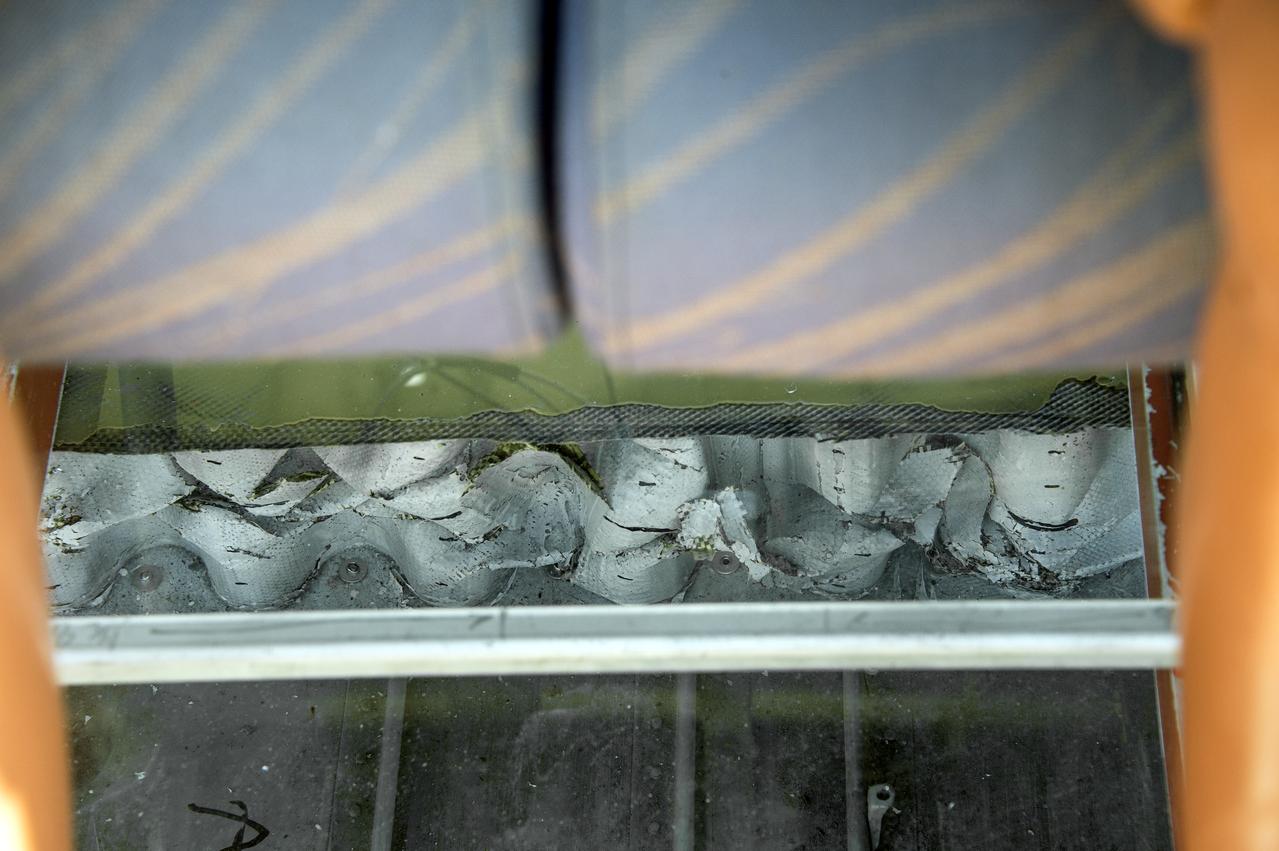
(Tract)2 Transport Rotorcraft Airframe Crash Testbed; Full Frame Drop Test: rotary wing crash worthiness, impact research at NASA Langley Research Center's Landing and Impact Research (LandIR) Facility Building 1297
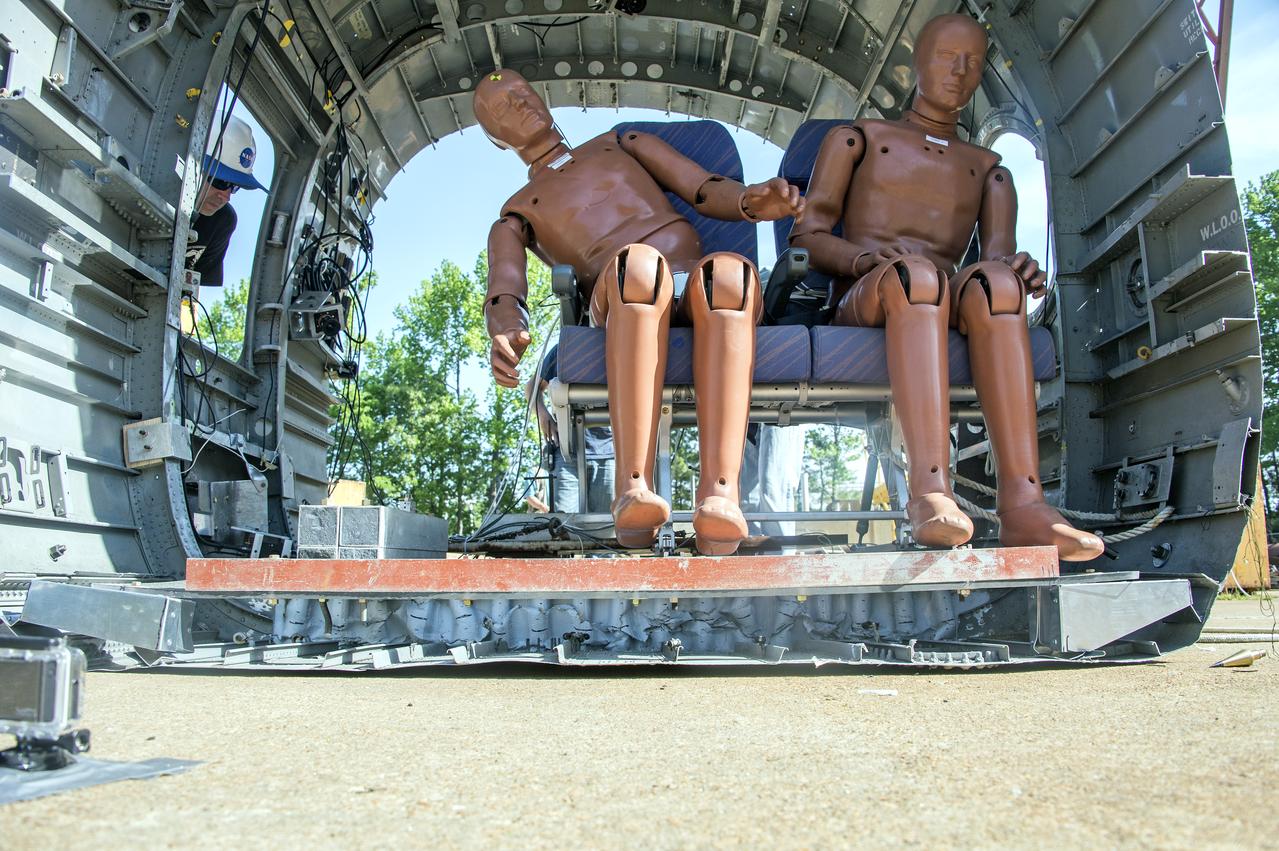
(Tract)2 Transport Rotorcraft Airframe Crash Testbed; Full Frame Drop Test: rotary wing crash worthiness, impact research at NASA Langley Research Center's Landing and Impact Research (LandIR) Facility Building 1297
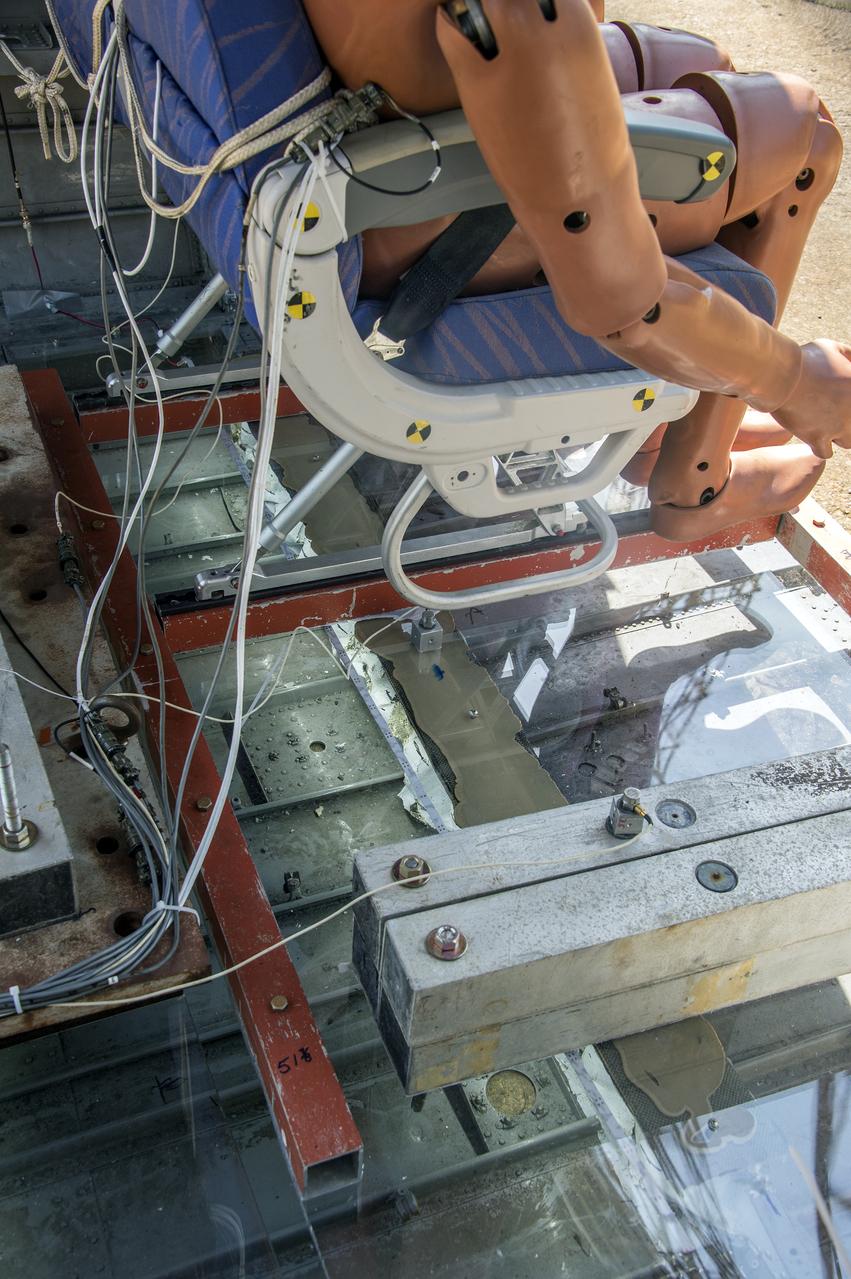
(Tract)2 Transport Rotorcraft Airframe Crash Testbed; Full Frame Drop Test: rotary wing crash worthiness, impact research at NASA Langley Research Center's Landing and Impact Research (LandIR) Facility Building 1297
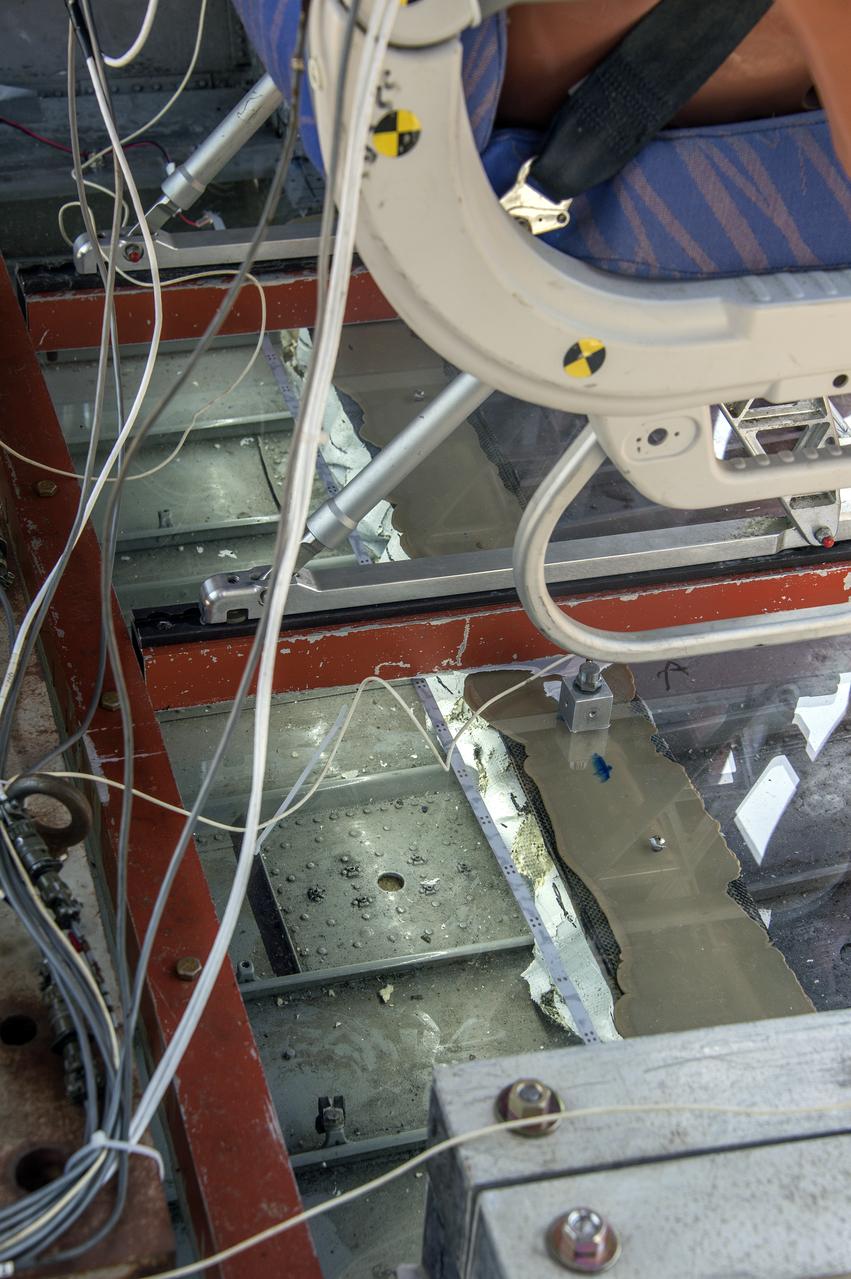
(Tract)2 Transport Rotorcraft Airframe Crash Testbed; Full Frame Drop Test: rotary wing crash worthiness, impact research at NASA Langley Research Center's Landing and Impact Research (LandIR) Facility Building 1297
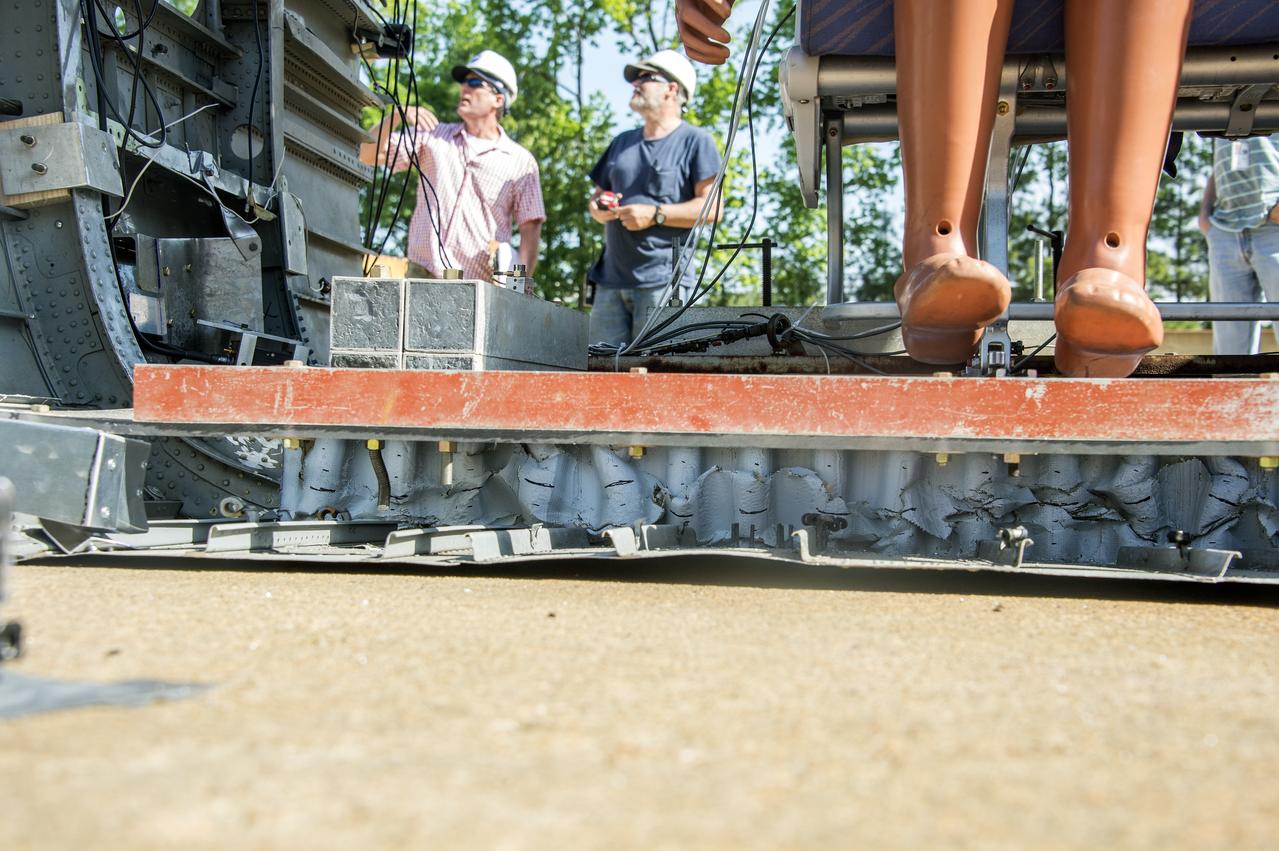
(Tract)2 Transport Rotorcraft Airframe Crash Testbed; Full Frame Drop Test: rotary wing crash worthiness, impact research at NASA Langley Research Center's Landing and Impact Research (LandIR) Facility Building 1297
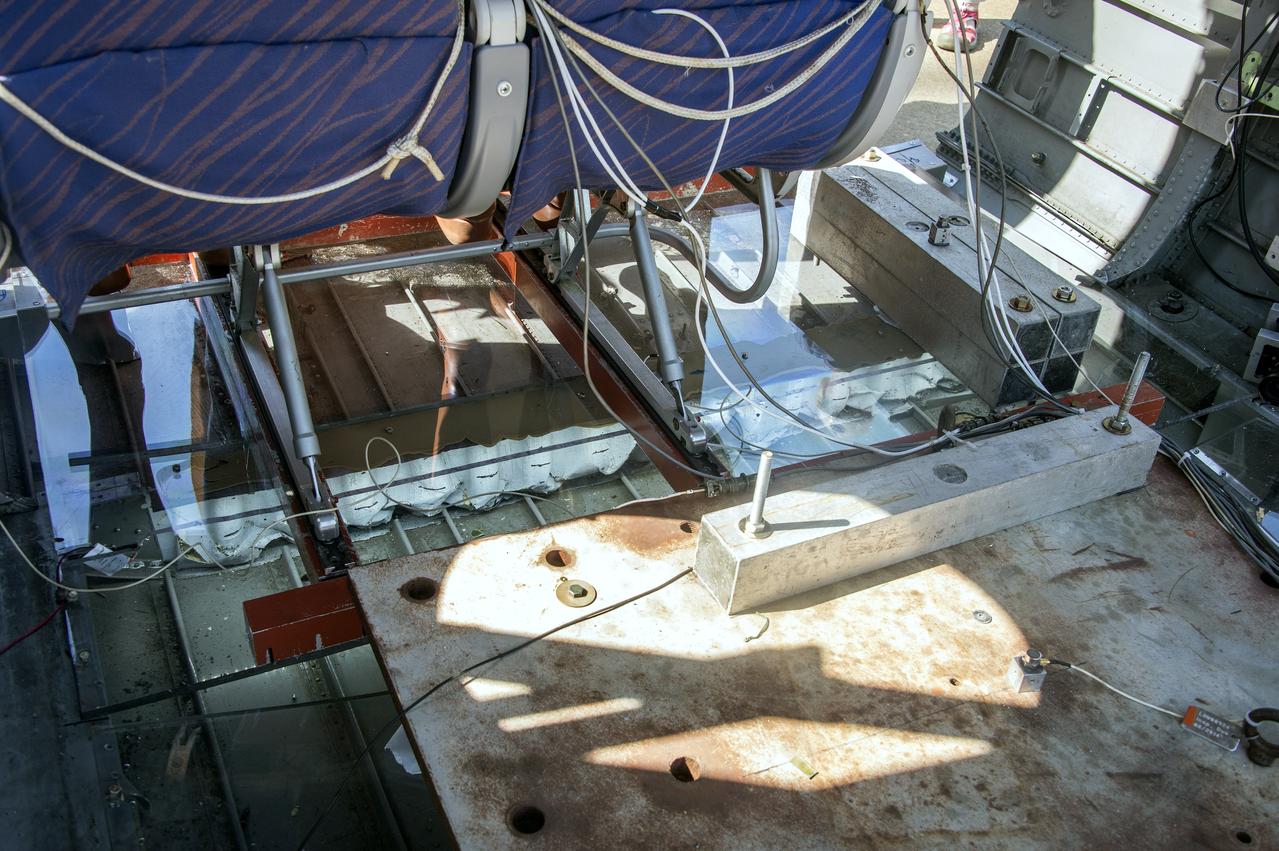
(Tract)2 Transport Rotorcraft Airframe Crash Testbed; Full Frame Drop Test: rotary wing crash worthiness, impact research at NASA Langley Research Center's Landing and Impact Research (LandIR) Facility Building 1297
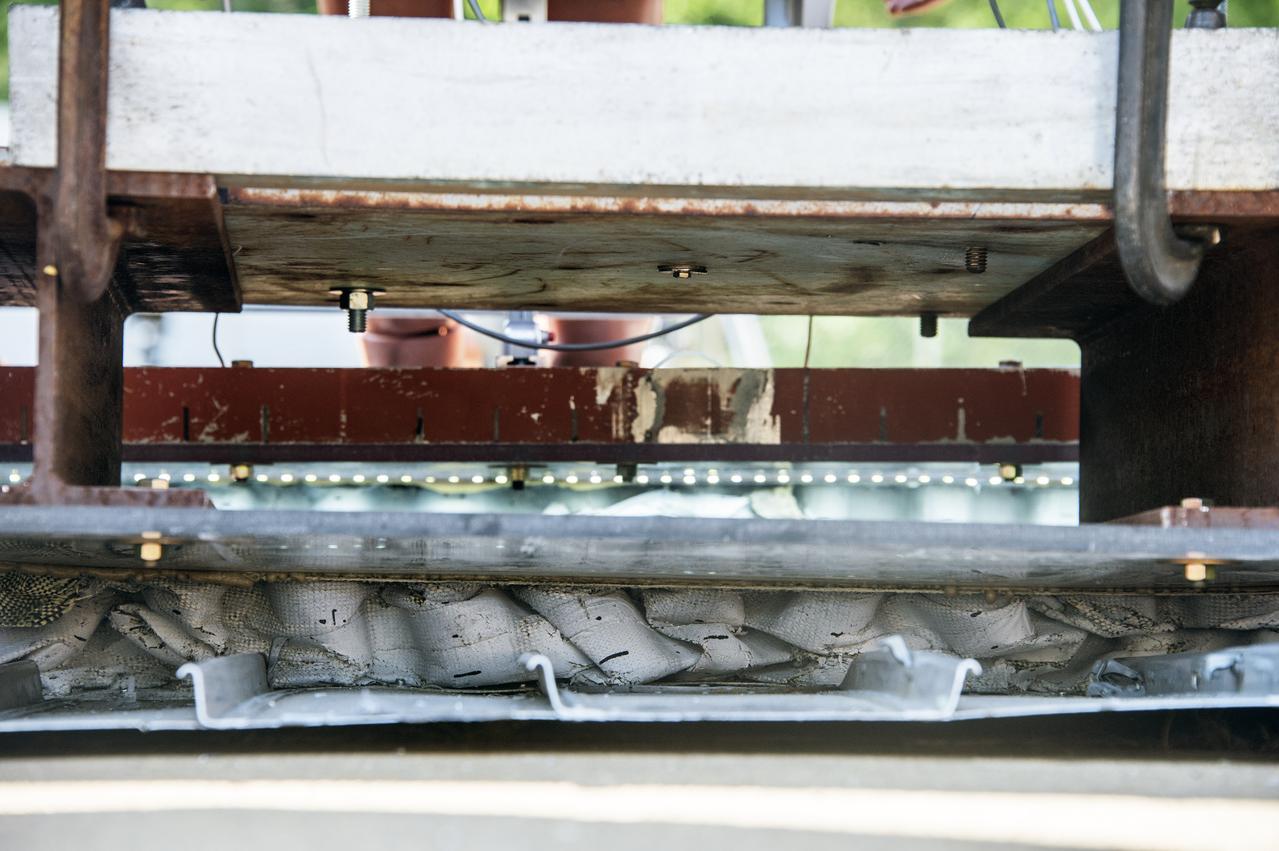
(Tract)2 Transport Rotorcraft Airframe Crash Testbed; Full Frame Drop Test: rotary wing crash worthiness, impact research at NASA Langley Research Center's Landing and Impact Research (LandIR) Facility Building 1297

(Tract)2 Transport Rotorcraft Airframe Crash Testbed; Full Frame Drop Test: rotary wing crash worthiness, impact research at NASA Langley Research Center's Landing and Impact Research (LandIR) Facility Building 1297

(Tract)2 Transport Rotorcraft Airframe Crash Testbed; Full Frame Drop Test: rotary wing crash worthiness, impact research at NASA Langley Research Center's Landing and Impact Research (LandIR) Facility Building 1297
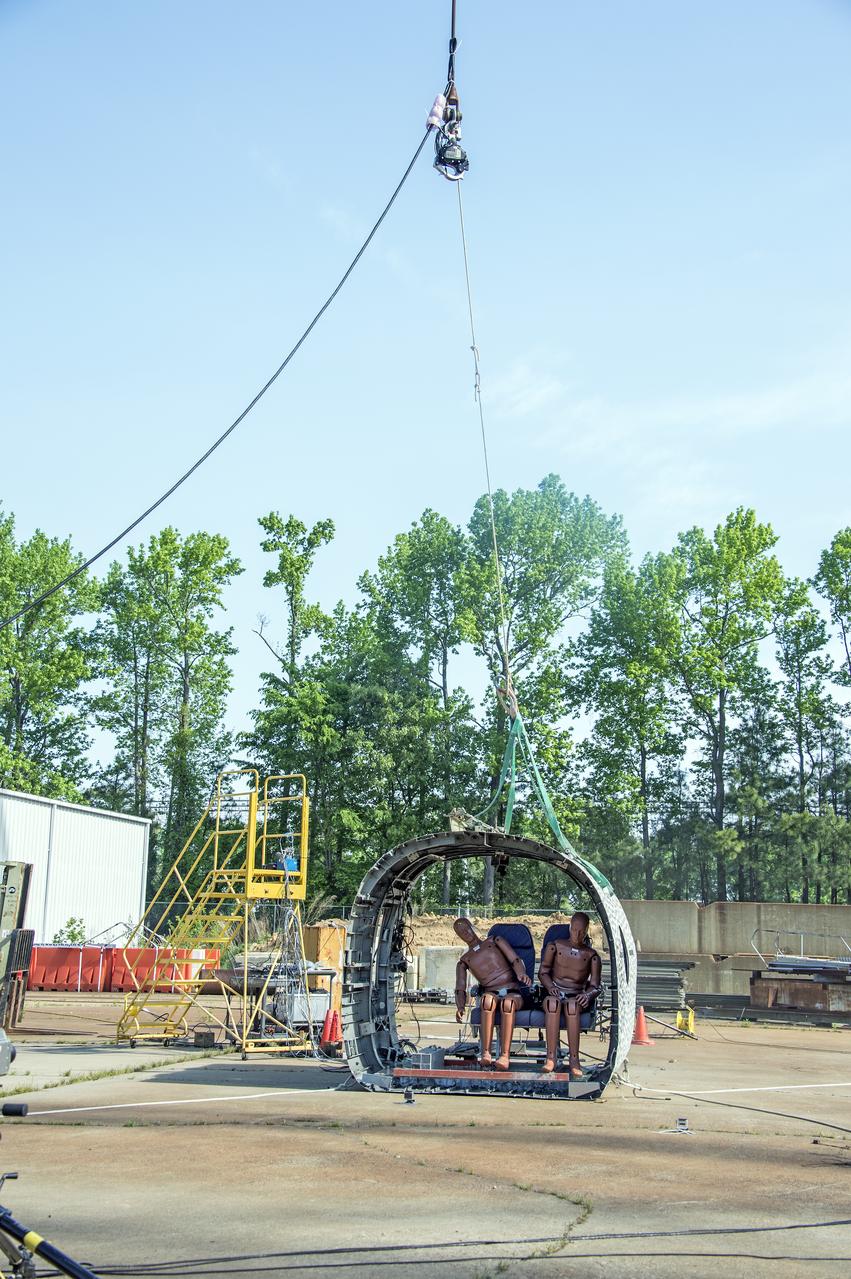
(Tract)2 Transport Rotorcraft Airframe Crash Testbed; Full Frame Drop Test: rotary wing crash worthiness, impact research at NASA Langley Research Center's Landing and Impact Research (LandIR) Facility Building 1297
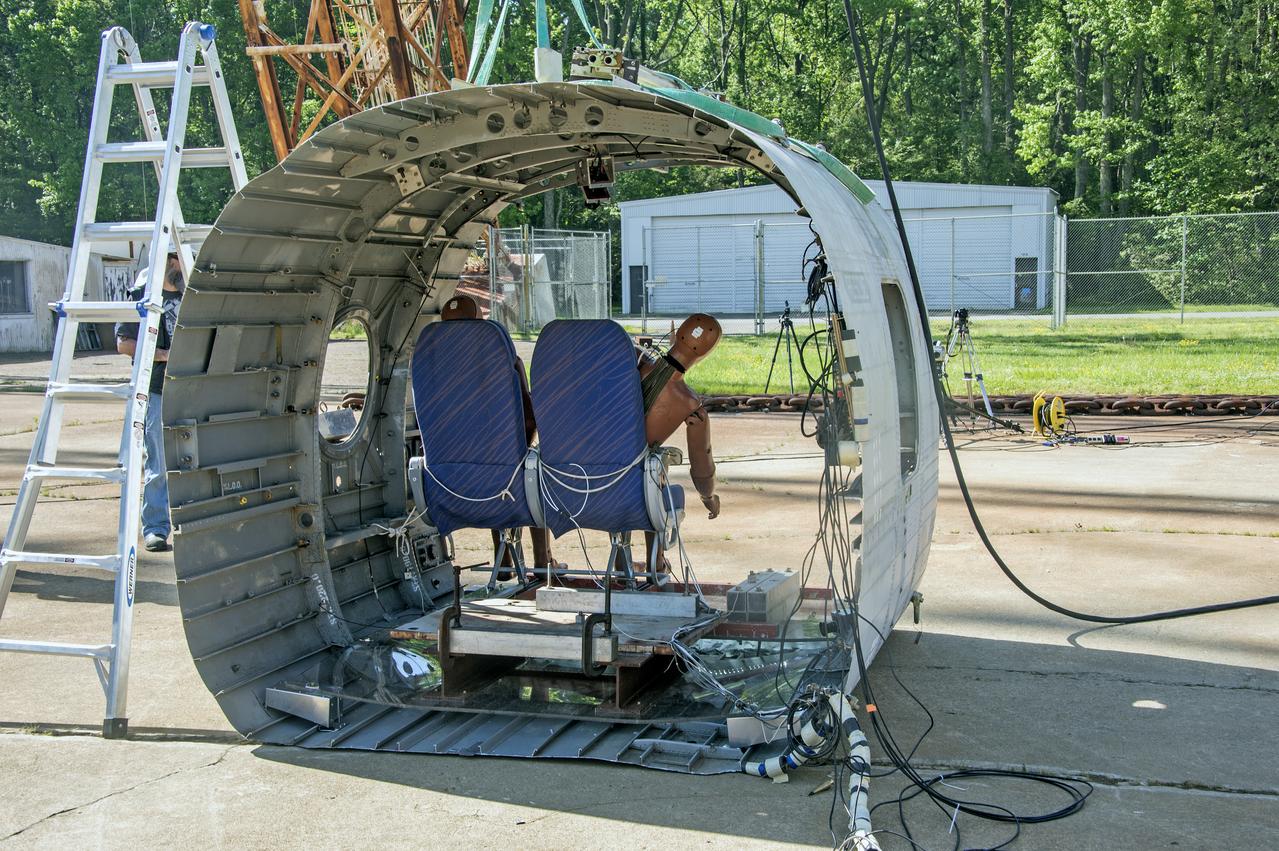
(Tract)2 Transport Rotorcraft Airframe Crash Testbed; Full Frame Drop Test: rotary wing crash worthiness, impact research at NASA Langley Research Center's Landing and Impact Research (LandIR) Facility Building 1297
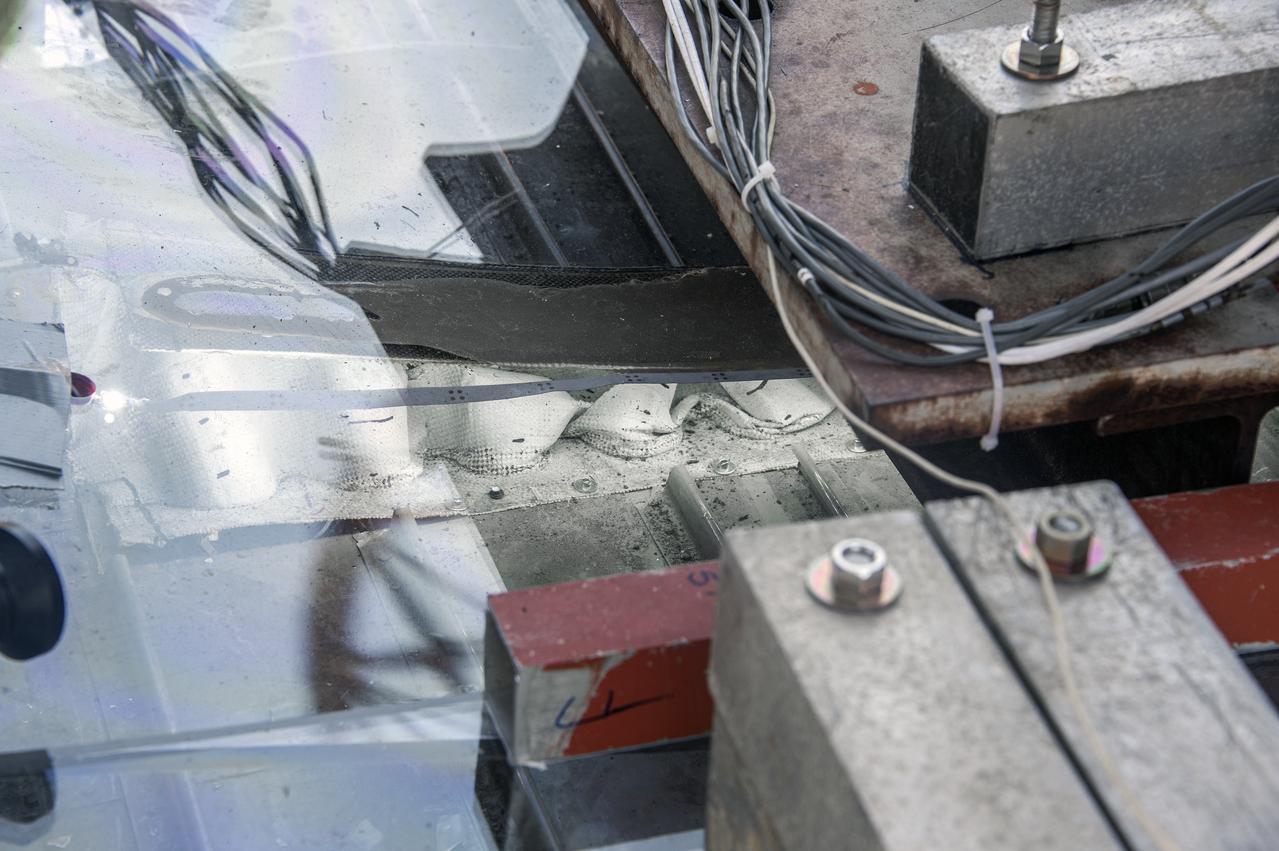
(Tract)2 Transport Rotorcraft Airframe Crash Testbed; Full Frame Drop Test: rotary wing crash worthiness, impact research at NASA Langley Research Center's Landing and Impact Research (LandIR) Facility Building 1297
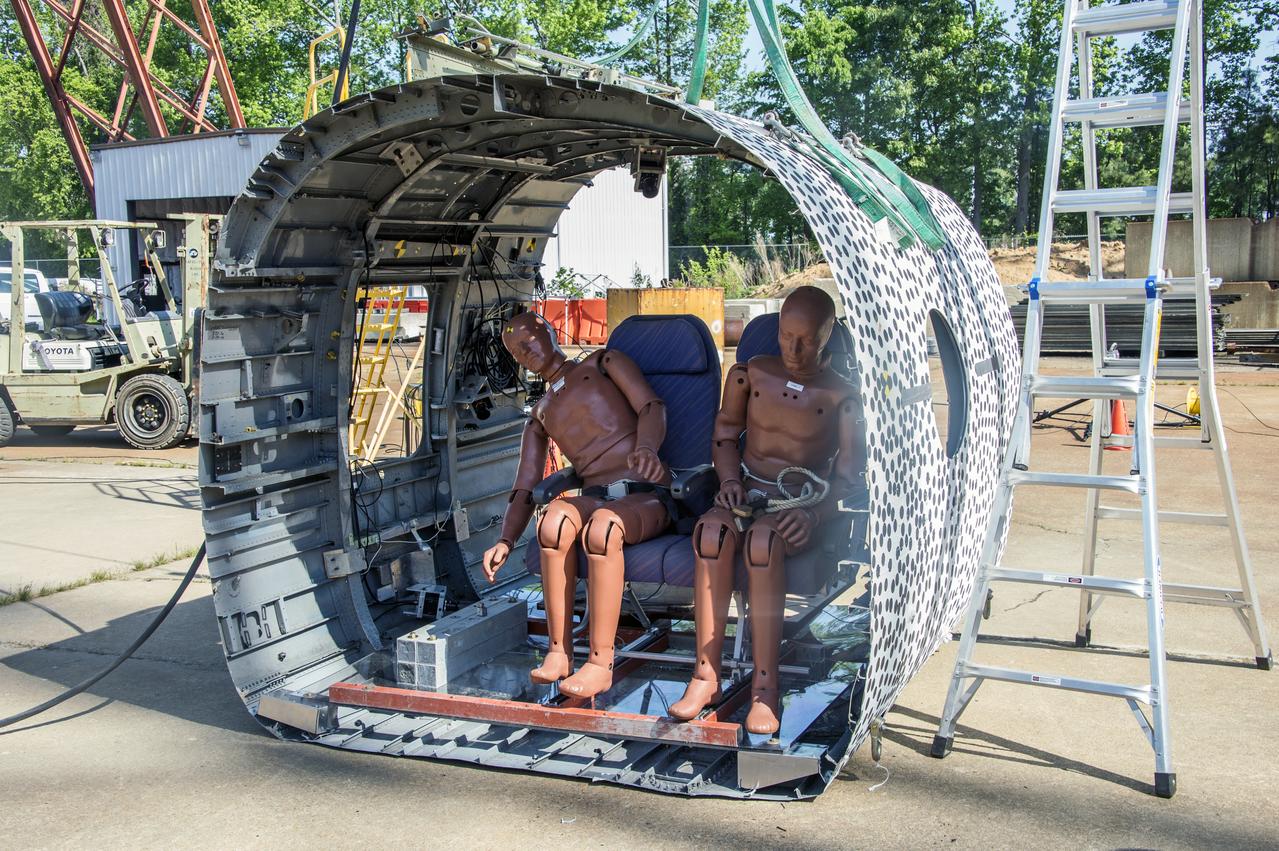
(Tract)2 Transport Rotorcraft Airframe Crash Testbed; Full Frame Drop Test: rotary wing crash worthiness, impact research at NASA Langley Research Center's Landing and Impact Research (LandIR) Facility Building 1297
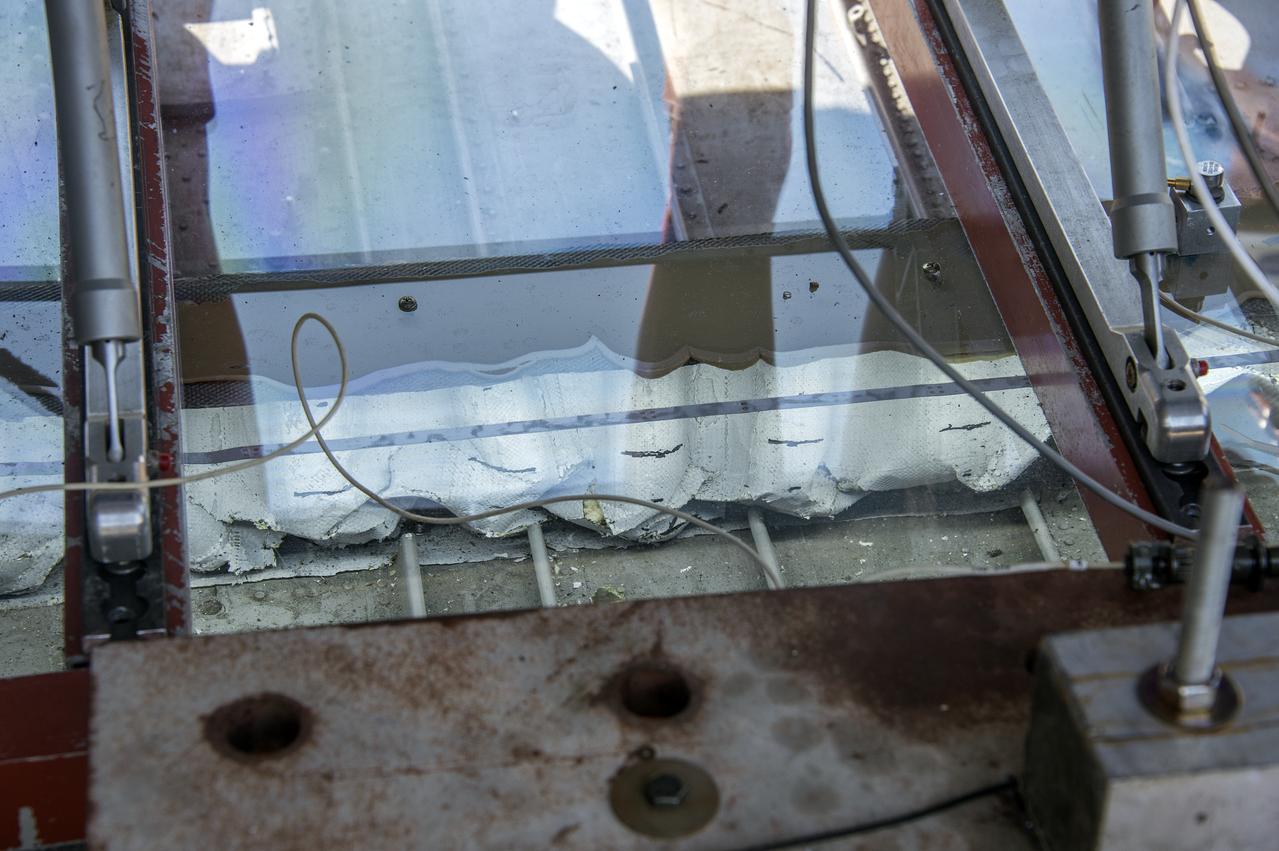
(Tract)2 Transport Rotorcraft Airframe Crash Testbed; Full Frame Drop Test: rotary wing crash worthiness, impact research at NASA Langley Research Center's Landing and Impact Research (LandIR) Facility Building 1297
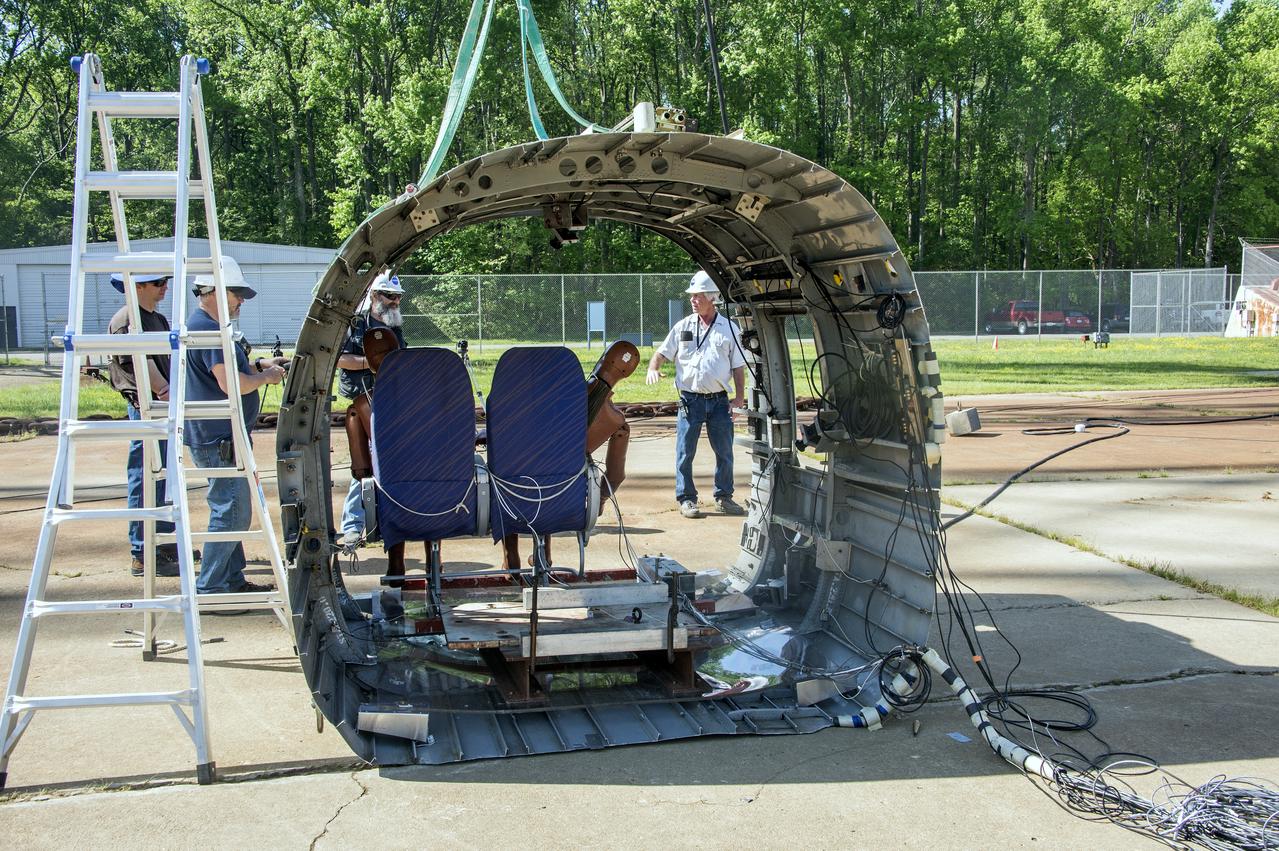
(Tract)2 Transport Rotorcraft Airframe Crash Testbed; Full Frame Drop Test: rotary wing crash worthiness, impact research at NASA Langley Research Center's Landing and Impact Research (LandIR) Facility Building 1297
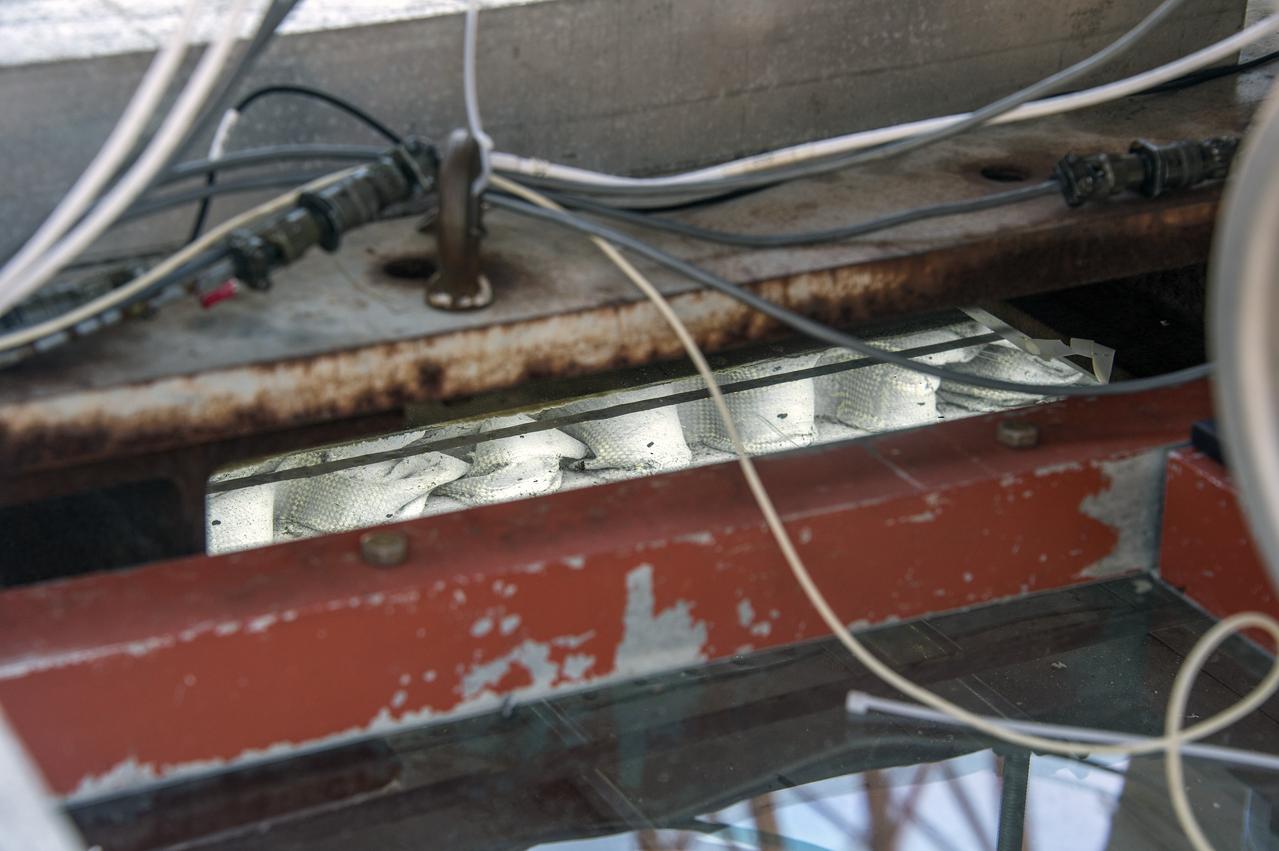
(Tract)2 Transport Rotorcraft Airframe Crash Testbed; Full Frame Drop Test: rotary wing crash worthiness, impact research at NASA Langley Research Center's Landing and Impact Research (LandIR) Facility Building 1297
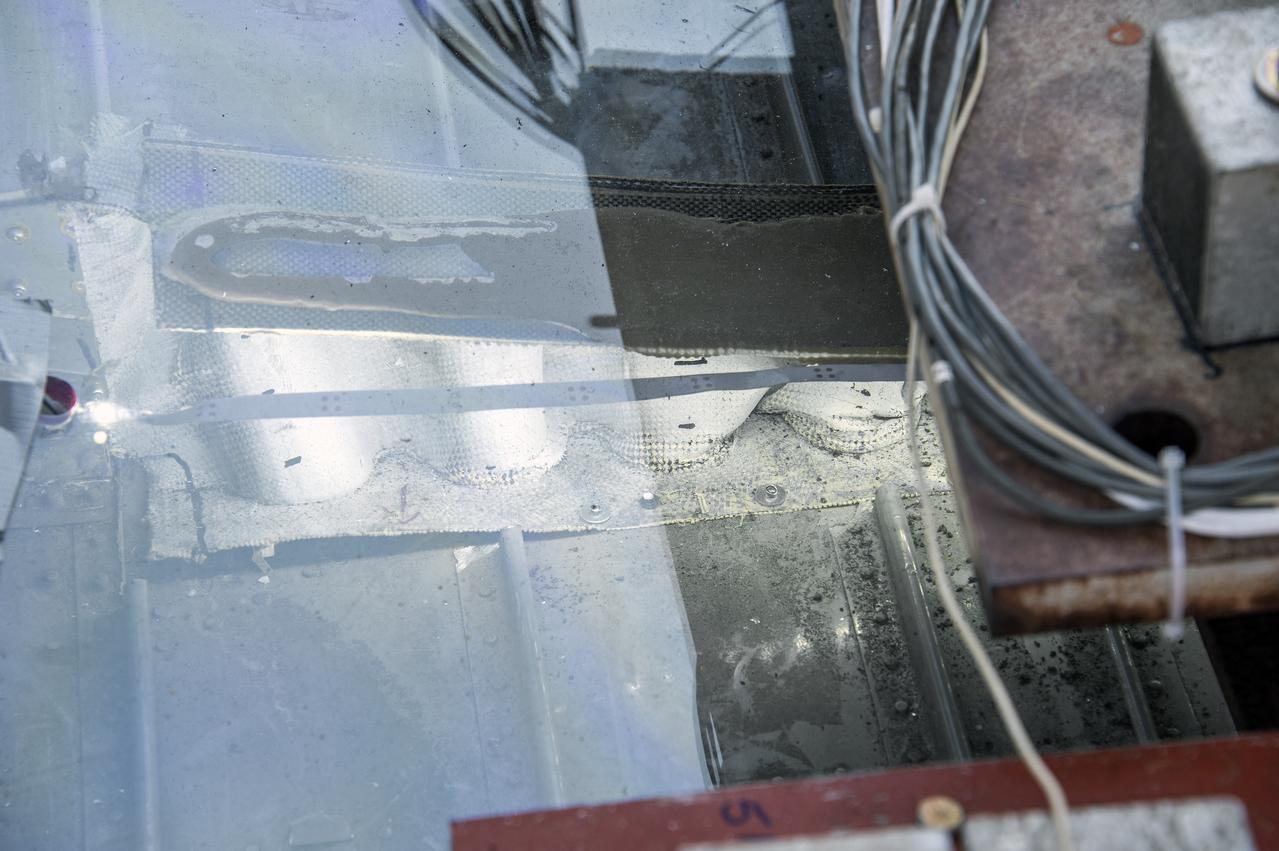
(Tract)2 Transport Rotorcraft Airframe Crash Testbed; Full Frame Drop Test: rotary wing crash worthiness, impact research at NASA Langley Research Center's Landing and Impact Research (LandIR) Facility Building 1297
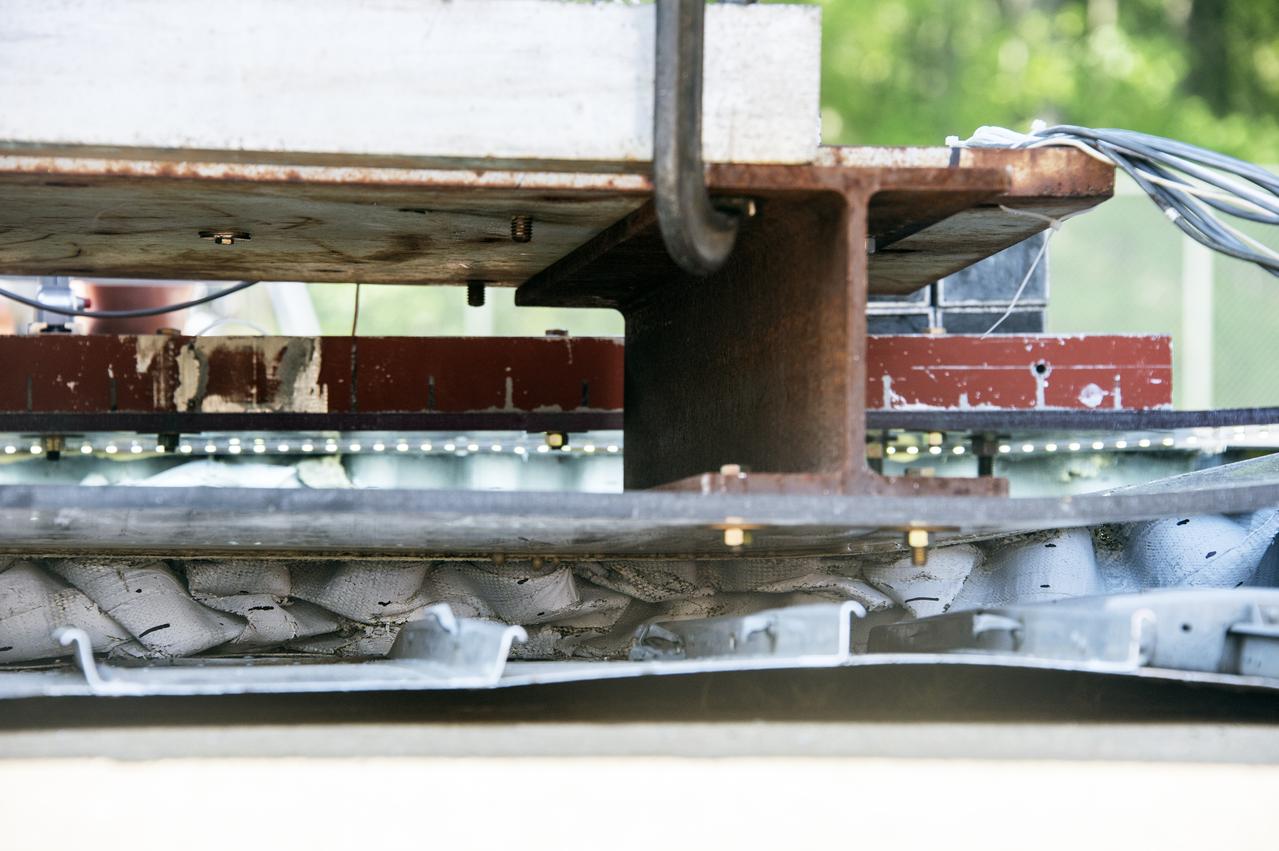
(Tract)2 Transport Rotorcraft Airframe Crash Testbed; Full Frame Drop Test: rotary wing crash worthiness, impact research at NASA Langley Research Center's Landing and Impact Research (LandIR) Facility Building 1297
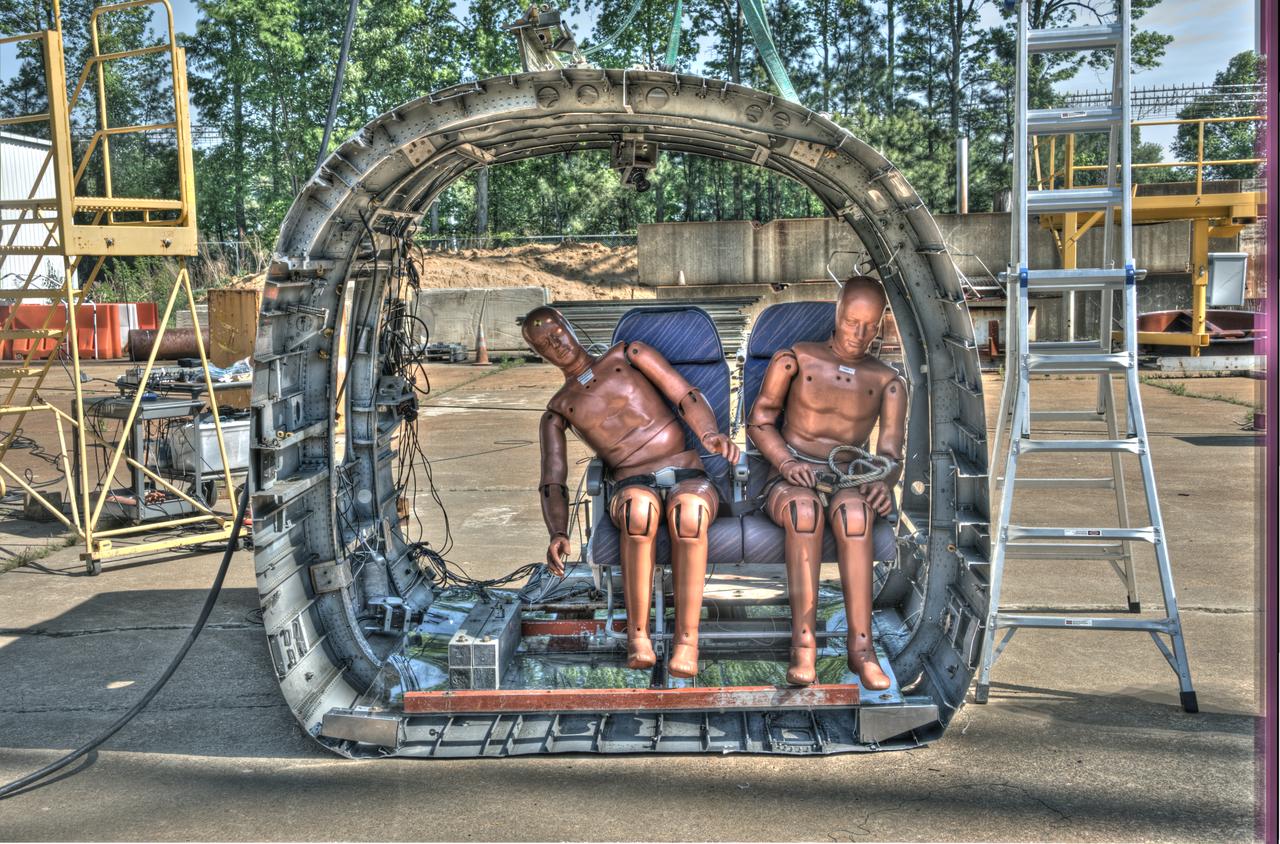
(Tract)2 Transport Rotorcraft Airframe Crash Testbed; Full Frame Drop Test: rotary wing crash worthiness, impact research at NASA Langley Research Center's Landing and Impact Research (LandIR) Facility Building 1297
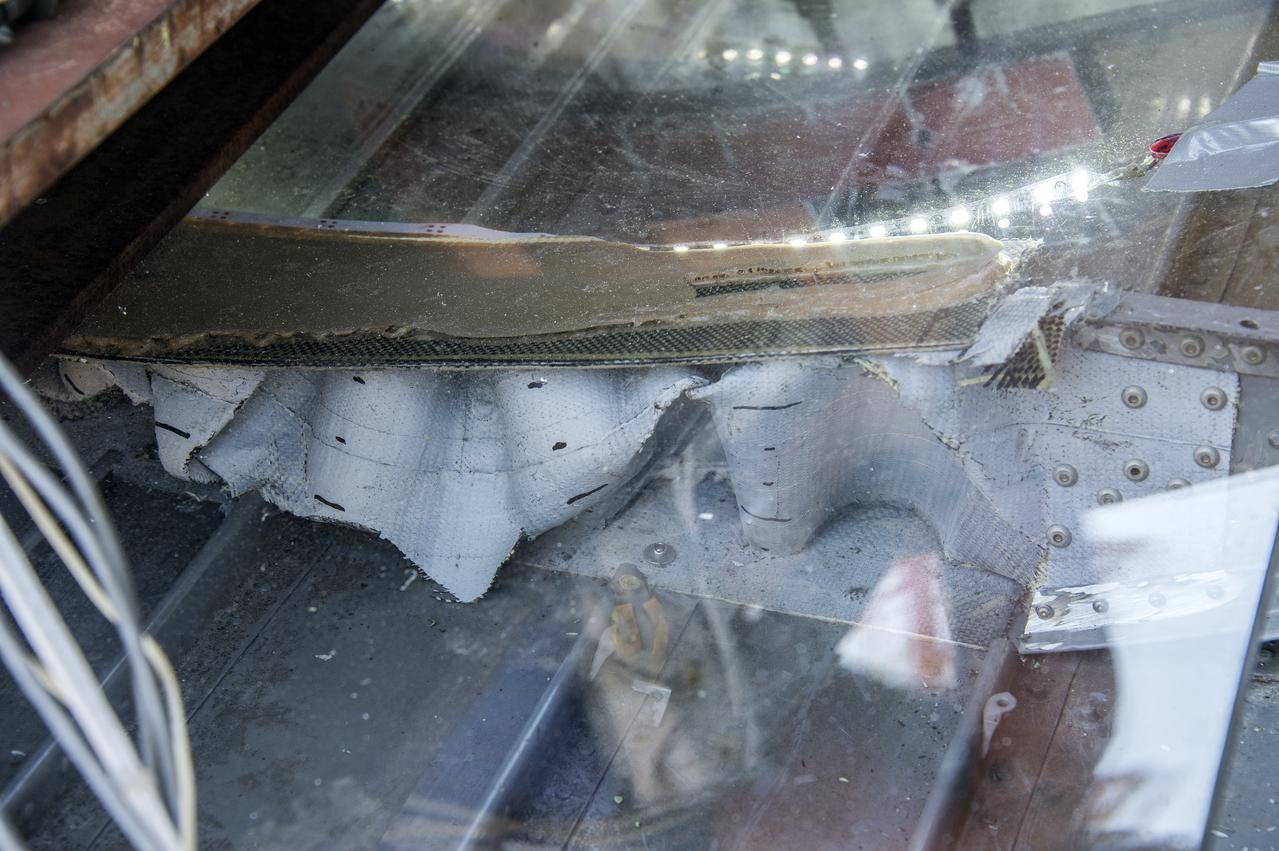
(Tract)2 Transport Rotorcraft Airframe Crash Testbed; Full Frame Drop Test: rotary wing crash worthiness, impact research at NASA Langley Research Center's Landing and Impact Research (LandIR) Facility Building 1297
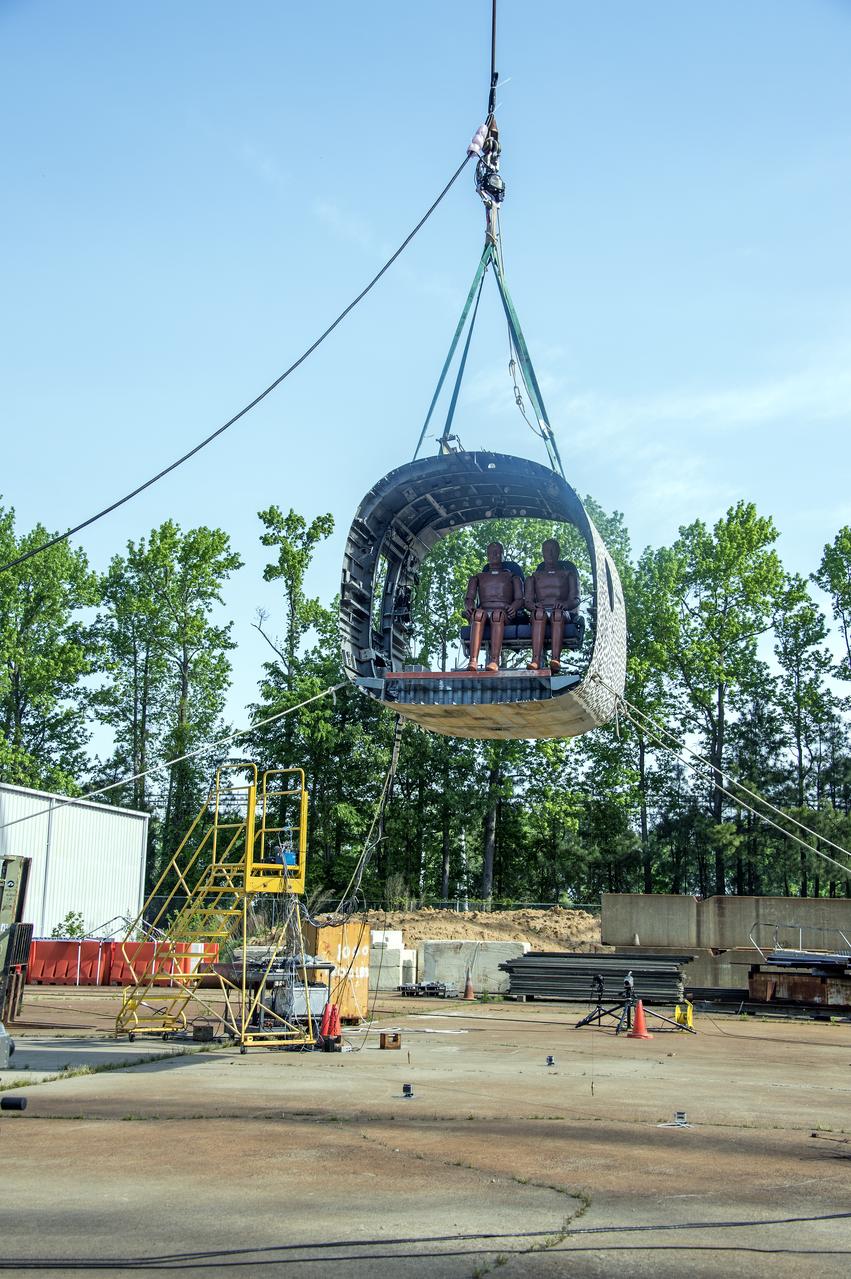
(Tract)2 Transport Rotorcraft Airframe Crash Testbed; Full Frame Drop Test: rotary wing crash worthiness, impact research at NASA Langley Research Center's Landing and Impact Research (LandIR) Facility Building 1297
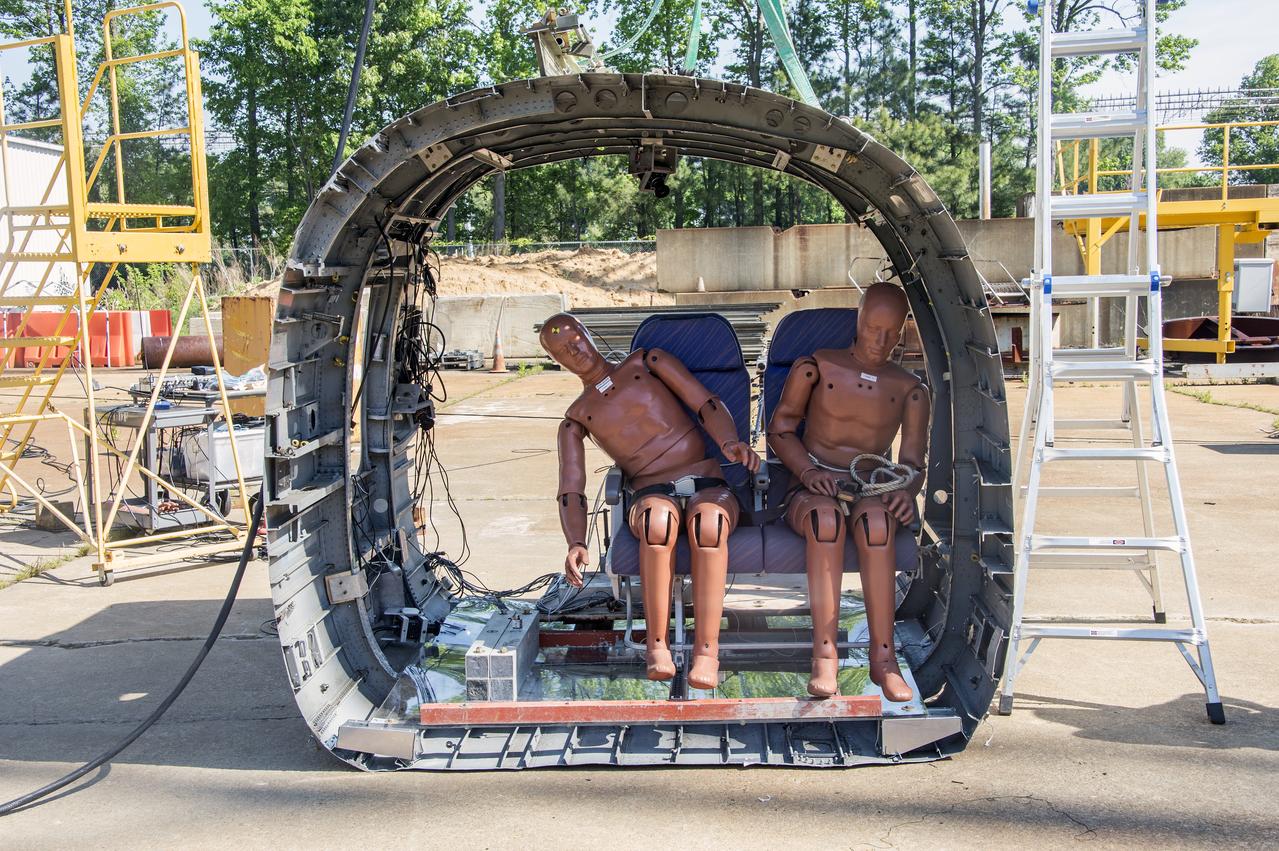
(Tract)2 Transport Rotorcraft Airframe Crash Testbed; Full Frame Drop Test: rotary wing crash worthiness, impact research at NASA Langley Research Center's Landing and Impact Research (LandIR) Facility Building 1297
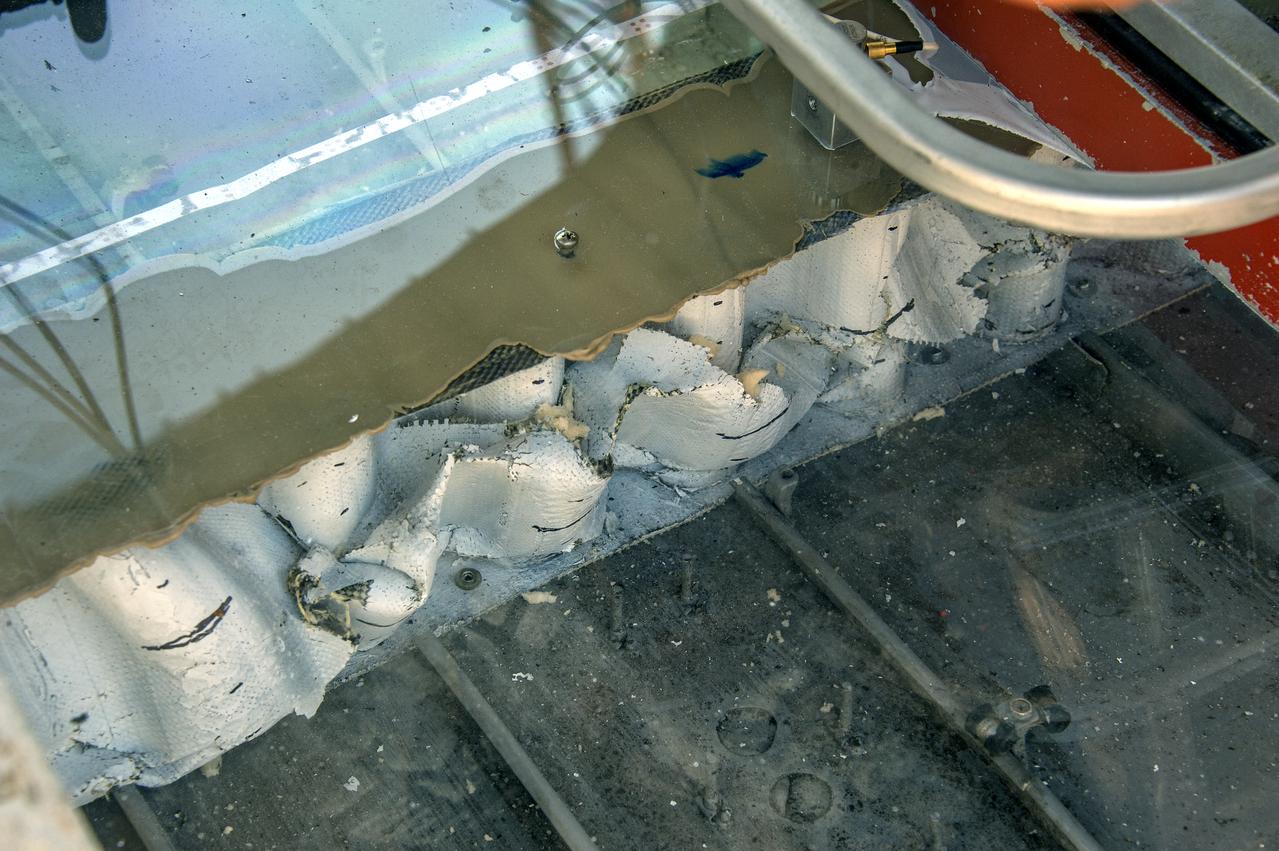
(Tract)2 Transport Rotorcraft Airframe Crash Testbed; Full Frame Drop Test: rotary wing crash worthiness, impact research at NASA Langley Research Center's Landing and Impact Research (LandIR) Facility Building 1297
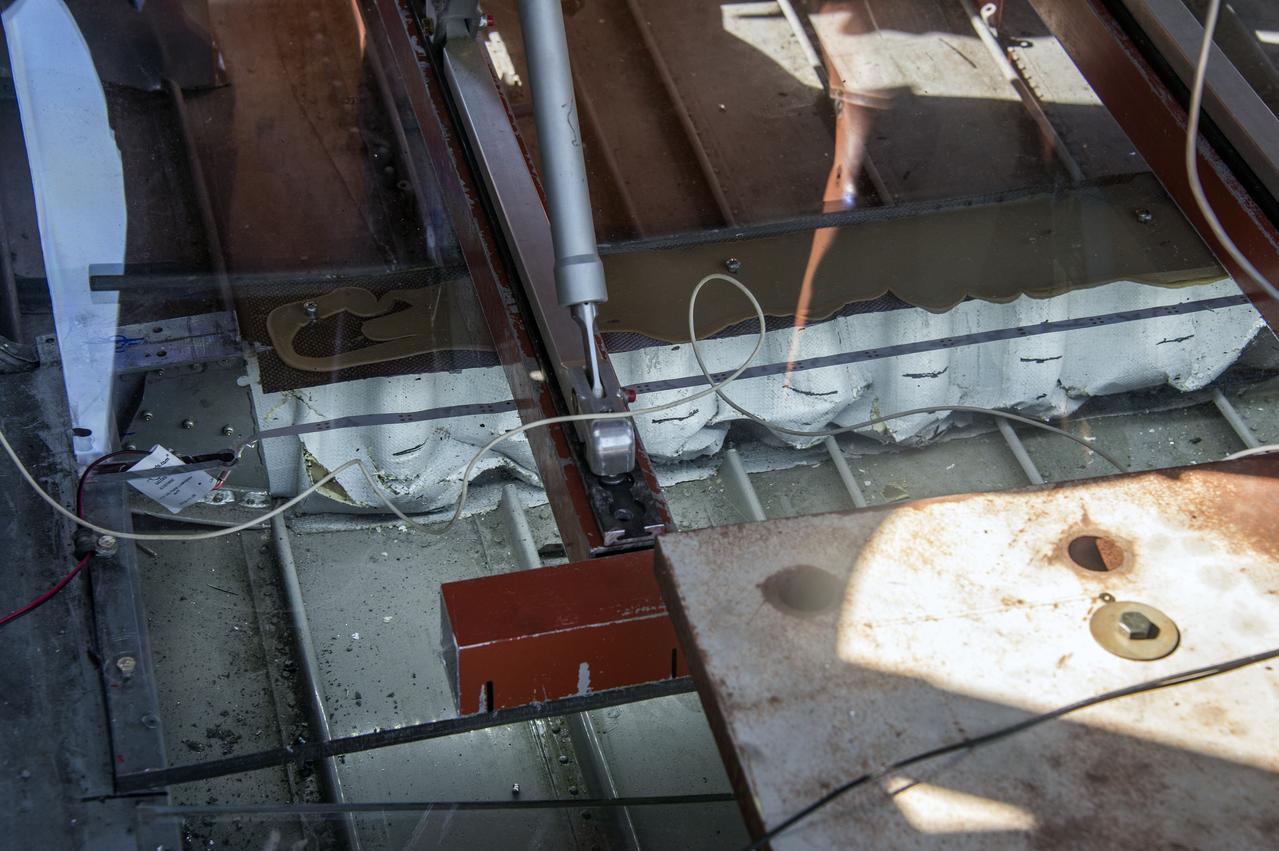
(Tract)2 Transport Rotorcraft Airframe Crash Testbed; Full Frame Drop Test: rotary wing crash worthiness, impact research at NASA Langley Research Center's Landing and Impact Research (LandIR) Facility Building 1297

(Tract)2 Transport Rotorcraft Airframe Crash Testbed; Full Frame Drop Test: rotary wing crash worthiness, impact research at NASA Langley Research Center's Landing and Impact Research (LandIR) Facility Building 1297
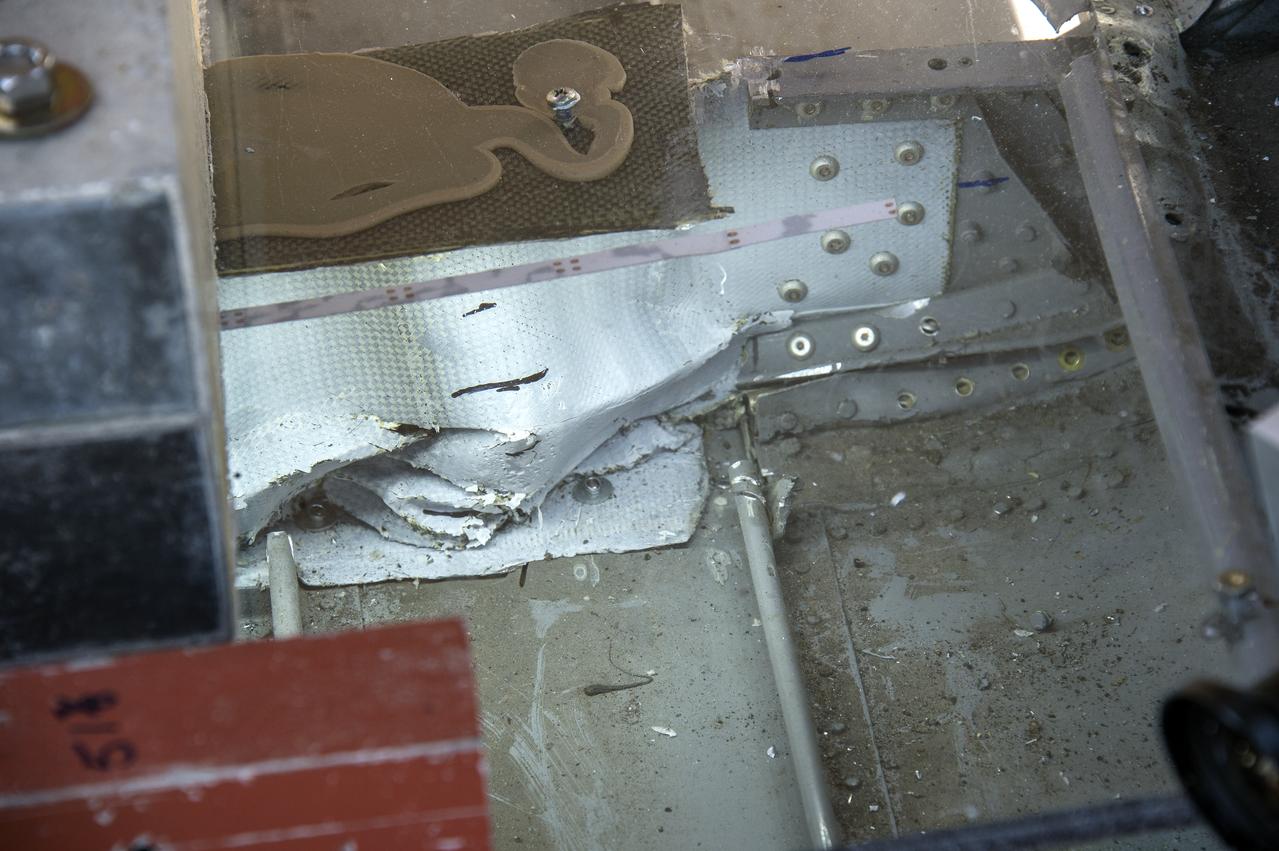
(Tract)2 Transport Rotorcraft Airframe Crash Testbed; Full Frame Drop Test: rotary wing crash worthiness, impact research at NASA Langley Research Center's Landing and Impact Research (LandIR) Facility Building 1297
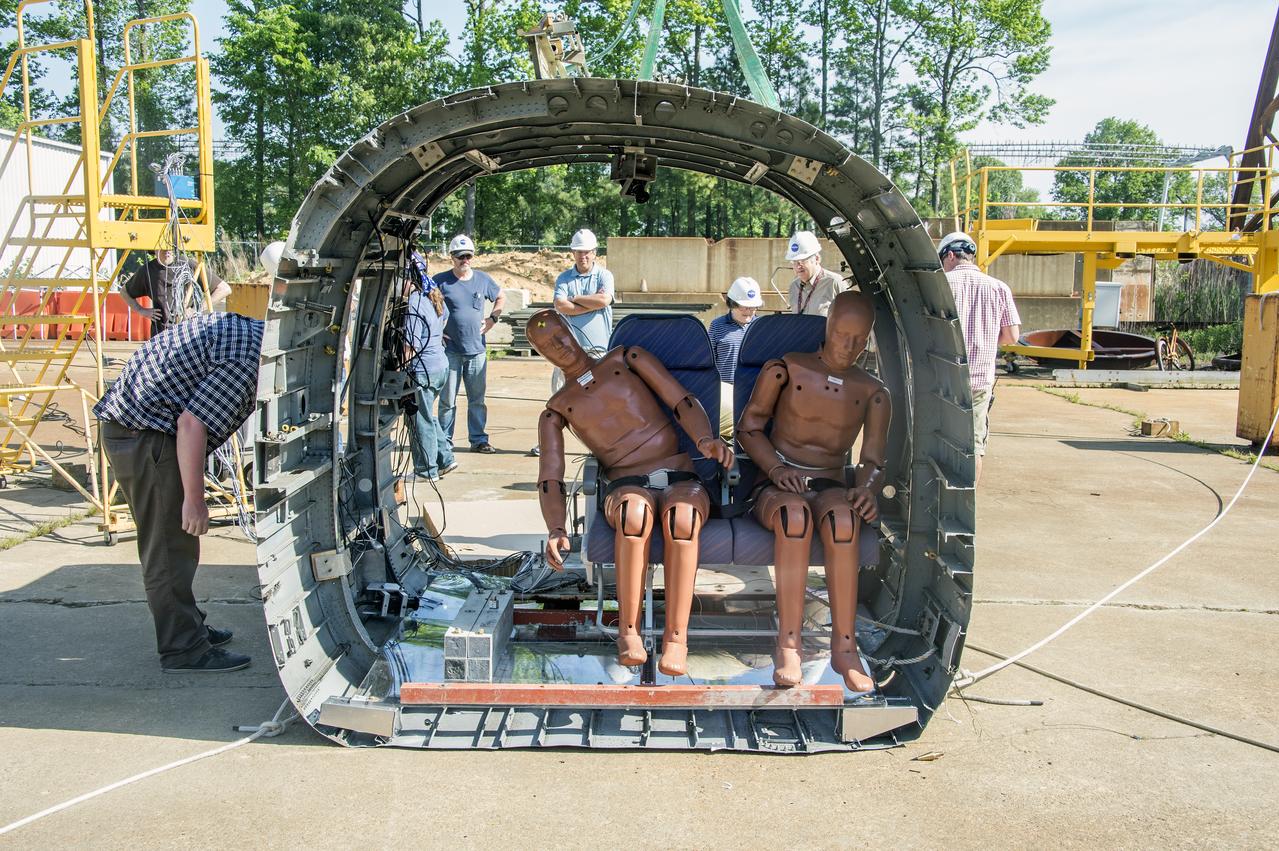
(Tract)2 Transport Rotorcraft Airframe Crash Testbed; Full Frame Drop Test: rotary wing crash worthiness, impact research at NASA Langley Research Center's Landing and Impact Research (LandIR) Facility Building 1297
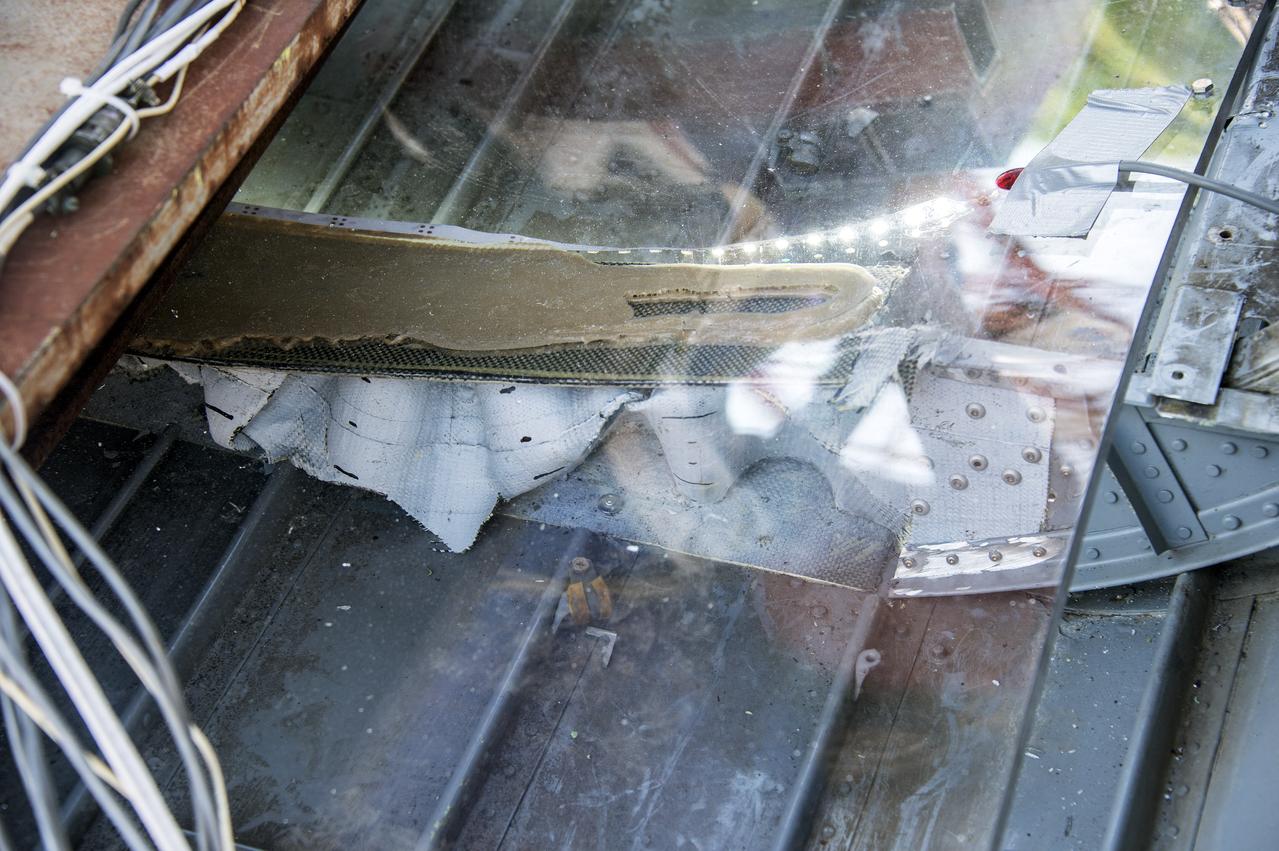
(Tract)2 Transport Rotorcraft Airframe Crash Testbed; Full Frame Drop Test: rotary wing crash worthiness, impact research at NASA Langley Research Center's Landing and Impact Research (LandIR) Facility Building 1297
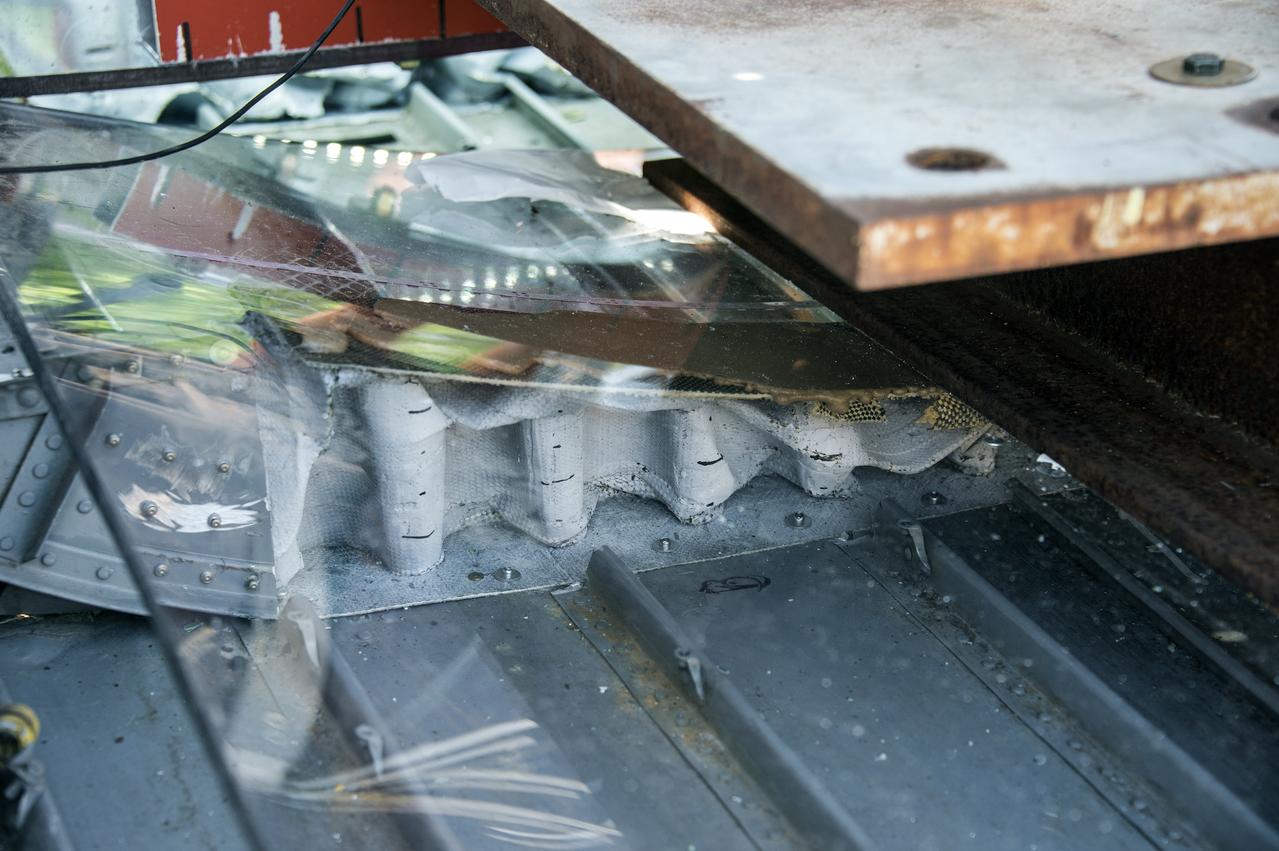
(Tract)2 Transport Rotorcraft Airframe Crash Testbed; Full Frame Drop Test: rotary wing crash worthiness, impact research at NASA Langley Research Center's Landing and Impact Research (LandIR) Facility Building 1297
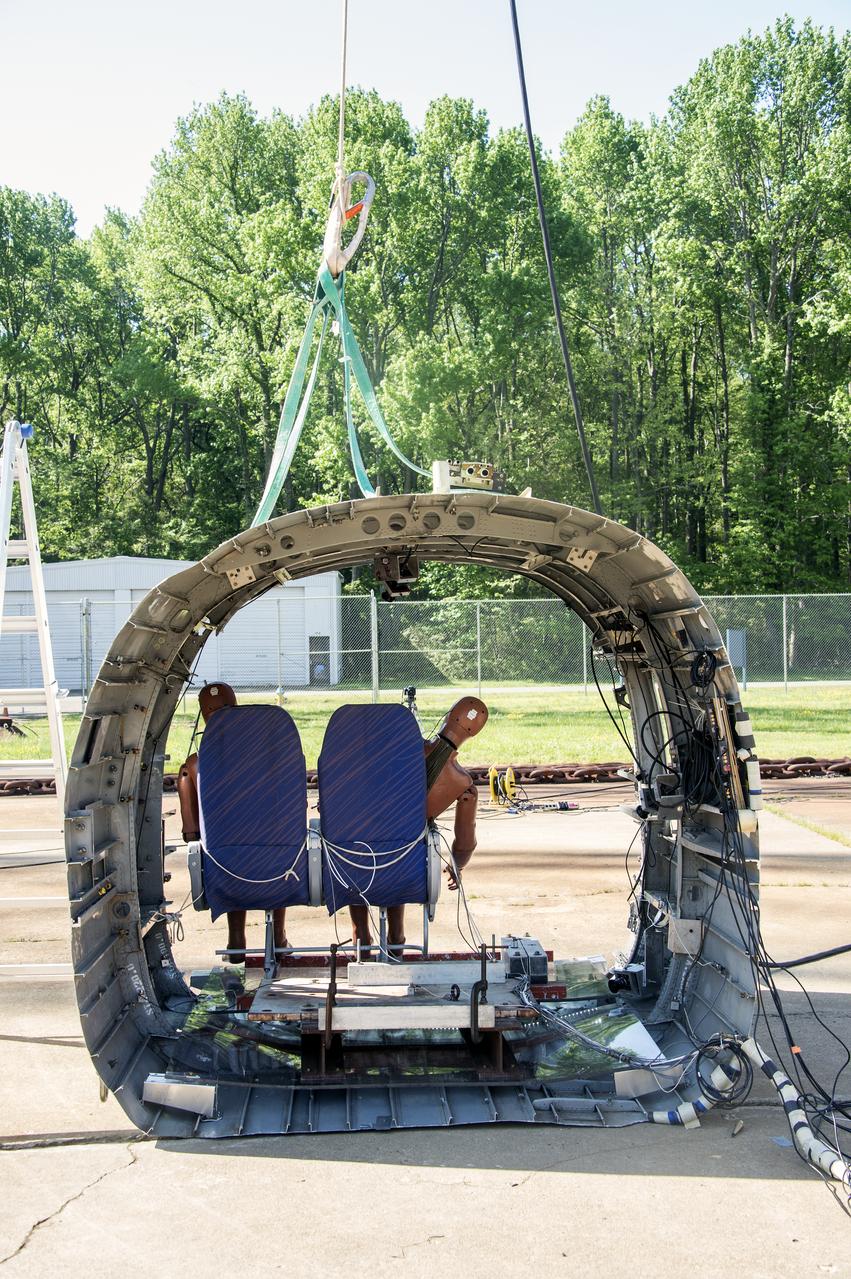
(Tract)2 Transport Rotorcraft Airframe Crash Testbed; Full Frame Drop Test: rotary wing crash worthiness, impact research at NASA Langley Research Center's Landing and Impact Research (LandIR) Facility Building 1297
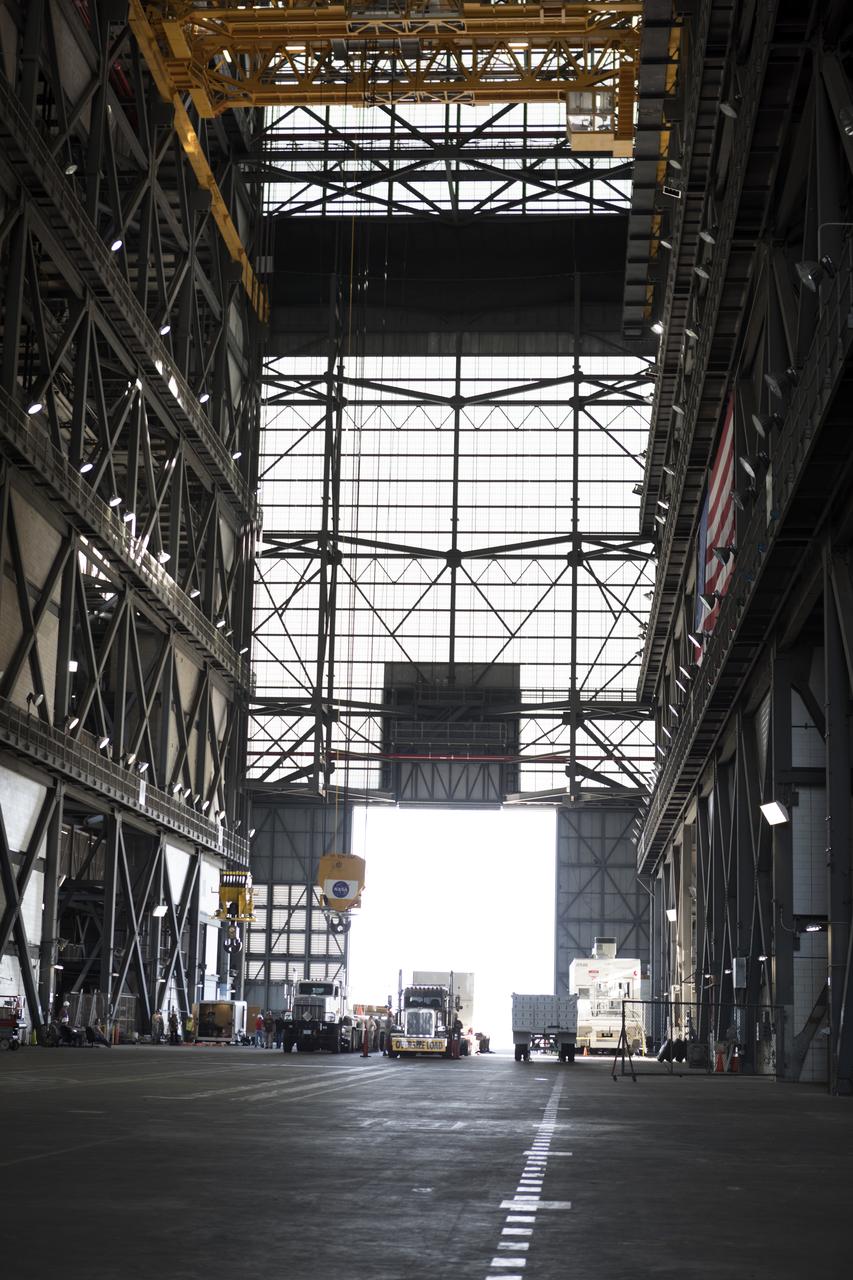
The ground test motor for Orion's Launch Abort System (LAS) arrives by flatbed truck in its shipping container in the transfer aisle of the Vehicle Assembly Building on July 20, 2018, at NASA's Kennedy Space Center in Florida. It will be transferred to the Rotation, Processing and Surge Facility where it will be inspected and prepared for transport to Space Launch Complex 46 (SLC-46) at Cape Canaveral Air Force Station for mechanical fit testing. This inert motor will not be used for flight, but will be used to certify flight hardware assembly in preparation for a full-stress test of the LAS, called Ascent Abort-2 (AA-2) flight test, scheduled for April 2019. During the test, the booster will launch from SLC 46, carrying a fully functional LAS and a 22,000-pound Orion test vehicle to an altitude of 31,000 feet and traveling at more than 1,000 miles an hour. The test will verify the LAS can steer the crew module and astronauts aboard to safety in the event of an issue with the Space Launch System (SLS) rocket when the spacecraft is under the highest aerodynamic loads it will experience during a rapid climb into space. NASA's Orion and Exploration Ground Systems programs and their contractors from Jacob's and Northrup Grumman in conjunction with the Air Force Space and Missile Center's Launch Operations branch are performing the pathfinding exercises and flight operations for AA-2.
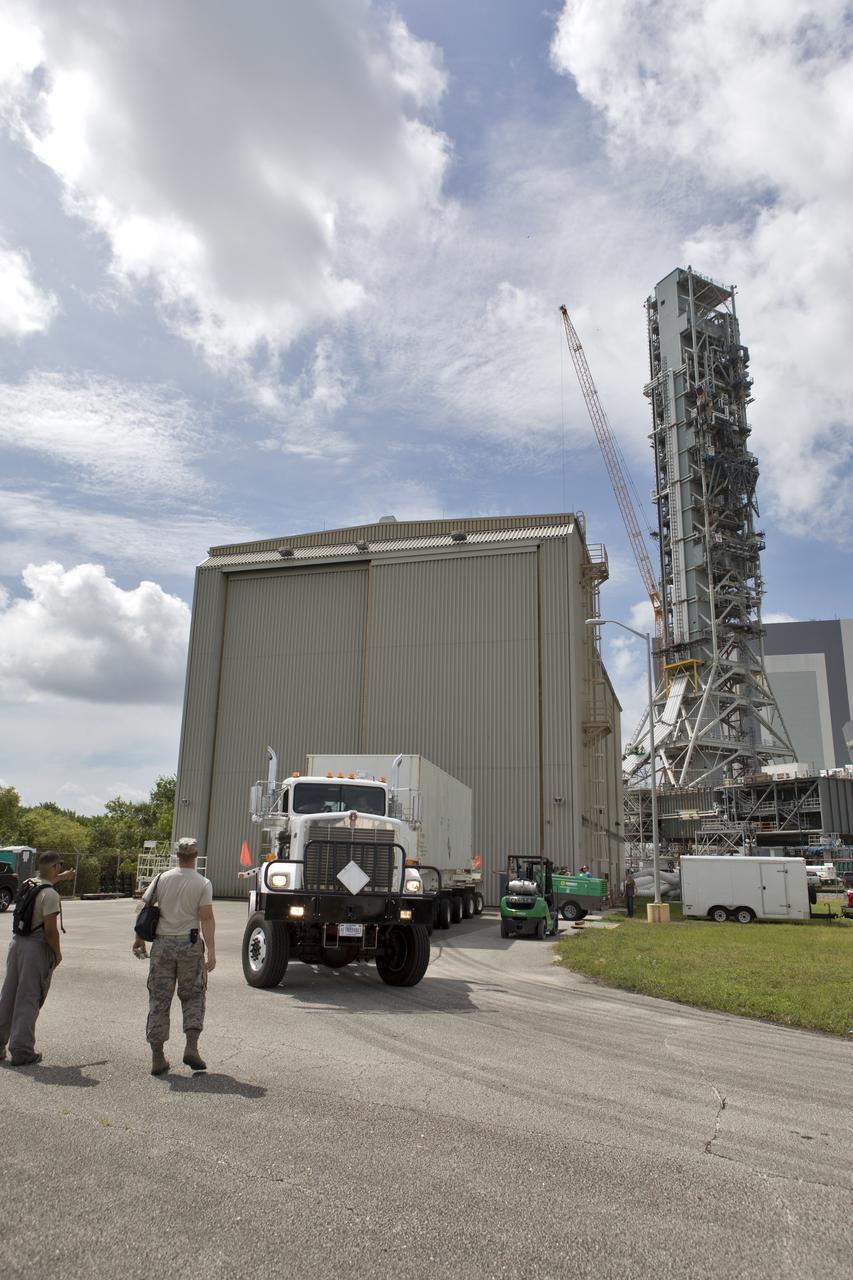
Secured on a flatbed transporter in its shipping container, the ground test motor for Orion's Launch Abort System (LAS) arrives at the Rotation, Processing and Surge Facility (RPSF) on July 20, 2018, at NASA's Kennedy Space Center in Florida. In the RPSF the motor will be inspected and prepared for transport to Space Launch Complex 46 (SLC-46) at Cape Canaveral Air Force Station for mechanical fit testing. This inert motor will not be used for flight, but will be used to certify flight hardware assembly in preparation for a full-stress test of the LAS, called Ascent Abort-2 (AA-2) flight test, scheduled for April 2019. During the test, the booster will launch from SLC 46, carrying a fully functional LAS and a 22,000-pound Orion test vehicle to an altitude of 31,000 feet and traveling at more than 1,000 miles an hour. The test will verify the LAS can steer the crew module and astronauts aboard to safety in the event of an issue with the Space Launch System (SLS) rocket when the spacecraft is under the highest aerodynamic loads it will experience during a rapid climb into space. NASA's Orion and Exploration Ground Systems programs and their contractors from Jacob's and Northrup Grumman in conjunction with the Air Force Space and Missile Center's Launch Operations branch SMC/LEXO, are performing the pathfinding exercises and flight operations for AA-2.
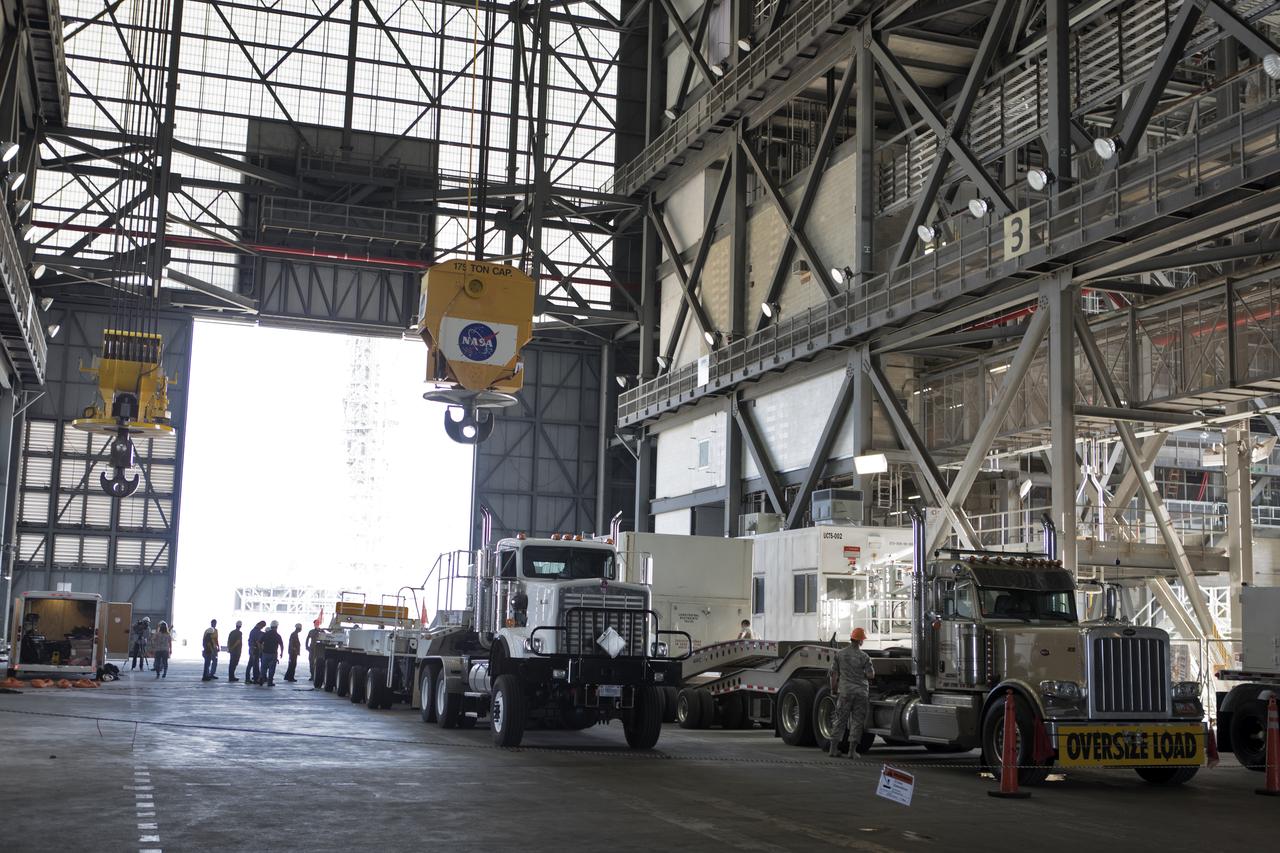
The ground test motor for Orion's Launch Abort System (LAS) arrives by flatbed truck in its shipping container in the transfer aisle of the Vehicle Assembly Building on July 20, 2018, at NASA's Kennedy Space Center in Florida. It will be transferred to the Rotation, Processing and Surge Facility where it will be inspected and prepared for transport to Space Launch Complex 46 (SLC-46) at Cape Canaveral Air Force Station for mechanical fit testing. This inert motor will not be used for flight, but will be used to certify flight hardware assembly in preparation for a full-stress test of the LAS, called Ascent Abort-2 (AA-2) flight test, scheduled for April 2019. During the test, the booster will launch from SLC 46, carrying a fully functional LAS and a 22,000-pound Orion test vehicle to an altitude of 31,000 feet and traveling at more than 1,000 miles an hour. The test will verify the LAS can steer the crew module and astronauts aboard to safety in the event of an issue with the Space Launch System (SLS) rocket when the spacecraft is under the highest aerodynamic loads it will experience during a rapid climb into space. NASA's Orion and Exploration Ground Systems programs and their contractors from Jacob's and Northrup Grumman in conjunction with the Air Force Space and Missile Center's Launch Operations branch SMC/LEXO, are performing the pathfinding exercises and flight operations for AA-2.
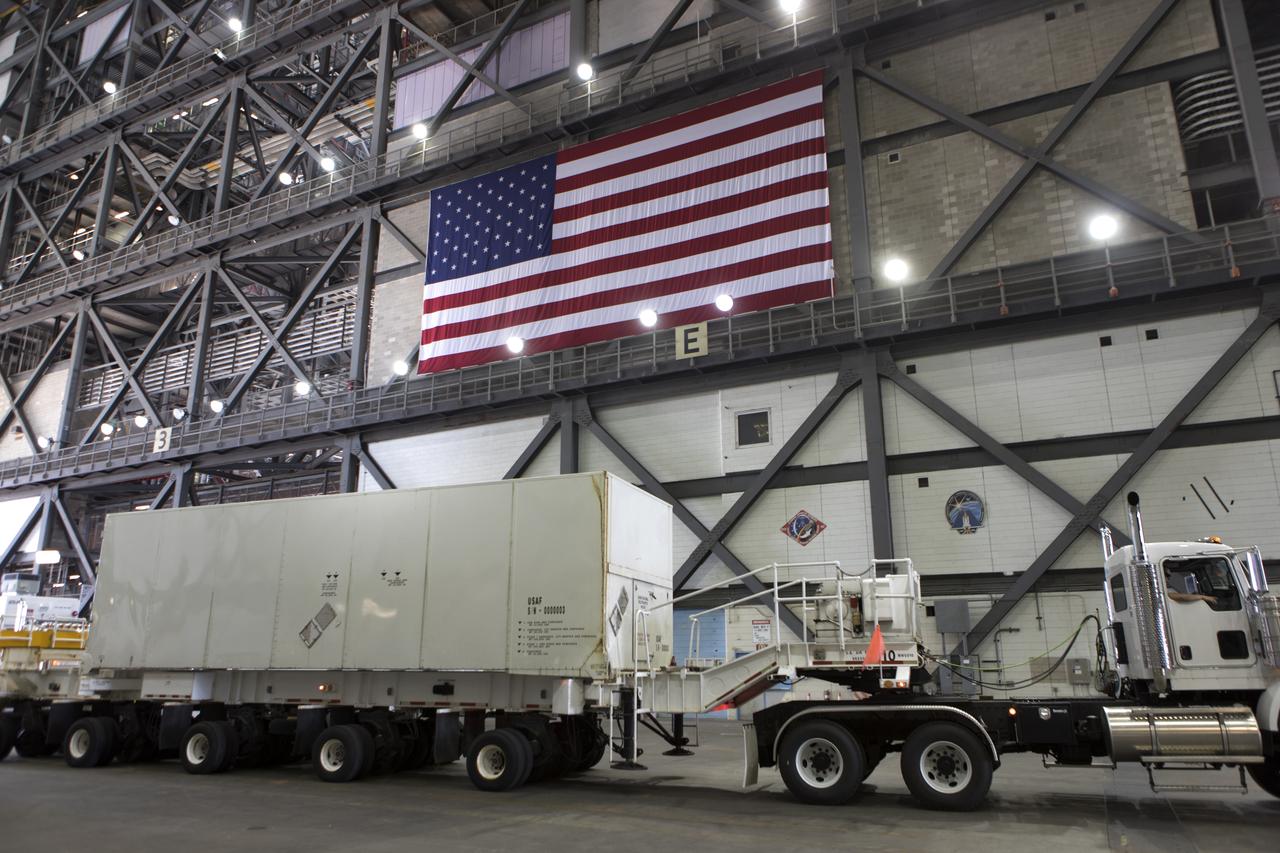
Secured on a flatbed transporter in its shipping container, the ground test motor for Orion's Launch Abort System (LAS) will be moved from the transfer aisle of the Vehicle Assembly Building to the Rotation, Processing and Surge Facility (RPSF) on July 20, 2018, at NASA's Kennedy Space Center in Florida. In the RPSF the motor will be inspected and prepared for transport to Space Launch Complex 46 (SLC-46) at Cape Canaveral Air Force Station for mechanical fit testing. This inert motor will not be used for flight, but will be used to certify flight hardware assembly in preparation for a full-stress test of the LAS, called Ascent Abort-2 (AA-2) flight test, scheduled for April 2019. During the test, the booster will launch from SLC 46, carrying a fully functional LAS and a 22,000-pound Orion test vehicle to an altitude of 31,000 feet and traveling at more than 1,000 miles an hour. The test will verify the LAS can steer the crew module and astronauts aboard to safety in the event of an issue with the Space Launch System (SLS) rocket when the spacecraft is under the highest aerodynamic loads it will experience during a rapid climb into space. NASA's Orion and Exploration Ground Systems programs and their contractors from Jacob's and Northrup Grumman in conjunction with the Air Force Space and Missile Center's Launch Operations branch SMC/LEXO, are performing the pathfinding exercises and flight operations for AA-2.
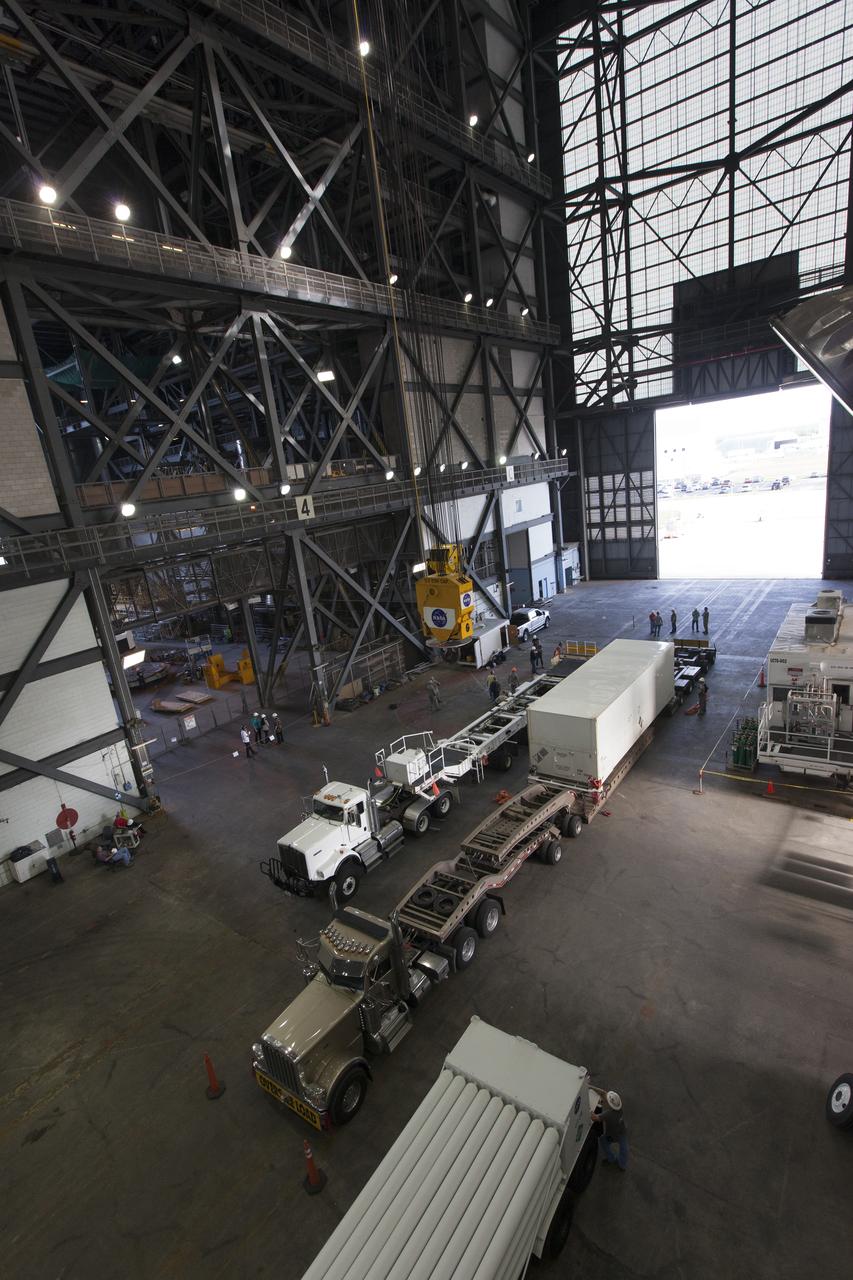
The ground test motor for Orion's Launch Abort System (LAS) arrives by flatbed truck in its shipping container in the transfer aisle of the Vehicle Assembly Building on July 20, 2018, at NASA's Kennedy Space Center in Florida. It will be transferred to the Rotation, Processing and Surge Facility where it will be inspected and prepared for transport to Space Launch Complex 46 (SLC-46) at Cape Canaveral Air Force Station for mechanical fit testing. This inert motor will not be used for flight, but will be used to certify flight hardware assembly in preparation for a full-stress test of the LAS, called Ascent Abort-2 (AA-2) flight test, scheduled for April 2019. During the test, the booster will launch from SLC 46, carrying a fully functional LAS and a 22,000-pound Orion test vehicle to an altitude of 31,000 feet and traveling at more than 1,000 miles an hour. The test will verify the LAS can steer the crew module and astronauts aboard to safety in the event of an issue with the Space Launch System (SLS) rocket when the spacecraft is under the highest aerodynamic loads it will experience during a rapid climb into space. NASA's Orion and Exploration Ground Systems programs and their contractors from Jacob's and Northrup Grumman in conjunction with the Air Force Space and Missile Center's Launch Operations branch SMC/LEXO, are performing the pathfinding exercises and flight operations for AA-2.
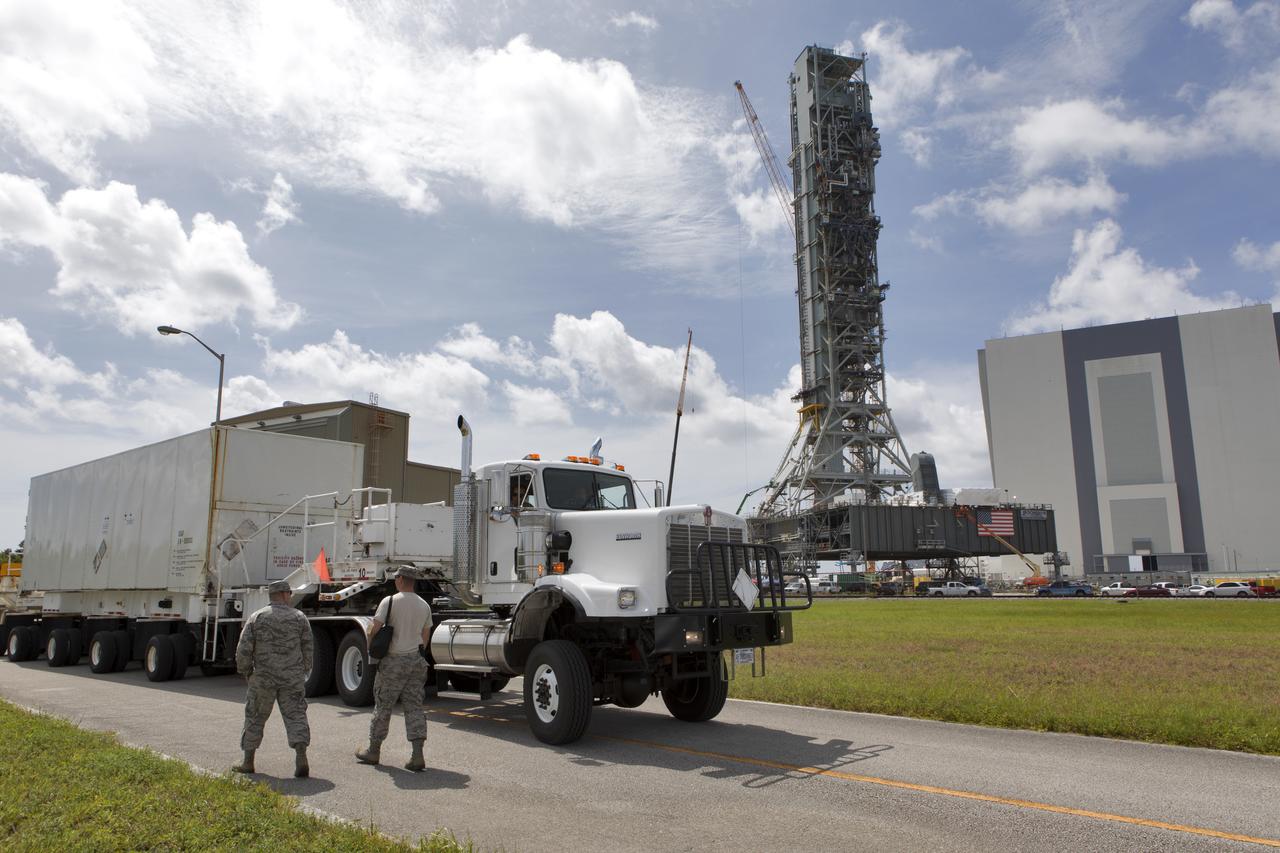
Secured on a flatbed transporter in its shipping container, the ground test motor for Orion's Launch Abort System (LAS) is moved to the Rotation, Processing and Surge Facility (RPSF) on July 20, 2018, at NASA's Kennedy Space Center in Florida. In the RPSF the motor will be inspected and prepared for transport to Space Launch Complex 46 (SLC-46) at Cape Canaveral Air Force Station for mechanical fit testing. This inert motor will not be used for flight, but will be used to certify flight hardware assembly in preparation for a full-stress test of the LAS, called Ascent Abort-2 (AA-2) flight test, scheduled for April 2019. During the test, the booster will launch from SLC 46, carrying a fully functional LAS and a 22,000-pound Orion test vehicle to an altitude of 31,000 feet and traveling at more than 1,000 miles an hour. The test will verify the LAS can steer the crew module and astronauts aboard to safety in the event of an issue with the Space Launch System (SLS) rocket when the spacecraft is under the highest aerodynamic loads it will experience during a rapid climb into space. NASA's Orion and Exploration Ground Systems programs and their contractors from Jacob's and Northrup Grumman in conjunction with the Air Force Space and Missile Center's Launch Operations branch SMC/LEXO, are performing the pathfinding exercises and flight operations for AA-2.
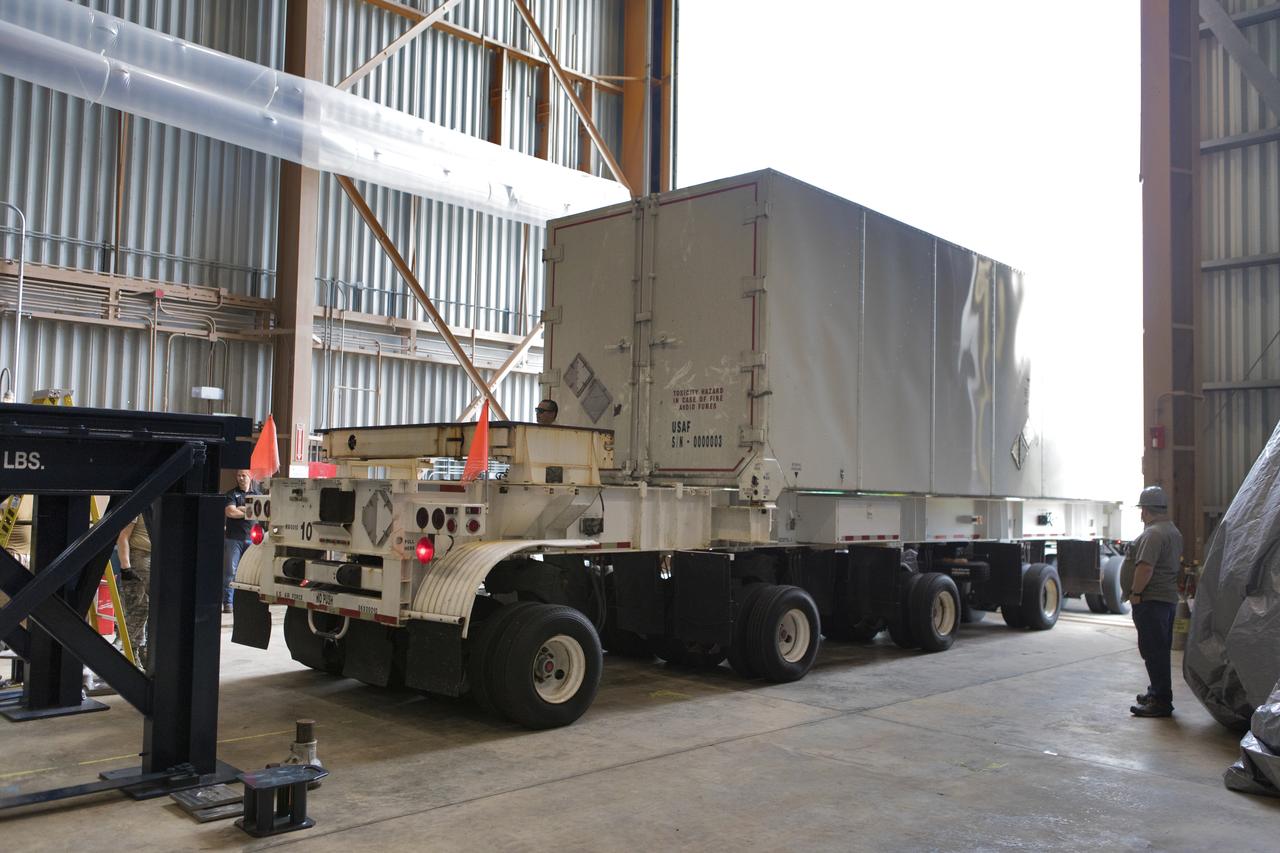
Secured on a flatbed transporter in its shipping container, the ground test motor for Orion's Launch Abort System (LAS) arrives at the Rotation, Processing and Surge Facility (RPSF) on July 20, 2018, at NASA's Kennedy Space Center in Florida. In the RPSF the motor will be inspected and prepared for transport to Space Launch Complex 46 (SLC-46) at Cape Canaveral Air Force Station for mechanical fit testing. This inert motor will not be used for flight, but will be used to certify flight hardware assembly in preparation for a full-stress test of the LAS, called Ascent Abort-2 (AA-2) flight test, scheduled for April 2019. During the test, the booster will launch from SLC 46, carrying a fully functional LAS and a 22,000-pound Orion test vehicle to an altitude of 31,000 feet and traveling at more than 1,000 miles an hour. The test will verify the LAS can steer the crew module and astronauts aboard to safety in the event of an issue with the Space Launch System (SLS) rocket when the spacecraft is under the highest aerodynamic loads it will experience during a rapid climb into space. NASA's Orion and Exploration Ground Systems programs and their contractors from Jacob's and Northrup Grumman in conjunction with the Air Force Space and Missile Center's Launch Operations branch SMC/LEXO, are performing the pathfinding exercises and flight operations for AA-2.
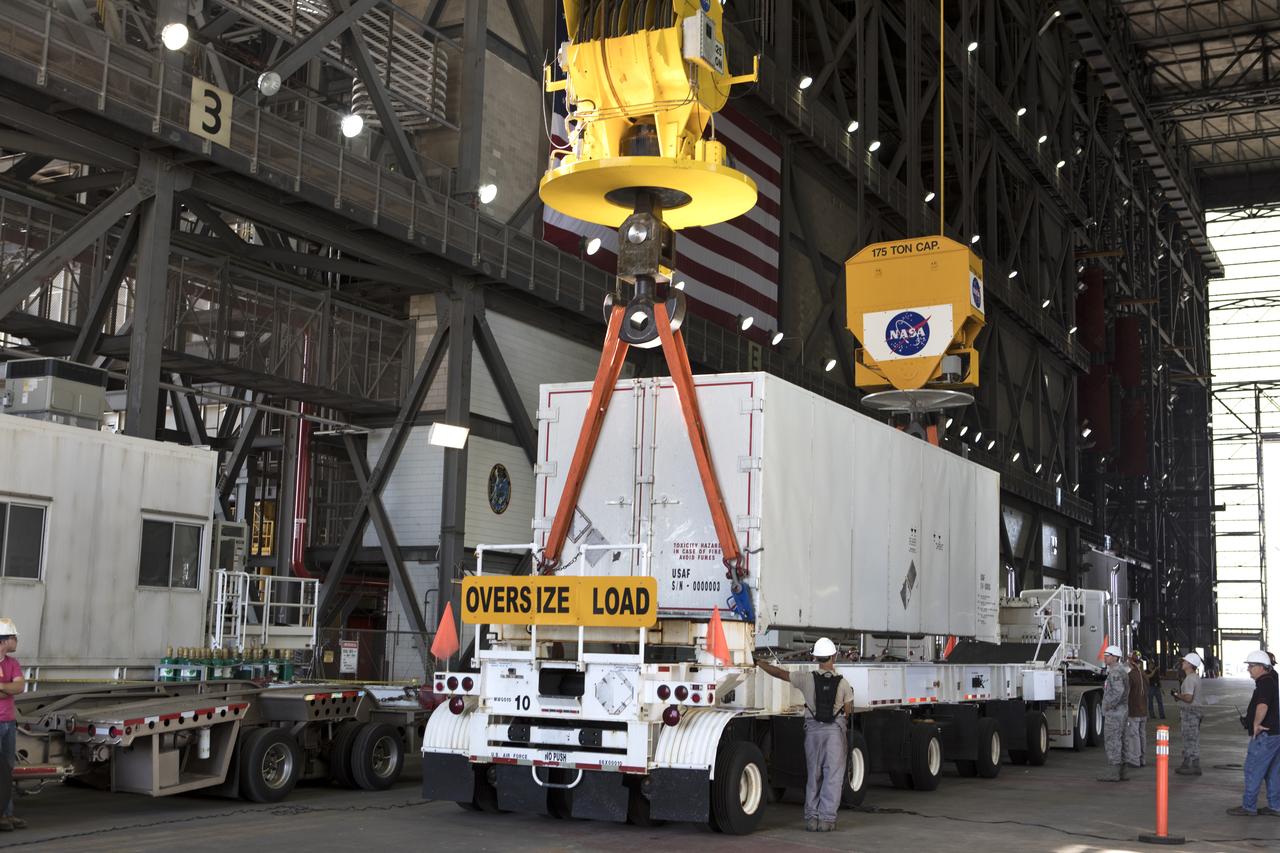
In the transfer aisle inside the Vehicle Assembly Building (VAB) at NASA's Kennedy Space Center in Florida, a crane lowers the shipping container with the ground test motor for Orion's Launch Abort System (LAS) inside onto another transporter on July 20, 2018. The container will be moved to the Rotation, Processing and Surge Facility where it will be inspected and prepared for transport to Space Launch Complex 46 (SLC-46) at Cape Canaveral Air Force Station for mechanical fit testing. This inert motor will not be used for flight, but will be used to certify flight hardware assembly in preparation for a full-stress test of the LAS, called Ascent Abort-2 (AA-2) flight test, scheduled for April 2019. During the test, the booster will launch from SLC 46, carrying a fully functional LAS and a 22,000-pound Orion test vehicle to an altitude of 31,000 feet and traveling at more than 1,000 miles an hour. The test will verify the LAS can steer the crew module and astronauts aboard to safety in the event of an issue with the Space Launch System (SLS) rocket when the spacecraft is under the highest aerodynamic loads it will experience during a rapid climb into space. NASA's Orion and Exploration Ground Systems programs and their contractors from Jacob's and Northrup Grumman in conjunction with the Air Force Space and Missile Center's Launch Operations branch SMC/LEXO, are performing the pathfinding exercises and flight operations for AA-2.

Jenny Devolites, AA-2 Crew Module manager, participates in a prelaunch news conference for NASA’s Ascent Abort-2 (AA-2) flight test at the agency’s Kennedy Space Center in Florida on July 1, 2019. For AA-2, a test version of the Orion spacecraft attached to a fully functional Launch Abort System (LAS) will launch atop a Northrop Grumman provided booster on July 2, 2019, from Launch Pad 46 at Cape Canaveral Air Force Station in Florida. During AA-2, the booster will send the LAS and Orion to an altitude of 31,000 feet, traveling at more than 1,000 mph. The LAS’ three motors will work together to pull the crew module away from the booster and prepare it for splashdown in the Atlantic Ocean. The flight test will prove that the abort system can pull crew to safety in the unlikely event of an emergency during ascent.
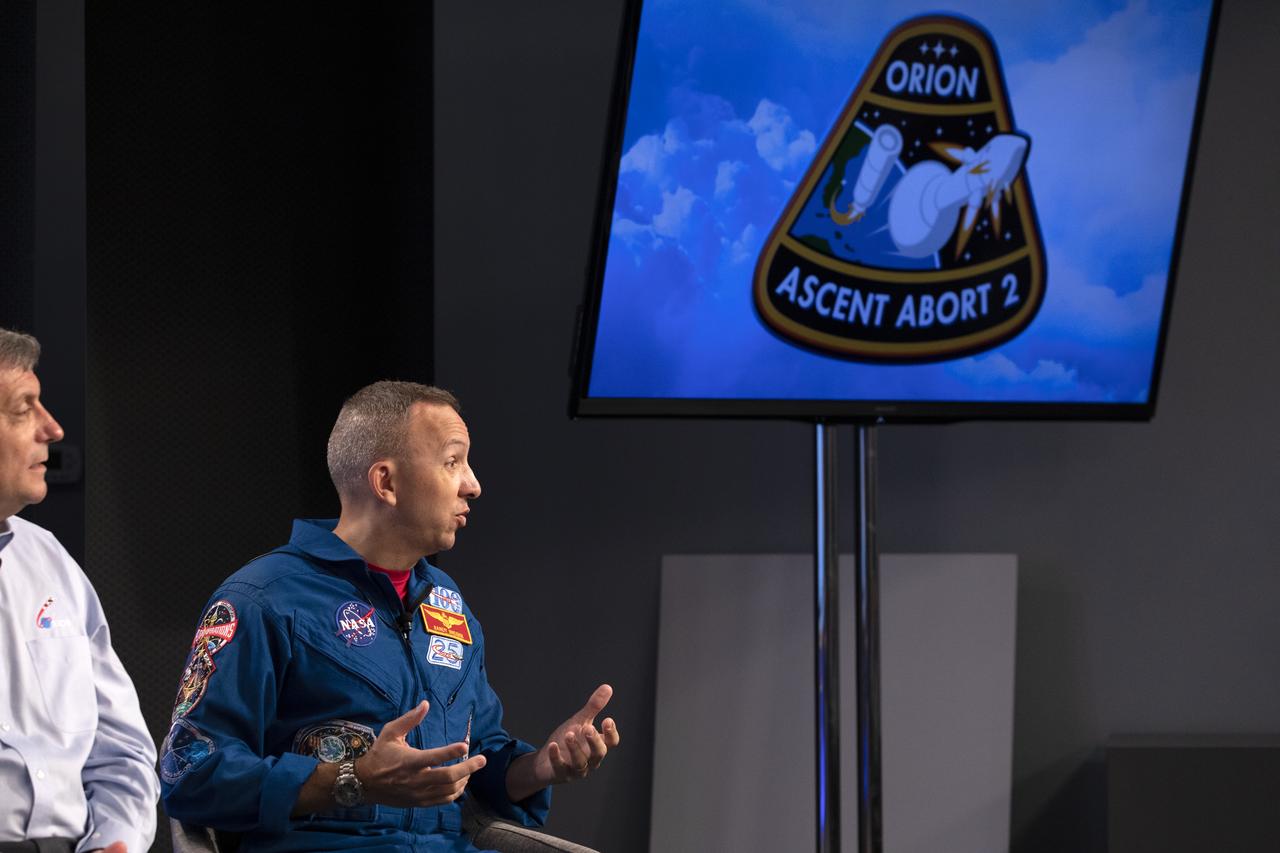
From left, Mark Kirasich, Orion Program manager; and Randy Bresnik, NASA astronaut, participate in a prelaunch news conference for NASA’s Ascent Abort-2 (AA-2) flight test at the agency’s Kennedy Space Center in Florida on July 1, 2019. For AA-2, a test version of the Orion spacecraft attached to a fully functional Launch Abort System (LAS) will launch atop a Northrop Grumman provided booster on July 2, 2019, from Launch Pad 46 at Cape Canaveral Air Force Station in Florida. During AA-2, the booster will send the LAS and Orion to an altitude of 31,000 feet, traveling at more than 1,000 mph. The LAS’ three motors will work together to pull the crew module away from the booster and prepare it for splashdown in the Atlantic Ocean. The flight test will prove that the abort system can pull crew to safety in the unlikely event of an emergency during ascent.
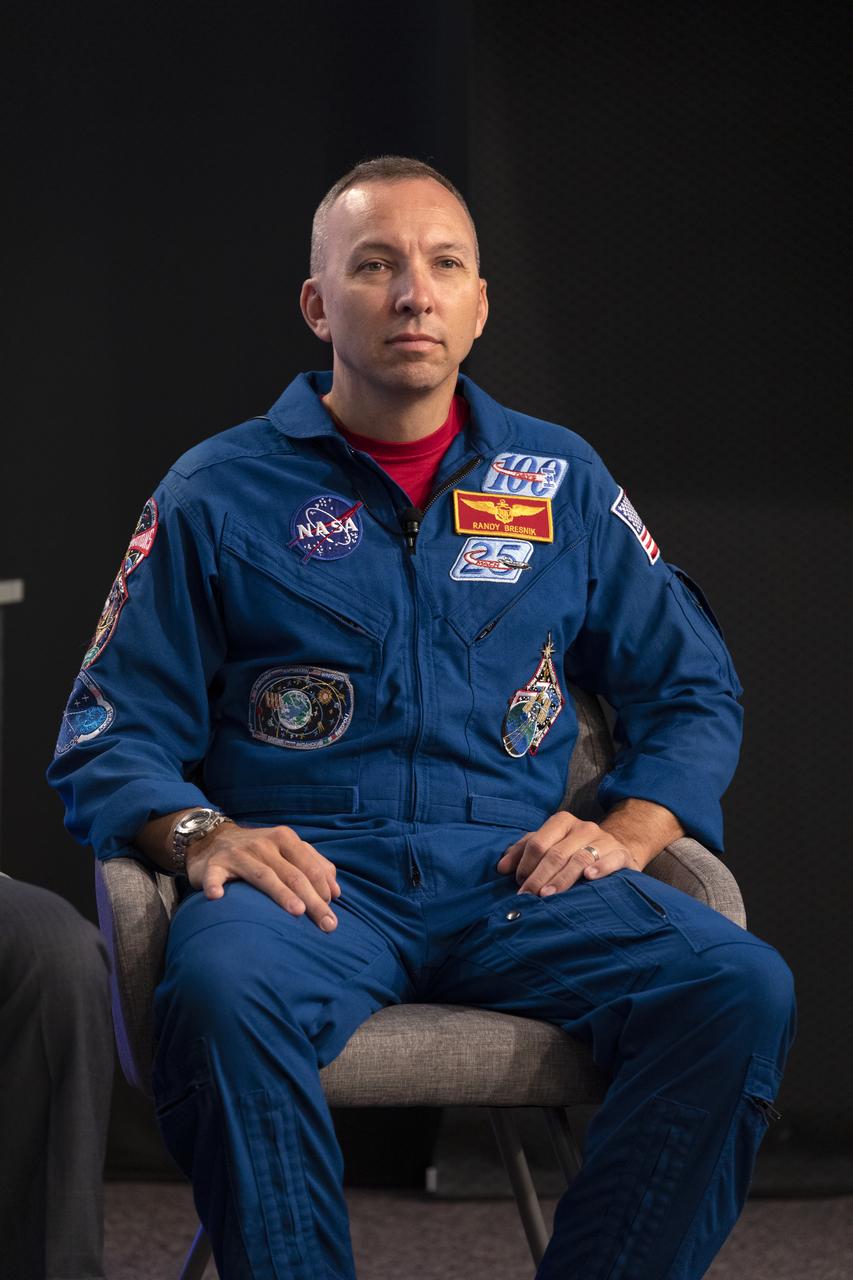
Randy Bresnik, NASA astronaut, participates in a prelaunch news conference for NASA’s Ascent Abort-2 (AA-2) flight test at the agency’s Kennedy Space Center in Florida on July 1, 2019. For AA-2, a test version of the Orion spacecraft attached to a fully functional Launch Abort System (LAS) will launch atop a Northrop Grumman provided booster on July 2, 2019, from Launch Pad 46 at Cape Canaveral Air Force Station in Florida. During AA-2, the booster will send the LAS and Orion to an altitude of 31,000 feet, traveling at more than 1,000 mph. The LAS’ three motors will work together to pull the crew module away from the booster and prepare it for splashdown in the Atlantic Ocean. The flight test will prove that the abort system can pull crew to safety in the unlikely event of an emergency during ascent.

Mark Kirasich, Orion Program manager, participates in a prelaunch news conference for NASA’s Ascent Abort-2 (AA-2) flight test at the agency’s Kennedy Space Center in Florida on July 1, 2019. For AA-2, a test version of the Orion spacecraft attached to a fully functional Launch Abort System (LAS) will launch atop a Northrop Grumman provided booster on July 2, 2019, from Launch Pad 46 at Cape Canaveral Air Force Station in Florida. During AA-2, the booster will send the LAS and Orion to an altitude of 31,000 feet, traveling at more than 1,000 mph. The LAS’ three motors will work together to pull the crew module away from the booster and prepare it for splashdown in the Atlantic Ocean. The flight test will prove that the abort system can pull crew to safety in the unlikely event of an emergency during ascent.
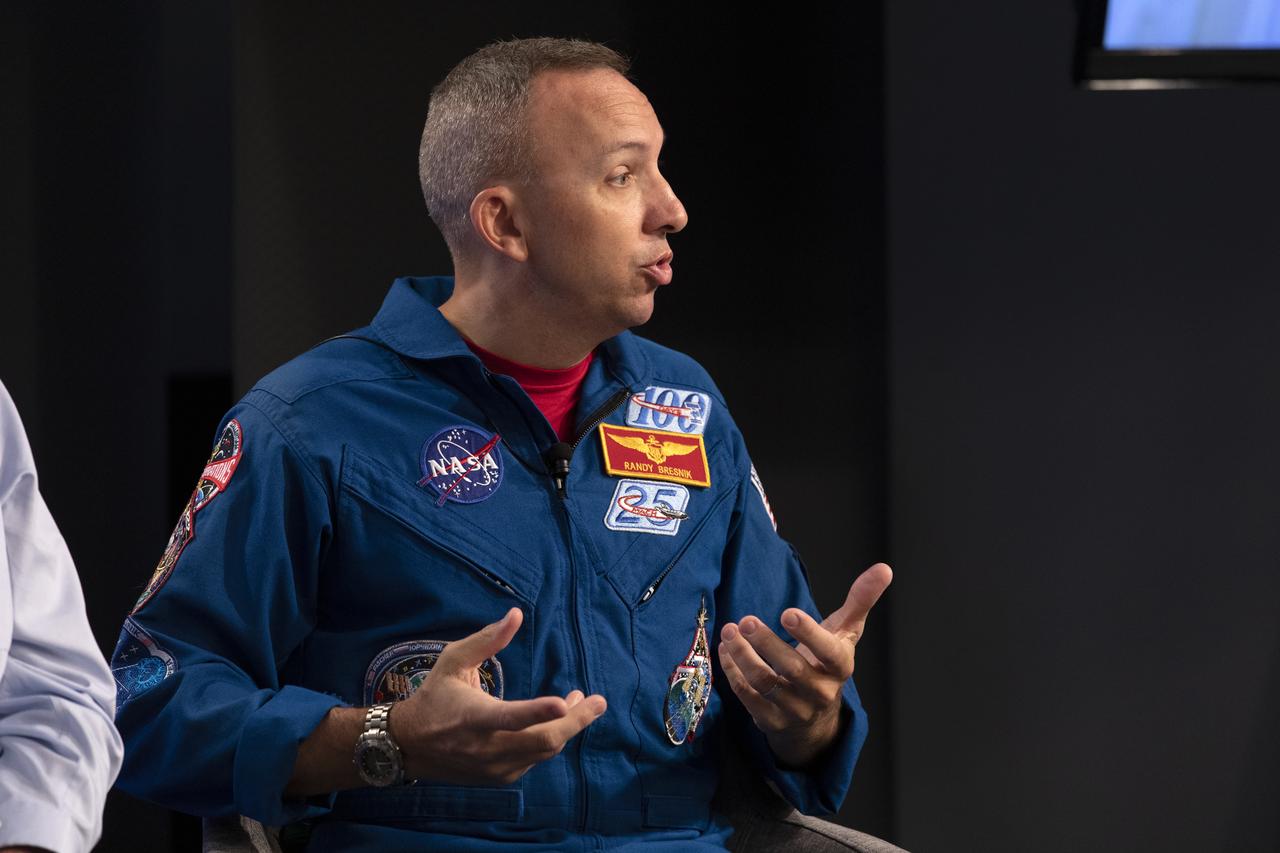
Randy Bresnik, NASA astronaut, answers a question from a member of the news media during a prelaunch news conference for NASA’s Ascent Abort-2 (AA-2) flight test at the agency’s Kennedy Space Center in Florida on July 1, 2019. For AA-2, a test version of the Orion spacecraft attached to a fully functional Launch Abort System (LAS) will launch atop a Northrop Grumman provided booster on July 2, 2019, from Launch Pad 46 at Cape Canaveral Air Force Station in Florida. During AA-2, the booster will send the LAS and Orion to an altitude of 31,000 feet, traveling at more than 1,000 mph. The LAS’ three motors will work together to pull the crew module away from the booster and prepare it for splashdown in the Atlantic Ocean. The flight test will prove that the abort system can pull crew to safety in the unlikely event of an emergency during ascent.
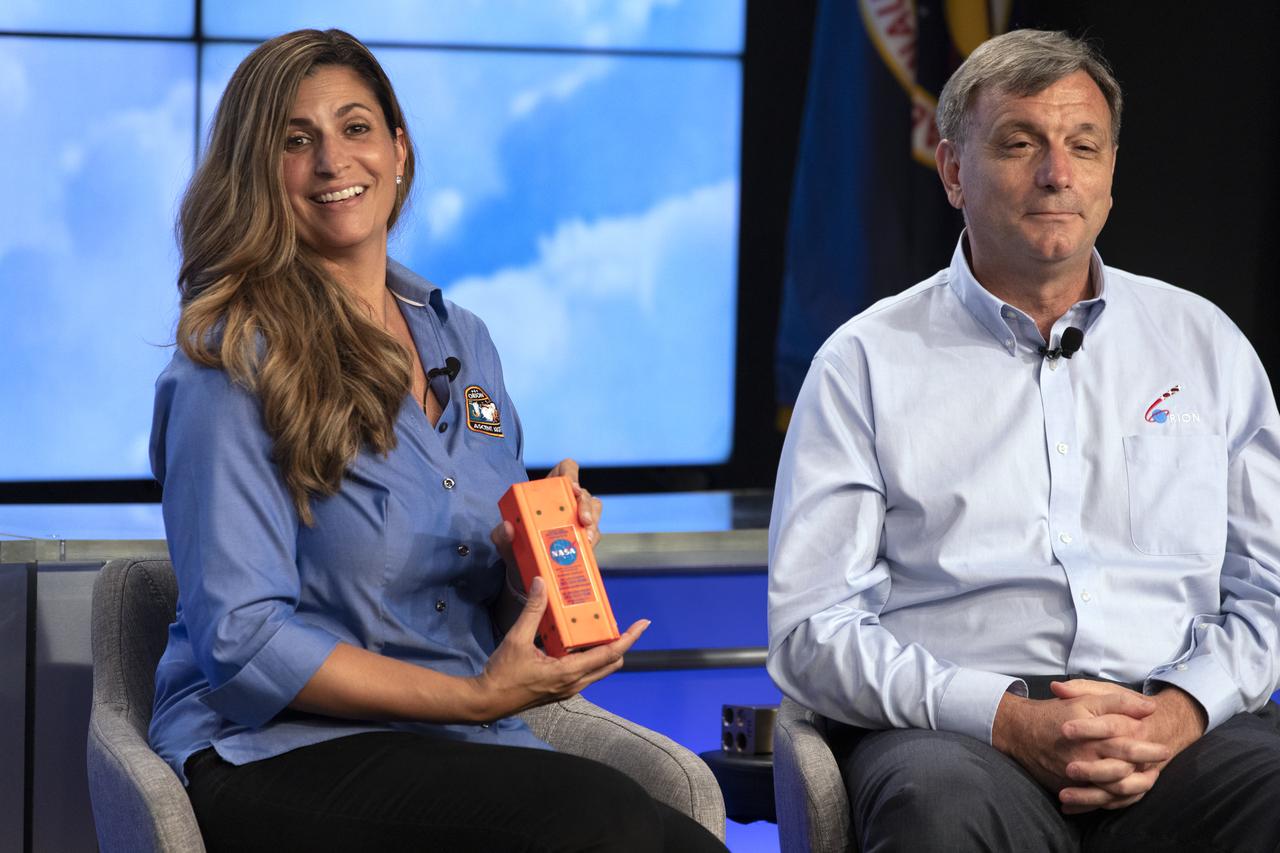
From left, Jenny Devolites, AA-2 Crew Module manager; and Mark Kirasich, Orion Program manager, participate in a prelaunch news conference for NASA’s Ascent Abort-2 (AA-2) flight test at the agency’s Kennedy Space Center in Florida on July 1, 2019. Devolites displays an example of a data recorder attached to the LAS that will be retrieved after the abort test. For AA-2, a test version of the Orion spacecraft attached to a fully functional Launch Abort System (LAS) will launch atop a Northrop Grumman provided booster on July 2, 2019, from Launch Pad 46 at Cape Canaveral Air Force Station in Florida. During AA-2, the booster will send the LAS and Orion to an altitude of 31,000 feet, traveling at more than 1,000 mph. The LAS’ three motors will work together to pull the crew module away from the booster and prepare it for splashdown in the Atlantic Ocean. The flight test will prove that the abort system can pull crew to safety in the unlikely event of an emergency during ascent.
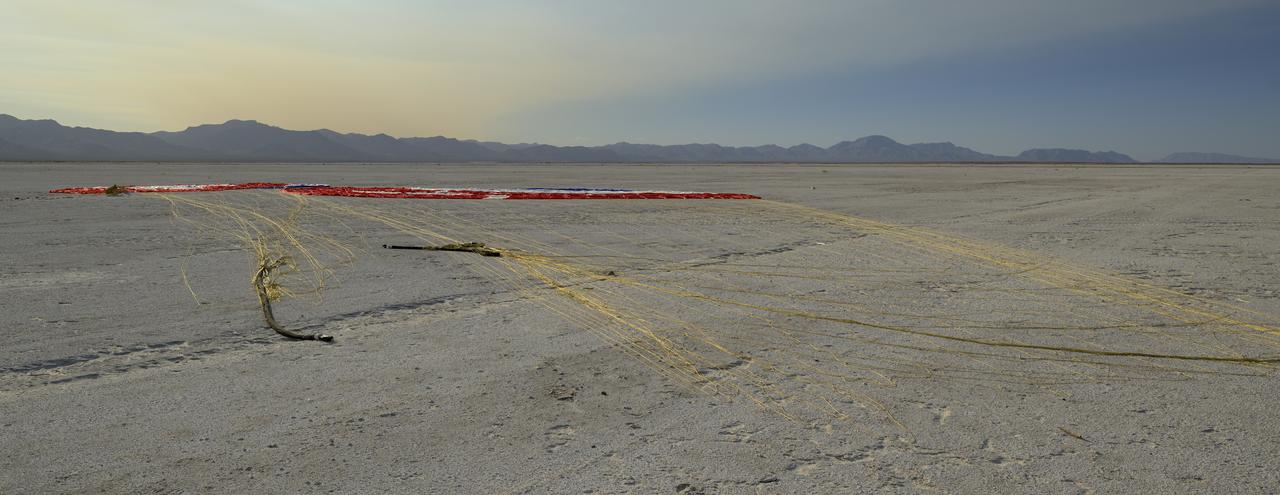
The Boeing CST-100 Starliner parachute is seen after the spacecraft landed at White Sands Missile Range’s Space Harbor, Wednesday, May 25, 2022, in New Mexico. Boeing’s Orbital Flight Test-2 (OFT-2) is Starliner’s second uncrewed flight test to the International Space Station as part of NASA's Commercial Crew Program. OFT-2 serves as an end-to-end test of the system's capabilities. Photo Credit: (NASA/Bill Ingalls)
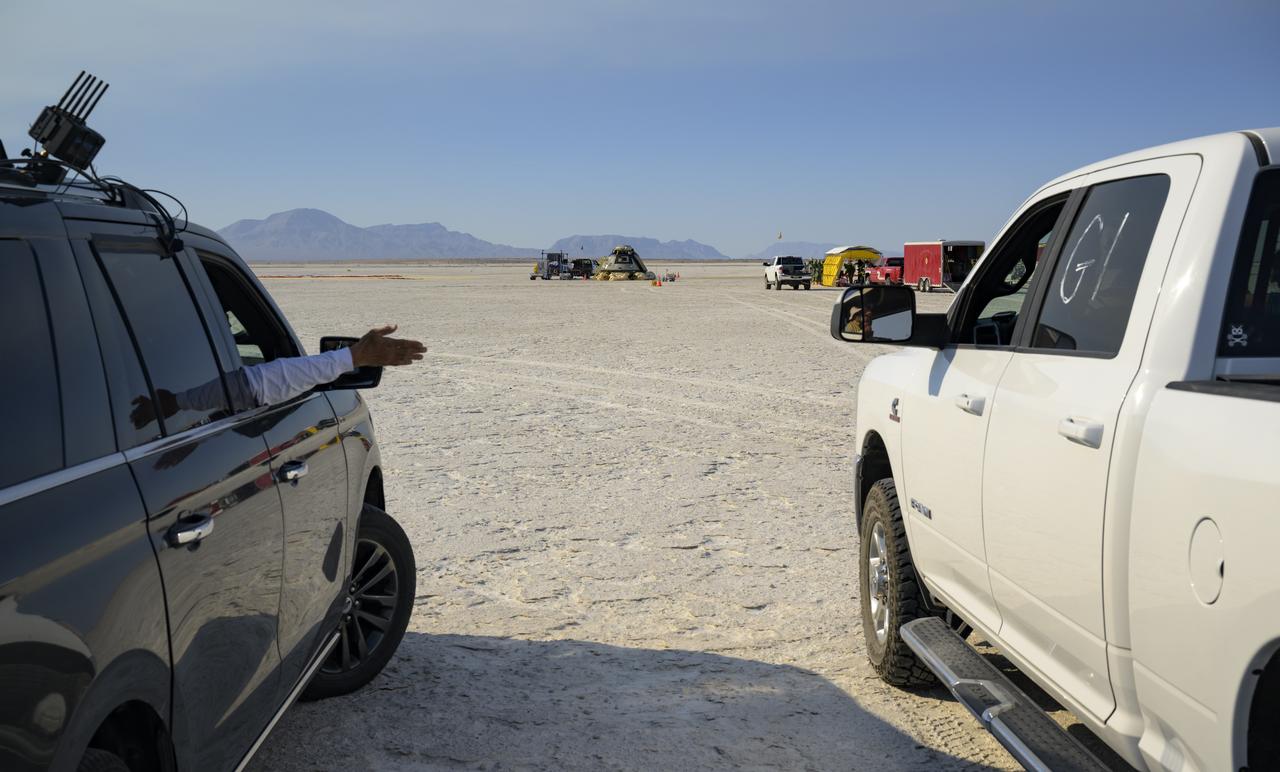
Boeing and NASA teams work around Boeing’s CST-100 Starliner spacecraft after it landed at White Sands Missile Range’s Space Harbor, Wednesday, May 25, 2022, in New Mexico. Boeing’s Orbital Flight Test-2 (OFT-2) is Starliner’s second uncrewed flight test to the International Space Station as part of NASA's Commercial Crew Program. OFT-2 serves as an end-to-end test of the system's capabilities. Photo Credit: (NASA/Bill Ingalls)
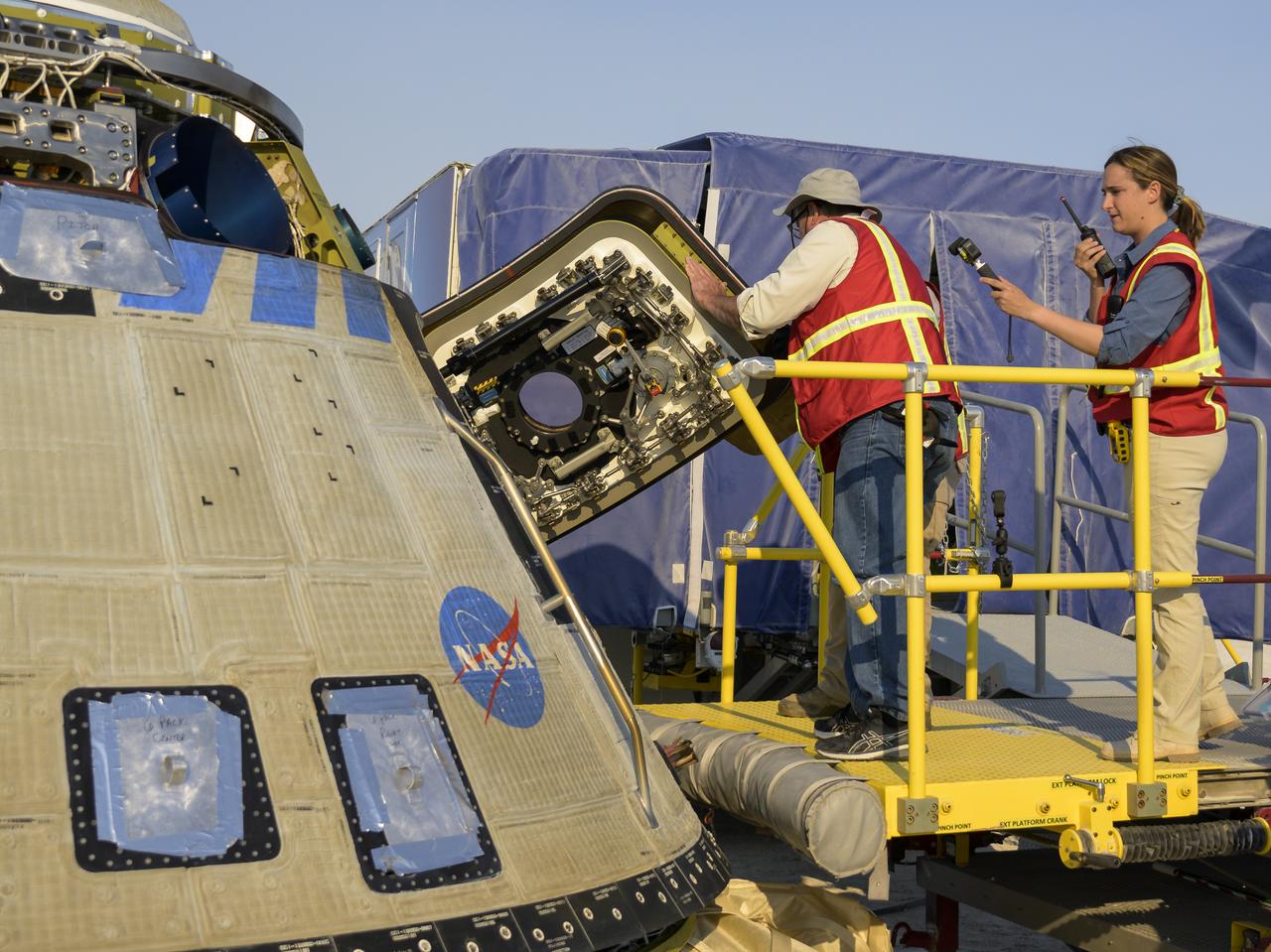
Boeing and NASA teams work around Boeing’s CST-100 Starliner spacecraft after it landed at White Sands Missile Range’s Space Harbor, Wednesday, May 25, 2022, in New Mexico. Boeing’s Orbital Flight Test-2 (OFT-2) is Starliner’s second uncrewed flight test to the International Space Station as part of NASA's Commercial Crew Program. OFT-2 serves as an end-to-end test of the system's capabilities. Photo Credit: (NASA/Bill Ingalls)
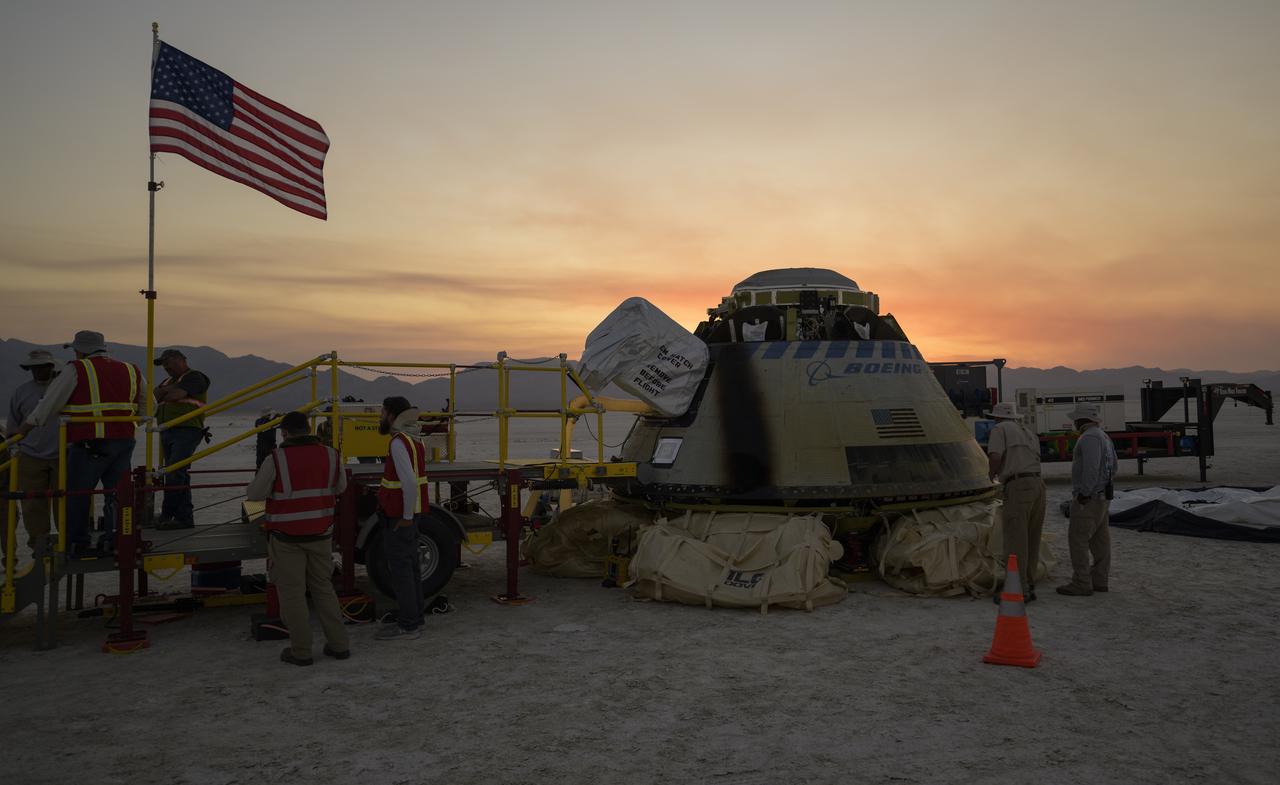
Boeing and NASA teams work around Boeing’s CST-100 Starliner spacecraft after it landed at White Sands Missile Range’s Space Harbor, Wednesday, May 25, 2022, in New Mexico. Boeing’s Orbital Flight Test-2 (OFT-2) is Starliner’s second uncrewed flight test to the International Space Station as part of NASA's Commercial Crew Program. OFT-2 serves as an end-to-end test of the system's capabilities. Photo Credit: (NASA/Bill Ingalls)
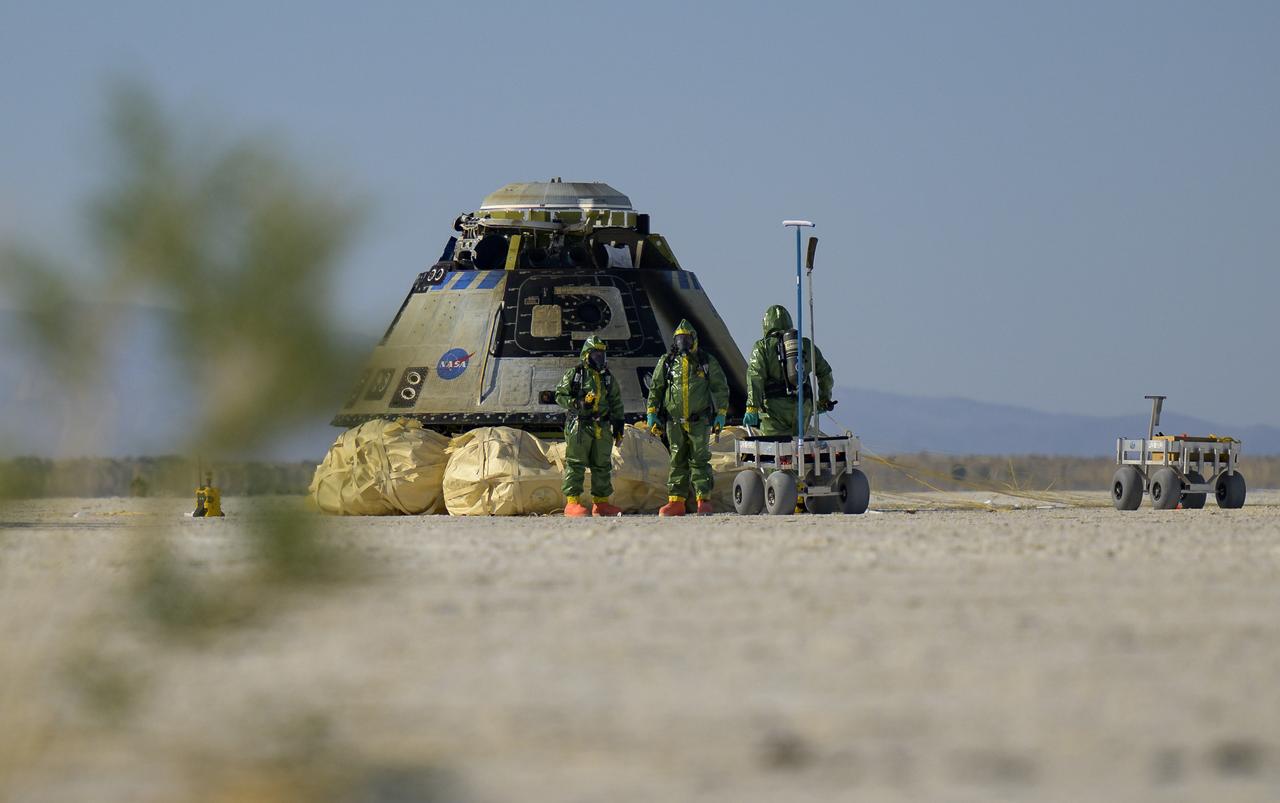
Boeing hazmat teams work around Boeing’s CST-100 Starliner spacecraft after it landed at White Sands Missile Range’s Space Harbor, Wednesday, May 25, 2022, in New Mexico. Boeing’s Orbital Flight Test-2 (OFT-2) is Starliner’s second uncrewed flight test to the International Space Station as part of NASA's Commercial Crew Program. OFT-2 serves as an end-to-end test of the system's capabilities. Photo Credit: (NASA/Bill Ingalls)