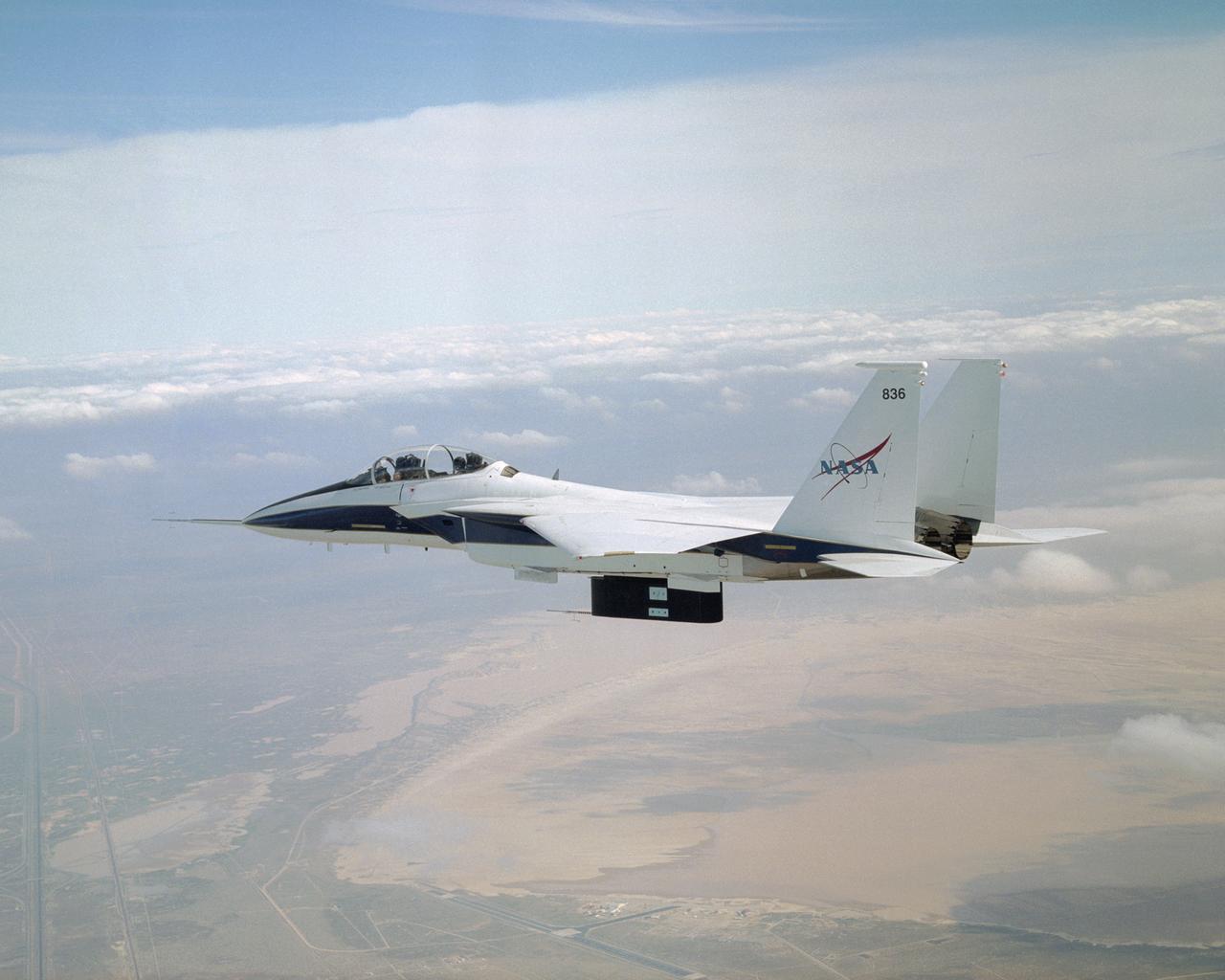
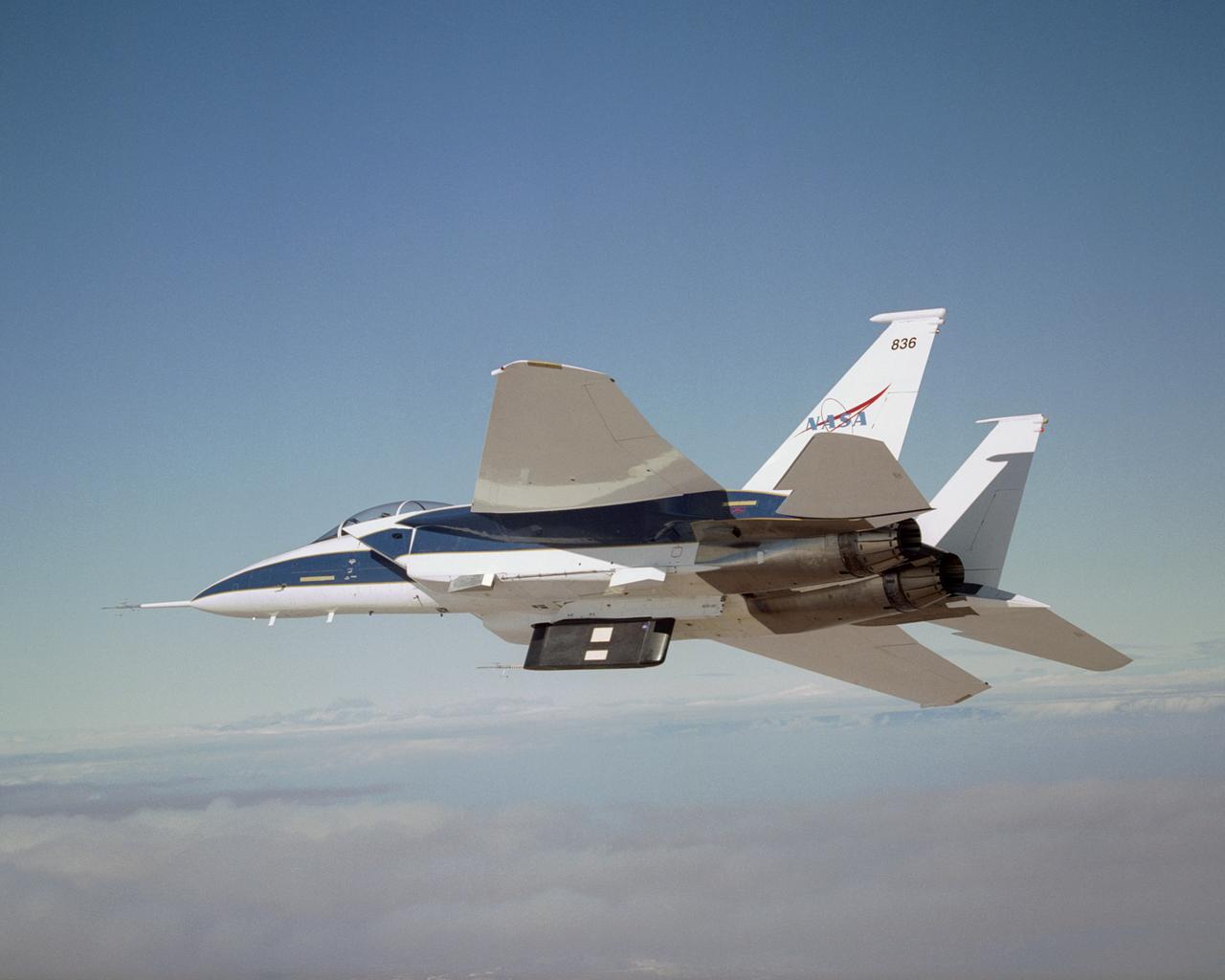
All six divots of thermal insulation foam have been ejected from the flight test fixture on NASA's F-15B testbed as it returns from a LIFT experiment flight.
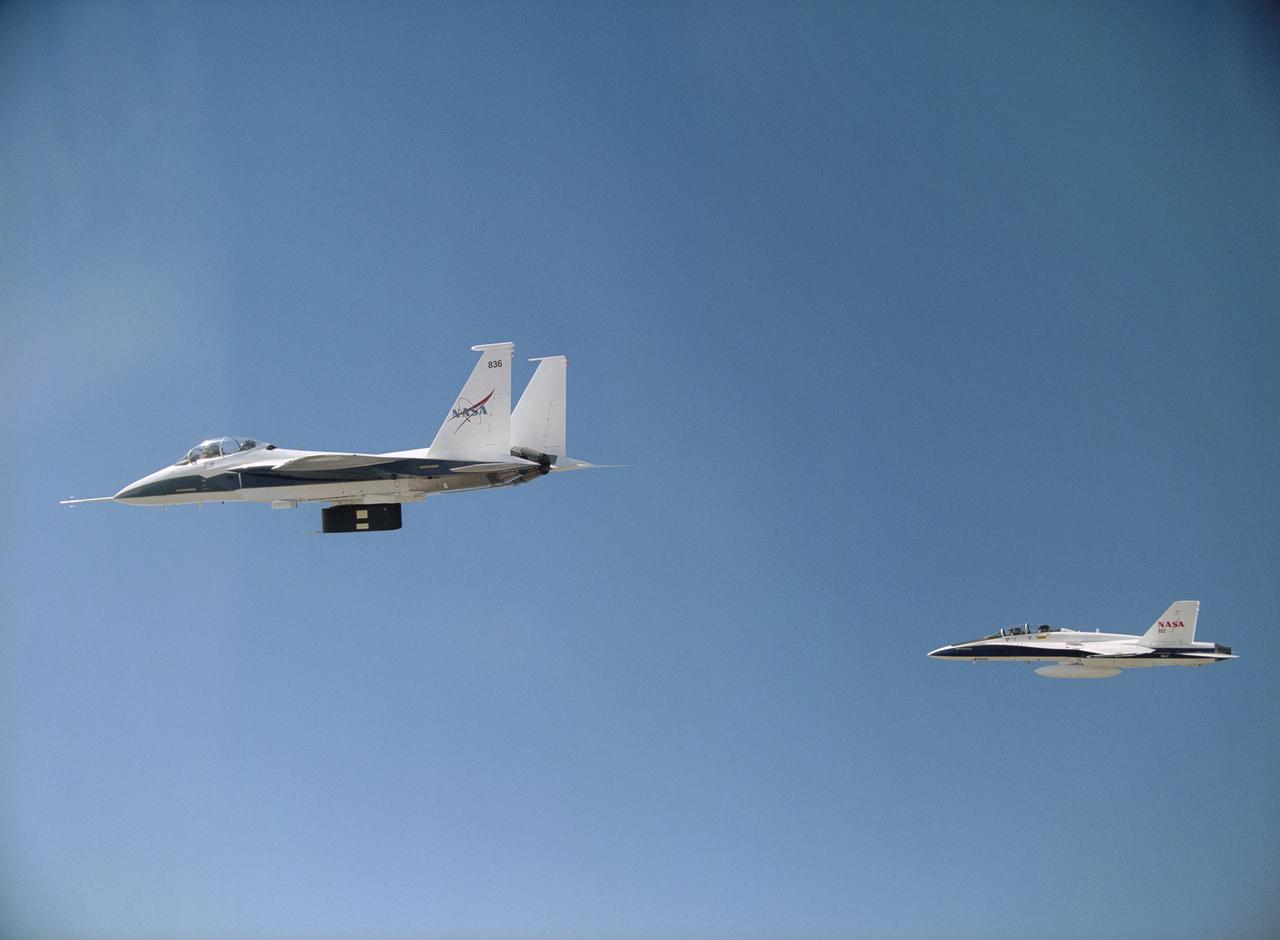
NASA's F-15B carrying thermal insulation foam on its flight test fixture is shadowed by a NASA F-18B chase aircraft during a LIFT experiment research flight.
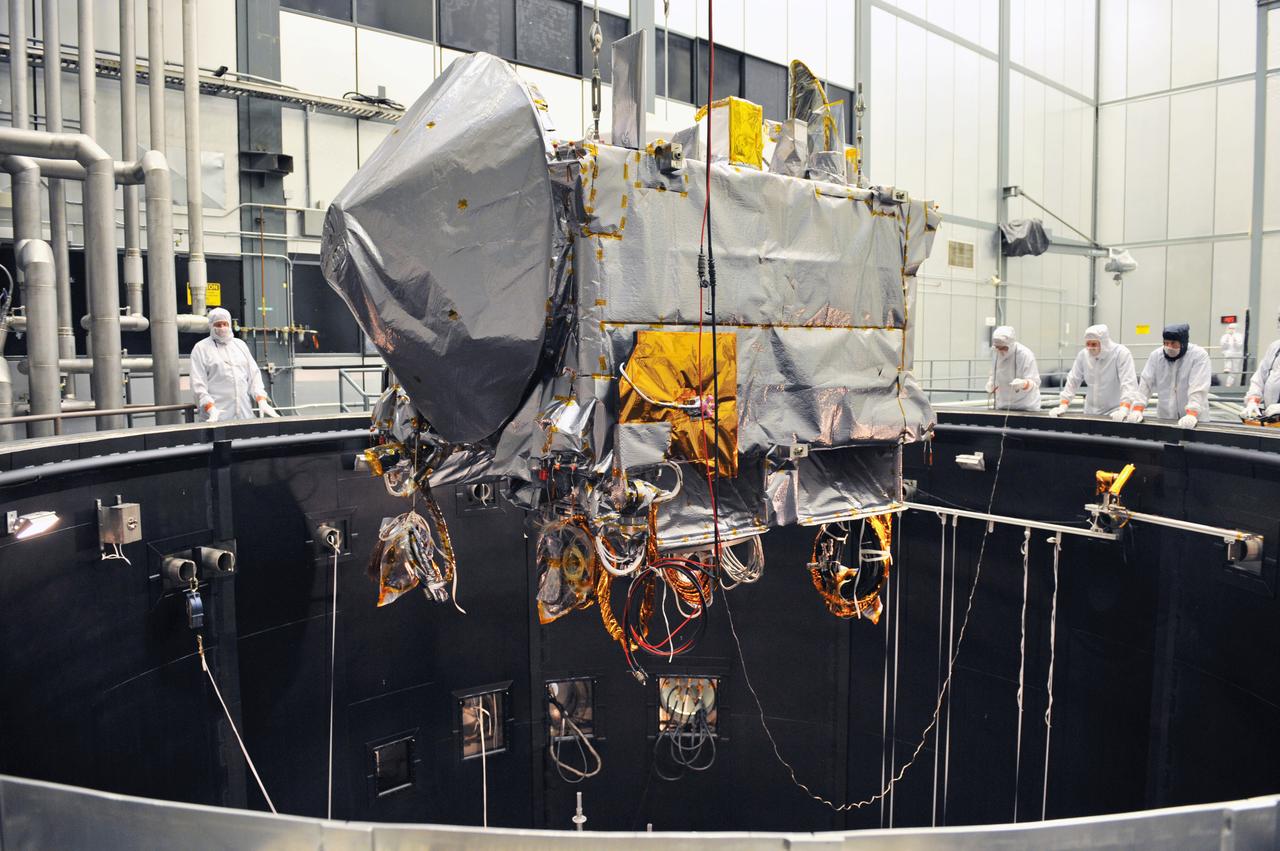
The OSIRIS-REx spacecraft being lifted into the thermal vacuum chamber at Lockheed Martin for environmental testing.
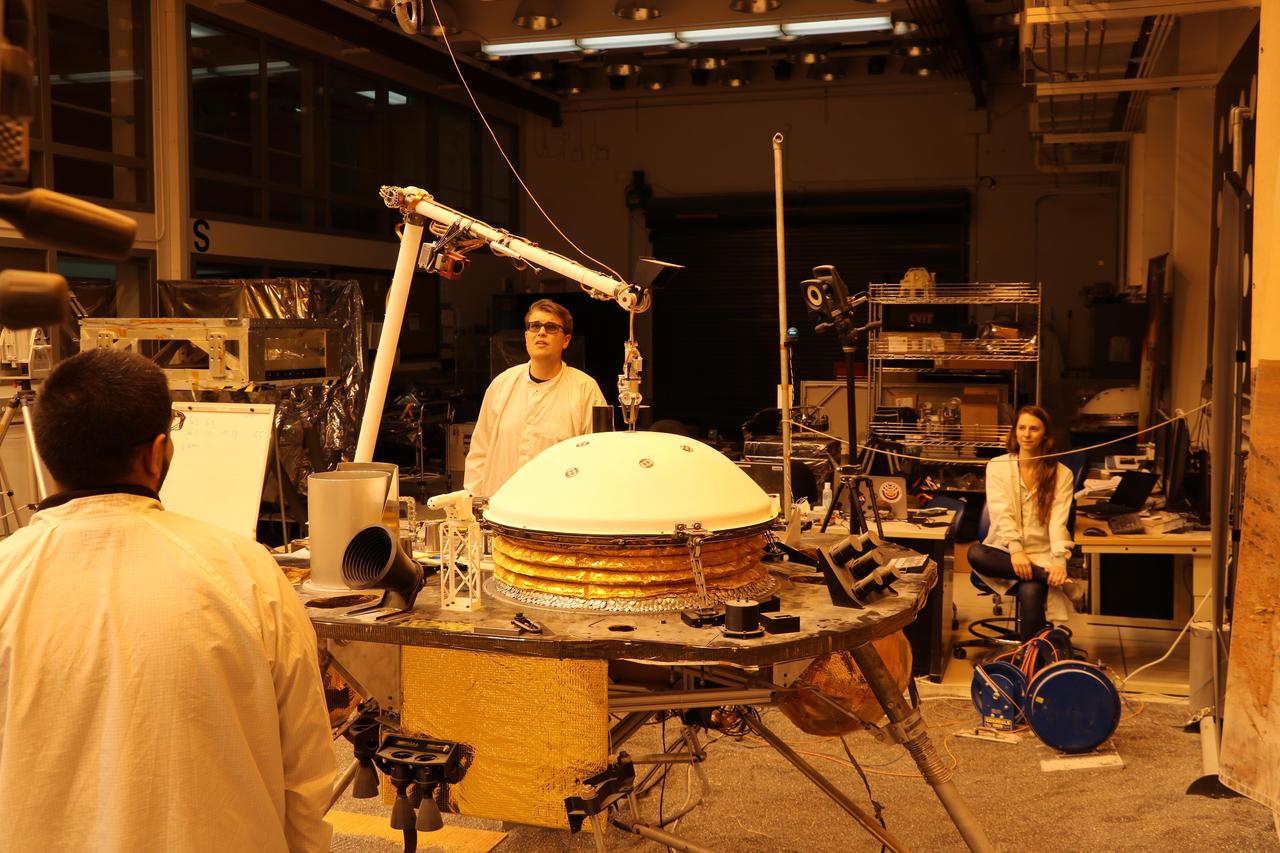
NASA's InSight mission tests an engineering version of the spacecraft's robotic arm in a Mars-like environment at NASA's Jet Propulsion Laboratory. The five-fingered grapple on the end of the robotic arm is lifting up the Wind and Thermal Shield, a protective covering for InSight's seismometer. The test is being conducted under reddish "Mars lighting" to simulate activities on the Red Planet. https://photojournal.jpl.nasa.gov/catalog/PIA22806
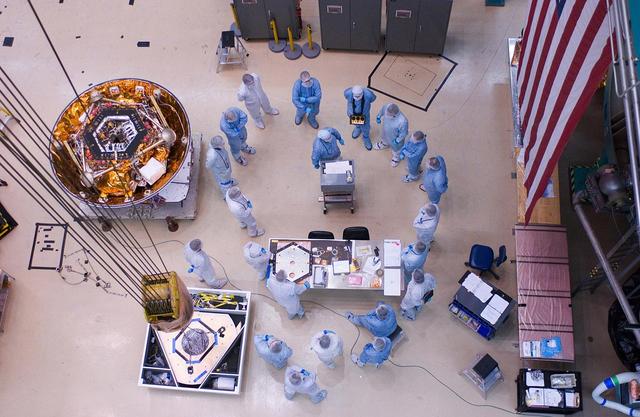
Spacecraft specialists huddle to discuss the critical lift of NASA Phoenix Mars Lander into a thermal vacuum chamber
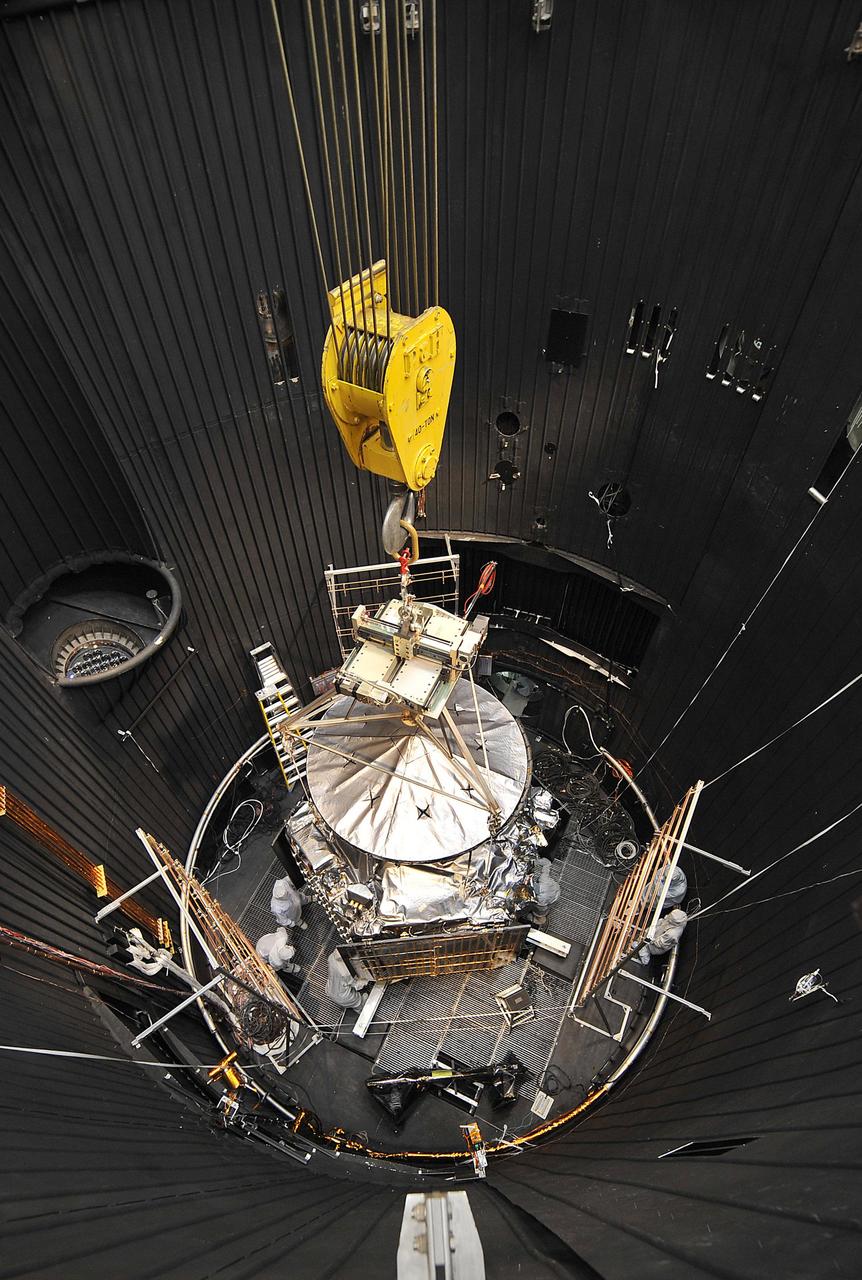
NASA Juno spacecraft is readied for lifting out of a thermal vacuum chamber following testing to simulate the environment of space over the range of conditions the probe will encounter during its mission.
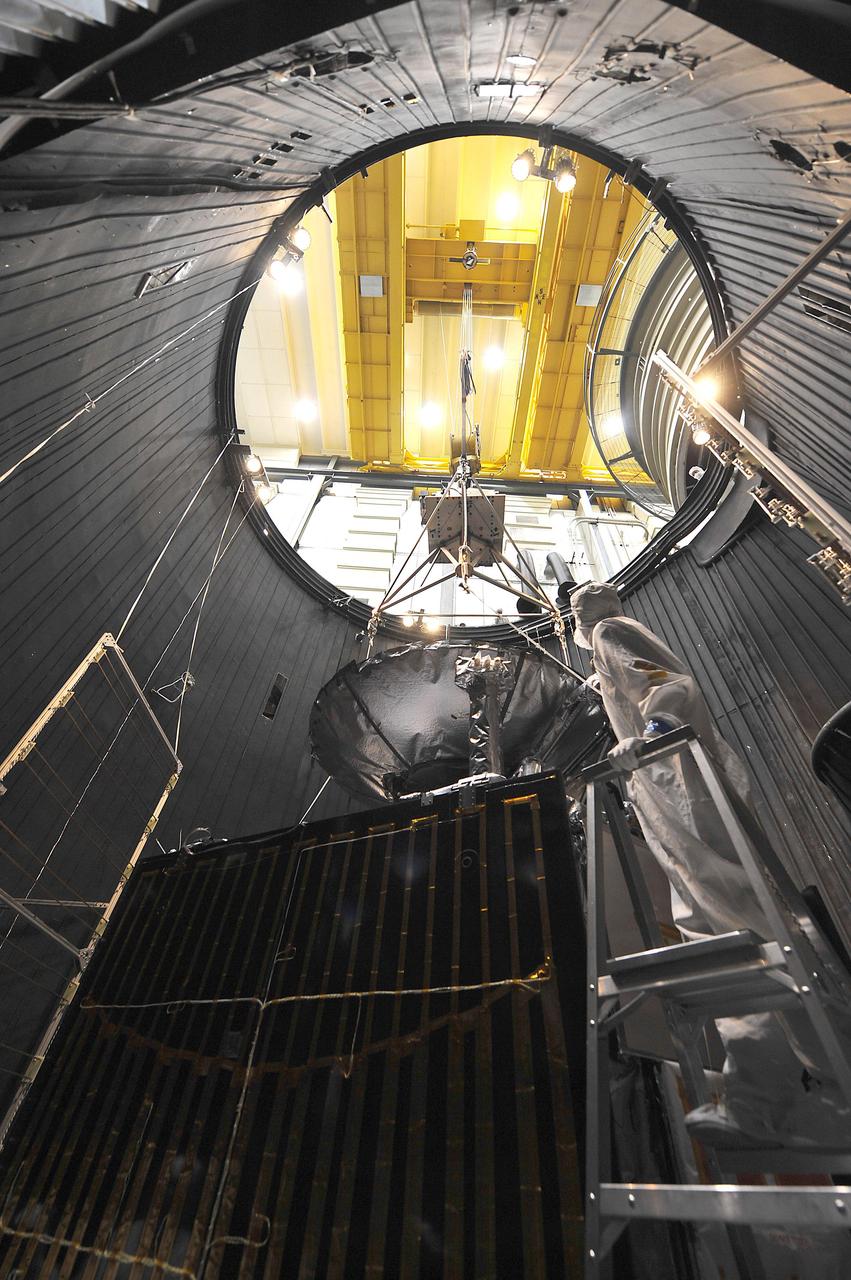
This image of NASA Juno spacecraft was taken as the vehicle completed its thermal vacuum chamber testing. A technician is attaching the lifting equipment in preparation for hoisting the 1,588-kilogram 3,500-pound spacecraft out of the chamber.
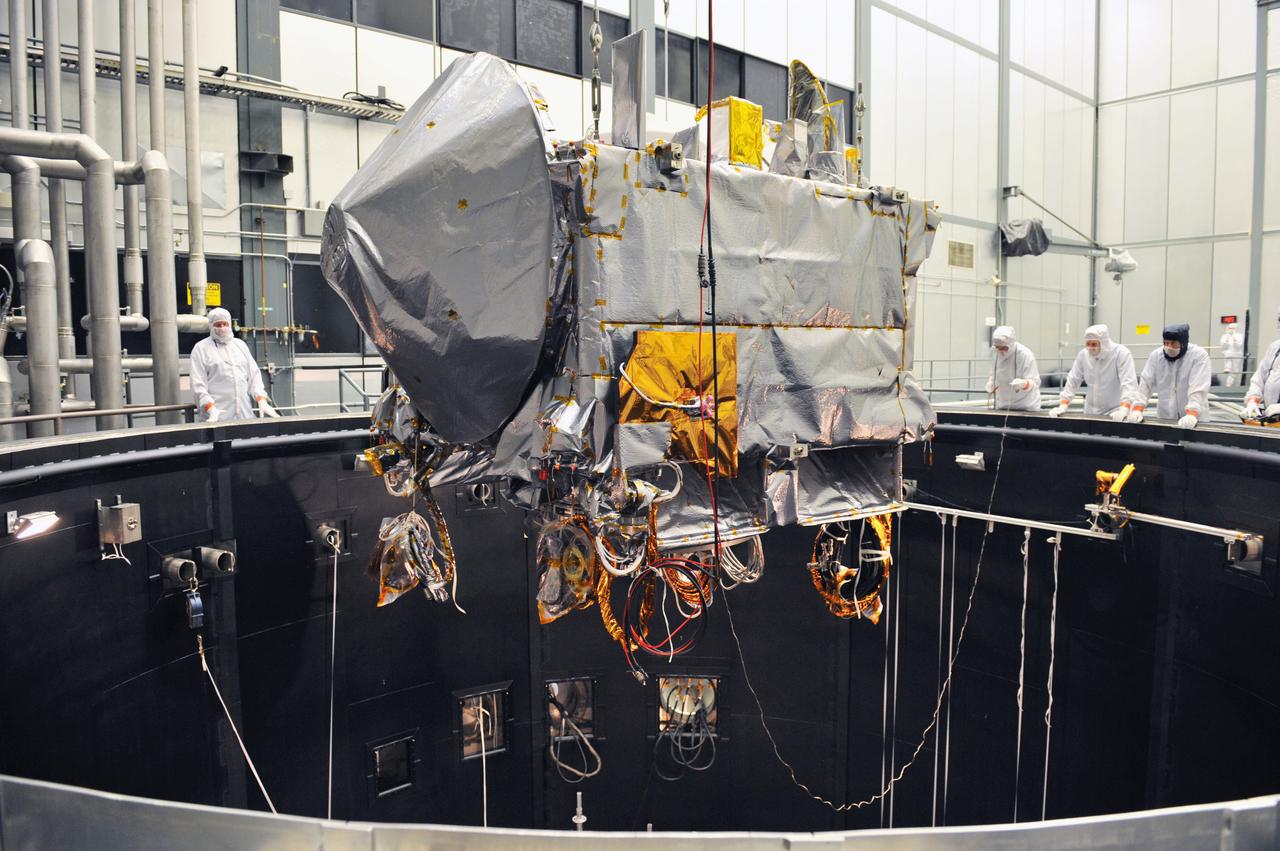
The OSIRIS-REx spacecraft being lifted into the thermal vacuum chamber at Lockheed Martin for environmental testing. Credits: Lockheed Martin Read more: <a href="http://www.nasa.gov/feature/goddard/2016/osiris-rex-in-thermal-vac" rel="nofollow">www.nasa.gov/feature/goddard/2016/osiris-rex-in-thermal-vac</a>
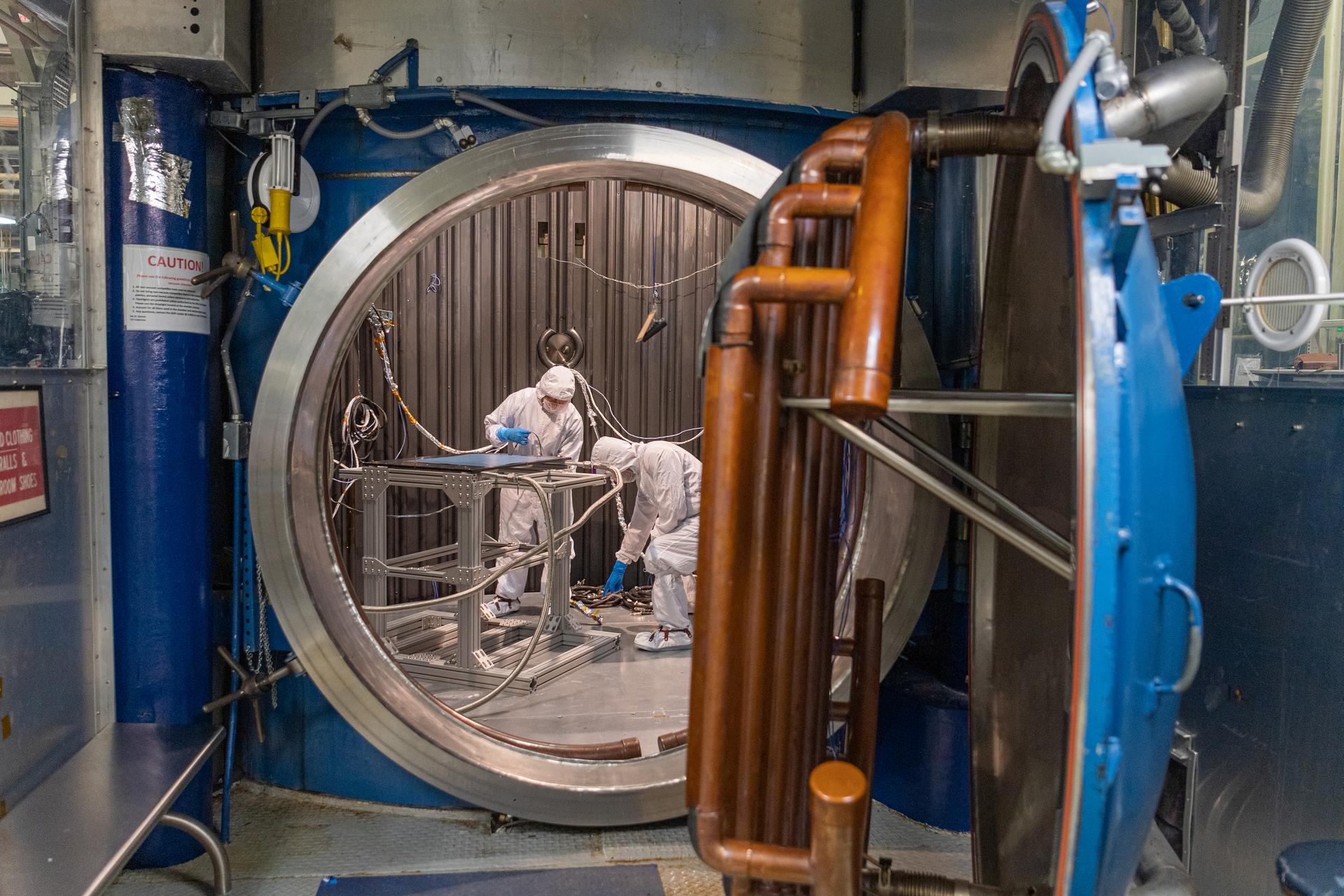
Members of the OSAM-1 power supply unit (PSU) team make preparations inside a thermal vacuum chamber for the PSU electronics box to be lowered in at Goddard Space Flight Center, Greenbelt Md., Mar 16, 2023. This photo has been reviewed by OSAM1 project management and the Export Control Office and is released for public view. NASA/Mike Guinto

NASA Dryden aerospace engineer Michael Allen hand-launches a model motorized sailplane during a study validating the use of heat thermals to extend flight time.
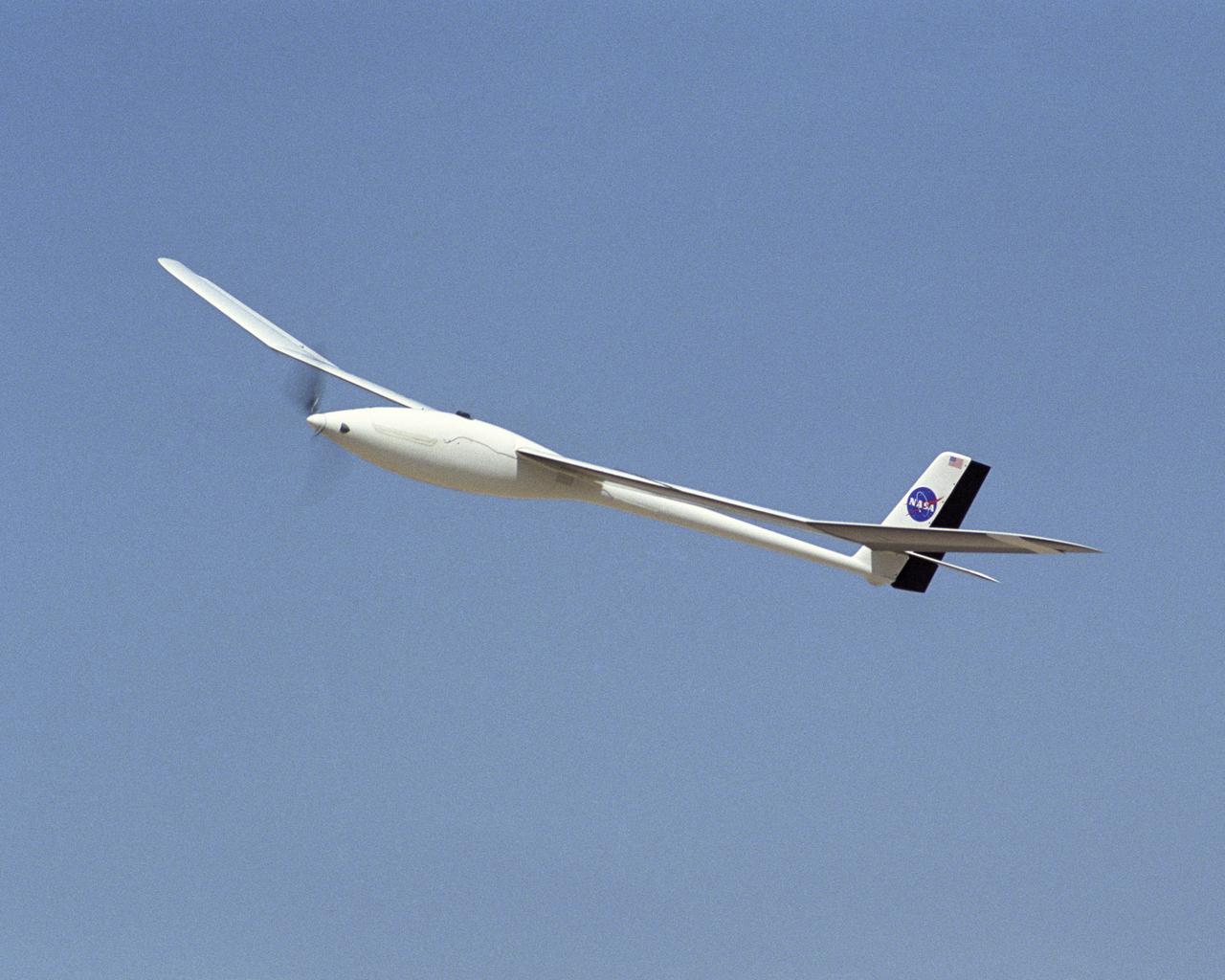
A NASA model motorized sailplane catches a thermal during one of 17 flights to demonstrate that updrafts can extend flight time and save energy for small UAVs.
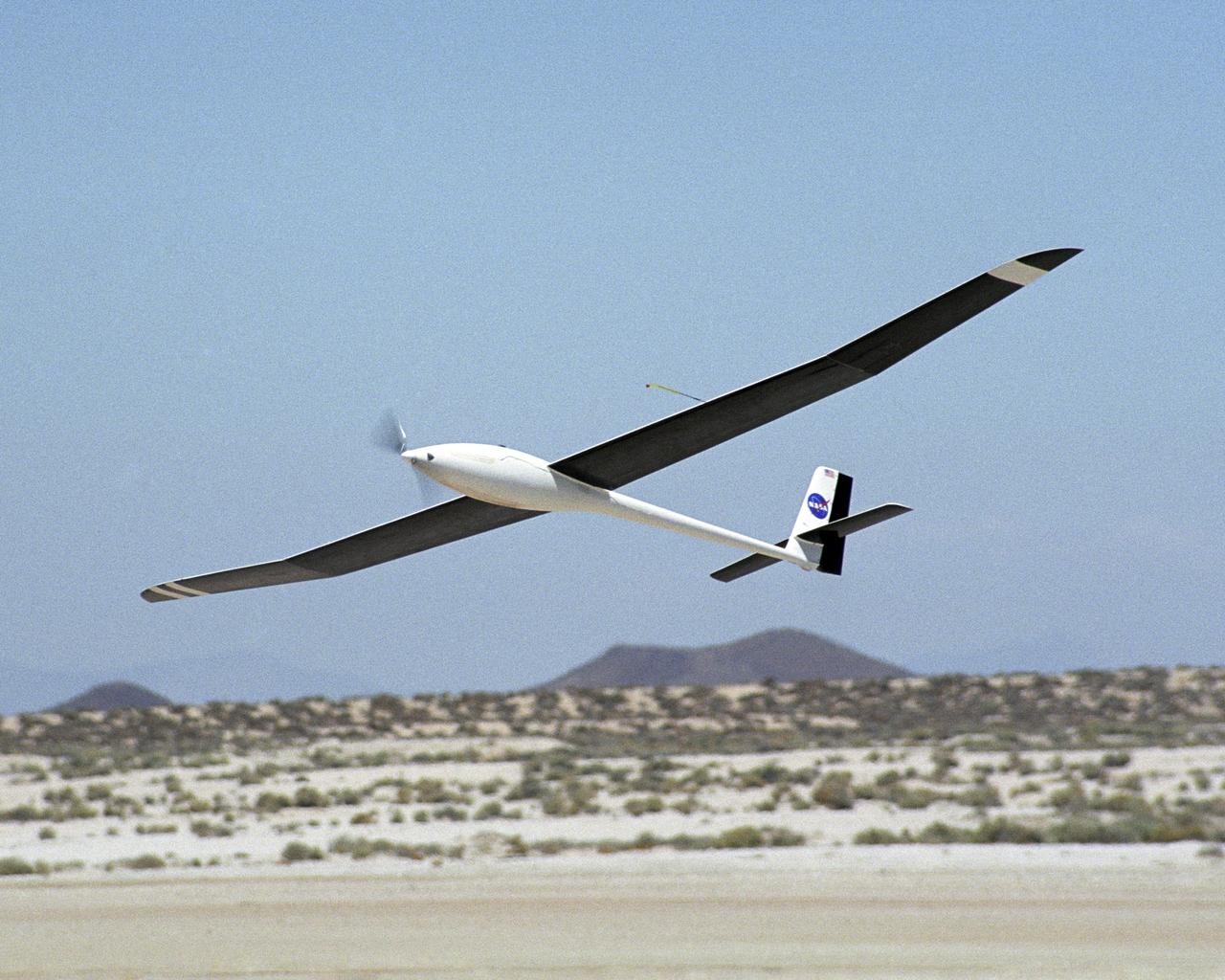
A NASA remote-controlled model motorized sailplane lies over Rogers Dry Lake to test the theory that catching heat thermals extends flight time for small UAVs.

Technicians in clean-room suits attach a crane to the Orion crew module for Exploration Mission-1 for its move to the thermal chamber in the Neil Armstrong Operations and Checkout Building high bay at NASA's Kennedy Space Center in Florida. Orion will be lifted out of a test stand and lowered onto another stand to for the move. The crew module will undergo a thermal cycle test to assess the workmanship of critical hardware and structural locations. The test also demonstrates crew module subsystem operations in a thermally stressing environment to confirm no damage or anomalous hardware conditions as a result of the test. The Orion spacecraft will launch atop NASA's Space Launch System rocket on its first uncrewed integrated flight.
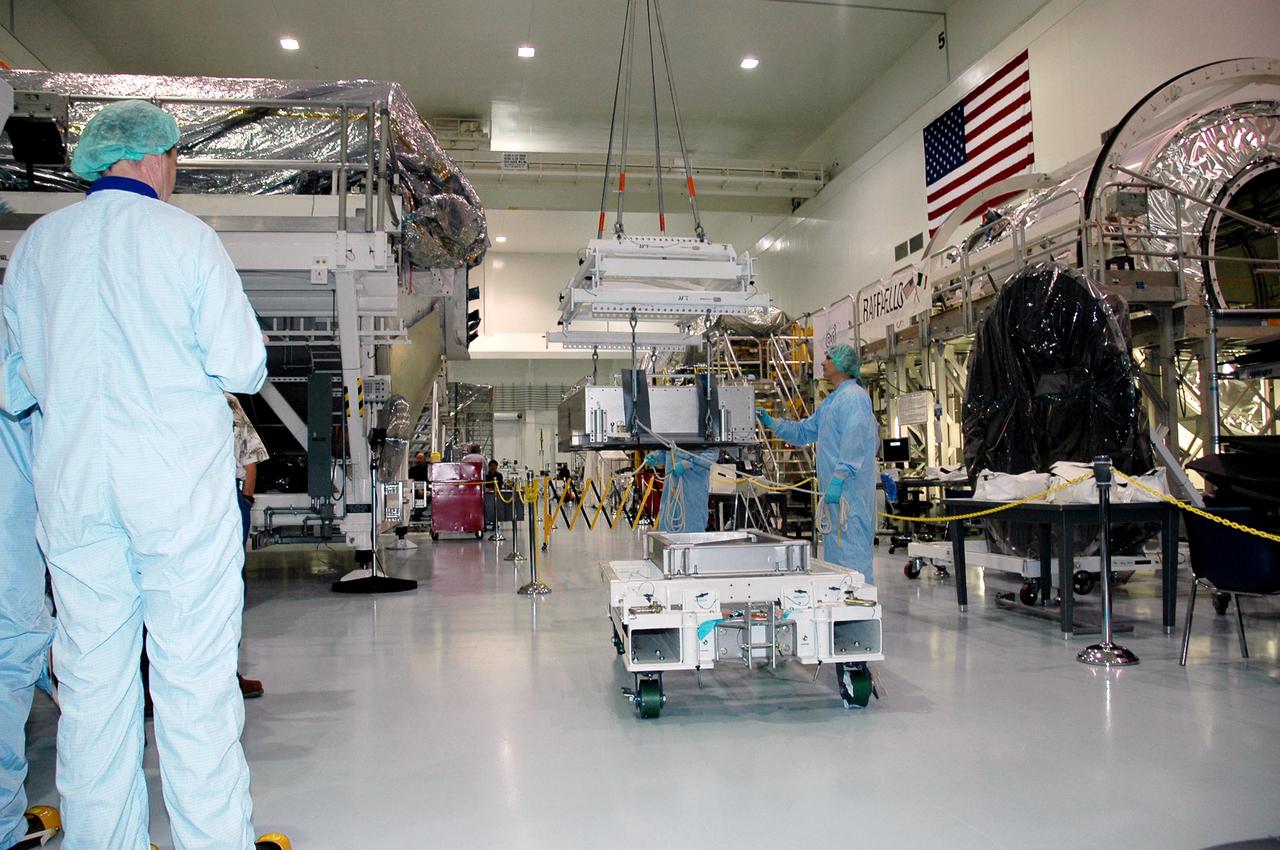
KENNEDY SPACE CENTER, FLA. - Technicians at the Space Station Processing Facility carefully watch as a crane lifts the Thermal Protection System Detailed Test Objective (DTO) box. It will be placed on the Lightweight Multi-Purpose Experiment Support Structure Carrier (LMC) to fly on Space Shuttle Discovery for mission STS-114. The DTO contains tile samples that will enable astronauts to test new on-orbit Thermal Protection System repair techniques. The launch window for mission STS-114 is May 12 to June 3.
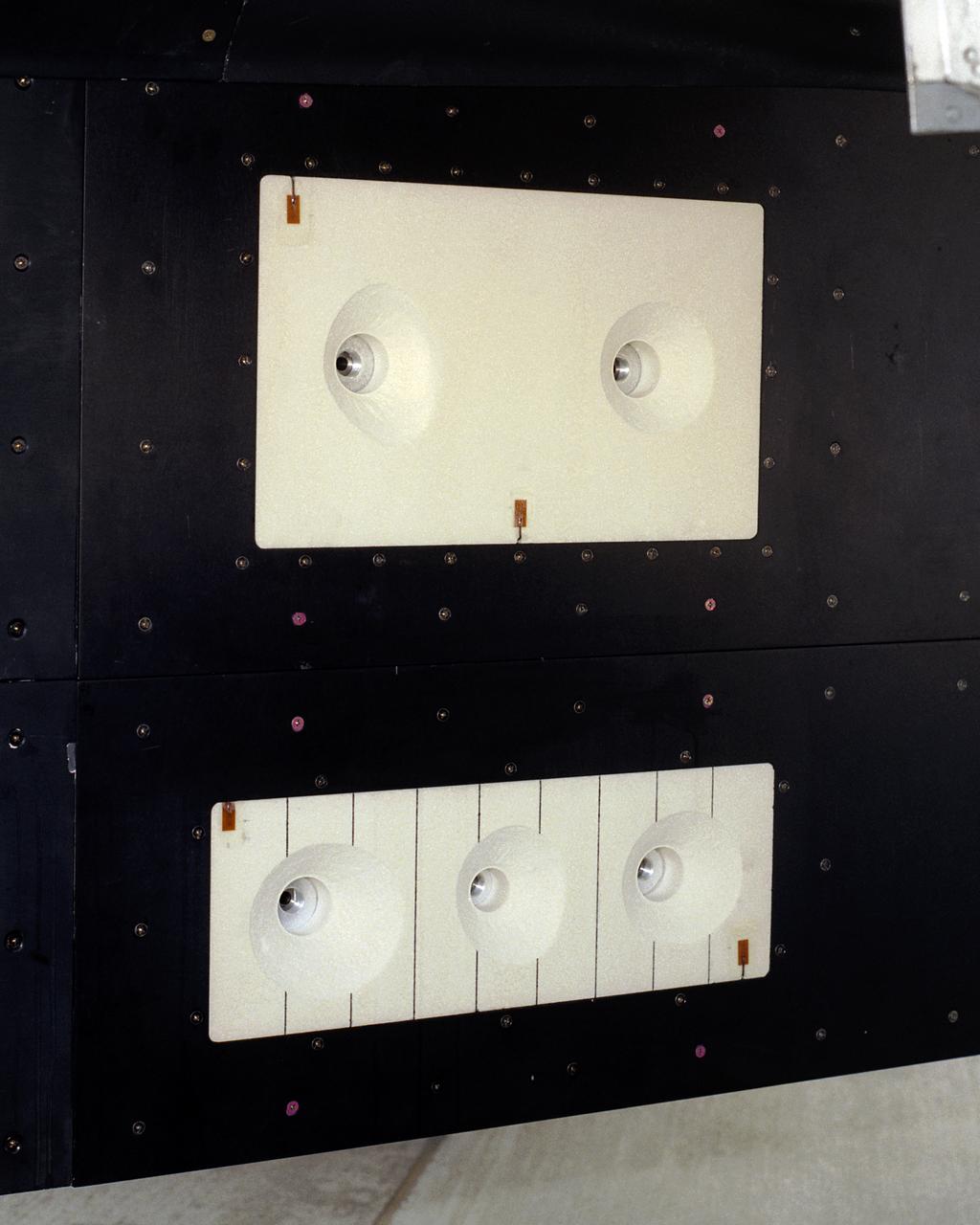
A close-up of the panels on the F-15B's flight test fixture shows five divots of TPS foam were successfully ejected during the LIFT experiment flight #2, the first flight with TPS foam.
A post-flight inspection of the panels on the F-15B's flight test fixture shows five divots of TPS foam were successfully ejected during the LIFT experiment flight #2, the first flight with TPS foam.
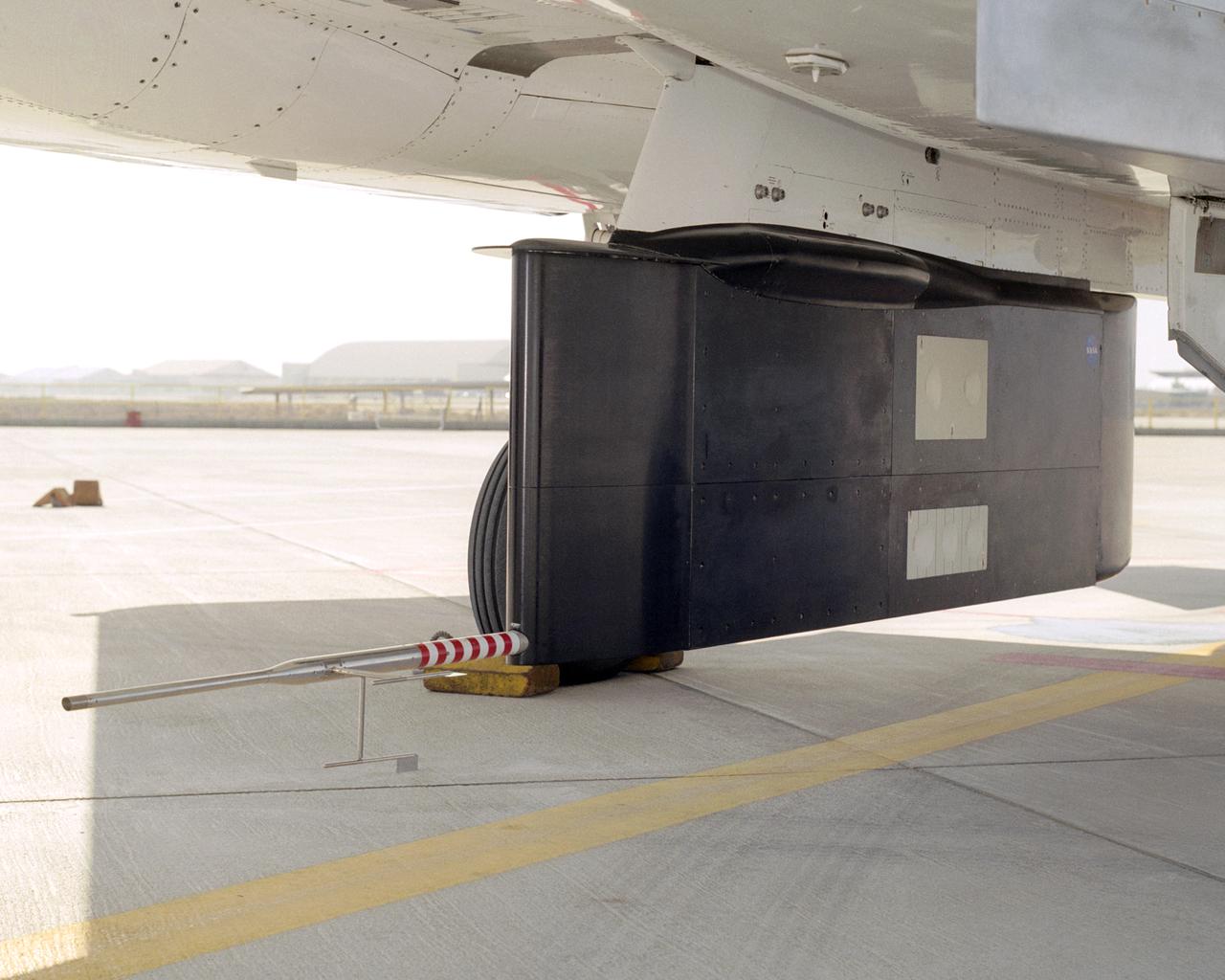
Two panels of Space Shuttle TPS insulation were mounted on the flight test fixture underneath NASA's F-15B during the Lifting Foam Trajectory flight test series.
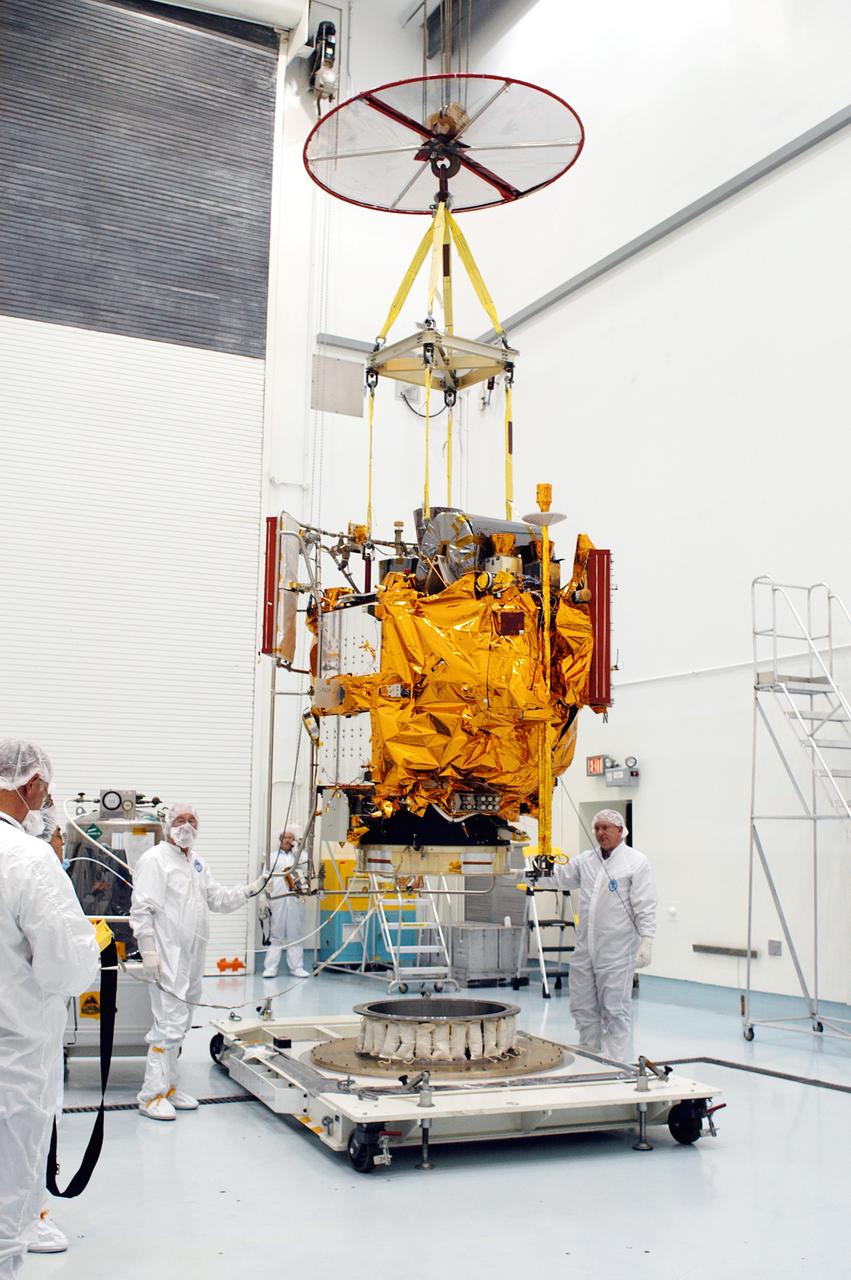
KENNEDY SPACE CENTER, FLA. - At the Astrotech Space Operations processing facilities, NASA’s MESSENGER spacecraft is lifted off the pallet for transfer to a work stand. There employees of the Johns Hopkins University Applied Physics Laboratory, builders of the spacecraft, will perform an initial state-of-health check. Then processing for launch can begin, including checkout of the power systems, communications systems and control systems. The thermal blankets will also be attached for flight. MESSENGER - short for MErcury Surface, Space ENvironment, GEochemistry and Ranging - will be launched May 11 on a six-year mission aboard a Boeing Delta II rocket. Liftoff is targeted for 2:26 a.m. EDT on Tuesday, May 11.
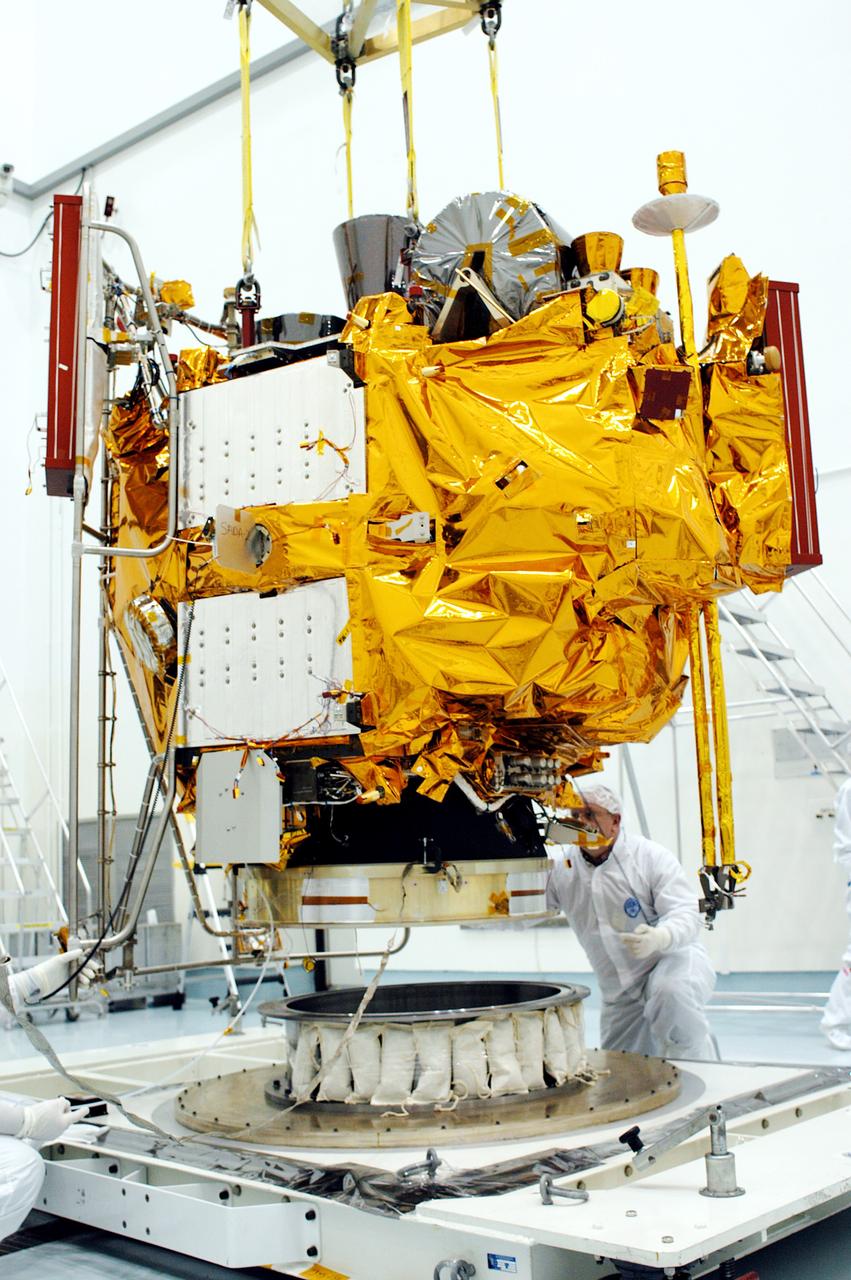
KENNEDY SPACE CENTER, FLA. - At the Astrotech Space Operations processing facilities, NASA’s MESSENGER spacecraft is lifted off the pallet for transfer to a work stand. There employees of the Johns Hopkins University Applied Physics Laboratory, builders of the spacecraft, will perform an initial state-of-health check. Then processing for launch can begin, including checkout of the power systems, communications systems and control systems. The thermal blankets will also be attached for flight. MESSENGER - short for MErcury Surface, Space ENvironment, GEochemistry and Ranging - will be launched May 11 on a six-year mission aboard a Boeing Delta II rocket. Liftoff is targeted for 2:26 a.m. EDT on Tuesday, May 11.
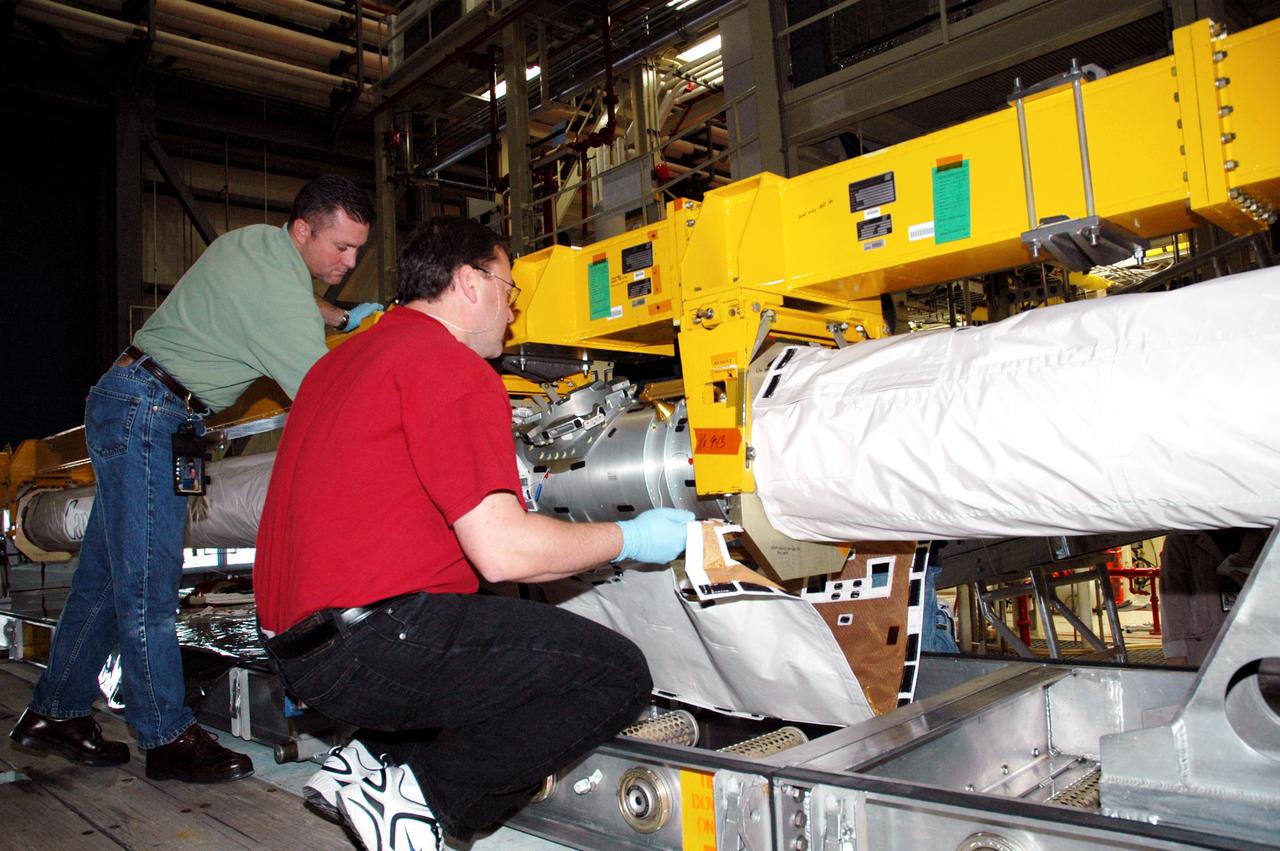
KENNEDY SPACE CENTER, FLA. - In the back transfer aisle of the Orbiter Processing Facility bay 3, Todd Dugan (right), a technician with United Space Alliance, lifts a Thermal Protection System (TPS) blanket onto an area of the Orbiter Boom Sensor System (OBSS). The installation will conclude TPS closeout prior to installation of the boom in the orbiter Discovery. The OBSS is one of the new safety measures for Return to Flight, equipping the Shuttle with cameras and laser systems to inspect the Shuttle’s Thermal Protection System while in space. Discovery is designated as the Return to Flight vehicle for mission STS-114, with a launch window of May 12 to June 3, 2005.
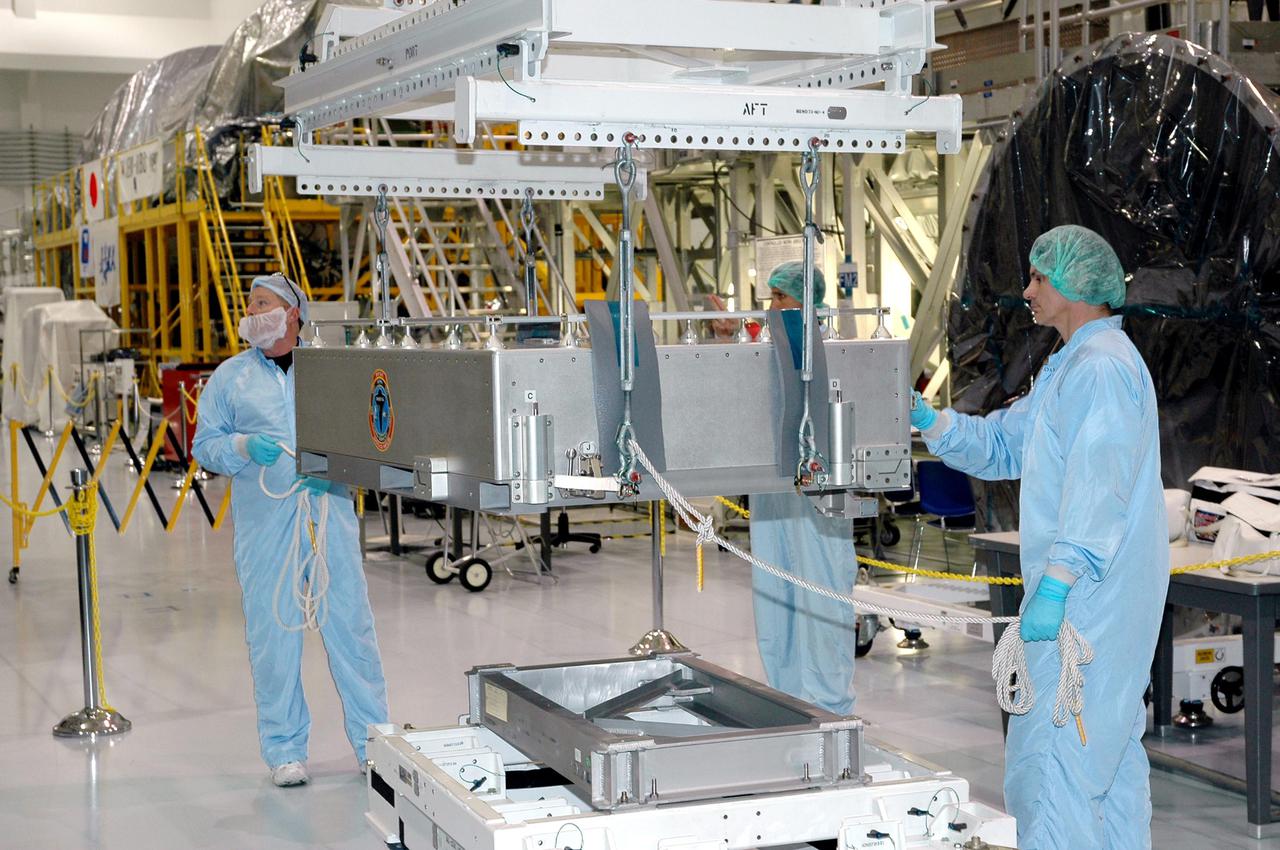
KENNEDY SPACE CENTER, FLA. - Technicians at the Space Station Processing Facility prepare the Thermal Protection System Detailed Test Objective (DTO) box to be lifted onto the Lightweight Multi-Purpose Experiment Support Structure Carrier (LMC). It will be placed on the Lightweight Multi-Purpose Experiment Support Structure Carrier (LMC) to fly on Space Shuttle Discovery for mission STS-114. The DTO contains tile samples that will enable astronauts to test new on-orbit Thermal Protection System repair techniques. The launch window for mission STS-114 is May 12 to June 3.
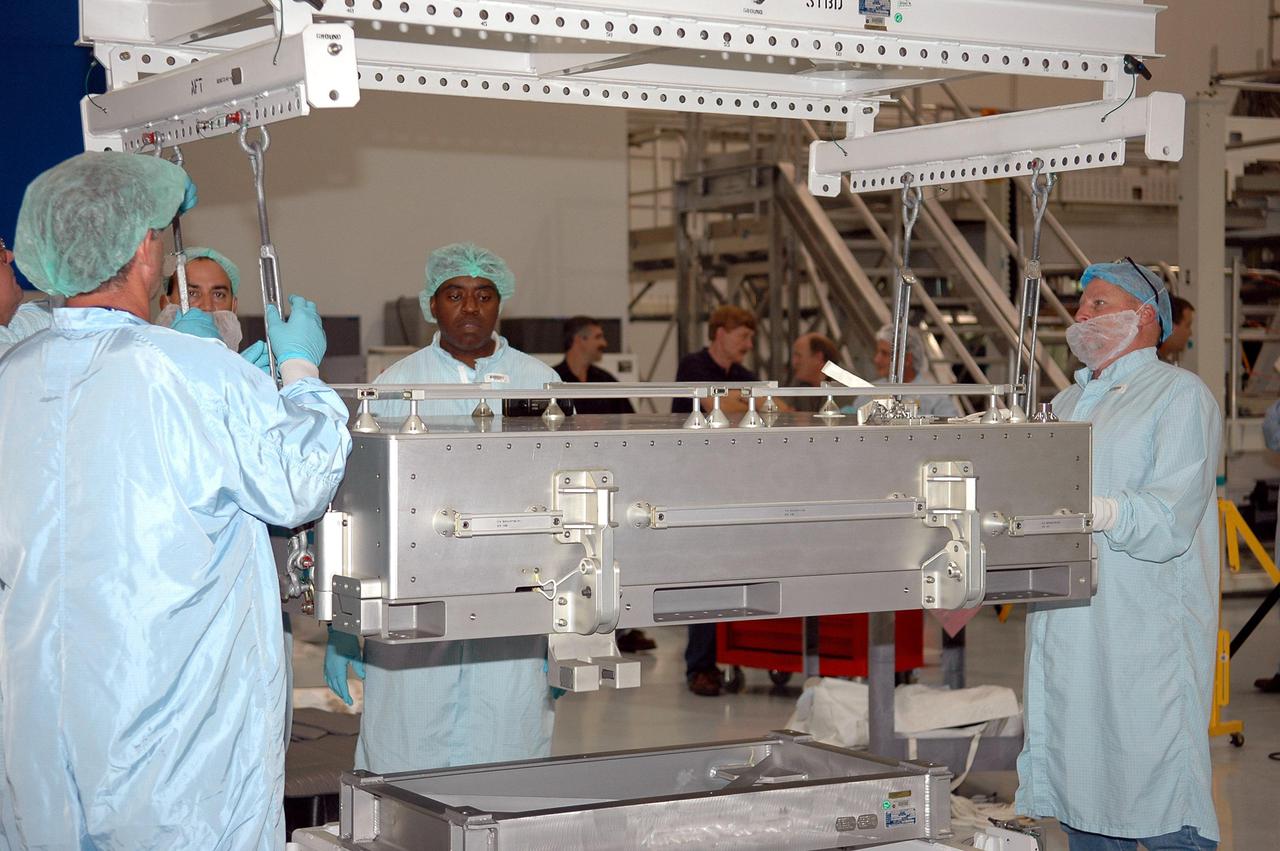
KENNEDY SPACE CENTER, FLA. - Technicians at the Space Station Processing Facility prepare to lift and move a Thermal Protection System Sample Box onto the Lightweight Multi-Purpose Experiment Support Structure Carrier (LMC) for a fit check. The box is the actual flight hardware scheduled to fly on the Space Shuttle Return to Flight mission STS-114. The fit check is performed to ensure the hardware mates properly with the newly modified LMC and will be returned to NASA’s Johnson Space Center for installation of tile samples in support of the STS-114 mission. The Thermal Protection Detailed Test Objective will enable astronauts to test new on-orbit Thermal Protection System repair techniques. Mission STS-114 is scheduled to launch in May 2005.
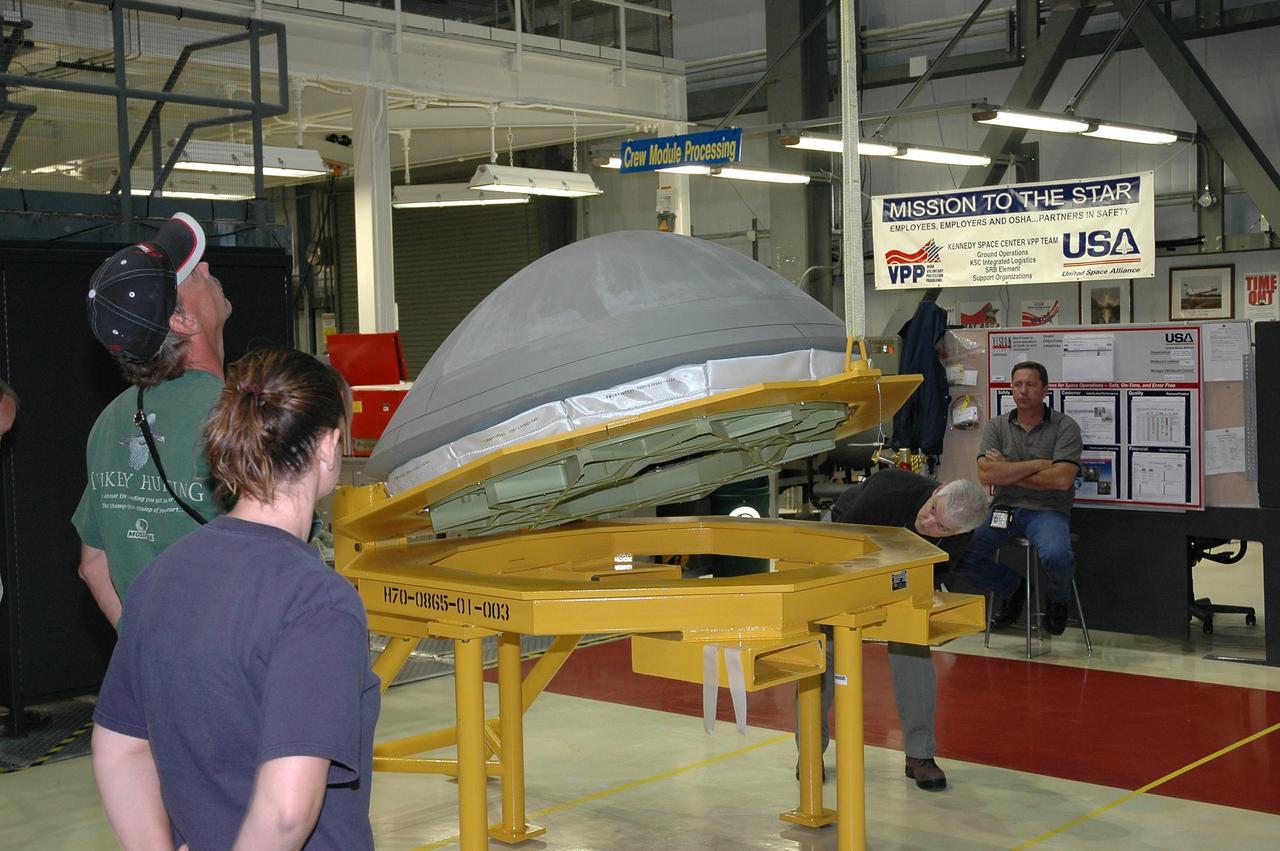
KENNEDY SPACE CENTER, FLA. - In Orbiter Processing Facility bay 2 at NASA's Kennedy Space Center, workers are nearby as a crane lifts the reinforced carbon-carbon nose cap to be installed onto Endeavour. The nose cap is insulated with thermal protection system blankets made of a woven ceramic fabric. The special blankets help insulate the vehicle's nose cap and protect it from the extreme temperatures it will face during a mission. Photo credit: NASA/Jim Grossmann
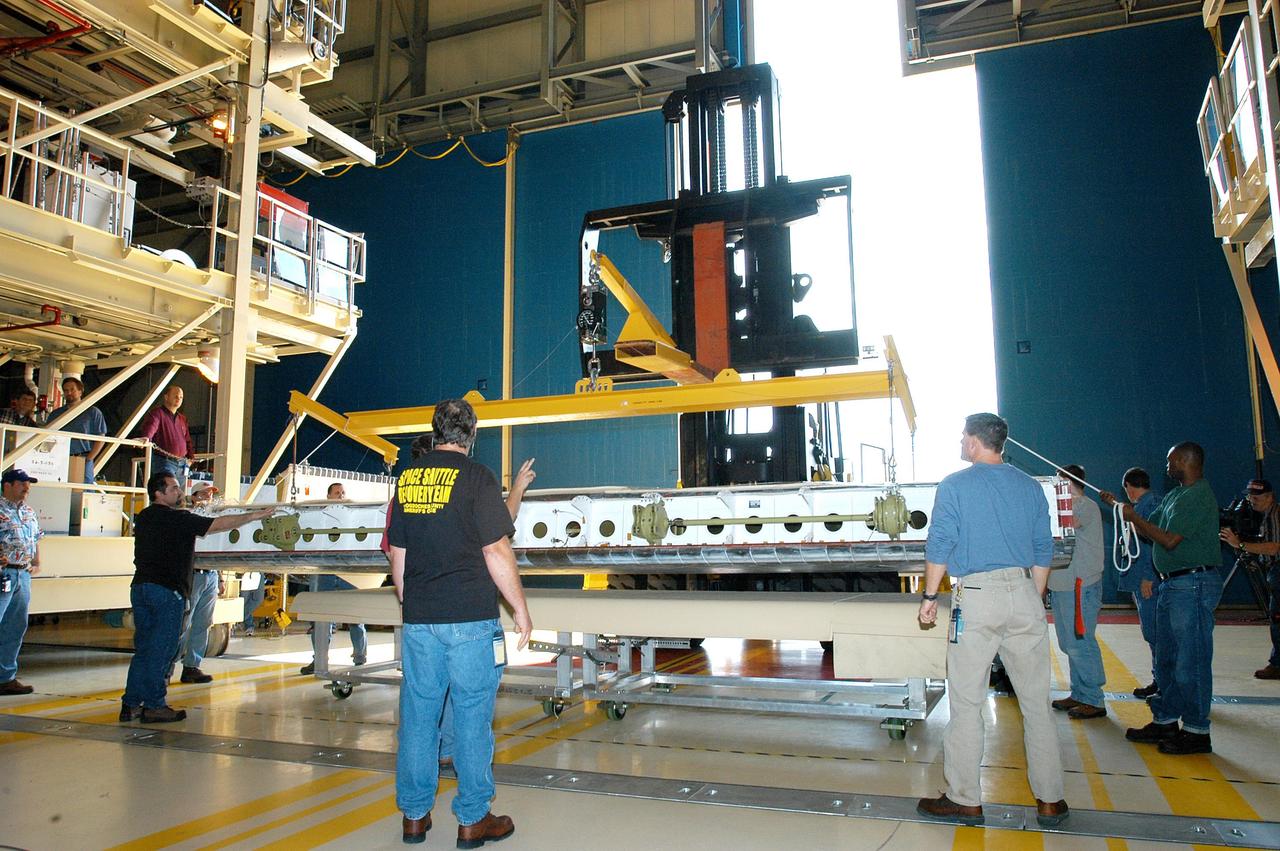
KENNEDY SPACE CENTER, FLA. - Workers in the Orbiter Processing Facility help prepare the body flap for lifting prior to installation on the orbiter Discovery. The body flap is an aluminum structure consisting of ribs, spars, skin panels and a trailing edge assembly. It thermally shields the three main engines during entry and provides pitch control trim during landing approach. Discovery is being processed for launch on the first Return to Flight mission, STS-114.
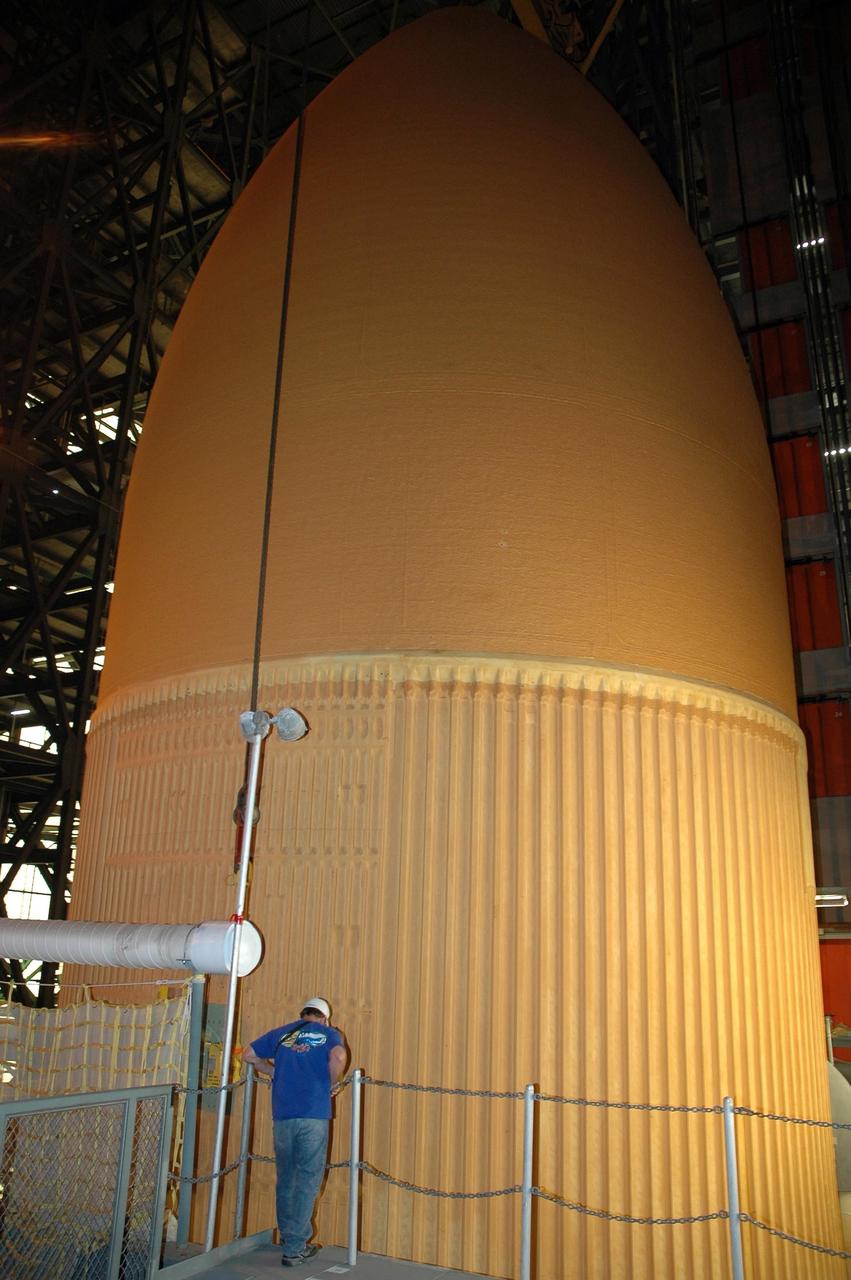
KENNEDY SPACE CENTER, FLA. - Inside the Vehicle Assembly Building at NASA's Kennedy Space Center, a worker watches external tank number 119 as it is being lifted from the checkout cell. The tank will be placed horizontally on the transporter in the transfer aisle. Once in the transfer aisle, technicians will reapply the thermal protection system foam that was removed in order to replace the tank's four liquid hydrogen engine cutoff sensors. The tank is being prepared to launch Space Shuttle Discovery on mission STS-121 in July. Photo credit: NASA/Cory Huston
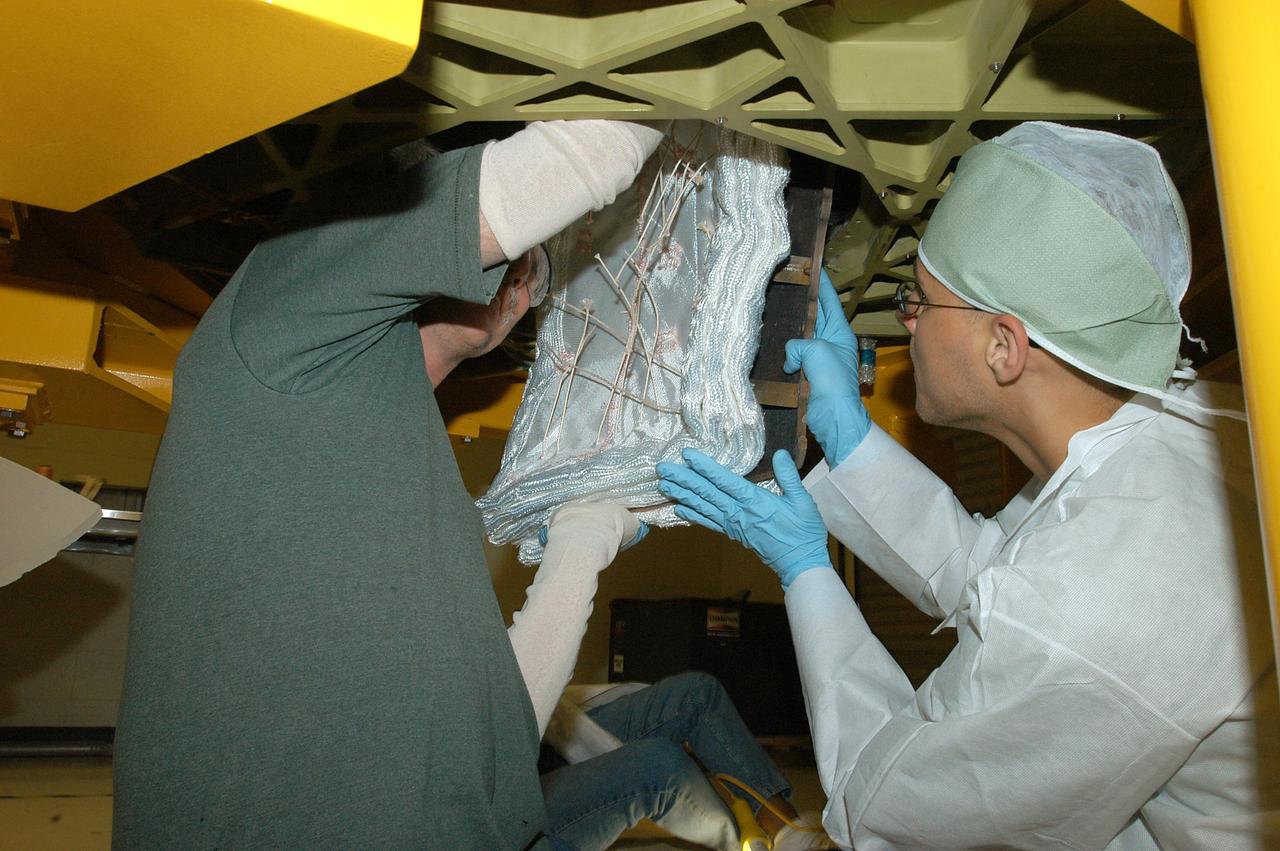
KENNEDY SPACE CENTER, FLA. -- United Space Alliance (USA) technicians Mike Williams (left) and R. Justin Hopmann (right) lift the thermal blanket insulation into Discovery’s nose cap, which is under a protective cover and seated above them on a work stand. The work is being done in a low bay area outside the Orbiter Processing Facility. Discovery is the orbiter named as the vehicle for Return to Flight with mission STS-114.
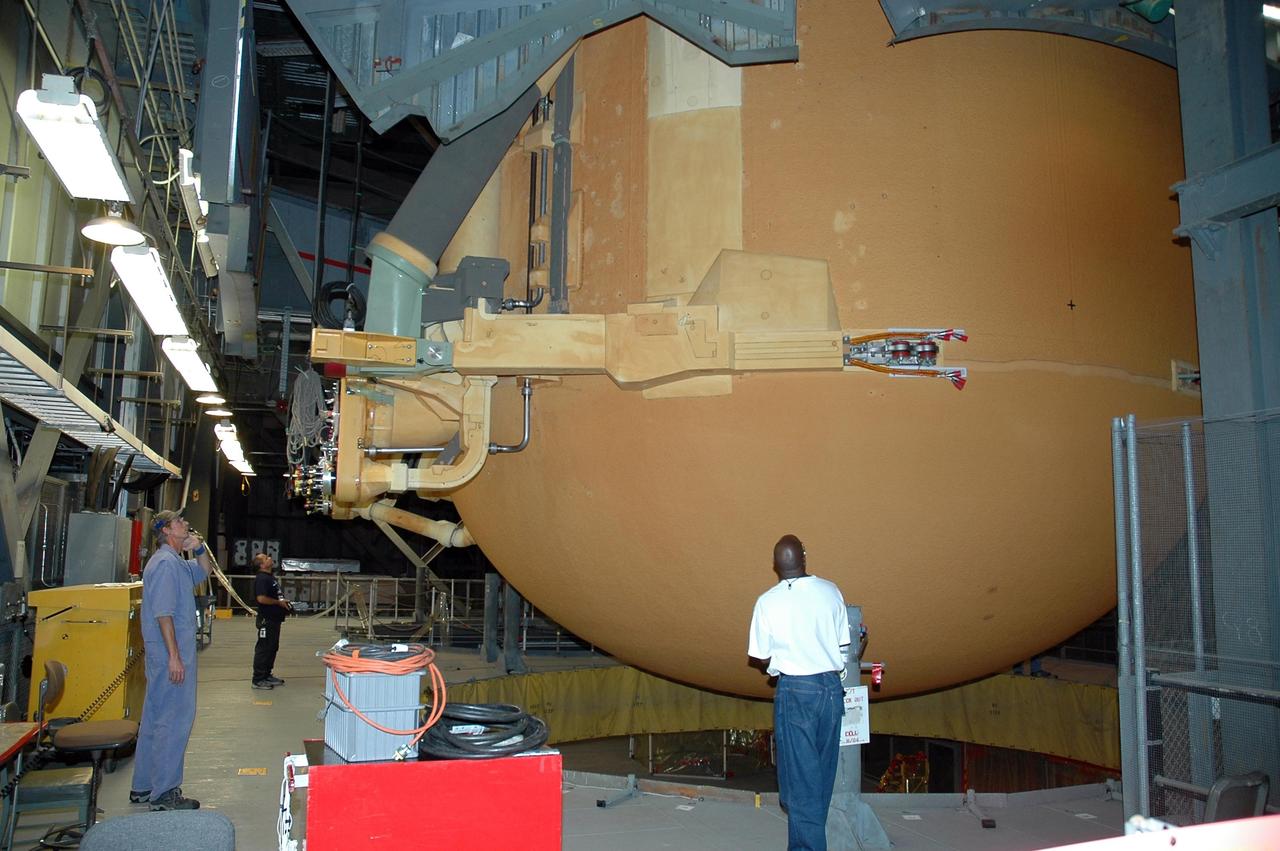
KENNEDY SPACE CENTER, FLA. - Inside the Vehicle Assembly Building at NASA's Kennedy Space Center, external tank number 119 is being lifted from the checkout cell and will be placed horizontally on the transporter in the transfer aisle. Once in the transfer aisle, technicians will reapply the thermal protection system foam that was removed in order to replace the tank's four liquid hydrogen engine cutoff sensors. The tank is being prepared to launch Space Shuttle Discovery on mission STS-121 in July.
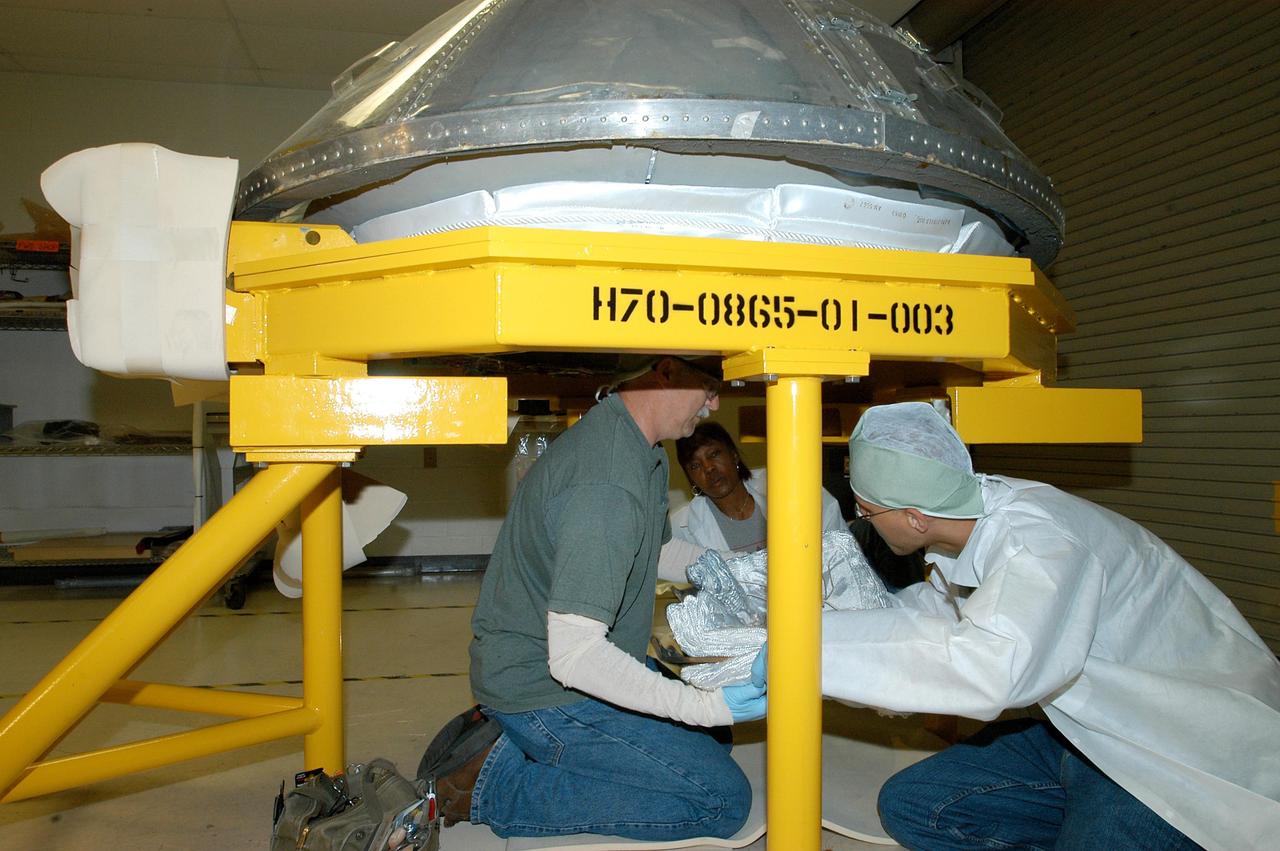
KENNEDY SPACE CENTER, FLA. -- United Space Alliance (USA) technicians Mike Williams (left), Pearl Richardson (center) and R. Justin Hopmann get ready to lift the thermal blanket insulation into Discovery’s nose cap, which is under a protective cover and seated above on a work stand. The work is being done in a low bay area outside the Orbiter Processing Facility. Discovery is the orbiter named as the vehicle for Return to Flight with mission STS-114.
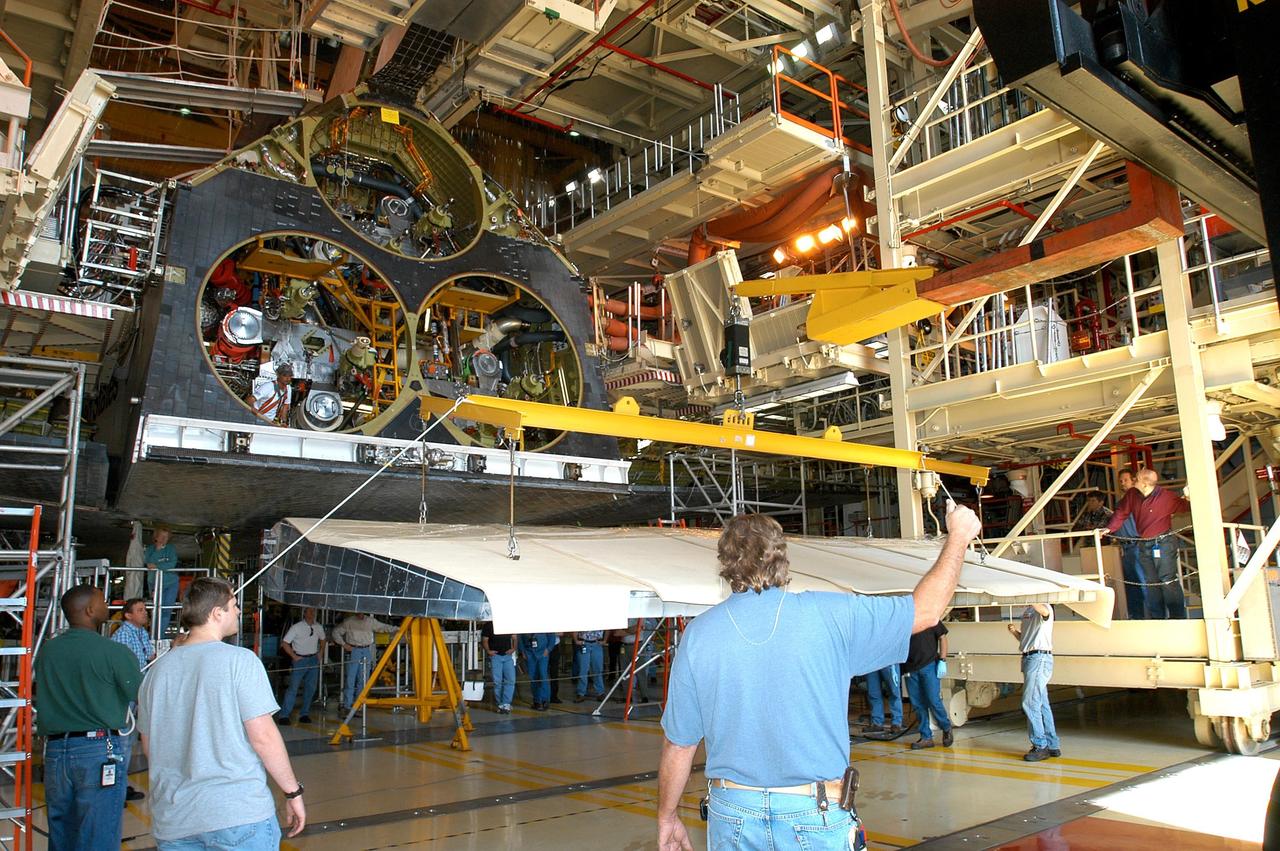
KENNEDY SPACE CENTER, FLA. - A Hyster forklift in the Orbiter Processing Facility lifts the body flap to be installed on the orbiter Discovery. The body flap is an aluminum structure consisting of ribs, spars, skin panels and a trailing edge assembly. It thermally shields the three main engines during entry and provides pitch control trim during landing approach. Discovery is being processed for launch on the first Return to Flight mission, STS-114.
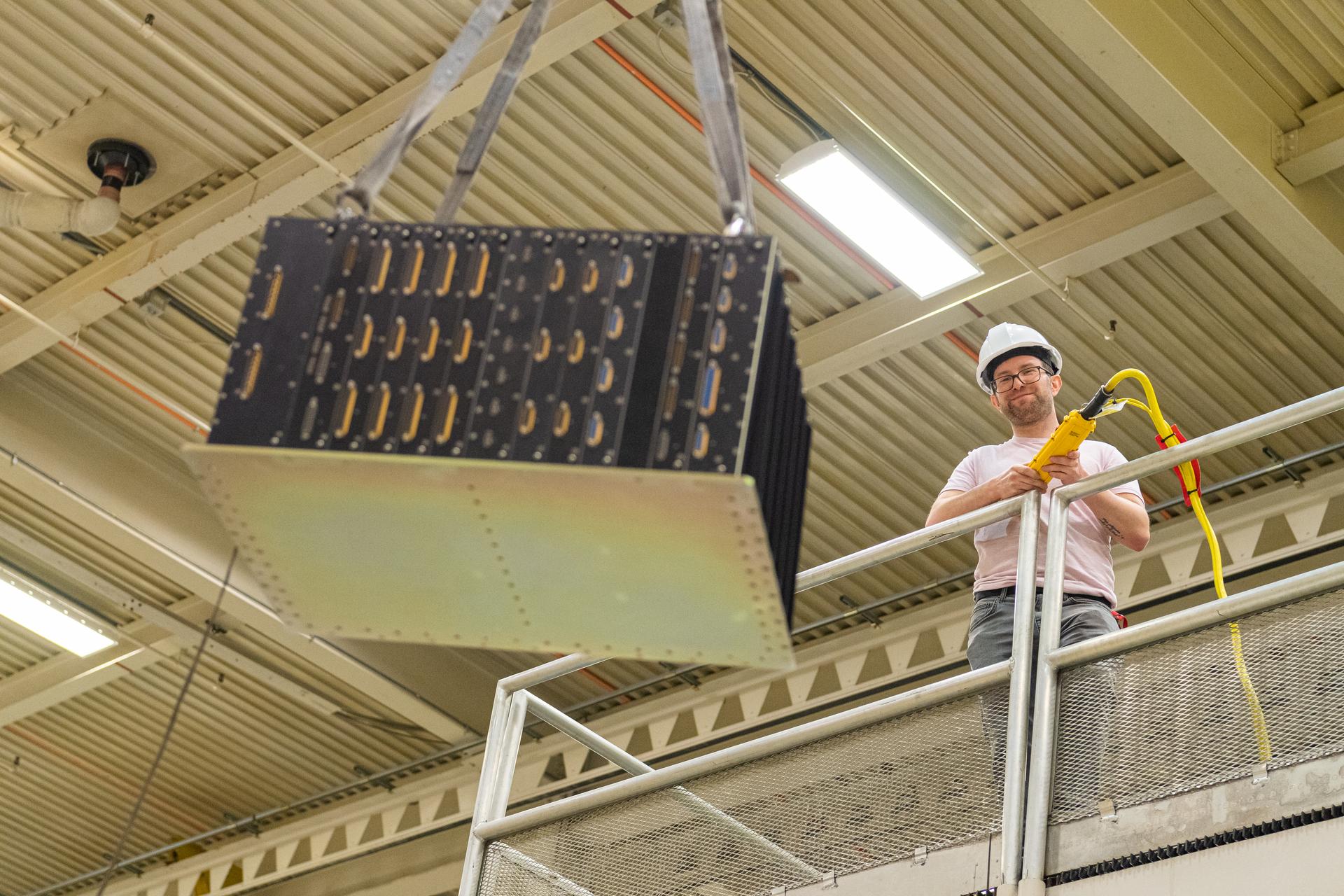
Mechanical engineering and integration technician Seth Alton crane lifts the OSAM-1 power supply unit into the thermal vacuum chamber at Goddard Space Flight Center, Greenbelt Md., April 12, 2023. This photo has been reviewed by OSAM1 project management and the Export Control Office and is released for public view. NASA/Mike Guinto
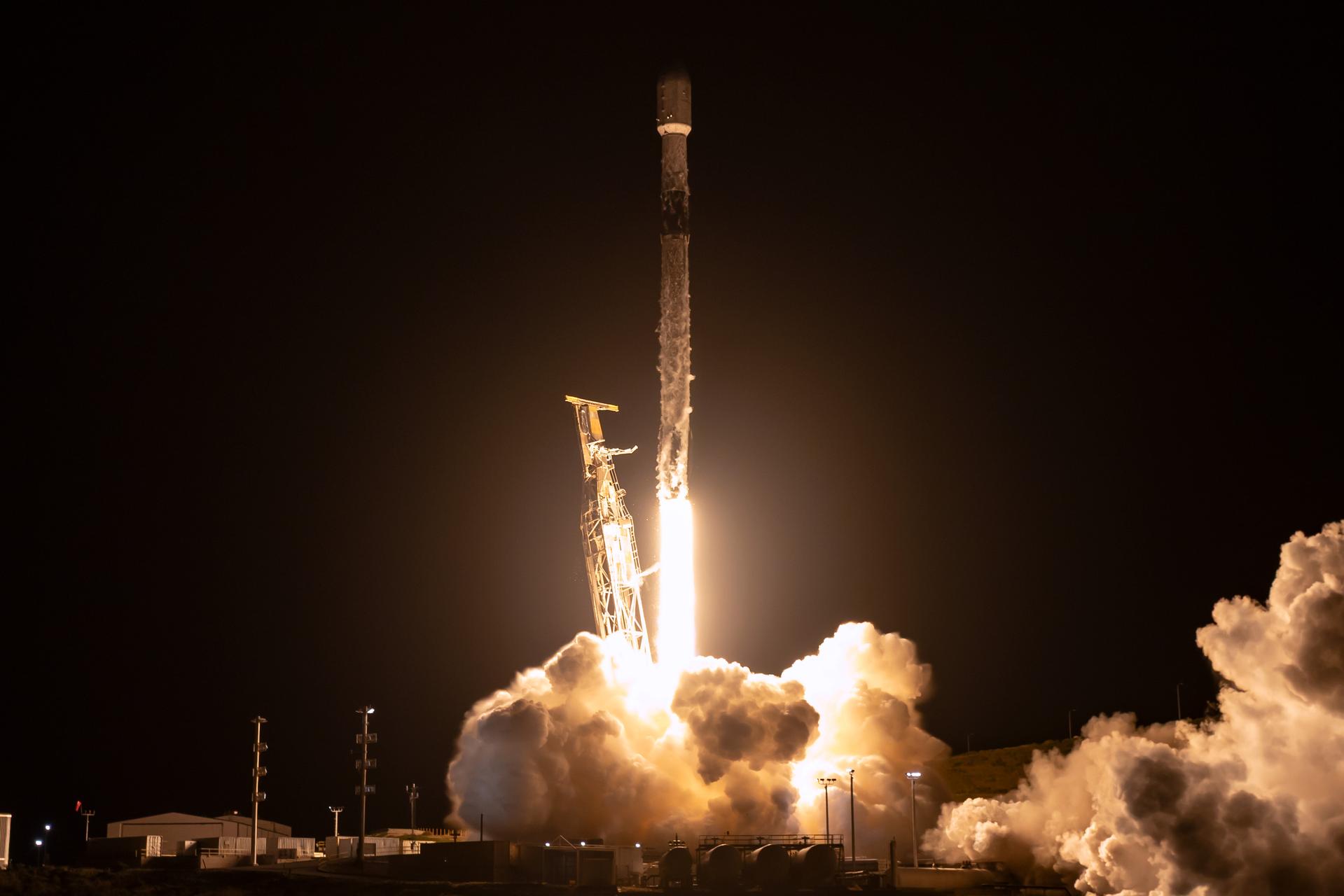
A SpaceX Falcon 9 rocket carrying several NASA small satellites and instruments lifts off from Space Launch Complex 4 East at Vandenberg Space Force Base in California on Monday, March 30, 2026, as part of the company’s Transporter-16 mission. The demonstrations will test thermal protection systems, advance in-space communications, deepen our understanding of Earth's atmosphere, and more to foster capabilities for NASA’s exploration and research goals.
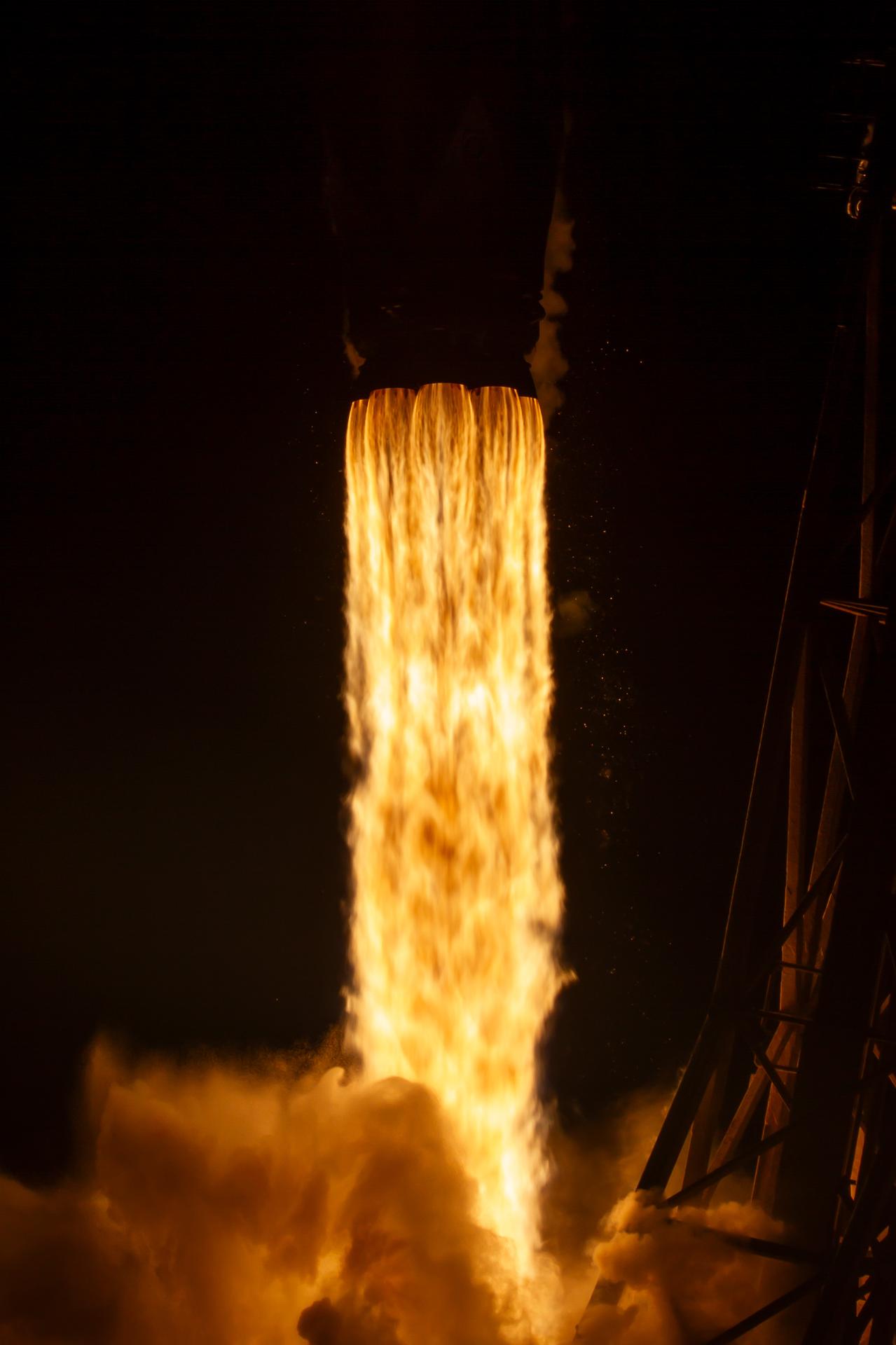
A SpaceX Falcon 9 rocket carrying several NASA small satellites and instruments lifts off from Space Launch Complex 4 East at Vandenberg Space Force Base in California on Monday, March 30, 2026, as part of the company’s Transporter-16 mission. The demonstrations will test thermal protection systems, advance in-space communications, deepen our understanding of Earth's atmosphere, and more to foster capabilities for NASA’s exploration and research goals.
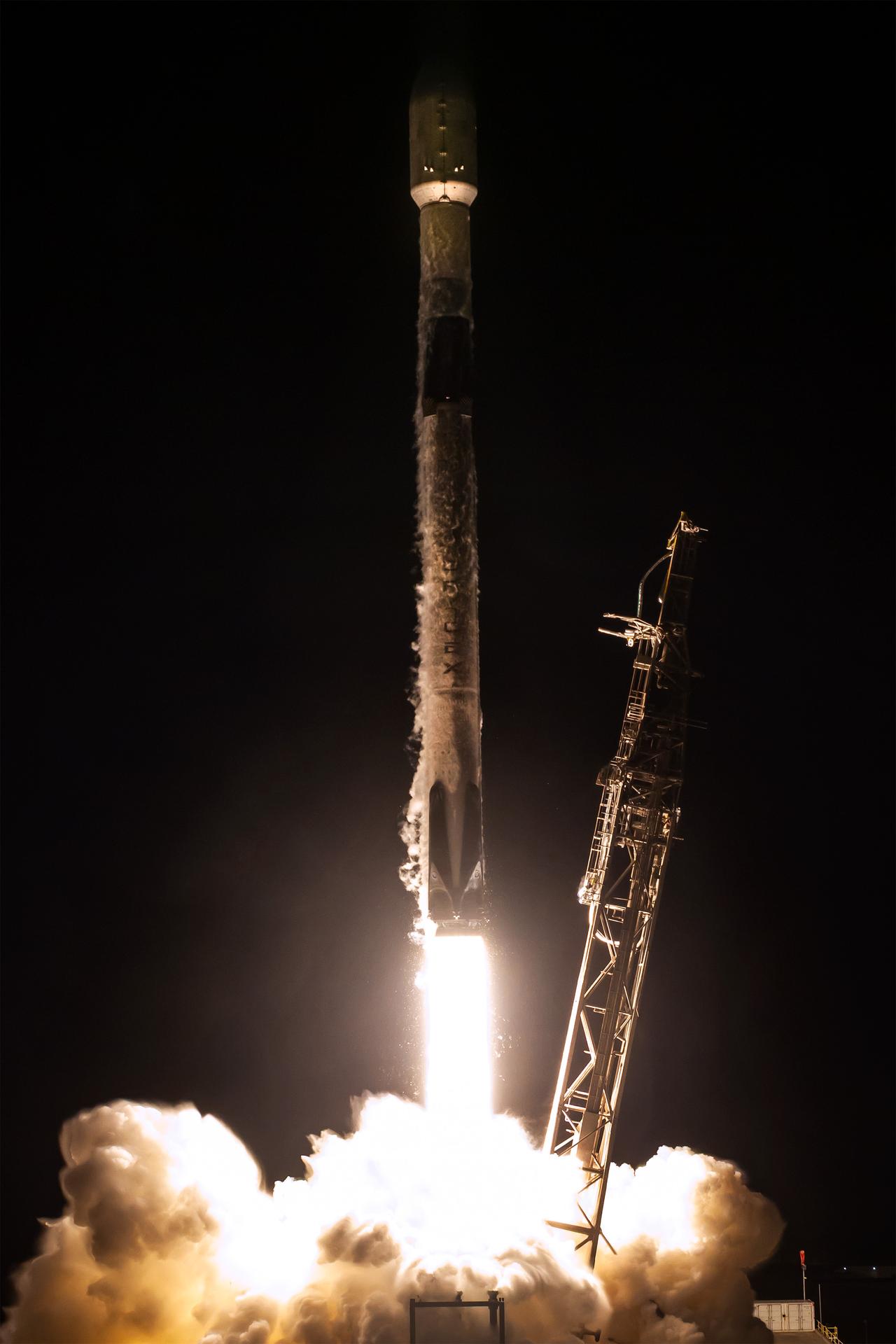
A SpaceX Falcon 9 rocket carrying several NASA small satellites and instruments lifts off from Space Launch Complex 4 East at Vandenberg Space Force Base in California on Monday, March 30, 2026, as part of the company’s Transporter-16 mission. The demonstrations will test thermal protection systems, advance in-space communications, deepen our understanding of Earth's atmosphere, and more to foster capabilities for NASA’s exploration and research goals.
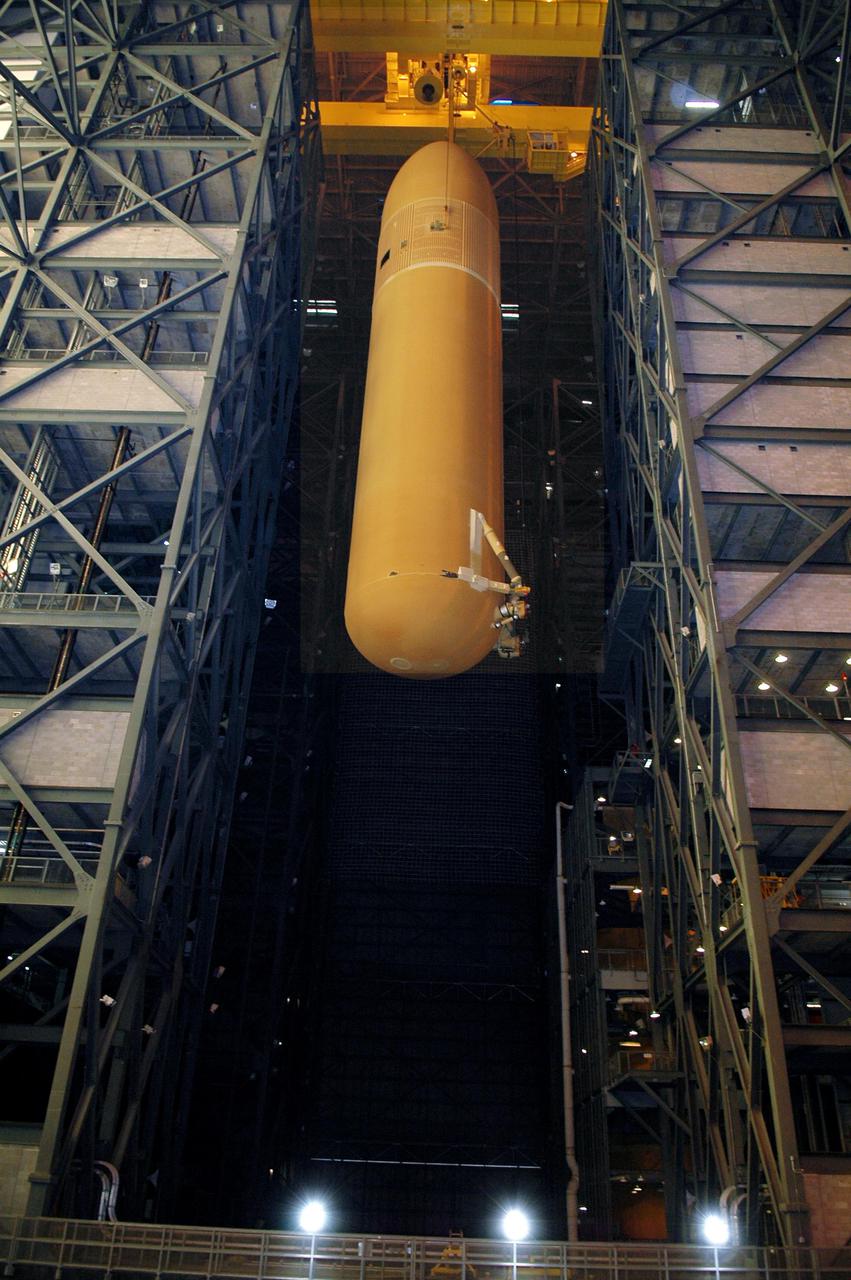
KENNEDY SPACE CENTER, FLA. - Viewed from the floor of the Vehicle Assembly Building, the redesigned External Tank is seen being lifted to the top where it will be lifted into the 'checkout cell' where the tank’s mechanical, electrical and thermal protection systems are inspected. The tank will also undergo new processes resulting from its redesign, including inspection of the bipod heater and External Tank separation camera. The tank will be prepared for 'mating' to the Shuttle’s Solid Rocket Boosters. When preparations are complete, the tank will be lifted from the checkout cell, moved across the transfer aisle and into High Bay 1. It will be lowered and attached to the boosters, which are sitting on the Mobile Launch Platform. The SRBs and ET will be flying with Shuttle Discovery for the Return to Flight mission STS-114. The launch planning window is May 12 to June 3, 2005.
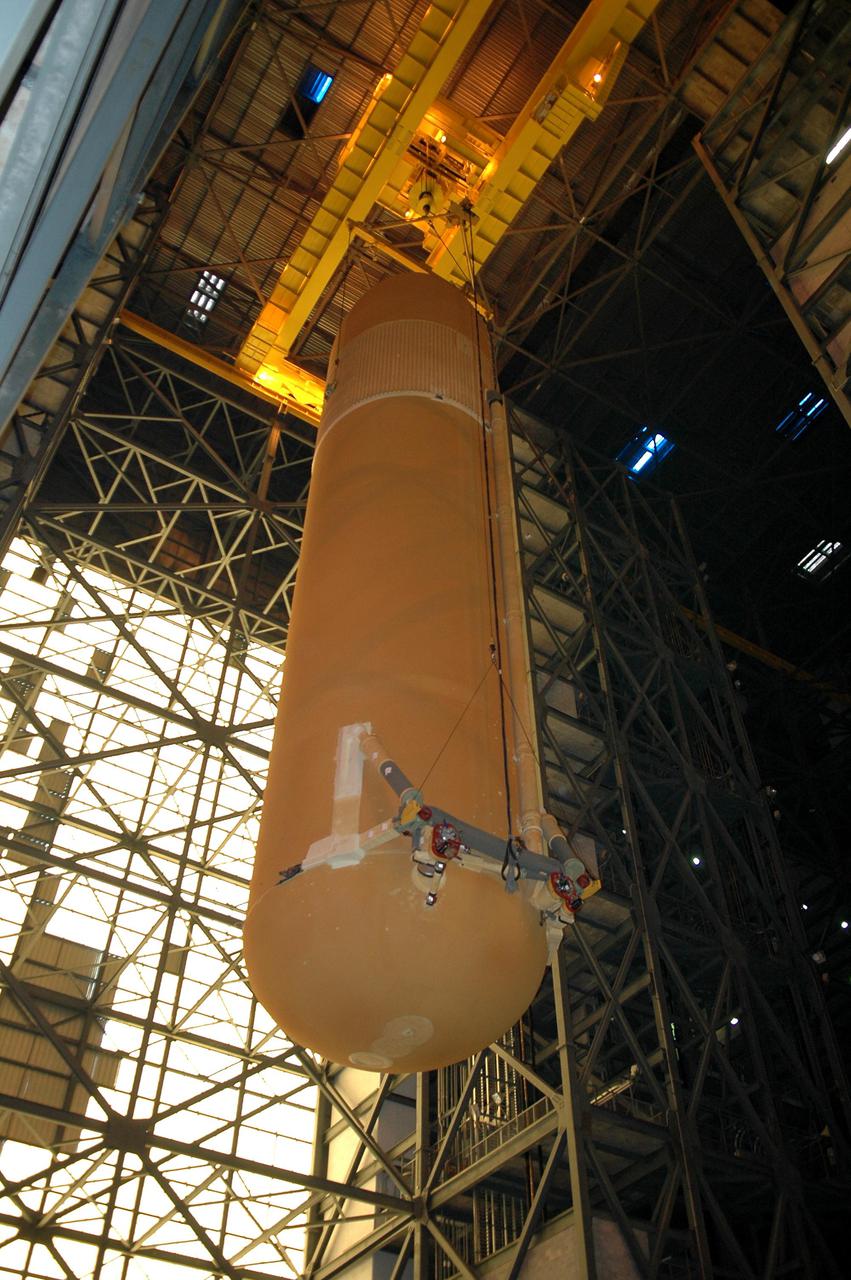
KENNEDY SPACE CENTER, FLA. - Viewed from the floor of the Vehicle Assembly Building, the redesigned External Tank is seen being lifted to the top where it will be lifted into the 'checkout cell' where the tank’s mechanical, electrical and thermal protection systems are inspected. The tank will also undergo new processes resulting from its redesign, including inspection of the bipod heater and External Tank separation camera. The tank will be prepared for 'mating' to the Shuttle’s Solid Rocket Boosters. When preparations are complete, the tank will be lifted from the checkout cell, moved across the transfer aisle and into High Bay 1. It will be lowered and attached to the boosters, which are sitting on the Mobile Launch Platform. The SRBs and ET will be flying with Shuttle Discovery for the Return to Flight mission STS-114. The launch planning window is May 12 to June 3, 2005.
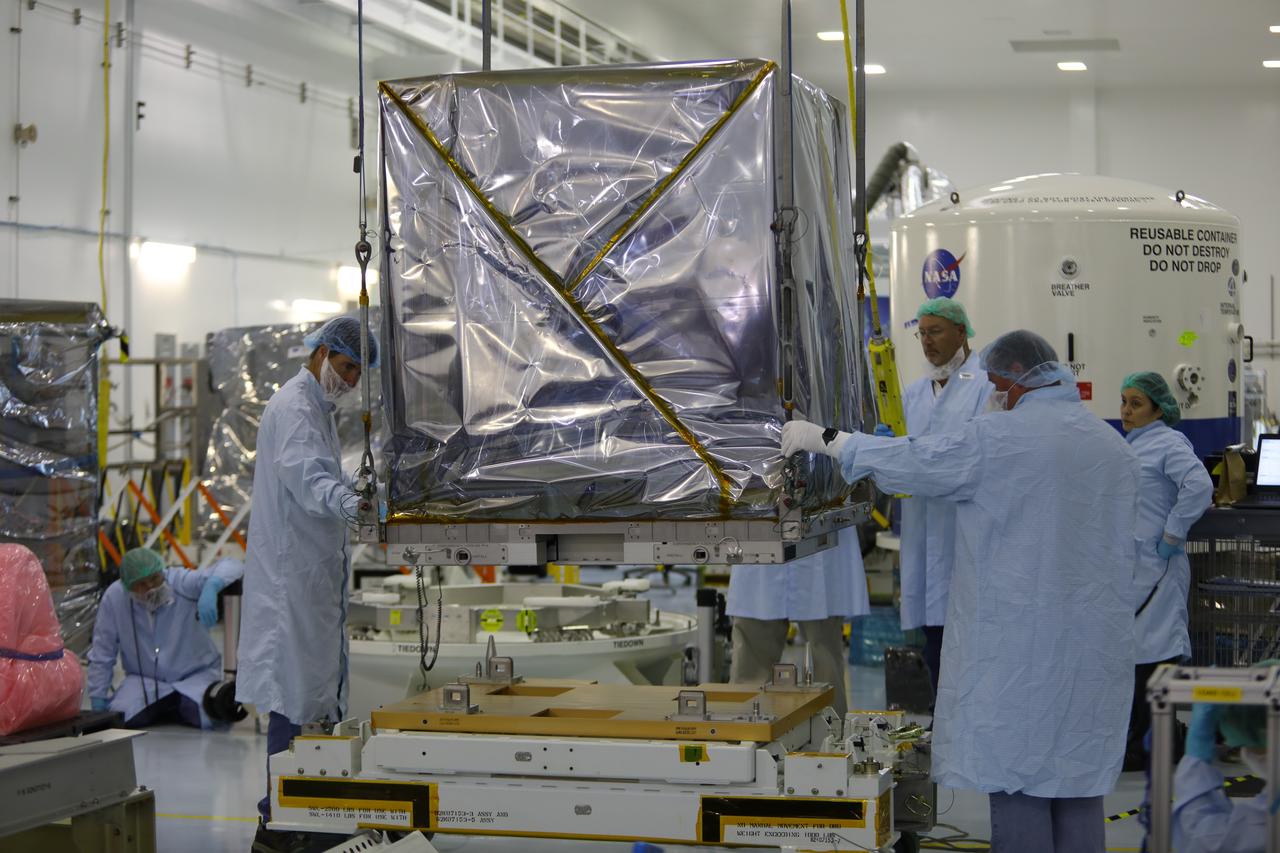
Inside the Space Station Processing Facility high bay at NASA's Kennedy Space Center in Florida, technicians assist as a crane is used to lift the Neutron star Interior Composition Explorer, or NICER, payload up from its carrier. NICER will be delivered to the International Space Station aboard the SpaceX Dragon cargo carrier on the company’s 11th commercial resupply services mission to the space station. NICER will study neutron stars through soft X-ray timing. NICER will enable rotation-resolved spectroscopy of the thermal and non-thermal emissions of neutron stars in the soft X-ray band with unprecedented sensitivity, probing interior structure, the origins of dynamic phenomena and the mechanisms that underlie the most powerful cosmic particle accelerators known.
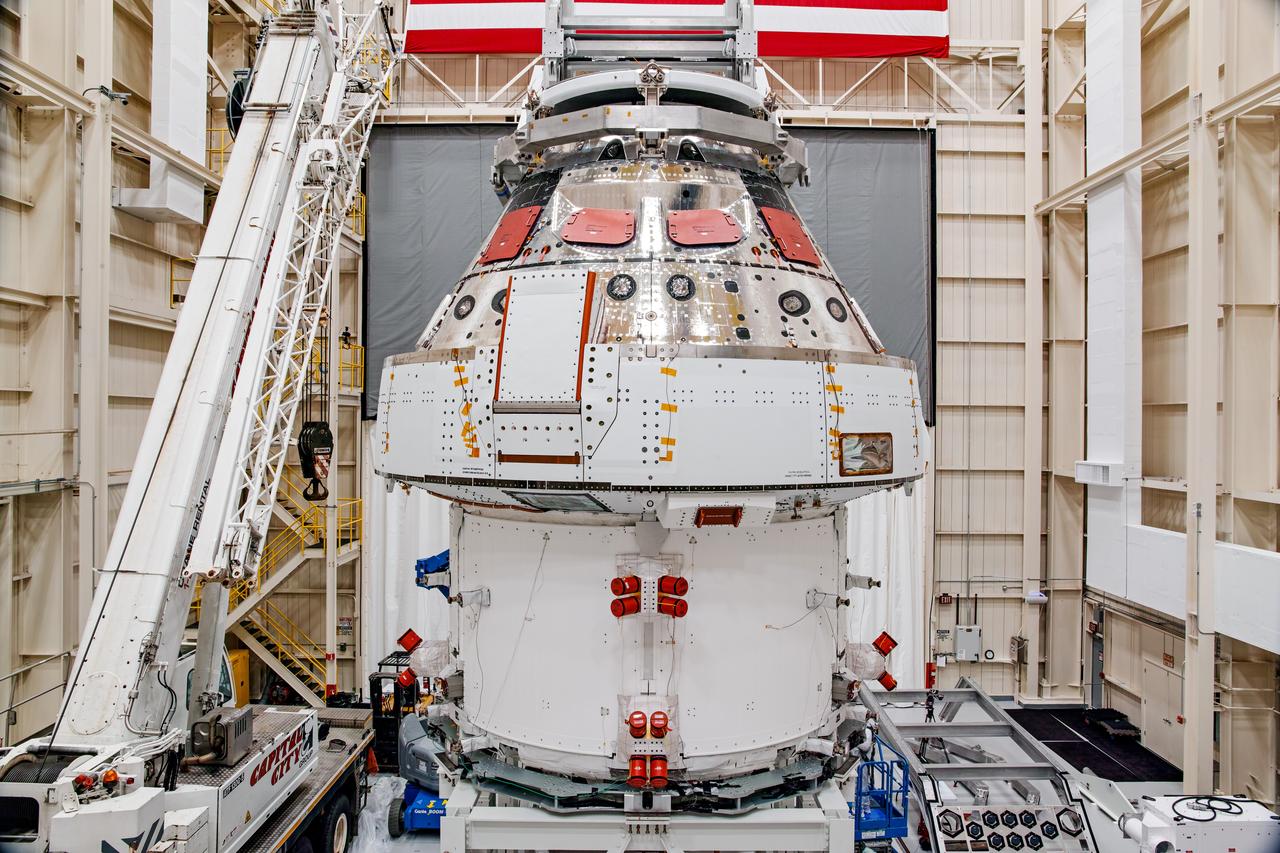
NASA’s Orion spacecraft–the crew module and European-built service module—is being lifted on Dec. 1, 2019 into a thermal cage and readied for its move into the vacuum chamber at NASA’s Neil A. Armstrong Test Facility in Ohio (formerly Plum Brook Station) for testing. Testing begins with a 60-day thermal test, where the spacecraft will be subjected to temperatures ranging from -250 to 300-degrees Fahrenheit to ensure it can withstand the harsh environment of space during Artemis missions. These extreme temperatures simulate flying in-and-out of sunlight and shadow in space using Heat Flux, a specially-designed system that heats specific parts of the spacecraft at any given time. Orion will also be surrounded on all sides by a set of large panels, called a cryogenic-shroud, that will provide the cold background temperatures of space.
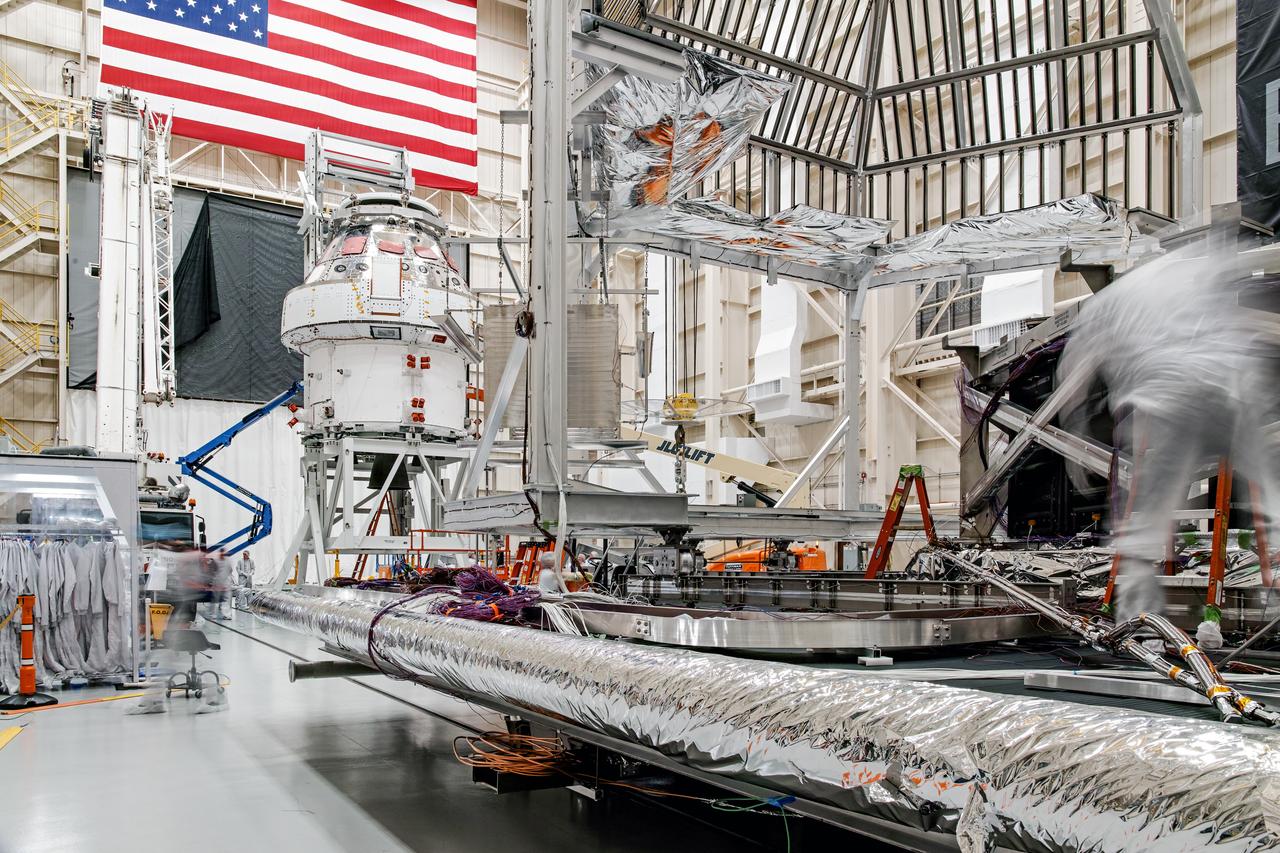
NASA’s Orion spacecraft–the crew module and European-built service module—is being lifted on Dec. 1, 2019 into a thermal cage and readied for its move into the vacuum chamber at NASA’s Neil A. Armstrong Test Facility in Ohio (formerly Plum Brook Station) for testing. Testing begins with a 60-day thermal test, where the spacecraft will be subjected to temperatures ranging from -250 to 300-degrees Fahrenheit to ensure it can withstand the harsh environment of space during Artemis missions. These extreme temperatures simulate flying in-and-out of sunlight and shadow in space using Heat Flux, a specially-designed system that heats specific parts of the spacecraft at any given time. Orion will also be surrounded on all sides by a set of large panels, called a cryogenic-shroud, that will provide the cold background temperatures of space.
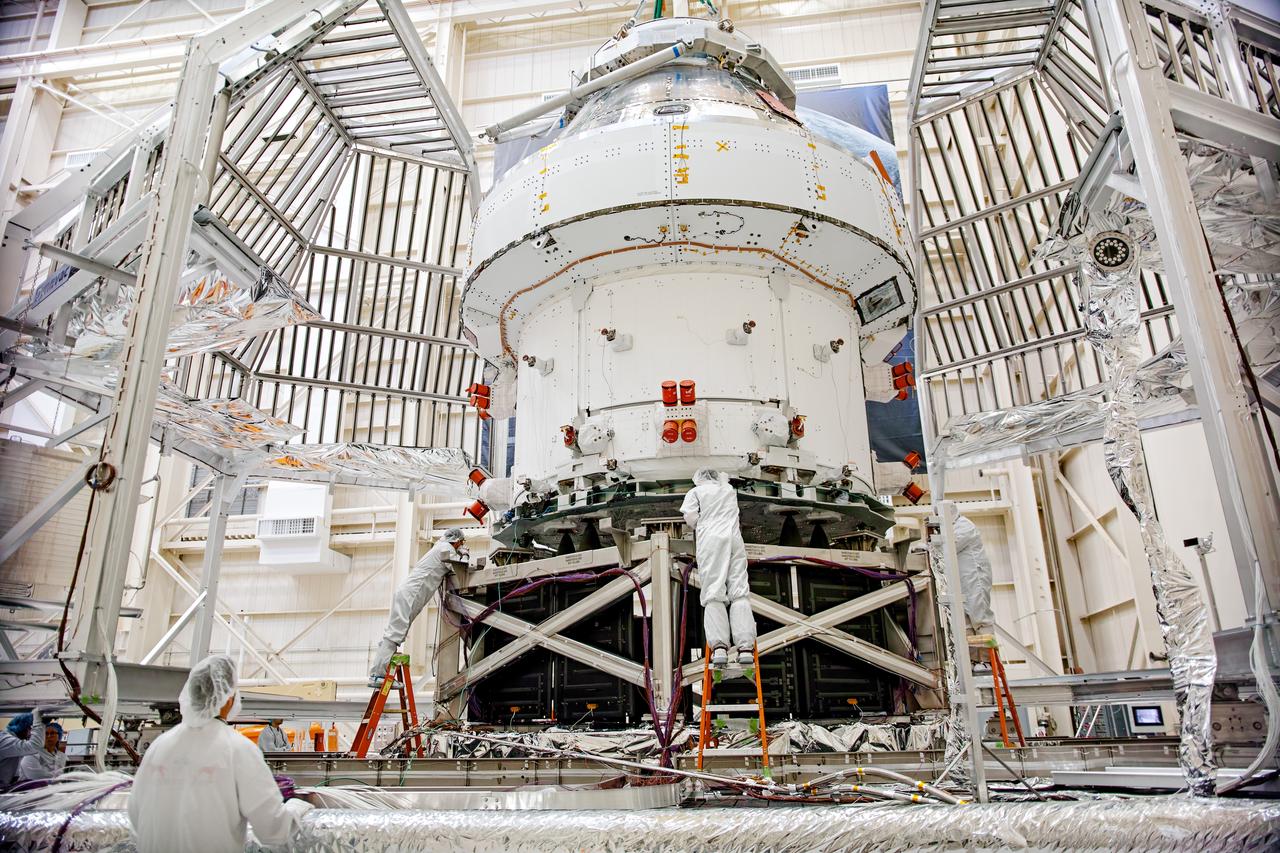
NASA’s Orion spacecraft–the crew module and European-built service module—is being lifted on Dec. 1, 2019 into a thermal cage and readied for its move into the vacuum chamber at NASA’s Neil A. Armstrong Test Facility in Ohio (formerly Plum Brook Station) for testing. Testing begins with a 60-day thermal test, where the spacecraft will be subjected to temperatures ranging from -250 to 300-degrees Fahrenheit to ensure it can withstand the harsh environment of space during Artemis missions. These extreme temperatures simulate flying in-and-out of sunlight and shadow in space using Heat Flux, a specially-designed system that heats specific parts of the spacecraft at any given time. Orion will also be surrounded on all sides by a set of large panels, called a cryogenic-shroud, that will provide the cold background temperatures of space.
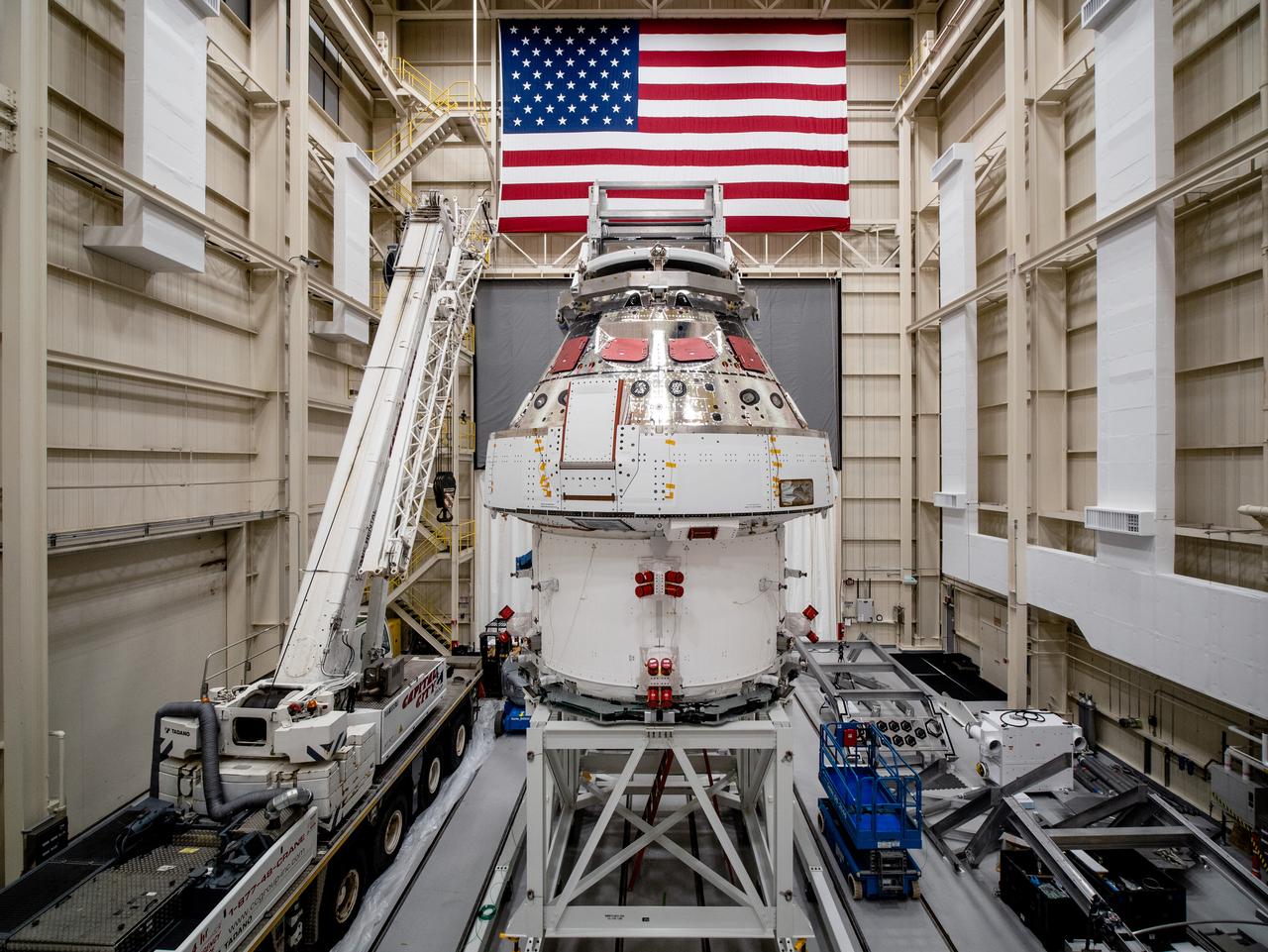
NASA’s Orion spacecraft–the crew module and European-built service module—is being lifted on Dec. 1, 2019 into a thermal cage and readied for its move into the vacuum chamber at NASA’s Neil A. Armstrong Test Facility in Ohio (formerly Plum Brook Station) for testing. Testing begins with a 60-day thermal test, where the spacecraft will be subjected to temperatures ranging from -250 to 300-degrees Fahrenheit to ensure it can withstand the harsh environment of space during Artemis missions. These extreme temperatures simulate flying in-and-out of sunlight and shadow in space using Heat Flux, a specially-designed system that heats specific parts of the spacecraft at any given time. Orion will also be surrounded on all sides by a set of large panels, called a cryogenic-shroud, that will provide the cold background temperatures of space.
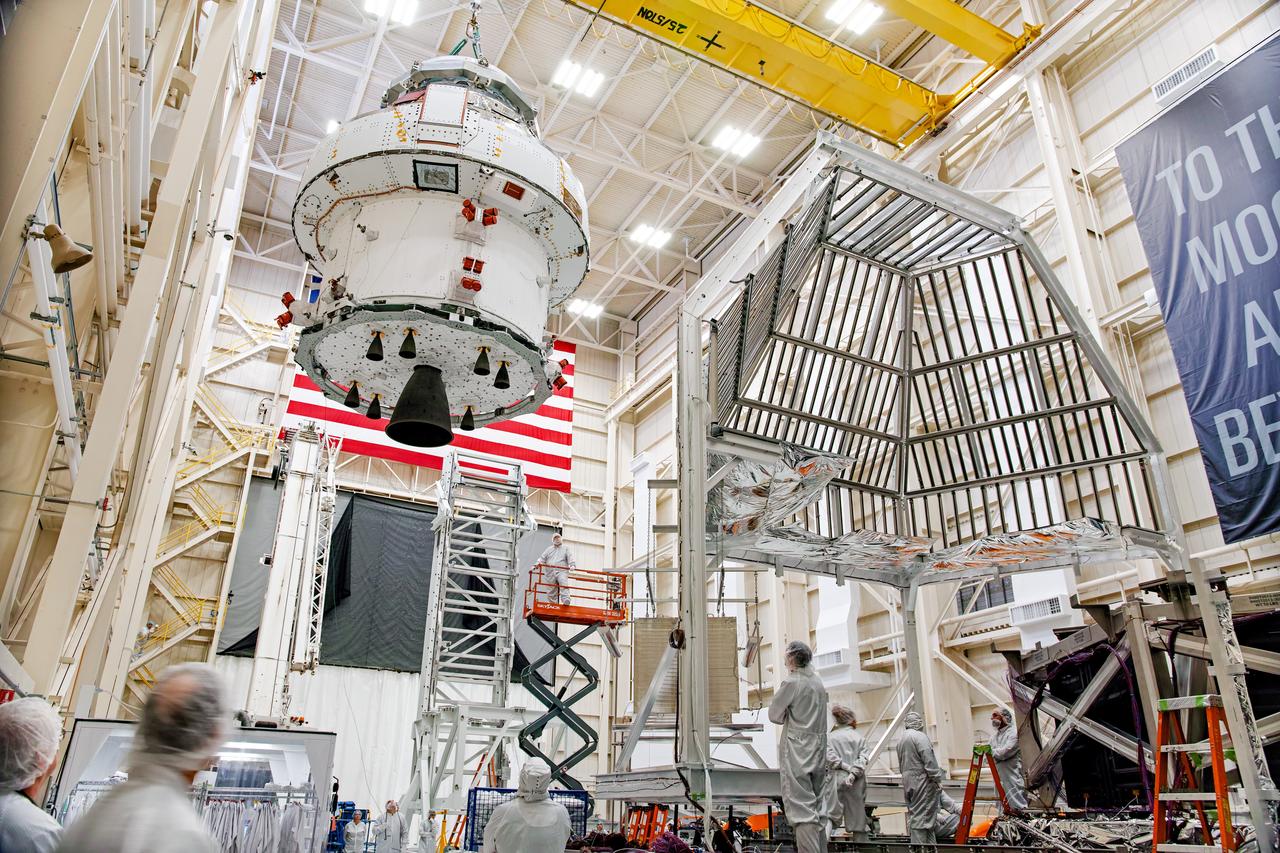
NASA’s Orion spacecraft–the crew module and European-built service module—is being lifted on Dec. 1, 2019 into a thermal cage and readied for its move into the vacuum chamber at NASA’s Neil A. Armstrong Test Facility in Ohio (formerly Plum Brook Station) for testing. Testing begins with a 60-day thermal test, where the spacecraft will be subjected to temperatures ranging from -250 to 300-degrees Fahrenheit to ensure it can withstand the harsh environment of space during Artemis missions. These extreme temperatures simulate flying in-and-out of sunlight and shadow in space using Heat Flux, a specially-designed system that heats specific parts of the spacecraft at any given time. Orion will also be surrounded on all sides by a set of large panels, called a cryogenic-shroud, that will provide the cold background temperatures of space.
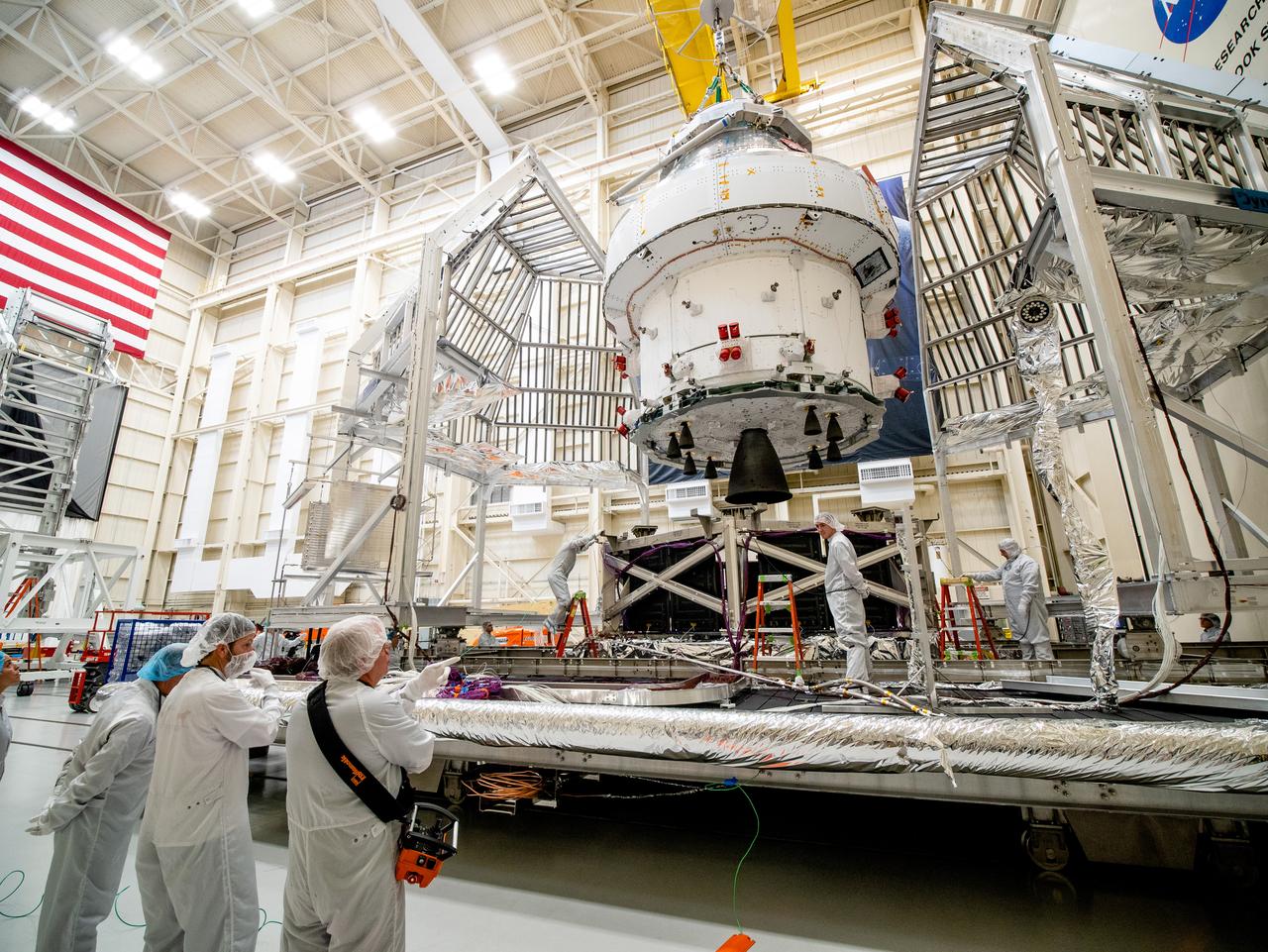
NASA’s Orion spacecraft–the crew module and European-built service module—is being lifted on Dec. 1, 2019 into a thermal cage and readied for its move into the vacuum chamber at NASA’s Neil A. Armstrong Test Facility in Ohio (formerly Plum Brook Station) for testing. Testing begins with a 60-day thermal test, where the spacecraft will be subjected to temperatures ranging from -250 to 300-degrees Fahrenheit to ensure it can withstand the harsh environment of space during Artemis missions. These extreme temperatures simulate flying in-and-out of sunlight and shadow in space using Heat Flux, a specially-designed system that heats specific parts of the spacecraft at any given time. Orion will also be surrounded on all sides by a set of large panels, called a cryogenic-shroud, that will provide the cold background temperatures of space.

NASA’s Orion spacecraft–the crew module and European-built service module—is being lifted on Dec. 1, 2019 into a thermal cage and readied for its move into the vacuum chamber at NASA’s Neil A. Armstrong Test Facility in Ohio (formerly Plum Brook Station) for testing. Testing begins with a 60-day thermal test, where the spacecraft will be subjected to temperatures ranging from -250 to 300-degrees Fahrenheit to ensure it can withstand the harsh environment of space during Artemis missions. These extreme temperatures simulate flying in-and-out of sunlight and shadow in space using Heat Flux, a specially-designed system that heats specific parts of the spacecraft at any given time. Orion will also be surrounded on all sides by a set of large panels, called a cryogenic-shroud, that will provide the cold background temperatures of space.
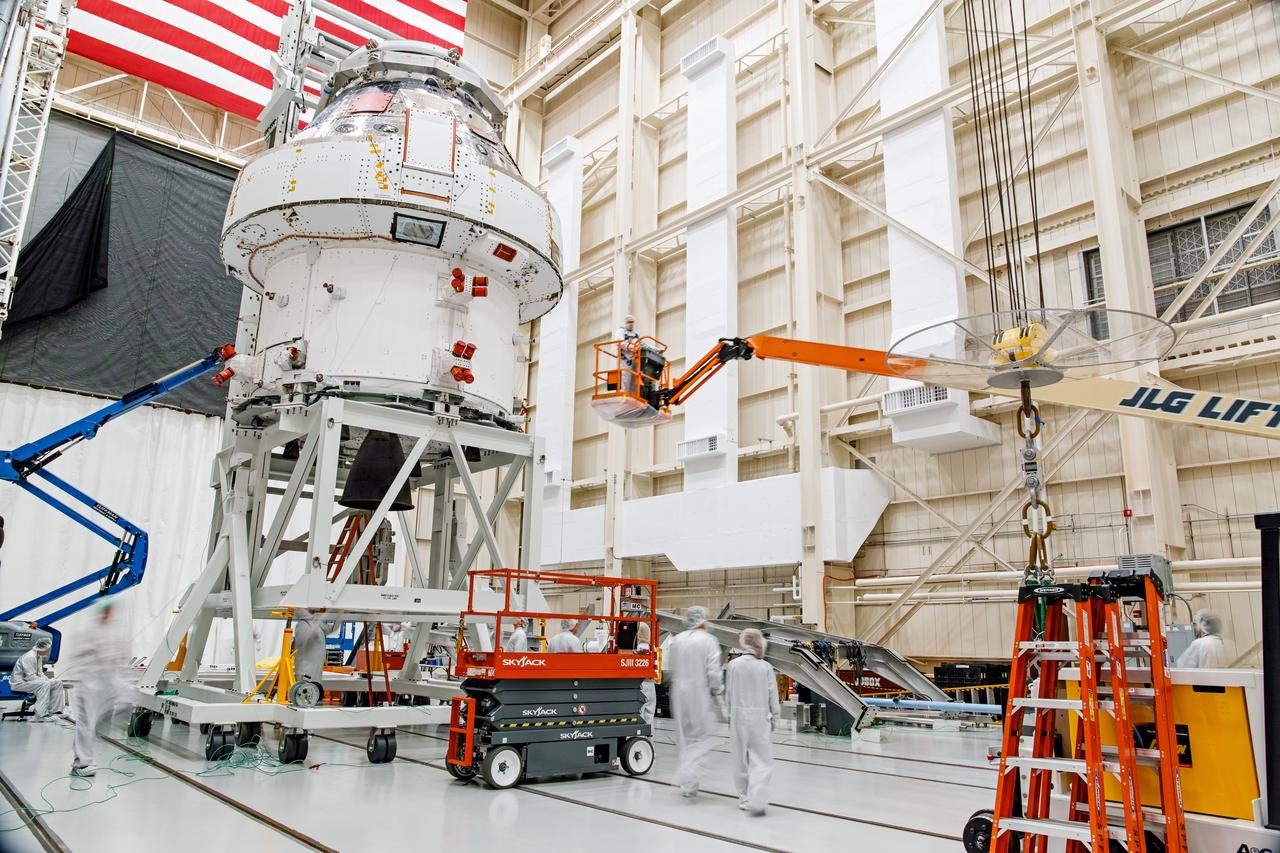
NASA’s Orion spacecraft–the crew module and European-built service module—is being lifted on Dec. 1, 2019 into a thermal cage and readied for its move into the vacuum chamber at NASA’s Neil A. Armstrong Test Facility in Ohio (formerly Plum Brook Station) for testing. Testing begins with a 60-day thermal test, where the spacecraft will be subjected to temperatures ranging from -250 to 300-degrees Fahrenheit to ensure it can withstand the harsh environment of space during Artemis missions. These extreme temperatures simulate flying in-and-out of sunlight and shadow in space using Heat Flux, a specially-designed system that heats specific parts of the spacecraft at any given time. Orion will also be surrounded on all sides by a set of large panels, called a cryogenic-shroud, that will provide the cold background temperatures of space.
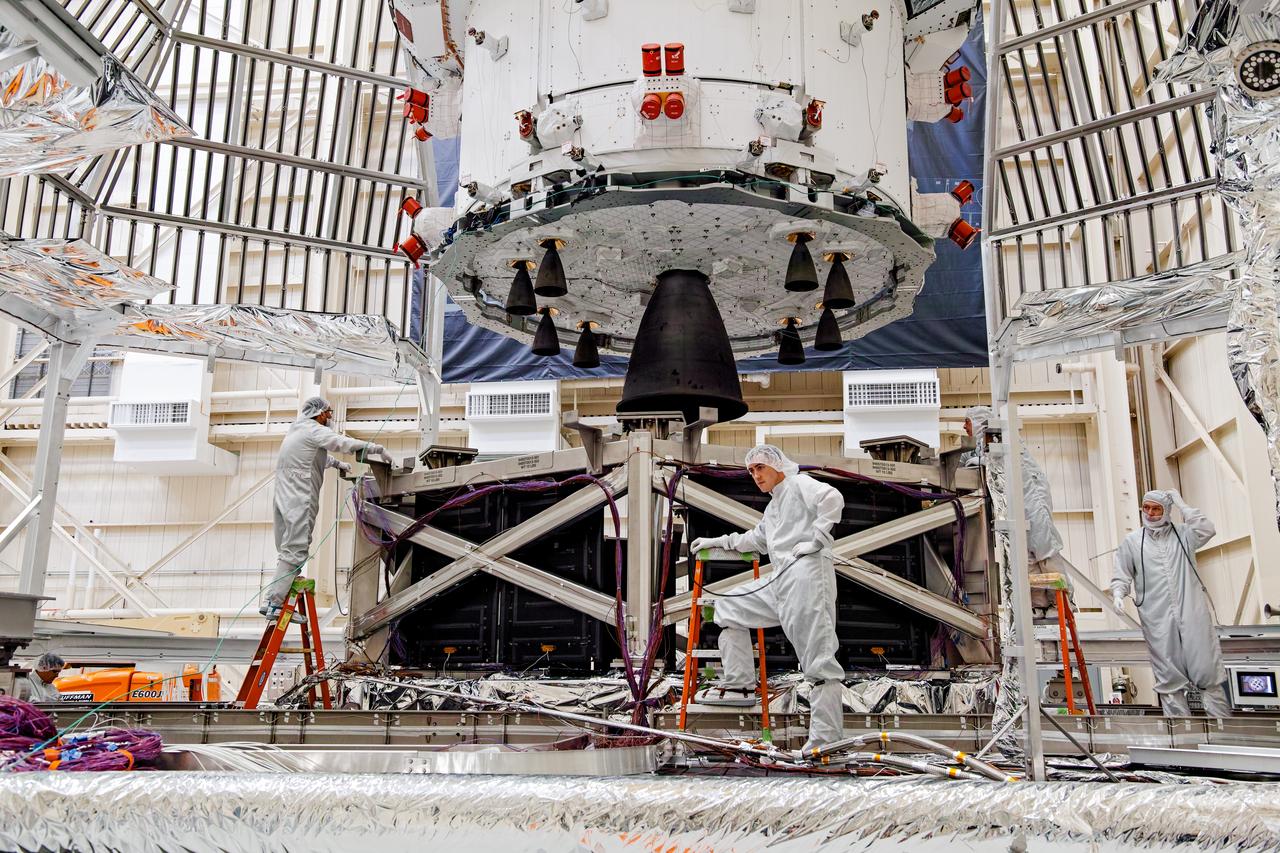
NASA’s Orion spacecraft–the crew module and European-built service module—is being lifted on Dec. 1, 2019 into a thermal cage and readied for its move into the vacuum chamber at NASA’s Neil A. Armstrong Test Facility in Ohio (formerly Plum Brook Station) for testing. Testing begins with a 60-day thermal test, where the spacecraft will be subjected to temperatures ranging from -250 to 300-degrees Fahrenheit to ensure it can withstand the harsh environment of space during Artemis missions. These extreme temperatures simulate flying in-and-out of sunlight and shadow in space using Heat Flux, a specially-designed system that heats specific parts of the spacecraft at any given time. Orion will also be surrounded on all sides by a set of large panels, called a cryogenic-shroud, that will provide the cold background temperatures of space.
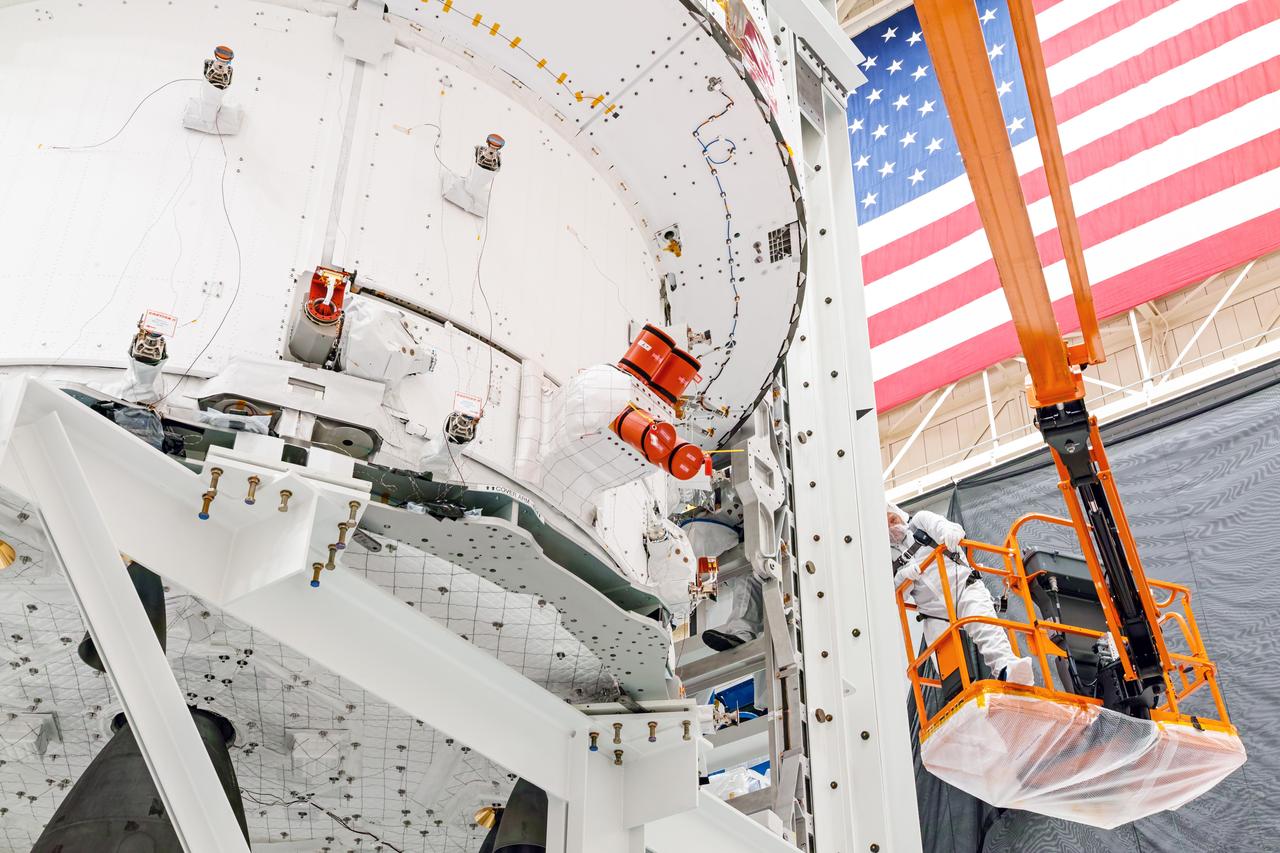
NASA’s Orion spacecraft–the crew module and European-built service module—is being lifted on Dec. 1, 2019 into a thermal cage and readied for its move into the vacuum chamber at NASA’s Neil A. Armstrong Test Facility in Ohio (formerly Plum Brook Station) for testing. Testing begins with a 60-day thermal test, where the spacecraft will be subjected to temperatures ranging from -250 to 300-degrees Fahrenheit to ensure it can withstand the harsh environment of space during Artemis missions. These extreme temperatures simulate flying in-and-out of sunlight and shadow in space using Heat Flux, a specially-designed system that heats specific parts of the spacecraft at any given time. Orion will also be surrounded on all sides by a set of large panels, called a cryogenic-shroud, that will provide the cold background temperatures of space.
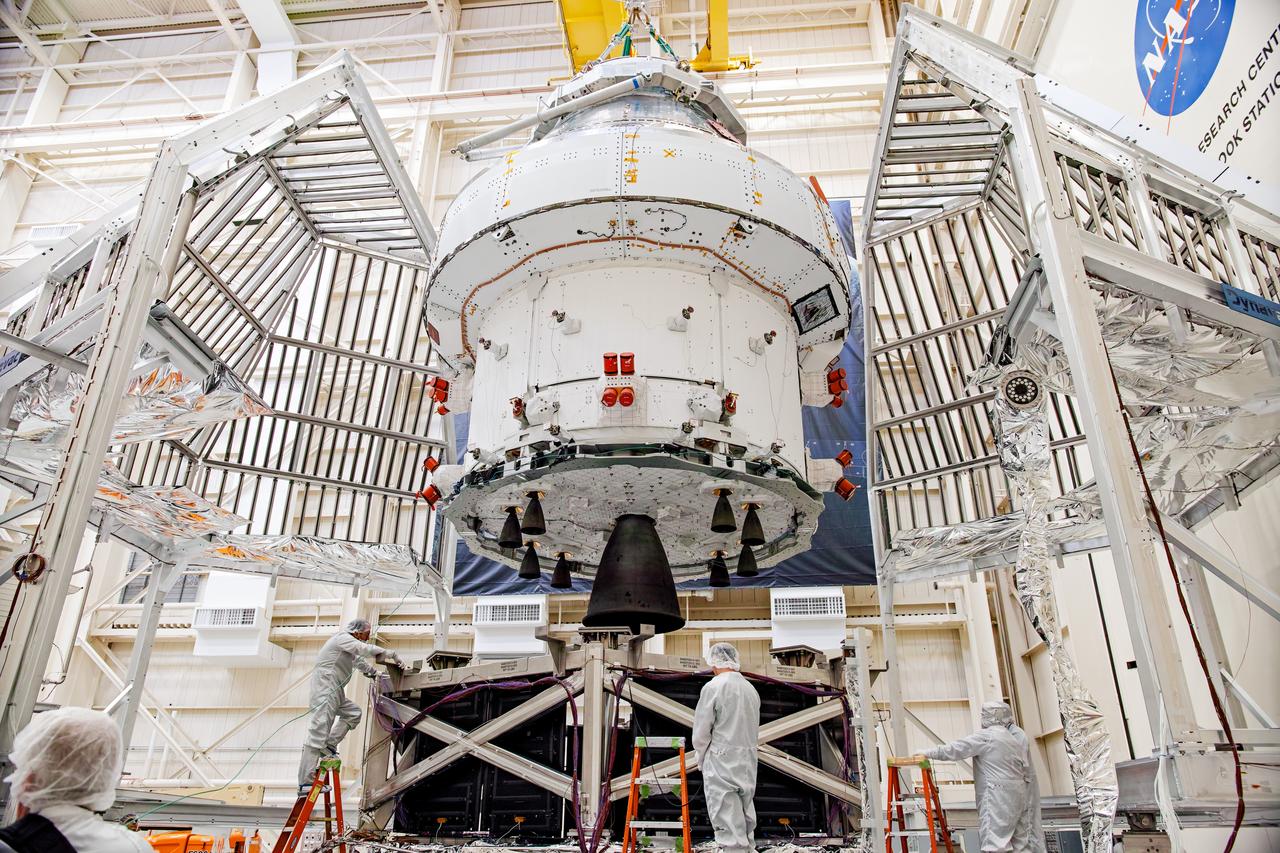
NASA’s Orion spacecraft–the crew module and European-built service module—is being lifted on Dec. 1, 2019 into a thermal cage and readied for its move into the vacuum chamber at NASA’s Neil A. Armstrong Test Facility in Ohio (formerly Plum Brook Station) for testing. Testing begins with a 60-day thermal test, where the spacecraft will be subjected to temperatures ranging from -250 to 300-degrees Fahrenheit to ensure it can withstand the harsh environment of space during Artemis missions. These extreme temperatures simulate flying in-and-out of sunlight and shadow in space using Heat Flux, a specially-designed system that heats specific parts of the spacecraft at any given time. Orion will also be surrounded on all sides by a set of large panels, called a cryogenic-shroud, that will provide the cold background temperatures of space.
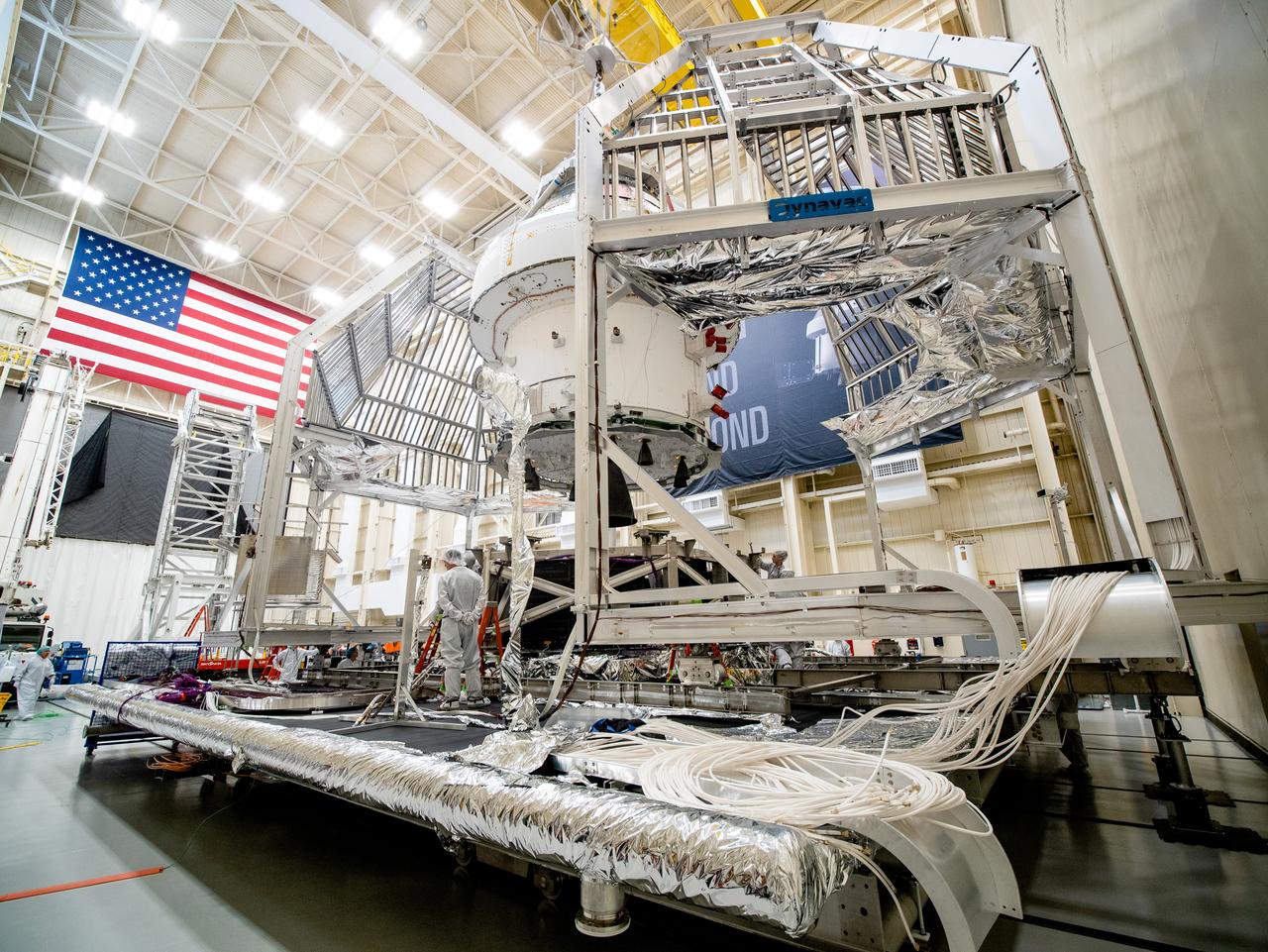
NASA’s Orion spacecraft–the crew module and European-built service module—is being lifted on Dec. 1, 2019 into a thermal cage and readied for its move into the vacuum chamber at NASA’s Neil A. Armstrong Test Facility in Ohio (formerly Plum Brook Station) for testing. Testing begins with a 60-day thermal test, where the spacecraft will be subjected to temperatures ranging from -250 to 300-degrees Fahrenheit to ensure it can withstand the harsh environment of space during Artemis missions. These extreme temperatures simulate flying in-and-out of sunlight and shadow in space using Heat Flux, a specially-designed system that heats specific parts of the spacecraft at any given time. Orion will also be surrounded on all sides by a set of large panels, called a cryogenic-shroud, that will provide the cold background temperatures of space.
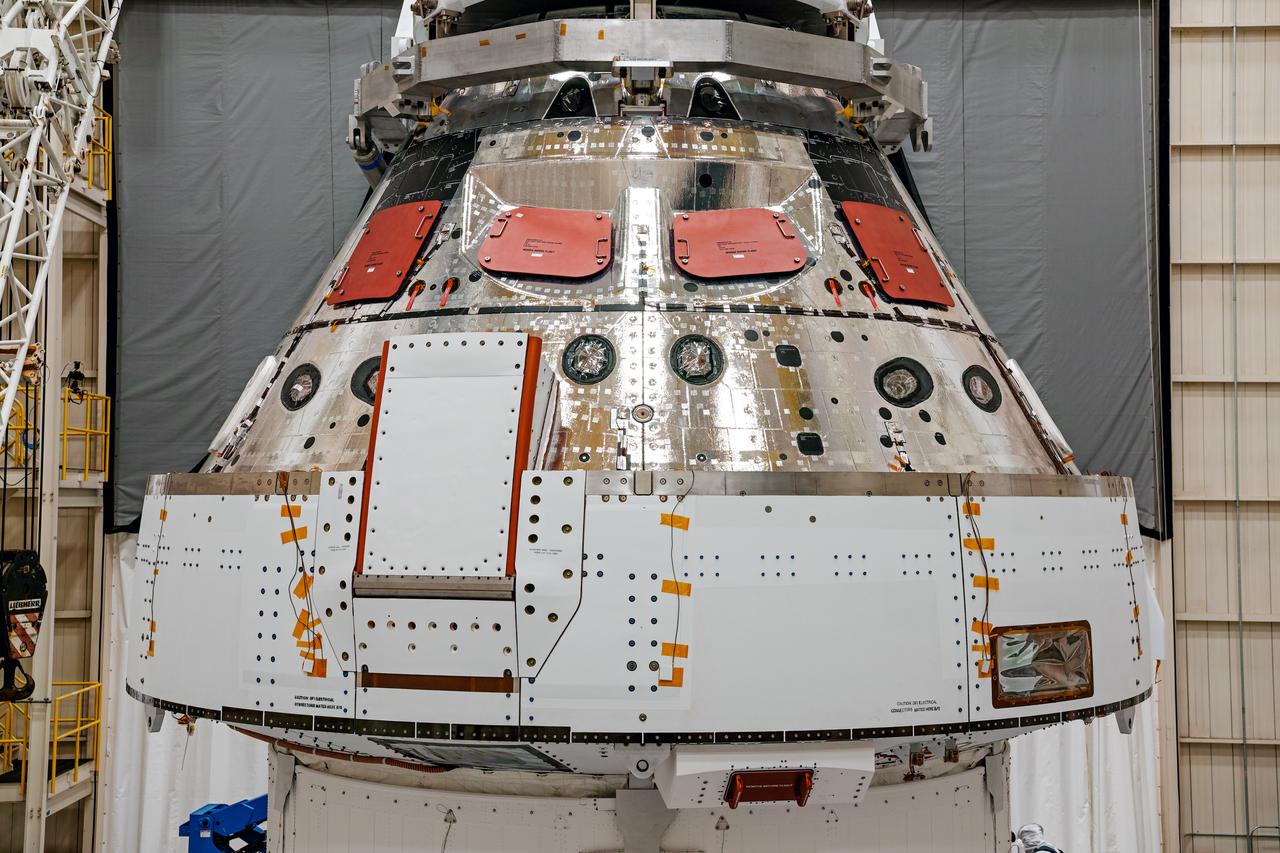
NASA’s Orion spacecraft–the crew module and European-built service module—is being lifted on Dec. 1, 2019 into a thermal cage and readied for its move into the vacuum chamber at NASA’s Neil A. Armstrong Test Facility in Ohio (formerly Plum Brook Station) for testing. Testing begins with a 60-day thermal test, where the spacecraft will be subjected to temperatures ranging from -250 to 300-degrees Fahrenheit to ensure it can withstand the harsh environment of space during Artemis missions. These extreme temperatures simulate flying in-and-out of sunlight and shadow in space using Heat Flux, a specially-designed system that heats specific parts of the spacecraft at any given time. Orion will also be surrounded on all sides by a set of large panels, called a cryogenic-shroud, that will provide the cold background temperatures of space.
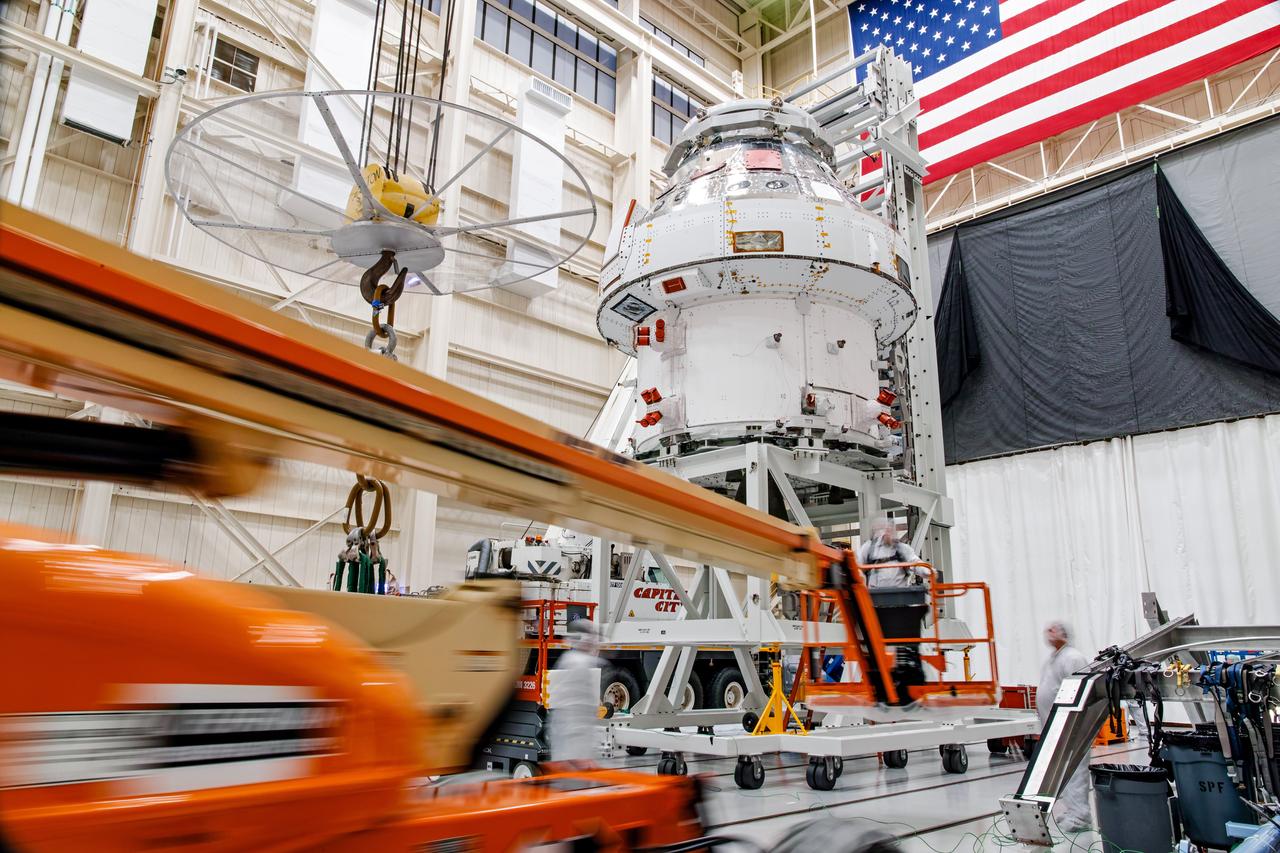
NASA’s Orion spacecraft–the crew module and European-built service module—is being lifted on Dec. 1, 2019 into a thermal cage and readied for its move into the vacuum chamber at NASA’s Neil A. Armstrong Test Facility in Ohio (formerly Plum Brook Station) for testing. Testing begins with a 60-day thermal test, where the spacecraft will be subjected to temperatures ranging from -250 to 300-degrees Fahrenheit to ensure it can withstand the harsh environment of space during Artemis missions. These extreme temperatures simulate flying in-and-out of sunlight and shadow in space using Heat Flux, a specially-designed system that heats specific parts of the spacecraft at any given time. Orion will also be surrounded on all sides by a set of large panels, called a cryogenic-shroud, that will provide the cold background temperatures of space.
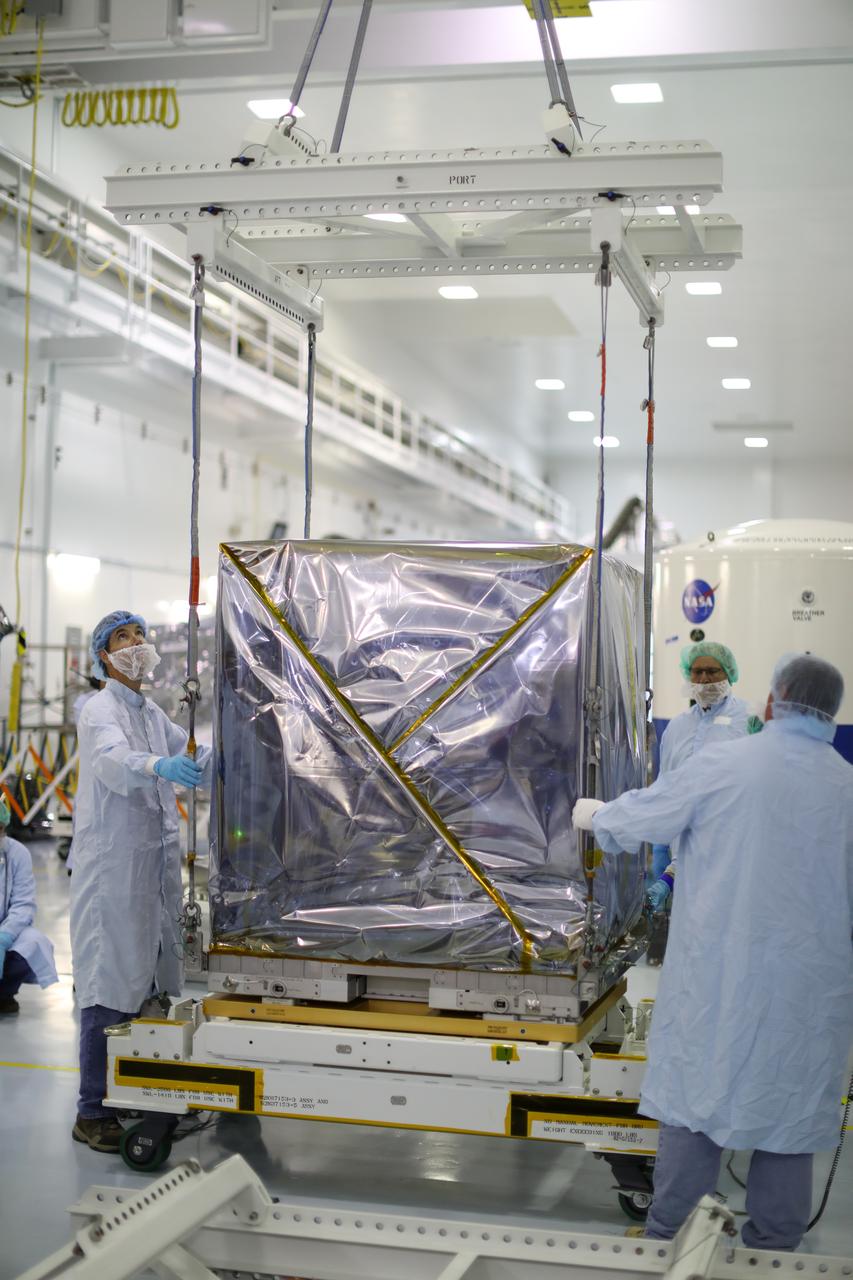
Inside the Space Station Processing Facility high bay at NASA's Kennedy Space Center in Florida, technicians assist as a crane is used to lift the Neutron star Interior Composition Explorer, or NICER, payload up from its carrier. NICER will be delivered to the International Space Station aboard the SpaceX Dragon cargo carrier on the company’s 11th commercial resupply services mission to the space station. NICER will study neutron stars through soft X-ray timing. NICER will enable rotation-resolved spectroscopy of the thermal and non-thermal emissions of neutron stars in the soft X-ray band with unprecedented sensitivity, probing interior structure, the origins of dynamic phenomena and the mechanisms that underlie the most powerful cosmic particle accelerators known.
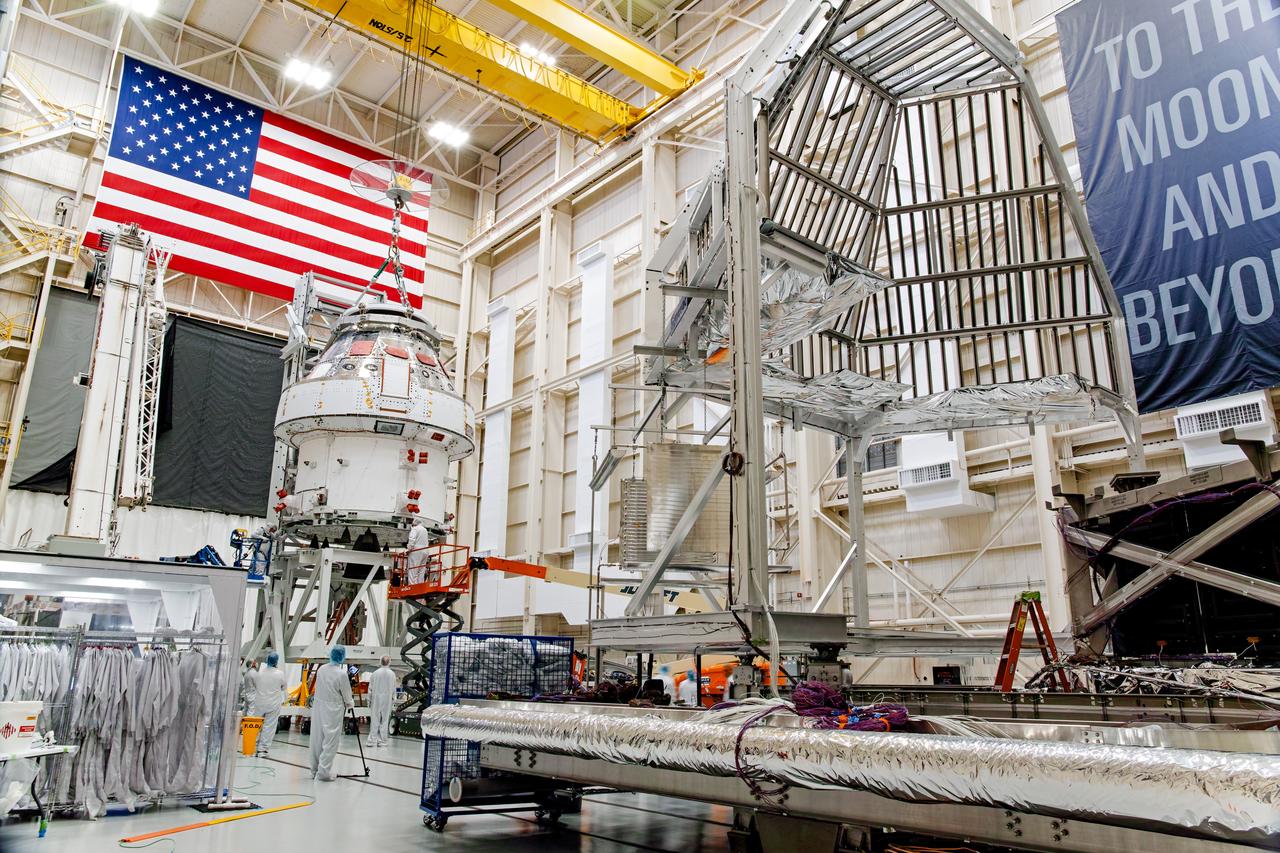
NASA’s Orion spacecraft–the crew module and European-built service module—is being lifted on Dec. 1, 2019 into a thermal cage and readied for its move into the vacuum chamber at NASA’s Neil A. Armstrong Test Facility in Ohio (formerly Plum Brook Station) for testing. Testing begins with a 60-day thermal test, where the spacecraft will be subjected to temperatures ranging from -250 to 300-degrees Fahrenheit to ensure it can withstand the harsh environment of space during Artemis missions. These extreme temperatures simulate flying in-and-out of sunlight and shadow in space using Heat Flux, a specially-designed system that heats specific parts of the spacecraft at any given time. Orion will also be surrounded on all sides by a set of large panels, called a cryogenic-shroud, that will provide the cold background temperatures of space.
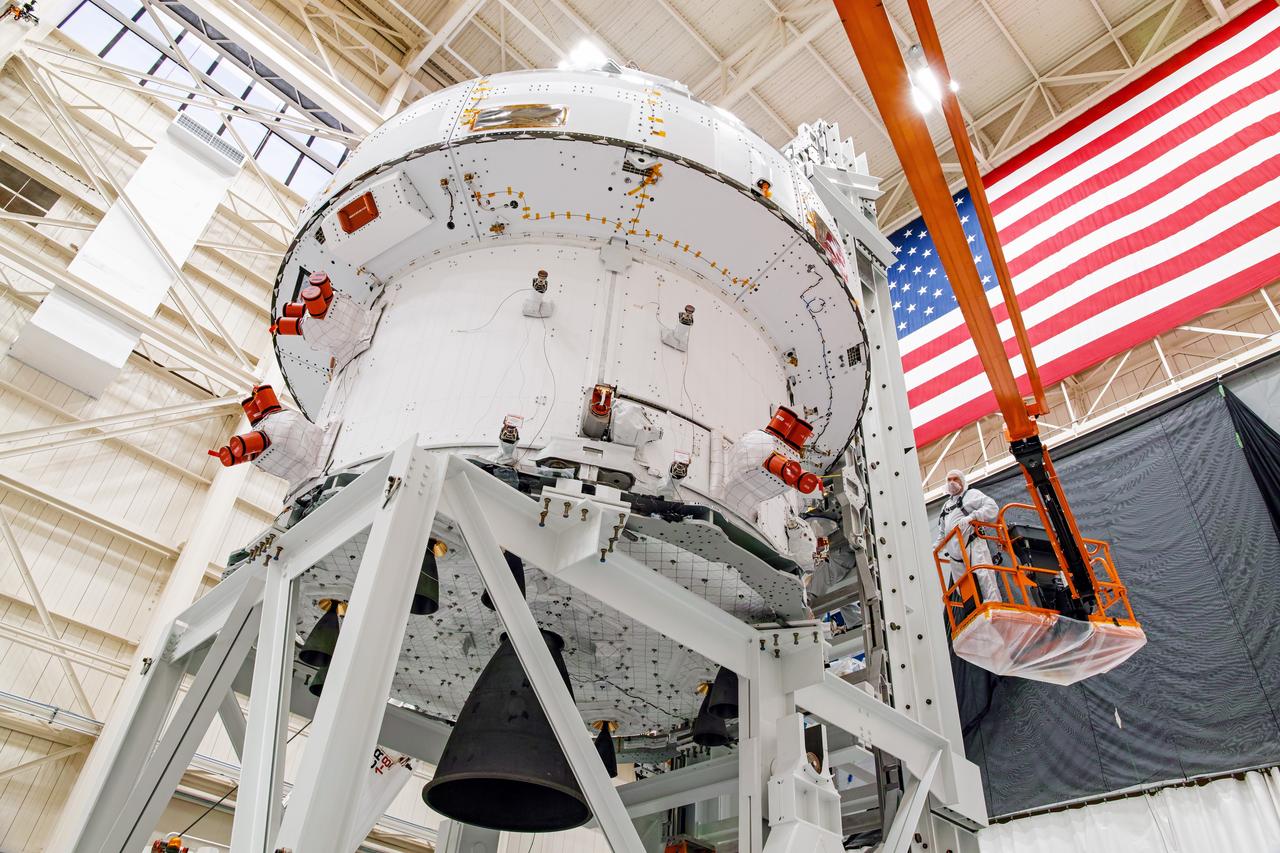
NASA’s Orion spacecraft–the crew module and European-built service module—is being lifted on Dec. 1, 2019 into a thermal cage and readied for its move into the vacuum chamber at NASA’s Neil A. Armstrong Test Facility in Ohio (formerly Plum Brook Station) for testing. Testing begins with a 60-day thermal test, where the spacecraft will be subjected to temperatures ranging from -250 to 300-degrees Fahrenheit to ensure it can withstand the harsh environment of space during Artemis missions. These extreme temperatures simulate flying in-and-out of sunlight and shadow in space using Heat Flux, a specially-designed system that heats specific parts of the spacecraft at any given time. Orion will also be surrounded on all sides by a set of large panels, called a cryogenic-shroud, that will provide the cold background temperatures of space.
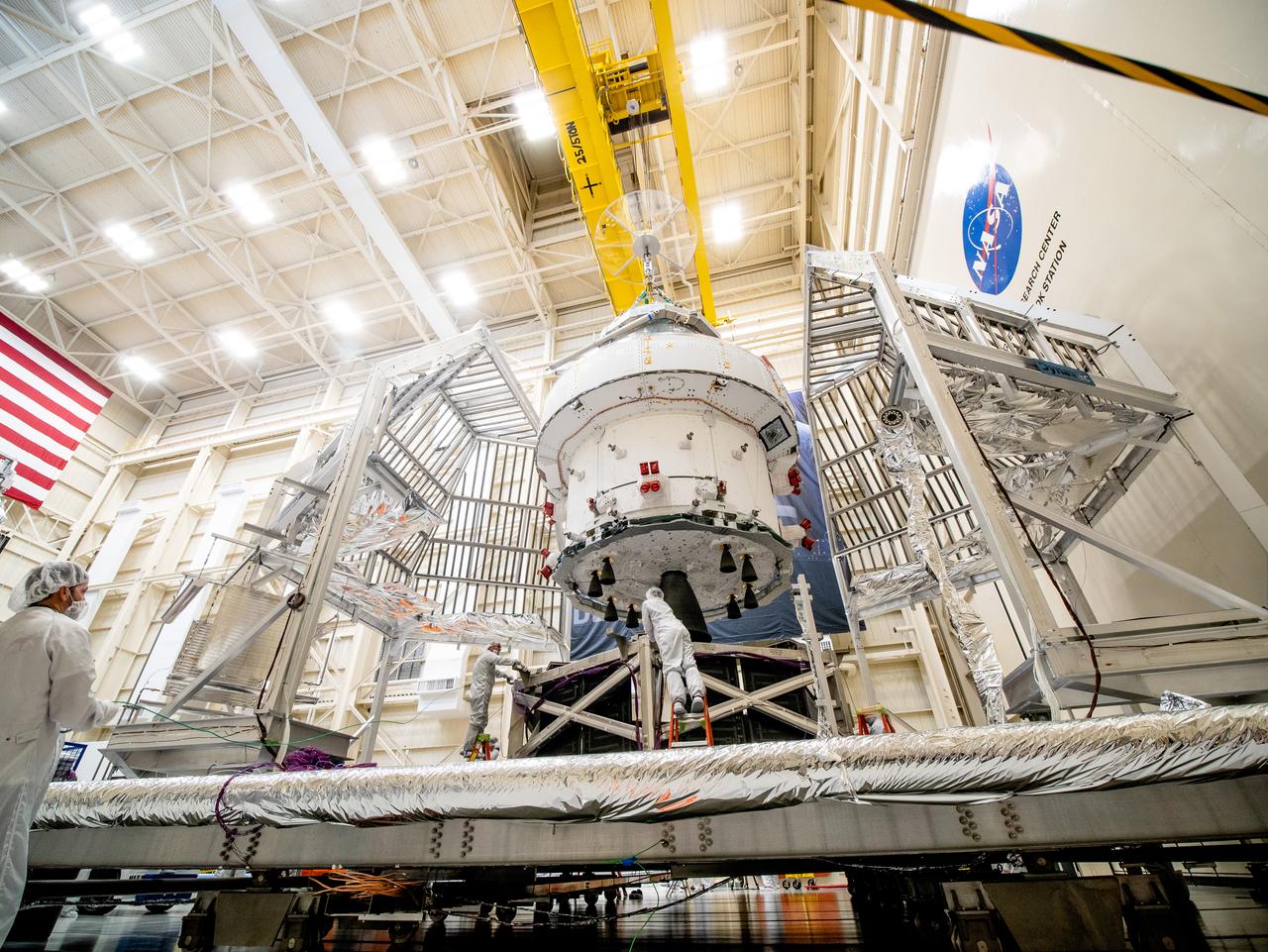
NASA’s Orion spacecraft–the crew module and European-built service module—is being lifted on Dec. 1, 2019 into a thermal cage and readied for its move into the vacuum chamber at NASA’s Neil A. Armstrong Test Facility in Ohio (formerly Plum Brook Station) for testing. Testing begins with a 60-day thermal test, where the spacecraft will be subjected to temperatures ranging from -250 to 300-degrees Fahrenheit to ensure it can withstand the harsh environment of space during Artemis missions. These extreme temperatures simulate flying in-and-out of sunlight and shadow in space using Heat Flux, a specially-designed system that heats specific parts of the spacecraft at any given time. Orion will also be surrounded on all sides by a set of large panels, called a cryogenic-shroud, that will provide the cold background temperatures of space.
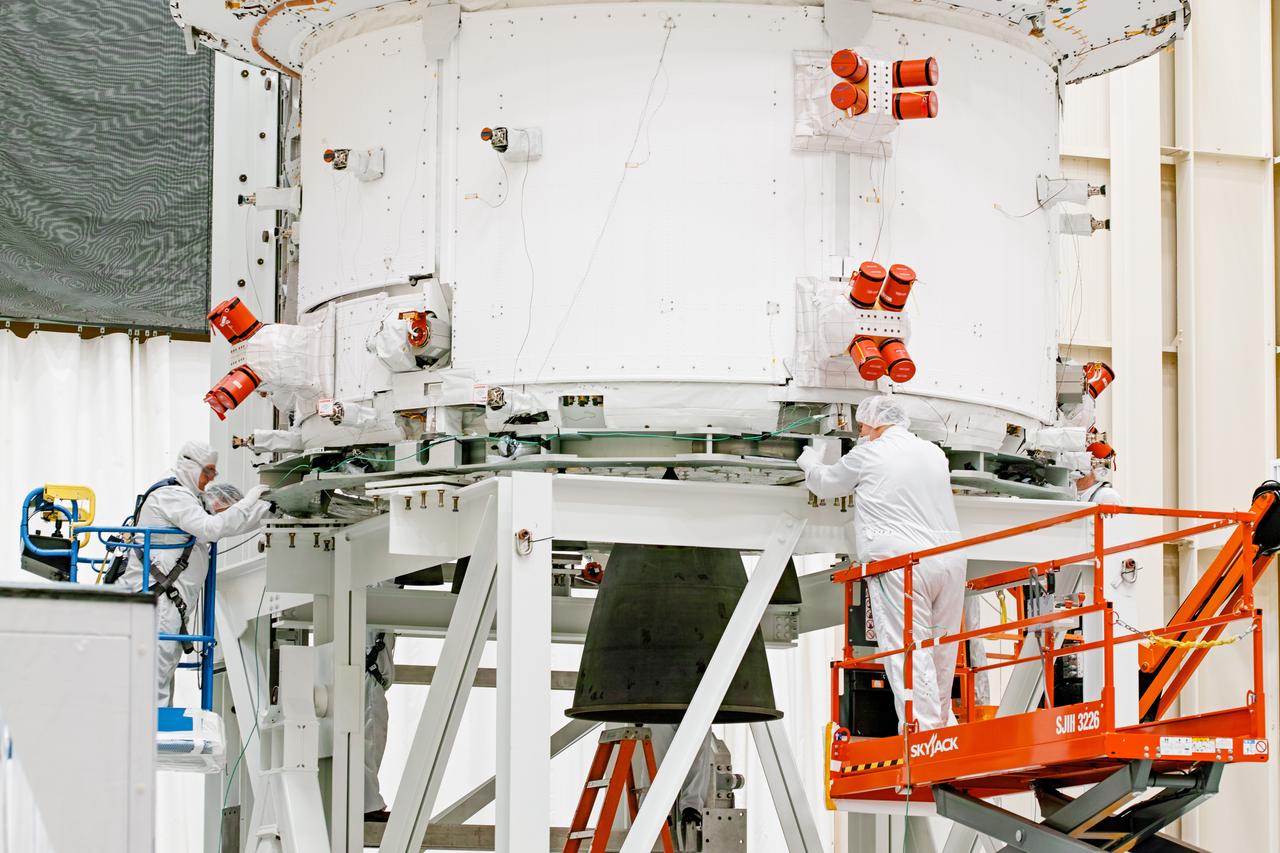
NASA’s Orion spacecraft–the crew module and European-built service module—is being lifted on Dec. 1, 2019 into a thermal cage and readied for its move into the vacuum chamber at NASA’s Neil A. Armstrong Test Facility in Ohio (formerly Plum Brook Station) for testing. Testing begins with a 60-day thermal test, where the spacecraft will be subjected to temperatures ranging from -250 to 300-degrees Fahrenheit to ensure it can withstand the harsh environment of space during Artemis missions. These extreme temperatures simulate flying in-and-out of sunlight and shadow in space using Heat Flux, a specially-designed system that heats specific parts of the spacecraft at any given time. Orion will also be surrounded on all sides by a set of large panels, called a cryogenic-shroud, that will provide the cold background temperatures of space.
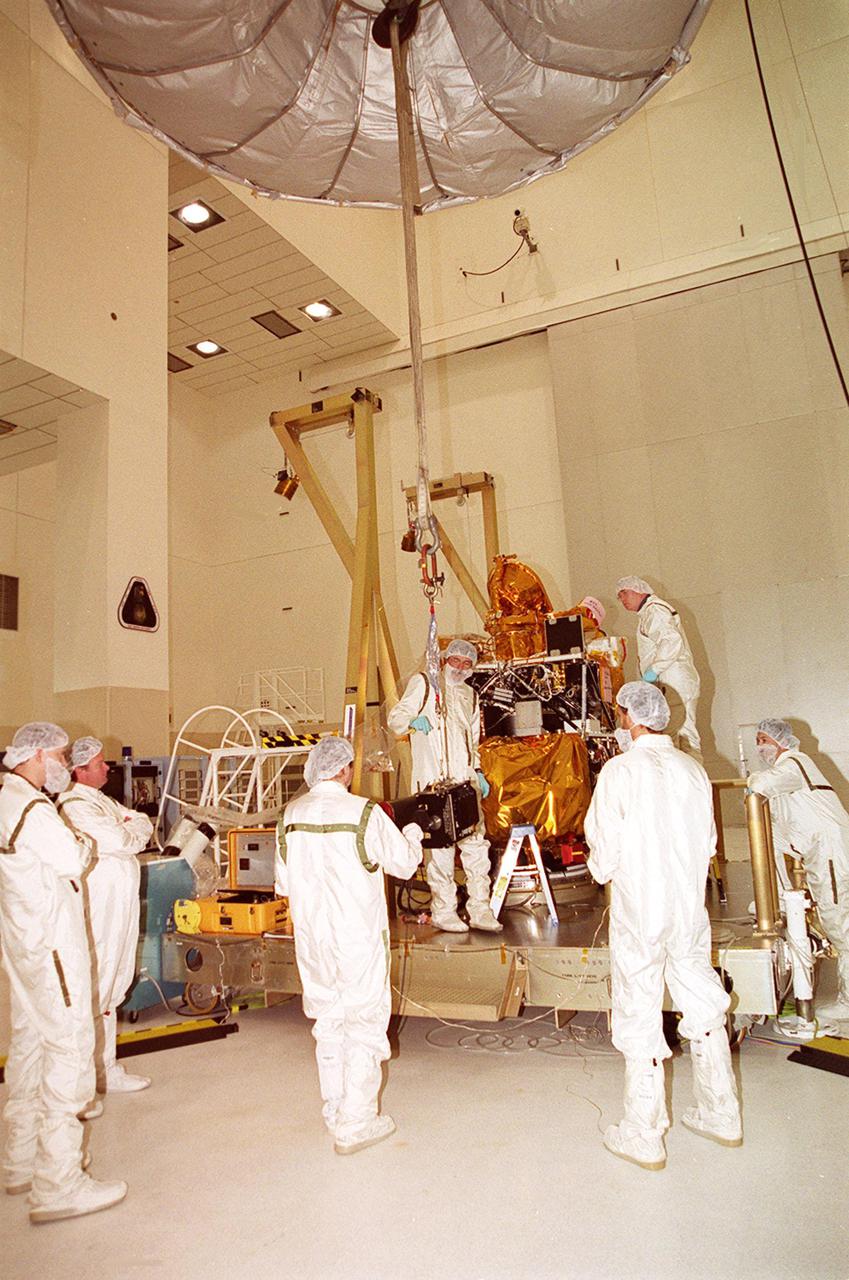
In the Spacecraft Assembly and Encapsulation Facility 2, an overhead crane lifts and moves the Thermal Emission Imaging System (THEMIS) toward the 2001 Mars Odyssey Orbiter. THEMIS will map the mineralogy and morphology of the Martian surface using a high-resolution camera and a thermal infrared imaging spectrometer. The orbiter will carry three science instruments: THEMIS, the Gamma Ray Spectrometer (GRS), and the Mars Radiation Environment Experiment (MARIE). The GRS will achieve global mapping of the elemental composition of the surface and determine the abundance of hydrogen in the shallow subsurface. The MARIE will characterize aspects of the near-space radiation environment with regards to the radiation-related risk to human explorers. The Mars Odyssey Orbiter is scheduled for launch on April 7, 2001, aboard a Delta 7925 rocket from Launch Pad 17-A, Cape Canaveral Air Force Station
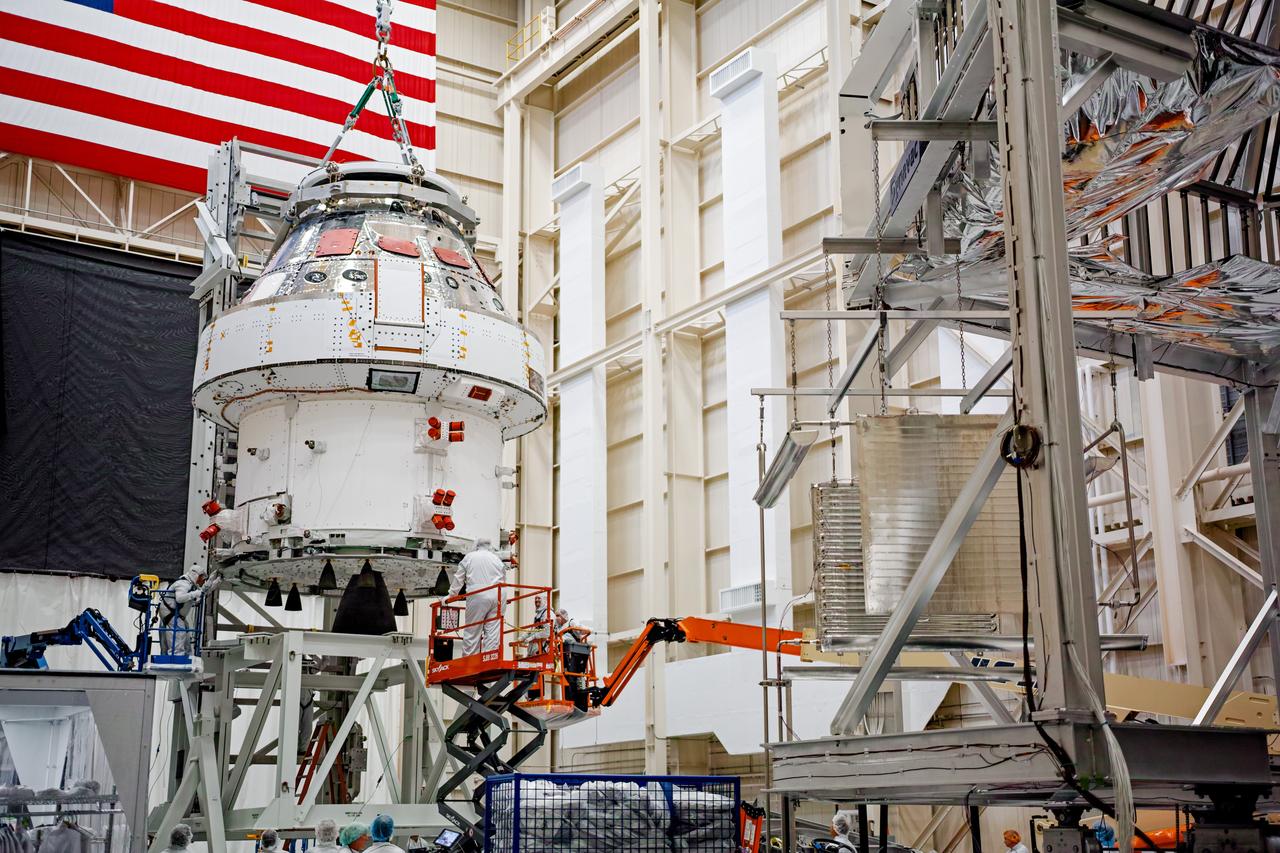
NASA’s Orion spacecraft–the crew module and European-built service module—is being lifted on Dec. 1, 2019 into a thermal cage and readied for its move into the vacuum chamber at NASA’s Neil A. Armstrong Test Facility in Ohio (formerly Plum Brook Station) for testing. Testing begins with a 60-day thermal test, where the spacecraft will be subjected to temperatures ranging from -250 to 300-degrees Fahrenheit to ensure it can withstand the harsh environment of space during Artemis missions. These extreme temperatures simulate flying in-and-out of sunlight and shadow in space using Heat Flux, a specially-designed system that heats specific parts of the spacecraft at any given time. Orion will also be surrounded on all sides by a set of large panels, called a cryogenic-shroud, that will provide the cold background temperatures of space.
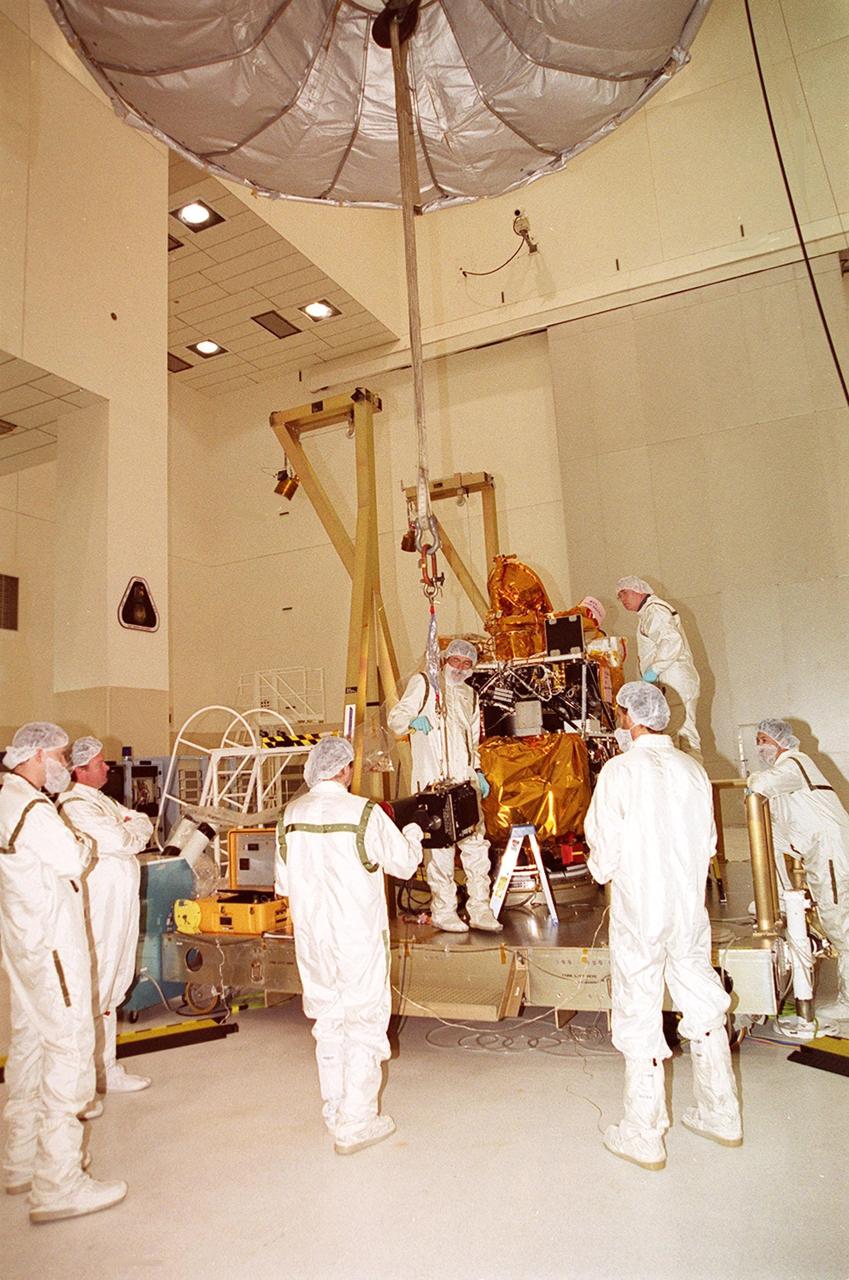
In the Spacecraft Assembly and Encapsulation Facility 2, an overhead crane lifts and moves the Thermal Emission Imaging System (THEMIS) toward the 2001 Mars Odyssey Orbiter. THEMIS will map the mineralogy and morphology of the Martian surface using a high-resolution camera and a thermal infrared imaging spectrometer. The orbiter will carry three science instruments: THEMIS, the Gamma Ray Spectrometer (GRS), and the Mars Radiation Environment Experiment (MARIE). The GRS will achieve global mapping of the elemental composition of the surface and determine the abundance of hydrogen in the shallow subsurface. The MARIE will characterize aspects of the near-space radiation environment with regards to the radiation-related risk to human explorers. The Mars Odyssey Orbiter is scheduled for launch on April 7, 2001, aboard a Delta 7925 rocket from Launch Pad 17-A, Cape Canaveral Air Force Station
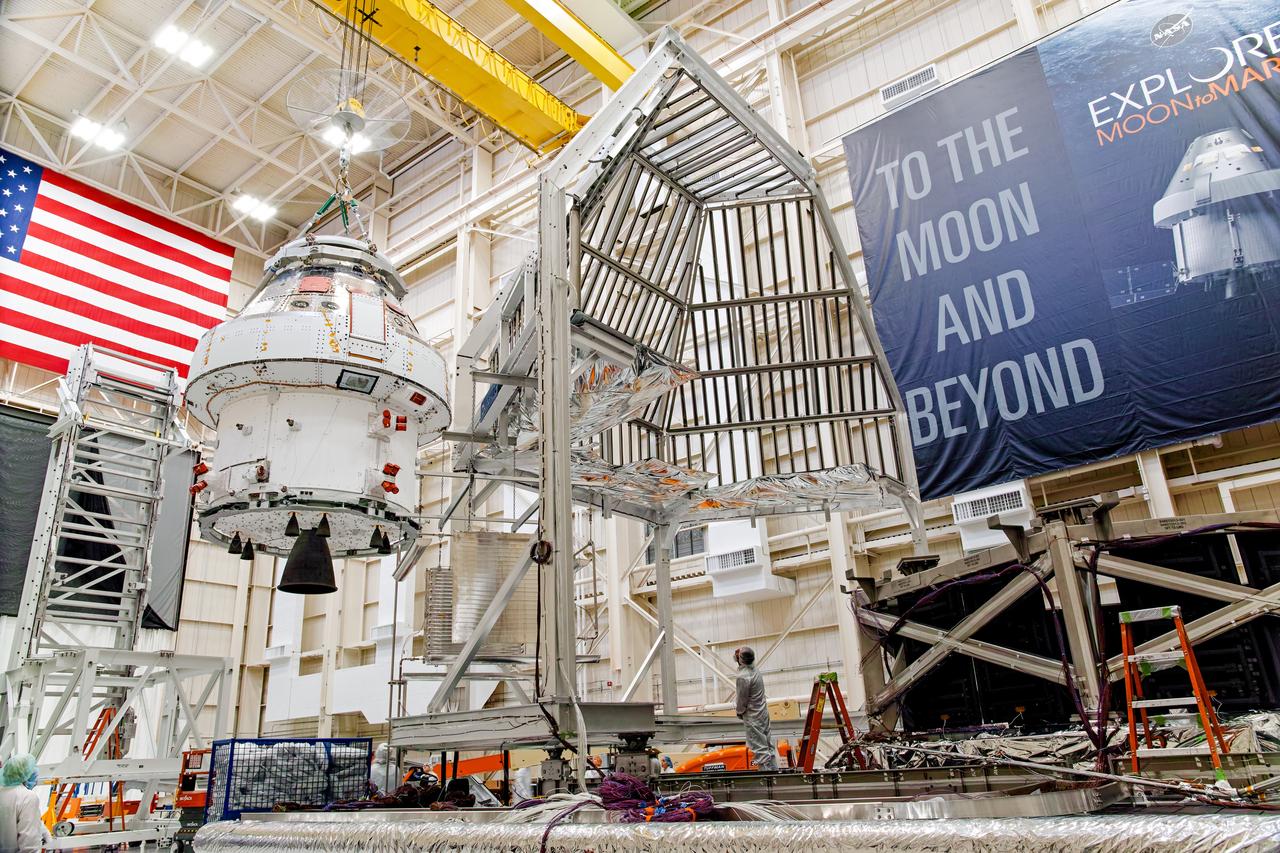
NASA’s Orion spacecraft–the crew module and European-built service module—is being lifted on Dec. 1, 2019 into a thermal cage and readied for its move into the vacuum chamber at NASA’s Neil A. Armstrong Test Facility in Ohio (formerly Plum Brook Station) for testing. Testing begins with a 60-day thermal test, where the spacecraft will be subjected to temperatures ranging from -250 to 300-degrees Fahrenheit to ensure it can withstand the harsh environment of space during Artemis missions. These extreme temperatures simulate flying in-and-out of sunlight and shadow in space using Heat Flux, a specially-designed system that heats specific parts of the spacecraft at any given time. Orion will also be surrounded on all sides by a set of large panels, called a cryogenic-shroud, that will provide the cold background temperatures of space.
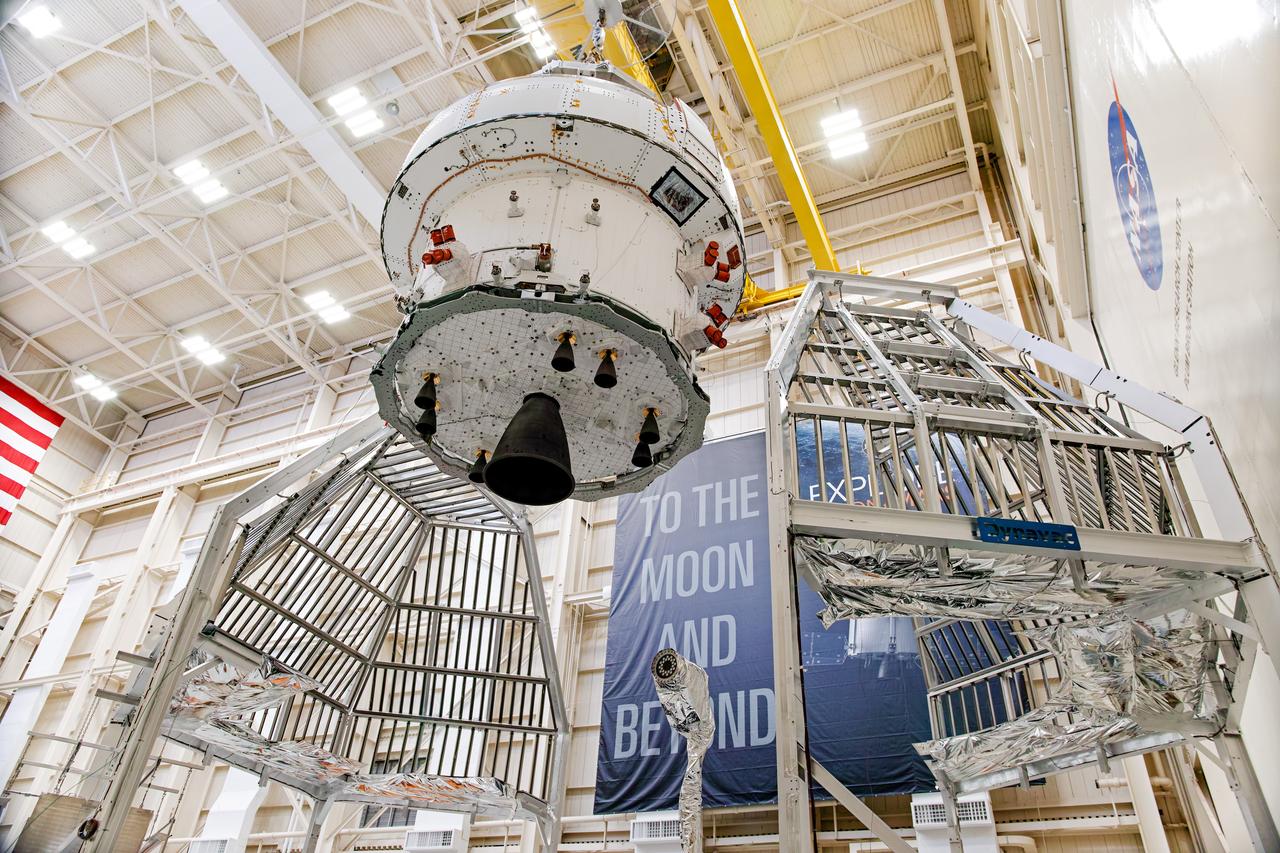
NASA’s Orion spacecraft–the crew module and European-built service module—is being lifted on Dec. 1, 2019 into a thermal cage and readied for its move into the vacuum chamber at NASA’s Neil A. Armstrong Test Facility in Ohio (formerly Plum Brook Station) for testing. Testing begins with a 60-day thermal test, where the spacecraft will be subjected to temperatures ranging from -250 to 300-degrees Fahrenheit to ensure it can withstand the harsh environment of space during Artemis missions. These extreme temperatures simulate flying in-and-out of sunlight and shadow in space using Heat Flux, a specially-designed system that heats specific parts of the spacecraft at any given time. Orion will also be surrounded on all sides by a set of large panels, called a cryogenic-shroud, that will provide the cold background temperatures of space.
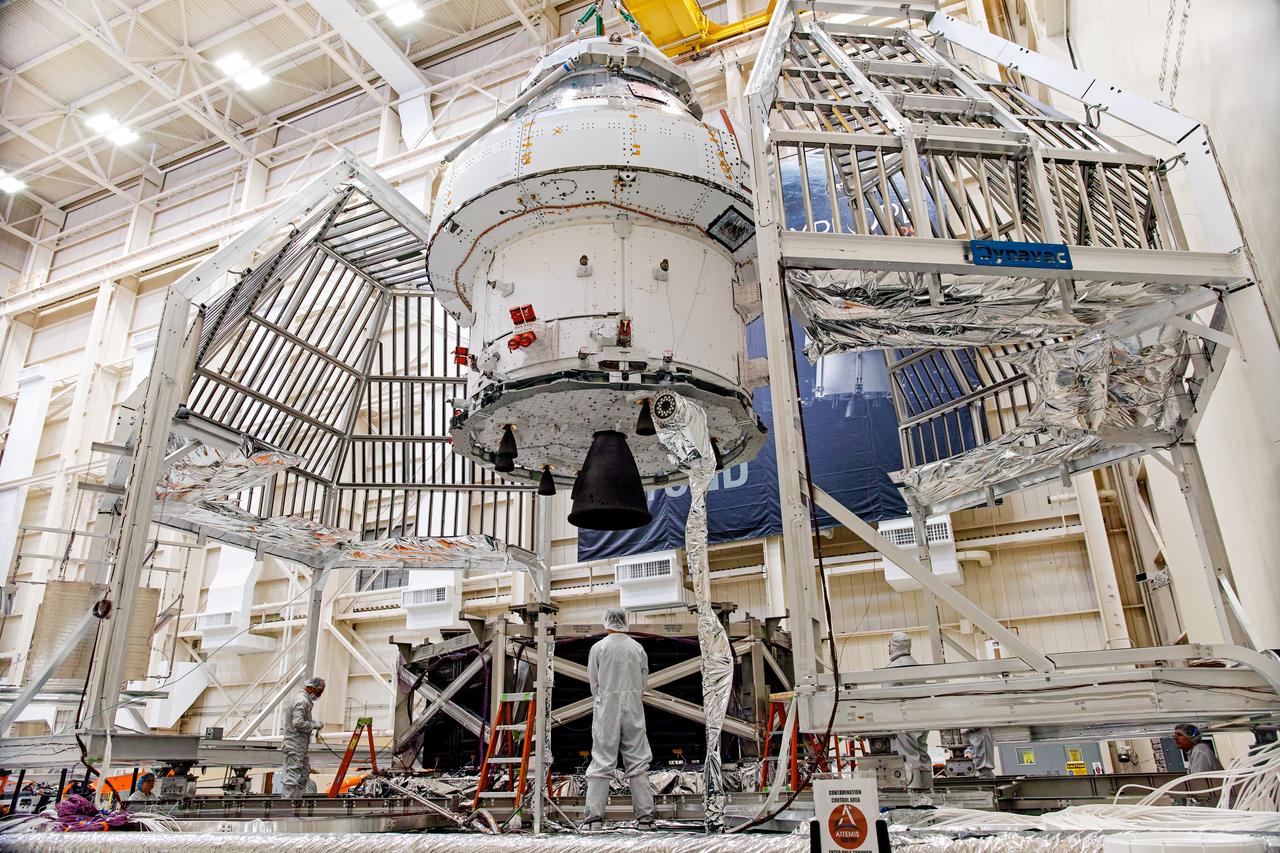
NASA’s Orion spacecraft–the crew module and European-built service module—is being lifted on Dec. 1, 2019 into a thermal cage and readied for its move into the vacuum chamber at NASA’s Neil A. Armstrong Test Facility in Ohio (formerly Plum Brook Station) for testing. Testing begins with a 60-day thermal test, where the spacecraft will be subjected to temperatures ranging from -250 to 300-degrees Fahrenheit to ensure it can withstand the harsh environment of space during Artemis missions. These extreme temperatures simulate flying in-and-out of sunlight and shadow in space using Heat Flux, a specially-designed system that heats specific parts of the spacecraft at any given time. Orion will also be surrounded on all sides by a set of large panels, called a cryogenic-shroud, that will provide the cold background temperatures of space.
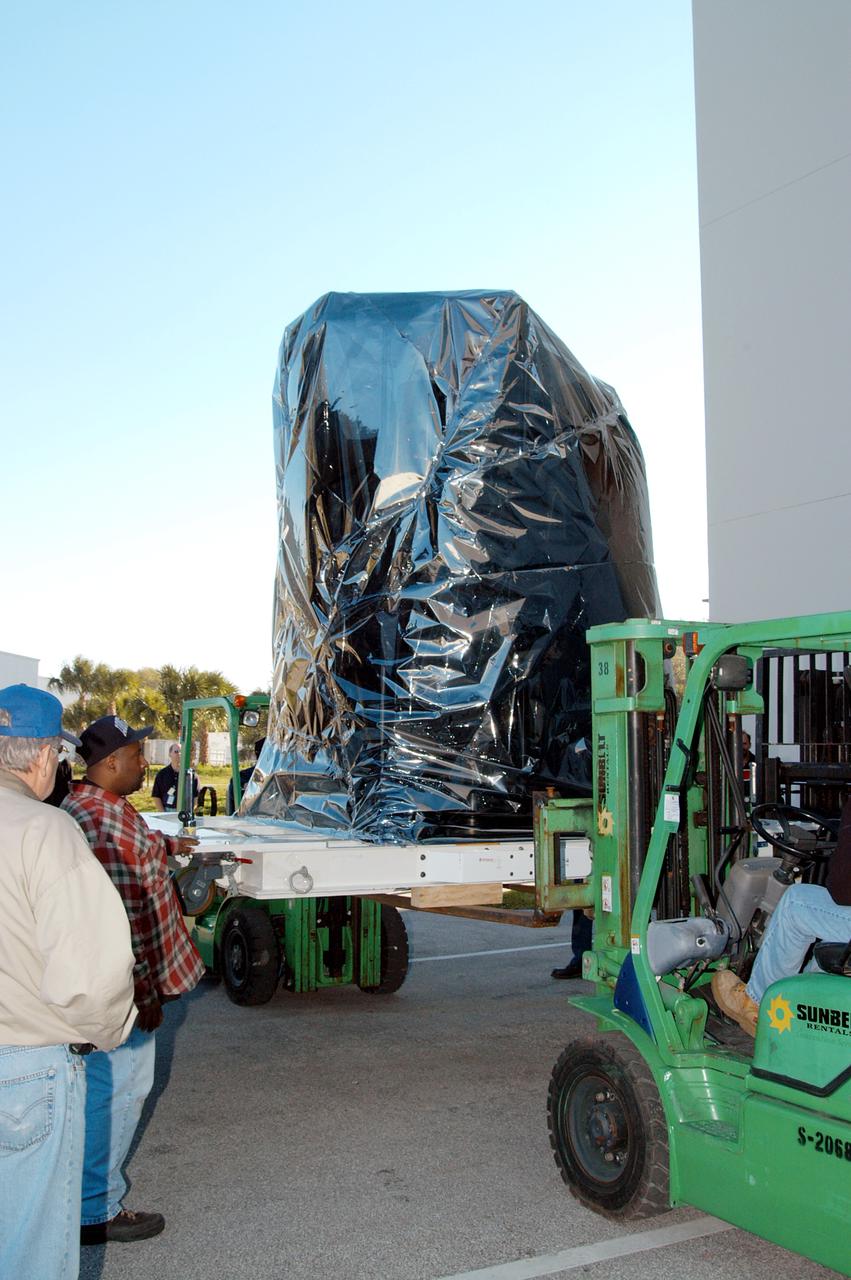
KENNEDY SPACE CENTER, FLA. - At the Astrotech Space Operations processing facilities near KSC, a lift begins lowering NASA’s MESSENGER spacecraft onto the ground. MESSENGER - short for MErcury Surface, Space ENvironment, GEochemistry and Ranging - will be taken into a high bay clean room and employees of the Johns Hopkins University Applied Physics Laboratory, builders of the spacecraft, will perform an initial state-of-health check. Then processing for launch can begin, including checkout of the power systems, communications systems and control systems. The thermal blankets will also be attached for flight. MESSENGER will be launched May 11 on a six-year mission aboard a Boeing Delta II rocket. Liftoff is targeted for 2:26 a.m. EDT on Tuesday, May 11.
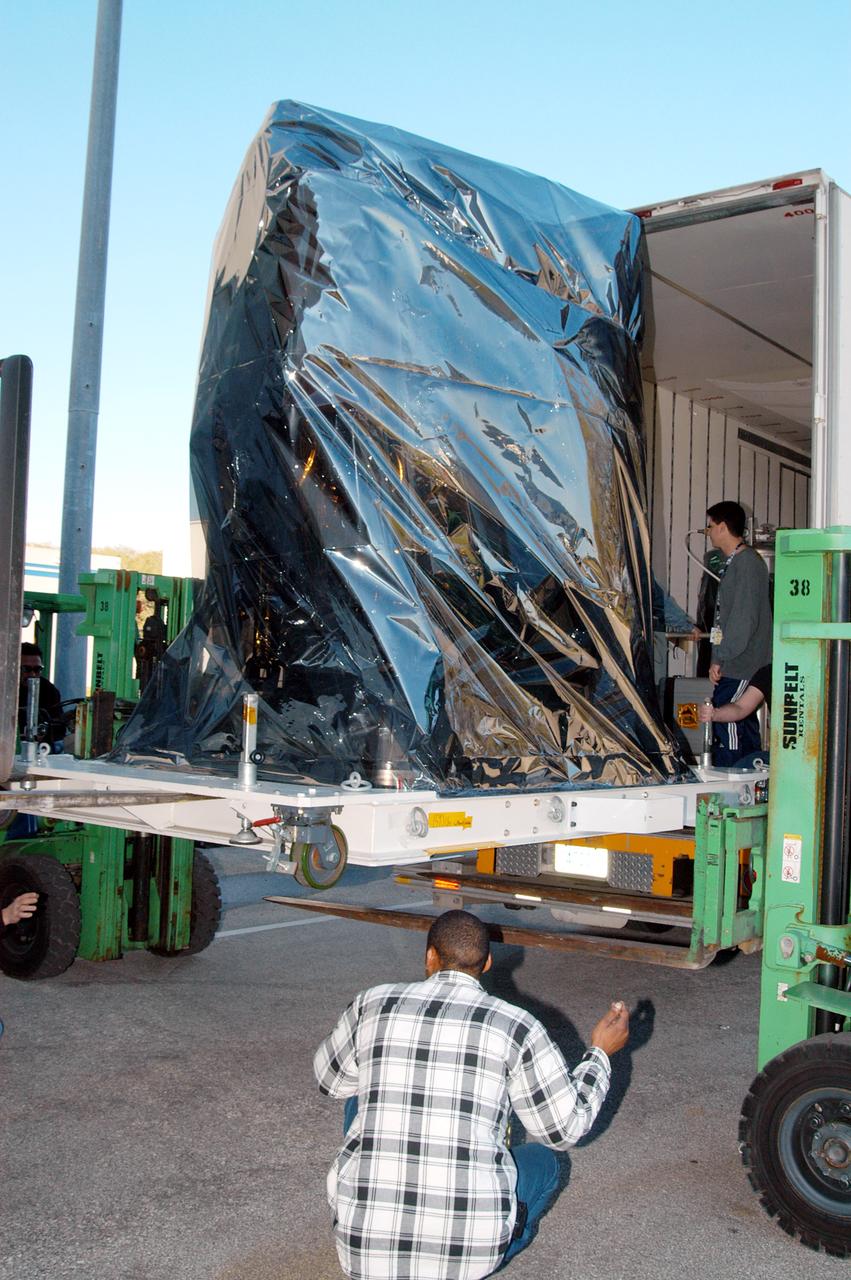
KENNEDY SPACE CENTER, FLA. - At the Astrotech Space Operations processing facilities near KSC, a lift helps offload NASA’s MESSENGER spacecraft shipped from NASA’s Goddard Space Flight Center in Greenbelt, Md. MESSENGER - short for MErcury Surface, Space ENvironment, GEochemistry and Ranging - will be taken into a high bay clean room and employees of the Johns Hopkins University Applied Physics Laboratory, builders of the spacecraft, will perform an initial state-of-health check. Then processing for launch can begin, including checkout of the power systems, communications systems and control systems. The thermal blankets will also be attached for flight. MESSENGER will be launched May 11 on a six-year mission aboard a Boeing Delta II rocket. Liftoff is targeted for 2:26 a.m. EDT on Tuesday, May 11.
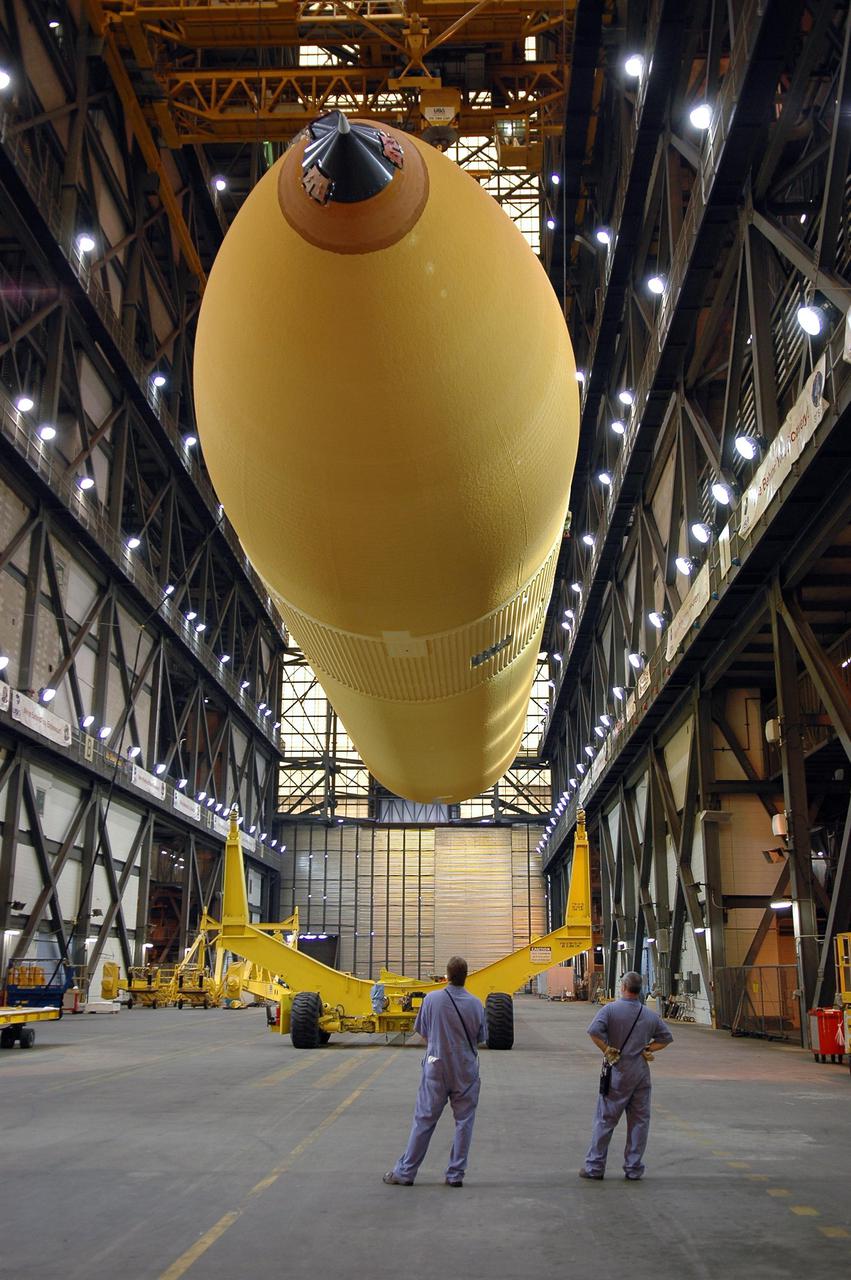
KENNEDY SPACE CENTER, FLA. - The redesigned External Tank is being raised off its transporter. It will be lifted to a vertical position and into the 'checkout cell' of the Vehicle Assembly Building where the tank’s mechanical, electrical and thermal protection systems are inspected. The tank will also undergo new processes resulting from its redesign, including inspection of the bipod heater and External Tank separation camera. The tank will be prepared for 'mating' to the Shuttle’s Solid Rocket Boosters. When preparations are complete, the tank will be lifted from the checkout cell, moved across the transfer aisle and into High Bay 1. It will be lowered and attached to the boosters, which are sitting on the Mobile Launch Platform. The SRBs and ET will be flying with Shuttle Discovery for the Return to Flight mission STS-114. The launch planning window is May 12 to June 3, 2005.
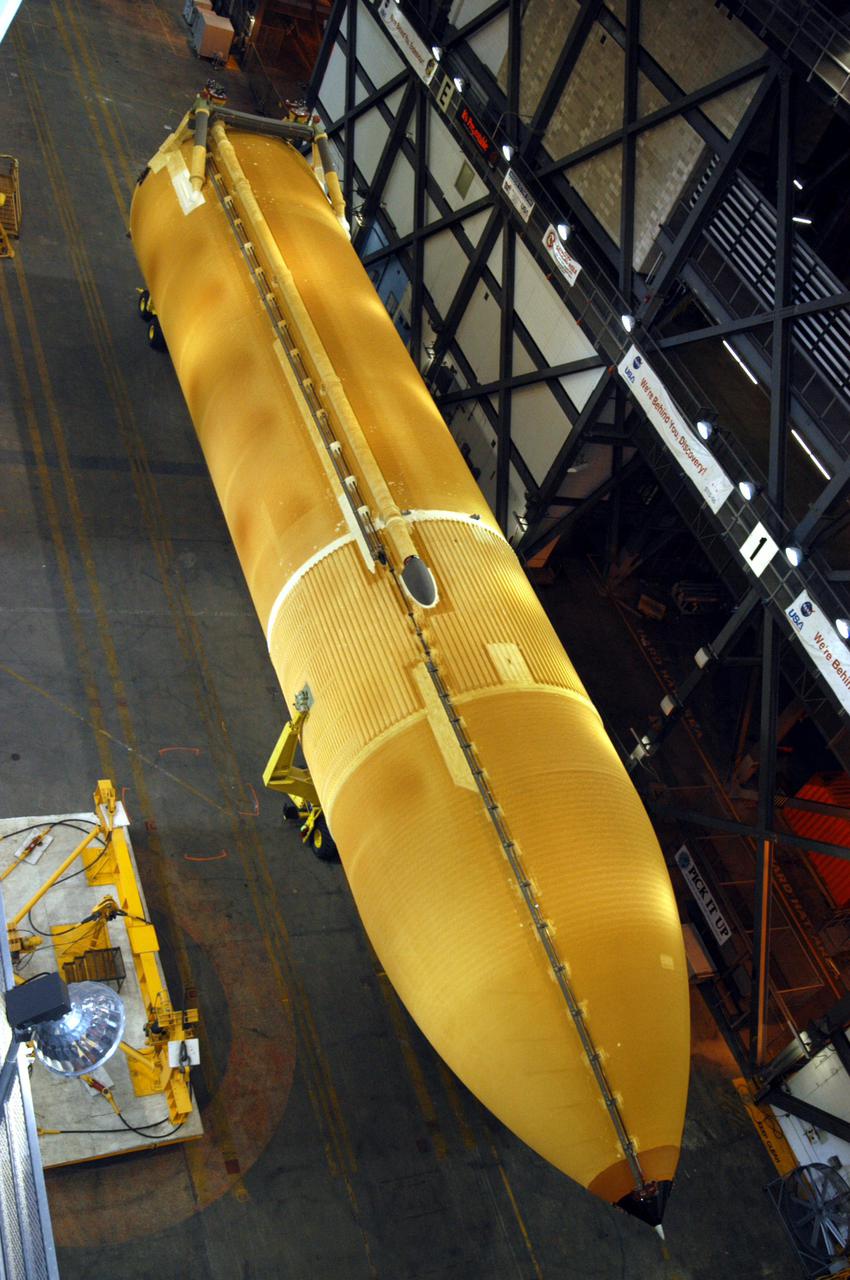
KENNEDY SPACE CENTER, FLA. - Inside the Vehicle Assembly Building, the redesigned External Tank to be used on Return to Flight mission STS-114 waits in the transfer aisle after its move from the barge in the Launch Complex 39 Area Turn Basin. The tank will be raised from a horizontal to a vertical position, then lifted high up into a storage cell, or “checkout cell,” where it will undergo inspections of the mechanical, electrical and thermal protection systems. New processing activities resulting from redesign of the tank include inspection of the bipod heater and External Tank separation camera, which includes charging the camera batteries. The tank will be then prepared for mating to the Solid Rocket Boosters. When preparations are complete, the tank will be lifted from the checkout cell, moved across the transfer aisle and into High Bay 1, where it will be lowered and attached to the boosters, which are sitting on the Mobile Launch Platform.
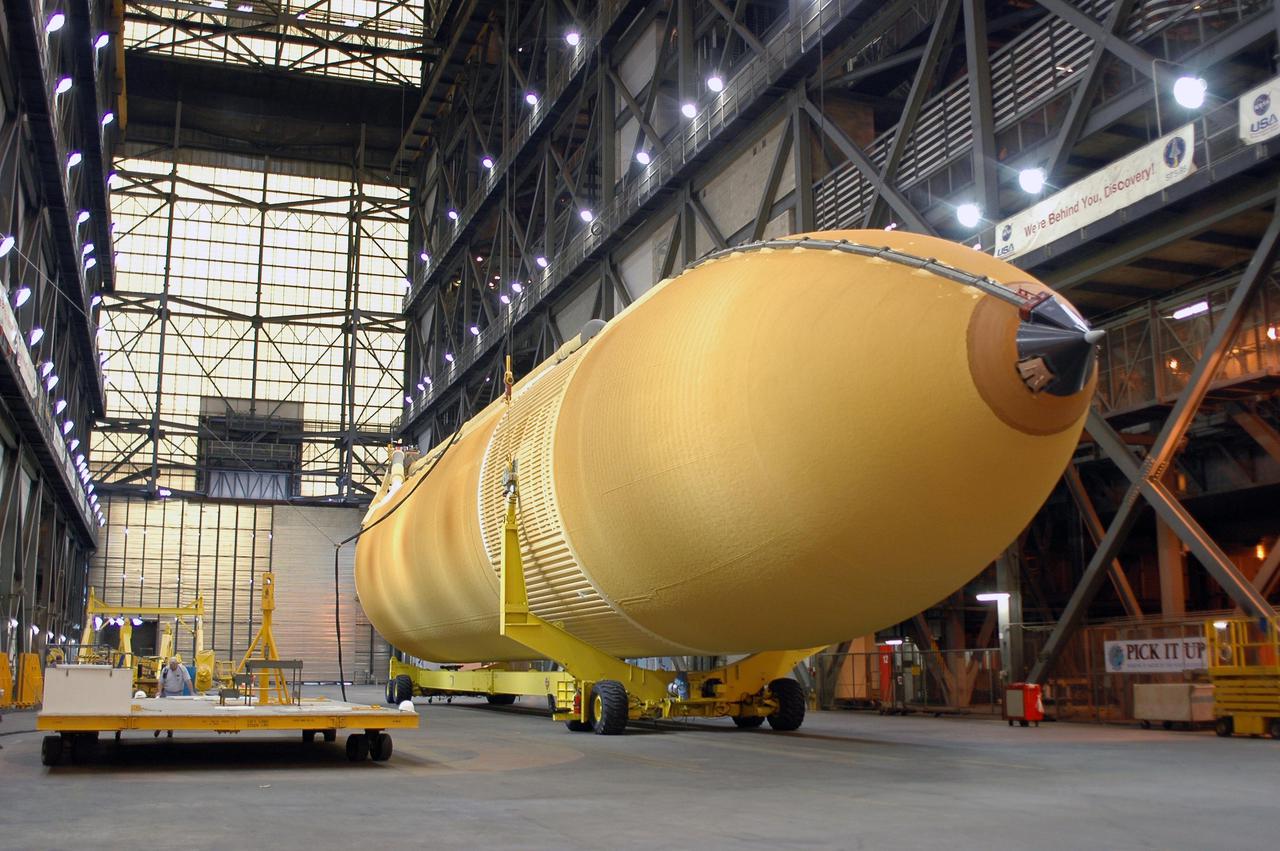
KENNEDY SPACE CENTER, FLA. - The redesigned External Tank is ready to be raised to a vertical position and lifted into the 'checkout cell' of the Vehicle Assembly Building where the tank’s mechanical, electrical and thermal protection systems are inspected. The tank will also undergo new processes resulting from its redesign, including inspection of the bipod heater and External Tank separation camera. The tank will be prepared for 'mating' to the Shuttle’s Solid Rocket Boosters. When preparations are complete, the tank will be lifted from the checkout cell, moved across the transfer aisle and into High Bay 1. It will be lowered and attached to the boosters, which are sitting on the Mobile Launch Platform. The SRBs and ET will be flying with Shuttle Discovery for the Return to Flight mission STS-114. The launch planning window is May 12 to June 3, 2005.
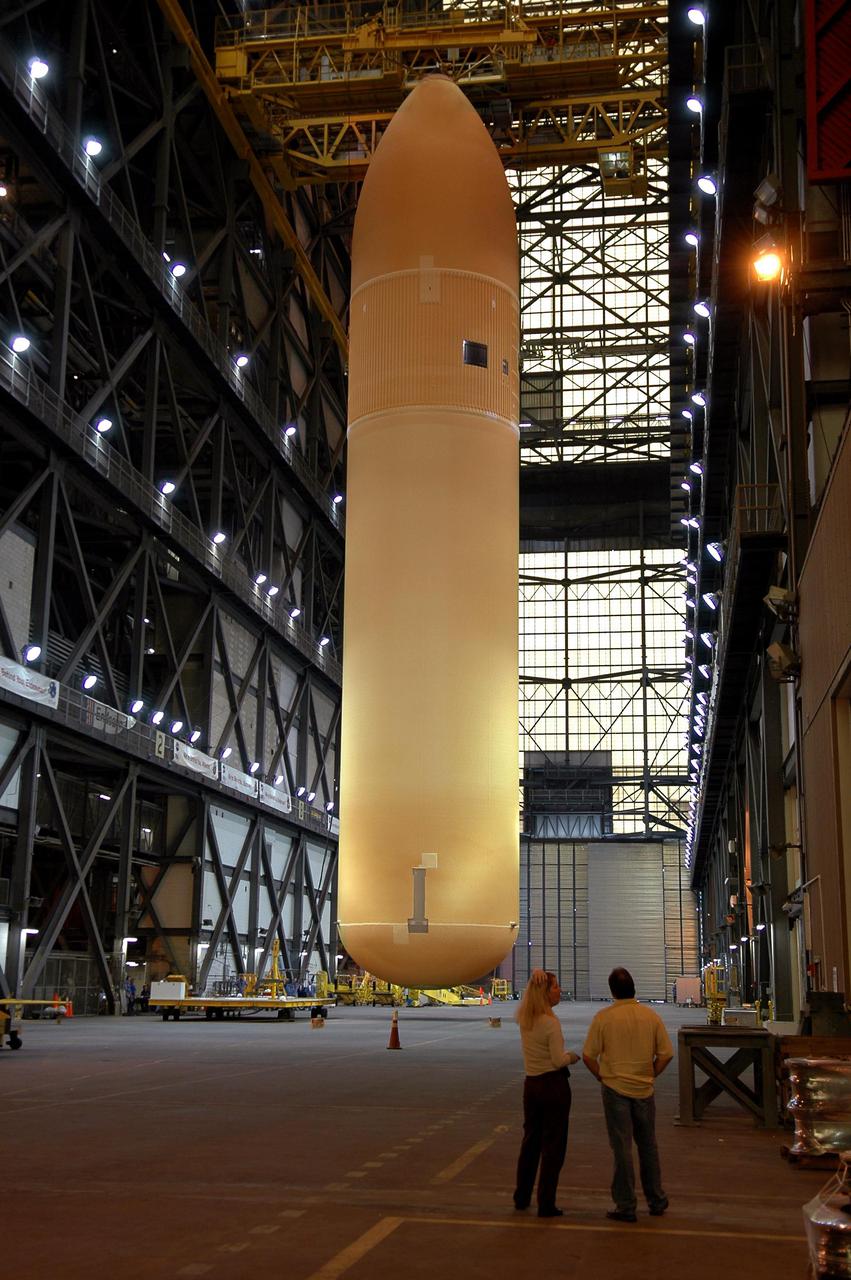
KENNEDY SPACE CENTER, FLA. - In the Vehicle Assembly Building, the redesigned External Tank is being lifted into the 'checkout cell' where the tank’s mechanical, electrical and thermal protection systems are inspected. The tank will also undergo new processes resulting from its redesign, including inspection of the bipod heater and External Tank separation camera. The tank will be prepared for 'mating' to the Shuttle’s Solid Rocket Boosters. When preparations are complete, the tank will be lifted from the checkout cell, moved across the transfer aisle and into High Bay 1. It will be lowered and attached to the boosters, which are sitting on the Mobile Launch Platform. The SRBs and ET will be flying with Shuttle Discovery for the Return to Flight mission STS-114. The launch planning window is May 12 to June 3, 2005.
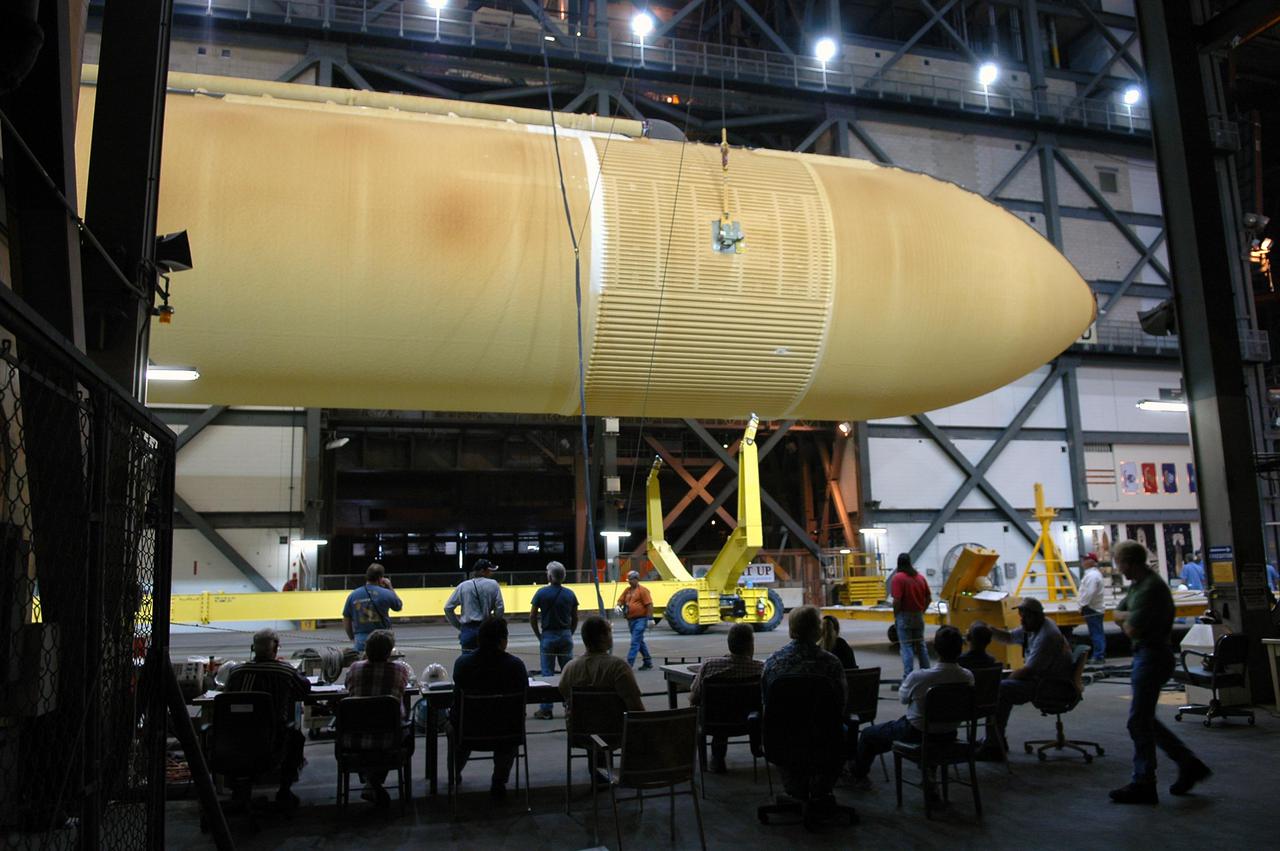
KENNEDY SPACE CENTER, FLA. - The redesigned External Tank is being raised off its transporter. It will be lifted to a vertical position and into the 'checkout cell' of the Vehicle Assembly Building where the tank’s mechanical, electrical and thermal protection systems are inspected. The tank will also undergo new processes resulting from its redesign, including inspection of the bipod heater and External Tank separation camera. The tank will be prepared for 'mating' to the Shuttle’s Solid Rocket Boosters. When preparations are complete, the tank will be lifted from the checkout cell, moved across the transfer aisle and into High Bay 1. It will be lowered and attached to the boosters, which are sitting on the Mobile Launch Platform. The SRBs and ET will be flying with Shuttle Discovery for the Return to Flight mission STS-114. The launch planning window is May 12 to June 3, 2005.
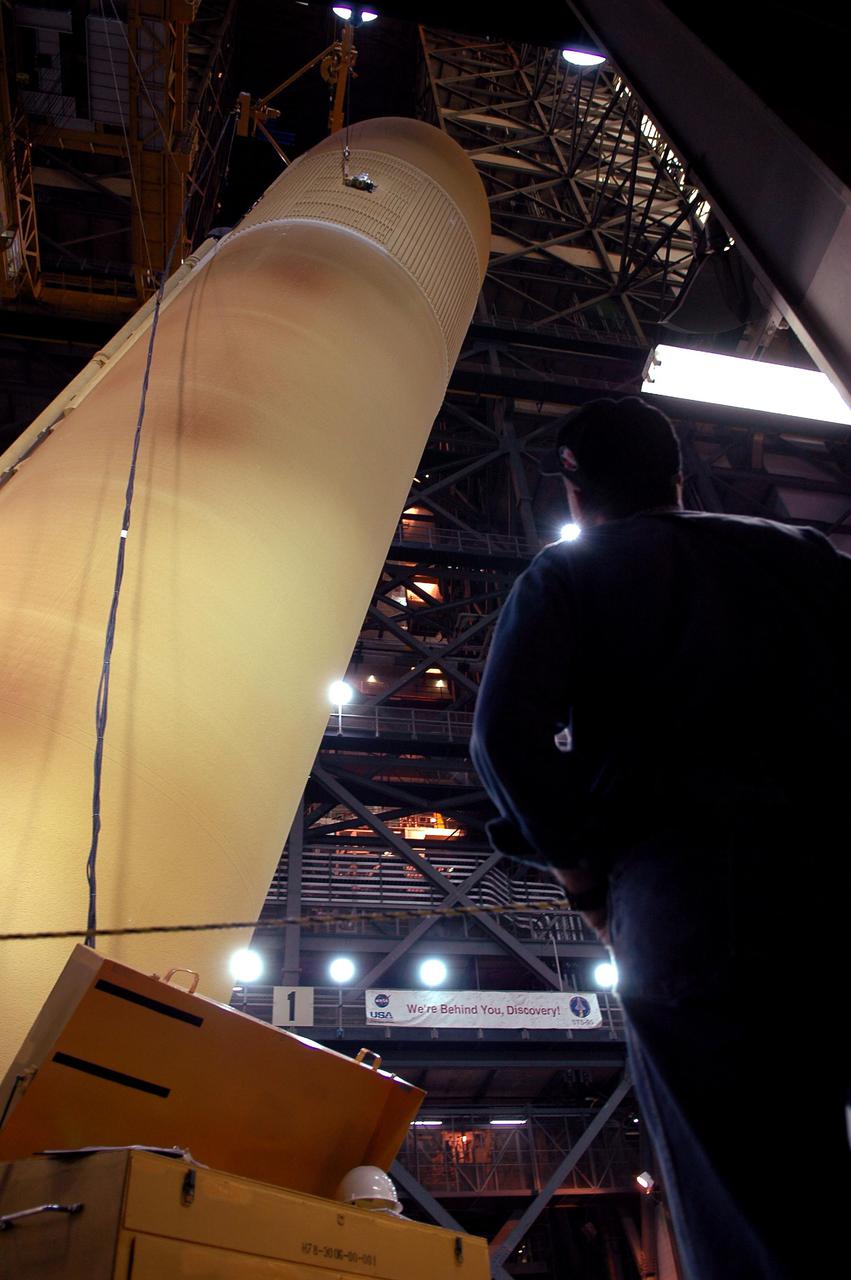
KENNEDY SPACE CENTER, FLA. - Nearly vertical, the redesigned External Tank will be lifted into the 'checkout cell' of the Vehicle Assembly Building where the tank’s mechanical, electrical and thermal protection systems are inspected. The tank will also undergo new processes resulting from its redesign, including inspection of the bipod heater and External Tank separation camera. The tank will be prepared for 'mating' to the Shuttle’s Solid Rocket Boosters. When preparations are complete, the tank will be lifted from the checkout cell, moved across the transfer aisle and into High Bay 1. It will be lowered and attached to the boosters, which are sitting on the Mobile Launch Platform. The SRBs and ET will be flying with Shuttle Discovery for the Return to Flight mission STS-114. The launch planning window is May 12 to June 3, 2005.
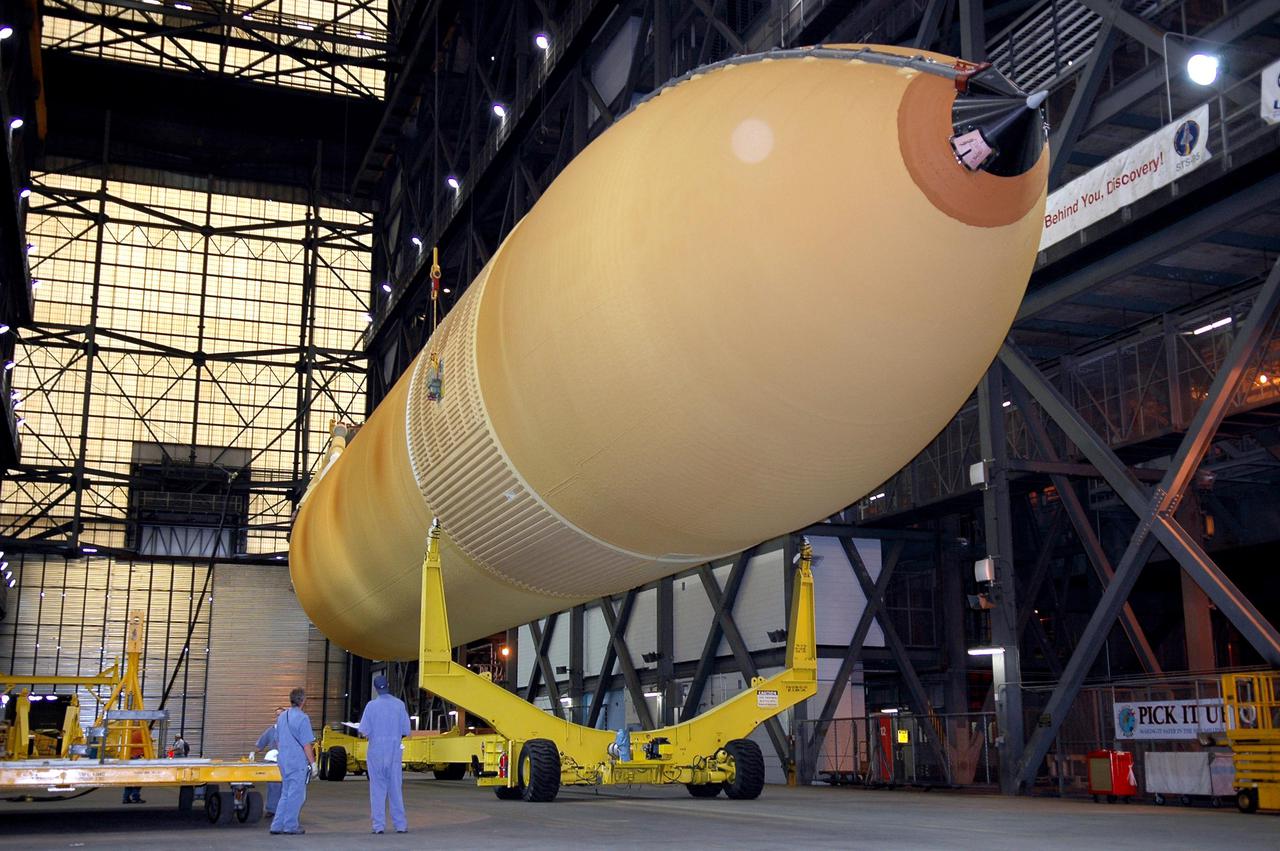
KENNEDY SPACE CENTER, FLA. - The redesigned External Tank is being raised off its transporter. It will be lifted to a vertical position and into the 'checkout cell' of the Vehicle Assembly Building where the tank’s mechanical, electrical and thermal protection systems are inspected. The tank will also undergo new processes resulting from its redesign, including inspection of the bipod heater and External Tank separation camera. The tank will be prepared for 'mating' to the Shuttle’s Solid Rocket Boosters. When preparations are complete, the tank will be lifted from the checkout cell, moved across the transfer aisle and into High Bay 1. It will be lowered and attached to the boosters, which are sitting on the Mobile Launch Platform. The SRBs and ET will be flying with Shuttle Discovery for the Return to Flight mission STS-114. The launch planning window is May 12 to June 3, 2005.
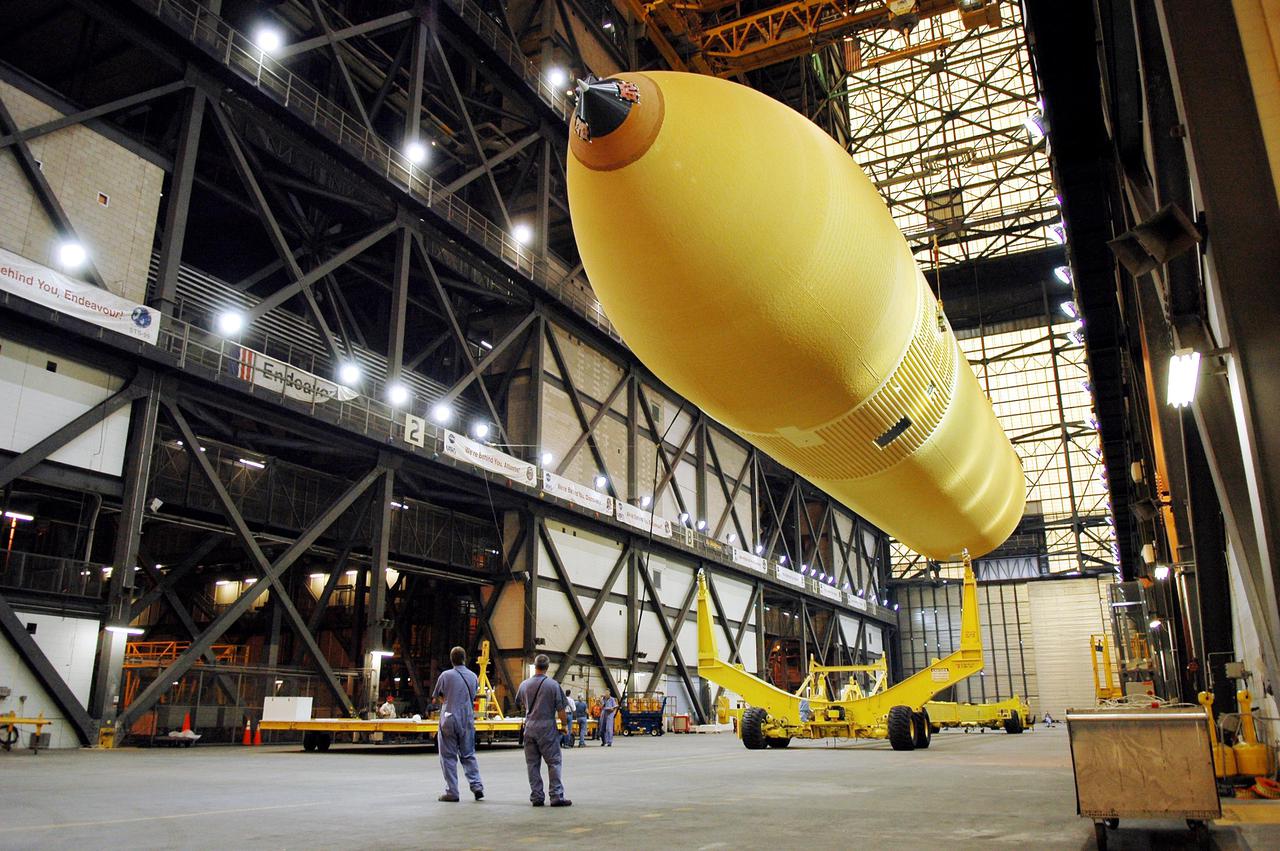
KENNEDY SPACE CENTER, FLA. - The redesigned External Tank is raised above its transporter in the Vehicle Assembly Building. It will be lifted into the 'checkout cell' where the tank’s mechanical, electrical and thermal protection systems are inspected. The tank will also undergo new processes resulting from its redesign, including inspection of the bipod heater and External Tank separation camera. The tank will be prepared for 'mating' to the Shuttle’s Solid Rocket Boosters. When preparations are complete, the tank will be lifted from the checkout cell, moved across the transfer aisle and into High Bay 1. It will be lowered and attached to the boosters, which are sitting on the Mobile Launch Platform. The SRBs and ET will be flying with Shuttle Discovery for the Return to Flight mission STS-114. The launch planning window is May 12 to June 3, 2005.

KENNEDY SPACE CENTER, FLA. - Viewed from an upper level in the Vehicle Assembly Building, the redesigned External Tank is being lifted into the 'checkout cell' where the tank’s mechanical, electrical and thermal protection systems are inspected. The tank will also undergo new processes resulting from its redesign, including inspection of the bipod heater and External Tank separation camera. The tank will be prepared for 'mating' to the Shuttle’s Solid Rocket Boosters. When preparations are complete, the tank will be lifted from the checkout cell, moved across the transfer aisle and into High Bay 1. It will be lowered and attached to the boosters, which are sitting on the Mobile Launch Platform. The SRBs and ET will be flying with Shuttle Discovery for the Return to Flight mission STS-114. The launch planning window is May 12 to June 3, 2005.
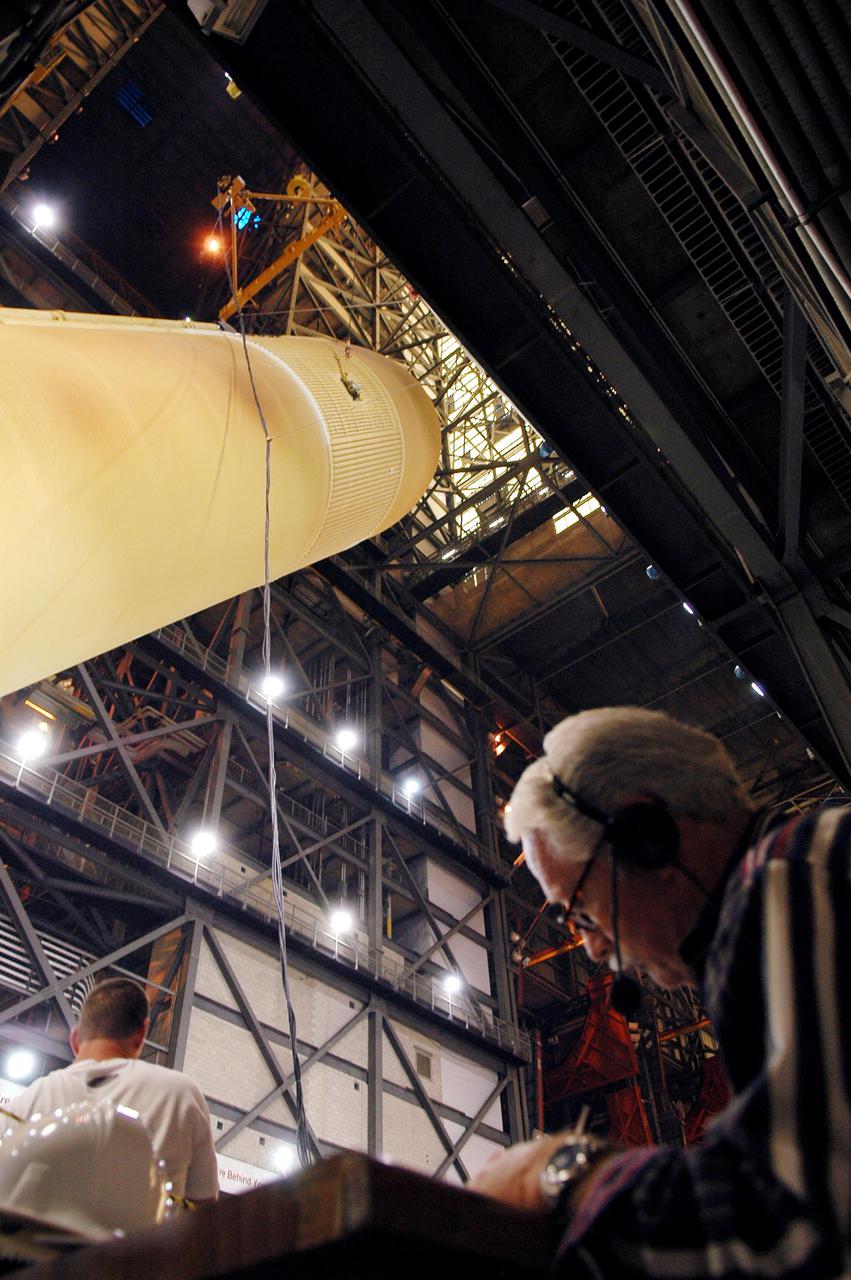
KENNEDY SPACE CENTER, FLA. - The redesigned External Tank is being raised to a vertical position in the Vehicle Assembly Building and will be lifted into the 'checkout cell' where the tank’s mechanical, electrical and thermal protection systems are inspected. The tank will also undergo new processes resulting from its redesign, including inspection of the bipod heater and External Tank separation camera. The tank will be prepared for 'mating' to the Shuttle’s Solid Rocket Boosters. When preparations are complete, the tank will be lifted from the checkout cell, moved across the transfer aisle and into High Bay 1. It will be lowered and attached to the boosters, which are sitting on the Mobile Launch Platform. The SRBs and ET will be flying with Shuttle Discovery for the Return to Flight mission STS-114. The launch planning window is May 12 to June 3, 2005.
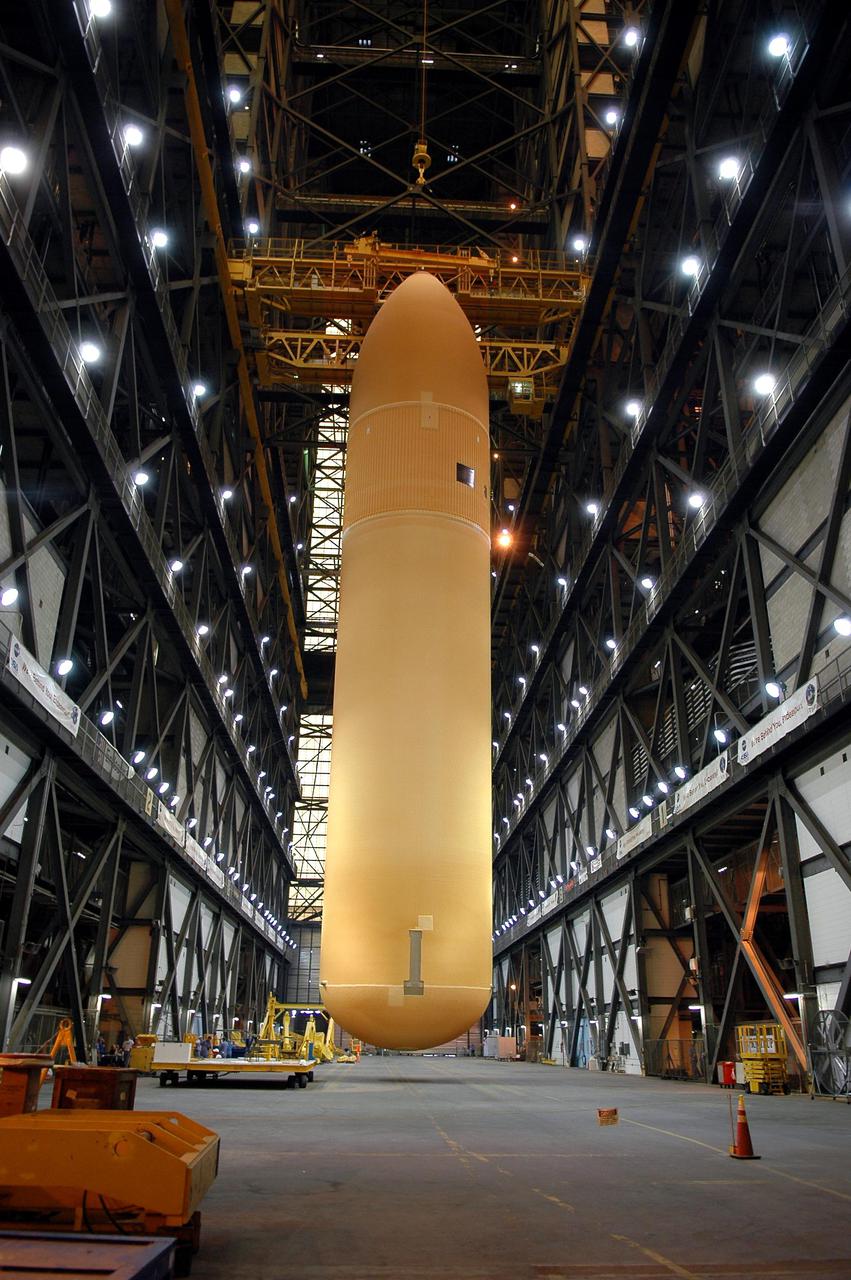
KENNEDY SPACE CENTER, FLA. - Raised to a vertical position in the Vehicle Assembly Building, the redesigned External Tank will be lifted into the 'checkout cell' where the tank’s mechanical, electrical and thermal protection systems are inspected. The tank will also undergo new processes resulting from its redesign, including inspection of the bipod heater and External Tank separation camera. The tank will be prepared for 'mating' to the Shuttle’s Solid Rocket Boosters. When preparations are complete, the tank will be lifted from the checkout cell, moved across the transfer aisle and into High Bay 1. It will be lowered and attached to the boosters, which are sitting on the Mobile Launch Platform. The SRBs and ET will be flying with Shuttle Discovery for the Return to Flight mission STS-114. The launch planning window is May 12 to June 3, 2005.
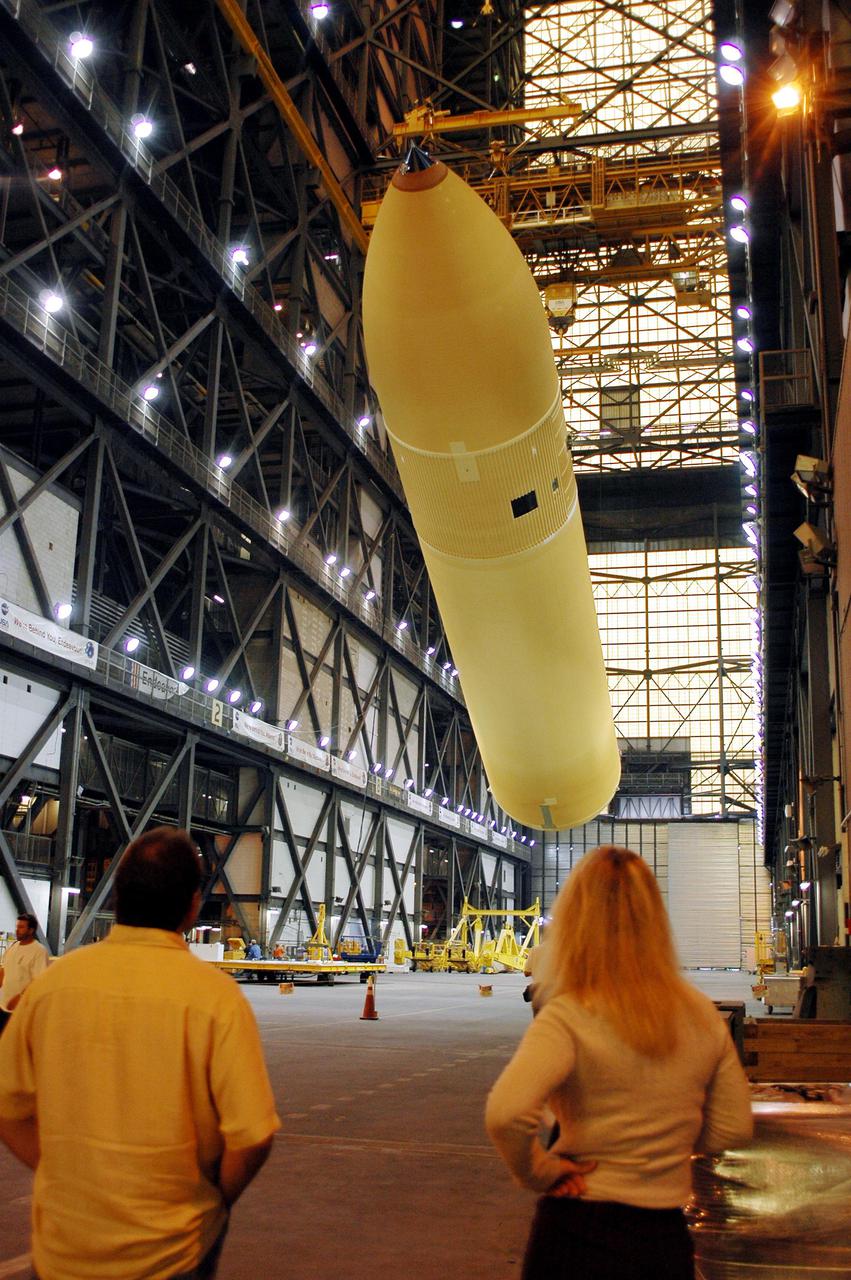
KENNEDY SPACE CENTER, FLA. - The redesigned External Tank is being raised to a vertical position in the Vehicle Assembly Building and will be lifted into the 'checkout cell' where the tank's mechanical, electrical and thermal protection systems are inspected. The tank will also undergo new processes resulting from its redesign, including inspection of the bipod heater and External Tank separation camera. The tank will be prepared for 'mating' to the Shuttle’s Solid Rocket Boosters. When preparations are complete, the tank will be lifted from the checkout cell, moved across the transfer aisle and into High Bay 1. It will be lowered and attached to the boosters, which are sitting on the Mobile Launch Platform. The SRBs and ET will be flying with Shuttle Discovery for the Return to Flight mission STS-114. The launch planning window is May 12 to June 3, 2005.
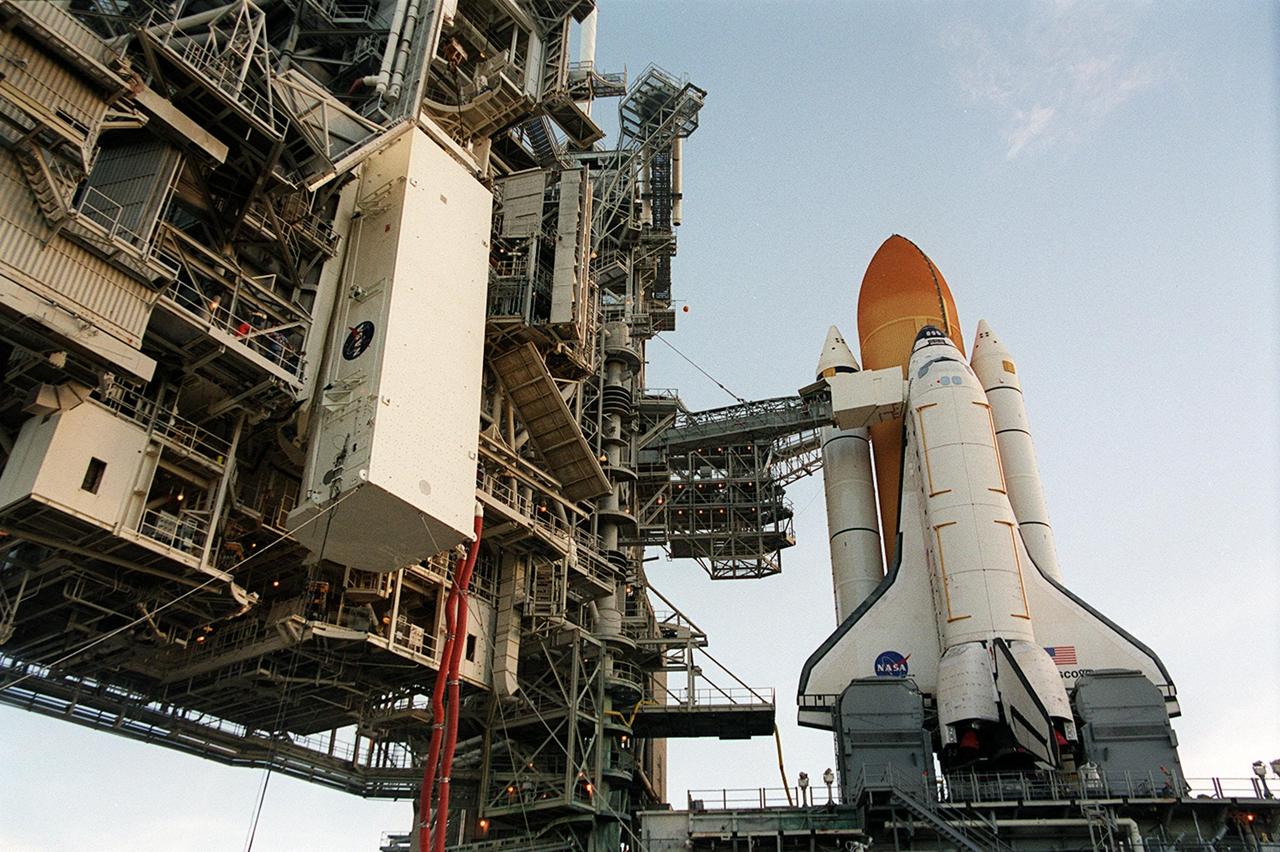
KENNEDY SPACE CENTER, Fla. -- The payload canister is lifted up the Rotating Service Structure on Launch Pad 39A. At right is Space Shuttle Discovery. Inside the canister are the primary payloads on mission STS-105, the Multi-Purpose Logistics Module Leonardo and the Integrated Cargo Carrier. The ICC holds several smaller payloads, the Early Ammonia Servicer and two experiment containers. The Early Ammonia Servicer consists of two nitrogen tanks that provide compressed gaseous nitrogen to pressurize the ammonia tank and replenish it in the thermal control subsystems of the Space Station. The ICC and MPLM will be lifted into the payload changeout room and then moved into the Discovery’s payload bay. The STS-105 mission includes a crew changeover on the International Space Station. Expedition Three will be traveling on Discovery to replace Expedition Two, who will return to Earth on board Discovery. Launch of STS-105 is scheduled for Aug. 9
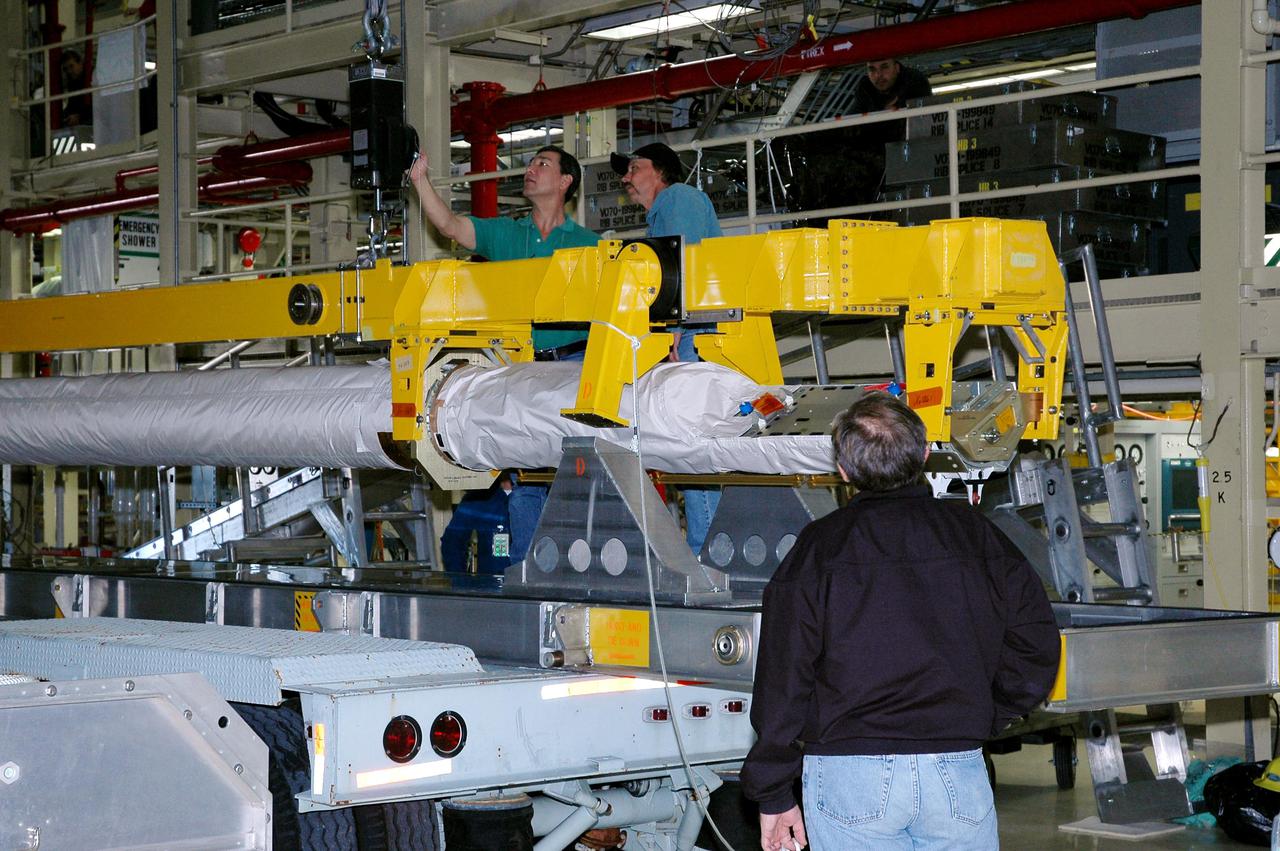
KENNEDY SPACE CENTER, FLA. - In the Orbiter Processing Facility high bay, technicians check the crane that will lift the Orbiter Boom Sensor System (OBSS) from its transporter. The OBSS will be installed on the starboard side of the payload bay in the orbiter Discovery. The 50-foot-long OBSS attaches to the Remote Manipulator System, or Shuttle robotic arm, and is one of the new safety measures for Return to Flight, equipping the orbiter with cameras and laser systems to inspect the Shuttle’s Thermal Protection System while in space. The Return to Flight mission, STS-114, has a launch window of May 12 to June 3, 2005.

Dornier Satelliten Systeme (DSS) workers lift the heat shield of the Huygens probe in the Payload Hazardous Servicing Facility (PHSF) at KSC. The spacecraft was returned to the PHSF after damage to thermal insulation was discovered inside Huygens from an abnormally high flow of conditioned air. Internal inspection, insulation repair and a cleaning of the probe were required. Mission managers are targeting a mid-October launch date after the Cassini spacecraft, aboard which Huygens will be launched, returns to the pad and is once again placed atop its Titan IVB expendable launch vehicle at Launch Pad 40 at Cape Canaveral Air Station
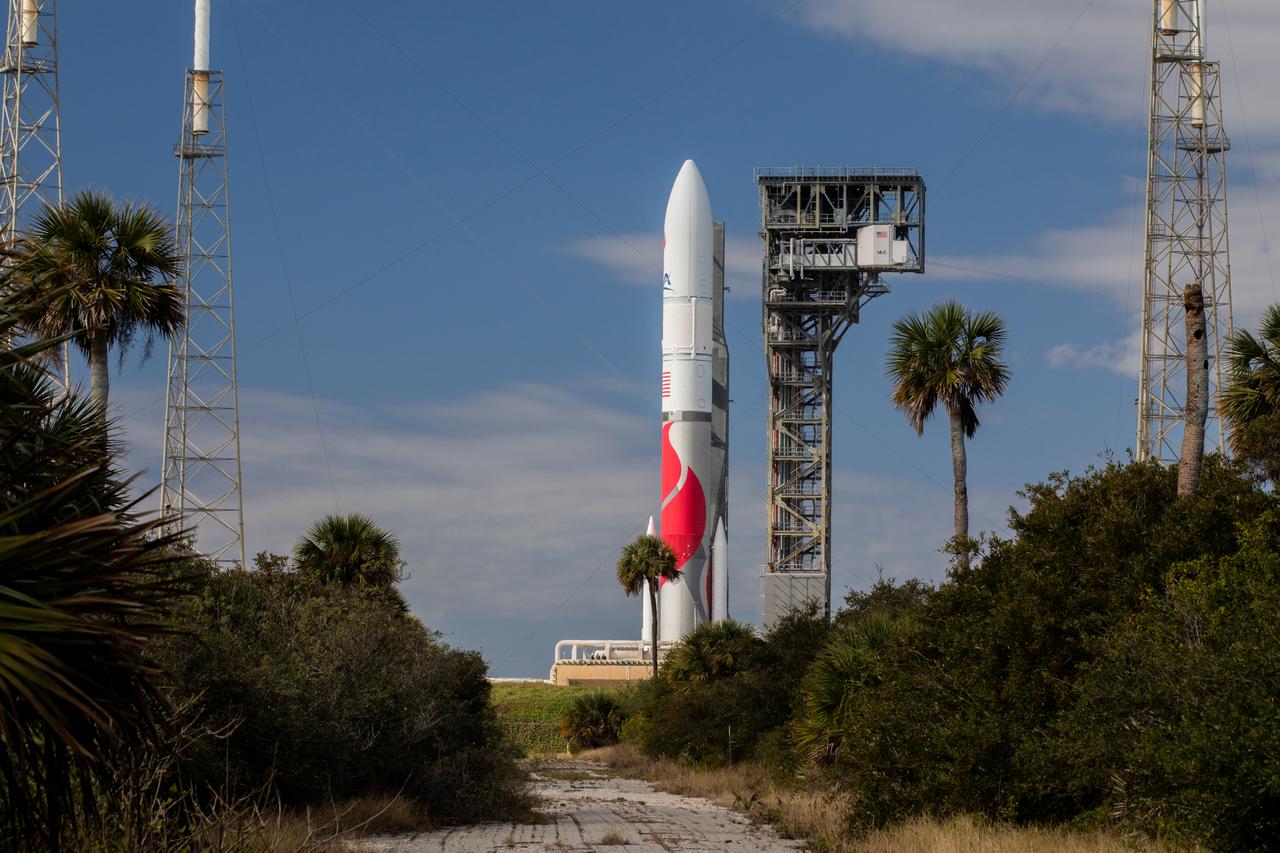
On Friday, Jan. 5, 2024, United Launch Alliance’s Vulcan rocket carrying Astrobotic’s Peregrine lunar lander is rolled out of the Vertical Integration Facility to the launch pad at Space Launch Complex 41 on Cape Canaveral Space Force Station in Florida in advance of a planned lift off at 2:18 a.m. EST Monday, Jan. 8, 2024. Astrobotic’s Peregrine Mission One will carry NASA and commercial payloads to the Moon to study the lunar exosphere, thermal properties, and hydrogen abundance of the lunar regolith, magnetic fields, and the radiation environment of the lunar surface.

On Friday, Jan. 5, 2024, United Launch Alliance’s Vulcan rocket carrying Astrobotic’s Peregrine lunar lander is rolled out of the Vertical Integration Facility to the launch pad at Space Launch Complex 41 on Cape Canaveral Space Force Station in Florida in advance of a planned lift off at 2:18 a.m. EST Monday, Jan. 8, 2024. Astrobotic’s Peregrine Mission One will carry NASA and commercial payloads to the Moon to study the lunar exosphere, thermal properties, and hydrogen abundance of the lunar regolith, magnetic fields, and the radiation environment of the lunar surface.
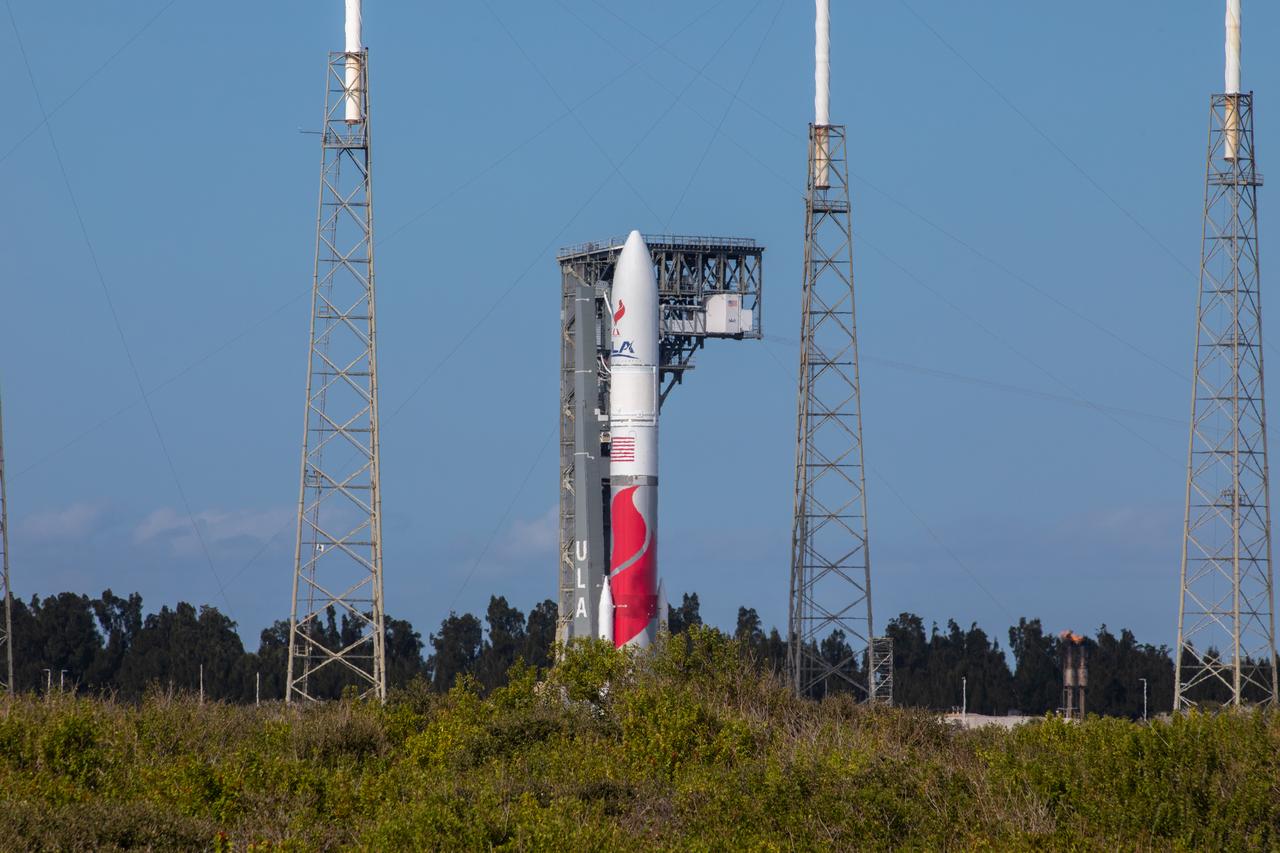
On Friday, Jan. 5, 2024, United Launch Alliance’s Vulcan rocket carrying Astrobotic’s Peregrine lunar lander is rolled out of the Vertical Integration Facility to the launch pad at Space Launch Complex 41 on Cape Canaveral Space Force Station in Florida in advance of a planned lift off at 2:18 a.m. EST Monday, Jan. 8, 2024. Astrobotic’s Peregrine Mission One will carry NASA and commercial payloads to the Moon to study the lunar exosphere, thermal properties, and hydrogen abundance of the lunar regolith, magnetic fields, and the radiation environment of the lunar surface.
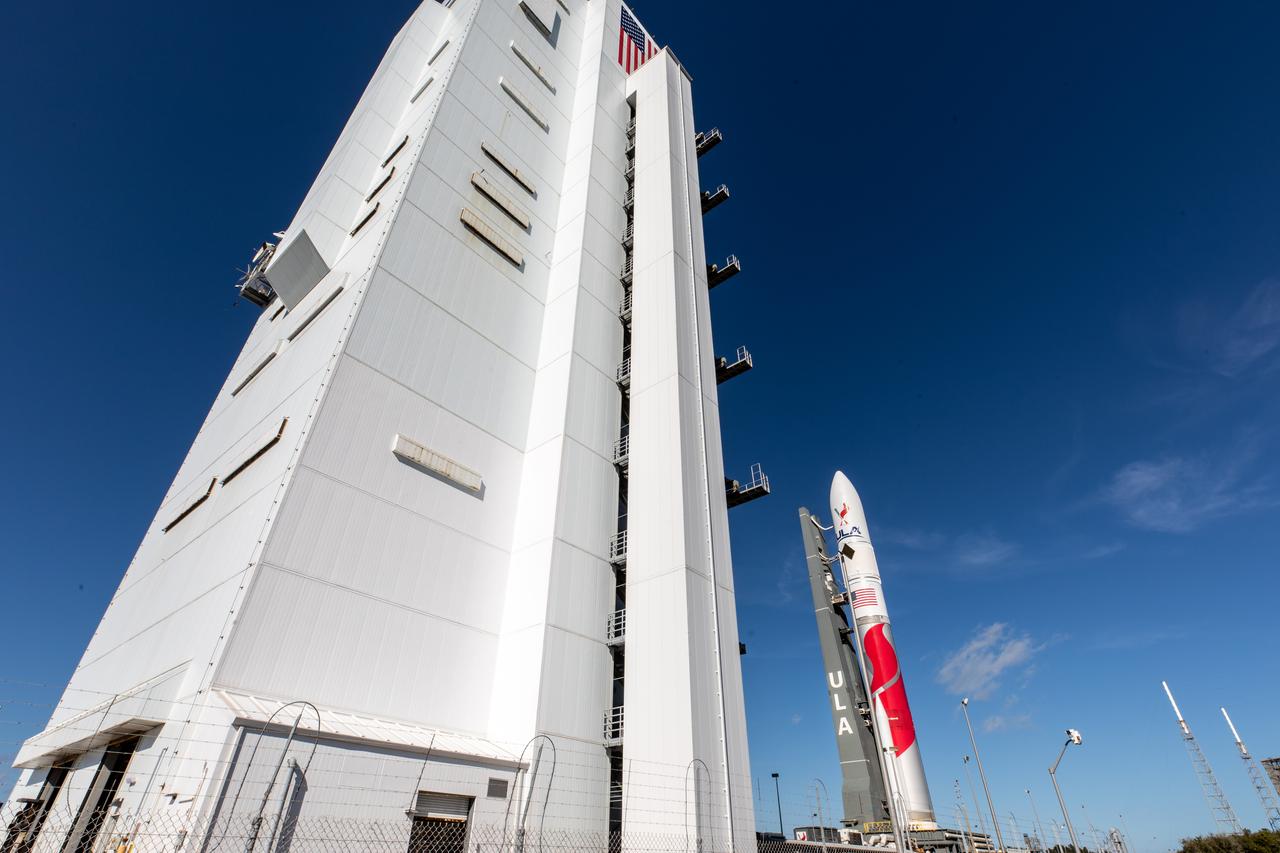
On Friday, Jan. 5, 2024, United Launch Alliance’s Vulcan rocket carrying Astrobotic’s Peregrine lunar lander is rolled out of the Vertical Integration Facility to the launch pad at Space Launch Complex 41 on Cape Canaveral Space Force Station in Florida in advance of a planned lift off at 2:18 a.m. EST Monday, Jan. 8, 2024. Astrobotic’s Peregrine Mission One will carry NASA and commercial payloads to the Moon to study the lunar exosphere, thermal properties, and hydrogen abundance of the lunar regolith, magnetic fields, and the radiation environment of the lunar surface.(Multiple values)
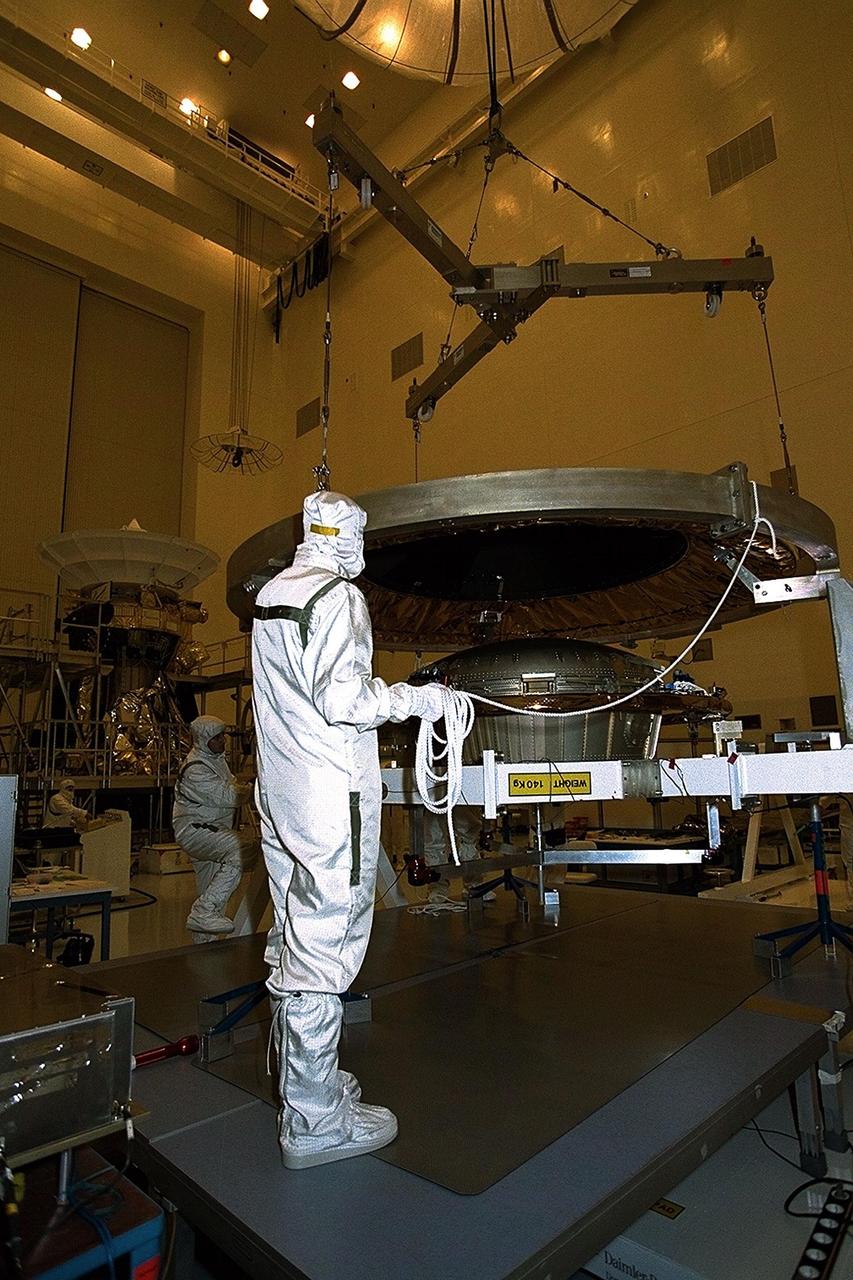
Dornier Satelliten Systeme (DSS) workers lift the heat shield of the Huygens probe in the Payload Hazardous Servicing Facility (PHSF) at KSC. The spacecraft was returned to the PHSF after damage to thermal insulation was discovered inside Huygens from an abnormally high flow of conditioned air. Internal inspection, insulation repair and a cleaning of the probe were required. Mission managers are targeting a mid-October launch date after the Cassini spacecraft, aboard which Huygens will be launched, returns to the pad and is once again placed atop its Titan IVB expendable launch vehicle at Launch Pad 40 at Cape Canaveral Air Station
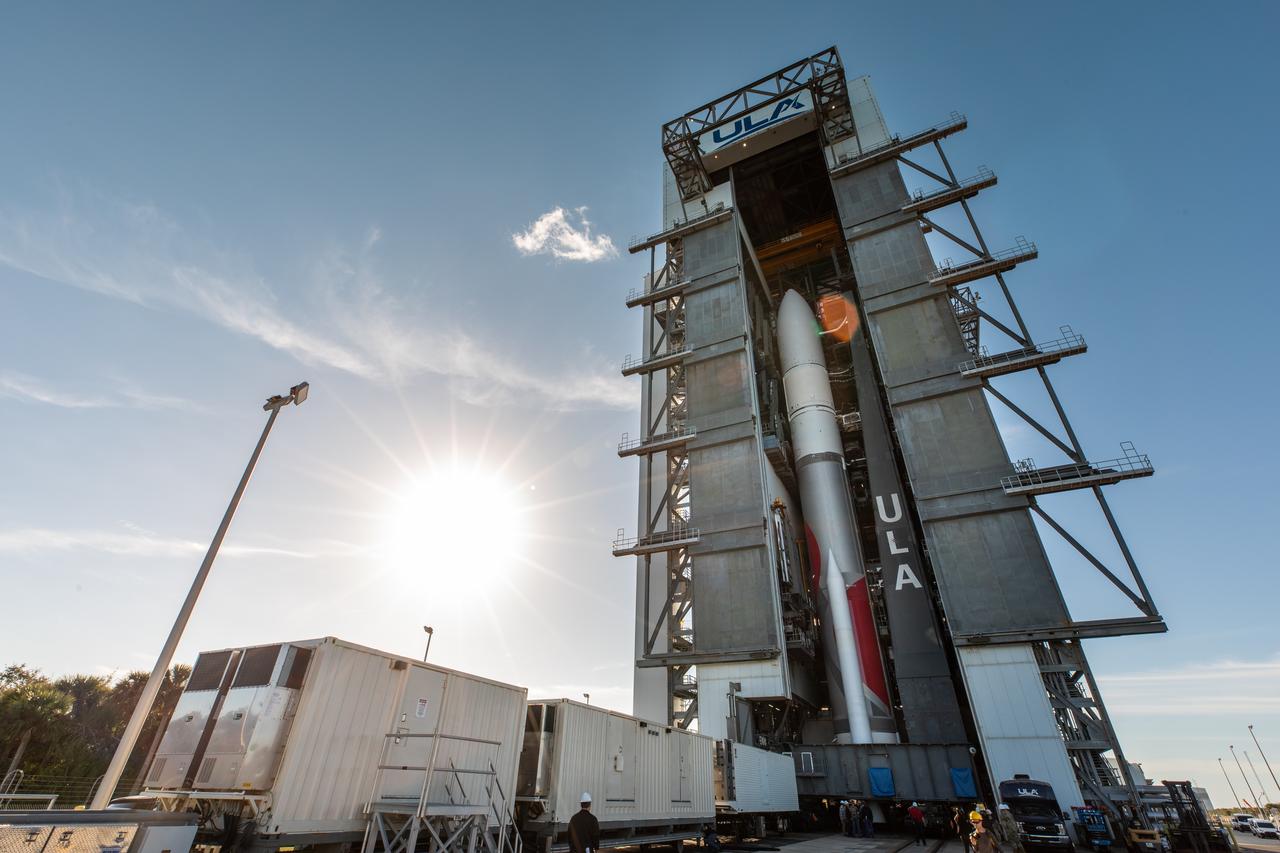
On Friday, Jan. 5, 2024, United Launch Alliance’s Vulcan rocket carrying Astrobotic’s Peregrine lunar lander is rolled out of the Vertical Integration Facility to the launch pad at Space Launch Complex 41 on Cape Canaveral Space Force Station in Florida in advance of a planned lift off at 2:18 a.m. EST Monday, Jan. 8, 2024. Astrobotic’s Peregrine Mission One will carry NASA and commercial payloads to the Moon to study the lunar exosphere, thermal properties, and hydrogen abundance of the lunar regolith, magnetic fields, and the radiation environment of the lunar surface.(Multiple values)
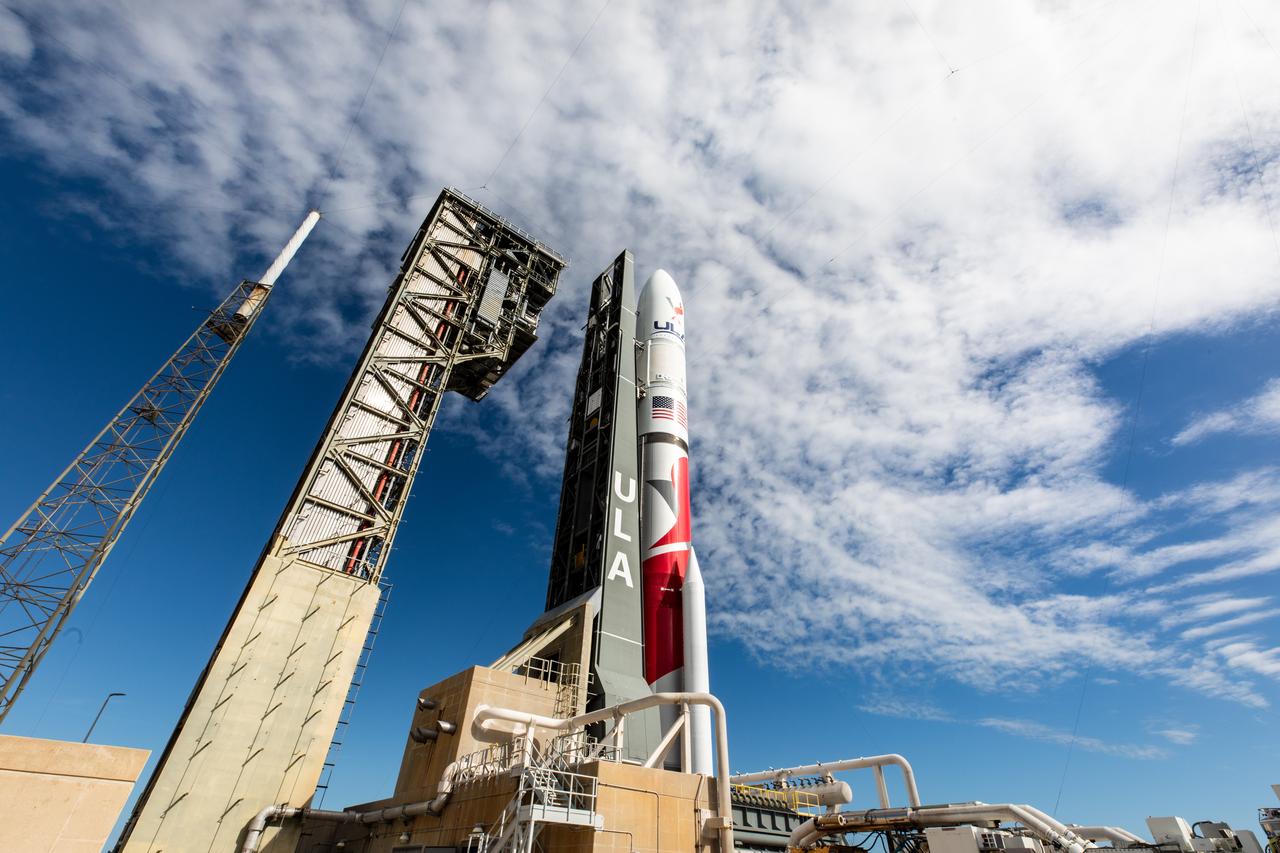
On Friday, Jan. 5, 2024, United Launch Alliance’s Vulcan rocket carrying Astrobotic’s Peregrine lunar lander is rolled out of the Vertical Integration Facility to the launch pad at Space Launch Complex 41 on Cape Canaveral Space Force Station in Florida in advance of a planned lift off at 2:18 a.m. EST Monday, Jan. 8, 2024. Astrobotic’s Peregrine Mission One will carry NASA and commercial payloads to the Moon to study the lunar exosphere, thermal properties, and hydrogen abundance of the lunar regolith, magnetic fields, and the radiation environment of the lunar surface.(Multiple values)
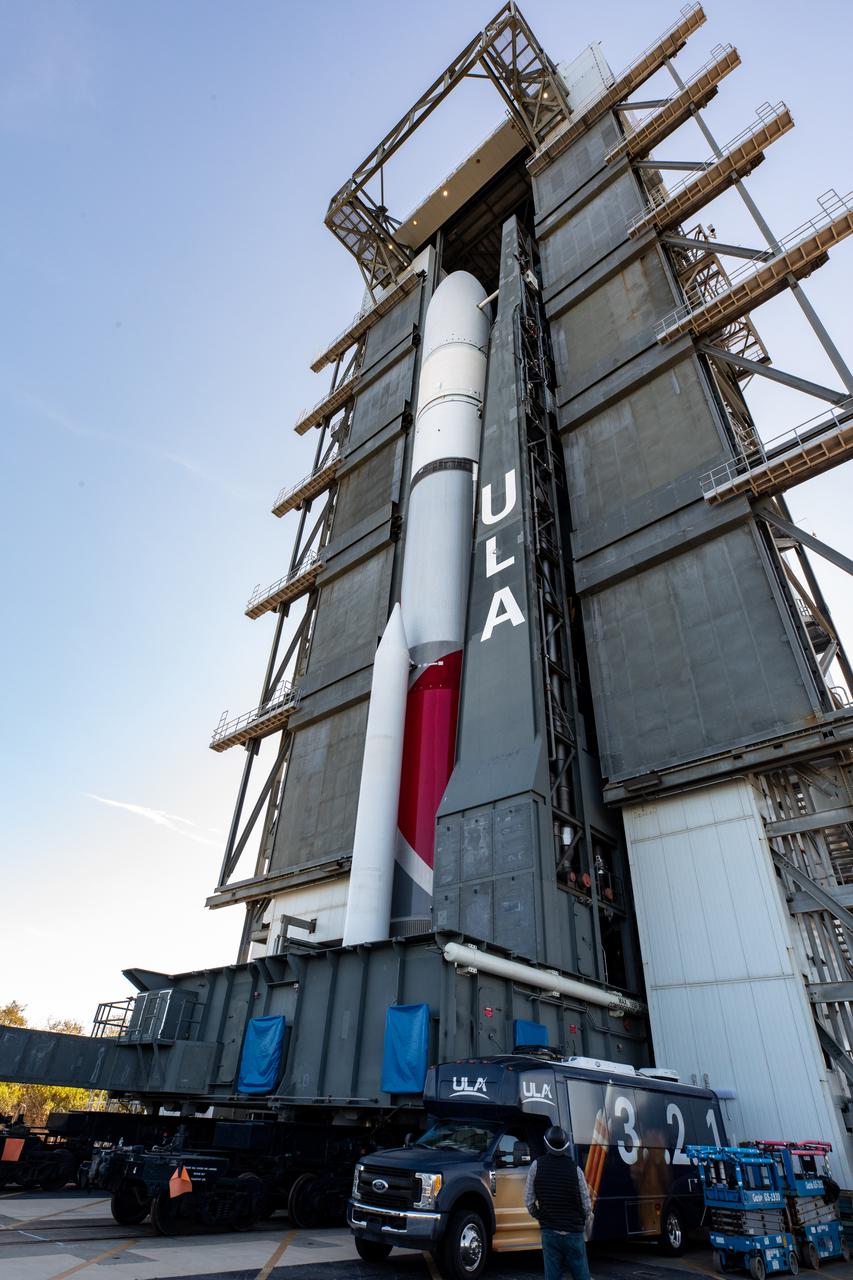
On Friday, Jan. 5, 2024, United Launch Alliance’s Vulcan rocket carrying Astrobotic’s Peregrine lunar lander is rolled out of the Vertical Integration Facility to the launch pad at Space Launch Complex 41 on Cape Canaveral Space Force Station in Florida in advance of a planned lift off at 2:18 a.m. EST Monday, Jan. 8, 2024. Astrobotic’s Peregrine Mission One will carry NASA and commercial payloads to the Moon to study the lunar exosphere, thermal properties, and hydrogen abundance of the lunar regolith, magnetic fields, and the radiation environment of the lunar surface.(Multiple values)
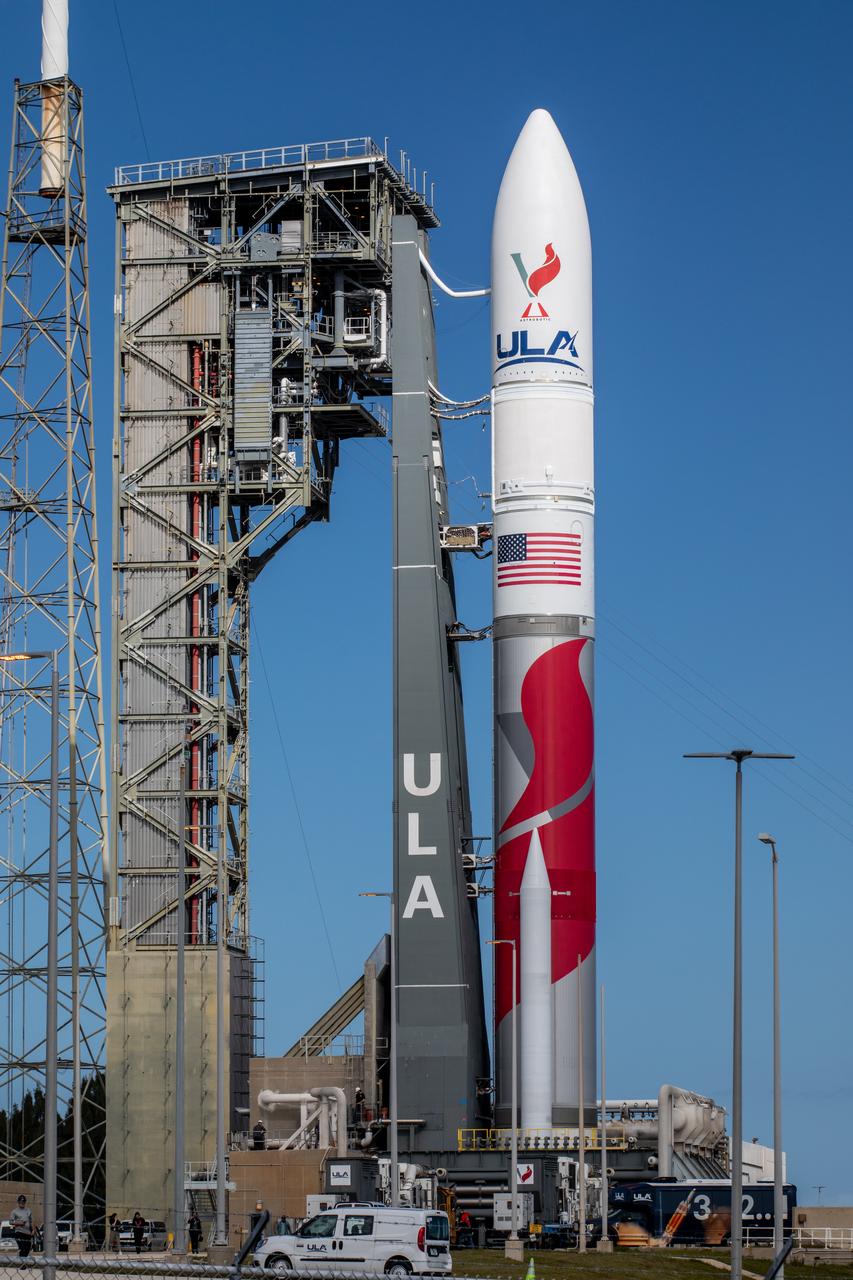
On Friday, Jan. 5, 2024, United Launch Alliance’s Vulcan rocket carrying Astrobotic’s Peregrine lunar lander is rolled out of the Vertical Integration Facility to the launch pad at Space Launch Complex 41 on Cape Canaveral Space Force Station in Florida in advance of a planned lift off at 2:18 a.m. EST Monday, Jan. 8, 2024. Astrobotic’s Peregrine Mission One will carry NASA and commercial payloads to the Moon to study the lunar exosphere, thermal properties, and hydrogen abundance of the lunar regolith, magnetic fields, and the radiation environment of the lunar surface.
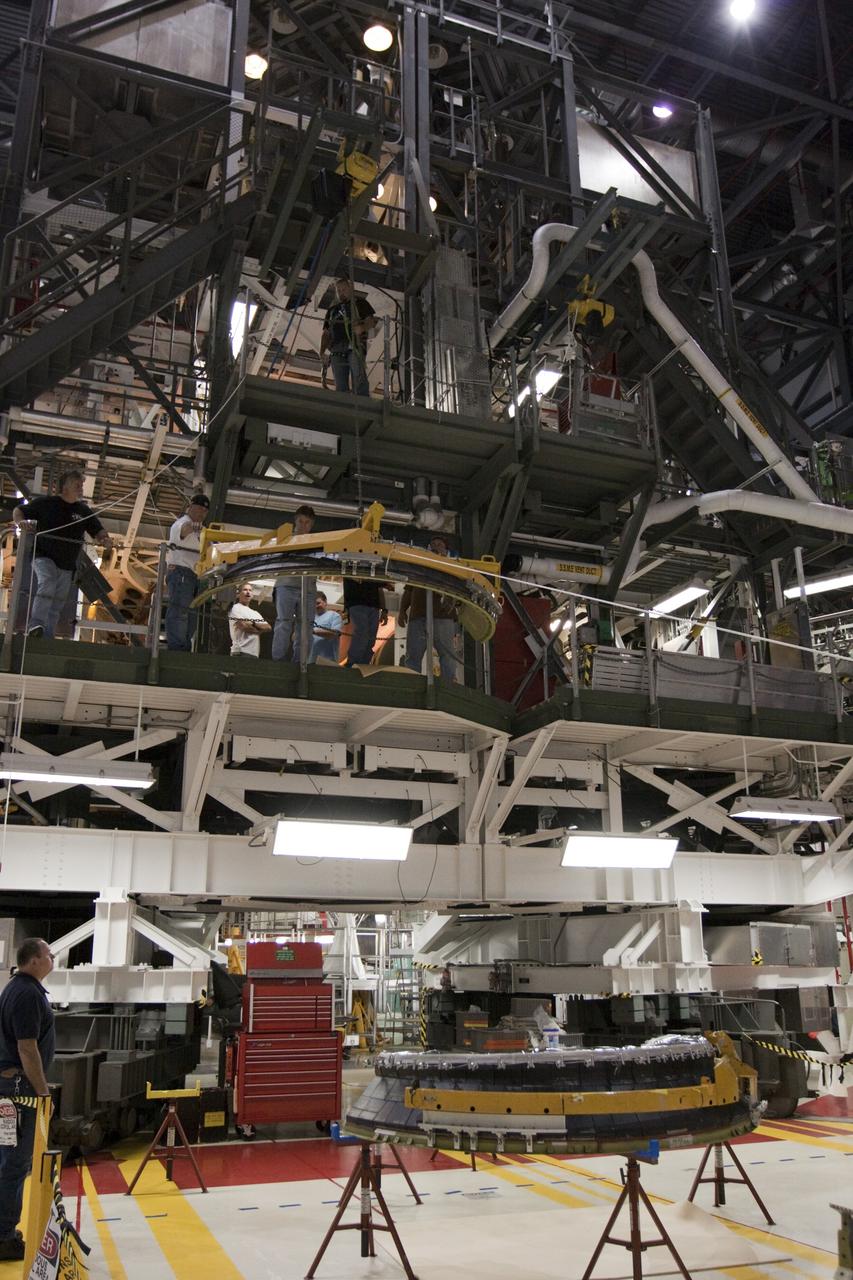
CAPE CANAVERAL, Fla. – Inside Orbiter Processing Facility-1 at NASA’s Kennedy Space Center in Florida, a large crane lifts a dome heat shield that will be installed around one of space shuttle Discovery’s three replica shuttle main engines. The dome heat shields are composed of two, semi-circle-shaped sections of thermal protection system tiles that surround the engines. The work is part of the Space Shuttle Program’s transition and retirement processing of shuttle Discovery. Discovery is being prepared for display at the Smithsonian’s National Air and Space Museum, Steven F. Udvar-Hazy Center in Chantilly, Va. For more information, visit http://www.nasa.gov/shuttle. Photo credit: NASA/Kim Shiflett
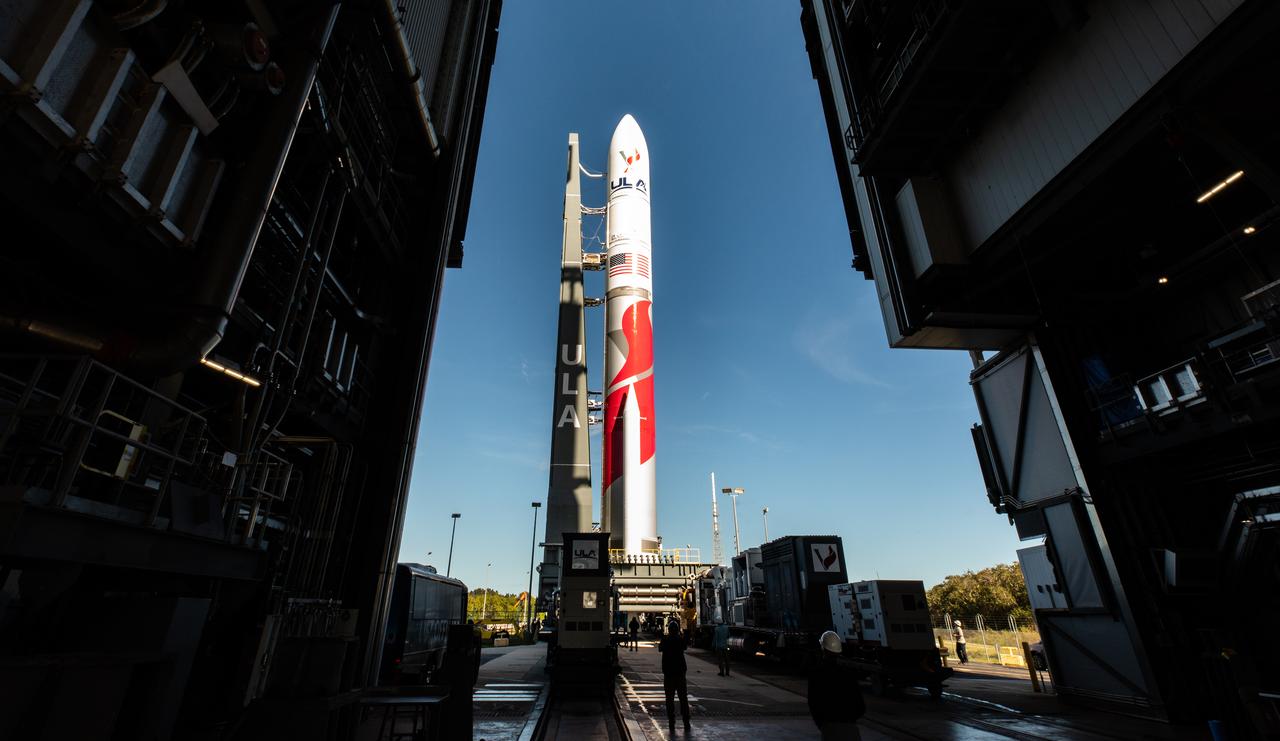
On Friday, Jan. 5, 2024, United Launch Alliance’s Vulcan rocket carrying Astrobotic’s Peregrine lunar lander is rolled out of the Vertical Integration Facility to the launch pad at Space Launch Complex 41 on Cape Canaveral Space Force Station in Florida in advance of a planned lift off at 2:18 a.m. EST Monday, Jan. 8, 2024. Astrobotic’s Peregrine Mission One will carry NASA and commercial payloads to the Moon to study the lunar exosphere, thermal properties, and hydrogen abundance of the lunar regolith, magnetic fields, and the radiation environment of the lunar surface.(Multiple values)
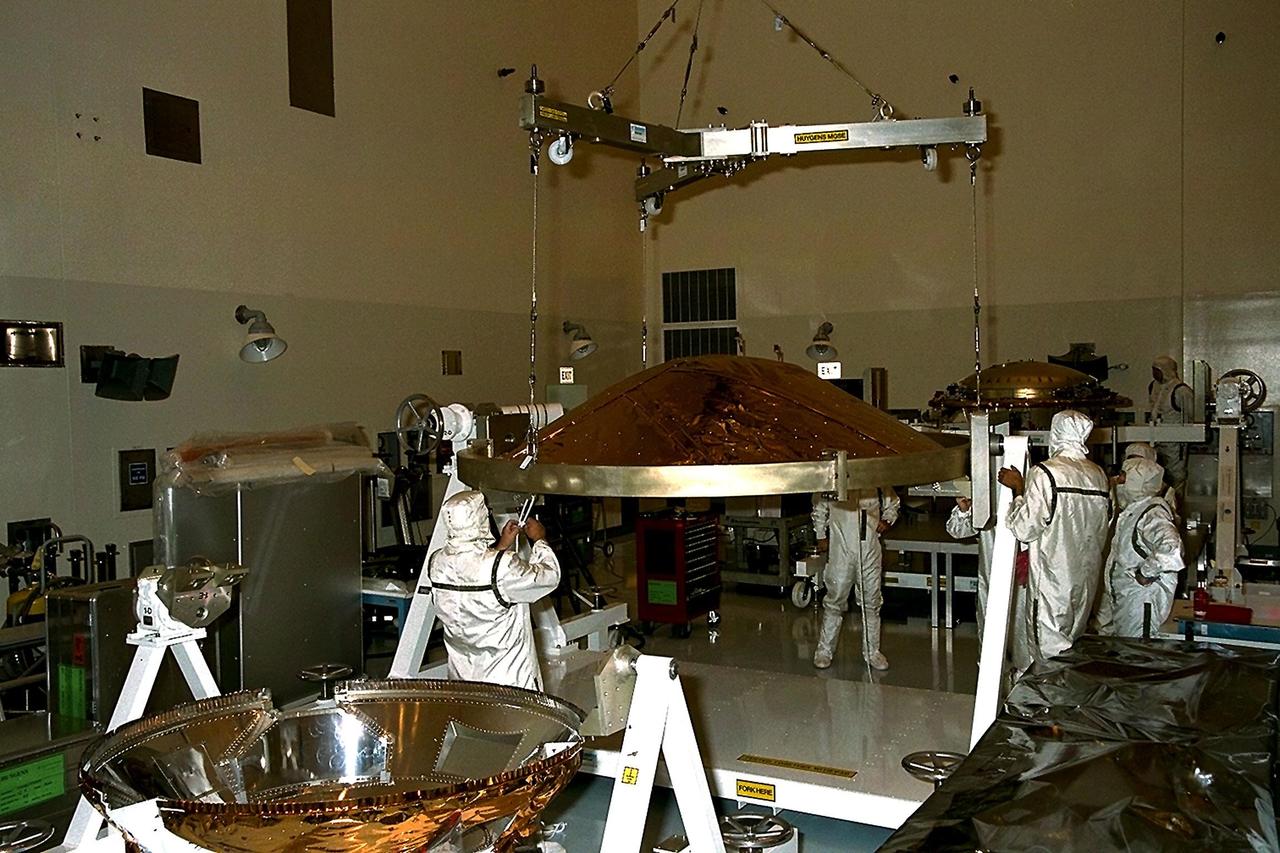
Dornier Satelliten Systeme (DSS) workers lift the front heat shield of the Huygens probe in the Payload Hazardous Servicing Facility (PHSF) at KSC. The spacecraft was returned to the PHSF after damage to thermal insulation was discovered inside Huygens from an abnormally high flow of conditioned air. Internal inspection, insulation repair and a cleaning of the probe were required. Mission managers are targeting a mid-October launch date after the Cassini spacecraft, aboard which Huygens will be launched, returns to the pad and is once again placed atop its Titan IVB expendable launch vehicle at Launch Pad 40 at Cape Canaveral Air Station
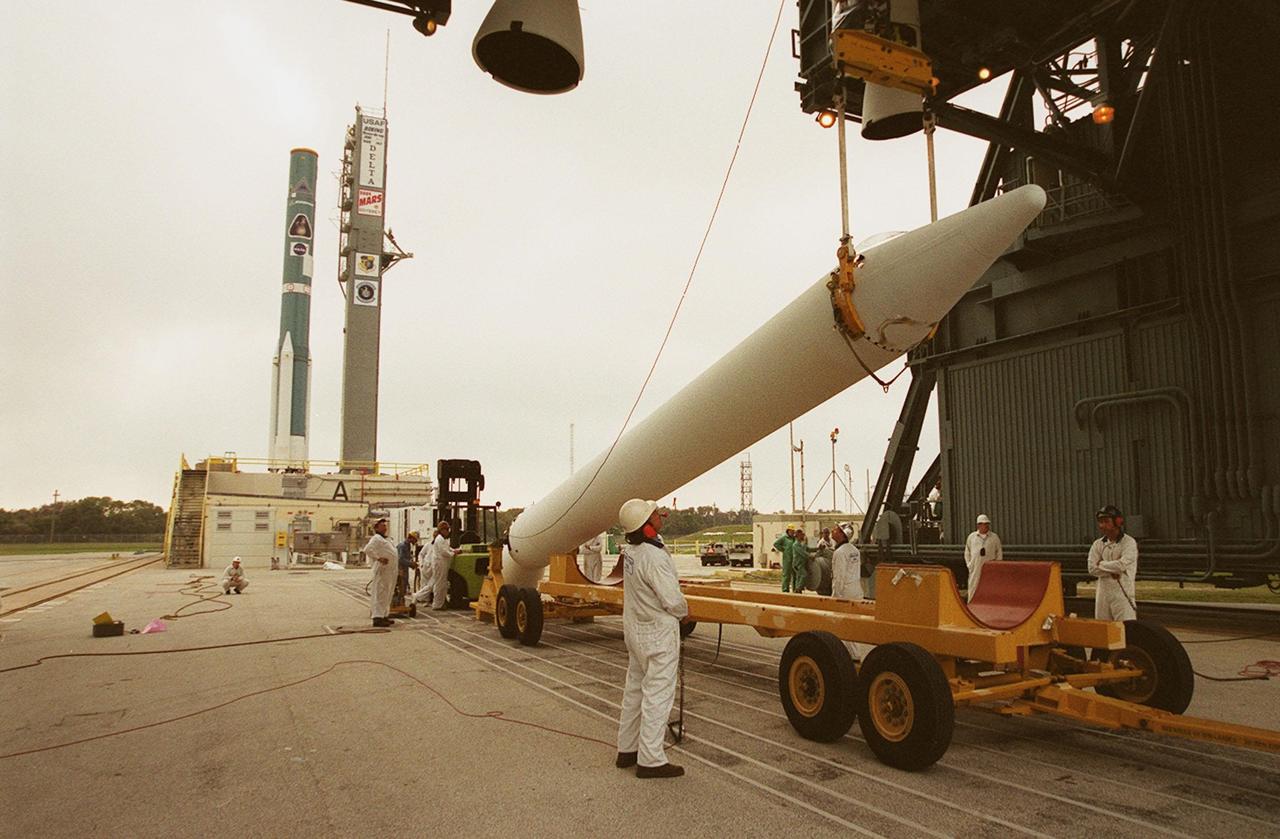
A crane lifts a solid rocket booster on Launch Pad 17-A, Cape Canaveral Air Force Station, where it will be mated with a Delta 7925 rocket for launch April 7, 2001. The rocket will carry the 2001 Mars Odyssey Orbiter, containing three science instruments: THEMIS, the Gamma Ray Spectrometer (GRS), and the Mars Radiation Environment Experiment (MARIE). THEMIS will map the mineralogy and morphology of the Martian surface using a high-resolution camera and a thermal infrared imaging spectrometer. The GRS will achieve global mapping of the elemental composition of the surface and determine the abundance of hydrogen in the shallow subsurface. The MARIE will characterize aspects of the near-space radiation environment with regards to the radiation-related risk to human explorers
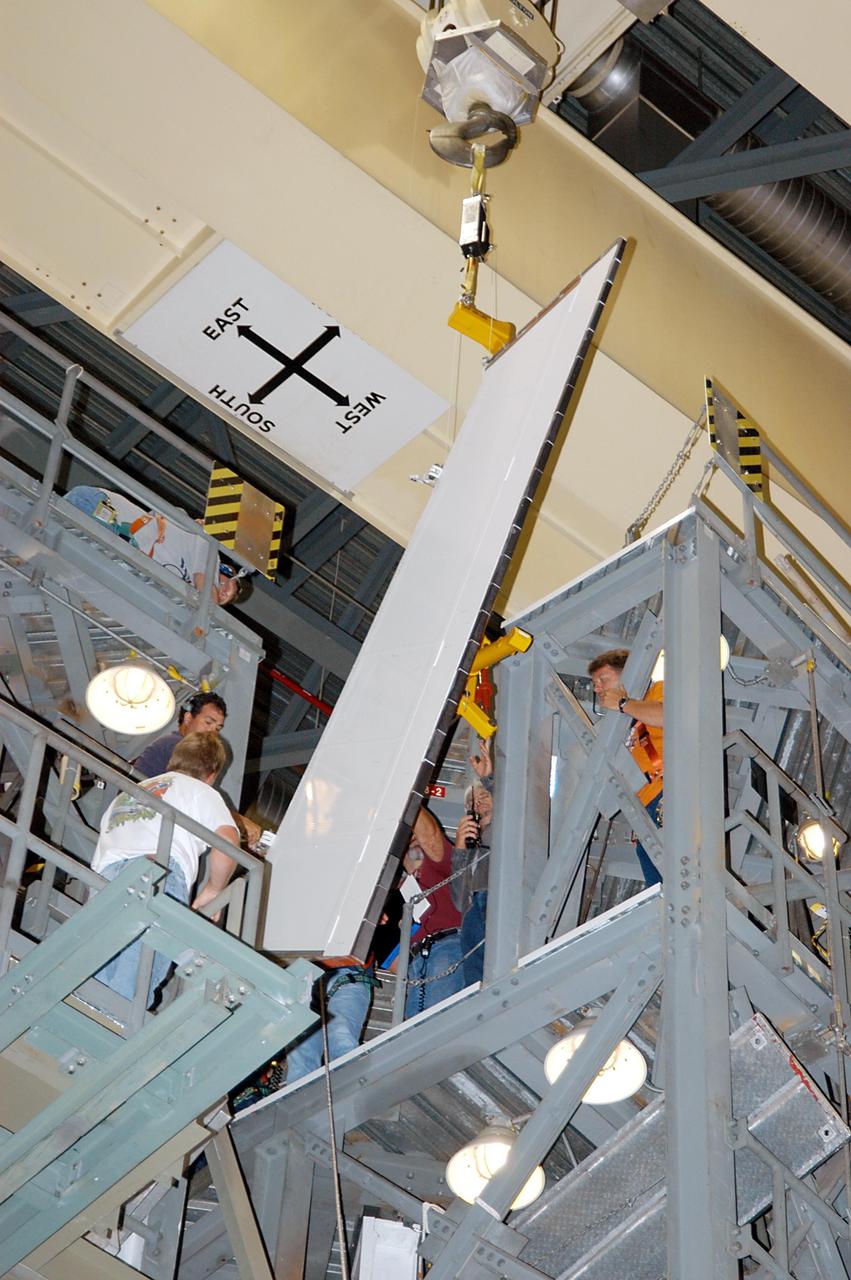
KENNEDY SPACE CENTER, FLA. -- In the Orbiter Processing Facility, the Rudder Speed Brake panel from orbiter Atlantis is lifted clear after being removed. The Rudder Speed Brake is being removed for inspection and maintenance prior to Return to Flight. The vertical tail consists of a structural fin surface made of aluminum, the Rudder Speed Brake surface, a tip and a lower trailing edge. The rudder splits into two halves to serve as a speed brake. The vertical tail and Rudder Speed Brake are covered with a reusable thermal protection system. The Rudder Speed Brake is used to guide and slow the Shuttle as it comes in for a landing.
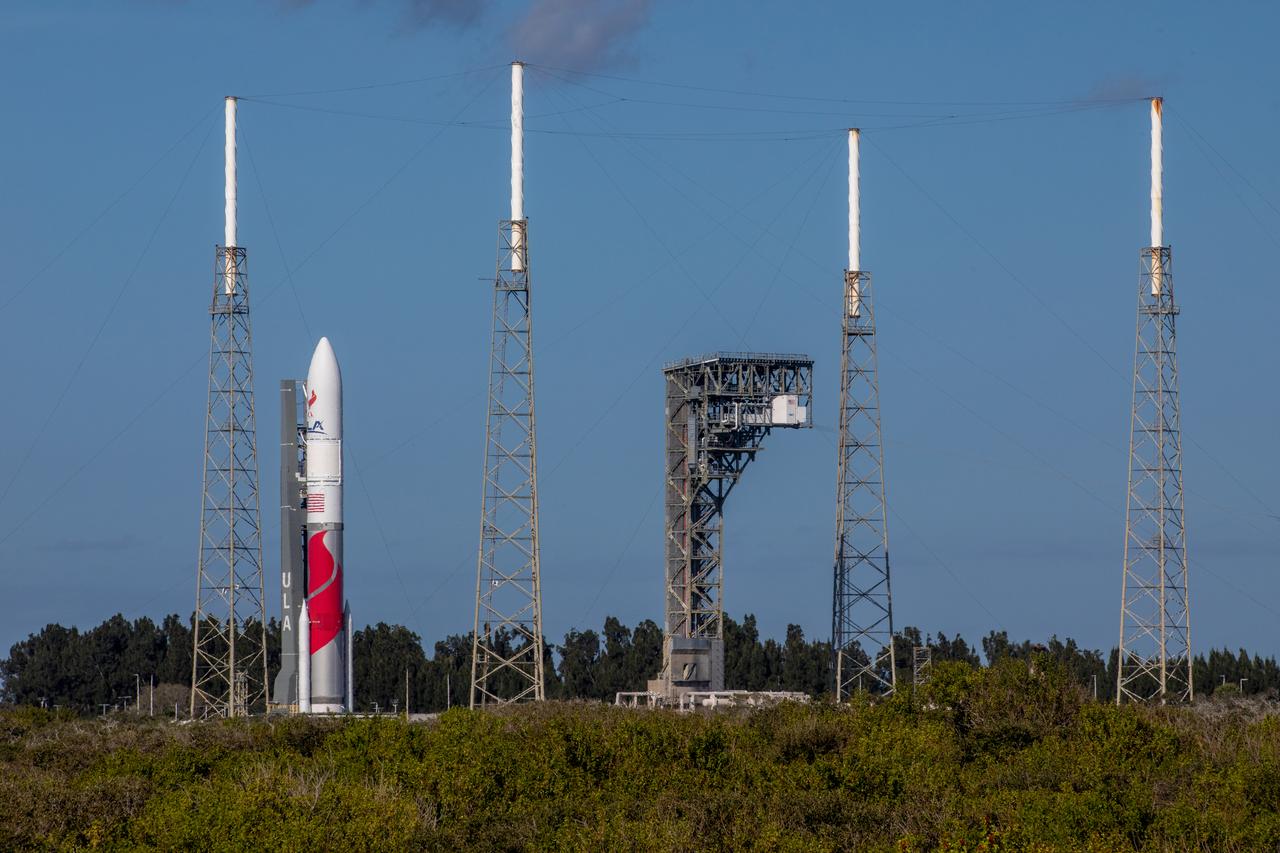
On Friday, Jan. 5, 2024, United Launch Alliance’s Vulcan rocket carrying Astrobotic’s Peregrine lunar lander is rolled out of the Vertical Integration Facility to the launch pad at Space Launch Complex 41 on Cape Canaveral Space Force Station in Florida in advance of a planned lift off at 2:18 a.m. EST Monday, Jan. 8, 2024. Astrobotic’s Peregrine Mission One will carry NASA and commercial payloads to the Moon to study the lunar exosphere, thermal properties, and hydrogen abundance of the lunar regolith, magnetic fields, and the radiation environment of the lunar surface.
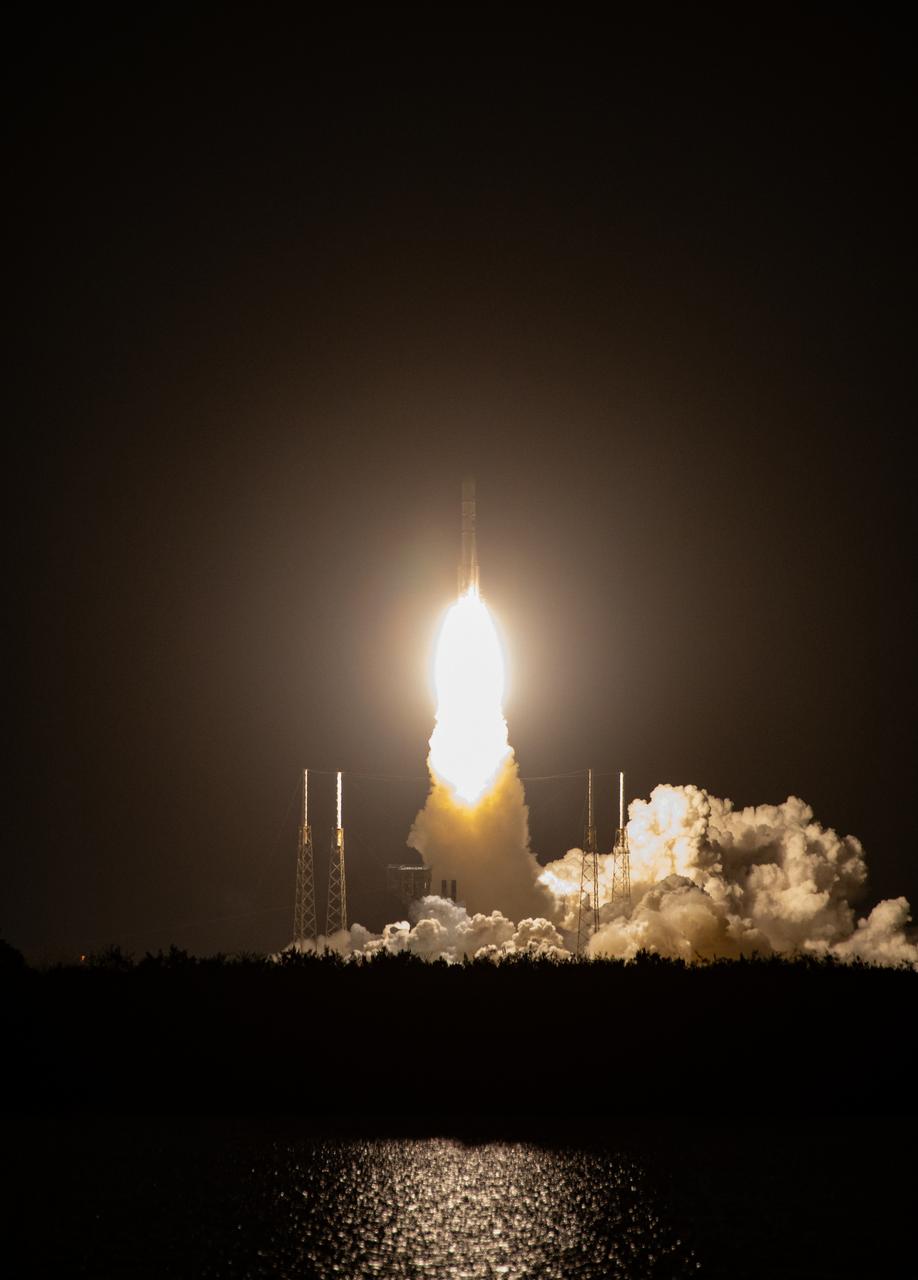
On the first flight of NASA’s CLPS (Commercial Lunar Payload Services) initiative and Artemis program, a United Launch Alliance Vulcan rocket carrying Astrobotic’s Peregrine lunar lander lifts off at 2:18 a.m. EST from Space Launch Complex 41 at Cape Canaveral Space Force Station in Florida on Monday, Jan. 8, 2024. Astrobotic’s Peregrine Mission One will carry NASA and commercial payloads to the Moon to study the lunar exosphere, thermal properties, and hydrogen abundance of the lunar regolith, magnetic fields, and the radiation environment of the lunar surface.
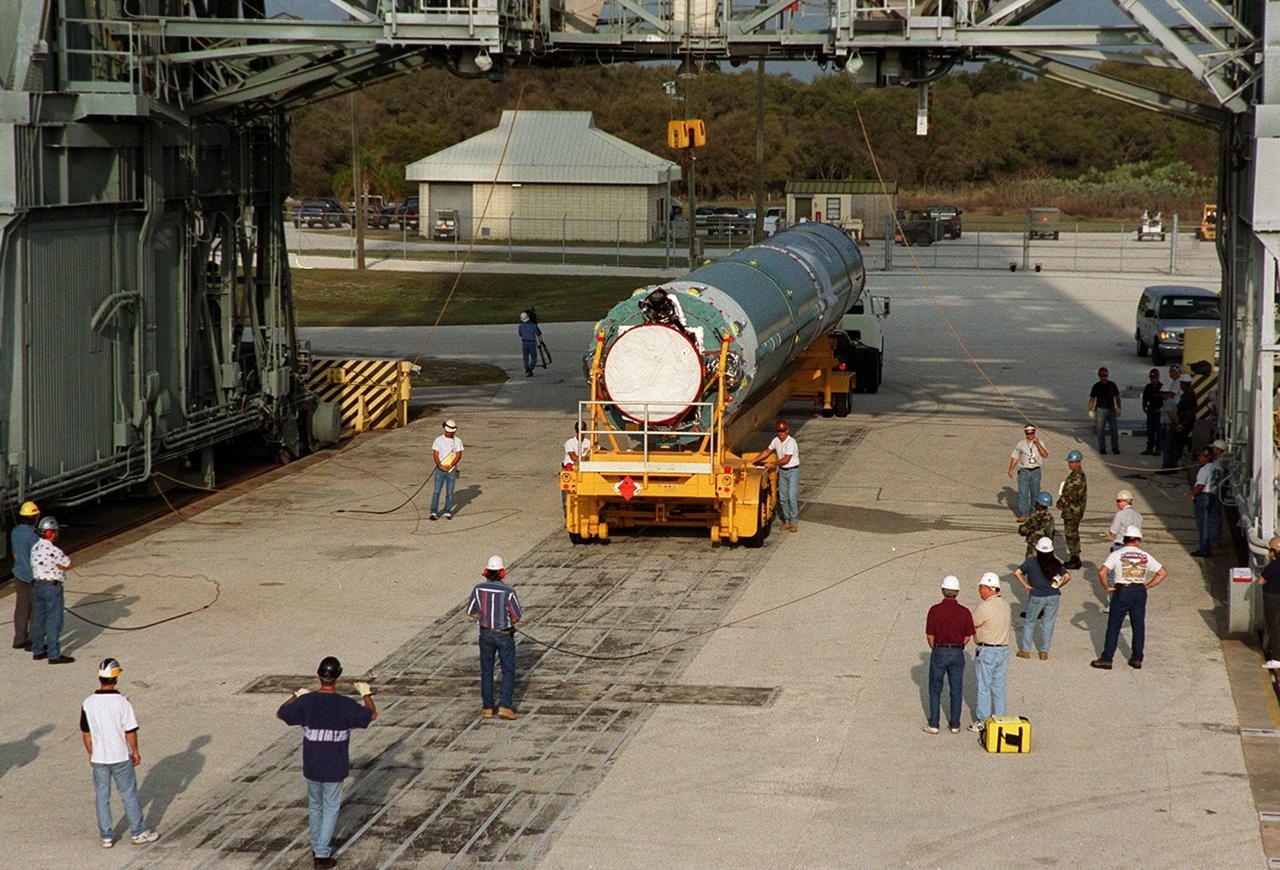
The first stage of a Boeing Delta rocket backs into position to be lifted for erection on Launch Pad 17-A, Cape Canaveral Air Force Station. The rocket will carry the 2001 Mars Odyssey Orbiter, scheduled for launch April 7, 2001. Mars Odyssey contains three science instruments: THEMIS, the Gamma Ray Spectrometer (GRS), and the Mars Radiation Environment Experiment (MARIE). THEMIS will map the mineralogy and morphology of the Martian surface using a high-resolution camera and a thermal infrared imaging spectrometer. The GRS will achieve global mapping of the elemental composition of the surface and determine the abundance of hydrogen in the shallow subsurface. The MARIE will characterize aspects of the near-space radiation environment with regards to the radiation-related risk to human explorers
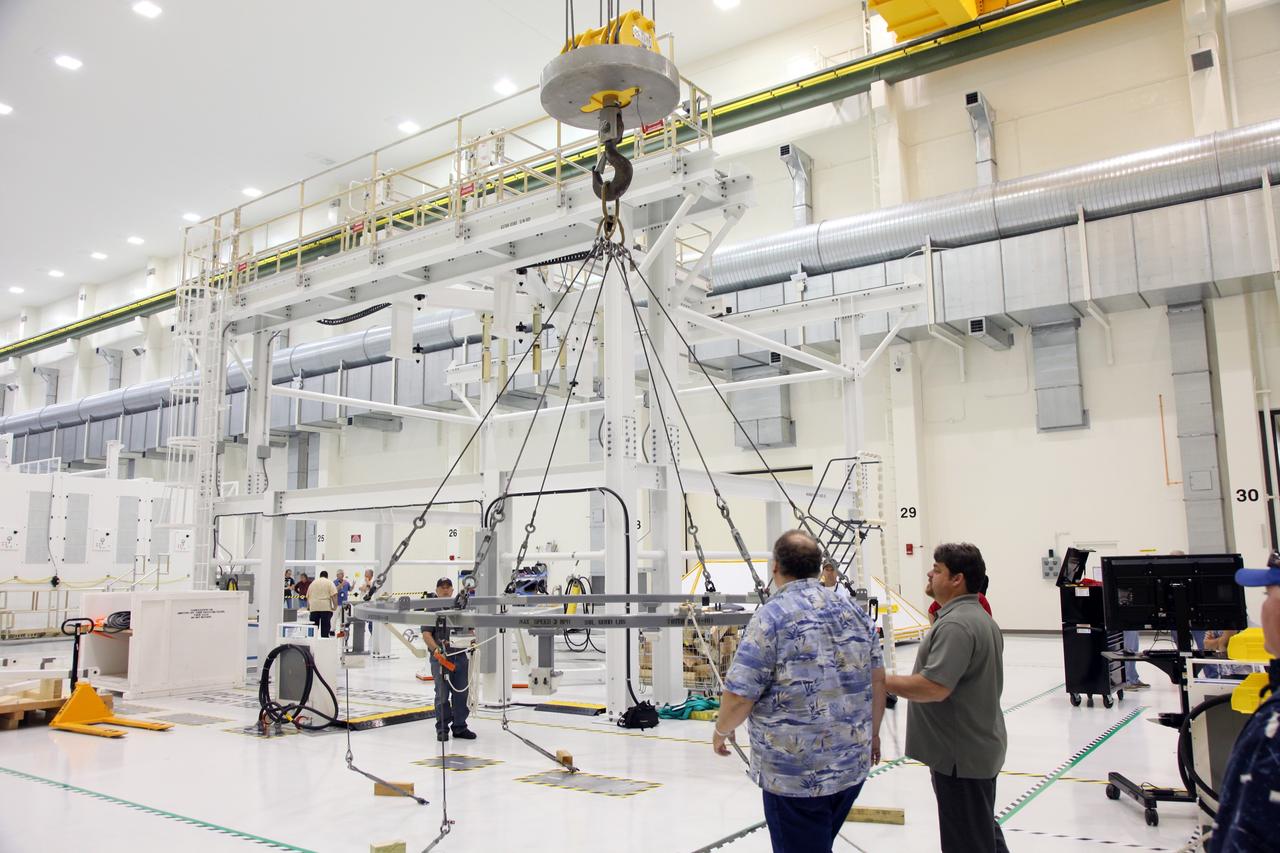
CAPE CANAVERAL, Fla. - Inside the Operations and Checkout Building high bay at NASA's Kennedy Space Center in Florida, technicians prepare a lifting ring to support the arrival of the Orion crew module. Slated for Exploration Flight Test-1, an uncrewed mission planned for 2014, the capsule will travel farther into space than any human spacecraft has gone in more than 40 years. NASA's Michoud Assembly Facility in New Orleans built the crew module pressure vessel. The Orion production team will prepare the module for flight by installing heat-shielding thermal protection systems, avionics and other subsystems. For more information, visit http://www.nasa.gov/orion. Photo credit: NASA/Gianni Woods
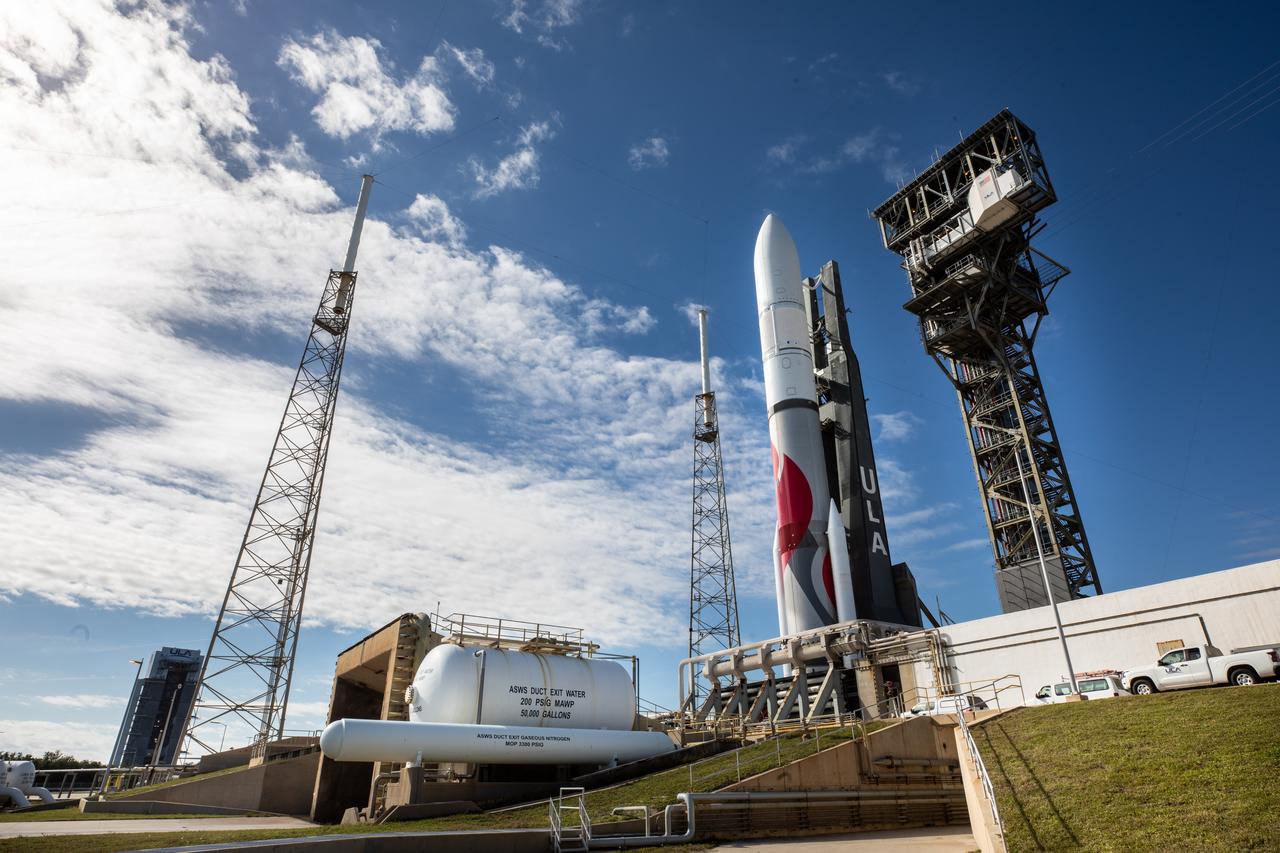
On Friday, Jan. 5, 2024, United Launch Alliance’s Vulcan rocket carrying Astrobotic’s Peregrine lunar lander is rolled out of the Vertical Integration Facility to the launch pad at Space Launch Complex 41 on Cape Canaveral Space Force Station in Florida in advance of a planned lift off at 2:18 a.m. EST Monday, Jan. 8, 2024. Astrobotic’s Peregrine Mission One will carry NASA and commercial payloads to the Moon to study the lunar exosphere, thermal properties, and hydrogen abundance of the lunar regolith, magnetic fields, and the radiation environment of the lunar surface.(Multiple values)
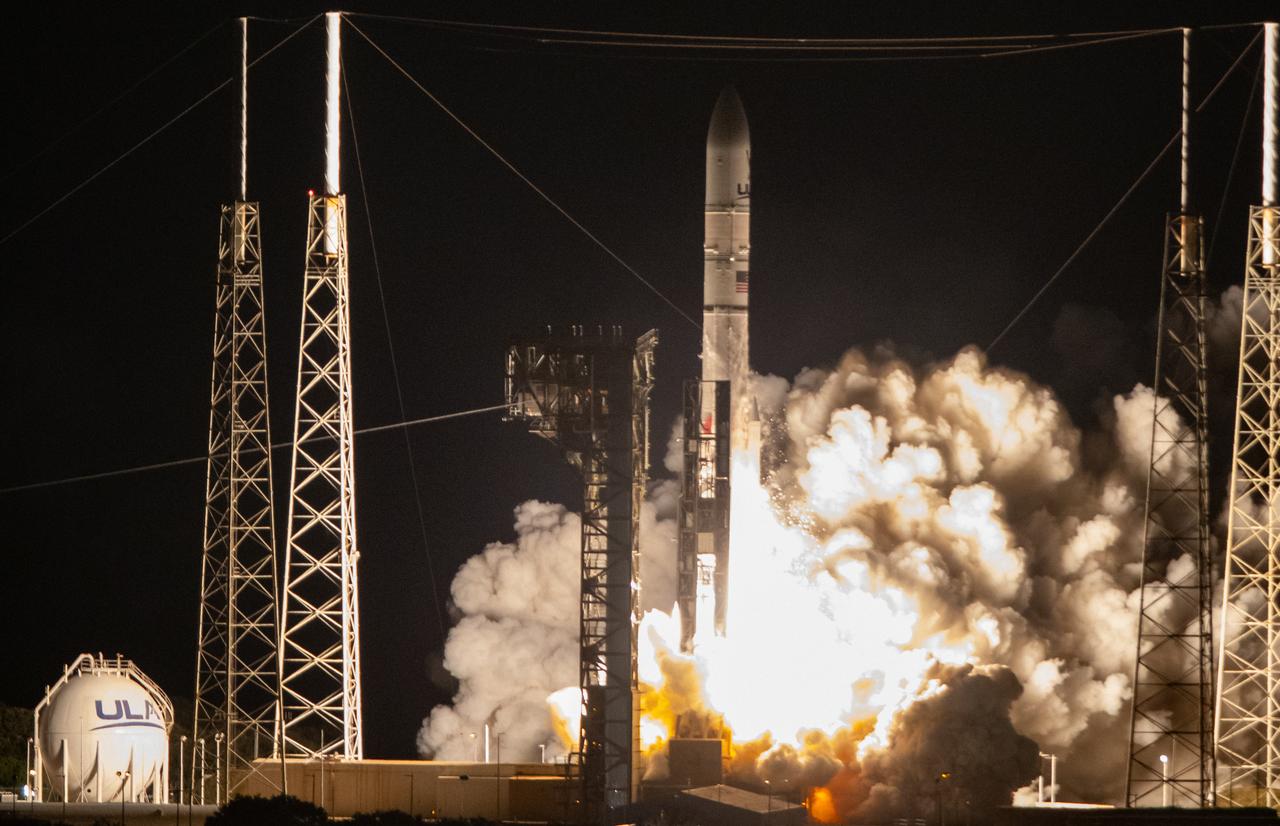
On the first flight of NASA’s CLPS (Commercial Lunar Payload Services) initiative and Artemis program, a United Launch Alliance Vulcan rocket carrying Astrobotic’s Peregrine lunar lander lifts off at 2:18 a.m. EST from Space Launch Complex 41 at Cape Canaveral Space Force Station in Florida on Monday, Jan. 8, 2024. Astrobotic’s Peregrine Mission One will carry NASA and commercial payloads to the Moon to study the lunar exosphere, thermal properties, and hydrogen abundance of the lunar regolith, magnetic fields, and the radiation environment of the lunar surface.
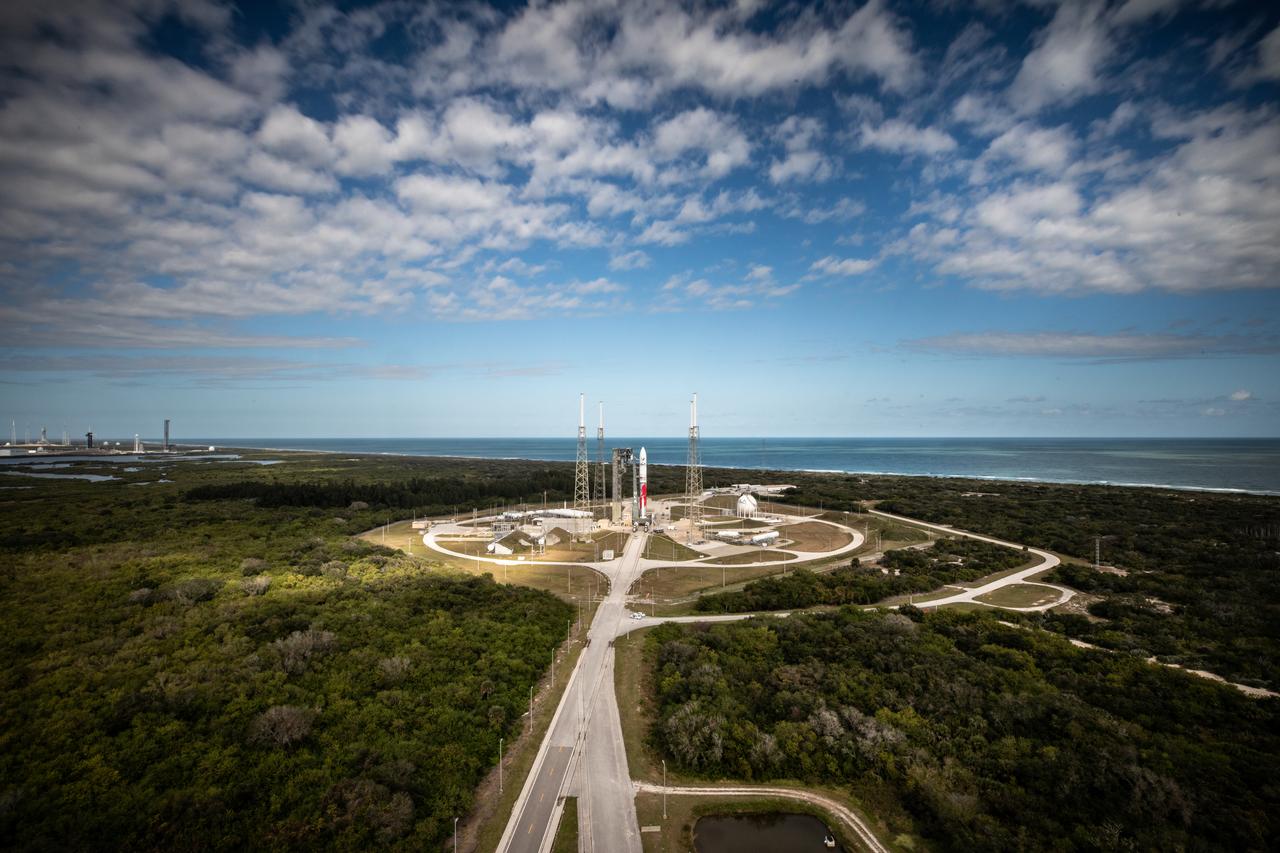
On Friday, Jan. 5, 2024, United Launch Alliance’s Vulcan rocket carrying Astrobotic’s Peregrine lunar lander is rolled out of the Vertical Integration Facility to the launch pad at Space Launch Complex 41 on Cape Canaveral Space Force Station in Florida in advance of a planned lift off at 2:18 a.m. EST Monday, Jan. 8, 2024. Astrobotic’s Peregrine Mission One will carry NASA and commercial payloads to the Moon to study the lunar exosphere, thermal properties, and hydrogen abundance of the lunar regolith, magnetic fields, and the radiation environment of the lunar surface.(Multiple values)
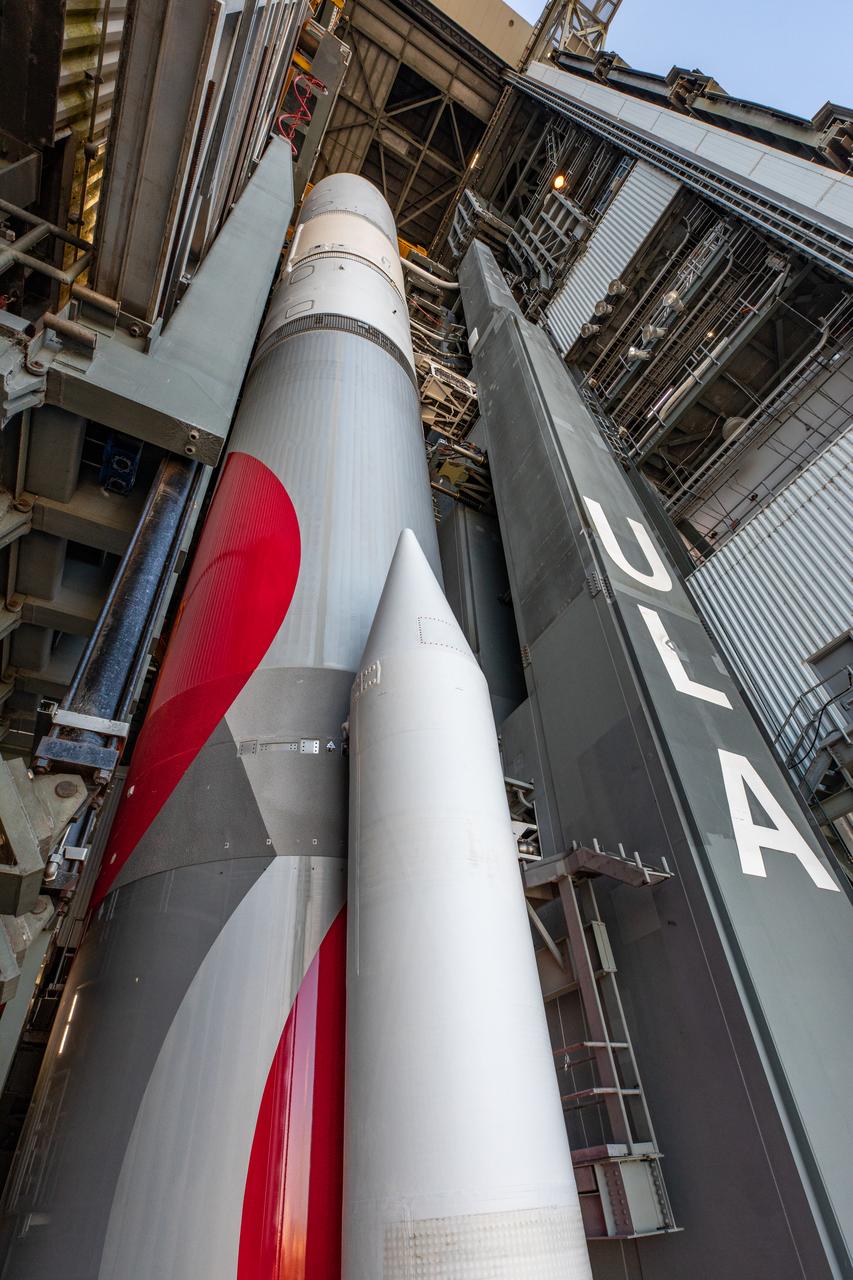
On Friday, Jan. 5, 2024, United Launch Alliance’s Vulcan rocket carrying Astrobotic’s Peregrine lunar lander is rolled out of the Vertical Integration Facility to the launch pad at Space Launch Complex 41 on Cape Canaveral Space Force Station in Florida in advance of a planned lift off at 2:18 a.m. EST Monday, Jan. 8, 2024. Astrobotic’s Peregrine Mission One will carry NASA and commercial payloads to the Moon to study the lunar exosphere, thermal properties, and hydrogen abundance of the lunar regolith, magnetic fields, and the radiation environment of the lunar surface.(Multiple values)