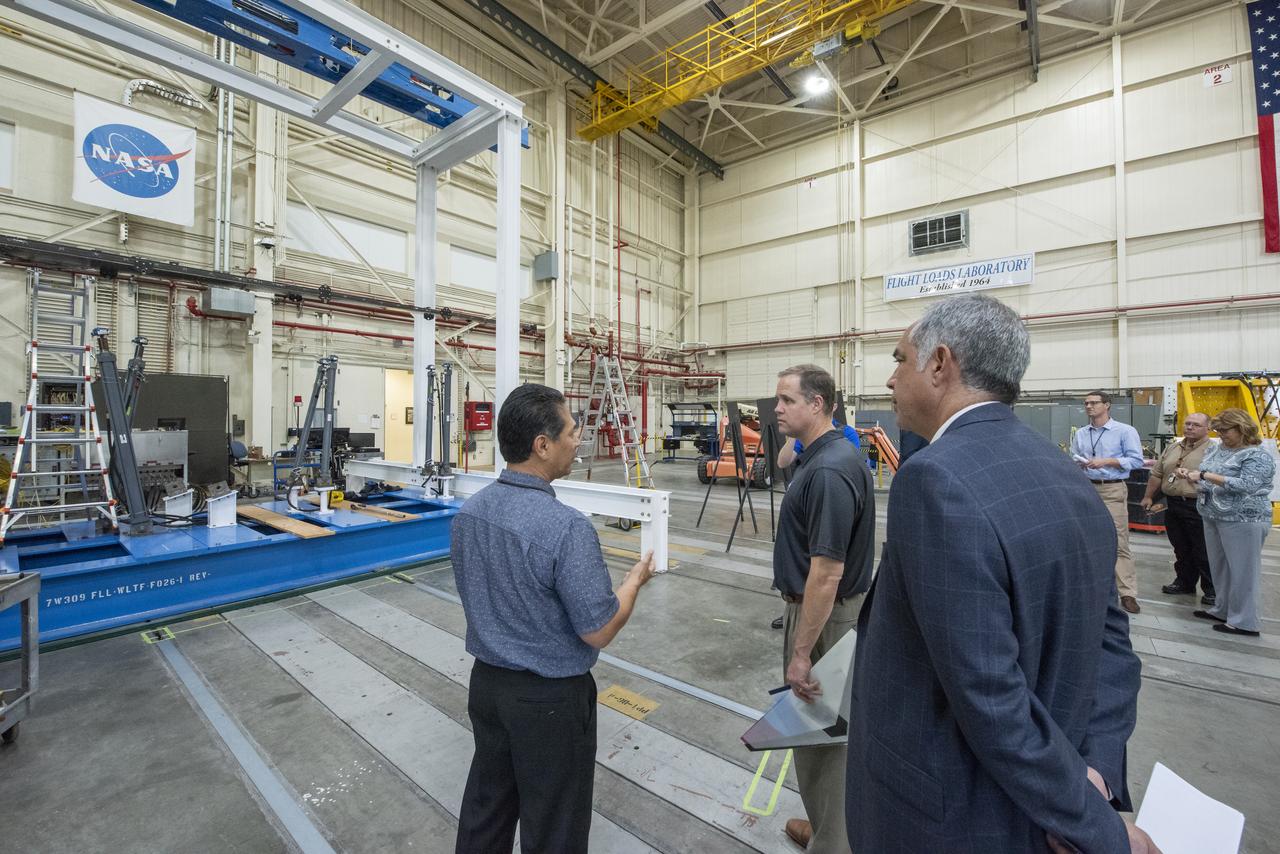
NASA Administrator Bridenstine talks with Armstrong's Larry Hudson about the capabilities of the Flight Loads Lab to conduct mechanical-load and thermal studies of structural components and complete flight vehicles.
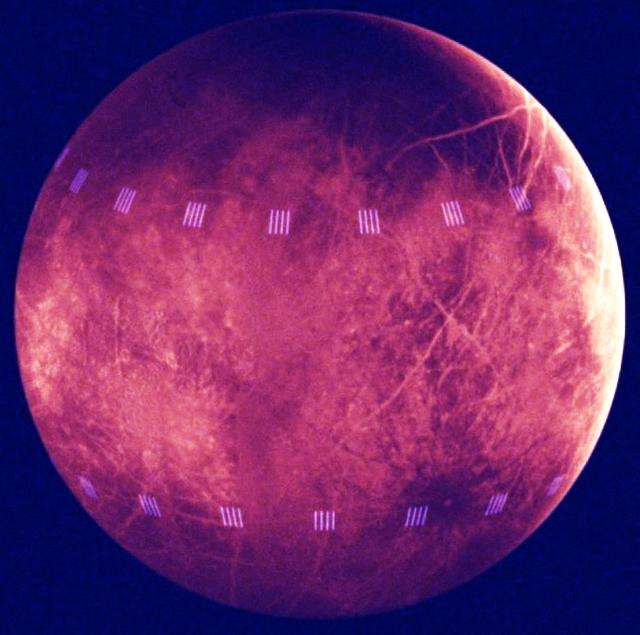
This image is a simulation of how NASA's Europa Clipper will understand which areas of the Jovian moon Europa are warm and active by studying the moon's thermal emissions. Scientists based this image on a model of data from NASA's Galileo mission and data from an instrument on NASA's Cassini mission that studied warm regions of Saturn's moon Enceladus where jets of water ice and organic chemicals spray out from vents in the icy surface. Europa Clipper's Europa Thermal Emission Imaging System, or E-THEMIS, will take both daytime and nighttime observations of Europa. The light pink vertical stripes simulate the warm vents seen on the surface of Enceladus, if they were viewed on Europa in the night. If Europa has warm spots like Enceladus, E-THEMIS is expected to detect such areas on Europa, even from a distance. Europa Clipper will get as close as 16 miles (25 kilometers) from the moon's surface, resulting in observations at much higher resolution. Europa Clipper's three main science objectives are to determine the thickness of the moon's icy shell and its interactions with the ocean below, to investigate its composition, and to characterize its geology. The mission's detailed exploration of Europa will help scientists better understand the astrobiological potential for habitable worlds beyond our planet. https://photojournal.jpl.nasa.gov/catalog/PIA26105

NASA Dryden aerospace engineer Michael Allen hand-launches a model motorized sailplane during a study validating the use of heat thermals to extend flight time.
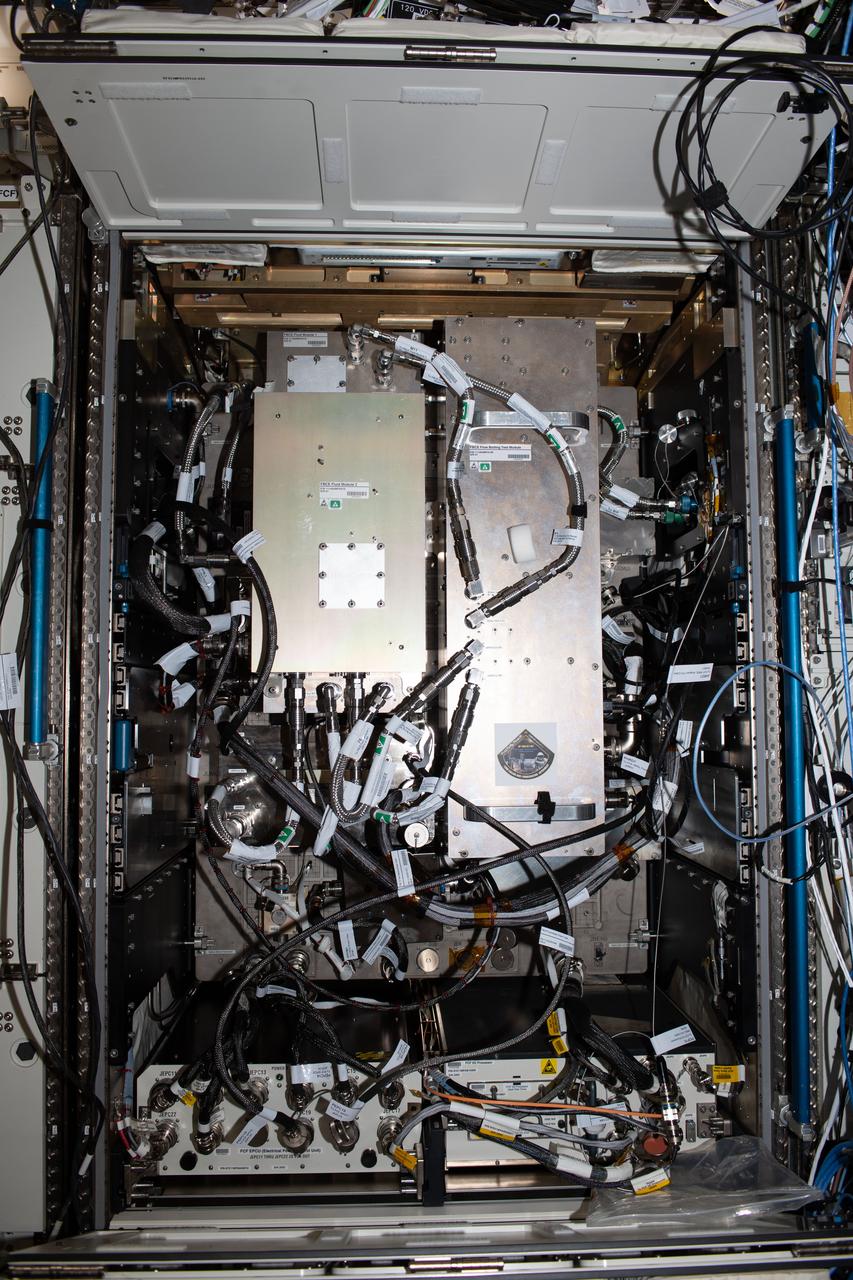
iss066e087939 (12/9/2021) --- A view of the Fluids and Combustion Facility (FCF), used for the Flow Boiling and Condensation Experiment (FBCE) during Expedition 66. The study may improve thermal systems for Earth and other planetary environments.
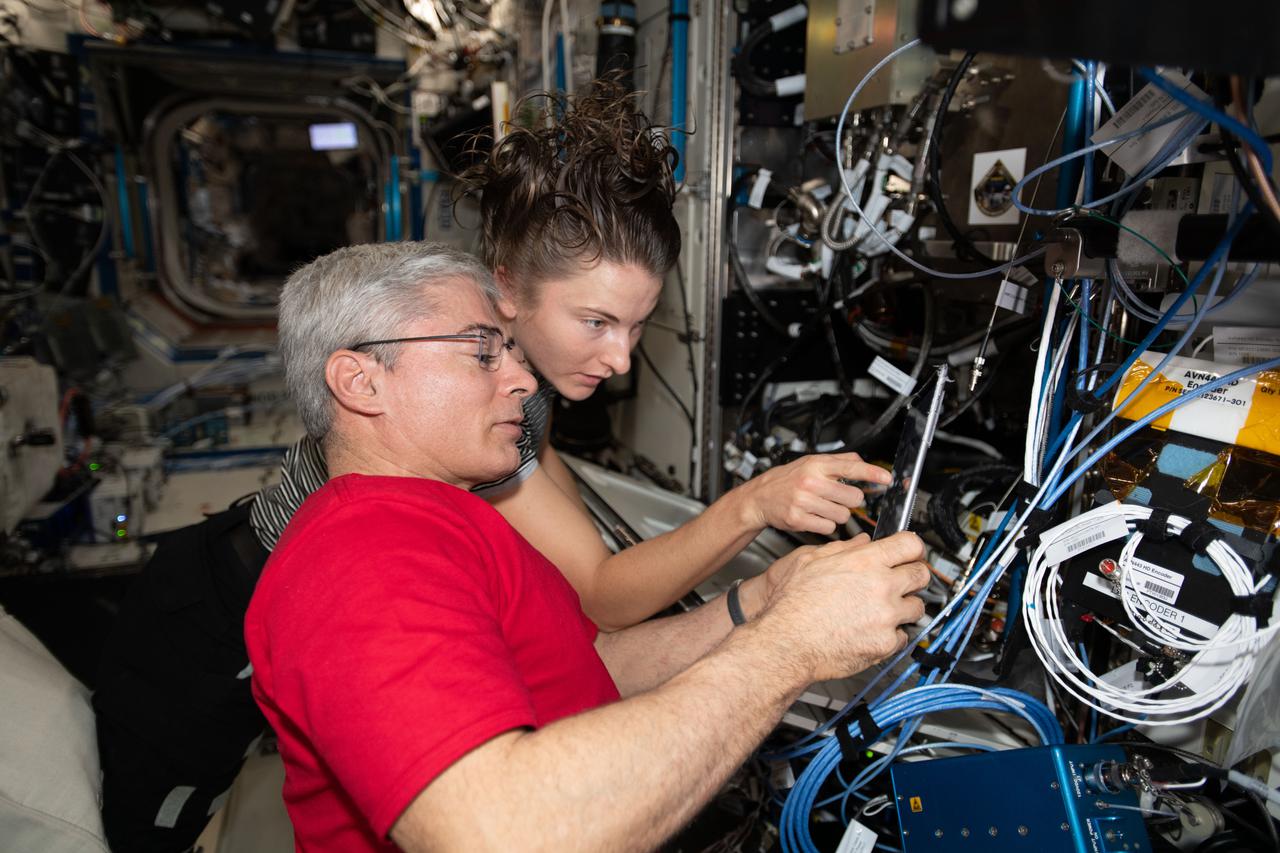
iss066e088377 (Dec. 9, 2021) --- NASA astronauts Mark Vande Hei and Kayla Barron set up the Fluids Integrated Rack for a space physics study that may improve thermal systems for Earth and other planetary environments.
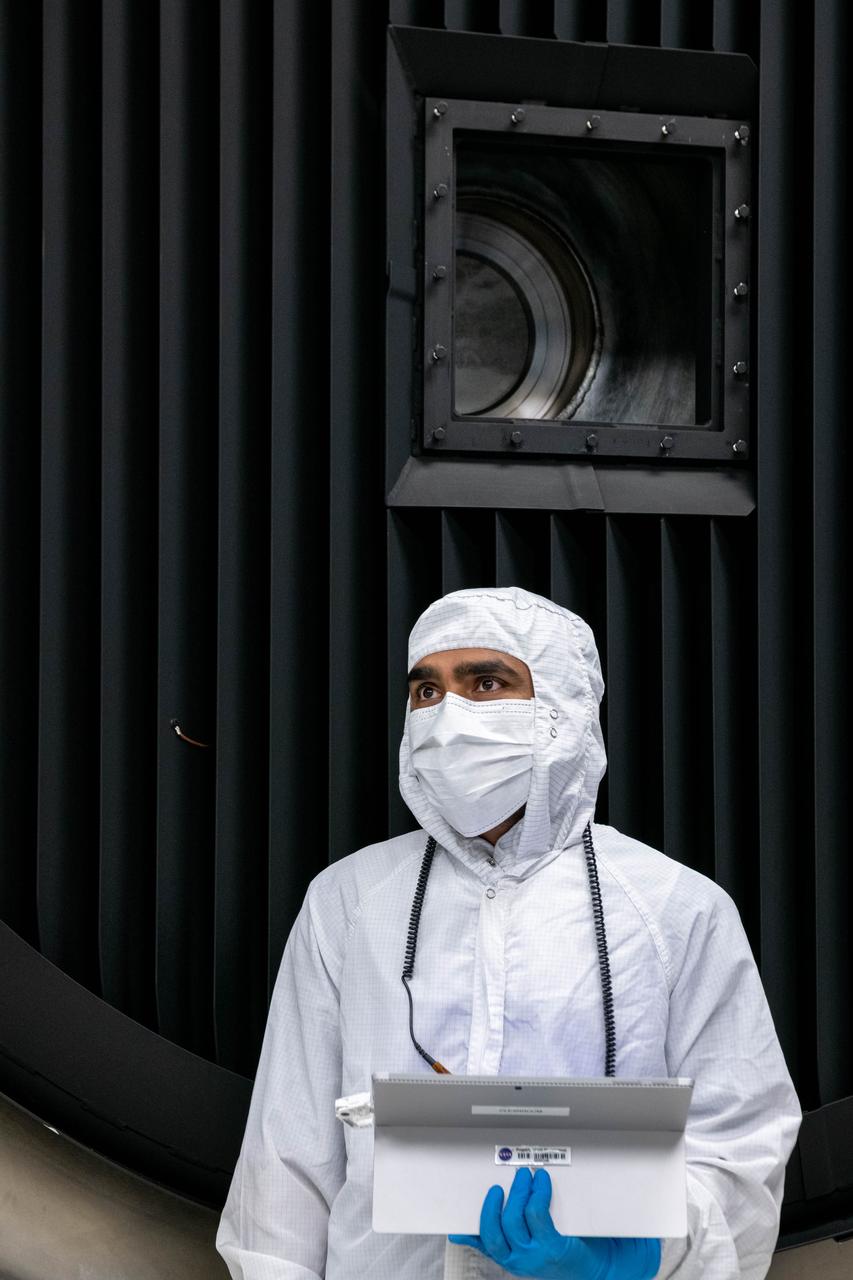
Thermal Engineer, Deepak Patel, reviews test plans and inspects the Ocean Color Instrument (OCI) in the thermal vacuum chamber prior to the door for the instruments sixty day thermal test to ensure it will perform effectively once it launches into the airless environment of space. OCI is a highly advanced optical spectrometer that will be used to measure properties of light over portions of the electromagnetic spectrum. It will enable continuous measurement of light at finer wavelength resolution than previous NASA satellite sensors, extending key system ocean color data records for climate studies. OCI is PACE's (Plankton, Aerosol, Cloud, ocean Ecosystem) primary sensor built at Goddard Space Flight Center in Greenbelt, MD.
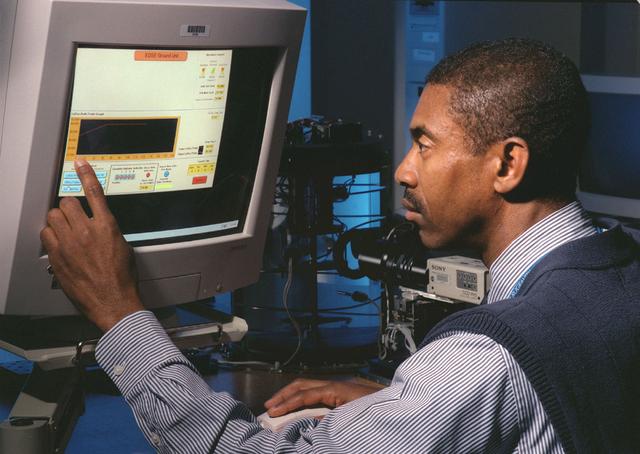
The Equiaxed Dendritic Solidification Experiment (EDSE) is a material sciences investigation under the Formation of Microstructures/pattern formation discipline. The objective is to study the microstructural evolution of and thermal interactions between several quiaxed crystals growing dendritically in a supercooled melt of a pure and transparent substance under diffusion controlled conditions. George Myers, controls engineer, monitors the thermal environment of a ground test for the EDSE located in the Microgravity Development Laboratory (MDL).
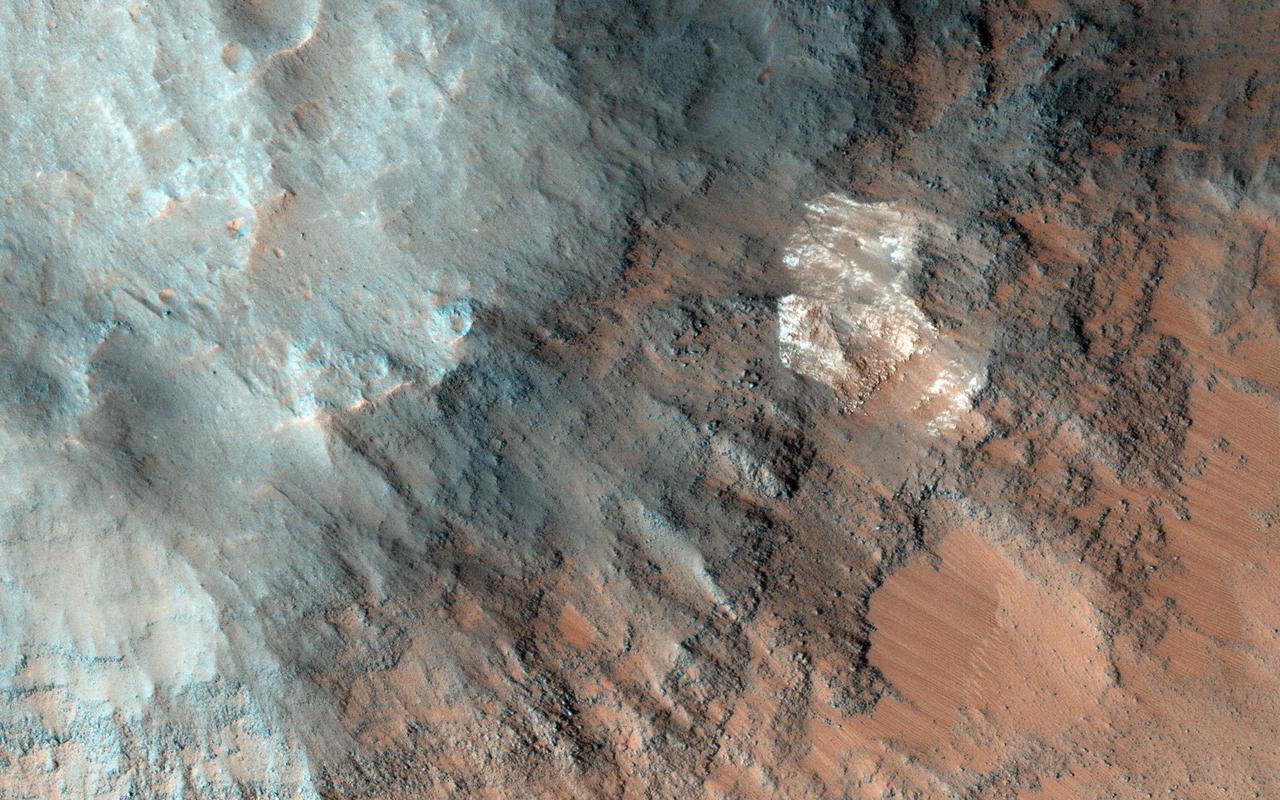
Coprates Chasma is located in the huge canyon system, Vallis Marineris. NASA Mars Reconnaissance Orbiter finds indications of high thermal inertia. What do we mean when we describe a surface as having "high thermal inertia"? The term refers to the ability of a material to conduct and store heat, and in planetary science, its measure of the subsurface's ability to store heat during the day and reradiate it during the night. What causes thermal inertia? It depends on the composition of the terrain that we're studying. Here in Coprates Chasma, the site of this observation, we find indications of such high thermal inertia, so an image at high resolution may help us determine the composition and structure to give us an answer. http://photojournal.jpl.nasa.gov/catalog/PIA19357
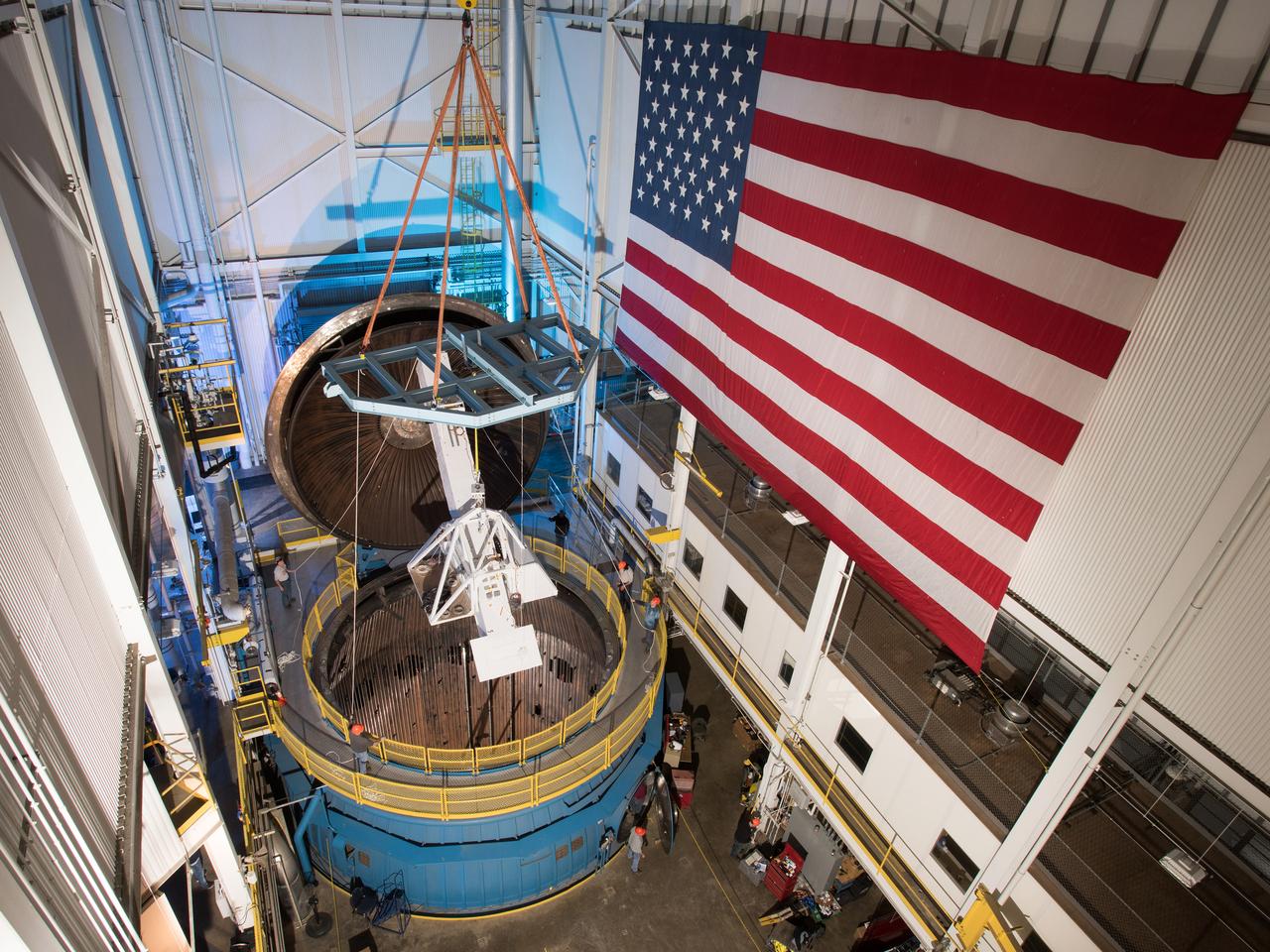
The Gamma-Ray Imager/Polarimeter for Solar flares (GRIPS) instrument is installed in the B-2 vacuum chamber for a full-instrument thermal-vacuum test in 2015. The GRIPS telescope was launched via balloon in January 2016 on a high-altitude flight over Antarctica to study the acceleration and transport of solar flare particles.
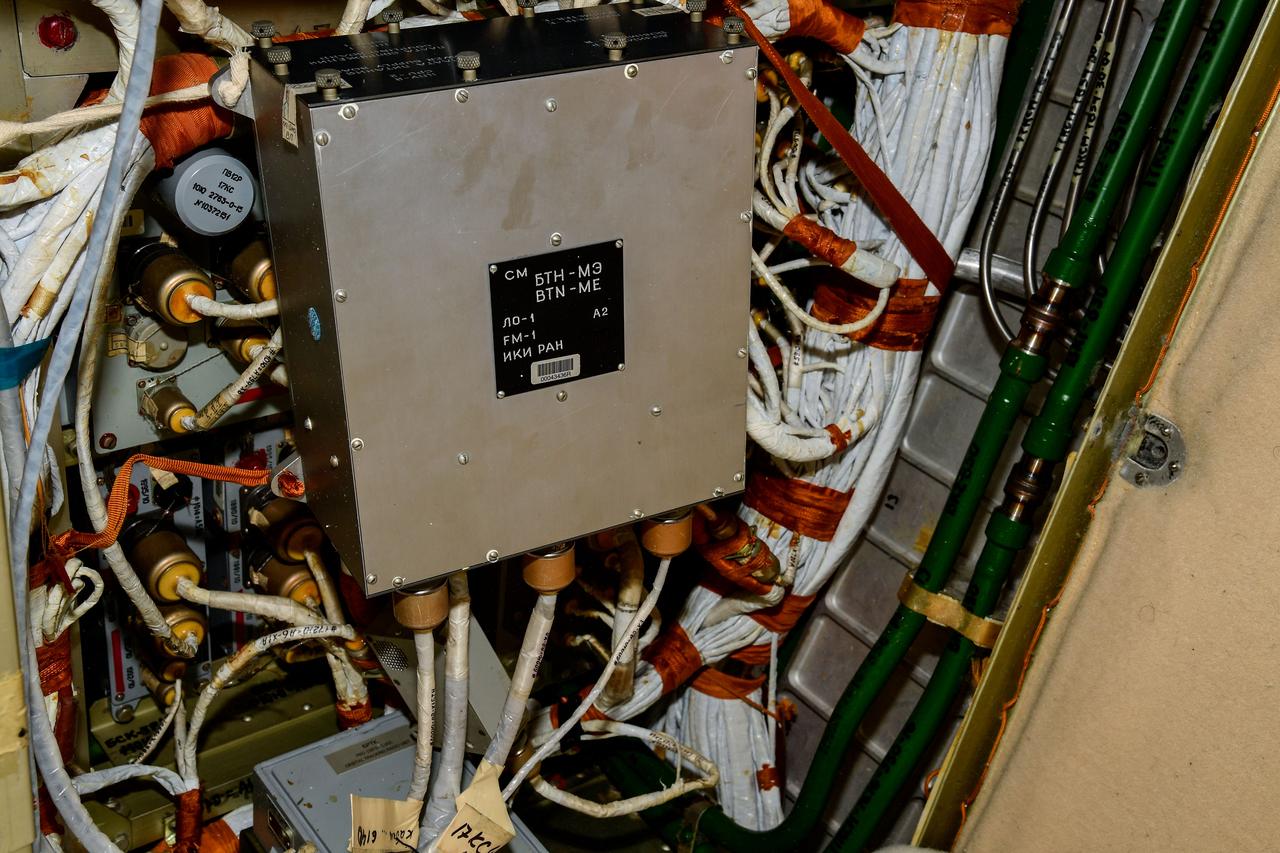
iss067e190005 (7/20/2023) --- A view of BTN-ME Unit in the Zvezda Service Module (SM) aboard the International space Station (ISS). The Study of the Fluxes of Fast and Thermal Neutrons, focuses on the spatial and temporal distribution of neutron fluxes and spectra in near-Earth space, including during solar flares.
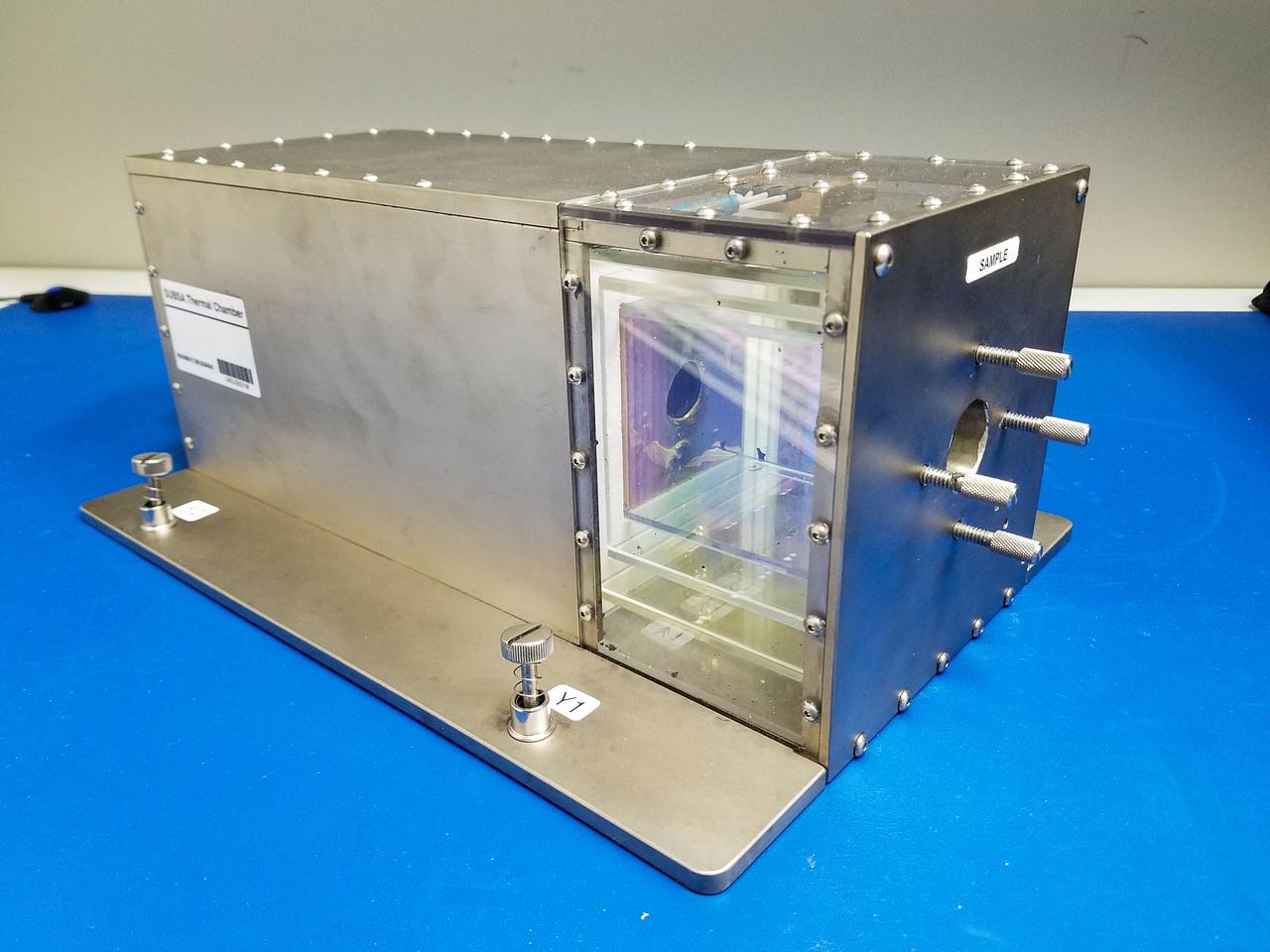
jsc2020e016982 (7/24/2019) --- A preflight view of the SUBSA Thermal Chamber. SUBSA is a high-temperature furnace that can be used to study how microgravity affects the synthesis of semiconductor and scintillator crystals. Image courtesy of: Kenneth Barton, Techshot, Inc.
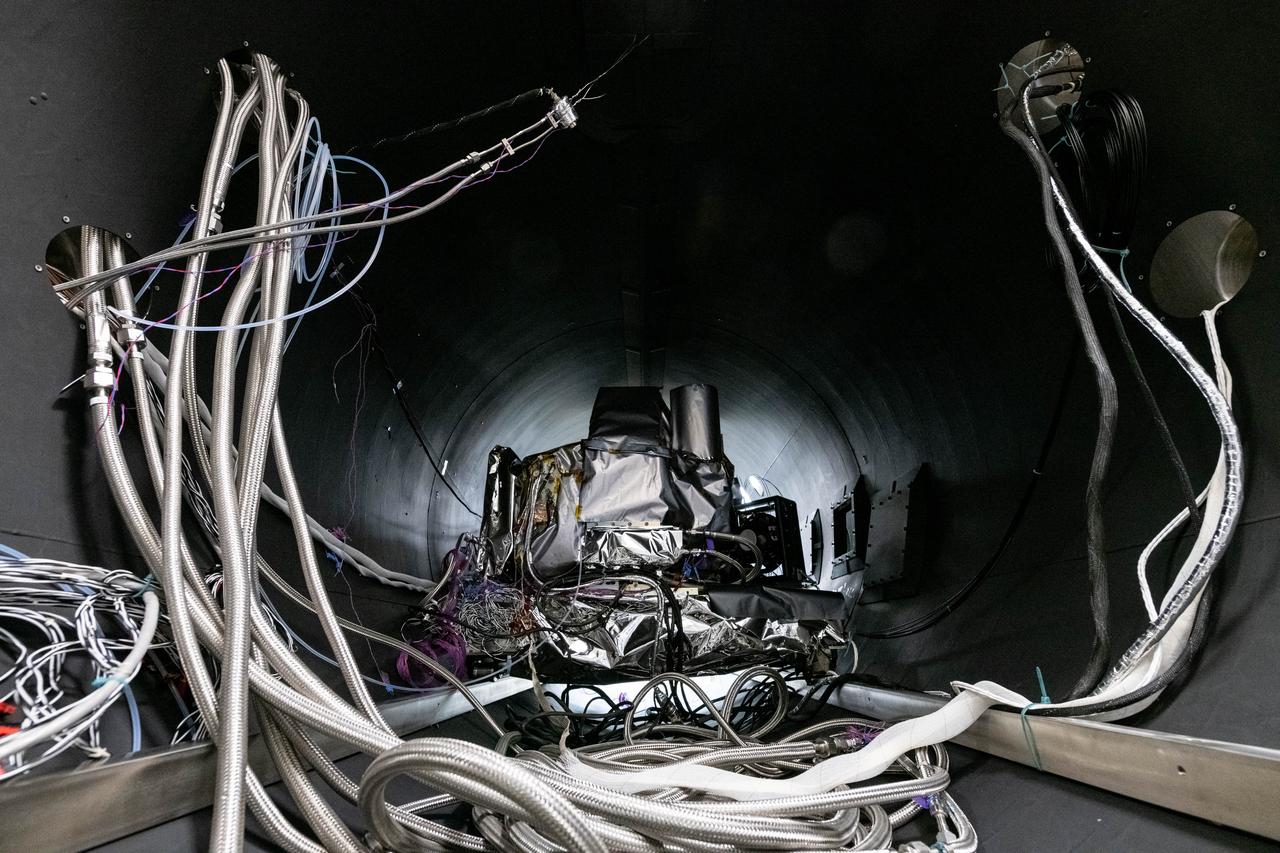
The flight Ocean Color Instrument (OCI) is connected to flex lines and other alignment calibration hardware in a thermal vacuum chamber as it is prepared for thermal testing in a clean tent at Goddard Space Flight Center in Greenbelt, MD. OCI is a highly advanced optical spectrometer that will be used to measure properties of light over portions of the electromagnetic spectrum. It will enable continuous measurement of light at finer wavelength resolution than previous NASA satellite sensors, extending key system ocean color data records for climate studies. OCI is PACE's (Plankton, Aerosol, Cloud, ocean Ecosystem) primary sensor built at Goddard Space Flight Center in Greenbelt, MD.

Inside the Space Station Processing Facility high bay at NASA's Kennedy Space Center in Florida, technicians prepare the Neutron star Interior Composition Explorer, or NICER, payload for final packaging. NICER will be delivered to the International Space Station aboard the SpaceX Dragon cargo carrier on the company’s 11th commercial resupply services mission to the space station. NICER will study neutron stars through soft X-ray timing. NICER will enable rotation-resolved spectroscopy of the thermal and non-thermal emissions of neutron stars in the soft X-ray band with unprecedented sensitivity, probing interior structure, the origins of dynamic phenomena and the mechanisms that underlie the most powerful cosmic particle accelerators known.
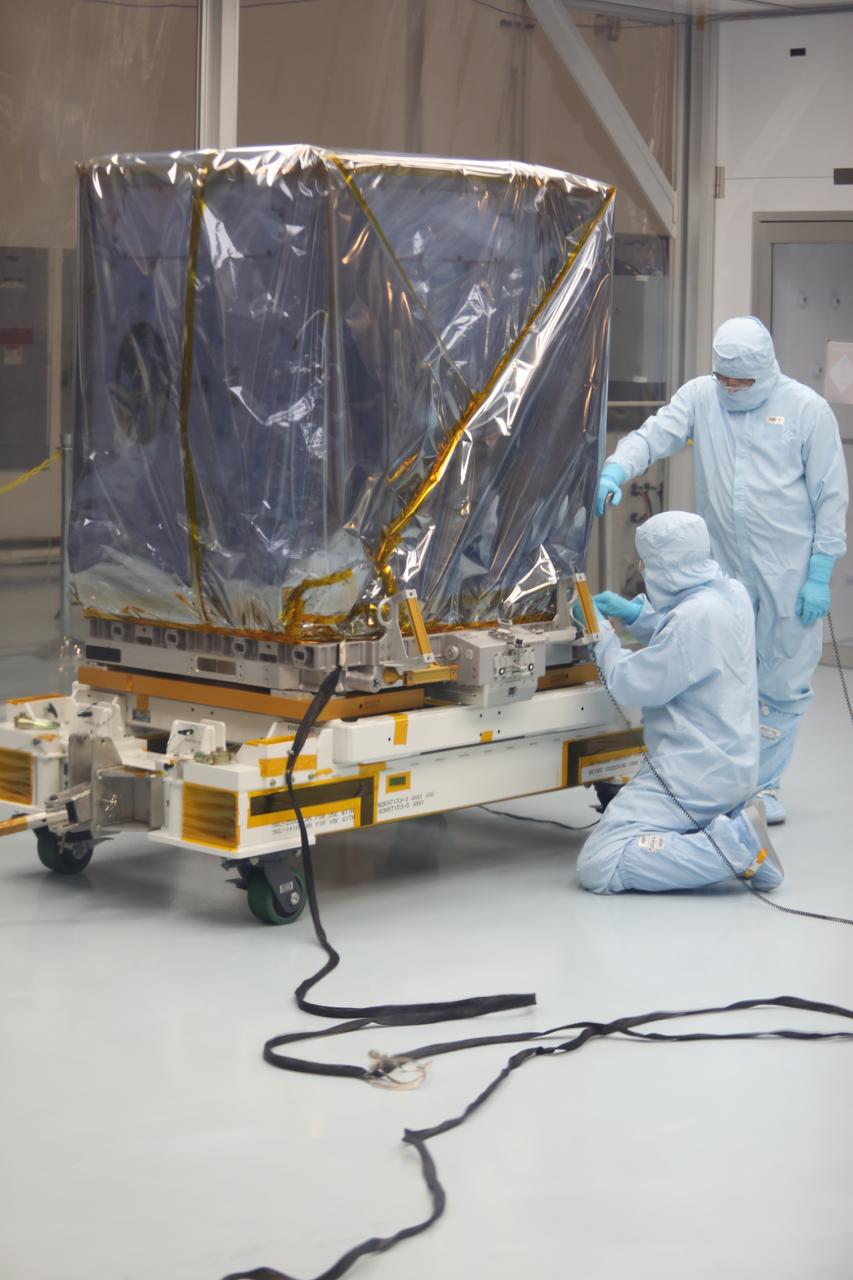
Inside the Space Station Processing Facility high bay at NASA's Kennedy Space Center in Florida, technicians prepare the Neutron star Interior Composition Explorer, or NICER, payload for final packaging. NICER will be delivered to the International Space Station aboard the SpaceX Dragon cargo carrier on the company’s 11th commercial resupply services mission to the space station. NICER will study neutron stars through soft X-ray timing. NICER will enable rotation-resolved spectroscopy of the thermal and non-thermal emissions of neutron stars in the soft X-ray band with unprecedented sensitivity, probing interior structure, the origins of dynamic phenomena and the mechanisms that underlie the most powerful cosmic particle accelerators known.
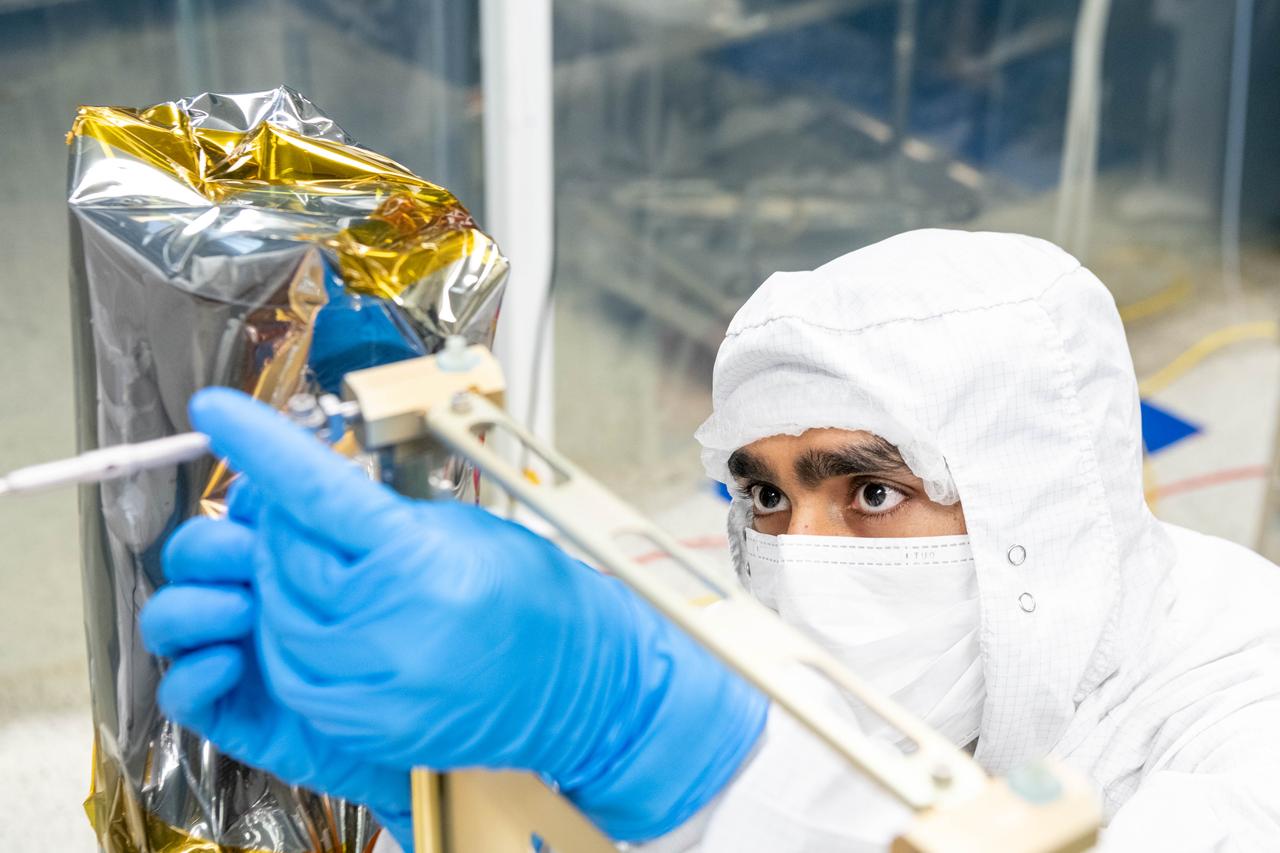
Thermal engineer, Deepak Patel, inspects the tightness on a tensioning cable on the Ocean Color Instrument (OCI). After his inspection, technicians will install thermal blanketing to insulate the flight hardware for further testing. OCI is a highly advanced optical spectrometer that will be used to measure properties of light over portions of the electromagnetic spectrum. It will enable continuous measurement of light at finer wavelength resolution than previous NASA satellite sensors, extending key system ocean color data records for climate studies. OCI is PACE's (Plankton, Aerosol, Cloud, ocean Ecosystem) primary sensor built at Goddard Space Flight Center in Greenbelt, MD.
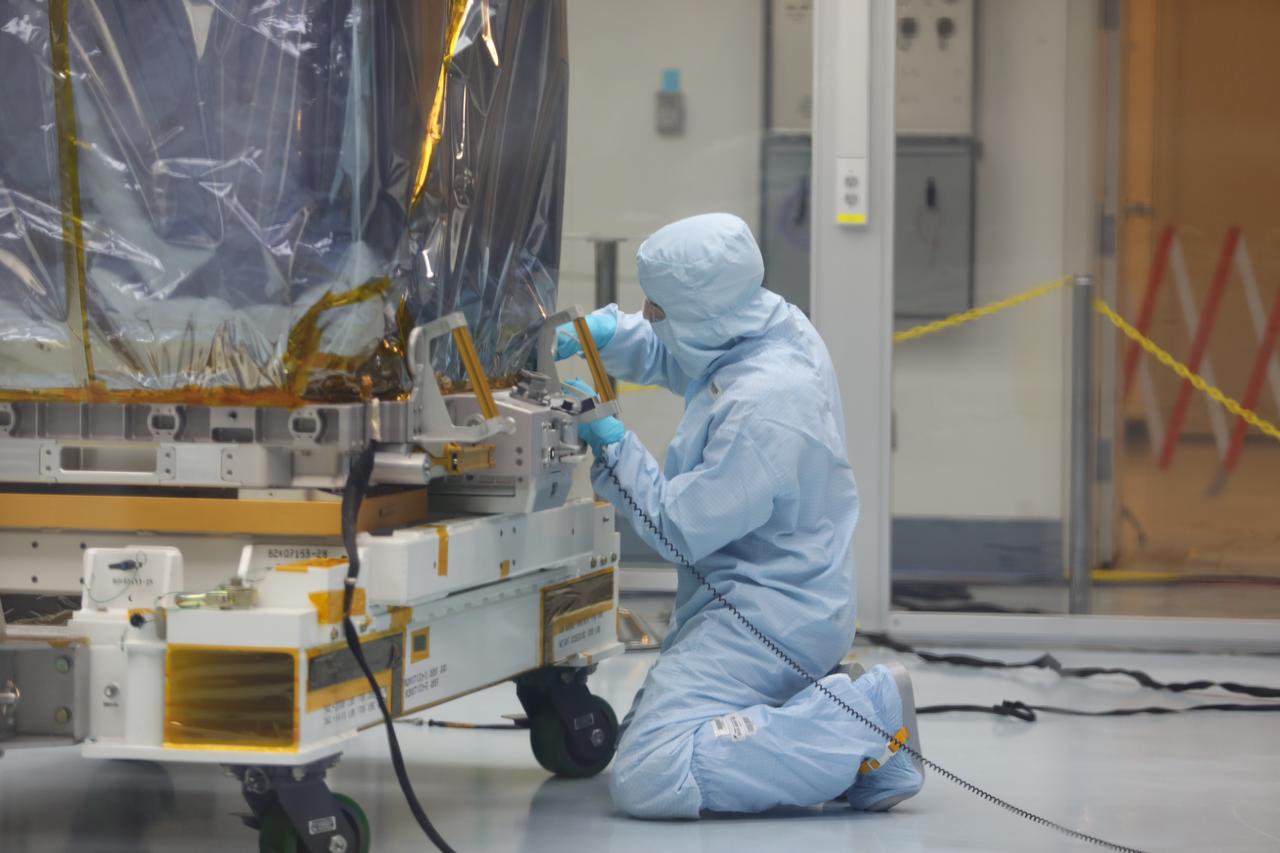
Inside the Space Station Processing Facility high bay at NASA's Kennedy Space Center in Florida, a technician prepares the Neutron star Interior Composition Explorer, or NICER, payload for final packaging. NICER will be delivered to the International Space Station aboard the SpaceX Dragon cargo carrier on the company’s 11th commercial resupply services mission to the space station. NICER will study neutron stars through soft X-ray timing. NICER will enable rotation-resolved spectroscopy of the thermal and non-thermal emissions of neutron stars in the soft X-ray band with unprecedented sensitivity, probing interior structure, the origins of dynamic phenomena and the mechanisms that underlie the most powerful cosmic particle accelerators known.
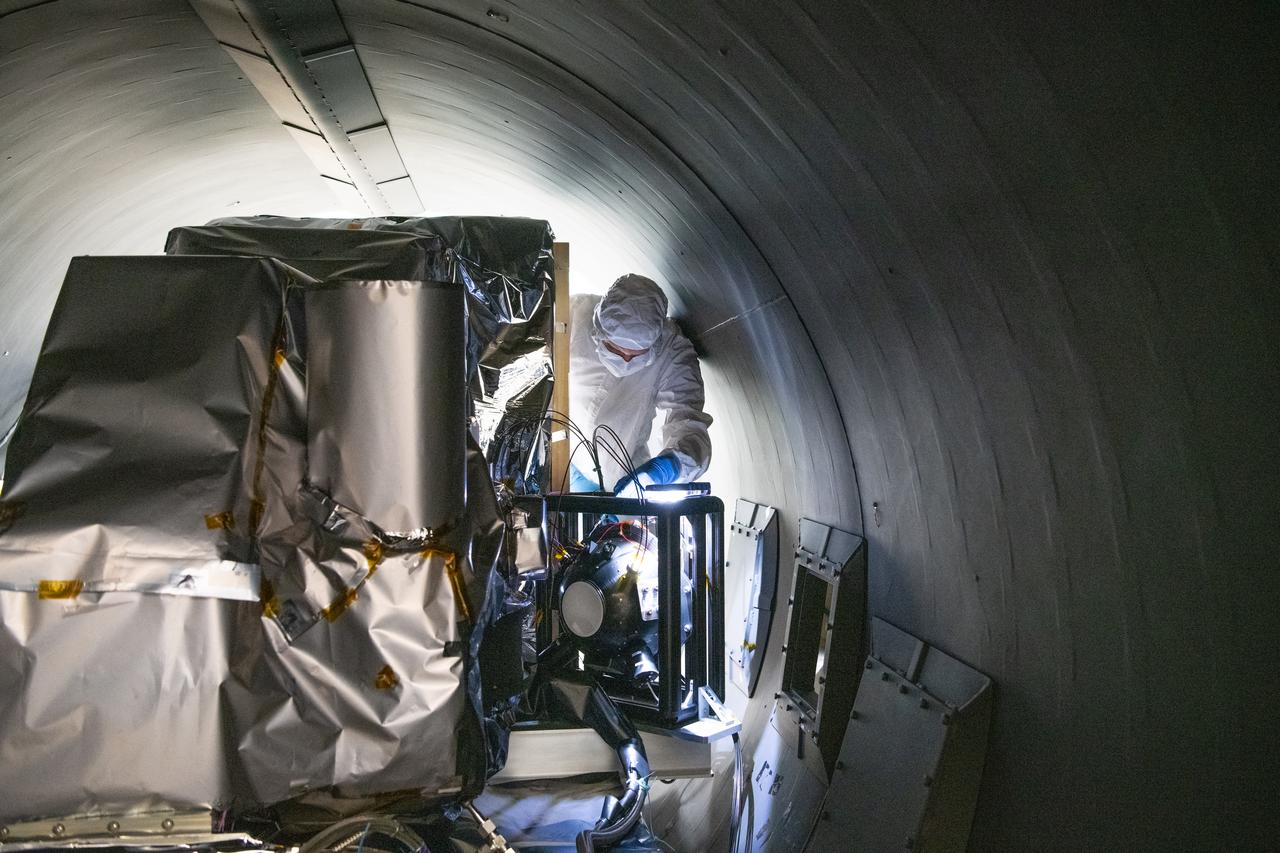
Engineer, Joe Thomes, disconnects the Multi-Lens Array fibers from the Ocean Color Instrument (OCI) in the thermal vacuum chamber after successful thermal testing. OCI is a highly advanced optical spectrometer that will be used to measure properties of light over portions of the electromagnetic spectrum. It will enable continuous measurement of light at finer wavelength resolution than previous NASA satellite sensors, extending key system ocean color data records for climate studies. OCI is PACE's (Plankton, Aerosol, Cloud, ocean Ecosystem) primary sensor built at Goddard Space Flight Center in Greenbelt, MD.
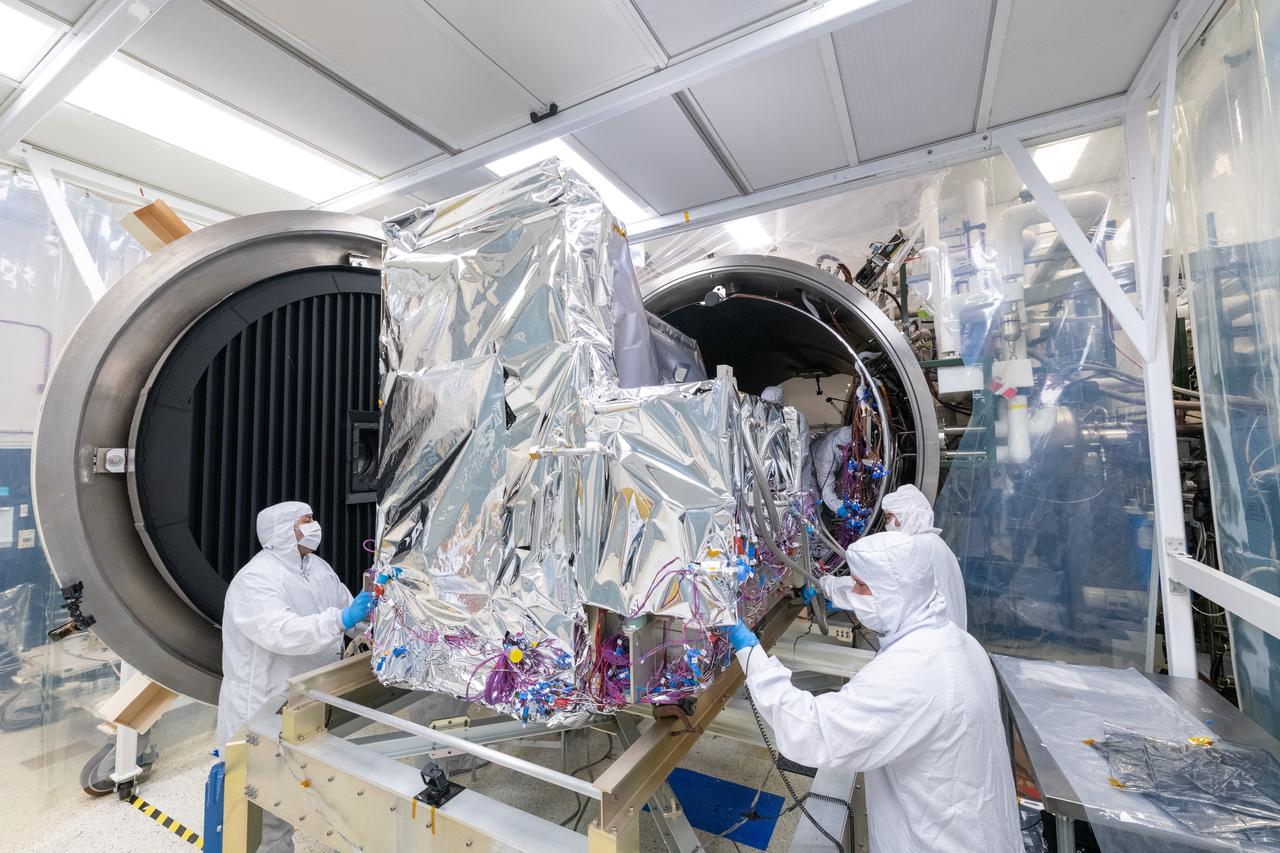
The Ocean Color Instrument (OCI) mechanical team aligns the instrument on a transportation sled and slowly pushes the instrument into a thermal vacuum chamber to prepare it for a sixty day thermal test to ensure the instrument will perform effectively once it launches into the airless environment of space. OCI is a highly advanced optical spectrometer that will be used to measure properties of light over portions of the electromagnetic spectrum. It will enable continuous measurement of light at finer wavelength resolution than previous NASA satellite sensors, extending key system ocean color data records for climate studies. OCI is PACE's (Plankton, Aerosol, Cloud, ocean Ecosystem) primary sensor built at Goddard Space Flight Center in Greenbelt, MD.
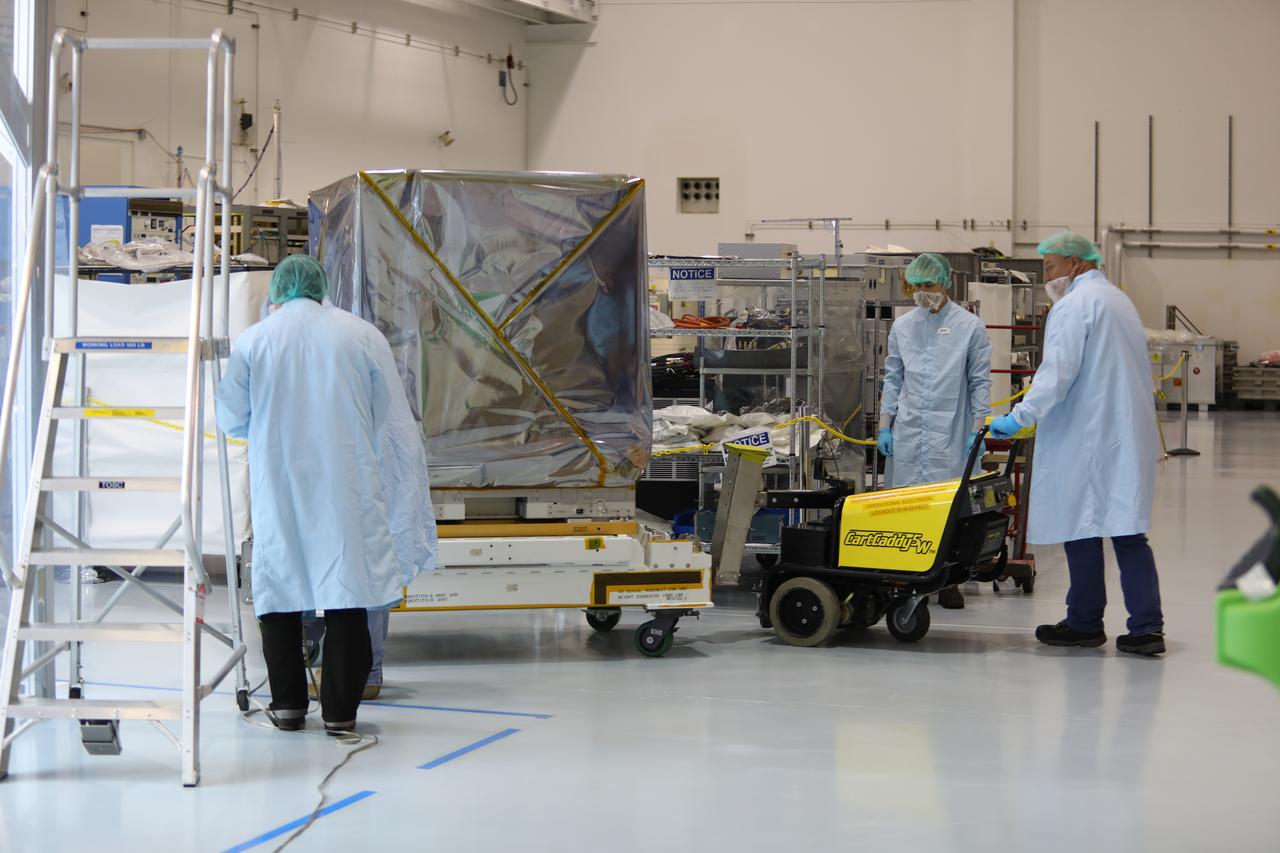
Inside the Space Station Processing Facility high bay at NASA's Kennedy Space Center in Florida, technicians prepare the Neutron star Interior Composition Explorer, or NICER, payload for final packaging. NICER will be delivered to the International Space Station aboard the SpaceX Dragon cargo carrier on the company’s 11th commercial resupply services mission to the space station. NICER will study neutron stars through soft X-ray timing. NICER will enable rotation-resolved spectroscopy of the thermal and non-thermal emissions of neutron stars in the soft X-ray band with unprecedented sensitivity, probing interior structure, the origins of dynamic phenomena and the mechanisms that underlie the most powerful cosmic particle accelerators known.
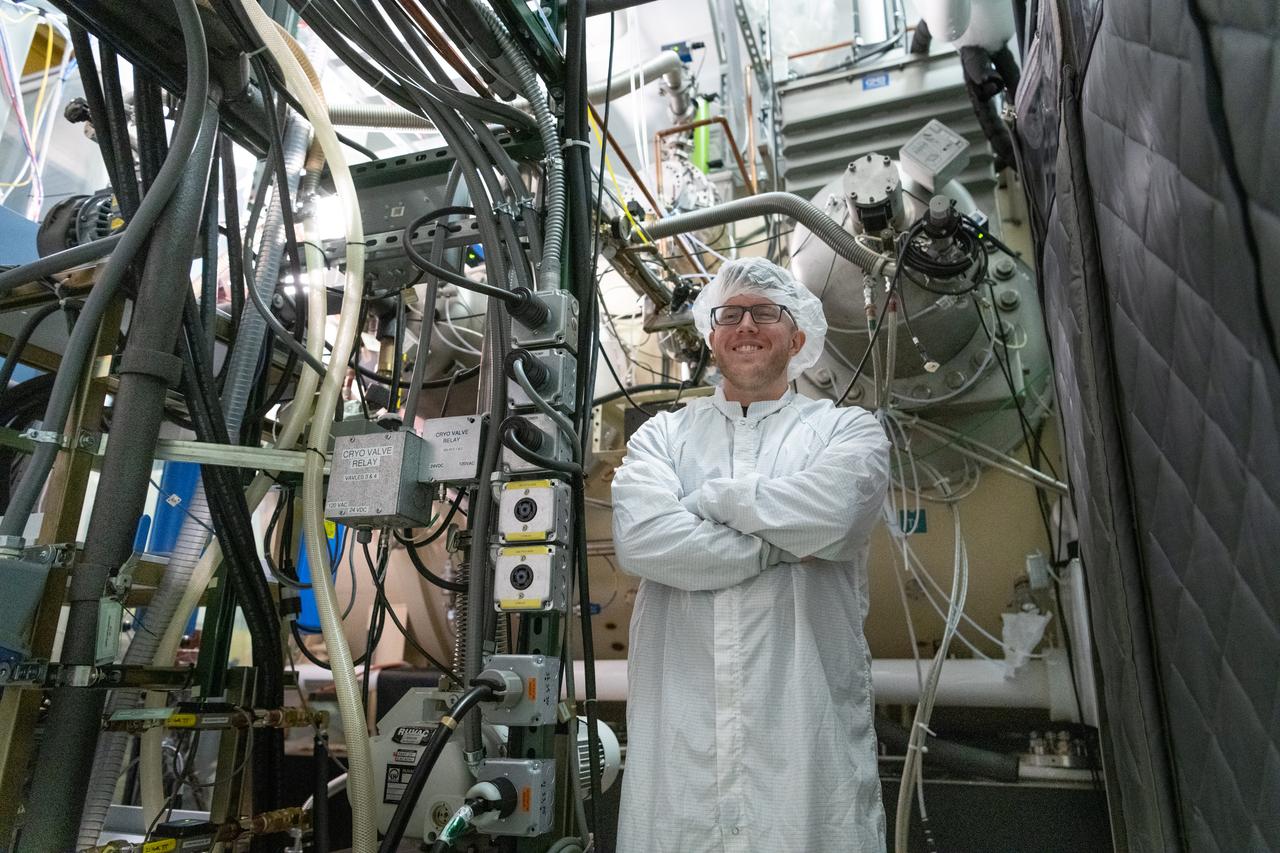
Thermal vacuum technician, Sean Cook, monitors the Ocean Color Instrument (OCI) thermal vacuum chamber temperatures during the environmental test campaign. OCI is a highly advanced optical spectrometer that will be used to measure properties of light over portions of the electromagnetic spectrum. It will enable continuous measurement of light at finer wavelength resolution than previous NASA satellite sensors, extending key system ocean color data records for climate studies. OCI is PACE's (Plankton, Aerosol, Cloud, ocean Ecosystem) primary sensor built at Goddard Space Flight Center in Greenbelt, MD.
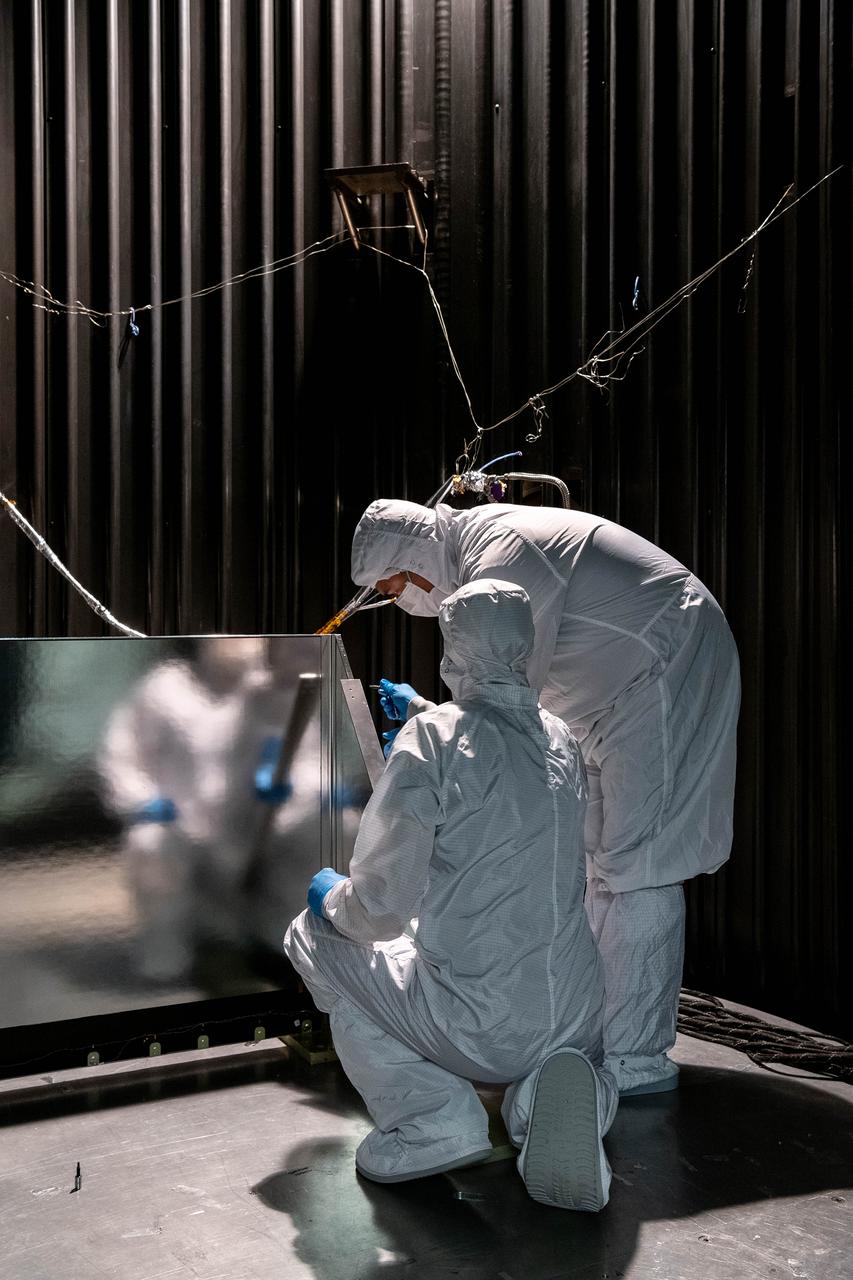
Mechanical Technicians, Daniel Dizon and Joseph Eddy, install the Ocean Color Instrument (OCI) Earth Shade into a thermal vacuum chamber so that team members can test the thermal capabilities of the hardware under a simulated space environment. OCI is a highly advanced optical spectrometer that will be used to measure properties of light over portions of the electromagnetic spectrum. It will enable continuous measurement of light at finer wavelength resolution than previous NASA satellite sensors, extending key system ocean color data records for climate studies. OCI is PACE's (Plankton, Aerosol, Cloud, ocean Ecosystem) primary sensor built at Goddard Space Flight Center in Greenbelt, MD.
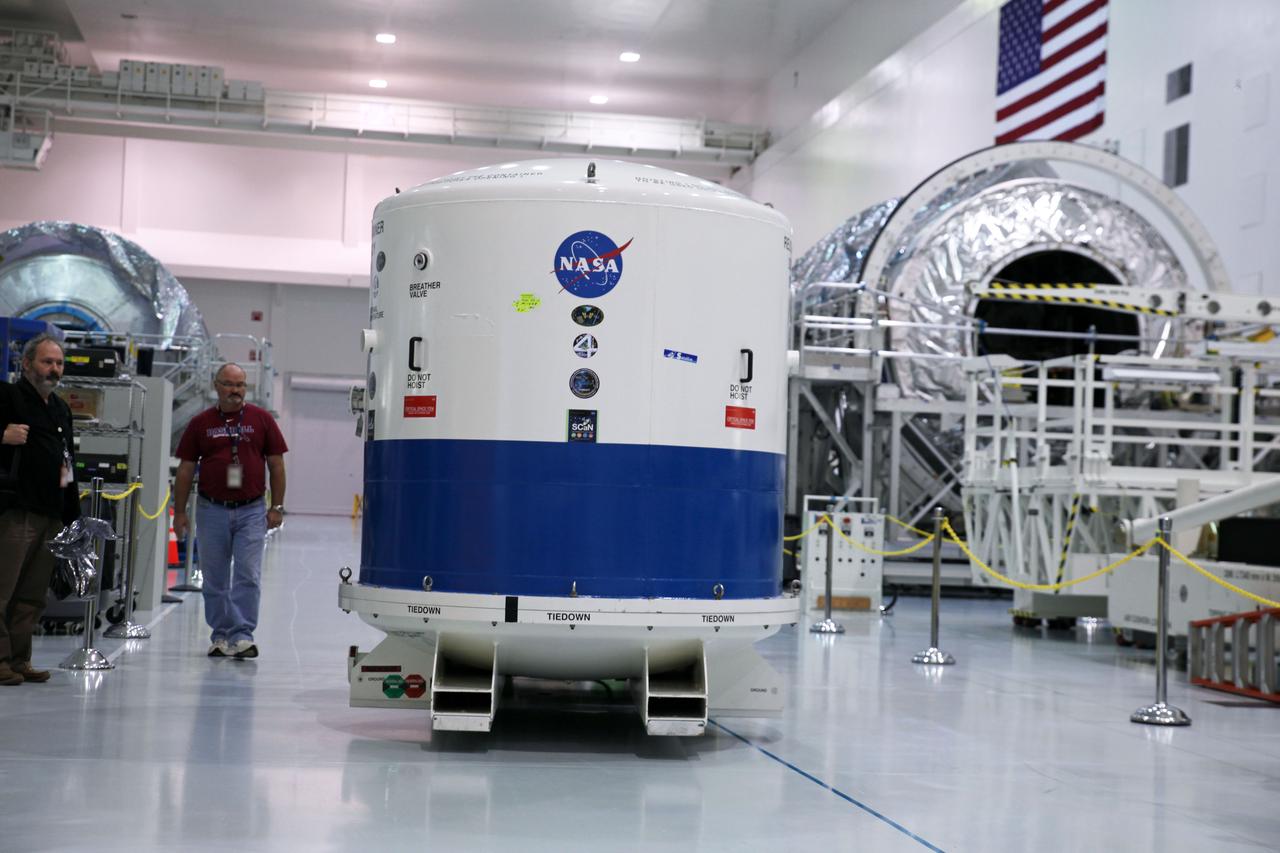
Inside the Space Station Processing Facility high bay at NASA's Kennedy Space Center in Florida, the Neutron star Interior Composition Explorer, or NICER, payload is secured inside a protective container. NICER will be delivered to the International Space Station aboard the SpaceX Dragon cargo carrier on the company’s 11th commercial resupply services mission to the space station. NICER will study neutron stars through soft X-ray timing. NICER will enable rotation-resolved spectroscopy of the thermal and non-thermal emissions of neutron stars in the soft X-ray band with unprecedented sensitivity, probing interior structure, the origins of dynamic phenomena and the mechanisms that underlie the most powerful cosmic particle accelerators known.
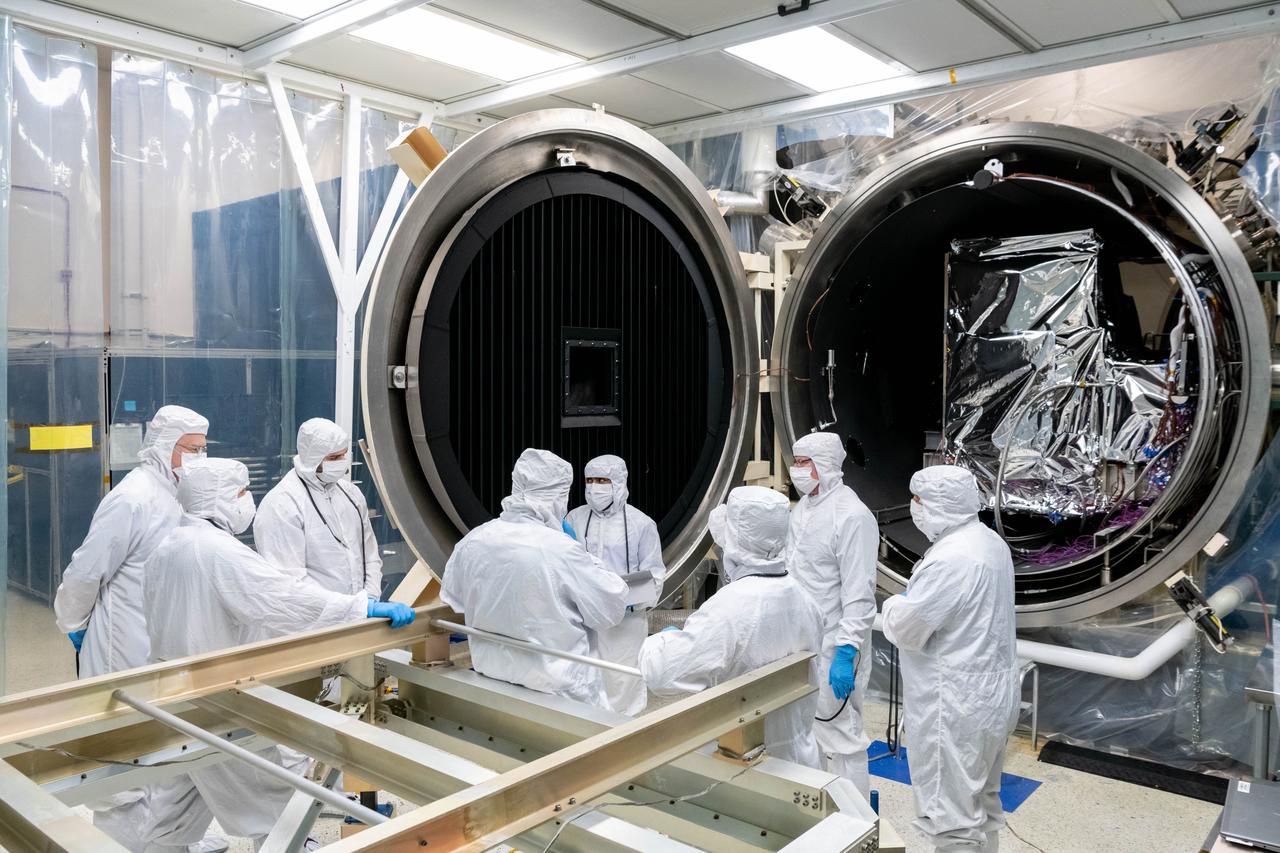
The Ocean Color Instrument (OCI) team reviews test plans and inspects the instrument in the thermal vacuum chamber prior to closing the large door for a sixty day thermal test which ensures the instrument will perform effectively once it launches into the airless environment of space. OCI is a highly advanced optical spectrometer that will be used to measure properties of light over portions of the electromagnetic spectrum. It will enable continuous measurement of light at finer wavelength resolution than previous NASA satellite sensors, extending key system ocean color data records for climate studies. OCI is PACE's (Plankton, Aerosol, Cloud, ocean Ecosystem) primary sensor built at Goddard Space Flight Center in Greenbelt, MD.
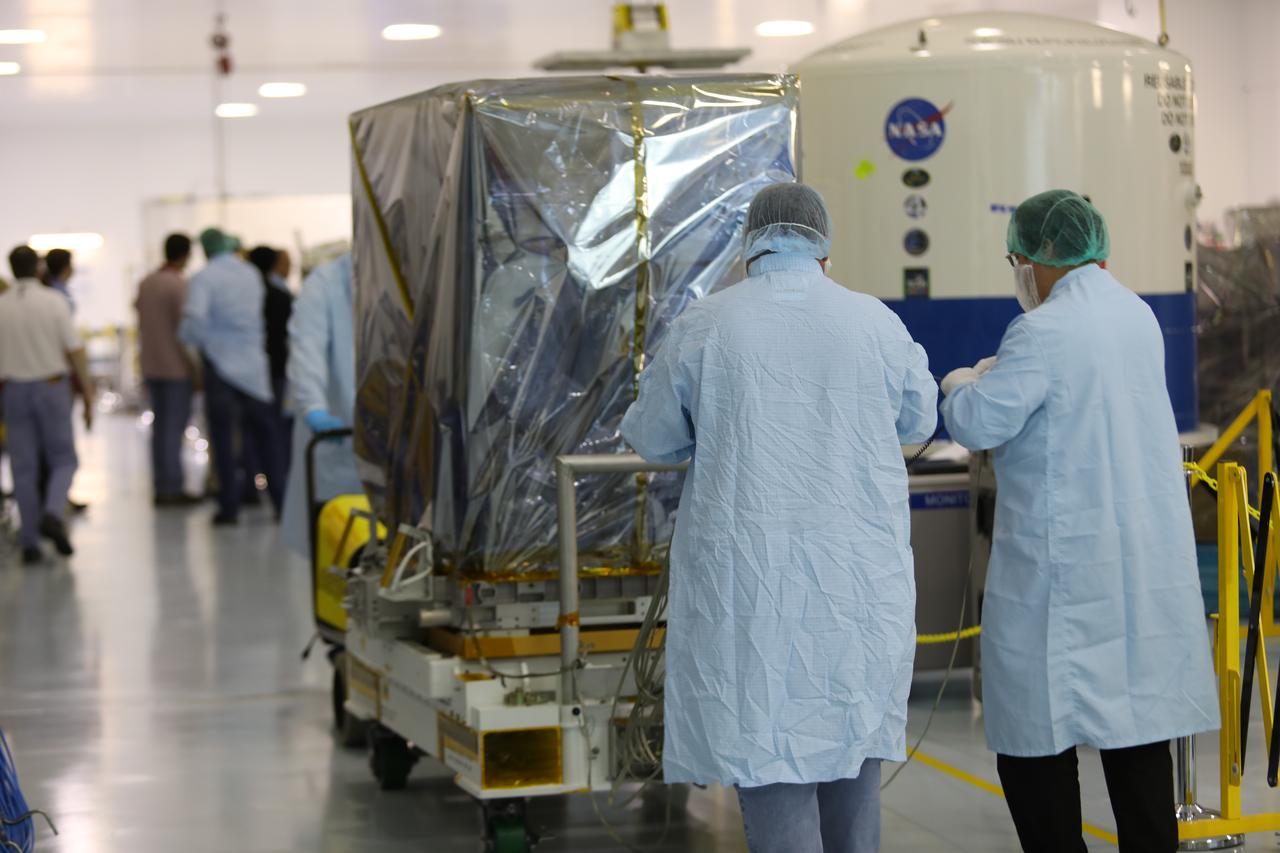
Inside the Space Station Processing Facility high bay at NASA's Kennedy Space Center in Florida, technicians prepare the Neutron star Interior Composition Explorer, or NICER, payload for final packaging. NICER will be delivered to the International Space Station aboard the SpaceX Dragon cargo carrier on the company’s 11th commercial resupply services mission to the space station. NICER will study neutron stars through soft X-ray timing. NICER will enable rotation-resolved spectroscopy of the thermal and non-thermal emissions of neutron stars in the soft X-ray band with unprecedented sensitivity, probing interior structure, the origins of dynamic phenomena and the mechanisms that underlie the most powerful cosmic particle accelerators known.
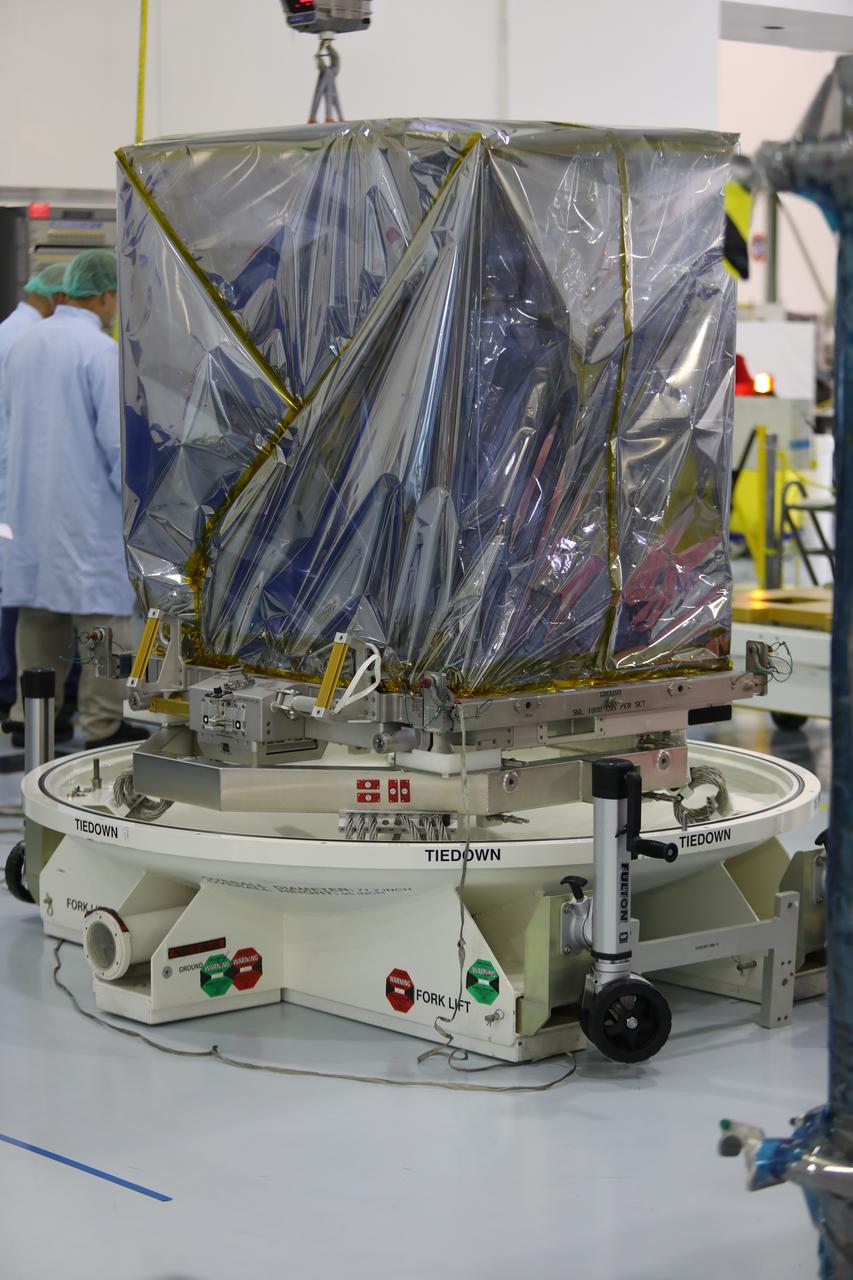
Inside the Space Station Processing Facility high bay at NASA's Kennedy Space Center in Florida, the Neutron star Interior Composition Explorer, or NICER, payload is secured on a special test stand. NICER will be delivered to the International Space Station aboard the SpaceX Dragon cargo carrier on the company’s 11th commercial resupply services mission to the space station. NICER will study neutron stars through soft X-ray timing. NICER will enable rotation-resolved spectroscopy of the thermal and non-thermal emissions of neutron stars in the soft X-ray band with unprecedented sensitivity, probing interior structure, the origins of dynamic phenomena and the mechanisms that underlie the most powerful cosmic particle accelerators known.
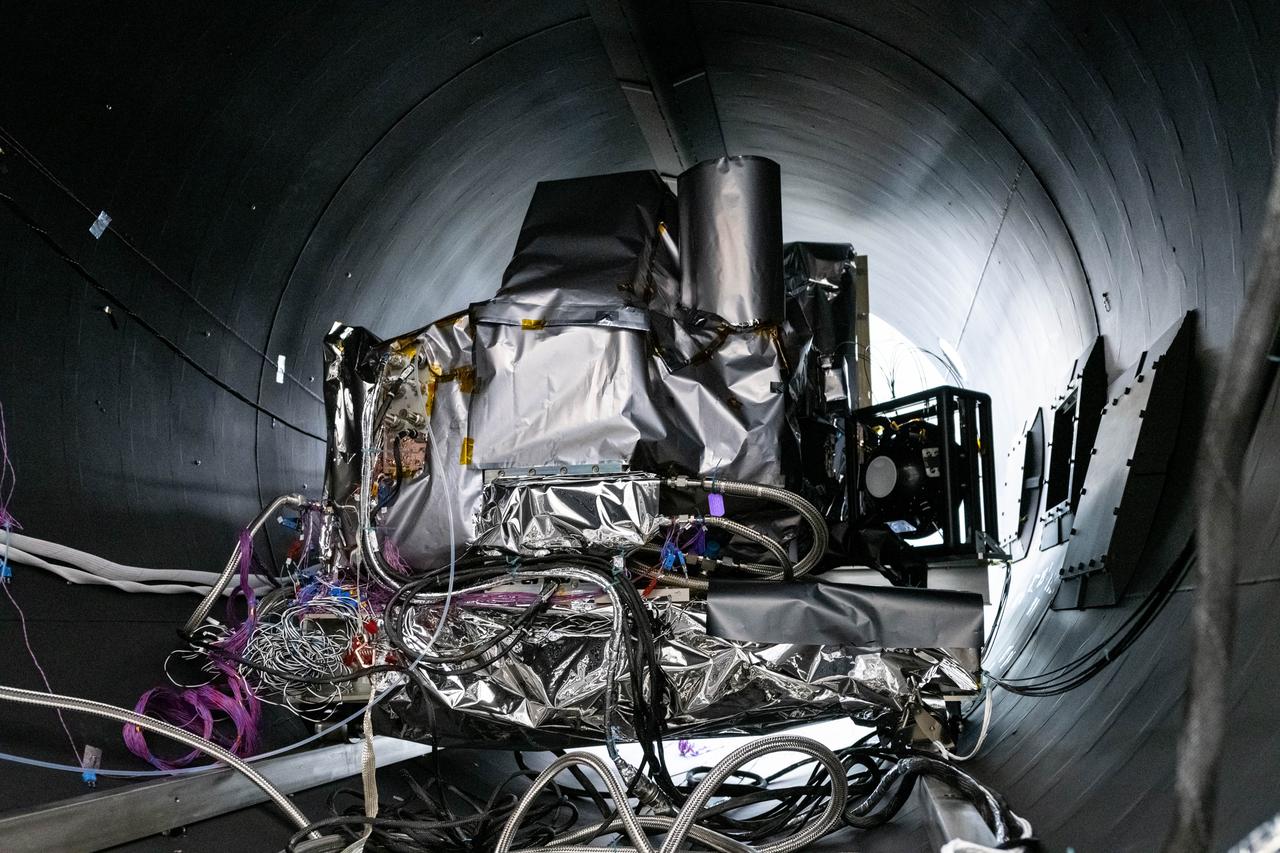
The flight Ocean Color Instrument (OCI) is connected to flex lines and other alignment calibration hardware in a thermal vacuum chamber as it is prepared for thermal testing in a clean tent at Goddard Space Flight Center in Greenbelt, MD. OCI is a highly advanced optical spectrometer that will be used to measure properties of light over portions of the electromagnetic spectrum. It will enable continuous measurement of light at finer wavelength resolution than previous NASA satellite sensors, extending key system ocean color data records for climate studies. OCI is PACE's (Plankton, Aerosol, Cloud, ocean Ecosystem) primary sensor built at Goddard Space Flight Center in Greenbelt, MD.
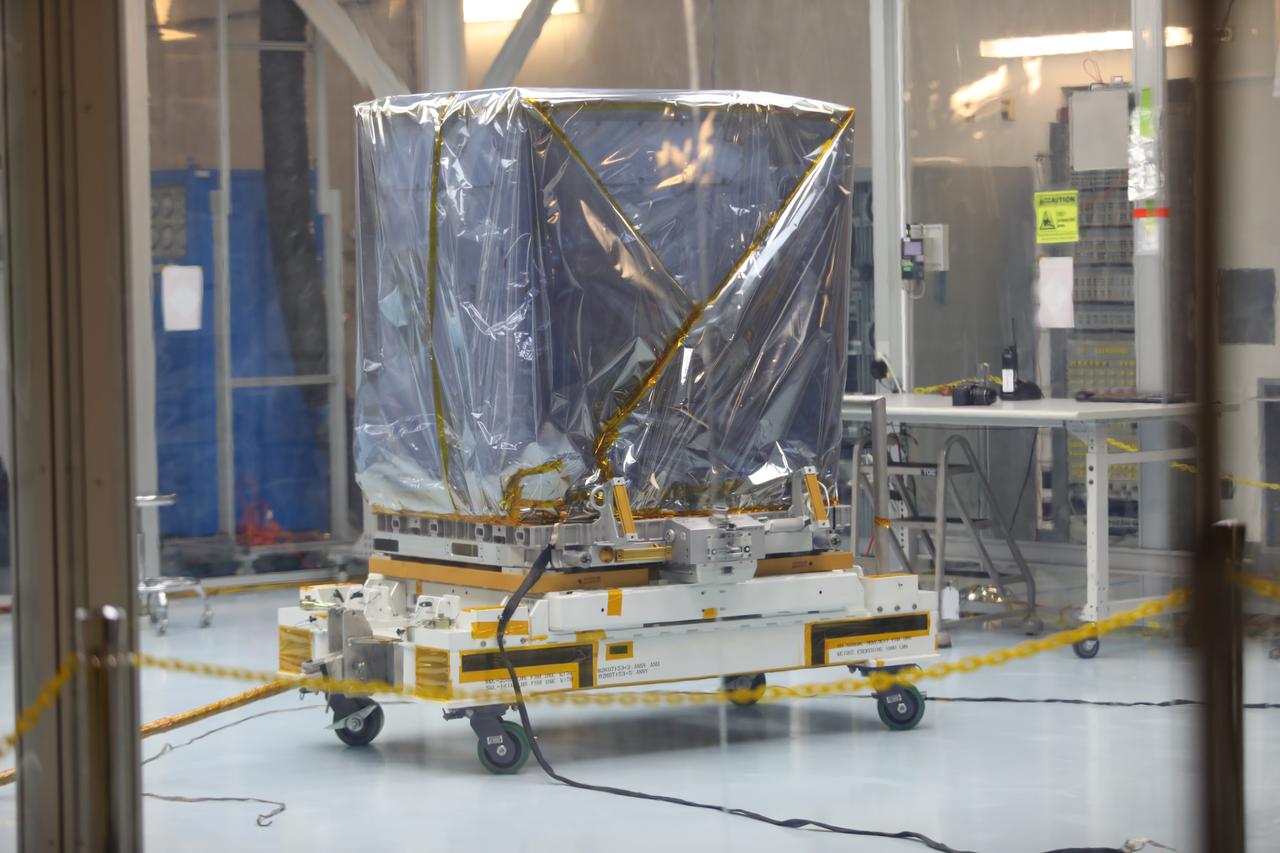
Inside the Space Station Processing Facility high bay at NASA's Kennedy Space Center in Florida, the Neutron star Interior Composition Explorer, or NICER, payload is being prepared for final packaging. NICER will be delivered to the International Space Station aboard the SpaceX Dragon cargo carrier on the company’s 11th commercial resupply services mission to the space station. NICER will study neutron stars through soft X-ray timing. NICER will enable rotation-resolved spectroscopy of the thermal and non-thermal emissions of neutron stars in the soft X-ray band with unprecedented sensitivity, probing interior structure, the origins of dynamic phenomena and the mechanisms that underlie the most powerful cosmic particle accelerators known.
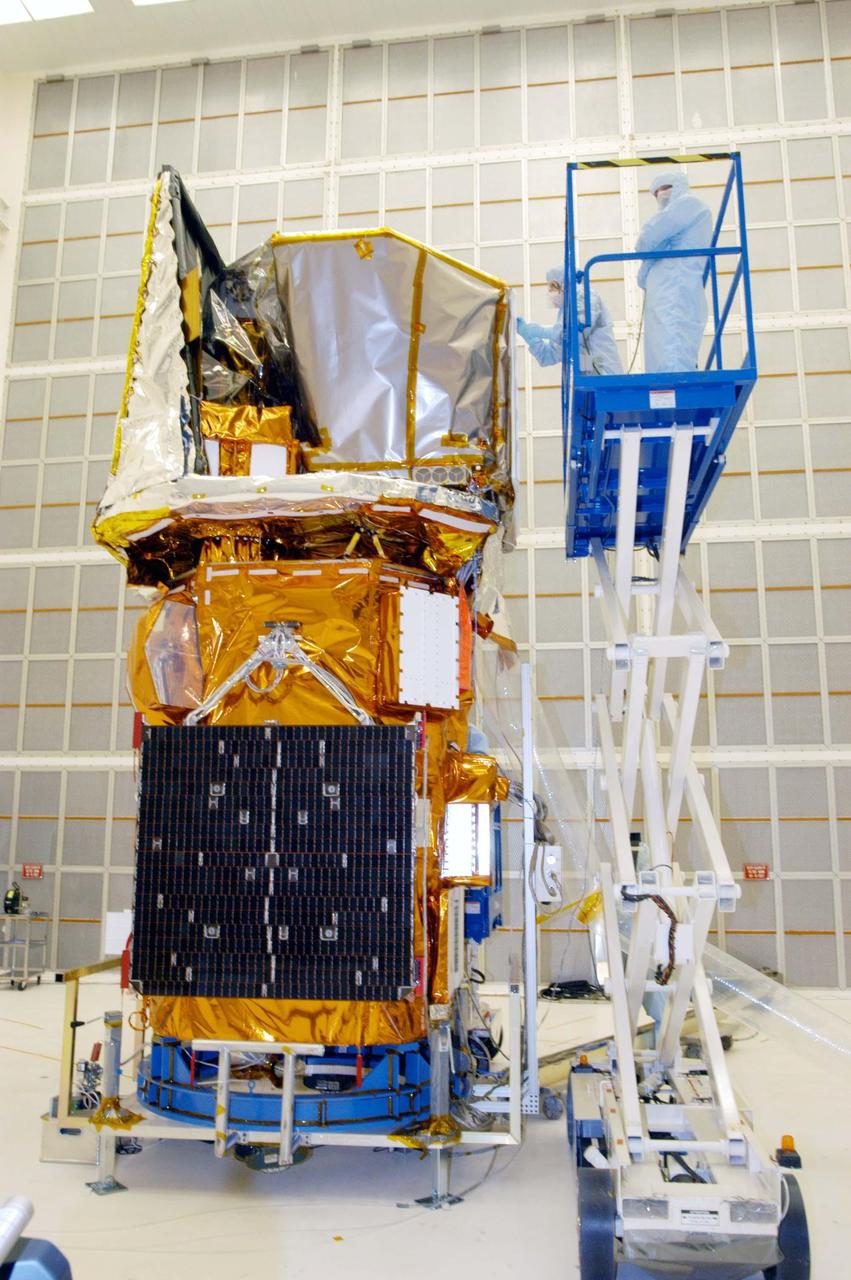
KENNEDY SPACE CENTER, FLA. - Technician Grace Miller-Swales (left) does touch-up work on the Swift spacecraft in Hangar AE at Cape Canaveral Air Force Station. John DiBatilito is at right. Swift is wrapped with blankets to provide thermal stability during the mission. Swift is a first-of-its-kind multi-wavelength observatory dedicated to the study of gamma-ray burst (GRB) science. Its three instruments will work together to observe GRBs and afterglows in the gamma-ray, X-ray, ultraviolet and optical wavebands. The most comprehensive study of GRB afterglows to date, Swift is expected to observe more than 200 gamma-ray bursts during its 2-year mission.
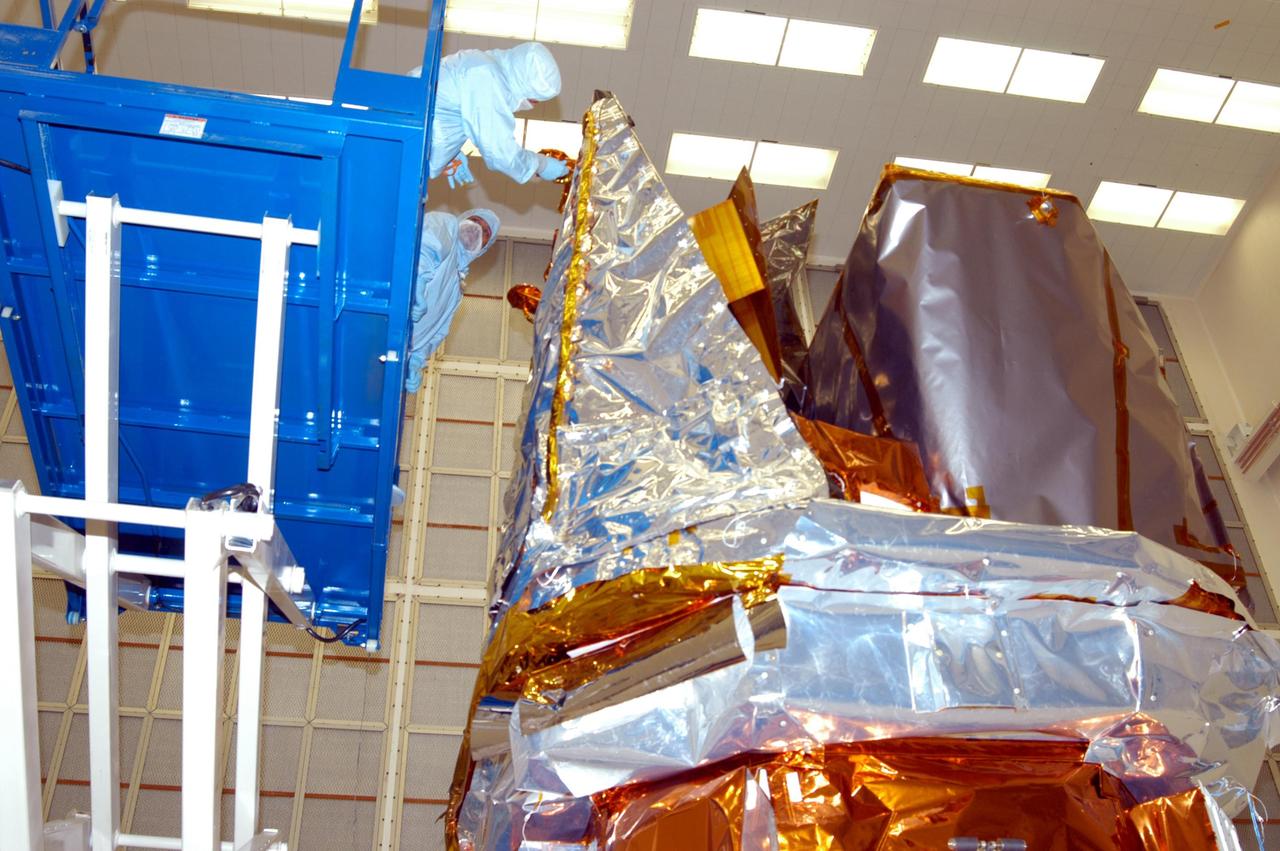
KENNEDY SPACE CENTER, FLA. - In Hangar AE at Cape Canaveral Air Force Station, technicians perform blanket closeouts on the Swift spacecraft. The blankets provide thermal stability during the mission. Swift is a first-of-its-kind multi-wavelength observatory dedicated to the study of gamma-ray burst (GRB) science. Its three instruments will work together to observe GRBs and afterglows in the gamma ray, X-ray, ultraviolet and optical wavebands. The most comprehensive study of GRB afterglows to date, Swift is expected to observe more than 200 gamma-ray bursts during its 2-year mission.
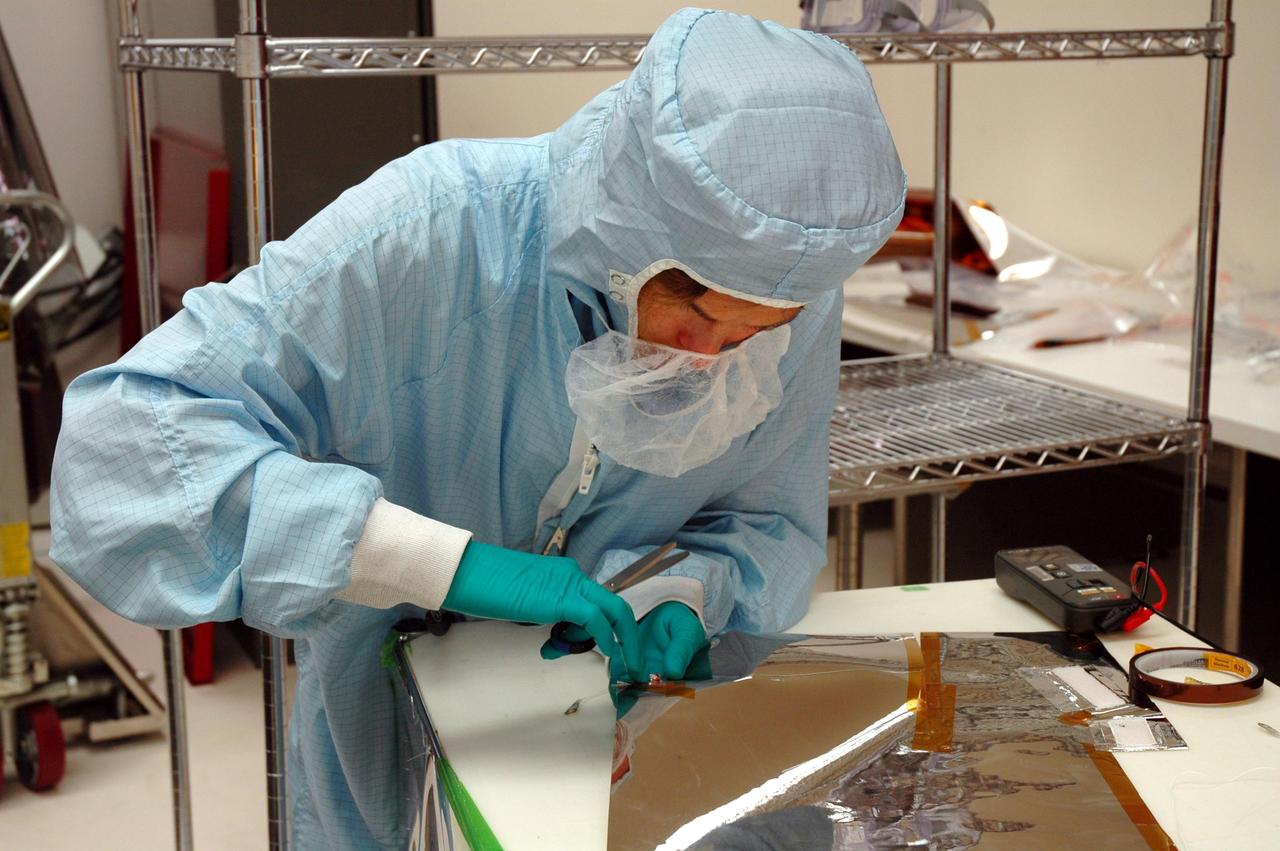
KENNEDY SPACE CENTER, FLA. - Hangar AE, Cape Canaveral Air Force Station, a technician trims blanket material that will be installed around the Swift spacecraft. The blankets provide thermal stability during the mission. Swift is a first-of-its-kind multi-wavelength observatory dedicated to the study of gamma-ray burst (GRB) science. Its three instruments will work together to observe GRBs and afterglows in the gamma ray, X-ray, ultraviolet and optical wavebands. Swift is expected to observe more than 200 gamma-ray bursts - the most comprehensive study of GRB afterglows to date - during its 2-year mission.

KENNEDY SPACE CENTER, FLA. - At Hangar AE, Cape Canaveral Air Force Station, a technician installs the blankets around the Swift spacecraft. The blankets provide thermal stability during the mission. Swift is a first-of-its-kind multi-wavelength observatory dedicated to the study of gamma-ray burst (GRB) science. Its three instruments will work together to observe GRBs and afterglows in the gamma ray, X-ray, ultraviolet and optical wavebands. Swift is expected to observe more than 200 gamma-ray bursts - the most comprehensive study of GRB afterglows to date - during its 2-year mission.
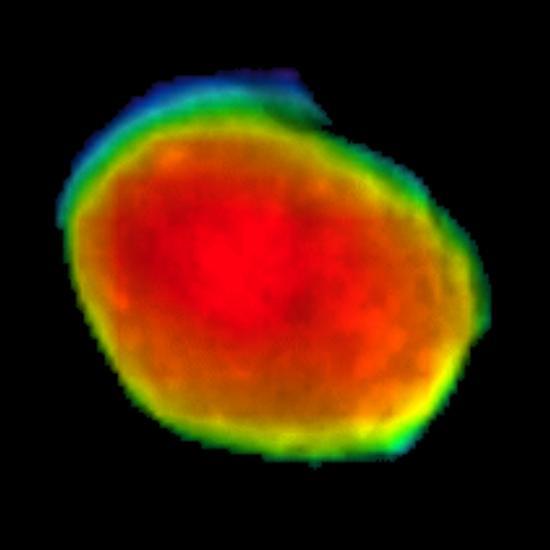
Taken on April 24, 2019, this rainbow-colored image shows the Martian moon Phobos, as viewed by NASA's 2001 Mars Odyssey orbiter using its infrared camera, Thermal Emission Imaging System (THEMIS). Each color represents a different temperature range, with the warmest in the center and coolest on the outer edge. This was the first time THEMIS was used to observe Phobos while in a full moon phase, which offers scientists a much better view for studying the composition of the Martian moon. Previous half-moon views, which can be seen here, were better for studying surface textures. https://photojournal.jpl.nasa.gov/catalog/PIA23204
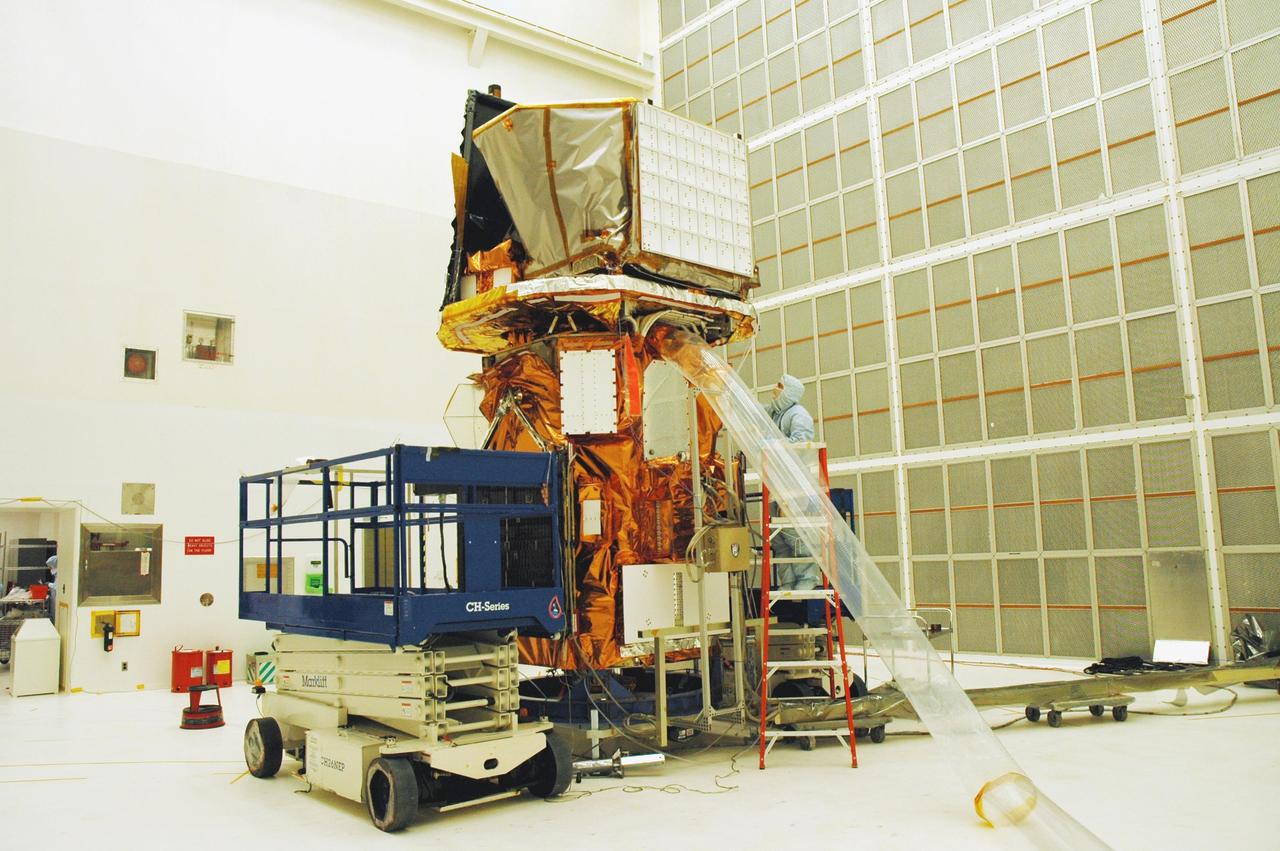
KENNEDY SPACE CENTER, FLA. - At Hangar AE, Cape Canaveral Air Force Station, technicians install the blankets around the Swift spacecraft. The blankets provide thermal stability during the mission. Swift is a first-of-its-kind multi-wavelength observatory dedicated to the study of gamma-ray burst (GRB) science. Its three instruments will work together to observe GRBs and afterglows in the gamma ray, X-ray, ultraviolet and optical wavebands. Swift is expected to observe more than 200 gamma-ray bursts - the most comprehensive study of GRB afterglows to date - during its 2-year mission.
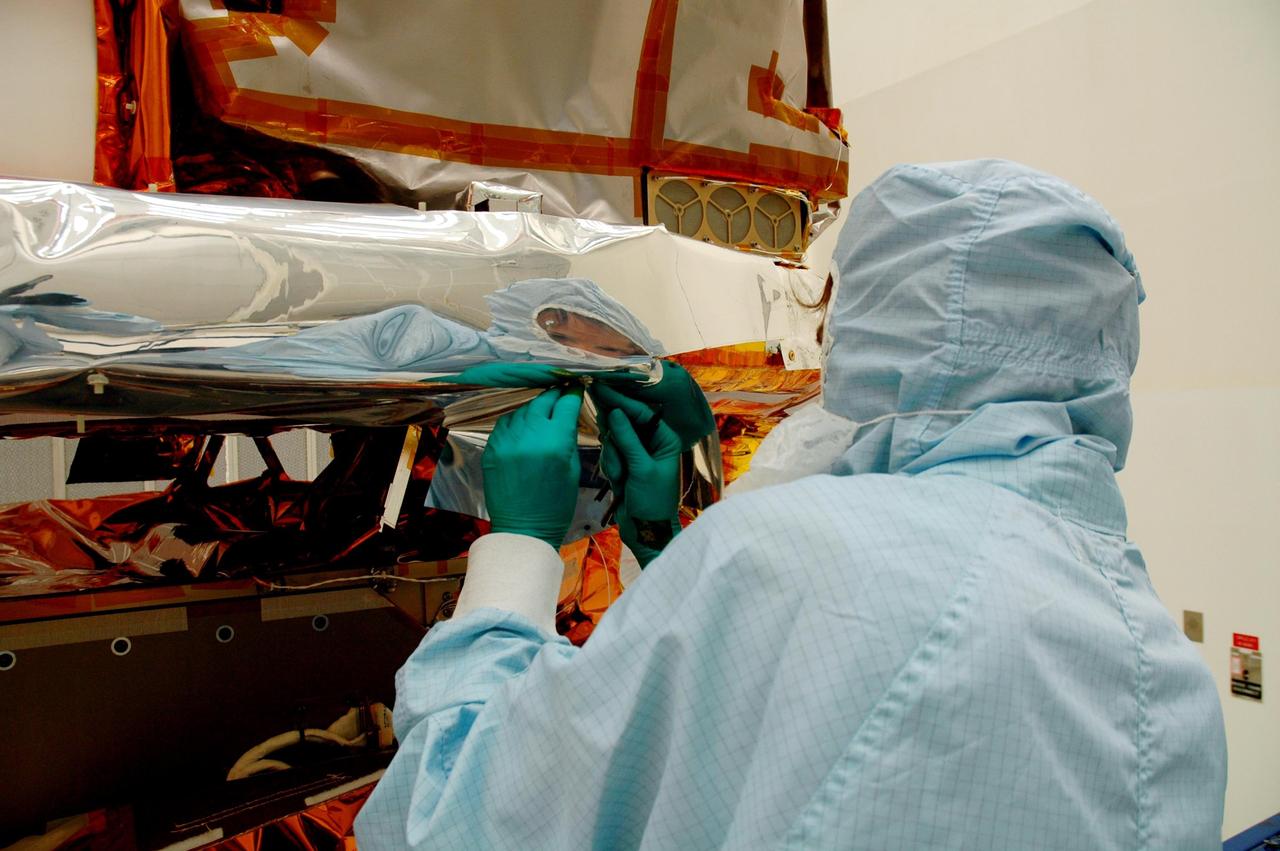
KENNEDY SPACE CENTER, FLA. - At Hangar AE, Cape Canaveral Air Force Station, a technician (right) watches while another completes installation of the blankets around the Swift spacecraft. The blankets provide thermal stability during the mission. Swift is a first-of-its-kind multi-wavelength observatory dedicated to the study of gamma-ray burst (GRB) science. Its three instruments will work together to observe GRBs and afterglows in the gamma ray, X-ray, ultraviolet and optical wavebands. Swift is expected to observe more than 200 gamma-ray bursts - the most comprehensive study of GRB afterglows to date - during its 2-year mission.

KENNEDY SPACE CENTER, FLA. - Technician Grace Miller-Swales does touch-up work on the Swift spacecraft in Hangar AE at Cape Canaveral Air Force Station. Swift is wrapped with blankets to provide thermal stability during the mission. Swift is a first-of-its-kind multi-wavelength observatory dedicated to the study of gamma-ray burst (GRB) science. Its three instruments will work together to observe GRBs and afterglows in the gamma-ray, X-ray, ultraviolet and optical wavebands. The most comprehensive study of GRB afterglows to date, Swift is expected to observe more than 200 gamma-ray bursts during its 2-year mission.
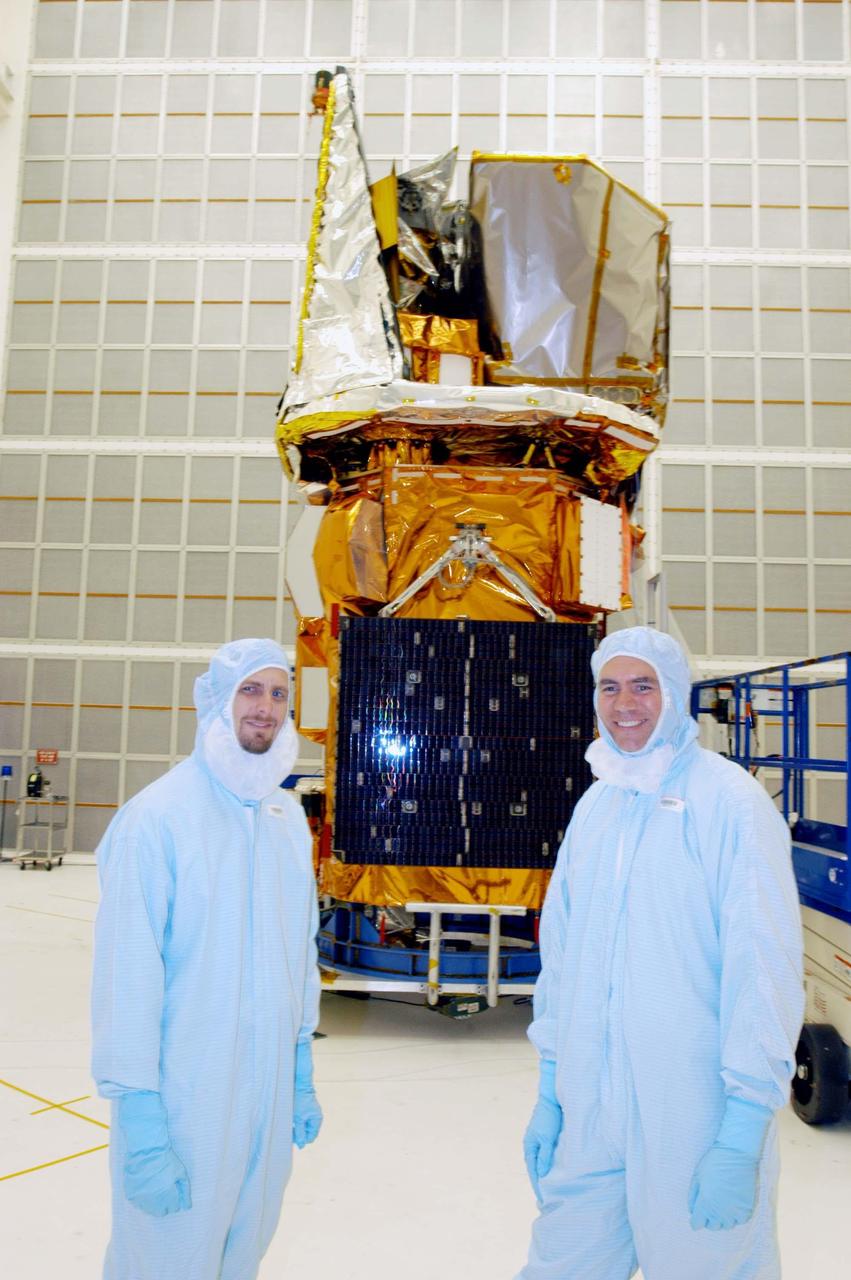
KENNEDY SPACE CENTER, FLA. - Project managers Mike Miller and Rex Eberhardt stand in front of the Swift spacecraft in Hangar AE at Cape Canaveral Air Force Station. Swift has been wrapped with blankets to provide thermal stability during the mission. Swift is a first-of-its-kind multi-wavelength observatory dedicated to the study of gamma-ray burst (GRB) science. Its three instruments will work together to observe GRBs and afterglows in the gamma-ray, X-ray, ultraviolet and optical wavebands. The most comprehensive study of GRB afterglows to date, Swift is expected to observe more than 200 gamma-ray bursts during its 2-year mission.
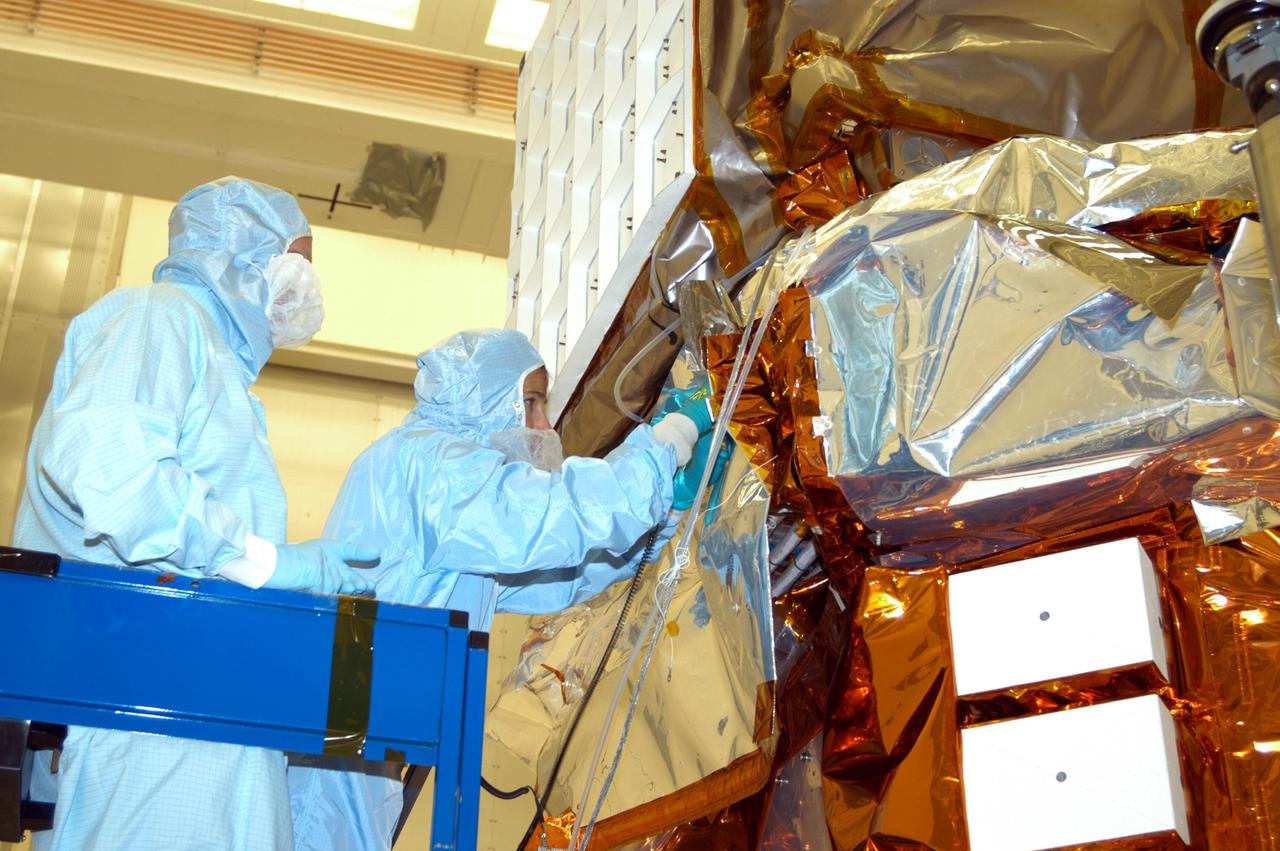
KENNEDY SPACE CENTER, FLA. - In Hangar AE at Cape Canaveral Air Force Station, technicians take a final look at the blankets installed on the Swift spacecraft. The blankets provide thermal stability during the mission. Swift is a first-of-its-kind multi-wavelength observatory dedicated to the study of gamma-ray burst (GRB) science. Its three instruments will work together to observe GRBs and afterglows in the gamma ray, X-ray, ultraviolet and optical wavebands. The most comprehensive study of GRB afterglows to date, Swift is expected to observe more than 200 gamma-ray bursts during its 2-year mission.
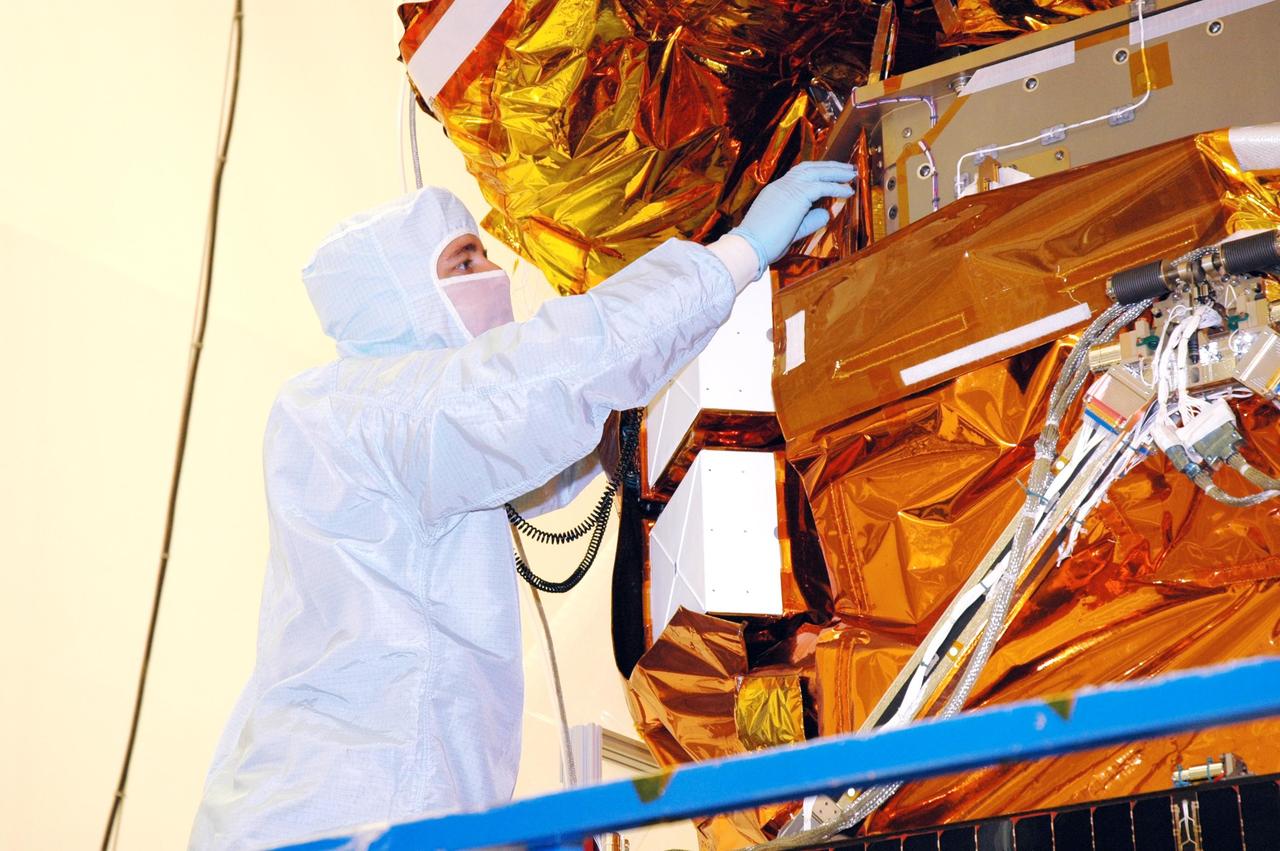
KENNEDY SPACE CENTER, FLA. - At Hangar AE, Cape Canaveral Air Force Station, a technician works on a blanket installed around the Swift spacecraft. The blankets provide thermal stability during the mission. Swift is a first-of-its-kind multi-wavelength observatory dedicated to the study of gamma-ray burst (GRB) science. Its three instruments will work together to observe GRBs and afterglows in the gamma ray, X-ray, ultraviolet and optical wavebands. Swift is expected to observe more than 200 gamma-ray bursts - the most comprehensive study of GRB afterglows to date - during its 2-year mission.
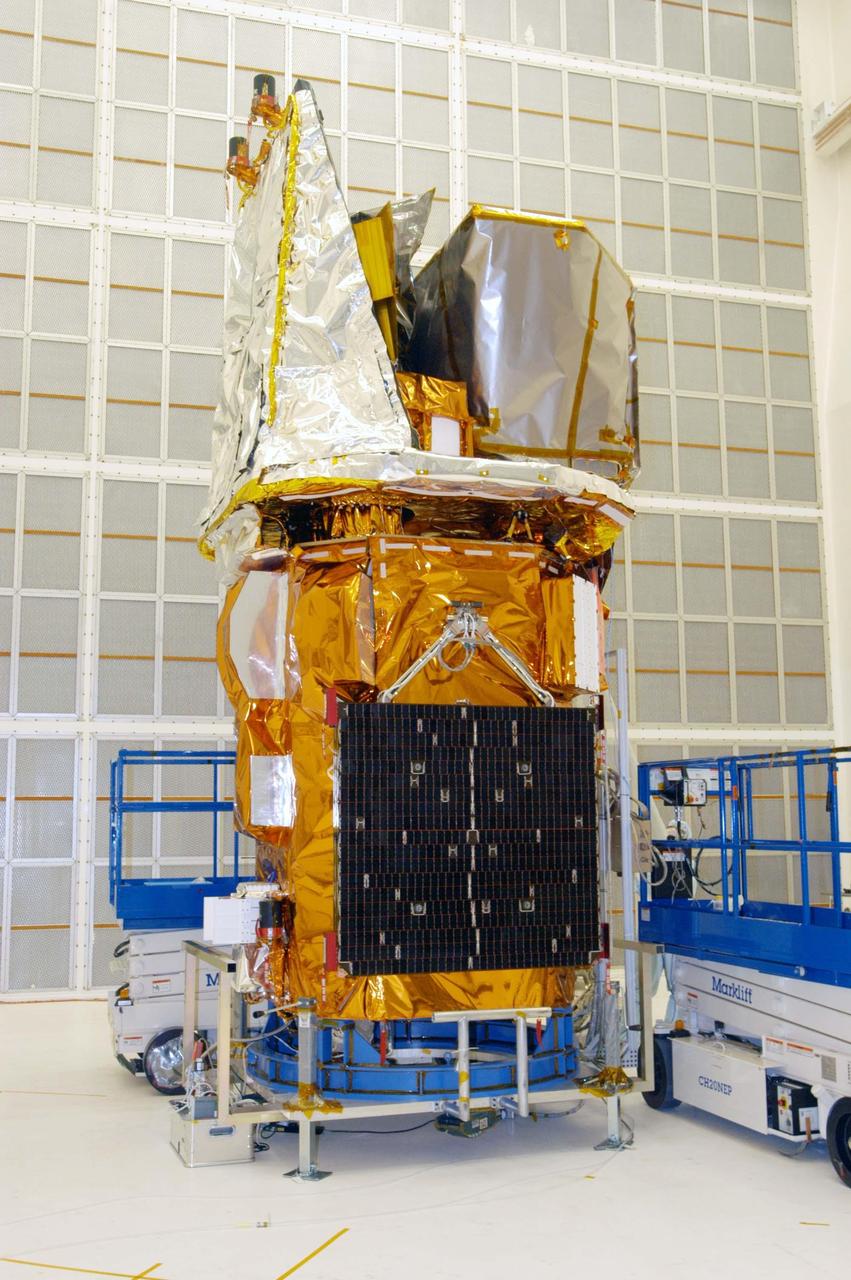
KENNEDY SPACE CENTER, FLA. - The Swift spacecraft is in Hangar AE at Cape Canaveral Air Force Station. Swift has been wrapped with blankets to provide thermal stability during the mission. Swift is a first-of-its-kind multi-wavelength observatory dedicated to the study of gamma-ray burst (GRB) science. Its three instruments will work together to observe GRBs and afterglows in the gamma-ray, X-ray, ultraviolet and optical wavebands. The most comprehensive study of GRB afterglows to date, Swift is expected to observe more than 200 gamma-ray bursts during its 2-year mission.
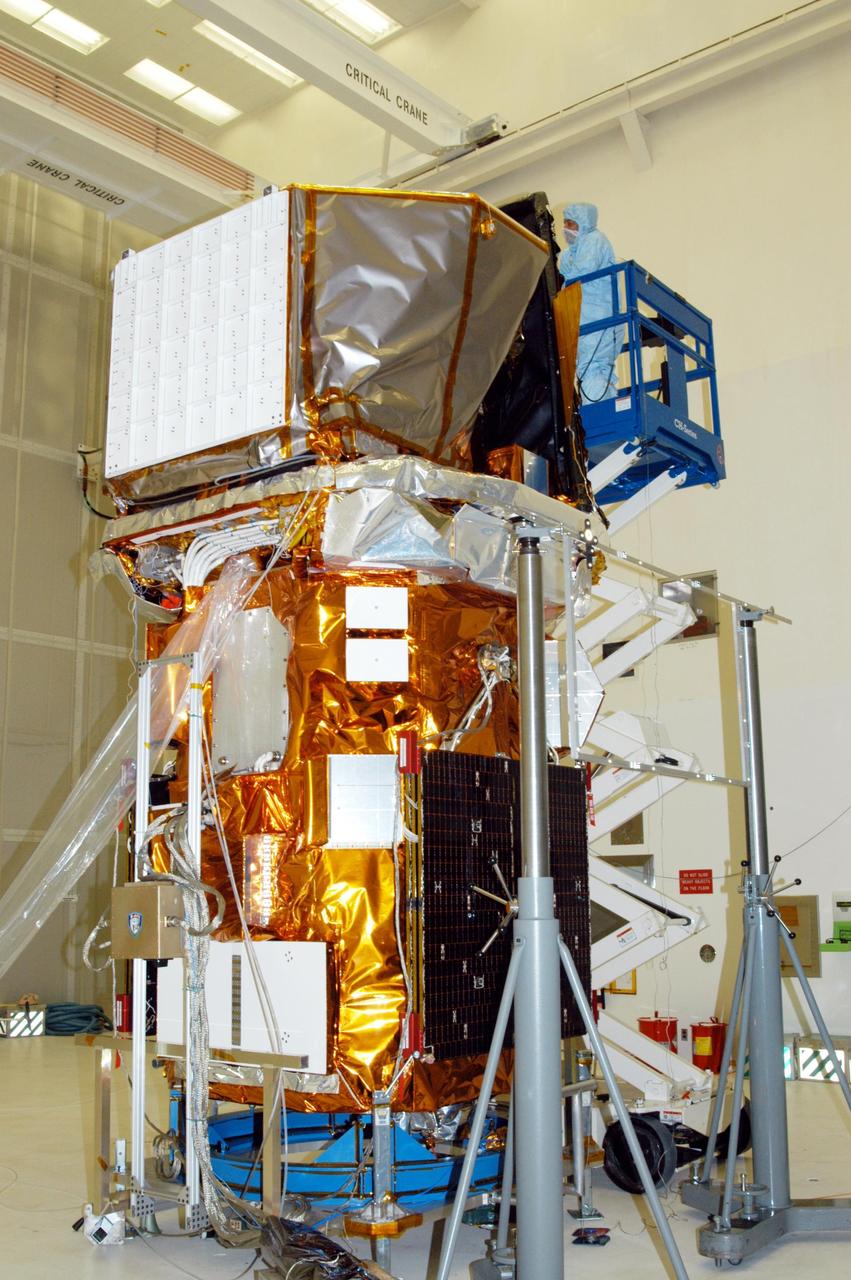
KENNEDY SPACE CENTER, FLA. - In Hangar AE at Cape Canaveral Air Force Station, a technician performs blanket closeouts on the Swift spacecraft. The blankets provide thermal stability during the mission. Swift is a first-of-its-kind multi-wavelength observatory dedicated to the study of gamma-ray burst (GRB) science. Its three instruments will work together to observe GRBs and afterglows in the gamma ray, X-ray, ultraviolet and optical wavebands. The most comprehensive study of GRB afterglows to date, Swift is expected to observe more than 200 gamma-ray bursts during its 2-year mission.

KENNEDY SPACE CENTER, FLA. - At Hangar AE, Cape Canaveral Air Force Station, a technician works on a blanket installed around the Swift spacecraft. The blankets provide thermal stability during the mission. Swift is a first-of-its-kind multi-wavelength observatory dedicated to the study of gamma-ray burst (GRB) science. Its three instruments will work together to observe GRBs and afterglows in the gamma ray, X-ray, ultraviolet and optical wavebands. Swift is expected to observe more than 200 gamma-ray bursts - the most comprehensive study of GRB afterglows to date - during its 2-year mission.
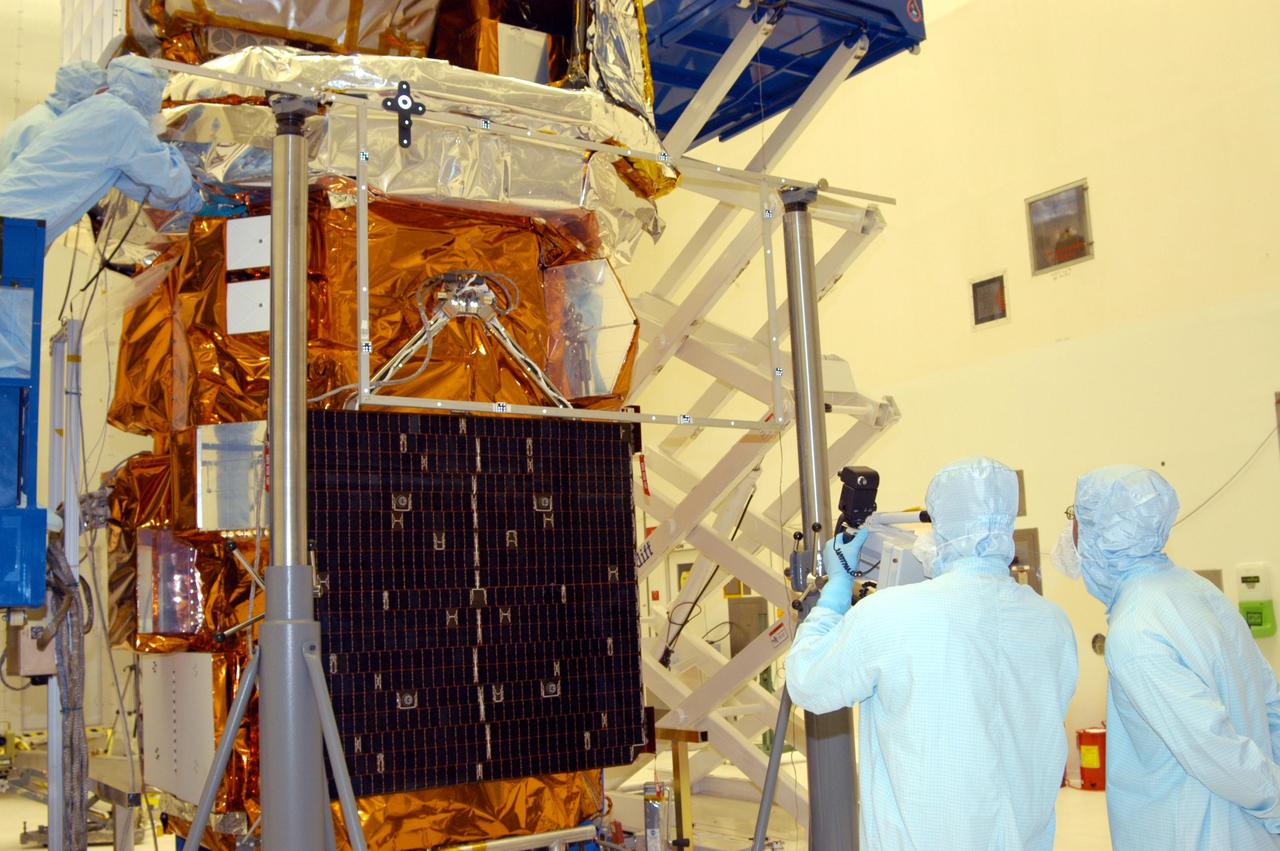
KENNEDY SPACE CENTER, FLA. - In Hangar AE at Cape Canaveral Air Force Station, technicians perform blanket closeouts on the Swift spacecraft. The blankets provide thermal stability during the mission. Swift is a first-of-its-kind multi-wavelength observatory dedicated to the study of gamma-ray burst (GRB) science. Its three instruments will work together to observe GRBs and afterglows in the gamma ray, X-ray, ultraviolet and optical wavebands. The most comprehensive study of GRB afterglows to date, Swift is expected to observe more than 200 gamma-ray bursts during its 2-year mission.
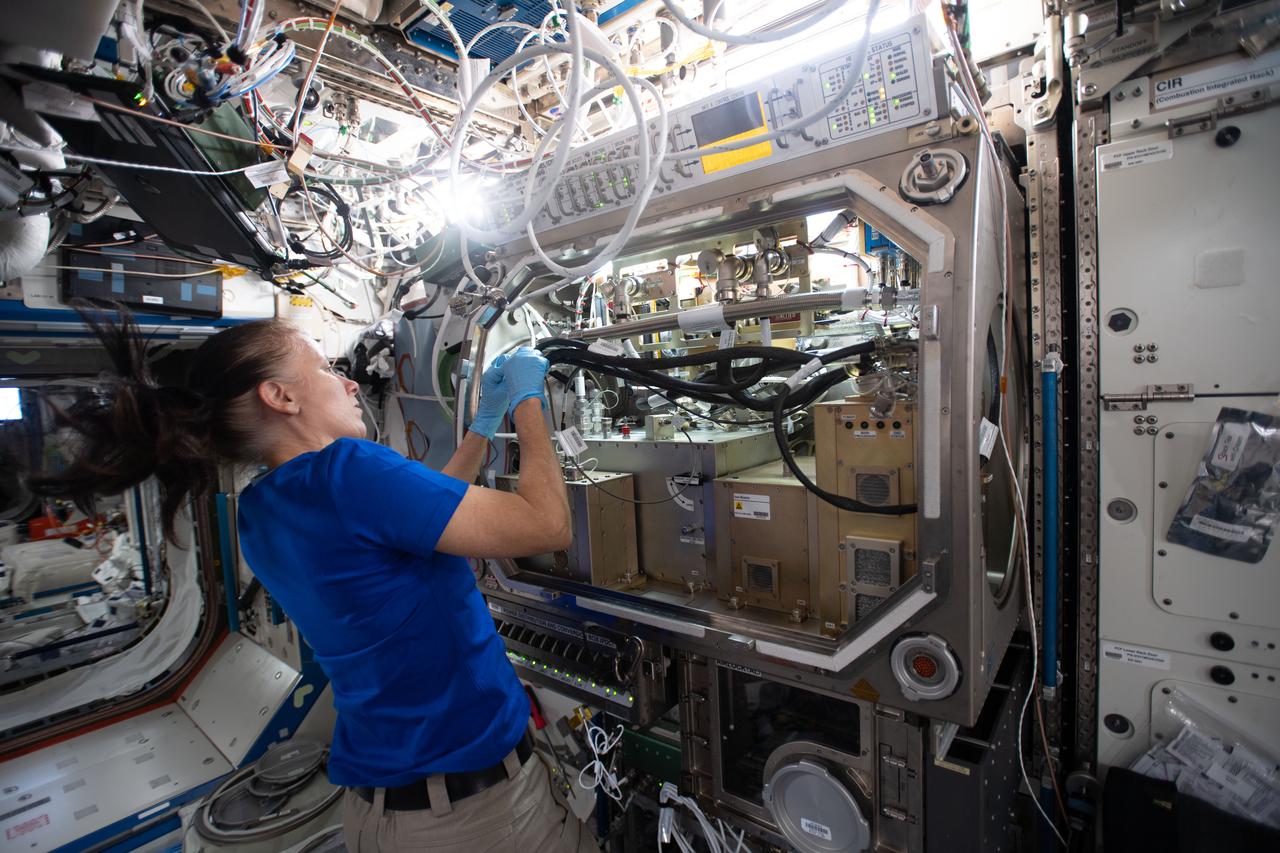
iss064e035056 (Feb. 19, 2021) --- NASA astronaut and Expedition 64 Flight Engineer Shannon Walker sets up Packed Bed Reactor Experiment (PBRE) hardware components inside the Destiny laboratory module's Microgravity Science Glovebox. The PBRE study explores how liquids and gases in behave together microgravity which may enable the design of more efficient, lightweight thermal management and life support systems that use less energy on future space exploration missions.
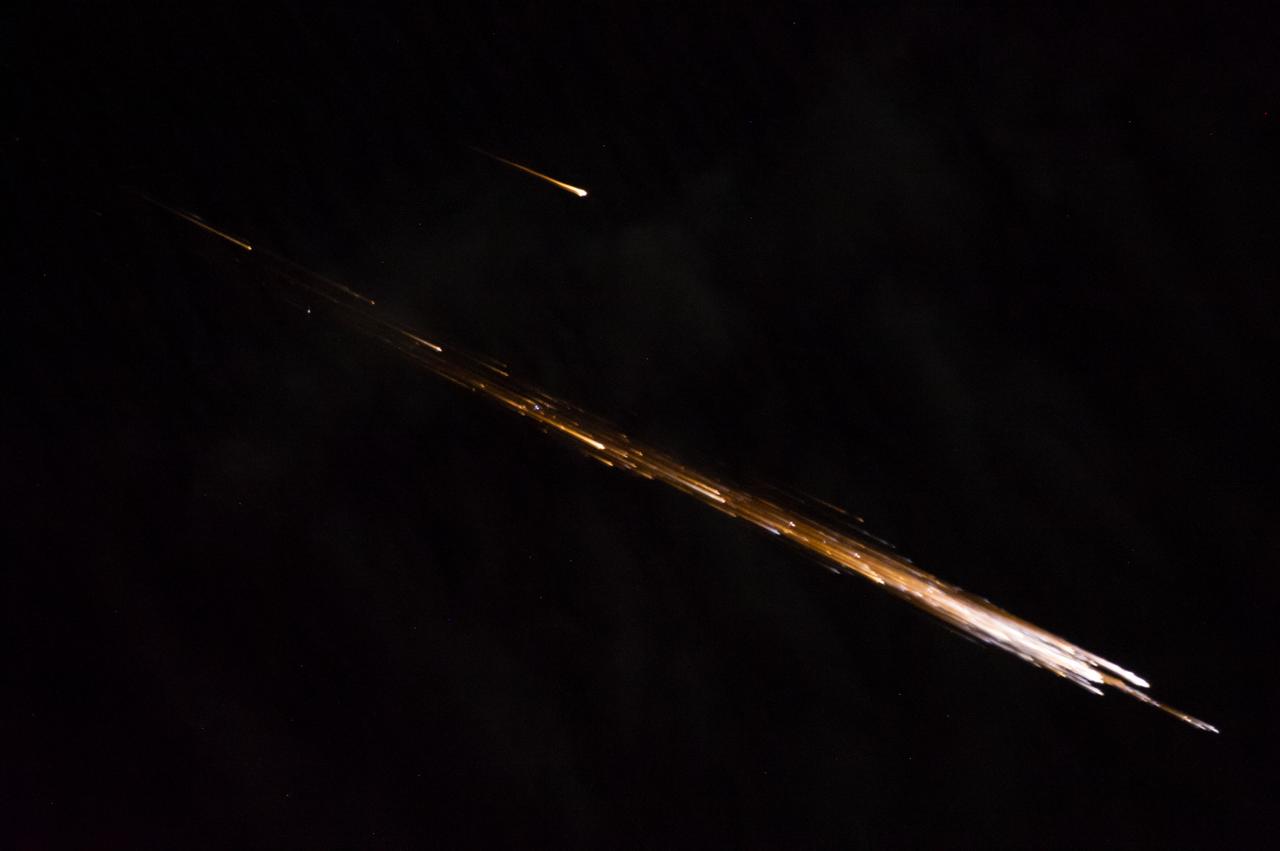
iss040e098572 (8/19/2014) --- A dark view of the Orbital Cygnus 2 reentry taken by the Expedition 40 crew. Light streak from reentry visible in frame. The Thermal Protection Material Flight Test and Reentry Data Collection (RED-Data2) investigation studies a new type of recording device that rides along a vehicle reentering Earth’s atmosphere, providing crucial data about the extreme conditions a spacecraft encounters during atmospheric reentry.

Ahead of launch as part of NASA’s Commercial Lunar Payload Services (CLPS) initiative, Astrobotic’s Peregrine lunar lander is encapsulated in the payload fairing, or nose cone, of United Launch Alliance’s Vulcan rocket on Nov. 21, 2023, at Astrotech Space Operations Facility near the agency’s Kennedy Space Center in Florida. Launch of Astrobotic’s Peregrine Mission One will carry NASA and commercial payloads to the Moon in early 2024 to study the lunar exosphere, thermal properties, and hydrogen abundance of the lunar regolith, magnetic fields, and the radiation environment of the lunar surface.
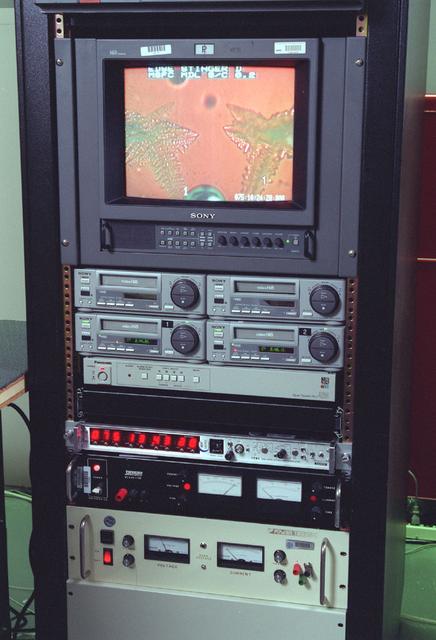
The Equiaxed Dendritic Solidification Experiment (EDSE) is a material sciences investigation under the Formation of Microstructures/pattern formation discipline. The objective is to study the microstructural evolution of and thermal interactions between several equiaxed crystals growing dendritically in a supercooled melt of a pure and transparent substance under diffusion controlled conditions. Video and power rack for the EDSE in the Microgravity Development Lab (MDL).
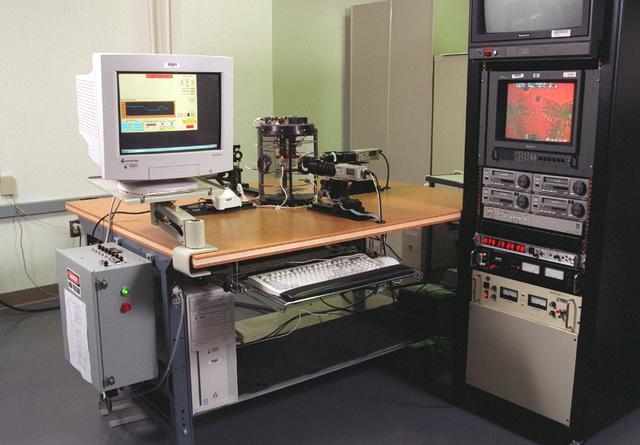
The Equiaxed Dendritic Solidification Experiment (EDSE) is a material sciences investigation under the Formation of Microstructures/pattern formation discipline. The objective is to study the microstructural evolution of and thermal interactions between several equiaxed crystals growing dendritically in a supercooled melt of a pure and transparent substance under diffusion controlled conditions. This image shows the overview for the EDSE in the Microgravity Development Lab (MDL).

Ahead of launch as part of NASA’s Commercial Lunar Payload Services (CLPS) initiative, Astrobotic’s Peregrine lunar lander is encapsulated in the payload fairing, or nose cone, of United Launch Alliance’s Vulcan rocket on Nov. 21, 2023, at Astrotech Space Operations Facility near the agency’s Kennedy Space Center in Florida. Launch of Astrobotic’s Peregrine Mission One will carry NASA and commercial payloads to the Moon in early 2024 to study the lunar exosphere, thermal properties, and hydrogen abundance of the lunar regolith, magnetic fields, and the radiation environment of the lunar surface.
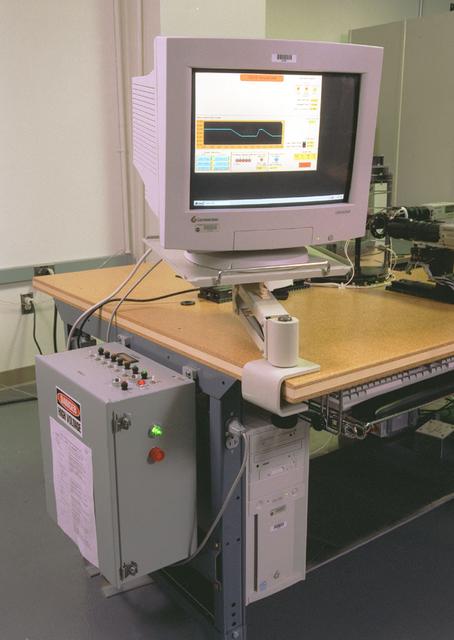
The Equiaxed Dendritic Solidification Experiment (EDSE) is a material sciences investigation under the Formation of Microstructures/pattern formation discipline. The objective is to study the microstructural evolution of and thermal interactions between several equiaxed crystals growing dendritically in a supercooled melt of a pure and transparent substance under diffusion controlled conditions. Dendrite irritator control for the EDSE in the Microgravity Development Lab (MDL).

This satellite image, taken by NASA's Earth-observing Terra satellite on Aug. 18, 2019, shows the ECOSTRESS study area in the Amazon Basin and smoke from active fires in the rainforest. ECOSTRESS also captured an image of the Amazon rainforest, PIA23432, revealing water-stressed and non-stressed forest in the area. The water-stressed areas of the forest look as green and healthy as these cooler areas, making them invisible except to a radiometer that can measure thermal infrared energy from the surface. https://photojournal.jpl.nasa.gov/catalog/PIA23546
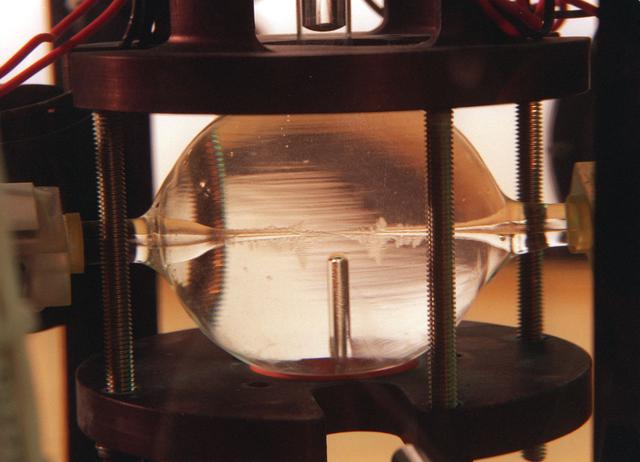
The Equiaxed Dendritic Solidification Experiment (EDSE) is a material sciences investigation under the Formation of Microstructures/pattern formation discipline. The objective is to study the microstructural evolution of and thermal interactions between several equiaxed crystals growing dendritically in a supercooled melt of a pure and transparent substance under diffusion controlled conditions. Dendrites growing at .4 supercooling from a 2 stinger growth chamber for the EDSE in the Microgravity Development Lab (MDL).
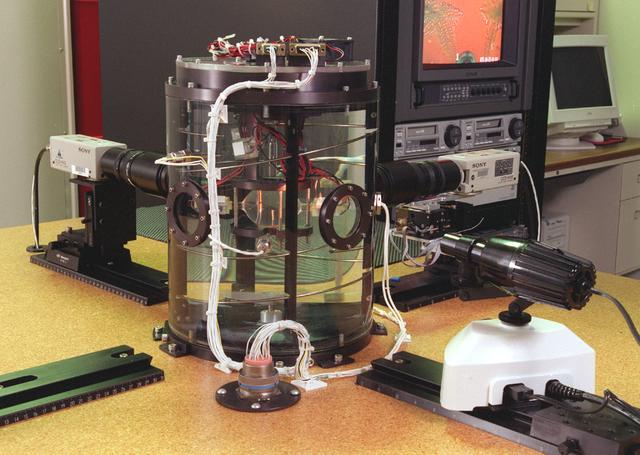
The Equiaxed Dendritic Solidification Experiment (EDSE) is a material sciences investigation under the Formation of Microstructures/pattern formation discipline. The objective is to study the microstructural evolution of and thermal interactions between several equiaxed crystals growing dendritically in a supercooled melt of a pure and transparent substance under diffusion controlled conditions. This image shows the isothermal bath and video system for the EDSE in the Microgravity Development Lab (MDL).
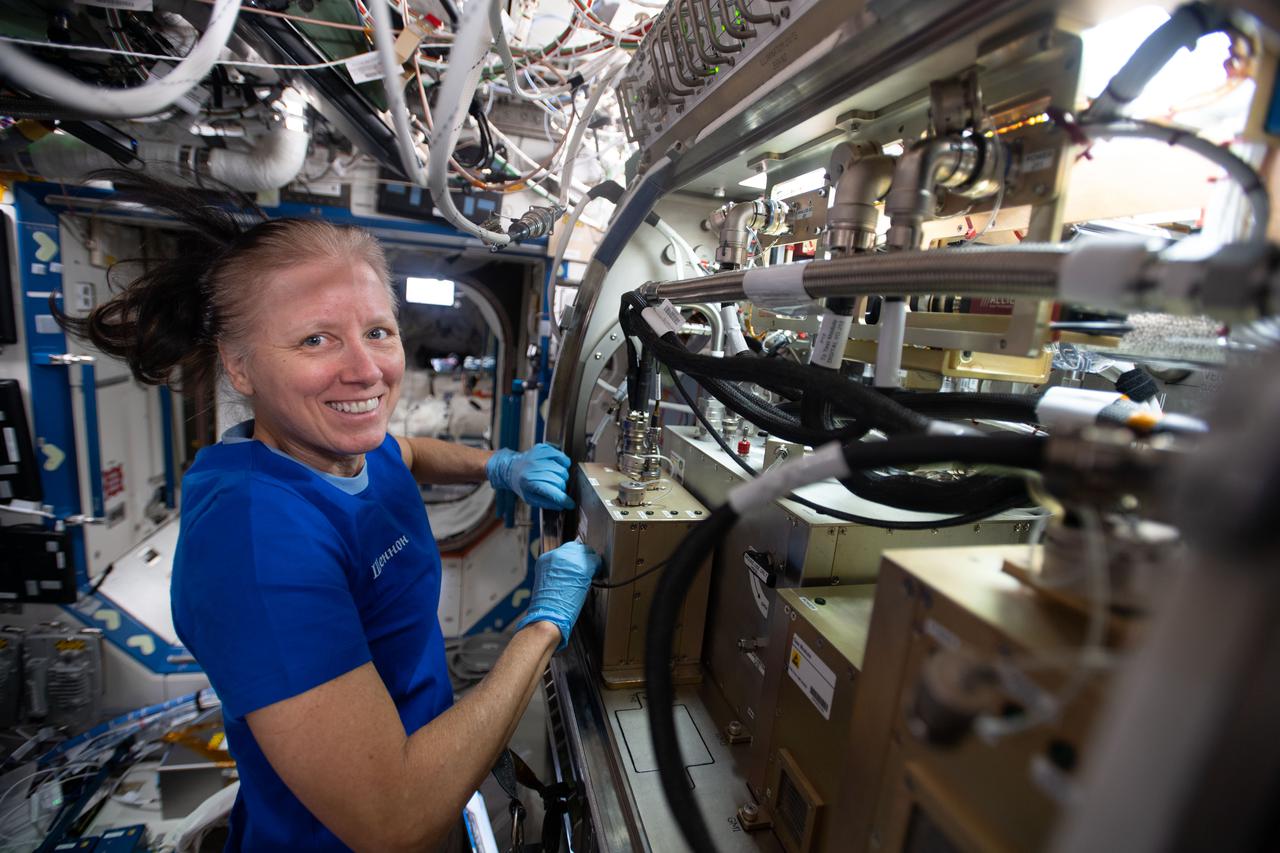
iss064e035059 (Feb. 19, 2021) --- NASA astronaut and Expedition 64 Flight Engineer Shannon Walker sets up Packed Bed Reactor Experiment (PBRE) hardware components inside the Destiny laboratory module's Microgravity Science Glovebox. The PBRE study explores how liquids and gases behave together in microgravity which may enable the design of more efficient, lightweight thermal management and life support systems that use less energy on future space exploration missions.
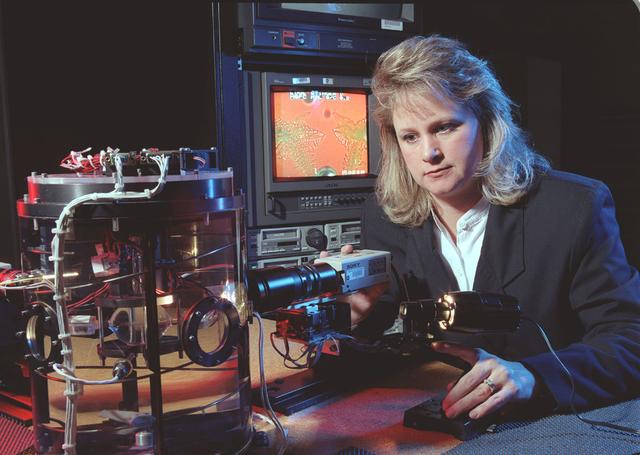
The Equiaxed Dendritic Solidification Experiment (EDSE) is a material sciences investigation under the Formation of Microstructures/pattern formation discipline. The objective is to study the microstructural evolution of and thermal interactions between several equiaxed crystals growing dendritically in a supercooled melt of a pure and transparent substance under diffusion controlled conditions. EDSE/TDSE project engineer, Zena Hester, monitors a test run of the EDSE located in the Microgravity Development Laboratory (MDL).
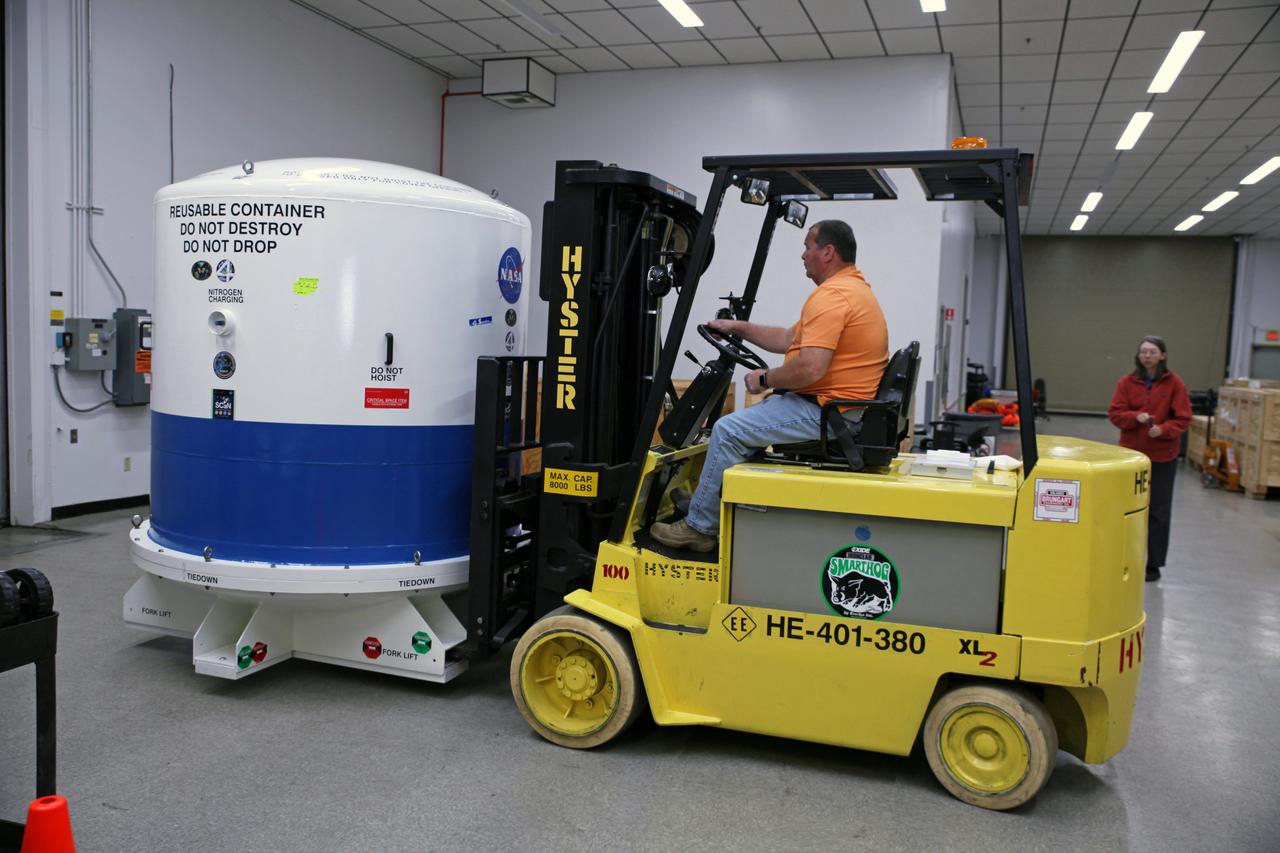
Inside the Space Station Processing Facility high bay at NASA's Kennedy Space Center in Florida, the Neutron star Interior Composition Explorer, or NICER, payload is secured inside a protective container. A technician uses a Hyster forklift to pick up the container and move it outside of the high bay. NICER will be delivered to the International Space Station aboard the SpaceX Dragon cargo carrier on the company’s 11th commercial resupply services mission to the space station. NICER will study neutron stars through soft X-ray timing. NICER will enable rotation-resolved spectroscopy of the thermal and non-thermal emissions of neutron stars in the soft X-ray band with unprecedented sensitivity, probing interior structure, the origins of dynamic phenomena and the mechanisms that underlie the most powerful cosmic particle accelerators known.
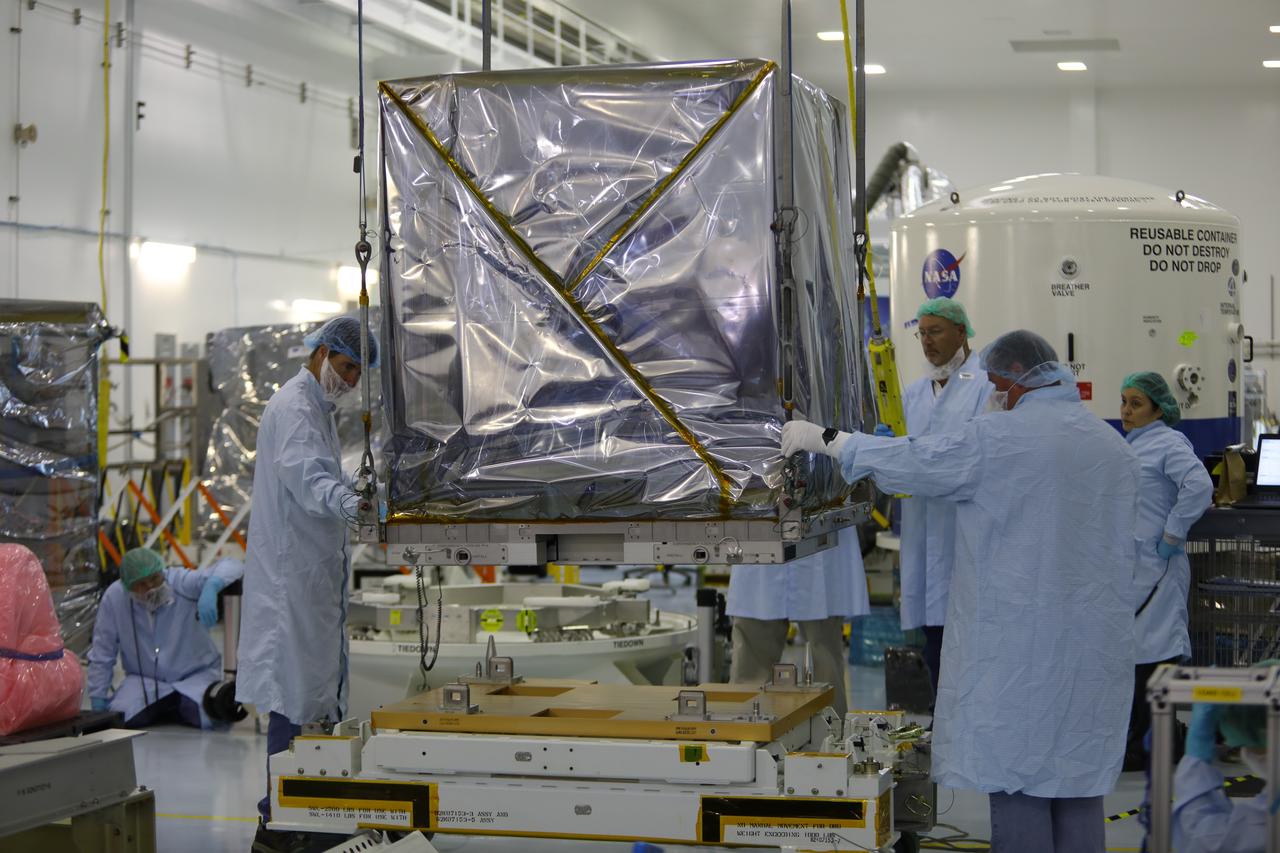
Inside the Space Station Processing Facility high bay at NASA's Kennedy Space Center in Florida, technicians assist as a crane is used to lift the Neutron star Interior Composition Explorer, or NICER, payload up from its carrier. NICER will be delivered to the International Space Station aboard the SpaceX Dragon cargo carrier on the company’s 11th commercial resupply services mission to the space station. NICER will study neutron stars through soft X-ray timing. NICER will enable rotation-resolved spectroscopy of the thermal and non-thermal emissions of neutron stars in the soft X-ray band with unprecedented sensitivity, probing interior structure, the origins of dynamic phenomena and the mechanisms that underlie the most powerful cosmic particle accelerators known.
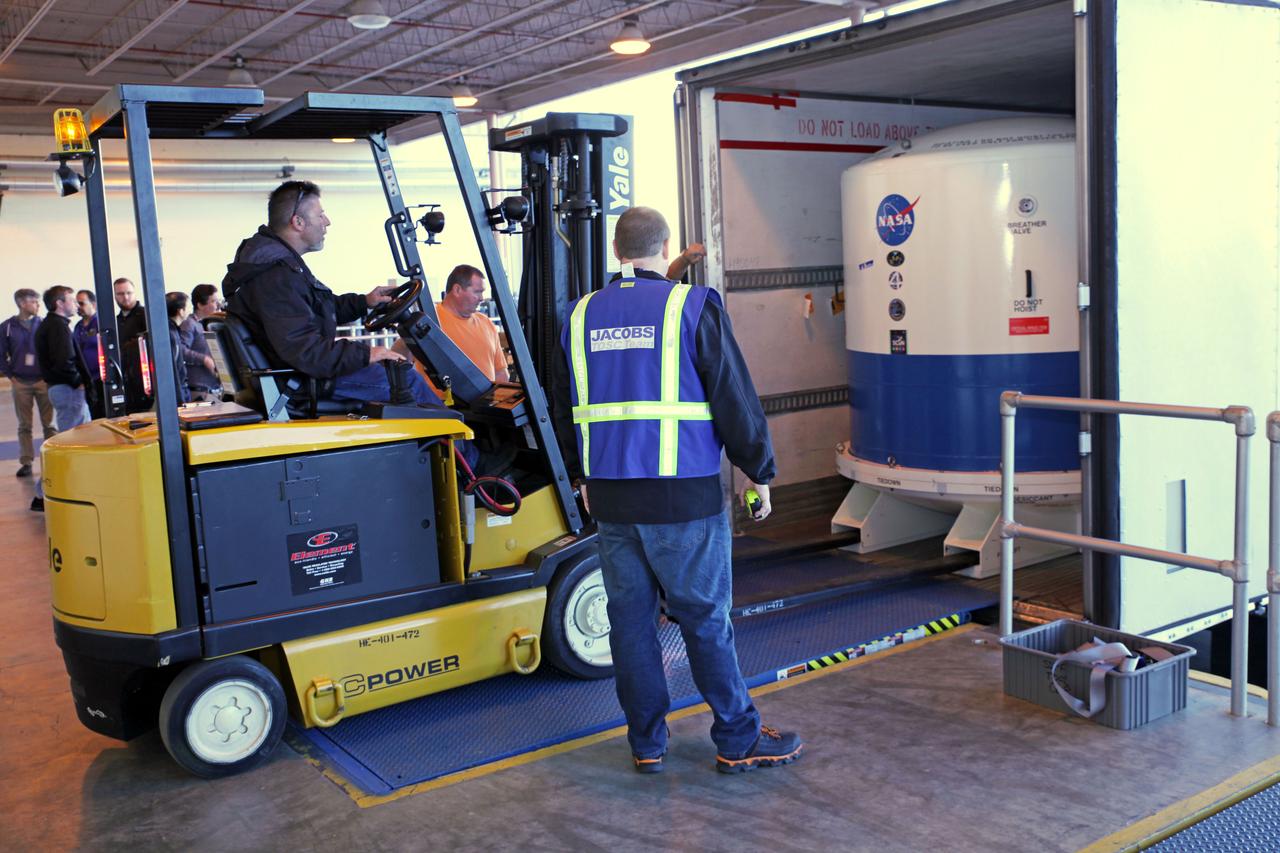
Inside the Space Station Processing Facility high bay at NASA's Kennedy Space Center in Florida, the Neutron star Interior Composition Explorer, or NICER, payload is secured inside a protective container and loaded onto a truck outside the high bay. NICER will be delivered to the International Space Station aboard the SpaceX Dragon cargo carrier on the company’s 11th commercial resupply services mission to the space station. NICER will study neutron stars through soft X-ray timing. NICER will enable rotation-resolved spectroscopy of the thermal and non-thermal emissions of neutron stars in the soft X-ray band with unprecedented sensitivity, probing interior structure, the origins of dynamic phenomena and the mechanisms that underlie the most powerful cosmic particle accelerators known.
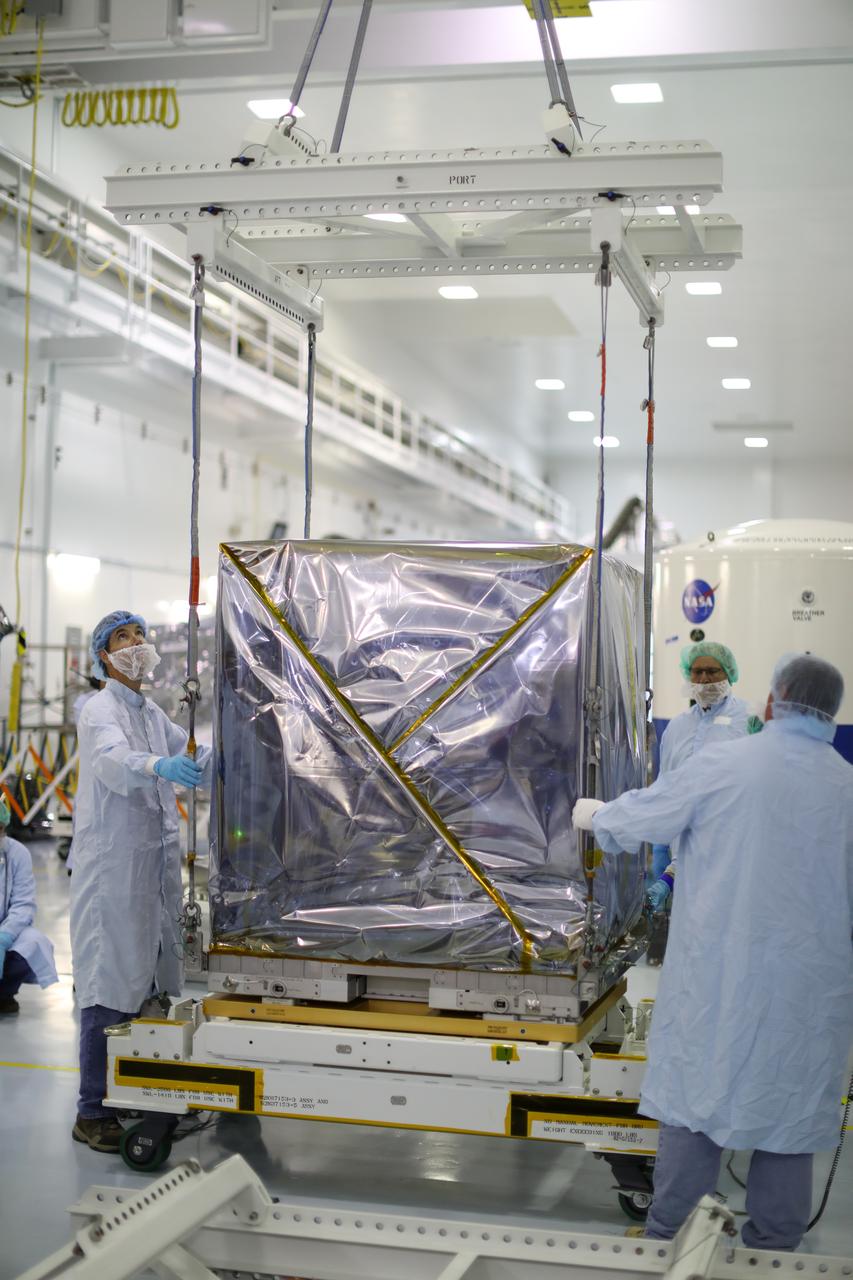
Inside the Space Station Processing Facility high bay at NASA's Kennedy Space Center in Florida, technicians assist as a crane is used to lift the Neutron star Interior Composition Explorer, or NICER, payload up from its carrier. NICER will be delivered to the International Space Station aboard the SpaceX Dragon cargo carrier on the company’s 11th commercial resupply services mission to the space station. NICER will study neutron stars through soft X-ray timing. NICER will enable rotation-resolved spectroscopy of the thermal and non-thermal emissions of neutron stars in the soft X-ray band with unprecedented sensitivity, probing interior structure, the origins of dynamic phenomena and the mechanisms that underlie the most powerful cosmic particle accelerators known.
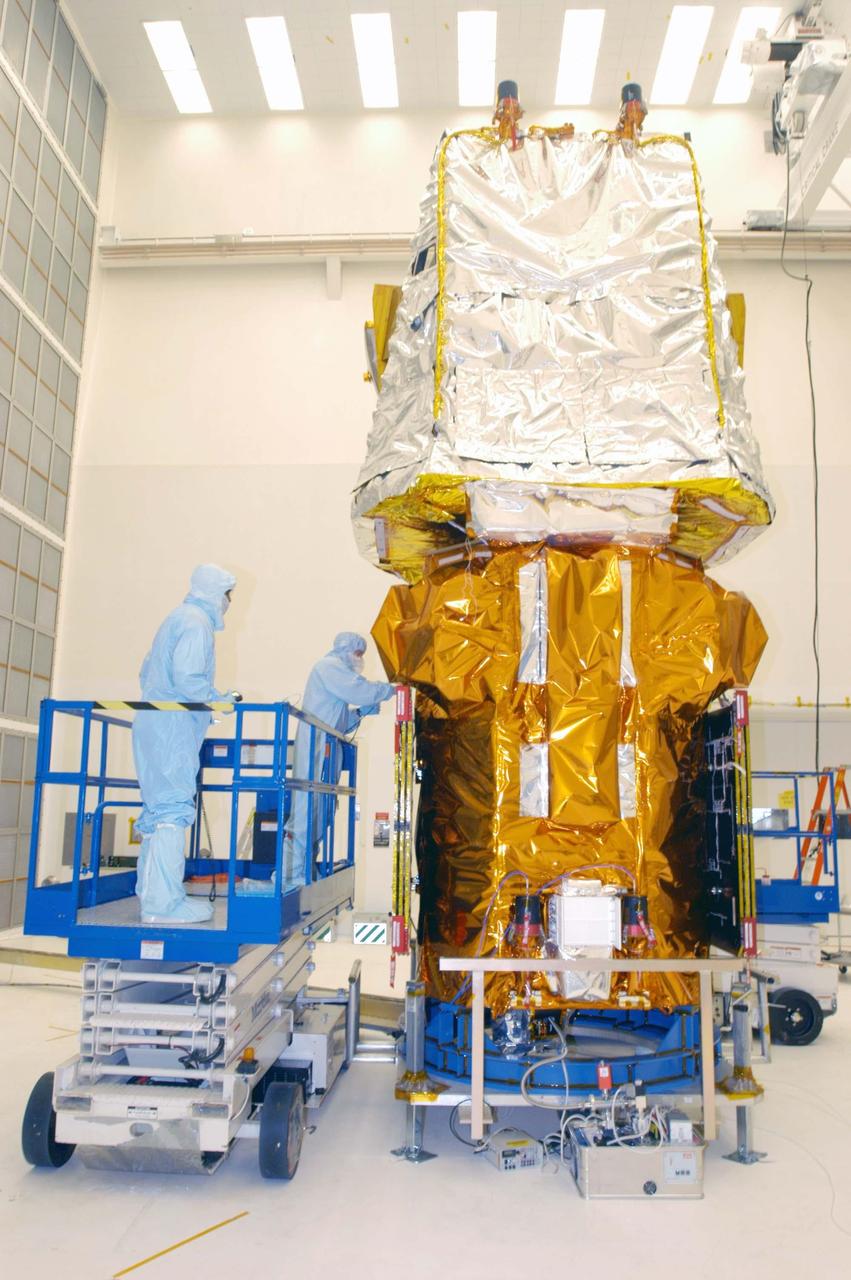
KENNEDY SPACE CENTER, FLA. - Quality Assurance Services technicians Willy Jones and Brian Kittle do some touch-up work on the Swift spacecraft in Hangar AE at Cape Canaveral Air Force Station. Swift has been wrapped with blankets to provide thermal stability during the mission. Swift is a first-of-its-kind multi-wavelength observatory dedicated to the study of gamma-ray burst (GRB) science. Its three instruments will work together to observe GRBs and afterglows in the gamma-ray, X-ray, ultraviolet and optical wavebands. The most comprehensive study of GRB afterglows to date, Swift is expected to observe more than 200 gamma-ray bursts during its 2-year mission.

KENNEDY SPACE CENTER, FLA. - Technician Grace Miller-Swales (left) does touch-up work on the Swift spacecraft in Hangar AE at Cape Canaveral Air Force Station. John Batilito, with Quality Assurance Services, is at right. Swift is wrapped with blankets to provide thermal stability during the mission. Swift is a first-of-its-kind multi-wavelength observatory dedicated to the study of gamma-ray burst (GRB) science. Its three instruments will work together to observe GRBs and afterglows in the gamma-ray, X-ray, ultraviolet and optical wavebands. The most comprehensive study of GRB afterglows to date, Swift is expected to observe more than 200 gamma-ray bursts during its 2-year mission.
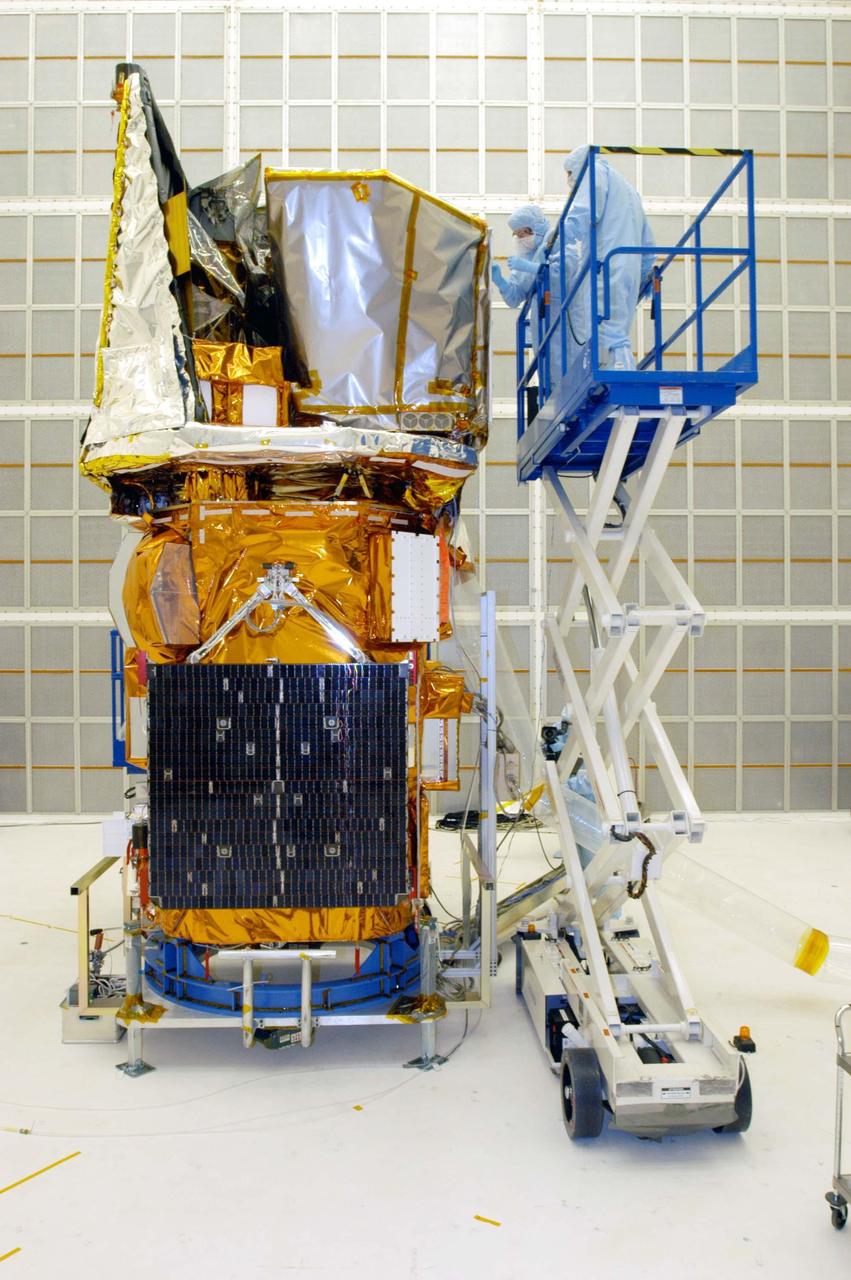
KENNEDY SPACE CENTER, FLA. - Technician Grace Miller-Swales (left) does touch-up work on the Swift spacecraft in Hangar AE at Cape Canaveral Air Force Station. John DiBatilito, with Quality Assurance Services, is at right. Swift is wrapped with blankets to provide thermal stability during the mission. Swift is a first-of-its-kind multi-wavelength observatory dedicated to the study of gamma-ray burst (GRB) science. Its three instruments will work together to observe GRBs and afterglows in the gamma-ray, X-ray, ultraviolet and optical wavebands. The most comprehensive study of GRB afterglows to date, Swift is expected to observe more than 200 gamma-ray bursts during its 2-year mission.
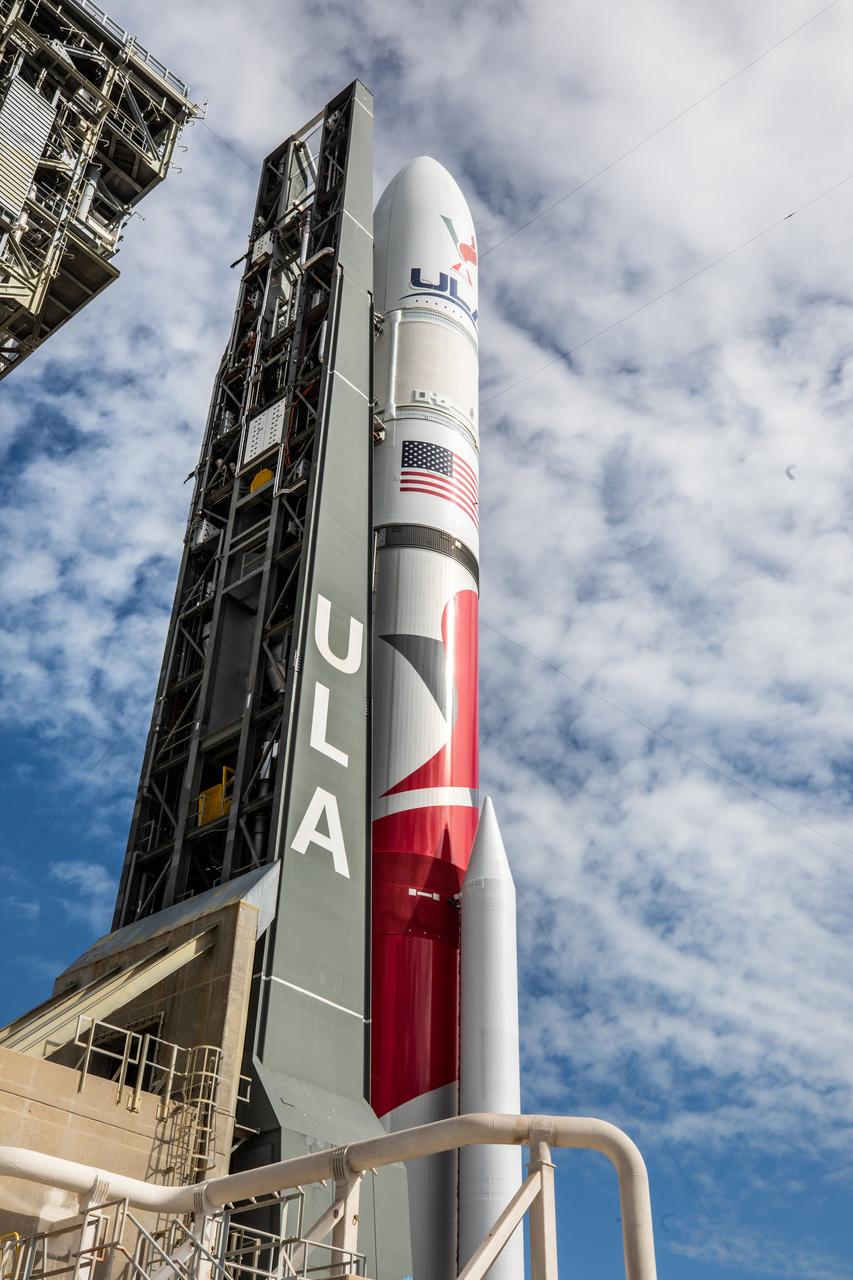
On Friday, Jan. 5, 2024, United Launch Alliance’s Vulcan rocket carrying Astrobotic’s Peregrine lunar lander is rolled out of the Vertical Integration Facility to the launch pad at Space Launch Complex 41 on Cape Canaveral Space Force Station in Florida in advance of a planned lift off at 2:18 a.m. EST Monday, Jan. 8, 2024. Astrobotic’s Peregrine Mission One will carry NASA and commercial payloads to the Moon to study the lunar exosphere, thermal properties, and hydrogen abundance of the lunar regolith, magnetic fields, and the radiation environment of the lunar surface.(Multiple values)
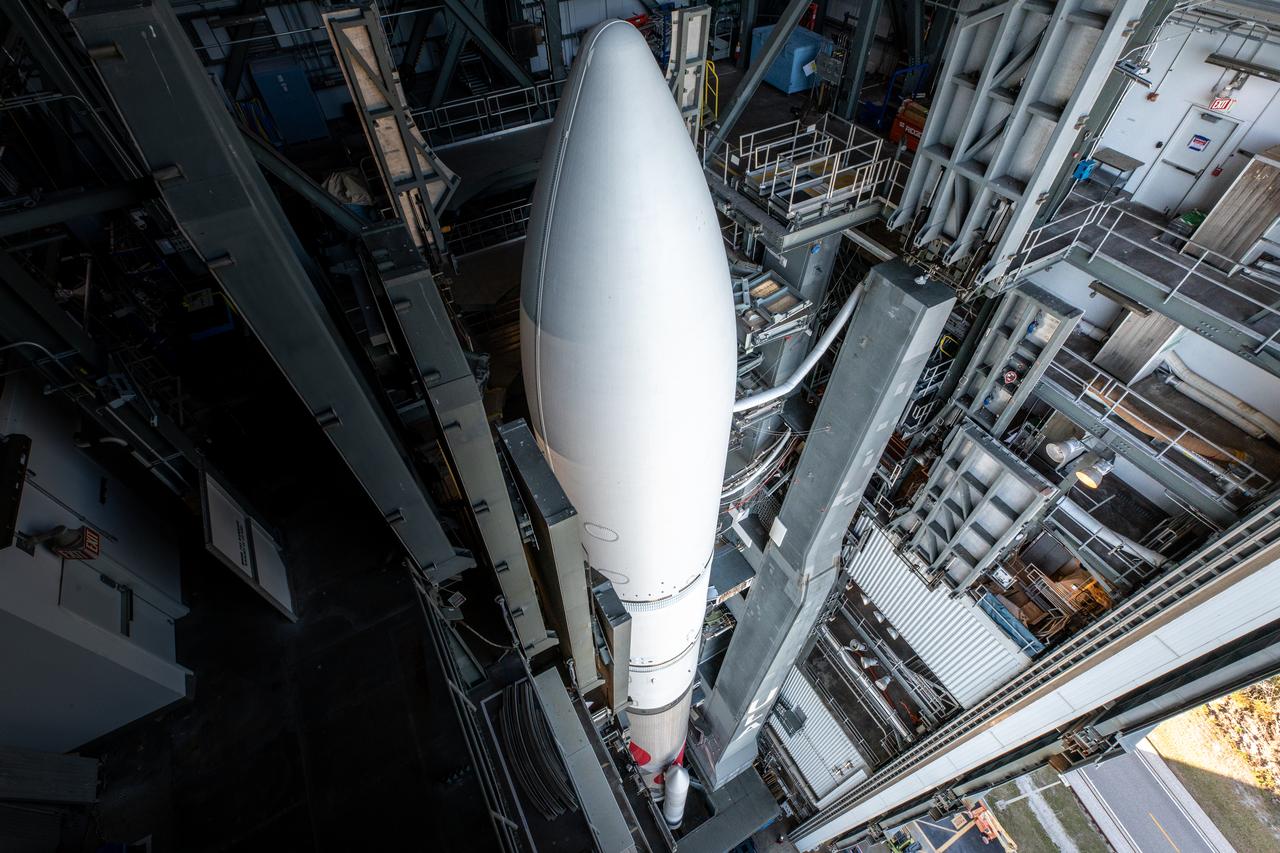
On Friday, Jan. 5, 2024, United Launch Alliance’s Vulcan rocket carrying Astrobotic’s Peregrine lunar lander is rolled out of the Vertical Integration Facility to the launch pad at Space Launch Complex 41 on Cape Canaveral Space Force Station in Florida in advance of a planned lift off at 2:18 a.m. EST Monday, Jan. 8, 2024. Astrobotic’s Peregrine Mission One will carry NASA and commercial payloads to the Moon to study the lunar exosphere, thermal properties, and hydrogen abundance of the lunar regolith, magnetic fields, and the radiation environment of the lunar surface.(Multiple values)
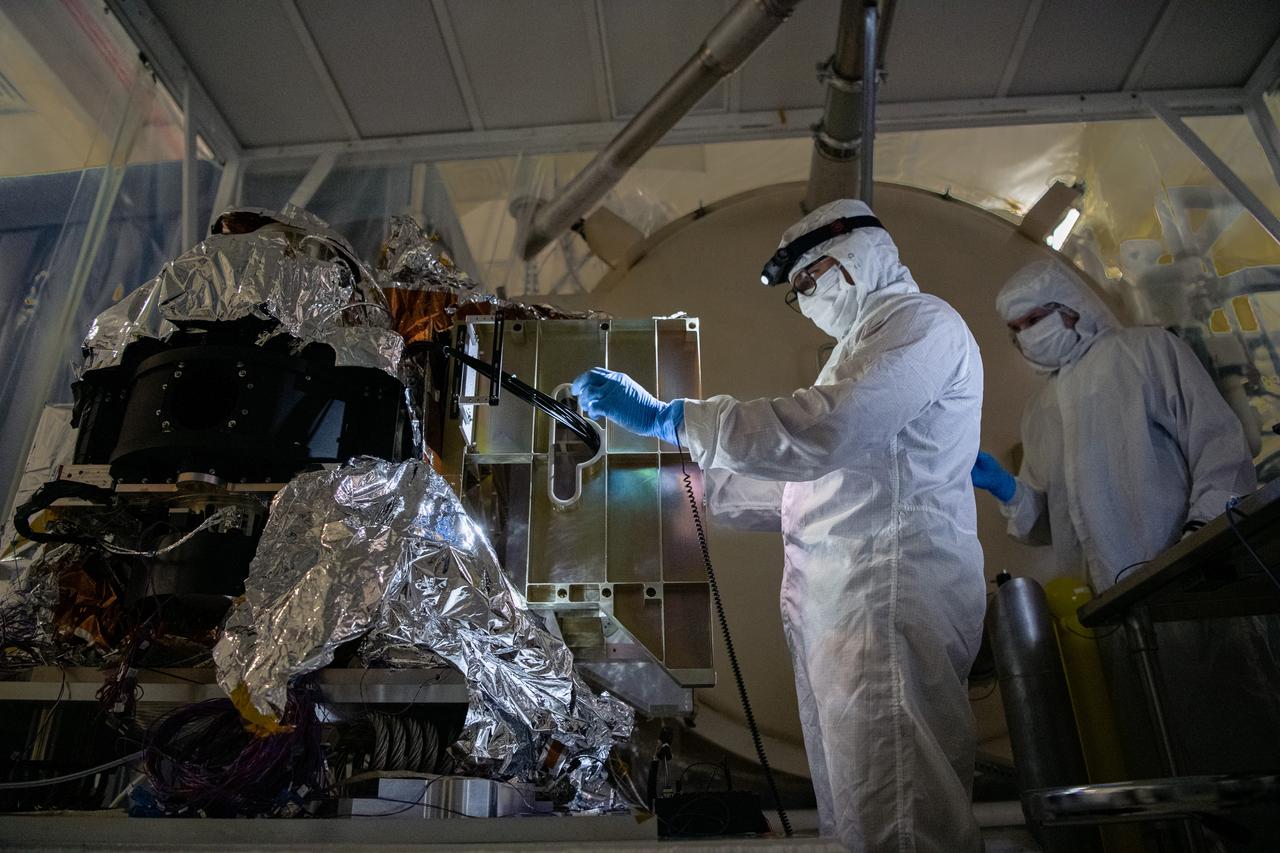
Alejandro Rodriguez Perez and Joe Thomes, members of the fiber optic & photonic team, configure the Ocean Color Instrument (OCI) Engineering Test Unit (ETU) Shortwave Infrared (SWIR) Detector Asembly and Multi-lens Array (MLA) fibers for thermal testing. OCI is a highly advanced optical spectrometer that will be used to measure properties of light over portions of the electromagnetic spectrum. It will enable continuous measurement of light at finer wavelength resolution than previous NASA satellite sensors, extending key system ocean color data records for climate studies. OCI is PACE's (Plankton, Aerosol, Cloud, ocean Ecosystem) primary sensor built at Goddard Space Flight Center in Greenbelt, MD.

On the first flight of NASA’s CLPS (Commercial Lunar Payload Services) initiative and Artemis program, a United Launch Alliance Vulcan rocket carrying Astrobotic’s Peregrine lunar lander lifts off at 2:18 a.m. EST from Space Launch Complex 41 at Cape Canaveral Space Force Station in Florida on Monday, Jan. 8, 2024. Astrobotic’s Peregrine Mission One will carry NASA and commercial payloads to the Moon to study the lunar exosphere, thermal properties, and hydrogen abundance of the lunar regolith, magnetic fields, and the radiation environment of the lunar surface.
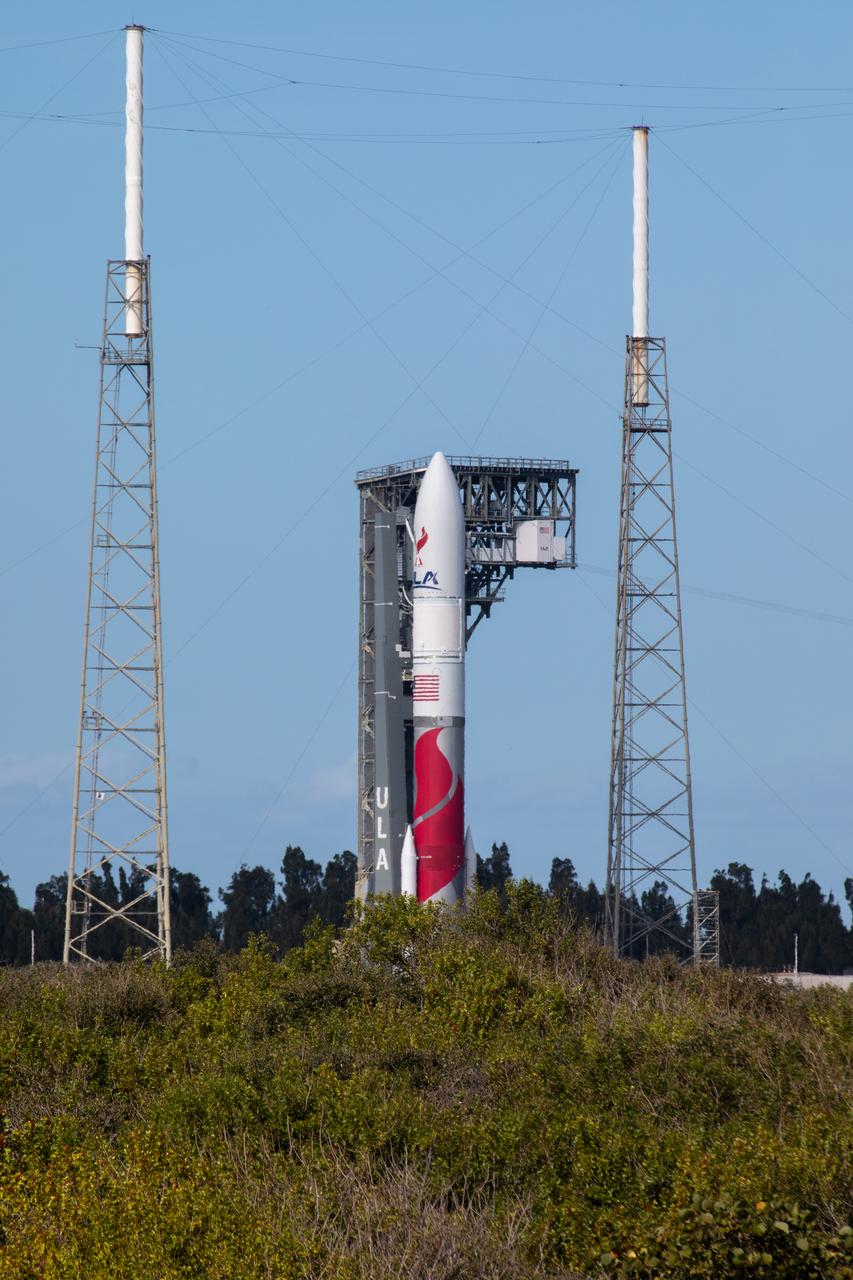
On Friday, Jan. 5, 2024, United Launch Alliance’s Vulcan rocket carrying Astrobotic’s Peregrine lunar lander is rolled out of the Vertical Integration Facility to the launch pad at Space Launch Complex 41 on Cape Canaveral Space Force Station in Florida in advance of a planned lift off at 2:18 a.m. EST Monday, Jan. 8, 2024. Astrobotic’s Peregrine Mission One will carry NASA and commercial payloads to the Moon to study the lunar exosphere, thermal properties, and hydrogen abundance of the lunar regolith, magnetic fields, and the radiation environment of the lunar surface.
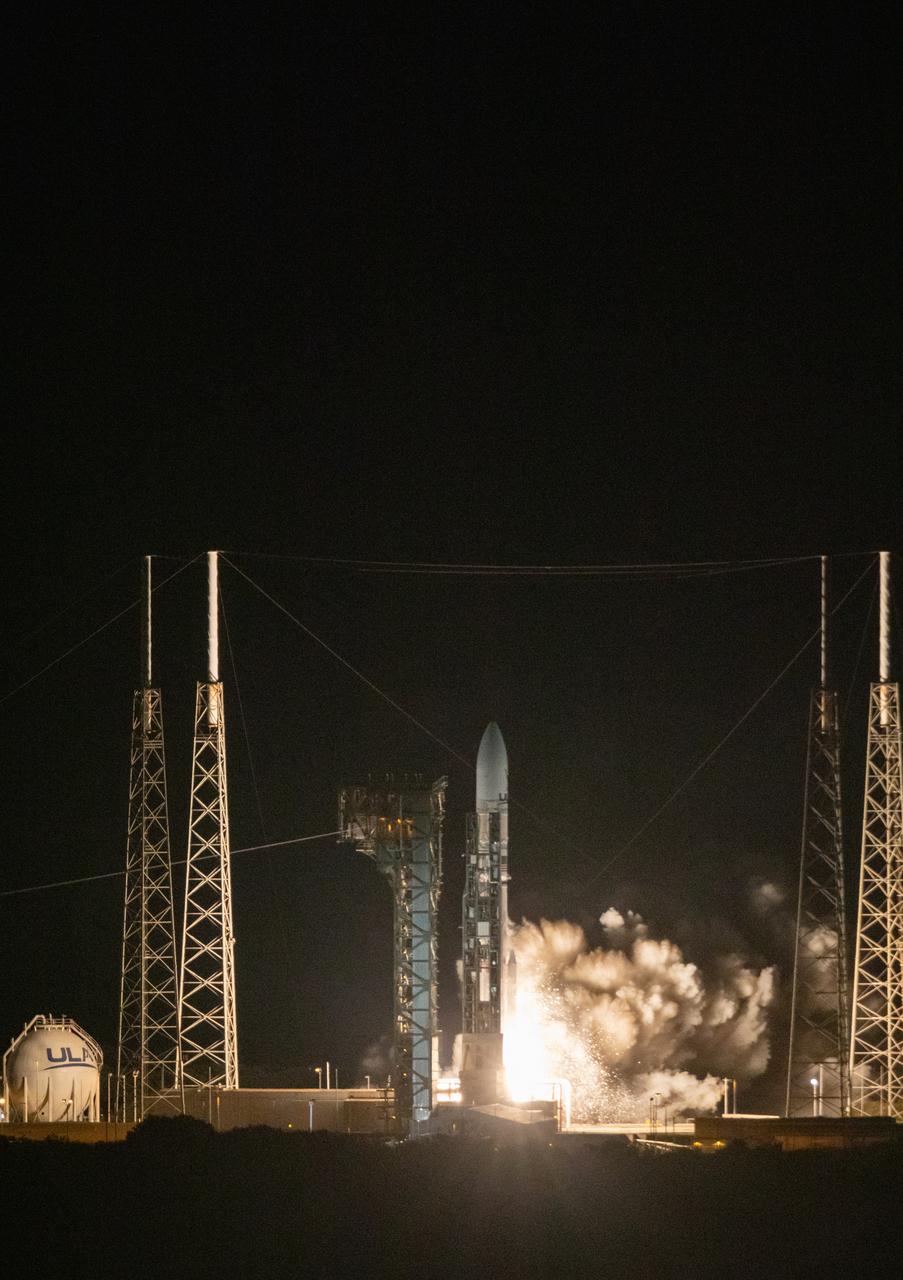
On the first flight of NASA’s CLPS (Commercial Lunar Payload Services) initiative and Artemis program, a United Launch Alliance Vulcan rocket carrying Astrobotic’s Peregrine lunar lander lifts off at 2:18 a.m. EST from Space Launch Complex 41 at Cape Canaveral Space Force Station in Florida on Monday, Jan. 8, 2024. Astrobotic’s Peregrine Mission One will carry NASA and commercial payloads to the Moon to study the lunar exosphere, thermal properties, and hydrogen abundance of the lunar regolith, magnetic fields, and the radiation environment of the lunar surface.
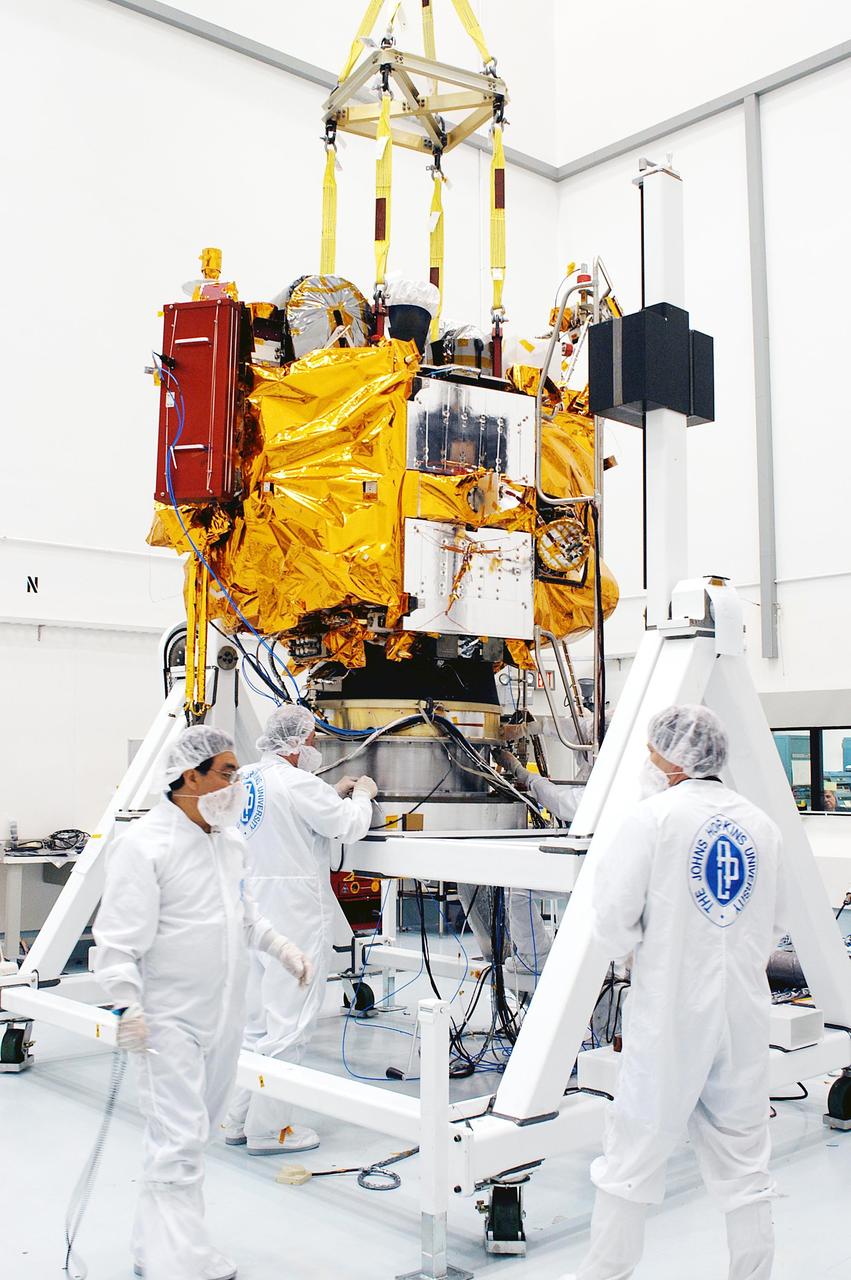
KENNEDY SPACE CENTER, FLA. -- At the Astrotech Space Operations processing facilities, workers prepare to move NASA’s MESSENGER spacecraft onto a test stand using an overhead crane. There, employees of the Johns Hopkins University Applied Physics Laboratory, builders of the spacecraft, will begin final processing for launch, including checkout of the power systems, communications systems and control systems. The thermal blankets will also be attached for flight. MESSENGER - short for MErcury Surface, Space ENvironment, GEochemistry and Ranging - will be launched aboard a Boeing Delta II rocket no earlier than July 30 on a six-year mission to study the planet Mercury.
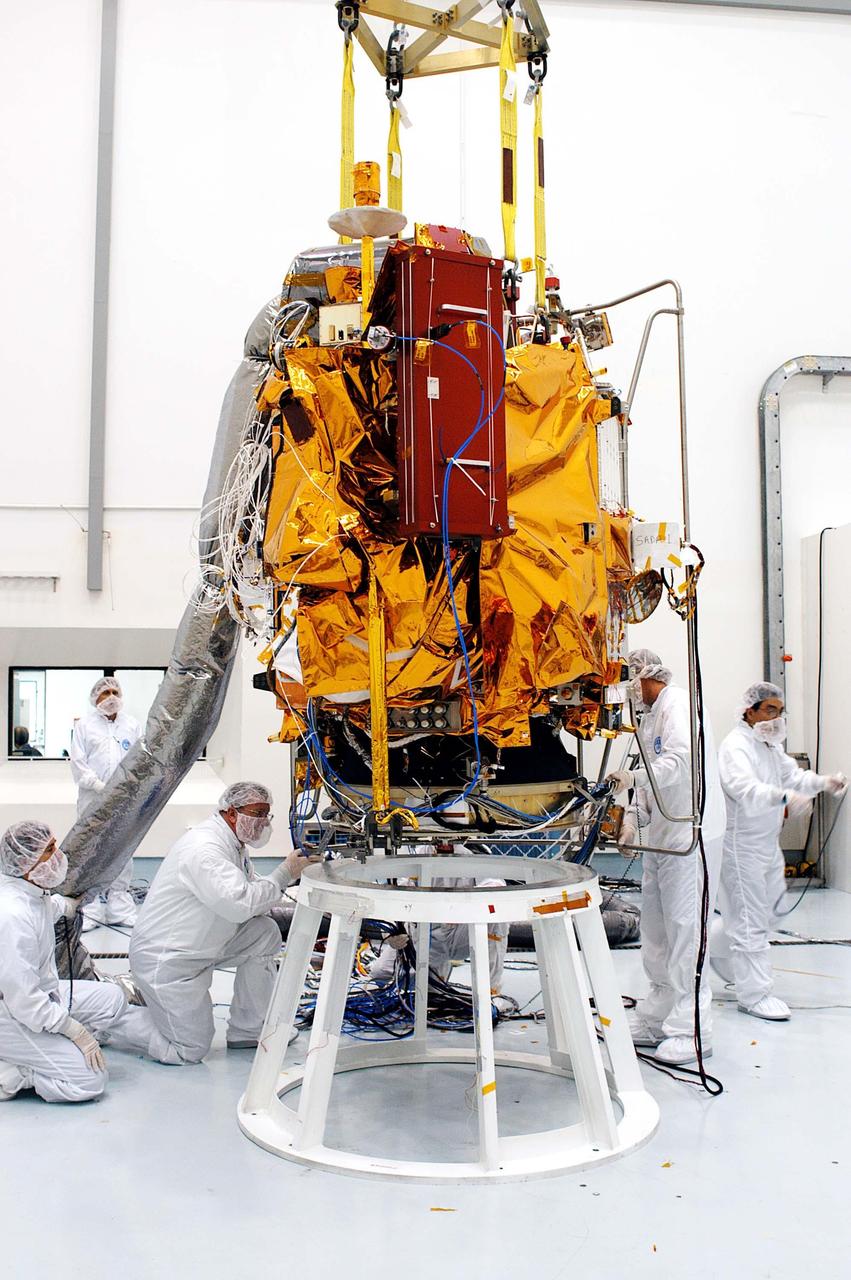
KENNEDY SPACE CENTER, FLA. -- At the Astrotech Space Operations processing facilities, workers prepare for contact of NASA’s MESSENGER spacecraft with a test stand. Once in place, employees of the Johns Hopkins University Applied Physics Laboratory, builders of the spacecraft, will begin final processing for launch, including checkout of the power systems, communications systems and control systems. The thermal blankets will also be attached for flight. MESSENGER - short for MErcury Surface, Space ENvironment, GEochemistry and Ranging - will be launched aboard a Boeing Delta II rocket no earlier than July 30 on a six-year mission to study the planet Mercury.
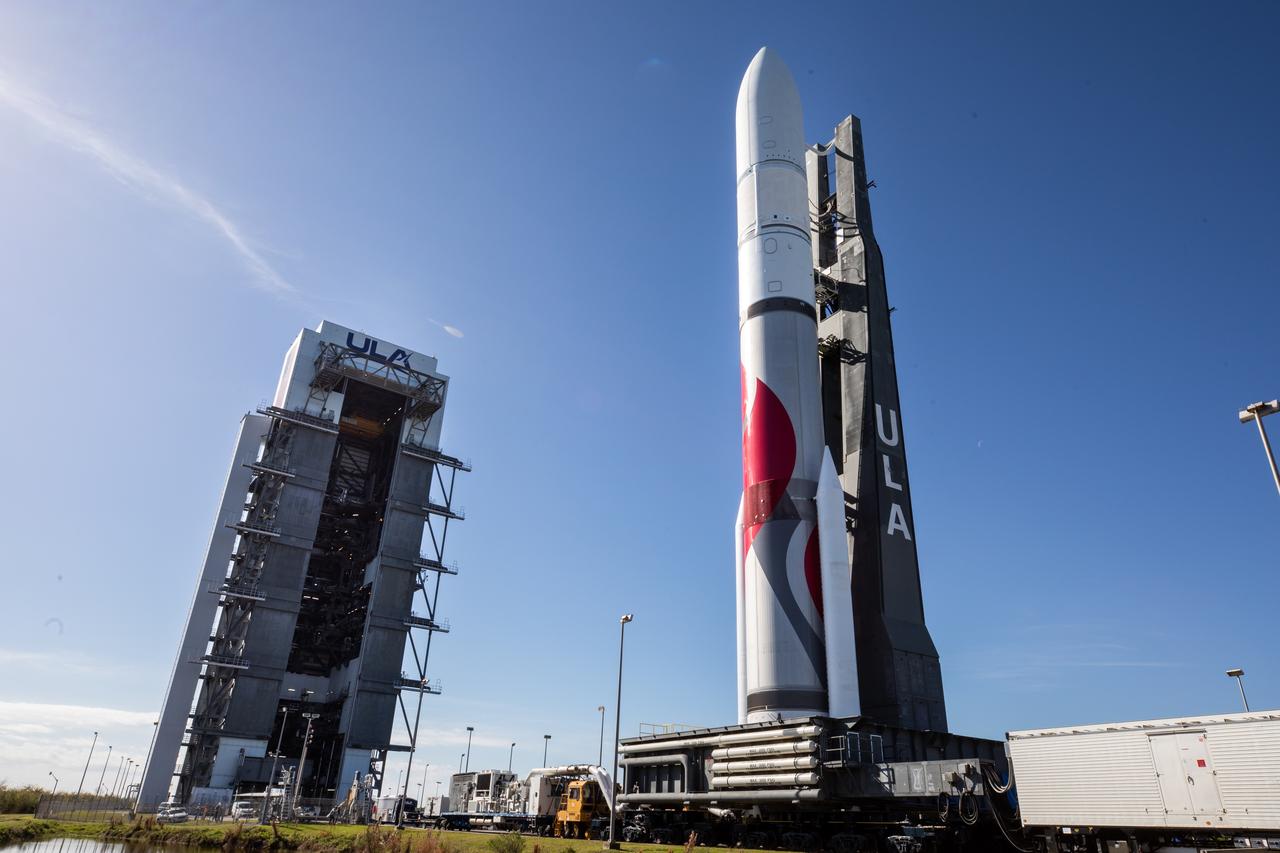
On Friday, Jan. 5, 2024, United Launch Alliance’s Vulcan rocket carrying Astrobotic’s Peregrine lunar lander is rolled out of the Vertical Integration Facility to the launch pad at Space Launch Complex 41 on Cape Canaveral Space Force Station in Florida in advance of a planned lift off at 2:18 a.m. EST Monday, Jan. 8, 2024. Astrobotic’s Peregrine Mission One will carry NASA and commercial payloads to the Moon to study the lunar exosphere, thermal properties, and hydrogen abundance of the lunar regolith, magnetic fields, and the radiation environment of the lunar surface.(Multiple values)
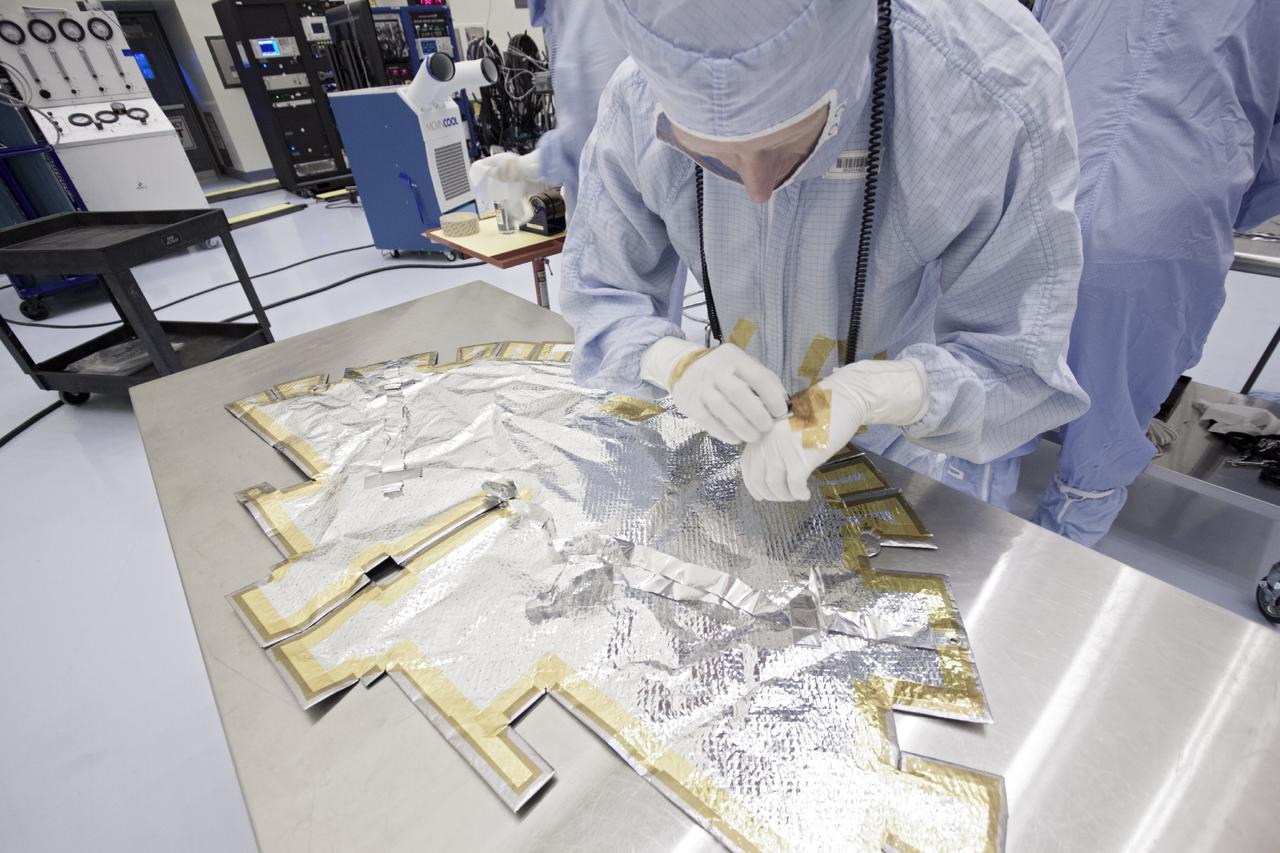
CAPE CANAVERAL, Fla. – Inside the Payload Hazardous Servicing Facility at NASA's Kennedy Space Center in Florida, technicians apply tape to the thermal blanket for the MAVEN spacecraft's parabolic high gain antenna. MAVEN stands for Mars Atmosphere and Volatile Evolution. The antenna will communicate vast amounts of data to Earth during the mission. MAVEN is being prepared inside the facility for its scheduled November launch aboard a United Launch Alliance Atlas V rocket to Mars. Positioned in an orbit above the Red Planet, MAVEN will study the upper atmosphere of Mars in unprecedented detail. Photo credit: NASA/Jim Grossmann
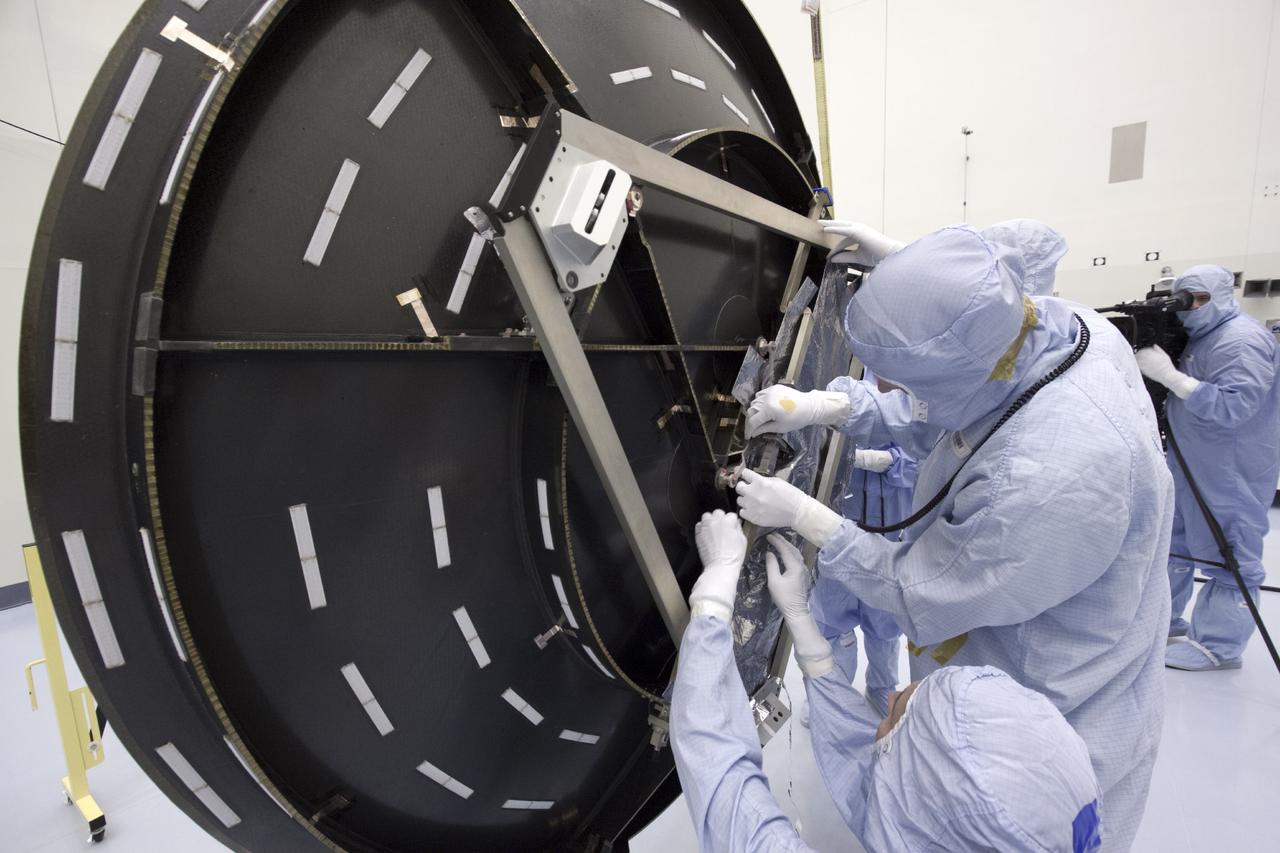
CAPE CANAVERAL, Fla. – Inside the Payload Hazardous Servicing Facility at NASA's Kennedy Space Center in Florida, technicians install a thermal blanket on the parabolic high gain antenna of the Mars Atmosphere and Volatile Evolution, or MAVEN spacecraft. The antenna will communicate vast amounts of data to Earth during the mission. MAVEN is being prepared inside the facility for its scheduled November launch aboard a United Launch Alliance Atlas V rocket to Mars. Positioned in an orbit above the Red Planet, MAVEN will study the upper atmosphere of Mars in unprecedented detail. Photo credit: NASA/Jim Grossmann
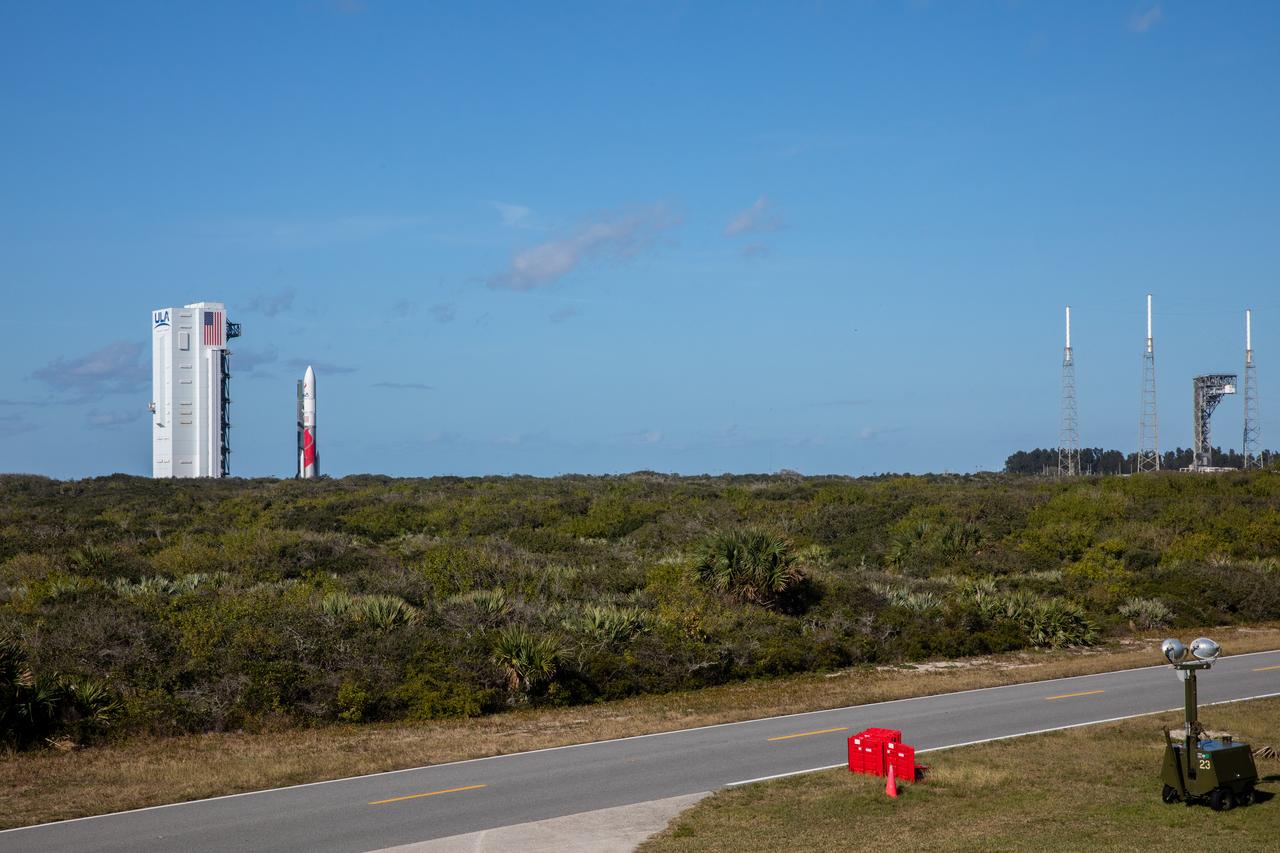
On Friday, Jan. 5, 2024, United Launch Alliance’s Vulcan rocket carrying Astrobotic’s Peregrine lunar lander is rolled out of the Vertical Integration Facility to the launch pad at Space Launch Complex 41 on Cape Canaveral Space Force Station in Florida in advance of a planned lift off at 2:18 a.m. EST Monday, Jan. 8, 2024. Astrobotic’s Peregrine Mission One will carry NASA and commercial payloads to the Moon to study the lunar exosphere, thermal properties, and hydrogen abundance of the lunar regolith, magnetic fields, and the radiation environment of the lunar surface.
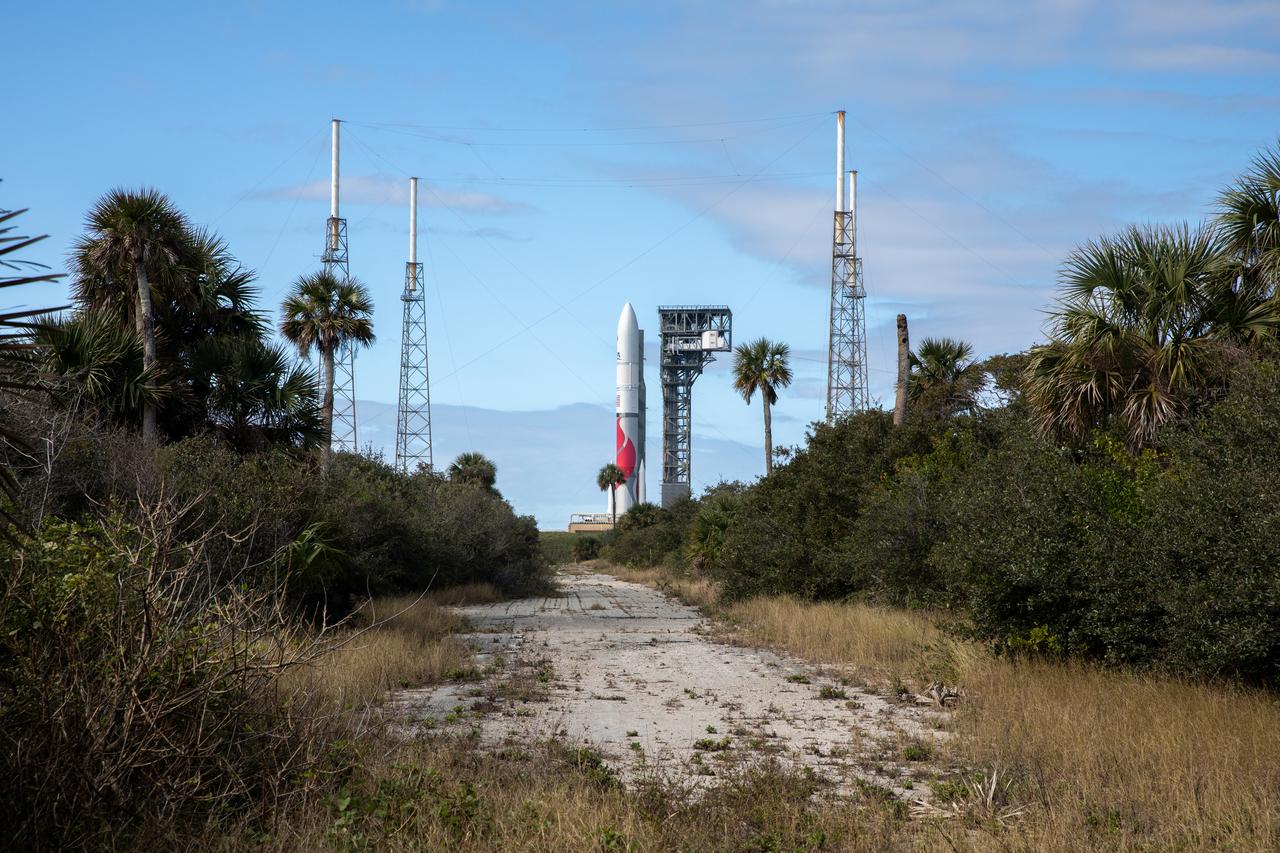
On Friday, Jan. 5, 2024, United Launch Alliance’s Vulcan rocket carrying Astrobotic’s Peregrine lunar lander is rolled out of the Vertical Integration Facility to the launch pad at Space Launch Complex 41 on Cape Canaveral Space Force Station in Florida in advance of a planned lift off at 2:18 a.m. EST Monday, Jan. 8, 2024. Astrobotic’s Peregrine Mission One will carry NASA and commercial payloads to the Moon to study the lunar exosphere, thermal properties, and hydrogen abundance of the lunar regolith, magnetic fields, and the radiation environment of the lunar surface.
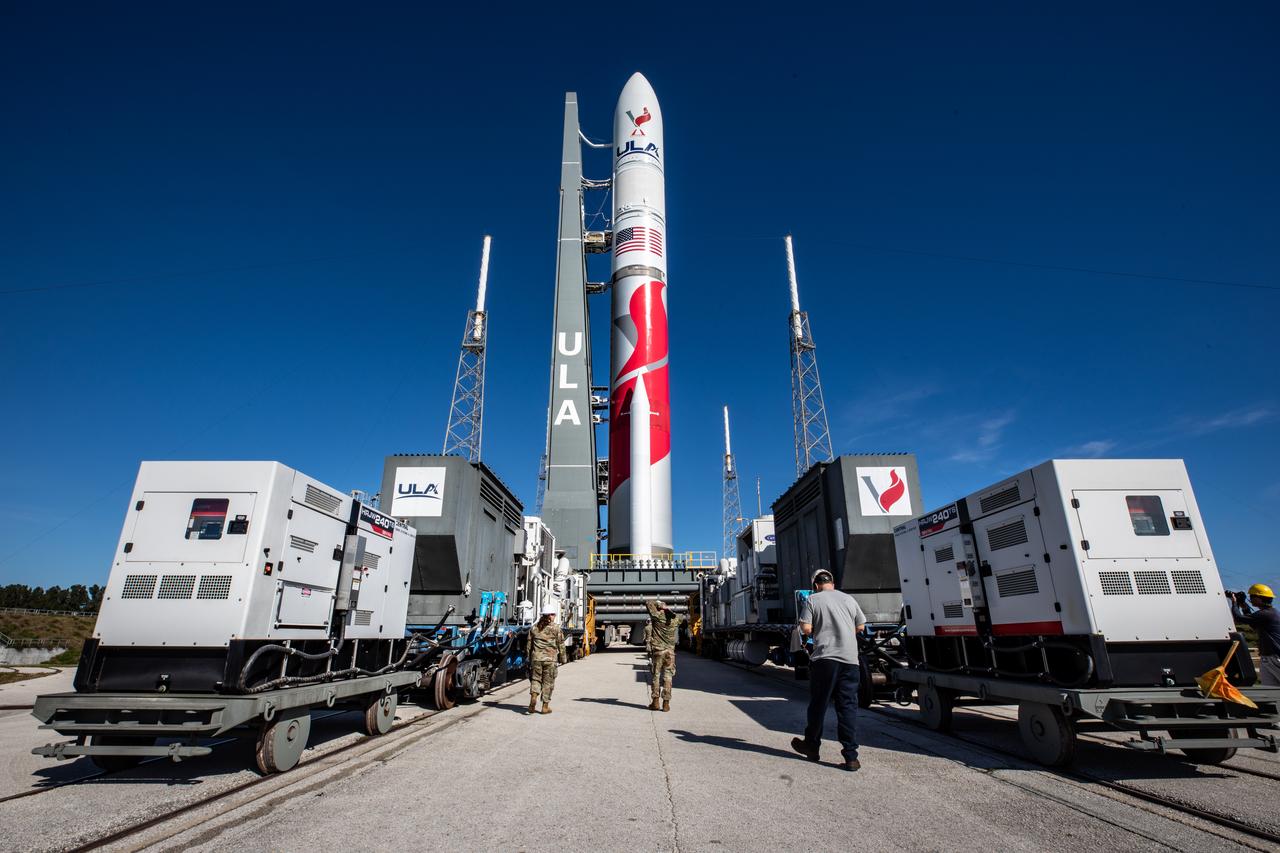
On Friday, Jan. 5, 2024, United Launch Alliance’s Vulcan rocket carrying Astrobotic’s Peregrine lunar lander is rolled out of the Vertical Integration Facility to the launch pad at Space Launch Complex 41 on Cape Canaveral Space Force Station in Florida in advance of a planned lift off at 2:18 a.m. EST Monday, Jan. 8, 2024. Astrobotic’s Peregrine Mission One will carry NASA and commercial payloads to the Moon to study the lunar exosphere, thermal properties, and hydrogen abundance of the lunar regolith, magnetic fields, and the radiation environment of the lunar surface.(Multiple values)
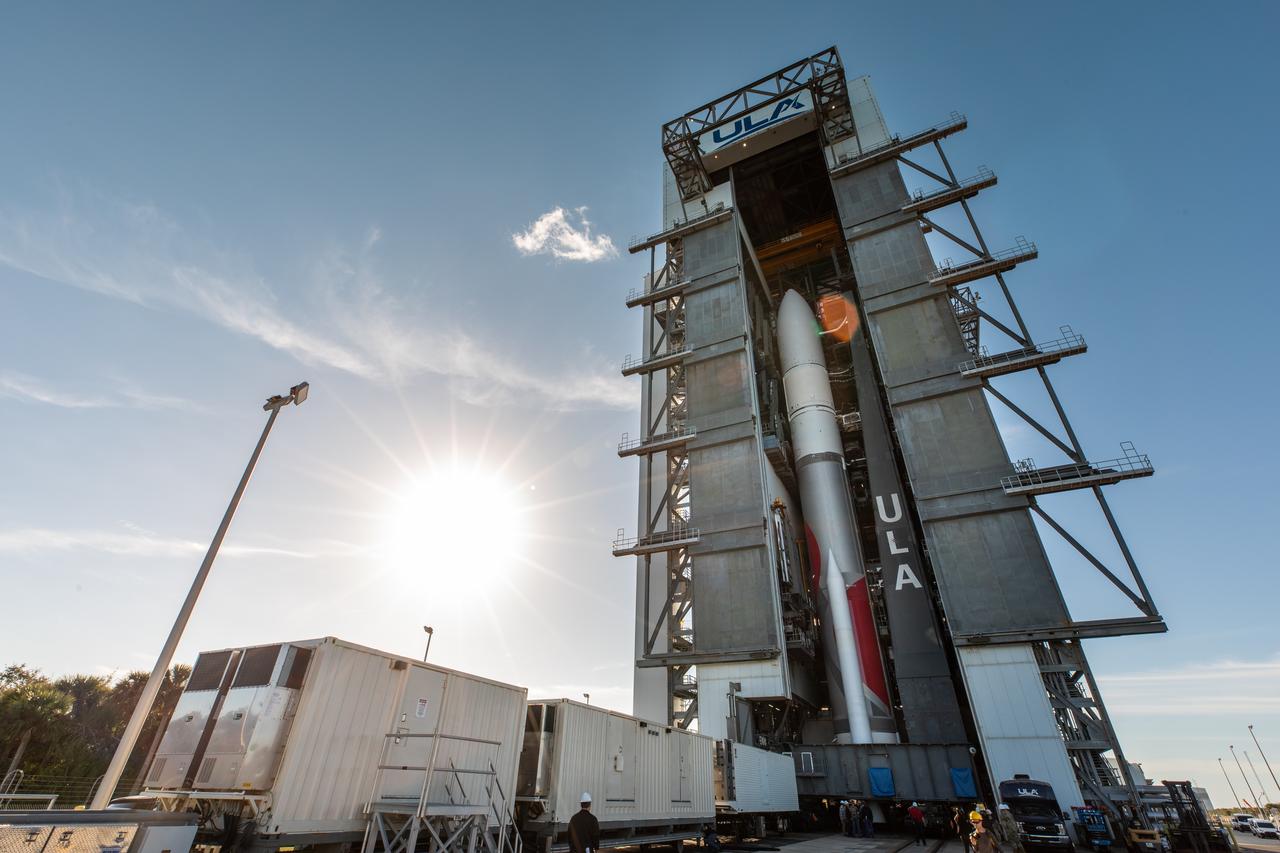
On Friday, Jan. 5, 2024, United Launch Alliance’s Vulcan rocket carrying Astrobotic’s Peregrine lunar lander is rolled out of the Vertical Integration Facility to the launch pad at Space Launch Complex 41 on Cape Canaveral Space Force Station in Florida in advance of a planned lift off at 2:18 a.m. EST Monday, Jan. 8, 2024. Astrobotic’s Peregrine Mission One will carry NASA and commercial payloads to the Moon to study the lunar exosphere, thermal properties, and hydrogen abundance of the lunar regolith, magnetic fields, and the radiation environment of the lunar surface.(Multiple values)
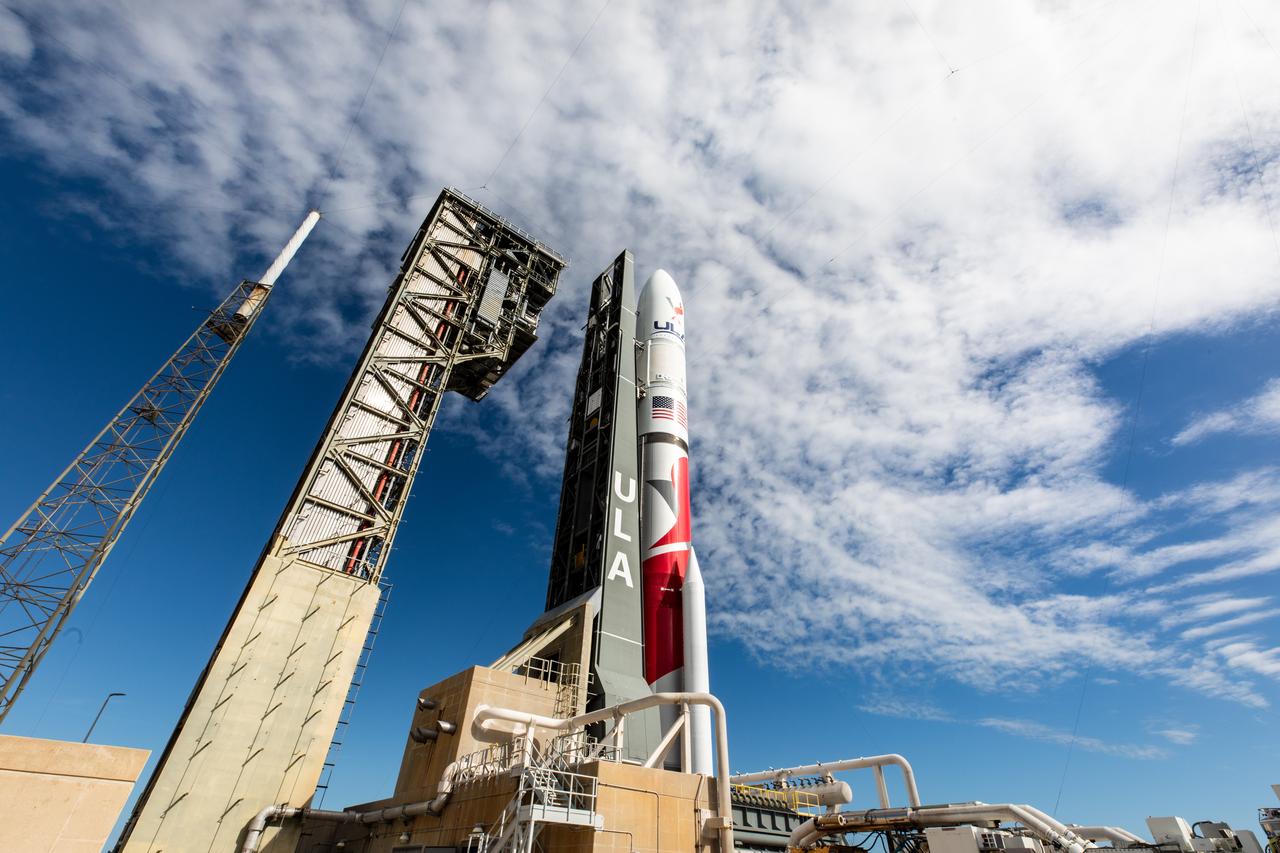
On Friday, Jan. 5, 2024, United Launch Alliance’s Vulcan rocket carrying Astrobotic’s Peregrine lunar lander is rolled out of the Vertical Integration Facility to the launch pad at Space Launch Complex 41 on Cape Canaveral Space Force Station in Florida in advance of a planned lift off at 2:18 a.m. EST Monday, Jan. 8, 2024. Astrobotic’s Peregrine Mission One will carry NASA and commercial payloads to the Moon to study the lunar exosphere, thermal properties, and hydrogen abundance of the lunar regolith, magnetic fields, and the radiation environment of the lunar surface.(Multiple values)

Ahead of launch as part of NASA’s Commercial Lunar Payload Services (CLPS) initiative, Astrobotic’s Peregrine lunar lander is preparing to be encapsulated in the payload fairing, or nose cone, of United Launch Alliance’s Vulcan rocket on Nov. 21, 2023, at Astrotech Space Operations Facility near the agency’s Kennedy Space Center in Florida. Launch of Astrobotic’s Peregrine Mission One will carry NASA and commercial payloads to the Moon in early 2024 to study the lunar exosphere, thermal properties, and hydrogen abundance of the lunar regolith, magnetic fields, and the radiation environment of the lunar surface.
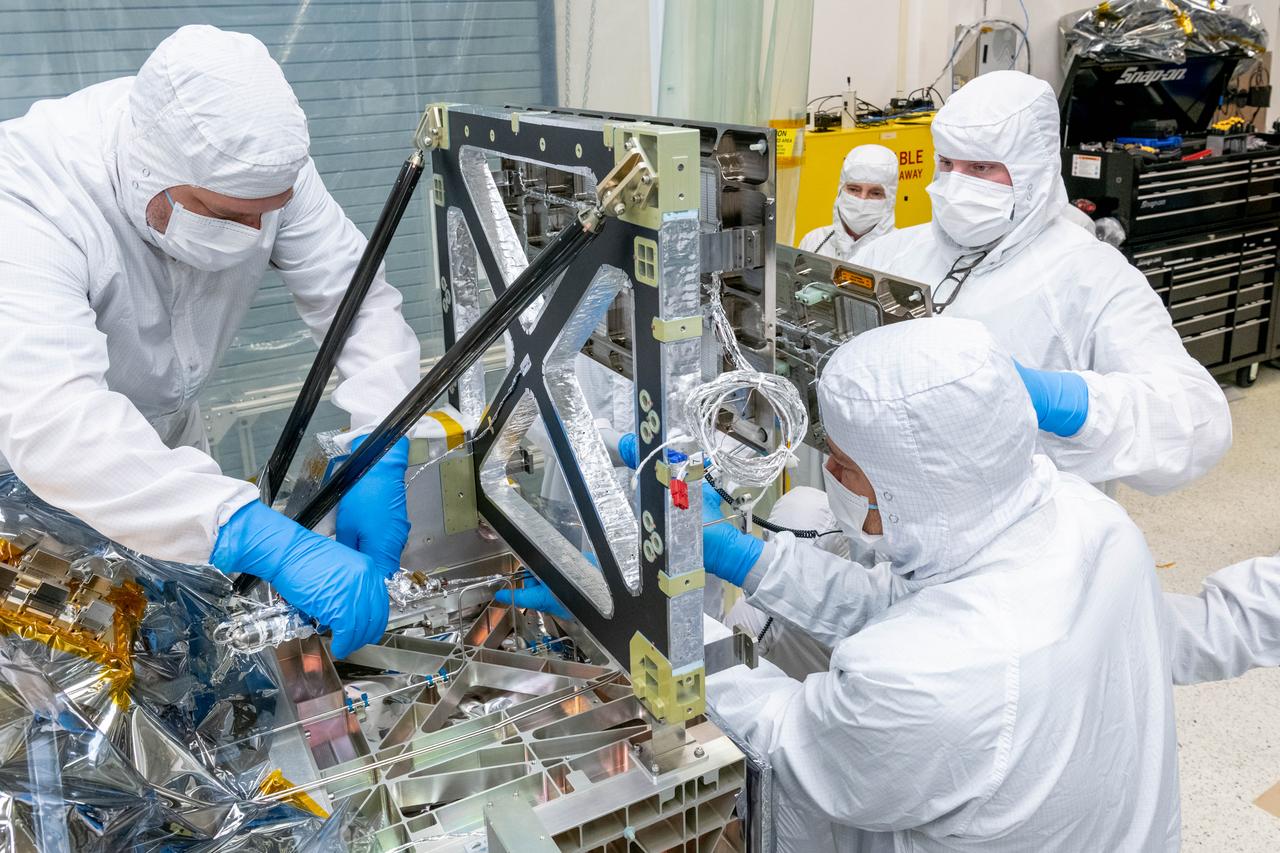
Mechanical technicians and thermal engineers work together to carefully feed the lines of a Loop Heat Pipe onto the Ocean Color Instrument (OCI). This integration operation will allow proper heat transfer throughout the instrument. OCI is a highly advanced optical spectrometer that will be used to measure properties of light over portions of the electromagnetic spectrum. It will enable continuous measurement of light at finer wavelength resolution than previous NASA satellite sensors, extending key system ocean color data records for climate studies. OCI is PACE's (Plankton, Aerosol, Cloud, ocean Ecosystem) primary sensor built at Goddard Space Flight Center in Greenbelt, MD.
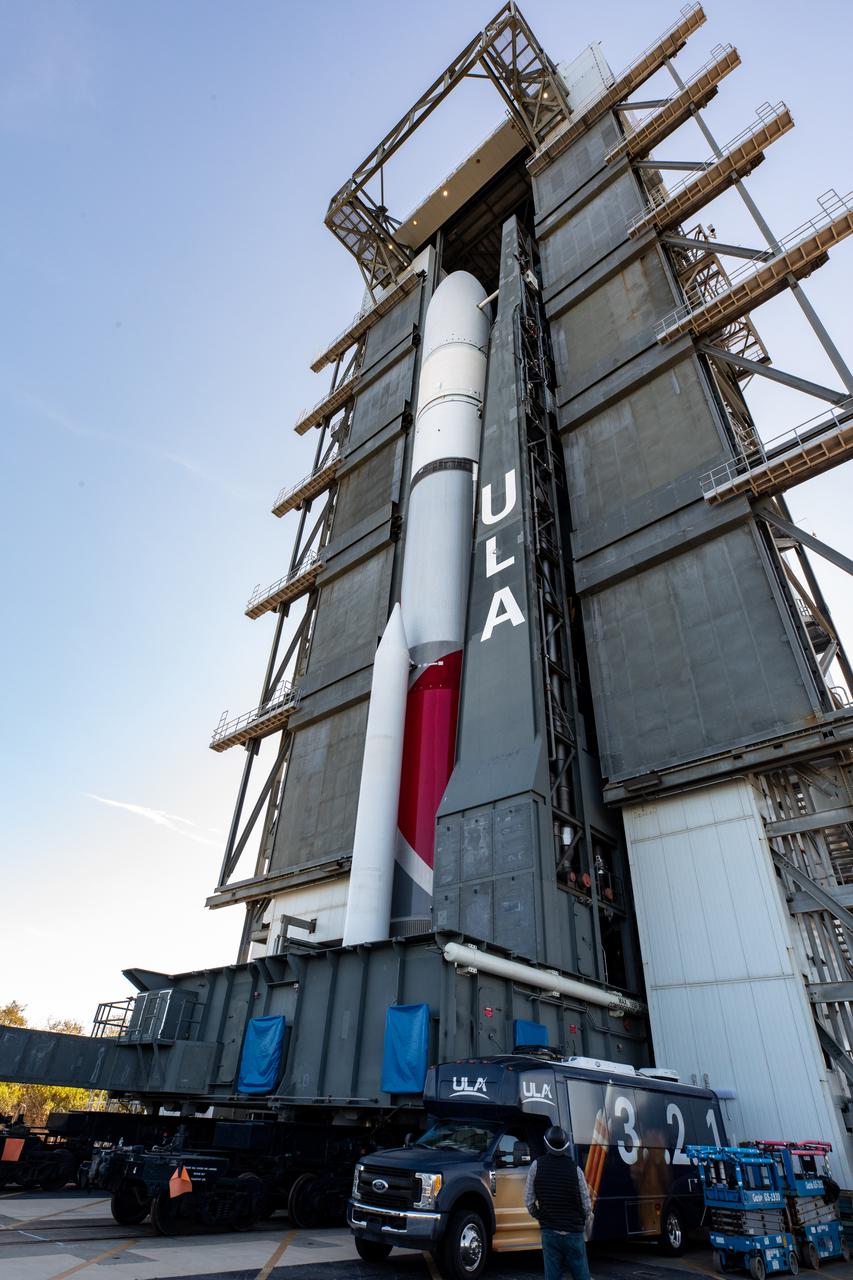
On Friday, Jan. 5, 2024, United Launch Alliance’s Vulcan rocket carrying Astrobotic’s Peregrine lunar lander is rolled out of the Vertical Integration Facility to the launch pad at Space Launch Complex 41 on Cape Canaveral Space Force Station in Florida in advance of a planned lift off at 2:18 a.m. EST Monday, Jan. 8, 2024. Astrobotic’s Peregrine Mission One will carry NASA and commercial payloads to the Moon to study the lunar exosphere, thermal properties, and hydrogen abundance of the lunar regolith, magnetic fields, and the radiation environment of the lunar surface.(Multiple values)
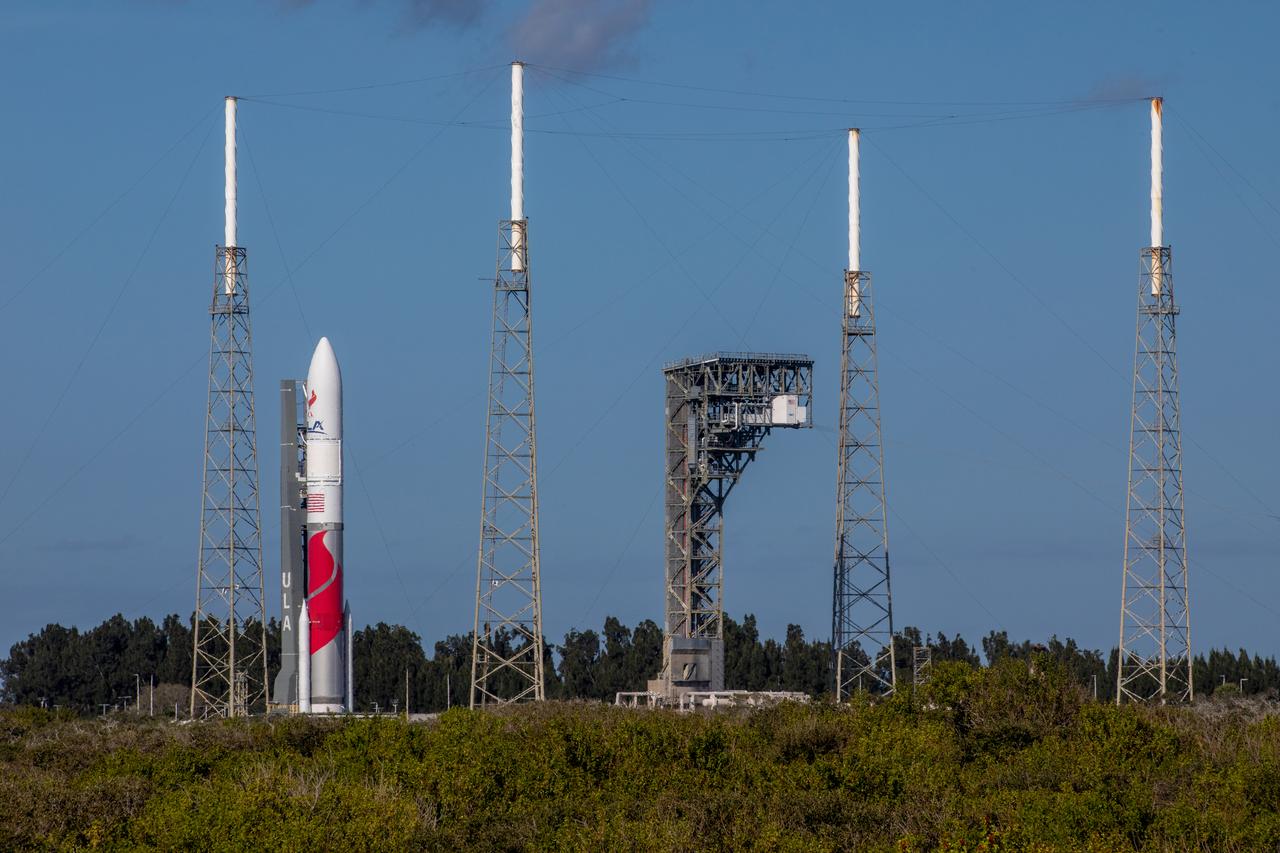
On Friday, Jan. 5, 2024, United Launch Alliance’s Vulcan rocket carrying Astrobotic’s Peregrine lunar lander is rolled out of the Vertical Integration Facility to the launch pad at Space Launch Complex 41 on Cape Canaveral Space Force Station in Florida in advance of a planned lift off at 2:18 a.m. EST Monday, Jan. 8, 2024. Astrobotic’s Peregrine Mission One will carry NASA and commercial payloads to the Moon to study the lunar exosphere, thermal properties, and hydrogen abundance of the lunar regolith, magnetic fields, and the radiation environment of the lunar surface.
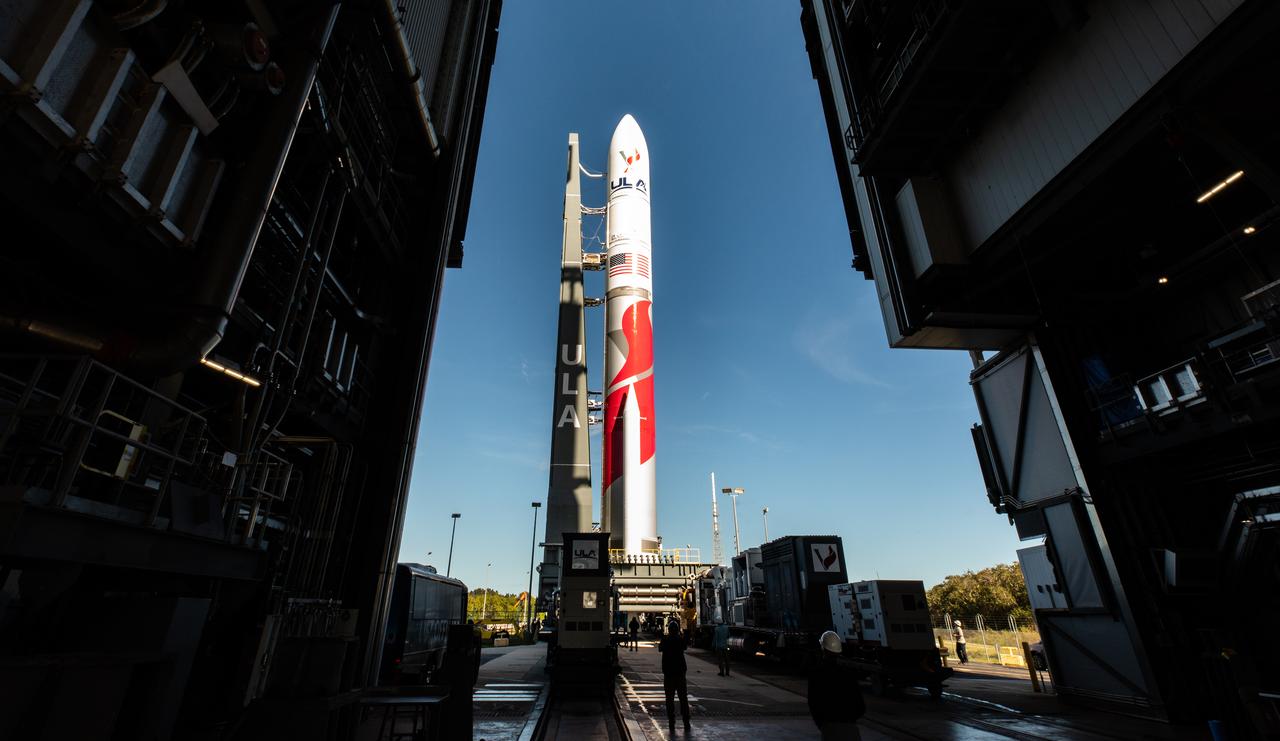
On Friday, Jan. 5, 2024, United Launch Alliance’s Vulcan rocket carrying Astrobotic’s Peregrine lunar lander is rolled out of the Vertical Integration Facility to the launch pad at Space Launch Complex 41 on Cape Canaveral Space Force Station in Florida in advance of a planned lift off at 2:18 a.m. EST Monday, Jan. 8, 2024. Astrobotic’s Peregrine Mission One will carry NASA and commercial payloads to the Moon to study the lunar exosphere, thermal properties, and hydrogen abundance of the lunar regolith, magnetic fields, and the radiation environment of the lunar surface.(Multiple values)
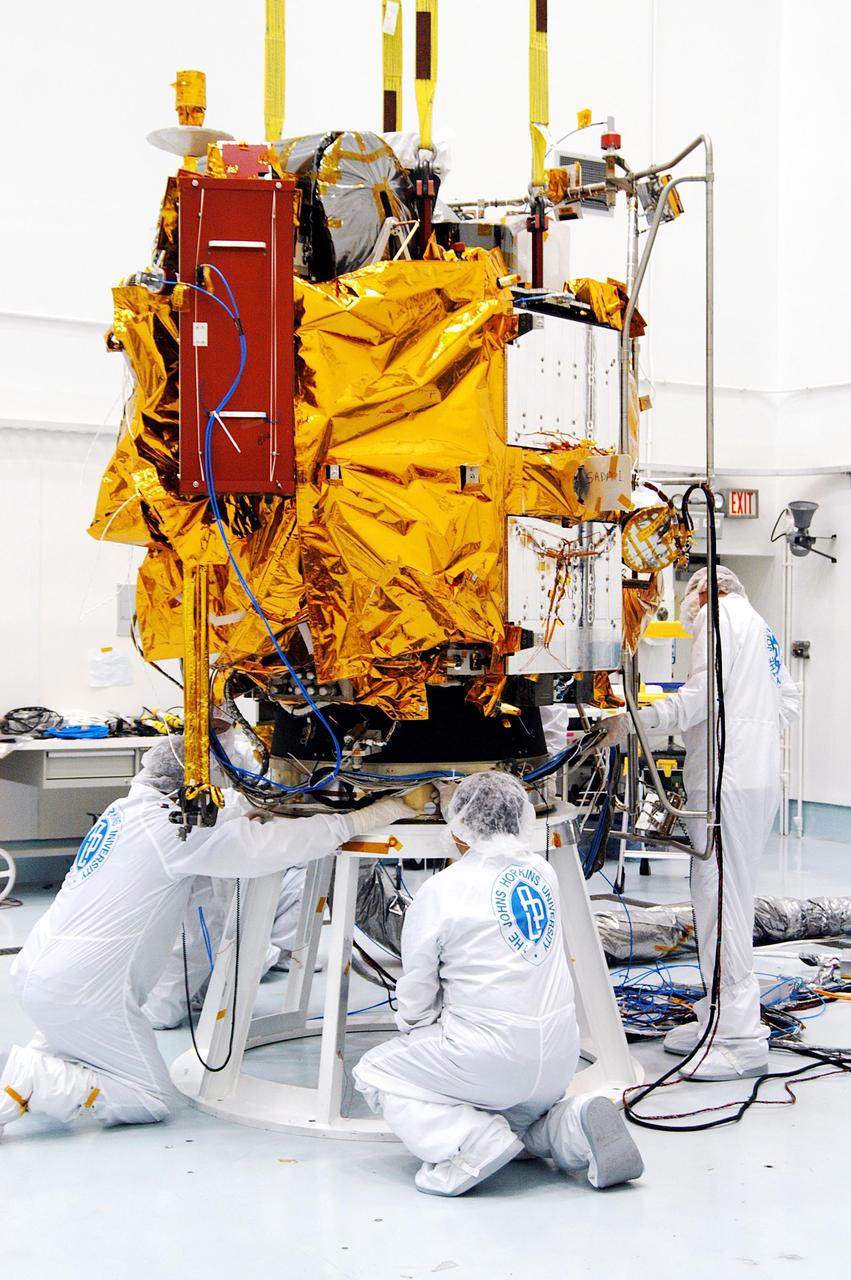
KENNEDY SPACE CENTER, FLA. -- At the Astrotech Space Operations processing facilities, workers verify the correct placement of NASA’s MESSENGER spacecraft on a test stand. Once in place, employees of the Johns Hopkins University Applied Physics Laboratory, builders of the spacecraft, will begin final processing for launch, including checkout of the power systems, communications systems and control systems. The thermal blankets will also be attached for flight. MESSENGER - short for MErcury Surface, Space ENvironment, GEochemistry and Ranging - will be launched aboard a Boeing Delta II rocket no earlier than July 30 on a six-year mission to study the planet Mercury.
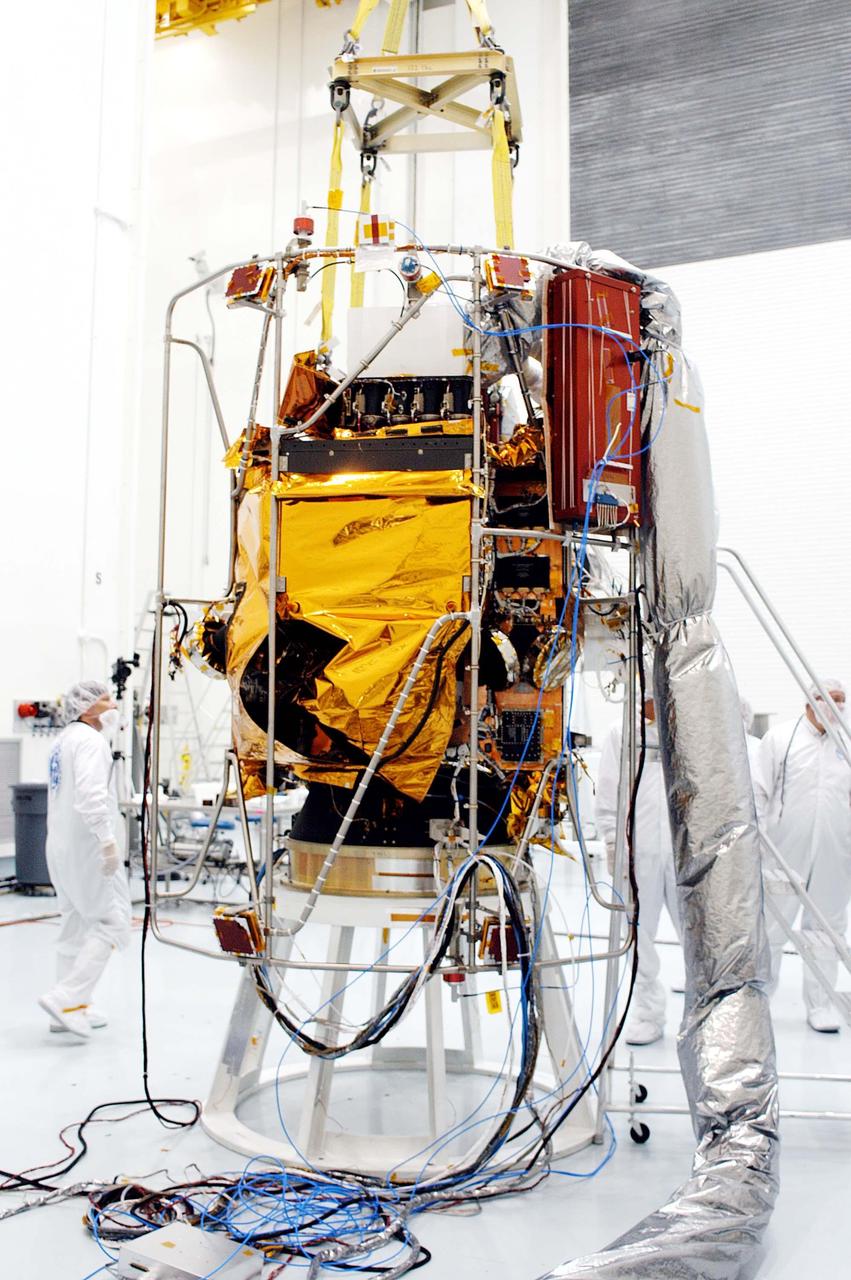
KENNEDY SPACE CENTER, FLA. -- At the Astrotech Space Operations processing facilities, the attachment of NASA’s MESSENGER spacecraft to a test stand is complete. The spacecraft is now ready for employees of the Johns Hopkins University Applied Physics Laboratory, builders of the spacecraft, to begin final processing for launch, including checkout of the power systems, communications systems and control systems. The thermal blankets will also be attached for flight. MESSENGER - short for MErcury Surface, Space ENvironment, GEochemistry and Ranging - will be launched aboard a Boeing Delta II rocket no earlier than July 30 on a six-year mission to study the planet Mercury.
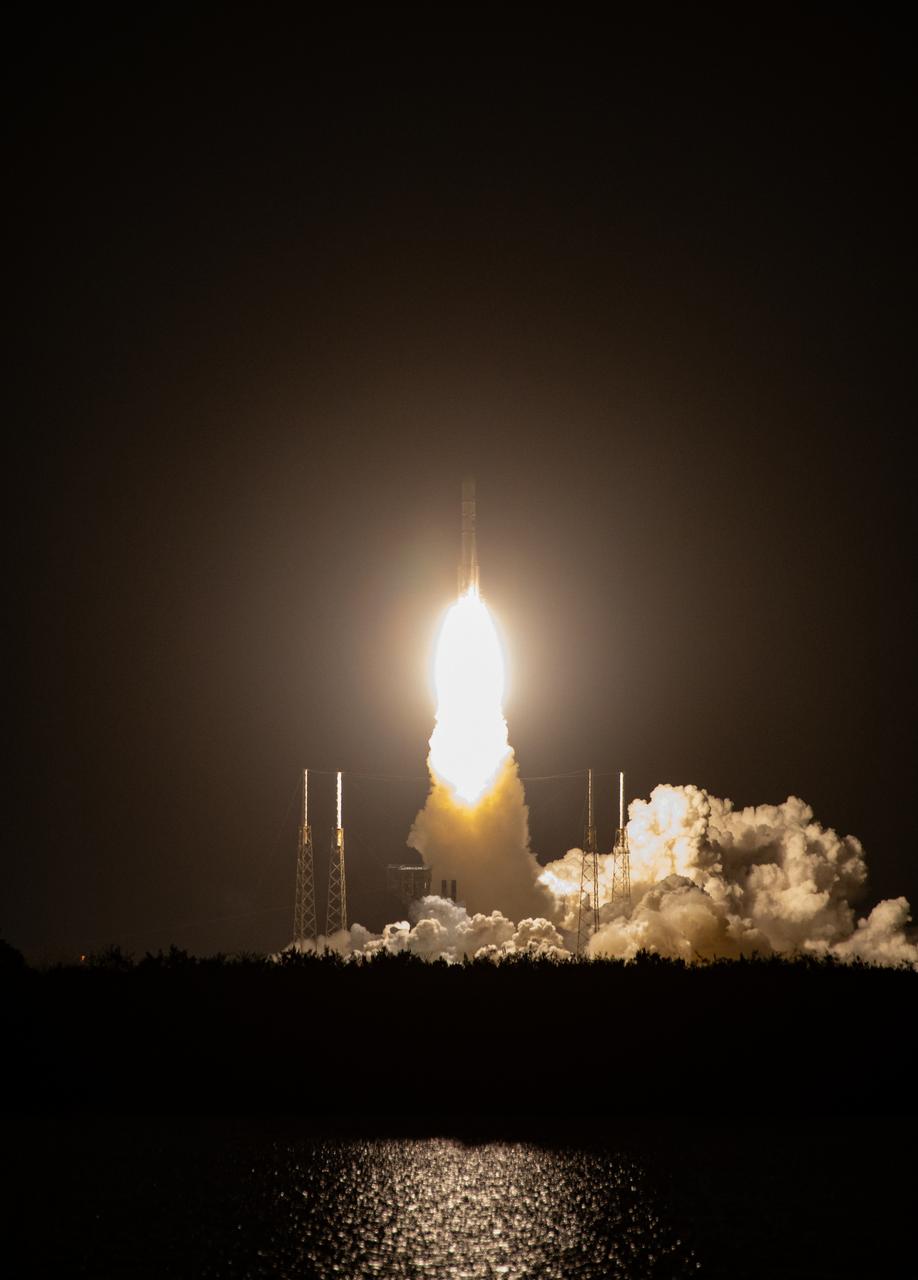
On the first flight of NASA’s CLPS (Commercial Lunar Payload Services) initiative and Artemis program, a United Launch Alliance Vulcan rocket carrying Astrobotic’s Peregrine lunar lander lifts off at 2:18 a.m. EST from Space Launch Complex 41 at Cape Canaveral Space Force Station in Florida on Monday, Jan. 8, 2024. Astrobotic’s Peregrine Mission One will carry NASA and commercial payloads to the Moon to study the lunar exosphere, thermal properties, and hydrogen abundance of the lunar regolith, magnetic fields, and the radiation environment of the lunar surface.
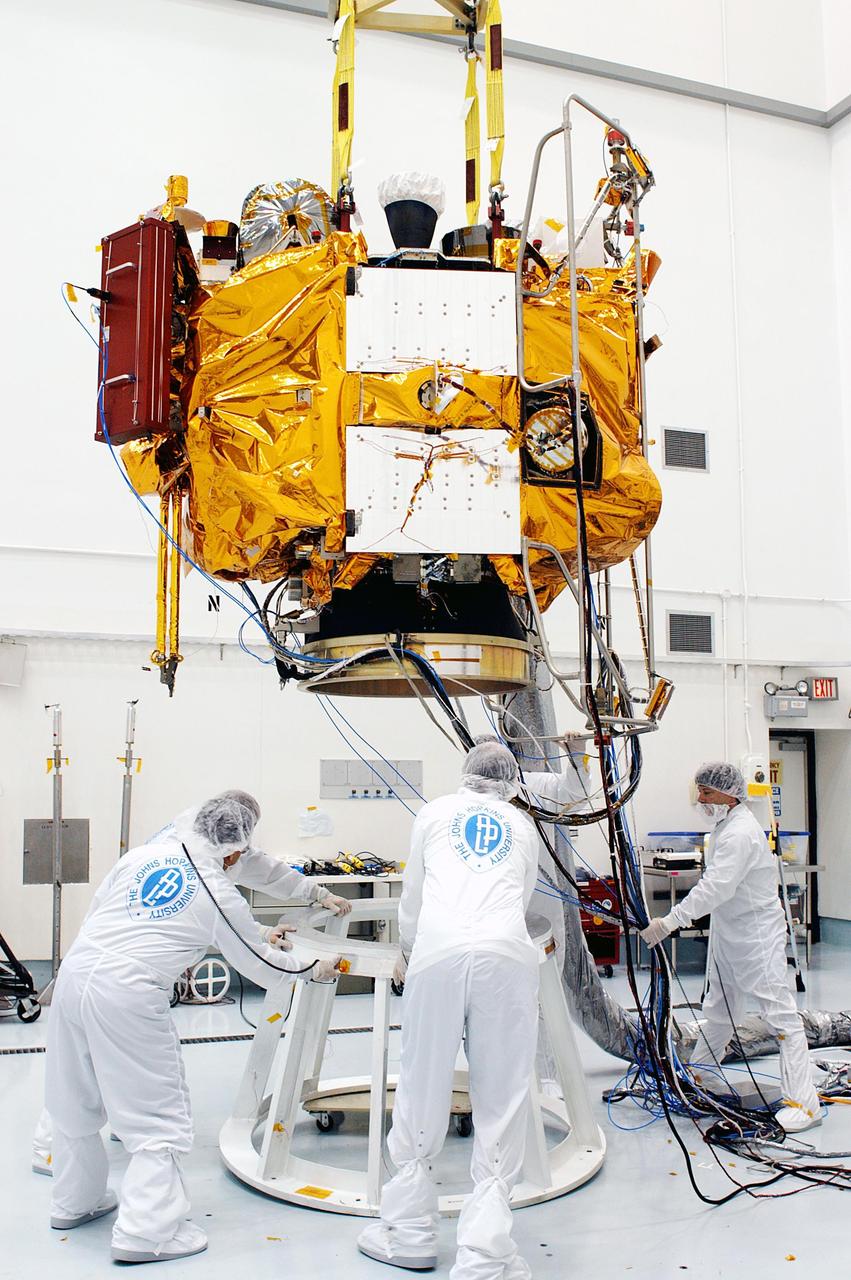
KENNEDY SPACE CENTER, FLA. -- At the Astrotech Space Operations processing facilities, workers lower NASA’s MESSENGER spacecraft onto a test stand using an overhead crane. Once in place, employees of the Johns Hopkins University Applied Physics Laboratory, builders of the spacecraft, will begin final processing for launch, including checkout of the power systems, communications systems and control systems. The thermal blankets will also be attached for flight. MESSENGER - short for MErcury Surface, Space ENvironment, GEochemistry and Ranging - will be launched aboard a Boeing Delta II rocket no earlier than July 30 on a six-year mission to study the planet Mercury.
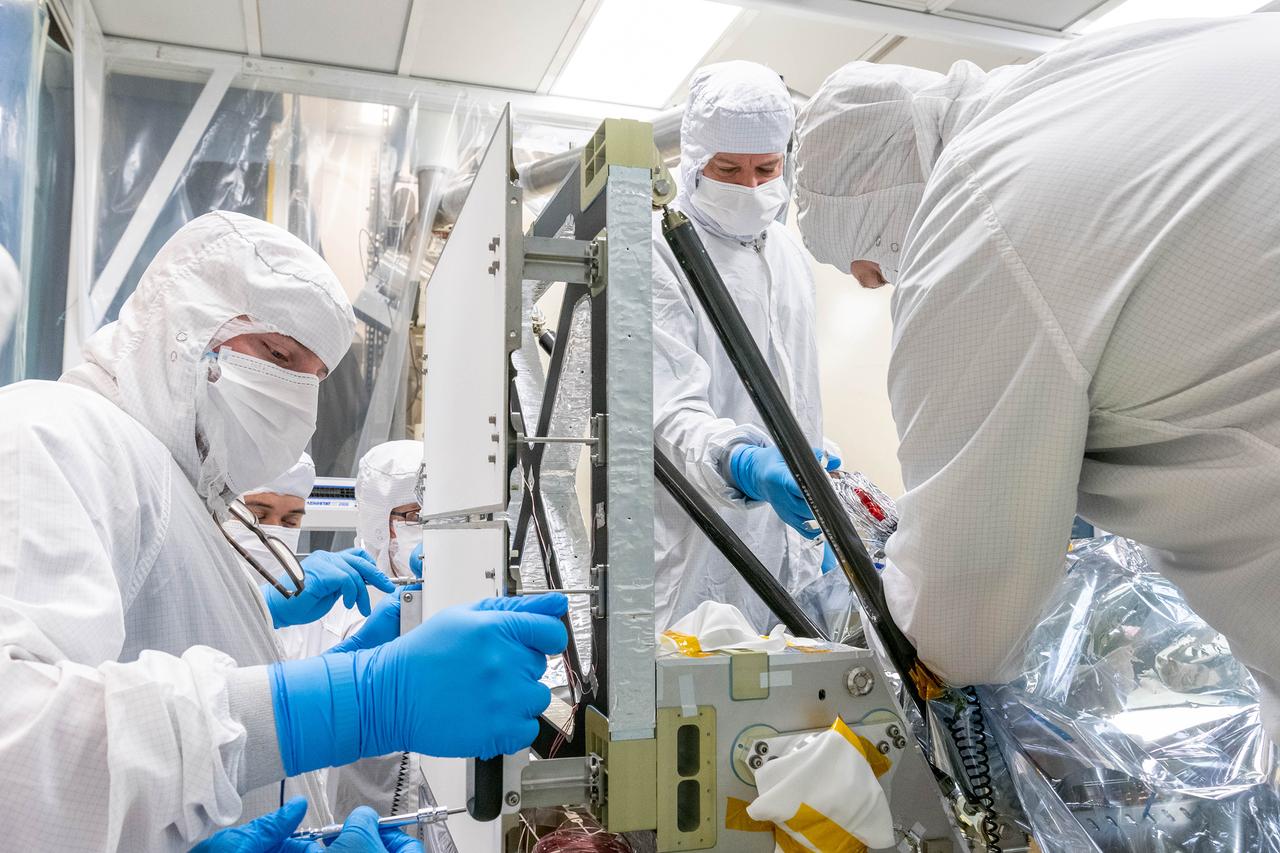
Mechanical technicians and thermal engineers work together to carefully feed the lines of a Loop Heat Pipe onto the Ocean Color Instrument (OCI). This integration operation will allow proper heat transfer throughout the instrument. OCI is a highly advanced optical spectrometer that will be used to measure properties of light over portions of the electromagnetic spectrum. It will enable continuous measurement of light at finer wavelength resolution than previous NASA satellite sensors, extending key system ocean color data records for climate studies. OCI is PACE's (Plankton, Aerosol, Cloud, ocean Ecosystem) primary sensor built at Goddard Space Flight Center in Greenbelt, MD.
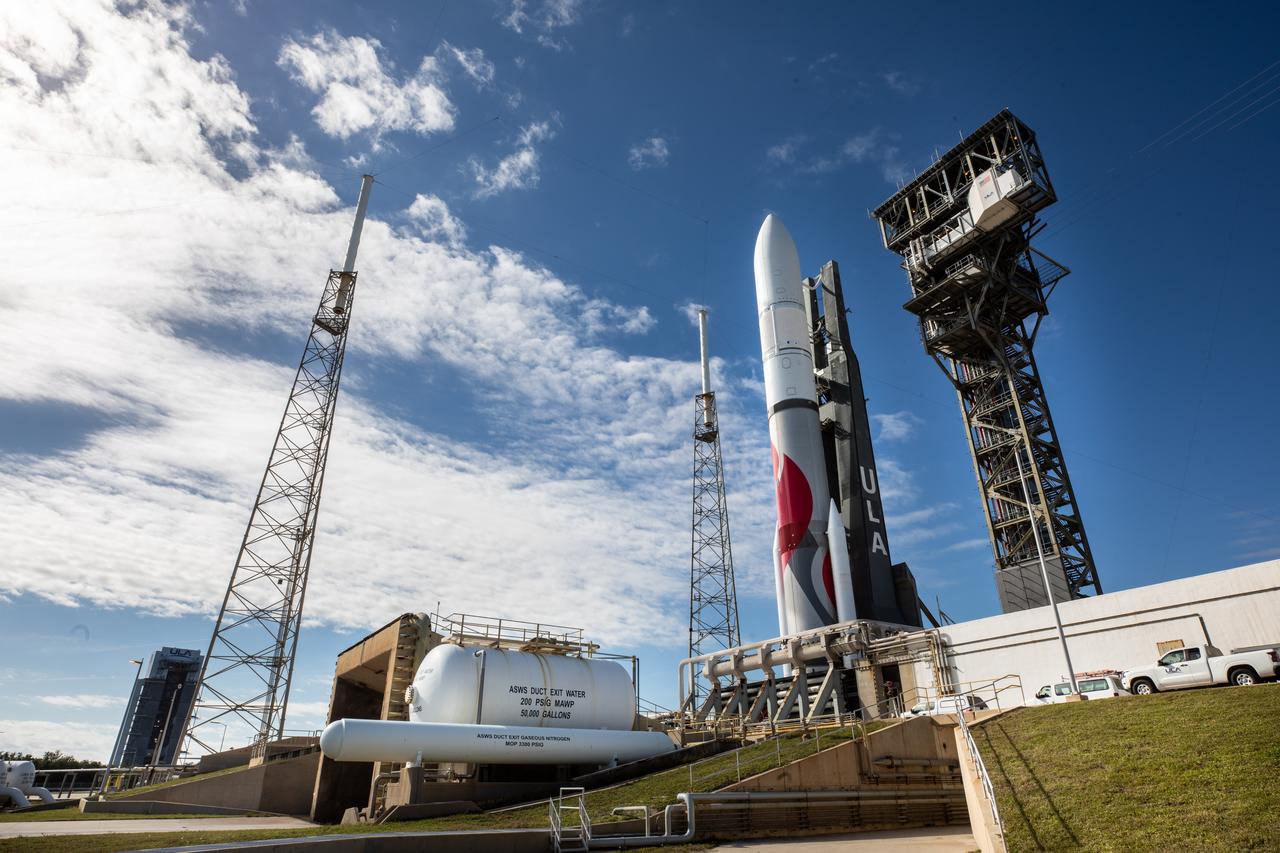
On Friday, Jan. 5, 2024, United Launch Alliance’s Vulcan rocket carrying Astrobotic’s Peregrine lunar lander is rolled out of the Vertical Integration Facility to the launch pad at Space Launch Complex 41 on Cape Canaveral Space Force Station in Florida in advance of a planned lift off at 2:18 a.m. EST Monday, Jan. 8, 2024. Astrobotic’s Peregrine Mission One will carry NASA and commercial payloads to the Moon to study the lunar exosphere, thermal properties, and hydrogen abundance of the lunar regolith, magnetic fields, and the radiation environment of the lunar surface.(Multiple values)
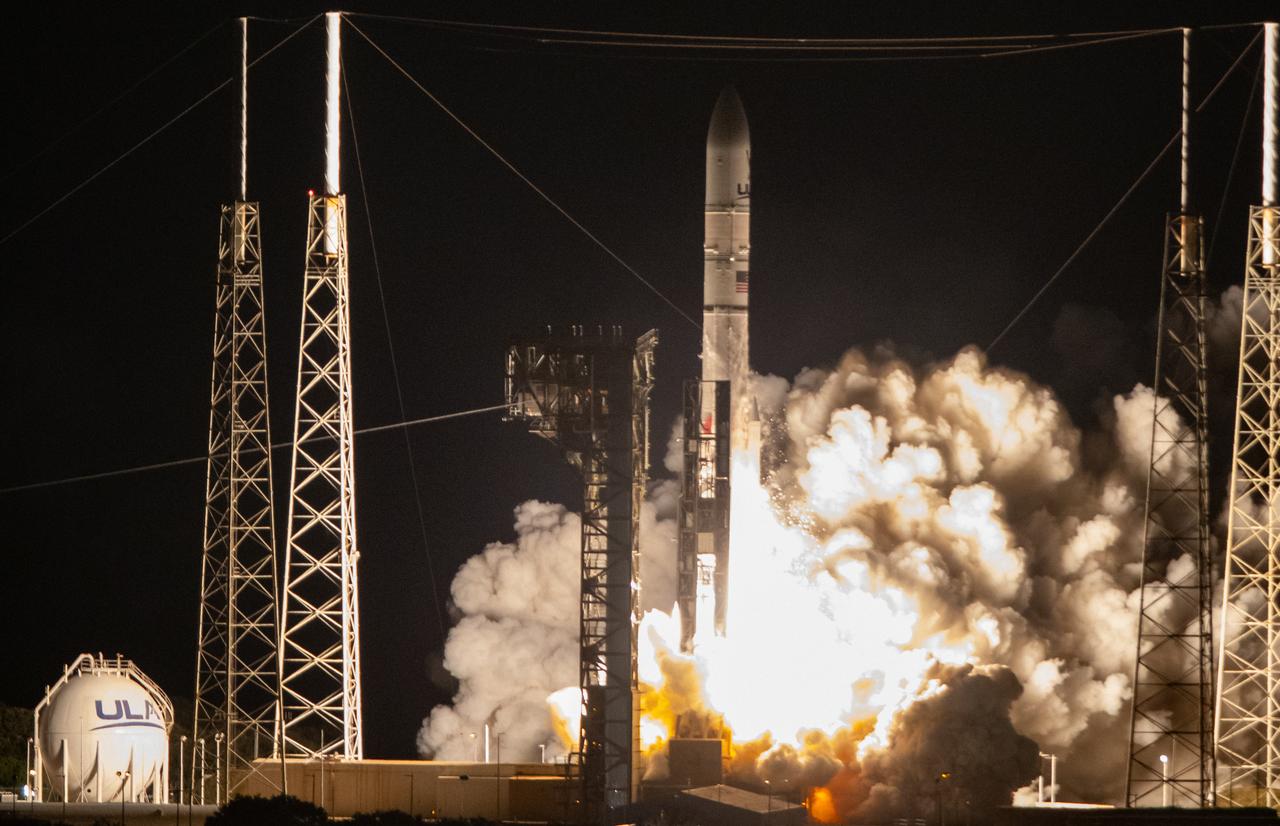
On the first flight of NASA’s CLPS (Commercial Lunar Payload Services) initiative and Artemis program, a United Launch Alliance Vulcan rocket carrying Astrobotic’s Peregrine lunar lander lifts off at 2:18 a.m. EST from Space Launch Complex 41 at Cape Canaveral Space Force Station in Florida on Monday, Jan. 8, 2024. Astrobotic’s Peregrine Mission One will carry NASA and commercial payloads to the Moon to study the lunar exosphere, thermal properties, and hydrogen abundance of the lunar regolith, magnetic fields, and the radiation environment of the lunar surface.
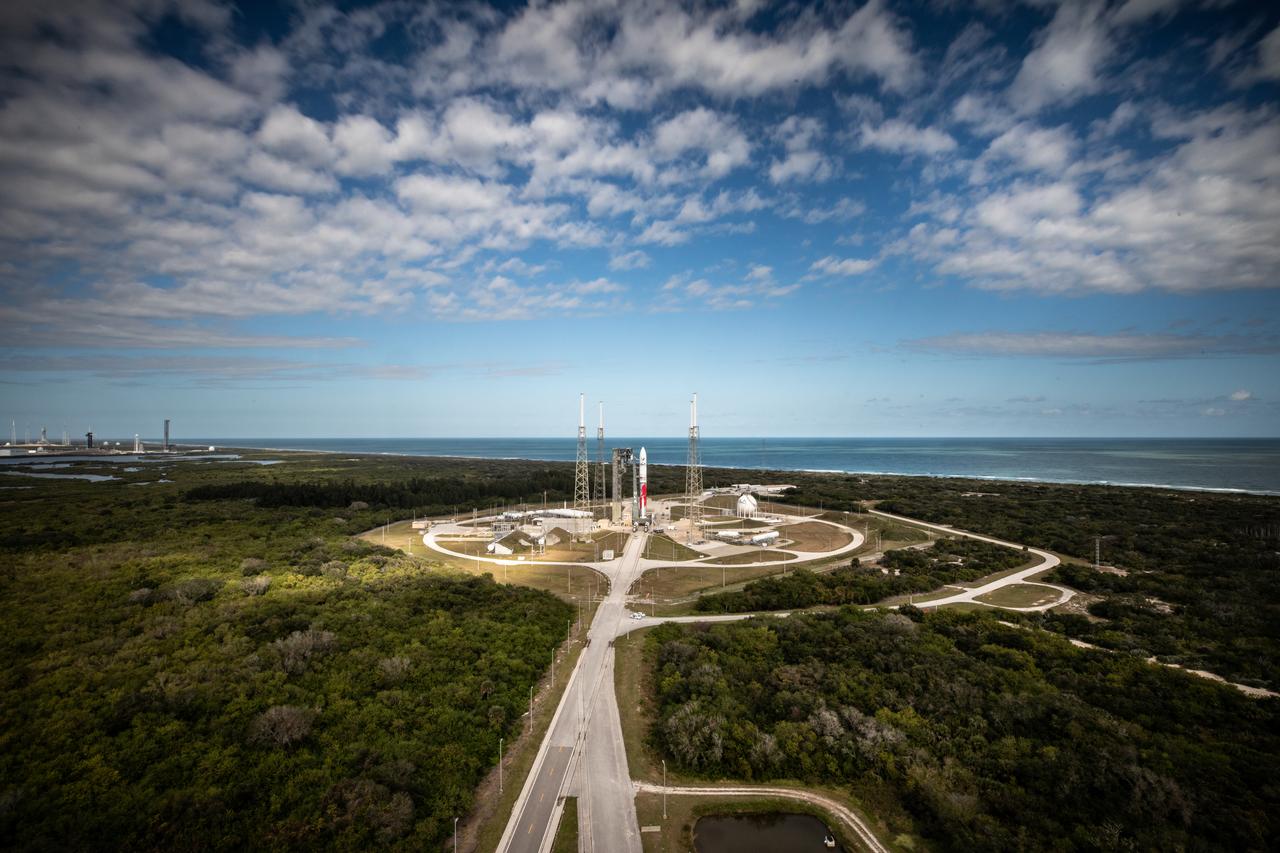
On Friday, Jan. 5, 2024, United Launch Alliance’s Vulcan rocket carrying Astrobotic’s Peregrine lunar lander is rolled out of the Vertical Integration Facility to the launch pad at Space Launch Complex 41 on Cape Canaveral Space Force Station in Florida in advance of a planned lift off at 2:18 a.m. EST Monday, Jan. 8, 2024. Astrobotic’s Peregrine Mission One will carry NASA and commercial payloads to the Moon to study the lunar exosphere, thermal properties, and hydrogen abundance of the lunar regolith, magnetic fields, and the radiation environment of the lunar surface.(Multiple values)
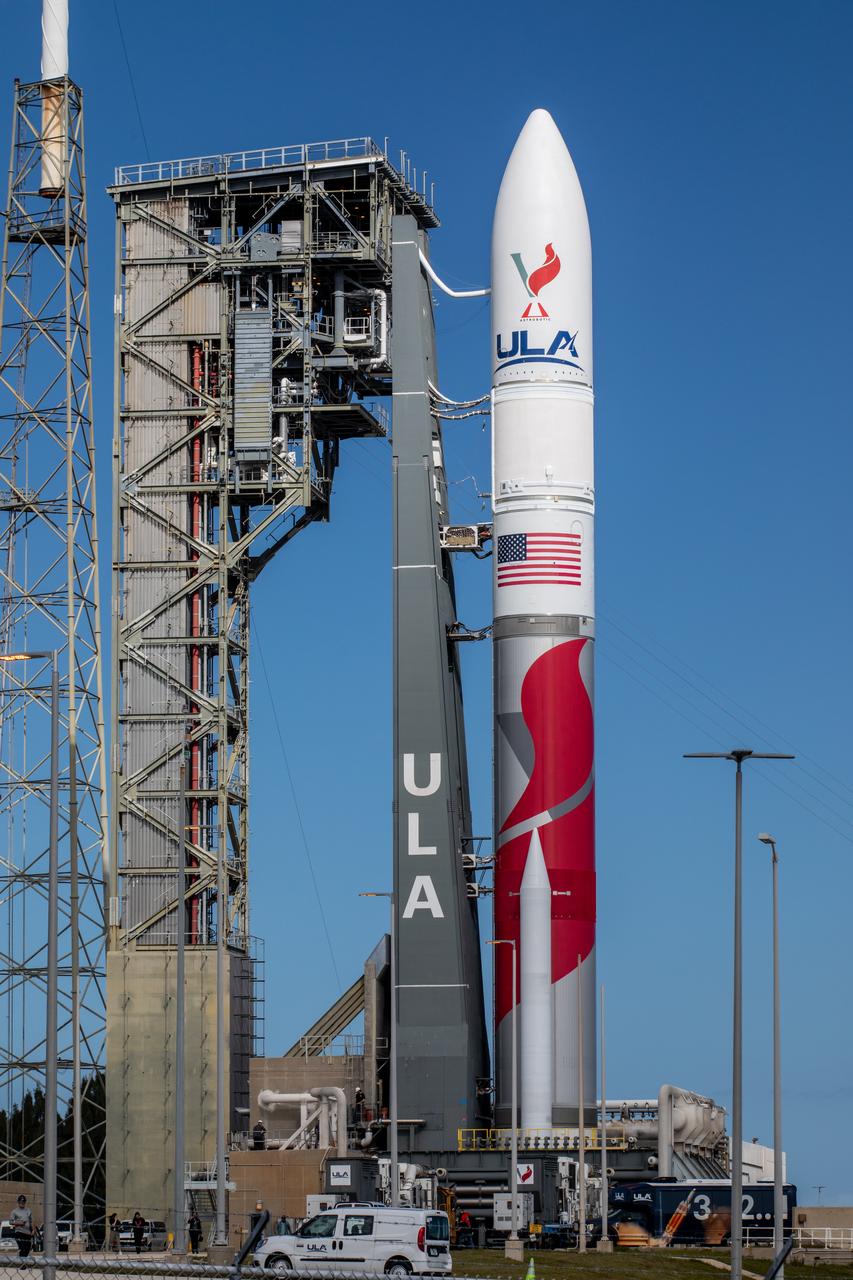
On Friday, Jan. 5, 2024, United Launch Alliance’s Vulcan rocket carrying Astrobotic’s Peregrine lunar lander is rolled out of the Vertical Integration Facility to the launch pad at Space Launch Complex 41 on Cape Canaveral Space Force Station in Florida in advance of a planned lift off at 2:18 a.m. EST Monday, Jan. 8, 2024. Astrobotic’s Peregrine Mission One will carry NASA and commercial payloads to the Moon to study the lunar exosphere, thermal properties, and hydrogen abundance of the lunar regolith, magnetic fields, and the radiation environment of the lunar surface.
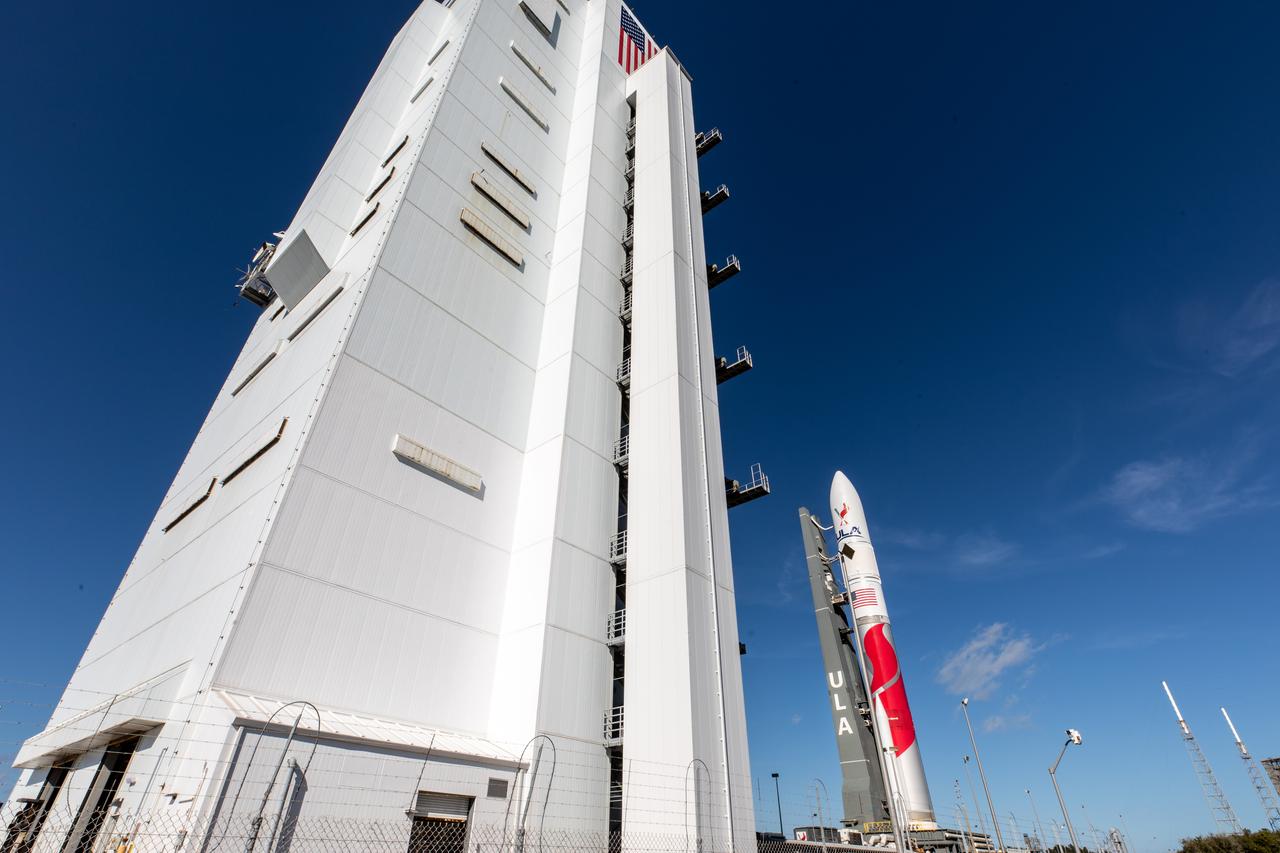
On Friday, Jan. 5, 2024, United Launch Alliance’s Vulcan rocket carrying Astrobotic’s Peregrine lunar lander is rolled out of the Vertical Integration Facility to the launch pad at Space Launch Complex 41 on Cape Canaveral Space Force Station in Florida in advance of a planned lift off at 2:18 a.m. EST Monday, Jan. 8, 2024. Astrobotic’s Peregrine Mission One will carry NASA and commercial payloads to the Moon to study the lunar exosphere, thermal properties, and hydrogen abundance of the lunar regolith, magnetic fields, and the radiation environment of the lunar surface.(Multiple values)
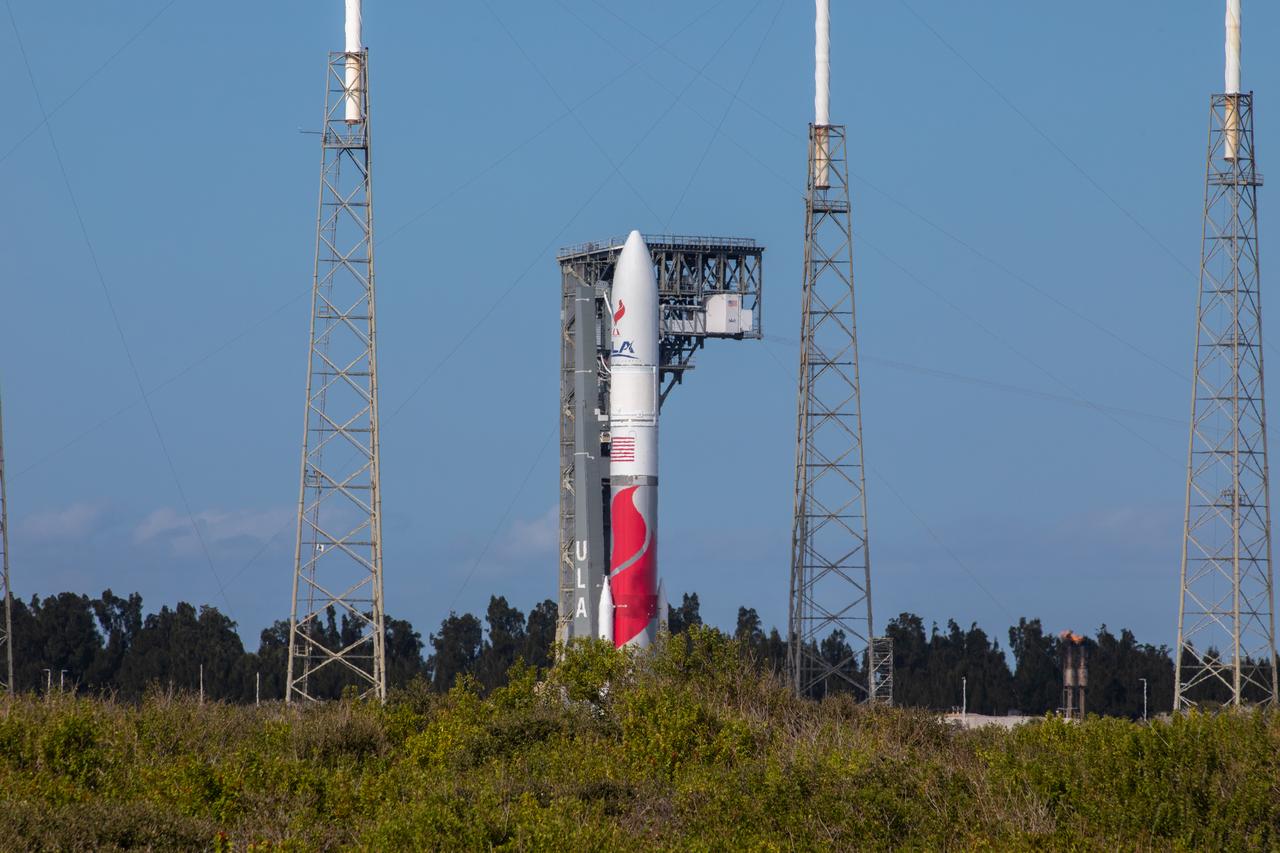
On Friday, Jan. 5, 2024, United Launch Alliance’s Vulcan rocket carrying Astrobotic’s Peregrine lunar lander is rolled out of the Vertical Integration Facility to the launch pad at Space Launch Complex 41 on Cape Canaveral Space Force Station in Florida in advance of a planned lift off at 2:18 a.m. EST Monday, Jan. 8, 2024. Astrobotic’s Peregrine Mission One will carry NASA and commercial payloads to the Moon to study the lunar exosphere, thermal properties, and hydrogen abundance of the lunar regolith, magnetic fields, and the radiation environment of the lunar surface.
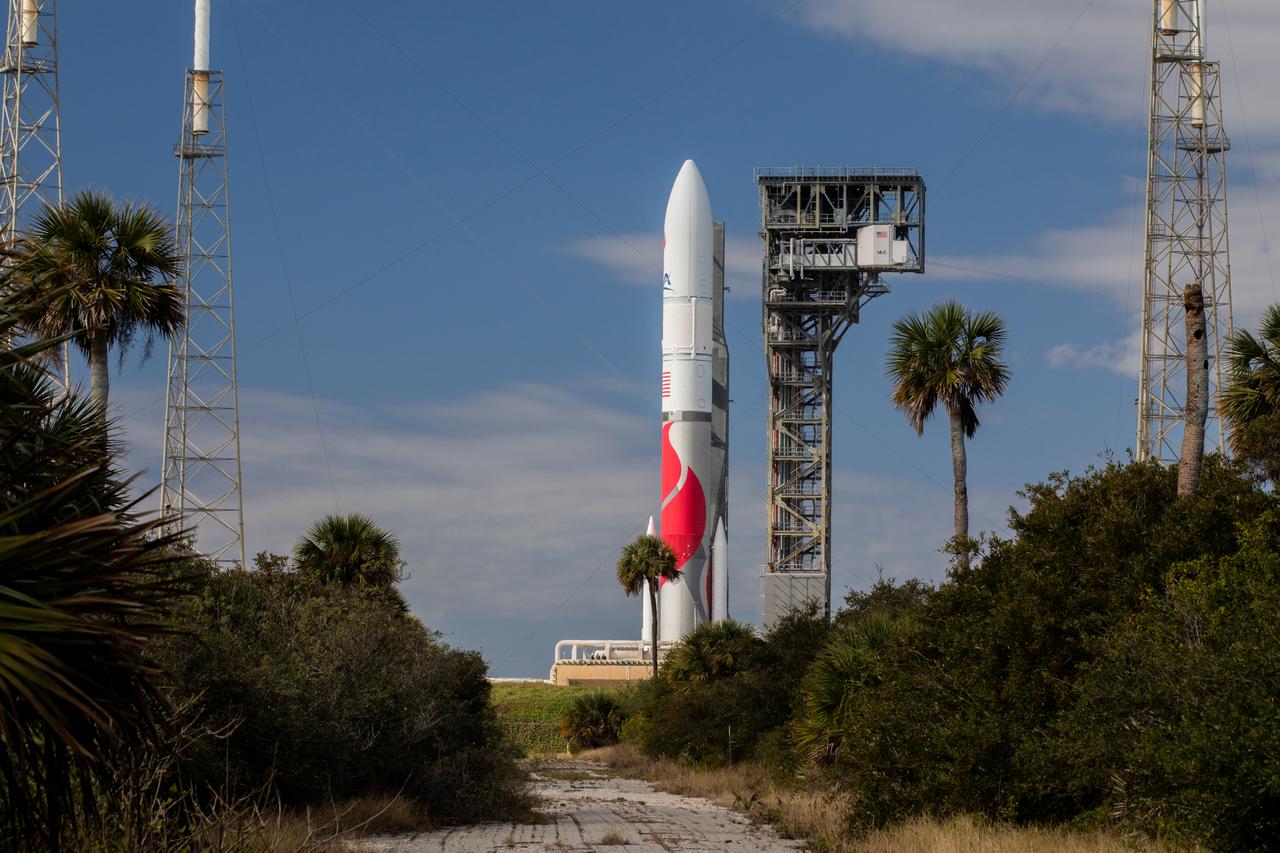
On Friday, Jan. 5, 2024, United Launch Alliance’s Vulcan rocket carrying Astrobotic’s Peregrine lunar lander is rolled out of the Vertical Integration Facility to the launch pad at Space Launch Complex 41 on Cape Canaveral Space Force Station in Florida in advance of a planned lift off at 2:18 a.m. EST Monday, Jan. 8, 2024. Astrobotic’s Peregrine Mission One will carry NASA and commercial payloads to the Moon to study the lunar exosphere, thermal properties, and hydrogen abundance of the lunar regolith, magnetic fields, and the radiation environment of the lunar surface.
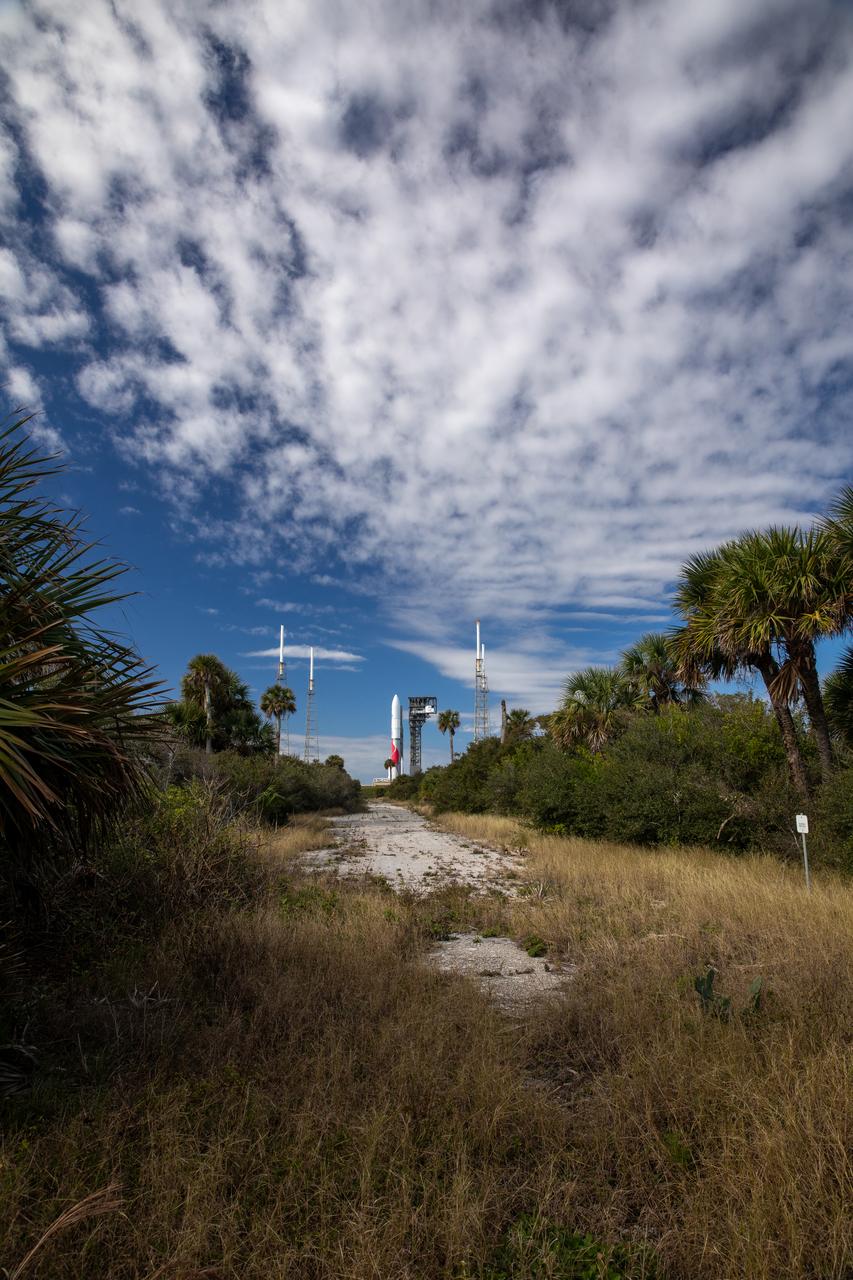
On Friday, Jan. 5, 2024, United Launch Alliance’s Vulcan rocket carrying Astrobotic’s Peregrine lunar lander is rolled out of the Vertical Integration Facility to the launch pad at Space Launch Complex 41 on Cape Canaveral Space Force Station in Florida in advance of a planned lift off at 2:18 a.m. EST Monday, Jan. 8, 2024. Astrobotic’s Peregrine Mission One will carry NASA and commercial payloads to the Moon to study the lunar exosphere, thermal properties, and hydrogen abundance of the lunar regolith, magnetic fields, and the radiation environment of the lunar surface.
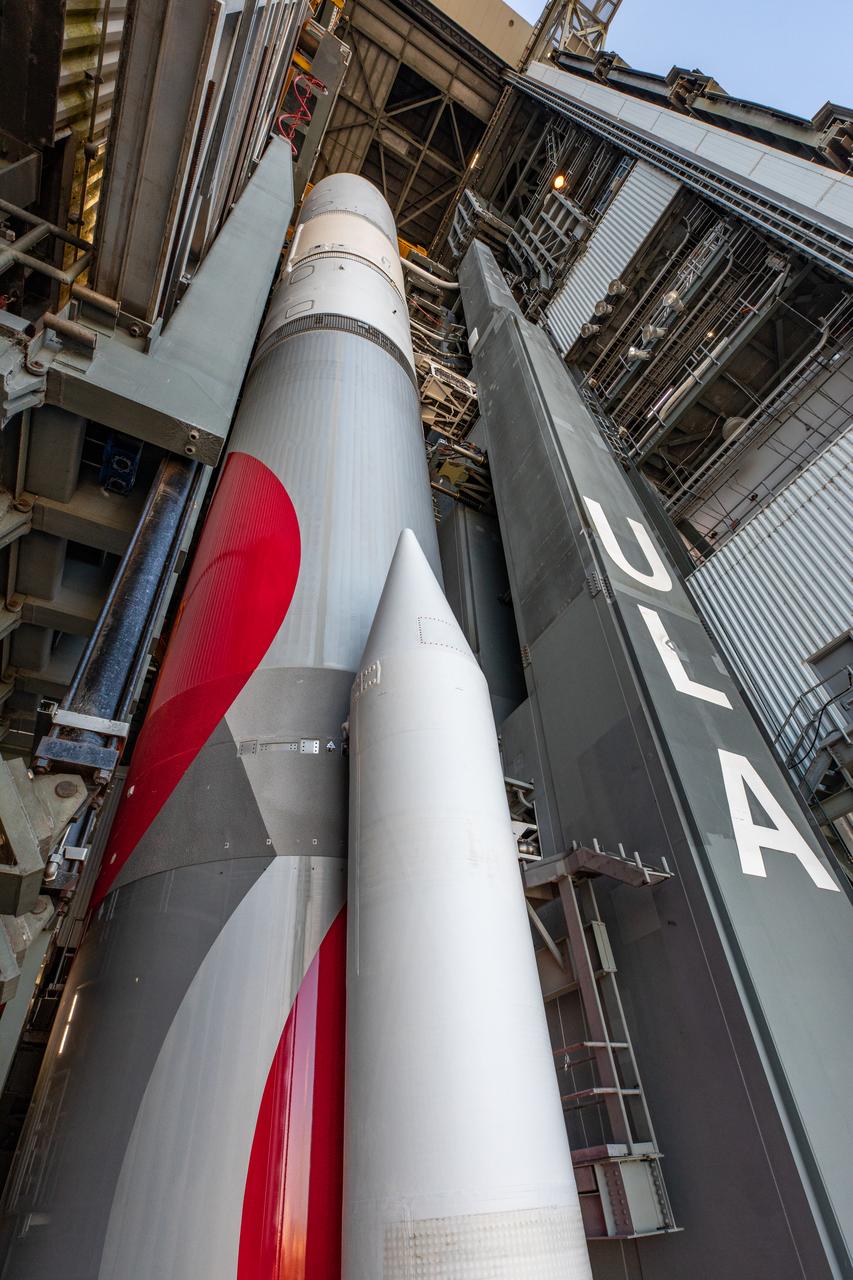
On Friday, Jan. 5, 2024, United Launch Alliance’s Vulcan rocket carrying Astrobotic’s Peregrine lunar lander is rolled out of the Vertical Integration Facility to the launch pad at Space Launch Complex 41 on Cape Canaveral Space Force Station in Florida in advance of a planned lift off at 2:18 a.m. EST Monday, Jan. 8, 2024. Astrobotic’s Peregrine Mission One will carry NASA and commercial payloads to the Moon to study the lunar exosphere, thermal properties, and hydrogen abundance of the lunar regolith, magnetic fields, and the radiation environment of the lunar surface.(Multiple values)
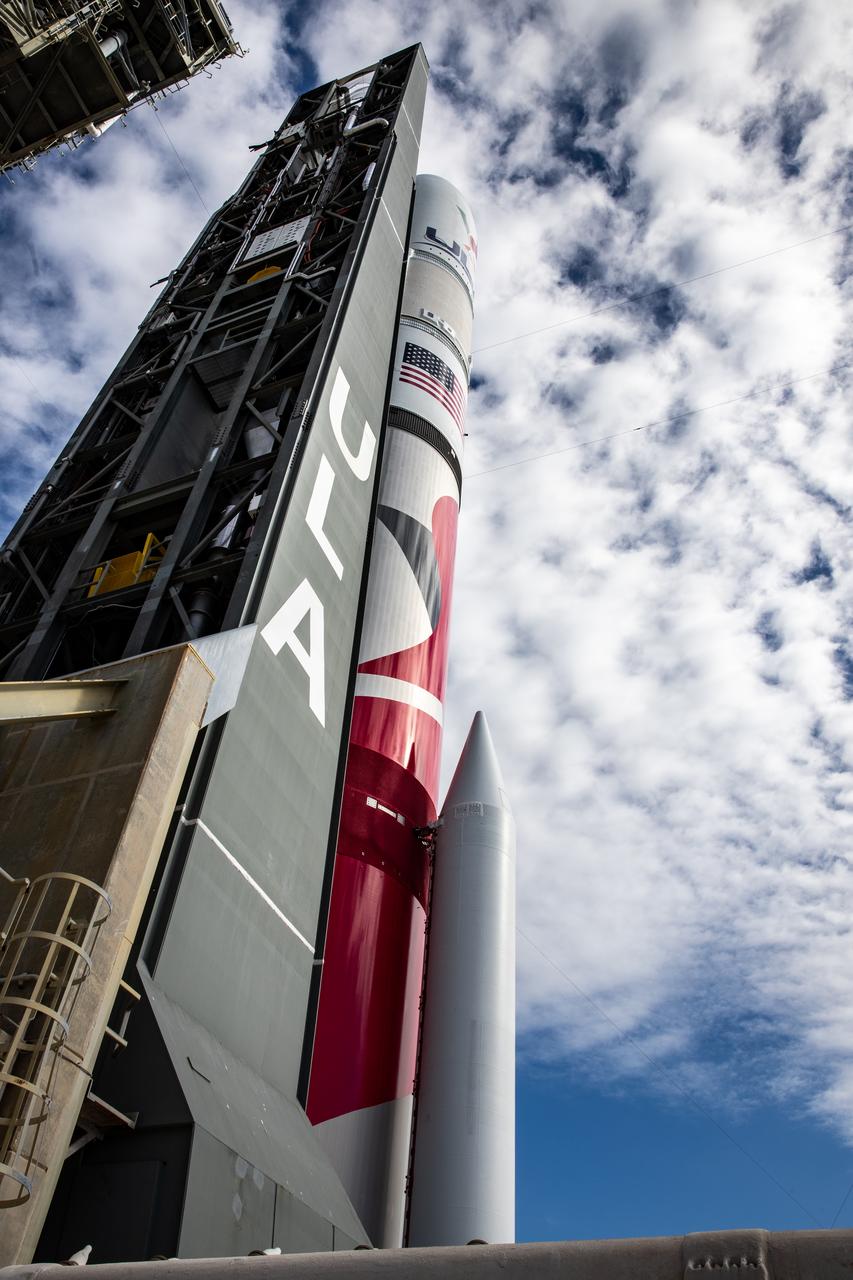
On Friday, Jan. 5, 2024, United Launch Alliance’s Vulcan rocket carrying Astrobotic’s Peregrine lunar lander is rolled out of the Vertical Integration Facility to the launch pad at Space Launch Complex 41 on Cape Canaveral Space Force Station in Florida in advance of a planned lift off at 2:18 a.m. EST Monday, Jan. 8, 2024. Astrobotic’s Peregrine Mission One will carry NASA and commercial payloads to the Moon to study the lunar exosphere, thermal properties, and hydrogen abundance of the lunar regolith, magnetic fields, and the radiation environment of the lunar surface.(Multiple values)
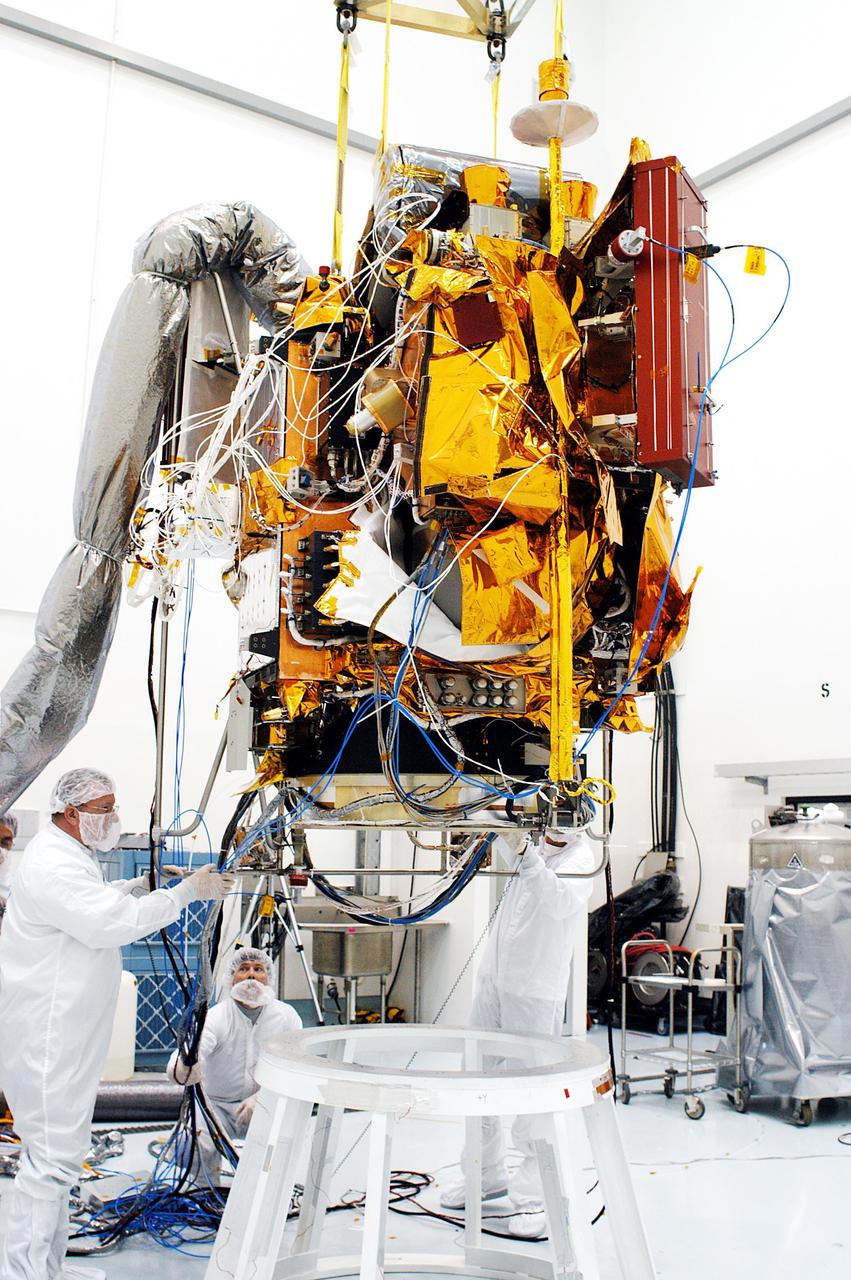
KENNEDY SPACE CENTER, FLA. -- At the Astrotech Space Operations processing facilities, workers monitor NASA’s MESSENGER spacecraft as it is lowered onto a test stand by an overhead crane. Once in place, employees of the Johns Hopkins University Applied Physics Laboratory, builders of the spacecraft, will begin final processing for launch, including checkout of the power systems, communications systems and control systems. The thermal blankets will also be attached for flight. MESSENGER - short for MErcury Surface, Space ENvironment, GEochemistry and Ranging - will be launched aboard a Boeing Delta II rocket no earlier than July 30 on a six-year mission to study the planet Mercury.
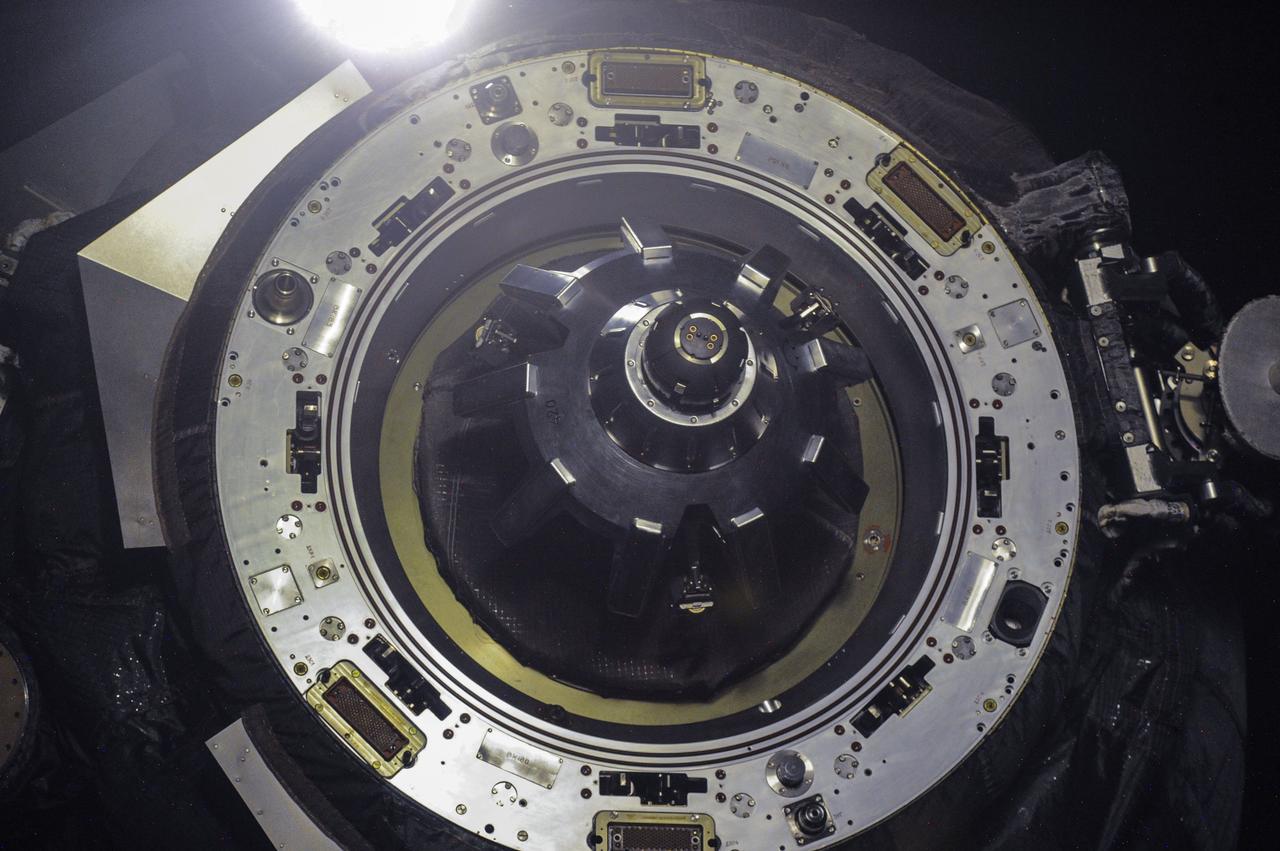
ISS038-E-041175 (3 Feb. 2014) --- This close-up view shows the docking mechanism of the unpiloted Russian ISS Progress 52 resupply ship as it undocks from the International Space Station's Pirs Docking Compartment at 11:21 a.m. (EST) on Feb. 3, 2014. The Progress backed away to a safe distance from the orbital complex to begin several days of tests to study thermal effects of space on its attitude control system. Filled with trash and other unneeded items, the Russian resupply ship will be commanded to re-enter Earth's atmosphere Feb. 11 and disintegrate harmlessly over the Pacific Ocean.
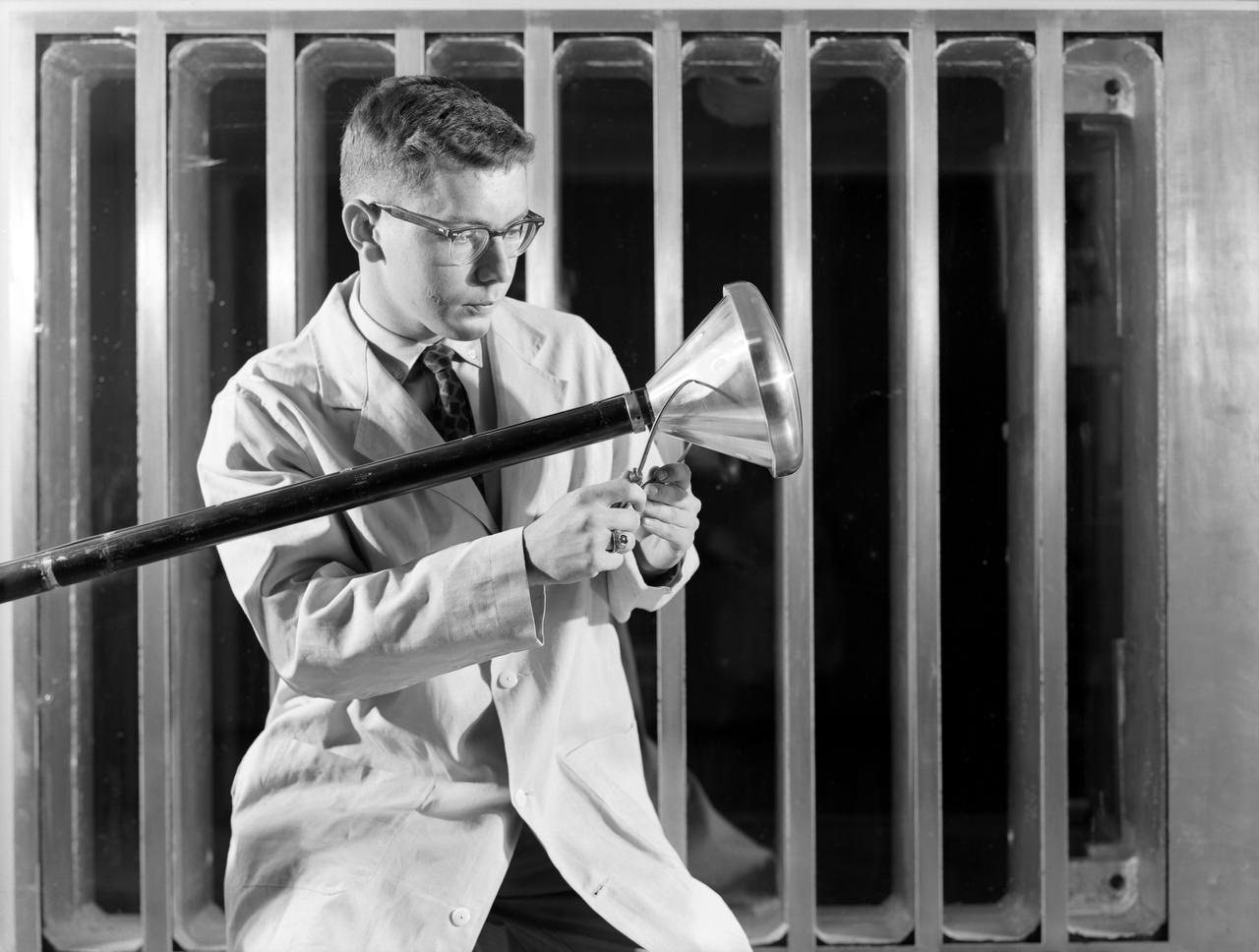
Researcher checks model of Project Fire Reentry package to be tested in Unitary Plan Wind Tunnel. Project FIRE (Flight Investigation Reentry Environment) studied the effects of reentry heating on spacecraft materials. It involved both wind tunnel and flight tests, although the majority were tests with Atlas rockets and recoverable reentry packages. These flight tests took place at Cape Canaveral in Florida. Wind tunnel tests were made in several Langley tunnels including the Unitary Plan Wind Tunnel, the 8-foot High-Temperature Tunnel and the 9x6-Foot Thermal Structures Tunnel. Photo published in book "A Century at Langley" by Joseph Chambers pg. 92