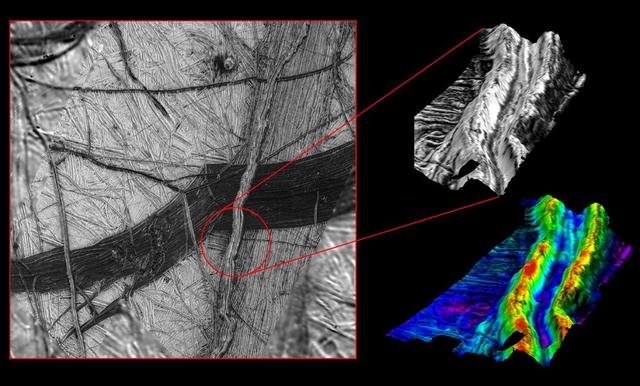
Three Dimensional View of Double Ridges on Europa

Three dimensional Visualization of Jupiter Equatorial Region

Three dimensional Visualization of Jupiter Equatorial Region

Three dimensional Visualization of Jupiter Equatorial Region

Three dimensional Visualization of Jupiter Equatorial Region

Three dimensional Visualization of Jupiter Equatorial Region

Three dimensional Visualization of Jupiter Equatorial Region

A portion of Alpha Regio is displayed in this three-dimensional perspective view of the surface of Venus from NASA Magellan spacecraft. In 1963, Alpha Regio was the first feature on Venus to be identified from Earth-based radar.
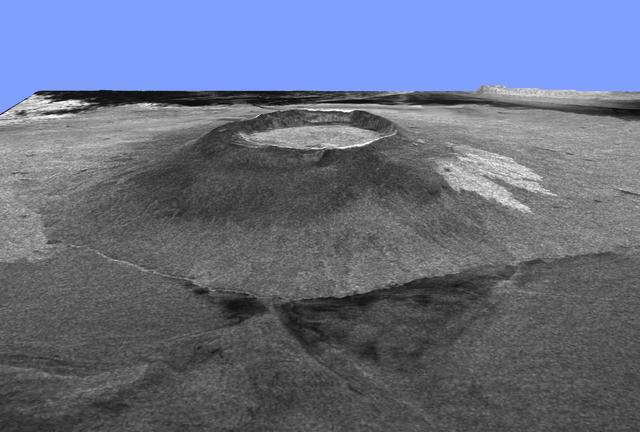
This is a three-dimensional view of Isabela, one of the Galapagos Islands located off the western coast of Ecuador, South America.
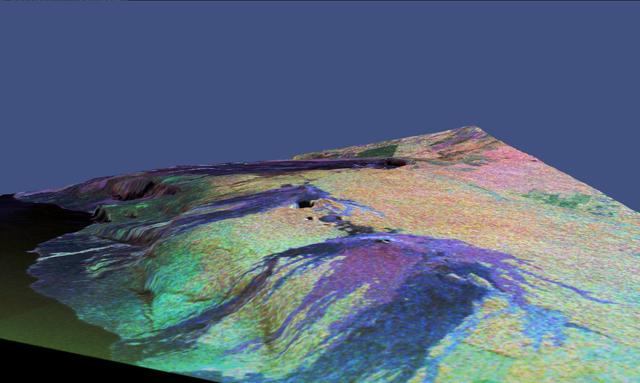
This is a three-dimensional perspective view of a false-color image of the eastern part of the Big Island of Hawaii.
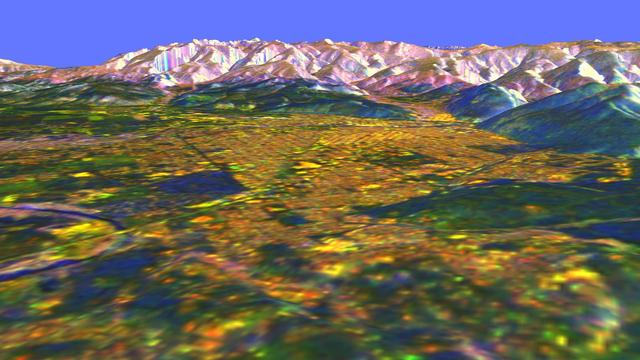
This is a three-dimensional perspective view of Missoula, Montana, created by combining two spaceborne radar images using a technique known as interferometry.
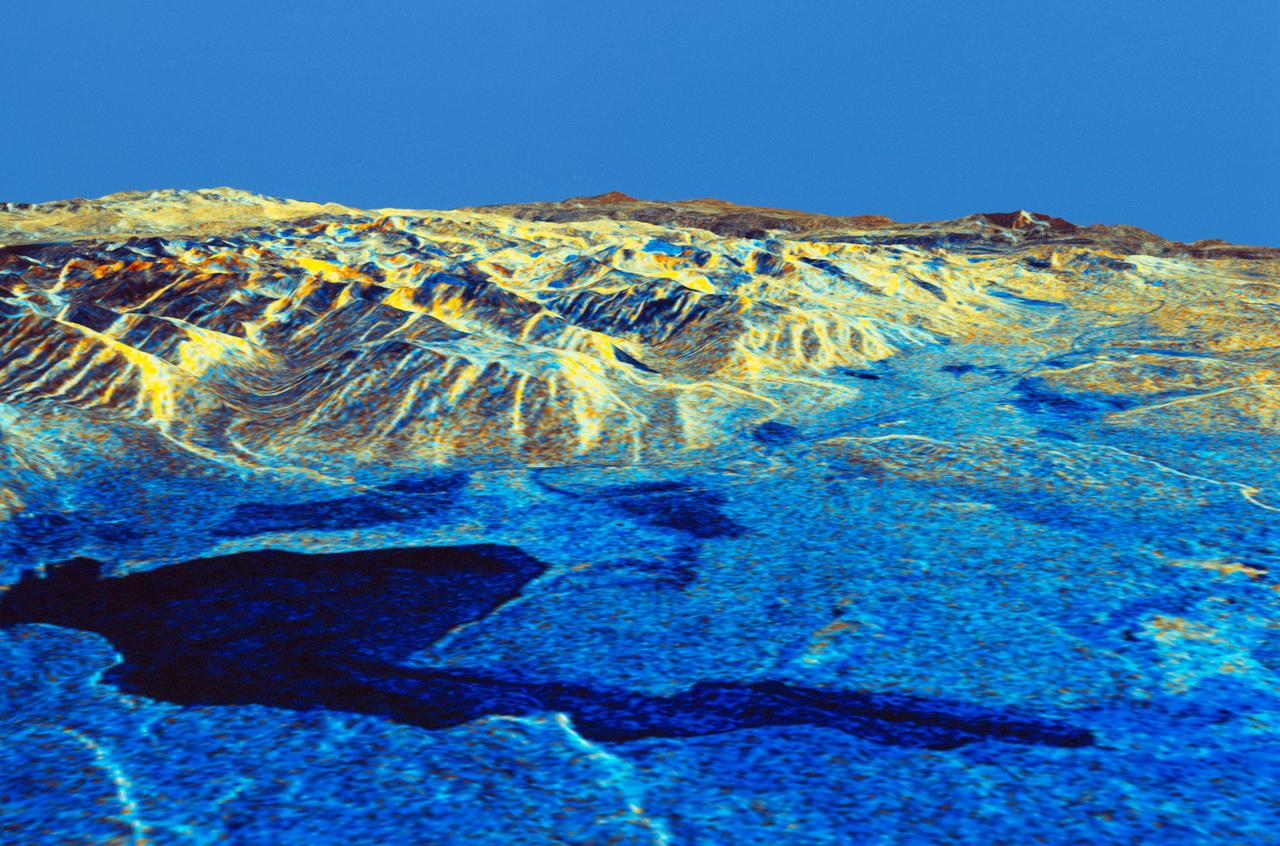
STS059-S-084 (17 April 1994) --- This is a three-dimensional perspective of Mammoth Mountain, California. This view was constructed by overlaying a SIR-C radar image on a U.S. Geological Survey digital elevation map. Vertical exaggeration is 2x. The image is centered at 37.6 degrees north, 119.0 degrees west. It was acquired from the Spaceborne Imaging Radar-C and X-Band Synthetic Aperture Radar (SIR-C/X-SAR) onboard the Space Shuttle Endeavour on its 67th orbit, April 13, 1994. In this color representation, red is C-Band HV-polarization, green is C-Band VV-polarization and blue is the ratio of C-Band VV to C-Band HV. Blue areas are smooth and yellow areas are rock outcrops with varying amounts of snow and vegetation. Crowley Lake is in the foreground and Highway 395 crosses in the middle of the image. Mammoth Mountain is shown in the upper right. SIR-C/X-SAR is part of NASA's Mission to Planet Earth (MTPE). SIR-C/X-SAR radars illuminate Earth with microwaves allowing detailed observations at any time, regardless of weather or sunlight conditions. SIR-C/X-SAR uses three microwave wavelengths: L-Band (24 cm), C-Band (6 cm), and X-Band (3 cm). The multi-frequency data will be used by the international scientific community to better understand the global environment and how it is changing. The SIR-C/X-SAR data, complemented by aircraft and ground studies, will give scientists clearer insights into those environmental changes which are caused by nature and those changes which are induced by human activity. SIR-C was developed by NASA's Jet Propulsion Laboratory (JPL). X-SAR was developed by the Dornire and Alenia Spazio Companies for the German Space Agency, Deutsche Agentur fuer Raumfahrtangelegenheiten (DARA), and the Italian Space Agency, Agenzia Spaziale Italiana (ASI). JPL Photo ID: P-43933
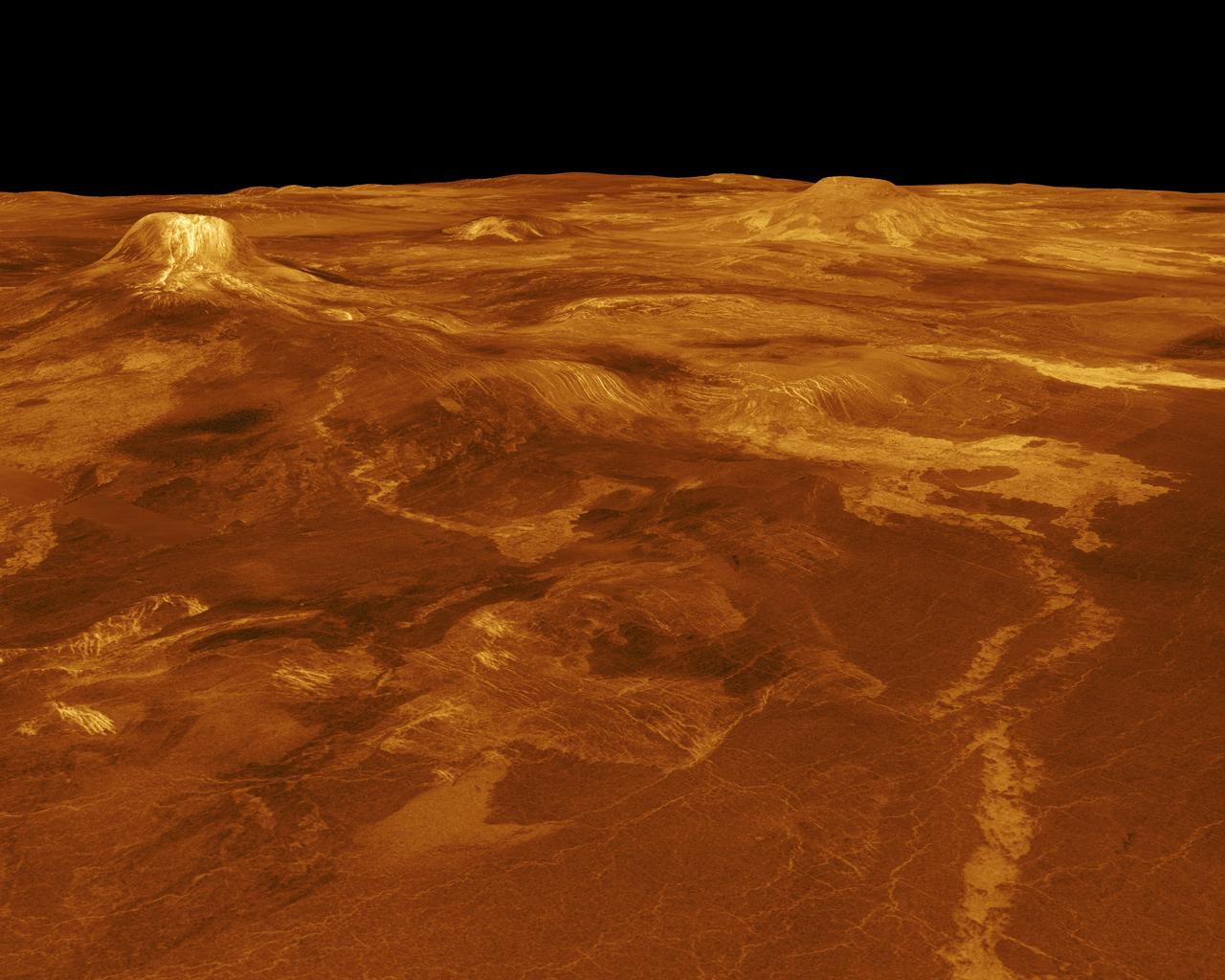
A portion of western Eistla Regio is displayed in this three-dimensional perspective view from NASA's Magellan spacecraft of the surface of Venus. http://photojournal.jpl.nasa.gov/catalog/PIA00102
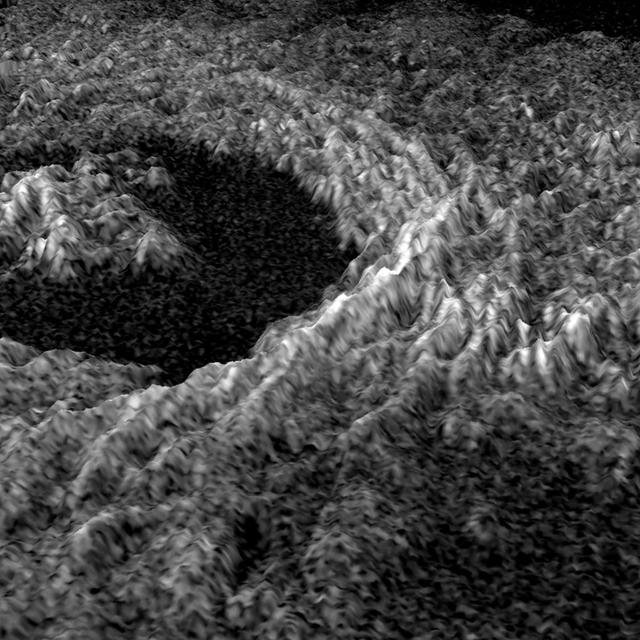
This three dimensional representation of brightness variations in NASA Magellan radar image of Golubkina crater enhances the structural features of the crater. http://photojournal.jpl.nasa.gov/catalog/PIA00209
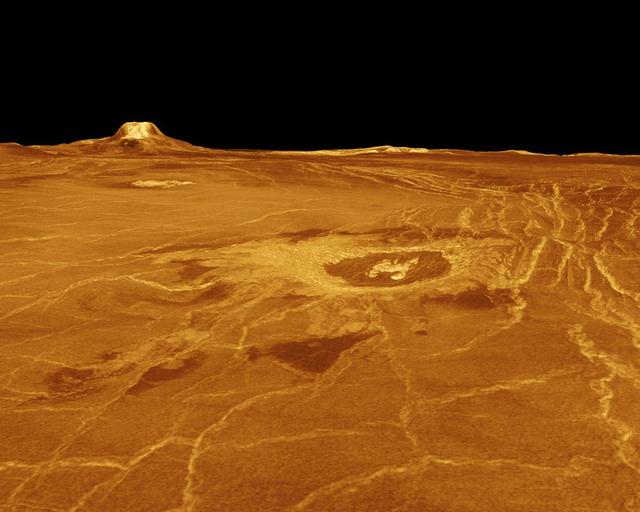
A portion of western Eistla Regio is displayed in this three-dimensional perspective view of the surface of Venus as seen by NASA Magellan spacecraft. http://photojournal.jpl.nasa.gov/catalog/PIA00233

Sapas Mons is displayed in the center of this computer-generated three-dimensional perspective view from NASA's Magellan spacecraft of the surface of Venus. http://photojournal.jpl.nasa.gov/catalog/PIA00107
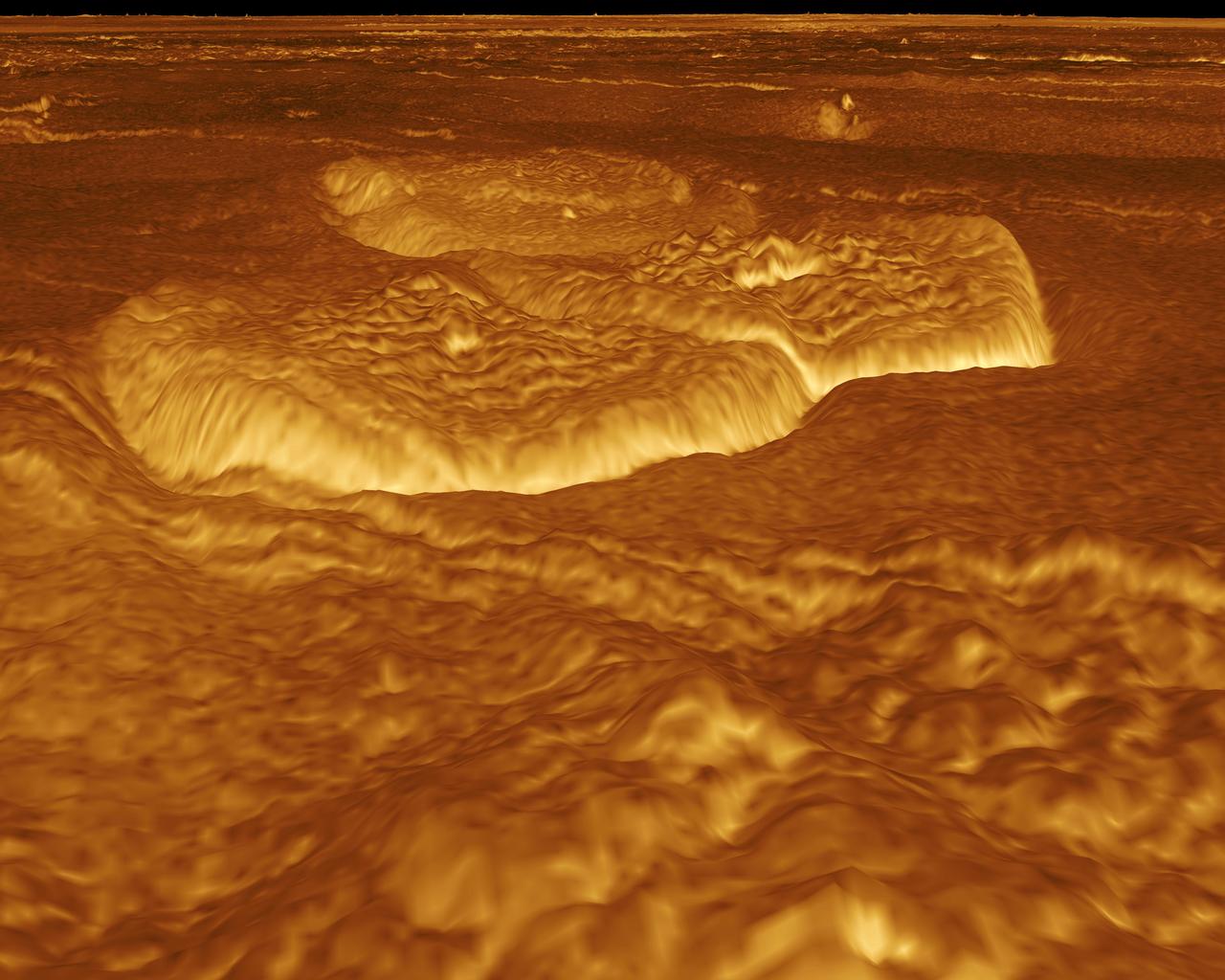
A portion of the eastern edge of Alpha Regio is displayed in this three-dimensional perspective view of the surface of Venus from NASA Magellan spacecraft. http://photojournal.jpl.nasa.gov/catalog/PIA00246
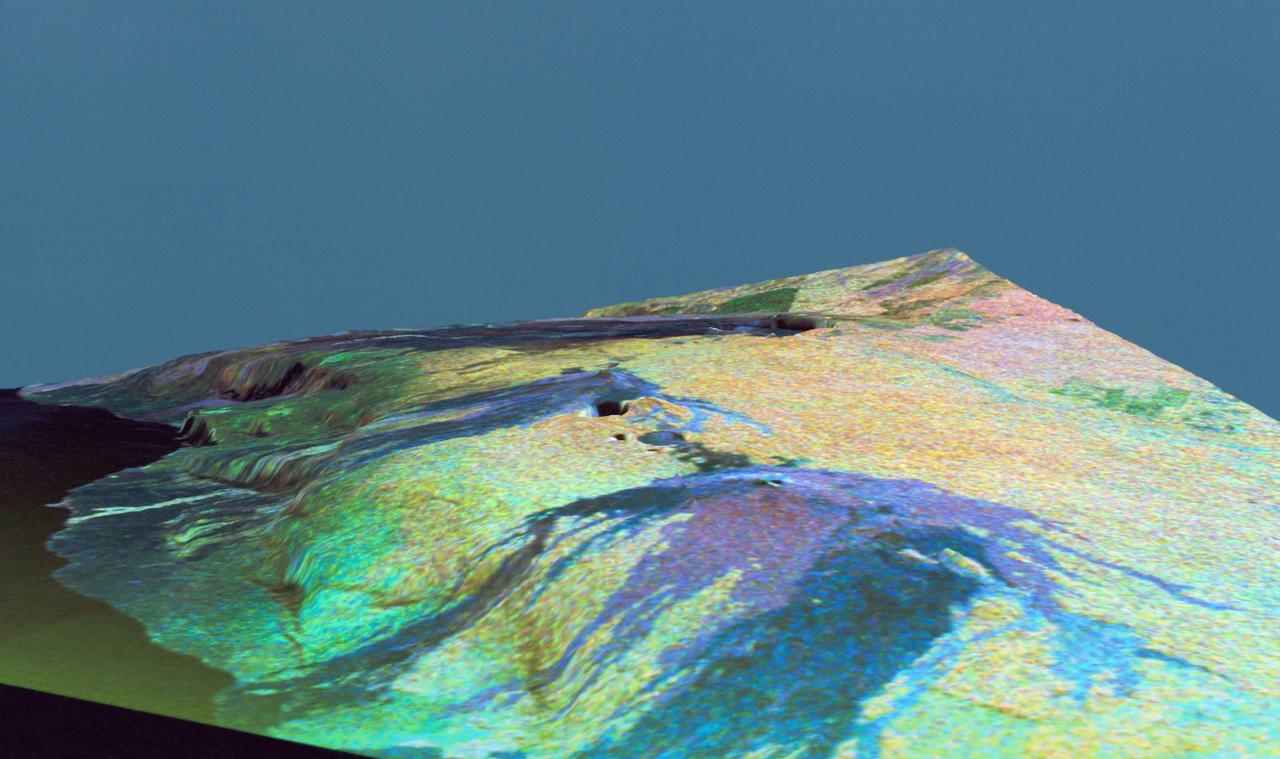
This is a three dimensional perspective view of false-color image of the eastern part of the Big Island of Hawaii. It was produced using all three radar frequencies C-Band and L-Band. This view was constructed by overlaying a SIR-C radar image on a U.S. Geological Survey digital elevation map. The image was acquired on April 12, 1994 during the 52nd orbit of the Shuttle Endeavour by the Spaceborne Imaging Radar-C and X-Band Synthetic Aperture Radar (SIR-C/X-SAR). The area shown is approximately 34 by 57 kilomters with the top of the image pointing toward north-west. The image is centered at about 155.25 degrees west longitude and 19.5 degrees north latitude. Visible in the center of the image in blue are the summit crater (Kilauea Caidera) which contains the smaller Halemaumau Crater, and the line of collapsed craters below them that form the Chain of Craters Road. The rain forest appears bright in the image while green areas correspond to lower vegetation. The lava flows have different colors depending on their types and are easily recognizable due to their shapes. The flows at the top of the image originated from the Muana Loa volcano. The Jet Propulsion Laboratory alternative photo number is P-43932.
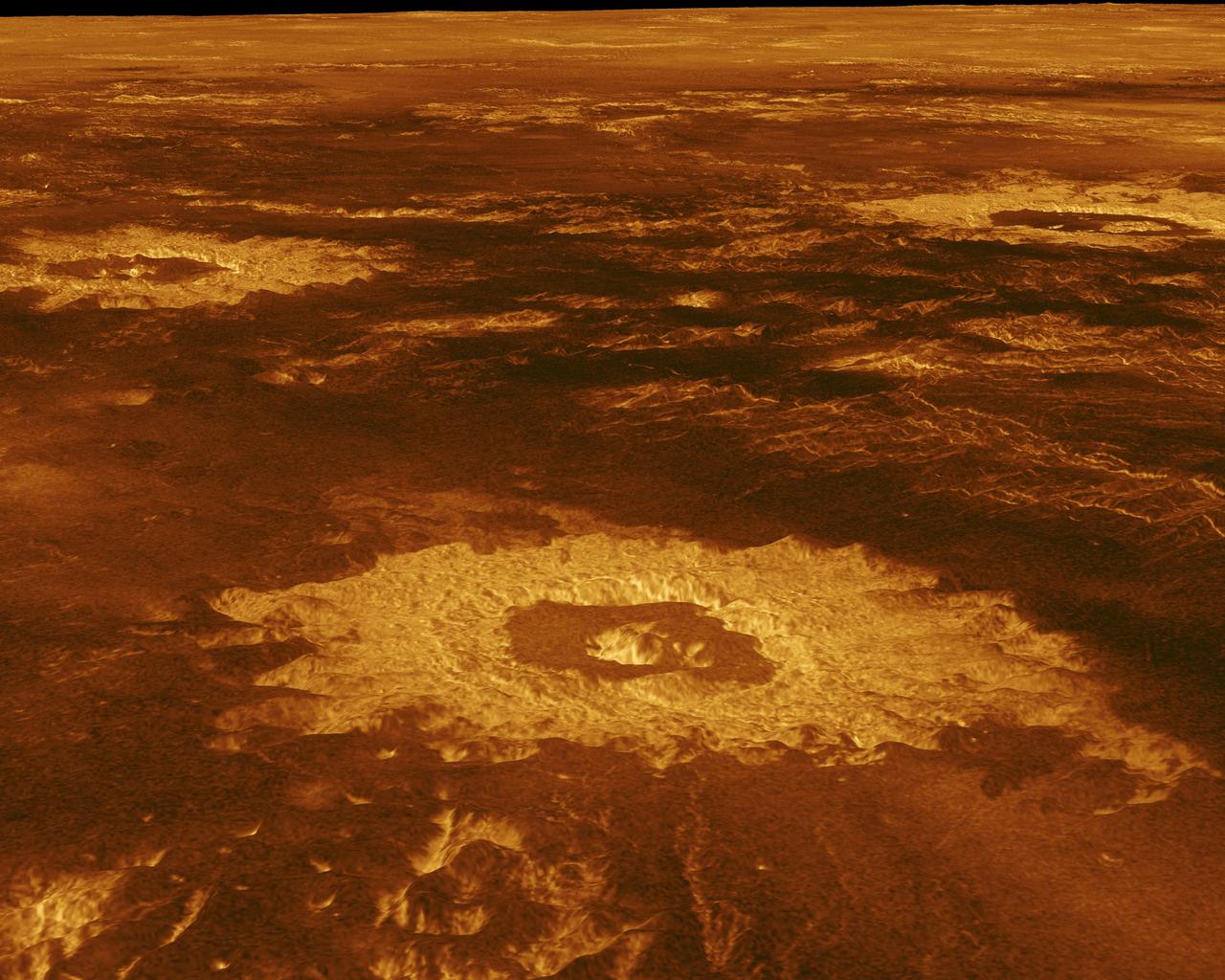
Three impact craters are displayed in this three-dimensional perspective view from NASA's Magellan spacecraft of the surface of Venus. The center of the image is located in the northwestern portion of Lavinia Planitia. http://photojournal.jpl.nasa.gov/catalog/PIA00103
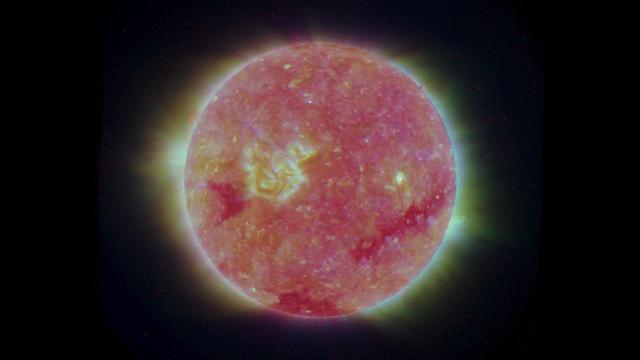
NASA Solar TErrestrial RElations Observatory STEREO satellites have provided the first three-dimensional images of the Sun. The structure of the corona shows well in this image.
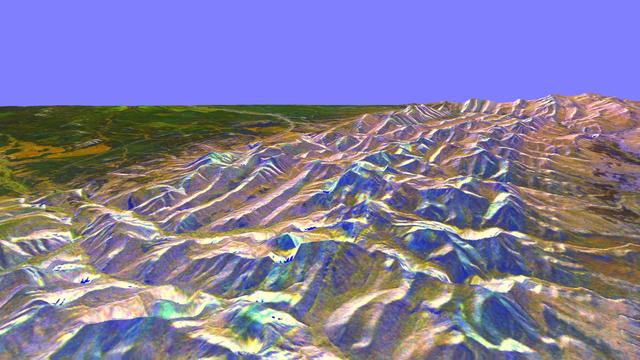
This is a three-dimensional perspective of the eastern front range of the Rocky Mountains, about 120 kilometers 75 miles west of Great Falls, Montana.

NASA Solar TErrestrial RElations Observatory STEREO satellites have provided the first three-dimensional images of the Sun. The structure of the corona shows well in this image.

This three dimensional effect is created by superimposing images of Jupiter icy moon, Europa, taken by NASA Galileo Orbiter. 3D glasses are necessary to identify surface detail.
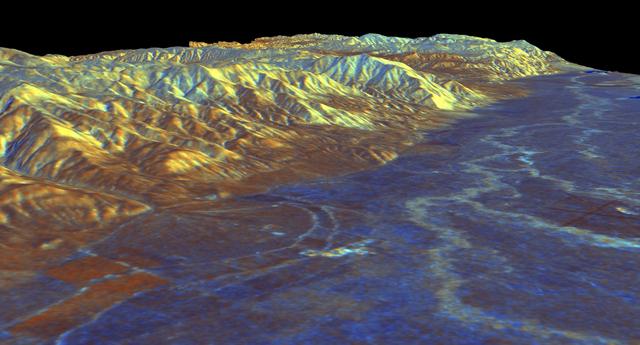
This is a three-dimensional perspective view of Owens Valley, near the town of Bishop, California that was created by combining two spaceborne radar images using a technique known as interferometry.
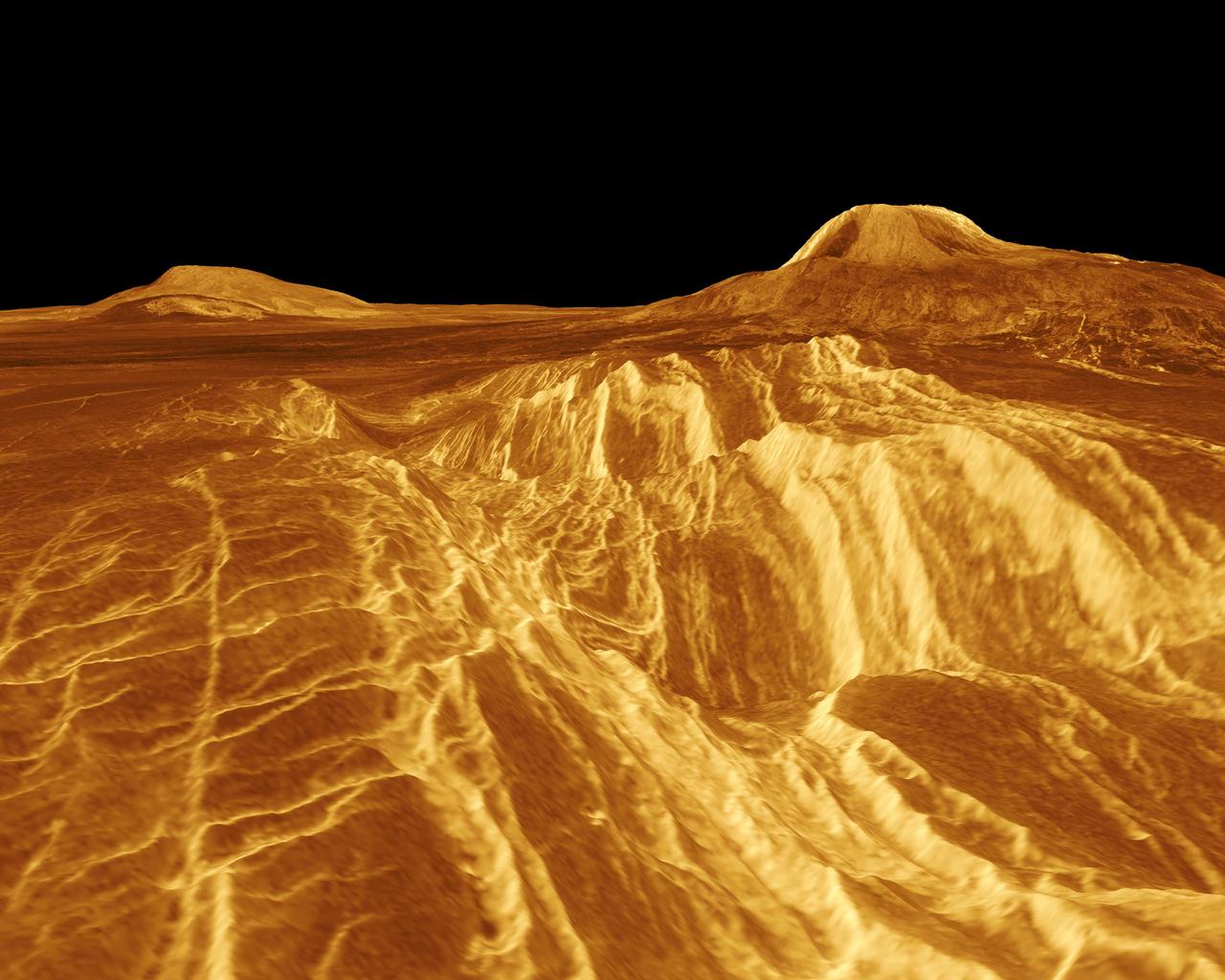
A portion of western Eistla Regio is shown in this three dimensional, computer-generated view of the surface of Venus. This NASA Magellan image was released on April 22, 1992. http://photojournal.jpl.nasa.gov/catalog/PIA00200
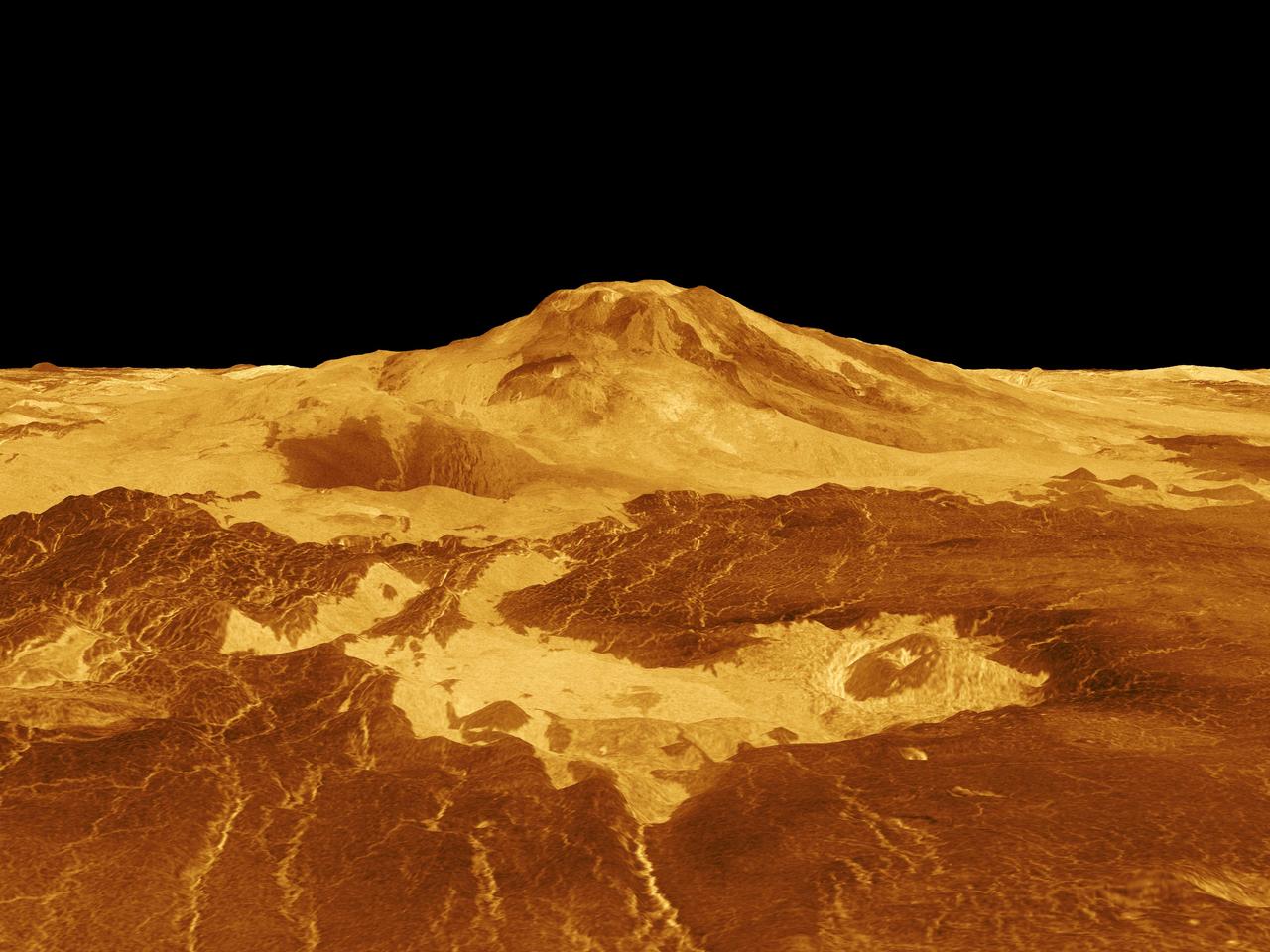
Maat Mons is displayed in this computer generated three-dimensional perspective of the surface of Venus. This NASA's Magellan image was released on April 22, 1992. http://photojournal.jpl.nasa.gov/catalog/PIA00106
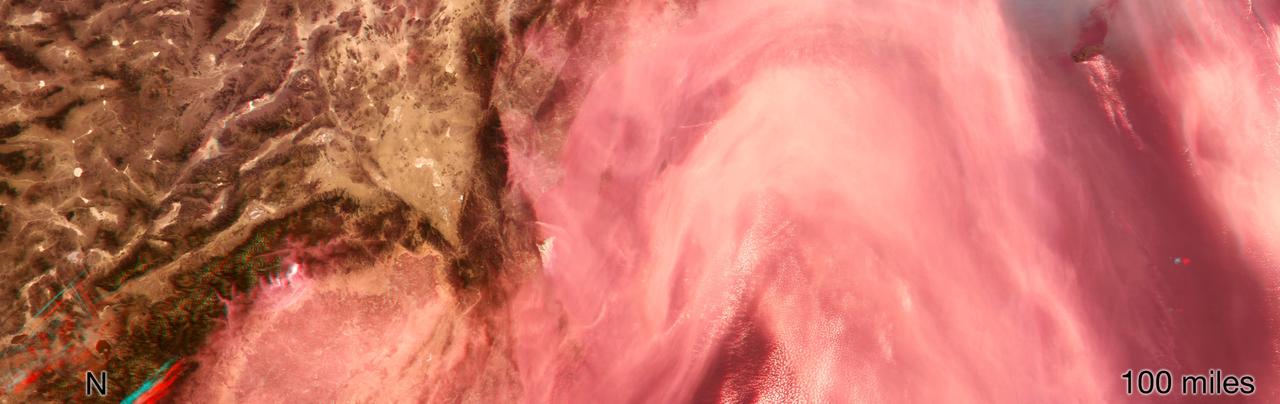
Data from the Multi-angle Imaging SpectroRadiometer (MISR) instrument aboard NASA's Terra satellite was used to produce this stereo anaglyph of the Woolsey Fire in southern California on Nov. 11, 2018. It shows a three-dimensional view of the smoke plume -- visible through red-blue 3D glasses. https://photojournal.jpl.nasa.gov/catalog/PIA22817
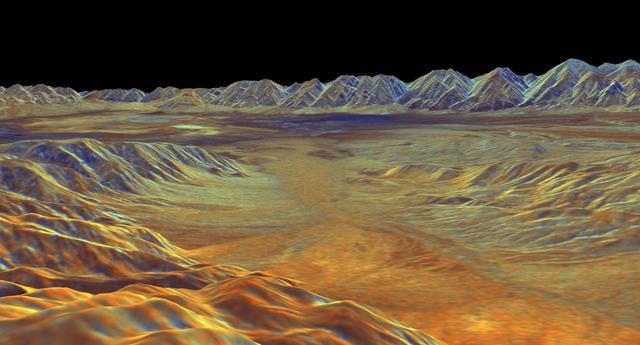
This is a three-dimensional perspective view of Saline Valley, about 30 km 19 miles east of the town of Independence, California created by combining two spaceborne radar images using a technique known as interferometry.
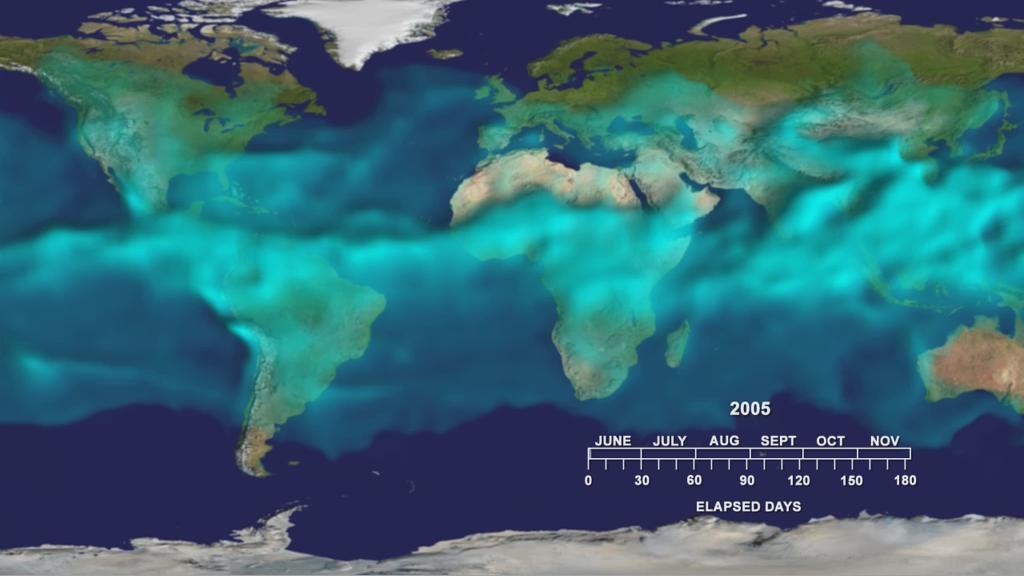
This visualization from the Atmospheric Infrared Sounder AIRS on NASA Aqua satellite shows variations in the three dimensional distribution of water vapor in the atmosphere during the summer and fall of 2005.
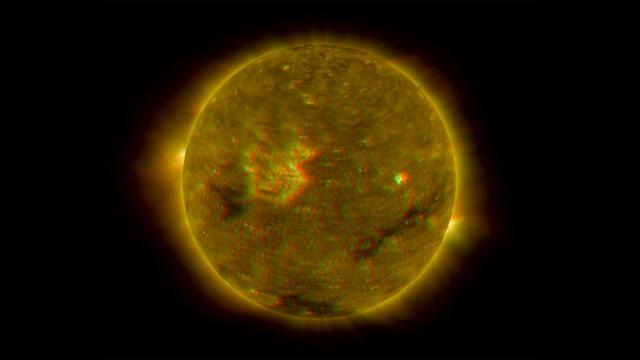
NASA Solar TErrestrial RElations Observatory STEREO satellites have provided the first three-dimensional images of the Sun. The structure of the corona shows well in this image. 3D glasses are necessary to view this image.

This 360-degree three dimensional anaglyph view from NASA Mars Exploration Rover Spirit highlights Gusev crater on sol 142. 3D glasses are necessary to view this image.
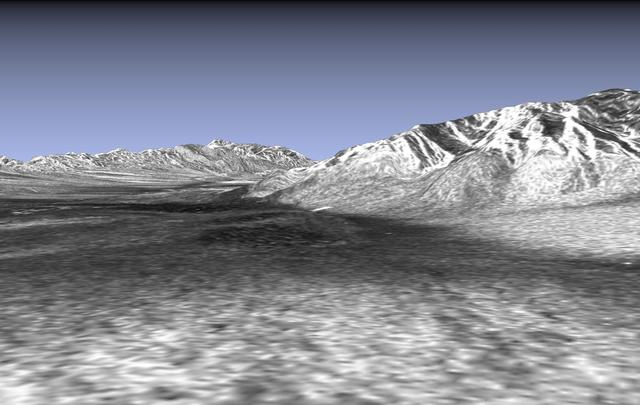
This picture is a three-dimensional perspective view of Death Valley, California. This view was constructed by overlaying a NASA SIR-C radar image on a U.S. Geological Survey digital elevation map.
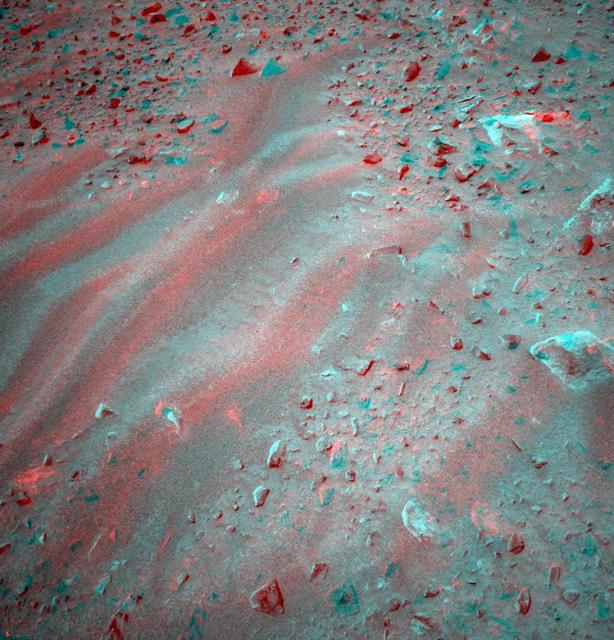
This is a three-dimensional stereo anaglyph of an image taken by the front navigation camera onboard NASA Mars Exploration Rover Spirit, showing an interesting patch of rippled soil. 3D glasses are necessary to view this image.
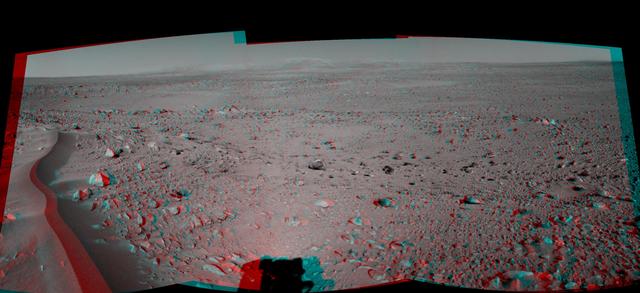
This 120-degree three dimensional anaglyph view from NASA Mars Exploration Rover Spirit highlights a crater approximately 70 meters 230 feet in diameter informally named Lahontan. 3D glasses are necessary to view this image.

This 360-degree three dimensional anaglyph view from NASA Mars Exploration Rover Spirit highlights Gusev crater on sol 147. 3D glasses are necessary to view this image.
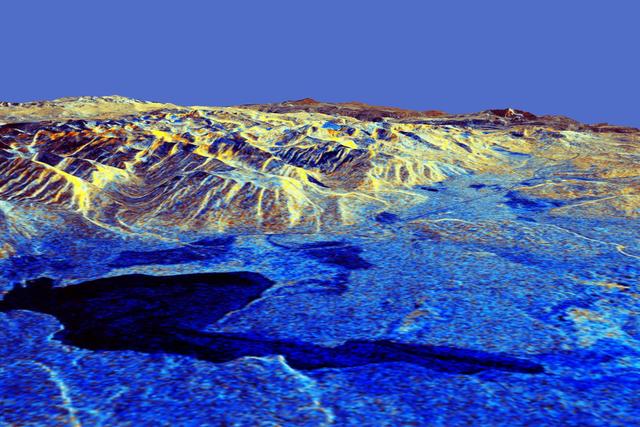
This is a three-dimensional perspective of Mammoth Mountain, California. This view was constructed by overlaying a NASA Spaceborne Imaging Radar-C SIR-C radar image on a U.S. Geological Survey digital elevation map.
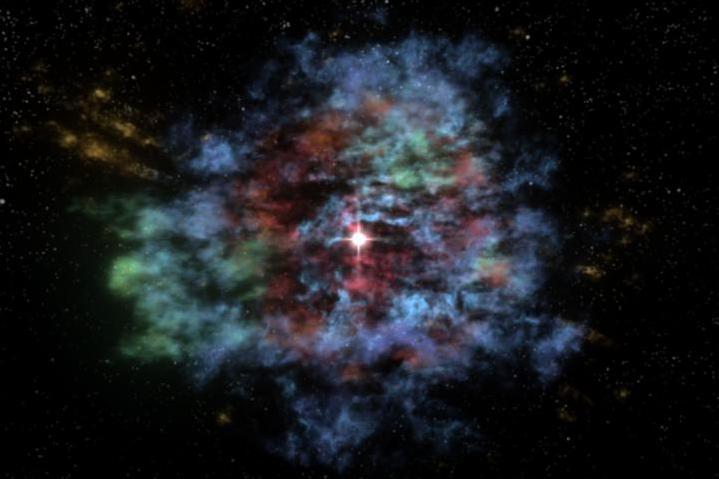
For the first time, a multiwavelength three-dimensional reconstruction of a supernova remnant has been created. This visualization of Cassiopeia A, or Cas A, the result of an explosion approximately 330 years ago, uses data from several NASA telescopes.
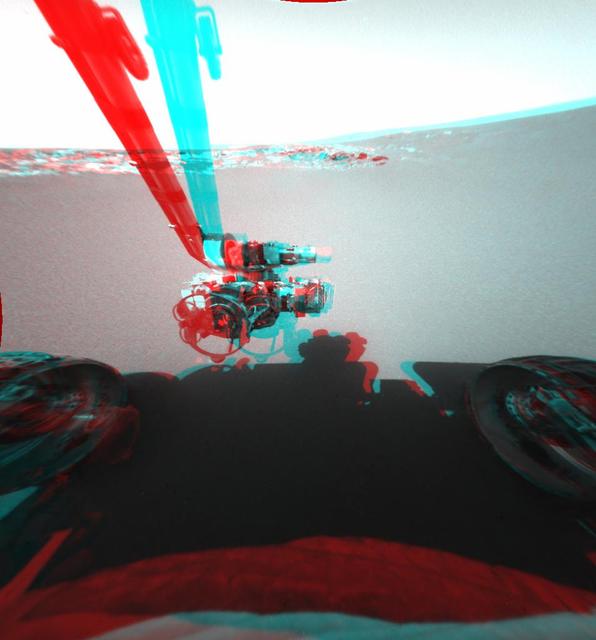
This is a three-dimensional stereo anaglyph of an image taken by the front hazard-identification camera onboard NASA Mars Exploration Rover Opportunity, showing the rover arm in its extended position. 3D glasses are necessary to view this image.
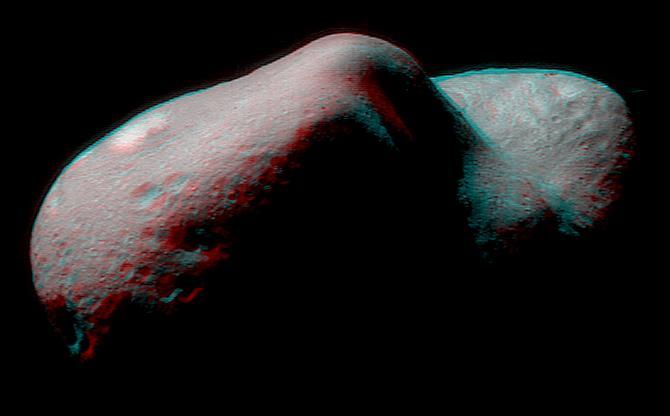
Stereo imaging, an important tool on NASA NEAR Shoemaker for geologic analysis of Eros, provides three-dimensional information on the asteroid landforms and structures. 3D glasses are necessary to view this image.
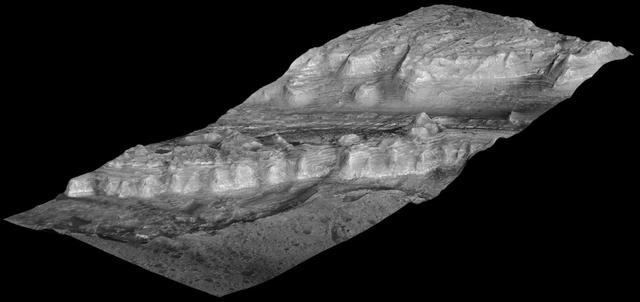
This oblique view, captured by NASA Mars Reconnaissance Orbiter, shows geological layers of rock exposed on a mound inside Gale Crater on Mars. This view was created from a three-dimensional topographic model of the mound.
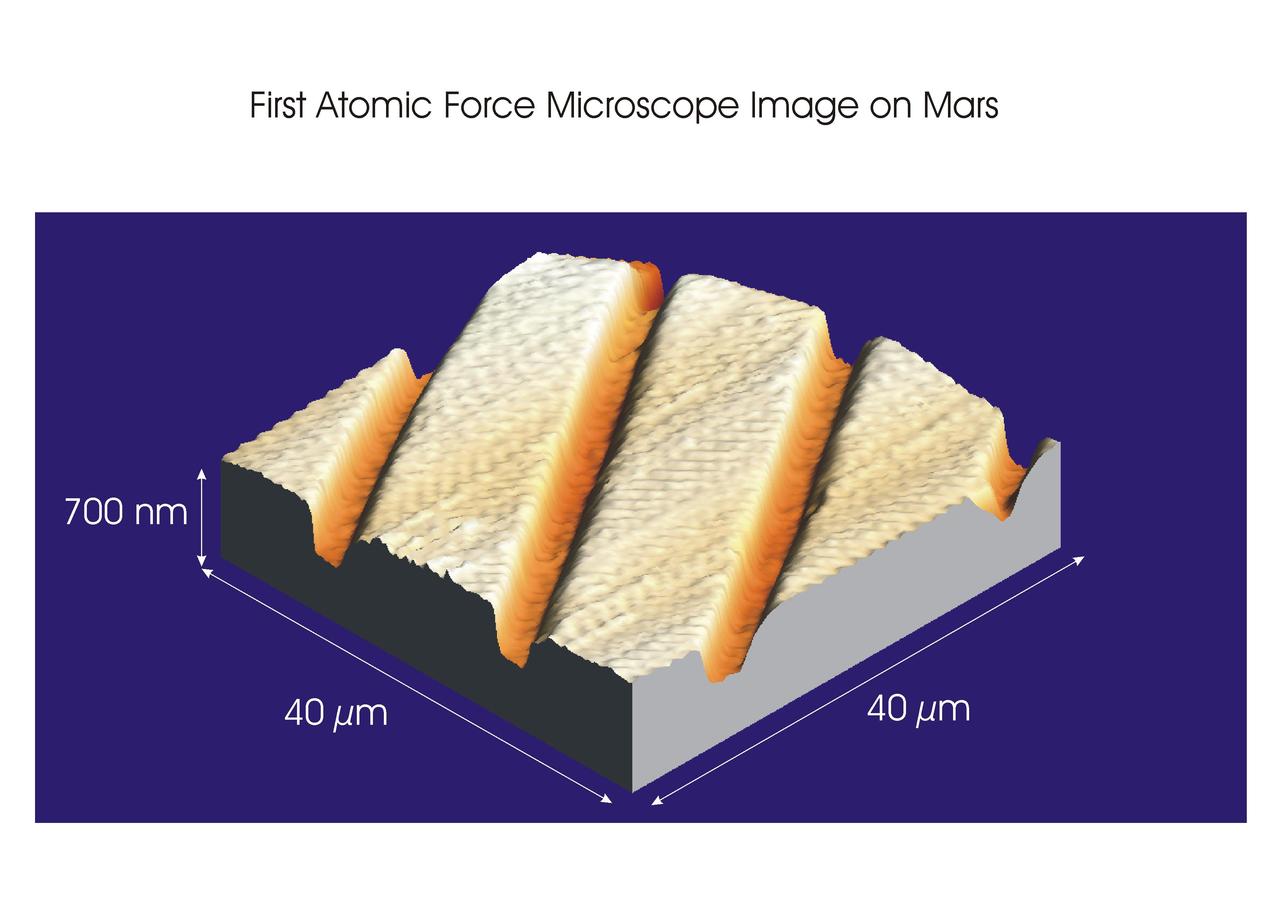
This calibration image presents three-dimensional data from the atomic force microscope on NASA Phoenix Mars Lander, showing surface details of a substrate on the microscope station sample wheel.
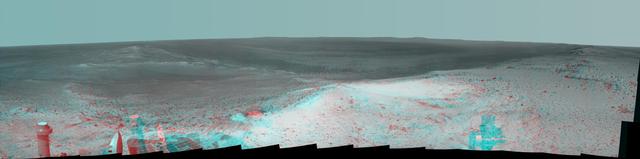
NASA Mars Exploration Rover Opportunity gained this stereo vista from the top of a raised segment of the rim of Endeavour Crater. The view appears three-dimensional when seen through 3D glasses with red lens on the left.

This 360-degree three dimensional anaglyph view from NASA Mars Exploration Rover Spirit highlights Gusev crater on sol 148. 3D glasses are necessary to view this image.
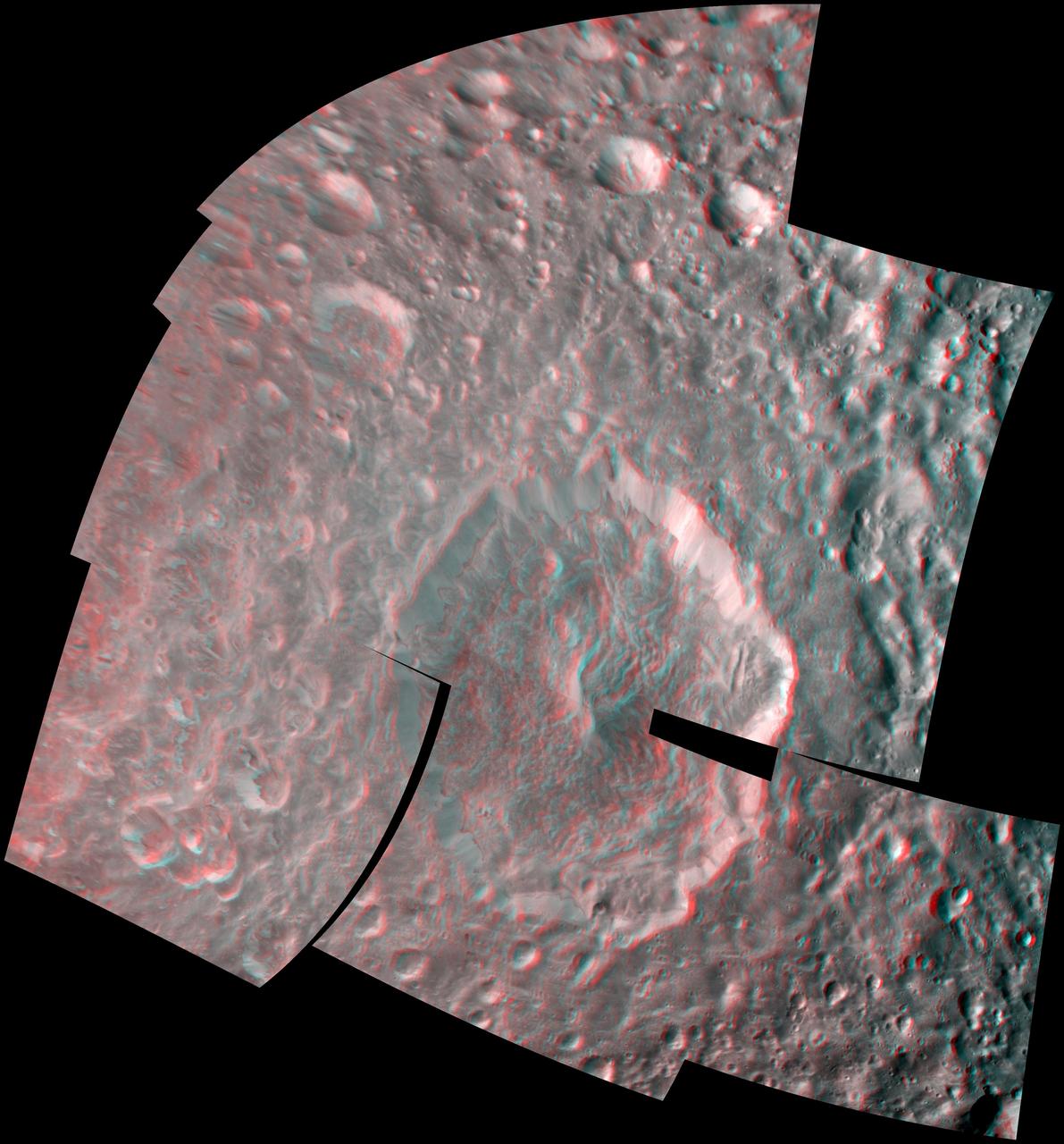
NASA Cassini spacecraft captured a three-dimensional view of the large Herschel Crater on Saturn moon Mimas during its closest-ever flyby of the moon. 3D glasses are needed to view this image.
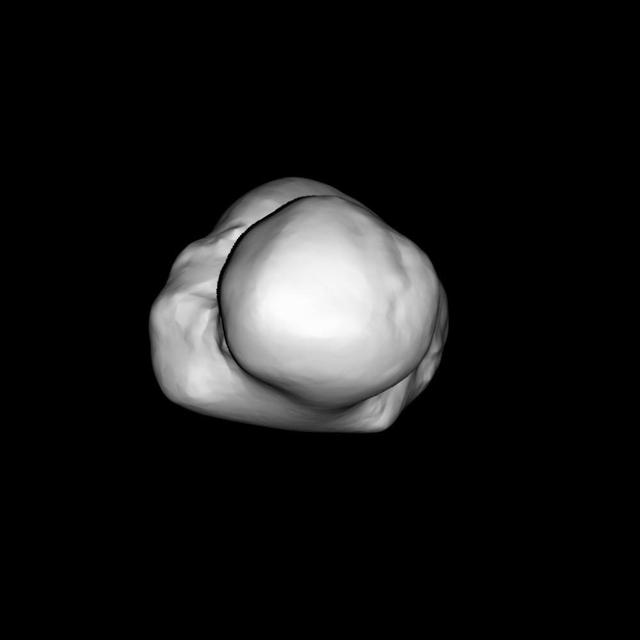
Images of comet 67P/Churyumov-Gerasimenko taken on July 14, 2014, by the OSIRIS imaging system aboard ESA Rosetta spacecraft have allowed scientists to create this three-dimensional shape model of the nucleus.
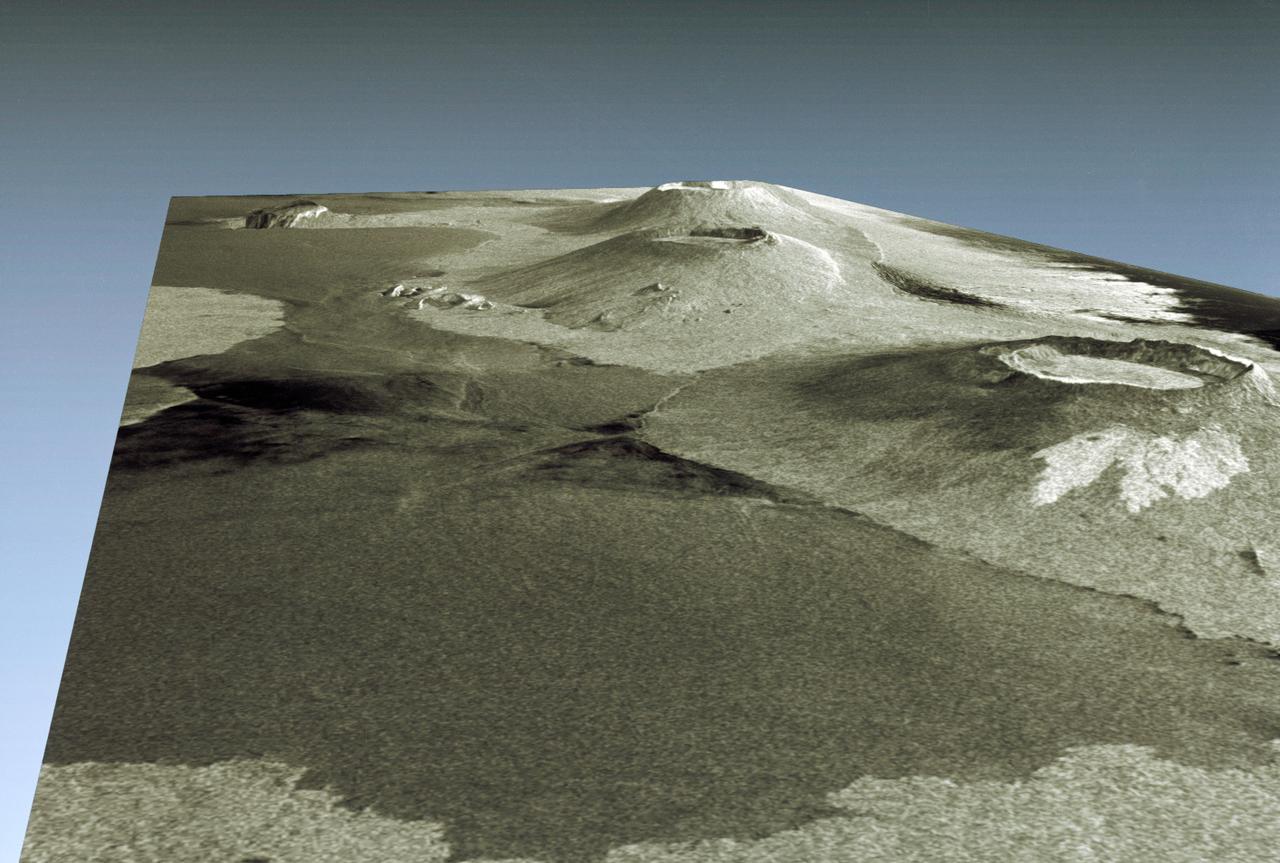
STS059-S-085 (18 April 1994) --- This is a three-dimensional perspective view of part of Isla Isabela in the western Galapagos Islands. It was taken by the L-Band radar in HH polarization from the Spaceborne Imaging Radar-C and X-Band Synthetic Aperture Radar (SIR-C/X-SAR) on the 40th orbit of the Space Shuttle Endeavour. This view was constructed by overlaying a SIR-C radar image on a U.S. Geological Survey digital elevation map. The image is centered at about .5 degrees south latitude and 91 degrees west longitude, and covers an area of 75 by 60 kilometers. The radar incidence angle at the center of the image is about 20 degrees. The western Galapagos Islands, which lie about 1200 kilometers west of Ecuador in the eastern Pacific, have six active volcanoes similar to the volcanoes found in Hawaii. Since the time of Charles Darwin's visit to the area in 1835, there have been over 60 recorded eruptions on these volcanoes. This SIR-C/X-SAR image of Alcedo and Sierra Negra volcanoes shows the rougher lava flows as bright features, while ash deposits and smooth pahoehoe lava flows appear dark. The Galapagos Islands are one of the SIR-C/X-SAR supersites and data of this area will be taken several times during the flight to allow scientists to conduct topographic change studies and to search for different lava flow types, ash deposits and fault lines. SIR-C/X-SAR is part of NASA's Mission to Planet Earth (MTPE). SIR-C/X-SAR radars illuminate Earth with microwaves allowing detailed observations at any time, regardless of weather or sunlight conditions. SIR-C/X-SAR uses three microwave wavelengths: L-Band (24 cm), C-Band (6 cm), and X-Band (3 cm). The multi-frequency data will be used by the international scientific community to better understand the global environment and how it is changing. The SIR-C/X-SAR data, complemented by aircraft and ground studies, will give scientists clearer insights into those environmental changes which are caused by nature and those changes which are induced by human activity. SIR-C was developed by NASA's Jet Propulsion Laboratory (JPL). X-SAR was developed by the Dornire and Alenia Spazio Companies for the German Space Agency, Deutsche Agentur fuer Raumfahrtangelegenheiten (DARA), and the Italian Space Agency, Agenzia Spaziale Italiana (ASI). JPL Photo ID: P-43938
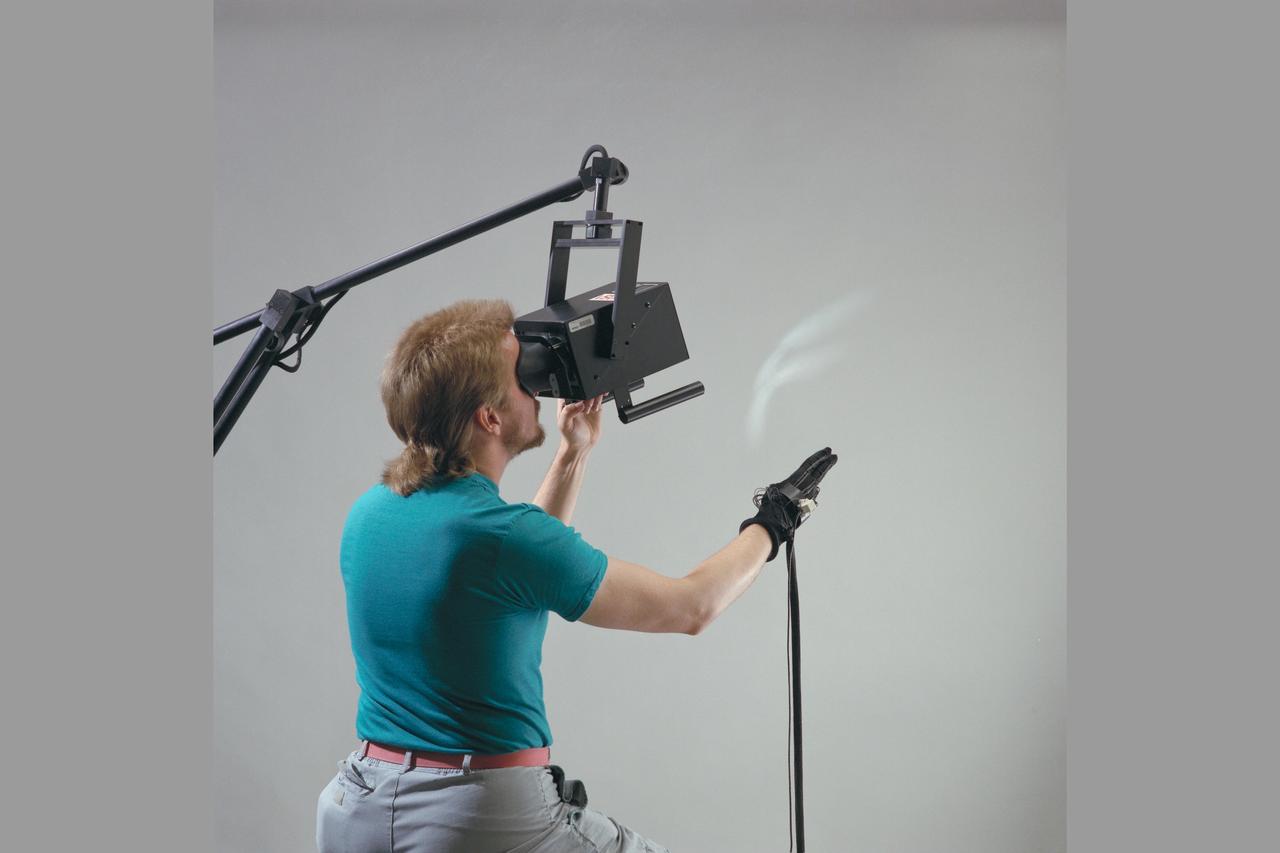
Space Shuttle CFD: Steve Bryson explores Three Dimensional Steady Flows using virtual w.t.
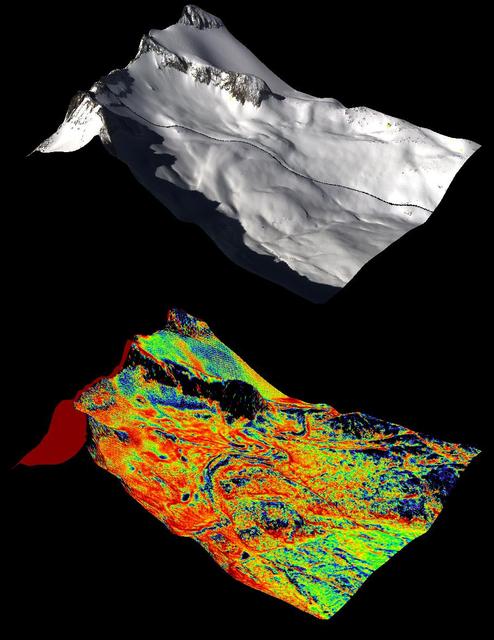
A natural color image of Mt. Lyell, the highest point in the Tuolumne River Basin top image is compared with a three-dimensional color composite image of Mt. Lyell from NASA Airborne Snow Observatory depicting snow depth bottom image.
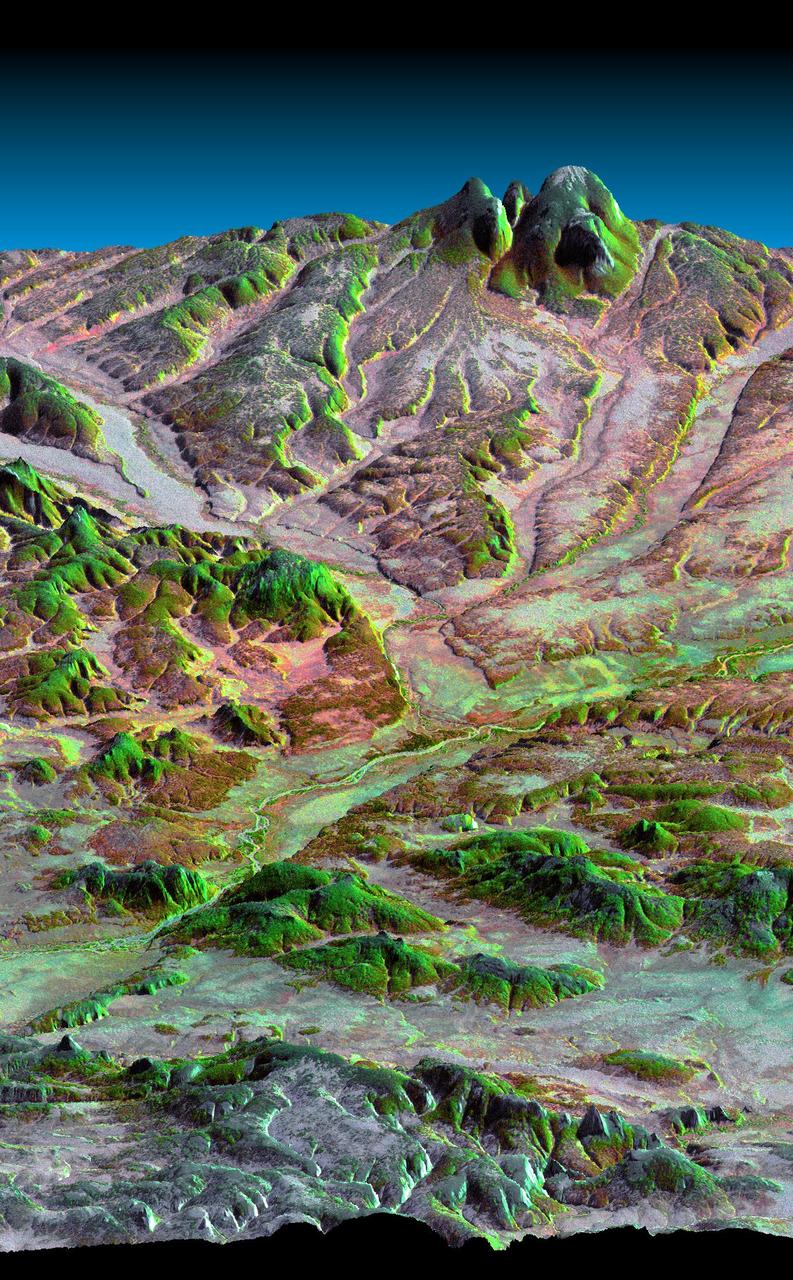
This three-dimensional perspective view, looking up the Tigil River, acquired by NASA Shuttle Radar Topography Mission SRTM from data collected on February 16, 2000, shows the western side of the volcanically active Kamchatka Peninsula, Russia.

The anaglyph shows Pwyll crater on Jupiter icy satellite Europa, captured by NASA Galileo Orbiter. 3D glasses are necessary to identify surface detail.

Waves of clouds at 37.8 degrees latitude dominate this three-dimensional Jovian cloudscape, courtesy of NASA's Juno spacecraft. JunoCam obtained this enhanced-color picture on May 19, 2017, at 5:50 UTC from an altitude of 5,500 miles (8,900 kilometers). Details as small as 4 miles (6 kilometers) across can be identified in this image. The small bright high clouds are about 16 miles (25 kilometers) across and in some areas appear to form "squall lines" (a narrow band of high winds and storms associated with a cold front). On Jupiter, clouds this high are almost certainly composed of water and/or ammonia ice. Citizen scientists Gerald Eichstädt and Seán Doran created this image using data from the spacecraft's JunoCam imager. https://photojournal.jpl.nasa.gov/catalog/PIA21646
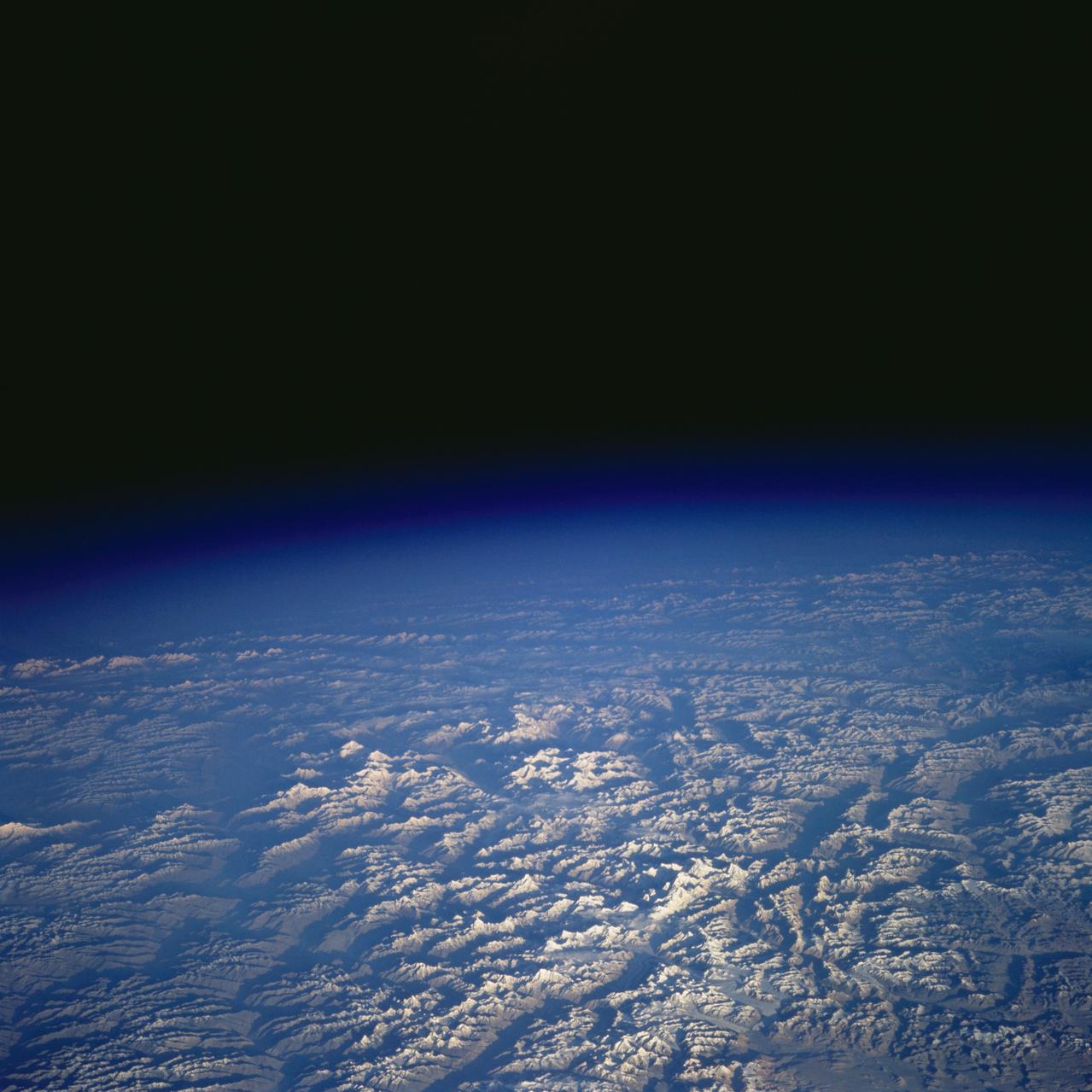
STS058-78-021 (18 Oct-1 Nov 1993) --- A clear three-dimensional view of the Karakorum Range. This northwestern extension of the Himalaya contains glaciated peaks having elevations of 7,000 to 8,000 meters.
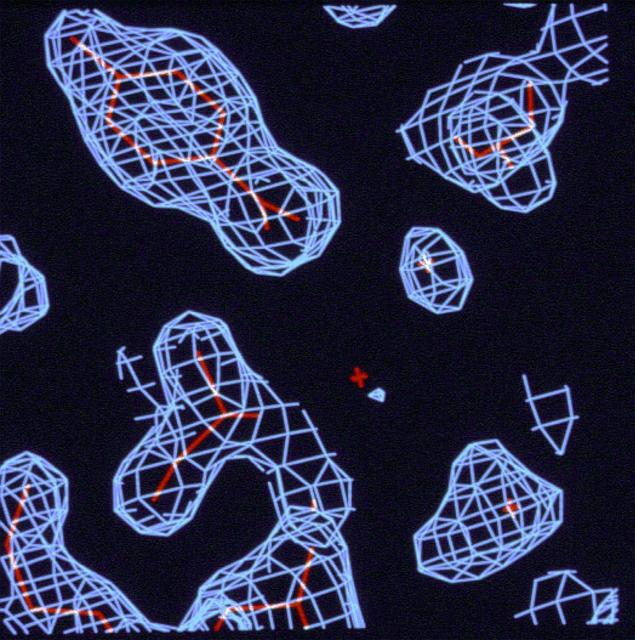
Like many chemicals in the body, the three-dimensional structure of insulin is extremely complex. When grown on the ground, insulin crystals do not grow as large or as ordered as researchers desire--obscuring the blueprint of the insulin molecules.
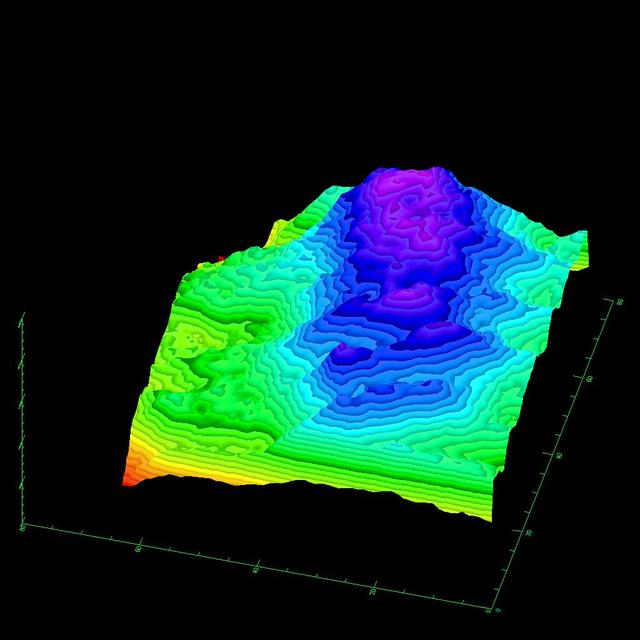
This three-dimensional image of the volcano Kilauea was generated based on interferometric fringes derived from two X-band Synthetic Aperture Radar data takes on April 13, 1994 and October 4, 1994. The altitude lines are based on quantitative interpolation of the topographic fringes. The level difference between neighboring altitude lines is 20 meters (66 feet). The ground area covers 12 kilometers by 4 kilometers (7.5 miles by 2.5 miles). The altitude difference in the image is about 500 meters (1,640 feet). The volcano is located around 19.58 degrees north latitude and 155.55 degrees west longitude. http://photojournal.jpl.nasa.gov/catalog/PIA01761

S128-E-007325 (4 Sept. 2009) --- European Space Agency astronaut Christer Fuglesang, STS-128 mission specialists, gets set to take pictures with a three-dimensional still camera onboard the International Space Station during flight day 8 activities.
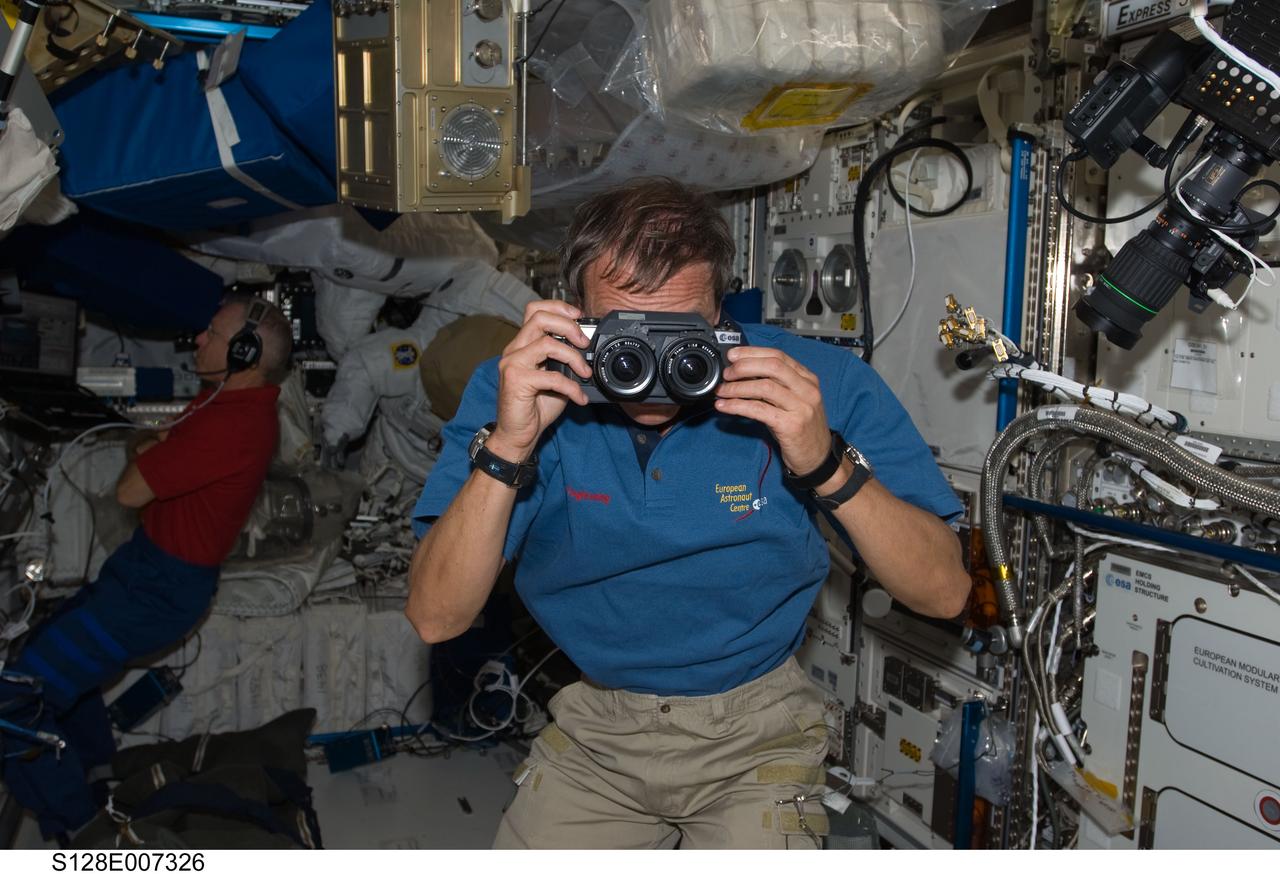
S128-E-007326 (4 Sept. 2009) --- European Space Agency astronaut Christer Fuglesang, STS-128 mission specialists, checks out a three-dimensional still camera onboard the International Space Station during flight day 8 activities.
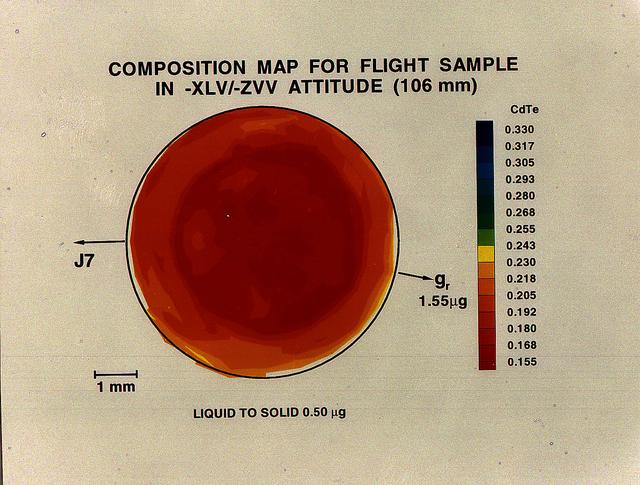
A semiconductor's usefulness is determined by how atoms are ordered within the crystal's underlying three-dimensional structure. While this mercury telluride and cadmium telluride alloy sample mixes completely in Earth -based laboratories, convective flows prevent them from mixing uniformly. In space, the ingredients mix more homogenously, resulting in a superior product.

jsc2010e184283 (Nov. 9, 2010) --- Electroencephalograph (EEG) Cap at NASA's Johnson Space Center, part of the Neurospat experiment. Neurospat investigates ways in which crew member's three-dimensional visual and space perception is affected by long-duration stays in weightlessness to help in help in finding and developing countermeasures alleviating any disorientation experienced by astronauts.
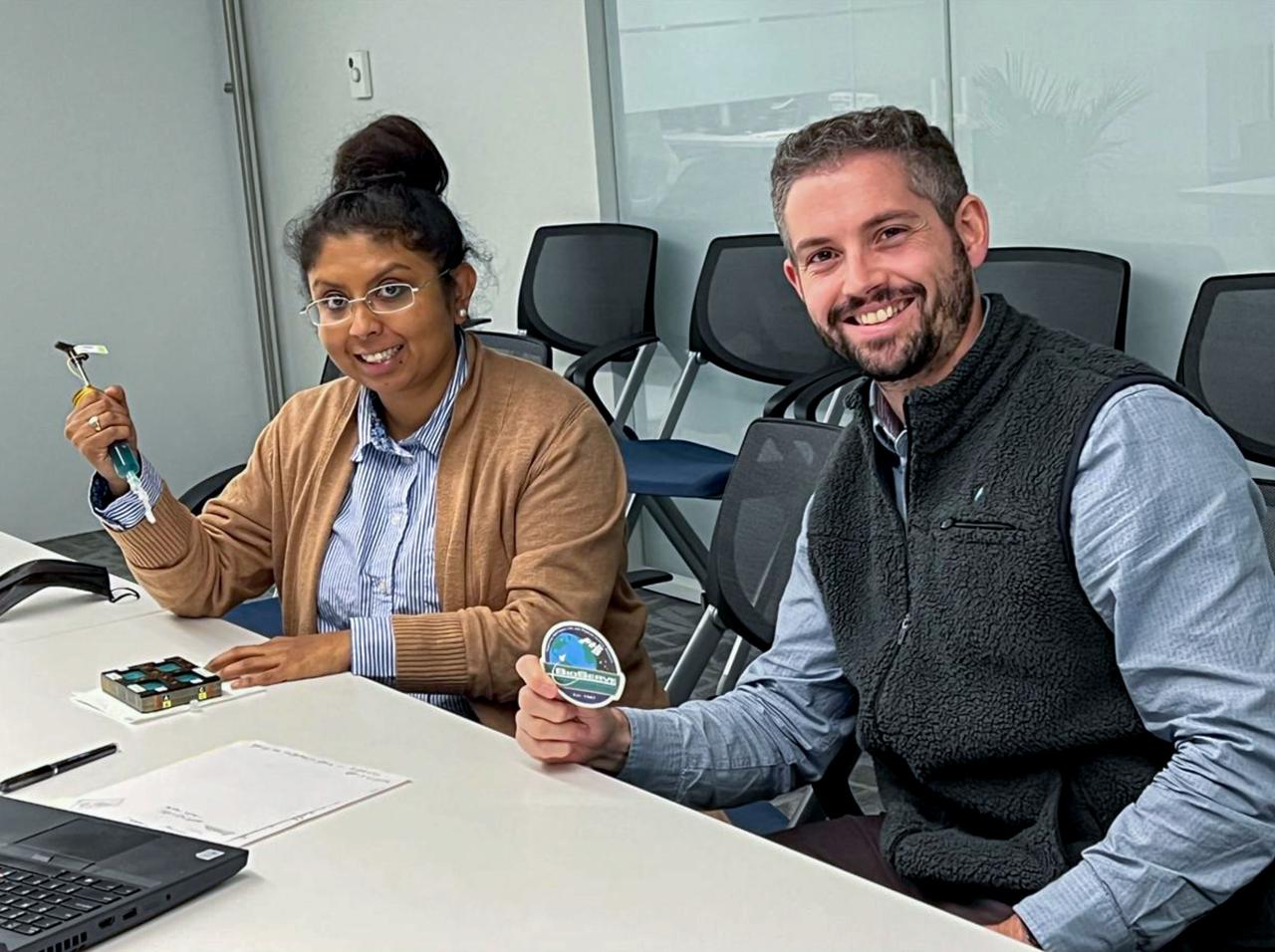
jsc2023e026249 (4/28/2023) --- Drs. Adwitia Dey and Shane Hegarty of AXONIS Therapeutics are pictured with flight hardware for the Innovative Paralysis Therapy Enabling Neuroregeneration (Neuronix) investigation that aims to demonstrate the formation of three-dimensional neuronal cell cultures in microgravity and tests a neuron-specific gene therapy. Image courtesy of BioServe.
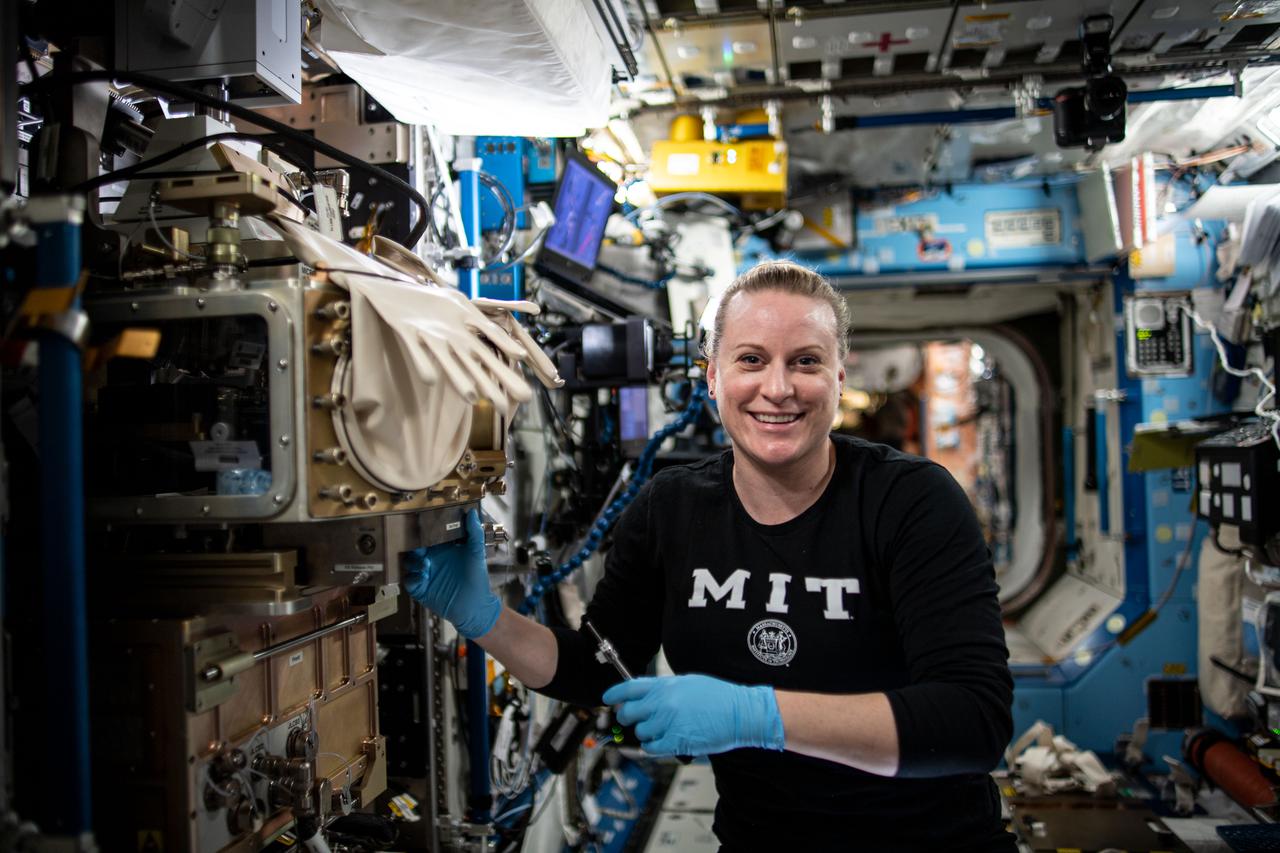
iss064e023935 (Jan. 14, 2021) --- NASA astronaut and Expedition 64 Flight Engineer Kate Rubins sets up the ACE-T-Ellipsoids study inside the Light Microscopy Module. The investigation designs and assembles complex three-dimensional colloids – small particles suspended within a fluid medium – and controls density and behavior of the particles with temperature.
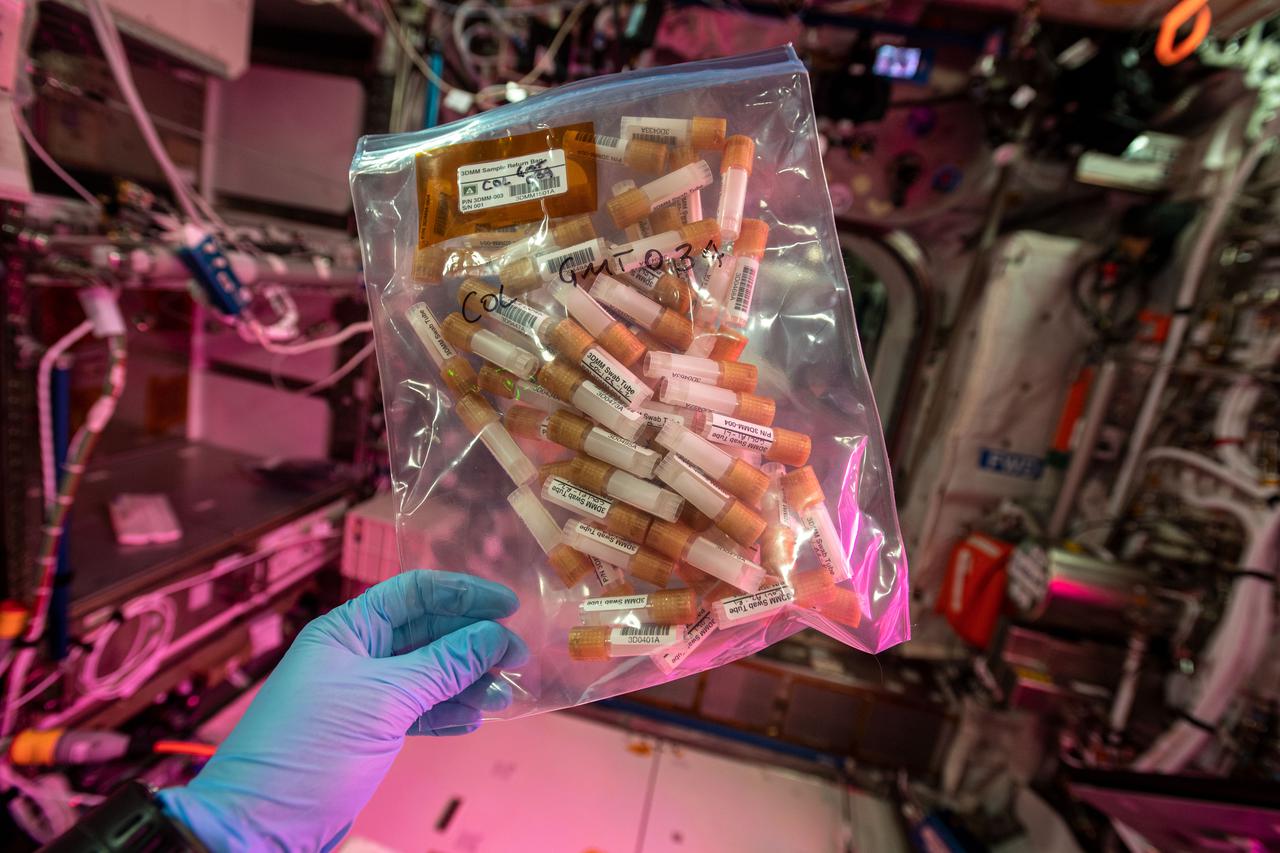
iss064e029074 (February 3, 2021) --- Some of the 1,000 samples taken by swabbing various locations aboard the International Space Station for the Three-dimensional Microbial Monitoring (3DMM) of ISS Environment study. By advancing our understanding of the space station microbiome, this work helps identify potential risks and supports developing countermeasures to mitigate those risks.

This three-dimensional illustration shows how the rotating space around a black hole twists up the magnetic field in the plasma falling toward the black hole. The black sphere at the center of the figure is the black hole itself. http://photojournal.jpl.nasa.gov/catalog/PIA04207
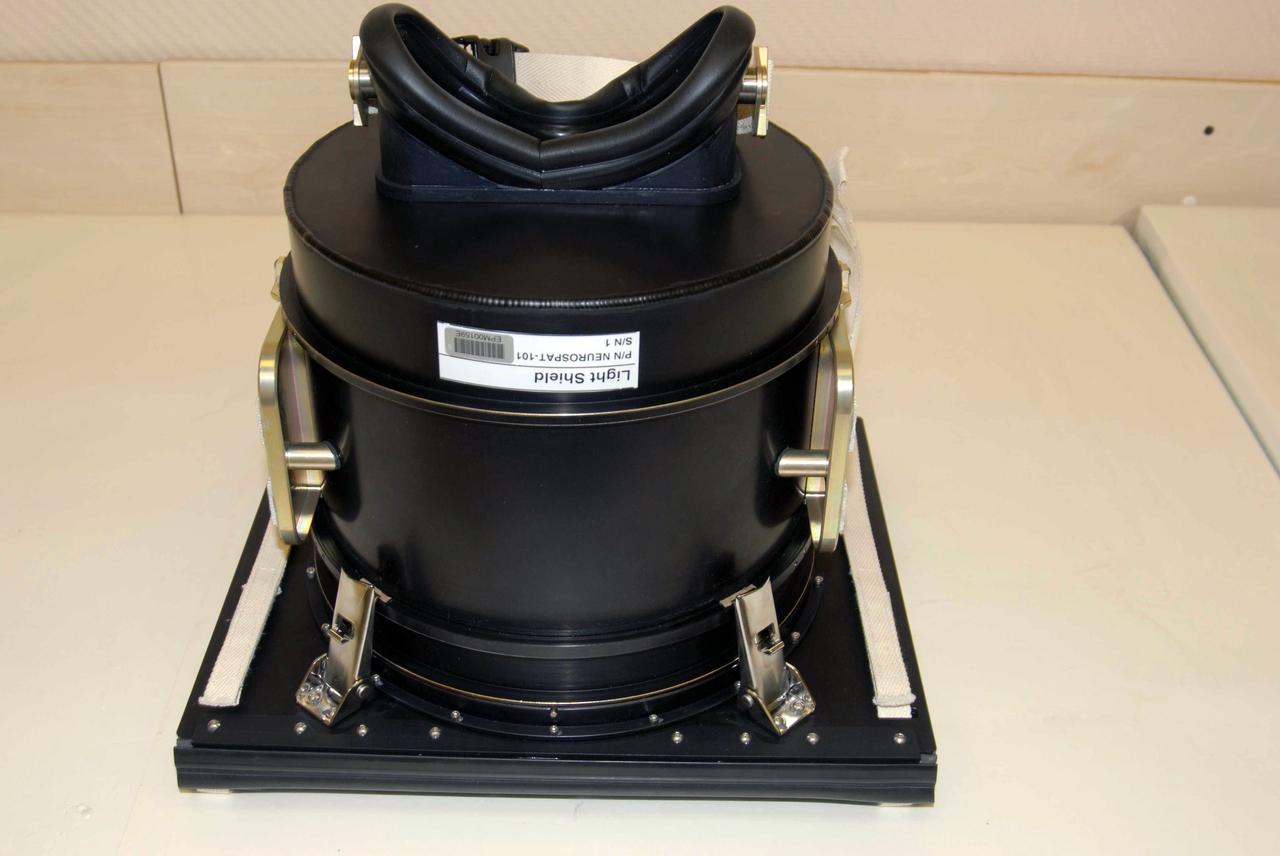
jsc2008e032967 (Apr. 9, 2008) --- Neurospat Light Shield and frame at NASA's Johnson Space Center. Neurospat investigates ways in which crew member's three-dimensional visual and space perception is affected by long-duration stays in weightlessness to help in help in finding and developing countermeasures alleviating any disorientation experienced by astronauts.
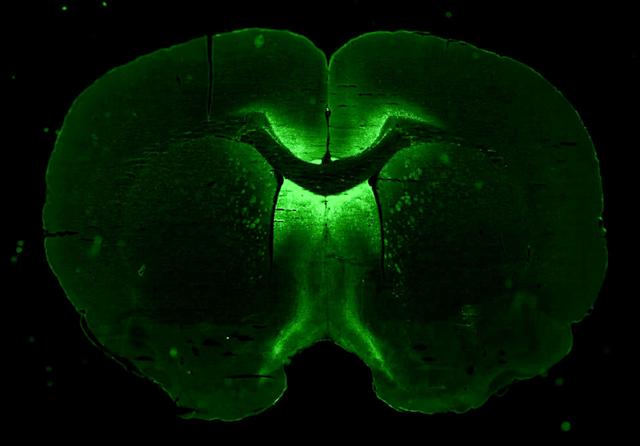
jsc2023e026250 (4/28/2023) --- A preflight vector image of AAV gene therapy that selectively targets neurons to induce axon regeneration. Innovative Paralysis Therapy Enabling Neuroregeneration (Neuronix) demonstrates the formation of three-dimensional neuronal cell cultures in microgravity and tests a neuron-specific gene therapy. Image courtesy of AXONIS Therapeutics, Inc.
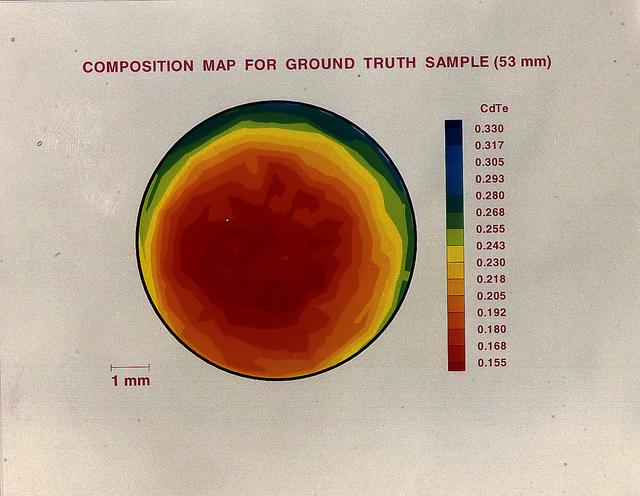
A semiconductor's usefulness is determined by how atoms are ordered within the crystal's underlying three-dimensional structure. While this mercury telluride and cadmium telluride alloy sample mixes completely in Earth -based laboratories, convective flows prevent them from mixing uniformly.
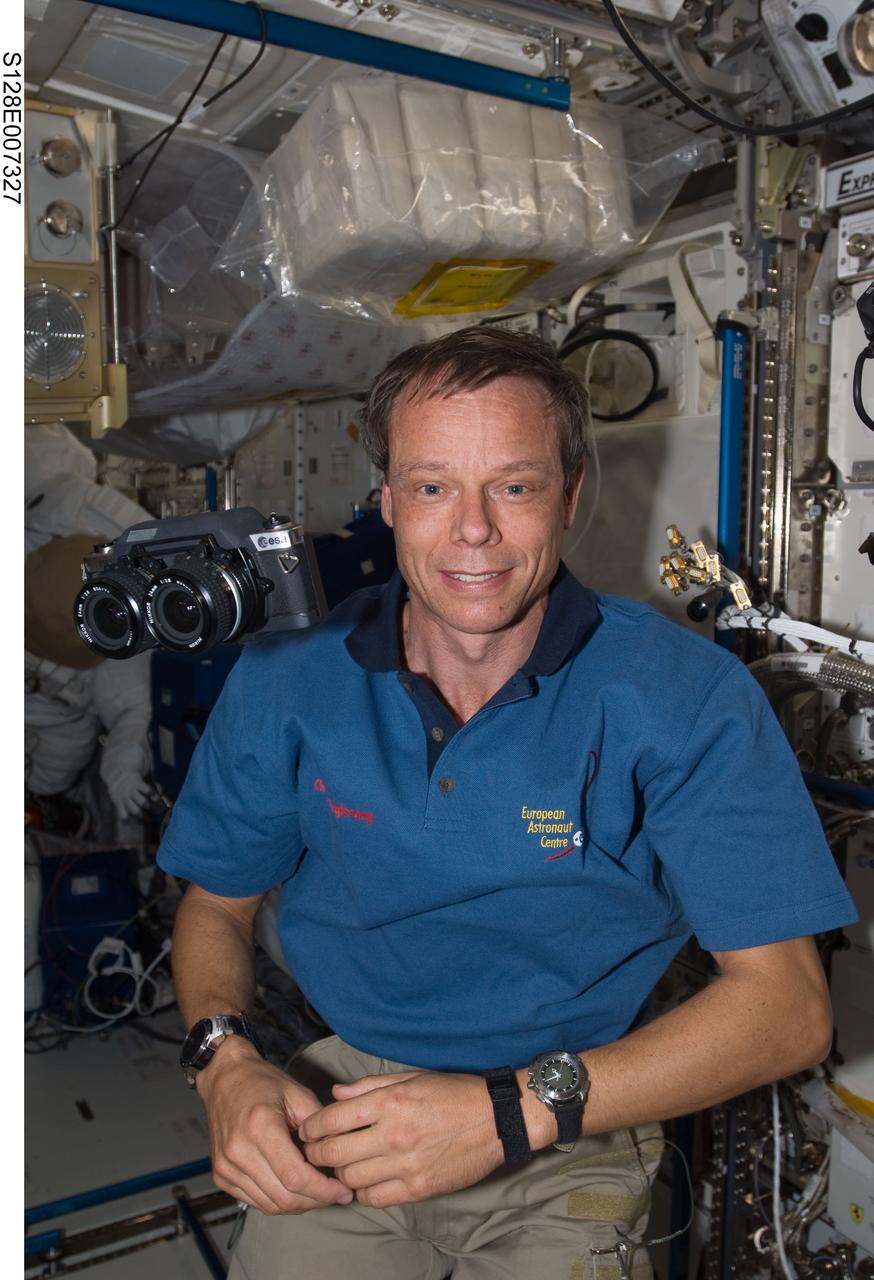
s128e007327 (4 Sept. 2009) --- European Space Agency astronaut Christer Fuglesang, STS-128 mission specialists, gets set to take pictures with a three-dimensional still camera onboard the International Space Station during flight day 8 activities.
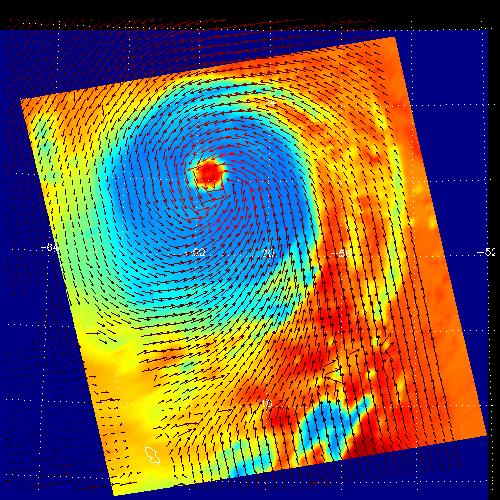
These two images show Hurricane Isabel as viewed by AIRS and SeaWinds scatterometers on NASA ADEOS-2 and QuikScat satellites in September, 2003. AIRS data are used to create global three-dimensional maps of temperature, humidity and clouds, while scatterometers measure surface wind speed and direction. http://photojournal.jpl.nasa.gov/catalog/PIA00429
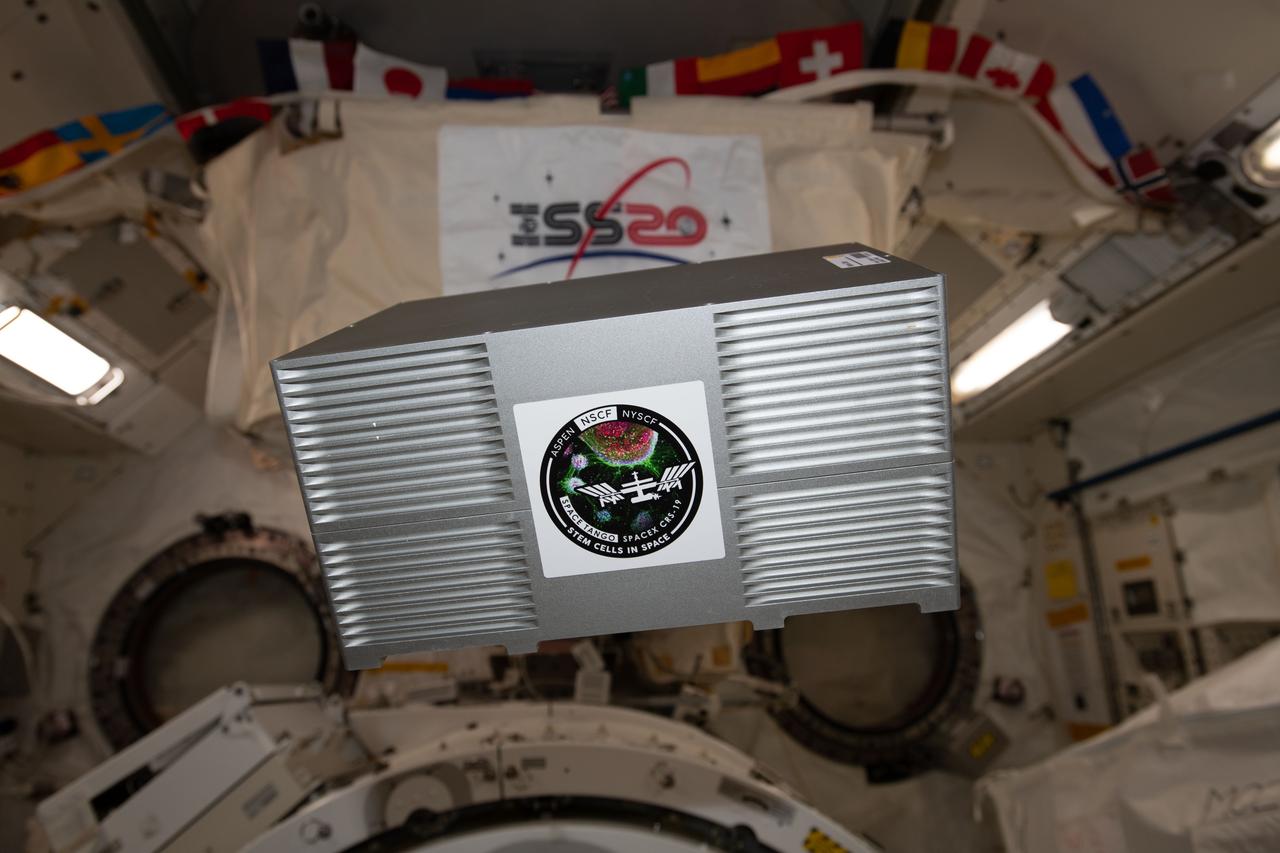
iss061e117838 (1/5/2020) --- A view aboard the International Space Station (ISS) of the TangoLab Space Tango-Induced Pluripotent Stem Cells. The Effects of Microgravity on Microglia 3-Dimensional Models of Parkinson’s Disease and Multiple Sclerosis (Space Tango-Induced Pluripotent Stem Cells) examines how microglial cells grow and move in three-dimensional (3D) cultures as well as any changes in gene expression that occur as a result of microgravity exposure. Microglia are a type of immune defense cell found in the central nervous system. Results may help provide novel approaches to characterizing, understanding, and developing therapies for Parkinson’s disease and multiple sclerosis.
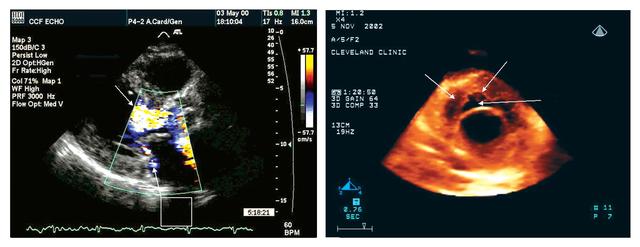
Echocardiography uses sound waves to image the heart and other organs. Developing a compact version of the latest technology improved the ease of monitoring crew member health, a critical task during long space flights. NASA researchers plan to adapt the three-dimensional (3-D) echocardiogram for space flight. The two-dimensional (2-D) echocardiogram utilized in orbit on the International Space Station (ISS) was effective, but difficult to use with precision. A heart image from a 2-D echocardiogram (left) is of a better quality than that from a 3-D device (right), but the 3-D imaging procedure is more user-friendly.
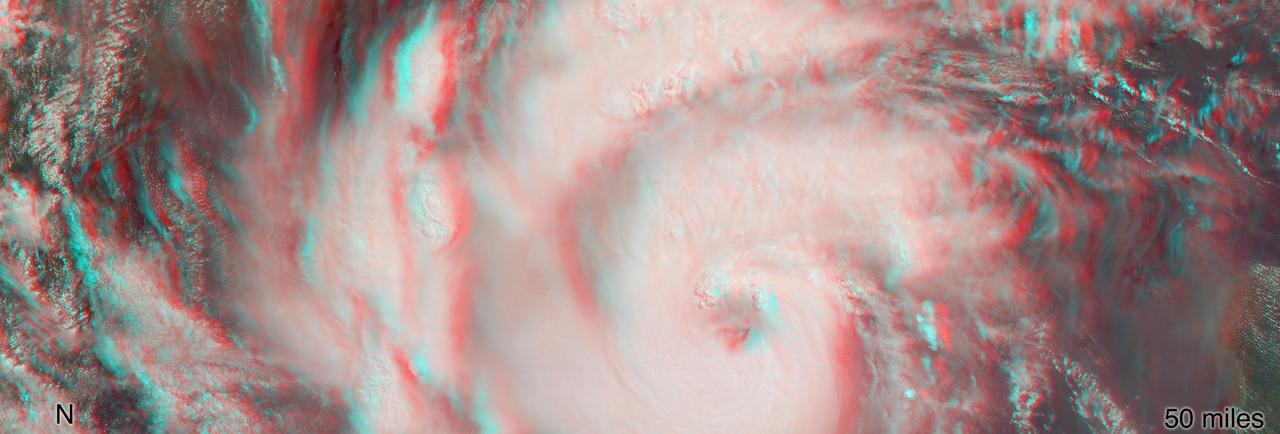
MISR's stereo anaglyph shows a three-dimensional view of Michael and combines two of MISR's nine camera angles. Using 3D red-blue glasses, you can see the 3D effect. Apparent in the 3D stereo anaglyph as well as the height field are a number of bright "clumps." These are groups of strong thunderstorms embedded within the larger circulation of the hurricane. Known as "vortical hot towers" the presence of these features indicates rapid transport of heat energy from the ocean surface into the storm, typically indicative of rapid intensification of the hurricane. In fact, between 11 a.m. and 2 p.m. EDT, while MISR imaged the hurricane, the estimated central pressure dropped 8 hPa and the maximum sustained winds increased about 12 mph (19 kph) and over the next 24 hours Hurricane Michael intensified from a Category 2 to a Category 4 storm. The National Hurricane Center clocked Michael's sustained wind speed at 150 mph (240 kph) just before noon local time on Wednesday. It is expected to bring strong winds, storm surge and heavy rain to much of the southeast. https://photojournal.jpl.nasa.gov/catalog/PIA22748
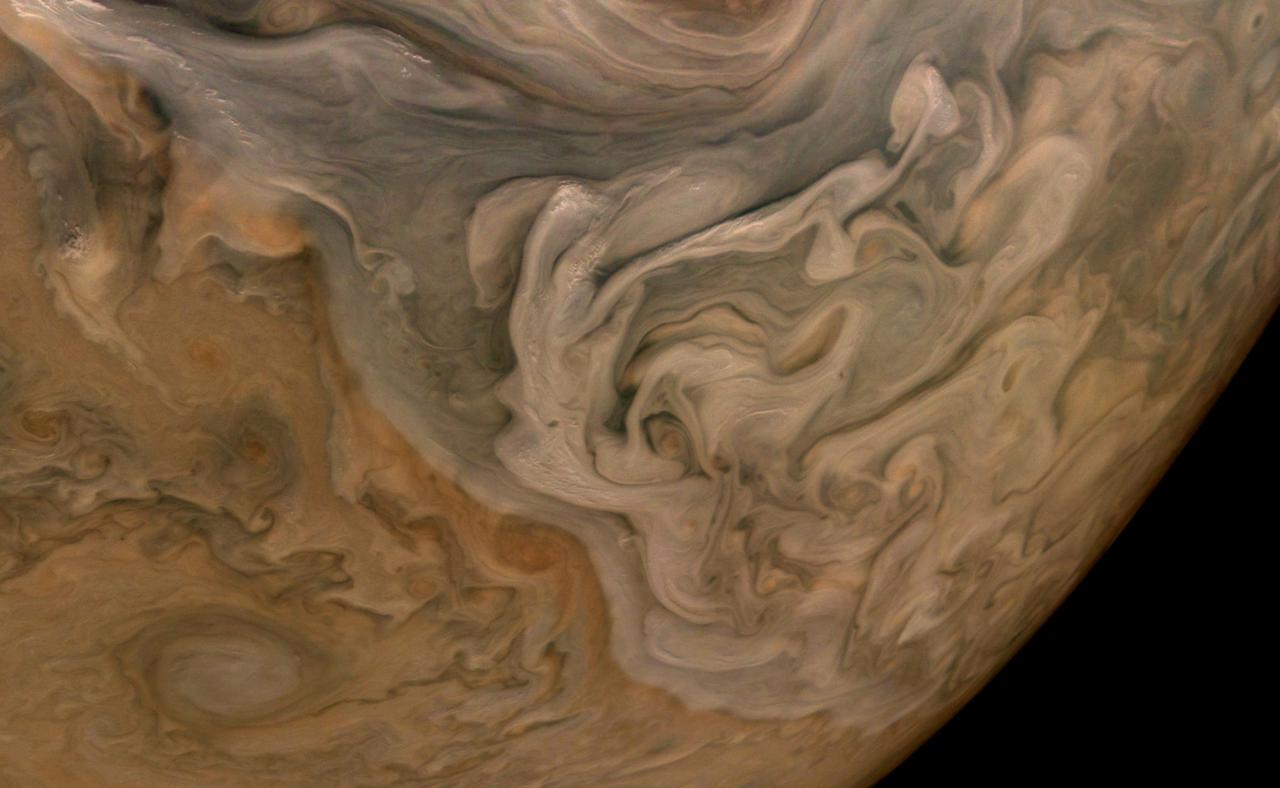
The three-dimensional character of Jupiter's cloud decks is captured in this image of the planet's North Equatorial Belt. Orange storms peek out from under banks of dark gray clouds. Lighter tan and gray clouds cast narrow shadows on the dark gray cloud bank below. At the top are the "pop-up clouds," parcels of air pushed up to the altitude at which ammonia ice condenses to make small, bright clouds. Jupiter appears to have a pastel hue to the naked eye through an Earth-based telescope. The color in this image from the JunoCam imager aboard NASA's Juno spacecraft has been "exaggerated," processed by citizen scientist Brian Swift to bring out subtle differences. The result is that the cloud layering is more obvious than in the original image. This image was taken Oct. 16, 2021, at 10:07 a.m. PDT (1:07 p.m. EDT) as Juno performed its 37th close flyby of Jupiter. At the time the image was taken, the spacecraft was about 3,738 miles (6,016 kilometers) from the tops of the clouds of the planet at a latitude of 49.17 degrees. https://photojournal.jpl.nasa.gov/catalog/PIA24972
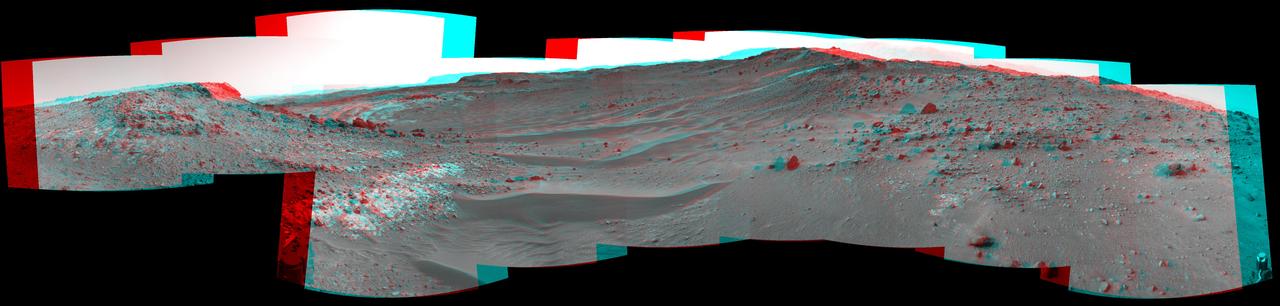
This stereo view from the Navigation Camera (Navcam) on NASA's Curiosity Mars rover shows the terrain ahead of the rover as it makes its way westward through a valley called "Artist's Drive." The image appears three-dimensional when viewed through red-blue glasses with the red lens on the left. The Navcam recorded the component images of this mosaic on April 10, 2015, during the 951st Martian Day, or sol, of Curiosity's work on Mars. The valley is on the rover's route toward a higher site on Mount Sharp than the "Pahrump Hills" area the mission investigated at the base of the layered mountain. http://photojournal.jpl.nasa.gov/catalog/PIA19165
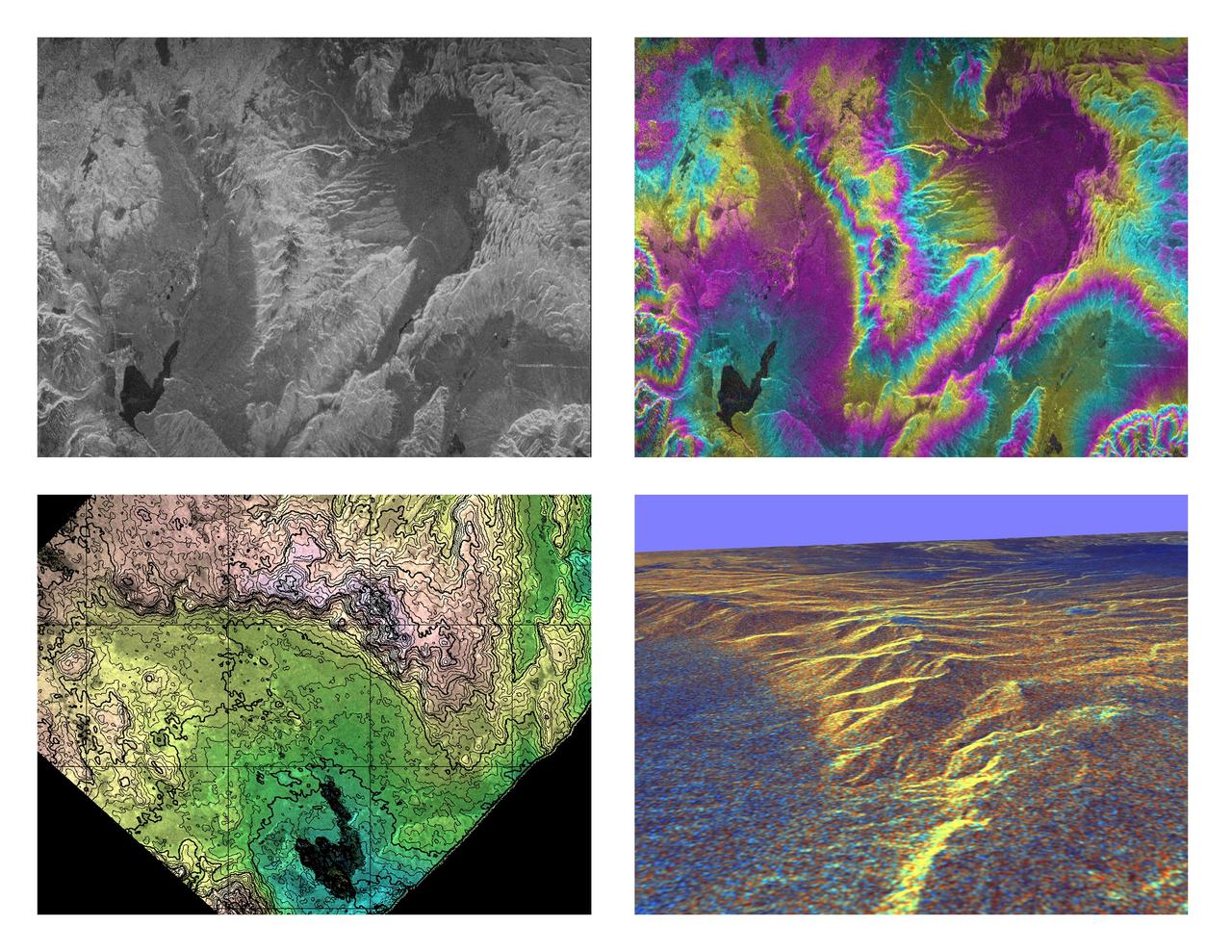
These four images of the Long Valley region of east-central California illustrate the steps required to produced three dimensional data and topographics maps from radar interferometry. All data displayed in these images were acquired by the Spaceborne Imaging Radar-C/X-band Synthetic Aperture Radar (SIR-C/X-SAR) aboard the space shuttle Endeavour during its two flights in April and October, 1994. The image in the upper left shows L-band (horizontally transmitted and received) SIR-C radar image data for an area 34 by 59 kilometers (21 by 37 miles). North is toward the upper right; the radar illumination is from the top of the image. The bright areas are hilly regions that contain exposed bedrock and pine forest. The darker gray areas are the relatively smooth, sparsely vegetated valley floors. The dark irregular patch near the lower left is Lake Crowley. The curving ridge that runs across the center of the image from top to bottom is the northeast rim of the Long Valley Caldera, a remnant crater from a massive volcanic eruption that occurred about 750,000 years ago. The image in the upper right is an interferogram of the same area, made by combining SIR-C L-band data from the April and October flights. The colors in this image represent the difference in the phase of the radar echoes obtained on the two flights. Variations in the phase difference are caused by elevation differences. Formation of continuous bands of phase differences, known as interferometric "fringes," is only possible if the two observations were acquired from nearly the same position in space. For these April and October data takes, the shuttle tracks were less than 100 meters (328 feet) apart. The image in the lower left shows a topographic map derived from the interferometric data. The colors represent increments of elevation, as do the thin black contour lines, which are spaced at 50-meter (164-foot) elevation intervals. Heavy contour lines show 250-meter intervals (820-foot). Total relief in this area is about 1,320 meters (4,330 feet). Brightness variations come from the radar image, which has been geometrically corrected to remove radar distortions and rotated to have north toward the top. The image in the lower right is a three-dimensional perspective view of the northeast rim of the Long Valley caldera, looking toward the northwest. SIR-C C-band radar image data are draped over topographic data derived from the interferometry processing. No vertical exaggeration has been applied. Combining topographic and radar image data allows scientists to examine relationships between geologic structures and landforms, and other properties of the land cover, such as soil type, vegetation distribution and hydrologic characteristics. http://photojournal.jpl.nasa.gov/catalog/PIA01770

jsc2019e040134 (7/18/2019) --- Preflight images of Microglia cells growing in a culture dish (63x magnification). Microglia are the immune cells of the brain and play a role that is not fully understood in neurodegenerative diseases like multiple sclerosis. The cells shown here were differentiated from induced pluripotent stem cells that were made from a patient’s skin biopsy. The Effects of Microgravity on Microglia 3-Dimensional Models of Parkinson’s Disease and Multiple Sclerosis (Space Tango-Induced Pluripotent Stem Cells) examines how microglial cells grow and move in three-dimensional (3D) cultures as well as any changes in gene expression that occur as a result of microgravity exposure. Microglia are a type of immune defense cell found in the central nervous system. Results may help provide novel approaches to characterizing, understanding, and developing therapies for Parkinson’s disease and multiple sclerosis. (Image courtesy of: New York Stem Cell Foundation (NYSCF) Research Institute)
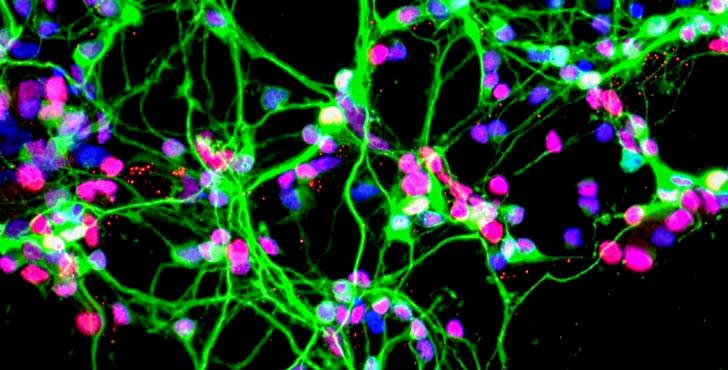
jsc2019e040133 (7/18/2019) --- A preflight view of Dopaminergic neurons growing in a culture dish (20x magnification) . A skin biopsy from a patient with Parkinson’s disease was reprogrammed into induced pluripotent stem cells. The stem cells were then differentiated into dopaminergic neurons (green), the same cells that are lost in Parkinson’s disease patients. Work is underway to use these cells as a replacement for lost neurons as a treatment for the disease. The Effects of Microgravity on Microglia 3-Dimensional Models of Parkinson’s Disease and Multiple Sclerosis (Space Tango-Induced Pluripotent Stem Cells) examines how microglial cells grow and move in three-dimensional (3D) cultures as well as any changes in gene expression that occur as a result of microgravity exposure. Microglia are a type of immune defense cell found in the central nervous system. Results may help provide novel approaches to characterizing, understanding, and developing therapies for Parkinson’s disease and multiple sclerosis. (Image courtesy of: Andres Bratt-Leal, PhD| Aspen Neuroscience)
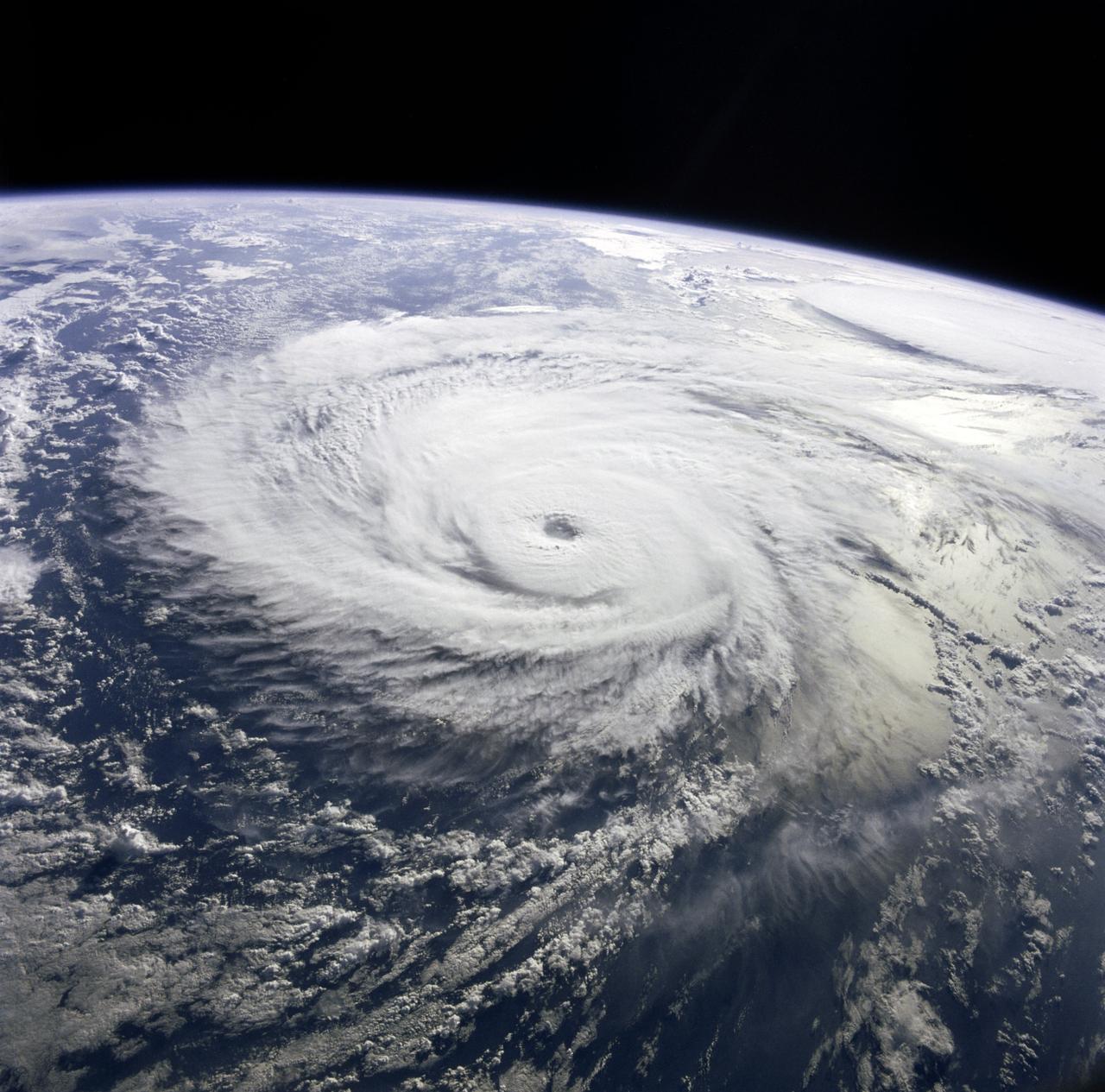
51I-35-075 (30 Aug 1985) --- Typhoon Pat was photographed on the morning of August 30th at a position of approximately 25 degrees N, 131 degrees E. Stereoscopically-overlapping photographs taken by the 51I crew provide much more detail of the three-dimensional structure of tropical cyclones than can be determined from data returned from meteorological satellites. The 51I shuttle mission was launched on August 27 and landed September 3. The mission was flown in the space shuttle orbiter Discovery.
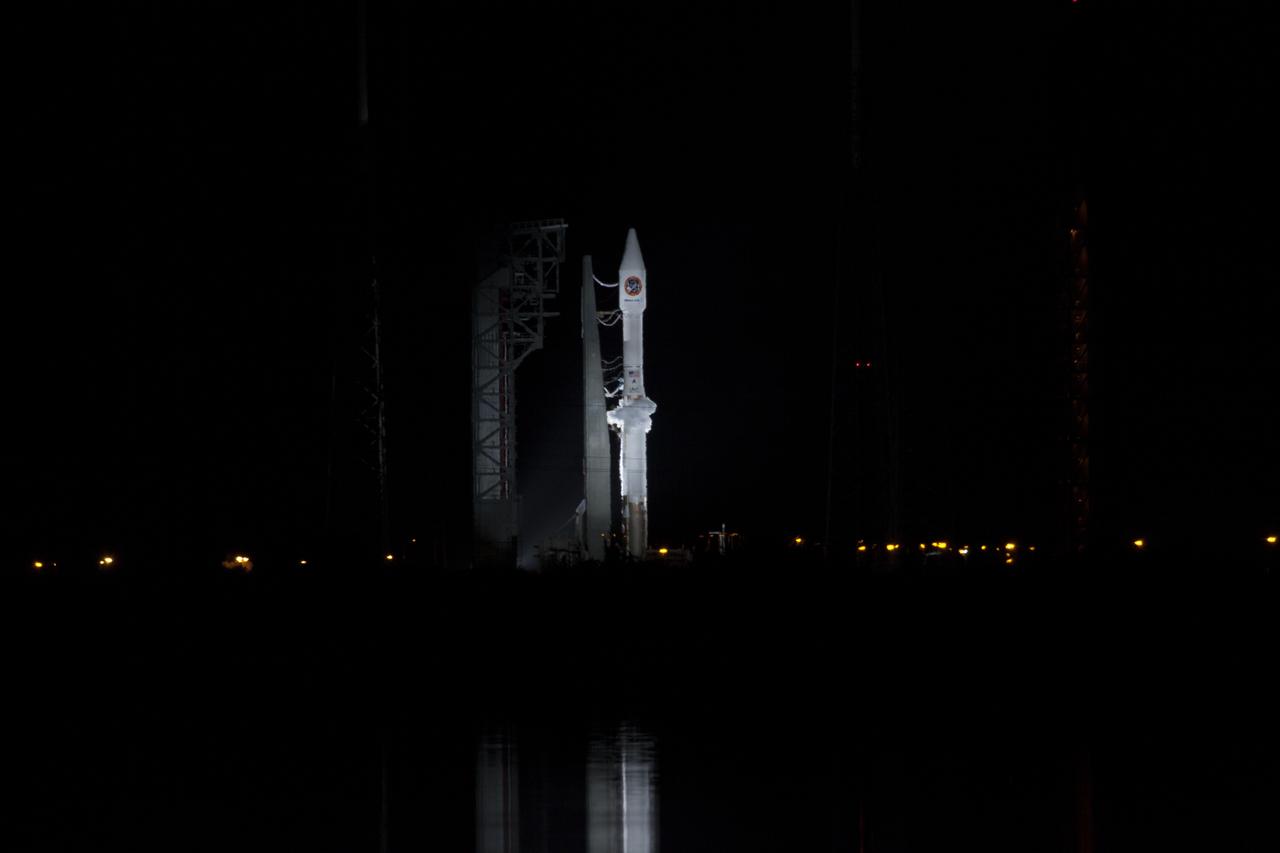
At Cape Canaveral Air Force Station's Space Launch Complex 41, a United Launch Alliance Atlas V rocket with a single-engine Centaur upper stage stands ready to boost an Orbital ATK Cygnus spacecraft on a resupply mission to the International Space Station. Science payloads include the second generation of a portable onboard printer to demonstrate three-dimensional printing, an instrument for first space-based observations of the chemical composition of meteors entering Earth’s atmosphere and an experiment to study how fires burn in microgravity.
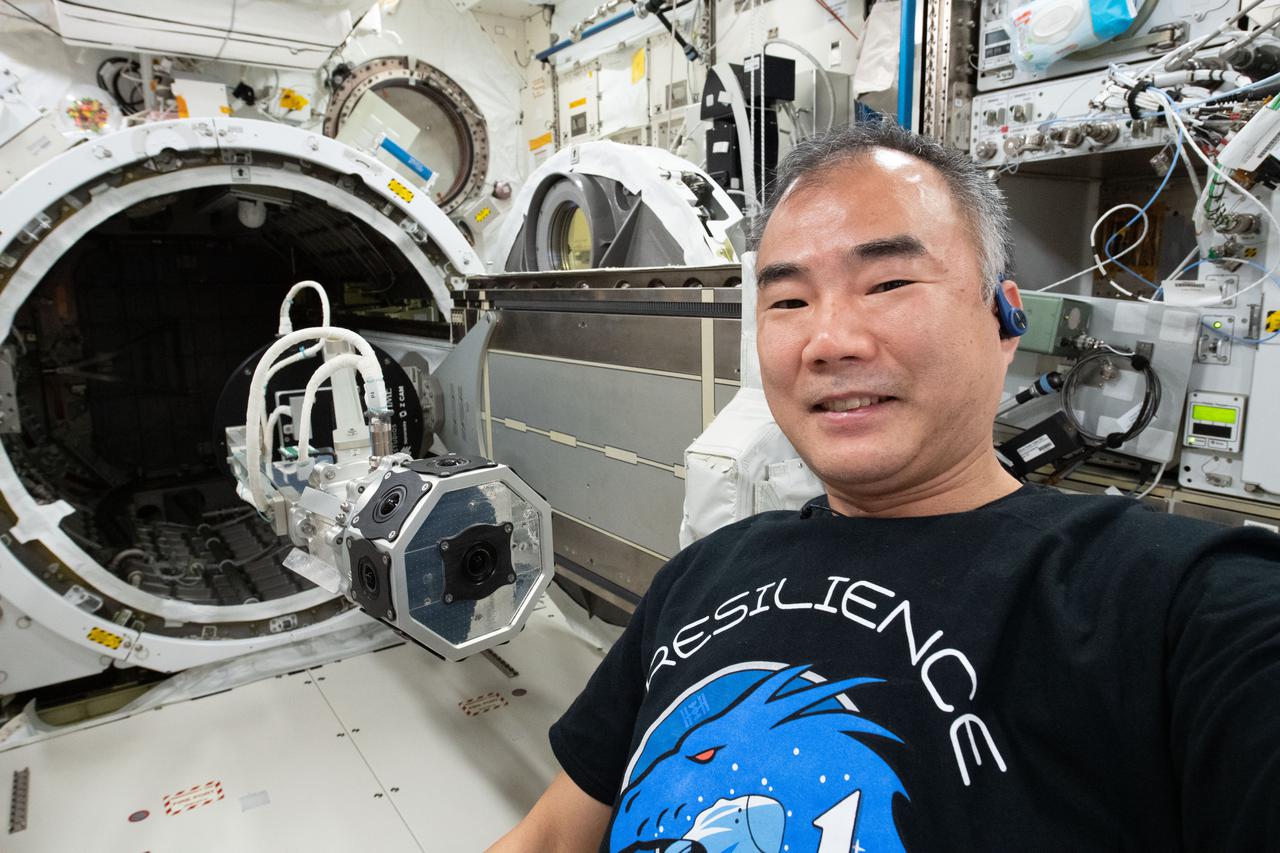
iss064e035270 (Feb. 23, 2021) --- JAXA (Japan Aerospace Exploration Agency) astronaut and Expedition 64 Flight Engineer Soichi Noguchi is pictured after installing a three-dimensional virtual reality camera on the Kibo laboratory module's airlock slide table. The camera films activities aboard the orbiting lab in cinematic virtual reality to document living and working in space for audiences on Earth as part of the ISS Experience investigation.
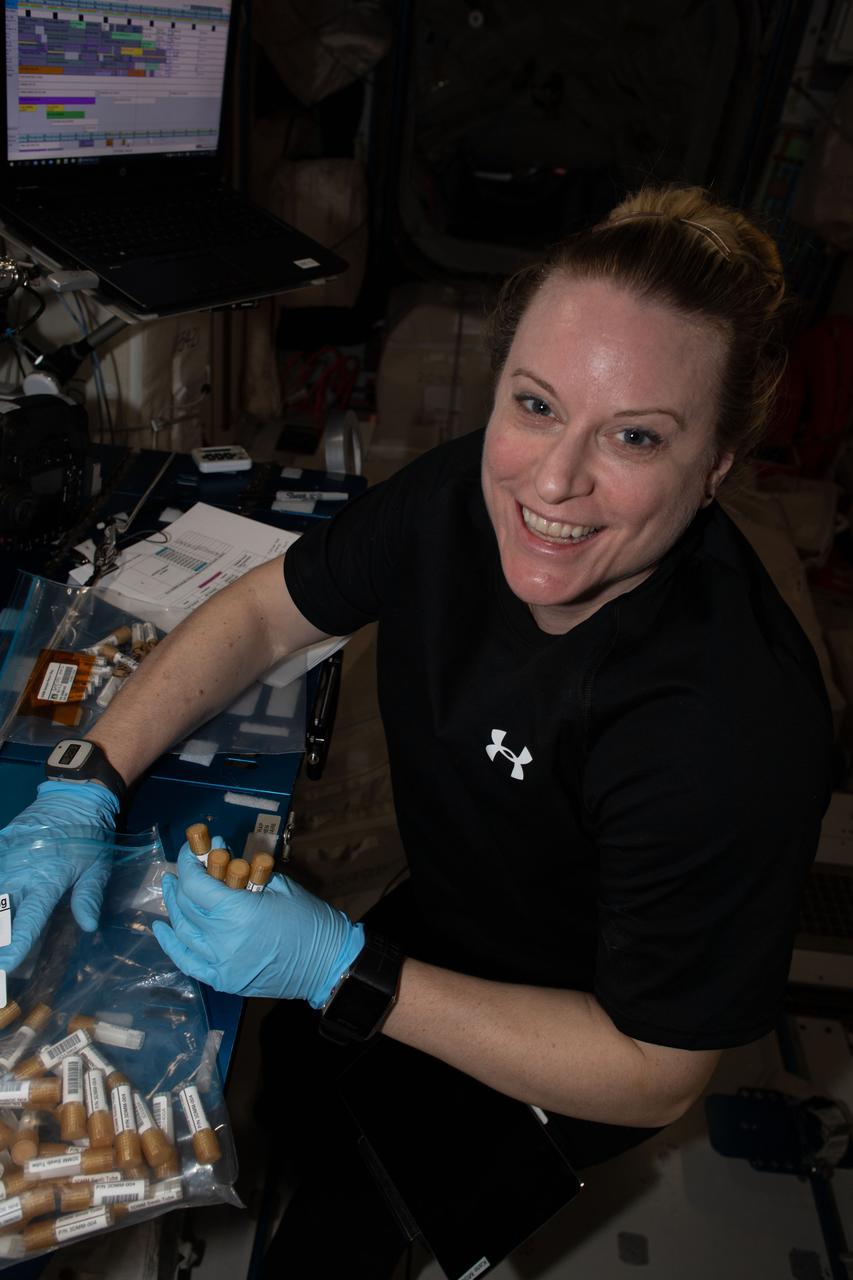
iss064e035217 (Feb. 23, 2021) --- NASA astronaut and Expedition 64 Flight Engineer Kate Rubins collects tubes containing swab samples of microbes for the 3DMM (Three-dimensional Microbial Monitoring of ISS Environment) investigation. The study analyzes and sequences the DNA from bacteria swabbed from station surfaces to understand how microbes respond at a molecular level to specific stress conditions, including altered gravity and atmospheric composition.
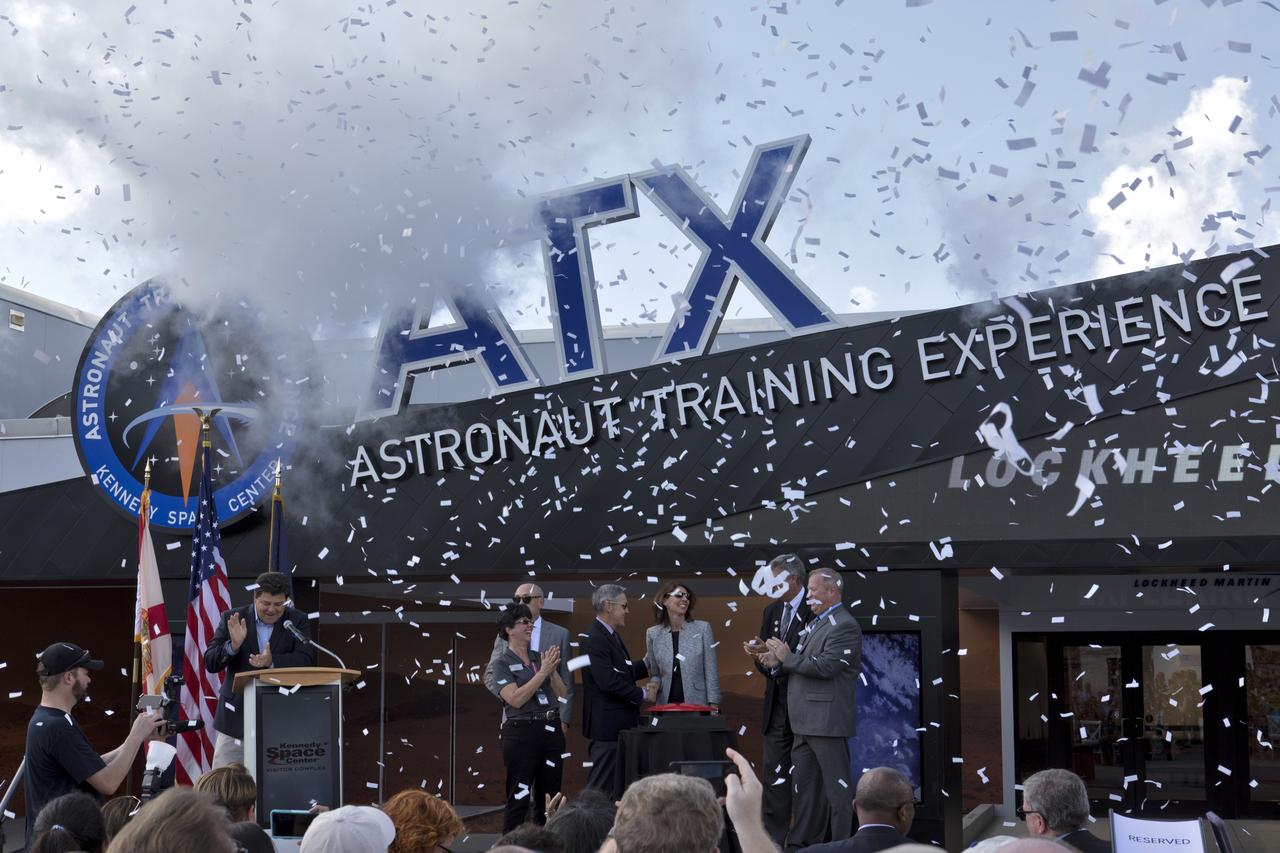
Confetti flies during the opening ceremony for the new Astronaut Training Experience (ATX) at the Kennedy Space Center Visitor Complex. The ATX uses three-dimensional computer display simulation technology to "transport" participants to Mars, training them to live and work in the environment of the Red Planet. The educational experience also teaches what it’s like to travel there. The facility uses NASA science to address engineering challenges in space travel. Lockheed Martin is the title sponsor for the Astronaut Training Experience.
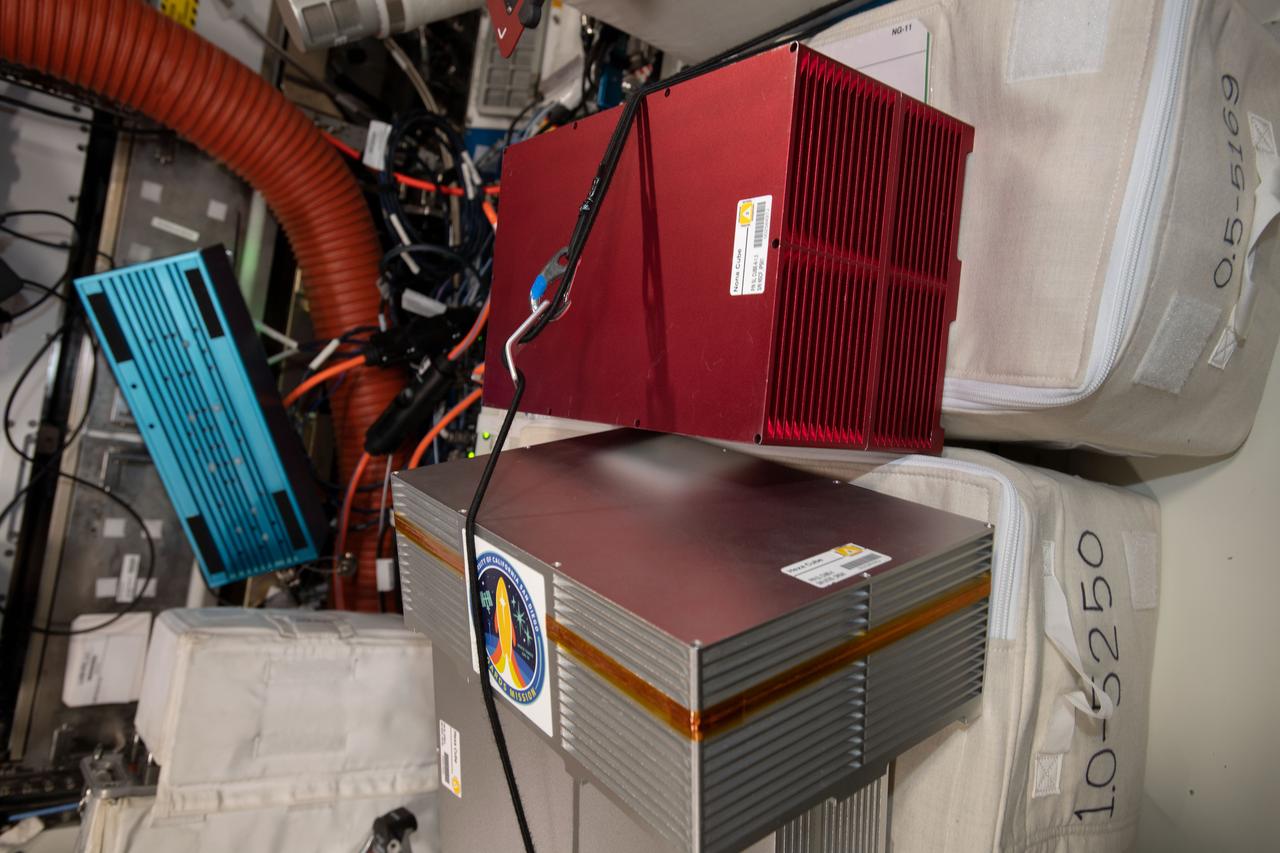
iss060e036685 (8/9/2019) — A view aboard the International Space Station (ISS) of the TangoLab Mission-13 CubeLabs: Space Tango-Human Brain Organoids and Space Tango-Induced Pluripotent Stem Cells. Space Tango-Induced Pluripotent Stem Cells examines how microglial cells grow and move in three-dimensional (3D) cultures as well as any changes in gene expression that occur as a result of microgravity exposure. Space Tango-Human Brain Organoids observes the response of brain organoids to microgravity.
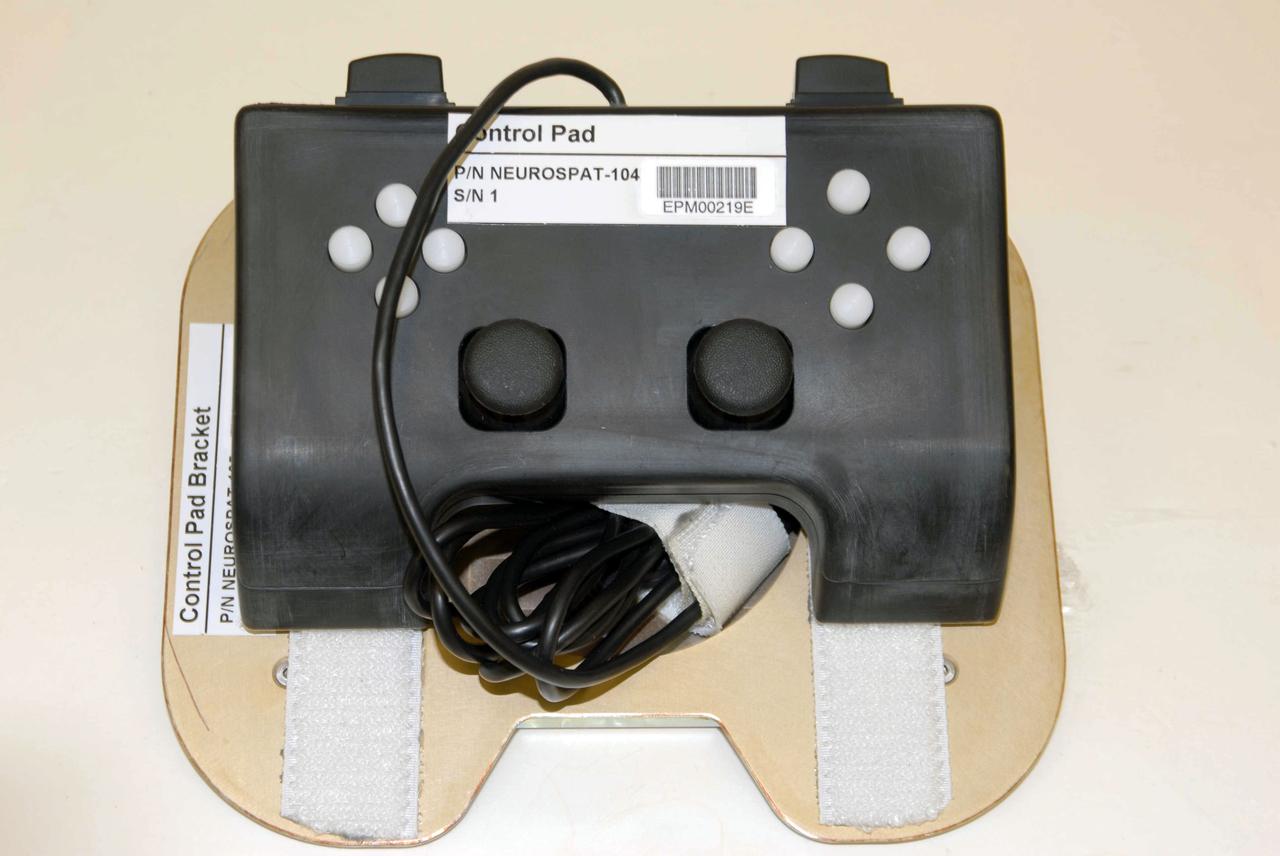
jsc2008e032966 (Apr. 9, 2008) --- Neurospat Control pad bracket at NASA's Johnson Space Center to be delivered to the International Space Station (ISS). Neurospat investigates ways in which crew member's three-dimensional visual and space perception is affected by long-duration stays in weightlessness to help in help in finding and developing countermeasures alleviating any disorientation experienced by astronauts.
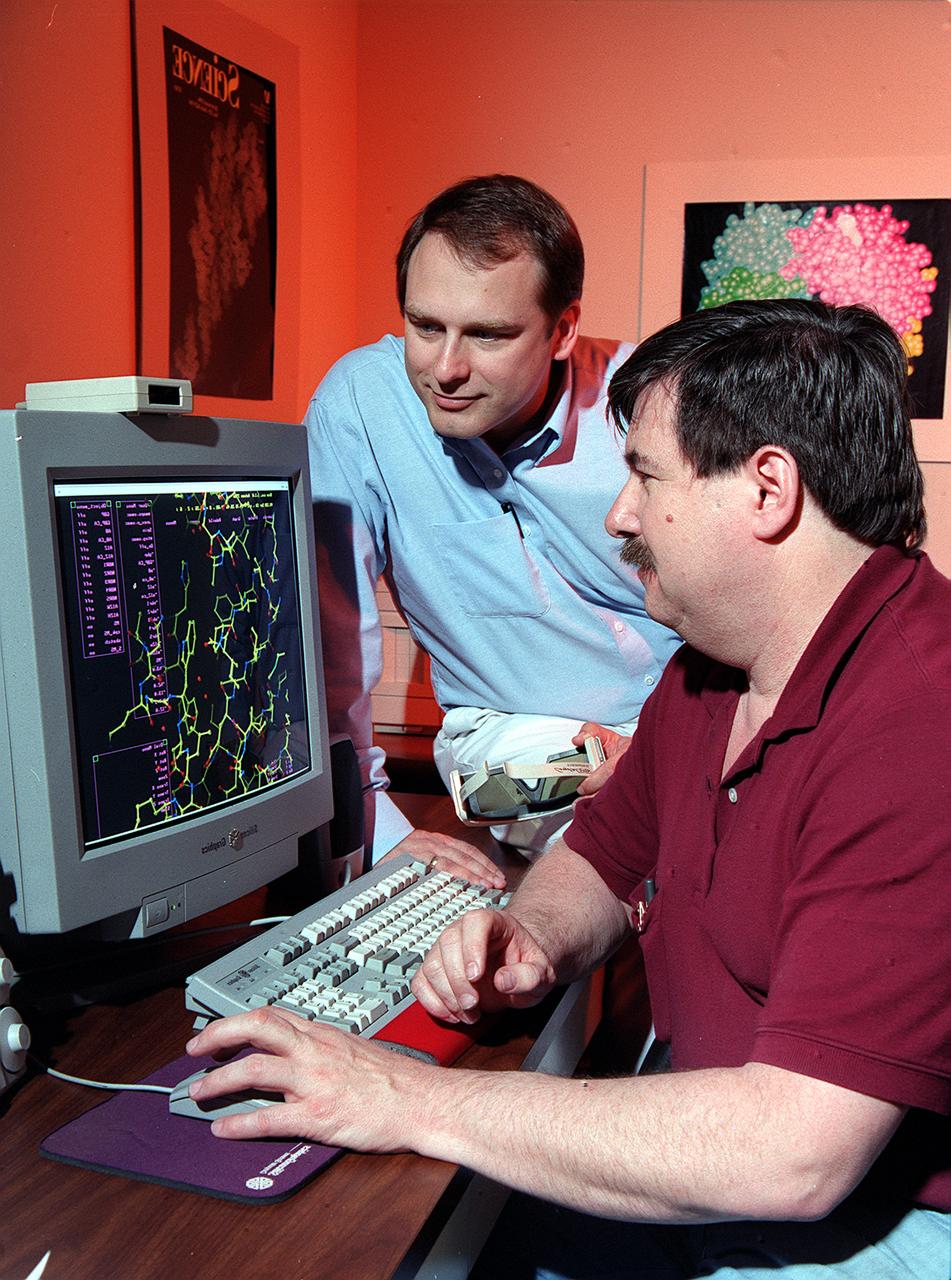
Dr. Marc Pusey (seated) and Dr. Craig Kundrot use computers to analyze x-ray maps and generate three-dimensional models of protein structures. With this information, scientists at Marshall Space Flight Center can learn how proteins are made and how they work. The computer screen depicts a proten structure as a ball-and-stick model. Other models depict the actual volume occupied by the atoms, or the ribbon-like structures that are crucial to a protein's function.
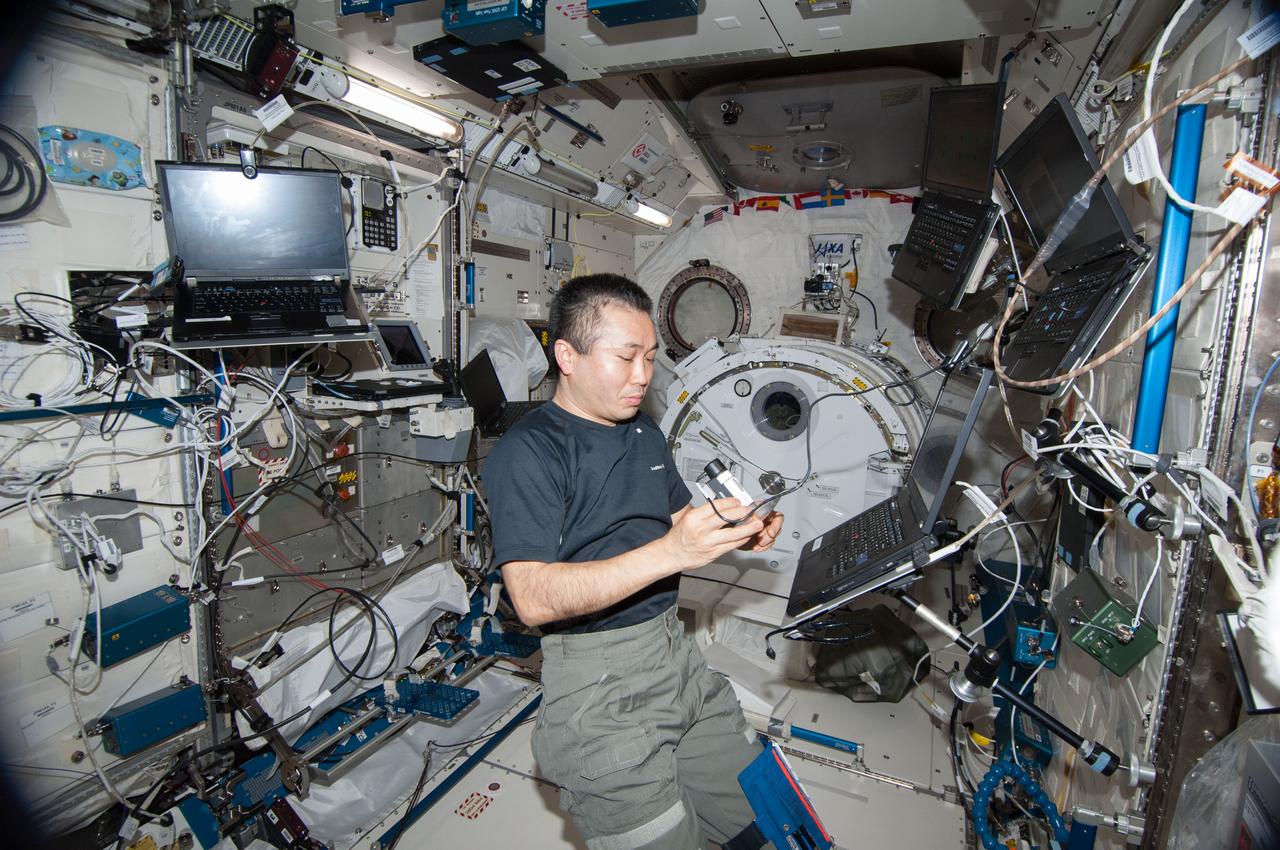
ISS038-E-029082 (12 Jan. 2014) --- Japan Aerospace Exploration Agency astronaut Koichi Wakata, Expedition 38 flight engineer, performs microscopic analysis of the NanoRacks Module-38 Petri Dishes, using Celestron Reflective Microscope, in the Kibo laboratory of the International Space Station. These Module-38 experiments are designed by students as part of a competition sponsored by the International Space School Educational Trust (ISSET). This experiment examines three-dimensional growth of slime mold in petri dishes utilizing the NanoRacks Microscopes Facility.
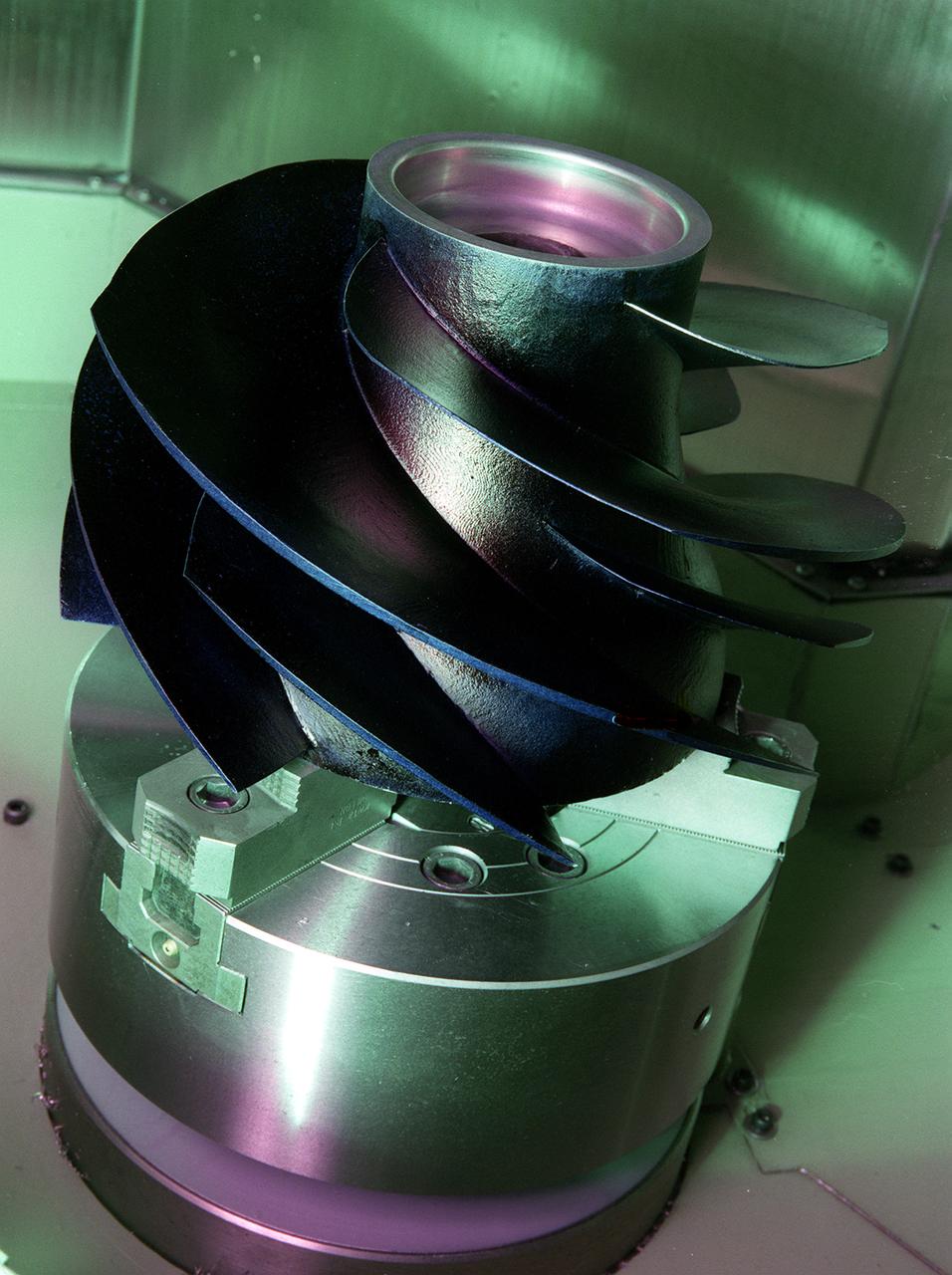
Marshall space Flight Center engineers helped North American Marine Jet (NAMJ), Inc. improve the proposed design of a new impeller for a jet-propulsion system. With a three-dimensional computer model of the new marine jet engine blades, engineers were able to quickly create a solid polycarbonate model of it. The rapid prototyping allowed the company to avoid many time-consuming and costly steps in creating the impeller.
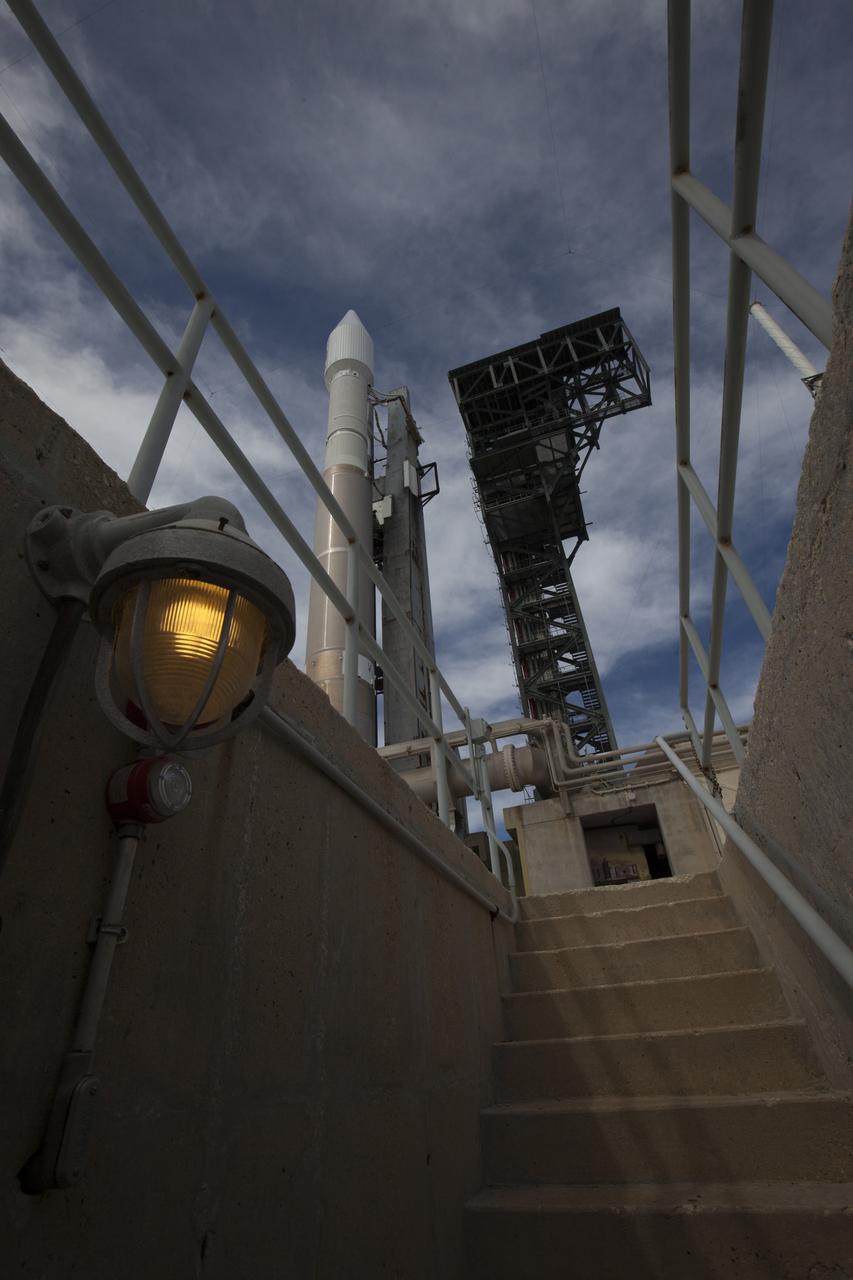
At Cape Canaveral Air Force Station's Space Launch Complex 41, a United Launch Alliance Atlas V rocket with a single-engine Centaur upper stage stands ready to boost an Orbital ATK Cygnus spacecraft on a resupply mission to the International Space Station. Science payloads include the second generation of a portable onboard printer to demonstrate three-dimensional printing, an instrument for first space-based observations of the chemical composition of meteors entering Earth’s atmosphere and an experiment to study how fires burn in microgravity.
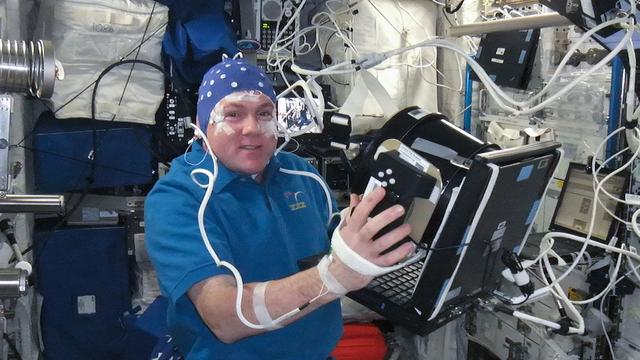
ISS030-E-116907 (13 Feb. 2012) --- Wearing an Electroencephalogram (EEG) electrode cap, European Space Agency astronaut Andre Kuipers, Expedition 30 flight engineer, performs a NeuroSpat science session in the Columbus laboratory of the International Space Station. NeuroSpat investigates the ways in which crew members’ three-dimensional visual & space perception is affected by long-duration stays in weightlessness.
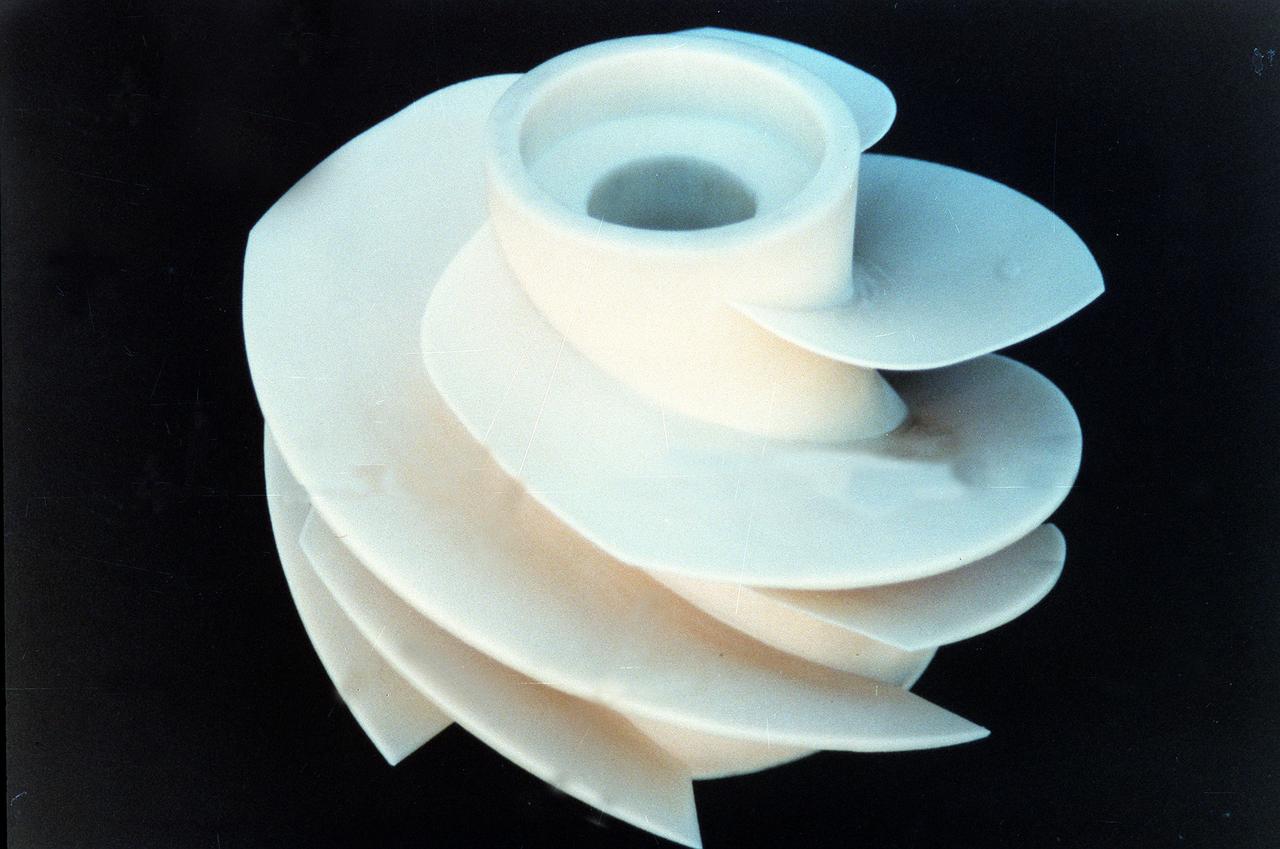
Marshall Space Flight Center engineers helped North American Marine Jet (NAMJ), Inc. improve the proposed design of a new impeller for jet propulsion system. With a three-dimensional computer model of the new marine jet engine blades, engineers were able to quickly create a solid ploycarbonate model of it. The rapid prototyping allowed the company to avoid many time-consuming and costly steps in creating the impeller.
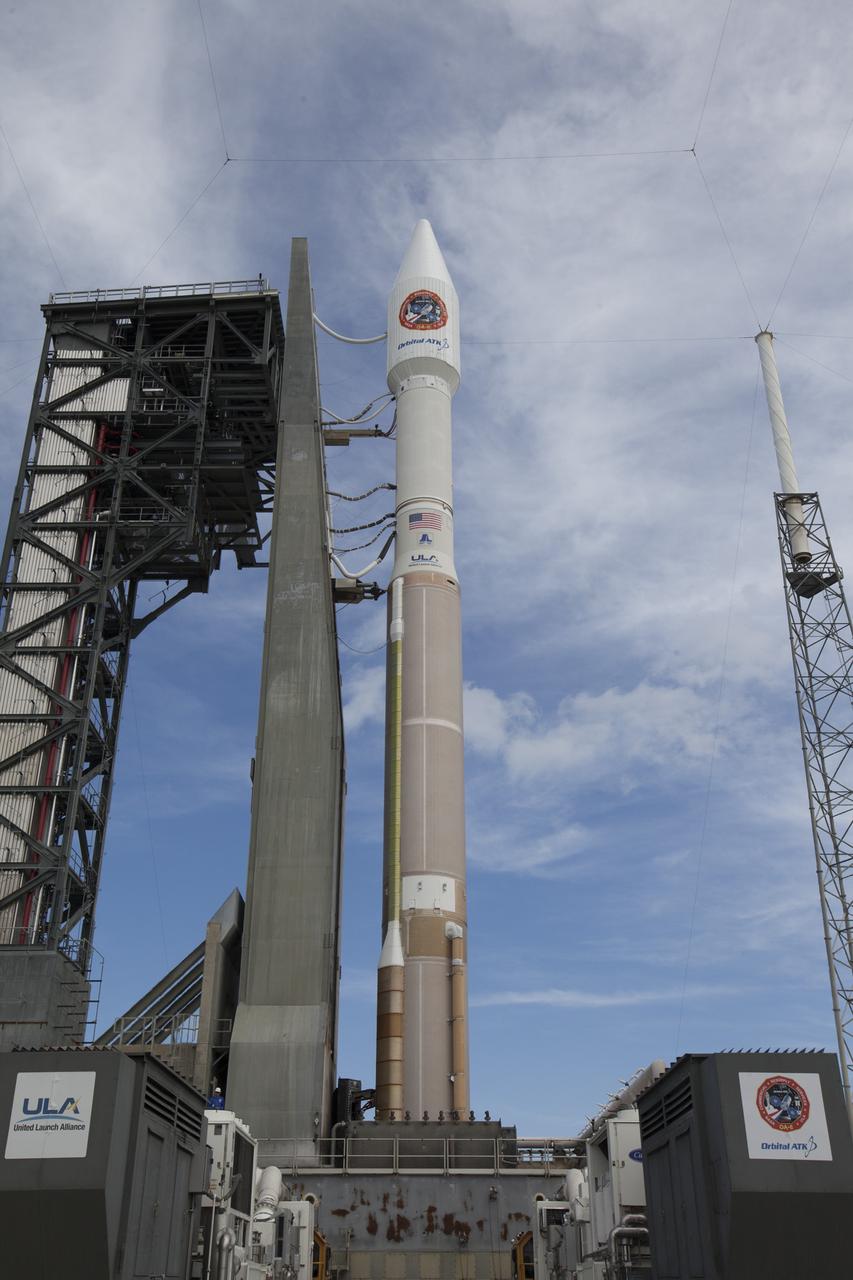
At Cape Canaveral Air Force Station's Space Launch Complex 41, a United Launch Alliance Atlas V rocket with a single-engine Centaur upper stage stands ready to boost an Orbital ATK Cygnus spacecraft on a resupply mission to the International Space Station. Science payloads include the second generation of a portable onboard printer to demonstrate three-dimensional printing, an instrument for first space-based observations of the chemical composition of meteors entering Earth’s atmosphere and an experiment to study how fires burn in microgravity.
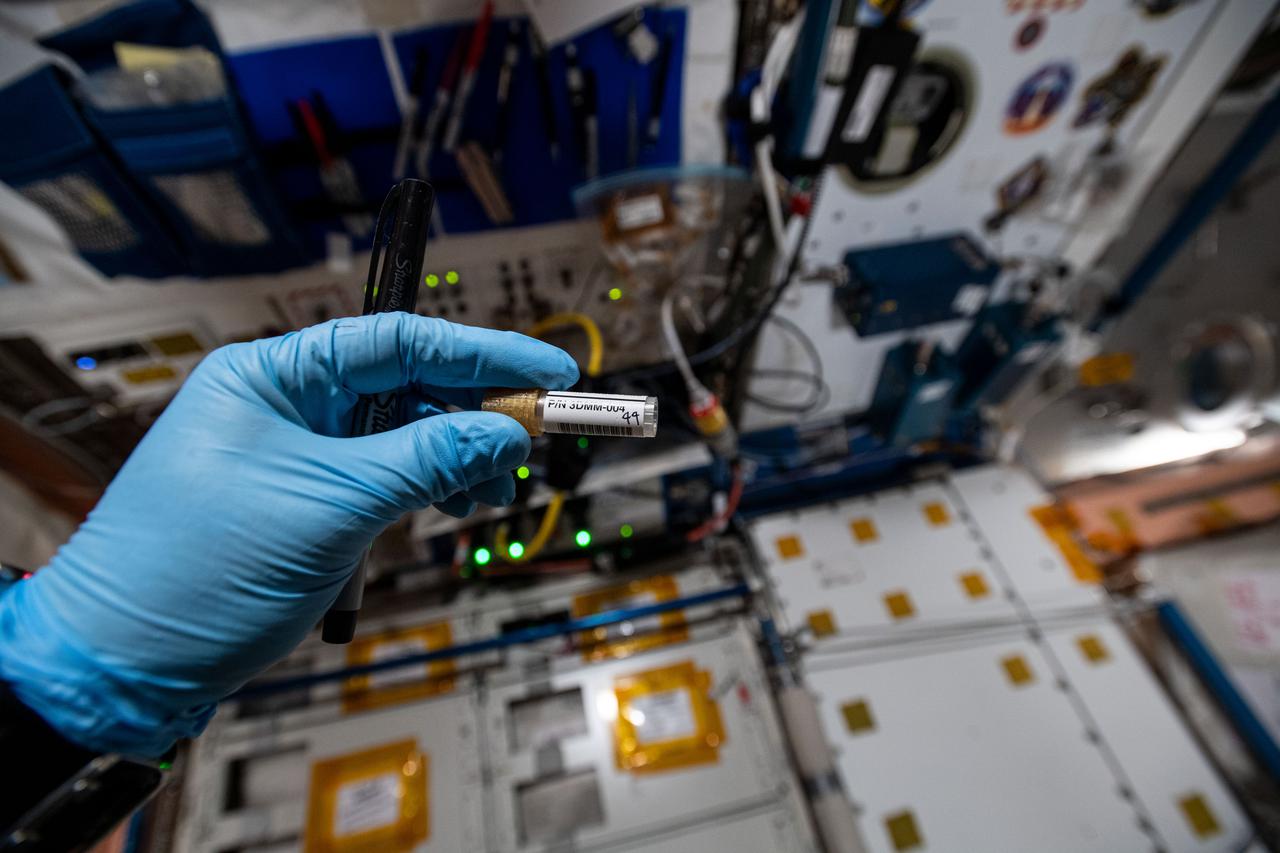
iss064e030059 (2/8/2021) --- NASA astronaut Kate Rubins collects tubes containing swab samples of microbes for the 3DMM (Three-dimensional Microbial Monitoring of ISS Environment) investigation. The study analyzes and sequences the DNA from bacteria swabbed from station surfaces to understand how microbes respond at a molecular level to specific stress conditions, including altered gravity and atmospheric composition.
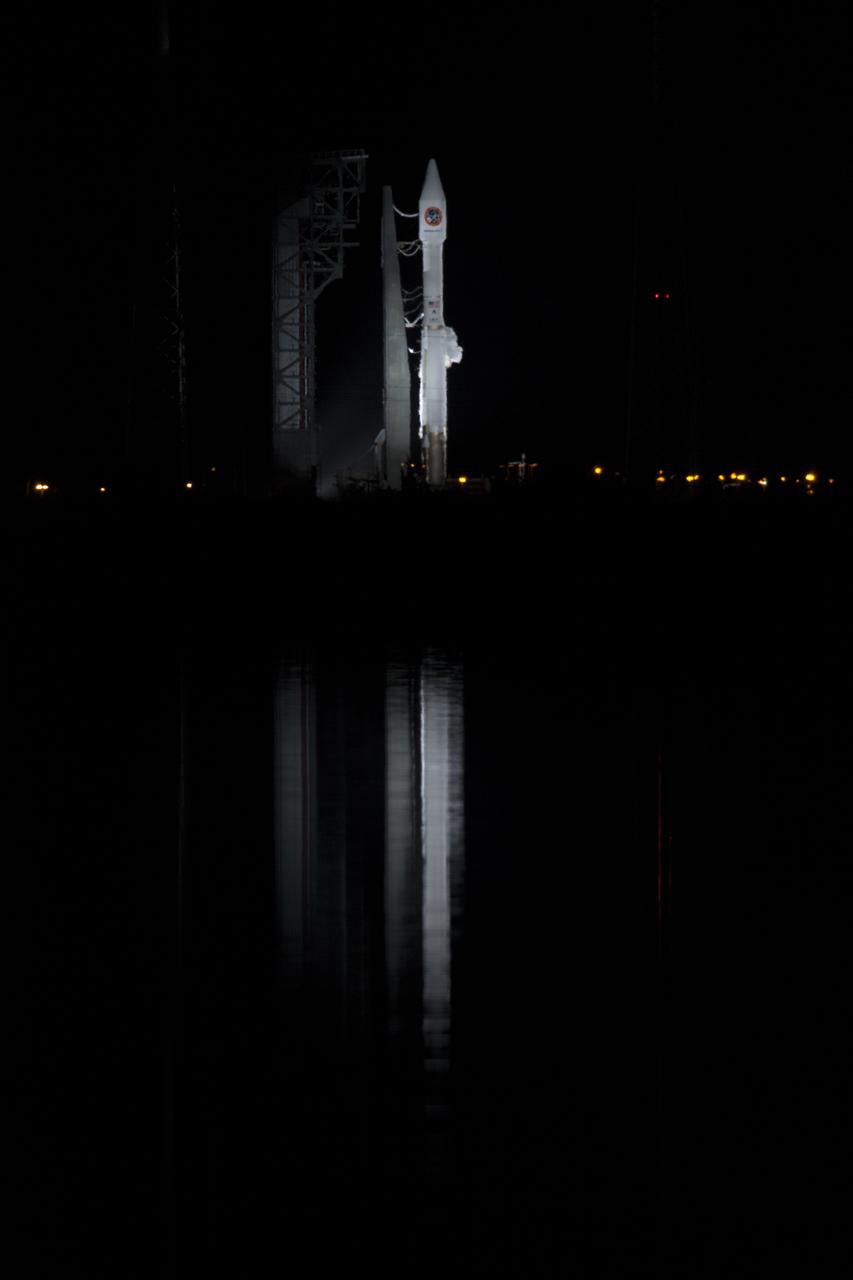
At Cape Canaveral Air Force Station's Space Launch Complex 41, a United Launch Alliance Atlas V rocket with a single-engine Centaur upper stage stands ready to boost an Orbital ATK Cygnus spacecraft on a resupply mission to the International Space Station. Science payloads include the second generation of a portable onboard printer to demonstrate three-dimensional printing, an instrument for first space-based observations of the chemical composition of meteors entering Earth’s atmosphere and an experiment to study how fires burn in microgravity.
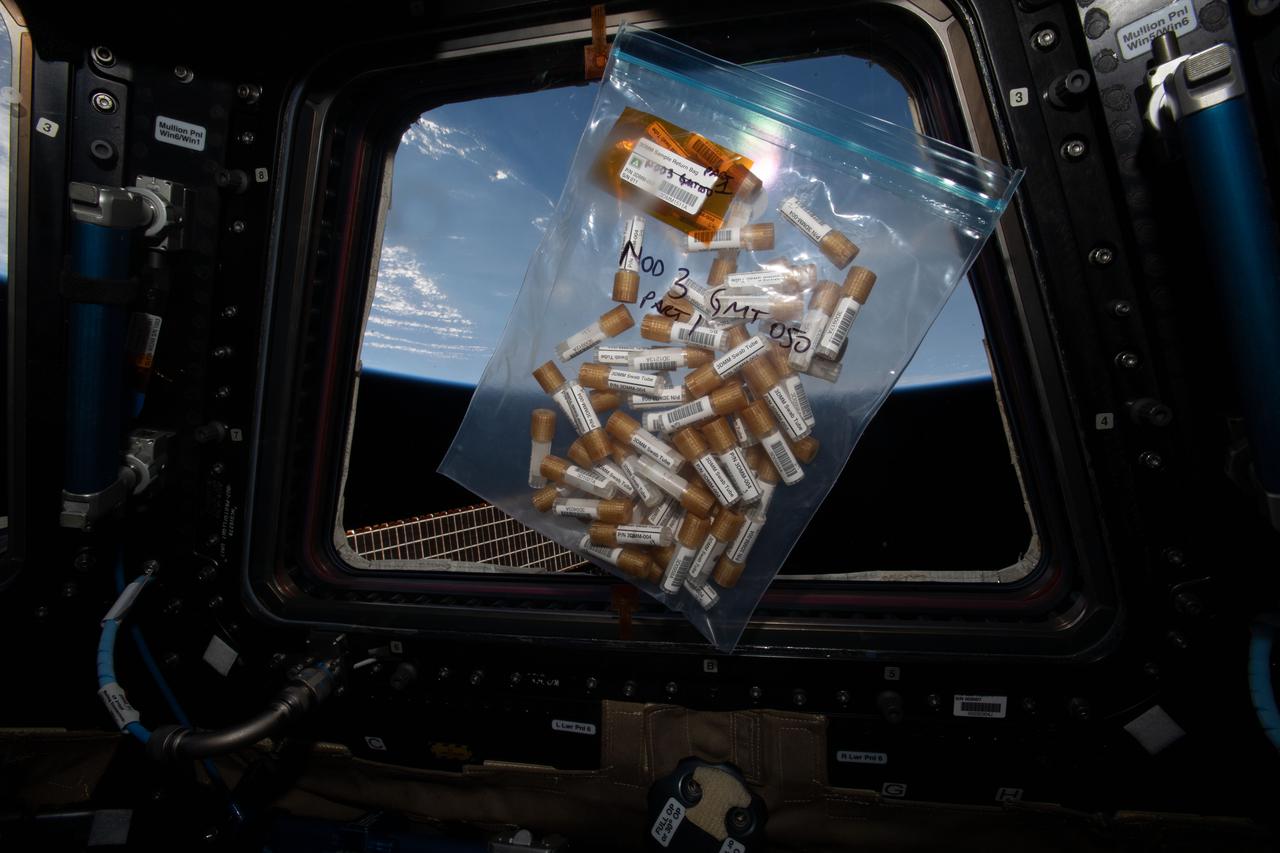
iss064e035033 (2/19/2021) --- A view at the cupola window of collects tubes containing swab samples of microbes for the 3DMM (Three-dimensional Microbial Monitoring of ISS Environment) investigation. The study analyzes and sequences the DNA from bacteria swabbed from station surfaces to understand how microbes respond at a molecular level to specific stress conditions, including altered gravity and atmospheric composition.
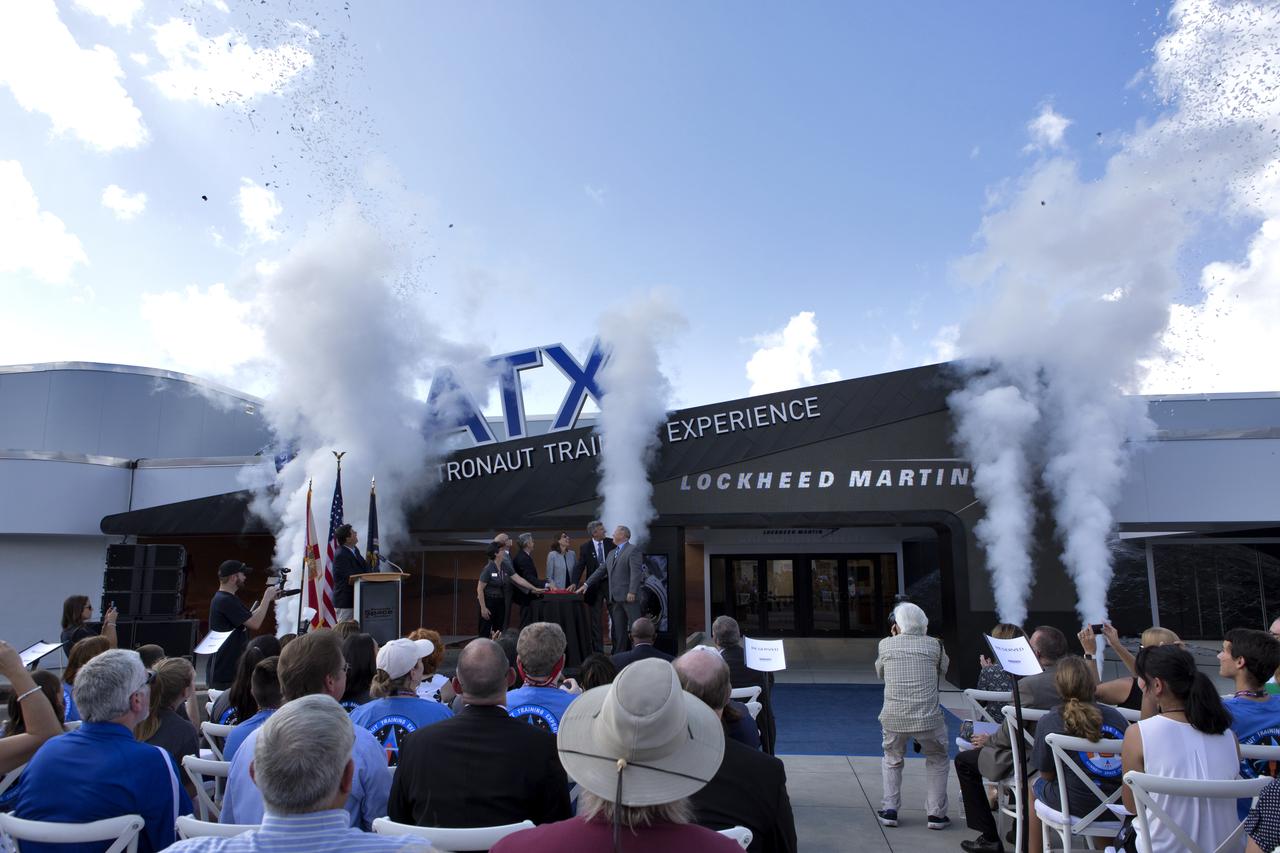
Guests cheer the opening of the new Astronaut Training Experience (ATX) at the Kennedy Space Center Visitor Complex. The ATX uses three-dimensional computer display simulation technology to "transport" participants to Mars, training them to live and work in the environment of the Red Planet. The educational experience also teaches what it’s like to travel there. The facility uses NASA science to address engineering challenges in space travel. Lockheed Martin is the title sponsor for the Astronaut Training Experience.
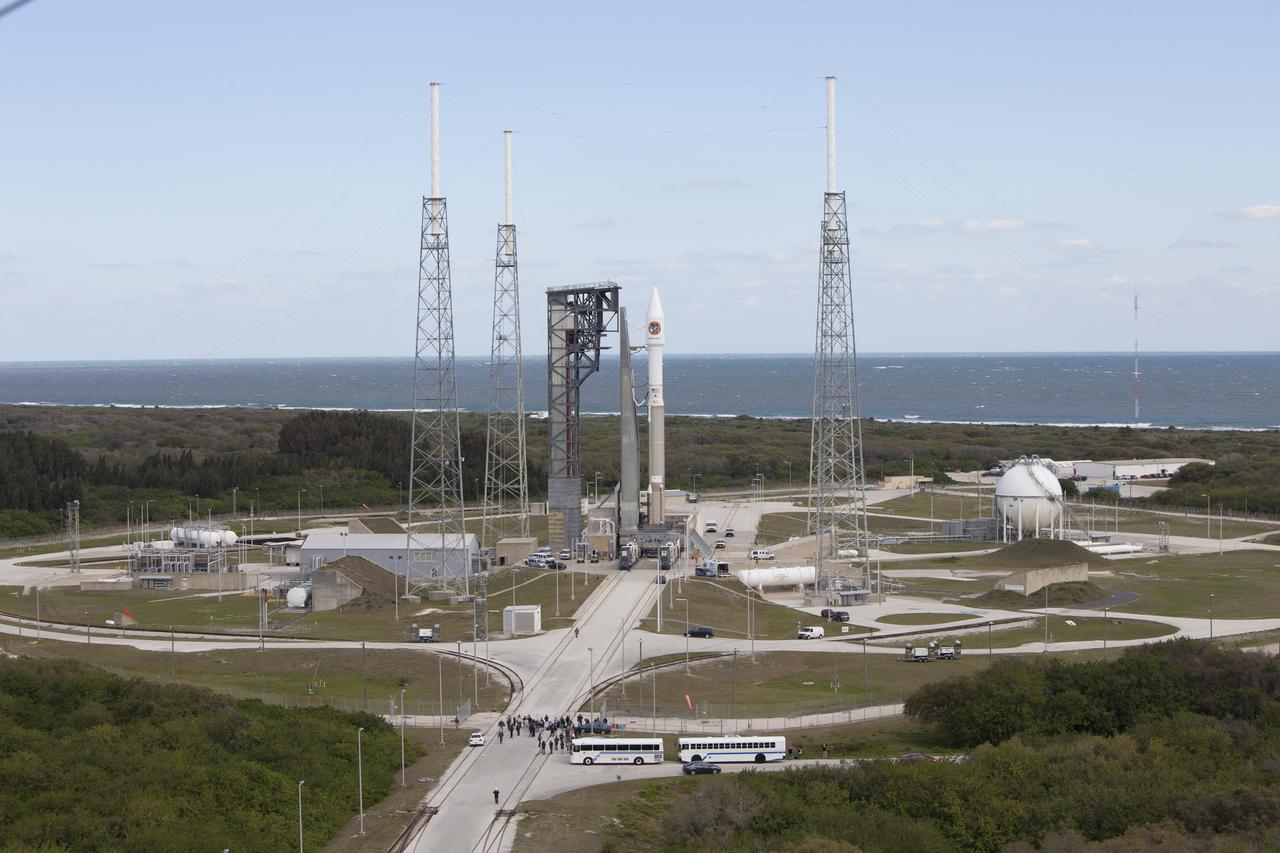
At Cape Canaveral Air Force Station's Space Launch Complex 41, a United Launch Alliance Atlas V rocket with a single-engine Centaur upper stage stands ready to boost an Orbital ATK Cygnus spacecraft on a resupply mission to the International Space Station. Science payloads include the second generation of a portable onboard printer to demonstrate three-dimensional printing, an instrument for first space-based observations of the chemical composition of meteors entering Earth’s atmosphere and an experiment to study how fires burn in microgravity.
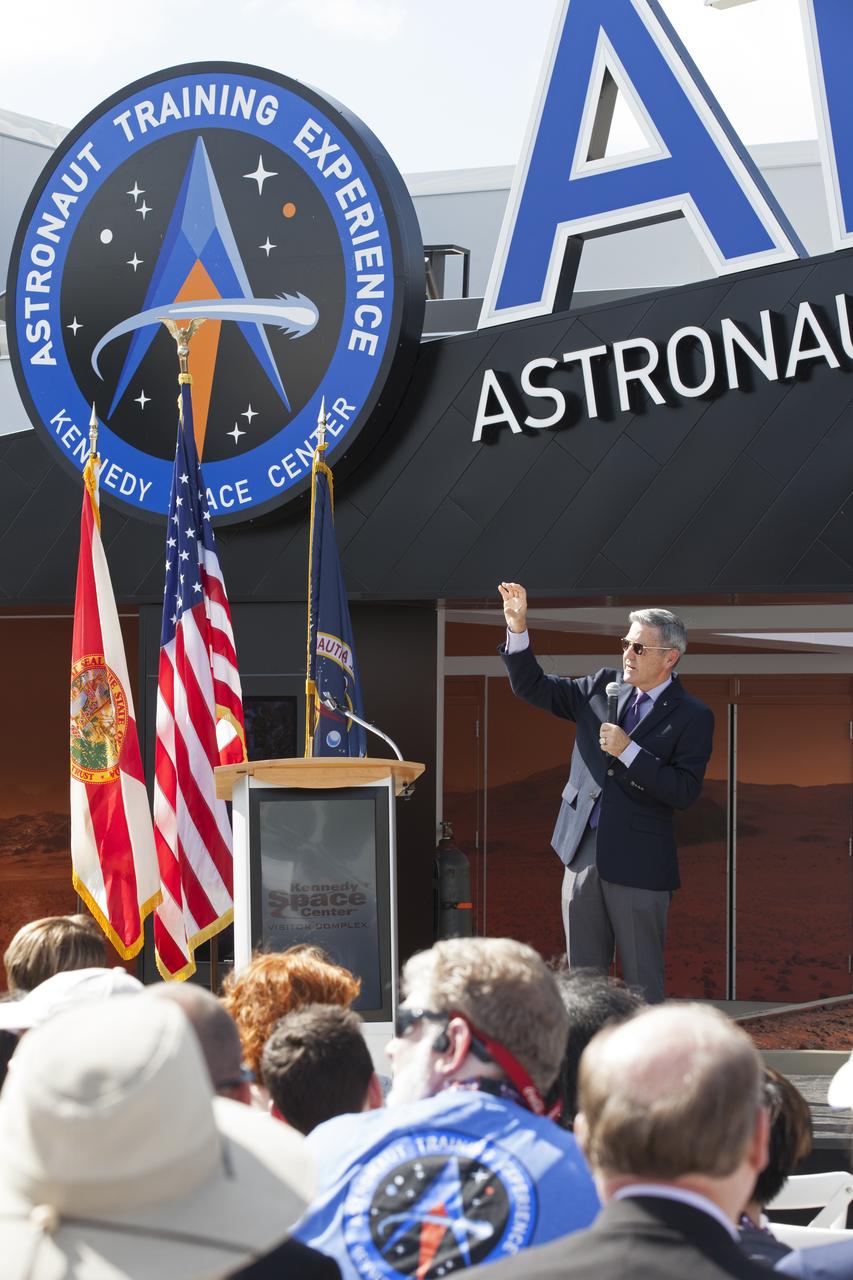
Kennedy Space Center Director Bob Cabana speaks to guests attending the opening ceremony for the new Astronaut Training Experience (ATX) at the Kennedy Space Center Visitor Complex. The ATX uses three-dimensional computer display simulation technology to "transport" participants to Mars, training them to live and work in the environment of the Red Planet. The educational experience also teaches what it’s like to travel there. The facility uses NASA science to address engineering challenges in space travel. Lockheed Martin is the title sponsor for the Astronaut Training Experience.
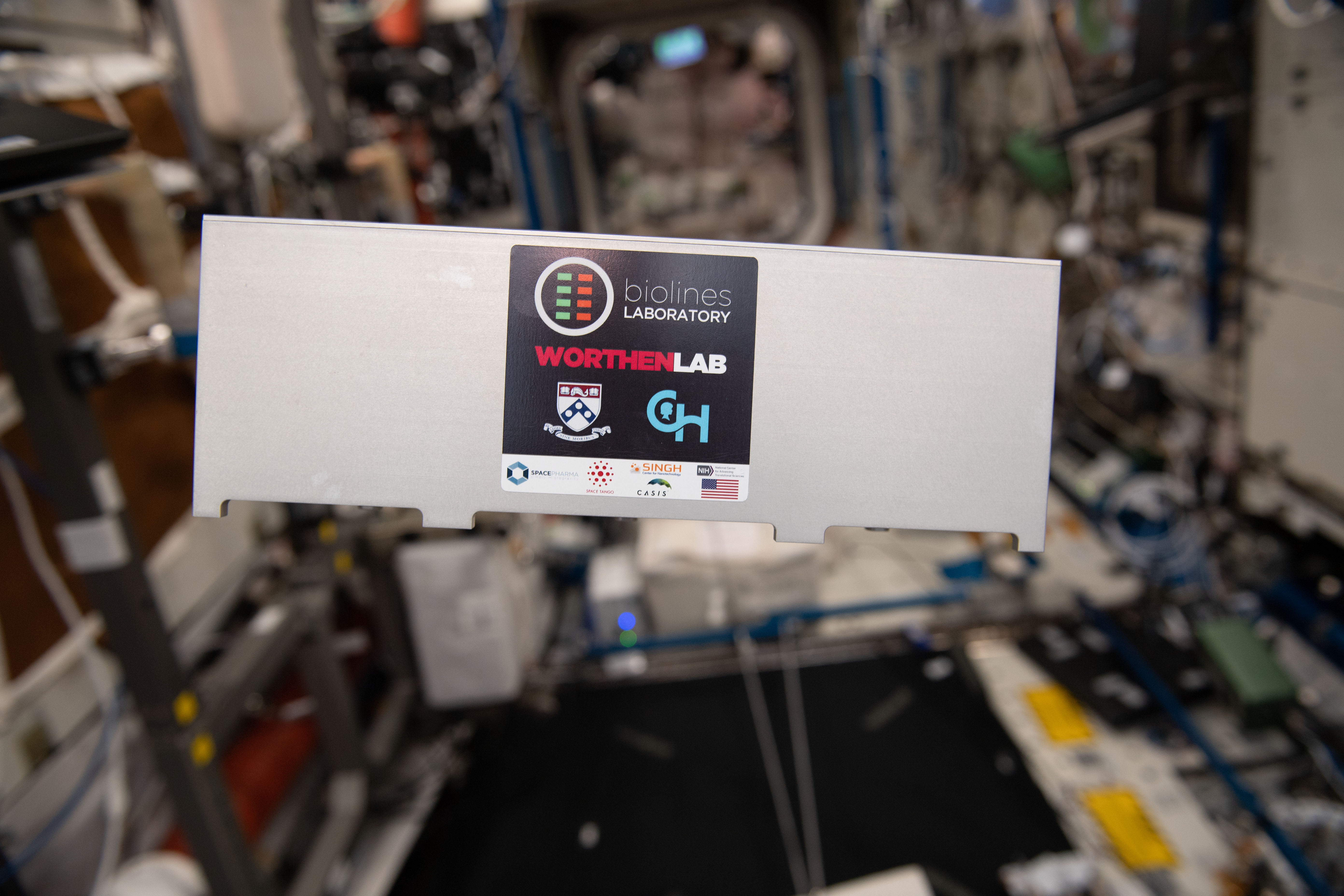
iss059e061372 (5/13/2019) --- Photo documentation of the Lung Host Defense in Microgravity investigation in the Destiny module onboard the International Space Station (ISS). Lung Host Defense in Microgravity explores why the space environment makes astronauts more prone to sickness than people on Earth. It uses organ-on-a-chip technology to create three-dimensional models of the lung and bone marrow from living human cells.

STS080-759-075 (19 Nov.-7 Dec. 1996) --- This 70mm handheld camera's panoramic view was photographed by the STS-80 crewmembers to capture the aesthetic side of space travel. The scene was in the South Pacific Ocean southwest of Hawaii and west of Christmas Island. The angle of the space shuttle Columbia and the sunglint feature gives the picture an almost three-dimensional affect.
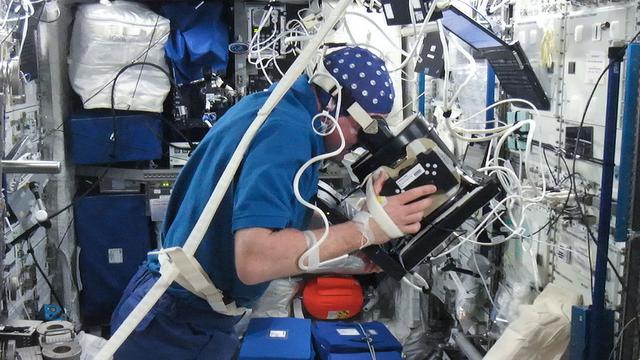
ISS030-E-116908 (13 Feb. 2012) --- Wearing an Electroencephalogram (EEG) electrode cap, European Space Agency astronaut Andre Kuipers, Expedition 30 flight engineer, performs a NeuroSpat science session in the Columbus laboratory of the International Space Station. NeuroSpat investigates the ways in which crew members’ three-dimensional visual & space perception is affected by long-duration stays in weightlessness.
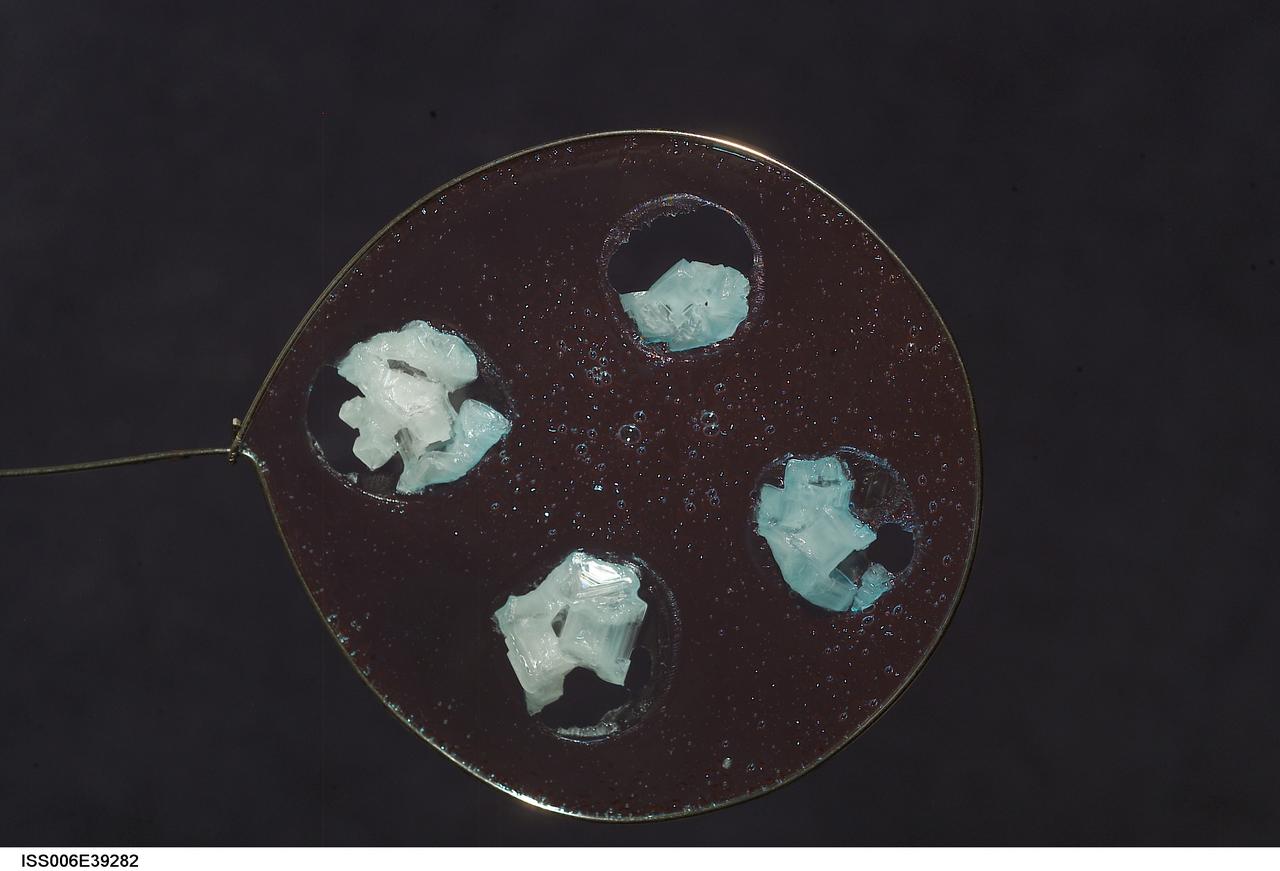
ISS006-E-39282 (15 March 2003) --- A view of sodium chloride inserted onto blueberry jelly within a 50-millimeter (mm) metal loop was photographed by an Expedition Six crewmember. The water in the sodium chloride solution evaporates as it leaves larger three-dimensional crystals while the blueberry jelly hardens. The experiment took place in the Destiny laboratory on the International Space Station (ISS).
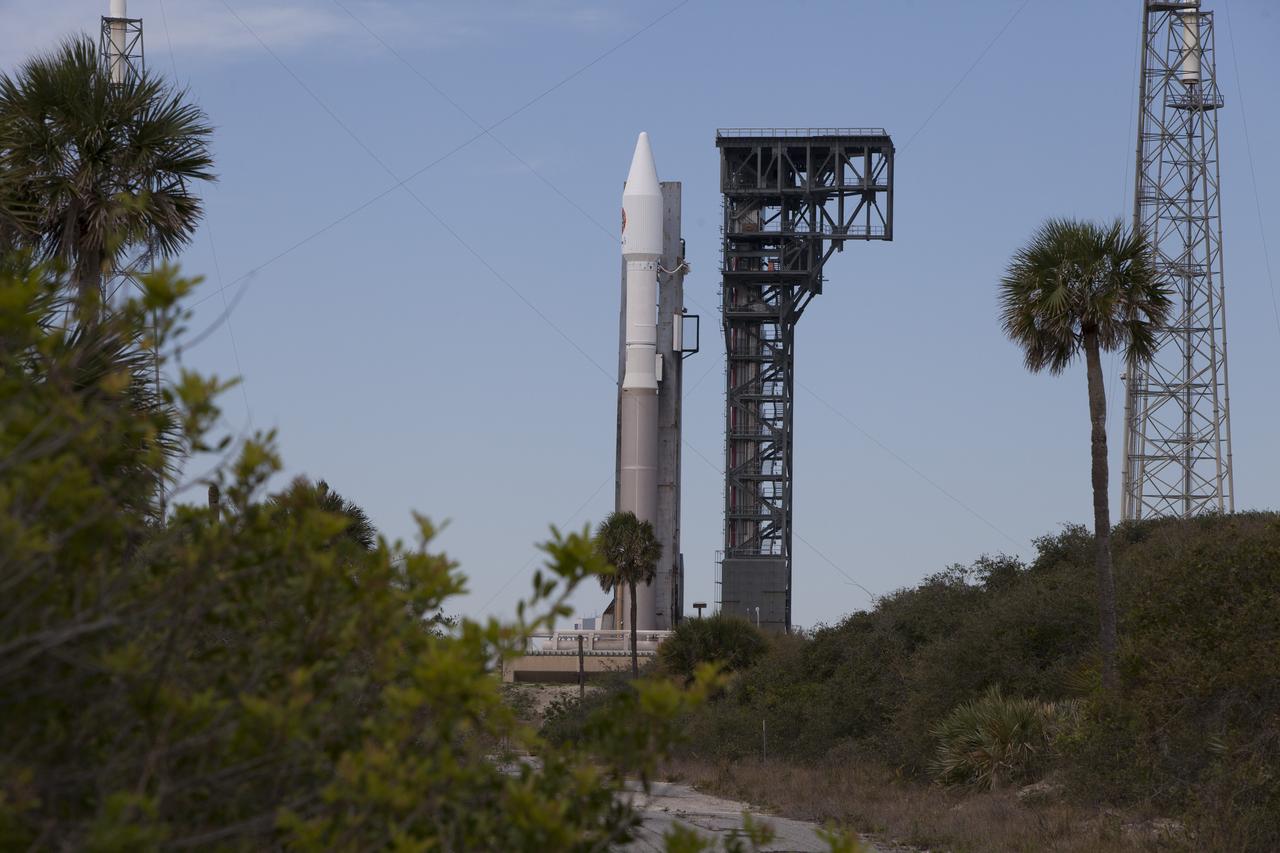
At Cape Canaveral Air Force Station's Space Launch Complex 41, a United Launch Alliance Atlas V rocket with a single-engine Centaur upper stage stands ready to boost an Orbital ATK Cygnus spacecraft on a resupply mission to the International Space Station. Science payloads include the second generation of a portable onboard printer to demonstrate three-dimensional printing, an instrument for first space-based observations of the chemical composition of meteors entering Earth’s atmosphere and an experiment to study how fires burn in microgravity.