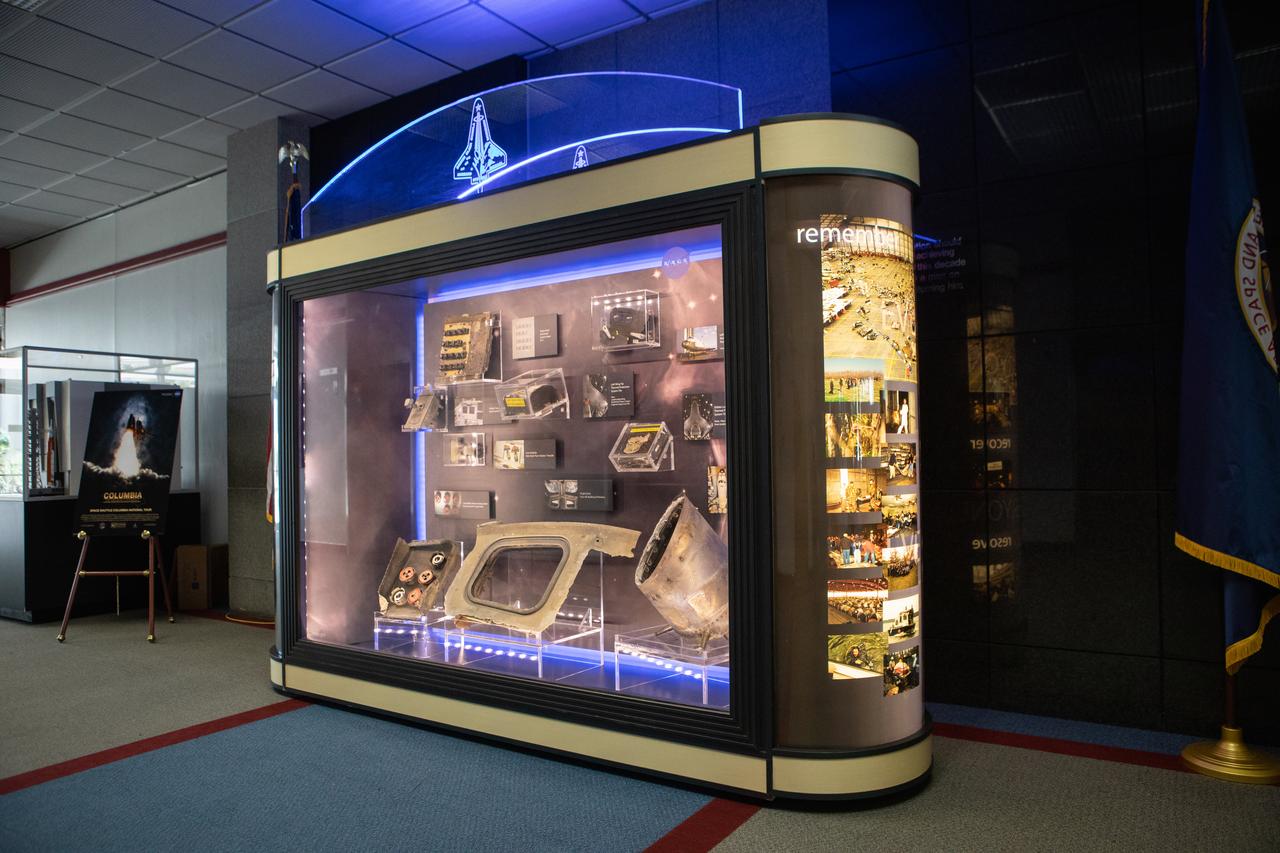
A display of artifacts featuring nine items recovered from the STS-107 tragedy that occurred Feb. 1, 2003, is shown in the old Headquarters Building at Kennedy Space Center. The powerful exhibit can now be viewed in the lobby of the Florida spaceport’s new Central Campus Building until June 10. The exhibit is part of the space shuttle Columbia national tour, which will make its way to all 10 NASA centers throughout the country.
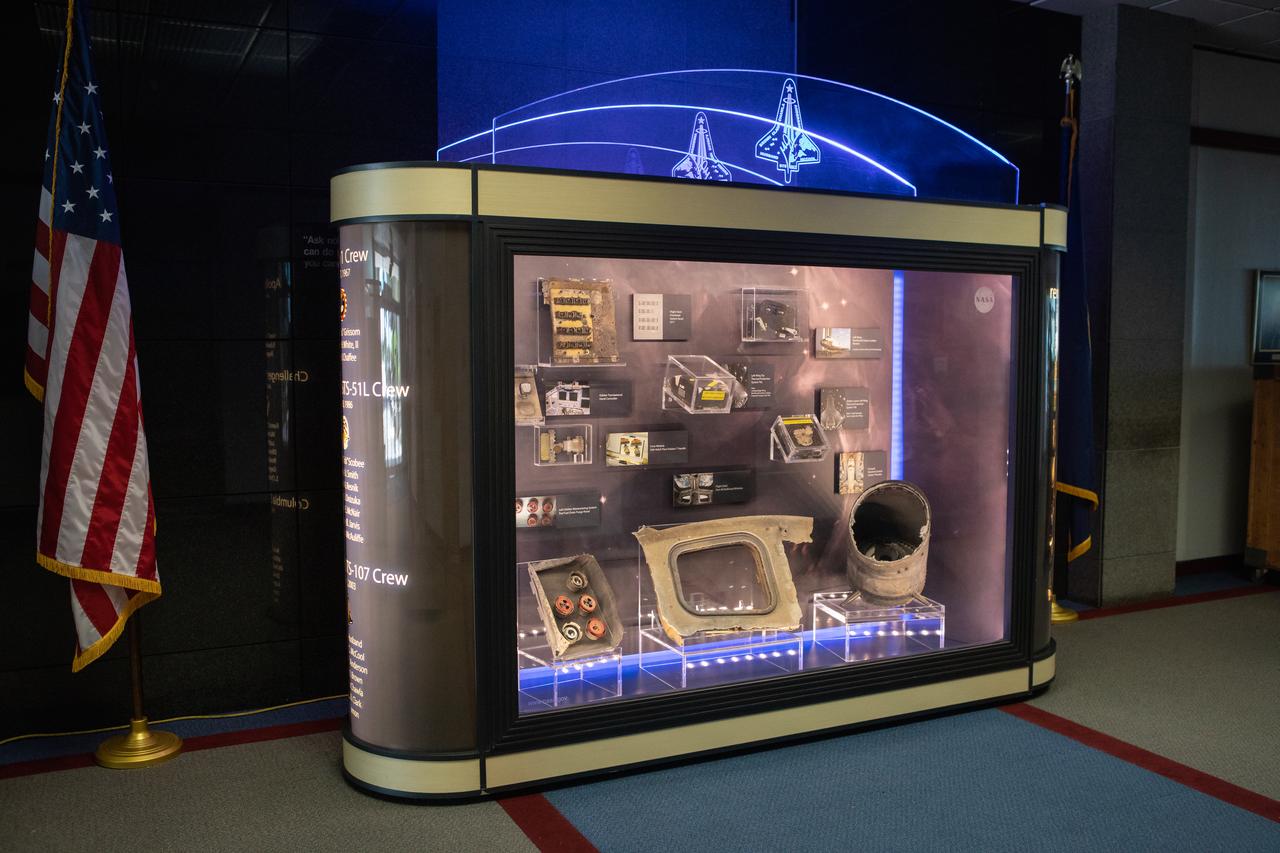
A display of artifacts featuring nine items recovered from the STS-107 tragedy that occurred Feb. 1, 2003, is shown in the old Headquarters Building at Kennedy Space Center. The powerful exhibit can now be viewed in the lobby of the Florida spaceport’s new Central Campus Building until June 10. The exhibit is part of the space shuttle Columbia national tour, which will make its way to all 10 NASA centers throughout the country.
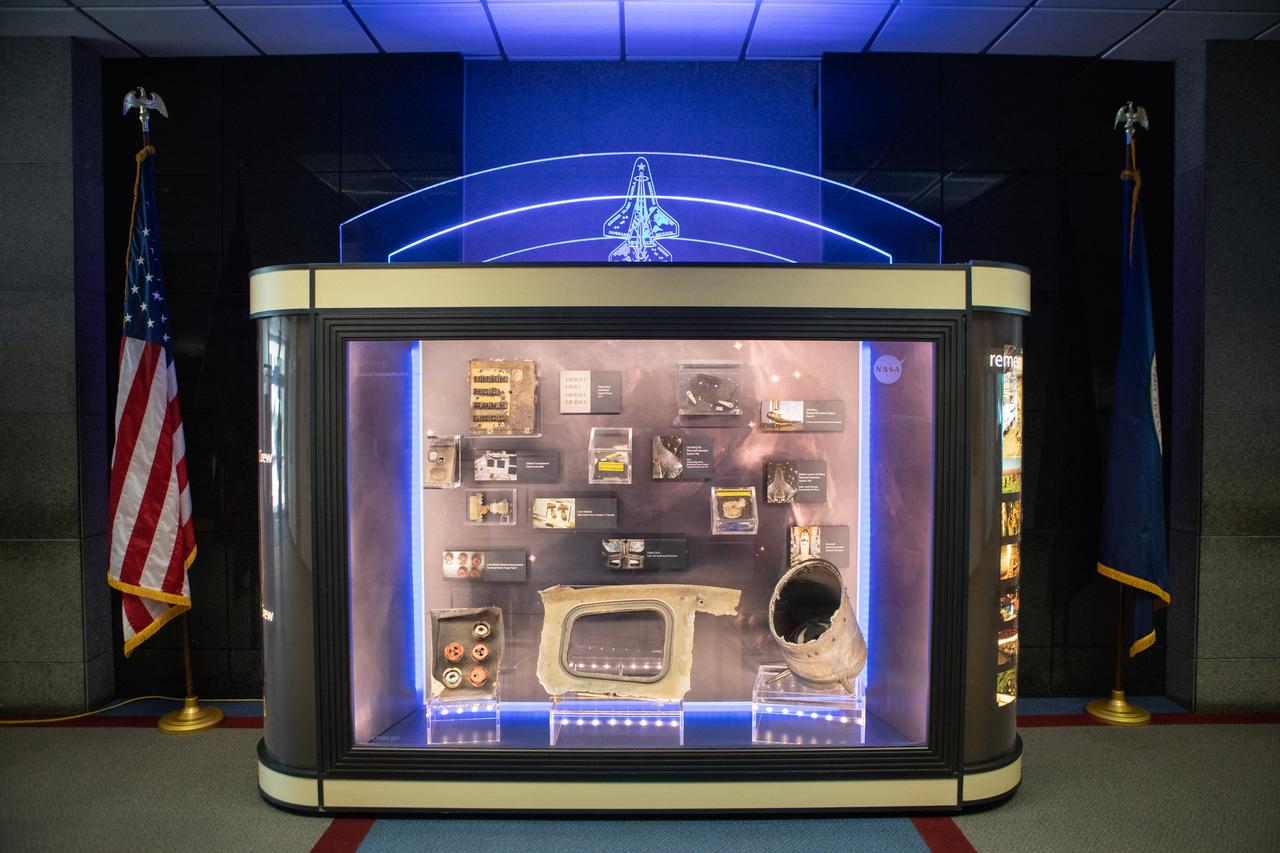
A display of artifacts featuring nine items recovered from the STS-107 tragedy that occurred Feb. 1, 2003, is shown in the old Headquarters Building at Kennedy Space Center. The powerful exhibit can now be viewed in the lobby of the Florida spaceport’s new Central Campus Building until June 10. The exhibit is part of the space shuttle Columbia national tour, which will make its way to all 10 NASA centers throughout the country.
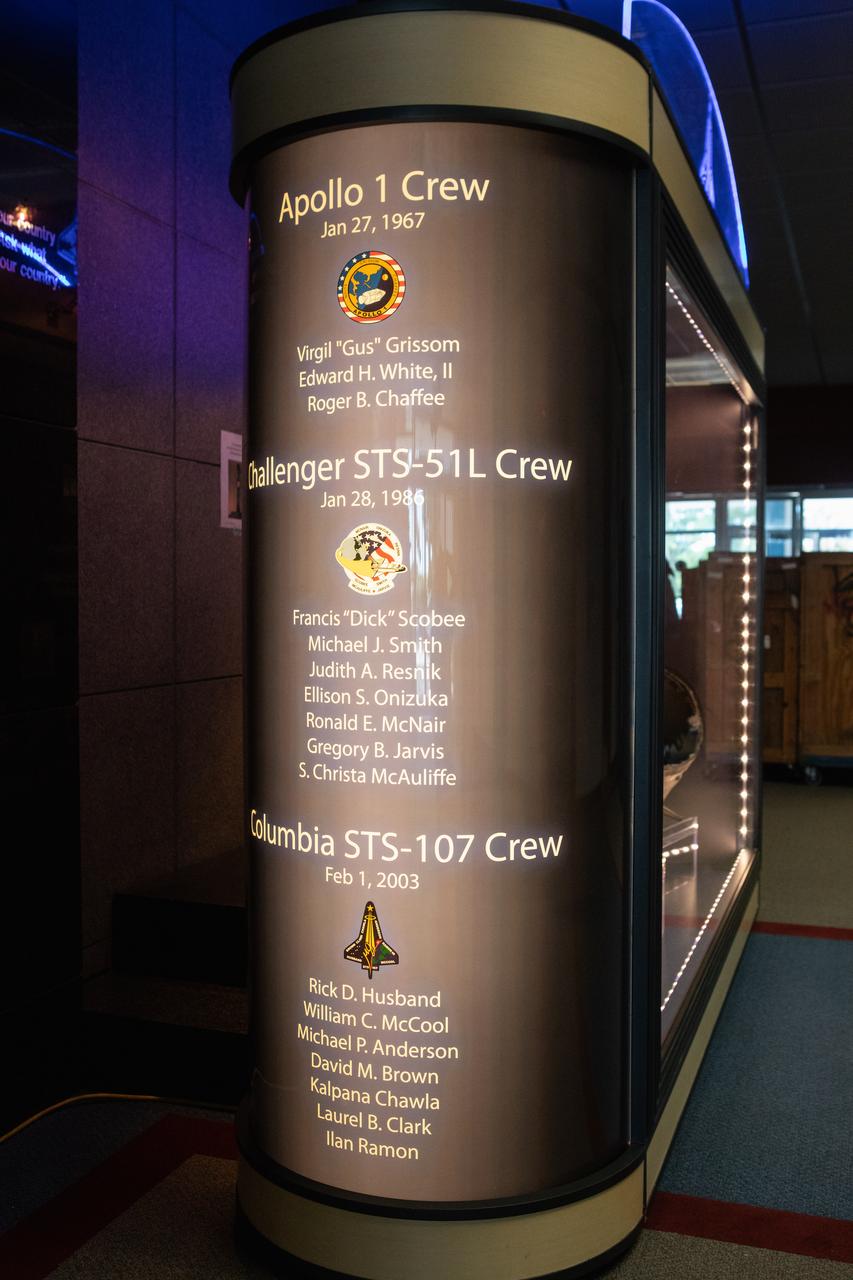
A display of artifacts featuring nine items recovered from the STS-107 tragedy that occurred Feb. 1, 2003, is shown in the old Headquarters Building at Kennedy Space Center. The powerful exhibit can now be viewed in the lobby of the Florida spaceport’s new Central Campus Building until June 10. The exhibit is part of the space shuttle Columbia national tour, which will make its way to all 10 NASA centers throughout the country.
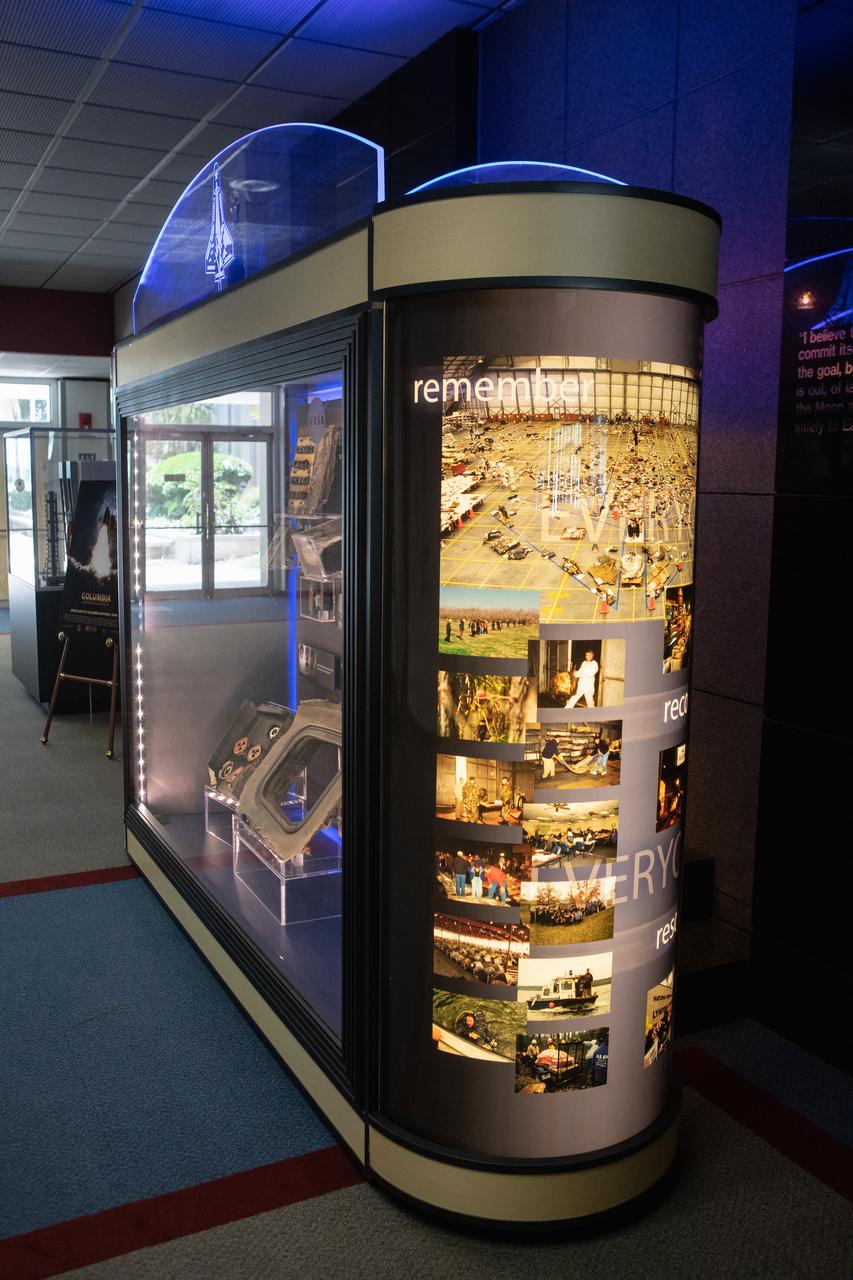
A display of artifacts featuring nine items recovered from the STS-107 tragedy that occurred Feb. 1, 2003, is shown in the old Headquarters Building at Kennedy Space Center. The powerful exhibit can now be viewed in the lobby of the Florida spaceport’s new Central Campus Building until June 10. The exhibit is part of the space shuttle Columbia national tour, which will make its way to all 10 NASA centers throughout the country.
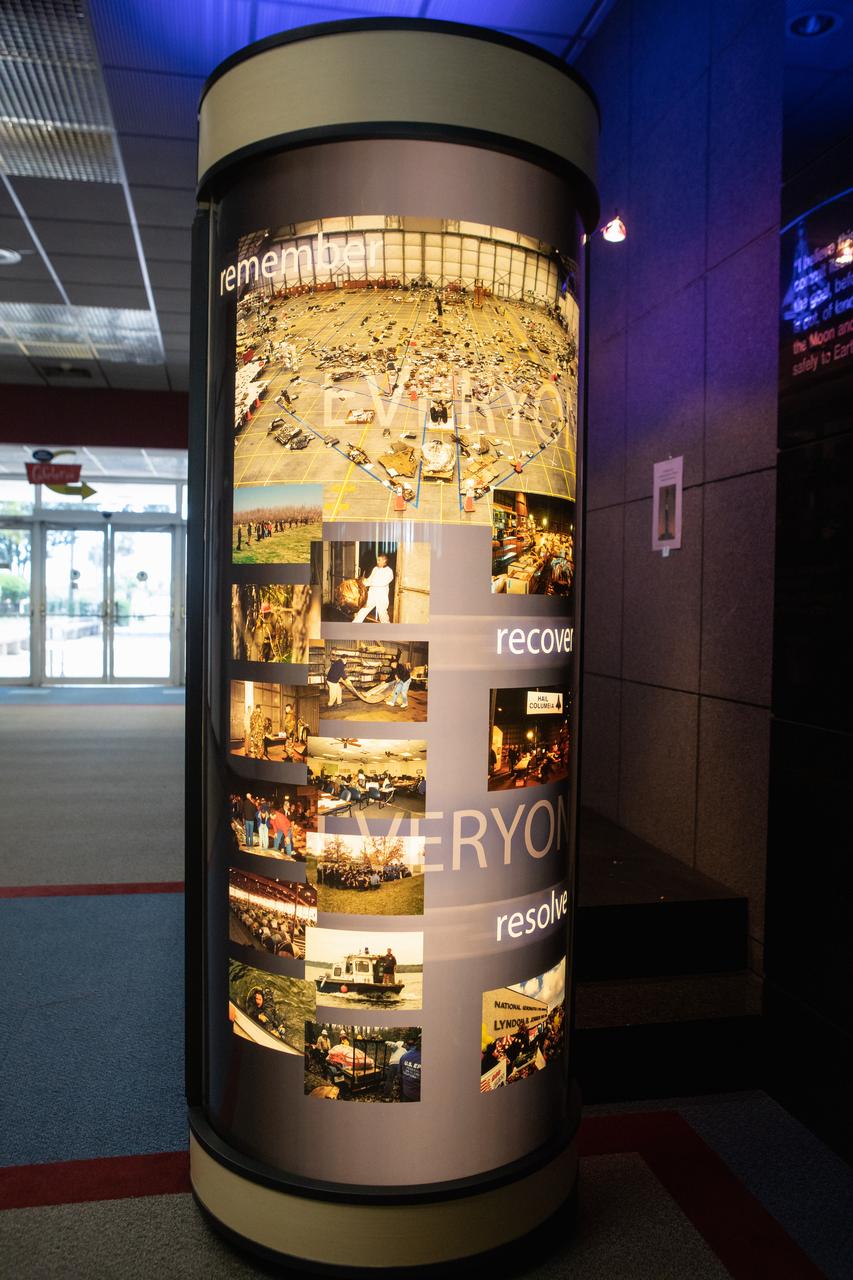
A display of artifacts featuring nine items recovered from the STS-107 tragedy that occurred Feb. 1, 2003, is shown in the old Headquarters Building at Kennedy Space Center. The powerful exhibit can now be viewed in the lobby of the Florida spaceport’s new Central Campus Building until June 10. The exhibit is part of the space shuttle Columbia national tour, which will make its way to all 10 NASA centers throughout the country.
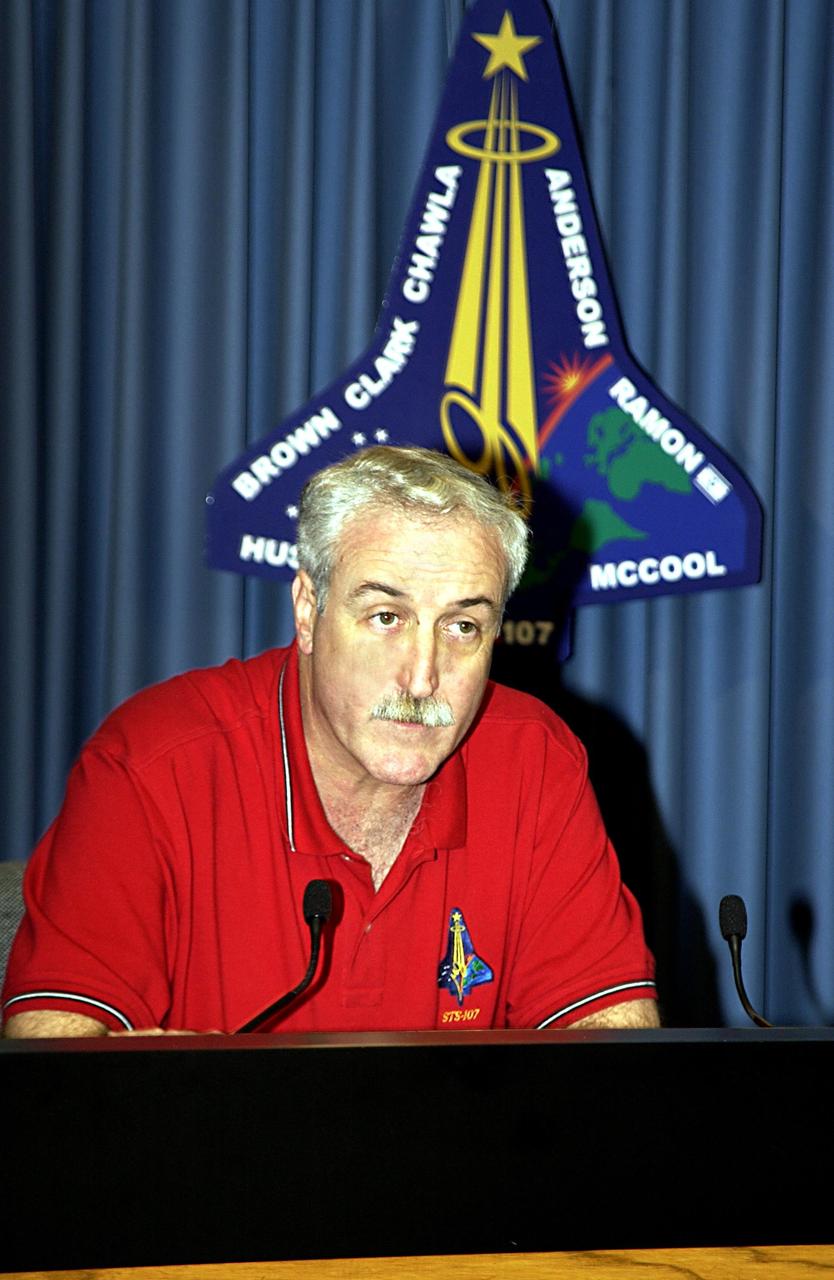
KENNEDY SPACE CENTER, FLA. - Following the loss of Columbia and crew on their return to Earth, NASA Administrator Sean O'Keefe comments on the tragedy during a press briefing at KSC.
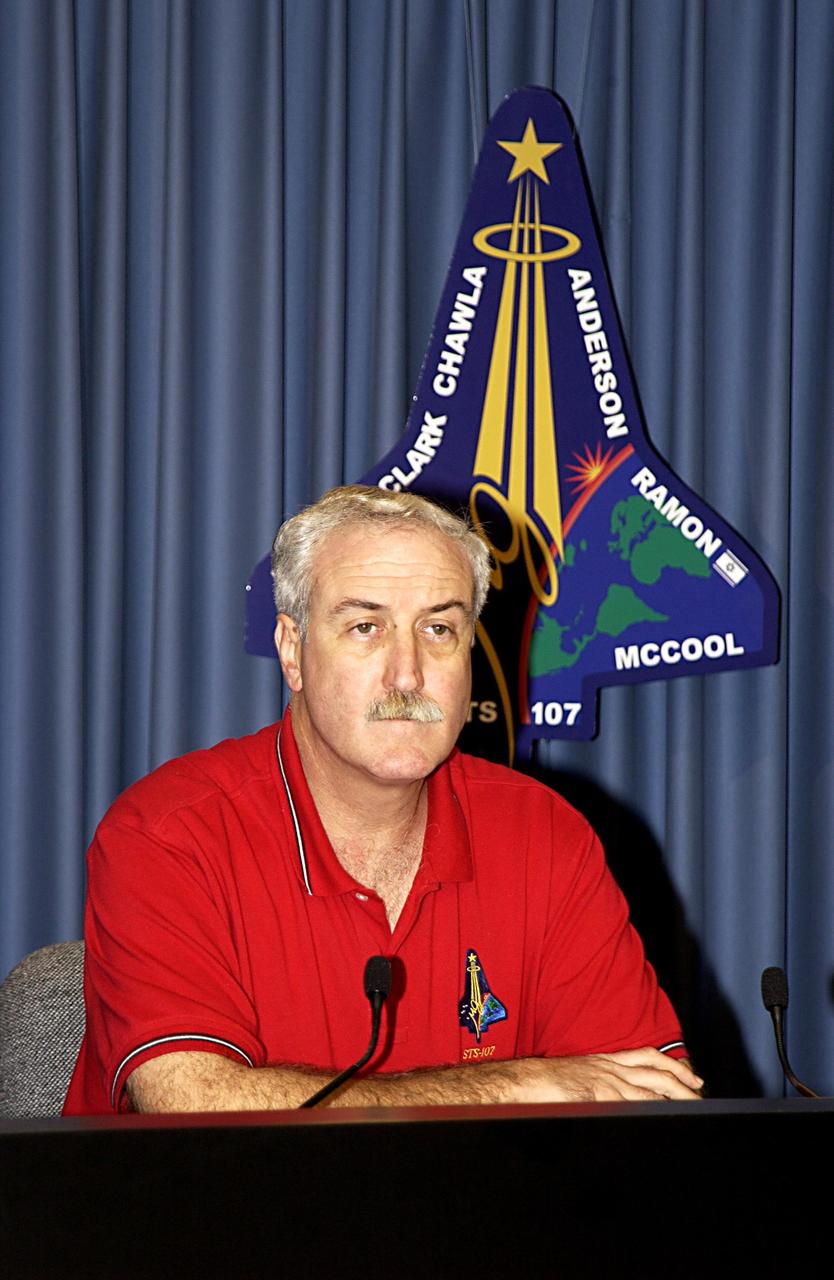
KENNEDY SPACE CENTER, FLA. - Following the loss of Columbia and crew on their return to Earth, NASA Administrator Sean O'Keefe comments on the tragedy during a press briefing at KSC.
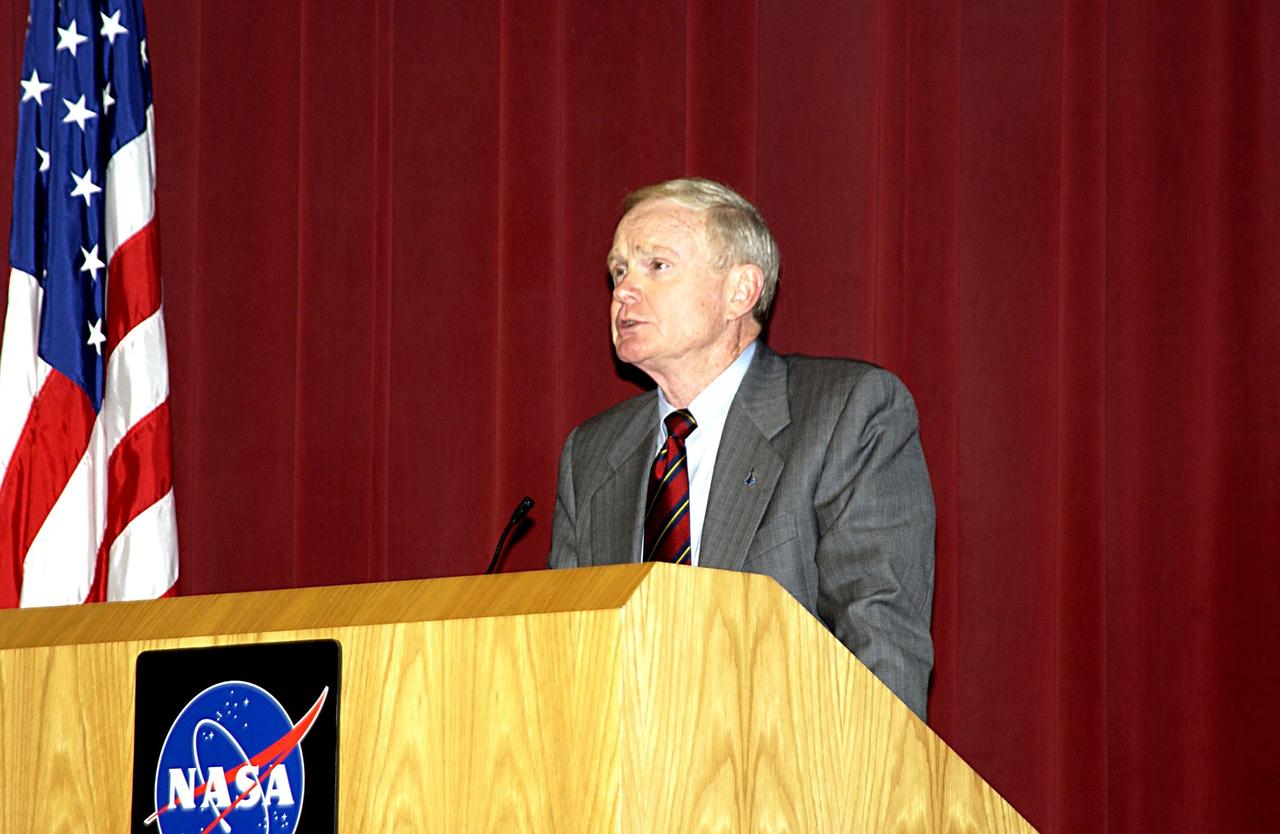
KENNEDY SPACE CENTER, FLA. - Following the loss of Columbia and crew on their return to Earth, Center Director Roy Bridges speaks to employees about the tragedy, the impact on the KSC family and, ultimately, to honor the fallen heroes by continuing the journey into space.
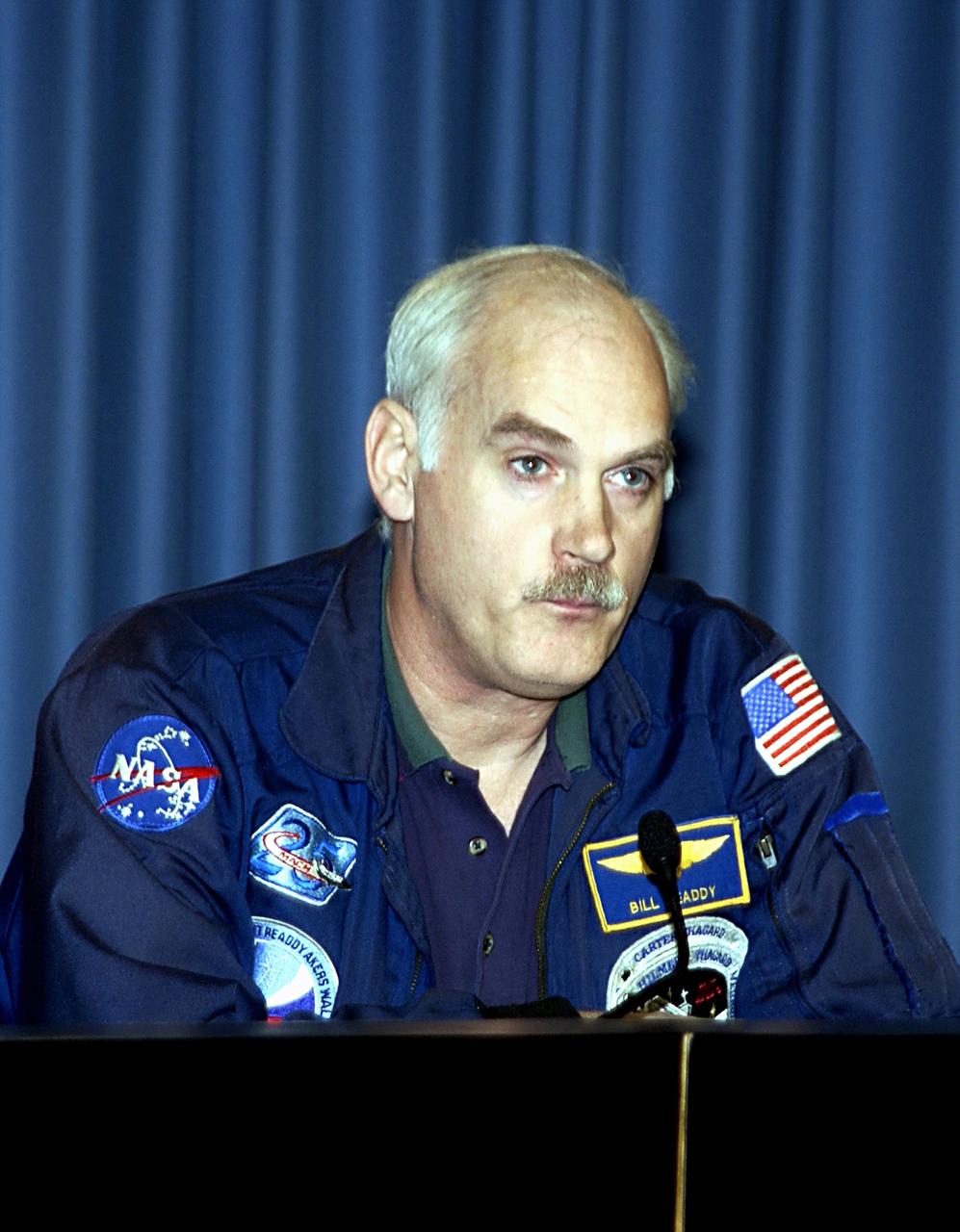
KENNEDY SPACE CENTER, FLA. - Following the loss of Columbia and crew on their return to Earth, Bill Readdy, associate administrator, Office of Space Flight, comments on the tragedy during a press briefing at KSC.
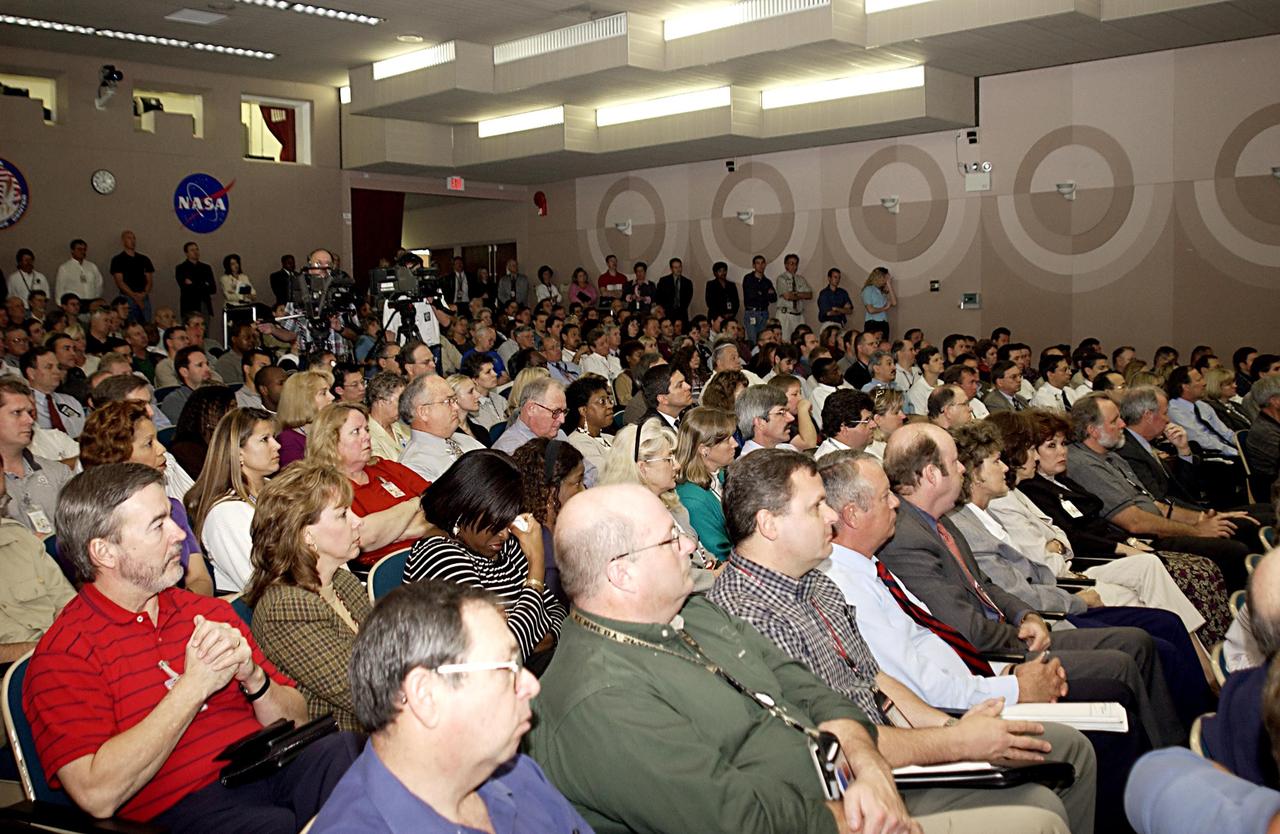
KENNEDY SPACE CENTER, FLA. - Employees listen solemnly as Center Director Roy Bridges speaks about the tragedy of the loss of Columbia and crew, the impact on the KSC family and, ultimately, the need to honor the fallen heroes by continuing the journey into space.

KENNEDY SPACE CENTER, FLA. - Following the loss of Columbia and crew on their return to Earth, Center Director Roy Bridges speaks to employees about the tragedy, the impact on the KSC family and, ultimately, to honor the fallen heroes by continuing the journey into space.
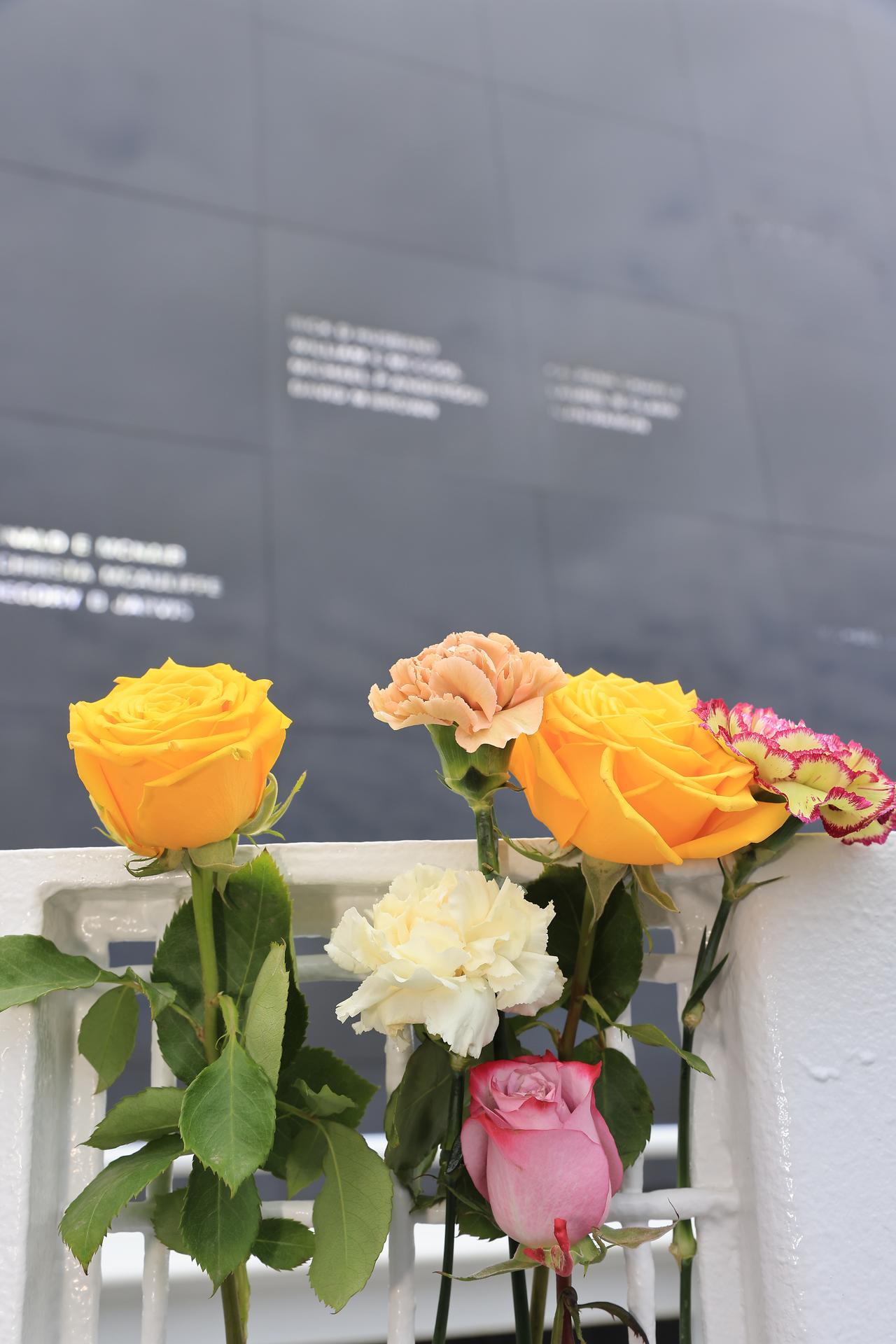
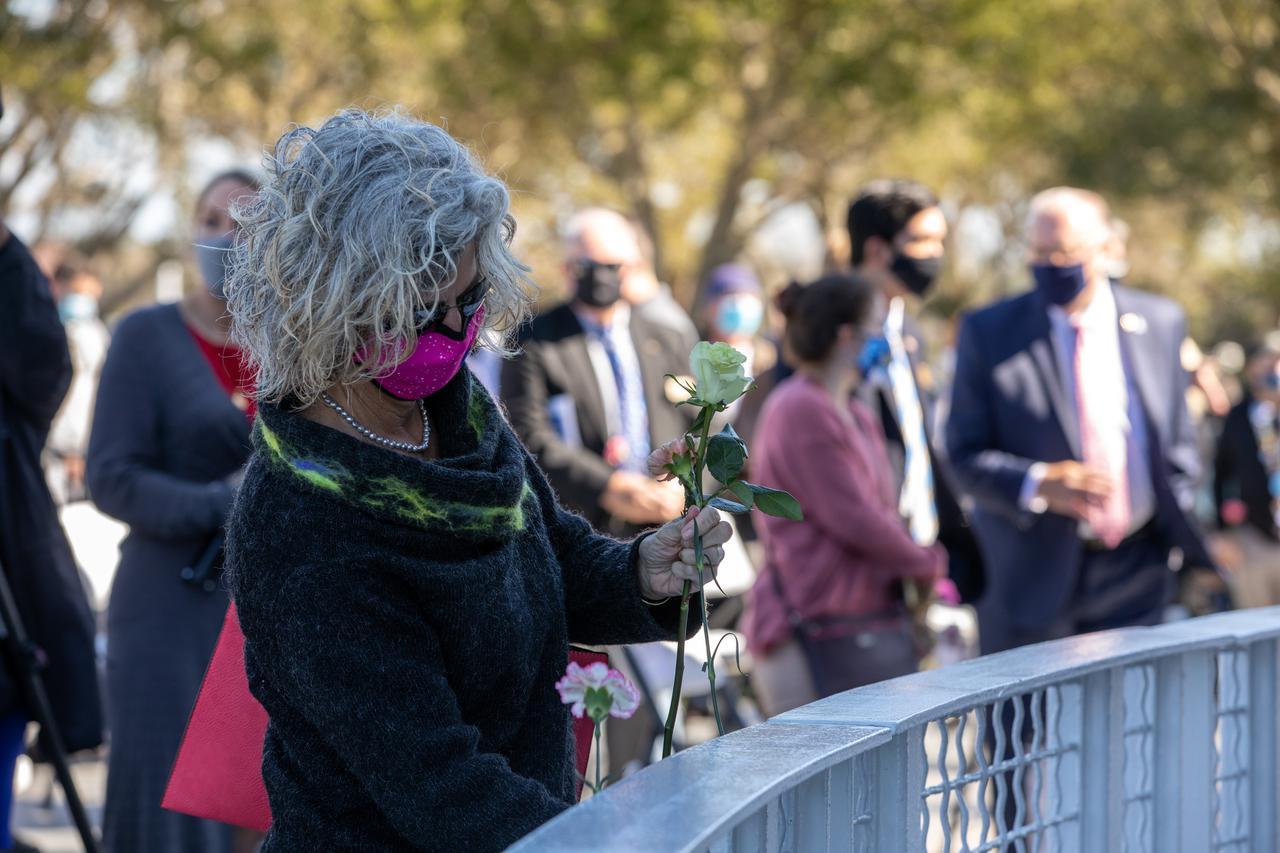
NASA’s Day of Remembrance is marked by flowers placed before the Space Mirror Memorial at the Kennedy Space Center Visitor Complex on Thursday, Jan. 22, 2026. The mirror was dedicated in 1991 to honor all astronauts who lost their lives on missions or during training. During the Day of Remembrance, NASA centers across the country honor those astronauts who have fallen in the pursuit of space exploration. This year marks the 40th anniversary of the Challenger tragedy.
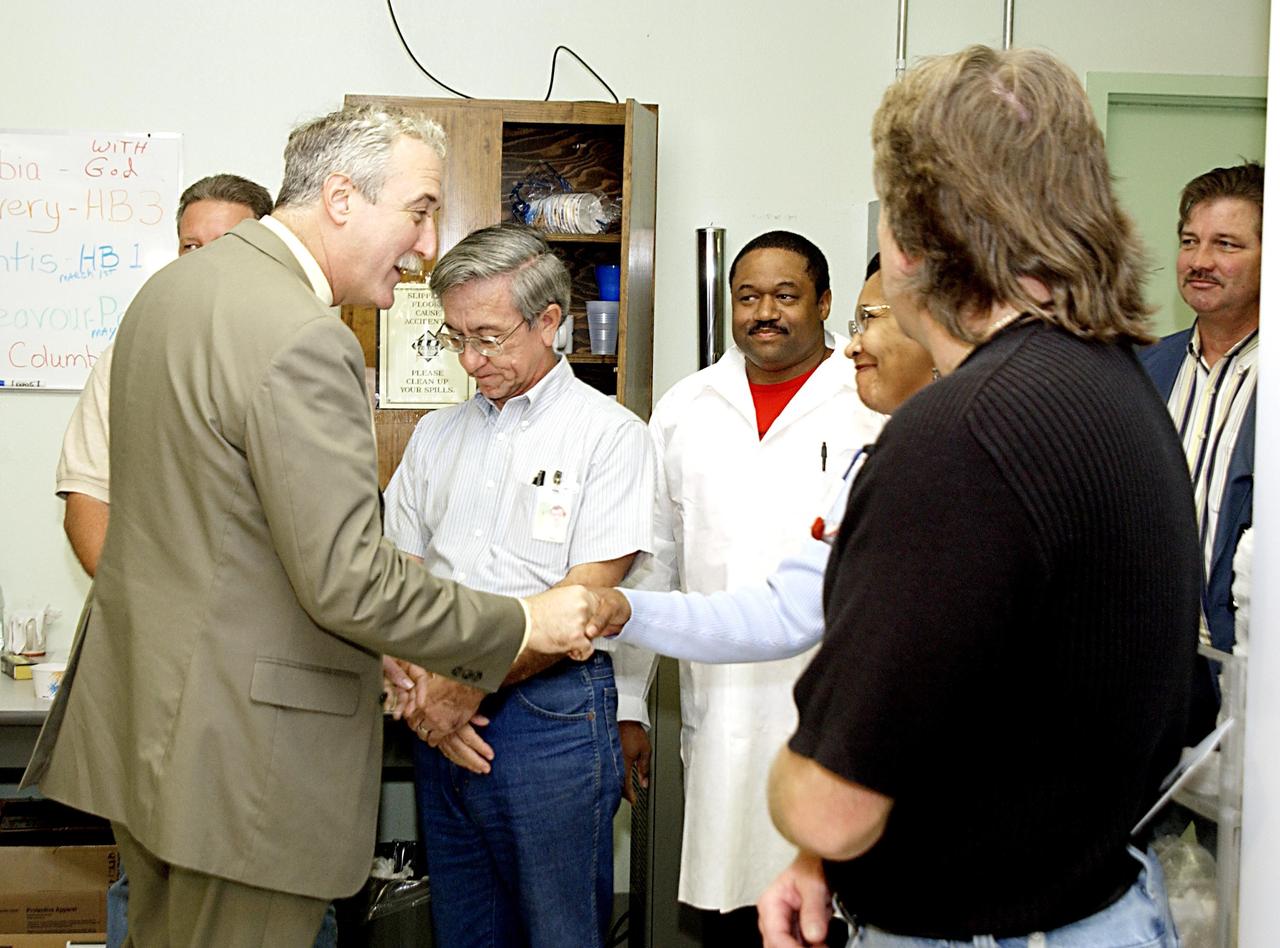
KENNEDY SPACE CENTER, FLA. -- In the Thermal Protection System Facility, NASA Administrator Sean O'Keefe (left) meets workers. O'Keefe is visiting the site to learn more about the TPS products and process in protecting orbiters from the intense heat of launch and re-entry. TPS tiles have been discussed in the investigation into the Columbia tragedy that destroyed the orbiter and claimed the lives of seven astronauts.
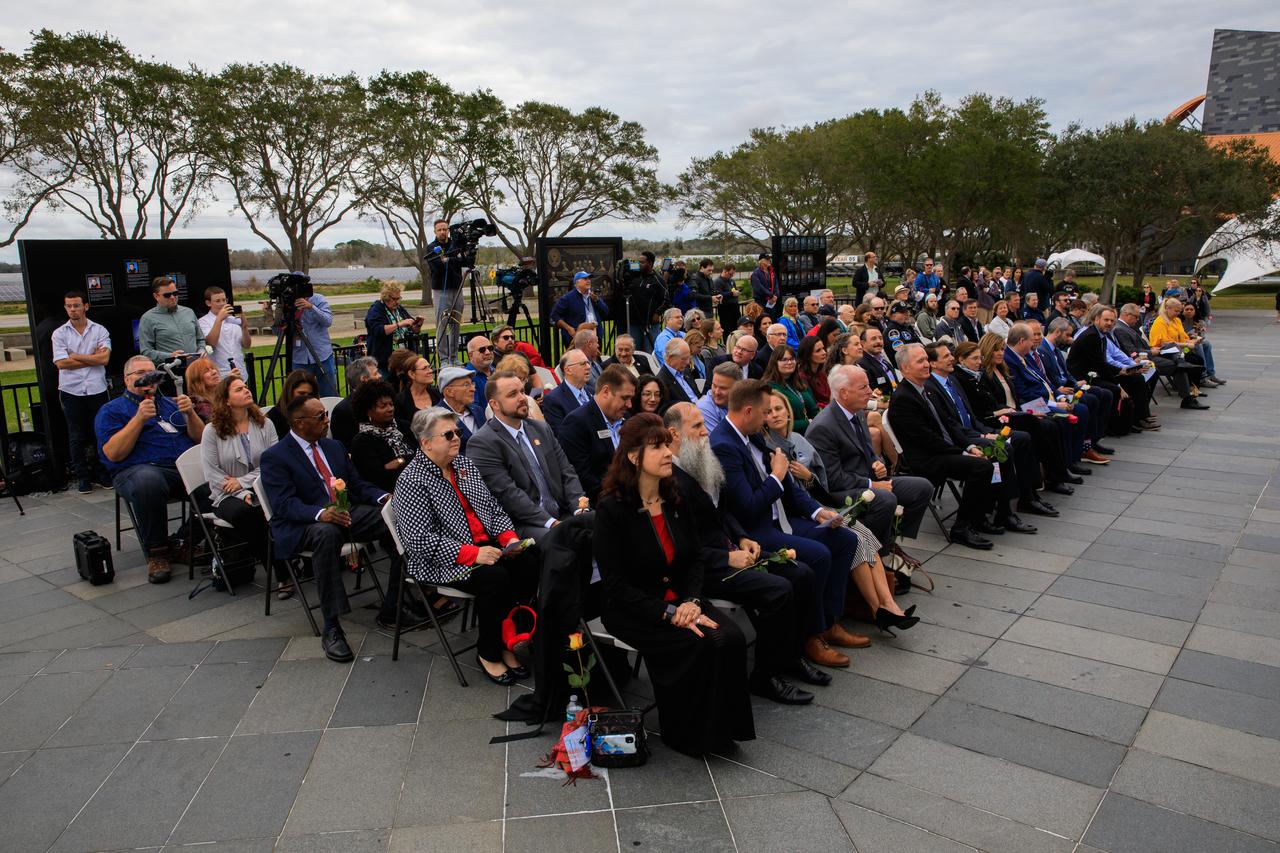
Kennedy Space Center workers and guests attend the Day of Remembrance at the Kennedy Space Center Visitor Complex in Florida on Jan. 26, 2023. The event honored the crews of Apollo 1 and space shuttles Challenger and Columbia, as well as other astronauts who lost their lives in the pursuit of spaceflight. This year marks the 20th anniversary of the Columbia tragedy. This year’s ceremony was hosted by the Astronauts Memorial Foundation, which was founded after the shuttle Challenger accident in 1986 to honor the sacrifices of fallen astronauts each year.
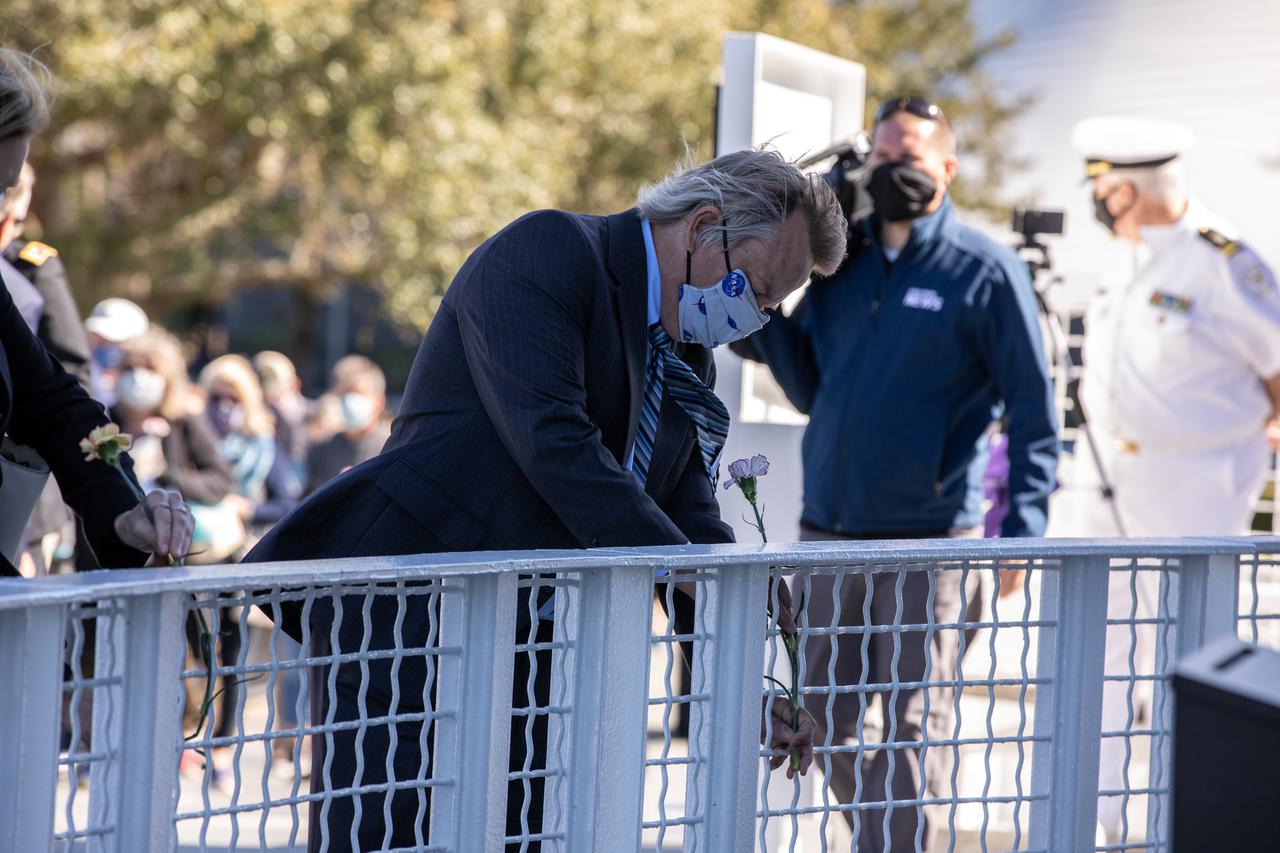
The crews of Apollo 1 and space shuttles Challenger and Columbia, as well as other fallen astronauts who lost their lives in the name of space exploration and discovery, are honored by NASA Kennedy Space Center employees and guests with a ceremony at the Kennedy Visitor Complex’s Space Mirror Memorial on Jan. 28, 2021. The date marked the 35th anniversary of the Challenger tragedy. NASA centers throughout the country participate in the agency’s annual Day of Remembrance memorial event.
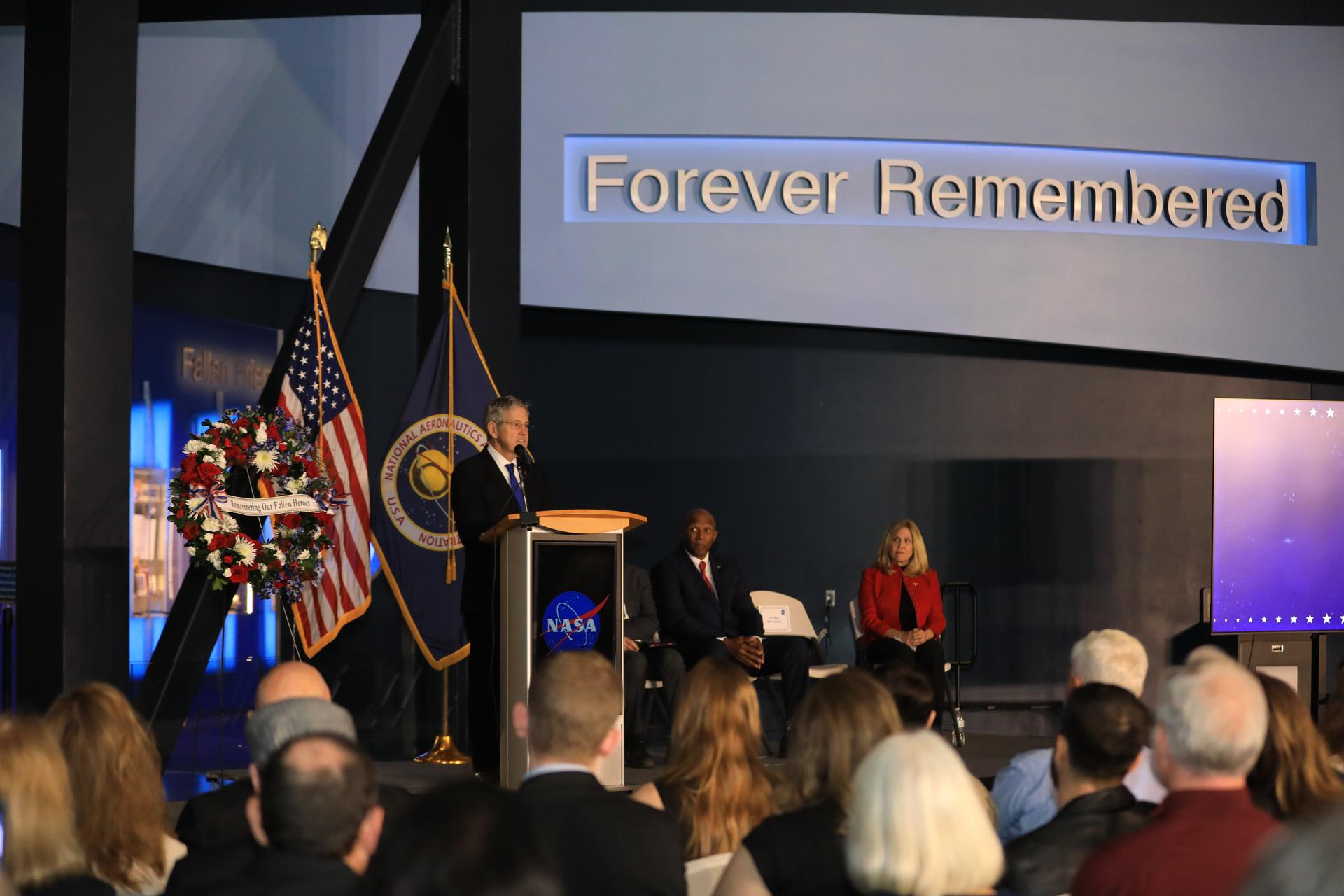
Former Kennedy Space Center director, Bob Cabana, speaks during NASA’s Day of Remembrance ceremony at the Kennedy Space Center Visitor Complex in Florida on Thursday, Jan. 22, 2026. The annual event commemorates the crews of Apollo 1 and the space shuttles Challenger and Columbia. Marking the 40th anniversary of the Challenger tragedy, NASA Kennedy and the Astronauts Memorial Foundation, which was founded after the shuttle Challenger accident in 1986 to honor the sacrifices of fallen astronauts, hosted this year’s ceremony.
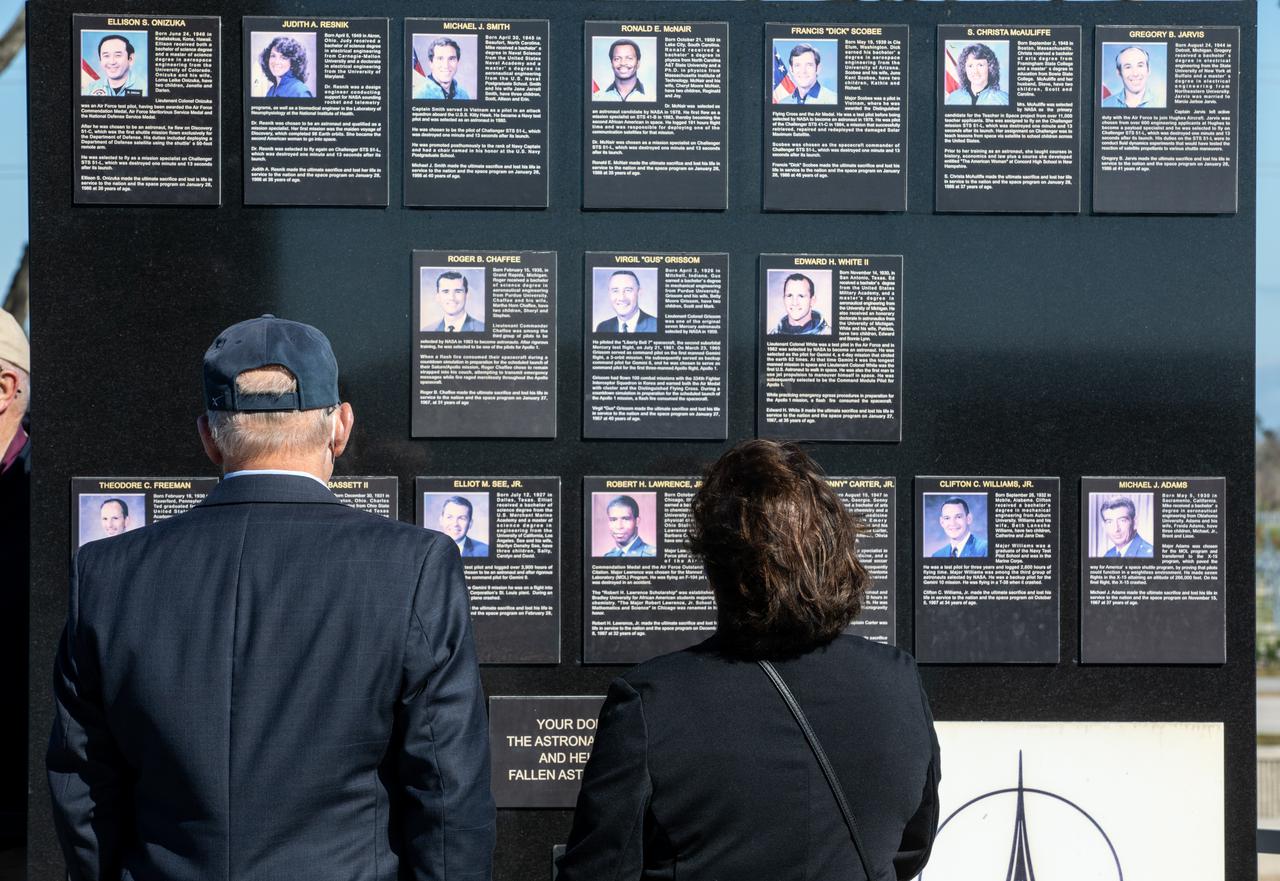
The crews of Apollo 1 and space shuttles Challenger and Columbia, as well as other fallen astronauts who lost their lives in the name of space exploration and discovery, are honored by NASA Kennedy Space Center employees and guests with a ceremony at the Kennedy Visitor Complex’s Space Mirror Memorial on Jan. 28, 2021. The date marked the 35th anniversary of the Challenger tragedy. NASA centers throughout the country participate in the agency’s annual Day of Remembrance memorial event.

KENNEDY SPACE CENTER, FLA. -- In the Thermal Protection System Facility, NASA Administrator Sean O'Keefe (center) listens to Lee Zook (right) explaining use of the Dome Heat Shield blanket in front of them that is used for Shuttle engines. O'Keefe is visiting the site to learn more about the TPS products and process in protecting orbiters from the intense heat of launch and re-entry. TPS tiles have been discussed in the investigation into the Columbia tragedy that destroyed the orbiter and claimed the lives of seven astronauts.
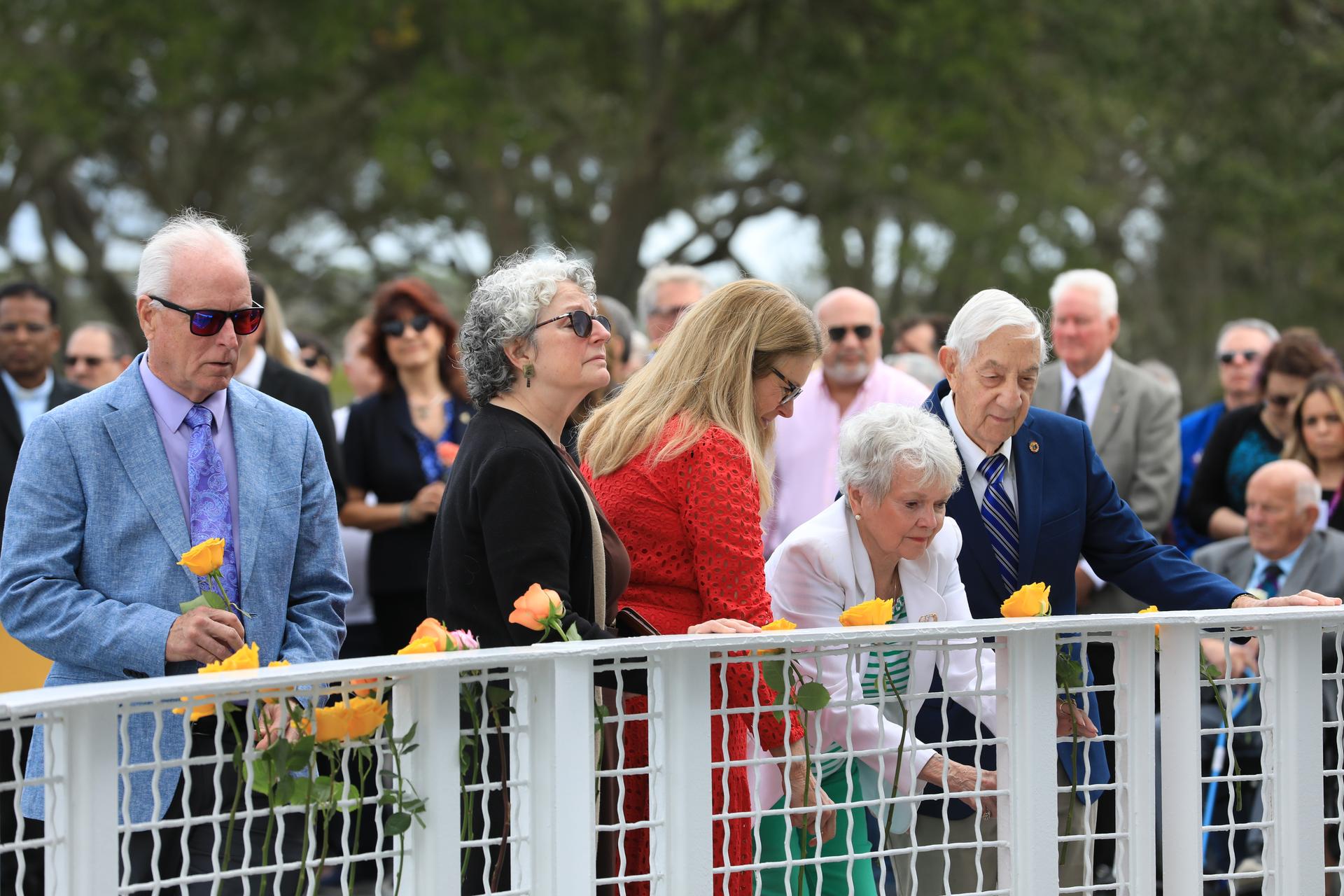
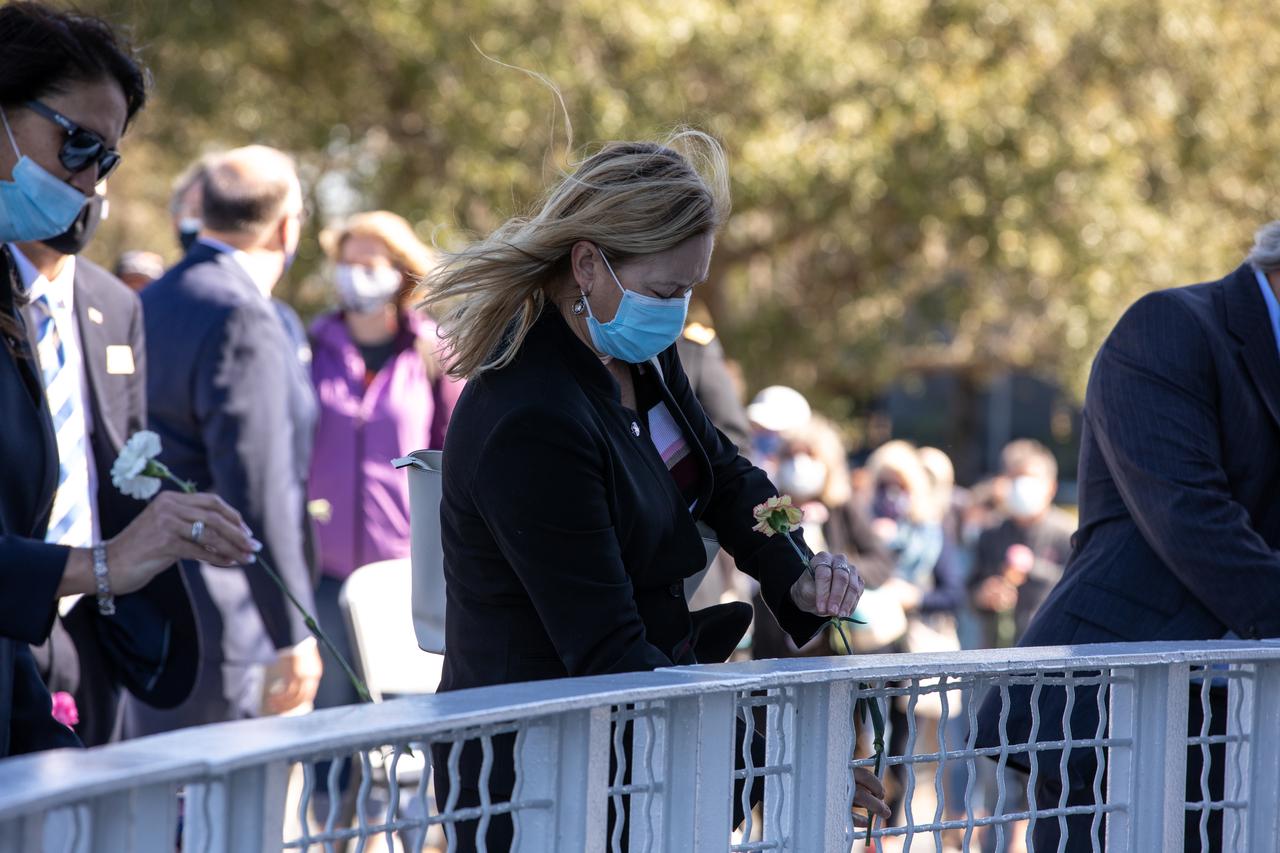
Families of fallen NASA astronauts place flowers before the Space Mirror Memorial at the Kennedy Space Center Visitor Complex in Florida during NASA’s Day of Remembrance on Thursday, Jan. 22, 2026. The mirror was dedicated in 1991 to honor all astronauts who lost their lives on missions or during training. During the annual event, NASA centers across the country honor those astronauts who have fallen in the pursuit of space exploration. This year marks the 40th anniversary of the Challenger tragedy.
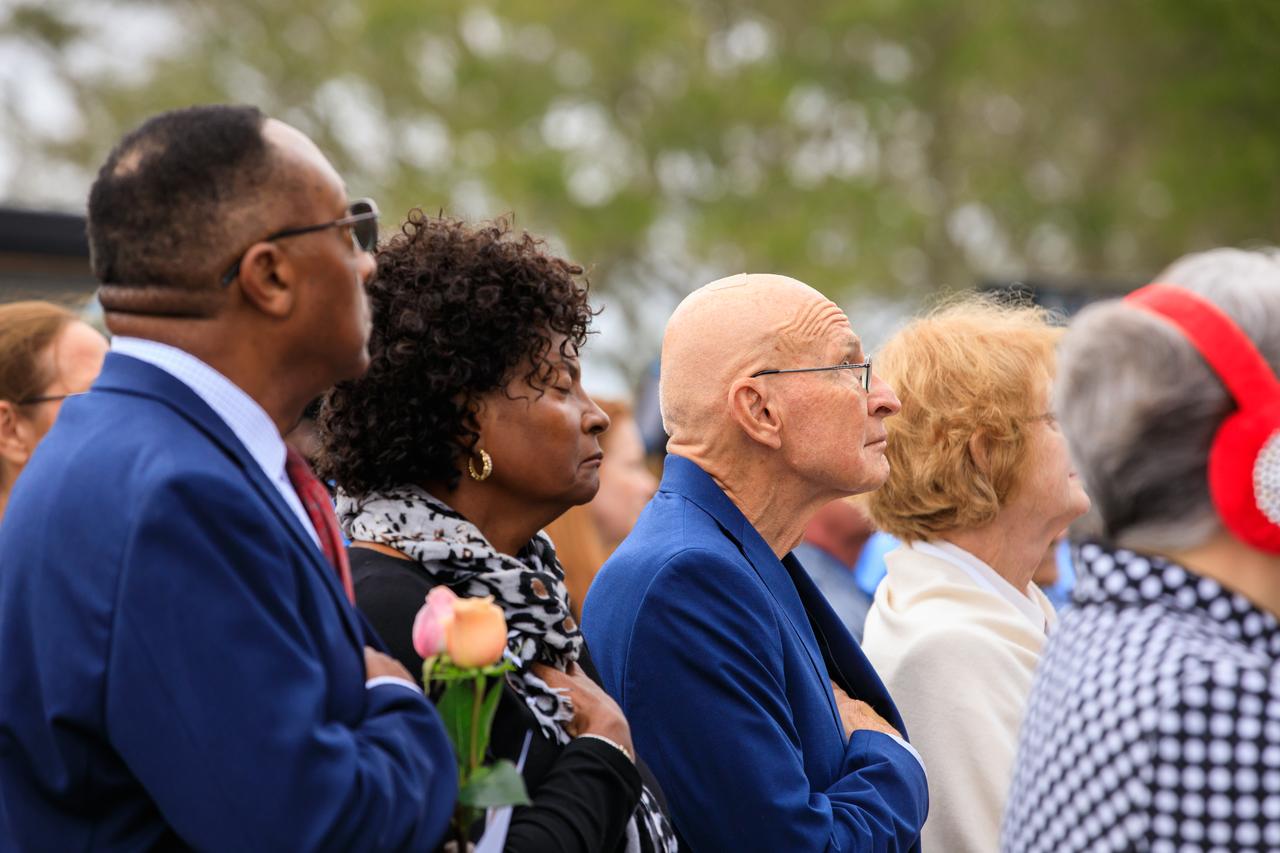
Kennedy Space Center workers and guests observe a minute of silence during the Day of Remembrance at the Kennedy Space Center Visitor Complex in Florida on Jan. 26, 2023. The event honored the crews of Apollo 1 and space shuttles Challenger and Columbia, as well as other astronauts who lost their lives in the pursuit of spaceflight. This year marks the 20th anniversary of the Columbia tragedy. This year’s ceremony was hosted by the Astronauts Memorial Foundation, which was founded after the shuttle Challenger accident in 1986 to honor the sacrifices of fallen astronauts each year.
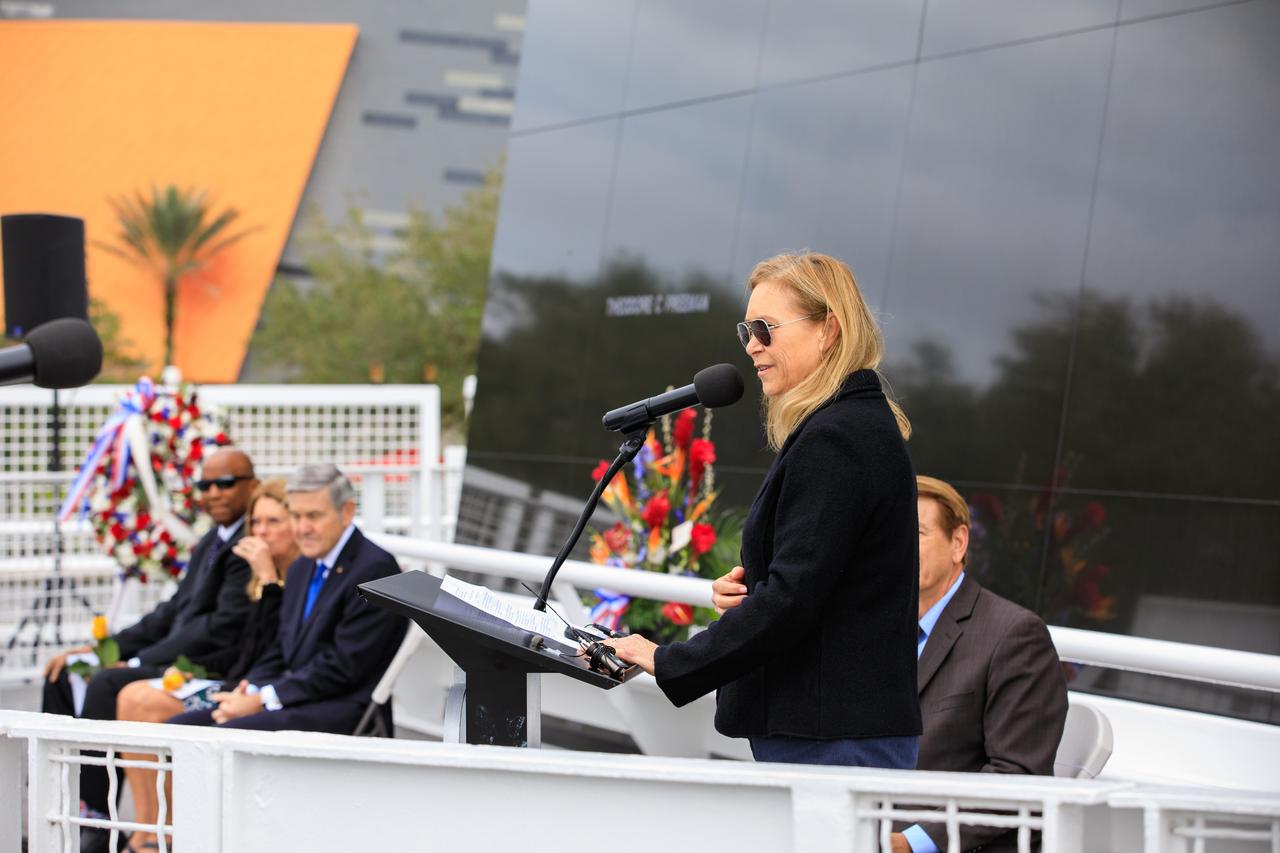
Kennedy Space Center Director Janet Petro makes remarks during the Day of Remembrance on Jan. 26, 2023, at nearby Kennedy Space Center Visitor Complex in Florida. The event honored the crews of Apollo 1 and space shuttles Challenger and Columbia, as well as other astronauts who lost their lives in the pursuit of spaceflight. This year marks the 20th anniversary of the Columbia tragedy. This year’s ceremony was hosted by the Astronauts Memorial Foundation, which was founded after the shuttle Challenger accident in 1986 to honor the sacrifices of fallen astronauts each year.
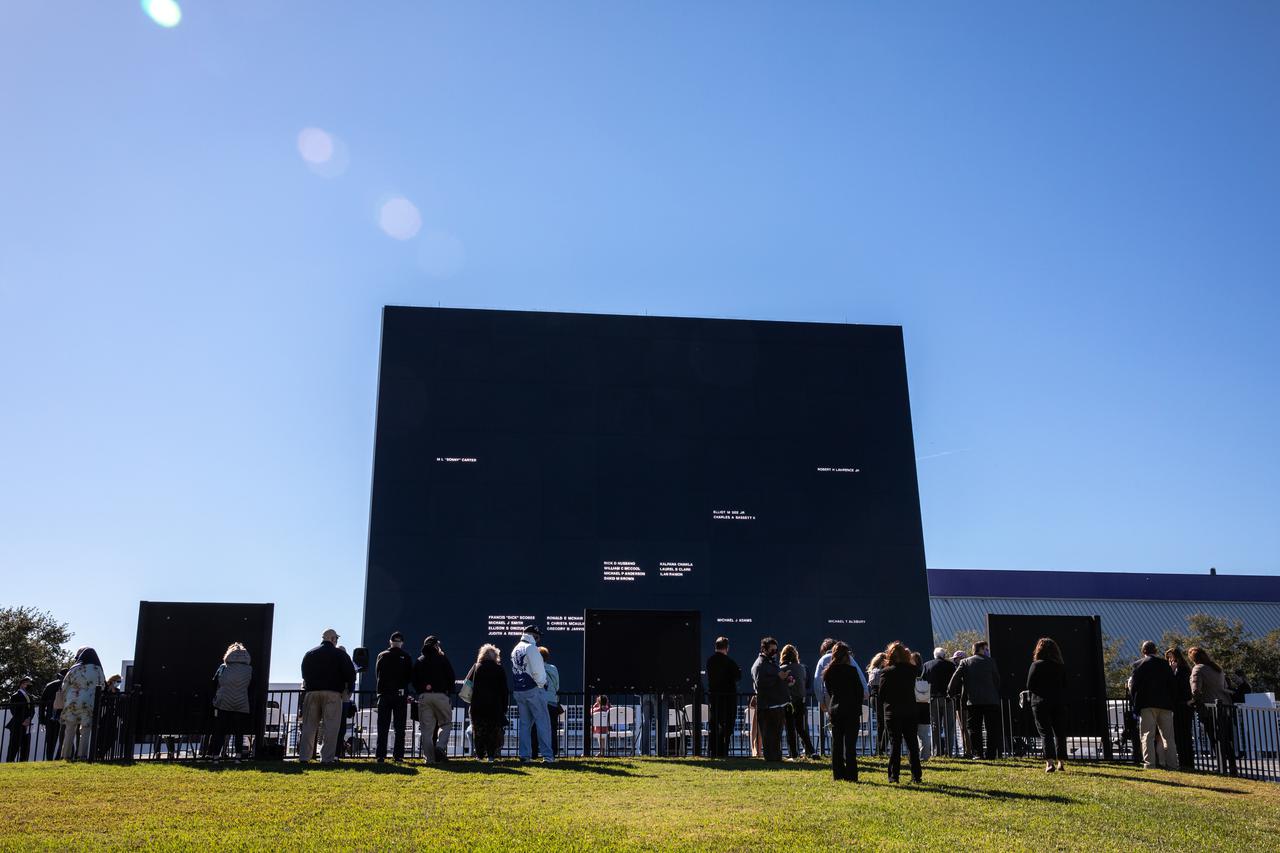
The crews of Apollo 1 and space shuttles Challenger and Columbia, as well as other fallen astronauts who lost their lives in the name of space exploration and discovery, are honored by NASA Kennedy Space Center employees and guests with a ceremony at the Kennedy Visitor Complex’s Space Mirror Memorial on Jan. 28, 2021. The date marked the 35th anniversary of the Challenger tragedy. NASA centers throughout the country participate in the agency’s annual Day of Remembrance memorial event.
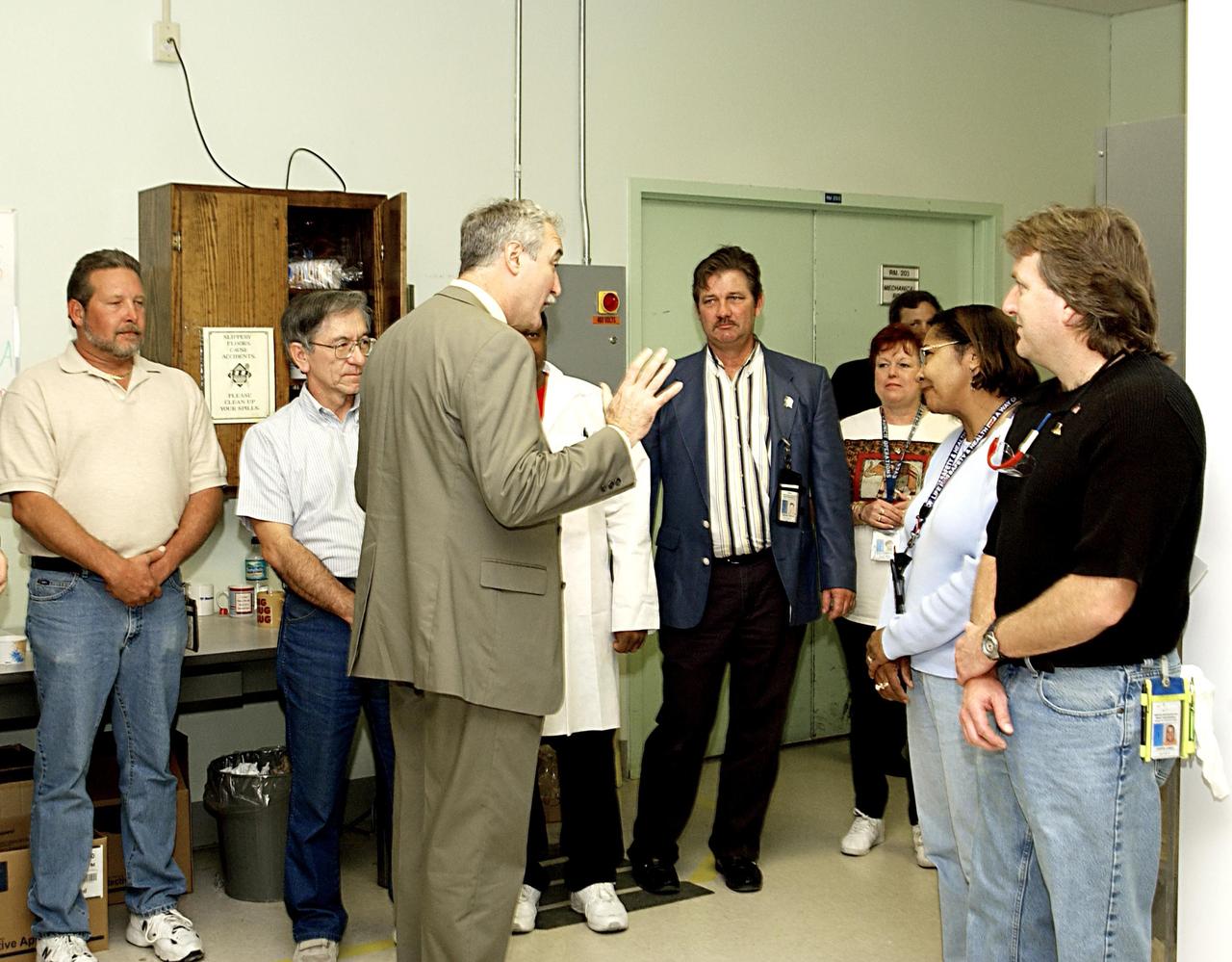
KENNEDY SPACE CENTER, FLA. -- NASA Administrator Sean O'Keefe (third from left) talks to workers in the Thermal Protection System Facility. O'Keefe is visiting the site to learn more about the TPS products and process in protecting orbiters from the intense heat of launch and re-entry. TPS tiles have been discussed in the investigation into the Columbia tragedy that destroyed the orbiter and claimed the lives of seven astronauts.
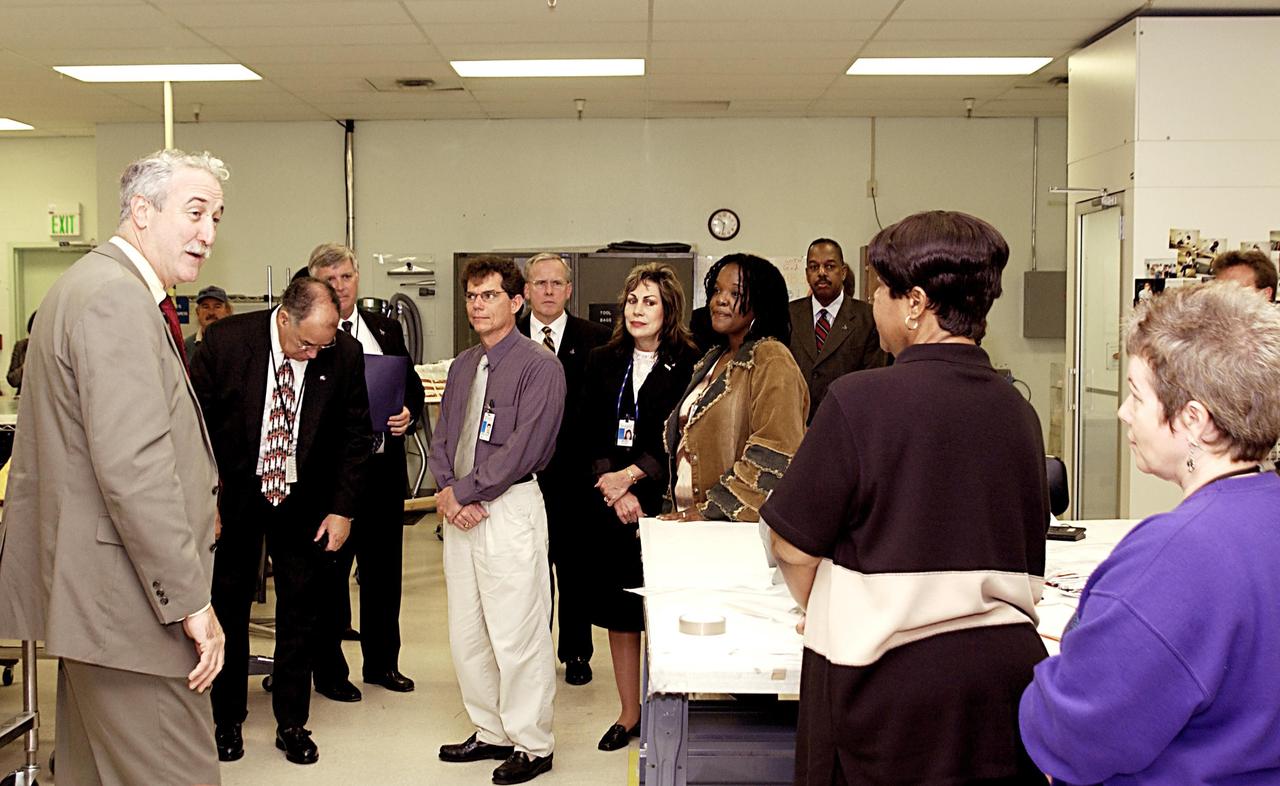
KENNEDY SPACE CENTER, FLA. -- NASA Administrator Sean O'Keefe (left) speaks to workers in the Thermal Protection System Facility. O'Keefe is visiting the site to learn more about the TPS products and process in protecting orbiters from the intense heat of launch and re-entry. TPS tiles have been discussed in the investigation into the Columbia tragedy that destroyed the orbiter and claimed the lives of seven astronauts.
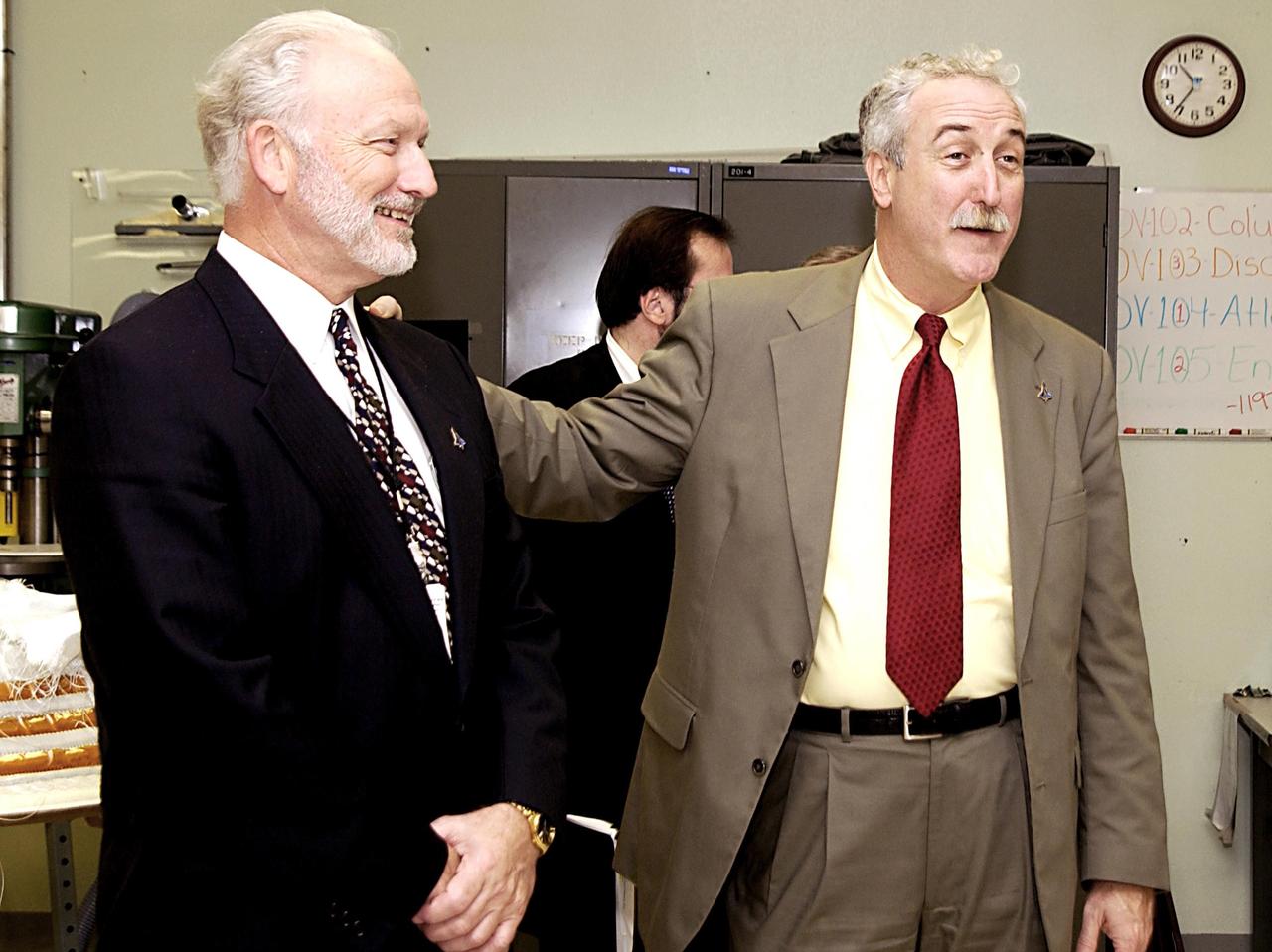
KENNEDY SPACE CENTER, FLA. -- NASA Administrator Sean O'Keefe (right) visits the Thermal Protection System Facility. At left is Chuck Fontana, associate program manager, Integrated Logistics. O'Keefe is visiting the site to learn more about the TPS products and process in protecting orbiters from the intense heat of launch and re-entry. TPS tiles have been discussed in the investigation into the Columbia tragedy that destroyed the orbiter and claimed the lives of seven astronauts..
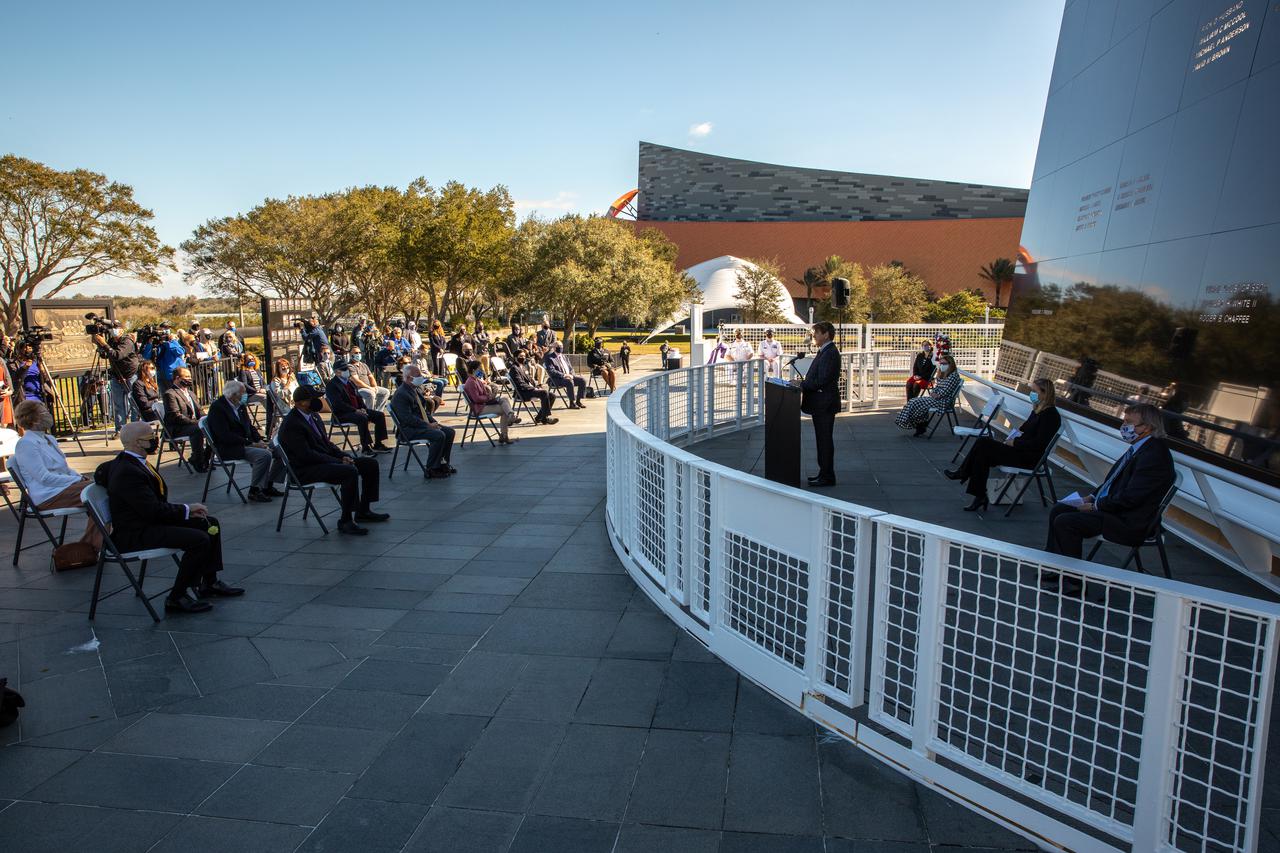
The crews of Apollo 1 and space shuttles Challenger and Columbia, as well as other fallen astronauts who lost their lives in the name of space exploration and discovery, are honored by NASA Kennedy Space Center employees and guests with a ceremony at the Kennedy Visitor Complex’s Space Mirror Memorial on Jan. 28, 2021. The date marked the 35th anniversary of the Challenger tragedy. NASA centers throughout the country participate in the agency’s annual Day of Remembrance memorial event.
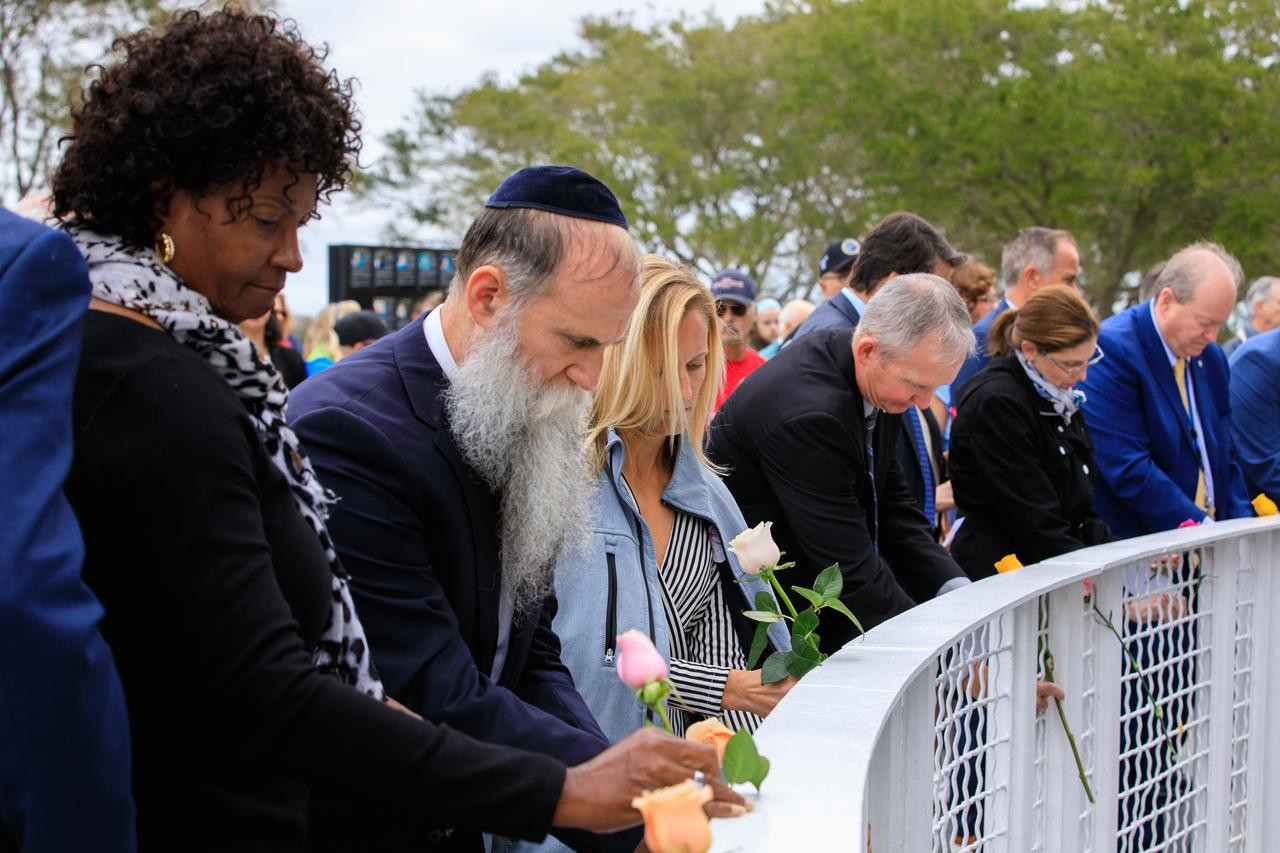
Kennedy Space Center workers and guests place flowers at the Space Mirror Memorial at the Kennedy Space Center Visitor Complex in Florida during the Day of Remembrance on Jan. 26, 2023. The event honored the crews of Apollo 1 and space shuttles Challenger and Columbia, as well as other astronauts who lost their lives in the pursuit of spaceflight. This year marks the 20th anniversary of the Columbia tragedy. This year’s ceremony was hosted by the Astronauts Memorial Foundation, which was founded after the shuttle Challenger accident in 1986 to honor the sacrifices of fallen astronauts each year.
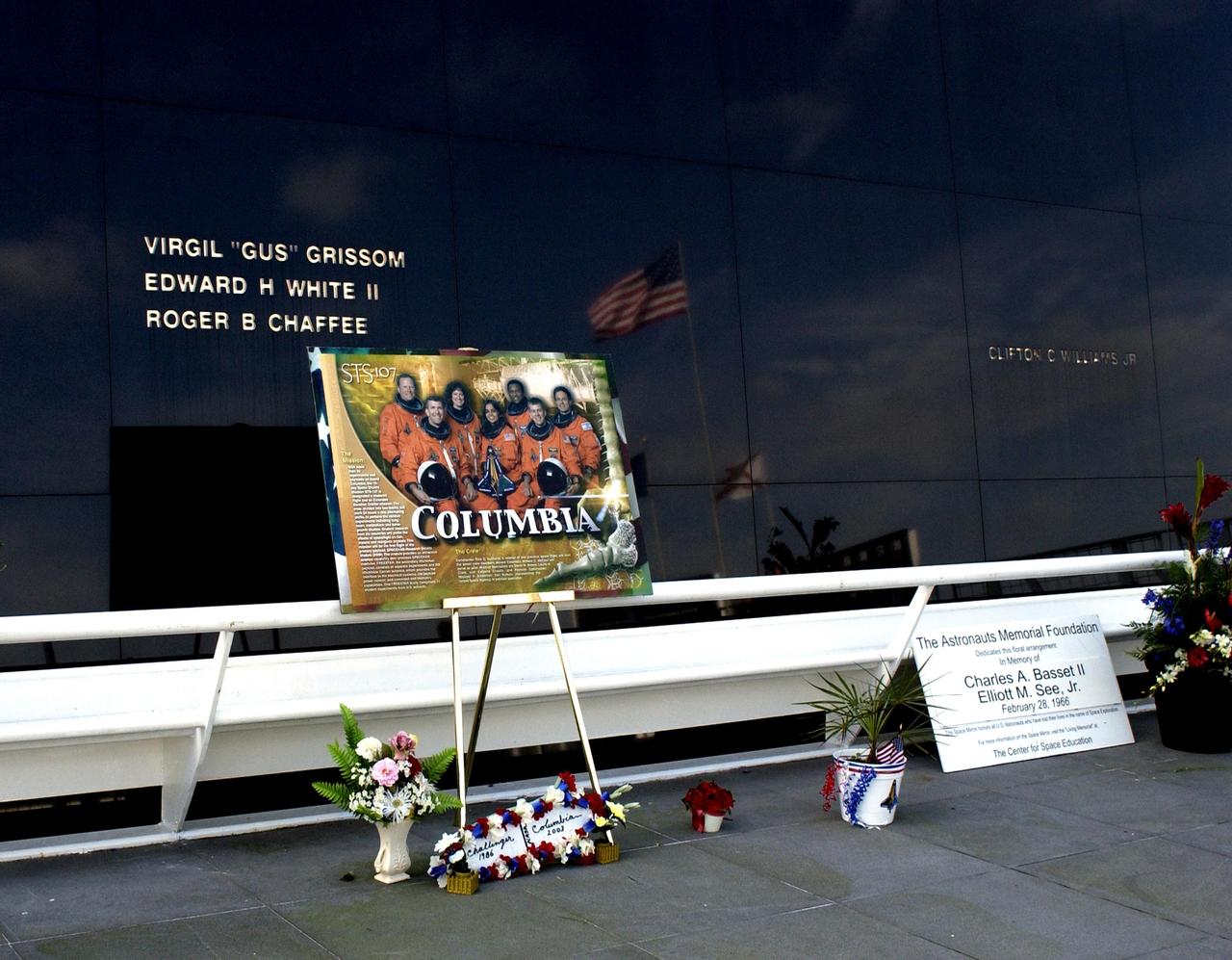
KENNEDY SPACE CENTER, FLA. - A long view of the Astronaut Memorial Space Mirror at the KSC Visitor Complex. Flowers have been left by the public in tribute to the fallen crew of the Columbia tragedy, lost in an explosion Feb. 1, 2003, as they were returning to Earth from mission STS-107. The memorial is a national tribute to 17 American astronauts who previously gave their lives to the quest to explore space.
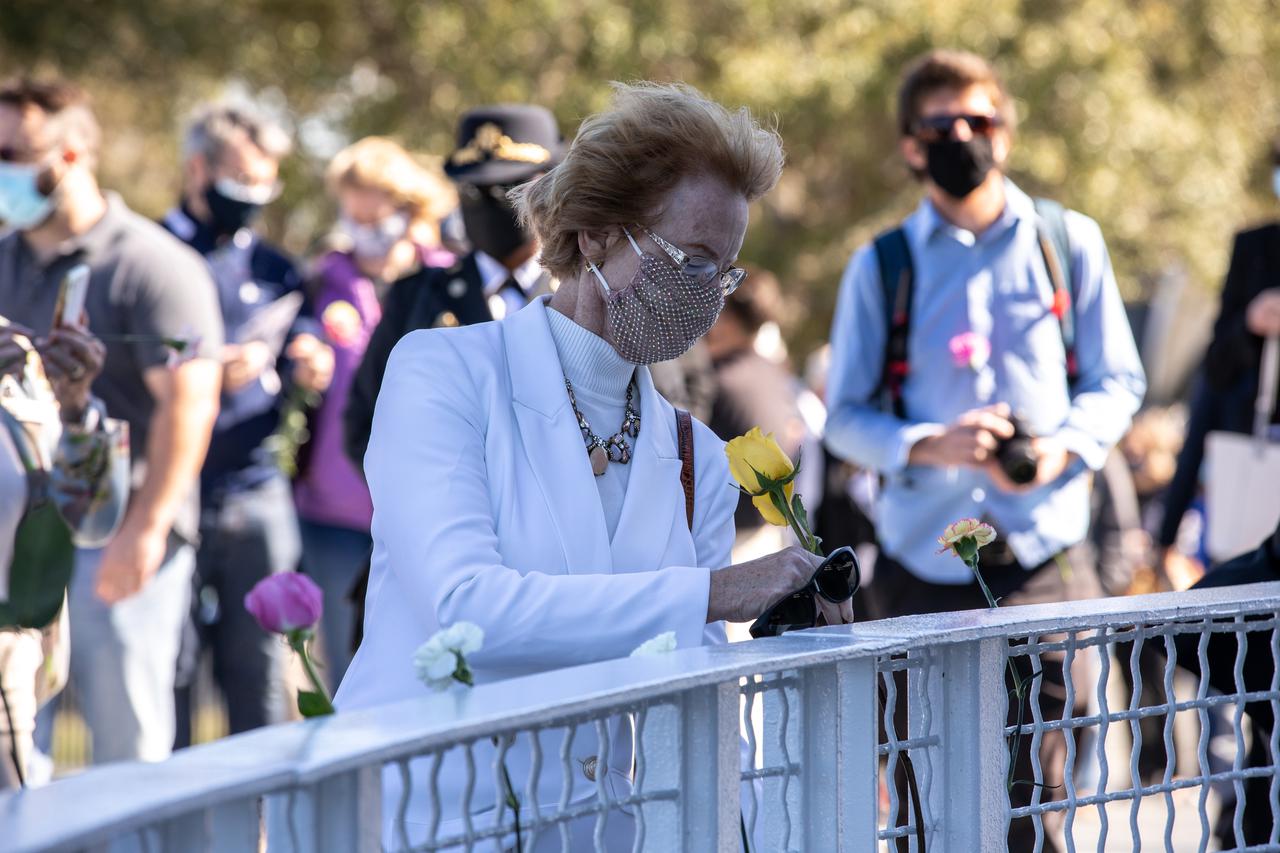
The crews of Apollo 1 and space shuttles Challenger and Columbia, as well as other fallen astronauts who lost their lives in the name of space exploration and discovery, are honored by NASA Kennedy Space Center employees and guests with a ceremony at the Kennedy Visitor Complex’s Space Mirror Memorial on Jan. 28, 2021. The date marked the 35th anniversary of the Challenger tragedy. NASA centers throughout the country participate in the agency’s annual Day of Remembrance memorial event.
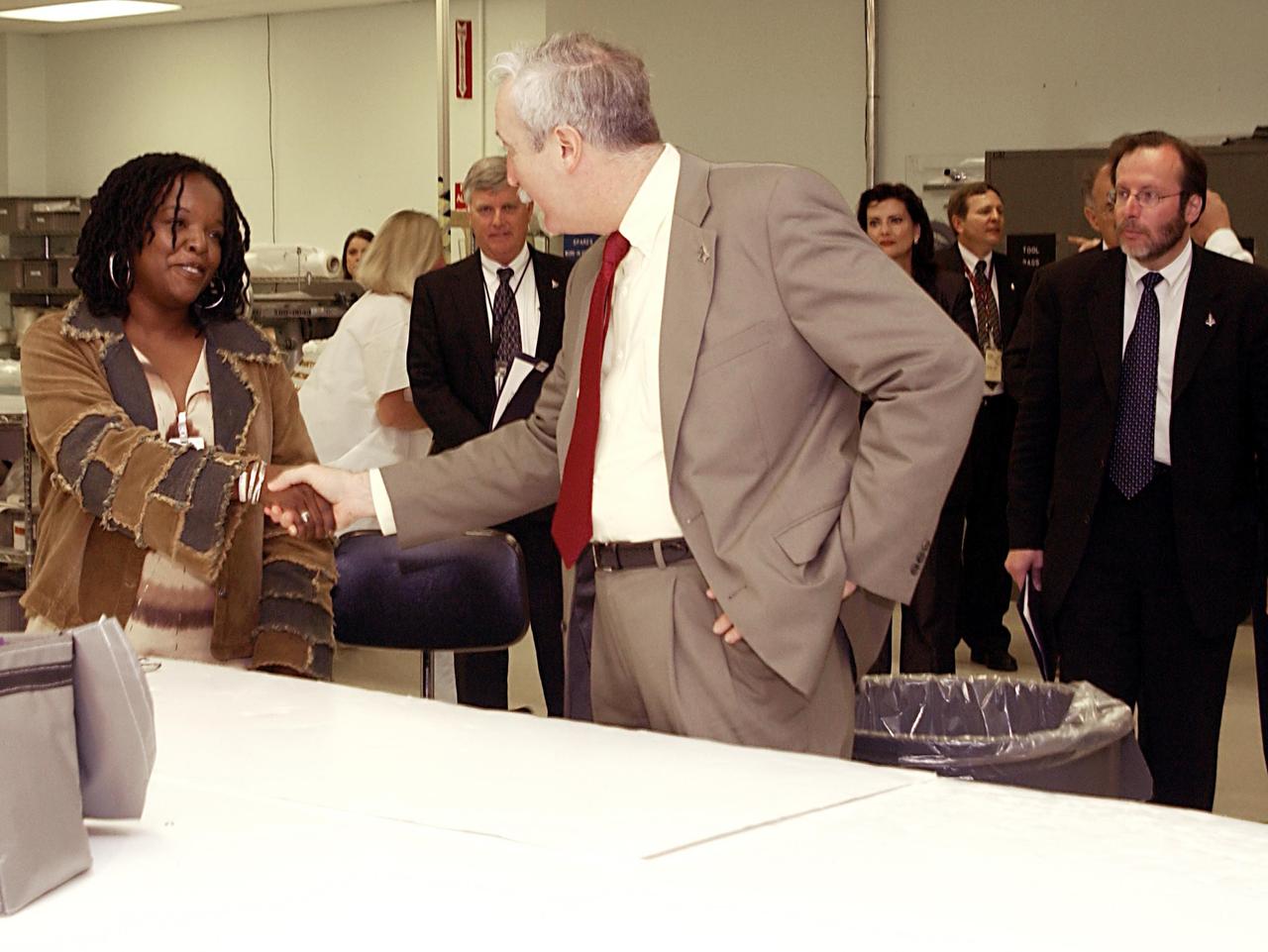
KENNEDY SPACE CENTER, FLA. -- NASA Administrator Sean O'Keefe (center) greets Brenda Blackmon, a worker in the Thermal Protection System Facility. O'Keefe is visiting the site to learn more about the TPS products and process in protecting orbiters from the intense heat of launch and re-entry. TPS tiles have been discussed in the investigation into the Columbia tragedy that destroyed the orbiter and claimed the lives of seven astronauts.
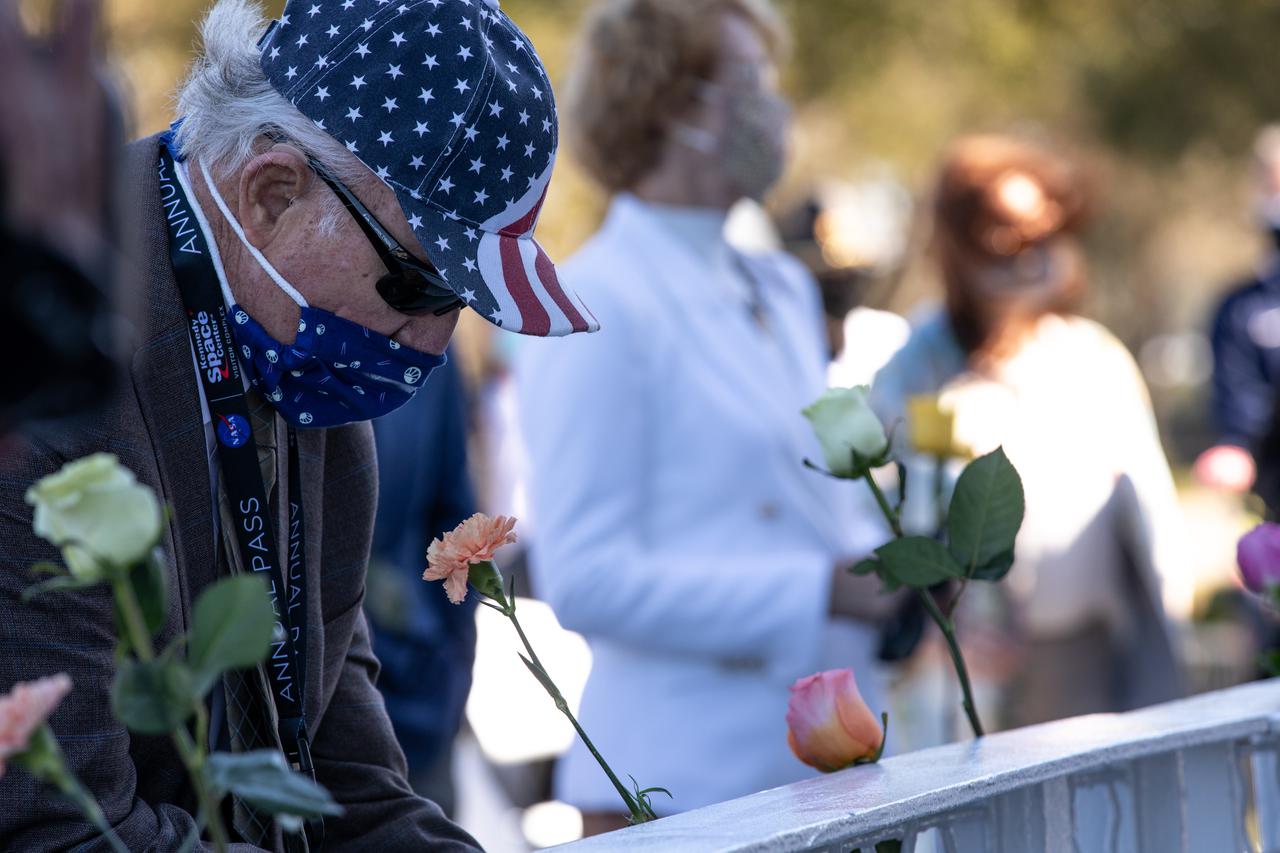
The crews of Apollo 1 and space shuttles Challenger and Columbia, as well as other fallen astronauts who lost their lives in the name of space exploration and discovery, are honored by NASA Kennedy Space Center employees and guests with a ceremony at the Kennedy Visitor Complex’s Space Mirror Memorial on Jan. 28, 2021. The date marked the 35th anniversary of the Challenger tragedy. NASA centers throughout the country participate in the agency’s annual Day of Remembrance memorial event.
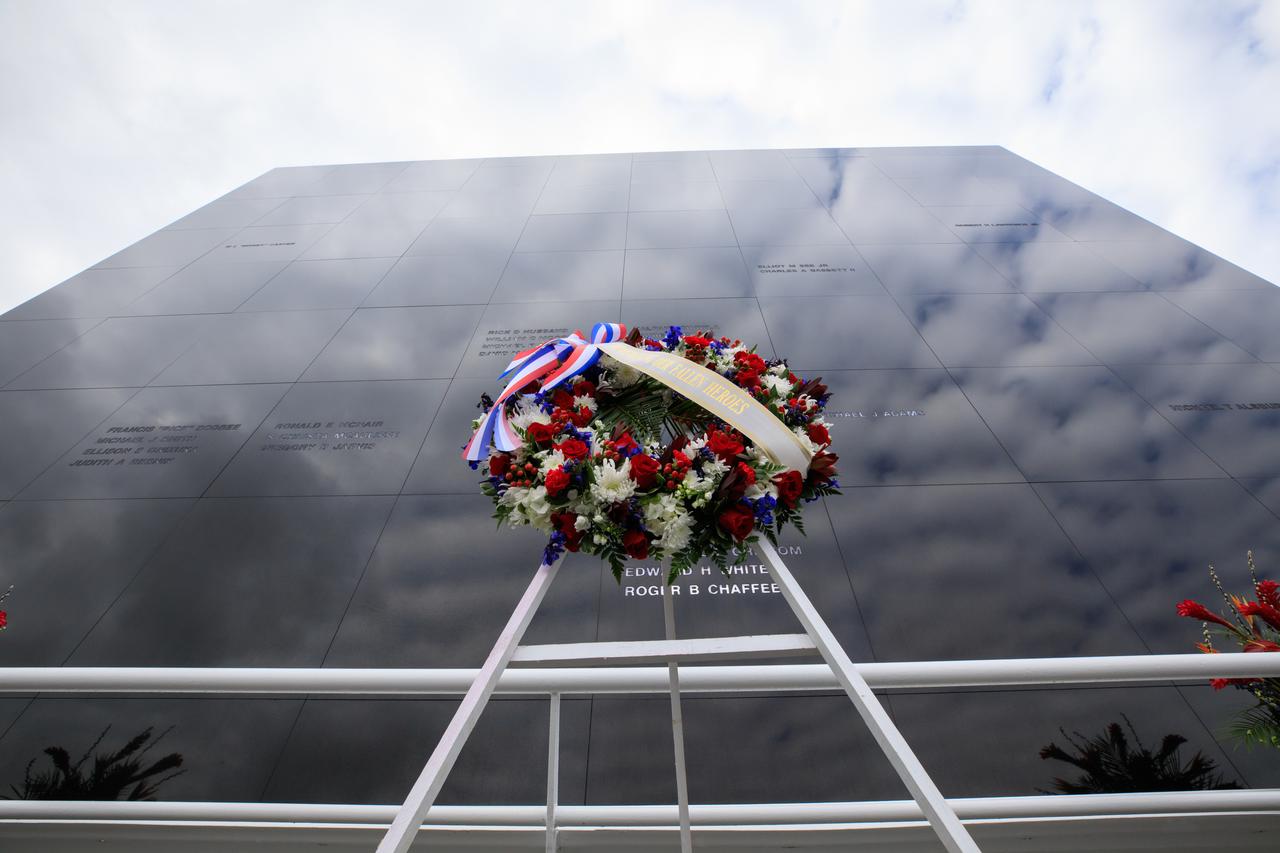
A wreath has been placed in front of the Space Mirror Memorial during the Day of Remembrance ceremony at the Kennedy Space Center Visitor Complex in Florida on Jan. 26, 2023. The event honored the crews of Apollo 1 and space shuttles Challenger and Columbia, as well as other astronauts who lost their lives in the pursuit of spaceflight. This year marks the 20th anniversary of the Columbia tragedy. This year’s ceremony was hosted by the Astronauts Memorial Foundation, which was founded after the shuttle Challenger accident in 1986 to honor the sacrifices of fallen astronauts each year.
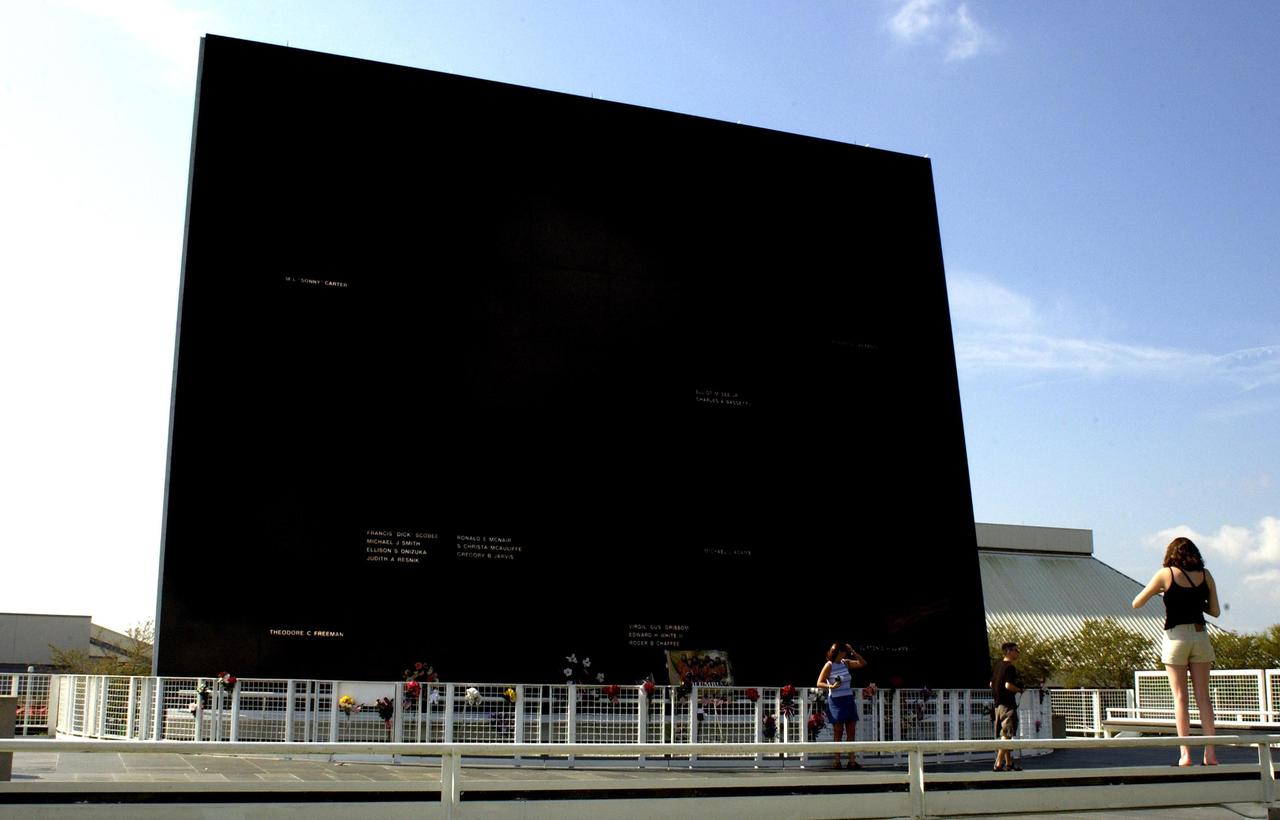
KENNEDY SPACE CENTER, FLA. - The Astronaut Memorial Space Mirror at the KSC Visitor Complex. The memorial is a national tribute to 17 American astronauts who previously gave their lives to the quest to explore space. Flowers have been left by the public in tribute to the fallen crew of the Columbia tragedy, lost in an explosion Feb. 1, 2003, as they were returning to Earth from mission STS-107.
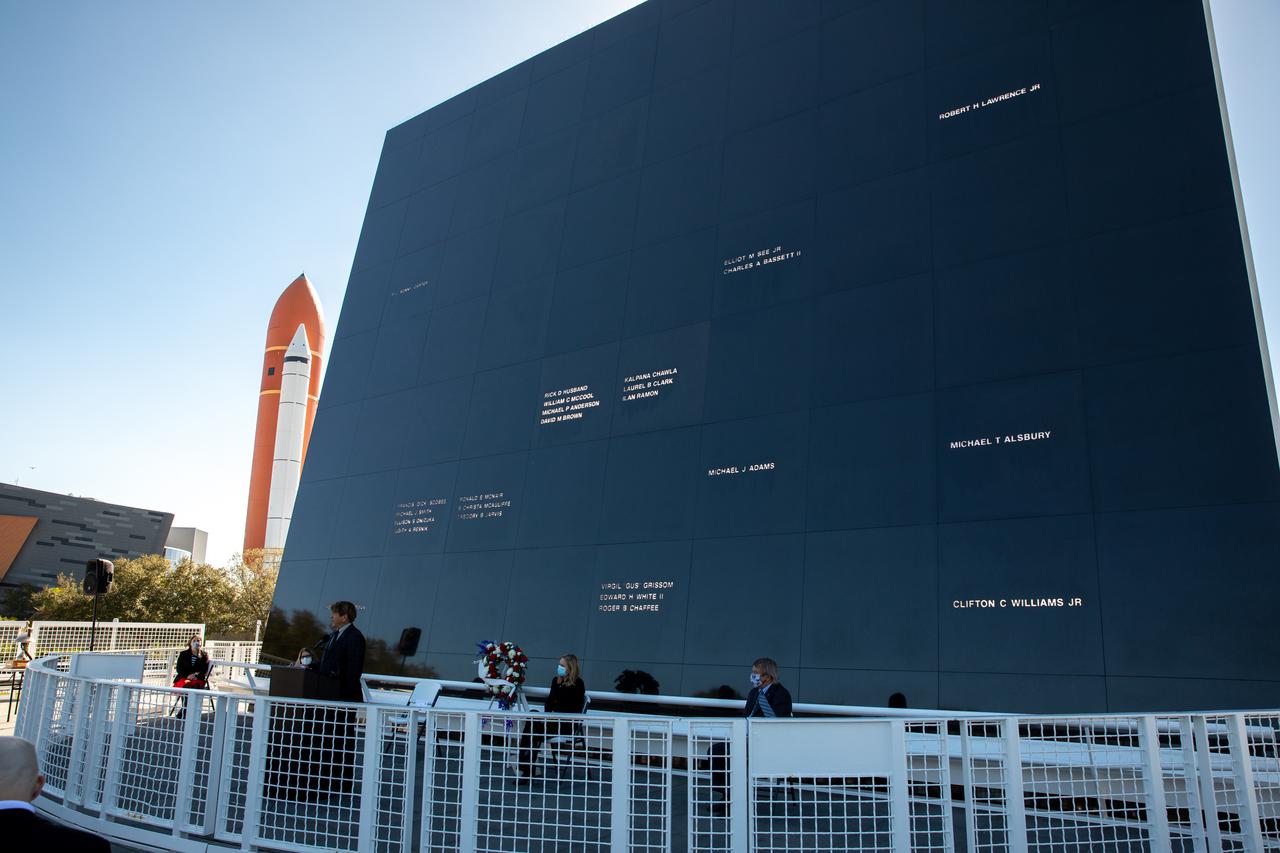
The crews of Apollo 1 and space shuttles Challenger and Columbia, as well as other fallen astronauts who lost their lives in the name of space exploration and discovery, are honored by NASA Kennedy Space Center employees and guests with a ceremony at the Kennedy Visitor Complex’s Space Mirror Memorial on Jan. 28, 2021. The date marked the 35th anniversary of the Challenger tragedy. NASA centers throughout the country participate in the agency’s annual Day of Remembrance memorial event.
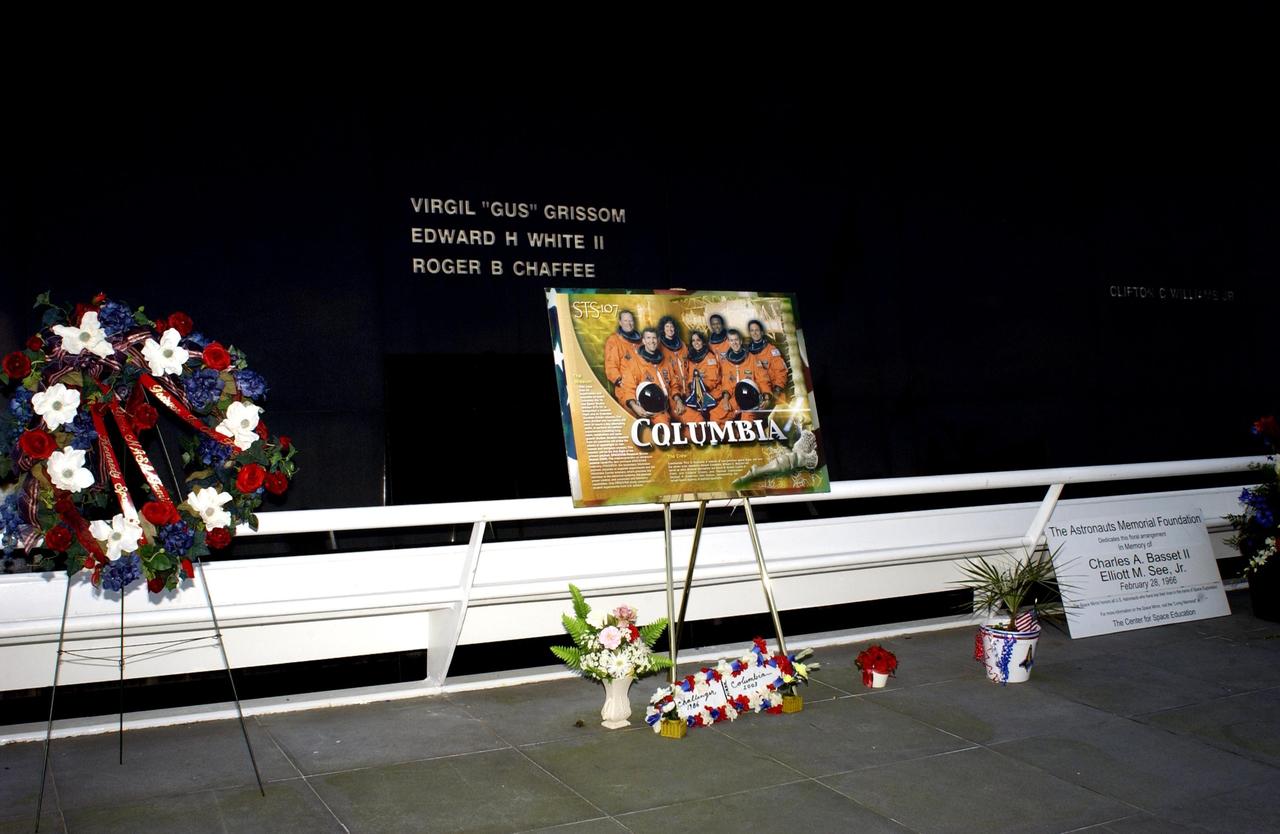
KENNEDY SPACE CENTER, FLA. - A tribute to the fallen crew of the Columbia tragedy rests below the Astronaut Memorial Space Mirror at the KSC Visitor Complex. The crew were lost in an explosion Feb. 1, 2003, as they were returning to Earth from mission STS-107. The tribute links to the loss of Challenger and her crew in 1986. The Space Mirror is a national tribute to 17 American astronauts who previously gave their lives to the quest to explore space.
The crews of Apollo 1 and space shuttles Challenger and Columbia, as well as other fallen astronauts who lost their lives in the name of space exploration and discovery, are honored by NASA Kennedy Space Center employees and guests with a ceremony at the Kennedy Visitor Complex’s Space Mirror Memorial on Jan. 28, 2021. The date marked the 35th anniversary of the Challenger tragedy. NASA centers throughout the country participate in the agency’s annual Day of Remembrance memorial event.
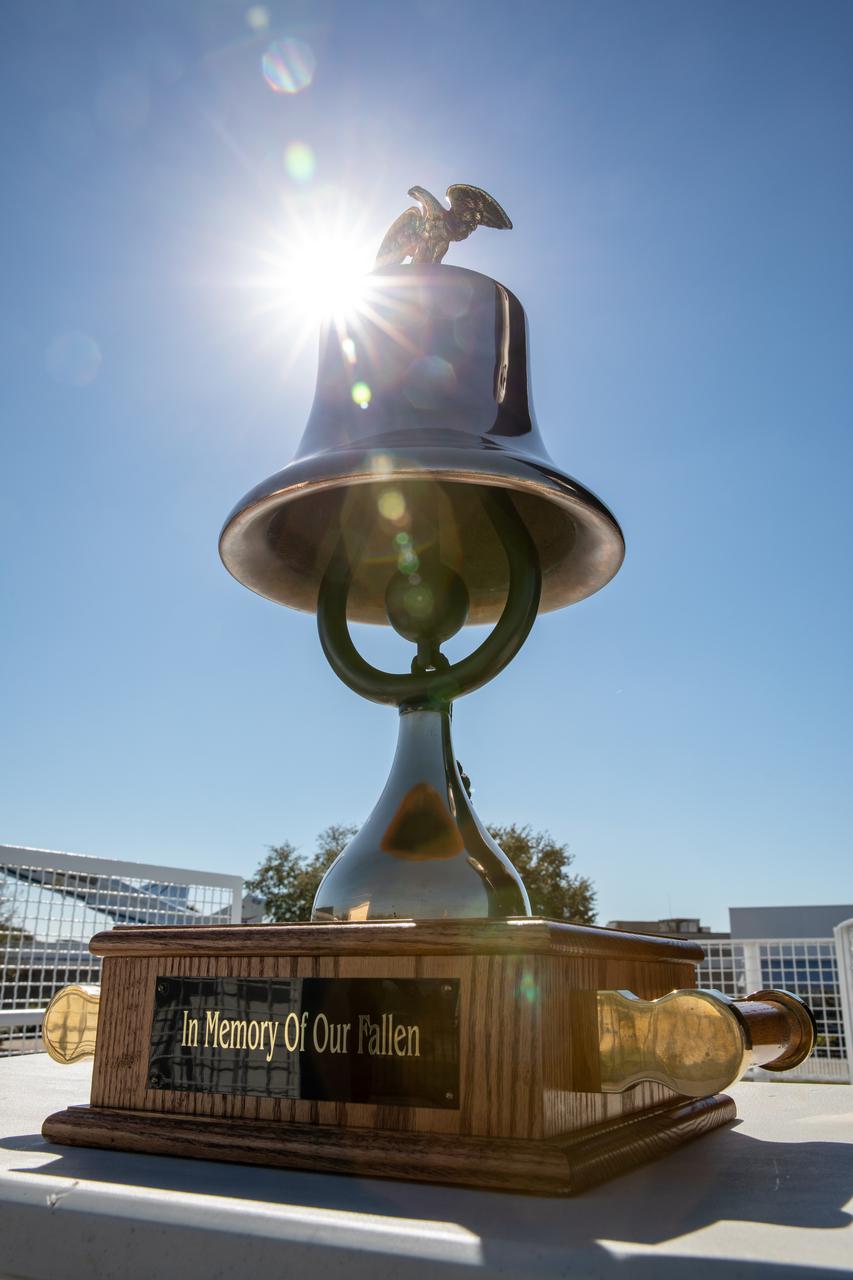
The crews of Apollo 1 and space shuttles Challenger and Columbia, as well as other fallen astronauts who lost their lives in the name of space exploration and discovery, are honored by NASA Kennedy Space Center employees and guests with a ceremony at the Kennedy Visitor Complex’s Space Mirror Memorial on Jan. 28, 2021. The date marked the 35th anniversary of the Challenger tragedy. NASA centers throughout the country participate in the agency’s annual Day of Remembrance memorial event.
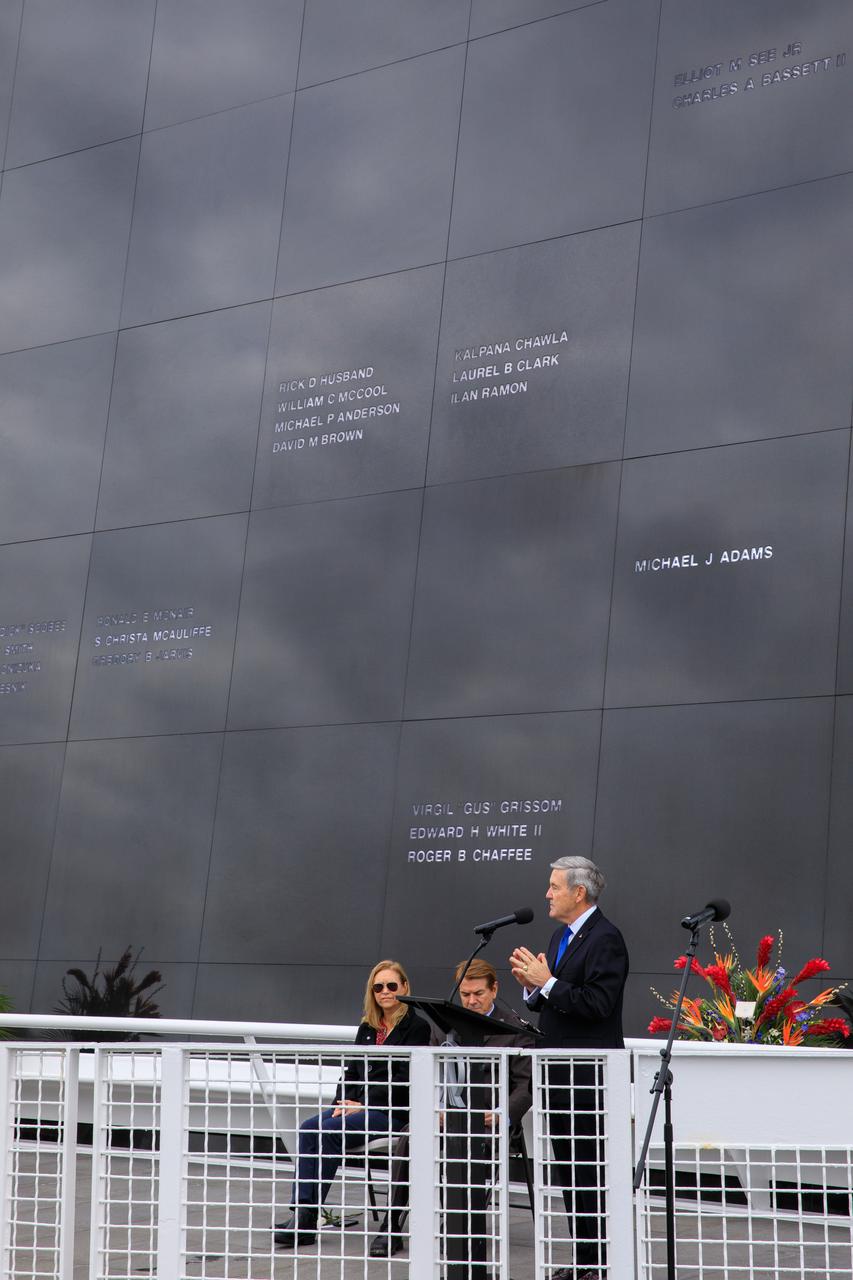
NASA Associate Administrator Bob Cabana, makes remarks during the Day of Remembrance on Jan. 26, 2023, at nearby Kennedy Space Center Visitor Complex in Florida. The event honored the crews of Apollo 1 and space shuttles Challenger and Columbia, as well as other astronauts who lost their lives in the pursuit of spaceflight. This year marks the 20th anniversary of the Columbia tragedy. This year’s ceremony was hosted by the Astronauts Memorial Foundation, which was founded after the shuttle Challenger accident in 1986 to honor the sacrifices of fallen astronauts each year.
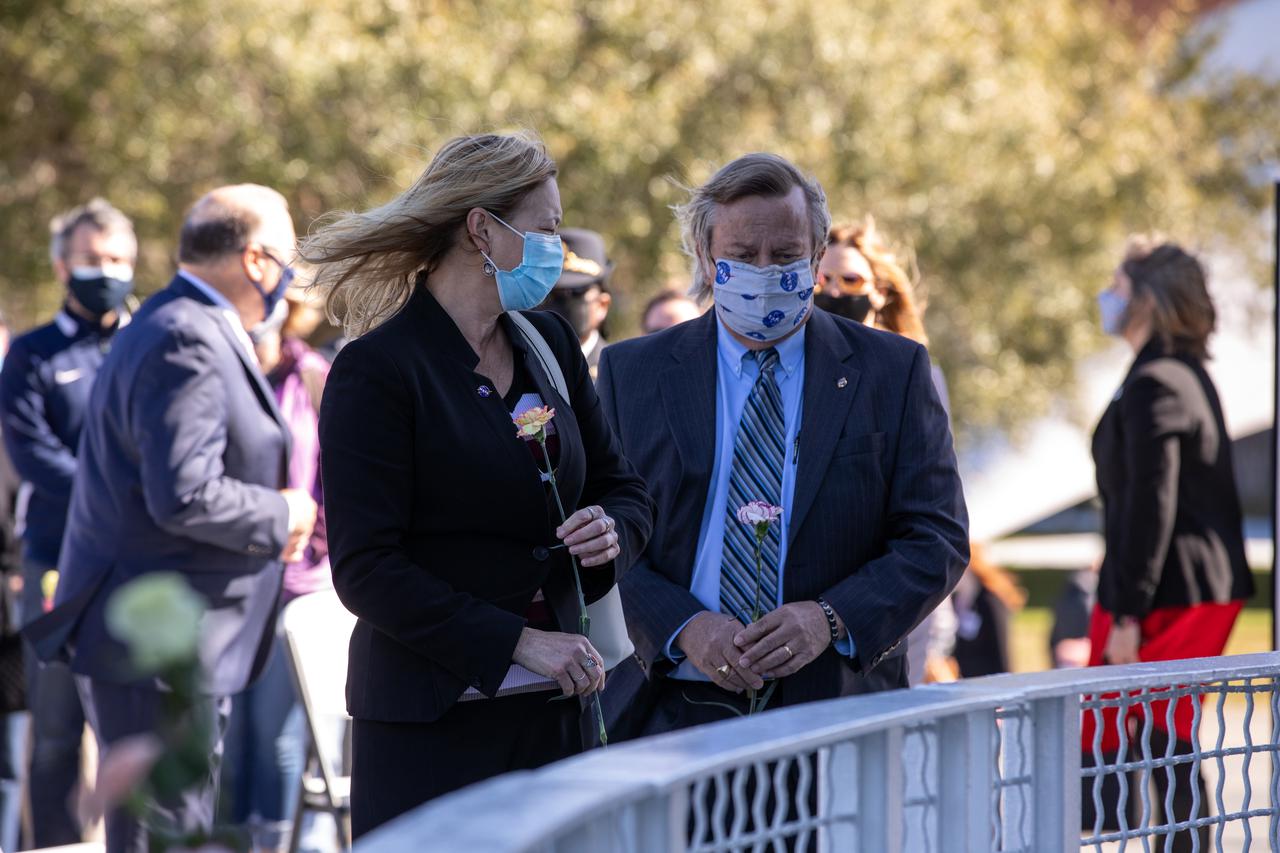
The crews of Apollo 1 and space shuttles Challenger and Columbia, as well as other fallen astronauts who lost their lives in the name of space exploration and discovery, are honored by NASA Kennedy Space Center employees and guests with a ceremony at the Kennedy Visitor Complex’s Space Mirror Memorial on Jan. 28, 2021. The date marked the 35th anniversary of the Challenger tragedy. NASA centers throughout the country participate in the agency’s annual Day of Remembrance memorial event.
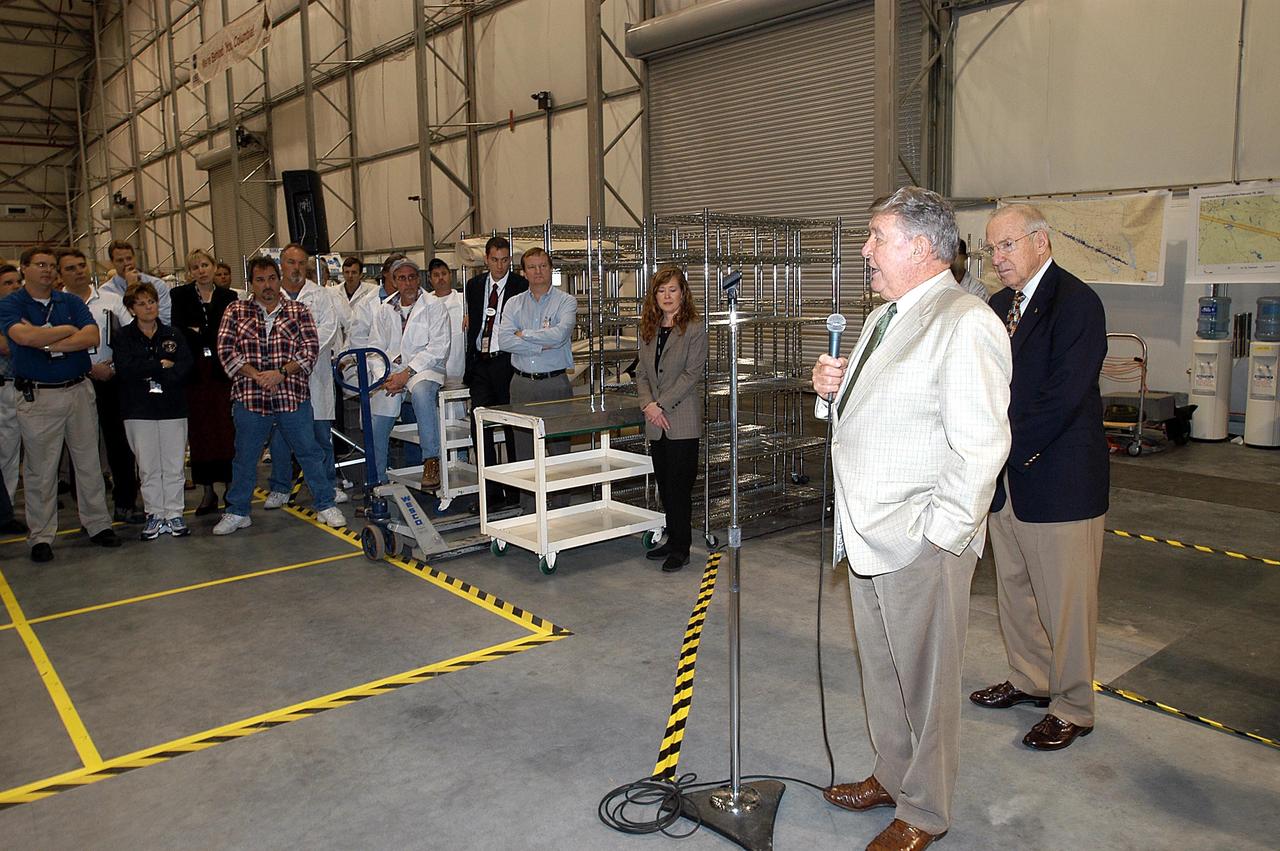
KENNEDY SPACE CENTER, FLA. -In the RLV Hangar, former astronauts Wally Schirra (right, with microphone) and Jim Lovell (far right) talk to employees and offer encouragement to help get the space program "back on its feet." The two visited several sites around the Center, encouraging workers to help get the space program "back on its feet." The RLV Hangar is where Columbia debris is being collected and examined as part of the investigation into the tragedy that claimed the orbiter and lives of seven astronauts returning from mission STS-107.
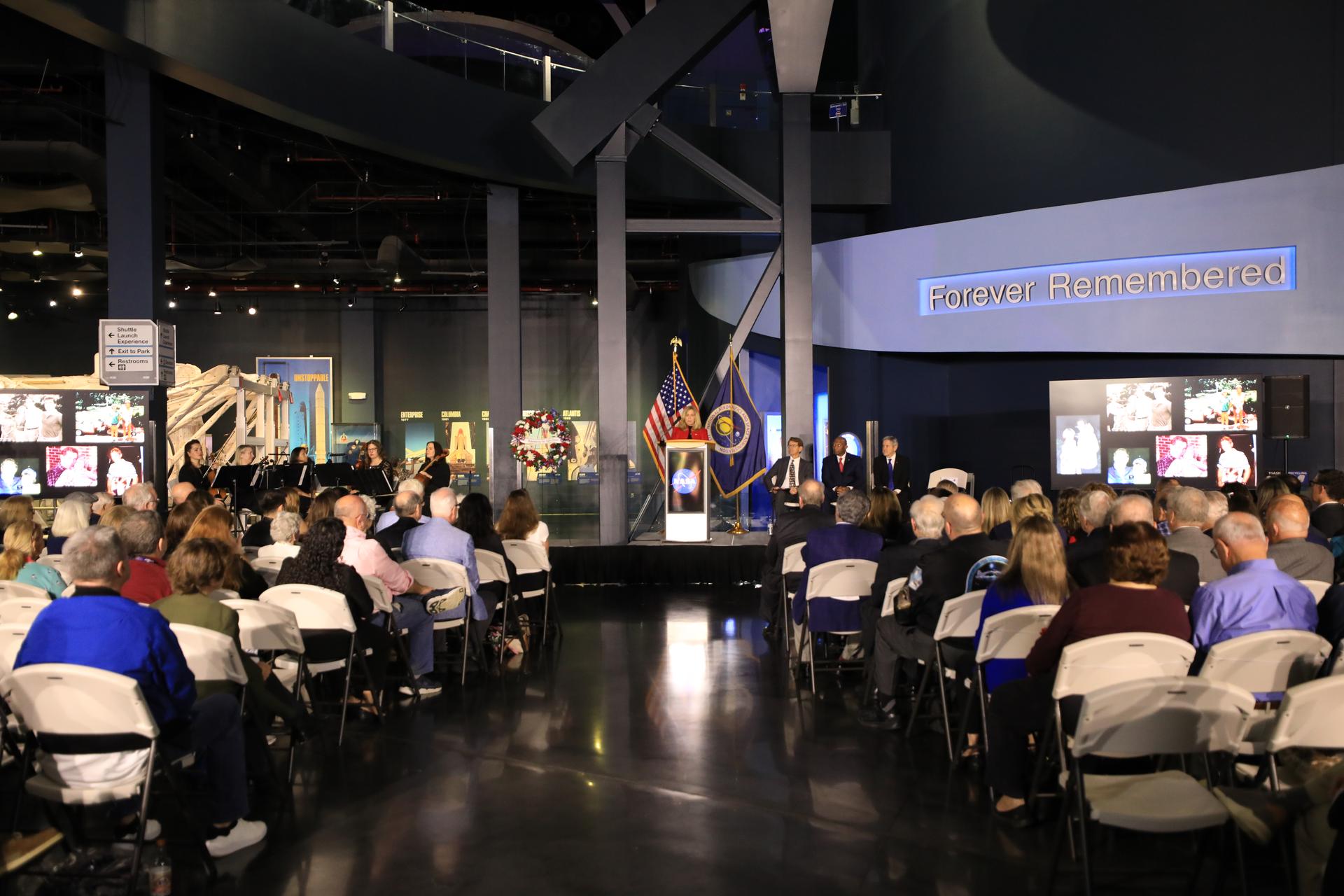
Alison Smith Balch, daughter of NASA astronaut Michael J. Smith, pilot of Challenger STS 51-L, speaks during NASA’s Day of Remembrance on Thursday, Jan. 22, 2026, at the Kennedy Space Center Visitor Complex in Florida. The annual event commemorates the crews of Apollo 1 and the space shuttles Challenger and Columbia. Marking the 40th anniversary of the Challenger tragedy, NASA Kennedy and the Astronauts Memorial Foundation, which was founded after the shuttle Challenger accident in 1986 to honor the sacrifices of fallen astronauts, hosted this year’s ceremony.
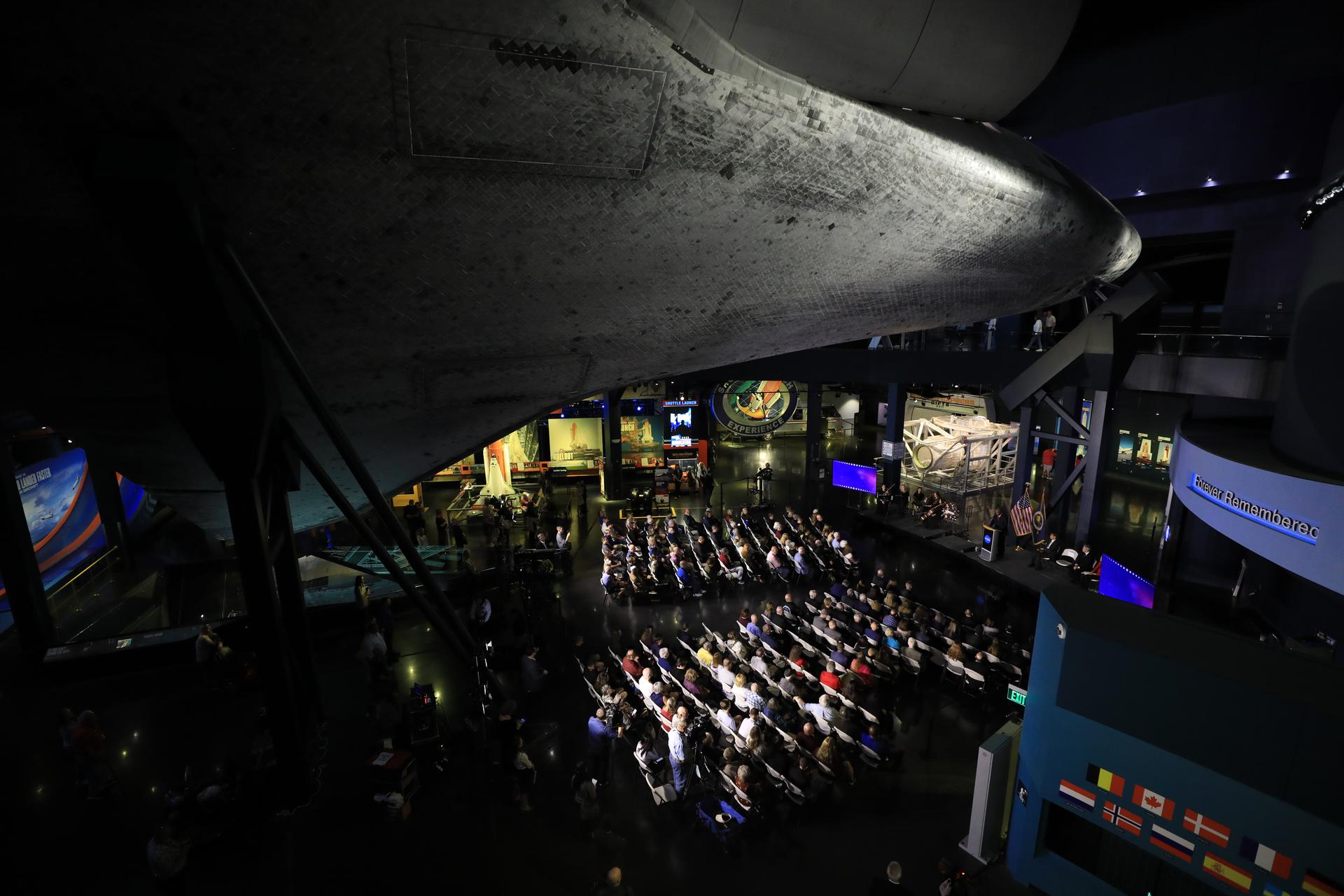
Guests gather to commemorate NASA’s Day of Remembrance on Thursday, Jan. 22, 2026, at the Kennedy Space Center Visitor Complex in Florida. The annual event honors the crews of Apollo 1 and space shuttles Challenger and Columbia, as well as other astronauts who lost their lives in the pursuit of spaceflight. Marking the 40th anniversary of the Challenger tragedy, NASA Kennedy and the Astronauts Memorial Foundation, which was founded after the shuttle Challenger accident in 1986 to honor the sacrifices of fallen astronauts, hosted this year’s ceremony.
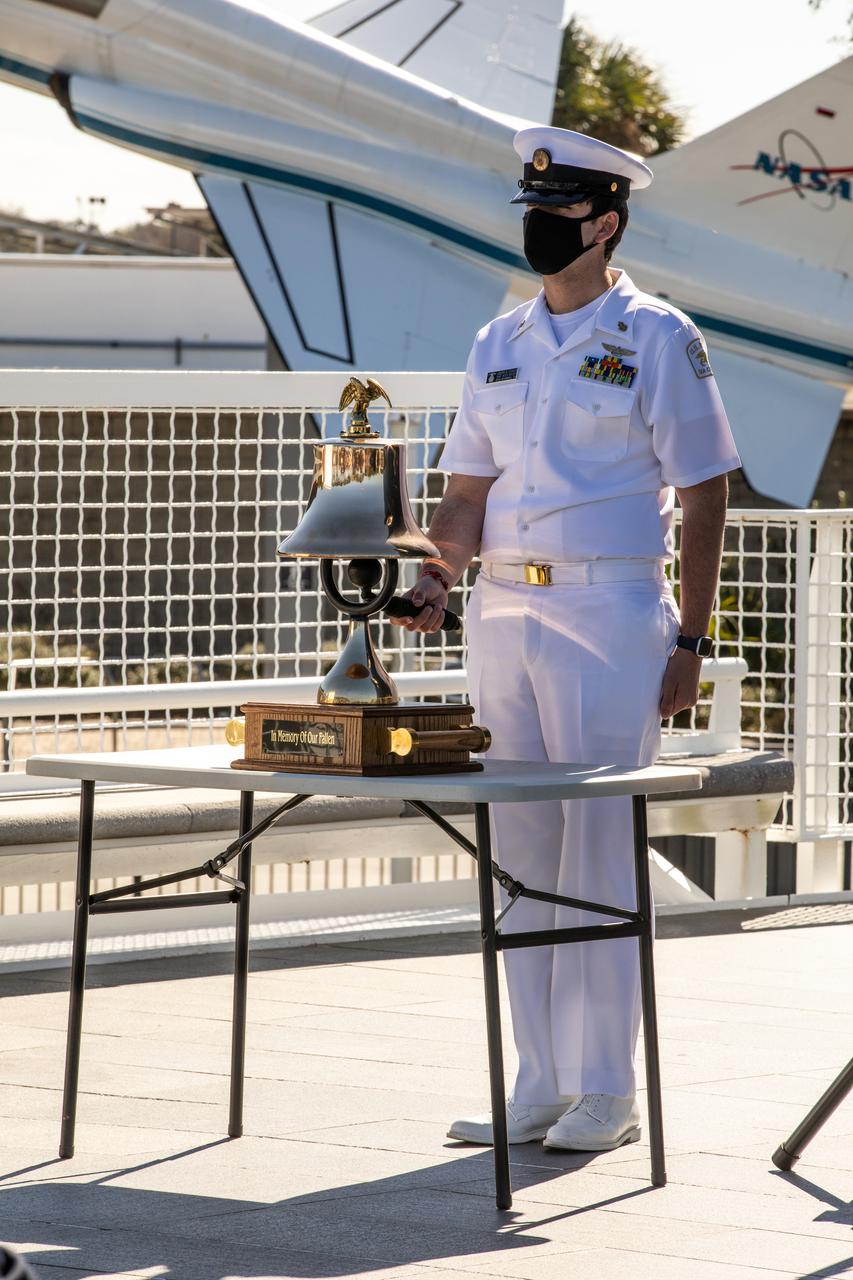
The crews of Apollo 1 and space shuttles Challenger and Columbia, as well as other fallen astronauts who lost their lives in the name of space exploration and discovery, are honored by NASA Kennedy Space Center employees and guests with a ceremony at the Kennedy Visitor Complex’s Space Mirror Memorial on Jan. 28, 2021. The date marked the 35th anniversary of the Challenger tragedy. NASA centers throughout the country participate in the agency’s annual Day of Remembrance memorial event.
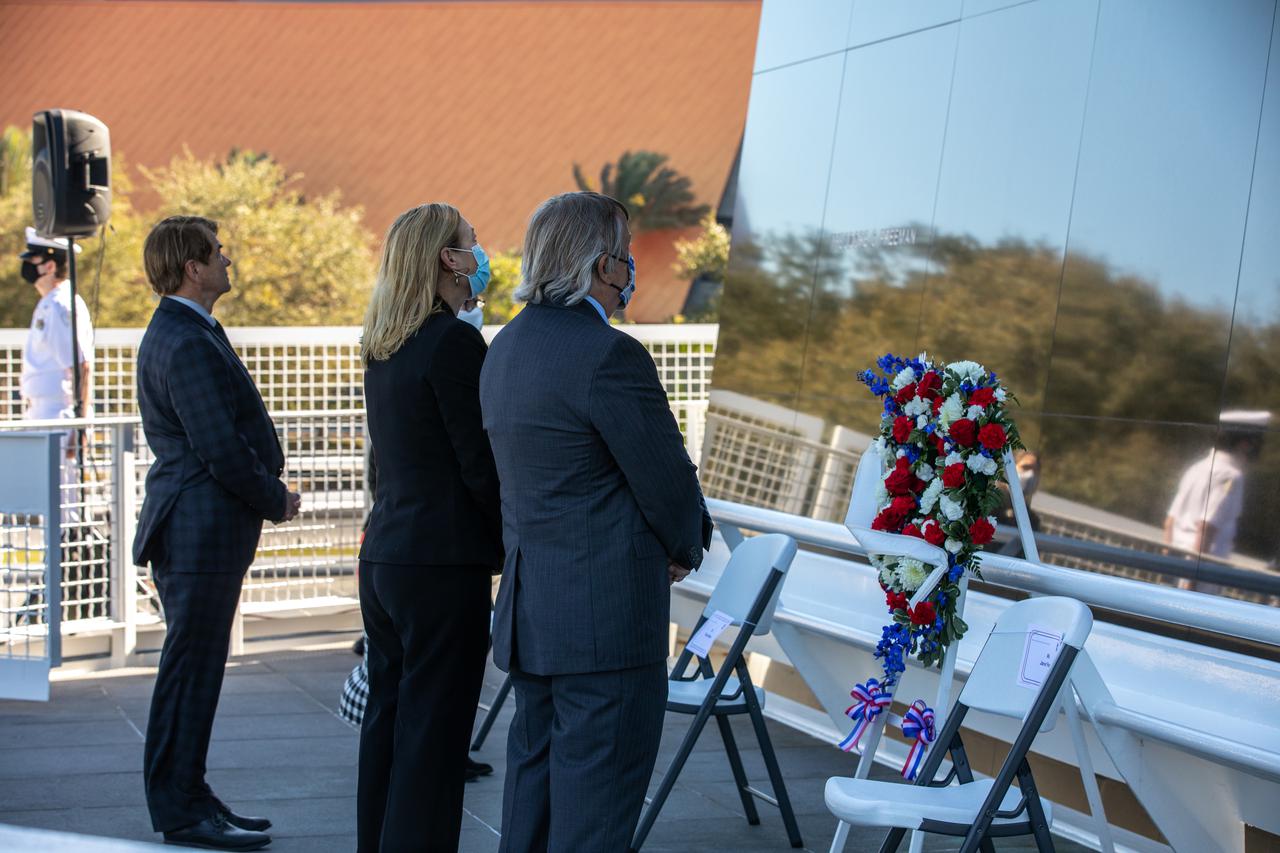
The crews of Apollo 1 and space shuttles Challenger and Columbia, as well as other fallen astronauts who lost their lives in the name of space exploration and discovery, are honored by NASA Kennedy Space Center employees and guests with a ceremony at the Kennedy Visitor Complex’s Space Mirror Memorial on Jan. 28, 2021. The date marked the 35th anniversary of the Challenger tragedy. NASA centers throughout the country participate in the agency’s annual Day of Remembrance memorial event.
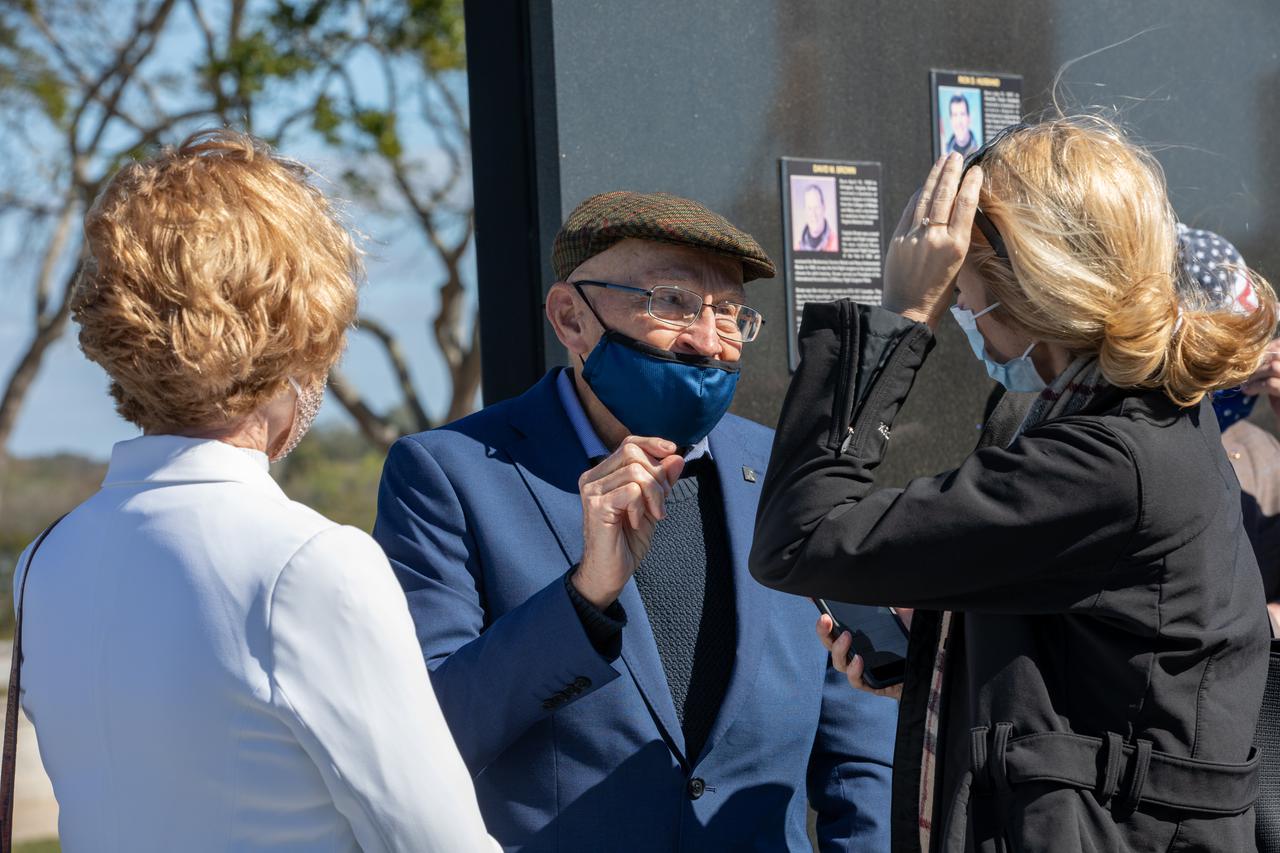
The crews of Apollo 1 and space shuttles Challenger and Columbia, as well as other fallen astronauts who lost their lives in the name of space exploration and discovery, are honored by NASA Kennedy Space Center employees and guests with a ceremony at the Kennedy Visitor Complex’s Space Mirror Memorial on Jan. 28, 2021. The date marked the 35th anniversary of the Challenger tragedy. NASA centers throughout the country participate in the agency’s annual Day of Remembrance memorial event.
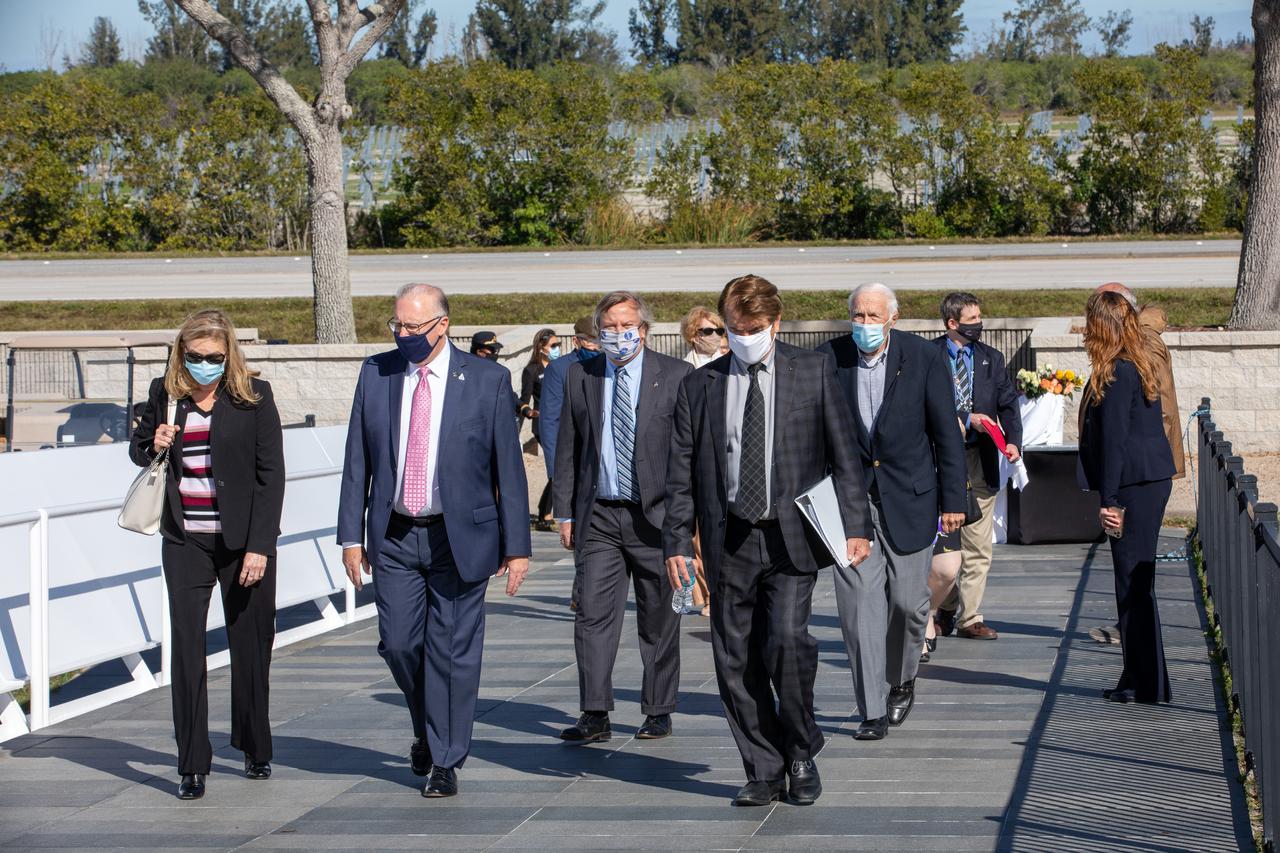
The crews of Apollo 1 and space shuttles Challenger and Columbia, as well as other fallen astronauts who lost their lives in the name of space exploration and discovery, are honored by NASA Kennedy Space Center employees and guests with a ceremony at the Kennedy Visitor Complex’s Space Mirror Memorial on Jan. 28, 2021. The date marked the 35th anniversary of the Challenger tragedy. NASA centers throughout the country participate in the agency’s annual Day of Remembrance memorial event.
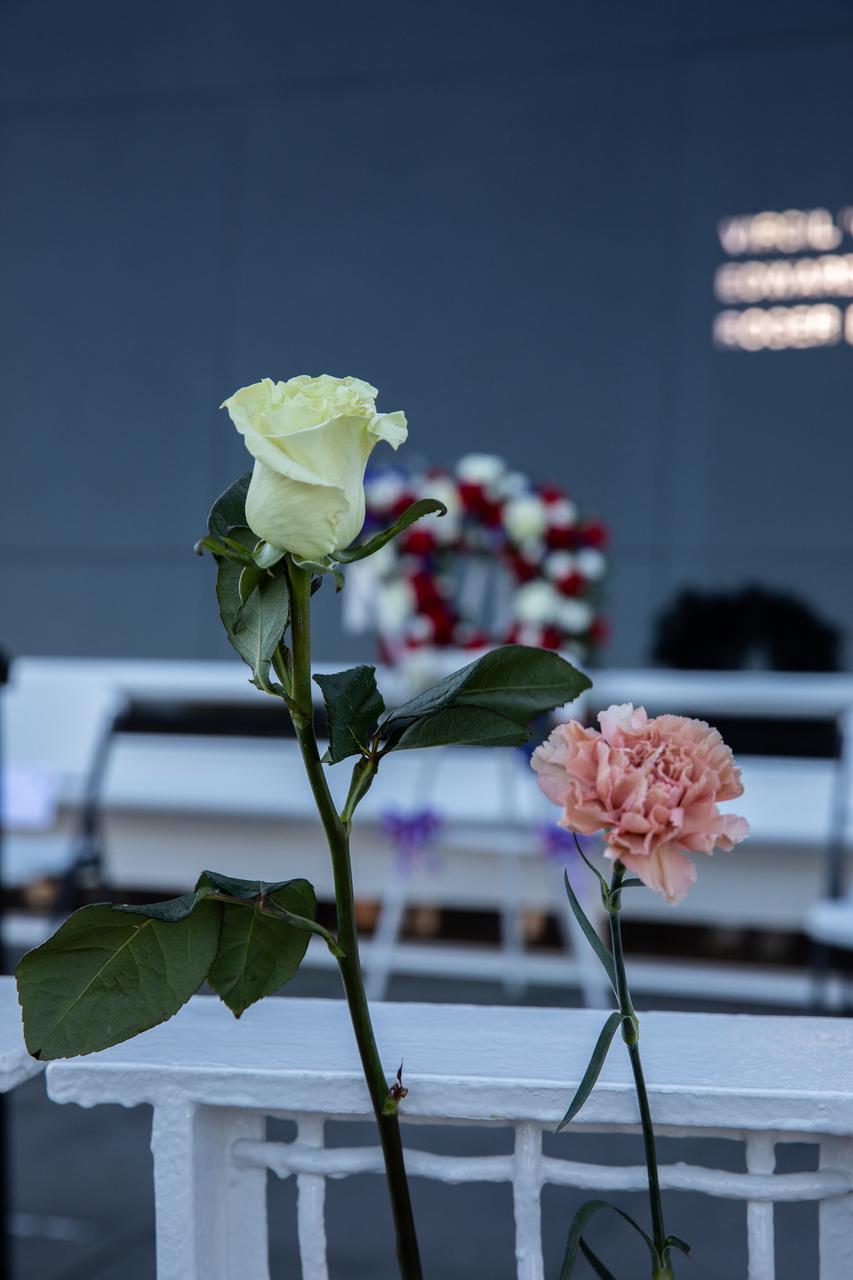
The crews of Apollo 1 and space shuttles Challenger and Columbia, as well as other fallen astronauts who lost their lives in the name of space exploration and discovery, are honored by NASA Kennedy Space Center employees and guests with a ceremony at the Kennedy Visitor Complex’s Space Mirror Memorial on Jan. 28, 2021. The date marked the 35th anniversary of the Challenger tragedy. NASA centers throughout the country participate in the agency’s annual Day of Remembrance memorial event.
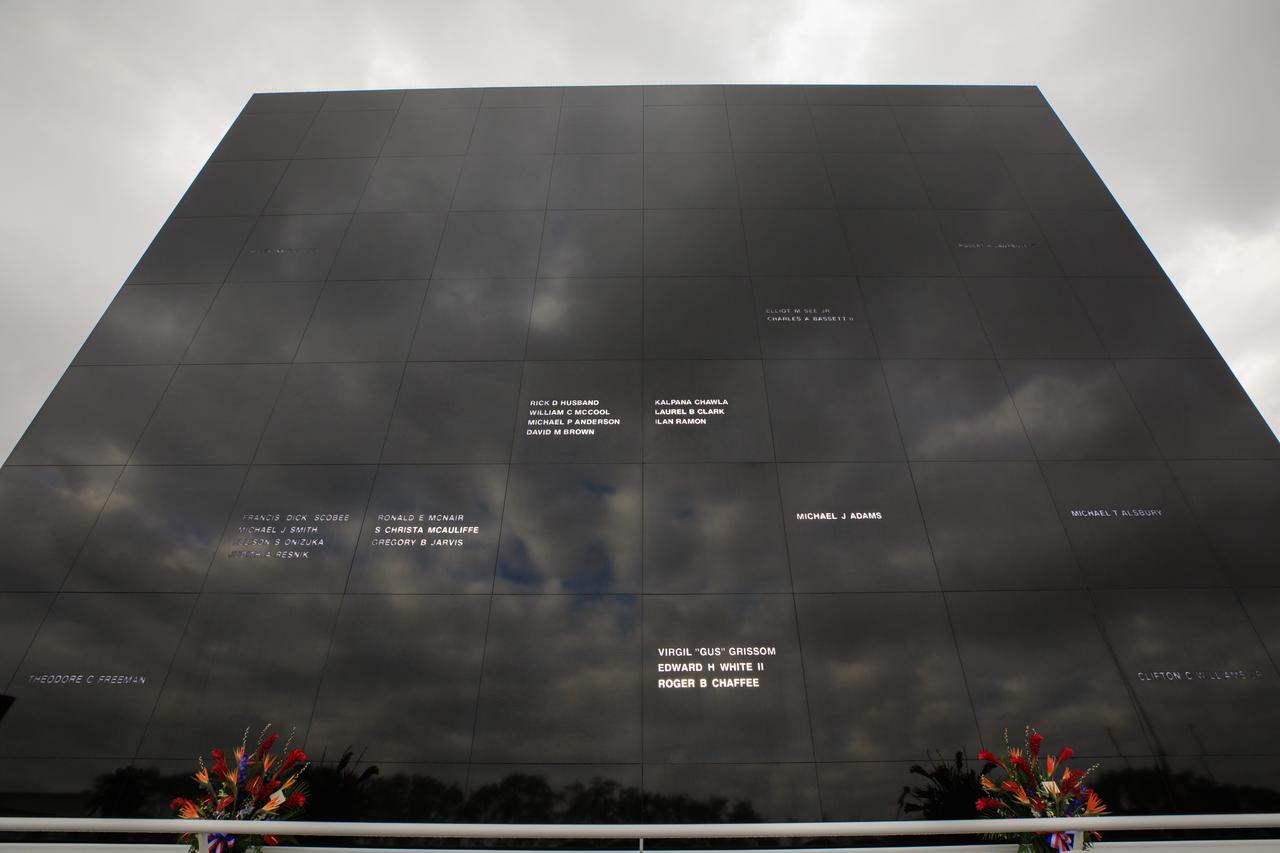
The Space Mirror Memorial is in view before the start of the Day of Remembrance ceremony at the Kennedy Space Center Visitor Complex in Florida on Jan. 26, 2023. The event honored the crews of Apollo 1 and space shuttles Challenger and Columbia, as well as other astronauts who lost their lives in the pursuit of spaceflight. This year marks the 20th anniversary of the Columbia tragedy. This year’s ceremony was hosted by the Astronauts Memorial Foundation, which was founded after the shuttle Challenger accident in 1986 to honor the sacrifices of fallen astronauts each year.

Kennedy Space Center workers and guests placed flowers at the Space Mirror Memorial at the Kennedy Space Center Visitor Complex in Florida during the Day of Remembrance on Jan. 26, 2023. The event honored the crews of Apollo 1 and space shuttles Challenger and Columbia, as well as other astronauts who lost their lives in the pursuit of spaceflight. This year marks the 20th anniversary of the Columbia tragedy. This year’s ceremony was hosted by the Astronauts Memorial Foundation, which was founded after the shuttle Challenger accident in 1986 to honor the sacrifices of fallen astronauts each year.
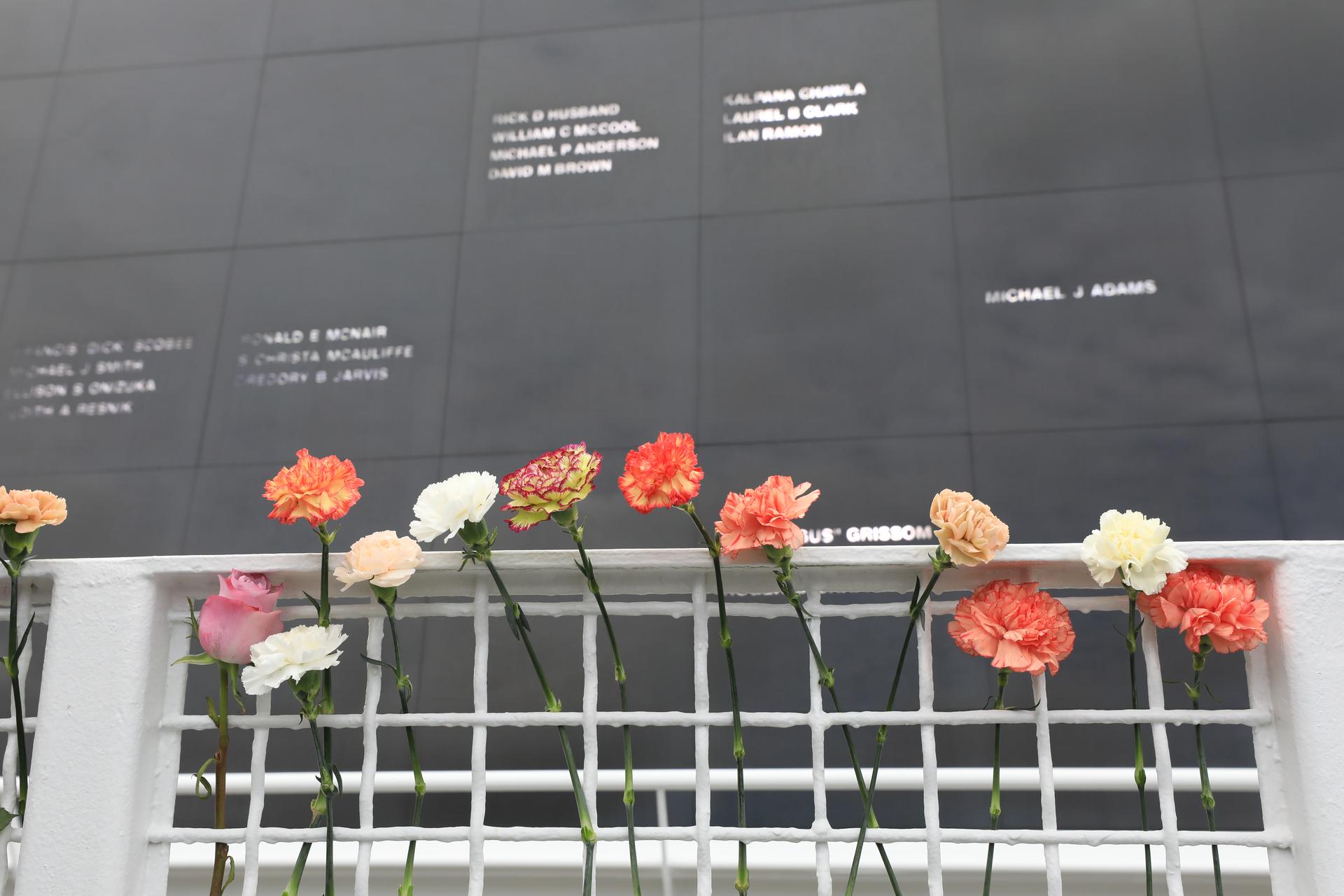
NASA’s Day of Remembrance is marked by flowers placed before the Space Mirror Memorial at the Kennedy Space Center Visitor Complex in Florida on Thursday, Jan. 22, 2026. The mirror was dedicated in 1991 to honor all astronauts who lost their lives on missions or during training. During the Day of Remembrance, NASA centers across the country honor those astronauts who have fallen in the pursuit of space exploration. This year marks the 40th anniversary of the Challenger tragedy.
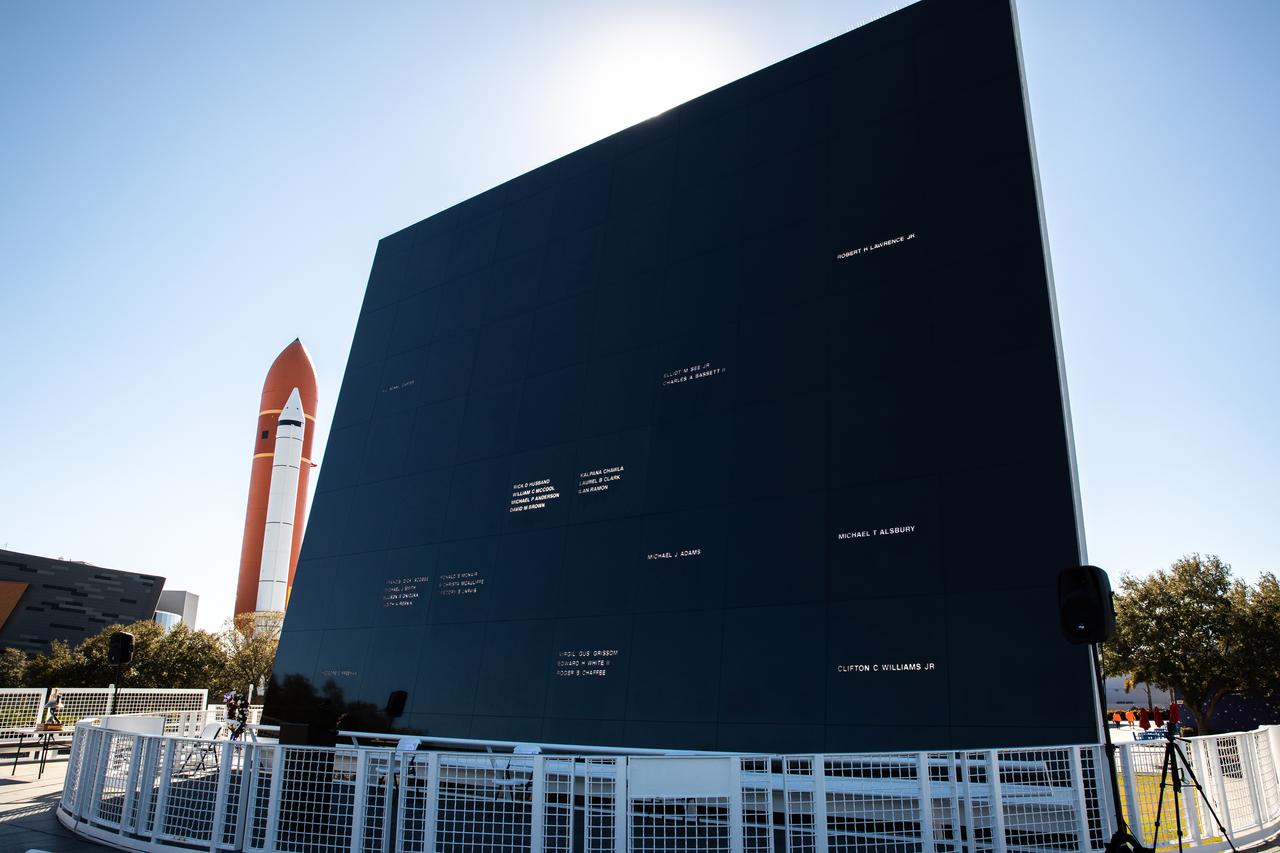
The crews of Apollo 1 and space shuttles Challenger and Columbia, as well as other fallen astronauts who lost their lives in the name of space exploration and discovery, are honored by NASA Kennedy Space Center employees and guests with a ceremony at the Kennedy Visitor Complex’s Space Mirror Memorial on Jan. 28, 2021. The date marked the 35th anniversary of the Challenger tragedy. NASA centers throughout the country participate in the agency’s annual Day of Remembrance memorial event.
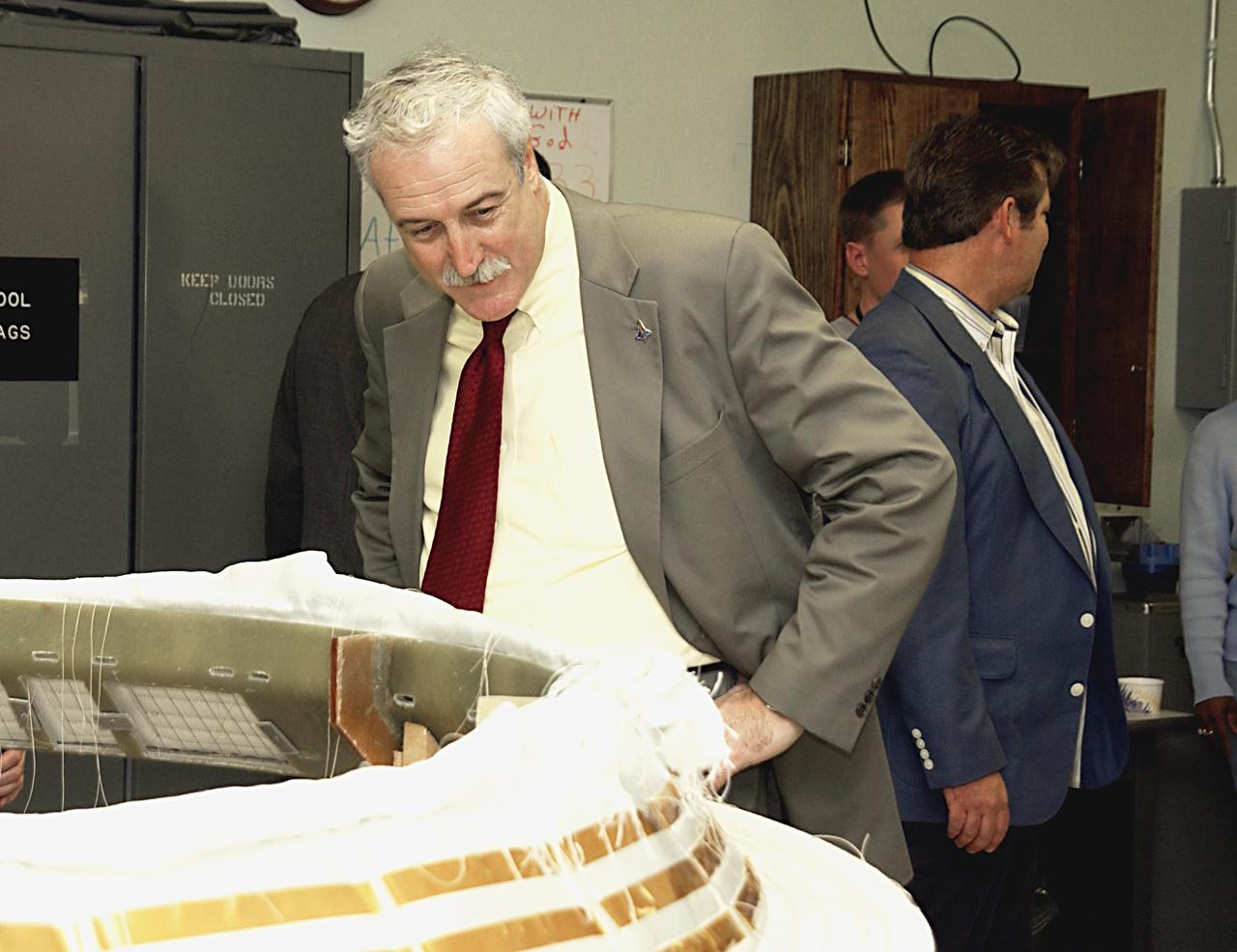
KENNEDY SPACE CENTER, FLA. -- In the Thermal Protection System Facility, NASA Administrator Sean O'Keefe looks at a Dome Heat Shield blanket that is used for Shuttle engines. O'Keefe is visiting the site to learn more about the TPS products and process in protecting orbiters from the intense heat of launch and re-entry. TPS tiles have been discussed in the investigation into the Columbia tragedy that destroyed the orbiter and claimed the lives of seven astronauts.
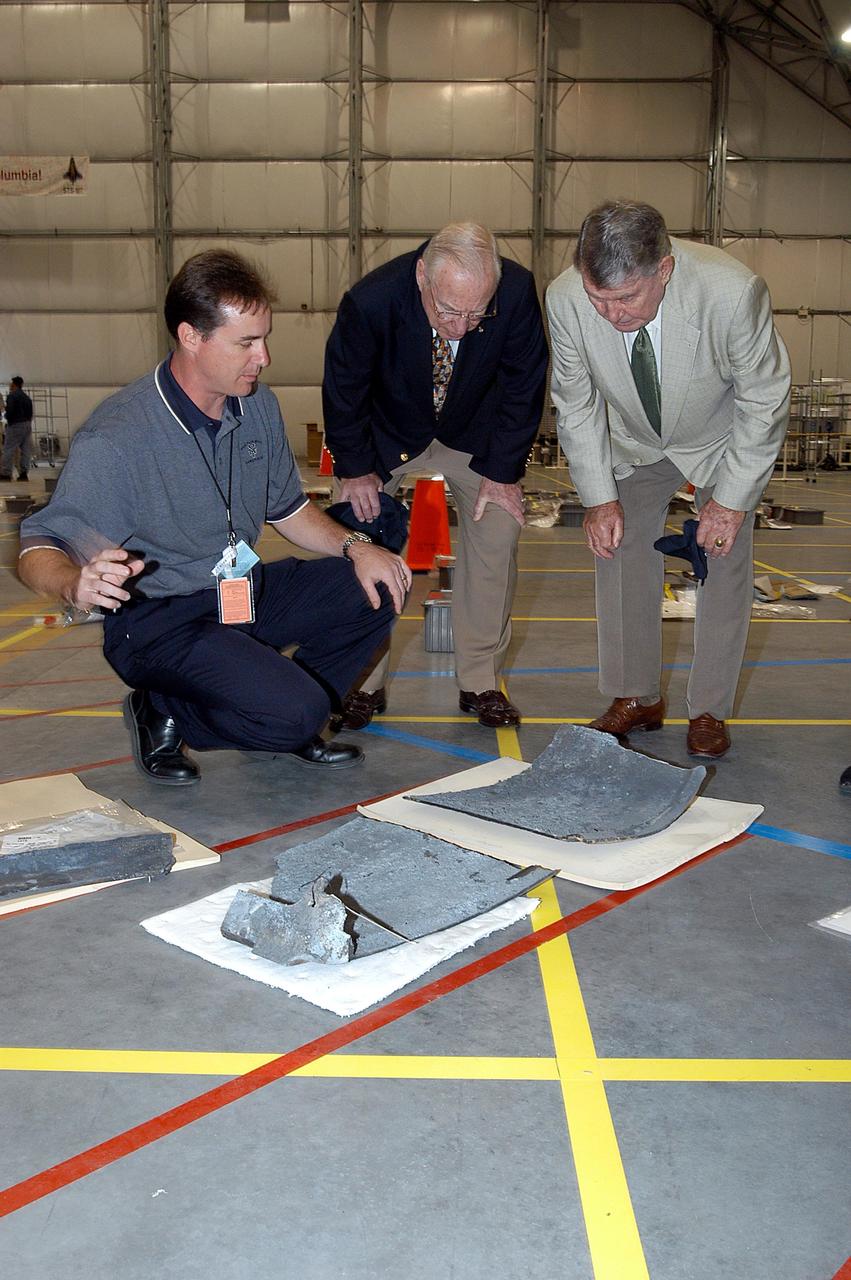
KENNEDY SPACE CENTER, FLA. - In the RLV Hangar, Space Shuttle Test Director Steve Altemus (left) shows former astronauts Jim Lovell (center) and Wally Schirra (right) a piece of debris from Columbia. The latter two visited several sites around the Center, encouraging workers to help get the space program "back on its feet." The RLV Hangar is where Columbia debris is being collected and examined as part of the investigation into the tragedy that claimed the orbiter and lives of seven astronauts returning from mission STS-107.
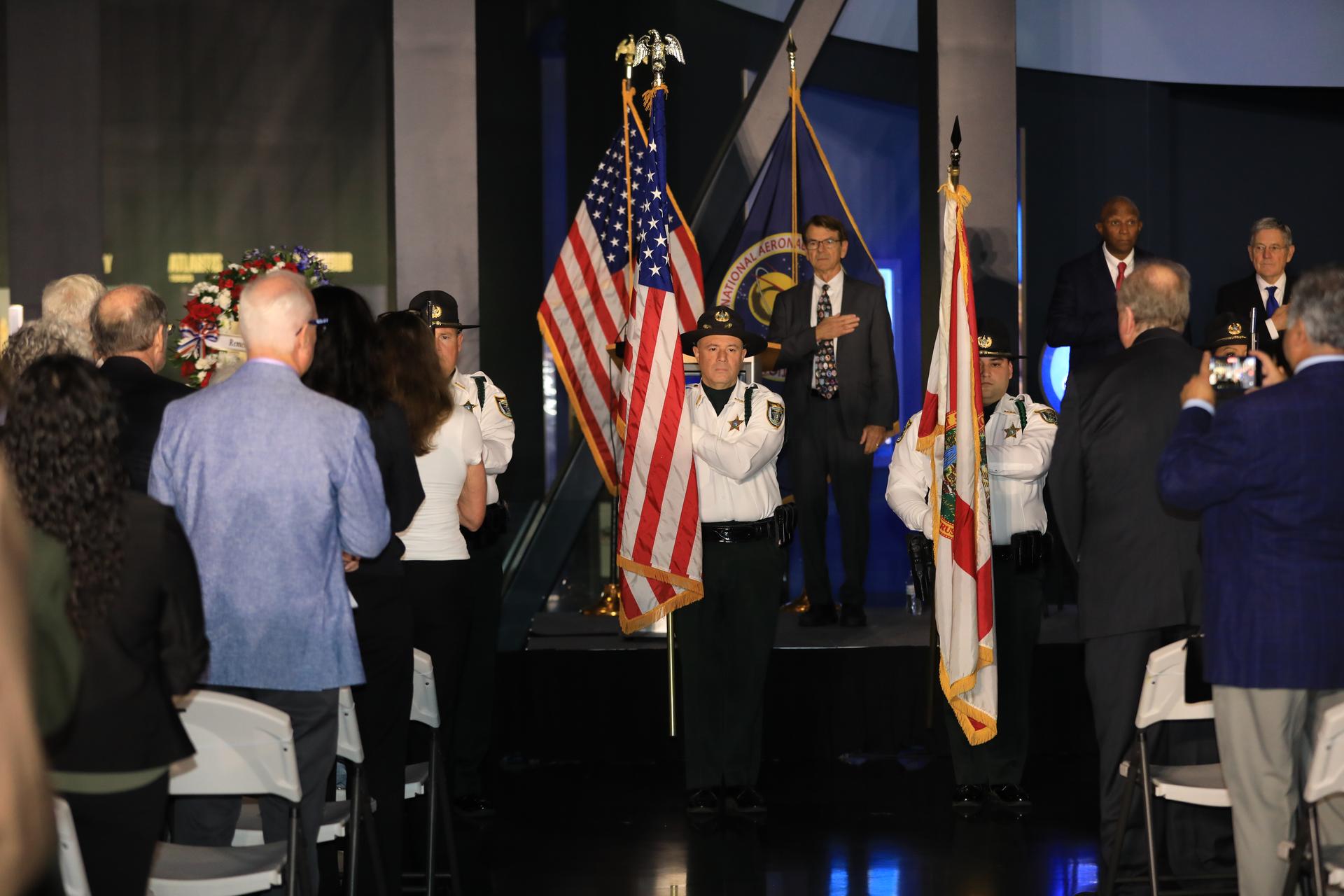
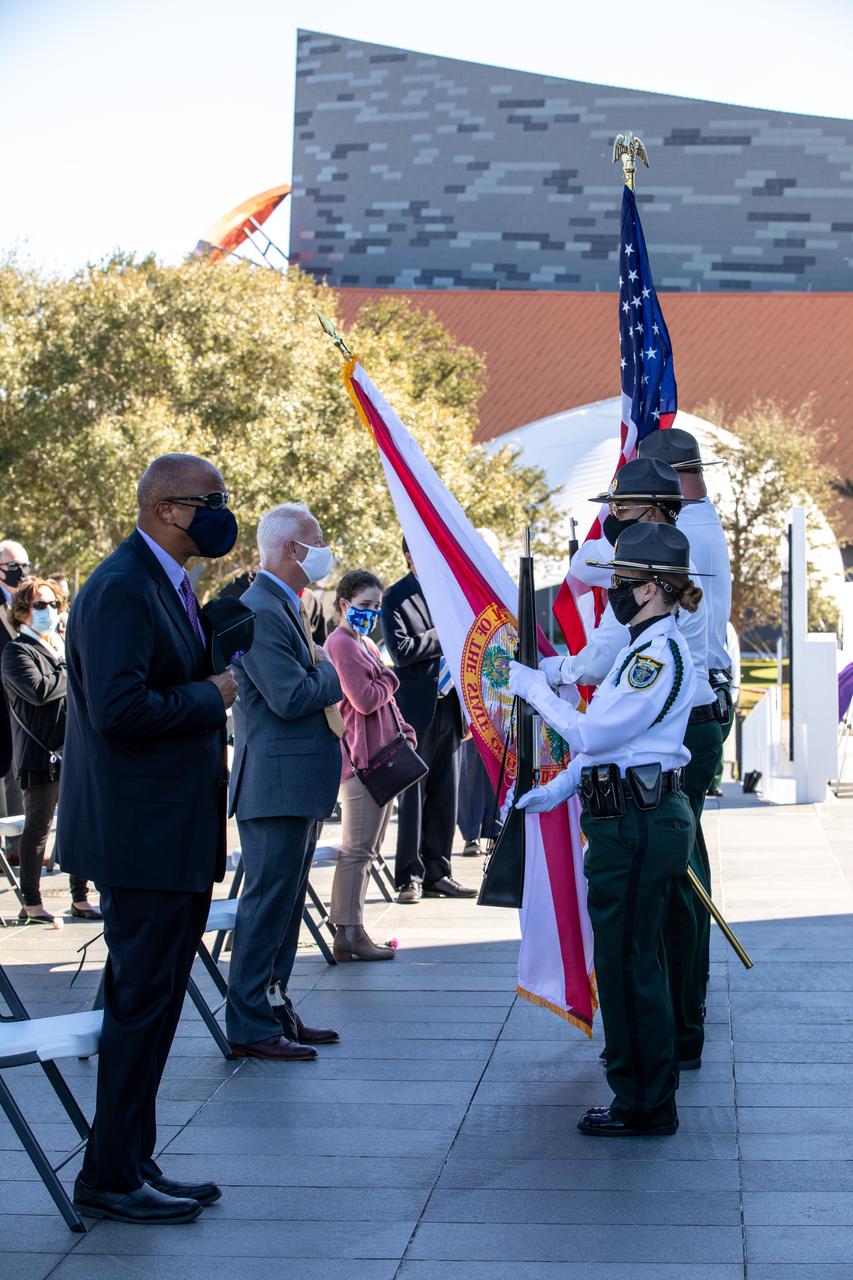
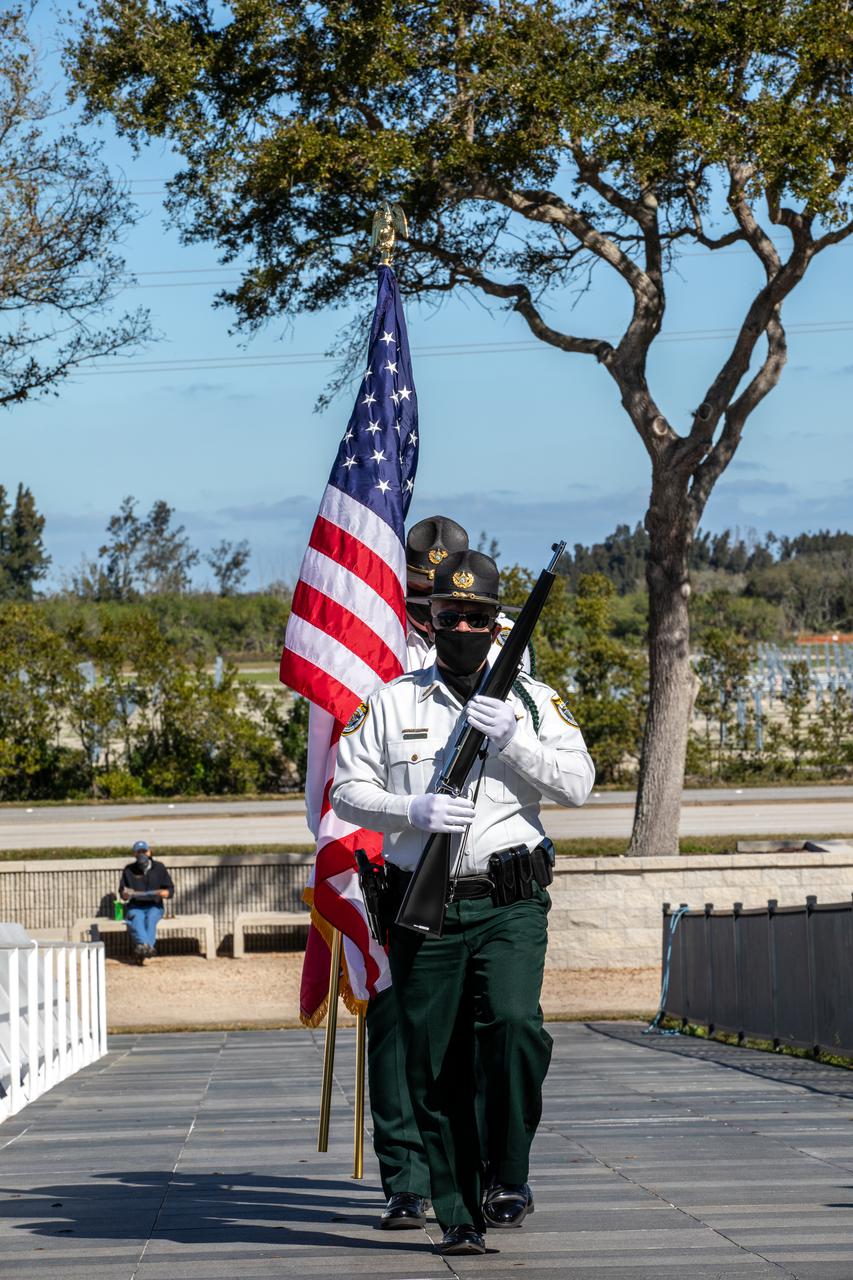
Astronauts Memorial Foundation president and CEO Thad Altman (center) stands as the Brevard County Sheriff’s Office Honor Guard presents colors during NASA’s Day of Remembrance ceremony on Thursday, Jan. 22, 2026, at the Kennedy Space Center Visitor Complex in Florida. The crews of Apollo 1 and space shuttles Challenger and Columbia, as well as other fallen astronauts who lost their lives in the name of space exploration and discovery, were honored by Kennedy employees and guests at the annual memorial event. This year marks the 40th anniversary of the Challenger tragedy.
The crews of Apollo 1 and space shuttles Challenger and Columbia, as well as other fallen astronauts who lost their lives in the name of space exploration and discovery, are honored by NASA Kennedy Space Center employees and guests with a ceremony at the Kennedy Visitor Complex’s Space Mirror Memorial on Jan. 28, 2021. The date marked the 35th anniversary of the Challenger tragedy. NASA centers throughout the country participate in the agency’s annual Day of Remembrance memorial event.
The crews of Apollo 1 and space shuttles Challenger and Columbia, as well as other fallen astronauts who lost their lives in the name of space exploration and discovery, are honored by NASA Kennedy Space Center employees and guests with a ceremony at the Kennedy Visitor Complex’s Space Mirror Memorial on Jan. 28, 2021. The date marked the 35th anniversary of the Challenger tragedy. NASA centers throughout the country participate in the agency’s annual Day of Remembrance memorial event.
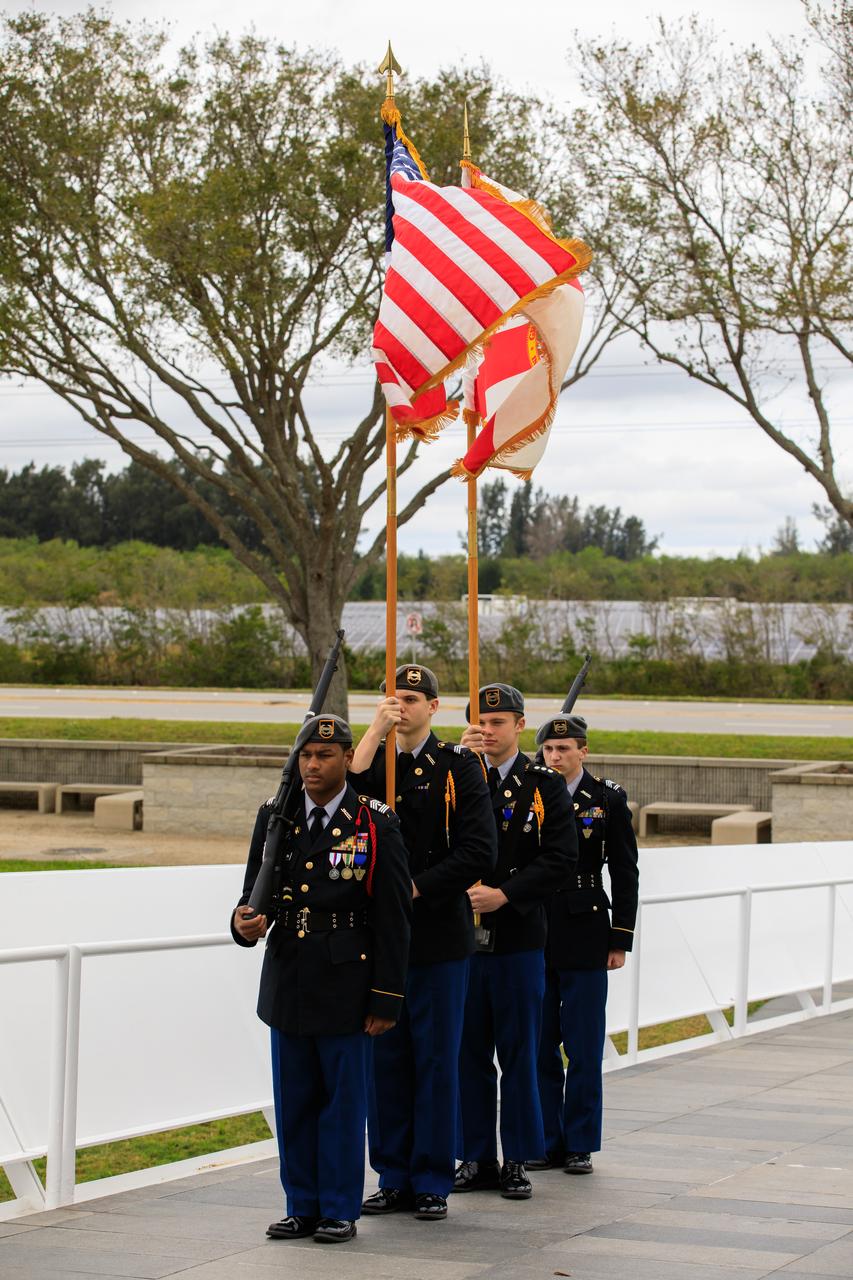
Members of the Viera High School JROTC Honor Guard present colors during the Day of Remembrance ceremony at the Kennedy Space Center Visitor Complex in Florida on Jan. 26, 2023. The event honored the crews of Apollo 1 and space shuttles Challenger and Columbia, as well as other astronauts who lost their lives in the pursuit of spaceflight. This year marks the 20th anniversary of the Columbia tragedy. This year’s ceremony was hosted by the Astronauts Memorial Foundation, which was founded after the shuttle Challenger accident in 1986 to honor the sacrifices of fallen astronauts each year.
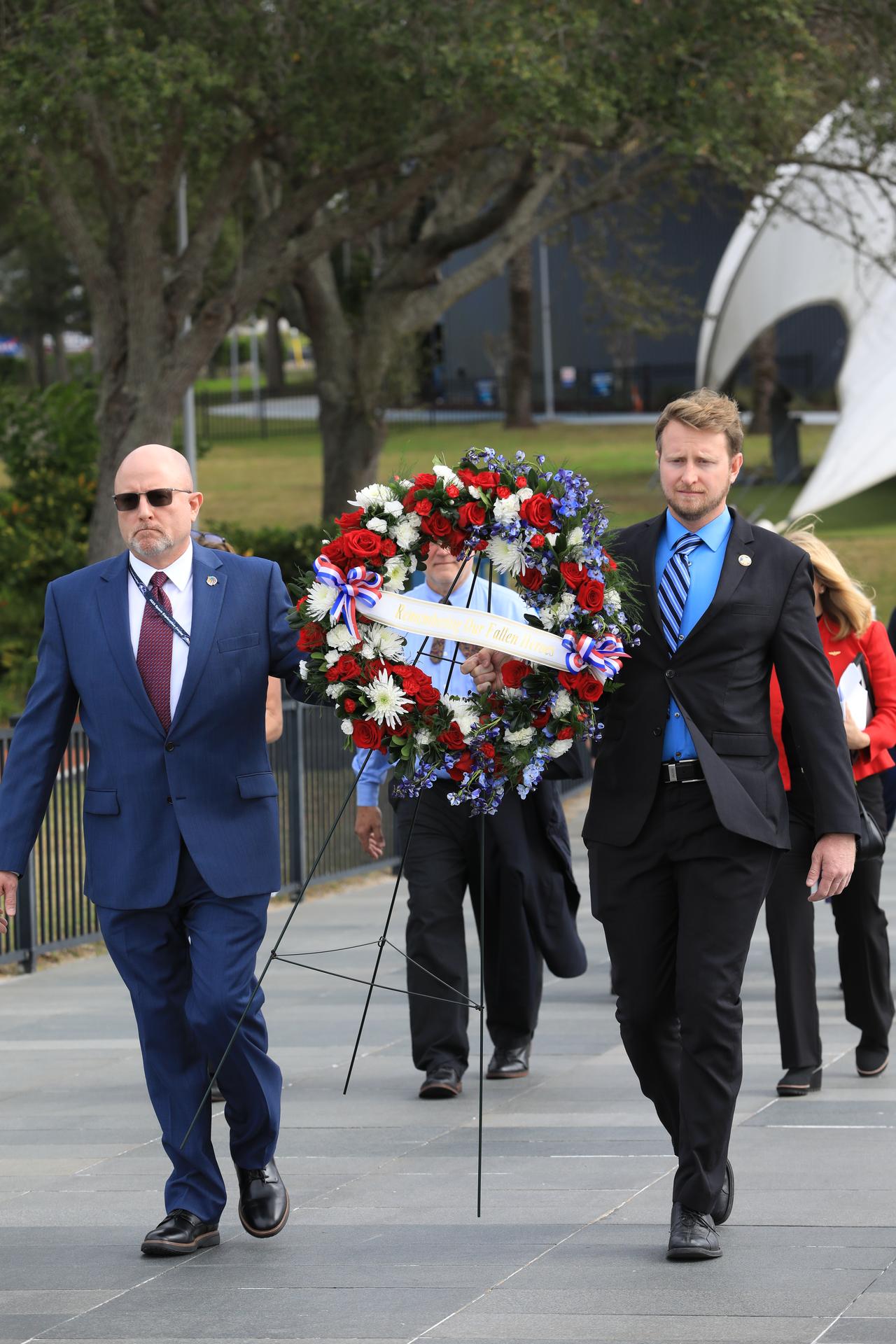
NASA’s Day of Remembrance is marked by a memorial wreath placed before the Space Mirror Memorial at the Kennedy Space Center Visitor Complex on Thursday, Jan. 22, 2026. The mirror was dedicated in 1991 to honor all astronauts who lost their lives on missions or during training. During the Day of Remembrance, NASA centers across the country honor those astronauts who have fallen in the pursuit of space exploration. This year marks the 40th anniversary of the Challenger tragedy.
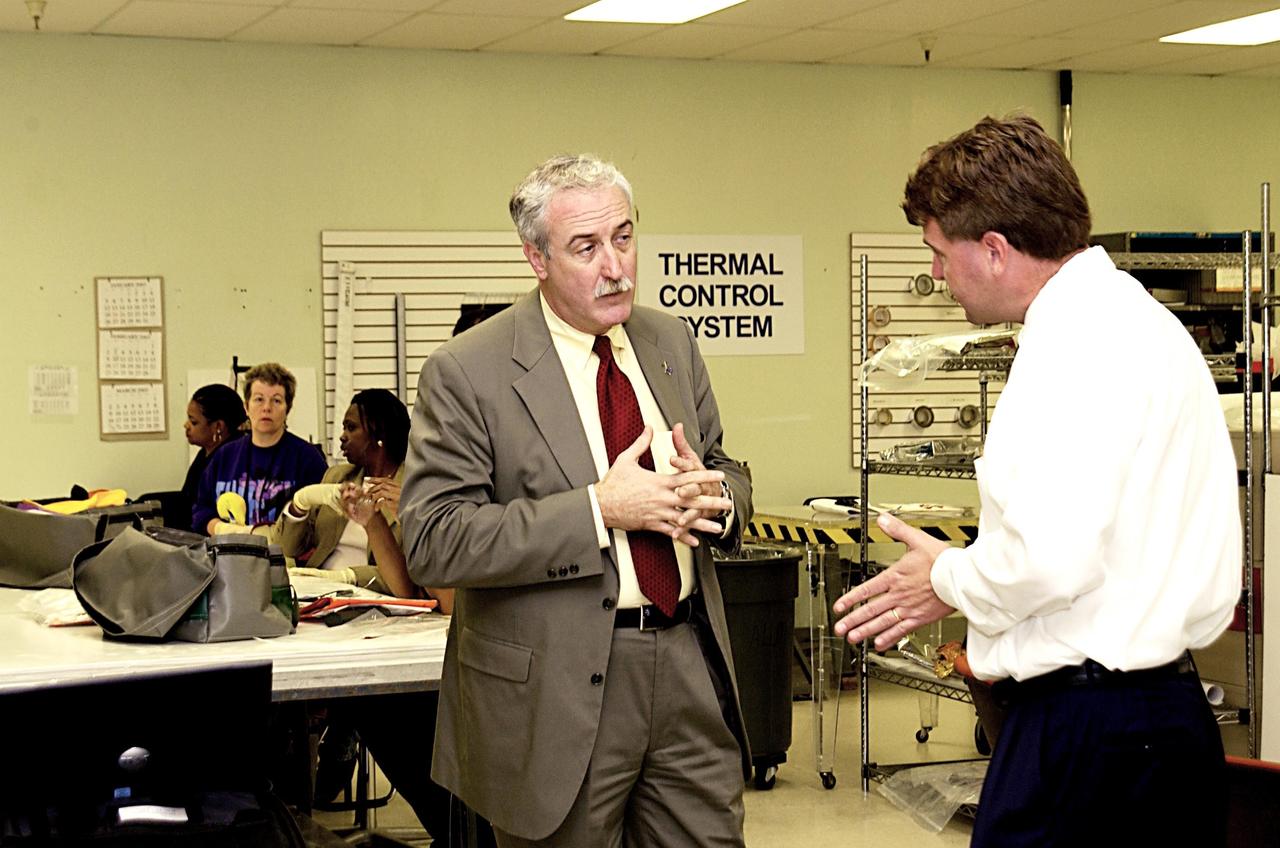
KENNEDY SPACE CENTER, FLA. -- In the Thermal Protection System Facility, NASA Administrator Sean O'Keefe (left) talks to Martin Wilson, project manager. O'Keefe is visiting the site to learn more about the TPS products and process in protecting orbiters from the intense heat of launch and re-entry. TPS tiles have been discussed in the investigation into the Columbia tragedy that destroyed the orbiter and claimed the lives of seven astronauts.
The crews of Apollo 1 and space shuttles Challenger and Columbia, as well as other fallen astronauts who lost their lives in the name of space exploration and discovery, are honored by NASA Kennedy Space Center employees and guests with a ceremony at the Kennedy Visitor Complex’s Space Mirror Memorial on Jan. 28, 2021. The date marked the 35th anniversary of the Challenger tragedy. NASA centers throughout the country participate in the agency’s annual Day of Remembrance memorial event.
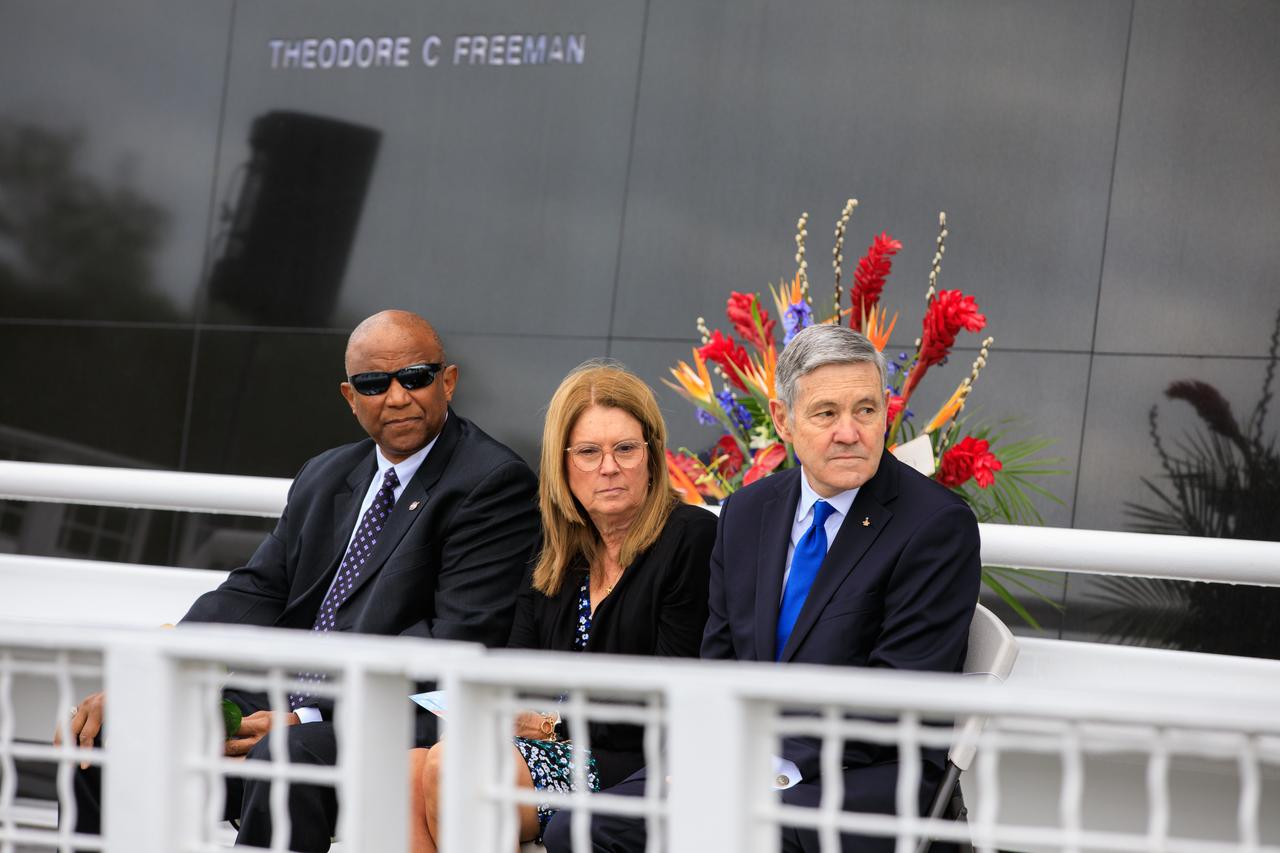
From left, Kennedy Space Center Deputy Director Kelvin Manning; Sheryl Chaffee, Astronauts Memorial Foundation (AMF) Board of Directors chairperson; and NASA Associate Administrator Bob Cabana, attend the Day of Remembrance ceremony at the Kennedy Space Center Visitor Complex in Florida on Jan. 26, 2023. The event honored the crews of Apollo 1 and space shuttles Challenger and Columbia, as well as other astronauts who lost their lives in the pursuit of spaceflight. This year marks the 20th anniversary of the Columbia tragedy. This year’s ceremony was hosted by the AMF, which was founded after the shuttle Challenger accident in 1986 to honor the sacrifices of fallen astronauts each year.
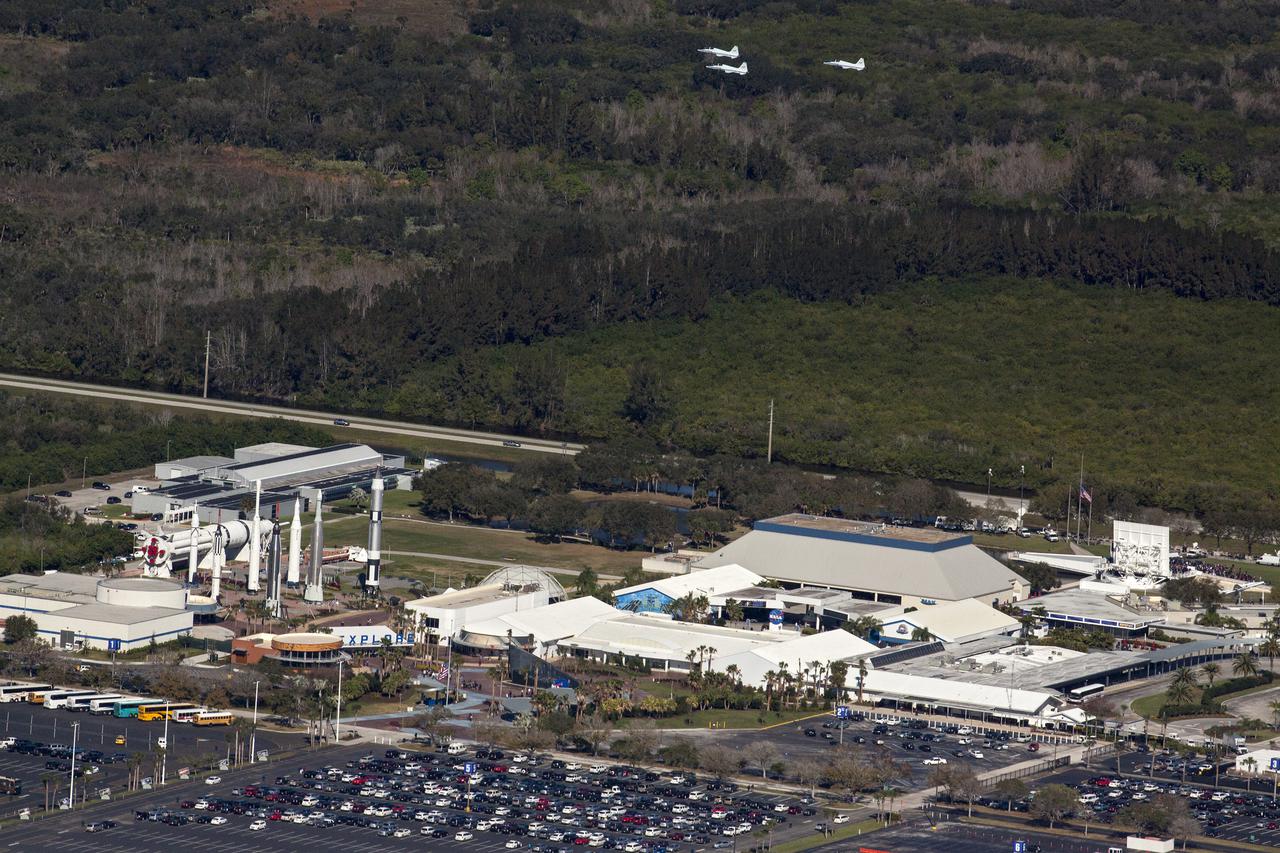
CAPE CANAVERAL, Fla. – Three NASA T-38 aircraft fly in formation over the Kennedy Space Center Visitor Complex during the agency's Day of Remembrance ceremony. NASA's Kennedy Space Center, Fla., honored the crews of Apollo 1 and space shuttles Challenger and Columbia, as well as other NASA colleagues, during the observance on Friday, Feb. 1, the 10th anniversary of the Columbia tragedy. The annual Day of Remembrance honors members of the NASA family who lost their lives while furthering the cause of exploration and discovery. Photo credit: NASA_Kim Shiflett
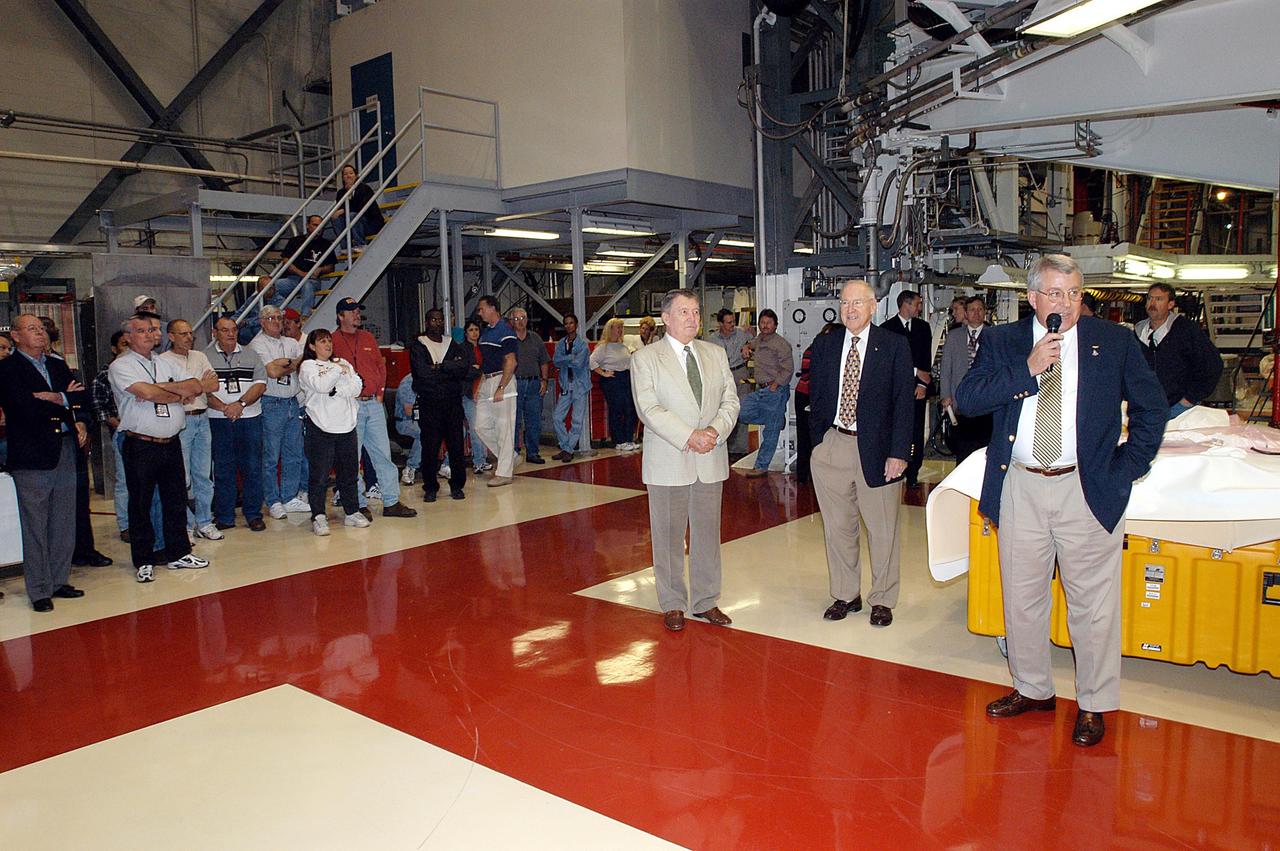
KENNEDY SPACE CENTER, FLA. - In the Orbiter Processing Facility, Bill Pickavance, vice president and deputy program manager, United Space Alliance, talks to employees. With him, at left, are former astronauts Wally Schirra and Jim Lovell. The latter two visited several KSC sites, relating their experiences in the space program and offerking encouragement to workers to help get the space program "back on its feet." They visited several sites around the Center, including the RLV Hangar where Columbia debris is being collected and examined as part of the investigation into the tragedy that claimed the orbiter and lives of seven astronauts returning from mission STS-107.
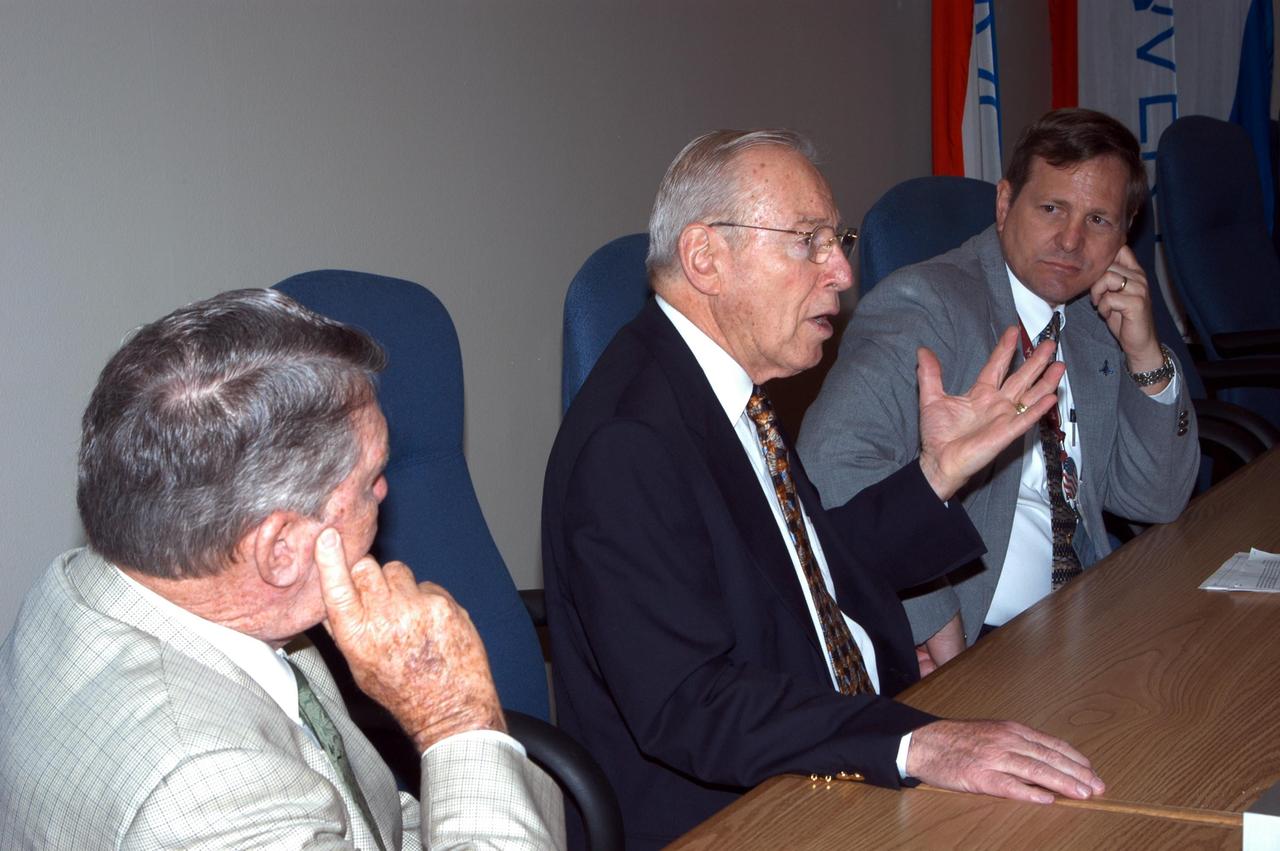
KENNEDY SPACE CENTER, FLA. - Former astronauts Jim Lovell (center) and Wally Schirra (left) talk with Mike Wetmore, director of Shuttle Processing (right) and others during a visit to KSC. Lovell and Schirra visited KSC to talk about the space program and their experiences, as well as offer encouragement to workers to help get the space program "back on its feet." They visited several sites around the Center, including the RLV Hangar where Columbia debris is being collected and examined as part of the investigation into the tragedy that claimed the orbiter and lives of seven astronauts returning from mission STS-107.

KENNEDY SPACE CENTER, FLA. - In the RLV Hangar, (from left) Lisa Malone, acting deputy director of External Relations & Business Development at KSC, former astronauts Jim Lovell and Wally Schirra, and Steve Altemus, Space Shuttle test director, look over pieces of Columbia debris. Lovell and Schirra visited several sites around the Center, encouraging workers to help get the space program "back on its feet." The RLV Hangar is where Columbia debris is being collected and examined as part of the investigation into the tragedy that claimed the orbiter and lives of seven astronauts returning from mission STS-107.
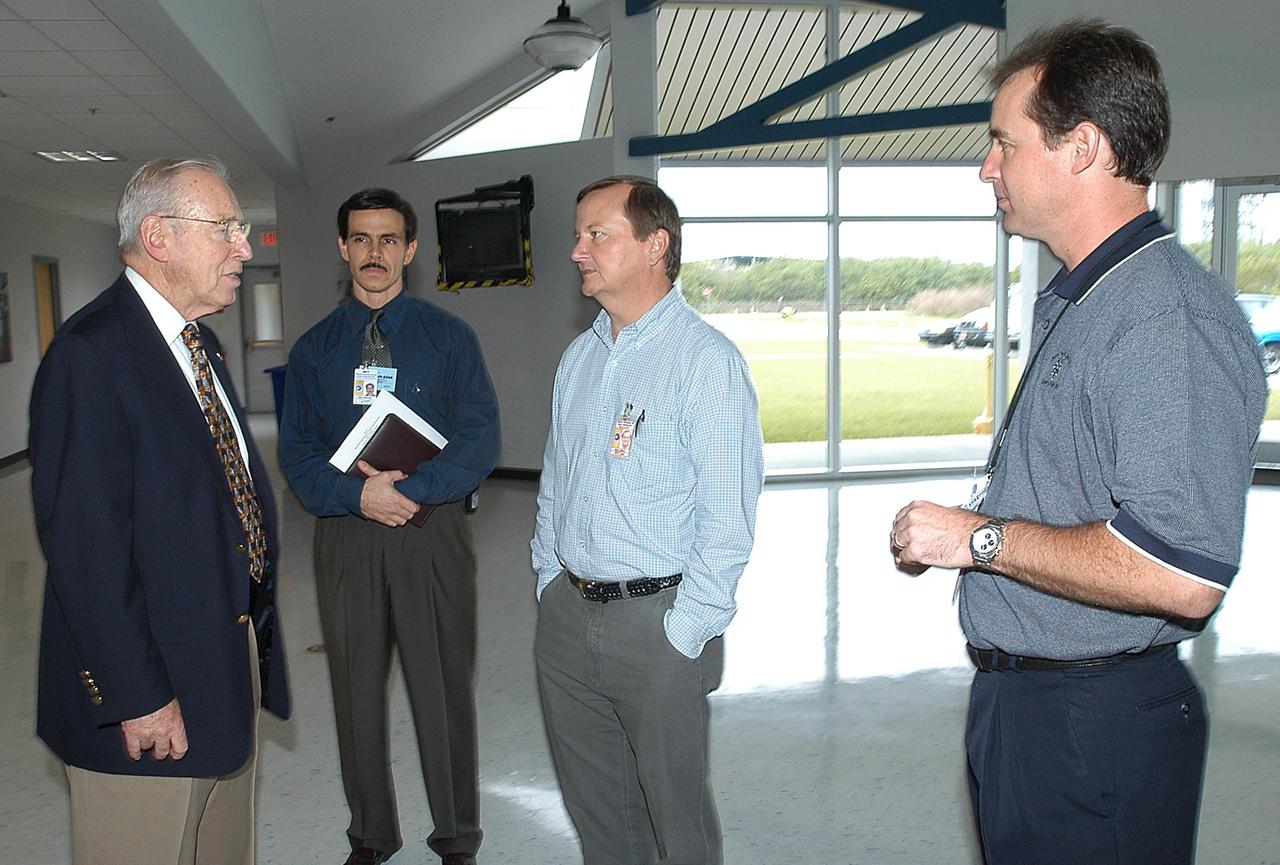
KENNEDY SPACE CENTER, FLA. - During a visit to KSC, former astronaut Jim Lovell (far left) talks to (from right) Space Shuttle Test Director Steve Altemus, Launch Director Mike Leinbach, and reconstruction engineer John Cowart. Lovell, along with former astronaut Wally Schirra, visited KSC to talk about the space program and their experiences, as well as offer encouragement to workers to help get the space program "back on its feet." They visited several sites around the Center, including the RLV Hangar where Columbia debris is being collected and examined as part of the investigation into the tragedy that claimed the orbiter and lives of seven astronauts returning from mission STS-107.
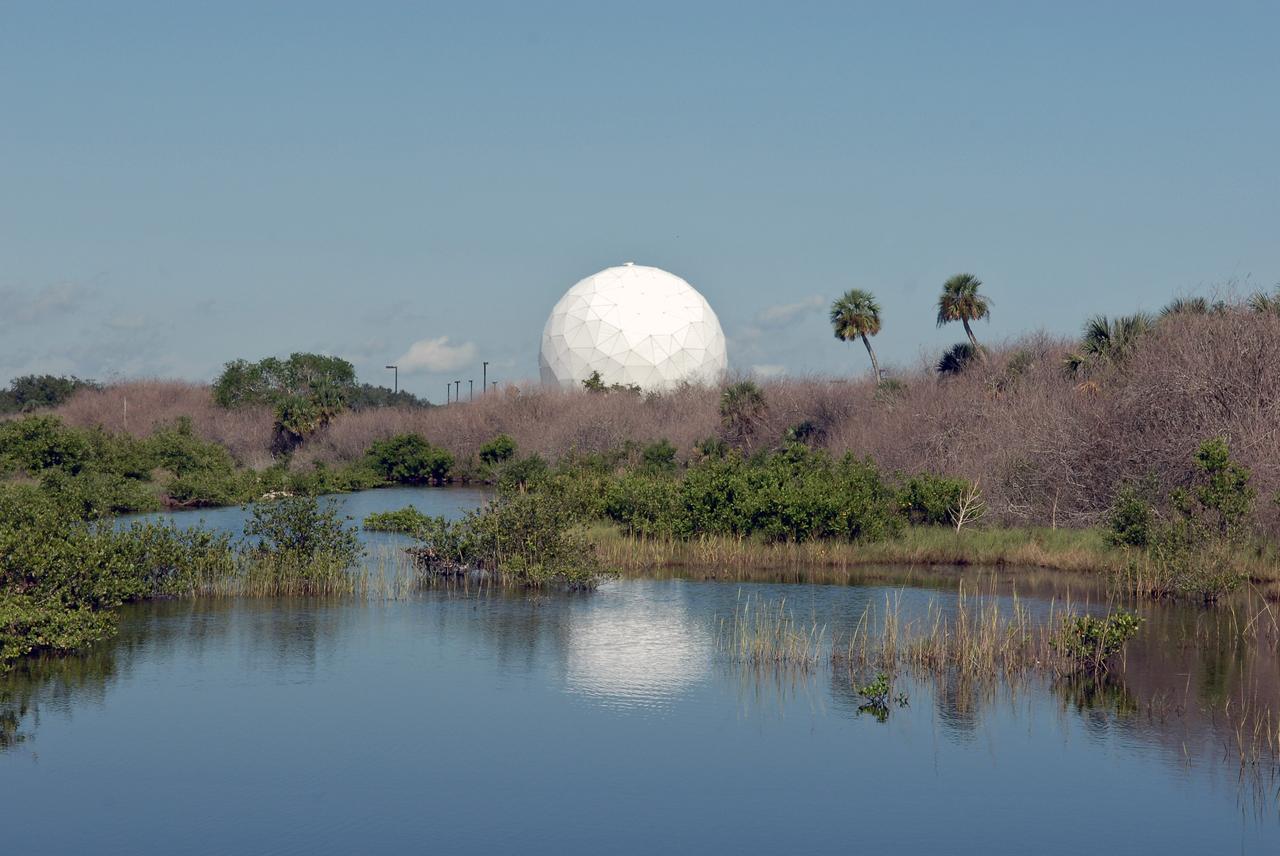
CAPE CANAVERAL, Fla. – This is the radome beneath which is the NASA Debris Radar. It is located at a remote site on North Merritt Island in Florida. One of the largest of its kind in the world, the C-band radar provided critical support to pinpoint debris during the launch of space shuttle Atlantis on the STS-125 mission. The need for this radar was identified after the Columbia tragedy. It worked together with smaller X-band radars placed on the solid rocket booster ship Liberty Star and the U.S. Army landing craft utility ship Brandy Station. Together they provided extremely high resolution images of any debris that created by Atlantis during launch. Photo credit: NASA/Troy Cryder
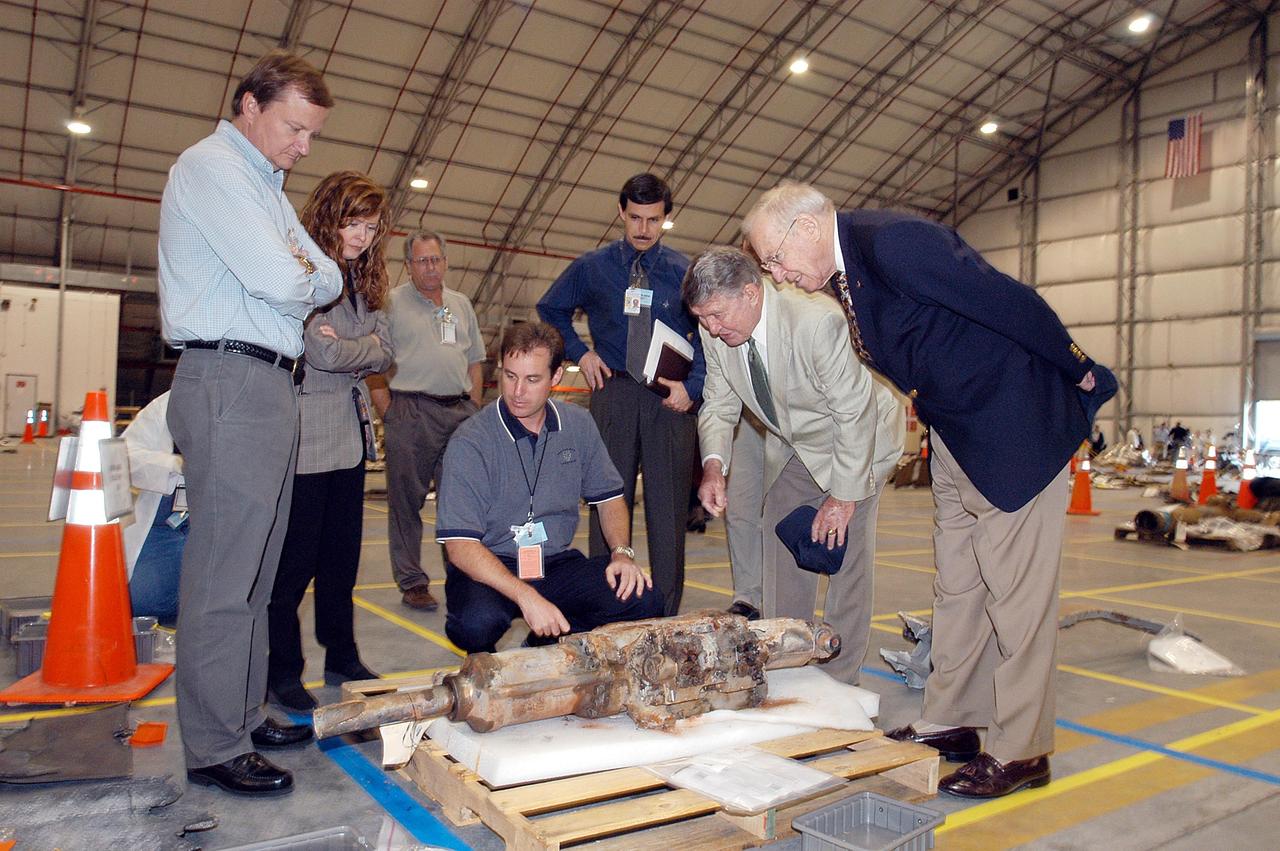
KENNEDY SPACE CENTER, FLA. - In the RLV Hangar, looking over a piece of Columbia debris are (from left) Launch Director Mike Leinbach, Acting Deputy Director of External Relations & Business Development Lisa Malone, Space Shuttle Test Director Steve Altemus, reconstruction engineer John Cowart, and former astronauts Wally Schirra and Jim Lovell. The latter two visited several sites around the Center, encouraging workers to help get the space program "back on its feet." The RLV Hangar is where Columbia debris is being collected and examined as part of the investigation into the tragedy that claimed the orbiter and lives of seven astronauts returning from mission STS-107.
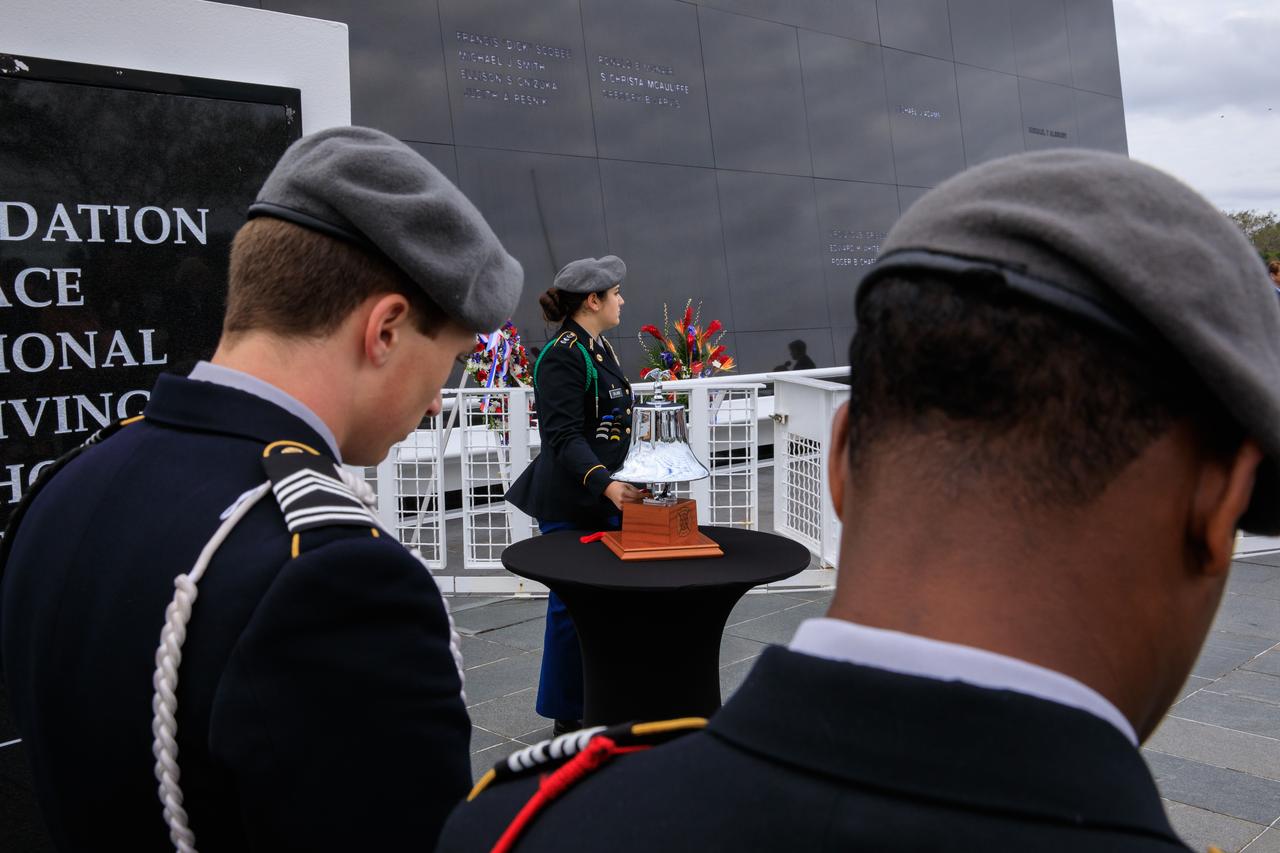
Members of the Viera High School JROTC Honor Guard observe a minute of silence during the Day of Remembrance ceremony at the Kennedy Space Center Visitor Complex in Florida on Jan. 26, 2023. The event honored the crews of Apollo 1 and space shuttles Challenger and Columbia, as well as other astronauts who lost their lives in the pursuit of spaceflight. This year marks the 20th anniversary of the Columbia tragedy. This year’s ceremony was hosted by the Astronauts Memorial Foundation, which was founded after the shuttle Challenger accident in 1986 to honor the sacrifices of fallen astronauts each year.
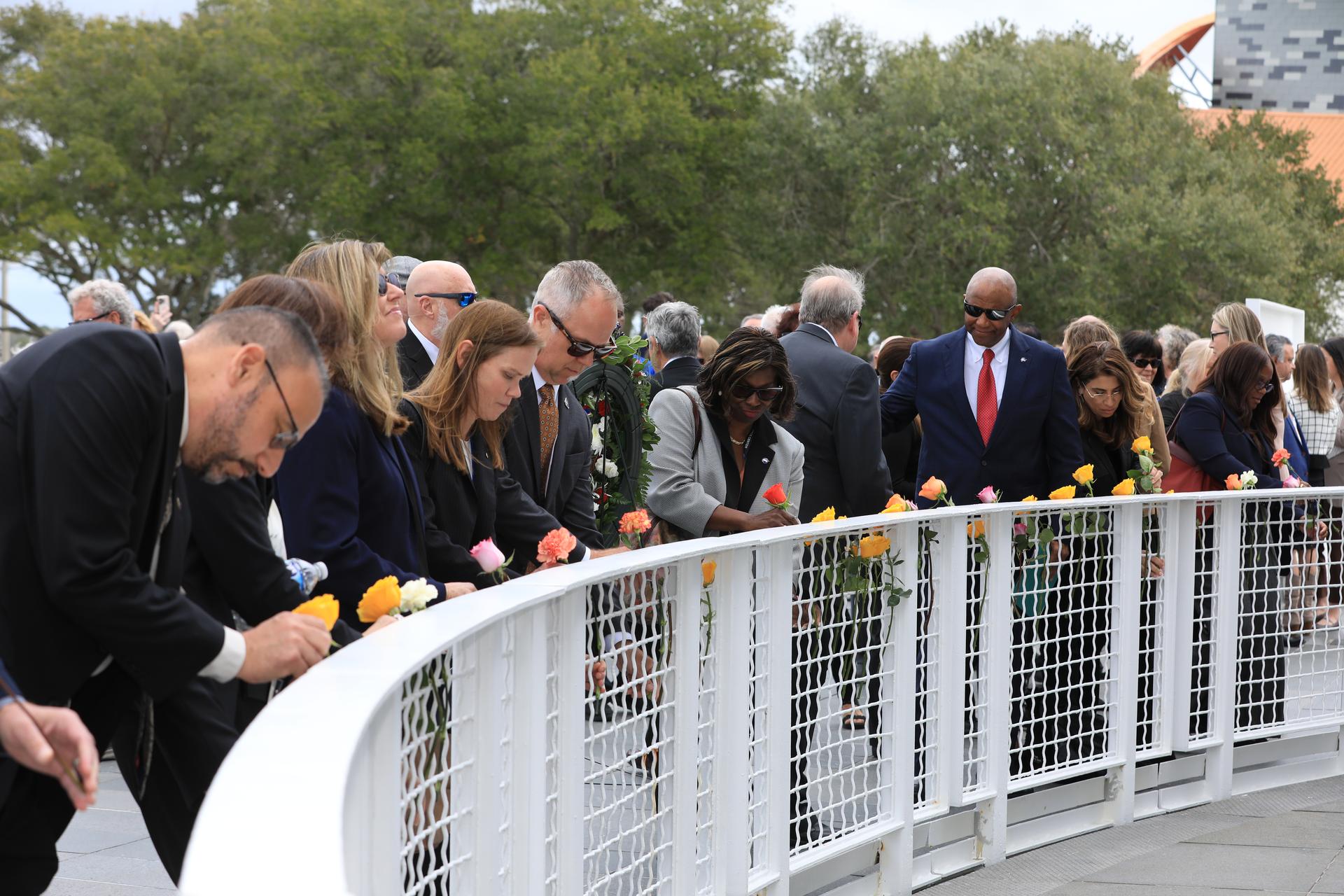
NASA’s Kennedy Space Center Deputy Director Kelvin Manning (far right) and fellow NASA employees place flowers before the Space Mirror Memorial at the Kennedy Space Center Visitor Complex in Florida during NASA’s Day of Remembrance on Thursday, Jan. 22, 2026. The mirror was dedicated in 1991 to honor all astronauts who lost their lives on missions or during training. During the annual event, NASA centers across the country honor those astronauts who have fallen in the pursuit of space exploration. This year marks the 40th anniversary of the Challenger tragedy.
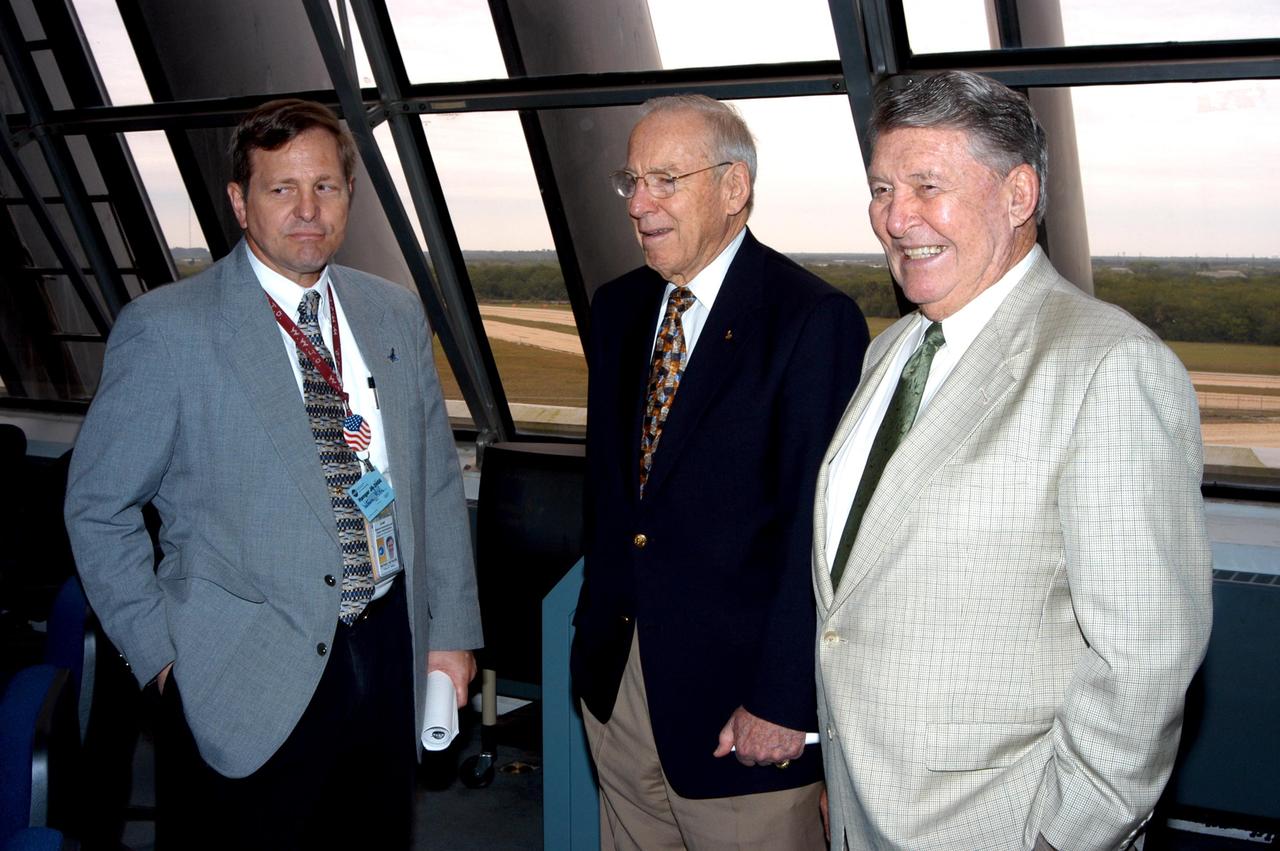
KENNEDY SPACE CENTER, FLA. - At the KSC Launch Control Complex, former astronauts Jim Lovell (center) and Wally Schirra (right) talk with Mike Wetmore, director of Shuttle Processing (left). Lovell and Schirra visited KSC to talk about the space program and their experiences, as well as offer encouragement to workers to help get the space program "back on its feet." They visited several sites around the Center, including the RLV Hangar where Columbia debris is being collected and examined as part of the investigation into the tragedy that claimed the orbiter and lives of seven astronauts returning from mission STS-107.
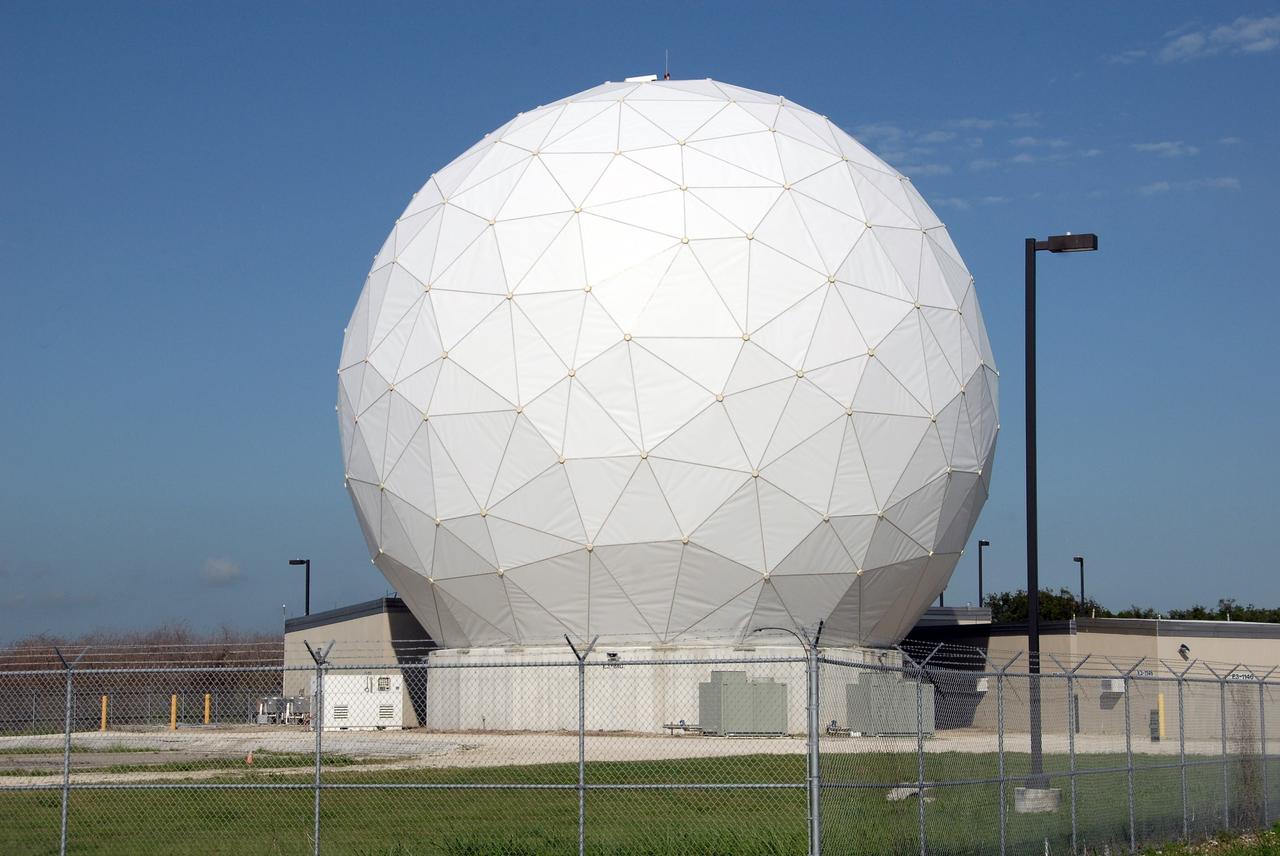
CAPE CANAVERAL, Fla. – This is the radome beneath which is the NASA Debris Radar. It is located at a remote site on North Merritt Island in Florida. One of the largest of its kind in the world, the C-band radar provided critical support to pinpoint debris during the launch of space shuttle Atlantis on the STS-125 mission. The need for this radar was identified after the Columbia tragedy. It worked together with smaller X-band radars placed on the solid rocket booster ship Liberty Star and the U.S. Army landing craft utility ship Brandy Station. Together they provided extremely high resolution images of any debris that created by Atlantis during launch. Photo credit: NASA/Troy Cryder
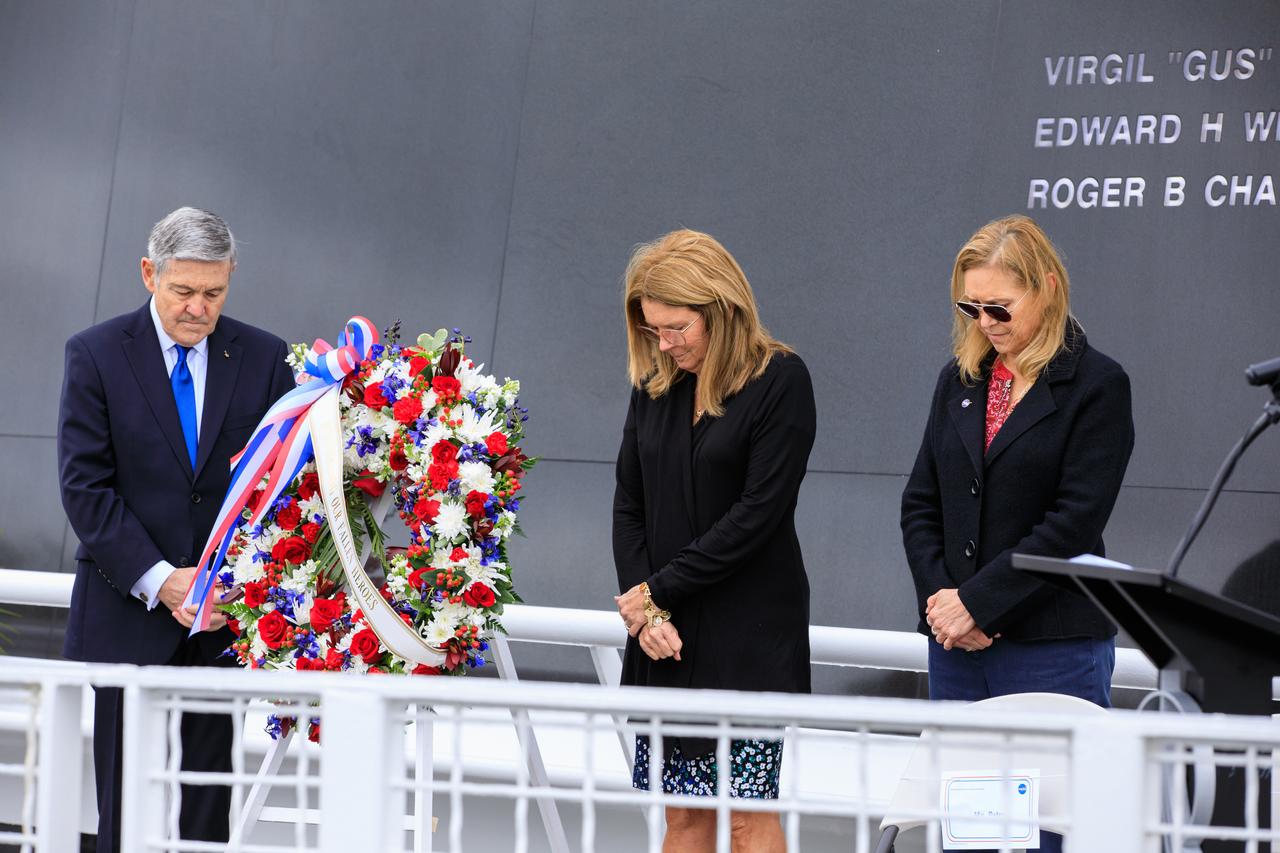
Sheryl Chafee, Astronauts Memorial Foundation (AMF) Board of Directors chairperson, center, accompanied by NASA Associate Administrator Bob Cabana, and Kennedy Space Director Janet Petro, lay a wreath in front of the Space Mirror Memorial during the Day of Remembrance on Jan. 26, 2023, at the Kennedy Space Center Visitor Complex in Florida. The event honored the crews of Apollo 1 and space shuttles Challenger and Columbia, as well as other astronauts who lost their lives in the pursuit of spaceflight. This year marks the 20th anniversary of the Columbia tragedy. This year’s ceremony was hosted by the AMF, which was founded after the shuttle Challenger accident in 1986 to honor the sacrifices of fallen astronauts each year.
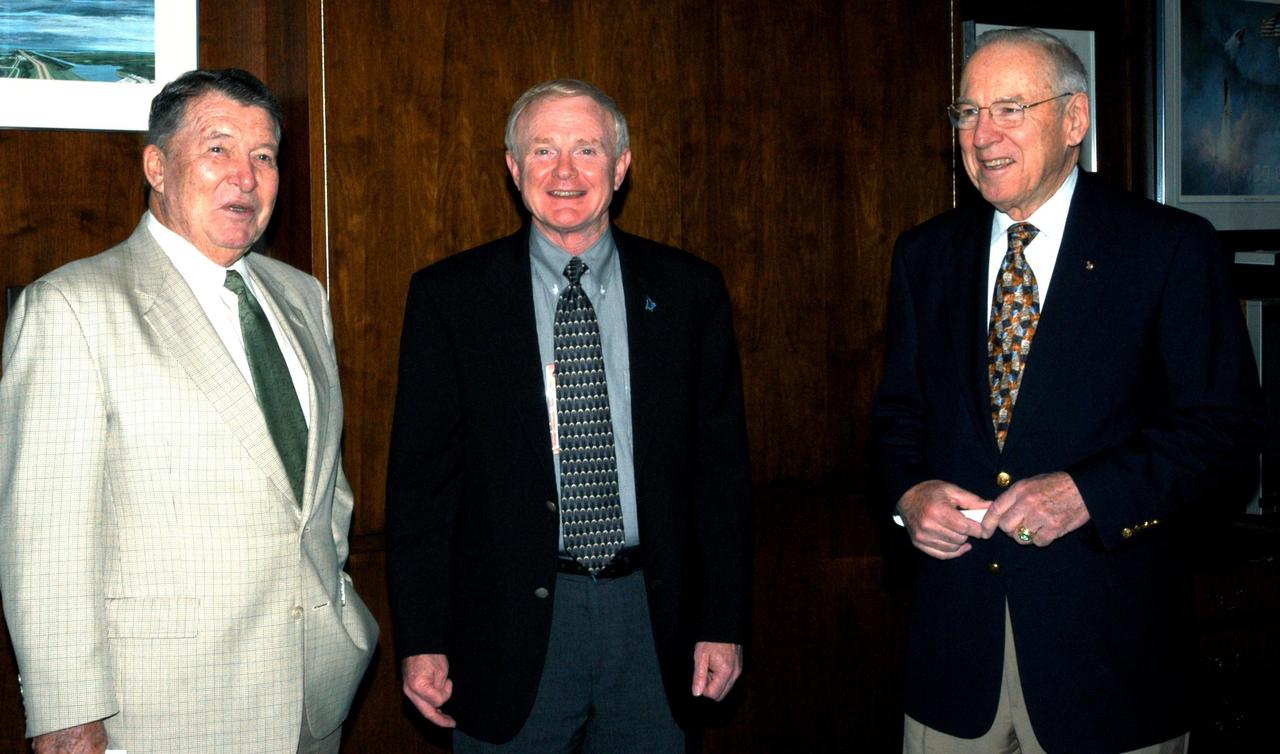
KENNEDY SPACE CENTER, FLA. - Former astronauts Wally Schirra (left) and Jim Lovell (right) join Center Director Roy Bridges (center) before a presentation to KSC employees. Lovell and Schirra visited KSC to talk about the space program and their experiences, as well as offer encouragement to workers to help get the space program "back on its feet." They visited several sites around the Center, including the RLV Hangar where Columbia debris is being collected and examined as part of the investigation into the tragedy that claimed the orbiter and lives of seven astronauts returning from mission STS-107.
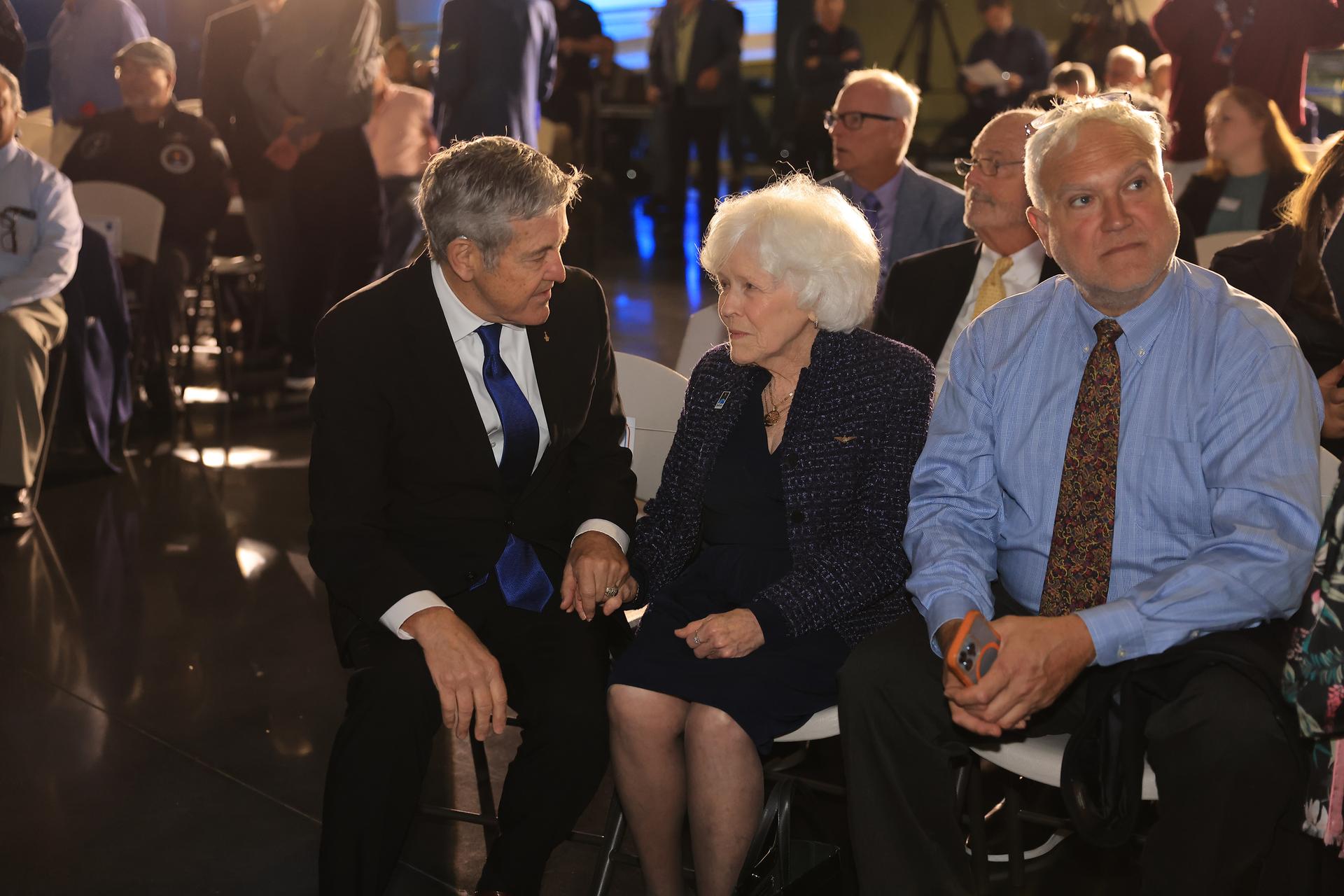
Former Kennedy Space Center director, Bob Cabana (left), speaks to Jane Smith-Wolcott, widow of Challenger pilot Michael Smith, during NASA’s Day of Remembrance ceremony at the Kennedy Space Center Visitor Complex in Florida on Thursday, Jan. 22, 2026. The annual event commemorates the crews of Apollo 1 and the space shuttles Challenger and Columbia. Marking the 40th anniversary of the Challenger tragedy, NASA Kennedy and the Astronauts Memorial Foundation, which was founded after the shuttle Challenger accident in 1986 to honor the sacrifices of fallen astronauts, hosted this year’s ceremony.
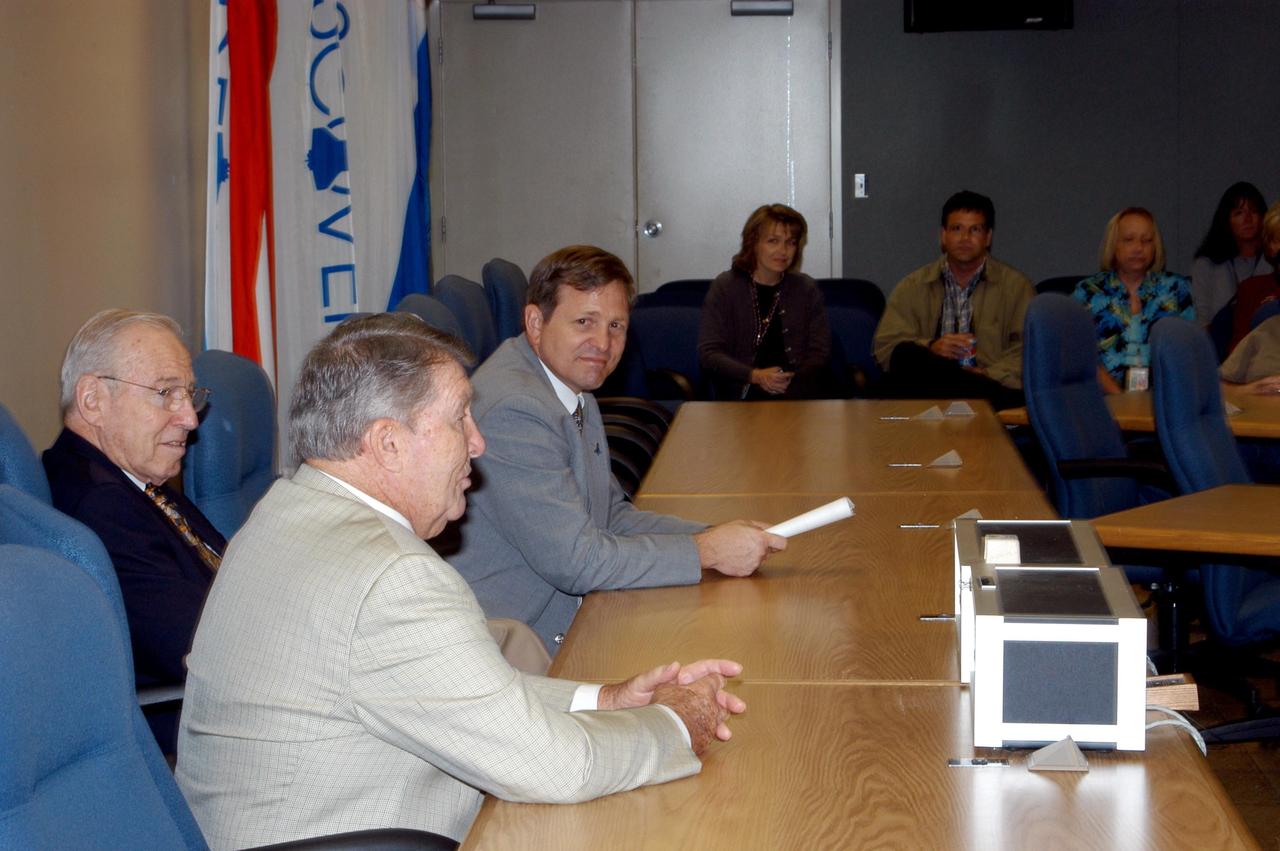
KENNEDY SPACE CENTER, FLA. - From left, former astronauts Jim Lovell and Wally Schirra talk with Mike Wetmore, director of Shuttle Processing (right) and others during a visit to KSC. Lovell and Schirra visited KSC to talk about the space program and their experiences, as well as offer encouragement to workers to help get the space program "back on its feet." They visited several sites around the Center, including the RLV Hangar where Columbia debris is being collected and examined as part of the investigation into the tragedy that claimed the orbiter and lives of seven astronauts returning from mission STS-107.
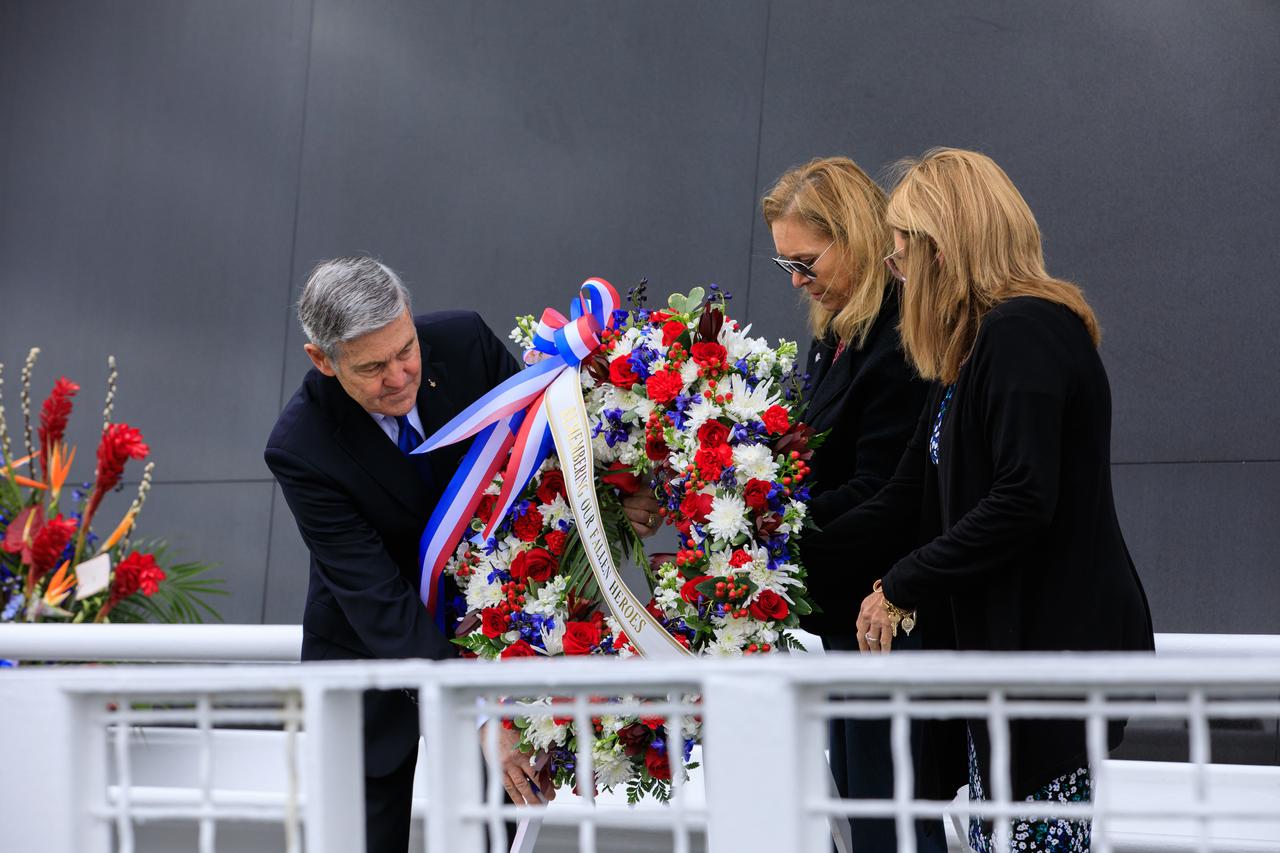
Sheryl Chafee, Astronauts Memorial Foundation (AMF) Board of Directors chairperson, at right, accompanied by NASA Associate Administrator Bob Cabana, and Kennedy Space Director Janet Petro, lay a wreath in front of the Space Mirror Memorial during the Day of Remembrance on Jan. 26, 2023, at the Kennedy Space Center Visitor Complex in Florida. The event honored the crews of Apollo 1 and space shuttles Challenger and Columbia, as well as other astronauts who lost their lives in the pursuit of spaceflight. This year marks the 20th anniversary of the Columbia tragedy. This year’s ceremony was hosted by the AMF, which was founded after the shuttle Challenger accident in 1986 to honor the sacrifices of fallen astronauts each year.
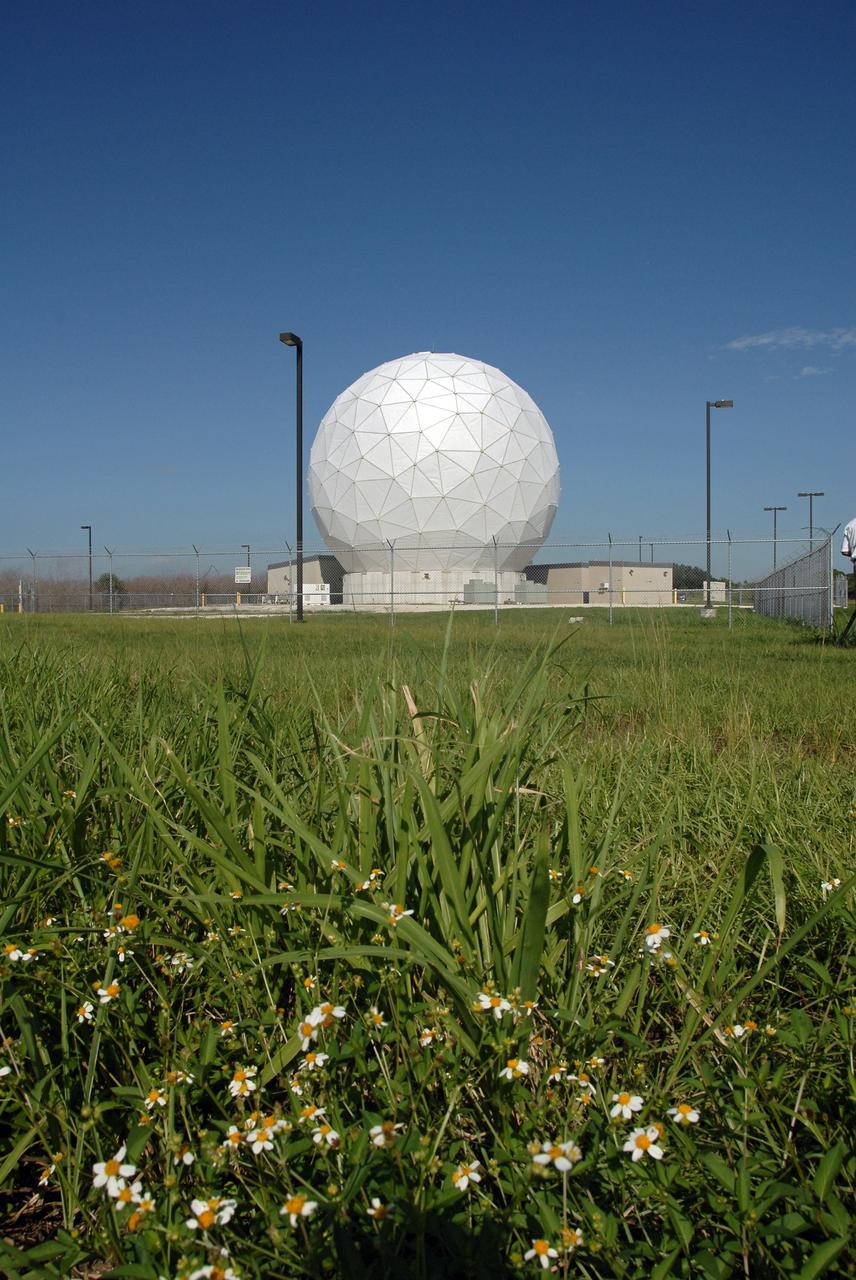
CAPE CANAVERAL, Fla. – This is the radome beneath which is the NASA Debris Radar. It is located at a remote site on North Merritt Island in Florida. One of the largest of its kind in the world, the C-band radar provided critical support to pinpoint debris during the launch of space shuttle Atlantis on the STS-125 mission. The need for this radar was identified after the Columbia tragedy. It worked together with smaller X-band radars placed on the solid rocket booster ship Liberty Star and the U.S. Army landing craft utility ship Brandy Station. Together they provided extremely high resolution images of any debris that created by Atlantis during launch. Photo credit: NASA/Troy Cryder
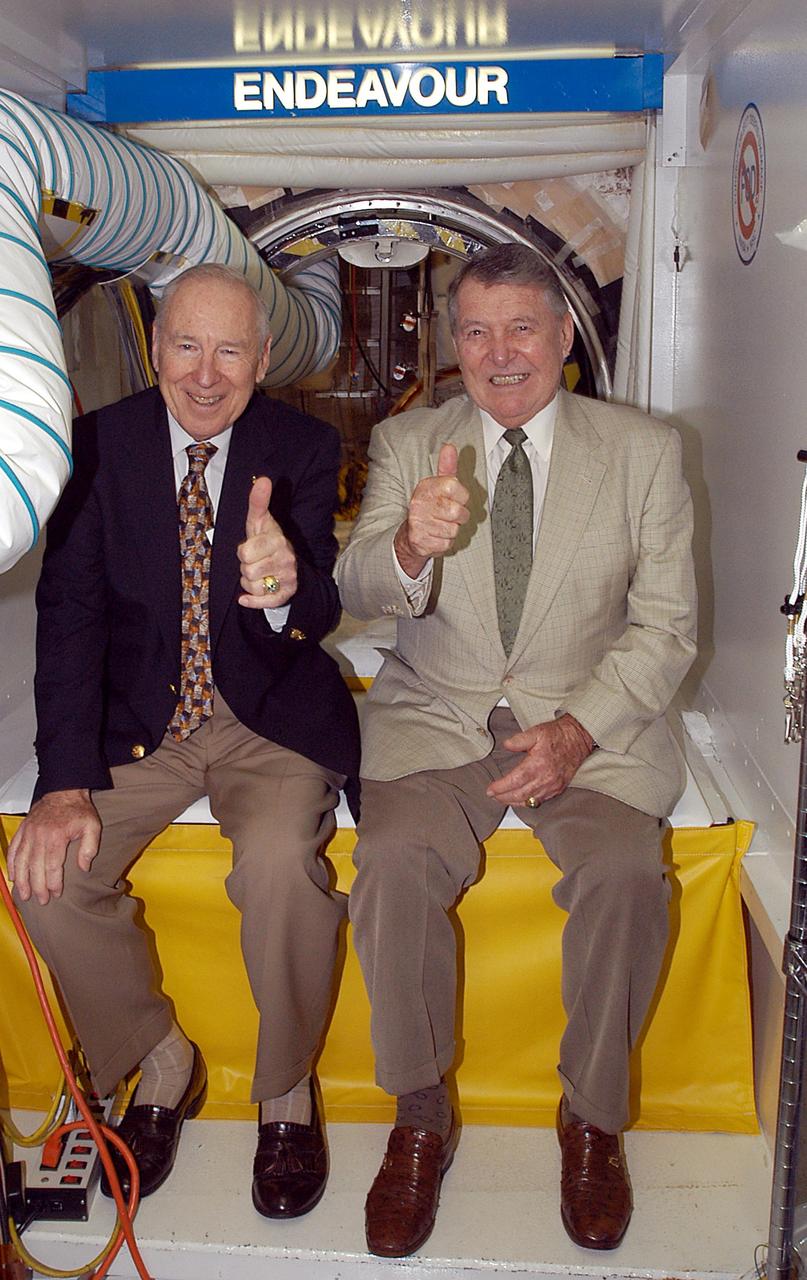
KENNEDY SPACE CENTER, FLA. -Former astronauts Jim Lovell (left) and Wally Schirra (right) pose outside of Endeavour in the Orbiter Processing Facility. Lovell and Schirra visited KSC to talk about the space program and their experiences, as well as offer encouragement to workers to help get the space program "back on its feet." They visited several sites around the Center, including the RLV Hangar where Columbia debris is being collected and examined as part of the investigation into the tragedy that claimed the orbiter and lives of seven astronauts returning from mission STS-107.
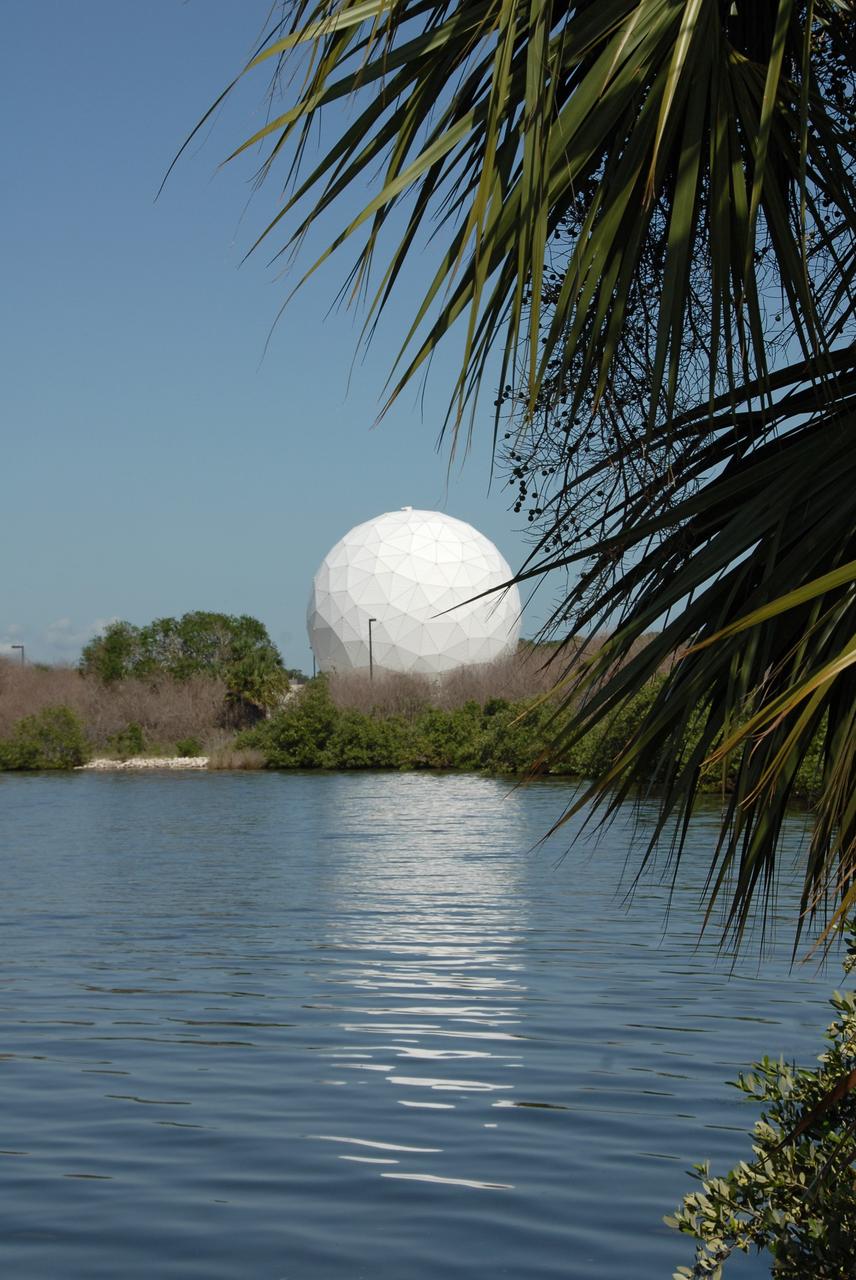
CAPE CANAVERAL, Fla. – This is the radome beneath which is the NASA Debris Radar. It is located at a remote site on North Merritt Island in Florida. One of the largest of its kind in the world, the C-band radar provided critical support to pinpoint debris during the launch of space shuttle Atlantis on the STS-125 mission. The need for this radar was identified after the Columbia tragedy. It worked together with smaller X-band radars placed on the solid rocket booster ship Liberty Star and the U.S. Army landing craft utility ship Brandy Station. Together they provided extremely high resolution images of any debris that created by Atlantis during launch. Photo credit: NASA/Troy Cryder
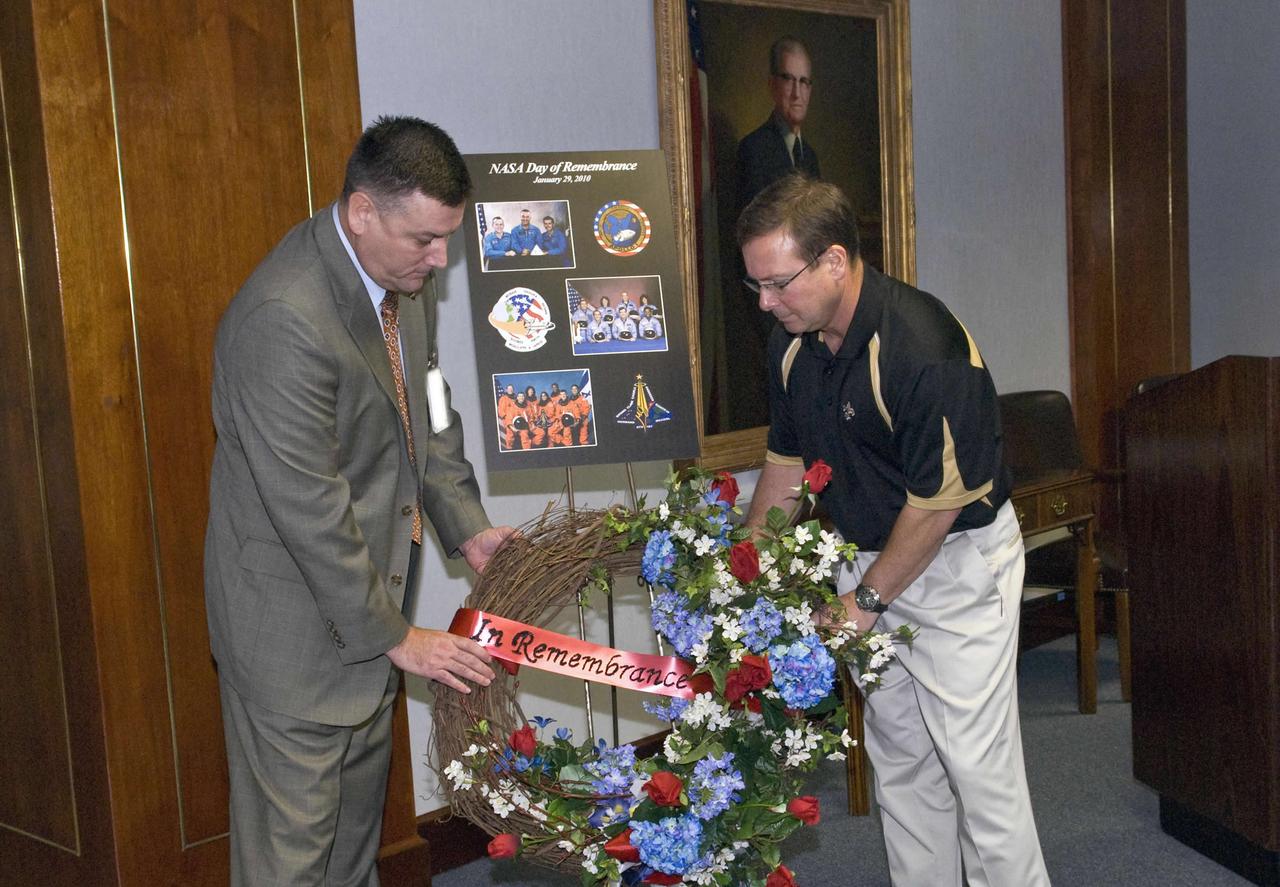
Patrick Scheuermann (left), deputy director at NASA's John C. Stennis Space Center, and Richard Gilbrech, associate director, place a wreath in memory of the 17 astronauts lost in service of the space program since 1967. The wreath was placed during NASA's 2010 Day of Remembrance, observed each year in January. The annual observance memorializes the three astronauts lost in the Apollo 1 launch pad fire in 1967, the seven astronauts lost in the Challenger tragedy in 1986 and the seven astronauts lost in the Columbia accident in 2003. During the Stennis observance, Scheuermann praised the fallen astronauts as 'brave space pioneers who gave their lives in the cause of exploration and discovery.'
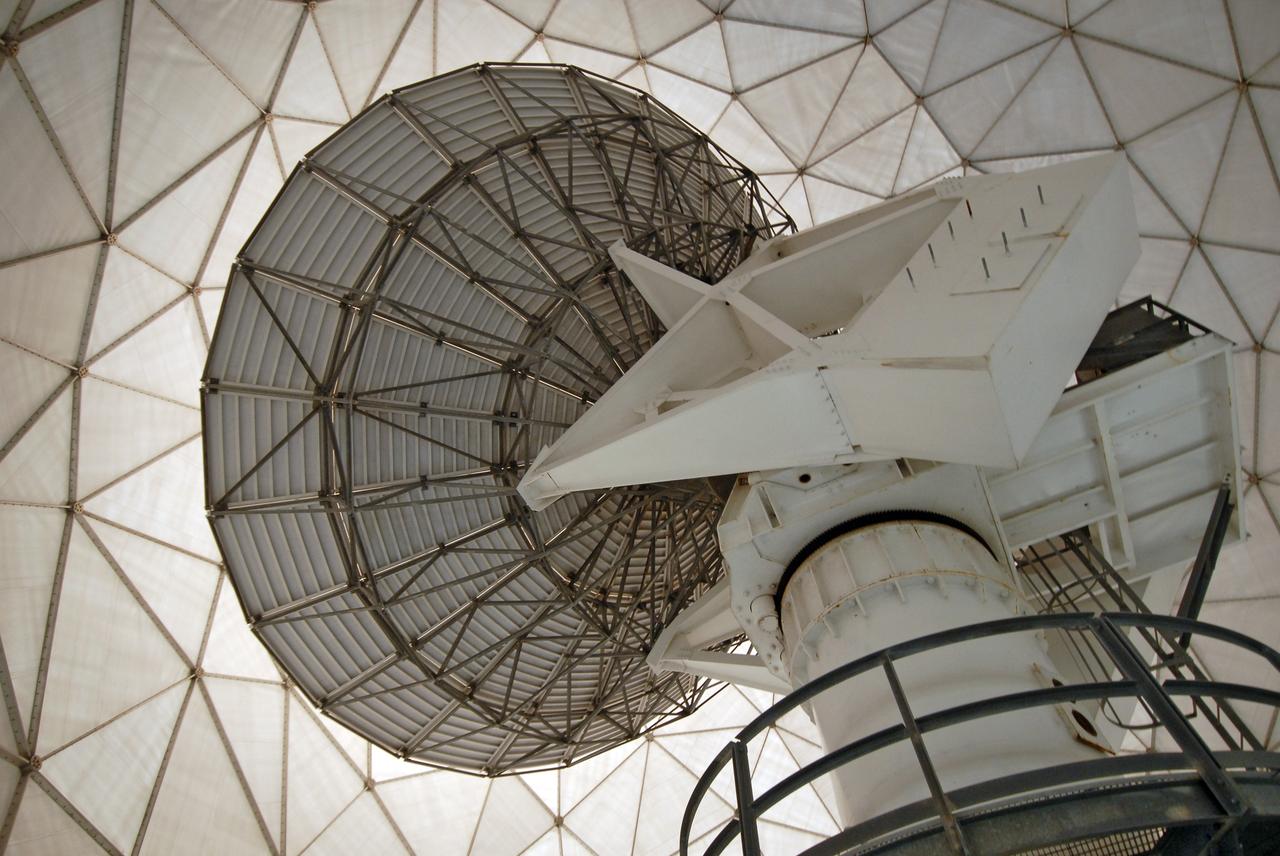
CAPE CANAVERAL, Fla. – This view is NASA's C-band, Debris Radar antenna inside the radome at a site on North Merritt Island in Florida. One of the largest of its kind in the world, the C-band radar provided critical support to pinpoint debris during the launch of space shuttle Atlantis on the STS-125 mission. The need for this radar was identified after the Columbia tragedy. It worked together with smaller X-band radars placed on the solid rocket booster ship Liberty Star and the U.S. Army landing craft utility ship Brandy Station. Together they provided extremely high resolution images of any debris that created by Atlantis during launch. Photo credit: NASA/Troy Cryder
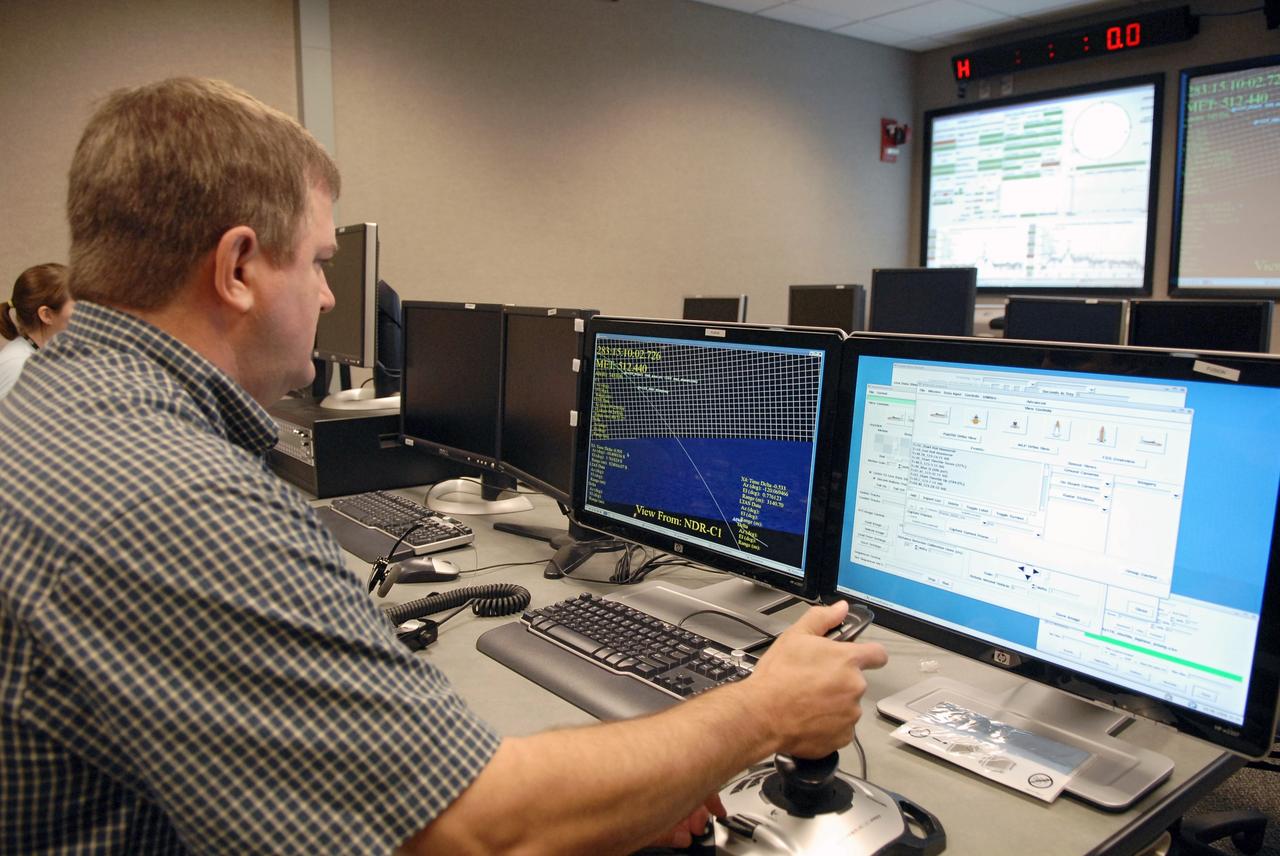
CAPE CANAVERAL, Fla. – An engineer analyzes data from NASA's C-band Debris Radar antenna at a site on North Merritt Island in Florida. One of the largest of its kind in the world, the C-band radar provided critical support to pinpoint debris during the launch of space shuttle Atlantis on the STS-125 mission. The need for this radar was identified after the Columbia tragedy. It worked together with smaller X-band radars placed on the solid rocket booster ship Liberty Star and the U.S. Army landing craft utility ship Brandy Station. Together they provided extremely high resolution images of any debris that created by Atlantis during launch. Photo credit: NASA/Troy Cryder
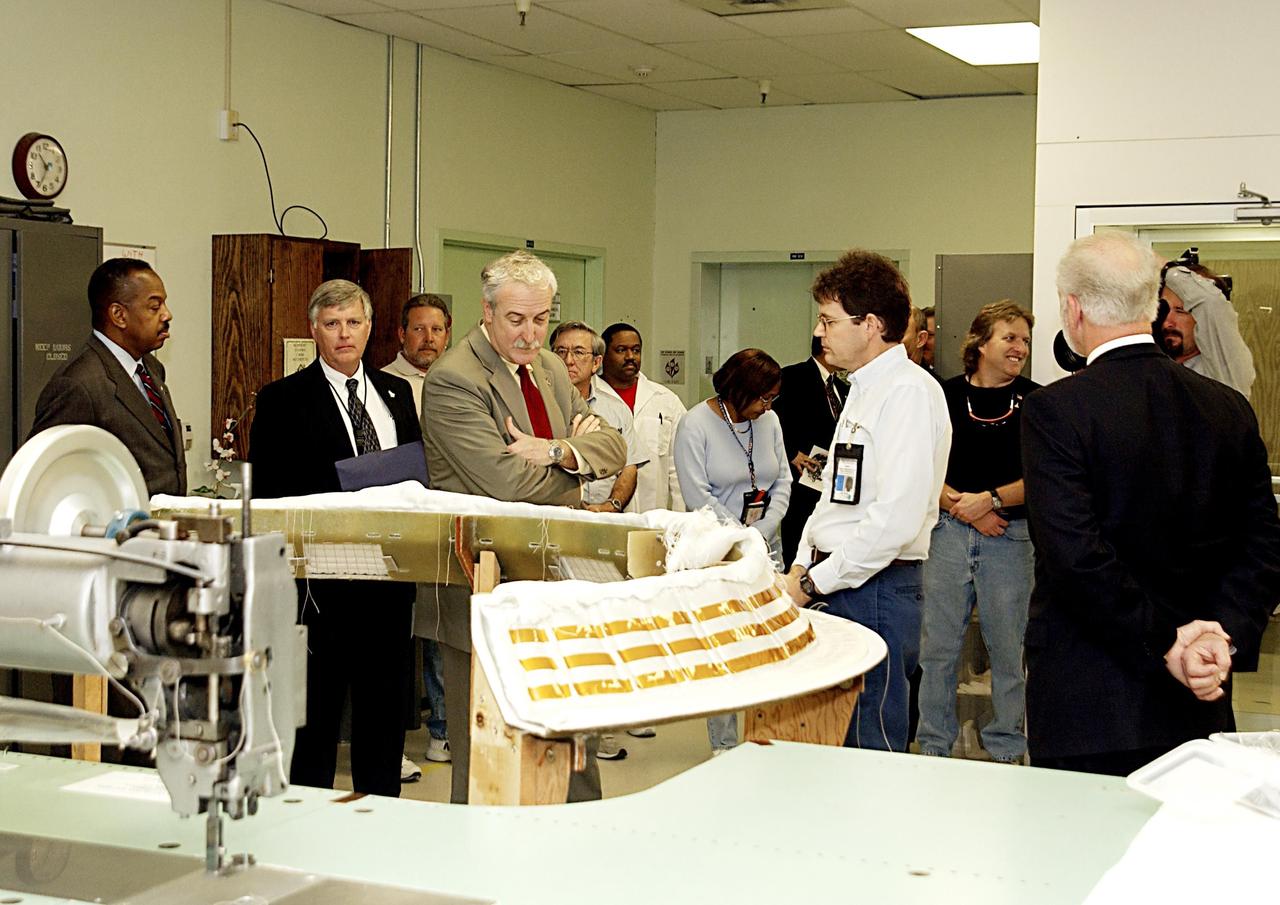
KENNEDY SPACE CENTER, FLA. -- In the Thermal Protection System Facility, NASA Administrator Sean O'Keefe (center) looks at a Dome Heat Shield blanket that is used for Shuttle engines. From left is Glen Mahone, acting director for NASA Public Affairs, Jim Kennedy, deputy director of Kennedy Space Center, O'Keefe, Lee Zook, project leader, and Chuck Fontana, associate program manager, Integrated Logistics. O'Keefe is visiting the site to learn more about the TPS products and process in protecting orbiters from the intense heat of launch and re-entry. TPS tiles have been discussed in the investigation into the Columbia tragedy that destroyed the orbiter and claimed the lives of seven astronauts.
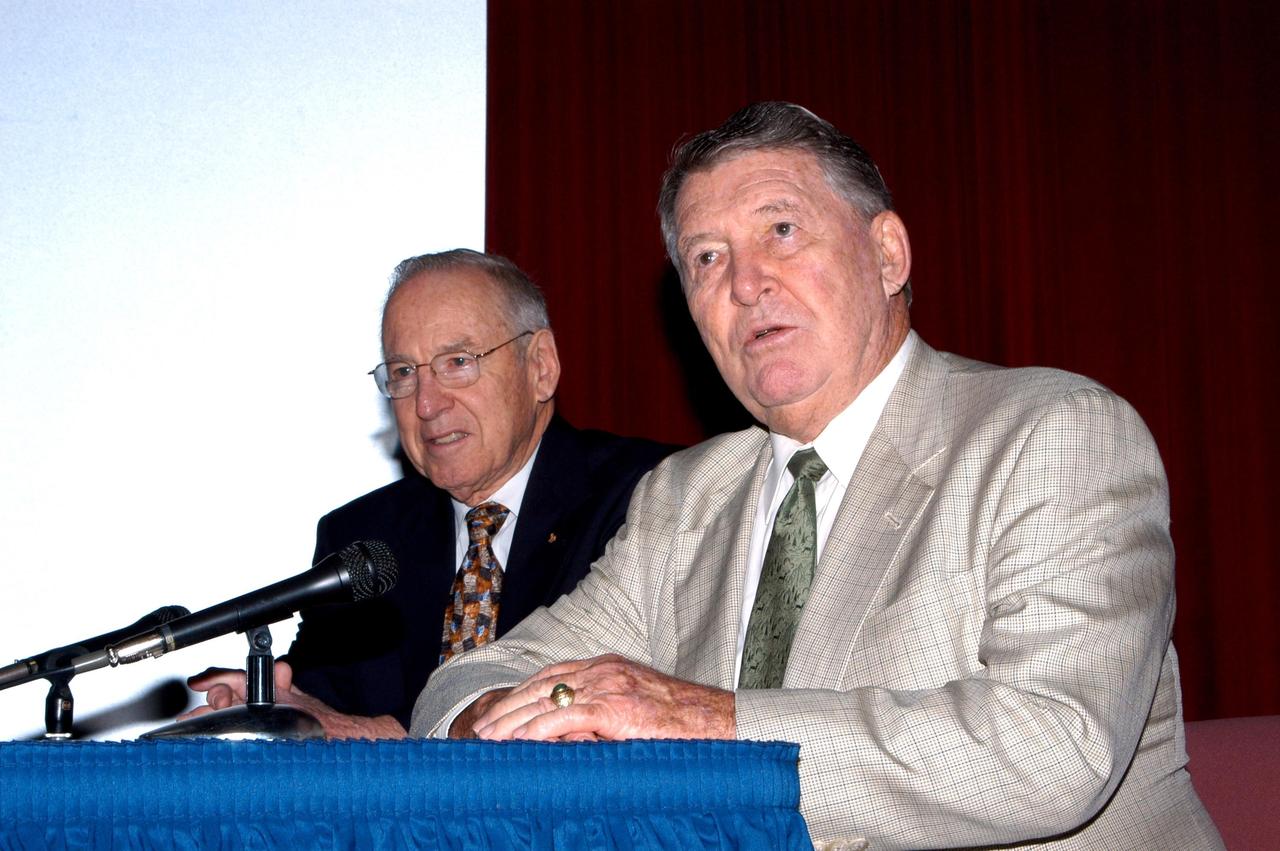
KENNEDY SPACE CENTER, FLA. - During a presentation to KSC employees, former astronauts Jim Lovell (left) and Wally Schirra (right) answer questions from the audience. Lovell and Schirra visited KSC to talk about the space program and their experiences, as well as offer encouragement to workers to help get the space program "back on its feet." They visited several sites around the Center, including the RLV Hangar where Columbia debris is being collected and examined as part of the investigation into the tragedy that claimed the orbiter and lives of seven astronauts returning from mission STS-107.

KENNEDY SPACE CENTER, FLA. - At the KSC Launch Control Complex, former astronauts Jim Lovell (second from left) and Wally Schirra (second from right) talk with Mike Wetmore, director of Shuttle Processing (far left). At far right is Lisa Malone, acting deputy director of External Relations & Business Development at KSC. Lovell and Schirra visited KSC to talk about the space program and their experiences, as well as offer encouragement to workers to help get the space program "back on its feet." They visited several sites around the Center, including the RLV Hangar where Columbia debris is being collected and examined as part of the investigation into the tragedy that claimed the orbiter and lives of seven astronauts returning from mission STS-107.
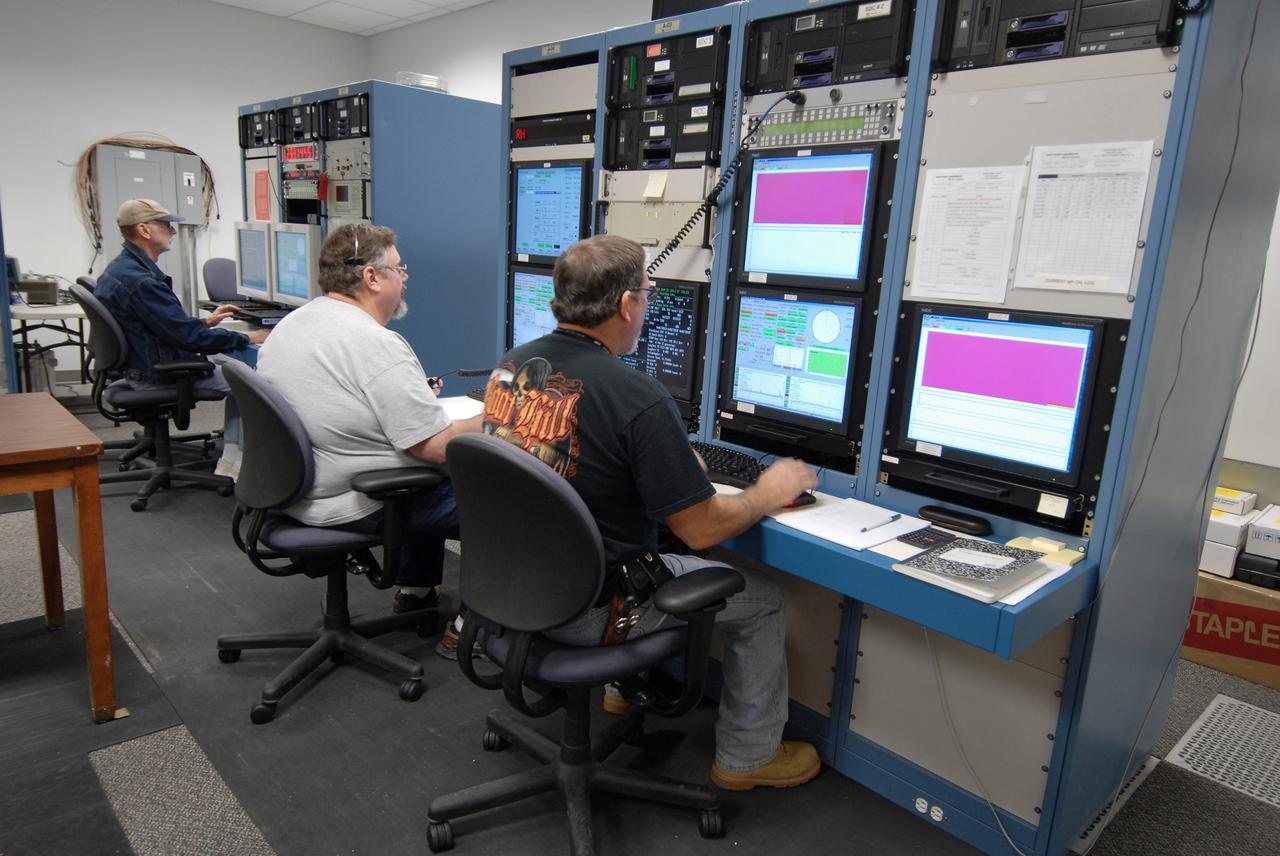
CAPE CANAVERAL, Fla. – Technicians work the console collecting data from NASA's C-band Debris Radar antenna at a site on North Merritt Island in Florida. One of the largest of its kind in the world, the C-band radar provided critical support to pinpoint debris during the launch of space shuttle Atlantis on the STS-125 mission. The need for this radar was identified after the Columbia tragedy. It worked together with smaller X-band radars placed on the solid rocket booster ship Liberty Star and the U.S. Army landing craft utility ship Brandy Station. Together they provided extremely high resolution images of any debris that created by Atlantis during launch. Photo credit: NASA/Troy Cryder
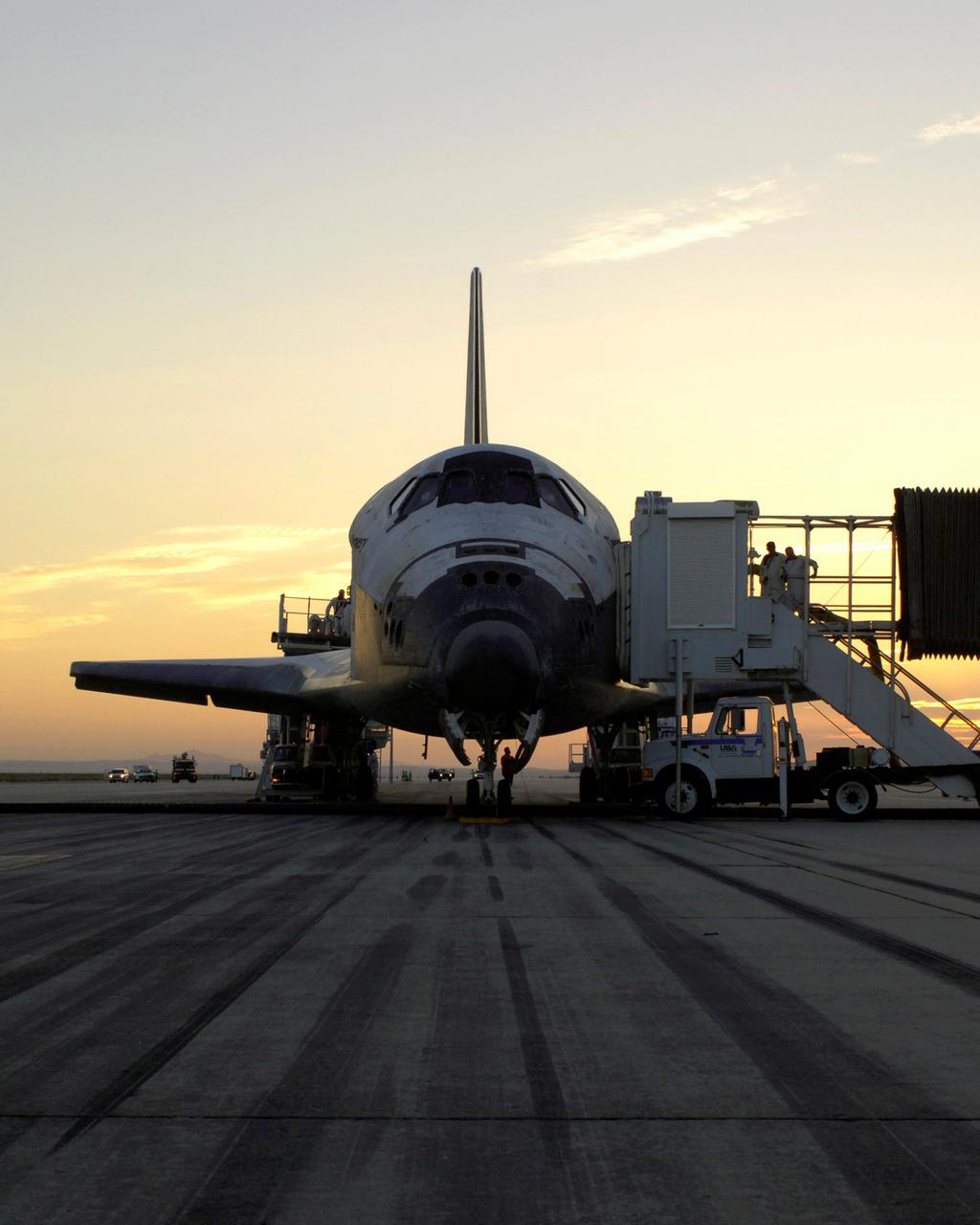
The sun rises on the Space Shuttle Discovery as it rests on the runway at Edward’s Air Force Base in California after a safe landing at 5:11 am (PDT) on August 9, 2005. The STS-114 landing concluded a historic 14 day return to flight mission to the International Space Station (ISS) after nearly a two and one half year delay in flight after the Space Shuttle Columbia tragedy in February 2003. Three successful space walks performed during the mission included a demonstration of repair techniques to the Shuttle’s thermal tiles known as the Thermal Protection System, the replacement of a failed Control Moment Gyroscope which helps keep the station oriented properly, and the installation of the External Stowage Platform, a space “shelf” for holding spare parts during Station construction. The shuttle’s heat shield repair was a first for Shuttle repair while still in space.
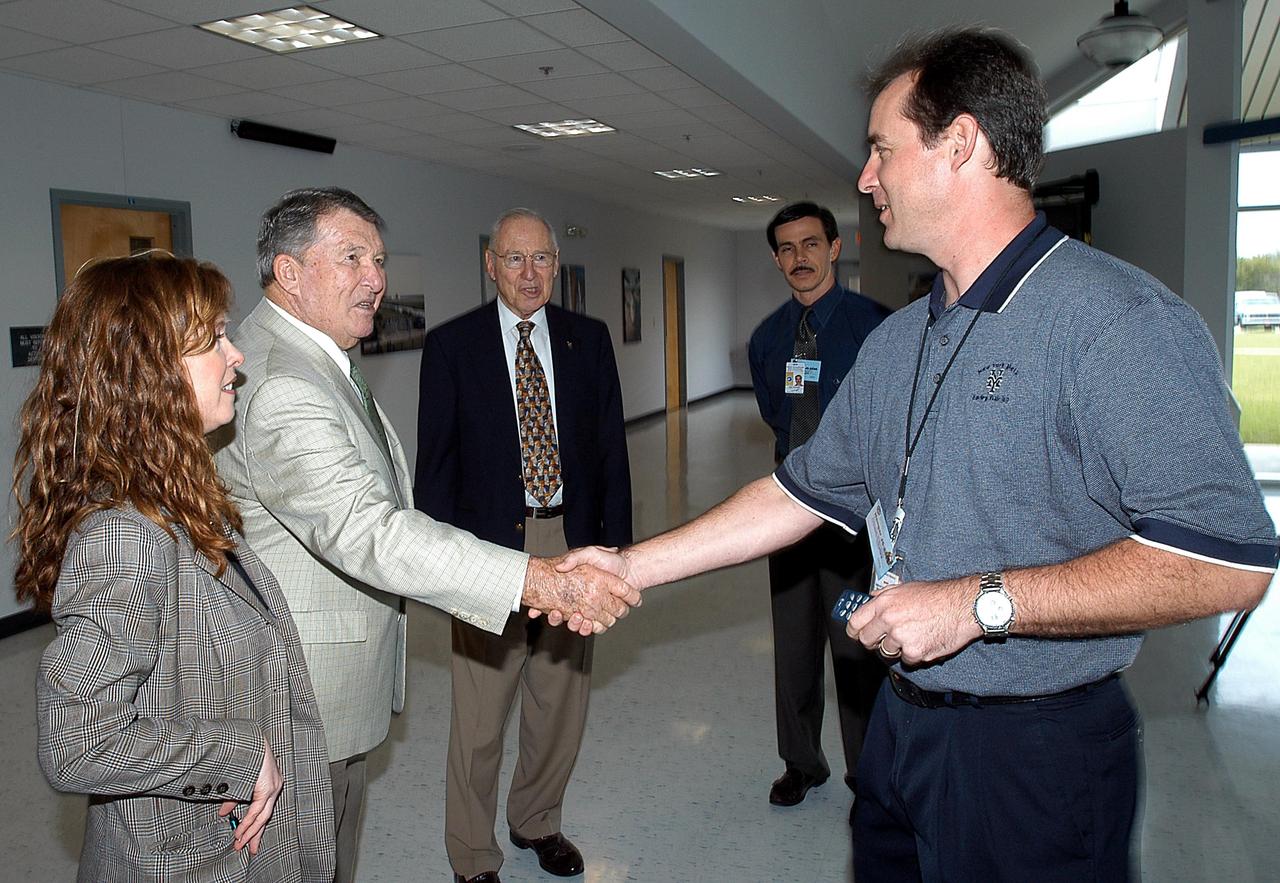
KENNEDY SPACE CENTER, FLA. - During a visit to KSC, former astronauts Wally Schirra (second from left) and Jim Lovell (third from left) greet Space Shuttle Test Director Steve Altemus. At far left is is Lisa Malone, acting deputy director of External Relations & Business Development at KSC, and reconstruction engineer John Cowart (second from right). Lovell and Schirra visited KSC to talk about the space program and their experiences, as well as offer encouragement to workers to help get the space program "back on its feet." They visited several sites around the Center, including the RLV Hangar where Columbia debris is being collected and examined as part of the investigation into the tragedy that claimed the orbiter and lives of seven astronauts returning from mission STS-107.
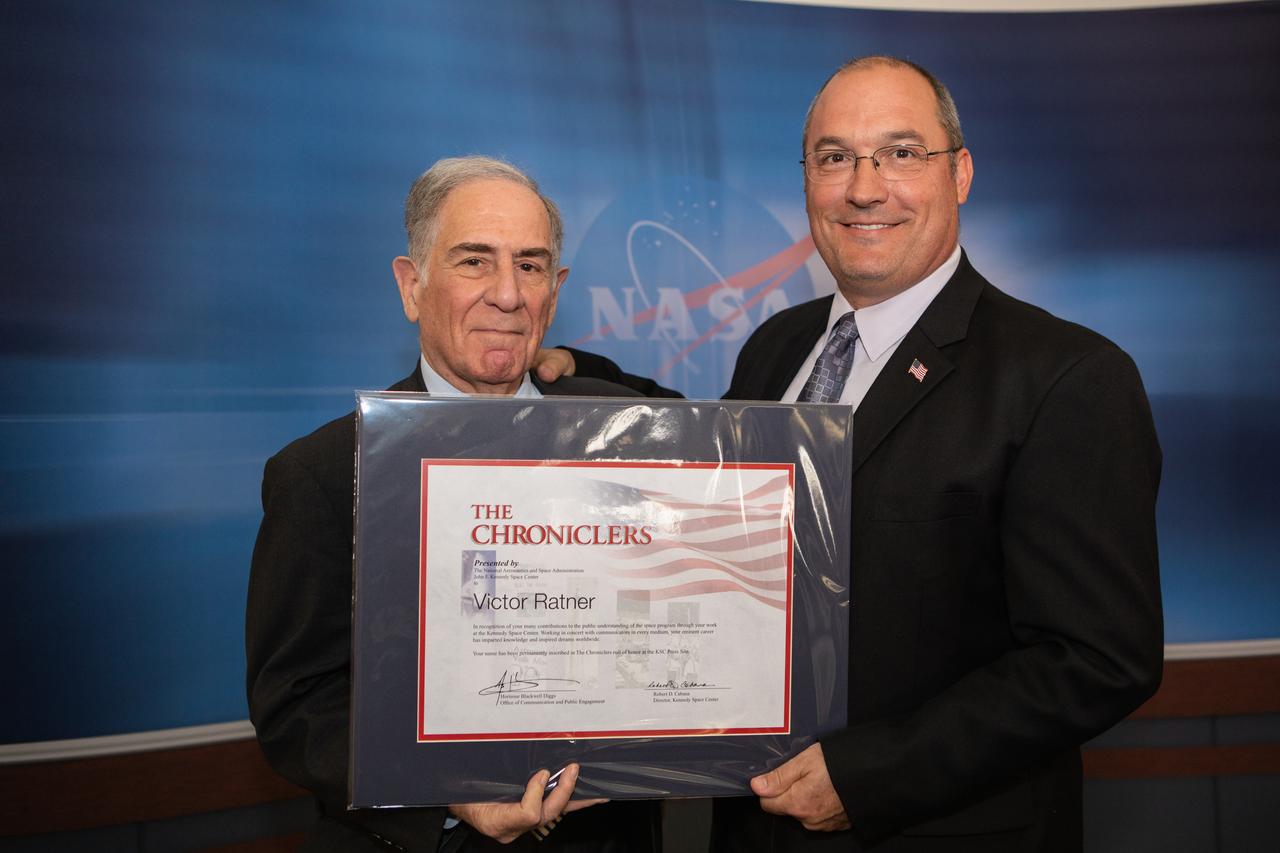
NASA Public Affairs Officer Greg Harland, right, poses for a photograph with newly inducted Chronicler Vic Ratner during a ceremony at Kennedy Space Center’s NASA News Center in Florida on May 3, 2019. Ratner covered the space program for ABC Radio and was the only radio correspondent on the air live during the Space Shuttle Challenger accident, providing on-the-scene information for more than five hours that day after the tragedy. Also inducted as members were journalists Jim Banke and Todd Halvorson, and photographer Peter Cosgrove. They were selected by a committee of their peers on March 25. The Chroniclers recognizes retirees of the news and communications business who have helped spread news of American space exploration from Kennedy for 10 years or more.

Sheryl Chafee, second from right, Astronauts Memorial Foundation (AMF) Board of Directors chairperson, accompanied by NASA Associate Administrator Bob Cabana, and Kennedy Space Director Janet Petro, lay a wreath in front of the Space Mirror Memorial during the Day of Remembrance on Jan. 26, 2023, at the Kennedy Space Center Visitor Complex in Florida. At far right is Thad Altman, AMF president and CEO. The event honored the crews of Apollo 1 and space shuttles Challenger and Columbia, as well as other astronauts who lost their lives in the pursuit of spaceflight. This year marks the 20th anniversary of the Columbia tragedy. This year’s ceremony was hosted by the AMF, which was founded after the shuttle Challenger accident in 1986 to honor the sacrifices of fallen astronauts each year.

STS087-716-080 (19 November – 5 December 1997) --- Featured in this view is Mount Everest. It is called “Sagarmatha” in Nepal and “Qomolangma Feng” Qomolangma in China (both names meaning “Goddess Mother of the World”), but is known to the western world as Mount Everest. At an altitude of 29,028 feet (8,848 meters) the summit of tallest mountain on Earth (above sea level) reaches two-thirds of the way through the atmosphere. Situated on the border between Nepal and China (27°59’N, 86°56’E), Mount Everest with its low oxygen levels, powerful winds, and extremely cold temperatures has captured the imagination of adventuresome men and women. Sir Edmund Hillary and Tenzing Norgay were the first persons to surmount Mount Everest in 1953. While climbing Everest can be challenging, it can also be tragic. On May 10, 1996, after reaching the summit and descending to camp, several climbers were trapped by a severe and sudden storm. A total of eight people died, making this day the deadliest single tragedy in the history of Mount Everest. This picture is one of the 70mm Earth observations visuals used by the crew at its post flight presentation events.
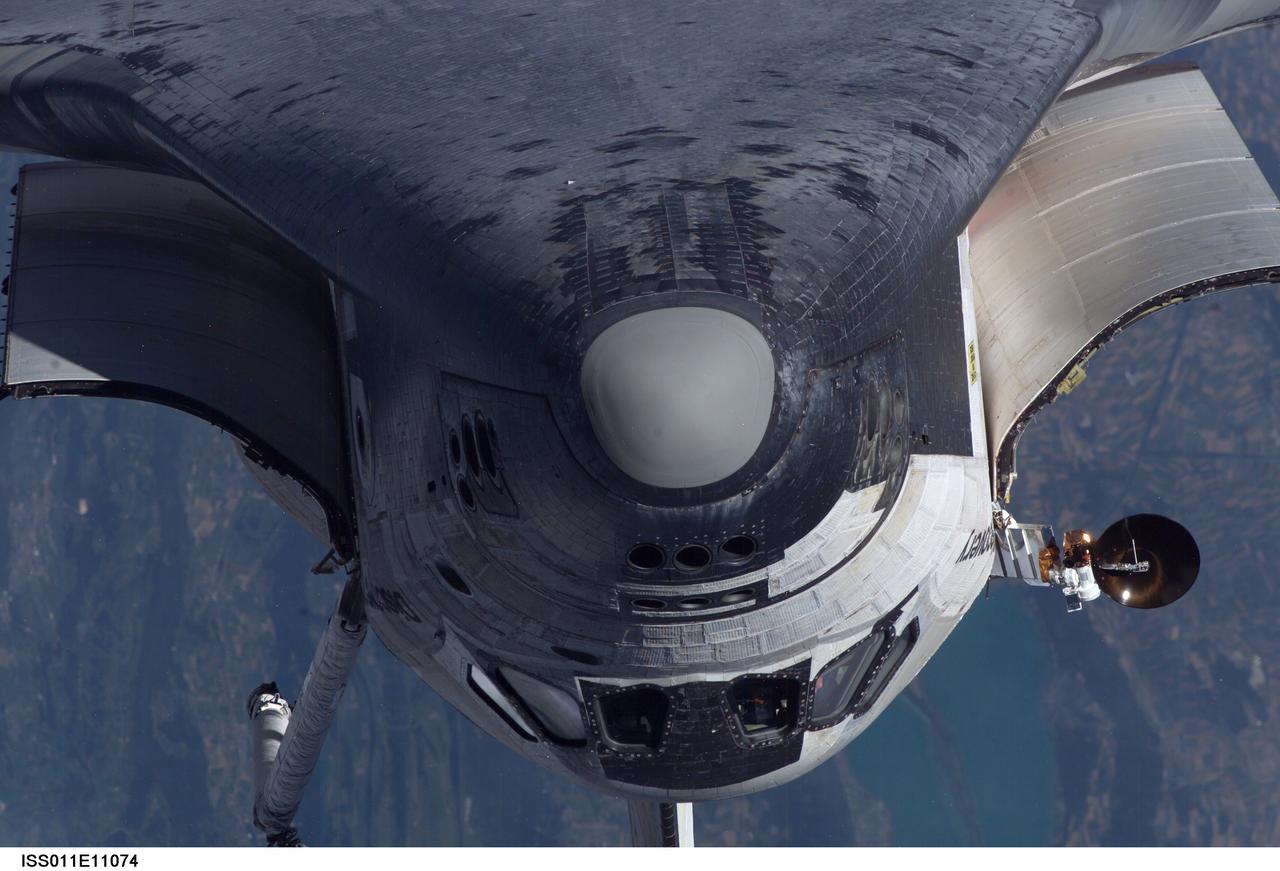
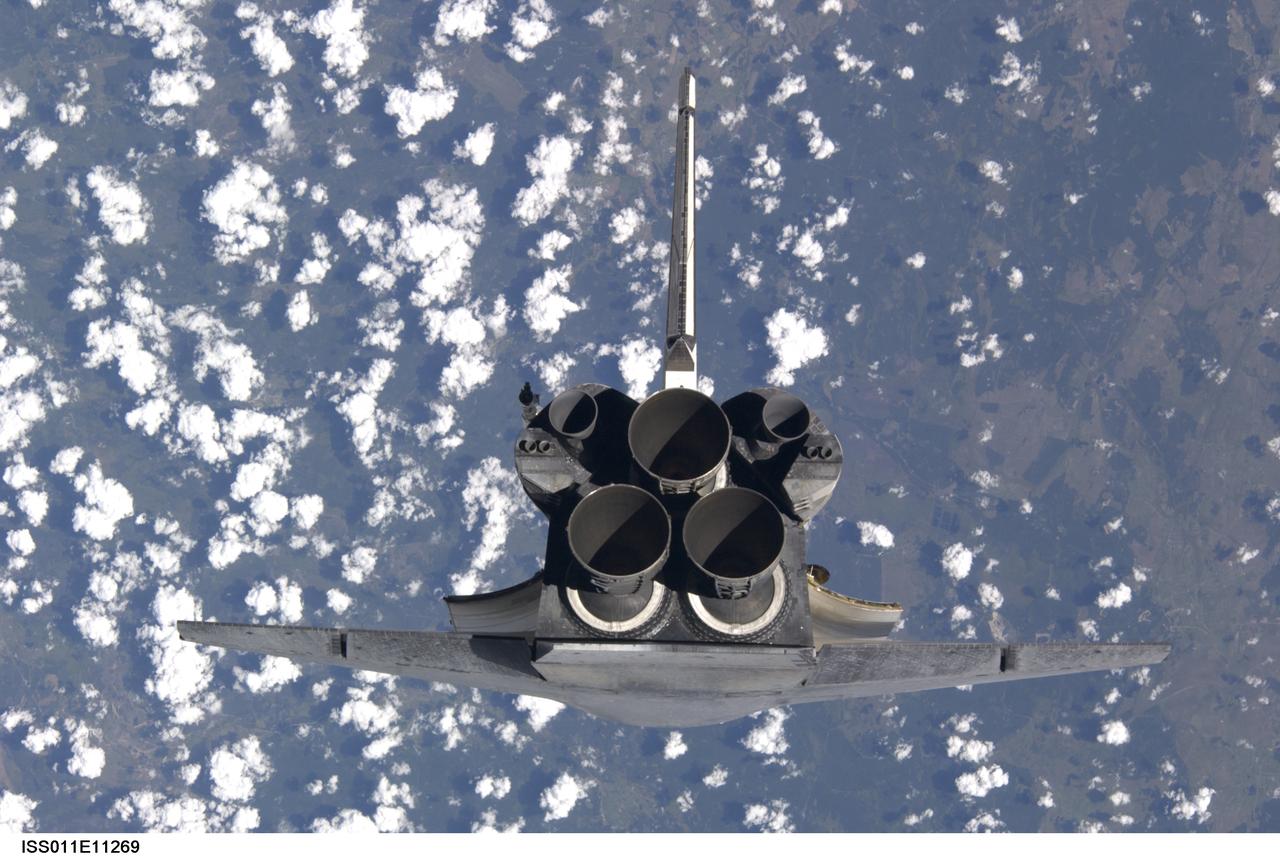
Launched on July 26, 2005 from the Kennedy Space Center in Florida, STS-114 was classified as Logistics Flight 1. Among the Station-related activities of the mission were the delivery of new supplies and the replacement of one of the orbital outpost's Control Moment Gyroscopes (CMGs). STS-114 also carried the Raffaello Multi-Purpose Logistics Module and the External Stowage Platform-2. A major focus of the mission was the testing and evaluation of new Space Shuttle flight safety, which included new inspection and repair techniques. Upon its approach to the International Space Station (ISS), the Space Shuttle Discovery underwent a photography session in order to assess any damages that may have occurred during its launch and/or journey through Space. Discovery was over Switzerland, about 600 feet from the ISS, when Cosmonaut Sergei K. Kriklev, Expedition 11 Commander, and John L. Phillips, NASA Space Station officer and flight engineer photographed the spacecraft as it performed a back flip to allow photography of its heat shield. Astronaut Eileen M. Collins, STS-114 Commander, guided the shuttle through the flip. The photographs were analyzed by engineers on the ground to evaluate the condition of Discovery’s heat shield. The crew safely returned to Earth on August 9, 2005. The mission historically marked the Return to Flight after nearly a two and one half year delay in flight after the Space Shuttle Columbia tragedy in February 2003.
Launched on July 26, 2005 from the Kennedy Space Center in Florida, STS-114 was classified as Logistics Flight 1. Among the Station-related activities of the mission were the delivery of new supplies and the replacement of one of the orbital outpost's Control Moment Gyroscopes (CMGs). STS-114 also carried the Raffaello Multi-Purpose Logistics Module and the External Stowage Platform-2. A major focus of the mission was the testing and evaluation of new Space Shuttle flight safety, which included new inspection and repair techniques. Upon its approach to the International Space Station (ISS), the Space Shuttle Discovery underwent a photography session in order to assess any damages that may have occurred during its launch and/or journey through Space. Discovery was over Switzerland, about 600 feet from the ISS, when Cosmonaut Sergei K. Kriklev, Expedition 11 Commander, and John L. Phillips, NASA Space Station officer and flight engineer photographed the spacecraft as it performed a back flip to allow photography of its heat shield. Astronaut Eileen M. Collins, STS-114 Commander, guided the shuttle through the flip. The photographs were analyzed by engineers on the ground to evaluate the condition of Discovery’s heat shield. The crew safely returned to Earth on August 9, 2005. The mission historically marked the Return to Flight after nearly a two and one half year delay in flight after the Space Shuttle Columbia tragedy in February 2003.
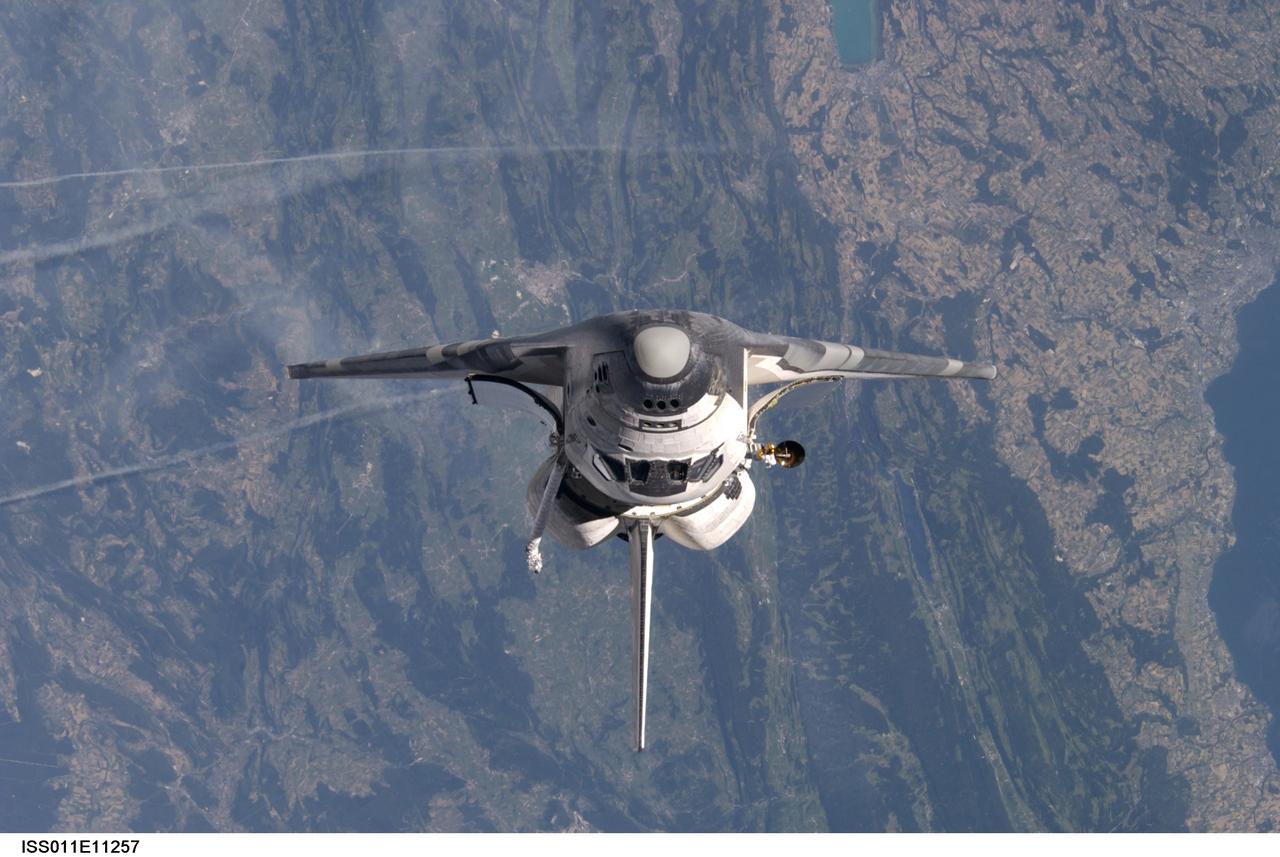
Launched on July 26, 2005 from the Kennedy Space Center in Florida, STS-114 was classified as Logistics Flight 1. Among the Station-related activities of the mission were the delivery of new supplies and the replacement of one of the orbital outpost's Control Moment Gyroscopes (CMGs). STS-114 also carried the Raffaello Multi-Purpose Logistics Module and the External Stowage Platform-2. A major focus of the mission was the testing and evaluation of new Space Shuttle flight safety, which included new inspection and repair techniques. Upon its approach to the International Space Station (ISS), the Space Shuttle Discovery underwent a photography session in order to assess any damages that may have occurred during its launch and/or journey through Space. Discovery was over Switzerland, about 600 feet from the ISS, when Cosmonaut Sergei K. Kriklev, Expedition 11 Commander, and John L. Phillips, NASA Space Station officer and flight engineer photographed the spacecraft as it performed a back flip to allow photography of its heat shield. Astronaut Eileen M. Collins, STS-114 Commander, guided the shuttle through the flip. The photographs were analyzed by engineers on the ground to evaluate the condition of Discovery’s heat shield. The crew safely returned to Earth on August 9, 2005. The mission historically marked the Return to Flight after nearly a two and one half year delay in flight after the Space Shuttle Columbia tragedy in February 2003.
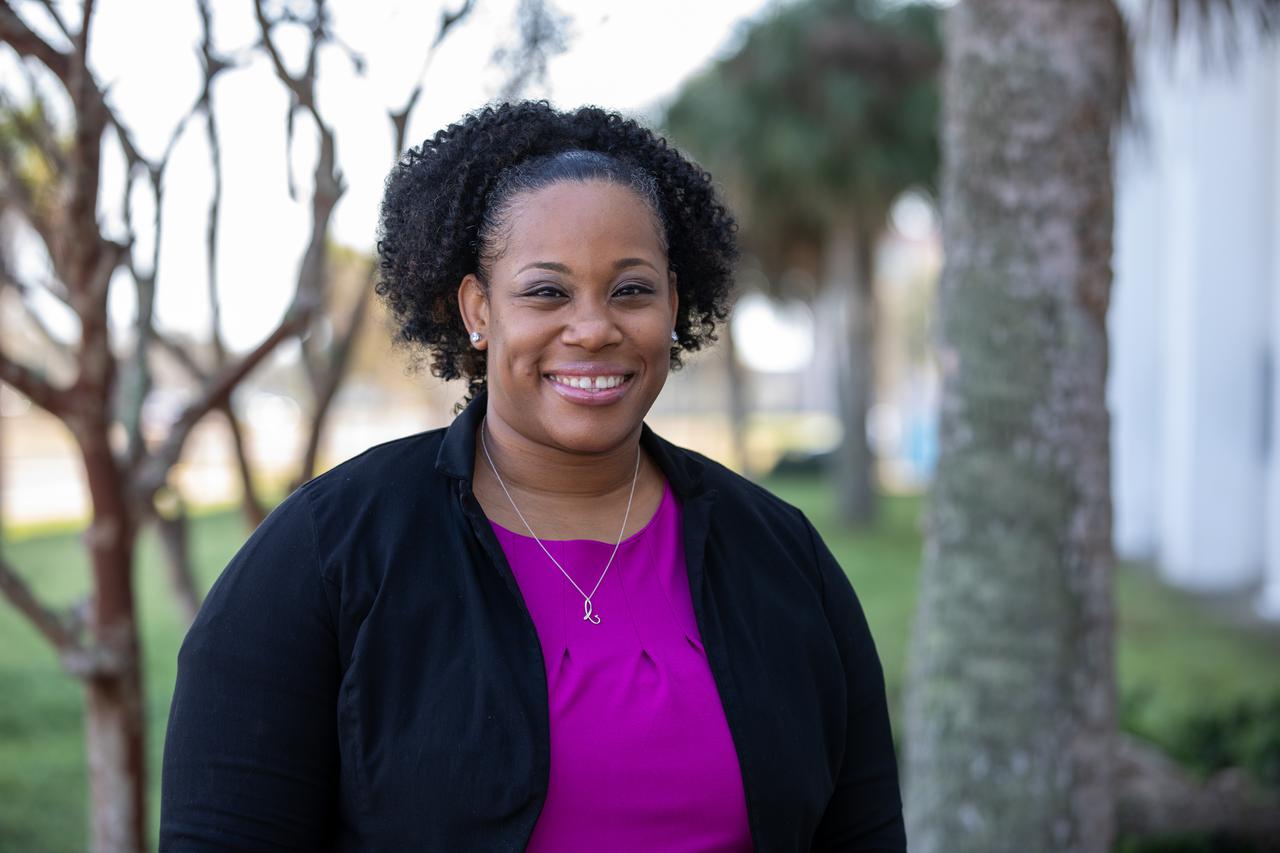
“The day after the Columbia tragedy I knew exactly what I wanted to do with my life. I go to my physics class and tell a friend, ‘I want to go work for NASA.’ My physics teacher walks by and overhears the conversation. She starts the class and says ‘I want to go around the classroom and hear about what everybody wants to do with their life.’ She gets to me. I was super excited. ‘I’m going to work for NASA, I’m going to be an engineer, I’m going to make sure everybody flies safe.’ And she bursts out laughing. And everyone else starts laughing. I’m like, ‘what is the joke?’ And she says to me, ‘If you ever get the opportunity to work for NASA, you make sure you come take me out to lunch.’ And that ended up being the joke of the day at my entire high school. “I think we have a very long way to go. I think that there are not enough educational resources. There are not enough pipeline opportunities. I come from a single-parent family. We weren’t rich. We lived in a New Jersey suburb in a very small town where the idea of a girl going to NASA — it just seemed impossible. I think that we have long way to go to reach out to some of those smaller, under-serving communities where individuals may not have the resources. Where teachers can’t even motivate kids to do something big because they don’t even believe it themselves. I do believe there are strides happening — but I don’t think we’re there yet.” — Brittani Sims, Flight Systems Engineer, Kennedy Space Center Interviewer: NASA / Thalia Patrinos
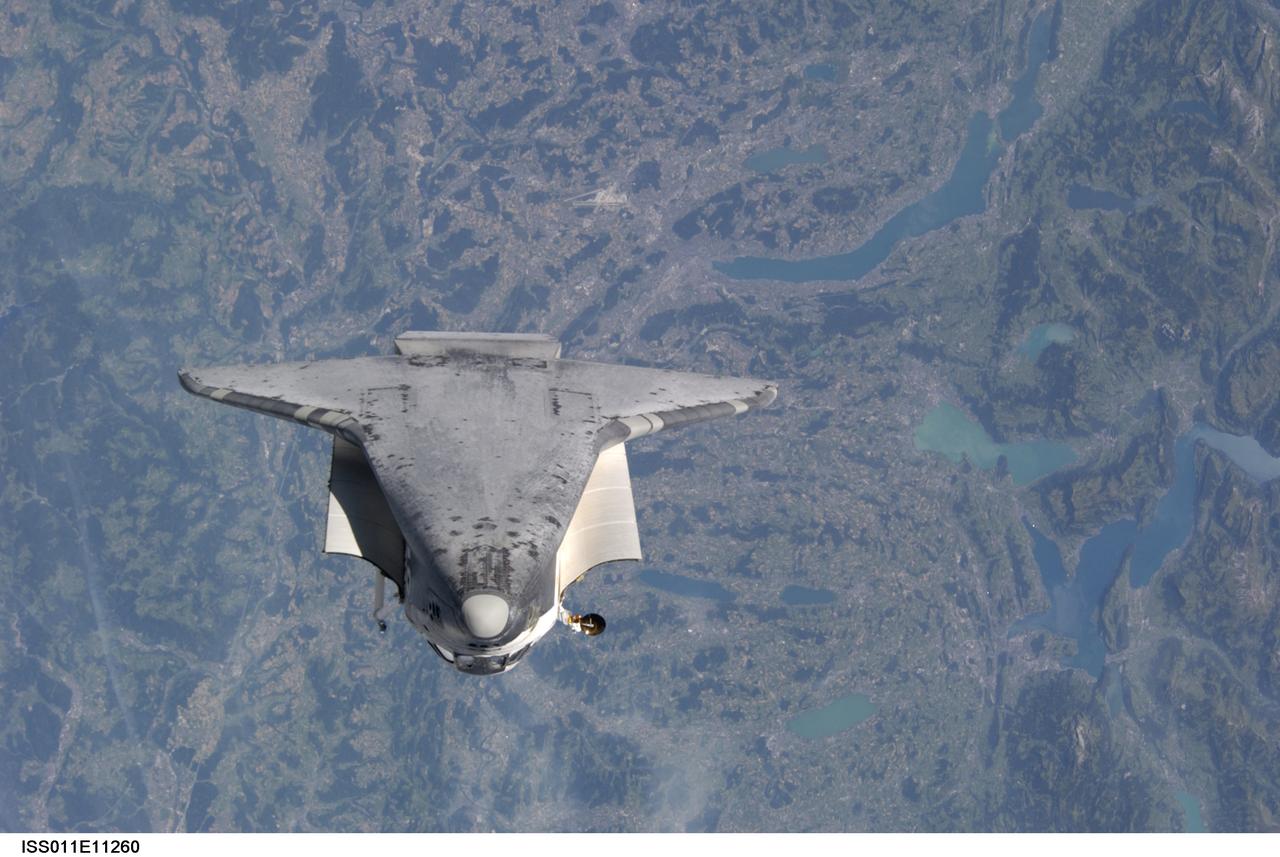
Launched on July 26, 2005, from the Kennedy Space Center in Florida, STS-114 was classified as Logistics Flight 1. Among the Station-related activities of the mission were the delivery of new supplies and the replacement of one of the orbital outpost's Control Moment Gyroscopes (CMGs). STS-114 also carried the Raffaello Multi-Purpose Logistics Module and the External Stowage Platform-2. A major focus of the mission was the testing and evaluation of new Space Shuttle flight safety, which included new inspection and repair techniques. Upon its approach to the International Space Station (ISS), the Space Shuttle Discovery underwent a photography session in order to assess any damages that may have occurred during its launch and/or journey through Space. Discovery was over Switzerland, about 600 feet from the ISS, when Cosmonaut Sergei K. Kriklev, Expedition 11 Commander, and John L. Phillips, NASA Space Station officer and flight engineer photographed the under side of the spacecraft as it performed a back flip to allow photography of its heat shield. Astronaut Eileen M. Collins, STS-114 Commander, guided the shuttle through the flip. The photographs were analyzed by engineers on the ground to evaluate the condition of Discovery’s heat shield. The crew safely returned to Earth on August 9, 2005. The mission historically marked the Return to Flight after nearly a two and one half year delay in flight after the Space Shuttle Columbia tragedy in February 2003.
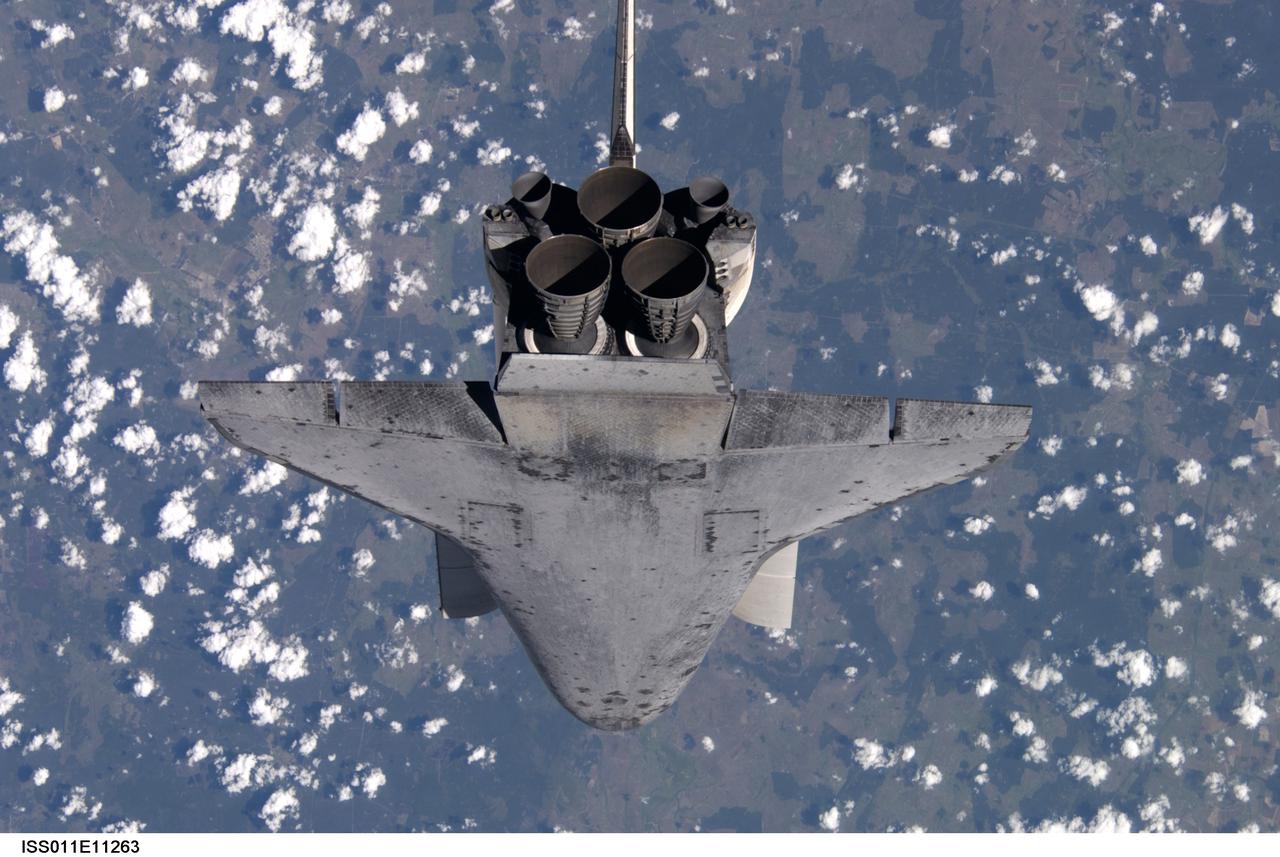
Launched on July 26, 2005 from the Kennedy Space Center in Florida, STS-114 was classified as Logistics Flight 1. Among the Station-related activities of the mission were the delivery of new supplies and the replacement of one of the orbital outpost's Control Moment Gyroscopes (CMGs). STS-114 also carried the Raffaello Multi-Purpose Logistics Module and the External Stowage Platform-2. A major focus of the mission was the testing and evaluation of new Space Shuttle flight safety, which included new inspection and repair techniques. Upon its approach to the International Space Station (ISS), the Space Shuttle Discovery underwent a photography session in order to assess any damages that may have occurred during its launch and/or journey through Space. Discovery was over Switzerland, about 600 feet from the ISS, when Cosmonaut Sergei K. Kriklev, Expedition 11 Commander, and John L. Phillips, NASA Space Station officer and flight engineer photographed the under side of the spacecraft as it performed a back flip to allow photography of its heat shield. Astronaut Eileen M. Collins, STS-114 Commander, guided the shuttle through the flip. The photographs were analyzed by engineers on the ground to evaluate the condition of Discovery’s heat shield. The crew safely returned to Earth on August 9, 2005. The mission historically marked the Return to Flight after nearly a two and one half year delay in flight after the Space Shuttle Columbia tragedy in February 2003.