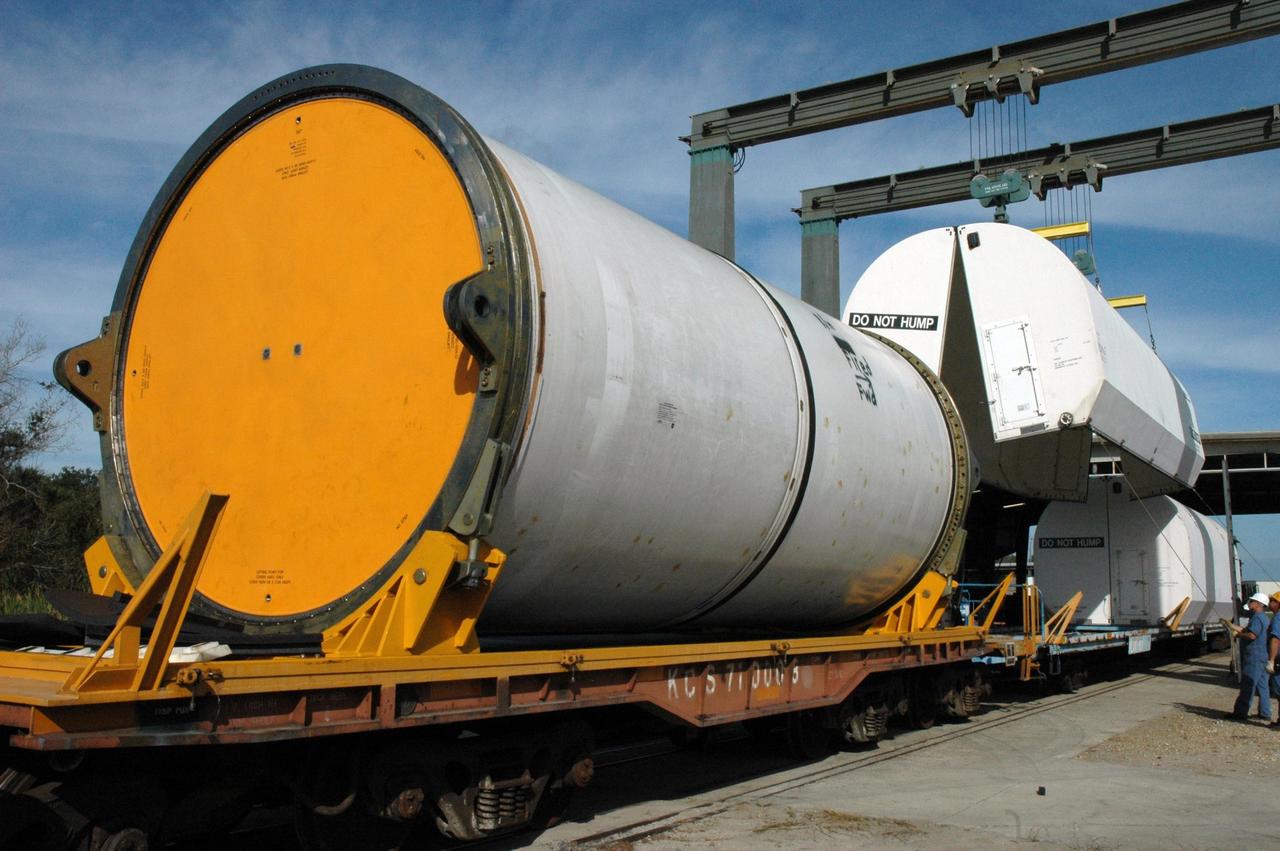
KENNEDY SPACE CENTER, FLA. -- At the railroad yard at NASA's Kennedy Space Center, covers are being placed over solid rocket booster segments that will be transported to Utah. The yellow transportation end covers have already been inserted and are secure, as seen on the segment at left. The spent segments are part of the booster used to launch space shuttle Discovery in October. After a mission, the spent boosters are recovered, cleaned, disassembled, refurbished and reused after each launch. After hydrolasing the interior of each segment, they are placed on flatbed trucks. The individual booster segments are transferred to a railhead located at the railroad yard at NASA's Kennedy Space Center. The long train of segments is part of the twin solid rocket boosters used to launch space shuttle Discovery in October. The NASA Railroad locomotive backs up the rail cars and the segment is lowered onto the car. The covered segments are moved to Titusville for interchange with Florida East Coast Railway to begin the trip back to Utah. Photo credit: NASA/Amanda Diller
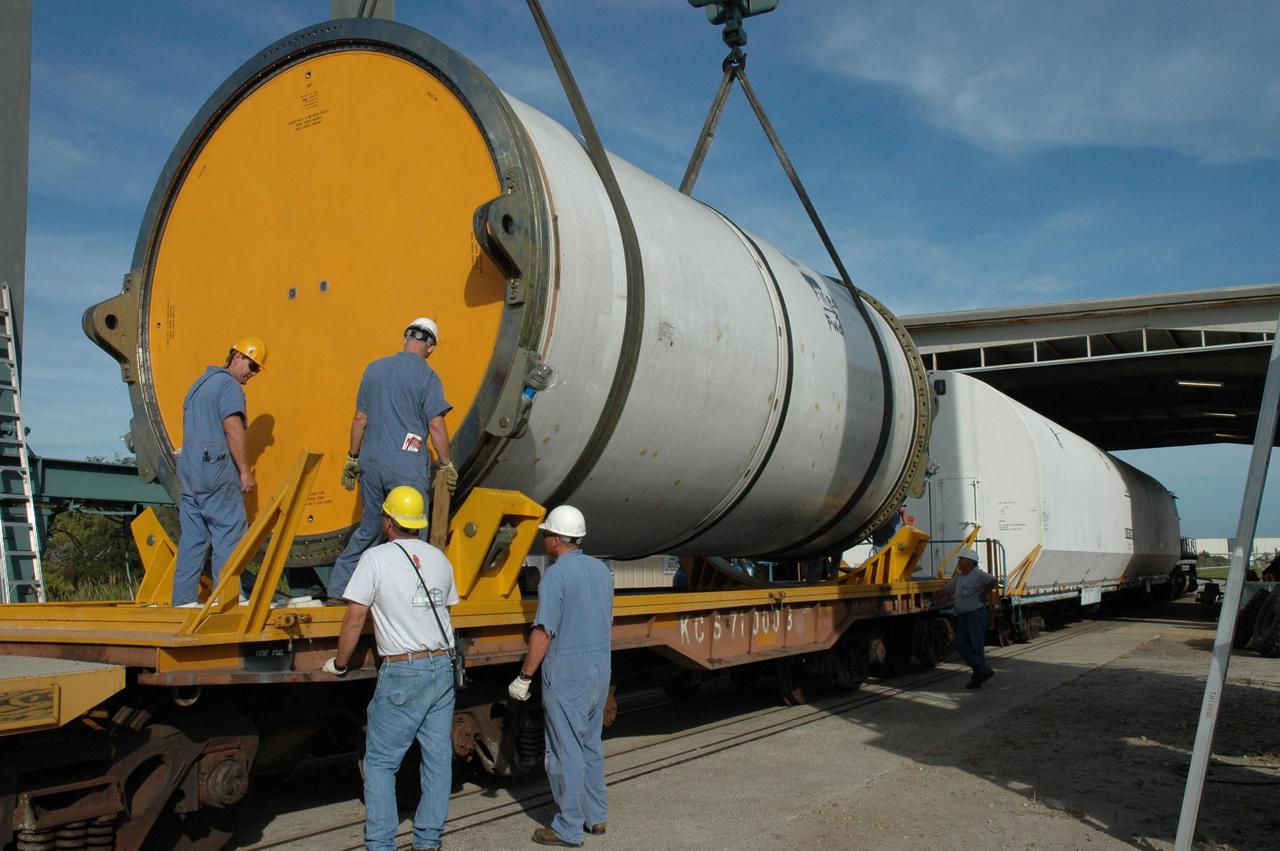
KENNEDY SPACE CENTER, FLA. -- Workers oversee the placement of a solid rocket booster segment onto a railroad car at the railroad yard at NASA's Kennedy Space Center. The spent segment is part of the booster used to launch space shuttle Discovery in October. At far right are other segments already covered for the long trip back to Utah. After a mission, the spent boosters are recovered, cleaned, disassembled, refurbished and reused after each launch. After hydrolasing the interior of each segment, they are placed on flatbed trucks. The individual booster segments are transferred to a railhead located at the railroad yard at NASA's Kennedy Space Center. The long train of segments is part of the twin solid rocket boosters used to launch space shuttle Discovery in October. The NASA Railroad locomotive backs up the rail cars and the segment is lowered onto the car. The covered segments are moved to Titusville for interchange with Florida East Coast Railway to begin the trip back to Utah. Photo credit: NASA/Amanda Diller
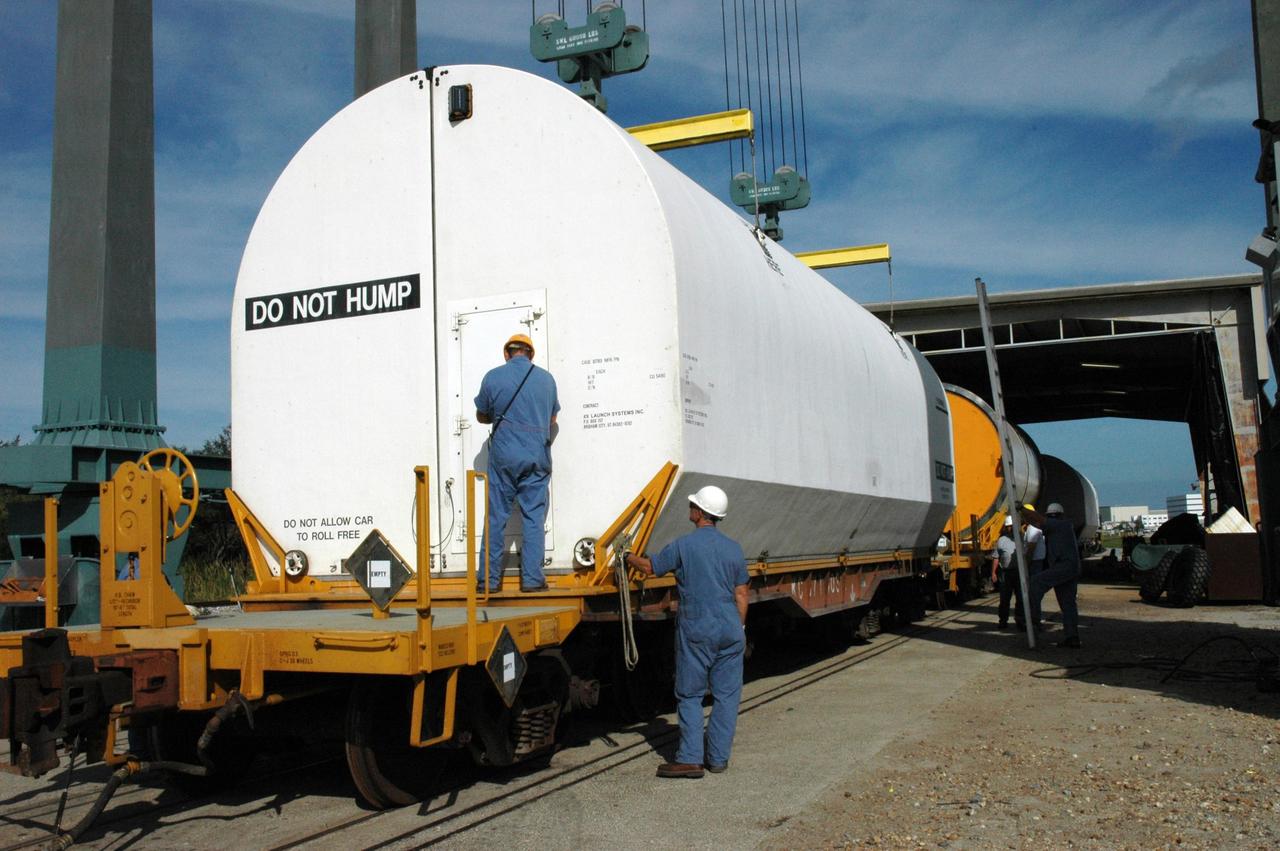
KENNEDY SPACE CENTER, FLA. -- A worker at the railroad yard at NASA's Kennedy Space Center secures the transportation cover over the solid rocket booster segment that is being transported to Utah. After a mission, the spent boosters are recovered, cleaned, disassembled, refurbished and reused after each launch. After hydrolasing the interior of each segment, they are placed on flatbed trucks. The individual booster segments are transferred to a railhead located at the railroad yard at NASA's Kennedy Space Center. The long train of segments is part of the twin solid rocket boosters used to launch space shuttle Discovery in October. The NASA Railroad locomotive backs up the rail cars and the segment is lowered onto the car. The covered segments are moved to Titusville for interchange with Florida East Coast Railway to begin the trip back to Utah. Photo credit: NASA/Amanda Diller
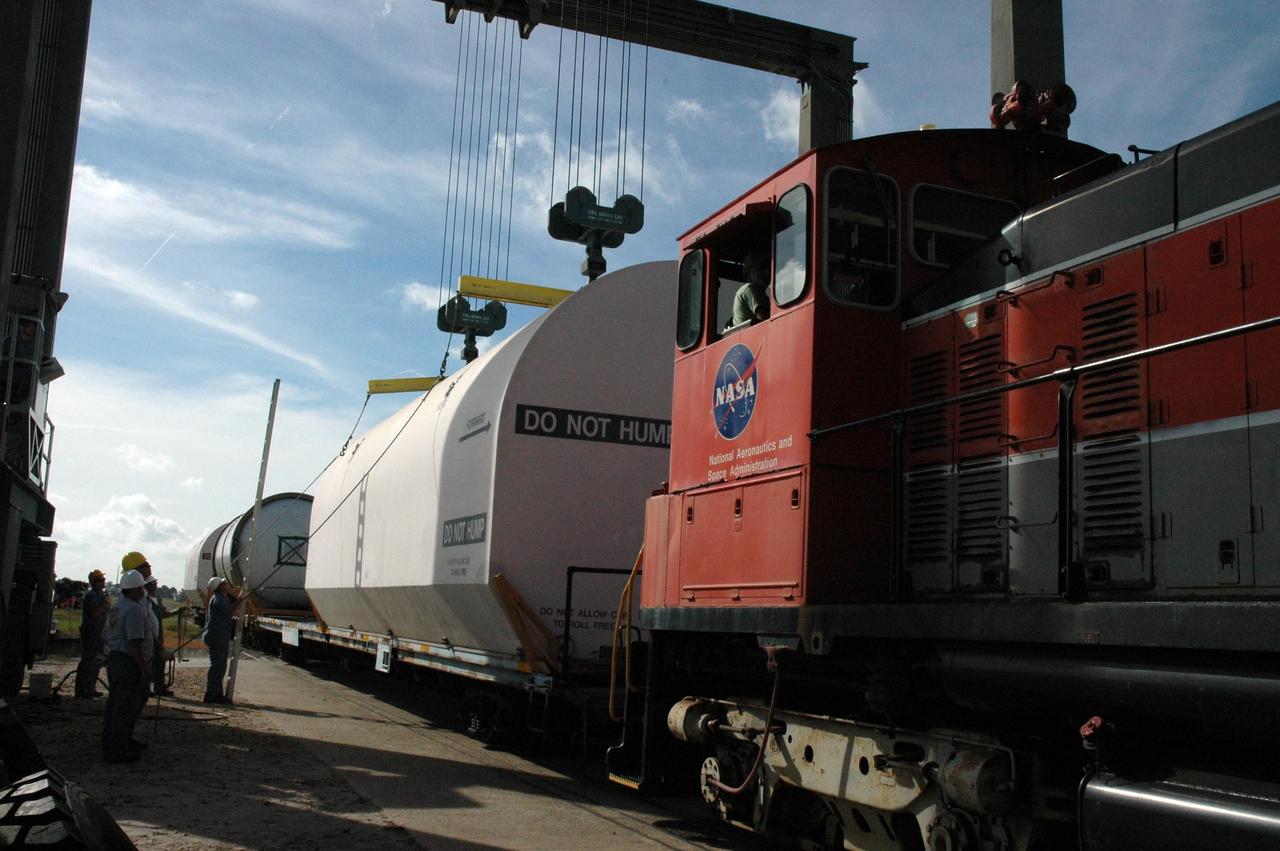
KENNEDY SPACE CENTER, FLA. -- At the railroad yard at NASA's Kennedy Space Center, workers release the crane from the transportation cover over the solid rocket booster segment. After a mission, the spent boosters are recovered, cleaned, disassembled, refurbished and reused after each launch. After hydrolasing the interior of each segment, they are placed on flatbed trucks. The individual booster segments are transferred to a railhead located at the railroad yard at NASA's Kennedy Space Center. The long train of segments is part of the twin solid rocket boosters used to launch space shuttle Discovery in October. The NASA Railroad locomotive backs up the rail cars and the segment is lowered onto the car. The covered segments are moved to Titusville for interchange with Florida East Coast Railway to begin the trip back to Utah. Photo credit: NASA/Amanda Diller
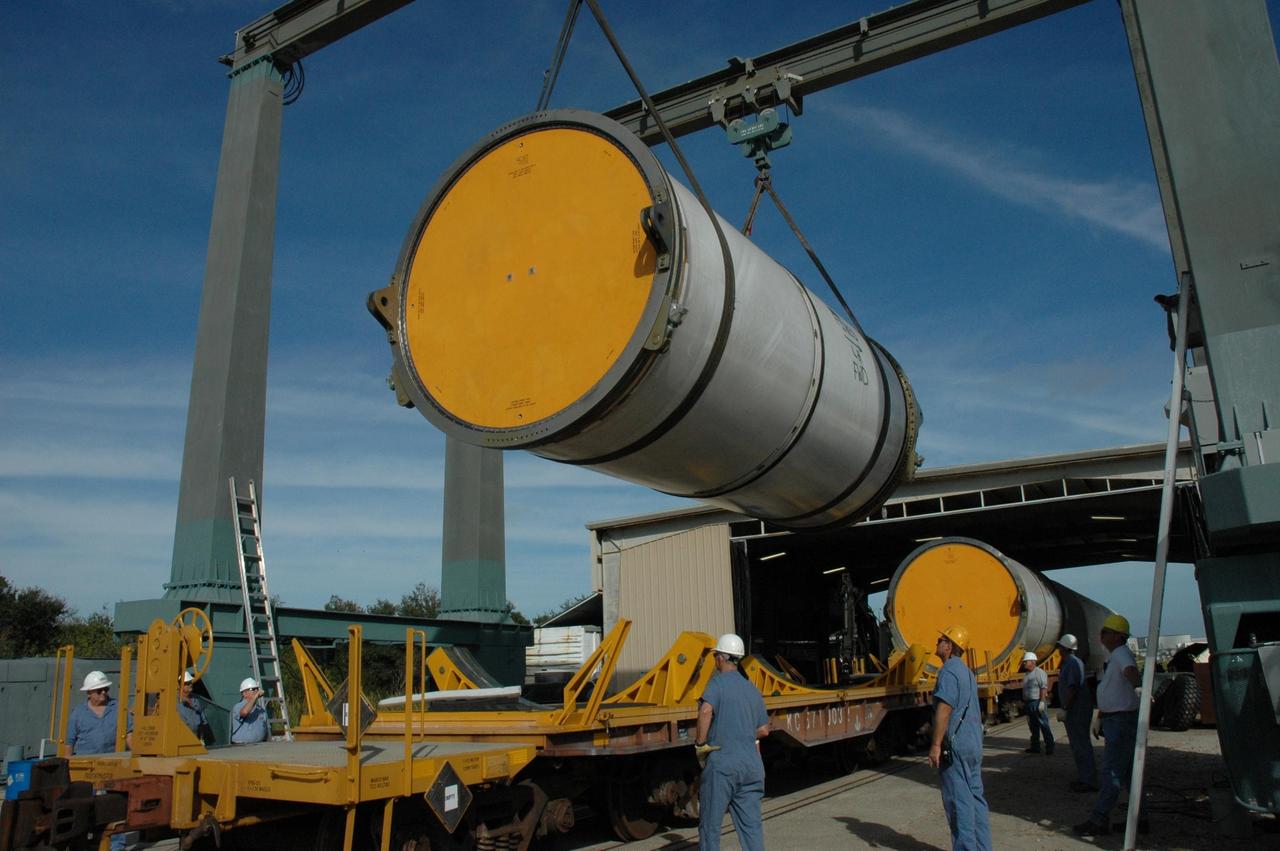
KENNEDY SPACE CENTER, FLA. -- An overhead crane lowers a solid rocket booster segment toward a railroad car at the railroad yard at NASA's Kennedy Space Center. The yellow transportation end cover has already been inserted and is secure. The spent segment is part of the booster used to launch space shuttle Discovery in October. The segment will be placed on the car and covered for the long trip back to Utah. After a mission, the spent boosters are recovered, cleaned, disassembled, refurbished and reused after each launch. After hydrolasing the interior of each segment, they are placed on flatbed trucks. The individual booster segments are transferred to a railhead located at the railroad yard at NASA's Kennedy Space Center. The long train of segments is part of the twin solid rocket boosters used to launch space shuttle Discovery in October. The NASA Railroad locomotive backs up the rail cars and the segment is lowered onto the car. The covered segments are moved to Titusville for interchange with Florida East Coast Railway to begin the trip back to Utah. Photo credit: NASA/Amanda Diller
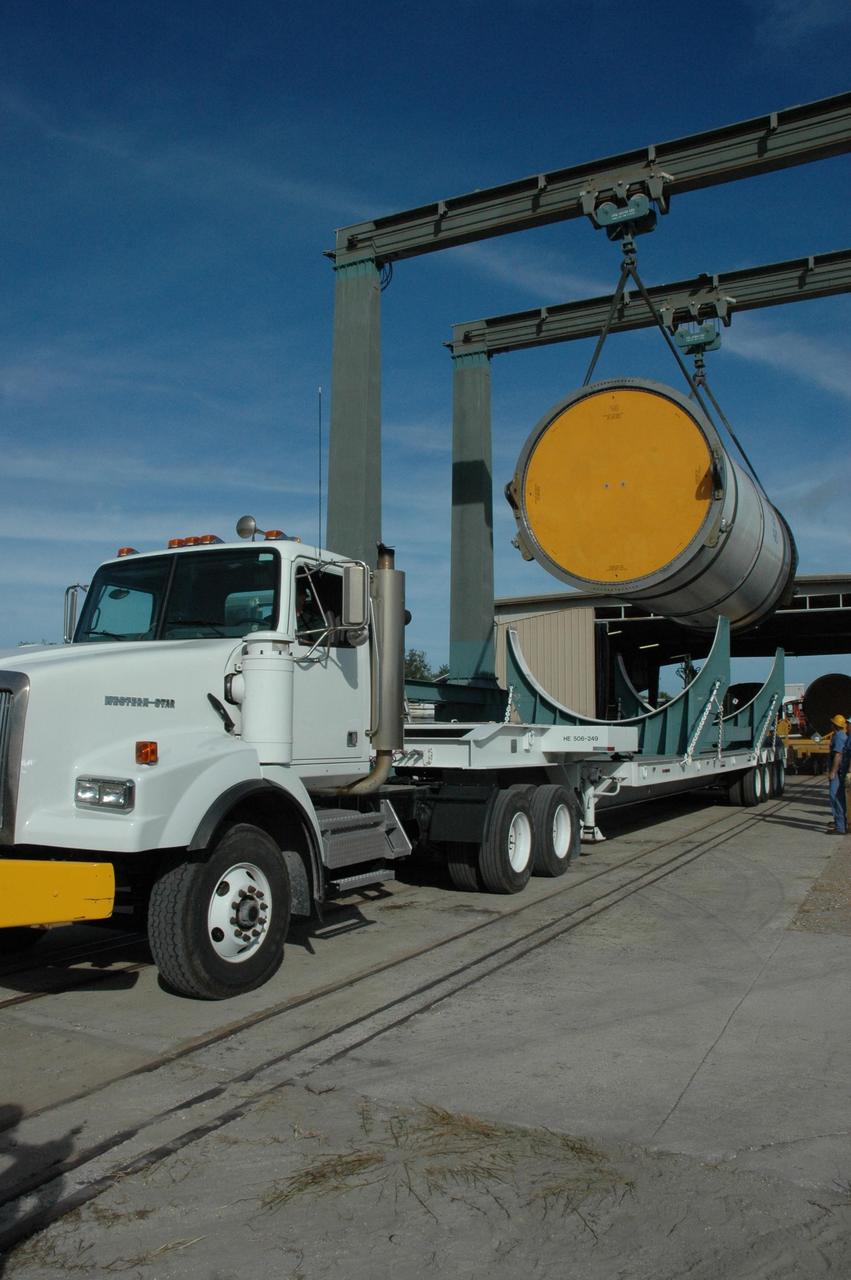
KENNEDY SPACE CENTER, FLA. -- A solid rocket booster segment is lifted off a truck bed at the railroad yard at NASA's Kennedy Space Center. The yellow transportation end cover has already been inserted and is secure. The segment is part of the booster used to launch space shuttle Discovery in October. The spent segment will be placed on a railroad car and covered for the long trip back to Utah. After a mission, the spent boosters are recovered, cleaned, disassembled, refurbished and reused after each launch. After hydrolasing the interior of each segment, they are placed on flatbed trucks. The individual booster segments are transferred to a railhead located at the railroad yard at NASA's Kennedy Space Center. The long train of segments is part of the twin solid rocket boosters used to launch space shuttle Discovery in October. The NASA Railroad locomotive backs up the rail cars and the segment is lowered onto the car. The covered segments are moved to Titusville for interchange with Florida East Coast Railway to begin the trip back to Utah. Photo credit: NASA/Amanda Diller
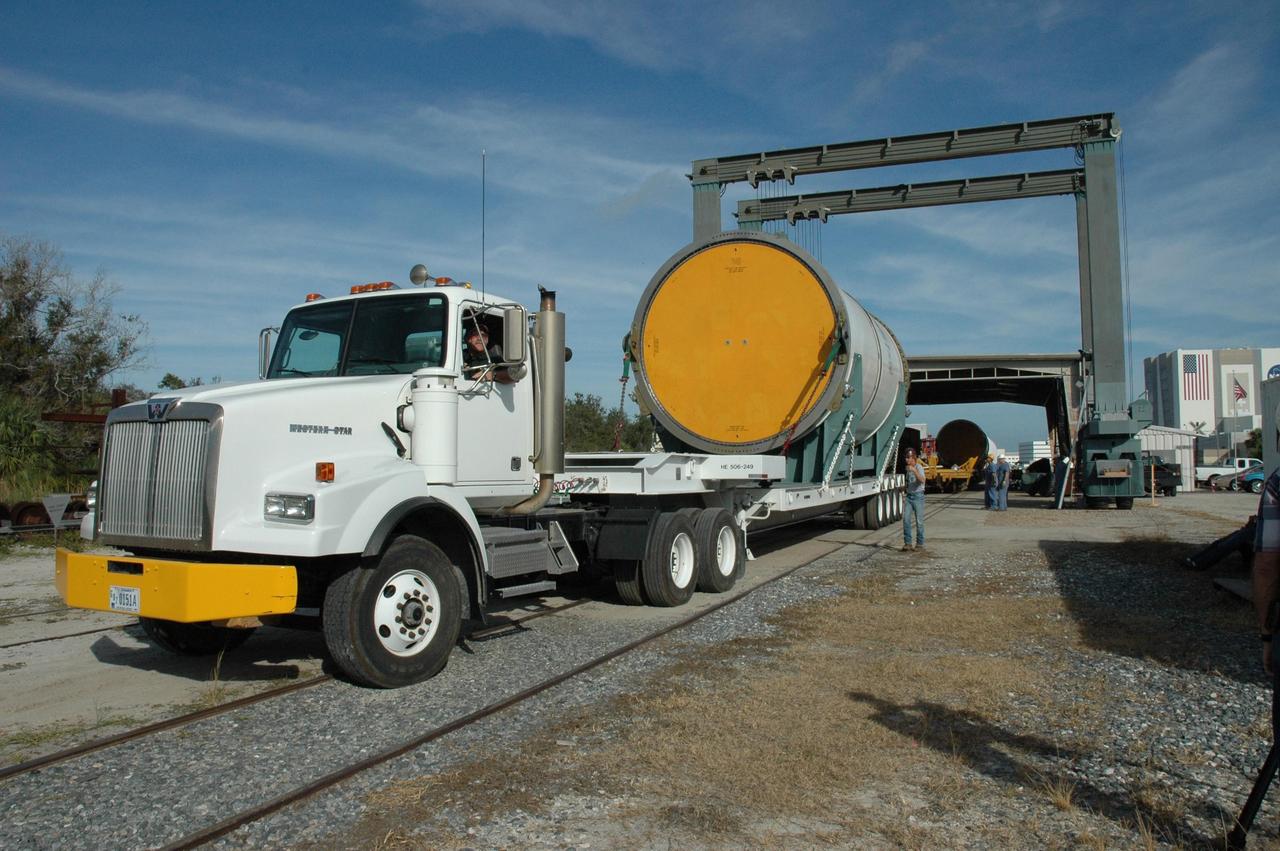
KENNEDY SPACE CENTER, FLA. -- Another solid rocket booster segment arrives at the railhead at the railroad yard at NASA's Kennedy Space Center. The spent segment will be placed on a railroad car and covered for the long trip back to Utah. After a mission, the spent boosters are recovered, cleaned, disassembled, refurbished and reused after each launch. After hydrolasing the interior of each segment, they are placed on flatbed trucks. The individual booster segments are transferred to a railhead located at the railroad yard at NASA's Kennedy Space Center. The long train of segments is part of the twin solid rocket boosters used to launch space shuttle Discovery in October. The NASA Railroad locomotive backs up the rail cars and the segment is lowered onto the car. The covered segments are moved to Titusville for interchange with Florida East Coast Railway to begin the trip back to Utah. Photo credit: NASA/Amanda Diller
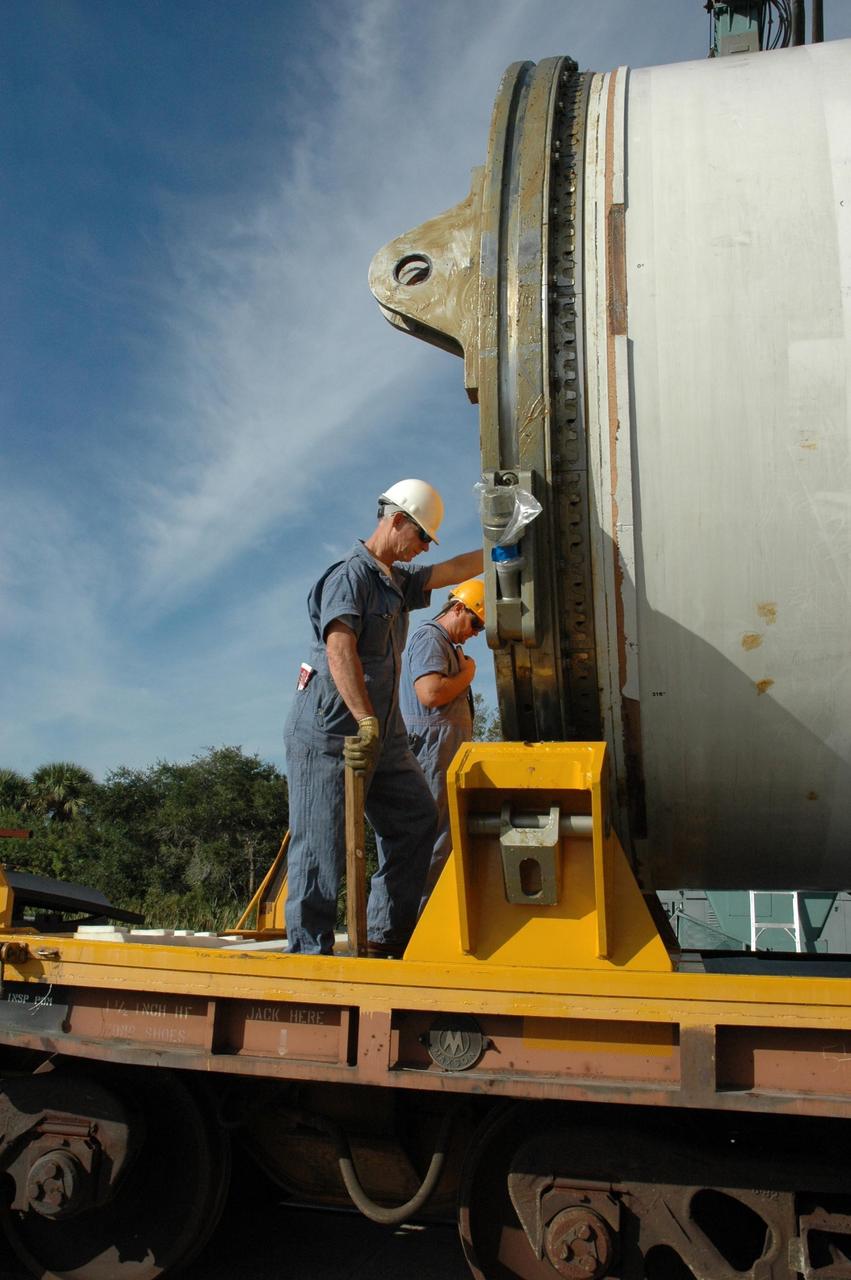
KENNEDY SPACE CENTER, FLA. -- Workers oversee the placement of a solid rocket booster segment onto a railroad car at the railroad yard at NASA's Kennedy Space Center. The spent segment is part of the booster used to launch space shuttle Discovery in October. The segment will be placed on the car and covered for the long trip back to Utah. After a mission, the spent boosters are recovered, cleaned, disassembled, refurbished and reused after each launch. After hydrolasing the interior of each segment, they are placed on flatbed trucks. The individual booster segments are transferred to a railhead located at the railroad yard at NASA's Kennedy Space Center. The long train of segments is part of the twin solid rocket boosters used to launch space shuttle Discovery in October. The NASA Railroad locomotive backs up the rail cars and the segment is lowered onto the car. The covered segments are moved to Titusville for interchange with Florida East Coast Railway to begin the trip back to Utah. Photo credit: NASA/Amanda Diller

KENNEDY SPACE CENTER, FLA. -- A solid rocket booster segment is lifted off a truck bed at the railroad yard at NASA's Kennedy Space Center. The yellow transportation end cover has already been inserted and is secure. The segment is part of the booster used to launch space shuttle Discovery in October. The spent segment will be placed on a railroad car and covered for the long trip back to Utah. After a mission, the spent boosters are recovered, cleaned, disassembled, refurbished and reused after each launch. After hydrolasing the interior of each segment, they are placed on flatbed trucks. The individual booster segments are transferred to a railhead located at the railroad yard at NASA's Kennedy Space Center. The long train of segments is part of the twin solid rocket boosters used to launch space shuttle Discovery in October. The NASA Railroad locomotive backs up the rail cars and the segment is lowered onto the car. The covered segments are moved to Titusville for interchange with Florida East Coast Railway to begin the trip back to Utah. Photo credit: NASA/Amanda Diller
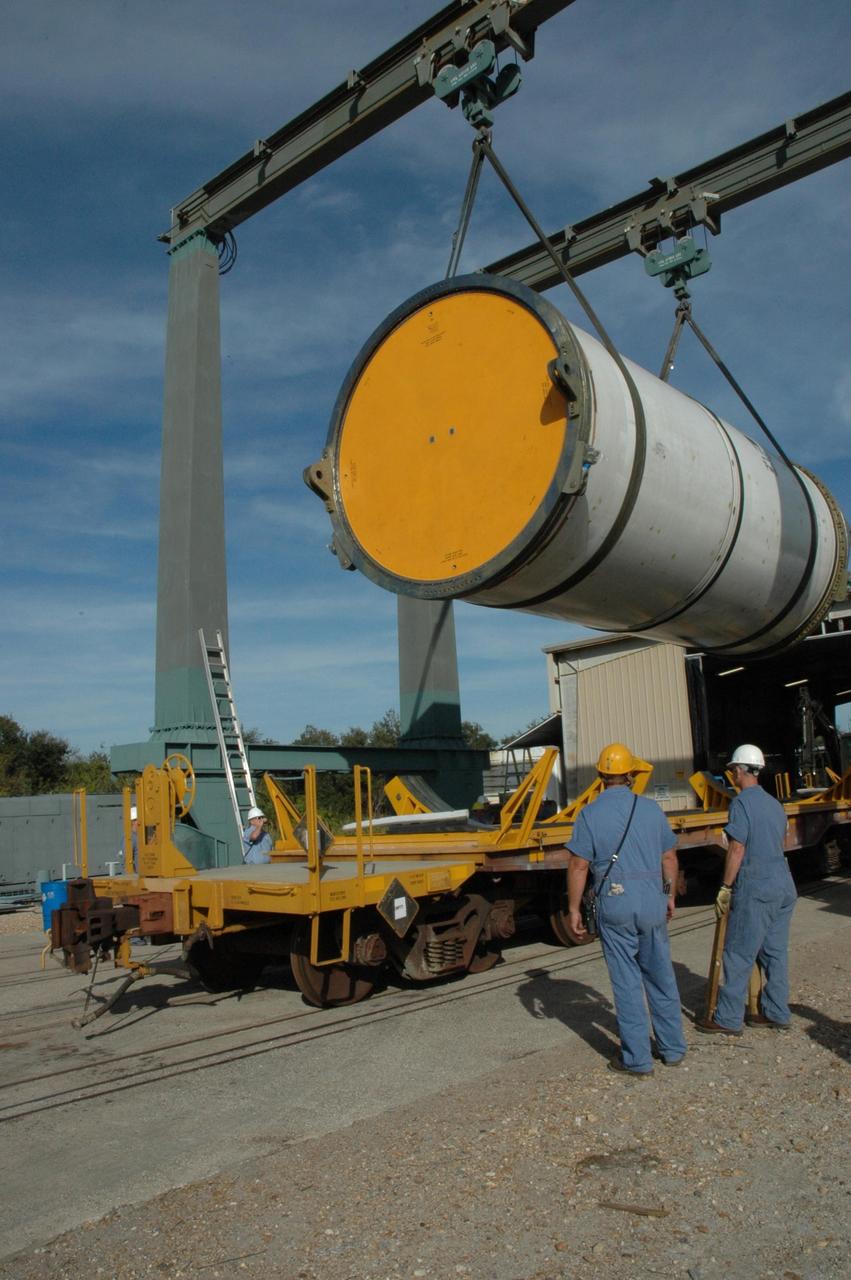
KENNEDY SPACE CENTER, FLA. -- An overhead crane lifts a solid rocket booster segment off a truck bed at the railroad yard at NASA's Kennedy Space Center for transfer to a railroad car. The yellow transportation end cover has already been inserted and is secure. The spent segment is part of the booster used to launch space shuttle Discovery in October. The segment will be placed on the car and covered for the long trip back to Utah. After a mission, the spent boosters are recovered, cleaned, disassembled, refurbished and reused after each launch. After hydrolasing the interior of each segment, they are placed on flatbed trucks. The individual booster segments are transferred to a railhead located at the railroad yard at NASA's Kennedy Space Center. The long train of segments is part of the twin solid rocket boosters used to launch space shuttle Discovery in October. The NASA Railroad locomotive backs up the rail cars and the segment is lowered onto the car. The covered segments are moved to Titusville for interchange with Florida East Coast Railway to begin the trip back to Utah. Photo credit: NASA/Amanda Diller
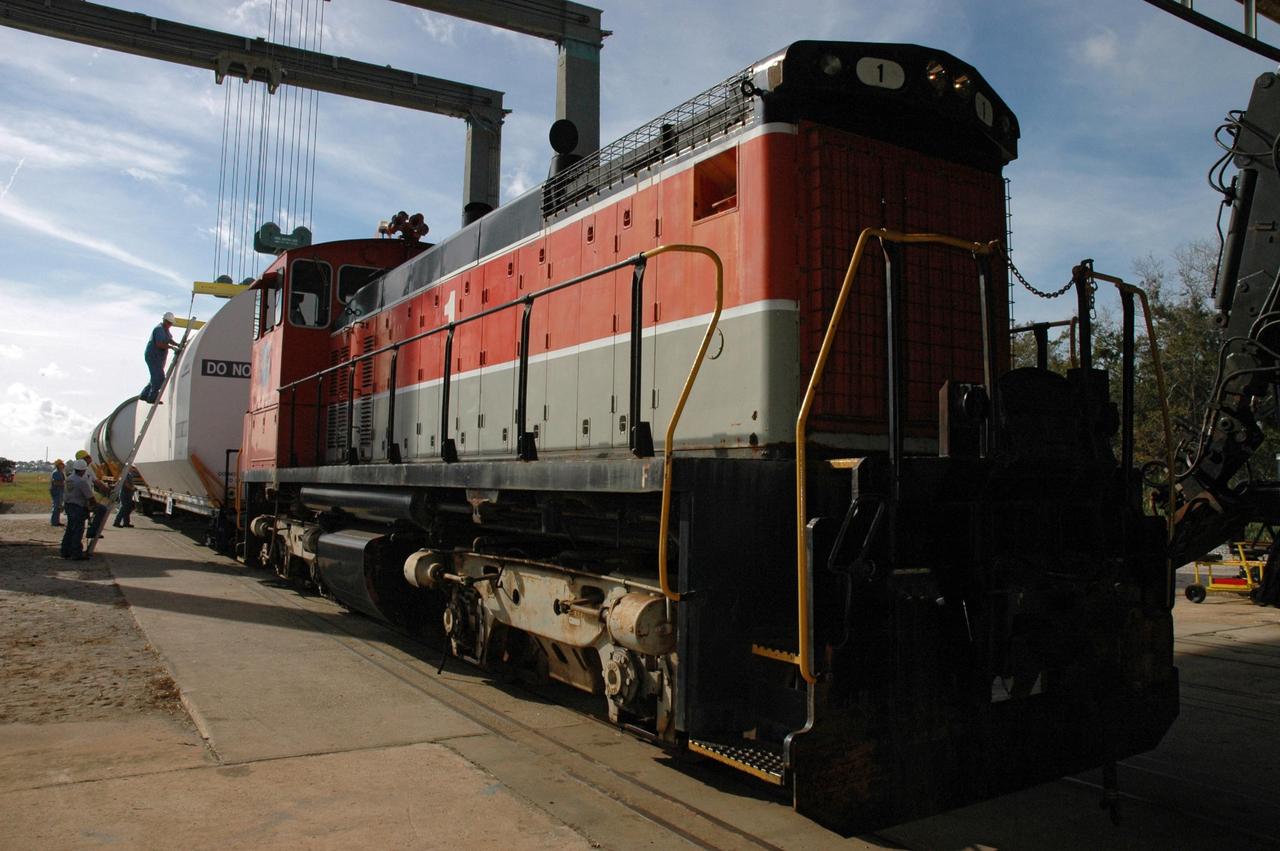
KENNEDY SPACE CENTER, FLA. -- At the railroad yard at NASA's Kennedy Space Center, workers release the crane from the transportation cover over the solid rocket booster segment. After a mission, the spent boosters are recovered, cleaned, disassembled, refurbished and reused after each launch. After hydrolasing the interior of each segment, they are placed on flatbed trucks. The individual booster segments are transferred to a railhead located at the railroad yard at NASA's Kennedy Space Center. The long train of segments is part of the twin solid rocket boosters used to launch space shuttle Discovery in October. The NASA Railroad locomotive backs up the rail cars and the segment is lowered onto the car. The covered segments are moved to Titusville for interchange with Florida East Coast Railway to begin the trip back to Utah. Photo credit: NASA/Amanda Diller
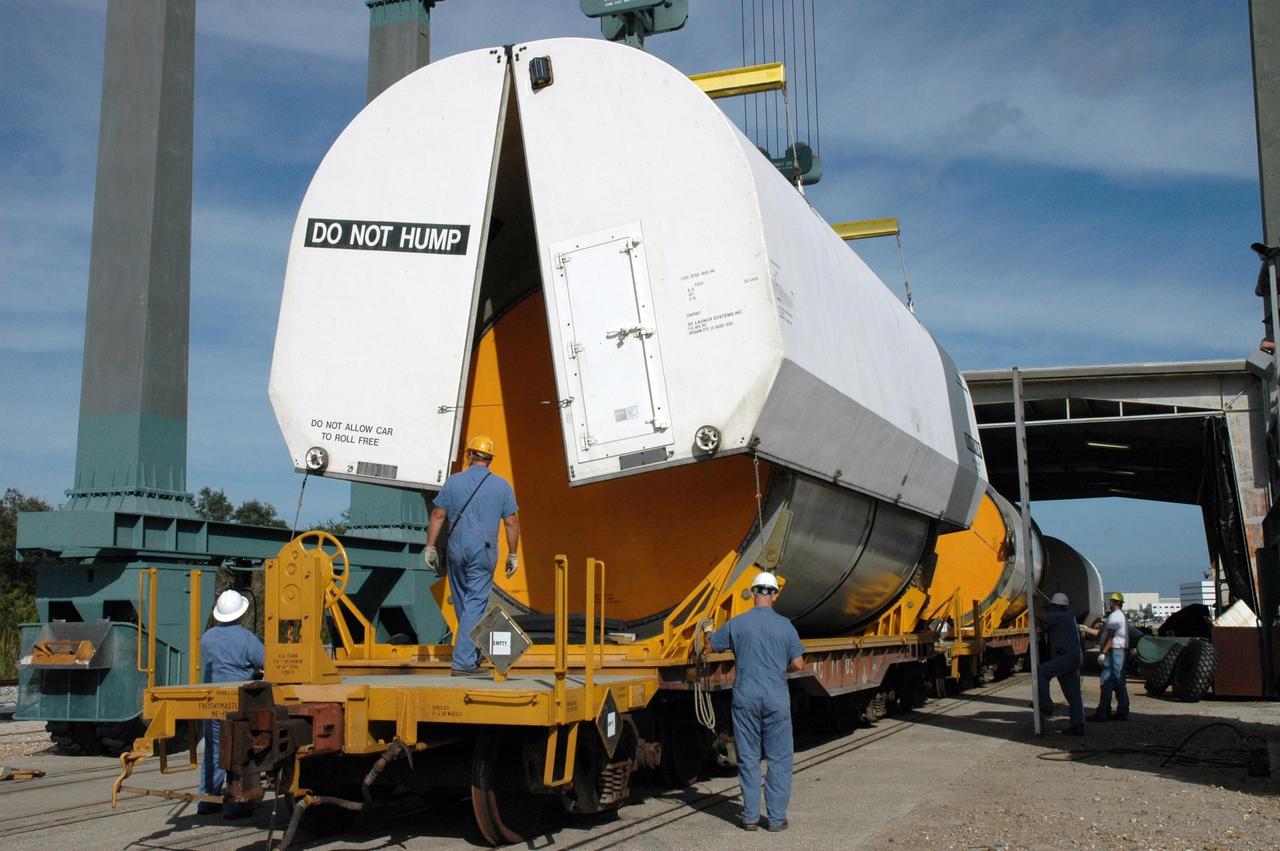
KENNEDY SPACE CENTER, FLA. -- Workers at the railroad yard at NASA's Kennedy Space Center stand ready to secure the transportation cover over the solid rocket booster segment that is being transported to Utah. The spent segments are part of the booster used to launch space shuttle Discovery in October. After a mission, the spent boosters are recovered, cleaned, disassembled, refurbished and reused after each launch. After hydrolasing the interior of each segment, they are placed on flatbed trucks. The individual booster segments are transferred to a railhead located at the railroad yard at NASA's Kennedy Space Center. The long train of segments is part of the twin solid rocket boosters used to launch space shuttle Discovery in October. The NASA Railroad locomotive backs up the rail cars and the segment is lowered onto the car. The covered segments are moved to Titusville for interchange with Florida East Coast Railway to begin the trip back to Utah. Photo credit: NASA/Amanda Diller
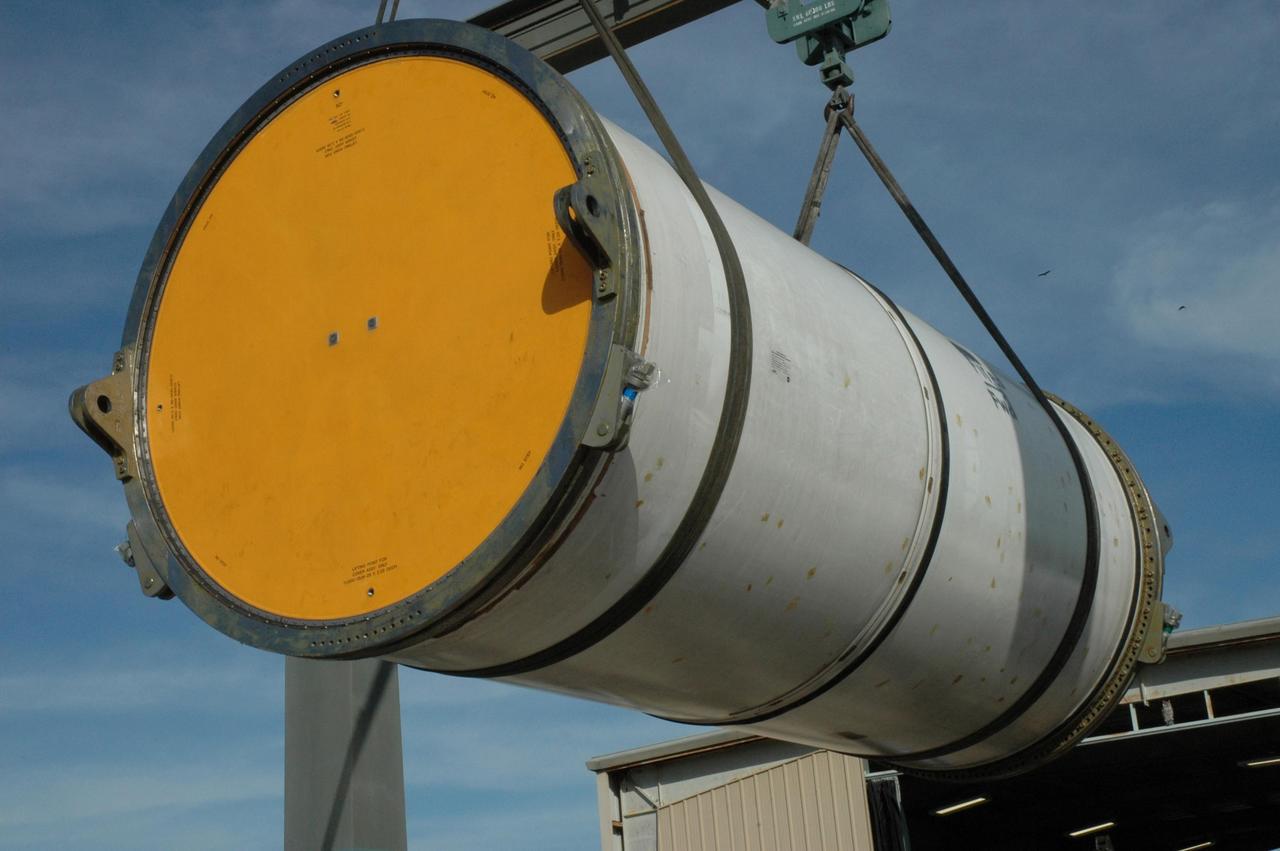
KENNEDY SPACE CENTER, FLA. -- An overhead crane lifts a solid rocket booster segment off a truck bed at the railroad yard at NASA's Kennedy Space Center for transfer to a railroad car. The yellow transportation end cover has already been inserted and is secure. The spent segment is part of the booster used to launch space shuttle Discovery in October. The segment will be covered for the long trip back to Utah. After a mission, the spent boosters are recovered, cleaned, disassembled, refurbished and reused after each launch. After hydrolasing the interior of each segment, they are placed on flatbed trucks. The individual booster segments are transferred to a railhead located at the railroad yard at NASA's Kennedy Space Center. The long train of segments is part of the twin solid rocket boosters used to launch space shuttle Discovery in October. The NASA Railroad locomotive backs up the rail cars and the segment is lowered onto the car. The covered segments are moved to Titusville for interchange with Florida East Coast Railway to begin the trip back to Utah. Photo credit: NASA/Amanda Diller
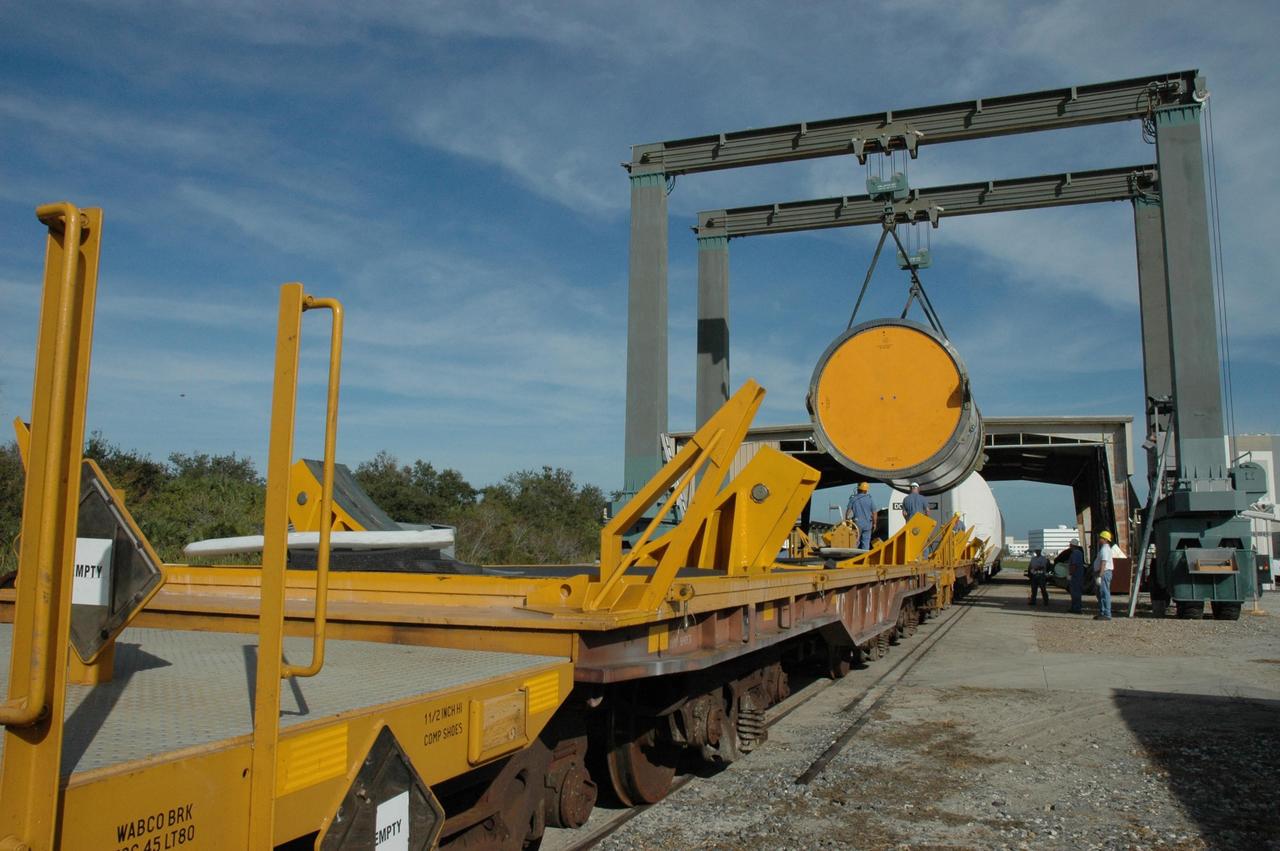
KENNEDY SPACE CENTER, FLA. -- An overhead crane moves a solid rocket booster segment toward a railroad car at the railroad yard at NASA's Kennedy Space Center. The yellow transportation end cover has already been inserted and is secure. The spent segment is part of the booster used to launch space shuttle Discovery in October. The segment will be placed on the car and covered for the long trip back to Utah. After a mission, the spent boosters are recovered, cleaned, disassembled, refurbished and reused after each launch. After hydrolasing the interior of each segment, they are placed on flatbed trucks. The individual booster segments are transferred to a railhead located at the railroad yard at NASA's Kennedy Space Center. The long train of segments is part of the twin solid rocket boosters used to launch space shuttle Discovery in October. The NASA Railroad locomotive backs up the rail cars and the segment is lowered onto the car. The covered segments are moved to Titusville for interchange with Florida East Coast Railway to begin the trip back to Utah. Photo credit: NASA/Amanda Diller
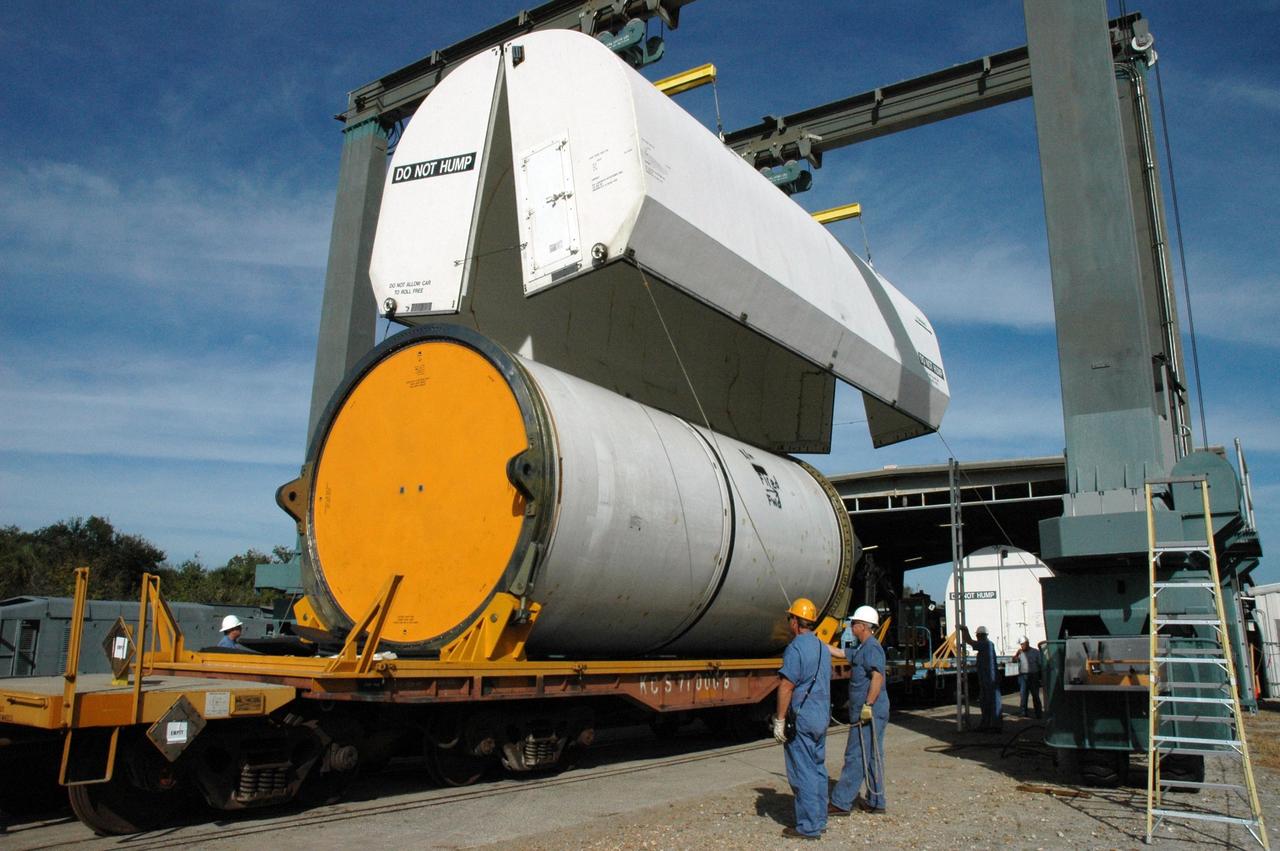
KENNEDY SPACE CENTER, FLA. -- At the railroad yard at NASA's Kennedy Space Center, a cover is lowered over the solid rocket booster segment being transported to Utah. The yellow transportation end cover has already been inserted and is secure. The spent segments are part of the booster used to launch space shuttle Discovery in October. After a mission, the spent boosters are recovered, cleaned, disassembled, refurbished and reused after each launch. After hydrolasing the interior of each segment, they are placed on flatbed trucks. The individual booster segments are transferred to a railhead located at the railroad yard at NASA's Kennedy Space Center. The long train of segments is part of the twin solid rocket boosters used to launch space shuttle Discovery in October. The NASA Railroad locomotive backs up the rail cars and the segment is lowered onto the car. The covered segments are moved to Titusville for interchange with Florida East Coast Railway to begin the trip back to Utah. Photo credit: NASA/Amanda Diller