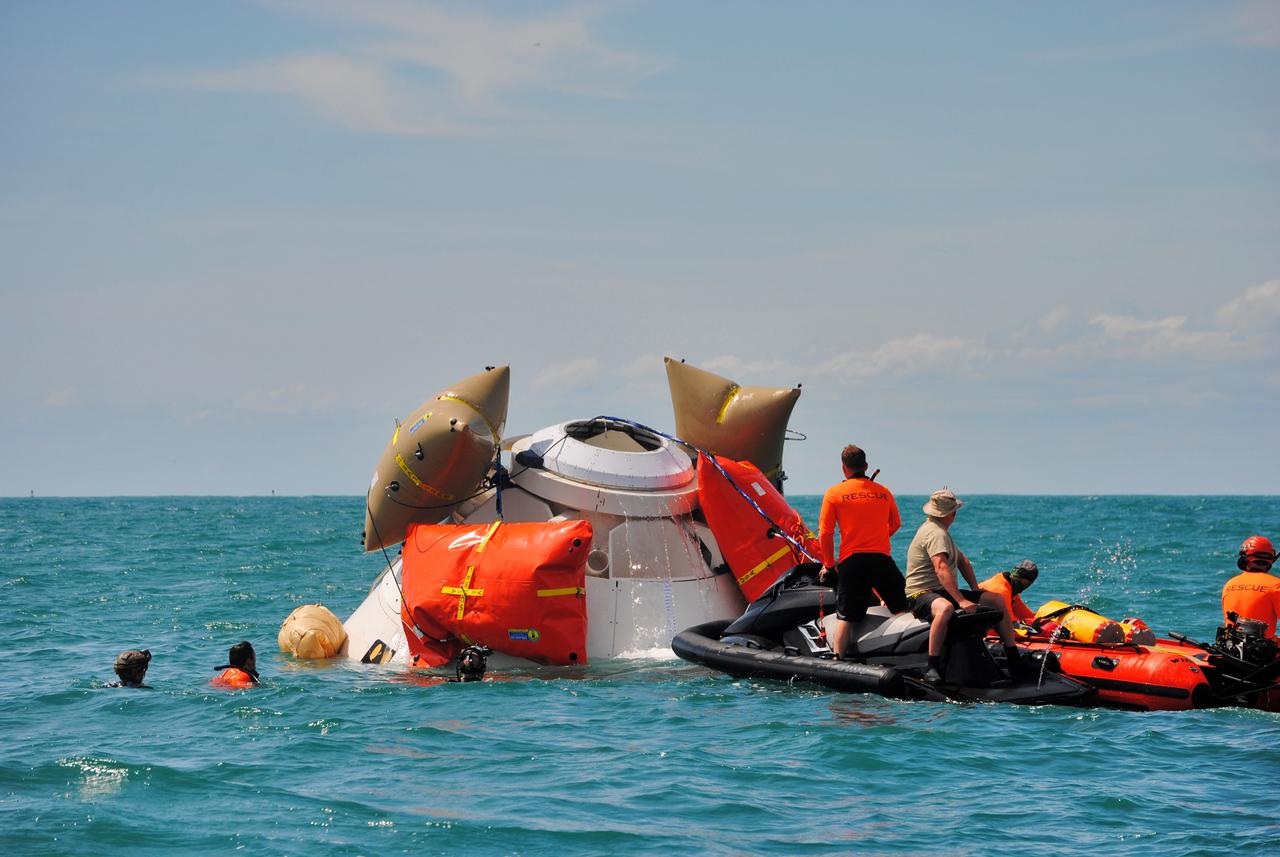
Rescue team members are using a Boeing CST-100 Starliner training capsule to rehearse a search and rescue training exercise in the unlikely event of an emergency resulting in a splashdown. NASA and the Department of Defense (DoD) Human Space Flight Support Office Rescue Division conducted the open-ocean exercise, after nearly two weeks of training, off the coast of Cape Canaveral near the agency’s Kennedy Space Center in Florida on April 25, 2019. This exercise provides team members with the necessary training ahead of Boeing’s Crew Flight Test with astronauts targeted for later this year. During normal return scenarios, Boeing’s Starliner will land in a safe zone of about 15 square miles in the Western United States. Throughout the commercial crew development phases with NASA, Boeing has performed dozens of qualification tests on its parachute and airbag systems simulating conditions on land and in the water.
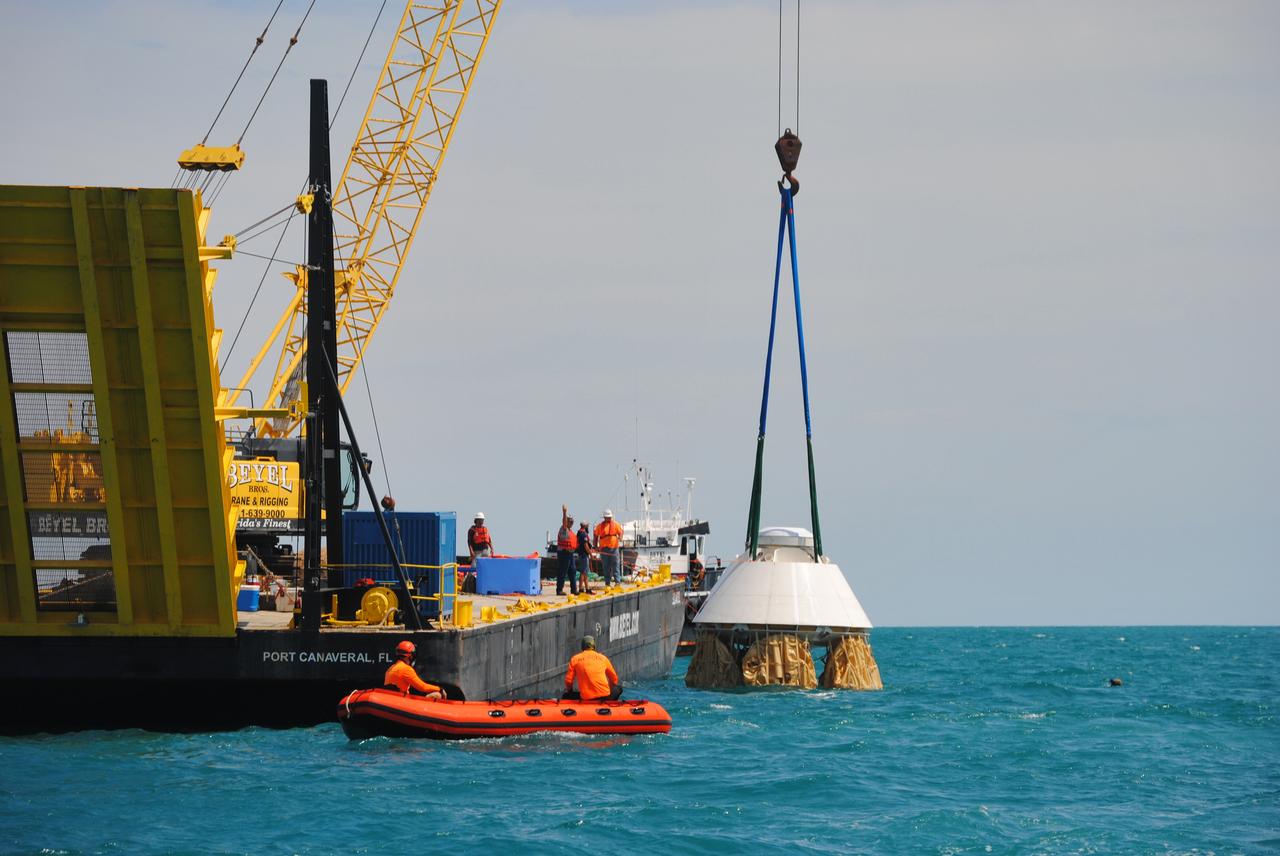
Rescue team members are using a Boeing CST-100 Starliner training capsule to rehearse a search and rescue training exercise in the unlikely event of an emergency resulting in a splashdown. NASA and the Department of Defense (DoD) Human Space Flight Support Office Rescue Division conducted the open-ocean exercise, after nearly two weeks of training, off the coast of Cape Canaveral near the agency’s Kennedy Space Center in Florida on April 25, 2019. This exercise provides team members with the necessary training ahead of Boeing’s Crew Flight Test with astronauts targeted for later this year. During normal return scenarios, Boeing’s Starliner will land in a safe zone of about 15 square miles in the Western United States. Throughout the commercial crew development phases with NASA, Boeing has performed dozens of qualification tests on its parachute and airbag systems simulating conditions on land and in the water.
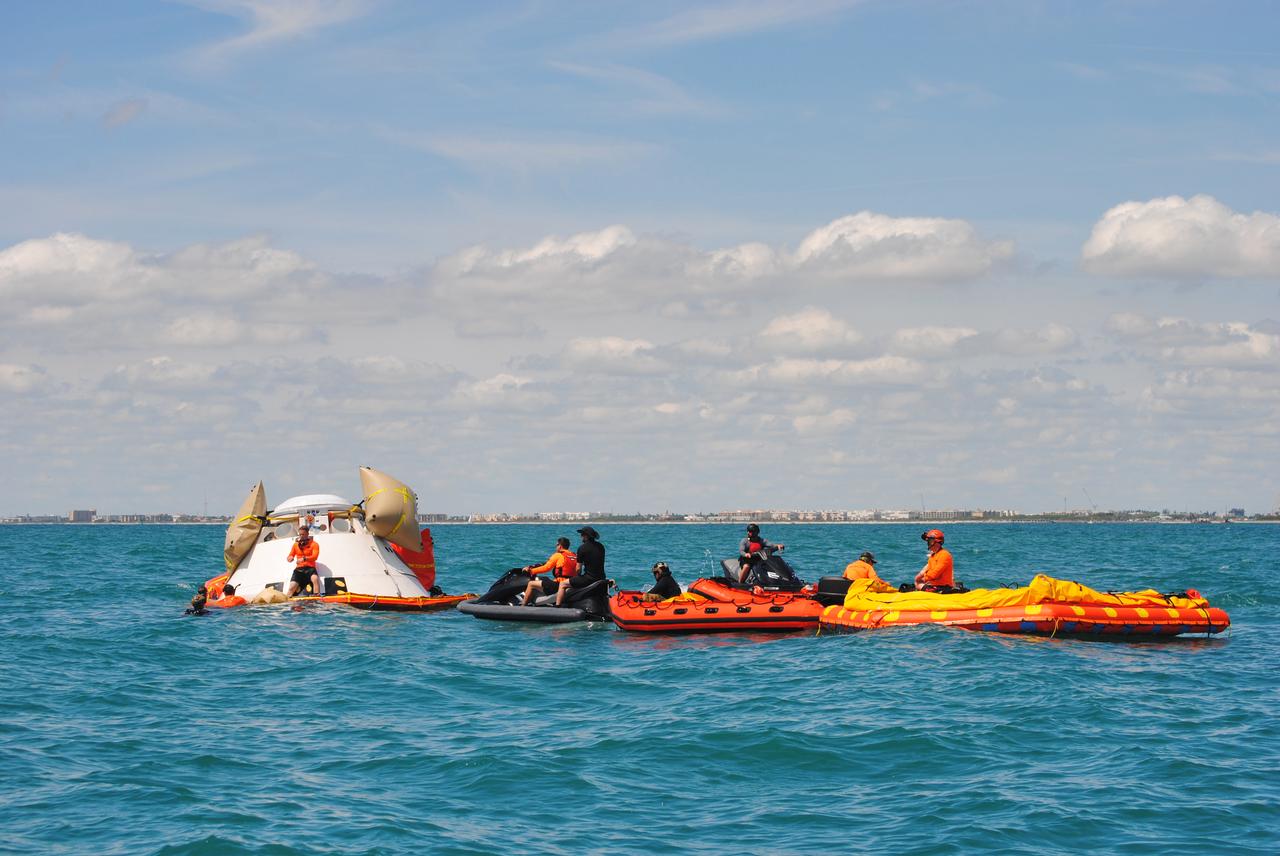
Rescue team members are using a Boeing CST-100 Starliner training capsule to rehearse a search and rescue training exercise in the unlikely event of an emergency resulting in a splashdown. NASA and the Department of Defense (DoD) Human Space Flight Support Office Rescue Division conducted the open-ocean exercise, after nearly two weeks of training, off the coast of Cape Canaveral near the agency’s Kennedy Space Center in Florida on April 25, 2019. This exercise provides team members with the necessary training ahead of Boeing’s Crew Flight Test with astronauts targeted for later this year. During normal return scenarios, Boeing’s Starliner will land in a safe zone of about 15 square miles in the Western United States. Throughout the commercial crew development phases with NASA, Boeing has performed dozens of qualification tests on its parachute and airbag systems simulating conditions on land and in the water.
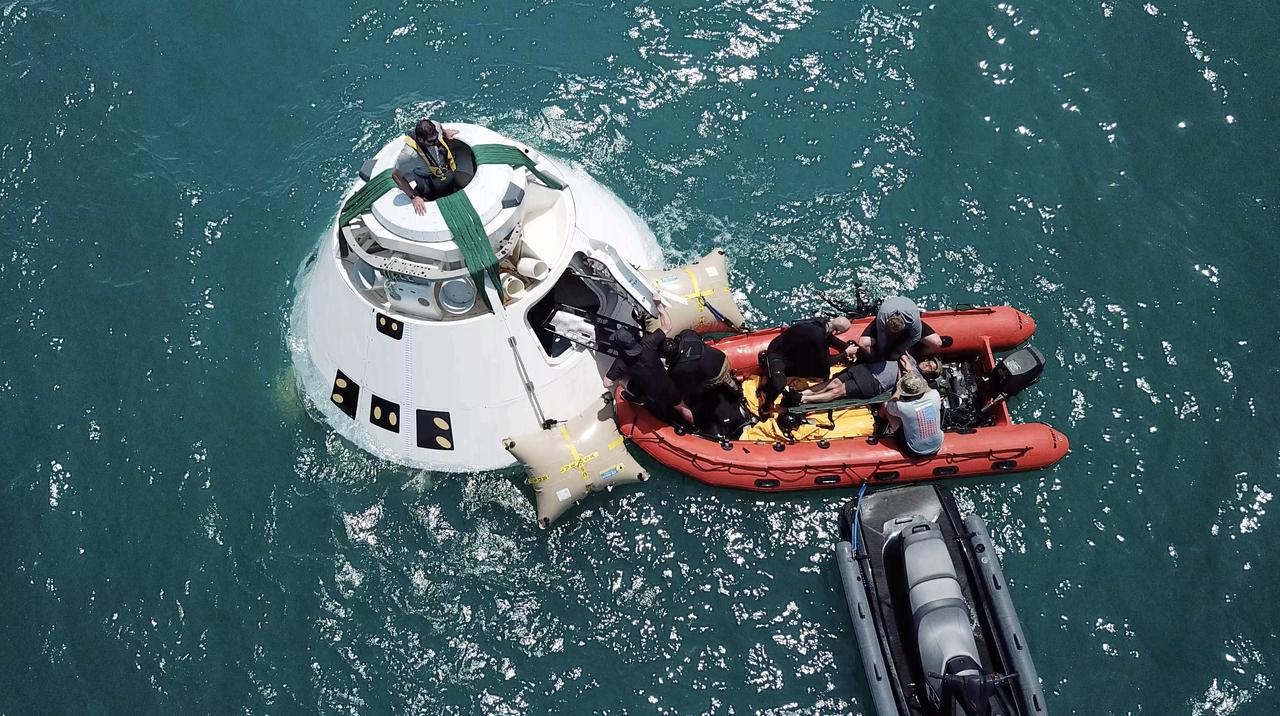
Rescue team members are using a Boeing CST-100 Starliner training capsule to rehearse a search and rescue training exercise in the unlikely event of an emergency resulting in a splashdown. NASA and the Department of Defense (DoD) Human Space Flight Support Office Rescue Division conducted the open-ocean exercise, after nearly two weeks of training, off the coast of Cape Canaveral near the agency’s Kennedy Space Center in Florida on April 25, 2019. This exercise provides team members with the necessary training ahead of Boeing’s Crew Flight Test with astronauts targeted for later this year. During normal return scenarios, Boeing’s Starliner will land in a safe zone of about 15 square miles in the Western United States. Throughout the commercial crew development phases with NASA, Boeing has performed dozens of qualification tests on its parachute and airbag systems simulating conditions on land and in the water.
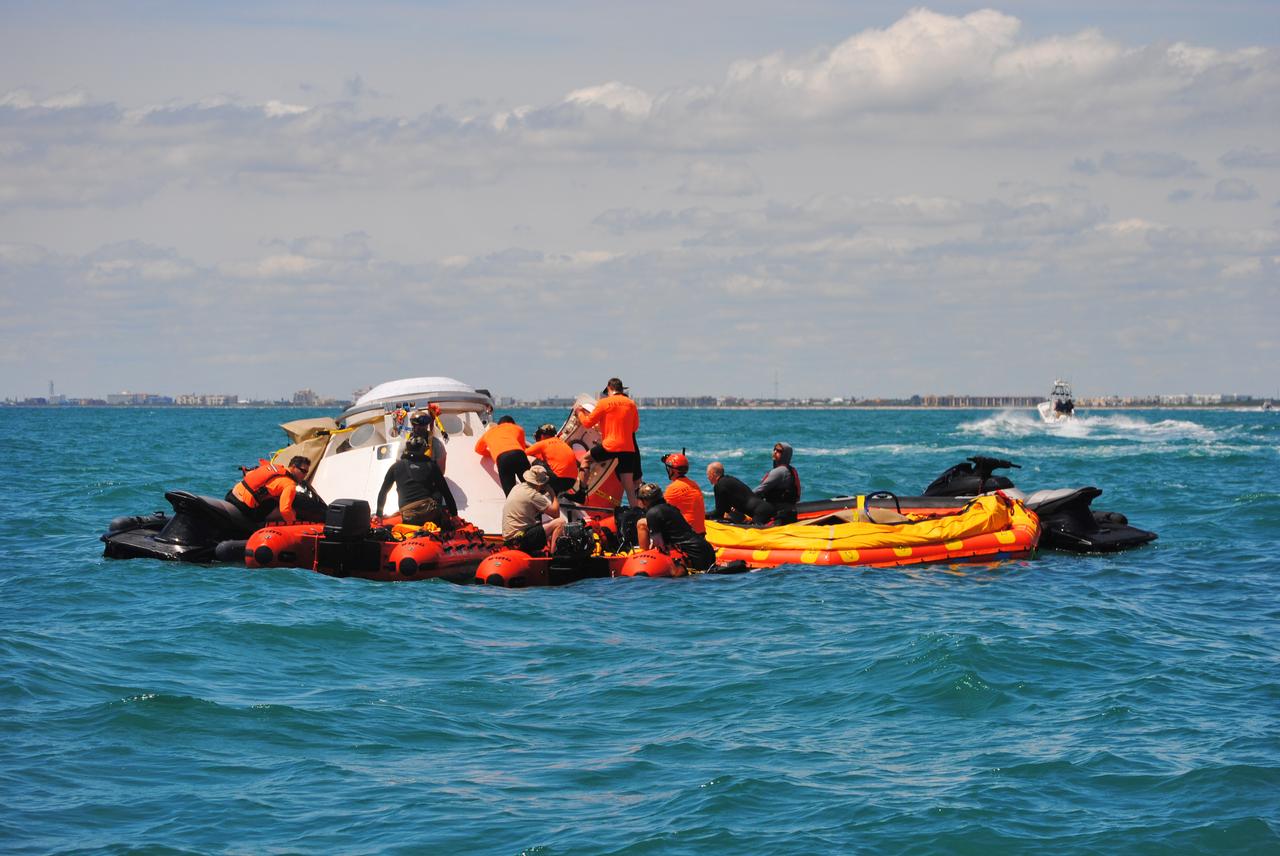
Rescue team members are using a Boeing CST-100 Starliner training capsule to rehearse a search and rescue training exercise in the unlikely event of an emergency resulting in a splashdown. NASA and the Department of Defense (DoD) Human Space Flight Support Office Rescue Division conducted the open-ocean exercise, after nearly two weeks of training, off the coast of Cape Canaveral near the agency’s Kennedy Space Center in Florida on April 25, 2019. This exercise provides team members with the necessary training ahead of Boeing’s Crew Flight Test with astronauts targeted for later this year. During normal return scenarios, Boeing’s Starliner will land in a safe zone of about 15 square miles in the Western United States. Throughout the commercial crew development phases with NASA, Boeing has performed dozens of qualification tests on its parachute and airbag systems simulating conditions on land and in the water.
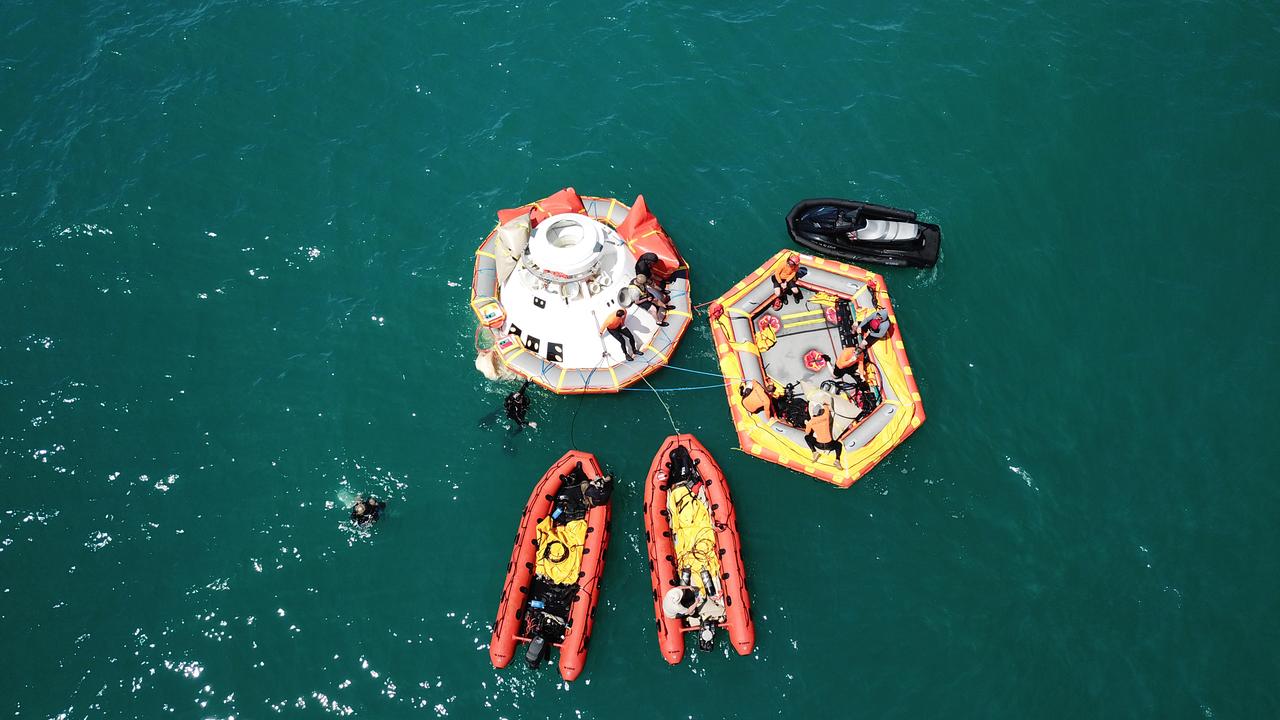
Rescue team members are using a Boeing CST-100 Starliner training capsule to rehearse a search and rescue training exercise in the unlikely event of an emergency resulting in a splashdown. NASA and the Department of Defense (DoD) Human Space Flight Support Office Rescue Division conducted the open-ocean exercise, after nearly two weeks of training, off the coast of Cape Canaveral near the agency’s Kennedy Space Center in Florida on April 25, 2019. This exercise provides team members with the necessary training ahead of Boeing’s Crew Flight Test with astronauts targeted for later this year. During normal return scenarios, Boeing’s Starliner will land in a safe zone of about 15 square miles in the Western United States. Throughout the commercial crew development phases with NASA, Boeing has performed dozens of qualification tests on its parachute and airbag systems simulating conditions on land and in the water.
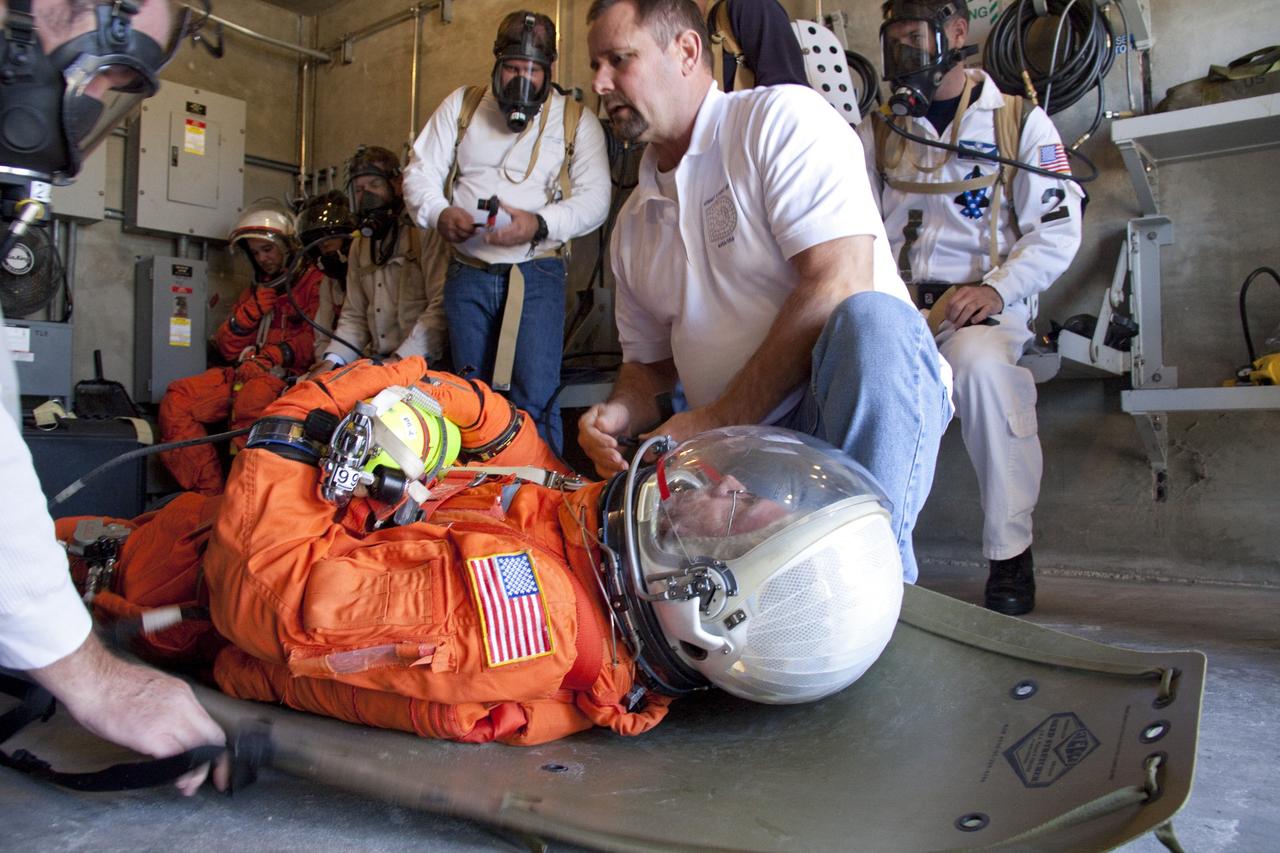
CAPE CANAVERAL, Fla. -- On Launch Pad 39A at NASA's Kennedy Space Center in Florida, members of an emergency escape training team perform a simulated evacuation exercise in the bunkers behind the slidewire basket landing site. For several days, volunteers portraying astronauts, take part in training exercises which allow teams to practice emergency response procedures, including helicopter evacuation to local hospitals. Training normally involves NASA fire rescue personnel, personnel from the Air Force's 920th Rescue Wing, and medical trauma teams from central Florida hospitals, and is required every 18 months to certify Fire Rescue and Closeout Crew personnel. Photo credit: NASA/Troy Cryder
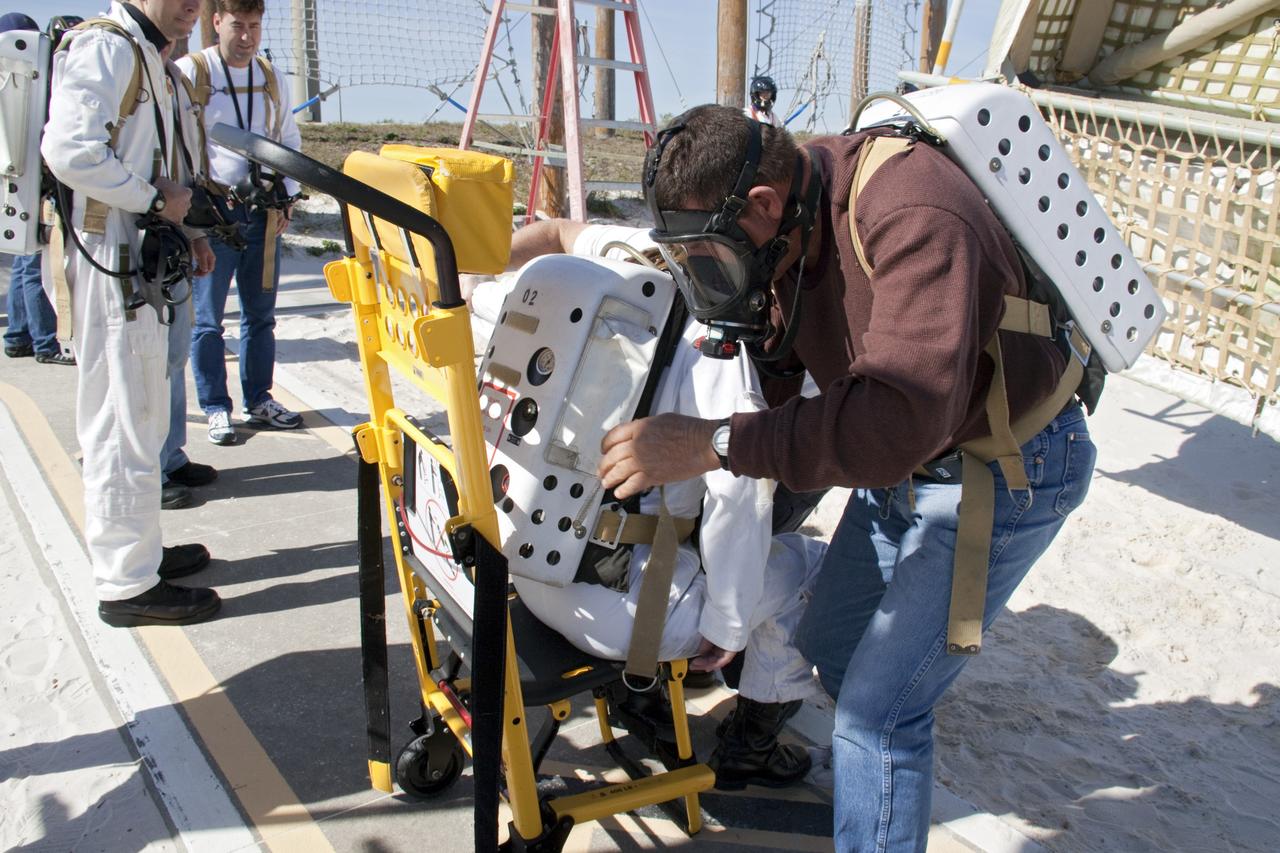
CAPE CANAVERAL, Fla. -- On Launch Pad 39A at NASA's Kennedy Space Center in Florida, members of an emergency escape training team perform a simulated evacuation exercise at the slidewire basket landing site. For several days, volunteers portraying astronauts, take part in training exercises which allow teams to practice emergency response procedures, including helicopter evacuation to local hospitals. Training normally involves NASA fire rescue personnel, personnel from the Air Force's 920th Rescue Wing, and medical trauma teams from central Florida hospitals, and is required every 18 months to certify Fire Rescue and Closeout Crew personnel. Photo credit: NASA/Troy Cryder
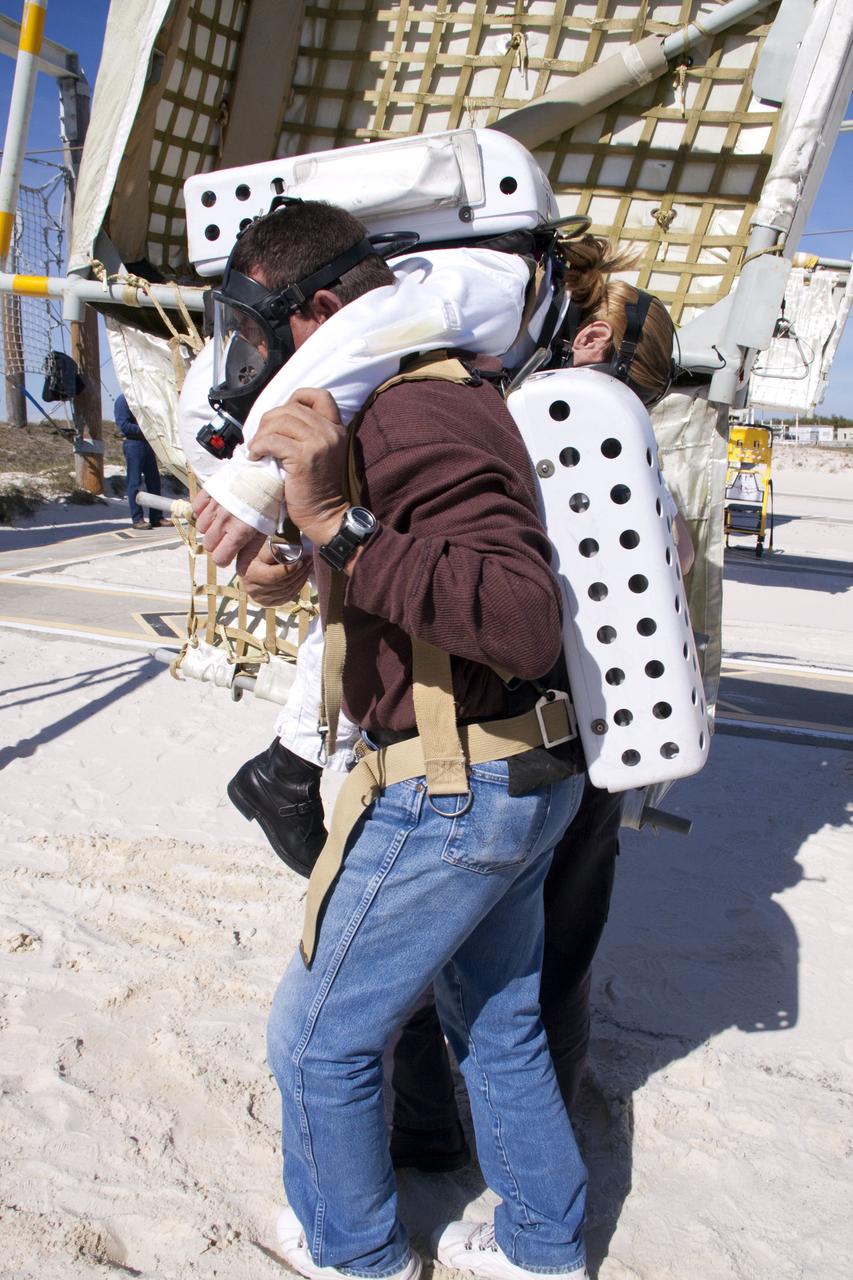
CAPE CANAVERAL, Fla. -- On Launch Pad 39A at NASA's Kennedy Space Center in Florida, members of an emergency escape training team perform a simulated evacuation exercise at the slidewire basket landing site. For several days, volunteers portraying astronauts, take part in training exercises which allow teams to practice emergency response procedures, including helicopter evacuation to local hospitals. Training normally involves NASA fire rescue personnel, personnel from the Air Force's 920th Rescue Wing, and medical trauma teams from central Florida hospitals, and is required every 18 months to certify Fire Rescue and Closeout Crew personnel. Photo credit: NASA/Troy Cryder
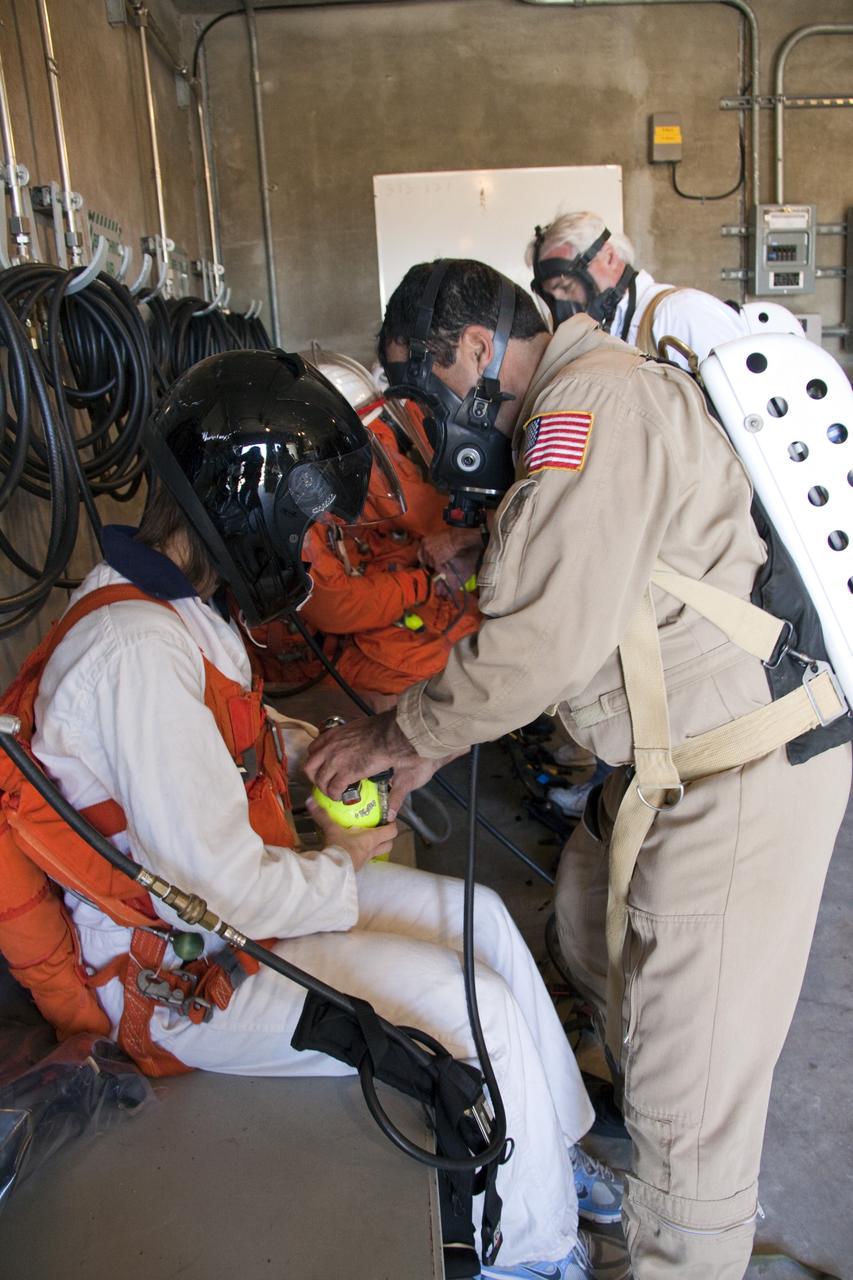
CAPE CANAVERAL, Fla. -- On Launch Pad 39A at NASA's Kennedy Space Center in Florida, members of an emergency escape training team perform a simulated evacuation exercise in the bunkers behind the slidewire basket landing site. For several days, volunteers portraying astronauts, take part in training exercises which allow teams to practice emergency response procedures, including helicopter evacuation to local hospitals. Training normally involves NASA fire rescue personnel, personnel from the Air Force's 920th Rescue Wing, and medical trauma teams from central Florida hospitals, and is required every 18 months to certify Fire Rescue and Closeout Crew personnel. Photo credit: NASA/Troy Cryder
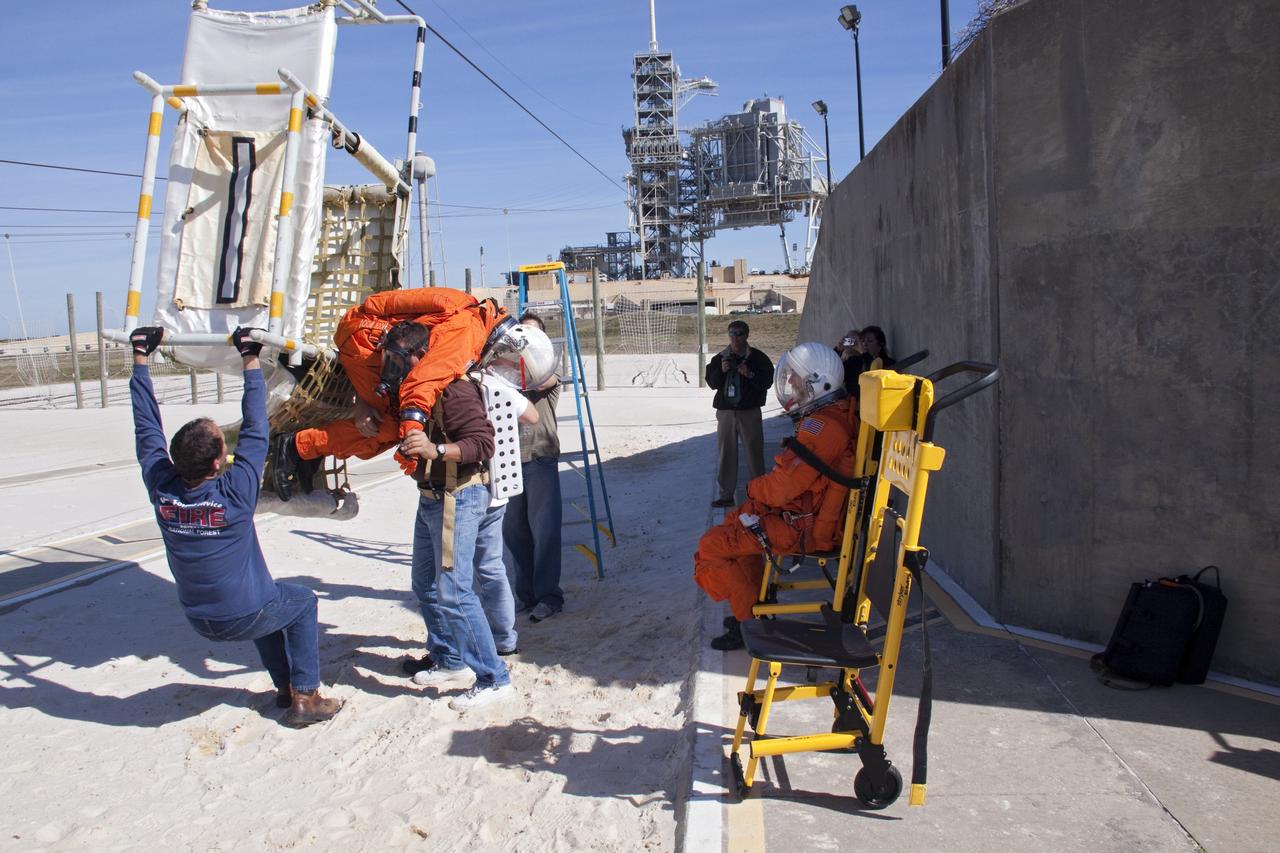
CAPE CANAVERAL, Fla. -- On Launch Pad 39A at NASA's Kennedy Space Center in Florida, members of an emergency escape training team perform a simulated evacuation exercise in the bunkers behind the slidewire basket landing site. For several days, volunteers portraying astronauts, take part in training exercises which allow teams to practice emergency response procedures, including helicopter evacuation to local hospitals. Training normally involves NASA fire rescue personnel, personnel from the Air Force's 920th Rescue Wing, and medical trauma teams from central Florida hospitals, and is required every 18 months to certify Fire Rescue and Closeout Crew personnel. Photo credit: NASA/Troy Cryder
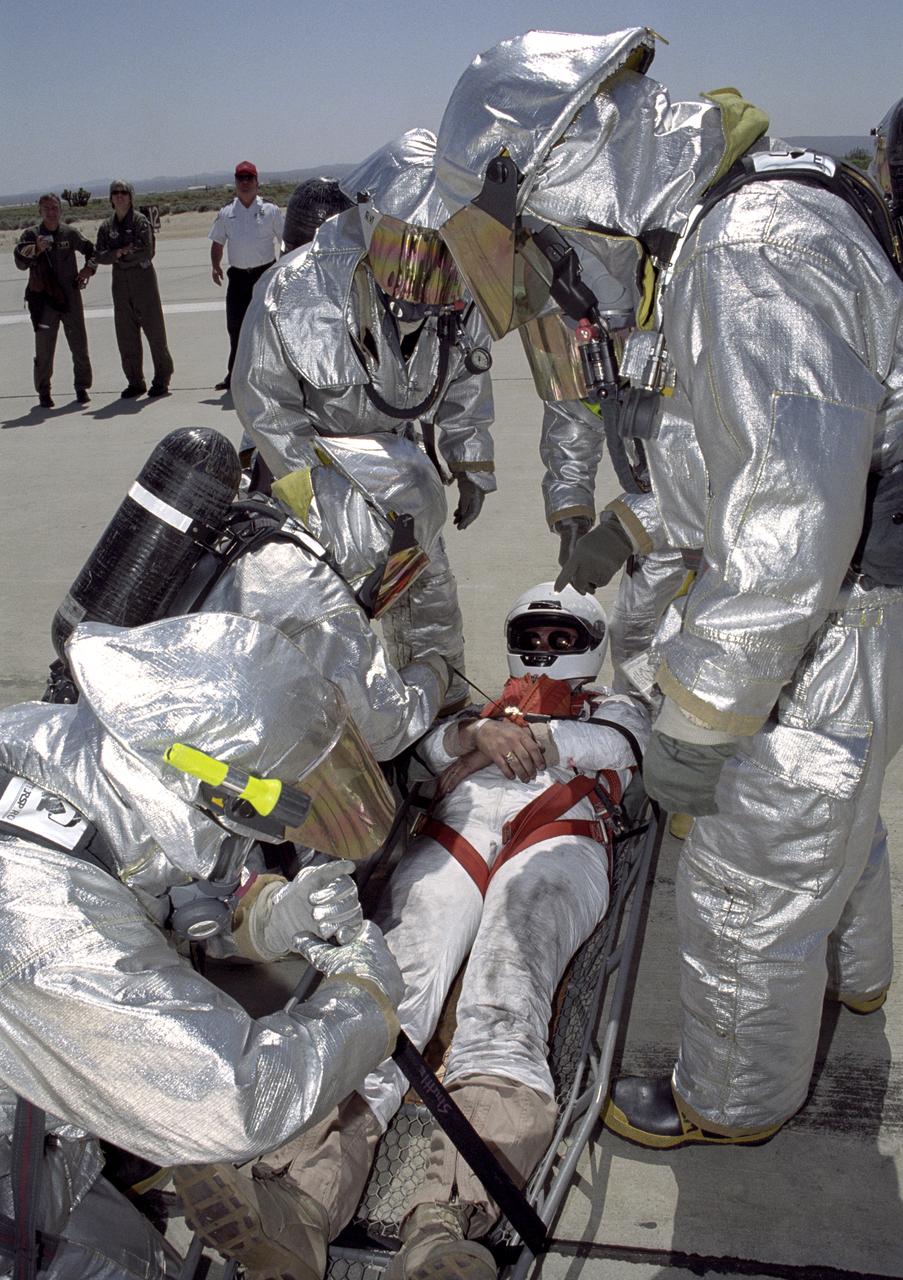
Clad in full thermal protection suits, Air Force fire-rescue crews strap a stand-in "astronaut" into a litter during a Space Shuttle rescue training exercise at Edwards AFB.
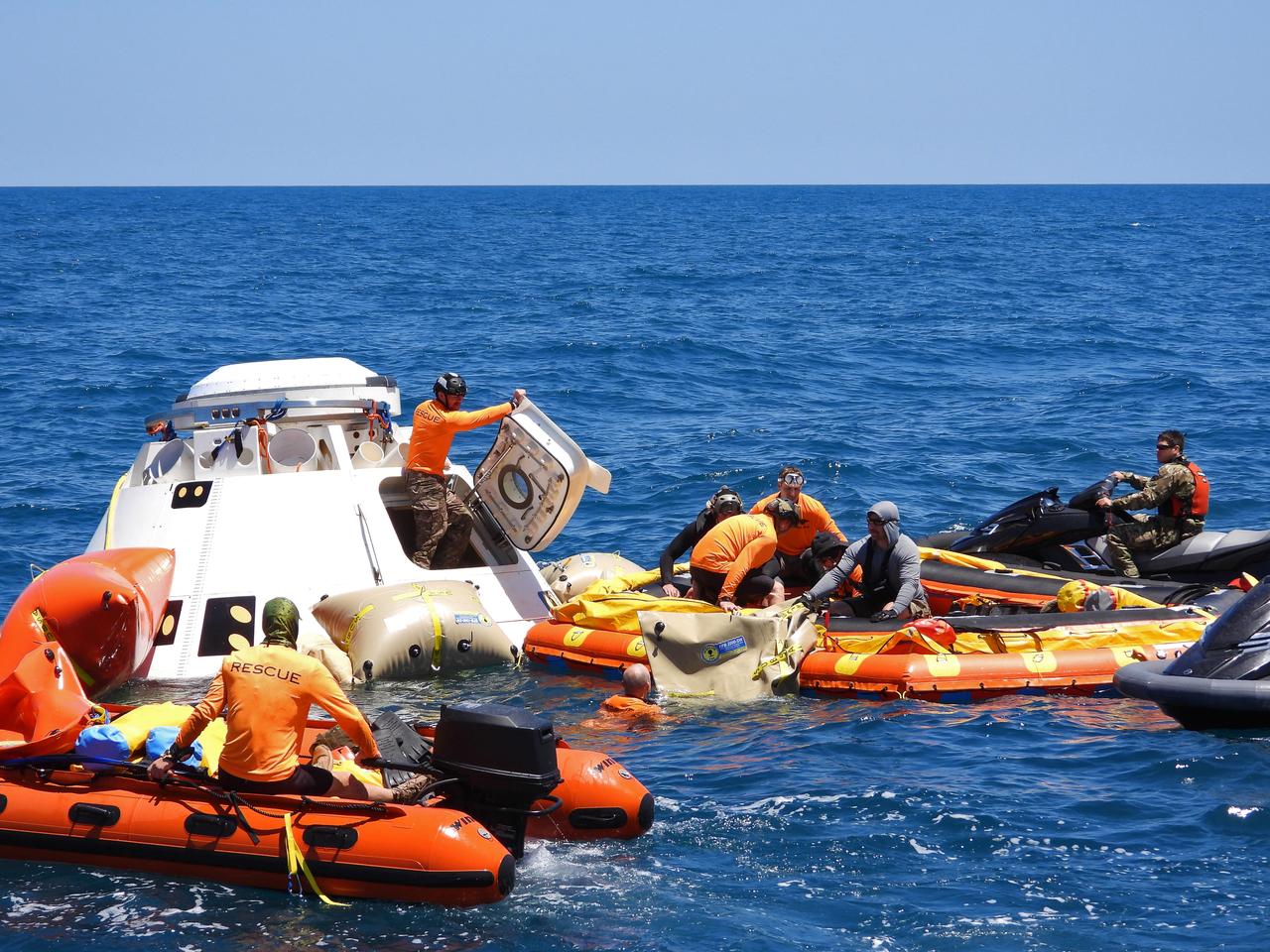
Rescue team members are using a Boeing CST-100 Starliner training capsule to rehearse a full mission profile training exercise in the unlikely event of an emergency resulting in a splashdown. NASA and the Department of Defense (DoD) Human Space Flight Support Office Rescue Division conducted the exercise, after a culmination of nearly two weeks of training, off the coast of Cape Canaveral near the agency’s Kennedy Space Center in Florida on April 27, 2019. The team rehearsed assisted egress, extracting DoD team members acting as astronauts, from the capsule and providing immediate medical treatment. This open-ocean exercise provides team members with the necessary training ahead of Boeing’s Crew Flight Test with astronauts targeted for later this year. During normal return scenarios, Boeing’s Starliner will land in a safe zone of about 15 square miles in the Western United States. Throughout the commercial crew development phases with NASA, Boeing has performed dozens of qualification tests on its parachute and airbag systems simulating conditions on land and in the water.

Rescue team members are using a Boeing CST-100 Starliner training capsule to rehearse a full mission profile training exercise in the unlikely event of an emergency resulting in a splashdown. NASA and the Department of Defense (DoD) Human Space Flight Support Office Rescue Division conducted the exercise, after a culmination of nearly two weeks of training, off the coast of Cape Canaveral near the agency’s Kennedy Space Center in Florida on April 27, 2019. The team rehearsed assisted egress, extracting DoD team members acting as astronauts, from the capsule and providing immediate medical treatment. This open-ocean exercise provides team members with the necessary training ahead of Boeing’s Crew Flight Test with astronauts targeted for later this year. During normal return scenarios, Boeing’s Starliner will land in a safe zone of about 15 square miles in the Western United States. Throughout the commercial crew development phases with NASA, Boeing has performed dozens of qualification tests on its parachute and airbag systems simulating conditions on land and in the water.
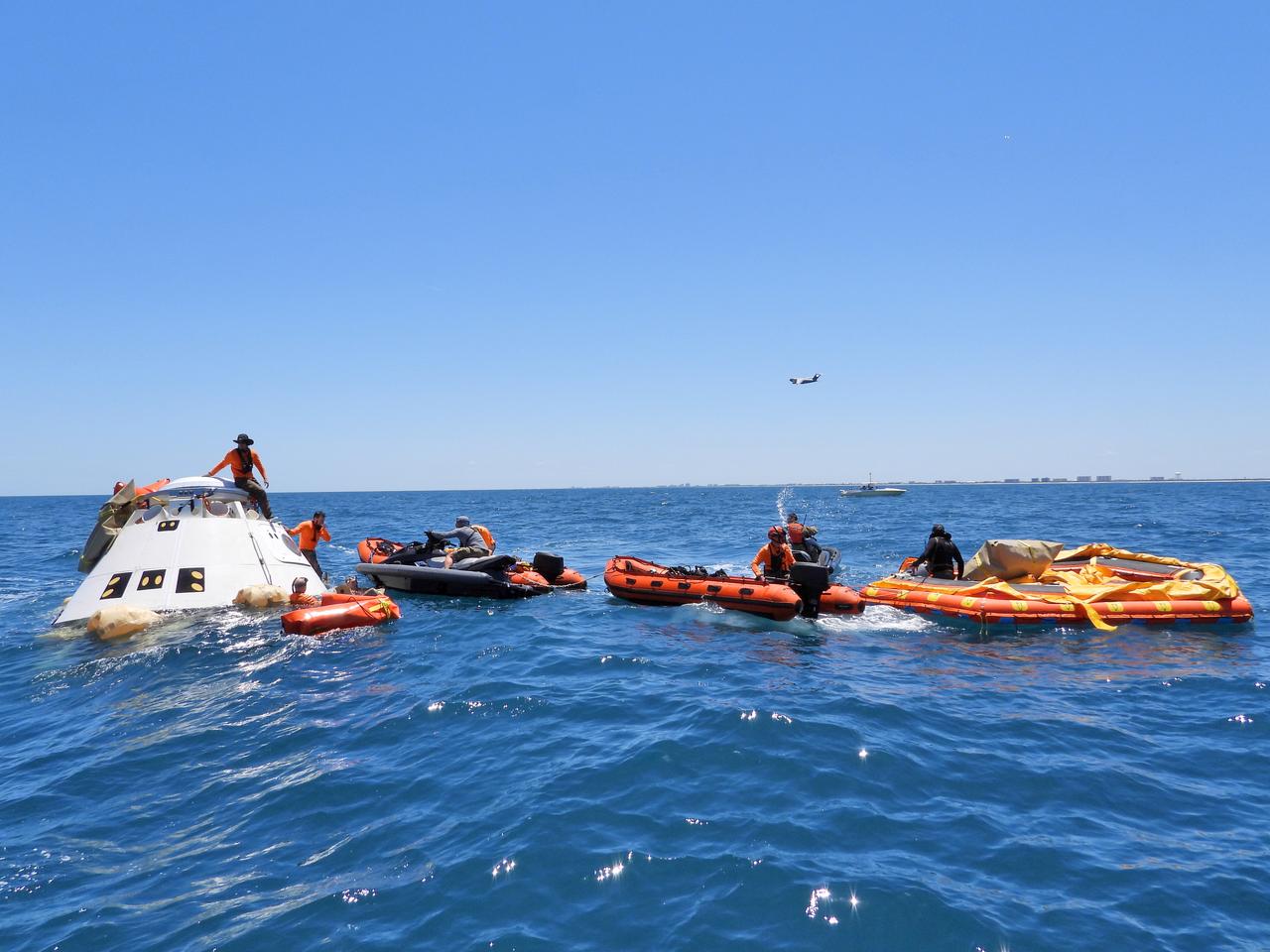
Rescue team members are using a Boeing CST-100 Starliner training capsule to rehearse a full mission profile training exercise in the unlikely event of an emergency resulting in a splashdown. NASA and the Department of Defense (DoD) Human Space Flight Support Office Rescue Division conducted the exercise, after a culmination of nearly two weeks of training, off the coast of Cape Canaveral near the agency’s Kennedy Space Center in Florida on April 27, 2019. The team rehearsed assisted egress, extracting DoD team members acting as astronauts, from the capsule and providing immediate medical treatment. This open-ocean exercise provides team members with the necessary training ahead of Boeing’s Crew Flight Test with astronauts targeted for later this year. During normal return scenarios, Boeing’s Starliner will land in a safe zone of about 15 square miles in the Western United States. Throughout the commercial crew development phases with NASA, Boeing has performed dozens of qualification tests on its parachute and airbag systems simulating conditions on land and in the water.

Rescue team members are using a Boeing CST-100 Starliner training capsule to rehearse a full mission profile training exercise in the unlikely event of an emergency resulting in a splashdown. NASA and the Department of Defense (DoD) Human Space Flight Support Office Rescue Division conducted the exercise, after a culmination of nearly two weeks of training, off the coast of Cape Canaveral near the agency’s Kennedy Space Center in Florida on April 27, 2019. The team rehearsed assisted egress, extracting DoD team members acting as astronauts, from the capsule and providing immediate medical treatment. This open-ocean exercise provides team members with the necessary training ahead of Boeing’s Crew Flight Test with astronauts targeted for later this year. During normal return scenarios, Boeing’s Starliner will land in a safe zone of about 15 square miles in the Western United States. Throughout the commercial crew development phases with NASA, Boeing has performed dozens of qualification tests on its parachute and airbag systems simulating conditions on land and in the water.
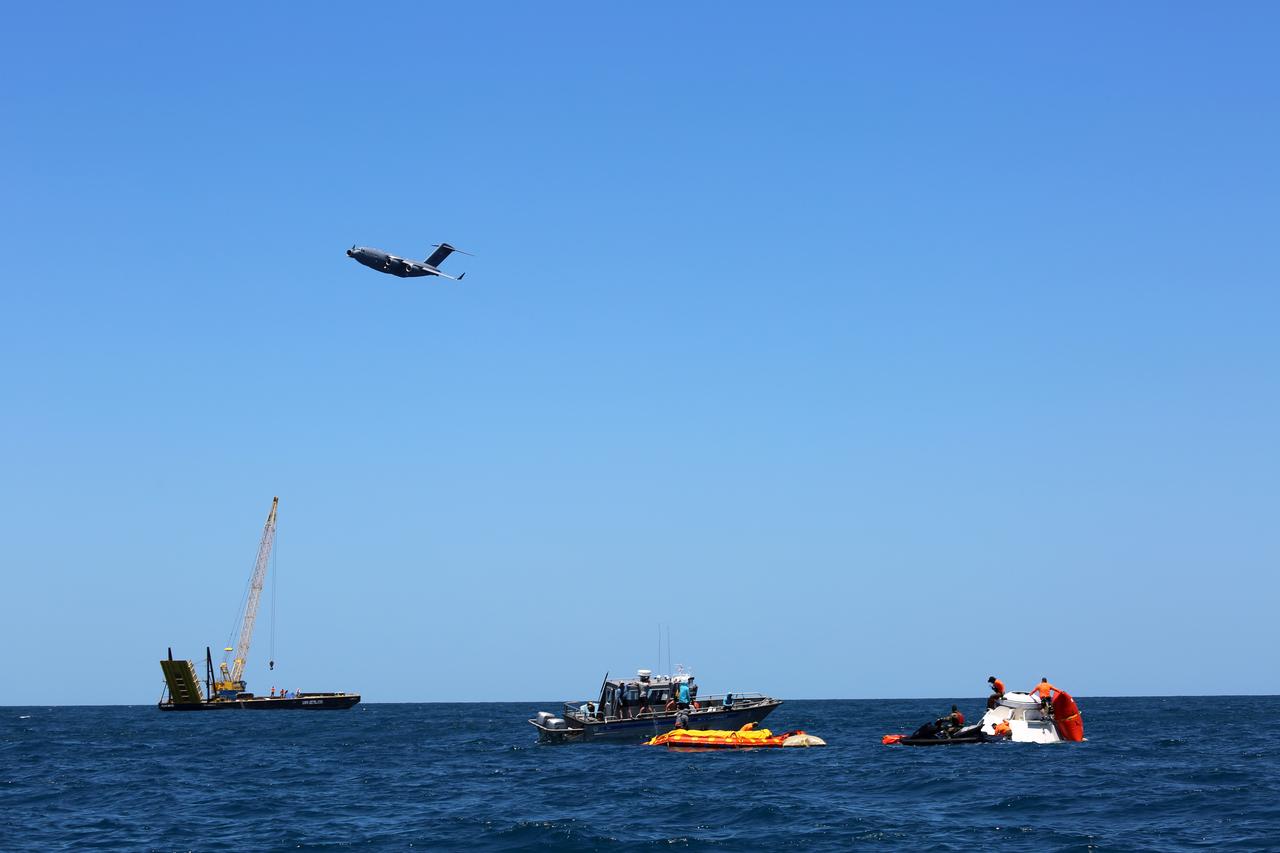
Rescue team members are using a Boeing CST-100 Starliner training capsule to rehearse a full mission profile training exercise in the unlikely event of an emergency resulting in a splashdown. NASA and the Department of Defense (DoD) Human Space Flight Support Office Rescue Division conducted the exercise, after a culmination of nearly two weeks of training, off the coast of Cape Canaveral near the agency’s Kennedy Space Center in Florida on April 27, 2019. The team rehearsed assisted egress, extracting DoD team members acting as astronauts, from the capsule and providing immediate medical treatment. This open-ocean exercise provides team members with the necessary training ahead of Boeing’s Crew Flight Test with astronauts targeted for later this year. During normal return scenarios, Boeing’s Starliner will land in a safe zone of about 15 square miles in the Western United States. Throughout the commercial crew development phases with NASA, Boeing has performed dozens of qualification tests on its parachute and airbag systems simulating conditions on land and in the water.
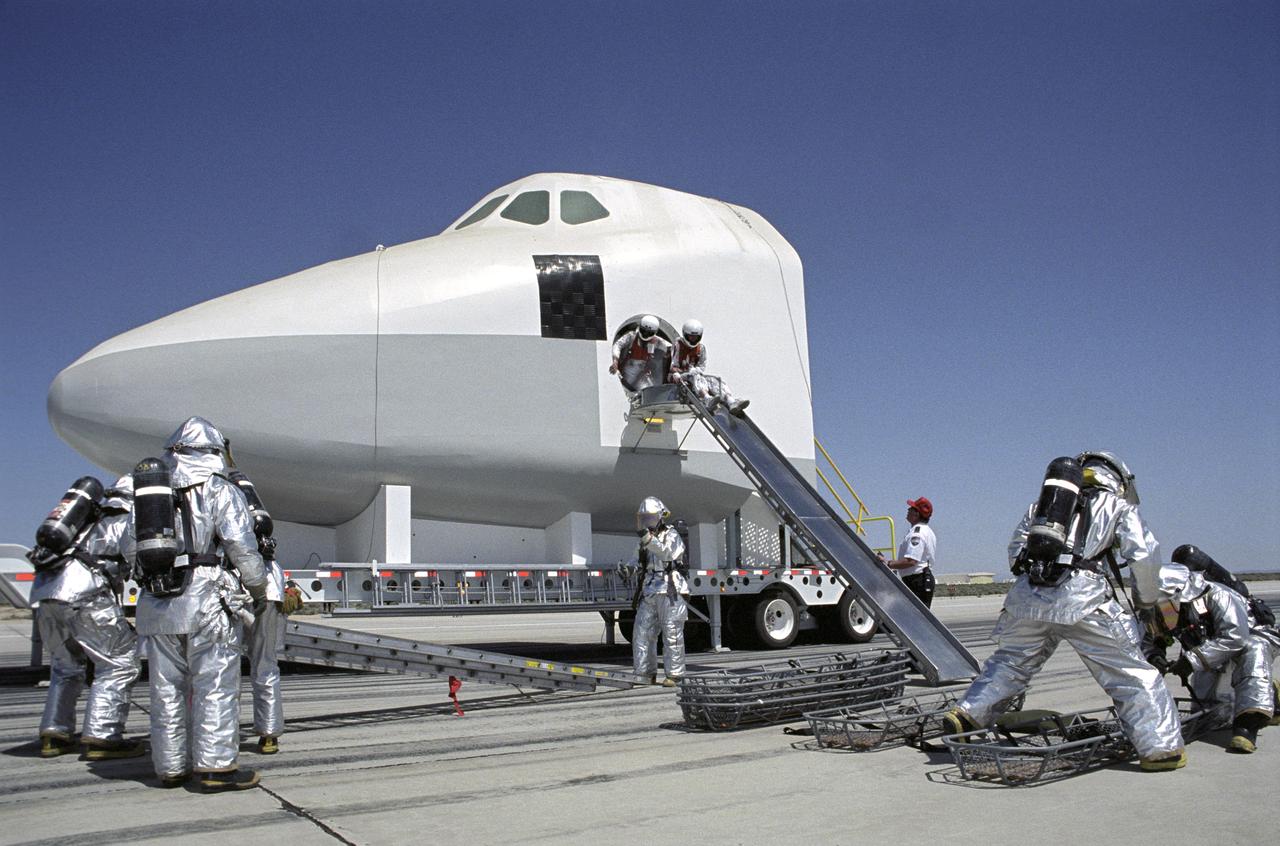
While fire-rescue personnel prepare evacuation litters, two stand-in "astronauts" prepare to use an exit slide from a Shuttle mockup during a rescue training exercise.
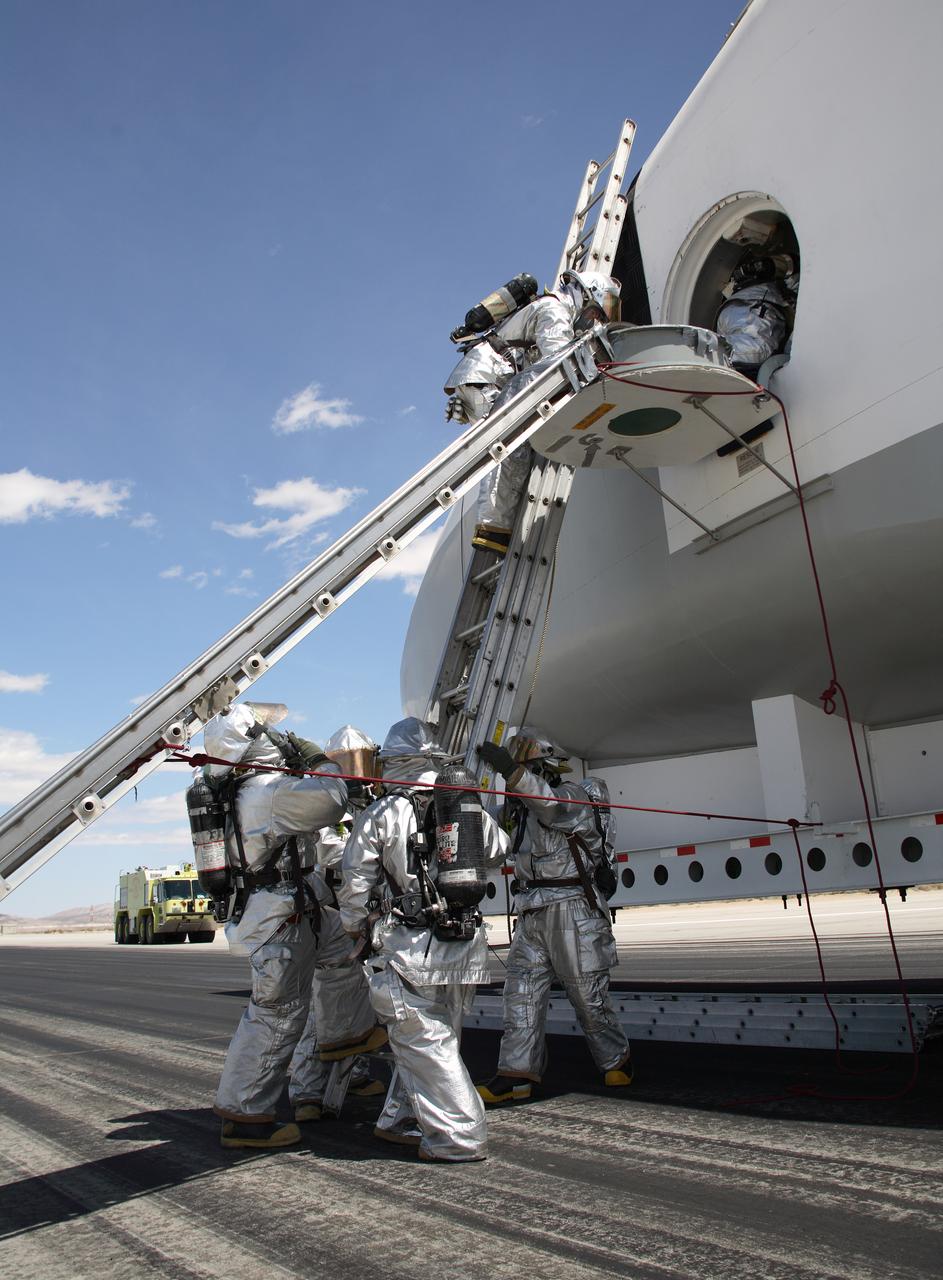
Air Force fire/rescue crew enter the space shuttle cabin mockup hatch to evacuate the shuttle crew during a shuttle rescue training exercise at Edwards AFB. (USAF photo # 070505-F-1287F-118)

U.S. Air Force “Guardian Angel” Pararescue forces are airdropped into the Atlantic Ocean off the coast of Cape Canaveral near Kennedy Space Center in Florida to rehearse a full mission profile training exercise on April 27, 2019. The exercise included using a Boeing CST-100 Starliner training capsule to run through the necessary steps in the unlikely event of an emergency resulting in a splashdown. NASA and the Department of Defense (DoD) Human Space Flight Support Office Rescue Division conducted the training, which included rehearsing assisted egress, extracting DoD team members acting as astronauts, from the capsule and providing immediate medical treatment. This open-ocean exercise provides team members with the necessary training ahead of Boeing’s Crew Flight Test with astronauts targeted for later this year. During normal return scenarios, Boeing’s Starliner will land in a safe zone of about 15 square miles in the Western United States. Throughout the commercial crew development phases with NASA, Boeing has performed dozens of qualification tests on its parachute and airbag systems simulating conditions on land and in the water.
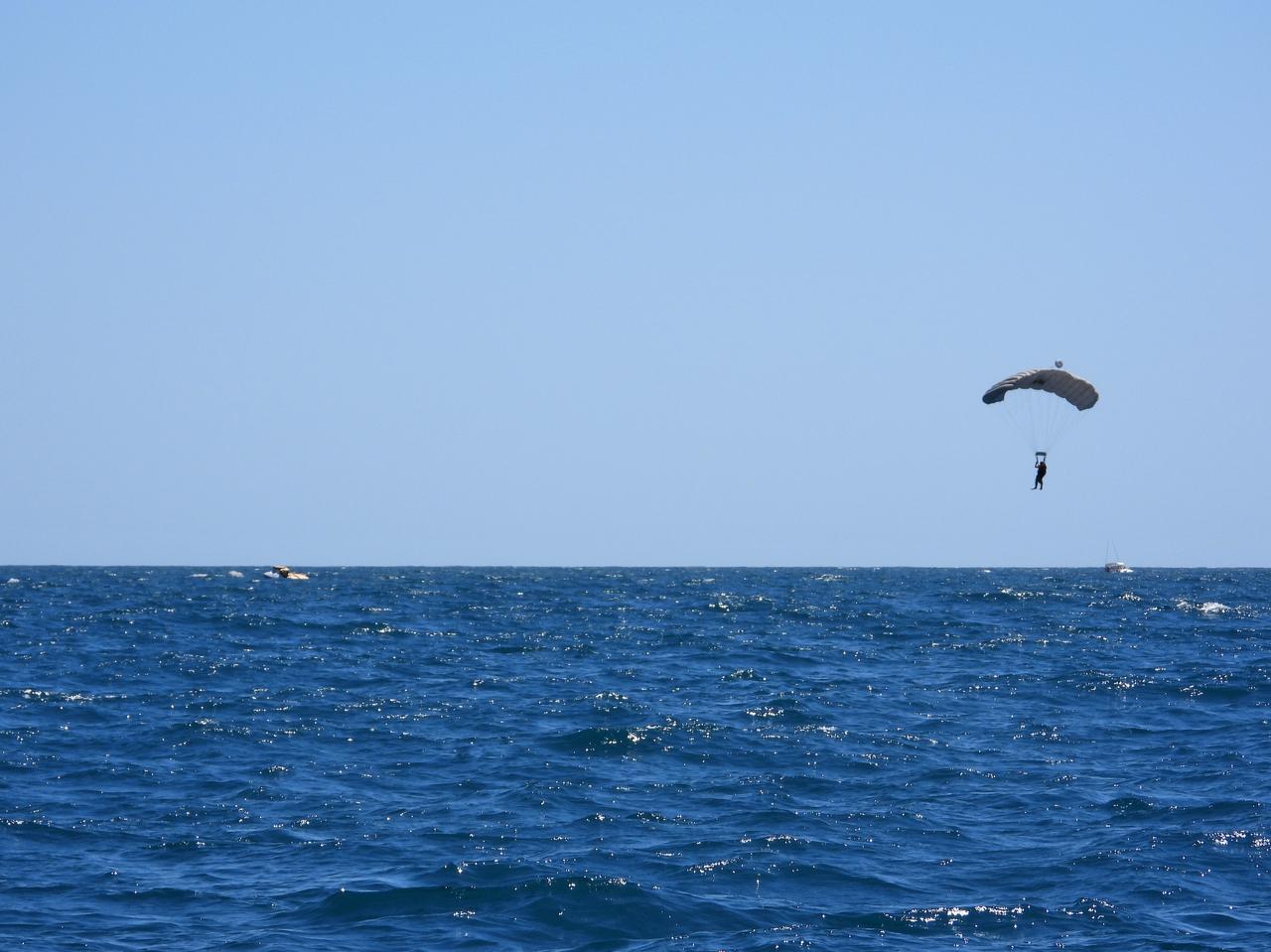
U.S. Air Force “Guardian Angel” Pararescue forces are airdropped into the Atlantic Ocean off the coast of Cape Canaveral near Kennedy Space Center in Florida to rehearse a full mission profile training exercise on April 27, 2019. The exercise included using a Boeing CST-100 Starliner training capsule to run through the necessary steps in the unlikely event of an emergency resulting in a splashdown. NASA and the Department of Defense (DoD) Human Space Flight Support Office Rescue Division conducted the training, which included rehearsing assisted egress, extracting DoD team members acting as astronauts, from the capsule and providing immediate medical treatment. This open-ocean exercise provides team members with the necessary training ahead of Boeing’s Crew Flight Test with astronauts targeted for later this year. During normal return scenarios, Boeing’s Starliner will land in a safe zone of about 15 square miles in the Western United States. Throughout the commercial crew development phases with NASA, Boeing has performed dozens of qualification tests on its parachute and airbag systems simulating conditions on land and in the water.
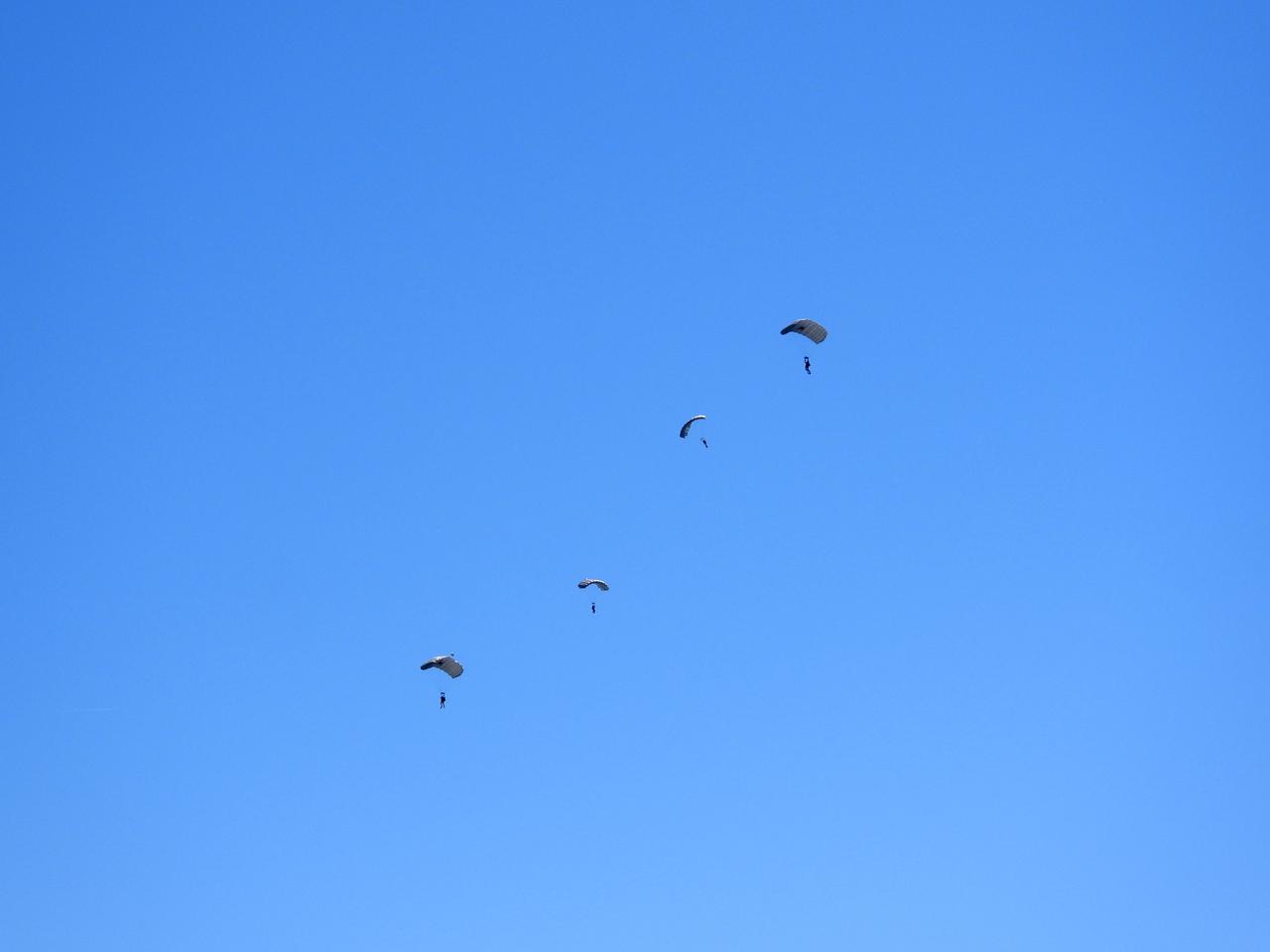
U.S. Air Force “Guardian Angel” Pararescue forces are airdropped into the Atlantic Ocean off the coast of Cape Canaveral near Kennedy Space Center in Florida to rehearse a full mission profile training exercise on April 27, 2019. The exercise included using a Boeing CST-100 Starliner training capsule to run through the necessary steps in the unlikely event of an emergency resulting in a splashdown. NASA and the Department of Defense (DoD) Human Space Flight Support Office Rescue Division conducted the training, which included rehearsing assisted egress, extracting DoD team members acting as astronauts, from the capsule and providing immediate medical treatment. This open-ocean exercise provides team members with the necessary training ahead of Boeing’s Crew Flight Test with astronauts targeted for later this year. During normal return scenarios, Boeing’s Starliner will land in a safe zone of about 15 square miles in the Western United States. Throughout the commercial crew development phases with NASA, Boeing has performed dozens of qualification tests on its parachute and airbag systems simulating conditions on land and in the water.
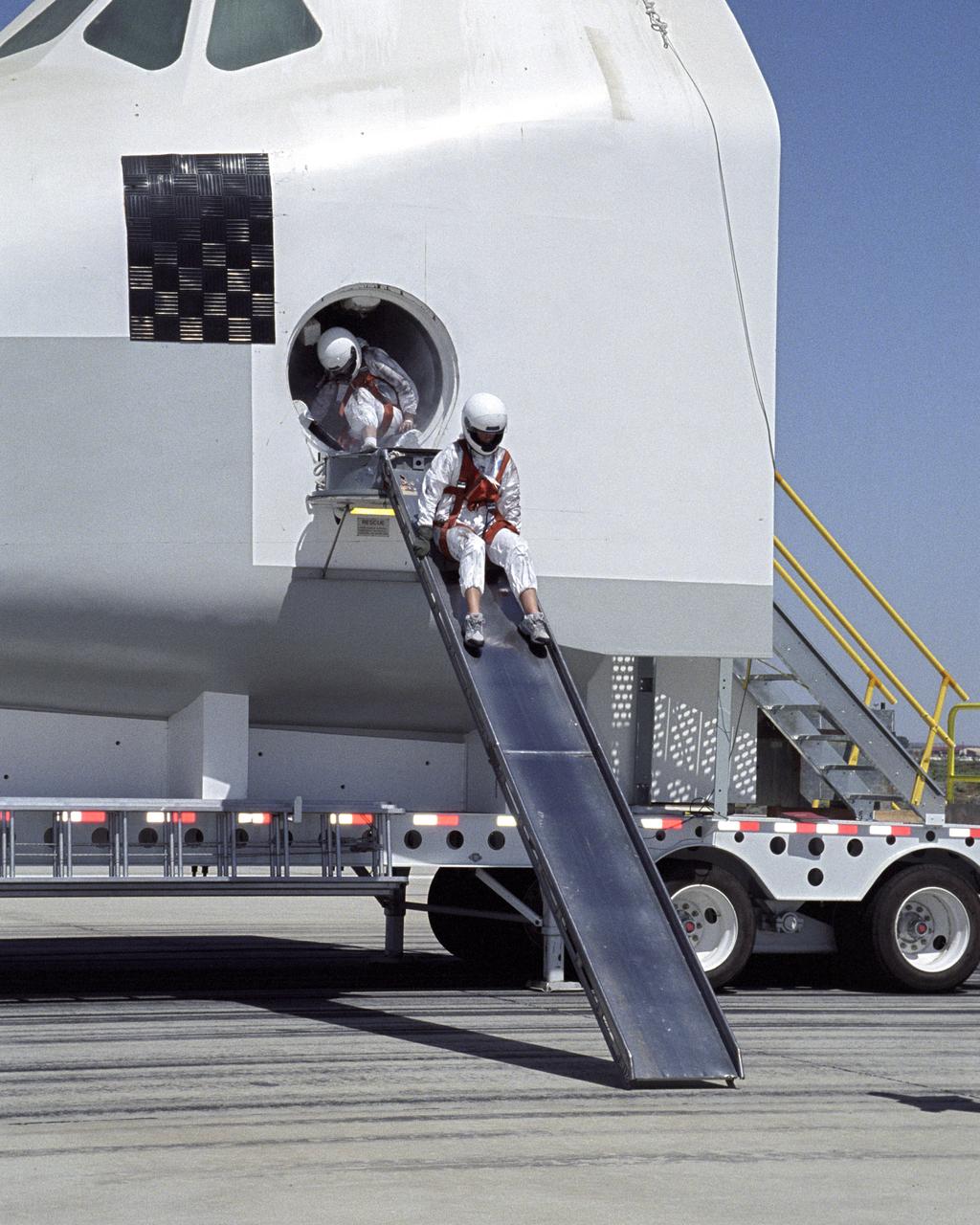
A volunteer "astronaut" starts down an exit slide from a Space Shuttle crew compartment mockup during a rescue and recovery training exercise.
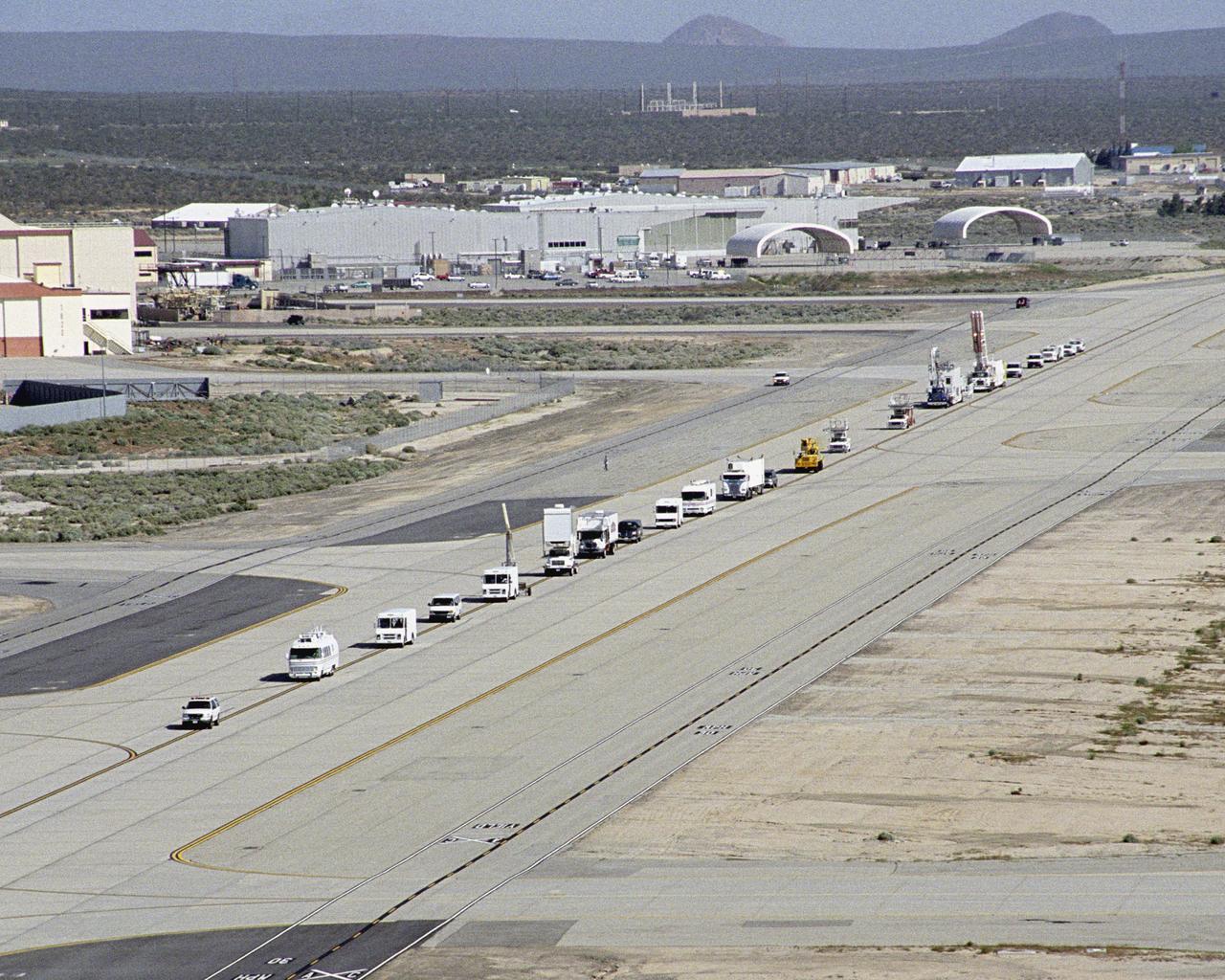
A long string of specialized NASA vehicles convoys down a taxiway at Edwards Air Force Base to begin a Space Shuttle rescue and recovery training exercise.
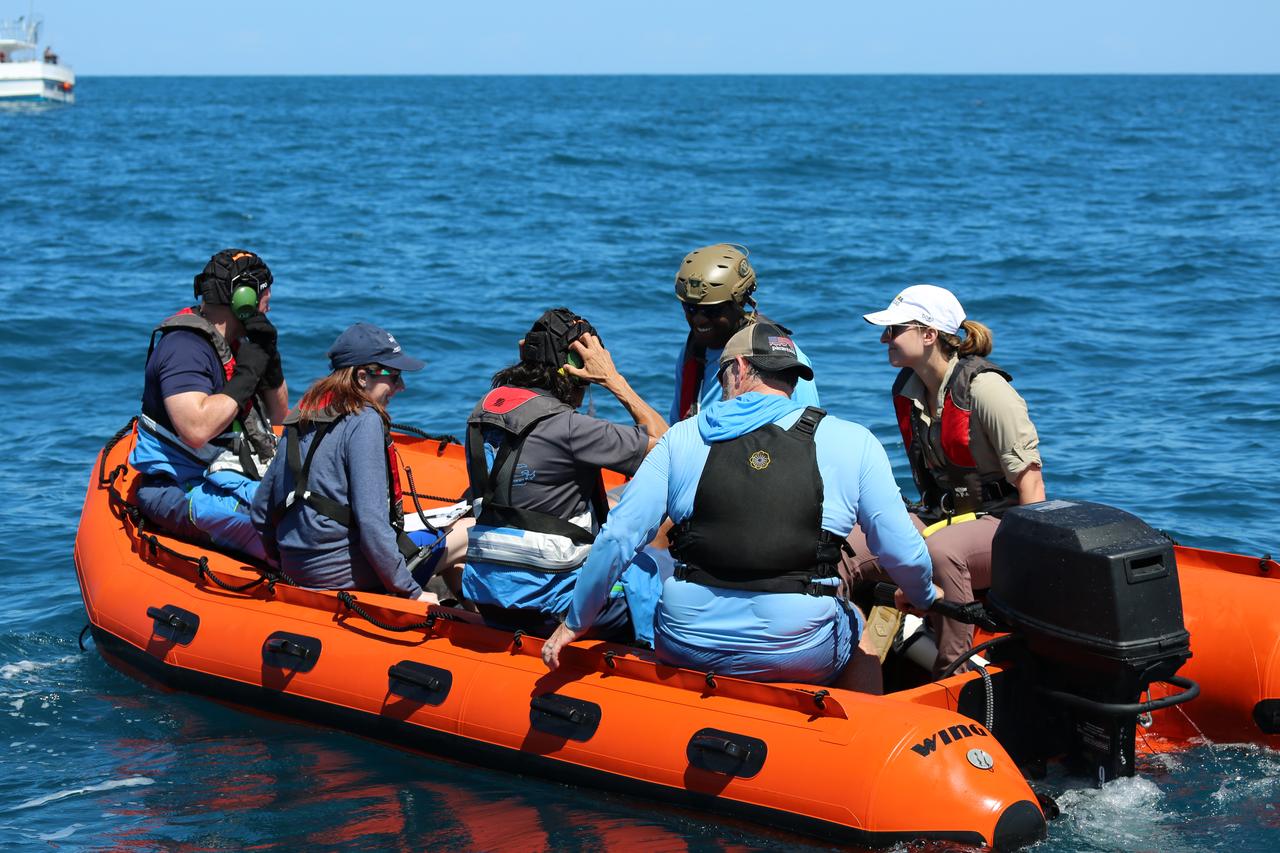
NASA astronauts Suni Williams and Barry “Butch” Wilmore, joined by their training team on a watercraft in the Atlantic Ocean, secure their safety gear as they prepare to rehearse the steps they would take to exit Boeing’s CST-100 Starliner spacecraft without assistance in the unlikely event of an emergency resulting in a splashdown. The training exercise, which occurred April 27, 2019, took place several miles off the coast of Cape Canaveral near NASA’s Kennedy Space Center in Florida. It included the astronauts unloading a rescue raft from inside the spacecraft, climbing out through a hatch at the top of the spacecraft, jumping into the Atlantic Ocean and boarding the raft. This open-ocean exercise provides the astronauts with the necessary training ahead of Boeing’s Crew Flight Test and subsequent missions. During normal return scenarios, Boeing’s Starliner will land in a safe zone of about 15 square miles in the Western United States. Throughout the commercial crew development phases with NASA, Boeing has performed dozens of qualification tests on its parachute and airbag systems simulating conditions on land and in the water.
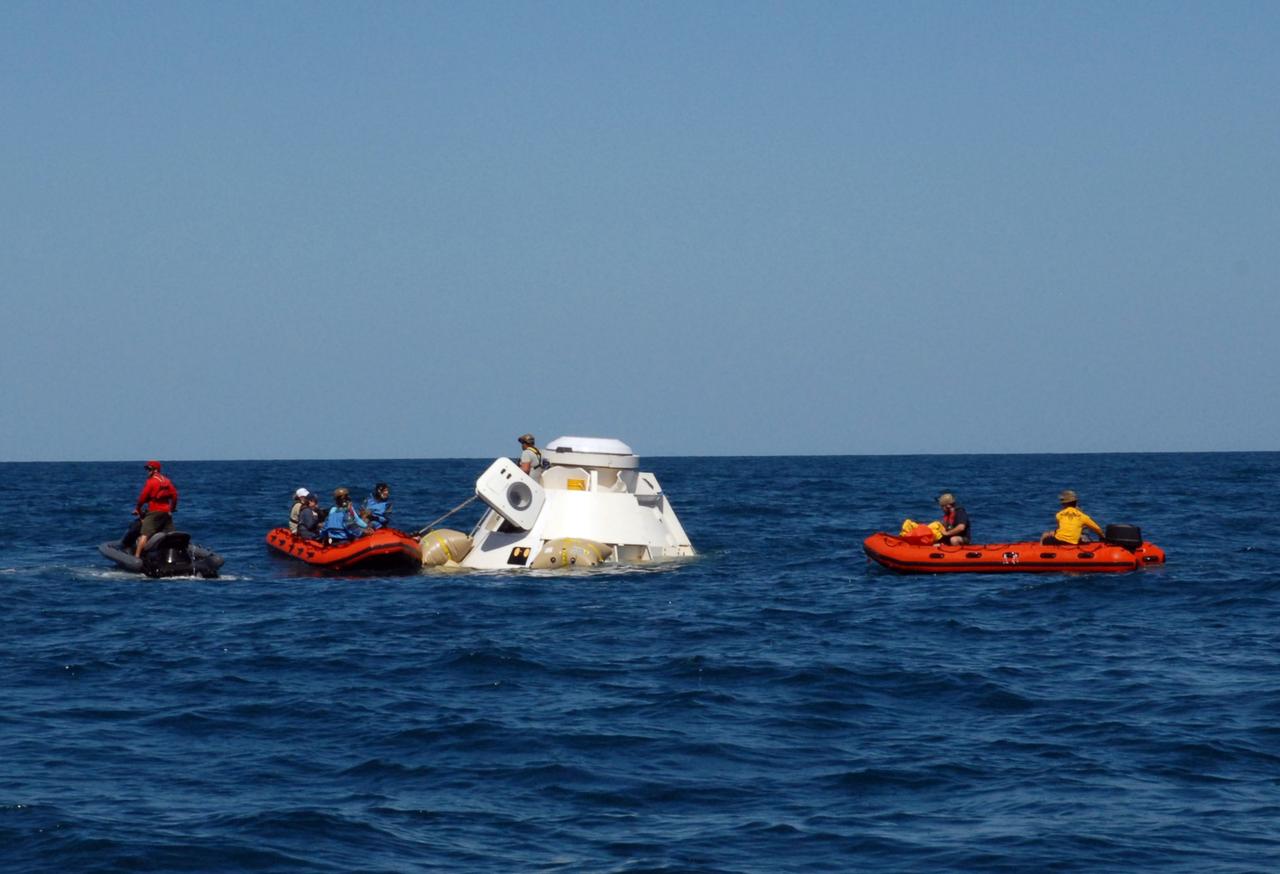
NASA astronauts Suni Williams and Barry “Butch” Wilmore rehearse the steps they would take to exit Boeing’s CST-100 Starliner spacecraft without assistance in the unlikely event of an emergency resulting in a splashdown. The training exercise, which occurred April 27, 2019, took place several miles off the coast of Cape Canaveral near NASA’s Kennedy Space Center in Florida. It included the astronauts unloading a rescue raft from inside the spacecraft, climbing out through a hatch at the top of the spacecraft, jumping into the Atlantic Ocean and boarding the raft. This open-ocean exercise provides the astronauts with the necessary training ahead of Boeing’s Crew Flight Test and subsequent missions. During normal return scenarios, Boeing’s Starliner will land in a safe zone of about 15 square miles in the Western United States. Throughout the commercial crew development phases with NASA, Boeing has performed dozens of qualification tests on its parachute and airbag systems simulating conditions on land and in the water.
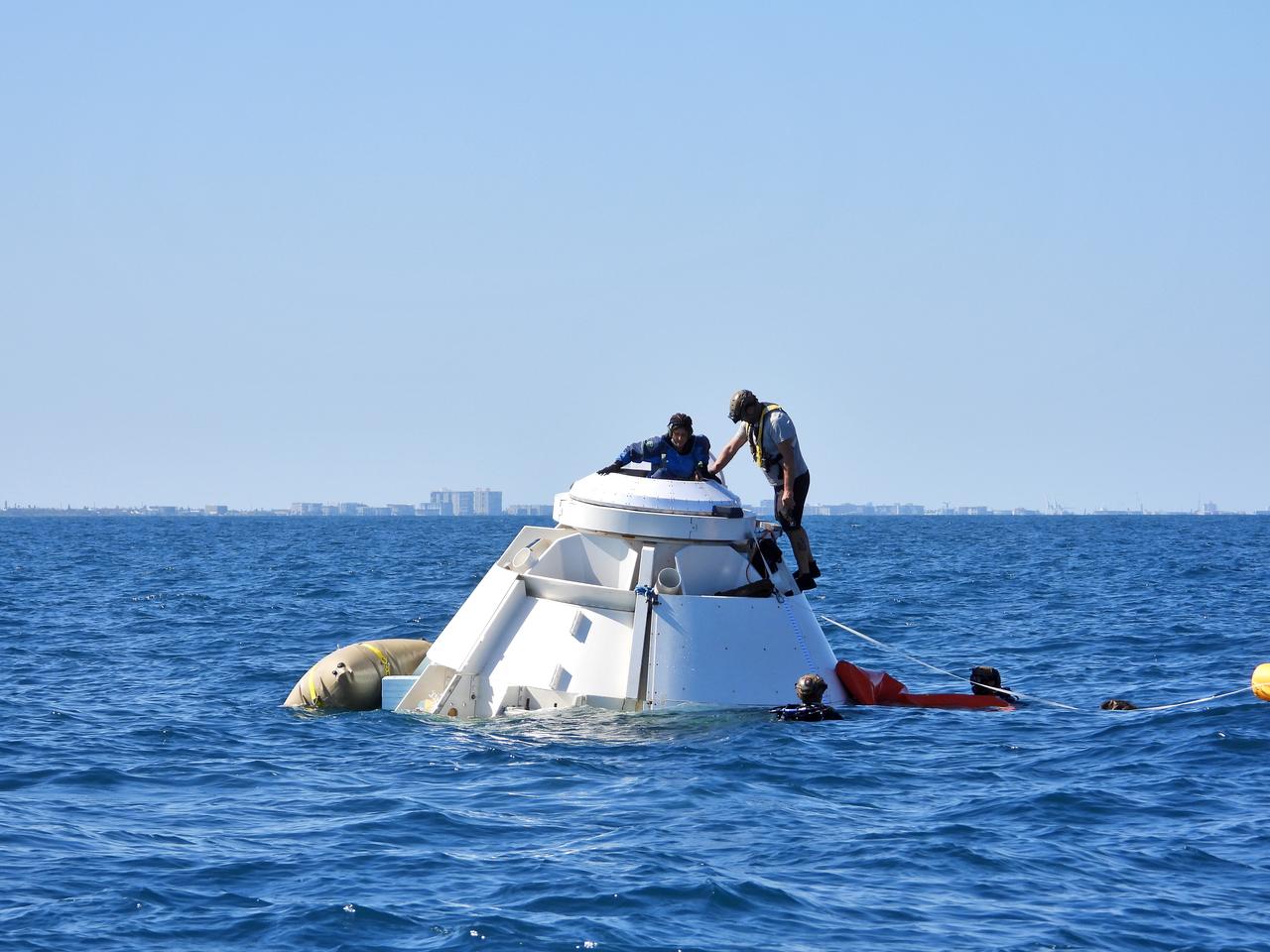
NASA astronauts Suni Williams and Barry “Butch” Wilmore rehearse the steps they would take to exit Boeing’s CST-100 Starliner spacecraft without assistance in the unlikely event of an emergency resulting in a splashdown. The training exercise, which occurred April 27, 2019, took place several miles off the coast of Cape Canaveral near NASA’s Kennedy Space Center in Florida. It included the astronauts unloading a rescue raft from inside the spacecraft, climbing out through a hatch at the top of the spacecraft, jumping into the Atlantic Ocean and boarding the raft. This open-ocean exercise provides the astronauts with the necessary training ahead of Boeing’s Crew Flight Test and subsequent missions. During normal return scenarios, Boeing’s Starliner will land in a safe zone of about 15 square miles in the Western United States. Throughout the commercial crew development phases with NASA, Boeing has performed dozens of qualification tests on its parachute and airbag systems simulating conditions on land and in the water.
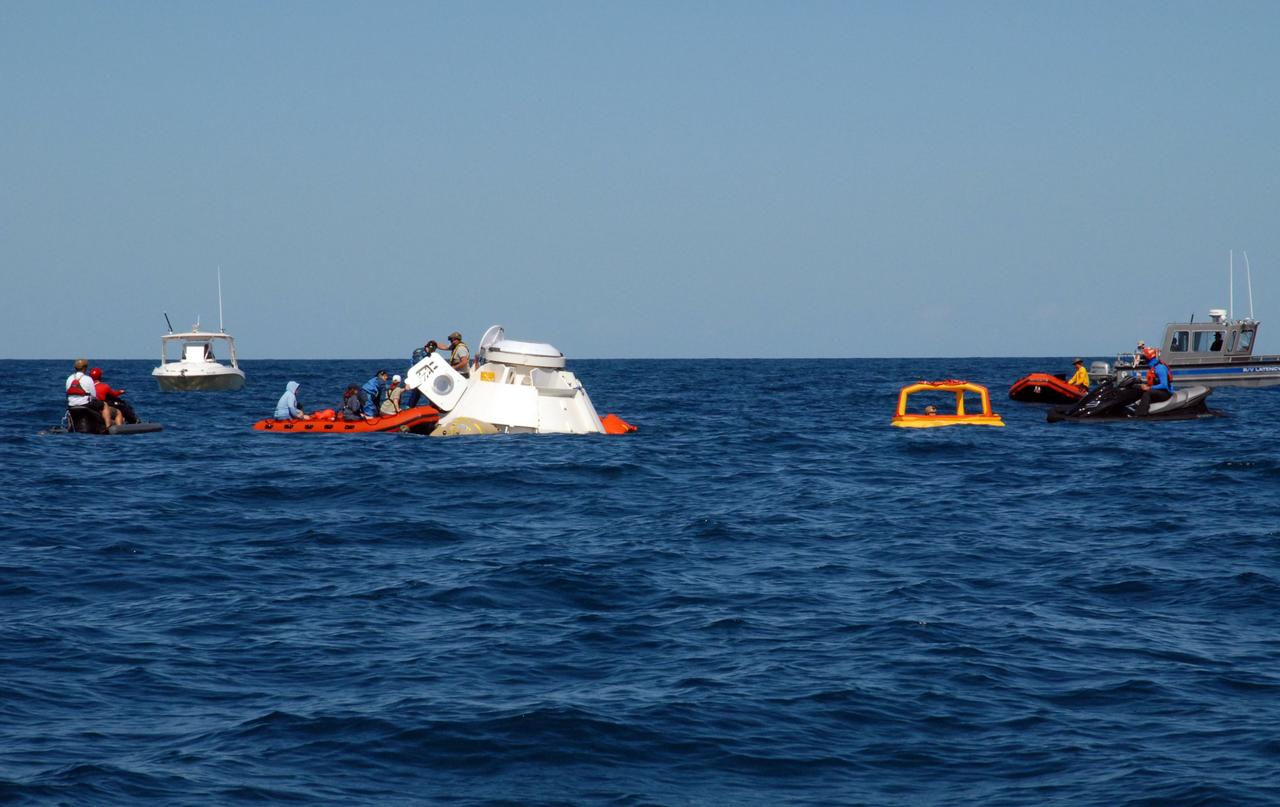
NASA astronauts Suni Williams and Barry “Butch” Wilmore rehearse the steps they would take to exit Boeing’s CST-100 Starliner spacecraft without assistance in the unlikely event of an emergency resulting in a splashdown. The training exercise, which occurred April 27, 2019, took place several miles off the coast of Cape Canaveral near NASA’s Kennedy Space Center in Florida. It included the astronauts unloading a rescue raft from inside the spacecraft, climbing out through a hatch at the top of the spacecraft, jumping into the Atlantic Ocean and boarding the raft. This open-ocean exercise provides the astronauts with the necessary training ahead of Boeing’s Crew Flight Test and subsequent missions. During normal return scenarios, Boeing’s Starliner will land in a safe zone of about 15 square miles in the Western United States. Throughout the commercial crew development phases with NASA, Boeing has performed dozens of qualification tests on its parachute and airbag systems simulating conditions on land and in the water.
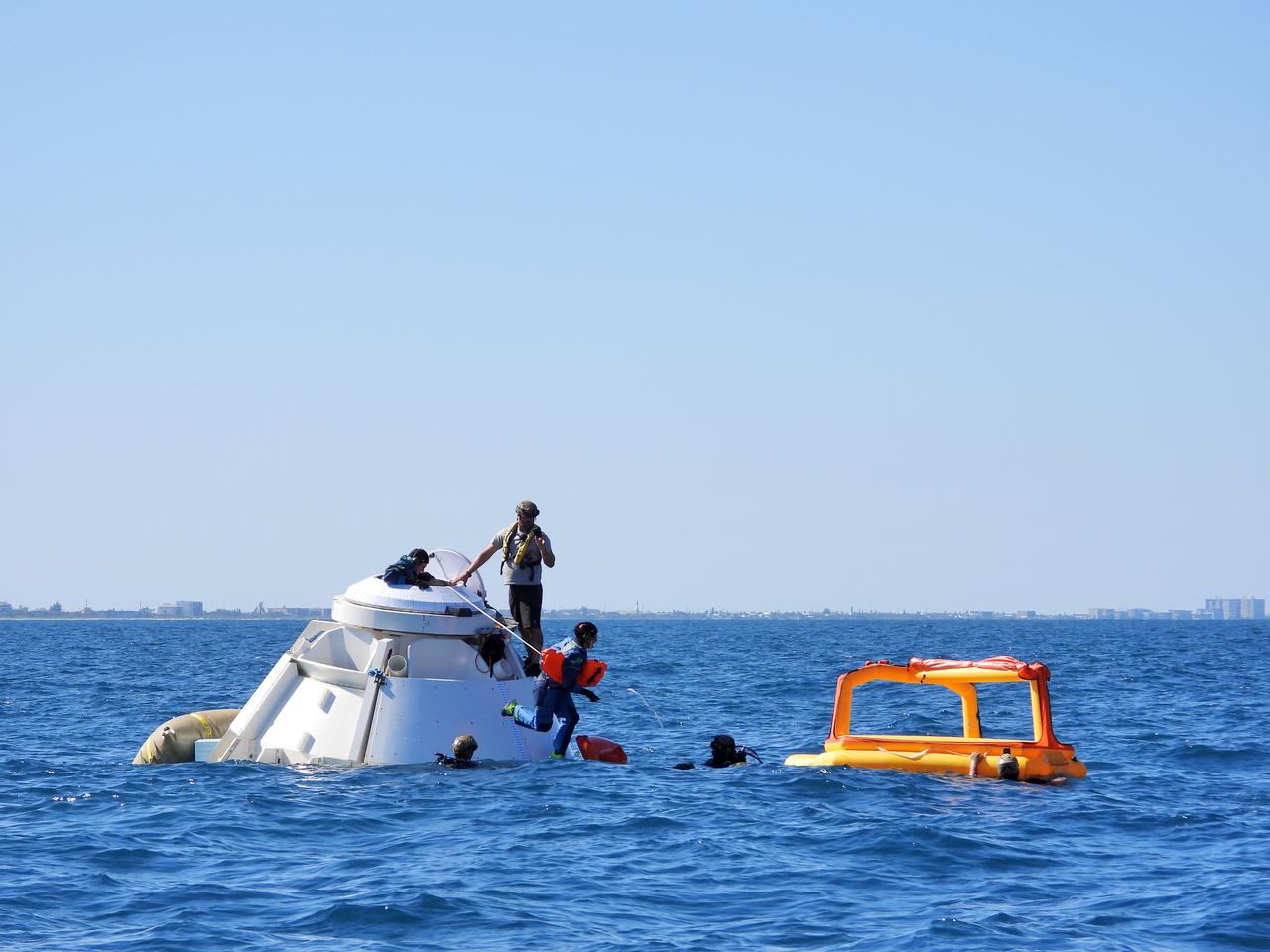
NASA astronauts Suni Williams and Barry “Butch” Wilmore rehearse the steps they would take to exit Boeing’s CST-100 Starliner spacecraft without assistance in the unlikely event of an emergency resulting in a splashdown. The training exercise, which occurred April 27, 2019, took place several miles off the coast of Cape Canaveral near NASA’s Kennedy Space Center in Florida. It included the astronauts unloading a rescue raft from inside the spacecraft, climbing out through a hatch at the top of the spacecraft, jumping into the Atlantic Ocean and boarding the raft. This open-ocean exercise provides the astronauts with the necessary training ahead of Boeing’s Crew Flight Test and subsequent missions. During normal return scenarios, Boeing’s Starliner will land in a safe zone of about 15 square miles in the Western United States. Throughout the commercial crew development phases with NASA, Boeing has performed dozens of qualification tests on its parachute and airbag systems simulating conditions on land and in the water.
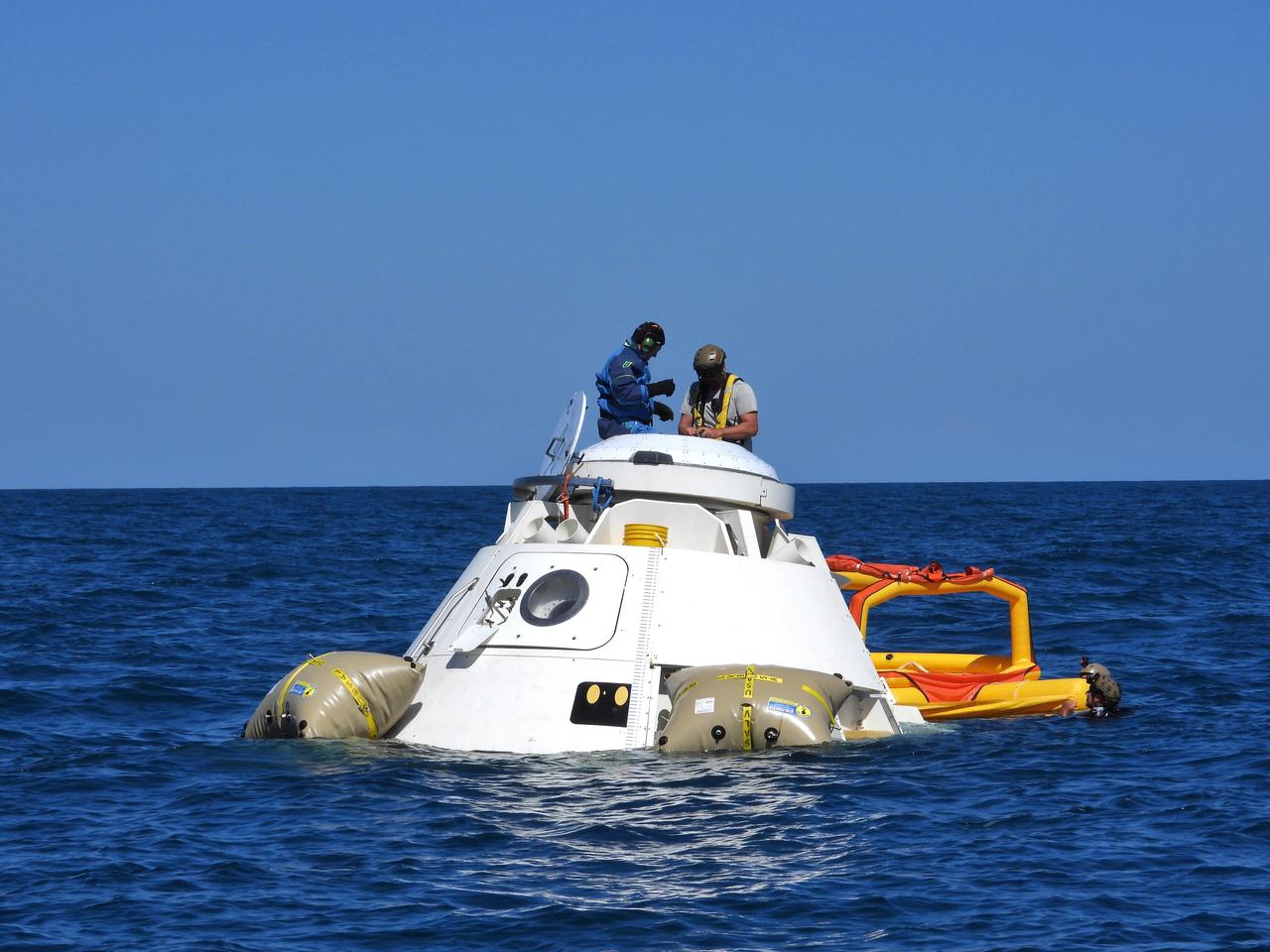
NASA astronauts Suni Williams and Barry “Butch” Wilmore rehearse the steps they would take to exit Boeing’s CST-100 Starliner spacecraft without assistance in the unlikely event of an emergency resulting in a splashdown. The training exercise, which occurred April 27, 2019, took place several miles off the coast of Cape Canaveral near NASA’s Kennedy Space Center in Florida. It included the astronauts unloading a rescue raft from inside the spacecraft, climbing out through a hatch at the top of the spacecraft, jumping into the Atlantic Ocean and boarding the raft. This open-ocean exercise provides the astronauts with the necessary training ahead of Boeing’s Crew Flight Test and subsequent missions. During normal return scenarios, Boeing’s Starliner will land in a safe zone of about 15 square miles in the Western United States. Throughout the commercial crew development phases with NASA, Boeing has performed dozens of qualification tests on its parachute and airbag systems simulating conditions on land and in the water.
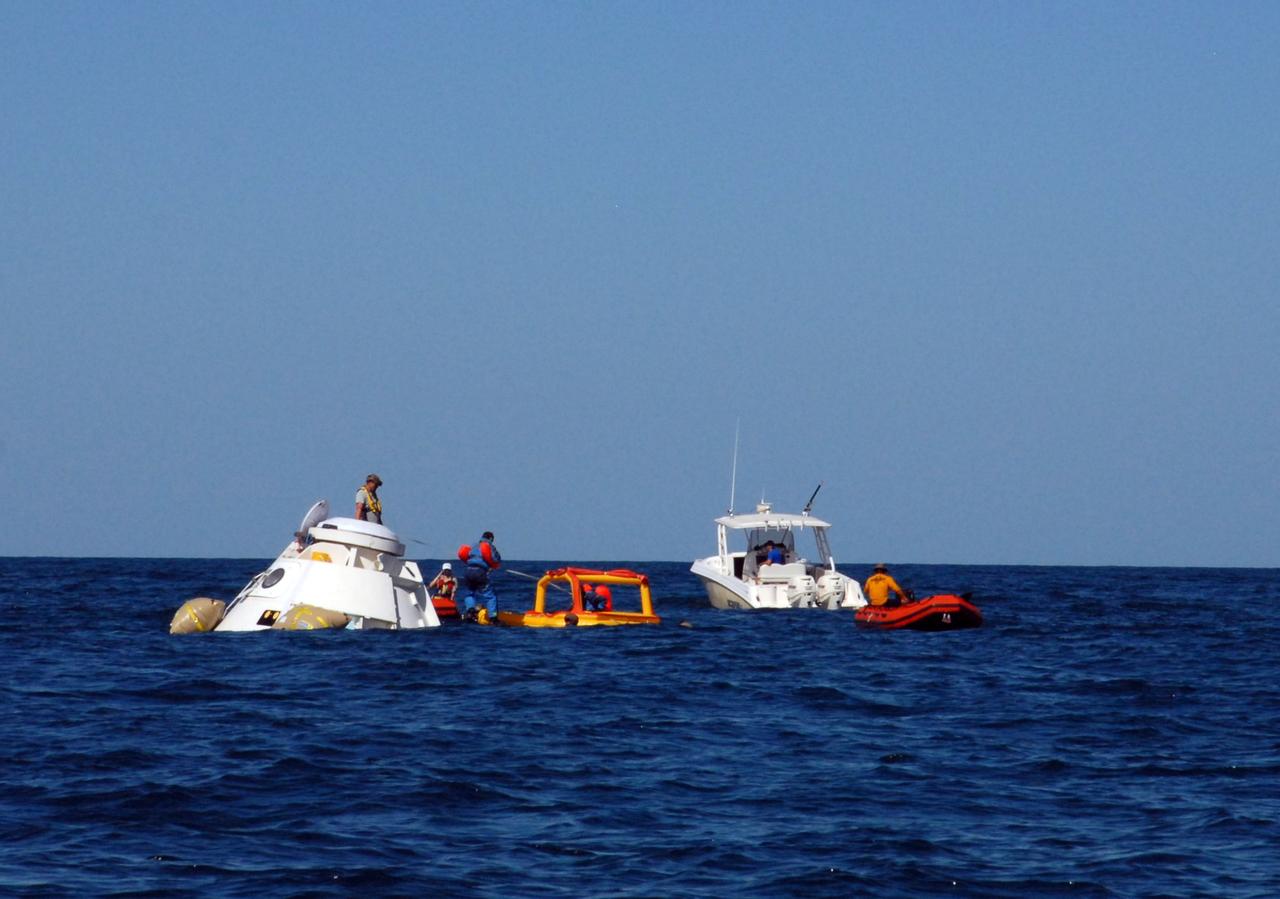
NASA astronauts Suni Williams and Barry “Butch” Wilmore rehearse the steps they would take to exit Boeing’s CST-100 Starliner spacecraft without assistance in the unlikely event of an emergency resulting in a splashdown. The training exercise, which occurred April 27, 2019, took place several miles off the coast of Cape Canaveral near NASA’s Kennedy Space Center in Florida. It included the astronauts unloading a rescue raft from inside the spacecraft, climbing out through a hatch at the top of the spacecraft, jumping into the Atlantic Ocean and boarding the raft. This open-ocean exercise provides the astronauts with the necessary training ahead of Boeing’s Crew Flight Test and subsequent missions. During normal return scenarios, Boeing’s Starliner will land in a safe zone of about 15 square miles in the Western United States. Throughout the commercial crew development phases with NASA, Boeing has performed dozens of qualification tests on its parachute and airbag systems simulating conditions on land and in the water.
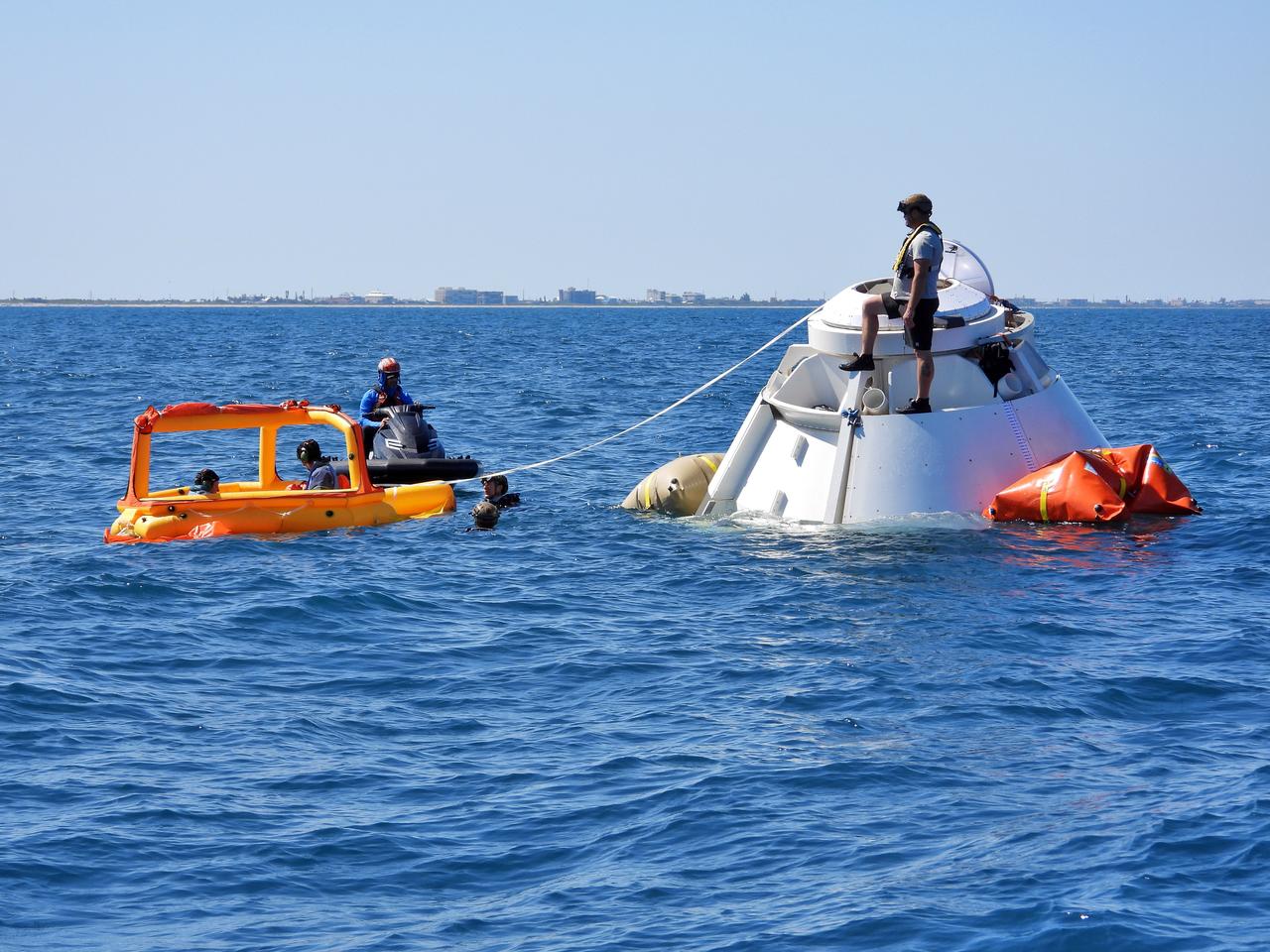
NASA astronauts Suni Williams and Barry “Butch” Wilmore rehearse the steps they would take to exit Boeing’s CST-100 Starliner spacecraft without assistance in the unlikely event of an emergency resulting in a splashdown. The training exercise, which occurred April 27, 2019, took place several miles off the coast of Cape Canaveral near NASA’s Kennedy Space Center in Florida. It included the astronauts unloading a rescue raft from inside the spacecraft, climbing out through a hatch at the top of the spacecraft, jumping into the Atlantic Ocean and boarding the raft. This open-ocean exercise provides the astronauts with the necessary training ahead of Boeing’s Crew Flight Test and subsequent missions. During normal return scenarios, Boeing’s Starliner will land in a safe zone of about 15 square miles in the Western United States. Throughout the commercial crew development phases with NASA, Boeing has performed dozens of qualification tests on its parachute and airbag systems simulating conditions on land and in the water.
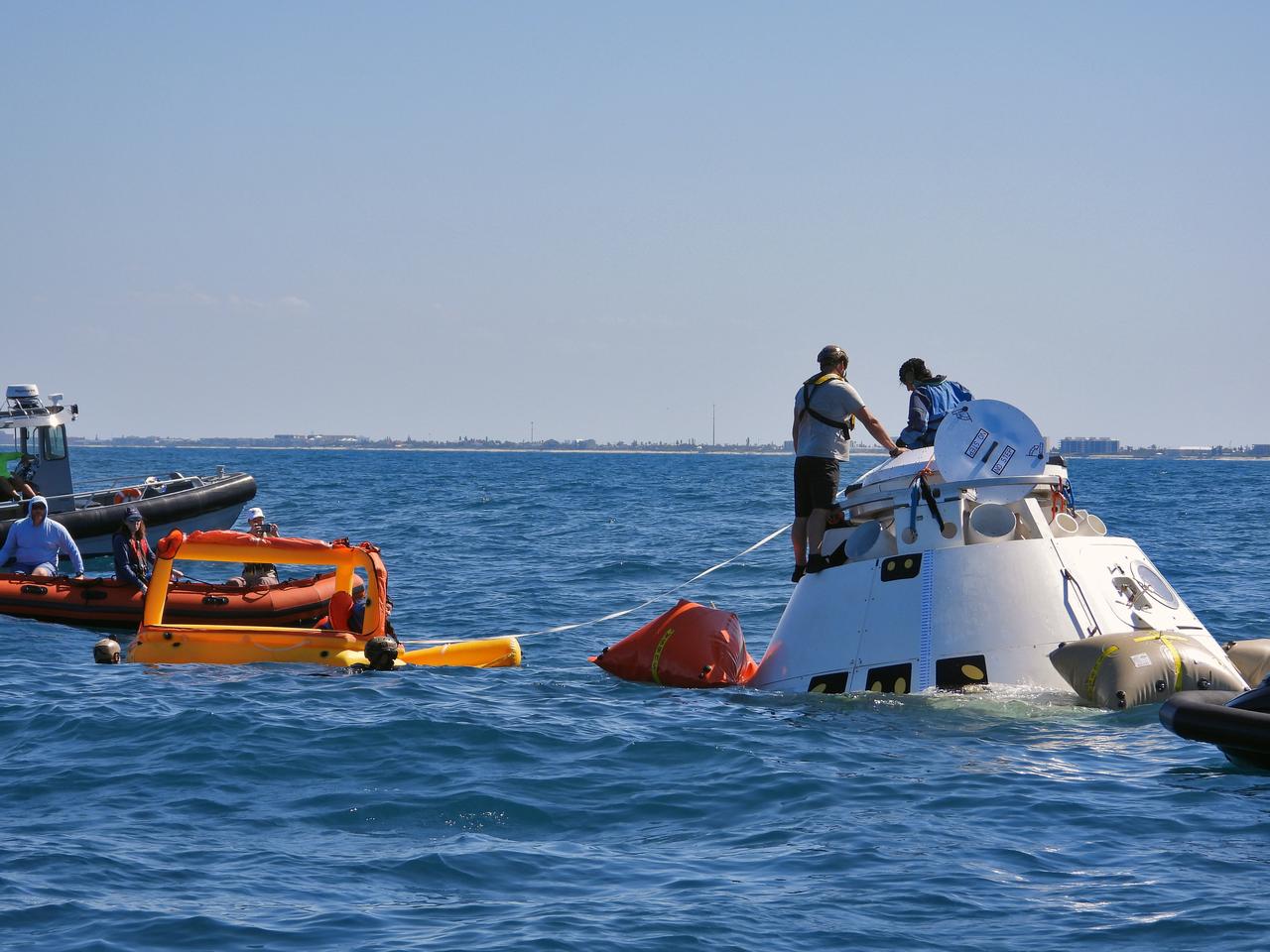
NASA astronauts Suni Williams and Barry “Butch” Wilmore rehearse the steps they would take to exit Boeing’s CST-100 Starliner spacecraft without assistance in the unlikely event of an emergency resulting in a splashdown. The training exercise, which occurred April 27, 2019, took place several miles off the coast of Cape Canaveral near NASA’s Kennedy Space Center in Florida. It included the astronauts unloading a rescue raft from inside the spacecraft, climbing out through a hatch at the top of the spacecraft, jumping into the Atlantic Ocean and boarding the raft. This open-ocean exercise provides the astronauts with the necessary training ahead of Boeing’s Crew Flight Test and subsequent missions. During normal return scenarios, Boeing’s Starliner will land in a safe zone of about 15 square miles in the Western United States. Throughout the commercial crew development phases with NASA, Boeing has performed dozens of qualification tests on its parachute and airbag systems simulating conditions on land and in the water.
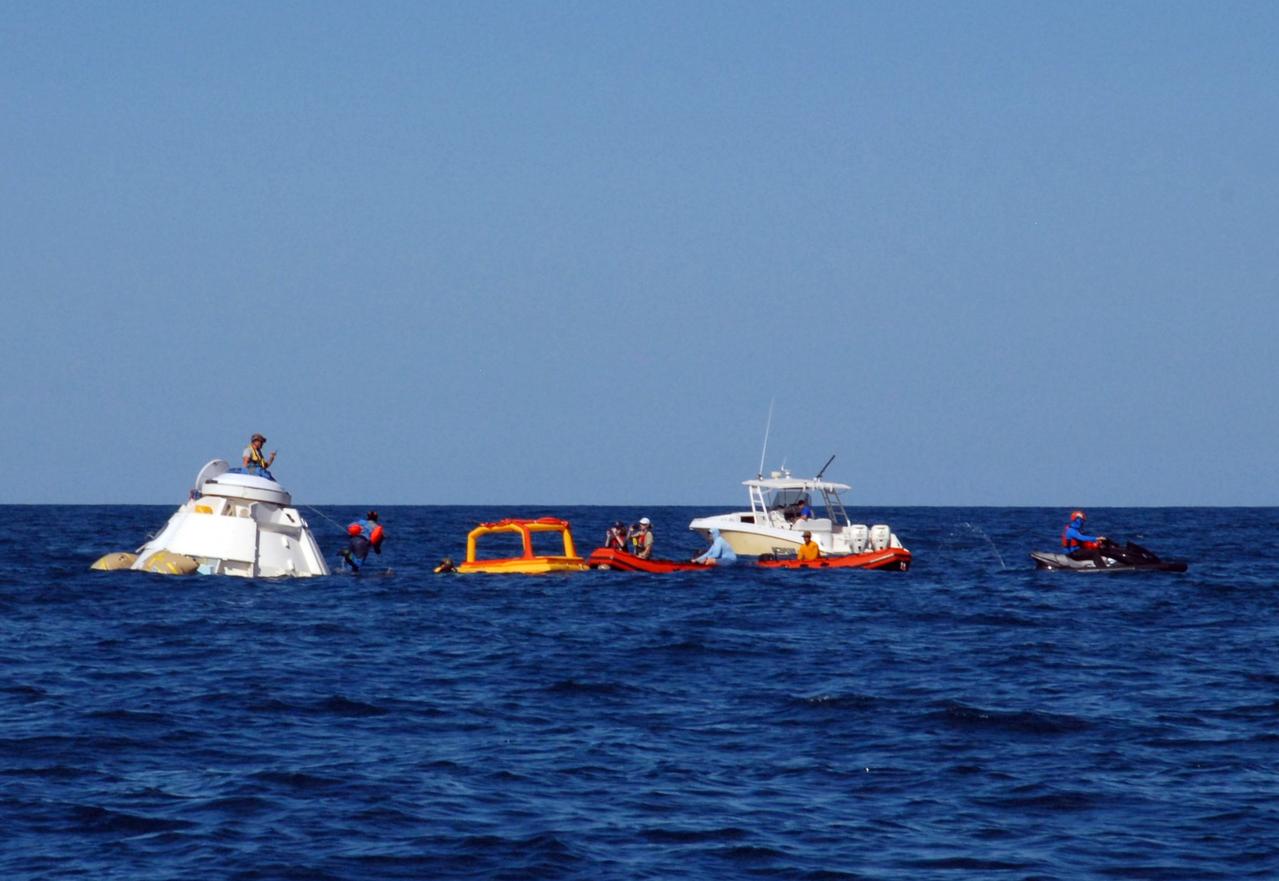
NASA astronauts Suni Williams and Barry “Butch” Wilmore rehearse the steps they would take to exit Boeing’s CST-100 Starliner spacecraft without assistance in the unlikely event of an emergency resulting in a splashdown. The training exercise, which occurred April 27, 2019, took place several miles off the coast of Cape Canaveral near NASA’s Kennedy Space Center in Florida. It included the astronauts unloading a rescue raft from inside the spacecraft, climbing out through a hatch at the top of the spacecraft, jumping into the Atlantic Ocean and boarding the raft. This open-ocean exercise provides the astronauts with the necessary training ahead of Boeing’s Crew Flight Test and subsequent missions. During normal return scenarios, Boeing’s Starliner will land in a safe zone of about 15 square miles in the Western United States. Throughout the commercial crew development phases with NASA, Boeing has performed dozens of qualification tests on its parachute and airbag systems simulating conditions on land and in the water.
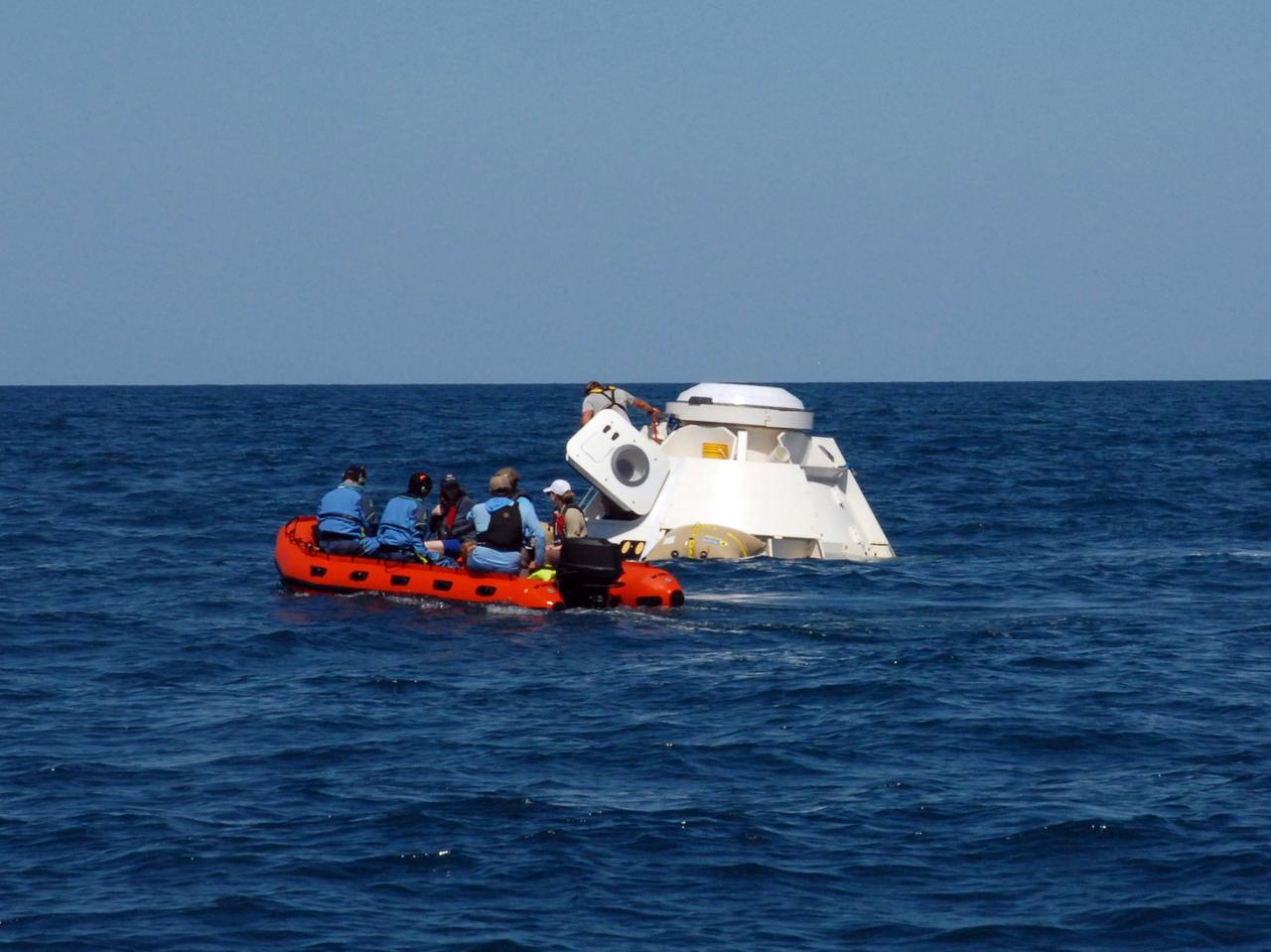
NASA astronauts Suni Williams and Barry “Butch” Wilmore rehearse the steps they would take to exit Boeing’s CST-100 Starliner spacecraft without assistance in the unlikely event of an emergency resulting in a splashdown. The training exercise, which occurred April 27, 2019, took place several miles off the coast of Cape Canaveral near NASA’s Kennedy Space Center in Florida. It included the astronauts unloading a rescue raft from inside the spacecraft, climbing out through a hatch at the top of the spacecraft, jumping into the Atlantic Ocean and boarding the raft. This open-ocean exercise provides the astronauts with the necessary training ahead of Boeing’s Crew Flight Test and subsequent missions. During normal return scenarios, Boeing’s Starliner will land in a safe zone of about 15 square miles in the Western United States. Throughout the commercial crew development phases with NASA, Boeing has performed dozens of qualification tests on its parachute and airbag systems simulating conditions on land and in the water.

NASA astronauts Suni Williams and Barry “Butch” Wilmore rehearse the steps they would take to exit Boeing’s CST-100 Starliner spacecraft without assistance in the unlikely event of an emergency resulting in a splashdown. The training exercise, which occurred April 27, 2019, took place several miles off the coast of Cape Canaveral near NASA’s Kennedy Space Center in Florida. It included the astronauts unloading a rescue raft from inside the spacecraft, climbing out through a hatch at the top of the spacecraft, jumping into the Atlantic Ocean and boarding the raft. This open-ocean exercise provides the astronauts with the necessary training ahead of Boeing’s Crew Flight Test and subsequent missions. During normal return scenarios, Boeing’s Starliner will land in a safe zone of about 15 square miles in the Western United States. Throughout the commercial crew development phases with NASA, Boeing has performed dozens of qualification tests on its parachute and airbag systems simulating conditions on land and in the water.
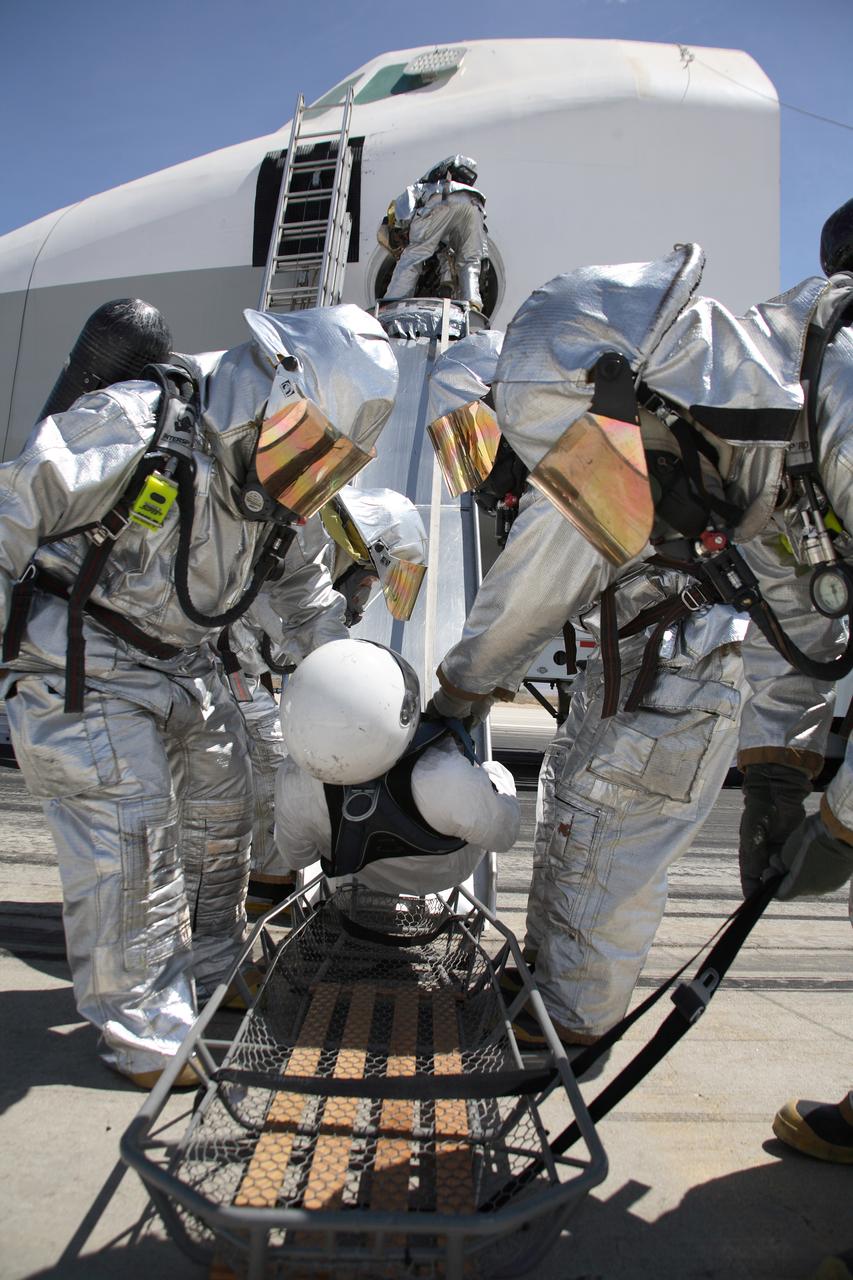
Air Force fire/rescue crew place a volunteer "injured astronaut" on a stretcher after exiting the shuttle cabin mockup during the training exercise. (USAF photo # 070505-F-1287F-126)
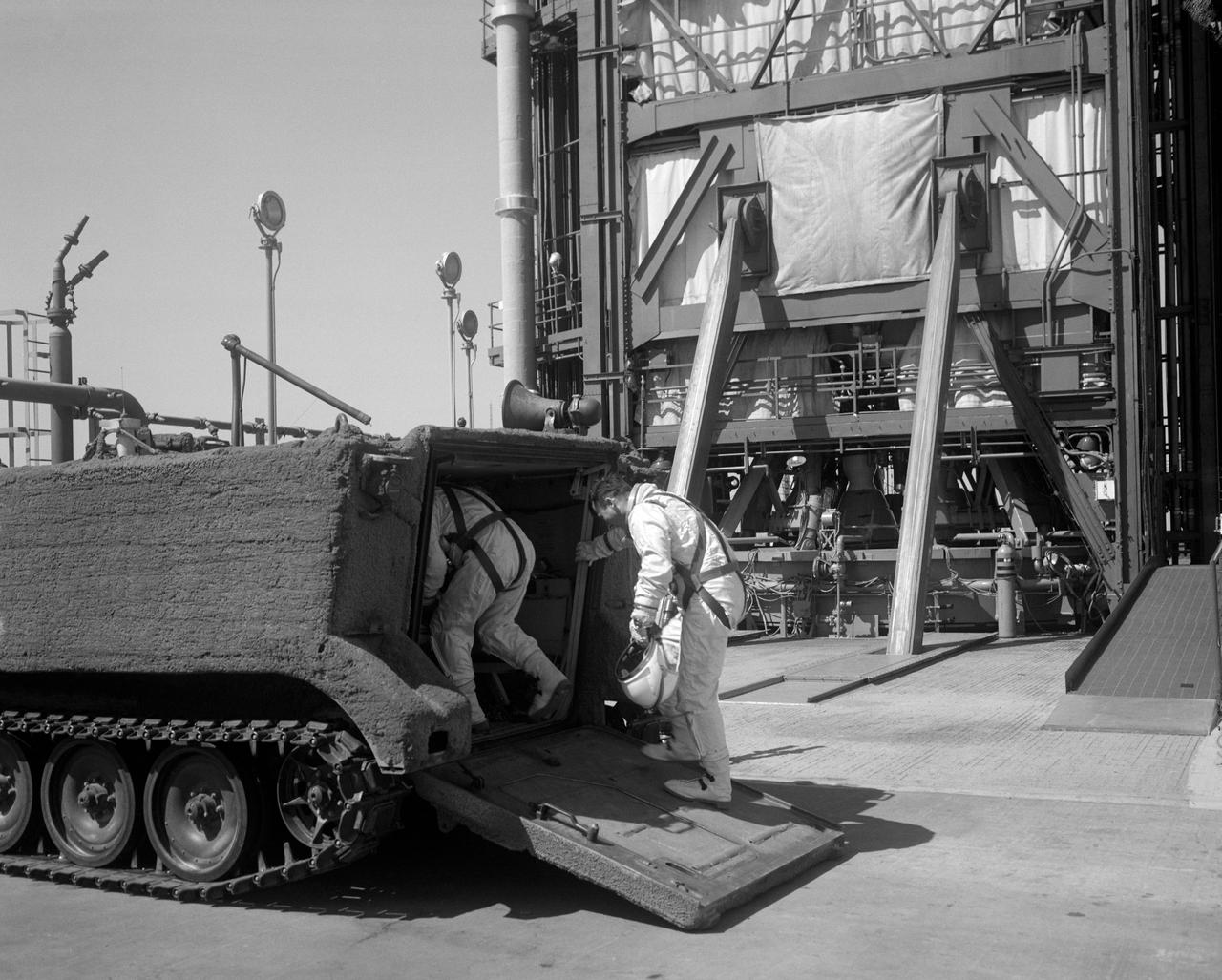
S65-20637 (1965) --- Astronauts John W. Young, pilot, and Virgil I. Grissom, command pilot, for the Gemini-Titan 3 flight, are shown entering launch pad abort rescue vehicle during training exercise.
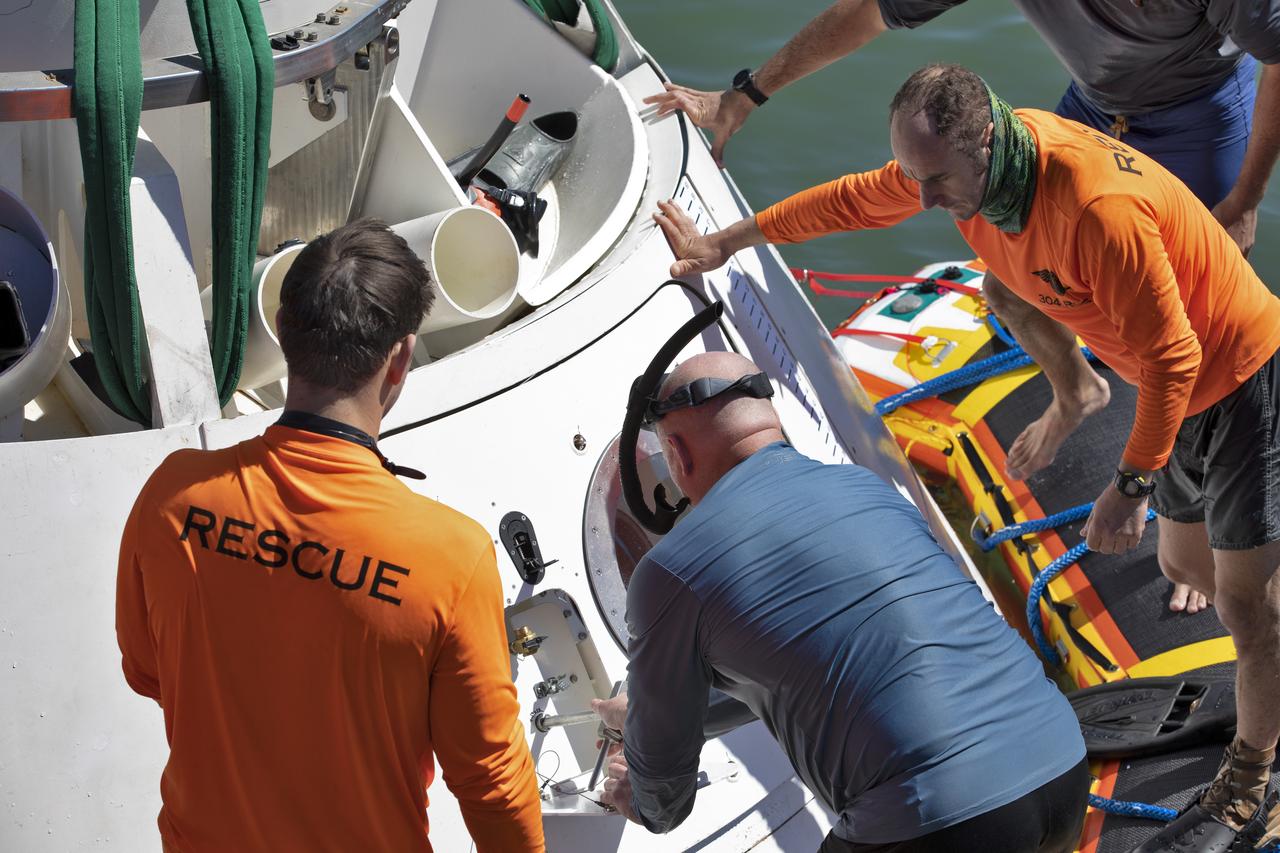
Rescue team members perform checks of the Boeing CST-100 Starliner training capsule, known as Boiler Plate 3, during a search and rescue exercise on April 16, 2019. NASA and the Department of Defense Human Space Flight Support Office Rescue Division are conducting a search and rescue training exercise over the next several days at the Wharf and in the Atlantic Ocean simulating a rescue in the unlikely event of an emergency. It is the first at-sea exercise with the Starliner training capsule ahead of Boeing’s Crew Flight Test with astronauts targeted for later this year. During normal return scenarios, Boeing's Starliner will land on land in a safe zone of about 15 square miles in the Western United States. Throughout the commercial crew development phases with NASA, Boeing has performed dozens of qualification tests on its parachute and airbag systems simulating conditions on land and in the water.
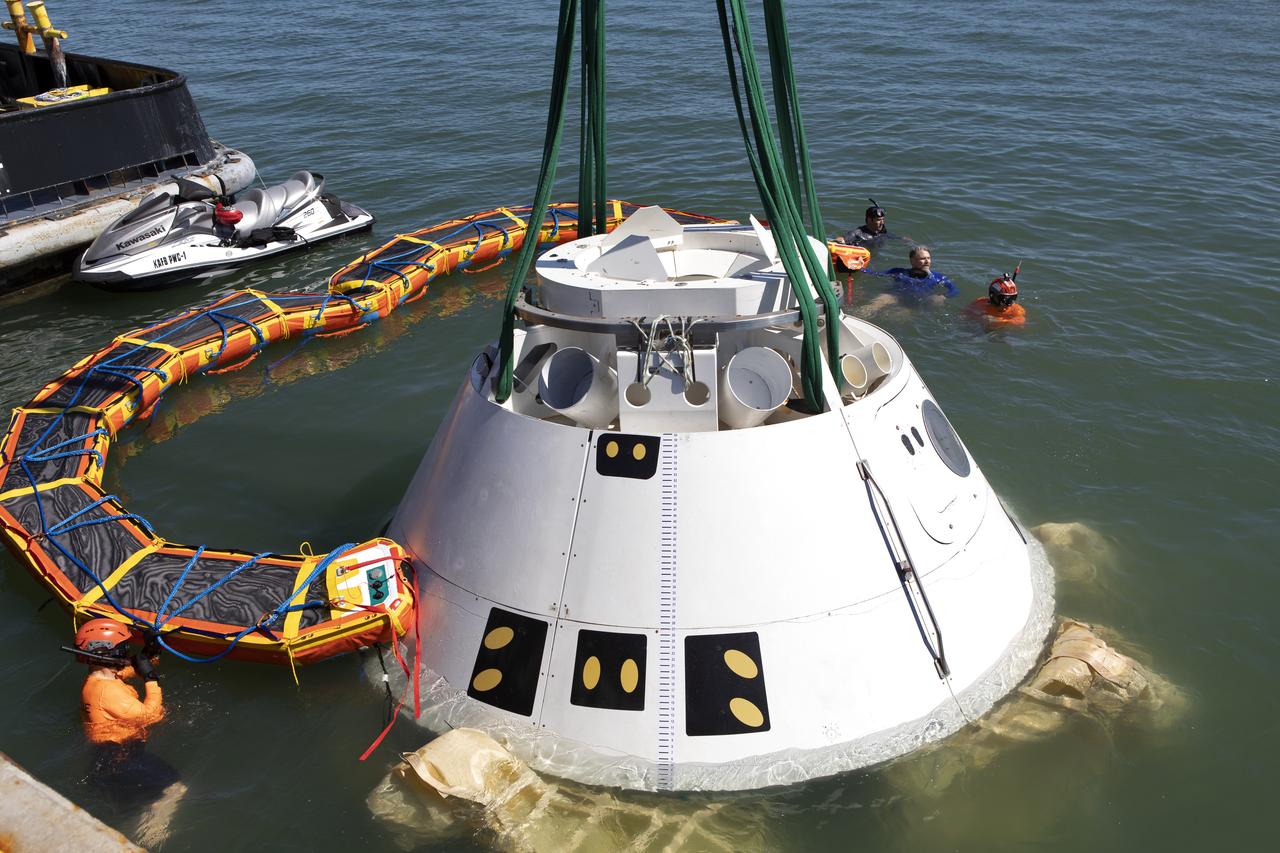
Rescue team members remove the stabilization collar from the Boeing CST-100 Starliner training capsule, known as Boiler Plate 3, in the water at the Army Wharf at Cape Canaveral Air Force Station in Florida on April 16, 2019. NASA and the Department of Defense Human Space Flight Support Office Rescue Division are conducting a search and rescue training exercise using the Starliner trainer over the next several days at the Wharf and in the Atlantic Ocean simulating a rescue in the unlikely event of an emergency. It is the first at-sea exercise with the Starliner training capsule ahead of Boeing’s Crew Flight Test with astronauts targeted for later this year. During normal return scenarios, Boeing's Starliner will land on land in a safe zone of about 15 square miles in the Western United States. Throughout the commercial crew development phases with NASA, Boeing has performed dozens of qualification tests on its parachute and airbag systems simulating conditions on land and in the water.
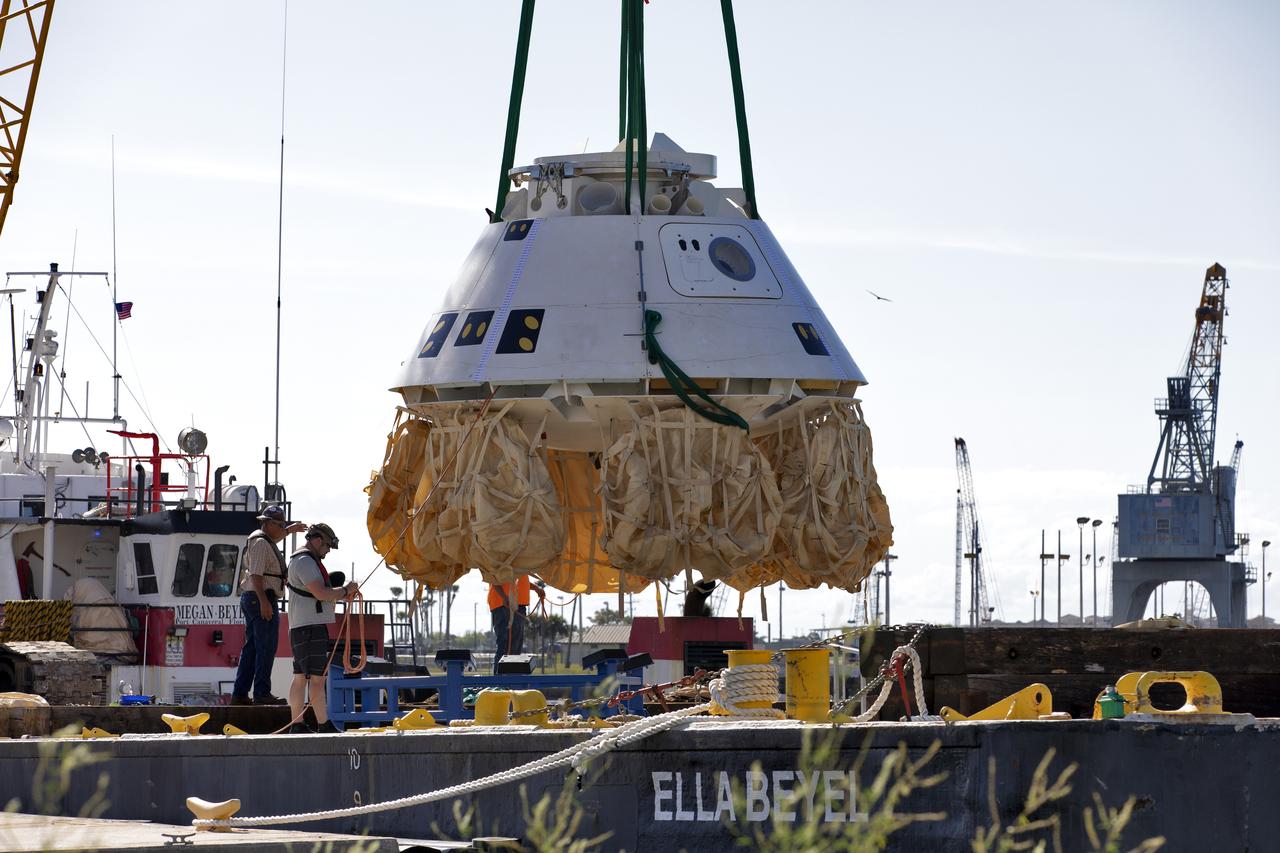
Rescue team members are using a Boeing CST-100 Starliner training capsule, known as Boiler Plate 3, to practice crew rescue procedures in the unlikely event of an emergency resulting in a splashdown. NASA and the Department of Defense Human Space Flight Support Office Rescue Division conducted a search and rescue training exercise at the Army Wharf at Cape Canaveral Air Force Station in Florida on April 17, 2019. The teams practiced manually inflating uprighting airbags to lift the spacecraft to its upright position. This is the first at-sea exercise with the Starliner training capsule ahead of Boeing’s Crew Flight Test with astronauts targeted for later this year. During normal return scenarios, Boeing's Starliner will land on land in a safe zone of about 15 square miles in the Western United States. Throughout the commercial crew development phases with NASA, Boeing has performed dozens of qualification tests on its parachute and airbag systems simulating conditions on land and in the water.
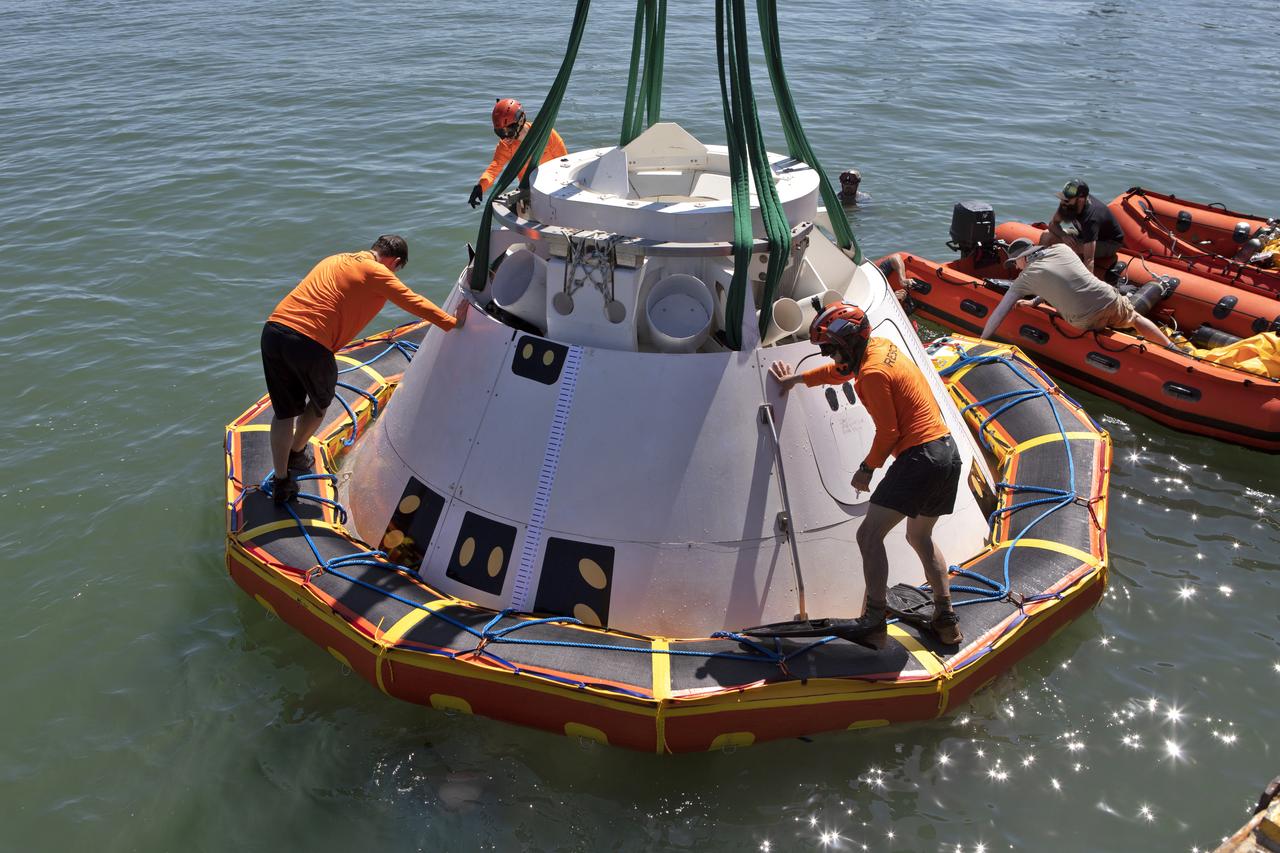
Rescue team members stand on the stabilization collar attached to the Boeing CST-100 Starliner training capsule, known as Boiler Plate 3, to perform checks during a search and rescue training exercise April 16, 2019. NASA and the Department of Defense Human Space Flight Support Office Rescue Division are conducting the exercise over the next several days at the Wharf and in the Atlantic Ocean simulating a rescue in the unlikely event of an emergency. It is the first at-sea exercise with the Starliner training capsule ahead of Boeing’s Crew Flight Test with astronauts targeted for later this year. During normal return scenarios, Boeing's Starliner will land on land in a safe zone of about 15 square miles in the Western United States. Throughout the commercial crew development phases with NASA, Boeing has performed dozens of qualification tests on its parachute and airbag systems simulating conditions on land and in the water.
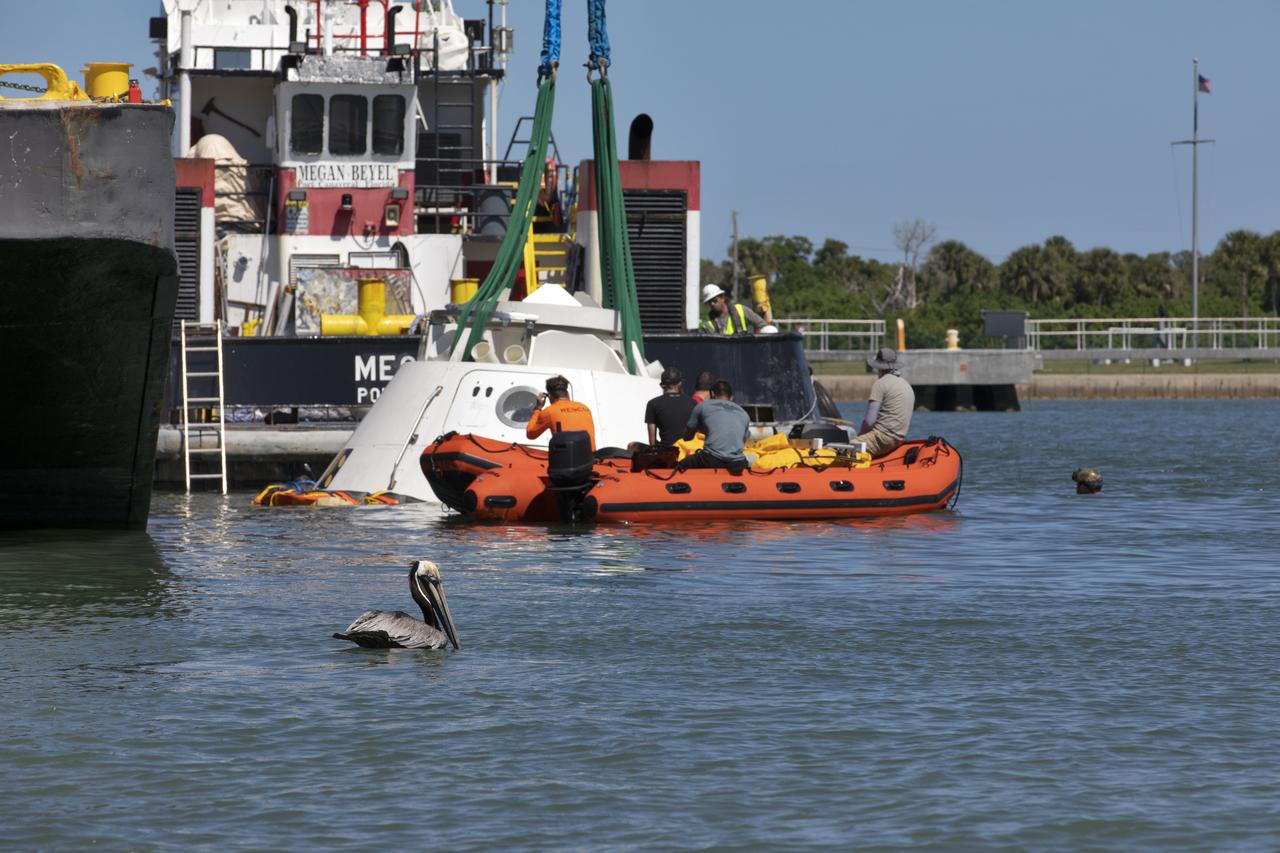
Rescue team members in an inflatable boat approach the Boeing CST-100 Starliner training capsule, known as Boiler Plate 3, at the Army Wharf at Cape Canaveral Air Force Station in Florida on April 16, 2019. NASA and the Department of Defense Human Space Flight Support Office Rescue Division are conducting a search and rescue training exercise over the next several days at the Wharf and in the Atlantic Ocean simulating a rescue in the unlikely event of an emergency. It is the first at-sea exercise with the Starliner training capsule ahead of Boeing’s Crew Flight Test with astronauts targeted for later this year. During normal return scenarios, Boeing's Starliner will land on land in a safe zone of about 15 square miles in the Western United States. Throughout the commercial crew development phases with NASA, Boeing has performed dozens of qualification tests on its parachute and airbag systems simulating conditions on land and in the water.
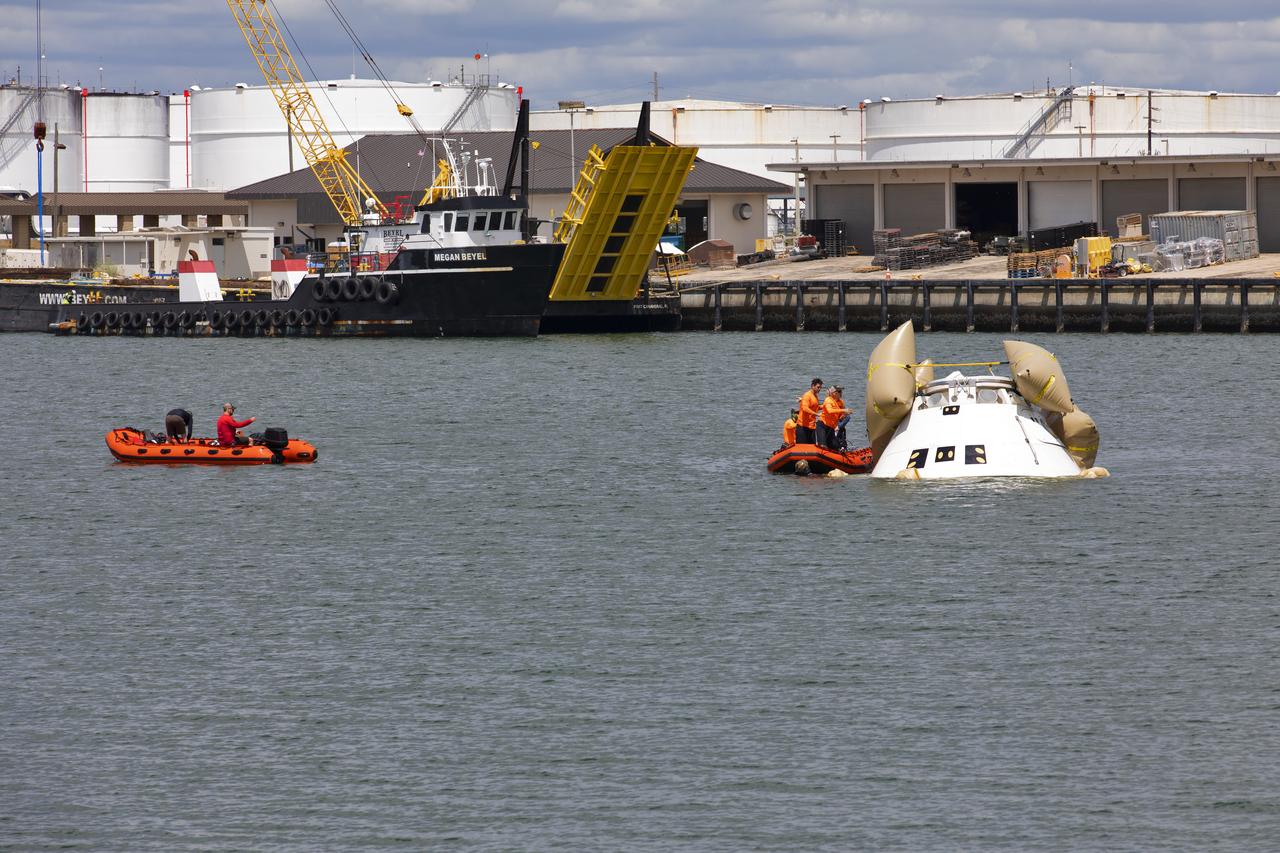
Rescue team members are using a Boeing CST-100 Starliner training capsule, known as Boiler Plate 3, to practice uprighting procedures in the unlikely event of an emergency resulting in a splashdown. NASA and the Department of Defense Human Space Flight Support Office Rescue Division conducted a search and rescue training exercise at the Army Wharf at Cape Canaveral Air Force Station in Florida on April 17, 2019. The manual uprighting airbags could be used to lift the spacecraft to its upright position. This is the first at-sea exercise with the Starliner training capsule ahead of Boeing’s Crew Flight Test with astronauts targeted for later this year. During normal return scenarios, Boeing's Starliner will land on land in a safe zone of about 15 square miles in the Western United States. Throughout the commercial crew development phases with NASA, Boeing has performed dozens of qualification tests on its parachute and airbag systems simulating conditions on land and in the water.
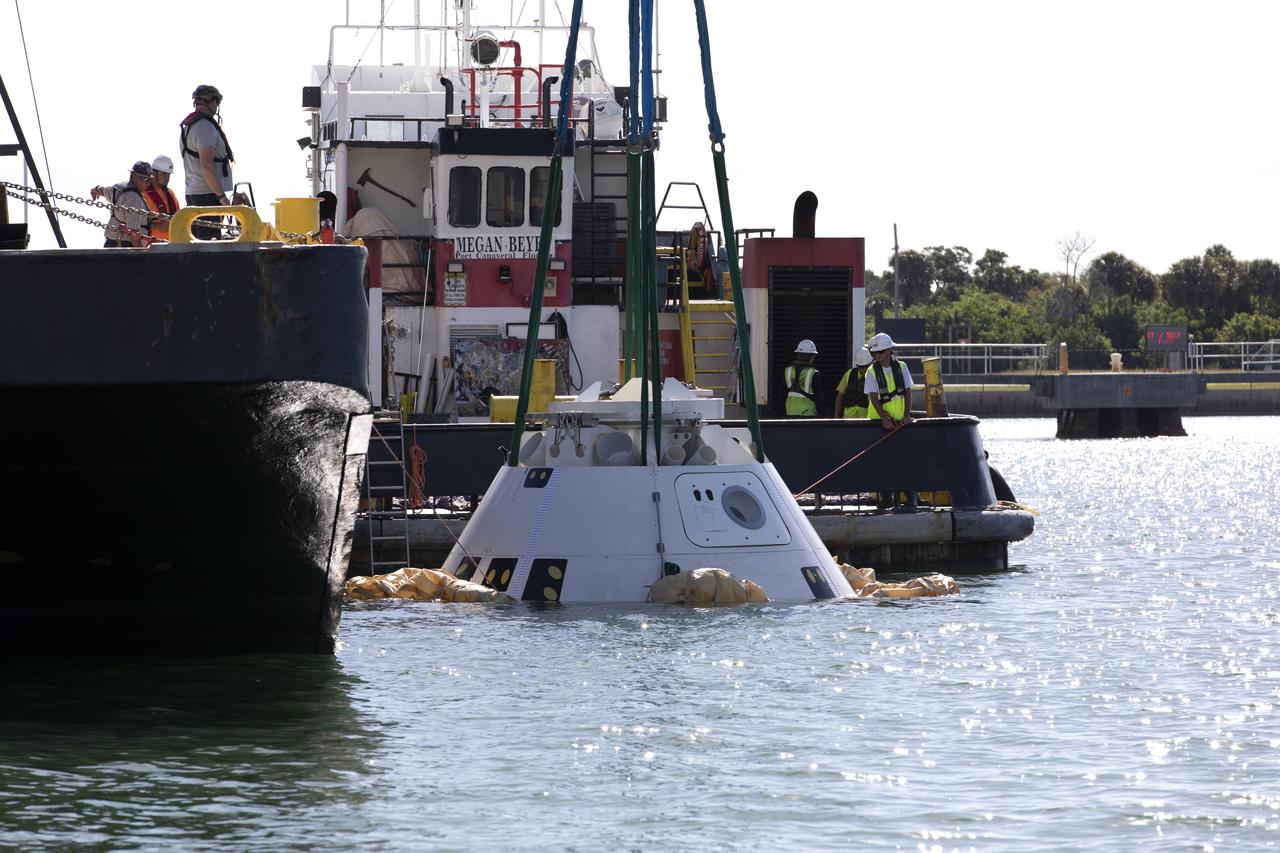
Rescue team members are using a Boeing CST-100 Starliner training capsule, known as Boiler Plate 3, to practice uprighting procedures in the unlikely event of an emergency resulting in a splashdown. NASA and the Department of Defense Human Space Flight Support Office Rescue Division conducted a search and rescue training exercise at the Army Wharf at Cape Canaveral Air Force Station in Florida on April 17, 2019. The manual uprighting airbags could be used to lift the spacecraft to its upright position. This is the first at-sea exercise with the Starliner training capsule ahead of Boeing’s Crew Flight Test with astronauts targeted for later this year. During normal return scenarios, Boeing's Starliner will land on land in a safe zone of about 15 square miles in the Western United States. Throughout the commercial crew development phases with NASA, Boeing has performed dozens of qualification tests on its parachute and airbag systems simulating conditions on land and in the water.
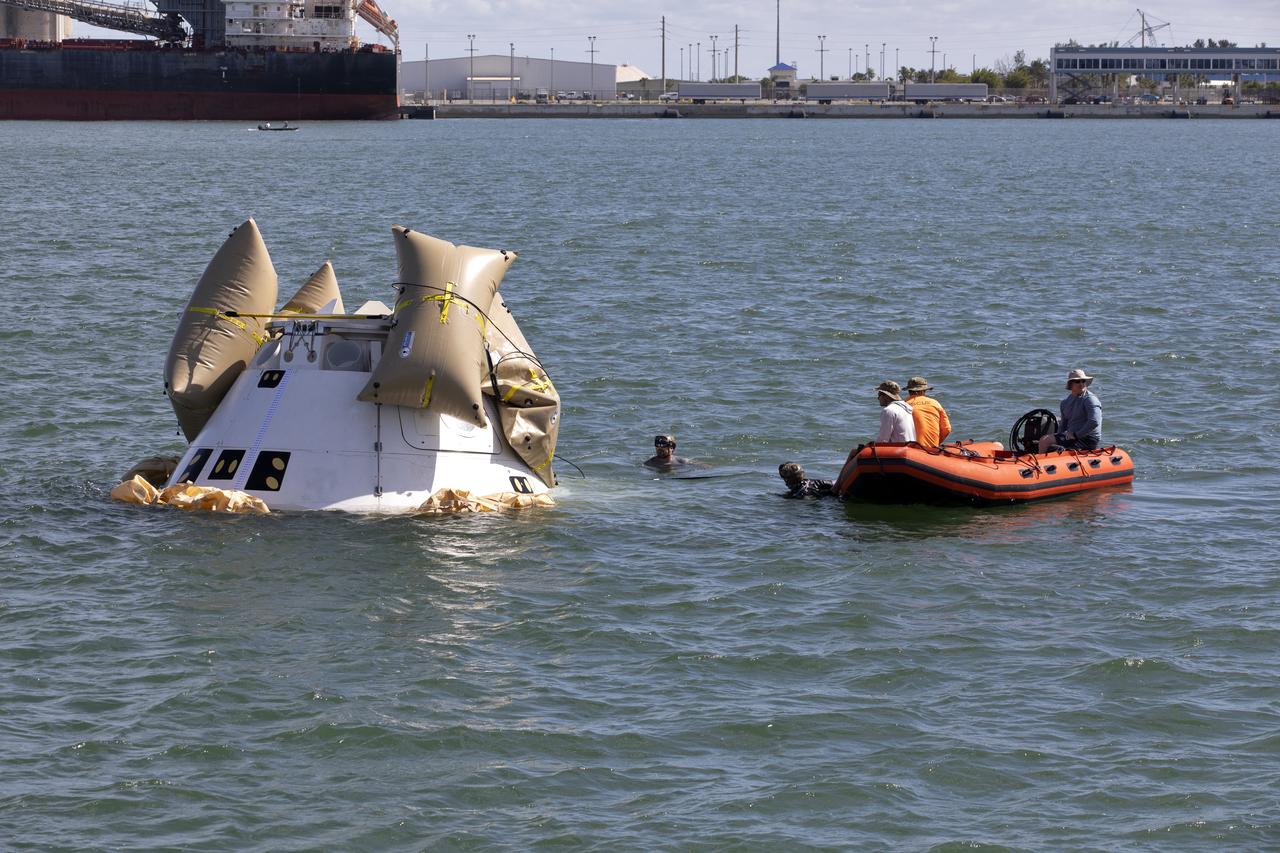
Rescue team members are using a Boeing CST-100 Starliner training capsule, known as Boiler Plate 3, to practice uprighting procedures in the unlikely event of an emergency resulting in a splashdown. NASA and the Department of Defense Human Space Flight Support Office Rescue Division conducted a search and rescue training exercise at the Army Wharf at Cape Canaveral Air Force Station in Florida on April 17, 2019. The manual uprighting airbags could be used to lift the spacecraft to its upright position. This is the first at-sea exercise with the Starliner training capsule ahead of Boeing’s Crew Flight Test with astronauts targeted for later this year. During normal return scenarios, Boeing's Starliner will land on land in a safe zone of about 15 square miles in the Western United States. Throughout the commercial crew development phases with NASA, Boeing has performed dozens of qualification tests on its parachute and airbag systems simulating conditions on land and in the water.
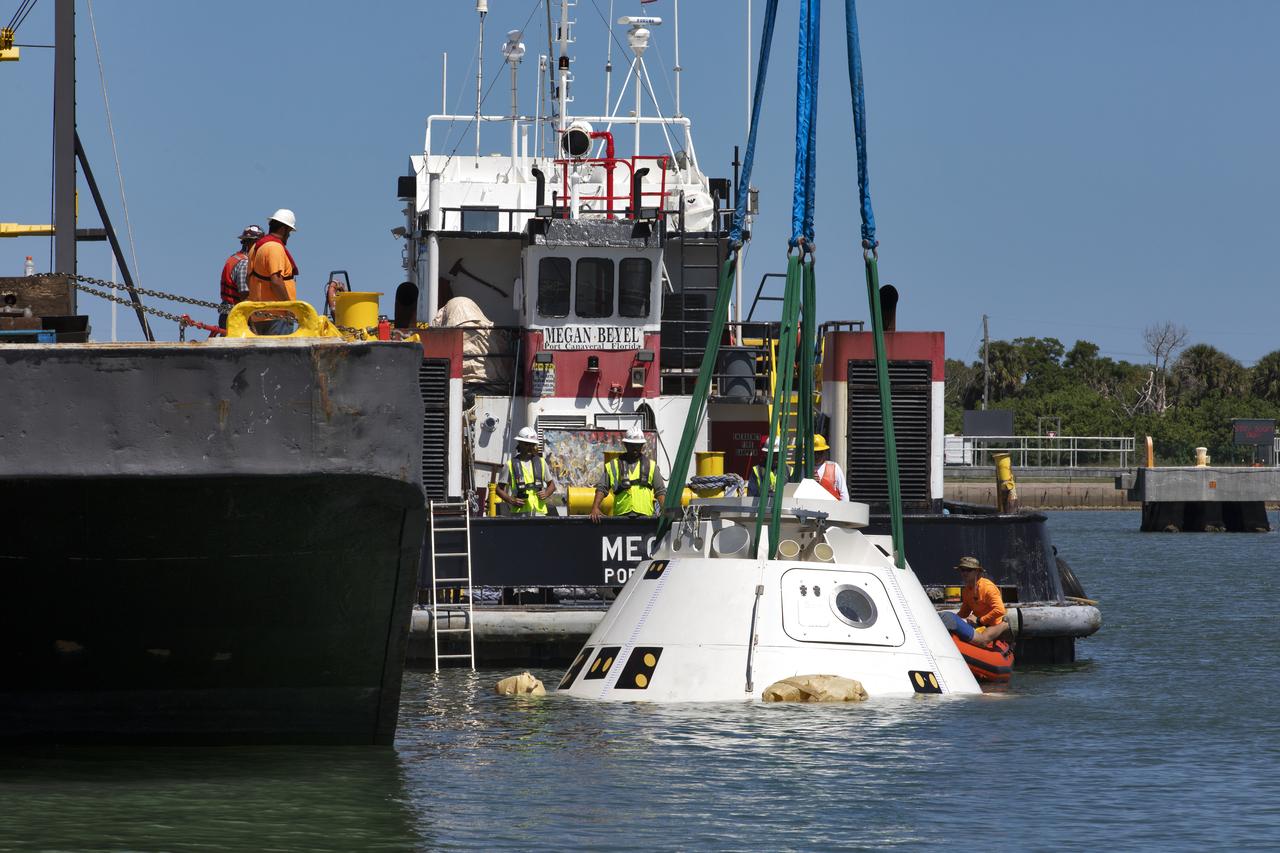
The Boeing CST-100 Starliner training capsule, known as Boiler Plate 3, is lowered into the water at the Army Wharf at Cape Canaveral Air Force Station in Florida on April 16, 2019. NASA and the Department of Defense Human Space Flight Support Office Rescue Division are conducting a search and rescue training exercise over the next several days at the Wharf and in the Atlantic Ocean simulating a rescue in the unlikely event of an emergency. It is the first at-sea exercise with the Starliner training capsule ahead of Boeing’s Crew Flight Test with astronauts targeted for later this year. During normal return scenarios, Boeing's Starliner will land on land in a safe zone of about 15 square miles in the Western United States. Throughout the commercial crew development phases with NASA, Boeing has performed dozens of qualification tests on its parachute and airbag systems simulating conditions on land and in the water.
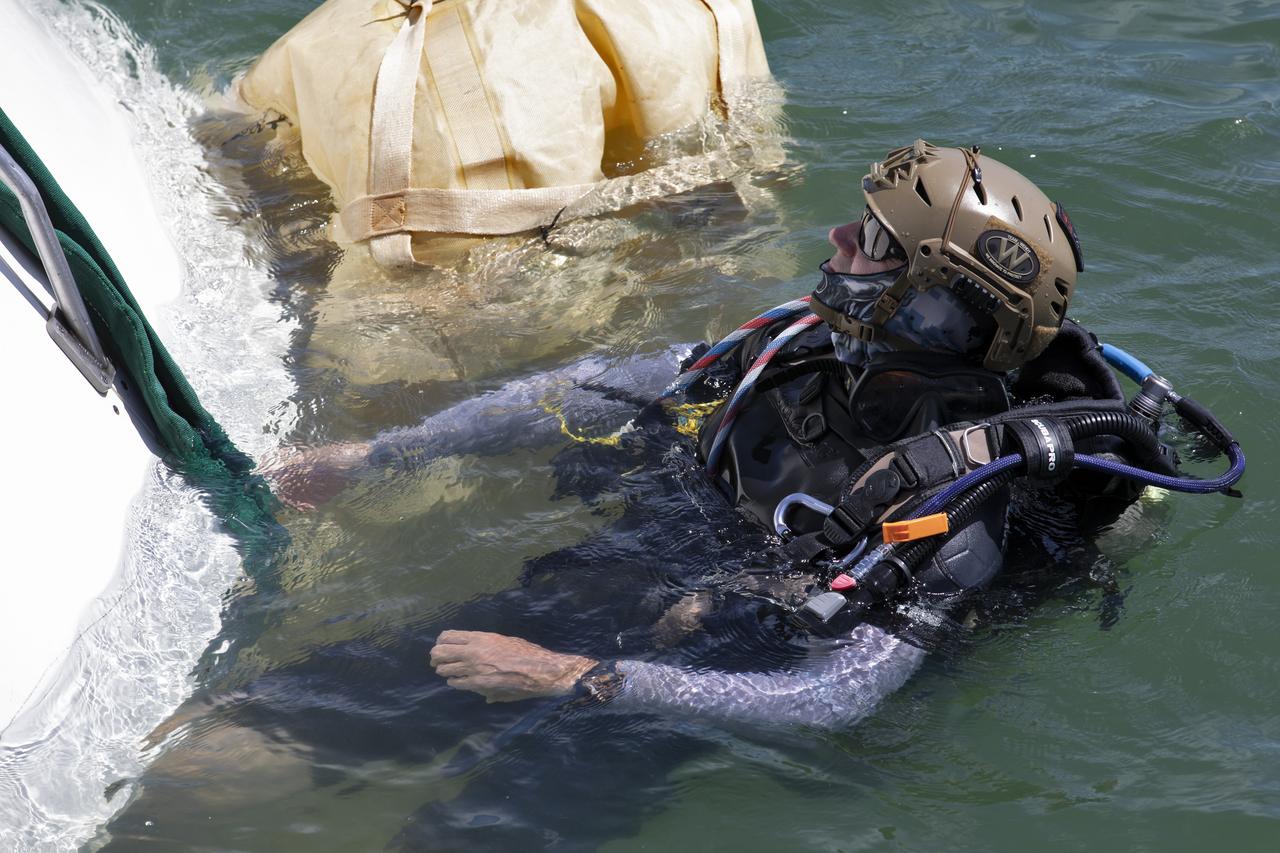
Rescue team members are using a Boeing CST-100 Starliner training capsule, known as Boiler Plate 3, to practice uprighting procedures in the unlikely event of an emergency resulting in a splashdown. NASA and the Department of Defense Human Space Flight Support Office Rescue Division conducted a search and rescue training exercise at the Army Wharf at Cape Canaveral Air Force Station in Florida on April 17, 2019. The manual uprighting airbags could be used to lift the spacecraft to its upright position. This is the first at-sea exercise with the Starliner training capsule ahead of Boeing’s Crew Flight Test with astronauts targeted for later this year. During normal return scenarios, Boeing's Starliner will land on land in a safe zone of about 15 square miles in the Western United States. Throughout the commercial crew development phases with NASA, Boeing has performed dozens of qualification tests on its parachute and airbag systems simulating conditions on land and in the water.
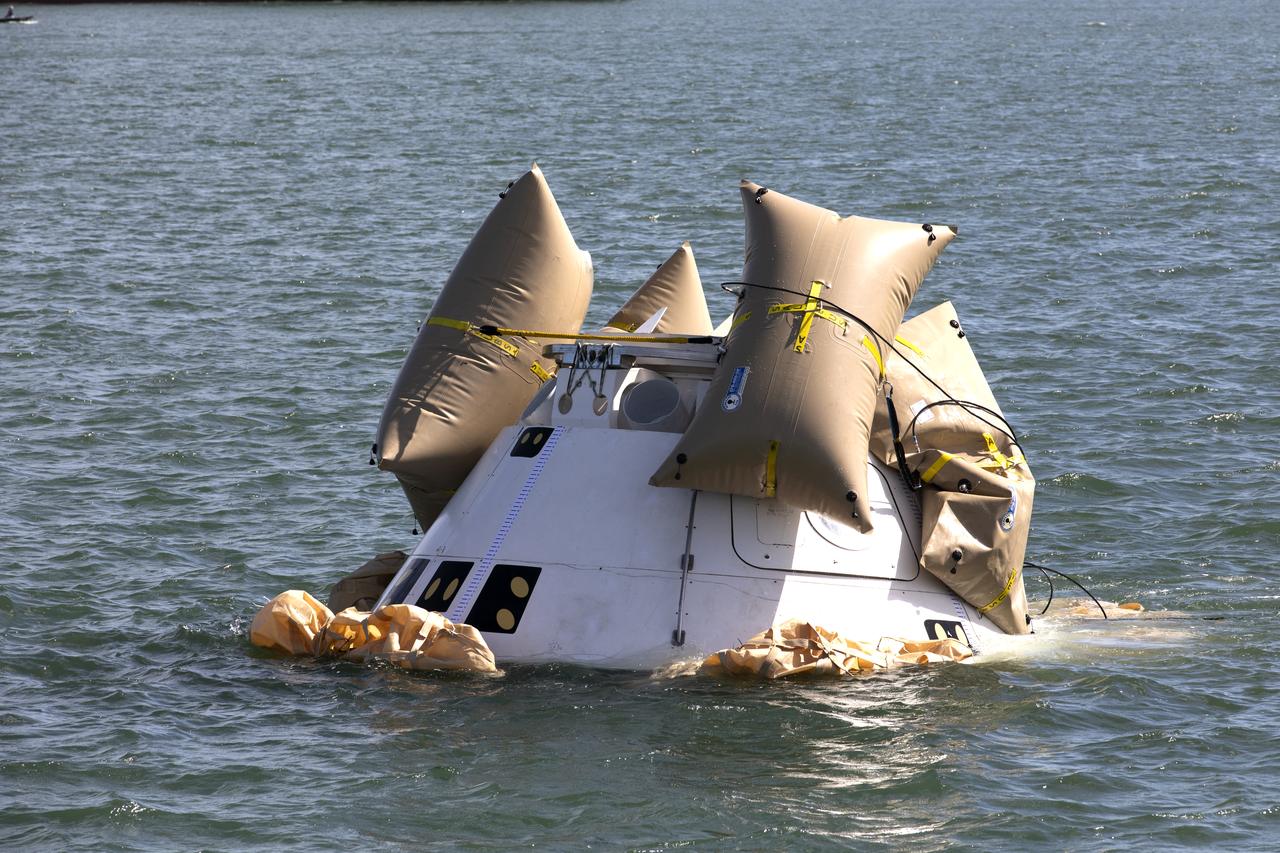
Rescue team members are using a Boeing CST-100 Starliner training capsule, known as Boiler Plate 3, to practice uprighting procedures in the unlikely event of an emergency resulting in a splashdown. NASA and the Department of Defense Human Space Flight Support Office Rescue Division conducted a search and rescue training exercise at the Army Wharf at Cape Canaveral Air Force Station in Florida on April 17, 2019. The manual uprighting airbags could be used to lift the spacecraft to its upright position. This is the first at-sea exercise with the Starliner training capsule ahead of Boeing’s Crew Flight Test with astronauts targeted for later this year. During normal return scenarios, Boeing's Starliner will land on land in a safe zone of about 15 square miles in the Western United States. Throughout the commercial crew development phases with NASA, Boeing has performed dozens of qualification tests on its parachute and airbag systems simulating conditions on land and in the water.
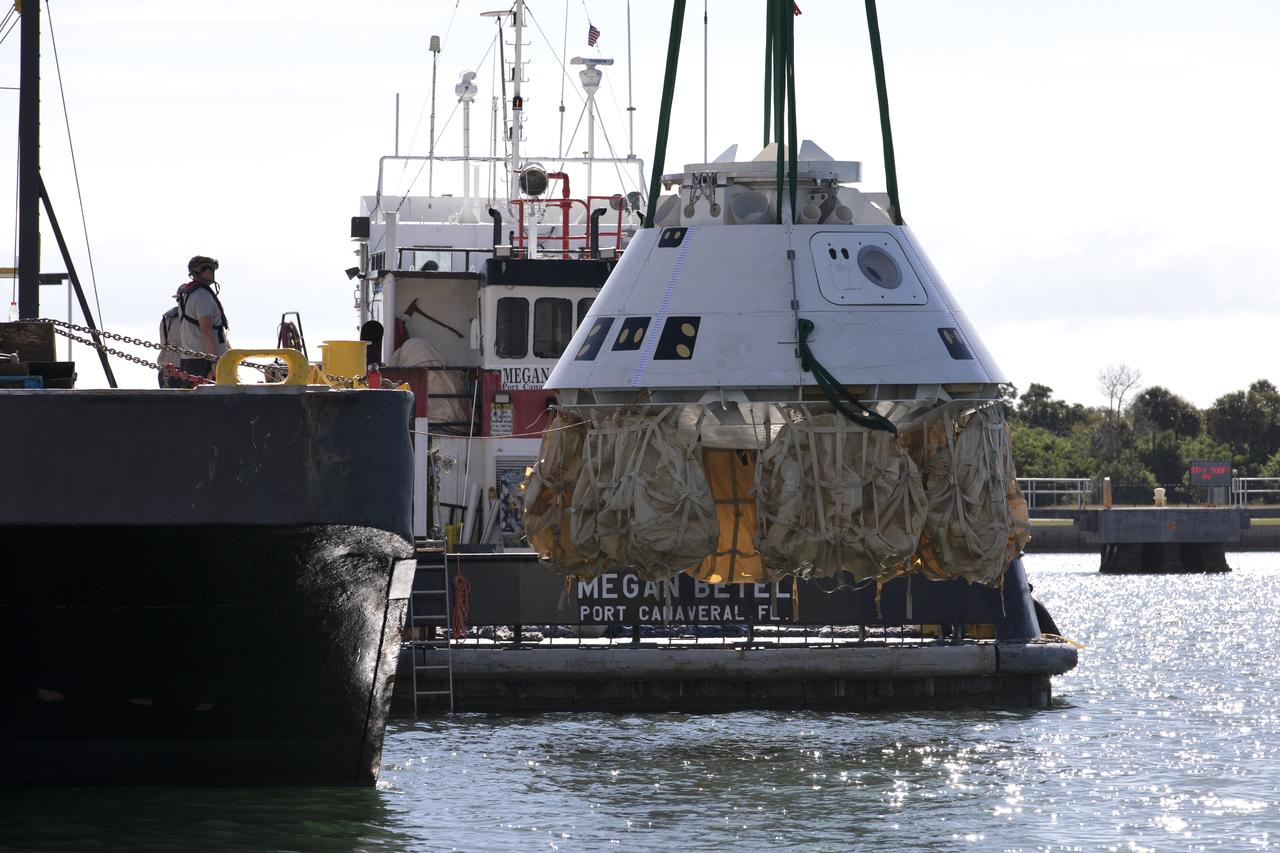
Rescue team members lower the Boeing CST-100 Starliner training capsule, known as Boiler Plate 3, into the water at the Army Wharf at Cape Canaveral Air Force Station in Florida on April 16, 2019. The team is practicing crew rescue procedures in the unlikely event of an emergency resulting in a splashdown. NASA and the Department of Defense Human Space Flight Support Office Rescue Division conducted a search and rescue training exercise at the Army Wharf at Cape Canaveral Air Force Station in Florida on April 17, 2019. The teams practiced manually inflating uprighting airbags to lift the spacecraft to its upright position. This is the first at-sea exercise with the Starliner training capsule ahead of Boeing’s Crew Flight Test with astronauts targeted for later this year. During normal return scenarios, Boeing's Starliner will land on land in a safe zone of about 15 square miles in the Western United States. Throughout the commercial crew development phases with NASA, Boeing has performed dozens of qualification tests on its parachute and airbag systems simulating conditions on land and in the water.
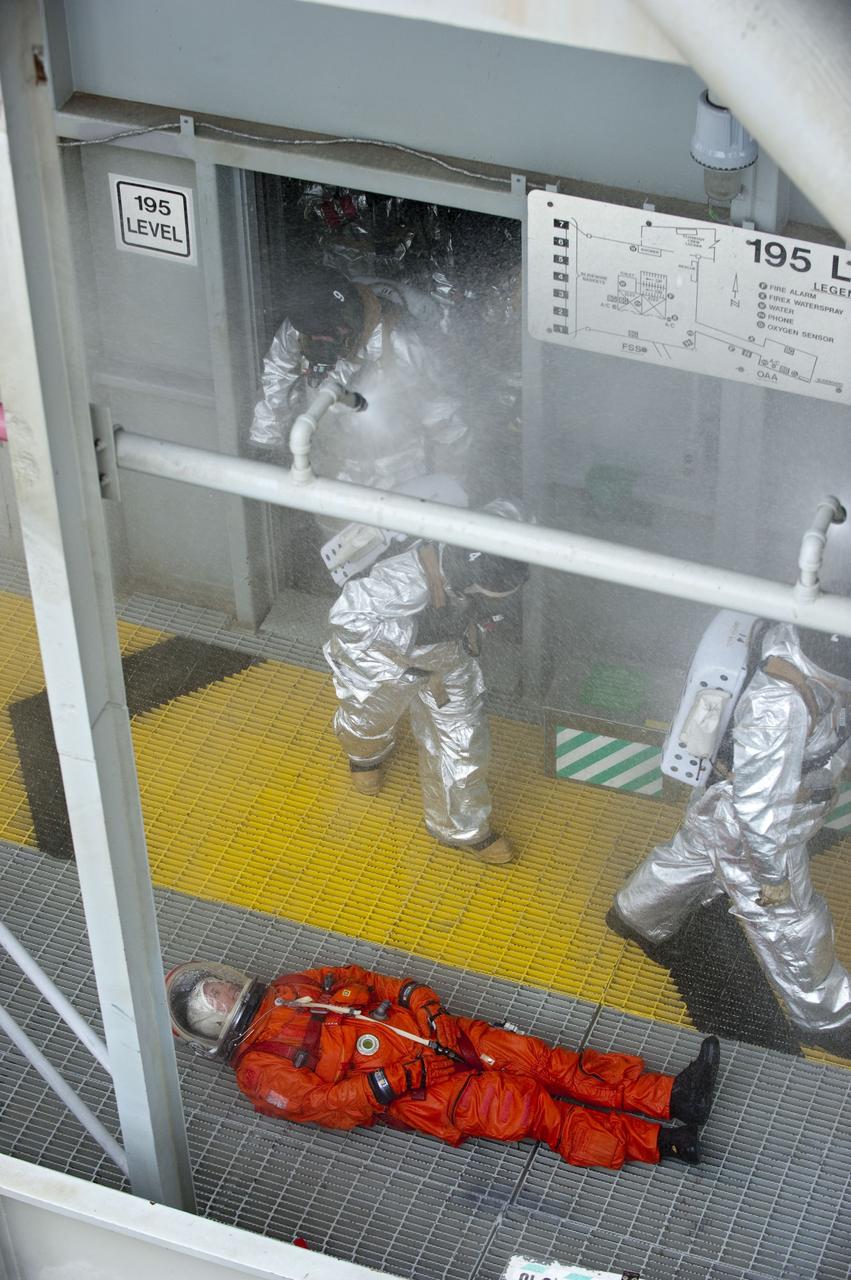
CAPE CANAVERAL, Fla. – An emergency exit, or Mode II/IV, exercise is under way at the 195-foot level of Launch Pad 39A at NASA's Kennedy Space Center in Florida. The exercise involves NASA fire rescue personnel, volunteers portraying astronauts with simulated injuries, helicopters and personnel from the Air Force’s 920th Rescue Wing, and medical trauma teams at three Central Florida hospitals. The drill allows teams to practice an emergency response at the launch pad, including helicopter evacuation to local hospitals. Photo credit: NASA/Kim Shiflett

CAPE CANAVERAL, Fla. – An emergency exit, or Mode II/IV, exercise is under way at the slidewire basket landing site of Launch Pad 39A at NASA's Kennedy Space Center in Florida. The exercise involves NASA fire rescue personnel, volunteers portraying astronauts with simulated injuries, helicopters and personnel from the Air Force’s 920th Rescue Wing, and medical trauma teams at three Central Florida hospitals. The drill allows teams to practice an emergency response at the launch pad, including helicopter evacuation to local hospitals. Photo credit: NASA/Kim Shiflett
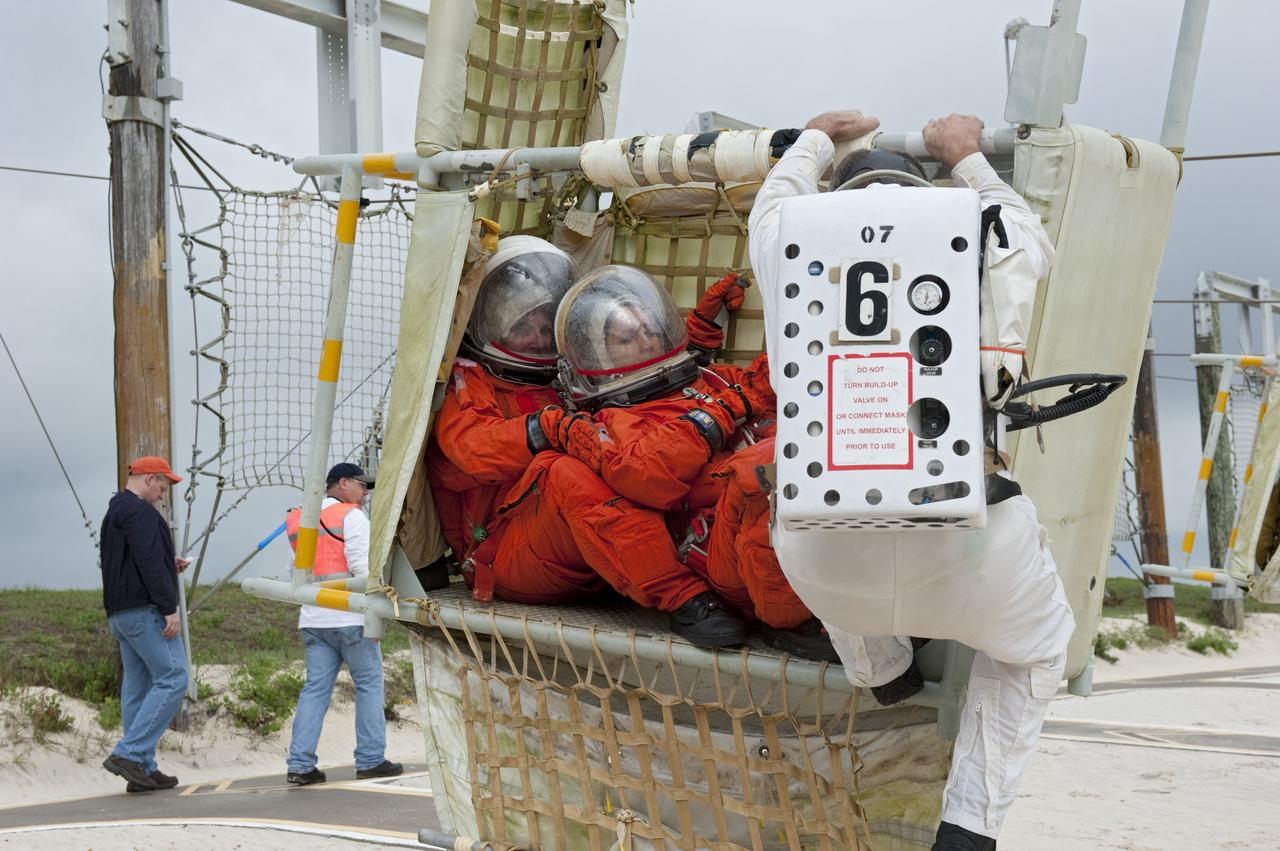
CAPE CANAVERAL, Fla. – An emergency exit, or Mode II/IV, exercise is under way at the slidewire basket landing site of Launch Pad 39A at NASA's Kennedy Space Center in Florida. The exercise involves NASA fire rescue personnel, volunteers portraying astronauts with simulated injuries, helicopters and personnel from the Air Force’s 920th Rescue Wing, and medical trauma teams at three Central Florida hospitals. The drill allows teams to practice an emergency response at the launch pad, including helicopter evacuation to local hospitals. Photo credit: NASA/Kim Shiflett
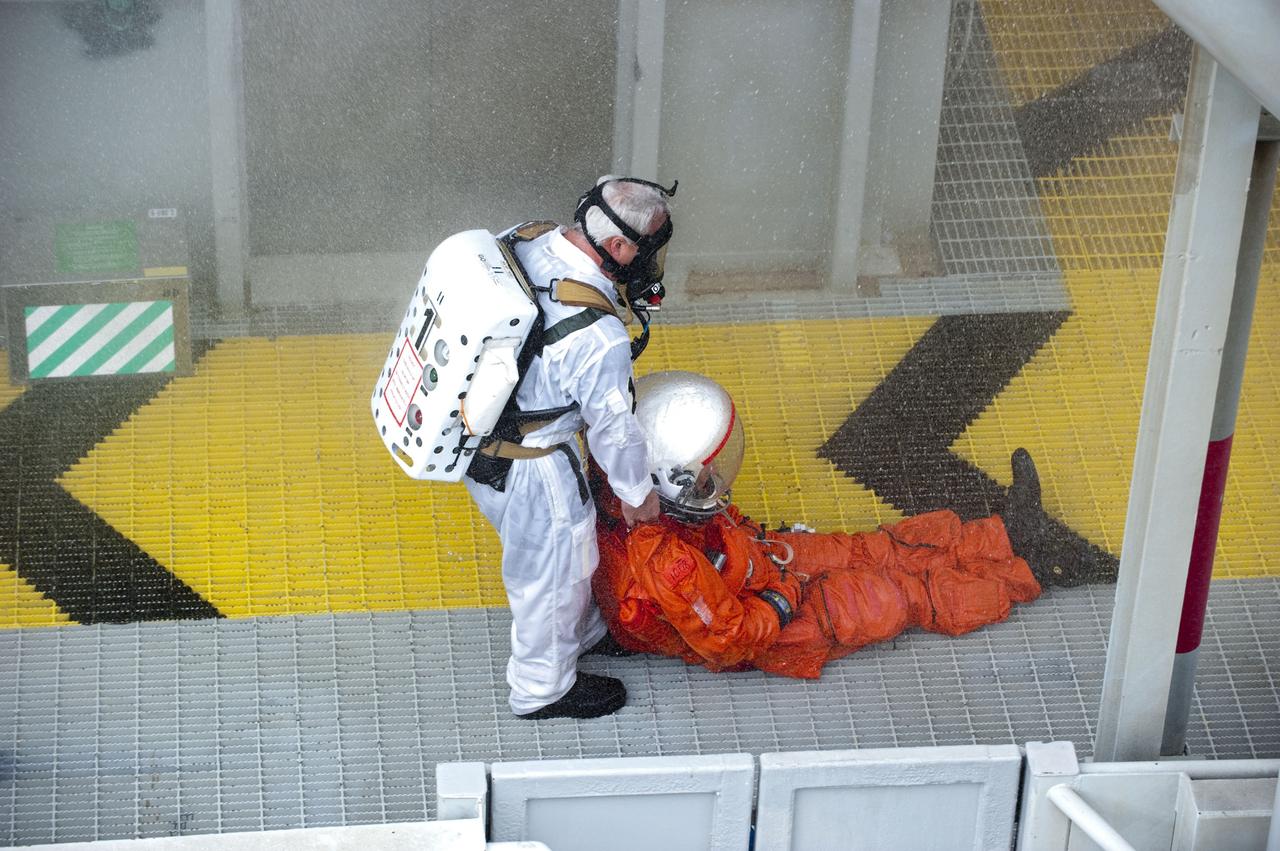
CAPE CANAVERAL, Fla. – An emergency exit, or Mode II/IV, exercise is under way at the 195-foot level of Launch Pad 39A at NASA's Kennedy Space Center in Florida. The exercise involves NASA fire rescue personnel, volunteers portraying astronauts with simulated injuries, helicopters and personnel from the Air Force’s 920th Rescue Wing, and medical trauma teams at three Central Florida hospitals. The drill allows teams to practice an emergency response at the launch pad, including helicopter evacuation to local hospitals. Photo credit: NASA/Kim Shiflett
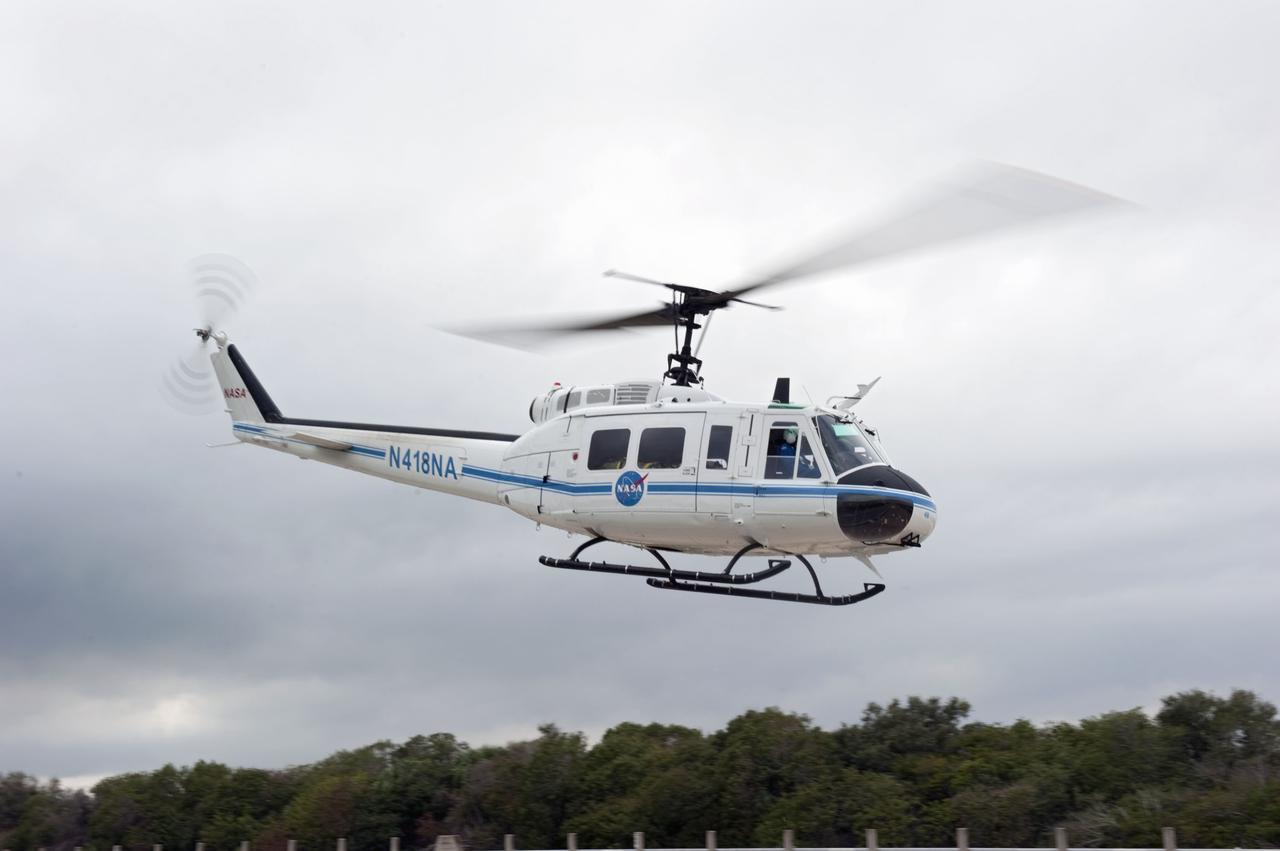
CAPE CANAVERAL, Fla. – A helicopter takes part in an emergency exit, or Mode II/IV, exercise that allows teams to practice an emergency response at Launch Pad 39A at NASA's Kennedy Space Center in Florida. The exercise involves NASA fire rescue personnel, volunteers portraying astronauts with simulated injuries, helicopters and personnel from the Air Force’s 920th Rescue Wing, and medical trauma teams at three Central Florida hospitals. The drill allows teams to practice an emergency response at the launch pad, including helicopter evacuation to local hospitals. Photo credit: NASA/Kim Shiflett
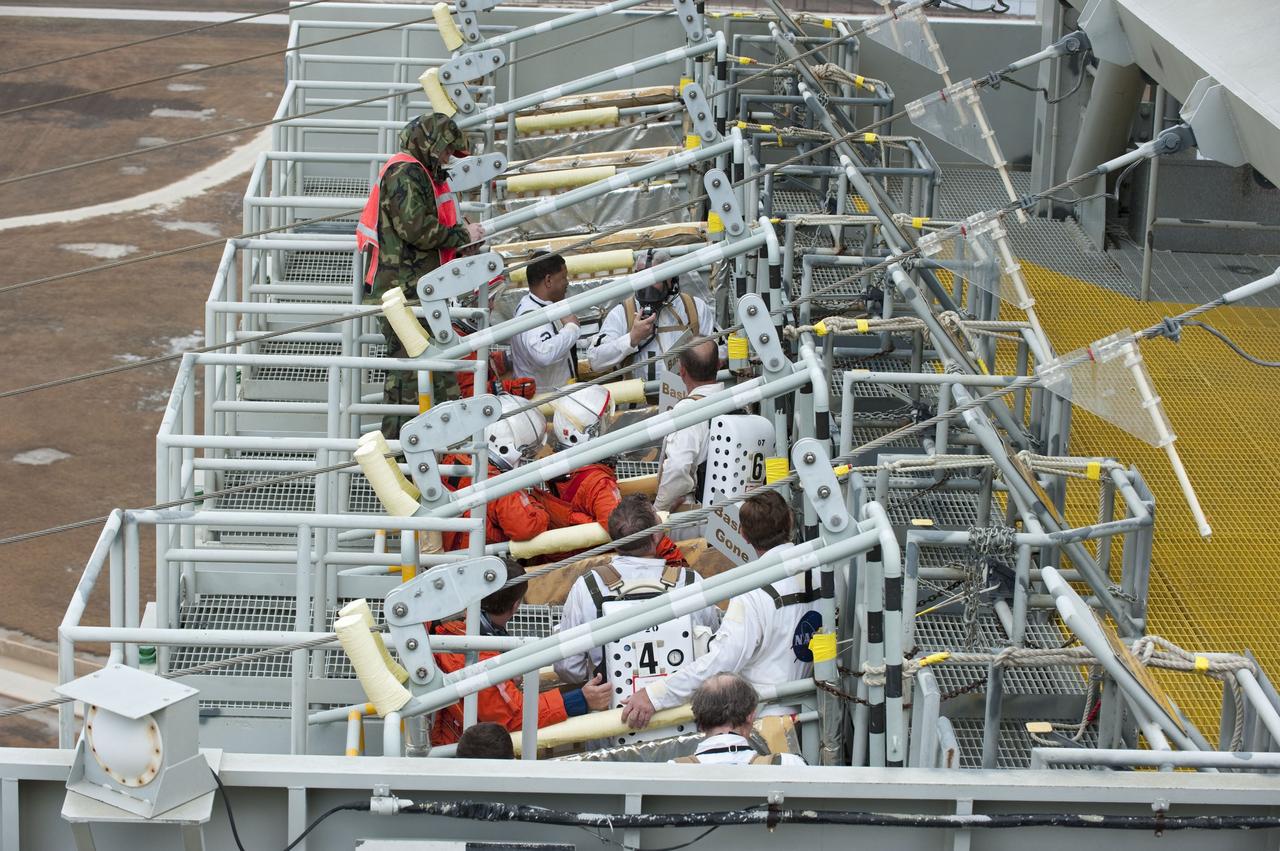
CAPE CANAVERAL, Fla. – An emergency exit, or Mode II/IV, exercise is under way at the slidewire basket area of Launch Pad 39A at NASA's Kennedy Space Center in Florida. The exercise involves NASA fire rescue personnel, volunteers portraying astronauts with simulated injuries, helicopters and personnel from the Air Force’s 920th Rescue Wing, and medical trauma teams at three Central Florida hospitals. The drill allows teams to practice an emergency response at the launch pad, including helicopter evacuation to local hospitals. Photo credit: NASA/Kim Shiflett
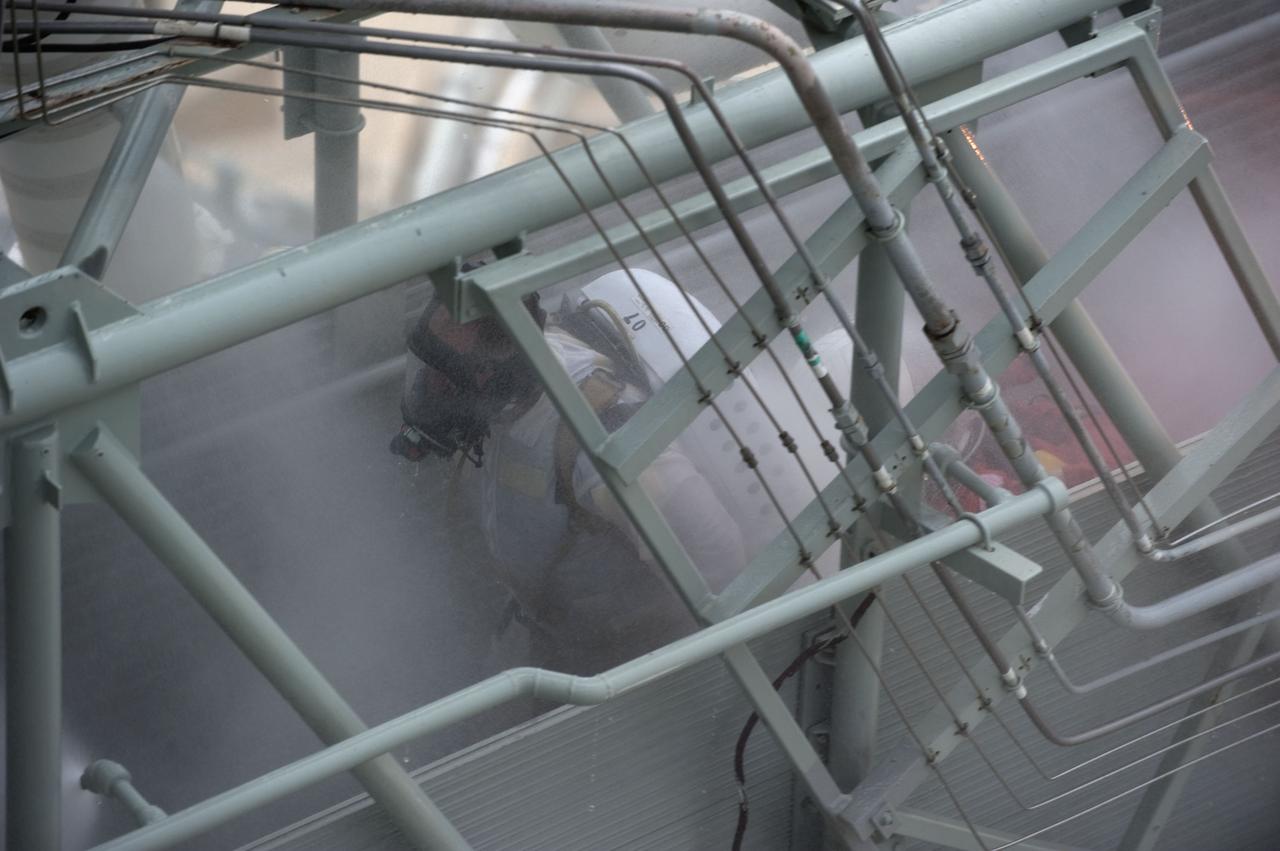
CAPE CANAVERAL, Fla. – An emergency exit, or Mode II/IV, exercise is under way at the 195-foot level of Launch Pad 39A at NASA's Kennedy Space Center in Florida. The exercise involves NASA fire rescue personnel, volunteers portraying astronauts with simulated injuries, helicopters and personnel from the Air Force’s 920th Rescue Wing, and medical trauma teams at three Central Florida hospitals. The drill allows teams to practice an emergency response at the launch pad, including helicopter evacuation to local hospitals. Photo credit: NASA/Kim Shiflett
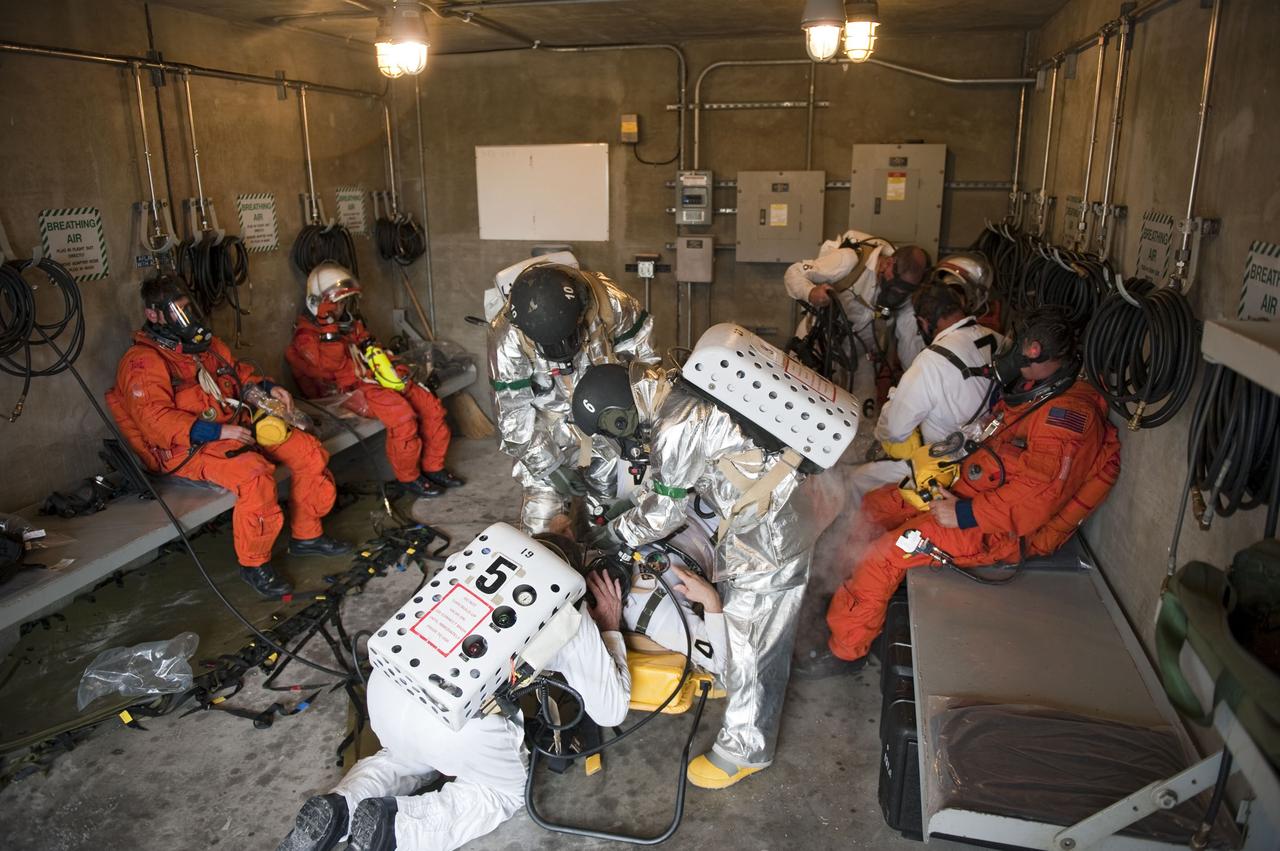
CAPE CANAVERAL, Fla. – An emergency exit, or Mode II/IV, exercise is under way in a bunker of Launch Pad 39A at NASA's Kennedy Space Center in Florida. The exercise involves NASA fire rescue personnel, volunteers portraying astronauts with simulated injuries, helicopters and personnel from the Air Force’s 920th Rescue Wing, and medical trauma teams at three Central Florida hospitals. The drill allows teams to practice an emergency response at the launch pad, including helicopter evacuation to local hospitals. Photo credit: NASA/Kim Shiflett
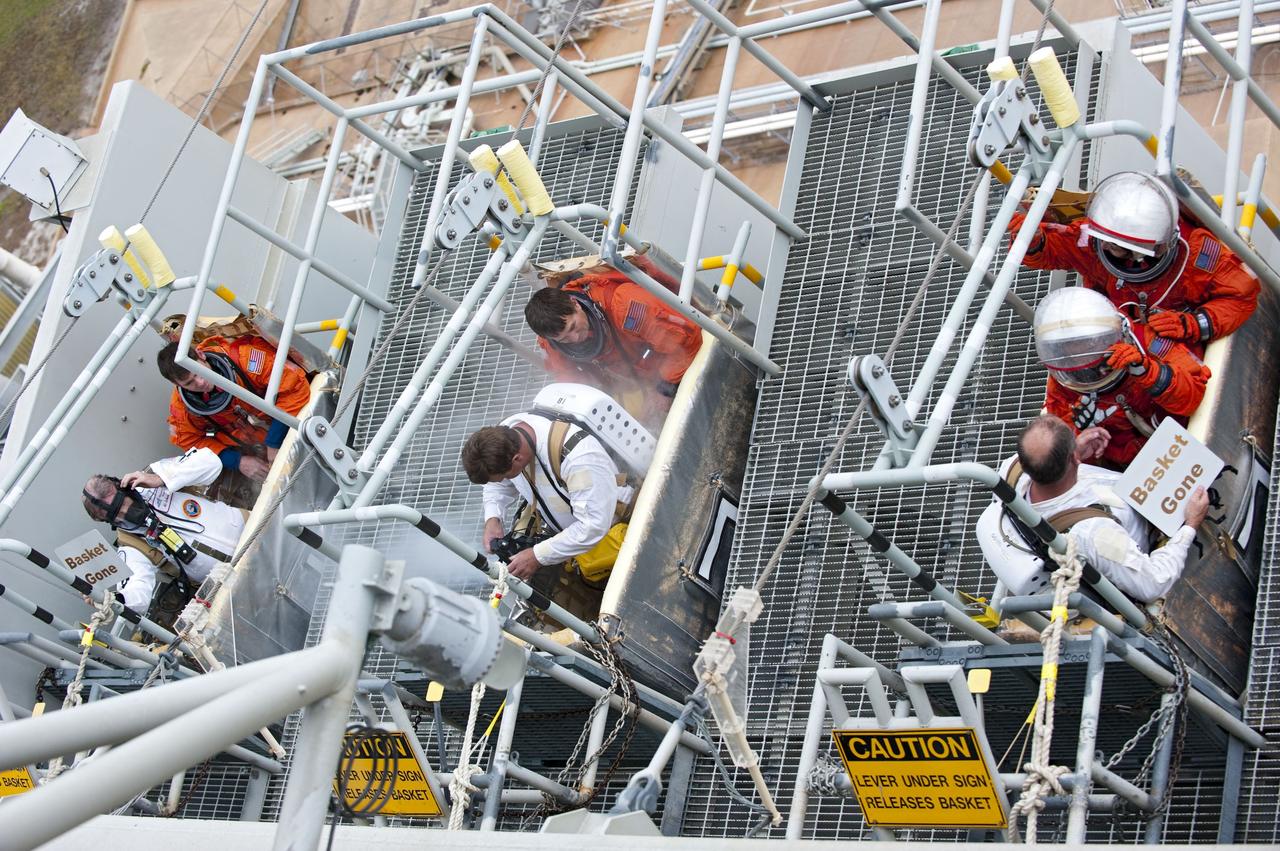
CAPE CANAVERAL, Fla. – An emergency exit, or Mode II/IV, exercise is under way at the slidewire basket area of Launch Pad 39A at NASA's Kennedy Space Center in Florida. The exercise involves NASA fire rescue personnel, volunteers portraying astronauts with simulated injuries, helicopters and personnel from the Air Force’s 920th Rescue Wing, and medical trauma teams at three Central Florida hospitals. The drill allows teams to practice an emergency response at the launch pad, including helicopter evacuation to local hospitals. Photo credit: NASA/Kim Shiflett
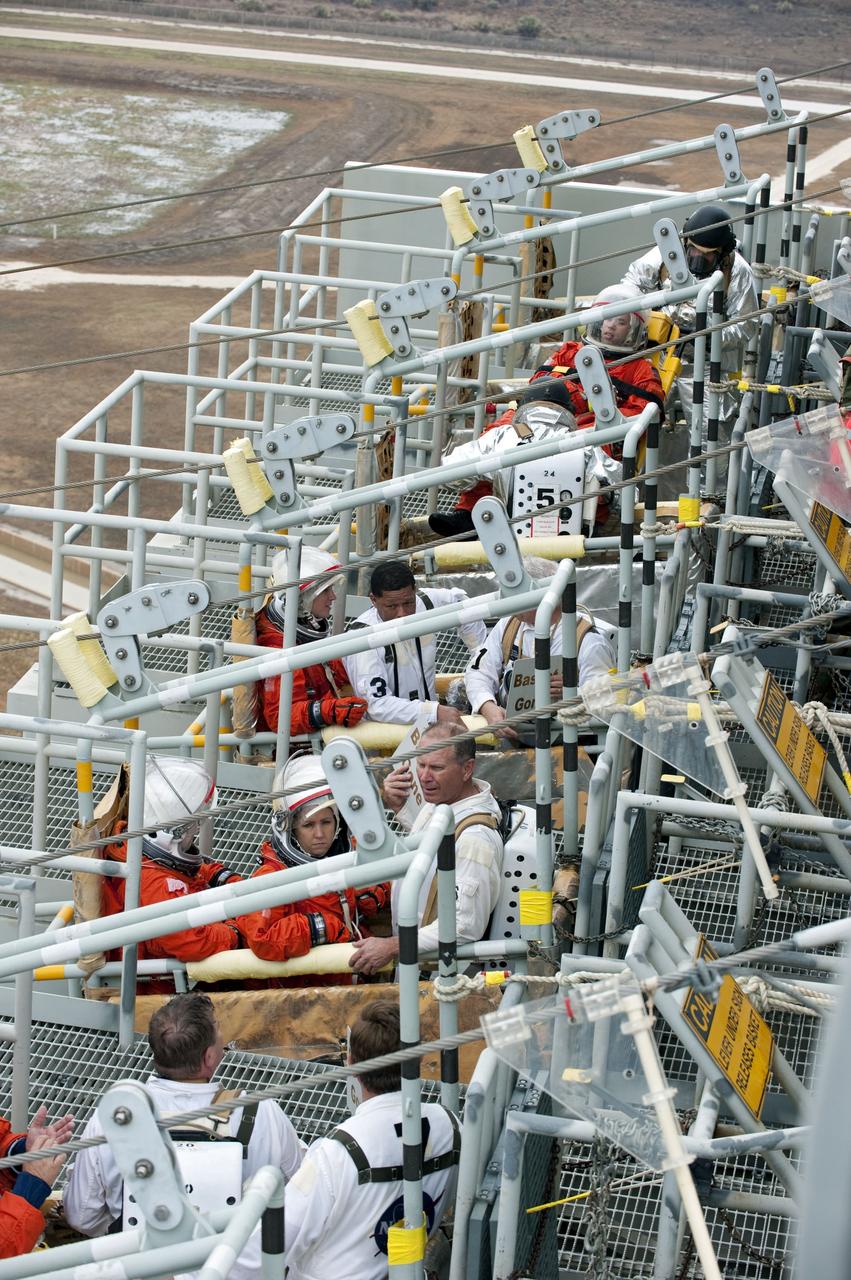
CAPE CANAVERAL, Fla. – An emergency exit, or Mode II/IV, exercise is under way at the slidewire basket area of Launch Pad 39A at NASA's Kennedy Space Center in Florida. The exercise involves NASA fire rescue personnel, volunteers portraying astronauts with simulated injuries, helicopters and personnel from the Air Force’s 920th Rescue Wing, and medical trauma teams at three Central Florida hospitals. The drill allows teams to practice an emergency response at the launch pad, including helicopter evacuation to local hospitals. Photo credit: NASA/Kim Shiflett
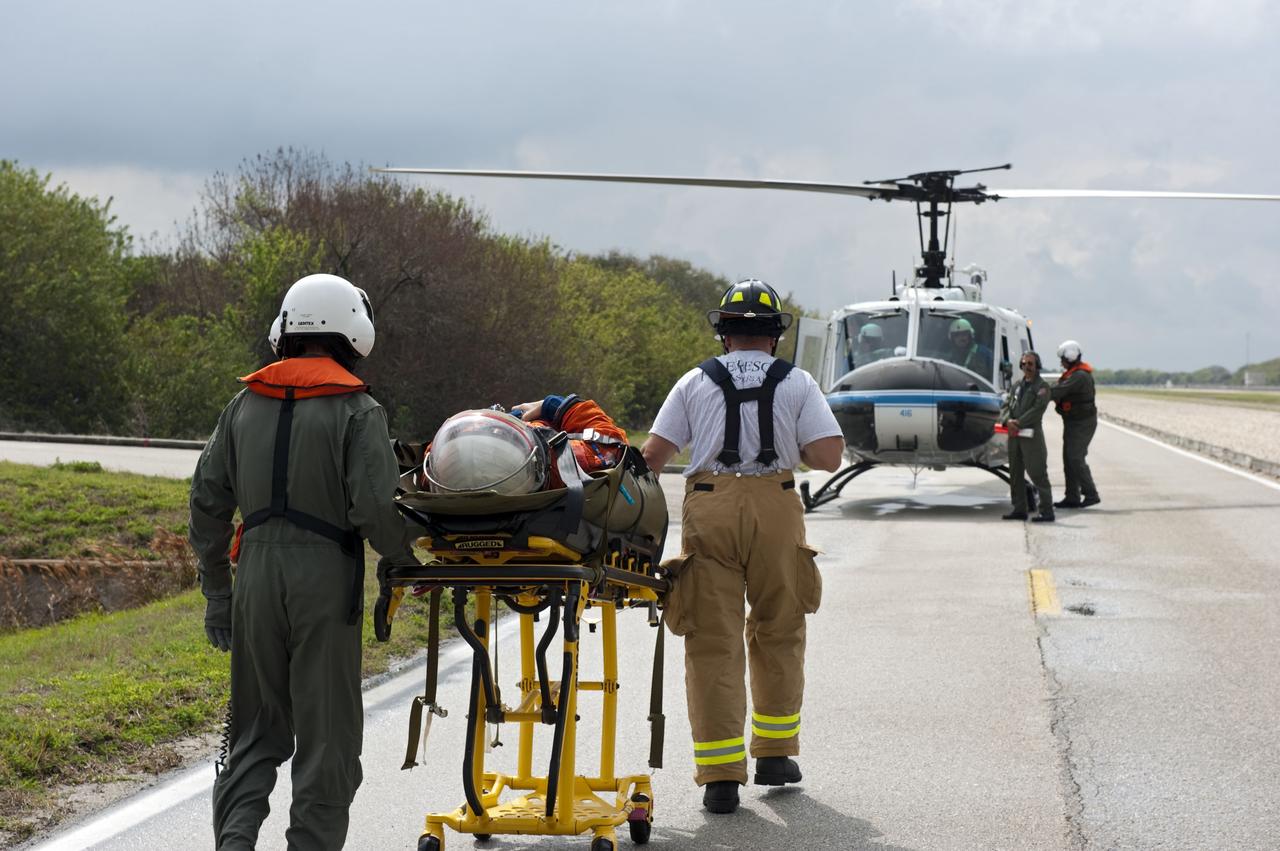
CAPE CANAVERAL, Fla. – Volunteers portraying injured astronauts are transported to a helicopter as part of an emergency exit, or Mode II/IV, exercise that allows teams to practice an emergency response at Launch Pad 39A at NASA's Kennedy Space Center in Florida. The exercise involves NASA fire rescue personnel, volunteers portraying astronauts with simulated injuries, helicopters and personnel from the Air Force’s 920th Rescue Wing, and medical trauma teams at three Central Florida hospitals. The drill allows teams to practice an emergency response at the launch pad, including helicopter evacuation to local hospitals. Photo credit: NASA/Kim Shiflett
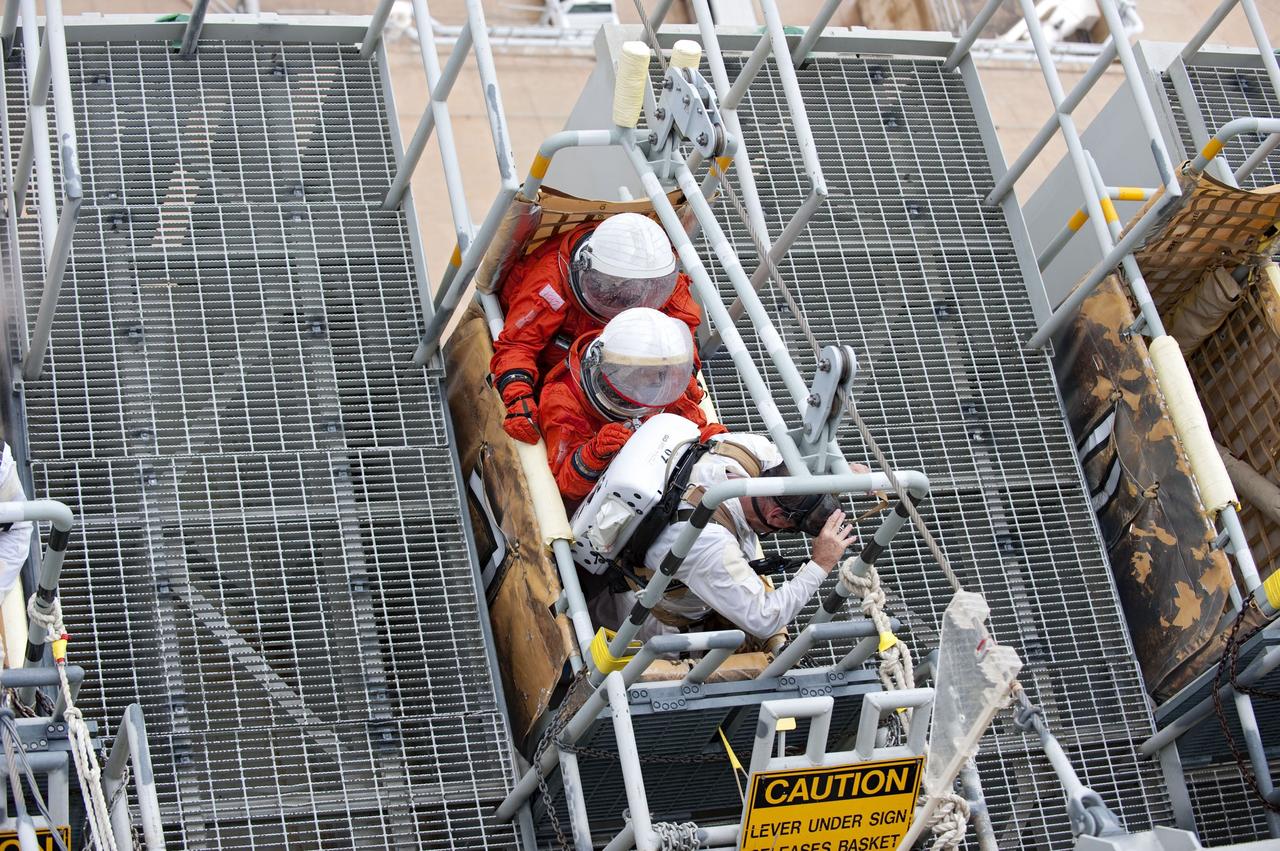
CAPE CANAVERAL, Fla. – An emergency exit, or Mode II/IV, exercise is under way at the slidewire basket area of Launch Pad 39A at NASA's Kennedy Space Center in Florida. The exercise involves NASA fire rescue personnel, volunteers portraying astronauts with simulated injuries, helicopters and personnel from the Air Force’s 920th Rescue Wing, and medical trauma teams at three Central Florida hospitals. The drill allows teams to practice an emergency response at the launch pad, including helicopter evacuation to local hospitals. Photo credit: NASA/Kim Shiflett
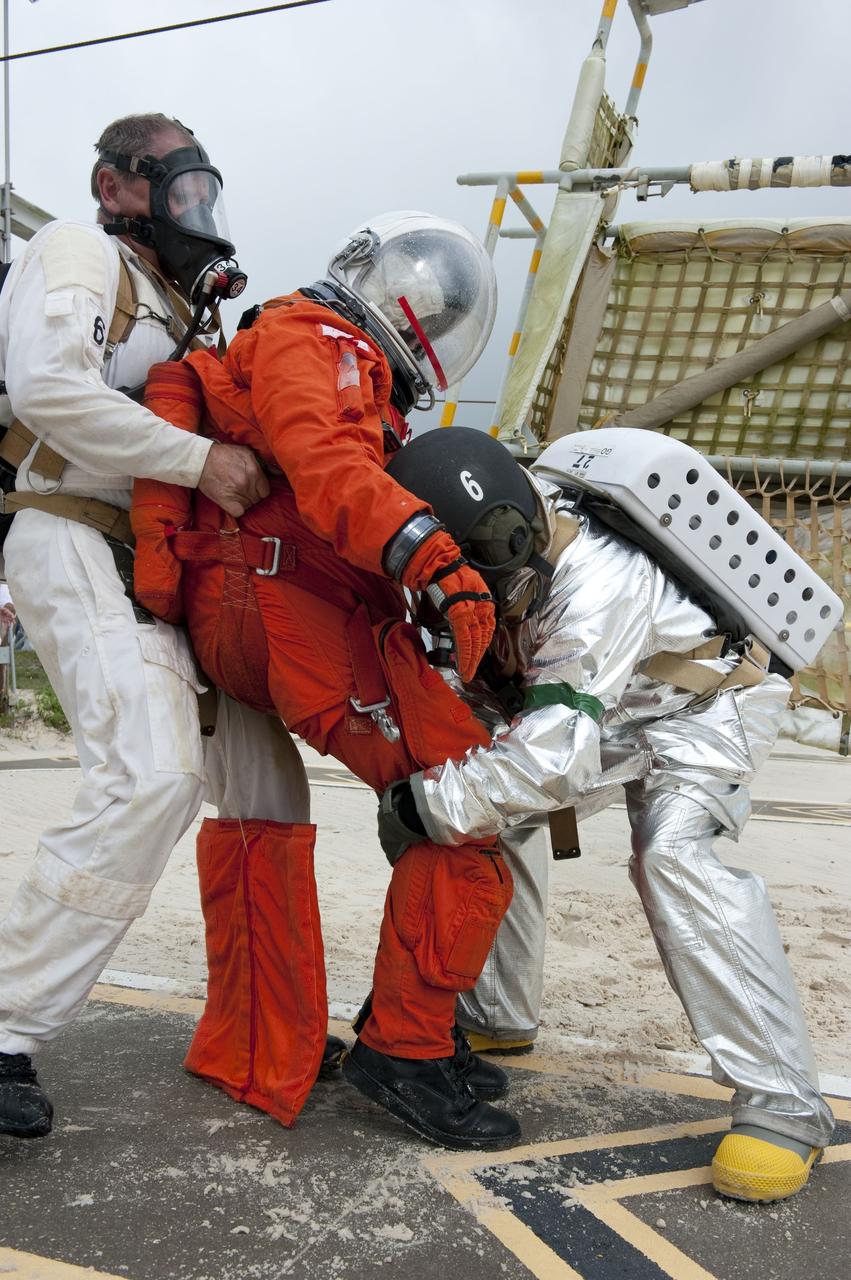
CAPE CANAVERAL, Fla. – An emergency exit, or Mode II/IV, exercise is under way at the slidewire basket landing site of Launch Pad 39A at NASA's Kennedy Space Center in Florida. The exercise involves NASA fire rescue personnel, volunteers portraying astronauts with simulated injuries, helicopters and personnel from the Air Force’s 920th Rescue Wing, and medical trauma teams at three Central Florida hospitals. The drill allows teams to practice an emergency response at the launch pad, including helicopter evacuation to local hospitals. Photo credit: NASA/Kim Shiflett
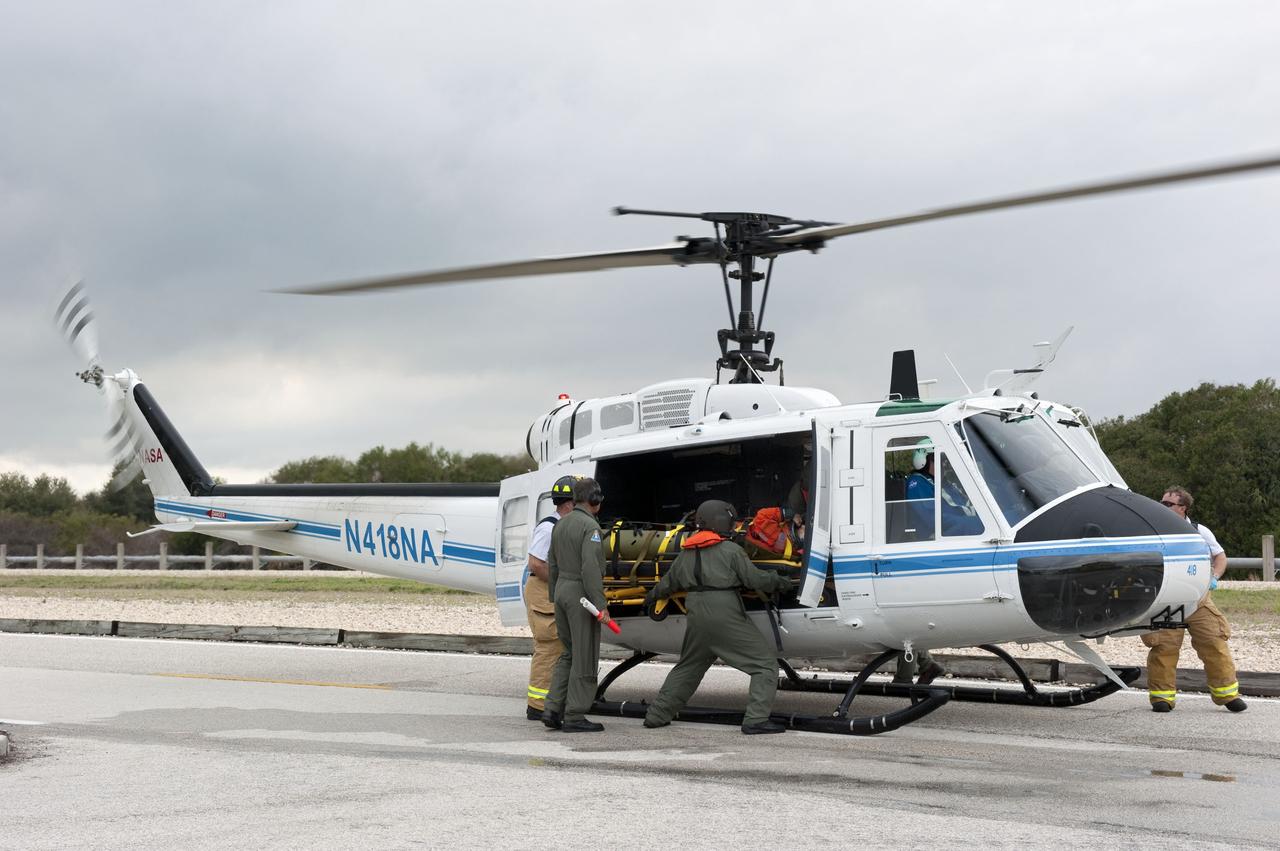
CAPE CANAVERAL, Fla. – Volunteers portraying injured astronauts are loaded onto a helicopter as part of an emergency exit, or Mode II/IV, exercise that allows teams to practice an emergency response at Launch Pad 39A at NASA's Kennedy Space Center in Florida. The exercise involves NASA fire rescue personnel, volunteers portraying astronauts with simulated injuries, helicopters and personnel from the Air Force’s 920th Rescue Wing, and medical trauma teams at three Central Florida hospitals. The drill allows teams to practice an emergency response at the launch pad, including helicopter evacuation to local hospitals. Photo credit: NASA/Kim Shiflett
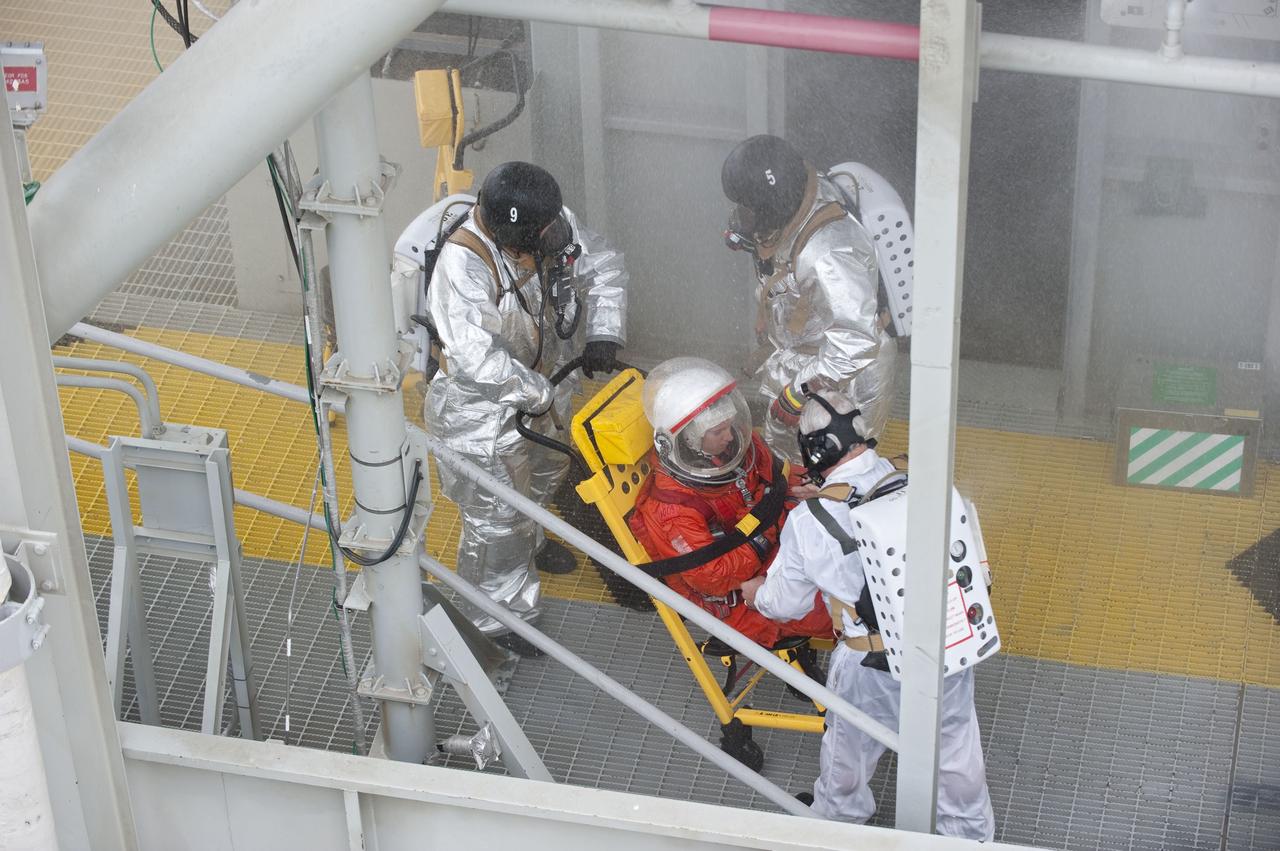
CAPE CANAVERAL, Fla. – An emergency exit, or Mode II/IV, exercise is under way at the 195-foot level of Launch Pad 39A at NASA's Kennedy Space Center in Florida. The exercise involves NASA fire rescue personnel, volunteers portraying astronauts with simulated injuries, helicopters and personnel from the Air Force’s 920th Rescue Wing, and medical trauma teams at three Central Florida hospitals. The drill allows teams to practice an emergency response at the launch pad, including helicopter evacuation to local hospitals. Photo credit: NASA/Kim Shiflett
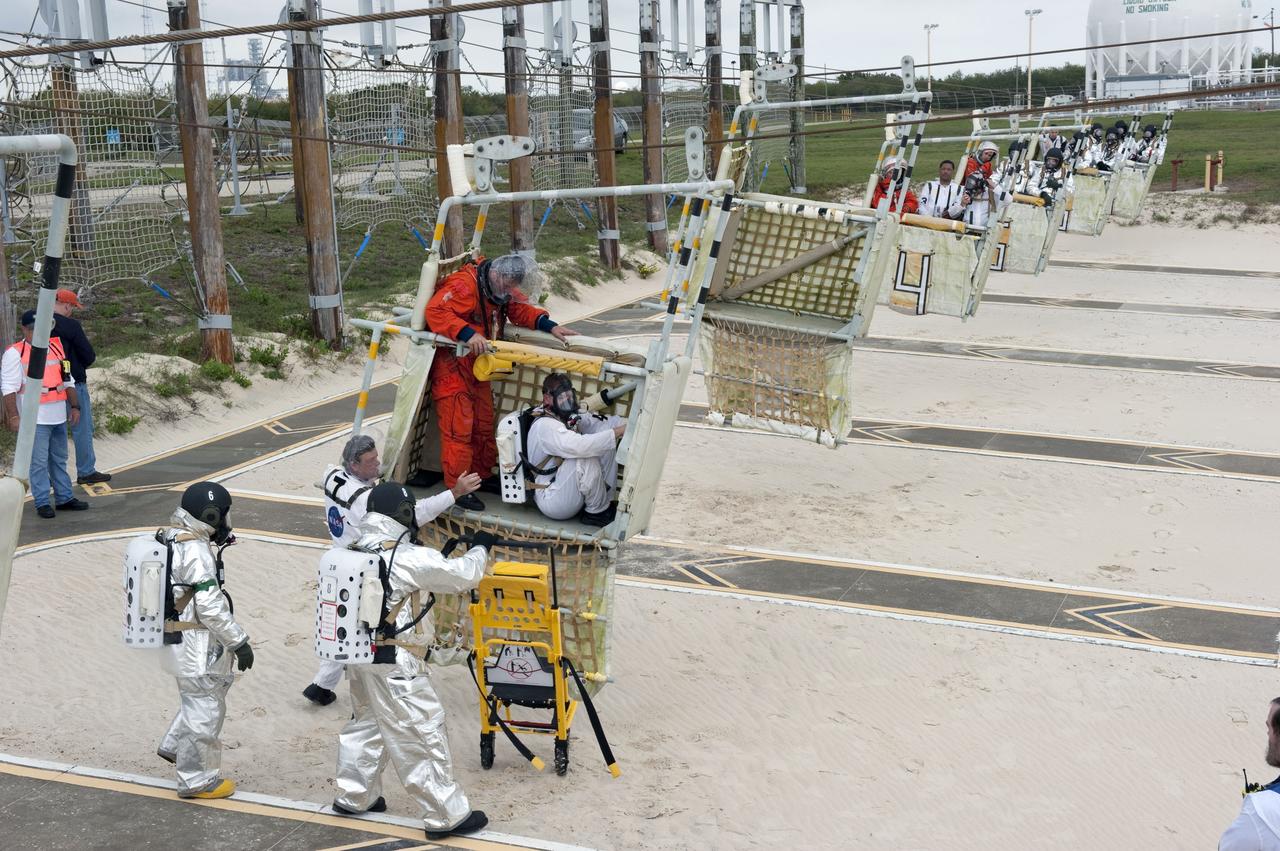
CAPE CANAVERAL, Fla. – An emergency exit, or Mode II/IV, exercise is under way at the slidewire basket landing site of Launch Pad 39A at NASA's Kennedy Space Center in Florida. The exercise involves NASA fire rescue personnel, volunteers portraying astronauts with simulated injuries, helicopters and personnel from the Air Force’s 920th Rescue Wing, and medical trauma teams at three Central Florida hospitals. The drill allows teams to practice an emergency response at the launch pad, including helicopter evacuation to local hospitals. Photo credit: NASA/Kim Shiflett
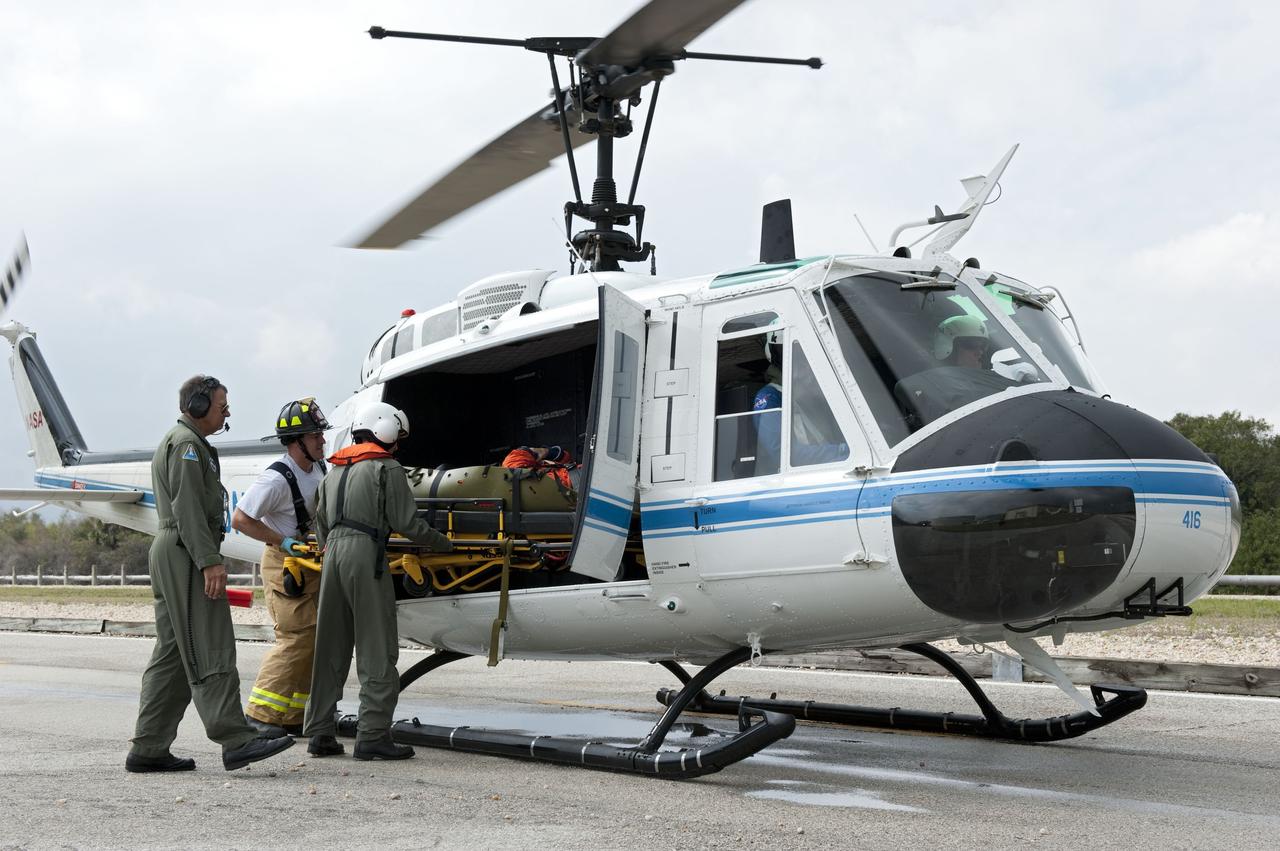
CAPE CANAVERAL, Fla. – Volunteers portraying injured astronauts are loaded onto a helicopter as part of an emergency exit, or Mode II/IV, exercise that allows teams to practice an emergency response at Launch Pad 39A at NASA's Kennedy Space Center in Florida. The exercise involves NASA fire rescue personnel, volunteers portraying astronauts with simulated injuries, helicopters and personnel from the Air Force’s 920th Rescue Wing, and medical trauma teams at three Central Florida hospitals. The drill allows teams to practice an emergency response at the launch pad, including helicopter evacuation to local hospitals. Photo credit: NASA/Kim Shiflett
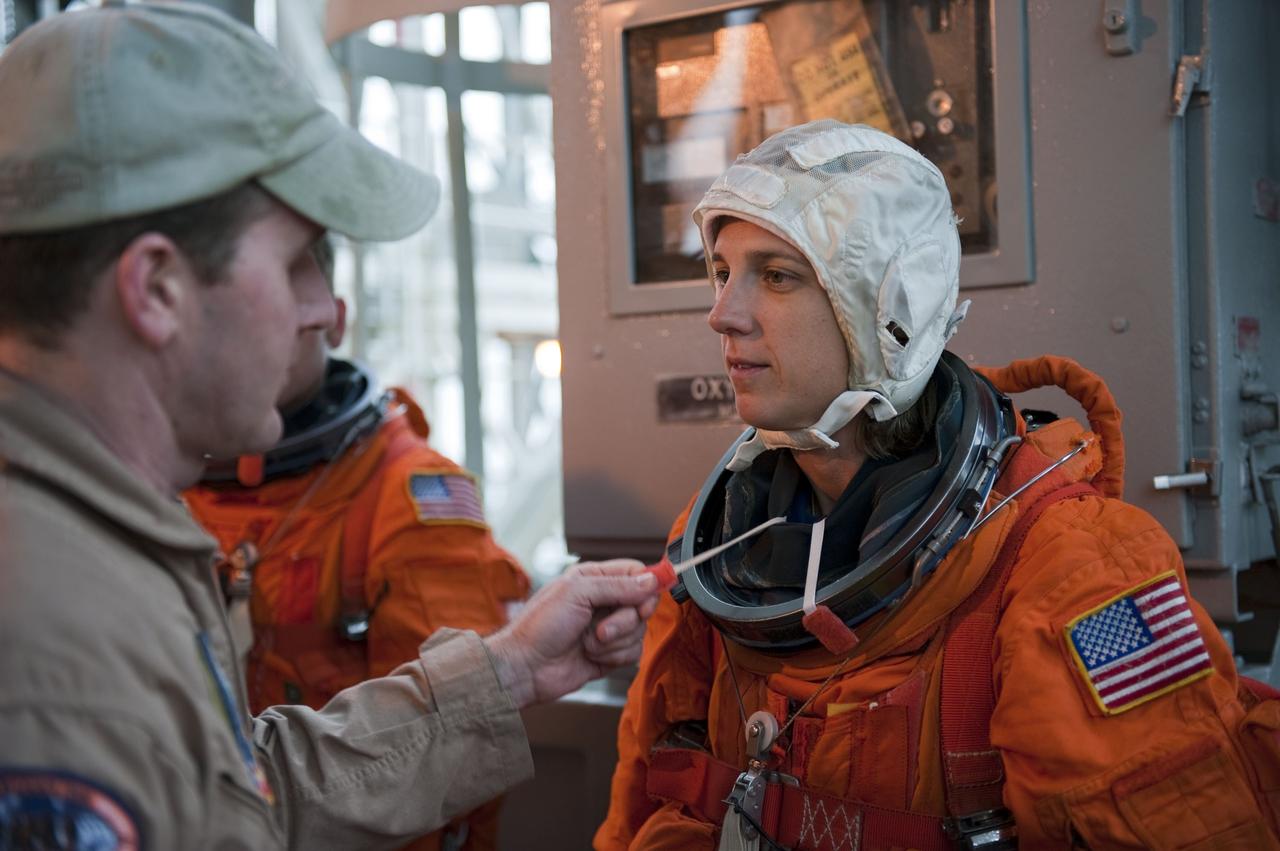
CAPE CANAVERAL, Fla. – An emergency exit, or Mode II/IV, exercise is under way at the 195-foot level of Launch Pad 39A at NASA's Kennedy Space Center in Florida. The exercise involves NASA fire rescue personnel, volunteers portraying astronauts with simulated injuries, helicopters and personnel from the Air Force’s 920th Rescue Wing, and medical trauma teams at three Central Florida hospitals. The drill allows teams to practice an emergency response at the launch pad, including helicopter evacuation to local hospitals. Photo credit: NASA/Kim Shiflett
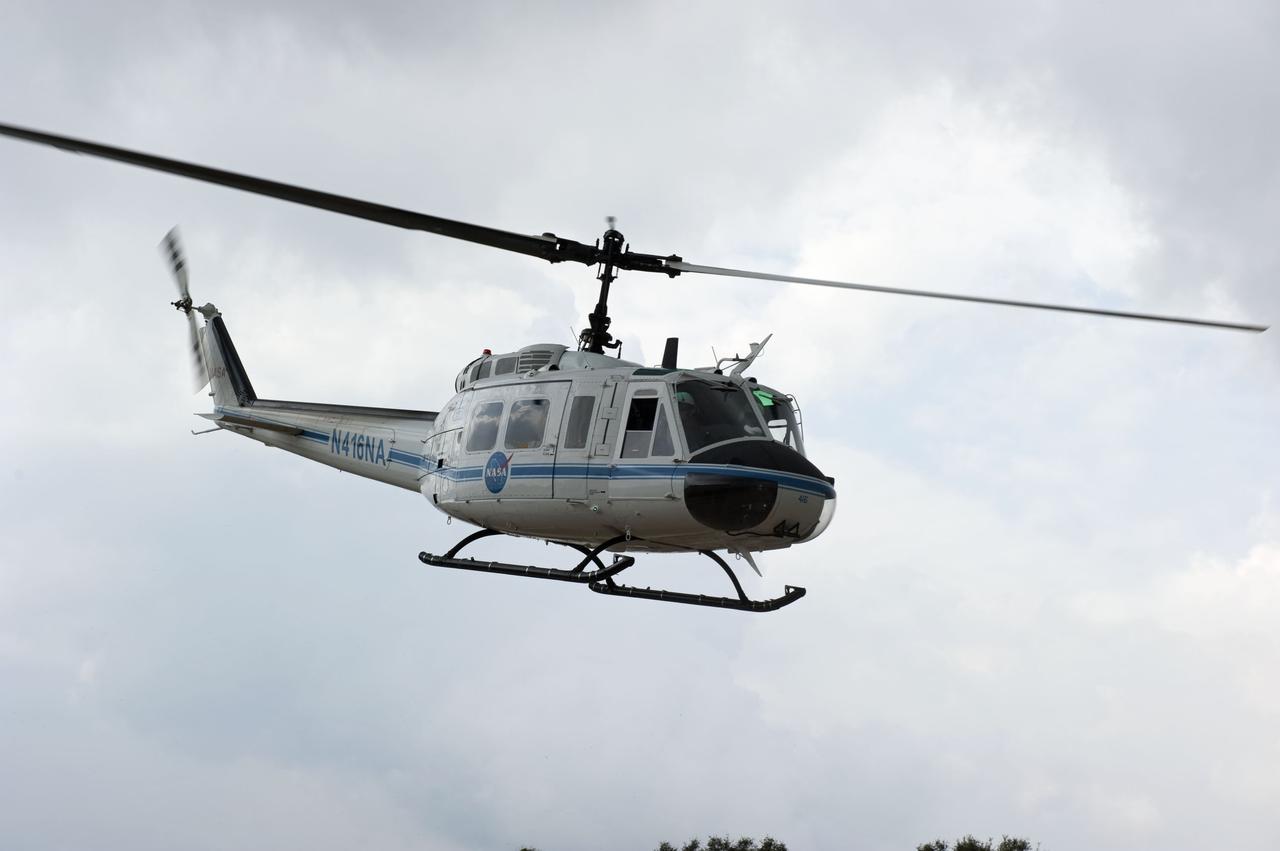
CAPE CANAVERAL, Fla. – A helicopter takes part in an emergency exit, or Mode II/IV, exercise that allows teams to practice an emergency response at Launch Pad 39A at NASA's Kennedy Space Center in Florida. The exercise involves NASA fire rescue personnel, volunteers portraying astronauts with simulated injuries, helicopters and personnel from the Air Force’s 920th Rescue Wing, and medical trauma teams at three Central Florida hospitals. The drill allows teams to practice an emergency response at the launch pad, including helicopter evacuation to local hospitals. Photo credit: NASA/Kim Shiflett
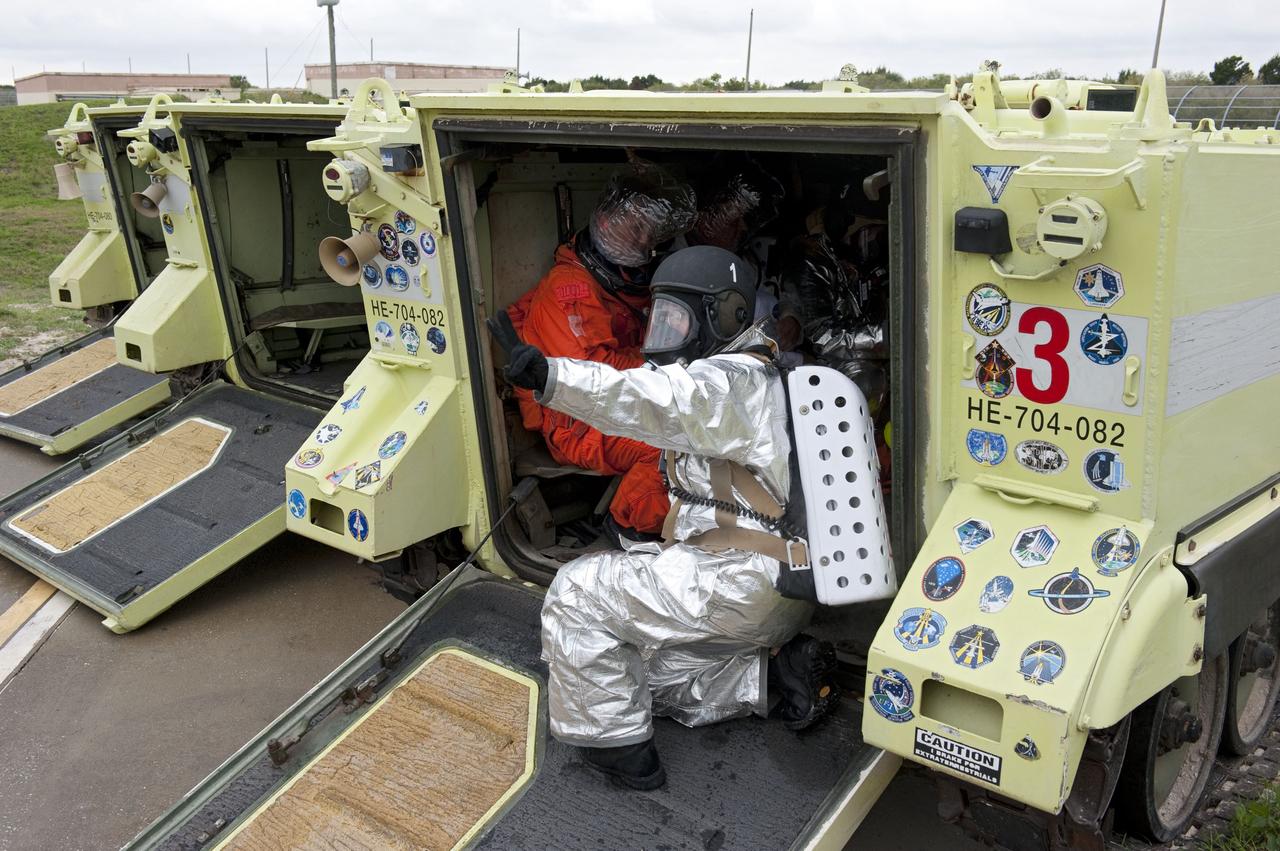
CAPE CANAVERAL, Fla. – On Launch Pad 39A at NASA's Kennedy Space Center in Florida, an emergency exit, or Mode II/IV, exercise is under way. Seen here are M-113 armored personnel carriers near the slidewire basked landing site. The exercise involves NASA fire rescue personnel, volunteers portraying astronauts with simulated injuries, helicopters and personnel from the Air Force’s 920th Rescue Wing, and medical trauma teams at three Central Florida hospitals. The drill allows teams to practice an emergency response at the launch pad, including helicopter evacuation to local hospitals. Photo credit: NASA/Kim Shiflett
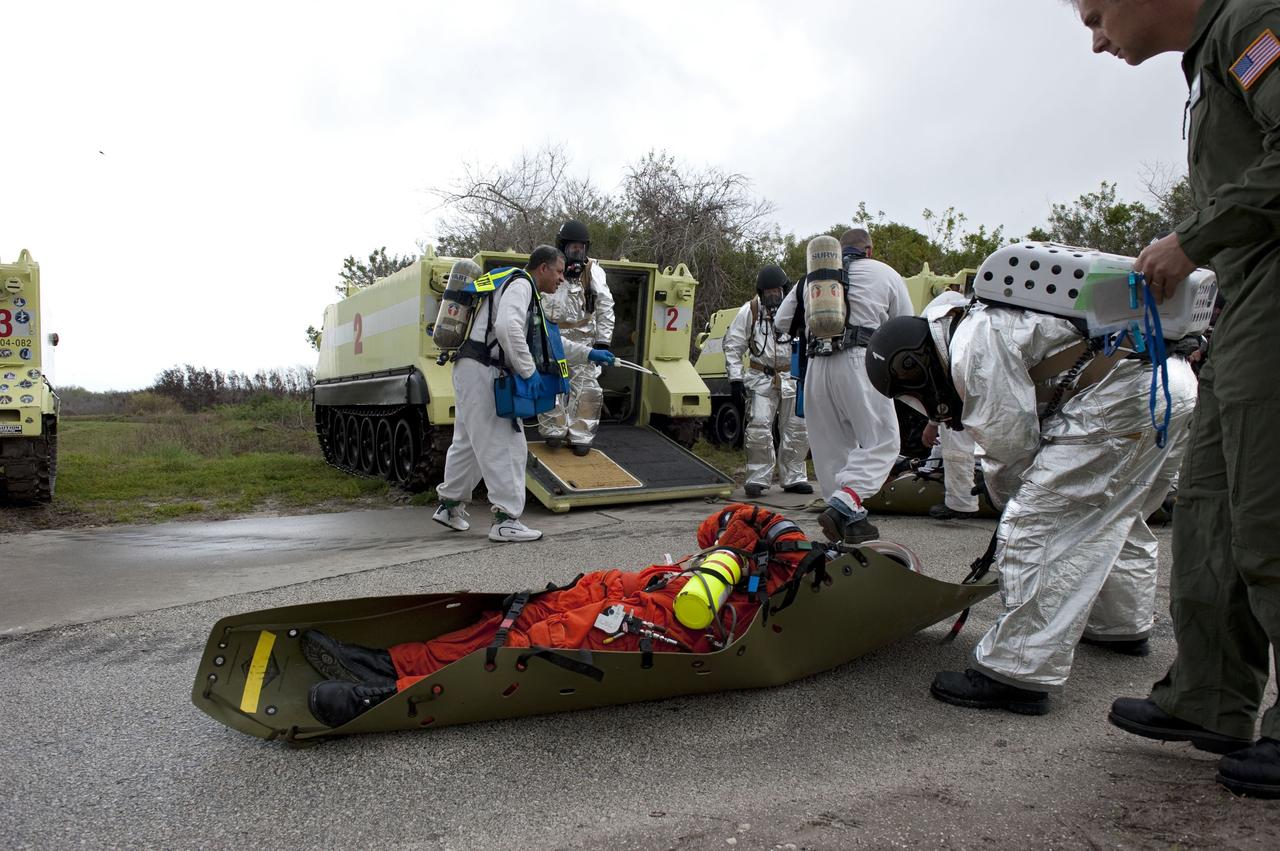
CAPE CANAVERAL, Fla. – An emergency exit, or Mode II/IV, exercise is under way near Launch Pad 39A at NASA's Kennedy Space Center in Florida. The exercise involves NASA fire rescue personnel, volunteers portraying astronauts with simulated injuries, helicopters and personnel from the Air Force’s 920th Rescue Wing, and medical trauma teams at three Central Florida hospitals. The drill allows teams to practice an emergency response at the launch pad, including helicopter evacuation to local hospitals. Photo credit: NASA/Kim Shiflett

CAPE CANAVERAL, Fla. – An emergency exit, or Mode II/IV, exercise is under way near Launch Pad 39A at NASA's Kennedy Space Center in Florida. The exercise involves NASA fire rescue personnel, volunteers portraying astronauts with simulated injuries, helicopters and personnel from the Air Force’s 920th Rescue Wing, and medical trauma teams at three Central Florida hospitals. The drill allows teams to practice an emergency response at the launch pad, including helicopter evacuation to local hospitals. Photo credit: NASA/Kim Shiflett

CAPE CANAVERAL, Fla. – An emergency exit, or Mode II/IV, exercise is under way in M-113 armored personnel carriers at Launch Pad 39A at NASA's Kennedy Space Center in Florida. The exercise involves NASA fire rescue personnel, volunteers portraying astronauts with simulated injuries, helicopters and personnel from the Air Force’s 920th Rescue Wing, and medical trauma teams at three Central Florida hospitals. The drill allows teams to practice an emergency response at the launch pad, including helicopter evacuation to local hospitals. Photo credit: NASA/Kim Shiflett
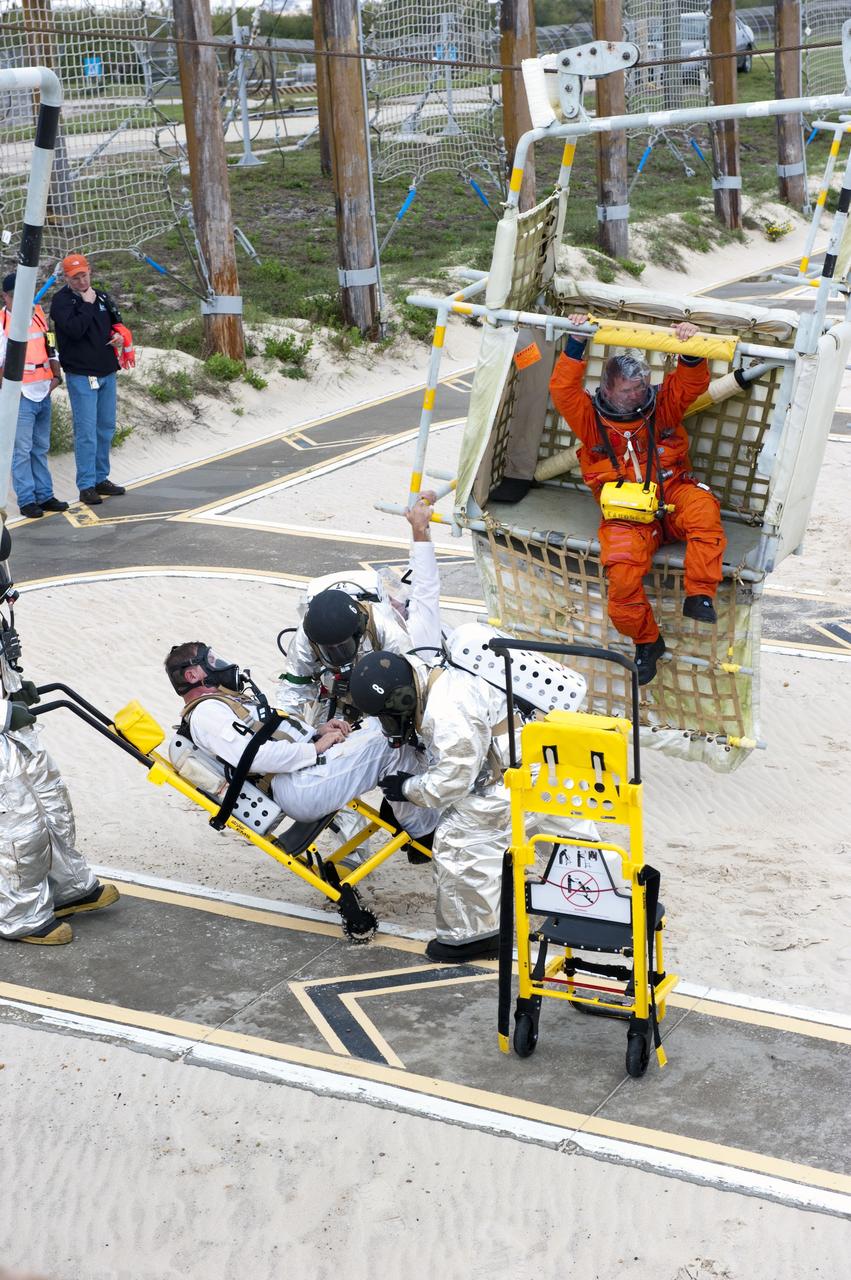
CAPE CANAVERAL, Fla. – An emergency exit, or Mode II/IV, exercise is under way at the slidewire basket landing site of Launch Pad 39A at NASA's Kennedy Space Center in Florida. The exercise involves NASA fire rescue personnel, volunteers portraying astronauts with simulated injuries, helicopters and personnel from the Air Force’s 920th Rescue Wing, and medical trauma teams at three Central Florida hospitals. The drill allows teams to practice an emergency response at the launch pad, including helicopter evacuation to local hospitals. Photo credit: NASA/Kim Shiflett
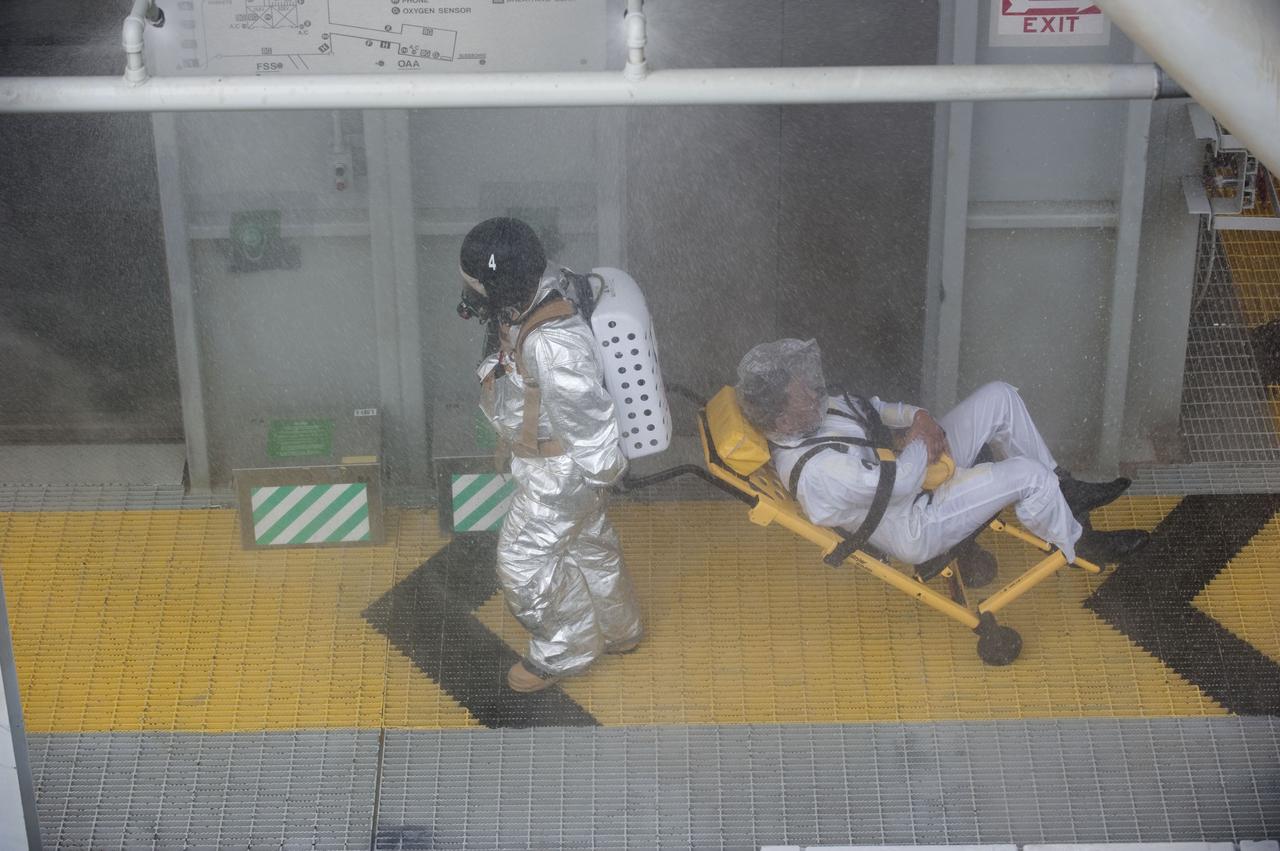
CAPE CANAVERAL, Fla. – An emergency exit, or Mode II/IV, exercise is under way at the 195-foot level of Launch Pad 39A at NASA's Kennedy Space Center in Florida. The exercise involves NASA fire rescue personnel, volunteers portraying astronauts with simulated injuries, helicopters and personnel from the Air Force’s 920th Rescue Wing, and medical trauma teams at three Central Florida hospitals. The drill allows teams to practice an emergency response at the launch pad, including helicopter evacuation to local hospitals. Photo credit: NASA/Kim Shiflett
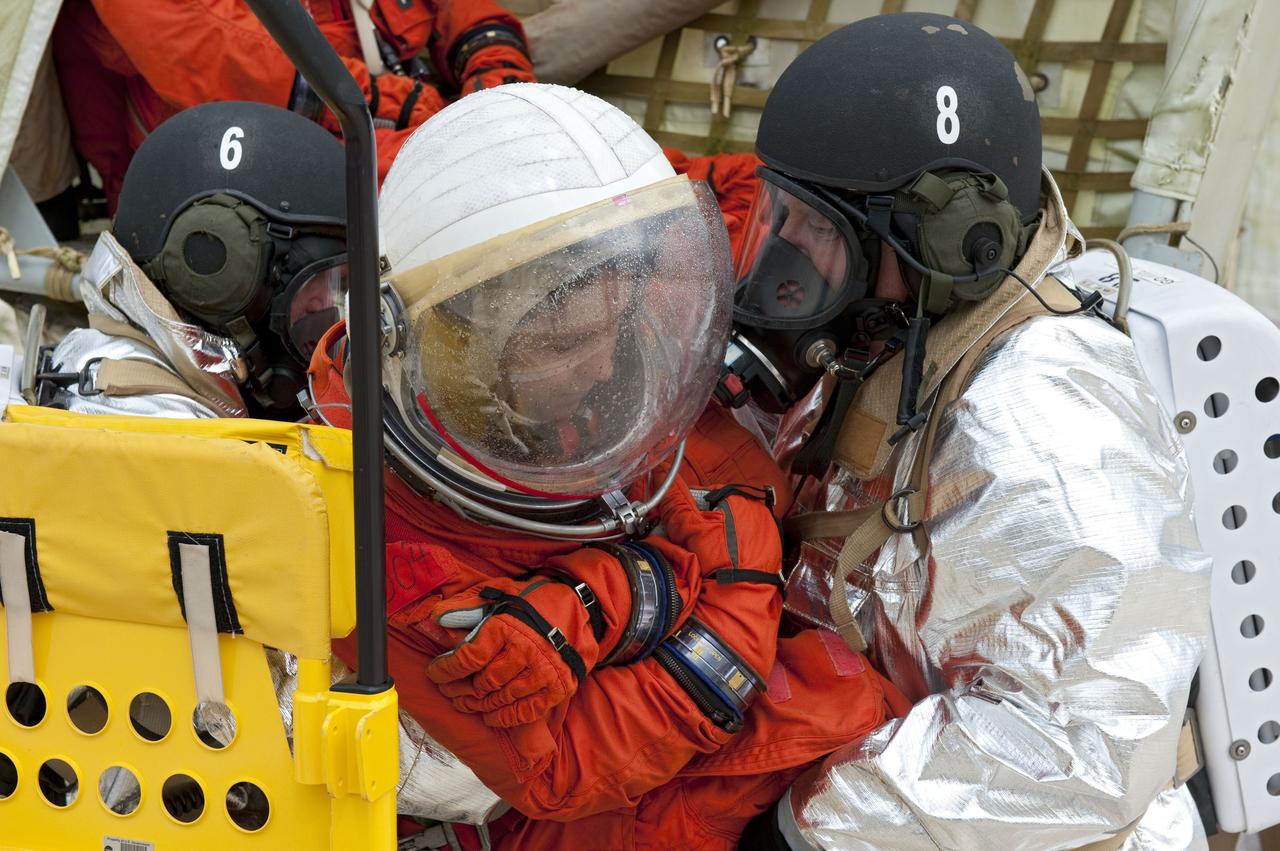
CAPE CANAVERAL, Fla. – An emergency exit, or Mode II/IV, exercise is under way at the slidewire basket landing site of Launch Pad 39A at NASA's Kennedy Space Center in Florida. The exercise involves NASA fire rescue personnel, volunteers portraying astronauts with simulated injuries, helicopters and personnel from the Air Force’s 920th Rescue Wing, and medical trauma teams at three Central Florida hospitals. The drill allows teams to practice an emergency response at the launch pad, including helicopter evacuation to local hospitals. Photo credit: NASA/Kim Shiflett
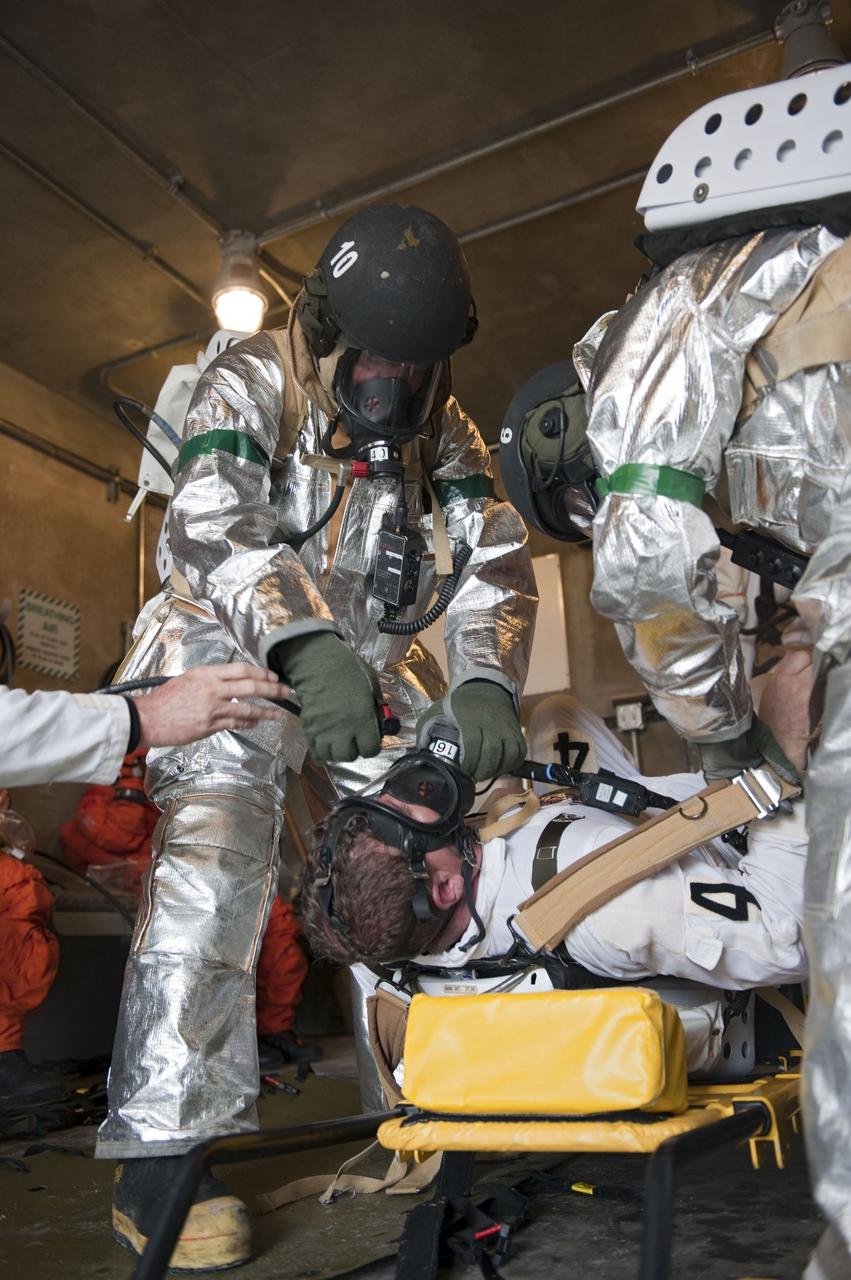
CAPE CANAVERAL, Fla. – An emergency exit, or Mode II/IV, exercise is under way in a bunker of Launch Pad 39A at NASA's Kennedy Space Center in Florida. The exercise involves NASA fire rescue personnel, volunteers portraying astronauts with simulated injuries, helicopters and personnel from the Air Force’s 920th Rescue Wing, and medical trauma teams at three Central Florida hospitals. The drill allows teams to practice an emergency response at the launch pad, including helicopter evacuation to local hospitals. Photo credit: NASA/Kim Shiflett
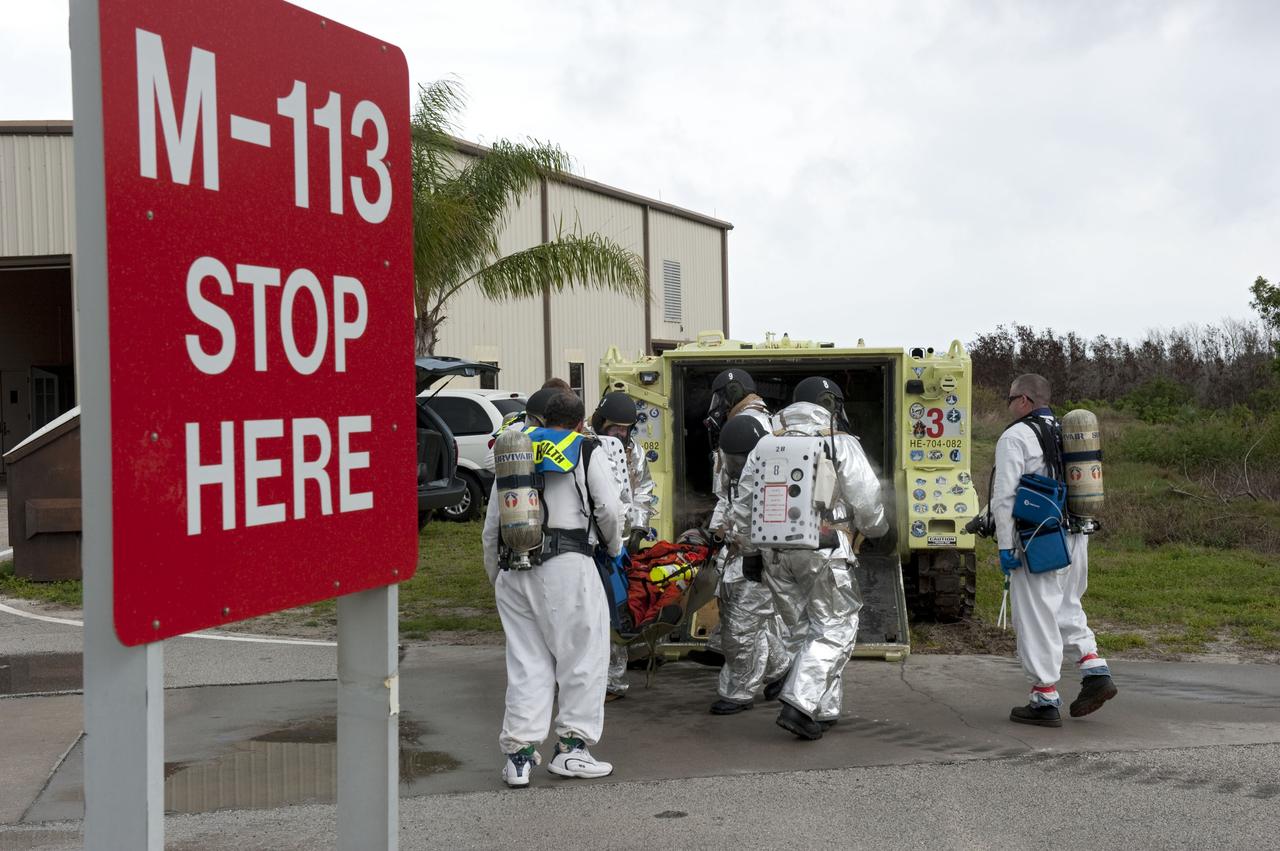
CAPE CANAVERAL, Fla. – An emergency exit, or Mode II/IV, exercise is under way near Launch Pad 39A at NASA's Kennedy Space Center in Florida. The exercise involves NASA fire rescue personnel, volunteers portraying astronauts with simulated injuries, helicopters and personnel from the Air Force’s 920th Rescue Wing, and medical trauma teams at three Central Florida hospitals. The drill allows teams to practice an emergency response at the launch pad, including helicopter evacuation to local hospitals. Photo credit: NASA/Kim Shiflett
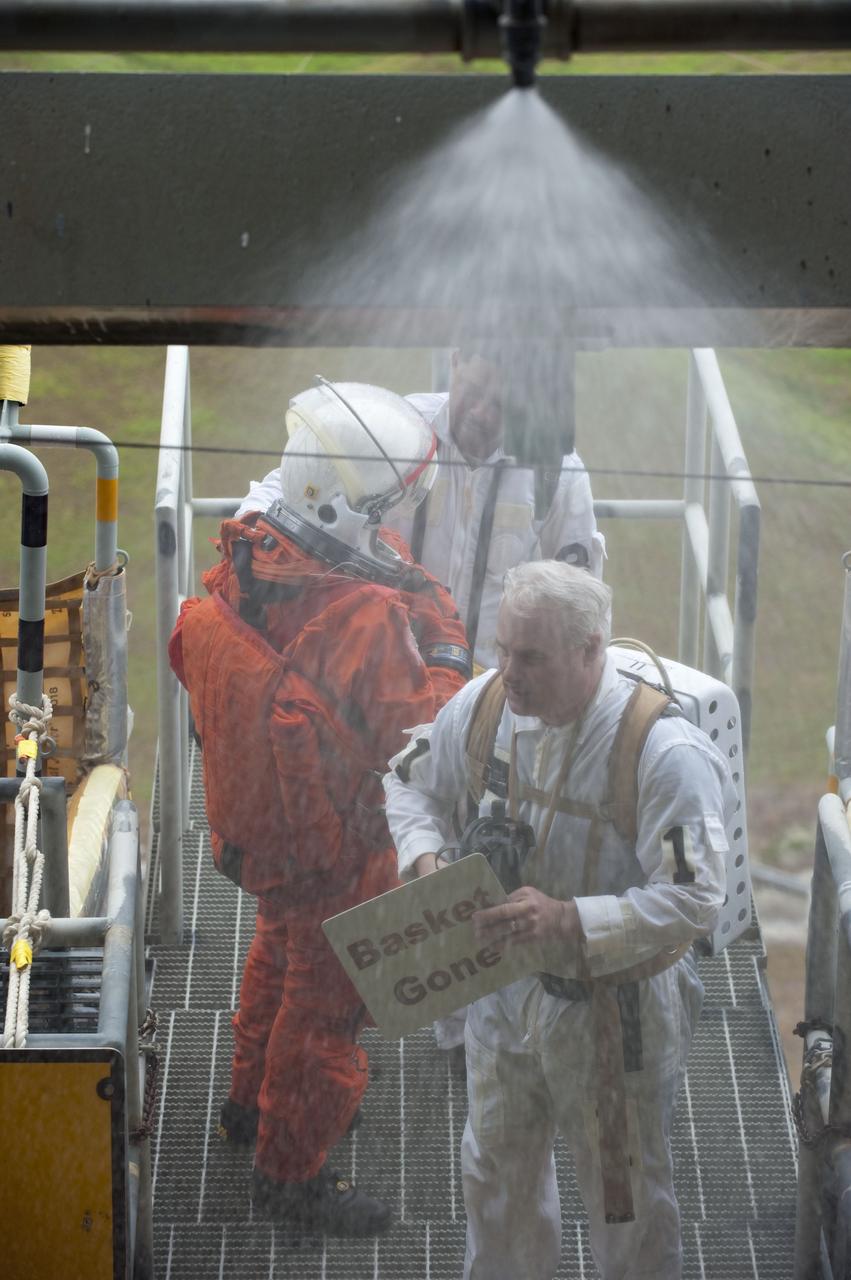
CAPE CANAVERAL, Fla. – An emergency exit, or Mode II/IV, exercise is under way at the slidewire basket area of Launch Pad 39A at NASA's Kennedy Space Center in Florida. The exercise involves NASA fire rescue personnel, volunteers portraying astronauts with simulated injuries, helicopters and personnel from the Air Force’s 920th Rescue Wing, and medical trauma teams at three Central Florida hospitals. The drill allows teams to practice an emergency response at the launch pad, including helicopter evacuation to local hospitals. Photo credit: NASA/Kim Shiflett
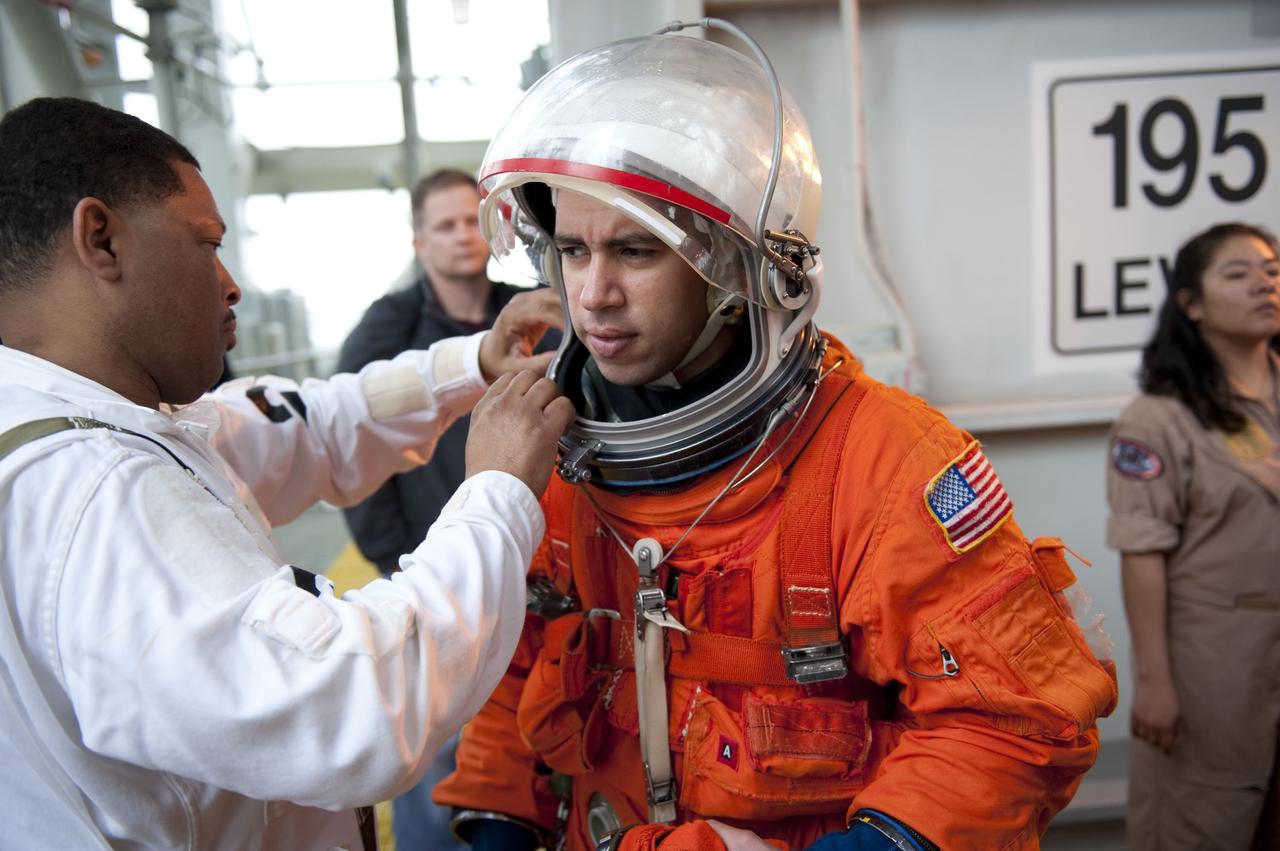
CAPE CANAVERAL, Fla. – An emergency exit, or Mode II/IV, exercise is under way at the 195-foot level of Launch Pad 39A at NASA's Kennedy Space Center in Florida. The exercise involves NASA fire rescue personnel, volunteers portraying astronauts with simulated injuries, helicopters and personnel from the Air Force’s 920th Rescue Wing, and medical trauma teams at three Central Florida hospitals. The drill allows teams to practice an emergency response at the launch pad, including helicopter evacuation to local hospitals. Photo credit: NASA/Kim Shiflett
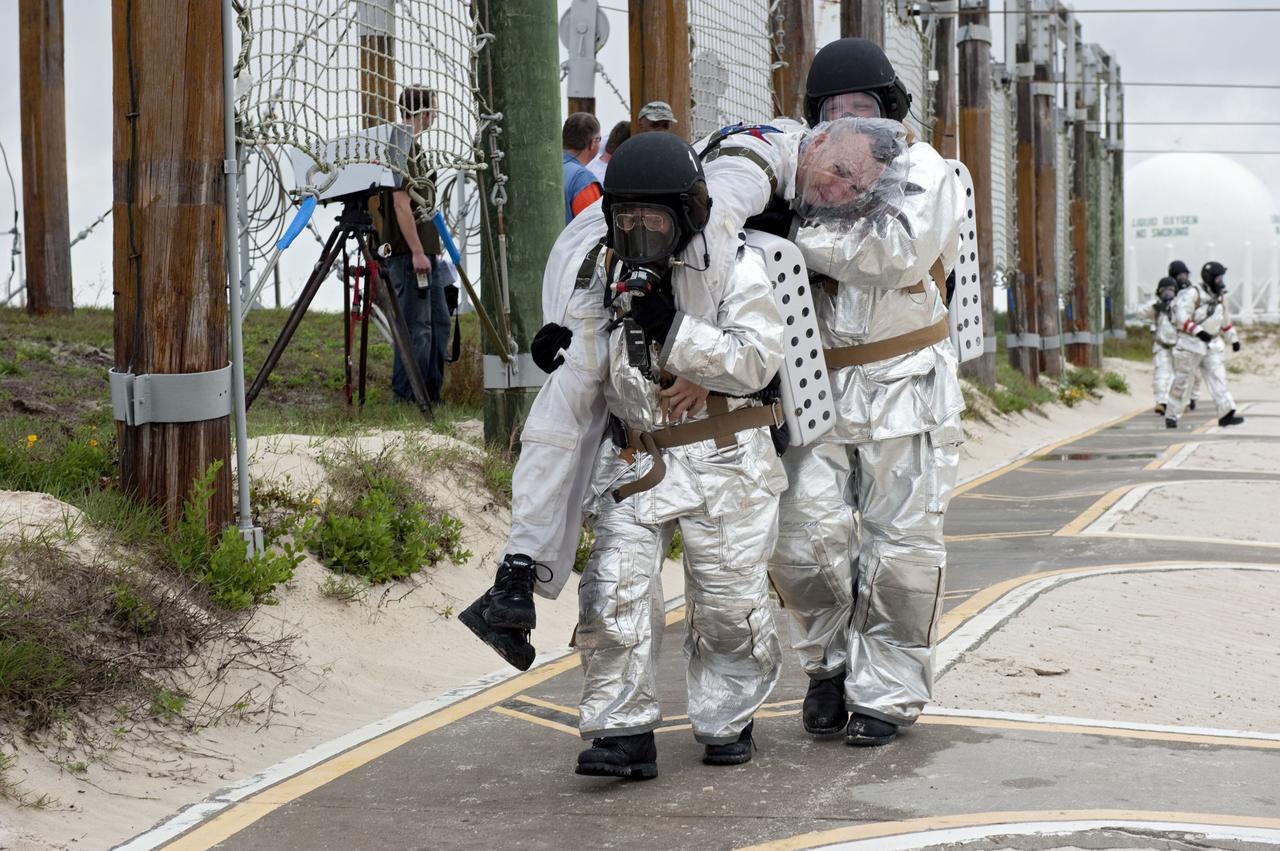
CAPE CANAVERAL, Fla. – An emergency exit, or Mode II/IV, exercise is under way at the slidewire basket landing site of Launch Pad 39A at NASA's Kennedy Space Center in Florida. The exercise involves NASA fire rescue personnel, volunteers portraying astronauts with simulated injuries, helicopters and personnel from the Air Force’s 920th Rescue Wing, and medical trauma teams at three Central Florida hospitals. The drill allows teams to practice an emergency response at the launch pad, including helicopter evacuation to local hospitals. Photo credit: NASA/Kim Shiflett
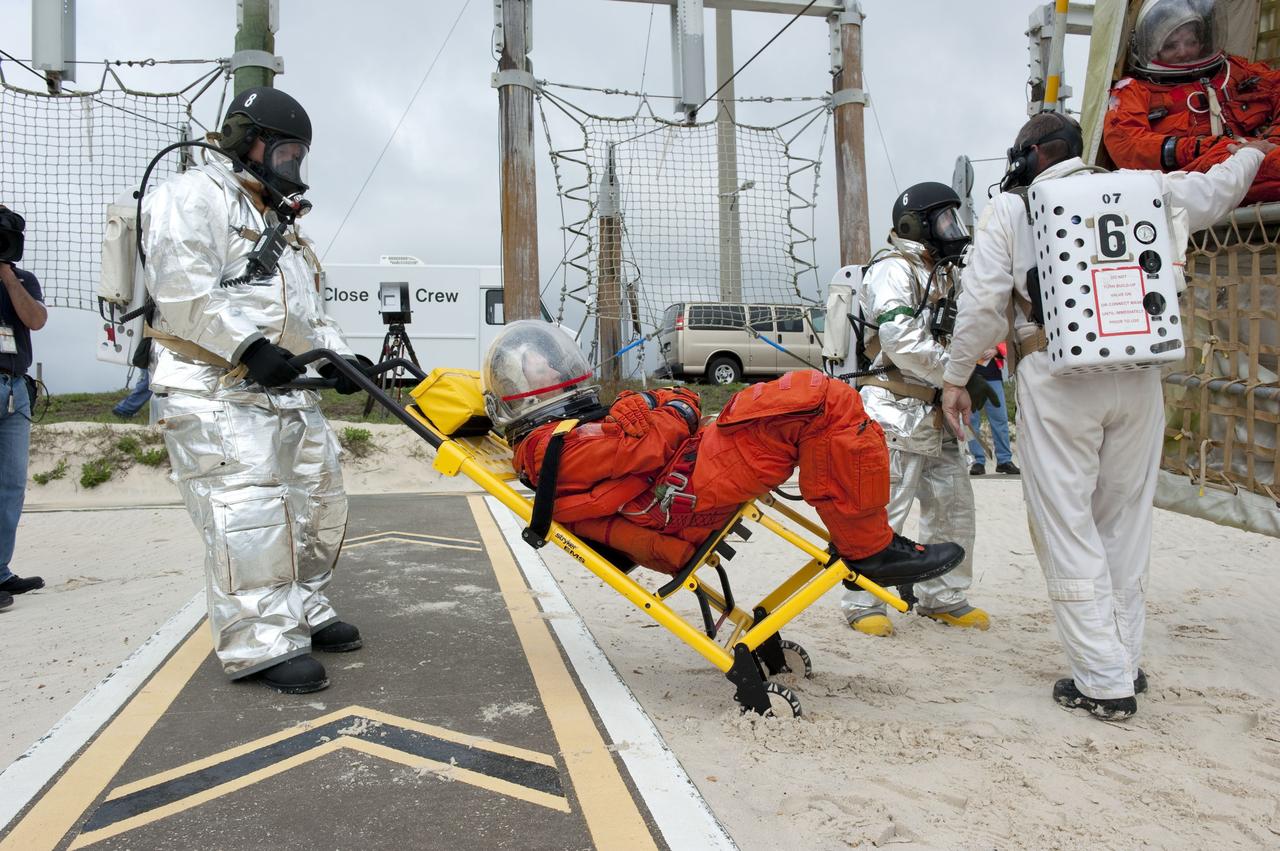
CAPE CANAVERAL, Fla. – An emergency exit, or Mode II/IV, exercise is under way at the slidewire basket landing site of Launch Pad 39A at NASA's Kennedy Space Center in Florida. The exercise involves NASA fire rescue personnel, volunteers portraying astronauts with simulated injuries, helicopters and personnel from the Air Force’s 920th Rescue Wing, and medical trauma teams at three Central Florida hospitals. The drill allows teams to practice an emergency response at the launch pad, including helicopter evacuation to local hospitals. Photo credit: NASA/Kim Shiflett
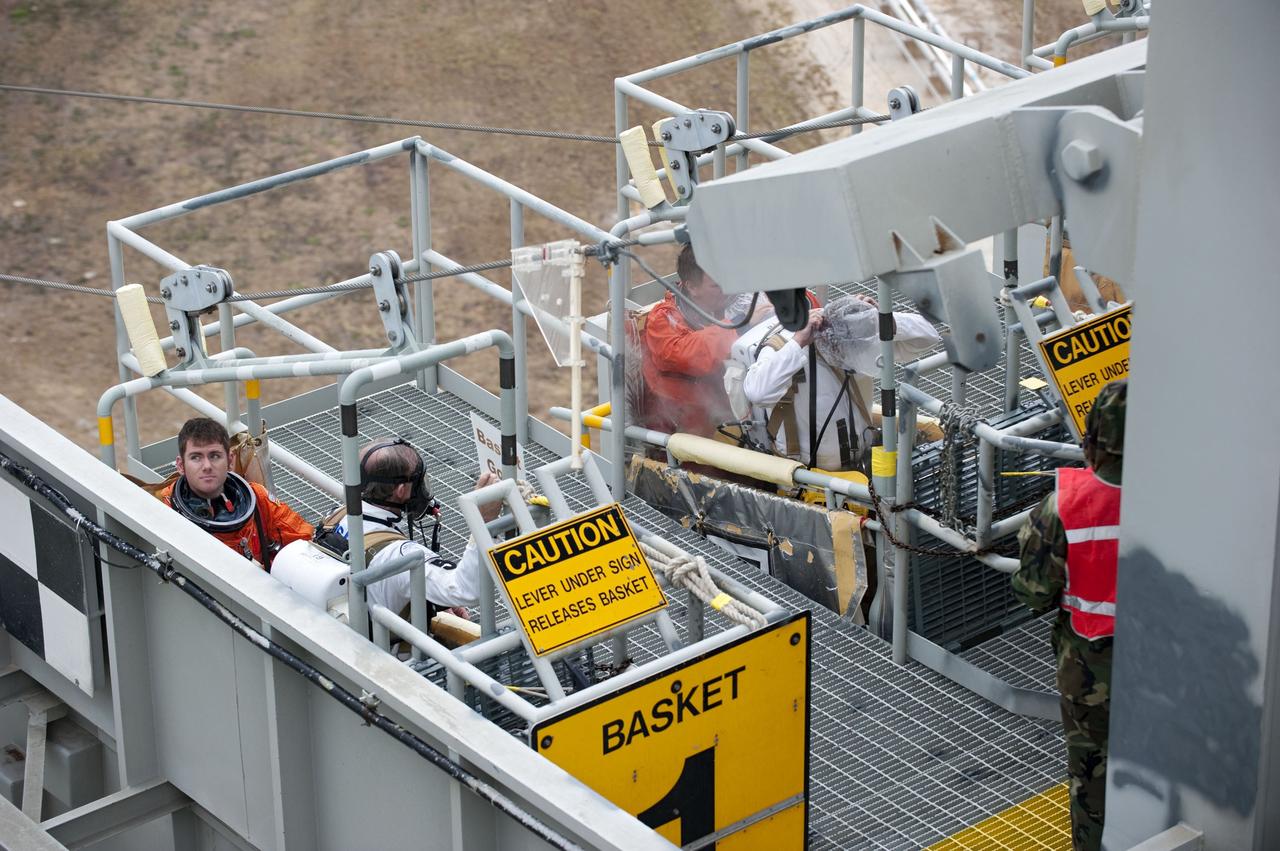
CAPE CANAVERAL, Fla. – An emergency exit, or Mode II/IV, exercise is under way at the slidewire basket area of Launch Pad 39A at NASA's Kennedy Space Center in Florida. The exercise involves NASA fire rescue personnel, volunteers portraying astronauts with simulated injuries, helicopters and personnel from the Air Force’s 920th Rescue Wing, and medical trauma teams at three Central Florida hospitals. The drill allows teams to practice an emergency response at the launch pad, including helicopter evacuation to local hospitals. Photo credit: NASA/Kim Shiflett
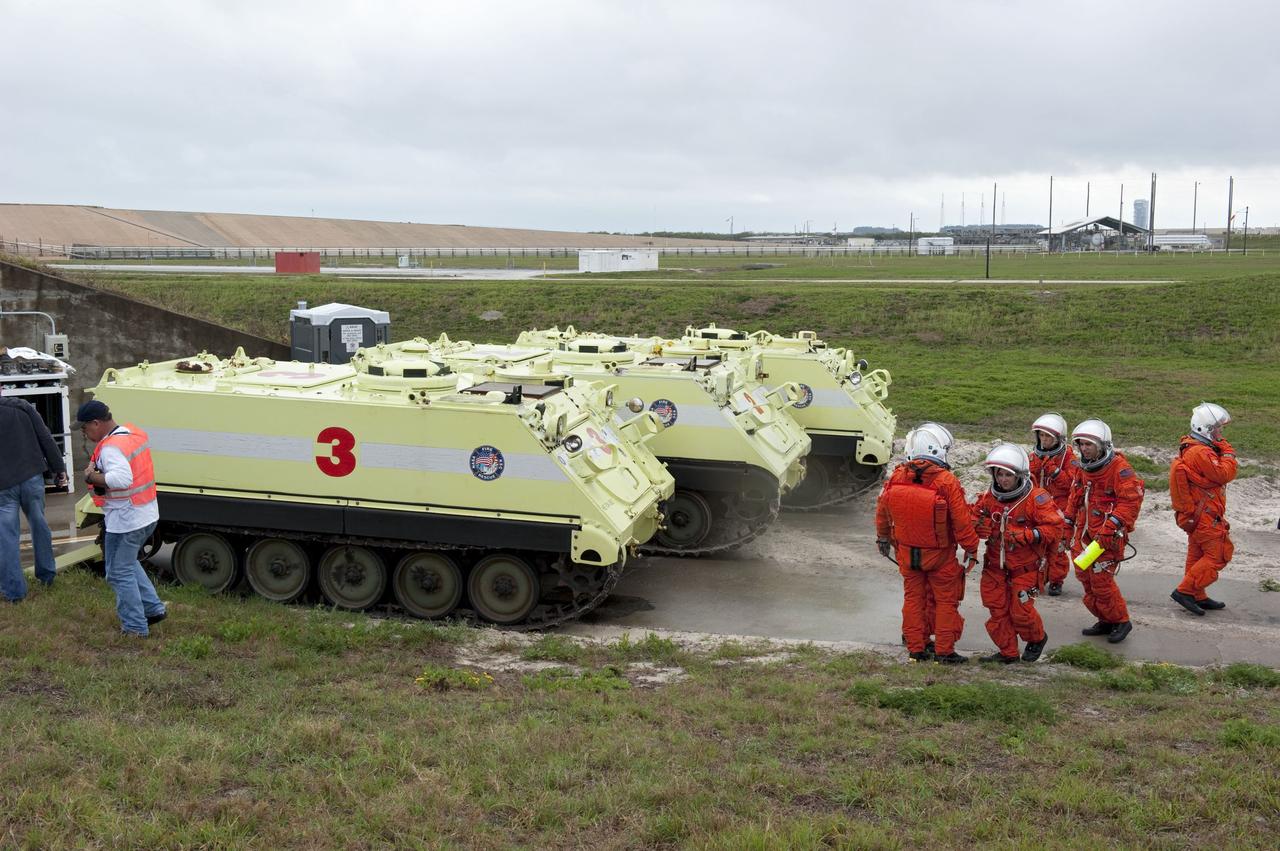
CAPE CANAVERAL, Fla. – On Launch Pad 39A at NASA's Kennedy Space Center in Florida, an emergency exit, or Mode II/IV, exercise is under way. Seen here are M-113 armored personnel carriers near the slidewire basked landing site. The exercise involves NASA fire rescue personnel, volunteers portraying astronauts with simulated injuries, helicopters and personnel from the Air Force’s 920th Rescue Wing, and medical trauma teams at three Central Florida hospitals. The drill allows teams to practice an emergency response at the launch pad, including helicopter evacuation to local hospitals. Photo credit: NASA/Kim Shiflett
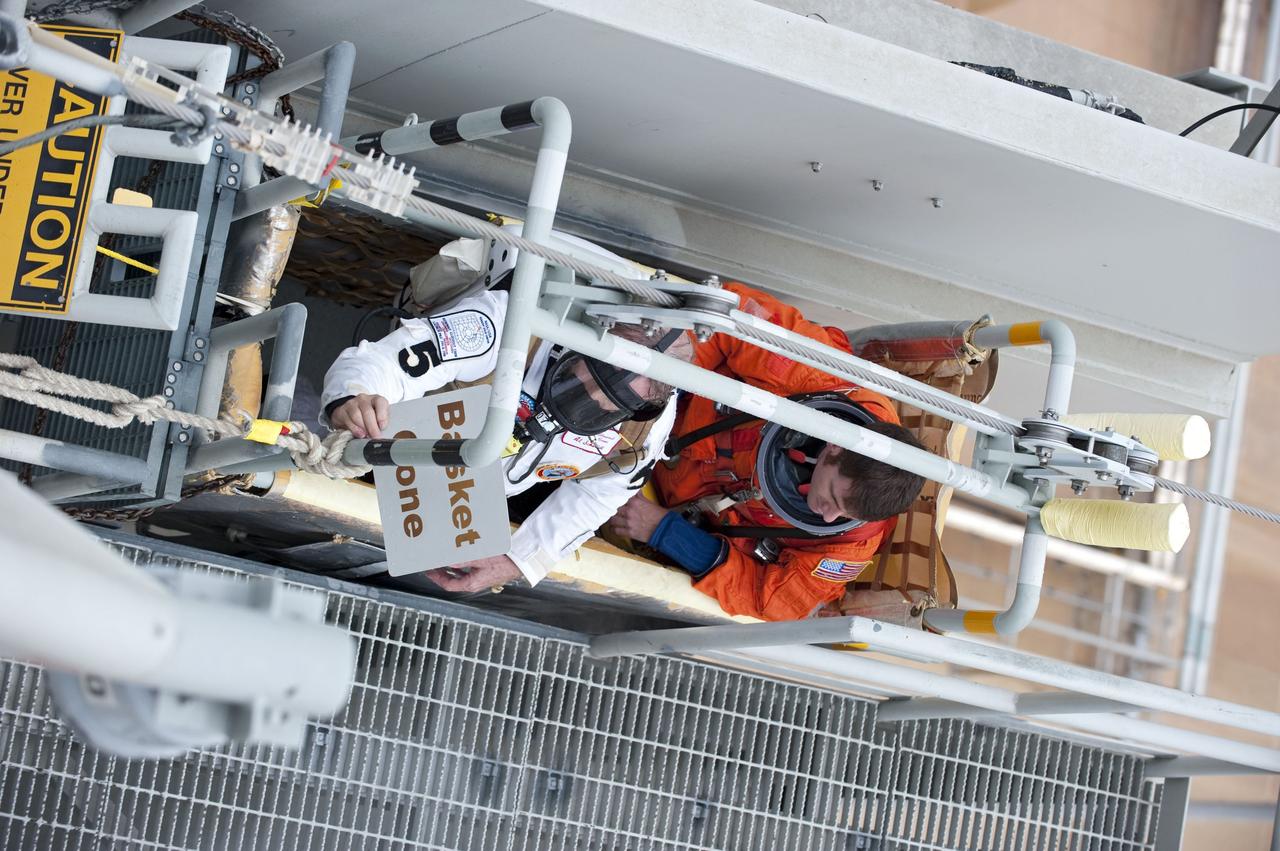
CAPE CANAVERAL, Fla. – An emergency exit, or Mode II/IV, exercise is under way at the slidewire basket area of Launch Pad 39A at NASA's Kennedy Space Center in Florida. The exercise involves NASA fire rescue personnel, volunteers portraying astronauts with simulated injuries, helicopters and personnel from the Air Force’s 920th Rescue Wing, and medical trauma teams at three Central Florida hospitals. The drill allows teams to practice an emergency response at the launch pad, including helicopter evacuation to local hospitals. Photo credit: NASA/Kim Shiflett
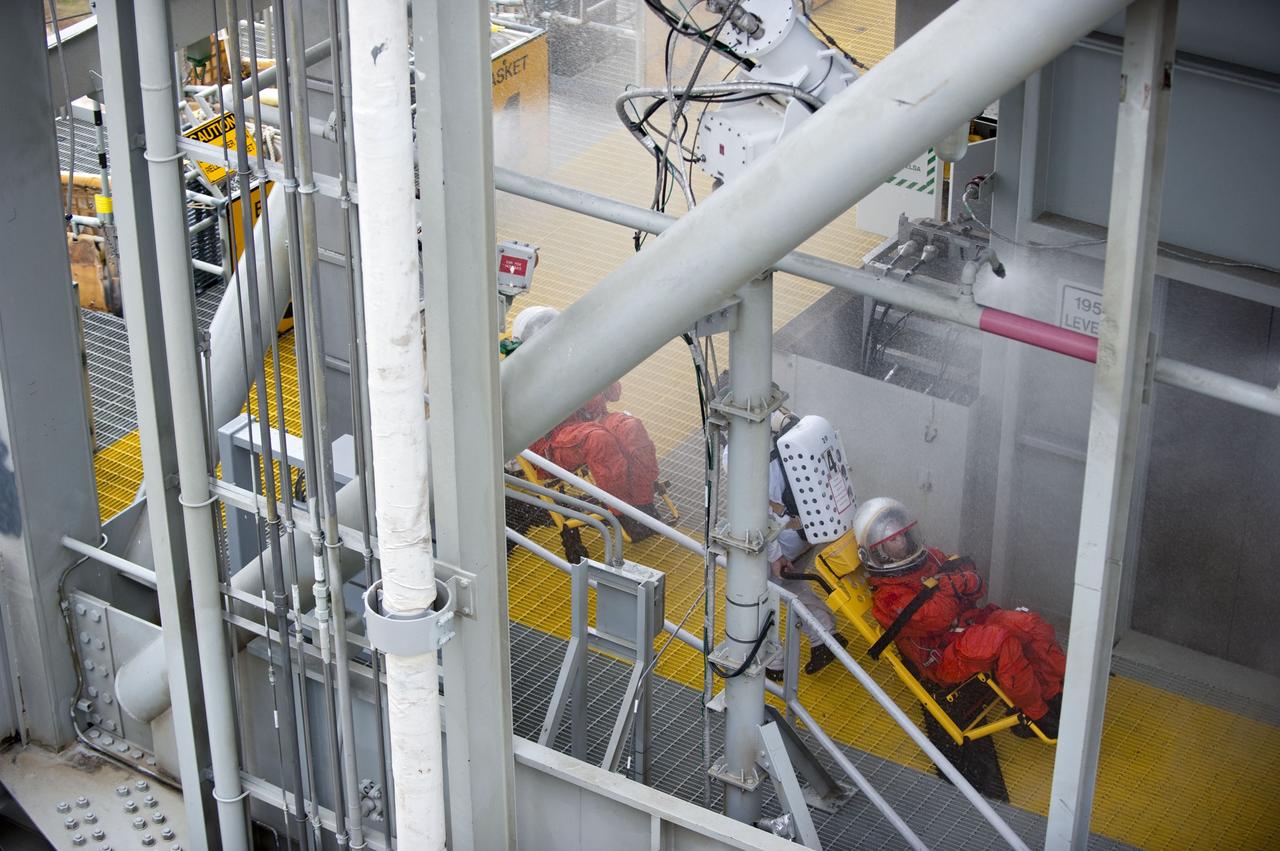
CAPE CANAVERAL, Fla. – An emergency exit, or Mode II/IV, exercise is under way at the 195-foot level of Launch Pad 39A at NASA's Kennedy Space Center in Florida. The exercise involves NASA fire rescue personnel, volunteers portraying astronauts with simulated injuries, helicopters and personnel from the Air Force’s 920th Rescue Wing, and medical trauma teams at three Central Florida hospitals. The drill allows teams to practice an emergency response at the launch pad, including helicopter evacuation to local hospitals. Photo credit: NASA/Kim Shiflett
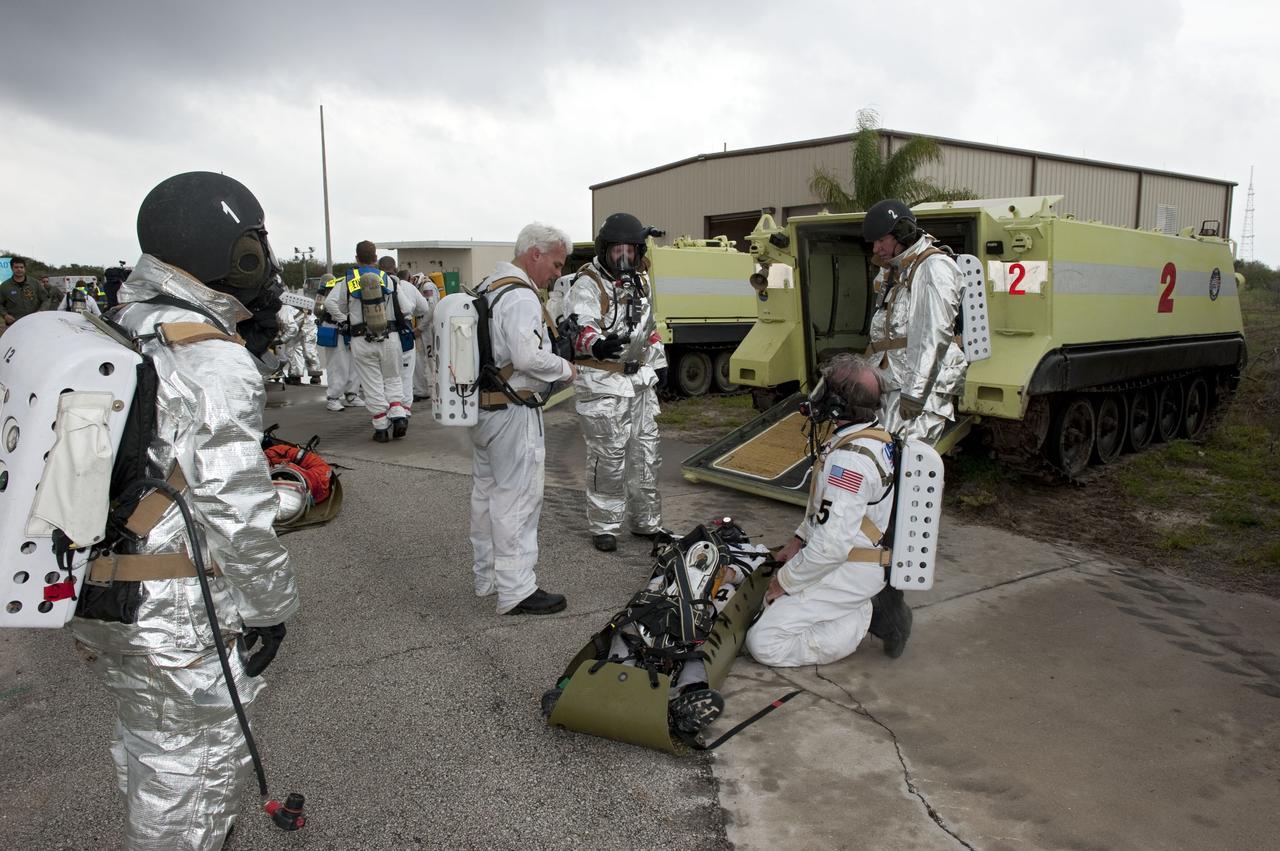
CAPE CANAVERAL, Fla. – An emergency exit, or Mode II/IV, exercise is under way near Launch Pad 39A at NASA's Kennedy Space Center in Florida. The exercise involves NASA fire rescue personnel, volunteers portraying astronauts with simulated injuries, helicopters and personnel from the Air Force’s 920th Rescue Wing, and medical trauma teams at three Central Florida hospitals. The drill allows teams to practice an emergency response at the launch pad, including helicopter evacuation to local hospitals. Photo credit: NASA/Kim Shiflett
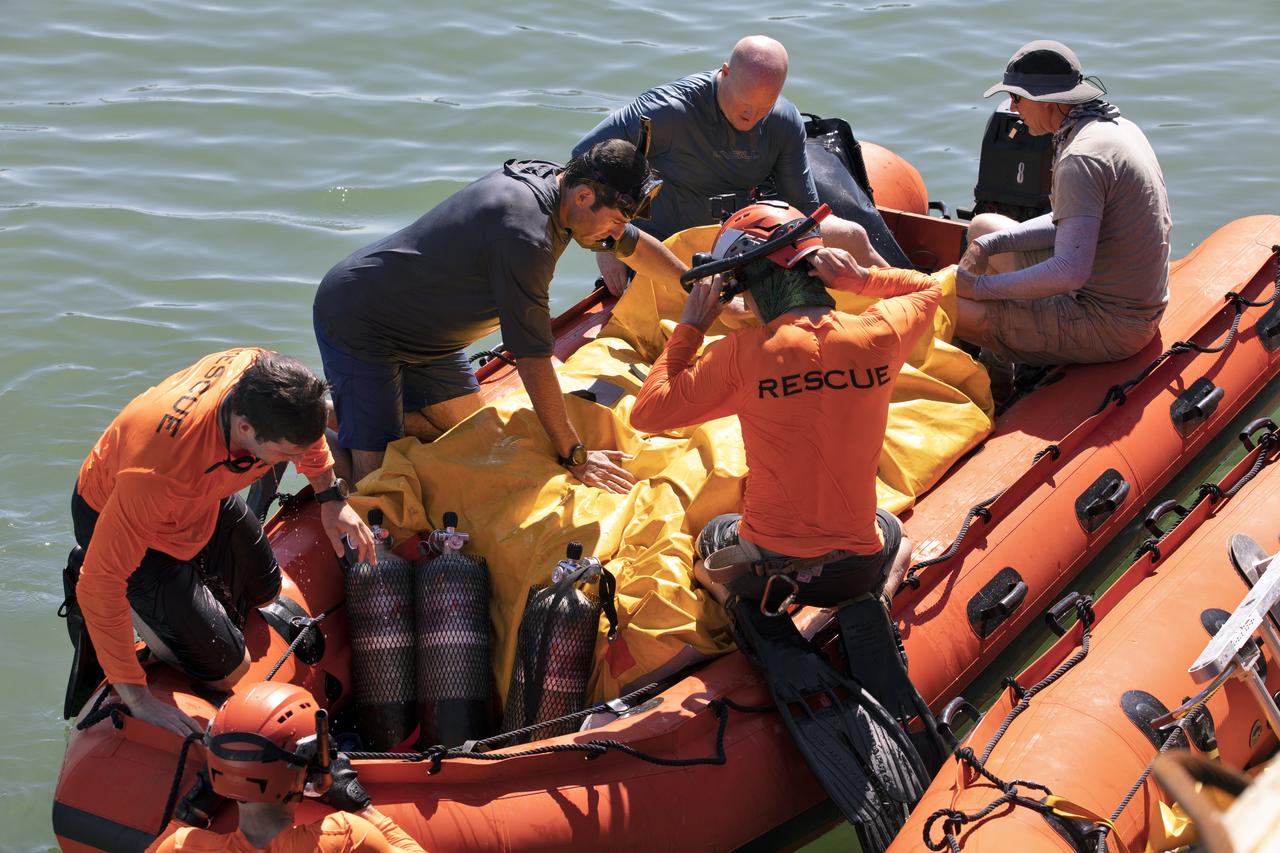
Rescue team members prepare an inflatable front porch that will be attached to the Boeing CST-100 Starliner training capsule, known as Boiler Plate 3, during a search and rescue training exercise at the Army Wharf at Cape Canaveral Air Force Station in Florida on April 16, 2019. The front porch will be used to extract astronauts from the capsule and conduct initial health assessments in the unlikely event of an emergency resulting in a splashdown. NASA and the Department of Defense Human Space Flight Support Office Rescue Division are conducting the exercise over the next several days at the Wharf and in the Atlantic Ocean. It is the first at-sea exercise with the Starliner training capsule ahead of Boeing’s Crew Flight Test with astronauts targeted for later this year. During normal return scenarios, Boeing's Starliner will land on land in a safe zone of about 15 square miles in the Western United States. Throughout the commercial crew development phases with NASA, Boeing has performed dozens of qualification tests on its parachute and airbag systems simulating conditions on land and in the water.
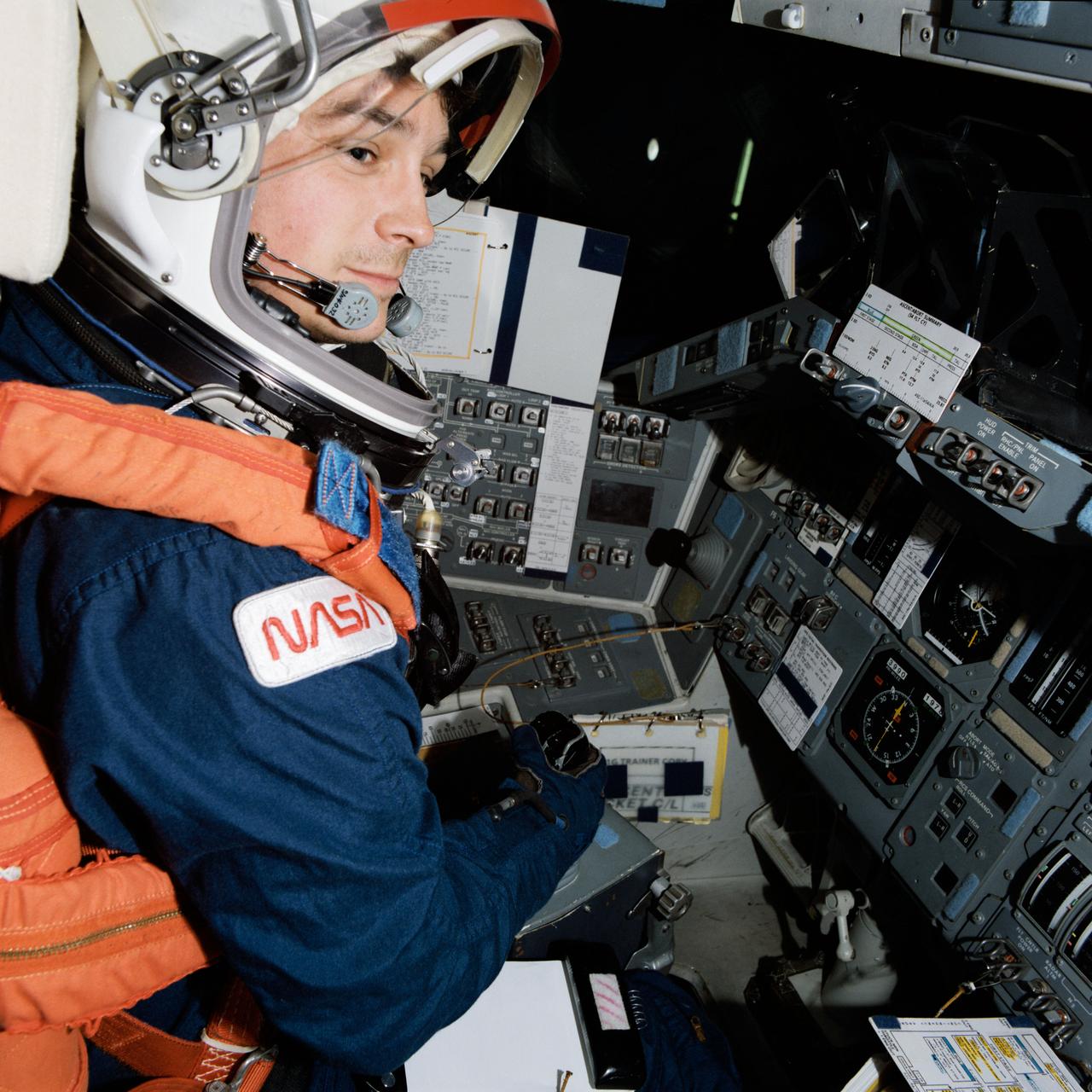
Photos of orbiter fire rescue and crew escape training for extravehicular activity (EVA) crew systems support conducted in Bldg 9A Crew Compartment Trainer (CCT) and Fuel Fuselage Trainer (FFT) include views of CCT interior of middeck starboard fuselage showing middeck forward (MF) locker and COAS assembly filter, artiflex film and camcorder bag (26834); launch/entry suit (LES) helmet assembly, neckring and helmet hold-down assembly (26835-26836); middeck aft (MA) lockers (26837); area of middeck airlock and crew escape pole (26838); connectors of crew escape pole in the middeck (268390); three test subjects in LES in the flight deck (26840); emergency side hatch slide before inflated stowage (26841); area of below adjacent to floor panel MD23R (26842); a test subject in LES in the flight deck (26843); control board and also showing sign of "orbital maneuvering system (OMS) secure and OMS TK" (26844); test subject in the flight deck also showing chart of "ascent/abort summary" (26845).
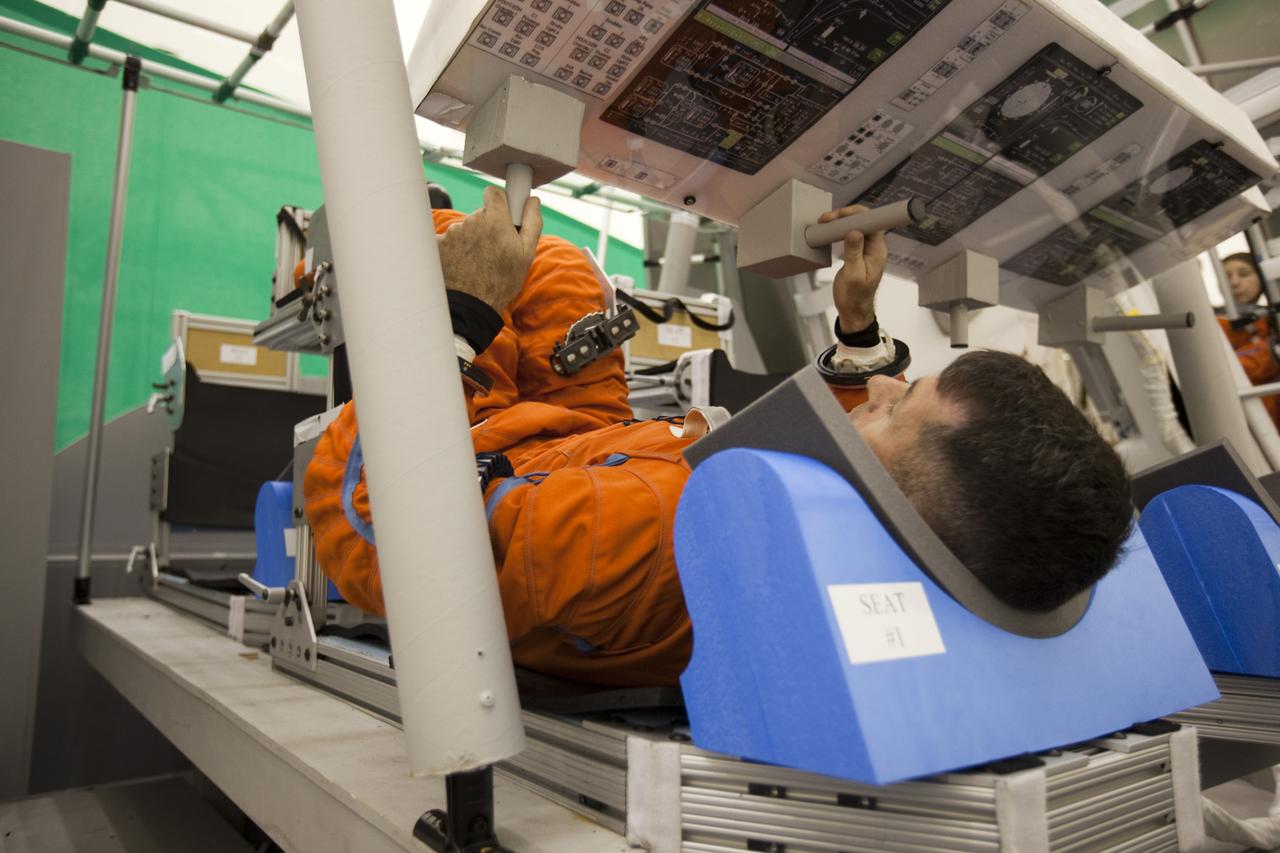
ORION - EGRESS TRAINING WITH ASTRONAUTS & RESCUE TEAMS
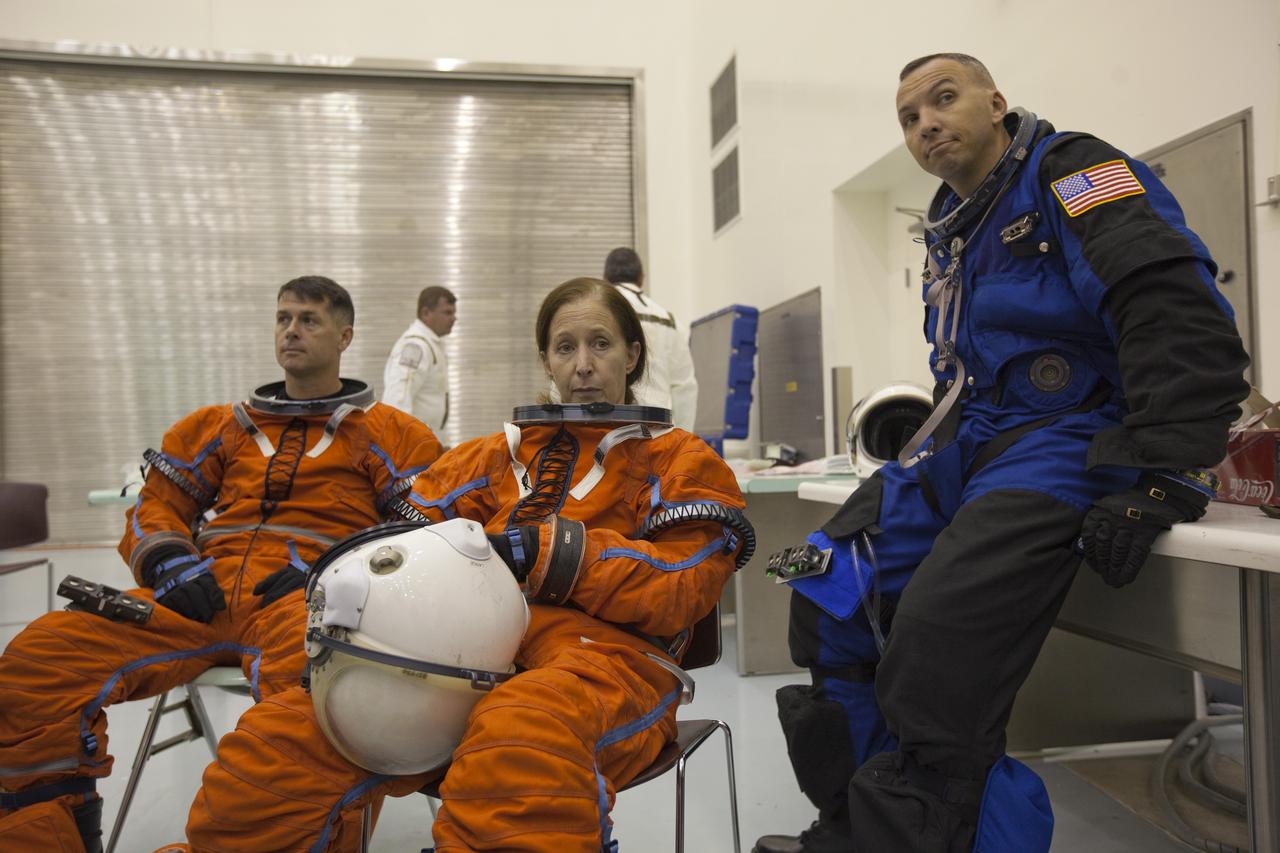
ORION - EGRESS TRAINING WITH ASTRONAUTS & RESCUE TEAMS
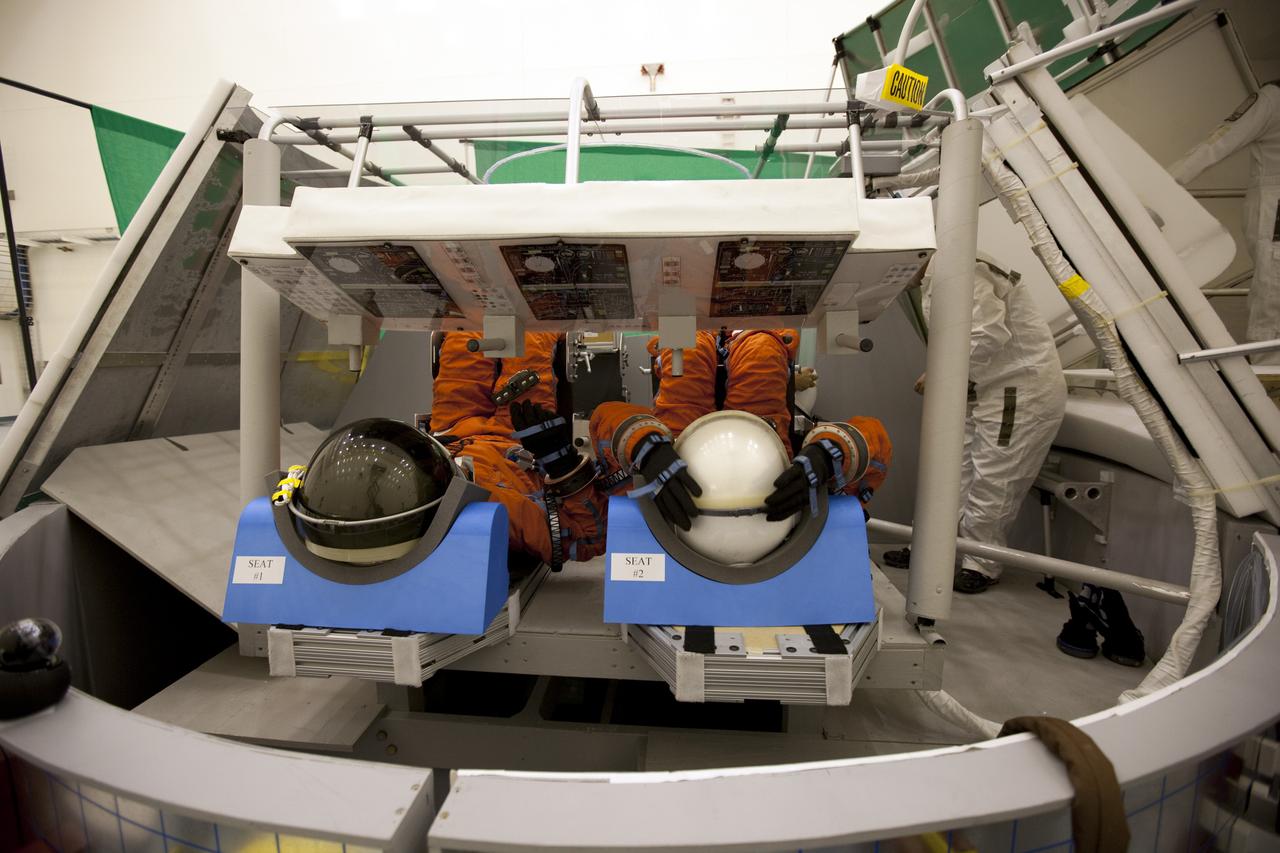
ORION - EGRESS TRAINING WITH ASTRONAUTS & RESCUE TEAMS
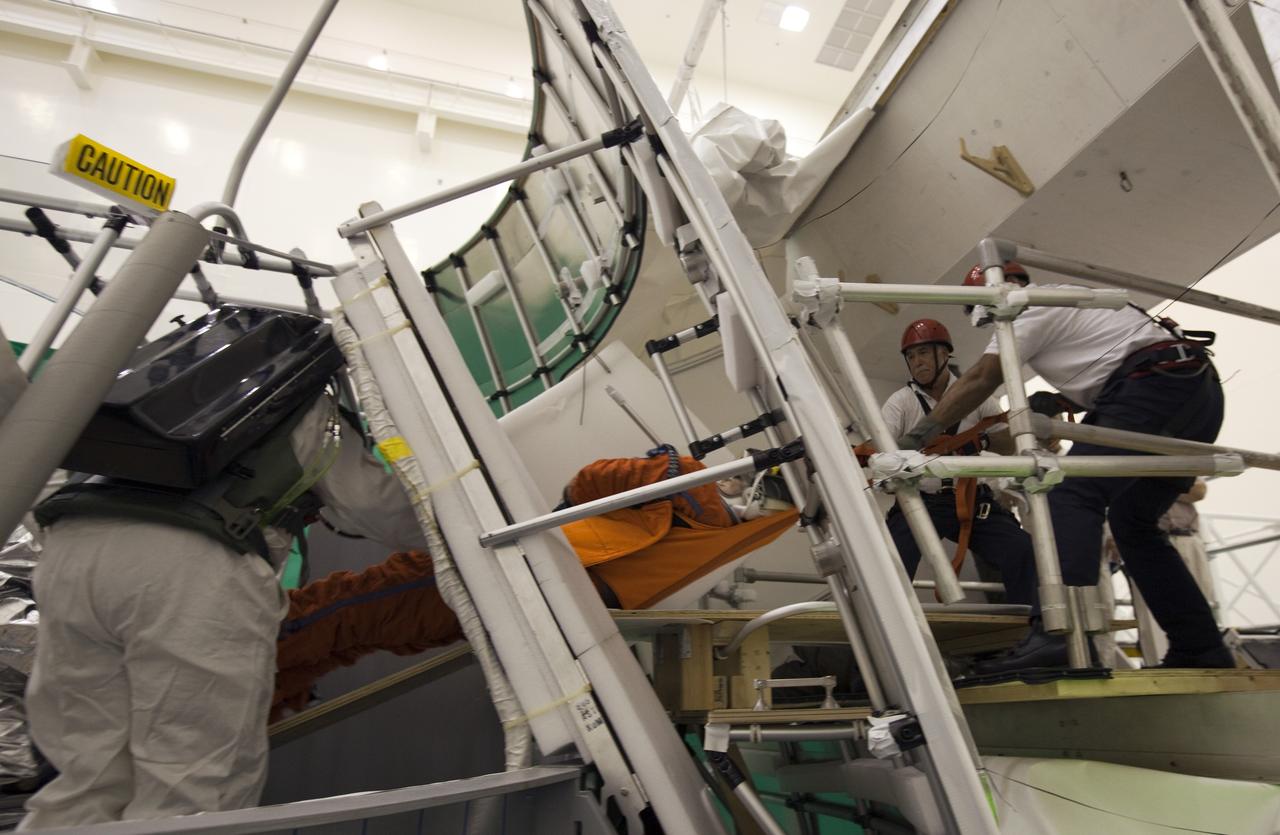
ORION - EGRESS TRAINING WITH ASTRONAUTS & RESCUE TEAMS
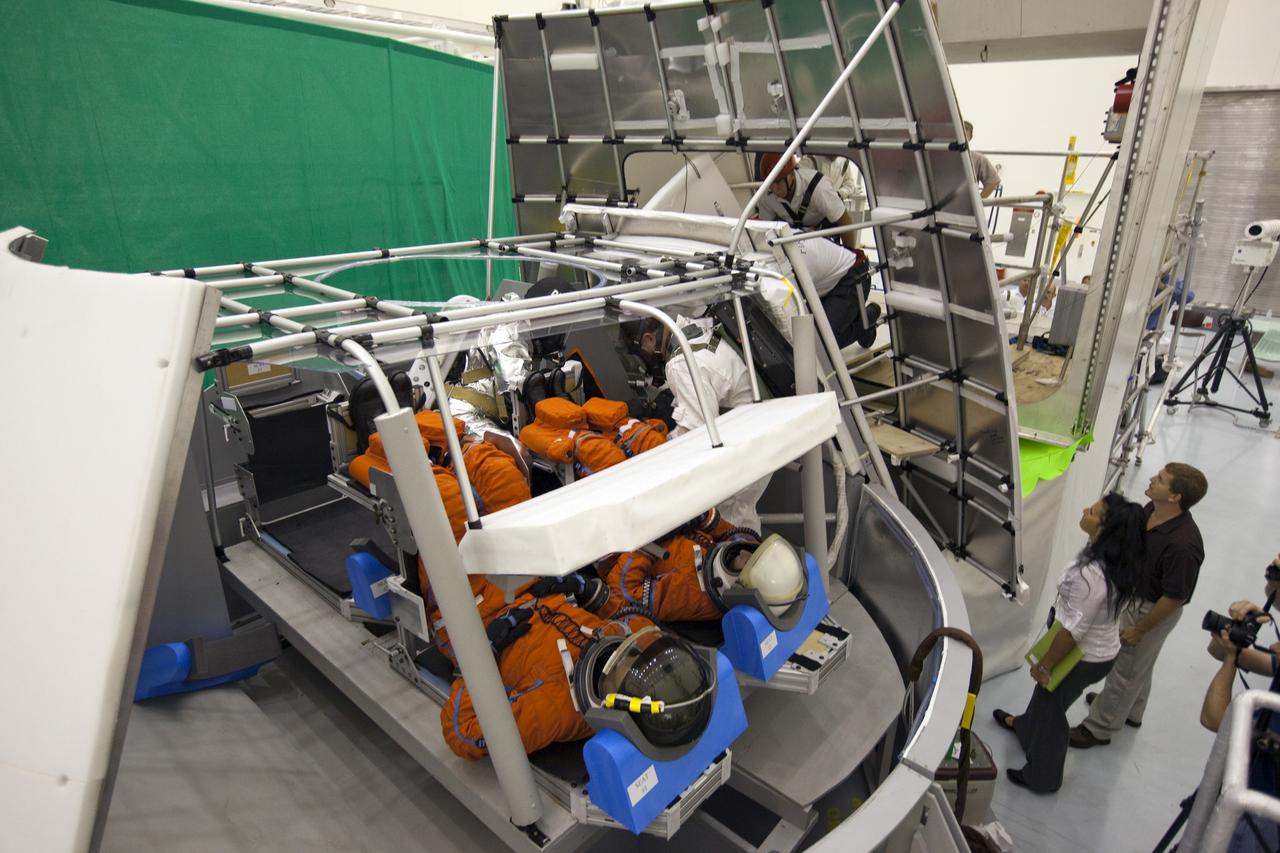
ORION - EGRESS TRAINING WITH ASTRONAUTS & RESCUE TEAMS
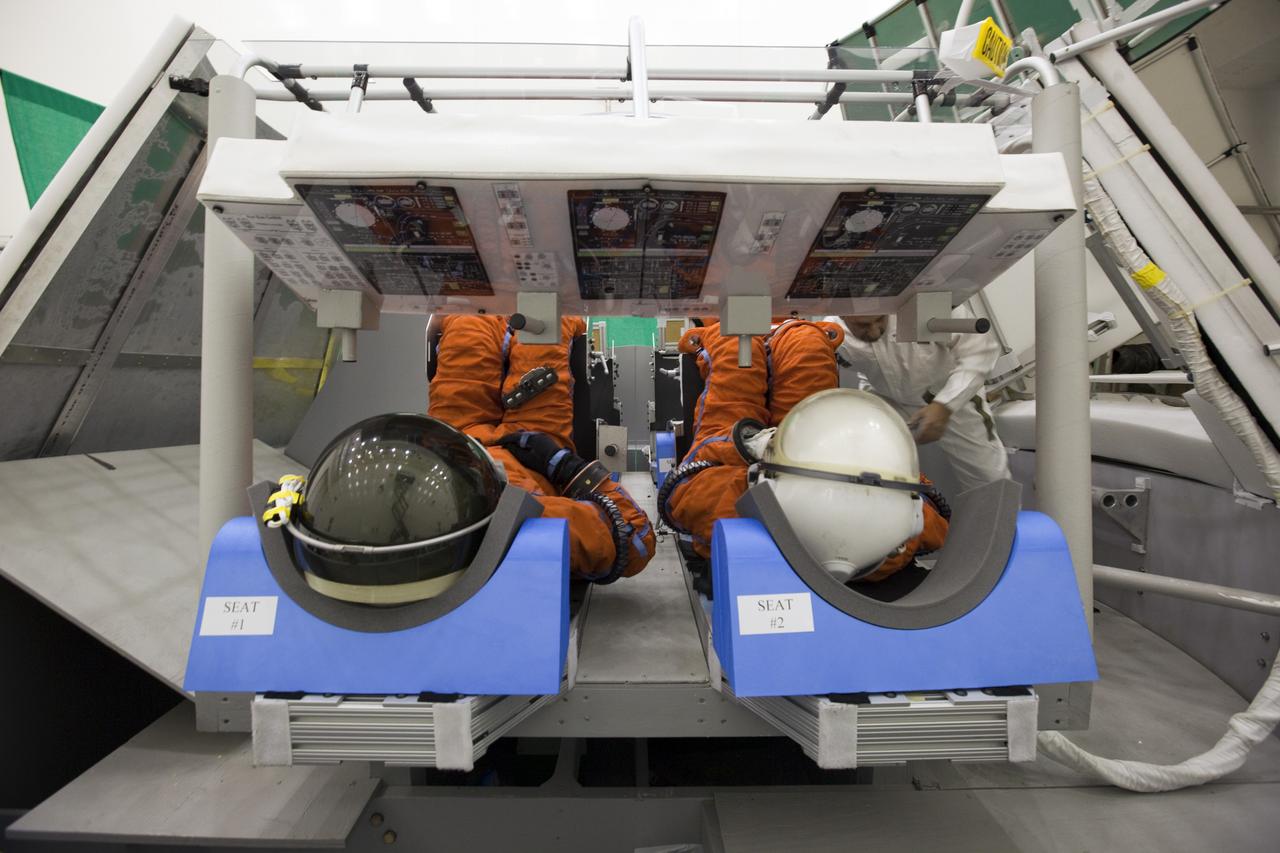
ORION - EGRESS TRAINING WITH ASTRONAUTS & RESCUE TEAMS
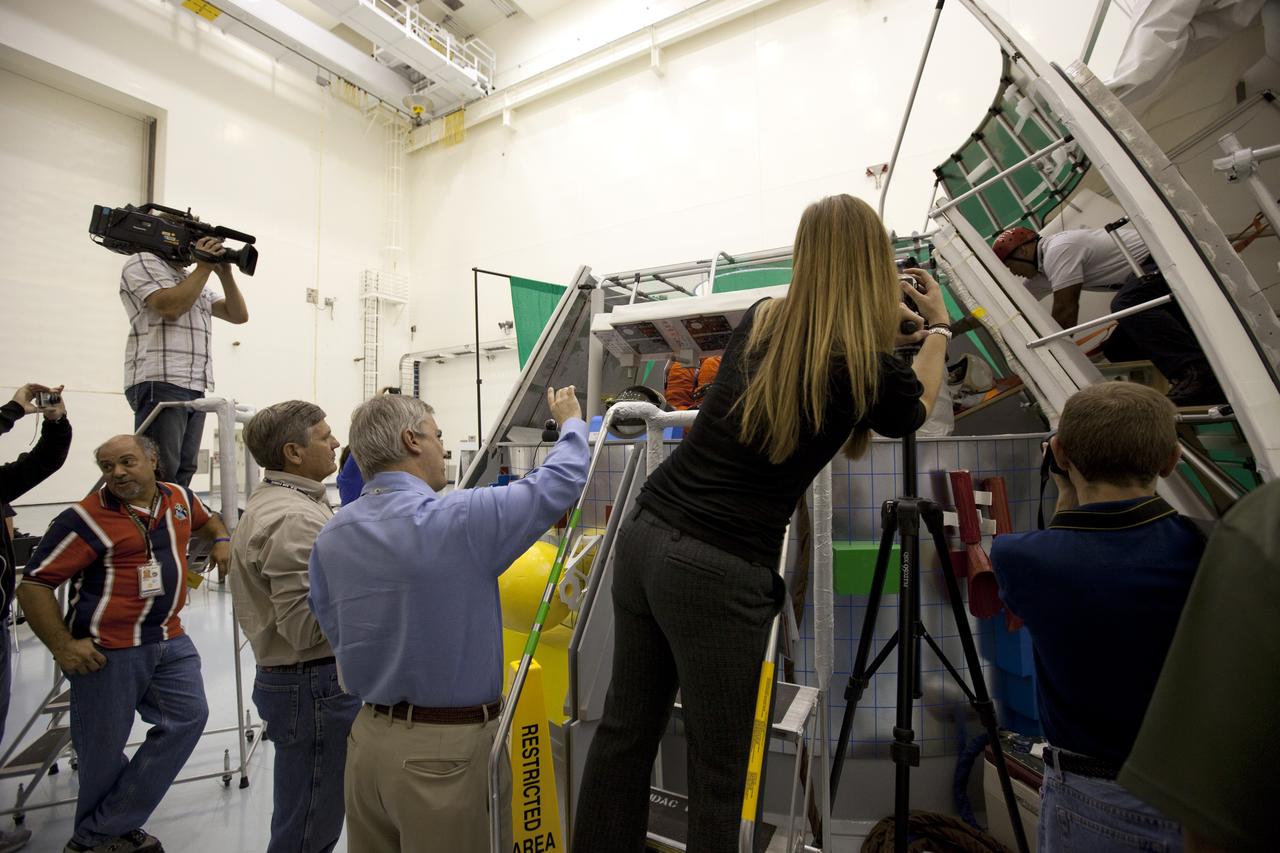
ORION - EGRESS TRAINING WITH ASTRONAUTS & RESCUE TEAMS
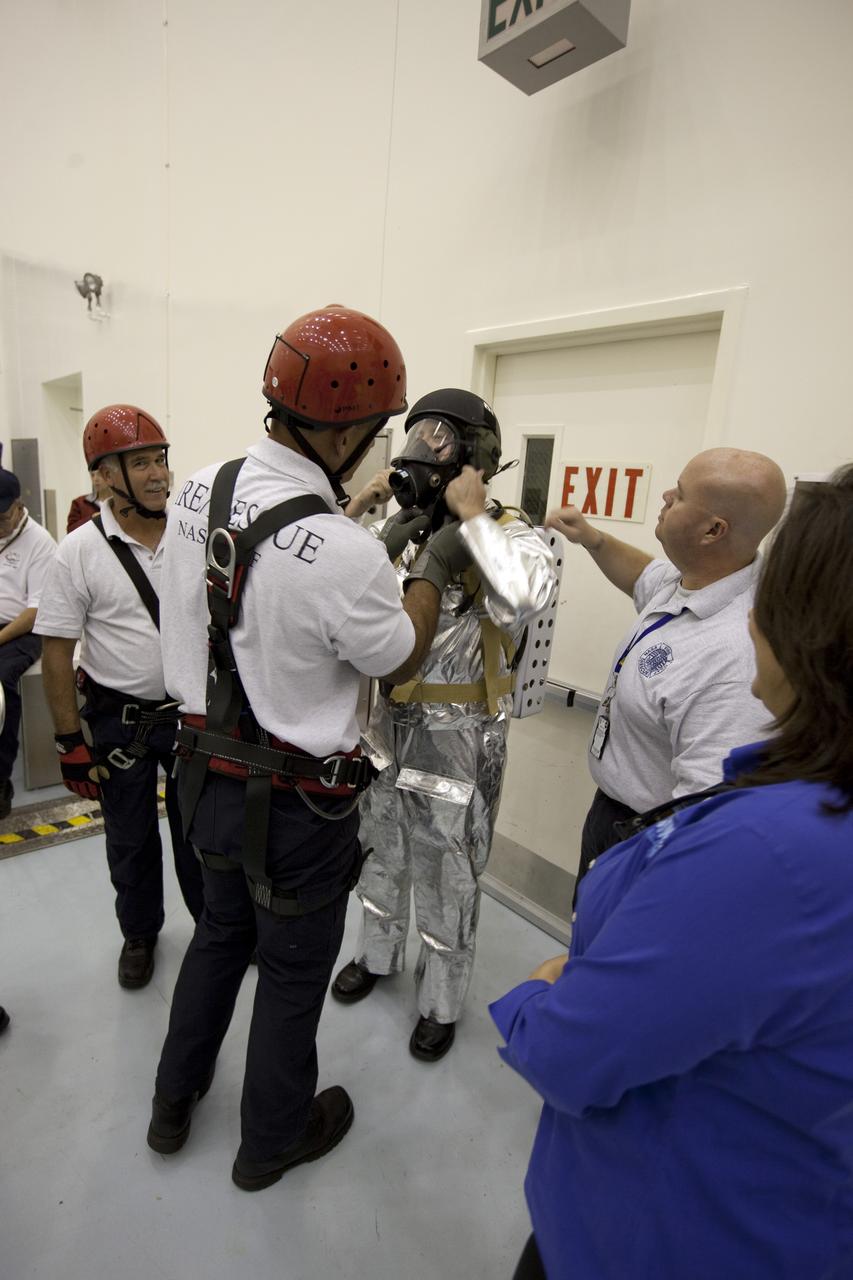
ORION - EGRESS TRAINING WITH ASTRONAUTS & RESCUE TEAMS
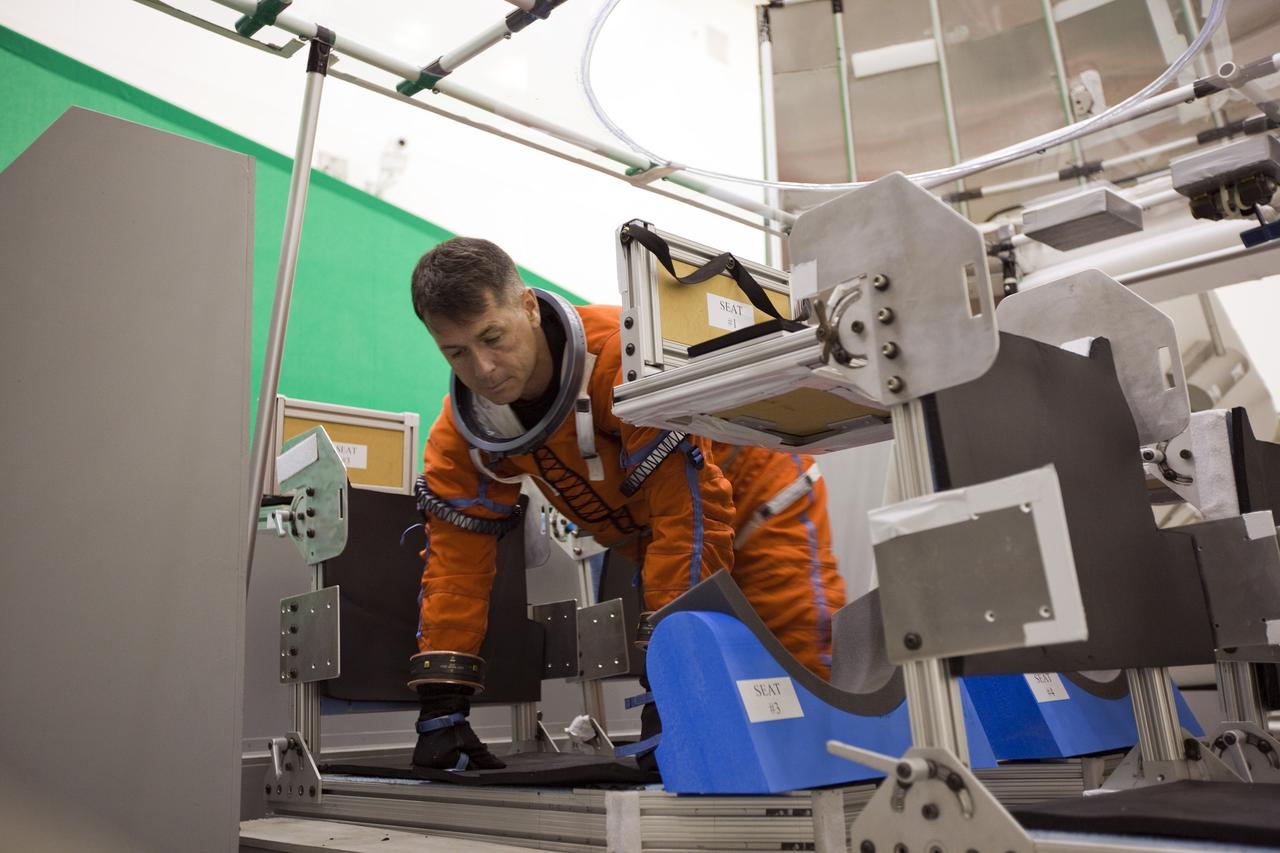
ORION - EGRESS TRAINING WITH ASTRONAUTS & RESCUE TEAMS
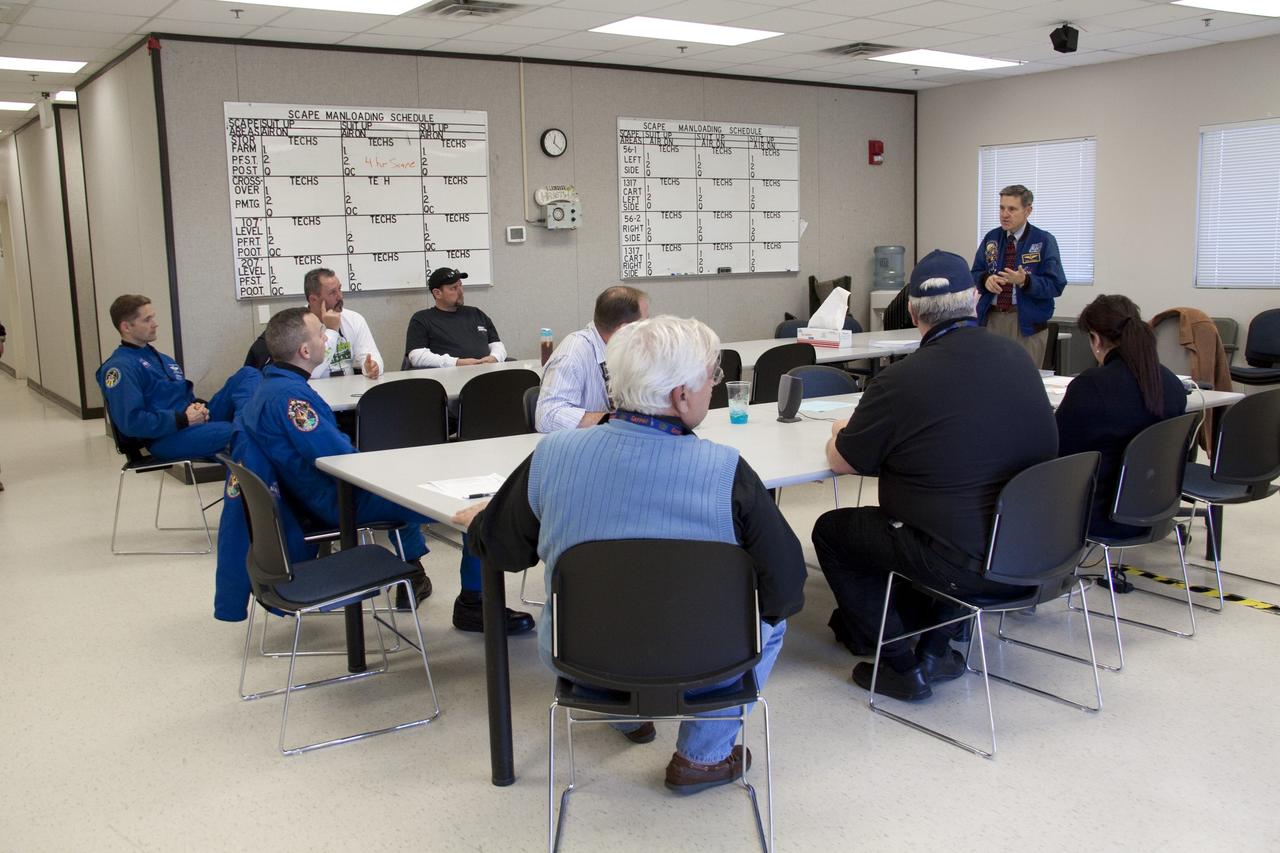
CAPE CANAVERAL, Fla. -- At NASA's Kennedy Space Center in Florida, Center Director Bob Cabana speaks to members of an emergency escape training class. The training is required every 18 months to certify Fire Rescue and Closeout Crew personnel. For several days, volunteers portraying astronauts, take part in a training exercise that allows teams to practice emergency response procedures at Launch Pad 39A, including helicopter evacuation to local hospitals. Training normally involves NASA fire rescue personnel, helicopters and personnel from the Air Force's 920th Rescue Wing, and medical trauma teams from central Florida hospitals. Photo credit: NASA/Troy Cryder
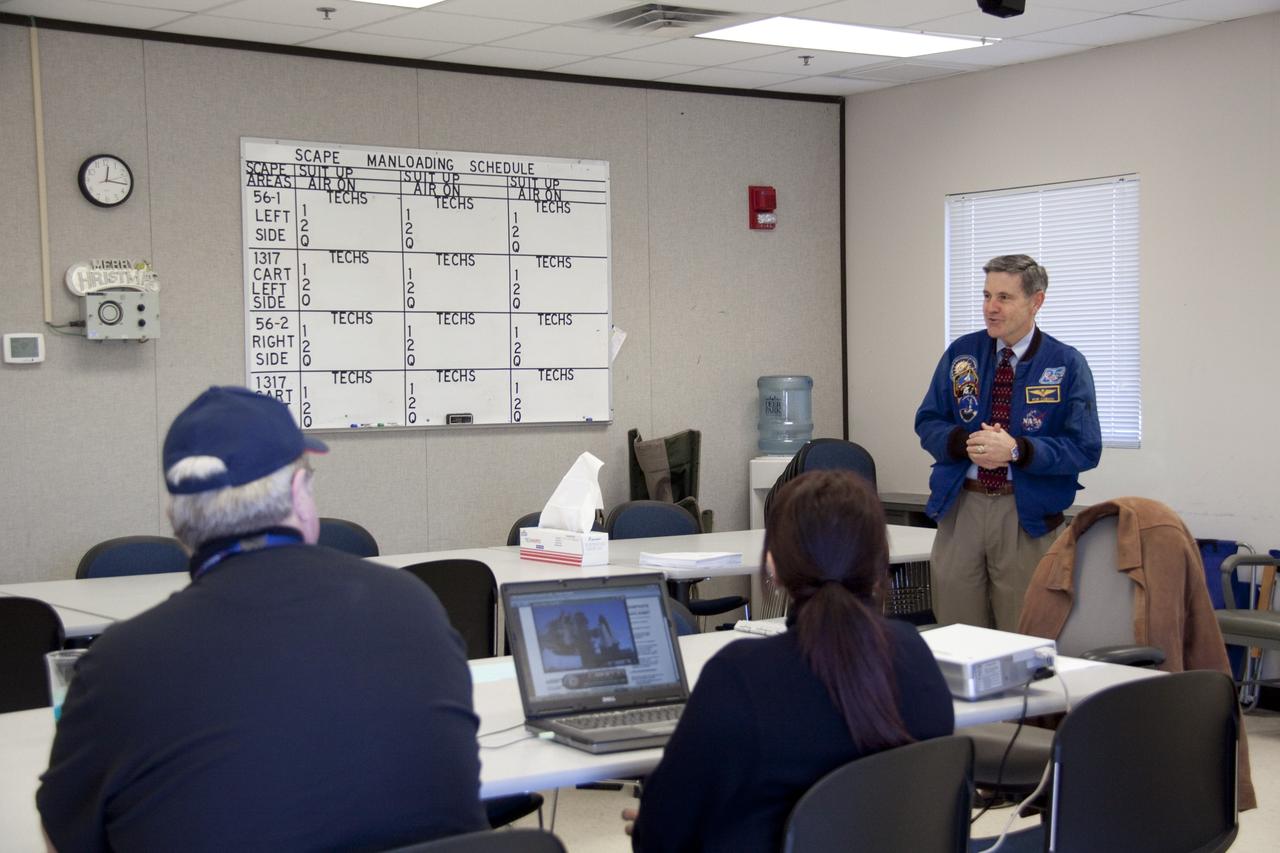
CAPE CANAVERAL, Fla. -- At NASA's Kennedy Space Center in Florida, Center Director Bob Cabana speaks to members of an emergency escape training class. The training is required every 18 months to certify Fire Rescue and Closeout Crew personnel. For several days, volunteers portraying astronauts, take part in a training exercise that allows teams to practice emergency response procedures at Launch Pad 39A, including helicopter evacuation to local hospitals. Training normally involves NASA fire rescue personnel, helicopters and personnel from the Air Force's 920th Rescue Wing, and medical trauma teams from central Florida hospitals. Photo credit: NASA/Troy Cryder