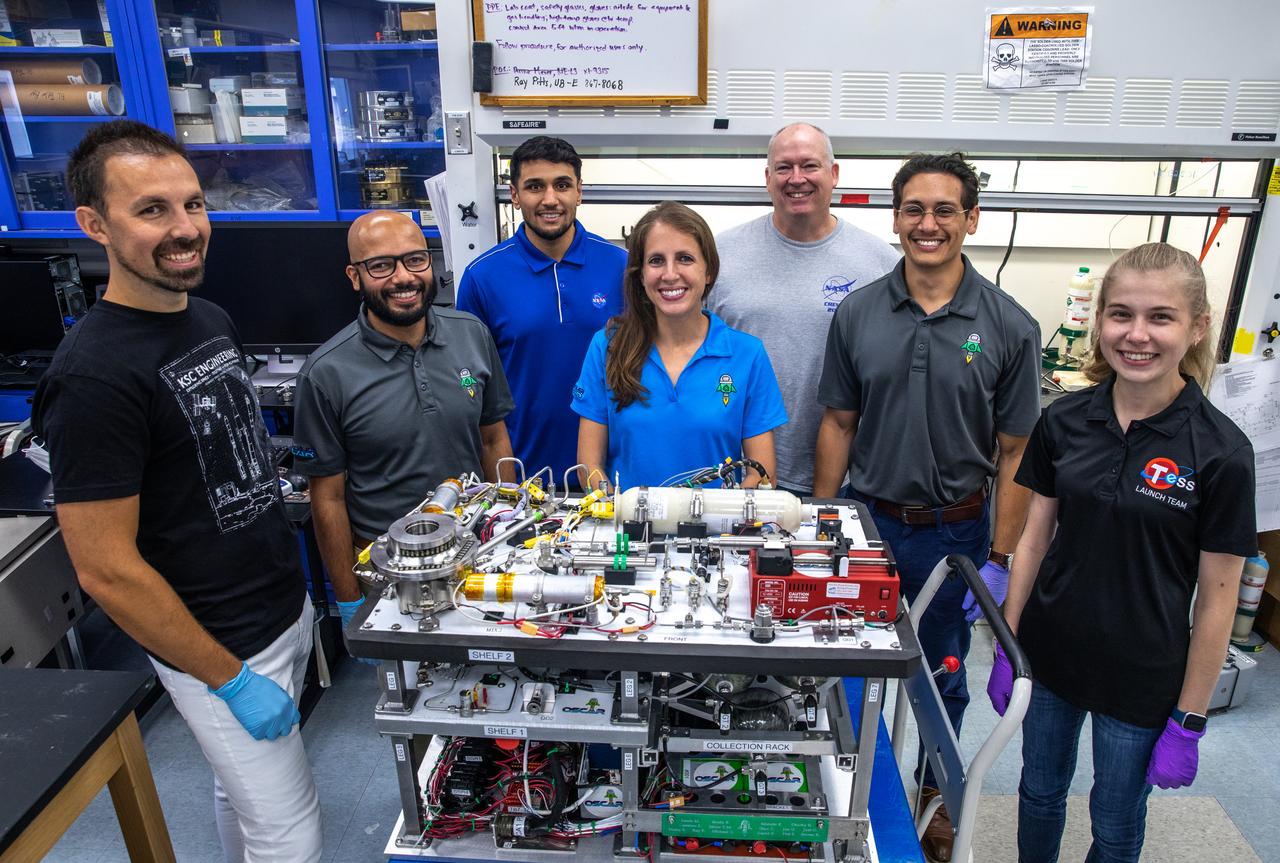
The Trash to Gas team members gather around the flight hardware for NASA’s Orbital Syngas Commodity Augmentation Reactor, or OSCAR, inside the Applied Physics Lab in the Neil Armstrong Operations and Checkout Facility at the agency’s Kennedy Space Center in Florida on July 21, 2022. OSCAR began as an Early Career Initiative project at the spaceport that studies technology to convert trash and human waste into useful gasses such as methane, hydrogen, and carbon dioxide. By processing small pieces of trash in a high-temperature reactor, OSCAR is advancing new and innovative technology for managing waste in space.
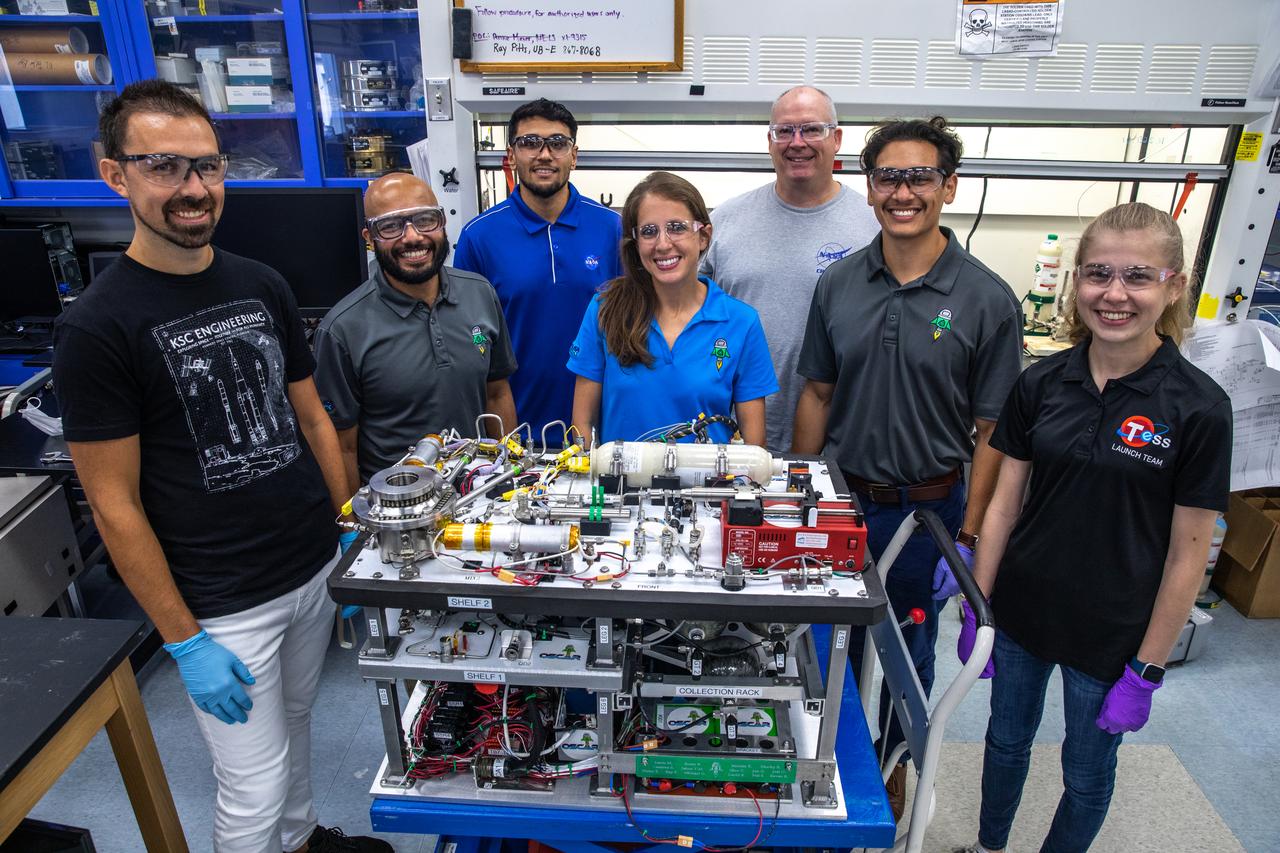
The Trash to Gas team members prepare flight hardware for NASA’s Orbital Syngas Commodity Augmentation Reactor, or OSCAR, inside the Applied Physics Lab in the Neil Armstrong Operations and Checkout Facility at the agency’s Kennedy Space Center in Florida on July 21, 2022. OSCAR began as an Early Career Initiative project at the spaceport that studies technology to convert trash and human waste into useful gasses such as methane, hydrogen, and carbon dioxide. By processing small pieces of trash in a high-temperature reactor, OSCAR is advancing new and innovative technology for managing waste in space.
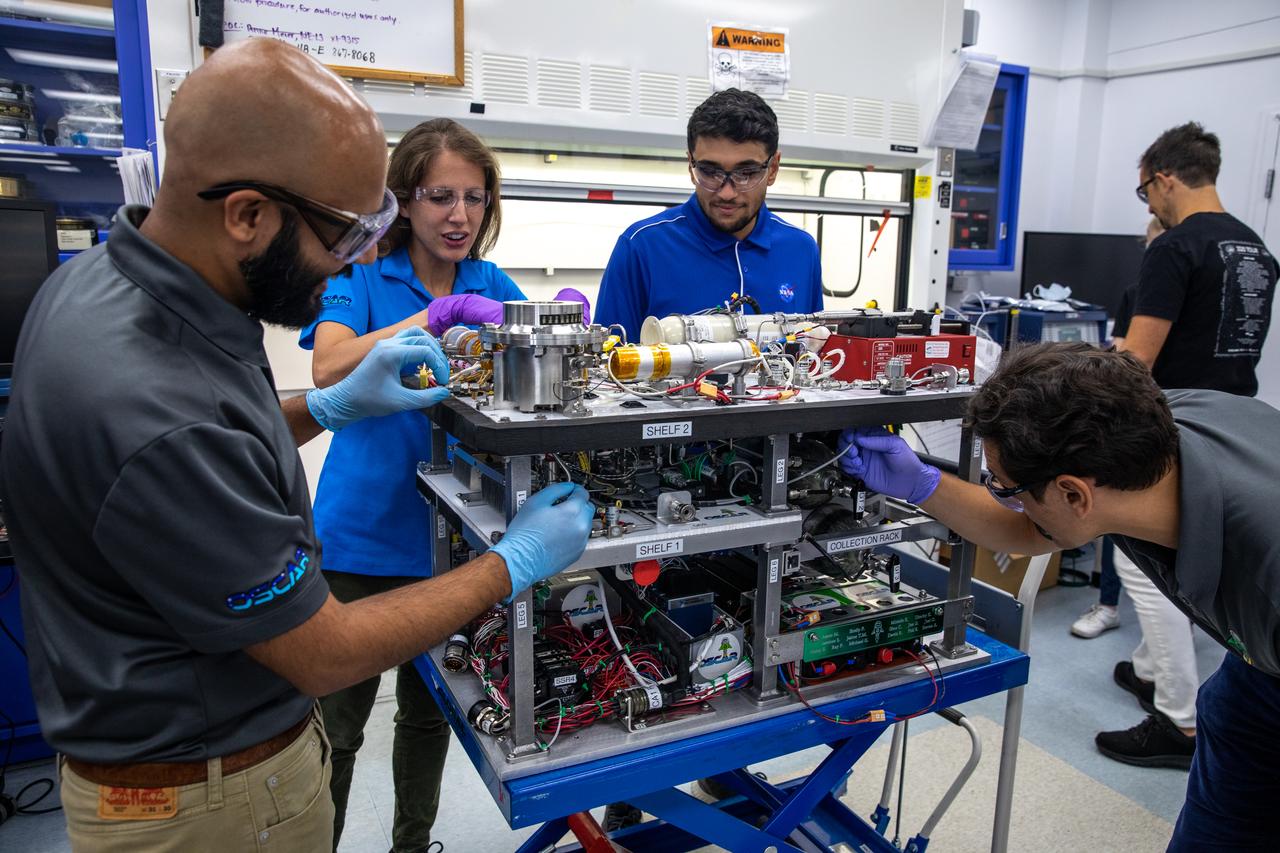
The Trash to Gas team members prepare flight hardware for NASA’s Orbital Syngas Commodity Augmentation Reactor, or OSCAR, inside the Applied Physics Lab in the Neil Armstrong Operations and Checkout Facility at the agency’s Kennedy Space Center in Florida on July 21, 2022. OSCAR began as an Early Career Initiative project at the spaceport that studies technology to convert trash and human waste into useful gasses such as methane, hydrogen, and carbon dioxide. By processing small pieces of trash in a high-temperature reactor, OSCAR is advancing new and innovative technology for managing waste in space.

The Trash to Gas team members prepare flight hardware for NASA’s Orbital Syngas Commodity Augmentation Reactor, or OSCAR, inside Applied Physics lab in the Neil Armstrong Operations and Checkout Facility at the agency’s Kennedy Space Center in Florida on July 21, 2022. OSCAR began as an Early Career Initiative project at the spaceport that studies technology to convert trash and human waste into useful gasses such as methane, hydrogen, and carbon dioxide. By processing small pieces of trash in a high-temperature reactor, OSCAR is advancing new and innovative technology for managing waste in space.
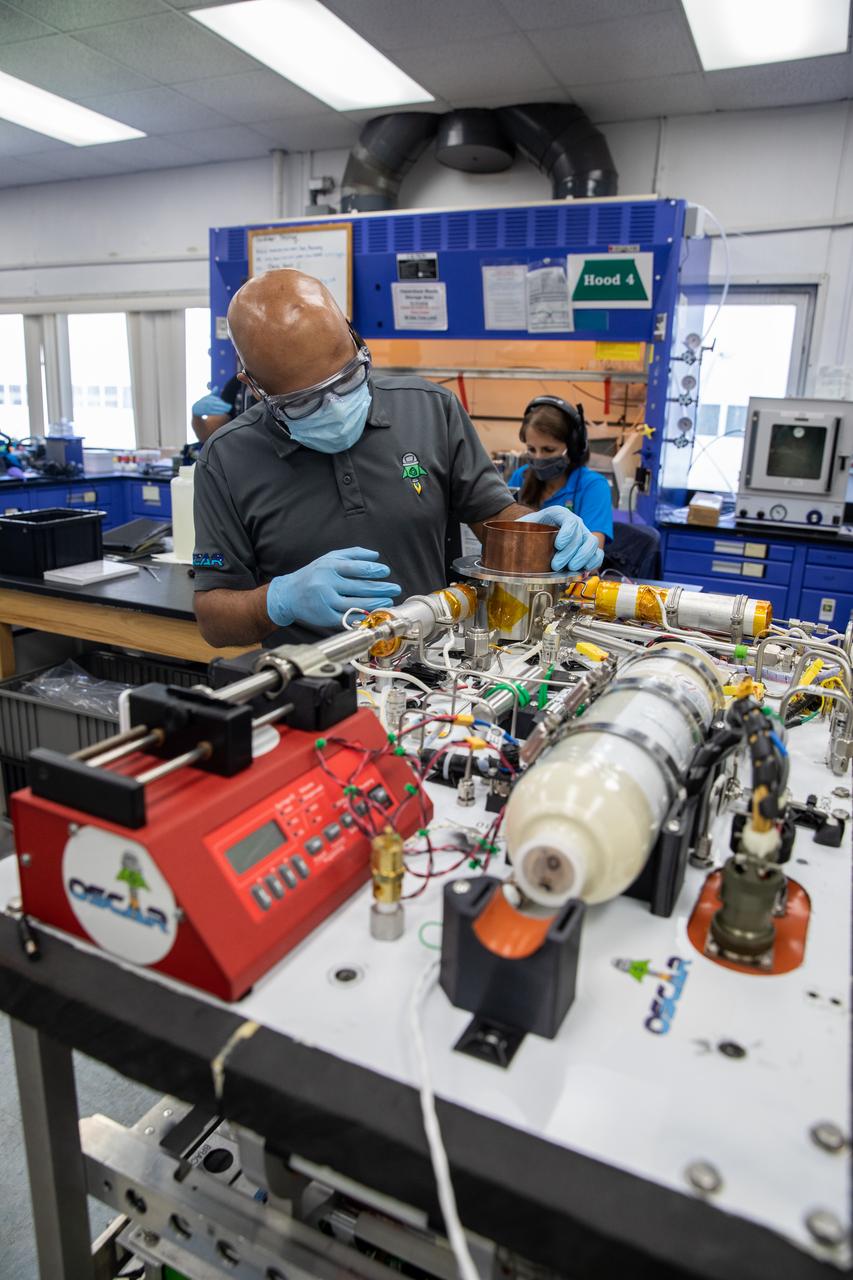
A Trash to Gas team member prepares flight hardware for NASA’s Orbital Syngas Commodity Augmentation Reactor, or OSCAR, inside the Applied Physics Lab in the Neil Armstrong Operations and Checkout Facility at the agency’s Kennedy Space Center in Florida on July 21, 2022. OSCAR began as an Early Career Initiative project at the spaceport that studies technology to convert trash and human waste into useful gasses such as methane, hydrogen, and carbon dioxide. By processing small pieces of trash in a high-temperature reactor, OSCAR is advancing new and innovative technology for managing waste in space.
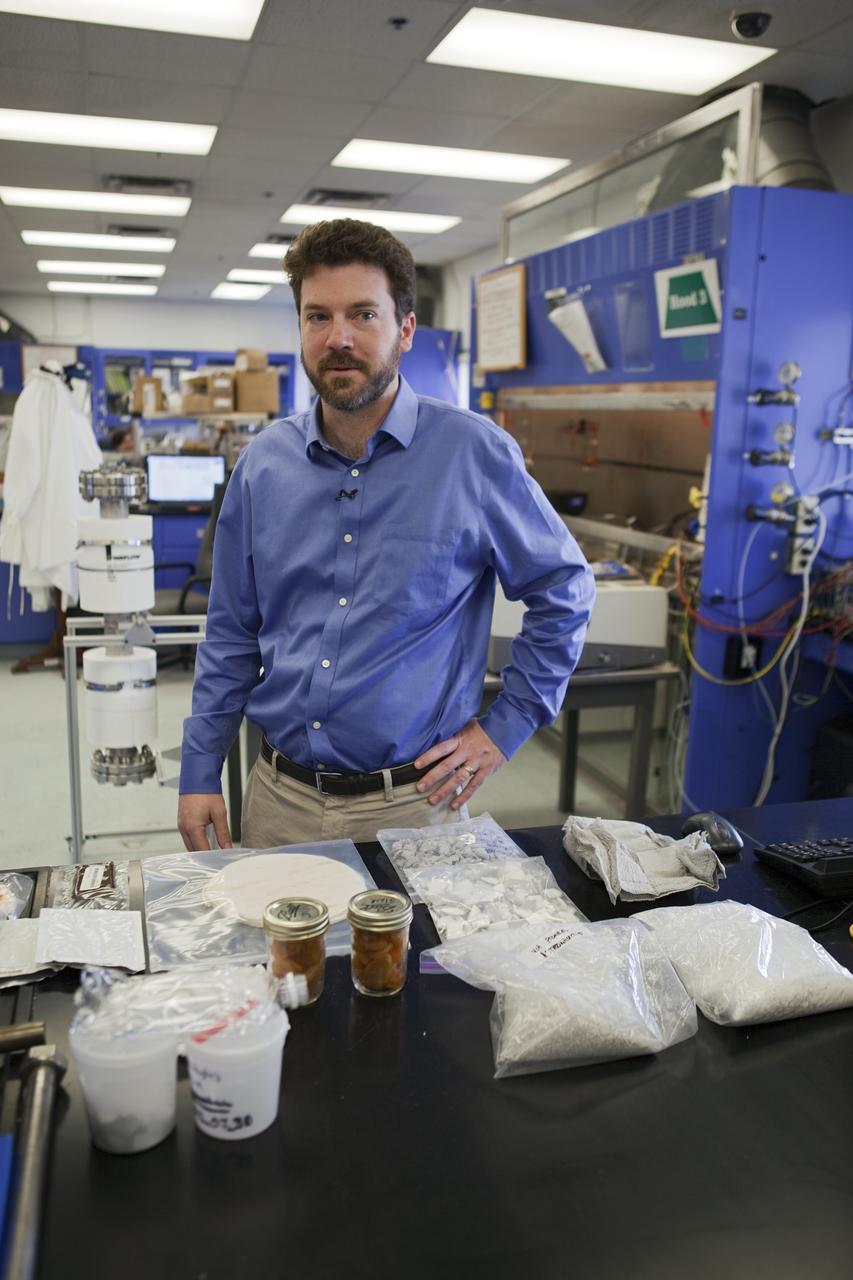
KSC-2012-6319 - CAPE CANAVERAL, Fla. - Paul Hintze is the researcher leading the trash-to-gas project at NASA's Kennedy Space Center in Florida. Hintze's group of six researchers at Kennedy and groups from NASA centers in Ohio, California and Texas wrote in a recent paper that the current methods of handling trash – either carrying it along on the round trip through space or gathering it into an expendable module and burning it up in Earth's atmosphere – are not suitable answers for missions that go beyond Earth orbit or even past the moon. Working in a laboratory at Kennedy, Hintze's team built an 80-pound device that looks like a three-foot-long metal pipe to test theories about incinerating a variety of trash ranging from used clothes to uneaten food. The reactor holds more than three quarts of material and burns at about 1,000 degrees F, about twice the maximum temperature of an average household oven. It's expected to take astronauts four hours to burn a day's worth of trash from a crew of four. During the course of a year in space – one half the length of time a mission to Mars is expected to take – trash processing for a crew of four would create about 2,200 pounds of methane fuel, enough to power a launch from the lunar surface, Hintze said. Photo credit: NASA/Dmitri Gerondidakis
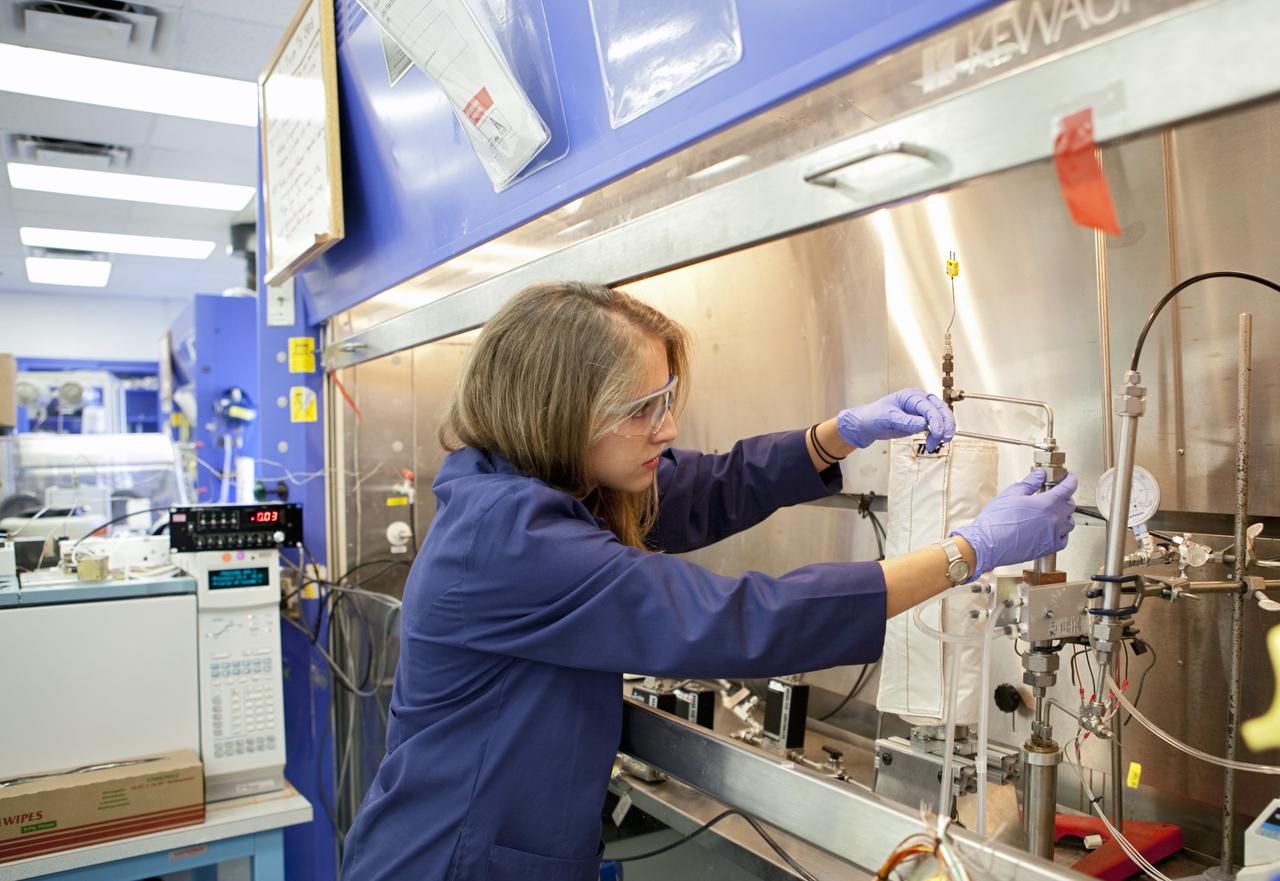
KSC-2012-6321 – CAPE CANAVERAL, Fla. – Anne Caraccio works with an experimental reactor as part of the trash-to-gas project at NASA's Kennedy Space Center in Florida. A group of six researchers at Kennedy and groups from NASA centers in Ohio, California and Texas wrote in a recent paper that the current methods of handling trash – either carrying it along on the round trip through space or gathering it into an expendable module and burning it up in Earth's atmosphere – are not suitable answers for missions that go beyond Earth orbit or even past the moon. Working in a laboratory at Kennedy, Hintze's team built an 80-pound device that looks like a three-foot-long metal pipe to test theories about incinerating a variety of trash ranging from used clothes to uneaten food. The reactor holds more than three quarts of material and burns at about 1,000 degrees F, about twice the maximum temperature of an average household oven. It's expected to take astronauts four hours to burn a day's worth of trash from a crew of four. During the course of a year in space – one half the length of time a mission to Mars is expected to take – trash processing for a crew of four would create about 2,200 pounds of methane fuel, enough to power a launch from the lunar surface, Hintze said. Photo credit: NASA/Dmitri Gerondidakis
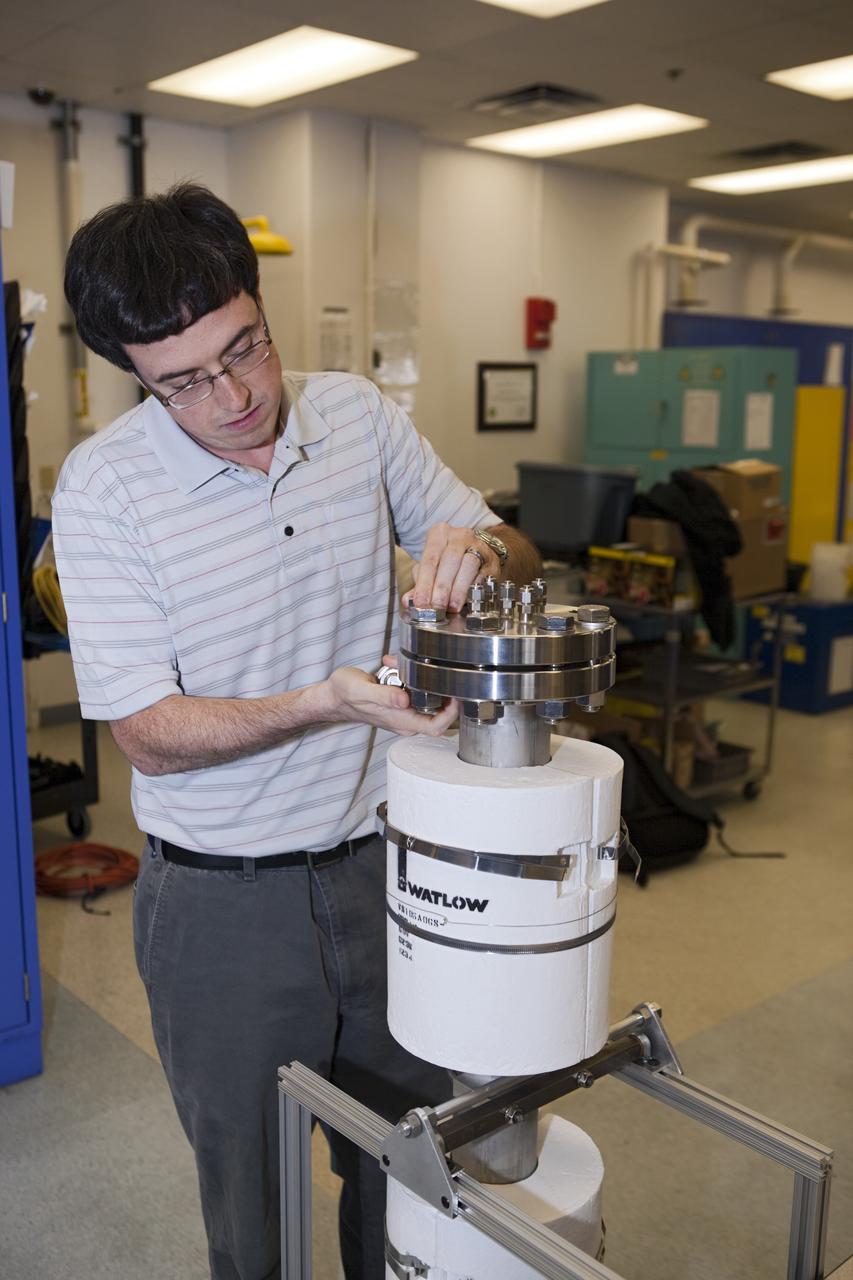
KSC-2012-6320 – CAPE CANAVERAL, Fla. - Stephen Anthony works with an experimental reactor as part of the trash-to-gas project at NASA's Kennedy Space Center in Florida. A group of six researchers at Kennedy and groups from NASA centers in Ohio, California and Texas wrote in a recent paper that the current methods of handling trash – either carrying it along on the round trip through space or gathering it into an expendable module and burning it up in Earth's atmosphere – are not suitable answers for missions that go beyond Earth orbit or even past the moon. Working in a laboratory at Kennedy, Hintze's team built an 80-pound device that looks like a three-foot-long metal pipe to test theories about incinerating a variety of trash ranging from used clothes to uneaten food. The reactor holds more than three quarts of material and burns at about 1,000 degrees F, about twice the maximum temperature of an average household oven. It's expected to take astronauts four hours to burn a day's worth of trash from a crew of four. During the course of a year in space – one half the length of time a mission to Mars is expected to take – trash processing for a crew of four would create about 2,200 pounds of methane fuel, enough to power a launch from the lunar surface, Hintze said. Photo credit: NASA/Dmitri Gerondidakis
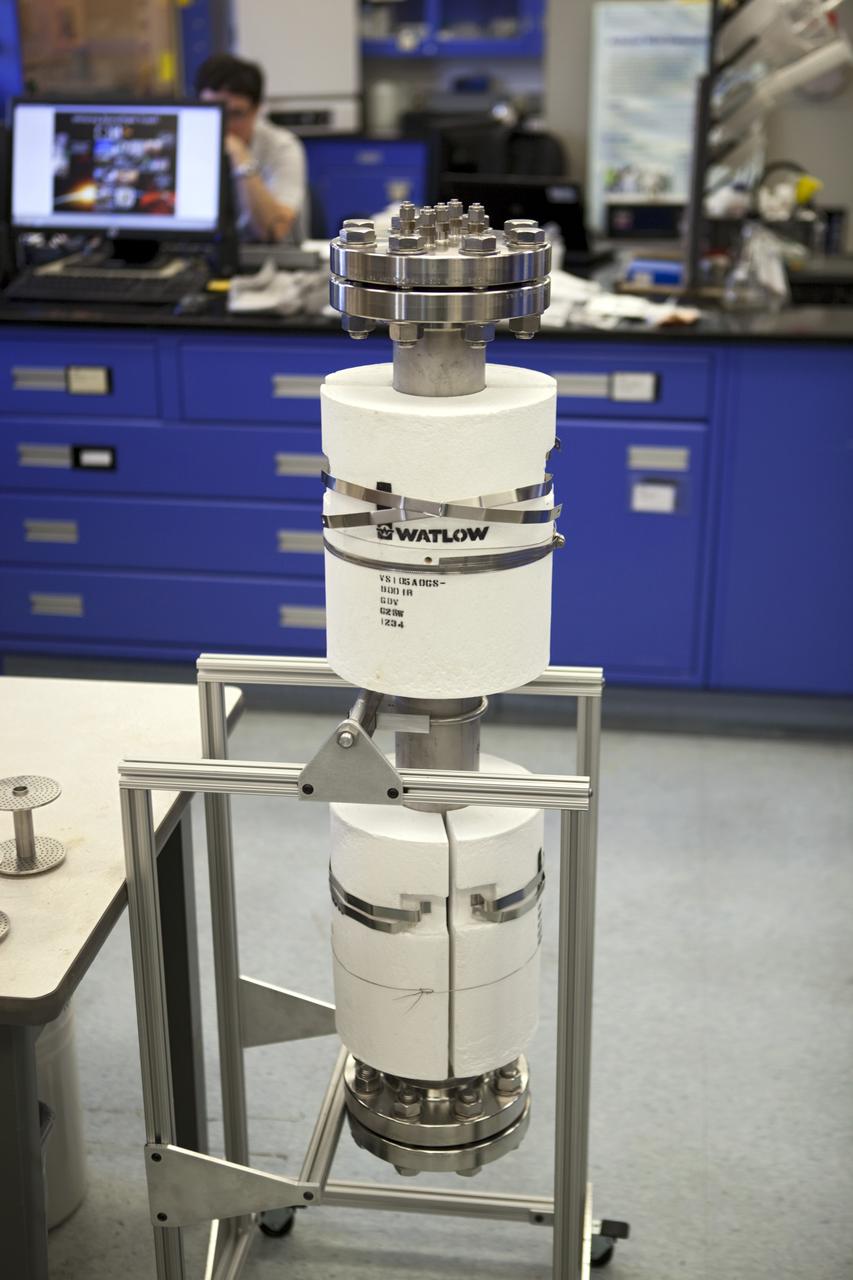
CAPE CANAVERAL, Fla. – The prototype reactor researchers have begun working with to refine what is needed for a space-ready trash-to-gas device. Designers will reduce the weight and size of the machine so it can take up as little room as possible in a spacecraft. A group of six researchers at Kennedy and groups from NASA centers in Ohio, California and Texas wrote in a recent paper that the current methods of handling trash – either carrying it along on the round trip through space or gathering it into an expendable module and burning it up in Earth's atmosphere – are not suitable answers for missions that go beyond Earth orbit or even past the moon. Working in a laboratory at Kennedy, Hintze's team built an 80-pound device that looks like a three-foot-long metal pipe to test theories about incinerating a variety of trash ranging from used clothes to uneaten food. The reactor holds more than three quarts of material and burns at about 1,000 degrees F, about twice the maximum temperature of an average household oven. It's expected to take astronauts four hours to burn a day's worth of trash from a crew of four. During the course of a year in space – one half the length of time a mission to Mars is expected to take – trash processing for a crew of four would create about 2,200 pounds of methane fuel, enough to power a launch from the lunar surface, Hintze said. Photo credit: NASA/Dmitri Gerondidakis
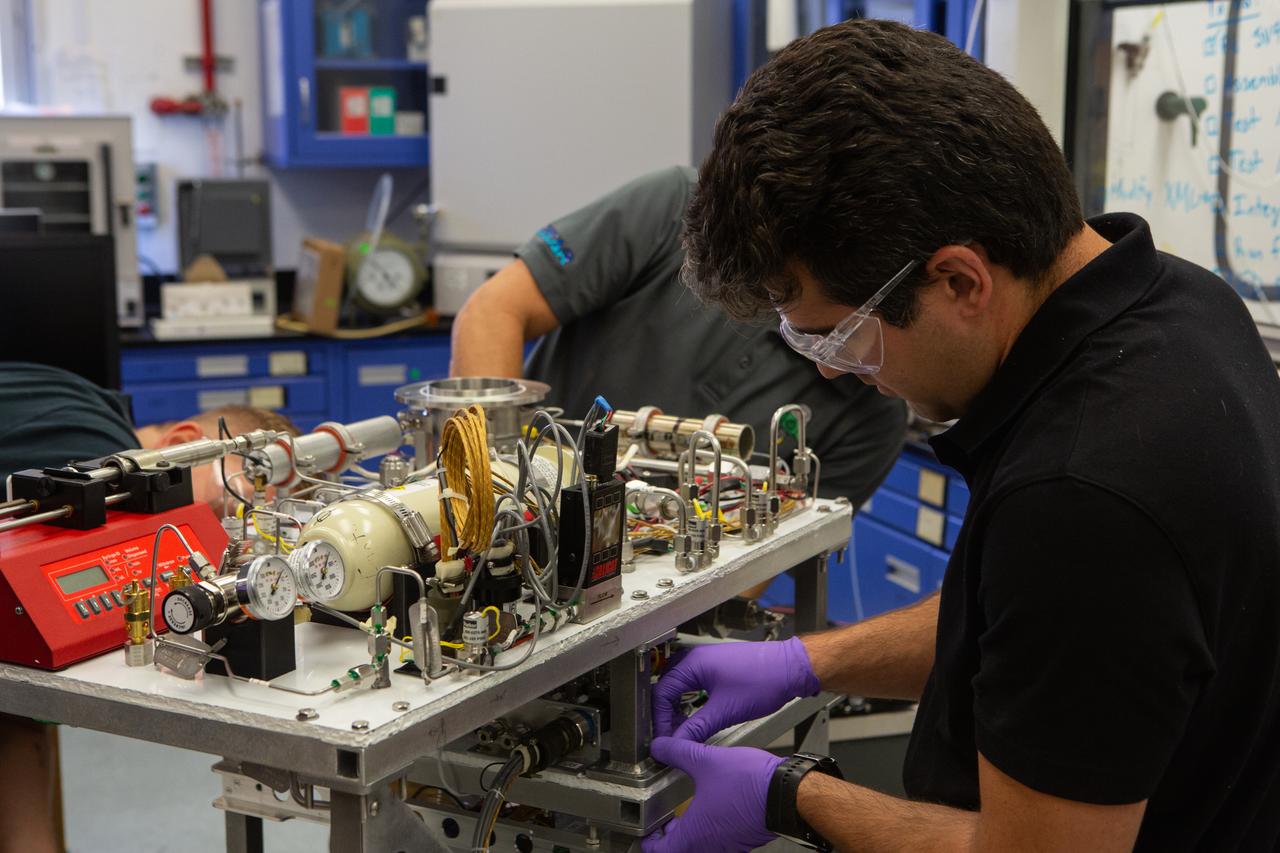
Jaime Toro assembles the flight hardware for NASA’s Orbital Syngas Commodity Augmentation Reactor, or OSCAR, on Oct. 10, 2019, in the Space Station Processing Facility at the agency’s Kennedy Space Center in Florida. OSCAR is an Early Career Initiative project at the spaceport that studies technology to convert trash and human waste into useful gasses such as methane, hydrogen and carbon dioxide. By processing small pieces of trash in a high-temperature reactor, OSCAR is advancing new and innovative technology for managing waste in space. A prototype has been developed, and the team is in the process of constructing a new rig for a suborbital flight test.
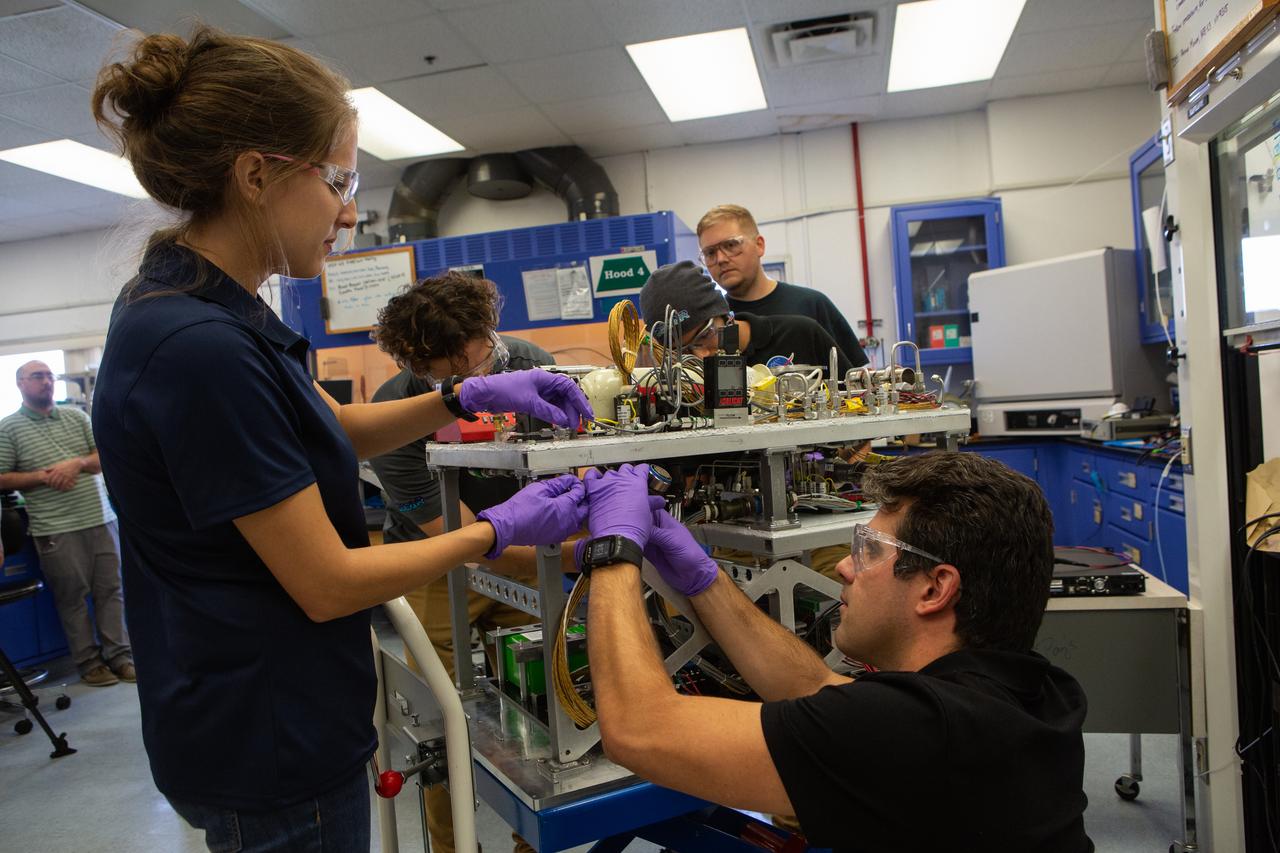
Team members assemble the flight hardware for NASA’s Orbital Syngas Commodity Augmentation Reactor, or OSCAR, on Oct. 10, 2019, in the Space Station Processing Facility at the agency’s Kennedy Space Center in Florida. From left are Annie Meier, Gino Carro, Evan Bell and Jamie Toro. OSCAR is an Early Career Initiative project at the spaceport that studies technology to convert trash and human waste into useful gasses such as methane, hydrogen and carbon dioxide. By processing small pieces of trash in a high-temperature reactor, OSCAR is advancing new and innovative technology for managing waste in space. A prototype has been developed, and the team is in the process of constructing a new rig for a suborbital flight test.
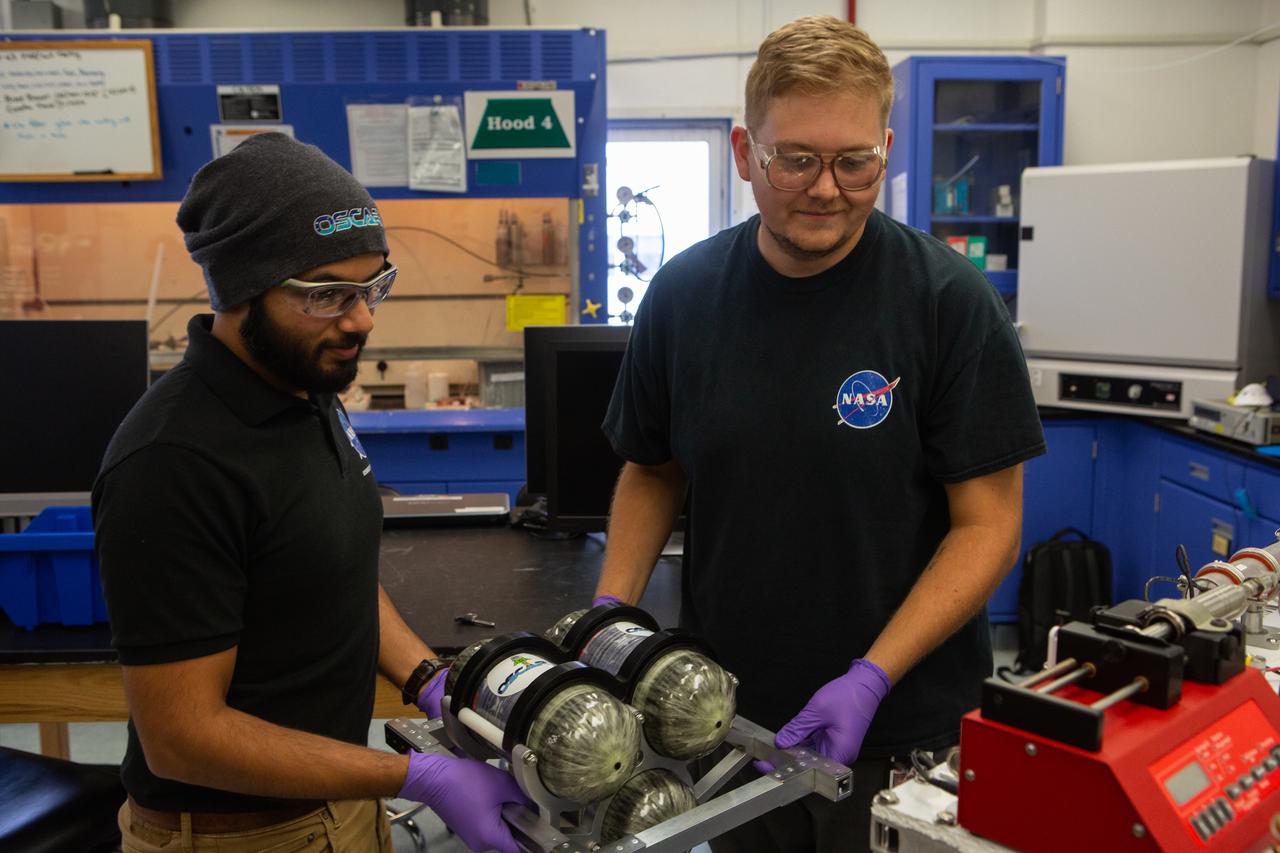
Team members Malay Shah, left, and Evan Bell assemble the flight hardware for NASA’s Orbital Syngas Commodity Augmentation Reactor, or OSCAR, on Oct. 10, 2019, in the Space Station Processing Facility at the agency’s Kennedy Space Center in Florida. OSCAR is an Early Career Initiative project at the spaceport that studies technology to convert trash and human waste into useful gasses such as methane, hydrogen and carbon dioxide. By processing small pieces of trash in a high-temperature reactor, OSCAR is advancing new and innovative technology for managing waste in space. A prototype has been developed, and the team is in the process of constructing a new rig for a suborbital flight test.
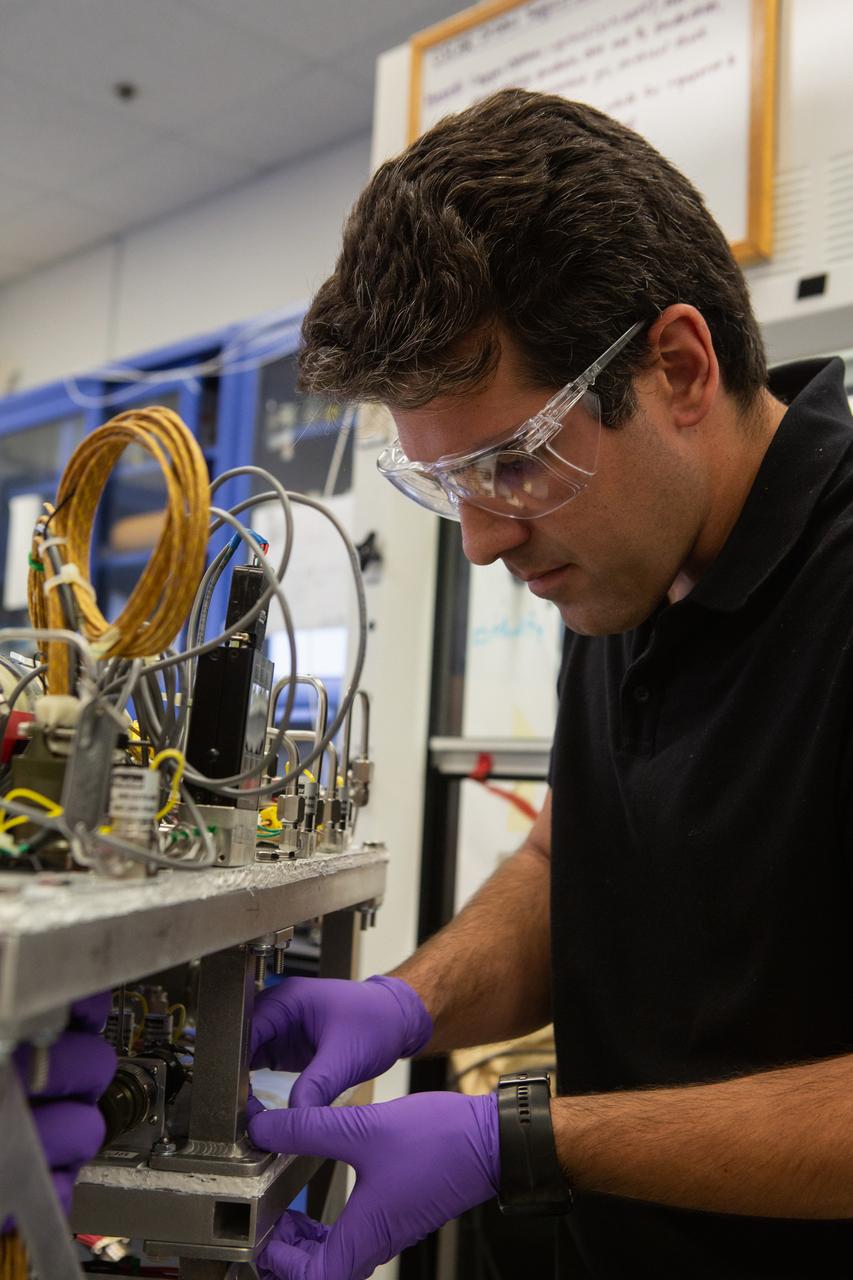
Jaime Toro assembles the flight hardware for NASA’s Orbital Syngas Commodity Augmentation Reactor, or OSCAR, on Oct. 10, 2019, in the Space Station Processing Facility at the agency’s Kennedy Space Center in Florida. OSCAR is an Early Career Initiative project at the spaceport that studies technology to convert trash and human waste into useful gasses such as methane, hydrogen and carbon dioxide. By processing small pieces of trash in a high-temperature reactor, OSCAR is advancing new and innovative technology for managing waste in space. A prototype has been developed, and the team is in the process of constructing a new rig for a suborbital flight test.
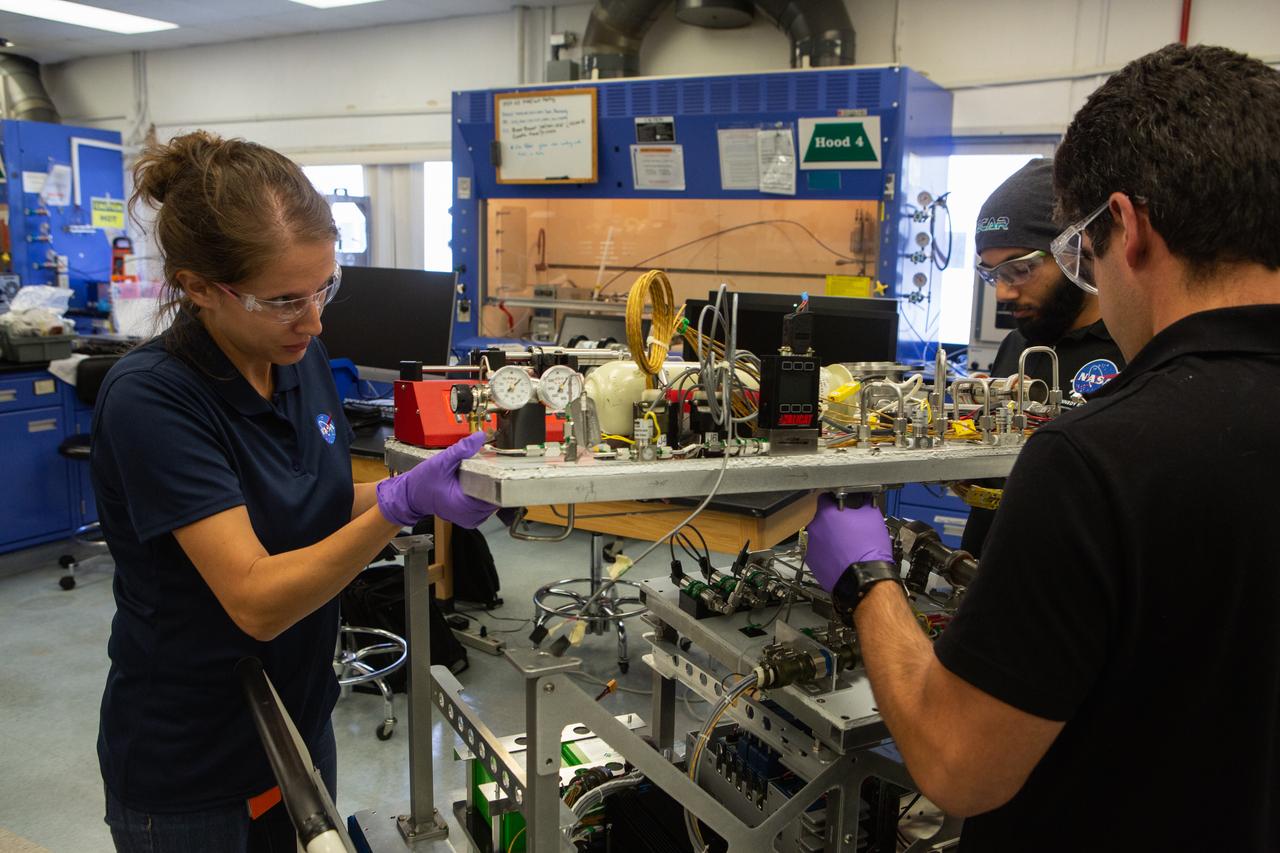
From left, team members Annie Meier, Malay Shah and Jamie Toro assemble the flight hardware for NASA’s Orbital Syngas Commodity Augmentation Reactor, or OSCAR, on Oct. 10, 2019, in the Space Station Processing Facility at the agency’s Kennedy Space Center in Florida. OSCAR is an Early Career Initiative project at the spaceport that studies technology to convert trash and human waste into useful gasses such as methane, hydrogen and carbon dioxide. By processing small pieces of trash in a high-temperature reactor, OSCAR is advancing new and innovative technology for managing waste in space. A prototype has been developed, and the team is in the process of constructing a new rig for a suborbital flight test.
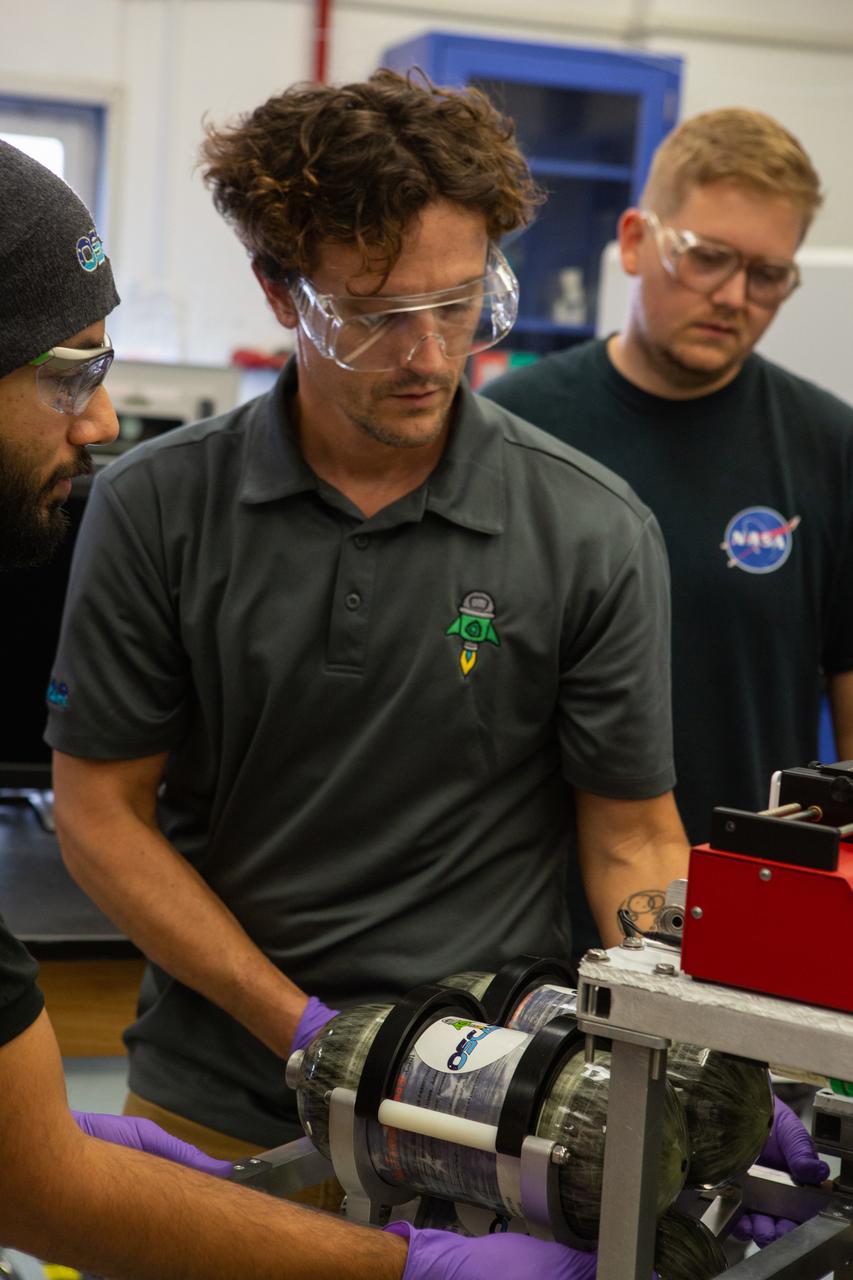
From left, team members Malay Shah, Gino Carro and Evan Bell assemble the flight hardware for NASA’s Orbital Syngas Commodity Augmentation Reactor, or OSCAR, on Oct. 10, 2019, in the Space Station Processing Facility at the agency’s Kennedy Space Center in Florida. OSCAR is an Early Career Initiative project at the spaceport that studies technology to convert trash and human waste into useful gasses such as methane, hydrogen and carbon dioxide. By processing small pieces of trash in a high-temperature reactor, OSCAR is advancing new and innovative technology for managing waste in space. A prototype has been developed, and the team is in the process of constructing a new rig for a suborbital flight test.
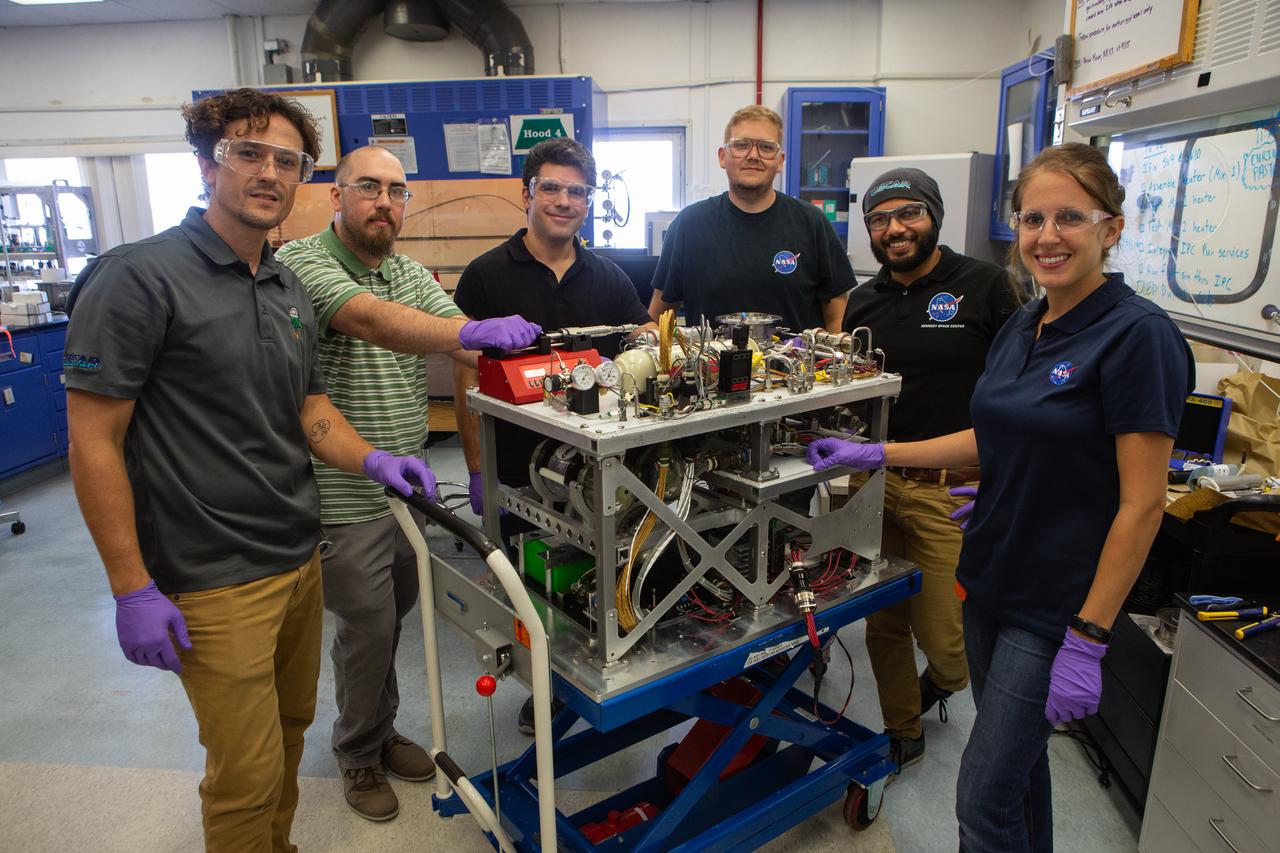
Members of NASA’s Orbital Syngas Commodity Augmentation Reactor, or OSCAR, team pause for a photo with the flight hardware on Oct. 10, 2019, in the Space Station Processing Facility at the agency’s Kennedy Space Center in Florida. From left are Gino Carro, Tom Cauvel, Jaime Toro, Evan Bell, Malay Shah and Annie Meier. OSCAR is an Early Career Initiative project at the spaceport that studies technology to convert trash and human waste into useful gasses such as methane, hydrogen and carbon dioxide. By processing small pieces of trash in a high-temperature reactor, OSCAR is advancing new and innovative technology for managing waste in space. A prototype has been developed, and the team is in the process of constructing a new rig for a suborbital flight test.
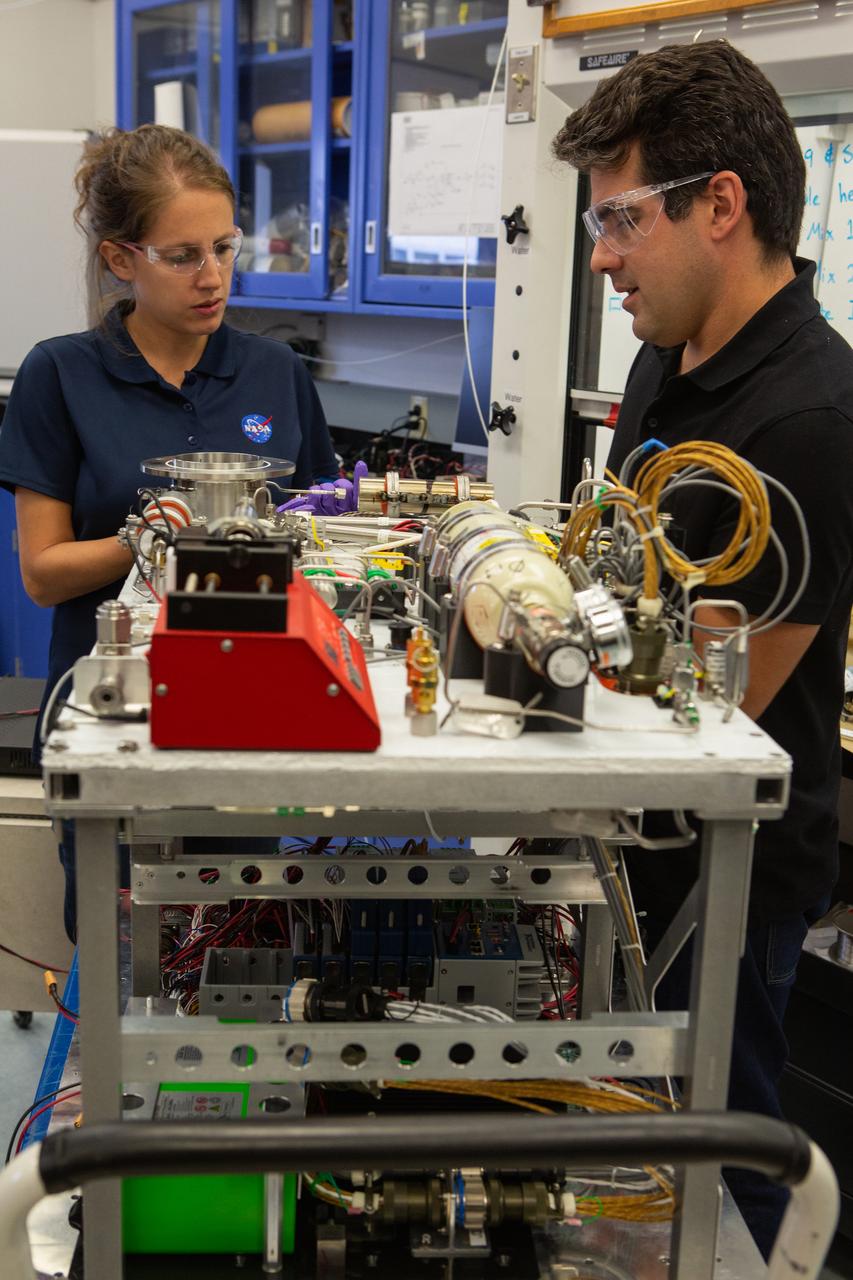
Team members Annie Meier, left, and Jamie Toro assemble the flight hardware for NASA’s Orbital Syngas Commodity Augmentation Reactor, or OSCAR, on Oct. 10, 2019, in the Space Station Processing Facility at the agency’s Kennedy Space Center in Florida. OSCAR is an Early Career Initiative project at the spaceport that studies technology to convert trash and human waste into useful gasses such as methane, hydrogen and carbon dioxide. By processing small pieces of trash in a high-temperature reactor, OSCAR is advancing new and innovative technology for managing waste in space. A prototype has been developed, and the team is in the process of constructing a new rig for a suborbital flight test.
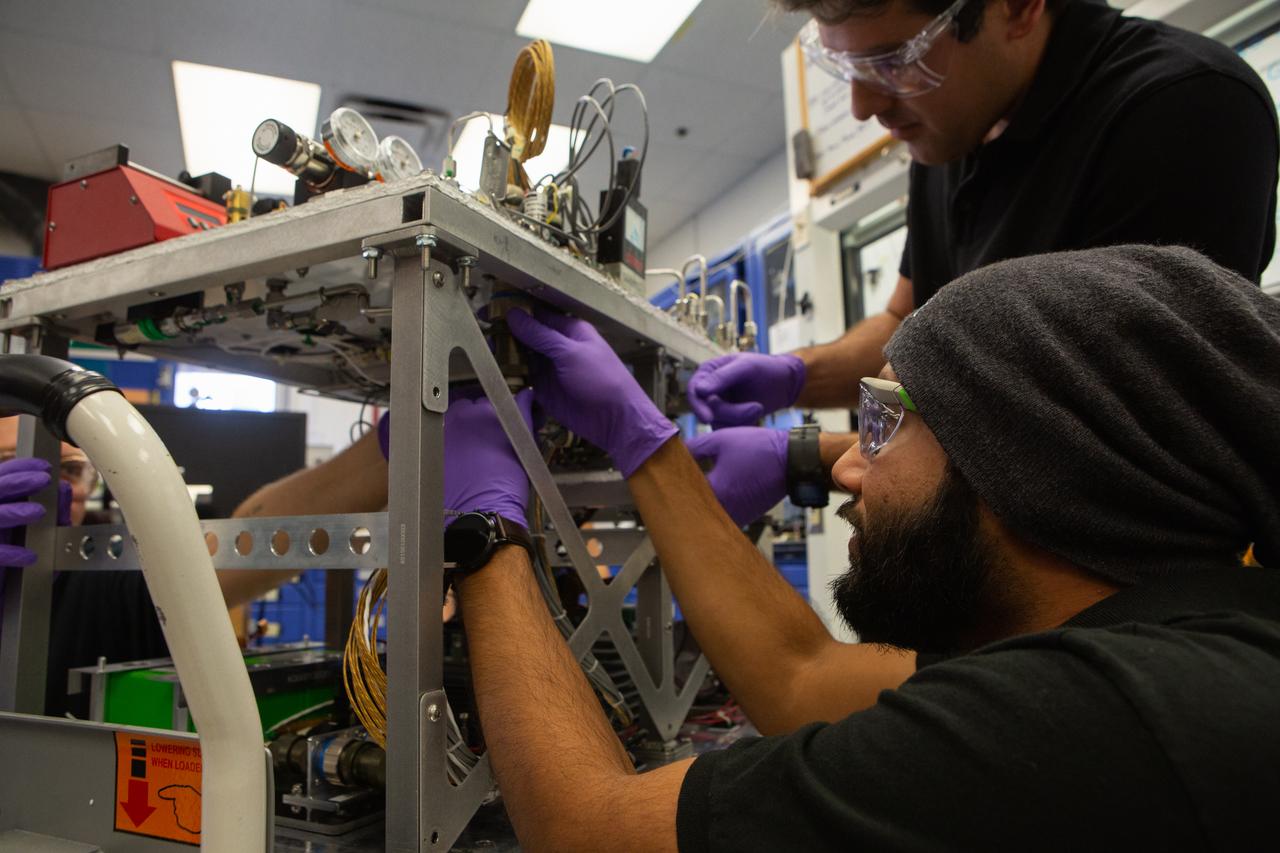
Team members Malay Shah, foreground, and Gino Carro assemble the flight hardware for NASA’s Orbital Syngas Commodity Augmentation Reactor, or OSCAR, on Oct. 10, 2019, in the Space Station Processing Facility at the agency’s Kennedy Space Center in Florida. OSCAR is an Early Career Initiative project at the spaceport that studies technology to convert trash and human waste into useful gasses such as methane, hydrogen and carbon dioxide. By processing small pieces of trash in a high-temperature reactor, OSCAR is advancing new and innovative technology for managing waste in space. A prototype has been developed, and the team is in the process of constructing a new rig for a suborbital flight test.
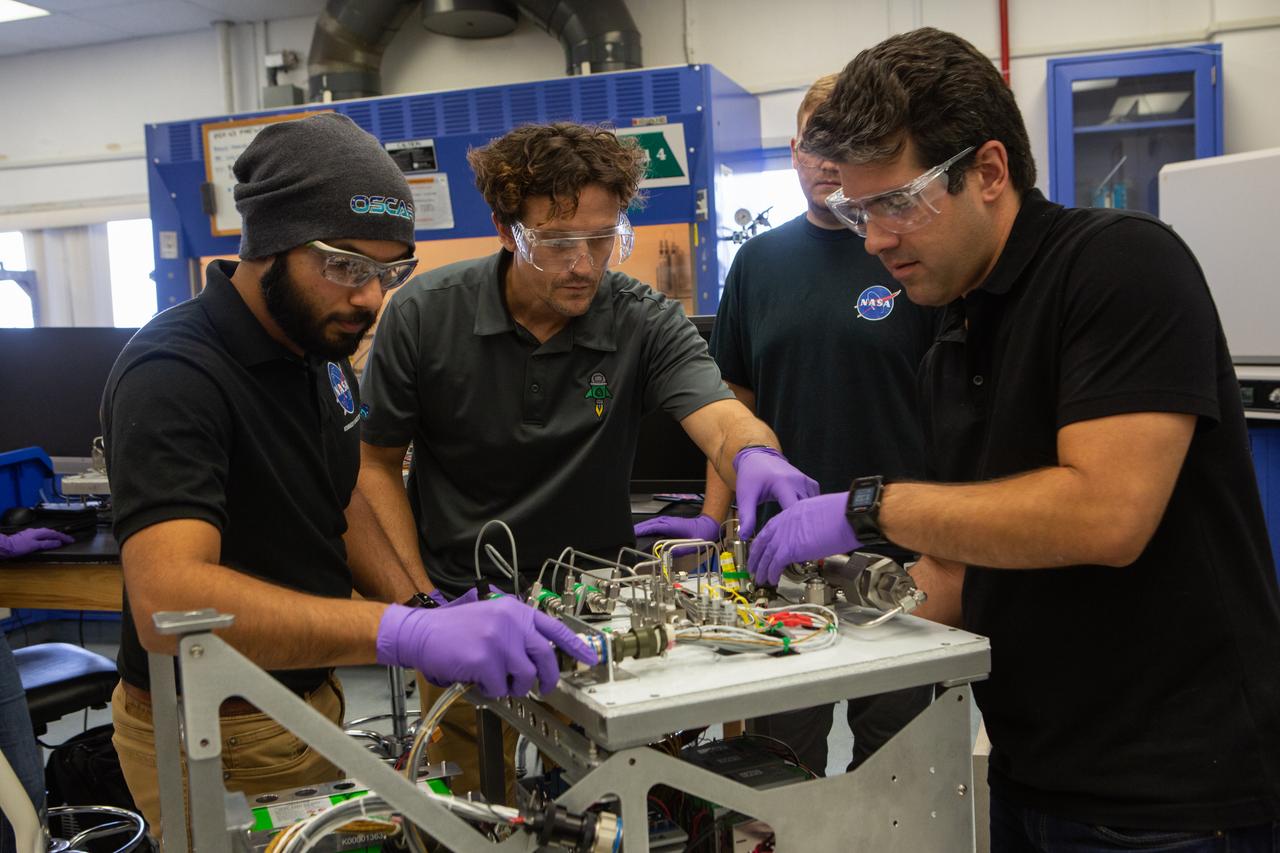
From left, team members Malay Shah, Gino Carro, Evan Bell and Jamie Toro assemble the flight hardware for NASA’s Orbital Syngas Commodity Augmentation Reactor, or OSCAR, on Oct. 10, 2019, in the Space Station Processing Facility at the agency’s Kennedy Space Center in Florida. OSCAR is an Early Career Initiative project at the spaceport that studies technology to convert trash and human waste into useful gasses such as methane, hydrogen and carbon dioxide. By processing small pieces of trash in a high-temperature reactor, OSCAR is advancing new and innovative technology for managing waste in space. A prototype has been developed, and the team is in the process of constructing a new rig for a suborbital flight test.
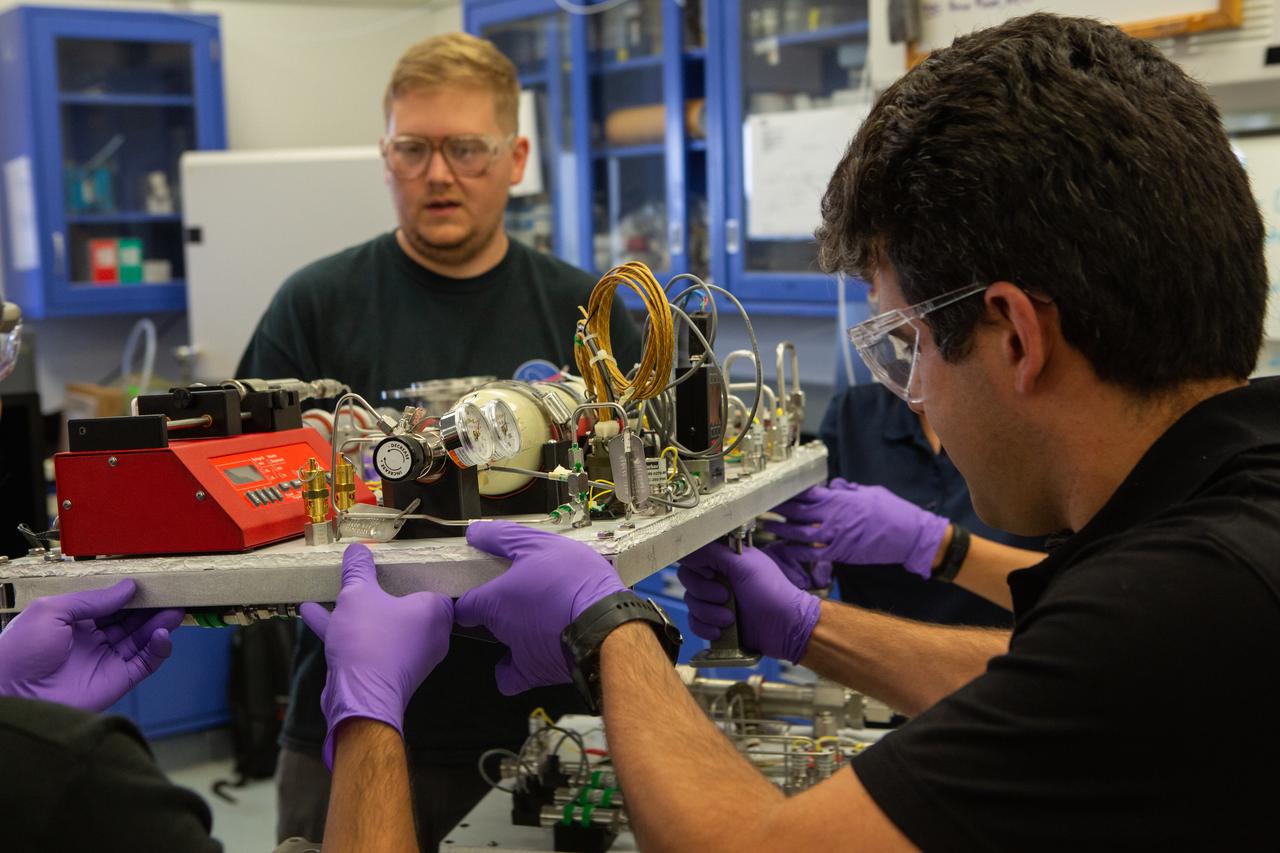
Team members Evan Bell, left, and Jaime Toro assemble the flight hardware for NASA’s Orbital Syngas Commodity Augmentation Reactor, or OSCAR, on Oct. 10, 2019, in the Space Station Processing Facility at the agency’s Kennedy Space Center in Florida. OSCAR is an Early Career Initiative project at the spaceport that studies technology to convert trash and human waste into useful gasses such as methane, hydrogen and carbon dioxide. By processing small pieces of trash in a high-temperature reactor, OSCAR is advancing new and innovative technology for managing waste in space. A prototype has been developed, and the team is in the process of constructing a new rig for a suborbital flight test.
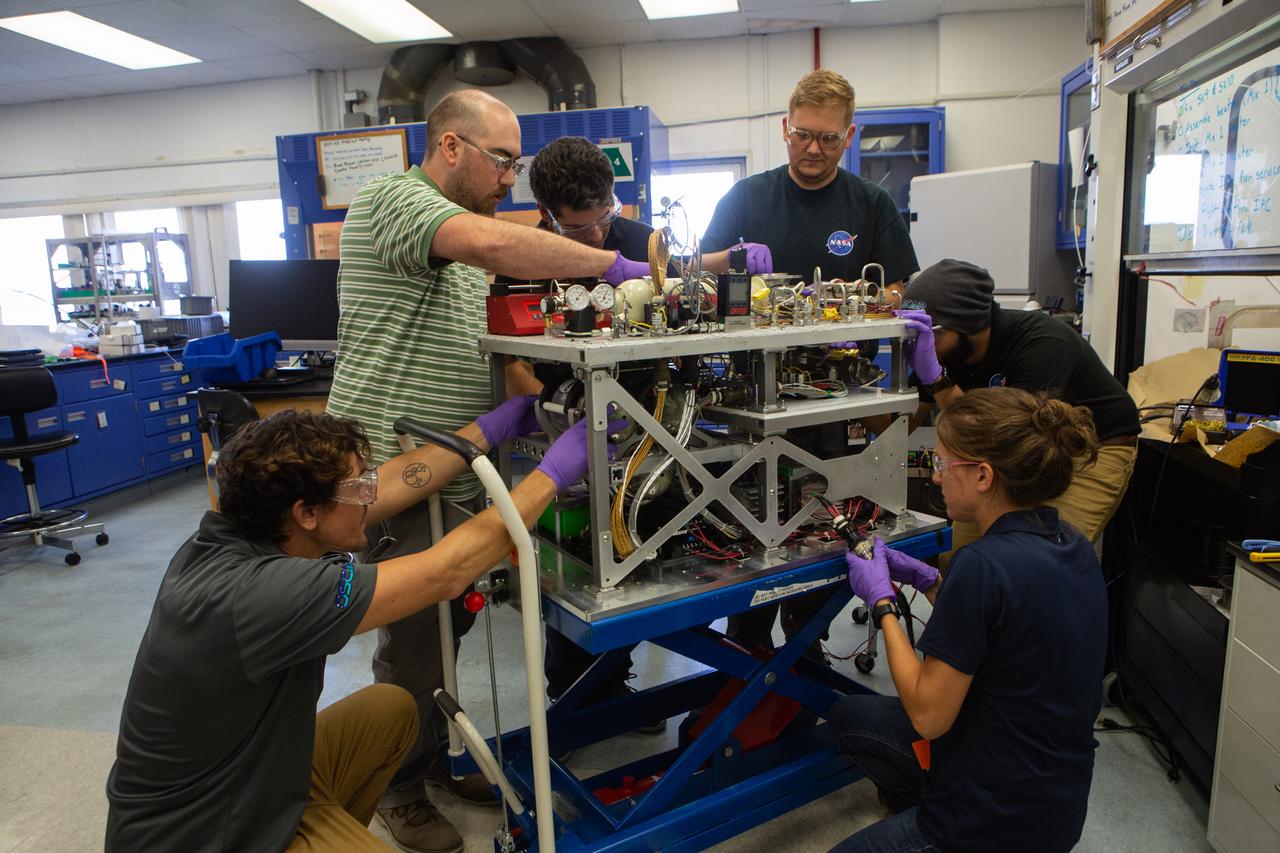
Team members assemble the flight hardware for NASA’s Orbital Syngas Commodity Augmentation Reactor, or OSCAR, on Oct. 10, 2019, in the Space Station Processing Facility at the agency’s Kennedy Space Center in Florida. From left are Gino Carro, Tom Cauvel, Jaime Toro, Evan Bell, Malay Shah and Annie Meier. OSCAR is an Early Career Initiative project at the spaceport that studies technology to convert trash and human waste into useful gasses such as methane, hydrogen and carbon dioxide. By processing small pieces of trash in a high-temperature reactor, OSCAR is advancing new and innovative technology for managing waste in space. A prototype has been developed, and the team is in the process of constructing a new rig for a suborbital flight test.
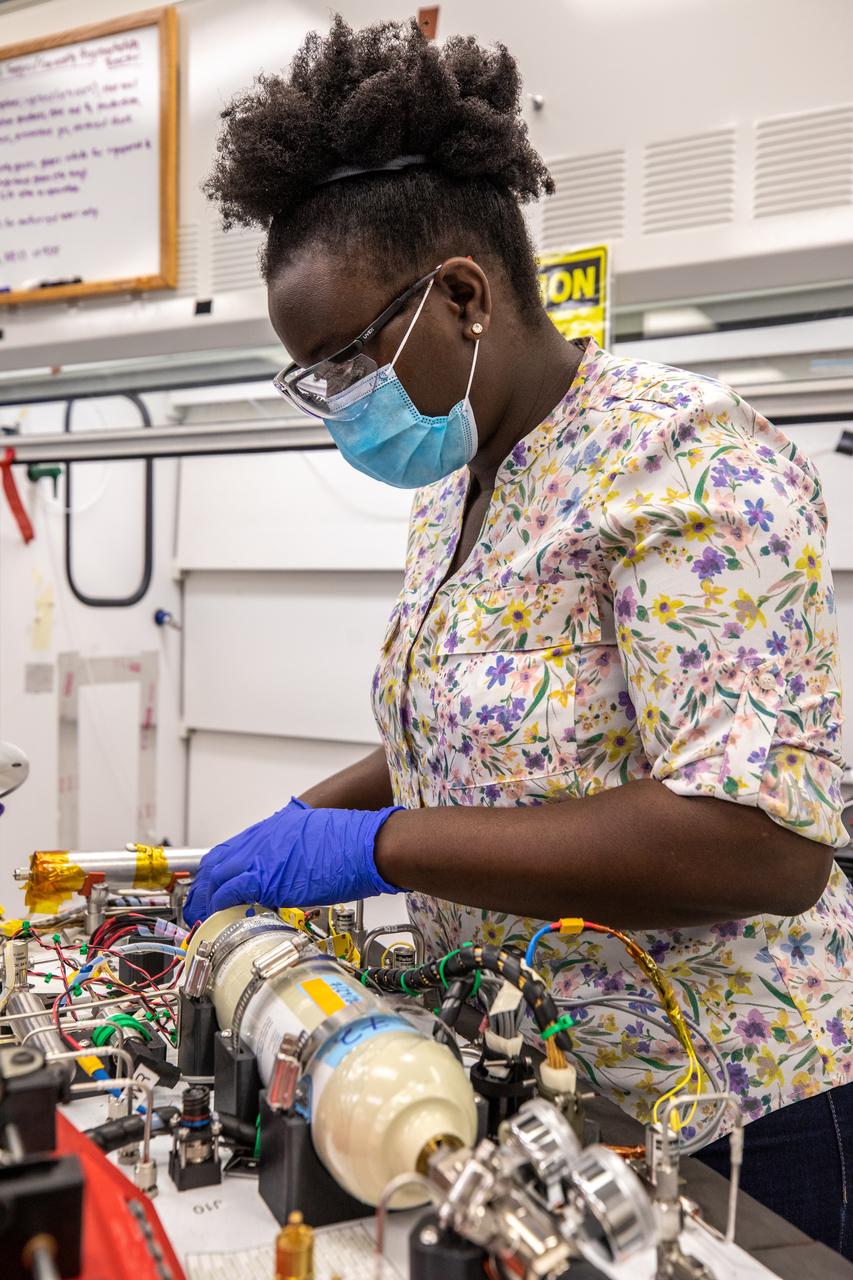
Technicians wearing protective equipment perform work for a future mission on flight hardware for NASA’s Orbital Syngas Commodity Augmentation Reactor, or OSCAR, at the Neil Armstrong Operations and Checkout Facility at the agency’s Kennedy Space Center in Florida on Aug. 10, 2020. OSCAR began as an Early Career Initiative project at the spaceport that studies technology to convert trash and human waste into useful gasses such as methane, hydrogen, and carbon dioxide. By processing small pieces of trash in a high-temperature reactor, OSCAR is advancing new and innovative technology for managing waste in space.
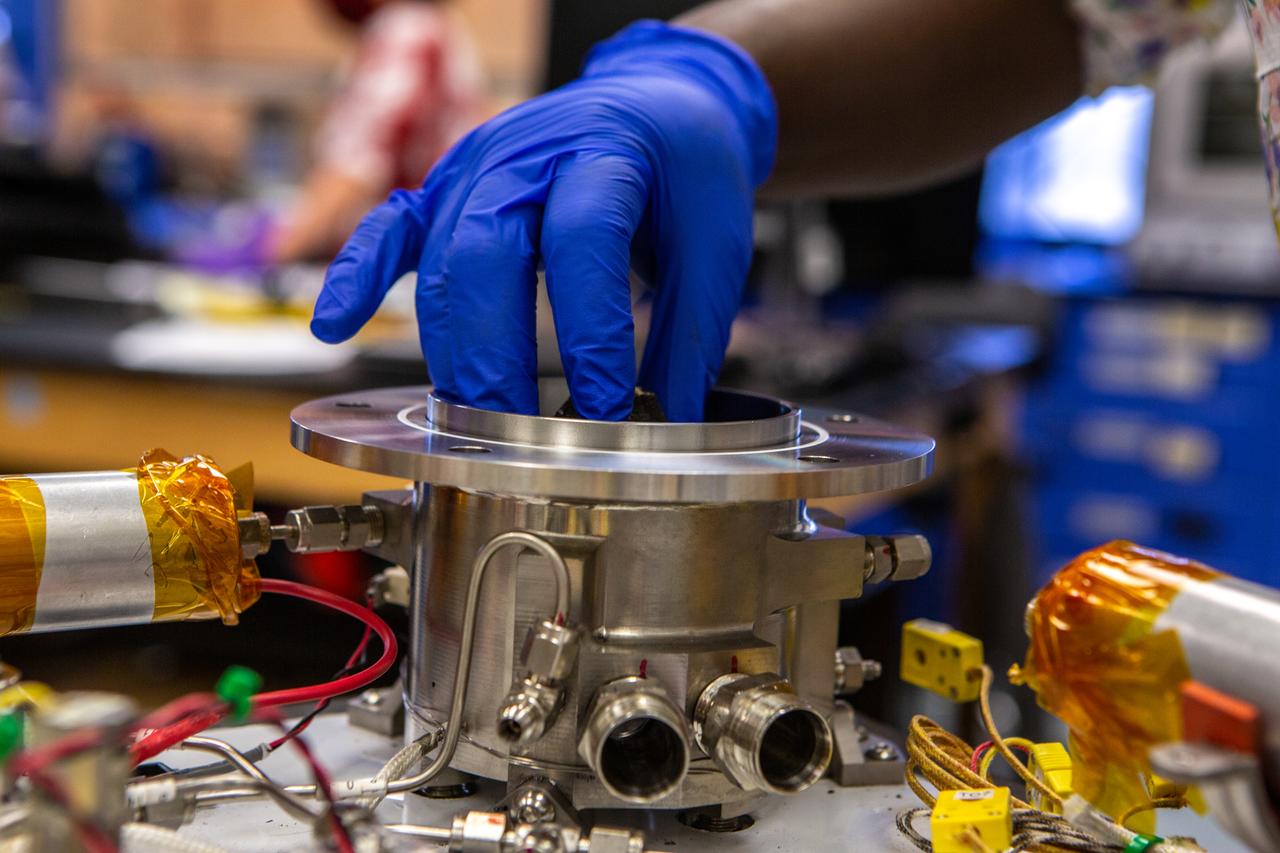
Technicians wearing protective equipment perform work for a future mission on flight hardware for NASA’s Orbital Syngas Commodity Augmentation Reactor, or OSCAR, at the Neil Armstrong Operations and Checkout Facility at the agency’s Kennedy Space Center in Florida on Aug. 10, 2020. OSCAR began as an Early Career Initiative project at the spaceport that studies technology to convert trash and human waste into useful gasses such as methane, hydrogen, and carbon dioxide. By processing small pieces of trash in a high-temperature reactor, OSCAR is advancing new and innovative technology for managing waste in space.
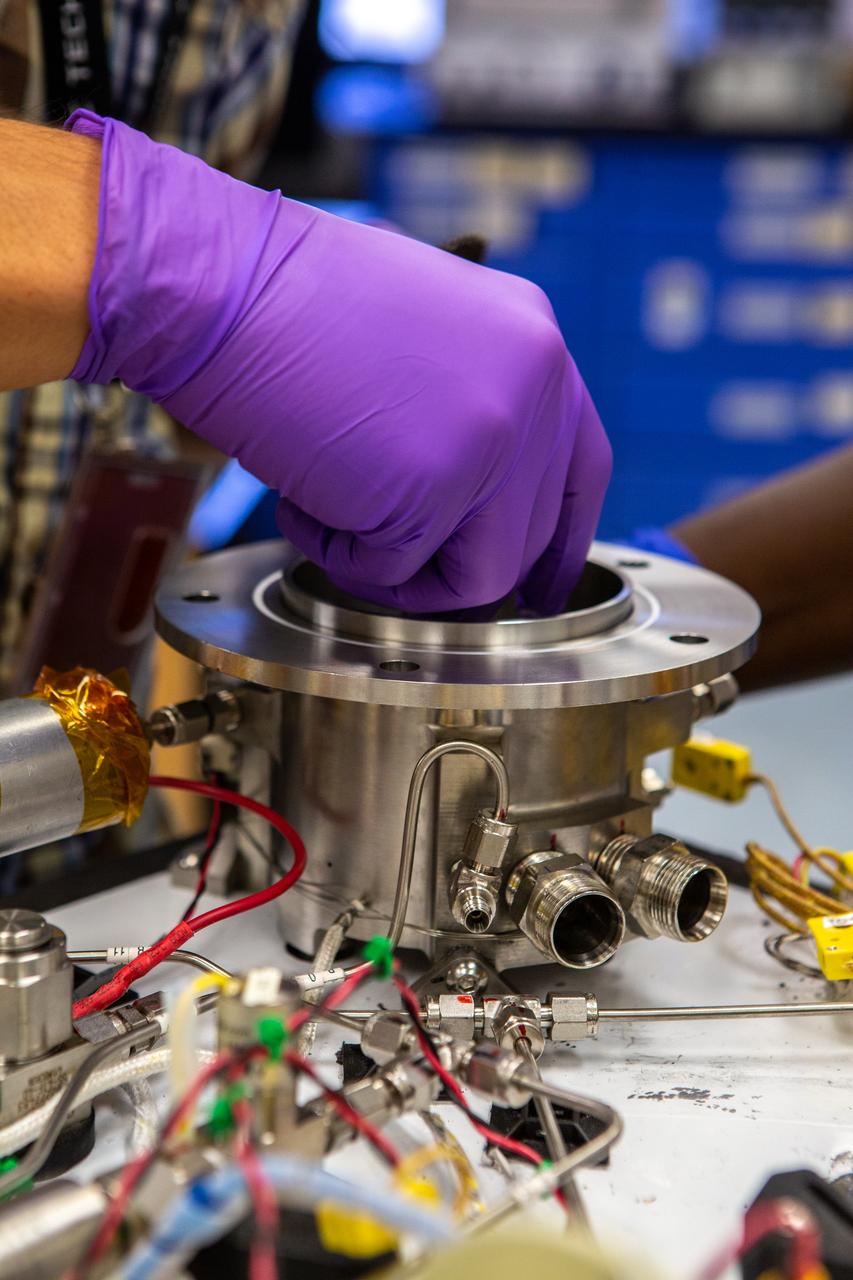
Technicians wearing protective equipment perform work for a future mission on flight hardware for NASA’s Orbital Syngas Commodity Augmentation Reactor, or OSCAR, at the Neil Armstrong Operations and Checkout Facility at the agency’s Kennedy Space Center in Florida on Aug. 10, 2020. OSCAR began as an Early Career Initiative project at the spaceport that studies technology to convert trash and human waste into useful gasses such as methane, hydrogen, and carbon dioxide. By processing small pieces of trash in a high-temperature reactor, OSCAR is advancing new and innovative technology for managing waste in space.
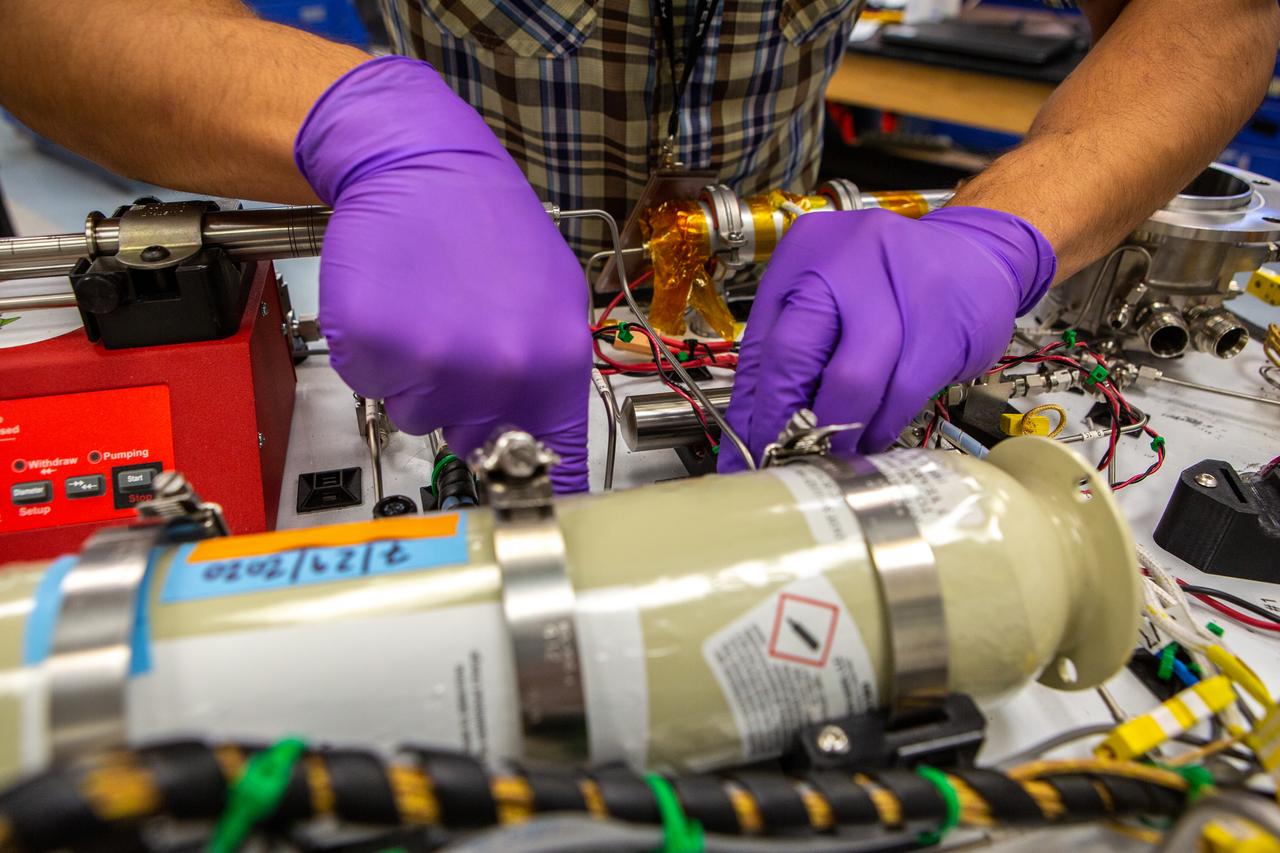
Technicians wearing protective equipment perform work for a future mission on flight hardware for NASA’s Orbital Syngas Commodity Augmentation Reactor, or OSCAR, at the Neil Armstrong Operations and Checkout Facility at the agency’s Kennedy Space Center in Florida on Aug. 10, 2020. OSCAR began as an Early Career Initiative project at the spaceport that studies technology to convert trash and human waste into useful gasses such as methane, hydrogen, and carbon dioxide. By processing small pieces of trash in a high-temperature reactor, OSCAR is advancing new and innovative technology for managing waste in space.
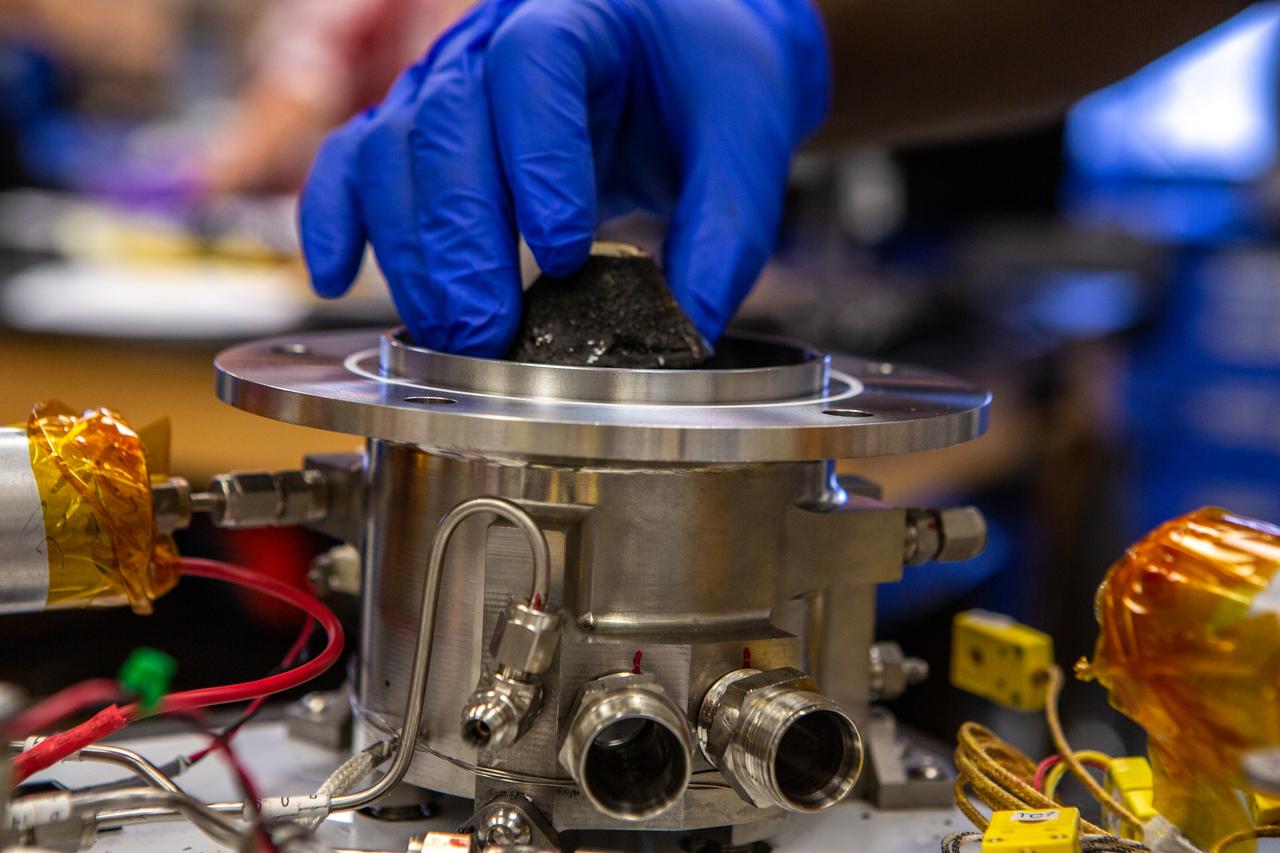
Technicians wearing protective equipment perform work for a future mission on flight hardware for NASA’s Orbital Syngas Commodity Augmentation Reactor, or OSCAR, at the Neil Armstrong Operations and Checkout Facility at the agency’s Kennedy Space Center in Florida on Aug. 10, 2020. OSCAR began as an Early Career Initiative project at the spaceport that studies technology to convert trash and human waste into useful gasses such as methane, hydrogen, and carbon dioxide. By processing small pieces of trash in a high-temperature reactor, OSCAR is advancing new and innovative technology for managing waste in space.
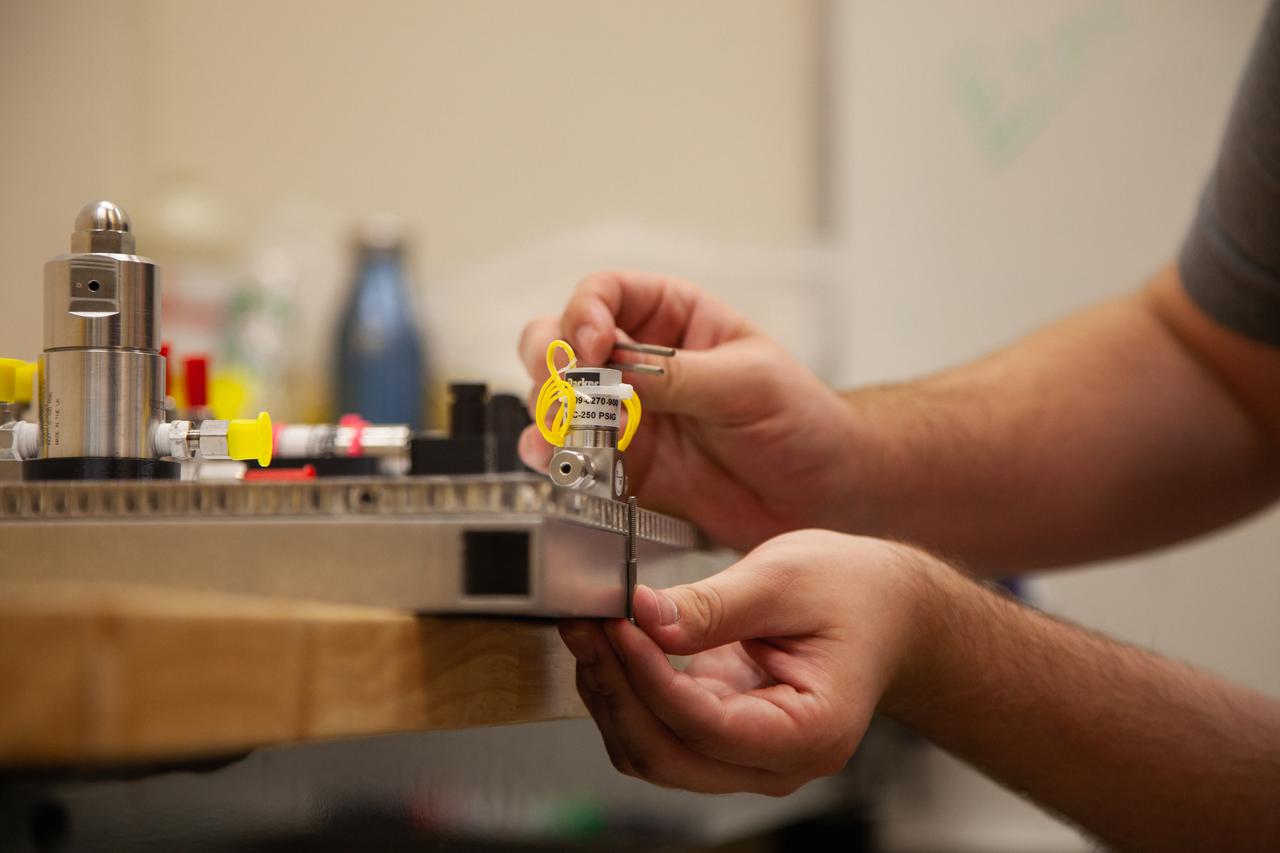
A Kennedy Space Center employee works on assembling the flight hardware of NASA’s Orbital Syngas Commodity Augmentation Reactor, or OSCAR – an Early Career Initiative project at the Florida spaceport that studies technology to convert trash and human waste into useful gasses such as methane, hydrogen and carbon dioxide. By processing small pieces of trash in a high-temperature reactor, OSCAR is advancing new and innovative technology for managing waste in space. OSCAR would reduce the amount of space needed for waste storage within a spacecraft, turn some waste into gasses that have energy storage and life support applications and ensure waste is no longer biologically active. A prototype has already been developed, and a team of Kennedy employees are in the process of constructing a new rig for suborbital flight testing.

Kennedy Space Center employees assemble the flight hardware of NASA’s Orbital Syngas Commodity Augmentation Reactor, or OSCAR – an Early Career Initiative project at the Florida spaceport that studies technology to convert trash and human waste into useful gasses such as methane, hydrogen and carbon dioxide. By processing small pieces of trash in a high-temperature reactor, OSCAR is advancing new and innovative technology for managing waste in space. OSCAR would reduce the amount of space needed for waste storage within a spacecraft, turn some waste into gasses that have energy storage and life support applications and ensure waste is no longer biologically active. A prototype has already been developed, and a team of Kennedy employees are in the process of constructing a new rig for suborbital flight testing.
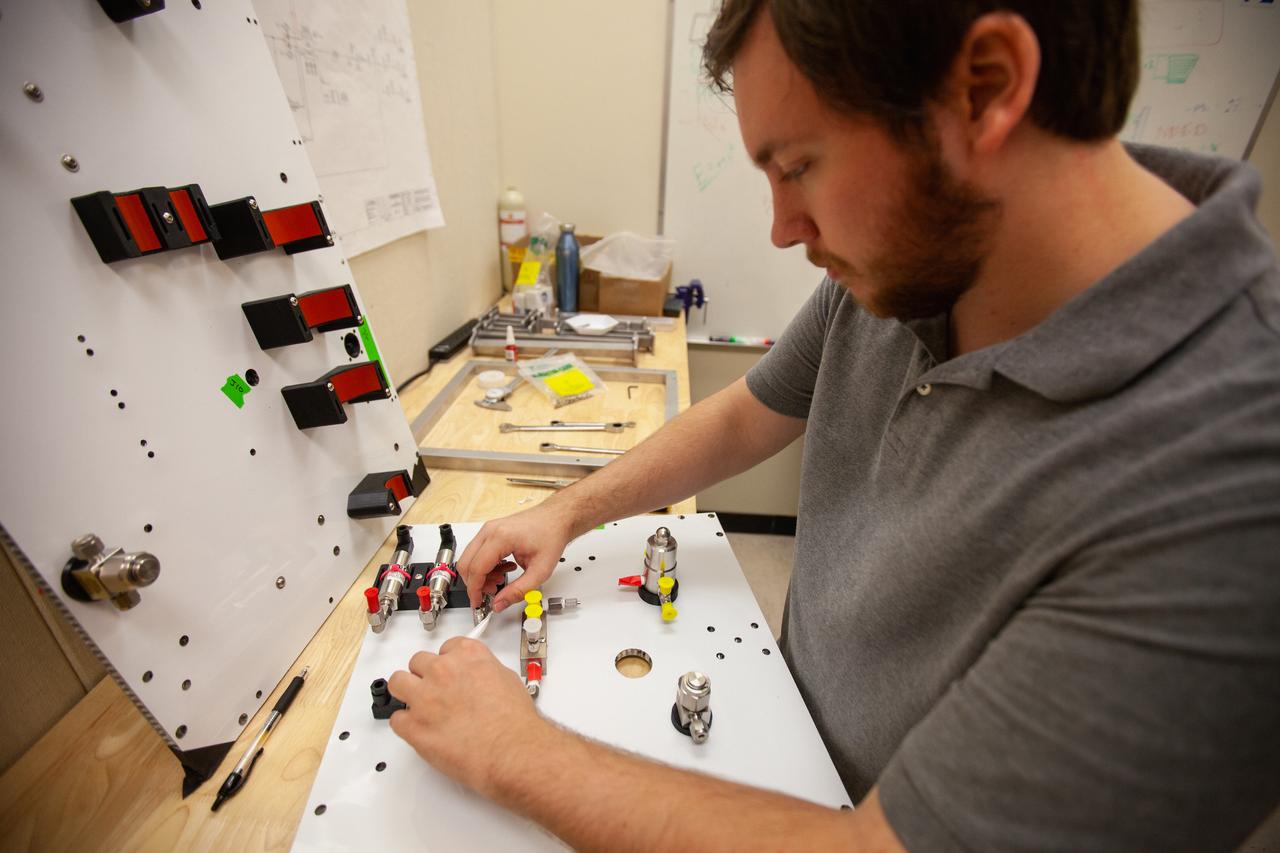
A Kennedy Space Center employee works on assembling the flight hardware of NASA’s Orbital Syngas Commodity Augmentation Reactor, or OSCAR – an Early Career Initiative project at the Florida spaceport that studies technology to convert trash and human waste into useful gasses such as methane, hydrogen and carbon dioxide. By processing small pieces of trash in a high-temperature reactor, OSCAR is advancing new and innovative technology for managing waste in space. OSCAR would reduce the amount of space needed for waste storage within a spacecraft, turn some waste into gasses that have energy storage and life support applications and ensure waste is no longer biologically active. A prototype has already been developed, and a team of Kennedy employees are in the process of constructing a new rig for suborbital flight testing.
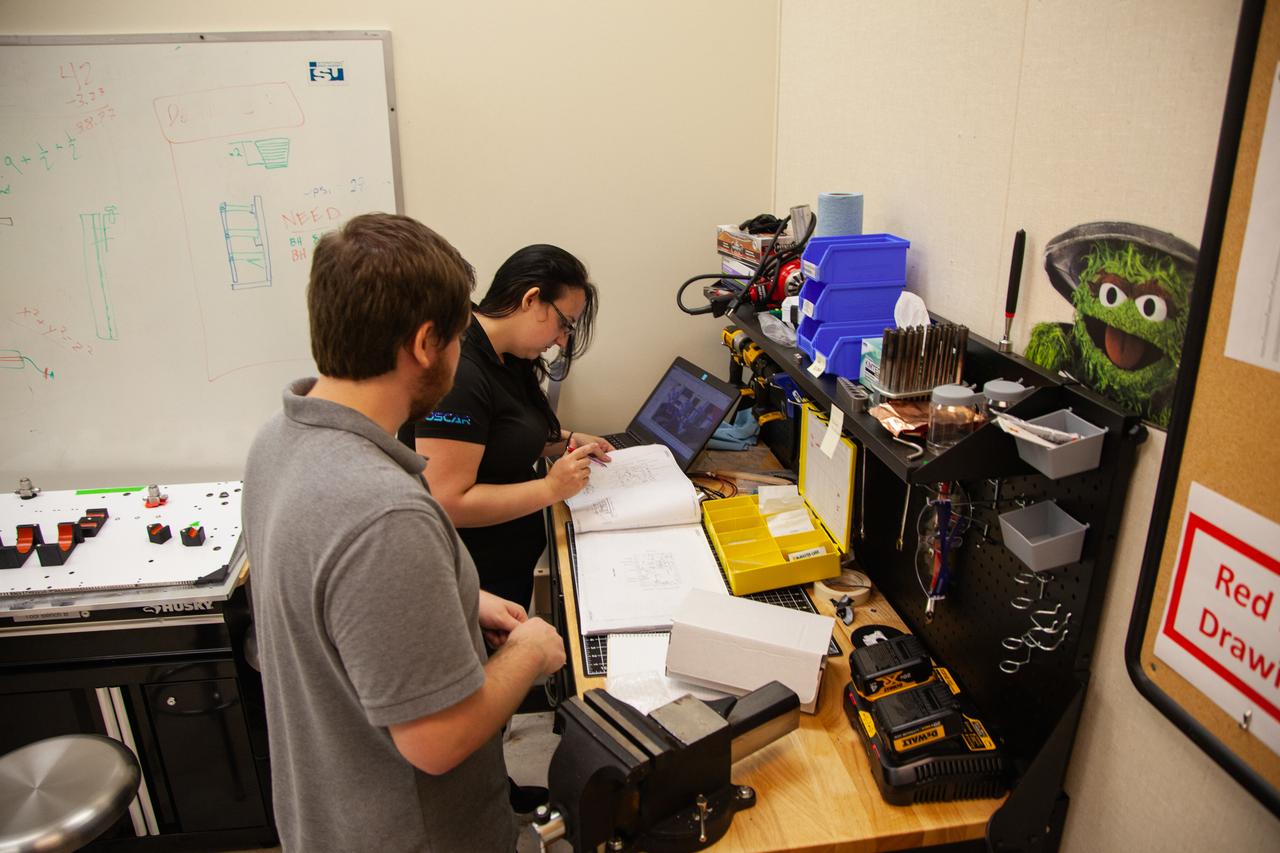
Kennedy Space Center employees are working on assembling the flight hardware of NASA’s Orbital Syngas Commodity Augmentation Reactor, or OSCAR – an Early Career Initiative project at the Florida spaceport that studies technology to convert trash and human waste into useful gasses such as methane, hydrogen and carbon dioxide. By processing small pieces of trash in a high-temperature reactor, OSCAR is advancing new and innovative technology for managing waste in space. OSCAR would reduce the amount of space needed for waste storage within a spacecraft, turn some waste into gasses that have energy storage and life support applications and ensure waste is no longer biologically active. A prototype has already been developed, and a team of Kennedy employees are in the process of constructing a new rig for suborbital flight testing.
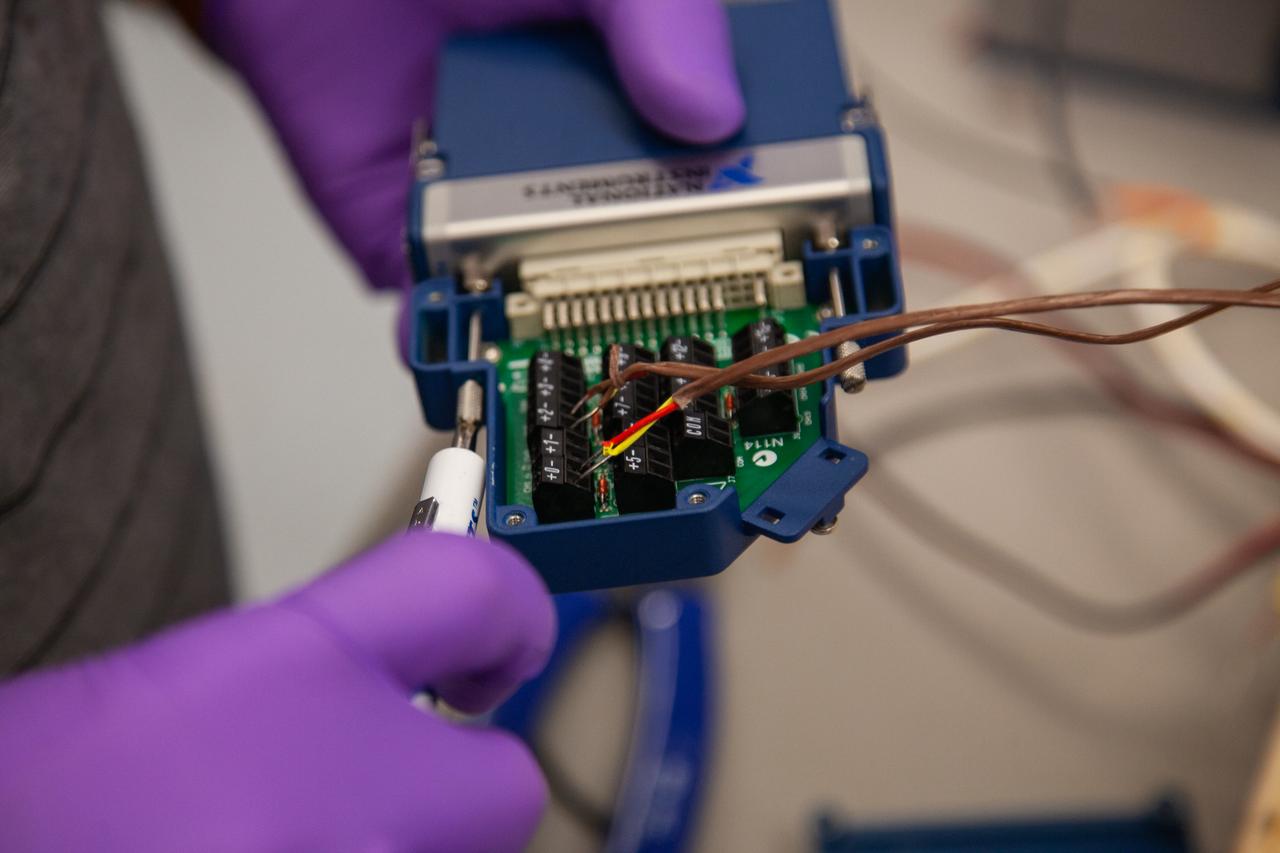
A Kennedy Space Center employee works on assembling the flight hardware of NASA’s Orbital Syngas Commodity Augmentation Reactor, or OSCAR – an Early Career Initiative project at the Florida spaceport that studies technology to convert trash and human waste into useful gasses such as methane, hydrogen and carbon dioxide. By processing small pieces of trash in a high-temperature reactor, OSCAR is advancing new and innovative technology for managing waste in space. OSCAR would reduce the amount of space needed for waste storage within a spacecraft, turn some waste into gasses that have energy storage and life support applications and ensure waste is no longer biologically active. A prototype has already been developed, and a team of Kennedy employees are in the process of constructing a new rig for suborbital flight testing.
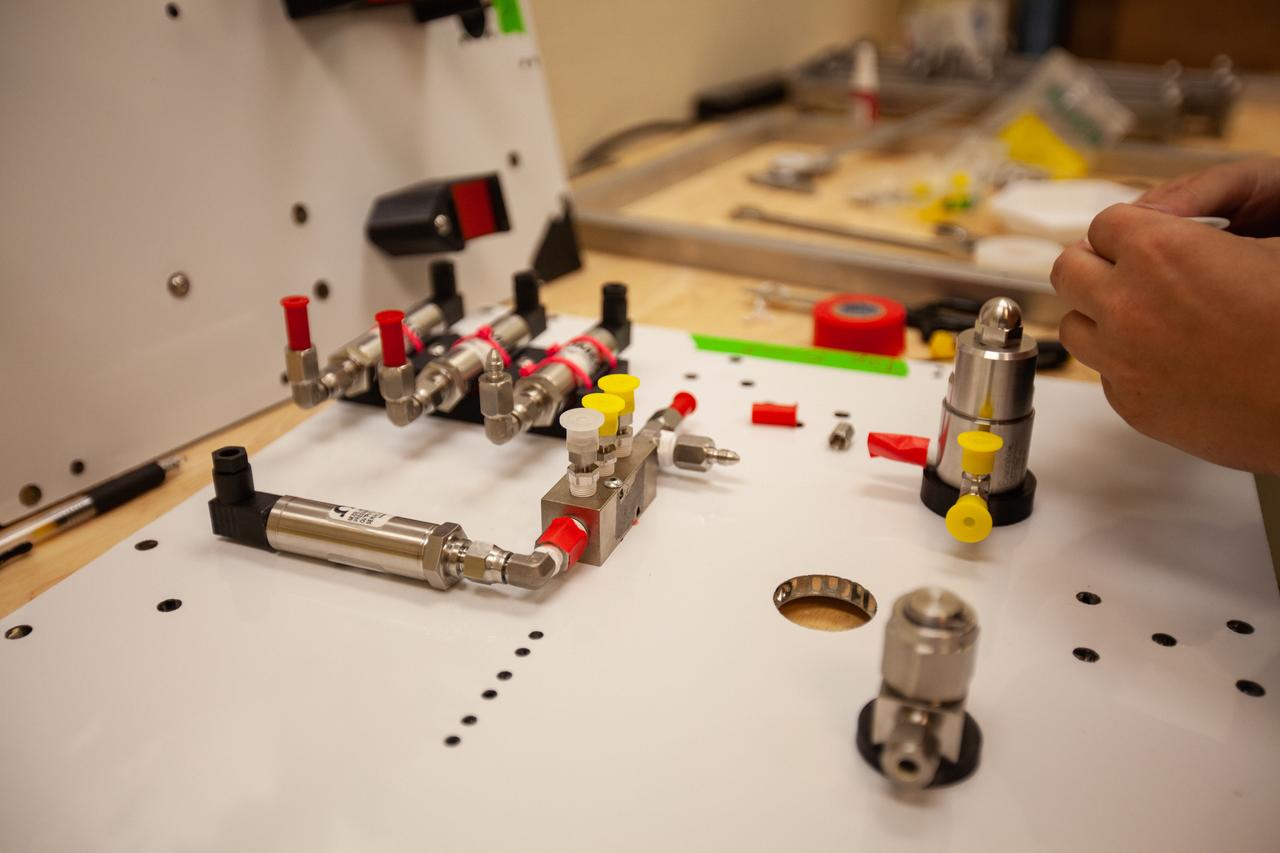
A Kennedy Space Center employee works on assembling the flight hardware of NASA’s Orbital Syngas Commodity Augmentation Reactor, or OSCAR – an Early Career Initiative project at the Florida spaceport that studies technology to convert trash and human waste into useful gasses such as methane, hydrogen and carbon dioxide. By processing small pieces of trash in a high-temperature reactor, OSCAR is advancing new and innovative technology for managing waste in space. OSCAR would reduce the amount of space needed for waste storage within a spacecraft, turn some waste into gasses that have energy storage and life support applications and ensure waste is no longer biologically active. A prototype has already been developed, and a team of Kennedy employees are in the process of constructing a new rig for suborbital flight testing.
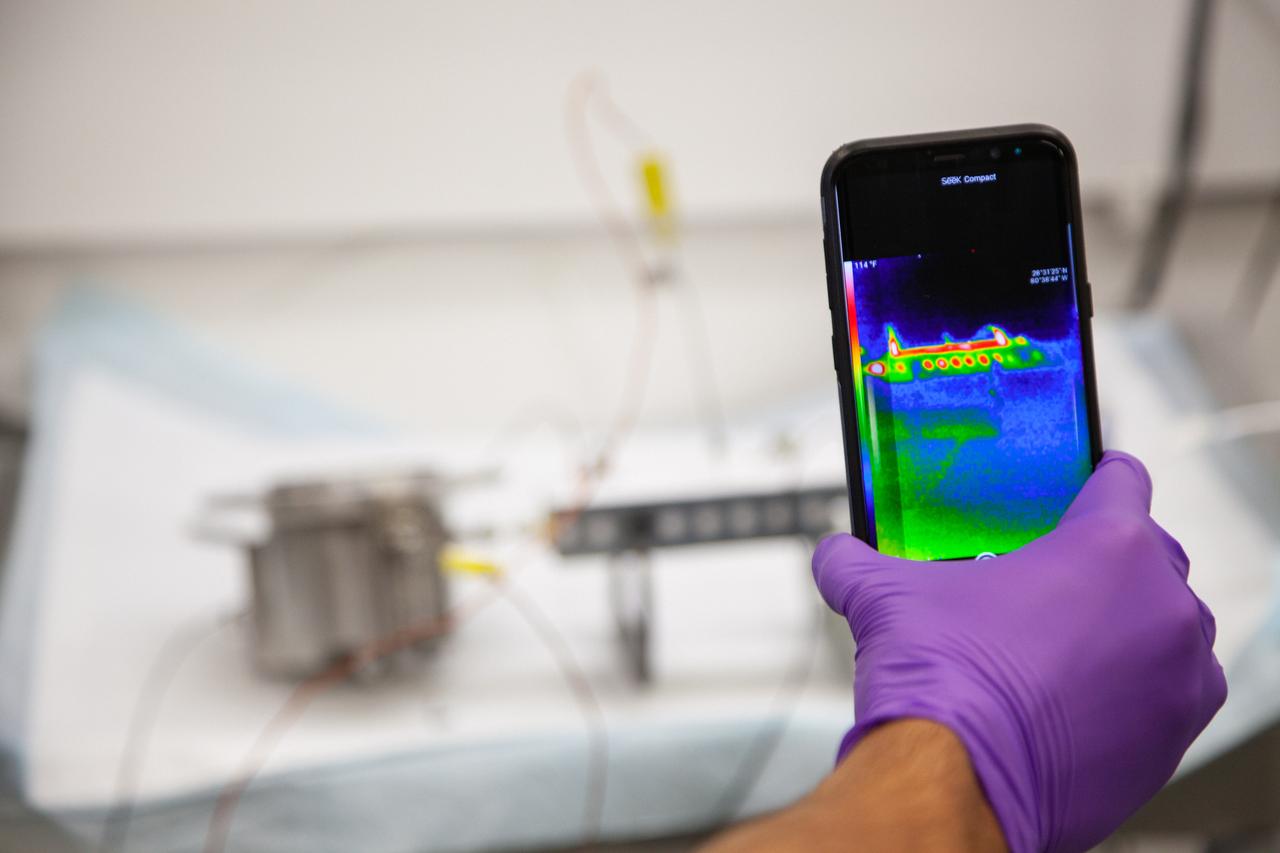
A Kennedy Space Center employee conducts thermal testing of NASA’s Orbital Syngas Commodity Augmentation Reactor, or OSCAR – an Early Career Initiative project at the Florida spaceport that studies technology to convert trash and human waste into useful gasses such as methane, hydrogen and carbon dioxide. By processing small pieces of trash in a high-temperature reactor, OSCAR is advancing new and innovative technology for managing waste in space. OSCAR would reduce the amount of space needed for waste storage within a spacecraft, turn some waste into gasses that have energy storage and life support applications and ensure waste is no longer biologically active. A prototype has already been developed, and a team of Kennedy employees are in the process of constructing a new rig for suborbital flight testing.
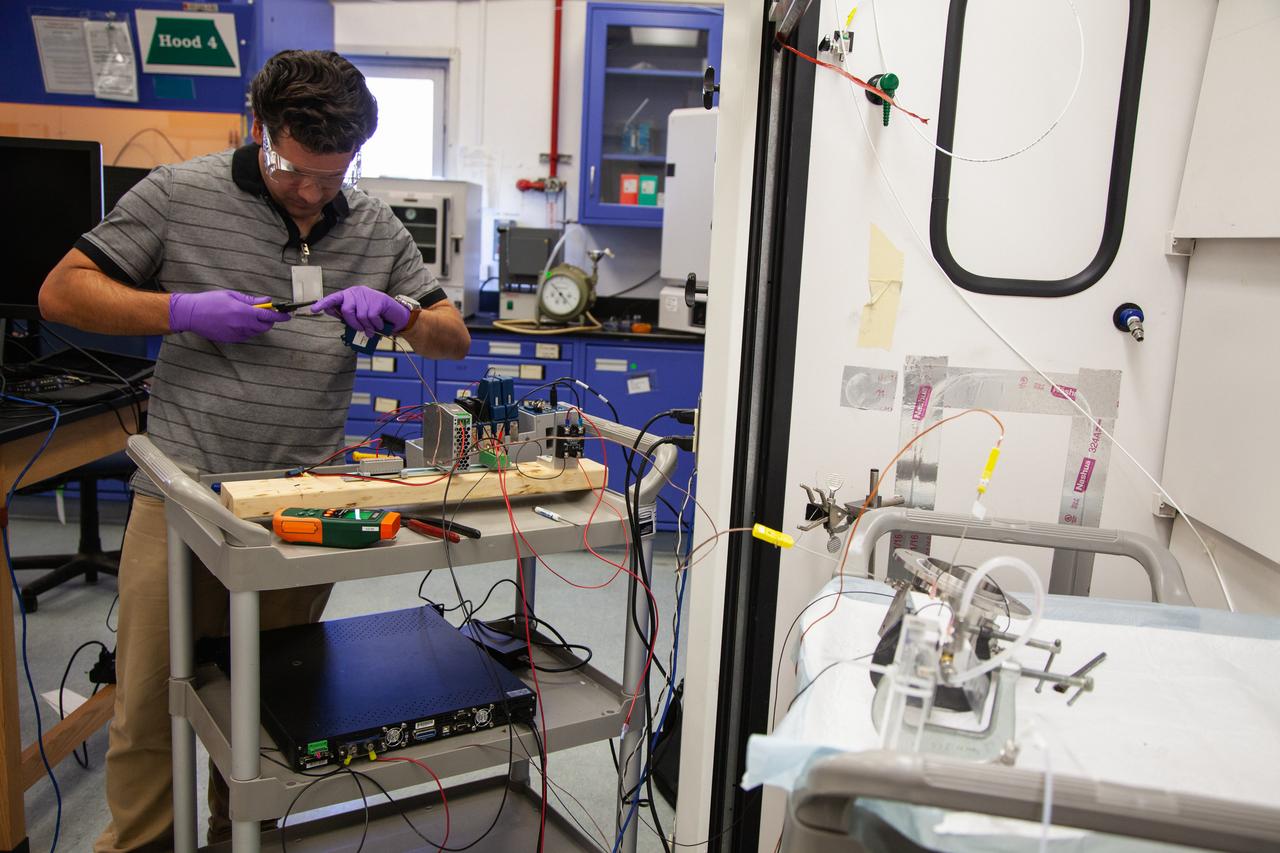
A Kennedy Space Center employee works on assembling the flight hardware of NASA’s Orbital Syngas Commodity Augmentation Reactor, or OSCAR – an Early Career Initiative project at the Florida spaceport that studies technology to convert trash and human waste into useful gasses such as methane, hydrogen and carbon dioxide. By processing small pieces of trash in a high-temperature reactor, OSCAR is advancing new and innovative technology for managing waste in space. OSCAR would reduce the amount of space needed for waste storage within a spacecraft, turn some waste into gasses that have energy storage and life support applications and ensure waste is no longer biologically active. A prototype has already been developed, and a team of Kennedy employees are in the process of constructing a new rig for suborbital flight testing.
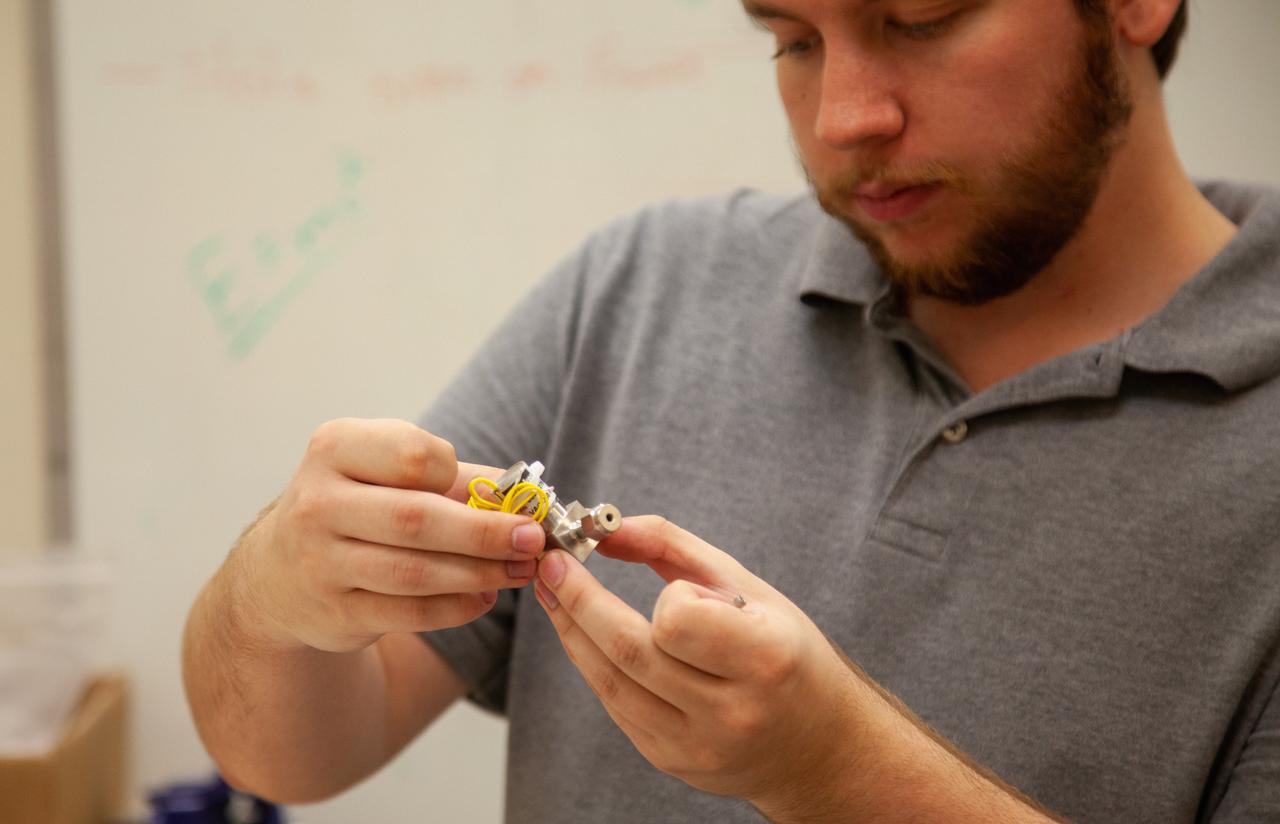
A Kennedy Space Center employee works on assembling the flight hardware of NASA’s Orbital Syngas Commodity Augmentation Reactor, or OSCAR – an Early Career Initiative project at the Florida spaceport that studies technology to convert trash and human waste into useful gasses such as methane, hydrogen and carbon dioxide. By processing small pieces of trash in a high-temperature reactor, OSCAR is advancing new and innovative technology for managing waste in space. OSCAR would reduce the amount of space needed for waste storage within a spacecraft, turn some waste into gasses that have energy storage and life support applications and ensure waste is no longer biologically active. A prototype has already been developed, and a team of Kennedy employees are in the process of constructing a new rig for suborbital flight testing.
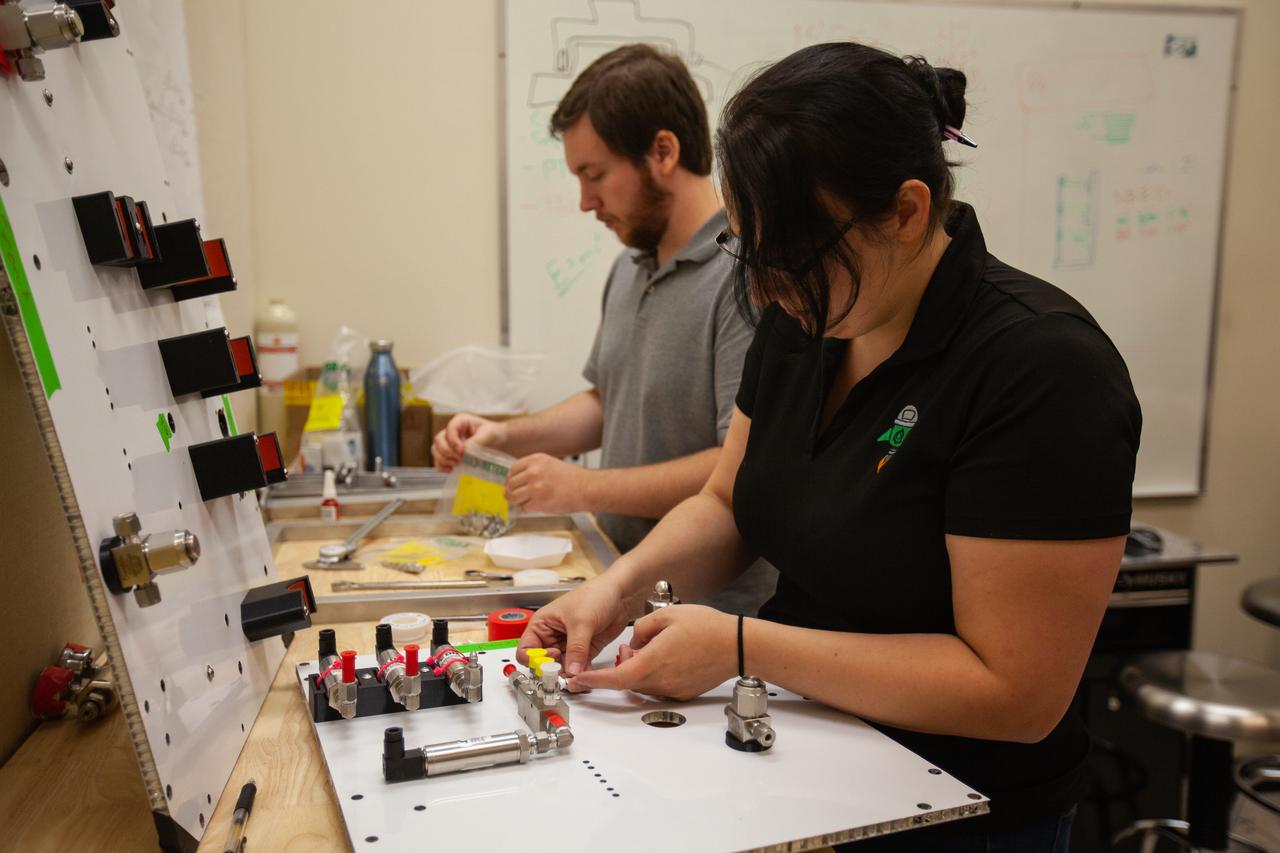
Kennedy Space Center employees assemble the flight hardware of NASA’s Orbital Syngas Commodity Augmentation Reactor, or OSCAR – an Early Career Initiative project at the Florida spaceport that studies technology to convert trash and human waste into useful gasses such as methane, hydrogen and carbon dioxide. By processing small pieces of trash in a high-temperature reactor, OSCAR is advancing new and innovative technology for managing waste in space. OSCAR would reduce the amount of space needed for waste storage within a spacecraft, turn some waste into gasses that have energy storage and life support applications and ensure waste is no longer biologically active. A prototype has already been developed, and a team of Kennedy employees are in the process of constructing a new rig for suborbital flight testing.
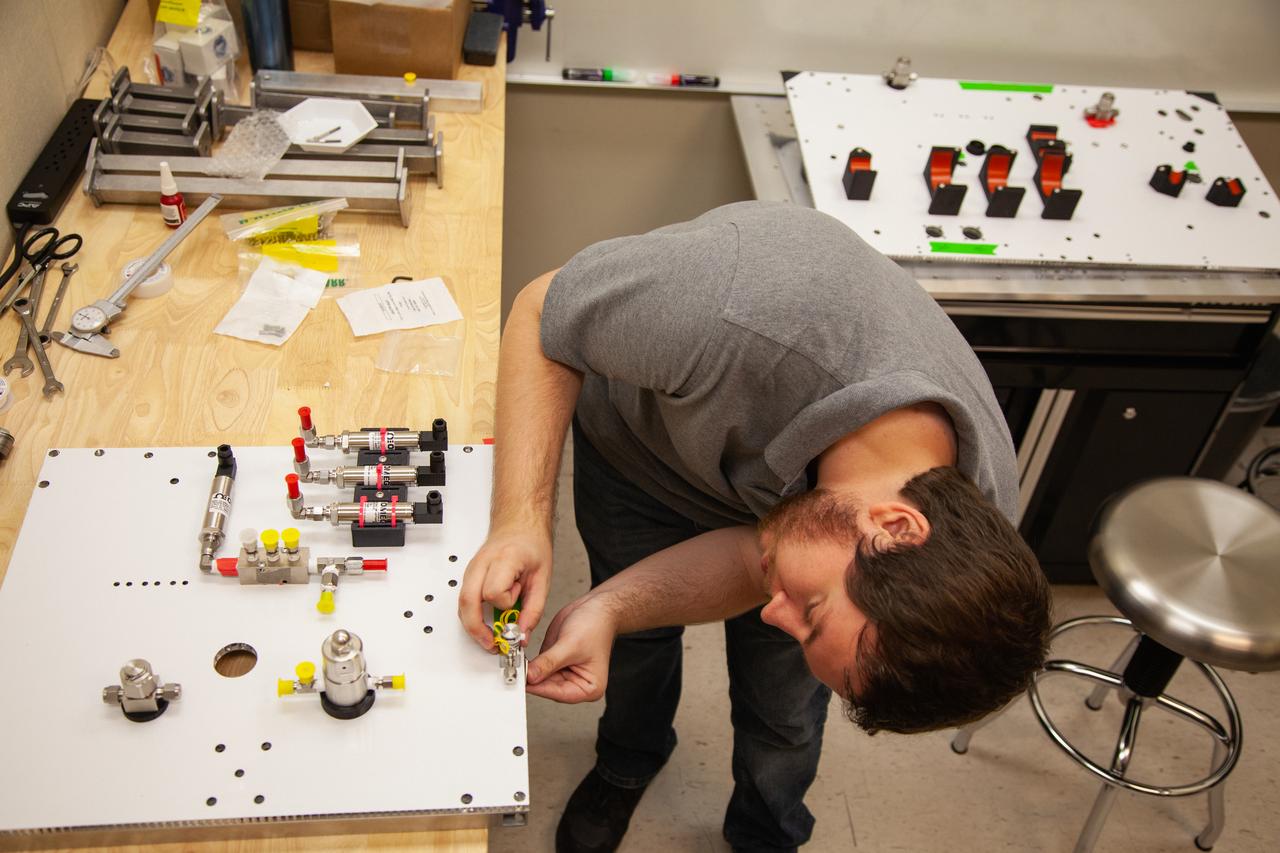
A Kennedy Space Center employee works on assembling the flight hardware of NASA’s Orbital Syngas Commodity Augmentation Reactor, or OSCAR – an Early Career Initiative project at the Florida spaceport that studies technology to convert trash and human waste into useful gasses such as methane, hydrogen and carbon dioxide. By processing small pieces of trash in a high-temperature reactor, OSCAR is advancing new and innovative technology for managing waste in space. OSCAR would reduce the amount of space needed for waste storage within a spacecraft, turn some waste into gasses that have energy storage and life support applications and ensure waste is no longer biologically active. A prototype has already been developed, and a team of Kennedy employees are in the process of constructing a new rig for suborbital flight testing.
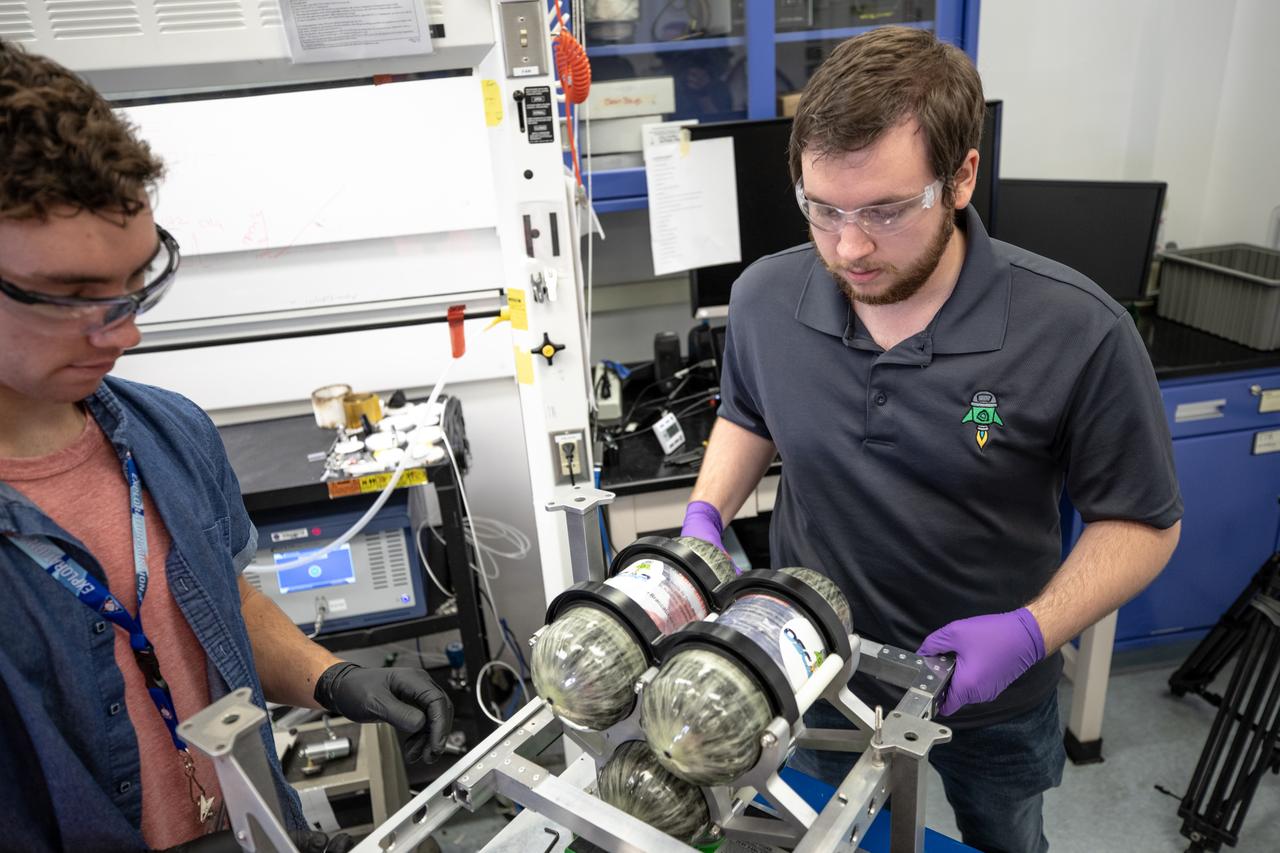
Kennedy Space Center employee Jonathan Gleeson (right) and Kennedy intern Patrick Follis assemble the flight hardware of NASA’s Orbital Syngas Commodity Augmentation Reactor, or OSCAR. OSCAR is an Early Career Initiative project at the Florida spaceport that studies technology to convert trash and human waste into useful gasses such as methane, hydrogen and carbon dioxide. By processing small pieces of trash in a high-temperature reactor, OSCAR is advancing new and innovative technology for managing waste in space. OSCAR would reduce the amount of space needed for waste storage within a spacecraft, turn some waste into gasses that have energy storage and life support applications, and ensure waste is no longer biologically active. A prototype has been developed, and a team of Kennedy employees are in the process of constructing a new rig for suborbital flight testing.
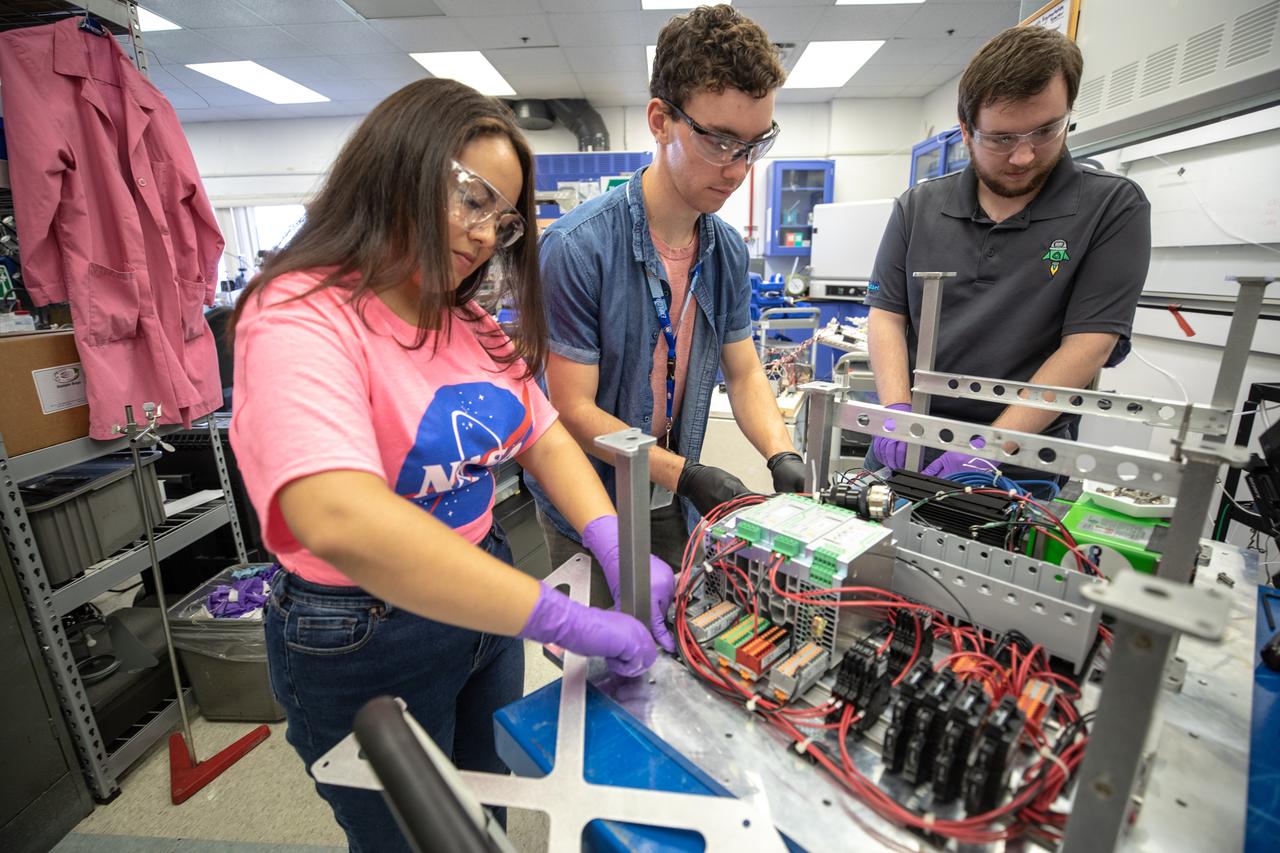
From left, Kennedy Space Center interns Brianna Sandoval and Patrick Follis, and Kennedy employee Jonathan Gleeson assemble the flight hardware of NASA’s Orbital Syngas Commodity Augmentation Reactor, or OSCAR. OSCAR is an Early Career Initiative project at the Florida spaceport that studies technology to convert trash and human waste into useful gasses such as methane, hydrogen and carbon dioxide. By processing small pieces of trash in a high-temperature reactor, OSCAR is advancing new and innovative technology for managing waste in space. OSCAR would reduce the amount of space needed for waste storage within a spacecraft, turn some waste into gasses that have energy storage and life support applications, and ensure waste is no longer biologically active. A prototype has been developed, and a team of Kennedy employees are in the process of constructing a new rig for suborbital flight testing.
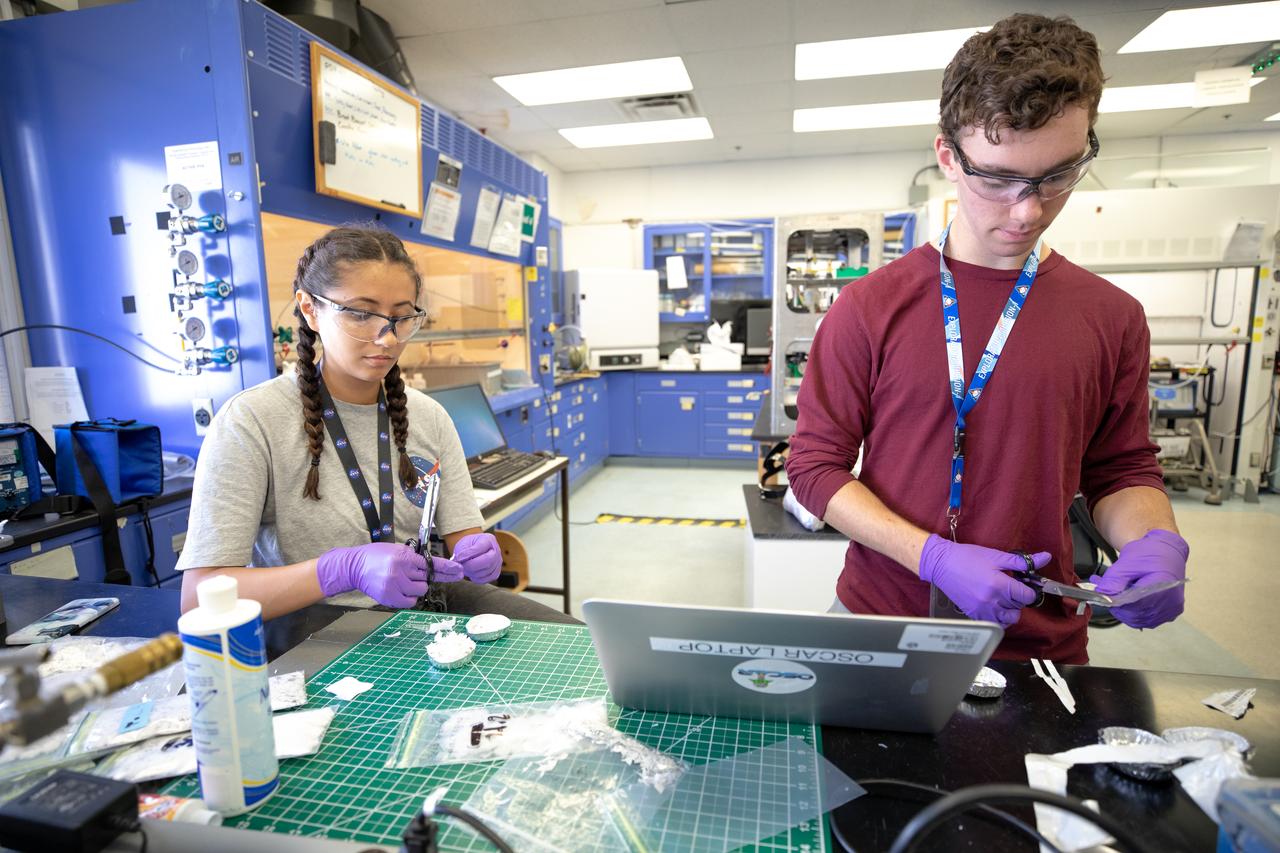
From left, interns Isabella Aviles and Patrick Follis at NASA’s Kennedy Space Center in Florida cut up different types of material for the agency’s Orbital Syngas Commodity Augmentation Reactor, or OSCAR, to use as a trash simulant during microgravity testing. OSCAR is an Early Career Initiative project at the spaceport that studies technology to convert trash and human waste into useful gasses such as methane, hydrogen and carbon dioxide. By processing small pieces of trash in a high-temperature reactor, OSCAR is advancing new and innovative technology for managing waste in space. OSCAR would reduce the amount of space needed for waste storage within a spacecraft, turn some waste into gasses that have energy storage and life support applications, recover water from trash and ensure waste is no longer biologically active. A prototype has been developed, and a team of Kennedy employees are in the process of constructing a new rig for suborbital flight testing.
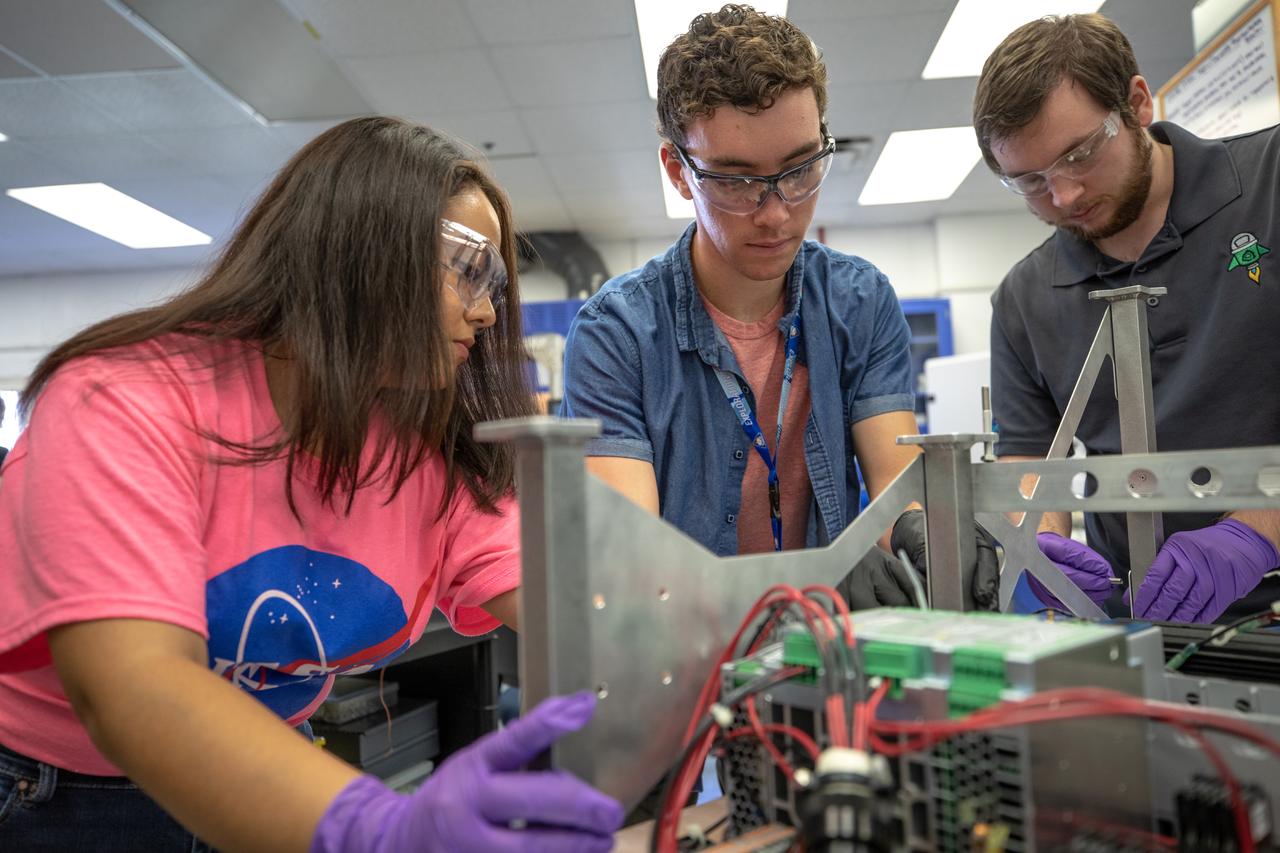
From left, Kennedy Space Center interns Brianna Sandoval and Patrick Follis, and Kennedy employee Jonathan Gleeson assemble the flight hardware of NASA’s Orbital Syngas Commodity Augmentation Reactor, or OSCAR. OSCAR is an Early Career Initiative project at the Florida spaceport that studies technology to convert trash and human waste into useful gasses such as methane, hydrogen and carbon dioxide. By processing small pieces of trash in a high-temperature reactor, OSCAR is advancing new and innovative technology for managing waste in space. OSCAR would reduce the amount of space needed for waste storage within a spacecraft, turn some waste into gasses that have energy storage and life support applications, and ensure waste is no longer biologically active. A prototype has been developed, and a team of Kennedy employees are in the process of constructing a new rig for suborbital flight testing.

NASA’s Orbital Syngas Commodity Augmentation Reactor, or OSCAR, is being prepared for suborbital flight testing at the agency’s Kennedy Space Center in Florida. OSCAR is an Early Career Initiative project at the spaceport that studies technology to convert trash and human waste into useful gasses such as methane, hydrogen and carbon dioxide. By processing small pieces of trash in a high-temperature reactor, OSCAR is advancing new and innovative technology for managing waste in space. OSCAR would reduce the amount of space needed for waste storage within a spacecraft, turn some waste into gasses that have energy storage and life support applications, and ensure waste is no longer biologically active. A prototype has been developed, and a team of Kennedy employees are in the process of constructing a new rig for the suborbital flight test.
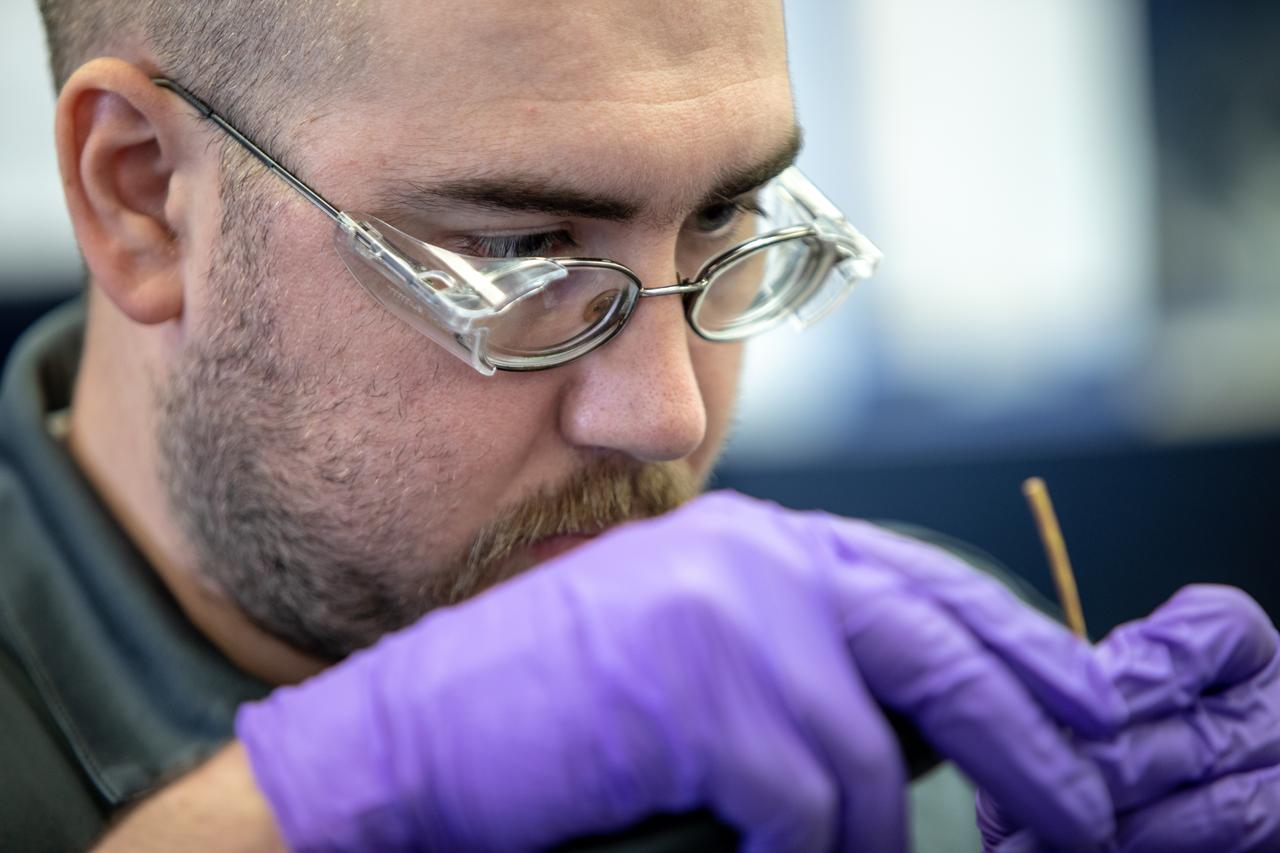
Thomas Cauvel, an intern assisting with software/electrical engineering on NASA’s Orbital Syngas Commodity Augmentation Reactor, or OSCAR, at Kennedy Space Center assembles the flight hardware. OSCAR is an Early Career Initiative project at the Florida spaceport that studies technology to convert trash and human waste into useful gasses such as methane, hydrogen and carbon dioxide. By processing small pieces of trash in a high-temperature reactor, OSCAR is advancing new and innovative technology for managing waste in space. OSCAR would reduce the amount of space needed for waste storage within a spacecraft, turn some waste into gasses that have energy storage and life support applications, and ensure waste is no longer biologically active. A prototype has been developed, and a team of Kennedy employees are in the process of constructing a new rig for suborbital flight testing.

Patrick Follis, an intern at NASA’s Kennedy Space Center in Florida, assembles the flight hardware for the agency’s Orbital Syngas Commodity Augmentation Reactor, or OSCAR. OSCAR is an Early Career Initiative project at the spaceport that studies technology to convert trash and human waste into useful gasses such as methane, hydrogen and carbon dioxide. By processing small pieces of trash in a high-temperature reactor, OSCAR is advancing new and innovative technology for managing waste in space. OSCAR would reduce the amount of space needed for waste storage within a spacecraft, turn some waste into gasses that have energy storage and life support applications, and ensure waste is no longer biologically active. A prototype has been developed, and a team of Kennedy employees are in the process of constructing a new rig for suborbital flight testing.
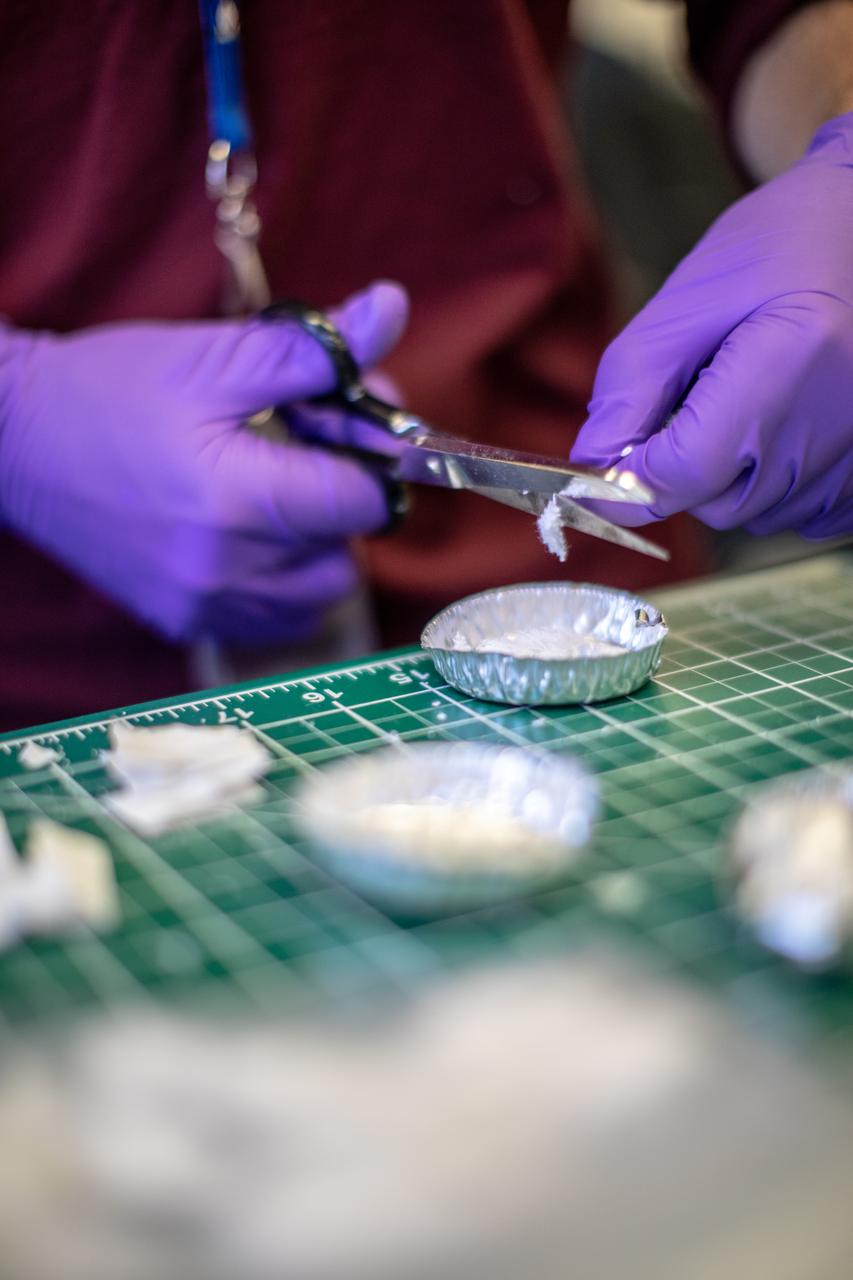
An intern at NASA’s Kennedy Space Center in Florida cuts up different types of material to be utilized as trash simulant for the agency’s Orbital Syngas Commodity Augmentation Reactor, or OSCAR. OSCAR is an Early Career Initiative project at the spaceport that studies technology to convert trash and human waste into useful gasses such as methane, hydrogen and carbon dioxide. By processing small pieces of trash in a high-temperature reactor, OSCAR is advancing new and innovative technology for managing waste in space. OSCAR would reduce the amount of space needed for waste storage within a spacecraft, turn some waste into gasses that have energy storage and life support applications, and ensure waste is no longer biologically active. A prototype has been developed, and a team of Kennedy employees are in the process of constructing a new rig for suborbital flight testing.
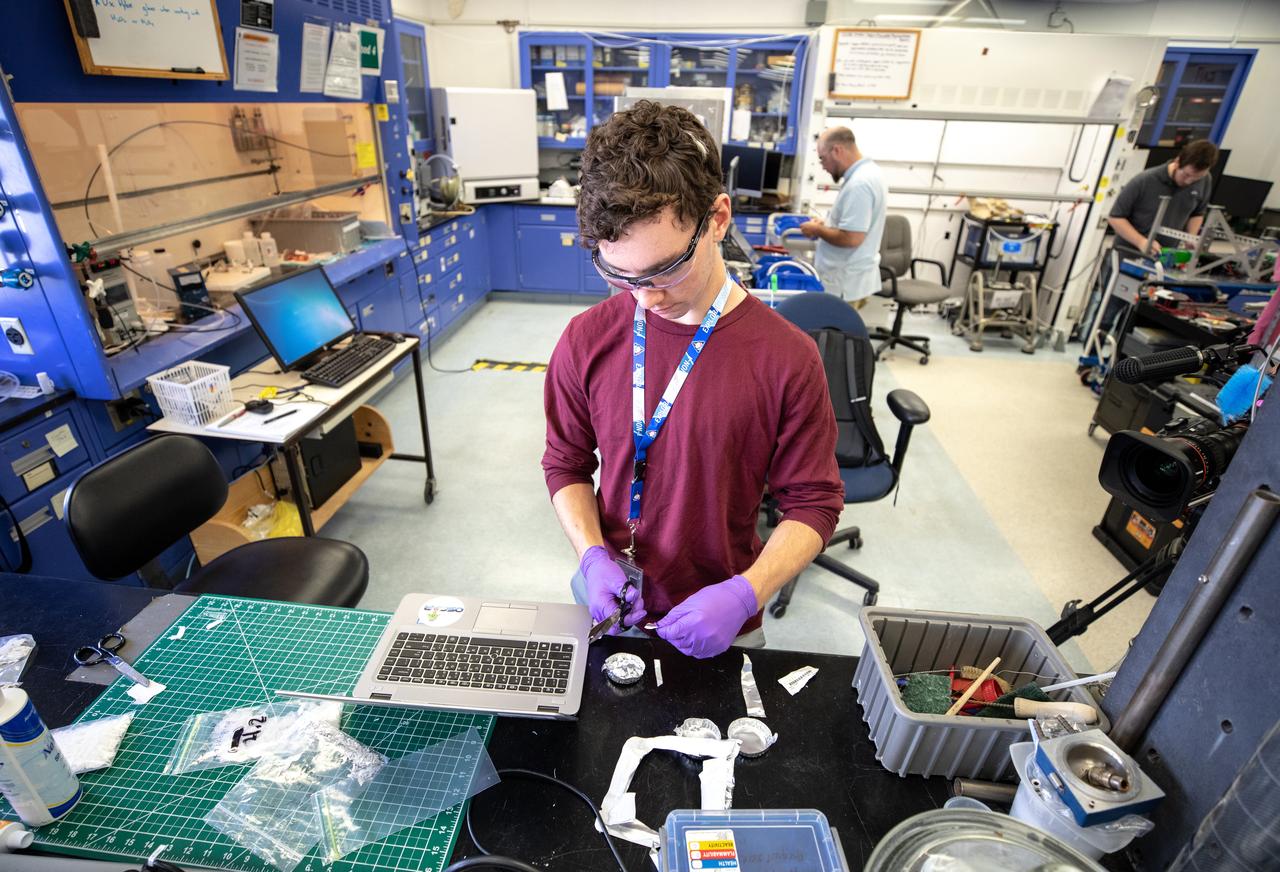
Patrick Follis, an intern at NASA’s Kennedy Space Center in Florida, cuts up different types of material for the agency’s Orbital Syngas Commodity Augmentation Reactor, or OSCAR, to use as a trash simulant during microgravity testing. OSCAR is an Early Career Initiative project at the spaceport that studies technology to convert trash and human waste into useful gasses such as methane, hydrogen and carbon dioxide. By processing small pieces of trash in a high-temperature reactor, OSCAR is advancing new and innovative technology for managing waste in space. OSCAR would reduce the amount of space needed for waste storage within a spacecraft, turn some waste into gasses that have energy storage and life support applications, and ensure waste is no longer biologically active. A prototype has been developed, and a team of Kennedy employees are in the process of constructing a new rig for suborbital flight testing.
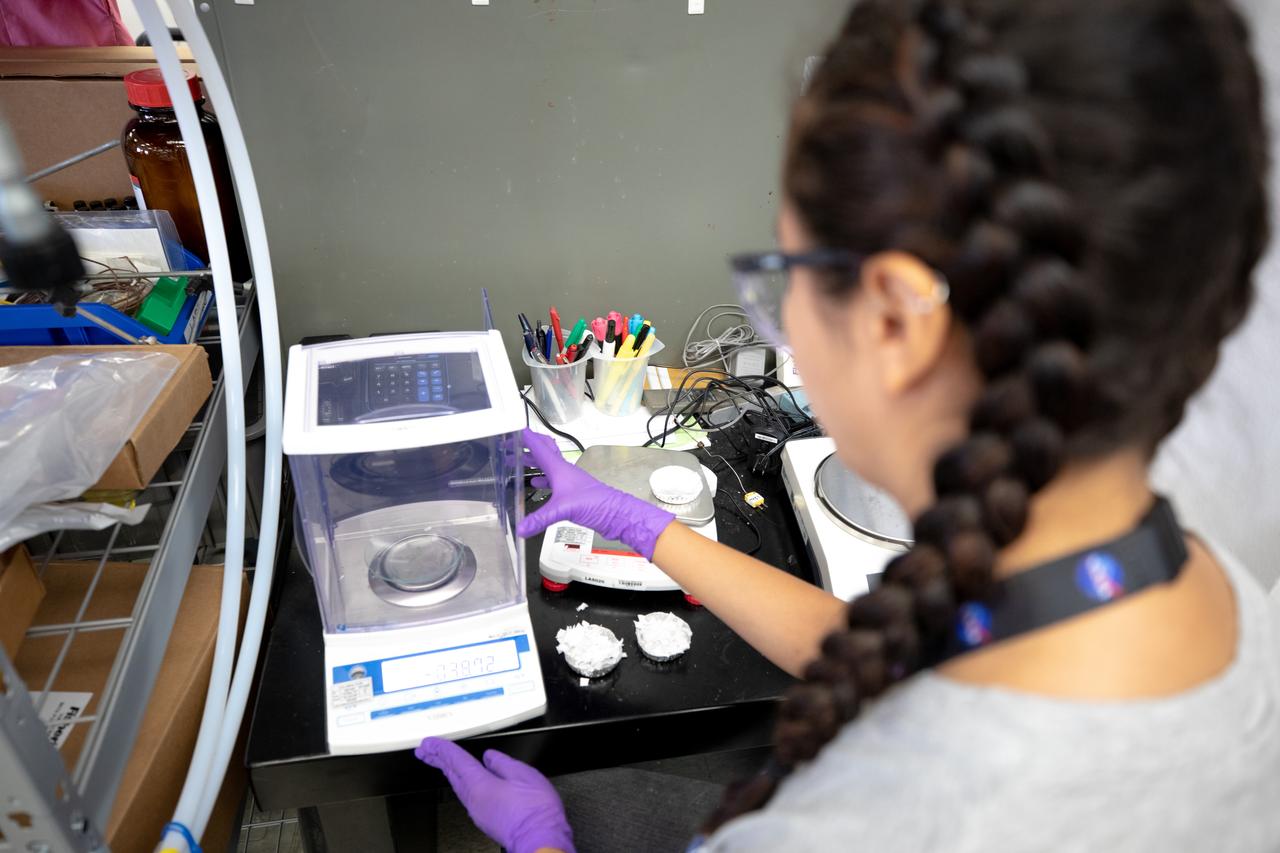
Isabella Aviles, an intern at NASA’s Kennedy Space Center in Florida, weighs trash simulant – comprised of different types of material that have been cut into tiny pieces – that will be utilized for the agency’s Orbital Syngas Commodity Augmentation Reactor, or OSCAR. OSCAR is an Early Career Initiative project at the Florida spaceport that studies technology to convert trash and human waste into useful gasses such as methane, hydrogen and carbon dioxide. By processing small pieces of trash in a high-temperature reactor, OSCAR is advancing new and innovative technology for managing waste in space. OSCAR would reduce the amount of space needed for waste storage within a spacecraft, turn some waste into gasses that have energy storage and life support applications, and ensure waste is no longer biologically active. A prototype has been developed, and a team of Kennedy employees are in the process of constructing a new rig for suborbital flight testing.
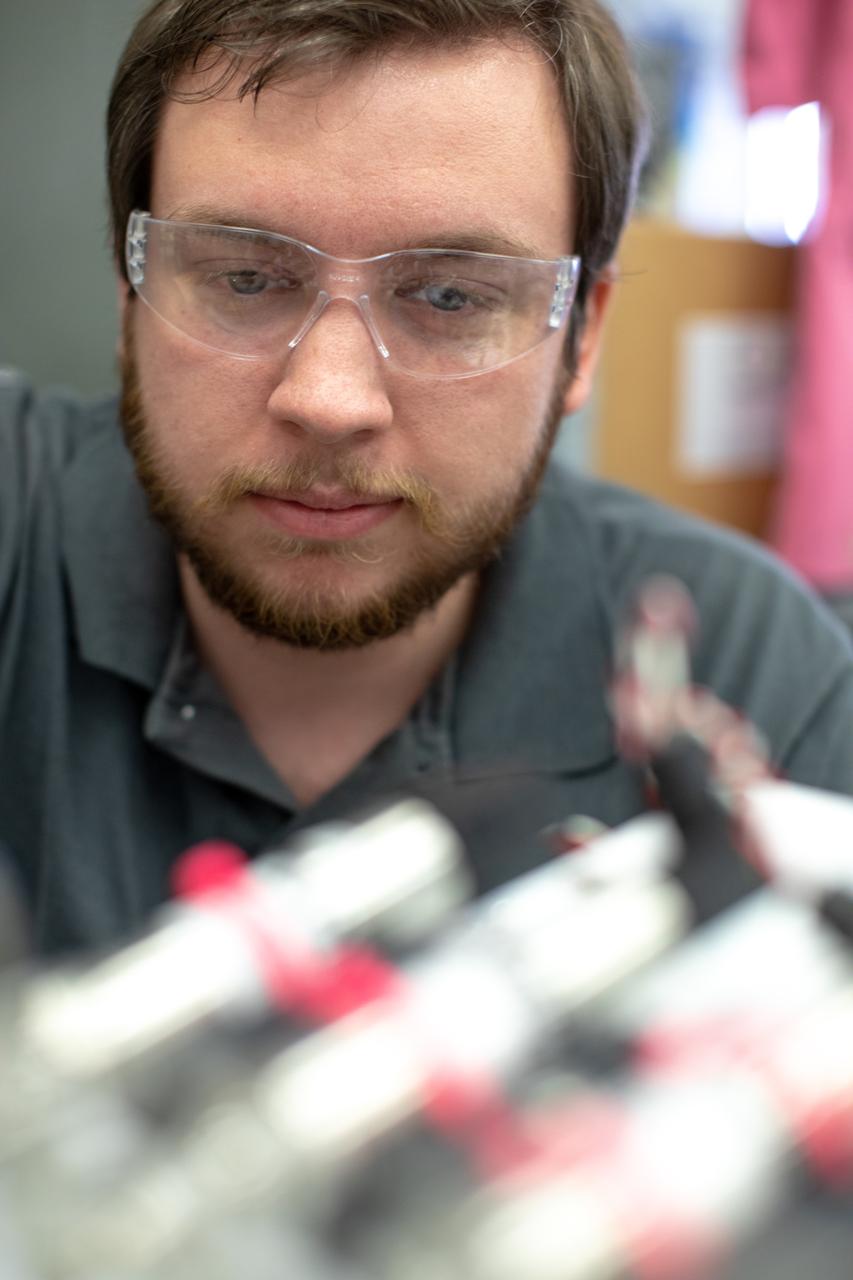
Jonathan Gleeson, Kennedy Space Center employee providing support for NASA’s Orbital Syngas Commodity Augmentation Reactor (OSCAR) under the center’s Laboratory Support Services and Operations contract, assembles the flight hardware of OSCAR. OSCAR is an Early Career Initiative project at the Florida spaceport that studies technology to convert trash and human waste into useful gasses such as methane, hydrogen and carbon dioxide. By processing small pieces of trash in a high-temperature reactor, OSCAR is advancing new and innovative technology for managing waste in space. OSCAR would reduce the amount of space needed for waste storage within a spacecraft, turn some waste into gasses that have energy storage and life support applications, and ensure waste is no longer biologically active. A prototype has been developed, and a team of Kennedy employees are in the process of constructing a new rig for suborbital flight testing.
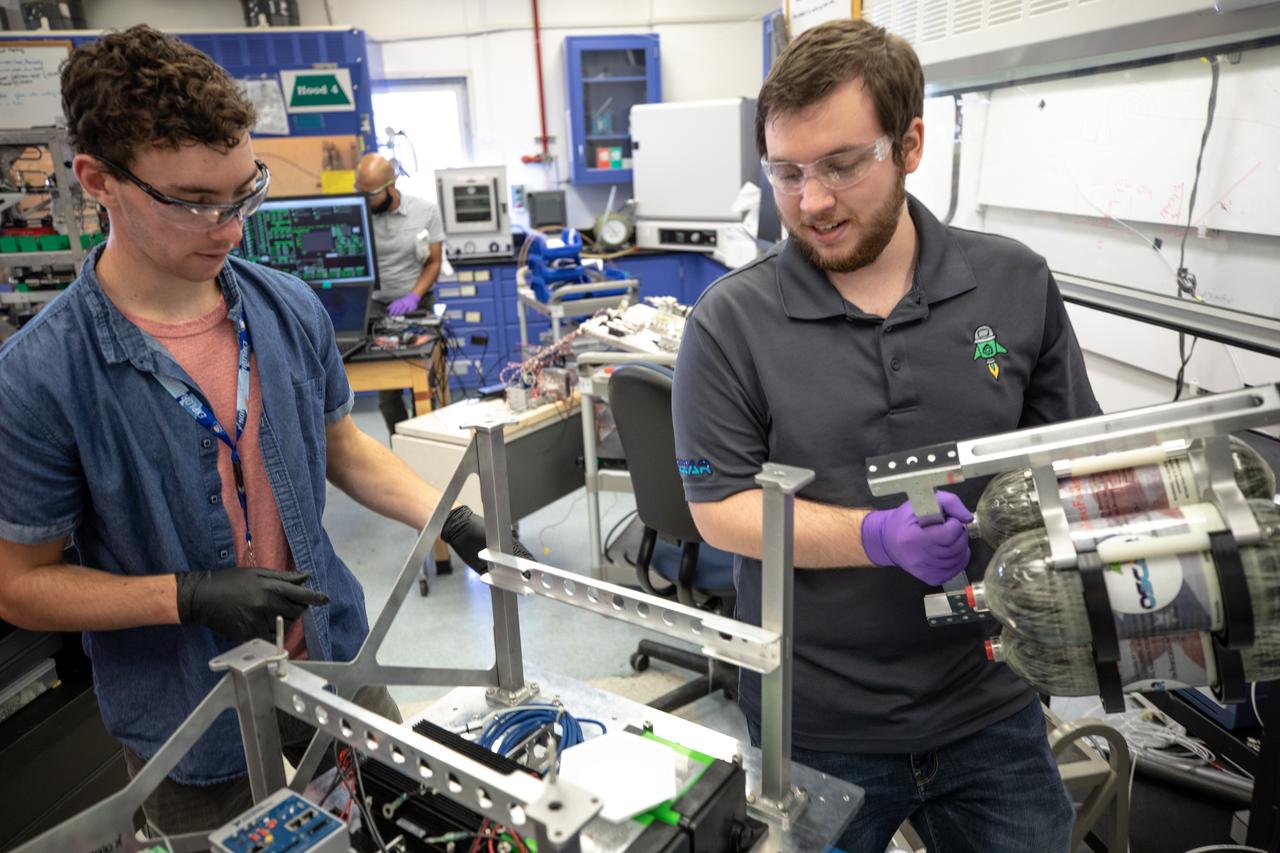
Kennedy Space Center employee Jonathan Gleeson (right) and Kennedy intern Patrick Follis assemble the flight hardware of NASA’s Orbital Syngas Commodity Augmentation Reactor, or OSCAR. OSCAR is an Early Career Initiative project at the Florida spaceport that studies technology to convert trash and human waste into useful gasses such as methane, hydrogen and carbon dioxide. By processing small pieces of trash in a high-temperature reactor, OSCAR is advancing new and innovative technology for managing waste in space. OSCAR would reduce the amount of space needed for waste storage within a spacecraft, turn some waste into gasses that have energy storage and life support applications, and ensure waste is no longer biologically active. A prototype has been developed, and a team of Kennedy employees are in the process of constructing a new rig for suborbital flight testing.
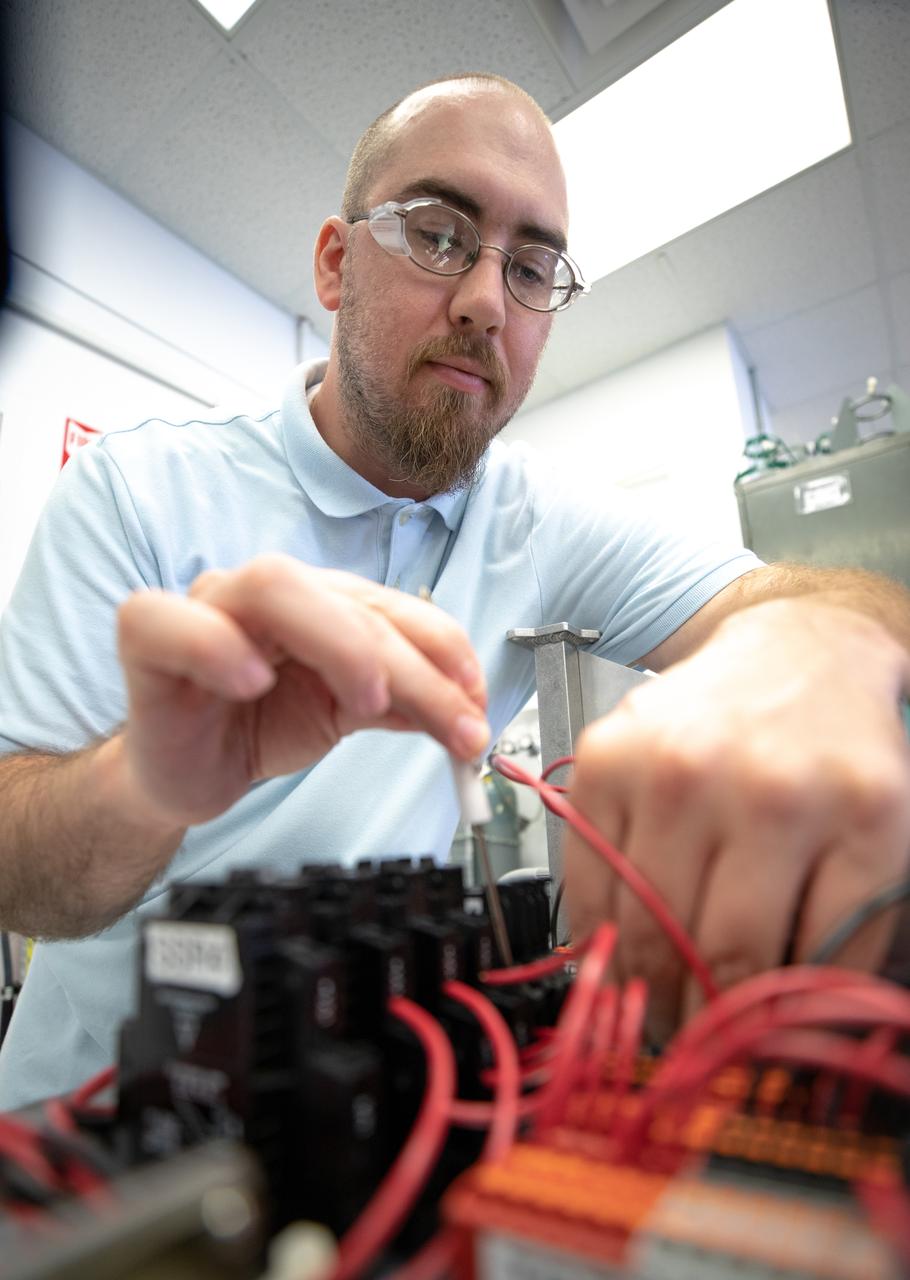
Thomas Cauvel, an intern assisting with software/electrical engineering on NASA’s Orbital Syngas Commodity Augmentation Reactor, or OSCAR, at Kennedy Space Center assembles the flight hardware. OSCAR is an Early Career Initiative project at the Florida spaceport that studies technology to convert trash and human waste into useful gasses such as methane, hydrogen and carbon dioxide. By processing small pieces of trash in a high-temperature reactor, OSCAR is advancing new and innovative technology for managing waste in space. OSCAR would reduce the amount of space needed for waste storage within a spacecraft, turn some waste into gasses that have energy storage and life support applications, and ensure waste is no longer biologically active. A prototype has been developed, and a team of Kennedy employees are in the process of constructing a new rig for suborbital flight testing.
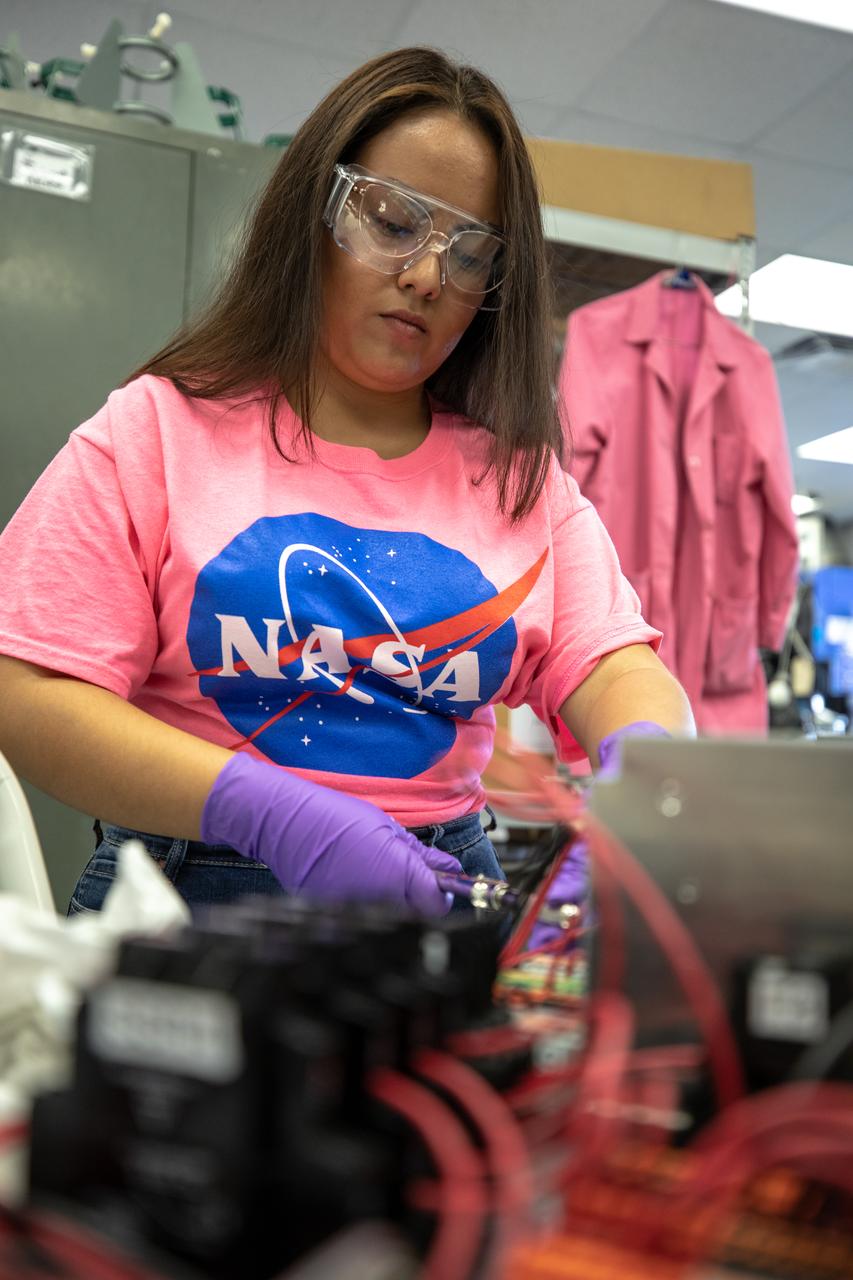
Brianna Sandoval, an intern at NASA’s Kennedy Space Center in Florida, assembles the flight hardware of the agency’s Orbital Syngas Commodity Augmentation Reactor, or OSCAR. OSCAR is an Early Career Initiative project at the spaceport that studies technology to convert trash and human waste into useful gasses such as methane, hydrogen and carbon dioxide. By processing small pieces of trash in a high-temperature reactor, OSCAR is advancing new and innovative technology for managing waste in space. OSCAR would reduce the amount of space needed for waste storage within a spacecraft, turn some waste into gasses that have energy storage and life support applications, and ensure waste is no longer biologically active. A prototype has been developed, and a team of Kennedy employees are in the process of constructing a new rig for suborbital flight testing.
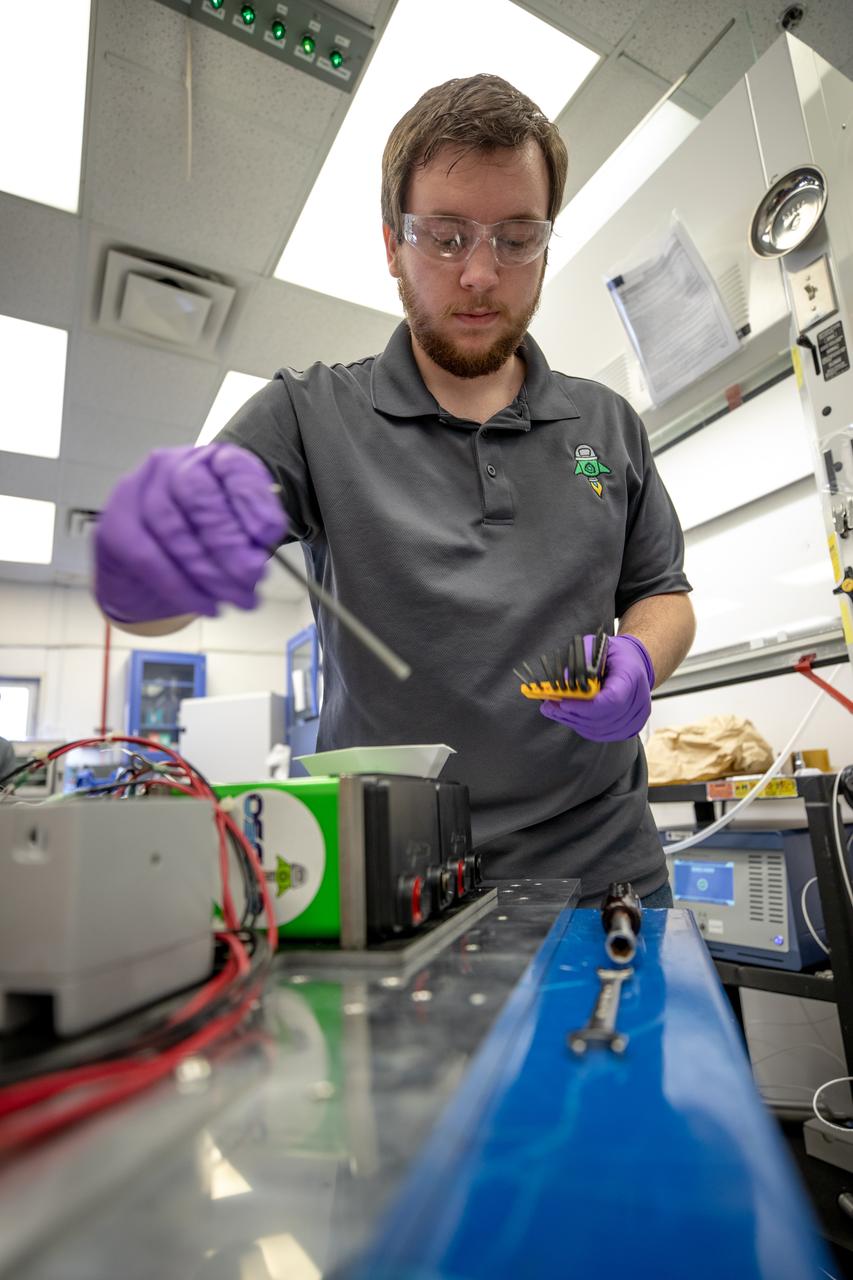
Jonathan Gleeson, Kennedy Space Center employee providing support for NASA’s Orbital Syngas Commodity Augmentation Reactor (OSCAR) under the center’s Laboratory Support Services and Operations contract, assembles the flight hardware of OSCAR. OSCAR is an Early Career Initiative project at the Florida spaceport that studies technology to convert trash and human waste into useful gasses such as methane, hydrogen and carbon dioxide. By processing small pieces of trash in a high-temperature reactor, OSCAR is advancing new and innovative technology for managing waste in space. OSCAR would reduce the amount of space needed for waste storage within a spacecraft, turn some waste into gasses that have energy storage and life support applications, and ensure waste is no longer biologically active. A prototype has been developed, and a team of Kennedy employees are in the process of constructing a new rig for suborbital flight testing.
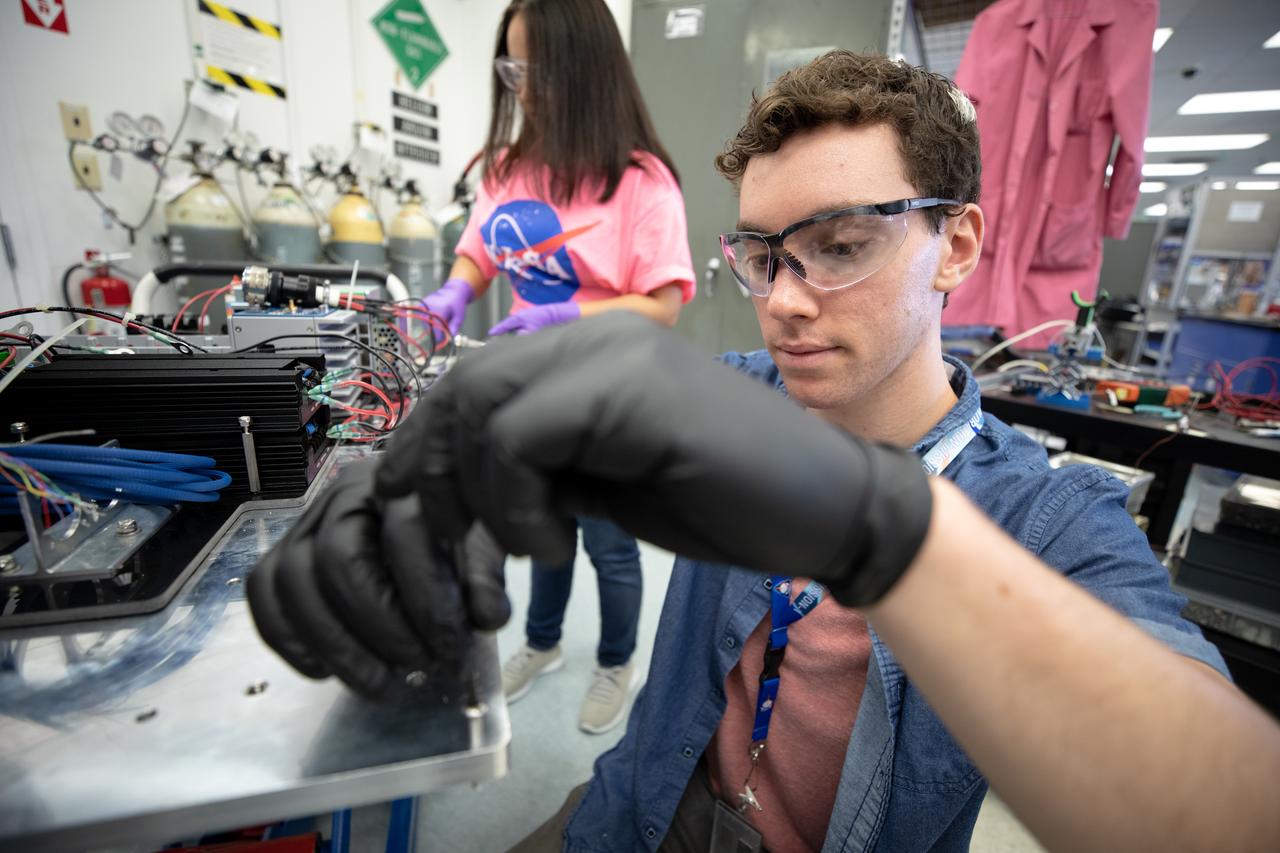
Interns Brianna Sandoval (left) and Patrick Follis at NASA’s Kennedy Space Center in Florida assemble the flight hardware for the agency’s Orbital Syngas Commodity Augmentation Reactor, or OSCAR. OSCAR is an Early Career Initiative project at the spaceport that studies technology to convert trash and human waste into useful gasses such as methane, hydrogen and carbon dioxide. By processing small pieces of trash in a high-temperature reactor, OSCAR is advancing new and innovative technology for managing waste in space. OSCAR would reduce the amount of space needed for waste storage within a spacecraft, turn some waste into gasses that have energy storage and life support applications, and ensure waste is no longer biologically active. A prototype has been developed, and a team of Kennedy employees are in the process of constructing a new rig for suborbital flight testing.
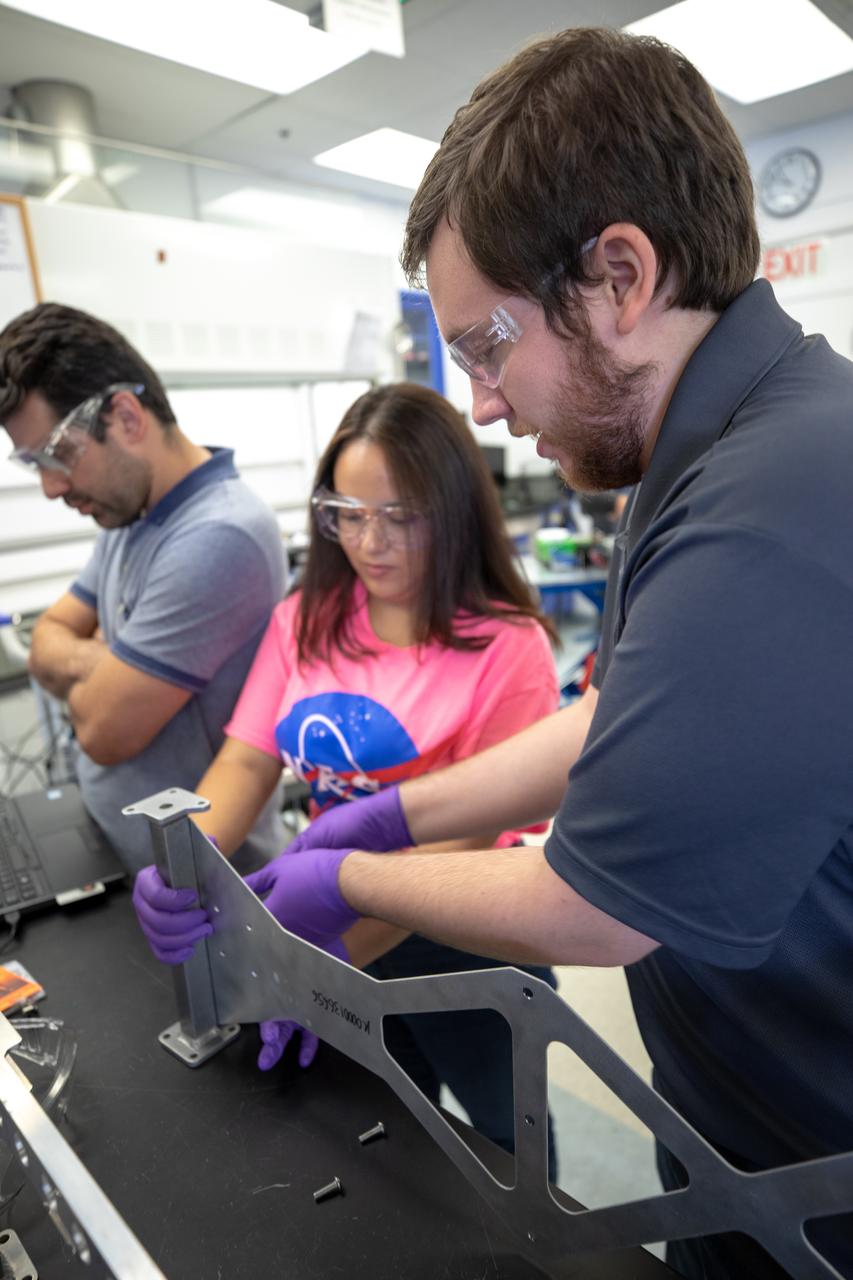
From left, Kennedy Space Center Mechanical Engineer Jaime Toro, NASA’s Orbital Syngas Commodity Augmentation Reactor (OSCAR) data acquisition and testing; Brianna Sandoval, OSCAR intern; and Jonathan Gleeson, Kennedy employee providing support for OSCAR under the center’s Laboratory Support Services and Operations contract, assemble the flight hardware of OSCAR. OSCAR is an Early Career Initiative project at the Florida spaceport that studies technology to convert trash and human waste into useful gasses such as methane, hydrogen and carbon dioxide. By processing small pieces of trash in a high-temperature reactor, OSCAR is advancing new and innovative technology for managing waste in space. OSCAR would reduce the amount of space needed for waste storage within a spacecraft, turn some waste into gasses that have energy storage and life support applications, and ensure waste is no longer biologically active. A prototype has been developed, and a team of Kennedy employees are in the process of constructing a new rig for suborbital flight testing.
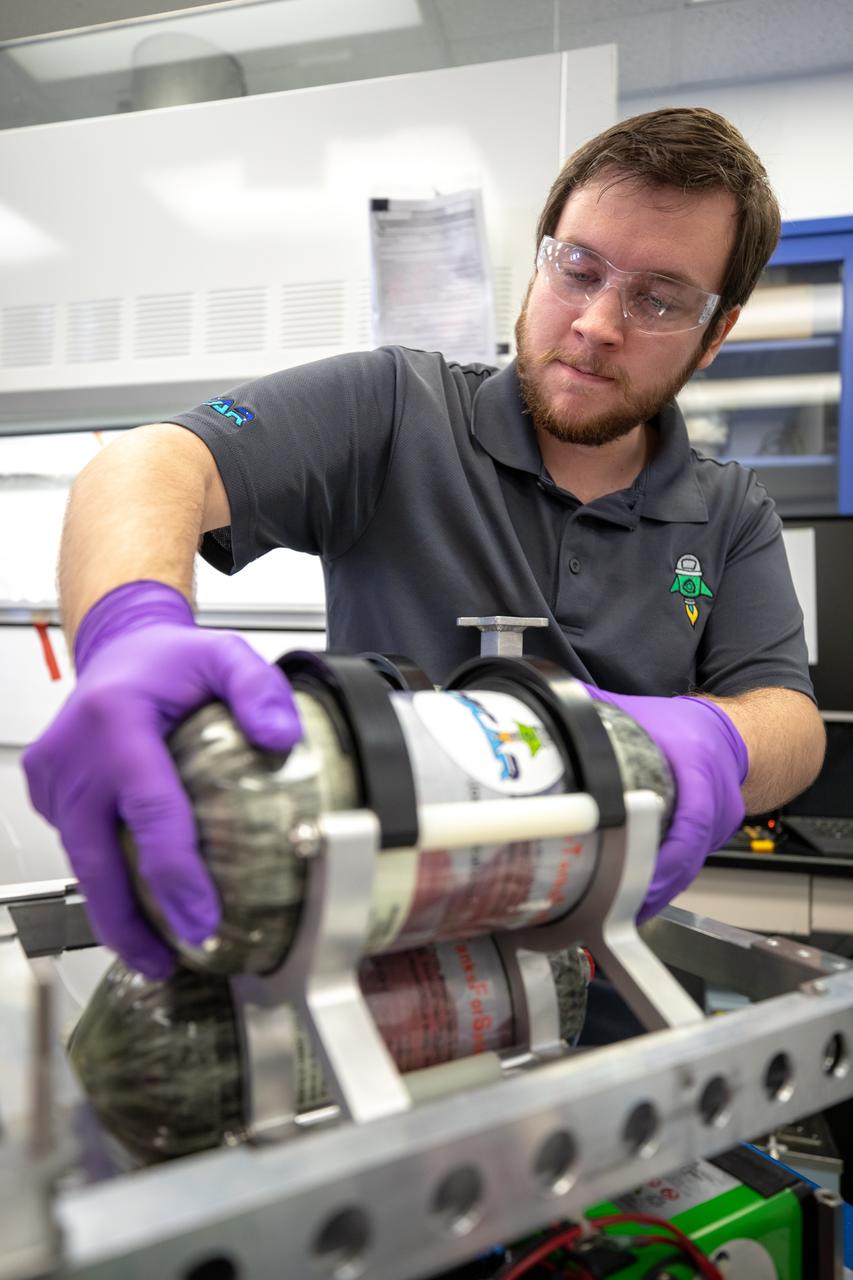
Jonathan Gleeson, Kennedy Space Center employee providing support for NASA’s Orbital Syngas Commodity Augmentation Reactor (OSCAR) under the center’s Laboratory Support Services and Operations contract, installs OSCAR to the flight hardware that will carry it on its suborbital flight test. OSCAR is an Early Career Initiative project at the Florida spaceport that studies technology to convert trash and human waste into useful gasses such as methane, hydrogen and carbon dioxide. By processing small pieces of trash in a high-temperature reactor, OSCAR is advancing new and innovative technology for managing waste in space. OSCAR would reduce the amount of space needed for waste storage within a spacecraft, turn some waste into gasses that have energy storage and life support applications, and ensure waste is no longer biologically active. A prototype has been developed, and a team of Kennedy employees have worked on constructing a new rig for suborbital flight testing.

Kennedy Space Center intern Patrick Follis (left) and Kennedy employee Jonathan Gleeson assemble the flight hardware of NASA’s Orbital Syngas Commodity Augmentation Reactor, or OSCAR – an Early Career Initiative project at the Florida spaceport that studies technology to convert trash and human waste into useful gasses such as methane, hydrogen and carbon dioxide. By processing small pieces of trash in a high-temperature reactor, OSCAR is advancing new and innovative technology for managing waste in space. OSCAR would reduce the amount of space needed for waste storage within a spacecraft, turn some waste into gasses that have energy storage and life support applications, and ensure waste is no longer biologically active. A prototype has been developed, and a team of Kennedy employees are in the process of constructing a new rig for suborbital flight testing.
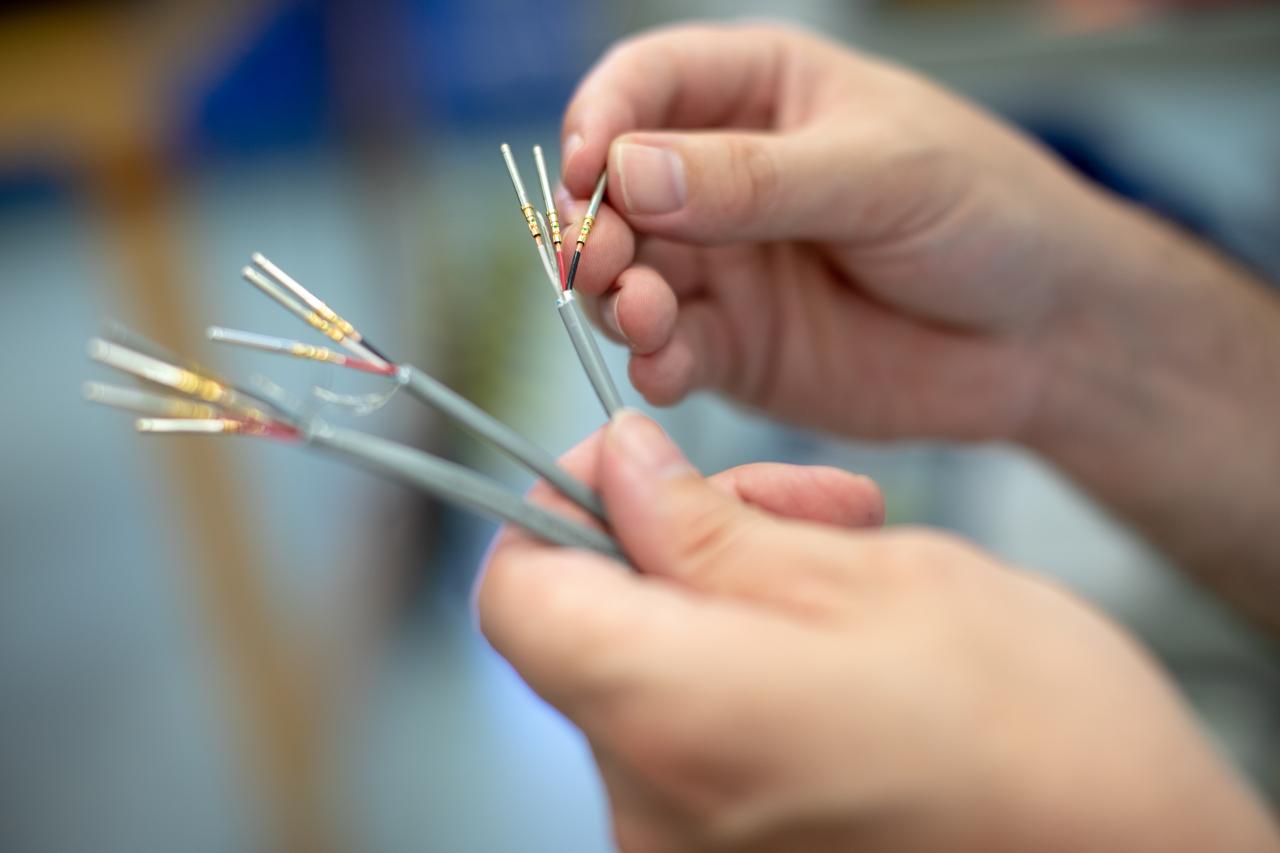
Flight hardware for NASA’s Orbital Syngas Commodity Augmentation Rector, or OSCAR, is photographed at the agency’s Kennedy Space Center in Florida. OSCAR is an Early Career Initiative project at the spaceport that studies technology to convert trash and human waste into useful gasses such as methane, hydrogen and carbon dioxide. By processing small pieces of trash in a high-temperature reactor, OSCAR is advancing new and innovative technology for managing waste in space. OSCAR would reduce the amount of space needed for waste storage within a spacecraft, turn some waste into gasses that have energy storage and life support applications, and ensure waste is no longer biologically active. A prototype has been developed, and a team of Kennedy employees are in the process of constructing a new rig for suborbital flight testing.
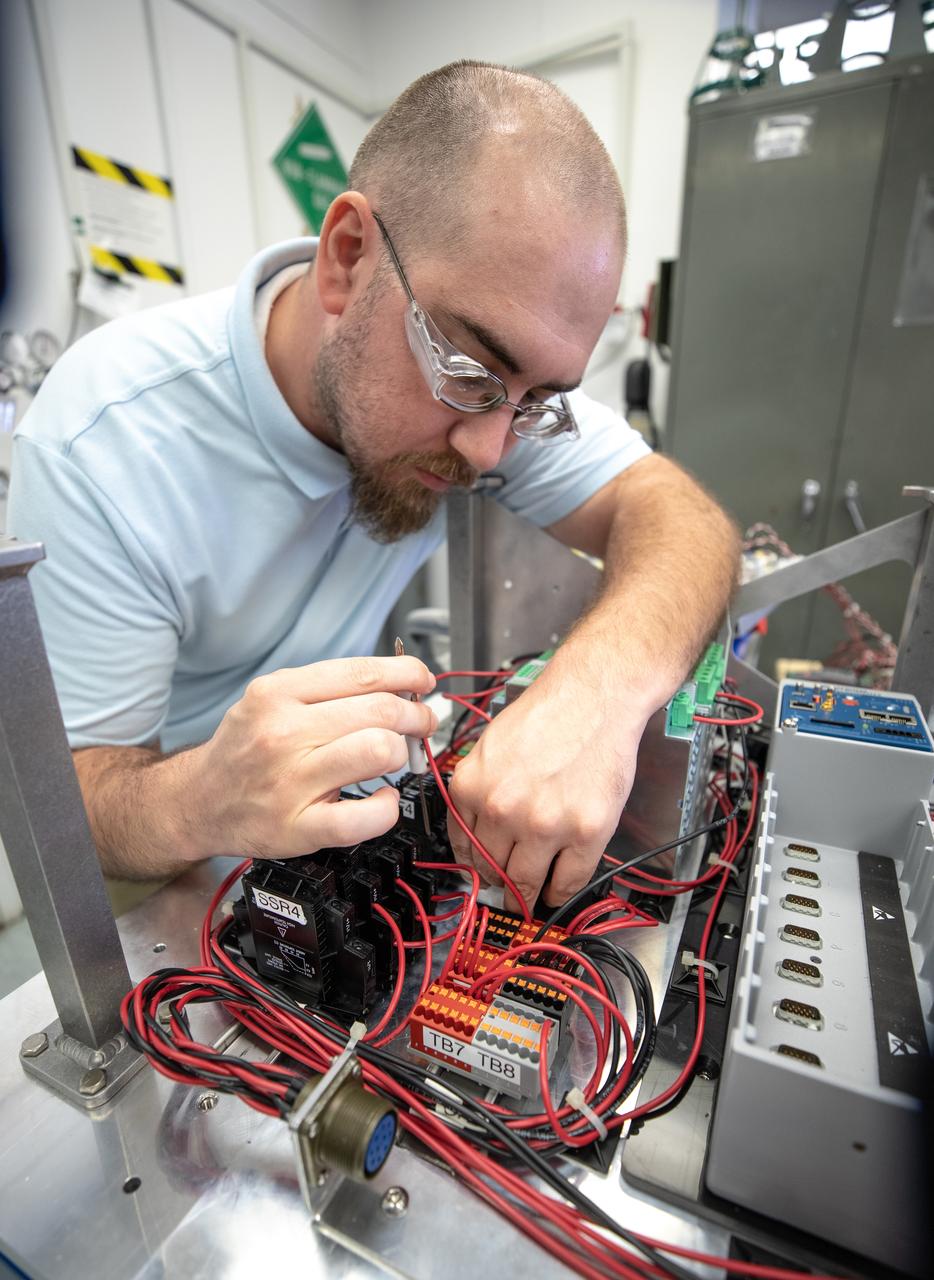
Thomas Cauvel, an intern assisting with software/electrical engineering on NASA’s Orbital Syngas Commodity Augmentation Reactor, or OSCAR, at Kennedy Space Center assembles the flight hardware. OSCAR is an Early Career Initiative project at the Florida spaceport that studies technology to convert trash and human waste into useful gasses such as methane, hydrogen and carbon dioxide. By processing small pieces of trash in a high-temperature reactor, OSCAR is advancing new and innovative technology for managing waste in space. OSCAR would reduce the amount of space needed for waste storage within a spacecraft, turn some waste into gasses that have energy storage and life support applications, and ensure waste is no longer biologically active. A prototype has been developed, and a team of Kennedy employees are in the process of constructing a new rig for suborbital flight testing.
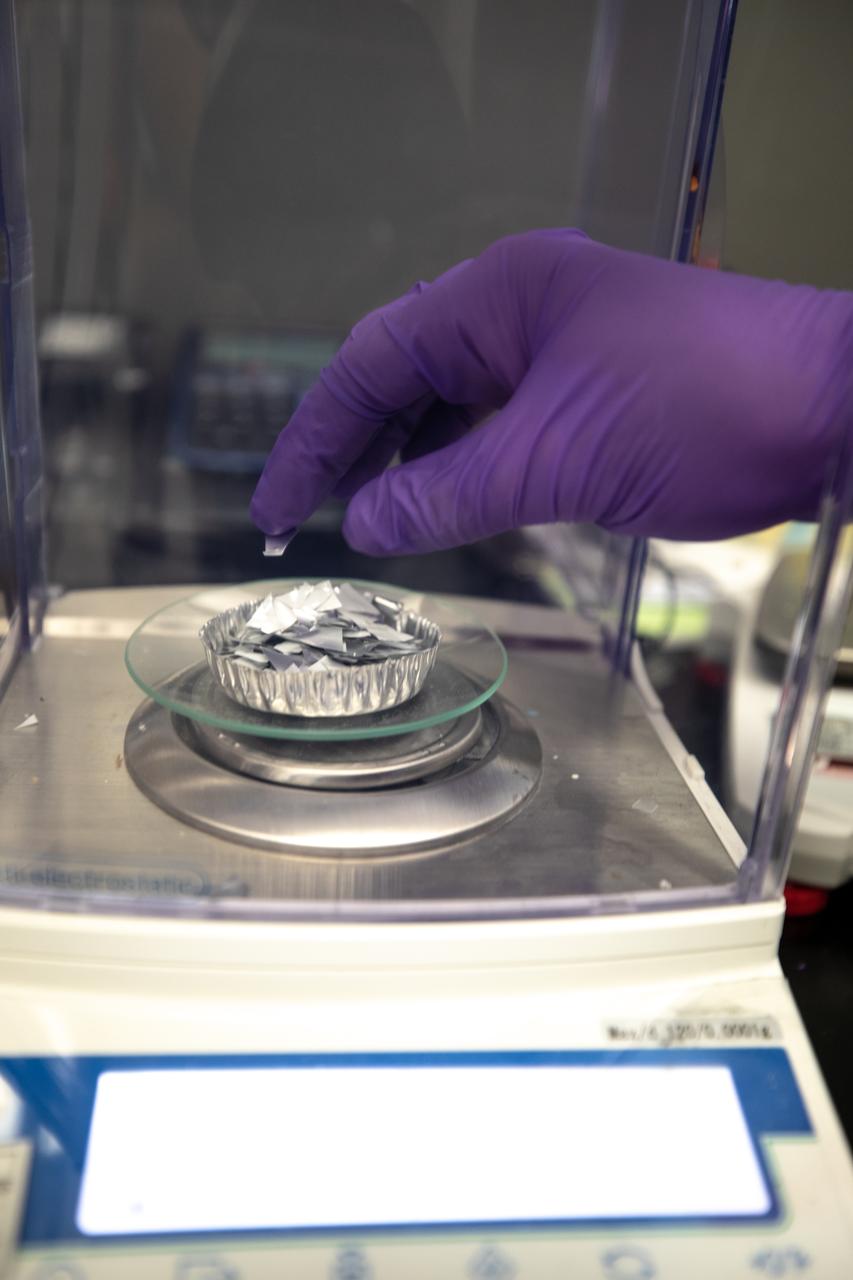
A Kennedy Space Center intern weighs trash simulant – comprised of different types of material that have been cut into tiny pieces – that will be utilized for the agency’s Orbital Syngas Commodity Augmentation Reactor, or OSCAR. OSCAR is an Early Career Initiative project at the Florida spaceport that studies technology to convert trash and human waste into useful gasses such as methane, hydrogen and carbon dioxide. By processing small pieces of trash in a high-temperature reactor, OSCAR is advancing new and innovative technology for managing waste in space. OSCAR would reduce the amount of space needed for waste storage within a spacecraft, turn some waste into gasses that have energy storage and life support applications, and ensure waste is no longer biologically active. A prototype has been developed, and a team of Kennedy employees are in the process of constructing a new rig for suborbital flight testing.
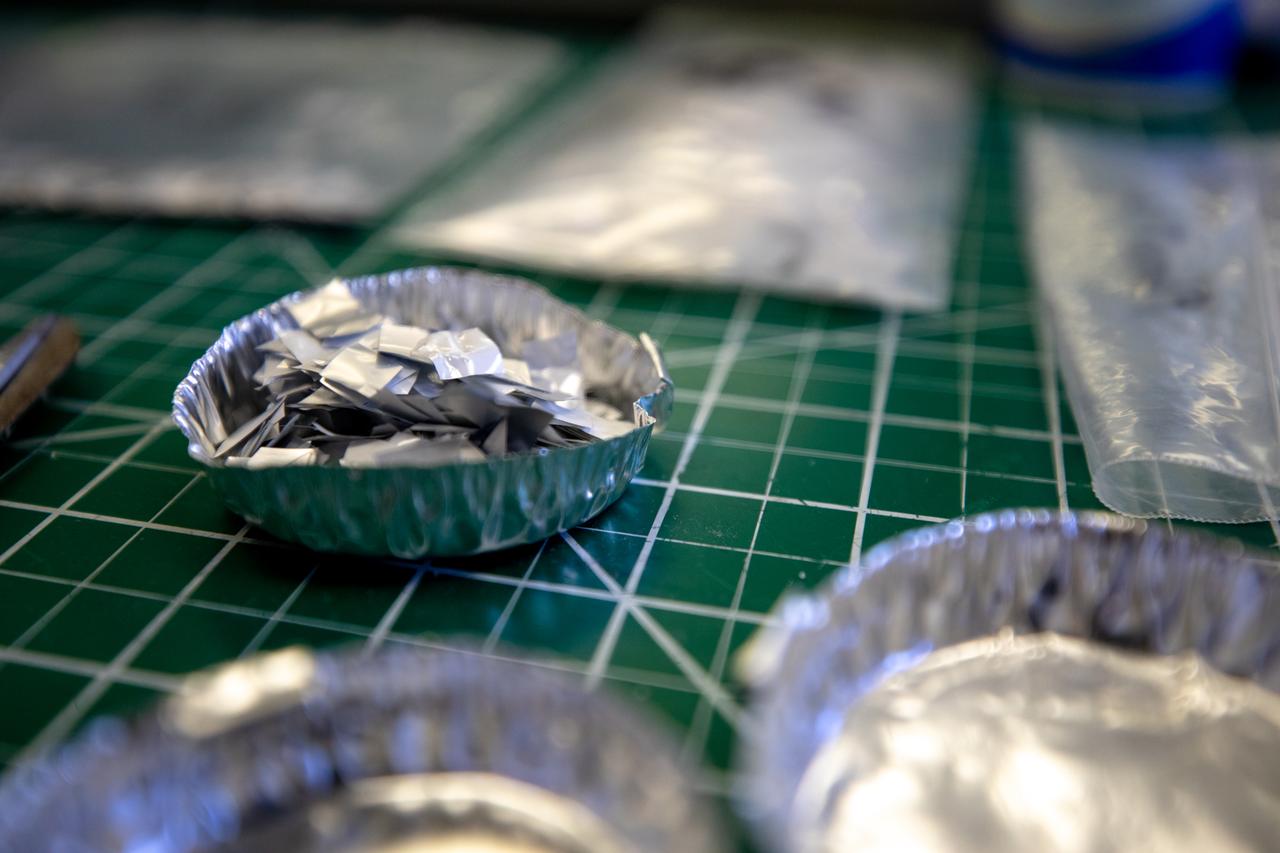
Pictured at Kennedy Space Center is trash simulant – comprised of different types of material that have been cut into tiny pieces – that will be utilized for NASA’s Orbital Syngas Commodity Augmentation Reactor, or OSCAR. OSCAR is an Early Career Initiative project at the Florida spaceport that studies technology to convert trash and human waste into useful gasses such as methane, hydrogen and carbon dioxide. By processing small pieces of trash in a high-temperature reactor, OSCAR is advancing new and innovative technology for managing waste in space. OSCAR would reduce the amount of space needed for waste storage within a spacecraft, turn some waste into gasses that have energy storage and life support applications, and ensure waste is no longer biologically active. A prototype has been developed, and a team of Kennedy employees are in the process of constructing a new rig for suborbital flight testing.