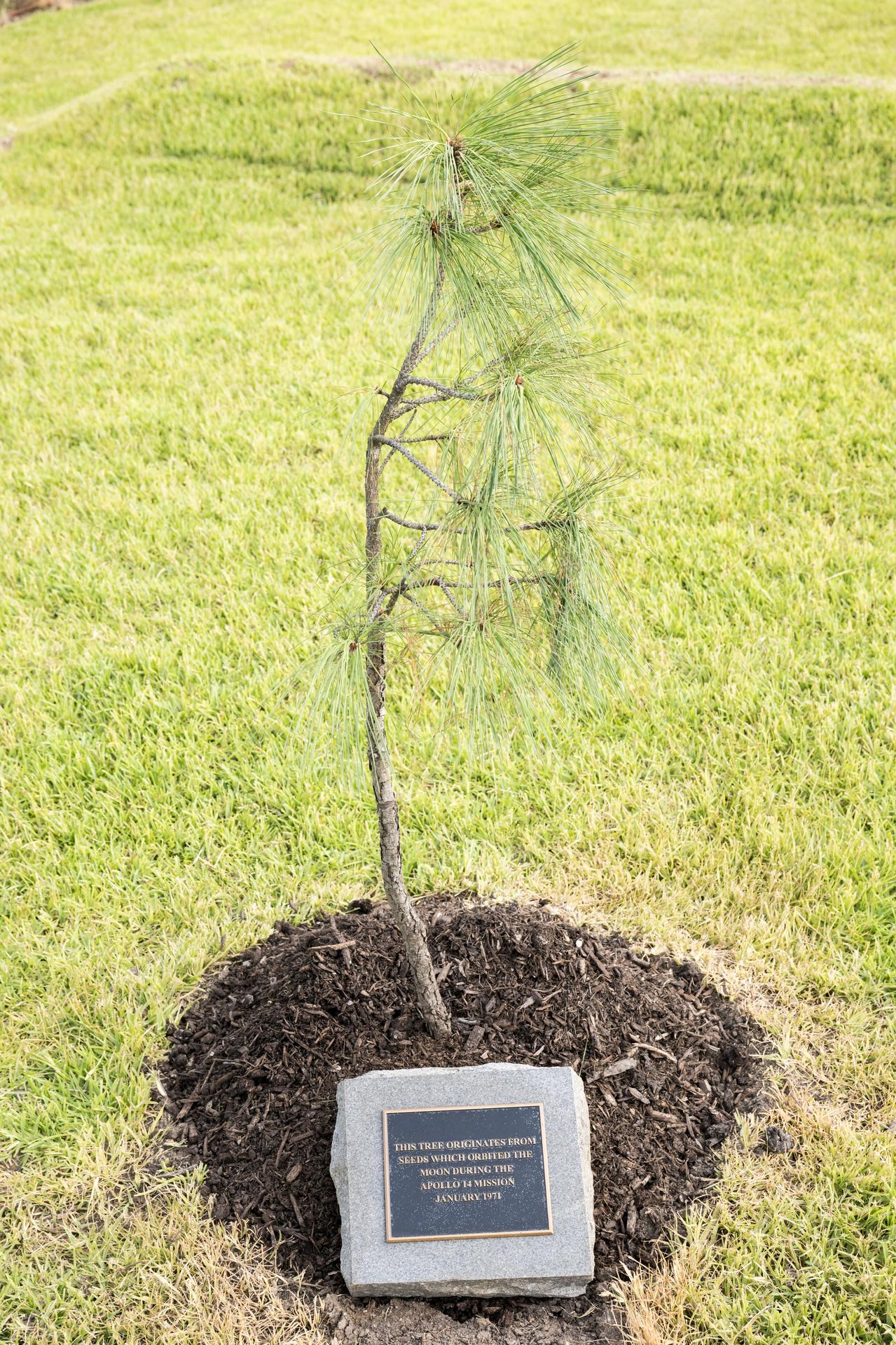
jsc2026e396708 (June 25, 2026) - An Apollo Moon tree dedicated by the Artemis II crew at the Lunar Receiving Park at NASA's Johnson Space Center. This tree is a second-generation Apollo Moon tree of the loblolly pine species. The original Apollo Moon trees were grown from seeds carried aboard Apollo 14 by NASA astronaut Stuart Roosa, a former U.S. Forest Service smoke jumper. Upon return to Earth, the seeds were germinated by the Forest Service, and the resulting seedlings were planted throughout the United States and around the world. Credit: NASA
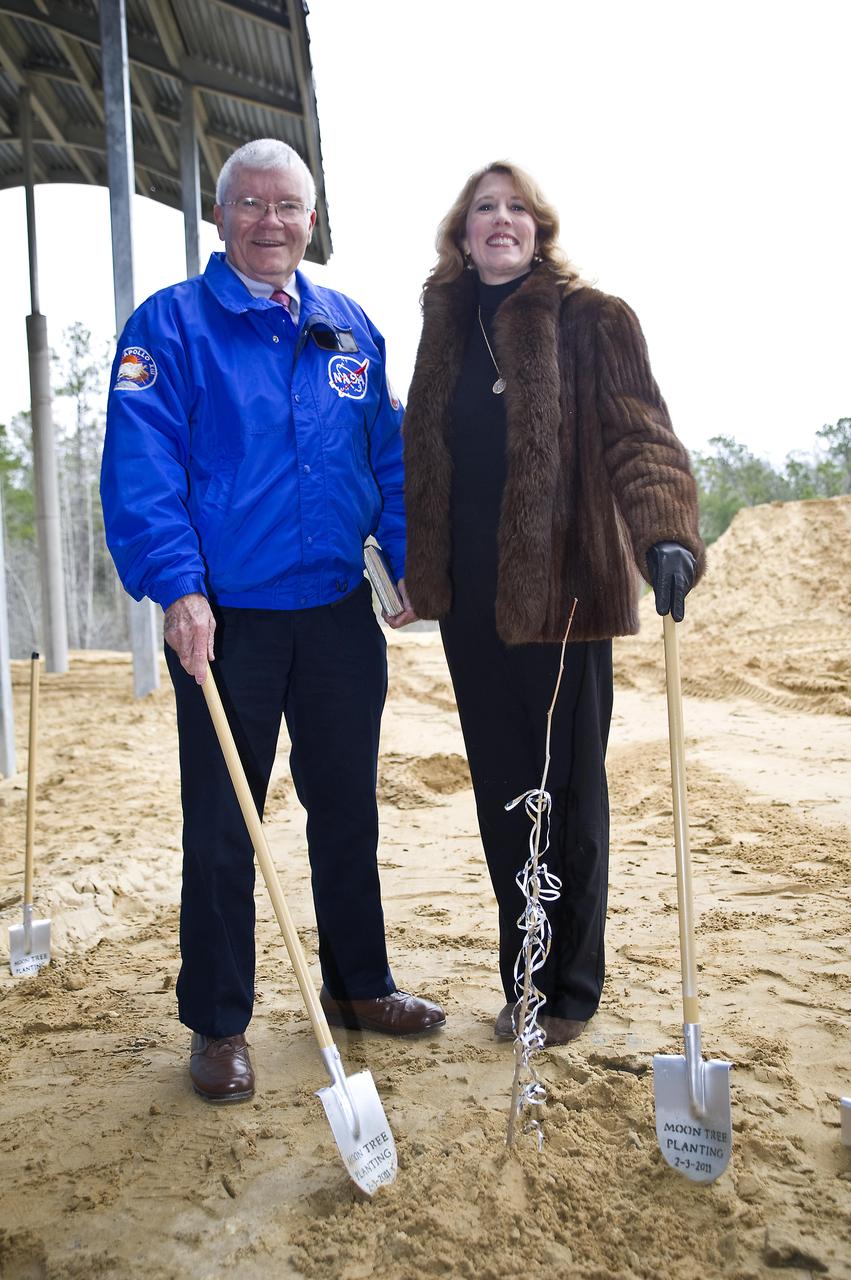
Apollo 13 astronaut Fred Haise stands with Rosemary Roosa, daughter of late Apollo 14 astronaut Stuart Roosa, beside a 'moon tree' planted at the INFINITY science center on Feb. 3, 2011. The moon tree is a descendent of seeds carried into space by Stuart Roosa on the Apollo 14 mission in 1971.
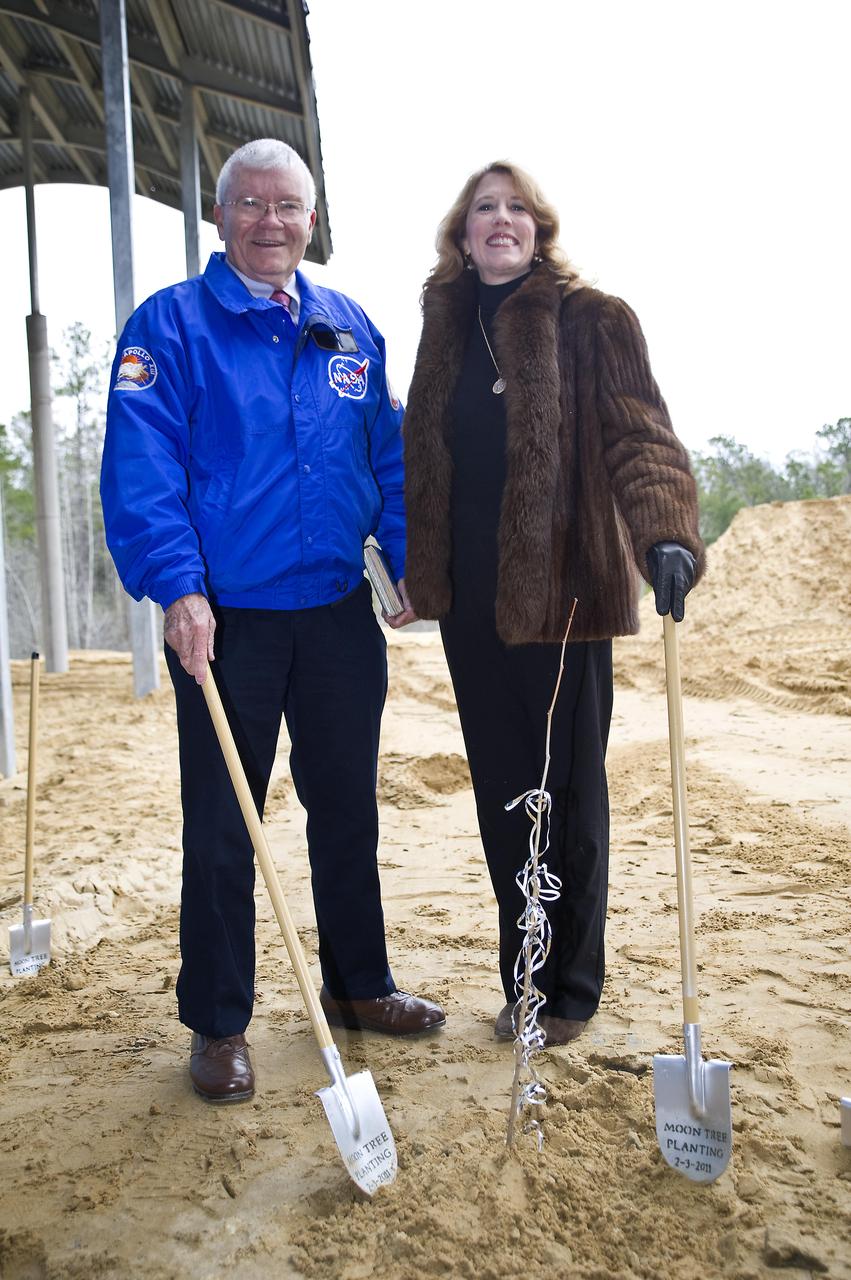
Apollo 13 astronaut Fred Haise stands with Rosemary Roosa, daughter of late Apollo 14 astronaut Stuart Roosa, beside a 'moon tree' planted at the INFINITY science center on Feb. 3, 2011. The moon tree is a descendent of seeds carried into space by Stuart Roosa on the Apollo 14 mission in 1971.
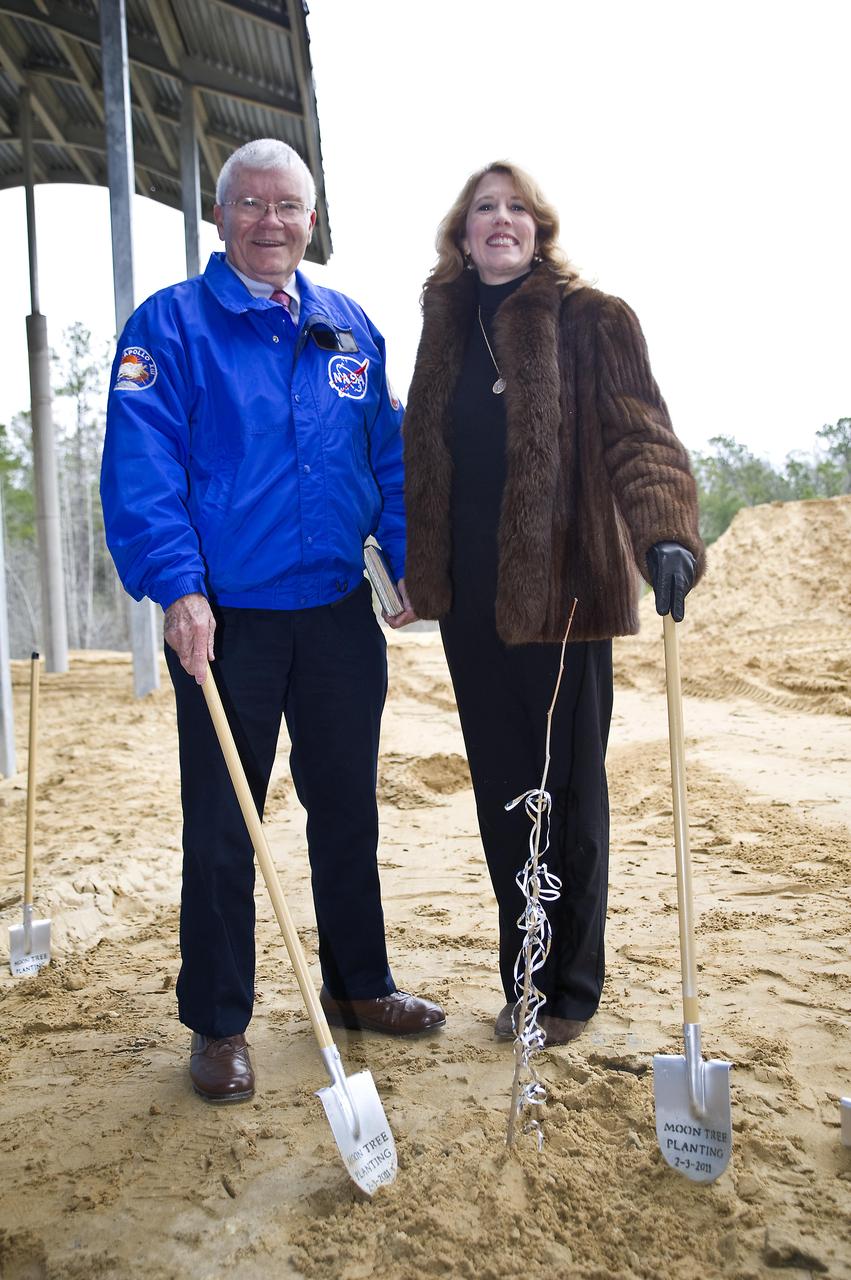
Apollo 13 astronaut Fred Haise stands with Rosemary Roosa, daughter of late Apollo 14 astronaut Stuart Roosa, beside a 'moon tree' planted at the INFINITY science center on Feb. 3, 2011. The moon tree is a descendent of seeds carried into space by Stuart Roosa on the Apollo 14 mission in 1971.
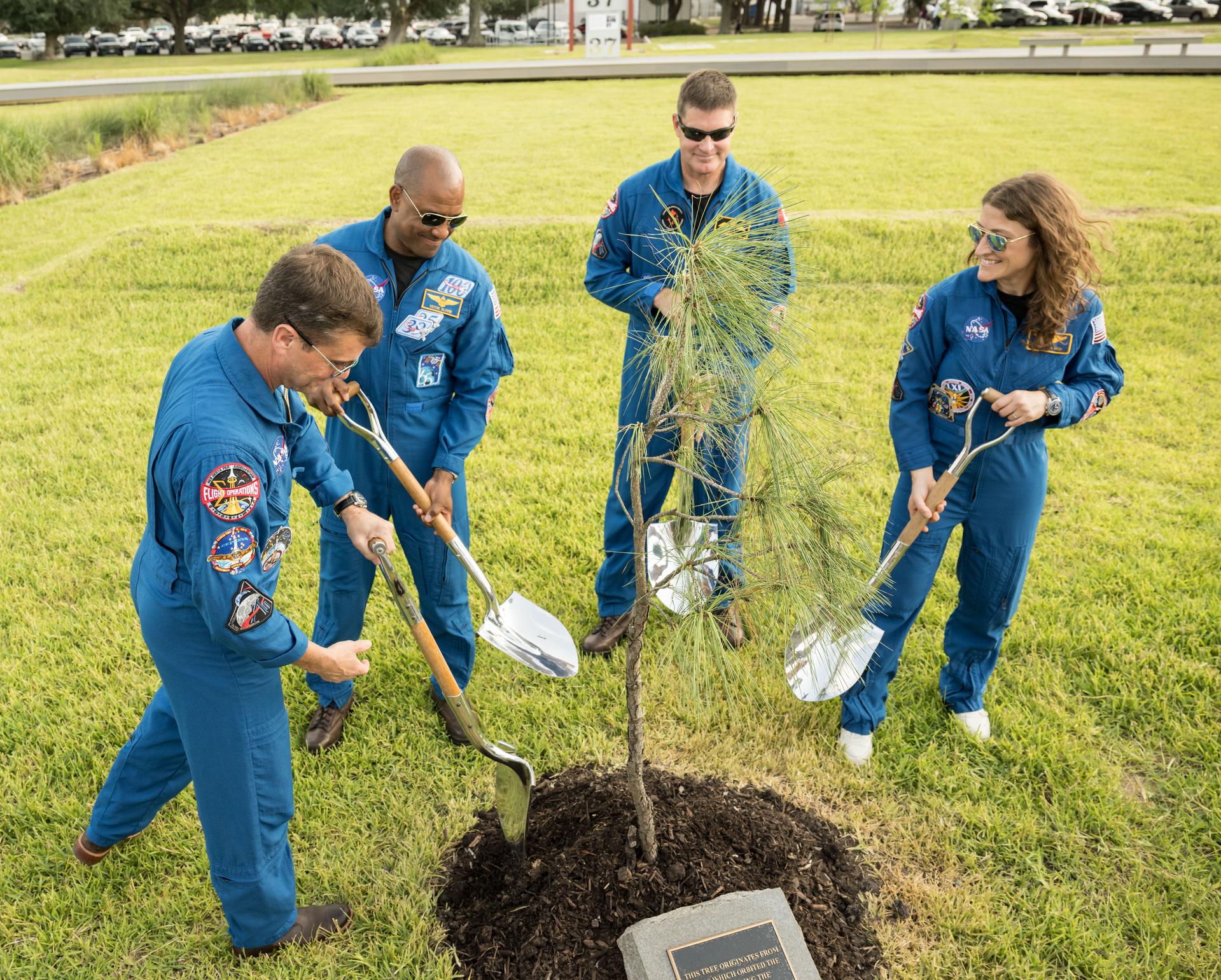
jsc2026e396761 (June 25, 2026) - The Artemis II crew participates in the dedication of the Apollo 14 Moon tree at the Lunar Receiving Park at NASA's Johnson Space Center. This tree is a second-generation Apollo Moon tree of the loblolly pine species. The original Apollo Moon trees were grown from seeds carried aboard Apollo 14 by NASA astronaut Stuart Roosa, a former U.S. Forest Service smoke jumper. Upon return to Earth, the seeds were germinated by the Forest Service, and the resulting seedlings were planted throughout the United States and around the world. Credit: NASA
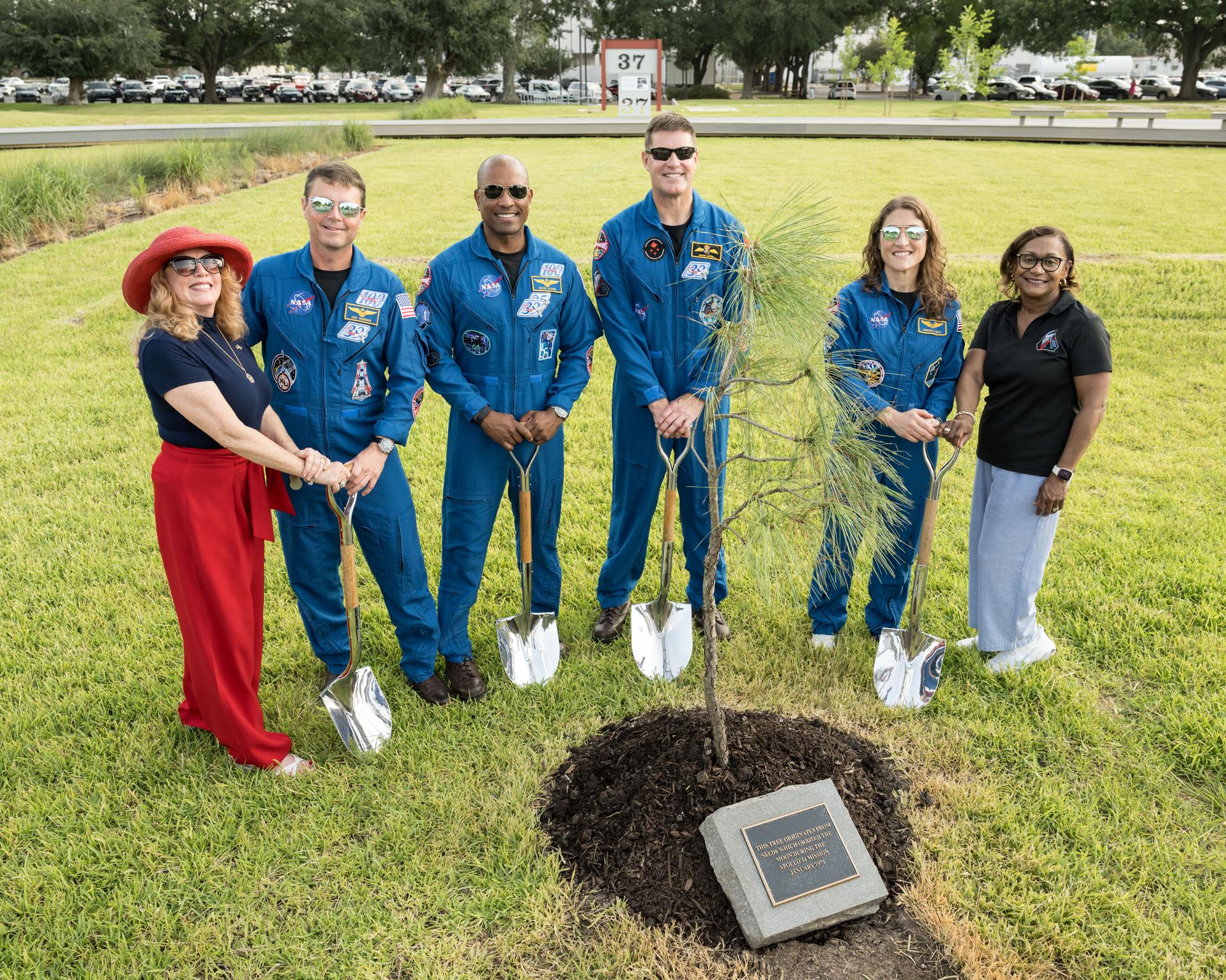
jsc2026e396762 (June 25, 2026) - From left to right, Rosemary Roosa, president of The Moon Tree Foundation and daughter of late Apollo 14 astronaut Stuart Roosa, and Vanessa Wyche, director of NASA's Johnson Space Center, participate in the dedication of the Apollo 14 Moon tree alongside the Artemis II crew. This tree is a second-generation Apollo Moon tree of the loblolly pine species. The original Apollo Moon trees were grown from seeds carried aboard Apollo 14 by NASA astronaut Stuart Roosa, a former U.S. Forest Service smoke jumper. Upon return to Earth, the seeds were germinated by the Forest Service, and the resulting seedlings were planted throughout the United States and around the world. Credit: NASA
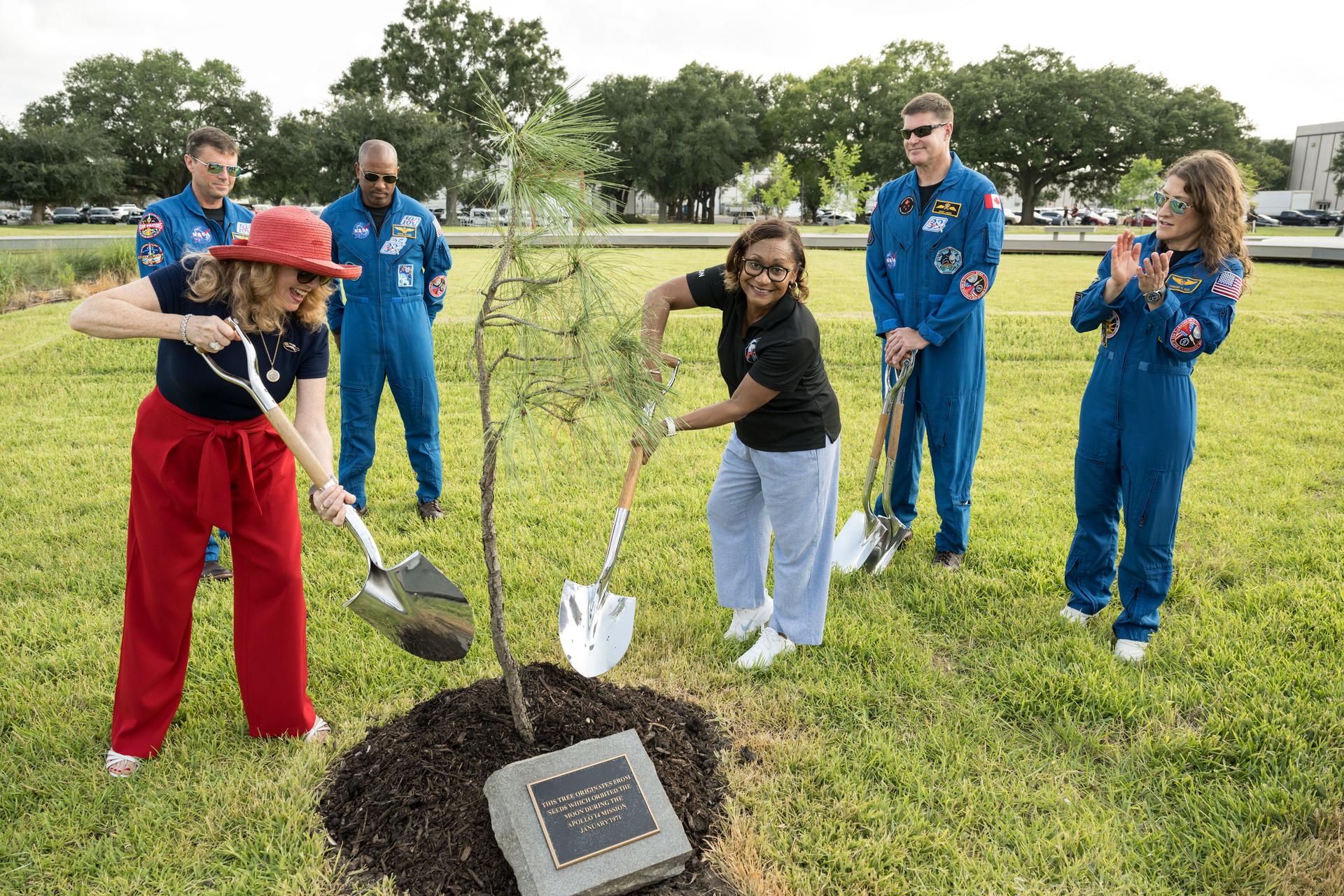
jsc2026e396760 (June 25, 2026) - From left to right, Rosemary Roosa, president of The Moon Tree Foundation and daughter of late Apollo 14 astronaut Stuart Roosa, and Vanessa Wyche, director of NASA's Johnson Space Center, participate in the dedication of the Apollo 14 Moon tree alongside the Artemis II crew. This tree is a second-generation Apollo Moon tree of the loblolly pine species. The original Apollo Moon trees were grown from seeds carried aboard Apollo 14 by NASA astronaut Stuart Roosa, a former U.S. Forest Service smoke jumper. Upon return to Earth, the seeds were germinated by the Forest Service, and the resulting seedlings were planted throughout the United States and around the world. Credit: NASA
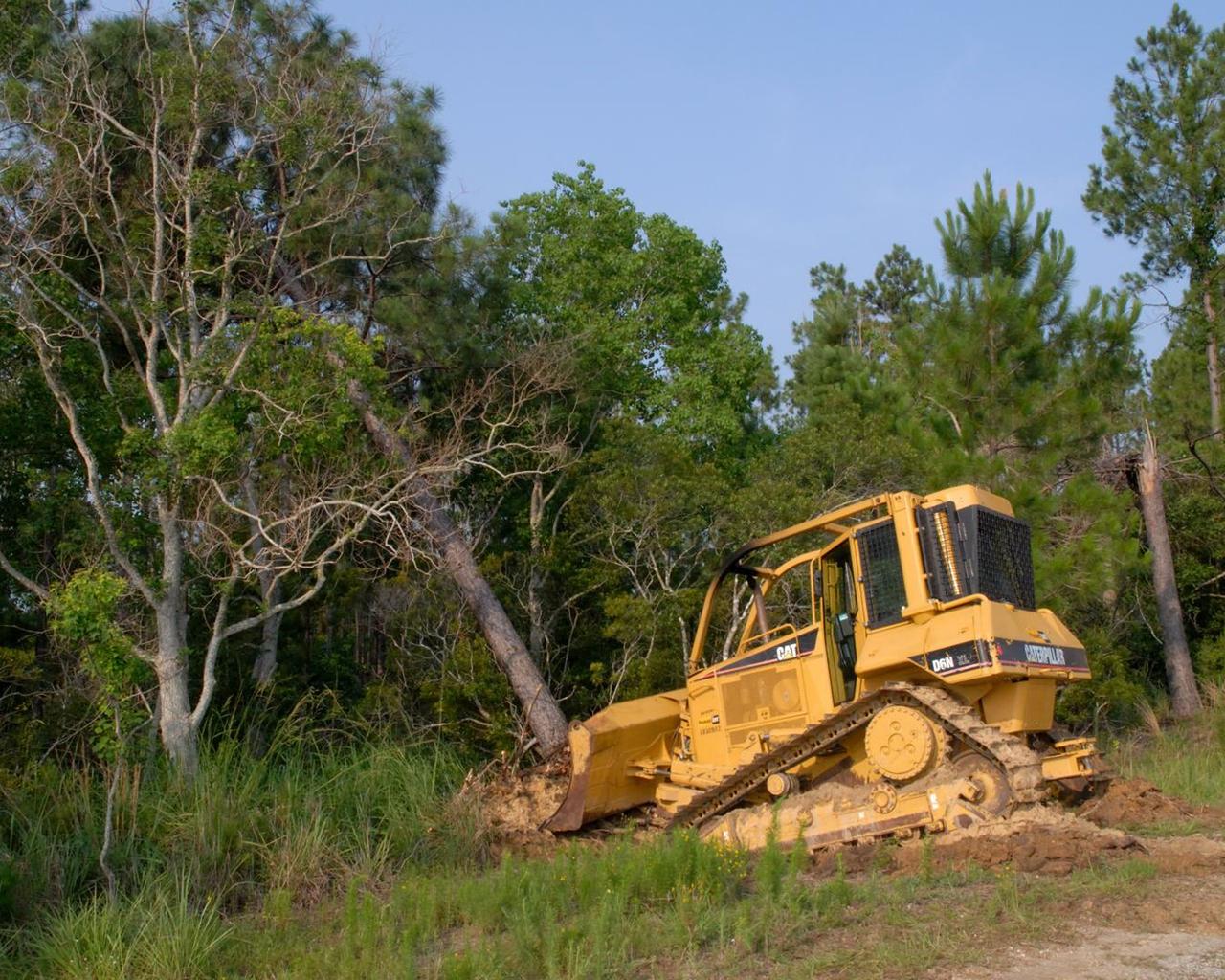
Tree clearing for the site of the new A-3 Test Stand at Stennis Space center began June 13. NASA's first new large rocket engine test stand to be built since the site's inception, A-3 construction begins a historic era for America's largest rocket engine test complex. The 300-foot-tall structure is scheduled for completion in August 2010. A-3 will perform altitude tests on the Constellation's J-2X engine that will power the upper stage of the Ares I crew launch vehicle and earth departure stage of the Ares V cargo launch vehicle. The Constellation Program, NASA's plan for carrying out the nation's Vision for Space Exploration, will return humans to the moon and eventually carry them to Mars and beyond.
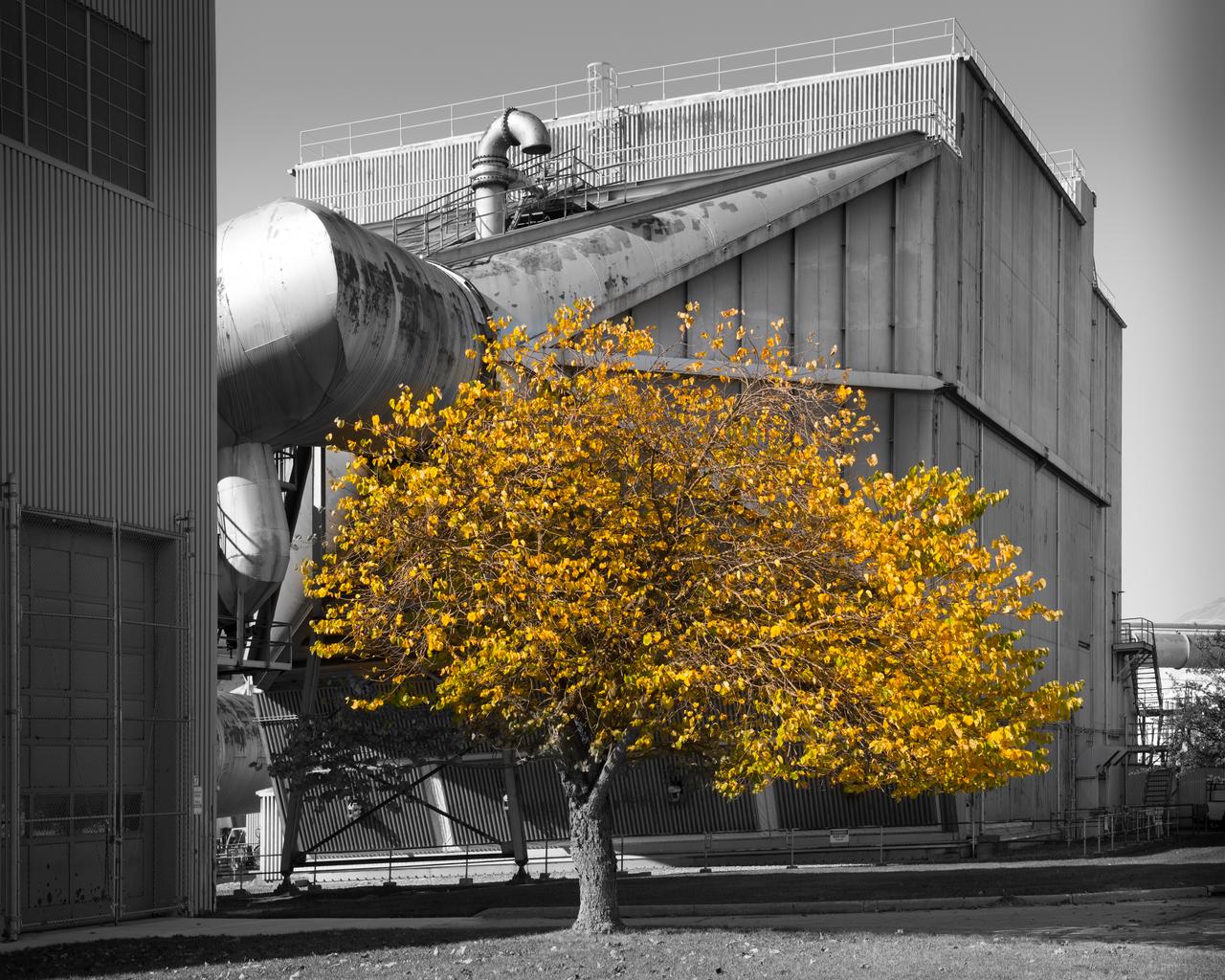
Fall Colored Tree on the Lawn of the 10x10 SWT Air Dryer Building
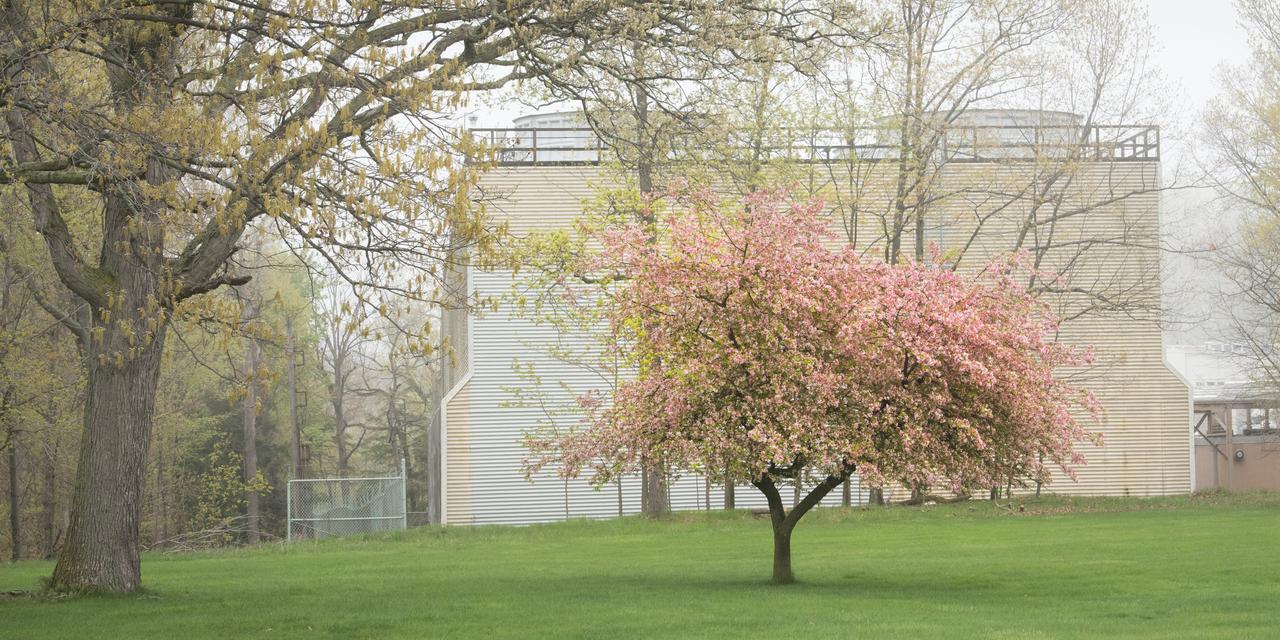
Flowering Crab Apple Tree in full Bloom in front of the Propulsion Systems Laboratory, PSL Cooling Tower #6 on a Foggy Day in Early Spring
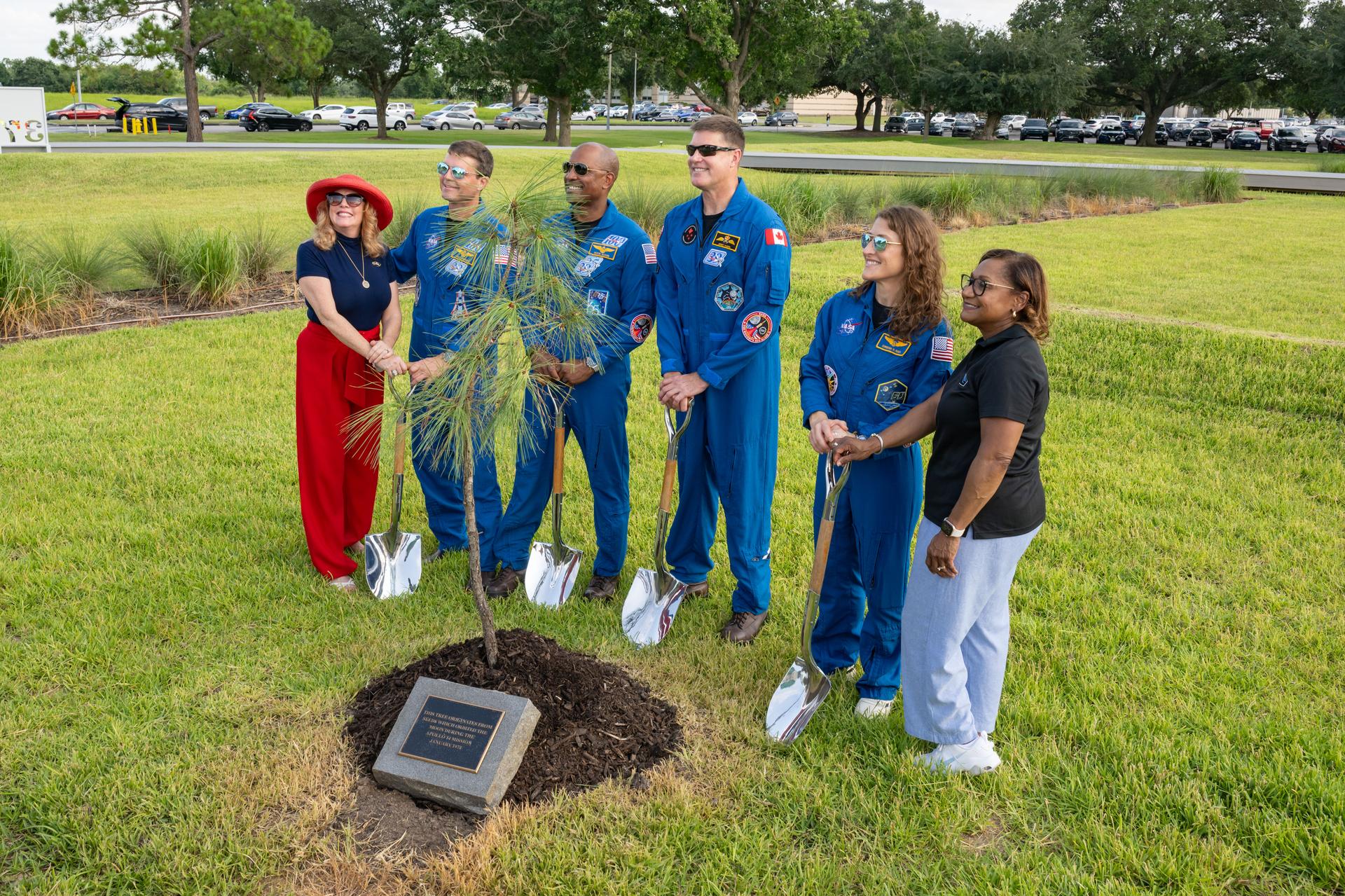
jsc2026e397475 (June 25, 2026) - From left to right, Rosemary Roosa, president of The Moon Tree Foundation and daughter of late Apollo 14 astronaut Stuart Roosa, and Vanessa Wyche, director of NASA's Johnson Space Center, participate in the dedication of the Apollo 14 Moon tree alongside the Artemis II crew. Credit: This tree is a second-generation Apollo Moon tree of the loblolly pine species. The original Apollo Moon trees were grown from seeds carried aboard Apollo 14 by NASA astronaut Stuart Roosa, a former U.S. Forest Service smoke jumper. Upon return to Earth, the seeds were germinated by the Forest Service, and the resulting seedlings were planted throughout the United States and around the world. Credit: NASA
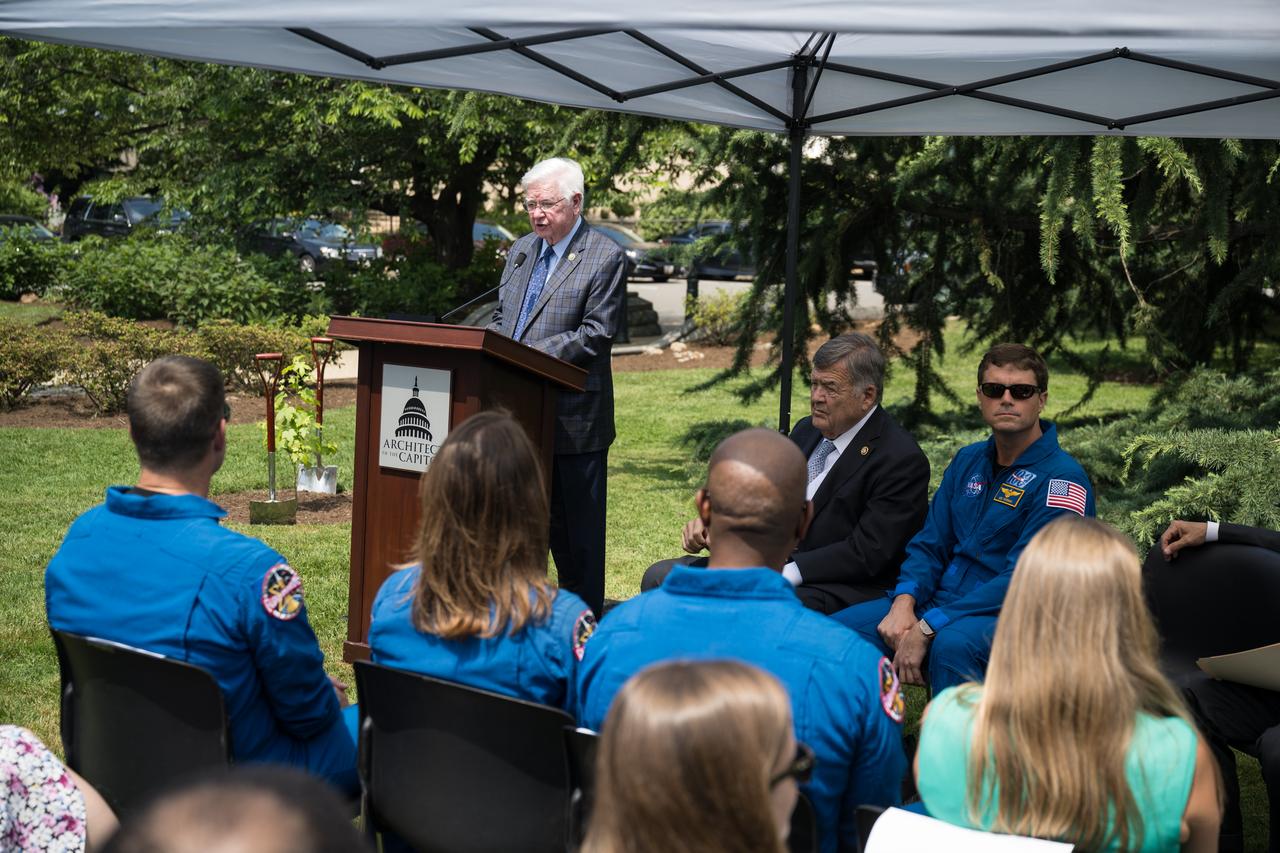
U.S. Rep. Harold “Hal” Rogers (R-KY) provides remarks at a Moon tree dedication ceremony, Tuesday, June 4, 2024 at the United States Capitol in Washington. The American Sweetgum tree planted on the southwestern side of the Capitol, was grown from a seed that was flown around the Moon during the Artemis I mission. Photo Credit: (NASA/Aubrey Gemignani)
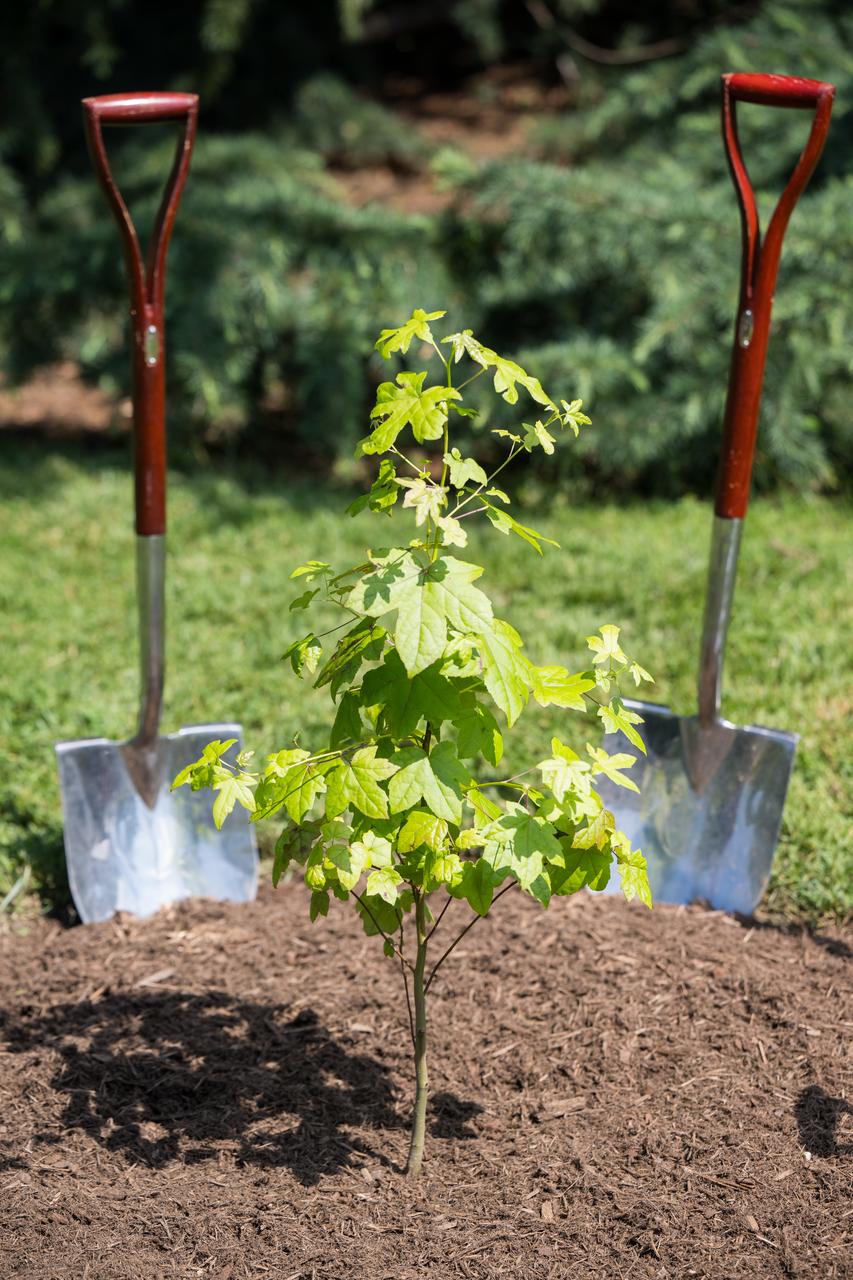
An American Sweetgum sapling grown from a seed that was flown around the Moon during the Artemis I mission is seen before a Moon tree dedication ceremony, Tuesday, June 4, 2024 at the United States Capitol in Washington. Photo Credit: (NASA/Aubrey Gemignani)
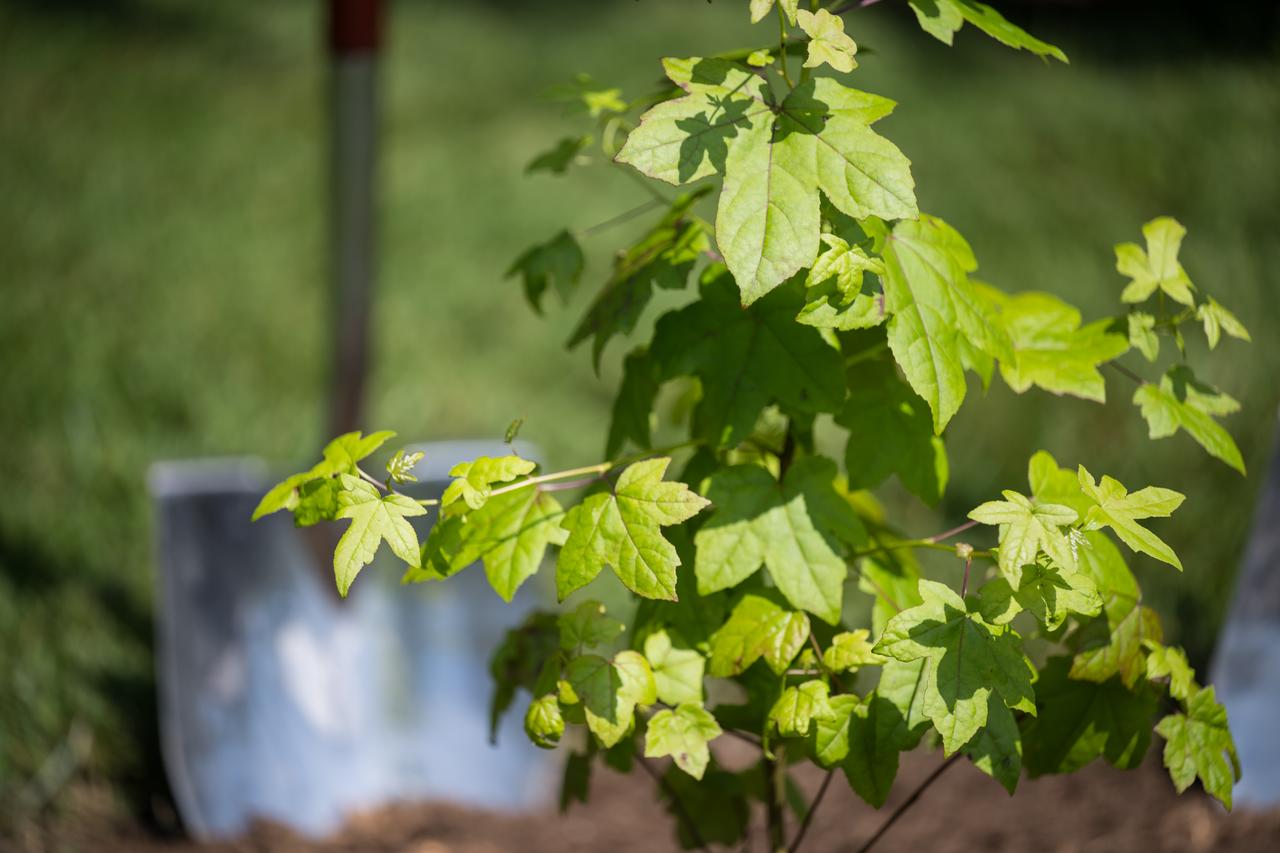
The leaves of an American Sweetgum sapling grown from a seed that was flown around the Moon during the Artemis I mission is seen before a Moon tree dedication ceremony, Tuesday, June 4, 2024 at the United States Capitol in Washington. Photo Credit: (NASA/Aubrey Gemignani)
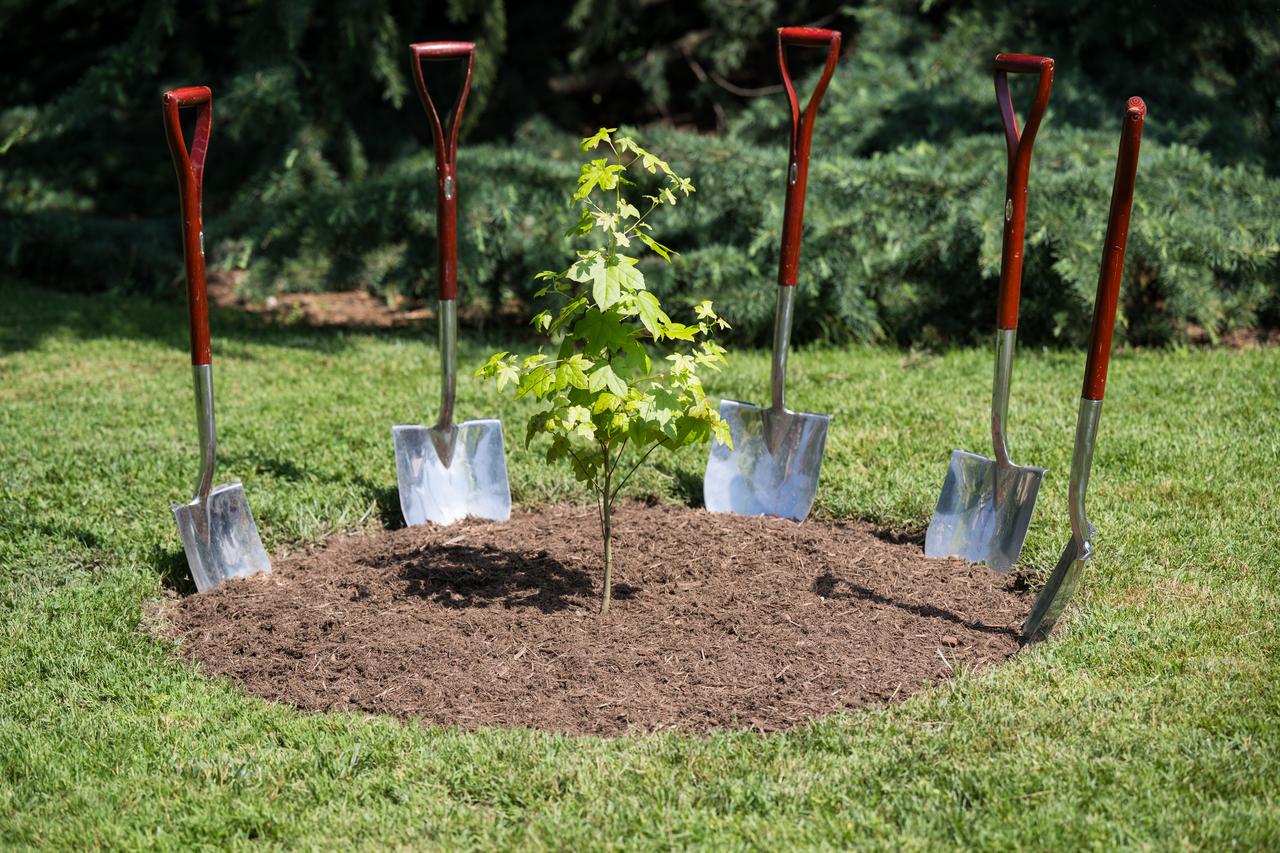
An American Sweetgum sapling grown from a seed that was flown around the Moon during the Artemis I mission is seen before a Moon tree dedication ceremony, Tuesday, June 4, 2024 at the United States Capitol in Washington. Photo Credit: (NASA/Aubrey Gemignani)
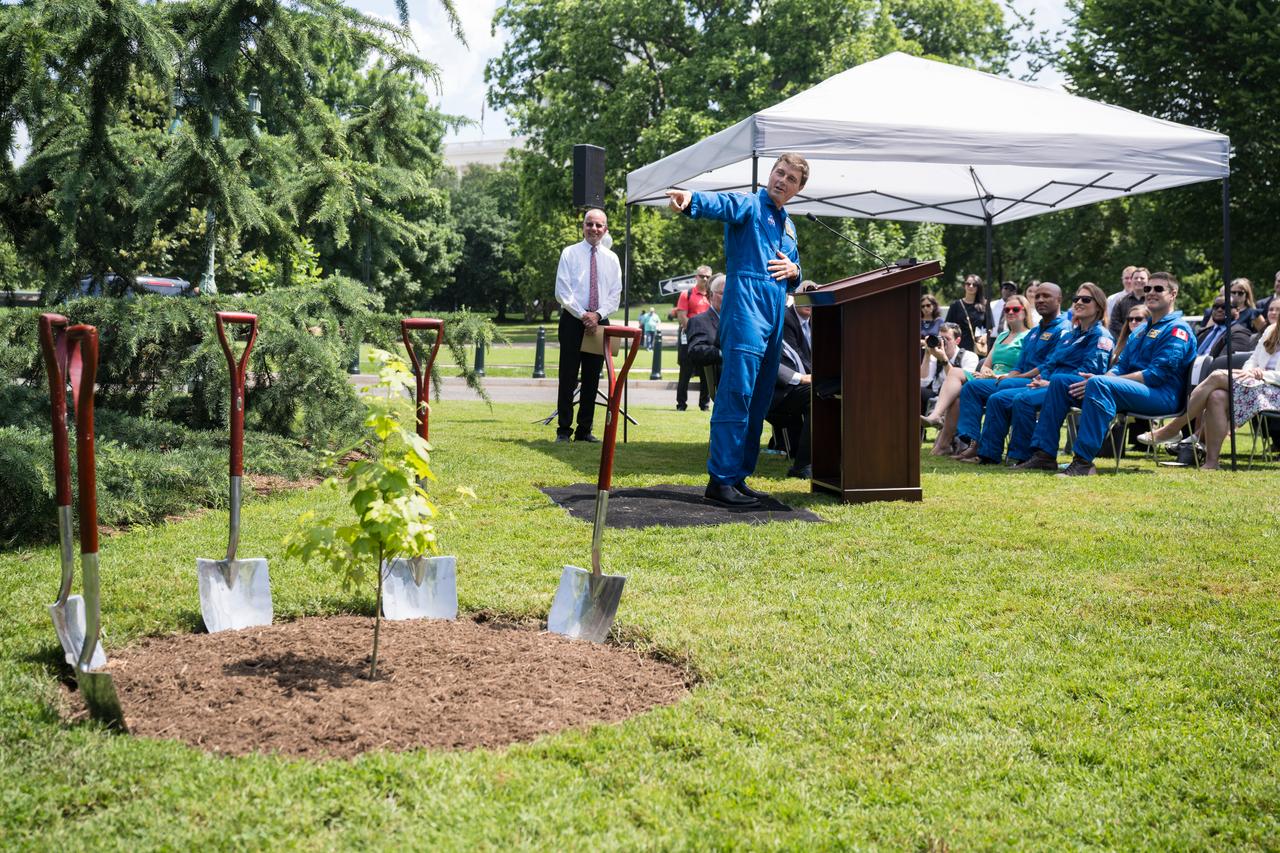
Artemis II Commander, NASA astronaut Reid Wiseman provides remarks at a Moon tree dedication ceremony, Tuesday, June 4, 2024 at the United States Capitol in Washington. The American Sweetgum tree planted on the southwestern side of the Capitol, was grown from a seed that was flown around the Moon during the Artemis I mission. Photo Credit: (NASA/Aubrey Gemignani)
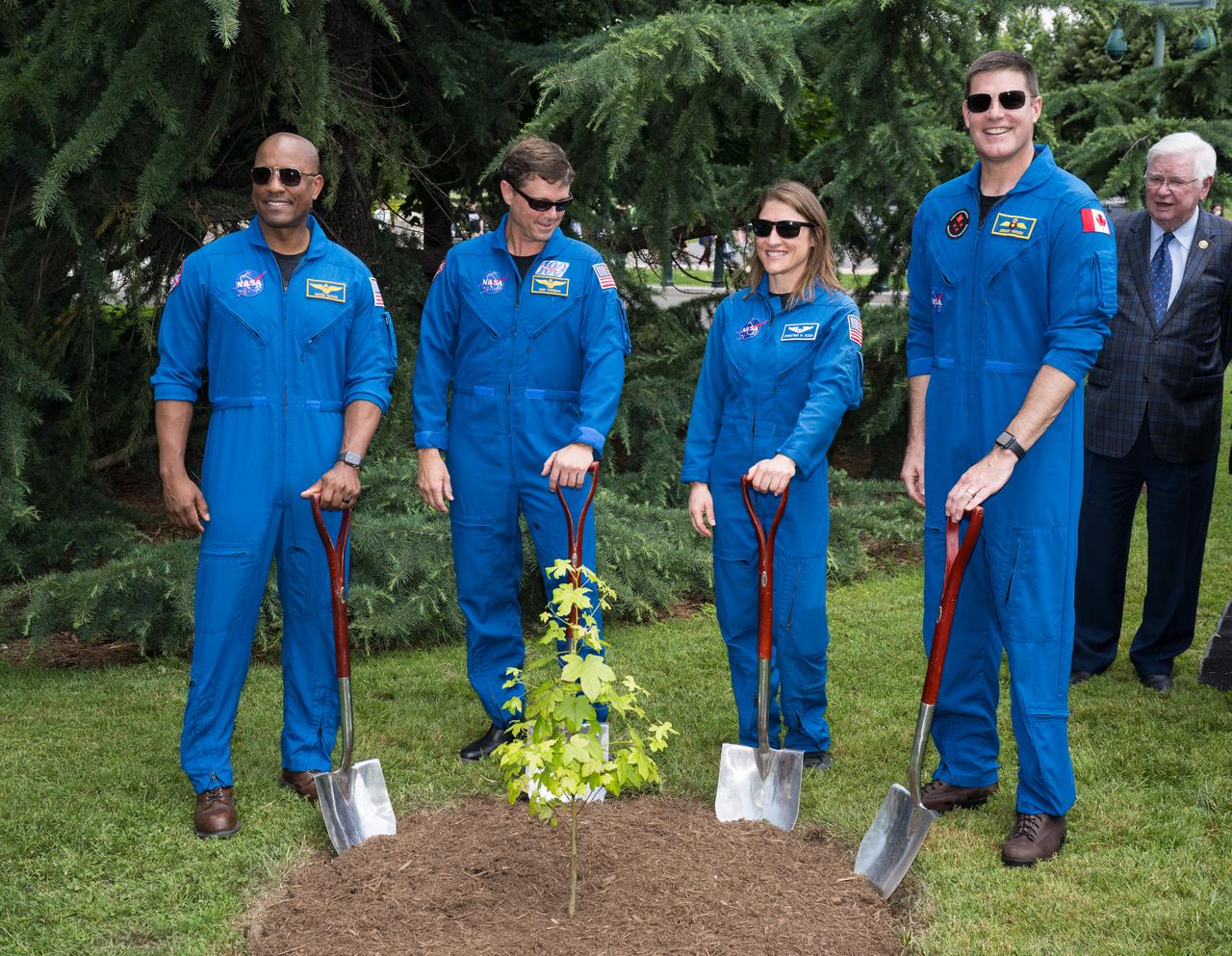
The Artemis II crew, NASA astronauts Victor Glover, Reid Wiseman, and Christina Koch, and Canadian Space Agency (CSA) astronaut Jeremy Hansen, pose for a photo after a Moon tree dedication ceremony, Tuesday, June 4, 2024 at the United States Capitol in Washington. The American Sweetgum tree planted on the southwestern side of the Capitol, was grown from a seed that was flown around the Moon during the Artemis I mission. Photo Credit: (NASA/Aubrey Gemignani)
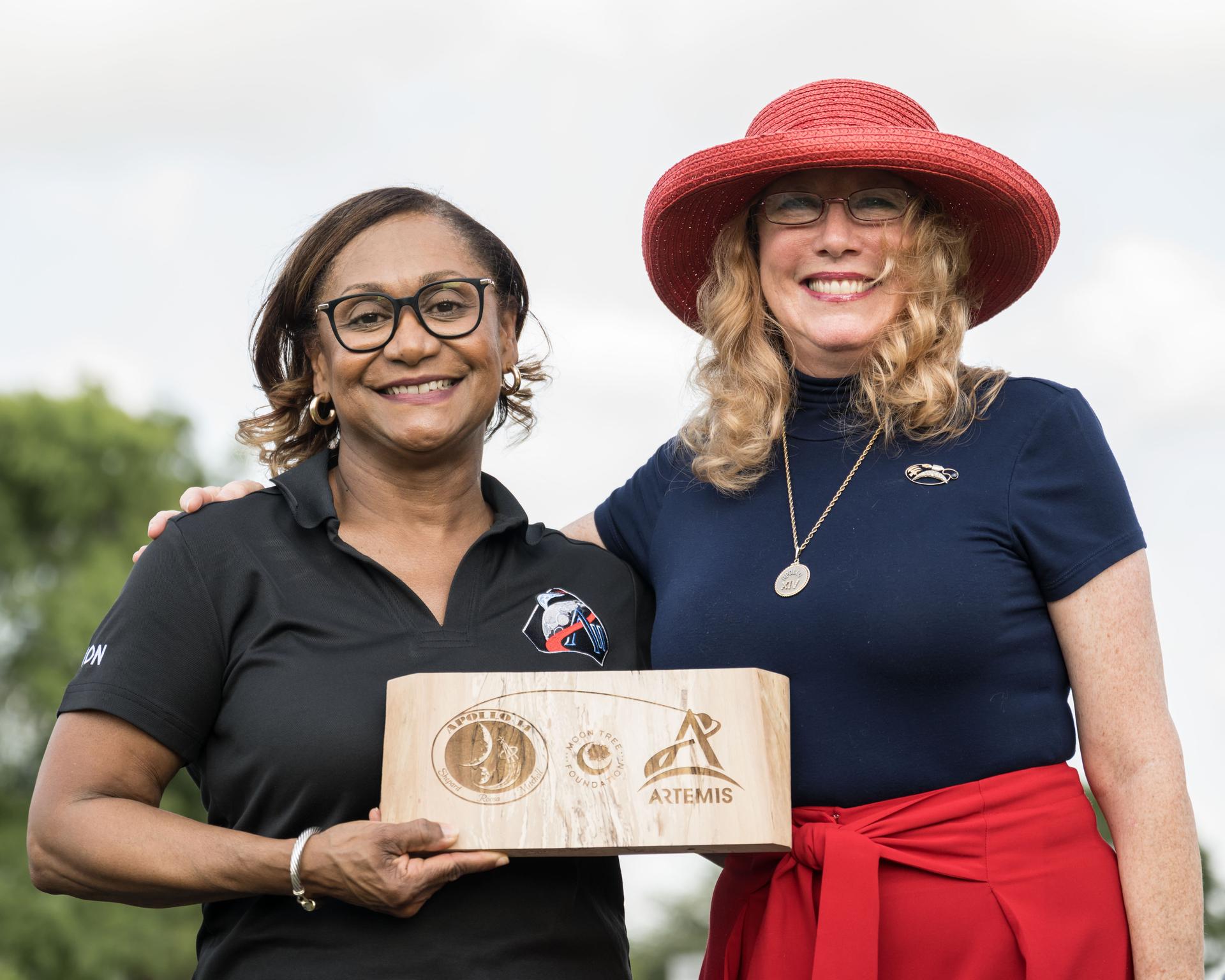
jsc2026e396742 (June 25, 2026) - NASA's Johnson Space Center Director Vanessa Wyche and Rosemary Roosa, president of The Moon Tree foundation and daughter of late Apollo 14 astronaut Stuart Roosa, share a special plaque honoring the ties between the Apollo and Artemis Programs. The plaque is constructed from an original Moon tree planted soon after the Apollo 14 mission and symbolizes the passing of the baton from Apollo to Artemis. Credit: NASA

From left to right, Artemis II crew members, NASA astronauts Victor Glover and Reid Wiseman, NASA Associate Administrator, Office of STEM Engagement, Mike Kincaid, NASA Deputy Associate Administrator Casey Swails, NASA Deputy Administrator Pam Melroy, and Artemis II crew members NASA astronaut Christina Koch and Canadian Space Agency (CSA) astronaut Jeremy Hansen, pose for a photo after a Moon tree dedication ceremony, Tuesday, June 4, 2024 at the United States Capitol in Washington. The American Sweetgum tree planted on the southwestern side of the Capitol, was grown from a seed that was flown around the Moon during the Artemis I mission. Photo Credit: (NASA/Aubrey Gemignani)
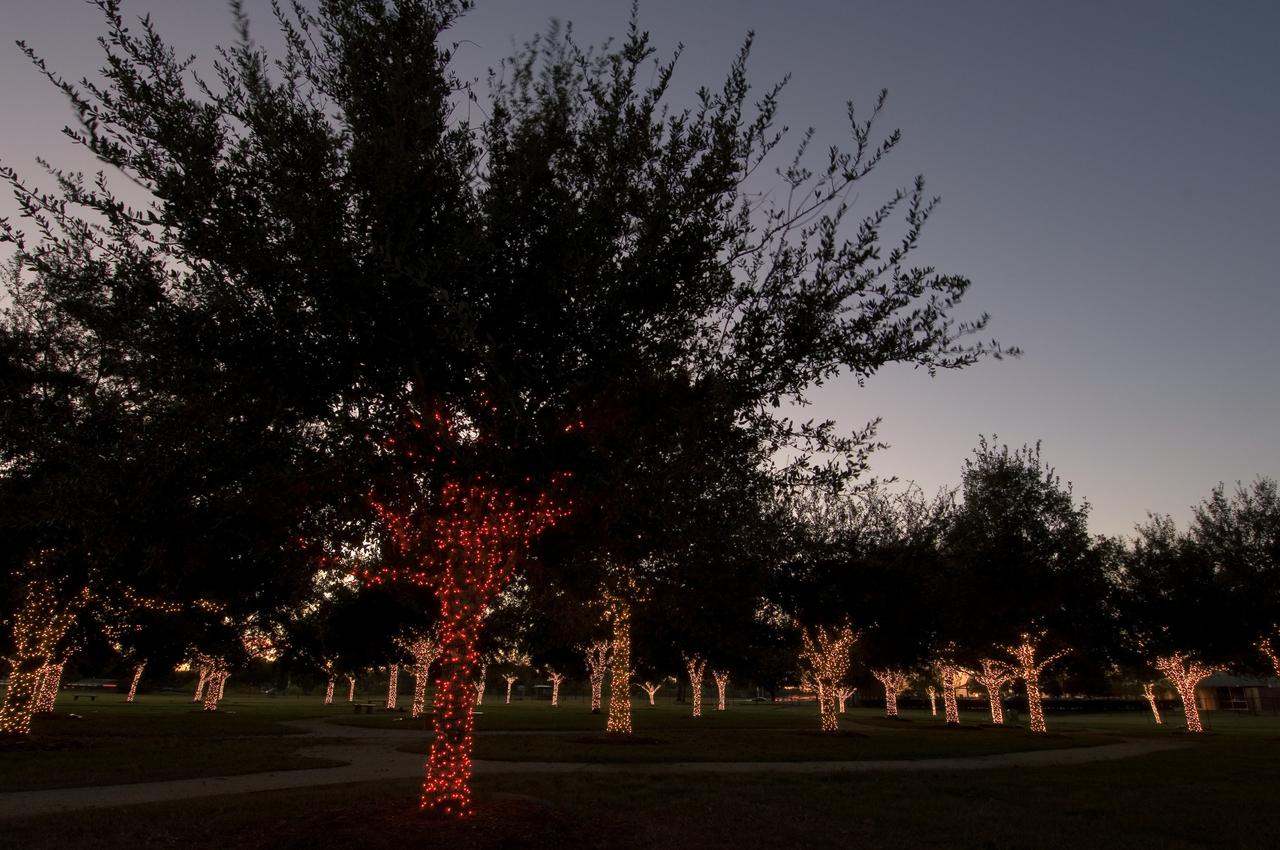
View of Christmas Lights on Memorial Tree Grove at dusk at entrance to JSC.
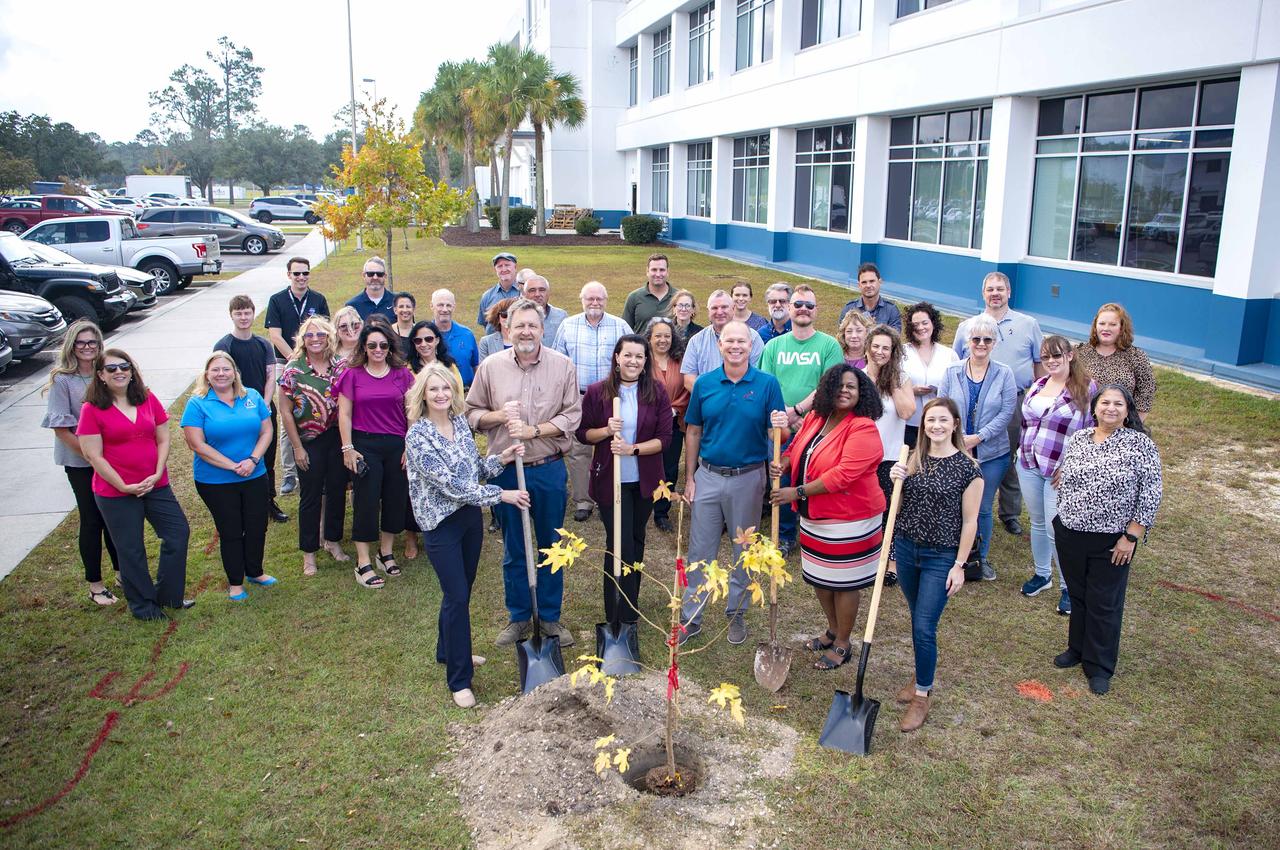
NASA employees plant an Artemis Moon Tree at NASA’s Stennis Space Center on Oct. 29 to celebrate NASA’s successful Artemis I mission as the agency prepares for a return around the Moon with astronauts on Artemis II.
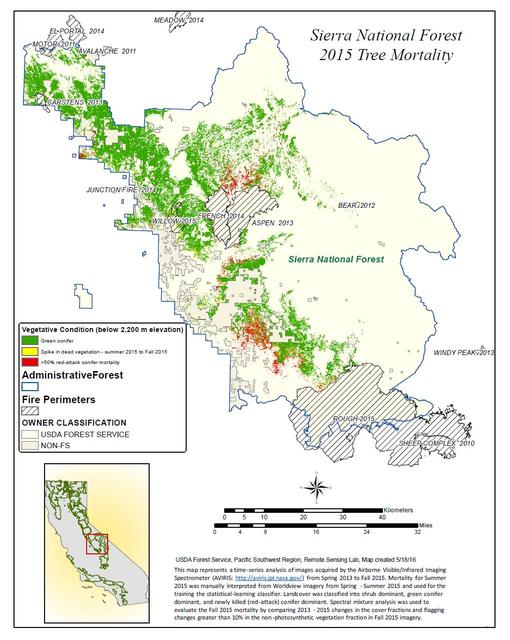
California, reveals the devastating effect of California's ongoing drought on Sierra Nevada conifer forests. The map will be used to help the U.S. Forest Service assess and respond to the impacts of increased tree mortality caused by the drought, particularly where wildlands meet urban areas within the Sierra National Forest. After several years of extreme drought, the highly stressed conifers (trees or bushes that produce cones and are usually green year-round) of the Sierra Nevada are now more susceptible to bark beetles (Dendroctonus spp.). While bark beetles killing trees in the Sierra Nevada is a natural phenomenon, the scale of mortality in the last couple of years is far greater than previously observed. The U.S. Forest Service is using recent airborne spectroscopic measurements from NASA's Airborne Visible/Infrared Imaging Spectrometer (AVIRIS) instrument aboard NASA's ER-2 aircraft, together with new advanced algorithms, to quantify this impact over this large region of rugged terrain. The high-altitude ER-2 aircraft is based at NASA's Armstrong Flight Research Center, Edwards, California. The image was created by scientists at the USFS's Pacific Southwest Region Remote Sensing Lab, McClellan, California, by performing a time series analysis of AVIRIS images. Scientists evaluated baseline tree mortality on public lands in the summer of 2015 using a machine learning algorithm called "random forest." This algorithm classifies the AVIRIS measurements as dominated by either shrubs, healthy trees or newly dead conifer trees. To quantify how much the amount of dead vegetation increased during the fall of 2015, the Forest Service scientists conducted an advanced spectral mixture analysis. This analysis evaluates each spectrum to determine the fraction of green vegetation, dead vegetation and soil. The full spectral range of AVIRIS is important to separate the signatures of soil and dead vegetation. To produce this comprehensive Sierra National Forest tree mortality map, the result from the summer of 2015 was evaluated to look for increases of more than 10 percent in dead vegetation during the fall of 2015. AVIRIS measures spectra of the Earth system to conduct advanced science research. These western U.S. AVIRIS measurements were acquired as part of NASA's Hyperspectral Infrared Imager (HyspIRI) preparatory airborne campaign. HyspIRI was one of the space missions suggested to NASA by the National Academy of Sciences in its 2007 decadal survey for Earth Science. In the future, HyspIRI could provide spectral and thermal measurements of this type globally for ecosystem research and additional science objectives. http://photojournal.jpl.nasa.gov/catalog/PIA20717
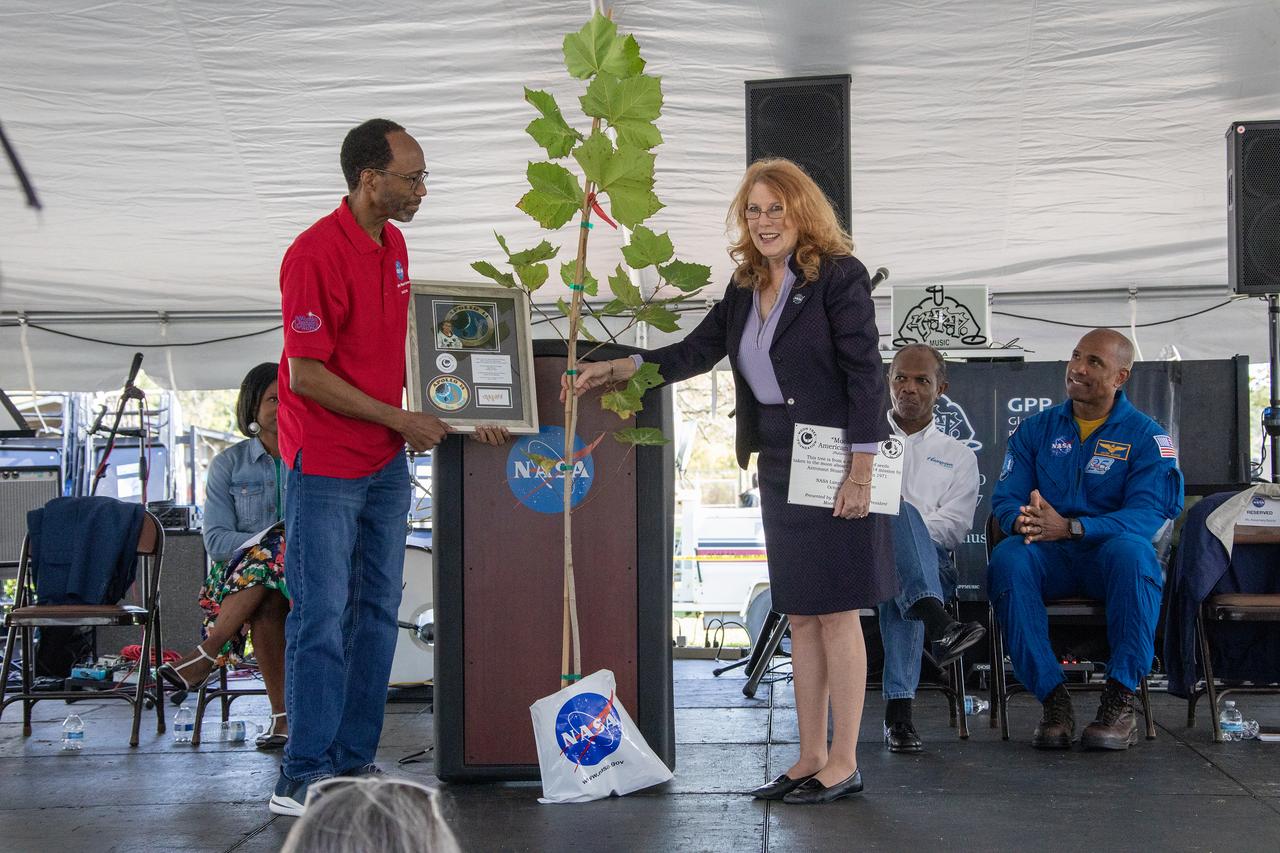
"Moon Tree" American Sycamore tree presented to Langley Center Director Clayton Moore by Rosemary Roosa, President of Moon Tree Foundation. More than 37,000 people registered to attend the NASA Langley open house. Starting with the Annual 5K Moon Walk Run and the talented Nils Larson, X59 pilot and Astronaut Victor Glover reunited at Langley’s hangar and hosted by Center Director Clayton Turner.
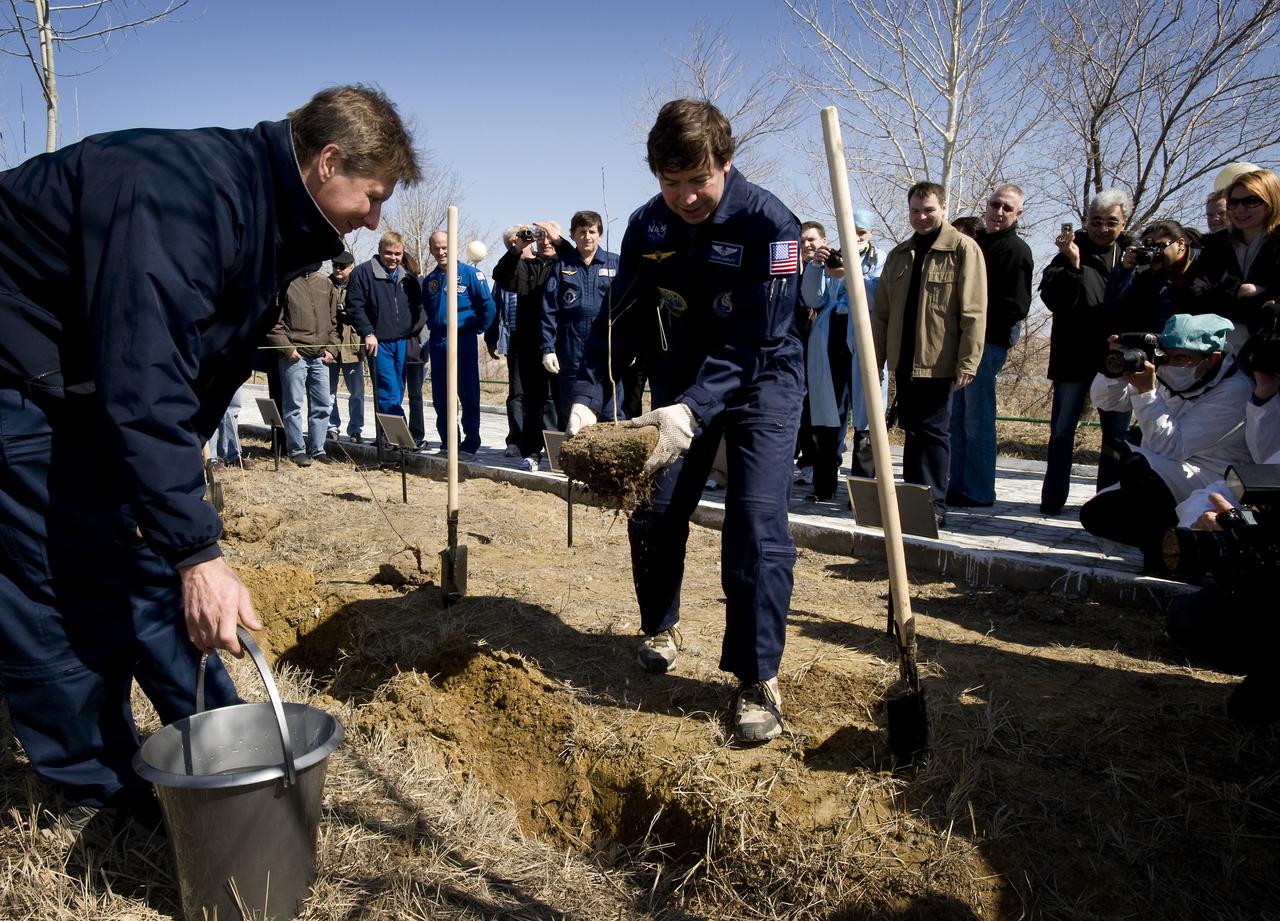
Expedition 19 Commander Gennady I. Padalka, left, watches as Flight Engineer Michael R. Barratt plants a tree during the traditional tree planting ceremony at the Cosmonaut Hotel, Saturday, March 21, 2009 in Baikonur, Kazakhstan. (Photo Credit: NASA/Bill Ingalls)
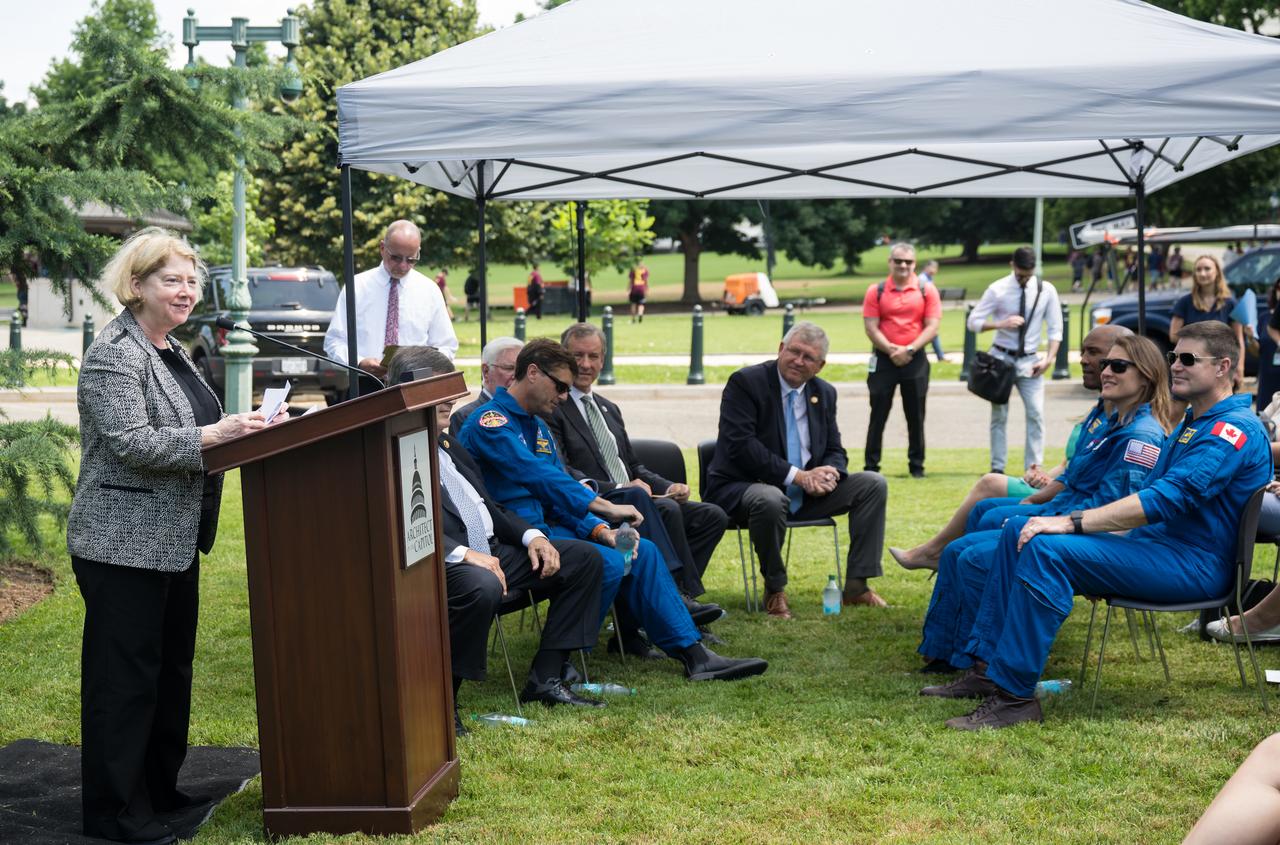
NASA Deputy Administrator Pam Melroy provides remarks at a Moon tree dedication ceremony, Tuesday, June 4, 2024 at the United States Capitol in Washington. The American Sweetgum tree planted on the southwestern side of the Capitol, was grown from a seed that was flown around the Moon during the Artemis I mission. Photo Credit: (NASA/Aubrey Gemignani)
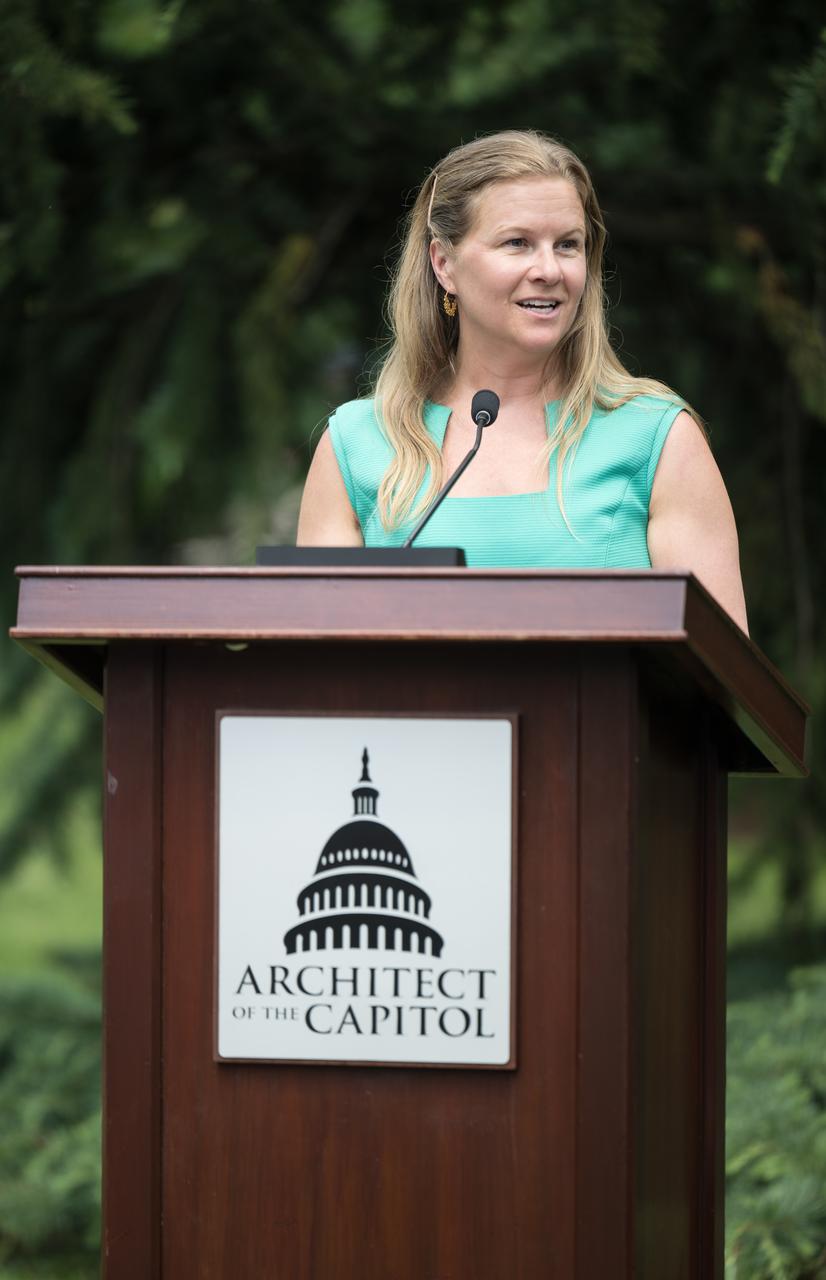
Minister, Congressional, Public and Intergovernmental Affairs, Embassy of Canada, Carrie Goodge O'Brien, provides remarks at a Moon tree dedication ceremony, Tuesday, June 4, 2024 at the United States Capitol in Washington. The American Sweetgum tree planted on the southwestern side of the Capitol, was grown from a seed that was flown around the Moon during the Artemis I mission. Photo Credit: (NASA/Aubrey Gemignani)
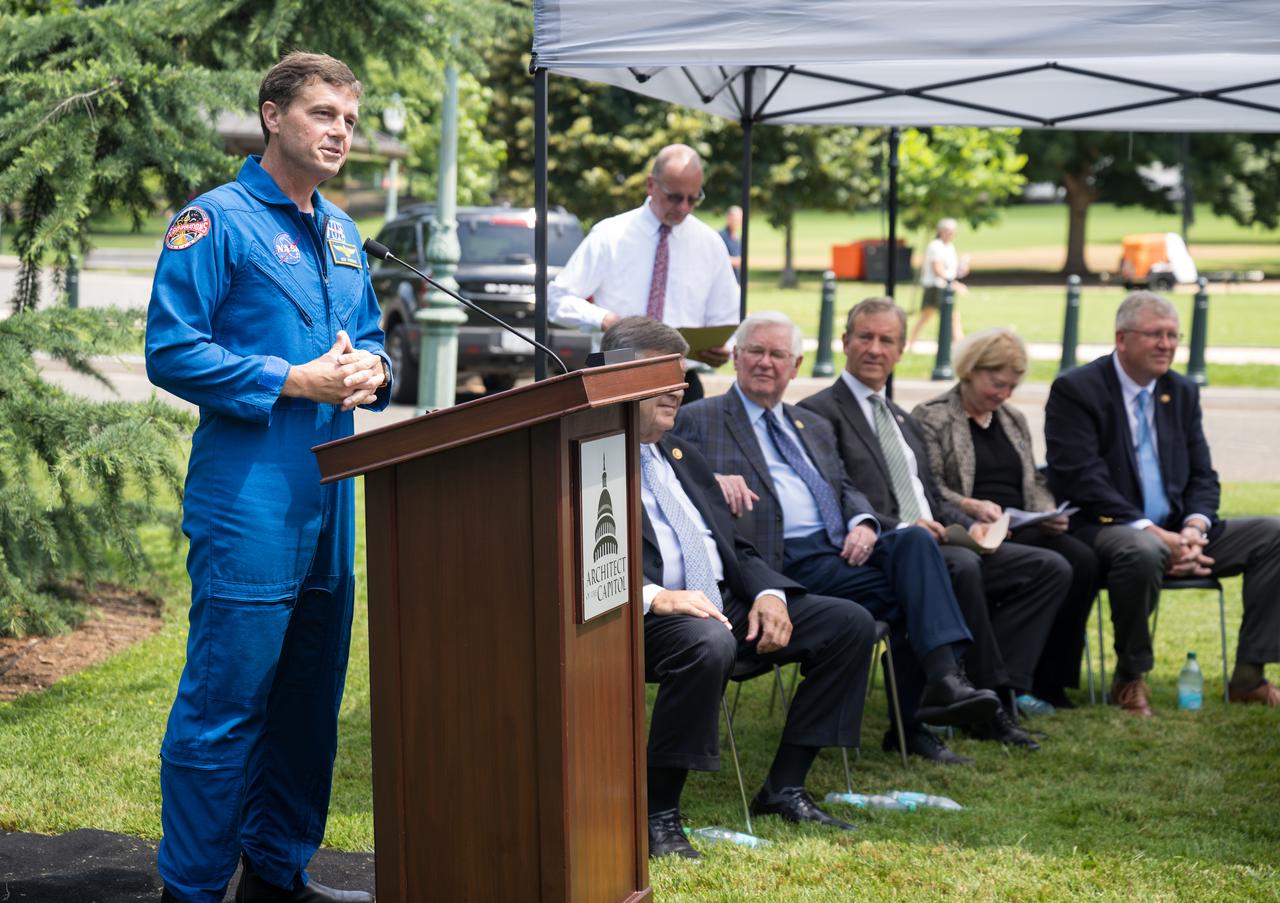
Artemis II Commander, NASA astronaut Reid Wiseman provides remarks at a Moon tree dedication ceremony, Tuesday, June 4, 2024 at the United States Capitol in Washington. The American Sweetgum tree planted on the southwestern side of the Capitol, was grown from a seed that was flown around the Moon during the Artemis I mission. Photo Credit: (NASA/Aubrey Gemignani)
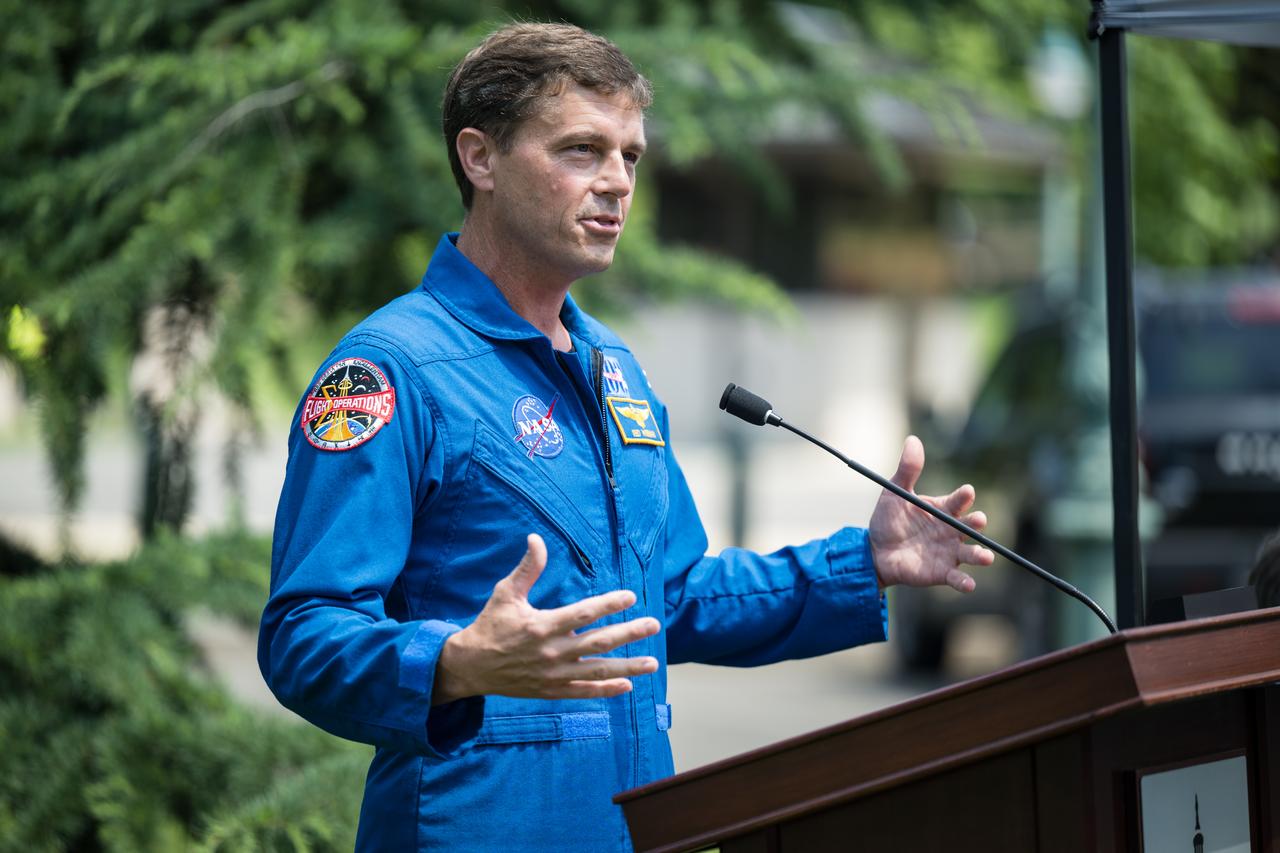
Artemis II Commander, NASA astronaut Reid Wiseman provides remarks at a Moon tree dedication ceremony, Tuesday, June 4, 2024 at the United States Capitol in Washington. The American Sweetgum tree planted on the southwestern side of the Capitol, was grown from a seed that was flown around the Moon during the Artemis I mission. Photo Credit: (NASA/Aubrey Gemignani)
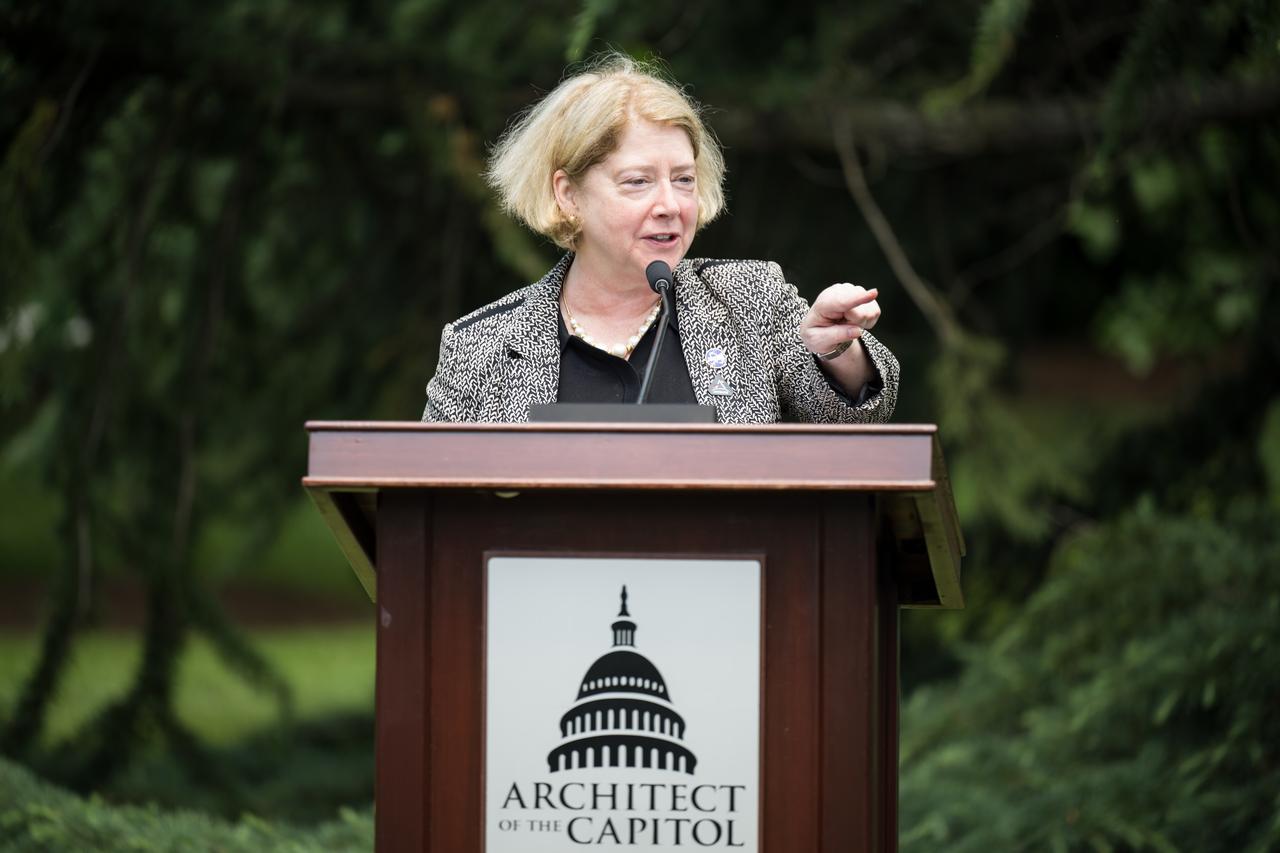
NASA Deputy Administrator Pam Melroy provides remarks at a Moon tree dedication ceremony, Tuesday, June 4, 2024 at the United States Capitol in Washington. The American Sweetgum tree planted on the southwestern side of the Capitol, was grown from a seed that was flown around the Moon during the Artemis I mission. Photo Credit: (NASA/Aubrey Gemignani)
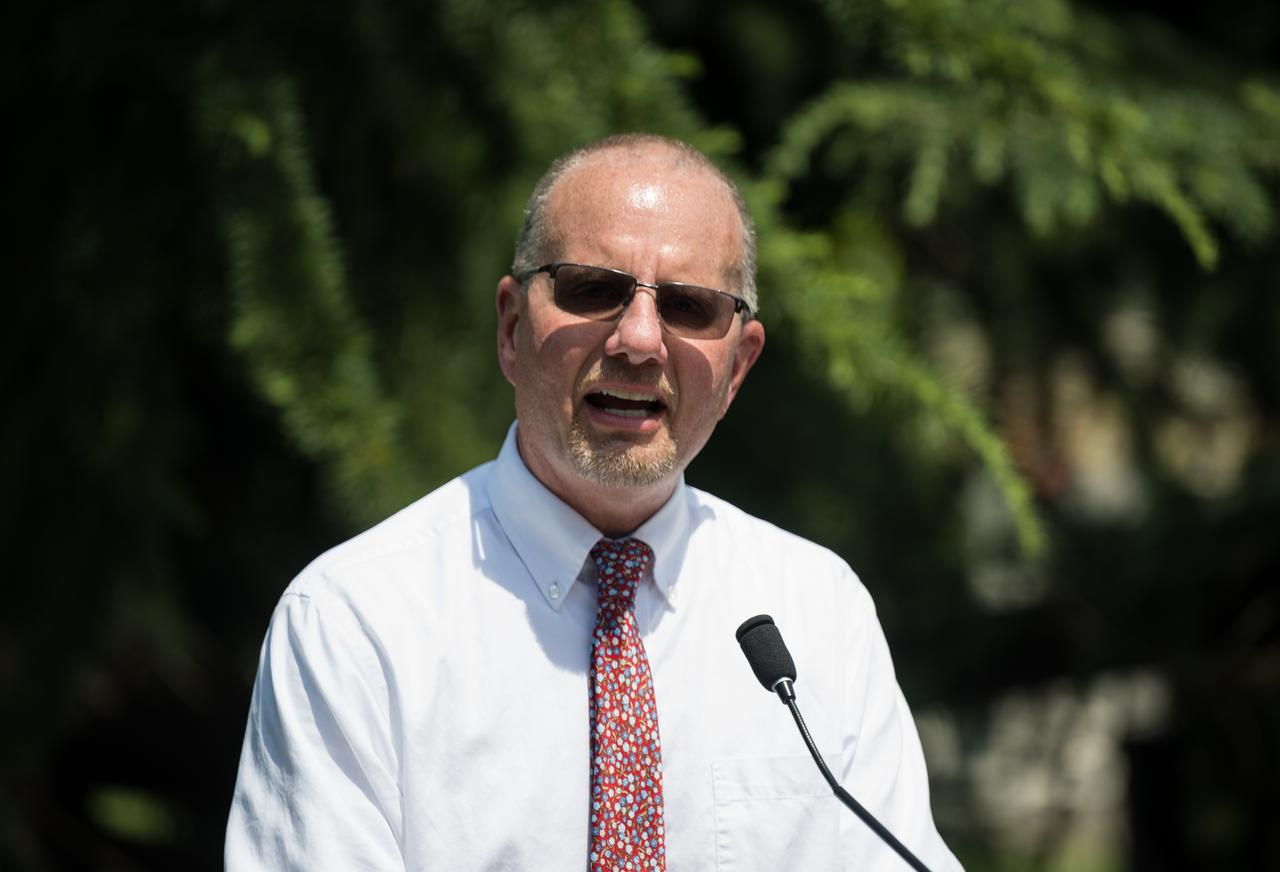
Director of the Capitol Grounds and Arboretum, Jim Kaufmann, provides welcome remarks at a Moon tree dedication ceremony, Tuesday, June 4, 2024 at the United States Capitol in Washington. The American Sweetgum tree planted on the southwestern side of the Capitol, was grown from a seed that was flown around the Moon during the Artemis I mission. Photo Credit: (NASA/Aubrey Gemignani)
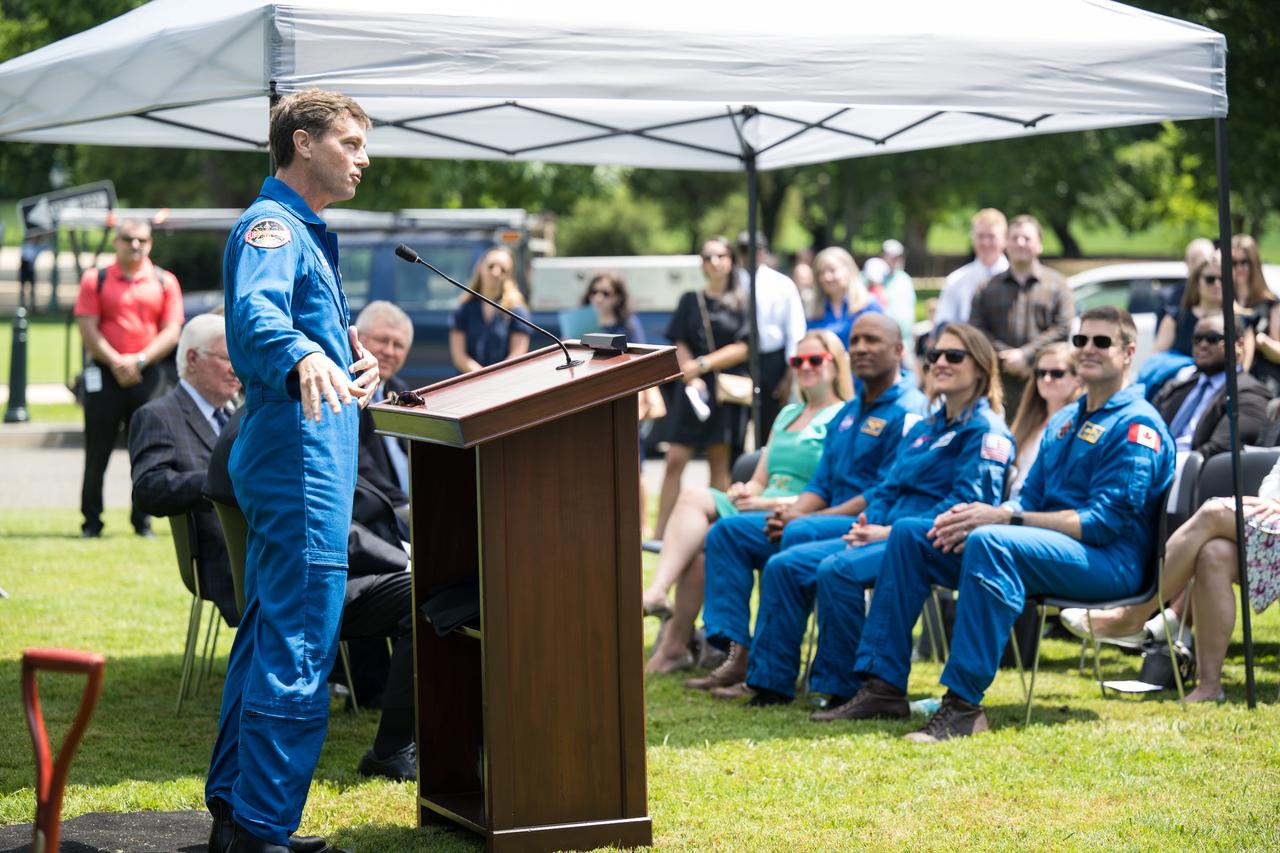
Artemis II Commander, NASA astronaut Reid Wiseman provides remarks at a Moon tree dedication ceremony, Tuesday, June 4, 2024 at the United States Capitol in Washington. The American Sweetgum tree planted on the southwestern side of the Capitol, was grown from a seed that was flown around the Moon during the Artemis I mission. Photo Credit: (NASA/Aubrey Gemignani)
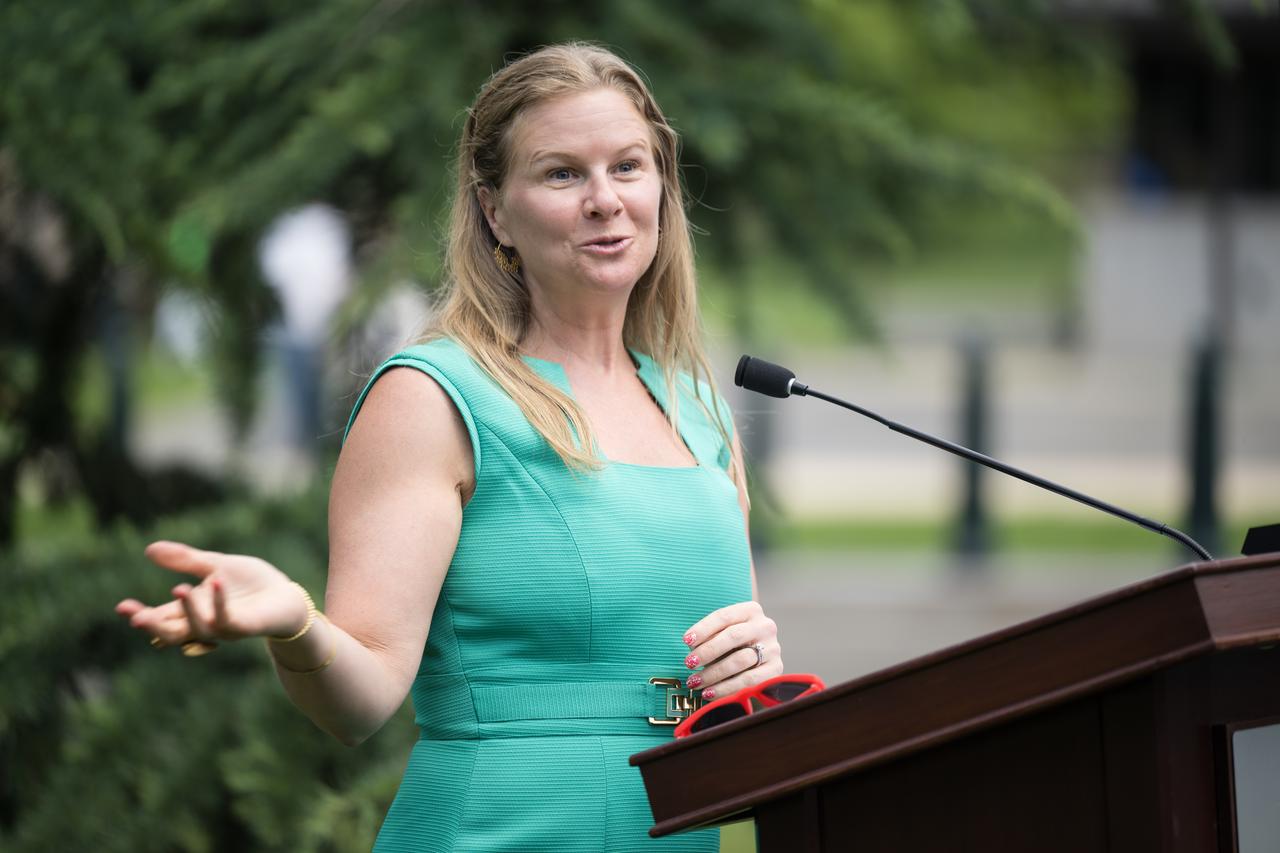
Minister, Congressional, Public and Intergovernmental Affairs, Embassy of Canada, Carrie Goodge O'Brien, provides remarks at a Moon tree dedication ceremony, Tuesday, June 4, 2024 at the United States Capitol in Washington. The American Sweetgum tree planted on the southwestern side of the Capitol, was grown from a seed that was flown around the Moon during the Artemis I mission. Photo Credit: (NASA/Aubrey Gemignani)
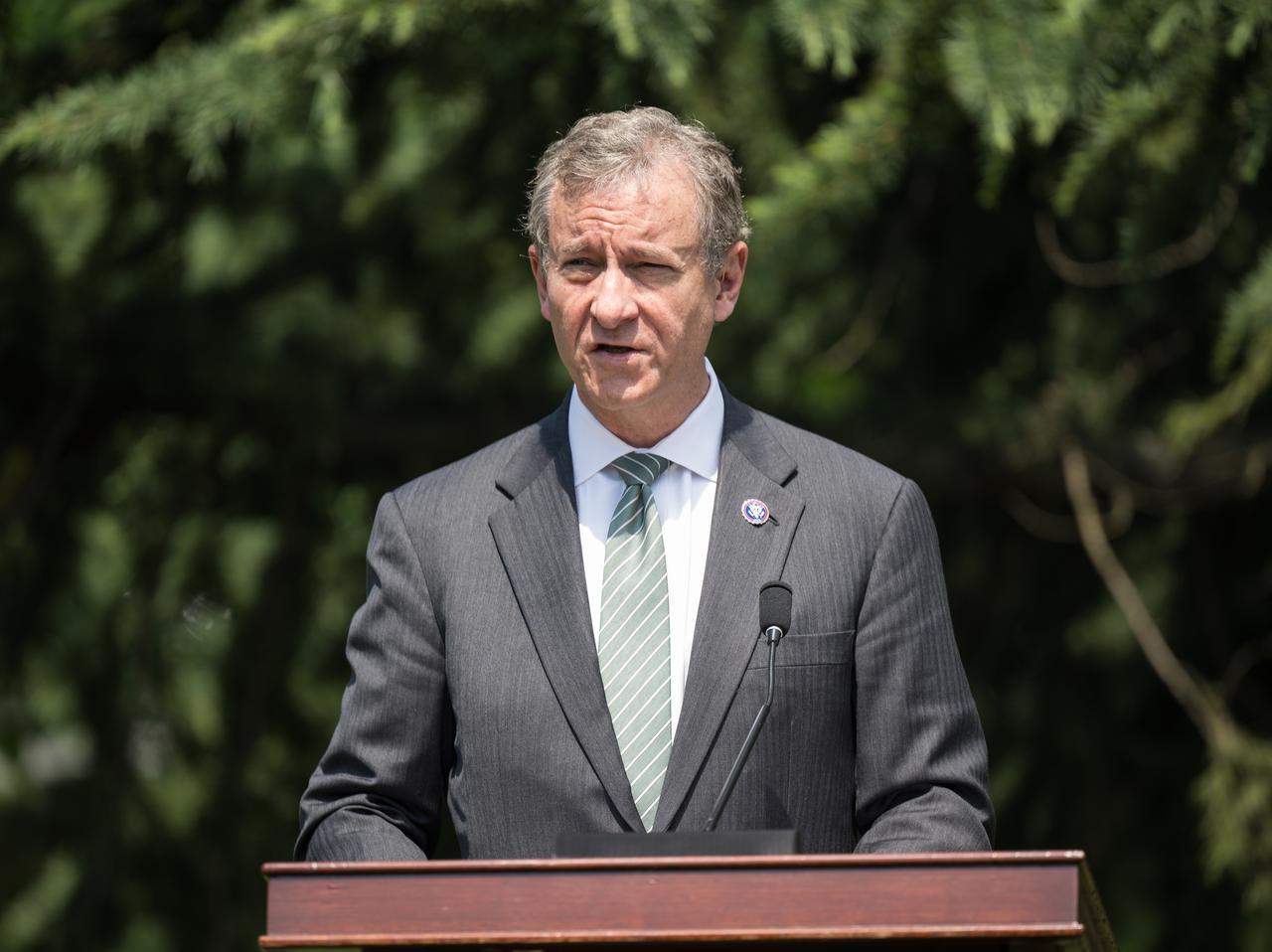
U.S. Rep. Matt Cartwright (D-PA) provides remarks at a Moon tree dedication ceremony, Tuesday, June 4, 2024 at the United States Capitol in Washington. The American Sweetgum tree planted on the southwestern side of the Capitol, was grown from a seed that was flown around the Moon during the Artemis I mission. Photo Credit: (NASA/Aubrey Gemignani)
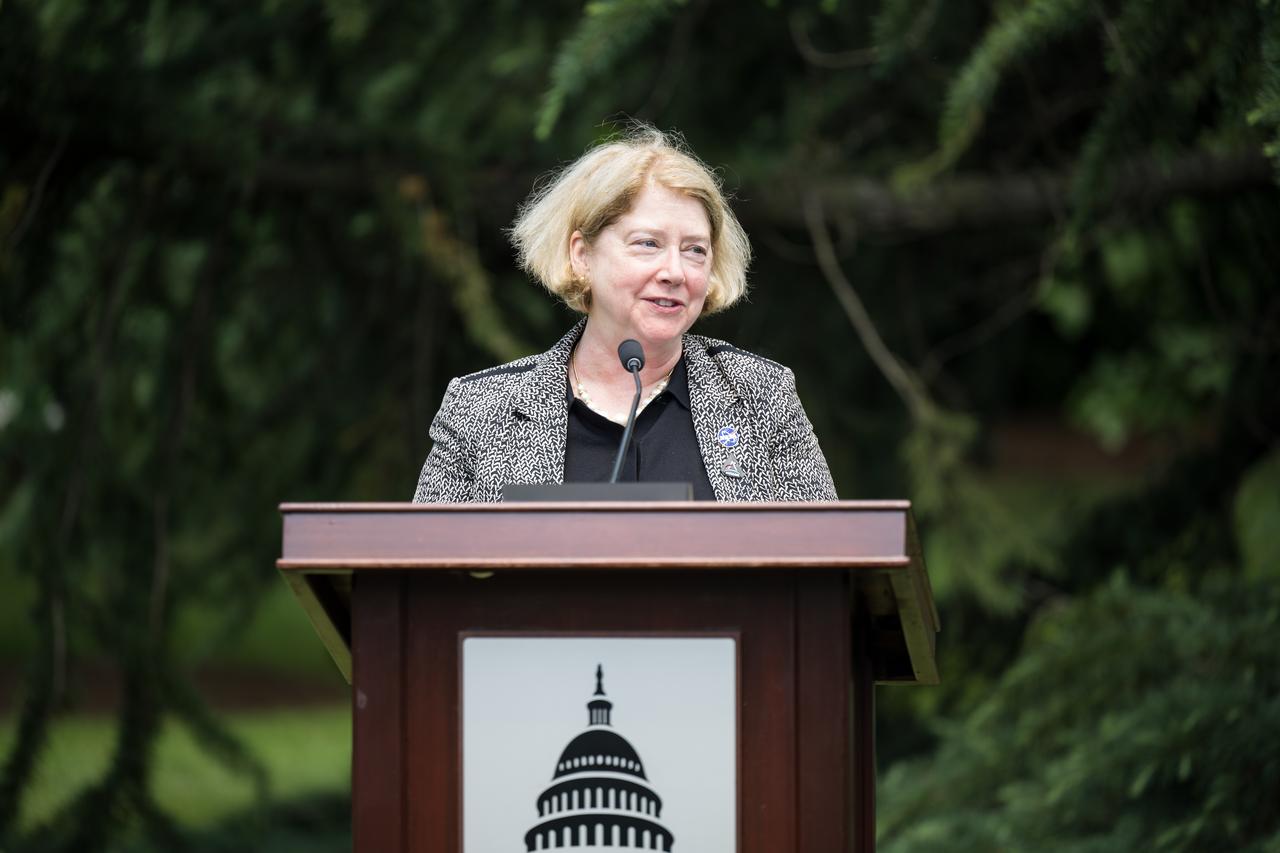
NASA Deputy Administrator Pam Melroy provides remarks at a Moon tree dedication ceremony, Tuesday, June 4, 2024 at the United States Capitol in Washington. The American Sweetgum tree planted on the southwestern side of the Capitol, was grown from a seed that was flown around the Moon during the Artemis I mission. Photo Credit: (NASA/Aubrey Gemignani)
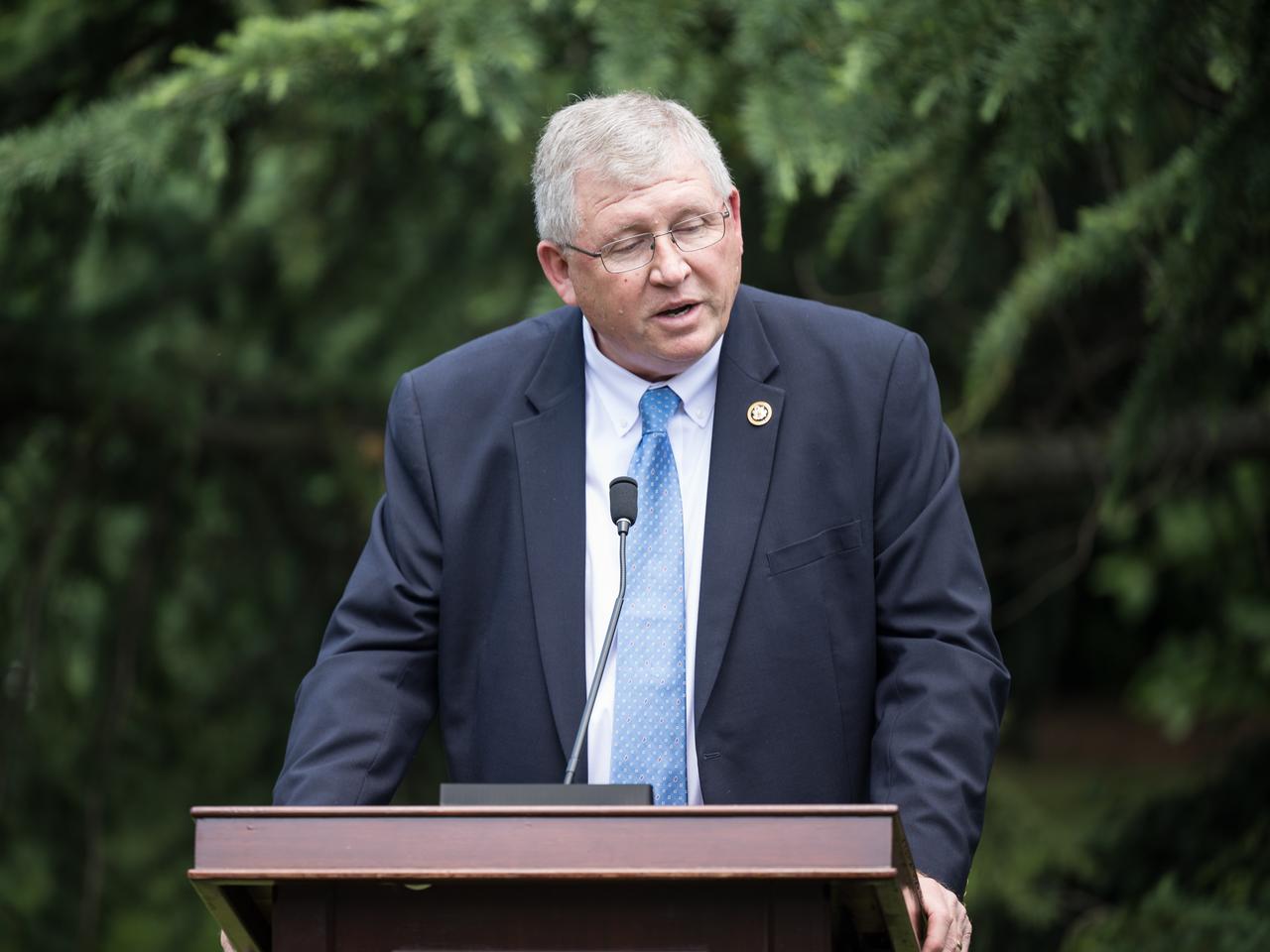
U.S. Rep. Frank Lucas (R-OK) provides remarks at a Moon tree dedication ceremony, Tuesday, June 4, 2024 at the United States Capitol in Washington. The American Sweetgum tree planted on the southwestern side of the Capitol, was grown from a seed that was flown around the Moon during the Artemis I mission. Photo Credit: (NASA/Aubrey Gemignani)
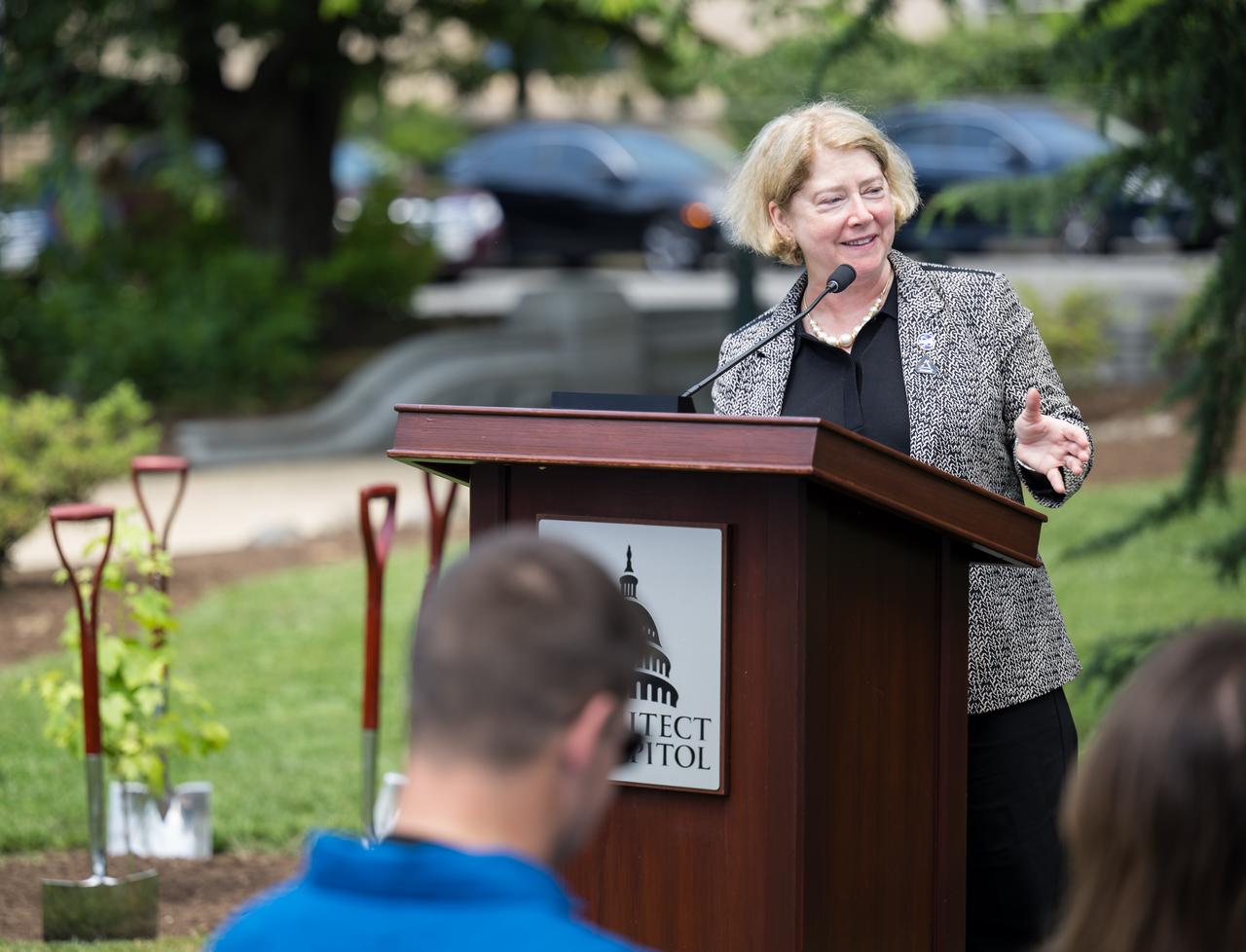
NASA Deputy Administrator Pam Melroy provides remarks at a Moon tree dedication ceremony, Tuesday, June 4, 2024 at the United States Capitol in Washington. The American Sweetgum tree planted on the southwestern side of the Capitol, was grown from a seed that was flown around the Moon during the Artemis I mission. Photo Credit: (NASA/Aubrey Gemignani)
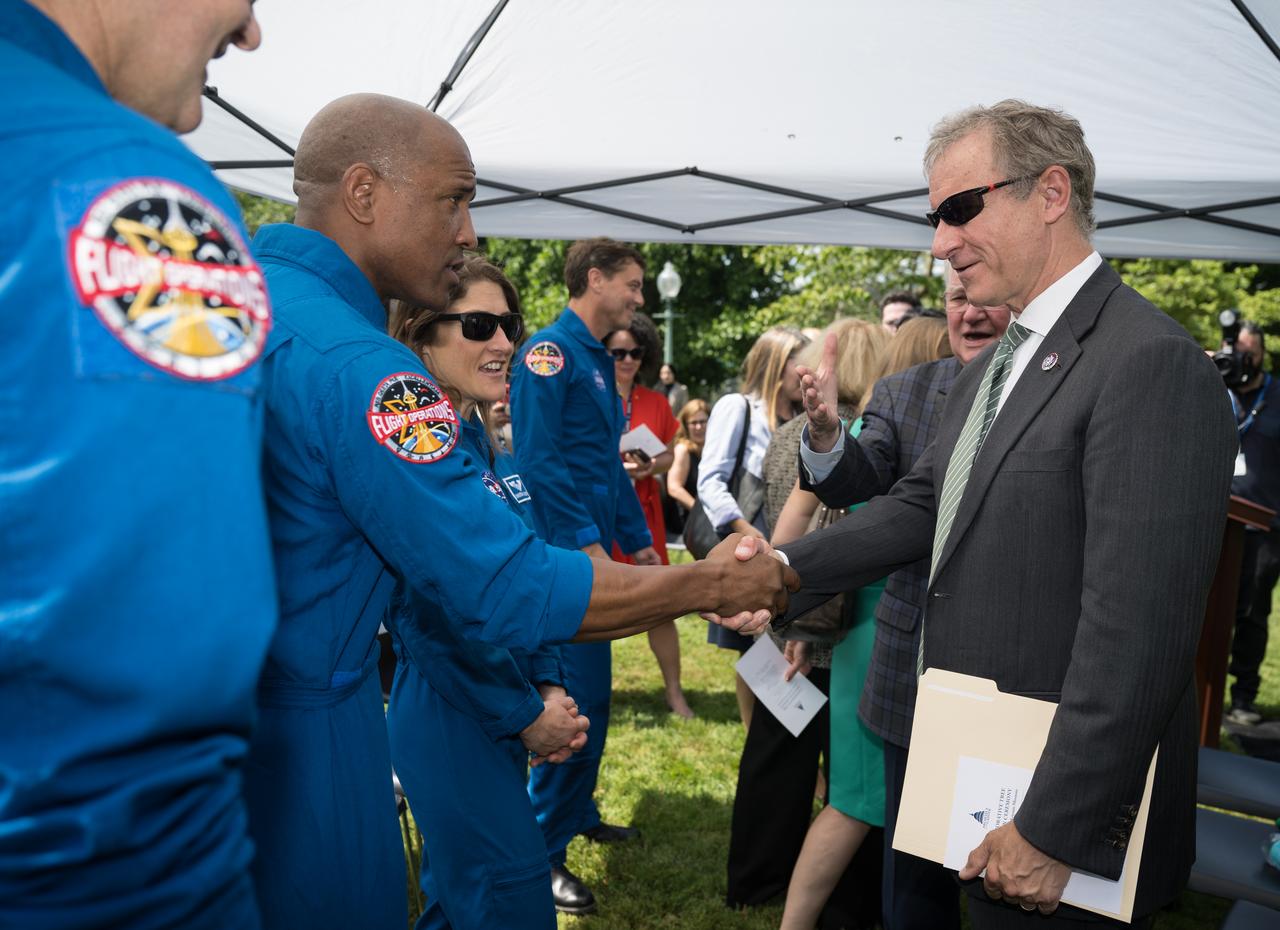
Artemis II astronaut Victor Glover greets U.S. Rep. Matt Cartwright (D-PA) at a Moon tree dedication ceremony, Tuesday, June 4, 2024 at the United States Capitol in Washington. The American Sweetgum tree planted on the southwestern side of the Capitol, was grown from a seed that was flown around the Moon during the Artemis I mission. Photo Credit: (NASA/Aubrey Gemignani)
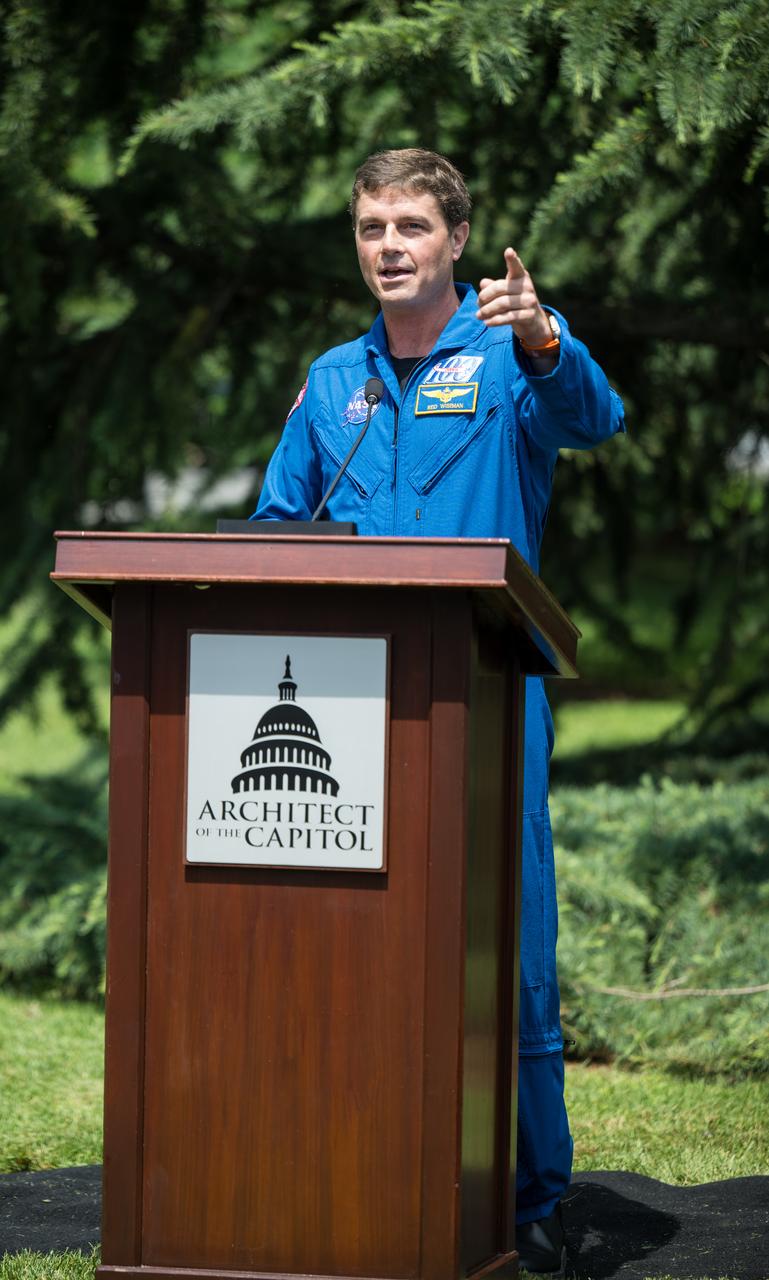
Artemis II Commander, NASA astronaut Reid Wiseman provides remarks at a Moon tree dedication ceremony, Tuesday, June 4, 2024 at the United States Capitol in Washington. The American Sweetgum tree planted on the southwestern side of the Capitol, was grown from a seed that was flown around the Moon during the Artemis I mission. Photo Credit: (NASA/Aubrey Gemignani)
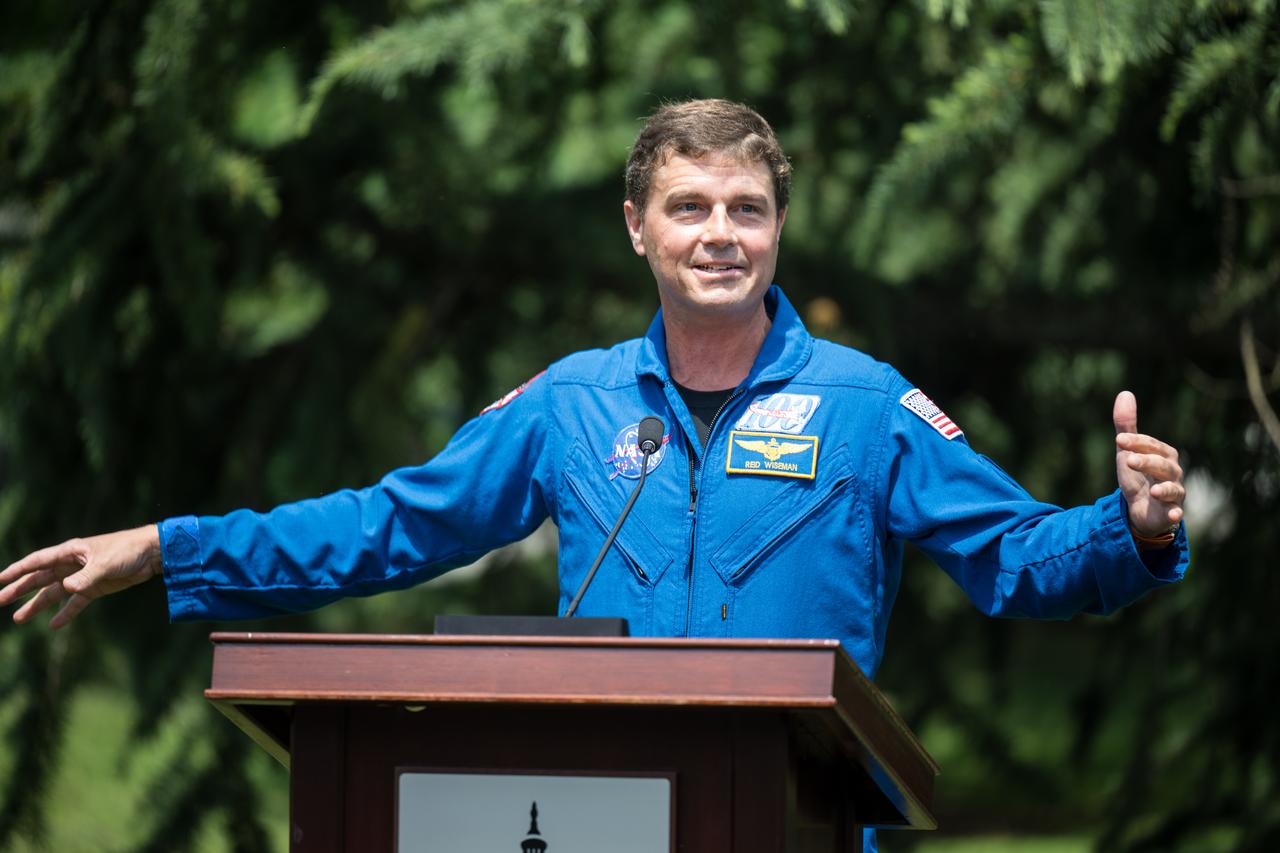
Artemis II Commander, NASA astronaut Reid Wiseman provides remarks at a Moon tree dedication ceremony, Tuesday, June 4, 2024 at the United States Capitol in Washington. The American Sweetgum tree planted on the southwestern side of the Capitol, was grown from a seed that was flown around the Moon during the Artemis I mission. Photo Credit: (NASA/Aubrey Gemignani)
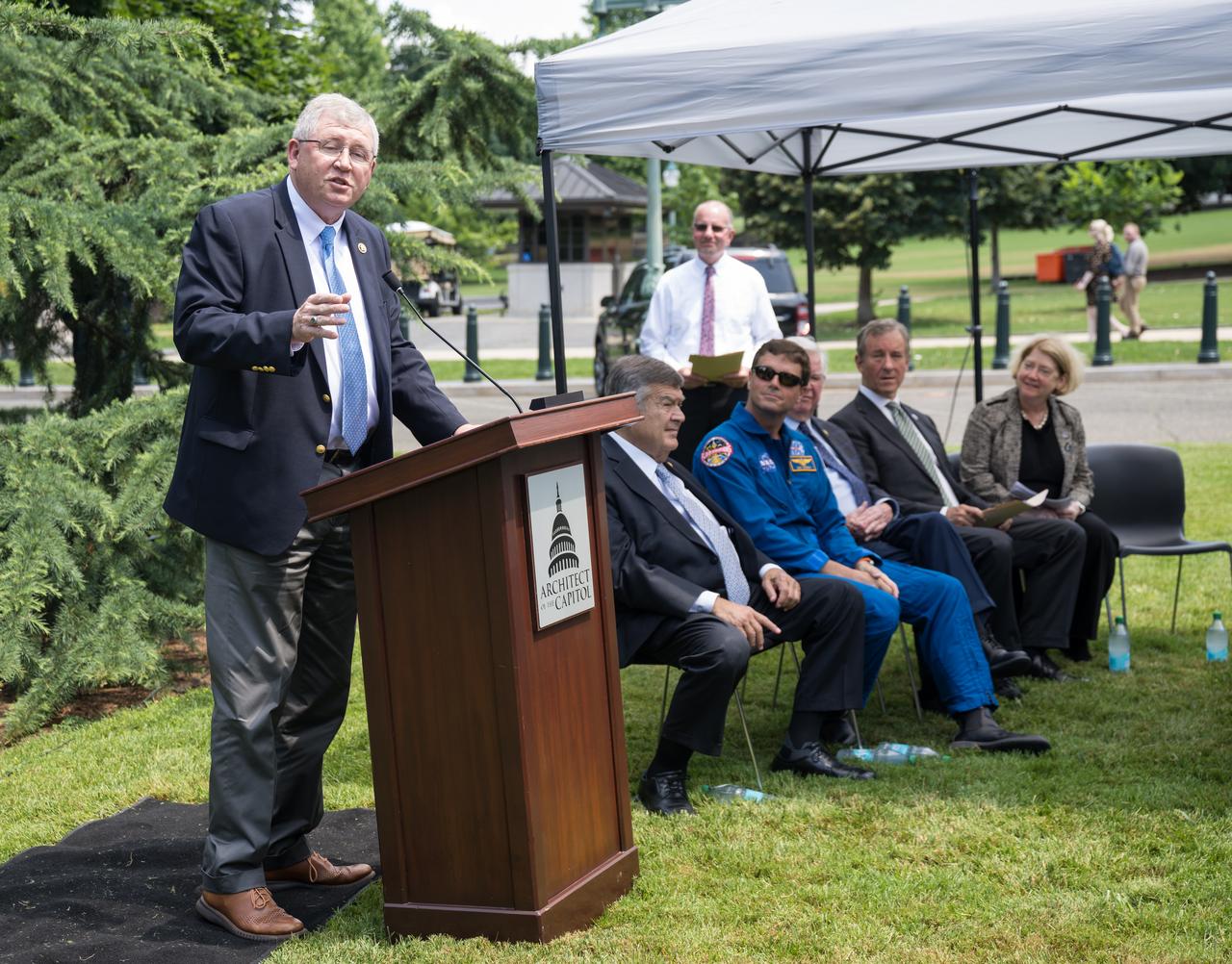
U.S. Rep. Frank Lucas (R-OK) provides remarks at a Moon tree dedication ceremony, Tuesday, June 4, 2024 at the United States Capitol in Washington. The American Sweetgum tree planted on the southwestern side of the Capitol, was grown from a seed that was flown around the Moon during the Artemis I mission. Photo Credit: (NASA/Aubrey Gemignani)
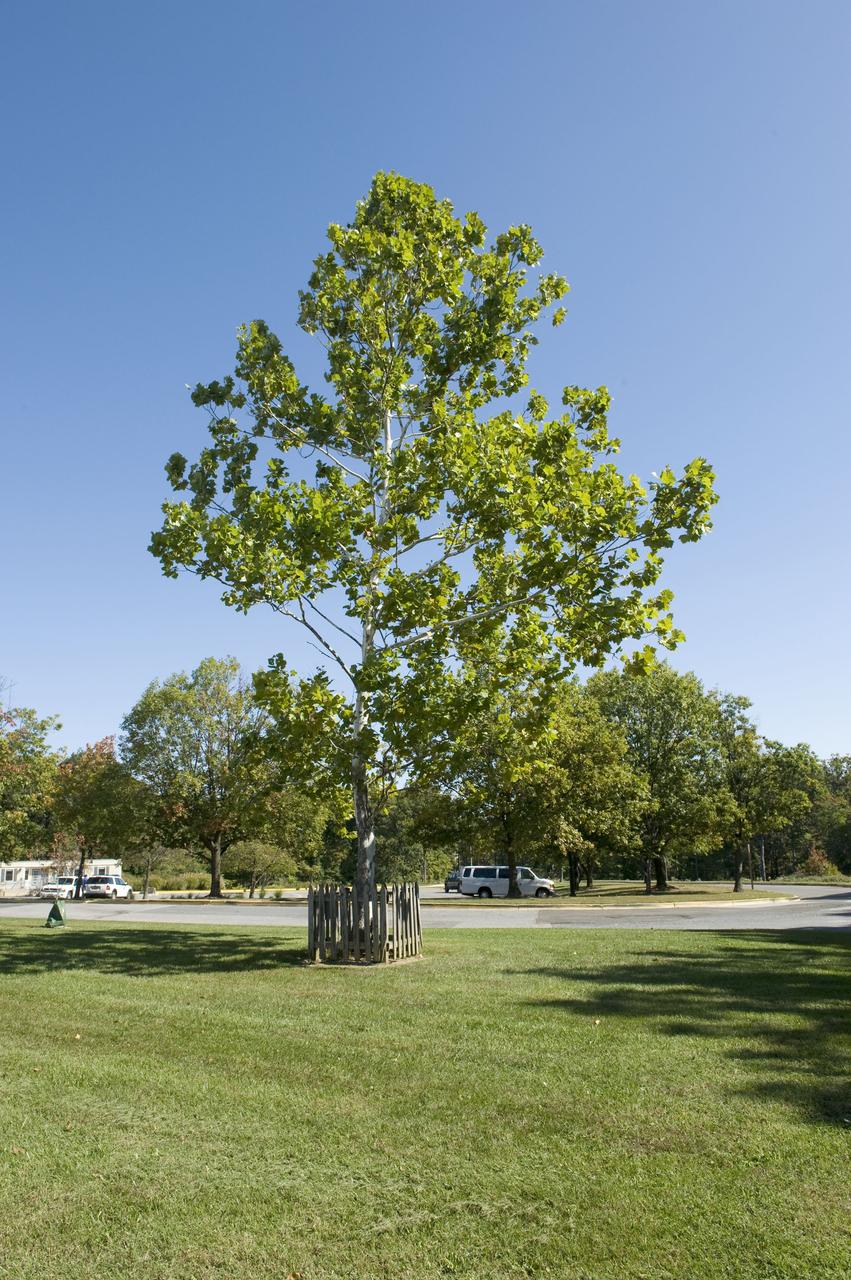
The "Moon Tree" in front of the Visitor Center at NASA's Goddard Space Flight Center in Greenbelt, Md. This sycamore was planted at the visitor center on June 9, 1977, and grew from a seed carried to the Moon aboard Apollo 14.
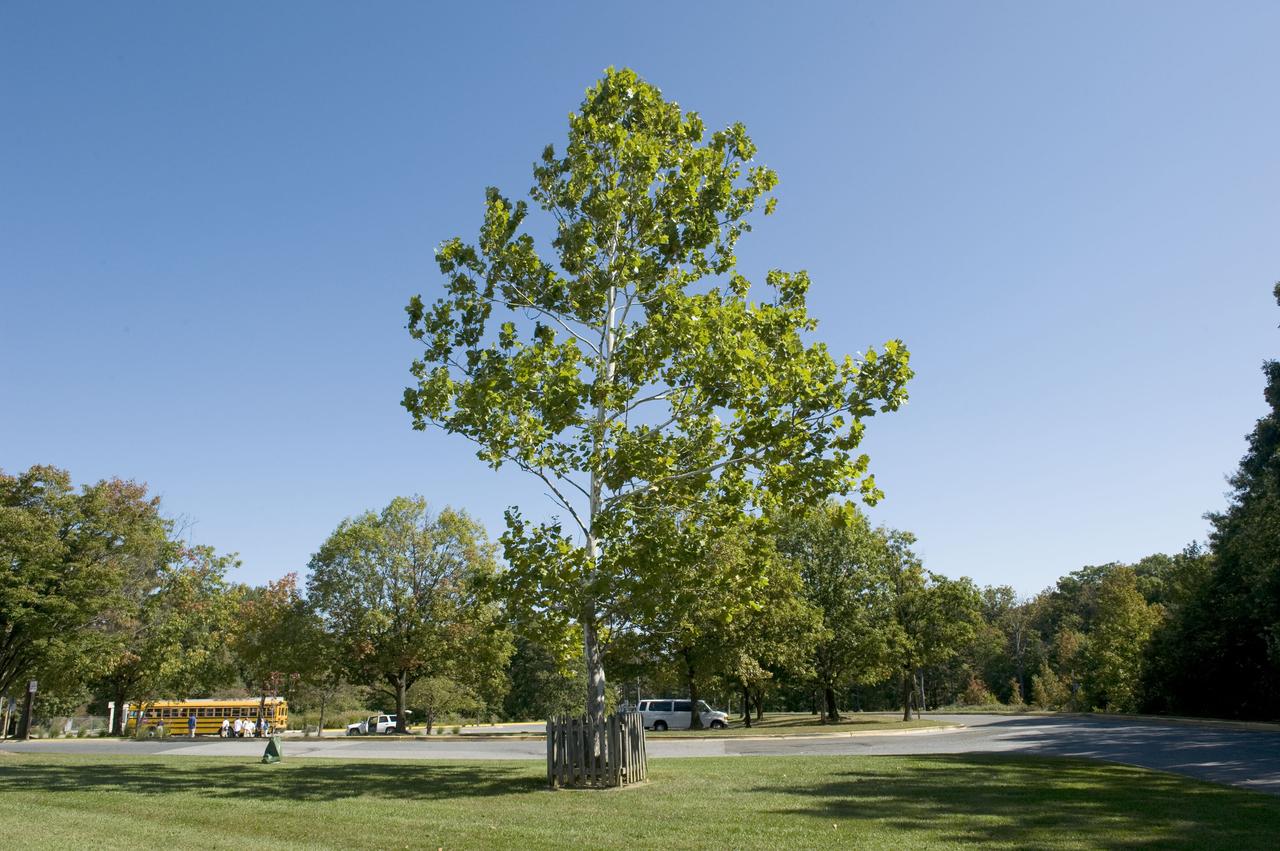
The "Moon Tree" in front of the Visitor Center at NASA's Goddard Space Flight Center in Greenbelt, Md. This sycamore was planted at the visitor center on June 9, 1977, and grew from a seed carried to the Moon aboard Apollo 14.
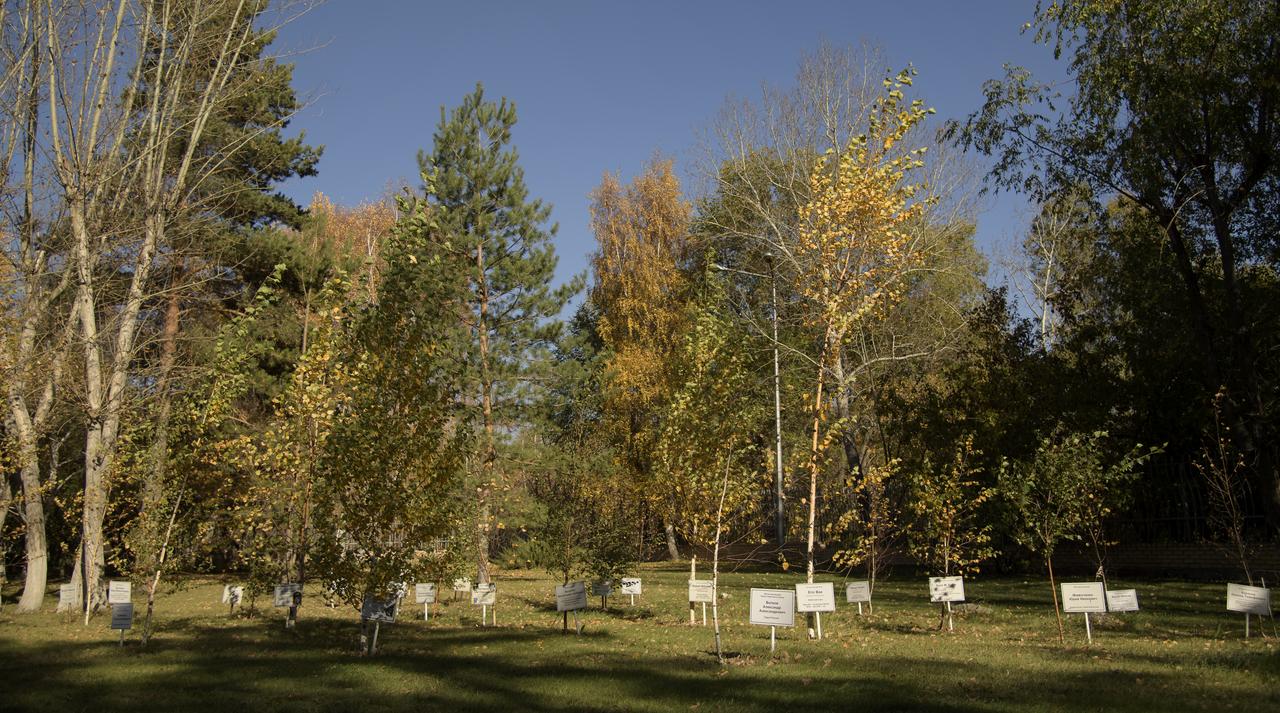
Trees planted by astronauts and cosmonauts that have flown in space are seen in front of the Cosmonaut Hotel in Karaganda, Kazakhstan, Tuesday, Oct. 2, 2018. NASA and Roscosmos team members, along with Russian Search and Recovery Forces, meet in Karaganda to discuss the readiness for the landing of Expedition 56 Commander Drew Feustel and Flight Engineer Ricky Arnold of NASA, along with Flight Engineer and Soyuz Commander Oleg Artemyev of Roscosmos. Photo Credit: (NASA/Bill Ingalls)
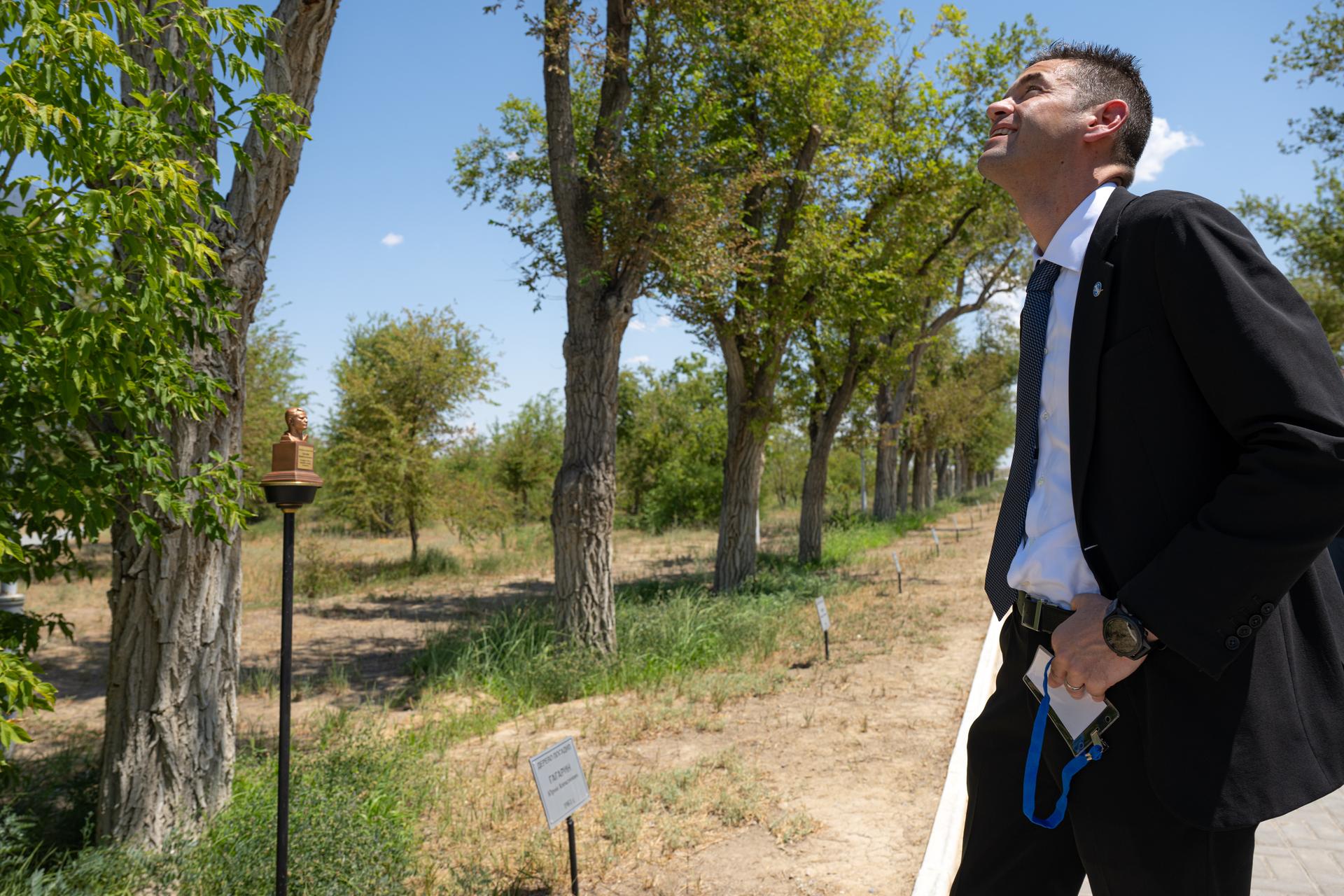
NASA Administrator Jared Isaacman views a tree planted by cosmonaut Yuri Gagarin, Monday, July 13, 2026, at the Cosmonauts Alley at the Cosmonaut Hotel in Baikonur, Kazakhstan. In a tradition dating back to Gagarin’s spaceflight in 1961, cosmonauts and astronauts plant trees at the grove prior to their first mission to space. Photo Credit: (NASA/John Kraus)
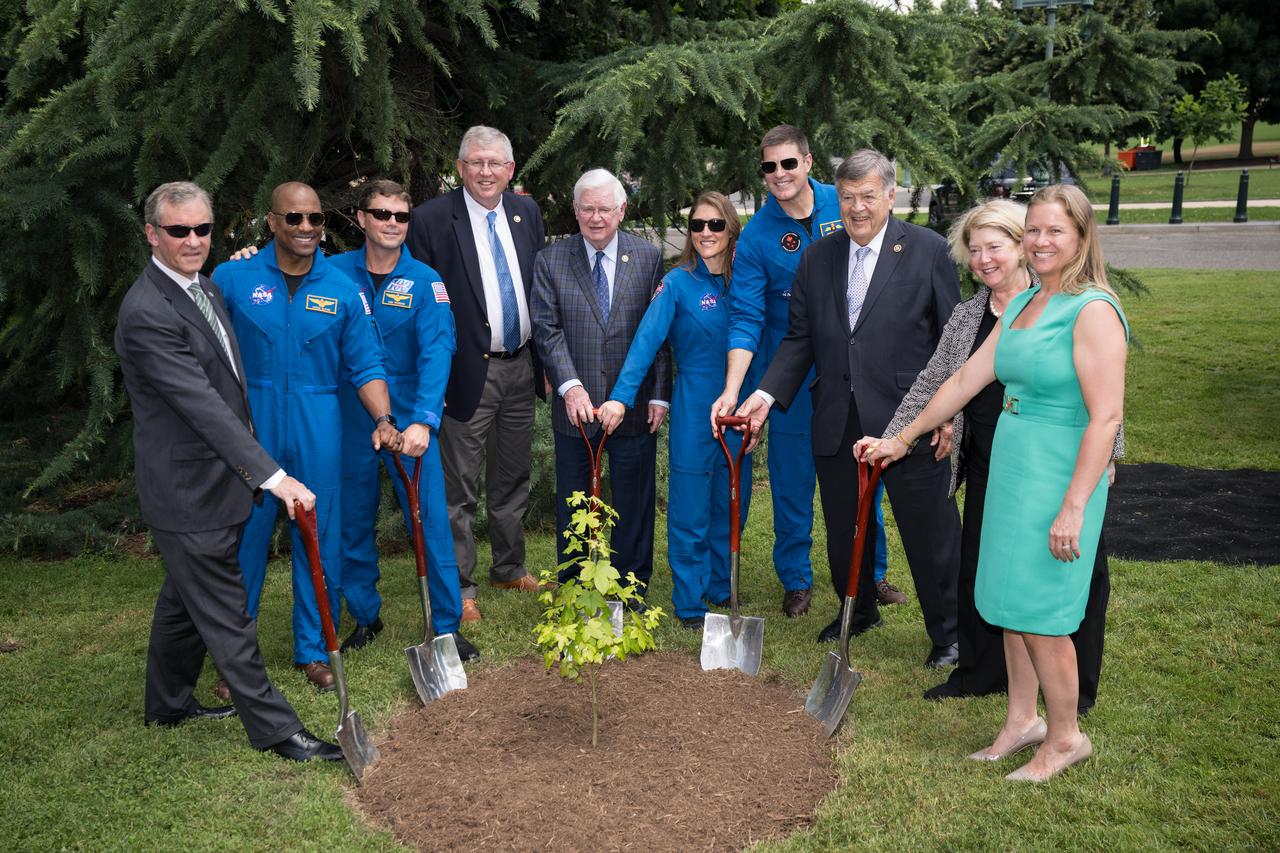
From left to right, U.S. Rep. Matt Cartwright (D-PA), Artemis II crew members, NASA astronauts Victor Glover and Reid Wiseman, U.S. Rep. Frank Lucas (R-OK), U.S. Rep. Harold “Hal” Rogers (R-KY), Artemis II crew members NASA astronaut Christina Koch and Canadian Space Agency (CSA) astronaut Jeremy Hansen, U.S. Rep. Charles Albert "Dutch" Ruppersberger III (D-MD), NASA Deputy Administrator Pam Melroy, and Minister, Congressional, Public, and Intergovernmental Affairs, Embassy of Canada, Carrie Goodge O'Brien, pose for a photo after a Moon tree dedication ceremony, Tuesday, June 4, 2024 at the United States Capitol in Washington. The American Sweetgum tree planted on the southwestern side of the Capitol, was grown from a seed that was flown around the Moon during the Artemis I mission. Photo Credit: (NASA/Aubrey Gemignani)
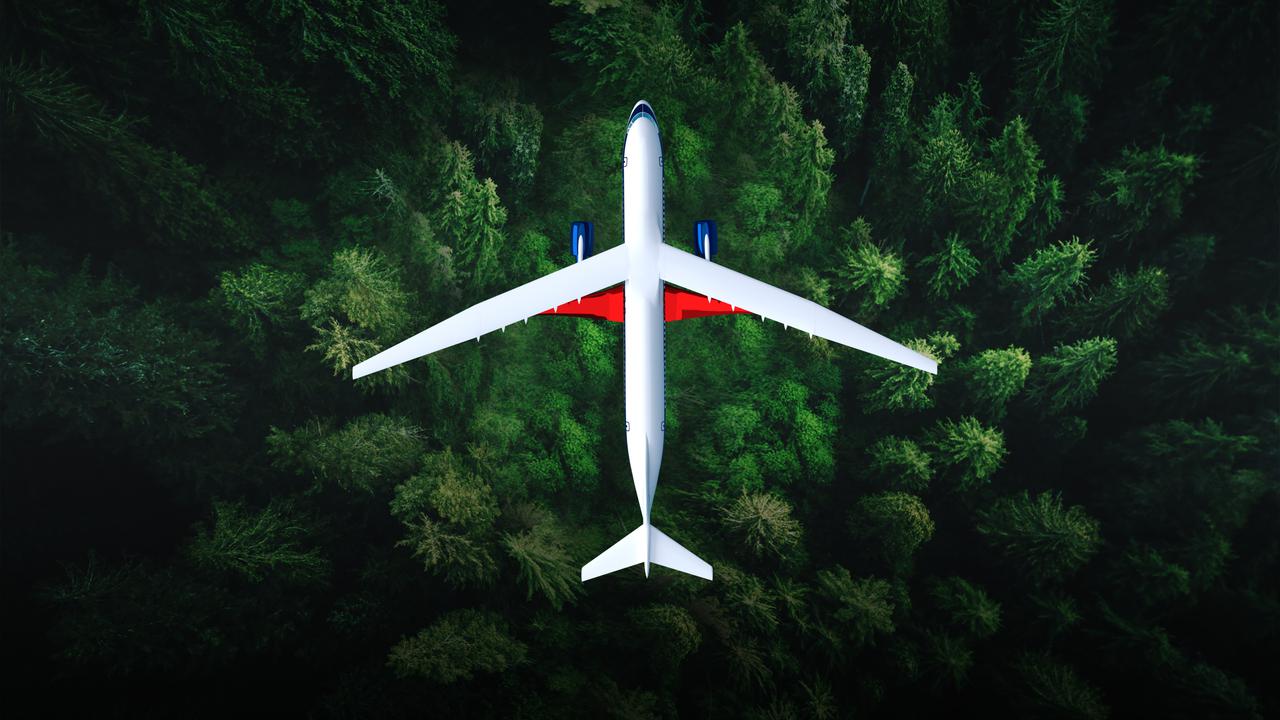
An artist’s concept of the transonic truss-braced wing aircraft configuration in flight over a forest of trees.
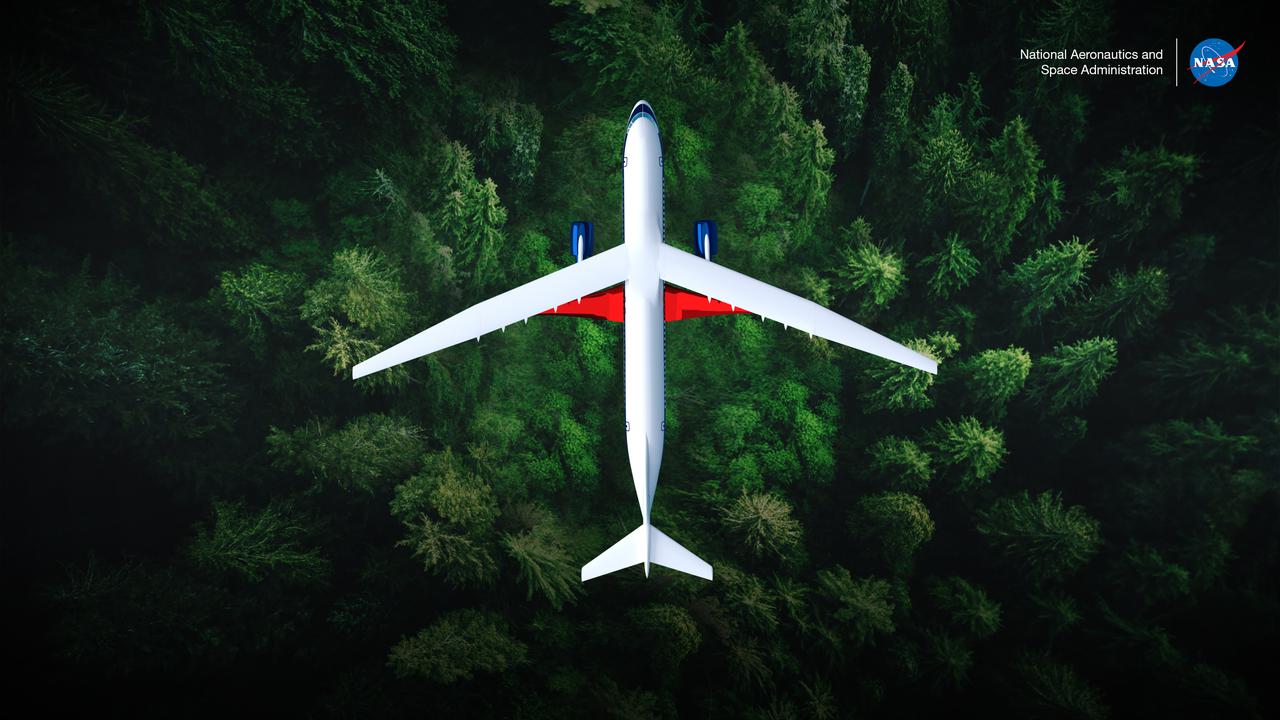
An artist’s concept of the transonic truss-braced wing aircraft configuration in flight over a forest of trees.
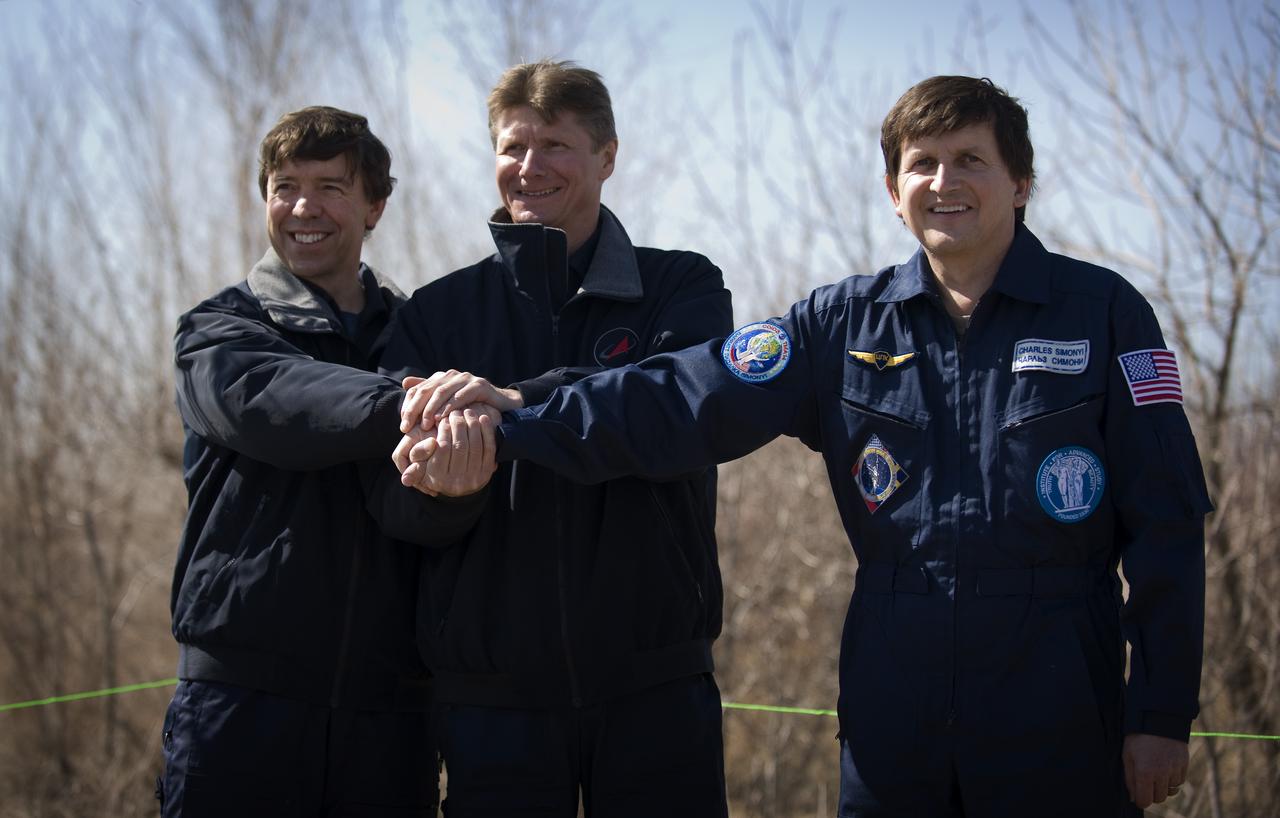
Expedition 19 Flight Engineer Michael R. Barratt, left, Commander Gennady I. Padalka, center, and Spaceflight Participant Charles Simonyi pose for a photograph after the traditional tree planting ceremony at the Cosmonaut Hotel, Saturday, March 21, 2009 in Baikonur, Kazakhstan. (Photo Credit: NASA/Bill Ingalls)
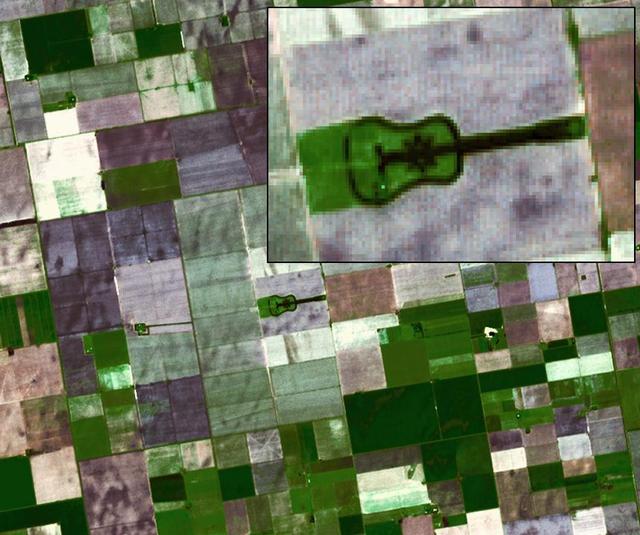
Located in the fertile agricultural region of Argentina Pampas is a guitar-shaped forest made up of cypress and eucalyptus trees as seen by NASA Terra spacecraft.
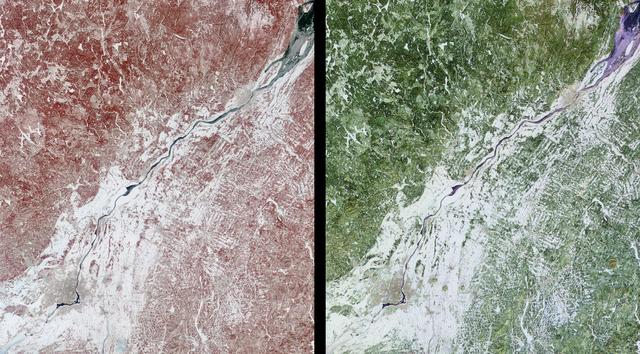
These images of Canada Québec province were acquired by NASA Terra satelliteon March 4, 2001.The region forests are a mixture of coniferous and hardwood trees, and ugar-shack festivities are held at this time of year to celebrate the beginning o
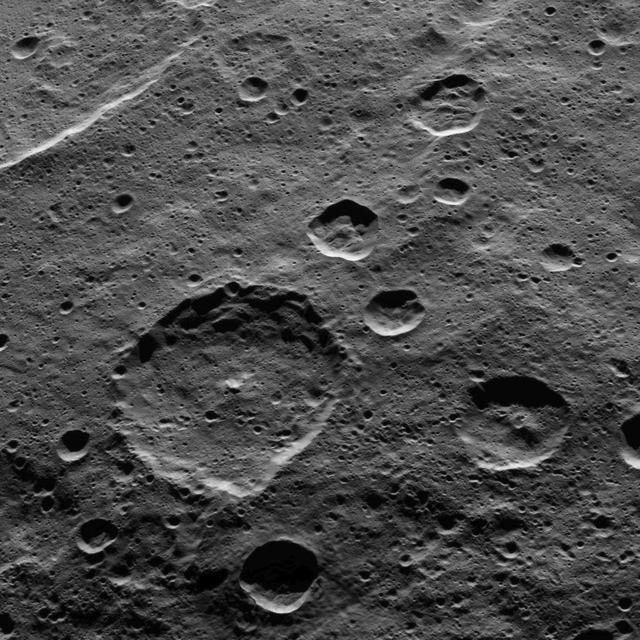
Part of the southern hemisphere on dwarf planet Ceres is seen in this image taken by NASA Dawn spacecraft. Hamori crater, named after a Japanese god and protector of tree leaves, is the large crater near the center of the image.
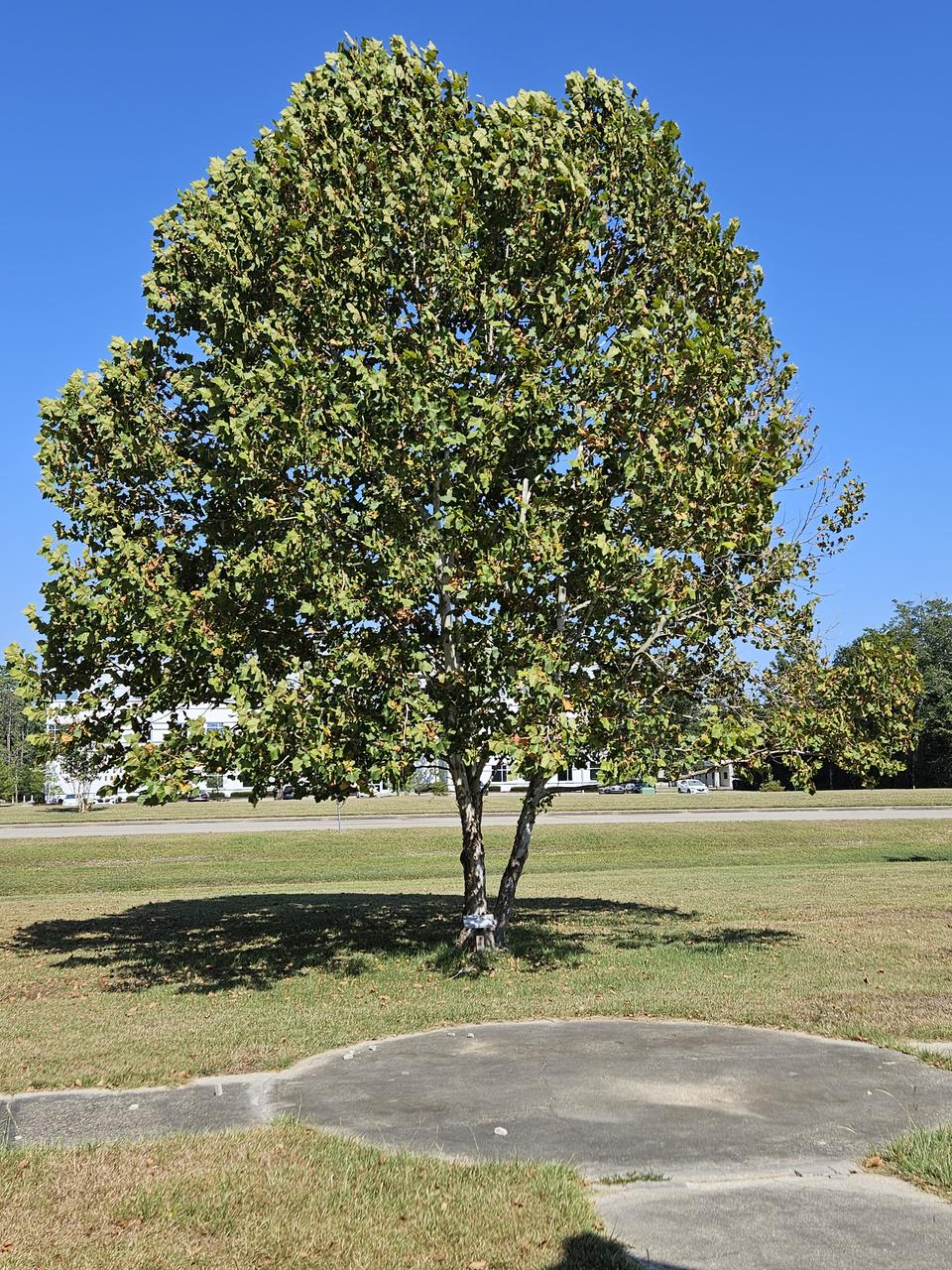
An image from 2023 image shows the growth of a Moon tree planted in 2004 to honor the Apollo 11 mission. The seeds for the tree were carried to the Moon and back by astronaut Stuart Roosa on the Apollo 14 mission.
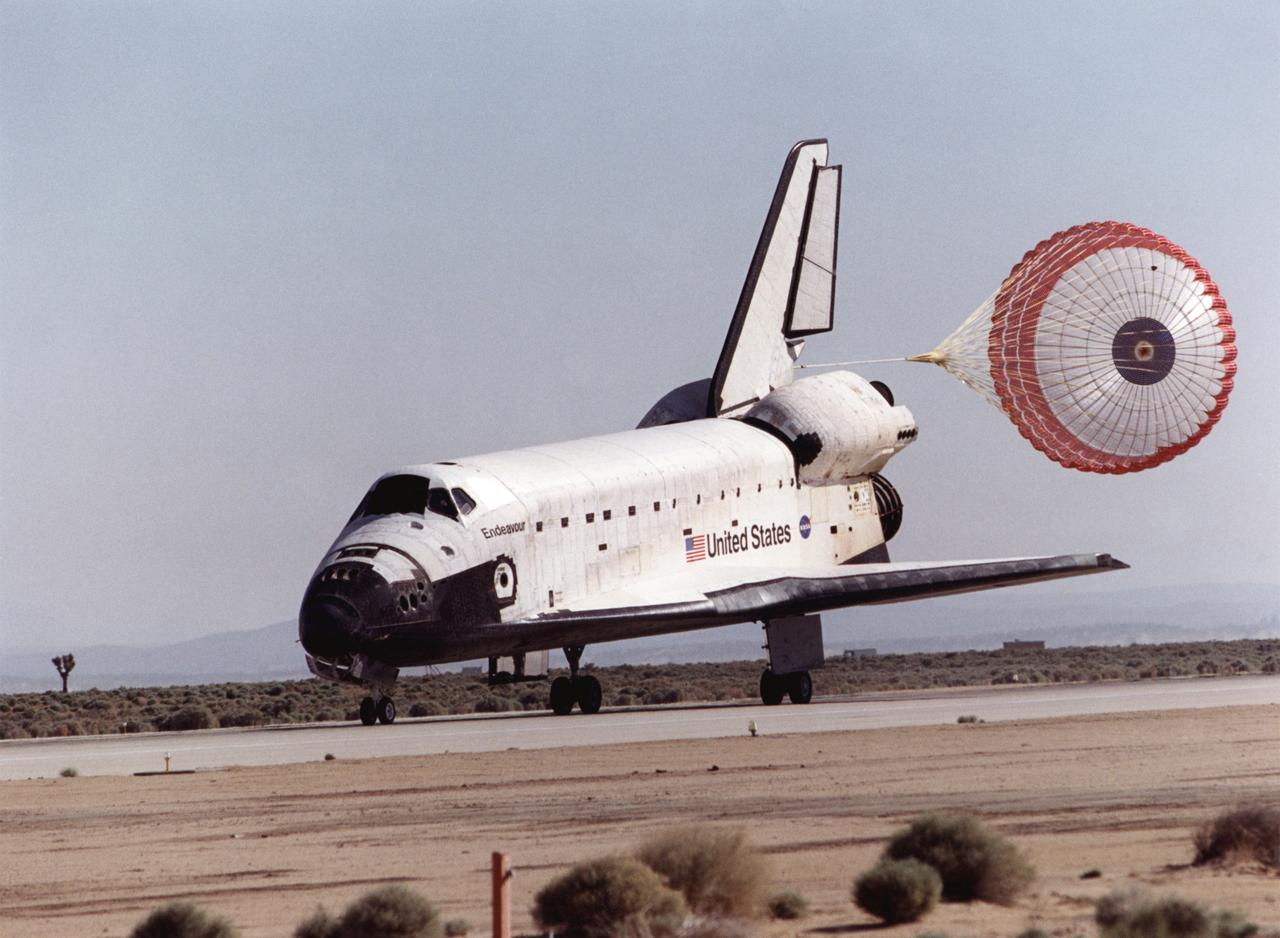
A lone desert Joshua tree greeted the arrival of Space Shuttle Endeavour at Edwards Air Force Base, California, May 1, 2001. A large drag chute helped slow Endeavour on the runway. After mounting the shuttle on a converted 747 airliner at NASA's Dryden Flight Research Center, Endeavour will be carried back to the Kennedy Space Center for its next mission. Weather in Florida necessitated landing in California.
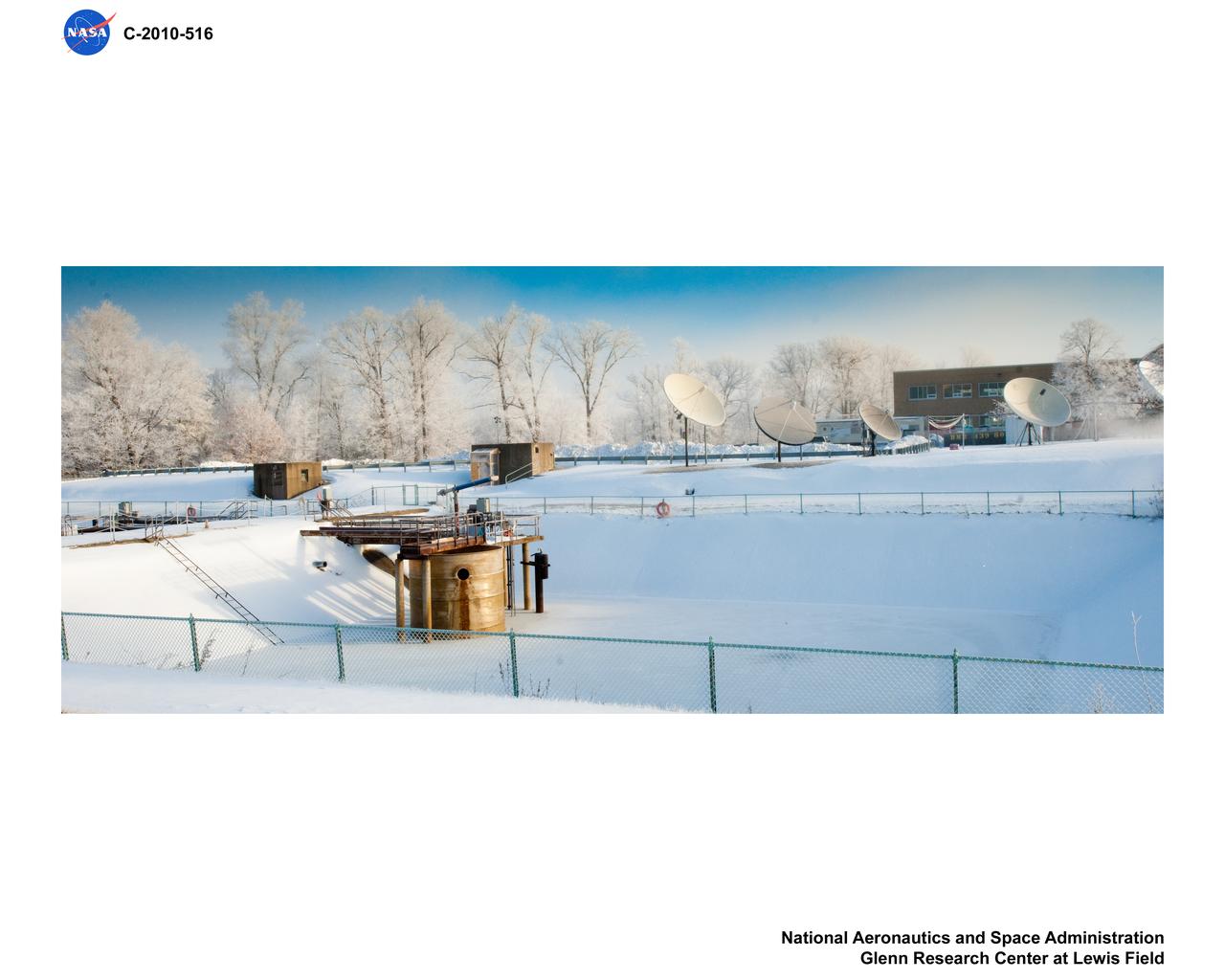
Communications Satellite Station with Hoarfrost on Trees
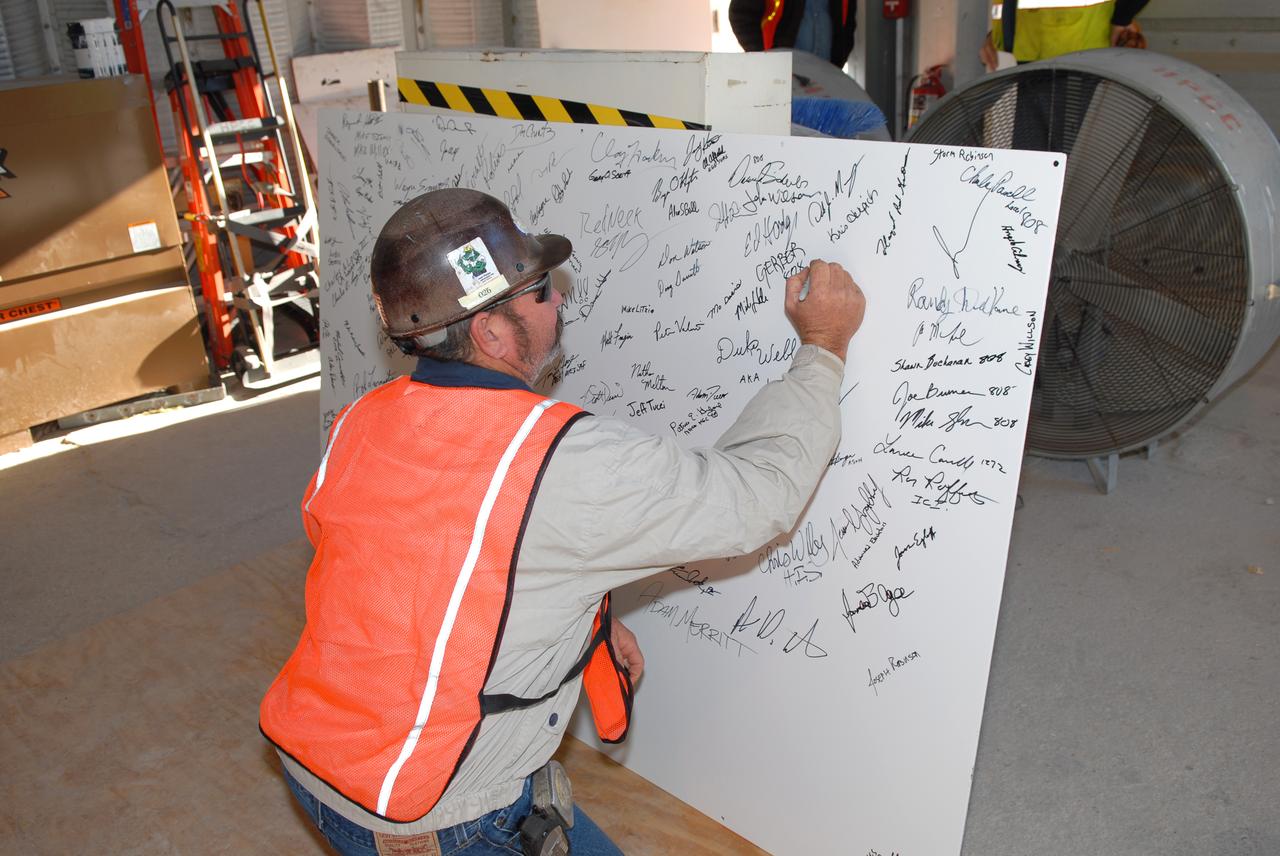
CONSTELLATION - NEW MLP CONSTRUCTION PROGRESS - SIGNING AND TREE

Expedition 27 tree planting – March 29, 2011
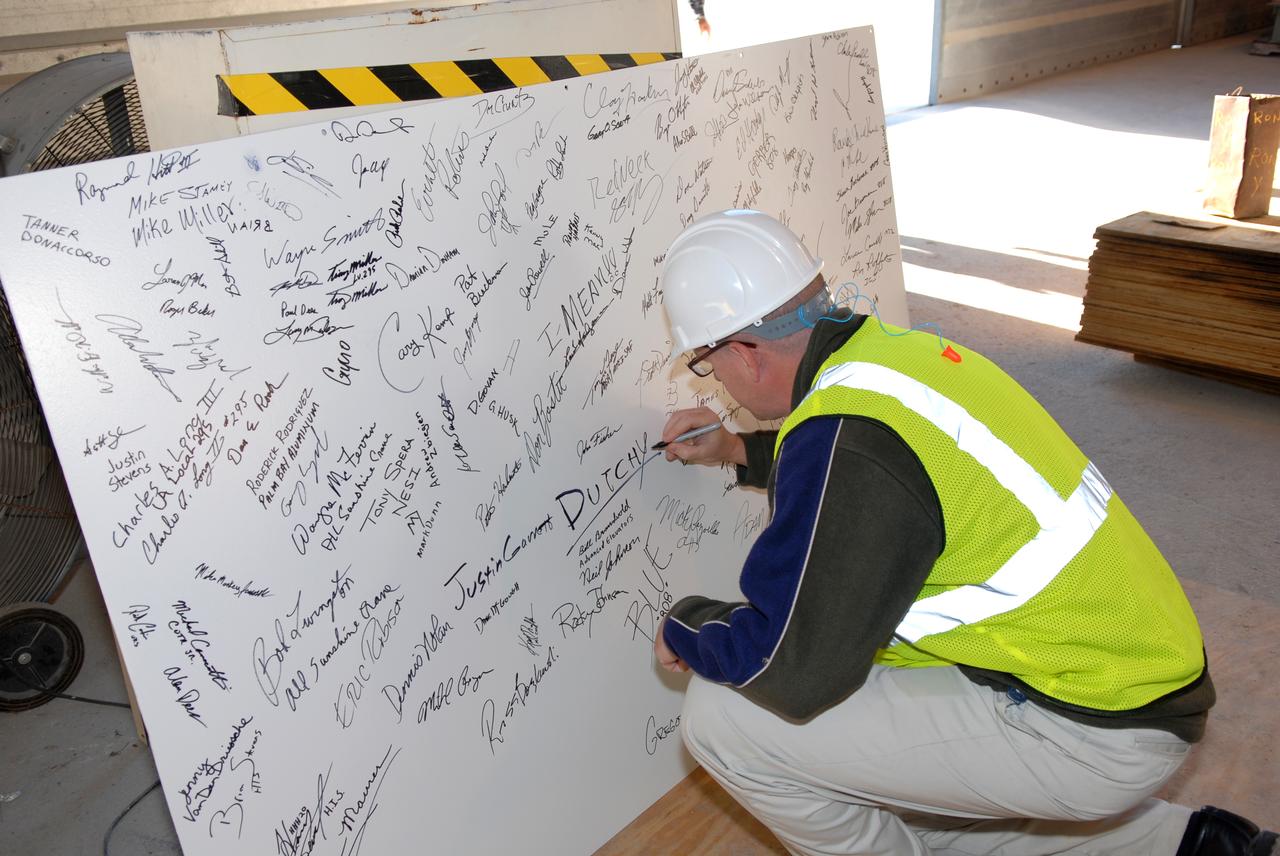
CONSTELLATION - NEW MLP CONSTRUCTION PROGRESS - SIGNING AND TREE

Expedition 27 tree planting – March 29, 2011
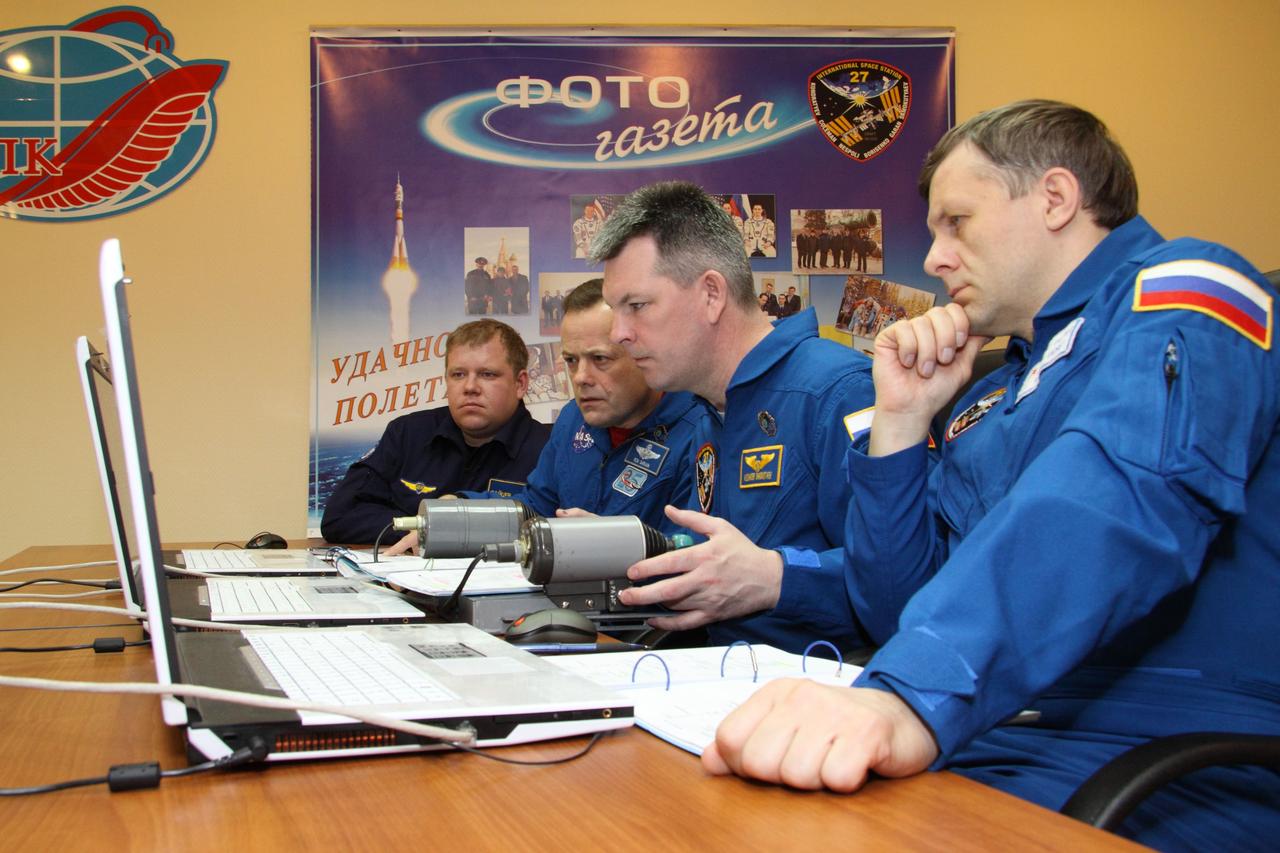
Expedition 27 tree planting – March 29, 2011

CONSTELLATION - NEW MLP CONSTRUCTION PROGRESS - SIGNING AND TREE
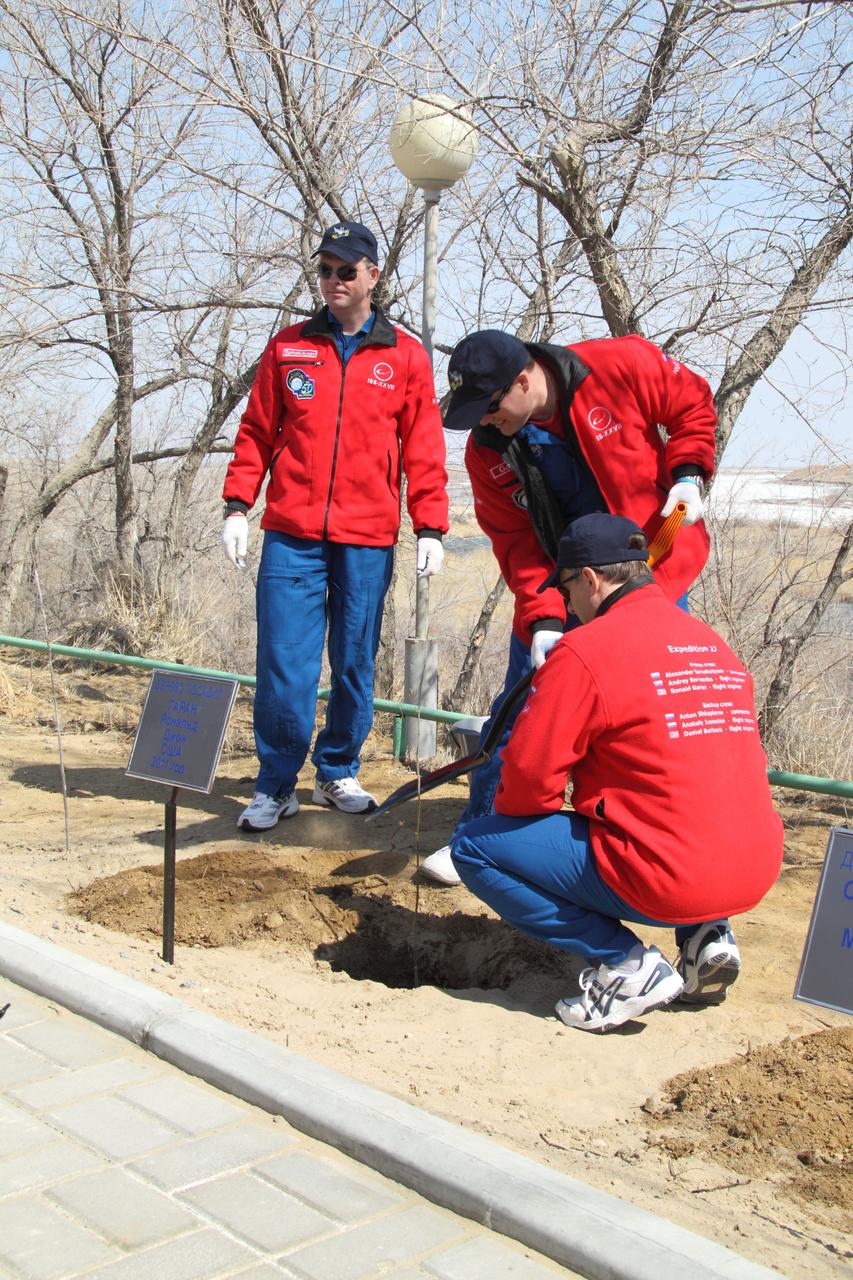
Expedition 27 tree planting – March 29, 2011
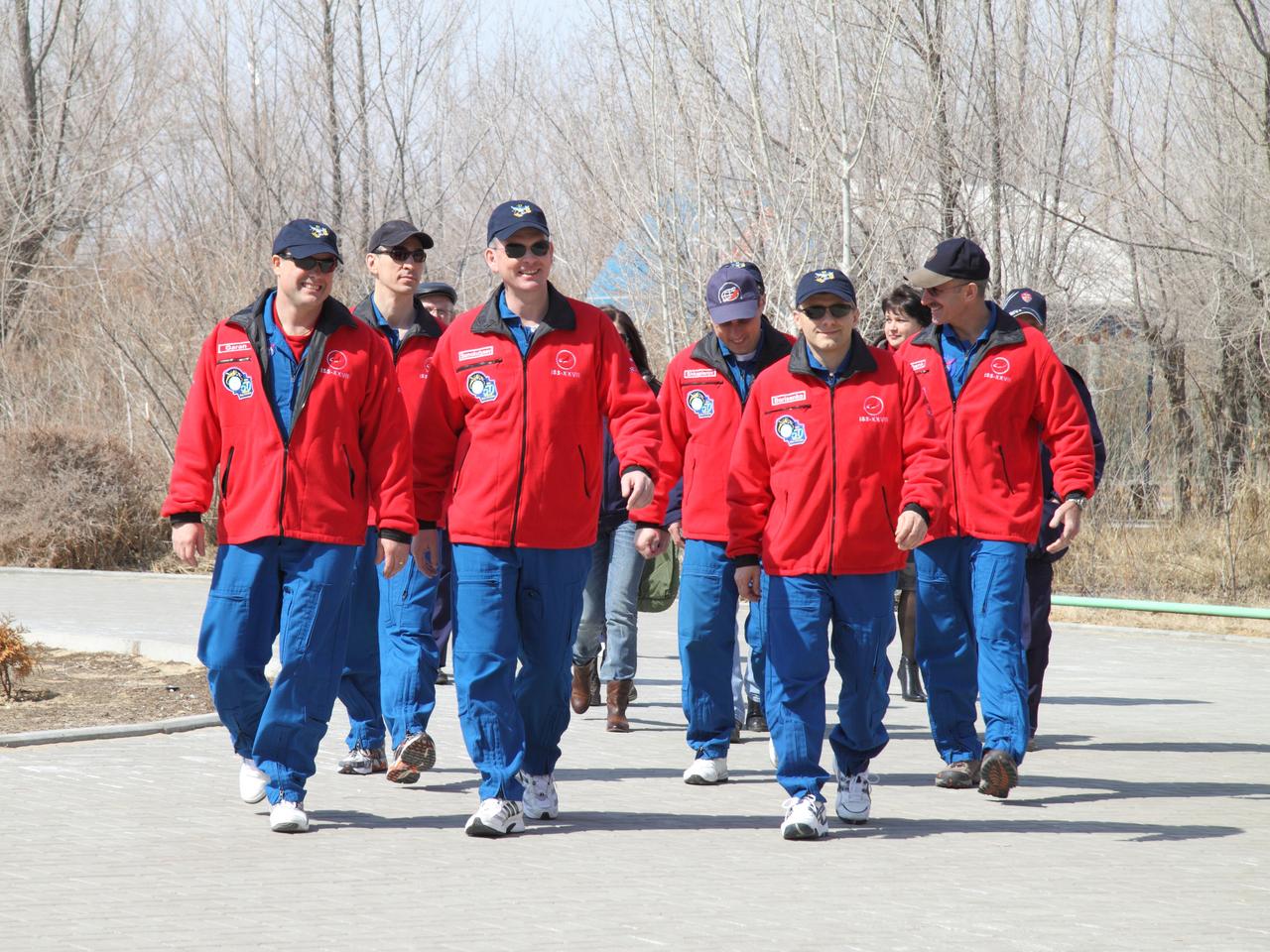
Expedition 27 tree planting – March 29, 2011
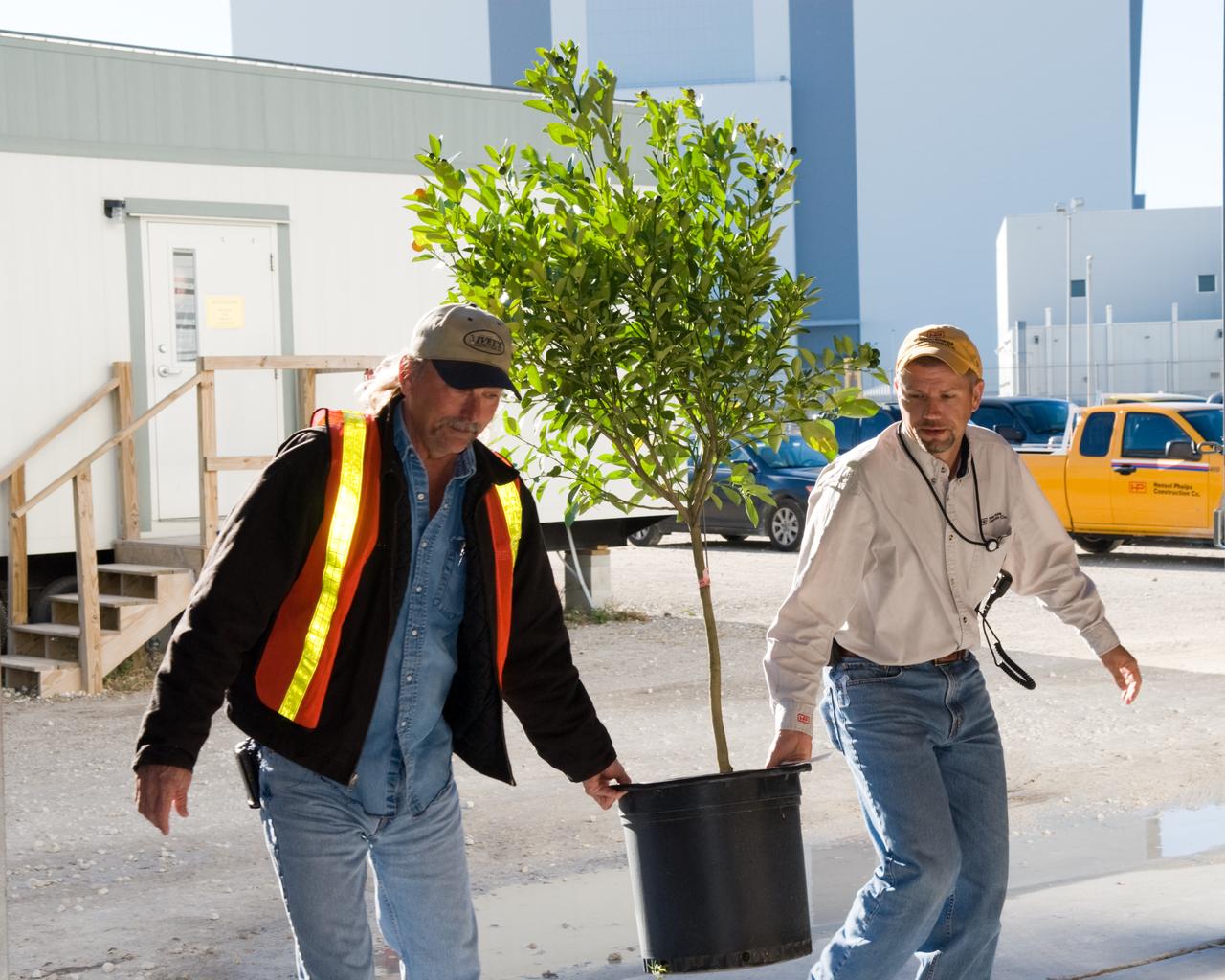
CONSTELLATION - NEW MLP CONSTRUCTION PROGRESS - SIGNING AND TREE
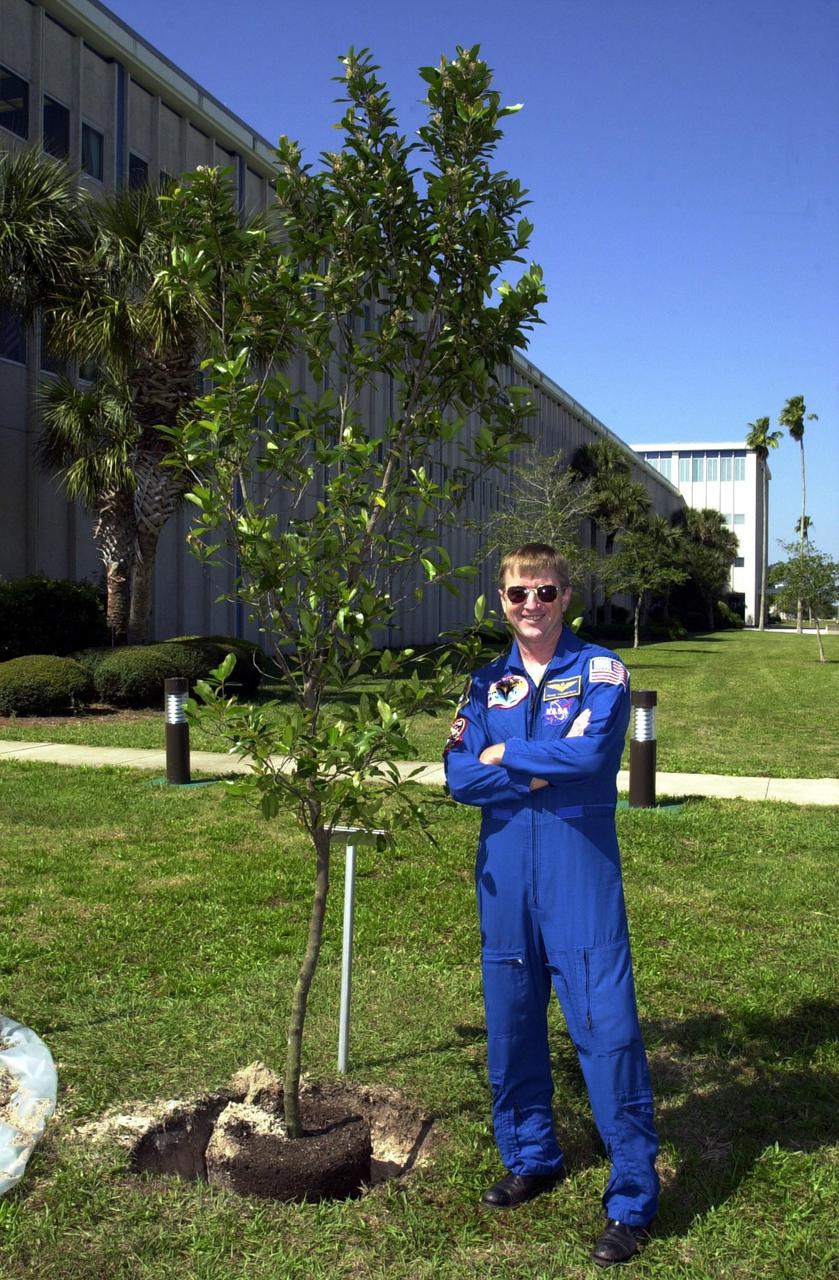
KENNEDY SPACE CENTER, FLA. -- Astronaut Frank Culbertson stands next to the cherry laurel tree he has dedicated and helped plant near KSC Headquarters Building. The tree commemorates his stay on and safe return from the International Space Station as a member of the Expedition 3 crew. Culbertson served as commander for the four-month stay, August to December 2001. The tree planting is a tradition for the Expedition crews.
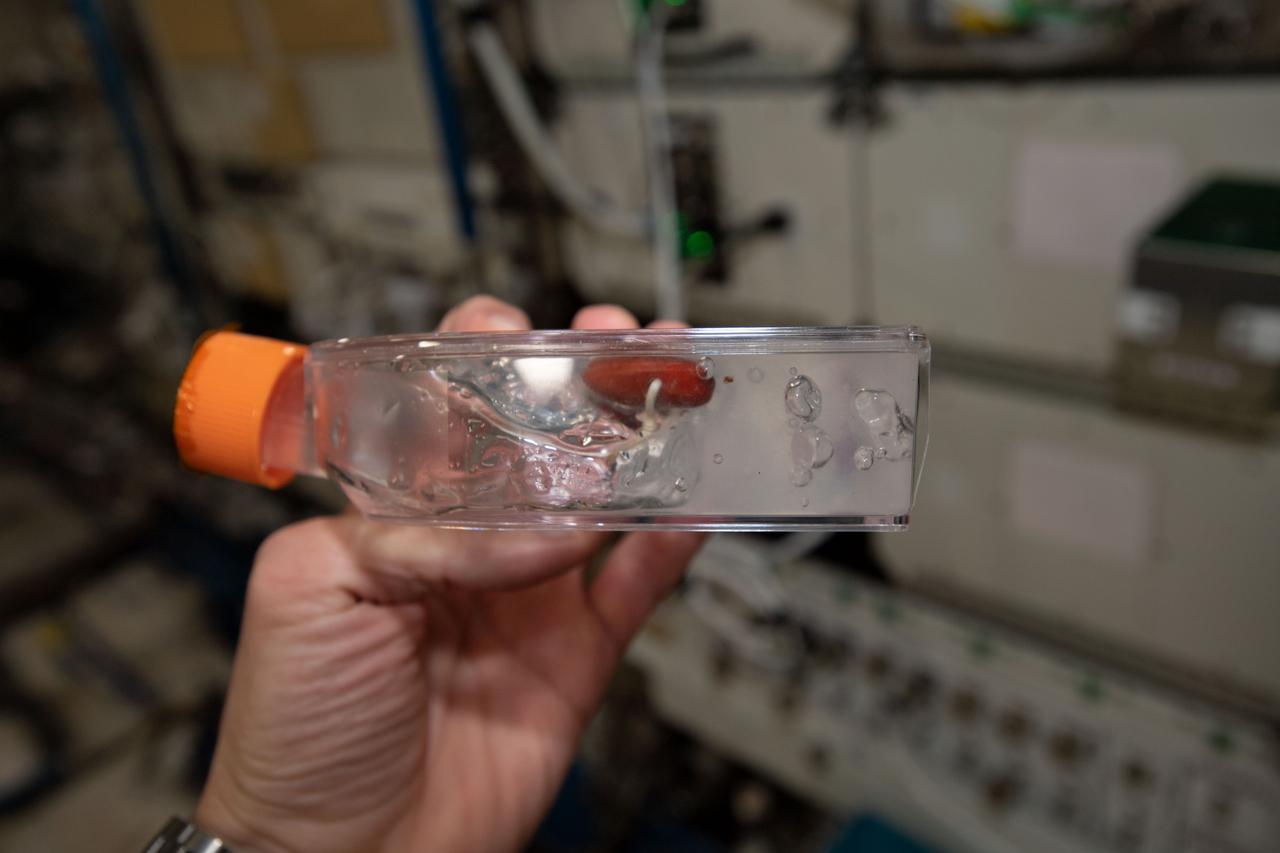
iss060e015476 --- (7/29/2019) Photo documentation aboard the International space Station (ISS) of the The United Arab Emirates (UAE) Palm Tree Growth Experiment (Palm Tree Growth). The investigation examines germination of palm tree seeds in order to determine the best conditions for generating tissue samples for research. A process for growing healthy plant tissue in microgravity could be adapted for testing other indigenous plants of scientific, commercial or educational interest in the UAE. The investigation also observes and documents root growth in microgravity for educational purposes.
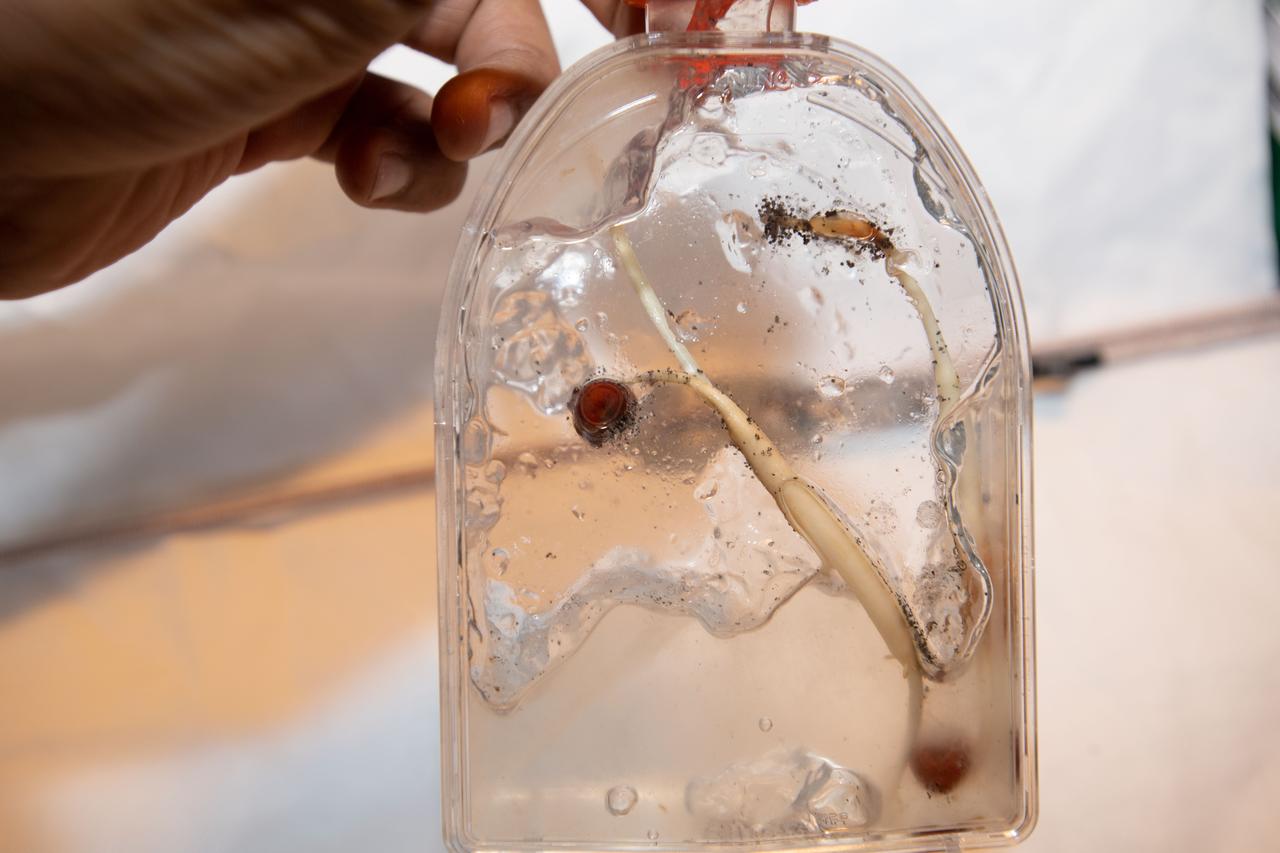
iss060e081486 (9/28/2019) --- A view of the United Arab Emirates (UAE) Palm Tree Growth Experiment (Palm Tree Growth) investigation which examines germination of palm tree seeds in order to determine the best conditions for generating tissue samples for research. A process for growing healthy plant tissue in microgravity could be adapted for testing other indigenous plants of scientific, commercial or educational interest in the UAE. The investigation also observes and documents root growth in microgravity for educational purposes.
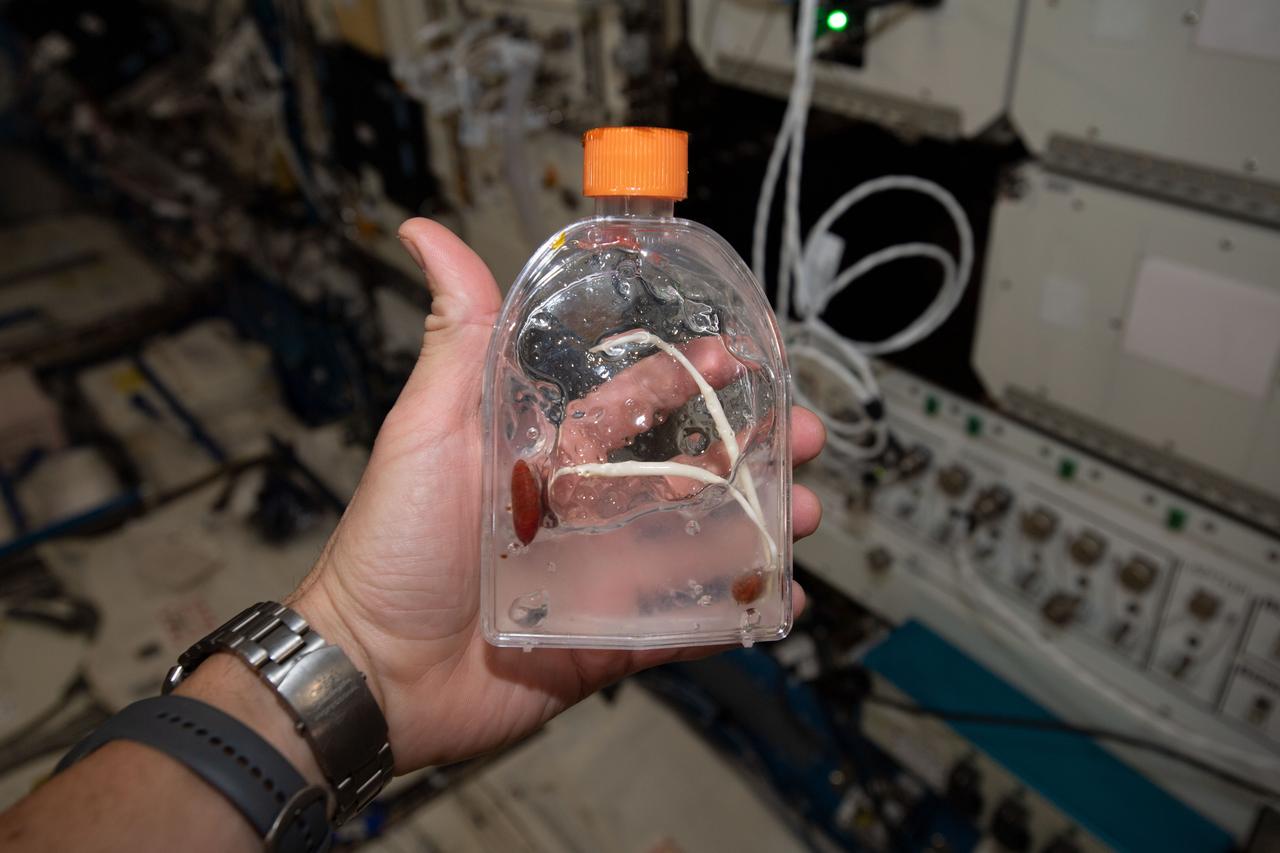
iss060e015472 --- (7/29/2019) Photo documentation aboard the International space Station (ISS) of the The United Arab Emirates (UAE) Palm Tree Growth Experiment (Palm Tree Growth). The investigation examines germination of palm tree seeds in order to determine the best conditions for generating tissue samples for research. A process for growing healthy plant tissue in microgravity could be adapted for testing other indigenous plants of scientific, commercial or educational interest in the UAE. The investigation also observes and documents root growth in microgravity for educational purposes.
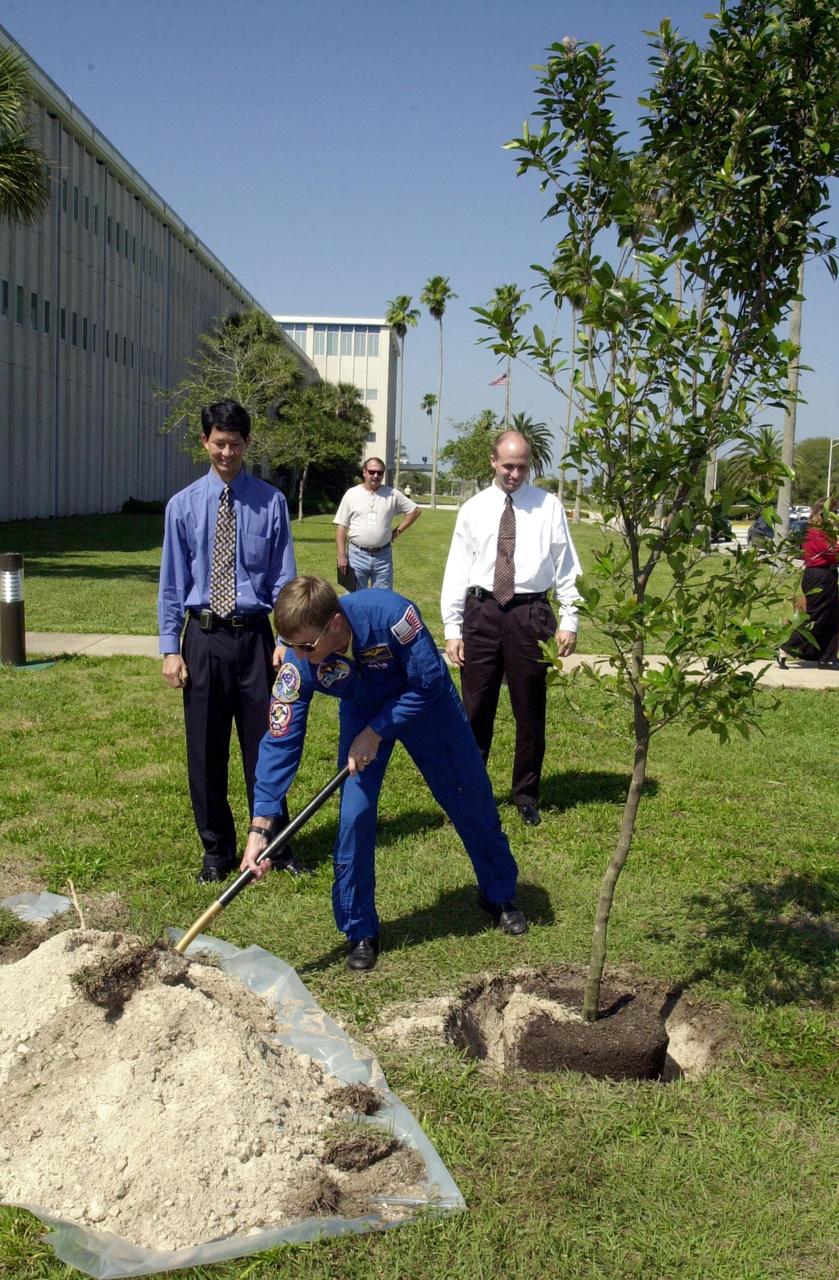
KENNEDY SPACE CENTER, FLA. -- Astronaut Frank Culbertson digs into the pile of dirt to plant the cherry laurel tree (right) near KSC Headquarters Building. The tree commemorates his stay on and safe return from the International Space Station as a member of the Expedition 3 crew. Culbertson served as commander for the four-month stay, August to December 2001. The tree planting is a tradition for the Expedition crews.
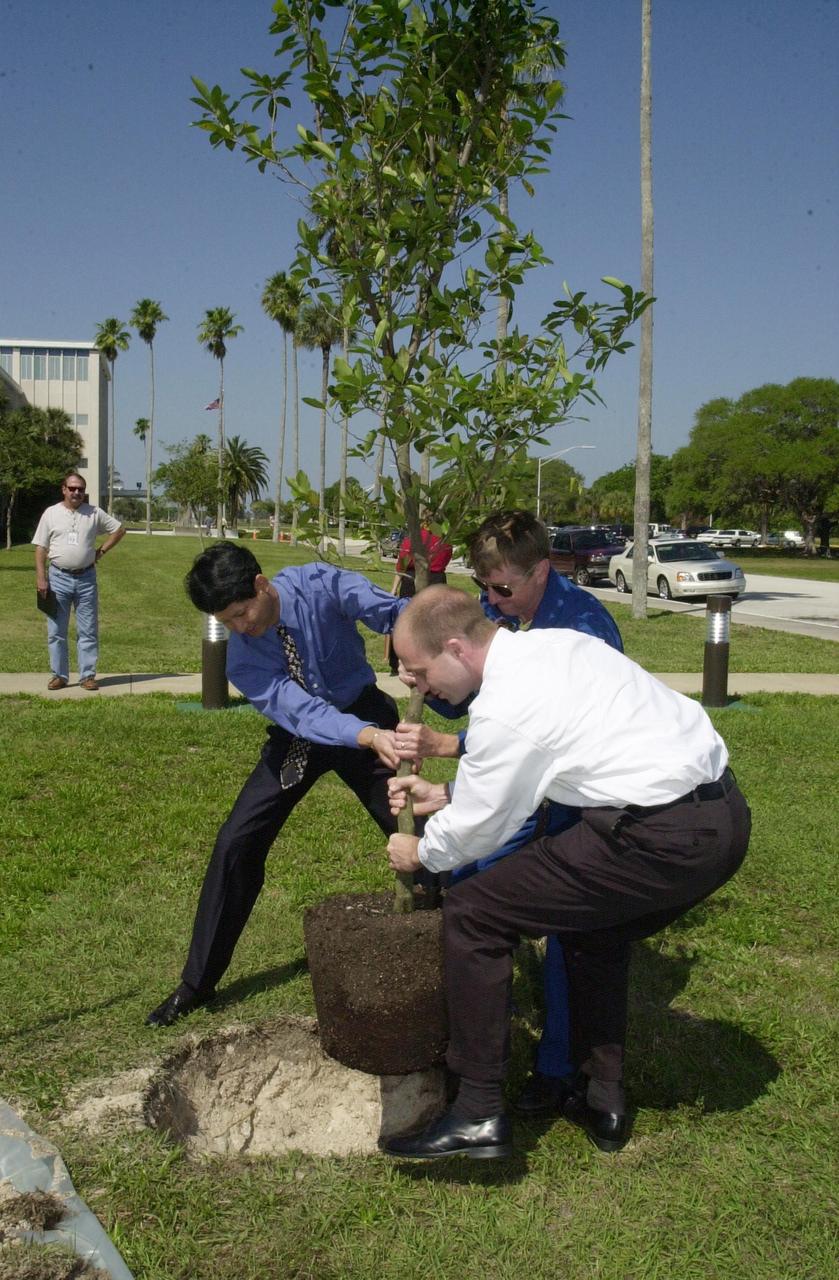
KENNEDY SPACE CENTER, FLA. -- Astronaut Frank Culbertson (with sunglasses) gets help moving a tree into its freshly dug hole near KSC Headquarters Building. The tree commemorates his stay on and safe return from the International Space Station as a member of the Expedition 3 crew. Culbertson served as commander for the four-month stay, August to December 2001. The tree planting is a tradition for the Expedition crews.
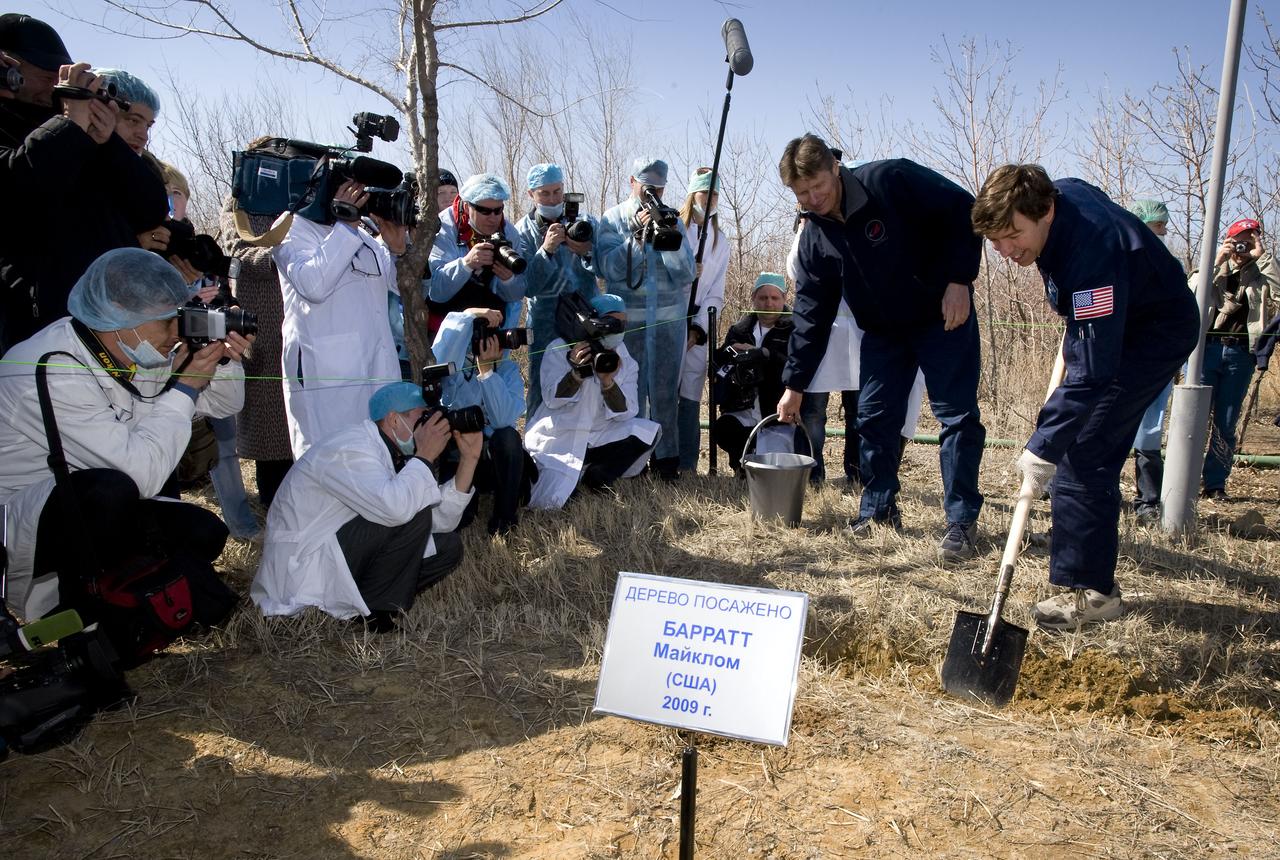
Members of the media watch as Expedition 19 Commander Gennady I. Padalka, left, and Flight Engineer Michael R. Barratt plant a tree during the traditional tree planting ceremony at the Cosmonaut Hotel, Saturday, March 21, 2009 in Baikonur, Kazakhstan. (Photo Credit: NASA/Bill Ingalls)
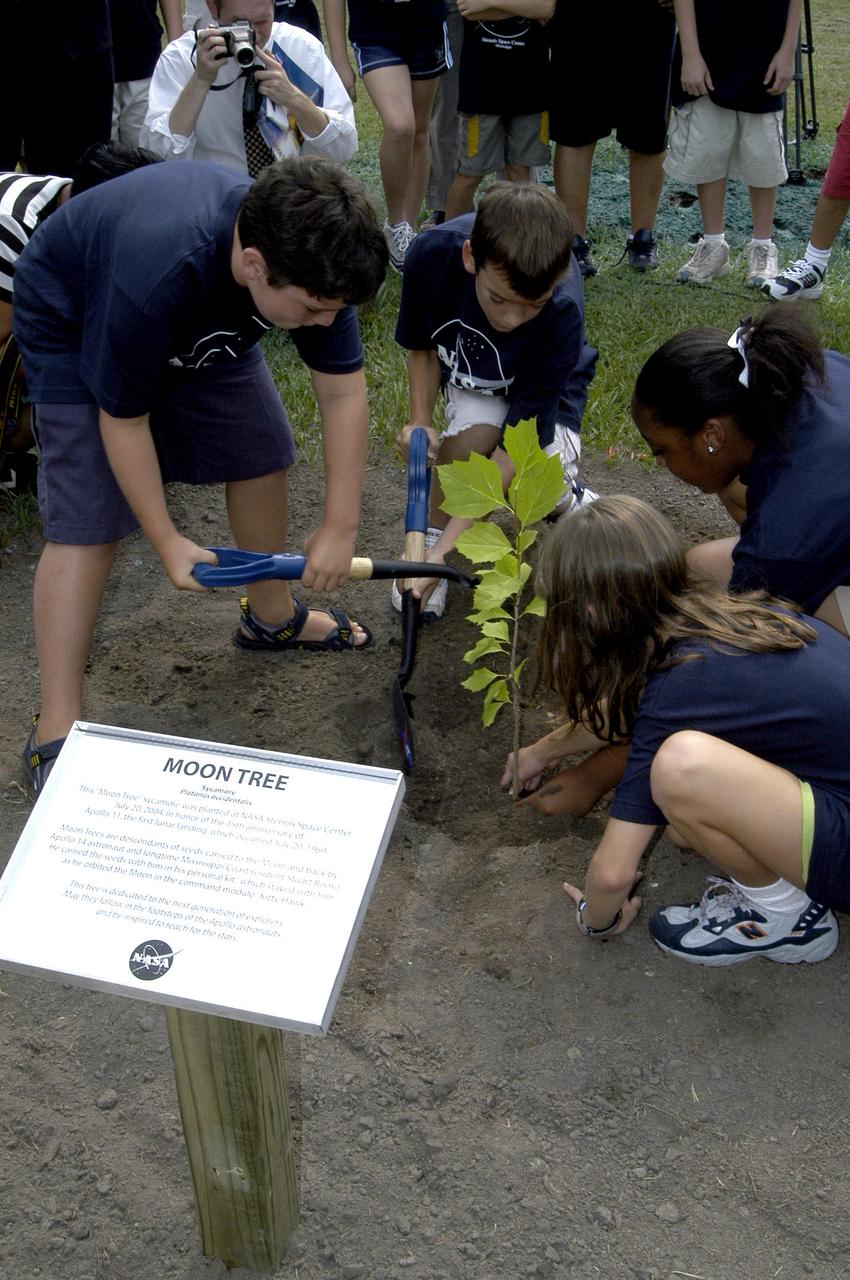
An image from July 20, 2004, shows Astro Camp participants planting a sycamore Moon tree at NASA’s Stennis Space Center near Bay St. Louis, Mississippi. The tree honors the 35th anniversary of Apollo 11 and the first lunar landing on July 20, 1969.
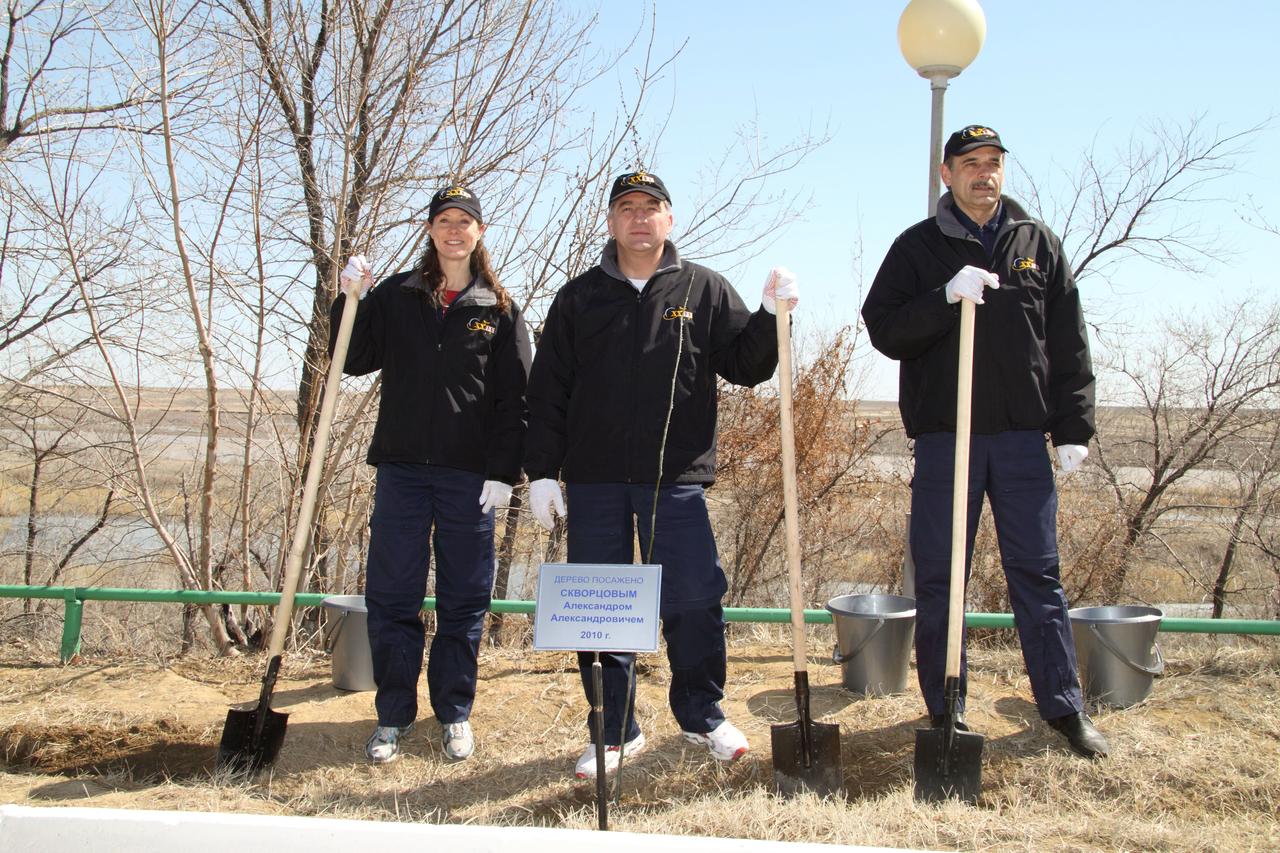
crew paticipating in traditional tree planting outside Cosmonaut hotel
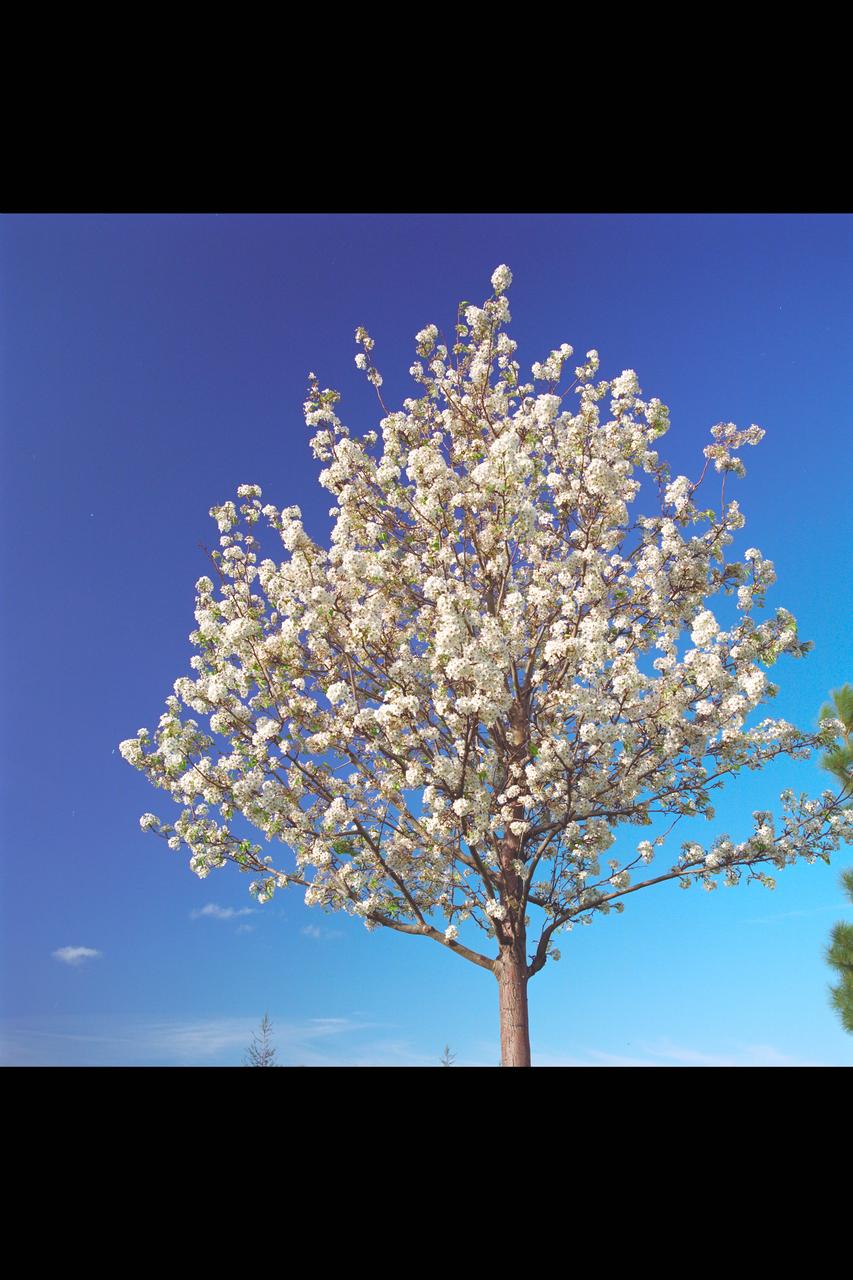
A photograph of a tree near the N-260 Fluid Mechanics Laboratory building.
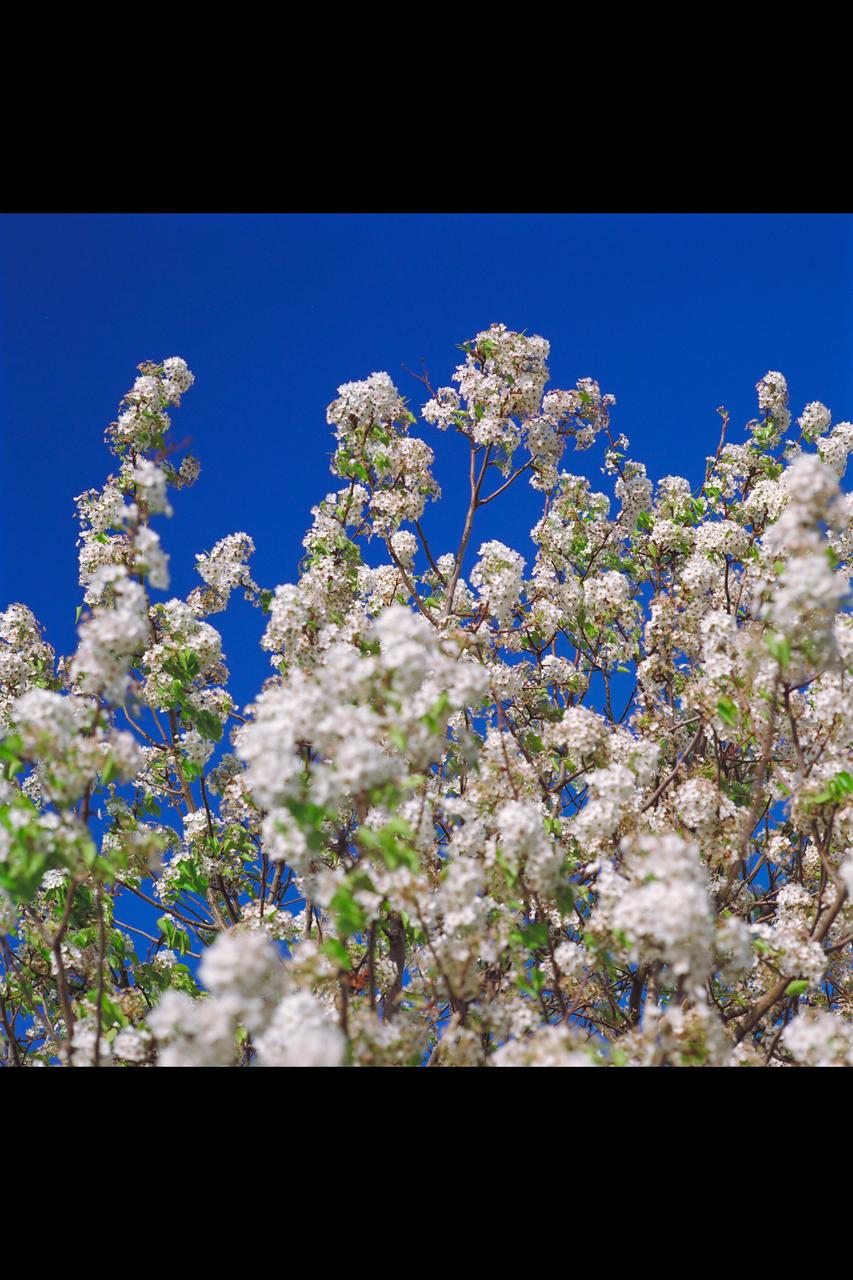
A photograph of a tree near the N-260 Fluid Mechanics Laboratory building.
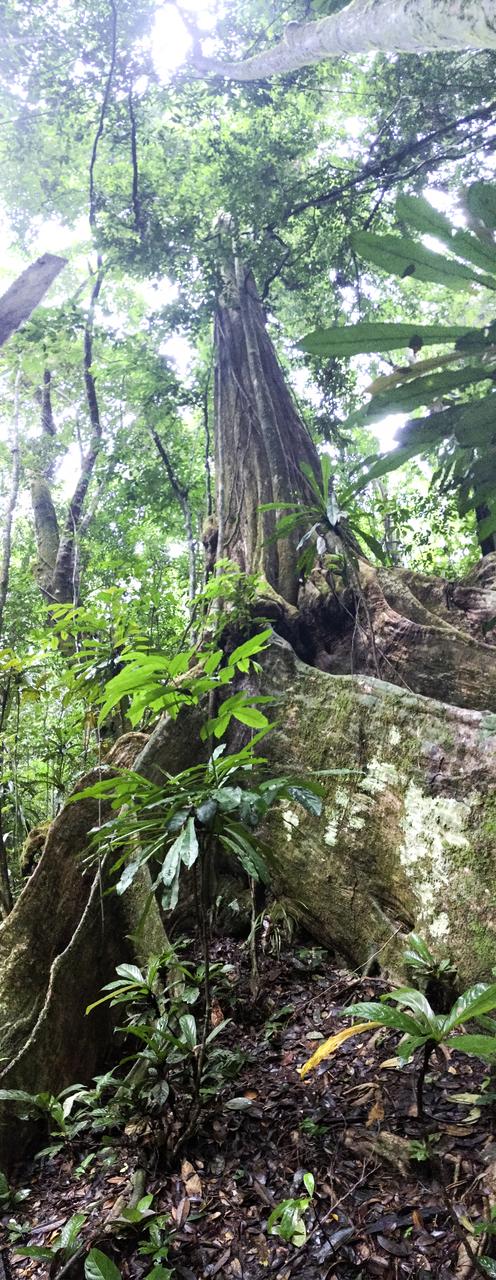
The Okoume’ tree grows tall above the other flora to reach for the suns energy.
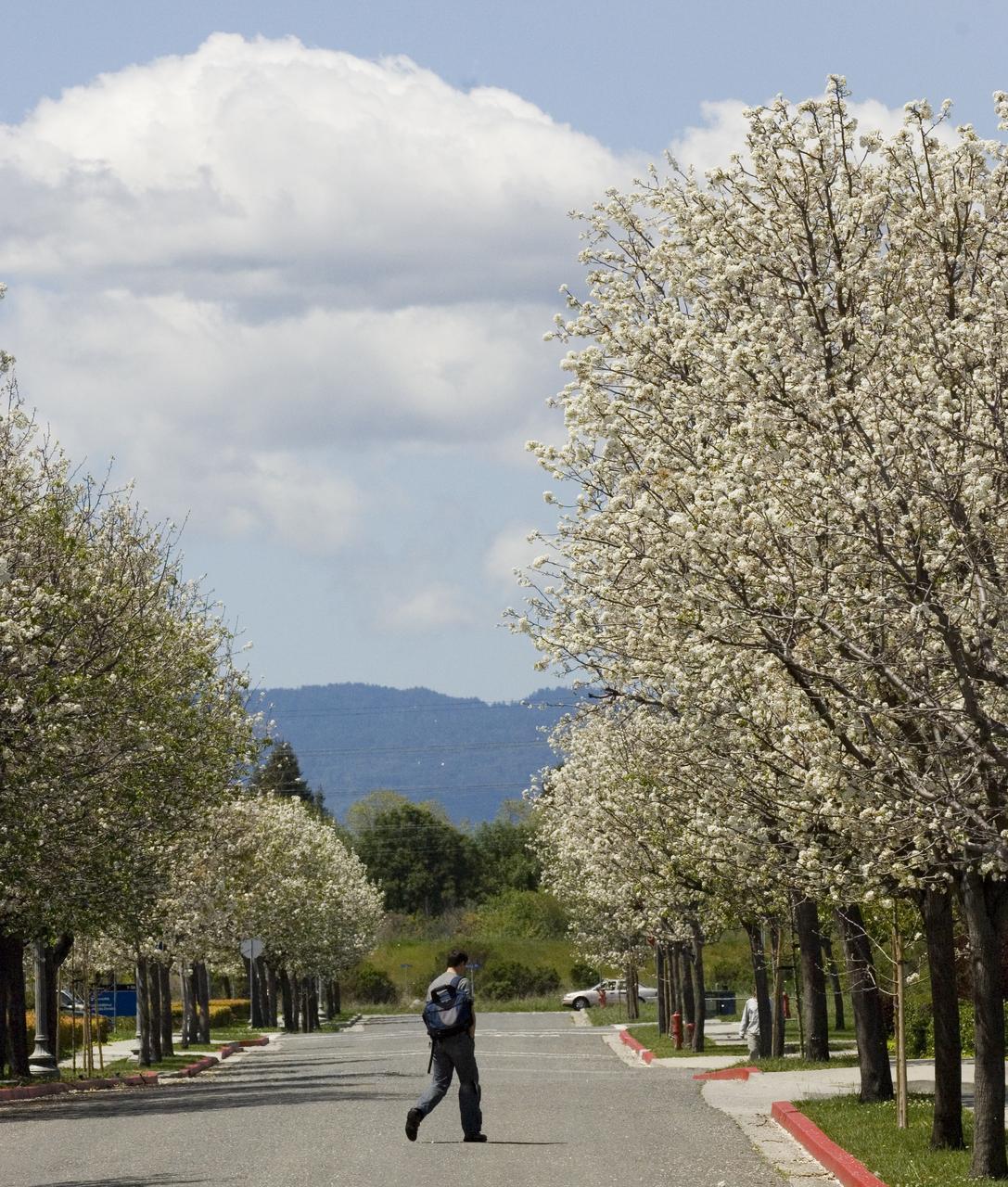
Spring comes to Ames Research Center, an employee walks among the blossoming trees.
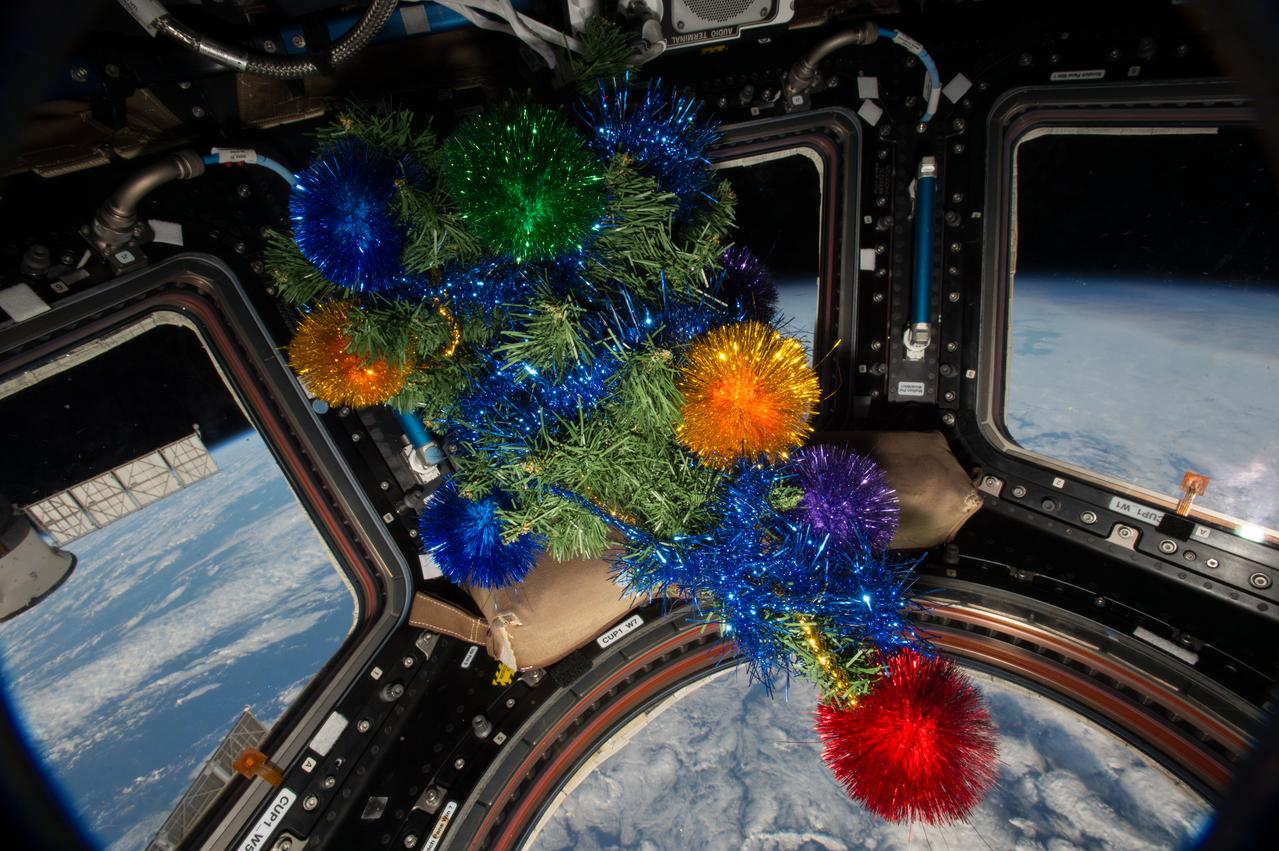
ISS046e002700 (12/25/2015) --- Happy Holiday in space. The crew of Expedition 46 decorated the International Space Station’s Cupola module, a 360-degree series of windows that provides a stunning view of Earth for observations, while also containing the primary controls for the Canadarm2 robotic arm.

A southern bald eagle is perched in a tree at NASA’s Kennedy Space Center on Jan. 20, 2023. After a recent fire burned a tree that housed an eagles’ nest for several years, the birds returned to the area on Kennedy Parkway North and built a new nest in a tree about 60 yards away. Each year, eagles take up winter residence at the Florida spaceport, breeding and raising a new generation. The center shares a boundary with the Merritt Island National Wildlife Refuge, home to more than 1,500 species of plants and animals, and 15 federally listed species.
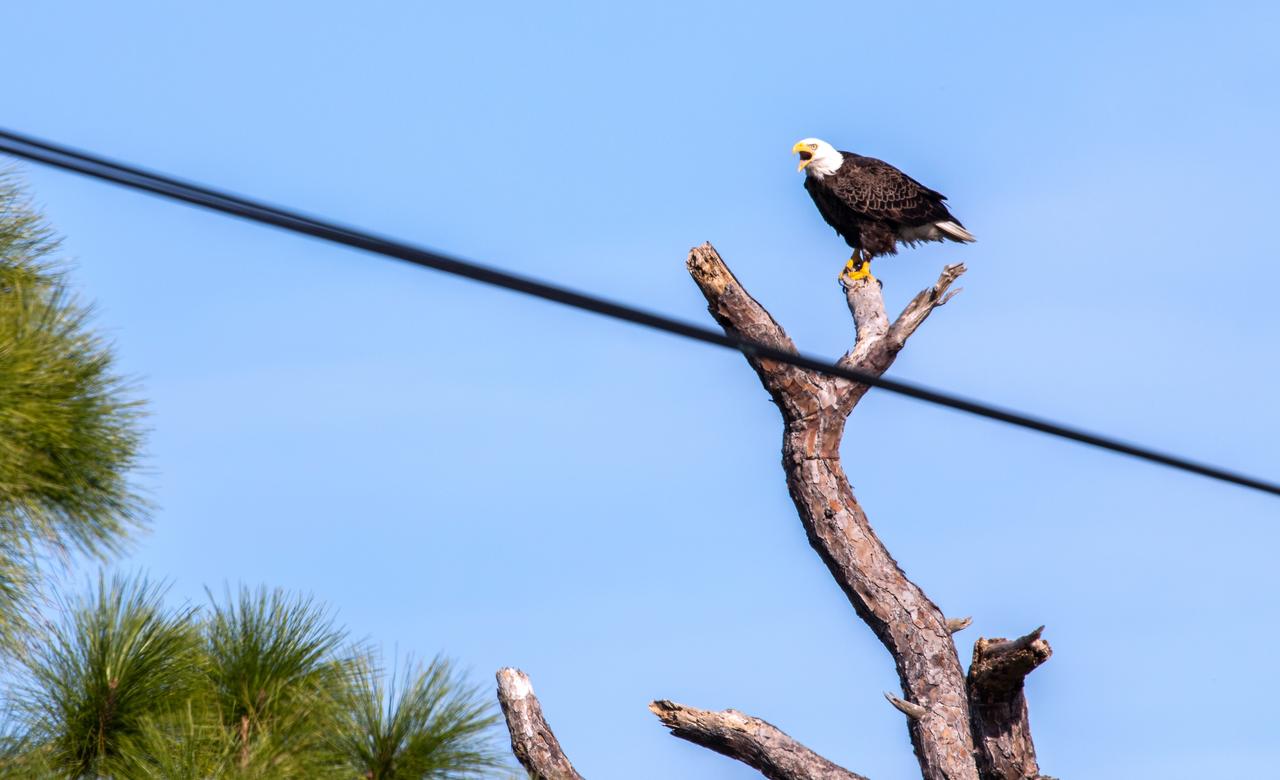
A southern bald eagle is perched in a tree at NASA’s Kennedy Space Center on Jan. 20, 2023. After a recent fire burned a tree that housed an eagles’ nest for several years, the birds returned to the area on Kennedy Parkway North and built a new nest in a tree about 60 yards away. Each year, eagles take up winter residence at the Florida spaceport, breeding and raising a new generation. The center shares a boundary with the Merritt Island National Wildlife Refuge, home to more than 1,500 species of plants and animals, and 15 federally listed species.
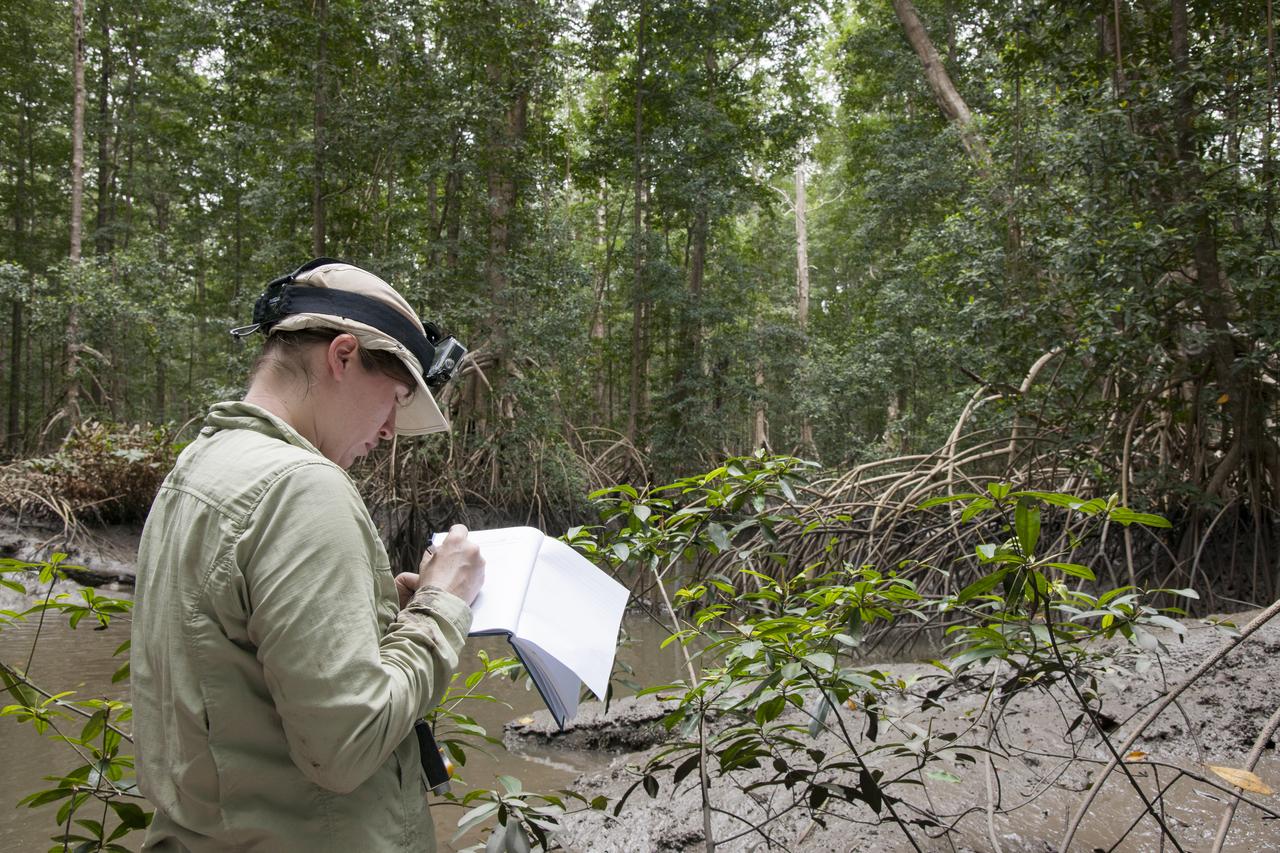
Goddard Space Center’s Laura Duncanson records global positioning satellite coordinates of the Pongara Mangrove and tree heights and diameters.

Spring comes to Ames Research Center, trees are blossoming, and the resident Mallard ducks are out and about.
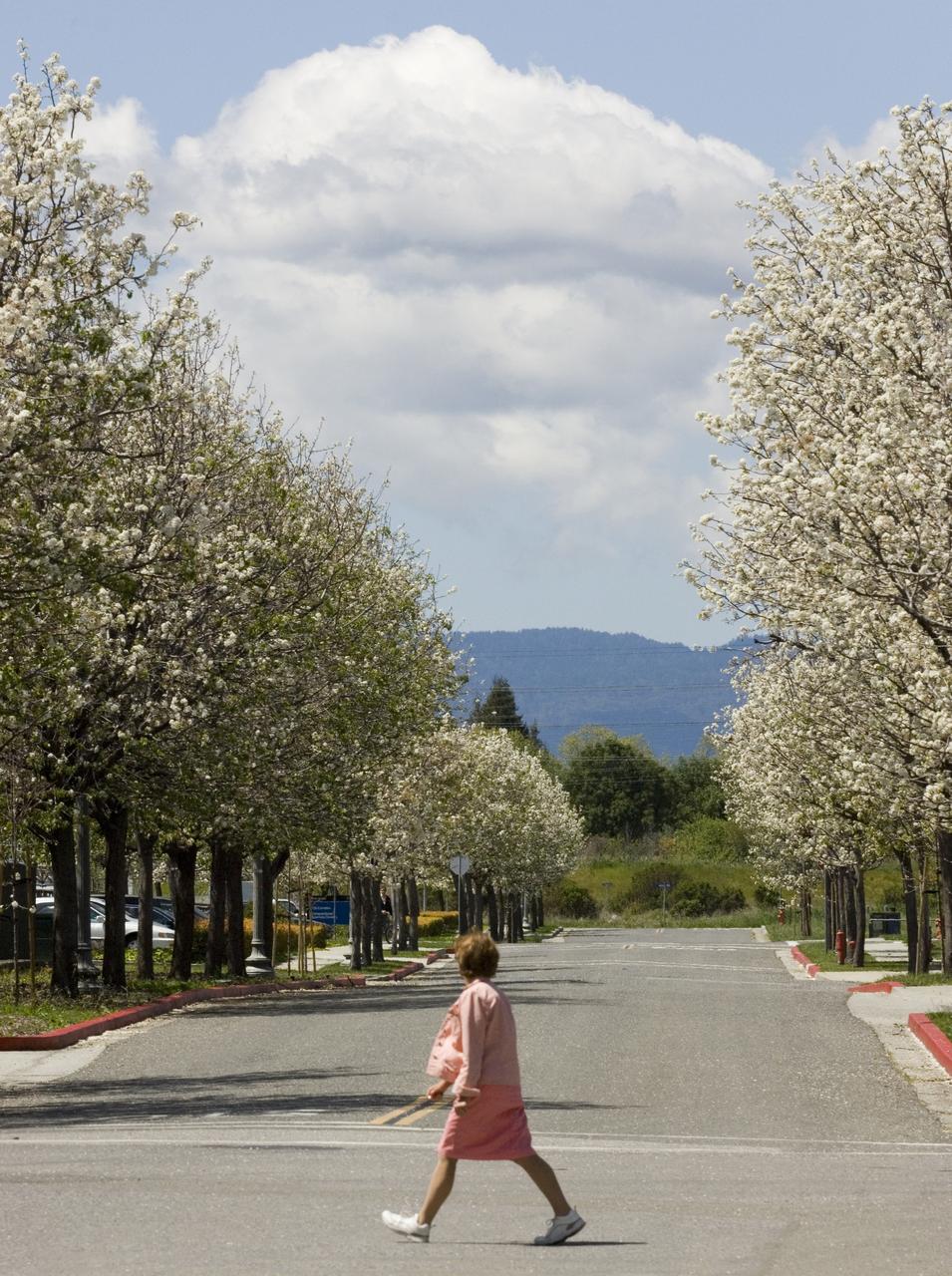
Spring comes to Ames Research Center. Kathy Reda walks among the blossoming trees.
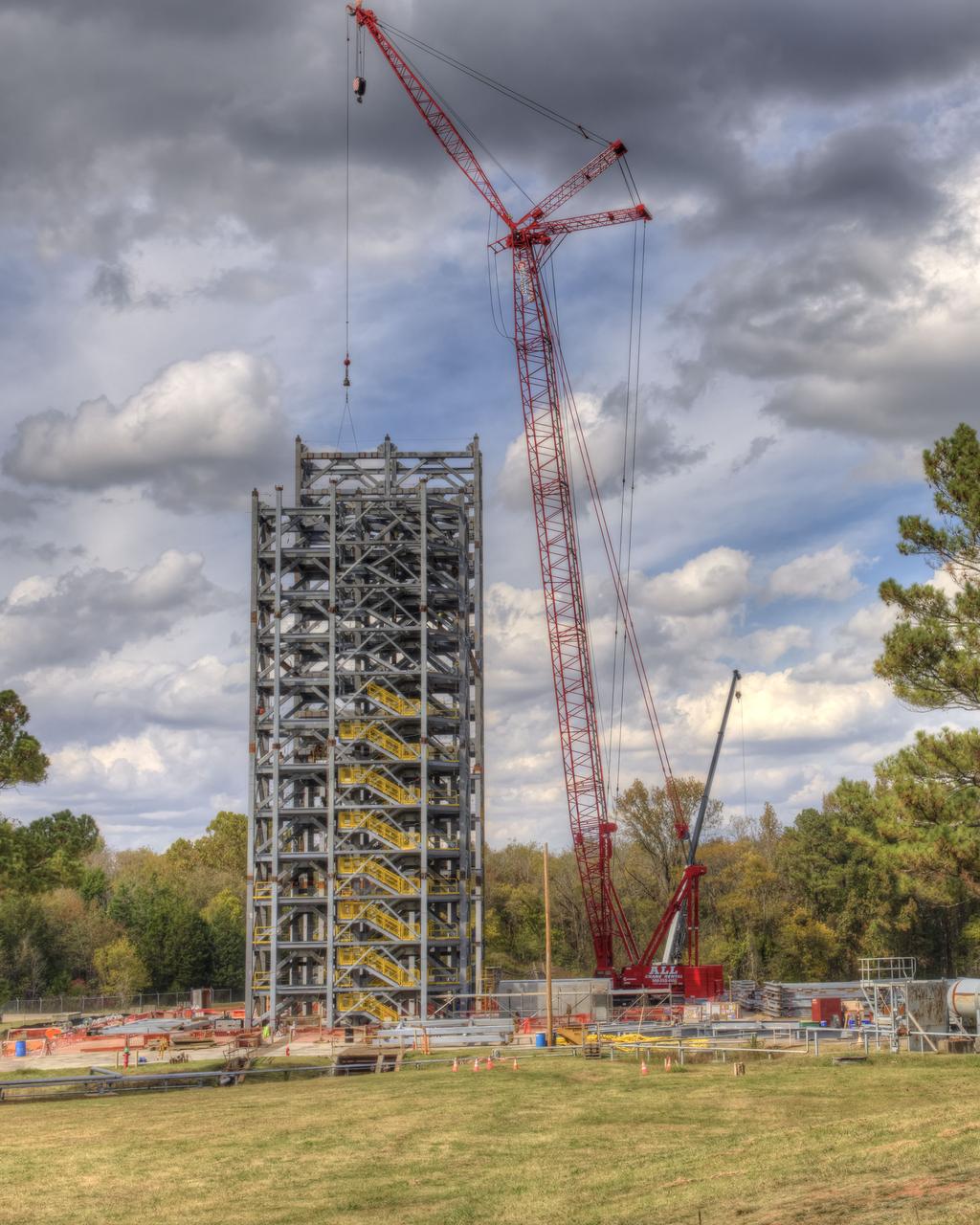
TEST STAND 4693 CONSTRUCTION RISES ABOVE THE TREE LINE. OCTOBER 23, 2015
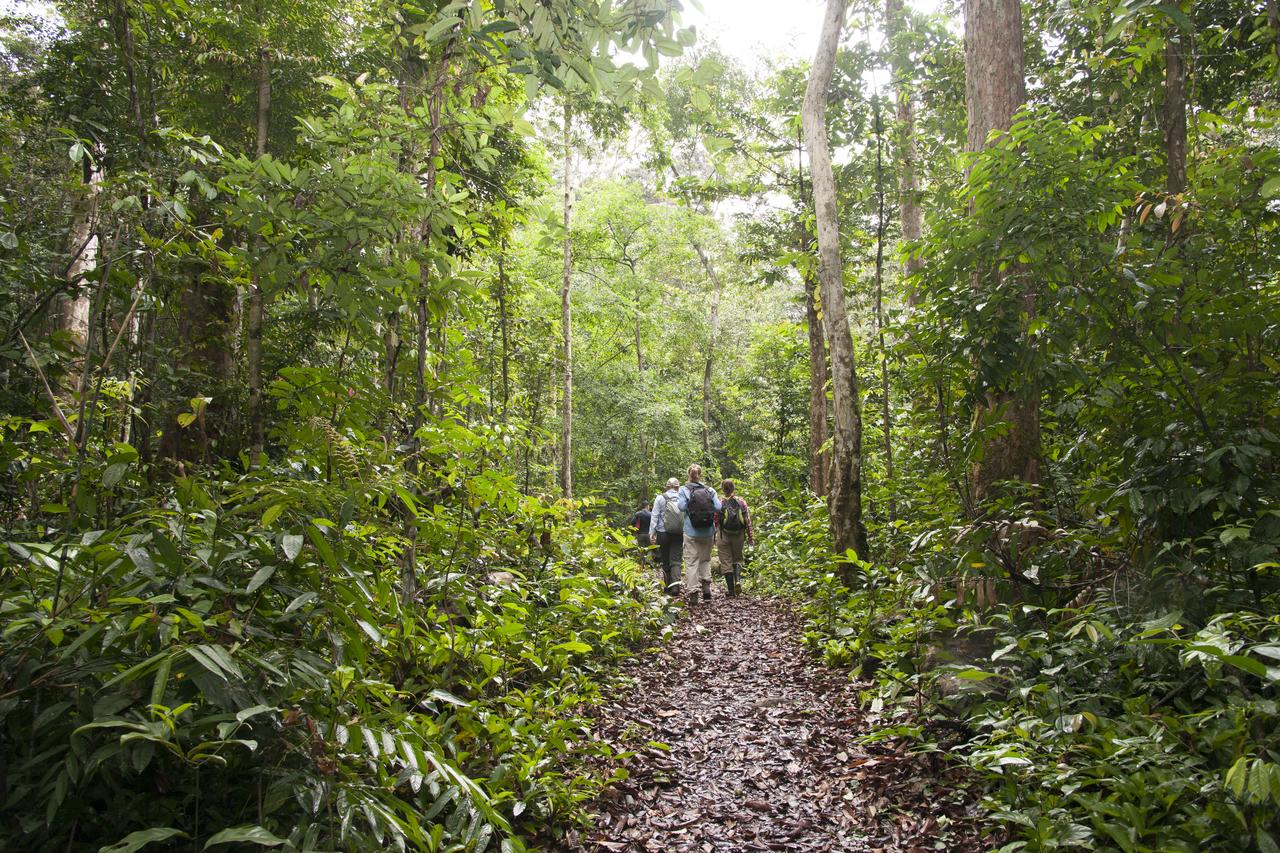
NASA researchers walk through the Mondah rainforest to collect tree and flora measurements and other data as part of the AfriSAR mission.

Newborn stars, hidden behind thick dust, are revealed in this image of a section of the Christmas Tree cluster from NASA Spitzer Space Telescope, created in joint effort between Spitzer infrared array camera and multiband imaging photometer instrument
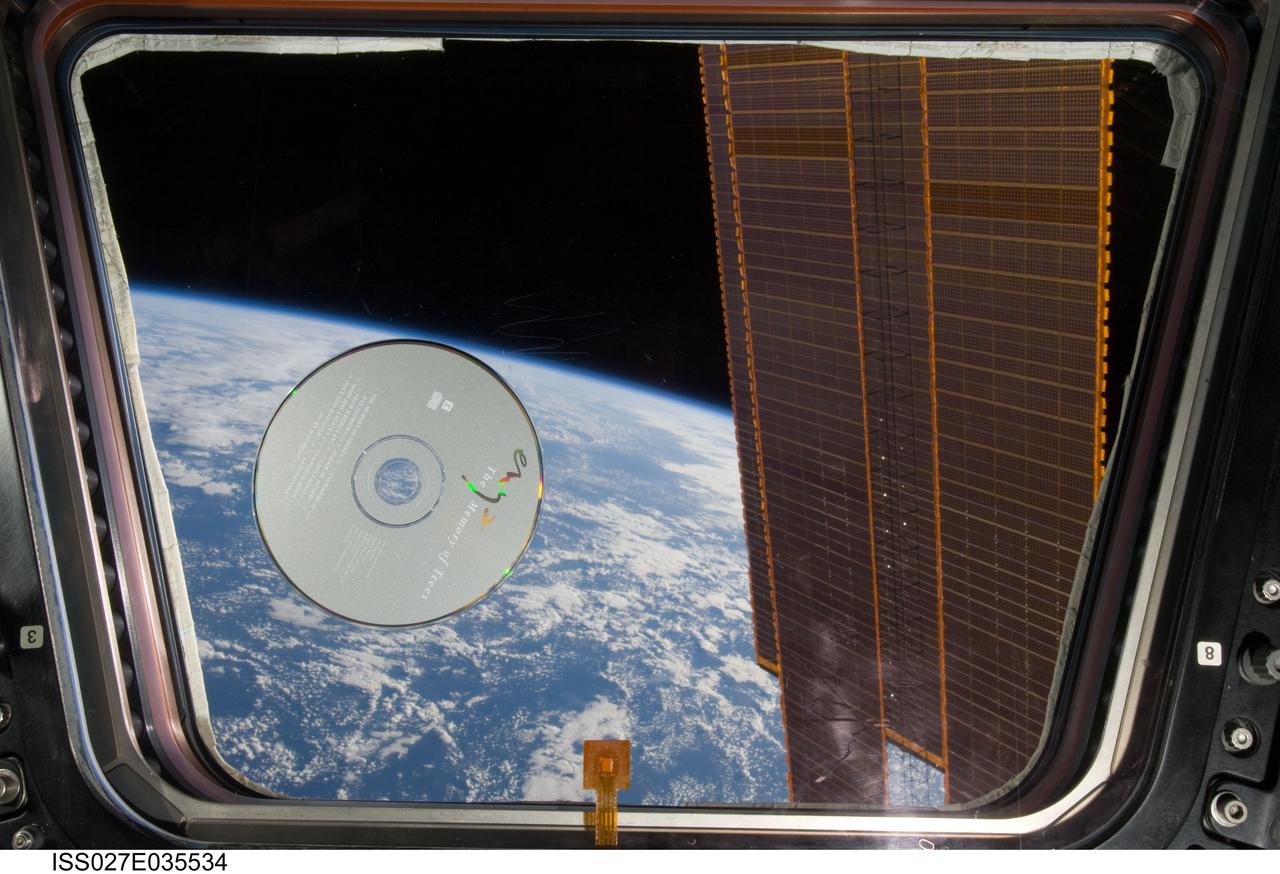
View of a music CD, The Memory Of Trees by Enya, floating in front of a window in the Cupola Module during Expedition 27 / STS-134 joint operations.
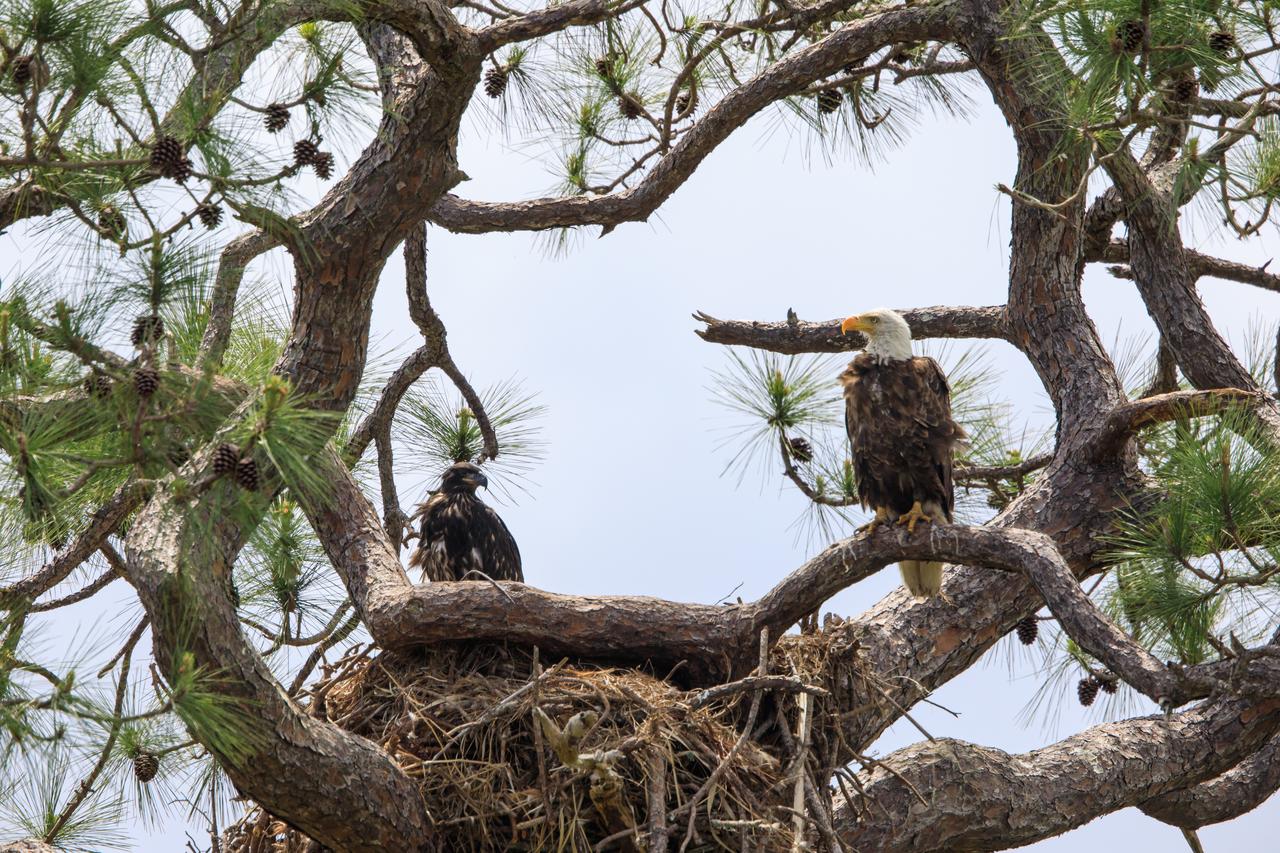
A baby American bald eagle looks out from its nest, accompanied by one of its parents, in a tree located near Kennedy Parkway North at NASA’s Kennedy Space Center in Florida on April 10, 2023. A mated pair of eagles recently built a new home in this tree after storms badly damaged their original nest located about 50 yards away. That nest was built in 1973 and had been used by eagles almost every year since 1975.
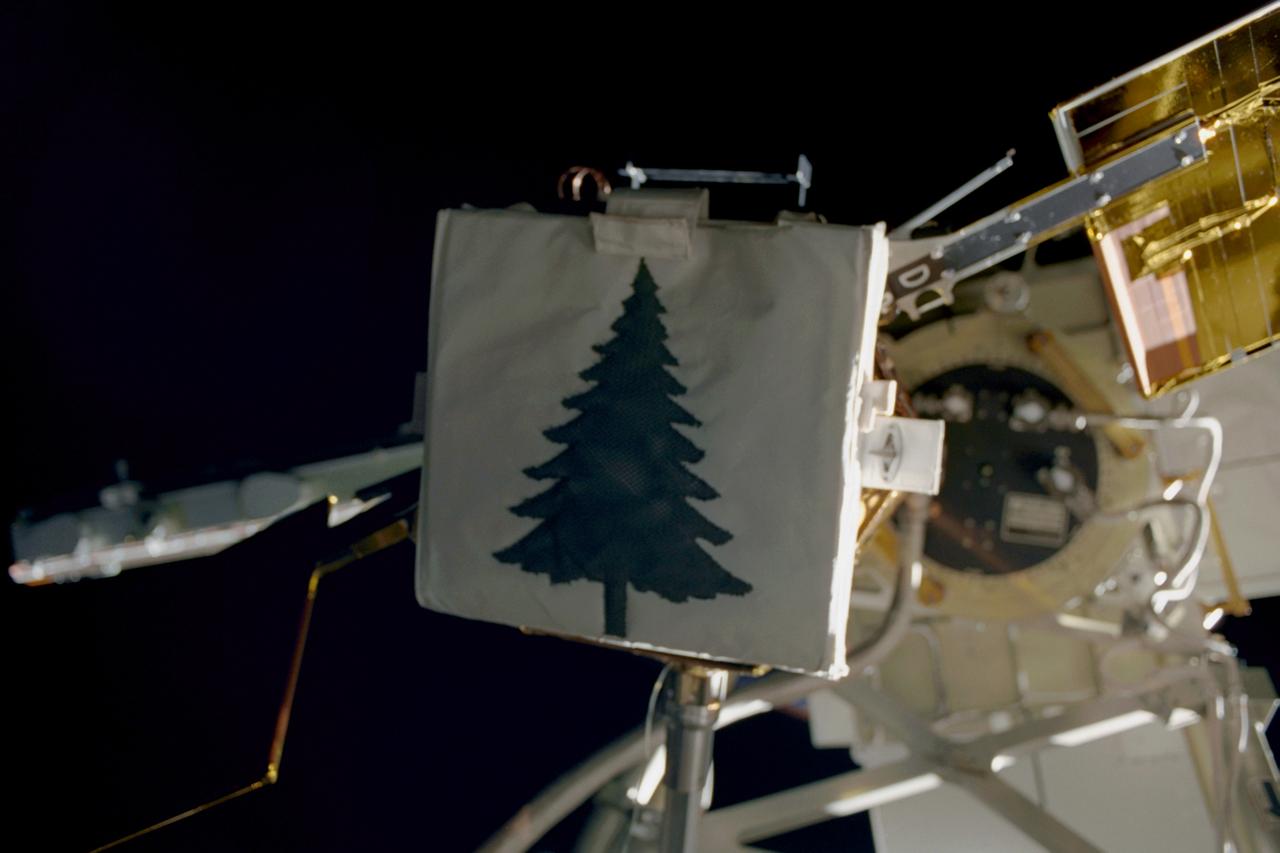
STS097-376-029 (7 December 2000) --- Space walking Endeavour astronauts topped off their scheduled space walk activities with an image of an evergreen tree placed atop the P6 solar array structure, the highest point in their construction project. They then took this photo of the "tree" before returning to the shirt-sleeve environment of the Space Shuttle Endeavour.
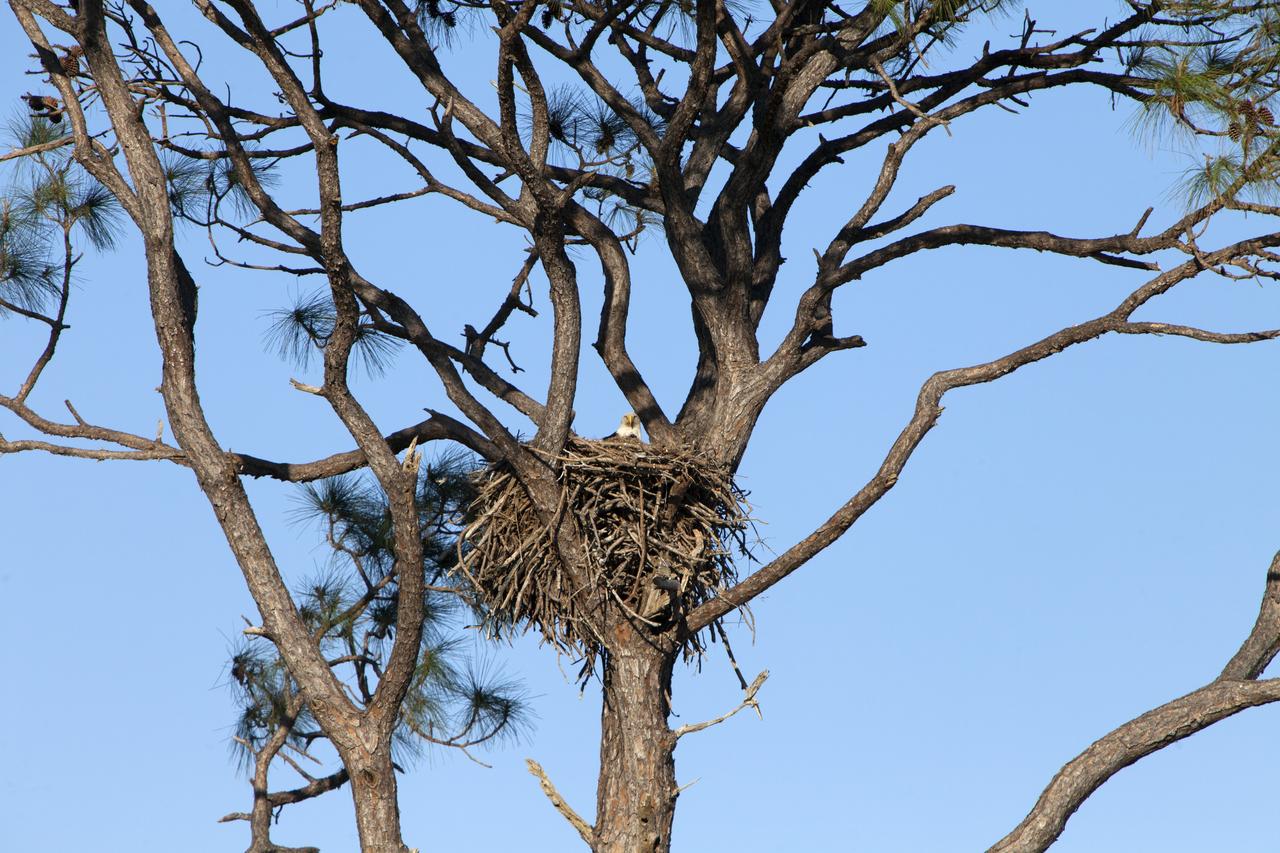
An adult American bald eagle perches in a nest in a tree along State Road 3 at NASA's Kennedy Space Center in Florida. Eagles have built nests in trees at the center for many years. The center shares a border with the 140,000-acre Merritt Island National Wildlife Refuge. More than 330 native and migratory bird species, 25 mammals, 117 fishes and 65 amphibians and reptiles call Kennedy and the wildlife refuge home.
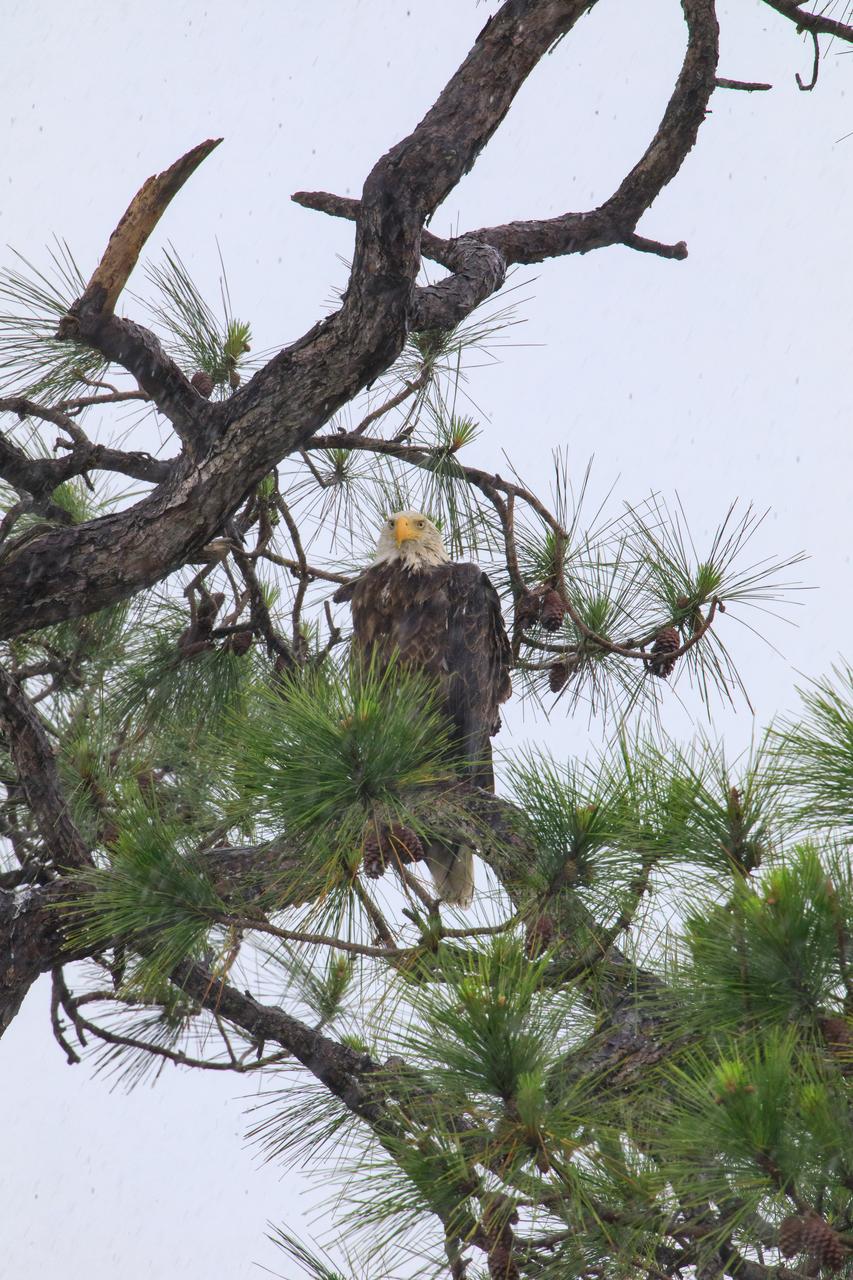
An American bald eagle is perched high in a tree above its nest at NASA’s Kennedy Space Center in Florida on April 25, 2023. The adult eagle is part of a mated pair that recently built a new home in this tree after storms badly damaged their original nest located about 50 yards away. That nest was built in 1973 and had been used by eagles almost every year since 1975. This season, the pair produced one eaglet.
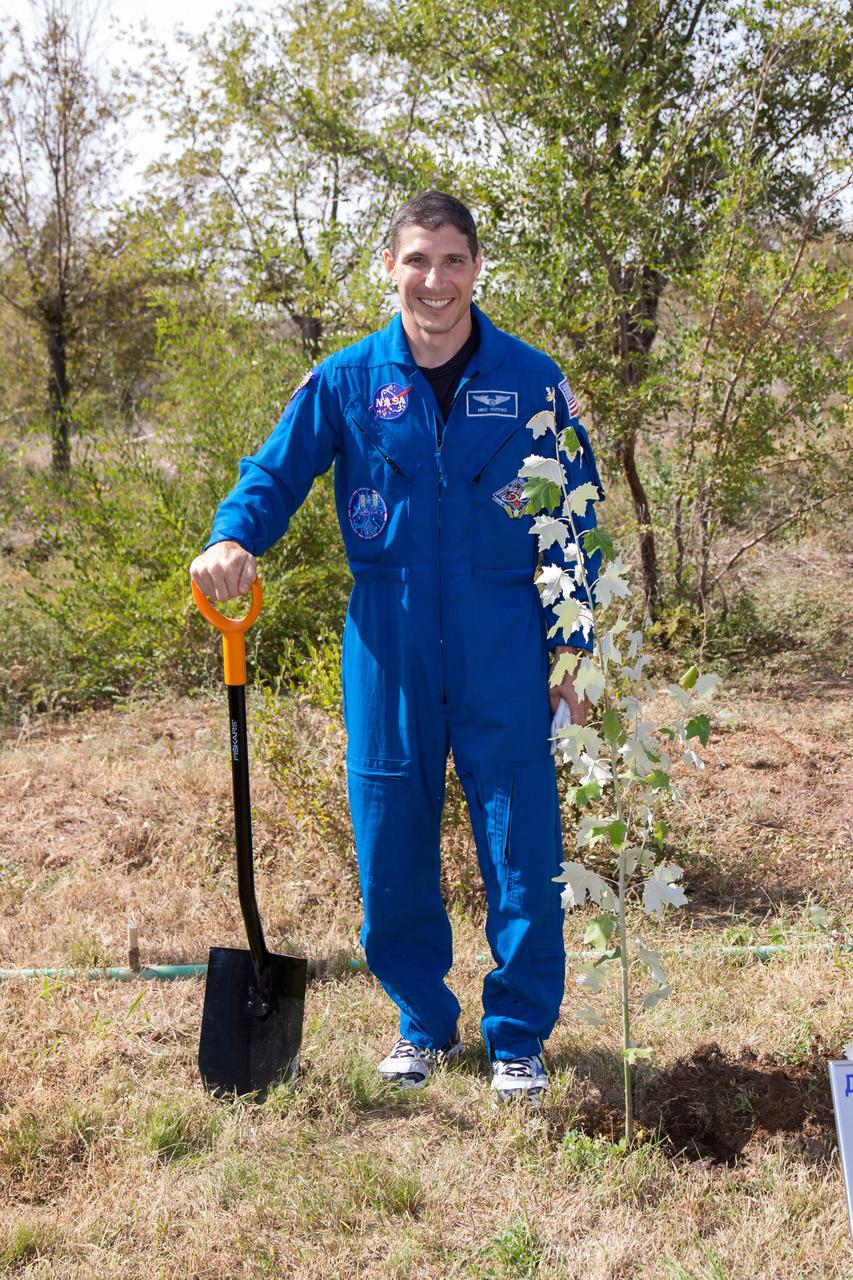
Expedition 37/38 Flight Engineer Michael Hopkins of NASA poses for photos by a tree planted in his name behind the Cosmonaut Hotel crew quarters in Baikonur, Kazakhstan Sept. 18. The tree planting was part of traditional ceremonies as Hopkins, Kotov and Ryazanskiy prepare to launch Sept. 26, Kazakh time, from the Baikonur Cosmodrome on their Soyuz TMA-10M spacecraft for a five and a half month mission on the International Space Station. NASA/Victor Zelentsov
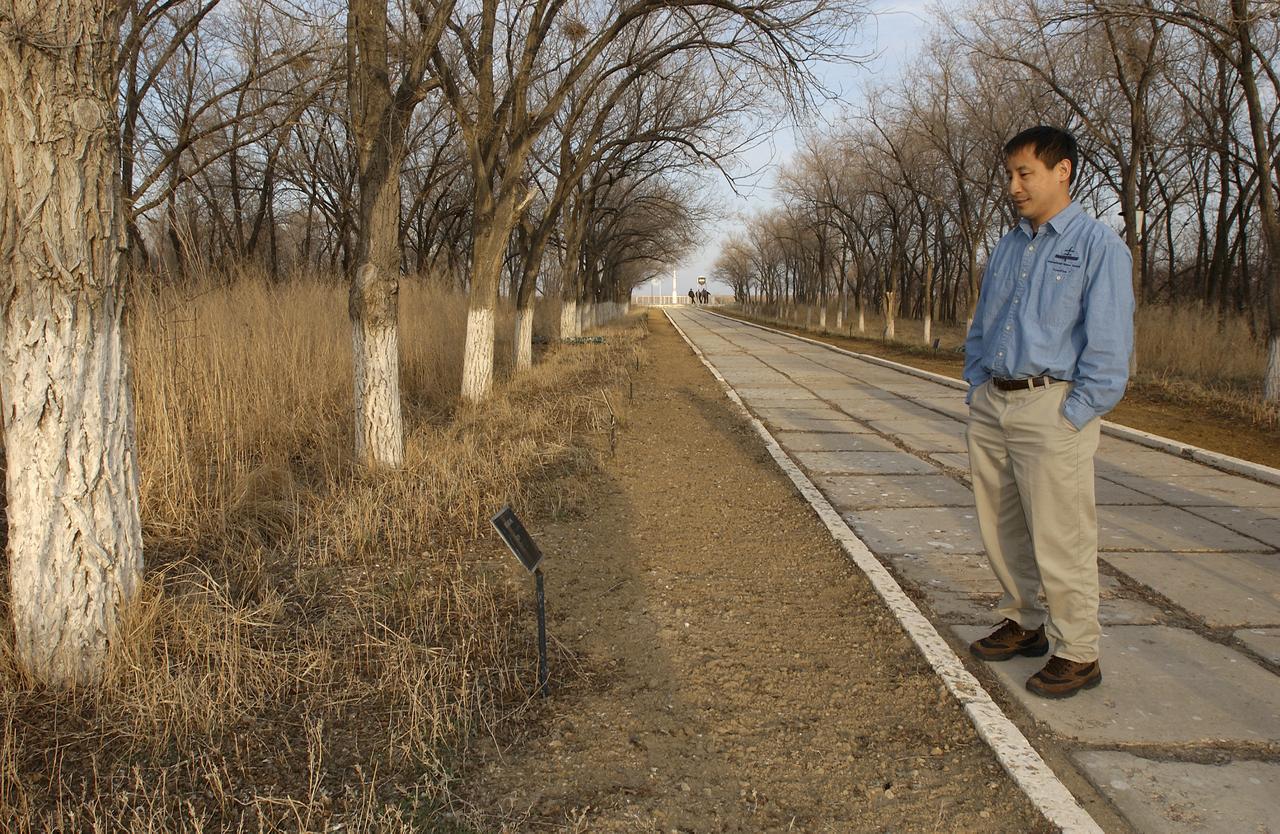
NASA International Space Station Science Officer and Flight Engineer for Expedition 7 Edward T. Lu, reads a marker placed in front of a tree planted in honor of cosmonaut Yuri Gagarin on the grounds of the Cosmonaut Hotel in Baikonur, Kazahstan on Wednesday, April 9, 2003. The trees along this walkway are planted in honor of other cosmonauts and astronauts. Photo Credit: (NASA/Bill Ingalls)
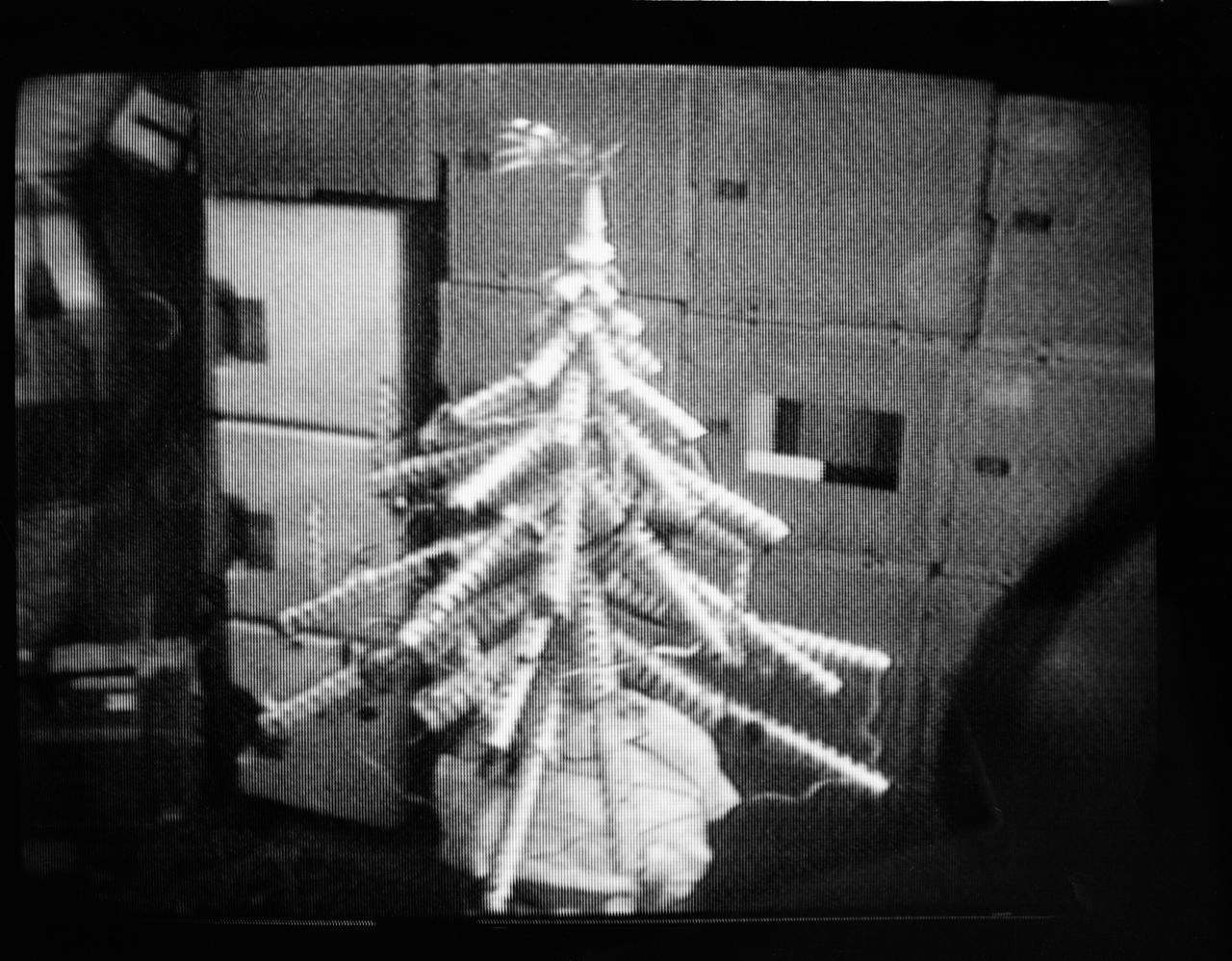
S73-38687 (24 Dec. 1973) --- This "Christmas tree" was created by the three crewmen of the third manned Skylab mission (Skylab 4) aboard the space station in Earth orbit. Food cans were used to fashion the tree. This photograph was made from a television transmission made from a video tape recording on Dec. 24, 1973. Photo credit: NASA
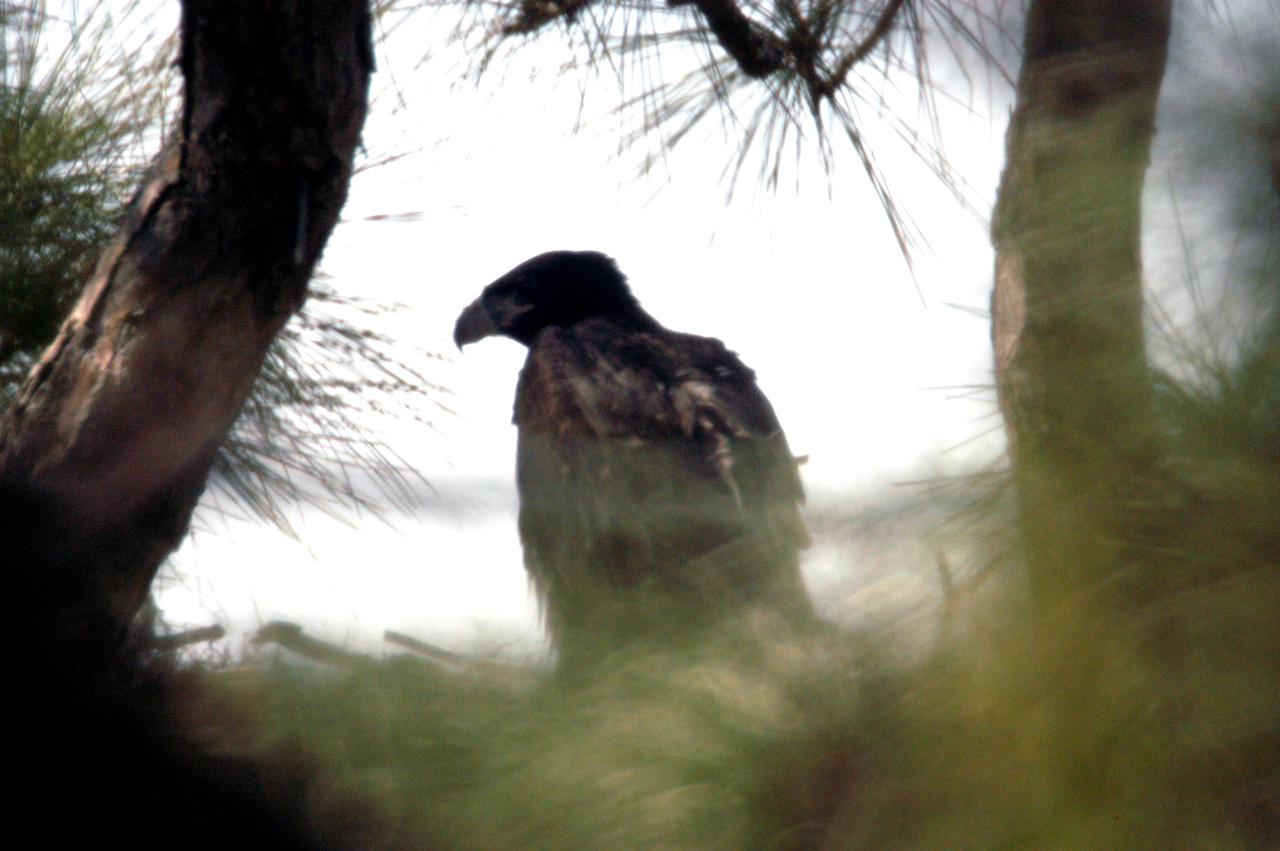
KENNEDY SPACE CENTER, FLA. - A young bald eagle perches on the side of the massive nest situated in a pine tree on State Road 3 that runs through Kennedy Space Center. The nest is one of 12 active nests throughout the Merritt Island National Wildlife Refuge, which shares a boundary with KSC. Young birds lack the typical white head, which they gain after several years. Their habitat is near lakes, rivers, marshes and seacoasts. Nests are masses of sticks usually in the top of a tall tree.
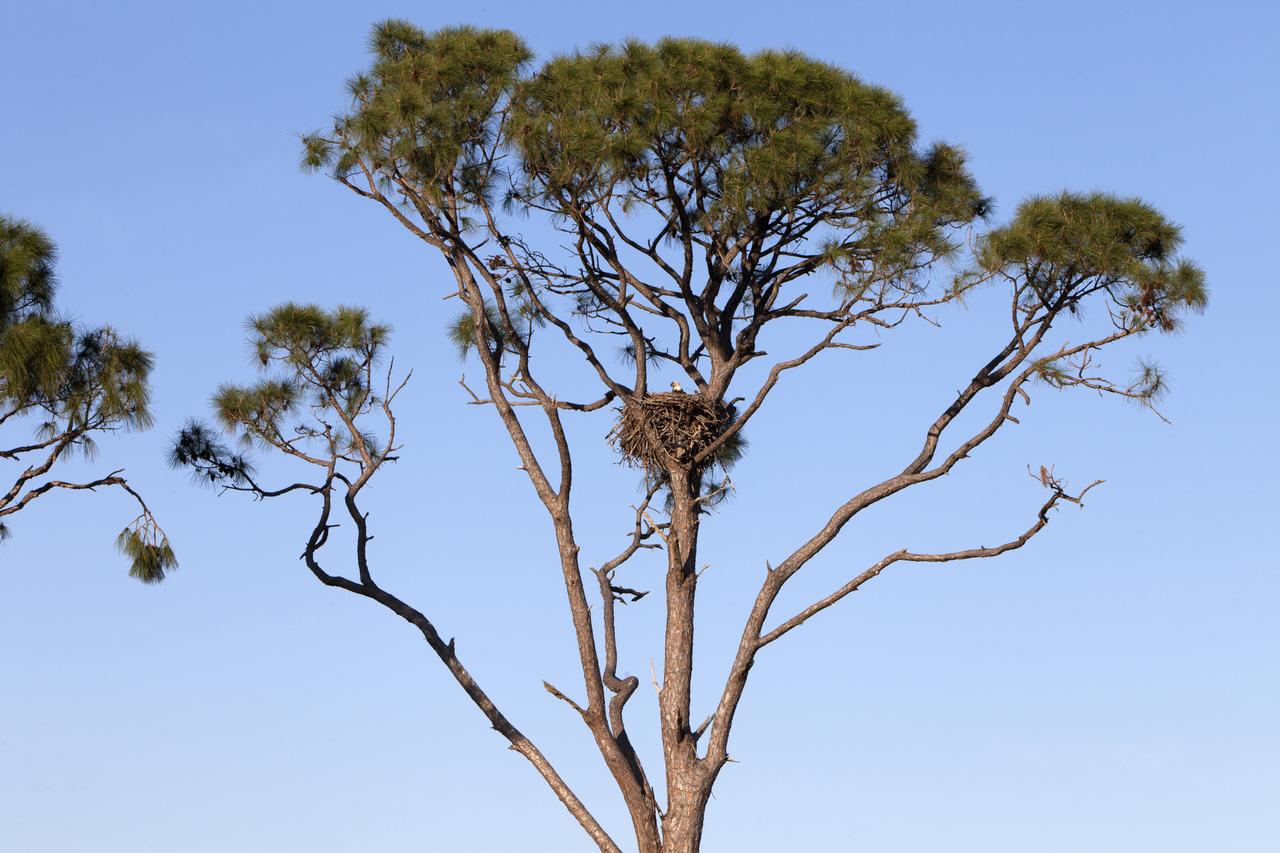
An adult American bald eagle perches in a nest in a tree along State Road 3 at NASA's Kennedy Space Center in Florida. Eagles have built nests in trees at the center for many years. The center shares a border with the 140,000-acre Merritt Island National Wildlife Refuge. More than 330 native and migratory bird species, 25 mammals, 117 fishes and 65 amphibians and reptiles call Kennedy and the wildlife refuge home.
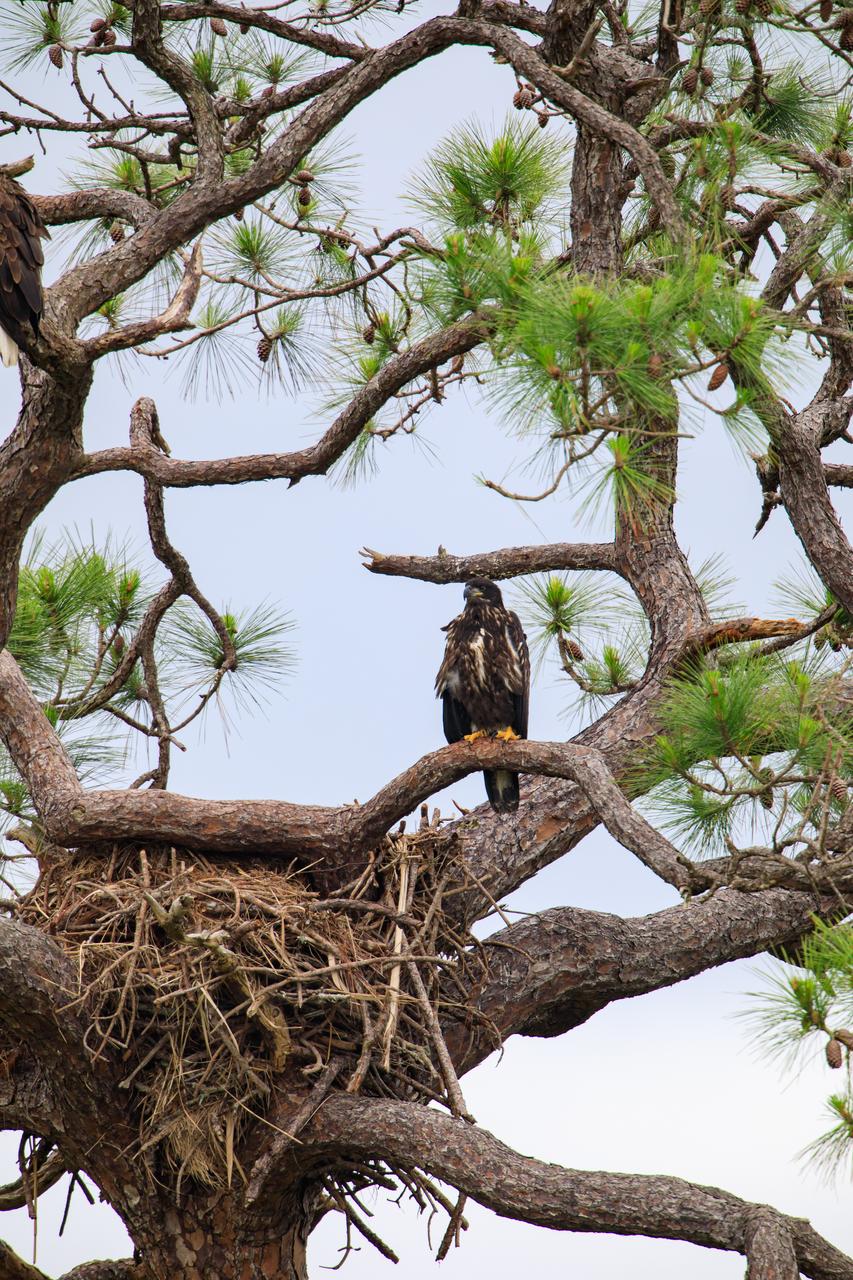
A baby American bald eagle looks out from just above its nest, located in a tree at NASA’s Kennedy Space Center in Florida on April 25, 2023. A mated pair of eagles recently built a new home in this tree after storms badly damaged their original nest located about 50 yards away, and produced one eaglet. The previous nest was built in 1973 and had been used by eagles almost every year since 1975.
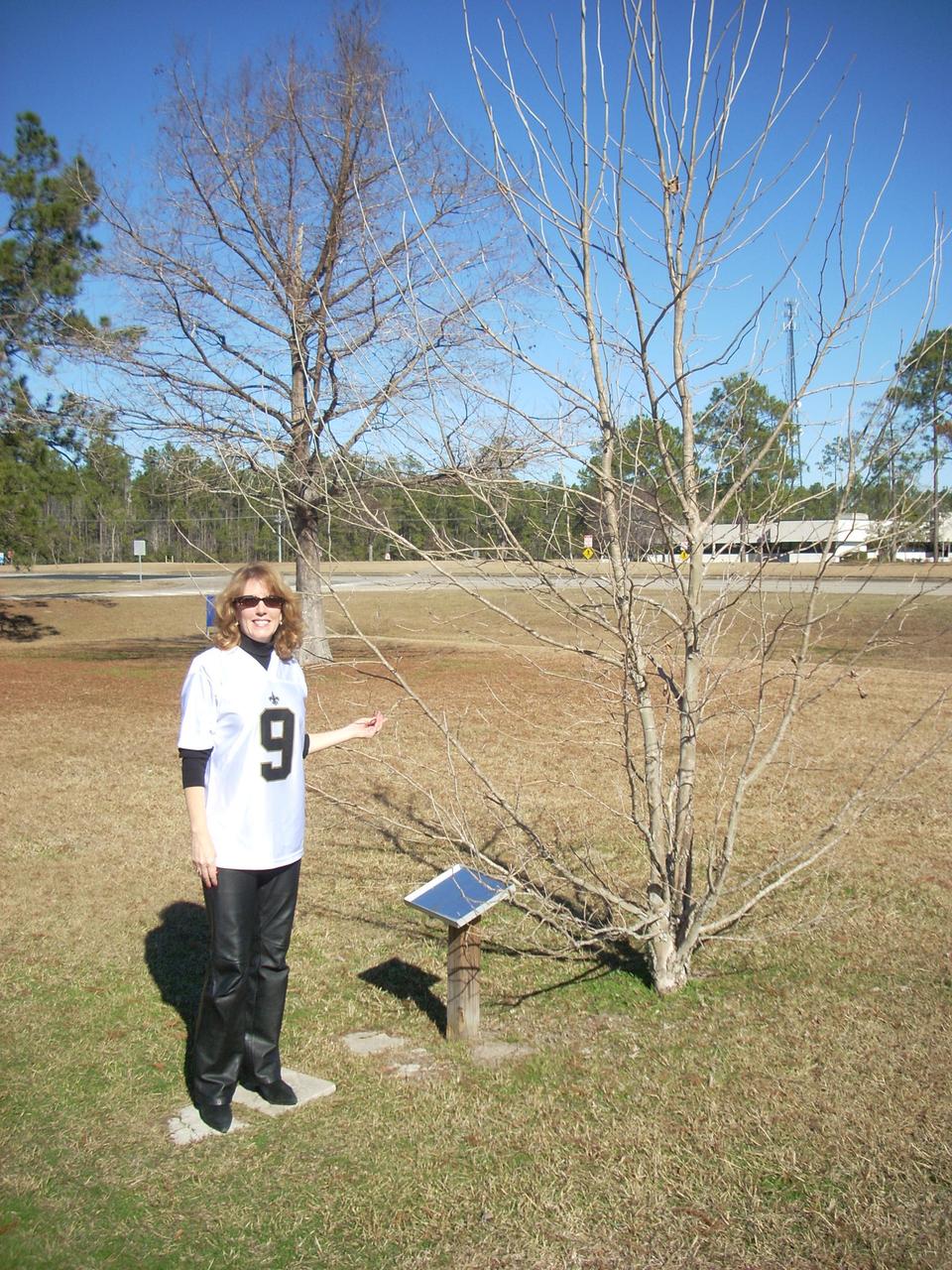
: An image from Jan. 7, 2011, shows Rosemary Roosa, daughter of the late Apollo 14 astronaut Stuart Roosa, standing beside the Moon tree outside of StenniSphere, the previous museum and visitor center at NASA’s Stennis Space Center. The Moon tree is grown from seeds carried to the Moon and back by astronaut Stuart Roosa on the Apollo 14 mission.
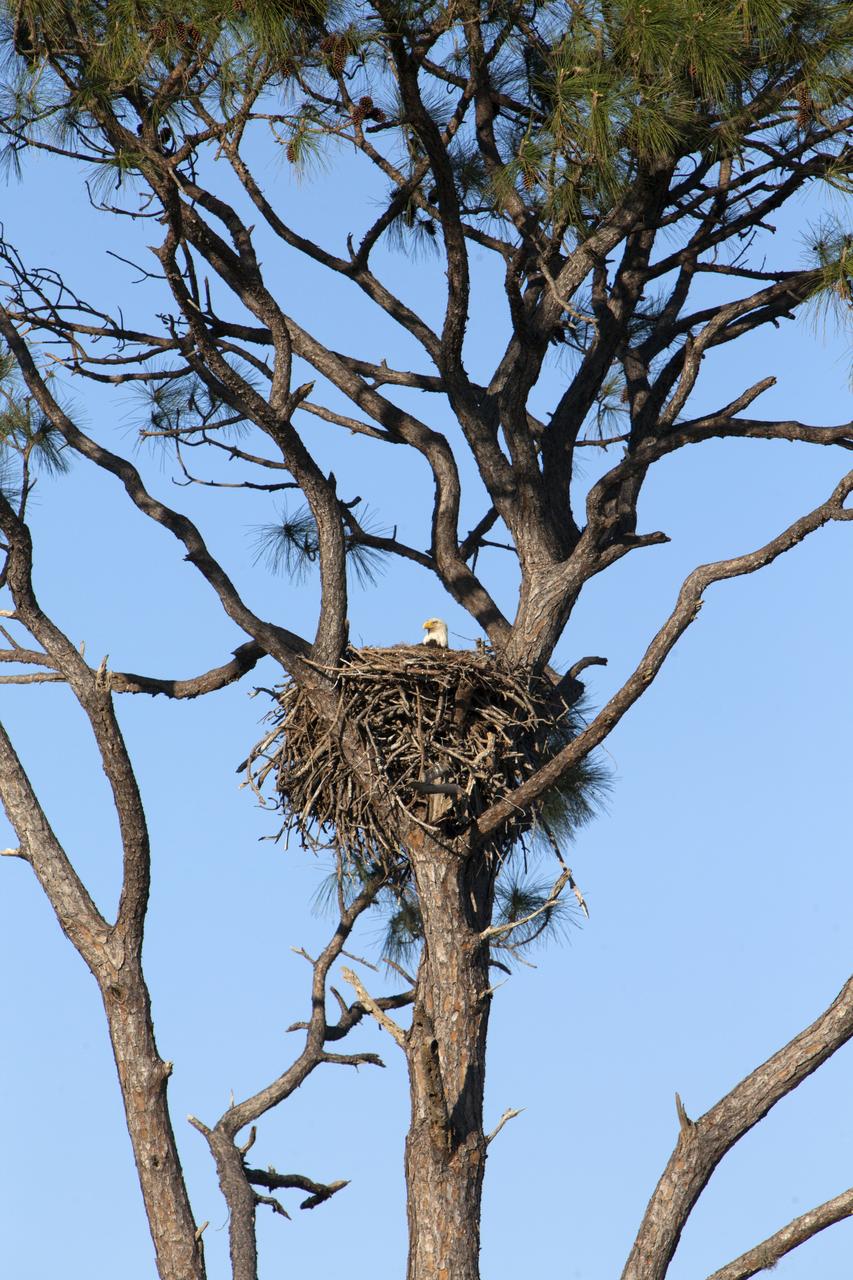
An adult American bald eagle perches in a nest in a tree along State Road 3 at NASA's Kennedy Space Center in Florida. Eagles have built nests in trees at the center for many years. The center shares a border with the 140,000-acre Merritt Island National Wildlife Refuge. More than 330 native and migratory bird species, 25 mammals, 117 fishes and 65 amphibians and reptiles call Kennedy and the wildlife refuge home.
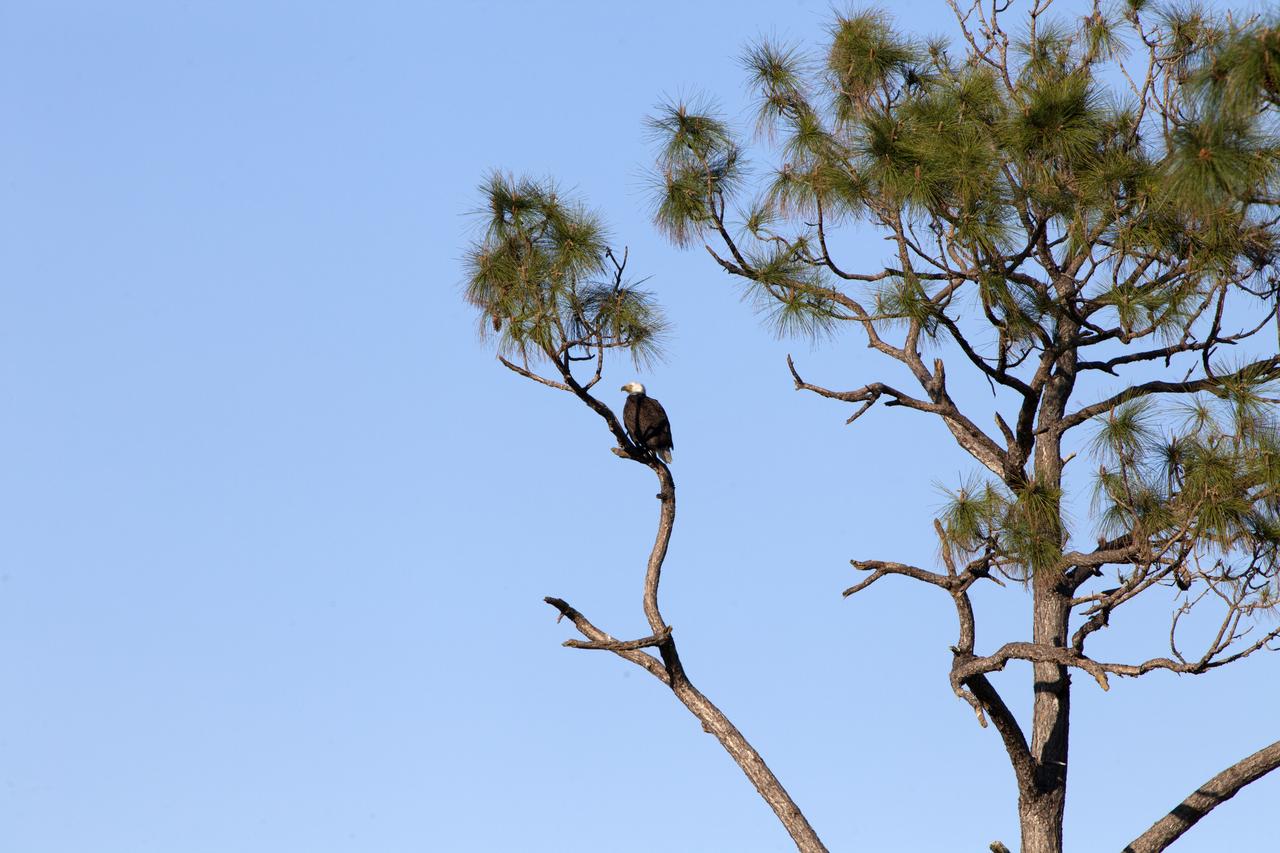
An adult American bald eagle perches on a branch in a tree along State Road 3 at NASA's Kennedy Space Center in Florida. Eagles have built nests in trees at the center for many years. The center shares a border with the 140,000-acre Merritt Island National Wildlife Refuge. More than 330 native and migratory bird species, 25 mammals, 117 fishes and 65 amphibians and reptiles call Kennedy and the wildlife refuge home.
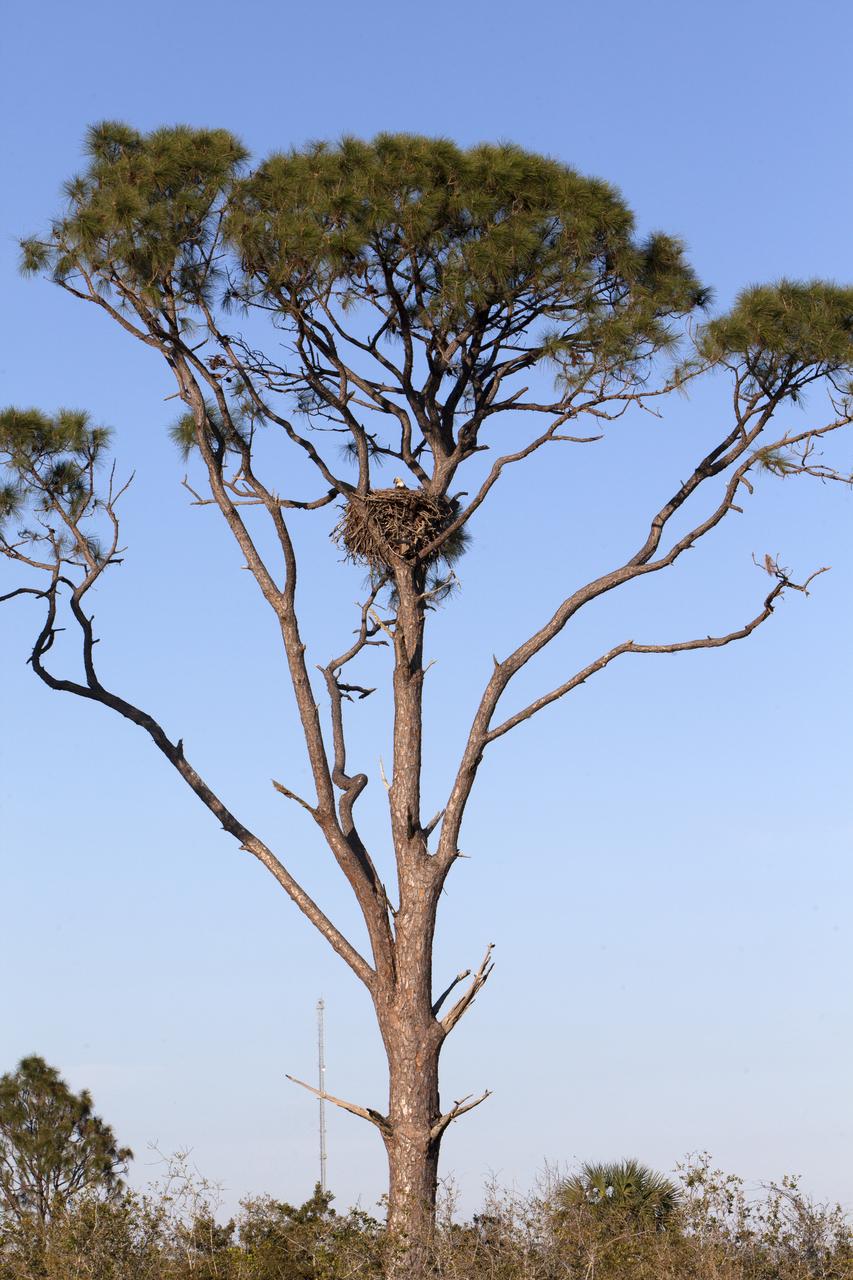
An adult American bald eagle perches in a nest in a tree along State Road 3 at NASA's Kennedy Space Center in Florida. Eagles have built nests in trees at the center for many years. The center shares a border with the 140,000-acre Merritt Island National Wildlife Refuge. More than 330 native and migratory bird species, 25 mammals, 117 fishes and 65 amphibians and reptiles call Kennedy and the wildlife refuge home.