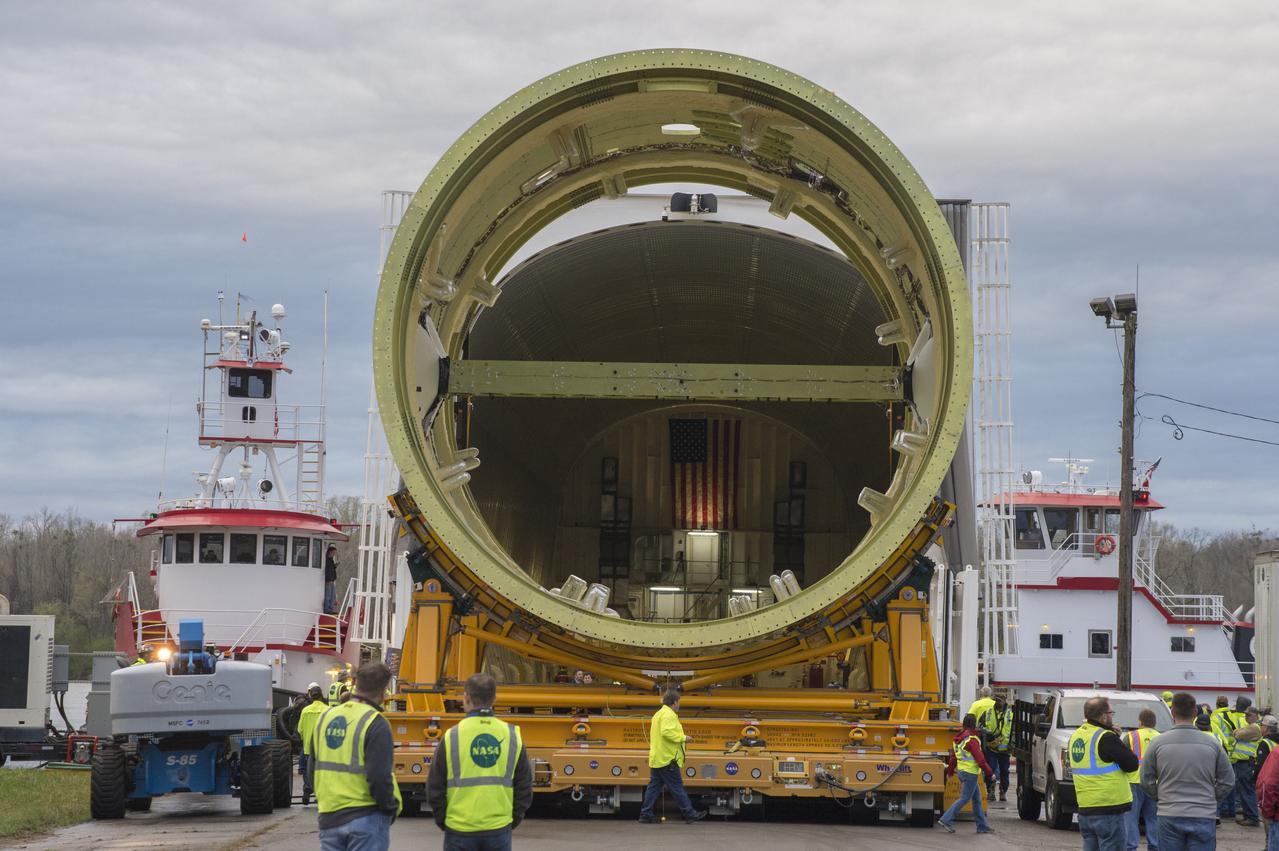
The SLS Stages Intertank Structural Test Assembly (STA) is rolling off the NASA Pegasus Barge at the MSFC Dock enroute to the MSFC 4619 Load Test Annex test facility for qualification testing. STA hardware completely free of barge and flanked by tug boats.
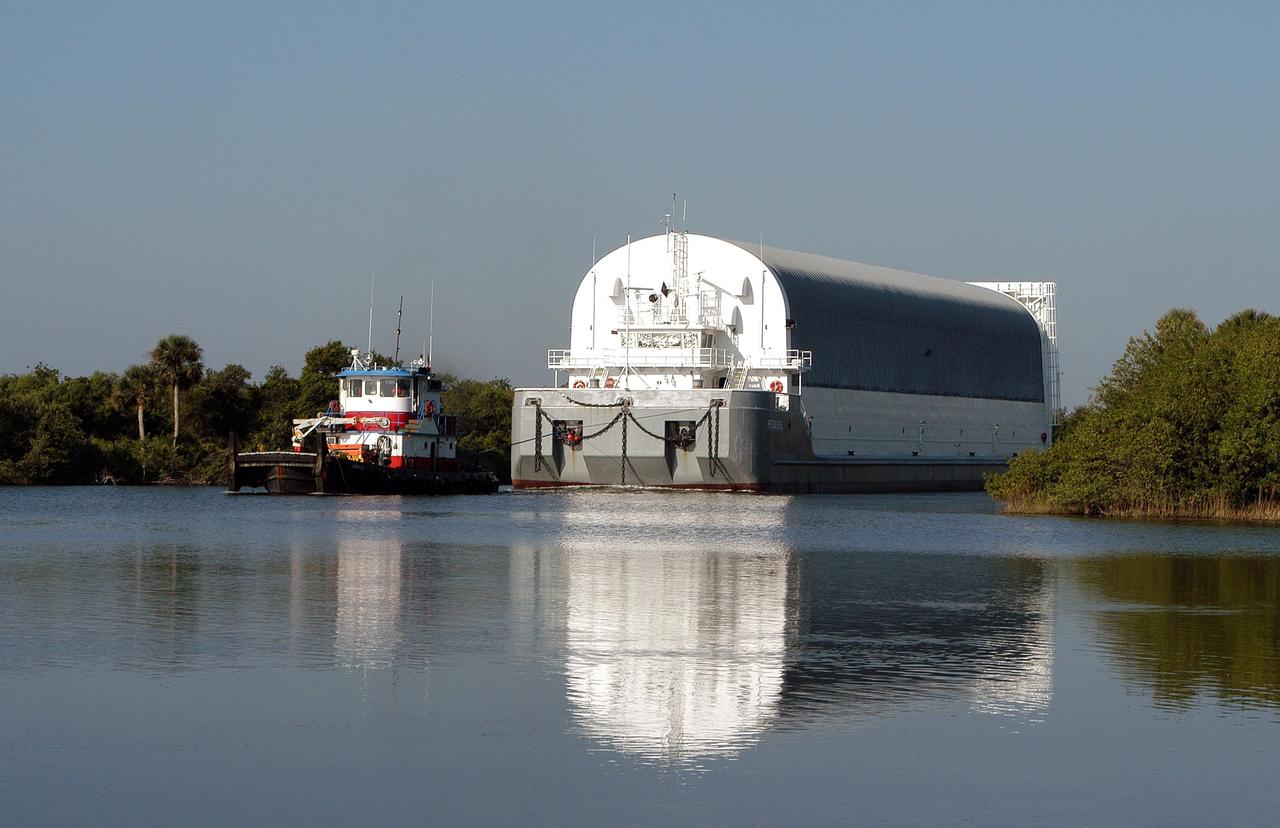
KENNEDY SPACE CENTER, FLA. - A tug boat begins towing the barge containing an External Tank (ET) to Port Canaveral. There one of the SRB Retrieval Ships will take over and tow the ET to the Michoud Space Systems Assembly Facility near New Orleans where redesign of the external tank is underway for Return to Flight.
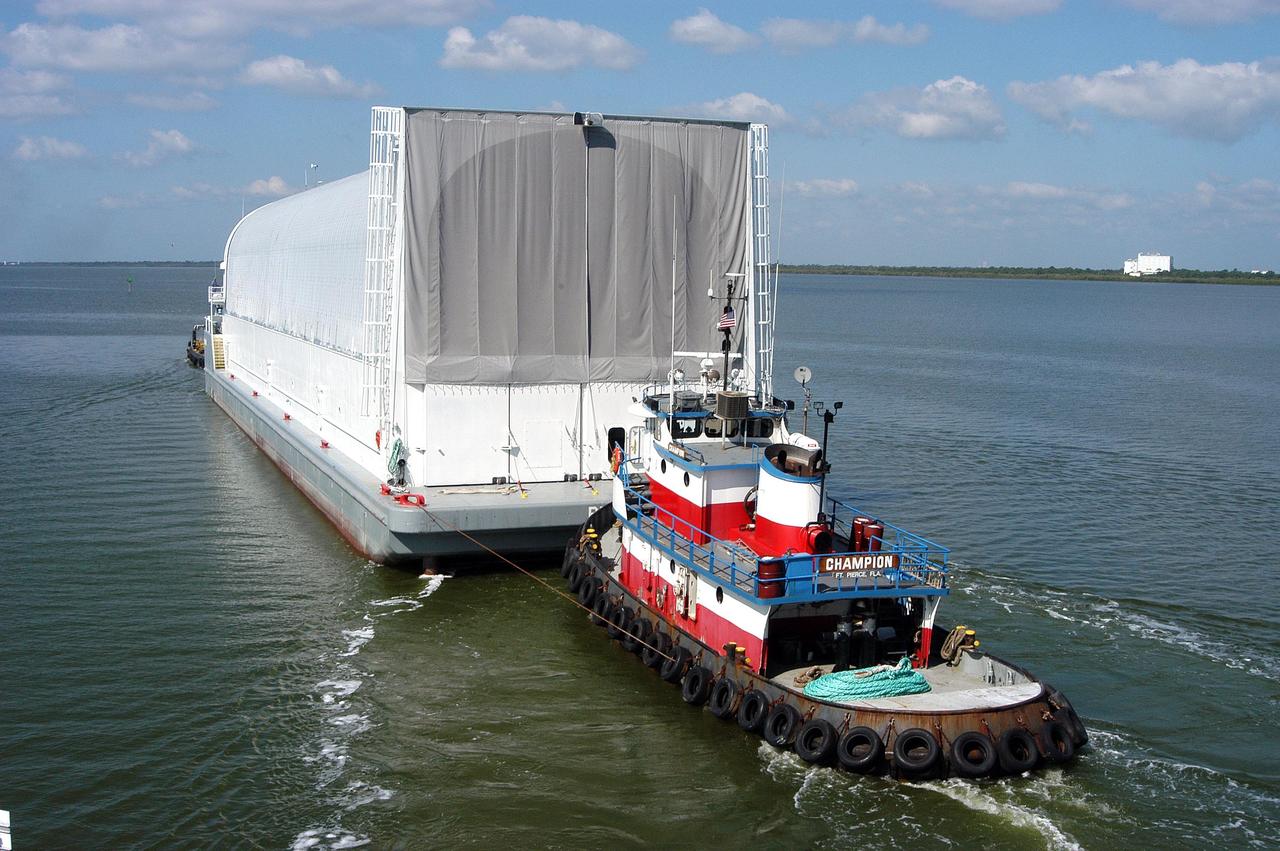
KENNEDY SPACE CENTER, FLA. - A tug boat tows the barge containing an External Tank (ET) to Port Canaveral. There one of the SRB Retrieval Ships will take over and tow the ET to the Michoud Space Systems Assembly Facility near New Orleans where redesign of the external tank is underway for Return to Flight.
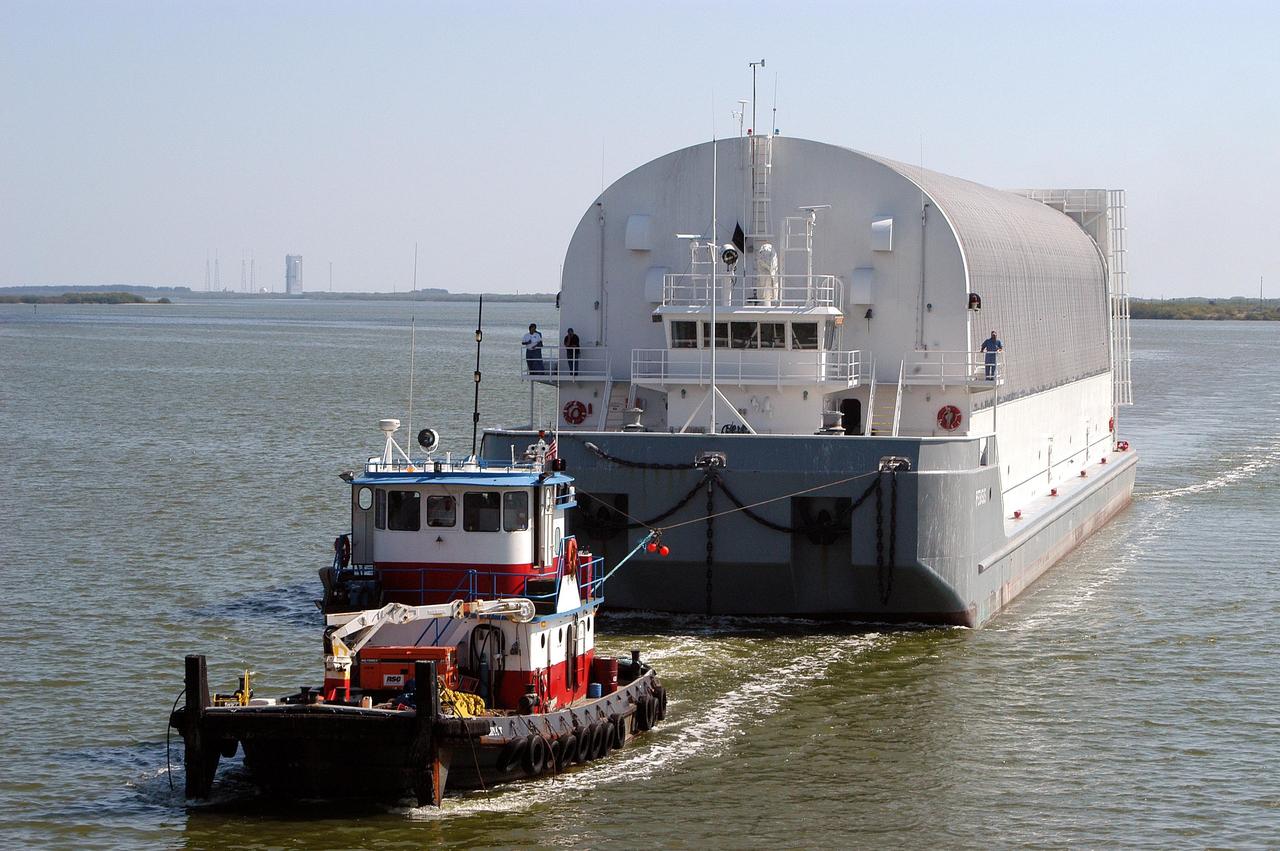
KENNEDY SPACE CENTER, FLA. - A tug boat tows the barge containing an External Tank (ET) to Port Canaveral. There one of the SRB Retrieval Ships will take over and tow the ET to the Michoud Space Systems Assembly Facility near New Orleans where redesign of the external tank is underway for Return to Flight.
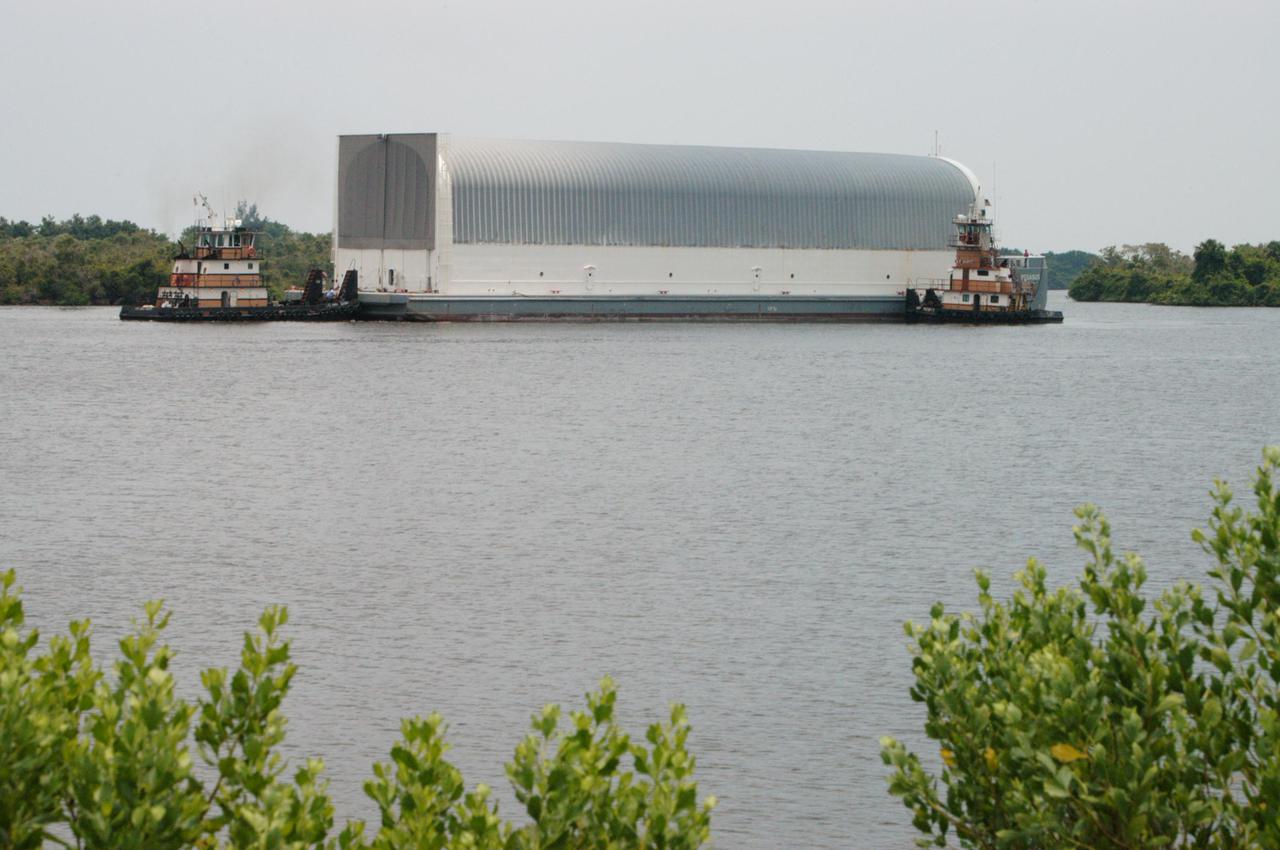
KENNEDY SPACE CENTER, FLA. - At the Turn Basin in the Launch Complex 39 Area, tug boats maneuver the barge carrying a new External Tank (ET) toward the dock. After being offloaded, the tank will be transported to the Vehicle Assembly Building. The barge was towed on a 900-mile journey at sea from the Michoud Assembly Facility in New Orleans by one of NASA’s Solid Rocket Booster Retrieval Ships.
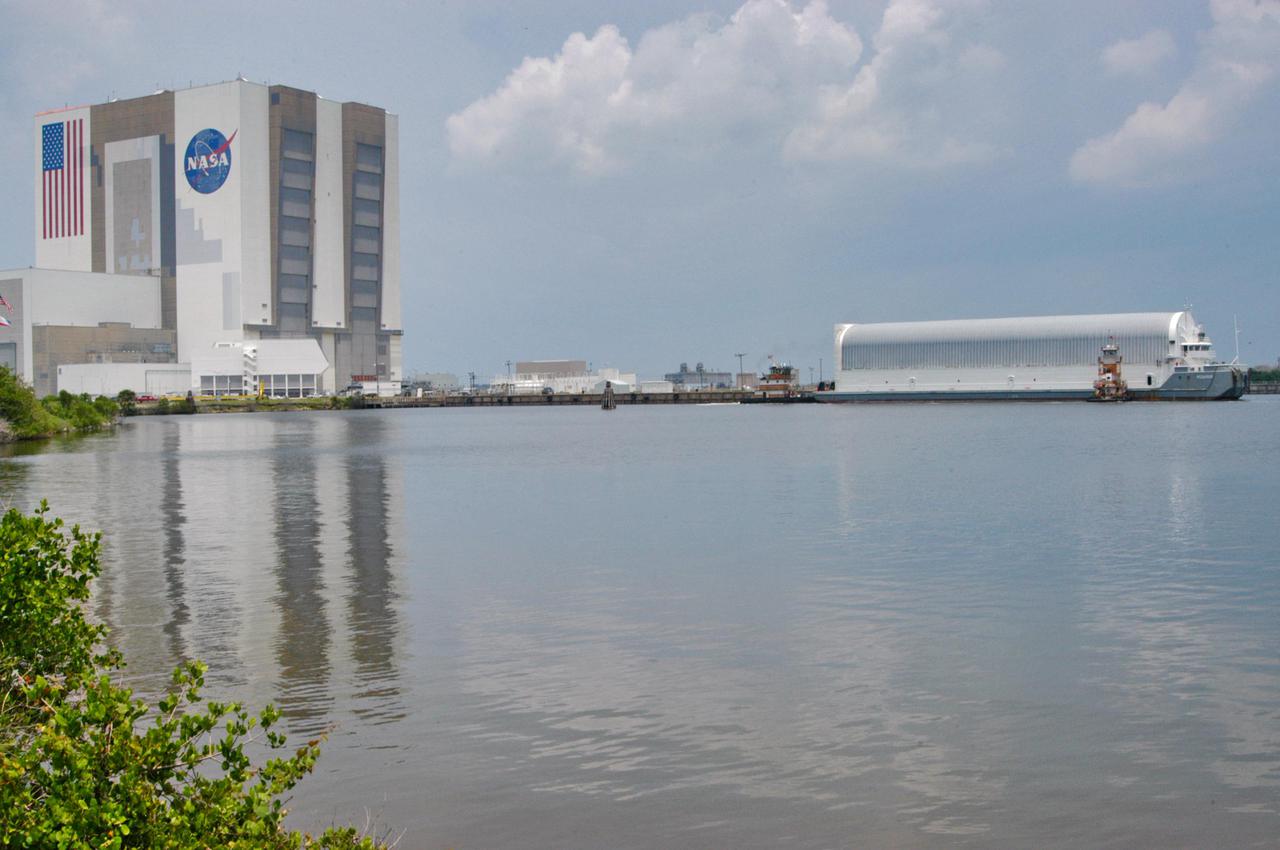
KENNEDY SPACE CENTER, FLA. - At the Turn Basin in the Launch Complex 39 Area, tug boats maneuver the barge carrying a new External Tank (ET) toward the dock. At left is the Vehicle Assembly Building, which will receive the tank after it is offloaded. The barge was towed on a 900-mile journey at sea from the Michoud Assembly Facility in New Orleans by one of NASA’s Solid Rocket Booster Retrieval Ships.
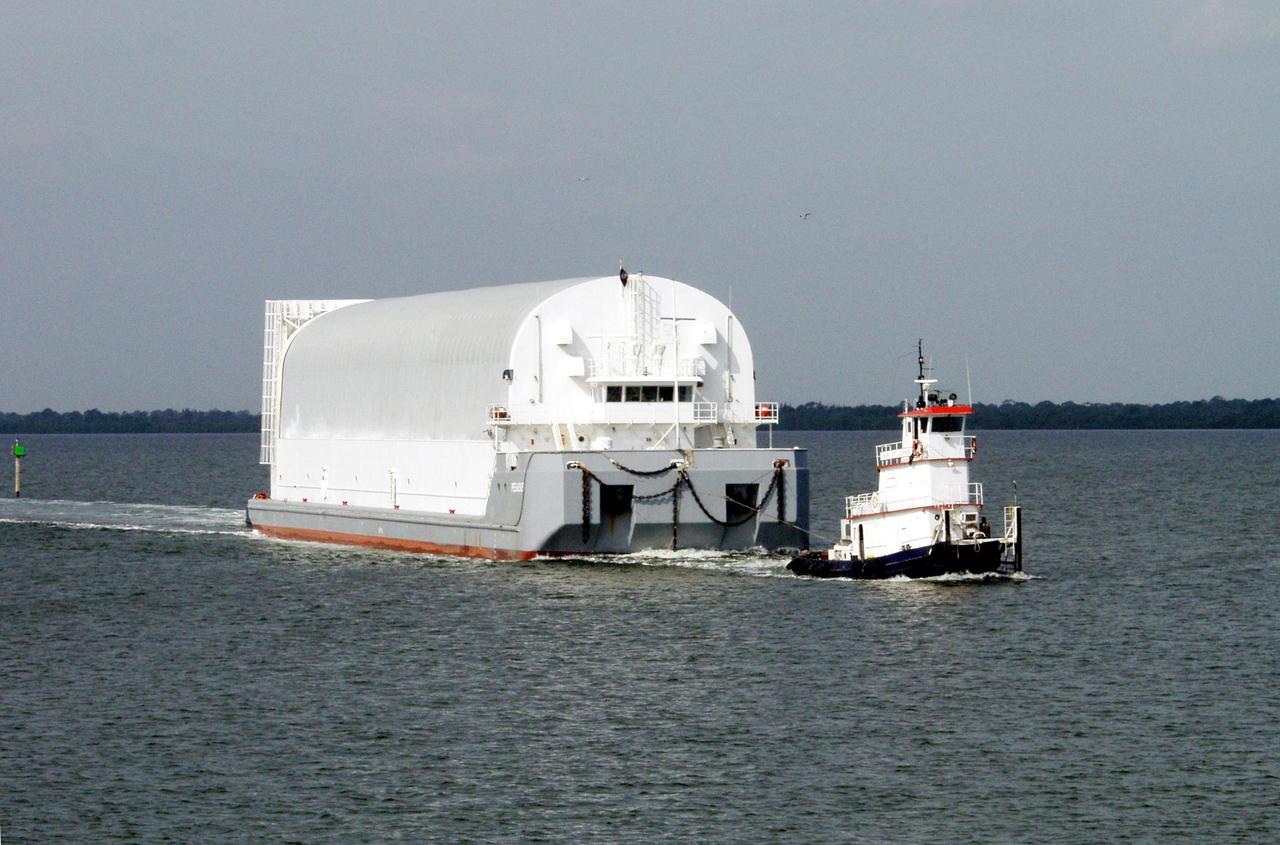
KENNEDY SPACE CENTER, FLA. -- A tug boat tows a newly arrived external tank in the Banana River to its offloading site. External tanks are built by the NASA Michoud Assembly Facility in New Orleans and transported by barge to Cape Canaveral and then up the Banana River to the turn basin in the Launch Complex 39 Area. From there it will be transported to the Vehicle Assembly Building where the tank will await stacking for a future Shuttle mission
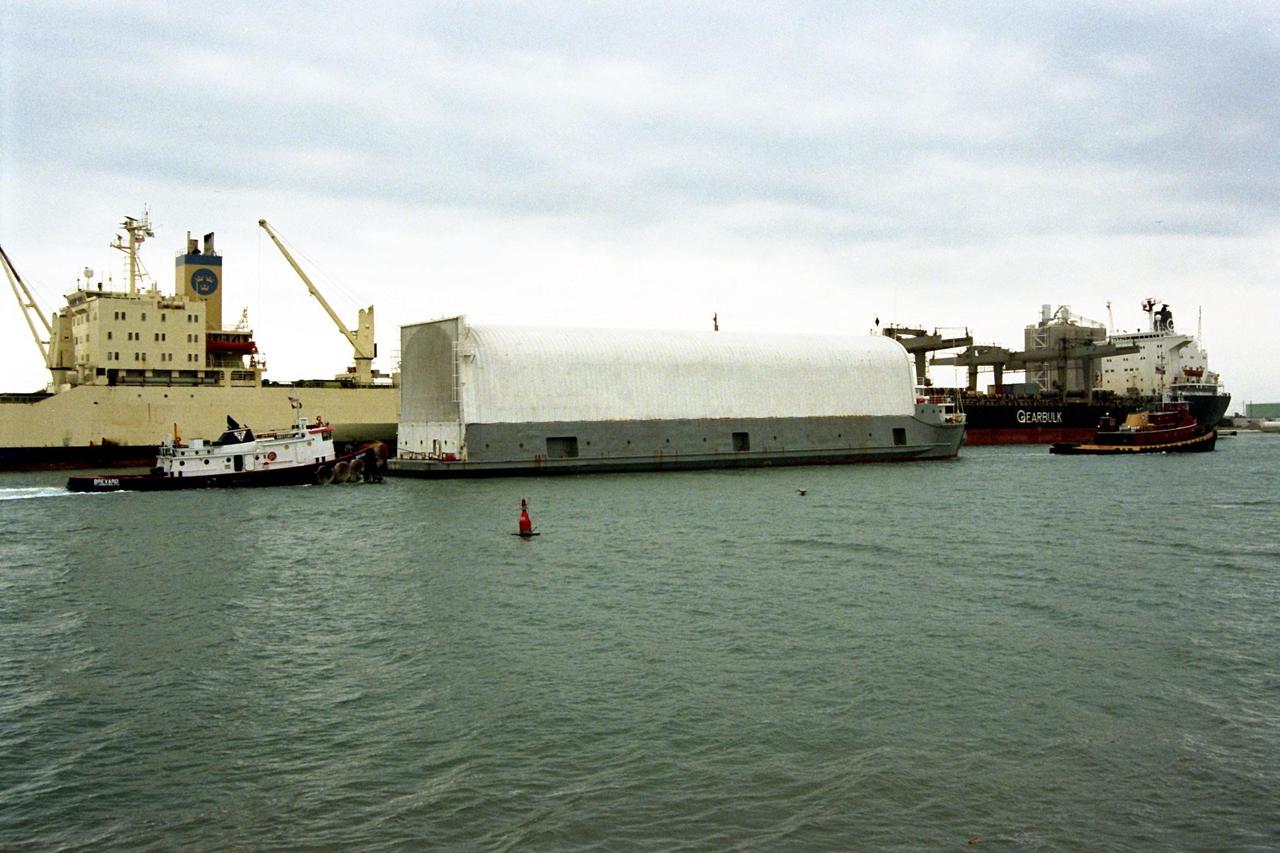
KENNEDY SPACE CENTER, FLA. -- The Space Shuttle's first super lightweight external tank is moved on a barge by two tug boats toward a pier at Port Canaveral, Fla. The tank is scheduled to undergo processing at Kennedy Space Center for flight on STS-91, targeted for launch in late May. The improved tank is 7,500 pounds lighter than its predecessors and was developed to increase the Shuttle payload capacity on International Space Station assembly flights. The tank was sent from the NASA Michoud Assembly Facility in New Orleans
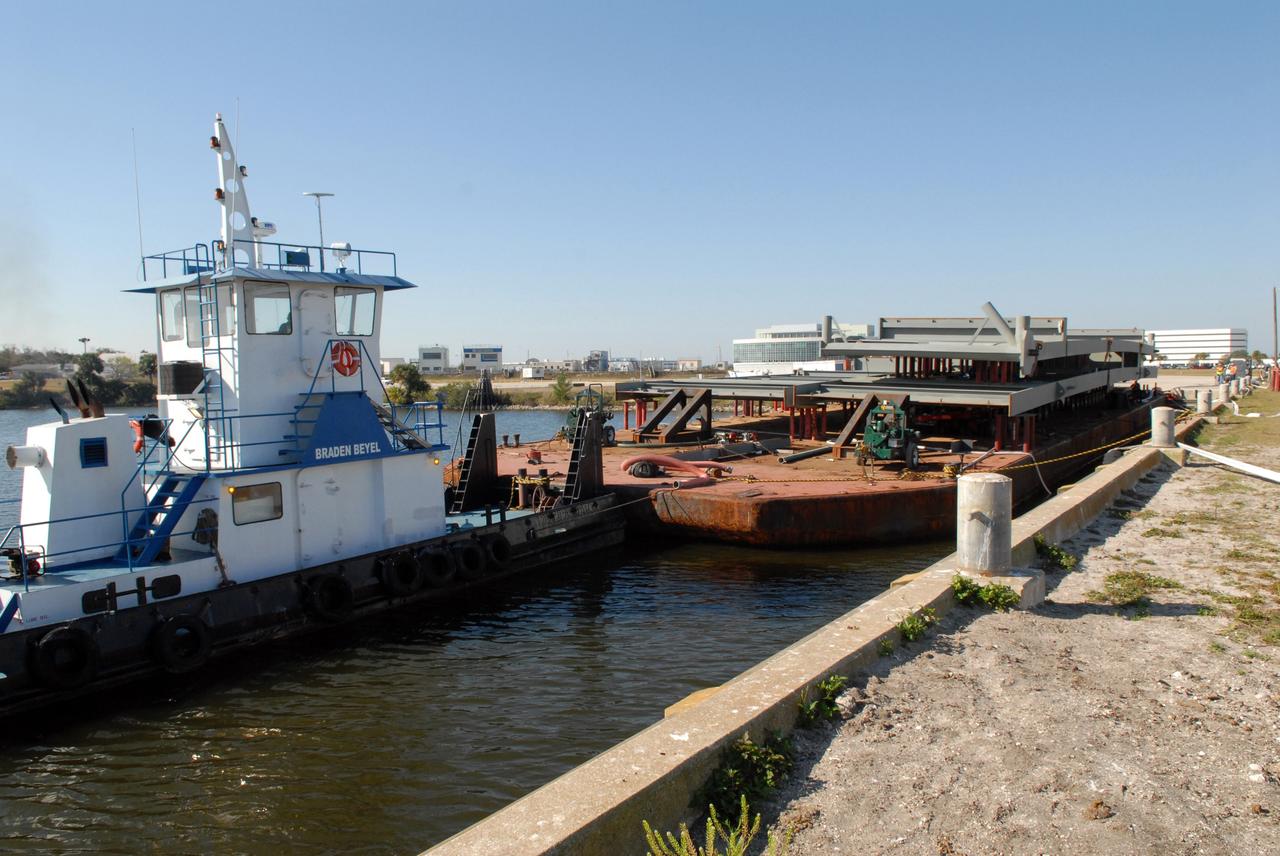
CAPE CANAVERAL, Fla. – At the turn basin at NASA's Kennedy Space Center in Florida, a tug boat keeps the barge in place for the offloading of the girder for the new mobile launcher. The new mobile launcher will be the base for the Ares rockets to launch the Orion crew exploration vehicle and the cargo vehicle. The base is being made lighter than space shuttle mobile launcher platforms so the crawler-transporter can pick up the added load of the 345-foot tower and taller rocket. When the structural portion of the new mobile launcher is complete, umbilicals, access arms, communications equipment and command/control equipment will be installed. Photo credit: NASA/Jack Pfaller
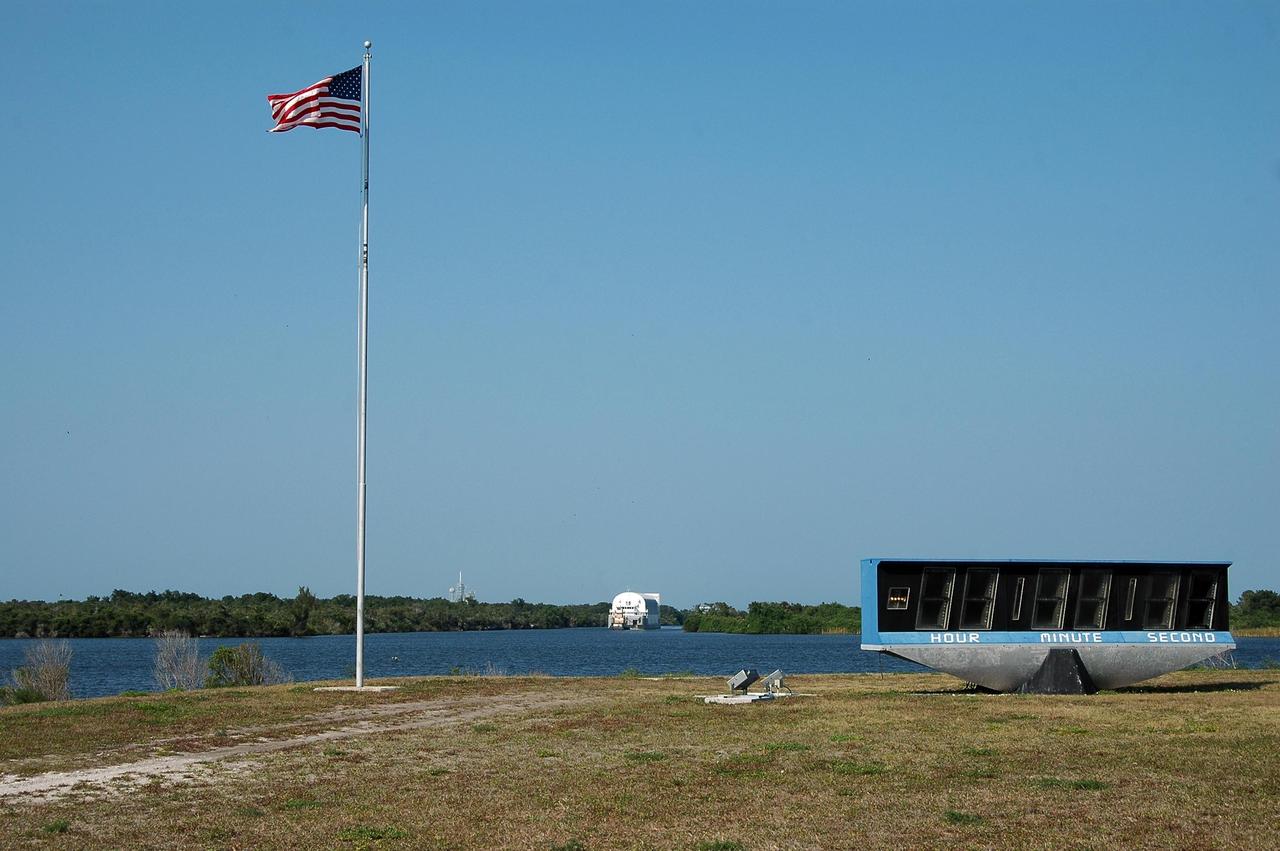
KENNEDY SPACE CENTER, FLA. - Viewed from the NASA News Center, a tug boat in the background maneuvers the Pegasus barge into the turn basin at the Launch Complex 39 Area. The barge holds the redesigned external fuel tank, designated ET-118, that will launch Space Shuttle Atlantis on the next shuttle mission, STS-115. The tank was shipped from the Michoud Assembly Facility in New Orleans. After off-loading, the tank will be moved into the Vehicle Assembly Building and lifted into a checkout cell for further work. The tank will fly with many major safety changes, including the removal of the protuberance air load ramps. Photo credit: NASA/Kim Shiflett
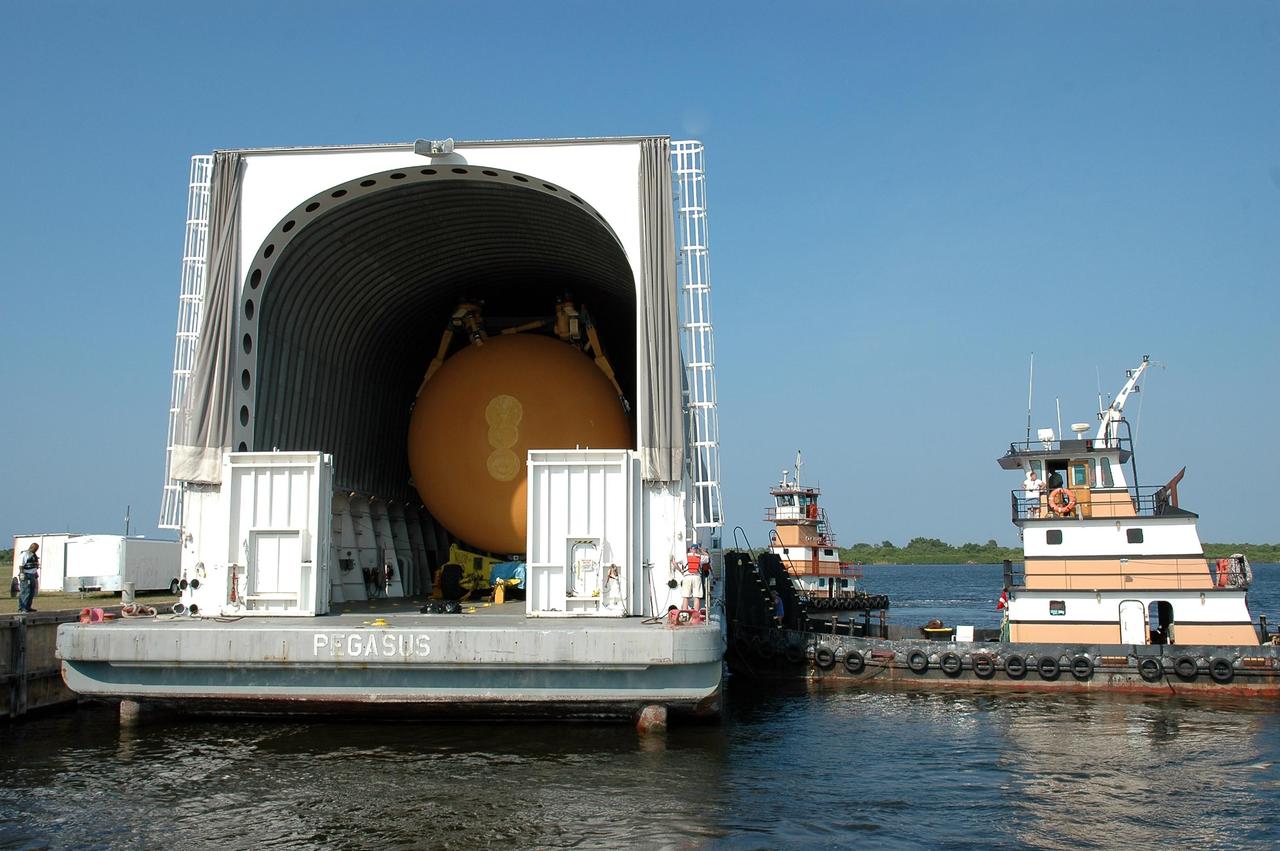
KENNEDY SPACE CENTER, FLA. - Tug boats maneuver the Pegasus barge next to the dock in the turn basin at the Launch Complex 39 Area. The barge holds the redesigned external fuel tank, seen inside, that will launch Space Shuttle Atlantis on the next shuttle mission, STS-115. The tank, designated ET-118, was shipped from the Michoud Assembly Facility in New Orleans. After off-loading, the tank will be moved into the Vehicle Assembly Building and lifted into a checkout cell for further work. The tank will fly with many major safety changes, including the removal of the protuberance air load ramps. Photo credit: NASA/Kim Shiflett
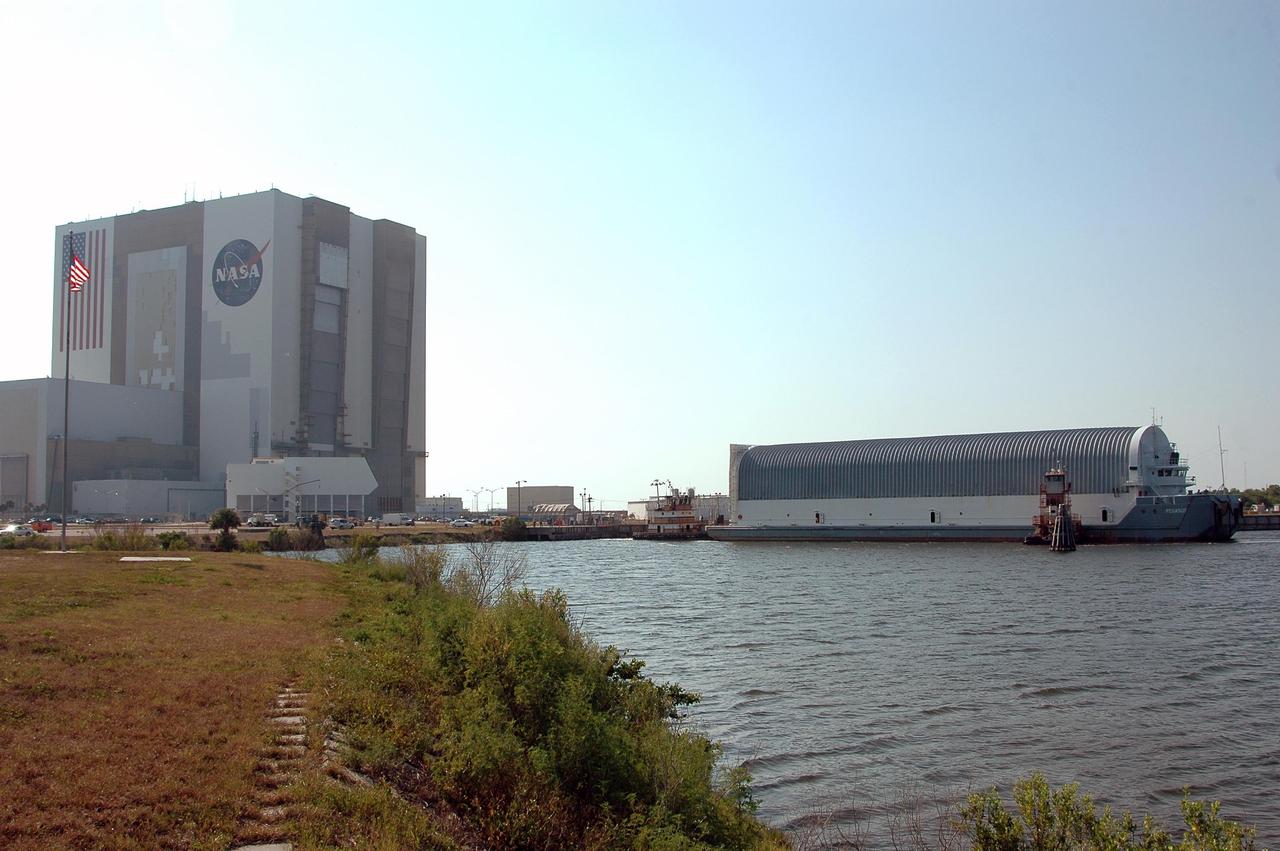
KENNEDY SPACE CENTER, FLA. - Tug boats maneuver the Pegasus barge next to the dock in the turn basin at the Launch Complex 39 Area. The barge holds the redesigned external fuel tank, designated ET-118, that will launch Space Shuttle Atlantis on the next shuttle mission, STS-115. The tank was shipped from the Michoud Assembly Facility in New Orleans. After off-loading, the tank will be moved into the Vehicle Assembly Building and lifted into a checkout cell for further work. The tank will fly with many major safety changes, including the removal of the protuberance air load ramps. Photo credit: NASA/Kim Shiflett
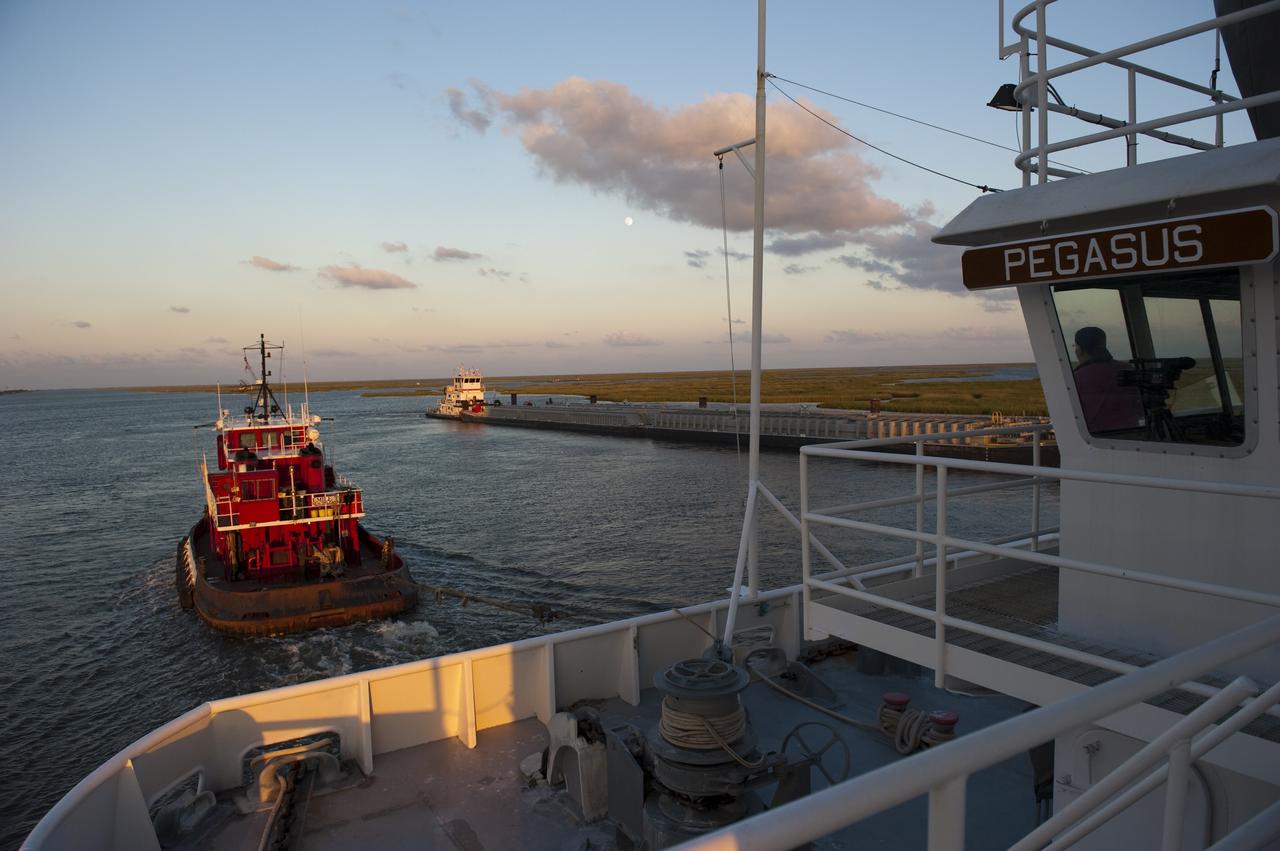
NEW ORLEANS -- A tug boat is pulls the Pegasus Barge carrying the Space Shuttle Program's last external fuel tank, ET-122, from NASA's Michoud Assembly Facility in New Orleans to NASA's Kennedy Space Center in Florida. The tank will travel 900 miles by sea before being offloaded and moved to Kennedy's Vehicle Assembly Building. There it will be integrated to space shuttle Endeavour for the STS-134 mission to the International Space Station. The tank, which is the largest element of the space shuttle stack, was damaged during Hurricane Katrina in August 2005 and restored to flight configuration by Lockheed Martin Space Systems Company employees. STS-134, targeted to launch Feb. 2011, currently is scheduled to be the last mission in the Space Shuttle Program. Photo credit: NASA/Kim Shiflett
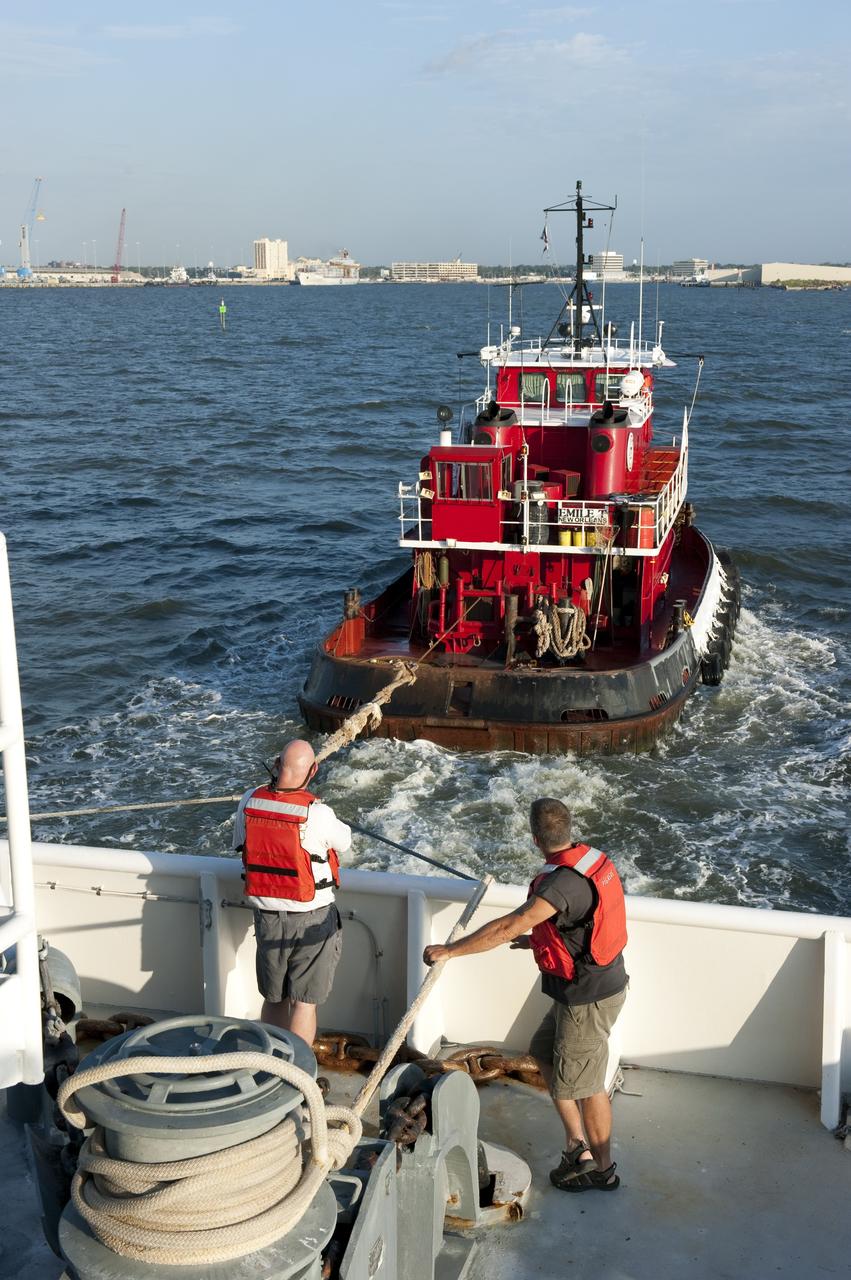
LOUISIANA -- A tug boat pulls the Pegasus Barge carrying the Space Shuttle Program's last external fuel tank, ET-122, from NASA's Michoud Assembly Facility in New Orleans toward a dock in Gulfport, La. The barge will meet up with Freedom Star, NASA's solid rocket booster retrieval ship, which will escort it to NASA's Kennedy Space Center in Florida. The tank will travel 900 miles by sea before being offloaded and moved to Kennedy's Vehicle Assembly Building. There it will be integrated to space shuttle Endeavour for the STS-134 mission to the International Space Station. The tank, which is the largest element of the space shuttle stack, was damaged during Hurricane Katrina in August 2005 and restored to flight configuration by Lockheed Martin Space Systems Company employees. STS-134, targeted to launch Feb. 2011, currently is scheduled to be the last mission in the Space Shuttle Program. Photo credit: NASA/Kim Shiflett
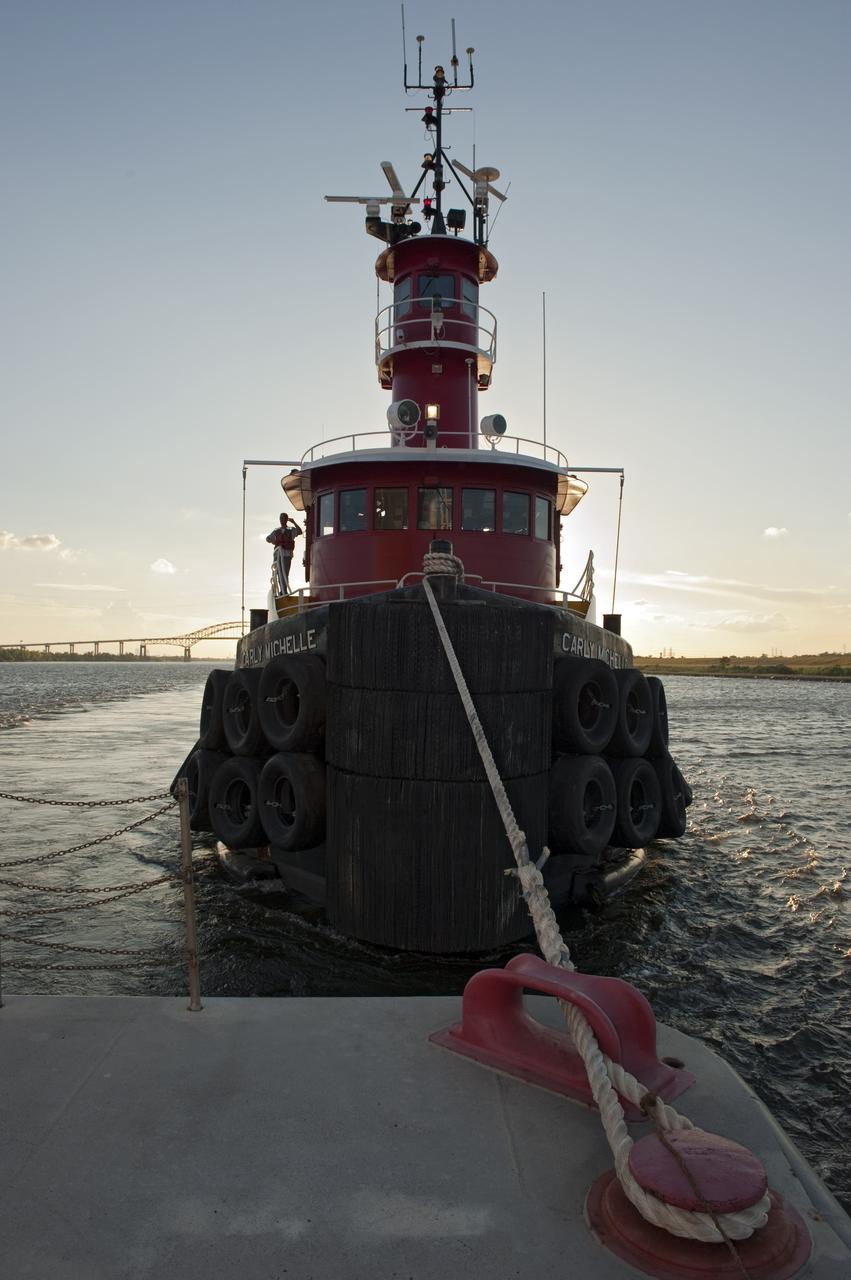
NEW ORLEANS -- A tug boat pulls the Pegasus Barge carrying the Space Shuttle Program's last external fuel tank, ET-122, from NASA's Michoud Assembly Facility in New Orleans to NASA's Kennedy Space Center in Florida. The tank will travel 900 miles by sea before being offloaded and moved to Kennedy's Vehicle Assembly Building. There it will be integrated to space shuttle Endeavour for the STS-134 mission to the International Space Station. The tank, which is the largest element of the space shuttle stack, was damaged during Hurricane Katrina in August 2005 and restored to flight configuration by Lockheed Martin Space Systems Company employees. STS-134, targeted to launch Feb. 2011, currently is scheduled to be the last mission in the Space Shuttle Program. Photo credit: NASA/Kim Shiflett
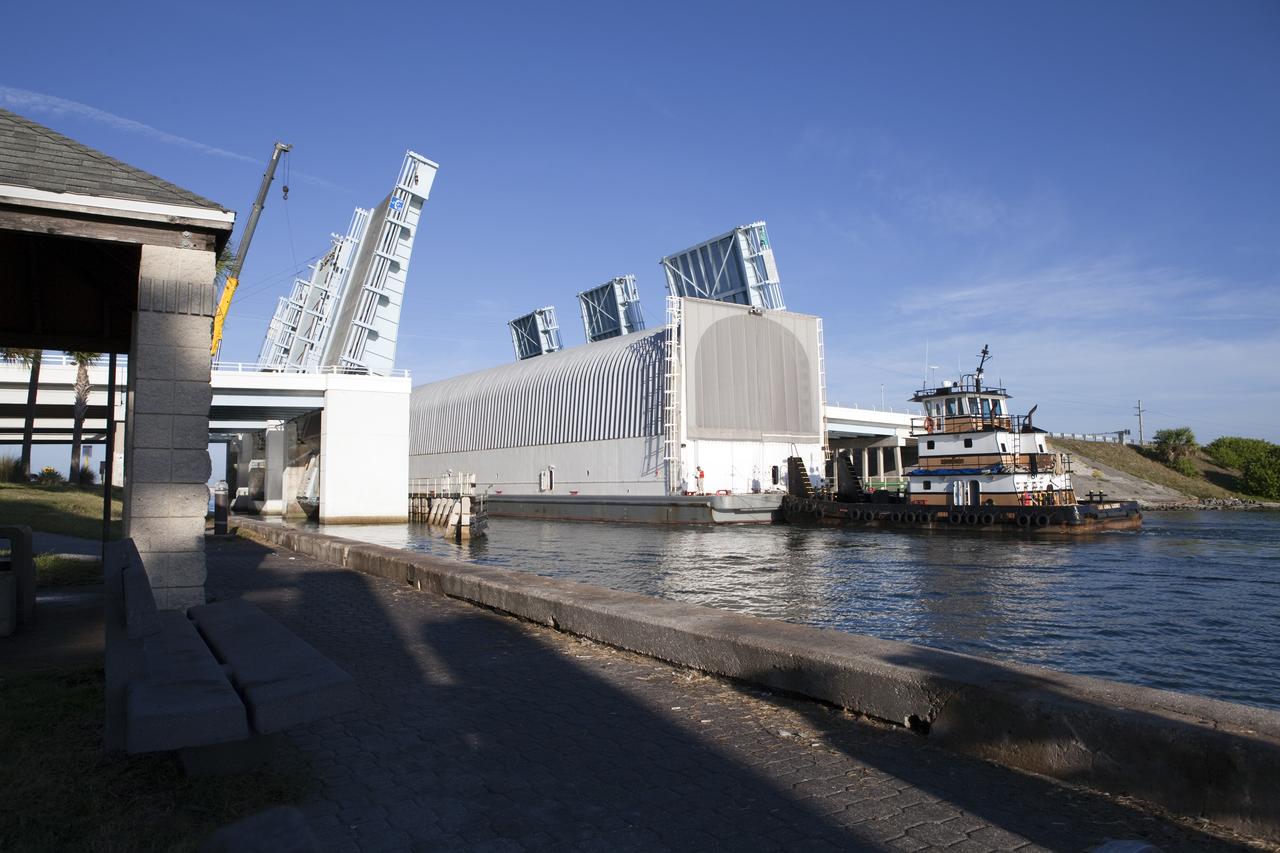
CAPE CANAVERAL, Fla. -- A tug boat pulls the Space Shuttle Program's last external fuel tank, ET-122, toward the Turn Basin at NASA's Kennedy Space Center in Florida. The tank traveled 900 miles by sea from NASA's Michoud Assembly Facility in New Orleans aboard the Pegasus Barge. Next, the tank will be offloaded and moved to Kennedy's Vehicle Assembly Building where it eventually will be attached to space shuttle Endeavour for the STS-134 mission to the International Space Station. STS-134, targeted to launch in Feb., 2011, currently is scheduled to be the last mission in the Space Shuttle Program. The tank, which is the largest element of the space shuttle stack, was damaged during Hurricane Katrina in August 2005 and restored to flight configuration by Lockheed Martin Space Systems Company employees. Photo credit: NASA/Frankie Martin

KENNEDY SPACE CENTER, FLA. - In the distance, a tug boat maneuvers the Pegasus barge out of the Turn Basin at NASA’s Kennedy Space Center. The barge is carrying external tank #120, which is being returned to NASA’s Michoud Assembly Facility in Louisiana for additional modifications. The barge is being moved to Port Canaveral where one of NASA’s solid rocket booster retrieval ships will take it and tow it around the Florida peninsula to Michoud. This tank is the first of the newly designed tanks that were delivered to Kennedy. Previously, the tank was stacked with Discovery and, more recently, Atlantis. The tank has already gone through two tanking cycles during tanking tests but was replaced with tank #121 for Discovery’s return to flight mission STS-114.
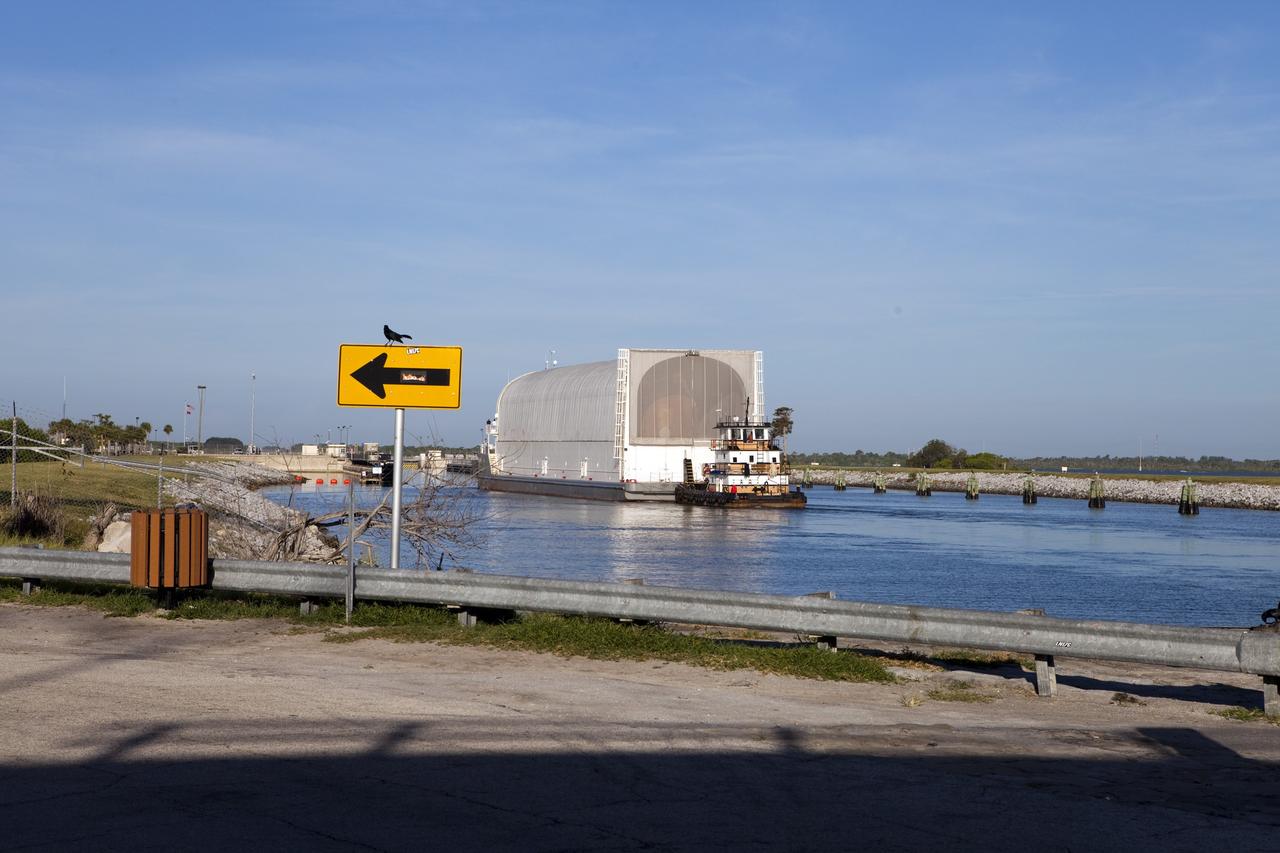
CAPE CANAVERAL, Fla. -- A tug boat pulls the Space Shuttle Program's last external fuel tank, ET-122, toward the Turn Basin at NASA's Kennedy Space Center in Florida. The tank traveled 900 miles by sea from NASA's Michoud Assembly Facility in New Orleans aboard the Pegasus Barge. Next, the tank will be offloaded and moved to Kennedy's Vehicle Assembly Building where it eventually will be attached to space shuttle Endeavour for the STS-134 mission to the International Space Station. STS-134, targeted to launch in Feb., 2011, currently is scheduled to be the last mission in the Space Shuttle Program. The tank, which is the largest element of the space shuttle stack, was damaged during Hurricane Katrina in August 2005 and restored to flight configuration by Lockheed Martin Space Systems Company employees. Photo credit: NASA/Frankie Martin
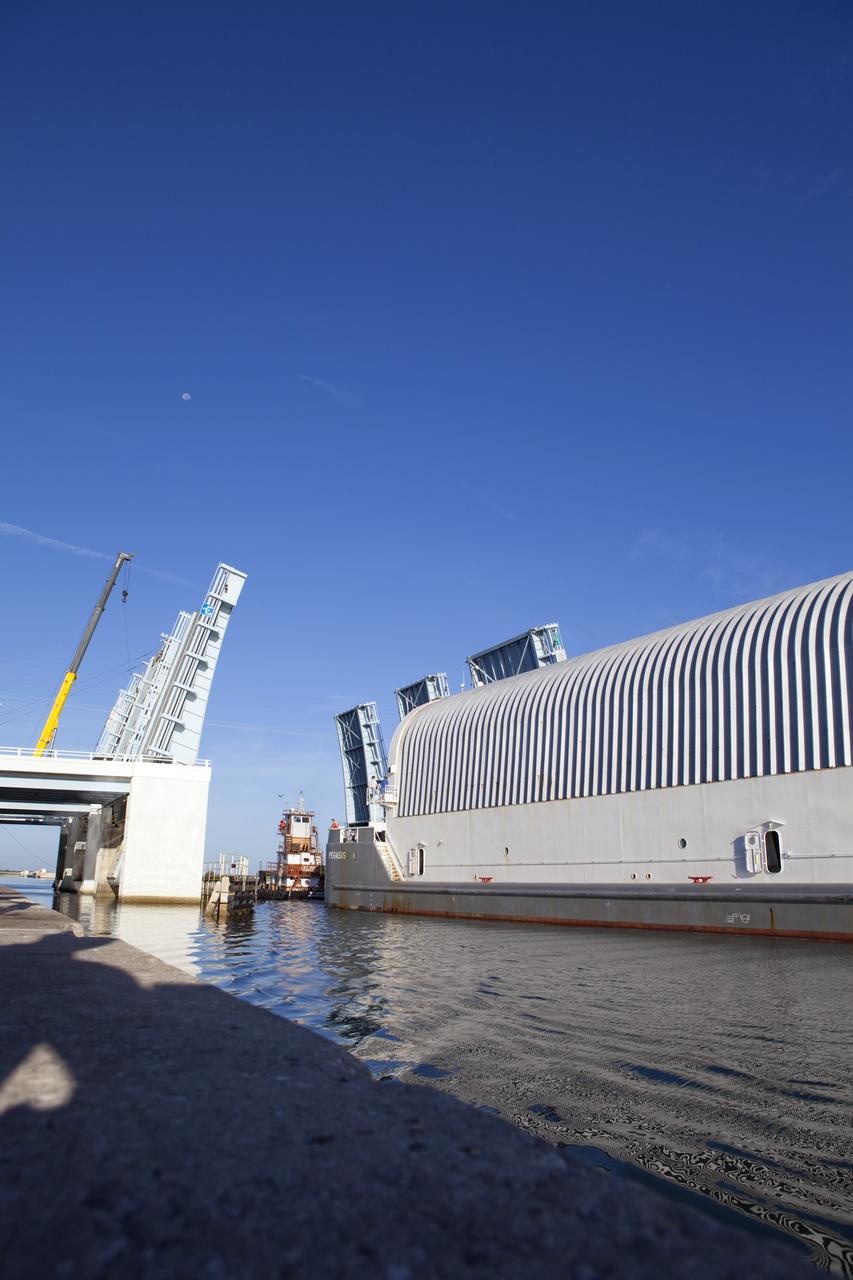
CAPE CANAVERAL, Fla. -- A tug boat pulls the Space Shuttle Program's last external fuel tank, ET-122, toward the Turn Basin at NASA's Kennedy Space Center in Florida. The tank traveled 900 miles by sea from NASA's Michoud Assembly Facility in New Orleans aboard the Pegasus Barge. Next, the tank will be offloaded and moved to Kennedy's Vehicle Assembly Building where it eventually will be attached to space shuttle Endeavour for the STS-134 mission to the International Space Station. STS-134, targeted to launch in Feb. 2011, currently is scheduled to be the last mission in the Space Shuttle Program. The tank, which is the largest element of the space shuttle stack, was damaged during Hurricane Katrina in August 2005 and restored to flight configuration by Lockheed Martin Space Systems Company employees. Photo credit: NASA/Frankie Martin

NEW ORLEANS -- A tug boat pulls the Pegasus Barge carrying the Space Shuttle Program's last external fuel tank, ET-122, from NASA's Michoud Assembly Facility in New Orleans to NASA's Kennedy Space Center in Florida. The tank will travel 900 miles by sea before being offloaded and moved to Kennedy's Vehicle Assembly Building. There it will be integrated to space shuttle Endeavour for the STS-134 mission to the International Space Station. The tank, which is the largest element of the space shuttle stack, was damaged during Hurricane Katrina in August 2005 and restored to flight configuration by Lockheed Martin Space Systems Company employees. STS-134, targeted to launch Feb. 2011, currently is scheduled to be the last mission in the Space Shuttle Program. Photo credit: NASA/Kim Shiflett
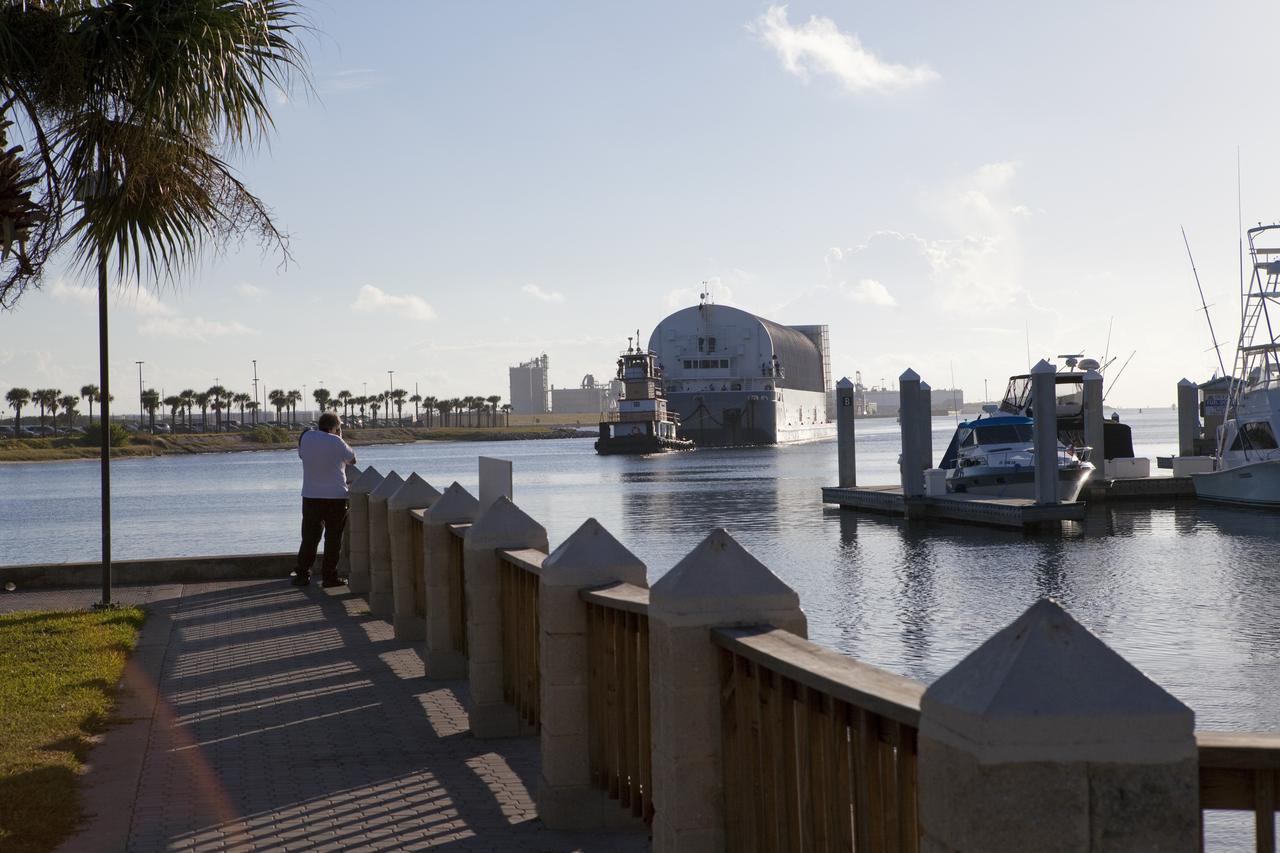
CAPE CANAVERAL, Fla. -- A tug boat pulls the Space Shuttle Program's last external fuel tank, ET-122, toward the Turn Basin at NASA's Kennedy Space Center in Florida. The tank traveled 900 miles by sea from NASA's Michoud Assembly Facility in New Orleans aboard the Pegasus Barge. Next, the tank will be offloaded and moved to Kennedy's Vehicle Assembly Building where it eventually will be attached to space shuttle Endeavour for the STS-134 mission to the International Space Station. STS-134, targeted to launch in Feb. 2011, currently is scheduled to be the last mission in the Space Shuttle Program. The tank, which is the largest element of the space shuttle stack, was damaged during Hurricane Katrina in August 2005 and restored to flight configuration by Lockheed Martin Space Systems Company employees. Photo credit: NASA/Frankie Martin
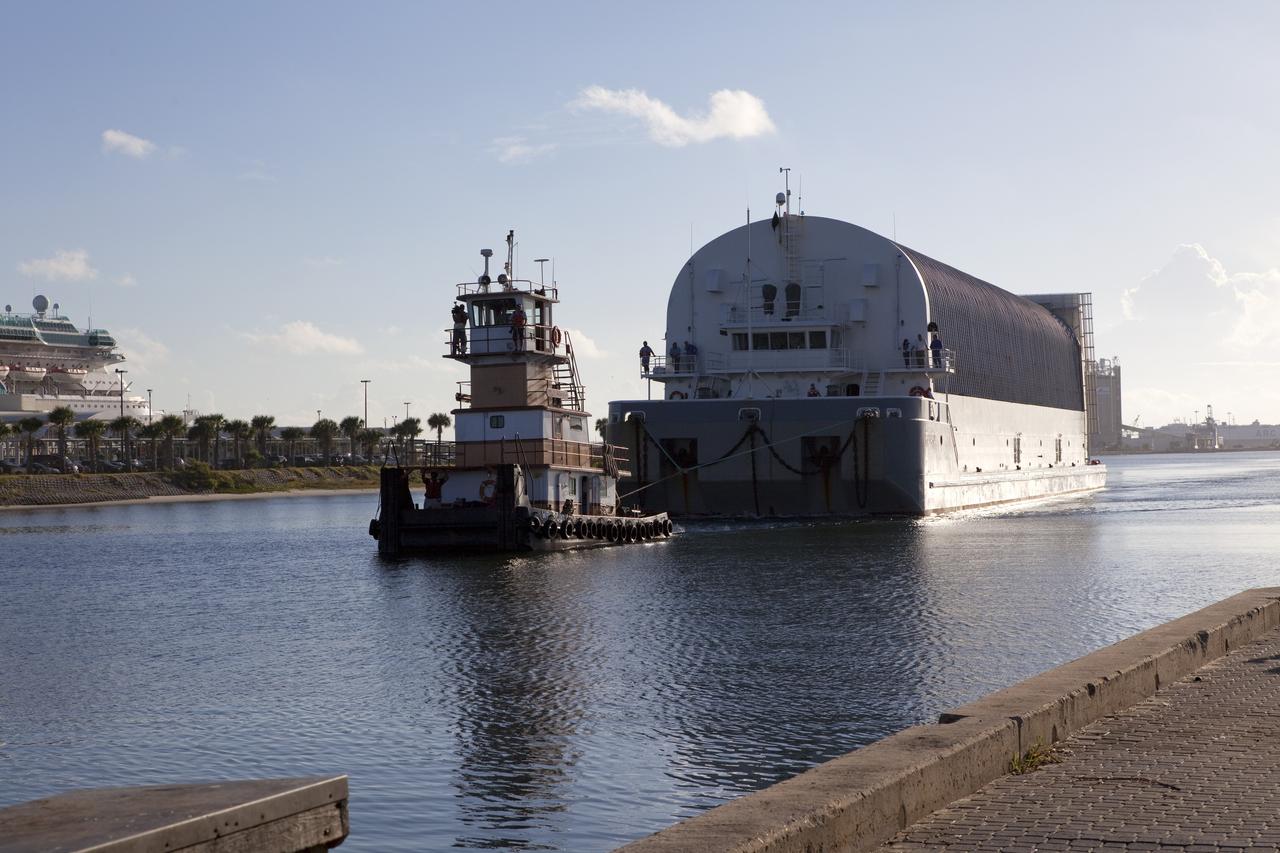
CAPE CANAVERAL, Fla. -- A tug boat pulls the Space Shuttle Program's last external fuel tank, ET-122, toward the Turn Basin at NASA's Kennedy Space Center in Florida. The tank traveled 900 miles by sea from NASA's Michoud Assembly Facility in New Orleans aboard the Pegasus Barge. Next, the tank will be offloaded and moved to Kennedy's Vehicle Assembly Building where it eventually will be attached to space shuttle Endeavour for the STS-134 mission to the International Space Station. STS-134, targeted to launch in Feb., 2011, currently is scheduled to be the last mission in the Space Shuttle Program. The tank, which is the largest element of the space shuttle stack, was damaged during Hurricane Katrina in August 2005 and restored to flight configuration by Lockheed Martin Space Systems Company employees. Photo credit: NASA/Frankie Martin
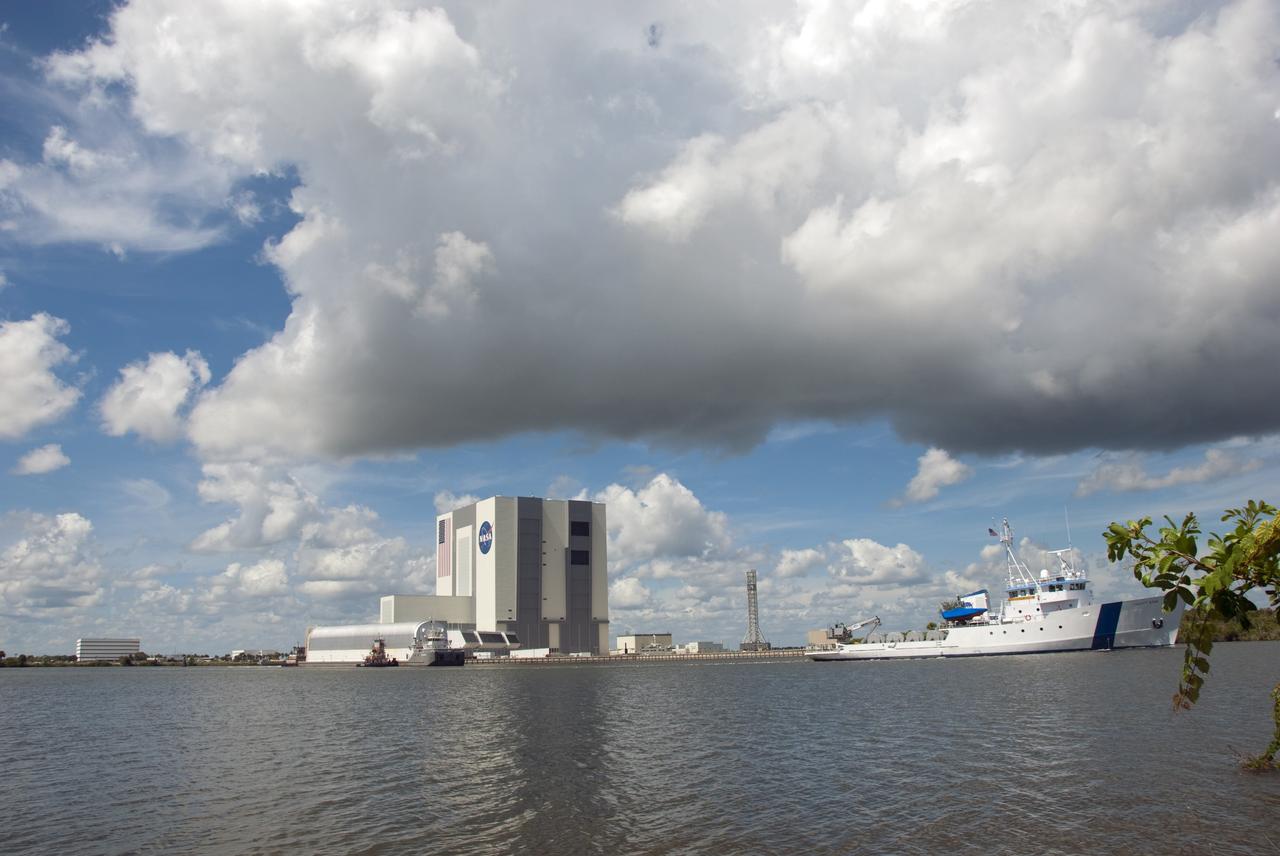
CAPE CANAVERAL, Fla. -- NASA's Pegasus barge, which was ushered by two tug boats and Liberty Star, arrives at NASA's Kennedy Space Center in Florida. The barge is carrying the Space Shuttle Program's last external fuel tank, ET-122 and traveled 900 miles by sea from NASA's Michoud Assembly Facility in New Orleans. Next, the tank will be offloaded and moved to the Vehicle Assembly Building where it eventually will be attached to space shuttle Endeavour for the STS-134 mission to the International Space Station. STS-134, targeted to launch in Feb. 2011, currently is scheduled to be the last mission in the Space Shuttle Program. The tank, which is the largest element of the space shuttle stack, was damaged during Hurricane Katrina in August 2005 and restored to flight configuration by Lockheed Martin Space Systems Company employees. Photo credit: NASA/Jim Grossmann
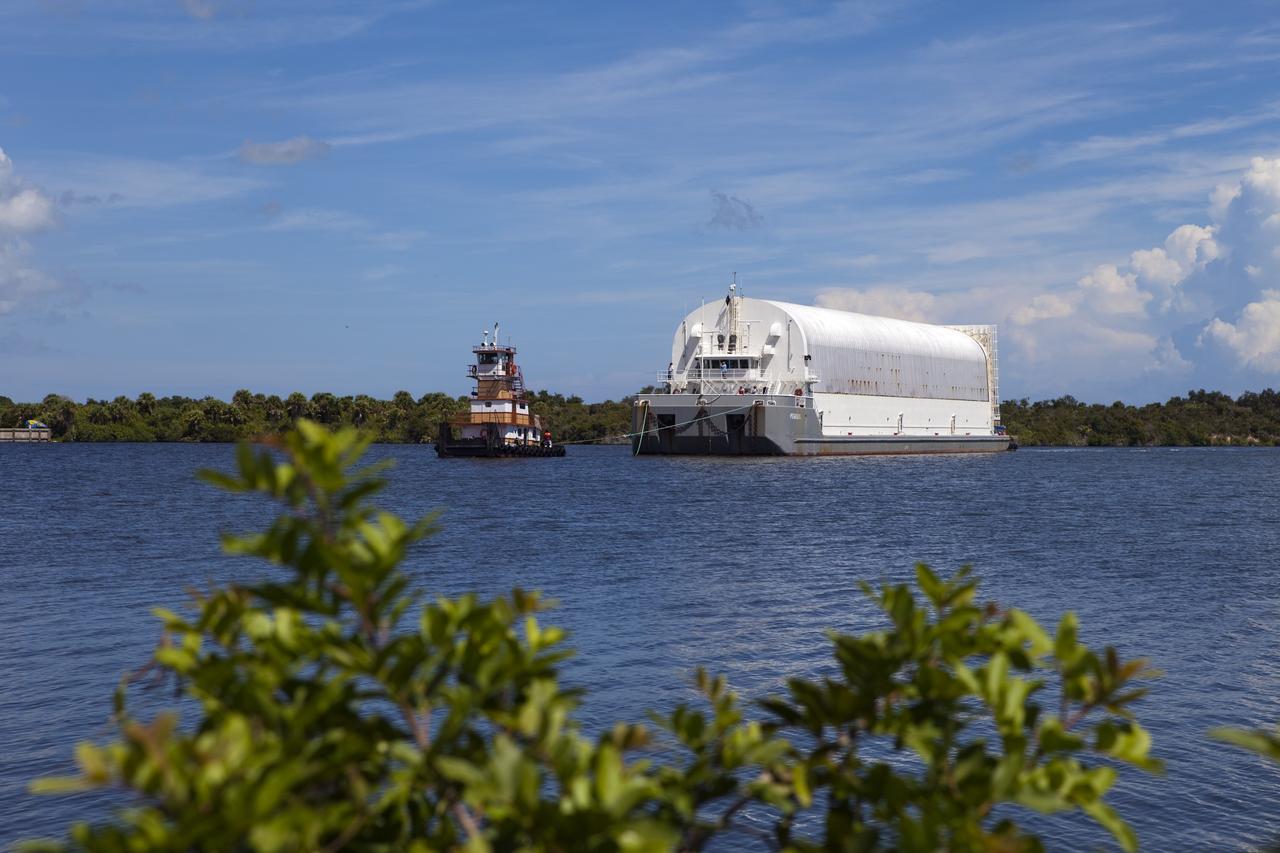
CAPE CANAVERAL, Fla. -- A tug boat pulls the Space Shuttle Program's last external fuel tank, ET-122, to the Turn Basin at NASA's Kennedy Space Center in Florida. The tank traveled 900 miles by sea from NASA's Michoud Assembly Facility in New Orleans aboard the Pegasus Barge. Next, the tank will be offloaded and moved to Kennedy's Vehicle Assembly Building where it eventually will be attached to space shuttle Endeavour for the STS-134 mission to the International Space Station. STS-134, targeted to launch in Feb. 2011, currently is scheduled to be the last mission in the Space Shuttle Program. The tank, which is the largest element of the space shuttle stack, was damaged during Hurricane Katrina in August 2005 and restored to flight configuration by Lockheed Martin Space Systems Company employees. Photo credit: NASA/Frankie Martin
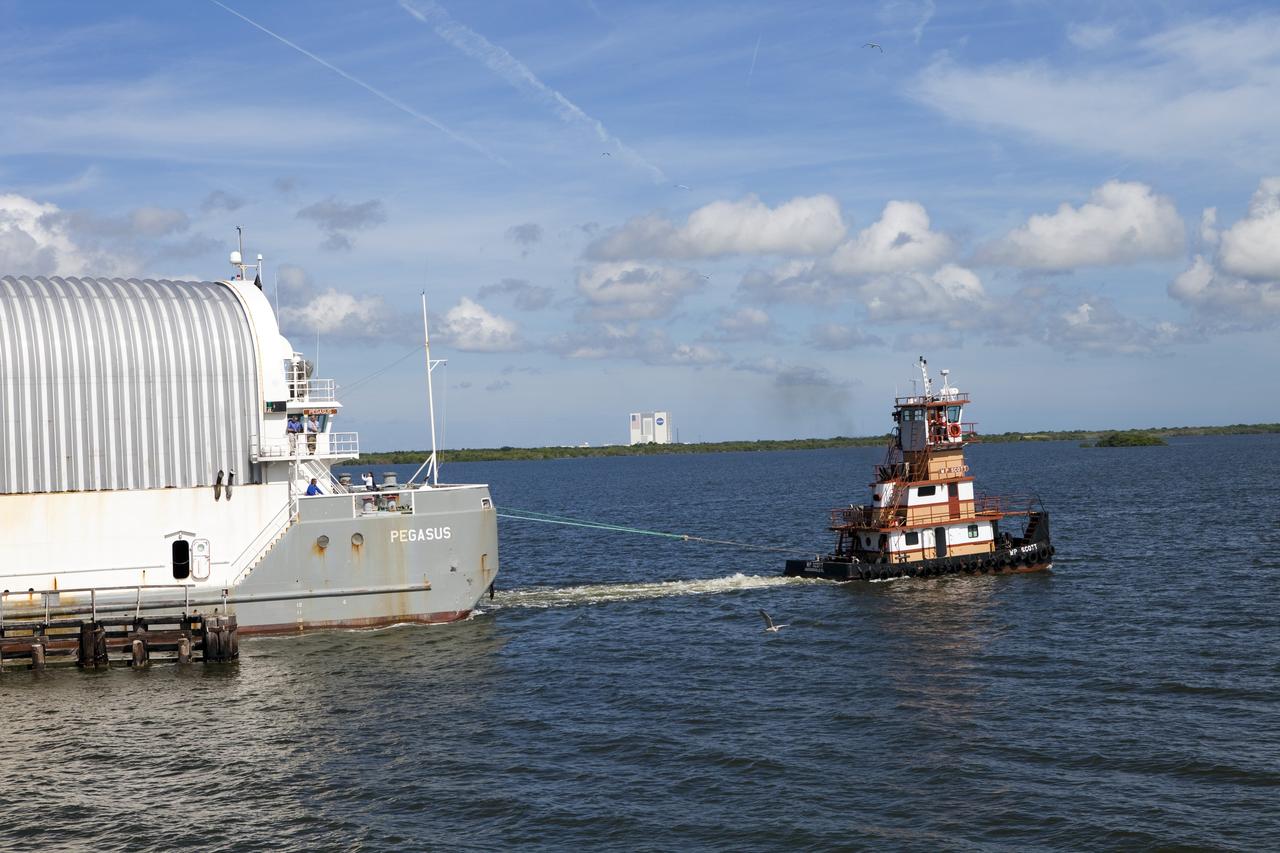
CAPE CANAVERAL, Fla. -- A tug boat pulls the Space Shuttle Program's last external fuel tank, ET-122, to the Turn Basin at NASA's Kennedy Space Center in Florida. The tank traveled 900 miles by sea from NASA's Michoud Assembly Facility in New Orleans aboard the Pegasus Barge. Next, the tank will be offloaded and moved to Kennedy's Vehicle Assembly Building where it eventually will be attached to space shuttle Endeavour for the STS-134 mission to the International Space Station. STS-134, targeted to launch in Feb. 2011, currently is scheduled to be the last mission in the Space Shuttle Program. The tank, which is the largest element of the space shuttle stack, was damaged during Hurricane Katrina in August 2005 and restored to flight configuration by Lockheed Martin Space Systems Company employees. Photo credit: NASA/Frankie Martin
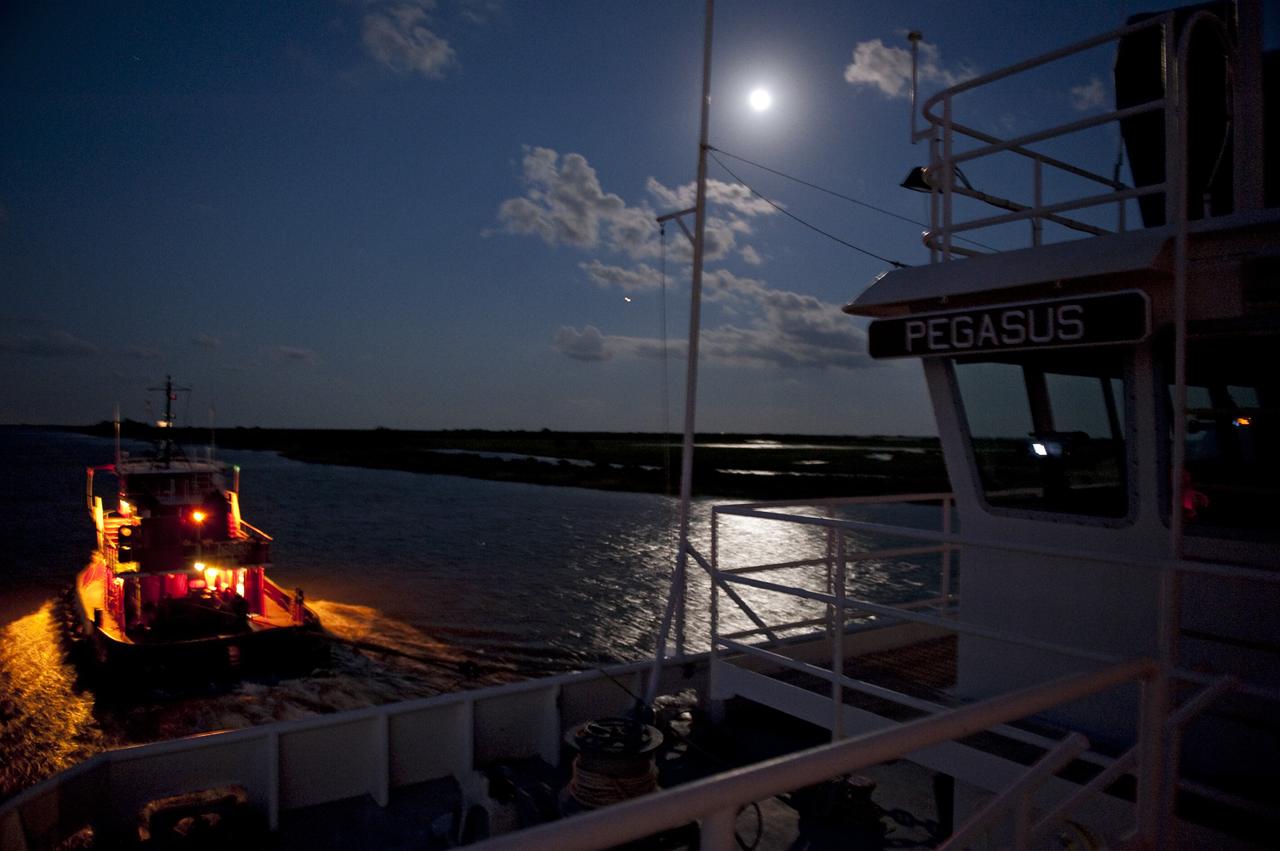
NEW ORLEANS -- As the moon lights up the water, as tug boat pulls the Pegasus Barge carrying the Space Shuttle Program's last external fuel tank, ET-122, from NASA's Michoud Assembly Facility in New Orleans to NASA's Kennedy Space Center in Florida. The tank will travel 900 miles by sea before being offloaded and moved for Kennedy's Vehicle Assembly Building. There it will be integrated to space shuttle Endeavour for the STS-134 mission to the International Space Station. The tank, which is the largest element of the space shuttle stack, was damaged during Hurricane Katrina in August 2005 and restored to flight configuration by Lockheed Martin Space Systems Company employees. STS-134, targeted to launch Feb. 2011, currently is scheduled to be the last mission in the Space Shuttle Program. Photo credit: NASA/Kim Shiflett
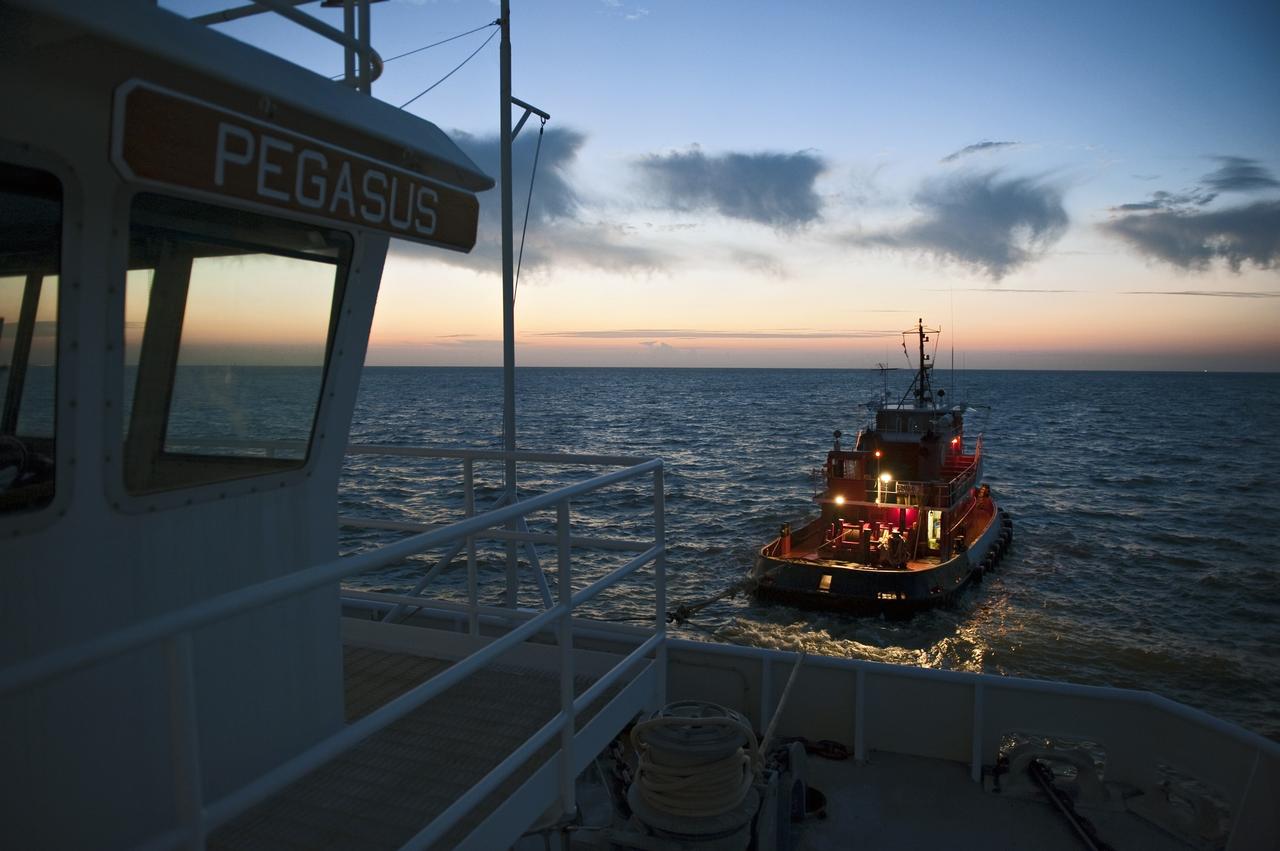
LOUISIANA -- A tug boat pulls the Pegasus Barge carrying the Space Shuttle Program's last external fuel tank, ET-122, from NASA's Michoud Assembly Facility in New Orleans toward Gulfport, La. The barge will meet up with Freedom Star, NASA's solid rocket booster retrieval ship, which will escort it to NASA's Kennedy Space Center in Florida. The tank will travel 900 miles by sea before being offloaded and moved to Kennedy's Vehicle Assembly Building. There it will be integrated to space shuttle Endeavour for the STS-134 mission to the International Space Station. The tank, which is the largest element of the space shuttle stack, was damaged during Hurricane Katrina in August 2005 and restored to flight configuration by Lockheed Martin Space Systems Company employees. STS-134, targeted to launch Feb. 2011, currently is scheduled to be the last mission in the Space Shuttle Program. Photo credit: NASA/Kim Shiflett
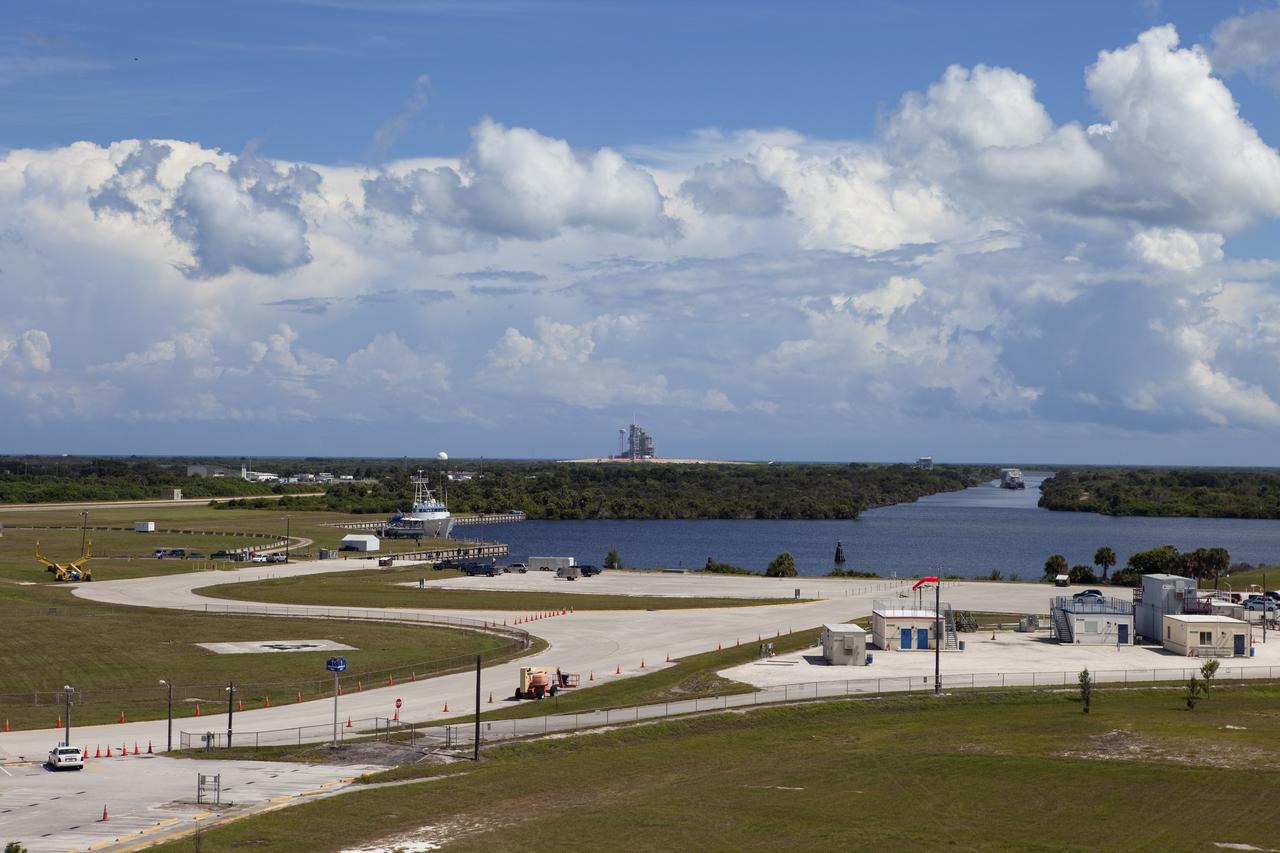
CAPE CANAVERAL, Fla. -- A tug boat pulls the Space Shuttle Program's last external fuel tank, ET-122, to the Turn Basin at NASA's Kennedy Space Center in Florida. The tank traveled 900 miles by sea from NASA's Michoud Assembly Facility in New Orleans aboard the Pegasus Barge. Next, the tank will be offloaded and moved to Kennedy's Vehicle Assembly Building where it eventually will be attached to space shuttle Endeavour for the STS-134 mission to the International Space Station. STS-134, targeted to launch in Feb. 2011, currently is scheduled to be the last mission in the Space Shuttle Program. The tank, which is the largest element of the space shuttle stack, was damaged during Hurricane Katrina in August 2005 and restored to flight configuration by Lockheed Martin Space Systems Company employees. Photo credit: NASA/Frankie Martin
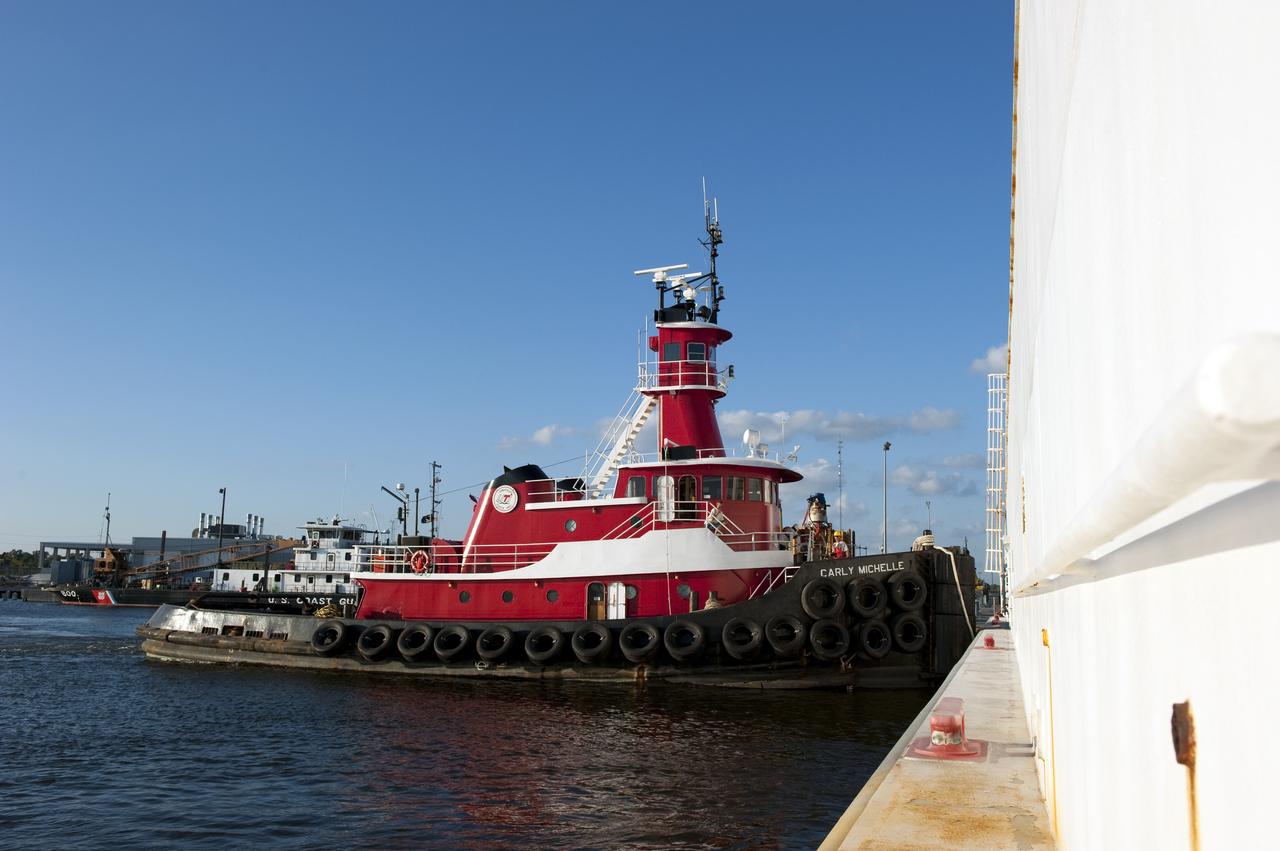
NEW ORLEANS -- At NASA's Michoud Assembly Facility in New Orleans a tug boat is prepared to escort the Space Shuttle Program's last external fuel tank, ET-122, for transportation to NASA's Kennedy Space Center in Florida. Secured aboard the Pegasus Barge the tank will travel 900 miles by sea before being offloaded and moved to Kennedy's Vehicle Assembly Building. There it will be integrated to space shuttle Endeavour for the STS-134 mission to the International Space Station. The tank, which is the largest element of the space shuttle stack, was damaged during Hurricane Katrina in August 2005 and restored to flight configuration by Lockheed Martin Space Systems Company employees. STS-134, targeted to launch Feb. 2011, currently is scheduled to be the last mission in the Space Shuttle Program. Photo credit: NASA/Kim Shiflett
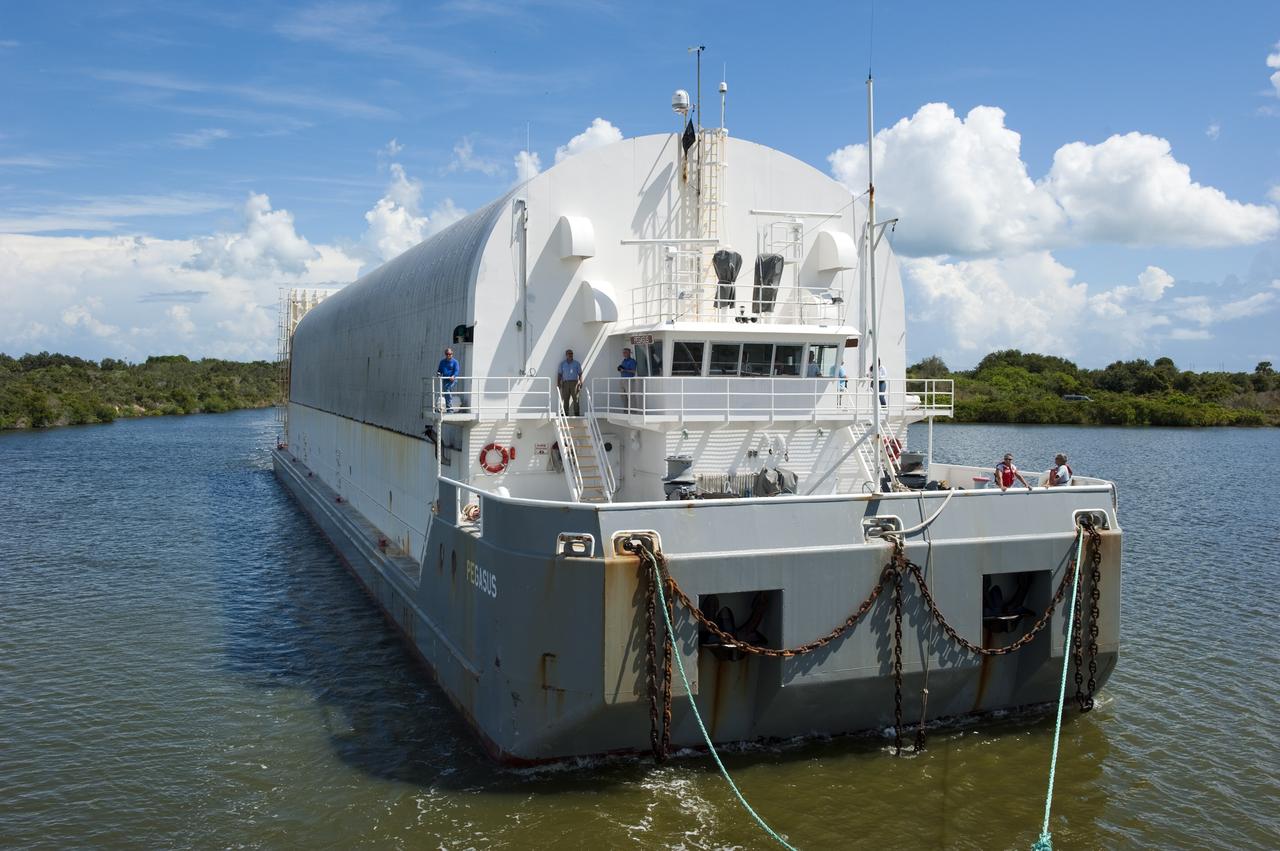
CAPE CANAVERAL, Fla. -- NASA's Pegasus barge is pulled toward NASA's Kennedy Space Center in Florida by a tug boat. The barge is carrying the Space Shuttle Program's last external fuel tank, ET-122 and traveled 900 miles by sea from NASA's Michoud Assembly Facility in New Orleans. After reaching the Turn Basin at Kennedy, the tank will be offloaded and moved to the Vehicle Assembly Building where it eventually will be attached to space shuttle Endeavour for the STS-134 mission to the International Space Station. STS-134, targeted to launch in Feb. 2011, currently is scheduled to be the last mission in the Space Shuttle Program. The tank, which is the largest element of the space shuttle stack, was damaged during Hurricane Katrina in August 2005 and restored to flight configuration by Lockheed Martin Space Systems Company employees. Photo credit: NASA/Kim Shiflett
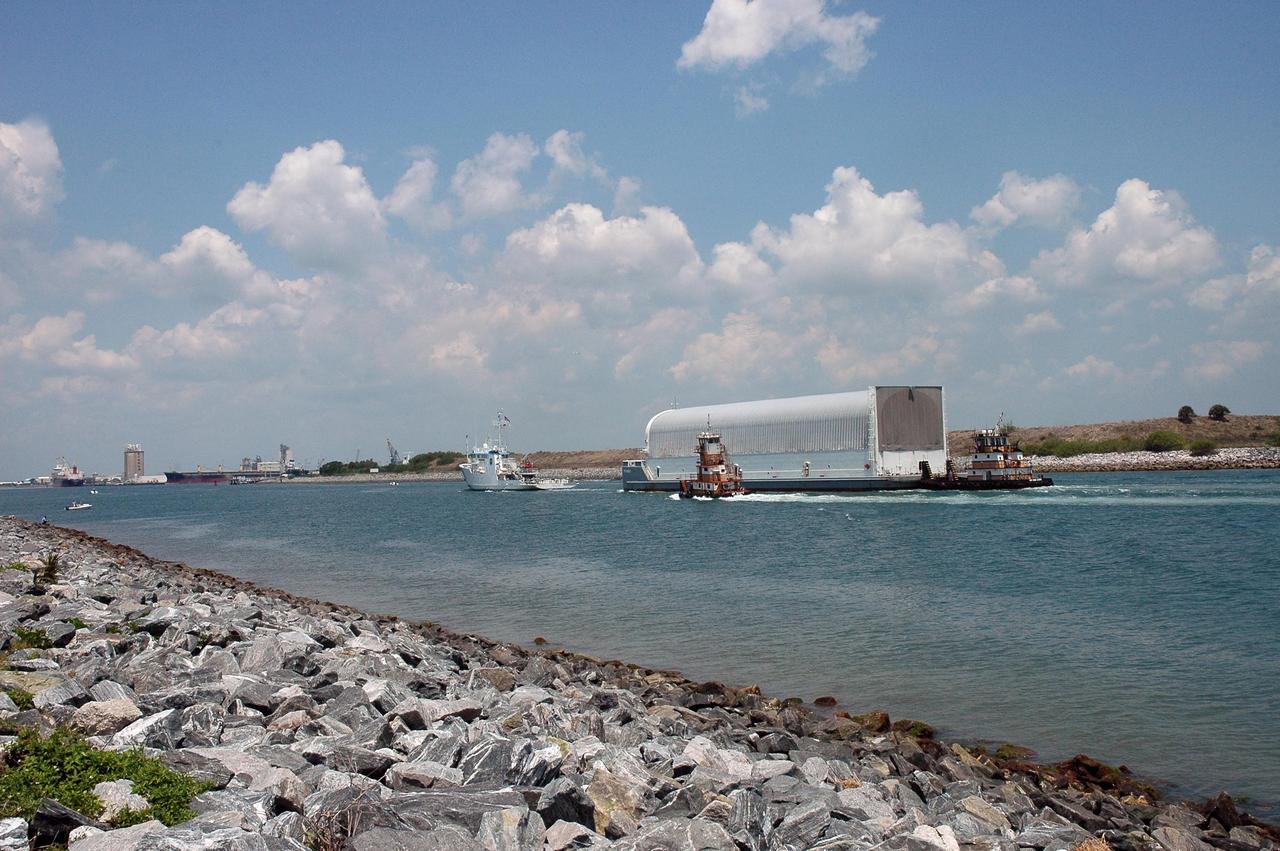
KENNEDY SPACE CENTER, FLA. - With the help of tug boats, the Liberty Star (left) tows the Pegasus barge toward Port Canaveral, the last leg of its journey from the Michoud Assembly Facility in New Orleans to Kennedy Space Center. The barge carries the redesigned external fuel tank that will launch Space Shuttle Atlantis on the next shuttle mission, STS-115. The tugboats will continue the journey upriver to the Turn Basin where, after off-loading, the tank will be moved into the Vehicle Assembly Building and lifted into a checkout cell for further work. The tank, designated ET-118, will fly with many major safety changes, including the removal of the protuberance air load ramps. Photo credit: NASA/Jack Pfaller
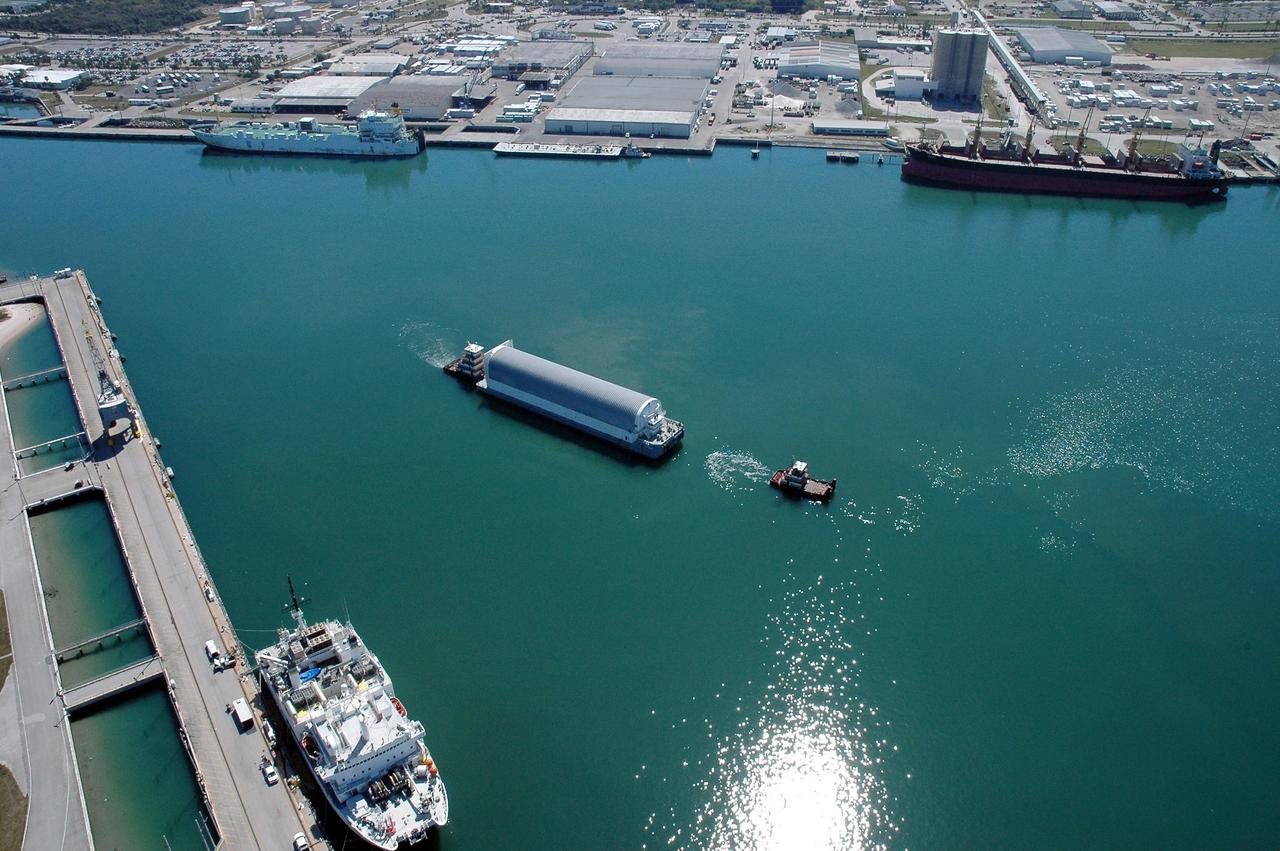
KENNEDY SPACE CENTER, FLA. - The Pegasus barge, towed by the solid rocket booster retrieval ship Freedom Star to Port Canaveral from the Michoud Assembly Facility in New Orleans, waits for a tug boat to finish the trip to the turn basin near NASA Kennedy Space Center's Vehicle Assembly Building. The barge carries the redesigned external fuel tank that will launch the Space Shuttle Discovery on the next shuttle mission, STS-121. After off-loading, the tank will be moved into the Vehicle Assembly Building and lifted into a checkout cell for further work. The tank, designated ET-119, will fly with many major safety changes, including the removal of the protuberance air load ramps. A large piece of foam from one of the ramps came off during the July 2005 launch of the last shuttle mission. The ramps were removed to help eliminate a potential source of damaging debris to the space shuttle. Launch of Discovery is scheduled for May 2006. Photo credit: NASA/Cory Huston
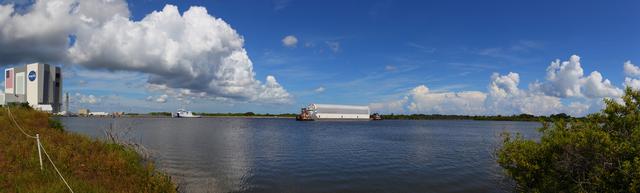
CAPE CANAVERAL, Fla. -- This panoramic image shows tug boats maneuvering the Pegasus Barge carrying the Space Shuttle Program's last external fuel tank, ET-122, through the Turn Basin at NASA's Kennedy Space Center in Florida. Once docked, the tank will be offloaded from the barge and transported to the Vehicle Assembly Building (VAB). NASA's Liberty Star solid rocket booster retrieval ship is also seen (left) docked at the Turn Basin. The tank traveled 900 miles by sea, carried in the barge, from NASA's Michoud Assembly Facility in New Orleans. Once inside the VAB, it eventually will be attached to space shuttle Endeavour for the STS-134 mission to the International Space Station targeted to launch Feb. 2011. STS-134 currently is scheduled to be the last mission in the shuttle program. The tank, which is the largest element of the space shuttle stack, was damaged during Hurricane Katrina in August 2005 and restored to flight configuration by Lockheed Martin Space Systems Company employees. Photo credit: NASA/Frankie Martin
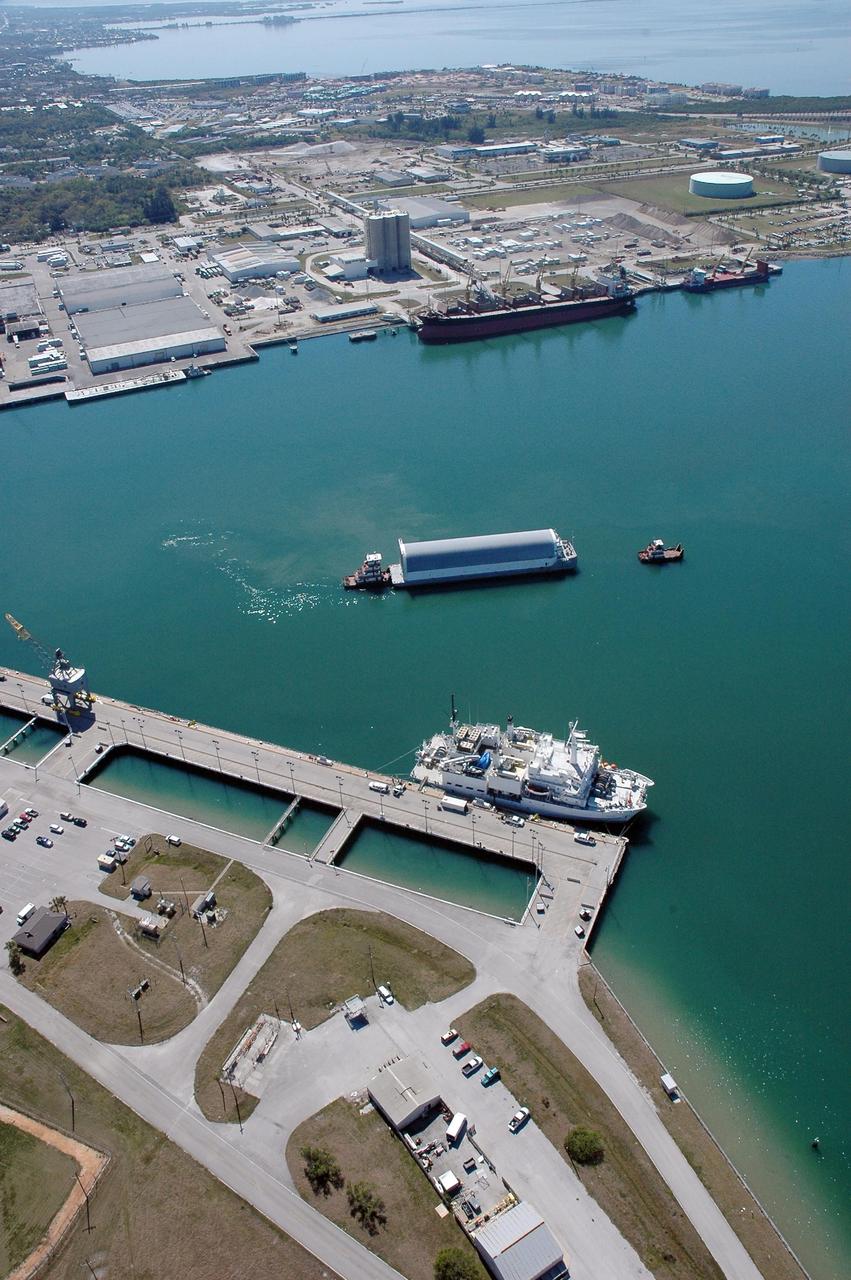
KENNEDY SPACE CENTER, FLA. - The Pegasus barge, towed by the solid rocket booster retrieval ship Freedom Star to Port Canaveral from the Michoud Assembly Facility in New Orleans, waits for a tug boat to finish the trip to the turn basin near NASA Kennedy Space Center's Vehicle Assembly Building. The barge carries the redesigned external fuel tank that will launch the Space Shuttle Discovery on the next shuttle mission, STS-121. After off-loading, the tank will be moved into the Vehicle Assembly Building and lifted into a checkout cell for further work. The tank, designated ET-119, will fly with many major safety changes, including the removal of the protuberance air load ramps. A large piece of foam from one of the ramps came off during the July 2005 launch of the last shuttle mission. The ramps were removed to help eliminate a potential source of damaging debris to the space shuttle. Launch of Discovery is scheduled for May 2006. Photo credit: NASA/Cory Huston
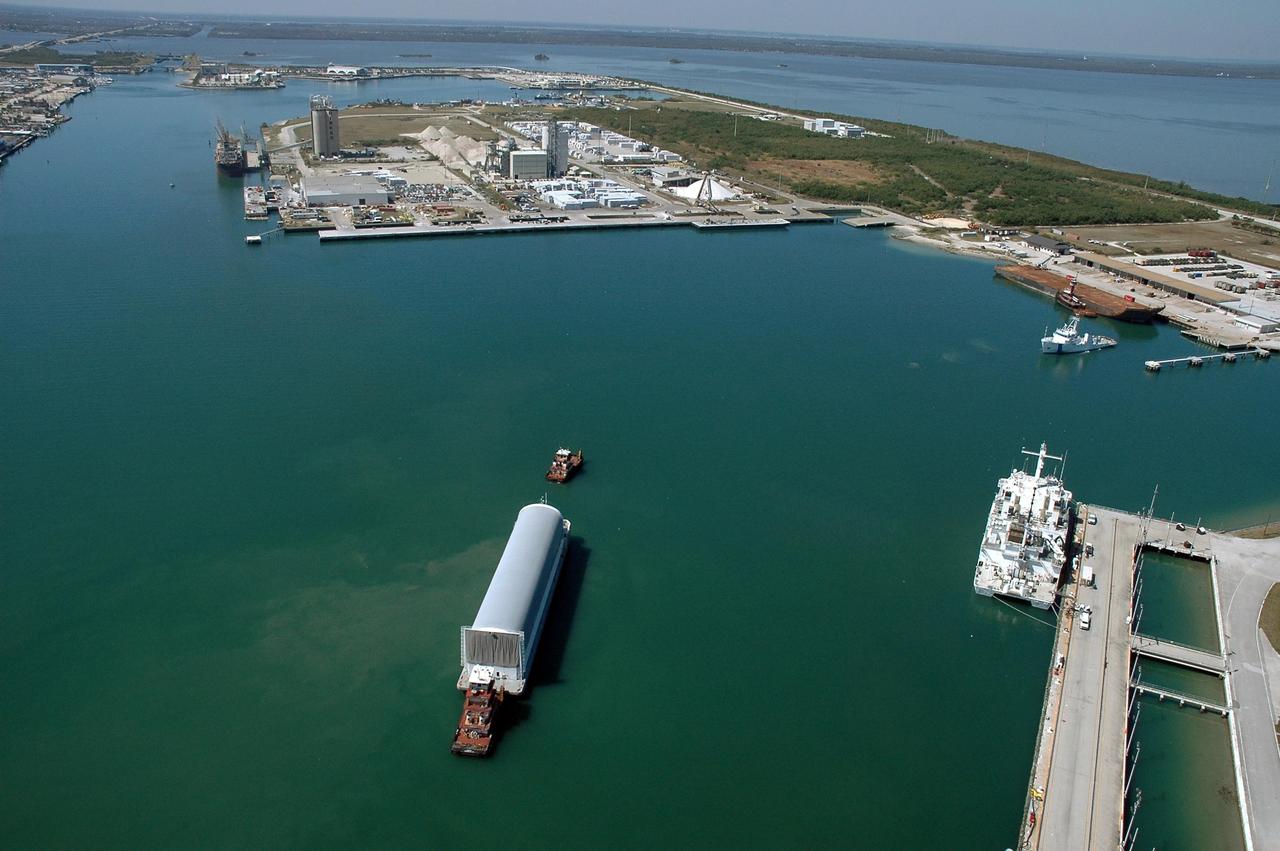
KENNEDY SPACE CENTER, FLA. - The Pegasus barge, towed by the solid rocket booster retrieval ship Freedom Star to Port Canaveral from the Michoud Assembly Facility in New Orleans, waits for a tug boat to finish the trip to the turn basin near NASA Kennedy Space Center's Vehicle Assembly Building. The barge carries the redesigned external fuel tank that will launch the Space Shuttle Discovery on the next shuttle mission, STS-121. After off-loading, the tank will be moved into the Vehicle Assembly Building and lifted into a checkout cell for further work. The tank, designated ET-119, will fly with many major safety changes, including the removal of the protuberance air load ramps. A large piece of foam from one of the ramps came off during the July 2005 launch of the last shuttle mission. The ramps were removed to help eliminate a potential source of damaging debris to the space shuttle. Launch of Discovery is scheduled for May 2006. Photo credit: NASA/Cory Huston
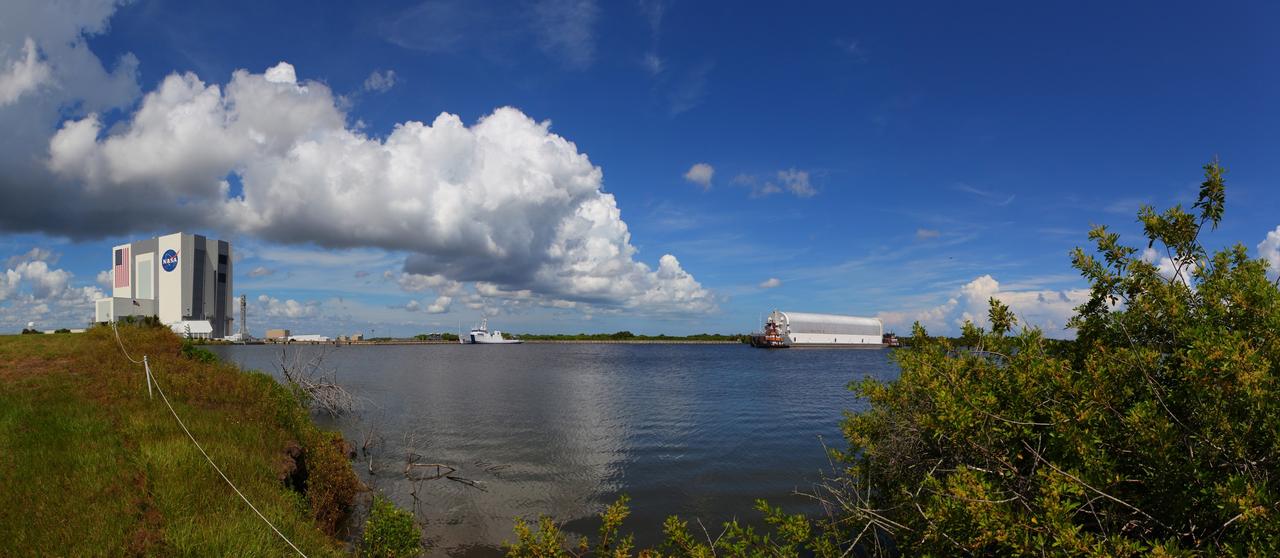
CAPE CANAVERAL, Fla. -- This panoramic image shows tug boats maneuvering the Pegasus Barge carrying the Space Shuttle Program's last external fuel tank, ET-122, through the Turn Basin at NASA's Kennedy Space Center in Florida. Once docked, the tank will be offloaded from the barge and transported to the Vehicle Assembly Building (VAB). NASA's Liberty Star solid rocket booster retrieval ship is seen (left) docked at the Turn Basin. The tank traveled 900 miles by sea, carried in the barge, from NASA's Michoud Assembly Facility in New Orleans. Once inside the VAB, it eventually will be attached to space shuttle Endeavour for the STS-134 mission to the International Space Station targeted to launch Feb. 2011. STS-134 currently is scheduled to be the last mission in the shuttle program. The tank, which is the largest element of the space shuttle stack, was damaged during Hurricane Katrina in August 2005 and restored to flight configuration by Lockheed Martin Space Systems Company employees. Photo credit: NASA/Frankie Martin
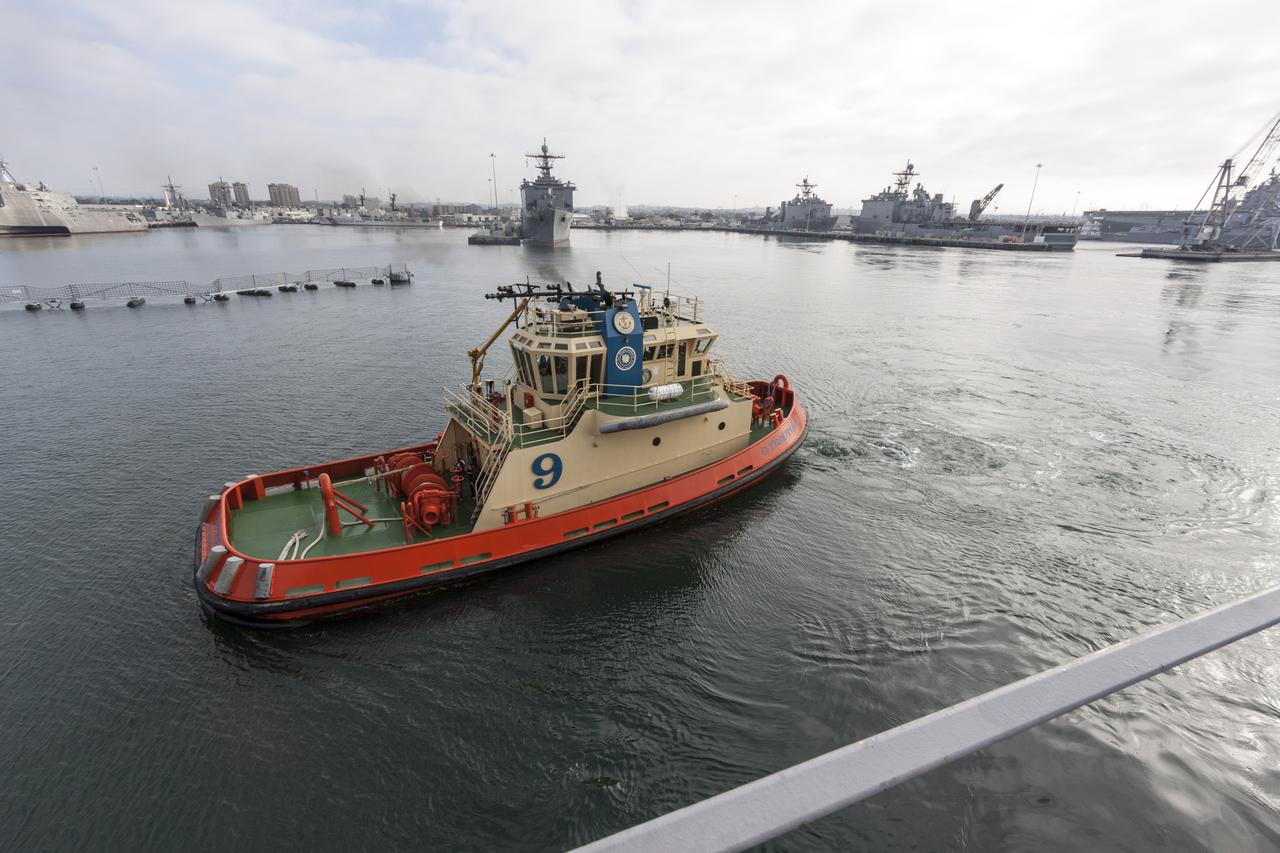
SAN DIEGO, Calif. – At the U.S. Naval Base San Diego in California, a tug boat accompanies the USS San Diego as it departs for open seas in the Pacific Ocean. The Orion boilerplate test vehicle and other support equipment are secured in the ship’s well deck in preparation for an underway recovery test about 100 miles offshore. NASA and the U.S. Navy conducted tests to prepare for recovery of the Orion crew module, forward bay cover and parachutes on its return from a deep space mission. The underway recovery test will allow the teams to demonstrate and evaluate the recovery processes, procedures, hardware and personnel in open waters. During the testing, the tether lines were unable to support the tension caused by crew module motion that was driven by wave turbulence in the well deck of the ship. NASA and the U.S. Navy are reviewing the testing data collected to evaluate the next steps. The Ground Systems Development and Operations Program conducted the underway recovery tests. Orion is the exploration spacecraft designed to carry astronauts to destinations not yet explored by humans, including an asteroid and Mars. It will have emergency abort capability, sustain the crew during space travel and provide safe re-entry from deep space return velocities. The first unpiloted test flight of the Orion is scheduled to launch in 2014 atop a Delta IV rocket and in 2017 on NASA’s Space Launch System rocket. For more information, visit http://www.nasa.gov/orion. Photo credit: NASA/Cory Huston