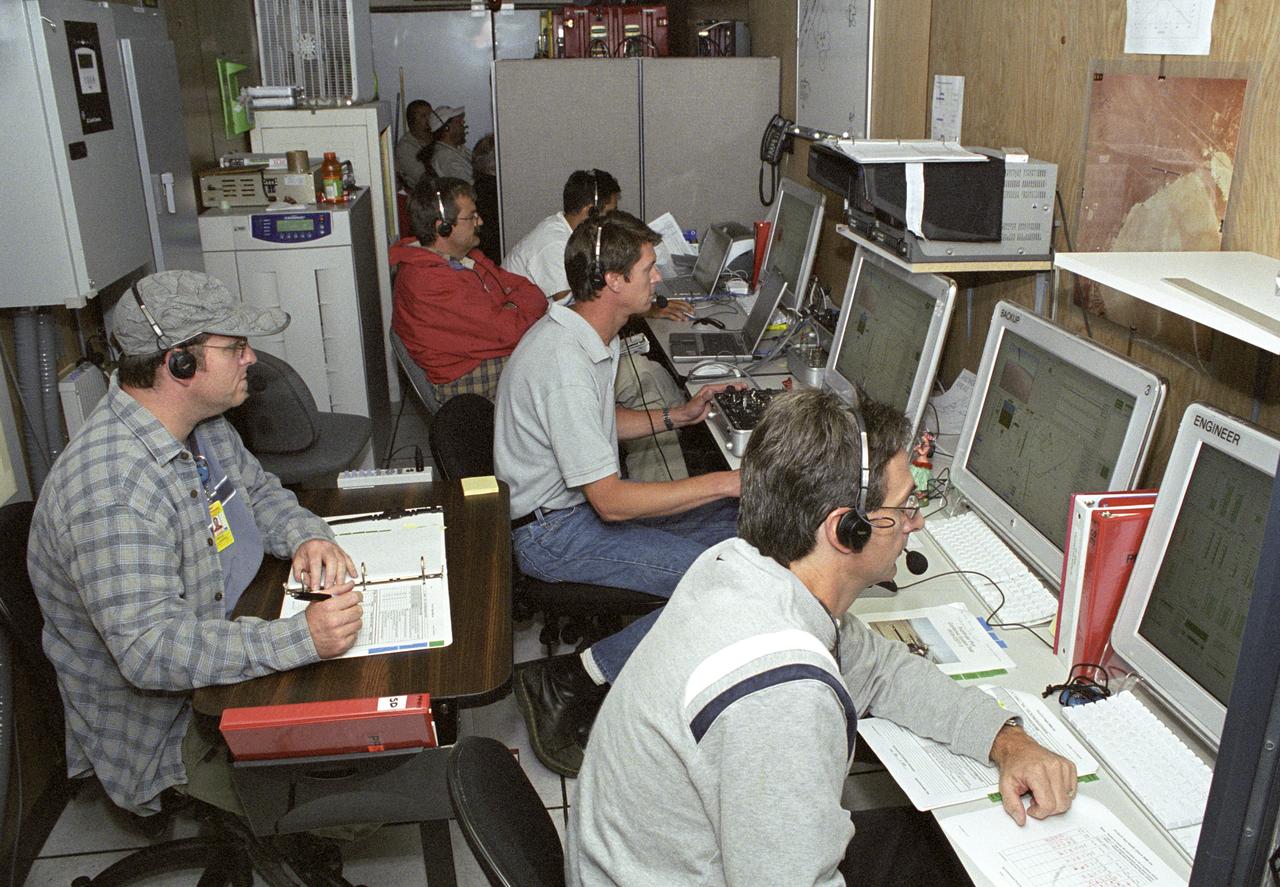
AeroVironment engineers and technicians closely monitor flight data in the ground control station during the Pathfinder-Plus' turbulence measurement flights.
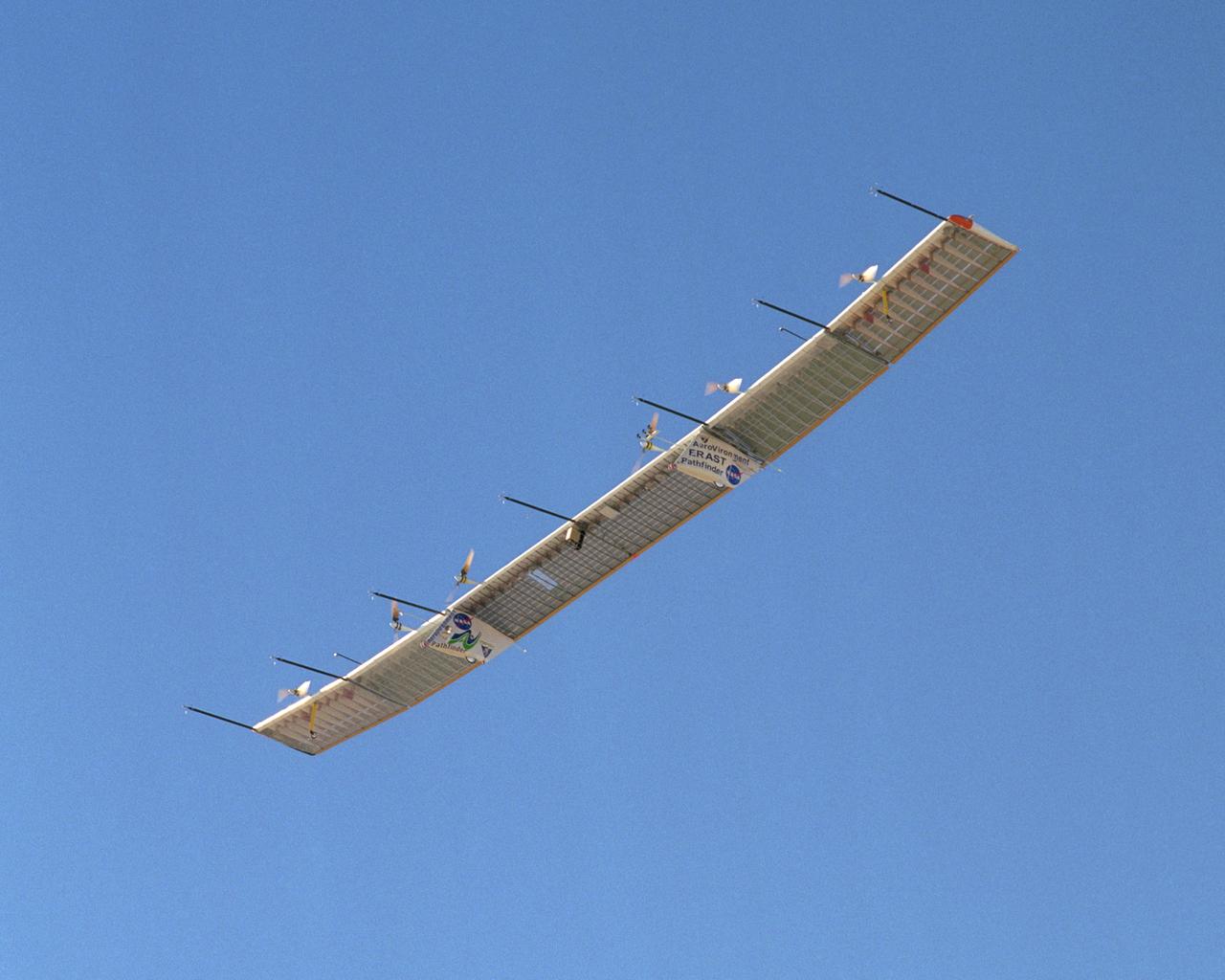
With its sensor booms projecting ahead of the wing, the Pathfinder-Plus solar-electric aircraft soars under a blue sky on a turbulence measurement research flight.
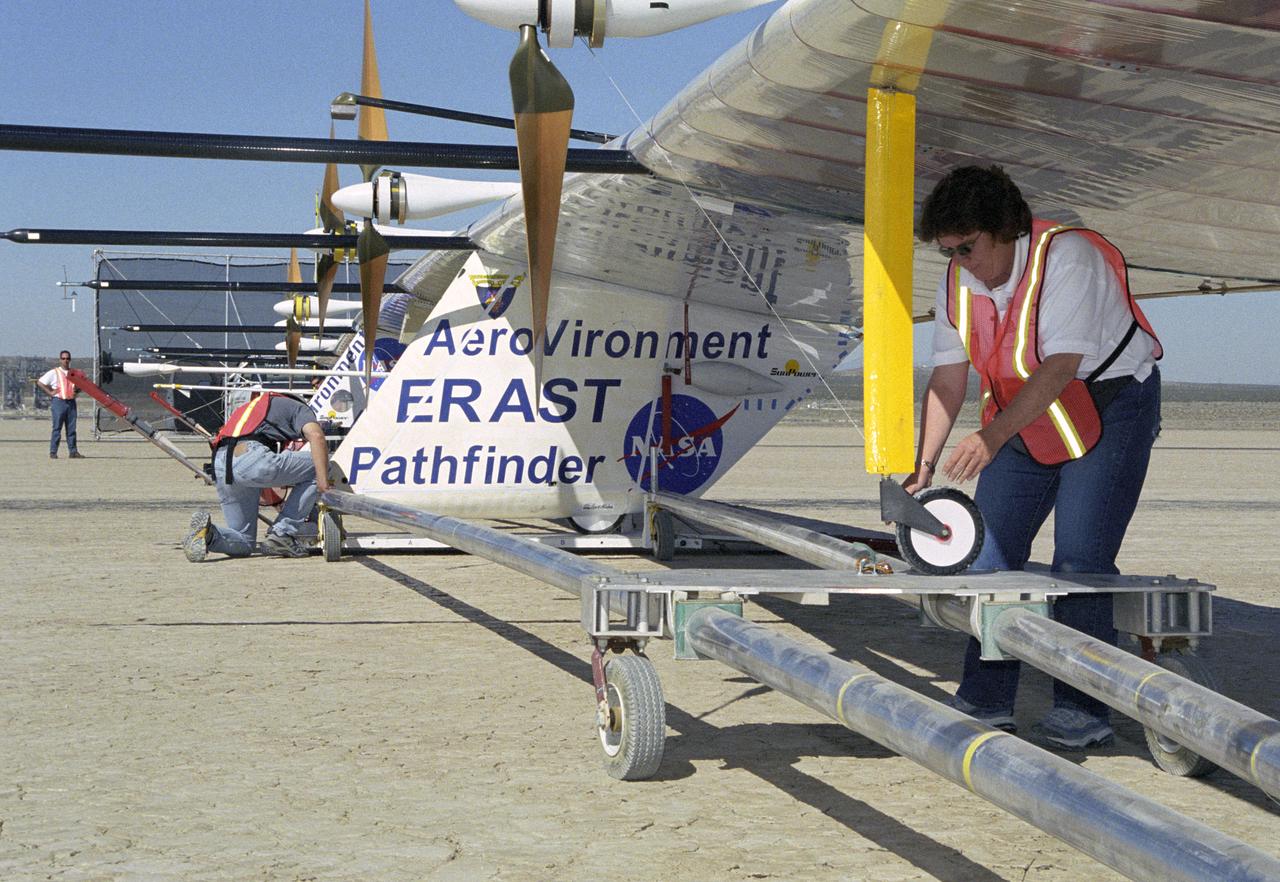
AeroVironment technicians prepare to remove the Pathfinder-Plus solar aircraft from its ground dolly before a turbulence measurement flight from Rogers Dry Lake.
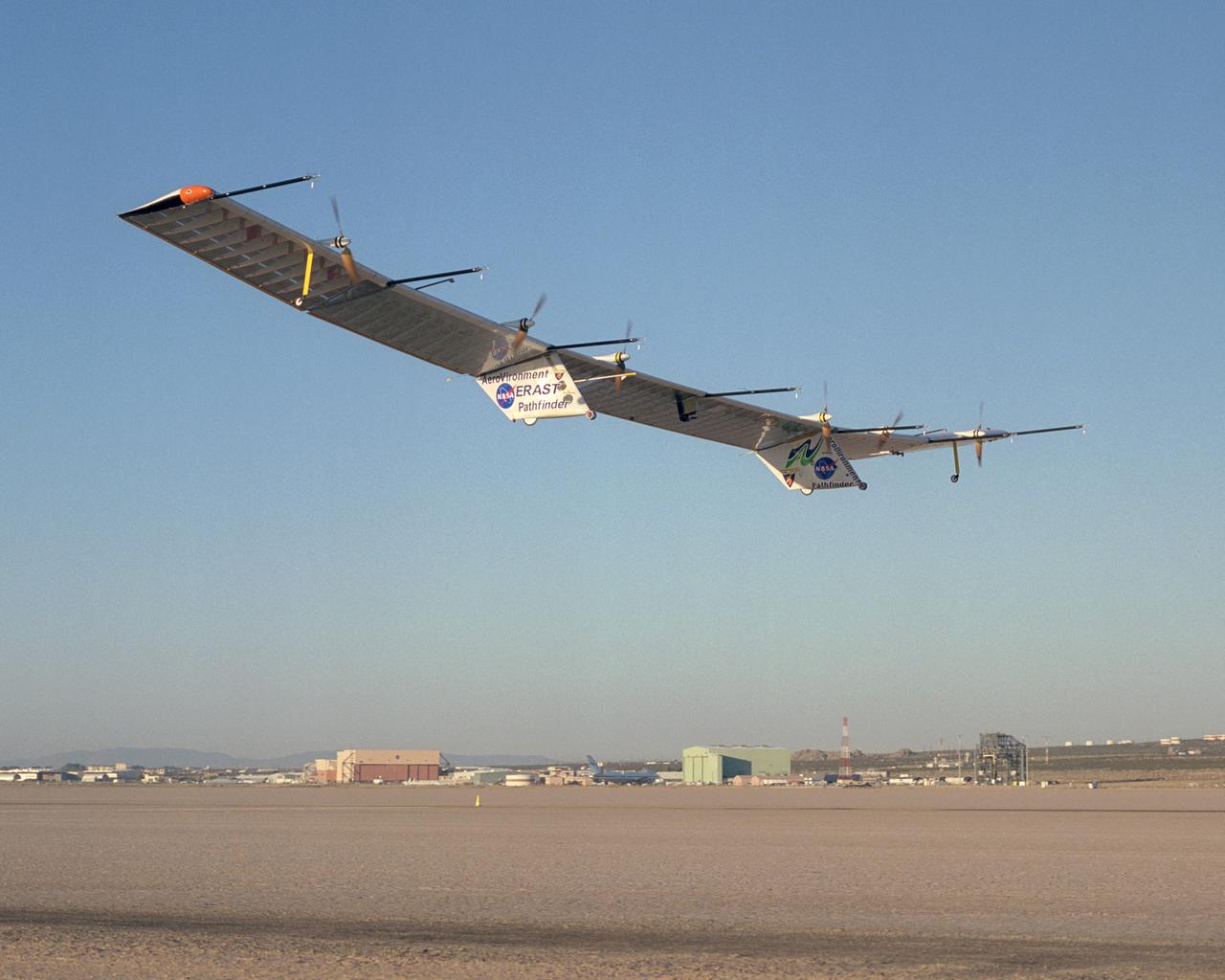
The Pathfinder-Plus solar-electric flying wing lifts off Rogers Dry Lake adjoining NASA Dryden Flight Research Center on a turbulence-measurement flight.
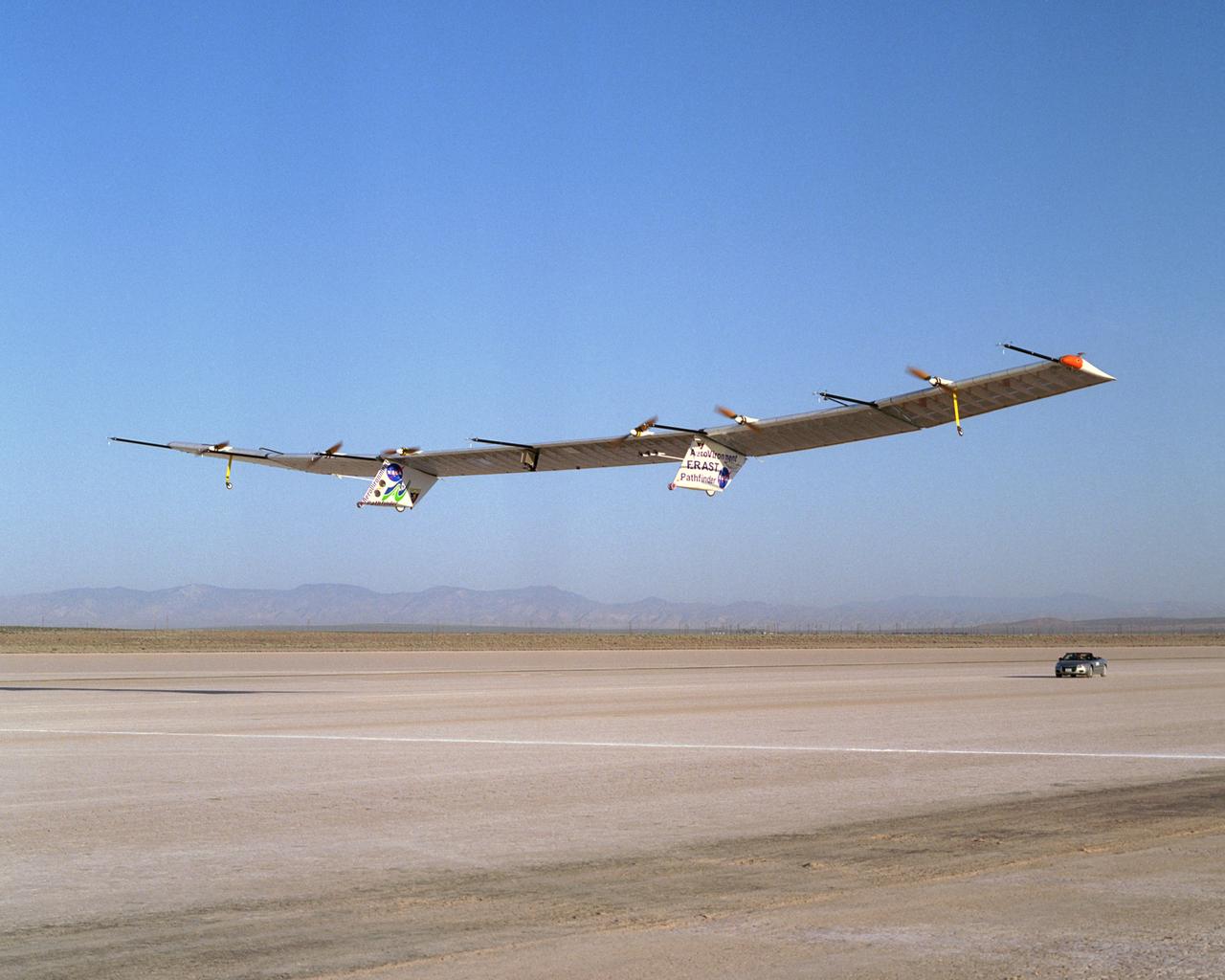
The Pathfinder-Plus solar-electric flying wing lifts off Rogers Dry Lake adjoining NASA Dryden Flight Research Center on a turbulence-measurement flight.
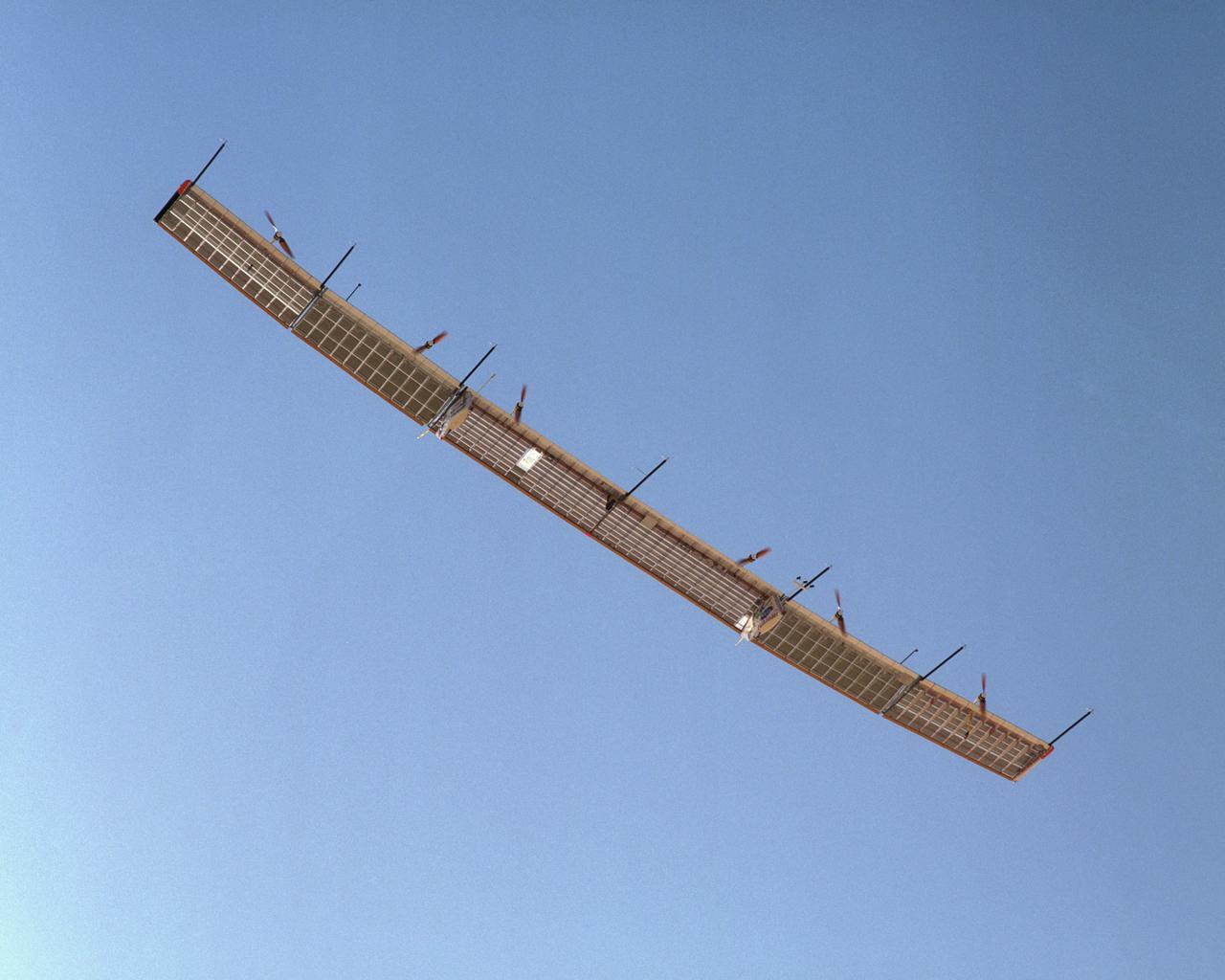
With its sensor booms projecting ahead of the wing, the Pathfinder-Plus solar wing soars under a blue sky on its final turbulence measurement research flight.
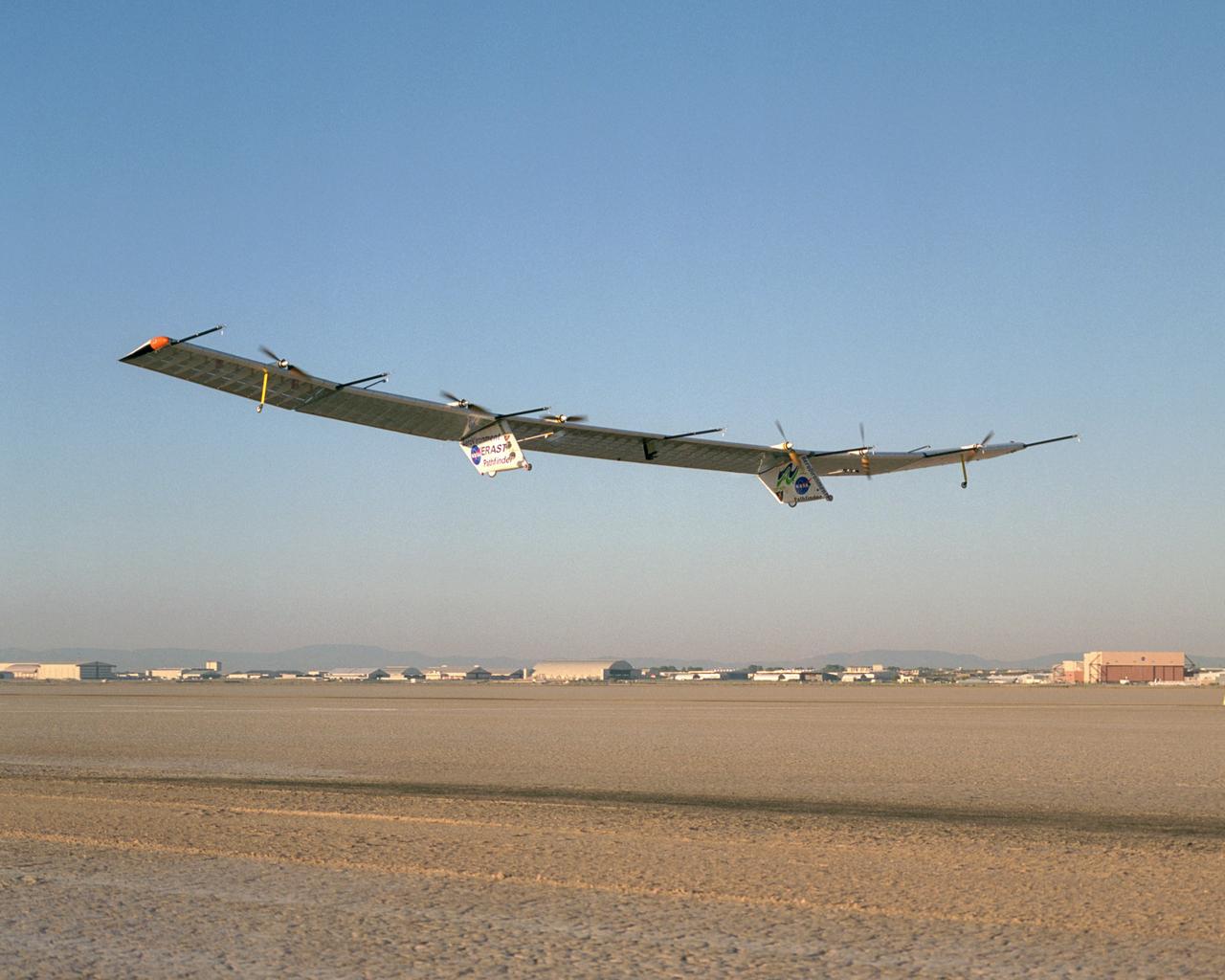
With turbulence-measurement booms projecting ahead of the wing, Pathfinder-Plus soars aloft over Rogers Dry Lake on its final research flight from NASA Dryden.
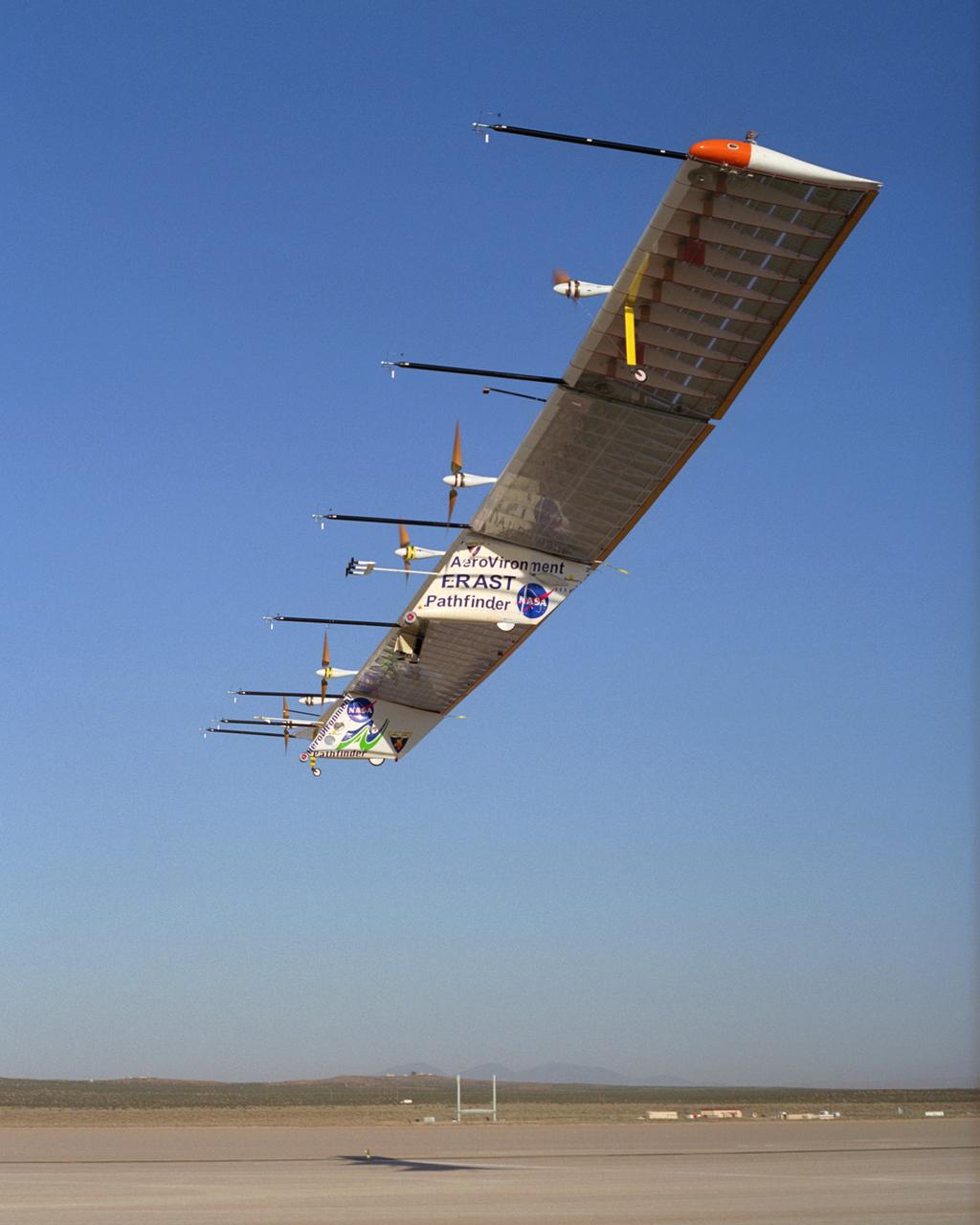
The Atmospheric Turbulence Measurement System booms extend forward from the Pathfinder-Plus solar wing as it soars over Rogers Dry Lake on its final flight.
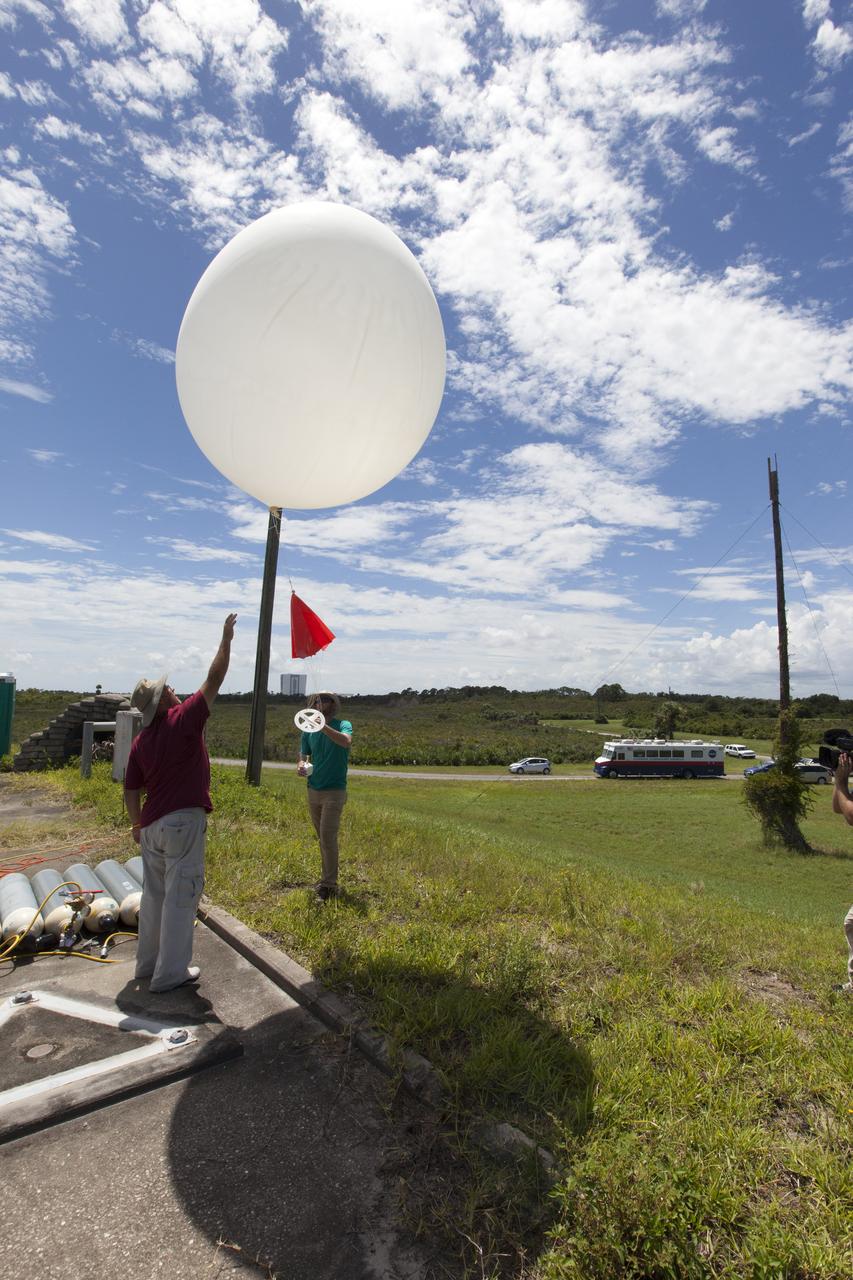
A weather balloon is released at NASA's Kennedy Space Center in Florida before flights of agency F-18 jets to measure the effects of sonic booms. Several flights a day have been taking place the week of Aug. 21, 2017 as part of NASA's Sonic Booms in Atmospheric Turbulence, or SonicBAT II Program. NASA at Kennedy is partnering with the agency's Armstrong Flight Research Center in California, Langley Research Center in Virginia, and Space Florida for a program in which F-18 jets will take off from the Shuttle Landing Facility and fly at supersonic speeds while agency researchers measure the effects of low-altitude turbulence caused by sonic booms.
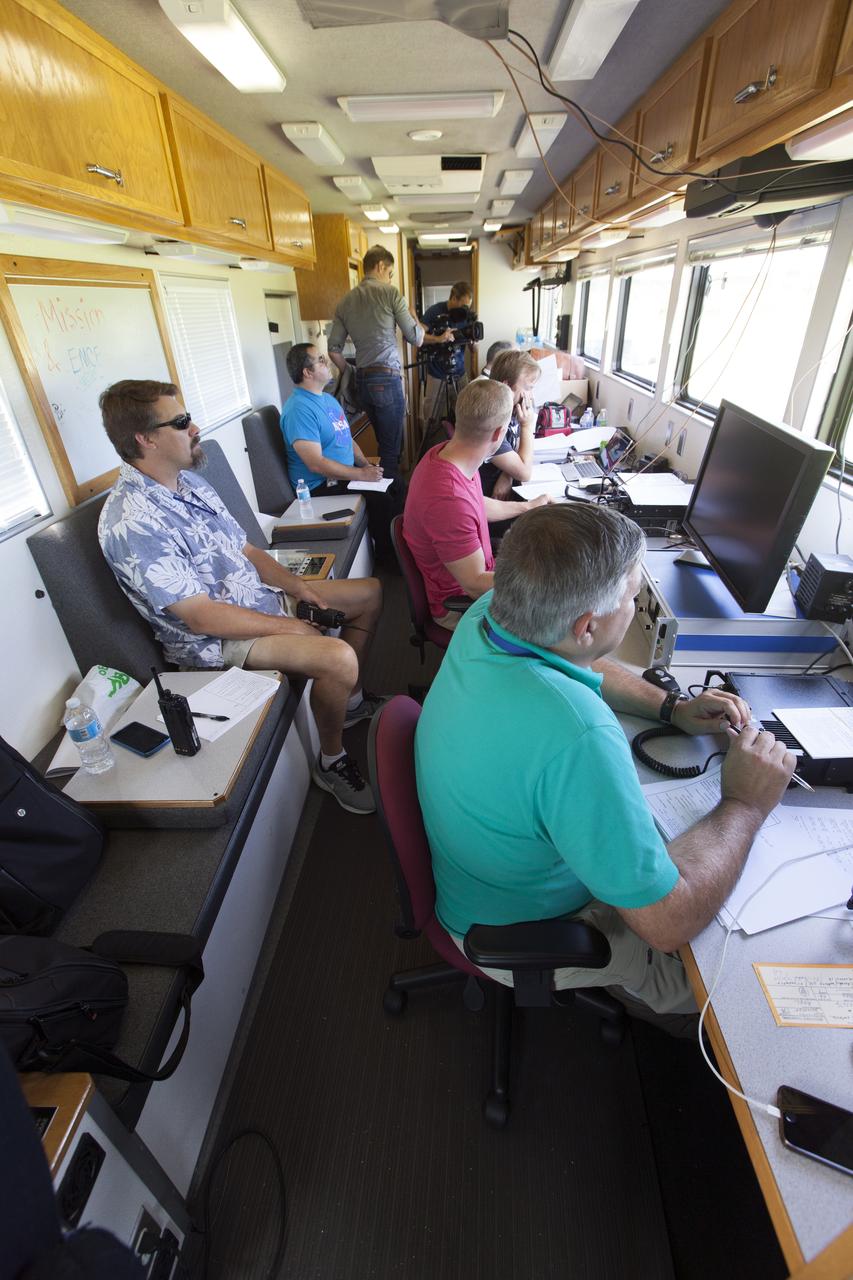
Engineers staff a control trailer at NASA's Kennedy Space Center in Florida before flights of agency F-18 jets to measure the effects of sonic booms. Several flights a day have been taking place the week of Aug. 21, 2017 as part of NASA's Sonic Booms in Atmospheric Turbulence, or SonicBAT II Program. NASA at Kennedy is partnering with the agency's Armstrong Flight Research Center in California, Langley Research Center in Virginia, and Space Florida for a program in which F-18 jets will take off from the Shuttle Landing Facility and fly at supersonic speeds while agency researchers measure the effects of low-altitude turbulence caused by sonic booms.
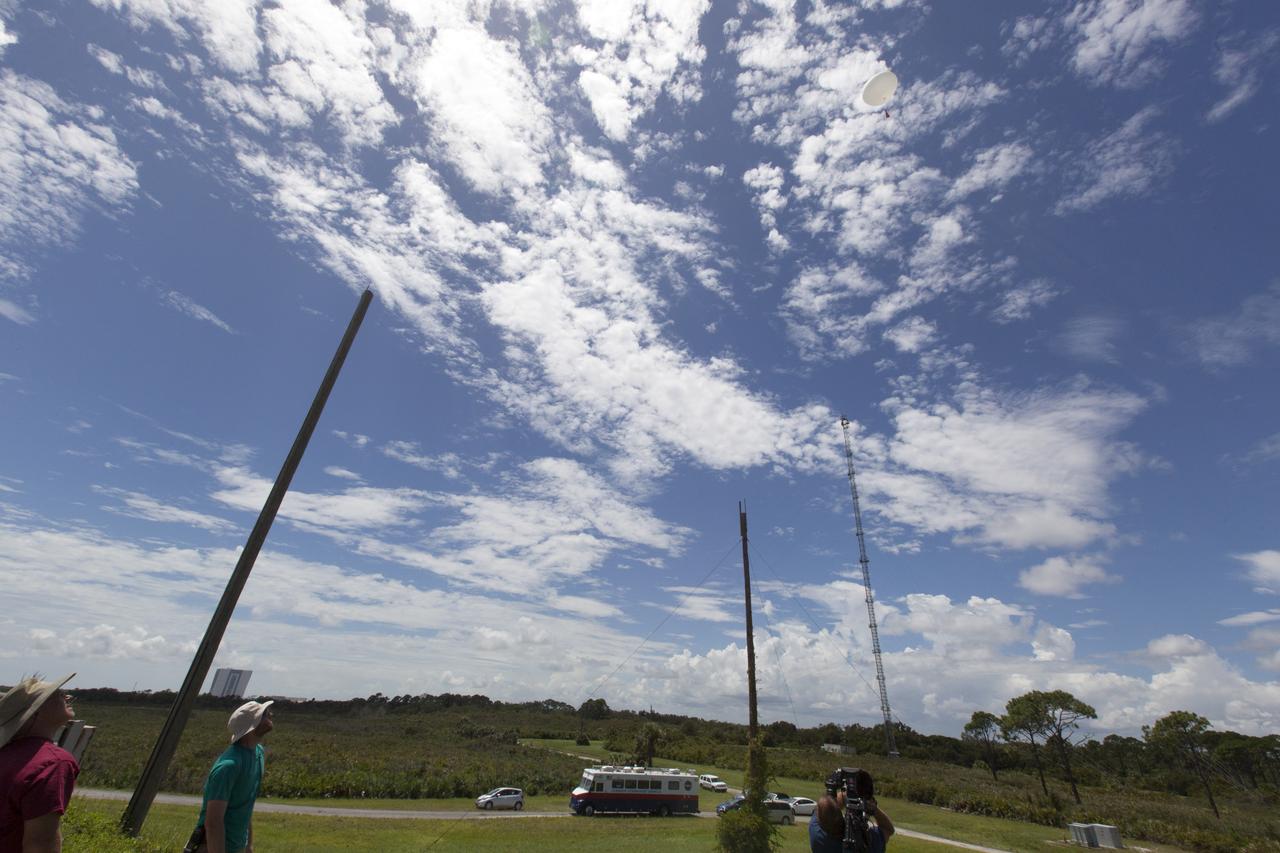
A weather balloon is released at NASA's Kennedy Space Center in Florida before flights of agency F-18 jets to measure the effects of sonic booms. Several flights a day have been taking place the week of Aug. 21, 2017 as part of NASA's Sonic Booms in Atmospheric Turbulence, or SonicBAT II Program. NASA at Kennedy is partnering with the agency's Armstrong Flight Research Center in California, Langley Research Center in Virginia, and Space Florida for a program in which F-18 jets will take off from the Shuttle Landing Facility and fly at supersonic speeds while agency researchers measure the effects of low-altitude turbulence caused by sonic booms.
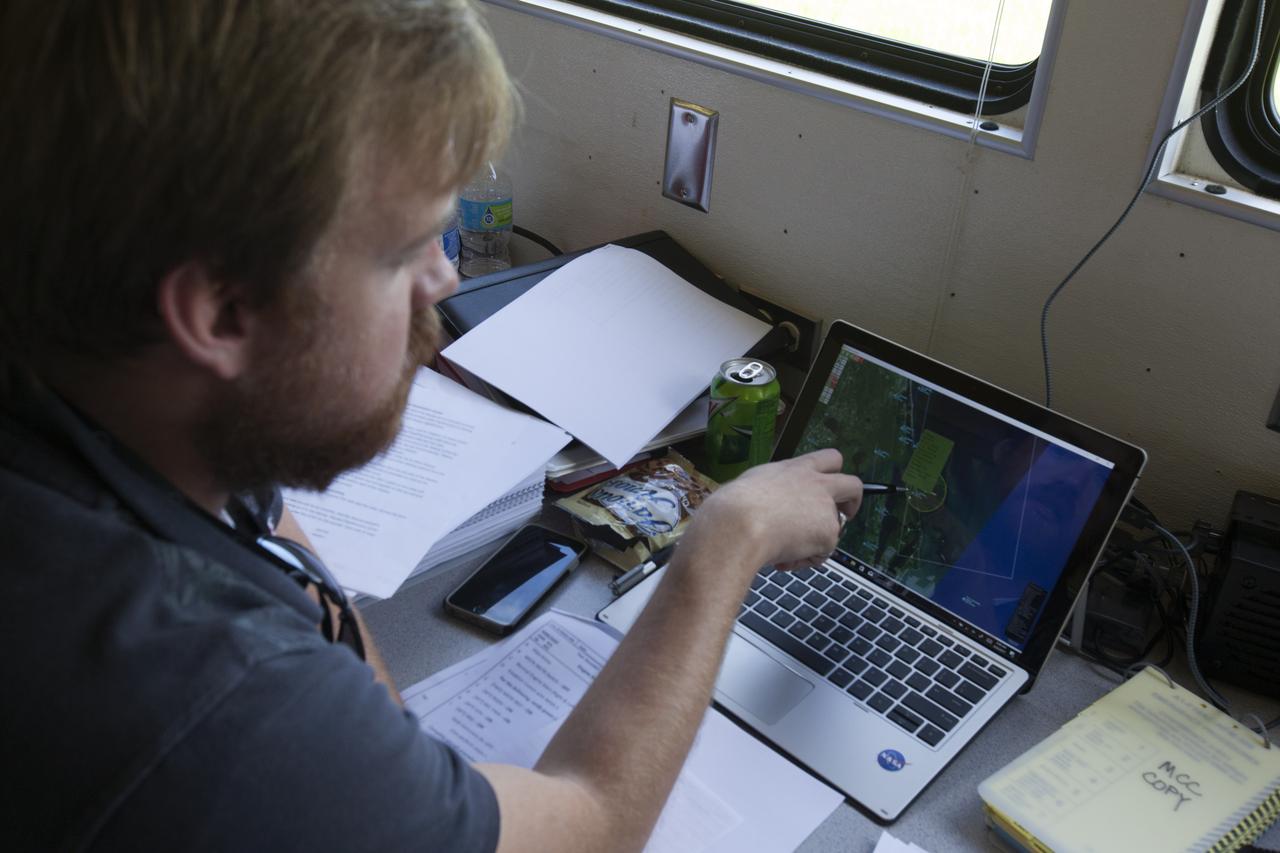
An engineer in a control trailer at NASA's Kennedy Space Center in Florida monitors data before flights of agency F-18 jets to measure the effects of sonic booms. Several flights a day have been taking place the week of Aug. 21, 2017 as part of NASA's Sonic Booms in Atmospheric Turbulence, or SonicBAT II Program. NASA at Kennedy is partnering with the agency's Armstrong Flight Research Center in California, Langley Research Center in Virginia, and Space Florida for a program in which F-18 jets will take off from the Shuttle Landing Facility and fly at supersonic speeds while agency researchers measure the effects of low-altitude turbulence caused by sonic booms.
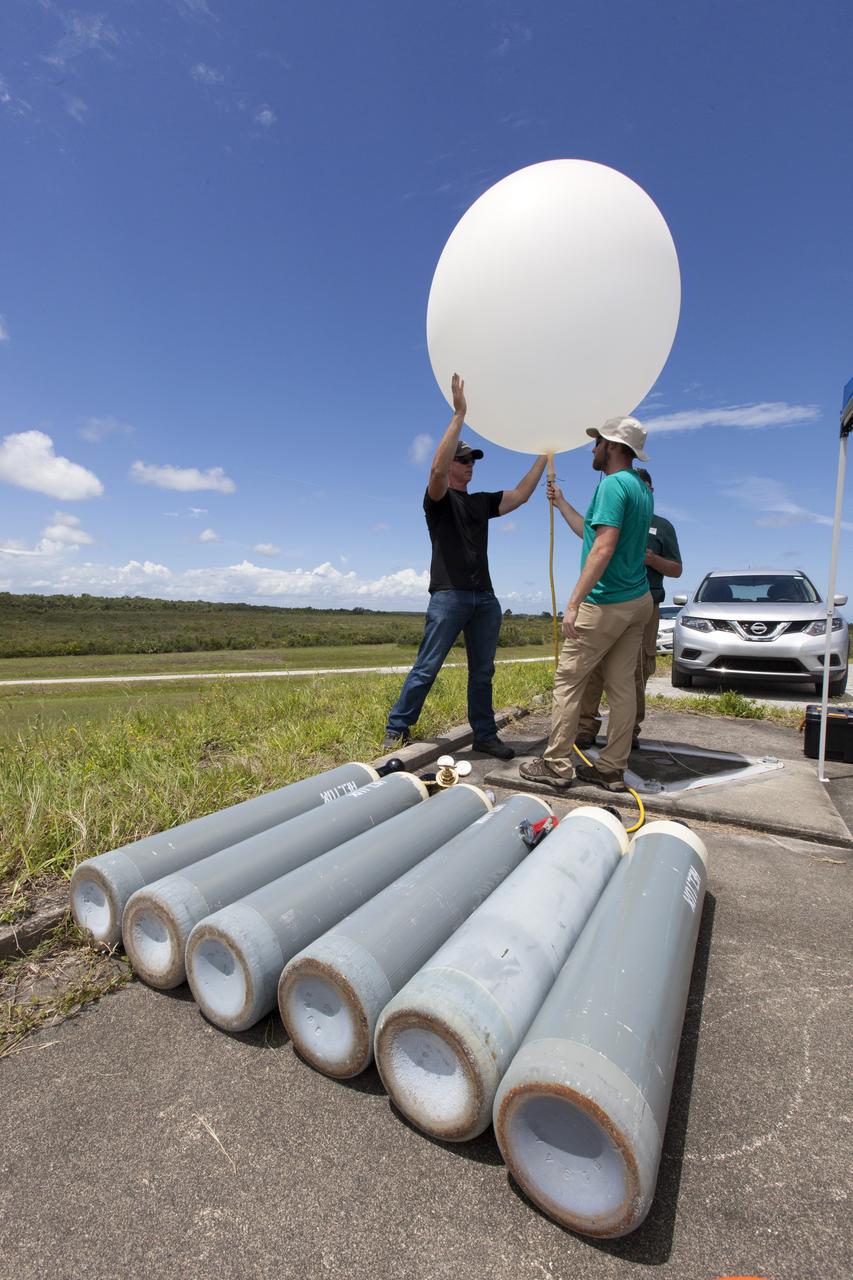
A weather balloon is about to be released at NASA's Kennedy Space Center in Florida before flights of agency F-18 jets to measure the effects of sonic booms. Several flights a day have been taking place the week of Aug. 21, 2017 as part of NASA's Sonic Booms in Atmospheric Turbulence, or SonicBAT II Program. NASA at Kennedy is partnering with the agency's Armstrong Flight Research Center in California, Langley Research Center in Virginia, and Space Florida for a program in which F-18 jets will take off from the Shuttle Landing Facility and fly at supersonic speeds while agency researchers measure the effects of low-altitude turbulence caused by sonic booms.
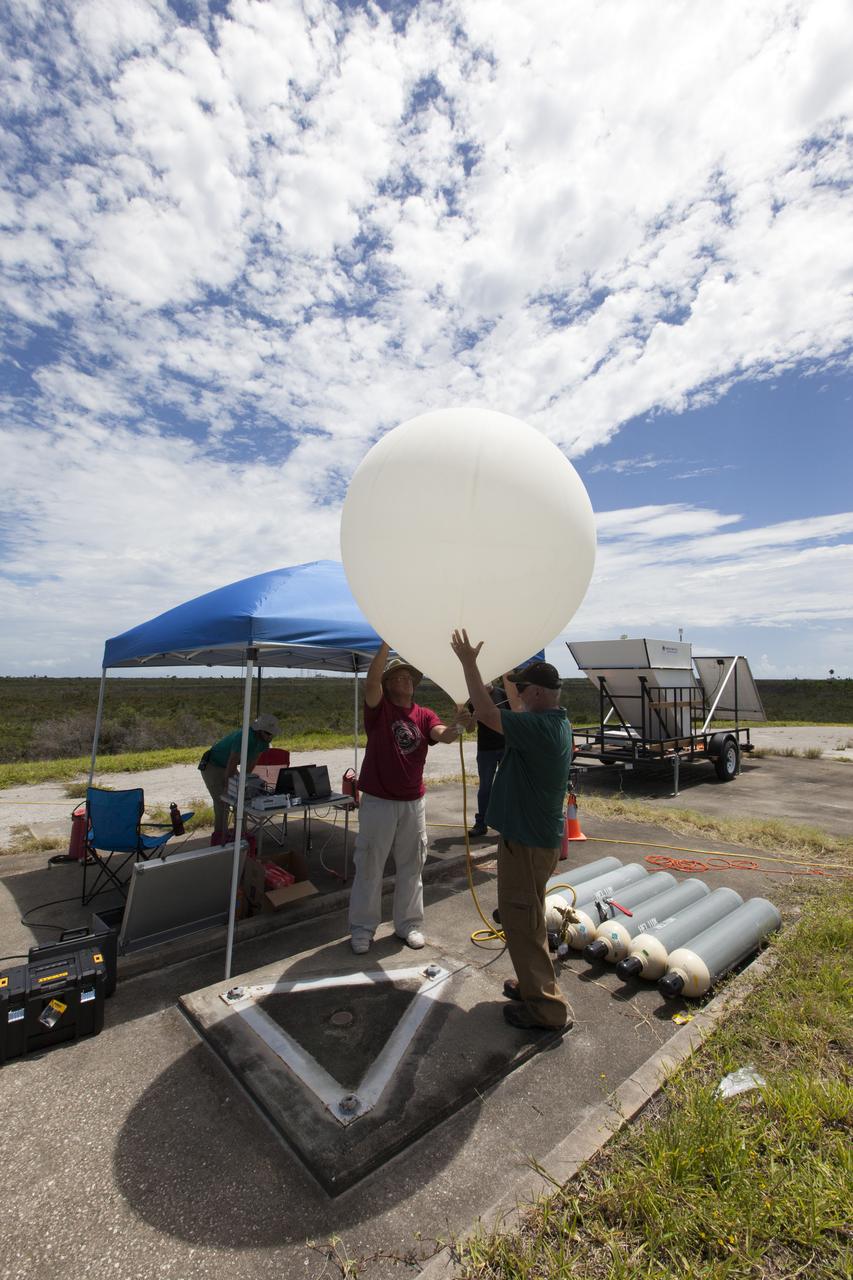
A weather balloon is about to be released at NASA's Kennedy Space Center in Florida before flights of agency F-18 jets to measure the effects of sonic booms. Several flights a day have been taking place the week of Aug. 21, 2017 as part of NASA's Sonic Booms in Atmospheric Turbulence, or SonicBAT II Program. NASA at Kennedy is partnering with the agency's Armstrong Flight Research Center in California, Langley Research Center in Virginia, and Space Florida for a program in which F-18 jets will take off from the Shuttle Landing Facility and fly at supersonic speeds while agency researchers measure the effects of low-altitude turbulence caused by sonic booms.
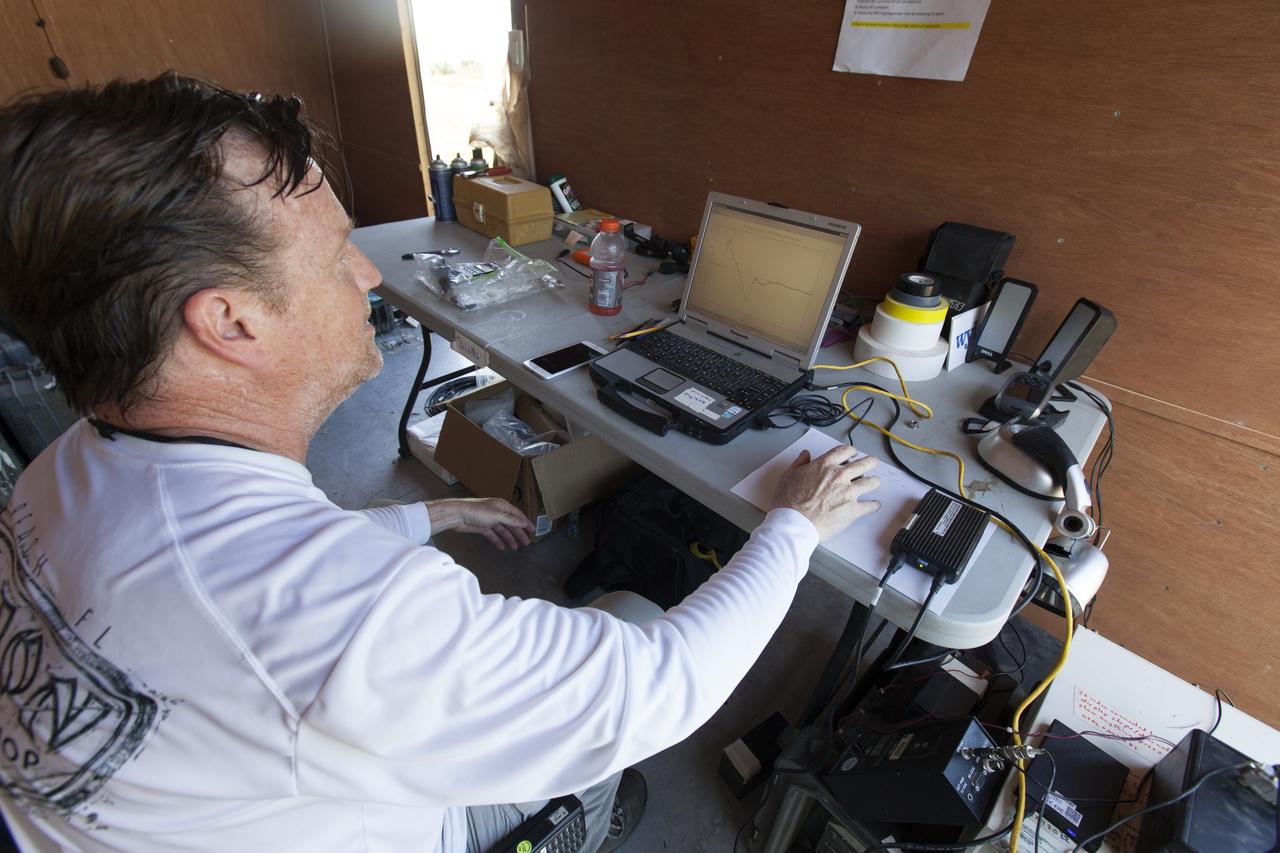
An engineer in a control trailer at NASA's Kennedy Space Center in Florida monitors data before flights of agency F-18 jets to measure the effects of sonic booms. Several flights a day have been taking place the week of Aug. 21, 2017 as part of NASA's Sonic Booms in Atmospheric Turbulence, or SonicBAT II Program. NASA at Kennedy is partnering with the agency's Armstrong Flight Research Center in California, Langley Research Center in Virginia, and Space Florida for a program in which F-18 jets will take off from the Shuttle Landing Facility and fly at supersonic speeds while agency researchers measure the effects of low-altitude turbulence caused by sonic booms.
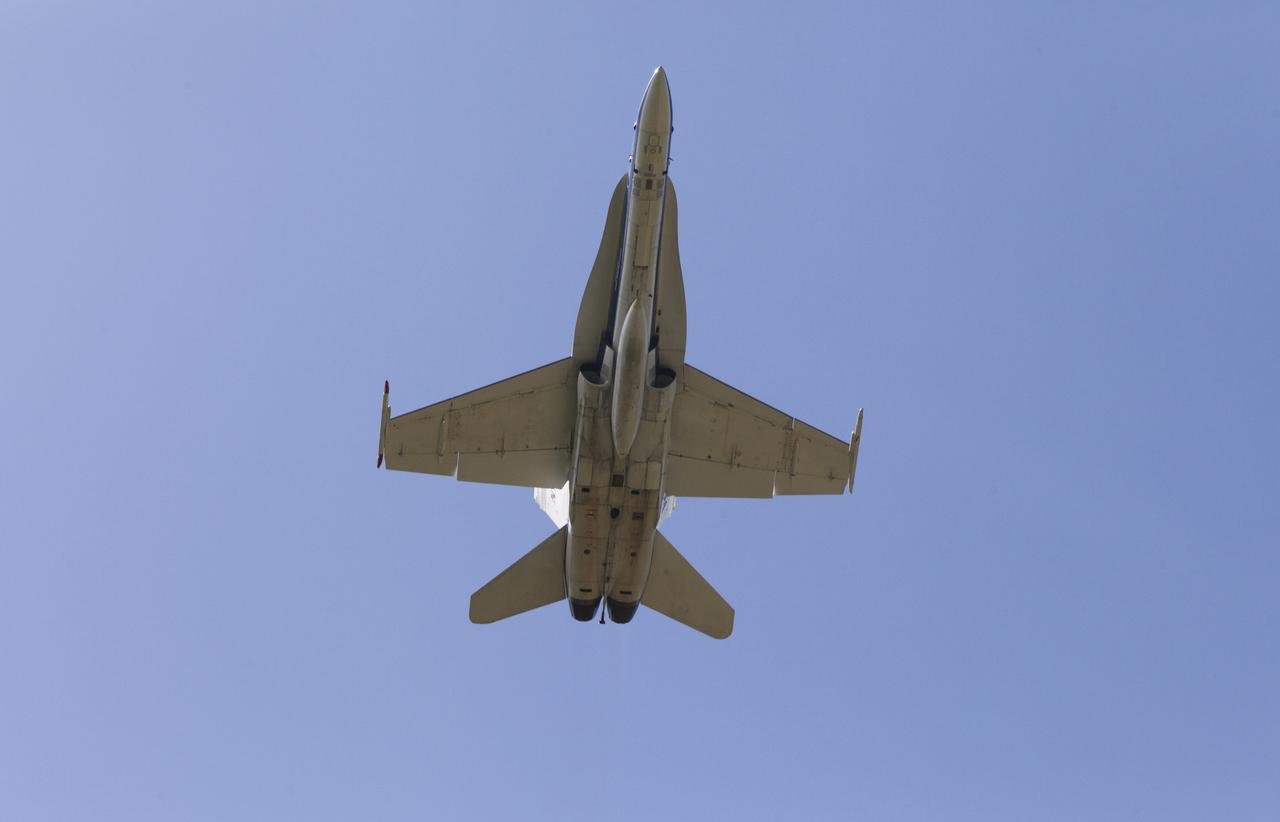
A NASA F-18 jet takes off from the agency's Shuttle Landing Facility at NASA's Kennedy Space Center in Florida. Several flights a day have been taking place the week of Aug. 21, 2017 to measure the effects of sonic booms. It is part of NASA's Sonic Booms in Atmospheric Turbulence, or SonicBAT II Program. NASA at Kennedy is partnering with the agency's Armstrong Flight Research Center in California, Langley Research Center in Virginia, and Space Florida for a program in which F-18 jets will take off from the Shuttle Landing Facility and fly at supersonic speeds while agency researchers measure the effects of low-altitude turbulence caused by sonic booms.
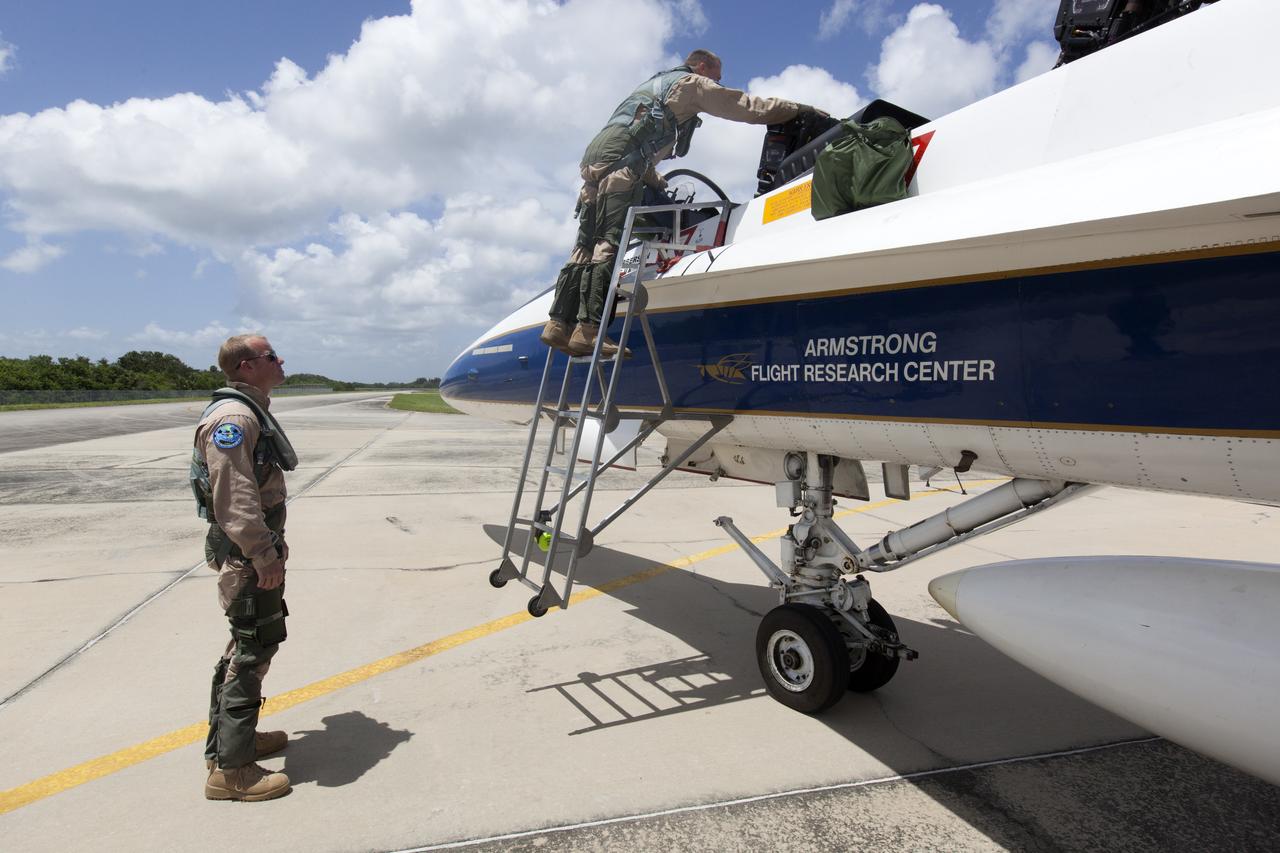
NASA pilots board an F-18 jet prior to take off from the agency's Shuttle Landing Facility at NASA's Kennedy Space Center in Florida. Several flights a day have been taking place the week of Aug. 21, 2017 to measure the effects of sonic booms. It is part of NASA's Sonic Booms in Atmospheric Turbulence, or SonicBAT II Program. NASA at Kennedy is partnering with the agency's Armstrong Flight Research Center in California, Langley Research Center in Virginia, and Space Florida for a program in which F-18 jets will take off from the Shuttle Landing Facility and fly at supersonic speeds while agency researchers measure the effects of low-altitude turbulence caused by sonic booms.
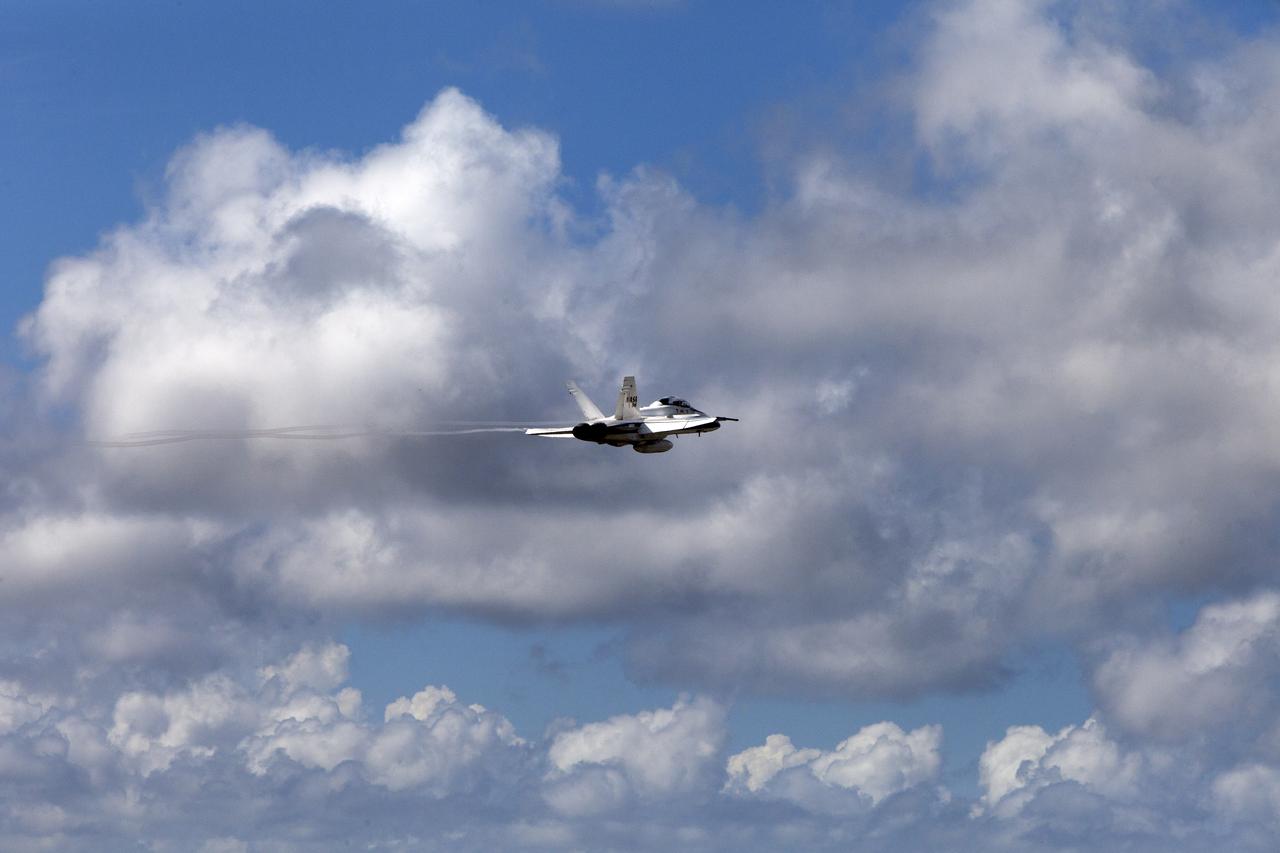
A NASA F-18 jet has taken off from the agency's Shuttle Landing Facility at NASA's Kennedy Space Center in Florida. Several flights a day have been taking place the week of Aug. 21, 2017 to measure the effects of sonic booms. It is part of NASA's Sonic Booms in Atmospheric Turbulence, or SonicBAT II Program. NASA at Kennedy is partnering with the agency's Armstrong Flight Research Center in California, Langley Research Center in Virginia, and Space Florida for a program in which F-18 jets will take off from the Shuttle Landing Facility and fly at supersonic speeds while agency researchers measure the effects of low-altitude turbulence caused by sonic booms.
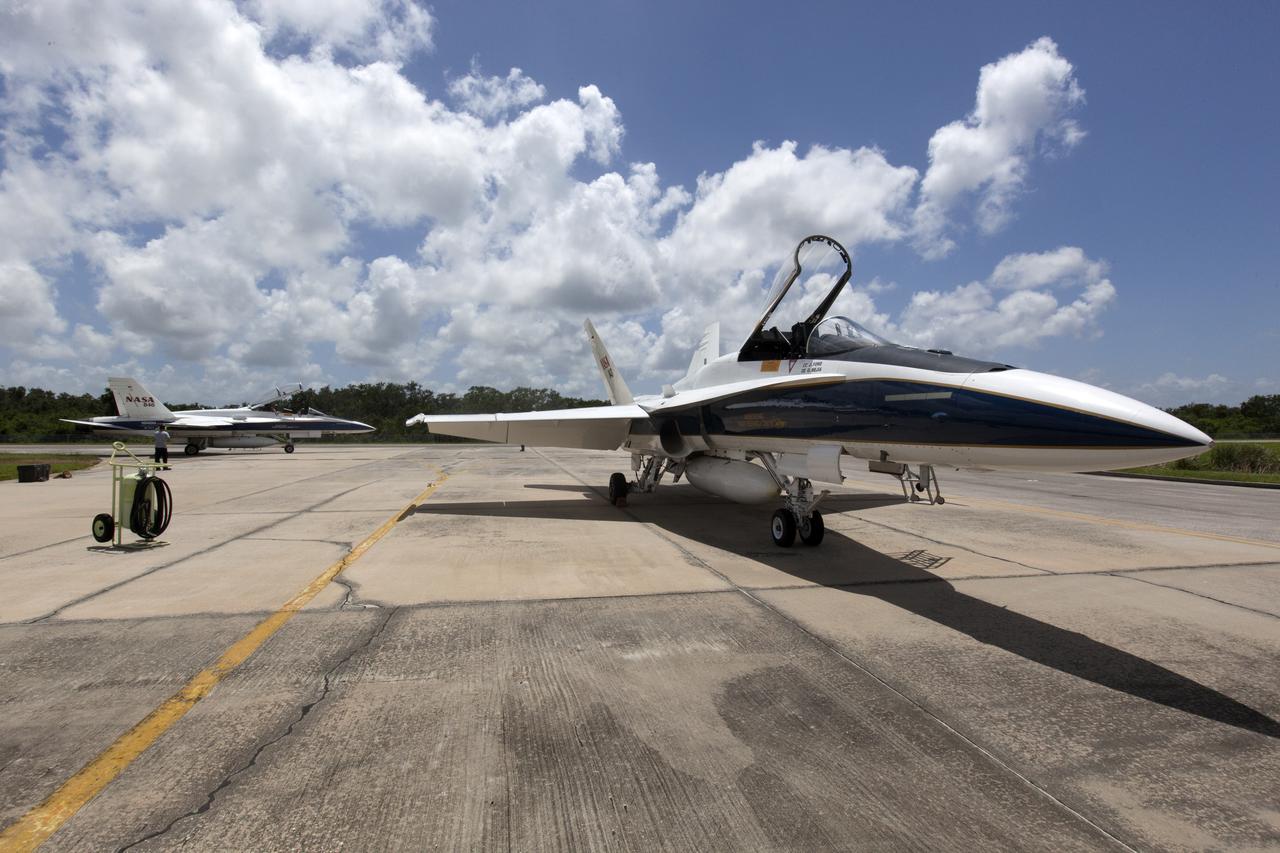
A NASA F-18 jet is prepared for takeoff from the agency's Shuttle Landing Facility at NASA's Kennedy Space Center in Florida. Several flights a day have been taking place the week of Aug. 21, 2017 to measure the effects of sonic booms. It is part of NASA's Sonic Booms in Atmospheric Turbulence, or SonicBAT II Program. NASA at Kennedy is partnering with the agency's Armstrong Flight Research Center in California, Langley Research Center in Virginia, and Space Florida for a program in which F-18 jets will take off from the Shuttle Landing Facility and fly at supersonic speeds while agency researchers measure the effects of low-altitude turbulence caused by sonic booms.
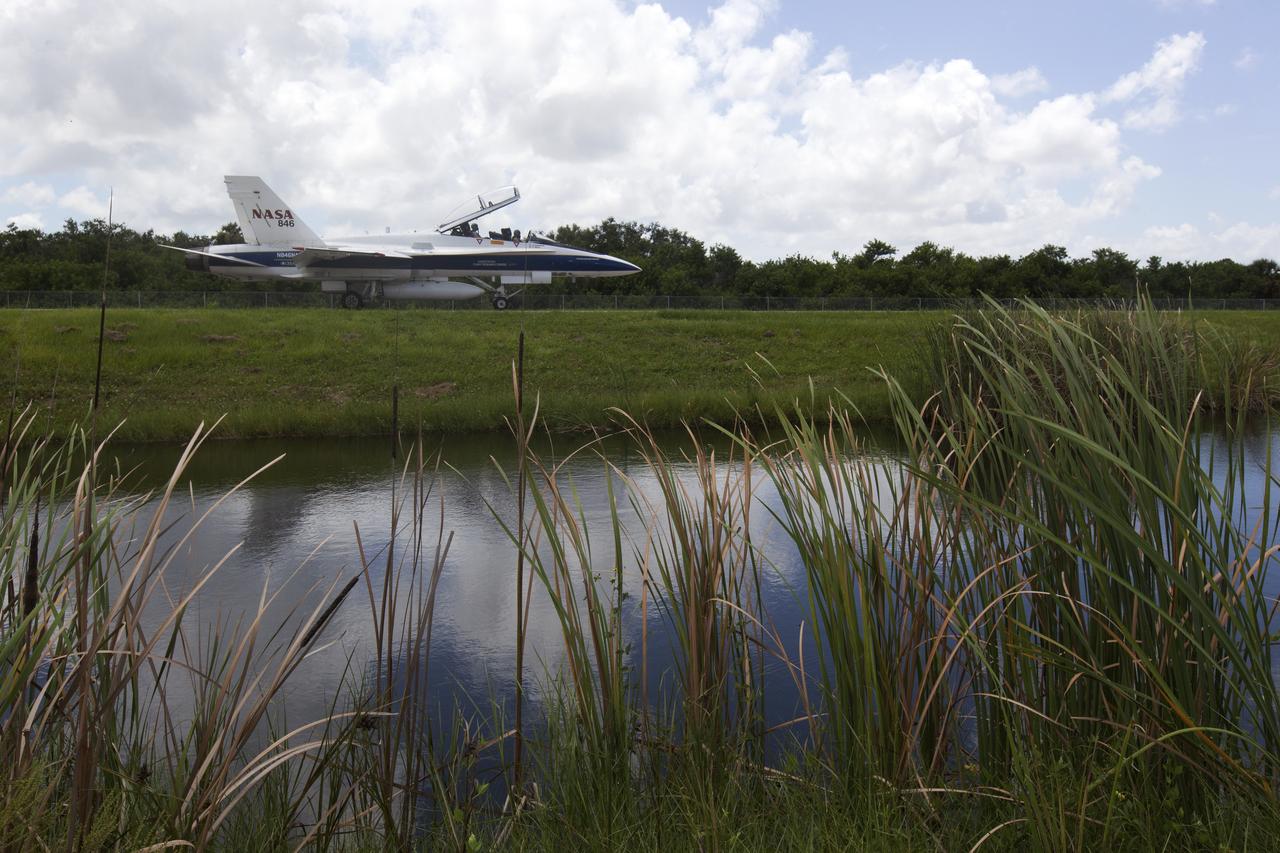
A NASA F-18 jet is prepared for takeoff from the agency's Shuttle Landing Facility at NASA's Kennedy Space Center in Florida. Several flights a day have been taking place the week of Aug. 21, 2017 to measure the effects of sonic booms. It is part of NASA's Sonic Booms in Atmospheric Turbulence, or SonicBAT II Program. NASA at Kennedy is partnering with the agency's Armstrong Flight Research Center in California, Langley Research Center in Virginia, and Space Florida for a program in which F-18 jets will take off from the Shuttle Landing Facility and fly at supersonic speeds while agency researchers measure the effects of low-altitude turbulence caused by sonic booms.
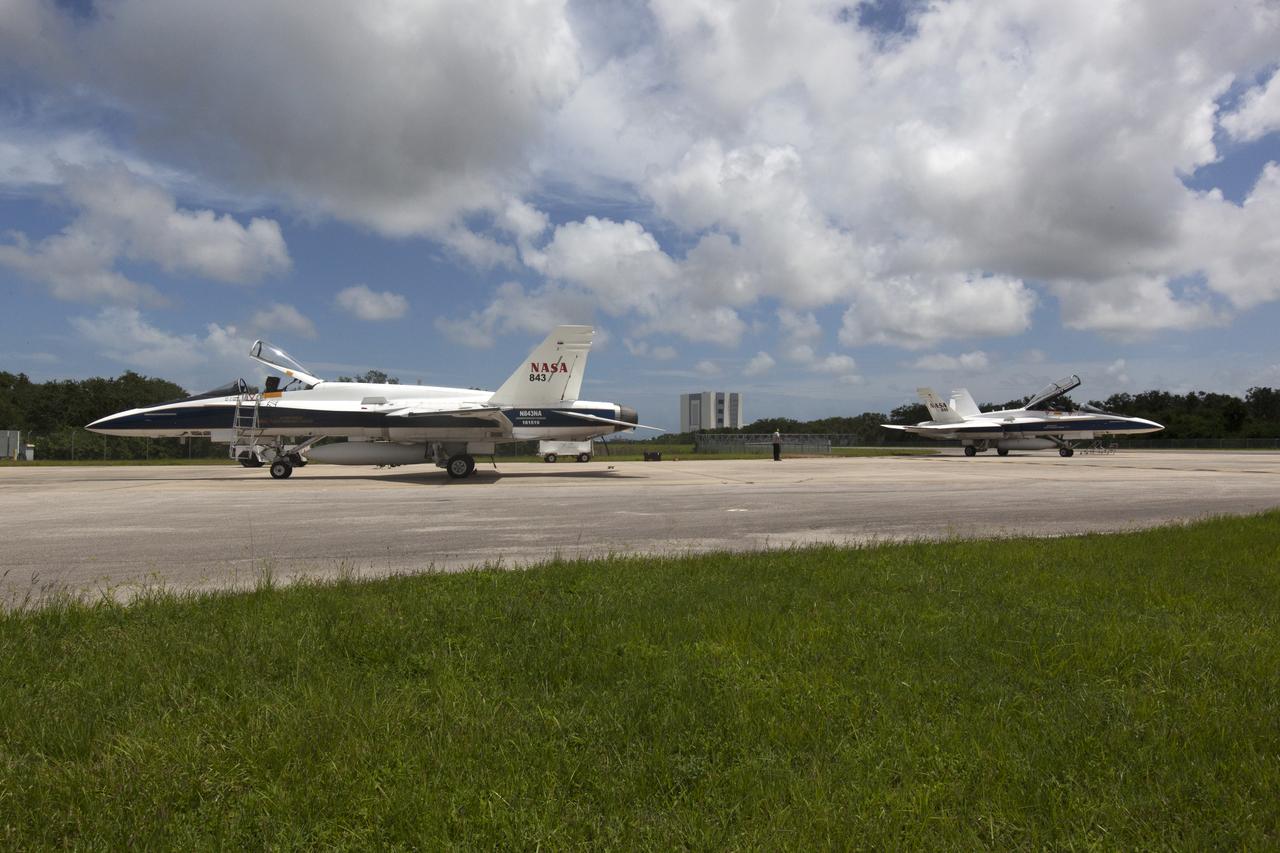
NASA F-18 jets prepare for takeoff from the agency's Shuttle Landing Facility at NASA's Kennedy Space Center in Florida. Several flights a day have been taking place the week of Aug. 21, 2017 to measure the effects of sonic booms. It is part of NASA's Sonic Booms in Atmospheric Turbulence, or SonicBAT II Program. NASA at Kennedy is partnering with the agency's Armstrong Flight Research Center in California, Langley Research Center in Virginia, and Space Florida for a program in which F-18 jets will take off from the Shuttle Landing Facility and fly at supersonic speeds while agency researchers measure the effects of low-altitude turbulence caused by sonic booms.
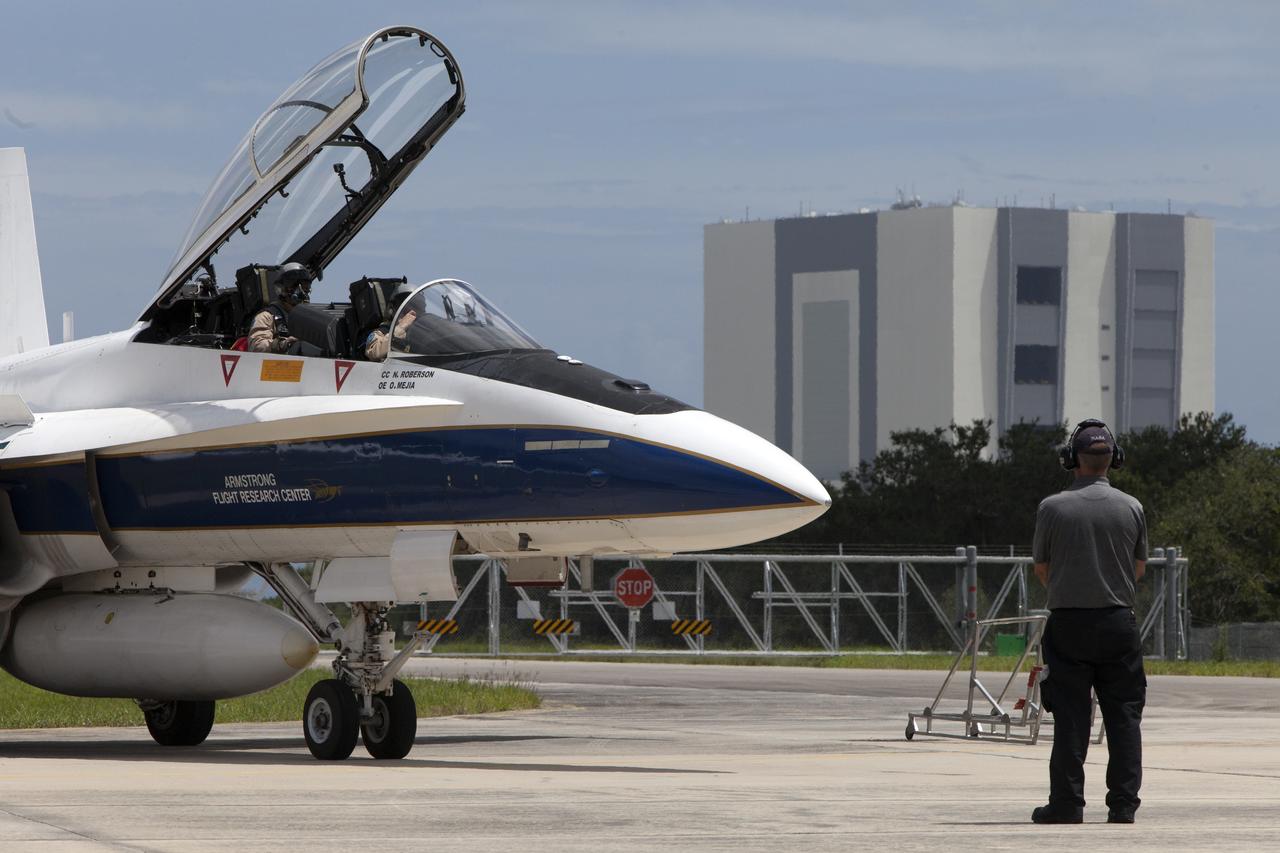
A NASA F-18 jet is prepared for takeoff from the agency's Shuttle Landing Facility at NASA's Kennedy Space Center in Florida. Several flights a day have been taking place the week of Aug. 21, 2017 to measure the effects of sonic booms. It is part of NASA's Sonic Booms in Atmospheric Turbulence, or SonicBAT II Program. NASA at Kennedy is partnering with the agency's Armstrong Flight Research Center in California, Langley Research Center in Virginia, and Space Florida for a program in which F-18 jets will take off from the Shuttle Landing Facility and fly at supersonic speeds while agency researchers measure the effects of low-altitude turbulence caused by sonic booms.
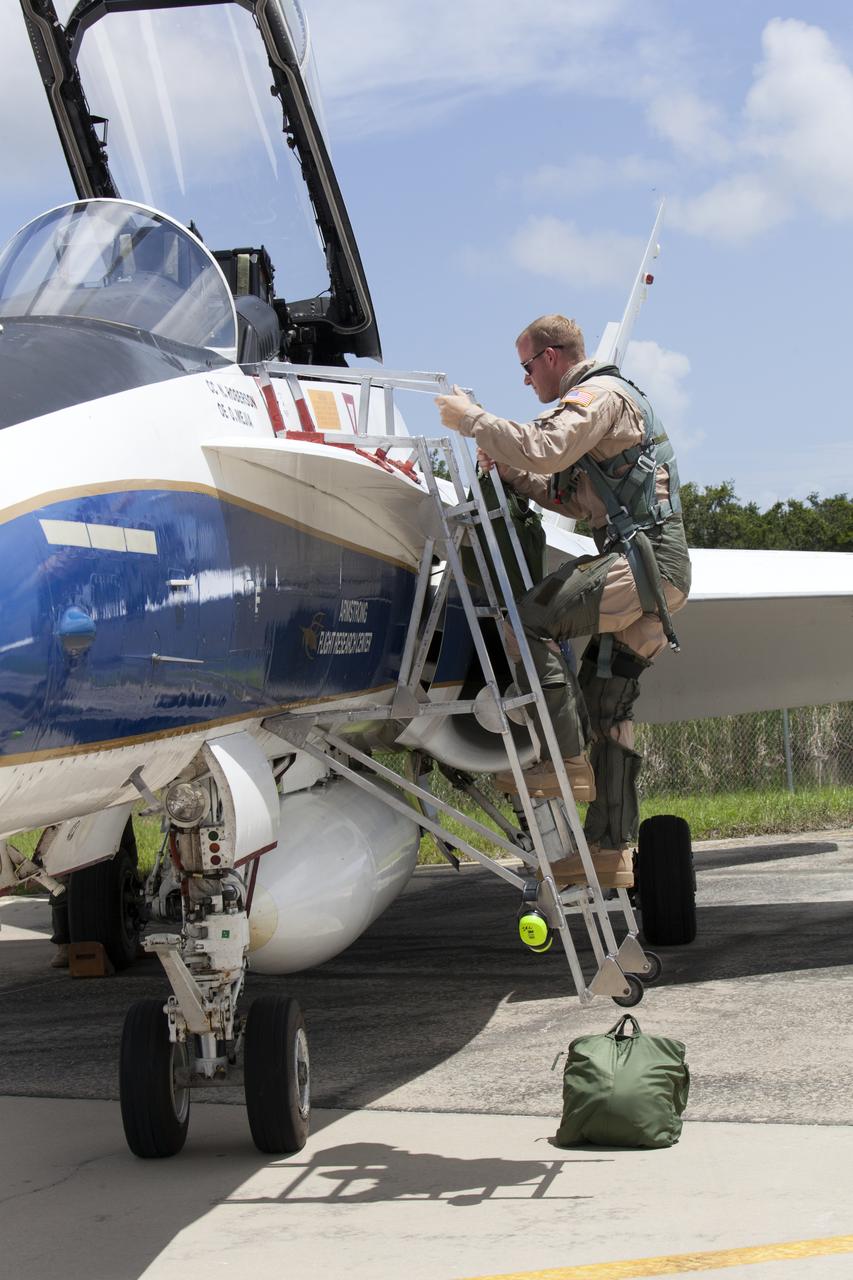
A NASA pilot boards an F-18 jet prior to take off from the agency's Shuttle Landing Facility at NASA's Kennedy Space Center in Florida. Several flights a day have been taking place the week of Aug. 21, 2017 to measure the effects of sonic booms. It is part of NASA's Sonic Booms in Atmospheric Turbulence, or SonicBAT II Program. NASA at Kennedy is partnering with the agency's Armstrong Flight Research Center in California, Langley Research Center in Virginia, and Space Florida for a program in which F-18 jets will take off from the Shuttle Landing Facility and fly at supersonic speeds while agency researchers measure the effects of low-altitude turbulence caused by sonic booms.
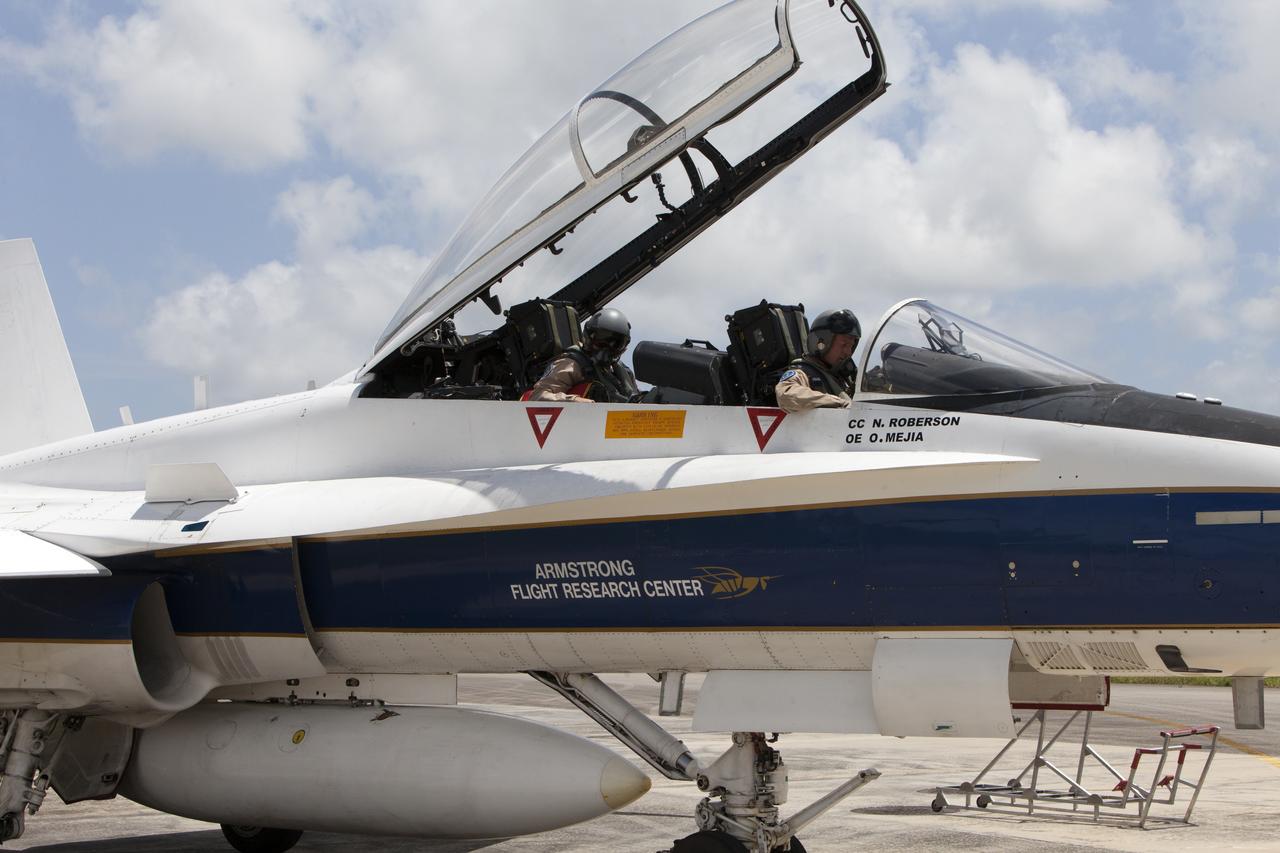
A NASA F-18 jet is prepared for takeoff from the agency's Shuttle Landing Facility at NASA's Kennedy Space Center in Florida. Several flights a day have been taking place the week of Aug. 21, 2017 to measure the effects of sonic booms. It is part of NASA's Sonic Booms in Atmospheric Turbulence, or SonicBAT II Program. NASA at Kennedy is partnering with the agency's Armstrong Flight Research Center in California, Langley Research Center in Virginia, and Space Florida for a program in which F-18 jets will take off from the Shuttle Landing Facility and fly at supersonic speeds while agency researchers measure the effects of low-altitude turbulence caused by sonic booms.
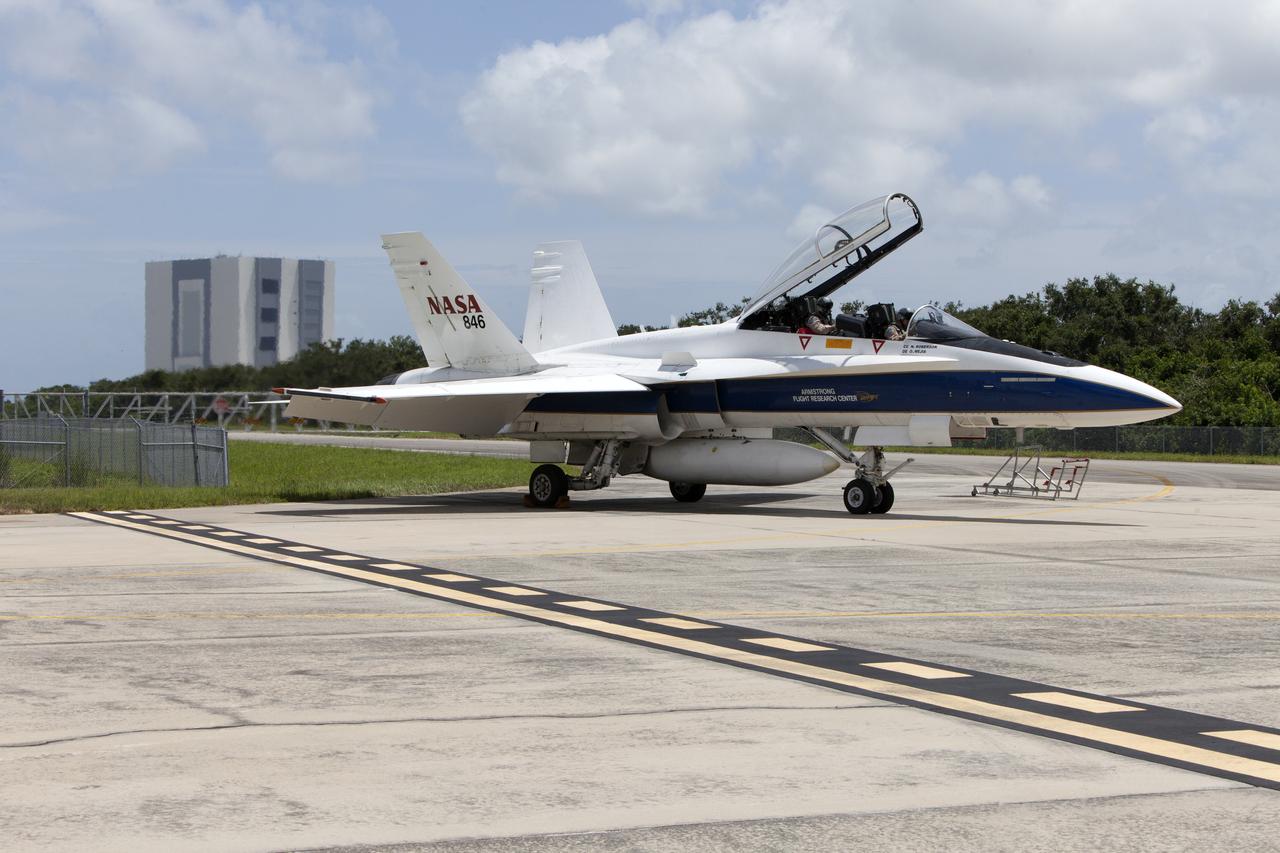
A NASA F-18 jet is prepared for takeoff from the agency's Shuttle Landing Facility at NASA's Kennedy Space Center in Florida. Several flights a day have been taking place the week of Aug. 21, 2017 to measure the effects of sonic booms. It is part of NASA's Sonic Booms in Atmospheric Turbulence, or SonicBAT II Program. NASA at Kennedy is partnering with the agency's Armstrong Flight Research Center in California, Langley Research Center in Virginia, and Space Florida for a program in which F-18 jets will take off from the Shuttle Landing Facility and fly at supersonic speeds while agency researchers measure the effects of low-altitude turbulence caused by sonic booms.
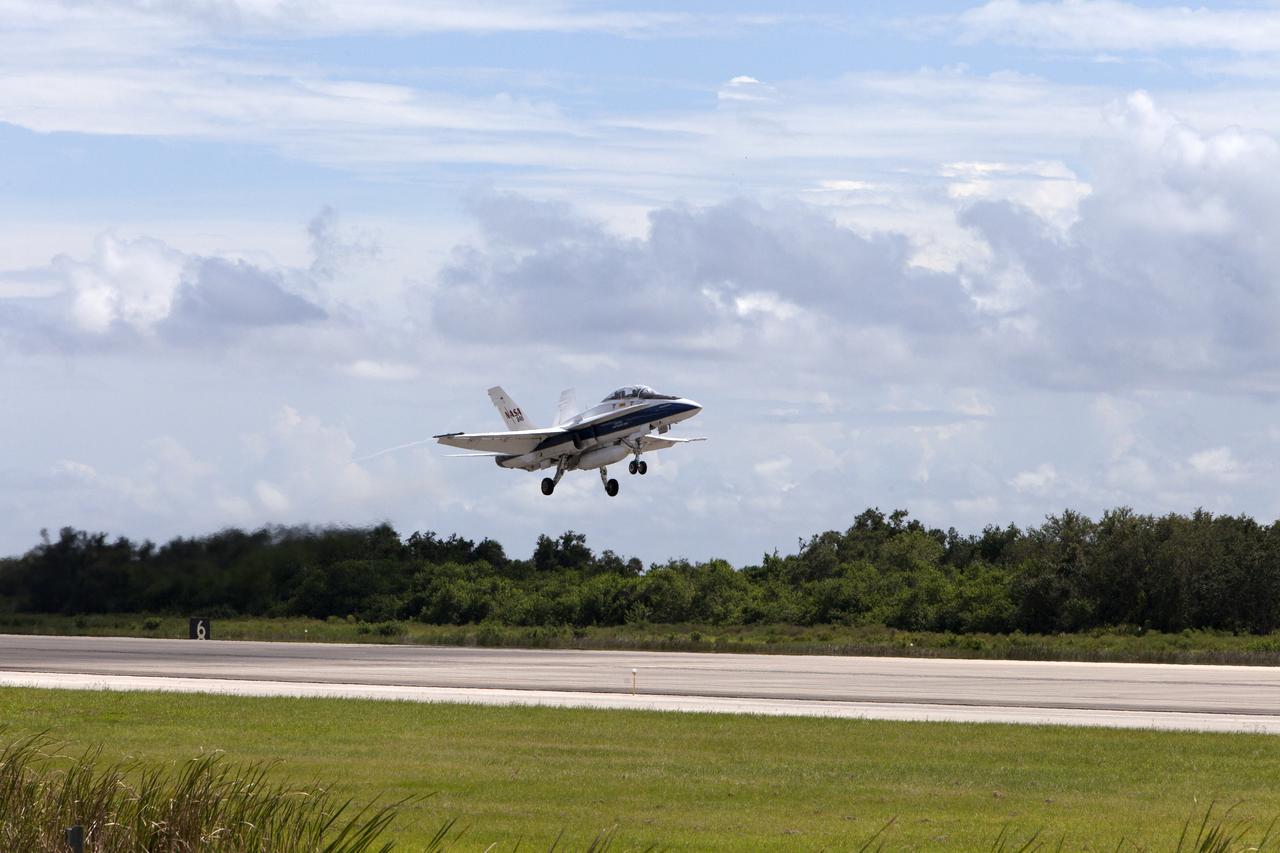
A NASA F-18 jet takes off from the agency's Shuttle Landing Facility at NASA's Kennedy Space Center in Florida. Several flights a day have been taking place the week of Aug. 21, 2017 to measure the effects of sonic booms. It is part of NASA's Sonic Booms in Atmospheric Turbulence, or SonicBAT II Program. NASA at Kennedy is partnering with the agency's Armstrong Flight Research Center in California, Langley Research Center in Virginia, and Space Florida for a program in which F-18 jets will take off from the Shuttle Landing Facility and fly at supersonic speeds while agency researchers measure the effects of low-altitude turbulence caused by sonic booms.
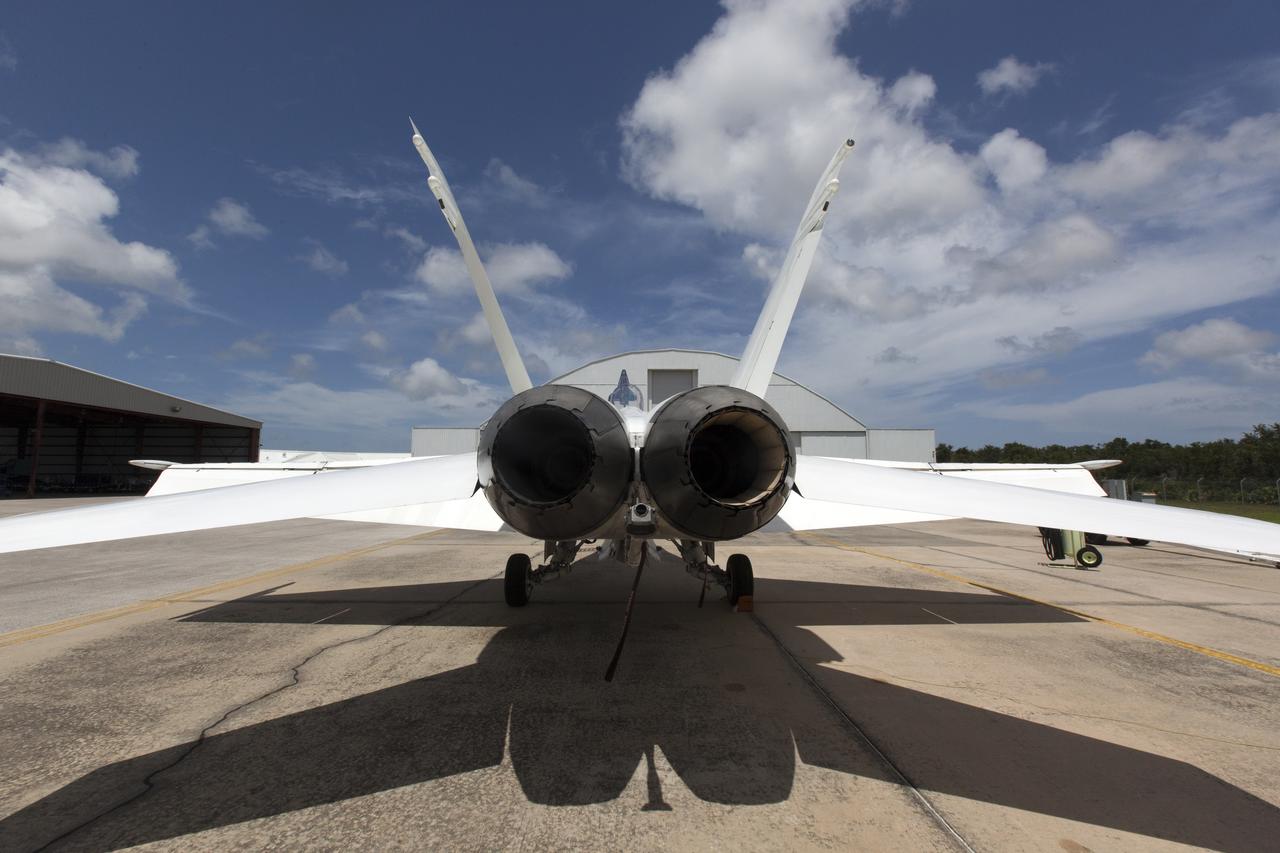
A NASA F-18 jet is prepared for takeoff from the agency's Shuttle Landing Facility at NASA's Kennedy Space Center in Florida. Several flights a day have been taking place the week of Aug. 21, 2017 to measure the effects of sonic booms. It is part of NASA's Sonic Booms in Atmospheric Turbulence, or SonicBAT II Program. NASA at Kennedy is partnering with the agency's Armstrong Flight Research Center in California, Langley Research Center in Virginia, and Space Florida for a program in which F-18 jets will take off from the Shuttle Landing Facility and fly at supersonic speeds while agency researchers measure the effects of low-altitude turbulence caused by sonic booms.
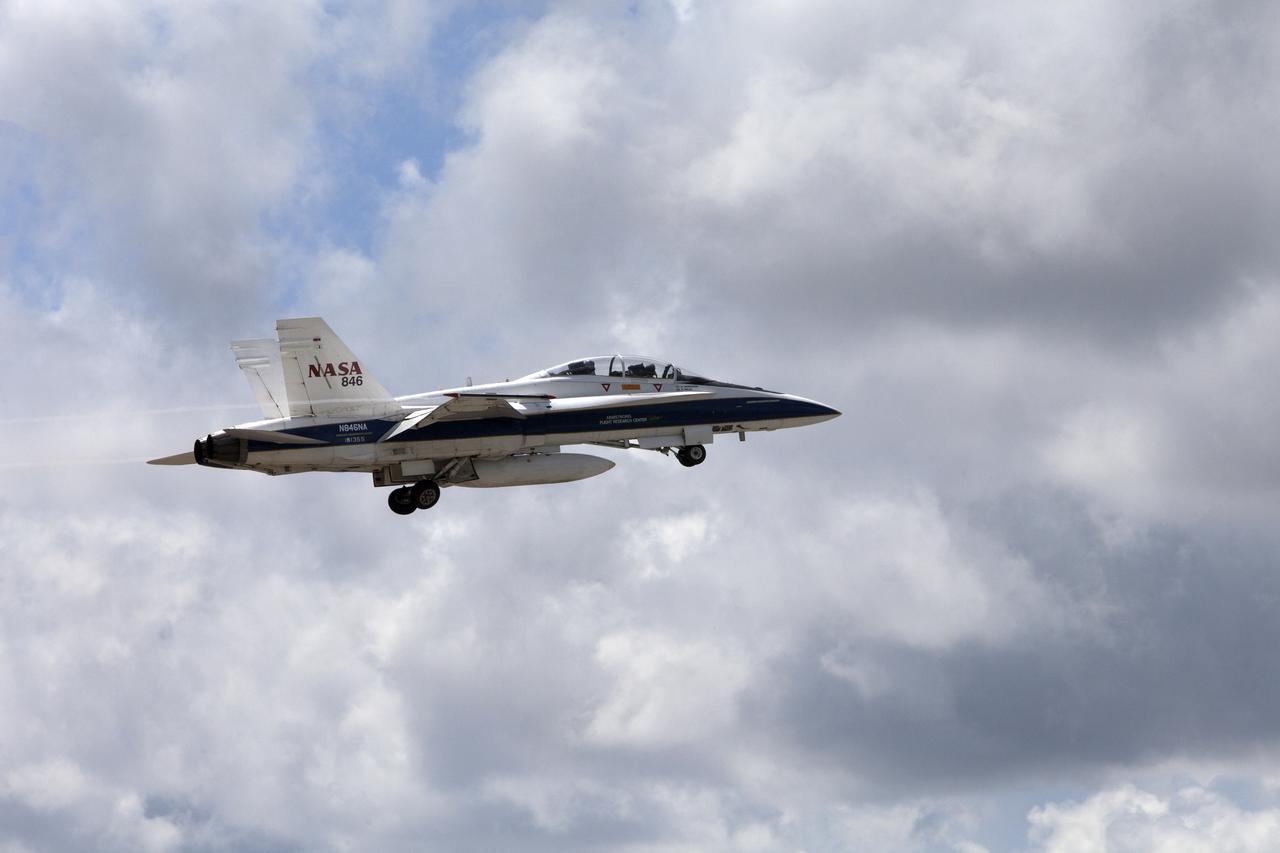
A NASA F-18 jet has taken off from the agency's Shuttle Landing Facility at NASA's Kennedy Space Center in Florida. Several flights a day have been taking place the week of Aug. 21, 2017 to measure the effects of sonic booms. It is part of NASA's Sonic Booms in Atmospheric Turbulence, or SonicBAT II Program. NASA at Kennedy is partnering with the agency's Armstrong Flight Research Center in California, Langley Research Center in Virginia, and Space Florida for a program in which F-18 jets will take off from the Shuttle Landing Facility and fly at supersonic speeds while agency researchers measure the effects of low-altitude turbulence caused by sonic booms.
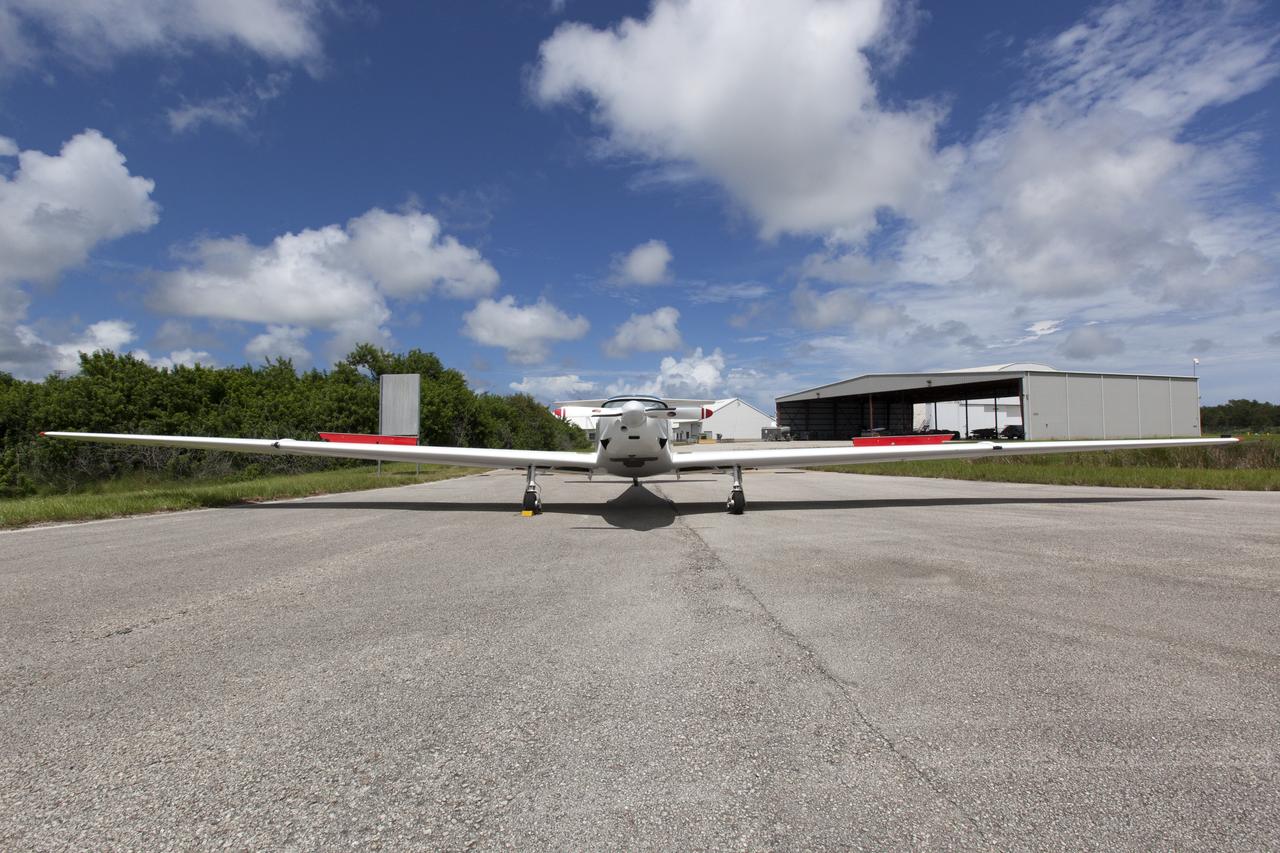
A motorized glider prepares to take off from the Shuttle Landing Facility at NASA's Kennedy Space Center in Florida. Flying with its engine off, the glider will be positioned above the 14,000-foot level to measure sonic booms created by agency F-18 jets to measure the effects of sonic booms. Several flights a day have been taking place the week of Aug. 21, 2017 as part of NASA's Sonic Booms in Atmospheric Turbulence, or SonicBAT II Program. NASA at Kennedy is partnering with the agency's Armstrong Flight Research Center in California, Langley Research Center in Virginia, and Space Florida for a program in which F-18 jets will take off from the Shuttle Landing Facility and fly at supersonic speeds while agency researchers measure the effects of low-altitude turbulence caused by sonic booms.
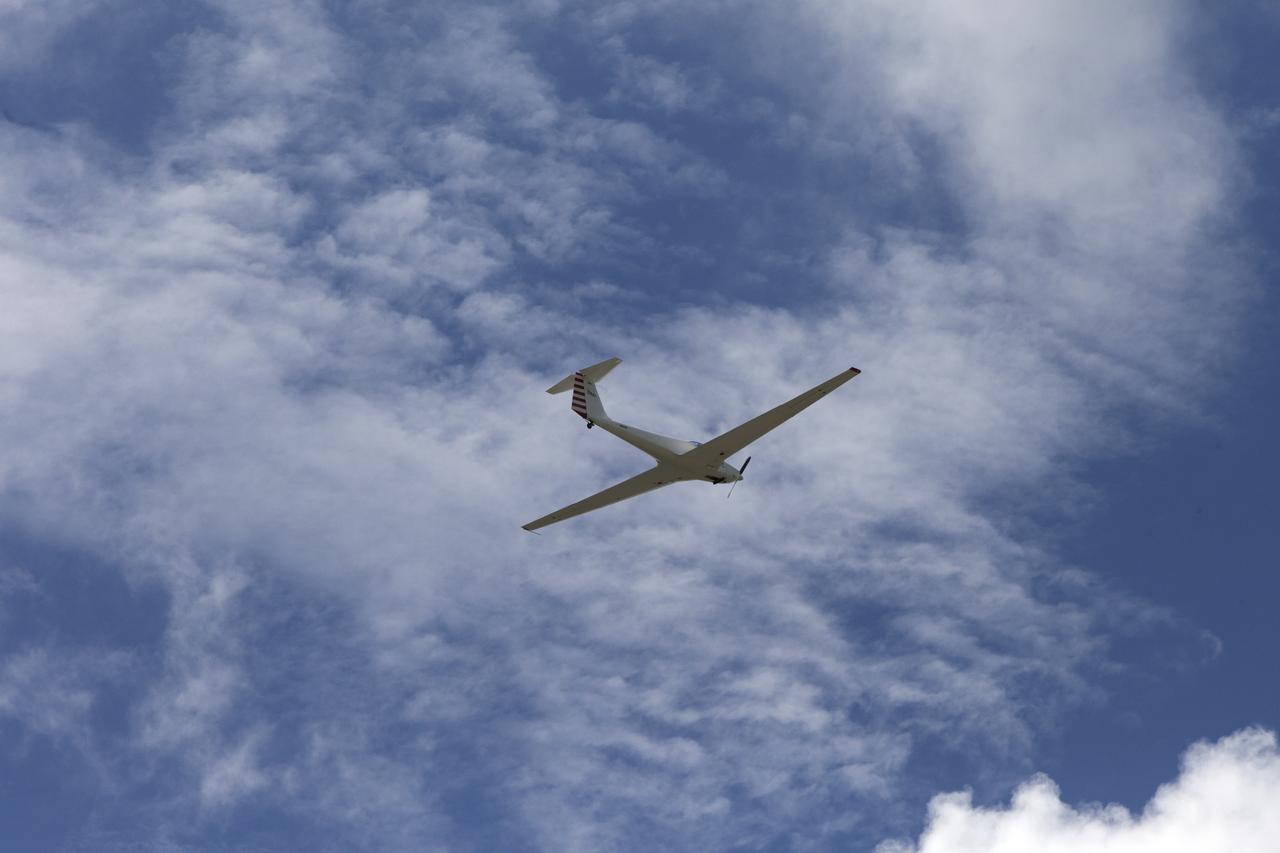
A motorized glider has taken off from the Shuttle Landing Facility at NASA's Kennedy Space Center in Florida. Flying with its engine off, the glider will be positioned above the 14,000-foot level to measure sonic booms created by agency F-18 jets to measure the effects of sonic booms. Several flights a day have been taking place the week of Aug. 21, 2017 as part of NASA's Sonic Booms in Atmospheric Turbulence, or SonicBAT II Program. NASA at Kennedy is partnering with the agency's Armstrong Flight Research Center in California, Langley Research Center in Virginia, and Space Florida for a program in which F-18 jets will take off from the Shuttle Landing Facility and fly at supersonic speeds while agency researchers measure the effects of low-altitude turbulence caused by sonic booms.
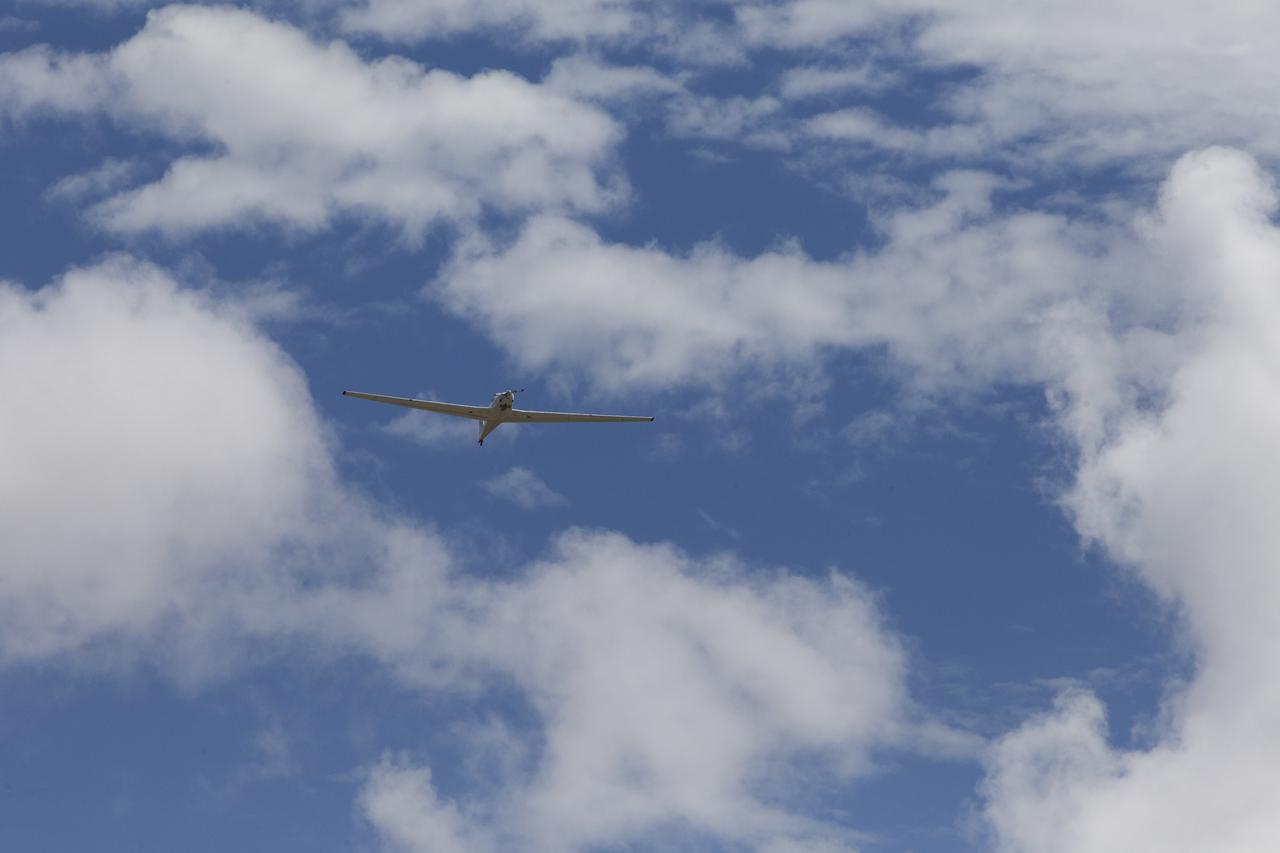
A motorized glider has taken off from the Shuttle Landing Facility at NASA's Kennedy Space Center in Florida. Flying with its engine off, the glider will be positioned above the 14,000-foot level to measure sonic booms created by agency F-18 jets to measure the effects of sonic booms. Several flights a day have been taking place the week of Aug. 21, 2017 as part of NASA's Sonic Booms in Atmospheric Turbulence, or SonicBAT II Program. NASA at Kennedy is partnering with the agency's Armstrong Flight Research Center in California, Langley Research Center in Virginia, and Space Florida for a program in which F-18 jets will take off from the Shuttle Landing Facility and fly at supersonic speeds while agency researchers measure the effects of low-altitude turbulence caused by sonic booms.
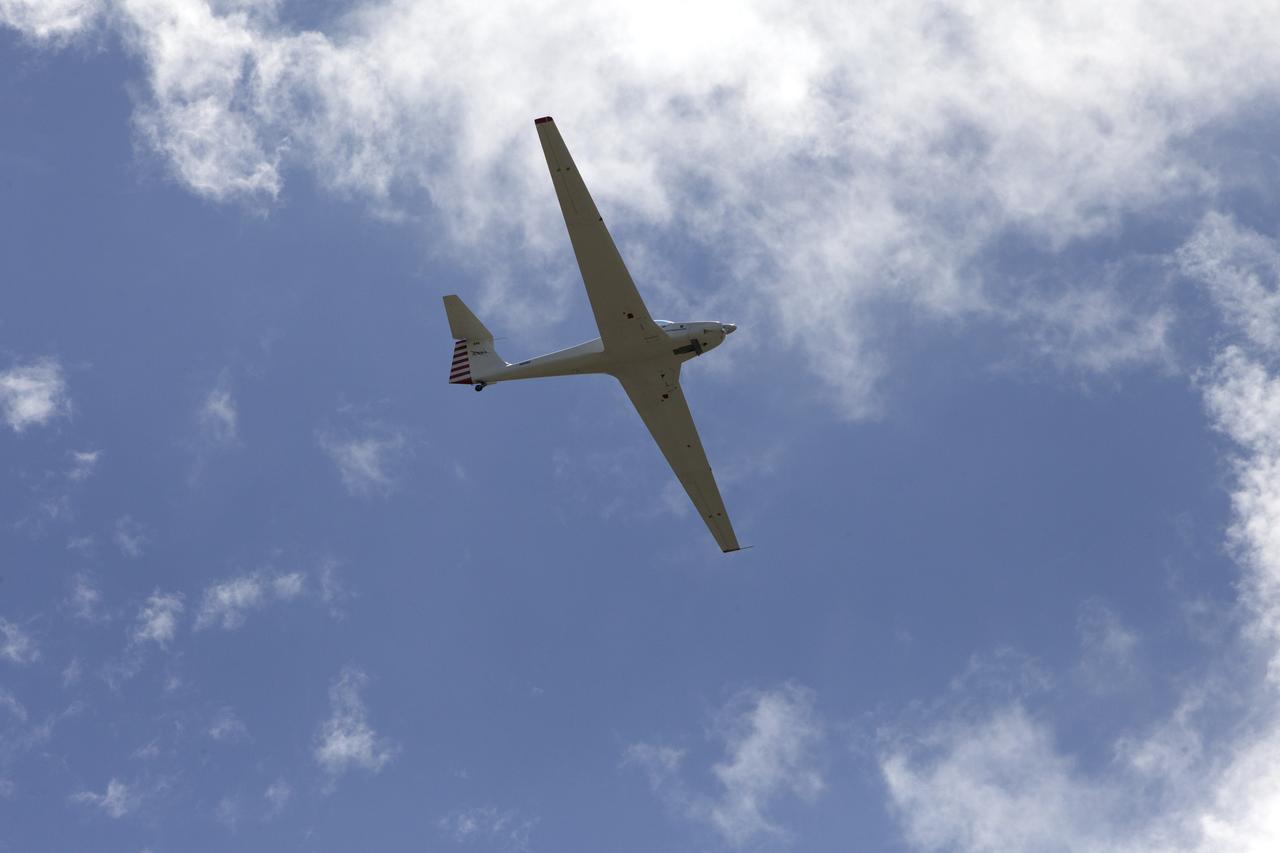
A motorized glider has taken off from the Shuttle Landing Facility at NASA's Kennedy Space Center in Florida. Flying with its engine off, the glider will be positioned above the 14,000-foot level to measure sonic booms created by agency F-18 jets to measure the effects of sonic booms. Several flights a day have been taking place the week of Aug. 21, 2017 as part of NASA's Sonic Booms in Atmospheric Turbulence, or SonicBAT II Program. NASA at Kennedy is partnering with the agency's Armstrong Flight Research Center in California, Langley Research Center in Virginia, and Space Florida for a program in which F-18 jets will take off from the Shuttle Landing Facility and fly at supersonic speeds while agency researchers measure the effects of low-altitude turbulence caused by sonic booms.
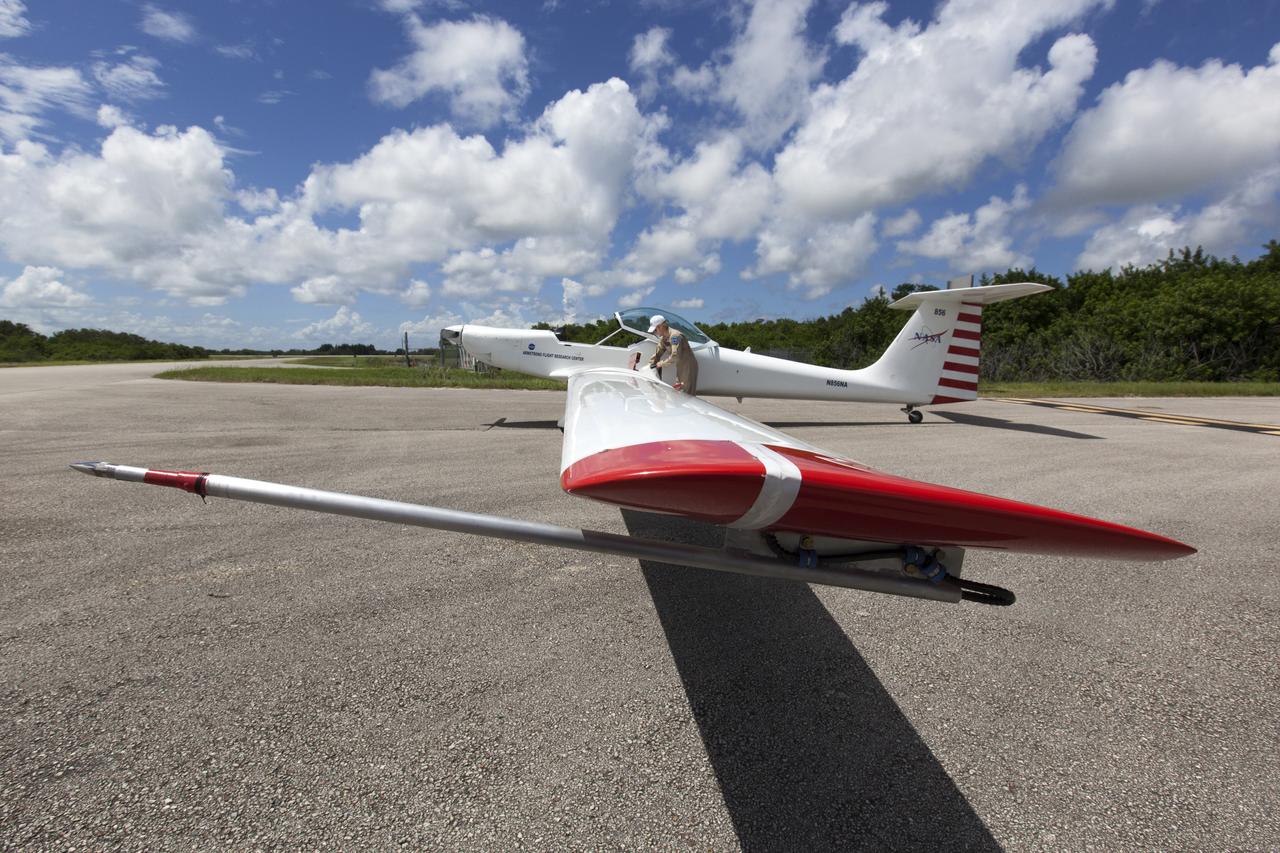
A motorized glider prepares to take off from the Shuttle Landing Facility at NASA's Kennedy Space Center in Florida. Flying with its engine off, the glider will be positioned above the 14,000-foot level to measure sonic booms created by agency F-18 jets to measure the effects of sonic booms. Several flights a day have been taking place the week of Aug. 21, 2017 as part of NASA's Sonic Booms in Atmospheric Turbulence, or SonicBAT II Program. NASA at Kennedy is partnering with the agency's Armstrong Flight Research Center in California, Langley Research Center in Virginia, and Space Florida for a program in which F-18 jets will take off from the Shuttle Landing Facility and fly at supersonic speeds while agency researchers measure the effects of low-altitude turbulence caused by sonic booms.
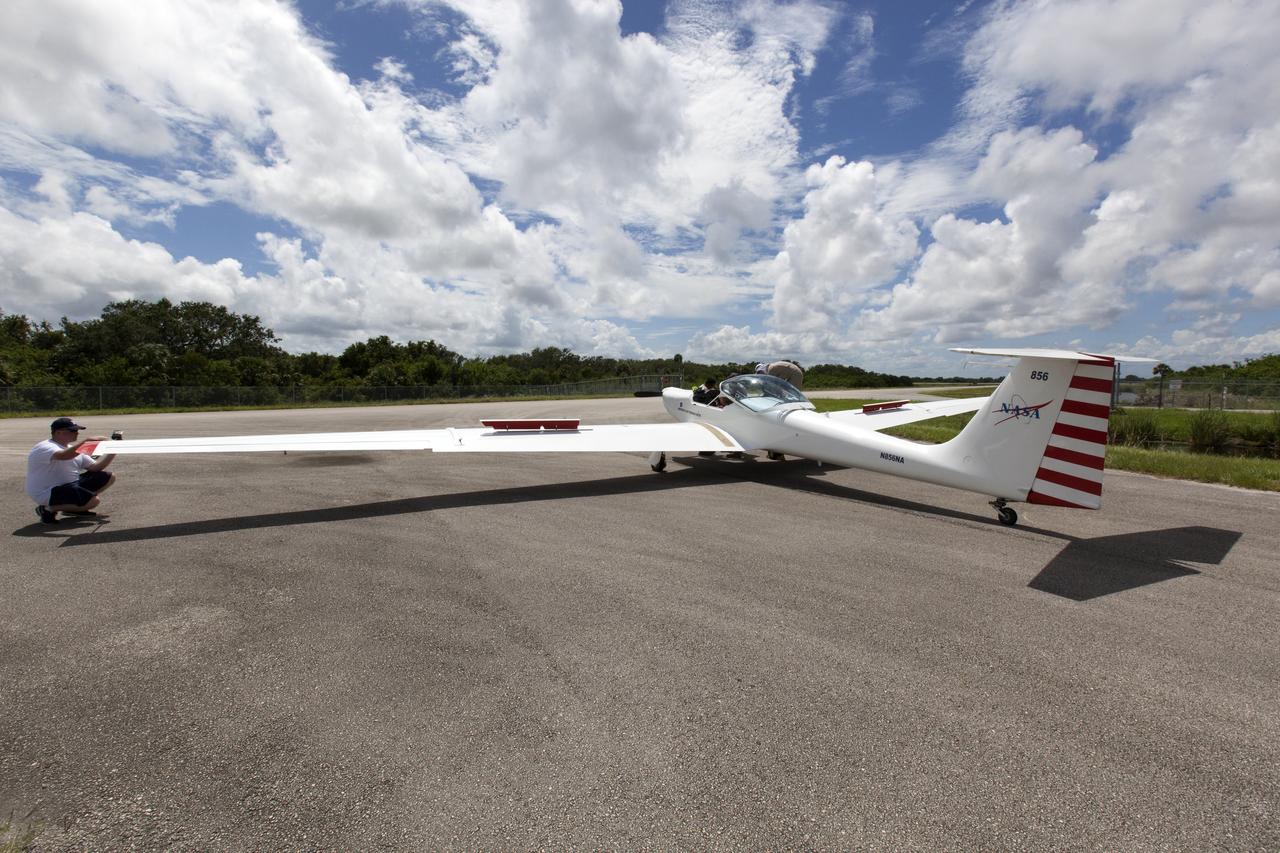
A motorized glider prepares to take off from the Shuttle Landing Facility at NASA's Kennedy Space Center in Florida. Flying with its engine off, the glider will be positioned above the 14,000-foot level to measure sonic booms created by agency F-18 jets to measure the effects of sonic booms. Several flights a day have been taking place the week of Aug. 21, 2017 as part of NASA's Sonic Booms in Atmospheric Turbulence, or SonicBAT II Program. NASA at Kennedy is partnering with the agency's Armstrong Flight Research Center in California, Langley Research Center in Virginia, and Space Florida for a program in which F-18 jets will take off from the Shuttle Landing Facility and fly at supersonic speeds while agency researchers measure the effects of low-altitude turbulence caused by sonic booms.
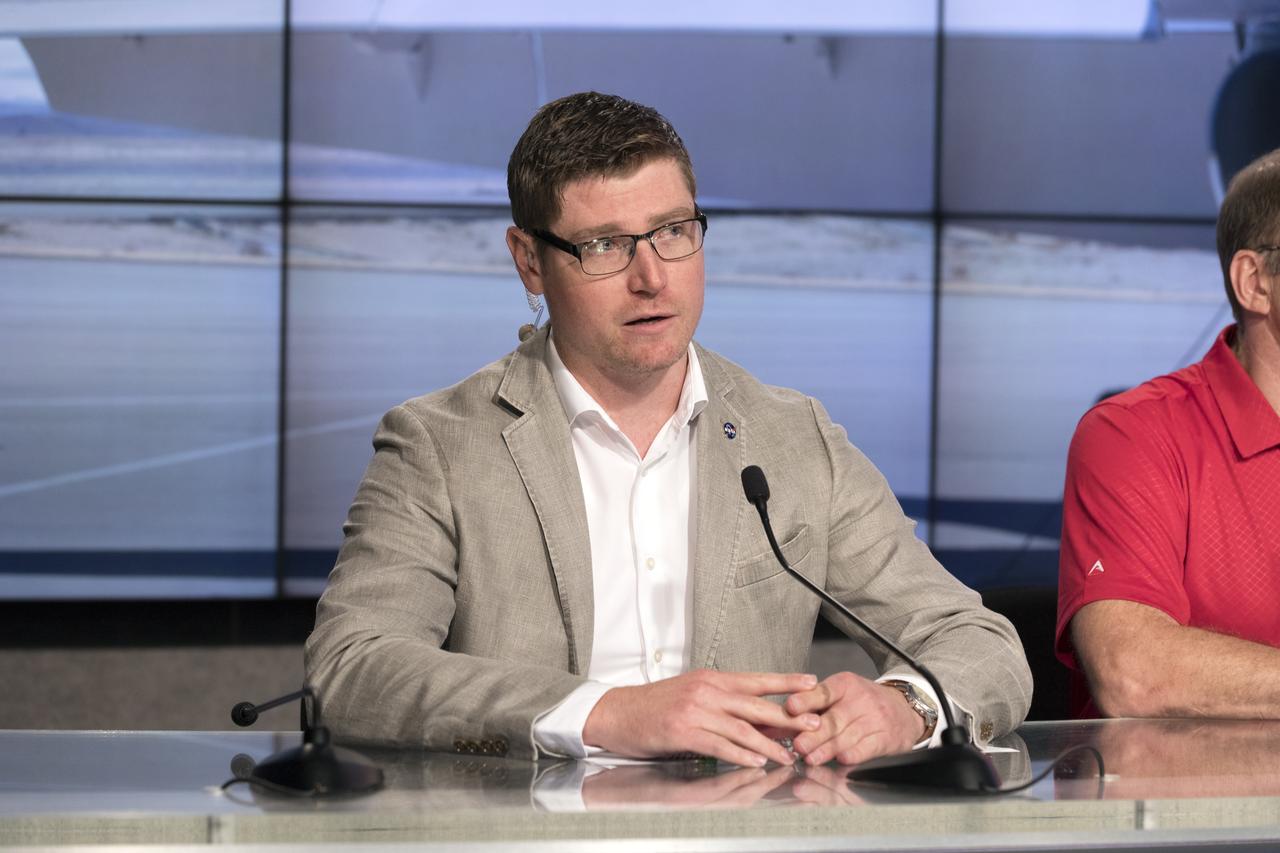
In the Kennedy Space Center's Press Site auditorium, Matthew Kamlet of NASA Communications at the Armstrong Flight Research Center in California, speaks to members of the media at a news conference to discuss upcoming flight tests to study the effects of sonic booms. Kennedy is partnering with Armstrong, Langley and Space Florida for a program called SonicBAT for Sonic Booms in Atmospheric Turbulence. Starting in August, NASA F-18 jets will take off from the Shuttle Landing Facility and fly at supersonic speeds while agency researchers on the ground measure the effects of low-altitude turbulence on sonic booms. The study could lead to technology mitigating the annoying sonic booms making possible supersonic flights over populated areas.
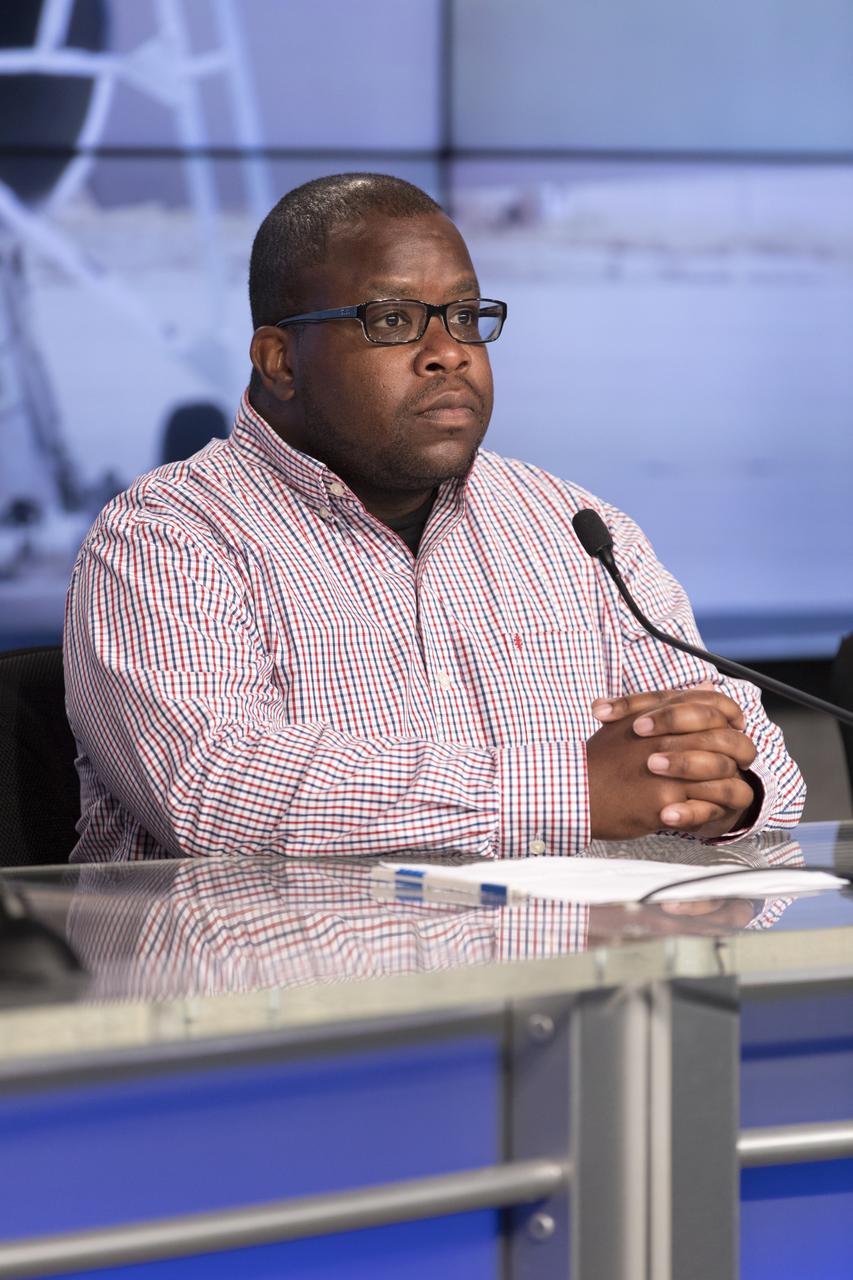
In the Kennedy Space Center's Press Site auditorium, Larry Cliatt, SonicBAT Fluid Mechanics at Armstrong Flight Research Center in California, speaks to members of the media at a news conference to discuss upcoming flight tests to study the effects of sonic booms. Kennedy is partnering with Armstrong, Langley and Space Florida for a program called SonicBAT for Sonic Booms in Atmospheric Turbulence. Starting in August, NASA F-18 jets will take off from the Shuttle Landing Facility and fly at supersonic speeds while agency researchers on the ground measure the effects of low-altitude turbulence on sonic booms. The study could lead to technology mitigating the annoying sonic booms making possible supersonic flights over populated areas.
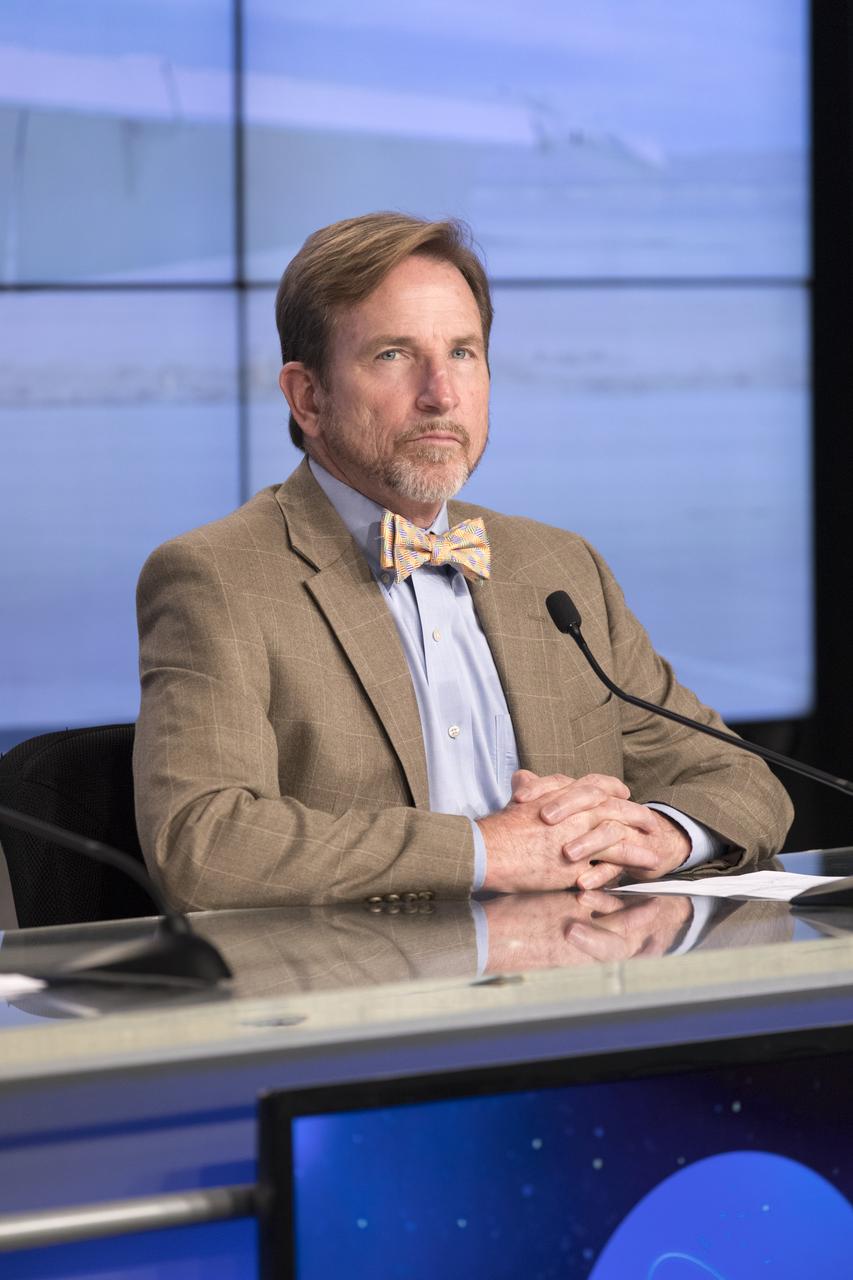
In the Kennedy Space Center's Press Site auditorium, Dale Ketcham chief of Strategic Alliances for Space Florida, speaks to members of the media at a news conference to discuss upcoming flight tests to study the effects of sonic booms. Kennedy is partnering with Armstrong, Langley and Space Florida for a program called SonicBAT for Sonic Booms in Atmospheric Turbulence. Starting in August, NASA F-18 jets will take off from the Shuttle Landing Facility and fly at supersonic speeds while agency researchers on the ground measure the effects of low-altitude turbulence on sonic booms. The study could lead to technology mitigating the annoying sonic booms making possible supersonic flights over populated areas.

In the Kennedy Space Center's Press Site auditorium, Peter Coen, SonicBAT Mission Analysis at NASA’s Langley Research Center in Virginia, speaks to members of the media at a news conference to discuss upcoming flight tests to study the effects of sonic booms. Kennedy is partnering with Armstrong, Langley and Space Florida for a program called SonicBAT for Sonic Booms in Atmospheric Turbulence. Starting in August, NASA F-18 jets will take off from the Shuttle Landing Facility and fly at supersonic speeds while agency researchers on the ground measure the effects of low-altitude turbulence on sonic booms. The study could lead to technology mitigating the annoying sonic booms making possible supersonic flights over populated areas.

In the Kennedy Space Center's Press Site auditorium, Laura Henning, public information officer for the Canaveral National Seashore, speaks to members of the media at a news conference to discuss upcoming flight tests to study the effects of sonic booms. Kennedy is partnering with Armstrong, Langley and Space Florida for a program called SonicBAT for Sonic Booms in Atmospheric Turbulence. Starting in August, NASA F-18 jets will take off from the Shuttle Landing Facility and fly at supersonic speeds while agency researchers on the ground measure the effects of low-altitude turbulence on sonic booms. The study could lead to technology mitigating the annoying sonic booms making possible supersonic flights over populated areas.
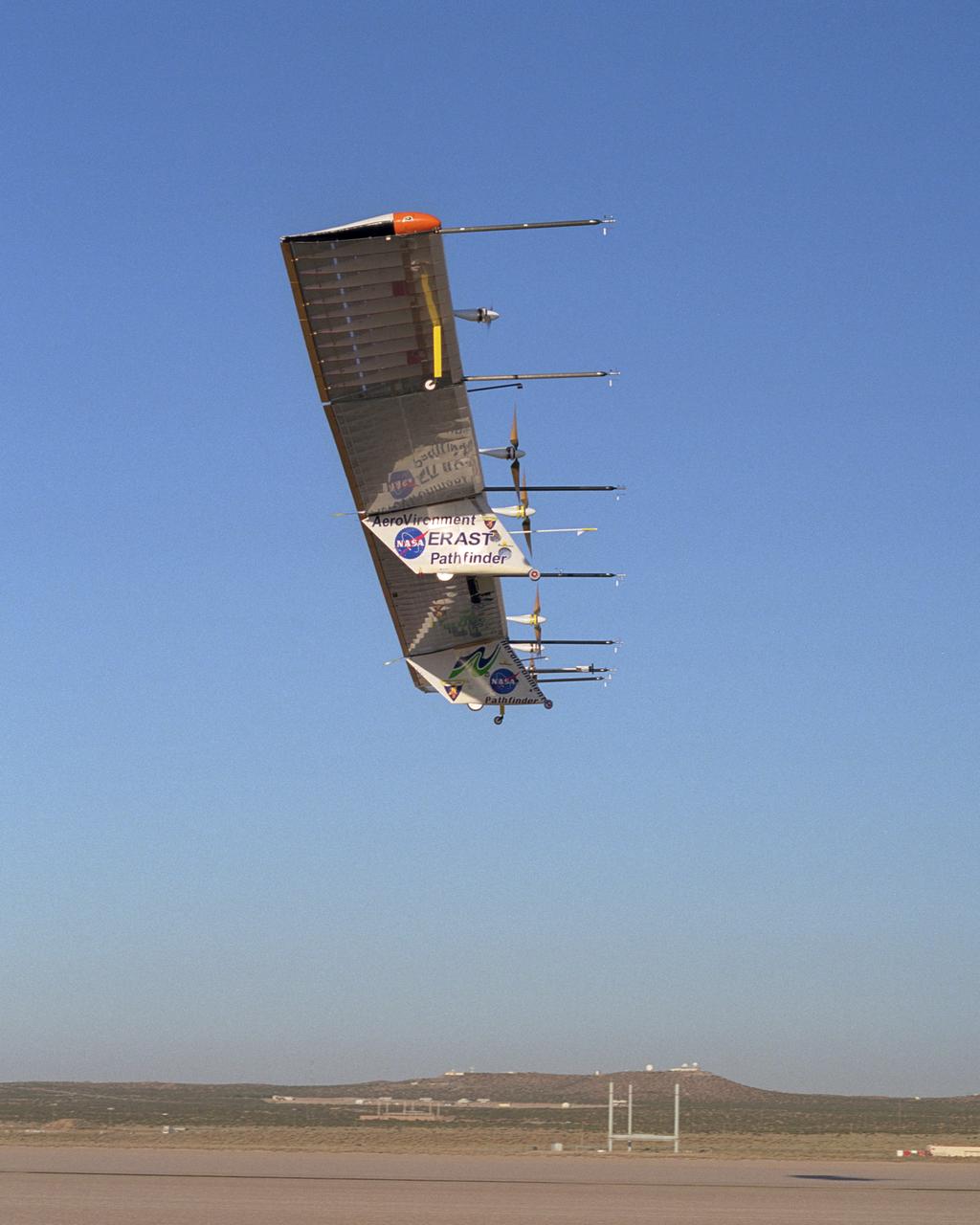
The Atmospheric Turbulence Measurement System booms are clearly evident in this view of the Pathfinder-Plus solar aircraft as it flies over Rogers Dry Lake.
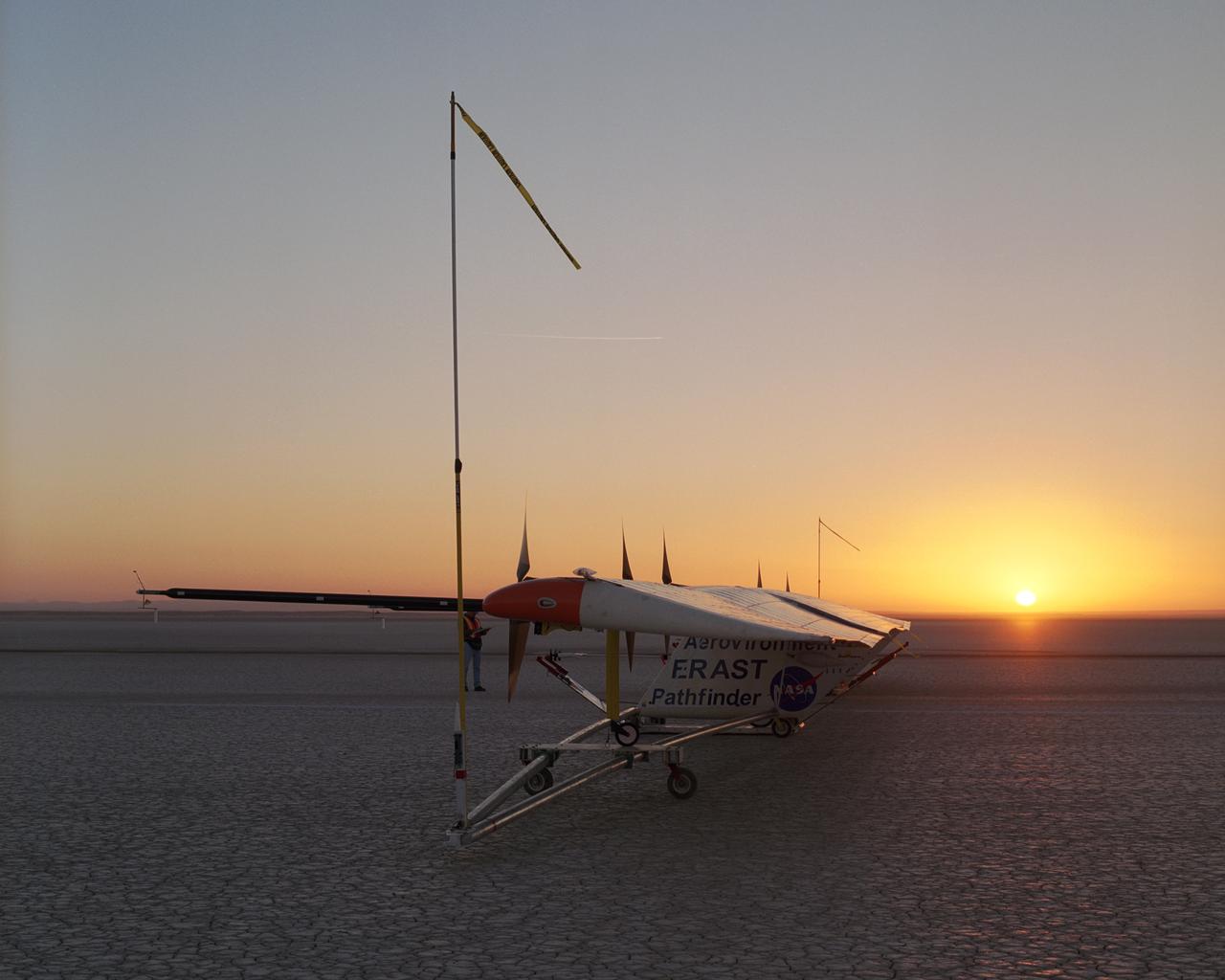
As the rising sun dawns over the parched bed of Rogers Dry Lake, AeroVironment's solar-electric Pathfinder-Plus awaits takeoff on its final research flight.
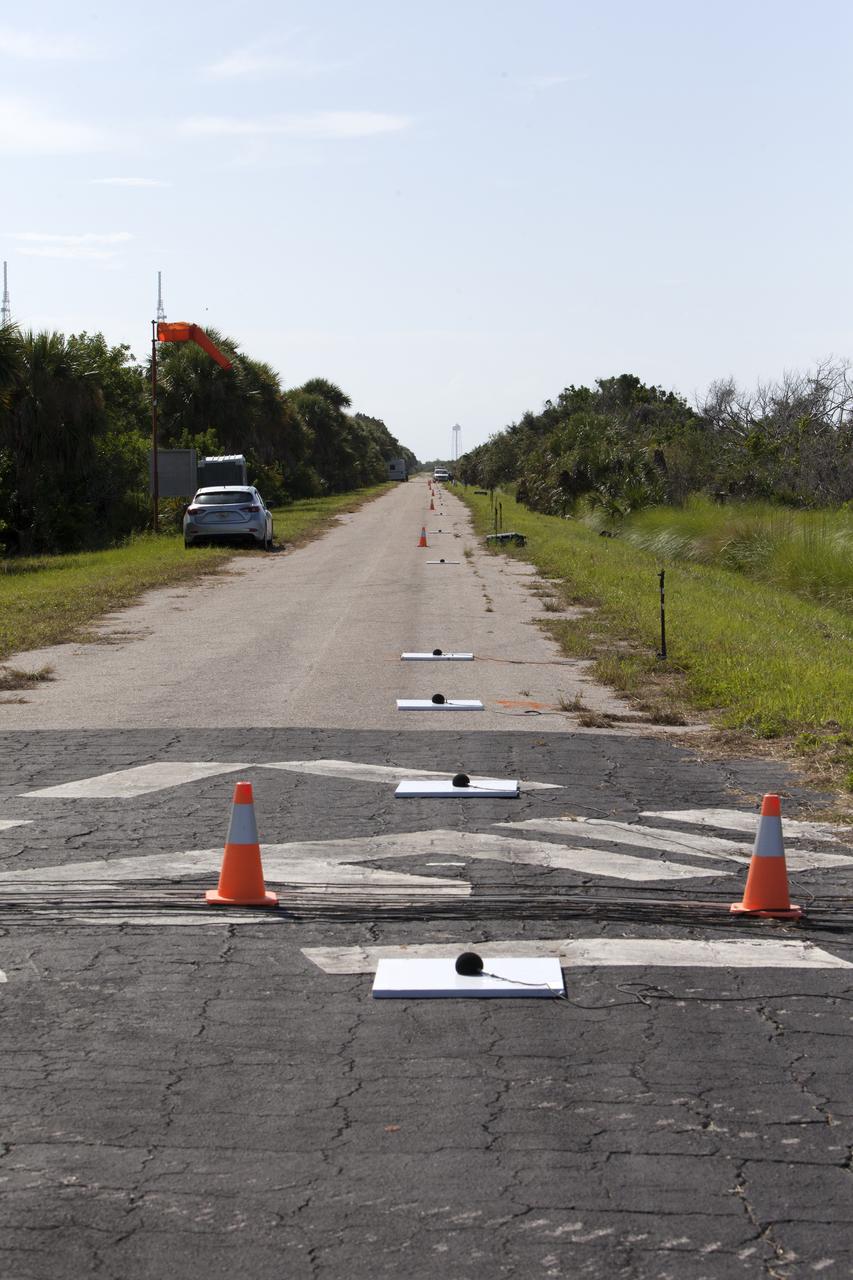
Microphone arrays and other instrumentation are strategically positioned along the ground at NASA's Kennedy Space Center in Florida. They have been set up to collect sound signatures from sonic booms created by agency F-18 jets flying faster than the speed of sound. Several flights a day have been taking place the week of Aug. 21, 2017 as part of NASA's Sonic Booms in Atmospheric Turbulence, or SonicBAT II Program. NASA at Kennedy is partnering with the agency's Armstrong Flight Research Center in California, Langley Research Center in Virginia, and Space Florida for a program in which F-18 jets will take off from the Shuttle Landing Facility and fly at supersonic speeds while agency researchers measure the effects of low-altitude turbulence caused by sonic booms.
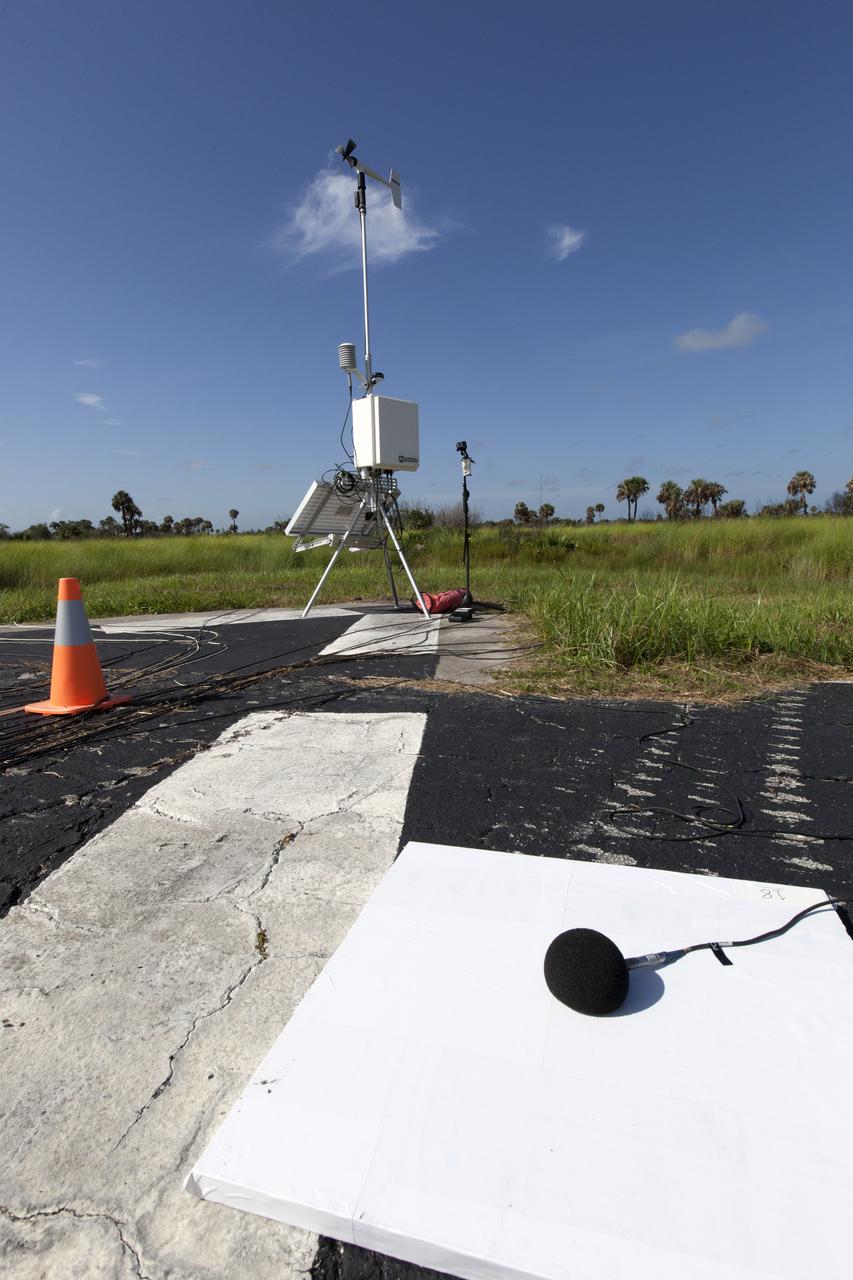
Microphone arrays and other instrumentation are strategically positioned along the ground at NASA's Kennedy Space Center in Florida. They have been set up to collect sound signatures from sonic booms created by agency F-18 jets flying faster than the speed of sound. Several flights a day have been taking place the week of Aug. 21, 2017 as part of NASA's Sonic Booms in Atmospheric Turbulence, or SonicBAT II Program. NASA at Kennedy is partnering with the agency's Armstrong Flight Research Center in California, Langley Research Center in Virginia, and Space Florida for a program in which F-18 jets will take off from the Shuttle Landing Facility and fly at supersonic speeds while agency researchers measure the effects of low-altitude turbulence caused by sonic booms.
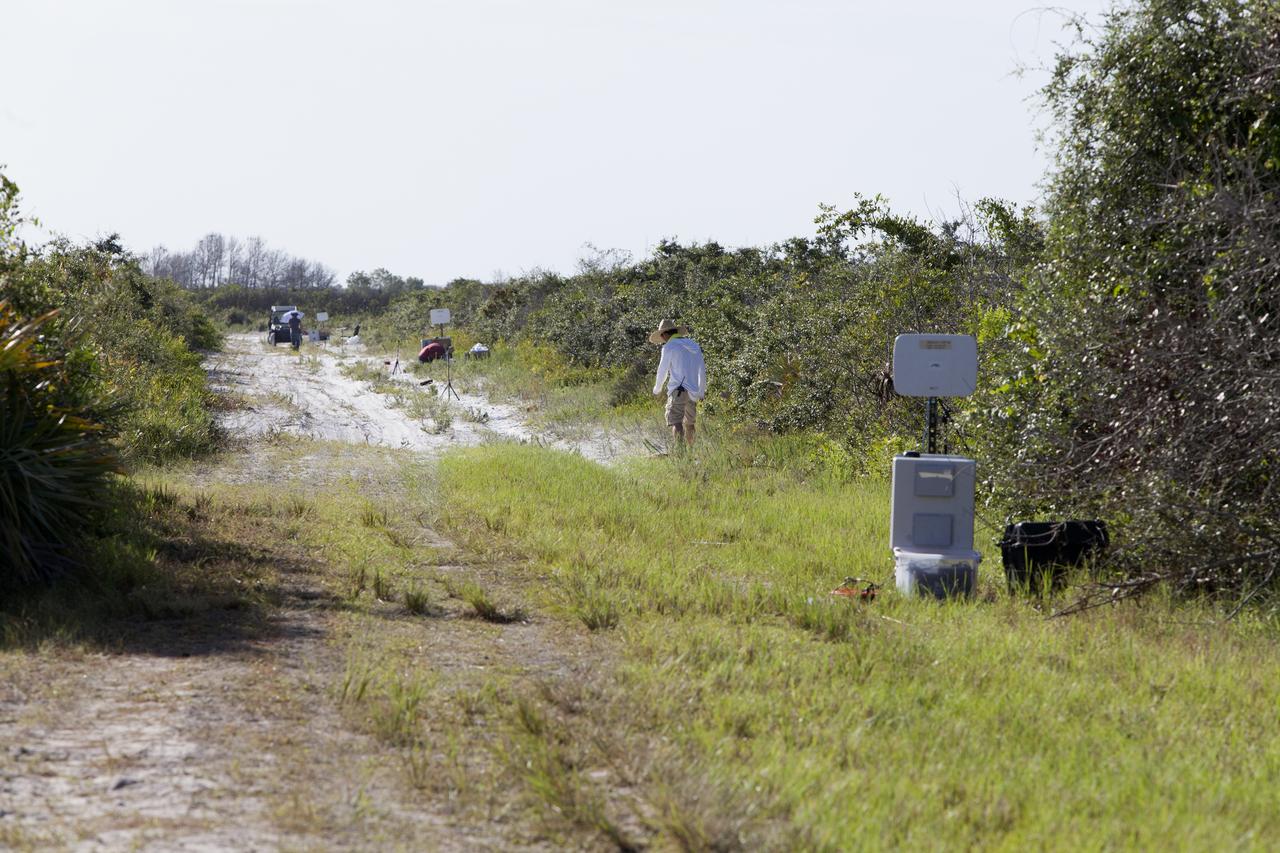
Microphone arrays are strategically positioned along the ground at NASA's Kennedy Space Center in Florida to collect sound signatures from sonic booms created by agency F-18 jets flying faster than the speed of sound. Several flights a day have been taking place the week of Aug. 21, 2017 as part of NASA's Sonic Booms in Atmospheric Turbulence, or SonicBAT II Program. NASA at Kennedy is partnering with the agency's Armstrong Flight Research Center in California, Langley Research Center in Virginia, and Space Florida for a program in which F-18 jets will take off from the Shuttle Landing Facility and fly at supersonic speeds while agency researchers measure the effects of low-altitude turbulence caused by sonic booms.
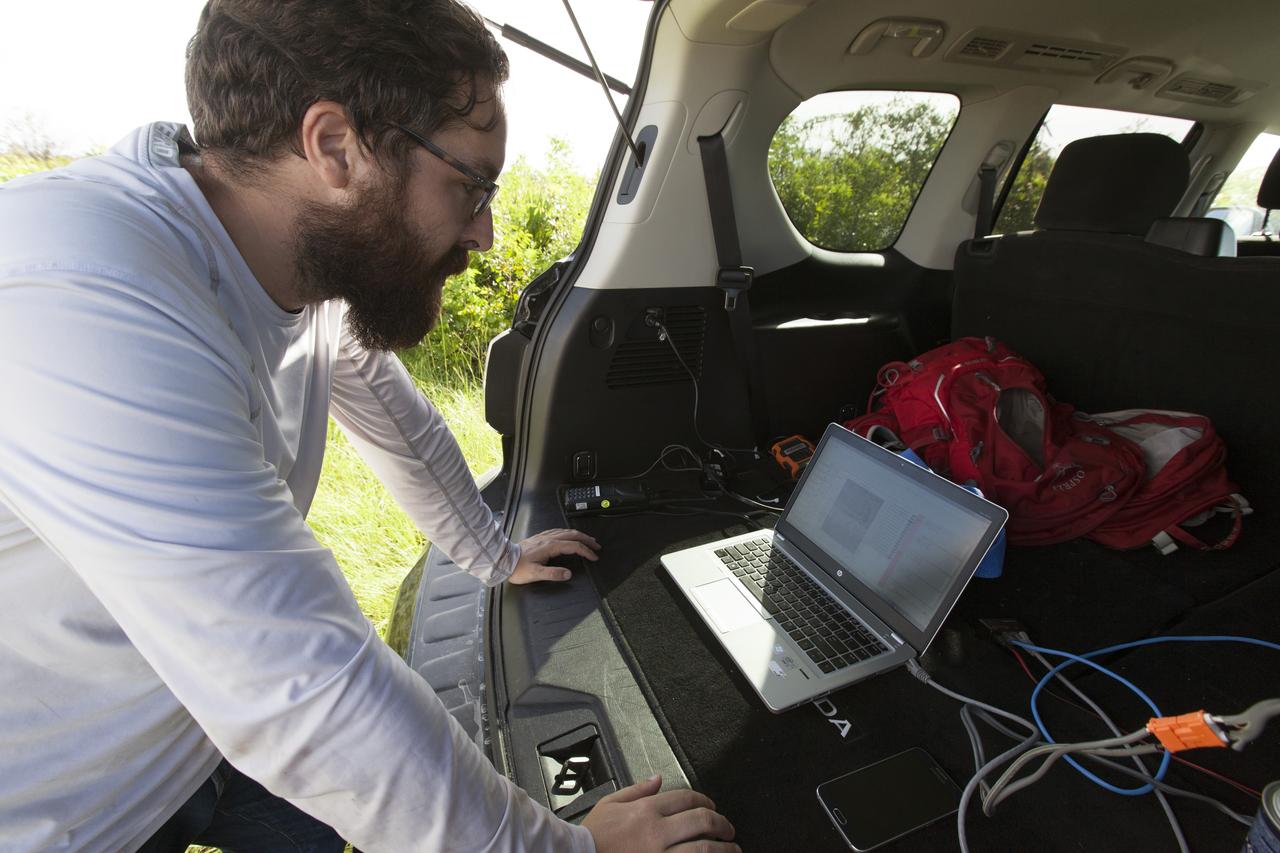
An engineer checks readings from microphone arrays that were strategically positioned along the ground at NASA's Kennedy Space Center in Florida to collect sound signatures from sonic booms created by agency F-18 jets flying faster than the speed of sound. Several flights a day have been taking place the week of Aug. 21, 2017 as part of NASA's Sonic Booms in Atmospheric Turbulence, or SonicBAT II Program. NASA at Kennedy is partnering with the agency's Armstrong Flight Research Center in California, Langley Research Center in Virginia, and Space Florida for a program in which F-18 jets will take off from the Shuttle Landing Facility and fly at supersonic speeds while agency researchers measure the effects of low-altitude turbulence caused by sonic booms.
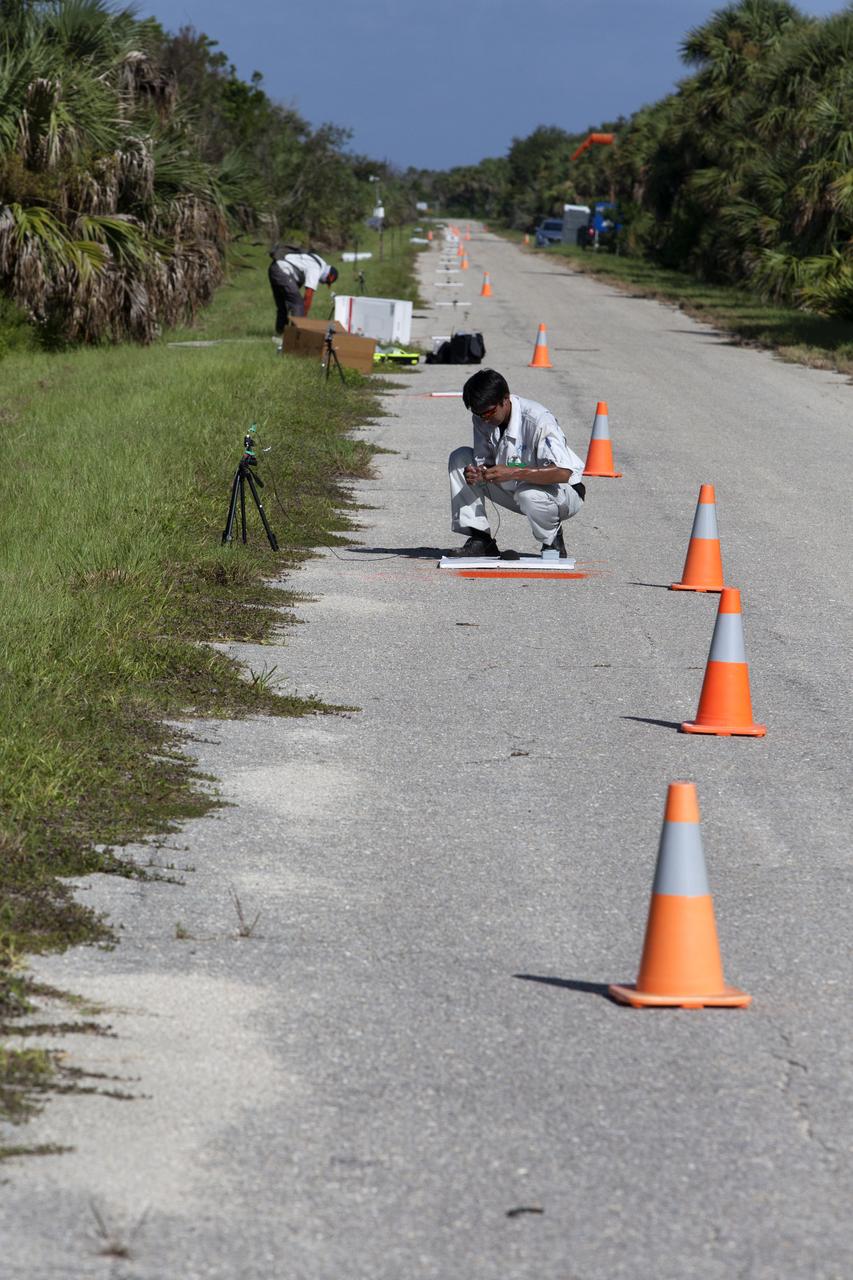
Microphone arrays are strategically positioned along the ground at NASA's Kennedy Space Center in Florida to collect sound signatures from sonic booms created by agency F-18 jets flying faster than the speed of sound. Several flights a day have been taking place the week of Aug. 21, 2017 as part of NASA's Sonic Booms in Atmospheric Turbulence, or SonicBAT II Program. NASA at Kennedy is partnering with the agency's Armstrong Flight Research Center in California, Langley Research Center in Virginia, and Space Florida for a program in which F-18 jets will take off from the Shuttle Landing Facility and fly at supersonic speeds while agency researchers measure the effects of low-altitude turbulence caused by sonic booms.
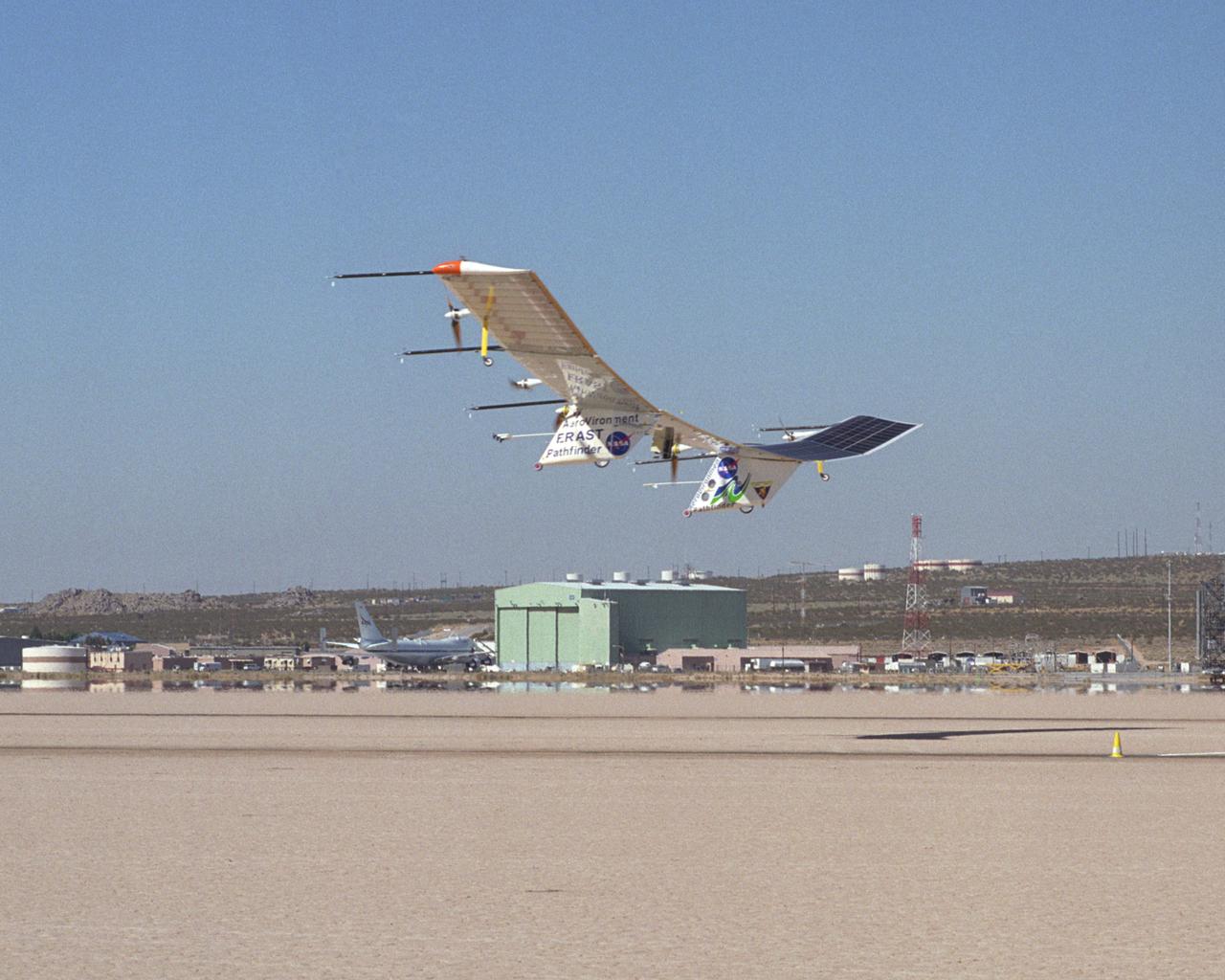
The Pathfinder-Plus solar aircraft flies past NASA Dryden's space shuttle hangar and shuttle carrier aircraft as it descends for landing on Rogers Dry Lake.
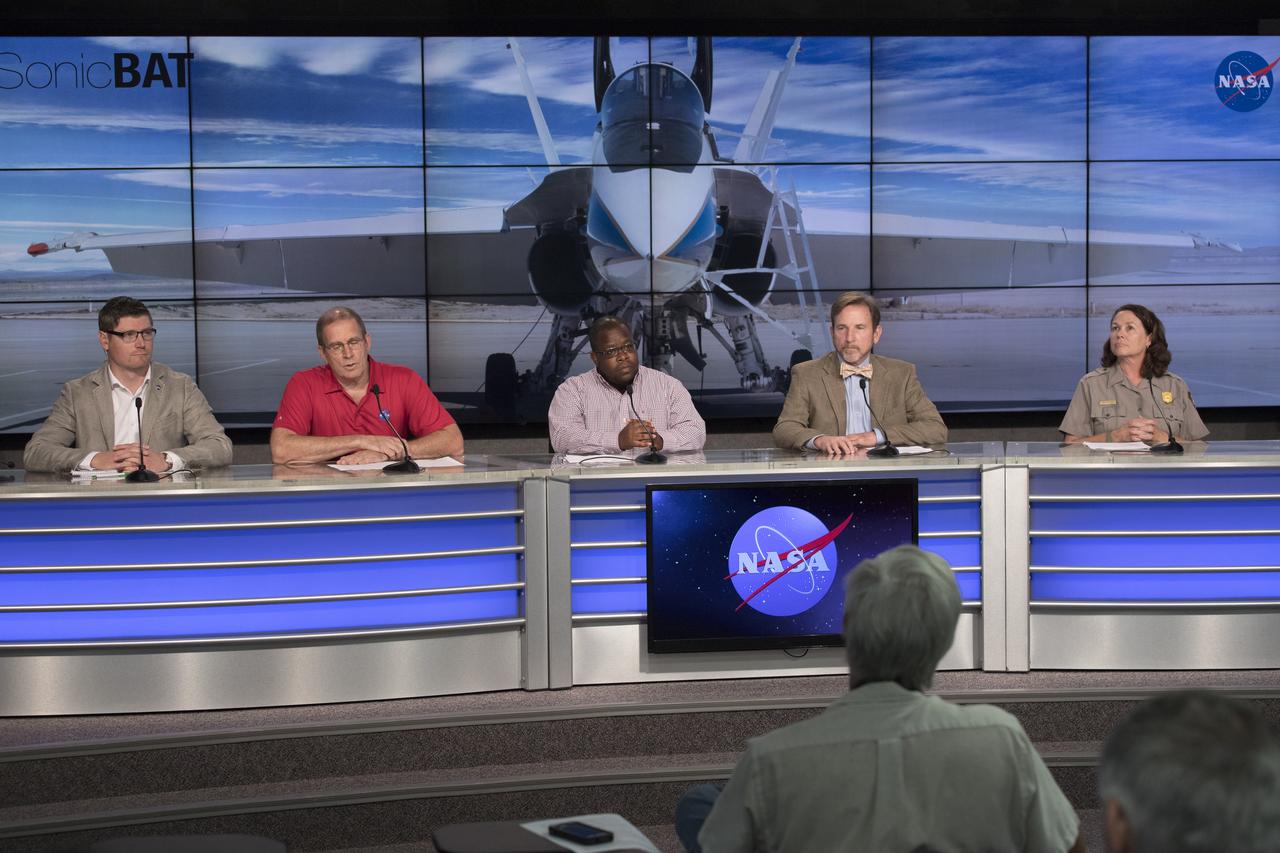
In the Kennedy Space Center's Press Site auditorium, NASA and other government leaders speak to members of the media at a news conference to discuss upcoming flight tests to study the effects of sonic booms. Participants from left are: Matthew Kamlet of NASA Communications at the Armstrong Flight Research Center in California; Peter Coen, SonicBAT Mission Analysis at NASA’s Langley Research Center in Virginia; Larry Cliatt, SonicBAT Fluid Mechanics at Armstrong; Dale Ketcham chief of Strategic Alliances for Space Florida; and Laura Henning, public information officer for the Canaveral National Seashore. Kennedy is partnering with Armstrong, Langley and Space Florida for a program called SonicBAT for Sonic Booms in Atmospheric Turbulence. Starting in August, NASA F-18 jets will take off from the Shuttle Landing Facility and fly at supersonic speeds while agency researchers on the ground measure the effects of low-altitude turbulence on sonic booms. The study could lead to technology mitigating the annoying sonic booms making possible supersonic flights over populated areas.
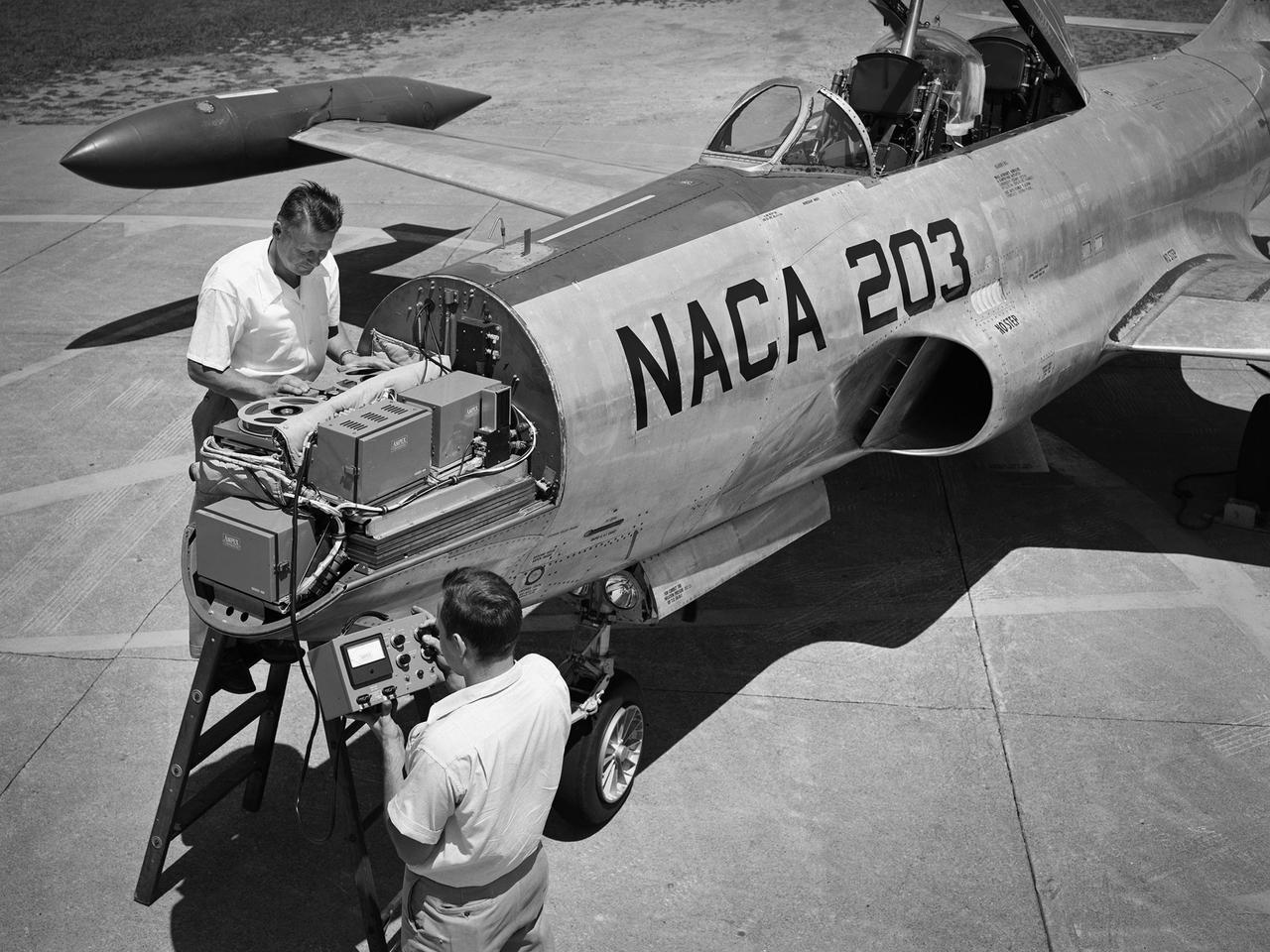
A Lockheed F-94B Starfire being equipped with an audio recording machine and sensors at the National Advisory Committee for Aeronautics (NACA) Lewis Flight Propulsion Laboratory. The NACA was investigating the acoustic effects caused by the engine’s nozzle and the air flowing along the fuselage. Airline manufacturers would soon be introducing jet engines on their passenger aircraft, and there was concern regarding the noise levels for both the passengers and public on the ground. NACA Lewis conducted a variety of noise reduction studies in its wind tunnels, laboratories, and on a F2H-2B Banshee aircraft. The F2H-2B Banshee’s initial test flights in 1955 and 1956 measured the noise emanating directly from airflow over the aircraft’s surfaces, particularly the wings. This problem was particularly pronounced at high subsonic speeds. The researchers found the majority of the noise occurred in the low and middle octaves. These investigations were enhanced with a series of flights using the F-94B Starfire. The missions measured wall-pressure, turbulence fluctuations, and mean velocity profiles. Mach 0.3 to 0.8 flights were flown at altitudes of 10,000, 20,000, and 30,000 feet with microphones mounted near the forward fuselage and on a wing. The results substantiated the wind tunnel findings. This photograph shows the tape recorder being installed in the F-94B’s nose.
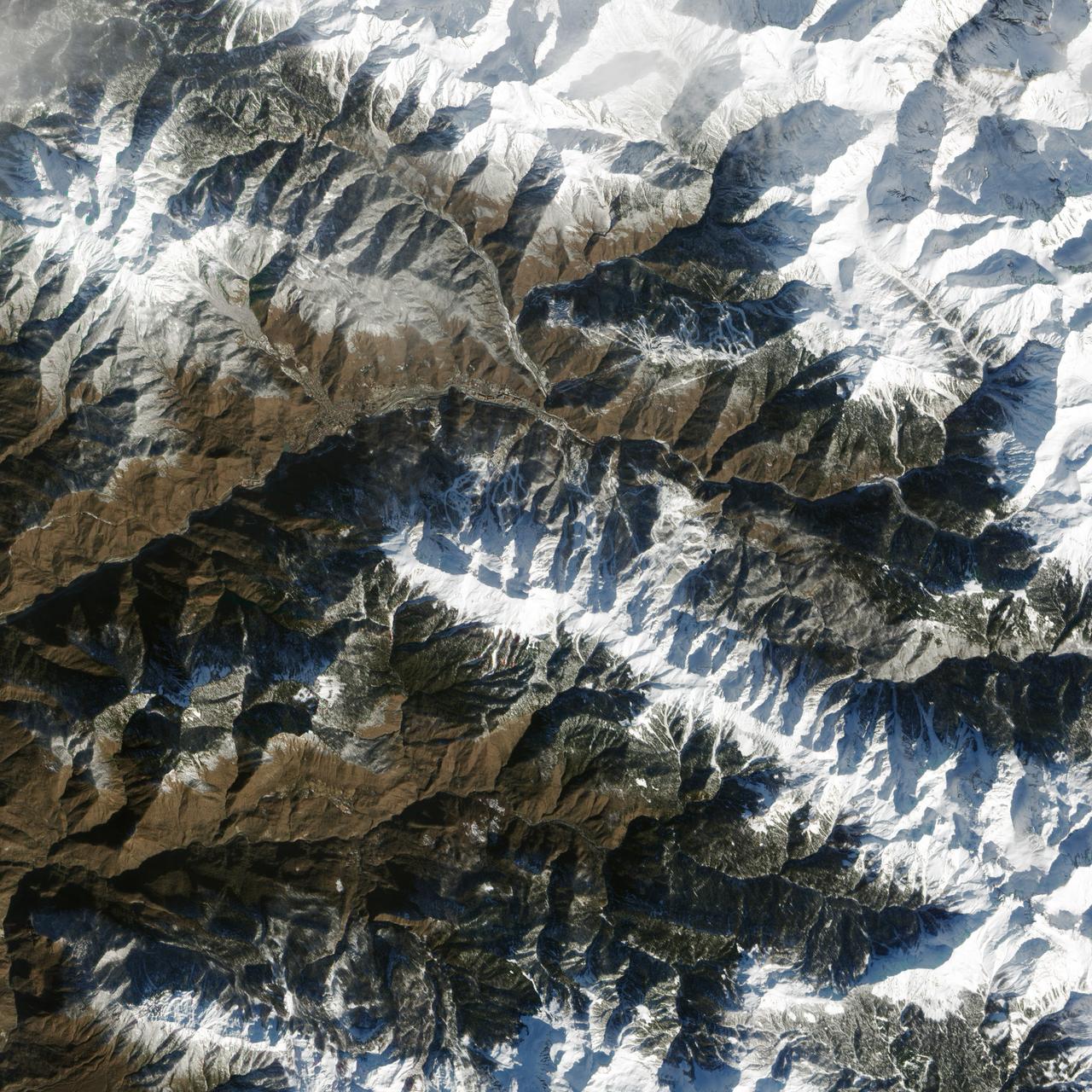
While Sochi is a coastal town on the Black Sea, the skiing events for the XXII Olympic Games are taking place about 40 kilometers (25 miles) inland. The venues are clustered around Krasnaya Polyana, a small town tucked between the Aibiga and Psekhako Ridges in the western Caucasus. This image—acquired by the Advanced Land Imager (ALI) on NASA’s Earth Observing-1 (EO-1) satellite on February 8, 2014—offers a view of the town and the ski facilities. The Rosa Khutor Alpine Center is the home to the downhill, snowboard, and freestyle events. The combined downhill skiing area measures about 20 kilometers (12 miles) in total, with the men’s downhill course stretching 3,500 meters (11,482 feet) and featuring a 1,075-meter (3,526 foot) change in elevation. The highest lift climbs to the summit of Rosa Peak, which rises 2,320 meters (7,612 feet). While not being used for the Olympics, the nearby Black Pyramid mountain has downhill skiing trails as well. The same steep slopes that make Rosa Peak good for skiing also elevate the risk of avalanches. To protect against falling snow, planners installed a series of gas pipes along the top of the ridge. The pipes emit bursts of oxygen and propane that create small, controlled avalanches. Event organizers also installed a series of earthen dams to steer snow away from infrastructure, and they have deployed two backhoes to the top of Aibiga Ridge to knock cornices away before they pose a risk. The Laura Cross-country Ski and Biathalon Center is located to the north on Psekhako Ridge. It includes two stadiums, each with their own start and finish zones, two track systems for skiing and biathlon, as well as shooting areas and warm-up zones. The center is named for the Laura River, a turbulent river that flows nearby. NASA Earth Observatory image by Jesse Allen and Robert Simmon, using EO-1 ALI data provided courtesy of the NASA EO-1 team. Caption by Adam Voiland. Instrument: EO-1 - ALI Read more: <a href="http://earthobservatory.nasa.gov/IOTD/view.php?id=83131&eocn=home&eoci=iotd_grid" rel="nofollow">earthobservatory.nasa.gov/IOTD/view.php?id=83131&eocn...</a> Credit: <b><a href="http://www.earthobservatory.nasa.gov/" rel="nofollow"> NASA Earth Observatory</a></b> <b><a href="http://www.nasa.gov/audience/formedia/features/MP_Photo_Guidelines.html" rel="nofollow">NASA image use policy.</a></b> <b><a href="http://www.nasa.gov/centers/goddard/home/index.html" rel="nofollow">NASA Goddard Space Flight Center</a></b> enables NASA’s mission through four scientific endeavors: Earth Science, Heliophysics, Solar System Exploration, and Astrophysics. Goddard plays a leading role in NASA’s accomplishments by contributing compelling scientific knowledge to advance the Agency’s mission. <b>Follow us on <a href="http://twitter.com/NASAGoddardPix" rel="nofollow">Twitter</a></b> <b>Like us on <a href="http://www.facebook.com/pages/Greenbelt-MD/NASA-Goddard/395013845897?ref=tsd" rel="nofollow">Facebook</a></b> <b>Find us on <a href="http://instagram.com/nasagoddard?vm=grid" rel="nofollow">Instagram</a></b>
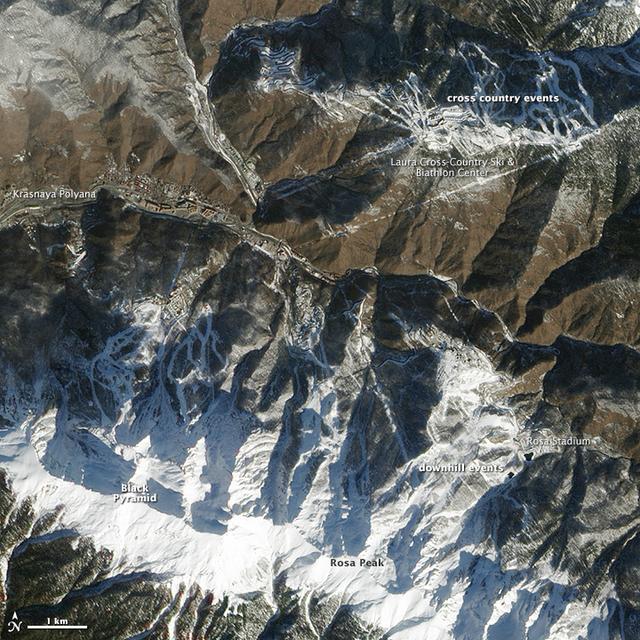
High res here: <a href="http://www.flickr.com/photos/gsfc/12640339235/in/photostream/">www.flickr.com/photos/gsfc/12640339235/in/photostream/</a> While Sochi is a coastal town on the Black Sea, the skiing events for the XXII Olympic Games are taking place about 40 kilometers (25 miles) inland. The venues are clustered around Krasnaya Polyana, a small town tucked between the Aibiga and Psekhako Ridges in the western Caucasus. This image—acquired by the Advanced Land Imager (ALI) on NASA’s Earth Observing-1 (EO-1) satellite on February 8, 2014—offers a view of the town and the ski facilities. The Rosa Khutor Alpine Center is the home to the downhill, snowboard, and freestyle events. The combined downhill skiing area measures about 20 kilometers (12 miles) in total, with the men’s downhill course stretching 3,500 meters (11,482 feet) and featuring a 1,075-meter (3,526 foot) change in elevation. The highest lift climbs to the summit of Rosa Peak, which rises 2,320 meters (7,612 feet). While not being used for the Olympics, the nearby Black Pyramid mountain has downhill skiing trails as well. The same steep slopes that make Rosa Peak good for skiing also elevate the risk of avalanches. To protect against falling snow, planners installed a series of gas pipes along the top of the ridge. The pipes emit bursts of oxygen and propane that create small, controlled avalanches. Event organizers also installed a series of earthen dams to steer snow away from infrastructure, and they have deployed two backhoes to the top of Aibiga Ridge to knock cornices away before they pose a risk. The Laura Cross-country Ski and Biathalon Center is located to the north on Psekhako Ridge. It includes two stadiums, each with their own start and finish zones, two track systems for skiing and biathlon, as well as shooting areas and warm-up zones. The center is named for the Laura River, a turbulent river that flows nearby. NASA Earth Observatory image by Jesse Allen and Robert Simmon, using EO-1 ALI data provided courtesy of the NASA EO-1 team. Caption by Adam Voiland. Instrument: EO-1 - ALI Read more: <a href="http://earthobservatory.nasa.gov/IOTD/view.php?id=83131&eocn=home&eoci=iotd_grid" rel="nofollow">earthobservatory.nasa.gov/IOTD/view.php?id=83131&eocn...</a> Credit: <b><a href="http://www.earthobservatory.nasa.gov/" rel="nofollow"> NASA Earth Observatory</a></b> <b><a href="http://www.nasa.gov/audience/formedia/features/MP_Photo_Guidelines.html" rel="nofollow">NASA image use policy.</a></b> <b><a href="http://www.nasa.gov/centers/goddard/home/index.html" rel="nofollow">NASA Goddard Space Flight Center</a></b> enables NASA’s mission through four scientific endeavors: Earth Science, Heliophysics, Solar System Exploration, and Astrophysics. Goddard plays a leading role in NASA’s accomplishments by contributing compelling scientific knowledge to advance the Agency’s mission. <b>Follow us on <a href="http://twitter.com/NASAGoddardPix" rel="nofollow">Twitter</a></b> <b>Like us on <a href="http://www.facebook.com/pages/Greenbelt-MD/NASA-Goddard/395013845897?ref=tsd" rel="nofollow">Facebook</a></b> <b>Find us on <a href="http://instagram.com/nasagoddard?vm=grid" rel="nofollow">Instagram</a></b>