Modifications are underway at the Launch Complex 39 turn basin wharf at NASA's Kennedy Space Center in Florida to prepare for the arrival of the agency's massive Space Launch System (SLS) core booster aboard the barge Pegasus. Construction workers with Southeast Cherokee Construction Inc. work to shore up the turn basin area. A crane will be used to lift up precast concrete poles and position them to be driven to a depth of about 70 feet into the bedrock below the water around the turn basin. The upgrades are necessary to accommodate the 300,000-pound core booster aboard the modified Pegasus barge. The Ground Systems Development and Operations Program is overseeing the upgrades to the turn basin wharf.
Modifications are underway at the Launch Complex 39 turn basin wharf at NASA's Kennedy Space Center in Florida to prepare for the arrival of the agency's massive Space Launch System (SLS) core stage aboard the barge Pegasus. A crane will be used to lift up precast concrete poles and position them to be driven to a depth of about 70 feet into the bedrock below the water around the turn basin. The upgrades are necessary to accommodate the 300,000-pound core booster aboard the modified Pegasus barge. The Ground Systems Development and Operations Program is overseeing the upgrades to the turn basin wharf.
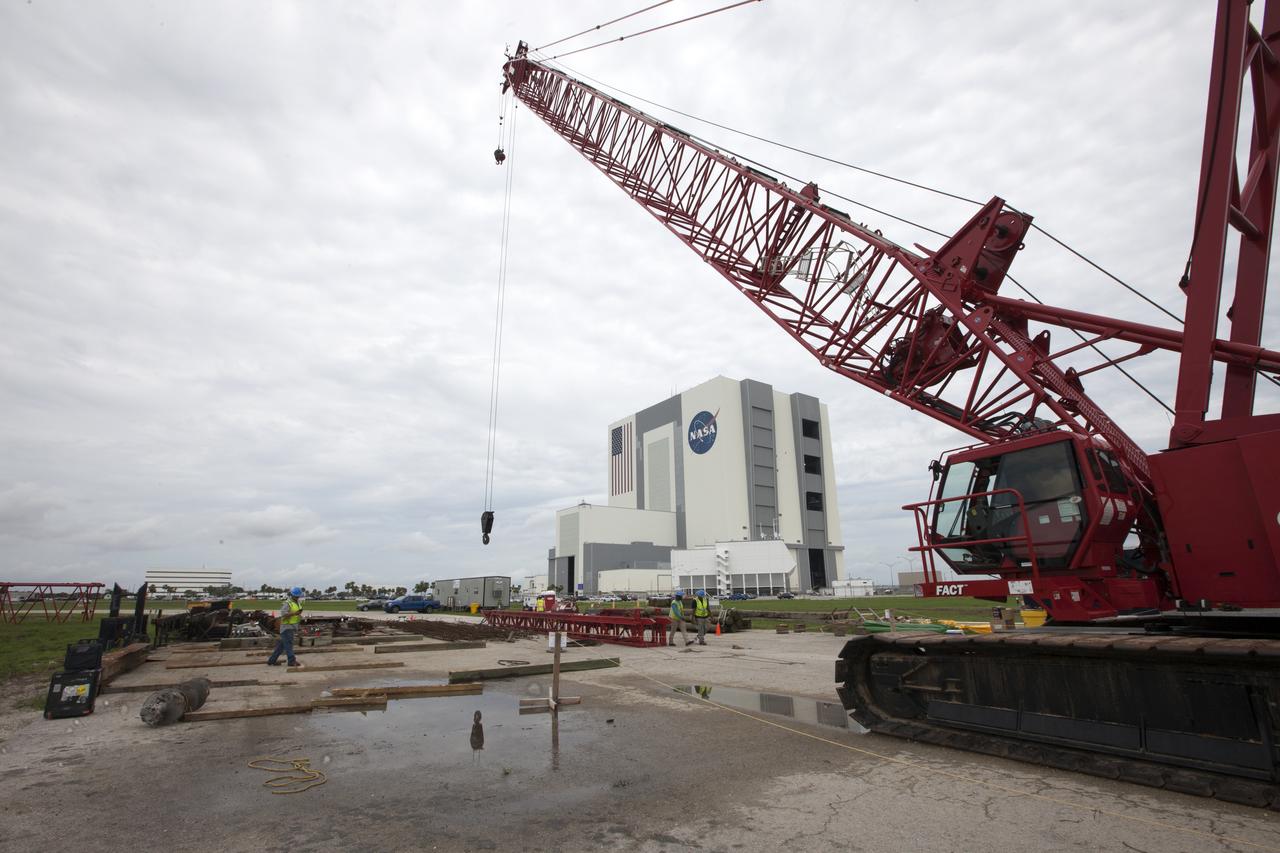
Modifications are underway at the Launch Complex 39 turn basin wharf at NASA's Kennedy Space Center in Florida to prepare for the arrival of the agency's massive Space Launch System (SLS) core stage aboard the barge Pegasus. A crane will be used to lift up precast concrete poles and position them to be driven to a depth of about 70 feet into the bedrock below the water around the turn basin. The upgrades are necessary to accommodate the increased weight of the core stage along with ground support and transportation equipment aboard the modified barge Pegasus. The Ground Systems Development and Operations Program is overseeing the upgrades to the turn basin wharf.
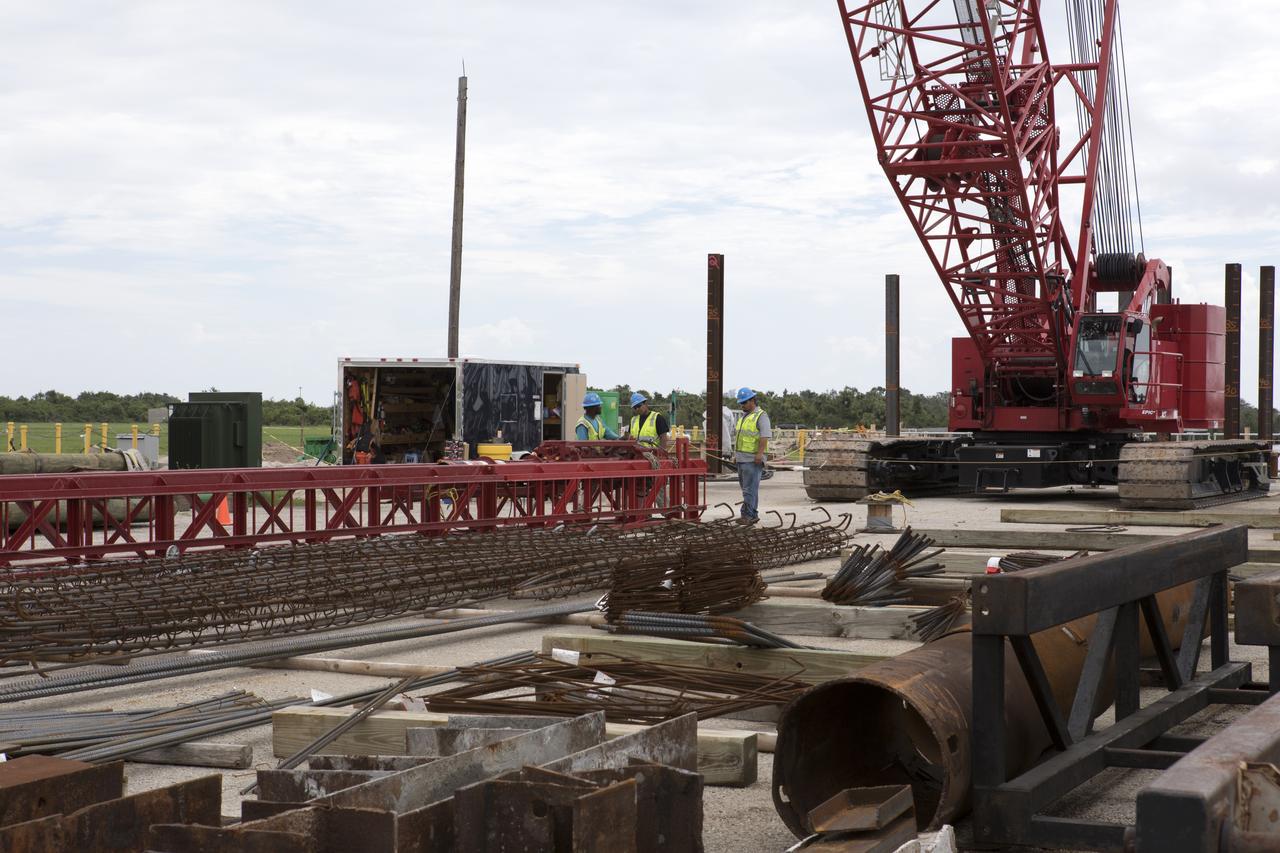
Modifications are underway at the Launch Complex 39 turn basin wharf at NASA's Kennedy Space Center in Florida to prepare for the arrival of the agency's massive Space Launch System (SLS) core stage aboard the barge Pegasus. Equipment is staged and a crane will be used to lift up precast concrete poles and position them to be driven to a depth of about 70 feet into the bedrock below the water around the turn basin. The upgrades are necessary to accommodate the increased weight of the core stage along with ground support and transportation equipment aboard the modified barge Pegasus. The Ground Systems Development and Operations Program is overseeing the upgrades to the turn basin wharf.
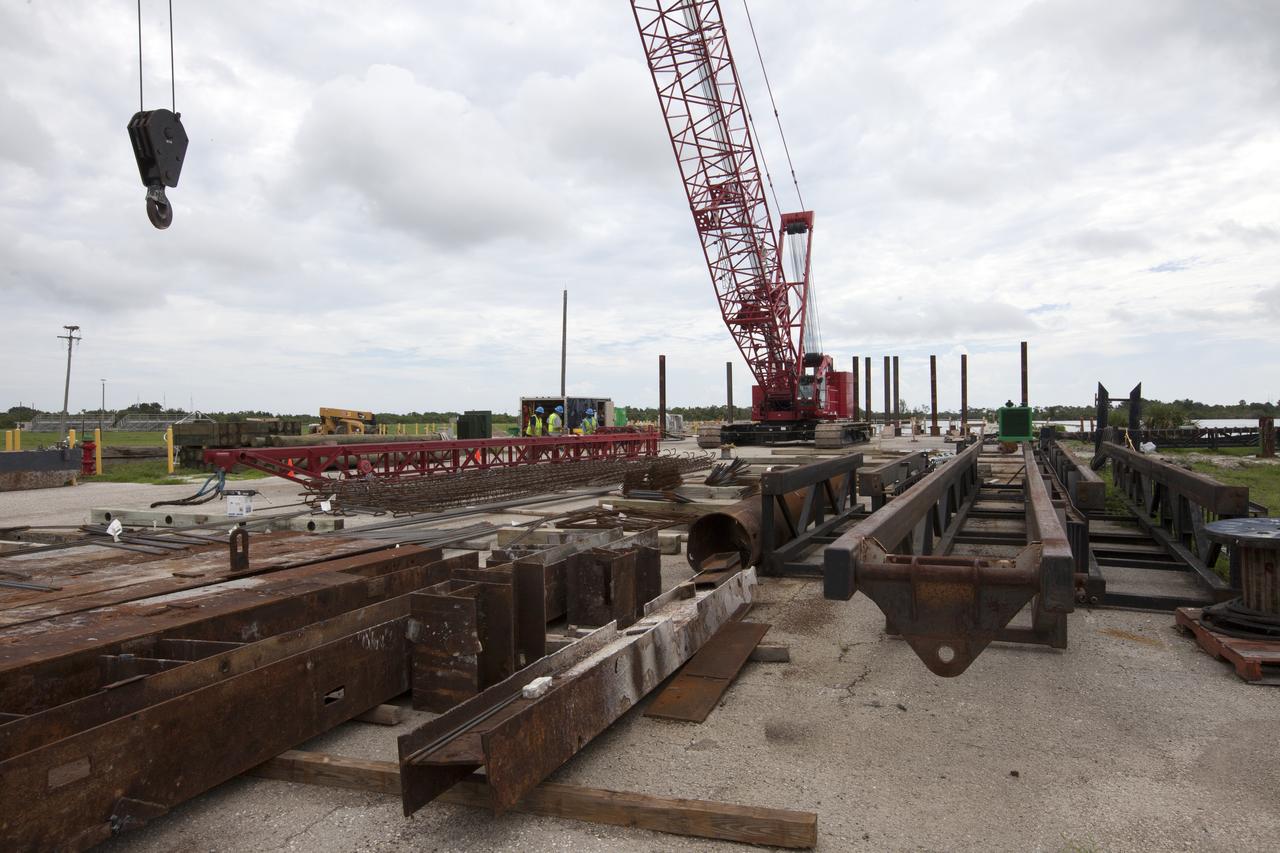
Modifications are underway at the Launch Complex 39 turn basin wharf at NASA's Kennedy Space Center in Florida to prepare for the arrival of the agency's massive Space Launch System (SLS) core stage aboard the barge Pegasus. Equipment is staged and a crane will be used to lift up precast concrete poles and position them to be driven to a depth of about 70 feet into the bedrock below the water around the turn basin. The upgrades are necessary to accommodate the increased weight of the core stage along with ground support and transportation equipment aboard the modified barge Pegasus. The Ground Systems Development and Operations Program is overseeing the upgrades to the turn basin wharf.
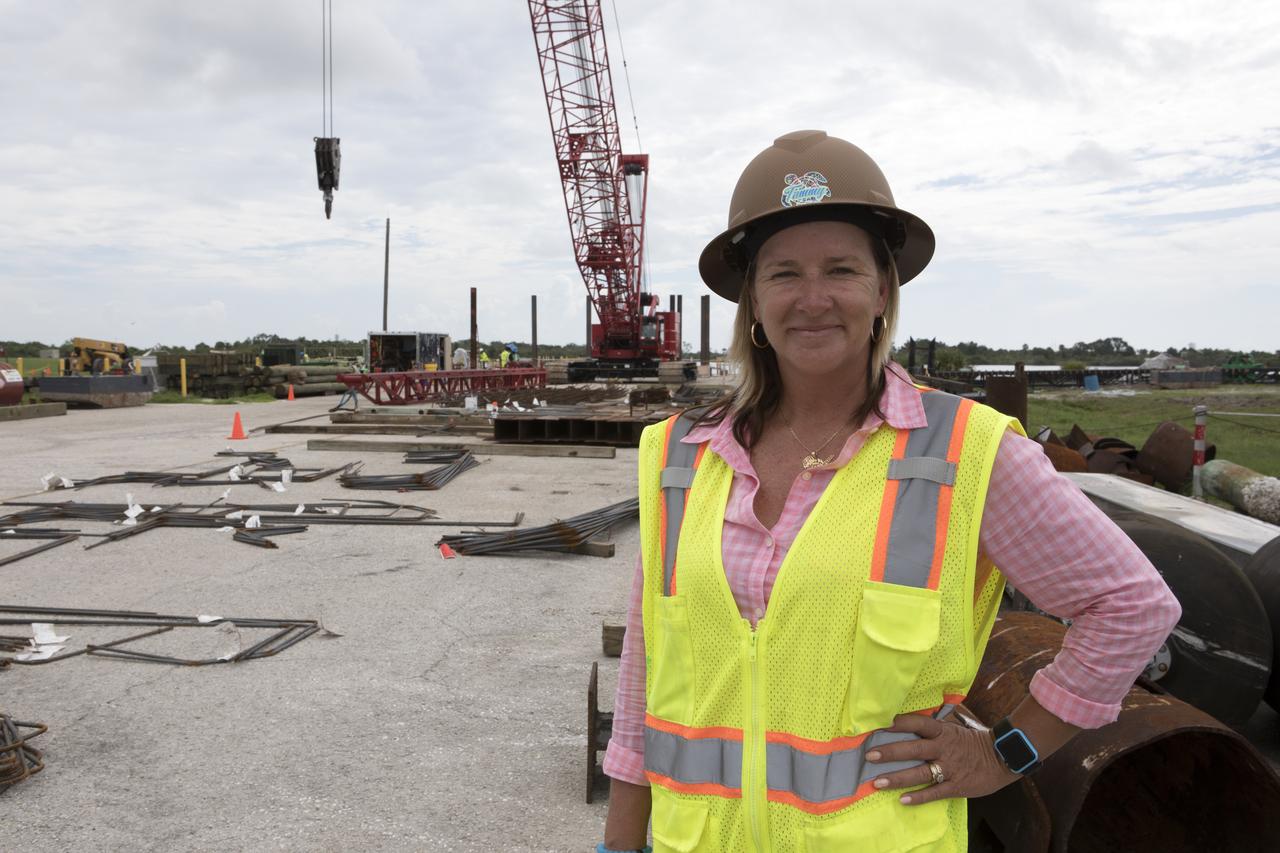
Modifications are underway at the Launch Complex 39 turn basin wharf at NASA's Kennedy Space Center in Florida to prepare for the arrival of the agency's massive Space Launch System (SLS) core stage aboard the barge Pegasus. In the foreground is Tammy Kelly, site manager, with Southeast Cherokee Construction Inc. A crane will be used to lift up precast concrete poles and position them to be driven to a depth of about 70 feet into the bedrock below the water around the turn basin. The upgrades are necessary to accommodate the increased weight of the core stage along with ground support and transportation equipment aboard the modified barge Pegasus. The Ground Systems Development and Operations Program is overseeing the upgrades to the turn basin wharf.
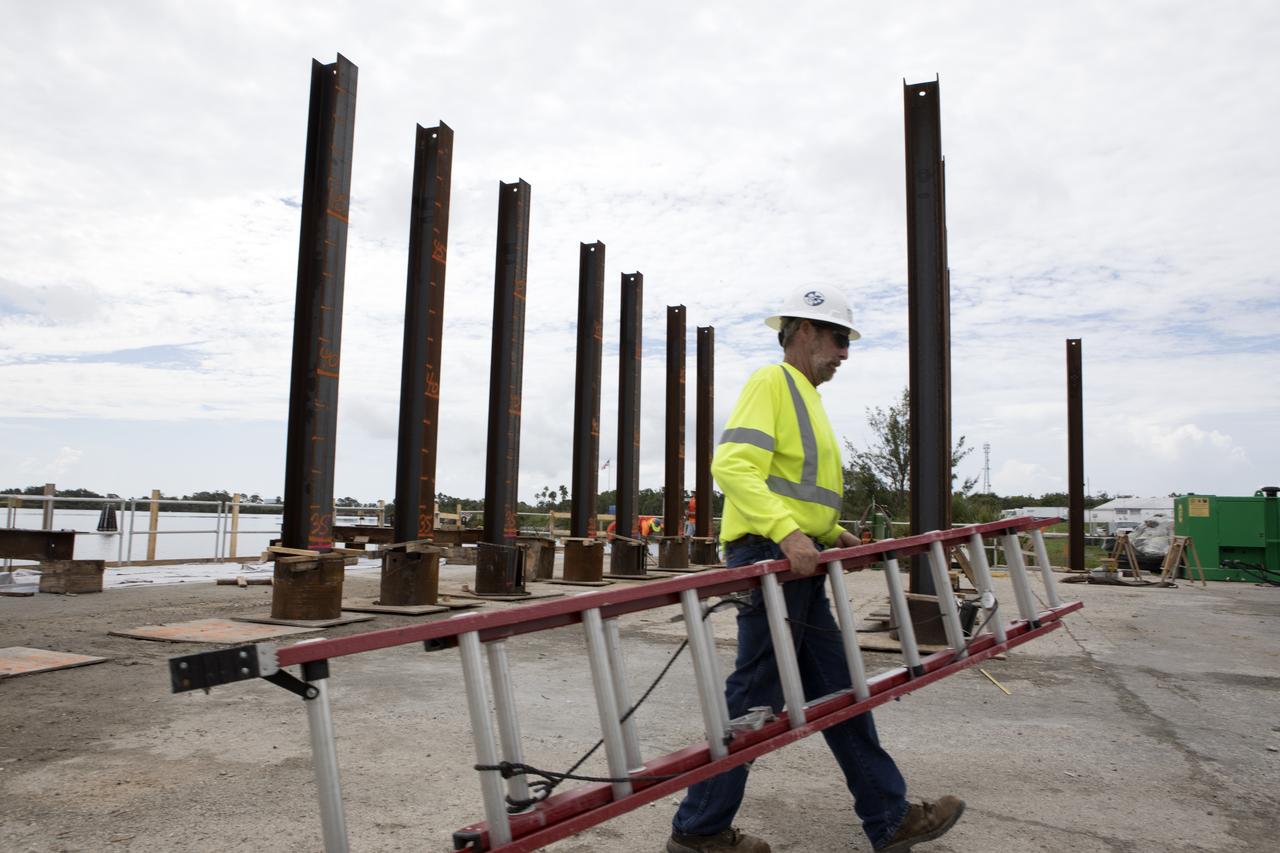
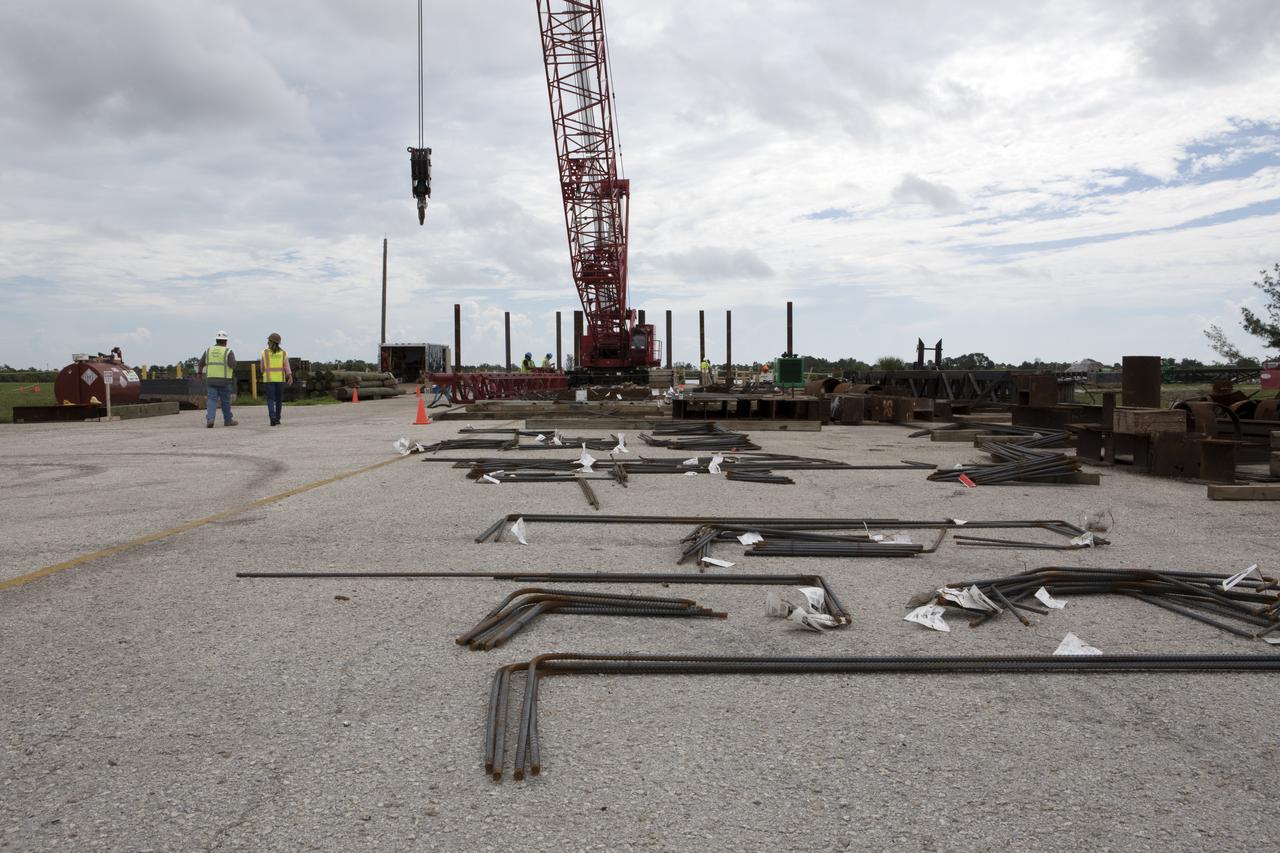
Modifications are underway at the Launch Complex 39 turn basin wharf at NASA's Kennedy Space Center in Florida to prepare for the arrival of the agency's massive Space Launch System (SLS) core stage aboard the barge Pegasus. Precast concrete poles are being driven to a depth of about 70 feet into the bedrock below the water around the turn basin. The upgrades are necessary to accommodate the increased weight of the core stage along with ground support and transportation equipment aboard the modified barge Pegasus. The Ground Systems Development and Operations Program is overseeing the upgrades to the turn basin wharf.
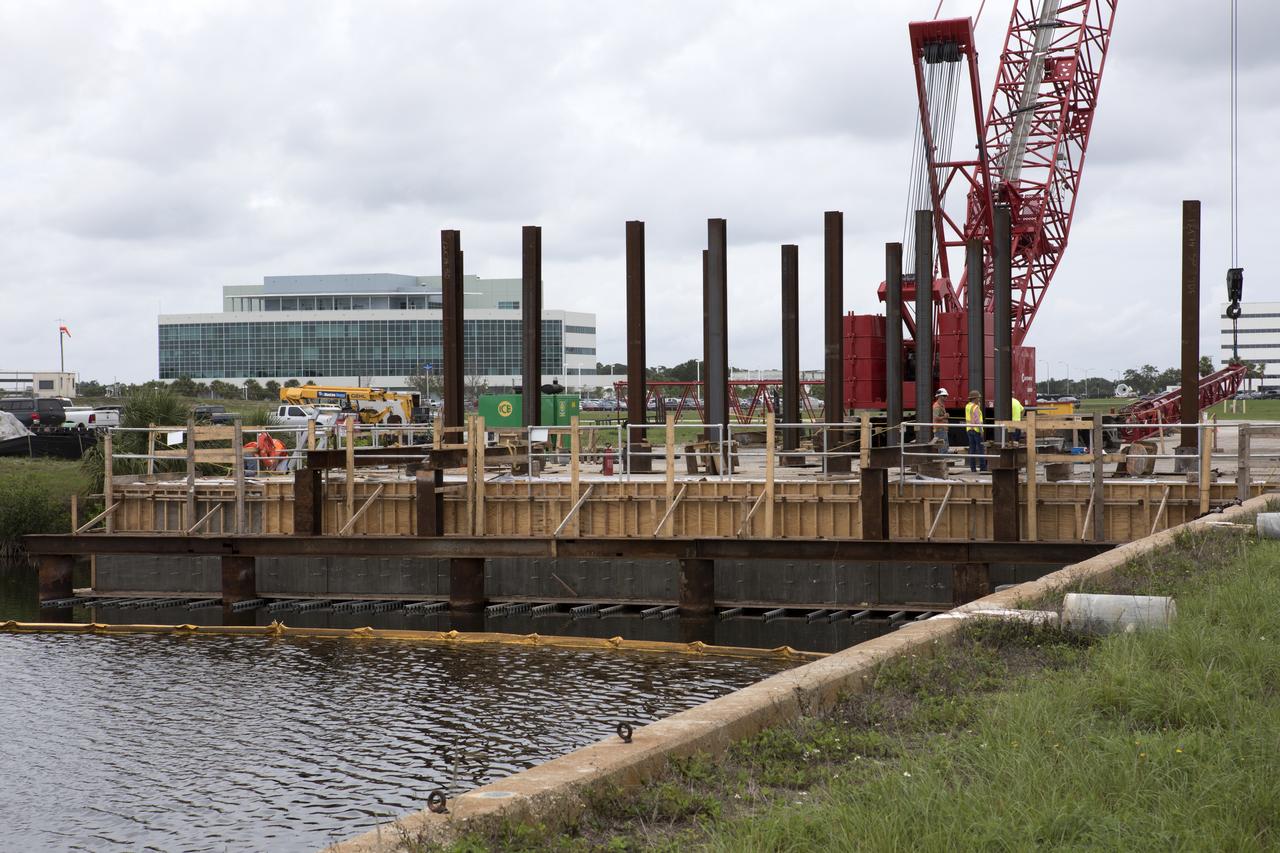
Modifications are underway at the Launch Complex 39 turn basin wharf at NASA's Kennedy Space Center in Florida to prepare for the arrival of the agency's massive Space Launch System (SLS) core stage aboard the barge Pegasus. Precast concrete poles are being driven to a depth of about 70 feet into the bedrock below the water around the turn basin. The upgrades are necessary to accommodate the increased weight of the core stage along with ground support and transportation equipment aboard the modified barge Pegasus. The Ground Systems Development and Operations Program is overseeing the upgrades to the turn basin wharf.

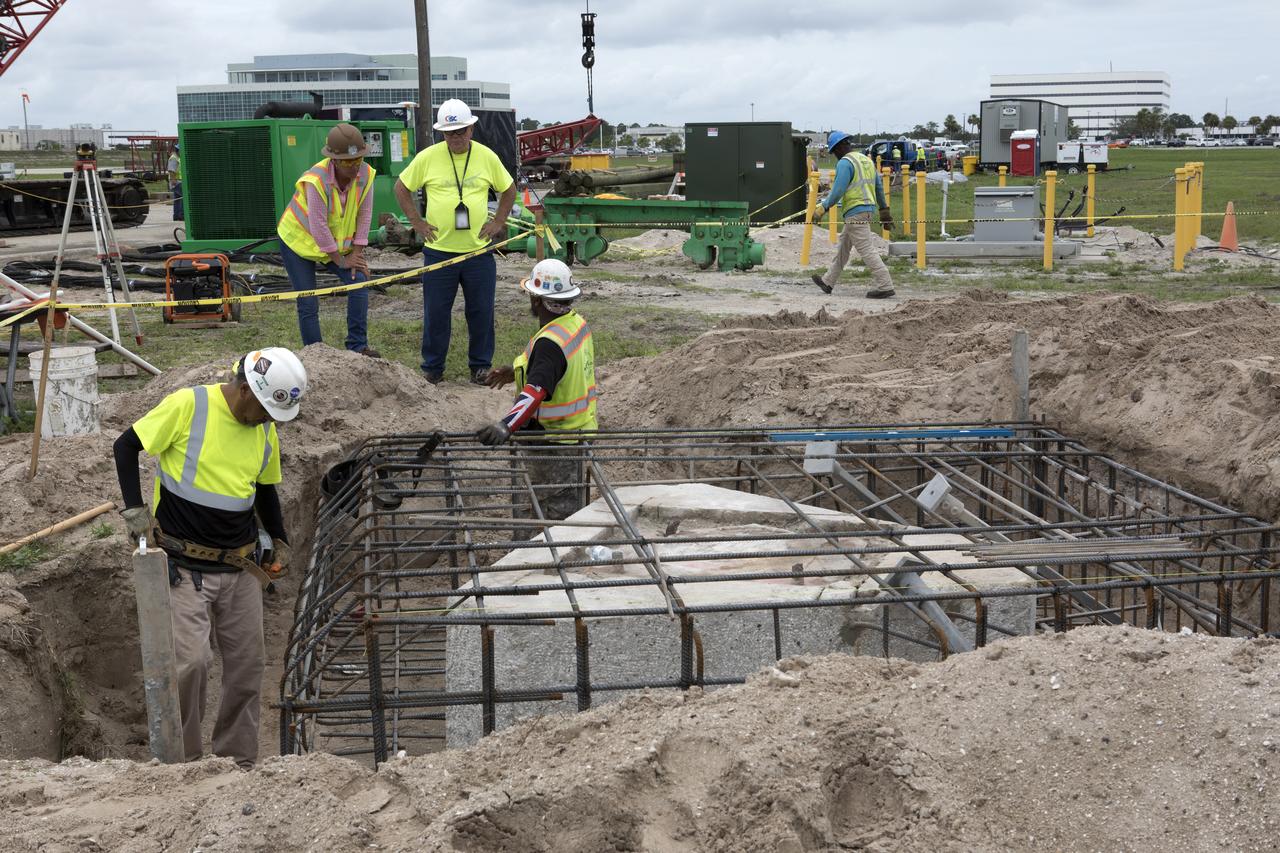
Modifications are underway at the Launch Complex 39 turn basin wharf at NASA's Kennedy Space Center in Florida to prepare for the arrival of the agency's massive Space Launch System (SLS) core stage aboard the barge Pegasus. Tammy Kelly, in the center, site manager, with Southeast Cherokee Construction Inc. talks with construction workers. A crane will be used to lift up precast concrete poles and position them to be driven to a depth of about 70 feet into the bedrock below the water around the turn basin. The upgrades are necessary to accommodate the increased weight of the core stage along with ground support and transportation equipment aboard the modified barge Pegasus. The Ground Systems Development and Operations Program is overseeing the upgrades to the turn basin wharf.
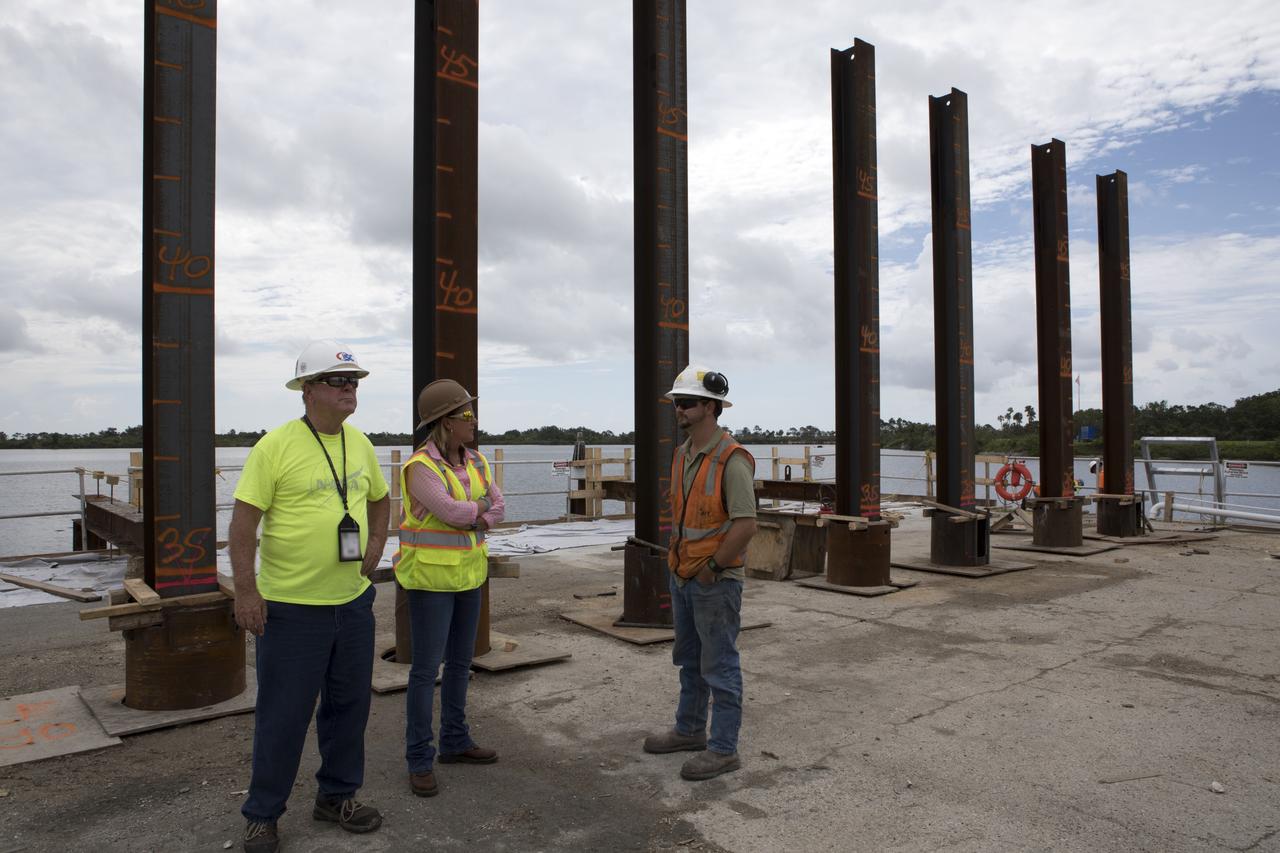
Modifications are underway at the Launch Complex 39 turn basin wharf at NASA's Kennedy Space Center in Florida to prepare for the arrival of the agency's massive Space Launch System (SLS) core stage aboard the barge Pegasus. Tammy Kelly, in the center, site manager, with Southeast Cherokee Construction Inc. talks with construction workers. A crane will be used to lift up precast concrete poles and position them to be driven to a depth of about 70 feet into the bedrock below the water around the turn basin. The upgrades are necessary to accommodate the increased weight of the core stage along with ground support and transportation equipment aboard the modified barge Pegasus. The Ground Systems Development and Operations Program is overseeing the upgrades to the turn basin wharf.
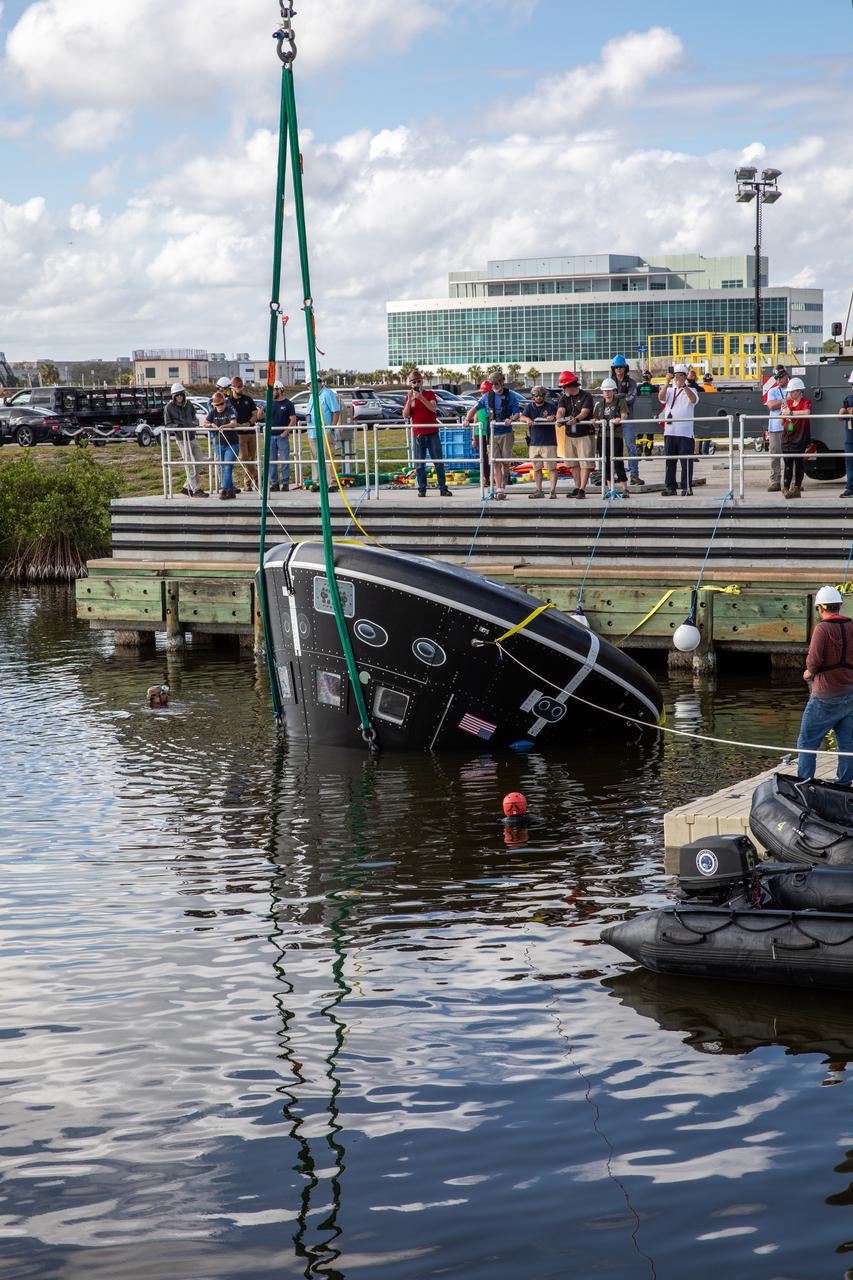
A crane is used to turn the Crew Module Test Article (CMTA) upside down in the water at the turn basin in the Launch Complex 39 area at NASA’s Kennedy Space Center in Florida on Jan. 31, 2023. The CMTA is being certified for use to practice recovery after splashdown of the Orion spacecraft to prepare for the Artemis II crewed mission. Exploration Ground Systems leads recovery efforts.
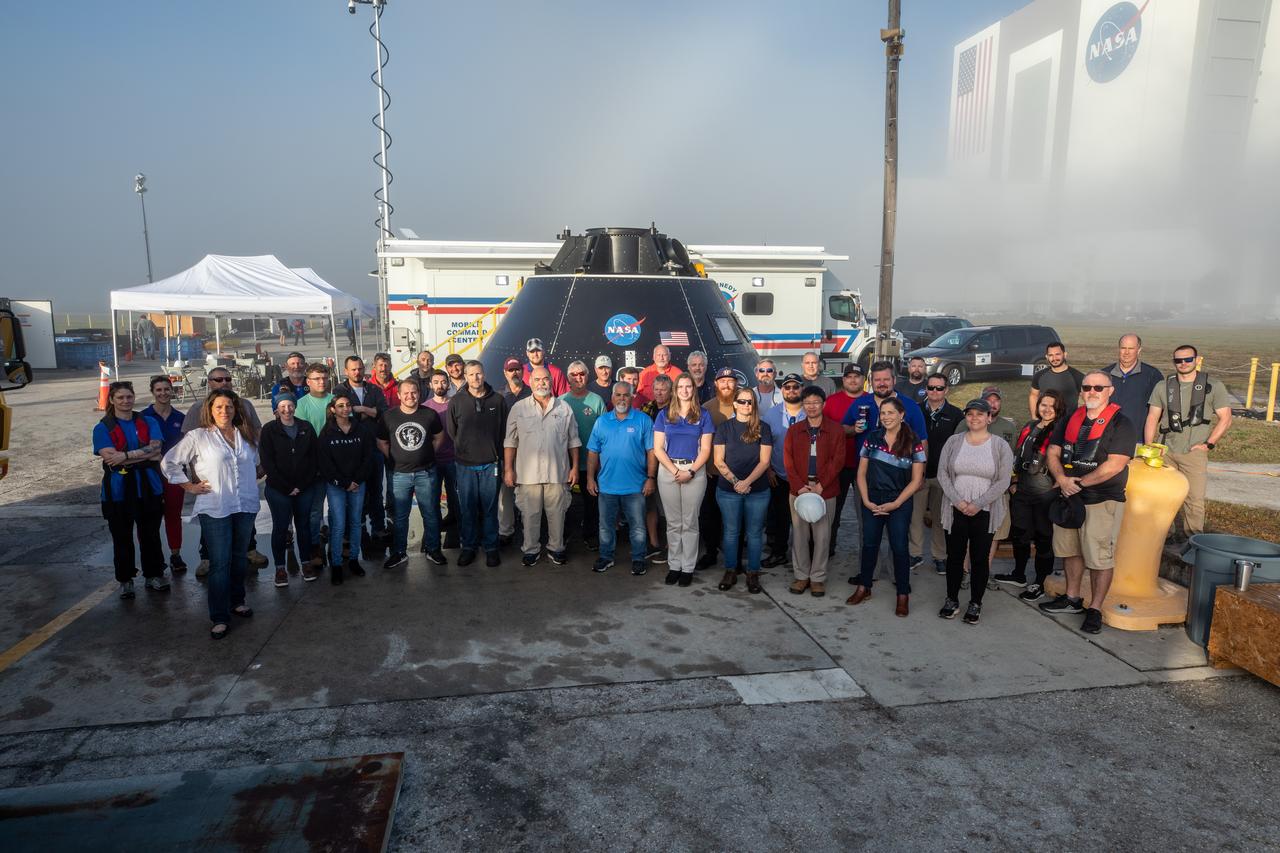
Members of the Exploration Ground Systems (EGS) landing and recovery team gather for a group photograph in front of the Crew Module Test Article (CMTA) at the turn basin in the Launch Complex 39 area at NASA’s Kennedy Space Center in Florida on Feb. 1, 2023. The CMTA is being used to practice recovery after splashdown of the Orion spacecraft to prepare for the Artemis II crewed mission. EGS leads recovery efforts.
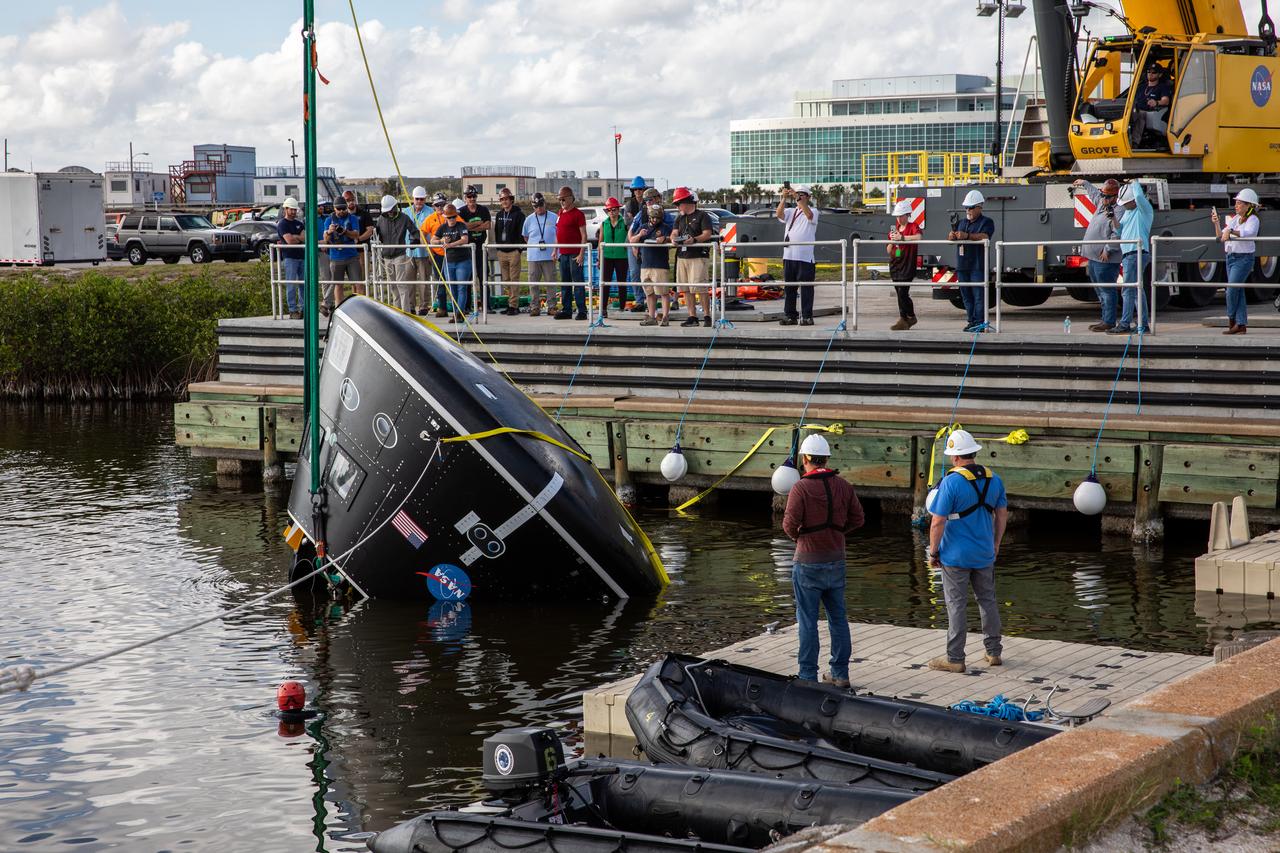
A crane is used to rotate the Crew Module Test Article (CMTA) in the water at the turn basin in the Launch Complex 39 area at NASA’s Kennedy Space Center in Florida on Jan. 31, 2023. The CMTA is being certified for use to practice recovery after splashdown of the Orion spacecraft to prepare for the Artemis II crewed mission. Exploration Ground Systems leads recovery efforts.
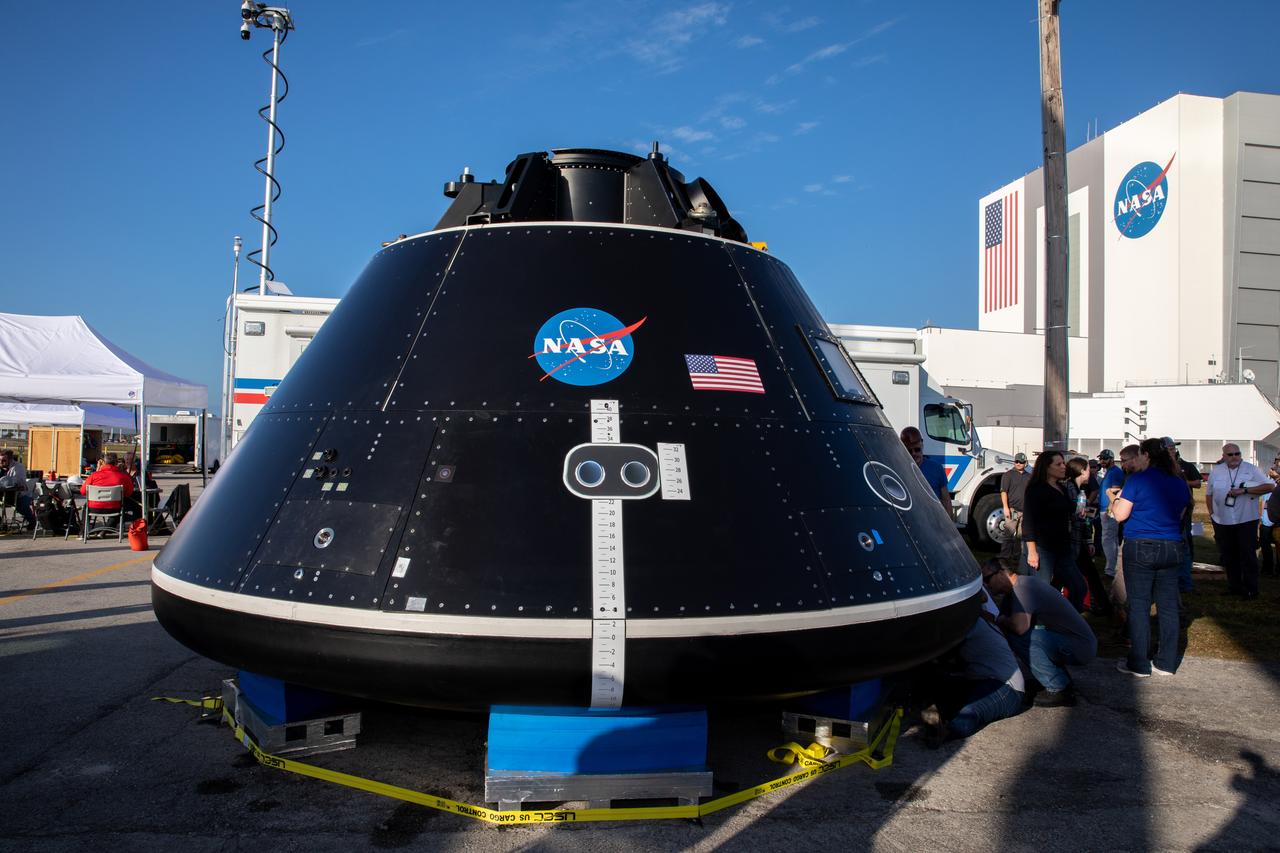
The Crew Module Test Article (CMTA) is in view at the turn basin in the Launch Complex 39 area at NASA’s Kennedy Space Center in Florida on Jan. 30, 2023. The CMTA is being used to practice recovery after splashdown of the Orion spacecraft to prepare for the Artemis II crewed mission. Exploration Ground Systems leads recovery efforts.
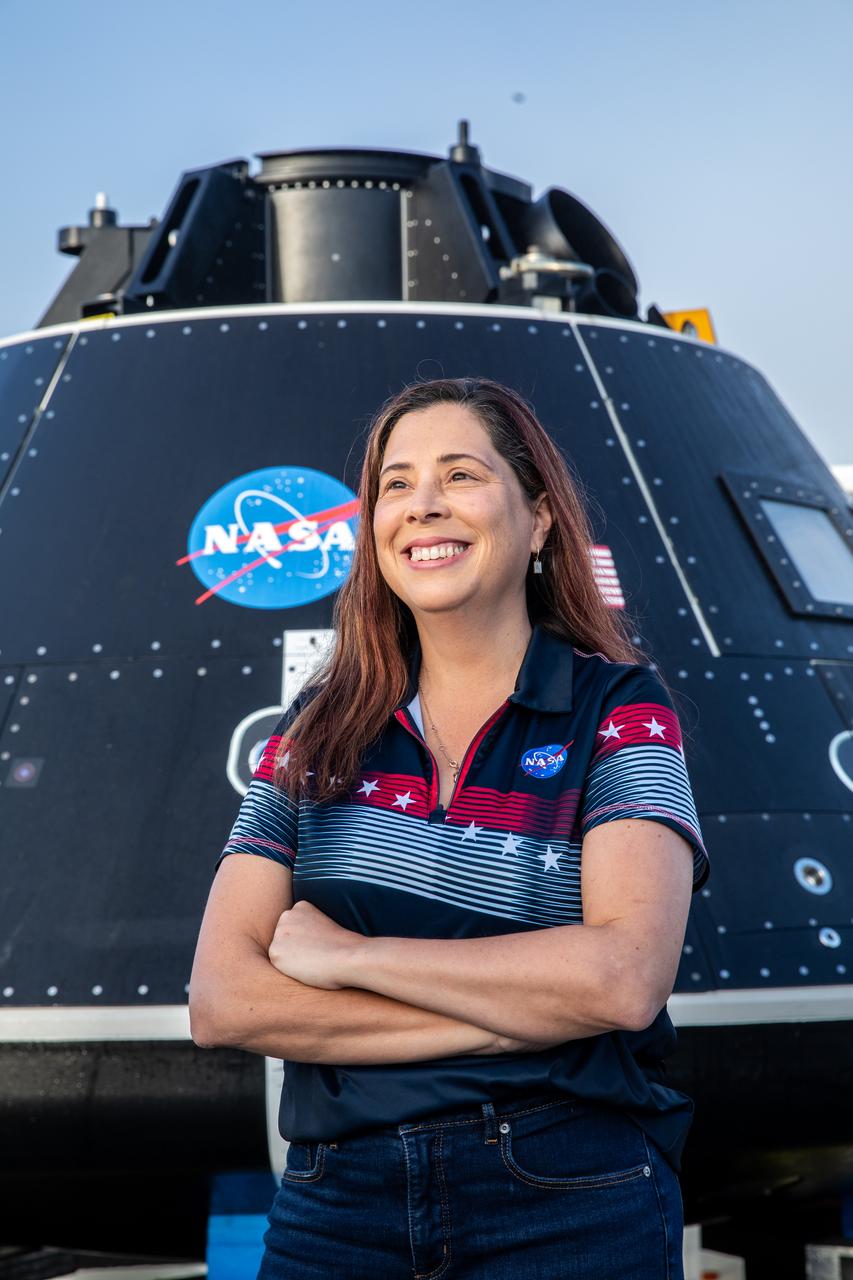
Liliana Villarreal, Artemis landing and recovery director with Exploration Ground Systems (EGS), stands in front of the Crew Module Test Article (CMTA) at the turn basin in the Launch Complex 39 area at NASA’s Kennedy Space Center in Florida on Feb. 1, 2023. The CMTA is being used to practice recovery after splashdown of the Orion spacecraft to prepare for the Artemis II crewed mission. EGS leads recovery efforts.
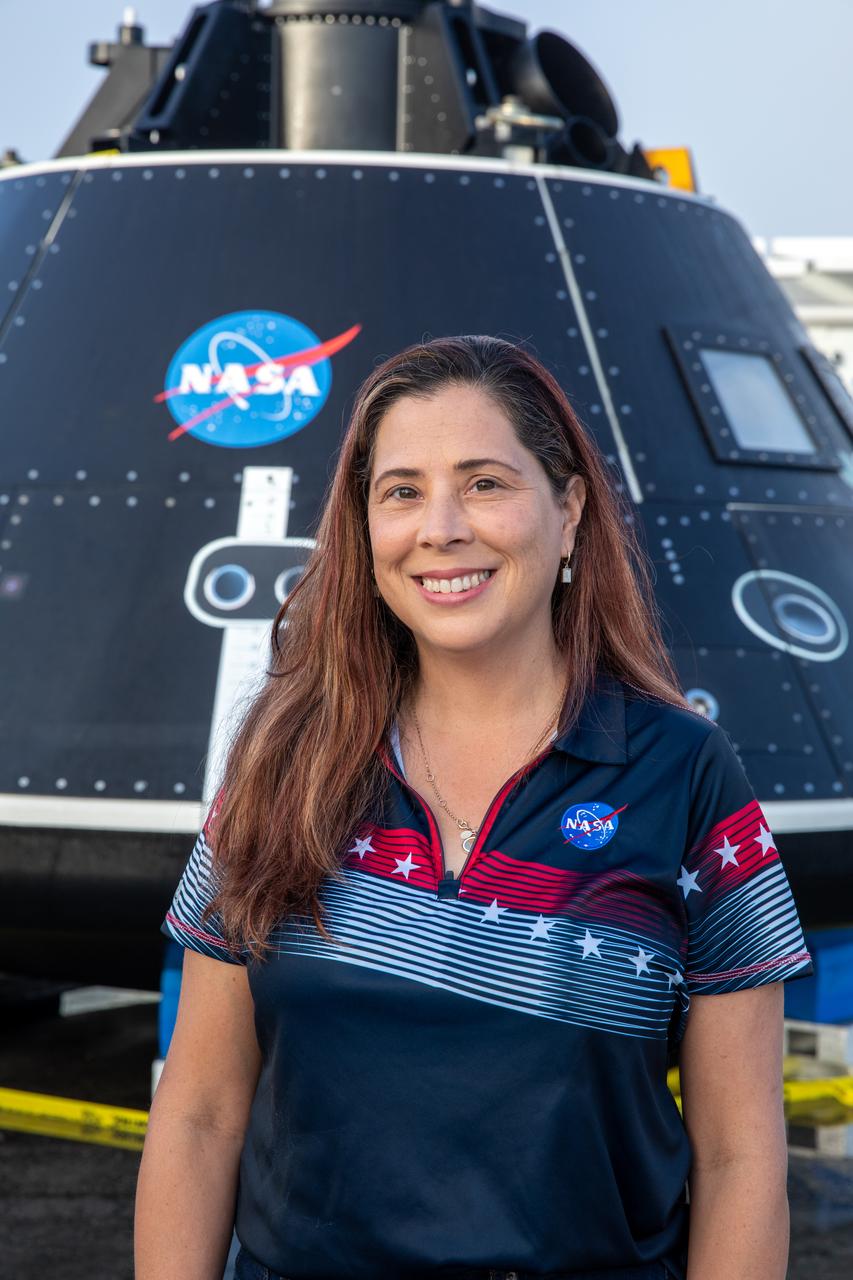
Liliana Villarreal, Artemis landing and recovery director with Exploration Ground Systems (EGS), stands in front of the Crew Module Test Article (CMTA) at the turn basin in the Launch Complex 39 area at NASA’s Kennedy Space Center in Florida on Feb. 1, 2023. The CMTA is being used to practice recovery after splashdown of the Orion spacecraft to prepare for the Artemis II crewed mission. EGS leads recovery efforts.
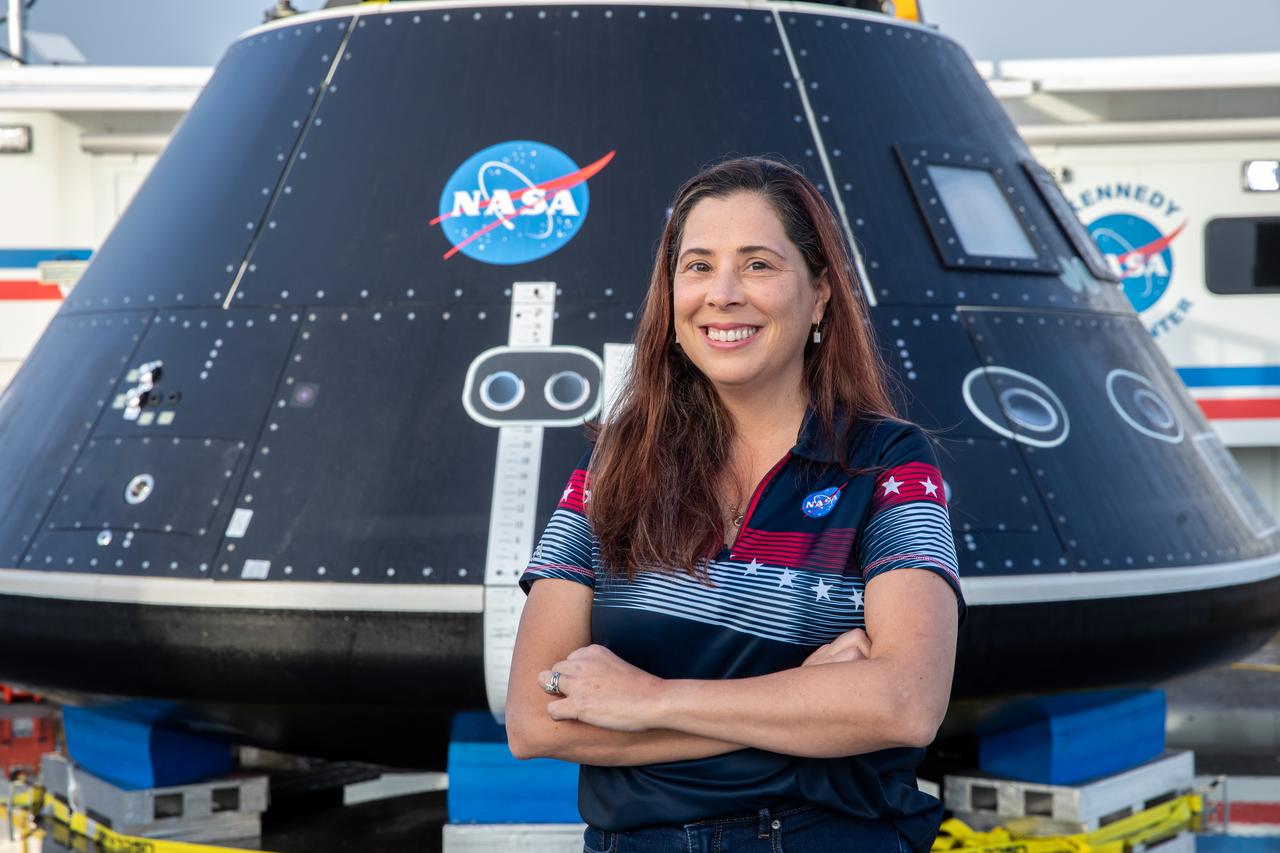
Liliana Villarreal, Artemis landing and recovery director with Exploration Ground Systems (EGS), stands in front of the Crew Module Test Article (CMTA) at the turn basin in the Launch Complex 39 area at NASA’s Kennedy Space Center in Florida on Feb. 1, 2023. The CMTA is being used to practice recovery after splashdown of the Orion spacecraft to prepare for the Artemis II crewed mission. EGS leads recovery efforts.
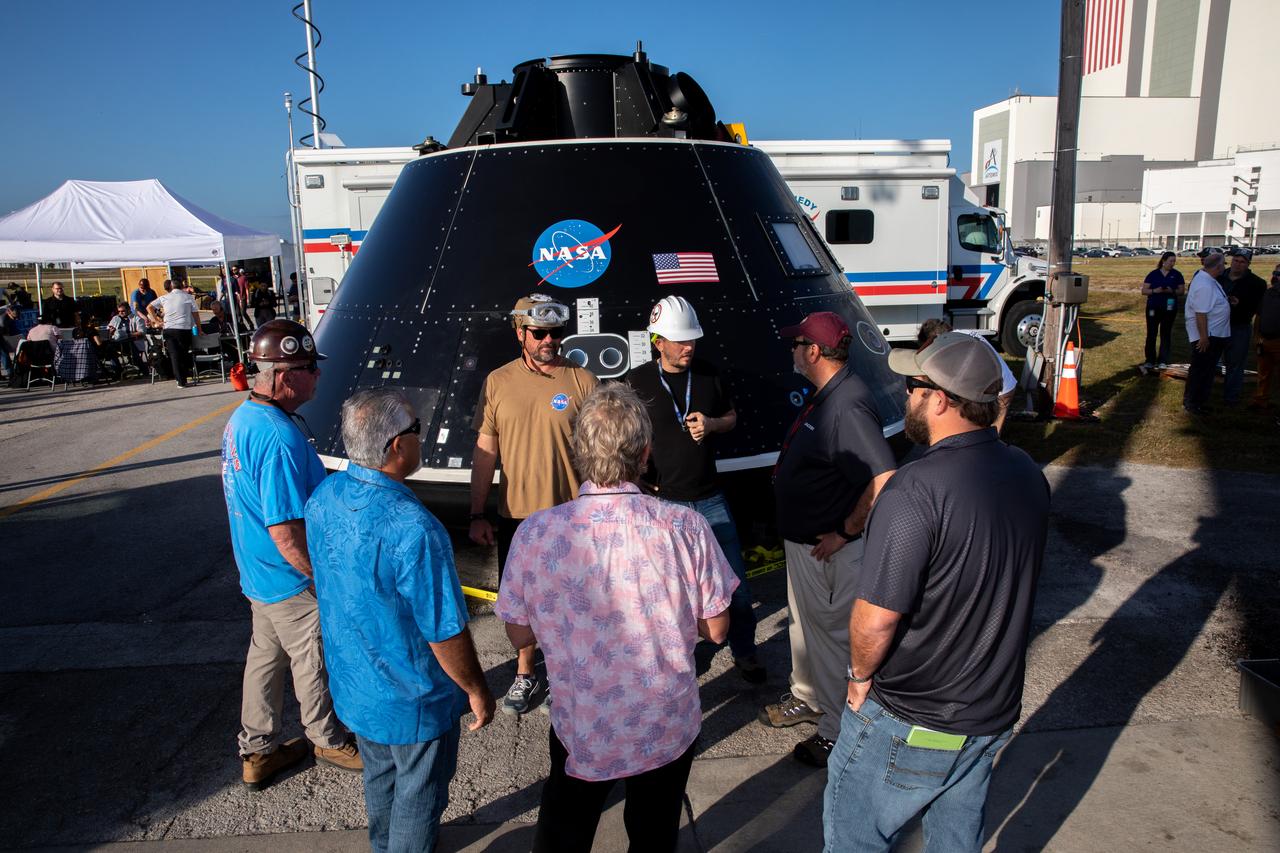
Landing and recovery team members review procedures before they begin using the Crew Module Test Article (CMTA) at the turn basin in the Launch Complex 39 area at NASA’s Kennedy Space Center in Florida on Jan. 30, 2023. The CMTA is being used to practice recovery after splashdown of the Orion spacecraft to prepare for the Artemis II crewed mission. Exploration Ground Systems leads recovery efforts.
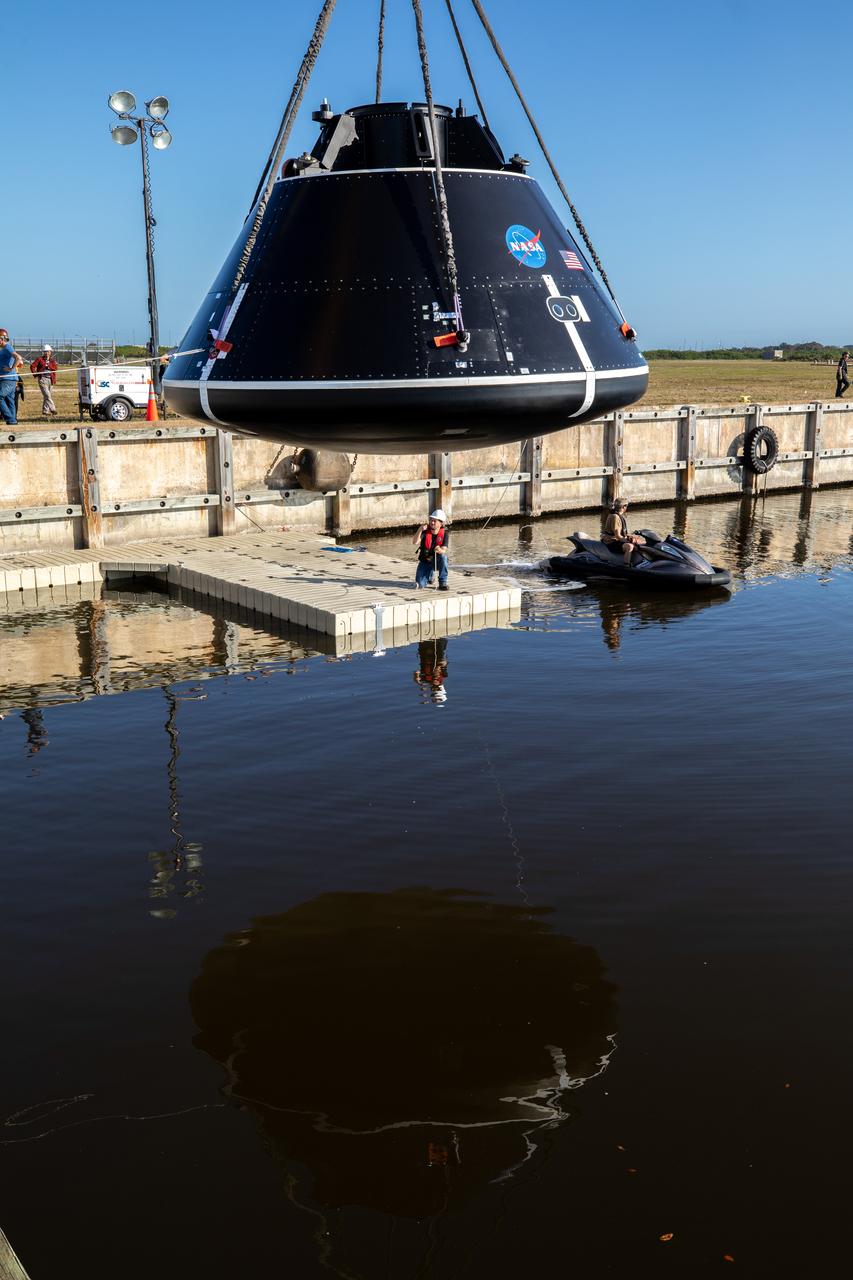
A crane is used to hold the Crew Module Test Article (CMTA) above the water at the turn basin in the Launch Complex 39 area at NASA’s Kennedy Space Center in Florida on Jan. 30, 2023. The CMTA is being used to practice recovery after splashdown of the Orion spacecraft to prepare for the Artemis II crewed mission. Exploration Ground Systems leads recovery efforts.

Liliana Villarreal, Artemis landing and recovery director with Exploration Ground Systems (EGS), stands in front of the Crew Module Test Article (CMTA) at the turn basin in the Launch Complex 39 area at NASA’s Kennedy Space Center in Florida on Feb. 1, 2023. The CMTA is being used to practice recovery after splashdown of the Orion spacecraft to prepare for the Artemis II crewed mission. EGS leads recovery efforts.
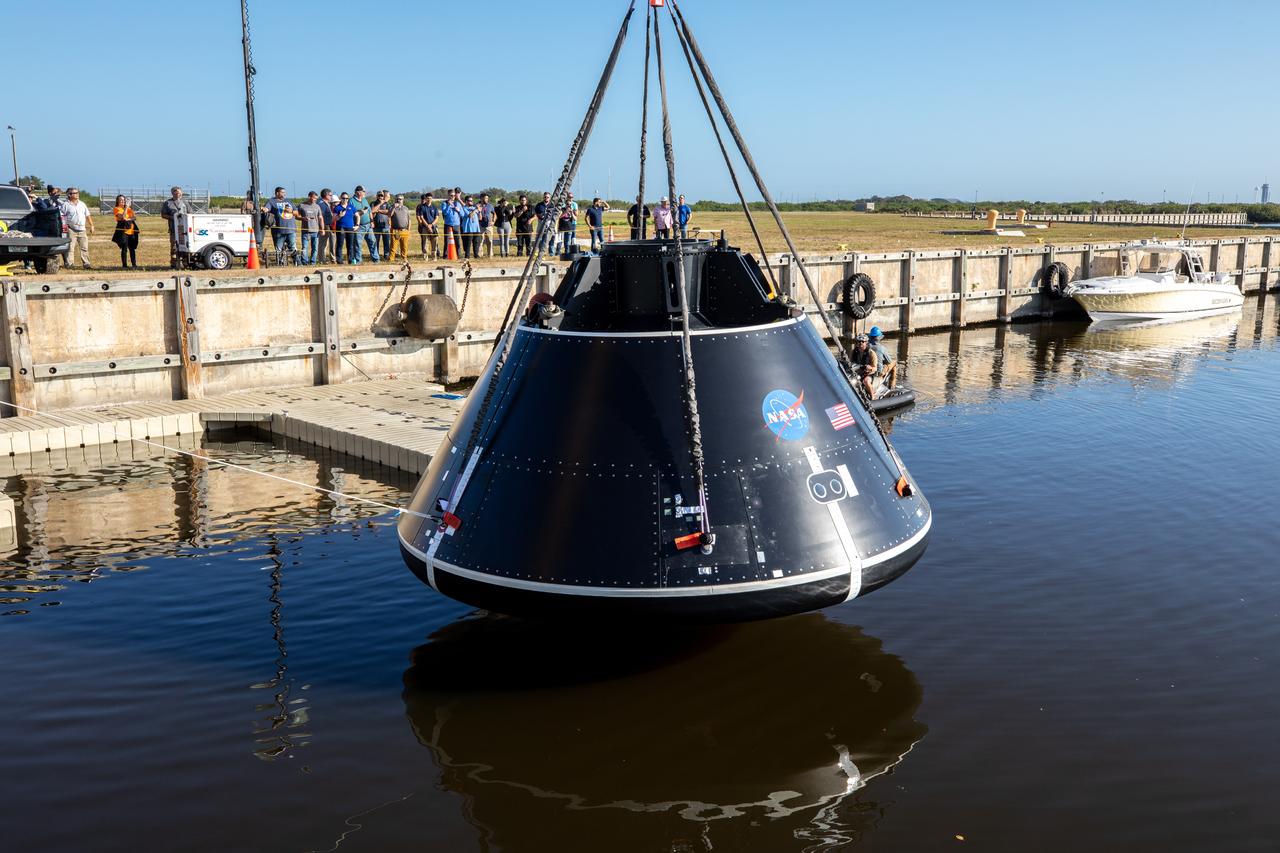
A crane lowers the Crew Module Test Article (CMTA) into water at the turn basin in the Launch Complex 39 area at NASA’s Kennedy Space Center in Florida on Jan. 30, 2023. The CMTA is being used to practice recovery after splashdown of the Orion spacecraft to prepare for the Artemis II crewed mission. Exploration Ground Systems leads recovery efforts.
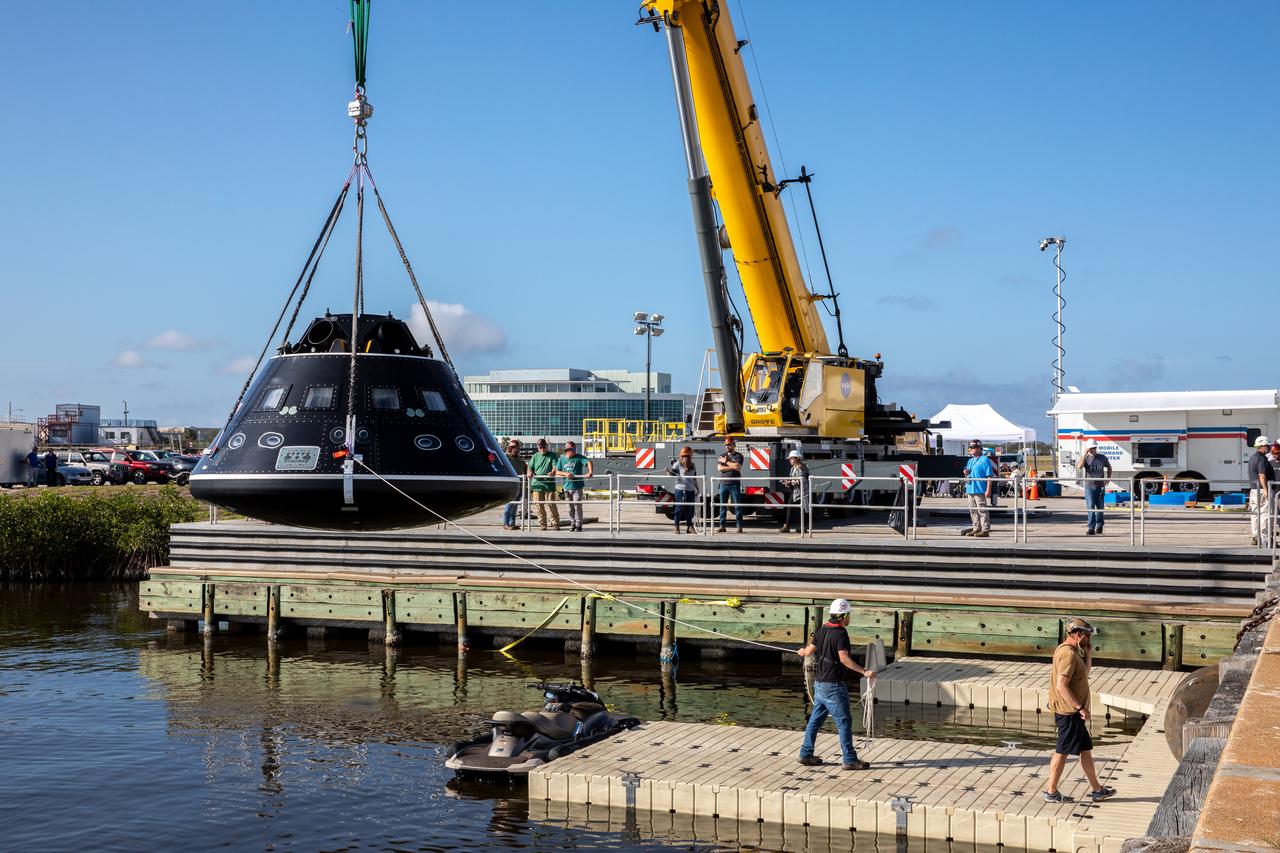
A crane is used to hold the Crew Module Test Article (CMTA) above the water at the turn basin in the Launch Complex 39 area at NASA’s Kennedy Space Center in Florida on Jan. 30, 2023. The CMTA is being used to practice recovery after splashdown of the Orion spacecraft to prepare for the Artemis II crewed mission. Exploration Ground Systems leads recovery efforts.
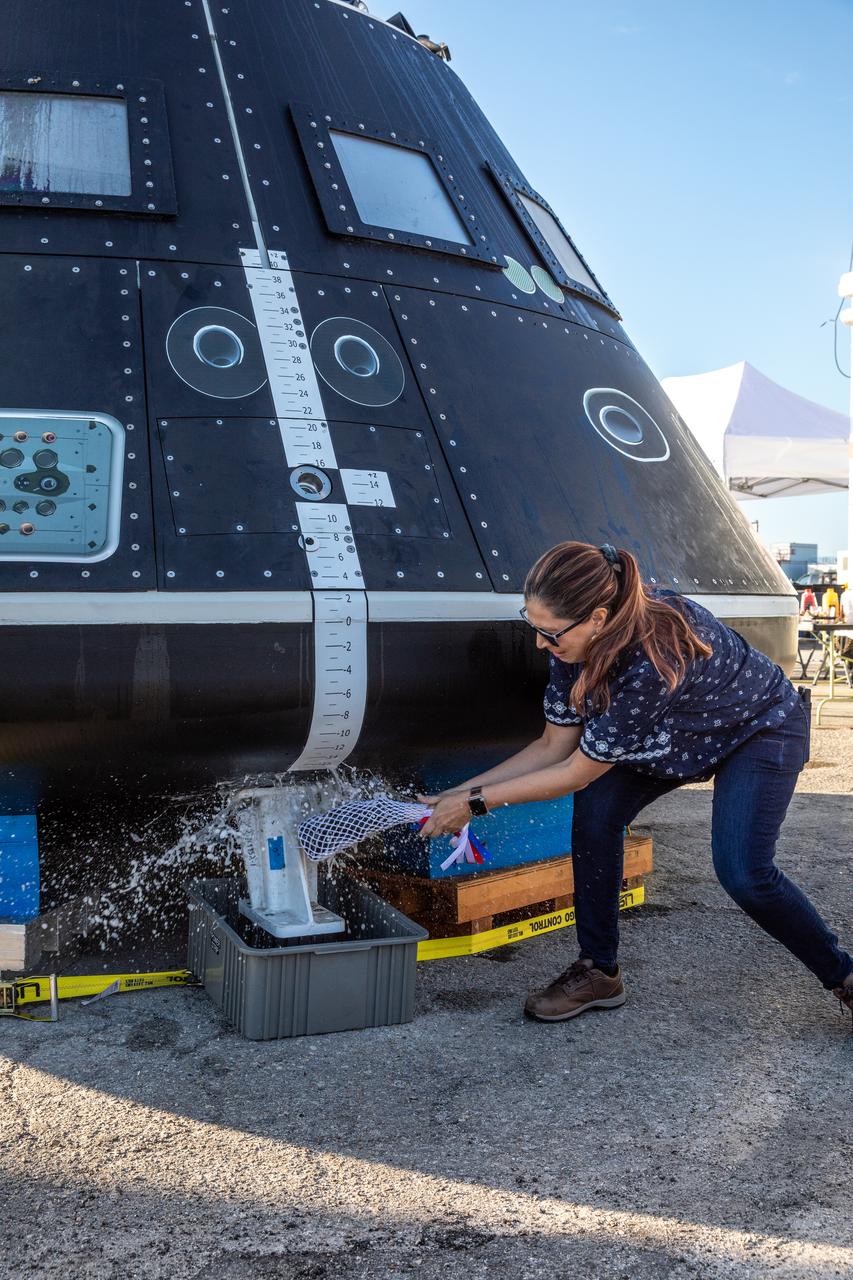
Liliana Villarreal, Artemis landing and recovery director with Exploration Ground Systems (EGS), christens the Crew Module Test Article (CMTA) with champagne during a naming ceremony at the turn basin in the Launch Complex 39 area at NASA’s Kennedy Space Center in Florida on Jan. 30, 2023. The CMTA is being used to practice recovery after splashdown of the Orion spacecraft to prepare for the Artemis II crewed mission. EGS leads recovery efforts.
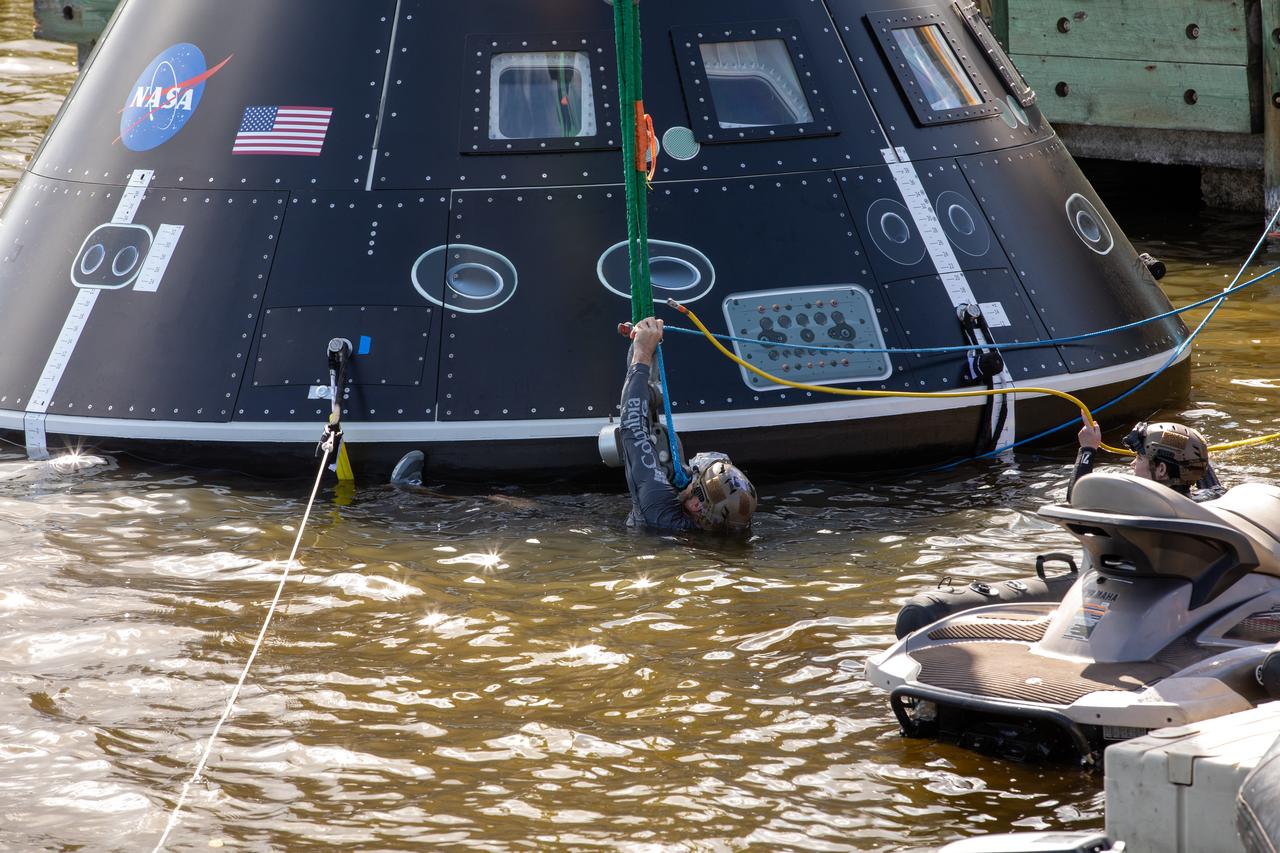
Landing and recovery team members secure the Crew Module Test Article (CMTA) in the water at the turn basin in the Launch Complex 39 area at NASA’s Kennedy Space Center in Florida on Jan. 30, 2023. The CMTA is being used to practice recovery after splashdown of the Orion spacecraft to prepare for the Artemis II crewed mission. Exploration Ground Systems leads recovery efforts.
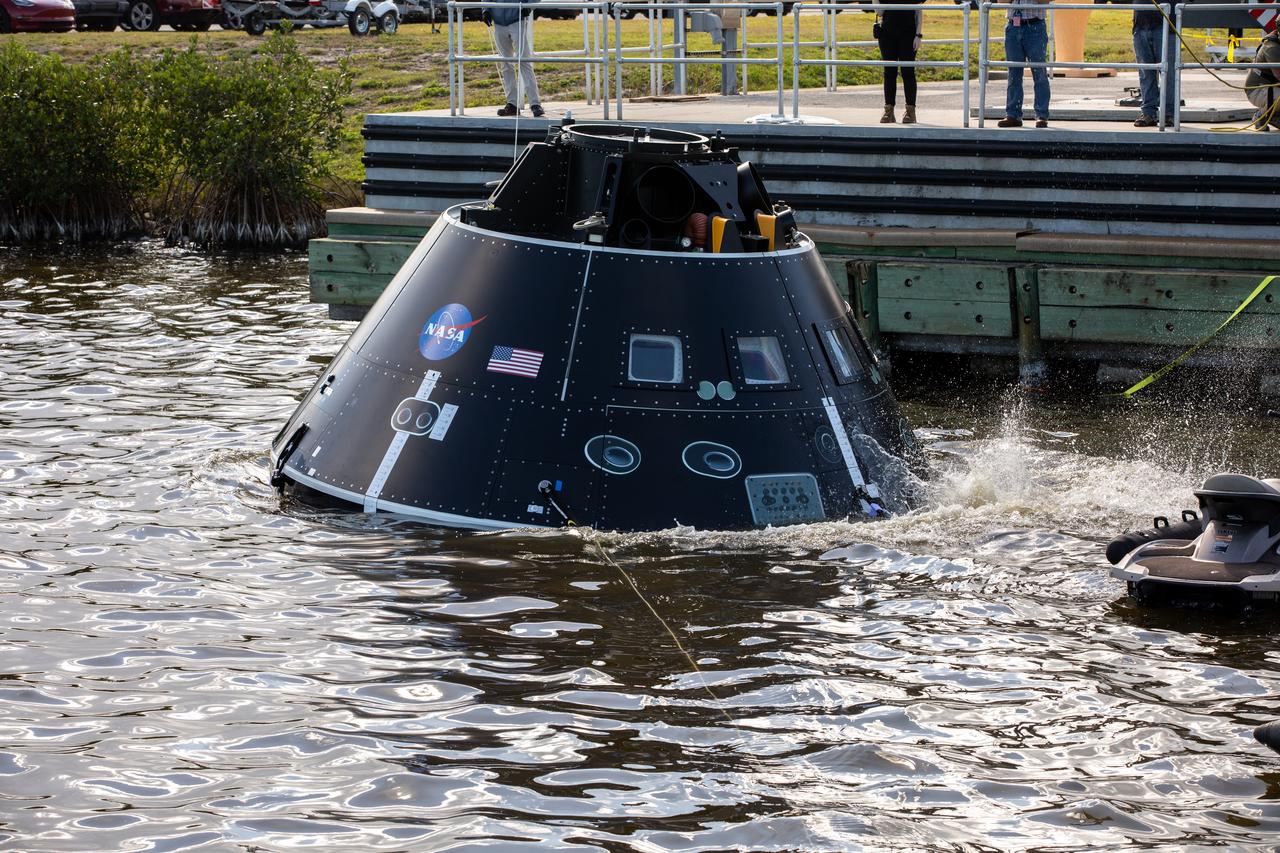
The Crew Module Test Article (CMTA) floats in the water in the turn basin in the Launch Complex 39 area at NASA’s Kennedy Space Center in Florida on Jan. 30, 2023. The CMTA is being used to practice recovery after splashdown of the Orion spacecraft to prepare for the Artemis II crewed mission. Exploration Ground Systems leads recovery efforts.
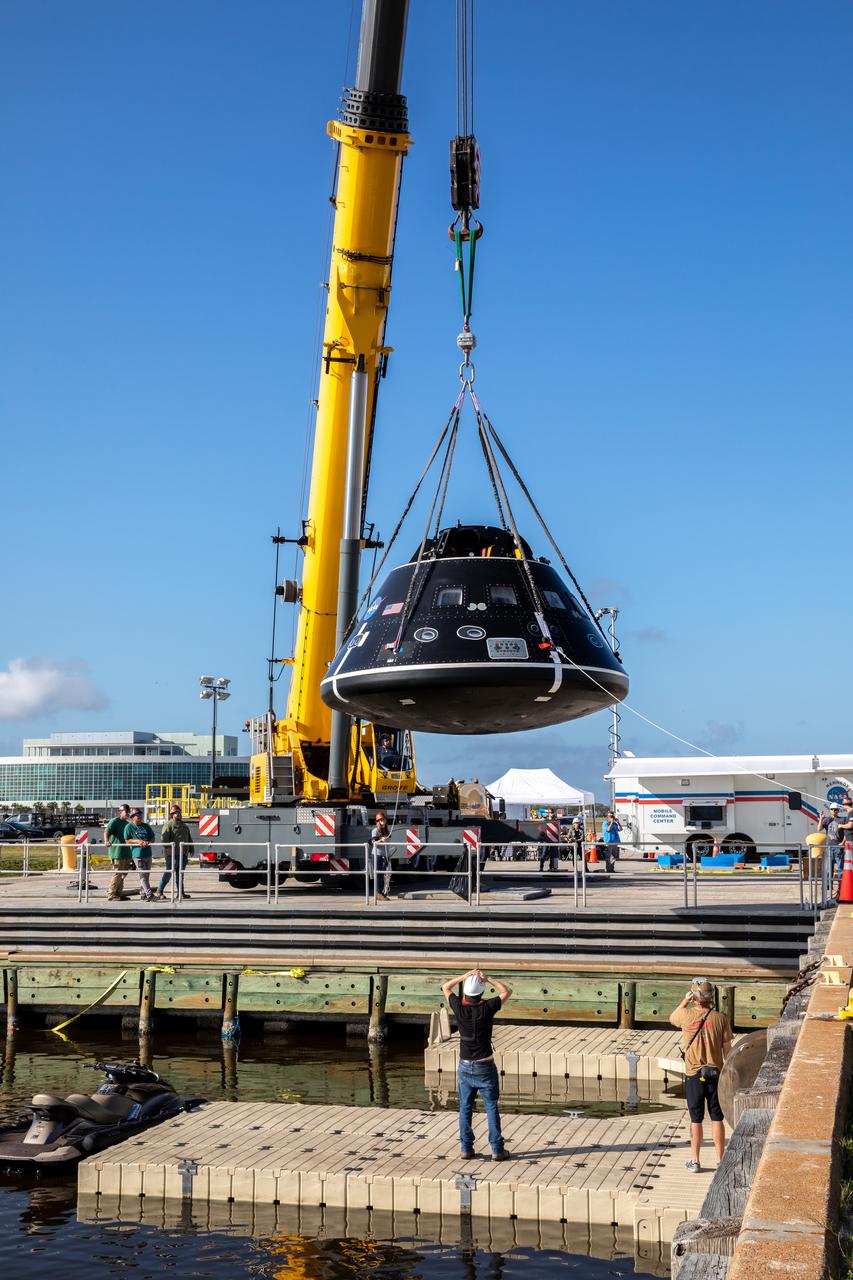
A crane is used to move the Crew Module Test Article (CMTA) above the water at the turn basin in the Launch Complex 39 area at NASA’s Kennedy Space Center in Florida on Jan. 30, 2023. The CMTA is being used to practice recovery after splashdown of the Orion spacecraft to prepare for the Artemis II crewed mission. Exploration Ground Systems leads recovery efforts.
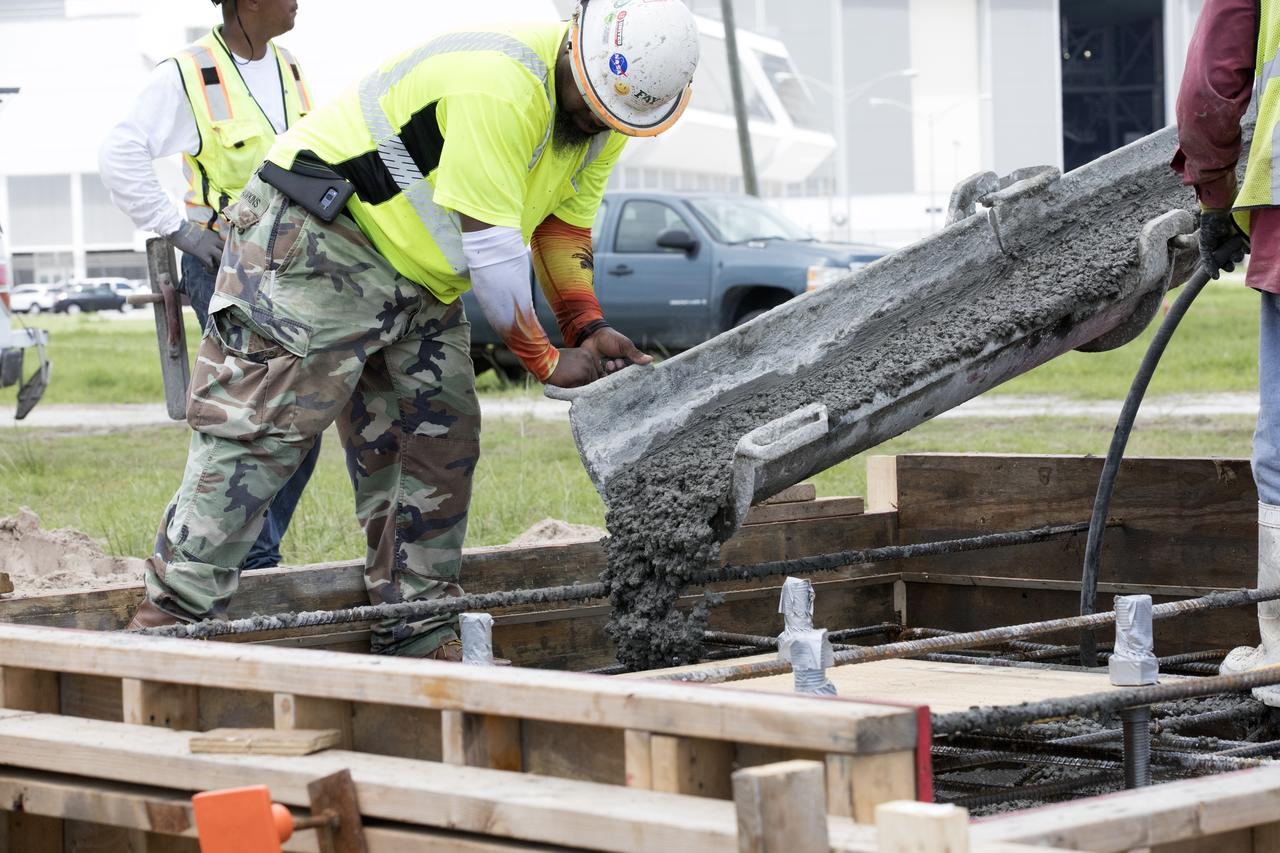
At NASA's Kennedy Space Center in Florida, cement is poured as part of a construction project to upgrade the turn basin wharf. The work includes driving multiple precast concrete piles to a depth of about 70 feet to accommodate arrival of the core stage for the agency's Space Launch System (SLS) rocket. When the stage for NASA's SLS departs the Michoud Assembly Facility in New Orleans, it will be shipped by the agency's modified barge to the Launch Complex 39 turn basin.
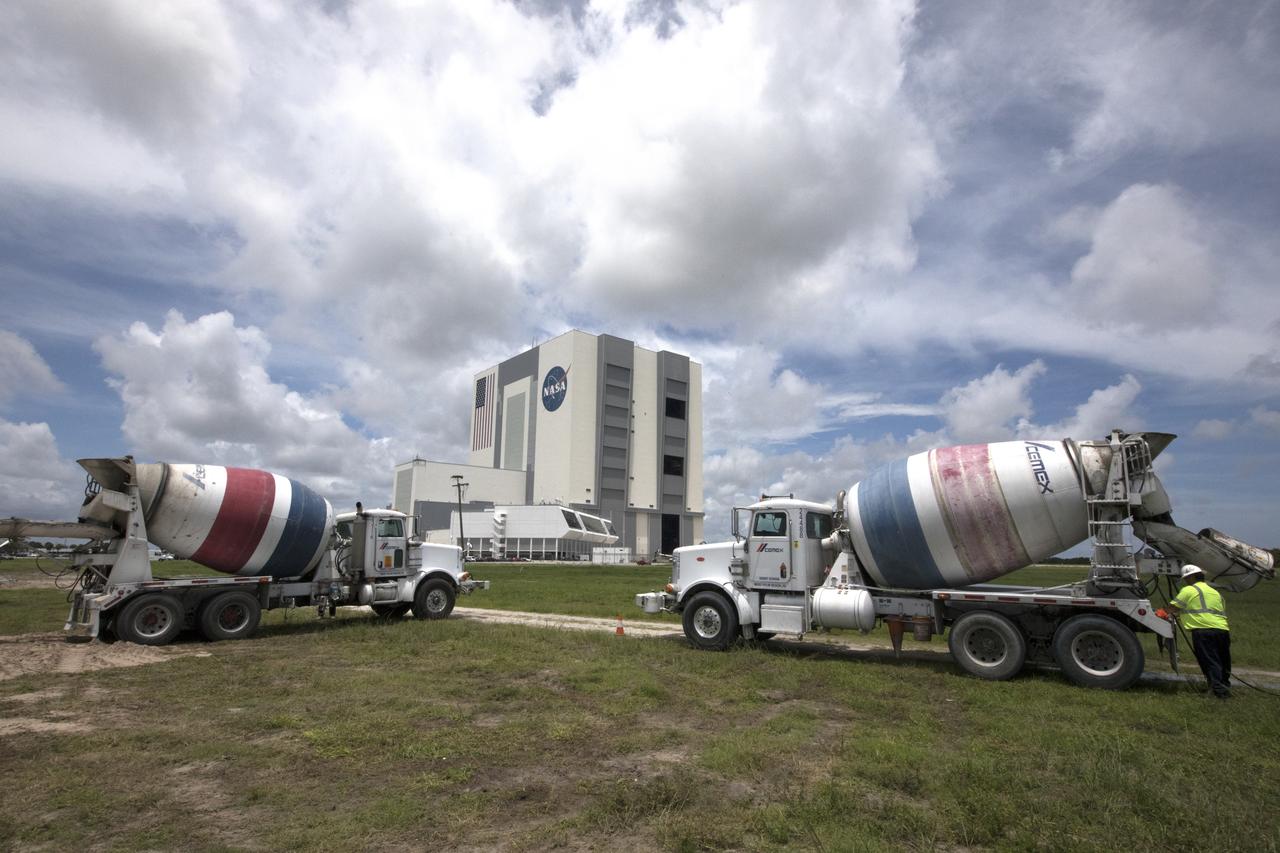
Across from the Vehicle Assembly Building at NASA's Kennedy Space Center in Florida, cement trucks stand by to support a construction project to upgrade the turn basin wharf. The work includes driving multiple precast concrete piles to a depth of about 70 feet to accommodate arrival of the core stage for the agency's Space Launch System (SLS) rocket. When the stage for NASA's SLS departs the Michoud Assembly Facility in New Orleans, it will be shipped by the agency's modified barge to the Launch Complex 39 turn basin.
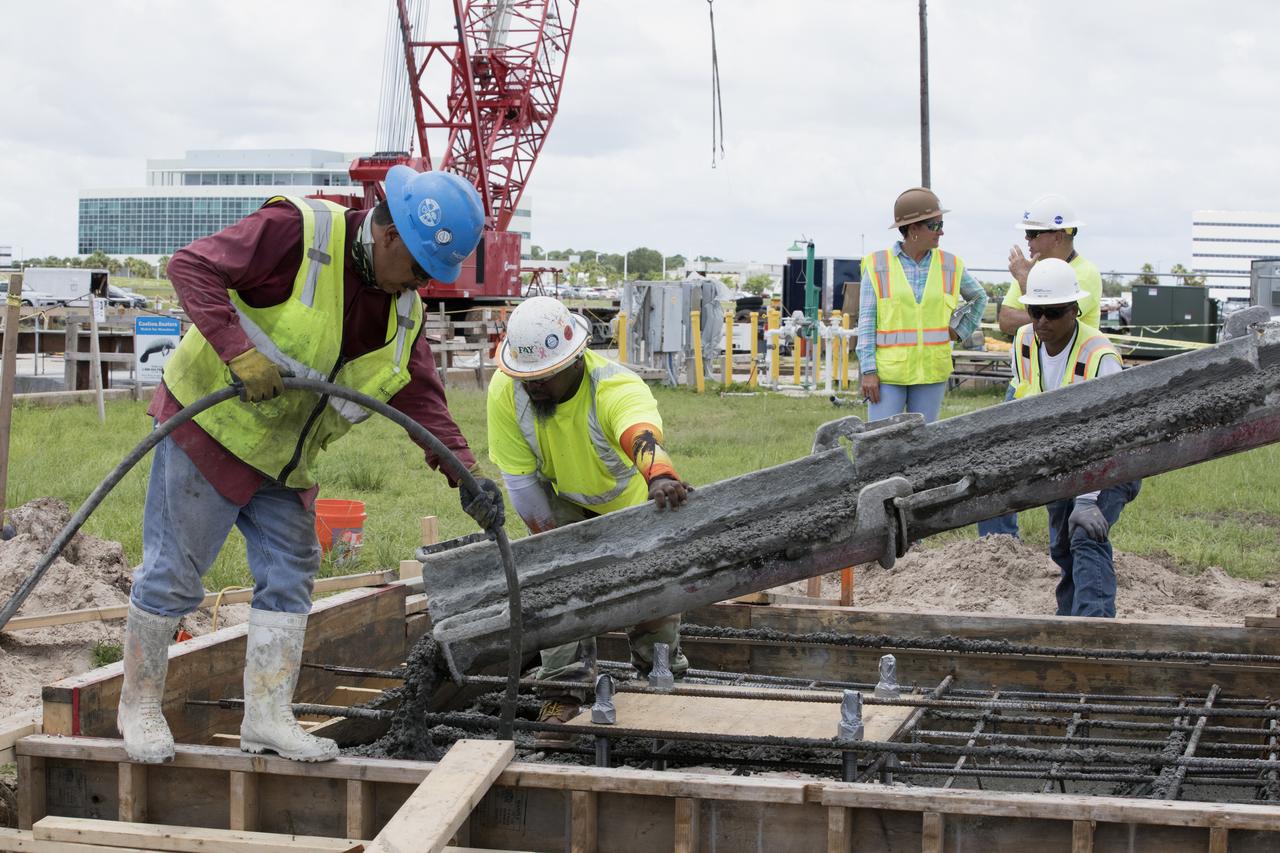
Across from the Vehicle Assembly Building at NASA's Kennedy Space Center in Florida, cement is poured as part of a construction project to upgrade the turn basin wharf. The work includes driving multiple precast concrete piles to a depth of about 70 feet to accommodate arrival of the core stage for the agency's Space Launch System (SLS) rocket. When the stage for NASA's SLS departs the Michoud Assembly Facility in New Orleans, it will be shipped by the agency's modified barge to the Launch Complex 39 turn basin.
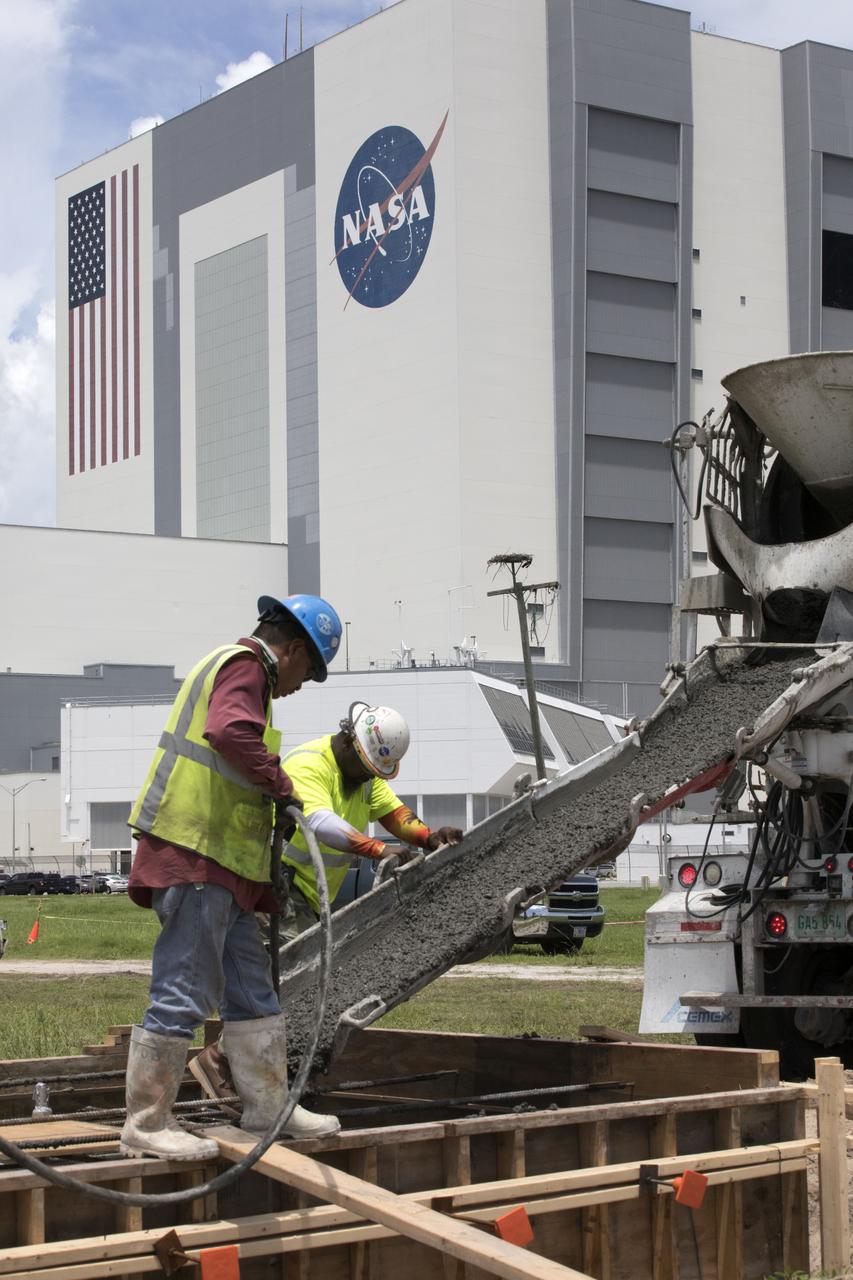
Across from the Vehicle Assembly Building at NASA's Kennedy Space Center in Florida, cement is poured as part of a construction project to upgrade the turn basin wharf. The work includes driving multiple precast concrete piles to a depth of about 70 feet to accommodate arrival of the core stage for the agency's Space Launch System (SLS) rocket. When the stage for NASA's SLS departs the Michoud Assembly Facility in New Orleans, it will be shipped by the agency's modified barge to the Launch Complex 39 turn basin.
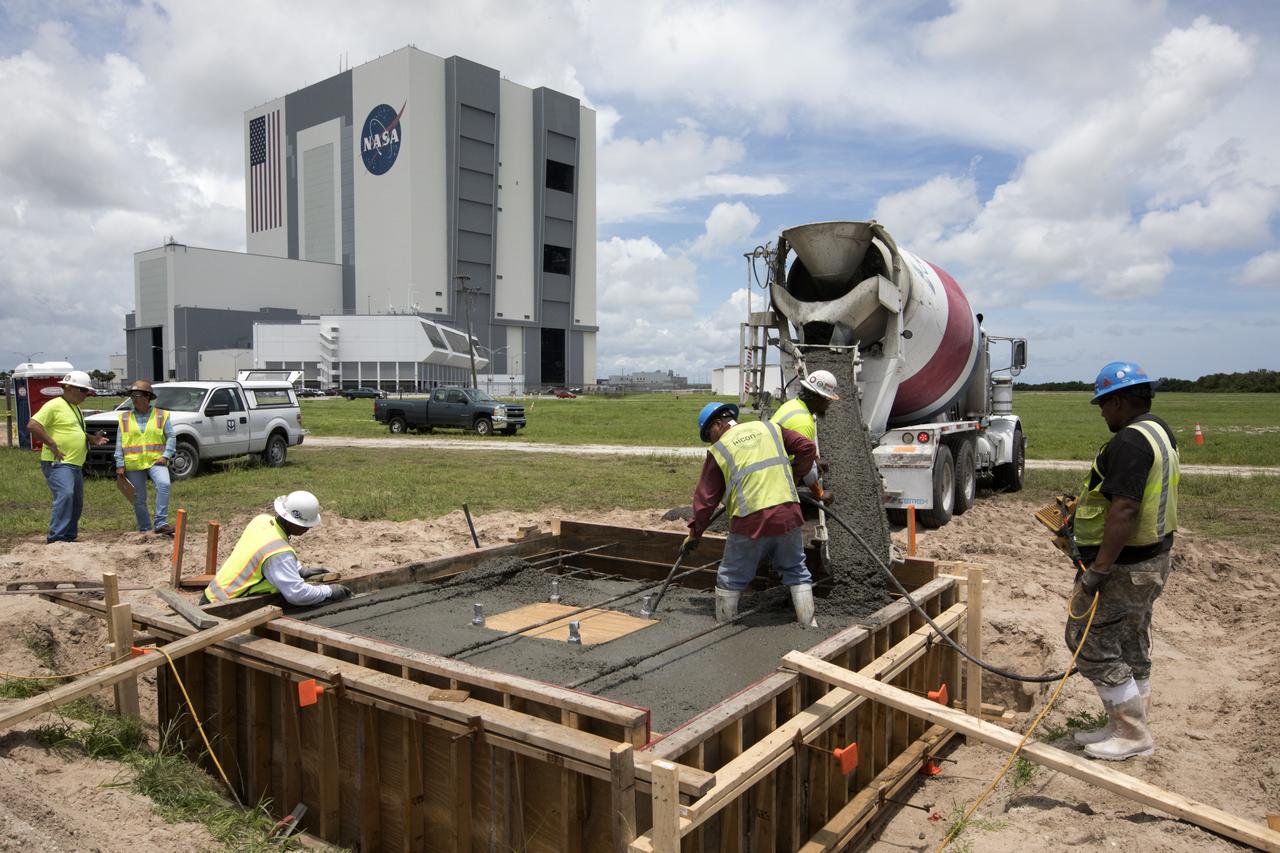
Across from the Vehicle Assembly Building at NASA's Kennedy Space Center in Florida, cement is poured as part of a construction project to upgrade the turn basin wharf. The work includes driving multiple precast concrete piles to a depth of about 70 feet to accommodate arrival of the core stage for the agency's Space Launch System (SLS) rocket. When the stage for NASA's SLS departs the Michoud Assembly Facility in New Orleans, it will be shipped by the agency's modified barge to the Launch Complex 39 turn basin.
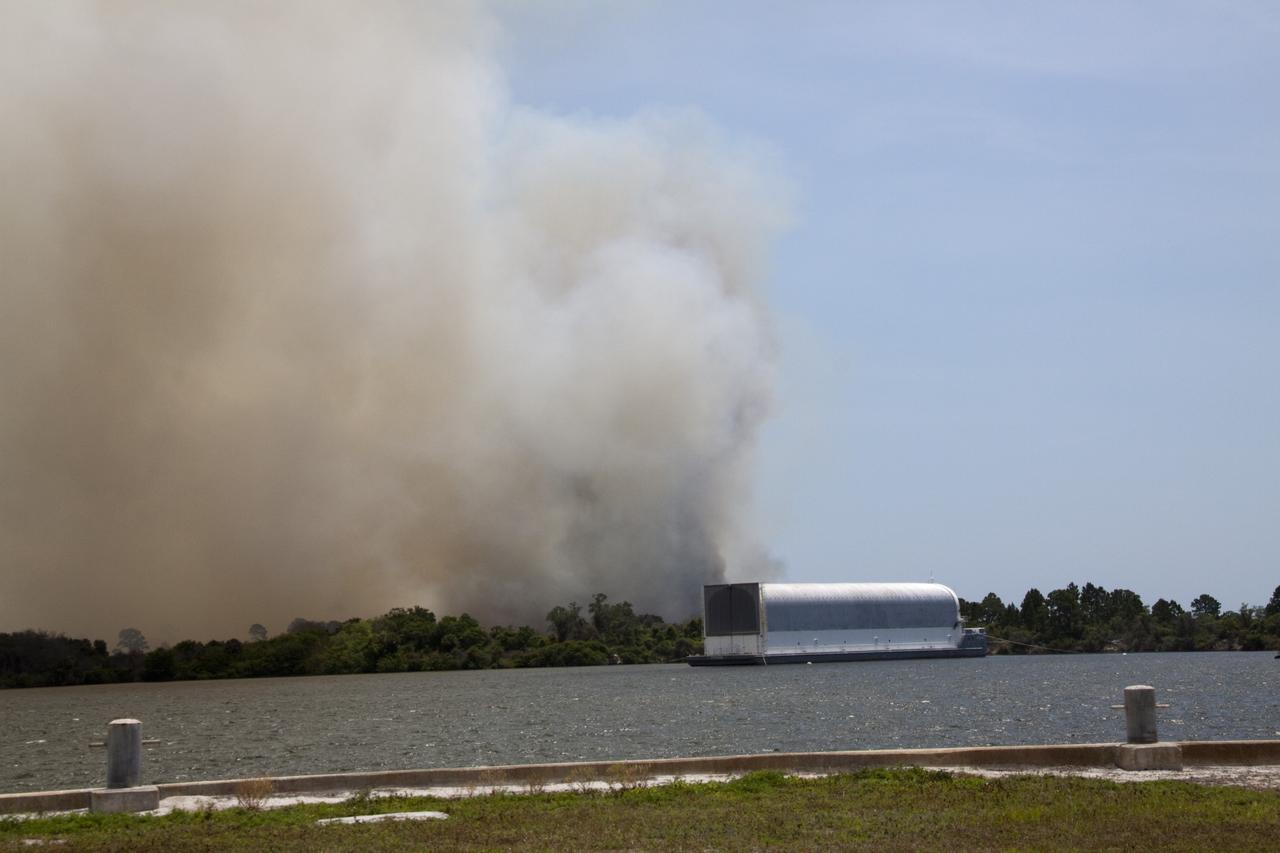
CAPE CANAVERAL, Fla. -- At NASA's Kennedy Space Center in Florida, smoke rises from a smoldering brush fire southeast of the Turn Basin. The fire was spotted near Kennedy’s Press Site approximately three miles away from Launch Pad 39A. The fires are being contained by firefighters from Kennedy Space Center and the U.S. Fish and Wildlife Service. No personnel are in danger and currently there is no to impact any operations related to space shuttle Endeavour’s launch countdown. Photo credit: NASA/Jack Pfaller
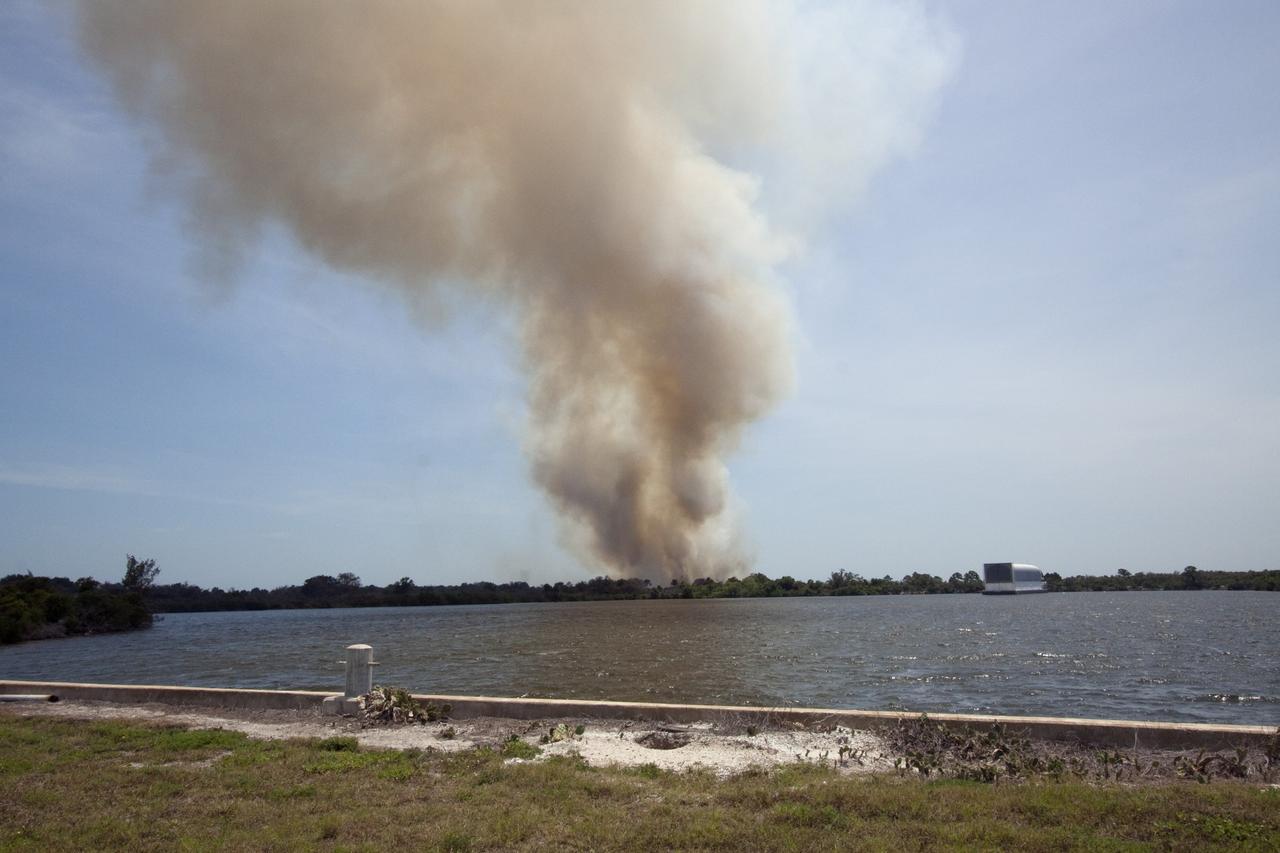
CAPE CANAVERAL, Fla. -- At NASA's Kennedy Space Center in Florida, smoke rises from a smoldering brush fire southeast of the Turn Basin. The fire was spotted near Kennedy’s Press Site approximately three miles away from Launch Pad 39A. The fires are being contained by firefighters from Kennedy Space Center and the U.S. Fish and Wildlife Service. No personnel are in danger and currently there is no to impact any operations related to space shuttle Endeavour’s launch countdown. Photo credit: NASA/Jack Pfaller
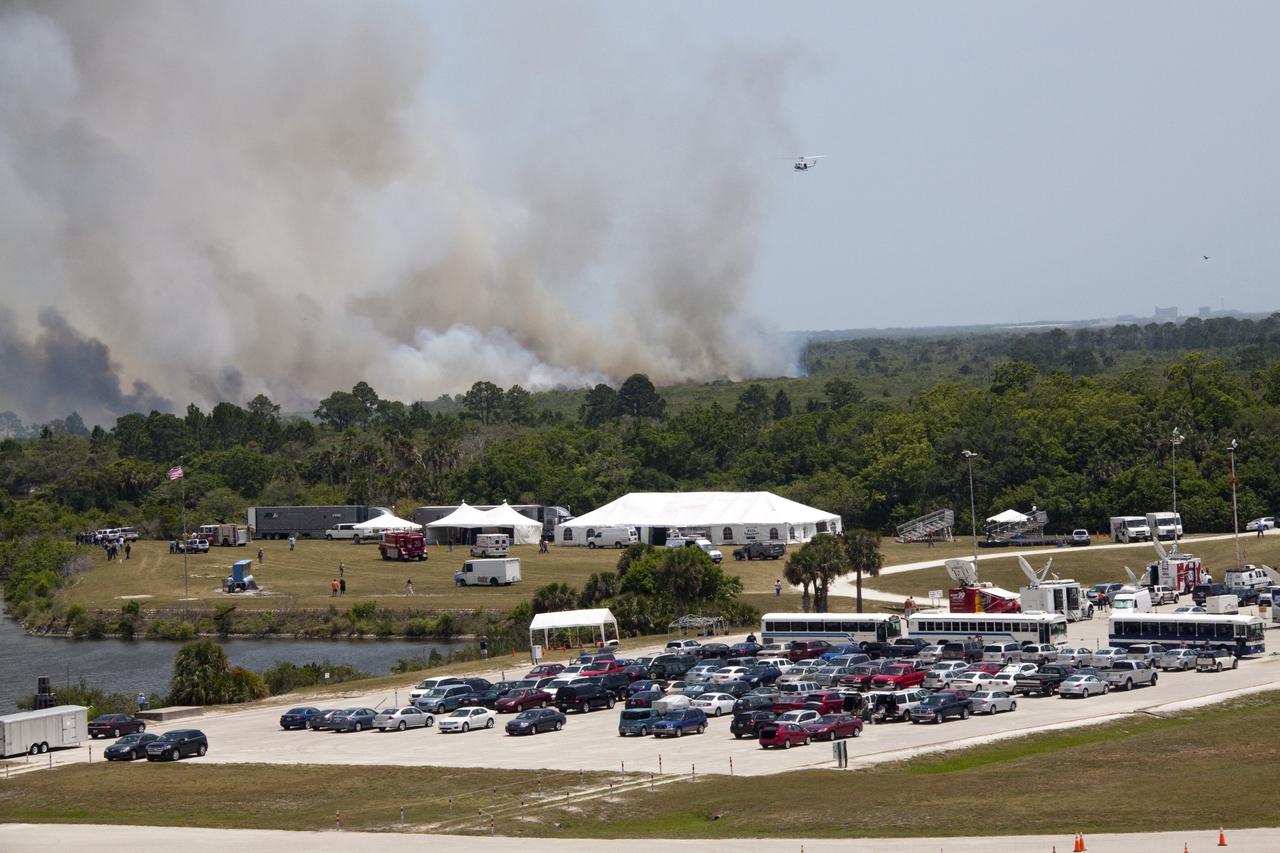
CAPE CANAVERAL, Fla. -- At NASA's Kennedy Space Center in Florida, smoke rises from a smoldering brush fire southeast of the Turn Basin. The fire was spotted near Kennedy’s Press Site approximately three miles away from Launch Pad 39A. The fires are being contained by firefighters from Kennedy Space Center and the U.S. Fish and Wildlife Service. No personnel are in danger and currently there is no to impact any operations related to space shuttle Endeavour’s launch countdown. Photo credit: NASA/Jack Pfaller
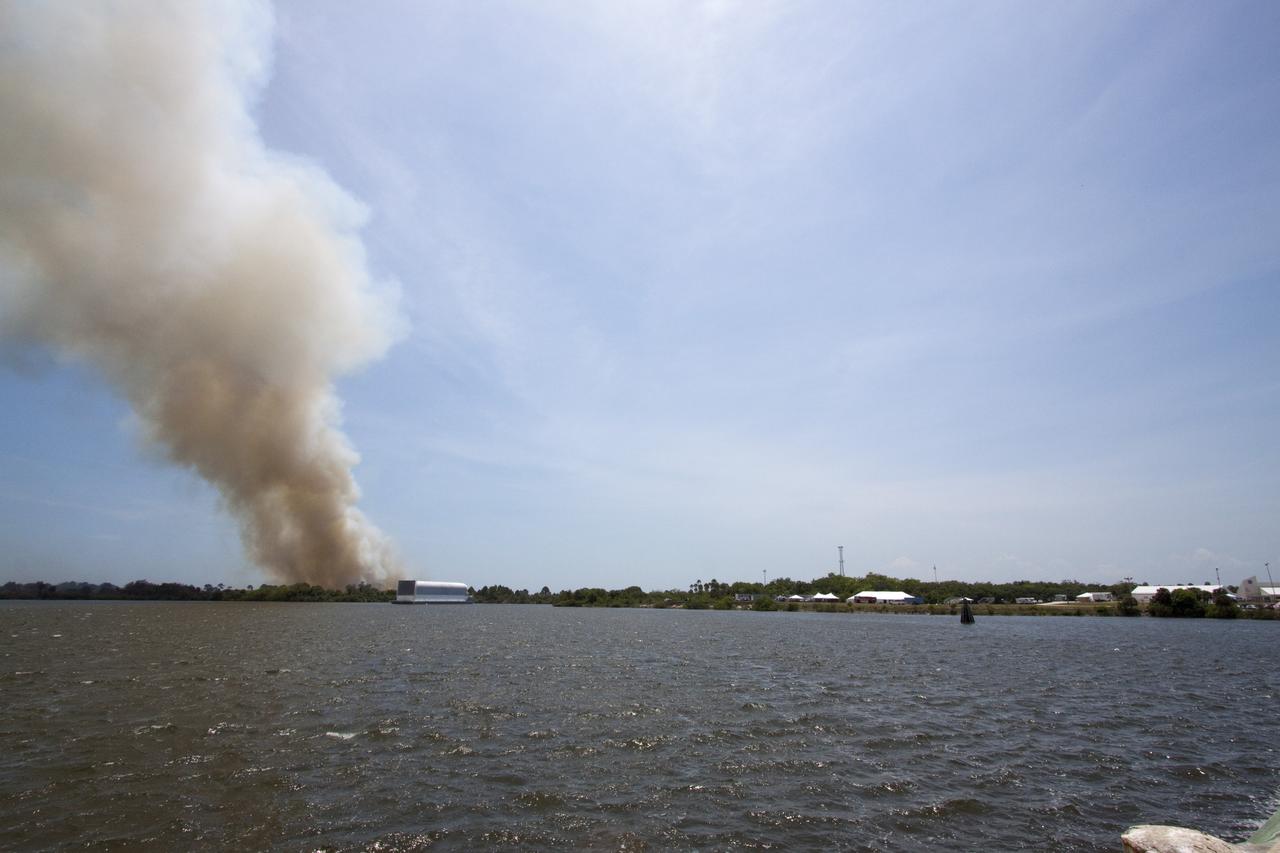
CAPE CANAVERAL, Fla. -- At NASA's Kennedy Space Center in Florida, smoke rises from a smoldering brush fire southeast of the Turn Basin. The fire was spotted near Kennedy’s Press Site approximately three miles away from Launch Pad 39A. The fires are being contained by firefighters from Kennedy Space Center and the U.S. Fish and Wildlife Service. No personnel are in danger and currently there is no to impact any operations related to space shuttle Endeavour’s launch countdown. Photo credit: NASA/Jack Pfaller
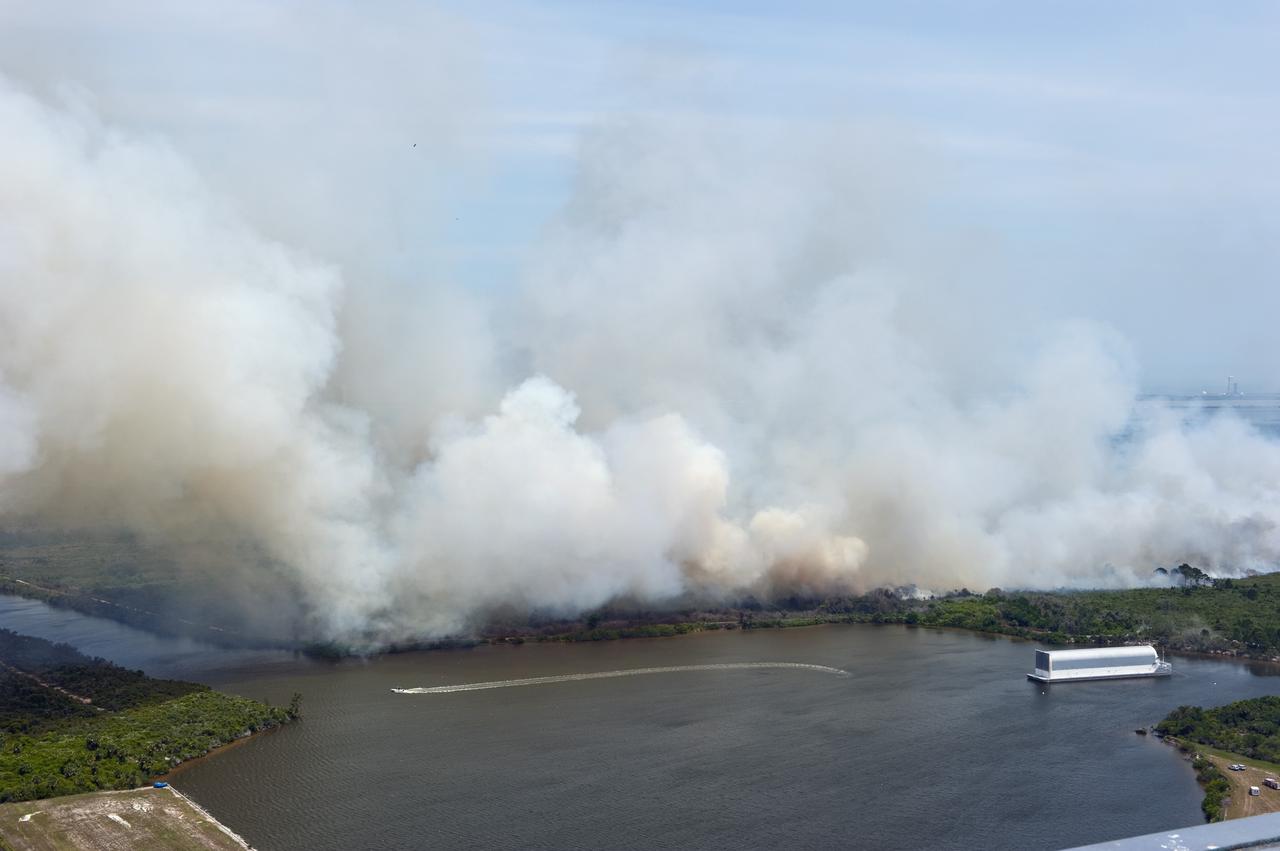
CAPE CANAVERAL, Fla. -- At NASA's Kennedy Space Center in Florida, smoke rises from a smoldering brush fire southeast of the Turn Basin. The fire was spotted near Kennedy’s Press Site approximately three miles away from Launch Pad 39A. The fires are being contained by firefighters from Kennedy Space Center and the U.S. Fish and Wildlife Service. No personnel are in danger and currently there is no to impact any operations related to space shuttle Endeavour’s launch countdown. Photo credit: NASA/Kim Shiflett
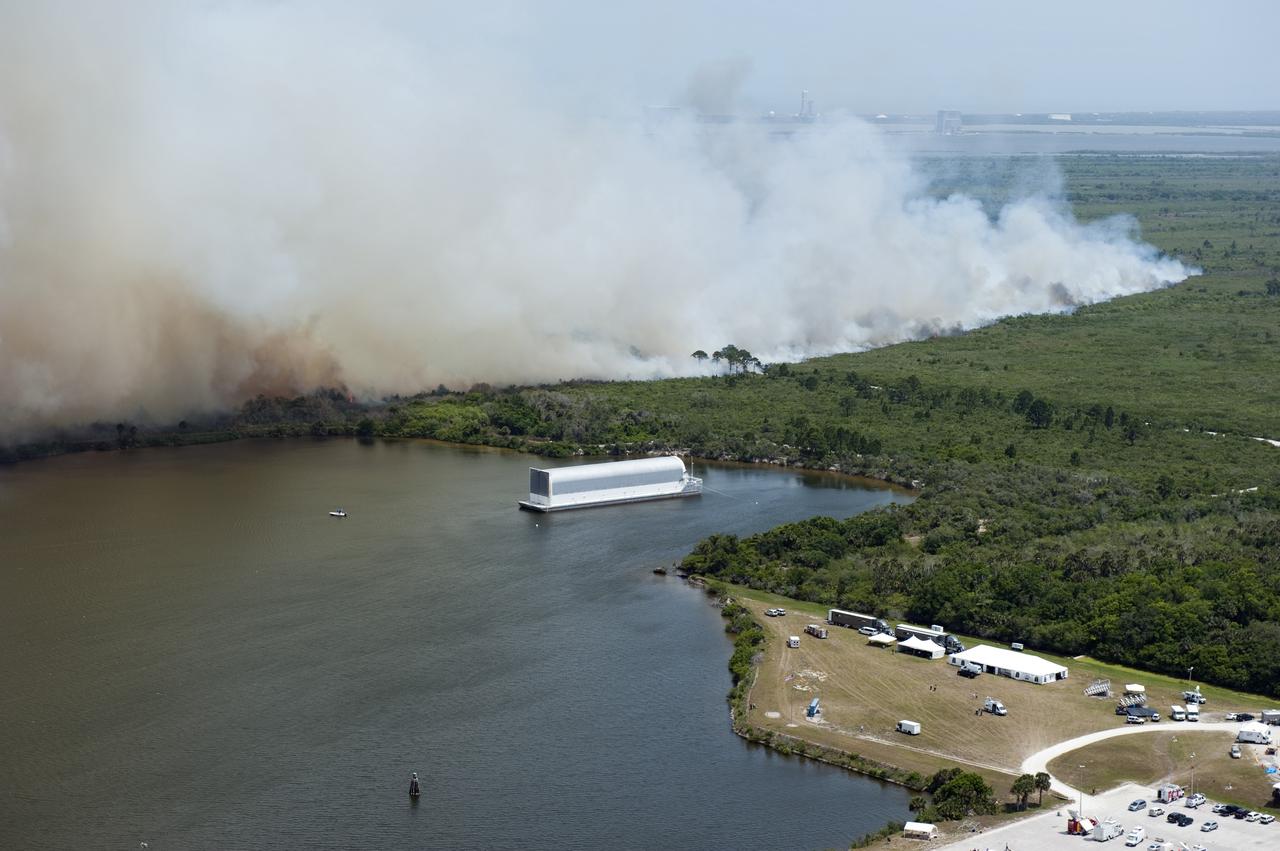
CAPE CANAVERAL, Fla. -- At NASA's Kennedy Space Center in Florida, smoke rises from a smoldering brush fire southeast of the Turn Basin. The fire was spotted near Kennedy’s Press Site approximately three miles away from Launch Pad 39A. The fires are being contained by firefighters from Kennedy Space Center and the U.S. Fish and Wildlife Service. No personnel are in danger and currently there is no to impact any operations related to space shuttle Endeavour’s launch countdown. Photo credit: NASA/Kim Shiflett
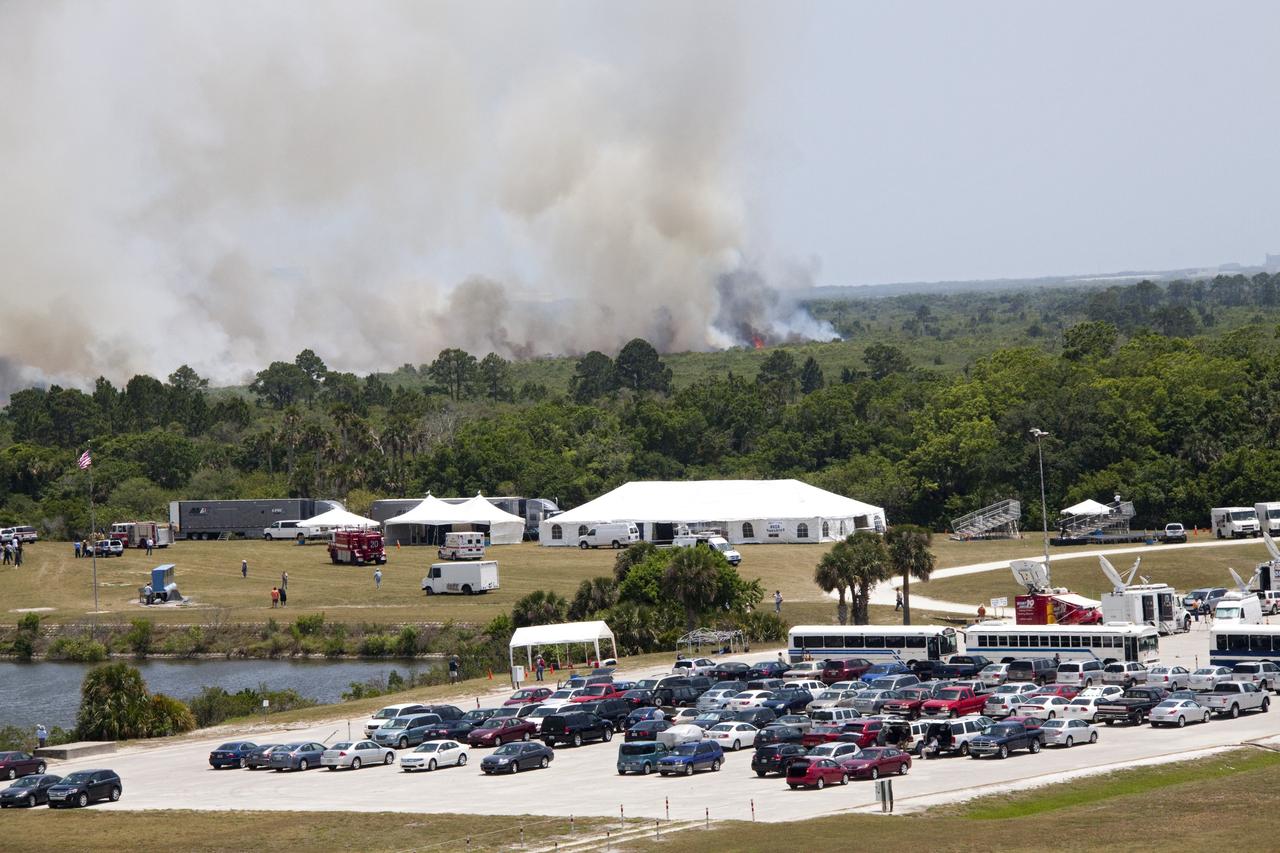
CAPE CANAVERAL, Fla. -- At NASA's Kennedy Space Center in Florida, smoke rises from a smoldering brush fire southeast of the Turn Basin. The fire was spotted near Kennedy’s Press Site approximately three miles away from Launch Pad 39A. The fires are being contained by firefighters from Kennedy Space Center and the U.S. Fish and Wildlife Service. No personnel are in danger and currently there is no to impact any operations related to space shuttle Endeavour’s launch countdown. Photo credit: NASA/Jack Pfaller
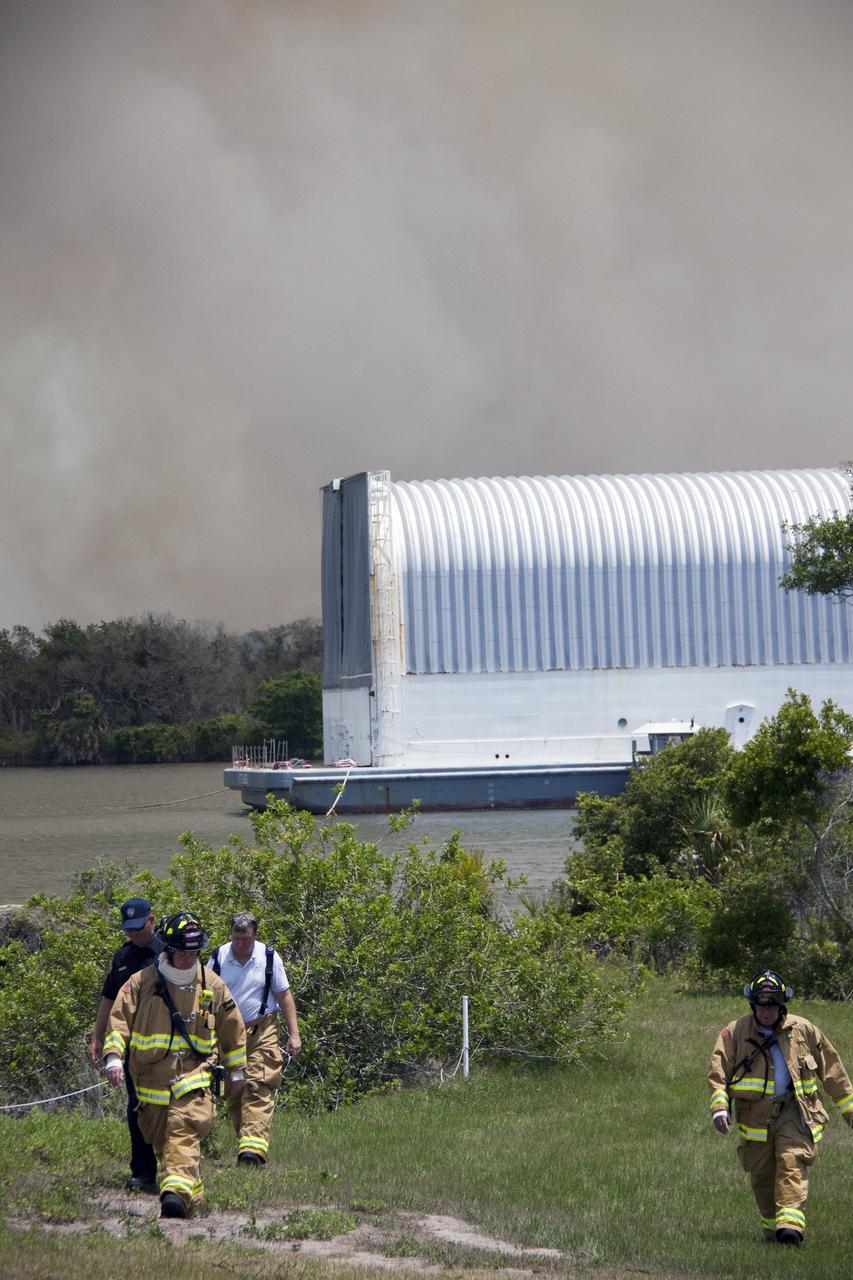
CAPE CANAVERAL, Fla. -- At NASA's Kennedy Space Center in Florida, smoke rises from a smoldering brush fire southeast of the Turn Basin. The fire was spotted near Kennedy’s Press Site approximately three miles away from Launch Pad 39A. The fires are being contained by firefighters from Kennedy Space Center and the U.S. Fish and Wildlife Service. No personnel are in danger and currently there is no to impact any operations related to space shuttle Endeavour’s launch countdown. Photo credit: NASA/Troy Cryder
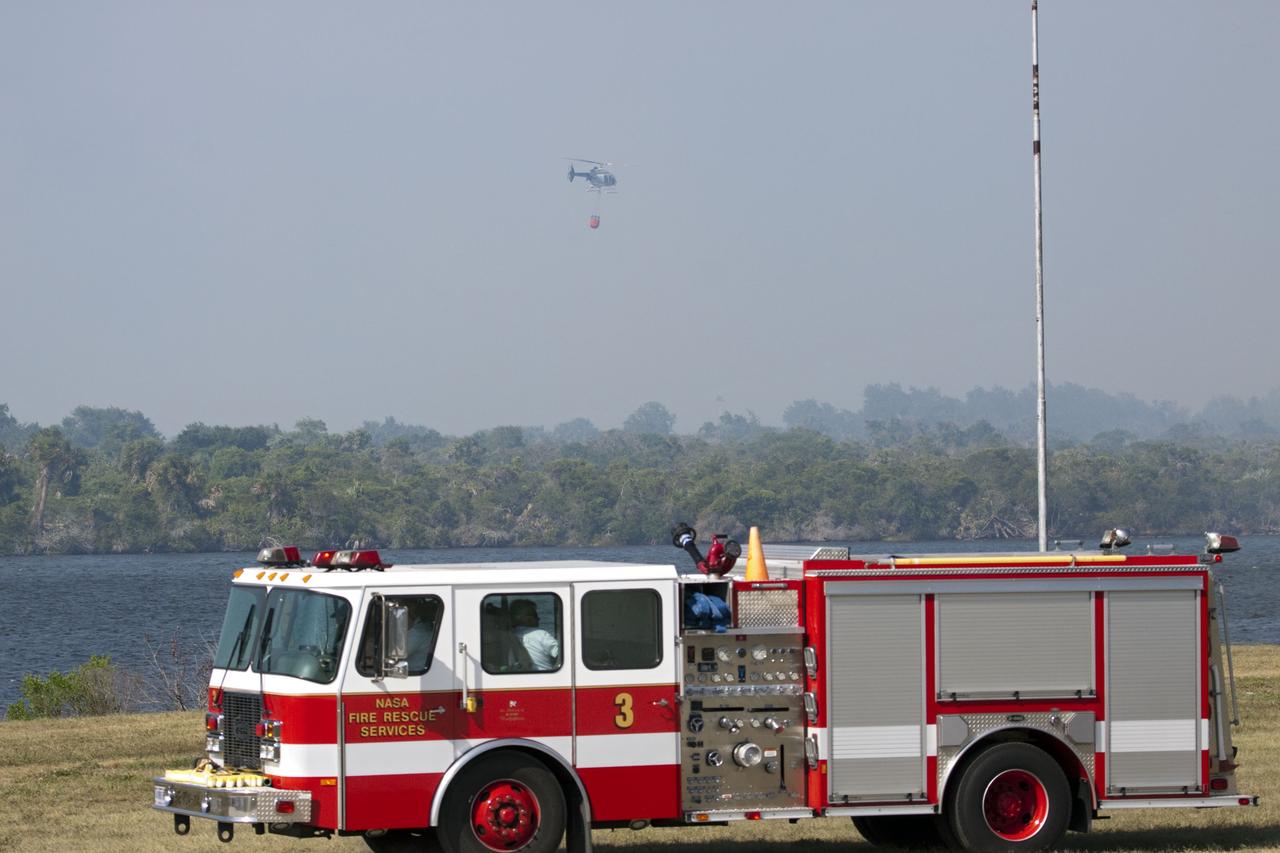
CAPE CANAVERAL, Fla. -- At NASA's Kennedy Space Center in Florida, a helicopter collects water from the Turn Basin to douse a nearby brush fire. The fire was spotted in a rural area southeast of Kennedy’s Press Site approximately three miles away from Launch Pad 39A, where space shuttle Endeavour awaits liftoff on the STS-134 mission to the International Space Station. The fire is being contained by crews from Kennedy and the U.S. Fish and Wildlife Service and smoke is not expected to impact launch. Photo credit: NASA/Jack Pfaller
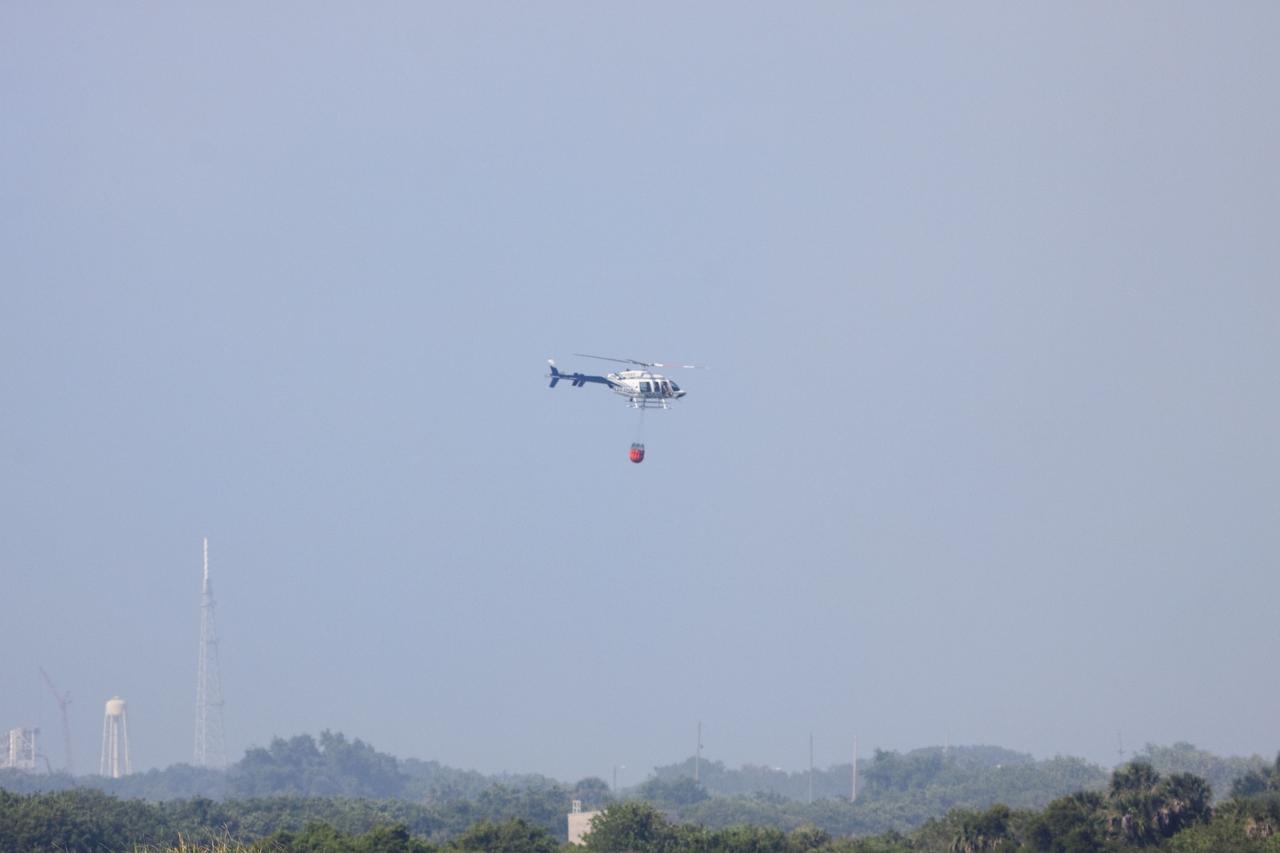
CAPE CANAVERAL, Fla. -- At NASA's Kennedy Space Center in Florida, a helicopter collects water from the Turn Basin to douse a nearby brush fire. The fire was spotted in a rural area southeast of Kennedy’s Press Site approximately three miles away from Launch Pad 39A, where space shuttle Endeavour awaits liftoff on the STS-134 mission to the International Space Station. The fire is being contained by crews from Kennedy and the U.S. Fish and Wildlife Service and smoke is not expected to impact launch. Photo credit: NASA/Jack Pfaller
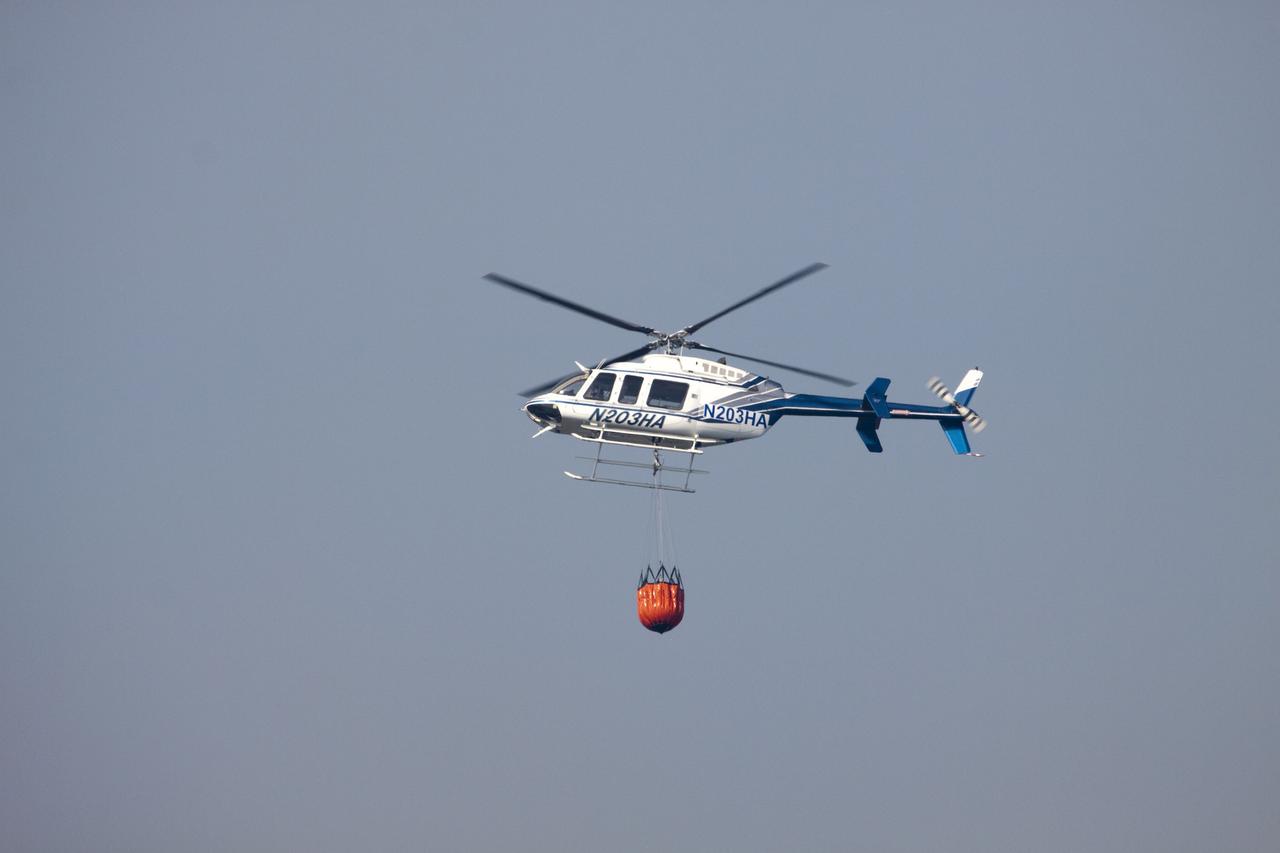
CAPE CANAVERAL, Fla. -- At NASA's Kennedy Space Center in Florida, a helicopter collects water from the Turn Basin to douse a nearby brush fire. The fire was spotted in a rural area southeast of Kennedy’s Press Site approximately three miles away from Launch Pad 39A, where space shuttle Endeavour awaits liftoff on the STS-134 mission to the International Space Station. The fire is being contained by crews from Kennedy and the U.S. Fish and Wildlife Service and smoke is not expected to impact launch. Photo credit: NASA/Jack Pfaller
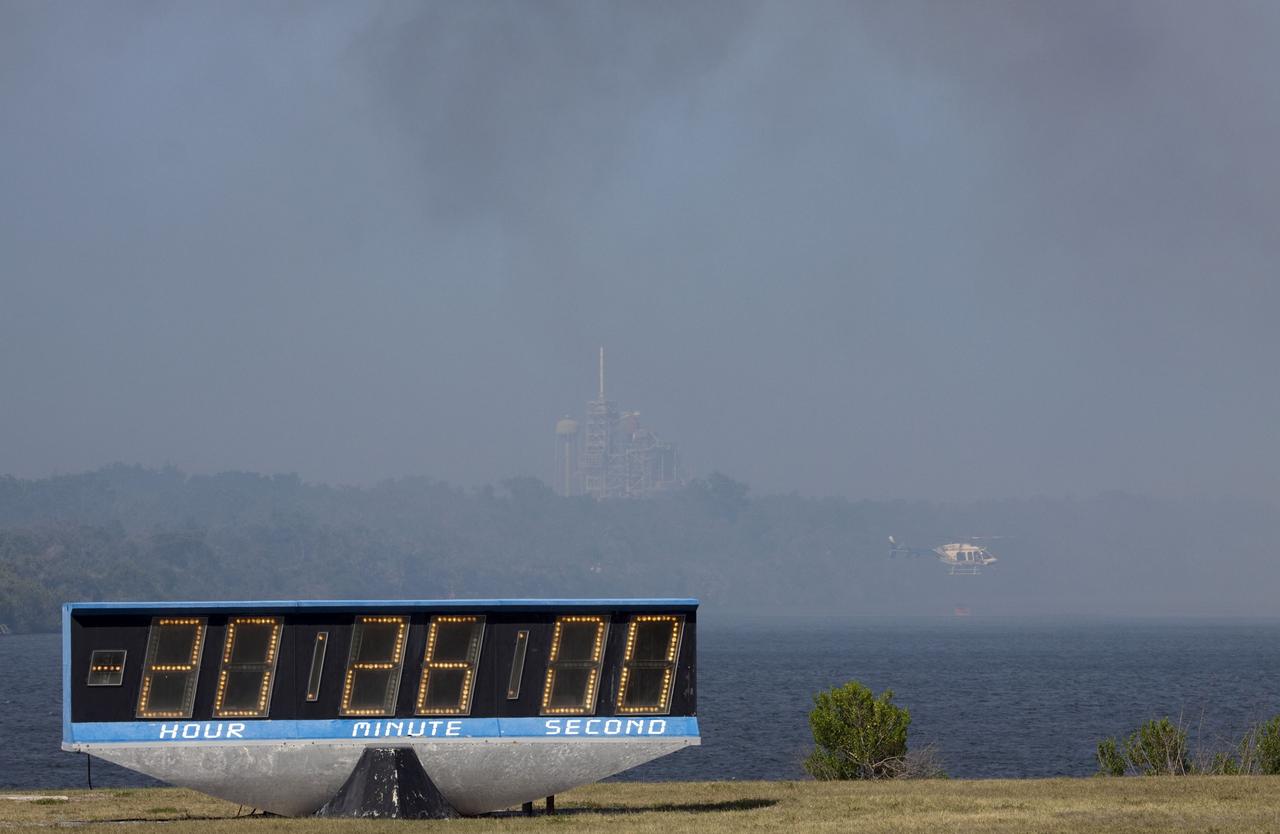
CAPE CANAVERAL, Fla. -- At NASA's Kennedy Space Center in Florida, a helicopter collects water from the Turn Basin to douse a nearby brush fire. The fire was spotted in a rural area southeast of Kennedy’s Press Site approximately three miles away from Launch Pad 39A, where space shuttle Endeavour awaits liftoff on the STS-134 mission to the International Space Station. The fire is being contained by crews from Kennedy and the U.S. Fish and Wildlife Service and smoke is not expected to impact launch. Photo credit: NASA/Jack Pfaller

NASA’s Pegasus barge carrying a weather cover for the Artemis III SLS (Space Launch System) rocket core stage, arrives Sunday, June 21, 2026, at the Launch Complex 39 turn basin at the agency’s Kennedy Space Center in Florida. The cover will protect the stage’s thermal systems while SLS sits atop the mobile launcher at Launch Pad 39B in its short stack configuration. NASA will send four Artemis astronauts on increasingly difficult missions to explore more of the Moon for scientific discovery, economic benefits, establish an enduring human presence on the lunar surface, and to build on our foundation for the first crewed missions to Mars.

NASA’s Pegasus barge carrying a weather cover for the Artemis III SLS (Space Launch System) rocket core stage arrives Sunday, June 21, 2026, at the Launch Complex 39 turn basin at the agency’s Kennedy Space Center in Florida. The cover will protect the stage’s thermal systems while SLS sits atop the mobile launcher at Launch Pad 39B in its short stack configuration. NASA will send four Artemis astronauts on increasingly difficult missions to explore more of the Moon for scientific discovery, economic benefits, establish an enduring human presence on the lunar surface, and to build on our foundation for the first crewed missions to Mars.

NASA’s Pegasus barge carrying a weather cover for the Artemis III SLS (Space Launch System) rocket core stage, arrives Sunday, June 21, 2026, at the Launch Complex 39 turn basin at the agency’s Kennedy Space Center in Florida. The cover will protect the stage’s thermal systems while SLS sits atop the mobile launcher at Launch Pad 39B in its short stack configuration. NASA will send four Artemis astronauts on increasingly difficult missions to explore more of the Moon for scientific discovery, economic benefits, establish an enduring human presence on the lunar surface, and to build on our foundation for the first crewed missions to Mars.

NASA’s Pegasus barge carrying a weather cover for the Artemis III SLS (Space Launch System) rocket core stage arrives Sunday, June 21, 2026, at the Launch Complex 39 turn basin at the agency’s Kennedy Space Center in Florida. The cover will protect the stage’s thermal systems while SLS sits atop the mobile launcher at Launch Pad 39B in its short stack configuration. NASA will send four Artemis astronauts on increasingly difficult missions to explore more of the Moon for scientific discovery, economic benefits, establish an enduring human presence on the lunar surface, and to build on our foundation for the first crewed missions to Mars.

NASA’s Pegasus barge carrying a weather cover for the Artemis III SLS (Space Launch System) rocket core stage, arrives Sunday, June 21, 2026, at the Launch Complex 39 turn basin at the agency’s Kennedy Space Center in Florida. The cover will protect the stage’s thermal systems while SLS sits atop the mobile launcher at Launch Pad 39B in its short stack configuration. NASA will send four Artemis astronauts on increasingly difficult missions to explore more of the Moon for scientific discovery, economic benefits, establish an enduring human presence on the lunar surface, and to build on our foundation for the first crewed missions to Mars.

NASA’s Pegasus barge carrying a weather cover for the Artemis III SLS (Space Launch System) rocket core stage, arrives Sunday, June 21, 2026, at the Launch Complex 39 turn basin at the agency’s Kennedy Space Center in Florida. The cover will protect the stage’s thermal systems while SLS sits atop the mobile launcher at Launch Pad 39B in its short stack configuration. NASA will send four Artemis astronauts on increasingly difficult missions to explore more of the Moon for scientific discovery, economic benefits, establish an enduring human presence on the lunar surface, and to build on our foundation for the first crewed missions to Mars.

NASA’s Pegasus barge carrying a weather cover for the Artemis III SLS (Space Launch System) rocket core stage, arrives Sunday, June 21, 2026, at the Launch Complex 39 turn basin at the agency’s Kennedy Space Center in Florida. The cover will protect the stage’s thermal systems while SLS sits atop the mobile launcher at Launch Pad 39B in its short stack configuration. NASA will send four Artemis astronauts on increasingly difficult missions to explore more of the Moon for scientific discovery, economic benefits, establish an enduring human presence on the lunar surface, and to build on our foundation for the first crewed missions to Mars.

NASA’s Pegasus barge carrying a weather cover for the Artemis III SLS (Space Launch System) rocket core stage, arrives Sunday, June 21, 2026, at the Launch Complex 39 turn basin at the agency’s Kennedy Space Center in Florida. The cover will protect the stage’s thermal systems while SLS sits atop the mobile launcher at Launch Pad 39B in its short stack configuration. NASA will send four Artemis astronauts on increasingly difficult missions to explore more of the Moon for scientific discovery, economic benefits, establish an enduring human presence on the lunar surface, and to build on our foundation for the first crewed missions to Mars.

Teams load a weather cover for the Artemis III SLS (Space Launch System) rocket core stage on Monday, June 22, 2026, from NASA’s Pegasus barge at the Launch Complex 39 turn basin to transport the hardware to the spaceport’s Vehicle Assembly Building at the agency’s Kennedy Space Center in Florida. The cover will protect the stage’s thermal systems while SLS sits atop the mobile launcher at Launch Pad 39B in its short stack configuration. NASA will send four Artemis astronauts on increasingly difficult missions to explore more of the Moon for scientific discovery, economic benefits, establish an enduring human presence on the lunar surface, and to build on our foundation for the first crewed missions to Mars.

NASA’s Pegasus barge carrying a weather cover for the Artemis III SLS (Space Launch System) rocket core stage, arrives Sunday, June 21, 2026, at the Launch Complex 39 turn basin at the agency’s Kennedy Space Center in Florida. The cover will protect the stage’s thermal systems while SLS sits atop the mobile launcher at Launch Pad 39B in its short stack configuration. NASA will send four Artemis astronauts on increasingly difficult missions to explore more of the Moon for scientific discovery, economic benefits, establish an enduring human presence on the lunar surface, and to build on our foundation for the first crewed missions to Mars.
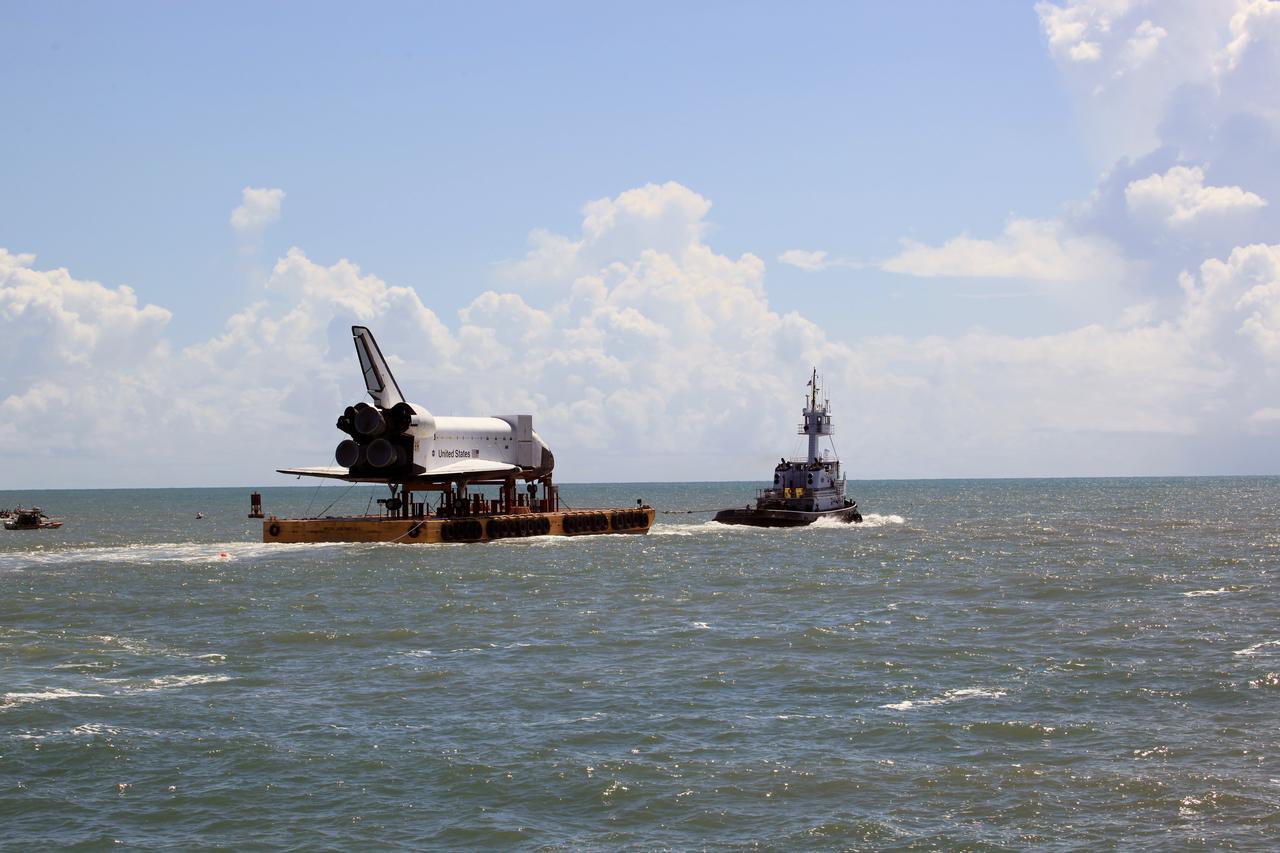
Shuttle Replica (High Fidelity) from Turn Basin thru Port going to Texas
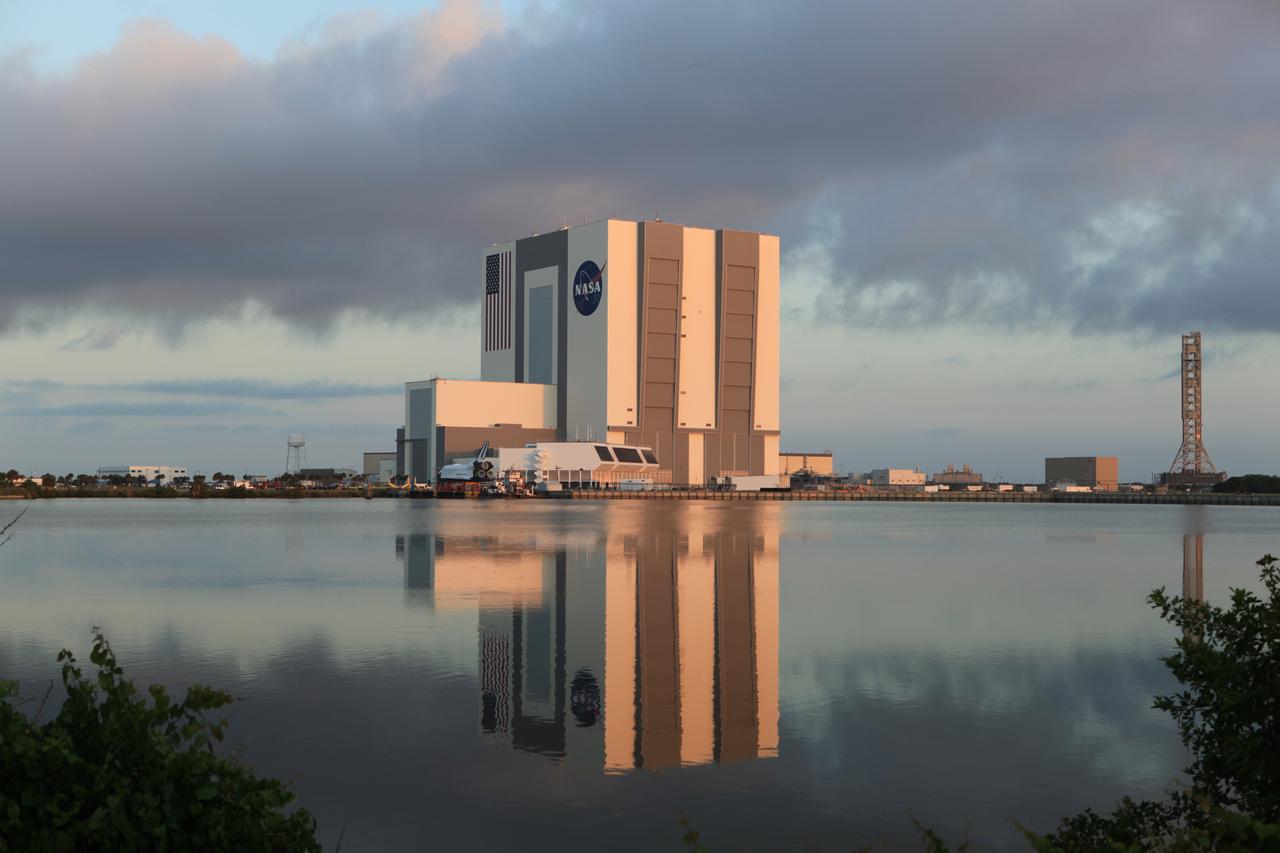
Shuttle Replica (High Fidelity) from Turn Basin thru Port going to Texas
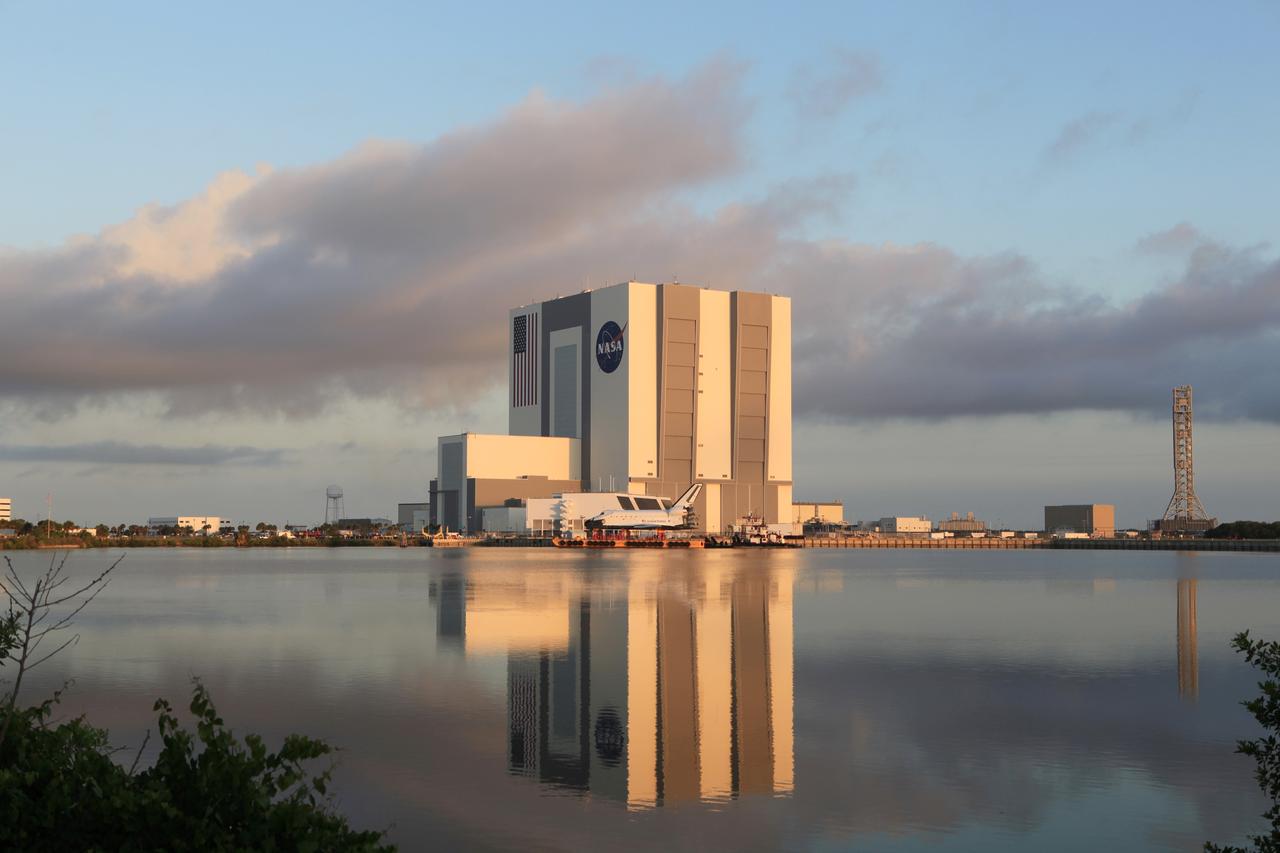
Shuttle Replica (High Fidelity) from Turn Basin thru Port going to Texas
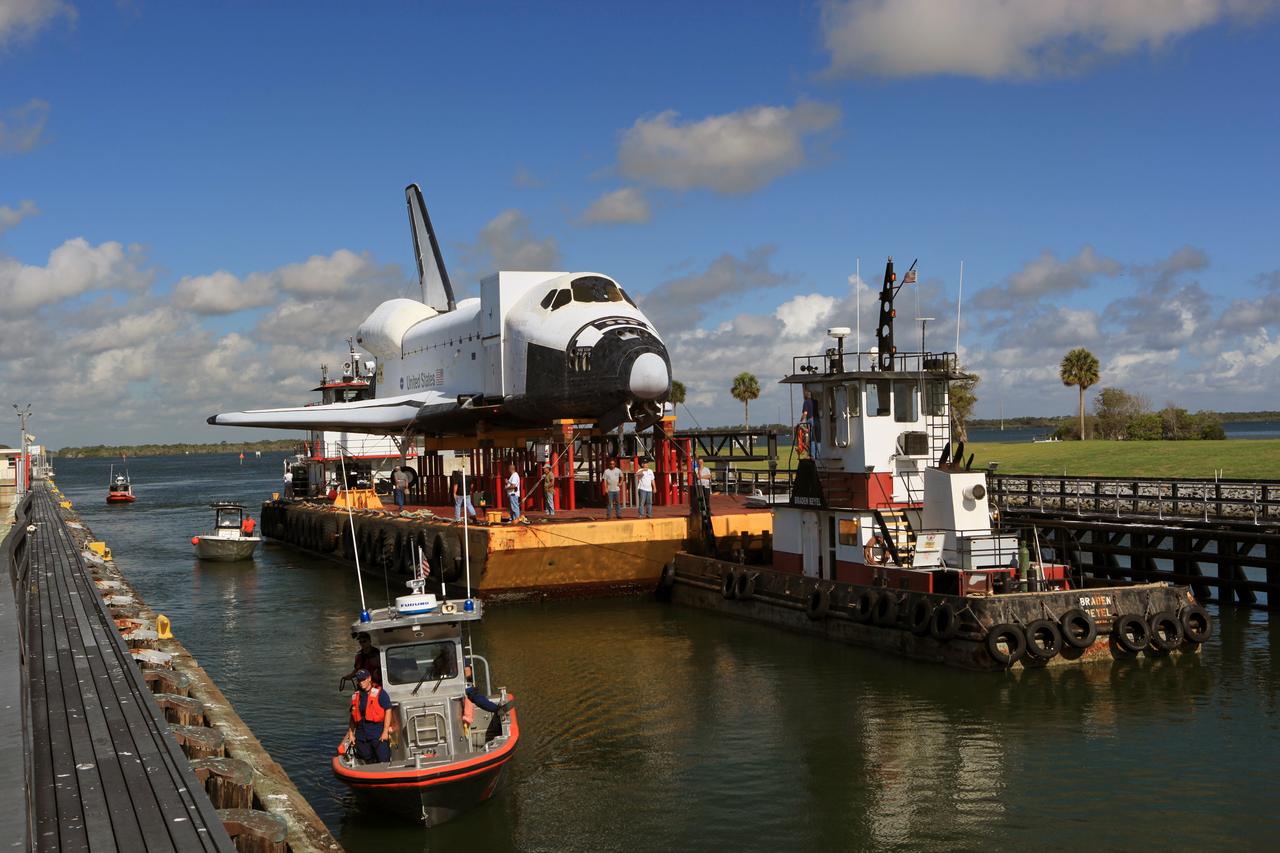
Shuttle Replica (High Fidelity) from Turn Basin thru Port going to Texas
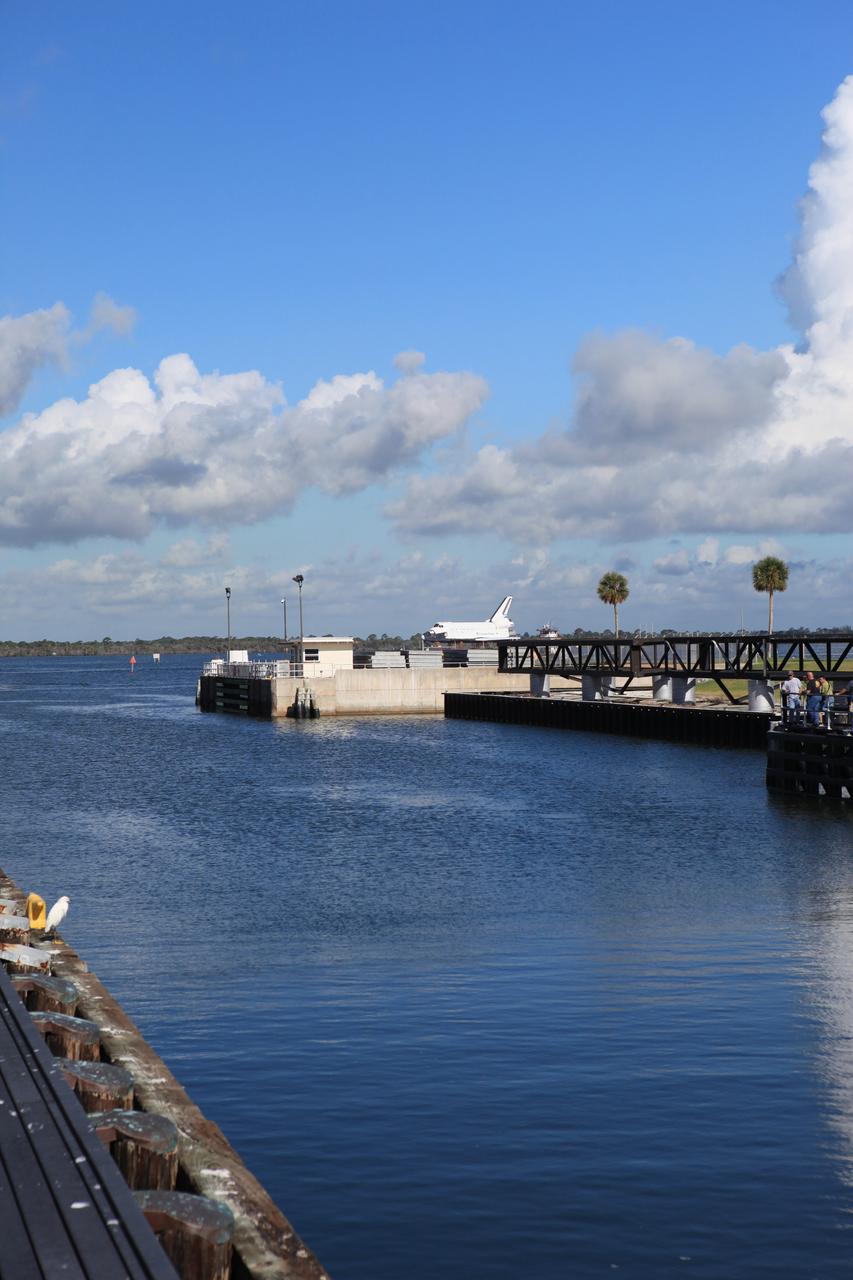
Shuttle Replica (High Fidelity) from Turn Basin thru Port going to Texas
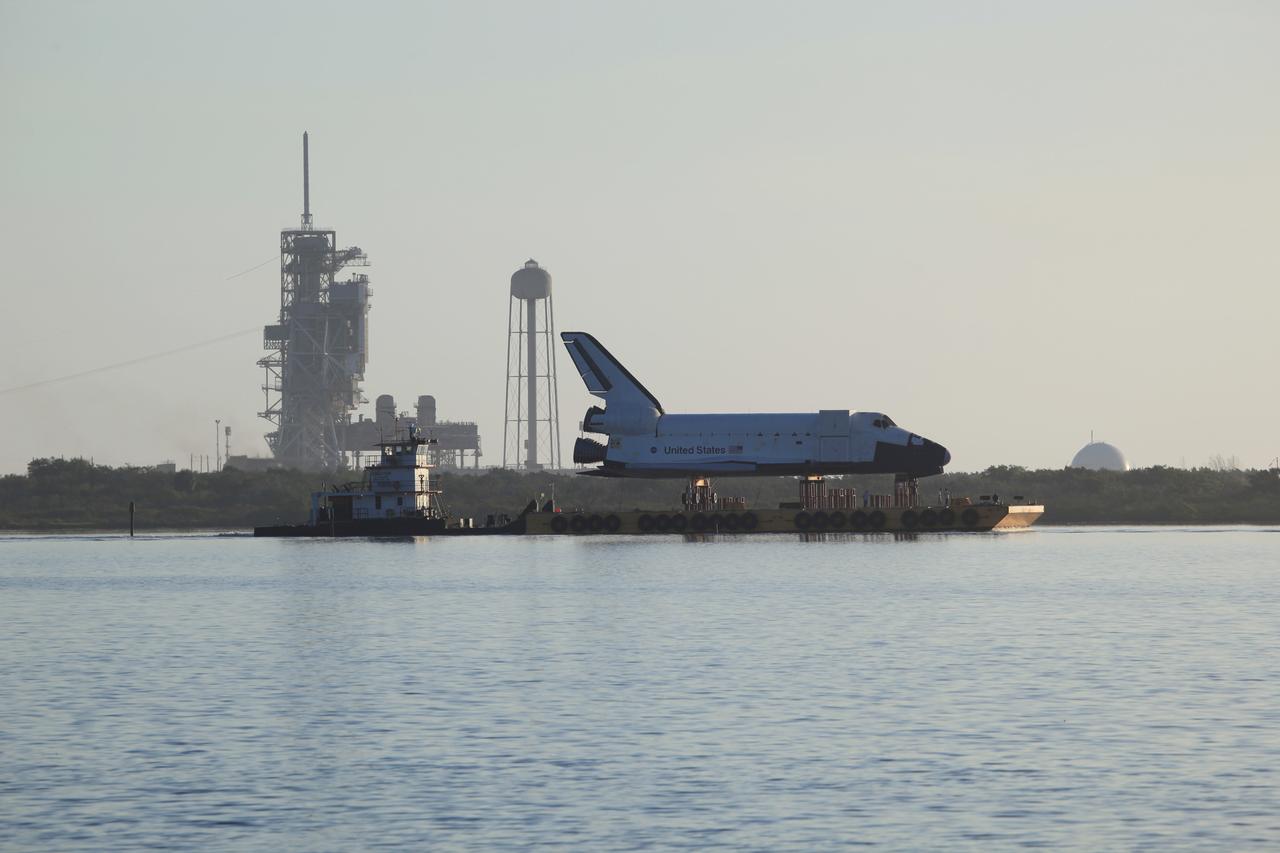
Shuttle Replica (High Fidelity) from Turn Basin thru Port going to Texas
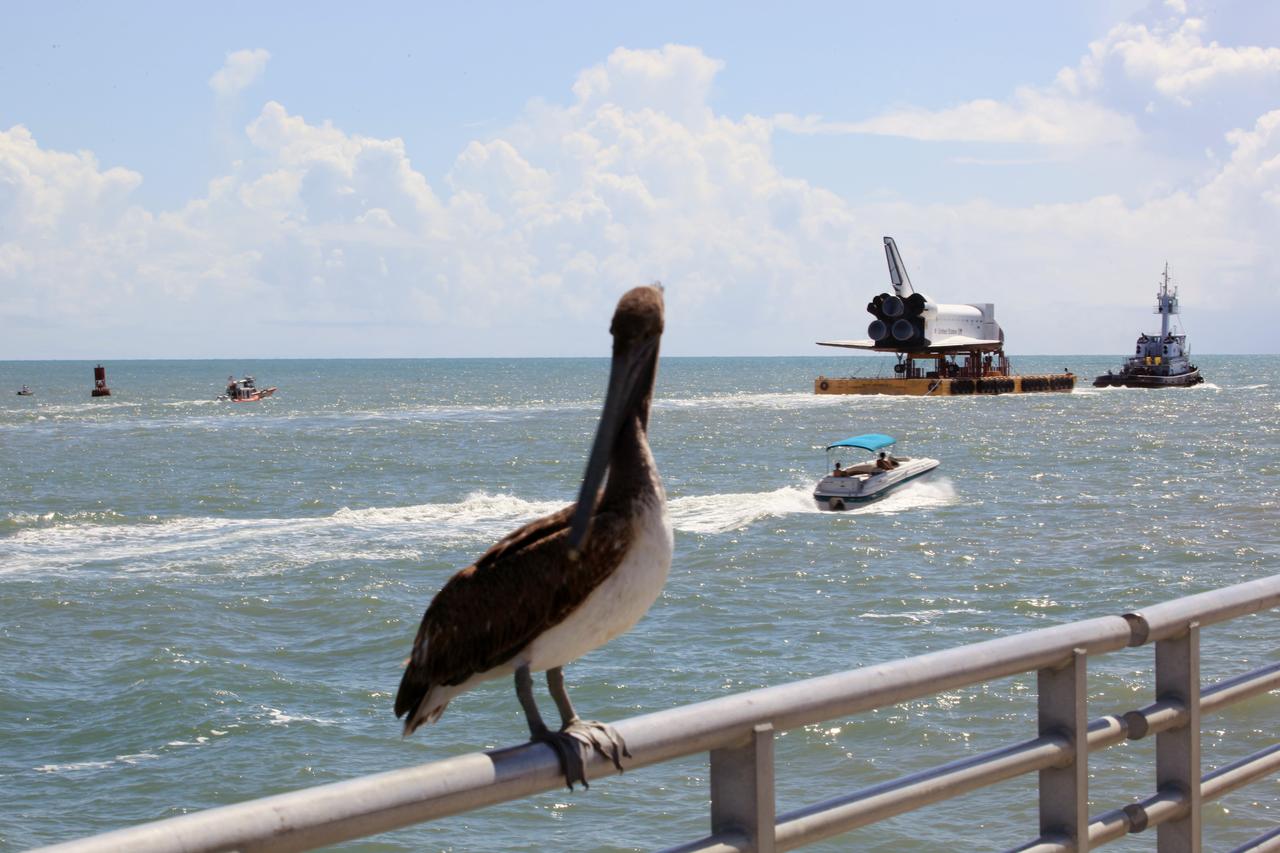
Shuttle Replica (High Fidelity) from Turn Basin thru Port going to Texas
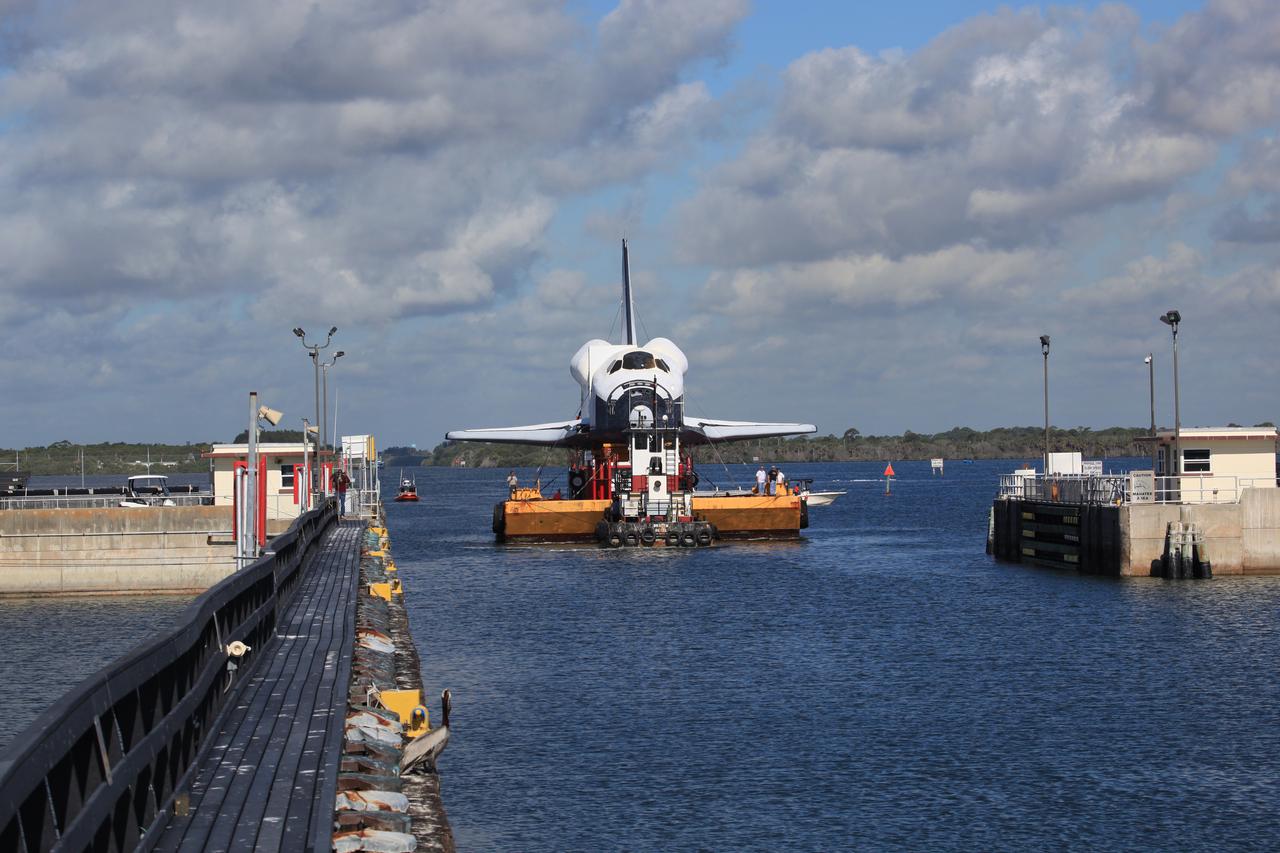
Shuttle Replica (High Fidelity) from Turn Basin thru Port going to Texas
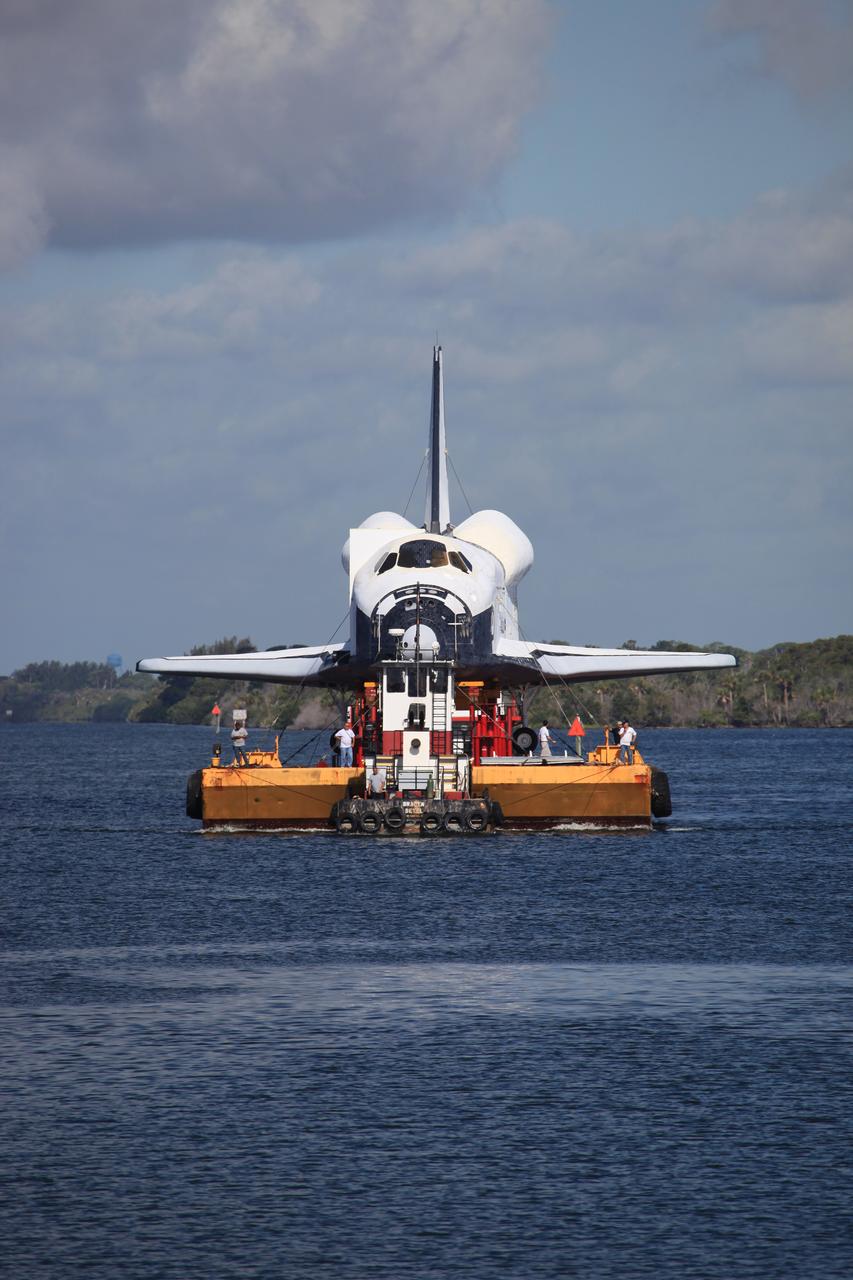
Shuttle Replica (High Fidelity) from Turn Basin thru Port going to Texas
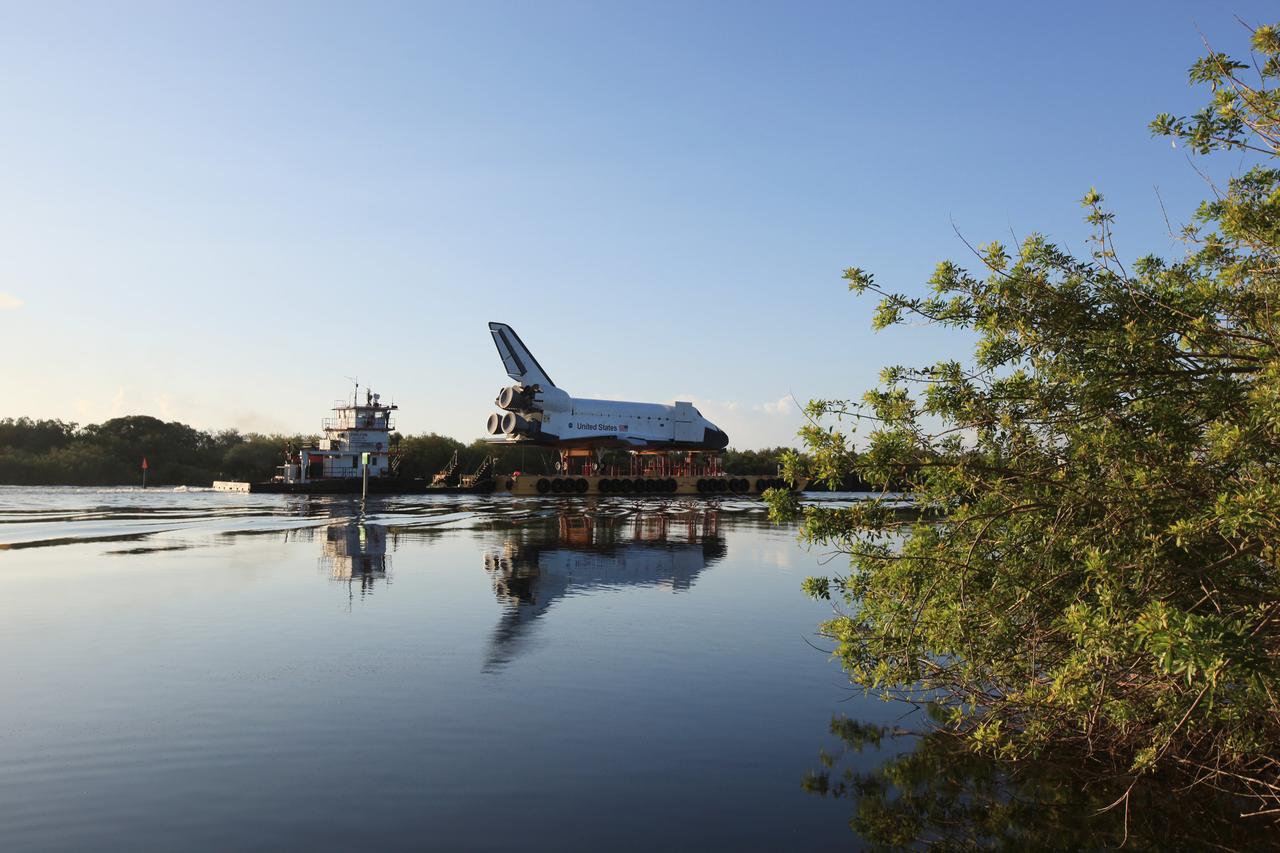
Shuttle Replica (High Fidelity) from Turn Basin thru Port going to Texas
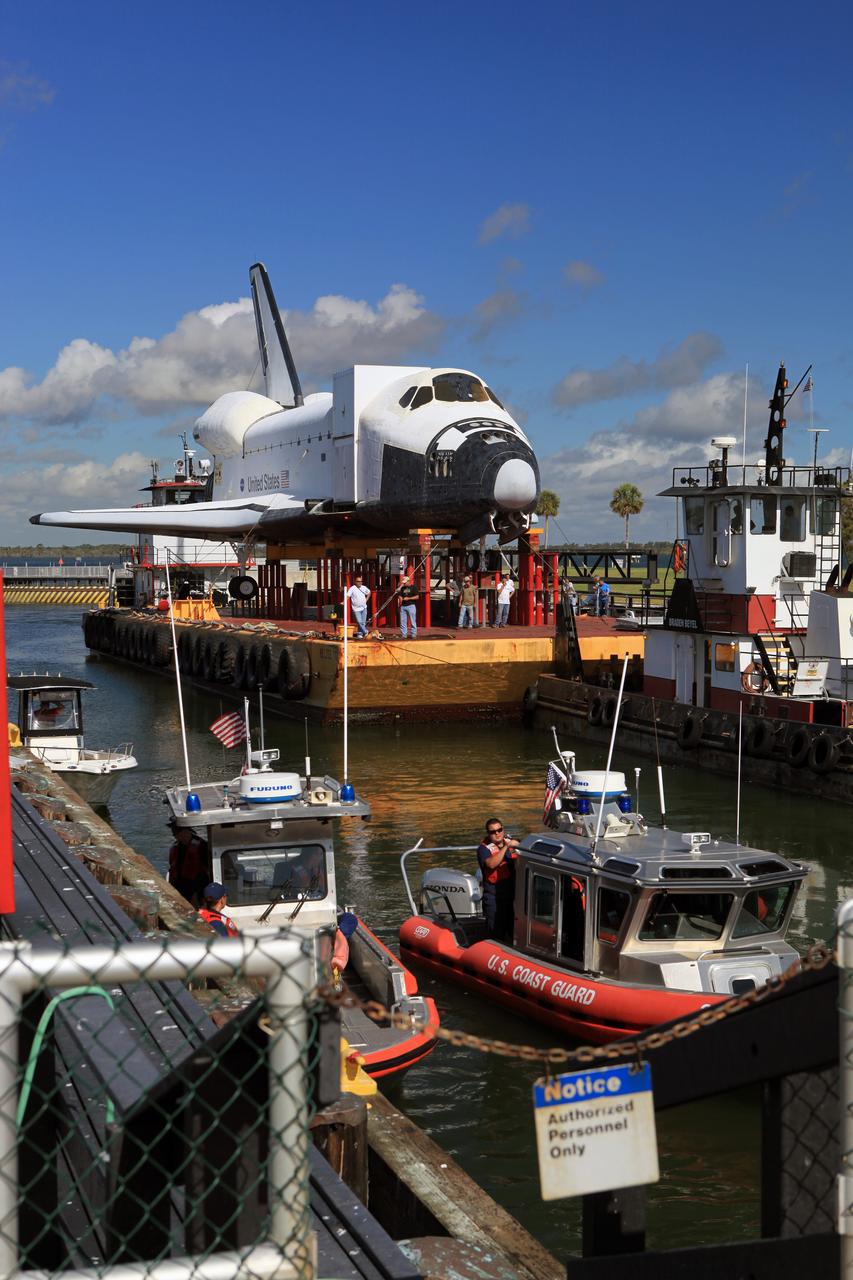
Shuttle Replica (High Fidelity) from Turn Basin thru Port going to Texas
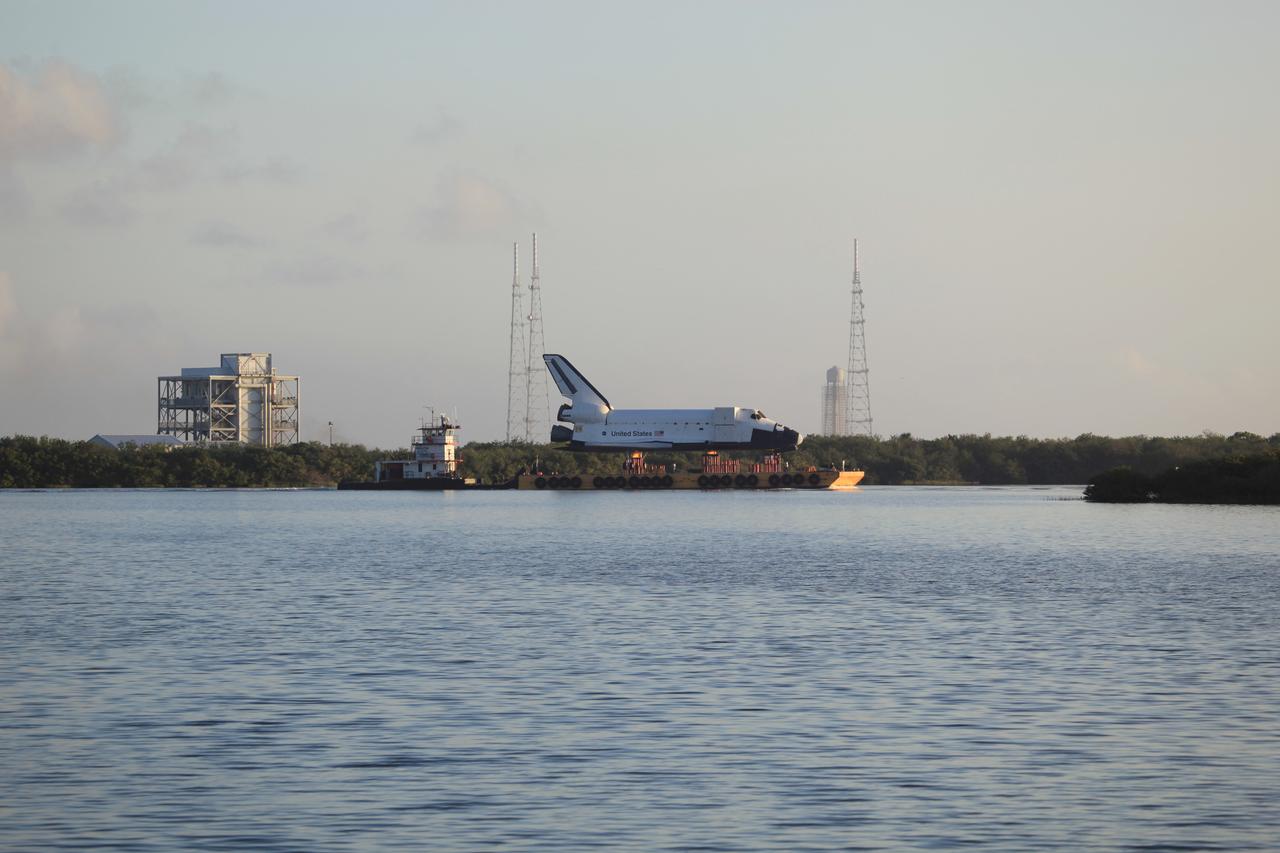
Shuttle Replica (High Fidelity) from Turn Basin thru Port going to Texas
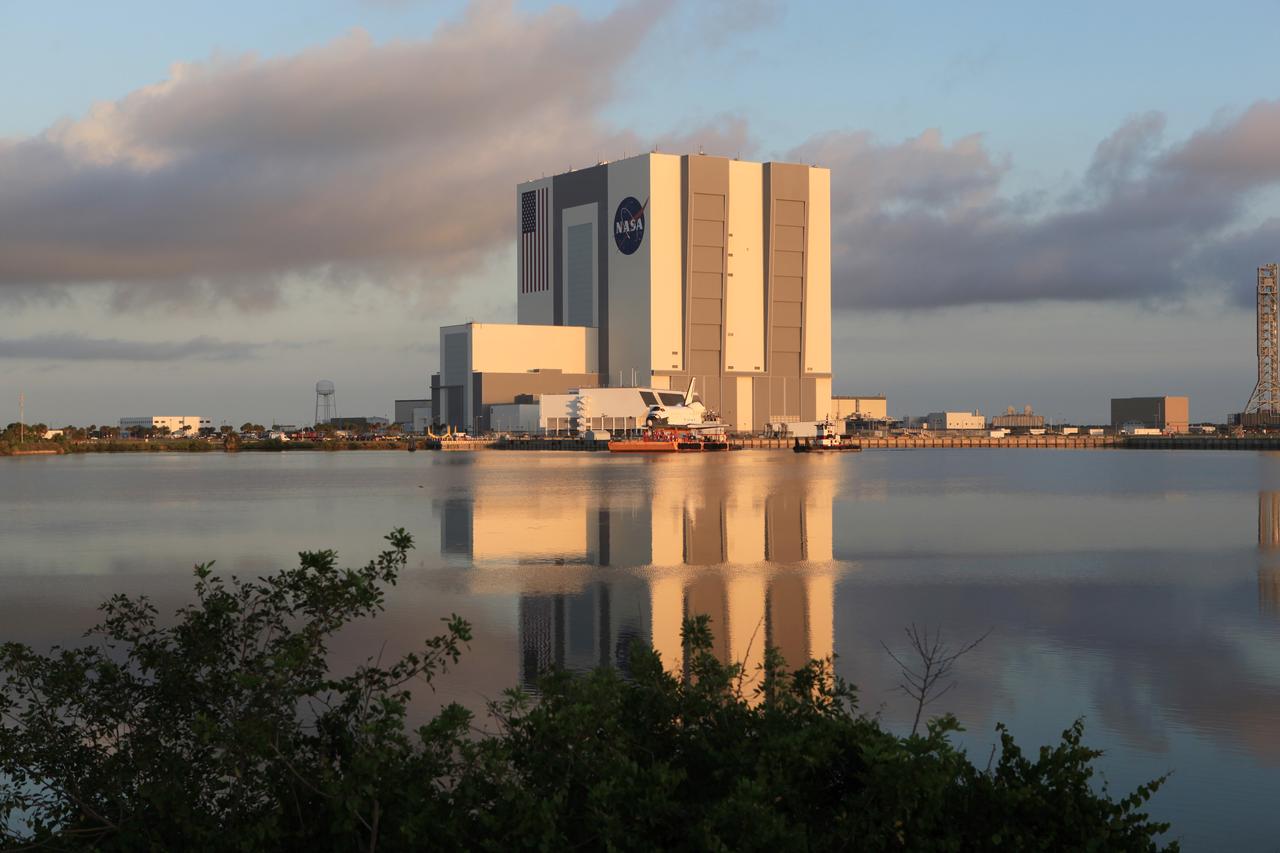
Shuttle Replica (High Fidelity) from Turn Basin thru Port going to Texas
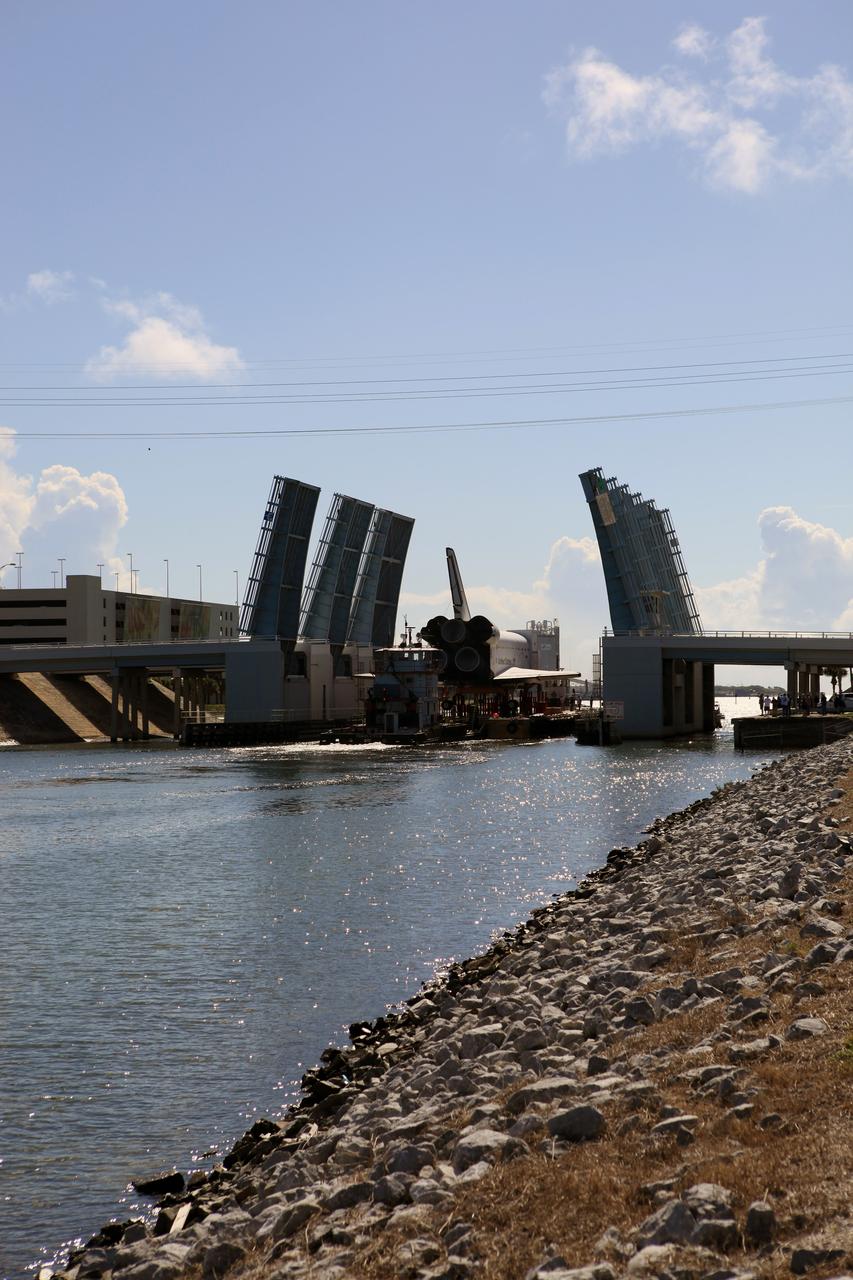
Shuttle Replica (High Fidelity) from Turn Basin thru Port going to Texas
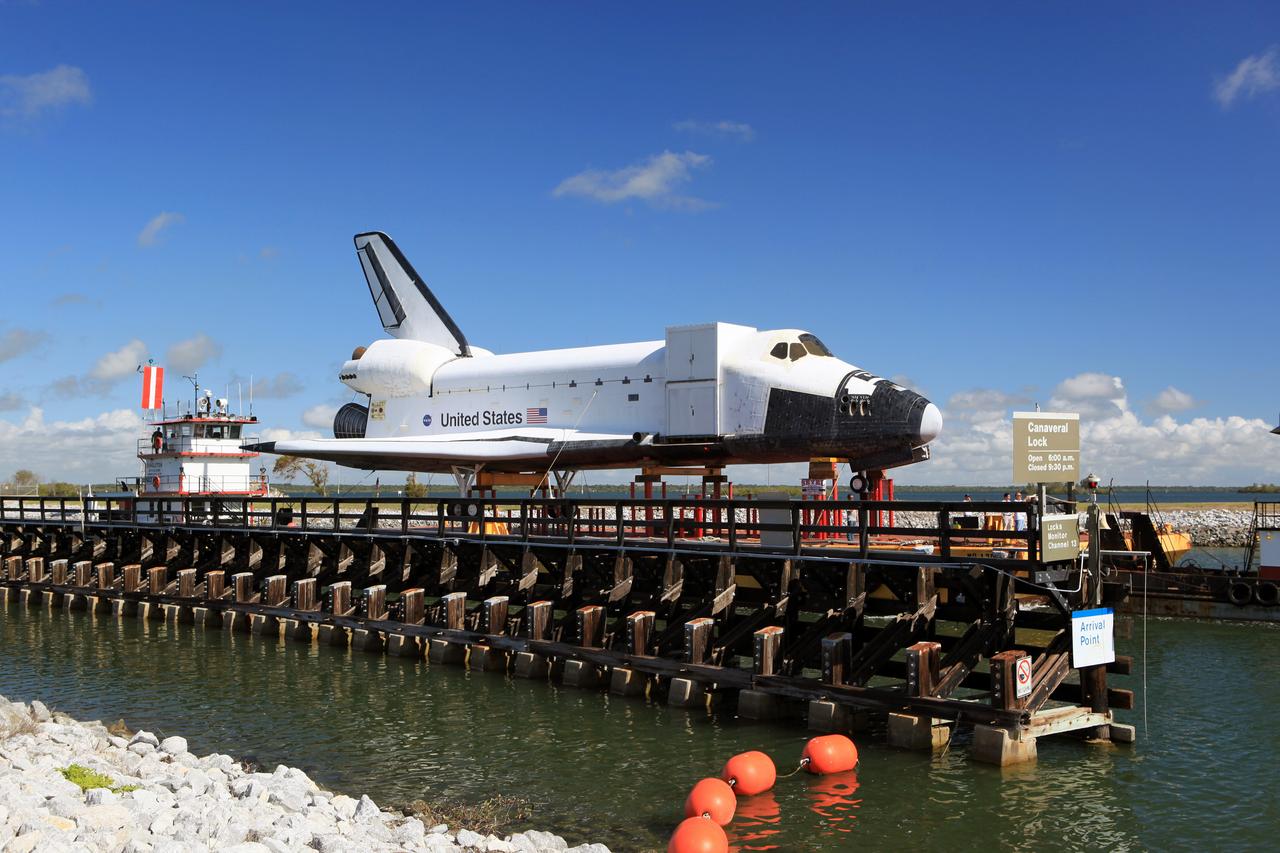
Shuttle Replica (High Fidelity) from Turn Basin thru Port going to Texas
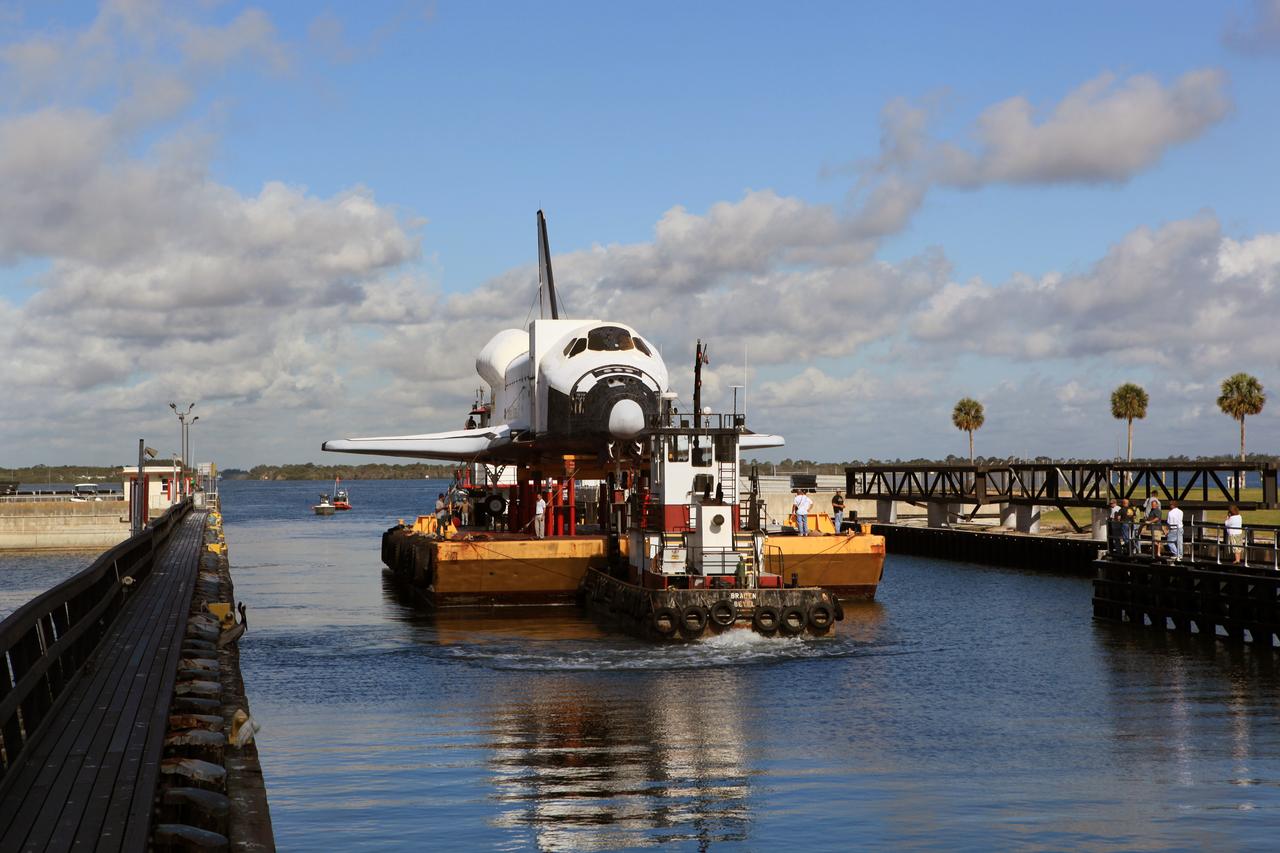
Shuttle Replica (High Fidelity) from Turn Basin thru Port going to Texas
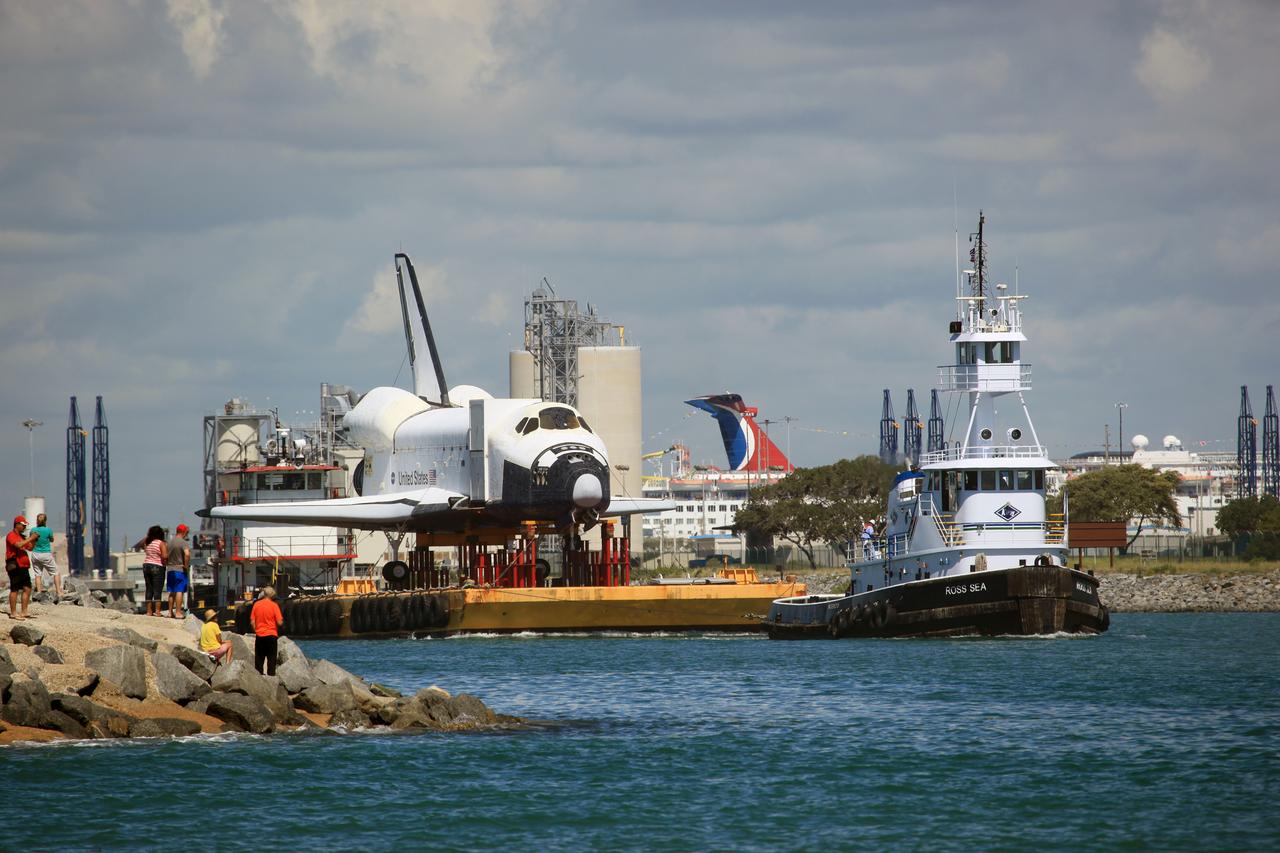
Shuttle Replica (High Fidelity) from Turn Basin thru Port going to Texas
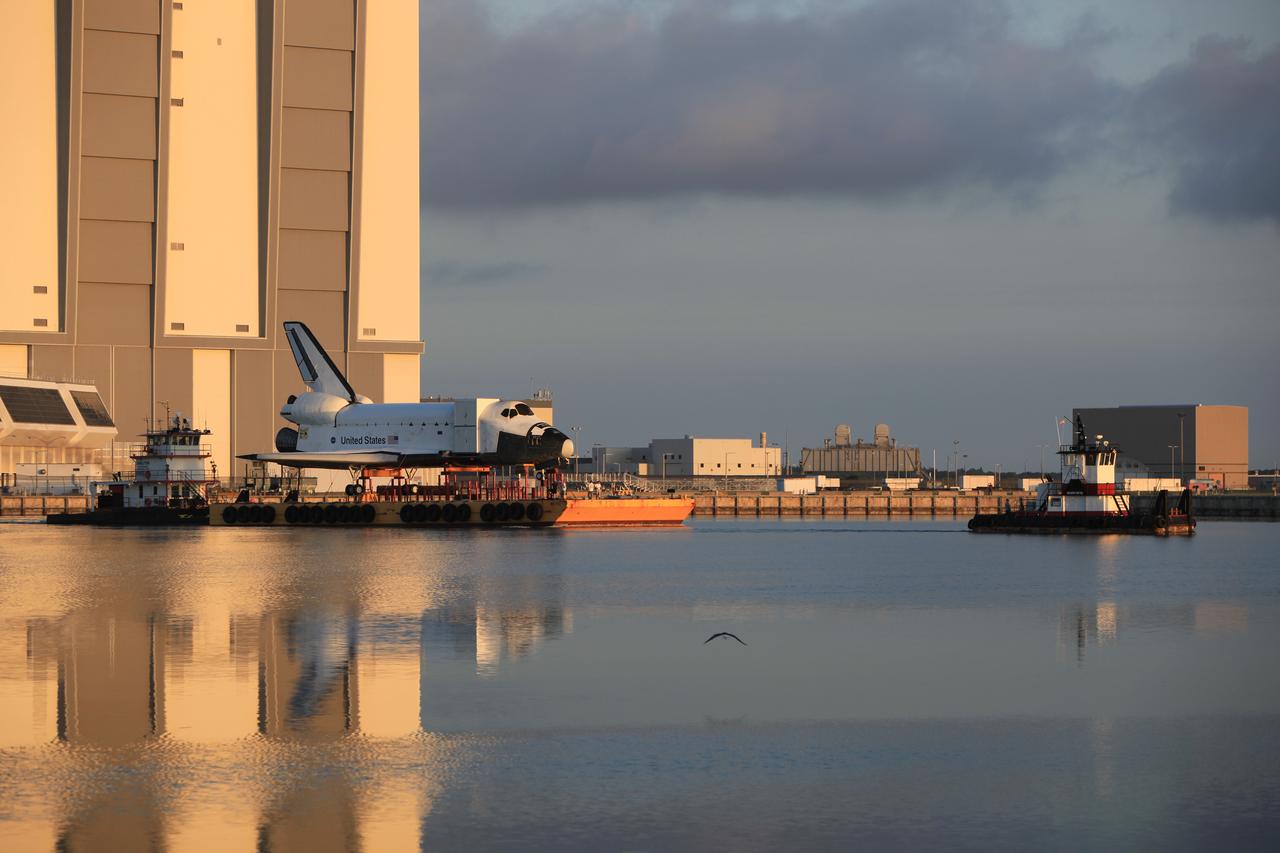
Shuttle Replica (High Fidelity) from Turn Basin thru Port going to Texas
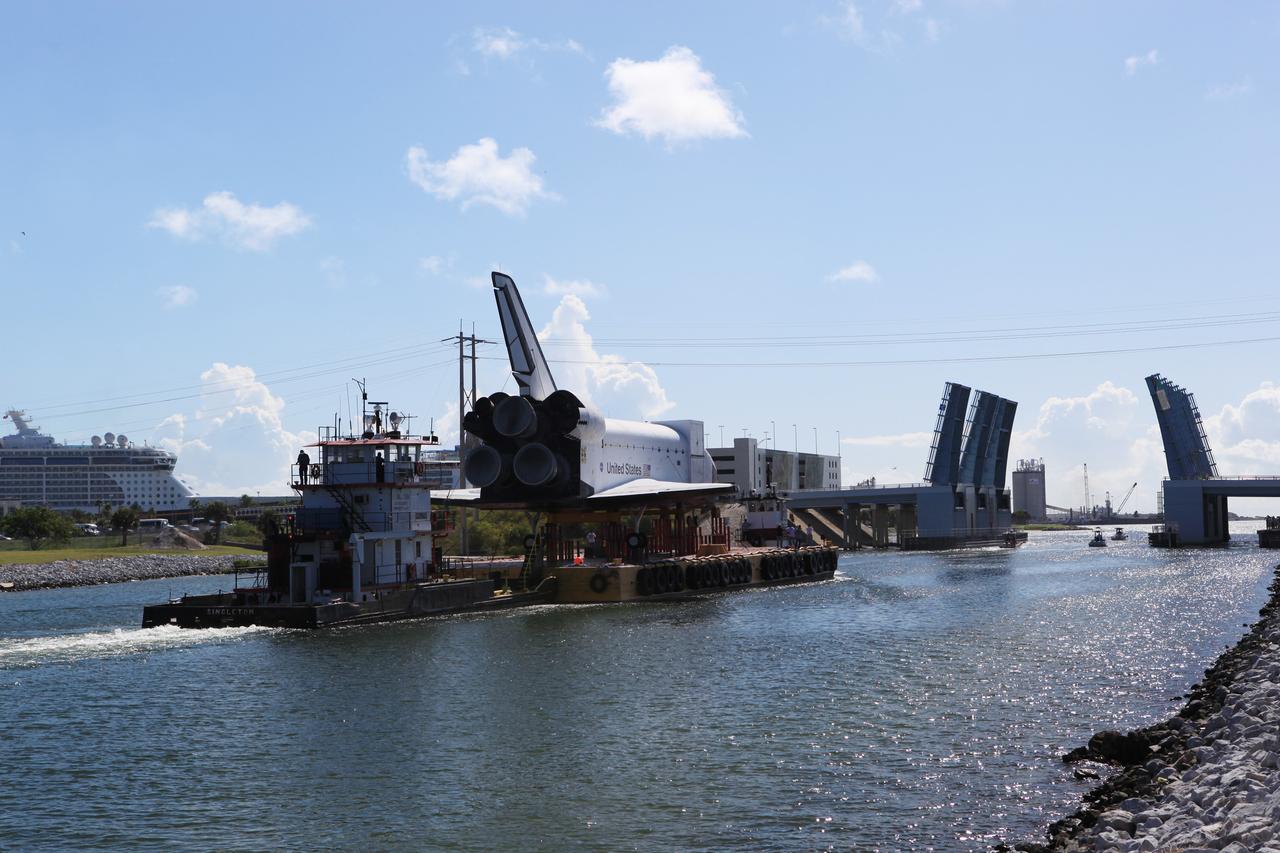
Shuttle Replica (High Fidelity) from Turn Basin thru Port going to Texas
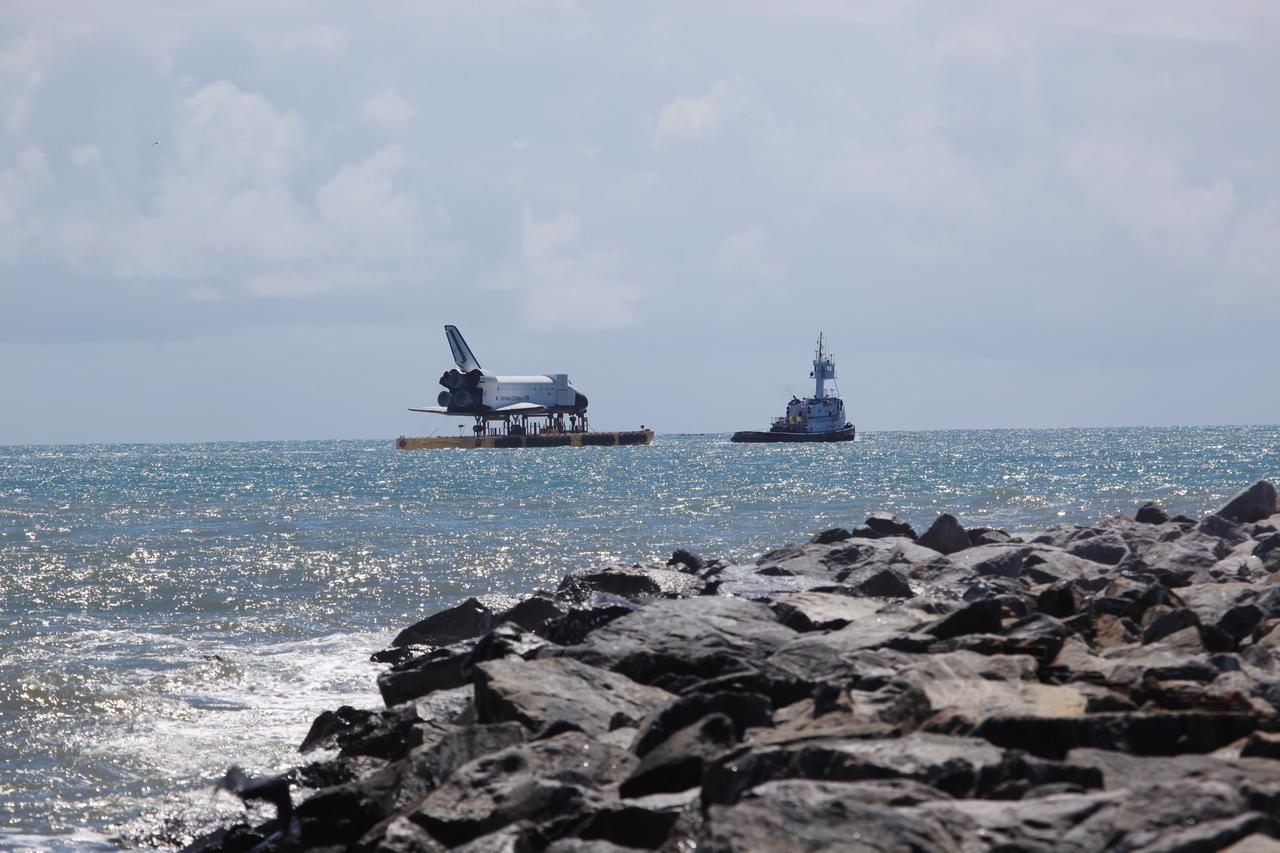
Shuttle Replica (High Fidelity) from Turn Basin thru Port going to Texas
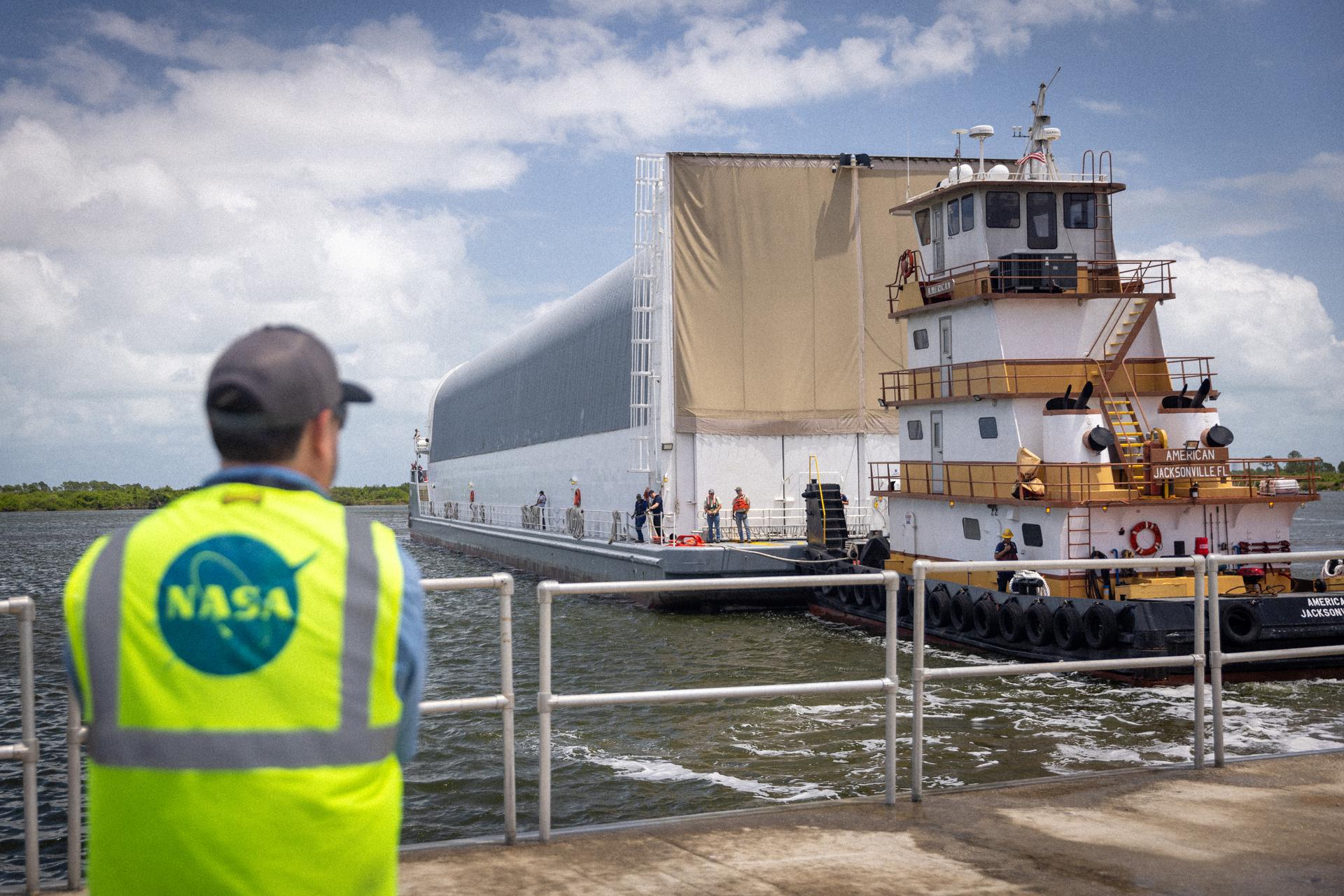
NASA’s Pegasus barge, carrying the top four-fifths of the agency’s SLS (Space Launch System) core stage for the Artemis III mission, arrives at NASA’s Kennedy Space Center Complex 39 turn basin wharf in Florida on Monday, April 27, 2026. Artemis III will launch astronauts to Earth’s orbit aboard the Orion spacecraft on top of SLS to test rendezvous and docking capabilities between Orion and commercial spacecraft needed to land Artemis IV astronauts on the Moon in 2028.
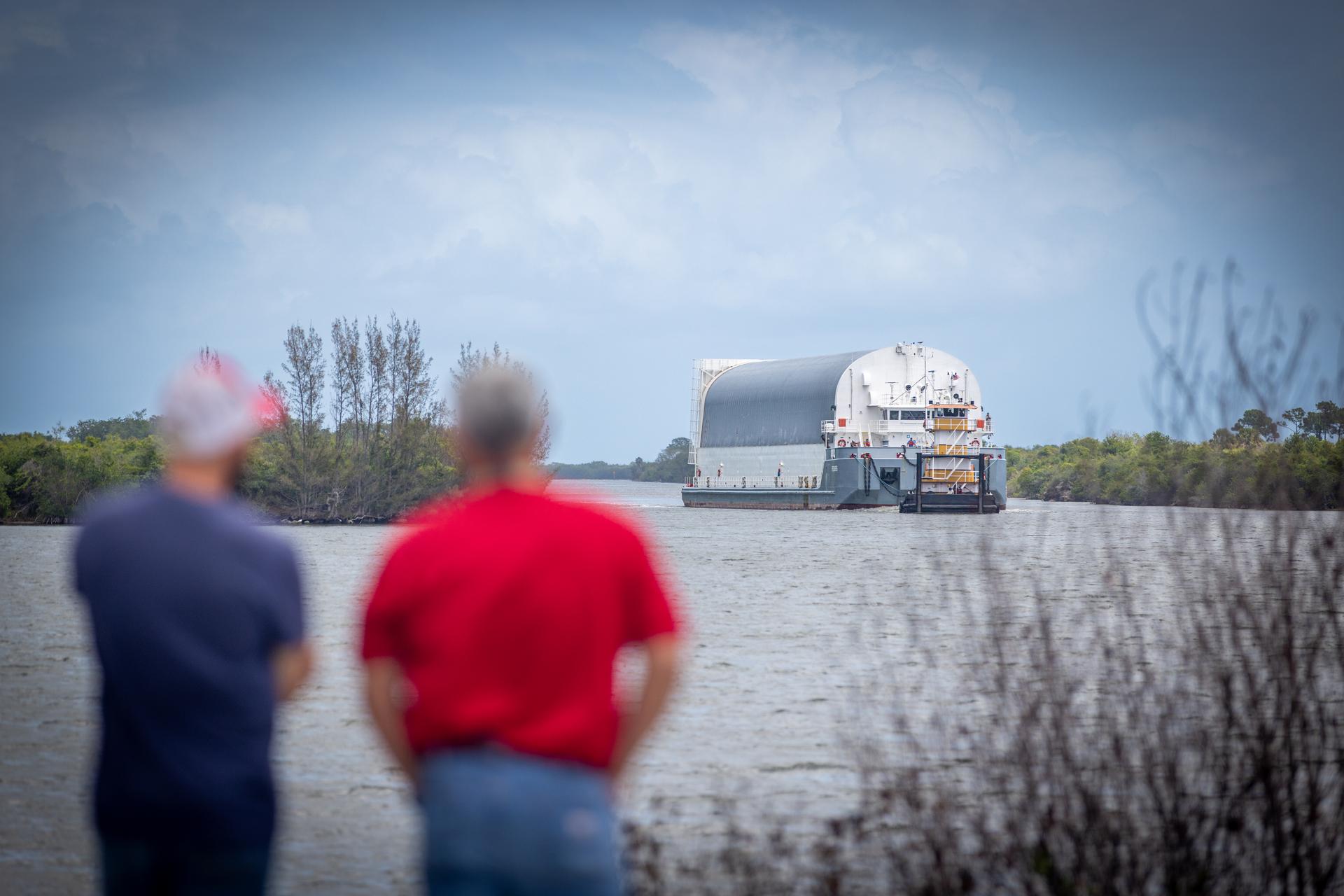
NASA’s Pegasus barge, carrying the top four-fifths of the agency’s SLS (Space Launch System) core stage for the Artemis III mission, arrives at NASA’s Kennedy Space Center Complex 39 turn basin wharf in Florida on Monday, April 27, 2026. Artemis III will launch astronauts to Earth’s orbit aboard the Orion spacecraft on top of SLS to test rendezvous and docking capabilities between Orion and commercial spacecraft needed to land Artemis IV astronauts on the Moon in 2028.
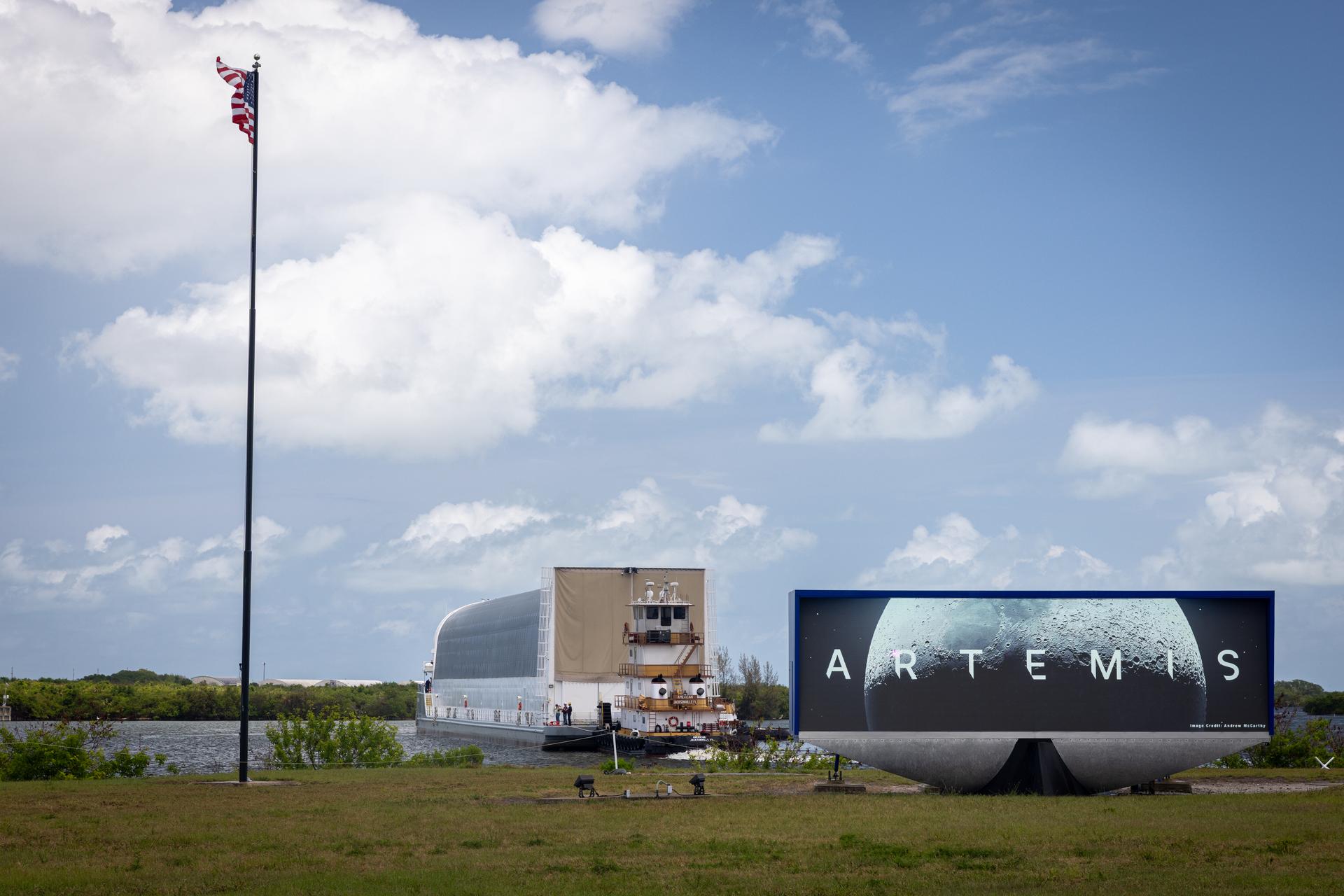
NASA’s Pegasus barge, carrying the top four-fifths of the agency’s SLS (Space Launch System) core stage for the Artemis III mission, arrives at NASA’s Kennedy Space Center Complex 39 turn basin wharf in Florida on Monday, April 27, 2026. Artemis III will launch astronauts to Earth’s orbit aboard the Orion spacecraft on top of SLS to test rendezvous and docking capabilities between Orion and commercial spacecraft needed to land Artemis IV astronauts on the Moon in 2028.

NASA’s Pegasus barge, carrying several pieces of the agency’s Artemis campaign hardware, including Artemis II’s launch vehicle stage adapter, Artemis III’s core stage boat tail, and Artemis IV’s core stage engine section arrives at NASA’s Kennedy Space Center Complex 39 turn basin wharf in Florida on Thursday, Sept. 5, 2024.
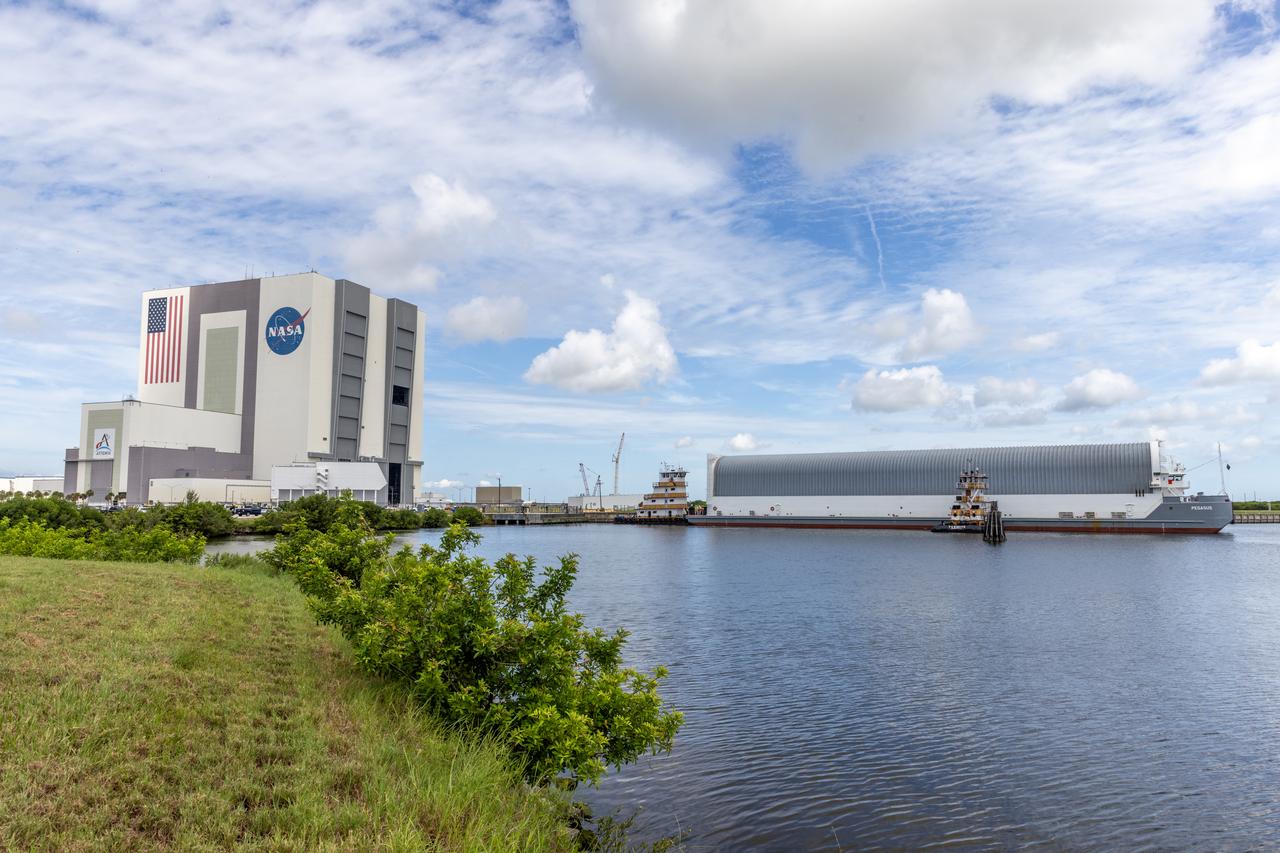
NASA’s Pegasus barge, carrying the agency’s massive SLS (Space Launch System) core stage, arrives at NASA’s Kennedy Space Center Complex 39 turn basin wharf in Florida on Tuesday, July 23, 2024, after journeying from the agency’s Michoud Assembly Facility in New Orleans. The core stage is the next piece of Artemis hardware to arrive at the spaceport and will be offloaded and moved to NASA Kennedy’s Vehicle Assembly Building, where it will be prepared for integration ahead of the Artemis II launch.
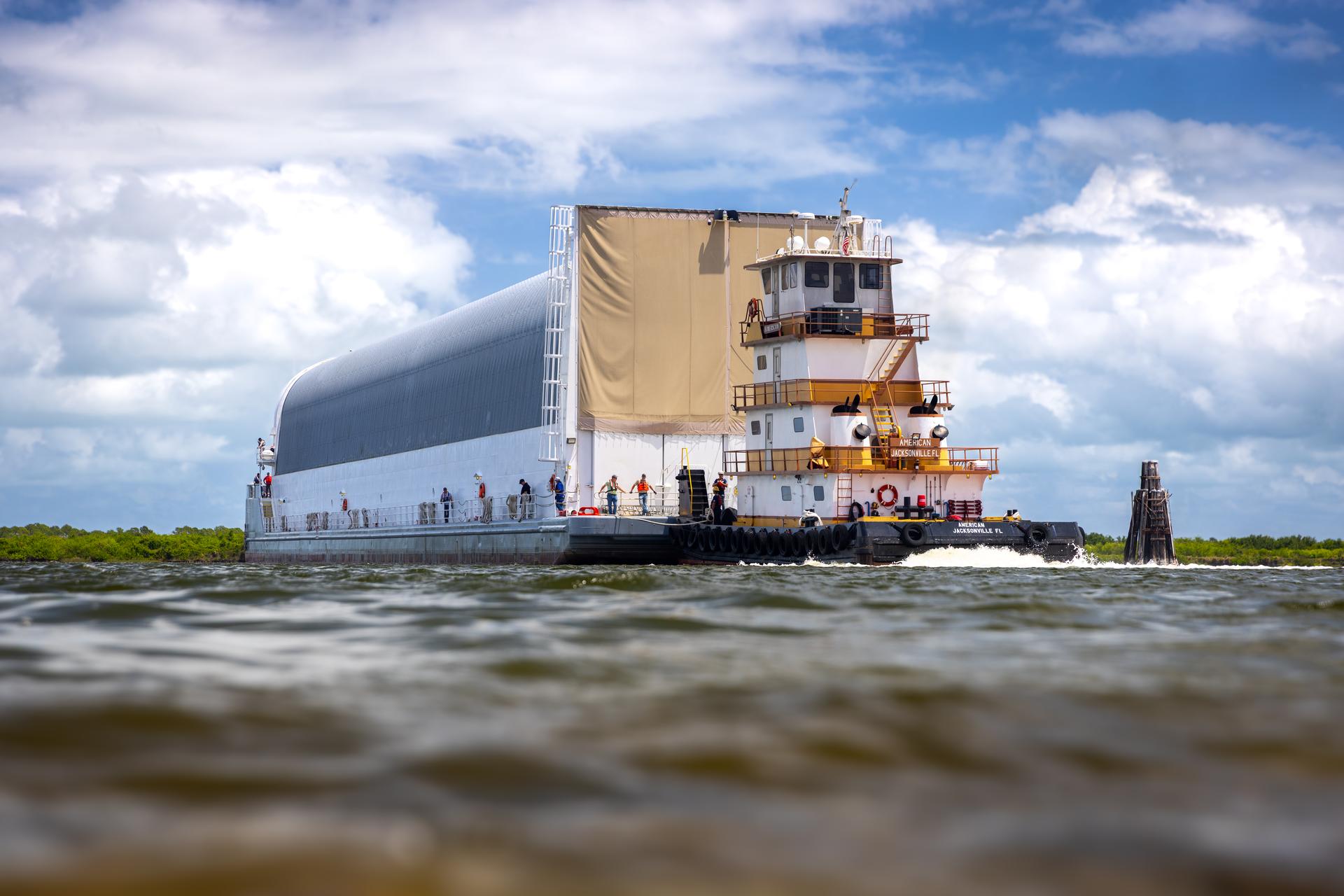
NASA’s Pegasus barge, carrying the top four-fifths of the agency’s SLS (Space Launch System) core stage for the Artemis III mission, arrives at NASA’s Kennedy Space Center Complex 39 turn basin wharf in Florida on Monday, April 27, 2026. Artemis III will launch astronauts to Earth’s orbit aboard the Orion spacecraft on top of SLS to test rendezvous and docking capabilities between Orion and commercial spacecraft needed to land Artemis IV astronauts on the Moon in 2028.

NASA’s Pegasus barge, carrying the agency’s massive SLS (Space Launch System) core stage, arrives at NASA’s Kennedy Space Center Complex 39 turn basin wharf in Florida on Tuesday, July 23, 2024, after journeying from the agency’s Michoud Assembly Facility in New Orleans. The core stage is the next piece of Artemis hardware to arrive at the spaceport and will be offloaded and moved to NASA Kennedy’s Vehicle Assembly Building, where it will be prepared for integration ahead of the Artemis II launch.
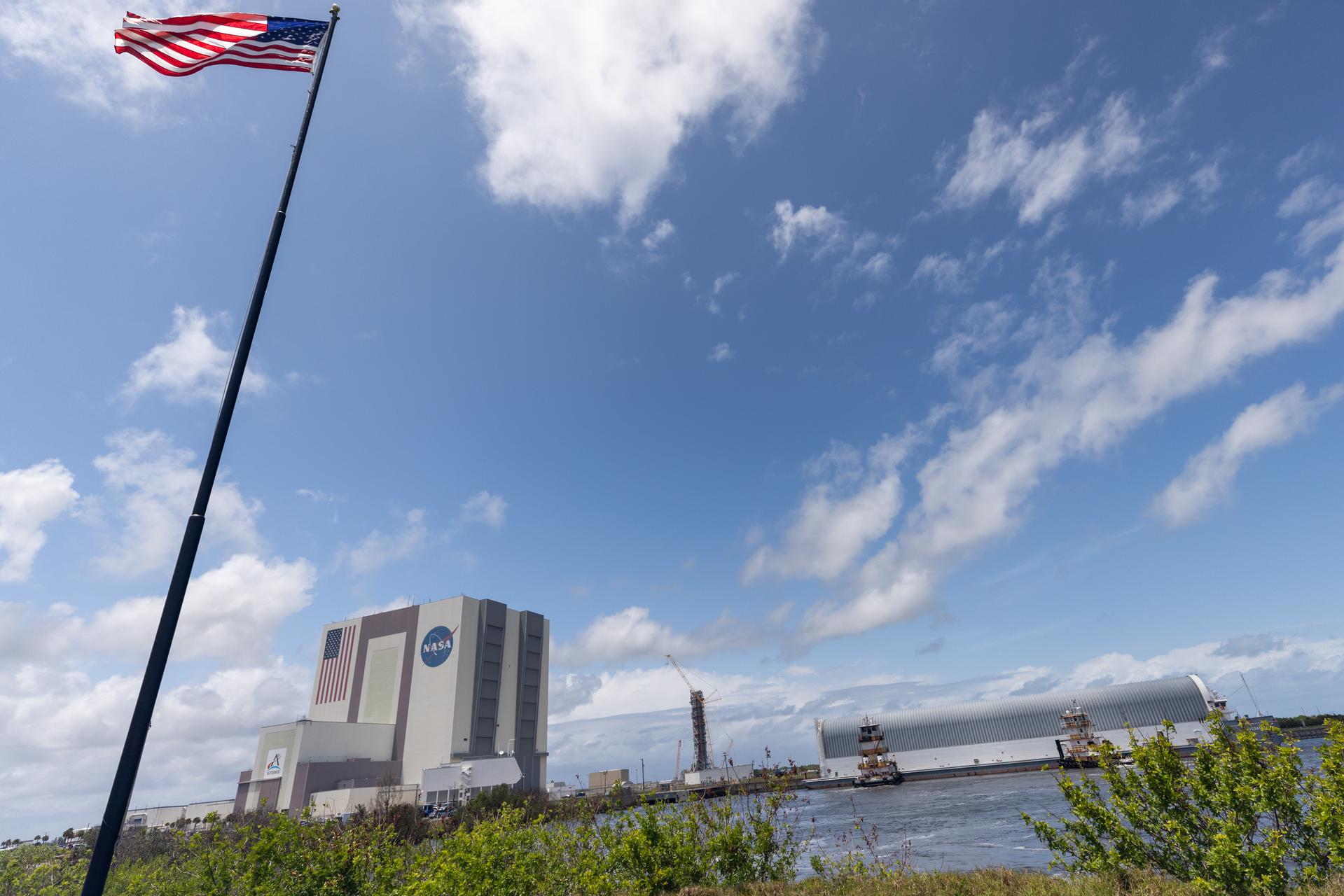
NASA’s Pegasus barge, carrying the top four-fifths of the agency’s SLS (Space Launch System) core stage for the Artemis III mission, arrives at NASA’s Kennedy Space Center Complex 39 turn basin wharf in Florida on Monday, April 27, 2026. Artemis III will launch astronauts to Earth’s orbit aboard the Orion spacecraft on top of SLS to test rendezvous and docking capabilities between Orion and commercial spacecraft needed to land Artemis IV astronauts on the Moon in 2028.
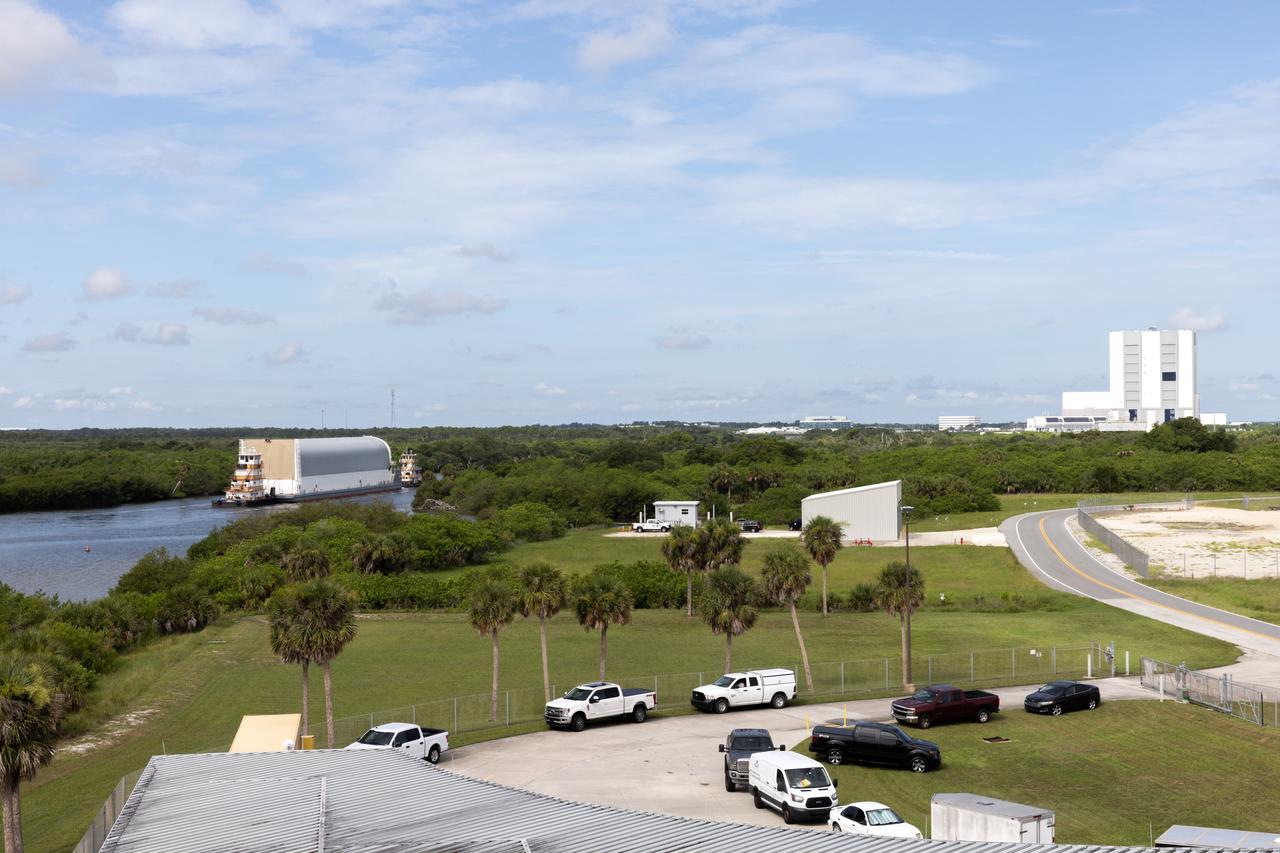
NASA’s Pegasus barge, carrying the agency’s massive SLS (Space Launch System) core stage, arrives at NASA’s Kennedy Space Center Complex 39 turn basin wharf in Florida on Tuesday, July 23, 2024, after journeying from the agency’s Michoud Assembly Facility in New Orleans. The core stage is the next piece of Artemis hardware to arrive at the spaceport and will be offloaded and moved to NASA Kennedy’s Vehicle Assembly Building, where it will be prepared for integration ahead of the Artemis II launch.
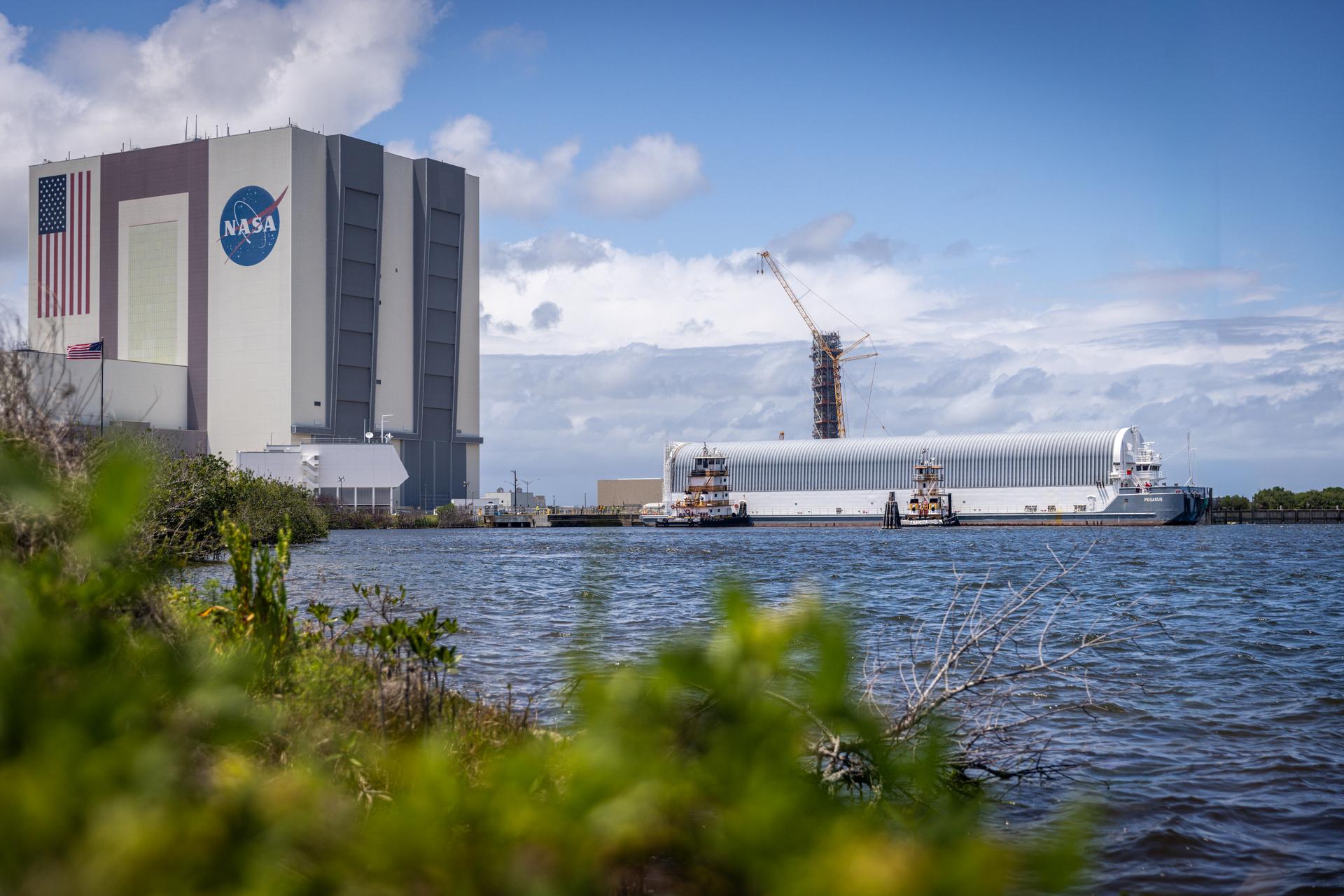
NASA’s Pegasus barge, carrying the top four-fifths of the agency’s SLS (Space Launch System) core stage for the Artemis III mission, arrives at NASA’s Kennedy Space Center Complex 39 turn basin wharf in Florida on Monday, April 27, 2026. Artemis III will launch astronauts to Earth’s orbit aboard the Orion spacecraft on top of SLS to test rendezvous and docking capabilities between Orion and commercial spacecraft needed to land Artemis IV astronauts on the Moon in 2028.
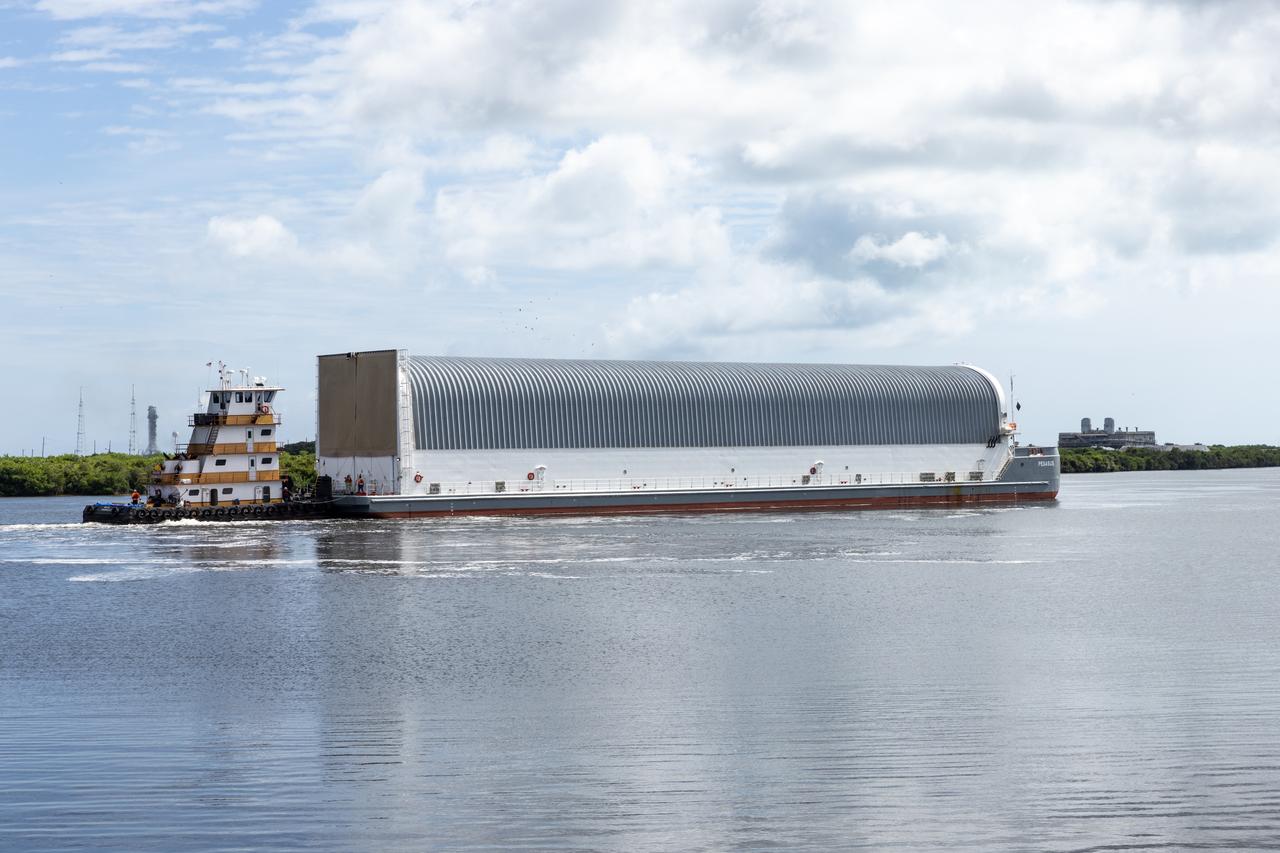
NASA’s Pegasus barge, carrying the agency’s massive SLS (Space Launch System) core stage, arrives at NASA’s Kennedy Space Center Complex 39 turn basin wharf in Florida on Tuesday, July 23, 2024, after journeying from the agency’s Michoud Assembly Facility in New Orleans. The core stage is the next piece of Artemis hardware to arrive at the spaceport and will be offloaded and moved to NASA Kennedy’s Vehicle Assembly Building, where it will be prepared for integration ahead of the Artemis II launch.
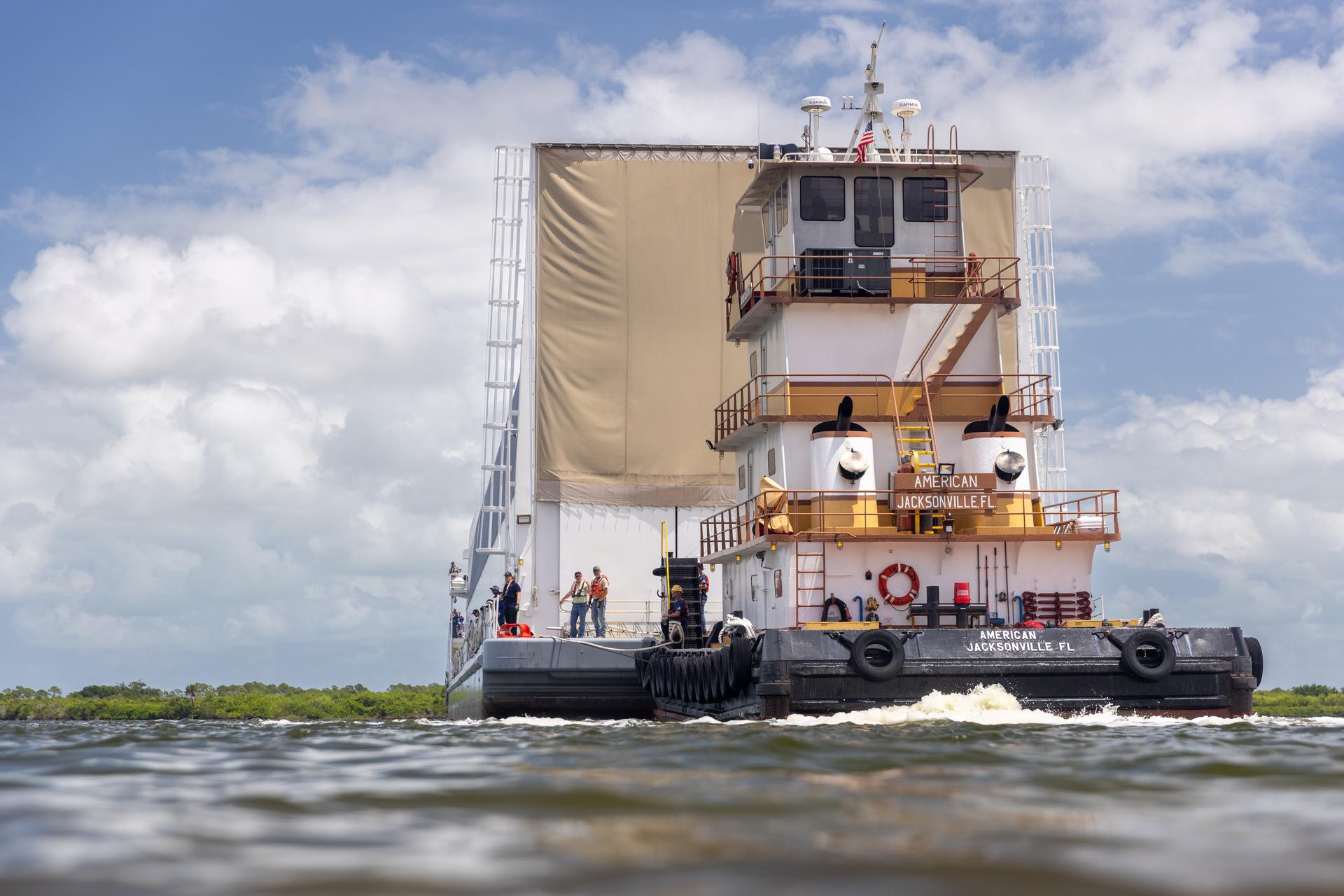
NASA’s Pegasus barge, carrying the top four-fifths of the agency’s SLS (Space Launch System) core stage for the Artemis III mission, arrives at NASA’s Kennedy Space Center Complex 39 turn basin wharf in Florida on Monday, April 27, 2026. Artemis III will launch astronauts to Earth’s orbit aboard the Orion spacecraft on top of SLS to test rendezvous and docking capabilities between Orion and commercial spacecraft needed to land Artemis IV astronauts on the Moon in 2028.
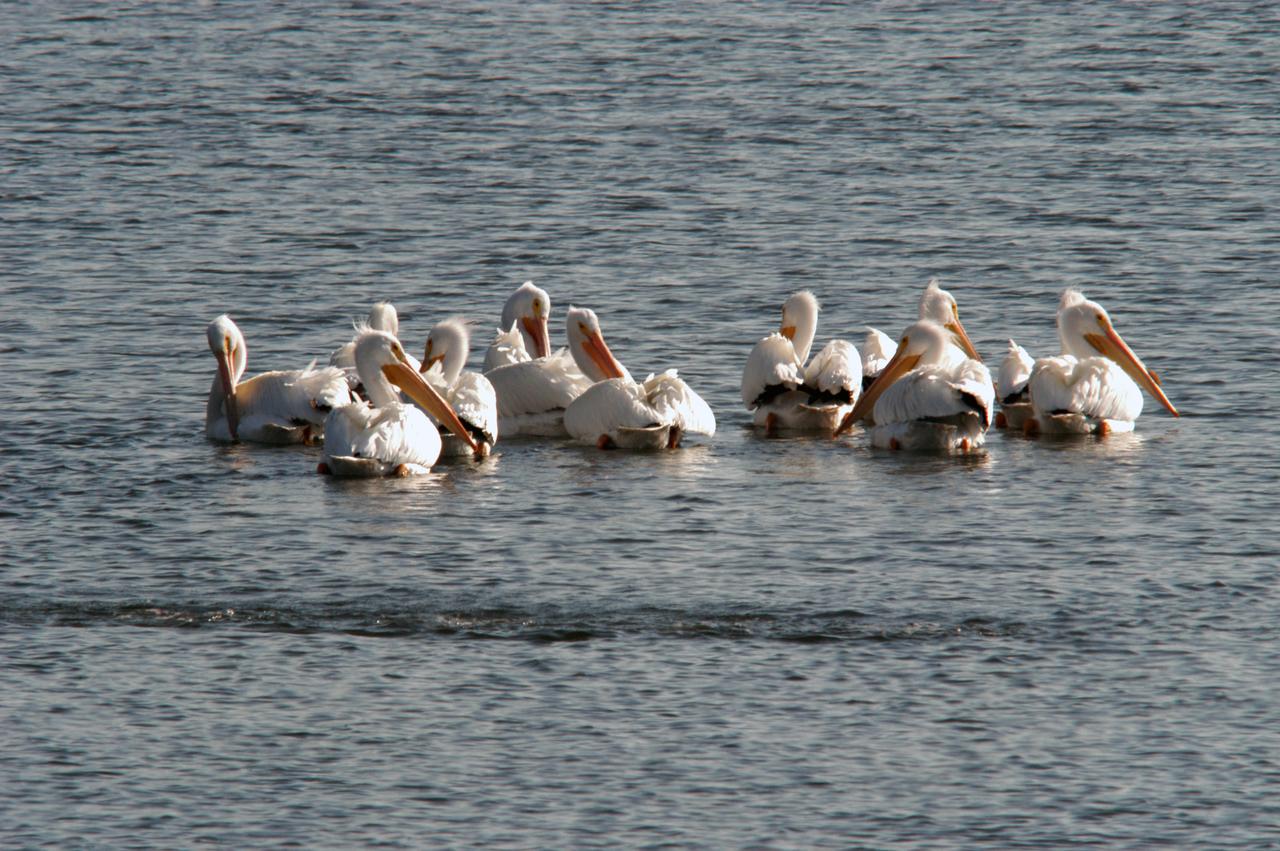
White pelicans gather in the turn basin near the Vehicle Assembly Building of NASA's Kennedy Space Center. The turn basin was carved out of the Banana River when Kennedy Space Center was built. White pelicans winter from Florida and southern California to Panama, chiefly in coastal lagoons, and usually in colonies. KSC shares a boundary with the Merritt Island Wildlife Nature Refuge. The refuge is a habitat for more than 310 species of birds, 25 mammals, 117 fishes and 65 amphibians and reptiles. In addition, the Refuge supports 19 endangered or threatened wildlife species on Federal or State lists, more than any other single refuge in the U.S.
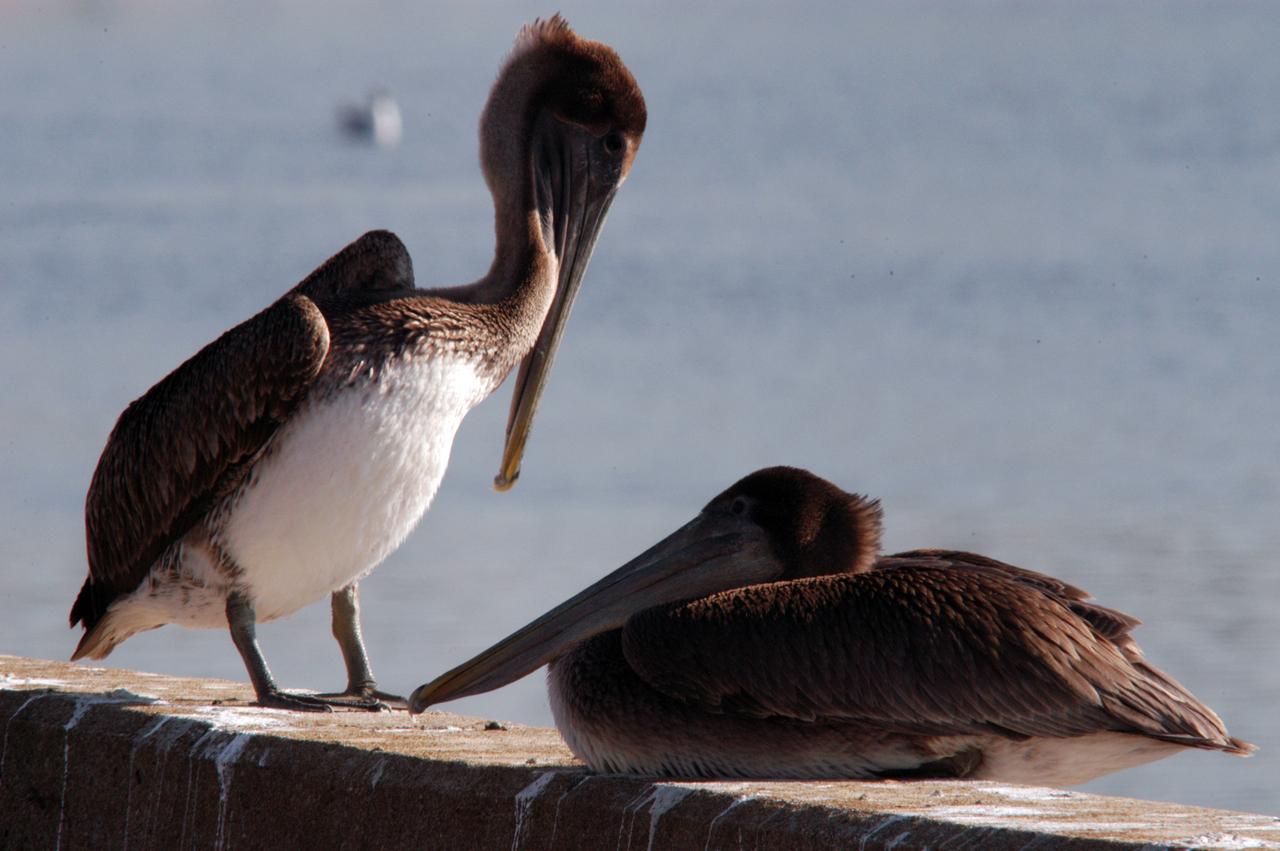
A pair of brown pelicans rest on a wall near the turn basin at NASA's Kennedy Space Center. The turn basin was carved out of the Banana River when KSC was built. The birds' habitat is sandy coastal beaches and lagoons, ranging along the Atlantic Coast from North Carolina south to Venezuela. It nests in colonies. KSC shares a boundary with the Merritt Island Wildlife Nature Refuge. The refuge is a habitat for more than 310 species of birds, 25 mammals, 117 fishes and 65 amphibians and reptiles. In addition, the Refuge supports 19 endangered or threatened wildlife species on Federal or State lists, more than any other single refuge in the U.S.
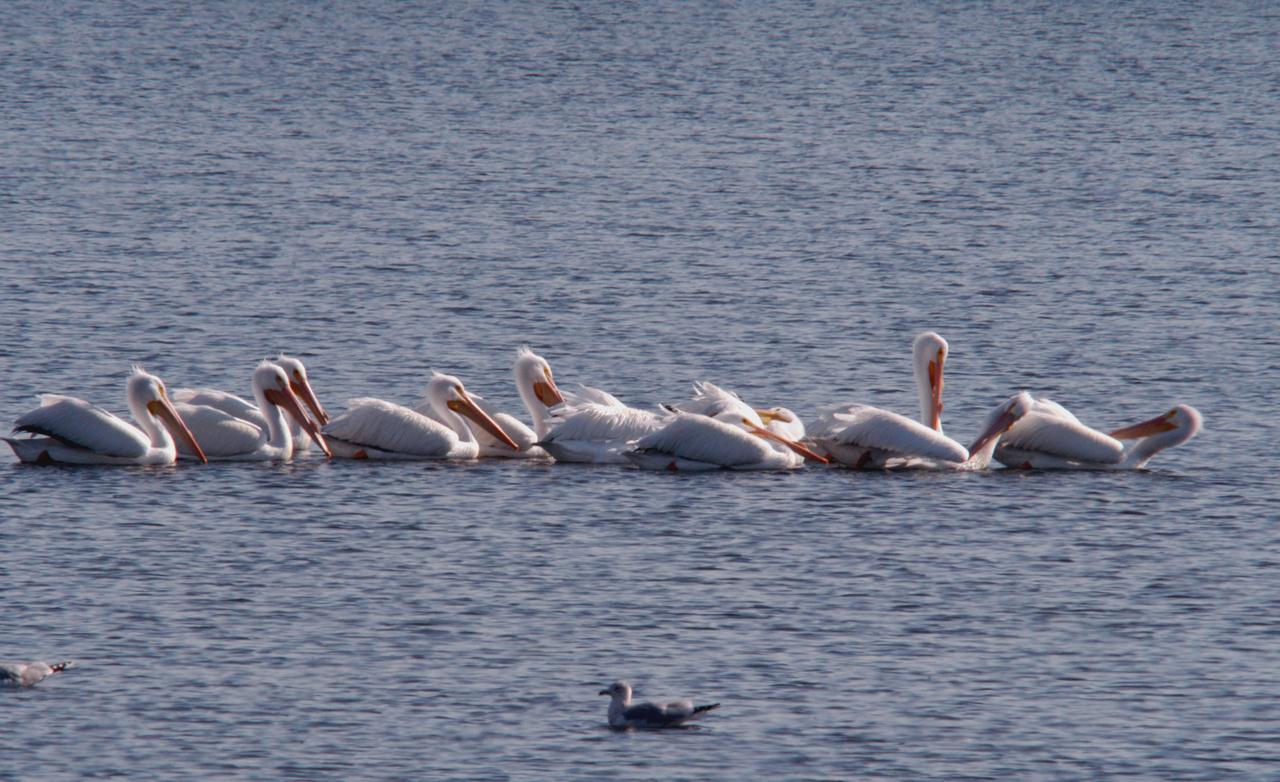
White pelicans form a line while swimming in the turn basin near the Vehicle Assembly Building of NASA's Kennedy Space Center. The turn basin was carved out of the Banana River when Kennedy Space Center was built. White pelicans winter from Florida and southern California to Panama, chiefly in coastal lagoons, and usually in colonies. KSC shares a boundary with the Merritt Island Wildlife Nature Refuge. The refuge is a habitat for more than 310 species of birds, 25 mammals, 117 fishes and 65 amphibians and reptiles. In addition, the Refuge supports 19 endangered or threatened wildlife species on Federal or State lists, more than any other single refuge in the U.S.
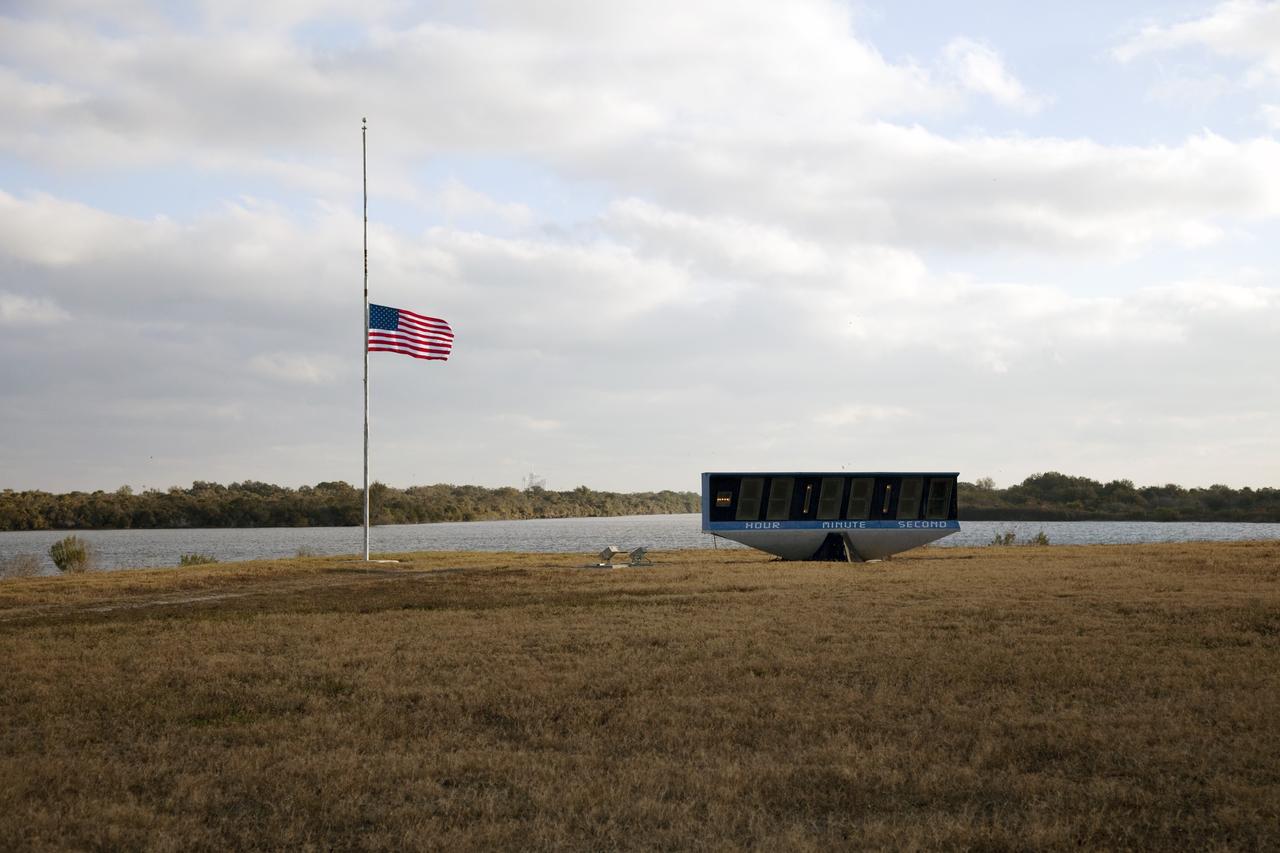
CAPE CANAVERAL, Fla. -- In accordance with a Presidential Proclamation, the American Flag in the Launch Complex 39 area of NASA's Kennedy Space Center in Florida flies at half-staff to honor U.S. Rep. Gabrielle Giffords and others who were wounded or killed during a shooting spree in Tucson, Arizona. This flag and all American Flags at U.S. military and government installations across the country and abroad will remain at half-staff until sunset on Jan. 14. Giffords is the wife of NASA astronaut Mark Kelly, who is scheduled to command space shuttle Endeavour's last mission, STS-134, to the International Space Station later this year. Photo credit: NASA/Frankie Martin
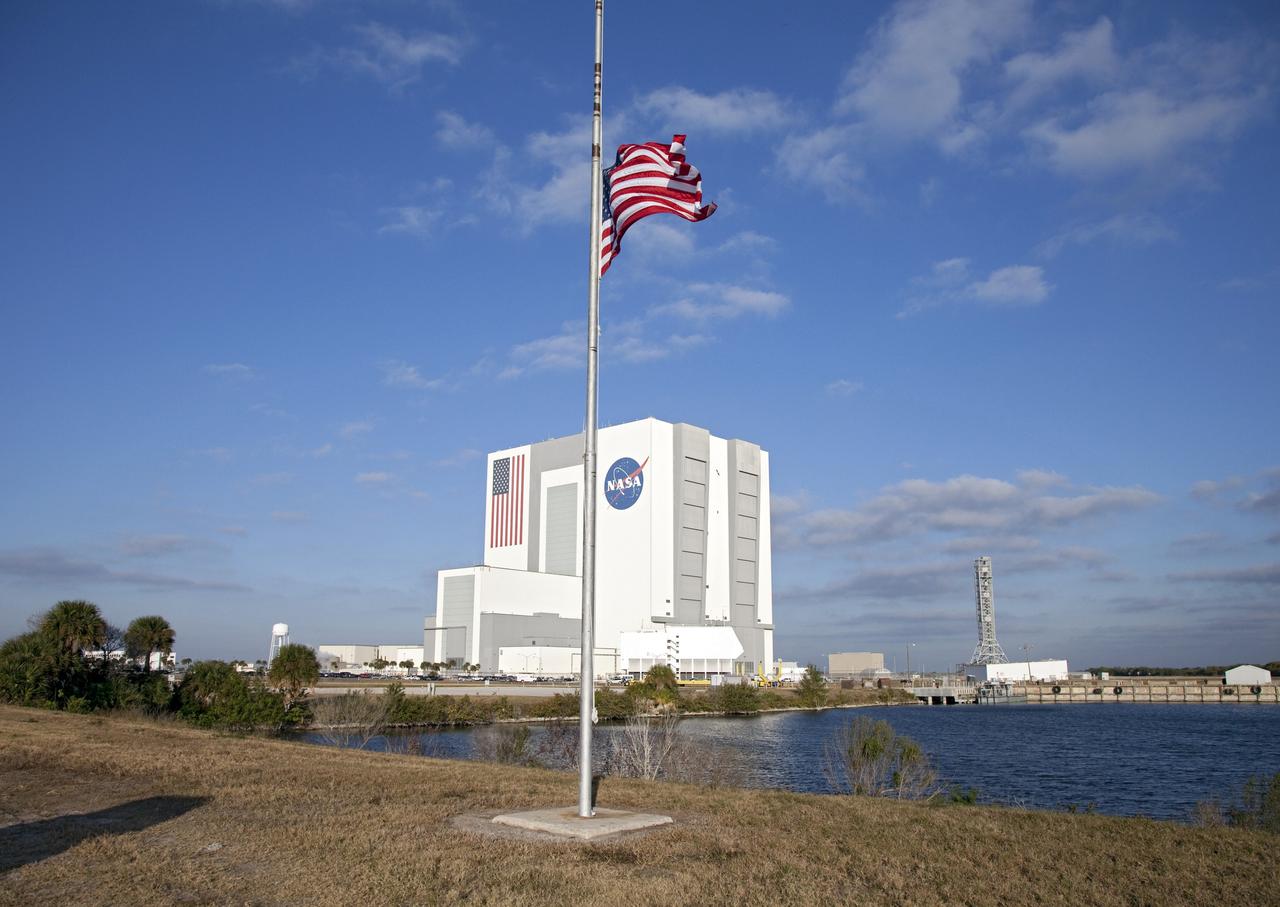
CAPE CANAVERAL, Fla. -- In accordance with a Presidential Proclamation, the American Flag in the Launch Complex 39 area of NASA's Kennedy Space Center in Florida flies at half-staff to honor U.S. Rep. Gabrielle Giffords and others who were wounded or killed during a shooting spree in Tucson, Arizona. This flag and all American Flags at U.S. military and government installations across the country and abroad will remain at half-staff until sunset on Jan. 14. Giffords is the wife of NASA astronaut Mark Kelly, who is scheduled to command space shuttle Endeavour's last mission, STS-134, to the International Space Station later this year. Photo credit: NASA/Frankie Martin
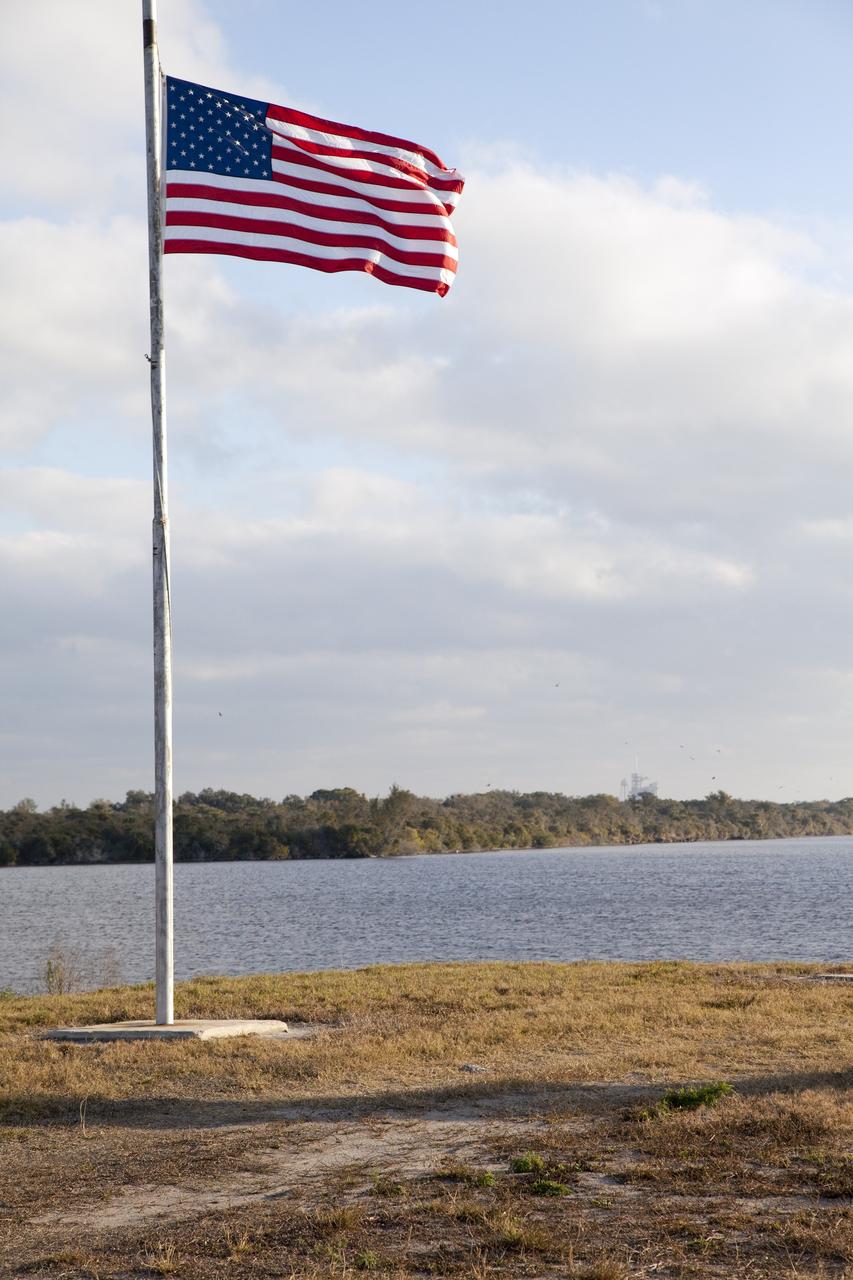
CAPE CANAVERAL, Fla. -- In accordance with a Presidential Proclamation, the American Flag in the Launch Complex 39 area of NASA's Kennedy Space Center in Florida flies at half-staff to honor U.S. Rep. Gabrielle Giffords and others who were wounded or killed during a shooting spree in Tucson, Arizona. This flag and all American Flags at U.S. military and government installations across the country and abroad will remain at half-staff until sunset on Jan. 14. Giffords is the wife of NASA astronaut Mark Kelly, who is scheduled to command space shuttle Endeavour's last mission, STS-134, to the International Space Station later this year. Photo credit: NASA/Frankie Martin
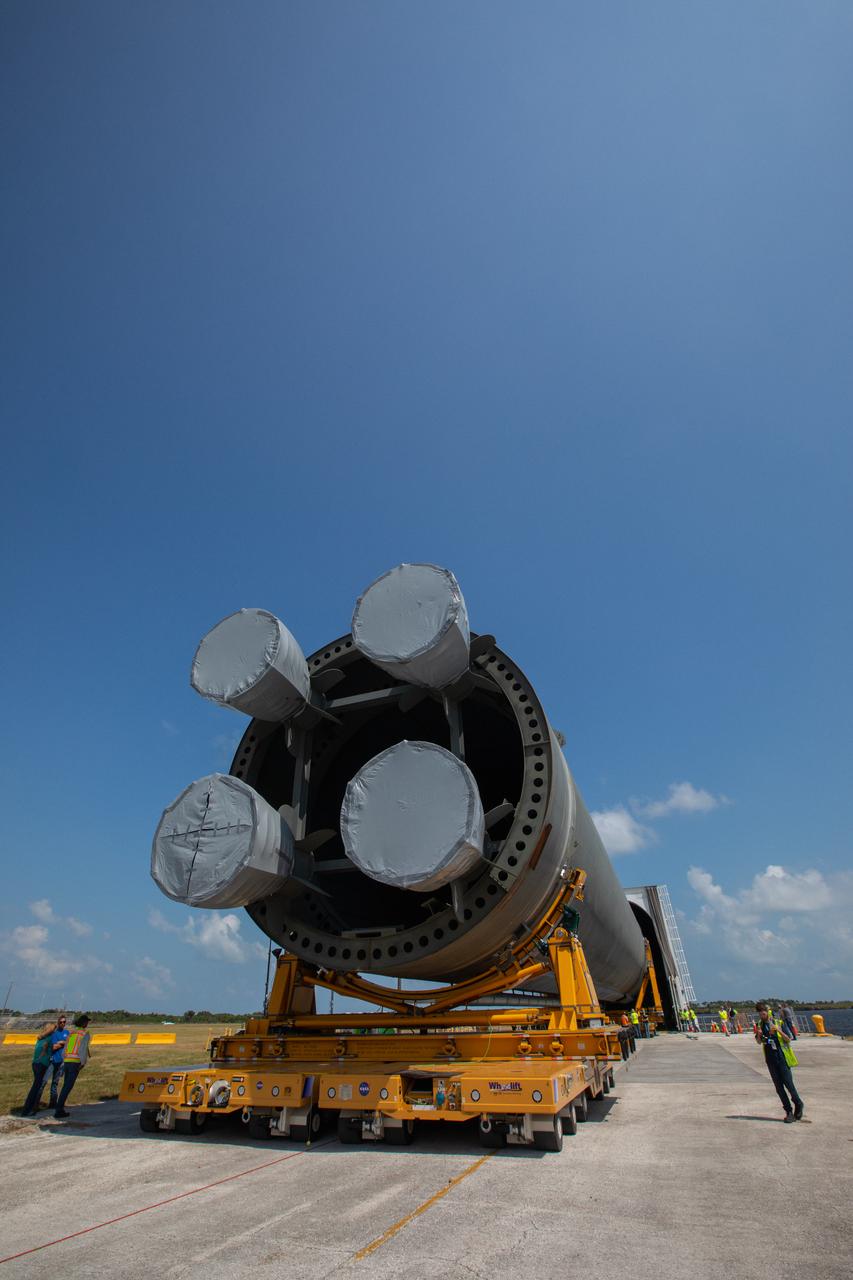
The 212-foot-long Space Launch System (SLS) rocket core stage pathfinder has been offloaded from NASA’s Pegasus Barge at Kennedy Space Center’s Launch Complex 39 turn basin wharf on Sept. 30, 2019. The Pegasus Barge made its first delivery to Kennedy in support of the agency's Artemis missions. The upgraded 310-foot-long barge arrived Sept. 27, 2019, ferrying the SLS core stage pathfinder, a full-scale mock-up of the rocket's core stage. It will be used by the Exploration Ground Systems Program and their contractor, Jacobs, to practice offloading, moving and stacking maneuvers, using important ground support equipment to train employees and certify all the equipment works properly. The pathfinder will stay at Kennedy for approximately one month before trekking back to NASA's Michoud Assembly Facility in Louisiana.
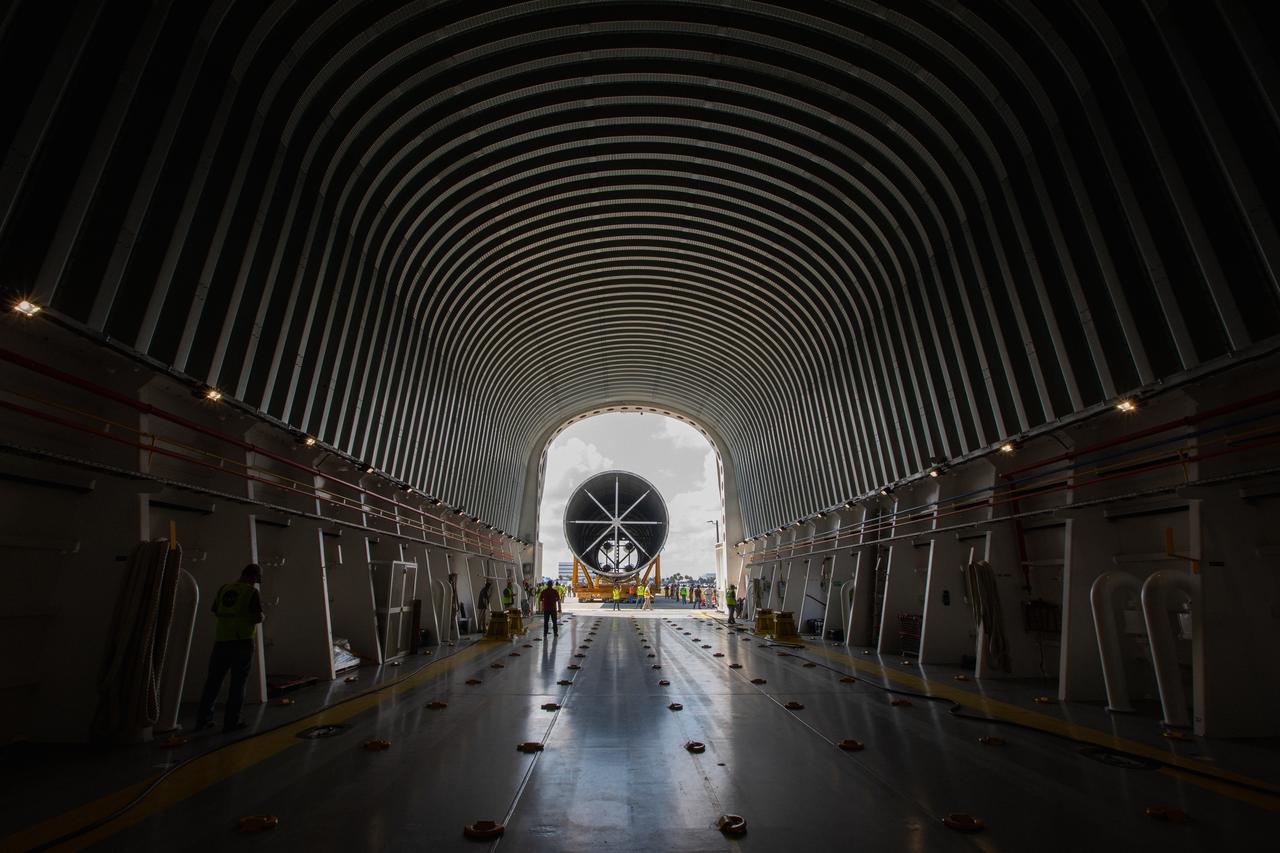
In this view from inside NASA’s Pegasus Barge, the 212-foot-long Space Launch System (SLS) rocket core stage pathfinder is being offloaded from the barge at Kennedy Space Center’s Launch Complex 39 turn basin wharf on Sept. 30, 2019. The Pegasus Barge made its first delivery to Kennedy in support of the agency's Artemis missions. The upgraded 310-foot-long barge arrived Sept. 27, 2019, ferrying the SLS core stage pathfinder, a full-scale mock-up of the rocket's core stage. It will be used by the Exploration Ground Systems Program and their contractor, Jacobs, to practice offloading, moving and stacking maneuvers, using important ground support equipment to train employees and certify all the equipment works properly. The pathfinder will stay at Kennedy for approximately one month before trekking back to NASA's Michoud Assembly Facility in Louisiana.
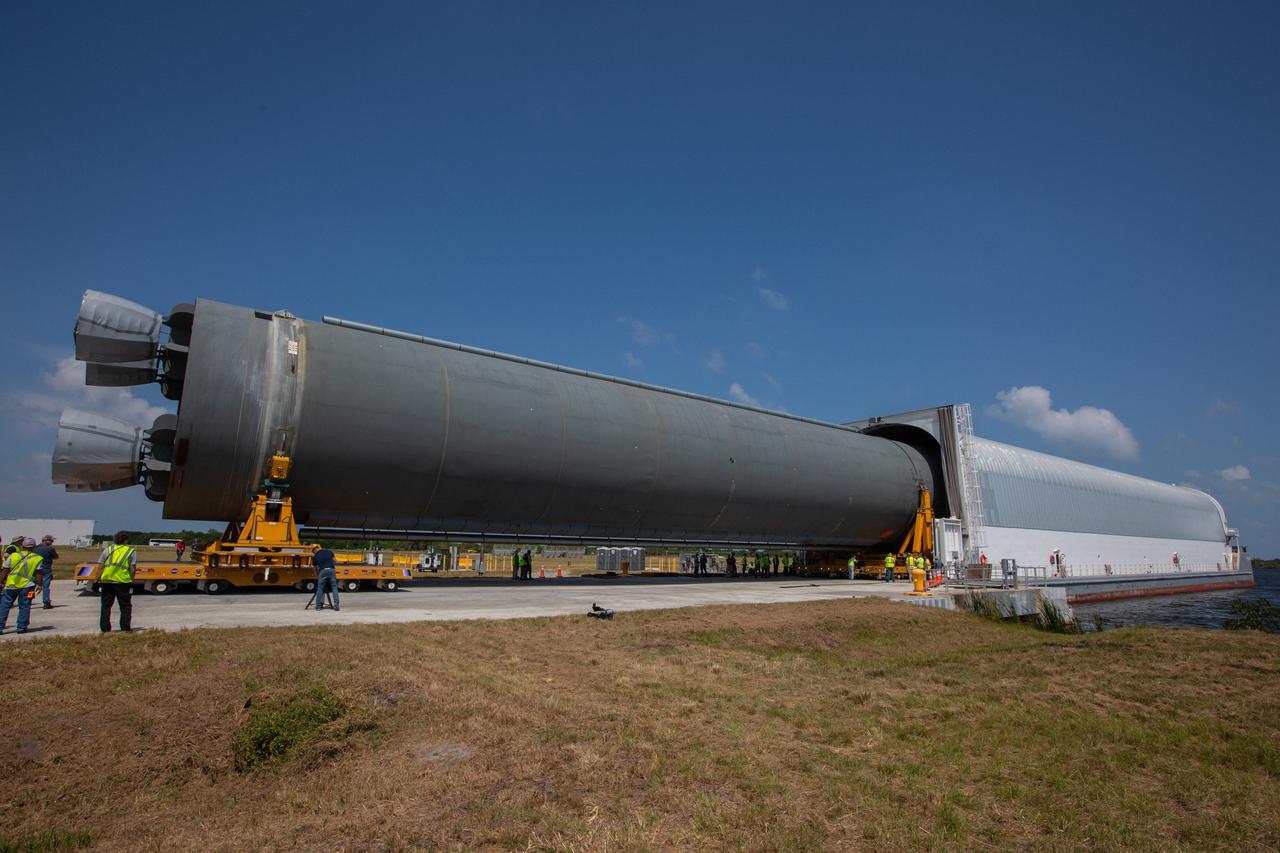
The 212-foot-long Space Launch System (SLS) rocket core stage pathfinder has been offloaded from NASA’s Pegasus Barge at Kennedy Space Center’s Launch Complex 39 turn basin wharf on Sept. 30, 2019. The Pegasus Barge made its first delivery to Kennedy in support of the agency's Artemis missions. The upgraded 310-foot-long barge arrived Sept. 27, 2019, ferrying the SLS core stage pathfinder, a full-scale mock-up of the rocket's core stage. It will be used by the Exploration Ground Systems Program and their contractor, Jacobs, to practice offloading, moving and stacking maneuvers, using important ground support equipment to train employees and certify all the equipment works properly. The pathfinder will stay at Kennedy for approximately one month before trekking back to NASA's Michoud Assembly Facility in Louisiana.
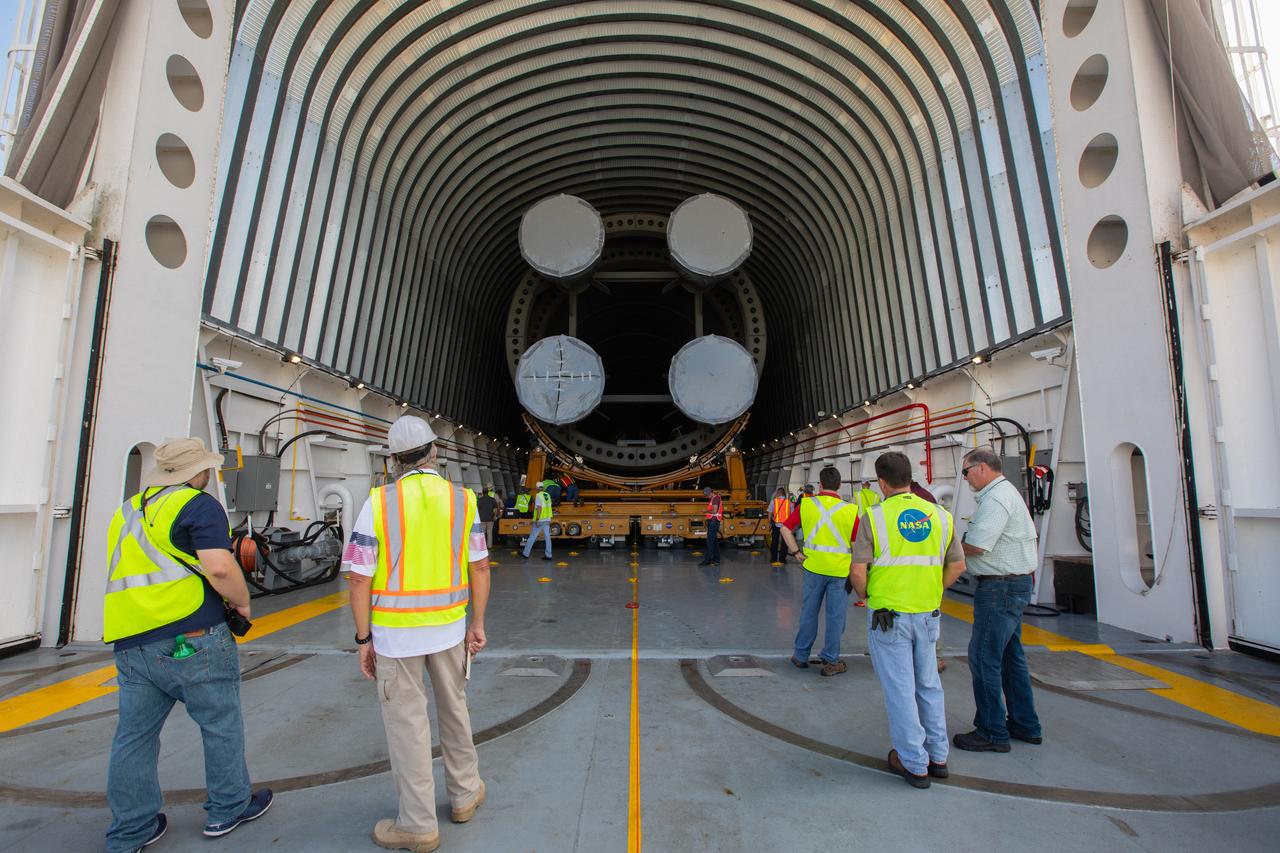
Preparations are underway to offload the 212-foot-long Space Launch System (SLS) rocket core stage pathfinder from NASA's Pegasus Barge at Kennedy Space Center’s Launch Complex 39 turn basin wharf on Sept. 30, 2019. The Pegasus Barge made its first delivery to Kennedy in support of the agency's Artemis missions. The upgraded 310-foot-long barge arrived Sept. 27, 2019, ferrying the SLS core stage pathfinder, a full-scale mock-up of the rocket's core stage. It will be used by the Exploration Ground Systems Program and their contractor, Jacobs, to practice offloading, moving and stacking maneuvers, using important ground support equipment to train employees and certify all the equipment works properly. The pathfinder will stay at Kennedy for approximately one month before trekking back to NASA's Michoud Assembly Facility in Louisiana.
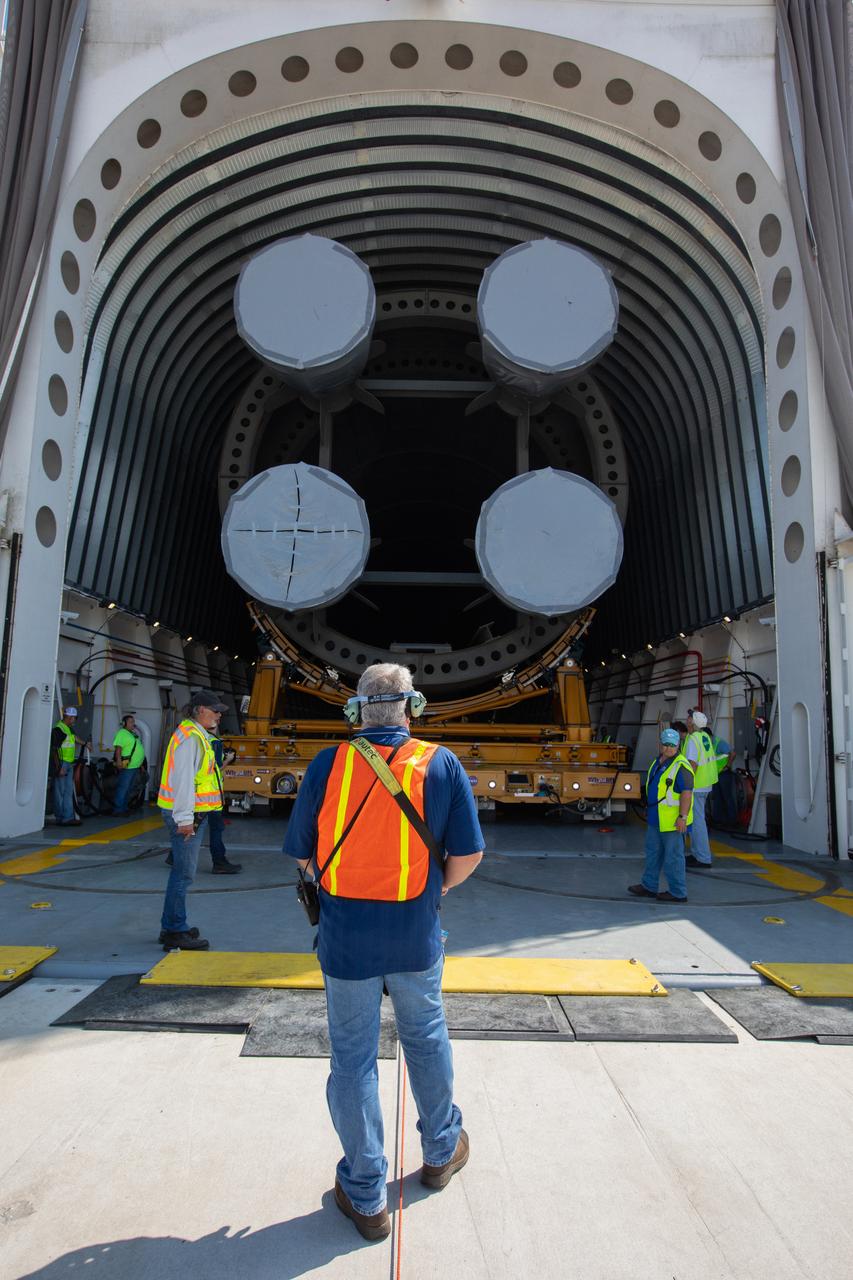
NASA and Jacobs technicians and engineers have begun offloading the 212-foot-long Space Launch System (SLS) rocket core stage pathfinder from NASA's Pegasus Barge at Kennedy Space Center’s Launch Complex 39 turn basin wharf on Sept. 30, 2019. The Pegasus Barge made its first delivery to Kennedy in support of the agency's Artemis missions. The upgraded 310-foot-long barge arrived Sept. 27, 2019, ferrying the SLS core stage pathfinder, a full-scale mock-up of the rocket's core stage. It will be used by the Exploration Ground Systems Program and their contractor, Jacobs, to practice offloading, moving and stacking maneuvers, using important ground support equipment to train employees and certify all the equipment works properly. The pathfinder will stay at Kennedy for approximately one month before trekking back to NASA's Michoud Assembly Facility in Louisiana.
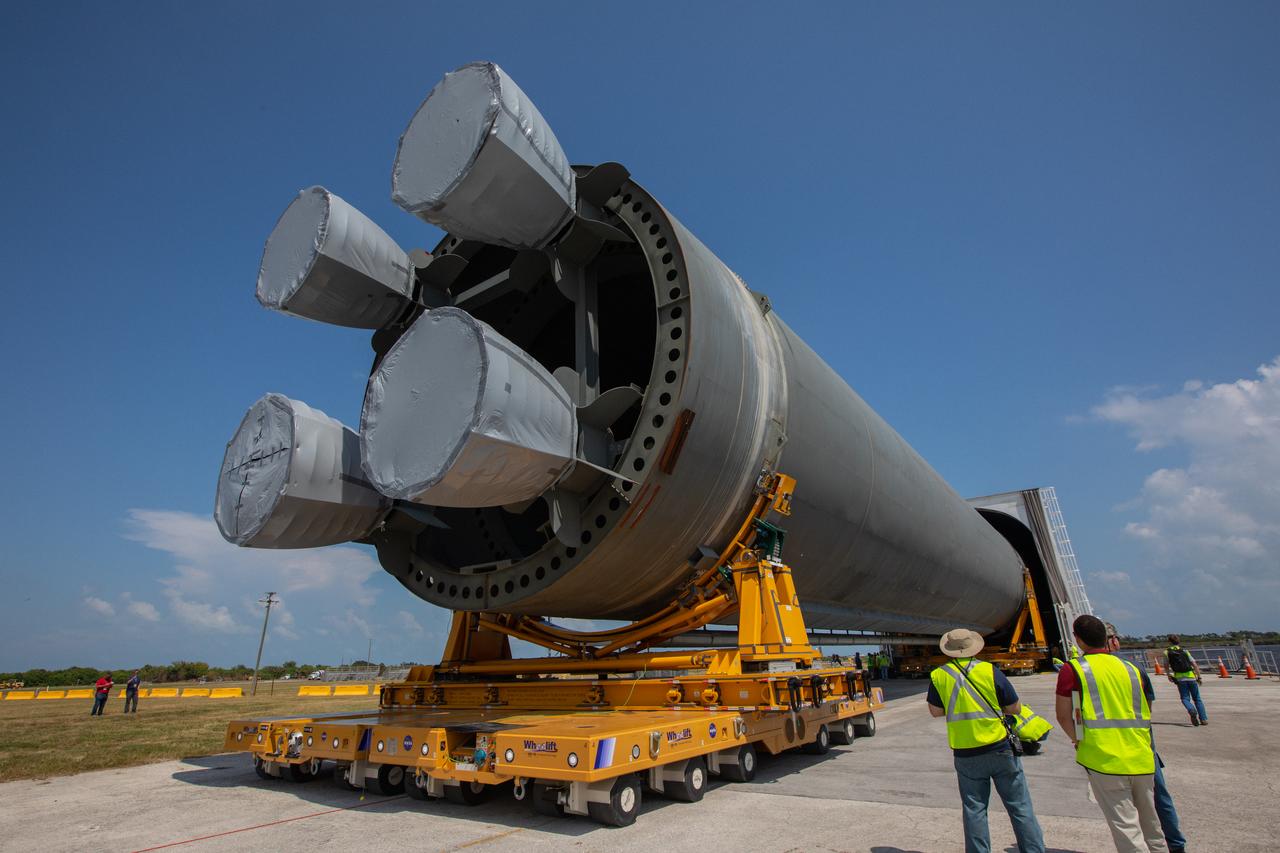
The 212-foot-long Space Launch System (SLS) rocket core stage pathfinder has been offloaded from NASA’s Pegasus Barge at Kennedy Space Center’s Launch Complex 39 turn basin wharf on Sept. 30, 2019. The Pegasus Barge made its first delivery to Kennedy in support of the agency's Artemis missions. The upgraded 310-foot-long barge arrived Sept. 27, 2019, ferrying the SLS core stage pathfinder, a full-scale mock-up of the rocket's core stage. It will be used by the Exploration Ground Systems Program and their contractor, Jacobs, to practice offloading, moving and stacking maneuvers, using important ground support equipment to train employees and certify all the equipment works properly. The pathfinder will stay at Kennedy for approximately one month before trekking back to NASA's Michoud Assembly Facility in Louisiana.
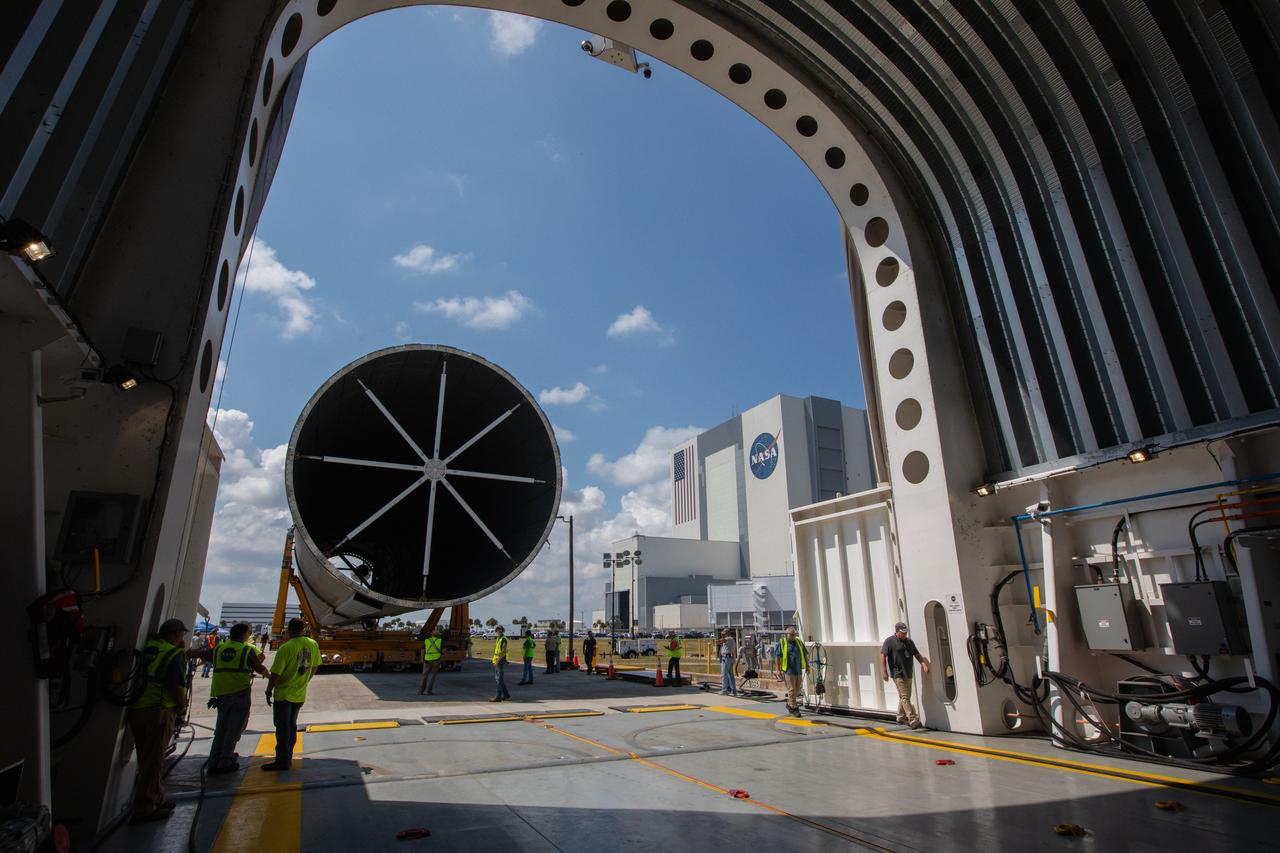
The 212-foot-long Space Launch System (SLS) rocket core stage pathfinder has been offloaded from NASA’s Pegasus Barge at Kennedy Space Center’s Launch Complex 39 turn basin wharf on Sept. 30, 2019. The Pegasus Barge made its first delivery to Kennedy in support of the agency's Artemis missions. The upgraded 310-foot-long barge arrived Sept. 27, 2019, ferrying the SLS core stage pathfinder, a full-scale mock-up of the rocket's core stage. It will be used by the Exploration Ground Systems Program and their contractor, Jacobs, to practice offloading, moving and stacking maneuvers, using important ground support equipment to train employees and certify all the equipment works properly. The pathfinder will stay at Kennedy for approximately one month before trekking back to NASA's Michoud Assembly Facility in Louisiana.
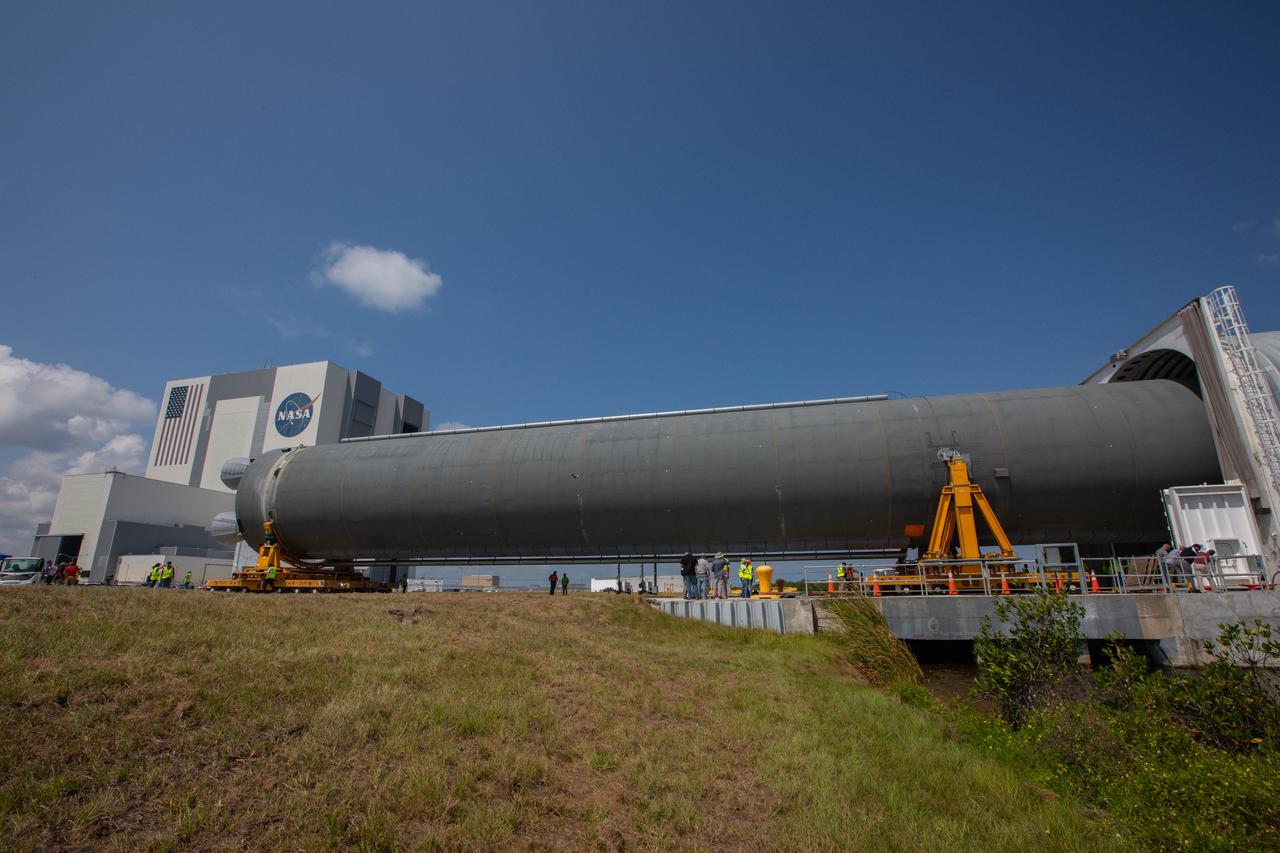
The 212-foot-long Space Launch System (SLS) rocket core stage pathfinder has been offloaded from NASA’s Pegasus Barge at Kennedy Space Center’s Launch Complex 39 turn basin wharf on Sept. 30, 2019. The Pegasus Barge made its first delivery to Kennedy in support of the agency's Artemis missions. The upgraded 310-foot-long barge arrived Sept. 27, 2019, ferrying the SLS core stage pathfinder, a full-scale mock-up of the rocket's core stage. It will be used by the Exploration Ground Systems Program and their contractor, Jacobs, to practice offloading, moving and stacking maneuvers, using important ground support equipment to train employees and certify all the equipment works properly. The pathfinder will stay at Kennedy for approximately one month before trekking back to NASA's Michoud Assembly Facility in Louisiana.
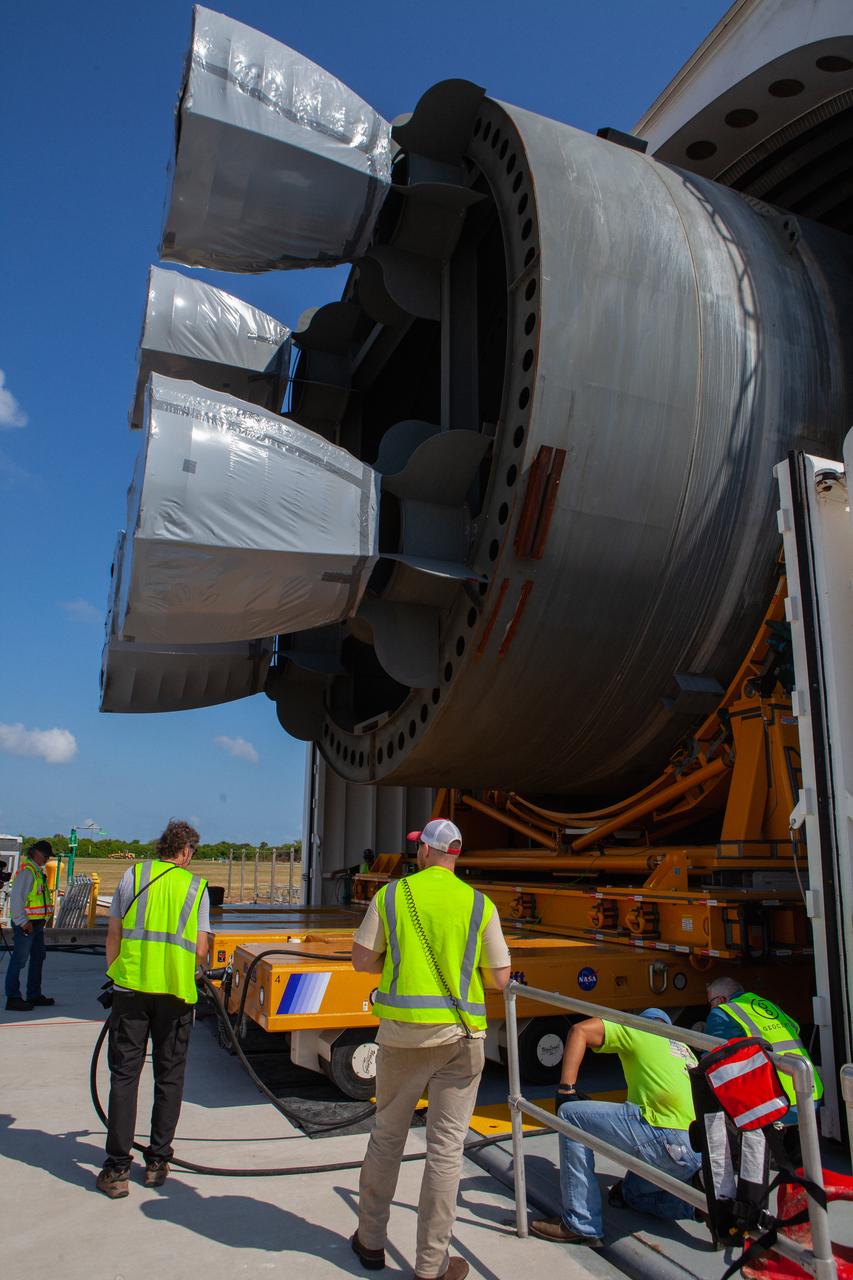
NASA and Jacobs technicians and engineers have begun offloading the 212-foot-long Space Launch System (SLS) rocket core stage pathfinder from NASA's Pegasus Barge at Kennedy Space Center’s Launch Complex 39 turn basin wharf on Sept. 30, 2019. The Pegasus Barge made its first delivery to Kennedy in support of the agency's Artemis missions. The upgraded 310-foot-long barge arrived Sept. 27, 2019, ferrying the SLS core stage pathfinder, a full-scale mock-up of the rocket's core stage. It will be used by the Exploration Ground Systems Program and their contractor, Jacobs, to practice offloading, moving and stacking maneuvers, using important ground support equipment to train employees and certify all the equipment works properly. The pathfinder will stay at Kennedy for approximately one month before trekking back to NASA's Michoud Assembly Facility in Louisiana.