
Teams from NASA’s Kennedy Space Center in Florida, the Fish and Wildlife Services, and the National Park Service cleared debris along the shoreline near the Beach House on Friday, May 8, 2026, to make the journey a little easier for mother turtles coming ashore to lay their eggs during nesting season now through October. NASA Kennedy is home to four nesting sea turtles: Loggerhead, Green, Leatherback, and occasionally the Kemp’s ridley turtles.

Teams from NASA’s Kennedy Space Center in Florida, the Fish and Wildlife Services, and the National Park Service cleared debris along the shoreline near the Beach House on Friday, May 8, 2026, to make the journey a little easier for mother turtles coming ashore to lay their eggs during nesting season now through October. NASA Kennedy is home to four nesting sea turtles: Loggerhead, Green, Leatherback, and occasionally the Kemp’s ridley turtles.

Teams from NASA’s Kennedy Space Center in Florida, the Fish and Wildlife Services, and the National Park Service cleared debris along the shoreline near the Beach House on Friday, May 8, 2026, to make the journey a little easier for mother turtles coming ashore to lay their eggs during nesting season now through October. NASA Kennedy is home to four nesting sea turtles: Loggerhead, Green, Leatherback, and occasionally the Kemp’s ridley turtles.

Teams from NASA’s Kennedy Space Center in Florida, the Fish and Wildlife Services, and the National Park Service cleared debris along the shoreline near the Beach House on Friday, May 8, 2026, to make the journey a little easier for mother turtles coming ashore to lay their eggs during nesting season now through October. NASA Kennedy is home to four nesting sea turtles: Loggerhead, Green, Leatherback, and occasionally the Kemp’s ridley turtles.
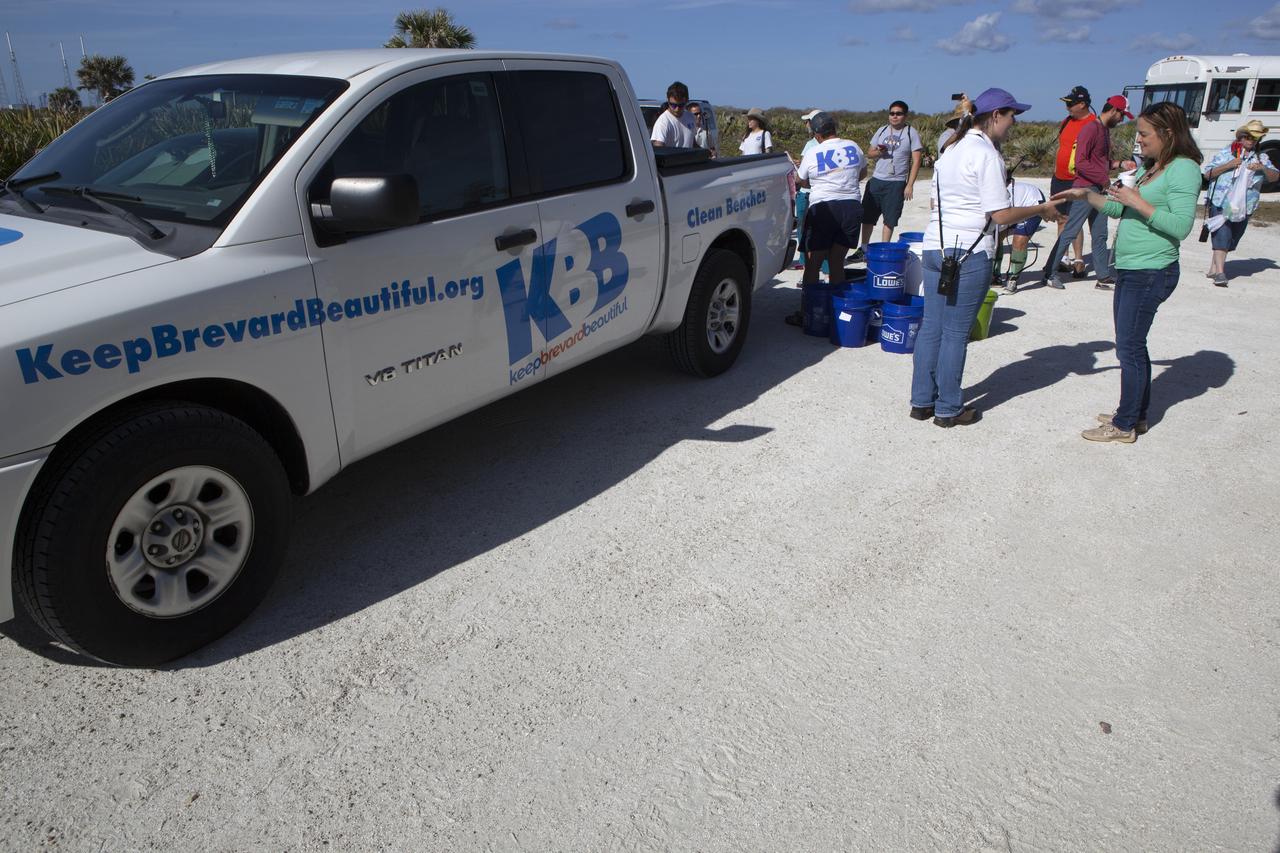
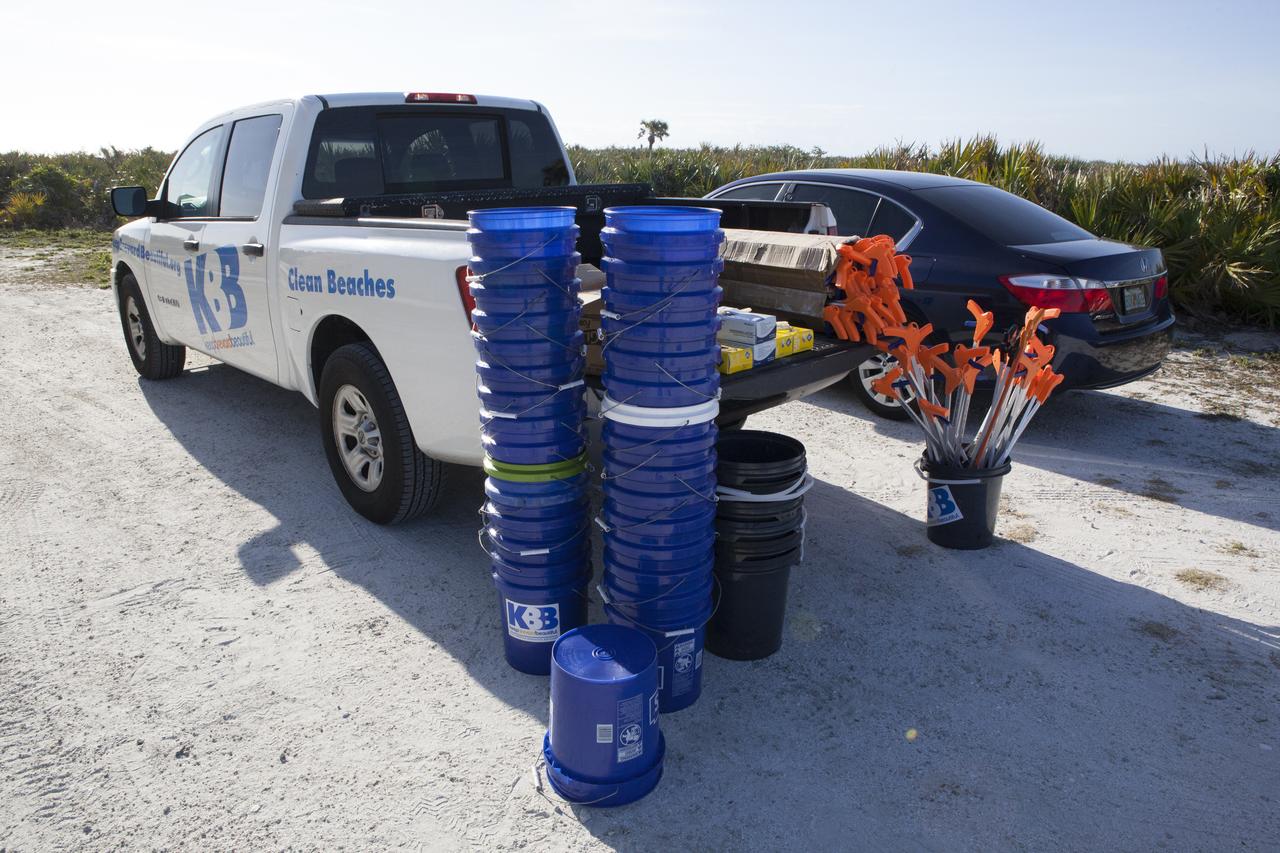
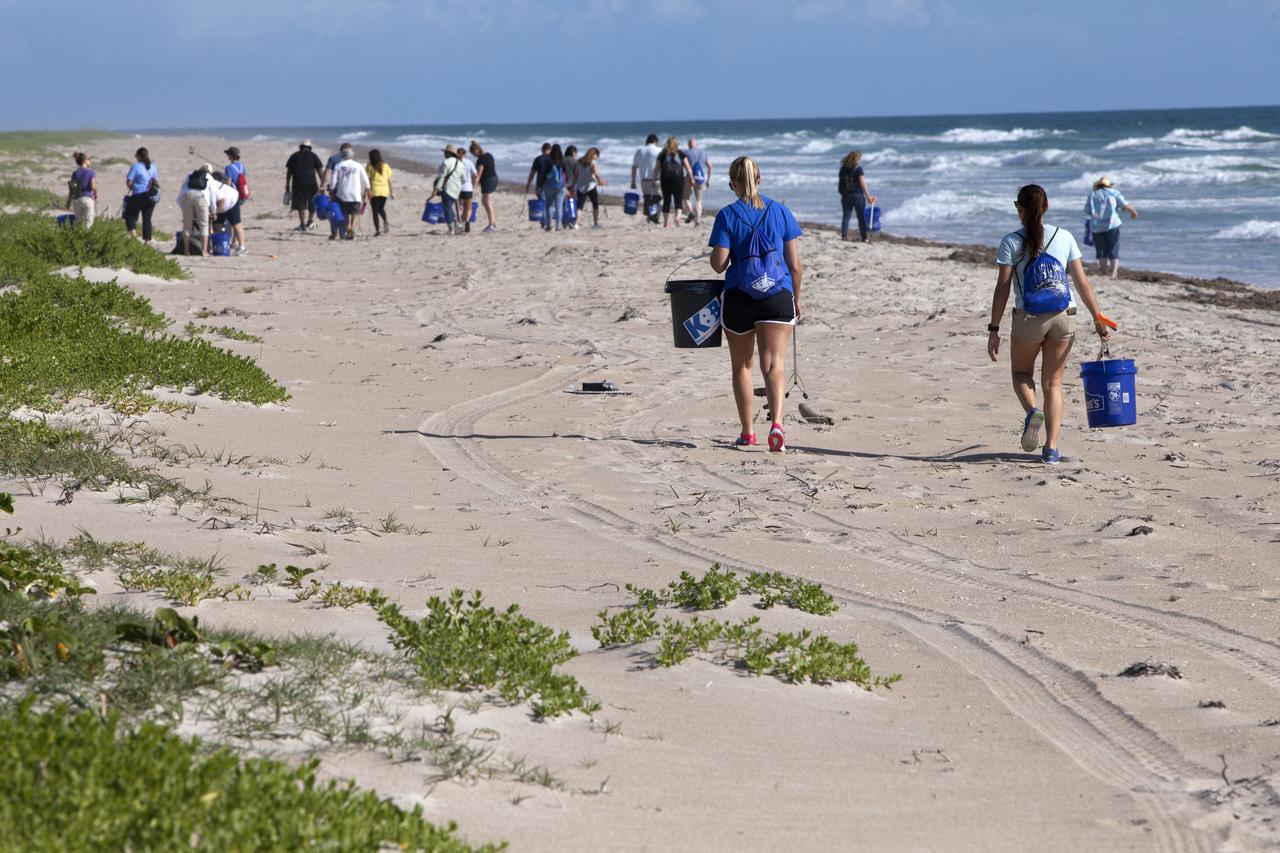
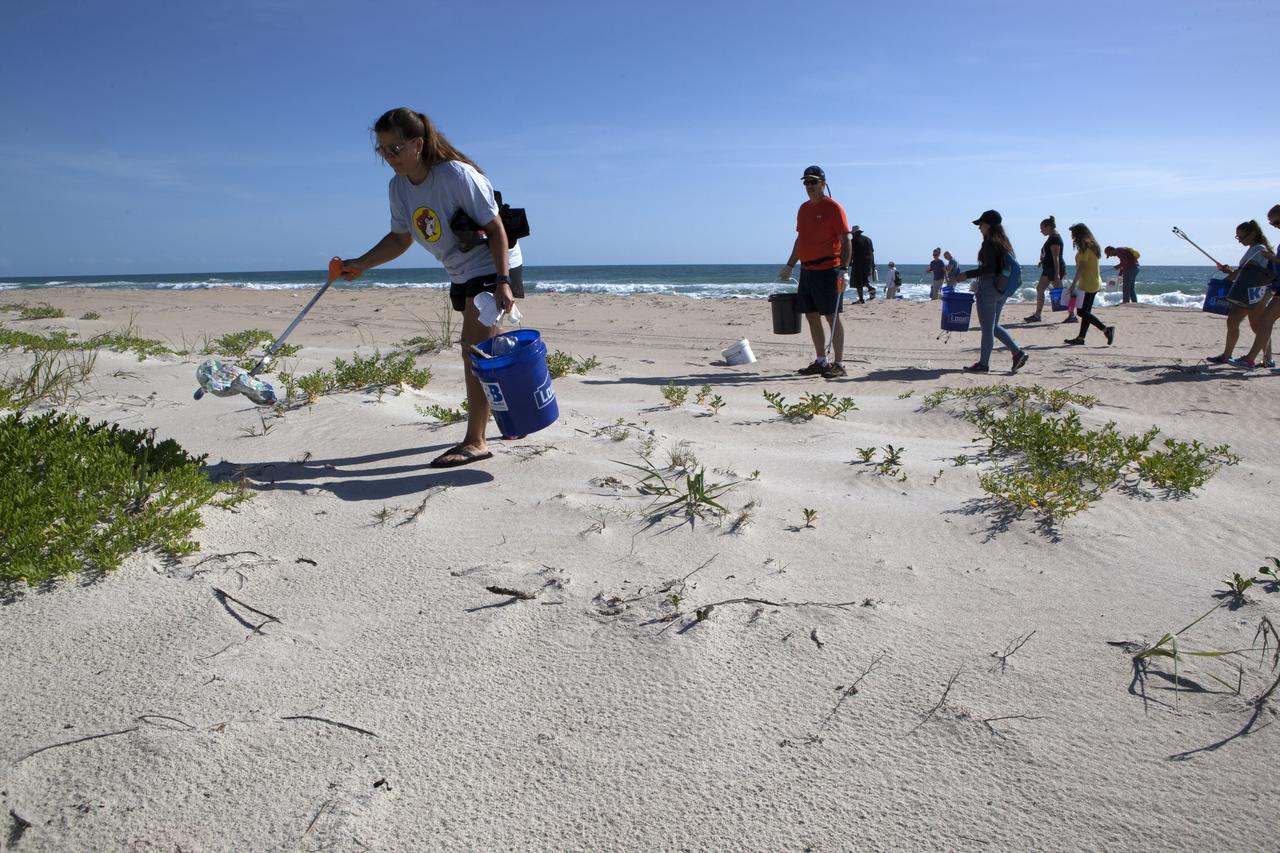
About 50 participants led by NASA Kennedy Space Center's Employee Resource Groups picked up about 20 bags of trash and other large debris along the center's shoreline before turtle-nesting season as a community service. Sea turtle-nesting season begins in about one month. Unlike what might be found along a public beach, all of the debris that litters Kennedy’s restricted beaches washes ashore after being discarded at sea. Of the 72 miles of beach that form the eastern boundary of Brevard County, Florida, about six of those miles line Kennedy.
About 50 participants led by NASA Kennedy Space Center's Employee Resource Groups picked up about 20 bags of trash and other large debris along the center's shoreline before turtle-nesting season as a community service. Sea turtle-nesting season begins in about one month. Unlike what might be found along a public beach, all of the debris that litters Kennedy’s restricted beaches washes ashore after being discarded at sea. Of the 72 miles of beach that form the eastern boundary of Brevard County, Florida, about six of those miles line Kennedy.
About 50 participants led by NASA Kennedy Space Center's Employee Resource Groups picked up about 20 bags of trash and other large debris along the center's shoreline before turtle-nesting season as a community service. Sea turtle-nesting season begins in about one month. Unlike what might be found along a public beach, all of the debris that litters Kennedy’s restricted beaches washes ashore after being discarded at sea. Of the 72 miles of beach that form the eastern boundary of Brevard County, Florida, about six of those miles line Kennedy.
About 50 participants led by NASA Kennedy Space Center's Employee Resource Groups picked up about 20 bags of trash and other large debris along the center's shoreline before turtle-nesting season as a community service. Sea turtle-nesting season begins in about one month. Unlike what might be found along a public beach, all of the debris that litters Kennedy’s restricted beaches washes ashore after being discarded at sea. Of the 72 miles of beach that form the eastern boundary of Brevard County, Florida, about six of those miles line Kennedy.
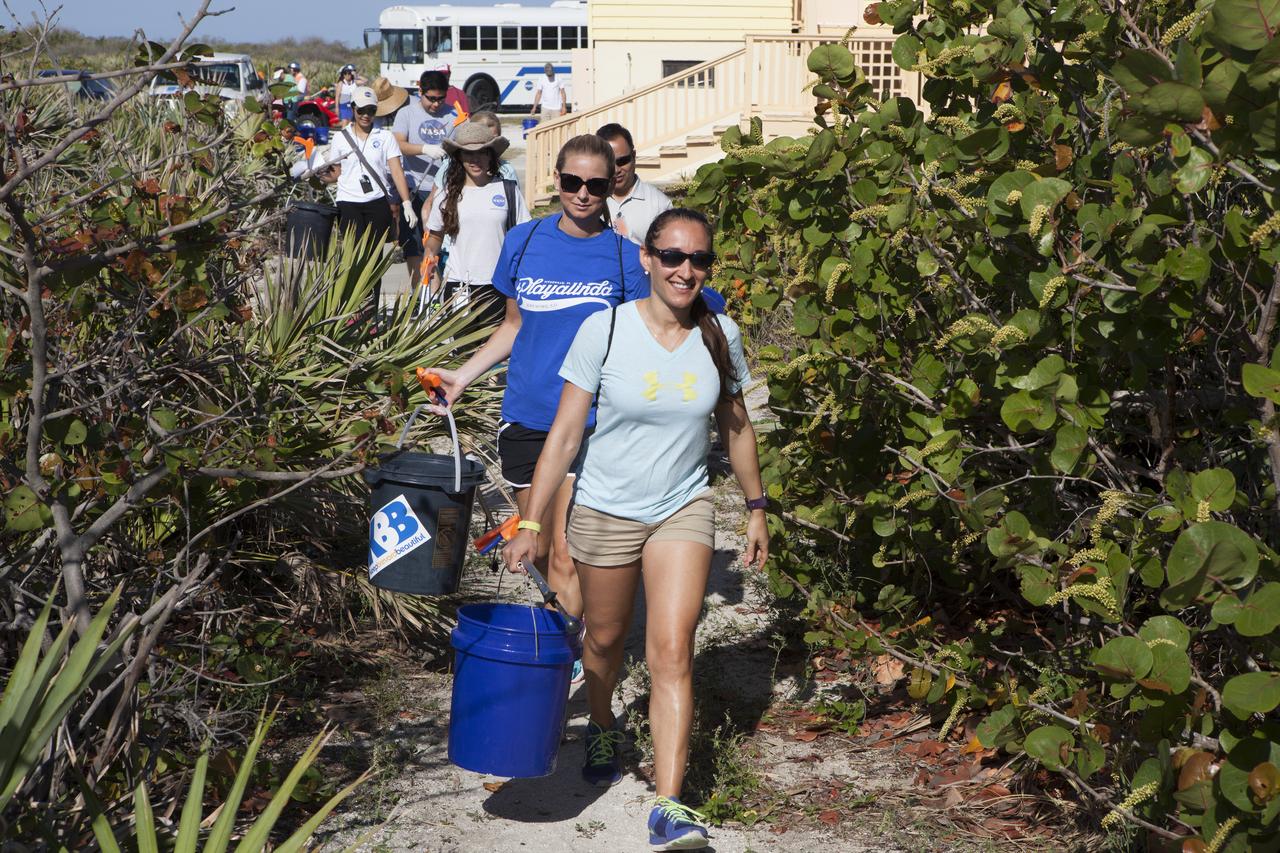
About 50 participants led by NASA Kennedy Space Center's Employee Resource Groups picked up about 20 bags of trash and other large debris along the center's shoreline before turtle-nesting season as a community service. Sea turtle-nesting season begins in about one month. Unlike what might be found along a public beach, all of the debris that litters Kennedy’s restricted beaches washes ashore after being discarded at sea. Of the 72 miles of beach that form the eastern boundary of Brevard County, Florida, about six of those miles line Kennedy.
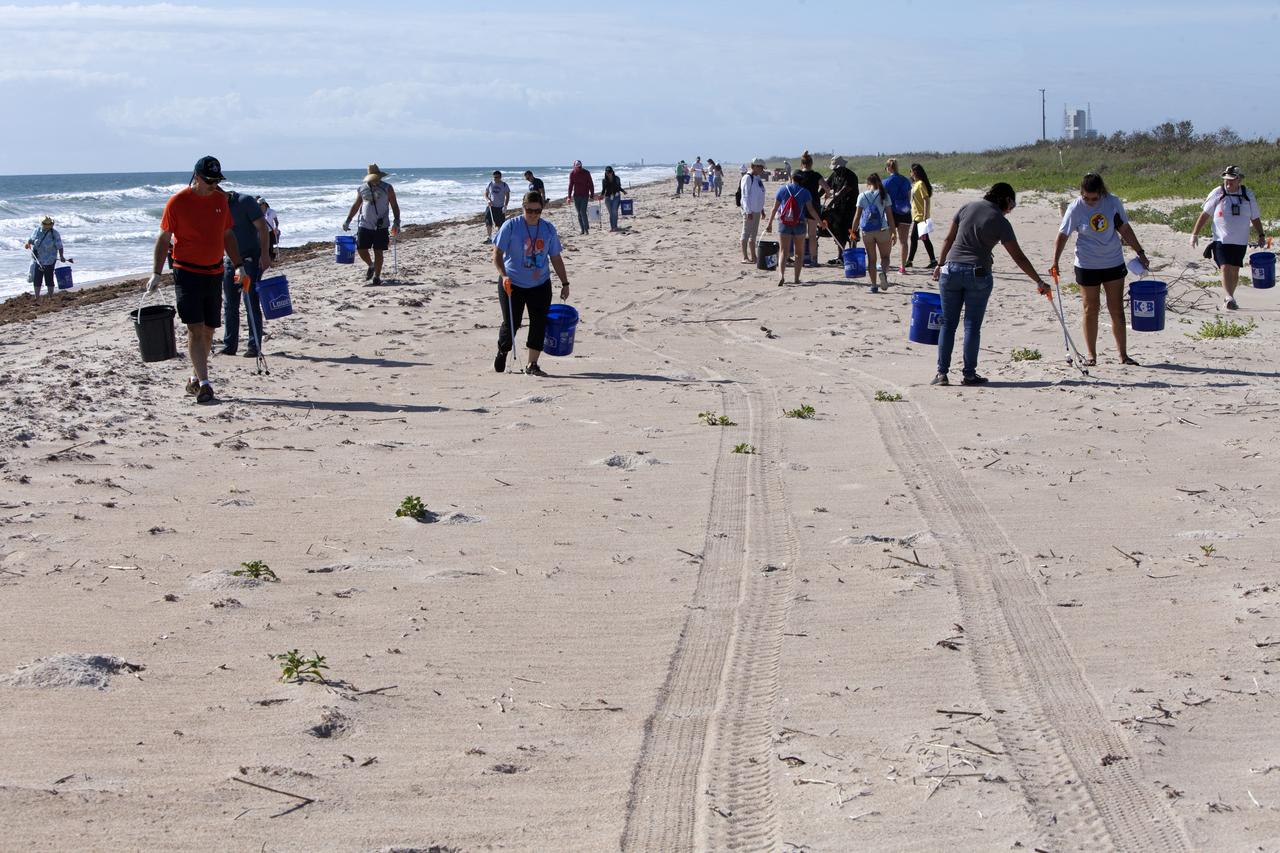
About 50 participants led by NASA Kennedy Space Center's Employee Resource Groups picked up about 20 bags of trash and other large debris along the center's shoreline before turtle-nesting season as a community service. Sea turtle-nesting season begins in about one month. Unlike what might be found along a public beach, all of the debris that litters Kennedy’s restricted beaches washes ashore after being discarded at sea. Of the 72 miles of beach that form the eastern boundary of Brevard County, Florida, about six of those miles line Kennedy.
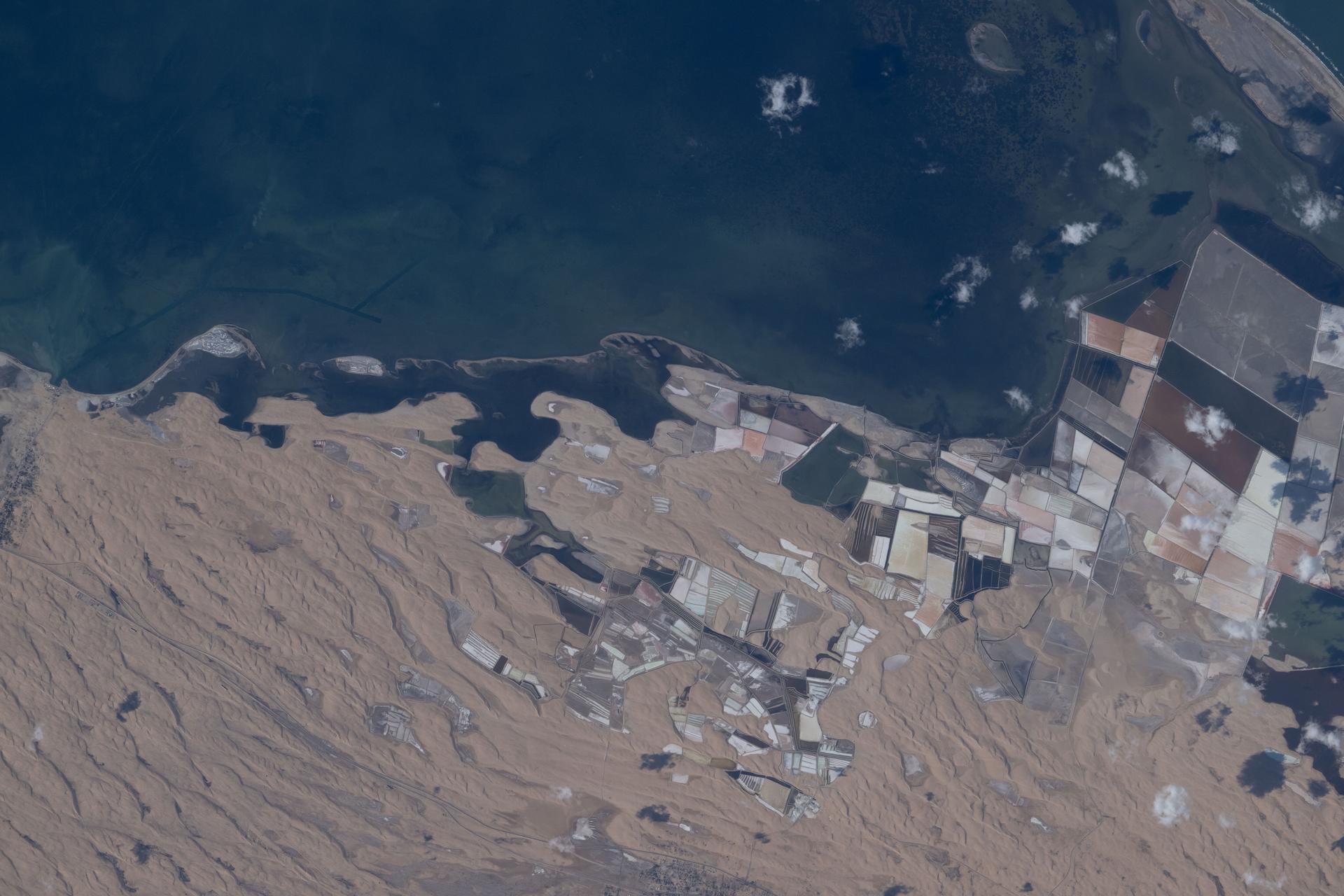
iss073e0857395 (Sept. 21, 2025) --- The Zaranik Protectorate nature preserve in Egypt's North Sinai region sits on the eastern edge of Lake Bardiwil and is a haven for migratory birds, nesting turtles, and supports a variety of species including bottlenose dolphins. The International Space Station was orbiting 258 miles above the Mediterranean Sea at the time of this photograph.
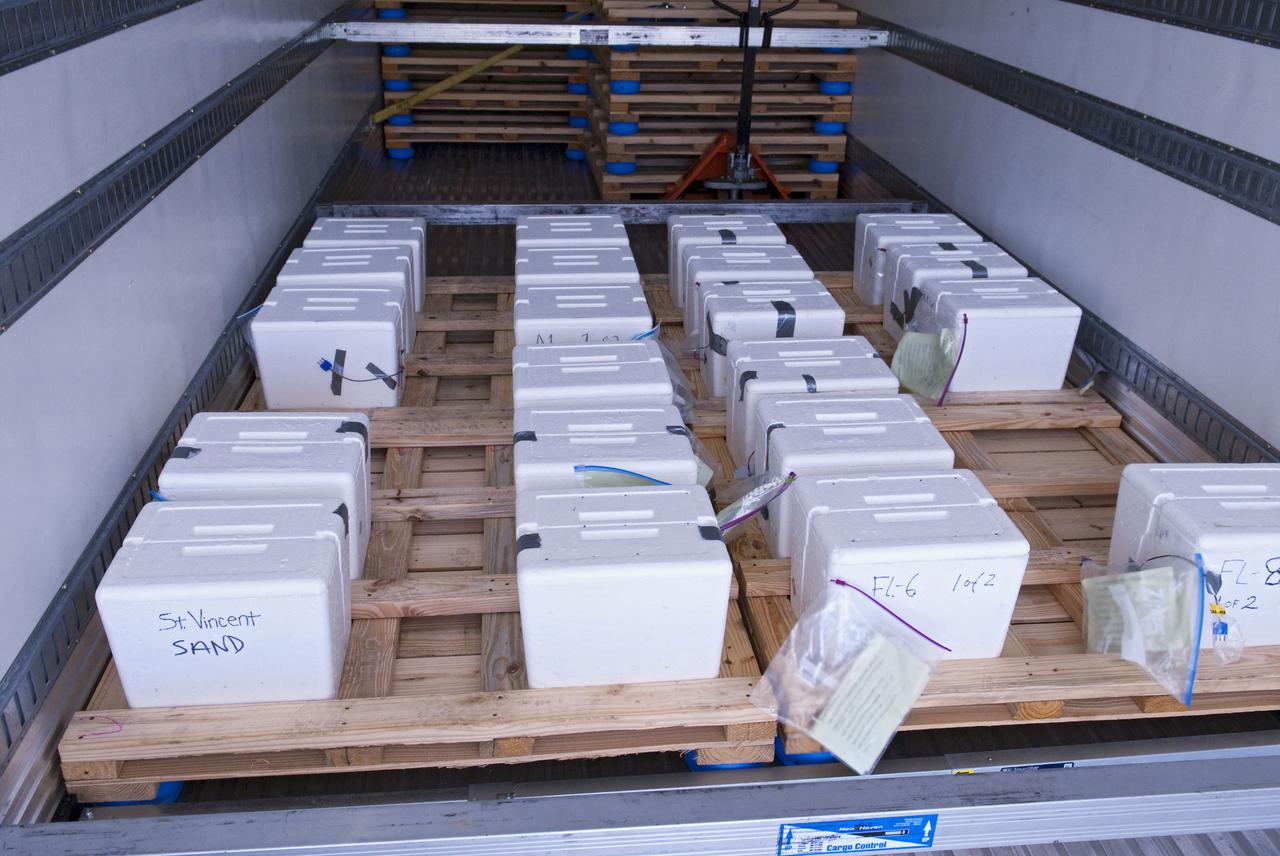
CAPE CANAVERAL, Fla. -- A new batch of endangered sea turtle eggs brought from beaches along the northern U.S. Gulf Coast arrive at NASA's Kennedy Space Center in Florida. Nests of Kemp’s ridley and Loggerhead turtle eggs from Gulf Shores, Ala., and various Florida Gulf Coast beaches are being transported by a specially equipped FedEx truck to a secure, climate-controlled facility at Kennedy. They will be monitored by biologists and hatchery workers until incubation is complete. The hatchlings will be released at different points along a 100-mile stretch of the Atlantic Ocean shoreline. That includes beaches adjacent to the Merritt Island National Wildlife Refuge, which is located inside Kennedy. The release and relocation work is part of an effort by the U.S. Fish and Wildlife Service, the Florida Fish and Wildlife Conservation Commission, the National Park Service, NOAA, FedEx and conservationists to help minimize the risk to this year’s sea turtle hatchlings from impacts of the BP Deepwater Horizon oil spill in the Gulf of Mexico. This plan involves carefully moving an anticipated 700 nests during the next several months. Photo credit: NASA_Ben Smegelsky
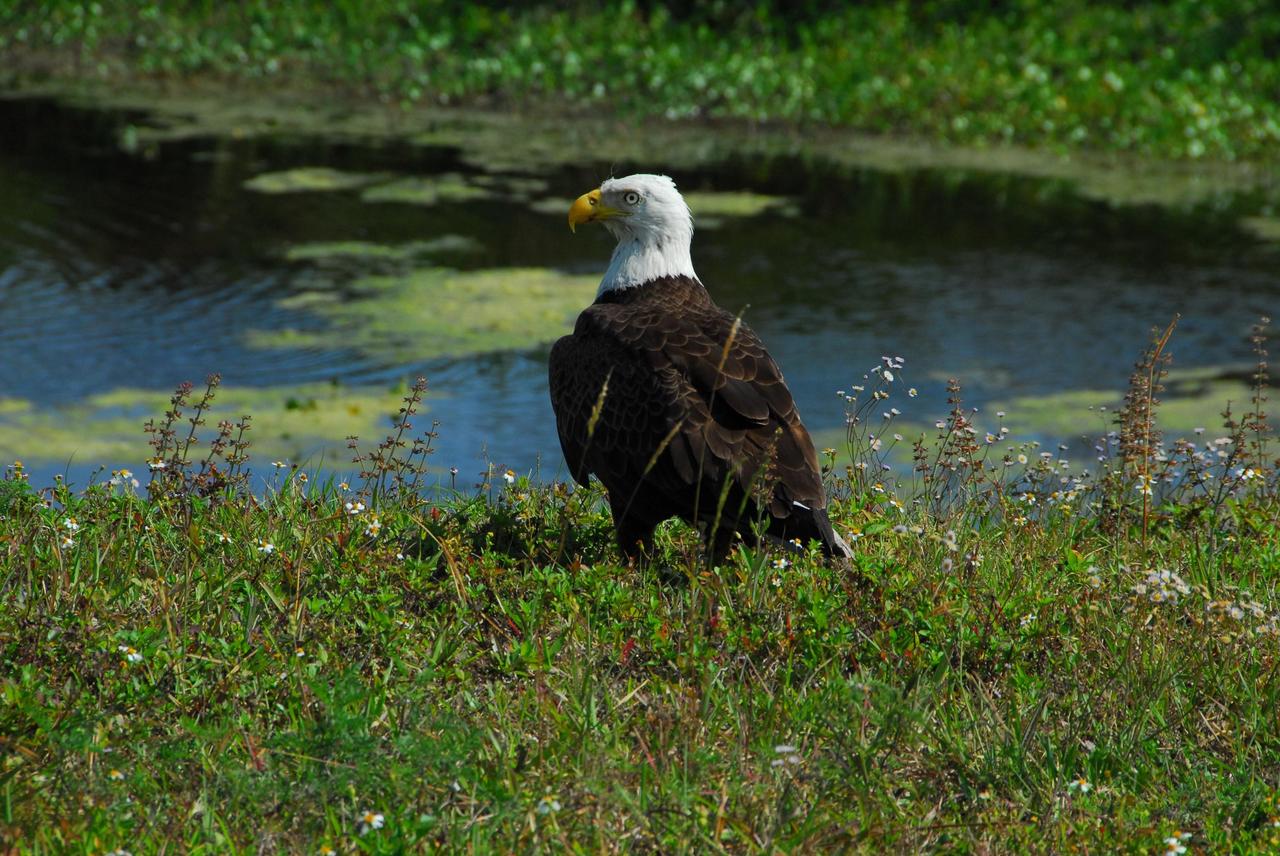
KENNEDY SPACE CENTER, FLA. -- This adult bald eagle rests on the ground near a pond close to S.R. 3 in NASA's Kennedy Space Center. Bald eagles live near large bodies of open water such as lakes, marshes, seacoasts and rivers, where there are plenty of fish to eat and tall trees for nesting and roosting. Bald eagles feed primarily on fish, but also eat small animals (ducks, coots, muskrats, turtles, rabbits, snakes, etc.) and occasional carrion (dead animals). They are sometimes seen among a gathering of vultures at the site of a fresh meal. Bald eagles have a presence in every U. S. state except Hawaii. Bald eagles use a specific territory for nesting (they mate for life), winter feeding or a year-round residence. Its natural domain is from Alaska to Baja, California, and from Maine to Florida. There are a dozen eagle nests both in KSC and in the Merritt Island National Wildlife Refuge, which surrounds KSC. The refuge includes several wading bird rookeries, many osprey nests, up to 400 manatees during the spring, and approximately 2,500 Florida scrub jays. It also is a major wintering area for migratory birds. More than 500 species of wildlife inhabit the refuge, with 15 considered federally threatened or endangered. Photo credit: NASA/George Shelton
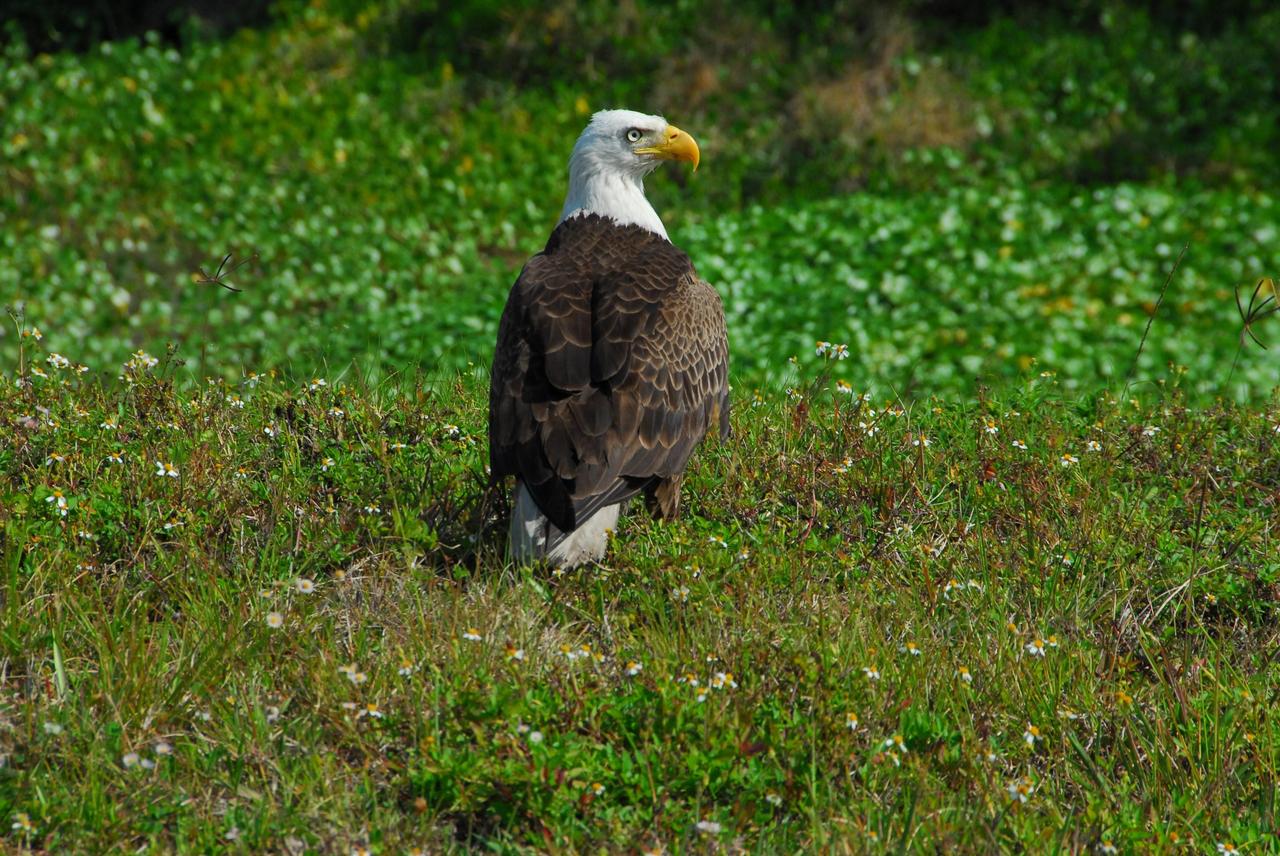
KENNEDY SPACE CENTER, FLA. -- This adult bald eagle rests on the ground near a pond close to S.R. 3 in NASA's Kennedy Space Center. Bald eagles live near large bodies of open water such as lakes, marshes, seacoasts and rivers, where there are plenty of fish to eat and tall trees for nesting and roosting. Bald eagles feed primarily on fish, but also eat small animals (ducks, coots, muskrats, turtles, rabbits, snakes, etc.) and occasional carrion (dead animals). They are sometimes seen among a gathering of vultures at the site of a fresh meal. Bald eagles have a presence in every U. S. state except Hawaii. Bald eagles use a specific territory for nesting (they mate for life), winter feeding or a year-round residence. Its natural domain is from Alaska to Baja, California, and from Maine to Florida. There are a dozen eagle nests both in KSC and in the Merritt Island National Wildlife Refuge, which surrounds KSC. The refuge includes several wading bird rookeries, many osprey nests, up to 400 manatees during the spring, and approximately 2,500 Florida scrub jays. It also is a major wintering area for migratory birds. More than 500 species of wildlife inhabit the refuge, with 15 considered federally threatened or endangered. Photo credit: NASA/George Shelton
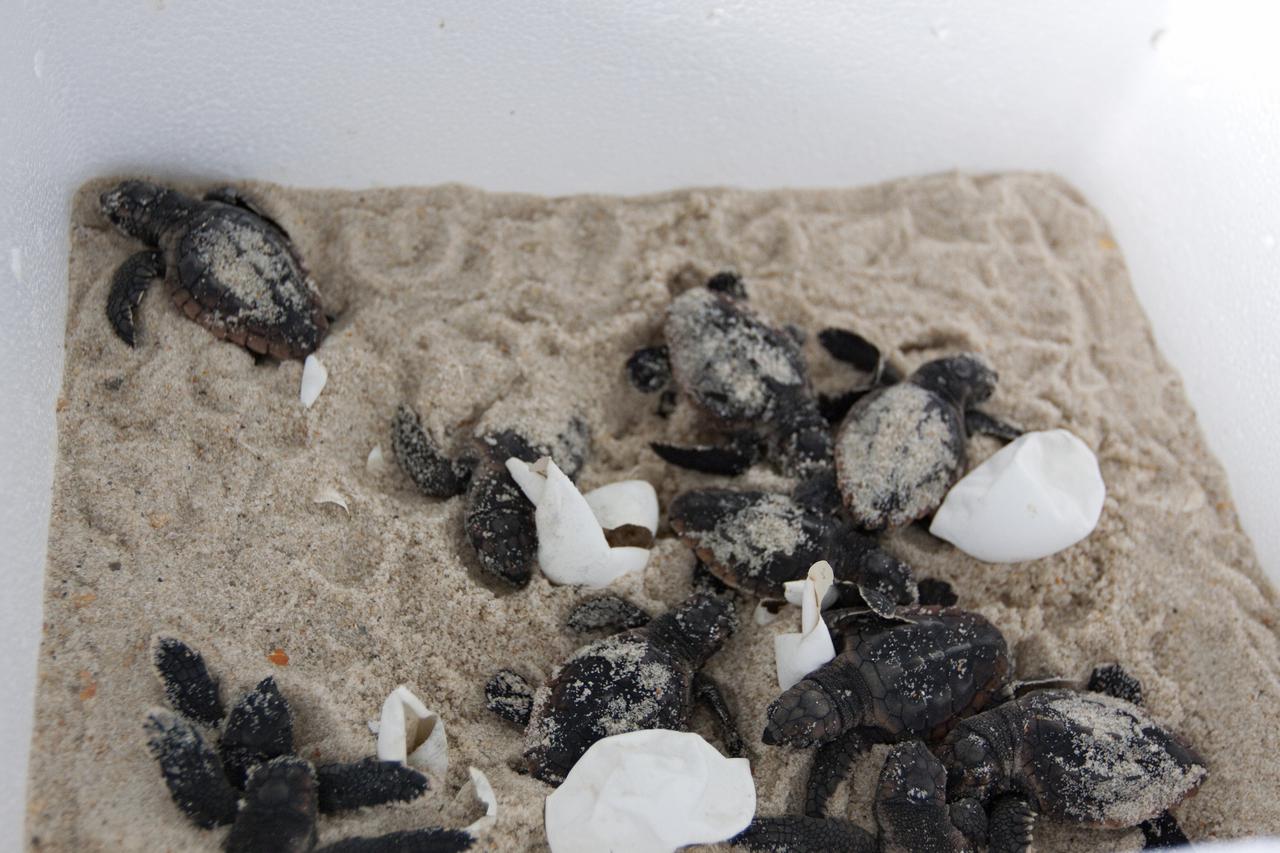
CAPE CANAVERAL, Fla. -- In a climate-controlled facility at NASA's Kennedy Space Center in Florida, newly-hatched Loggerhead turtles emerge from their eggs brought from beaches along the northern U.S. Gulf Coast. The eggs will be monitored by biologists and hatchery workers until incubation is complete. The hatchlings will be released at different points along a 100-mile stretch of the Atlantic Ocean shoreline. That includes beaches adjacent to the Merritt Island National Wildlife Refuge, which is located inside Kennedy. The release and relocation work is part of an effort by the U.S. Fish and Wildlife Service, the Florida Fish and Wildlife Conservation Commission, the National Park Service, NOAA, FedEx and conservationists to help minimize the risk to this year's sea turtle hatchlings from impacts of the BP Deepwater Horizon oil spill in the Gulf of Mexico. This plan involves carefully moving an anticipated 700 nests during the next several months. Photo credit: NASA_Troy Cryder
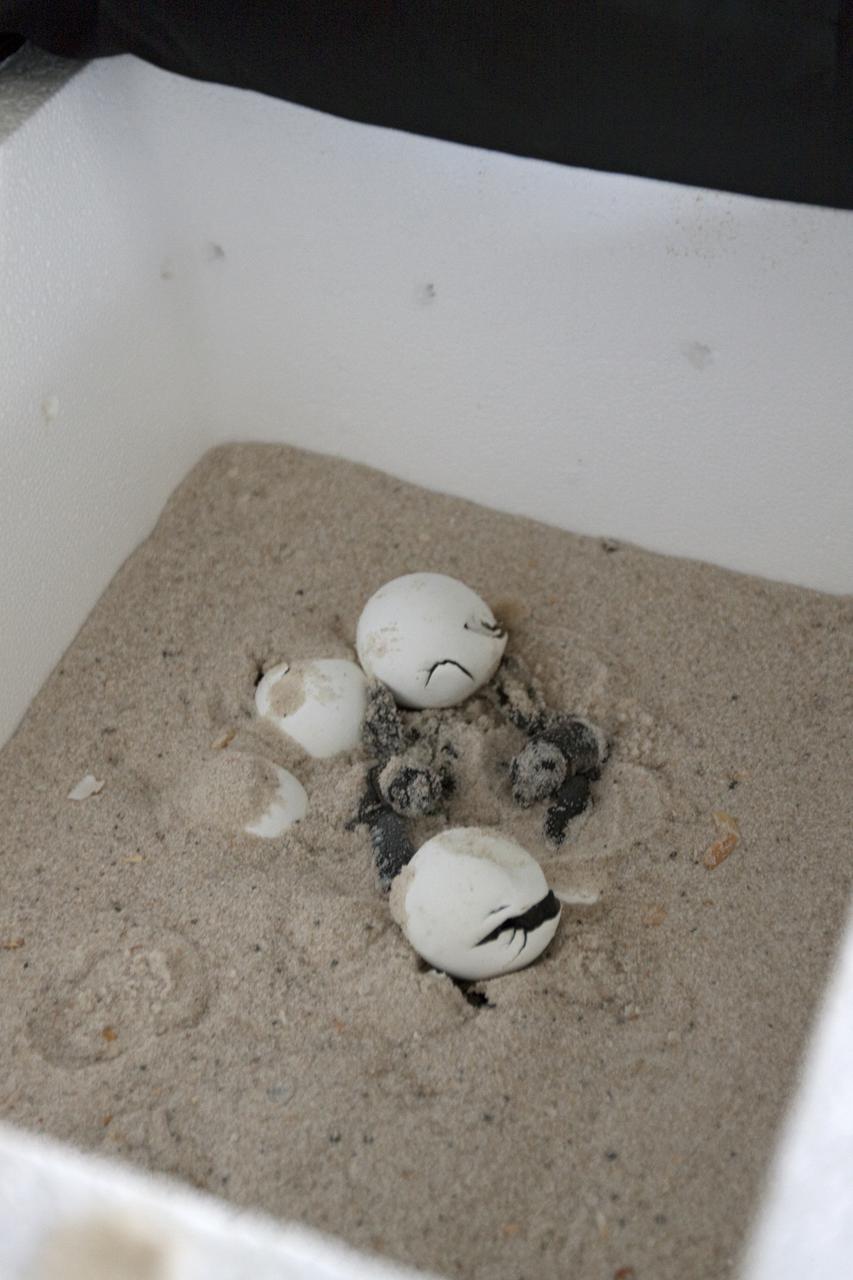
CAPE CANAVERAL, Fla. -- In a secure, climate-controlled facility at NASA's Kennedy Space Center in Florida, newly-hatched Loggerhead turtles emerge from their eggs brought from beaches along the northern U.S. Gulf Coast. The eggs will be monitored by biologists and hatchery workers until incubation is complete. The hatchlings will be released at different points along a 100-mile stretch of the Atlantic Ocean shoreline. That includes beaches adjacent to the Merritt Island National Wildlife Refuge, which is located inside Kennedy. The release and relocation work is part of an effort by the U.S. Fish and Wildlife Service, the Florida Fish and Wildlife Conservation Commission, the National Park Service, NOAA, FedEx and conservationists to help minimize the risk to this year's sea turtle hatchlings from impacts of the BP Deepwater Horizon oil spill in the Gulf of Mexico. This plan involves carefully moving an anticipated 700 nests during the next several months. Photo credit: NASA_Troy Cryder
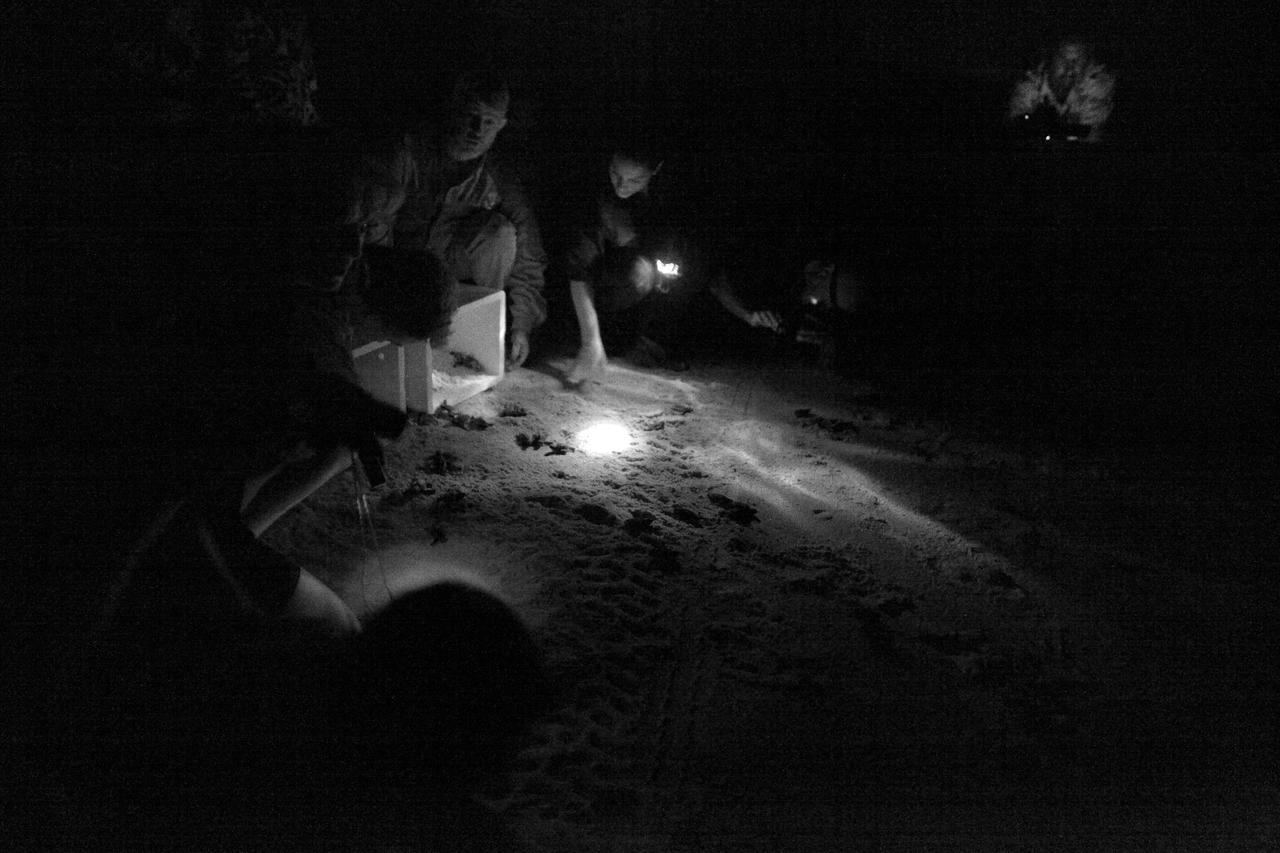
CAPE CANAVERAL, Fla. -- Hatchlings from endangered loggerhead turtle eggs, brought from beaches along the northern U.S. Gulf Coast, are being released into the Atlantic Ocean at Playalinda Beach, adjacent to the Merritt Island National Wildlife Refuge within NASA's Kennedy Space Center in Florida. The release and relocation work is part of an effort by the U.S. Fish and Wildlife Service, the Florida Fish and Wildlife Conservation Commission, the National Park Service, NOAA, FedEx and conservationists to help minimize the risk to this year's sea turtle hatchlings from impacts of the BP Deepwater Horizon oil spill in the Gulf of Mexico. This plan involves carefully moving an anticipated 700 nests deposited on Florida Panhandle and Alabama beaches during the next several months. Note: The photos were shot using an infrared filter to protect the hatchlings. Photo credit: NASA_Dimitri Gerondidakis
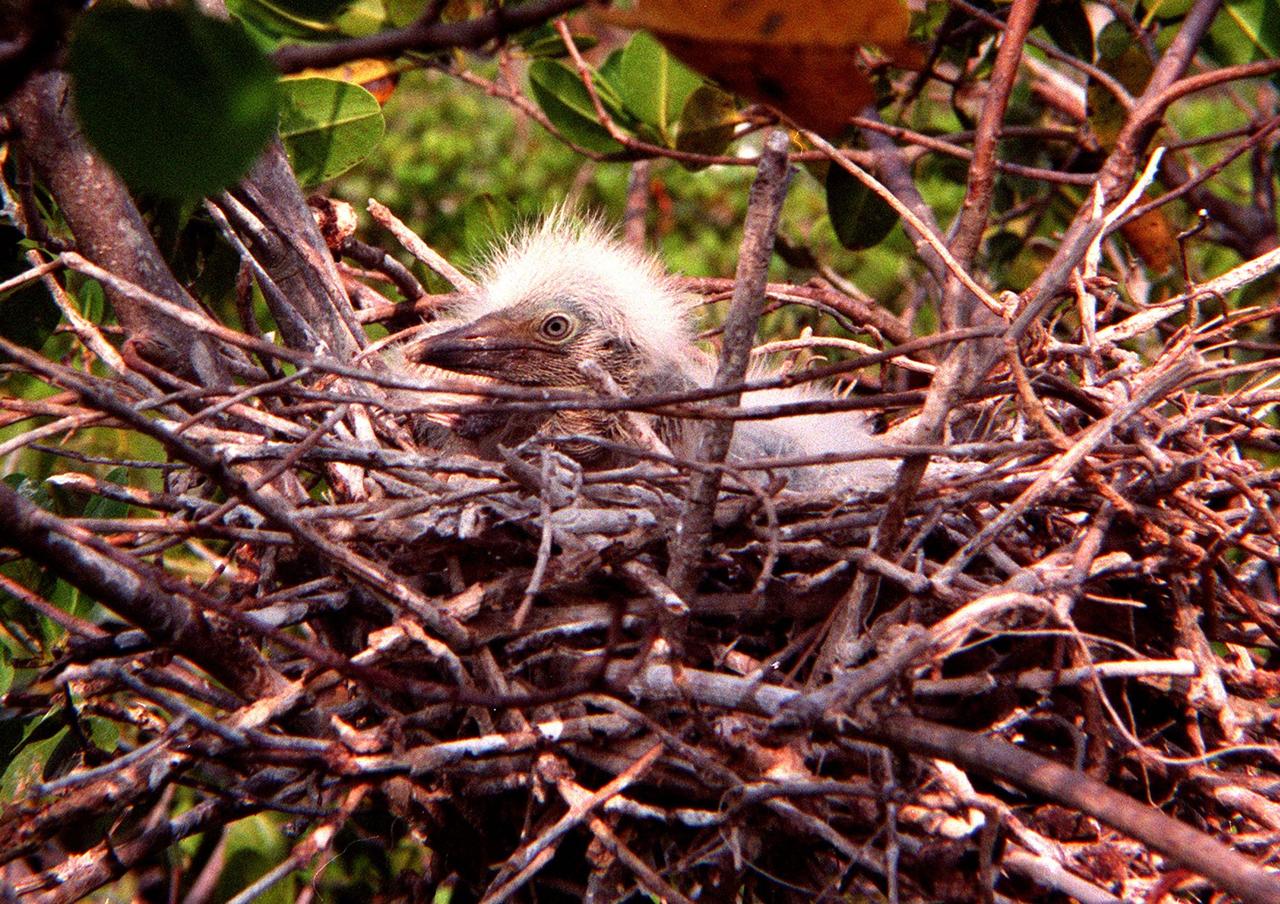
KENNEDY SPACE CENTER, FLA. -- Its newly grown, wispy feathers reflecting light like a halo, an unidentified baby bird waits, probably for its next meal, in its stick-assembled nest. The nest is in the Merritt Island National Wildlife Refuge, which shares a boundary with KSC. Hardwood hammocks and pine flatwoods share the 92,000-acre refuge with fresh-water impoundments, salt-water estuaries and brackish marshes. The diverse landscape provides habitat for more than 310 species of birds, 25 mammals, 117 fishes, and 65 amphibians and reptiles, including such endangered species as Southern bald eagles, wood storks, Florida scrub jays, Atlantic loggerhead and leatherback turtles, osprey, and nearly 5,000 alligators
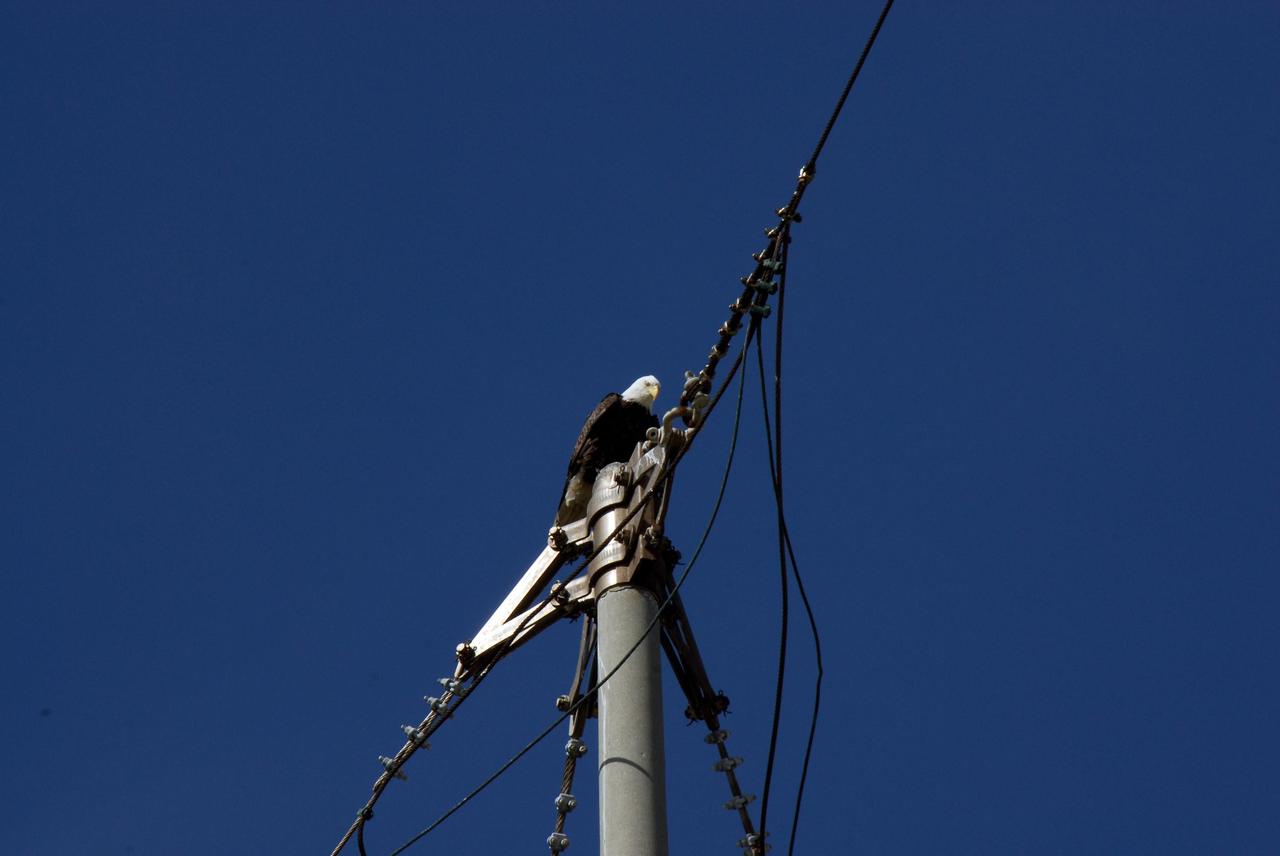
KENNEDY SPACE CENTER, FLA. -- A bald eagle perches on a pole on Launch Pad 39A, seemingly monitoring the instruction of the space shuttle Atlantis STS-122 crew on slidewire basket operation, part of the emergency exit system on the fixed service structure of the pad. Bald eagles use a specific territory for nesting (they mate for life), winter feeding or a year-round residence. Its natural domain is from Alaska to Baja, California, and from Maine to Florida. Bald eagles have a presence in every U. S. state except Hawaii. There are a dozen eagle nests in both Kennedy Space Center and the Merritt Island National Wildlife Refuge, which surrounds Kennedy. Bald eagles live near large bodies of open water such as lakes, marshes, seacoasts and rivers, where there are plenty of fish to eat and tall trees for nesting and roosting. Bald eagles feed primarily on fish, but also eat small animals (ducks, coots, muskrats, turtles, rabbits, snakes, etc.). Photo credit: NASA/Kim Shiflett
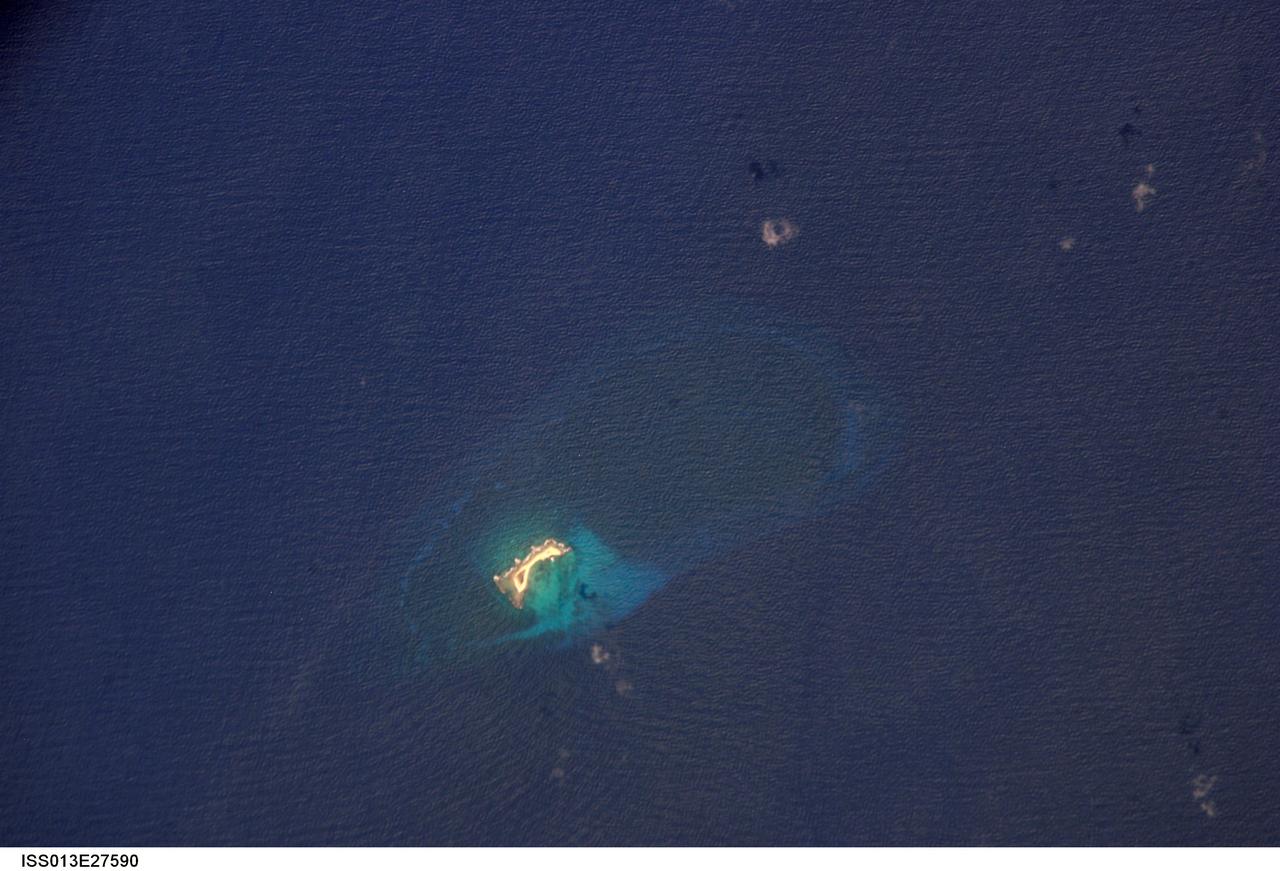
ISS013-E-27590 (27 May 2006) --- Aves Island, Caribbean Sea is featured in this image photographed by an Expedition 13 crewmember on the International Space Station. This image is a rare almost cloud free view of the island and the submerged fringing coral reef that surrounds it. Scientists believe the crosshatch-like pattern of roughness on the surrounding sea surface was caused by variable winds at the time of image acquisition. The island itself currently stands a mere 4 meters above the surrounding sea surface, and in high seas it can be completely submerged. While the low elevation of the island makes it a hazard to shipping, it also provides a major nesting site for green sea turtles (Chelonia mydas) in the Caribbean.
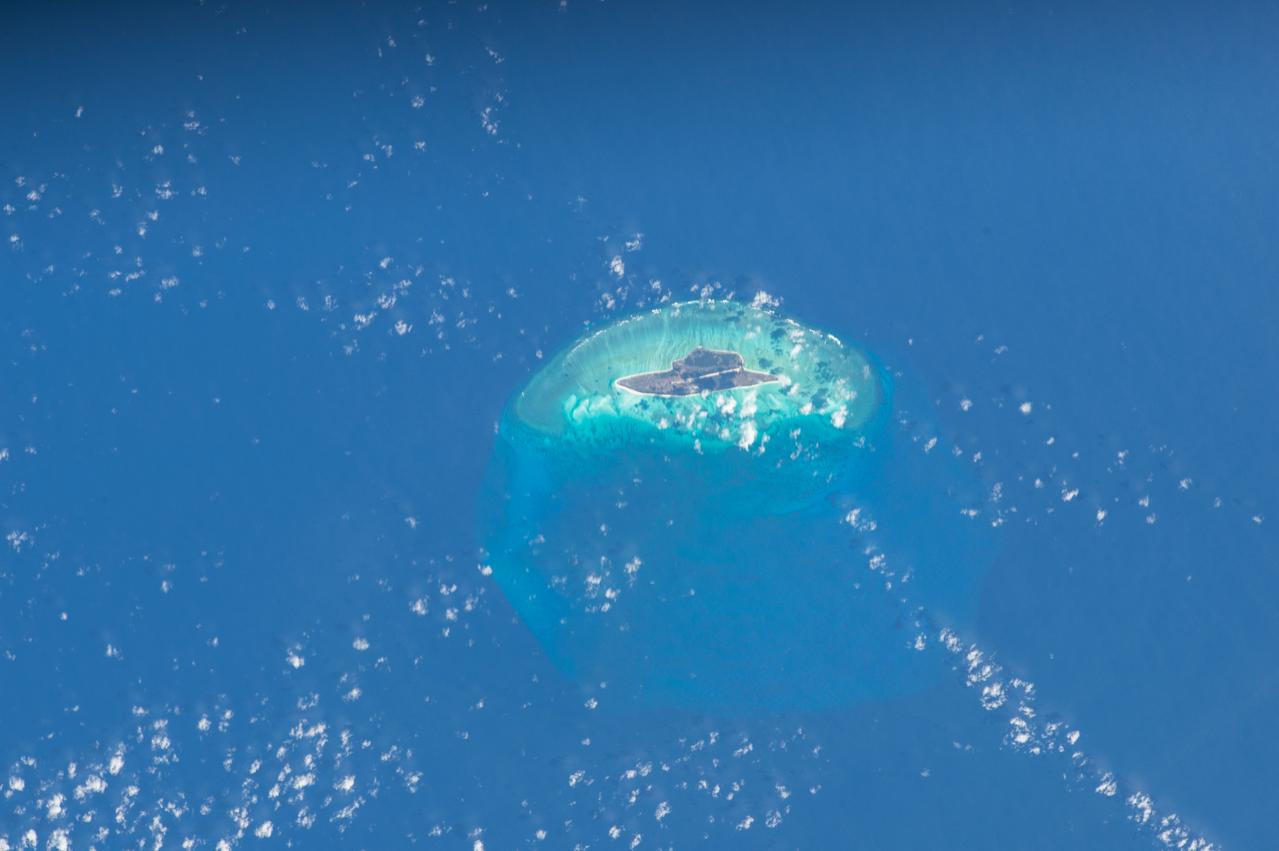
ISS047e141619 (06/06/2016) --- This Earth observation image captured by Expedition 47 members aboard the International Space Station is of Juan de Nova Island, also known as Saint-Christophe. The small French tropical island is in the narrowest part of the Mozambique Channel, about one-third of the way between Madagascar and Mozambique. The Island is 3.7 miles long and 1 mile at its widest. It is a nature reserve surrounded by reefs. Forests cover about half the island and sea turtles nest on the beaches. It is largely uninhabited but the French maintain a weather station on the Island.